window.__IS_SSR__=true
window.__INITIAL_STATE__={
"attachmentsReducer": {
"audio_0": {
"type": "attachments",
"id": "audio_0",
"imgSizes": {
"kqedFullSize": {
"file": "https://ww2.kqed.org/news/wp-content/themes/KQED-unified/img/audio_bgs/background0.jpg"
}
}
},
"audio_1": {
"type": "attachments",
"id": "audio_1",
"imgSizes": {
"kqedFullSize": {
"file": "https://ww2.kqed.org/news/wp-content/themes/KQED-unified/img/audio_bgs/background1.jpg"
}
}
},
"audio_2": {
"type": "attachments",
"id": "audio_2",
"imgSizes": {
"kqedFullSize": {
"file": "https://ww2.kqed.org/news/wp-content/themes/KQED-unified/img/audio_bgs/background2.jpg"
}
}
},
"audio_3": {
"type": "attachments",
"id": "audio_3",
"imgSizes": {
"kqedFullSize": {
"file": "https://ww2.kqed.org/news/wp-content/themes/KQED-unified/img/audio_bgs/background3.jpg"
}
}
},
"audio_4": {
"type": "attachments",
"id": "audio_4",
"imgSizes": {
"kqedFullSize": {
"file": "https://ww2.kqed.org/news/wp-content/themes/KQED-unified/img/audio_bgs/background4.jpg"
}
}
},
"placeholder": {
"type": "attachments",
"id": "placeholder",
"imgSizes": {
"thumbnail": {
"file": "https://cdn.kqed.org/wp-content/uploads/2024/12/KQED-Default-Image-816638274-2000x1333-1-160x107.jpg",
"width": 160,
"height": 107,
"mimeType": "image/jpeg"
},
"medium": {
"file": "https://cdn.kqed.org/wp-content/uploads/2024/12/KQED-Default-Image-816638274-2000x1333-1-800x533.jpg",
"width": 800,
"height": 533,
"mimeType": "image/jpeg"
},
"medium_large": {
"file": "https://cdn.kqed.org/wp-content/uploads/2024/12/KQED-Default-Image-816638274-2000x1333-1-768x512.jpg",
"width": 768,
"height": 512,
"mimeType": "image/jpeg"
},
"large": {
"file": "https://cdn.kqed.org/wp-content/uploads/2024/12/KQED-Default-Image-816638274-2000x1333-1-1020x680.jpg",
"width": 1020,
"height": 680,
"mimeType": "image/jpeg"
},
"1536x1536": {
"file": "https://cdn.kqed.org/wp-content/uploads/2024/12/KQED-Default-Image-816638274-2000x1333-1-1536x1024.jpg",
"width": 1536,
"height": 1024,
"mimeType": "image/jpeg"
},
"fd-lrg": {
"file": "https://cdn.kqed.org/wp-content/uploads/2024/12/KQED-Default-Image-816638274-2000x1333-1-1536x1024.jpg",
"width": 1536,
"height": 1024,
"mimeType": "image/jpeg"
},
"fd-med": {
"file": "https://cdn.kqed.org/wp-content/uploads/2024/12/KQED-Default-Image-816638274-2000x1333-1-1020x680.jpg",
"width": 1020,
"height": 680,
"mimeType": "image/jpeg"
},
"fd-sm": {
"file": "https://cdn.kqed.org/wp-content/uploads/2024/12/KQED-Default-Image-816638274-2000x1333-1-800x533.jpg",
"width": 800,
"height": 533,
"mimeType": "image/jpeg"
},
"post-thumbnail": {
"file": "https://cdn.kqed.org/wp-content/uploads/2024/12/KQED-Default-Image-816638274-2000x1333-1-672x372.jpg",
"width": 672,
"height": 372,
"mimeType": "image/jpeg"
},
"twentyfourteen-full-width": {
"file": "https://cdn.kqed.org/wp-content/uploads/2024/12/KQED-Default-Image-816638274-2000x1333-1-1038x576.jpg",
"width": 1038,
"height": 576,
"mimeType": "image/jpeg"
},
"xxsmall": {
"file": "https://cdn.kqed.org/wp-content/uploads/2024/12/KQED-Default-Image-816638274-2000x1333-1-160x107.jpg",
"width": 160,
"height": 107,
"mimeType": "image/jpeg"
},
"xsmall": {
"file": "https://cdn.kqed.org/wp-content/uploads/2024/12/KQED-Default-Image-816638274-2000x1333-1-672x372.jpg",
"width": 672,
"height": 372,
"mimeType": "image/jpeg"
},
"small": {
"file": "https://cdn.kqed.org/wp-content/uploads/2024/12/KQED-Default-Image-816638274-2000x1333-1-672x372.jpg",
"width": 672,
"height": 372,
"mimeType": "image/jpeg"
},
"xlarge": {
"file": "https://cdn.kqed.org/wp-content/uploads/2024/12/KQED-Default-Image-816638274-2000x1333-1-1020x680.jpg",
"width": 1020,
"height": 680,
"mimeType": "image/jpeg"
},
"full-width": {
"file": "https://cdn.kqed.org/wp-content/uploads/2024/12/KQED-Default-Image-816638274-2000x1333-1-1920x1280.jpg",
"width": 1920,
"height": 1280,
"mimeType": "image/jpeg"
},
"guest-author-32": {
"file": "https://cdn.kqed.org/wp-content/uploads/2025/01/KQED-Default-Image-816638274-1333x1333-1-160x160.jpg",
"width": 32,
"height": 32,
"mimeType": "image/jpeg"
},
"guest-author-50": {
"file": "https://cdn.kqed.org/wp-content/uploads/2025/01/KQED-Default-Image-816638274-1333x1333-1-160x160.jpg",
"width": 50,
"height": 50,
"mimeType": "image/jpeg"
},
"guest-author-64": {
"file": "https://cdn.kqed.org/wp-content/uploads/2025/01/KQED-Default-Image-816638274-1333x1333-1-160x160.jpg",
"width": 64,
"height": 64,
"mimeType": "image/jpeg"
},
"guest-author-96": {
"file": "https://cdn.kqed.org/wp-content/uploads/2025/01/KQED-Default-Image-816638274-1333x1333-1-160x160.jpg",
"width": 96,
"height": 96,
"mimeType": "image/jpeg"
},
"guest-author-128": {
"file": "https://cdn.kqed.org/wp-content/uploads/2025/01/KQED-Default-Image-816638274-1333x1333-1-160x160.jpg",
"width": 128,
"height": 128,
"mimeType": "image/jpeg"
},
"detail": {
"file": "https://cdn.kqed.org/wp-content/uploads/2025/01/KQED-Default-Image-816638274-1333x1333-1-160x160.jpg",
"width": 160,
"height": 160,
"mimeType": "image/jpeg"
},
"kqedFullSize": {
"file": "https://cdn.kqed.org/wp-content/uploads/2024/12/KQED-Default-Image-816638274-2000x1333-1.jpg",
"width": 2000,
"height": 1333
}
}
},
"bayareabites_81331": {
"type": "attachments",
"id": "bayareabites_81331",
"meta": {
"index": "attachments_1716263798",
"site": "bayareabites",
"id": "81331",
"found": true
},
"parent": 81330,
"imgSizes": {
"kqedFullSize": {
"file": "https://ww2.kqed.org/app/uploads/sites/24/2014/05/pig_virus_wide-85820a7ec59e57aa06c58656c7e298c3cb594874.jpg",
"width": 1673,
"height": 941
}
},
"publishDate": 1399304006,
"modified": 1399304006,
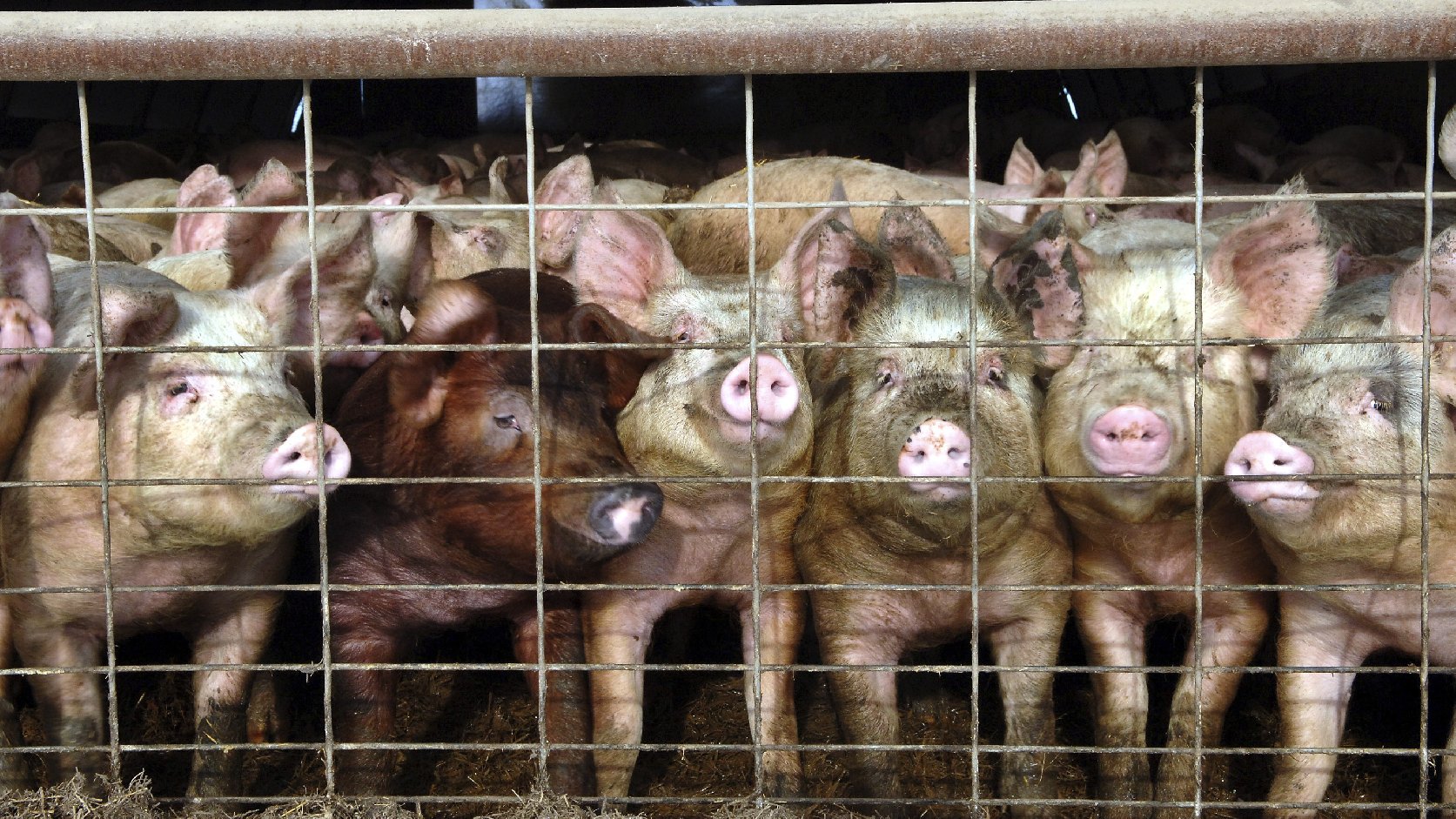
"caption": "France has banned imports of live pigs and other products from the U.S. to keep out a virus that has killed more than 4 million pigs in the U.S. Here, young pigs look out of a pen at a North Dakota hog farm in a 2005 file photo. Photo: Will Kincaid/AP",
"description": null,
"title": "France has banned imports of live pigs and other products from the U.S. to keep out a virus that has killed more than 4 million pigs in the U.S. Here, young pigs look out of a pen at a North Dakota hog farm in a 2005 file photo.",
"credit": null,
"status": "inherit",
"isLoading": false,
"fetchFailed": false
},
"bayareabites_81302": {
"type": "attachments",
"id": "bayareabites_81302",
"meta": {
"index": "attachments_1716263798",
"site": "bayareabites",
"id": "81302",
"found": true
},
"parent": 81301,
"imgSizes": {
"kqedFullSize": {
"file": "https://ww2.kqed.org/app/uploads/sites/24/2014/05/102969543_wide-49d31465c1ed8cc1c501e6d720ecfc86f9393f29.jpg",
"width": 1673,
"height": 940
}
},
"publishDate": 1399133532,
"modified": 1399133532,
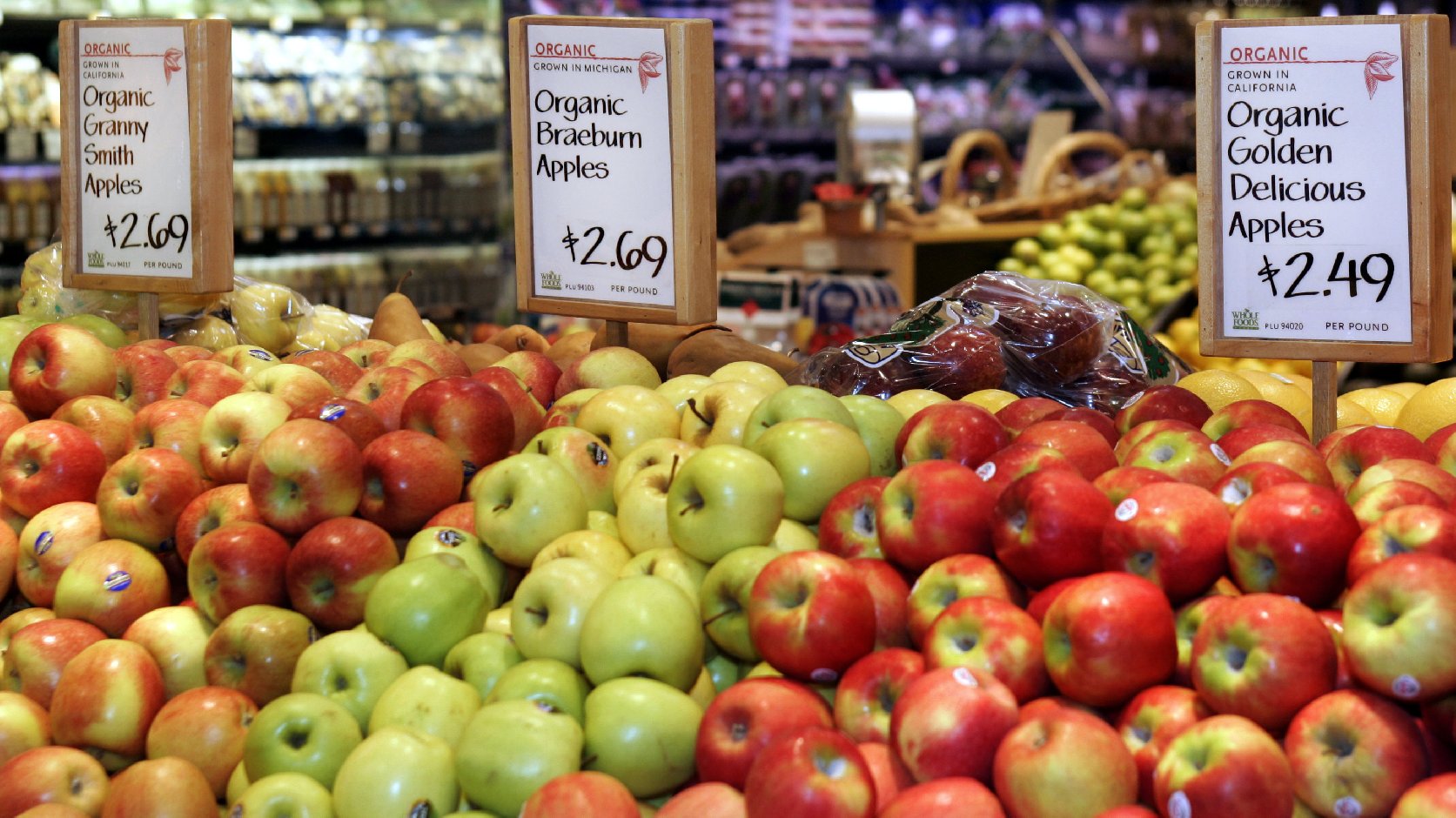
"caption": "The National Organic Standards Board voted to no longer allow farmers to use the antibiotic streptomycin on organic apple and pear trees. Photo: Jeff Haynes/AFP/Getty Images",
"description": null,
"title": "The National Organic Standards Board voted to no longer allow farmers to use the antibiotic streptomycin on organic apple and pear trees.",
"credit": null,
"status": "inherit",
"isLoading": false,
"fetchFailed": false
},
"bayareabites_81209": {
"type": "attachments",
"id": "bayareabites_81209",
"meta": {
"index": "attachments_1716263798",
"site": "bayareabites",
"id": "81209",
"found": true
},
"parent": 81208,
"imgSizes": {
"kqedFullSize": {
"file": "https://ww2.kqed.org/app/uploads/sites/24/2014/05/mg_0006-081bb18325faf9b2a7d7834746eec5d7092aa46c.jpg",
"width": 1449,
"height": 1086
}
},
"publishDate": 1399050590,
"modified": 1399050590,
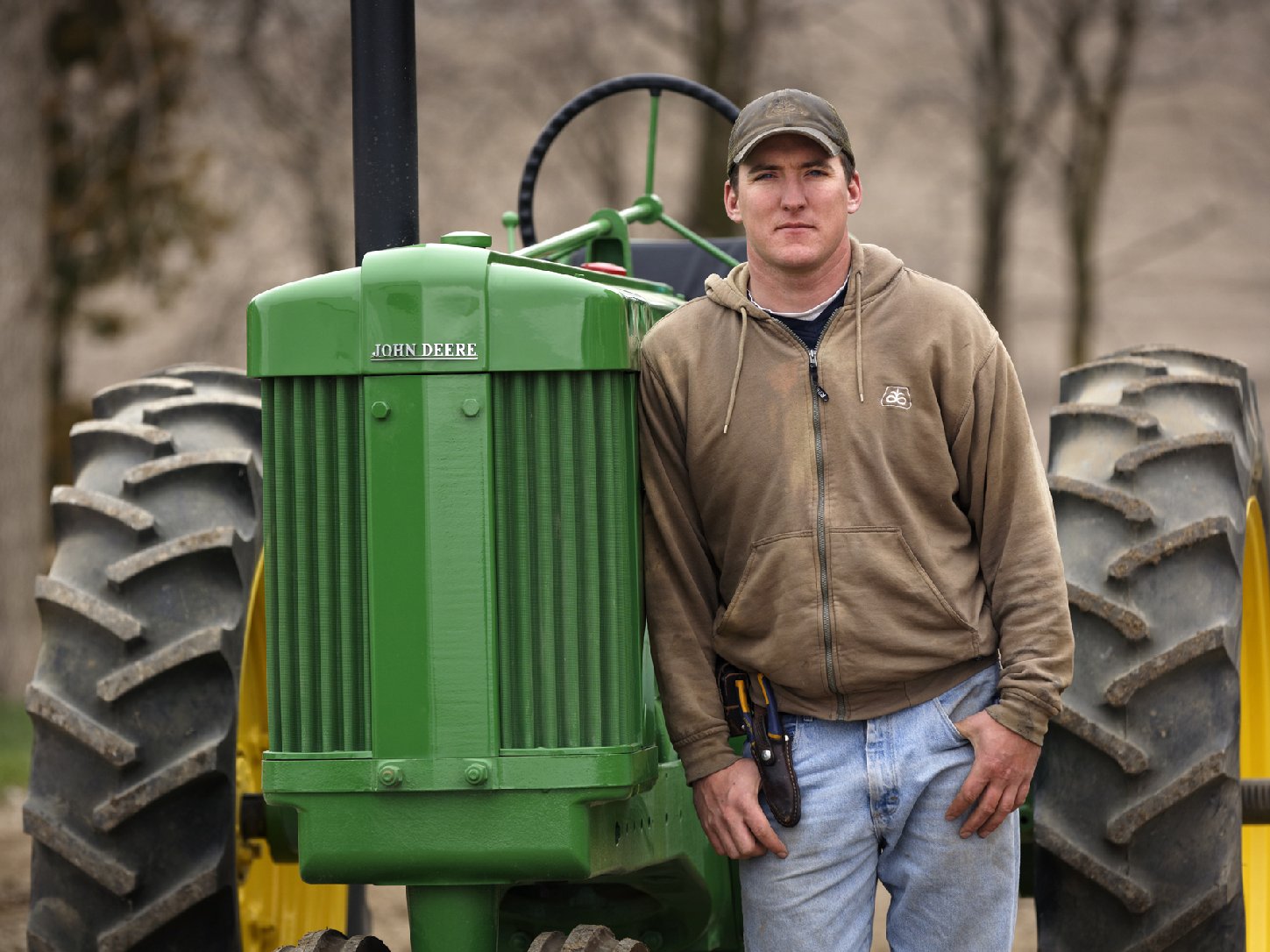
"caption": "David Loberg's family farm in Carroll, Neb., is featured in the film Farmland. Photo: Don Holtz/Ketchum",
"description": null,
"title": "David Loberg's family farm in Carroll, Neb., is featured in the film Farmland.",
"credit": null,
"status": "inherit",
"isLoading": false,
"fetchFailed": false
},
"bayareabites_81171": {
"type": "attachments",
"id": "bayareabites_81171",
"meta": {
"index": "attachments_1716263798",
"site": "bayareabites",
"id": "81171",
"found": true
},
"parent": 81170,
"imgSizes": {
"kqedFullSize": {
"file": "https://ww2.kqed.org/app/uploads/sites/24/2014/05/jackfruit-9672612823dce73bcdae08b37a708d8692d248d5.jpg",
"width": 754,
"height": 565
}
},
"publishDate": 1398980417,
"modified": 1398980417,
"caption": "Jackfruits grow on the branches and trunks of tall trees. You don't wait to harvest until they drop of their own accord — by that time, they'd be overripe. Photo: iStockphoto",
"description": "Jackfruits grow on the branches and trunks of tall trees. You don't wait to harvest until they drop of their own accord — by that time, they'd be overrip",
"title": "Jackfruits grow on the branches and trunks of tall trees. You don't wait to harvest until they drop of their own accord — by that time, they'd be overripe.",
"credit": null,
"status": "inherit",
"isLoading": false,
"fetchFailed": false
},
"bayareabites_81140": {
"type": "attachments",
"id": "bayareabites_81140",
"meta": {
"index": "attachments_1716263798",
"site": "bayareabites",
"id": "81140",
"found": true
},
"parent": 81139,
"imgSizes": {
"kqedFullSize": {
"file": "https://ww2.kqed.org/app/uploads/sites/24/2014/04/goldenegg_wide-5fbdb37c3b2f6c1a414997c53797807d999fa268.jpg",
"width": 794,
"height": 446
}
},
"publishDate": 1398957001,
"modified": 1398957001,
"caption": "The Golden Goose will retail for around $24. Photo: Courtesy Y Line Product Design",
"description": "The Golden Goose will retail for around $24.",
"title": "The Golden Goose will retail for around $24.",
"credit": null,
"status": "inherit",
"isLoading": false,
"fetchFailed": false
},
"bayareabites_81101": {
"type": "attachments",
"id": "bayareabites_81101",
"meta": {
"index": "attachments_1716263798",
"site": "bayareabites",
"id": "81101",
"found": true
},
"parent": 81100,
"imgSizes": {
"kqedFullSize": {
"file": "https://ww2.kqed.org/app/uploads/sites/24/2014/04/nats_ncalisch_print-4-32afe31c0d8411d52ea40c14f1346721555f5ba1.jpg",
"width": 1449,
"height": 1086
}
},
"publishDate": 1398895698,
"modified": 1398895698,
"caption": "Nat West, owner of Reverend Nat's Hard Cider in Portland, Ore., uses sweet apples to make cider, and gives it an extra kick with ginger juice, herbal tonics, coffee and hops. Photo: Courtesy of Reverend Nat's Hard Cider",
"description": null,
"title": "Nat West, owner of Reverend Nat's Hard Cider in Portland, Ore., uses sweet apples to make cider, and gives it an extra kick with ginger juice, herbal tonics, coffee and hops.",
"credit": null,
"status": "inherit",
"isLoading": false,
"fetchFailed": false
},
"bayareabites_81078": {
"type": "attachments",
"id": "bayareabites_81078",
"meta": {
"index": "attachments_1716263798",
"site": "bayareabites",
"id": "81078",
"found": true
},
"parent": 81077,
"imgSizes": {
"kqedFullSize": {
"file": "https://ww2.kqed.org/app/uploads/sites/24/2014/04/sundaemain_custom-c459ee4ff91a7c857921b40501528c95938b2b6b.jpg",
"width": 1560,
"height": 1009
}
},
"publishDate": 1398886393,
"modified": 1398886393,
"caption": "A sundae with hot fudge, almonds and whipped cream. Photo: Laura B. Weiss for NPR",
"description": null,
"title": "A sundae with hot fudge, almonds and whipped cream",
"credit": null,
"status": "inherit",
"isLoading": false,
"fetchFailed": false
},
"bayareabites_81062": {
"type": "attachments",
"id": "bayareabites_81062",
"meta": {
"index": "attachments_1716263798",
"site": "bayareabites",
"id": "81062",
"found": true
},
"parent": 81061,
"imgSizes": {
"kqedFullSize": {
"file": "https://ww2.kqed.org/app/uploads/sites/24/2014/04/72362257_wide-a620920319aa8dab3f3f831eea9b152d343dc70f.jpg",
"width": 1674,
"height": 940
}
},
"publishDate": 1398833050,
"modified": 1398833050,
"caption": "Even before you were a twinkle in your mom's eye, what she ate — and didn't eat enough of — may have helped shape you. Photo: George Marks/Getty Images",
"description": null,
"title": "Even before you were a twinkle in your mom's eye, what she ate — and didn't eat enough of — may have helped shape you.",
"credit": null,
"status": "inherit",
"isLoading": false,
"fetchFailed": false
},
"bayareabites_81050": {
"type": "attachments",
"id": "bayareabites_81050",
"meta": {
"index": "attachments_1716263798",
"site": "bayareabites",
"id": "81050",
"found": true
},
"parent": 81049,
"imgSizes": {
"kqedFullSize": {
"file": "https://ww2.kqed.org/app/uploads/sites/24/2014/04/screen-shot-2014-04-28-at-5.48.47-pm-841599db5dc357980ec63203438f716e10b8a0d6.png",
"width": 839,
"height": 629
}
},
"publishDate": 1398807110,
"modified": 1398807110,
"caption": "Region by region, Amazon food editors found the favorite cookbooks from across America. Map: Amazon",
"description": null,
"title": "Region by region, Amazon food editors found the favorite cookbooks from across America.",
"credit": null,
"status": "inherit",
"isLoading": false,
"fetchFailed": false
},
"bayareabites_80876": {
"type": "attachments",
"id": "bayareabites_80876",
"meta": {
"index": "attachments_1716263798",
"site": "bayareabites",
"id": "80876",
"found": true
},
"parent": 80875,
"imgSizes": {
"kqedFullSize": {
"file": "https://ww2.kqed.org/app/uploads/sites/24/2014/04/ap427747623170_wide-18b756814eec10ac1b55c03748ab2b2c98f3659c.jpg",
"width": 1674,
"height": 940
}
},
"publishDate": 1398384150,
"modified": 1398384150,
"caption": "A customer shops for produce at the Hunger Mountain Co-op in April 2013 in Montpelier, Vt. More than a dozen food cooperatives supported the bill that would require the labeling of genetically modified foods. Photo: Toby Talbot/AP",
"description": null,
"title": "A customer shops for produce at the Hunger Mountain Co-op in April 2013 in Montpelier, Vt. More than a dozen food cooperatives supported the bill that would require the labeling of genetically modified foods.",
"credit": null,
"status": "inherit",
"isLoading": false,
"fetchFailed": false
},
"bayareabites_80868": {
"type": "attachments",
"id": "bayareabites_80868",
"meta": {
"index": "attachments_1716263798",
"site": "bayareabites",
"id": "80868",
"found": true
},
"parent": 80867,
"imgSizes": {
"kqedFullSize": {
"file": "https://ww2.kqed.org/app/uploads/sites/24/2014/04/black-mission-fig-and-prosciutto-pizza_sq-820415d02c760723132e0ebb731ba8ca3f5299da.jpg",
"width": 1536,
"height": 1536
}
},
"publishDate": 1398382821,
"modified": 1398382821,
"caption": "Mouth watering yet? As of now, you can only get a pizza like this in the summer and fall. Farmers in California are trying to change that by growing figs at least from April through February. Photo: Courtesy of California Fresh Fig Growers Association",
"description": null,
"title": "Mouth watering yet? As of now, you can only get a pizza like this in the summer and fall. Farmers in California are trying to change that by growing figs at least from April through February.",
"credit": null,
"status": "inherit",
"isLoading": false,
"fetchFailed": false
},
"bayareabites_80839": {
"type": "attachments",
"id": "bayareabites_80839",
"meta": {
"index": "attachments_1716263798",
"site": "bayareabites",
"id": "80839",
"found": true
},
"parent": 80838,
"imgSizes": {
"kqedFullSize": {
"file": "https://ww2.kqed.org/app/uploads/sites/24/2014/04/firetoast_edit_custom-bdb61aba5ed990fee9aa006d3afddcae7e611d7e1.jpg",
"width": 1360,
"height": 1156
}
},
"publishDate": 1398351334,
"modified": 1398351334,
"caption": "Fire-roasted toast will satisfy the smoke fiends at the breakfast table. Photo: Eliza Barclay/NPR",
"description": null,
"title": "Fire-roasted toast will satisfy the smoke fiends at the breakfast table.",
"credit": null,
"status": "inherit",
"isLoading": false,
"fetchFailed": false
}
},
"audioPlayerReducer": {
"postId": "stream_live",
"isPaused": true,
"isPlaying": false,
"pfsActive": false,
"pledgeModalIsOpen": true,
"playerDrawerIsOpen": false,
"liveAudioPlayStartedAt": 0,
"liveAudioPlayContext": ""
},
"authorsReducer": {
"byline_bayareabites_81330": {
"type": "authors",
"id": "byline_bayareabites_81330",
"meta": {
"override": true
},
"slug": "byline_bayareabites_81330",
"name": "Bill Chappell",
"isLoading": false
},
"byline_bayareabites_81301": {
"type": "authors",
"id": "byline_bayareabites_81301",
"meta": {
"override": true
},
"slug": "byline_bayareabites_81301",
"name": "Dan Charles",
"isLoading": false
},
"byline_bayareabites_81208": {
"type": "authors",
"id": "byline_bayareabites_81208",
"meta": {
"override": true
},
"slug": "byline_bayareabites_81208",
"name": "Adam Ragusea",
"isLoading": false
},
"byline_bayareabites_81170": {
"type": "authors",
"id": "byline_bayareabites_81170",
"meta": {
"override": true
},
"slug": "byline_bayareabites_81170",
"name": "Marc Silver",
"isLoading": false
},
"byline_bayareabites_81139": {
"type": "authors",
"id": "byline_bayareabites_81139",
"meta": {
"override": true
},
"slug": "byline_bayareabites_81139",
"name": "Elise Hu",
"isLoading": false
},
"byline_bayareabites_81100": {
"type": "authors",
"id": "byline_bayareabites_81100",
"meta": {
"override": true
},
"slug": "byline_bayareabites_81100",
"name": "Alastair Bland",
"isLoading": false
},
"byline_bayareabites_81077": {
"type": "authors",
"id": "byline_bayareabites_81077",
"meta": {
"override": true
},
"slug": "byline_bayareabites_81077",
"name": "Laura B. Weiss",
"isLoading": false
},
"byline_bayareabites_81061": {
"type": "authors",
"id": "byline_bayareabites_81061",
"meta": {
"override": true
},
"slug": "byline_bayareabites_81061",
"name": "Michaeleen Doucleff",
"isLoading": false
},
"byline_bayareabites_81049": {
"type": "authors",
"id": "byline_bayareabites_81049",
"meta": {
"override": true
},
"slug": "byline_bayareabites_81049",
"name": "April Fulton",
"isLoading": false
},
"byline_bayareabites_80875": {
"type": "authors",
"id": "byline_bayareabites_80875",
"meta": {
"override": true
},
"slug": "byline_bayareabites_80875",
"name": "Eliza Barclay and Jeremy Bernfeld",
"isLoading": false
},
"byline_bayareabites_80867": {
"type": "authors",
"id": "byline_bayareabites_80867",
"meta": {
"override": true
},
"slug": "byline_bayareabites_80867",
"name": "Alastair Bland",
"isLoading": false
},
"byline_bayareabites_80838": {
"type": "authors",
"id": "byline_bayareabites_80838",
"meta": {
"override": true
},
"slug": "byline_bayareabites_80838",
"name": "Alastair Bland, Michaeleen Doucleff and Eliza Barclay",
"isLoading": false
}
},
"pagesReducer": {
"bayareabites_category_npr-food": {
"type": "terms",
"id": "bayareabites_10916",
"meta": {
"index": "terms_1716263798",
"site": "bayareabites",
"id": "10916",
"score": 13.894709
},
"featImg": null,
"name": "NPR food",
"description": null,
"taxonomy": "category",
"headData": {
"twImgId": null,
"twTitle": null,
"ogTitle": null,
"ogImgId": null,
"twDescription": null,
"description": null,
"title": "NPR food Archives | KQED Bay Area Bites",
"ogDescription": null
},
"ttid": 5375,
"slug": "npr-food",
"isLoading": false,
"title": "NPR food",
"pageMeta": {
"site": "bayareabites",
"WpPageTemplate": "page-topic-editorial",
"currentPage": 45
},
"blocks": [
{
"blockName": "kqed/post-list",
"attrs": {
"layout": "cardArticle2",
"query": "posts/bayareabites?category=npr-food",
"seeMore": false,
"paginated": true,
"page": 45
}
},
{
"blockName": "kqed/ad"
}
]
}
},
"pfsSessionReducer": {},
"postsReducer": {
"stream_live": {
"type": "live",
"id": "stream_live",
"audioUrl": "https://hls.kqed.org/hls/kqed_app/playlist.m3u8",
"title": "Live Stream",
"excerpt": "Live Stream information currently unavailable.",
"link": "/radio",
"featImg": "",
"label": {
"name": "KQED Live",
"link": "/"
}
},
"stream_kqedNewscast": {
"type": "posts",
"id": "stream_kqedNewscast",
"audioUrl": "https://www.kqed.org/.stream/anon/radio/RDnews/newscast.mp3?_=1",
"title": "KQED Newscast",
"featImg": "",
"label": {
"name": "88.5 FM",
"link": "/"
}
},
"bayareabites_81330": {
"type": "posts",
"id": "bayareabites_81330",
"meta": {
"index": "posts_1716263798",
"site": "bayareabites",
"id": "81330",
"score": null,
"sort": [
1399304374000
]
},
"parent": 0,
"labelTerm": {
"site": "bayareabites"
},
"blocks": [],
"publishDate": 1399304374,
"format": "aside",
"disqusTitle": "Deadly Virus Sparks French Ban On Live Pigs From U.S.",
"title": "Deadly Virus Sparks French Ban On Live Pigs From U.S.",
"headTitle": "Bay Area Bites | KQED Food",
"content": "\u003cfigure id=\"attachment_81331\" class=\"wp-caption aligncenter\" style=\"max-width: 1673px\">\u003ca href=\"http://ww2.kqed.org/bayareabites/wp-content/uploads/sites/24/2014/05/pig_virus_wide-85820a7ec59e57aa06c58656c7e298c3cb594874.jpg\">\u003cimg src=\"http://ww2.kqed.org/bayareabites/wp-content/uploads/sites/24/2014/05/pig_virus_wide-85820a7ec59e57aa06c58656c7e298c3cb594874.jpg\" alt=\"France has banned imports of live pigs and other products from the U.S. to keep out a virus that has killed more than 4 million pigs in the U.S. Here, young pigs look out of a pen at a North Dakota hog farm in a 2005 file photo. Photo: Will Kincaid/AP\" width=\"1673\" height=\"941\" class=\"size-full wp-image-81331\">\u003c/a>\u003cfigcaption class=\"wp-caption-text\">France has banned imports of live pigs and other products from the U.S. to keep out a virus that has killed more than 4 million pigs in the U.S. Here, young pigs look out of a pen at a North Dakota hog farm in a 2005 file photo. Photo: Will Kincaid/AP\u003c/figcaption>\u003c/figure>\n\u003cp>by \u003ca href=\"http://www.npr.org/people/14562108/bill-chappell\">Bill Chappell\u003c/a>, \u003ca href=\"http://www.npr.org/blogs/thetwo-way/2014/05/03/309281668/deadly-virus-sparks-french-ban-on-live-pigs-from-u-s\">The Two-Way at NPR Food\u003c/a> (5/3/14)\u003c/p>\n\u003cp>France has banned imports of live pigs and related products from the U.S. and other countries in an attempt to keep a deadly virus that has killed millions of piglets in North America and Asia from spreading. The Porcine Epidemic Diarrhea Virus has spread rapidly since the first U.S. case was reported last year.\u003c/p>\n\u003cp>The virus has killed pigs in at least 25 U.S. states and parts of Canada. As WBUR's \u003ca href=\"http://hereandnow.wbur.org/2014/03/21/deadly-pig-virus\">Here & Now\u003c/a> reported in March, \"The U.S. Department of Agriculture lowered its pork projections for this year, and hog prices recently reached a record high.\"\u003c/p>\n\u003cp>France's ban, which covers pigs and products from the U.S., Canada, Mexico, and Japan, goes into effect Saturday. From Paris, NPR's Eleanor Beardsley reports for our Newscast unit:\u003c/p>\n\u003cblockquote>\n\u003cp>\"France is the first E.U. country to restrict imports of U.S. pig products. The ban aims to contain the spread of Porcine Epidemic Diarrhea Virus.\u003c/p>\n\u003cp>\"The disease was first identified in the United States almost a year ago, and has killed around 7 million young pigs. As a result, hog supplies are down, causing prices to soar. Agriculture officials suspect that animal feed has been a factor in transmitting the disease in the U.S.\u003c/p>\n\u003cp>\"In France, the focus is on imports of live pigs and feed containing byproducts, such as plasma from pig blood. The French ban does not include pork for human consumption, because the disease does not pose any danger to humans.\"\u003c/p>\n\u003c/blockquote>\n\u003cp>The French government says only a small number of live pigs are imported from the U.S. and Canada, according to \u003ca href=\"http://www.lepoint.fr/economie/la-france-interdit-l-importation-de-cochons-americains-et-leurs-semences-02-05-2014-1818596_28.php\">Le Point\u003c/a>. The ban's main target is pig feed.\u003c/p>\n\u003cp>[ad fullwidth]\u003c/p>\n\u003cp>As \u003ca href=\"http://www.bbc.com/news/science-environment-27256466\">the BBC\u003c/a> reports, some suspect pig feed of playing a role in spreading the virus. The news agency says efforts to combat it have been complicated by \"the use of dried pig blood in feedstuffs that are given to weaned piglets.\"\u003c/p>\n\u003cp>Fallout from the virus has sparked outrage and controversy in the U.S. — particularly after a video emerged in February that showed what the Humane Society called a \"piglet smoothie\" made from infected animals being fed to sows at a farm in Kentucky.\u003c/p>\n\u003cp>As NPR's \u003ca href=\"http://www.npr.org/blogs/thesalt/2014/02/20/280183550/piglet-smoothie-fed-to-sows-to-prevent-disease-activists-outraged\">The Salt\u003c/a> reported, \"Hog farmers and veterinarians say that while feeding the guts (or stool) of dead piglets back to sows may sound icky, it's the only option they've got to keep the dreaded PEDV from decimating herds and the whole of the U.S. hog supply.\"\u003c/p>\n\u003cp>The PED virus is extremely potent and hard to contain. Here's how Amy Mayer of \u003ca href=\"http://www.npr.org/blogs/thesalt/2014/01/26/265706146/pig-virus-continues-to-spread-raising-fears-of-pricier-bacon\">Harvest Public Media\u003c/a> described it in January:\u003c/p>\n\u003cblockquote>\n\u003cp>\"Since its arrival, PED has been spreading relentlessly, not unlike how a cold can rip through a preschool classroom even if kids are required to wash their hands. PED spreads within barns and from farm to farm, even when strict biosecurity measures — hand-washing for livestock workers — are in place. That's because it can survive in tiny bits of manure that travel on boots or trucks.\"\u003c/p>\n\u003c/blockquote>\n\u003cp>According to \u003ca href=\"http://www.reuters.com/article/2014/05/02/us-france-pork-idUSKBN0DI1CH20140502\">Reuters\u003c/a>, \"China, the world's No. 1 pork consumer, and Japan have already imposed 'temporary restrictions' on U.S. pig imports until their ministries reach deals with the United States on testing animals, a trade group said.\" \u003c/p>\n\u003cp>\u003c/p>\n\u003cp>\u003ca href=\"http://www.npr.org/\">Copyright 2014 \u003c/a>\u003ca href=\"http://www.npr.org/\">NPR\u003c/a>. \u003c/p>\n\n",
"disqusIdentifier": "81330 http://blogs.kqed.org/bayareabites/?p=81330",
"disqusUrl": "https://ww2.kqed.org/bayareabites/2014/05/05/deadly-virus-sparks-french-ban-on-live-pigs-from-u-s/",
"stats": {
"hasVideo": false,
"hasChartOrMap": false,
"hasAudio": false,
"hasPolis": false,
"wordCount": 621,
"hasGoogleForm": false,
"hasGallery": false,
"hasHearkenModule": false,
"iframeSrcs": [],
"paragraphCount": 17
},
"modified": 1399304374,
"excerpt": "France has halted imports of live pigs and related products from the U.S. in an attempt to stymie a virus that's killed millions of piglets in North America and Asia.",
"headData": {
"twImgId": "",
"twTitle": "",
"ogTitle": "",
"ogImgId": "",
"twDescription": "",
"description": "France has halted imports of live pigs and related products from the U.S. in an attempt to stymie a virus that's killed millions of piglets in North America and Asia.",
"title": "Deadly Virus Sparks French Ban On Live Pigs From U.S. | KQED",
"ogDescription": "",
"schema": {
"@context": "https://schema.org",
"@type": "Article",
"headline": "Deadly Virus Sparks French Ban On Live Pigs From U.S.",
"datePublished": "2014-05-05T08:39:34-07:00",
"dateModified": "2014-05-05T08:39:34-07:00",
"image": "https://cdn.kqed.org/wp-content/uploads/2020/02/KQED-OG-Image@1x.png"
}
},
"guestAuthors": [],
"slug": "deadly-virus-sparks-french-ban-on-live-pigs-from-u-s",
"status": "publish",
"nprApiLink": "http://api.npr.org/query?id=309281668&apiKey=MDAxOTAwOTE4MDEyMTkxMDAzNjczZDljZA004",
"nprByline": "Bill Chappell",
"nprStoryDate": "Sat, 03 May 2014 13:47:00 -0400",
"nprLastModifiedDate": "Sat, 03 May 2014 14:37:52 -0400",
"nprHtmlLink": "http://www.npr.org/blogs/thetwo-way/2014/05/03/309281668/deadly-virus-sparks-french-ban-on-live-pigs-from-u-s?ft=3&f=309281668",
"nprStoryId": "309281668",
"nprRetrievedStory": "1",
"nprPubDate": "Sat, 03 May 2014 14:37:00 -0400",
"path": "/bayareabites/81330/deadly-virus-sparks-french-ban-on-live-pigs-from-u-s",
"audioTrackLength": null,
"parsedContent": [
{
"type": "contentString",
"content": "\u003cdiv class=\"post-body\">\u003cp>\u003cfigure id=\"attachment_81331\" class=\"wp-caption aligncenter\" style=\"max-width: 1673px\">\u003ca href=\"http://ww2.kqed.org/bayareabites/wp-content/uploads/sites/24/2014/05/pig_virus_wide-85820a7ec59e57aa06c58656c7e298c3cb594874.jpg\">\u003cimg src=\"http://ww2.kqed.org/bayareabites/wp-content/uploads/sites/24/2014/05/pig_virus_wide-85820a7ec59e57aa06c58656c7e298c3cb594874.jpg\" alt=\"France has banned imports of live pigs and other products from the U.S. to keep out a virus that has killed more than 4 million pigs in the U.S. Here, young pigs look out of a pen at a North Dakota hog farm in a 2005 file photo. Photo: Will Kincaid/AP\" width=\"1673\" height=\"941\" class=\"size-full wp-image-81331\">\u003c/a>\u003cfigcaption class=\"wp-caption-text\">France has banned imports of live pigs and other products from the U.S. to keep out a virus that has killed more than 4 million pigs in the U.S. Here, young pigs look out of a pen at a North Dakota hog farm in a 2005 file photo. Photo: Will Kincaid/AP\u003c/figcaption>\u003c/figure>\n\u003cp>by \u003ca href=\"http://www.npr.org/people/14562108/bill-chappell\">Bill Chappell\u003c/a>, \u003ca href=\"http://www.npr.org/blogs/thetwo-way/2014/05/03/309281668/deadly-virus-sparks-french-ban-on-live-pigs-from-u-s\">The Two-Way at NPR Food\u003c/a> (5/3/14)\u003c/p>\n\u003cp>France has banned imports of live pigs and related products from the U.S. and other countries in an attempt to keep a deadly virus that has killed millions of piglets in North America and Asia from spreading. The Porcine Epidemic Diarrhea Virus has spread rapidly since the first U.S. case was reported last year.\u003c/p>\n\u003cp>The virus has killed pigs in at least 25 U.S. states and parts of Canada. As WBUR's \u003ca href=\"http://hereandnow.wbur.org/2014/03/21/deadly-pig-virus\">Here & Now\u003c/a> reported in March, \"The U.S. Department of Agriculture lowered its pork projections for this year, and hog prices recently reached a record high.\"\u003c/p>\n\u003cp>France's ban, which covers pigs and products from the U.S., Canada, Mexico, and Japan, goes into effect Saturday. From Paris, NPR's Eleanor Beardsley reports for our Newscast unit:\u003c/p>\n\u003cblockquote>\n\u003cp>\"France is the first E.U. country to restrict imports of U.S. pig products. The ban aims to contain the spread of Porcine Epidemic Diarrhea Virus.\u003c/p>\n\u003cp>\"The disease was first identified in the United States almost a year ago, and has killed around 7 million young pigs. As a result, hog supplies are down, causing prices to soar. Agriculture officials suspect that animal feed has been a factor in transmitting the disease in the U.S.\u003c/p>\n\u003cp>\"In France, the focus is on imports of live pigs and feed containing byproducts, such as plasma from pig blood. The French ban does not include pork for human consumption, because the disease does not pose any danger to humans.\"\u003c/p>\n\u003c/blockquote>\n\u003cp>The French government says only a small number of live pigs are imported from the U.S. and Canada, according to \u003ca href=\"http://www.lepoint.fr/economie/la-france-interdit-l-importation-de-cochons-americains-et-leurs-semences-02-05-2014-1818596_28.php\">Le Point\u003c/a>. The ban's main target is pig feed.\u003c/p>\n\u003cp>\u003c/p>\u003c/div>",
"attributes": {
"named": {},
"numeric": []
}
},
{
"type": "component",
"content": "",
"name": "ad",
"attributes": {
"named": {
"label": "fullwidth"
},
"numeric": [
"fullwidth"
]
}
},
{
"type": "contentString",
"content": "\u003cdiv class=\"post-body\">\u003cp>\u003c/p>\n\u003cp>As \u003ca href=\"http://www.bbc.com/news/science-environment-27256466\">the BBC\u003c/a> reports, some suspect pig feed of playing a role in spreading the virus. The news agency says efforts to combat it have been complicated by \"the use of dried pig blood in feedstuffs that are given to weaned piglets.\"\u003c/p>\n\u003cp>Fallout from the virus has sparked outrage and controversy in the U.S. — particularly after a video emerged in February that showed what the Humane Society called a \"piglet smoothie\" made from infected animals being fed to sows at a farm in Kentucky.\u003c/p>\n\u003cp>As NPR's \u003ca href=\"http://www.npr.org/blogs/thesalt/2014/02/20/280183550/piglet-smoothie-fed-to-sows-to-prevent-disease-activists-outraged\">The Salt\u003c/a> reported, \"Hog farmers and veterinarians say that while feeding the guts (or stool) of dead piglets back to sows may sound icky, it's the only option they've got to keep the dreaded PEDV from decimating herds and the whole of the U.S. hog supply.\"\u003c/p>\n\u003cp>The PED virus is extremely potent and hard to contain. Here's how Amy Mayer of \u003ca href=\"http://www.npr.org/blogs/thesalt/2014/01/26/265706146/pig-virus-continues-to-spread-raising-fears-of-pricier-bacon\">Harvest Public Media\u003c/a> described it in January:\u003c/p>\n\u003cblockquote>\n\u003cp>\"Since its arrival, PED has been spreading relentlessly, not unlike how a cold can rip through a preschool classroom even if kids are required to wash their hands. PED spreads within barns and from farm to farm, even when strict biosecurity measures — hand-washing for livestock workers — are in place. That's because it can survive in tiny bits of manure that travel on boots or trucks.\"\u003c/p>\n\u003c/blockquote>\n\u003cp>According to \u003ca href=\"http://www.reuters.com/article/2014/05/02/us-france-pork-idUSKBN0DI1CH20140502\">Reuters\u003c/a>, \"China, the world's No. 1 pork consumer, and Japan have already imposed 'temporary restrictions' on U.S. pig imports until their ministries reach deals with the United States on testing animals, a trade group said.\" \u003c/p>\n\u003cp>\u003c/p>\n\u003cp>\u003ca href=\"http://www.npr.org/\">Copyright 2014 \u003c/a>\u003ca href=\"http://www.npr.org/\">NPR\u003c/a>. \u003c/p>\n\n\u003c/div>\u003c/p>",
"attributes": {
"named": {},
"numeric": []
}
}
],
"link": "/bayareabites/81330/deadly-virus-sparks-french-ban-on-live-pigs-from-u-s",
"authors": [
"byline_bayareabites_81330"
],
"categories": [
"bayareabites_1245",
"bayareabites_10916",
"bayareabites_2035"
],
"tags": [
"bayareabites_74",
"bayareabites_11393",
"bayareabites_13324",
"bayareabites_11465",
"bayareabites_13326",
"bayareabites_13325"
],
"featImg": "bayareabites_81331",
"label": "bayareabites"
},
"bayareabites_81301": {
"type": "posts",
"id": "bayareabites_81301",
"meta": {
"index": "posts_1716263798",
"site": "bayareabites",
"id": "81301",
"score": null,
"sort": [
1399134253000
]
},
"parent": 0,
"labelTerm": {
"site": "bayareabites"
},
"blocks": [],
"publishDate": 1399134253,
"format": "aside",
"disqusTitle": "Organic Farming Factions Spat Over Synthetic Substances",
"title": "Organic Farming Factions Spat Over Synthetic Substances",
"headTitle": "Bay Area Bites | KQED Food",
"content": "\u003cfigure id=\"attachment_81302\" class=\"wp-caption aligncenter\" style=\"max-width: 1673px\">\u003ca href=\"http://ww2.kqed.org/bayareabites/wp-content/uploads/sites/24/2014/05/102969543_wide-49d31465c1ed8cc1c501e6d720ecfc86f9393f29.jpg\">\u003cimg src=\"http://ww2.kqed.org/bayareabites/wp-content/uploads/sites/24/2014/05/102969543_wide-49d31465c1ed8cc1c501e6d720ecfc86f9393f29.jpg\" alt=\"The National Organic Standards Board voted to no longer allow farmers to use the antibiotic streptomycin on organic apple and pear trees. Photo: Jeff Haynes/AFP/Getty Images\" width=\"1673\" height=\"940\" class=\"size-full wp-image-81302\">\u003c/a>\u003cfigcaption class=\"wp-caption-text\">The National Organic Standards Board voted to no longer allow farmers to use the antibiotic streptomycin on organic apple and pear trees. Photo: Jeff Haynes/AFP/Getty Images\u003c/figcaption>\u003c/figure>\n\u003cp>by \u003ca href=\"http://www.npr.org/people/143160021/daniel-charles\">Dan Charles\u003c/a>, \u003ca href=\"http://www.npr.org/blogs/thesalt/2014/05/03/309027851/organic-farming-factions-spat-over-synthetic-substances\">The Salt at NPR Food\u003c/a> (5/3/14)\u003c/p>\n\u003cp>Here in the news biz, we rely on thumbnail descriptions, sparing you the details. We'll tell you, for instance, that organic farmers aren't allowed to use synthetic pesticides and factory-made fertilizer.\u003c/p>\n\u003cp>In general, that's true. But there's also a \u003ca href=\"http://www.ams.usda.gov/AMSv1.0/getfile?dDocName=STELPRDC5096045\">long list\u003c/a> of pesky exceptions to the rule. And this week, a battle erupted over those exceptions: the synthetic or factory-made substances that organic farmers are still allowed to use because the farmers say they couldn't survive without them.\u003c/p>\n\u003cp>For instance, growers of organic apples and pears are allowed to use streptomycin, an antibiotic, to control a tree disease called fire blight. Egg producers are allowed to use limited amounts of a synthetically produced nutrient called methionine.\u003c/p>\n\u003cp>Both of these substances were on the agenda at a \u003ca href=\"http://www.ams.usda.gov/AMSv1.0/ams.fetchTemplateData.do?template=TemplateJ&page=NOSBMeetings\">meeting\u003c/a> of the U.S. Department of Agriculture's National Organic Standards Board this week in San Antonio, an event that turned into an ill-tempered confrontation between two wings of the organic industry — purists versus Big Organic. One protester had to be carried out of the room by police, while her comrades chanted, \"Don't change sunset.\"\u003c/p>\n\u003cp>[ad fullwidth]\u003c/p>\n\u003cp>What provoked this \"cryptic chant,\" as Grist's Nathanael Johnson \u003ca href=\"http://grist.org/food/showdown-at-the-organic-standards-board-meeting/\">described\u003c/a> it, was a dispute over how to handle that list of exceptions to the organic ban on synthetics.\u003c/p>\n\u003cp>Those exceptions are supposed to \"sunset.\" They are approved for a limited time period, no more than five years. And until now, it required a two-thirds majority of the NOSB to keep them on the list and extend their use in organic agriculture.\u003c/p>\n\u003cp>Last fall, though, the USDA issued \u003ca href=\"http://www.ams.usda.gov/AMSv1.0/getfile?dDocName=STELPRDC5105095\">new rules\u003c/a>. From now on, it will take a two-thirds majority to \u003cem>remove\u003c/em> synthetics from the list of approved substances.\u003c/p>\n\u003cp>This switch, making it easier for organic food companies to continue using synthetic substances, provoked outrage among organic purists like Mark Kastel, co-founder of the \u003ca href=\"http://www.cornucopia.org/\">Cornucopia Institute\u003c/a>. They fear that the organic label is being taken over by \u003ca href=\"http://www.npr.org/blogs/thesalt/2014/04/17/304205632/can-wal-mart-really-make-organic-food-cheap-for-everyone\">large companies\u003c/a> that care more about profits than organic ideals and are willing to blur the line between organic and conventional agriculture. The critics \u003ca href=\"http://www.cornucopia.org/2014/04/organic-activists-charge-usda-regulators-capitulating-corporate-interests/\">accused\u003c/a> the USDA of \"capitulating to corporate interests.\"\u003c/p>\n\u003cp>USDA, for its part, says that the change in voting procedures will bring more stability and consistency to its rule-making. Up to now, a minority of the NOSB could remove a substance from the list of approved substances, forcing farmers and companies into painful adjustments.\u003c/p>\n\u003cp>In San Antonio, though, the purists prevailed, at least when it came to the most hotly debated substances: streptomycin and methionine. Both votes, however, were special cases.\u003c/p>\n\u003cp>Streptomycin didn't face a simple sunset vote; the NOSB had created a hard expiration date for the antibiotic several years ago, so a two-thirds majority was required to extend its use. The vote was 8 to 7 in favor of continuing to use the antibiotic, well short of the necessary supermajority. As a result, streptomycin will be banned in organic orchards after October.\u003c/p>\n\u003cp>A move to allow more flexible use of methionine also failed to get the required two-thirds majority. The decision angered many organic egg and poultry producers, who say their birds are suffering from inadequate nutrition because of methionine restrictions.\u003c/p>\n\u003cp>\"NOSB chooses procedural delay over \u003ca href=\"https://twitter.com/search?q=%23animalwelfare&src=hash\" data-query-source=\"hashtag_click\">#animalwelfare\u003c/a>,\" tweeted the Organic Trade Association, which represents most major organic food companies.\u003c/p>\n\u003cp>\u003c/p>\n\u003cp>\u003cem>Copyright 2014 \u003ca href=\"http://www.npr.org/\">NPR\u003c/a>.\u003c/em> \u003c/p>\n\n",
"disqusIdentifier": "81301 http://blogs.kqed.org/bayareabites/?p=81301",
"disqusUrl": "https://ww2.kqed.org/bayareabites/2014/05/03/organic-farming-factions-spat-over-synthetic-substances/",
"stats": {
"hasVideo": false,
"hasChartOrMap": false,
"hasAudio": false,
"hasPolis": false,
"wordCount": 603,
"hasGoogleForm": false,
"hasGallery": false,
"hasHearkenModule": false,
"iframeSrcs": [],
"paragraphCount": 17
},
"modified": 1399134339,
"excerpt": "There's a long list of pesky exceptions to the rules organic farmers have to follow for using pesticides and fertilizers. This week, a battle erupted over those exceptions.",
"headData": {
"twImgId": "",
"twTitle": "",
"ogTitle": "",
"ogImgId": "",
"twDescription": "",
"description": "There's a long list of pesky exceptions to the rules organic farmers have to follow for using pesticides and fertilizers. This week, a battle erupted over those exceptions.",
"title": "Organic Farming Factions Spat Over Synthetic Substances | KQED",
"ogDescription": "",
"schema": {
"@context": "https://schema.org",
"@type": "Article",
"headline": "Organic Farming Factions Spat Over Synthetic Substances",
"datePublished": "2014-05-03T09:24:13-07:00",
"dateModified": "2014-05-03T09:25:39-07:00",
"image": "https://cdn.kqed.org/wp-content/uploads/2020/02/KQED-OG-Image@1x.png"
}
},
"guestAuthors": [],
"slug": "organic-farming-factions-spat-over-synthetic-substances",
"status": "publish",
"nprApiLink": "http://api.npr.org/query?id=309027851&apiKey=MDAxOTAwOTE4MDEyMTkxMDAzNjczZDljZA004",
"nprByline": "Dan Charles",
"nprStoryDate": "Sat, 03 May 2014 07:18:14 -0400",
"nprLastModifiedDate": "Sat, 03 May 2014 07:18:14 -0400",
"nprHtmlLink": "http://www.npr.org/blogs/thesalt/2014/05/03/309027851/organic-farming-factions-spat-over-synthetic-substances?ft=3&f=309027851",
"nprStoryId": "309027851",
"nprRetrievedStory": "1",
"nprPubDate": "Sat, 03 May 2014 07:18:00 -0400",
"path": "/bayareabites/81301/organic-farming-factions-spat-over-synthetic-substances",
"audioTrackLength": null,
"parsedContent": [
{
"type": "contentString",
"content": "\u003cdiv class=\"post-body\">\u003cp>\u003cfigure id=\"attachment_81302\" class=\"wp-caption aligncenter\" style=\"max-width: 1673px\">\u003ca href=\"http://ww2.kqed.org/bayareabites/wp-content/uploads/sites/24/2014/05/102969543_wide-49d31465c1ed8cc1c501e6d720ecfc86f9393f29.jpg\">\u003cimg src=\"http://ww2.kqed.org/bayareabites/wp-content/uploads/sites/24/2014/05/102969543_wide-49d31465c1ed8cc1c501e6d720ecfc86f9393f29.jpg\" alt=\"The National Organic Standards Board voted to no longer allow farmers to use the antibiotic streptomycin on organic apple and pear trees. Photo: Jeff Haynes/AFP/Getty Images\" width=\"1673\" height=\"940\" class=\"size-full wp-image-81302\">\u003c/a>\u003cfigcaption class=\"wp-caption-text\">The National Organic Standards Board voted to no longer allow farmers to use the antibiotic streptomycin on organic apple and pear trees. Photo: Jeff Haynes/AFP/Getty Images\u003c/figcaption>\u003c/figure>\n\u003cp>by \u003ca href=\"http://www.npr.org/people/143160021/daniel-charles\">Dan Charles\u003c/a>, \u003ca href=\"http://www.npr.org/blogs/thesalt/2014/05/03/309027851/organic-farming-factions-spat-over-synthetic-substances\">The Salt at NPR Food\u003c/a> (5/3/14)\u003c/p>\n\u003cp>Here in the news biz, we rely on thumbnail descriptions, sparing you the details. We'll tell you, for instance, that organic farmers aren't allowed to use synthetic pesticides and factory-made fertilizer.\u003c/p>\n\u003cp>In general, that's true. But there's also a \u003ca href=\"http://www.ams.usda.gov/AMSv1.0/getfile?dDocName=STELPRDC5096045\">long list\u003c/a> of pesky exceptions to the rule. And this week, a battle erupted over those exceptions: the synthetic or factory-made substances that organic farmers are still allowed to use because the farmers say they couldn't survive without them.\u003c/p>\n\u003cp>For instance, growers of organic apples and pears are allowed to use streptomycin, an antibiotic, to control a tree disease called fire blight. Egg producers are allowed to use limited amounts of a synthetically produced nutrient called methionine.\u003c/p>\n\u003cp>Both of these substances were on the agenda at a \u003ca href=\"http://www.ams.usda.gov/AMSv1.0/ams.fetchTemplateData.do?template=TemplateJ&page=NOSBMeetings\">meeting\u003c/a> of the U.S. Department of Agriculture's National Organic Standards Board this week in San Antonio, an event that turned into an ill-tempered confrontation between two wings of the organic industry — purists versus Big Organic. One protester had to be carried out of the room by police, while her comrades chanted, \"Don't change sunset.\"\u003c/p>\n\u003cp>\u003c/p>\u003c/div>",
"attributes": {
"named": {},
"numeric": []
}
},
{
"type": "component",
"content": "",
"name": "ad",
"attributes": {
"named": {
"label": "fullwidth"
},
"numeric": [
"fullwidth"
]
}
},
{
"type": "contentString",
"content": "\u003cdiv class=\"post-body\">\u003cp>\u003c/p>\n\u003cp>What provoked this \"cryptic chant,\" as Grist's Nathanael Johnson \u003ca href=\"http://grist.org/food/showdown-at-the-organic-standards-board-meeting/\">described\u003c/a> it, was a dispute over how to handle that list of exceptions to the organic ban on synthetics.\u003c/p>\n\u003cp>Those exceptions are supposed to \"sunset.\" They are approved for a limited time period, no more than five years. And until now, it required a two-thirds majority of the NOSB to keep them on the list and extend their use in organic agriculture.\u003c/p>\n\u003cp>Last fall, though, the USDA issued \u003ca href=\"http://www.ams.usda.gov/AMSv1.0/getfile?dDocName=STELPRDC5105095\">new rules\u003c/a>. From now on, it will take a two-thirds majority to \u003cem>remove\u003c/em> synthetics from the list of approved substances.\u003c/p>\n\u003cp>This switch, making it easier for organic food companies to continue using synthetic substances, provoked outrage among organic purists like Mark Kastel, co-founder of the \u003ca href=\"http://www.cornucopia.org/\">Cornucopia Institute\u003c/a>. They fear that the organic label is being taken over by \u003ca href=\"http://www.npr.org/blogs/thesalt/2014/04/17/304205632/can-wal-mart-really-make-organic-food-cheap-for-everyone\">large companies\u003c/a> that care more about profits than organic ideals and are willing to blur the line between organic and conventional agriculture. The critics \u003ca href=\"http://www.cornucopia.org/2014/04/organic-activists-charge-usda-regulators-capitulating-corporate-interests/\">accused\u003c/a> the USDA of \"capitulating to corporate interests.\"\u003c/p>\n\u003cp>USDA, for its part, says that the change in voting procedures will bring more stability and consistency to its rule-making. Up to now, a minority of the NOSB could remove a substance from the list of approved substances, forcing farmers and companies into painful adjustments.\u003c/p>\n\u003cp>In San Antonio, though, the purists prevailed, at least when it came to the most hotly debated substances: streptomycin and methionine. Both votes, however, were special cases.\u003c/p>\n\u003cp>Streptomycin didn't face a simple sunset vote; the NOSB had created a hard expiration date for the antibiotic several years ago, so a two-thirds majority was required to extend its use. The vote was 8 to 7 in favor of continuing to use the antibiotic, well short of the necessary supermajority. As a result, streptomycin will be banned in organic orchards after October.\u003c/p>\n\u003cp>A move to allow more flexible use of methionine also failed to get the required two-thirds majority. The decision angered many organic egg and poultry producers, who say their birds are suffering from inadequate nutrition because of methionine restrictions.\u003c/p>\n\u003cp>\"NOSB chooses procedural delay over \u003ca href=\"https://twitter.com/search?q=%23animalwelfare&src=hash\" data-query-source=\"hashtag_click\">#animalwelfare\u003c/a>,\" tweeted the Organic Trade Association, which represents most major organic food companies.\u003c/p>\n\u003cp>\u003c/p>\n\u003cp>\u003cem>Copyright 2014 \u003ca href=\"http://www.npr.org/\">NPR\u003c/a>.\u003c/em> \u003c/p>\n\n\u003c/div>\u003c/p>",
"attributes": {
"named": {},
"numeric": []
}
}
],
"link": "/bayareabites/81301/organic-farming-factions-spat-over-synthetic-substances",
"authors": [
"byline_bayareabites_81301"
],
"categories": [
"bayareabites_1874",
"bayareabites_4084",
"bayareabites_10916",
"bayareabites_2035"
],
"tags": [
"bayareabites_11270",
"bayareabites_13323",
"bayareabites_65",
"bayareabites_11445",
"bayareabites_10921",
"bayareabites_8913"
],
"featImg": "bayareabites_81302",
"label": "bayareabites"
},
"bayareabites_81208": {
"type": "posts",
"id": "bayareabites_81208",
"meta": {
"index": "posts_1716263798",
"site": "bayareabites",
"id": "81208",
"score": null,
"sort": [
1399052042000
]
},
"parent": 0,
"labelTerm": {
"site": "bayareabites"
},
"blocks": [],
"publishDate": 1399052042,
"format": "aside",
"disqusTitle": "Agribusiness Funds 'Farmland' To Counter Hollywood Message",
"title": "Agribusiness Funds 'Farmland' To Counter Hollywood Message",
"headTitle": "Bay Area Bites | KQED Food",
"content": "\u003cfigure id=\"attachment_81209\" class=\"wp-caption aligncenter\" style=\"max-width: 1449px\">\u003ca href=\"http://ww2.kqed.org/bayareabites/wp-content/uploads/sites/24/2014/05/mg_0006-081bb18325faf9b2a7d7834746eec5d7092aa46c.jpg\">\u003cimg src=\"http://ww2.kqed.org/bayareabites/wp-content/uploads/sites/24/2014/05/mg_0006-081bb18325faf9b2a7d7834746eec5d7092aa46c.jpg\" alt=\"David Loberg's family farm in Carroll, Neb., is featured in the film Farmland. Photo: Don Holtz/Ketchum\" width=\"1449\" height=\"1086\" class=\"size-full wp-image-81209\">\u003c/a>\u003cfigcaption class=\"wp-caption-text\">David Loberg's family farm in Carroll, Neb., is featured in the film Farmland. Photo: Don Holtz/Ketchum\u003c/figcaption>\u003c/figure>\n\u003cp>\u003cstrong>Listen to the Story\u003c/strong> on \u003ca href=\"http://www.npr.org/blogs/thesalt/2014/05/02/308066437/agribusiness-funds-farmland-to-counter-hollywood-message\">Morning Edition\u003c/a> [audio src=\"http://pd.npr.org/anon.npr-mp3/npr/me/2014/05/20140502_me_agribusiness_funds_farmland_to_counter_hollywood_message.mp3\"] \u003c/p>\n\u003cp>by Adam Ragusea, \u003ca href=\"http://www.gpb.org\">GPB\u003c/a>, \u003ca href=\"http://www.npr.org/blogs/thesalt/2014/05/02/308066437/agribusiness-funds-farmland-to-counter-hollywood-message\">The Salt at NPR Food\u003c/a> (5/2/14)\u003c/p>\n\u003cp>The movie \u003ca href=\"http://www.farmlandfilm.com/\">\u003cem>Farmland\u003c/em>\u003c/a> opened in theaters Thursday. It's the latest in a string of documentaries about agriculture, like \u003cem>Food Inc.\u003c/em> and \u003cem>King Corn.\u003c/em>\u003c/p>\n\u003cp>But while the latter two films made damning accusations about the environmental and human costs of modern agribusiness, this documentary was funded by agribusiness. It tells a very different story.\u003c/p>\n\u003cp>\u003cem>Farmland\u003c/em> opens with sweeping visuals you'd expect — swaying wheat fields and weathered barns. The documentary follows the lives of six young farmers — including a soybean grower in Nebraska and a Texas cattleman — who all share a belief that their profession is misunderstood.\u003c/p>\n\u003cp>[ad fullwidth]\u003c/p>\n\u003cp>\"Most people have some sort of idea, maybe from television or something, that there's bulldozers and tractors, just clouds of smoke going and destroying ground and destroying habitat,\" says \u003ca href=\"http://www.greenpeople.org/listing/Oasis-Organics-45623.cfm\">Sutton Morgan\u003c/a>, a farmer who grows organic onions in California, in the film. \"But they don't understand that our environment, which is our ground, has to be in good condition, otherwise you can't be a successful farmer.\"\u003c/p>\n\u003cp>\u003cem>Farmland\u003c/em> was funded by the U.S. Farmers and Ranchers Alliance. This group was formed in response to recent movies and books like \u003cem>Fast Food Nation\u003c/em>, which warned consumers off factory-farmed ground beef.\u003c/p>\n\u003cfigure id=\"attachment_81210\" class=\"wp-caption aligncenter\" style=\"max-width: 1449px\">\u003ca href=\"http://ww2.kqed.org/bayareabites/wp-content/uploads/sites/24/2014/05/mg_9930-67c05c86497dda6a98061b8a78e6e1f0b94f8711.jpg\">\u003cimg src=\"http://ww2.kqed.org/bayareabites/wp-content/uploads/sites/24/2014/05/mg_9930-67c05c86497dda6a98061b8a78e6e1f0b94f8711.jpg\" alt=\"The Loberg family raises corn and soybeans in Carroll, Neb. Photo: Don Holtz/Ketchum\" width=\"1449\" height=\"1086\" class=\"size-full wp-image-81210\">\u003c/a>\u003cfigcaption class=\"wp-caption-text\">The Loberg family raises corn and soybeans in Carroll, Neb. Photo: Don Holtz/Ketchum\u003c/figcaption>\u003c/figure>\n\u003cp>The alliance includes state farm bureaus and agribusiness giants like Monsanto, whose genetically engineered seeds were targeted for criticism in the film \u003cem>Food Inc.\u003c/em> Randy Krotz, with the Farmers and Ranchers Alliance, says they felt it was time to make their own movie.\u003c/p>\n\u003cp>\"How do you get to millennials?\" says Krotz. \"How do you get to ... a transparency generation? Let's show them a little more about how their food is raised firsthand.\"\u003c/p>\n\u003cp>In the opening scene of \u003cem>Farmland\u003c/em>, Kris Loberg and her son David are on their knees in the mud, looking for any sign that their seed has germinated.\u003c/p>\n\u003cp>The documentary shows some of the grittier aspects of farming, so it doesn't look like an industry public relations film. And, arguably, it's not. The alliance hired a respected director for the project, Oscar-winning documentarian \u003ca href=\"http://www.imdb.com/name/nm0002224/\">James Moll\u003c/a>.\u003c/p>\n\u003cp>\"I'd been wanting to do a film on farming for a long time, and my agent in [Los Angeles] said, 'You know, there's a farmers group who's looking to make a film, or to find someone to make a film on farming.' I said, 'No I don't want to do something with someone else's vision. I'm not going to make a commercial,' \" says Moll.\u003c/p>\n\u003cp>But Moll agreed to do it after being promised creative control. And you can tell he got it in one scene of workers viciously kicking hogs and a sick cow rolling across the ground, pushed by the blade of a backhoe.\u003c/p>\n\u003cp>These videos were shot secretly by animal rights activists, and they've long been viral online. In \u003cem>Farmland\u003c/em>, hog farmer Ryan Velduizen says what we're seeing is not representative. \u003c/p>\n\u003cp>\"I've seen the videos of people not treating animals correctly. First, my heart breaks — that's not, that's not the way you treat animals, that's just not right,\" says Velduizen.\u003c/p>\n\u003cp>But if the film is trying to make farmers more sympathetic, activist and food journalist \u003ca href=\"http://michaelpollan.com/\">Michael Pollan\u003c/a> says that's a straw man argument.\u003c/p>\n\u003cp>\"It serves the interests of the large corporations that are really under attack to put the farmers in front of them, and say that it is the farmers being attacked, not a set of practices, not a ... highly concentrated industry, not monopolistic seed merchants, all the things that are the real targets,\" says Pollan.\u003c/p>\n\u003cp>Nonetheless, farmers have been loving the film at invitation-only screenings, like one hosted by the Georgia Farm Bureau.\u003c/p>\n\u003cp>Rancher Amy Moncrief was in the audience. She says farmers are usually too busy farming to get their point of view out there, the way this film will.\u003c/p>\n\u003cp>\"The hormones, the antibiotics and the genetically modified food — you know, all that gets really bad press a lot of times, and the truth is probably somewhere in the middle,\" says Moncrief.\u003c/p>\n\u003cp>Ultimately, this is a film about farmers, not for farmers. The documentary now opens to the public, in a limited number of theaters across the country. Producers have already cut a short version for use in schools. \u003c/p>\n\u003cp>\u003c/p>\n\u003cp> \u003cem>Copyright 2014 \u003ca href=\"http://www.gpb.org/\">Georgia Public Broadcasting\u003c/a>.\u003c/em> \u003c/p>\n\n",
"disqusIdentifier": "81208 http://blogs.kqed.org/bayareabites/?p=81208",
"disqusUrl": "https://ww2.kqed.org/bayareabites/2014/05/02/agribusiness-funds-farmland-to-counter-hollywood-message/",
"stats": {
"hasVideo": false,
"hasChartOrMap": false,
"hasAudio": true,
"hasPolis": false,
"wordCount": 787,
"hasGoogleForm": false,
"hasGallery": false,
"hasHearkenModule": false,
"iframeSrcs": [],
"paragraphCount": 24
},
"modified": 1399052724,
"excerpt": "Films like\u003cem> Food Inc.\u003c/em> and \u003cem>King Corn \u003c/em>highlight the evils of big agriculture. Now farmers are hitting back with their own movie, \u003cem>Farmland.\u003c/em> It was funded by the U.S. Farmers and Ranchers Alliance.",
"headData": {
"twImgId": "",
"twTitle": "",
"ogTitle": "",
"ogImgId": "",
"twDescription": "",
"description": "Films like Food Inc. and King Corn highlight the evils of big agriculture. Now farmers are hitting back with their own movie, Farmland. It was funded by the U.S. Farmers and Ranchers Alliance.",
"title": "Agribusiness Funds 'Farmland' To Counter Hollywood Message | KQED",
"ogDescription": "",
"schema": {
"@context": "https://schema.org",
"@type": "Article",
"headline": "Agribusiness Funds 'Farmland' To Counter Hollywood Message",
"datePublished": "2014-05-02T10:34:02-07:00",
"dateModified": "2014-05-02T10:45:24-07:00",
"image": "https://cdn.kqed.org/wp-content/uploads/2020/02/KQED-OG-Image@1x.png"
}
},
"guestAuthors": [],
"slug": "agribusiness-funds-farmland-to-counter-hollywood-message",
"status": "publish",
"nprApiLink": "http://api.npr.org/query?id=308066437&apiKey=MDAxOTAwOTE4MDEyMTkxMDAzNjczZDljZA004",
"nprByline": "Adam Ragusea",
"nprStoryDate": "Fri, 02 May 2014 05:16:00 -0400",
"nprLastModifiedDate": "Fri, 02 May 2014 11:25:33 -0400",
"nprHtmlLink": "http://www.npr.org/blogs/thesalt/2014/05/02/308066437/agribusiness-funds-farmland-to-counter-hollywood-message?ft=3&f=308066437",
"nprAudio": "http://pd.npr.org/anon.npr-mp3/npr/me/2014/05/20140502_me_agribusiness_funds_farmland_to_counter_hollywood_message.mp3?orgId=448&topicId=1053&ft=3&f=308066437",
"nprAudioM3u": "http://api.npr.org/m3u/1308899326-802e7b.m3u?orgId=448&topicId=1053&ft=3&f=308066437",
"nprStoryId": "308066437",
"nprRetrievedStory": "1",
"nprPubDate": "Fri, 02 May 2014 11:25:00 -0400",
"path": "/bayareabites/81208/agribusiness-funds-farmland-to-counter-hollywood-message",
"audioUrl": "http://pd.npr.org/anon.npr-mp3/npr/me/2014/05/20140502_me_agribusiness_funds_farmland_to_counter_hollywood_message.mp3",
"audioDuration": null,
"audioTrackLength": null,
"parsedContent": [
{
"type": "contentString",
"content": "\u003cdiv class=\"post-body\">\u003cp>\u003cfigure id=\"attachment_81209\" class=\"wp-caption aligncenter\" style=\"max-width: 1449px\">\u003ca href=\"http://ww2.kqed.org/bayareabites/wp-content/uploads/sites/24/2014/05/mg_0006-081bb18325faf9b2a7d7834746eec5d7092aa46c.jpg\">\u003cimg src=\"http://ww2.kqed.org/bayareabites/wp-content/uploads/sites/24/2014/05/mg_0006-081bb18325faf9b2a7d7834746eec5d7092aa46c.jpg\" alt=\"David Loberg's family farm in Carroll, Neb., is featured in the film Farmland. Photo: Don Holtz/Ketchum\" width=\"1449\" height=\"1086\" class=\"size-full wp-image-81209\">\u003c/a>\u003cfigcaption class=\"wp-caption-text\">David Loberg's family farm in Carroll, Neb., is featured in the film Farmland. Photo: Don Holtz/Ketchum\u003c/figcaption>\u003c/figure>\n\u003cp>\u003cstrong>Listen to the Story\u003c/strong> on \u003ca href=\"http://www.npr.org/blogs/thesalt/2014/05/02/308066437/agribusiness-funds-farmland-to-counter-hollywood-message\">Morning Edition\u003c/a> \u003c/p>\u003c/div>",
"attributes": {
"named": {},
"numeric": []
}
},
{
"type": "component",
"content": "",
"name": "audio",
"attributes": {
"named": {
"src": "http://pd.npr.org/anon.npr-mp3/npr/me/2014/05/20140502_me_agribusiness_funds_farmland_to_counter_hollywood_message.mp3",
"label": ""
},
"numeric": []
}
},
{
"type": "contentString",
"content": "\u003cdiv class=\"post-body\">\u003cp> \u003c/p>\n\u003cp>by Adam Ragusea, \u003ca href=\"http://www.gpb.org\">GPB\u003c/a>, \u003ca href=\"http://www.npr.org/blogs/thesalt/2014/05/02/308066437/agribusiness-funds-farmland-to-counter-hollywood-message\">The Salt at NPR Food\u003c/a> (5/2/14)\u003c/p>\n\u003cp>The movie \u003ca href=\"http://www.farmlandfilm.com/\">\u003cem>Farmland\u003c/em>\u003c/a> opened in theaters Thursday. It's the latest in a string of documentaries about agriculture, like \u003cem>Food Inc.\u003c/em> and \u003cem>King Corn.\u003c/em>\u003c/p>\n\u003cp>But while the latter two films made damning accusations about the environmental and human costs of modern agribusiness, this documentary was funded by agribusiness. It tells a very different story.\u003c/p>\n\u003cp>\u003cem>Farmland\u003c/em> opens with sweeping visuals you'd expect — swaying wheat fields and weathered barns. The documentary follows the lives of six young farmers — including a soybean grower in Nebraska and a Texas cattleman — who all share a belief that their profession is misunderstood.\u003c/p>\n\u003cp>\u003c/p>\u003c/div>",
"attributes": {
"named": {},
"numeric": []
}
},
{
"type": "component",
"content": "",
"name": "ad",
"attributes": {
"named": {
"label": "fullwidth"
},
"numeric": [
"fullwidth"
]
}
},
{
"type": "contentString",
"content": "\u003cdiv class=\"post-body\">\u003cp>\u003c/p>\n\u003cp>\"Most people have some sort of idea, maybe from television or something, that there's bulldozers and tractors, just clouds of smoke going and destroying ground and destroying habitat,\" says \u003ca href=\"http://www.greenpeople.org/listing/Oasis-Organics-45623.cfm\">Sutton Morgan\u003c/a>, a farmer who grows organic onions in California, in the film. \"But they don't understand that our environment, which is our ground, has to be in good condition, otherwise you can't be a successful farmer.\"\u003c/p>\n\u003cp>\u003cem>Farmland\u003c/em> was funded by the U.S. Farmers and Ranchers Alliance. This group was formed in response to recent movies and books like \u003cem>Fast Food Nation\u003c/em>, which warned consumers off factory-farmed ground beef.\u003c/p>\n\u003cfigure id=\"attachment_81210\" class=\"wp-caption aligncenter\" style=\"max-width: 1449px\">\u003ca href=\"http://ww2.kqed.org/bayareabites/wp-content/uploads/sites/24/2014/05/mg_9930-67c05c86497dda6a98061b8a78e6e1f0b94f8711.jpg\">\u003cimg src=\"http://ww2.kqed.org/bayareabites/wp-content/uploads/sites/24/2014/05/mg_9930-67c05c86497dda6a98061b8a78e6e1f0b94f8711.jpg\" alt=\"The Loberg family raises corn and soybeans in Carroll, Neb. Photo: Don Holtz/Ketchum\" width=\"1449\" height=\"1086\" class=\"size-full wp-image-81210\">\u003c/a>\u003cfigcaption class=\"wp-caption-text\">The Loberg family raises corn and soybeans in Carroll, Neb. Photo: Don Holtz/Ketchum\u003c/figcaption>\u003c/figure>\n\u003cp>The alliance includes state farm bureaus and agribusiness giants like Monsanto, whose genetically engineered seeds were targeted for criticism in the film \u003cem>Food Inc.\u003c/em> Randy Krotz, with the Farmers and Ranchers Alliance, says they felt it was time to make their own movie.\u003c/p>\n\u003cp>\"How do you get to millennials?\" says Krotz. \"How do you get to ... a transparency generation? Let's show them a little more about how their food is raised firsthand.\"\u003c/p>\n\u003cp>In the opening scene of \u003cem>Farmland\u003c/em>, Kris Loberg and her son David are on their knees in the mud, looking for any sign that their seed has germinated.\u003c/p>\n\u003cp>The documentary shows some of the grittier aspects of farming, so it doesn't look like an industry public relations film. And, arguably, it's not. The alliance hired a respected director for the project, Oscar-winning documentarian \u003ca href=\"http://www.imdb.com/name/nm0002224/\">James Moll\u003c/a>.\u003c/p>\n\u003cp>\"I'd been wanting to do a film on farming for a long time, and my agent in [Los Angeles] said, 'You know, there's a farmers group who's looking to make a film, or to find someone to make a film on farming.' I said, 'No I don't want to do something with someone else's vision. I'm not going to make a commercial,' \" says Moll.\u003c/p>\n\u003cp>But Moll agreed to do it after being promised creative control. And you can tell he got it in one scene of workers viciously kicking hogs and a sick cow rolling across the ground, pushed by the blade of a backhoe.\u003c/p>\n\u003cp>These videos were shot secretly by animal rights activists, and they've long been viral online. In \u003cem>Farmland\u003c/em>, hog farmer Ryan Velduizen says what we're seeing is not representative. \u003c/p>\n\u003cp>\"I've seen the videos of people not treating animals correctly. First, my heart breaks — that's not, that's not the way you treat animals, that's just not right,\" says Velduizen.\u003c/p>\n\u003cp>But if the film is trying to make farmers more sympathetic, activist and food journalist \u003ca href=\"http://michaelpollan.com/\">Michael Pollan\u003c/a> says that's a straw man argument.\u003c/p>\n\u003cp>\"It serves the interests of the large corporations that are really under attack to put the farmers in front of them, and say that it is the farmers being attacked, not a set of practices, not a ... highly concentrated industry, not monopolistic seed merchants, all the things that are the real targets,\" says Pollan.\u003c/p>\n\u003cp>Nonetheless, farmers have been loving the film at invitation-only screenings, like one hosted by the Georgia Farm Bureau.\u003c/p>\n\u003cp>Rancher Amy Moncrief was in the audience. She says farmers are usually too busy farming to get their point of view out there, the way this film will.\u003c/p>\n\u003cp>\"The hormones, the antibiotics and the genetically modified food — you know, all that gets really bad press a lot of times, and the truth is probably somewhere in the middle,\" says Moncrief.\u003c/p>\n\u003cp>Ultimately, this is a film about farmers, not for farmers. The documentary now opens to the public, in a limited number of theaters across the country. Producers have already cut a short version for use in schools. \u003c/p>\n\u003cp>\u003c/p>\n\u003cp> \u003cem>Copyright 2014 \u003ca href=\"http://www.gpb.org/\">Georgia Public Broadcasting\u003c/a>.\u003c/em> \u003c/p>\n\n\u003c/div>\u003c/p>",
"attributes": {
"named": {},
"numeric": []
}
}
],
"link": "/bayareabites/81208/agribusiness-funds-farmland-to-counter-hollywood-message",
"authors": [
"byline_bayareabites_81208"
],
"categories": [
"bayareabites_1874",
"bayareabites_4084",
"bayareabites_10916",
"bayareabites_2035",
"bayareabites_34",
"bayareabites_60",
"bayareabites_1593"
],
"tags": [
"bayareabites_10290",
"bayareabites_12850",
"bayareabites_13316",
"bayareabites_13318",
"bayareabites_3570",
"bayareabites_13317",
"bayareabites_517",
"bayareabites_97",
"bayareabites_10292",
"bayareabites_10921"
],
"featImg": "bayareabites_81209",
"label": "bayareabites"
},
"bayareabites_81170": {
"type": "posts",
"id": "bayareabites_81170",
"meta": {
"index": "posts_1716263798",
"site": "bayareabites",
"id": "81170",
"score": null,
"sort": [
1398980825000
]
},
"parent": 0,
"labelTerm": {
"site": "bayareabites"
},
"blocks": [],
"publishDate": 1398980825,
"format": "aside",
"disqusTitle": "Here's The Scoop On Jackfruit, A Ginormous Fruit To Feed The World",
"title": "Here's The Scoop On Jackfruit, A Ginormous Fruit To Feed The World",
"headTitle": "Bay Area Bites | KQED Food",
"content": "\u003cfigure id=\"attachment_81171\" class=\"wp-caption aligncenter\" style=\"max-width: 754px\">\u003ca href=\"http://ww2.kqed.org/bayareabites/wp-content/uploads/sites/24/2014/05/jackfruit-9672612823dce73bcdae08b37a708d8692d248d5.jpg\">\u003cimg src=\"http://ww2.kqed.org/bayareabites/wp-content/uploads/sites/24/2014/05/jackfruit-9672612823dce73bcdae08b37a708d8692d248d5.jpg\" alt=\"Jackfruits grow on the branches and trunks of tall trees. You don't wait to harvest until they drop of their own accord — by that time, they'd be overripe. Photo: iStockphoto\" width=\"754\" height=\"565\" class=\"size-full wp-image-81171\">\u003c/a>\u003cfigcaption class=\"wp-caption-text\">Jackfruits grow on the branches and trunks of tall trees. You don't wait to harvest until they drop of their own accord — by that time, they'd be overripe. Photo: iStockphoto\u003c/figcaption>\u003c/figure>\n\u003cp>by Marc Silver, \u003ca href=\"http://www.npr.org/blogs/thesalt/2014/05/01/308708000/heres-the-scoop-on-jackfruit-a-ginormous-fruit-to-feed-the-world\">The Salt at NPR Food\u003c/a> (5/1/14)\u003c/p>\n\u003cp>It's not every fruit that gets its own international symposium.\u003c/p>\n\u003cp>Then again, the jackfruit is not your typical fruit. It's got a distinctive, musky smell, and a flavor that some describe as like Juicy Fruit gum.\u003c/p>\n\u003cp>It is the largest tree fruit in the world, capable of reaching 100 pounds. And it grows on the branches — and the trunks — of trees that can reach 30, 40, 50 feet. (Trunk-growing is a good thing because it reduces the odds of a jackfruit bopping you on the head.)\u003c/p>\n\u003cp>Jackfruits are also a nutritional bonanza: high in protein, potassium and vitamin B. And, with about 95 calories in about a half a cup, they aren't quite as high-carb or caloric as staples like rice or corn.\u003c/p>\n\u003cp>[ad fullwidth]\u003c/p>\n\u003cp>Yet the jackfruit is \"an underutilized crop\" in the tropical-to-subtropical climate where it thrives, says \u003ca href=\"http://www.chicagobotanic.org/research/staff/zerega\">Nyree Zerega\u003c/a>, director of the graduate program in plant biology and conservation at Northwestern University and the Chicago Botanic Garden. In countries like India and Bangladesh, where the jackfruit was once widely cultivated, it has fallen out of favor.\u003c/p>\n\u003cp>So in mid-May, the \u003ca href=\"http://www.uasbangalore.edu.in/images/attachments/home/international-symposium-on-jackfruit-and-breadfruit.pdf\">University of Agricultural Sciences in Bangalore, India\u003c/a>, will devote two days to revving up production and marketing of the jackfruit as well as its cousin, the breadfruit.\u003c/p>\n\u003cp>For parts of the world facing food insecurity — the buzz phrase for the struggle to provide enough nutritious food — the jackfruit could be manna from a tree. The tree itself requires \"relatively little care once it's been established,\" says Zerega. By contrast, popular crops like wheat, rice and corn need lots of irrigation and pesticides. And the jackfruit is a perennial so it doesn't require constant replanting.\u003c/p>\n\u003cp>There won't be an instant payoff for new farmers. A tree takes five to seven years to bear fruit. Eventually, a yearly yield might be in the 150- to 200-fruit range, says \u003ca href=\"http://trec.ifas.ufl.edu/personnel_faculty_jcrane.shtml\">Jonathan Crane\u003c/a>, a tropical fruit crop specialist at the University of Florida.\u003c/p>\n\u003cp>Fruits are typically picked in summer and fall. You don't wait to harvest until they drop of their own accord — by that time, they'd be overripe.\u003c/p>\n\u003cp>The tree belongs to the mulberry family. And it's got an impressive lineage. Around 300 B.C., the Greek philosopher \u003ca href=\"http://www.iep.utm.edu/theophra/\">Theophrastus\u003c/a> wrote: \"There is also another tree which is very large and \u003ca href=\"http://tera-3.ul.cs.cmu.edu/NASD/4a7f1db4-5792-415c-be79-266f41eef20a/upgrade-archive-06-14-2007/data/upload-allbooks/disk%203/Jan%20N/ENGLISH/Common_Trees/HTML/00000022.htm\">has wonderfully sweet and large fruit\u003c/a>; it is used for food by the sages of India who wear no clothes.\"\u003c/p>\n\u003cp>Probably was a jackfruit. India is thought to be its place of origin.\u003c/p>\n\u003cp>As for the name \"jackfruit,\" it most likely emerged from what the Portuguese called it, \u003cem>\"jaca,\"\u003c/em> which was probably a version of a name used in southern India, \"\u003cem>chakka pazham\u003c/em>.\" Jackfruit has other names, too: \u003cem>kathal\u003c/em> in Bangladesh, \u003cem>kanun\u003c/em> in Thailand and \u003cem>nangka\u003c/em> in Malaysia.\u003c/p>\n\u003cp>Whatever you call it, it's a versatile food source — and thus a potential economic boon for countries that market it. Jackfruits can be dried, roasted, added to soups, used in chips, jams, juices, ice cream. The seeds can be boiled, roasted or ground into flour. Even the tree itself is valuable: high-quality, rot-resistant timber for furniture and musical instruments.\u003c/p>\n\u003cp>Or you can eat a jackfruit fresh.\u003c/p>\n\u003cp>The jackfruit is made up of hundreds or even thousands of individual flowers that are fused together. We eat the \"fleshy petals\" that surround the seed, which is the actual fruit, says Zerega.\u003c/p>\n\u003cp>The edible portion of a young fruit has a slight crunch when you bite in. As the fruit matures, it may remain firm, but in some varieties it becomes softer and more custardlike.\u003c/p>\n\u003cp>Curious fruit lovers can find fresh jackfruits in the U.S. Zerega has bought relative peewees (12-pounders at about $2 a pound) at Asian markets in Chicago. Crane sees fresh jackfruits at Asian and Caribbean stores in Florida, where the jackfruit is grown on a limited scale and also imported from Jamaica. Bottled, canned and other products are available online and in specialty markets around the country.\u003c/p>\n\u003cp>All this reporting made us eager to put the jackfruit to a taste test. We couldn't find a fresh one in D.C., so we bought jackfruit packed in sugar syrup. Since Crane mentioned that frozen jackfruit is \"refreshing,\" we froze some and also ate some out of the jar.\u003c/p>\n\u003cp>As potential tasters wafted by, the first comment was, \"Oh, it has an aroma.\"\u003c/p>\n\u003cp>The aroma was compared to overripe fruit, packaged fruit cup, smelly feet, stinky cheese and pet food. But really, it wasn't that bad!\u003c/p>\n\u003cp>As for the taste: \"It tastes better than it smells,\" was a consistent opinion. The taste was described as \"mellow mango,\" a little peachy, a little pearlike. The texture was compared to chunky applesauce or overripe banana. Also a little mealy and stringy.\u003c/p>\n\u003cp>A taster who grew up eating jackfruits said he found them too gooey as a kid, and after one bite said, \"Still too gooey.\"\u003c/p>\n\u003cp>But most tasters liked it. They thought it was sweet in a good, tropical kind of way. They imagined how yummy it would be mixed with yogurt. They liked it semi-frozen (the frozen samples thawed out a bit) and were eager to a try jackfruit popsicle.\u003c/p>\n\u003cp>But tasters who'd had fresh jackfruits said they beat jackfruit from a jar by a long shot. When pressed, they couldn't explain why.\u003c/p>\n\u003cp>We'll do a follow-up tasting as soon as we can score a fresh one. \u003c/p>\n\u003cp>\u003c/p>\n\u003cp> \u003ca href=\"http://www.npr.org/\">Copyright 2014 \u003c/a>\u003ca href=\"http://www.npr.org/\">NPR\u003c/a>.\u003c/p>\n\n",
"disqusIdentifier": "81170 http://blogs.kqed.org/bayareabites/?p=81170",
"disqusUrl": "https://ww2.kqed.org/bayareabites/2014/05/01/heres-the-scoop-on-jackfruit-a-ginormous-fruit-to-feed-the-world/",
"stats": {
"hasVideo": false,
"hasChartOrMap": false,
"hasAudio": false,
"hasPolis": false,
"wordCount": 972,
"hasGoogleForm": false,
"hasGallery": false,
"hasHearkenModule": false,
"iframeSrcs": [],
"paragraphCount": 29
},
"modified": 1398981281,
"excerpt": "It's the largest tree fruit in the world. It's nutritious. And because it's pretty easy to grow, it has the potential to be a star in the developing world. But ... does it taste good?",
"headData": {
"twImgId": "",
"twTitle": "",
"ogTitle": "",
"ogImgId": "",
"twDescription": "",
"description": "It's the largest tree fruit in the world. It's nutritious. And because it's pretty easy to grow, it has the potential to be a star in the developing world. But ... does it taste good?",
"title": "Here's The Scoop On Jackfruit, A Ginormous Fruit To Feed The World | KQED",
"ogDescription": "",
"schema": {
"@context": "https://schema.org",
"@type": "Article",
"headline": "Here's The Scoop On Jackfruit, A Ginormous Fruit To Feed The World",
"datePublished": "2014-05-01T14:47:05-07:00",
"dateModified": "2014-05-01T14:54:41-07:00",
"image": "https://cdn.kqed.org/wp-content/uploads/2020/02/KQED-OG-Image@1x.png"
}
},
"guestAuthors": [],
"slug": "heres-the-scoop-on-jackfruit-a-ginormous-fruit-to-feed-the-world",
"status": "publish",
"nprApiLink": "http://api.npr.org/query?id=308708000&apiKey=MDAxOTAwOTE4MDEyMTkxMDAzNjczZDljZA004",
"nprByline": "Marc Silver",
"nprStoryDate": "Thu, 01 May 2014 15:10:00 -0400",
"nprLastModifiedDate": "Thu, 01 May 2014 17:36:02 -0400",
"nprHtmlLink": "http://www.npr.org/blogs/thesalt/2014/05/01/308708000/heres-the-scoop-on-jackfruit-a-ginormous-fruit-to-feed-the-world?ft=3&f=308708000",
"nprStoryId": "308708000",
"nprRetrievedStory": "1",
"nprPubDate": "Thu, 01 May 2014 17:36:00 -0400",
"path": "/bayareabites/81170/heres-the-scoop-on-jackfruit-a-ginormous-fruit-to-feed-the-world",
"audioTrackLength": null,
"parsedContent": [
{
"type": "contentString",
"content": "\u003cdiv class=\"post-body\">\u003cp>\u003cfigure id=\"attachment_81171\" class=\"wp-caption aligncenter\" style=\"max-width: 754px\">\u003ca href=\"http://ww2.kqed.org/bayareabites/wp-content/uploads/sites/24/2014/05/jackfruit-9672612823dce73bcdae08b37a708d8692d248d5.jpg\">\u003cimg src=\"http://ww2.kqed.org/bayareabites/wp-content/uploads/sites/24/2014/05/jackfruit-9672612823dce73bcdae08b37a708d8692d248d5.jpg\" alt=\"Jackfruits grow on the branches and trunks of tall trees. You don't wait to harvest until they drop of their own accord — by that time, they'd be overripe. Photo: iStockphoto\" width=\"754\" height=\"565\" class=\"size-full wp-image-81171\">\u003c/a>\u003cfigcaption class=\"wp-caption-text\">Jackfruits grow on the branches and trunks of tall trees. You don't wait to harvest until they drop of their own accord — by that time, they'd be overripe. Photo: iStockphoto\u003c/figcaption>\u003c/figure>\n\u003cp>by Marc Silver, \u003ca href=\"http://www.npr.org/blogs/thesalt/2014/05/01/308708000/heres-the-scoop-on-jackfruit-a-ginormous-fruit-to-feed-the-world\">The Salt at NPR Food\u003c/a> (5/1/14)\u003c/p>\n\u003cp>It's not every fruit that gets its own international symposium.\u003c/p>\n\u003cp>Then again, the jackfruit is not your typical fruit. It's got a distinctive, musky smell, and a flavor that some describe as like Juicy Fruit gum.\u003c/p>\n\u003cp>It is the largest tree fruit in the world, capable of reaching 100 pounds. And it grows on the branches — and the trunks — of trees that can reach 30, 40, 50 feet. (Trunk-growing is a good thing because it reduces the odds of a jackfruit bopping you on the head.)\u003c/p>\n\u003cp>Jackfruits are also a nutritional bonanza: high in protein, potassium and vitamin B. And, with about 95 calories in about a half a cup, they aren't quite as high-carb or caloric as staples like rice or corn.\u003c/p>\n\u003cp>\u003c/p>\u003c/div>",
"attributes": {
"named": {},
"numeric": []
}
},
{
"type": "component",
"content": "",
"name": "ad",
"attributes": {
"named": {
"label": "fullwidth"
},
"numeric": [
"fullwidth"
]
}
},
{
"type": "contentString",
"content": "\u003cdiv class=\"post-body\">\u003cp>\u003c/p>\n\u003cp>Yet the jackfruit is \"an underutilized crop\" in the tropical-to-subtropical climate where it thrives, says \u003ca href=\"http://www.chicagobotanic.org/research/staff/zerega\">Nyree Zerega\u003c/a>, director of the graduate program in plant biology and conservation at Northwestern University and the Chicago Botanic Garden. In countries like India and Bangladesh, where the jackfruit was once widely cultivated, it has fallen out of favor.\u003c/p>\n\u003cp>So in mid-May, the \u003ca href=\"http://www.uasbangalore.edu.in/images/attachments/home/international-symposium-on-jackfruit-and-breadfruit.pdf\">University of Agricultural Sciences in Bangalore, India\u003c/a>, will devote two days to revving up production and marketing of the jackfruit as well as its cousin, the breadfruit.\u003c/p>\n\u003cp>For parts of the world facing food insecurity — the buzz phrase for the struggle to provide enough nutritious food — the jackfruit could be manna from a tree. The tree itself requires \"relatively little care once it's been established,\" says Zerega. By contrast, popular crops like wheat, rice and corn need lots of irrigation and pesticides. And the jackfruit is a perennial so it doesn't require constant replanting.\u003c/p>\n\u003cp>There won't be an instant payoff for new farmers. A tree takes five to seven years to bear fruit. Eventually, a yearly yield might be in the 150- to 200-fruit range, says \u003ca href=\"http://trec.ifas.ufl.edu/personnel_faculty_jcrane.shtml\">Jonathan Crane\u003c/a>, a tropical fruit crop specialist at the University of Florida.\u003c/p>\n\u003cp>Fruits are typically picked in summer and fall. You don't wait to harvest until they drop of their own accord — by that time, they'd be overripe.\u003c/p>\n\u003cp>The tree belongs to the mulberry family. And it's got an impressive lineage. Around 300 B.C., the Greek philosopher \u003ca href=\"http://www.iep.utm.edu/theophra/\">Theophrastus\u003c/a> wrote: \"There is also another tree which is very large and \u003ca href=\"http://tera-3.ul.cs.cmu.edu/NASD/4a7f1db4-5792-415c-be79-266f41eef20a/upgrade-archive-06-14-2007/data/upload-allbooks/disk%203/Jan%20N/ENGLISH/Common_Trees/HTML/00000022.htm\">has wonderfully sweet and large fruit\u003c/a>; it is used for food by the sages of India who wear no clothes.\"\u003c/p>\n\u003cp>Probably was a jackfruit. India is thought to be its place of origin.\u003c/p>\n\u003cp>As for the name \"jackfruit,\" it most likely emerged from what the Portuguese called it, \u003cem>\"jaca,\"\u003c/em> which was probably a version of a name used in southern India, \"\u003cem>chakka pazham\u003c/em>.\" Jackfruit has other names, too: \u003cem>kathal\u003c/em> in Bangladesh, \u003cem>kanun\u003c/em> in Thailand and \u003cem>nangka\u003c/em> in Malaysia.\u003c/p>\n\u003cp>Whatever you call it, it's a versatile food source — and thus a potential economic boon for countries that market it. Jackfruits can be dried, roasted, added to soups, used in chips, jams, juices, ice cream. The seeds can be boiled, roasted or ground into flour. Even the tree itself is valuable: high-quality, rot-resistant timber for furniture and musical instruments.\u003c/p>\n\u003cp>Or you can eat a jackfruit fresh.\u003c/p>\n\u003cp>The jackfruit is made up of hundreds or even thousands of individual flowers that are fused together. We eat the \"fleshy petals\" that surround the seed, which is the actual fruit, says Zerega.\u003c/p>\n\u003cp>The edible portion of a young fruit has a slight crunch when you bite in. As the fruit matures, it may remain firm, but in some varieties it becomes softer and more custardlike.\u003c/p>\n\u003cp>Curious fruit lovers can find fresh jackfruits in the U.S. Zerega has bought relative peewees (12-pounders at about $2 a pound) at Asian markets in Chicago. Crane sees fresh jackfruits at Asian and Caribbean stores in Florida, where the jackfruit is grown on a limited scale and also imported from Jamaica. Bottled, canned and other products are available online and in specialty markets around the country.\u003c/p>\n\u003cp>All this reporting made us eager to put the jackfruit to a taste test. We couldn't find a fresh one in D.C., so we bought jackfruit packed in sugar syrup. Since Crane mentioned that frozen jackfruit is \"refreshing,\" we froze some and also ate some out of the jar.\u003c/p>\n\u003cp>As potential tasters wafted by, the first comment was, \"Oh, it has an aroma.\"\u003c/p>\n\u003cp>The aroma was compared to overripe fruit, packaged fruit cup, smelly feet, stinky cheese and pet food. But really, it wasn't that bad!\u003c/p>\n\u003cp>As for the taste: \"It tastes better than it smells,\" was a consistent opinion. The taste was described as \"mellow mango,\" a little peachy, a little pearlike. The texture was compared to chunky applesauce or overripe banana. Also a little mealy and stringy.\u003c/p>\n\u003cp>A taster who grew up eating jackfruits said he found them too gooey as a kid, and after one bite said, \"Still too gooey.\"\u003c/p>\n\u003cp>But most tasters liked it. They thought it was sweet in a good, tropical kind of way. They imagined how yummy it would be mixed with yogurt. They liked it semi-frozen (the frozen samples thawed out a bit) and were eager to a try jackfruit popsicle.\u003c/p>\n\u003cp>But tasters who'd had fresh jackfruits said they beat jackfruit from a jar by a long shot. When pressed, they couldn't explain why.\u003c/p>\n\u003cp>We'll do a follow-up tasting as soon as we can score a fresh one. \u003c/p>\n\u003cp>\u003c/p>\n\u003cp> \u003ca href=\"http://www.npr.org/\">Copyright 2014 \u003c/a>\u003ca href=\"http://www.npr.org/\">NPR\u003c/a>.\u003c/p>\n\n\u003c/div>\u003c/p>",
"attributes": {
"named": {},
"numeric": []
}
}
],
"link": "/bayareabites/81170/heres-the-scoop-on-jackfruit-a-ginormous-fruit-to-feed-the-world",
"authors": [
"byline_bayareabites_81170"
],
"categories": [
"bayareabites_2998",
"bayareabites_3032",
"bayareabites_4084",
"bayareabites_1245",
"bayareabites_10916"
],
"tags": [
"bayareabites_13315",
"bayareabites_13313",
"bayareabites_107",
"bayareabites_13314",
"bayareabites_10277",
"bayareabites_10921"
],
"featImg": "bayareabites_81171",
"label": "bayareabites"
},
"bayareabites_81139": {
"type": "posts",
"id": "bayareabites_81139",
"meta": {
"index": "posts_1716263798",
"site": "bayareabites",
"id": "81139",
"score": null,
"sort": [
1398959074000
]
},
"parent": 0,
"labelTerm": {
"site": "bayareabites"
},
"blocks": [],
"publishDate": 1398959074,
"format": "aside",
"disqusTitle": "Innovation: A Gadget That Scrambles The Egg Inside The Shell",
"title": "Innovation: A Gadget That Scrambles The Egg Inside The Shell",
"headTitle": "Bay Area Bites | KQED Food",
"content": "\u003cfigure id=\"attachment_81140\" class=\"wp-caption aligncenter\" style=\"max-width: 794px\">\u003ca href=\"http://ww2.kqed.org/bayareabites/wp-content/uploads/sites/24/2014/04/goldenegg_wide-5fbdb37c3b2f6c1a414997c53797807d999fa268.jpg\">\u003cimg src=\"http://ww2.kqed.org/bayareabites/wp-content/uploads/sites/24/2014/04/goldenegg_wide-5fbdb37c3b2f6c1a414997c53797807d999fa268.jpg\" alt=\"The Golden Goose will retail for around $24. Photo: Courtesy Y Line Product Design\" width=\"794\" height=\"446\" class=\"size-full wp-image-81140\">\u003c/a>\u003cfigcaption class=\"wp-caption-text\">The Golden Goose will retail for around $24. Photo: Courtesy Y Line Product Design\u003c/figcaption>\u003c/figure>\n\u003cp>\u003cstrong>Listen to the Story\u003c/strong> on \u003ca href=\"http://www.npr.org/blogs/alltechconsidered/2014/04/30/307978652/innovation-a-gadget-that-scrambles-the-egg-inside-the-shell\">Morning Edition\u003c/a> [audio src=\"http://pd.npr.org/anon.npr-mp3/npr/me/2014/04/20140430_me_hr_2_return_029_-_reneeselena.mp3\"] \u003c/p>\n\u003cp>by \u003ca href=\"http://www.npr.org/people/144449221/elise-hu\">Elise Hu\u003c/a>, \u003ca href=\"http://www.npr.org/blogs/alltechconsidered/2014/04/30/307978652/innovation-a-gadget-that-scrambles-the-egg-inside-the-shell\">All Tech Considered at NPR\u003c/a> (4/30/14)\u003c/p>\n\u003cfigure id=\"attachment_81141\" class=\"wp-caption alignleft\" style=\"max-width: 200px\">\u003ca href=\"http://ww2.kqed.org/bayareabites/wp-content/uploads/sites/24/2014/04/goose-by-y-line-product-design-016z_custom-a15eda8a866d273ec39856010a0b5486ebde0c88.jpg\">\u003cimg src=\"http://ww2.kqed.org/bayareabites/wp-content/uploads/sites/24/2014/04/goose-by-y-line-product-design-016z_custom-a15eda8a866d273ec39856010a0b5486ebde0c88.jpg\" alt=\"The tool scrambles an egg inside its shell in 15 seconds. Illustration: Courtesy of Y Line Product Design\" width=\"200\" height=\"154\" class=\"size-full wp-image-81141\">\u003c/a>\u003cfigcaption class=\"wp-caption-text\">The tool scrambles an egg inside its shell in 15 seconds. Illustration: Courtesy of Y Line Product Design\u003c/figcaption>\u003c/figure>\n\u003cp>If this egg scrambling tool works as promised, your egg can come out of its shell with the yolk and egg already mixed. You could hard or soft boil, fry, scramble or devil them into what creator Geraint Krumpe calls \"golden eggs,\" named for the eggs' creamy, soft yellow color when they come out.\u003c/p>\n\u003cp>\"I was laid off from a company I worked for for 11 years,\" Krumpe says, when asked how this all started. \"So I had to get creative.\"\u003c/p>\n\u003cp>Krumpe started a product design company, and last Easter he was surfing YouTube videos and found inspiration. \"I found \u003ca href=\"https://www.youtube.com/watch?v=aazP6zvJmiQ\">a video with a science guy\u003c/a> spinning an egg inside a shirtsleeve. So I said, I have to try this. I stayed up late and broke a bunch of eggs trying to get one to work,\" he says.\u003c/p>\n\u003cp>[ad fullwidth]\u003c/p>\n\u003cp>Eleven months later, after a lot of development and testing, Krumpe and his company released the kitchen creation he calls \u003ca href=\"https://www.kickstarter.com/projects/ylinedesign/a-goose-that-lays-golden-eggs\">the Golden Goose\u003c/a>. It works by rotating an egg back and forth at an accelerated rate to mix the yolk and egg together without introducing any outside air. A soft cradle nestles the egg and holds it center, keeping it from breaking during the back-and-forth motion.\u003c/p>\n\u003cp>The device scrambles an egg inside the shell in about 15 seconds.\u003c/p>\n\u003cfigure id=\"attachment_81142\" class=\"wp-caption alignleft\" style=\"max-width: 290px\">\u003ca href=\"http://ww2.kqed.org/bayareabites/wp-content/uploads/sites/24/2014/04/goose-by-y-line-product-design-010-d235589e408fc14b47fcddd25a4e2ae2045feed0.jpg\">\u003cimg src=\"http://ww2.kqed.org/bayareabites/wp-content/uploads/sites/24/2014/04/goose-by-y-line-product-design-010-d235589e408fc14b47fcddd25a4e2ae2045feed0-290x217.jpg\" alt='A hard-boiled \"golden egg,\" which was scrambled inside the shell before boiling. Photo: Courtesy Y Line Product Design' width=\"290\" height=\"217\" class=\"size-medium wp-image-81142\">\u003c/a>\u003cfigcaption class=\"wp-caption-text\">A hard-boiled \"golden egg,\" which was scrambled inside the shell before boiling. Photo: Courtesy Y Line Product Design\u003c/figcaption>\u003c/figure>\n\u003cp>\"You haven't entered any outside air or other gases into the mix of protein and fats, and it allows for this chemistry to happen that has culinary benefits, because depending on what temperature the egg is at and for what time period, you can achieve a range of different flavor profiles and even different colors,\" Krumpe says.\u003c/p>\n\u003cp>Imagine all the golden egg creations! Krumpe tells us that a hard-boiled golden egg comes out tasting like savory custard. And if you simply scramble the egg in its shell and crack it into an iron skillet, it creates a tasty scrambled egg dish because you never whisked in any outside air. Plus, there's a little less dish washing.\u003c/p>\n\u003cp>\"This way you don't have to wash a fork and bowl, and it has been suggested that you could spend a lot of time as a prep cook scrambling eggs and putting them in the fridge for breakfast or baking. Here they're pre-scrambled. It doesn't take much effort and it's the best possible way to scramble,\" Krumpe says.\u003c/p>\n\u003cp>This invention is already funded, reaching more than $60,000 in support from 1,800 backers, way above its original $34,500 fundraising goal.\u003c/p>\n\u003cp>Now that it's funded, the plan is to manufacture the devices for the donors this summer and then take Golden Goose directly to consumers. Krumpe says it will retail for around $24, but probably won't be for sale until November at the earliest.\u003c/p>\n\u003cp>\u003ca href=\"https://www.kickstarter.com/projects/ylinedesign/a-goose-that-lays-golden-eggs\">Check out the Kickstarter page\u003c/a> for yourself, but a warning, if you're hungry: It includes many photos of delicious egg dishes. \u003c/p>\n\u003cp>[youtube //www.youtube.com/watch?v=PoIxtFBhh5k]\u003c/p>\n\u003cp>\u003c/p>\n\u003cp>\u003cem>Copyright 2014 \u003ca href=\"http://www.npr.org/\">NPR\u003c/a>.\u003c/em> \u003c/p>\n\n",
"disqusIdentifier": "81139 http://blogs.kqed.org/bayareabites/?p=81139",
"disqusUrl": "https://ww2.kqed.org/bayareabites/2014/05/01/innovation-a-gadget-that-scrambles-the-egg-inside-the-shell/",
"stats": {
"hasVideo": true,
"hasChartOrMap": false,
"hasAudio": true,
"hasPolis": false,
"wordCount": 588,
"hasGoogleForm": false,
"hasGallery": false,
"hasHearkenModule": false,
"iframeSrcs": [],
"paragraphCount": 17
},
"modified": 1398959074,
"excerpt": "This new kitchen tool promises to scramble egg whites and the yolk to create delicious culinary creations, and save you from washing a whisk. A soft cradle keeps the egg from breaking.",
"headData": {
"twImgId": "",
"twTitle": "",
"ogTitle": "",
"ogImgId": "",
"twDescription": "",
"description": "This new kitchen tool promises to scramble egg whites and the yolk to create delicious culinary creations, and save you from washing a whisk. A soft cradle keeps the egg from breaking.",
"title": "Innovation: A Gadget That Scrambles The Egg Inside The Shell | KQED",
"ogDescription": "",
"schema": {
"@context": "https://schema.org",
"@type": "Article",
"headline": "Innovation: A Gadget That Scrambles The Egg Inside The Shell",
"datePublished": "2014-05-01T08:44:34-07:00",
"dateModified": "2014-05-01T08:44:34-07:00",
"image": "https://cdn.kqed.org/wp-content/uploads/2020/02/KQED-OG-Image@1x.png"
}
},
"guestAuthors": [],
"slug": "innovation-a-gadget-that-scrambles-the-egg-inside-the-shell",
"status": "publish",
"nprApiLink": "http://api.npr.org/query?id=307978652&apiKey=MDAxOTAwOTE4MDEyMTkxMDAzNjczZDljZA004",
"nprByline": "Elise Hu",
"nprStoryDate": "Wed, 30 Apr 2014 06:48:00 -0400",
"nprLastModifiedDate": "Wed, 30 Apr 2014 17:08:42 -0400",
"nprHtmlLink": "http://www.npr.org/blogs/alltechconsidered/2014/04/30/307978652/innovation-a-gadget-that-scrambles-the-egg-inside-the-shell?ft=3&f=307978652",
"nprAudio": "http://pd.npr.org/anon.npr-mp3/npr/me/2014/04/20140430_me_hr_2_return_029_-_reneeselena.mp3?orgId=1&topicId=1053&ft=3&f=307978652",
"nprAudioM3u": "http://api.npr.org/m3u/1308247014-4c3007.m3u?orgId=1&topicId=1053&ft=3&f=307978652",
"nprStoryId": "307978652",
"nprRetrievedStory": "1",
"nprPubDate": "Wed, 30 Apr 2014 17:08:00 -0400",
"path": "/bayareabites/81139/innovation-a-gadget-that-scrambles-the-egg-inside-the-shell",
"audioUrl": "http://pd.npr.org/anon.npr-mp3/npr/me/2014/04/20140430_me_hr_2_return_029_-_reneeselena.mp3",
"audioDuration": null,
"audioTrackLength": null,
"parsedContent": [
{
"type": "contentString",
"content": "\u003cdiv class=\"post-body\">\u003cp>\u003cfigure id=\"attachment_81140\" class=\"wp-caption aligncenter\" style=\"max-width: 794px\">\u003ca href=\"http://ww2.kqed.org/bayareabites/wp-content/uploads/sites/24/2014/04/goldenegg_wide-5fbdb37c3b2f6c1a414997c53797807d999fa268.jpg\">\u003cimg src=\"http://ww2.kqed.org/bayareabites/wp-content/uploads/sites/24/2014/04/goldenegg_wide-5fbdb37c3b2f6c1a414997c53797807d999fa268.jpg\" alt=\"The Golden Goose will retail for around $24. Photo: Courtesy Y Line Product Design\" width=\"794\" height=\"446\" class=\"size-full wp-image-81140\">\u003c/a>\u003cfigcaption class=\"wp-caption-text\">The Golden Goose will retail for around $24. Photo: Courtesy Y Line Product Design\u003c/figcaption>\u003c/figure>\n\u003cp>\u003cstrong>Listen to the Story\u003c/strong> on \u003ca href=\"http://www.npr.org/blogs/alltechconsidered/2014/04/30/307978652/innovation-a-gadget-that-scrambles-the-egg-inside-the-shell\">Morning Edition\u003c/a> \u003c/p>\u003c/div>",
"attributes": {
"named": {},
"numeric": []
}
},
{
"type": "component",
"content": "",
"name": "audio",
"attributes": {
"named": {
"src": "http://pd.npr.org/anon.npr-mp3/npr/me/2014/04/20140430_me_hr_2_return_029_-_reneeselena.mp3",
"label": ""
},
"numeric": []
}
},
{
"type": "contentString",
"content": "\u003cdiv class=\"post-body\">\u003cp> \u003c/p>\n\u003cp>by \u003ca href=\"http://www.npr.org/people/144449221/elise-hu\">Elise Hu\u003c/a>, \u003ca href=\"http://www.npr.org/blogs/alltechconsidered/2014/04/30/307978652/innovation-a-gadget-that-scrambles-the-egg-inside-the-shell\">All Tech Considered at NPR\u003c/a> (4/30/14)\u003c/p>\n\u003cfigure id=\"attachment_81141\" class=\"wp-caption alignleft\" style=\"max-width: 200px\">\u003ca href=\"http://ww2.kqed.org/bayareabites/wp-content/uploads/sites/24/2014/04/goose-by-y-line-product-design-016z_custom-a15eda8a866d273ec39856010a0b5486ebde0c88.jpg\">\u003cimg src=\"http://ww2.kqed.org/bayareabites/wp-content/uploads/sites/24/2014/04/goose-by-y-line-product-design-016z_custom-a15eda8a866d273ec39856010a0b5486ebde0c88.jpg\" alt=\"The tool scrambles an egg inside its shell in 15 seconds. Illustration: Courtesy of Y Line Product Design\" width=\"200\" height=\"154\" class=\"size-full wp-image-81141\">\u003c/a>\u003cfigcaption class=\"wp-caption-text\">The tool scrambles an egg inside its shell in 15 seconds. Illustration: Courtesy of Y Line Product Design\u003c/figcaption>\u003c/figure>\n\u003cp>If this egg scrambling tool works as promised, your egg can come out of its shell with the yolk and egg already mixed. You could hard or soft boil, fry, scramble or devil them into what creator Geraint Krumpe calls \"golden eggs,\" named for the eggs' creamy, soft yellow color when they come out.\u003c/p>\n\u003cp>\"I was laid off from a company I worked for for 11 years,\" Krumpe says, when asked how this all started. \"So I had to get creative.\"\u003c/p>\n\u003cp>Krumpe started a product design company, and last Easter he was surfing YouTube videos and found inspiration. \"I found \u003ca href=\"https://www.youtube.com/watch?v=aazP6zvJmiQ\">a video with a science guy\u003c/a> spinning an egg inside a shirtsleeve. So I said, I have to try this. I stayed up late and broke a bunch of eggs trying to get one to work,\" he says.\u003c/p>\n\u003cp>\u003c/p>\u003c/div>",
"attributes": {
"named": {},
"numeric": []
}
},
{
"type": "component",
"content": "",
"name": "ad",
"attributes": {
"named": {
"label": "fullwidth"
},
"numeric": [
"fullwidth"
]
}
},
{
"type": "contentString",
"content": "\u003cdiv class=\"post-body\">\u003cp>\u003c/p>\n\u003cp>Eleven months later, after a lot of development and testing, Krumpe and his company released the kitchen creation he calls \u003ca href=\"https://www.kickstarter.com/projects/ylinedesign/a-goose-that-lays-golden-eggs\">the Golden Goose\u003c/a>. It works by rotating an egg back and forth at an accelerated rate to mix the yolk and egg together without introducing any outside air. A soft cradle nestles the egg and holds it center, keeping it from breaking during the back-and-forth motion.\u003c/p>\n\u003cp>The device scrambles an egg inside the shell in about 15 seconds.\u003c/p>\n\u003cfigure id=\"attachment_81142\" class=\"wp-caption alignleft\" style=\"max-width: 290px\">\u003ca href=\"http://ww2.kqed.org/bayareabites/wp-content/uploads/sites/24/2014/04/goose-by-y-line-product-design-010-d235589e408fc14b47fcddd25a4e2ae2045feed0.jpg\">\u003cimg src=\"http://ww2.kqed.org/bayareabites/wp-content/uploads/sites/24/2014/04/goose-by-y-line-product-design-010-d235589e408fc14b47fcddd25a4e2ae2045feed0-290x217.jpg\" alt='A hard-boiled \"golden egg,\" which was scrambled inside the shell before boiling. Photo: Courtesy Y Line Product Design' width=\"290\" height=\"217\" class=\"size-medium wp-image-81142\">\u003c/a>\u003cfigcaption class=\"wp-caption-text\">A hard-boiled \"golden egg,\" which was scrambled inside the shell before boiling. Photo: Courtesy Y Line Product Design\u003c/figcaption>\u003c/figure>\n\u003cp>\"You haven't entered any outside air or other gases into the mix of protein and fats, and it allows for this chemistry to happen that has culinary benefits, because depending on what temperature the egg is at and for what time period, you can achieve a range of different flavor profiles and even different colors,\" Krumpe says.\u003c/p>\n\u003cp>Imagine all the golden egg creations! Krumpe tells us that a hard-boiled golden egg comes out tasting like savory custard. And if you simply scramble the egg in its shell and crack it into an iron skillet, it creates a tasty scrambled egg dish because you never whisked in any outside air. Plus, there's a little less dish washing.\u003c/p>\n\u003cp>\"This way you don't have to wash a fork and bowl, and it has been suggested that you could spend a lot of time as a prep cook scrambling eggs and putting them in the fridge for breakfast or baking. Here they're pre-scrambled. It doesn't take much effort and it's the best possible way to scramble,\" Krumpe says.\u003c/p>\n\u003cp>This invention is already funded, reaching more than $60,000 in support from 1,800 backers, way above its original $34,500 fundraising goal.\u003c/p>\n\u003cp>Now that it's funded, the plan is to manufacture the devices for the donors this summer and then take Golden Goose directly to consumers. Krumpe says it will retail for around $24, but probably won't be for sale until November at the earliest.\u003c/p>\n\u003cp>\u003ca href=\"https://www.kickstarter.com/projects/ylinedesign/a-goose-that-lays-golden-eggs\">Check out the Kickstarter page\u003c/a> for yourself, but a warning, if you're hungry: It includes many photos of delicious egg dishes. \u003c/p>\n\u003cp>\u003c/p>\u003cp>\u003cspan class='utils-parseShortcode-shortcodes-__youtubeShortcode__embedYoutube'>\n \u003cspan class='utils-parseShortcode-shortcodes-__youtubeShortcode__embedYoutubeInside'>\n \u003ciframe\n loading='lazy'\n class='utils-parseShortcode-shortcodes-__youtubeShortcode__youtubePlayer'\n type='text/html'\n src='//www.youtube.com/embed/PoIxtFBhh5k'\n title='//www.youtube.com/embed/PoIxtFBhh5k'\n allowfullscreen='true'\n style='border:0;'>\u003c/iframe>\n \u003c/span>\n \u003c/span>\u003c/p>\u003cp>\u003c/p>\n\u003cp>\u003c/p>\n\u003cp>\u003cem>Copyright 2014 \u003ca href=\"http://www.npr.org/\">NPR\u003c/a>.\u003c/em> \u003c/p>\n\n\u003c/div>\u003c/p>",
"attributes": {
"named": {},
"numeric": []
}
}
],
"link": "/bayareabites/81139/innovation-a-gadget-that-scrambles-the-egg-inside-the-shell",
"authors": [
"byline_bayareabites_81139"
],
"categories": [
"bayareabites_2695",
"bayareabites_1321",
"bayareabites_4084",
"bayareabites_10916",
"bayareabites_34"
],
"tags": [
"bayareabites_12290",
"bayareabites_33",
"bayareabites_10904",
"bayareabites_13310"
],
"featImg": "bayareabites_81140",
"label": "bayareabites"
},
"bayareabites_81100": {
"type": "posts",
"id": "bayareabites_81100",
"meta": {
"index": "posts_1716263798",
"site": "bayareabites",
"id": "81100",
"score": null,
"sort": [
1398897180000
]
},
"parent": 0,
"labelTerm": {
"site": "bayareabites"
},
"blocks": [],
"publishDate": 1398897180,
"format": "aside",
"disqusTitle": "Renegade Cider Makers Get Funky To Cope With Apple Shortage",
"title": "Renegade Cider Makers Get Funky To Cope With Apple Shortage",
"headTitle": "Bay Area Bites | KQED Food",
"content": "\u003cfigure id=\"attachment_81101\" class=\"wp-caption aligncenter\" style=\"max-width: 1449px\">\u003ca href=\"http://ww2.kqed.org/bayareabites/wp-content/uploads/sites/24/2014/04/nats_ncalisch_print-4-32afe31c0d8411d52ea40c14f1346721555f5ba1.jpg\">\u003cimg src=\"http://ww2.kqed.org/bayareabites/wp-content/uploads/sites/24/2014/04/nats_ncalisch_print-4-32afe31c0d8411d52ea40c14f1346721555f5ba1.jpg\" alt=\"Nat West, owner of Reverend Nat's Hard Cider in Portland, Ore., uses sweet apples to make cider, and gives it an extra kick with ginger juice, herbal tonics, coffee and hops. Photo: Courtesy of Reverend Nat's Hard Cider\" width=\"1449\" height=\"1086\" class=\"size-full wp-image-81101\">\u003c/a>\u003cfigcaption class=\"wp-caption-text\">Nat West, owner of Reverend Nat's Hard Cider in Portland, Ore., uses sweet apples to make cider, and gives it an extra kick with ginger juice, herbal tonics, coffee and hops. Photo: Courtesy of Reverend Nat's Hard Cider\u003c/figcaption>\u003c/figure>\n\u003cp>by Alastair Bland, \u003ca href=\"http://www.npr.org/blogs/thesalt/2014/04/30/308270113/renegade-cider-makers-get-funky-to-cope-with-apple-shortage\">The Salt at NPR Food\u003c/a> (4/30/14)\u003c/p>\n\u003cp>For centuries, hard apple cider has been made with the fermented juice of apples — nothing more, nothing less. And a lot of cider drinkers and makers — let's call them purists — like it that way.\u003c/p>\n\u003cp>But a new wave of renegade cider makers in America is shirking tradition and adding unusual ingredients to the fermentation tank — from chocolate and tropical fruit juices to herbs, chili peppers and unusual yeasts. Their aim — which is controversial among the purists — is to bring out the best, or just the weirdest, flavors in the ciders.\u003c/p>\n\u003cp>The craze originated in the Pacific Northwest, where craft beers made with similar whimsy are already wildly popular. But these ciders are hitting the road at \u003ca href=\"http://www.cidersummitnw.com/\">Cider Summit\u003c/a> tasting events; we joined the most recent one, in Berkeley, Calif., on Saturday.\u003c/p>\n\u003cp>Tinkering with funky flavors is fun, of course. But there's another reason that so many American cider makers are looking beyond the apple: The apples here aren't very good — at least not for making cider.\u003c/p>\n\u003cp>[ad fullwidth]\u003c/p>\n\u003cp>Few farmers in the U.S. grow the \"bittersweet and \"bittersharp\" varieties historically favored in Europe, which has a much richer tradition of cider-making than America. As a result, many U.S. craft cider producers are making do with apples meant for eating — like Golden Delicious, Fuji, Pink Lady and Gala. These apples, while sweet and crunchy, make poor cider — dull in flavor and bite, with little structure behind the alcohol, cider makers say.\u003cstrong> \u003c/strong>\u003c/p>\n\u003cp>Nat West, owner of \u003ca href=\"http://reverendnatshardcider.com/\">Reverend Nat's Hard Cider\u003c/a> in Portland, Ore., is spicing up his cider made from eating apples with ginger juice, herbal tonics, coffee and hops. He has even aged cider in a tank with crushed rock slabs to impart notes of \"minerality.\"\u003c/p>\n\u003cfigure id=\"attachment_81103\" class=\"wp-caption alignleft\" style=\"max-width: 290px\">\u003ca href=\"http://ww2.kqed.org/bayareabites/wp-content/uploads/sites/24/2014/04/applesattiltedshedciderstandcidersummit_fx-cc21398e3ffb91a21784ff37478bf07f61f526eb.jpg\">\u003cimg src=\"http://ww2.kqed.org/bayareabites/wp-content/uploads/sites/24/2014/04/applesattiltedshedciderstandcidersummit_fx-cc21398e3ffb91a21784ff37478bf07f61f526eb-290x217.jpg\" alt=\"Tilted Shed's display of heirloom apple varieties at the April Cider Summit in Berkeley, Calif. Photo: Alastair Bland for NPR\" width=\"290\" height=\"217\" class=\"size-medium wp-image-81103\">\u003c/a>\u003cfigcaption class=\"wp-caption-text\">Tilted Shed's display of heirloom apple varieties at the April Cider Summit in Berkeley, Calif. Photo: Alastair Bland for NPR\u003c/figcaption>\u003c/figure>\n\u003cp>\u003ca href=\"http://schillingcider.com/\">Schilling Cider\u003c/a>, in Seattle, uses mostly Red Delicious, Granny Smith and Honeycrisp apples — varieties that \"don't have any flavor,\" in owner Colin Schilling's opinion. That's why he steeps bags of chai spices in one of his ciders, ages others with oak chips and adds Ecuadorian cocoa nibs to another to create a thick and brownie-like beverage only faintly reminiscent of apples. Schilling once even fermented some apple juice over Japanese horseradish for what was intended to be a \"wasabi cider.\"\u003c/p>\n\u003cp>\"That was awful,\" he says. \"We dumped it out.\"\u003c/p>\n\u003cp>Unsurprisingly, there are critics of such experimental cider-making.\u003c/p>\n\u003cp>Steve Wood, co-owner of \u003ca href=\"http://www.npr.org/2009/11/17/120464000/in-new-england-hard-cider-stages-a-comeback\">Farnum Hill Cider\u003c/a>, grows about 70 acres of apples on his New Hampshire farm. For him, making cider is less like craft brewing than it is like making wine — a process of tending to the trees, growing the fruit, harvesting the apples at optimal ripeness, blending the juices and fermenting it in oak barrels and steel tanks. Wood uses \u003ca href=\"http://www.povertylaneorchards.com/the-orchard/poverty-lane-apple-varieties/\">apple varieties\u003c/a> like Kingston Black, Yarlington Mill and Bramtot — varieties too bitter or sour to eat but long used in Europe for cider-making.\u003c/p>\n\u003cp>\"The goal is to bring our fruit to the bottle in the most delicious way possible,\" Wood says. \"It's a very hands-off, white wine-making approach.\"\u003c/p>\n\u003cp>Adding anything but apple juice to the cider would go against Wood's most basic principles: \"I would never, in my wildest imagination, put jalapenos in my cider. That would be like if a Bordeaux winemaker threw a bunch of hot peppers into his wine.\"\u003c/p>\n\u003cfigure id=\"attachment_81102\" class=\"wp-caption alignleft\" style=\"max-width: 217px\">\u003ca href=\"http://ww2.kqed.org/bayareabites/wp-content/uploads/sites/24/2014/04/nats_ncalisch_print-8_vert-e6834ca17bf04da2c957072772bf276f81a28757.jpg\">\u003cimg src=\"http://ww2.kqed.org/bayareabites/wp-content/uploads/sites/24/2014/04/nats_ncalisch_print-8_vert-e6834ca17bf04da2c957072772bf276f81a28757-217x290.jpg\" alt=\"Nat West checks the pasteurization temperatures at his cidery in Portland, Ore. Photo: Courtesy of Reverend Nat's Hard Cider\" width=\"217\" height=\"290\" class=\"size-medium wp-image-81102\">\u003c/a>\u003cfigcaption class=\"wp-caption-text\">Nat West checks the pasteurization temperatures at his cidery in Portland, Ore. Photo: Courtesy of Reverend Nat's Hard Cider\u003c/figcaption>\u003c/figure>\n\u003cp>At \u003ca href=\"http://www.ezorchards.com/\">E.Z. Orchards\u003c/a>, in Salem, Ore., Kevin Zielinski, an apple farmer and cider maker in the purist camp, says true cider apples are in short supply around the country. So he understands why many cider makers have no choice but to get creative.\u003c/p>\n\u003cp>\"If it takes hops, spices and berry flavors to give these apples a full character, that's fabulous,\" Zielinski says.\u003c/p>\n\u003cp>All the hubbub around oddball ciders is even driving some makers who have ready access to the cider apples to experiment, too. Tilted Shed, in Forestville, Calif., for instance, smokes its Nehou apples before fermenting the juice. Its neighbor, Devoto Orchards, ferments an otherwise traditional cider in used bourbon barrels. Tieton Cider Works, in Seattle, uses heritage cider apples (and some sweet apples) and plays with hops — which add a dull bitterness to a cider that nicely offsets its fruitiness.\u003c/p>\n\u003cp>Moreover, there is no way that apples alone, regardless of variety, could ever deliver the fascinating spectrum of flavors coming from the most creative of America's cider houses.\u003c/p>\n\u003cp>On Washington's Olympic Peninsula, \u003ca href=\"http://www.finnriver.com/\">Finn River Cidery\u003c/a>'s habanero cider sends a hot and invigorating jolt of aroma up the nasal passage. \u003ca href=\"http://www.tworiverscider.com/\">Two Rivers Cider\u003c/a>, from Sacramento, recently made a cool, creamy cider blended with coconut milk and pineapple juice as well as another sweet-and-sour cider fermented with a kombucha \"\u003ca href=\"http://ww2.kqed.org/bayareabites/2013/09/30/kombucha-magical-health-elixir-or-just-funky-tea/\">scoby\u003c/a>.\" Eden, whose \u003ca href=\"http://ww2.kqed.org/bayareabites/2014/03/10/the-upside-of-all-this-cold-a-boom-in-ice-cider/\">ice ciders\u003c/a> we've reported on, makes a strong one infused with basil and anise.\u003cstrong> \u003c/strong>\u003c/p>\n\u003cp>Farmers are now beginning to grow more and more cider-specific apple varieties in response to the growth of the craft cider industry. At Farnum Hill, Wood says he has sent thousands of graft cuttings in the past year around the country to farmers planning to grow apples specifically for cider makers.\u003c/p>\n\u003cp>Per pound, inedible cider apple varieties sell for almost ten times the price of table apples, according to Wood.\u003cstrong> \u003c/strong>Those apples are expected to be available in another decade.\u003c/p>\n\u003cp>But that will not likely derail the creative ciders now getting a toehold in the marketplace.\u003c/p>\n\u003cp>\"We don't make traditional cider, and we probably never will,\" says Schilling. \"There are enough [conventional ciders] already, and there are enough people focused on making them.\" \u003c/p>\n\u003cp>\u003c/p>\n\u003cp>\u003cem>Copyright 2014 \u003ca href=\"http://www.npr.org/\">NPR\u003c/a>.\u003c/em> \u003c/p>\n\n",
"disqusIdentifier": "81100 http://blogs.kqed.org/bayareabites/?p=81100",
"disqusUrl": "https://ww2.kqed.org/bayareabites/2014/04/30/renegade-cider-makers-get-funky-to-cope-with-apple-shortage/",
"stats": {
"hasVideo": false,
"hasChartOrMap": false,
"hasAudio": false,
"hasPolis": false,
"wordCount": 1032,
"hasGoogleForm": false,
"hasGallery": false,
"hasHearkenModule": false,
"iframeSrcs": [],
"paragraphCount": 25
},
"modified": 1398897489,
"excerpt": "Few U.S. farmers grow the tannic apples traditionally used to make hard cider. So craft cider makers are using eating apples and adding chili, chocolate and tropical juices to boost their flavor.",
"headData": {
"twImgId": "",
"twTitle": "",
"ogTitle": "",
"ogImgId": "",
"twDescription": "",
"description": "Few U.S. farmers grow the tannic apples traditionally used to make hard cider. So craft cider makers are using eating apples and adding chili, chocolate and tropical juices to boost their flavor.",
"title": "Renegade Cider Makers Get Funky To Cope With Apple Shortage | KQED",
"ogDescription": "",
"schema": {
"@context": "https://schema.org",
"@type": "Article",
"headline": "Renegade Cider Makers Get Funky To Cope With Apple Shortage",
"datePublished": "2014-04-30T15:33:00-07:00",
"dateModified": "2014-04-30T15:38:09-07:00",
"image": "https://cdn.kqed.org/wp-content/uploads/2020/02/KQED-OG-Image@1x.png"
}
},
"guestAuthors": [],
"slug": "renegade-cider-makers-get-funky-to-cope-with-apple-shortage",
"status": "publish",
"nprApiLink": "http://api.npr.org/query?id=308270113&apiKey=MDAxOTAwOTE4MDEyMTkxMDAzNjczZDljZA004",
"nprByline": "Alastair Bland",
"nprStoryDate": "Wed, 30 Apr 2014 17:00:00 -0400",
"nprLastModifiedDate": "Wed, 30 Apr 2014 18:04:26 -0400",
"nprHtmlLink": "http://www.npr.org/blogs/thesalt/2014/04/30/308270113/renegade-cider-makers-get-funky-to-cope-with-apple-shortage?ft=3&f=308270113",
"nprStoryId": "308270113",
"nprRetrievedStory": "1",
"nprPubDate": "Wed, 30 Apr 2014 18:04:00 -0400",
"path": "/bayareabites/81100/renegade-cider-makers-get-funky-to-cope-with-apple-shortage",
"audioTrackLength": null,
"parsedContent": [
{
"type": "contentString",
"content": "\u003cdiv class=\"post-body\">\u003cp>\u003cfigure id=\"attachment_81101\" class=\"wp-caption aligncenter\" style=\"max-width: 1449px\">\u003ca href=\"http://ww2.kqed.org/bayareabites/wp-content/uploads/sites/24/2014/04/nats_ncalisch_print-4-32afe31c0d8411d52ea40c14f1346721555f5ba1.jpg\">\u003cimg src=\"http://ww2.kqed.org/bayareabites/wp-content/uploads/sites/24/2014/04/nats_ncalisch_print-4-32afe31c0d8411d52ea40c14f1346721555f5ba1.jpg\" alt=\"Nat West, owner of Reverend Nat's Hard Cider in Portland, Ore., uses sweet apples to make cider, and gives it an extra kick with ginger juice, herbal tonics, coffee and hops. Photo: Courtesy of Reverend Nat's Hard Cider\" width=\"1449\" height=\"1086\" class=\"size-full wp-image-81101\">\u003c/a>\u003cfigcaption class=\"wp-caption-text\">Nat West, owner of Reverend Nat's Hard Cider in Portland, Ore., uses sweet apples to make cider, and gives it an extra kick with ginger juice, herbal tonics, coffee and hops. Photo: Courtesy of Reverend Nat's Hard Cider\u003c/figcaption>\u003c/figure>\n\u003cp>by Alastair Bland, \u003ca href=\"http://www.npr.org/blogs/thesalt/2014/04/30/308270113/renegade-cider-makers-get-funky-to-cope-with-apple-shortage\">The Salt at NPR Food\u003c/a> (4/30/14)\u003c/p>\n\u003cp>For centuries, hard apple cider has been made with the fermented juice of apples — nothing more, nothing less. And a lot of cider drinkers and makers — let's call them purists — like it that way.\u003c/p>\n\u003cp>But a new wave of renegade cider makers in America is shirking tradition and adding unusual ingredients to the fermentation tank — from chocolate and tropical fruit juices to herbs, chili peppers and unusual yeasts. Their aim — which is controversial among the purists — is to bring out the best, or just the weirdest, flavors in the ciders.\u003c/p>\n\u003cp>The craze originated in the Pacific Northwest, where craft beers made with similar whimsy are already wildly popular. But these ciders are hitting the road at \u003ca href=\"http://www.cidersummitnw.com/\">Cider Summit\u003c/a> tasting events; we joined the most recent one, in Berkeley, Calif., on Saturday.\u003c/p>\n\u003cp>Tinkering with funky flavors is fun, of course. But there's another reason that so many American cider makers are looking beyond the apple: The apples here aren't very good — at least not for making cider.\u003c/p>\n\u003cp>\u003c/p>\u003c/div>",
"attributes": {
"named": {},
"numeric": []
}
},
{
"type": "component",
"content": "",
"name": "ad",
"attributes": {
"named": {
"label": "fullwidth"
},
"numeric": [
"fullwidth"
]
}
},
{
"type": "contentString",
"content": "\u003cdiv class=\"post-body\">\u003cp>\u003c/p>\n\u003cp>Few farmers in the U.S. grow the \"bittersweet and \"bittersharp\" varieties historically favored in Europe, which has a much richer tradition of cider-making than America. As a result, many U.S. craft cider producers are making do with apples meant for eating — like Golden Delicious, Fuji, Pink Lady and Gala. These apples, while sweet and crunchy, make poor cider — dull in flavor and bite, with little structure behind the alcohol, cider makers say.\u003cstrong> \u003c/strong>\u003c/p>\n\u003cp>Nat West, owner of \u003ca href=\"http://reverendnatshardcider.com/\">Reverend Nat's Hard Cider\u003c/a> in Portland, Ore., is spicing up his cider made from eating apples with ginger juice, herbal tonics, coffee and hops. He has even aged cider in a tank with crushed rock slabs to impart notes of \"minerality.\"\u003c/p>\n\u003cfigure id=\"attachment_81103\" class=\"wp-caption alignleft\" style=\"max-width: 290px\">\u003ca href=\"http://ww2.kqed.org/bayareabites/wp-content/uploads/sites/24/2014/04/applesattiltedshedciderstandcidersummit_fx-cc21398e3ffb91a21784ff37478bf07f61f526eb.jpg\">\u003cimg src=\"http://ww2.kqed.org/bayareabites/wp-content/uploads/sites/24/2014/04/applesattiltedshedciderstandcidersummit_fx-cc21398e3ffb91a21784ff37478bf07f61f526eb-290x217.jpg\" alt=\"Tilted Shed's display of heirloom apple varieties at the April Cider Summit in Berkeley, Calif. Photo: Alastair Bland for NPR\" width=\"290\" height=\"217\" class=\"size-medium wp-image-81103\">\u003c/a>\u003cfigcaption class=\"wp-caption-text\">Tilted Shed's display of heirloom apple varieties at the April Cider Summit in Berkeley, Calif. Photo: Alastair Bland for NPR\u003c/figcaption>\u003c/figure>\n\u003cp>\u003ca href=\"http://schillingcider.com/\">Schilling Cider\u003c/a>, in Seattle, uses mostly Red Delicious, Granny Smith and Honeycrisp apples — varieties that \"don't have any flavor,\" in owner Colin Schilling's opinion. That's why he steeps bags of chai spices in one of his ciders, ages others with oak chips and adds Ecuadorian cocoa nibs to another to create a thick and brownie-like beverage only faintly reminiscent of apples. Schilling once even fermented some apple juice over Japanese horseradish for what was intended to be a \"wasabi cider.\"\u003c/p>\n\u003cp>\"That was awful,\" he says. \"We dumped it out.\"\u003c/p>\n\u003cp>Unsurprisingly, there are critics of such experimental cider-making.\u003c/p>\n\u003cp>Steve Wood, co-owner of \u003ca href=\"http://www.npr.org/2009/11/17/120464000/in-new-england-hard-cider-stages-a-comeback\">Farnum Hill Cider\u003c/a>, grows about 70 acres of apples on his New Hampshire farm. For him, making cider is less like craft brewing than it is like making wine — a process of tending to the trees, growing the fruit, harvesting the apples at optimal ripeness, blending the juices and fermenting it in oak barrels and steel tanks. Wood uses \u003ca href=\"http://www.povertylaneorchards.com/the-orchard/poverty-lane-apple-varieties/\">apple varieties\u003c/a> like Kingston Black, Yarlington Mill and Bramtot — varieties too bitter or sour to eat but long used in Europe for cider-making.\u003c/p>\n\u003cp>\"The goal is to bring our fruit to the bottle in the most delicious way possible,\" Wood says. \"It's a very hands-off, white wine-making approach.\"\u003c/p>\n\u003cp>Adding anything but apple juice to the cider would go against Wood's most basic principles: \"I would never, in my wildest imagination, put jalapenos in my cider. That would be like if a Bordeaux winemaker threw a bunch of hot peppers into his wine.\"\u003c/p>\n\u003cfigure id=\"attachment_81102\" class=\"wp-caption alignleft\" style=\"max-width: 217px\">\u003ca href=\"http://ww2.kqed.org/bayareabites/wp-content/uploads/sites/24/2014/04/nats_ncalisch_print-8_vert-e6834ca17bf04da2c957072772bf276f81a28757.jpg\">\u003cimg src=\"http://ww2.kqed.org/bayareabites/wp-content/uploads/sites/24/2014/04/nats_ncalisch_print-8_vert-e6834ca17bf04da2c957072772bf276f81a28757-217x290.jpg\" alt=\"Nat West checks the pasteurization temperatures at his cidery in Portland, Ore. Photo: Courtesy of Reverend Nat's Hard Cider\" width=\"217\" height=\"290\" class=\"size-medium wp-image-81102\">\u003c/a>\u003cfigcaption class=\"wp-caption-text\">Nat West checks the pasteurization temperatures at his cidery in Portland, Ore. Photo: Courtesy of Reverend Nat's Hard Cider\u003c/figcaption>\u003c/figure>\n\u003cp>At \u003ca href=\"http://www.ezorchards.com/\">E.Z. Orchards\u003c/a>, in Salem, Ore., Kevin Zielinski, an apple farmer and cider maker in the purist camp, says true cider apples are in short supply around the country. So he understands why many cider makers have no choice but to get creative.\u003c/p>\n\u003cp>\"If it takes hops, spices and berry flavors to give these apples a full character, that's fabulous,\" Zielinski says.\u003c/p>\n\u003cp>All the hubbub around oddball ciders is even driving some makers who have ready access to the cider apples to experiment, too. Tilted Shed, in Forestville, Calif., for instance, smokes its Nehou apples before fermenting the juice. Its neighbor, Devoto Orchards, ferments an otherwise traditional cider in used bourbon barrels. Tieton Cider Works, in Seattle, uses heritage cider apples (and some sweet apples) and plays with hops — which add a dull bitterness to a cider that nicely offsets its fruitiness.\u003c/p>\n\u003cp>Moreover, there is no way that apples alone, regardless of variety, could ever deliver the fascinating spectrum of flavors coming from the most creative of America's cider houses.\u003c/p>\n\u003cp>On Washington's Olympic Peninsula, \u003ca href=\"http://www.finnriver.com/\">Finn River Cidery\u003c/a>'s habanero cider sends a hot and invigorating jolt of aroma up the nasal passage. \u003ca href=\"http://www.tworiverscider.com/\">Two Rivers Cider\u003c/a>, from Sacramento, recently made a cool, creamy cider blended with coconut milk and pineapple juice as well as another sweet-and-sour cider fermented with a kombucha \"\u003ca href=\"http://ww2.kqed.org/bayareabites/2013/09/30/kombucha-magical-health-elixir-or-just-funky-tea/\">scoby\u003c/a>.\" Eden, whose \u003ca href=\"http://ww2.kqed.org/bayareabites/2014/03/10/the-upside-of-all-this-cold-a-boom-in-ice-cider/\">ice ciders\u003c/a> we've reported on, makes a strong one infused with basil and anise.\u003cstrong> \u003c/strong>\u003c/p>\n\u003cp>Farmers are now beginning to grow more and more cider-specific apple varieties in response to the growth of the craft cider industry. At Farnum Hill, Wood says he has sent thousands of graft cuttings in the past year around the country to farmers planning to grow apples specifically for cider makers.\u003c/p>\n\u003cp>Per pound, inedible cider apple varieties sell for almost ten times the price of table apples, according to Wood.\u003cstrong> \u003c/strong>Those apples are expected to be available in another decade.\u003c/p>\n\u003cp>But that will not likely derail the creative ciders now getting a toehold in the marketplace.\u003c/p>\n\u003cp>\"We don't make traditional cider, and we probably never will,\" says Schilling. \"There are enough [conventional ciders] already, and there are enough people focused on making them.\" \u003c/p>\n\u003cp>\u003c/p>\n\u003cp>\u003cem>Copyright 2014 \u003ca href=\"http://www.npr.org/\">NPR\u003c/a>.\u003c/em> \u003c/p>\n\n\u003c/div>\u003c/p>",
"attributes": {
"named": {},
"numeric": []
}
}
],
"link": "/bayareabites/81100/renegade-cider-makers-get-funky-to-cope-with-apple-shortage",
"authors": [
"byline_bayareabites_81100"
],
"categories": [
"bayareabites_1332",
"bayareabites_10916"
],
"tags": [
"bayareabites_14760",
"bayareabites_13305",
"bayareabites_13304",
"bayareabites_1585",
"bayareabites_10921",
"bayareabites_10888"
],
"featImg": "bayareabites_81101",
"label": "bayareabites"
},
"bayareabites_81077": {
"type": "posts",
"id": "bayareabites_81077",
"meta": {
"index": "posts_1716263798",
"site": "bayareabites",
"id": "81077",
"score": null,
"sort": [
1398889680000
]
},
"parent": 0,
"labelTerm": {
"site": "bayareabites"
},
"blocks": [],
"publishDate": 1398889680,
"format": "aside",
"disqusTitle": "Sweet On Sundaes",
"title": "Sweet On Sundaes",
"headTitle": "Bay Area Bites | KQED Food",
"content": "\u003cfigure id=\"attachment_81078\" class=\"wp-caption aligncenter\" style=\"max-width: 1560px\">\u003ca href=\"http://ww2.kqed.org/bayareabites/wp-content/uploads/sites/24/2014/04/sundaemain_custom-c459ee4ff91a7c857921b40501528c95938b2b6b.jpg\">\u003cimg src=\"http://ww2.kqed.org/bayareabites/wp-content/uploads/sites/24/2014/04/sundaemain_custom-c459ee4ff91a7c857921b40501528c95938b2b6b.jpg\" alt=\"A sundae with hot fudge, almonds and whipped cream. Photo: Laura B. Weiss for NPR\" width=\"1560\" height=\"1009\" class=\"size-full wp-image-81078\">\u003c/a>\u003cfigcaption class=\"wp-caption-text\">A sundae with hot fudge, almonds and whipped cream. Photo: Laura B. Weiss for NPR\u003c/figcaption>\u003c/figure>\n\u003cp>by Laura B. Weiss, \u003ca href=\"http://www.npr.org/2014/04/30/308269627/sweet-on-sundaes\">Kitchen Window at NPR Food\u003c/a> (4/30/14) \u003c/p>\n\u003cp>Get recipes for \u003ca href=\"#fudge\">Hot Fudge Sauce Sundaes\u003c/a>, \u003ca href=\"#berry\">Peach Berry Sundaes With Honey\u003c/a> and \u003ca href=\"#split\">Banana Splits\u003c/a>.\u003c/p>\n\u003cp>Finally, the weather is warming up. And that means I'm dreaming about ice cream sundaes.\u003c/p>\n\u003cp>When I was researching my book \u003cem>Ice Cream: A Global History\u003c/em>, sundaes were the ice cream treat I was most eager to learn about. For me, there's no more sumptuous dessert than the classic American combo of ice cream, toppings and whipped cream.\u003c/p>\n\u003cp>Sundaes are just a teensy bit fancy, but not so dressed up that they look out of place on a picnic table or at a barbecue. And sundaes are an easy way to flex your culinary muscle. That's because with these indulgent treats, it's the construction, not the cooking, that counts. And there's no need to fuss in the kitchen. You can prepare your own sauces and ice creams, but store-bought varieties work well, too.\u003c/p>\n\u003cp>[ad fullwidth]\u003c/p>\n\u003cp>When it comes to mixing and matching ice creams and toppings, the sky's the limit. (For me, the ice cream is an afterthought. Hit me with that topping, and lots of it, please.) Ladle hot fudge over peppermint ice cream. Drizzle honey over coconut sorbet and top it with grilled pineapple. Drop a scoop or two of chocolate ice cream into a bowl, add some brownie pieces, then crown your creation with butterscotch and whipped cream. You can also smother vanilla ice cream in berries and grilled peaches. Or for a simple but very adult dessert, pour a tablespoon of coffee-flavored liqueur over a scoop of chocolate or butter pecan.\u003c/p>\n\u003cp>And don't forget to add some crunch. Sundaes need a bit of texture to counter all that goo and creamy richness. Crumbled cookies, nuts, even granola — anything with a snap to it — will do the trick. Then, there's the whipped cream and garnishes. You could finish your ice cream construction the traditional way with a \u003ca href=\"http://www.npr.org/templates/story/story.php?storyId=127349094\">maraschino cherry\u003c/a>. But why settle for the obvious when you can choose shaved chocolate, candy bits or crumbled bacon?\u003c/p>\n\u003cp>Whatever ice cream and sauce combinations you elect, start building your sundae with a spoonful of sauce in the bottom of the dish. Then add ice cream, more sauce, and another scoop of ice cream. Douse the whole thing with yet more sauce. With this method, you'll be sure to taste sauce and ice cream in every bite. The exception to this rule is the banana split, in which the ingredients are laid side by side in a nest of banana halves, and the sauce is poured on top of the ice cream.\u003c/p>\n\u003cp>Sundaes are not an American invention. The Europeans beat us to it with dishes such as the French coupe. Sundaes as Americans know them \u003ca href=\"http://www.amazon.com/Ice-Cream-Global-History-Reaktion/dp/1861897928\">came into being in the U.S. in the early 1890s\u003c/a>. The question of the exact locale of the sundae's birthplace has sparked fierce, but \u003ca href=\"http://inventors.about.com/od/foodrelatedinventions/a/Sundae.htm\">good-natured, civic rivalries\u003c/a>, with several American towns, including Ithaca, N.Y., Two Rivers, Wis., and Evanston, Ill., claiming to be the sundae's rightful spawning ground.\u003c/p>\n\u003cp>At the end of the day, I don't much care where sundaes originated. I just love them.\u003c/p>\n\u003chr>\n\u003ch3>\u003ca name=\"fudge\">\u003c/a>Hot Fudge Sauce Sundaes\u003c/h3>\n\u003cp>\u003cem>There are lots of recipes for hot fudge. This one is essentially a ganache. It cooks in minutes and boasts a deep, rich chocolate flavor. You can use either semisweet chocolate or a high-quality eating chocolate. I don't add sugar to this fudge sauce because I like the contrast of bittersweet chocolate and sweet ice cream; you can add sugar if you prefer a sweeter topping.\u003c/em>\u003c/p>\n\u003cfigure id=\"attachment_81079\" class=\"wp-caption aligncenter\" style=\"max-width: 1448px\">\u003ca href=\"http://ww2.kqed.org/bayareabites/wp-content/uploads/sites/24/2014/04/sundaefudge-7ad934e3b9a1b8026b60eba71bb0e971605e80e9.jpg\">\u003cimg src=\"http://ww2.kqed.org/bayareabites/wp-content/uploads/sites/24/2014/04/sundaefudge-7ad934e3b9a1b8026b60eba71bb0e971605e80e9.jpg\" alt=\"Hot Fudge Sauce Sundae. Photo: Laura B. Weiss for NPR\" width=\"1448\" height=\"1086\" class=\"size-full wp-image-81079\">\u003c/a>\u003cfigcaption class=\"wp-caption-text\">Hot Fudge Sauce Sundae. Photo: Laura B. Weiss for NPR\u003c/figcaption>\u003c/figure>\n\u003cp>\u003cem>Makes 4 servings\u003c/em>\u003c/p>\n\u003cul>\u003cstrong>Ingredients:\u003c/strong>\u003cbr>\n\u003cstrong>Fudge Sauce\u003c/strong>\n\u003cli>12 ounces semisweet chocolate or good-quality 70 percent chocolate bar\u003c/li>\n\u003cli>1 1/2 cups heavy cream\u003c/li>\n\u003cli>1/4 teaspoon salt\u003c/li>\n\u003cli>4 tablespoons unsalted butter\u003c/li>\n\u003cli>1 teaspoon vanilla extract\u003c/li>\n\u003c/ul>\n\u003cul>\n\u003cstrong>The Sundae\u003c/strong>\n\u003cp>For each serving:\u003c/p>\n\u003cli>2 scoops vanilla ice cream\u003c/li>\n\u003cli>1 tablespoon coffee liqueur\u003c/li>\n\u003cli>2 tablespoons toasted almonds\u003c/li>\n\u003cli>Whipped cream\u003c/li>\n\u003c/ul>\n\u003cp>\u003cstrong>Instructions:\u003c/strong>\u003cbr>\nBreak the chocolate into pieces and set aside. Pour the cream into a saucepan and heat over medium; don't let it boil, or it will curdle. Turn off the heat and add the chocolate. Stir well, adding salt and butter. Return to heat on low and cook for 5 minutes, being careful not to let it boil. Remove from heat and stir in vanilla. Use the topping right away or store it in the refrigerator. To restore it after it's been in the refrigerator, stir the sauce well and reheat in the microwave for 1 minute, or until it softens.\u003c/p>\n\u003cp>To make the sundaes, place a tablespoon of hot fudge in the bottom of each bowl. Place 1 scoop of vanilla ice cream on top of the fudge. Drizzle more sauce on top of the ice cream. Place a second scoop of ice cream on top. Spoon on additional sauce. Drizzle the coffee liqueur on each sundae, sprinkle with toasted almonds and top with whipped cream.\u003c/p>\n\u003chr>\n\u003ch3>\u003ca name=\"berry\">\u003c/a>Peach Berry Sundaes With Honey\u003c/h3>\n\u003cp>\u003cem>I make this sumptuous sundae in the summer when stone fruit and berries at their peak ripeness.\u003c/em>\u003c/p>\n\u003cfigure id=\"attachment_81080\" class=\"wp-caption aligncenter\" style=\"max-width: 1674px\">\u003ca href=\"http://ww2.kqed.org/bayareabites/wp-content/uploads/sites/24/2014/04/sundaefruit_wide-aa6f5bfa9c7d37ea1a7b739bbefba14f7395ccff.jpg\">\u003cimg src=\"http://ww2.kqed.org/bayareabites/wp-content/uploads/sites/24/2014/04/sundaefruit_wide-aa6f5bfa9c7d37ea1a7b739bbefba14f7395ccff.jpg\" alt=\"Peach Berry Sundaes With Honey. Photo: Laura B. Weiss for NPR\" width=\"1674\" height=\"940\" class=\"size-full wp-image-81080\">\u003c/a>\u003cfigcaption class=\"wp-caption-text\">Peach Berry Sundaes With Honey. Photo: Laura B. Weiss for NPR\u003c/figcaption>\u003c/figure>\n\u003cp>\u003cem>Makes 4 servings\u003c/em>\u003c/p>\n\u003cul>\u003cstrong>Ingredients:\u003c/strong>\n\u003cli>24 shelled pistachios\u003c/li>\n\u003cli>2 tablespoons butter\u003c/li>\n\u003cli>1 teaspoon vanilla extract\u003c/li>\n\u003cli>1/2 teaspoon cinnamon\u003c/li>\n\u003cli>2 ripe peaches cut in half, pitted, peeled and cut into 1-inch slices\u003c/li>\n\u003cli>4 large fresh strawberries, sliced thinly\u003c/li>\n\u003cli>3 scoops vanilla ice cream per serving\u003c/li>\n\u003cli>1/4 cup honey per serving\u003c/li>\n\u003c/ul>\n\u003cp>\u003cstrong>Instructions:\u003c/strong>\u003cbr>\nToast the pistachios in a dry skillet for 2 minutes, being careful not to burn them. Set them aside. Place the butter, vanilla and cinnamon in a medium-sized sauté pan over medium heat. Sauté the peaches and strawberries for 3 to 4 minutes, until they begin to soften but are still firm. Remove from the pan and set aside.\u003c/p>\n\u003cp>Place 3 scoops of vanilla ice cream in each bowl. Spoon honey, then fruit mixture onto the ice cream, and top each sundae with 6 toasted pistachios. Serve immediately.\u003c/p>\n\u003chr>\n\u003ch3>\u003ca name=\"split\">\u003c/a>Banana Splits\u003c/h3>\n\u003cp>\u003cem>I'm not fond of traditional banana splits with their multitude of sauces (traditionally, strawberry, pineapple, chocolate) and ice cream flavors (vanilla, chocolate and strawberry). This recipe is a luxurious, and simpler, version of the old standby. The peanut butter sauce is adapted from \u003ca href=\"http://southernfood.about.com/od/dessertsaucerecipes/r/bln151.htm\">About.com Southern Food\u003c/a>\u003c/em>\u003cem>.\u003c/em>\u003c/p>\n\u003cp>\u003cem>Makes 2 servings\u003c/em>\u003c/p>\n\u003cul>\u003cstrong>Ingredients:\u003c/strong>\u003cbr>\n\u003cstrong>Peanut Butter Sauce \u003c/strong>\n\u003cli>1/4 cup brown sugar\u003c/li>\n\u003cli>1/4 cup light corn syrup\u003c/li>\n\u003cli>1/4 teaspoon salt\u003c/li>\n\u003cli>1/2 cup cream\u003c/li>\n\u003cli>3/4 cup smooth peanut butter\u003c/li>\n\u003cli>1 teaspoon vanilla extract\u003c/li>\n\u003c/ul>\n\u003cul>\n\u003cstrong>The Split\u003c/strong>\n\u003cp>For each serving:\u003c/p>\n\u003cli>1 banana split lengthwise\u003c/li>\n\u003cli>4 scoops chocolate ice cream per serving\u003c/li>\n\u003cli>2 scoops vanilla ice cream per serving\u003c/li>\n\u003cli>Whipped cream\u003c/li>\n\u003cli>1 chocolate wafer cookie, crushed into crumbs, per serving\u003c/li>\n\u003cli>1/4 cup toasted peanuts per serving\u003c/li>\n\u003c/ul>\n\u003cp>\u003cstrong>Instructions:\u003c/strong>\u003cbr>\nPlace the brown sugar, corn syrup, salt and cream in a medium saucepan and mix with a spoon or whisk over medium heat. Bring to a boil and immediately reduce heat to a simmer. Cook 4 to 5 minutes, or until the mixture starts to thicken. (Don't worry if it's still a bit runny. Once you add the peanut butter, the sauce will stiffen up.)\u003c/p>\n\u003cp>Remove from the heat. Add the peanut butter and mix well with a wooden spoon. Add vanilla and mix. Pour the sauce into a bowl and set aside. If you're not going to use the sauce immediately, refrigerate it. Before serving, heat it in the microwave for 1 minute to soften.\u003c/p>\n\u003cp>To assemble the banana split, place one banana half on each side of the dish. Place 2 scoops of chocolate ice cream, 2 scoops of vanilla and 2 more scoops of chocolate in a line down the middle of each dish, between the banana slices. Drizzle the ice cream with the peanut butter sauce. Garnish with the whipped cream, cookie pieces and toasted nuts. \u003c/p>\n\u003chr>\n\u003cp>\u003cstrong>About The Author\u003c/strong>\u003c/p>\n\u003cp>Laura B. Weiss' work has appeared in \u003cem>The New York Times\u003c/em>, \u003cem>Saveur\u003c/em>, \u003cem>Travel + Leisure\u003c/em>, and on the Food Network website. She's a contributor to Interior Design's blog and was an editor for the \u003cem>Zagat Long Island Restaurant Guide 2009-2011\u003c/em>. Laura is the author of \u003ca href=\"http://www.amazon.com/Ice-Cream-Global-History-Reaktion/dp/1861897928\">Ice Cream: A Global History\u003c/a>. Follow Laura on Twitter, \u003ca href=\"https://twitter.com/Foodandthings\">@foodandthings\u003c/a>.\u003c/p>\n\u003cp>[ad floatright]\u003c/p>\n\u003cp>\u003cem>Copyright 2014 \u003ca href=\"http://www.npr.org/\">NPR\u003c/a>.\u003c/em> \u003c/p>\n\n",
"disqusIdentifier": "81077 http://blogs.kqed.org/bayareabites/?p=81077",
"disqusUrl": "https://ww2.kqed.org/bayareabites/2014/04/30/sweet-on-sundaes/",
"stats": {
"hasVideo": false,
"hasChartOrMap": false,
"hasAudio": false,
"hasPolis": false,
"wordCount": 1420,
"hasGoogleForm": false,
"hasGallery": false,
"hasHearkenModule": false,
"iframeSrcs": [],
"paragraphCount": 30
},
"modified": 1398889722,
"excerpt": "With these ice cream desserts, it's the construction, not the cooking, that counts. They're a teensy bit fancy, but not too dressed up for a picnic or a barbecue.",
"headData": {
"twImgId": "",
"twTitle": "",
"ogTitle": "",
"ogImgId": "",
"twDescription": "",
"description": "With these ice cream desserts, it's the construction, not the cooking, that counts. They're a teensy bit fancy, but not too dressed up for a picnic or a barbecue.",
"title": "Sweet On Sundaes | KQED",
"ogDescription": "",
"schema": {
"@context": "https://schema.org",
"@type": "Article",
"headline": "Sweet On Sundaes",
"datePublished": "2014-04-30T13:28:00-07:00",
"dateModified": "2014-04-30T13:28:42-07:00",
"image": "https://cdn.kqed.org/wp-content/uploads/2020/02/KQED-OG-Image@1x.png"
}
},
"guestAuthors": [],
"slug": "sweet-on-sundaes",
"status": "publish",
"nprApiLink": "http://api.npr.org/query?id=308269627&apiKey=MDAxOTAwOTE4MDEyMTkxMDAzNjczZDljZA004",
"nprByline": "Laura B. Weiss",
"nprStoryDate": "Wed, 30 Apr 2014 11:04:00 -0400",
"nprLastModifiedDate": "Wed, 30 Apr 2014 11:07:51 -0400",
"nprHtmlLink": "http://www.npr.org/2014/04/30/308269627/sweet-on-sundaes?ft=3&f=308269627",
"nprStoryId": "308269627",
"nprRetrievedStory": "1",
"nprPubDate": "Wed, 30 Apr 2014 11:07:00 -0400",
"path": "/bayareabites/81077/sweet-on-sundaes",
"audioTrackLength": null,
"parsedContent": [
{
"type": "contentString",
"content": "\u003cdiv class=\"post-body\">\u003cp>\u003cfigure id=\"attachment_81078\" class=\"wp-caption aligncenter\" style=\"max-width: 1560px\">\u003ca href=\"http://ww2.kqed.org/bayareabites/wp-content/uploads/sites/24/2014/04/sundaemain_custom-c459ee4ff91a7c857921b40501528c95938b2b6b.jpg\">\u003cimg src=\"http://ww2.kqed.org/bayareabites/wp-content/uploads/sites/24/2014/04/sundaemain_custom-c459ee4ff91a7c857921b40501528c95938b2b6b.jpg\" alt=\"A sundae with hot fudge, almonds and whipped cream. Photo: Laura B. Weiss for NPR\" width=\"1560\" height=\"1009\" class=\"size-full wp-image-81078\">\u003c/a>\u003cfigcaption class=\"wp-caption-text\">A sundae with hot fudge, almonds and whipped cream. Photo: Laura B. Weiss for NPR\u003c/figcaption>\u003c/figure>\n\u003cp>by Laura B. Weiss, \u003ca href=\"http://www.npr.org/2014/04/30/308269627/sweet-on-sundaes\">Kitchen Window at NPR Food\u003c/a> (4/30/14) \u003c/p>\n\u003cp>Get recipes for \u003ca href=\"#fudge\">Hot Fudge Sauce Sundaes\u003c/a>, \u003ca href=\"#berry\">Peach Berry Sundaes With Honey\u003c/a> and \u003ca href=\"#split\">Banana Splits\u003c/a>.\u003c/p>\n\u003cp>Finally, the weather is warming up. And that means I'm dreaming about ice cream sundaes.\u003c/p>\n\u003cp>When I was researching my book \u003cem>Ice Cream: A Global History\u003c/em>, sundaes were the ice cream treat I was most eager to learn about. For me, there's no more sumptuous dessert than the classic American combo of ice cream, toppings and whipped cream.\u003c/p>\n\u003cp>Sundaes are just a teensy bit fancy, but not so dressed up that they look out of place on a picnic table or at a barbecue. And sundaes are an easy way to flex your culinary muscle. That's because with these indulgent treats, it's the construction, not the cooking, that counts. And there's no need to fuss in the kitchen. You can prepare your own sauces and ice creams, but store-bought varieties work well, too.\u003c/p>\n\u003cp>\u003c/p>\u003c/div>",
"attributes": {
"named": {},
"numeric": []
}
},
{
"type": "component",
"content": "",
"name": "ad",
"attributes": {
"named": {
"label": "fullwidth"
},
"numeric": [
"fullwidth"
]
}
},
{
"type": "contentString",
"content": "\u003cdiv class=\"post-body\">\u003cp>\u003c/p>\n\u003cp>When it comes to mixing and matching ice creams and toppings, the sky's the limit. (For me, the ice cream is an afterthought. Hit me with that topping, and lots of it, please.) Ladle hot fudge over peppermint ice cream. Drizzle honey over coconut sorbet and top it with grilled pineapple. Drop a scoop or two of chocolate ice cream into a bowl, add some brownie pieces, then crown your creation with butterscotch and whipped cream. You can also smother vanilla ice cream in berries and grilled peaches. Or for a simple but very adult dessert, pour a tablespoon of coffee-flavored liqueur over a scoop of chocolate or butter pecan.\u003c/p>\n\u003cp>And don't forget to add some crunch. Sundaes need a bit of texture to counter all that goo and creamy richness. Crumbled cookies, nuts, even granola — anything with a snap to it — will do the trick. Then, there's the whipped cream and garnishes. You could finish your ice cream construction the traditional way with a \u003ca href=\"http://www.npr.org/templates/story/story.php?storyId=127349094\">maraschino cherry\u003c/a>. But why settle for the obvious when you can choose shaved chocolate, candy bits or crumbled bacon?\u003c/p>\n\u003cp>Whatever ice cream and sauce combinations you elect, start building your sundae with a spoonful of sauce in the bottom of the dish. Then add ice cream, more sauce, and another scoop of ice cream. Douse the whole thing with yet more sauce. With this method, you'll be sure to taste sauce and ice cream in every bite. The exception to this rule is the banana split, in which the ingredients are laid side by side in a nest of banana halves, and the sauce is poured on top of the ice cream.\u003c/p>\n\u003cp>Sundaes are not an American invention. The Europeans beat us to it with dishes such as the French coupe. Sundaes as Americans know them \u003ca href=\"http://www.amazon.com/Ice-Cream-Global-History-Reaktion/dp/1861897928\">came into being in the U.S. in the early 1890s\u003c/a>. The question of the exact locale of the sundae's birthplace has sparked fierce, but \u003ca href=\"http://inventors.about.com/od/foodrelatedinventions/a/Sundae.htm\">good-natured, civic rivalries\u003c/a>, with several American towns, including Ithaca, N.Y., Two Rivers, Wis., and Evanston, Ill., claiming to be the sundae's rightful spawning ground.\u003c/p>\n\u003cp>At the end of the day, I don't much care where sundaes originated. I just love them.\u003c/p>\n\u003chr>\n\u003ch3>\u003ca name=\"fudge\">\u003c/a>Hot Fudge Sauce Sundaes\u003c/h3>\n\u003cp>\u003cem>There are lots of recipes for hot fudge. This one is essentially a ganache. It cooks in minutes and boasts a deep, rich chocolate flavor. You can use either semisweet chocolate or a high-quality eating chocolate. I don't add sugar to this fudge sauce because I like the contrast of bittersweet chocolate and sweet ice cream; you can add sugar if you prefer a sweeter topping.\u003c/em>\u003c/p>\n\u003cfigure id=\"attachment_81079\" class=\"wp-caption aligncenter\" style=\"max-width: 1448px\">\u003ca href=\"http://ww2.kqed.org/bayareabites/wp-content/uploads/sites/24/2014/04/sundaefudge-7ad934e3b9a1b8026b60eba71bb0e971605e80e9.jpg\">\u003cimg src=\"http://ww2.kqed.org/bayareabites/wp-content/uploads/sites/24/2014/04/sundaefudge-7ad934e3b9a1b8026b60eba71bb0e971605e80e9.jpg\" alt=\"Hot Fudge Sauce Sundae. Photo: Laura B. Weiss for NPR\" width=\"1448\" height=\"1086\" class=\"size-full wp-image-81079\">\u003c/a>\u003cfigcaption class=\"wp-caption-text\">Hot Fudge Sauce Sundae. Photo: Laura B. Weiss for NPR\u003c/figcaption>\u003c/figure>\n\u003cp>\u003cem>Makes 4 servings\u003c/em>\u003c/p>\n\u003cul>\u003cstrong>Ingredients:\u003c/strong>\u003cbr>\n\u003cstrong>Fudge Sauce\u003c/strong>\n\u003cli>12 ounces semisweet chocolate or good-quality 70 percent chocolate bar\u003c/li>\n\u003cli>1 1/2 cups heavy cream\u003c/li>\n\u003cli>1/4 teaspoon salt\u003c/li>\n\u003cli>4 tablespoons unsalted butter\u003c/li>\n\u003cli>1 teaspoon vanilla extract\u003c/li>\n\u003c/ul>\n\u003cul>\n\u003cstrong>The Sundae\u003c/strong>\n\u003cp>For each serving:\u003c/p>\n\u003cli>2 scoops vanilla ice cream\u003c/li>\n\u003cli>1 tablespoon coffee liqueur\u003c/li>\n\u003cli>2 tablespoons toasted almonds\u003c/li>\n\u003cli>Whipped cream\u003c/li>\n\u003c/ul>\n\u003cp>\u003cstrong>Instructions:\u003c/strong>\u003cbr>\nBreak the chocolate into pieces and set aside. Pour the cream into a saucepan and heat over medium; don't let it boil, or it will curdle. Turn off the heat and add the chocolate. Stir well, adding salt and butter. Return to heat on low and cook for 5 minutes, being careful not to let it boil. Remove from heat and stir in vanilla. Use the topping right away or store it in the refrigerator. To restore it after it's been in the refrigerator, stir the sauce well and reheat in the microwave for 1 minute, or until it softens.\u003c/p>\n\u003cp>To make the sundaes, place a tablespoon of hot fudge in the bottom of each bowl. Place 1 scoop of vanilla ice cream on top of the fudge. Drizzle more sauce on top of the ice cream. Place a second scoop of ice cream on top. Spoon on additional sauce. Drizzle the coffee liqueur on each sundae, sprinkle with toasted almonds and top with whipped cream.\u003c/p>\n\u003chr>\n\u003ch3>\u003ca name=\"berry\">\u003c/a>Peach Berry Sundaes With Honey\u003c/h3>\n\u003cp>\u003cem>I make this sumptuous sundae in the summer when stone fruit and berries at their peak ripeness.\u003c/em>\u003c/p>\n\u003cfigure id=\"attachment_81080\" class=\"wp-caption aligncenter\" style=\"max-width: 1674px\">\u003ca href=\"http://ww2.kqed.org/bayareabites/wp-content/uploads/sites/24/2014/04/sundaefruit_wide-aa6f5bfa9c7d37ea1a7b739bbefba14f7395ccff.jpg\">\u003cimg src=\"http://ww2.kqed.org/bayareabites/wp-content/uploads/sites/24/2014/04/sundaefruit_wide-aa6f5bfa9c7d37ea1a7b739bbefba14f7395ccff.jpg\" alt=\"Peach Berry Sundaes With Honey. Photo: Laura B. Weiss for NPR\" width=\"1674\" height=\"940\" class=\"size-full wp-image-81080\">\u003c/a>\u003cfigcaption class=\"wp-caption-text\">Peach Berry Sundaes With Honey. Photo: Laura B. Weiss for NPR\u003c/figcaption>\u003c/figure>\n\u003cp>\u003cem>Makes 4 servings\u003c/em>\u003c/p>\n\u003cul>\u003cstrong>Ingredients:\u003c/strong>\n\u003cli>24 shelled pistachios\u003c/li>\n\u003cli>2 tablespoons butter\u003c/li>\n\u003cli>1 teaspoon vanilla extract\u003c/li>\n\u003cli>1/2 teaspoon cinnamon\u003c/li>\n\u003cli>2 ripe peaches cut in half, pitted, peeled and cut into 1-inch slices\u003c/li>\n\u003cli>4 large fresh strawberries, sliced thinly\u003c/li>\n\u003cli>3 scoops vanilla ice cream per serving\u003c/li>\n\u003cli>1/4 cup honey per serving\u003c/li>\n\u003c/ul>\n\u003cp>\u003cstrong>Instructions:\u003c/strong>\u003cbr>\nToast the pistachios in a dry skillet for 2 minutes, being careful not to burn them. Set them aside. Place the butter, vanilla and cinnamon in a medium-sized sauté pan over medium heat. Sauté the peaches and strawberries for 3 to 4 minutes, until they begin to soften but are still firm. Remove from the pan and set aside.\u003c/p>\n\u003cp>Place 3 scoops of vanilla ice cream in each bowl. Spoon honey, then fruit mixture onto the ice cream, and top each sundae with 6 toasted pistachios. Serve immediately.\u003c/p>\n\u003chr>\n\u003ch3>\u003ca name=\"split\">\u003c/a>Banana Splits\u003c/h3>\n\u003cp>\u003cem>I'm not fond of traditional banana splits with their multitude of sauces (traditionally, strawberry, pineapple, chocolate) and ice cream flavors (vanilla, chocolate and strawberry). This recipe is a luxurious, and simpler, version of the old standby. The peanut butter sauce is adapted from \u003ca href=\"http://southernfood.about.com/od/dessertsaucerecipes/r/bln151.htm\">About.com Southern Food\u003c/a>\u003c/em>\u003cem>.\u003c/em>\u003c/p>\n\u003cp>\u003cem>Makes 2 servings\u003c/em>\u003c/p>\n\u003cul>\u003cstrong>Ingredients:\u003c/strong>\u003cbr>\n\u003cstrong>Peanut Butter Sauce \u003c/strong>\n\u003cli>1/4 cup brown sugar\u003c/li>\n\u003cli>1/4 cup light corn syrup\u003c/li>\n\u003cli>1/4 teaspoon salt\u003c/li>\n\u003cli>1/2 cup cream\u003c/li>\n\u003cli>3/4 cup smooth peanut butter\u003c/li>\n\u003cli>1 teaspoon vanilla extract\u003c/li>\n\u003c/ul>\n\u003cul>\n\u003cstrong>The Split\u003c/strong>\n\u003cp>For each serving:\u003c/p>\n\u003cli>1 banana split lengthwise\u003c/li>\n\u003cli>4 scoops chocolate ice cream per serving\u003c/li>\n\u003cli>2 scoops vanilla ice cream per serving\u003c/li>\n\u003cli>Whipped cream\u003c/li>\n\u003cli>1 chocolate wafer cookie, crushed into crumbs, per serving\u003c/li>\n\u003cli>1/4 cup toasted peanuts per serving\u003c/li>\n\u003c/ul>\n\u003cp>\u003cstrong>Instructions:\u003c/strong>\u003cbr>\nPlace the brown sugar, corn syrup, salt and cream in a medium saucepan and mix with a spoon or whisk over medium heat. Bring to a boil and immediately reduce heat to a simmer. Cook 4 to 5 minutes, or until the mixture starts to thicken. (Don't worry if it's still a bit runny. Once you add the peanut butter, the sauce will stiffen up.)\u003c/p>\n\u003cp>Remove from the heat. Add the peanut butter and mix well with a wooden spoon. Add vanilla and mix. Pour the sauce into a bowl and set aside. If you're not going to use the sauce immediately, refrigerate it. Before serving, heat it in the microwave for 1 minute to soften.\u003c/p>\n\u003cp>To assemble the banana split, place one banana half on each side of the dish. Place 2 scoops of chocolate ice cream, 2 scoops of vanilla and 2 more scoops of chocolate in a line down the middle of each dish, between the banana slices. Drizzle the ice cream with the peanut butter sauce. Garnish with the whipped cream, cookie pieces and toasted nuts. \u003c/p>\n\u003chr>\n\u003cp>\u003cstrong>About The Author\u003c/strong>\u003c/p>\n\u003cp>Laura B. Weiss' work has appeared in \u003cem>The New York Times\u003c/em>, \u003cem>Saveur\u003c/em>, \u003cem>Travel + Leisure\u003c/em>, and on the Food Network website. She's a contributor to Interior Design's blog and was an editor for the \u003cem>Zagat Long Island Restaurant Guide 2009-2011\u003c/em>. Laura is the author of \u003ca href=\"http://www.amazon.com/Ice-Cream-Global-History-Reaktion/dp/1861897928\">Ice Cream: A Global History\u003c/a>. Follow Laura on Twitter, \u003ca href=\"https://twitter.com/Foodandthings\">@foodandthings\u003c/a>.\u003c/p>\n\u003cp>\u003c/p>\u003c/div>",
"attributes": {
"named": {},
"numeric": []
}
},
{
"type": "component",
"content": "",
"name": "ad",
"attributes": {
"named": {
"label": "floatright"
},
"numeric": [
"floatright"
]
}
},
{
"type": "contentString",
"content": "\u003cdiv class=\"post-body\">\u003cp>\u003c/p>\n\u003cp>\u003cem>Copyright 2014 \u003ca href=\"http://www.npr.org/\">NPR\u003c/a>.\u003c/em> \u003c/p>\n\n\u003c/div>\u003c/p>",
"attributes": {
"named": {},
"numeric": []
}
}
],
"link": "/bayareabites/81077/sweet-on-sundaes",
"authors": [
"byline_bayareabites_81077"
],
"categories": [
"bayareabites_1653",
"bayareabites_10916",
"bayareabites_12",
"bayareabites_1873"
],
"tags": [
"bayareabites_489",
"bayareabites_312",
"bayareabites_488",
"bayareabites_11086",
"bayareabites_8266"
],
"featImg": "bayareabites_81078",
"label": "bayareabites"
},
"bayareabites_81061": {
"type": "posts",
"id": "bayareabites_81061",
"meta": {
"index": "posts_1716263798",
"site": "bayareabites",
"id": "81061",
"score": null,
"sort": [
1398833490000
]
},
"parent": 0,
"labelTerm": {
"site": "bayareabites"
},
"blocks": [],
"publishDate": 1398833490,
"format": "aside",
"disqusTitle": "Mom's Diet Right Before Pregnancy Can Alter Baby's Genes",
"title": "Mom's Diet Right Before Pregnancy Can Alter Baby's Genes",
"headTitle": "Bay Area Bites | KQED Food",
"content": "\u003cfigure id=\"attachment_81062\" class=\"wp-caption aligncenter\" style=\"max-width: 1674px\">\u003ca href=\"http://ww2.kqed.org/bayareabites/wp-content/uploads/sites/24/2014/04/72362257_wide-a620920319aa8dab3f3f831eea9b152d343dc70f.jpg\">\u003cimg src=\"http://ww2.kqed.org/bayareabites/wp-content/uploads/sites/24/2014/04/72362257_wide-a620920319aa8dab3f3f831eea9b152d343dc70f.jpg\" alt=\"Even before you were a twinkle in your mom's eye, what she ate — and didn't eat enough of — may have helped shape you. Photo: George Marks/Getty Images\" width=\"1674\" height=\"940\" class=\"size-full wp-image-81062\">\u003c/a>\u003cfigcaption class=\"wp-caption-text\">Even before you were a twinkle in your mom's eye, what she ate — and didn't eat enough of — may have helped shape you. Photo: George Marks/Getty Images\u003c/figcaption>\u003c/figure>\n\u003cp>by Michaeleen Doucleff, \u003ca href=\"http://www.npr.org/blogs/health/2014/04/29/307787984/moms-diet-right-before-pregnancy-can-alter-babys-genes\">Shots at NPR Health\u003c/a> (4/29/14)\u003c/p>\n\u003cp>Pregnant women have heard it time and time again: What you eat during those nine months can have long-term effects on your child's health.\u003c/p>\n\u003cp>Heck, one study even \u003ca href=\"http://www.npr.org/2011/08/08/139033757/babys-palate-and-food-memories-shaped-before-birth\">found\u003c/a> that when pregnant women eat a diverse diet, the resulting babies are less picky in the foods they choose.\u003c/p>\n\u003cp>So what about mom's eating habits before she even knows she's pregnant?\u003c/p>\n\u003cp>Nutritional deficiencies right at the time of conception can alter a baby's genes permanently, scientists at the London School of Hygiene and Tropical Medicine \u003ca href=\"http://dx.doi.org/10.1038/ncomms4746\">report\u003c/a> Tuesday.\u003c/p>\n\u003cp>[ad fullwidth]\u003c/p>\n\u003cp>The study, published in \u003cem>Nature Communications\u003c/em>, is the first to show that an environmental factor during the first few days of development can change DNA long term.\u003c/p>\n\u003cp>The researchers didn't look at how these genetic changes affect overall fetal development or the baby's health later in life. And they analyzed only six genes.\u003c/p>\n\u003cp>But there's growing \u003ca href=\"http://www.npr.org/blogs/health/2013/09/23/224387744/how-a-pregnant-womans-choices-could-shape-a-childs-health\">evidence\u003c/a> from other studies that similar types of genetic changes may help determine a child's risk for some diseases, including diabetes, mental disorders and autism.\u003c/p>\n\u003cp>\"Can diet affect other genes? What's the biological impact of those [DNA] modifications? At the moment we don't know the answer to those questions,\" says nutritionist \u003ca href=\"http://www.lshtm.ac.uk/aboutus/people/prentice.andrew\">Andrew Prentice\u003c/a>, who contributed to the study. \"But subsequent research we have — and haven't [yet] published — says it does matter.\"\u003c/p>\n\u003cp>Now we're not talking about altering the DNA code itself — you know, the building blocks of genes, the \u003ca href=\"http://www.nature.com/scitable/content/the-four-bases-atcg-6491969\">ATGCs\u003c/a>? Rather, Prentice says the dietary effects he and his team have found seem to be changing whether genes are turned on or off in that earliest stage of embryonic development.\u003c/p>\n\u003cp>This on-and-off switch is controlled by decorating the DNA with a special tag, called \u003ca href=\"http://www.nature.com/scitable/topicpage/the-role-of-methylation-in-gene-expression-1070\">methylation\u003c/a>. How much the six genes got tagged in the developing embryo depended on the levels of a few micronutrients in the mom's blood at the time of conception, Prentice and his team found.\u003c/p>\n\u003cp>The team examined several B vitamins and nutrients associated with them. They couldn't pinpoint exactly which ones were most important. But in general, when several of these nutrients, including vitamin B2, were at lower levels in mom's blood, the six genes had less methylation.\u003c/p>\n\u003cp>\"The vitamin levels [in all the women] weren't way out of the normal range either,\" Prentice says. \"If you took the blood to your doctor, he would say they were normal.\"\u003c/p>\n\u003cp>The team also found a link between the DNA methylation and mom's body mass index at the time of conception. The heavier the mother, the less methylation.\u003c/p>\n\u003cp>And again, none of the moms were obese. \"There were no overweight women in this group,\" Prentice says. \"Even then, we found a strong link between the mother's BMI and methylation patterns.\"\u003c/p>\n\u003cp>For years, scientists have observed a similar phenomenon in mice: Diet and weight, at the time of conception, alter a baby's DNA methylation.\u003c/p>\n\u003cp>To check for the effect in people, Prentice and his team turned to women in \u003ca href=\"https://www.cia.gov/library/publications/the-world-factbook/geos/ga.html\">Gambia\u003c/a>. Families there rely on their gardens for most of their food, he says, \"so the weather patterns completely change the foods eaten throughout the year.\" In the rainy season, residents get fewer calories but more nutrient-rich vegetables. In the dry season, they have more calories but dishes are less vitamin-packed.\u003c/p>\n\u003cp>\"I think the study is great,\" says Duke University's \u003ca href=\"http://www.genome.duke.edu/directory/faculty/murphy/\">Susan Murphy\u003c/a>, who wasn't involved in the work. \"We've hypothesized that this time right around conception is a critical period. It's pretty exciting to see it.\"\u003c/p>\n\u003cp>Although the team only looked at six genes, Murphy says she thinks the effect shown in these stretches of DNA could reflect what's happening throughout the genome. \"They could be the canary in the coal mine,\" she says.\u003c/p>\n\u003cp>\u003c/p>\n\u003cp>\u003cem>Copyright 2014 \u003ca href=\"http://www.npr.org/\">NPR\u003c/a>\u003c/em>. \u003c/p>\n\n",
"disqusIdentifier": "81061 http://blogs.kqed.org/bayareabites/?p=81061",
"disqusUrl": "https://ww2.kqed.org/bayareabites/2014/04/29/moms-diet-right-before-pregnancy-can-alter-babys-genes/",
"stats": {
"hasVideo": false,
"hasChartOrMap": false,
"hasAudio": false,
"hasPolis": false,
"wordCount": 685,
"hasGoogleForm": false,
"hasGallery": false,
"hasHearkenModule": false,
"iframeSrcs": [],
"paragraphCount": 22
},
"modified": 1398833711,
"excerpt": "Vitamin deficiencies near the time of conception change which genes get turned on during early development, scientists find.",
"headData": {
"twImgId": "",
"twTitle": "",
"ogTitle": "",
"ogImgId": "",
"twDescription": "",
"description": "Vitamin deficiencies near the time of conception change which genes get turned on during early development, scientists find.",
"title": "Mom's Diet Right Before Pregnancy Can Alter Baby's Genes | KQED",
"ogDescription": "",
"schema": {
"@context": "https://schema.org",
"@type": "Article",
"headline": "Mom's Diet Right Before Pregnancy Can Alter Baby's Genes",
"datePublished": "2014-04-29T21:51:30-07:00",
"dateModified": "2014-04-29T21:55:11-07:00",
"image": "https://cdn.kqed.org/wp-content/uploads/2020/02/KQED-OG-Image@1x.png"
}
},
"guestAuthors": [],
"slug": "moms-diet-right-before-pregnancy-can-alter-babys-genes",
"status": "publish",
"nprApiLink": "http://api.npr.org/query?id=307787984&apiKey=MDAxOTAwOTE4MDEyMTkxMDAzNjczZDljZA004",
"nprByline": "Michaeleen Doucleff",
"nprStoryDate": "Tue, 29 Apr 2014 17:14:00 -0400",
"nprLastModifiedDate": "Tue, 29 Apr 2014 17:57:27 -0400",
"nprHtmlLink": "http://www.npr.org/blogs/health/2014/04/29/307787984/moms-diet-right-before-pregnancy-can-alter-babys-genes?ft=3&f=307787984",
"nprStoryId": "307787984",
"nprRetrievedStory": "1",
"nprPubDate": "Tue, 29 Apr 2014 17:57:00 -0400",
"path": "/bayareabites/81061/moms-diet-right-before-pregnancy-can-alter-babys-genes",
"audioTrackLength": null,
"parsedContent": [
{
"type": "contentString",
"content": "\u003cdiv class=\"post-body\">\u003cp>\u003cfigure id=\"attachment_81062\" class=\"wp-caption aligncenter\" style=\"max-width: 1674px\">\u003ca href=\"http://ww2.kqed.org/bayareabites/wp-content/uploads/sites/24/2014/04/72362257_wide-a620920319aa8dab3f3f831eea9b152d343dc70f.jpg\">\u003cimg src=\"http://ww2.kqed.org/bayareabites/wp-content/uploads/sites/24/2014/04/72362257_wide-a620920319aa8dab3f3f831eea9b152d343dc70f.jpg\" alt=\"Even before you were a twinkle in your mom's eye, what she ate — and didn't eat enough of — may have helped shape you. Photo: George Marks/Getty Images\" width=\"1674\" height=\"940\" class=\"size-full wp-image-81062\">\u003c/a>\u003cfigcaption class=\"wp-caption-text\">Even before you were a twinkle in your mom's eye, what she ate — and didn't eat enough of — may have helped shape you. Photo: George Marks/Getty Images\u003c/figcaption>\u003c/figure>\n\u003cp>by Michaeleen Doucleff, \u003ca href=\"http://www.npr.org/blogs/health/2014/04/29/307787984/moms-diet-right-before-pregnancy-can-alter-babys-genes\">Shots at NPR Health\u003c/a> (4/29/14)\u003c/p>\n\u003cp>Pregnant women have heard it time and time again: What you eat during those nine months can have long-term effects on your child's health.\u003c/p>\n\u003cp>Heck, one study even \u003ca href=\"http://www.npr.org/2011/08/08/139033757/babys-palate-and-food-memories-shaped-before-birth\">found\u003c/a> that when pregnant women eat a diverse diet, the resulting babies are less picky in the foods they choose.\u003c/p>\n\u003cp>So what about mom's eating habits before she even knows she's pregnant?\u003c/p>\n\u003cp>Nutritional deficiencies right at the time of conception can alter a baby's genes permanently, scientists at the London School of Hygiene and Tropical Medicine \u003ca href=\"http://dx.doi.org/10.1038/ncomms4746\">report\u003c/a> Tuesday.\u003c/p>\n\u003cp>\u003c/p>\u003c/div>",
"attributes": {
"named": {},
"numeric": []
}
},
{
"type": "component",
"content": "",
"name": "ad",
"attributes": {
"named": {
"label": "fullwidth"
},
"numeric": [
"fullwidth"
]
}
},
{
"type": "contentString",
"content": "\u003cdiv class=\"post-body\">\u003cp>\u003c/p>\n\u003cp>The study, published in \u003cem>Nature Communications\u003c/em>, is the first to show that an environmental factor during the first few days of development can change DNA long term.\u003c/p>\n\u003cp>The researchers didn't look at how these genetic changes affect overall fetal development or the baby's health later in life. And they analyzed only six genes.\u003c/p>\n\u003cp>But there's growing \u003ca href=\"http://www.npr.org/blogs/health/2013/09/23/224387744/how-a-pregnant-womans-choices-could-shape-a-childs-health\">evidence\u003c/a> from other studies that similar types of genetic changes may help determine a child's risk for some diseases, including diabetes, mental disorders and autism.\u003c/p>\n\u003cp>\"Can diet affect other genes? What's the biological impact of those [DNA] modifications? At the moment we don't know the answer to those questions,\" says nutritionist \u003ca href=\"http://www.lshtm.ac.uk/aboutus/people/prentice.andrew\">Andrew Prentice\u003c/a>, who contributed to the study. \"But subsequent research we have — and haven't [yet] published — says it does matter.\"\u003c/p>\n\u003cp>Now we're not talking about altering the DNA code itself — you know, the building blocks of genes, the \u003ca href=\"http://www.nature.com/scitable/content/the-four-bases-atcg-6491969\">ATGCs\u003c/a>? Rather, Prentice says the dietary effects he and his team have found seem to be changing whether genes are turned on or off in that earliest stage of embryonic development.\u003c/p>\n\u003cp>This on-and-off switch is controlled by decorating the DNA with a special tag, called \u003ca href=\"http://www.nature.com/scitable/topicpage/the-role-of-methylation-in-gene-expression-1070\">methylation\u003c/a>. How much the six genes got tagged in the developing embryo depended on the levels of a few micronutrients in the mom's blood at the time of conception, Prentice and his team found.\u003c/p>\n\u003cp>The team examined several B vitamins and nutrients associated with them. They couldn't pinpoint exactly which ones were most important. But in general, when several of these nutrients, including vitamin B2, were at lower levels in mom's blood, the six genes had less methylation.\u003c/p>\n\u003cp>\"The vitamin levels [in all the women] weren't way out of the normal range either,\" Prentice says. \"If you took the blood to your doctor, he would say they were normal.\"\u003c/p>\n\u003cp>The team also found a link between the DNA methylation and mom's body mass index at the time of conception. The heavier the mother, the less methylation.\u003c/p>\n\u003cp>And again, none of the moms were obese. \"There were no overweight women in this group,\" Prentice says. \"Even then, we found a strong link between the mother's BMI and methylation patterns.\"\u003c/p>\n\u003cp>For years, scientists have observed a similar phenomenon in mice: Diet and weight, at the time of conception, alter a baby's DNA methylation.\u003c/p>\n\u003cp>To check for the effect in people, Prentice and his team turned to women in \u003ca href=\"https://www.cia.gov/library/publications/the-world-factbook/geos/ga.html\">Gambia\u003c/a>. Families there rely on their gardens for most of their food, he says, \"so the weather patterns completely change the foods eaten throughout the year.\" In the rainy season, residents get fewer calories but more nutrient-rich vegetables. In the dry season, they have more calories but dishes are less vitamin-packed.\u003c/p>\n\u003cp>\"I think the study is great,\" says Duke University's \u003ca href=\"http://www.genome.duke.edu/directory/faculty/murphy/\">Susan Murphy\u003c/a>, who wasn't involved in the work. \"We've hypothesized that this time right around conception is a critical period. It's pretty exciting to see it.\"\u003c/p>\n\u003cp>Although the team only looked at six genes, Murphy says she thinks the effect shown in these stretches of DNA could reflect what's happening throughout the genome. \"They could be the canary in the coal mine,\" she says.\u003c/p>\n\u003cp>\u003c/p>\n\u003cp>\u003cem>Copyright 2014 \u003ca href=\"http://www.npr.org/\">NPR\u003c/a>\u003c/em>. \u003c/p>\n\n\u003c/div>\u003c/p>",
"attributes": {
"named": {},
"numeric": []
}
}
],
"link": "/bayareabites/81061/moms-diet-right-before-pregnancy-can-alter-babys-genes",
"authors": [
"byline_bayareabites_81061"
],
"categories": [
"bayareabites_1245",
"bayareabites_1246",
"bayareabites_10916"
],
"tags": [
"bayareabites_13294",
"bayareabites_13296",
"bayareabites_13295",
"bayareabites_2058",
"bayareabites_12139",
"bayareabites_11018",
"bayareabites_11318",
"bayareabites_13293"
],
"featImg": "bayareabites_81062",
"label": "bayareabites"
},
"bayareabites_81049": {
"type": "posts",
"id": "bayareabites_81049",
"meta": {
"index": "posts_1716263798",
"site": "bayareabites",
"id": "81049",
"score": null,
"sort": [
1398807442000
]
},
"parent": 0,
"labelTerm": {
"site": "bayareabites"
},
"blocks": [],
"publishDate": 1398807442,
"format": "aside",
"disqusTitle": "A Cookbook Map Reveals What's Hot In American Regional Cuisine",
"title": "A Cookbook Map Reveals What's Hot In American Regional Cuisine",
"headTitle": "Bay Area Bites | KQED Food",
"content": "\u003cfigure id=\"attachment_81050\" class=\"wp-caption aligncenter\" style=\"max-width: 839px\">\u003ca href=\"http://ww2.kqed.org/bayareabites/wp-content/uploads/sites/24/2014/04/screen-shot-2014-04-28-at-5.48.47-pm-841599db5dc357980ec63203438f716e10b8a0d6.png\">\u003cimg src=\"http://ww2.kqed.org/bayareabites/wp-content/uploads/sites/24/2014/04/screen-shot-2014-04-28-at-5.48.47-pm-841599db5dc357980ec63203438f716e10b8a0d6.png\" alt=\"Region by region, Amazon food editors found the favorite cookbooks from across America. Map: Amazon\" width=\"839\" height=\"629\" class=\"size-full wp-image-81050\">\u003c/a>\u003cfigcaption class=\"wp-caption-text\">Region by region, Amazon food editors found the favorite cookbooks from across America. Map: \u003ca href=\"http://www.amazon.com/b?ie=UTF8&node=7331307011\">Amazon\u003c/a>\u003c/figcaption>\u003c/figure>\n\u003cp>by April Fulton, \u003ca href=\"http://www.npr.org/blogs/thesalt/2014/04/29/307770050/a-cookbook-map-reveals-whats-hot-in-american-regional-cuisine\">The Salt at NPR Food\u003c/a> (4/29/14)\u003c/p>\n\u003cp>From upstate New York's heirloom veggie craze to the Pacific Northwest's baking boom, regional fare is taking off.\u003c/p>\n\u003cp>But with zillions of cookbooks coming out every year, how do you figure out which culinary jewels will be worth your precious time and shelf space?\u003c/p>\n\u003cp>Amazon, that giant aggregator of all things, breaks down about 500 regional cookbooks into manageable bites by curating what it considers the best of its vast collection. With the click of a mouse, you can explore them through the interactive \u003ca href=\"http://www.amazon.com/b?ie=UTF8&node=7331307011\">Great American Eats map\u003c/a>.\u003c/p>\n\u003cp>Hone in on the frying pans to browse by region and then further refine your search by author and whether you want new, coming soon, used, collectible, hardcover or paperbacks.\u003c/p>\n\u003cp>[ad fullwidth]\u003c/p>\n\u003cp>Mari Malcolm, Amazon Books food editor, says she learned a few things putting the map together. For example, while California is a healthful hub of juicing how-to's and guides to going gluten-free, it's also a place where cookbook authors obsess over fatty meat.\u003c/p>\n\u003cp>\"There's lots of charcuterie coming out of California,\" Malcolm says, like \u003cem>In The Charcuterie: The Fatted Calf's Guide to Making Sausage, Salumi, Pates, Roasts, Confits, and Other Meaty Goods\u003c/em> and the new \u003cem>Charcutería: The Soul of Spain\u003c/em>, and \u003cem>Sausage Making: The Definitive Guide With Recipes\u003c/em>, which is due out May 13.\u003c/p>\n\u003cp>And while we're on the subject of meat, it's pretty much tops in Texas. The Lone Star state's best cookbooks are \"a lot of what you would expect, with barbecue and paleo [diet books],\" she says. But \u003ca href=\"http://www.amazon.com/Recipes-My-Home-Kitchen-MasterChef/dp/1623360943/ref=lp_7449751011_1_11?s=books&ie=UTF8&qid=1398781285&sr=1-11\">Christine Ha\u003c/a>'s \u003cem>Recipes from My Home Kitchen: Asian and American Comfort Food \u003c/em>is a fan favorite. Ha won Season 3 of \"MasterChef\" on Fox and lives in Houston.\u003c/p>\n\u003cp>The most prolific region for new cookbooks in recent years is the South, with 152 books — think \u003cem>Bobby Deen's Everyday Eats\u003c/em> and \u003cem>The New Southern Table. \u003c/em>It's followed closely by the mid-Atlantic, which boasts 105 of the 500 cookbooks on the list, including the coffee-table worthy Beekman Boys' latest, \u003cem>The Beekman 1802 Heirlook Vegetable Cookbook,\u003c/em> and new contributions from celebs Ina Garten, Mark Bittman and Lidia Bastianich.\u003c/p>\n\u003cp>Up north in New England, it's history and science-y tomes from America's Test Kitchen.\u003c/p>\n\u003cp>To develop the map, Malcolm started with books she personally liked, then James Beard and International Association of Culinary Professionals award winners, then historically significant ones like Fannie Farmer and the quintessential African American \u003ca href=\"http://www.amazon.com/Southern-Cooking-Pickles-Preserves-Classic/dp/1440035504/ref=sr_1_1?s=books&ie=UTF8&qid=1398781766&sr=1-1&keywords=What+Mrs.+Fisher+Knows+About+Cooking\">contribution\u003c/a> from the 19th century: \u003cem>What Mrs. Fisher Knows About Old Southern Cooking, Soups, Pickles, Preserves, Etc\u003c/em>. Then she threw in highly-rated reader favorites. \"Editorial selection criteria didn't have anything to do with sales,\" she says.\u003c/p>\n\u003cp>Beyond the map, Amazon says, more American cookbooks these days are incorporating food with once obscure ingredients and a global edge, be it Asian, Middle Eastern or Latin. \"There's a lot of international cooking ... across the country,\" Malcom says. \u003c/p>\n\u003cp>\u003c/p>\n\u003cp>\u003cem>Copyright 2014 \u003ca href=\"http://www.npr.org/\">NPR\u003c/a>.\u003c/em> \u003c/p>\n\n",
"disqusIdentifier": "81049 http://blogs.kqed.org/bayareabites/?p=81049",
"disqusUrl": "https://ww2.kqed.org/bayareabites/2014/04/29/a-cookbook-map-reveals-whats-hot-in-american-regional-cuisine/",
"stats": {
"hasVideo": false,
"hasChartOrMap": false,
"hasAudio": false,
"hasPolis": false,
"wordCount": 523,
"hasGoogleForm": false,
"hasGallery": false,
"hasHearkenModule": false,
"iframeSrcs": [],
"paragraphCount": 15
},
"modified": 1398807519,
"excerpt": "Amazon Books has curated an interactive map that shows who's invigorating regional cooking. And there are some surprises: Texas is moving beyond barbecue, while charcuterie is cool in California.",
"headData": {
"twImgId": "",
"twTitle": "",
"ogTitle": "",
"ogImgId": "",
"twDescription": "",
"description": "Amazon Books has curated an interactive map that shows who's invigorating regional cooking. And there are some surprises: Texas is moving beyond barbecue, while charcuterie is cool in California.",
"title": "A Cookbook Map Reveals What's Hot In American Regional Cuisine | KQED",
"ogDescription": "",
"schema": {
"@context": "https://schema.org",
"@type": "Article",
"headline": "A Cookbook Map Reveals What's Hot In American Regional Cuisine",
"datePublished": "2014-04-29T14:37:22-07:00",
"dateModified": "2014-04-29T14:38:39-07:00",
"image": "https://cdn.kqed.org/wp-content/uploads/2020/02/KQED-OG-Image@1x.png"
}
},
"guestAuthors": [],
"slug": "a-cookbook-map-reveals-whats-hot-in-american-regional-cuisine",
"status": "publish",
"nprApiLink": "http://api.npr.org/query?id=307770050&apiKey=MDAxOTAwOTE4MDEyMTkxMDAzNjczZDljZA004",
"nprByline": "April Fulton",
"nprStoryDate": "Tue, 29 Apr 2014 15:19:00 -0400",
"nprLastModifiedDate": "Tue, 29 Apr 2014 15:31:15 -0400",
"nprHtmlLink": "http://www.npr.org/blogs/thesalt/2014/04/29/307770050/a-cookbook-map-reveals-whats-hot-in-american-regional-cuisine?ft=3&f=307770050",
"nprStoryId": "307770050",
"nprRetrievedStory": "1",
"nprPubDate": "Tue, 29 Apr 2014 15:31:00 -0400",
"path": "/bayareabites/81049/a-cookbook-map-reveals-whats-hot-in-american-regional-cuisine",
"audioTrackLength": null,
"parsedContent": [
{
"type": "contentString",
"content": "\u003cdiv class=\"post-body\">\u003cp>\u003cfigure id=\"attachment_81050\" class=\"wp-caption aligncenter\" style=\"max-width: 839px\">\u003ca href=\"http://ww2.kqed.org/bayareabites/wp-content/uploads/sites/24/2014/04/screen-shot-2014-04-28-at-5.48.47-pm-841599db5dc357980ec63203438f716e10b8a0d6.png\">\u003cimg src=\"http://ww2.kqed.org/bayareabites/wp-content/uploads/sites/24/2014/04/screen-shot-2014-04-28-at-5.48.47-pm-841599db5dc357980ec63203438f716e10b8a0d6.png\" alt=\"Region by region, Amazon food editors found the favorite cookbooks from across America. Map: Amazon\" width=\"839\" height=\"629\" class=\"size-full wp-image-81050\">\u003c/a>\u003cfigcaption class=\"wp-caption-text\">Region by region, Amazon food editors found the favorite cookbooks from across America. Map: \u003ca href=\"http://www.amazon.com/b?ie=UTF8&node=7331307011\">Amazon\u003c/a>\u003c/figcaption>\u003c/figure>\n\u003cp>by April Fulton, \u003ca href=\"http://www.npr.org/blogs/thesalt/2014/04/29/307770050/a-cookbook-map-reveals-whats-hot-in-american-regional-cuisine\">The Salt at NPR Food\u003c/a> (4/29/14)\u003c/p>\n\u003cp>From upstate New York's heirloom veggie craze to the Pacific Northwest's baking boom, regional fare is taking off.\u003c/p>\n\u003cp>But with zillions of cookbooks coming out every year, how do you figure out which culinary jewels will be worth your precious time and shelf space?\u003c/p>\n\u003cp>Amazon, that giant aggregator of all things, breaks down about 500 regional cookbooks into manageable bites by curating what it considers the best of its vast collection. With the click of a mouse, you can explore them through the interactive \u003ca href=\"http://www.amazon.com/b?ie=UTF8&node=7331307011\">Great American Eats map\u003c/a>.\u003c/p>\n\u003cp>Hone in on the frying pans to browse by region and then further refine your search by author and whether you want new, coming soon, used, collectible, hardcover or paperbacks.\u003c/p>\n\u003cp>\u003c/p>\u003c/div>",
"attributes": {
"named": {},
"numeric": []
}
},
{
"type": "component",
"content": "",
"name": "ad",
"attributes": {
"named": {
"label": "fullwidth"
},
"numeric": [
"fullwidth"
]
}
},
{
"type": "contentString",
"content": "\u003cdiv class=\"post-body\">\u003cp>\u003c/p>\n\u003cp>Mari Malcolm, Amazon Books food editor, says she learned a few things putting the map together. For example, while California is a healthful hub of juicing how-to's and guides to going gluten-free, it's also a place where cookbook authors obsess over fatty meat.\u003c/p>\n\u003cp>\"There's lots of charcuterie coming out of California,\" Malcolm says, like \u003cem>In The Charcuterie: The Fatted Calf's Guide to Making Sausage, Salumi, Pates, Roasts, Confits, and Other Meaty Goods\u003c/em> and the new \u003cem>Charcutería: The Soul of Spain\u003c/em>, and \u003cem>Sausage Making: The Definitive Guide With Recipes\u003c/em>, which is due out May 13.\u003c/p>\n\u003cp>And while we're on the subject of meat, it's pretty much tops in Texas. The Lone Star state's best cookbooks are \"a lot of what you would expect, with barbecue and paleo [diet books],\" she says. But \u003ca href=\"http://www.amazon.com/Recipes-My-Home-Kitchen-MasterChef/dp/1623360943/ref=lp_7449751011_1_11?s=books&ie=UTF8&qid=1398781285&sr=1-11\">Christine Ha\u003c/a>'s \u003cem>Recipes from My Home Kitchen: Asian and American Comfort Food \u003c/em>is a fan favorite. Ha won Season 3 of \"MasterChef\" on Fox and lives in Houston.\u003c/p>\n\u003cp>The most prolific region for new cookbooks in recent years is the South, with 152 books — think \u003cem>Bobby Deen's Everyday Eats\u003c/em> and \u003cem>The New Southern Table. \u003c/em>It's followed closely by the mid-Atlantic, which boasts 105 of the 500 cookbooks on the list, including the coffee-table worthy Beekman Boys' latest, \u003cem>The Beekman 1802 Heirlook Vegetable Cookbook,\u003c/em> and new contributions from celebs Ina Garten, Mark Bittman and Lidia Bastianich.\u003c/p>\n\u003cp>Up north in New England, it's history and science-y tomes from America's Test Kitchen.\u003c/p>\n\u003cp>To develop the map, Malcolm started with books she personally liked, then James Beard and International Association of Culinary Professionals award winners, then historically significant ones like Fannie Farmer and the quintessential African American \u003ca href=\"http://www.amazon.com/Southern-Cooking-Pickles-Preserves-Classic/dp/1440035504/ref=sr_1_1?s=books&ie=UTF8&qid=1398781766&sr=1-1&keywords=What+Mrs.+Fisher+Knows+About+Cooking\">contribution\u003c/a> from the 19th century: \u003cem>What Mrs. Fisher Knows About Old Southern Cooking, Soups, Pickles, Preserves, Etc\u003c/em>. Then she threw in highly-rated reader favorites. \"Editorial selection criteria didn't have anything to do with sales,\" she says.\u003c/p>\n\u003cp>Beyond the map, Amazon says, more American cookbooks these days are incorporating food with once obscure ingredients and a global edge, be it Asian, Middle Eastern or Latin. \"There's a lot of international cooking ... across the country,\" Malcom says. \u003c/p>\n\u003cp>\u003c/p>\n\u003cp>\u003cem>Copyright 2014 \u003ca href=\"http://www.npr.org/\">NPR\u003c/a>.\u003c/em> \u003c/p>\n\n\u003c/div>\u003c/p>",
"attributes": {
"named": {},
"numeric": []
}
}
],
"link": "/bayareabites/81049/a-cookbook-map-reveals-whats-hot-in-american-regional-cuisine",
"authors": [
"byline_bayareabites_81049"
],
"categories": [
"bayareabites_4084",
"bayareabites_10916"
],
"tags": [
"bayareabites_11781",
"bayareabites_2250",
"bayareabites_1289",
"bayareabites_250",
"bayareabites_320",
"bayareabites_11239",
"bayareabites_13292",
"bayareabites_3156",
"bayareabites_10921"
],
"featImg": "bayareabites_81050",
"label": "bayareabites"
},
"bayareabites_80875": {
"type": "posts",
"id": "bayareabites_80875",
"meta": {
"index": "posts_1716263798",
"site": "bayareabites",
"id": "80875",
"score": null,
"sort": [
1398384621000
]
},
"parent": 0,
"labelTerm": {
"site": "bayareabites"
},
"blocks": [],
"publishDate": 1398384621,
"format": "aside",
"disqusTitle": "Bracing For A Battle, Vermont Passes GMO Labeling Bill",
"title": "Bracing For A Battle, Vermont Passes GMO Labeling Bill",
"headTitle": "Bay Area Bites | KQED Food",
"content": "\u003cfigure id=\"attachment_80876\" class=\"wp-caption aligncenter\" style=\"max-width: 1674px\">\u003ca href=\"http://ww2.kqed.org/bayareabites/wp-content/uploads/sites/24/2014/04/ap427747623170_wide-18b756814eec10ac1b55c03748ab2b2c98f3659c.jpg\">\u003cimg src=\"http://ww2.kqed.org/bayareabites/wp-content/uploads/sites/24/2014/04/ap427747623170_wide-18b756814eec10ac1b55c03748ab2b2c98f3659c.jpg\" alt=\"A customer shops for produce at the Hunger Mountain Co-op in April 2013 in Montpelier, Vt. More than a dozen food cooperatives supported the bill that would require the labeling of genetically modified foods. Photo: Toby Talbot/AP\" width=\"1674\" height=\"940\" class=\"size-full wp-image-80876\">\u003c/a>\u003cfigcaption class=\"wp-caption-text\">A customer shops for produce at the Hunger Mountain Co-op in April 2013 in Montpelier, Vt. More than a dozen food cooperatives supported the bill that would require the labeling of genetically modified foods. Photo: Toby Talbot/AP\u003c/figcaption>\u003c/figure>\n\u003cp>by Eliza Barclay and Jeremy Bernfeld, \u003ca href=\"http://www.npr.org/blogs/thesalt/2014/04/24/306442972/bracing-for-a-battle-vermont-passes-gmo-labeling-bill\">The Salt at NPR Food\u003c/a> (4/24/14) \u003c/p>\n\u003cp>The Green Mountain State is poised to become the first to require food companies to label products containing genetically modified ingredients.\u003c/p>\n\u003cp>Vermont Gov. Peter Shumlin \u003ca href=\"https://twitter.com/GovPeterShumlin/status/459048438618148864\">tweeted\u003c/a> he will sign a bill state lawmakers passed Wednesday mandating that foods with GMOs be labeled as having been produced with \"genetic engineering.\" The bill would also make it illegal for foods with GMOs to be labeled \"all natural\" or \"natural.\"\u003c/p>\n\u003cblockquote class=\"twitter-tweet\" lang=\"en\">\n\u003cp>The Leg. has spoken: \u003ca href=\"https://twitter.com/search?q=%23Vt&src=hash\">#Vt\u003c/a>'ers deserve to know what is in their food. I agree and look forward to signing the \u003ca href=\"https://twitter.com/search?q=%23GMO&src=hash\">#GMO\u003c/a> labeling bill into law.\u003c/p>\n\u003cp>— Peter Shumlin (@GovPeterShumlin) \u003ca href=\"https://twitter.com/GovPeterShumlin/statuses/459048438618148864\">April 23, 2014\u003c/a>\u003c/p>\u003c/blockquote>\n\u003cp>\u003cscript async src=\"//platform.twitter.com/widgets.js\" charset=\"utf-8\">\u003c/script>\u003c/p>\n\u003cp>While Maine and Connecticut have already passed GMO labeling bills, those bills contain clauses that keep them from going into effect until surrounding states pass similar rules. Vermont's bill would go into effect on July 1, 2016.\u003c/p>\n\u003cp>[ad fullwidth]\u003c/p>\n\u003cp>For the past few years, consumer advocates have been ratcheting up the pressure on states and the federal government to require labeling, arguing that information about GMOs is essential if we're to make informed decisions about what food to buy.\u003c/p>\n\u003cp>Meanwhile, the food industry has resisted the idea of labeling, arguing that GMOs are safe and that labeling costs would be passed onto consumers.\u003c/p>\n\u003cp>But recently, they changed their tune a bit. As we \u003ca href=\"http://ww2.kqed.org/bayareabites/2014/02/06/food-industry-groups-say-theyll-label-gmos-on-their-terms/\">reported\u003c/a> in February, a food industry coalition representing farmers, seed companies and other food producers who rely heavily on GMO ingredients said they support voluntary labeling standards. And they asked the Food and Drug Administration to outline what they might look like.\u003c/p>\n\u003cp>The Grocery Manufacturers Association, which led that coalition, responded sternly to the passage of the Vermont bill. \"It sets the nation on a costly and misguided path toward a 50-state patchwork of GMO labeling policies that will do nothing to advance the safety of consumers,\" the association \u003ca href=\"http://www.gmaonline.org/news-events/newsroom/vermont-gmo-labeling-bill-critically-flawed-and-bad-for-consumers/\">said\u003c/a> in a statement.\u003c/p>\n\u003cp>The state attorney general, Bill Sorrell, is anticipating a legal challenge.\u003c/p>\n\u003cp>\"I'll be very surprised if we are not sued if the legislature goes ahead and enacts a mandatory GMO labeling statute,\" Sorrell \u003ca href=\"http://digital.vpr.net/post/sorrell-braces-lawsuit-if-gmo-bill-becomes-law\">told\u003c/a> Vermont Public Radio on April 14. \"A lot of people might not realize that this is arguably a free speech issue.\"\u003c/p>\n\u003cp>In anticipation of a legal battle, state lawmakers included in the bill a fund for legal defense.\u003c/p>\n\u003cp>Foods containing GMO ingredients are common in the U.S. Some 90 percent of America's corn and soybeans are genetically modified, and egg, milk and meat producers feed their animals with those crops. But they are not required to be labeled because the FDA says they do not raise safety issues.\u003c/p>\n\u003cp>Once a rather niche issue, there are signs now that concerns about GMOs have gone mainstream: Federal lawmakers are weighing in.\u003c/p>\n\u003cp>Rep. Mike Pompeo, R-Kan., recently introduced a bill that would \u003ca href=\"http://harvestpublicmedia.org/content/bill-bar-gmo-labeling-unveiled#.U1hf2PldVsI\">create a federal voluntary GMO labeling plan\u003c/a>, but it would also outlaw state rules like Vermont's that require GMO labels.\u003c/p>\n\u003cp>Labeling advocates lamented the failure of 2013 ballot initiatives to require labeling in California and \u003ca href=\"http://www.npr.org/blogs/thesalt/2013/11/06/243523116/washington-state-says-no-to-gmo-labels\">Washington state\u003c/a>, but they welcomed the news from Vermont.\u003c/p>\n\u003cp>\"This is a huge victory for consumers across the country ... Vermont's law will establish a precedent that other states are sure to follow,\" Gary Hirshberg, chairman of Stonyfield Organic and the Just Label It campaign, said in a statement.\u003c/p>\n\u003cp>\u003cem>\u003ca href=\"http://harvestpublicmedia.org/content/vermont-set-require-gmo-labeling#.U1lCQqJnDLM\">Jeremy Bernfeld\u003c/a> is a reporter for Harvest Public Media.\u003c/em> \u003c/p>\n\u003cp>\u003c/p>\n\u003cp>\u003cem>Copyright 2014 \u003ca href=\"http://www.npr.org/\">NPR\u003c/a>.\u003c/em> \u003c/p>\n\n",
"disqusIdentifier": "80875 http://blogs.kqed.org/bayareabites/?p=80875",
"disqusUrl": "https://ww2.kqed.org/bayareabites/2014/04/24/bracing-for-a-battle-vermont-passes-gmo-labeling-bill/",
"stats": {
"hasVideo": false,
"hasChartOrMap": false,
"hasAudio": false,
"hasPolis": false,
"wordCount": 617,
"hasGoogleForm": false,
"hasGallery": false,
"hasHearkenModule": false,
"iframeSrcs": [],
"paragraphCount": 23
},
"modified": 1398384621,
"excerpt": "The Green Mountain State is poised to become the first to require GMO labeling. But a federal lawmaker recently introduced a bill that would outlaw state rules like Vermont's.",
"headData": {
"twImgId": "",
"twTitle": "",
"ogTitle": "",
"ogImgId": "",
"twDescription": "",
"description": "The Green Mountain State is poised to become the first to require GMO labeling. But a federal lawmaker recently introduced a bill that would outlaw state rules like Vermont's.",
"title": "Bracing For A Battle, Vermont Passes GMO Labeling Bill | KQED",
"ogDescription": "",
"schema": {
"@context": "https://schema.org",
"@type": "Article",
"headline": "Bracing For A Battle, Vermont Passes GMO Labeling Bill",
"datePublished": "2014-04-24T17:10:21-07:00",
"dateModified": "2014-04-24T17:10:21-07:00",
"image": "https://cdn.kqed.org/wp-content/uploads/2020/02/KQED-OG-Image@1x.png"
}
},
"guestAuthors": [],
"slug": "bracing-for-a-battle-vermont-passes-gmo-labeling-bill",
"status": "publish",
"nprApiLink": "http://api.npr.org/query?id=306442972&apiKey=MDAxOTAwOTE4MDEyMTkxMDAzNjczZDljZA004",
"nprByline": "Eliza Barclay and Jeremy Bernfeld",
"nprStoryDate": "Thu, 24 Apr 2014 13:04:00 -0400",
"nprLastModifiedDate": "Thu, 24 Apr 2014 13:46:40 -0400",
"nprHtmlLink": "http://www.npr.org/blogs/thesalt/2014/04/24/306442972/bracing-for-a-battle-vermont-passes-gmo-labeling-bill?ft=3&f=306442972",
"nprStoryId": "306442972",
"nprRetrievedStory": "1",
"nprPubDate": "Thu, 24 Apr 2014 13:46:00 -0400",
"path": "/bayareabites/80875/bracing-for-a-battle-vermont-passes-gmo-labeling-bill",
"audioTrackLength": null,
"parsedContent": [
{
"type": "contentString",
"content": "\u003cdiv class=\"post-body\">\u003cp>\u003cfigure id=\"attachment_80876\" class=\"wp-caption aligncenter\" style=\"max-width: 1674px\">\u003ca href=\"http://ww2.kqed.org/bayareabites/wp-content/uploads/sites/24/2014/04/ap427747623170_wide-18b756814eec10ac1b55c03748ab2b2c98f3659c.jpg\">\u003cimg src=\"http://ww2.kqed.org/bayareabites/wp-content/uploads/sites/24/2014/04/ap427747623170_wide-18b756814eec10ac1b55c03748ab2b2c98f3659c.jpg\" alt=\"A customer shops for produce at the Hunger Mountain Co-op in April 2013 in Montpelier, Vt. More than a dozen food cooperatives supported the bill that would require the labeling of genetically modified foods. Photo: Toby Talbot/AP\" width=\"1674\" height=\"940\" class=\"size-full wp-image-80876\">\u003c/a>\u003cfigcaption class=\"wp-caption-text\">A customer shops for produce at the Hunger Mountain Co-op in April 2013 in Montpelier, Vt. More than a dozen food cooperatives supported the bill that would require the labeling of genetically modified foods. Photo: Toby Talbot/AP\u003c/figcaption>\u003c/figure>\n\u003cp>by Eliza Barclay and Jeremy Bernfeld, \u003ca href=\"http://www.npr.org/blogs/thesalt/2014/04/24/306442972/bracing-for-a-battle-vermont-passes-gmo-labeling-bill\">The Salt at NPR Food\u003c/a> (4/24/14) \u003c/p>\n\u003cp>The Green Mountain State is poised to become the first to require food companies to label products containing genetically modified ingredients.\u003c/p>\n\u003cp>Vermont Gov. Peter Shumlin \u003ca href=\"https://twitter.com/GovPeterShumlin/status/459048438618148864\">tweeted\u003c/a> he will sign a bill state lawmakers passed Wednesday mandating that foods with GMOs be labeled as having been produced with \"genetic engineering.\" The bill would also make it illegal for foods with GMOs to be labeled \"all natural\" or \"natural.\"\u003c/p>\n\u003cblockquote class=\"twitter-tweet\" lang=\"en\">\n\u003cp>The Leg. has spoken: \u003ca href=\"https://twitter.com/search?q=%23Vt&src=hash\">#Vt\u003c/a>'ers deserve to know what is in their food. I agree and look forward to signing the \u003ca href=\"https://twitter.com/search?q=%23GMO&src=hash\">#GMO\u003c/a> labeling bill into law.\u003c/p>\n\u003cp>— Peter Shumlin (@GovPeterShumlin) \u003ca href=\"https://twitter.com/GovPeterShumlin/statuses/459048438618148864\">April 23, 2014\u003c/a>\u003c/p>\u003c/blockquote>\n\u003cp>\u003cscript async src=\"//platform.twitter.com/widgets.js\" charset=\"utf-8\">\u003c/script>\u003c/p>\n\u003cp>While Maine and Connecticut have already passed GMO labeling bills, those bills contain clauses that keep them from going into effect until surrounding states pass similar rules. Vermont's bill would go into effect on July 1, 2016.\u003c/p>\n\u003cp>\u003c/p>\u003c/div>",
"attributes": {
"named": {},
"numeric": []
}
},
{
"type": "component",
"content": "",
"name": "ad",
"attributes": {
"named": {
"label": "fullwidth"
},
"numeric": [
"fullwidth"
]
}
},
{
"type": "contentString",
"content": "\u003cdiv class=\"post-body\">\u003cp>\u003c/p>\n\u003cp>For the past few years, consumer advocates have been ratcheting up the pressure on states and the federal government to require labeling, arguing that information about GMOs is essential if we're to make informed decisions about what food to buy.\u003c/p>\n\u003cp>Meanwhile, the food industry has resisted the idea of labeling, arguing that GMOs are safe and that labeling costs would be passed onto consumers.\u003c/p>\n\u003cp>But recently, they changed their tune a bit. As we \u003ca href=\"http://ww2.kqed.org/bayareabites/2014/02/06/food-industry-groups-say-theyll-label-gmos-on-their-terms/\">reported\u003c/a> in February, a food industry coalition representing farmers, seed companies and other food producers who rely heavily on GMO ingredients said they support voluntary labeling standards. And they asked the Food and Drug Administration to outline what they might look like.\u003c/p>\n\u003cp>The Grocery Manufacturers Association, which led that coalition, responded sternly to the passage of the Vermont bill. \"It sets the nation on a costly and misguided path toward a 50-state patchwork of GMO labeling policies that will do nothing to advance the safety of consumers,\" the association \u003ca href=\"http://www.gmaonline.org/news-events/newsroom/vermont-gmo-labeling-bill-critically-flawed-and-bad-for-consumers/\">said\u003c/a> in a statement.\u003c/p>\n\u003cp>The state attorney general, Bill Sorrell, is anticipating a legal challenge.\u003c/p>\n\u003cp>\"I'll be very surprised if we are not sued if the legislature goes ahead and enacts a mandatory GMO labeling statute,\" Sorrell \u003ca href=\"http://digital.vpr.net/post/sorrell-braces-lawsuit-if-gmo-bill-becomes-law\">told\u003c/a> Vermont Public Radio on April 14. \"A lot of people might not realize that this is arguably a free speech issue.\"\u003c/p>\n\u003cp>In anticipation of a legal battle, state lawmakers included in the bill a fund for legal defense.\u003c/p>\n\u003cp>Foods containing GMO ingredients are common in the U.S. Some 90 percent of America's corn and soybeans are genetically modified, and egg, milk and meat producers feed their animals with those crops. But they are not required to be labeled because the FDA says they do not raise safety issues.\u003c/p>\n\u003cp>Once a rather niche issue, there are signs now that concerns about GMOs have gone mainstream: Federal lawmakers are weighing in.\u003c/p>\n\u003cp>Rep. Mike Pompeo, R-Kan., recently introduced a bill that would \u003ca href=\"http://harvestpublicmedia.org/content/bill-bar-gmo-labeling-unveiled#.U1hf2PldVsI\">create a federal voluntary GMO labeling plan\u003c/a>, but it would also outlaw state rules like Vermont's that require GMO labels.\u003c/p>\n\u003cp>Labeling advocates lamented the failure of 2013 ballot initiatives to require labeling in California and \u003ca href=\"http://www.npr.org/blogs/thesalt/2013/11/06/243523116/washington-state-says-no-to-gmo-labels\">Washington state\u003c/a>, but they welcomed the news from Vermont.\u003c/p>\n\u003cp>\"This is a huge victory for consumers across the country ... Vermont's law will establish a precedent that other states are sure to follow,\" Gary Hirshberg, chairman of Stonyfield Organic and the Just Label It campaign, said in a statement.\u003c/p>\n\u003cp>\u003cem>\u003ca href=\"http://harvestpublicmedia.org/content/vermont-set-require-gmo-labeling#.U1lCQqJnDLM\">Jeremy Bernfeld\u003c/a> is a reporter for Harvest Public Media.\u003c/em> \u003c/p>\n\u003cp>\u003c/p>\n\u003cp>\u003cem>Copyright 2014 \u003ca href=\"http://www.npr.org/\">NPR\u003c/a>.\u003c/em> \u003c/p>\n\n\u003c/div>\u003c/p>",
"attributes": {
"named": {},
"numeric": []
}
}
],
"link": "/bayareabites/80875/bracing-for-a-battle-vermont-passes-gmo-labeling-bill",
"authors": [
"byline_bayareabites_80875"
],
"categories": [
"bayareabites_4084",
"bayareabites_1245",
"bayareabites_10916",
"bayareabites_2035"
],
"tags": [
"bayareabites_10802",
"bayareabites_10771",
"bayareabites_10774",
"bayareabites_10921",
"bayareabites_560"
],
"featImg": "bayareabites_80876",
"label": "bayareabites"
},
"bayareabites_80867": {
"type": "posts",
"id": "bayareabites_80867",
"meta": {
"index": "posts_1716263798",
"site": "bayareabites",
"id": "80867",
"score": null,
"sort": [
1398383729000
]
},
"parent": 0,
"labelTerm": {
"site": "bayareabites"
},
"blocks": [],
"publishDate": 1398383729,
"format": "aside",
"disqusTitle": "California Farmers Finagle A Fig For All Seasons",
"title": "California Farmers Finagle A Fig For All Seasons",
"headTitle": "Bay Area Bites | KQED Food",
"content": "\u003cfigure id=\"attachment_80869\" class=\"wp-caption aligncenter\" style=\"max-width: 1672px\">\u003ca href=\"http://ww2.kqed.org/bayareabites/wp-content/uploads/sites/24/2014/04/fig_01_wide-21f74ff08a9b9276a6defb7226bf0546a6a28ca7.jpg\">\u003cimg src=\"http://ww2.kqed.org/bayareabites/wp-content/uploads/sites/24/2014/04/fig_01_wide-21f74ff08a9b9276a6defb7226bf0546a6a28ca7.jpg\" alt=\"Over 90 percent of American figs are grown in California. Two growers there are trying to coax the fruit into ripeness nine months of the year — and maybe more. Photo: anujd89/Flickr\" width=\"1672\" height=\"941\" class=\"size-full wp-image-80869\">\u003c/a>\u003cfigcaption class=\"wp-caption-text\">Over 90 percent of American figs are grown in California. Two growers there are trying to coax the fruit into ripeness nine months of the year — and maybe more. Photo: anujd89/Flickr\u003c/figcaption>\u003c/figure>\n\u003cp>by Alastair Bland, \u003ca href=\"http://www.npr.org/blogs/thesalt/2014/04/24/306248108/california-farmers-finagle-a-fig-for-all-seasons\">The Salt at NPR Food\u003c/a> (4/24/14)\u003c/p>\n\u003cp>True fig lovers are well-practiced in the art of patience. We watch the calendar, dreaming of summer and the fruit's silky, sappy flesh. The season lasts through June and July, with another crop from August to October. And then we're back to almost eight months of oranges, apples and, if we must, Fig Newtons.\u003c/p>\n\u003cp>But these figless days may be coming to an end.\u003c/p>\n\u003cp>Farmers in California, where more than 90 percent of American figs are grown, are locked in a tight race to do what has never been done before: produce ripe, fresh figs during the cooler months, when the trees typically shut down and shed their leaves.\u003c/p>\n\u003cp>\"It's been a dream of mine to make figs more like strawberries, to grow them as close as possible to year-round,\" says fig famer Kevin Herman, owner of \u003ca href=\"http://www.speccrop.com/\">The Specialty Crop Company\u003c/a>. It doesn't hurt that he can charge triple for the first figs of the year.\u003c/p>\n\u003cp>[ad fullwidth]\u003c/p>\n\u003cp>Herman's company is based in Madera in the San Joaquin Valley — the heart of the state's fig industry. But Herman also now grows figs in the perennially balmy Imperial Valley, near the Mexican border. There, he is finding that figs can be coaxed into ripeness nine months of the year — and maybe more. The unique climate — warm through the winter — helps, but Herman is pushing the trees to their physiological limits by experimenting with pruning, fertilizing and irrigation schedules.\u003c/p>\n\u003cp>And it's working. Since planting his trees seven years ago, Herman has inched closer to the goal of the year-round fig, extending his season by a few more days each year. In 2013, Herman harvested figs almost into February — his latest harvest ever — and resumed on May 7. This year, thanks to extra dry and extra warm weather, he began harvesting his first \"summer\" figs on April 23.\u003c/p>\n\u003cp>A record? Not quite. It turns out a competing grower in the same valley beat him to the April harvest, picking his first figs the day before.\u003c/p>\n\u003cp>Fruit packer George Kragie, owner of \u003ca href=\"http://www.westernfreshmarketing.com/\">Western Fresh Marketing\u003c/a> of Madera, is selling those April 22 figs, and says they're the earliest of his career in fruit packing. Kragie declined to identify the farmer growing the fruit (to protect his business), but he tells The Salt the figs went to a small Southern California fruit stand, where they are selling for about $7 for a half-pound package.\u003c/p>\n\u003cp>Some growers use an industry trick to help them get their figs to market before anyone else: They dab a little olive oil on the underside of their half-ripe fruit to make the figs swell up and turn black. They don't grow any sweeter, but they appear ripe, which is enough to sell them to wholesalers. Herman says he was about to start swabbing oil on his Imperial Valley figs when, early this week, \"they started ripening on their own almost\u003cstrong> \u003c/strong>overnight.\"\u003c/p>\n\u003cp>While Kragie and Herman are competitors, they do share a long-term vision: getting fresh figs on the shelves all year.\u003c/p>\n\u003cp>\"I'd like to keep people thinking about figs at all times, not just in the summer,\" Kragie says.\u003c/p>\n\u003cp>Herman believes year-round production can be achieved in California — though he says he has considered planting orchards in Mexico, where February-through-April production may be a likelier bet.\u003c/p>\n\u003cp>Kragie, however, says he and his farmer have experimented with a variety of growing methods, including hydroponic, soil-less systems in greenhouses. But nothing has worked, he says, in bridging the figless wintertime gap. He doubts that California fig trees will ever produce fruit in February or March.\u003c/p>\n\u003cp>That's why Kragie recently resorted to importing figs from Chile, where the harvesting season runs opposite to California's, peaking in February and March.\u003c/p>\n\u003cp>Until 2011, fresh figs were tough to import into the U.S. for commercial sale because of growers' concerns about introducing mites that would damage California's orchards. Kragie says he managed to bring in Chilean fruit by getting a permit and proving the fruit has been fumigated heavily with \u003ca href=\"http://www.epa.gov/ozone/mbr/qa.html\">methyl bromide\u003c/a>, which kills the pest.\u003c/p>\n\u003cfigure id=\"attachment_80868\" class=\"wp-caption alignleft\" style=\"max-width: 290px\">\u003ca href=\"http://ww2.kqed.org/bayareabites/wp-content/uploads/sites/24/2014/04/black-mission-fig-and-prosciutto-pizza_sq-820415d02c760723132e0ebb731ba8ca3f5299da.jpg\">\u003cimg src=\"http://ww2.kqed.org/bayareabites/wp-content/uploads/sites/24/2014/04/black-mission-fig-and-prosciutto-pizza_sq-820415d02c760723132e0ebb731ba8ca3f5299da-290x290.jpg\" alt=\"Mouth watering yet? As of now, you can only get a pizza like this in the summer and fall. Farmers in California are trying to change that by growing figs at least from April through February. Photo: Courtesy of California Fresh Fig Growers Association\" width=\"290\" height=\"290\" class=\"size-medium wp-image-80868\">\u003c/a>\u003cfigcaption class=\"wp-caption-text\">Mouth watering yet? As of now, you can only get a pizza like this in the summer and fall. Farmers in California are trying to change that by growing figs at least from April through February. Photo: Courtesy of California Fresh Fig Growers Association\u003c/figcaption>\u003c/figure>\n\u003cp>Herman believes the imported Chilean figs could mess up the game plan just a bit. He has tried these figs, he says, and he wasn't impressed with their stiff, dry texture and flat taste. His concern is that such fruit will tarnish the reputation of all figs — even those grown in California.\u003c/p>\n\u003cp>Fig farmer Richard DeBenedetto, based near Fresno, has the same fear.\u003c/p>\n\u003cp>\"The Chilean figs have been pretty lousy,\" he tells The Salt. \"They've been inferior, and that tends to impact everyone in the industry. It sucks down the prices of all the figs, even our high-quality ones.\"\u003c/p>\n\u003cp>But even as year-round fresh figs get closer to reality, not all fig lovers are thrilled. Sondra Bernstein, owner of \u003ca href=\"http://www.thegirlandthefig.com/\">The Girl and the Fig restaurant\u003c/a> in Sonoma, Calif., says figs are her favorite fruit of the summer — and eating them in the winter and spring wouldn't be the same.\u003c/p>\n\u003cp>\"If figs become available all the time, you'd lose the romantic part of waiting for the season and watching your tree as the fruits get bigger and start ripening throughout the summer,\" Bernstein says.\u003c/p>\n\u003cp>Already, many fruits that were once seasonal specialties — like grapes, cherries, peaches and oranges — have become available year-round, thanks to global transport, development of early- and late-ripening varieties and better greenhouses. Long-term refrigerated storage, too, can now keep fruits like apples in good condition for almost a year.\u003c/p>\n\u003cp>\"We've become so spoiled by having these fruits all the time,\" says \u003ca href=\"http://ucanr.edu/?facultyid=671\">Louise Ferguson\u003c/a>, a tree fruit specialist with the University of California. Figs, she observes, were until recently among the very last seasonally available fruits, along with persimmons and pomegranates. \"Now, it seems figs might become just another crop we expect to have year-round.\"\u003c/p>\n\u003cp>If you decide you need to try one of the early figs, it'll cost you. Herman's Imperial Valley figs retail at more than $10 a pound, and Kragie's early figs are going for as much as $15 a pound at the fruit stand. (Compare that to most summertime figs, which sell for $3 or $4 a pound.)\u003c/p>\n\u003cp>\"It's ludicrous,\" Kragie admits.\u003c/p>\n\u003cp>Worth the price? Not to Bernstein.\u003c/p>\n\u003cp>\"I might want a fig more than anything in May, but even if they're from California ... I'm not going to pay for them,\" she says. \"I can wait.\" \u003c/p>\n\u003cp>[ad floatright]\u003c/p>\n\u003cp>\u003cem>Copyright 2014 \u003ca href=\"http://www.npr.org/\">NPR\u003c/a>.\u003c/em> \u003c/p>\n\n",
"disqusIdentifier": "80867 http://blogs.kqed.org/bayareabites/?p=80867",
"disqusUrl": "https://ww2.kqed.org/bayareabites/2014/04/24/california-farmers-finagle-a-fig-for-all-seasons/",
"stats": {
"hasVideo": false,
"hasChartOrMap": false,
"hasAudio": false,
"hasPolis": false,
"wordCount": 1196,
"hasGoogleForm": false,
"hasGallery": false,
"hasHearkenModule": false,
"iframeSrcs": [],
"paragraphCount": 30
},
"modified": 1398383729,
"excerpt": "Two growers are competing to harvest fresh figs earlier and earlier in hopes of transforming the industry for year-round production. But some fig lovers say they can hold out for summer fruit.",
"headData": {
"twImgId": "",
"twTitle": "",
"ogTitle": "",
"ogImgId": "",
"twDescription": "",
"description": "Two growers are competing to harvest fresh figs earlier and earlier in hopes of transforming the industry for year-round production. But some fig lovers say they can hold out for summer fruit.",
"title": "California Farmers Finagle A Fig For All Seasons | KQED",
"ogDescription": "",
"schema": {
"@context": "https://schema.org",
"@type": "Article",
"headline": "California Farmers Finagle A Fig For All Seasons",
"datePublished": "2014-04-24T16:55:29-07:00",
"dateModified": "2014-04-24T16:55:29-07:00",
"image": "https://cdn.kqed.org/wp-content/uploads/2020/02/KQED-OG-Image@1x.png"
}
},
"guestAuthors": [],
"slug": "california-farmers-finagle-a-fig-for-all-seasons",
"status": "publish",
"nprApiLink": "http://api.npr.org/query?id=306248108&apiKey=MDAxOTAwOTE4MDEyMTkxMDAzNjczZDljZA004",
"nprByline": "Alastair Bland",
"nprStoryDate": "Thu, 24 Apr 2014 16:36:00 -0400",
"nprLastModifiedDate": "Thu, 24 Apr 2014 19:04:04 -0400",
"nprHtmlLink": "http://www.npr.org/blogs/thesalt/2014/04/24/306248108/california-farmers-finagle-a-fig-for-all-seasons?ft=3&f=306248108",
"nprStoryId": "306248108",
"nprRetrievedStory": "1",
"nprPubDate": "Thu, 24 Apr 2014 19:04:00 -0400",
"path": "/bayareabites/80867/california-farmers-finagle-a-fig-for-all-seasons",
"audioTrackLength": null,
"parsedContent": [
{
"type": "contentString",
"content": "\u003cdiv class=\"post-body\">\u003cp>\u003cfigure id=\"attachment_80869\" class=\"wp-caption aligncenter\" style=\"max-width: 1672px\">\u003ca href=\"http://ww2.kqed.org/bayareabites/wp-content/uploads/sites/24/2014/04/fig_01_wide-21f74ff08a9b9276a6defb7226bf0546a6a28ca7.jpg\">\u003cimg src=\"http://ww2.kqed.org/bayareabites/wp-content/uploads/sites/24/2014/04/fig_01_wide-21f74ff08a9b9276a6defb7226bf0546a6a28ca7.jpg\" alt=\"Over 90 percent of American figs are grown in California. Two growers there are trying to coax the fruit into ripeness nine months of the year — and maybe more. Photo: anujd89/Flickr\" width=\"1672\" height=\"941\" class=\"size-full wp-image-80869\">\u003c/a>\u003cfigcaption class=\"wp-caption-text\">Over 90 percent of American figs are grown in California. Two growers there are trying to coax the fruit into ripeness nine months of the year — and maybe more. Photo: anujd89/Flickr\u003c/figcaption>\u003c/figure>\n\u003cp>by Alastair Bland, \u003ca href=\"http://www.npr.org/blogs/thesalt/2014/04/24/306248108/california-farmers-finagle-a-fig-for-all-seasons\">The Salt at NPR Food\u003c/a> (4/24/14)\u003c/p>\n\u003cp>True fig lovers are well-practiced in the art of patience. We watch the calendar, dreaming of summer and the fruit's silky, sappy flesh. The season lasts through June and July, with another crop from August to October. And then we're back to almost eight months of oranges, apples and, if we must, Fig Newtons.\u003c/p>\n\u003cp>But these figless days may be coming to an end.\u003c/p>\n\u003cp>Farmers in California, where more than 90 percent of American figs are grown, are locked in a tight race to do what has never been done before: produce ripe, fresh figs during the cooler months, when the trees typically shut down and shed their leaves.\u003c/p>\n\u003cp>\"It's been a dream of mine to make figs more like strawberries, to grow them as close as possible to year-round,\" says fig famer Kevin Herman, owner of \u003ca href=\"http://www.speccrop.com/\">The Specialty Crop Company\u003c/a>. It doesn't hurt that he can charge triple for the first figs of the year.\u003c/p>\n\u003cp>\u003c/p>\u003c/div>",
"attributes": {
"named": {},
"numeric": []
}
},
{
"type": "component",
"content": "",
"name": "ad",
"attributes": {
"named": {
"label": "fullwidth"
},
"numeric": [
"fullwidth"
]
}
},
{
"type": "contentString",
"content": "\u003cdiv class=\"post-body\">\u003cp>\u003c/p>\n\u003cp>Herman's company is based in Madera in the San Joaquin Valley — the heart of the state's fig industry. But Herman also now grows figs in the perennially balmy Imperial Valley, near the Mexican border. There, he is finding that figs can be coaxed into ripeness nine months of the year — and maybe more. The unique climate — warm through the winter — helps, but Herman is pushing the trees to their physiological limits by experimenting with pruning, fertilizing and irrigation schedules.\u003c/p>\n\u003cp>And it's working. Since planting his trees seven years ago, Herman has inched closer to the goal of the year-round fig, extending his season by a few more days each year. In 2013, Herman harvested figs almost into February — his latest harvest ever — and resumed on May 7. This year, thanks to extra dry and extra warm weather, he began harvesting his first \"summer\" figs on April 23.\u003c/p>\n\u003cp>A record? Not quite. It turns out a competing grower in the same valley beat him to the April harvest, picking his first figs the day before.\u003c/p>\n\u003cp>Fruit packer George Kragie, owner of \u003ca href=\"http://www.westernfreshmarketing.com/\">Western Fresh Marketing\u003c/a> of Madera, is selling those April 22 figs, and says they're the earliest of his career in fruit packing. Kragie declined to identify the farmer growing the fruit (to protect his business), but he tells The Salt the figs went to a small Southern California fruit stand, where they are selling for about $7 for a half-pound package.\u003c/p>\n\u003cp>Some growers use an industry trick to help them get their figs to market before anyone else: They dab a little olive oil on the underside of their half-ripe fruit to make the figs swell up and turn black. They don't grow any sweeter, but they appear ripe, which is enough to sell them to wholesalers. Herman says he was about to start swabbing oil on his Imperial Valley figs when, early this week, \"they started ripening on their own almost\u003cstrong> \u003c/strong>overnight.\"\u003c/p>\n\u003cp>While Kragie and Herman are competitors, they do share a long-term vision: getting fresh figs on the shelves all year.\u003c/p>\n\u003cp>\"I'd like to keep people thinking about figs at all times, not just in the summer,\" Kragie says.\u003c/p>\n\u003cp>Herman believes year-round production can be achieved in California — though he says he has considered planting orchards in Mexico, where February-through-April production may be a likelier bet.\u003c/p>\n\u003cp>Kragie, however, says he and his farmer have experimented with a variety of growing methods, including hydroponic, soil-less systems in greenhouses. But nothing has worked, he says, in bridging the figless wintertime gap. He doubts that California fig trees will ever produce fruit in February or March.\u003c/p>\n\u003cp>That's why Kragie recently resorted to importing figs from Chile, where the harvesting season runs opposite to California's, peaking in February and March.\u003c/p>\n\u003cp>Until 2011, fresh figs were tough to import into the U.S. for commercial sale because of growers' concerns about introducing mites that would damage California's orchards. Kragie says he managed to bring in Chilean fruit by getting a permit and proving the fruit has been fumigated heavily with \u003ca href=\"http://www.epa.gov/ozone/mbr/qa.html\">methyl bromide\u003c/a>, which kills the pest.\u003c/p>\n\u003cfigure id=\"attachment_80868\" class=\"wp-caption alignleft\" style=\"max-width: 290px\">\u003ca href=\"http://ww2.kqed.org/bayareabites/wp-content/uploads/sites/24/2014/04/black-mission-fig-and-prosciutto-pizza_sq-820415d02c760723132e0ebb731ba8ca3f5299da.jpg\">\u003cimg src=\"http://ww2.kqed.org/bayareabites/wp-content/uploads/sites/24/2014/04/black-mission-fig-and-prosciutto-pizza_sq-820415d02c760723132e0ebb731ba8ca3f5299da-290x290.jpg\" alt=\"Mouth watering yet? As of now, you can only get a pizza like this in the summer and fall. Farmers in California are trying to change that by growing figs at least from April through February. Photo: Courtesy of California Fresh Fig Growers Association\" width=\"290\" height=\"290\" class=\"size-medium wp-image-80868\">\u003c/a>\u003cfigcaption class=\"wp-caption-text\">Mouth watering yet? As of now, you can only get a pizza like this in the summer and fall. Farmers in California are trying to change that by growing figs at least from April through February. Photo: Courtesy of California Fresh Fig Growers Association\u003c/figcaption>\u003c/figure>\n\u003cp>Herman believes the imported Chilean figs could mess up the game plan just a bit. He has tried these figs, he says, and he wasn't impressed with their stiff, dry texture and flat taste. His concern is that such fruit will tarnish the reputation of all figs — even those grown in California.\u003c/p>\n\u003cp>Fig farmer Richard DeBenedetto, based near Fresno, has the same fear.\u003c/p>\n\u003cp>\"The Chilean figs have been pretty lousy,\" he tells The Salt. \"They've been inferior, and that tends to impact everyone in the industry. It sucks down the prices of all the figs, even our high-quality ones.\"\u003c/p>\n\u003cp>But even as year-round fresh figs get closer to reality, not all fig lovers are thrilled. Sondra Bernstein, owner of \u003ca href=\"http://www.thegirlandthefig.com/\">The Girl and the Fig restaurant\u003c/a> in Sonoma, Calif., says figs are her favorite fruit of the summer — and eating them in the winter and spring wouldn't be the same.\u003c/p>\n\u003cp>\"If figs become available all the time, you'd lose the romantic part of waiting for the season and watching your tree as the fruits get bigger and start ripening throughout the summer,\" Bernstein says.\u003c/p>\n\u003cp>Already, many fruits that were once seasonal specialties — like grapes, cherries, peaches and oranges — have become available year-round, thanks to global transport, development of early- and late-ripening varieties and better greenhouses. Long-term refrigerated storage, too, can now keep fruits like apples in good condition for almost a year.\u003c/p>\n\u003cp>\"We've become so spoiled by having these fruits all the time,\" says \u003ca href=\"http://ucanr.edu/?facultyid=671\">Louise Ferguson\u003c/a>, a tree fruit specialist with the University of California. Figs, she observes, were until recently among the very last seasonally available fruits, along with persimmons and pomegranates. \"Now, it seems figs might become just another crop we expect to have year-round.\"\u003c/p>\n\u003cp>If you decide you need to try one of the early figs, it'll cost you. Herman's Imperial Valley figs retail at more than $10 a pound, and Kragie's early figs are going for as much as $15 a pound at the fruit stand. (Compare that to most summertime figs, which sell for $3 or $4 a pound.)\u003c/p>\n\u003cp>\"It's ludicrous,\" Kragie admits.\u003c/p>\n\u003cp>Worth the price? Not to Bernstein.\u003c/p>\n\u003cp>\"I might want a fig more than anything in May, but even if they're from California ... I'm not going to pay for them,\" she says. \"I can wait.\" \u003c/p>\n\u003cp>\u003c/p>\u003c/div>",
"attributes": {
"named": {},
"numeric": []
}
},
{
"type": "component",
"content": "",
"name": "ad",
"attributes": {
"named": {
"label": "floatright"
},
"numeric": [
"floatright"
]
}
},
{
"type": "contentString",
"content": "\u003cdiv class=\"post-body\">\u003cp>\u003c/p>\n\u003cp>\u003cem>Copyright 2014 \u003ca href=\"http://www.npr.org/\">NPR\u003c/a>.\u003c/em> \u003c/p>\n\n\u003c/div>\u003c/p>",
"attributes": {
"named": {},
"numeric": []
}
}
],
"link": "/bayareabites/80867/california-farmers-finagle-a-fig-for-all-seasons",
"authors": [
"byline_bayareabites_80867"
],
"categories": [
"bayareabites_1962",
"bayareabites_1874",
"bayareabites_10916"
],
"tags": [
"bayareabites_250",
"bayareabites_1356",
"bayareabites_13290",
"bayareabites_10921",
"bayareabites_13288",
"bayareabites_13289"
],
"featImg": "bayareabites_80868",
"label": "bayareabites"
},
"bayareabites_80838": {
"type": "posts",
"id": "bayareabites_80838",
"meta": {
"index": "posts_1716263798",
"site": "bayareabites",
"id": "80838",
"score": null,
"sort": [
1398352248000
]
},
"parent": 0,
"labelTerm": {
"site": "bayareabites"
},
"blocks": [],
"publishDate": 1398352248,
"format": "aside",
"disqusTitle": "We Didn't Believe In 'Artisanal' Toast, Until We Made Our Own",
"title": "We Didn't Believe In 'Artisanal' Toast, Until We Made Our Own",
"headTitle": "Bay Area Bites | KQED Food",
"content": "\u003cdiv class=\"single-video\">\u003ciframe width=\"600\" height=\"338\" src=\"http://www.npr.org/templates/event/embeddedVideo.php?storyId=305653252&mediaId=305860465\" frameborder=\"0\" scrolling=\"no\">\u003c/iframe>\u003c/div>\n\u003cp>by Alastair Bland, Michaeleen Doucleff and Eliza Barclay, \u003ca href=\"http://www.npr.org/blogs/thesalt/2014/04/22/305653252/we-didnt-believe-in-artisanal-toast-until-we-made-our-own\">The Salt at NPR Food\u003c/a> (4/22/14)\u003c/p>\n\u003cp>Leave it to San Francisco to turn one of the simplest — and cheapest — dishes into the trendy snack du jour.\u003c/p>\n\u003cp>We're talking about toast.\u003c/p>\n\u003cp>\"Artisanal\" toast is made from inch-thick, snow-white or grainy slices, lathered in butter and cinnamon or peanut butter and honey, then wrapped individually in wax paper.\u003c/p>\n\u003cp>And you think that latte is expensive. Each one of these slices will set you back at least $3.50.\u003c/p>\n\u003cp>[ad fullwidth]\u003c/p>\n\u003cp>The toast craze started at an unlikely location: a modest coffee shop, called Trouble, about four blocks from San Francisco's sleepy Ocean Beach.\u003c/p>\n\u003cp>There, Giulietta Carrelli \u003ca href=\"http://www.psmag.com/navigation/health-and-behavior/toast-story-latest-artisanal-food-craze-72676/\">started selling\u003c/a> the thick slices seven years ago. Now the \"$4 toast,\" as the critics label it, is a featured item in bakeries, cafes and restaurants in San Francisco and beyond. Some even have a toast menu that changes daily.\u003cstrong>\u003cbr>\u003c/strong>\u003c/p>\n\u003cp>Aficionados say it's the truest comfort food. And made well, toast will bring out the ultimate crumbiness and caramel notes of bread.\u003c/p>\n\u003cp>All the talk of toast got us feeling creative.\u003c/p>\n\u003cp>And the more we thought about it, we realized there might actually be further potential in toast to unleash. Forget the ordinary toaster. We decided to combine two hot trends, artisanal toast and DIY. Call it TIY.\u003c/p>\n\u003cfigure id=\"attachment_80840\" class=\"wp-caption aligncenter\" style=\"max-width: 1672px\">\u003ca href=\"http://ww2.kqed.org/bayareabites/wp-content/uploads/sites/24/2014/04/after_edit_4_wide-0a1cb0c57a0c3960547cd1be828a1da4192eb1501.jpg\">\u003cimg src=\"http://ww2.kqed.org/bayareabites/wp-content/uploads/sites/24/2014/04/after_edit_4_wide-0a1cb0c57a0c3960547cd1be828a1da4192eb1501.jpg\" alt=\"Post toast results. Photos: Alastair Bland, Eliza Barclay and Michaeleen Doucleff/NPR\" width=\"1672\" height=\"941\" class=\"size-full wp-image-80840\">\u003c/a>\u003cfigcaption class=\"wp-caption-text\">Post toast results. Photos: Alastair Bland, Eliza Barclay and Michaeleen Doucleff/NPR\u003c/figcaption>\u003c/figure>\n\u003cp>We began with a bag of Trader Joe's white bread. Then we divided and conquered the art of toasting, the primitive way — with fire — all the way to the laptop. Yes, we tried to make toast with computer-generated heat and air. We also used a blowtorch, a pan of butter, a food dehydrator, a dryer and a coffee maker.\u003c/p>\n\u003cp>Our findings might surprise you.\u003c/p>\n\u003cfigure id=\"attachment_80839\" class=\"wp-caption alignleft\" style=\"max-width: 290px\">\u003ca href=\"http://ww2.kqed.org/bayareabites/wp-content/uploads/sites/24/2014/04/firetoast_edit_custom-bdb61aba5ed990fee9aa006d3afddcae7e611d7e1.jpg\">\u003cimg src=\"http://ww2.kqed.org/bayareabites/wp-content/uploads/sites/24/2014/04/firetoast_edit_custom-bdb61aba5ed990fee9aa006d3afddcae7e611d7e1-290x246.jpg\" alt=\"Fire-roasted toast will satisfy the smoke fiends at the breakfast table. Photo: Eliza Barclay/NPR\" width=\"290\" height=\"246\" class=\"size-medium wp-image-80839\">\u003c/a>\u003cfigcaption class=\"wp-caption-text\">Fire-roasted toast will satisfy the smoke fiends at the breakfast table. Photo: Eliza Barclay/NPR\u003c/figcaption>\u003c/figure>\n\u003cp>\u003cstrong>Paleo toast:\u003c/strong>\u003c/p>\n\u003cp>Paleo is everywhere these days, so we had to give paleo toast a try. Glossing over the details of paleo bread-making, we went straight to the fire and a stick.\u003c/p>\n\u003cp>We drove a slender stick through our slice of bread, which made a long, jagged hole. Our first attempt at caveman toast failed after 30 seconds, when the toast fell straight into the fire. Unfortunately, it turns out that bread doesn't hold up quite as well to an open flame as denser foods with small surface areas, like marshmallows and hot dogs.\u003c/p>\n\u003cp>Our second attempt fared better. Gripping our stick carefully so as not to drop more bread in the fire, we tried to get the bread as close to the flame as possible without picking up any ash or soot from nearby logs. This was hard.\u003c/p>\n\u003cp>After a couple of minutes, we decided that our piece of unevenly charred bread would have to do. But it's the perfect piece for the eater who wants a little bit of everything: a gold patch, a burnt patch, a barely toasted patch.\u003c/p>\n\u003cp>Fire-roasted toast also boasts deep, smoky flavor. And with a little butter, it's quite a nice variation on a quotidian breakfast.\u003c/p>\n\u003cfigure id=\"attachment_80841\" class=\"wp-caption alignleft\" style=\"max-width: 290px\">\u003ca href=\"http://ww2.kqed.org/bayareabites/wp-content/uploads/sites/24/2014/04/deepfried_edit_slide-2846ac307a2f832209072b3fdba110bd04ce82c31.jpg\">\u003cimg src=\"http://ww2.kqed.org/bayareabites/wp-content/uploads/sites/24/2014/04/deepfried_edit_slide-2846ac307a2f832209072b3fdba110bd04ce82c31-290x193.jpg\" alt=\"We recommend pan-frying to get as much butter as possible into a piece of toast. Photo: Eliza Barclay/NPR\" width=\"290\" height=\"193\" class=\"size-medium wp-image-80841\">\u003c/a>\u003cfigcaption class=\"wp-caption-text\">We recommend pan-frying to get as much butter as possible into a piece of toast. Photo: Eliza Barclay/NPR\u003c/figcaption>\u003c/figure>\n\u003cp>\u003cstrong>Pan-fried toast: \u003c/strong>\u003c/p>\n\u003cp>Our next aim was to create toast with the perfect ratio of butter to crumb. Why not practically saturate the bread in this most flavorful of fats and fry until crisp?\u003c/p>\n\u003cp>We cranked up the stove to high and dropped 4 tablespoons of unsalted butter into a saucepan. Once the butter started to froth and brown, we gently lowered in the slice. After letting it sizzle furiously for about 15 seconds, we flipped it, discovering that the other side had turned gorgeously golden.\u003c/p>\n\u003cp>Under the light, our toast glittered with tiny shards of butter clinging to the surface. Far from being wet and sticky, the toast was crisp, and almost dry to touch. The taste? Gloriously rich, with delicate crunch and depth. If you want the most calorific way to make toast, this is it. And this method guarantees a perfectly even distribution of butter.\u003c/p>\n\u003cfigure id=\"attachment_80842\" class=\"wp-caption alignleft\" style=\"max-width: 290px\">\u003ca href=\"http://ww2.kqed.org/bayareabites/wp-content/uploads/sites/24/2014/04/toastdehyd_edit_slide-19acf998582e6f6d82cb7c4c50b0105f754d676e1.jpg\">\u003cimg src=\"http://ww2.kqed.org/bayareabites/wp-content/uploads/sites/24/2014/04/toastdehyd_edit_slide-19acf998582e6f6d82cb7c4c50b0105f754d676e1-290x193.jpg\" alt=\"Enjoy your toast pale and crispy? Then the dehydrator is the appliance for you. Photo: Alastair Bland for NPR\" width=\"290\" height=\"193\" class=\"size-medium wp-image-80842\">\u003c/a>\u003cfigcaption class=\"wp-caption-text\">Enjoy your toast pale and crispy? Then the dehydrator is the appliance for you. Photo: Alastair Bland for NPR\u003c/figcaption>\u003c/figure>\n\u003cp>\u003cstrong>Dehydrated toast:\u003c/strong>\u003c/p>\n\u003cp>You could say that dehydrated bread is the Slow Food of toast. The plastic plug-in countertop dehydrator is commonly used for turning pieces of fruit into leathery slabs and fresh mushrooms into crispy-dried chips. But we thought it might produce an interesting version of toast, too.\u003c/p>\n\u003cp>Dehydrating bread into something toast-like takes two days, as a coil of heated metal warms the air, pulls out moisture and sends it upward and out through the ventilation slats at the top.\u003c/p>\n\u003cp>Like your toast pale and crispy? Good. Because a soft slice of white bread comes out brittle as a \u003ca href=\"http://www.npr.org/blogs/thesalt/2014/04/11/301830813/a-love-letter-to-matzo-why-the-holey-cracker-is-a-crunch-above\">matzo cracker\u003c/a> after two days in the food dehydrator. In fact, we found the dehydrated bread shattered easily when subjected to the force of a butter knife.\u003c/p>\n\u003cp>Our conclusion from this experiment: If you want Melba toast the slow way, by all means, plug in that dehydrator. But if you want the sugar in your bread to caramelize, seek out some heat.\u003c/p>\n\u003cp>\u003cstrong>Blowtorched toast:\u003c/strong>\u003c/p>\n\u003cp>We wondered how we could make the most evenly browned toast with the fluffiest center. How about a blowtorch, that star of the modernist chef's kitchen? We headed down to Dad's workroom. The plan was to coax every square inch of the bread to caramelized perfection with the intense propane flame of a blowtorch. Seemed like it could be a slam dunk.\u003c/p>\n\u003cp>Trouble is, the flame of a blowtorch can be \u003cem>too\u003c/em> hot, charring the surface of the bread before the interior warms. The flame is so concentrated that the bread cannot be thoroughly heated — as one corner is torched, the opposite corner is cooling down. Check out our video at the top of the page.\u003c/p>\n\u003cp>In the end, blowtorched toast was evenly browned and looked quite nice, with the unburned imprint of the tongs embedded in the bread. But it wasn't warm enough to melt butter on the surface. The toast had a singed flavor, fortunately without any hints of propane.\u003c/p>\n\u003cp>Now, there's no doubt that blowtorching your breakfast will impress guests. And we wouldn't be surprised if professional toast makers begin applying a touch of blowtorch flame to finish their product before their customers. It could be the gateway to $8 toast.\u003cstrong> \u003c/strong>\u003c/p>\n\u003cfigure id=\"attachment_80843\" class=\"wp-caption alignleft\" style=\"max-width: 290px\">\u003ca href=\"http://ww2.kqed.org/bayareabites/wp-content/uploads/sites/24/2014/04/coffee_edit_slide-bbf69f423f26b5005000de800d41009bdb56b1421.jpg\">\u003cimg src=\"http://ww2.kqed.org/bayareabites/wp-content/uploads/sites/24/2014/04/coffee_edit_slide-bbf69f423f26b5005000de800d41009bdb56b1421-290x193.jpg\" alt=\"Once again, the coffee maker proves it can do way more than brew a cup of Joe. Photo: Michaeleen Doucleff/NPR\" width=\"290\" height=\"193\" class=\"size-medium wp-image-80843\">\u003c/a>\u003cfigcaption class=\"wp-caption-text\">Once again, the coffee maker proves it can do way more than brew a cup of Joe. Photo: Michaeleen Doucleff/NPR\u003c/figcaption>\u003c/figure>\n\u003cp>\u003cstrong>Coffee maker toast:\u003c/strong>\u003c/p>\n\u003cp>After our success with the blowtorch, we decided to test out other appliances that aren't exactly made for cooking. Since the \u003ca href=\"http://www.npr.org/blogs/thesalt/2013/08/25/214799882/dishwasher-cooking-make-your-dinner-while-cleaning-the-plates\">dishwasher\u003c/a> clearly doesn't create the dry heat needed for toast, our next thought was the tried-and-true coffee maker.\u003c/p>\n\u003cp>A few months ago, we made an \u003ca href=\"http://www.npr.org/blogs/thesalt/2013/11/15/245442083/coffee-maker-cooking-brew-up-your-next-dinner\">entire lunch\u003c/a> in Mr. Coffee. Surely, we could toast a slice of bread on the appliance's burner, right?\u003c/p>\n\u003cp>The answer is a resounding yes. Once again, the coffee maker proves it can do way more than brew a cup of Joe.\u003c/p>\n\u003cp>But you can't be in a rush when making coffee-maker toast. Creating a brown, crunchy layer on the bread's surface takes about 20 minutes.\u003c/p>\n\u003cp>And we had to put something heavy on top of the bread to press it against the coffee maker's burner. We used an apple, but a coffee mug works, as well. Just make sure whatever you choose doesn't crush your soft slice of bread.\u003c/p>\n\u003cp>Alas, coffee maker toast isn't perfect. The top side gets a bit squashed. And when we tried to flip it over, it stuck to the burner. So not our top choice, but it'll make some passable toast.\u003c/p>\n\u003cfigure id=\"attachment_80844\" class=\"wp-caption alignleft\" style=\"max-width: 290px\">\u003ca href=\"http://ww2.kqed.org/bayareabites/wp-content/uploads/sites/24/2014/04/dryer_edit_custom-ee206f5c24c412d6b4de2bd6dd5182705b949af01.jpg\">\u003cimg src=\"http://ww2.kqed.org/bayareabites/wp-content/uploads/sites/24/2014/04/dryer_edit_custom-ee206f5c24c412d6b4de2bd6dd5182705b949af01-290x204.jpg\" alt=\"No dryer sheets were used in this experiment, so at least the toast didn't have a floral flavor. Photo: Michaeleen Doucleff/NPR\" width=\"290\" height=\"204\" class=\"size-medium wp-image-80844\">\u003c/a>\u003cfigcaption class=\"wp-caption-text\">No dryer sheets were used in this experiment, so at least the toast didn't have a floral flavor. Photo: Michaeleen Doucleff/NPR\u003c/figcaption>\u003c/figure>\n\u003cp>\u003cstrong>Laptop and clothes dryer toast:\u003c/strong>\u003c/p>\n\u003cp>Next, we really started thinking outside the box. Why not try a few appliances that aren't even found in the kitchen?\u003c/p>\n\u003cp>The first item we turned to? A laptop.\u003c/p>\n\u003cp>We sat the bread next to the laptop's fan. And waited. Like a day or two. And the results were disappointing. Nothing happened. Literally.\u003c/p>\n\u003cp>The fans on modern-day laptops don't emit enough heat or air to dry out the toast.\u003c/p>\n\u003cp>The job required a bigger, hotter fan. \u003ca href=\"http://www.npr.org/blogs/thesalt/2013/12/24/255869249/hair-dryer-cooking-from-smores-to-crispy-duck\">Hair dryer\u003c/a>? Too labor-intensive. How about the clothes dryer? We put the bread right next to the machine's vent and started a 50-minute cycle to dry Sunday night's laundry.\u003c/p>\n\u003cp>Alas, we were hindered by energy efficiency. The air coming out of the vent was too cool. It barely dried out the toast. And there was definitely no browning or crisping going on. (Note: We didn't use a dryer sheet. So at least the toast didn't pick up a floral flavor.)\u003c/p>\n\u003cp>\u003cstrong>The TIY Verdict\u003c/strong>\u003c/p>\n\u003cp>If you're looking for a delicious treat — and a few extra calories — try pan-fried toast. To impress your friends, pull out the blowtorch. And when you're stuck in a motel room and get a hankering for toast, the coffee maker should do the trick.\u003c/p>\n\u003cp>Or just wait for a toastery to open up in your neighborhood. \u003c/p>\n\u003cp>[ad floatright]\u003c/p>\n\u003cp> \u003cem>Copyright 2014 \u003ca href=\"http://www.npr.org/\">NPR\u003c/a>.\u003c/em> \u003c/p>\n\n",
"disqusIdentifier": "80838 http://blogs.kqed.org/bayareabites/?p=80838",
"disqusUrl": "https://ww2.kqed.org/bayareabites/2014/04/24/we-didnt-believe-in-artisanal-toast-until-we-made-our-own-2/",
"stats": {
"hasVideo": false,
"hasChartOrMap": true,
"hasAudio": false,
"hasPolis": false,
"wordCount": 1588,
"hasGoogleForm": false,
"hasGallery": false,
"hasHearkenModule": false,
"iframeSrcs": [
"http://www.npr.org/templates/event/embeddedVideo.php"
],
"paragraphCount": 52
},
"modified": 1398352248,
"excerpt": "Inspired by toast's ascendance as a trendy snack du jour, we push \"artisanal\" toast in new directions. Using a blowtorch, coffee maker and dryer, we prove you can toast it yourself without a toaster.",
"headData": {
"twImgId": "",
"twTitle": "",
"ogTitle": "",
"ogImgId": "",
"twDescription": "",
"description": "Inspired by toast's ascendance as a trendy snack du jour, we push "artisanal" toast in new directions. Using a blowtorch, coffee maker and dryer, we prove you can toast it yourself without a toaster.",
"title": "We Didn't Believe In 'Artisanal' Toast, Until We Made Our Own | KQED",
"ogDescription": "",
"schema": {
"@context": "https://schema.org",
"@type": "Article",
"headline": "We Didn't Believe In 'Artisanal' Toast, Until We Made Our Own",
"datePublished": "2014-04-24T08:10:48-07:00",
"dateModified": "2014-04-24T08:10:48-07:00",
"image": "https://cdn.kqed.org/wp-content/uploads/2020/02/KQED-OG-Image@1x.png"
}
},
"guestAuthors": [],
"slug": "we-didnt-believe-in-artisanal-toast-until-we-made-our-own-2",
"status": "publish",
"nprApiLink": "http://api.npr.org/query?id=305653252&apiKey=MDAxOTAwOTE4MDEyMTkxMDAzNjczZDljZA004",
"nprByline": "Alastair Bland, Michaeleen Doucleff and Eliza Barclay",
"nprStoryDate": "Tue, 22 Apr 2014 14:17:00 -0400",
"nprLastModifiedDate": "Tue, 22 Apr 2014 15:24:16 -0400",
"nprHtmlLink": "http://www.npr.org/blogs/thesalt/2014/04/22/305653252/we-didnt-believe-in-artisanal-toast-until-we-made-our-own?ft=3&f=305653252",
"nprStoryId": "305653252",
"nprRetrievedStory": "1",
"nprPubDate": "Tue, 22 Apr 2014 15:24:00 -0400",
"path": "/bayareabites/80838/we-didnt-believe-in-artisanal-toast-until-we-made-our-own-2",
"audioTrackLength": null,
"parsedContent": [
{
"type": "contentString",
"content": "\u003cdiv class=\"post-body\">\u003cp>\u003cdiv class=\"single-video\">\u003ciframe width=\"600\" height=\"338\" src=\"http://www.npr.org/templates/event/embeddedVideo.php?storyId=305653252&mediaId=305860465\" frameborder=\"0\" scrolling=\"no\">\u003c/iframe>\u003c/div>\n\u003cp>by Alastair Bland, Michaeleen Doucleff and Eliza Barclay, \u003ca href=\"http://www.npr.org/blogs/thesalt/2014/04/22/305653252/we-didnt-believe-in-artisanal-toast-until-we-made-our-own\">The Salt at NPR Food\u003c/a> (4/22/14)\u003c/p>\n\u003cp>Leave it to San Francisco to turn one of the simplest — and cheapest — dishes into the trendy snack du jour.\u003c/p>\n\u003cp>We're talking about toast.\u003c/p>\n\u003cp>\"Artisanal\" toast is made from inch-thick, snow-white or grainy slices, lathered in butter and cinnamon or peanut butter and honey, then wrapped individually in wax paper.\u003c/p>\n\u003cp>And you think that latte is expensive. Each one of these slices will set you back at least $3.50.\u003c/p>\n\u003cp>\u003c/p>\u003c/div>",
"attributes": {
"named": {},
"numeric": []
}
},
{
"type": "component",
"content": "",
"name": "ad",
"attributes": {
"named": {
"label": "fullwidth"
},
"numeric": [
"fullwidth"
]
}
},
{
"type": "contentString",
"content": "\u003cdiv class=\"post-body\">\u003cp>\u003c/p>\n\u003cp>The toast craze started at an unlikely location: a modest coffee shop, called Trouble, about four blocks from San Francisco's sleepy Ocean Beach.\u003c/p>\n\u003cp>There, Giulietta Carrelli \u003ca href=\"http://www.psmag.com/navigation/health-and-behavior/toast-story-latest-artisanal-food-craze-72676/\">started selling\u003c/a> the thick slices seven years ago. Now the \"$4 toast,\" as the critics label it, is a featured item in bakeries, cafes and restaurants in San Francisco and beyond. Some even have a toast menu that changes daily.\u003cstrong>\u003cbr>\u003c/strong>\u003c/p>\n\u003cp>Aficionados say it's the truest comfort food. And made well, toast will bring out the ultimate crumbiness and caramel notes of bread.\u003c/p>\n\u003cp>All the talk of toast got us feeling creative.\u003c/p>\n\u003cp>And the more we thought about it, we realized there might actually be further potential in toast to unleash. Forget the ordinary toaster. We decided to combine two hot trends, artisanal toast and DIY. Call it TIY.\u003c/p>\n\u003cfigure id=\"attachment_80840\" class=\"wp-caption aligncenter\" style=\"max-width: 1672px\">\u003ca href=\"http://ww2.kqed.org/bayareabites/wp-content/uploads/sites/24/2014/04/after_edit_4_wide-0a1cb0c57a0c3960547cd1be828a1da4192eb1501.jpg\">\u003cimg src=\"http://ww2.kqed.org/bayareabites/wp-content/uploads/sites/24/2014/04/after_edit_4_wide-0a1cb0c57a0c3960547cd1be828a1da4192eb1501.jpg\" alt=\"Post toast results. Photos: Alastair Bland, Eliza Barclay and Michaeleen Doucleff/NPR\" width=\"1672\" height=\"941\" class=\"size-full wp-image-80840\">\u003c/a>\u003cfigcaption class=\"wp-caption-text\">Post toast results. Photos: Alastair Bland, Eliza Barclay and Michaeleen Doucleff/NPR\u003c/figcaption>\u003c/figure>\n\u003cp>We began with a bag of Trader Joe's white bread. Then we divided and conquered the art of toasting, the primitive way — with fire — all the way to the laptop. Yes, we tried to make toast with computer-generated heat and air. We also used a blowtorch, a pan of butter, a food dehydrator, a dryer and a coffee maker.\u003c/p>\n\u003cp>Our findings might surprise you.\u003c/p>\n\u003cfigure id=\"attachment_80839\" class=\"wp-caption alignleft\" style=\"max-width: 290px\">\u003ca href=\"http://ww2.kqed.org/bayareabites/wp-content/uploads/sites/24/2014/04/firetoast_edit_custom-bdb61aba5ed990fee9aa006d3afddcae7e611d7e1.jpg\">\u003cimg src=\"http://ww2.kqed.org/bayareabites/wp-content/uploads/sites/24/2014/04/firetoast_edit_custom-bdb61aba5ed990fee9aa006d3afddcae7e611d7e1-290x246.jpg\" alt=\"Fire-roasted toast will satisfy the smoke fiends at the breakfast table. Photo: Eliza Barclay/NPR\" width=\"290\" height=\"246\" class=\"size-medium wp-image-80839\">\u003c/a>\u003cfigcaption class=\"wp-caption-text\">Fire-roasted toast will satisfy the smoke fiends at the breakfast table. Photo: Eliza Barclay/NPR\u003c/figcaption>\u003c/figure>\n\u003cp>\u003cstrong>Paleo toast:\u003c/strong>\u003c/p>\n\u003cp>Paleo is everywhere these days, so we had to give paleo toast a try. Glossing over the details of paleo bread-making, we went straight to the fire and a stick.\u003c/p>\n\u003cp>We drove a slender stick through our slice of bread, which made a long, jagged hole. Our first attempt at caveman toast failed after 30 seconds, when the toast fell straight into the fire. Unfortunately, it turns out that bread doesn't hold up quite as well to an open flame as denser foods with small surface areas, like marshmallows and hot dogs.\u003c/p>\n\u003cp>Our second attempt fared better. Gripping our stick carefully so as not to drop more bread in the fire, we tried to get the bread as close to the flame as possible without picking up any ash or soot from nearby logs. This was hard.\u003c/p>\n\u003cp>After a couple of minutes, we decided that our piece of unevenly charred bread would have to do. But it's the perfect piece for the eater who wants a little bit of everything: a gold patch, a burnt patch, a barely toasted patch.\u003c/p>\n\u003cp>Fire-roasted toast also boasts deep, smoky flavor. And with a little butter, it's quite a nice variation on a quotidian breakfast.\u003c/p>\n\u003cfigure id=\"attachment_80841\" class=\"wp-caption alignleft\" style=\"max-width: 290px\">\u003ca href=\"http://ww2.kqed.org/bayareabites/wp-content/uploads/sites/24/2014/04/deepfried_edit_slide-2846ac307a2f832209072b3fdba110bd04ce82c31.jpg\">\u003cimg src=\"http://ww2.kqed.org/bayareabites/wp-content/uploads/sites/24/2014/04/deepfried_edit_slide-2846ac307a2f832209072b3fdba110bd04ce82c31-290x193.jpg\" alt=\"We recommend pan-frying to get as much butter as possible into a piece of toast. Photo: Eliza Barclay/NPR\" width=\"290\" height=\"193\" class=\"size-medium wp-image-80841\">\u003c/a>\u003cfigcaption class=\"wp-caption-text\">We recommend pan-frying to get as much butter as possible into a piece of toast. Photo: Eliza Barclay/NPR\u003c/figcaption>\u003c/figure>\n\u003cp>\u003cstrong>Pan-fried toast: \u003c/strong>\u003c/p>\n\u003cp>Our next aim was to create toast with the perfect ratio of butter to crumb. Why not practically saturate the bread in this most flavorful of fats and fry until crisp?\u003c/p>\n\u003cp>We cranked up the stove to high and dropped 4 tablespoons of unsalted butter into a saucepan. Once the butter started to froth and brown, we gently lowered in the slice. After letting it sizzle furiously for about 15 seconds, we flipped it, discovering that the other side had turned gorgeously golden.\u003c/p>\n\u003cp>Under the light, our toast glittered with tiny shards of butter clinging to the surface. Far from being wet and sticky, the toast was crisp, and almost dry to touch. The taste? Gloriously rich, with delicate crunch and depth. If you want the most calorific way to make toast, this is it. And this method guarantees a perfectly even distribution of butter.\u003c/p>\n\u003cfigure id=\"attachment_80842\" class=\"wp-caption alignleft\" style=\"max-width: 290px\">\u003ca href=\"http://ww2.kqed.org/bayareabites/wp-content/uploads/sites/24/2014/04/toastdehyd_edit_slide-19acf998582e6f6d82cb7c4c50b0105f754d676e1.jpg\">\u003cimg src=\"http://ww2.kqed.org/bayareabites/wp-content/uploads/sites/24/2014/04/toastdehyd_edit_slide-19acf998582e6f6d82cb7c4c50b0105f754d676e1-290x193.jpg\" alt=\"Enjoy your toast pale and crispy? Then the dehydrator is the appliance for you. Photo: Alastair Bland for NPR\" width=\"290\" height=\"193\" class=\"size-medium wp-image-80842\">\u003c/a>\u003cfigcaption class=\"wp-caption-text\">Enjoy your toast pale and crispy? Then the dehydrator is the appliance for you. Photo: Alastair Bland for NPR\u003c/figcaption>\u003c/figure>\n\u003cp>\u003cstrong>Dehydrated toast:\u003c/strong>\u003c/p>\n\u003cp>You could say that dehydrated bread is the Slow Food of toast. The plastic plug-in countertop dehydrator is commonly used for turning pieces of fruit into leathery slabs and fresh mushrooms into crispy-dried chips. But we thought it might produce an interesting version of toast, too.\u003c/p>\n\u003cp>Dehydrating bread into something toast-like takes two days, as a coil of heated metal warms the air, pulls out moisture and sends it upward and out through the ventilation slats at the top.\u003c/p>\n\u003cp>Like your toast pale and crispy? Good. Because a soft slice of white bread comes out brittle as a \u003ca href=\"http://www.npr.org/blogs/thesalt/2014/04/11/301830813/a-love-letter-to-matzo-why-the-holey-cracker-is-a-crunch-above\">matzo cracker\u003c/a> after two days in the food dehydrator. In fact, we found the dehydrated bread shattered easily when subjected to the force of a butter knife.\u003c/p>\n\u003cp>Our conclusion from this experiment: If you want Melba toast the slow way, by all means, plug in that dehydrator. But if you want the sugar in your bread to caramelize, seek out some heat.\u003c/p>\n\u003cp>\u003cstrong>Blowtorched toast:\u003c/strong>\u003c/p>\n\u003cp>We wondered how we could make the most evenly browned toast with the fluffiest center. How about a blowtorch, that star of the modernist chef's kitchen? We headed down to Dad's workroom. The plan was to coax every square inch of the bread to caramelized perfection with the intense propane flame of a blowtorch. Seemed like it could be a slam dunk.\u003c/p>\n\u003cp>Trouble is, the flame of a blowtorch can be \u003cem>too\u003c/em> hot, charring the surface of the bread before the interior warms. The flame is so concentrated that the bread cannot be thoroughly heated — as one corner is torched, the opposite corner is cooling down. Check out our video at the top of the page.\u003c/p>\n\u003cp>In the end, blowtorched toast was evenly browned and looked quite nice, with the unburned imprint of the tongs embedded in the bread. But it wasn't warm enough to melt butter on the surface. The toast had a singed flavor, fortunately without any hints of propane.\u003c/p>\n\u003cp>Now, there's no doubt that blowtorching your breakfast will impress guests. And we wouldn't be surprised if professional toast makers begin applying a touch of blowtorch flame to finish their product before their customers. It could be the gateway to $8 toast.\u003cstrong> \u003c/strong>\u003c/p>\n\u003cfigure id=\"attachment_80843\" class=\"wp-caption alignleft\" style=\"max-width: 290px\">\u003ca href=\"http://ww2.kqed.org/bayareabites/wp-content/uploads/sites/24/2014/04/coffee_edit_slide-bbf69f423f26b5005000de800d41009bdb56b1421.jpg\">\u003cimg src=\"http://ww2.kqed.org/bayareabites/wp-content/uploads/sites/24/2014/04/coffee_edit_slide-bbf69f423f26b5005000de800d41009bdb56b1421-290x193.jpg\" alt=\"Once again, the coffee maker proves it can do way more than brew a cup of Joe. Photo: Michaeleen Doucleff/NPR\" width=\"290\" height=\"193\" class=\"size-medium wp-image-80843\">\u003c/a>\u003cfigcaption class=\"wp-caption-text\">Once again, the coffee maker proves it can do way more than brew a cup of Joe. Photo: Michaeleen Doucleff/NPR\u003c/figcaption>\u003c/figure>\n\u003cp>\u003cstrong>Coffee maker toast:\u003c/strong>\u003c/p>\n\u003cp>After our success with the blowtorch, we decided to test out other appliances that aren't exactly made for cooking. Since the \u003ca href=\"http://www.npr.org/blogs/thesalt/2013/08/25/214799882/dishwasher-cooking-make-your-dinner-while-cleaning-the-plates\">dishwasher\u003c/a> clearly doesn't create the dry heat needed for toast, our next thought was the tried-and-true coffee maker.\u003c/p>\n\u003cp>A few months ago, we made an \u003ca href=\"http://www.npr.org/blogs/thesalt/2013/11/15/245442083/coffee-maker-cooking-brew-up-your-next-dinner\">entire lunch\u003c/a> in Mr. Coffee. Surely, we could toast a slice of bread on the appliance's burner, right?\u003c/p>\n\u003cp>The answer is a resounding yes. Once again, the coffee maker proves it can do way more than brew a cup of Joe.\u003c/p>\n\u003cp>But you can't be in a rush when making coffee-maker toast. Creating a brown, crunchy layer on the bread's surface takes about 20 minutes.\u003c/p>\n\u003cp>And we had to put something heavy on top of the bread to press it against the coffee maker's burner. We used an apple, but a coffee mug works, as well. Just make sure whatever you choose doesn't crush your soft slice of bread.\u003c/p>\n\u003cp>Alas, coffee maker toast isn't perfect. The top side gets a bit squashed. And when we tried to flip it over, it stuck to the burner. So not our top choice, but it'll make some passable toast.\u003c/p>\n\u003cfigure id=\"attachment_80844\" class=\"wp-caption alignleft\" style=\"max-width: 290px\">\u003ca href=\"http://ww2.kqed.org/bayareabites/wp-content/uploads/sites/24/2014/04/dryer_edit_custom-ee206f5c24c412d6b4de2bd6dd5182705b949af01.jpg\">\u003cimg src=\"http://ww2.kqed.org/bayareabites/wp-content/uploads/sites/24/2014/04/dryer_edit_custom-ee206f5c24c412d6b4de2bd6dd5182705b949af01-290x204.jpg\" alt=\"No dryer sheets were used in this experiment, so at least the toast didn't have a floral flavor. Photo: Michaeleen Doucleff/NPR\" width=\"290\" height=\"204\" class=\"size-medium wp-image-80844\">\u003c/a>\u003cfigcaption class=\"wp-caption-text\">No dryer sheets were used in this experiment, so at least the toast didn't have a floral flavor. Photo: Michaeleen Doucleff/NPR\u003c/figcaption>\u003c/figure>\n\u003cp>\u003cstrong>Laptop and clothes dryer toast:\u003c/strong>\u003c/p>\n\u003cp>Next, we really started thinking outside the box. Why not try a few appliances that aren't even found in the kitchen?\u003c/p>\n\u003cp>The first item we turned to? A laptop.\u003c/p>\n\u003cp>We sat the bread next to the laptop's fan. And waited. Like a day or two. And the results were disappointing. Nothing happened. Literally.\u003c/p>\n\u003cp>The fans on modern-day laptops don't emit enough heat or air to dry out the toast.\u003c/p>\n\u003cp>The job required a bigger, hotter fan. \u003ca href=\"http://www.npr.org/blogs/thesalt/2013/12/24/255869249/hair-dryer-cooking-from-smores-to-crispy-duck\">Hair dryer\u003c/a>? Too labor-intensive. How about the clothes dryer? We put the bread right next to the machine's vent and started a 50-minute cycle to dry Sunday night's laundry.\u003c/p>\n\u003cp>Alas, we were hindered by energy efficiency. The air coming out of the vent was too cool. It barely dried out the toast. And there was definitely no browning or crisping going on. (Note: We didn't use a dryer sheet. So at least the toast didn't pick up a floral flavor.)\u003c/p>\n\u003cp>\u003cstrong>The TIY Verdict\u003c/strong>\u003c/p>\n\u003cp>If you're looking for a delicious treat — and a few extra calories — try pan-fried toast. To impress your friends, pull out the blowtorch. And when you're stuck in a motel room and get a hankering for toast, the coffee maker should do the trick.\u003c/p>\n\u003cp>Or just wait for a toastery to open up in your neighborhood. \u003c/p>\n\u003cp>\u003c/p>\u003c/div>",
"attributes": {
"named": {},
"numeric": []
}
},
{
"type": "component",
"content": "",
"name": "ad",
"attributes": {
"named": {
"label": "floatright"
},
"numeric": [
"floatright"
]
}
},
{
"type": "contentString",
"content": "\u003cdiv class=\"post-body\">\u003cp>\u003c/p>\n\u003cp> \u003cem>Copyright 2014 \u003ca href=\"http://www.npr.org/\">NPR\u003c/a>.\u003c/em> \u003c/p>\n\n\u003c/div>\u003c/p>",
"attributes": {
"named": {},
"numeric": []
}
}
],
"link": "/bayareabites/80838/we-didnt-believe-in-artisanal-toast-until-we-made-our-own-2",
"authors": [
"byline_bayareabites_80838"
],
"categories": [
"bayareabites_4084",
"bayareabites_334",
"bayareabites_10916"
],
"tags": [
"bayareabites_2223",
"bayareabites_13227",
"bayareabites_10921",
"bayareabites_9782"
],
"featImg": "bayareabites_80839",
"label": "bayareabites"
}
},
"podcastsReducer": {
"isFetching": false,
"fetchFailed": false,
"hasFetched": false,
"podcasts": {}
},
"radioProgramsReducer": {
"isFetching": false,
"fetchFailed": false,
"hasFetched": false,
"radioPrograms": {}
},
"radioSearchSegmentsReducer": {},
"programsReducer": {
"all-things-considered": {
"id": "all-things-considered",
"title": "All Things Considered",
"info": "Every weekday, \u003cem>All Things Considered\u003c/em> hosts Robert Siegel, Audie Cornish, Ari Shapiro, and Kelly McEvers present the program's trademark mix of news, interviews, commentaries, reviews, and offbeat features. Michel Martin hosts on the weekends.",
"airtime": "MON-FRI 1pm-2pm, 4:30pm-6:30pm\u003cbr />SAT-SUN 5pm-6pm",
"imageSrc": "https://cdn.kqed.org/wp-content/uploads/2024/04/All-Things-Considered-Podcast-Tile-360x360-1.jpg",
"officialWebsiteLink": "https://www.npr.org/programs/all-things-considered/",
"meta": {
"site": "news",
"source": "npr"
},
"link": "/radio/program/all-things-considered"
},
"american-suburb-podcast": {
"id": "american-suburb-podcast",
"title": "American Suburb: The Podcast",
"tagline": "The flip side of gentrification, told through one town",
"info": "Gentrification is changing cities across America, forcing people from neighborhoods they have long called home. Call them the displaced. Now those priced out of the Bay Area are looking for a better life in an unlikely place. American Suburb follows this migration to one California town along the Delta, 45 miles from San Francisco. But is this once sleepy suburb ready for them?",
"imageSrc": "https://cdn.kqed.org/wp-content/uploads/2024/04/American-Suburb-Podcast-Tile-703x703-1.jpg",
"officialWebsiteLink": "/news/series/american-suburb-podcast",
"meta": {
"site": "news",
"source": "kqed",
"order": 19
},
"link": "/news/series/american-suburb-podcast/",
"subscribe": {
"npr": "https://rpb3r.app.goo.gl/RBrW",
"apple": "https://itunes.apple.com/WebObjects/MZStore.woa/wa/viewPodcast?mt=2&id=1287748328",
"tuneIn": "https://tunein.com/radio/American-Suburb-p1086805/",
"rss": "https://ww2.kqed.org/news/series/american-suburb-podcast/feed/podcast",
"google": "https://podcasts.google.com/feed/aHR0cHM6Ly9mZWVkcy5tZWdhcGhvbmUuZm0vS1FJTkMzMDExODgxNjA5"
}
},
"baycurious": {
"id": "baycurious",
"title": "Bay Curious",
"tagline": "Exploring the Bay Area, one question at a time",
"info": "KQED’s new podcast, Bay Curious, gets to the bottom of the mysteries — both profound and peculiar — that give the Bay Area its unique identity. And we’ll do it with your help! You ask the questions. You decide what Bay Curious investigates. And you join us on the journey to find the answers.",
"imageSrc": "https://cdn.kqed.org/wp-content/uploads/2024/04/Bay-Curious-Podcast-Tile-703x703-1.jpg",
"imageAlt": "KQED Bay Curious",
"officialWebsiteLink": "/news/series/baycurious",
"meta": {
"site": "news",
"source": "kqed",
"order": 3
},
"link": "/podcasts/baycurious",
"subscribe": {
"apple": "https://podcasts.apple.com/us/podcast/bay-curious/id1172473406",
"npr": "https://www.npr.org/podcasts/500557090/bay-curious",
"rss": "https://ww2.kqed.org/news/category/bay-curious-podcast/feed/podcast",
"amazon": "https://music.amazon.com/podcasts/9a90d476-aa04-455d-9a4c-0871ed6216d4/bay-curious",
"stitcher": "https://www.stitcher.com/podcast/kqed/bay-curious",
"spotify": "https://open.spotify.com/show/6O76IdmhixfijmhTZLIJ8k"
}
},
"bbc-world-service": {
"id": "bbc-world-service",
"title": "BBC World Service",
"info": "The day's top stories from BBC News compiled twice daily in the week, once at weekends.",
"airtime": "MON-FRI 9pm-10pm, TUE-FRI 1am-2am",
"imageSrc": "https://cdn.kqed.org/wp-content/uploads/2024/04/BBC-World-Service-Podcast-Tile-360x360-1.jpg",
"officialWebsiteLink": "https://www.bbc.co.uk/sounds/play/live:bbc_world_service",
"meta": {
"site": "news",
"source": "BBC World Service"
},
"link": "/radio/program/bbc-world-service",
"subscribe": {
"apple": "https://itunes.apple.com/us/podcast/global-news-podcast/id135067274?mt=2",
"tuneIn": "https://tunein.com/radio/BBC-World-Service-p455581/",
"rss": "https://podcasts.files.bbci.co.uk/p02nq0gn.rss"
}
},
"californiareport": {
"id": "californiareport",
"title": "The California Report",
"tagline": "California, day by day",
"info": "KQED’s statewide radio news program providing daily coverage of issues, trends and public policy decisions.",
"imageSrc": "https://cdn.kqed.org/wp-content/uploads/2024/04/The-California-Report-Podcast-Tile-703x703-1.jpg",
"imageAlt": "KQED The California Report",
"officialWebsiteLink": "/californiareport",
"meta": {
"site": "news",
"source": "kqed",
"order": 8
},
"link": "/californiareport",
"subscribe": {
"apple": "https://podcasts.apple.com/us/podcast/kqeds-the-california-report/id79681292",
"amazon": "https://music.amazon.com/podcasts/26099305-72af-4542-9dde-ac1807fe36d5/kqed-s-the-california-report",
"npr": "https://www.npr.org/podcasts/432285393/the-california-report",
"stitcher": "https://www.stitcher.com/podcast/kqedfm-kqeds-the-california-report-podcast-8838",
"rss": "https://ww2.kqed.org/news/tag/tcram/feed/podcast"
}
},
"californiareportmagazine": {
"id": "californiareportmagazine",
"title": "The California Report Magazine",
"tagline": "Your state, your stories",
"info": "Every week, The California Report Magazine takes you on a road trip for the ears: to visit the places and meet the people who make California unique. The in-depth storytelling podcast from the California Report.",
"airtime": "FRI 4:30pm-5pm, 6:30pm-7pm, 11pm-11:30pm",
"imageSrc": "https://cdn.kqed.org/wp-content/uploads/2024/04/The-California-Report-Magazine-Podcast-Tile-703x703-1.jpg",
"imageAlt": "KQED The California Report Magazine",
"officialWebsiteLink": "/californiareportmagazine",
"meta": {
"site": "news",
"source": "kqed",
"order": 10
},
"link": "/californiareportmagazine",
"subscribe": {
"apple": "https://podcasts.apple.com/us/podcast/the-california-report-magazine/id1314750545",
"google": "https://podcasts.google.com/feed/aHR0cHM6Ly9mZWVkcy5tZWdhcGhvbmUuZm0vS1FJTkM3NjkwNjk1OTAz",
"npr": "https://www.npr.org/podcasts/564733126/the-california-report-magazine",
"stitcher": "https://www.stitcher.com/podcast/kqed/the-california-report-magazine",
"rss": "https://ww2.kqed.org/news/tag/tcrmag/feed/podcast"
}
},
"city-arts": {
"id": "city-arts",
"title": "City Arts & Lectures",
"info": "A one-hour radio program to hear celebrated writers, artists and thinkers address contemporary ideas and values, often discussing the creative process. Please note: tapes or transcripts are not available",
"imageSrc": "https://ww2.kqed.org/radio/wp-content/uploads/sites/50/2018/05/cityartsandlecture-300x300.jpg",
"officialWebsiteLink": "https://www.cityarts.net/",
"airtime": "SUN 1pm-2pm, TUE 10pm, WED 1am",
"meta": {
"site": "news",
"source": "City Arts & Lectures"
},
"link": "https://www.cityarts.net",
"subscribe": {
"tuneIn": "https://tunein.com/radio/City-Arts-and-Lectures-p692/",
"rss": "https://www.cityarts.net/feed/"
}
},
"closealltabs": {
"id": "closealltabs",
"title": "Close All Tabs",
"tagline": "Your irreverent guide to the trends redefining our world",
"info": "Close All Tabs breaks down how digital culture shapes our world through thoughtful insights and irreverent humor.",
"imageSrc": "https://cdn.kqed.org/wp-content/uploads/2025/02/CAT_2_Tile-scaled.jpg",
"imageAlt": "KQED Close All Tabs",
"officialWebsiteLink": "/podcasts/closealltabs",
"meta": {
"site": "news",
"source": "kqed",
"order": 1
},
"link": "/podcasts/closealltabs",
"subscribe": {
"apple": "https://podcasts.apple.com/us/podcast/close-all-tabs/id214663465",
"rss": "https://feeds.megaphone.fm/KQINC6993880386",
"amazon": "https://music.amazon.com/podcasts/92d9d4ac-67a3-4eed-b10a-fb45d45b1ef2/close-all-tabs",
"spotify": "https://open.spotify.com/show/6LAJFHnGK1pYXYzv6SIol6?si=deb0cae19813417c"
}
},
"code-switch-life-kit": {
"id": "code-switch-life-kit",
"title": "Code Switch / Life Kit",
"info": "\u003cem>Code Switch\u003c/em>, which listeners will hear in the first part of the hour, has fearless and much-needed conversations about race. Hosted by journalists of color, the show tackles the subject of race head-on, exploring how it impacts every part of society — from politics and pop culture to history, sports and more.\u003cbr />\u003cbr />\u003cem>Life Kit\u003c/em>, which will be in the second part of the hour, guides you through spaces and feelings no one prepares you for — from finances to mental health, from workplace microaggressions to imposter syndrome, from relationships to parenting. The show features experts with real world experience and shares their knowledge. Because everyone needs a little help being human.\u003cbr />\u003cbr />\u003ca href=\"https://www.npr.org/podcasts/510312/codeswitch\">\u003cem>Code Switch\u003c/em> offical site and podcast\u003c/a>\u003cbr />\u003ca href=\"https://www.npr.org/lifekit\">\u003cem>Life Kit\u003c/em> offical site and podcast\u003c/a>\u003cbr />",
"airtime": "SUN 9pm-10pm",
"imageSrc": "https://cdn.kqed.org/wp-content/uploads/2024/04/Code-Switch-Life-Kit-Podcast-Tile-360x360-1.jpg",
"meta": {
"site": "radio",
"source": "npr"
},
"link": "/radio/program/code-switch-life-kit",
"subscribe": {
"apple": "https://podcasts.apple.com/podcast/1112190608?mt=2&at=11l79Y&ct=nprdirectory",
"google": "https://podcasts.google.com/feed/aHR0cHM6Ly93d3cubnByLm9yZy9yc3MvcG9kY2FzdC5waHA_aWQ9NTEwMzEy",
"spotify": "https://open.spotify.com/show/3bExJ9JQpkwNhoHvaIIuyV",
"rss": "https://feeds.npr.org/510312/podcast.xml"
}
},
"commonwealth-club": {
"id": "commonwealth-club",
"title": "Commonwealth Club of California Podcast",
"info": "The Commonwealth Club of California is the nation's oldest and largest public affairs forum. As a non-partisan forum, The Club brings to the public airwaves diverse viewpoints on important topics. The Club's weekly radio broadcast - the oldest in the U.S., dating back to 1924 - is carried across the nation on public radio stations and is now podcasting. Our website archive features audio of our recent programs, as well as selected speeches from our long and distinguished history. This podcast feed is usually updated twice a week and is always un-edited.",
"airtime": "THU 10pm, FRI 1am",
"imageSrc": "https://cdn.kqed.org/wp-content/uploads/2024/04/Commonwealth-Club-Podcast-Tile-360x360-1.jpg",
"officialWebsiteLink": "https://www.commonwealthclub.org/podcasts",
"meta": {
"site": "news",
"source": "Commonwealth Club of California"
},
"link": "/radio/program/commonwealth-club",
"subscribe": {
"apple": "https://itunes.apple.com/us/podcast/commonwealth-club-of-california-podcast/id976334034?mt=2",
"google": "https://podcasts.google.com/feed/aHR0cDovL3d3dy5jb21tb253ZWFsdGhjbHViLm9yZy9hdWRpby9wb2RjYXN0L3dlZWtseS54bWw",
"tuneIn": "https://tunein.com/radio/Commonwealth-Club-of-California-p1060/"
}
},
"forum": {
"id": "forum",
"title": "Forum",
"tagline": "The conversation starts here",
"info": "KQED’s live call-in program discussing local, state, national and international issues, as well as in-depth interviews.",
"airtime": "MON-FRI 9am-11am, 10pm-11pm",
"imageSrc": "https://cdn.kqed.org/wp-content/uploads/2024/04/Forum-Podcast-Tile-703x703-1.jpg",
"imageAlt": "KQED Forum with Mina Kim and Alexis Madrigal",
"officialWebsiteLink": "/forum",
"meta": {
"site": "news",
"source": "kqed",
"order": 9
},
"link": "/forum",
"subscribe": {
"apple": "https://podcasts.apple.com/us/podcast/kqeds-forum/id73329719",
"google": "https://podcasts.google.com/feed/aHR0cHM6Ly9mZWVkcy5tZWdhcGhvbmUuZm0vS1FJTkM5NTU3MzgxNjMz",
"npr": "https://www.npr.org/podcasts/432307980/forum",
"stitcher": "https://www.stitcher.com/podcast/kqedfm-kqeds-forum-podcast",
"rss": "https://feeds.megaphone.fm/KQINC9557381633"
}
},
"freakonomics-radio": {
"id": "freakonomics-radio",
"title": "Freakonomics Radio",
"info": "Freakonomics Radio is a one-hour award-winning podcast and public-radio project hosted by Stephen Dubner, with co-author Steve Levitt as a regular guest. It is produced in partnership with WNYC.",
"imageSrc": "https://ww2.kqed.org/news/wp-content/uploads/sites/10/2018/05/freakonomicsRadio.png",
"officialWebsiteLink": "http://freakonomics.com/",
"airtime": "SUN 1am-2am, SAT 3pm-4pm",
"meta": {
"site": "radio",
"source": "WNYC"
},
"link": "/radio/program/freakonomics-radio",
"subscribe": {
"npr": "https://rpb3r.app.goo.gl/4s8b",
"apple": "https://itunes.apple.com/us/podcast/freakonomics-radio/id354668519",
"tuneIn": "https://tunein.com/podcasts/WNYC-Podcasts/Freakonomics-Radio-p272293/",
"rss": "https://feeds.feedburner.com/freakonomicsradio"
}
},
"fresh-air": {
"id": "fresh-air",
"title": "Fresh Air",
"info": "Hosted by Terry Gross, \u003cem>Fresh Air from WHYY\u003c/em> is the Peabody Award-winning weekday magazine of contemporary arts and issues. One of public radio's most popular programs, Fresh Air features intimate conversations with today's biggest luminaries.",
"airtime": "MON-FRI 7pm-8pm",
"imageSrc": "https://cdn.kqed.org/wp-content/uploads/2024/04/Fresh-Air-Podcast-Tile-360x360-1.jpg",
"officialWebsiteLink": "https://www.npr.org/programs/fresh-air/",
"meta": {
"site": "radio",
"source": "npr"
},
"link": "/radio/program/fresh-air",
"subscribe": {
"npr": "https://rpb3r.app.goo.gl/4s8b",
"apple": "https://itunes.apple.com/WebObjects/MZStore.woa/wa/viewPodcast?s=143441&mt=2&id=214089682&at=11l79Y&ct=nprdirectory",
"tuneIn": "https://tunein.com/radio/Fresh-Air-p17/",
"rss": "https://feeds.npr.org/381444908/podcast.xml"
}
},
"here-and-now": {
"id": "here-and-now",
"title": "Here & Now",
"info": "A live production of NPR and WBUR Boston, in collaboration with stations across the country, Here & Now reflects the fluid world of news as it's happening in the middle of the day, with timely, in-depth news, interviews and conversation. Hosted by Robin Young, Jeremy Hobson and Tonya Mosley.",
"airtime": "MON-THU 11am-12pm",
"imageSrc": "https://cdn.kqed.org/wp-content/uploads/2024/04/Here-And-Now-Podcast-Tile-360x360-1.jpg",
"officialWebsiteLink": "http://www.wbur.org/hereandnow",
"meta": {
"site": "news",
"source": "npr"
},
"link": "/radio/program/here-and-now",
"subsdcribe": {
"apple": "https://itunes.apple.com/WebObjects/MZStore.woa/wa/viewPodcast?mt=2&id=426698661",
"tuneIn": "https://tunein.com/radio/Here--Now-p211/",
"rss": "https://feeds.npr.org/510051/podcast.xml"
}
},
"hidden-brain": {
"id": "hidden-brain",
"title": "Hidden Brain",
"info": "Shankar Vedantam uses science and storytelling to reveal the unconscious patterns that drive human behavior, shape our choices and direct our relationships.",
"imageSrc": "https://ww2.kqed.org/radio/wp-content/uploads/sites/50/2018/05/hiddenbrain.jpg",
"officialWebsiteLink": "https://www.npr.org/series/423302056/hidden-brain",
"airtime": "SUN 7pm-8pm",
"meta": {
"site": "news",
"source": "NPR"
},
"link": "/radio/program/hidden-brain",
"subscribe": {
"apple": "https://itunes.apple.com/us/podcast/hidden-brain/id1028908750?mt=2",
"tuneIn": "https://tunein.com/podcasts/Science-Podcasts/Hidden-Brain-p787503/",
"rss": "https://feeds.npr.org/510308/podcast.xml"
}
},
"how-i-built-this": {
"id": "how-i-built-this",
"title": "How I Built This with Guy Raz",
"info": "Guy Raz dives into the stories behind some of the world's best known companies. How I Built This weaves a narrative journey about innovators, entrepreneurs and idealists—and the movements they built.",
"imageSrc": "https://ww2.kqed.org/news/wp-content/uploads/sites/10/2018/05/howIBuiltThis.png",
"officialWebsiteLink": "https://www.npr.org/podcasts/510313/how-i-built-this",
"airtime": "SUN 7:30pm-8pm",
"meta": {
"site": "news",
"source": "npr"
},
"link": "/radio/program/how-i-built-this",
"subscribe": {
"npr": "https://rpb3r.app.goo.gl/3zxy",
"apple": "https://itunes.apple.com/us/podcast/how-i-built-this-with-guy-raz/id1150510297?mt=2",
"tuneIn": "https://tunein.com/podcasts/Arts--Culture-Podcasts/How-I-Built-This-p910896/",
"rss": "https://feeds.npr.org/510313/podcast.xml"
}
},
"hyphenacion": {
"id": "hyphenacion",
"title": "Hyphenación",
"tagline": "Where conversation and cultura meet",
"info": "What kind of no sabo word is Hyphenación? For us, it’s about living within a hyphenation. Like being a third-gen Mexican-American from the Texas border now living that Bay Area Chicano life. Like Xorje! Each week we bring together a couple of hyphenated Latinos to talk all about personal life choices: family, careers, relationships, belonging … everything is on the table. ",
"imageSrc": "https://cdn.kqed.org/wp-content/uploads/2025/03/Hyphenacion_FinalAssets_PodcastTile.png",
"imageAlt": "KQED Hyphenación",
"officialWebsiteLink": "/podcasts/hyphenacion",
"meta": {
"site": "news",
"source": "kqed",
"order": 15
},
"link": "/podcasts/hyphenacion",
"subscribe": {
"apple": "https://podcasts.apple.com/us/podcast/hyphenaci%C3%B3n/id1191591838",
"spotify": "https://open.spotify.com/show/2p3Fifq96nw9BPcmFdIq0o?si=39209f7b25774f38",
"youtube": "https://www.youtube.com/c/kqedarts",
"amazon": "https://music.amazon.com/podcasts/6c3dd23c-93fb-4aab-97ba-1725fa6315f1/hyphenaci%C3%B3n",
"rss": "https://feeds.megaphone.fm/KQINC2275451163"
}
},
"jerrybrown": {
"id": "jerrybrown",
"title": "The Political Mind of Jerry Brown",
"tagline": "Lessons from a lifetime in politics",
"info": "The Political Mind of Jerry Brown brings listeners the wisdom of the former Governor, Mayor, and presidential candidate. Scott Shafer interviewed Brown for more than 40 hours, covering the former governor's life and half-century in the political game – and Brown has some lessons he'd like to share. ",
"imageSrc": "https://cdn.kqed.org/wp-content/uploads/2024/04/The-Political-Mind-of-Jerry-Brown-Podcast-Tile-703x703-1.jpg",
"imageAlt": "KQED The Political Mind of Jerry Brown",
"officialWebsiteLink": "/podcasts/jerrybrown",
"meta": {
"site": "news",
"source": "kqed",
"order": 18
},
"link": "/podcasts/jerrybrown",
"subscribe": {
"npr": "https://www.npr.org/podcasts/790253322/the-political-mind-of-jerry-brown",
"apple": "https://itunes.apple.com/us/podcast/id1492194549",
"rss": "https://ww2.kqed.org/news/series/jerrybrown/feed/podcast/",
"tuneIn": "http://tun.in/pjGcK",
"stitcher": "https://www.stitcher.com/podcast/kqed/the-political-mind-of-jerry-brown",
"spotify": "https://open.spotify.com/show/54C1dmuyFyKMFttY6X2j6r?si=K8SgRCoISNK6ZbjpXrX5-w",
"amazon": "https://music.amazon.com/podcasts/44420f75-3b0e-4301-ab3b-16da6b09e543/the-political-mind-of-jerry-brown"
}
},
"latino-usa": {
"id": "latino-usa",
"title": "Latino USA",
"airtime": "MON 1am-2am, SUN 6pm-7pm",
"info": "Latino USA, the radio journal of news and culture, is the only national, English-language radio program produced from a Latino perspective.",
"imageSrc": "https://ww2.kqed.org/radio/wp-content/uploads/sites/50/2018/04/latinoUsa.jpg",
"officialWebsiteLink": "http://latinousa.org/",
"meta": {
"site": "news",
"source": "npr"
},
"link": "/radio/program/latino-usa",
"subscribe": {
"npr": "https://rpb3r.app.goo.gl/xtTd",
"apple": "https://itunes.apple.com/WebObjects/MZStore.woa/wa/viewPodcast?s=143441&mt=2&id=79681317&at=11l79Y&ct=nprdirectory",
"tuneIn": "https://tunein.com/radio/Latino-USA-p621/",
"rss": "https://feeds.npr.org/510016/podcast.xml"
}
},
"marketplace": {
"id": "marketplace",
"title": "Marketplace",
"info": "Our flagship program, helmed by Kai Ryssdal, examines what the day in money delivered, through stories, conversations, newsworthy numbers and more. Updated Monday through Friday at about 3:30 p.m. PT.",
"airtime": "MON-FRI 4pm-4:30pm, MON-WED 6:30pm-7pm",
"imageSrc": "https://cdn.kqed.org/wp-content/uploads/2024/04/Marketplace-Podcast-Tile-360x360-1.jpg",
"officialWebsiteLink": "https://www.marketplace.org/",
"meta": {
"site": "news",
"source": "American Public Media"
},
"link": "/radio/program/marketplace",
"subscribe": {
"apple": "https://itunes.apple.com/WebObjects/MZStore.woa/wa/viewPodcast?s=143441&mt=2&id=201853034&at=11l79Y&ct=nprdirectory",
"tuneIn": "https://tunein.com/radio/APM-Marketplace-p88/",
"rss": "https://feeds.publicradio.org/public_feeds/marketplace-pm/rss/rss"
}
},
"masters-of-scale": {
"id": "masters-of-scale",
"title": "Masters of Scale",
"info": "Masters of Scale is an original podcast in which LinkedIn co-founder and Greylock Partner Reid Hoffman sets out to describe and prove theories that explain how great entrepreneurs take their companies from zero to a gazillion in ingenious fashion.",
"airtime": "Every other Wednesday June 12 through October 16 at 8pm (repeats Thursdays at 2am)",
"imageSrc": "https://cdn.kqed.org/wp-content/uploads/2024/04/Masters-of-Scale-Podcast-Tile-360x360-1.jpg",
"officialWebsiteLink": "https://mastersofscale.com/",
"meta": {
"site": "radio",
"source": "WaitWhat"
},
"link": "/radio/program/masters-of-scale",
"subscribe": {
"apple": "http://mastersofscale.app.link/",
"rss": "https://rss.art19.com/masters-of-scale"
}
},
"mindshift": {
"id": "mindshift",
"title": "MindShift",
"tagline": "A podcast about the future of learning and how we raise our kids",
"info": "The MindShift podcast explores the innovations in education that are shaping how kids learn. Hosts Ki Sung and Katrina Schwartz introduce listeners to educators, researchers, parents and students who are developing effective ways to improve how kids learn. We cover topics like how fed-up administrators are developing surprising tactics to deal with classroom disruptions; how listening to podcasts are helping kids develop reading skills; the consequences of overparenting; and why interdisciplinary learning can engage students on all ends of the traditional achievement spectrum. This podcast is part of the MindShift education site, a division of KQED News. KQED is an NPR/PBS member station based in San Francisco. You can also visit the MindShift website for episodes and supplemental blog posts or tweet us \u003ca href=\"https://twitter.com/MindShiftKQED\">@MindShiftKQED\u003c/a> or visit us at \u003ca href=\"/mindshift\">MindShift.KQED.org\u003c/a>",
"imageSrc": "https://cdn.kqed.org/wp-content/uploads/2024/04/Mindshift-Podcast-Tile-703x703-1.jpg",
"imageAlt": "KQED MindShift: How We Will Learn",
"officialWebsiteLink": "/mindshift/",
"meta": {
"site": "news",
"source": "kqed",
"order": 12
},
"link": "/podcasts/mindshift",
"subscribe": {
"apple": "https://podcasts.apple.com/us/podcast/mindshift-podcast/id1078765985",
"google": "https://podcasts.google.com/feed/aHR0cHM6Ly9mZWVkcy5tZWdhcGhvbmUuZm0vS1FJTkM1NzY0NjAwNDI5",
"npr": "https://www.npr.org/podcasts/464615685/mind-shift-podcast",
"stitcher": "https://www.stitcher.com/podcast/kqed/stories-teachers-share",
"spotify": "https://open.spotify.com/show/0MxSpNYZKNprFLCl7eEtyx"
}
},
"morning-edition": {
"id": "morning-edition",
"title": "Morning Edition",
"info": "\u003cem>Morning Edition\u003c/em> takes listeners around the country and the world with multi-faceted stories and commentaries every weekday. Hosts Steve Inskeep, David Greene and Rachel Martin bring you the latest breaking news and features to prepare you for the day.",
"airtime": "MON-FRI 3am-9am",
"imageSrc": "https://cdn.kqed.org/wp-content/uploads/2024/04/Morning-Edition-Podcast-Tile-360x360-1.jpg",
"officialWebsiteLink": "https://www.npr.org/programs/morning-edition/",
"meta": {
"site": "news",
"source": "npr"
},
"link": "/radio/program/morning-edition"
},
"onourwatch": {
"id": "onourwatch",
"title": "On Our Watch",
"tagline": "Deeply-reported investigative journalism",
"info": "For decades, the process for how police police themselves has been inconsistent – if not opaque. In some states, like California, these proceedings were completely hidden. After a new police transparency law unsealed scores of internal affairs files, our reporters set out to examine these cases and the shadow world of police discipline. On Our Watch brings listeners into the rooms where officers are questioned and witnesses are interrogated to find out who this system is really protecting. Is it the officers, or the public they've sworn to serve?",
"imageSrc": "https://cdn.kqed.org/wp-content/uploads/2024/04/On-Our-Watch-Podcast-Tile-703x703-1.jpg",
"imageAlt": "On Our Watch from NPR and KQED",
"officialWebsiteLink": "/podcasts/onourwatch",
"meta": {
"site": "news",
"source": "kqed",
"order": 11
},
"link": "/podcasts/onourwatch",
"subscribe": {
"apple": "https://podcasts.apple.com/podcast/id1567098962",
"google": "https://podcasts.google.com/feed/aHR0cHM6Ly9mZWVkcy5ucHIub3JnLzUxMDM2MC9wb2RjYXN0LnhtbD9zYz1nb29nbGVwb2RjYXN0cw",
"npr": "https://rpb3r.app.goo.gl/onourwatch",
"spotify": "https://open.spotify.com/show/0OLWoyizopu6tY1XiuX70x",
"tuneIn": "https://tunein.com/radio/On-Our-Watch-p1436229/",
"stitcher": "https://www.stitcher.com/show/on-our-watch",
"rss": "https://feeds.npr.org/510360/podcast.xml"
}
},
"on-the-media": {
"id": "on-the-media",
"title": "On The Media",
"info": "Our weekly podcast explores how the media 'sausage' is made, casts an incisive eye on fluctuations in the marketplace of ideas, and examines threats to the freedom of information and expression in America and abroad. For one hour a week, the show tries to lift the veil from the process of \"making media,\" especially news media, because it's through that lens that we see the world and the world sees us",
"airtime": "SUN 2pm-3pm, MON 12am-1am",
"imageSrc": "https://ww2.kqed.org/radio/wp-content/uploads/sites/50/2018/04/onTheMedia.png",
"officialWebsiteLink": "https://www.wnycstudios.org/shows/otm",
"meta": {
"site": "news",
"source": "wnyc"
},
"link": "/radio/program/on-the-media",
"subscribe": {
"apple": "https://itunes.apple.com/us/podcast/on-the-media/id73330715?mt=2",
"tuneIn": "https://tunein.com/radio/On-the-Media-p69/",
"rss": "http://feeds.wnyc.org/onthemedia"
}
},
"pbs-newshour": {
"id": "pbs-newshour",
"title": "PBS NewsHour",
"info": "Analysis, background reports and updates from the PBS NewsHour putting today's news in context.",
"airtime": "MON-FRI 3pm-4pm",
"imageSrc": "https://cdn.kqed.org/wp-content/uploads/2024/04/PBS-News-Hour-Podcast-Tile-360x360-1.jpg",
"officialWebsiteLink": "https://www.pbs.org/newshour/",
"meta": {
"site": "news",
"source": "pbs"
},
"link": "/radio/program/pbs-newshour",
"subscribe": {
"apple": "https://itunes.apple.com/us/podcast/pbs-newshour-full-show/id394432287?mt=2",
"tuneIn": "https://tunein.com/radio/PBS-NewsHour---Full-Show-p425698/",
"rss": "https://www.pbs.org/newshour/feeds/rss/podcasts/show"
}
},
"perspectives": {
"id": "perspectives",
"title": "Perspectives",
"tagline": "KQED's series of daily listener commentaries since 1991",
"info": "KQED's series of daily listener commentaries since 1991.",
"imageSrc": "https://cdn.kqed.org/wp-content/uploads/2025/01/Perspectives_Tile_Final.jpg",
"imageAlt": "KQED Perspectives",
"officialWebsiteLink": "/perspectives/",
"meta": {
"site": "radio",
"source": "kqed",
"order": 14
},
"link": "/perspectives",
"subscribe": {
"apple": "https://podcasts.apple.com/us/podcast/id73801135",
"npr": "https://www.npr.org/podcasts/432309616/perspectives",
"rss": "https://ww2.kqed.org/perspectives/category/perspectives/feed/",
"google": "https://podcasts.google.com/feed/aHR0cHM6Ly93dzIua3FlZC5vcmcvcGVyc3BlY3RpdmVzL2NhdGVnb3J5L3BlcnNwZWN0aXZlcy9mZWVkLw"
}
},
"planet-money": {
"id": "planet-money",
"title": "Planet Money",
"info": "The economy explained. Imagine you could call up a friend and say, Meet me at the bar and tell me what's going on with the economy. Now imagine that's actually a fun evening.",
"airtime": "SUN 3pm-4pm",
"imageSrc": "https://ww2.kqed.org/radio/wp-content/uploads/sites/50/2018/04/planetmoney.jpg",
"officialWebsiteLink": "https://www.npr.org/sections/money/",
"meta": {
"site": "news",
"source": "npr"
},
"link": "/radio/program/planet-money",
"subscribe": {
"npr": "https://rpb3r.app.goo.gl/M4f5",
"apple": "https://itunes.apple.com/us/podcast/planet-money/id290783428?mt=2",
"tuneIn": "https://tunein.com/podcasts/Business--Economics-Podcasts/Planet-Money-p164680/",
"rss": "https://feeds.npr.org/510289/podcast.xml"
}
},
"politicalbreakdown": {
"id": "politicalbreakdown",
"title": "Political Breakdown",
"tagline": "Politics from a personal perspective",
"info": "Political Breakdown is a new series that explores the political intersection of California and the nation. Each week hosts Scott Shafer and Marisa Lagos are joined with a new special guest to unpack politics -- with personality — and offer an insider’s glimpse at how politics happens.",
"airtime": "THU 6:30pm-7pm",
"imageSrc": "https://cdn.kqed.org/wp-content/uploads/2024/04/Political-Breakdown-2024-Podcast-Tile-703x703-1.jpg",
"imageAlt": "KQED Political Breakdown",
"officialWebsiteLink": "/podcasts/politicalbreakdown",
"meta": {
"site": "radio",
"source": "kqed",
"order": 5
},
"link": "/podcasts/politicalbreakdown",
"subscribe": {
"apple": "https://podcasts.apple.com/us/podcast/political-breakdown/id1327641087",
"amazon": "https://music.amazon.com/podcasts/e0c2d153-ad36-4c8d-901d-f1da6a724824/political-breakdown",
"npr": "https://www.npr.org/podcasts/572155894/political-breakdown",
"stitcher": "https://www.stitcher.com/podcast/kqed/political-breakdown",
"spotify": "https://open.spotify.com/show/07RVyIjIdk2WDuVehvBMoN",
"rss": "https://ww2.kqed.org/news/tag/political-breakdown/feed/podcast"
}
},
"possible": {
"id": "possible",
"title": "Possible",
"info": "Possible is hosted by entrepreneur Reid Hoffman and writer Aria Finger. Together in Possible, Hoffman and Finger lead enlightening discussions about building a brighter collective future. The show features interviews with visionary guests like Trevor Noah, Sam Altman and Janette Sadik-Khan. Possible paints an optimistic portrait of the world we can create through science, policy, business, art and our shared humanity. It asks: What if everything goes right for once? How can we get there? Each episode also includes a short fiction story generated by advanced AI GPT-4, serving as a thought-provoking springboard to speculate how humanity could leverage technology for good.",
"airtime": "SUN 2pm",
"imageSrc": "https://cdn.kqed.org/wp-content/uploads/2024/04/Possible-Podcast-Tile-360x360-1.jpg",
"officialWebsiteLink": "https://www.possible.fm/",
"meta": {
"site": "news",
"source": "Possible"
},
"link": "/radio/program/possible",
"subscribe": {
"apple": "https://podcasts.apple.com/us/podcast/possible/id1677184070",
"spotify": "https://open.spotify.com/show/730YpdUSNlMyPQwNnyjp4k"
}
},
"pri-the-world": {
"id": "pri-the-world",
"title": "PRI's The World: Latest Edition",
"info": "Each weekday, host Marco Werman and his team of producers bring you the world's most interesting stories in an hour of radio that reminds us just how small our planet really is.",
"airtime": "MON-FRI 2pm-3pm",
"imageSrc": "https://cdn.kqed.org/wp-content/uploads/2024/04/The-World-Podcast-Tile-360x360-1.jpg",
"officialWebsiteLink": "https://www.pri.org/programs/the-world",
"meta": {
"site": "news",
"source": "PRI"
},
"link": "/radio/program/pri-the-world",
"subscribe": {
"apple": "https://itunes.apple.com/us/podcast/pris-the-world-latest-edition/id278196007?mt=2",
"tuneIn": "https://tunein.com/podcasts/News--Politics-Podcasts/PRIs-The-World-p24/",
"rss": "http://feeds.feedburner.com/pri/theworld"
}
},
"radiolab": {
"id": "radiolab",
"title": "Radiolab",
"info": "A two-time Peabody Award-winner, Radiolab is an investigation told through sounds and stories, and centered around one big idea. In the Radiolab world, information sounds like music and science and culture collide. Hosted by Jad Abumrad and Robert Krulwich, the show is designed for listeners who demand skepticism, but appreciate wonder. WNYC Studios is the producer of other leading podcasts including Freakonomics Radio, Death, Sex & Money, On the Media and many more.",
"airtime": "SUN 12am-1am, SAT 2pm-3pm",
"imageSrc": "https://ww2.kqed.org/radio/wp-content/uploads/sites/50/2018/04/radiolab1400.png",
"officialWebsiteLink": "https://www.wnycstudios.org/shows/radiolab/",
"meta": {
"site": "science",
"source": "WNYC"
},
"link": "/radio/program/radiolab",
"subscribe": {
"apple": "https://itunes.apple.com/us/podcast/radiolab/id152249110?mt=2",
"tuneIn": "https://tunein.com/radio/RadioLab-p68032/",
"rss": "https://feeds.wnyc.org/radiolab"
}
},
"reveal": {
"id": "reveal",
"title": "Reveal",
"info": "Created by The Center for Investigative Reporting and PRX, Reveal is public radios first one-hour weekly radio show and podcast dedicated to investigative reporting. Credible, fact based and without a partisan agenda, Reveal combines the power and artistry of driveway moment storytelling with data-rich reporting on critically important issues. The result is stories that inform and inspire, arming our listeners with information to right injustices, hold the powerful accountable and improve lives.Reveal is hosted by Al Letson and showcases the award-winning work of CIR and newsrooms large and small across the nation. In a radio and podcast market crowded with choices, Reveal focuses on important and often surprising stories that illuminate the world for our listeners.",
"airtime": "SAT 4pm-5pm",
"imageSrc": "https://ww2.kqed.org/radio/wp-content/uploads/sites/50/2018/04/reveal300px.png",
"officialWebsiteLink": "https://www.revealnews.org/episodes/",
"meta": {
"site": "news",
"source": "npr"
},
"link": "/radio/program/reveal",
"subscribe": {
"apple": "https://itunes.apple.com/us/podcast/reveal/id886009669",
"tuneIn": "https://tunein.com/radio/Reveal-p679597/",
"rss": "http://feeds.revealradio.org/revealpodcast"
}
},
"rightnowish": {
"id": "rightnowish",
"title": "Rightnowish",
"tagline": "Art is where you find it",
"info": "Rightnowish digs into life in the Bay Area right now… ish. Journalist Pendarvis Harshaw takes us to galleries painted on the sides of liquor stores in West Oakland. We'll dance in warehouses in the Bayview, make smoothies with kids in South Berkeley, and listen to classical music in a 1984 Cutlass Supreme in Richmond. Every week, Pen talks to movers and shakers about how the Bay Area shapes what they create, and how they shape the place we call home.",
"imageSrc": "https://cdn.kqed.org/wp-content/uploads/2024/04/Rightnowish-Podcast-Tile-500x500-1.jpg",
"imageAlt": "KQED Rightnowish with Pendarvis Harshaw",
"officialWebsiteLink": "/podcasts/rightnowish",
"meta": {
"site": "arts",
"source": "kqed",
"order": 16
},
"link": "/podcasts/rightnowish",
"subscribe": {
"npr": "https://www.npr.org/podcasts/721590300/rightnowish",
"rss": "https://ww2.kqed.org/arts/programs/rightnowish/feed/podcast",
"apple": "https://podcasts.apple.com/us/podcast/rightnowish/id1482187648",
"stitcher": "https://www.stitcher.com/podcast/kqed/rightnowish",
"google": "https://podcasts.google.com/feed/aHR0cHM6Ly9mZWVkcy5tZWdhcGhvbmUuZm0vS1FJTkMxMjU5MTY3NDc4",
"spotify": "https://open.spotify.com/show/7kEJuafTzTVan7B78ttz1I"
}
},
"science-friday": {
"id": "science-friday",
"title": "Science Friday",
"info": "Science Friday is a weekly science talk show, broadcast live over public radio stations nationwide. Each week, the show focuses on science topics that are in the news and tries to bring an educated, balanced discussion to bear on the scientific issues at hand. Panels of expert guests join host Ira Flatow, a veteran science journalist, to discuss science and to take questions from listeners during the call-in portion of the program.",
"airtime": "FRI 11am-1pm",
"imageSrc": "https://cdn.kqed.org/wp-content/uploads/2024/04/Science-Friday-Podcast-Tile-360x360-1.jpg",
"officialWebsiteLink": "https://www.wnycstudios.org/shows/science-friday",
"meta": {
"site": "news",
"source": "npr"
},
"link": "/radio/program/science-friday",
"subscribe": {
"apple": "https://itunes.apple.com/WebObjects/MZStore.woa/wa/viewPodcast?s=143441&mt=2&id=73329284&at=11l79Y&ct=nprdirectory",
"tuneIn": "https://tunein.com/radio/Science-Friday-p394/",
"rss": "http://feeds.wnyc.org/science-friday"
}
},
"snap-judgment": {
"id": "snap-judgment",
"title": "Snap Judgment",
"tagline": "Real stories with killer beats",
"info": "The Snap Judgment radio show and podcast mixes real stories with killer beats to produce cinematic, dramatic radio. Snap's musical brand of storytelling dares listeners to see the world through the eyes of another. This is storytelling... with a BEAT!! Snap first aired on public radio stations nationwide in July 2010. Today, Snap Judgment airs on over 450 public radio stations and is brought to the airwaves by KQED & PRX.",
"airtime": "SAT 1pm-2pm, 9pm-10pm",
"imageSrc": "https://cdn.kqed.org/wp-content/uploads/2024/05/Snap-Judgment-Podcast-Tile-703x703-1.jpg",
"imageAlt": "KQED Snap Judgment",
"officialWebsiteLink": "https://snapjudgment.org",
"meta": {
"site": "arts",
"source": "kqed",
"order": 4
},
"link": "https://snapjudgment.org",
"subscribe": {
"apple": "https://podcasts.apple.com/us/podcast/snap-judgment/id283657561",
"npr": "https://www.npr.org/podcasts/449018144/snap-judgment",
"stitcher": "https://www.pandora.com/podcast/snap-judgment/PC:241?source=stitcher-sunset",
"spotify": "https://open.spotify.com/show/3Cct7ZWmxHNAtLgBTqjC5v",
"rss": "https://snap.feed.snapjudgment.org/"
}
},
"soldout": {
"id": "soldout",
"title": "SOLD OUT: Rethinking Housing in America",
"tagline": "A new future for housing",
"info": "Sold Out: Rethinking Housing in America",
"imageSrc": "https://cdn.kqed.org/wp-content/uploads/2024/04/Sold-Out-Podcast-Tile-703x703-1.jpg",
"imageAlt": "KQED Sold Out: Rethinking Housing in America",
"officialWebsiteLink": "/podcasts/soldout",
"meta": {
"site": "news",
"source": "kqed",
"order": 13
},
"link": "/podcasts/soldout",
"subscribe": {
"npr": "https://www.npr.org/podcasts/911586047/s-o-l-d-o-u-t-a-new-future-for-housing",
"apple": "https://podcasts.apple.com/us/podcast/introducing-sold-out-rethinking-housing-in-america/id1531354937",
"rss": "https://feeds.megaphone.fm/soldout",
"spotify": "https://open.spotify.com/show/38dTBSk2ISFoPiyYNoKn1X",
"stitcher": "https://www.stitcher.com/podcast/kqed/sold-out-rethinking-housing-in-america",
"tunein": "https://tunein.com/radio/SOLD-OUT-Rethinking-Housing-in-America-p1365871/"
}
},
"spooked": {
"id": "spooked",
"title": "Spooked",
"tagline": "True-life supernatural stories",
"info": "",
"imageSrc": "https://cdn.kqed.org/wp-content/uploads/2024/10/Spooked-Podcast-Tile-703x703-1.jpg",
"imageAlt": "KQED Spooked",
"officialWebsiteLink": "https://spookedpodcast.org/",
"meta": {
"site": "news",
"source": "kqed",
"order": 7
},
"link": "https://spookedpodcast.org/",
"subscribe": {
"apple": "https://podcasts.apple.com/us/podcast/spooked/id1279361017",
"npr": "https://www.npr.org/podcasts/549547848/snap-judgment-presents-spooked",
"spotify": "https://open.spotify.com/show/76571Rfl3m7PLJQZKQIGCT",
"rss": "https://feeds.simplecast.com/TBotaapn"
}
},
"tech-nation": {
"id": "tech-nation",
"title": "Tech Nation Radio Podcast",
"info": "Tech Nation is a weekly public radio program, hosted by Dr. Moira Gunn. Founded in 1993, it has grown from a simple interview show to a multi-faceted production, featuring conversations with noted technology and science leaders, and a weekly science and technology-related commentary.",
"airtime": "FRI 10pm",
"imageSrc": "https://cdn.kqed.org/wp-content/uploads/2024/04/Tech-Nation-Radio-Podcast-Tile-360x360-1.jpg",
"officialWebsiteLink": "http://technation.podomatic.com/",
"meta": {
"site": "science",
"source": "Tech Nation Media"
},
"link": "/radio/program/tech-nation",
"subscribe": {
"rss": "https://technation.podomatic.com/rss2.xml"
}
},
"ted-radio-hour": {
"id": "ted-radio-hour",
"title": "TED Radio Hour",
"info": "The TED Radio Hour is a journey through fascinating ideas, astonishing inventions, fresh approaches to old problems, and new ways to think and create.",
"airtime": "SUN 3pm-4pm, SAT 10pm-11pm",
"imageSrc": "https://ww2.kqed.org/radio/wp-content/uploads/sites/50/2018/04/tedRadioHour.jpg",
"officialWebsiteLink": "https://www.npr.org/programs/ted-radio-hour/?showDate=2018-06-22",
"meta": {
"site": "news",
"source": "npr"
},
"link": "/radio/program/ted-radio-hour",
"subscribe": {
"npr": "https://rpb3r.app.goo.gl/8vsS",
"apple": "https://itunes.apple.com/WebObjects/MZStore.woa/wa/viewPodcast?s=143441&mt=2&id=523121474&at=11l79Y&ct=nprdirectory",
"tuneIn": "https://tunein.com/radio/TED-Radio-Hour-p418021/",
"rss": "https://feeds.npr.org/510298/podcast.xml"
}
},
"thebay": {
"id": "thebay",
"title": "The Bay",
"tagline": "Local news to keep you rooted",
"info": "Host Devin Katayama walks you through the biggest story of the day with reporters and newsmakers.",
"imageSrc": "https://cdn.kqed.org/wp-content/uploads/2024/04/The-Bay-Podcast-Tile-703x703-1.jpg",
"imageAlt": "KQED The Bay",
"officialWebsiteLink": "/podcasts/thebay",
"meta": {
"site": "radio",
"source": "kqed",
"order": 2
},
"link": "/podcasts/thebay",
"subscribe": {
"apple": "https://podcasts.apple.com/us/podcast/the-bay/id1350043452",
"amazon": "https://music.amazon.com/podcasts/d800ea4c-7a2c-42f2-b861-edaf78a5db0b/the-bay",
"npr": "https://www.npr.org/podcasts/586725995/the-bay",
"stitcher": "https://www.stitcher.com/podcast/kqed/the-bay",
"spotify": "https://open.spotify.com/show/4BIKBKIujizLHlIlBNaAqQ",
"rss": "https://feeds.megaphone.fm/KQINC8259786327"
}
},
"thelatest": {
"id": "thelatest",
"title": "The Latest",
"tagline": "Trusted local news in real time",
"info": "",
"imageSrc": "https://cdn.kqed.org/wp-content/uploads/2025/05/The-Latest-2025-Podcast-Tile-703x703-1.jpg",
"imageAlt": "KQED The Latest",
"officialWebsiteLink": "/thelatest",
"meta": {
"site": "news",
"source": "kqed",
"order": 6
},
"link": "/thelatest",
"subscribe": {
"apple": "https://podcasts.apple.com/us/podcast/the-latest-from-kqed/id1197721799",
"npr": "https://www.npr.org/podcasts/1257949365/the-latest-from-k-q-e-d",
"spotify": "https://open.spotify.com/show/5KIIXMgM9GTi5AepwOYvIZ?si=bd3053fec7244dba",
"rss": "https://feeds.megaphone.fm/KQINC9137121918"
}
},
"theleap": {
"id": "theleap",
"title": "The Leap",
"tagline": "What if you closed your eyes, and jumped?",
"info": "Stories about people making dramatic, risky changes, told by award-winning public radio reporter Judy Campbell.",
"imageSrc": "https://cdn.kqed.org/wp-content/uploads/2024/04/The-Leap-Podcast-Tile-703x703-1.jpg",
"imageAlt": "KQED The Leap",
"officialWebsiteLink": "/podcasts/theleap",
"meta": {
"site": "news",
"source": "kqed",
"order": 17
},
"link": "/podcasts/theleap",
"subscribe": {
"apple": "https://podcasts.apple.com/us/podcast/the-leap/id1046668171",
"npr": "https://www.npr.org/podcasts/447248267/the-leap",
"stitcher": "https://www.stitcher.com/podcast/kqed/the-leap",
"spotify": "https://open.spotify.com/show/3sSlVHHzU0ytLwuGs1SD1U",
"rss": "https://ww2.kqed.org/news/programs/the-leap/feed/podcast"
}
},
"the-moth-radio-hour": {
"id": "the-moth-radio-hour",
"title": "The Moth Radio Hour",
"info": "Since its launch in 1997, The Moth has presented thousands of true stories, told live and without notes, to standing-room-only crowds worldwide. Moth storytellers stand alone, under a spotlight, with only a microphone and a roomful of strangers. The storyteller and the audience embark on a high-wire act of shared experience which is both terrifying and exhilarating. Since 2008, The Moth podcast has featured many of our favorite stories told live on Moth stages around the country. For information on all of our programs and live events, visit themoth.org.",
"airtime": "SAT 8pm-9pm and SUN 11am-12pm",
"imageSrc": "https://ww2.kqed.org/radio/wp-content/uploads/sites/50/2018/04/theMoth.jpg",
"officialWebsiteLink": "https://themoth.org/",
"meta": {
"site": "arts",
"source": "prx"
},
"link": "/radio/program/the-moth-radio-hour",
"subscribe": {
"apple": "https://itunes.apple.com/us/podcast/the-moth-podcast/id275699983?mt=2",
"tuneIn": "https://tunein.com/radio/The-Moth-p273888/",
"rss": "http://feeds.themoth.org/themothpodcast"
}
},
"the-new-yorker-radio-hour": {
"id": "the-new-yorker-radio-hour",
"title": "The New Yorker Radio Hour",
"info": "The New Yorker Radio Hour is a weekly program presented by the magazine's editor, David Remnick, and produced by WNYC Studios and The New Yorker. Each episode features a diverse mix of interviews, profiles, storytelling, and an occasional burst of humor inspired by the magazine, and shaped by its writers, artists, and editors. This isn't a radio version of a magazine, but something all its own, reflecting the rich possibilities of audio storytelling and conversation. Theme music for the show was composed and performed by Merrill Garbus of tUnE-YArDs.",
"airtime": "SAT 10am-11am",
"imageSrc": "https://cdn.kqed.org/wp-content/uploads/2024/04/The-New-Yorker-Podcast-Tile-360x360-1.jpg",
"officialWebsiteLink": "https://www.wnycstudios.org/shows/tnyradiohour",
"meta": {
"site": "arts",
"source": "WNYC"
},
"link": "/radio/program/the-new-yorker-radio-hour",
"subscribe": {
"apple": "https://itunes.apple.com/us/podcast/id1050430296",
"tuneIn": "https://tunein.com/podcasts/WNYC-Podcasts/New-Yorker-Radio-Hour-p803804/",
"rss": "https://feeds.feedburner.com/newyorkerradiohour"
}
},
"the-sam-sanders-show": {
"id": "the-sam-sanders-show",
"title": "The Sam Sanders Show",
"info": "One of public radio's most dynamic voices, Sam Sanders helped launch The NPR Politics Podcast and hosted NPR's hit show It's Been A Minute. Now, the award-winning host returns with something brand new, The Sam Sanders Show. Every week, Sam Sanders and friends dig into the culture that shapes our lives: what's driving the biggest trends, how artists really think, and even the memes you can't stop scrolling past. Sam is beloved for his way of unpacking the world and bringing you up close to fresh currents and engaging conversations. The Sam Sanders Show is smart, funny and always a good time.",
"airtime": "FRI 12-1pm AND SAT 11am-12pm",
"imageSrc": "https://cdn.kqed.org/wp-content/uploads/2025/11/The-Sam-Sanders-Show-Podcast-Tile-400x400-1.jpg",
"officialWebsiteLink": "https://www.kcrw.com/shows/the-sam-sanders-show/latest",
"meta": {
"site": "arts",
"source": "KCRW"
},
"link": "https://www.kcrw.com/shows/the-sam-sanders-show/latest",
"subscribe": {
"rss": "https://feed.cdnstream1.com/zjb/feed/download/ac/28/59/ac28594c-e1d0-4231-8728-61865cdc80e8.xml"
}
},
"the-splendid-table": {
"id": "the-splendid-table",
"title": "The Splendid Table",
"info": "\u003cem>The Splendid Table\u003c/em> hosts our nation's conversations about cooking, sustainability and food culture.",
"imageSrc": "https://cdn.kqed.org/wp-content/uploads/2024/04/The-Splendid-Table-Podcast-Tile-360x360-1.jpg",
"officialWebsiteLink": "https://www.splendidtable.org/",
"airtime": "SUN 10-11 pm",
"meta": {
"site": "radio",
"source": "npr"
},
"link": "/radio/program/the-splendid-table"
},
"this-american-life": {
"id": "this-american-life",
"title": "This American Life",
"info": "This American Life is a weekly public radio show, heard by 2.2 million people on more than 500 stations. Another 2.5 million people download the weekly podcast. It is hosted by Ira Glass, produced in collaboration with Chicago Public Media, delivered to stations by PRX The Public Radio Exchange, and has won all of the major broadcasting awards.",
"airtime": "SAT 12pm-1pm, 7pm-8pm",
"imageSrc": "https://ww2.kqed.org/radio/wp-content/uploads/sites/50/2018/04/thisAmericanLife.png",
"officialWebsiteLink": "https://www.thisamericanlife.org/",
"meta": {
"site": "news",
"source": "wbez"
},
"link": "/radio/program/this-american-life",
"subscribe": {
"apple": "https://itunes.apple.com/WebObjects/MZStore.woa/wa/viewPodcast?s=143441&mt=2&id=201671138&at=11l79Y&ct=nprdirectory",
"rss": "https://www.thisamericanlife.org/podcast/rss.xml"
}
},
"tinydeskradio": {
"id": "tinydeskradio",
"title": "Tiny Desk Radio",
"info": "We're bringing the best of Tiny Desk to the airwaves, only on public radio.",
"airtime": "SUN 8pm and SAT 9pm",
"imageSrc": "https://cdn.kqed.org/wp-content/uploads/2025/04/300x300-For-Member-Station-Logo-Tiny-Desk-Radio-@2x.png",
"officialWebsiteLink": "https://www.npr.org/series/g-s1-52030/tiny-desk-radio",
"meta": {
"site": "news",
"source": "npr"
},
"link": "/radio/program/tinydeskradio",
"subscribe": {
"rss": "https://feeds.npr.org/g-s1-52030/rss.xml"
}
},
"wait-wait-dont-tell-me": {
"id": "wait-wait-dont-tell-me",
"title": "Wait Wait... Don't Tell Me!",
"info": "Peter Sagal and Bill Kurtis host the weekly NPR News quiz show alongside some of the best and brightest news and entertainment personalities.",
"airtime": "SUN 10am-11am, SAT 11am-12pm, SAT 6pm-7pm",
"imageSrc": "https://cdn.kqed.org/wp-content/uploads/2024/04/Wait-Wait-Podcast-Tile-300x300-1.jpg",
"officialWebsiteLink": "https://www.npr.org/programs/wait-wait-dont-tell-me/",
"meta": {
"site": "news",
"source": "npr"
},
"link": "/radio/program/wait-wait-dont-tell-me",
"subscribe": {
"npr": "https://rpb3r.app.goo.gl/Xogv",
"apple": "https://itunes.apple.com/WebObjects/MZStore.woa/wa/viewPodcast?s=143441&mt=2&id=121493804&at=11l79Y&ct=nprdirectory",
"tuneIn": "https://tunein.com/radio/Wait-Wait-Dont-Tell-Me-p46/",
"rss": "https://feeds.npr.org/344098539/podcast.xml"
}
},
"weekend-edition-saturday": {
"id": "weekend-edition-saturday",
"title": "Weekend Edition Saturday",
"info": "Weekend Edition Saturday wraps up the week's news and offers a mix of analysis and features on a wide range of topics, including arts, sports, entertainment, and human interest stories. The two-hour program is hosted by NPR's Peabody Award-winning Scott Simon.",
"airtime": "SAT 5am-10am",
"imageSrc": "https://cdn.kqed.org/wp-content/uploads/2024/04/Weekend-Edition-Podcast-Tile-360x360-1.jpg",
"officialWebsiteLink": "https://www.npr.org/programs/weekend-edition-saturday/",
"meta": {
"site": "news",
"source": "npr"
},
"link": "/radio/program/weekend-edition-saturday"
},
"weekend-edition-sunday": {
"id": "weekend-edition-sunday",
"title": "Weekend Edition Sunday",
"info": "Weekend Edition Sunday features interviews with newsmakers, artists, scientists, politicians, musicians, writers, theologians and historians. The program has covered news events from Nelson Mandela's 1990 release from a South African prison to the capture of Saddam Hussein.",
"airtime": "SUN 5am-10am",
"imageSrc": "https://cdn.kqed.org/wp-content/uploads/2024/04/Weekend-Edition-Podcast-Tile-360x360-1.jpg",
"officialWebsiteLink": "https://www.npr.org/programs/weekend-edition-sunday/",
"meta": {
"site": "news",
"source": "npr"
},
"link": "/radio/program/weekend-edition-sunday"
}
},
"racesReducer": {},
"racesGenElectionReducer": {},
"racesGenElection2026Reducer": {},
"racesGenElection2026PresidentialReducer": {},
"radioSchedulesReducer": {},
"listsReducer": {
"posts/bayareabites?category=npr-food": {
"isFetching": false,
"latestQuery": {
"from": 528,
"size": 12
},
"vitalsOnly": false,
"totalRequested": 12,
"isLoading": false,
"isLoadingMore": true,
"total": {
"value": 1108,
"relation": "eq"
},
"items": [
"bayareabites_81330",
"bayareabites_81301",
"bayareabites_81208",
"bayareabites_81170",
"bayareabites_81139",
"bayareabites_81100",
"bayareabites_81077",
"bayareabites_81061",
"bayareabites_81049",
"bayareabites_80875",
"bayareabites_80867",
"bayareabites_80838"
],
"complete": true
}
},
"recallGuideReducer": {
"intros": {},
"policy": {},
"candidates": {}
},
"savedArticleReducer": {
"articles": [],
"status": {}
},
"newslettersReducer": {
"isFetching": false,
"fetchFailed": false,
"hasFetched": false,
"newsletters": {},
"isSubscribing": false,
"isUnsubscribing": false,
"subscribedNewsletters": {}
},
"termsReducer": {
"about": {
"name": "About",
"type": "terms",
"id": "about",
"slug": "about",
"link": "/about",
"taxonomy": "site"
},
"arts": {
"name": "Arts & Culture",
"grouping": [
"arts",
"pop",
"trulyca"
],
"description": "KQED Arts provides daily in-depth coverage of the Bay Area's music, art, film, performing arts, literature and arts news, as well as cultural commentary and criticism.",
"type": "terms",
"id": "arts",
"slug": "arts",
"link": "/arts",
"taxonomy": "site"
},
"artschool": {
"name": "Art School",
"parent": "arts",
"type": "terms",
"id": "artschool",
"slug": "artschool",
"link": "/artschool",
"taxonomy": "site"
},
"bayareabites": {
"name": "KQED food",
"grouping": [
"food",
"bayareabites",
"checkplease"
],
"parent": "food",
"type": "terms",
"id": "bayareabites",
"slug": "bayareabites",
"link": "/food",
"taxonomy": "site"
},
"bayareahiphop": {
"name": "Bay Area Hiphop",
"type": "terms",
"id": "bayareahiphop",
"slug": "bayareahiphop",
"link": "/bayareahiphop",
"taxonomy": "site"
},
"campaign21": {
"name": "Campaign 21",
"type": "terms",
"id": "campaign21",
"slug": "campaign21",
"link": "/campaign21",
"taxonomy": "site"
},
"careers": {
"name": "Careers",
"type": "terms",
"id": "careers",
"slug": "careers",
"link": "/careers",
"taxonomy": "site"
},
"checkplease": {
"name": "KQED food",
"grouping": [
"food",
"bayareabites",
"checkplease"
],
"parent": "food",
"type": "terms",
"id": "checkplease",
"slug": "checkplease",
"link": "/food",
"taxonomy": "site"
},
"education": {
"name": "Education",
"grouping": [
"education"
],
"type": "terms",
"id": "education",
"slug": "education",
"link": "/education",
"taxonomy": "site"
},
"elections": {
"name": "Elections",
"type": "terms",
"id": "elections",
"slug": "elections",
"link": "/elections",
"taxonomy": "site"
},
"events": {
"name": "Events",
"type": "terms",
"id": "events",
"slug": "events",
"link": "/events",
"taxonomy": "site"
},
"event": {
"name": "Event",
"alias": "events",
"type": "terms",
"id": "event",
"slug": "event",
"link": "/event",
"taxonomy": "site"
},
"filmschoolshorts": {
"name": "Film School Shorts",
"type": "terms",
"id": "filmschoolshorts",
"slug": "filmschoolshorts",
"link": "/filmschoolshorts",
"taxonomy": "site"
},
"food": {
"name": "KQED food",
"grouping": [
"food",
"bayareabites",
"checkplease"
],
"type": "terms",
"id": "food",
"slug": "food",
"link": "/food",
"taxonomy": "site"
},
"forum": {
"name": "Forum",
"relatedContentQuery": "posts/forum?",
"parent": "news",
"type": "terms",
"id": "forum",
"slug": "forum",
"link": "/forum",
"taxonomy": "site"
},
"futureofyou": {
"name": "Future of You",
"grouping": [
"science",
"futureofyou"
],
"parent": "science",
"type": "terms",
"id": "futureofyou",
"slug": "futureofyou",
"link": "/futureofyou",
"taxonomy": "site"
},
"jpepinheart": {
"name": "KQED food",
"relatedContentQuery": "posts/food,bayareabites,checkplease",
"parent": "food",
"type": "terms",
"id": "jpepinheart",
"slug": "jpepinheart",
"link": "/food",
"taxonomy": "site"
},
"liveblog": {
"name": "Live Blog",
"type": "terms",
"id": "liveblog",
"slug": "liveblog",
"link": "/liveblog",
"taxonomy": "site"
},
"livetv": {
"name": "Live TV",
"parent": "tv",
"type": "terms",
"id": "livetv",
"slug": "livetv",
"link": "/livetv",
"taxonomy": "site"
},
"lowdown": {
"name": "The Lowdown",
"relatedContentQuery": "posts/lowdown?",
"parent": "news",
"type": "terms",
"id": "lowdown",
"slug": "lowdown",
"link": "/lowdown",
"taxonomy": "site"
},
"mindshift": {
"name": "Mindshift",
"parent": "news",
"description": "MindShift explores the future of education by highlighting the innovative – and sometimes counterintuitive – ways educators and parents are helping all children succeed.",
"type": "terms",
"id": "mindshift",
"slug": "mindshift",
"link": "/mindshift",
"taxonomy": "site"
},
"news": {
"name": "News",
"grouping": [
"news",
"forum"
],
"type": "terms",
"id": "news",
"slug": "news",
"link": "/news",
"taxonomy": "site"
},
"newsletters": {
"name": "newsletters",
"type": "terms",
"id": "newsletters",
"slug": "newsletters",
"link": "/newsletters",
"taxonomy": "site"
},
"perspectives": {
"name": "Perspectives",
"parent": "radio",
"type": "terms",
"id": "perspectives",
"slug": "perspectives",
"link": "/perspectives",
"taxonomy": "site"
},
"podcasts": {
"name": "Podcasts",
"type": "terms",
"id": "podcasts",
"slug": "podcasts",
"link": "/podcasts",
"taxonomy": "site"
},
"pop": {
"name": "Pop",
"parent": "arts",
"type": "terms",
"id": "pop",
"slug": "pop",
"link": "/pop",
"taxonomy": "site"
},
"pressroom": {
"name": "Pressroom",
"type": "terms",
"id": "pressroom",
"slug": "pressroom",
"link": "/pressroom",
"taxonomy": "site"
},
"quest": {
"name": "Quest",
"parent": "science",
"type": "terms",
"id": "quest",
"slug": "quest",
"link": "/quest",
"taxonomy": "site"
},
"radio": {
"name": "Radio",
"grouping": [
"forum",
"perspectives"
],
"description": "Listen to KQED Public Radio – home of Forum and The California Report – on 88.5 FM in San Francisco, 89.3 FM in Sacramento, 88.3 FM in Santa Rosa and 88.1 FM in Martinez.",
"type": "terms",
"id": "radio",
"slug": "radio",
"link": "/radio",
"taxonomy": "site"
},
"root": {
"name": "KQED",
"image": "https://ww2.kqed.org/app/uploads/2020/02/KQED-OG-Image@1x.png",
"imageWidth": 1200,
"imageHeight": 630,
"headData": {
"title": "KQED | News, Radio, Podcasts, TV | Public Media for Northern California",
"description": "KQED provides public radio, television, and independent reporting on issues that matter to the Bay Area. We’re the NPR and PBS member station for Northern California."
},
"type": "terms",
"id": "root",
"slug": "root",
"link": "/root",
"taxonomy": "site"
},
"science": {
"name": "Science",
"grouping": [
"science",
"futureofyou"
],
"description": "KQED Science brings you award-winning science and environment coverage from the Bay Area and beyond.",
"type": "terms",
"id": "science",
"slug": "science",
"link": "/science",
"taxonomy": "site"
},
"stateofhealth": {
"name": "State of Health",
"parent": "science",
"type": "terms",
"id": "stateofhealth",
"slug": "stateofhealth",
"link": "/stateofhealth",
"taxonomy": "site"
},
"support": {
"name": "Support",
"type": "terms",
"id": "support",
"slug": "support",
"link": "/support",
"taxonomy": "site"
},
"thedolist": {
"name": "The Do List",
"parent": "arts",
"type": "terms",
"id": "thedolist",
"slug": "thedolist",
"link": "/thedolist",
"taxonomy": "site"
},
"trulyca": {
"name": "Truly CA",
"grouping": [
"arts",
"pop",
"trulyca"
],
"parent": "arts",
"type": "terms",
"id": "trulyca",
"slug": "trulyca",
"link": "/trulyca",
"taxonomy": "site"
},
"tv": {
"name": "TV",
"type": "terms",
"id": "tv",
"slug": "tv",
"link": "/tv",
"taxonomy": "site"
},
"voterguide": {
"name": "Voter Guide",
"parent": "elections",
"alias": "elections",
"type": "terms",
"id": "voterguide",
"slug": "voterguide",
"link": "/voterguide",
"taxonomy": "site"
},
"guiaelectoral": {
"name": "Guia Electoral",
"parent": "elections",
"alias": "elections",
"type": "terms",
"id": "guiaelectoral",
"slug": "guiaelectoral",
"link": "/guiaelectoral",
"taxonomy": "site"
},
"bayareabites_category_npr-food": {
"isLoading": true
},
"bayareabites_10916": {
"type": "terms",
"id": "bayareabites_10916",
"meta": {
"index": "terms_1716263798",
"site": "bayareabites",
"id": "10916",
"found": true
},
"relationships": {},
"featImg": null,
"name": "NPR food",
"description": null,
"taxonomy": "category",
"headData": {
"twImgId": null,
"twTitle": null,
"ogTitle": null,
"ogImgId": null,
"twDescription": null,
"description": null,
"title": "NPR food Archives | KQED Bay Area Bites",
"ogDescription": null
},
"ttid": 5375,
"slug": "npr-food",
"isLoading": false,
"link": "/bayareabites/category/npr-food"
},
"bayareabites_1245": {
"type": "terms",
"id": "bayareabites_1245",
"meta": {
"index": "terms_1716263798",
"site": "bayareabites",
"id": "1245",
"found": true
},
"relationships": {},
"featImg": null,
"name": "health and nutrition",
"description": null,
"taxonomy": "category",
"headData": {
"twImgId": null,
"twTitle": null,
"ogTitle": null,
"ogImgId": null,
"twDescription": null,
"description": null,
"title": "health and nutrition Archives | KQED Bay Area Bites",
"ogDescription": null
},
"ttid": 1078,
"slug": "health-and-nutrition",
"isLoading": false,
"link": "/bayareabites/category/health-and-nutrition"
},
"bayareabites_2035": {
"type": "terms",
"id": "bayareabites_2035",
"meta": {
"index": "terms_1716263798",
"site": "bayareabites",
"id": "2035",
"found": true
},
"relationships": {},
"featImg": null,
"name": "politics, activism, food safety",
"description": null,
"taxonomy": "category",
"headData": {
"twImgId": null,
"twTitle": null,
"ogTitle": null,
"ogImgId": null,
"twDescription": null,
"description": null,
"title": "politics, activism, food safety Archives | KQED Bay Area Bites",
"ogDescription": null
},
"ttid": 943,
"slug": "politics-activism-food-safety",
"isLoading": false,
"link": "/bayareabites/category/politics-activism-food-safety"
},
"bayareabites_74": {
"type": "terms",
"id": "bayareabites_74",
"meta": {
"index": "terms_1716263798",
"site": "bayareabites",
"id": "74",
"found": true
},
"relationships": {},
"featImg": null,
"name": "France",
"description": null,
"taxonomy": "tag",
"headData": {
"twImgId": null,
"twTitle": null,
"ogTitle": null,
"ogImgId": null,
"twDescription": null,
"description": null,
"title": "France Archives | KQED Bay Area Bites",
"ogDescription": null
},
"ttid": 38,
"slug": "france",
"isLoading": false,
"link": "/bayareabites/tag/france"
},
"bayareabites_11393": {
"type": "terms",
"id": "bayareabites_11393",
"meta": {
"index": "terms_1716263798",
"site": "bayareabites",
"id": "11393",
"found": true
},
"relationships": {},
"featImg": null,
"name": "pigs",
"description": null,
"taxonomy": "tag",
"headData": {
"twImgId": null,
"twTitle": null,
"ogTitle": null,
"ogImgId": null,
"twDescription": null,
"description": null,
"title": "pigs Archives | KQED Bay Area Bites",
"ogDescription": null
},
"ttid": 5853,
"slug": "pigs",
"isLoading": false,
"link": "/bayareabites/tag/pigs"
},
"bayareabites_13324": {
"type": "terms",
"id": "bayareabites_13324",
"meta": {
"index": "terms_1716263798",
"site": "bayareabites",
"id": "13324",
"found": true
},
"relationships": {},
"featImg": null,
"name": "Porcine Epidemic Diarrheaimports",
"description": null,
"taxonomy": "tag",
"headData": {
"twImgId": null,
"twTitle": null,
"ogTitle": null,
"ogImgId": null,
"twDescription": null,
"description": null,
"title": "Porcine Epidemic Diarrheaimports Archives | KQED Bay Area Bites",
"ogDescription": null
},
"ttid": 7792,
"slug": "porcine-epidemic-diarrheaimports",
"isLoading": false,
"link": "/bayareabites/tag/porcine-epidemic-diarrheaimports"
},
"bayareabites_11465": {
"type": "terms",
"id": "bayareabites_11465",
"meta": {
"index": "terms_1716263798",
"site": "bayareabites",
"id": "11465",
"found": true
},
"relationships": {},
"featImg": null,
"name": "the two-way",
"description": null,
"taxonomy": "tag",
"headData": {
"twImgId": null,
"twTitle": null,
"ogTitle": null,
"ogImgId": null,
"twDescription": null,
"description": null,
"title": "the two-way Archives | KQED Bay Area Bites",
"ogDescription": null
},
"ttid": 5926,
"slug": "the-two-way",
"isLoading": false,
"link": "/bayareabites/tag/the-two-way"
},
"bayareabites_13326": {
"type": "terms",
"id": "bayareabites_13326",
"meta": {
"index": "terms_1716263798",
"site": "bayareabites",
"id": "13326",
"found": true
},
"relationships": {},
"featImg": null,
"name": "U.S.",
"description": null,
"taxonomy": "tag",
"headData": {
"twImgId": null,
"twTitle": null,
"ogTitle": null,
"ogImgId": null,
"twDescription": null,
"description": null,
"title": "U.S. Archives | KQED Bay Area Bites",
"ogDescription": null
},
"ttid": 7794,
"slug": "u-s",
"isLoading": false,
"link": "/bayareabites/tag/u-s"
},
"bayareabites_13325": {
"type": "terms",
"id": "bayareabites_13325",
"meta": {
"index": "terms_1716263798",
"site": "bayareabites",
"id": "13325",
"found": true
},
"relationships": {},
"featImg": null,
"name": "Virus",
"description": null,
"taxonomy": "tag",
"headData": {
"twImgId": null,
"twTitle": null,
"ogTitle": null,
"ogImgId": null,
"twDescription": null,
"description": null,
"title": "Virus Archives | KQED Bay Area Bites",
"ogDescription": null
},
"ttid": 7793,
"slug": "virus",
"isLoading": false,
"link": "/bayareabites/tag/virus"
},
"bayareabites_1874": {
"type": "terms",
"id": "bayareabites_1874",
"meta": {
"index": "terms_1716263798",
"site": "bayareabites",
"id": "1874",
"found": true
},
"relationships": {},
"featImg": null,
"name": "farmers and farms",
"description": null,
"taxonomy": "category",
"headData": {
"twImgId": null,
"twTitle": null,
"ogTitle": null,
"ogImgId": null,
"twDescription": null,
"description": null,
"title": "farmers and farms Archives | KQED Bay Area Bites",
"ogDescription": null
},
"ttid": 1452,
"slug": "farmers-farmers-markets",
"isLoading": false,
"link": "/bayareabites/category/farmers-farmers-markets"
},
"bayareabites_4084": {
"type": "terms",
"id": "bayareabites_4084",
"meta": {
"index": "terms_1716263798",
"site": "bayareabites",
"id": "4084",
"found": true
},
"relationships": {},
"featImg": null,
"name": "food trends and technology",
"description": null,
"taxonomy": "category",
"headData": {
"twImgId": null,
"twTitle": null,
"ogTitle": null,
"ogImgId": null,
"twDescription": null,
"description": null,
"title": "food trends and technology Archives | KQED Bay Area Bites",
"ogDescription": null
},
"ttid": 2573,
"slug": "food-and-technology",
"isLoading": false,
"link": "/bayareabites/category/food-and-technology"
},
"bayareabites_11270": {
"type": "terms",
"id": "bayareabites_11270",
"meta": {
"index": "terms_1716263798",
"site": "bayareabites",
"id": "11270",
"found": true
},
"relationships": {},
"featImg": null,
"name": "dan charles",
"description": null,
"taxonomy": "tag",
"headData": {
"twImgId": null,
"twTitle": null,
"ogTitle": null,
"ogImgId": null,
"twDescription": null,
"description": null,
"title": "dan charles Archives | KQED Bay Area Bites",
"ogDescription": null
},
"ttid": 5729,
"slug": "dan-charles",
"isLoading": false,
"link": "/bayareabites/tag/dan-charles"
},
"bayareabites_13323": {
"type": "terms",
"id": "bayareabites_13323",
"meta": {
"index": "terms_1716263798",
"site": "bayareabites",
"id": "13323",
"found": true
},
"relationships": {},
"featImg": null,
"name": "fertilizers",
"description": null,
"taxonomy": "tag",
"headData": {
"twImgId": null,
"twTitle": null,
"ogTitle": null,
"ogImgId": null,
"twDescription": null,
"description": null,
"title": "fertilizers Archives | KQED Bay Area Bites",
"ogDescription": null
},
"ttid": 7791,
"slug": "fertilizers",
"isLoading": false,
"link": "/bayareabites/tag/fertilizers"
},
"bayareabites_65": {
"type": "terms",
"id": "bayareabites_65",
"meta": {
"index": "terms_1716263798",
"site": "bayareabites",
"id": "65",
"found": true
},
"relationships": {},
"featImg": null,
"name": "organic",
"description": null,
"taxonomy": "tag",
"headData": {
"twImgId": null,
"twTitle": null,
"ogTitle": null,
"ogImgId": null,
"twDescription": null,
"description": null,
"title": "organic Archives | KQED Bay Area Bites",
"ogDescription": null
},
"ttid": 29,
"slug": "organic",
"isLoading": false,
"link": "/bayareabites/tag/organic"
},
"bayareabites_11445": {
"type": "terms",
"id": "bayareabites_11445",
"meta": {
"index": "terms_1716263798",
"site": "bayareabites",
"id": "11445",
"found": true
},
"relationships": {},
"featImg": null,
"name": "pesticides",
"description": null,
"taxonomy": "tag",
"headData": {
"twImgId": null,
"twTitle": null,
"ogTitle": null,
"ogImgId": null,
"twDescription": null,
"description": null,
"title": "pesticides Archives | KQED Bay Area Bites",
"ogDescription": null
},
"ttid": 5905,
"slug": "pesticides",
"isLoading": false,
"link": "/bayareabites/tag/pesticides"
},
"bayareabites_10921": {
"type": "terms",
"id": "bayareabites_10921",
"meta": {
"index": "terms_1716263798",
"site": "bayareabites",
"id": "10921",
"found": true
},
"relationships": {},
"featImg": null,
"name": "the salt",
"description": null,
"taxonomy": "tag",
"headData": {
"twImgId": null,
"twTitle": null,
"ogTitle": null,
"ogImgId": null,
"twDescription": null,
"description": null,
"title": "the salt Archives | KQED Bay Area Bites",
"ogDescription": null
},
"ttid": 5380,
"slug": "the-salt",
"isLoading": false,
"link": "/bayareabites/tag/the-salt"
},
"bayareabites_8913": {
"type": "terms",
"id": "bayareabites_8913",
"meta": {
"index": "terms_1716263798",
"site": "bayareabites",
"id": "8913",
"found": true
},
"relationships": {},
"featImg": null,
"name": "usda",
"description": null,
"taxonomy": "tag",
"headData": {
"twImgId": null,
"twTitle": null,
"ogTitle": null,
"ogImgId": null,
"twDescription": null,
"description": null,
"title": "usda Archives | KQED Bay Area Bites",
"ogDescription": null
},
"ttid": 3366,
"slug": "usda",
"isLoading": false,
"link": "/bayareabites/tag/usda"
},
"bayareabites_34": {
"type": "terms",
"id": "bayareabites_34",
"meta": {
"index": "terms_1716263798",
"site": "bayareabites",
"id": "34",
"found": true
},
"relationships": {},
"featImg": null,
"name": "radio",
"description": null,
"taxonomy": "category",
"headData": {
"twImgId": null,
"twTitle": null,
"ogTitle": null,
"ogImgId": null,
"twDescription": null,
"description": null,
"title": "radio Archives | KQED Bay Area Bites",
"ogDescription": null
},
"ttid": 1158,
"slug": "radio",
"isLoading": false,
"link": "/bayareabites/category/radio"
},
"bayareabites_60": {
"type": "terms",
"id": "bayareabites_60",
"meta": {
"index": "terms_1716263798",
"site": "bayareabites",
"id": "60",
"found": true
},
"relationships": {},
"featImg": null,
"name": "sustainability, environment, climate change",
"description": null,
"taxonomy": "category",
"headData": {
"twImgId": null,
"twTitle": null,
"ogTitle": null,
"ogImgId": null,
"twDescription": null,
"description": null,
"title": "sustainability, environment, climate change Archives | KQED Bay Area Bites",
"ogDescription": null
},
"ttid": 23,
"slug": "sustainability",
"isLoading": false,
"link": "/bayareabites/category/sustainability"
},
"bayareabites_1593": {
"type": "terms",
"id": "bayareabites_1593",
"meta": {
"index": "terms_1716263798",
"site": "bayareabites",
"id": "1593",
"found": true
},
"relationships": {},
"featImg": null,
"name": "tv, film, video, photography",
"description": null,
"taxonomy": "category",
"headData": {
"twImgId": null,
"twTitle": null,
"ogTitle": null,
"ogImgId": null,
"twDescription": null,
"description": null,
"title": "tv, film, video, photography Archives | KQED Bay Area Bites",
"ogDescription": null
},
"ttid": 9,
"slug": "tv-film-video",
"isLoading": false,
"link": "/bayareabites/category/tv-film-video"
},
"bayareabites_10290": {
"type": "terms",
"id": "bayareabites_10290",
"meta": {
"index": "terms_1716263798",
"site": "bayareabites",
"id": "10290",
"found": true
},
"relationships": {},
"featImg": null,
"name": "America Revealed",
"description": null,
"taxonomy": "tag",
"headData": {
"twImgId": null,
"twTitle": null,
"ogTitle": null,
"ogImgId": null,
"twDescription": null,
"description": null,
"title": "America Revealed Archives | KQED Bay Area Bites",
"ogDescription": null
},
"ttid": 4744,
"slug": "america-revealed",
"isLoading": false,
"link": "/bayareabites/tag/america-revealed"
},
"bayareabites_12850": {
"type": "terms",
"id": "bayareabites_12850",
"meta": {
"index": "terms_1716263798",
"site": "bayareabites",
"id": "12850",
"found": true
},
"relationships": {},
"featImg": null,
"name": "big agriculture",
"description": null,
"taxonomy": "tag",
"headData": {
"twImgId": null,
"twTitle": null,
"ogTitle": null,
"ogImgId": null,
"twDescription": null,
"description": null,
"title": "big agriculture Archives | KQED Bay Area Bites",
"ogDescription": null
},
"ttid": 7313,
"slug": "big-agriculture",
"isLoading": false,
"link": "/bayareabites/tag/big-agriculture"
},
"bayareabites_13316": {
"type": "terms",
"id": "bayareabites_13316",
"meta": {
"index": "terms_1716263798",
"site": "bayareabites",
"id": "13316",
"found": true
},
"relationships": {},
"featImg": null,
"name": "Farmland",
"description": null,
"taxonomy": "tag",
"headData": {
"twImgId": null,
"twTitle": null,
"ogTitle": null,
"ogImgId": null,
"twDescription": null,
"description": null,
"title": "Farmland Archives | KQED Bay Area Bites",
"ogDescription": null
},
"ttid": 7784,
"slug": "farmland",
"isLoading": false,
"link": "/bayareabites/tag/farmland"
},
"bayareabites_13318": {
"type": "terms",
"id": "bayareabites_13318",
"meta": {
"index": "terms_1716263798",
"site": "bayareabites",
"id": "13318",
"found": true
},
"relationships": {},
"featImg": null,
"name": "Fast Food Nation",
"description": null,
"taxonomy": "tag",
"headData": {
"twImgId": null,
"twTitle": null,
"ogTitle": null,
"ogImgId": null,
"twDescription": null,
"description": null,
"title": "Fast Food Nation Archives | KQED Bay Area Bites",
"ogDescription": null
},
"ttid": 7786,
"slug": "fast-food-nation",
"isLoading": false,
"link": "/bayareabites/tag/fast-food-nation"
},
"bayareabites_3570": {
"type": "terms",
"id": "bayareabites_3570",
"meta": {
"index": "terms_1716263798",
"site": "bayareabites",
"id": "3570",
"found": true
},
"relationships": {},
"featImg": null,
"name": "food inc",
"description": null,
"taxonomy": "tag",
"headData": {
"twImgId": null,
"twTitle": null,
"ogTitle": null,
"ogImgId": null,
"twDescription": null,
"description": null,
"title": "food inc Archives | KQED Bay Area Bites",
"ogDescription": null
},
"ttid": 2363,
"slug": "food-inc",
"isLoading": false,
"link": "/bayareabites/tag/food-inc"
},
"bayareabites_13317": {
"type": "terms",
"id": "bayareabites_13317",
"meta": {
"index": "terms_1716263798",
"site": "bayareabites",
"id": "13317",
"found": true
},
"relationships": {},
"featImg": null,
"name": "GPB",
"description": null,
"taxonomy": "tag",
"headData": {
"twImgId": null,
"twTitle": null,
"ogTitle": null,
"ogImgId": null,
"twDescription": null,
"description": null,
"title": "GPB Archives | KQED Bay Area Bites",
"ogDescription": null
},
"ttid": 7785,
"slug": "gpb",
"isLoading": false,
"link": "/bayareabites/tag/gpb"
},
"bayareabites_517": {
"type": "terms",
"id": "bayareabites_517",
"meta": {
"index": "terms_1716263798",
"site": "bayareabites",
"id": "517",
"found": true
},
"relationships": {},
"featImg": null,
"name": "king corn",
"description": null,
"taxonomy": "tag",
"headData": {
"twImgId": null,
"twTitle": null,
"ogTitle": null,
"ogImgId": null,
"twDescription": null,
"description": null,
"title": "king corn Archives | KQED Bay Area Bites",
"ogDescription": null
},
"ttid": 482,
"slug": "king-corn",
"isLoading": false,
"link": "/bayareabites/tag/king-corn"
},
"bayareabites_97": {
"type": "terms",
"id": "bayareabites_97",
"meta": {
"index": "terms_1716263798",
"site": "bayareabites",
"id": "97",
"found": true
},
"relationships": {},
"featImg": null,
"name": "michael pollan",
"description": null,
"taxonomy": "tag",
"headData": {
"twImgId": null,
"twTitle": null,
"ogTitle": null,
"ogImgId": null,
"twDescription": null,
"description": null,
"title": "michael pollan Archives | KQED Bay Area Bites",
"ogDescription": null
},
"ttid": 61,
"slug": "michael-pollan",
"isLoading": false,
"link": "/bayareabites/tag/michael-pollan"
},
"bayareabites_10292": {
"type": "terms",
"id": "bayareabites_10292",
"meta": {
"index": "terms_1716263798",
"site": "bayareabites",
"id": "10292",
"found": true
},
"relationships": {},
"featImg": null,
"name": "PBS",
"description": null,
"taxonomy": "tag",
"headData": {
"twImgId": null,
"twTitle": null,
"ogTitle": null,
"ogImgId": null,
"twDescription": null,
"description": null,
"title": "PBS Archives | KQED Bay Area Bites",
"ogDescription": null
},
"ttid": 4746,
"slug": "pbs",
"isLoading": false,
"link": "/bayareabites/tag/pbs"
},
"bayareabites_2998": {
"type": "terms",
"id": "bayareabites_2998",
"meta": {
"index": "terms_1716263798",
"site": "bayareabites",
"id": "2998",
"found": true
},
"relationships": {},
"featImg": null,
"name": "asian food and drink",
"description": null,
"taxonomy": "category",
"headData": {
"twImgId": null,
"twTitle": null,
"ogTitle": null,
"ogImgId": null,
"twDescription": null,
"description": null,
"title": "asian food and drink Archives | KQED Bay Area Bites",
"ogDescription": null
},
"ttid": 58,
"slug": "asian-food-and-drink",
"isLoading": false,
"link": "/bayareabites/category/asian-food-and-drink"
},
"bayareabites_3032": {
"type": "terms",
"id": "bayareabites_3032",
"meta": {
"index": "terms_1716263798",
"site": "bayareabites",
"id": "3032",
"found": true
},
"relationships": {},
"featImg": null,
"name": "food banks, hunger, volunteer",
"description": null,
"taxonomy": "category",
"headData": {
"twImgId": null,
"twTitle": null,
"ogTitle": null,
"ogImgId": null,
"twDescription": null,
"description": null,
"title": "food banks, hunger, volunteer Archives | KQED Bay Area Bites",
"ogDescription": null
},
"ttid": 2109,
"slug": "food-banks-hunger-volunteer",
"isLoading": false,
"link": "/bayareabites/category/food-banks-hunger-volunteer"
},
"bayareabites_13315": {
"type": "terms",
"id": "bayareabites_13315",
"meta": {
"index": "terms_1716263798",
"site": "bayareabites",
"id": "13315",
"found": true
},
"relationships": {},
"featImg": null,
"name": "breadfruit",
"description": null,
"taxonomy": "tag",
"headData": {
"twImgId": null,
"twTitle": null,
"ogTitle": null,
"ogImgId": null,
"twDescription": null,
"description": null,
"title": "breadfruit Archives | KQED Bay Area Bites",
"ogDescription": null
},
"ttid": 7783,
"slug": "breadfruit",
"isLoading": false,
"link": "/bayareabites/tag/breadfruit"
},
"bayareabites_13313": {
"type": "terms",
"id": "bayareabites_13313",
"meta": {
"index": "terms_1716263798",
"site": "bayareabites",
"id": "13313",
"found": true
},
"relationships": {},
"featImg": null,
"name": "food insecurity",
"description": null,
"taxonomy": "tag",
"headData": {
"twImgId": null,
"twTitle": null,
"ogTitle": null,
"ogImgId": null,
"twDescription": null,
"description": null,
"title": "food insecurity Archives | KQED Bay Area Bites",
"ogDescription": null
},
"ttid": 7781,
"slug": "food-insecurity",
"isLoading": false,
"link": "/bayareabites/tag/food-insecurity"
},
"bayareabites_107": {
"type": "terms",
"id": "bayareabites_107",
"meta": {
"index": "terms_1716263798",
"site": "bayareabites",
"id": "107",
"found": true
},
"relationships": {},
"featImg": null,
"name": "india",
"description": null,
"taxonomy": "tag",
"headData": {
"twImgId": null,
"twTitle": null,
"ogTitle": null,
"ogImgId": null,
"twDescription": null,
"description": null,
"title": "india Archives | KQED Bay Area Bites",
"ogDescription": null
},
"ttid": 71,
"slug": "india",
"isLoading": false,
"link": "/bayareabites/tag/india"
},
"bayareabites_13314": {
"type": "terms",
"id": "bayareabites_13314",
"meta": {
"index": "terms_1716263798",
"site": "bayareabites",
"id": "13314",
"found": true
},
"relationships": {},
"featImg": null,
"name": "jackfruit",
"description": null,
"taxonomy": "tag",
"headData": {
"twImgId": null,
"twTitle": null,
"ogTitle": null,
"ogImgId": null,
"twDescription": null,
"description": null,
"title": "jackfruit Archives | KQED Bay Area Bites",
"ogDescription": null
},
"ttid": 7782,
"slug": "jackfruit",
"isLoading": false,
"link": "/bayareabites/tag/jackfruit"
},
"bayareabites_10277": {
"type": "terms",
"id": "bayareabites_10277",
"meta": {
"index": "terms_1716263798",
"site": "bayareabites",
"id": "10277",
"found": true
},
"relationships": {},
"featImg": null,
"name": "superfood",
"description": null,
"taxonomy": "tag",
"headData": {
"twImgId": null,
"twTitle": null,
"ogTitle": null,
"ogImgId": null,
"twDescription": null,
"description": null,
"title": "superfood Archives | KQED Bay Area Bites",
"ogDescription": null
},
"ttid": 4731,
"slug": "superfood",
"isLoading": false,
"link": "/bayareabites/tag/superfood"
},
"bayareabites_2695": {
"type": "terms",
"id": "bayareabites_2695",
"meta": {
"index": "terms_1716263798",
"site": "bayareabites",
"id": "2695",
"found": true
},
"relationships": {},
"featImg": null,
"name": "cooking techniques and tips",
"description": null,
"taxonomy": "category",
"headData": {
"twImgId": null,
"twTitle": null,
"ogTitle": null,
"ogImgId": null,
"twDescription": null,
"description": null,
"title": "cooking techniques and tips Archives | KQED Bay Area Bites",
"ogDescription": null
},
"ttid": 1905,
"slug": "cooking-techniques-and-tips",
"isLoading": false,
"link": "/bayareabites/category/cooking-techniques-and-tips"
},
"bayareabites_1321": {
"type": "terms",
"id": "bayareabites_1321",
"meta": {
"index": "terms_1716263798",
"site": "bayareabites",
"id": "1321",
"found": true
},
"relationships": {},
"featImg": null,
"name": "cookware and accessories",
"description": null,
"taxonomy": "category",
"headData": {
"twImgId": null,
"twTitle": null,
"ogTitle": null,
"ogImgId": null,
"twDescription": null,
"description": null,
"title": "cookware and accessories Archives | KQED Bay Area Bites",
"ogDescription": null
},
"ttid": 1155,
"slug": "cookware-and-accessories",
"isLoading": false,
"link": "/bayareabites/category/cookware-and-accessories"
},
"bayareabites_12290": {
"type": "terms",
"id": "bayareabites_12290",
"meta": {
"index": "terms_1716263798",
"site": "bayareabites",
"id": "12290",
"found": true
},
"relationships": {},
"featImg": null,
"name": "all tech considered",
"description": null,
"taxonomy": "tag",
"headData": {
"twImgId": null,
"twTitle": null,
"ogTitle": null,
"ogImgId": null,
"twDescription": null,
"description": null,
"title": "all tech considered Archives | KQED Bay Area Bites",
"ogDescription": null
},
"ttid": 6752,
"slug": "all-tech-considered",
"isLoading": false,
"link": "/bayareabites/tag/all-tech-considered"
},
"bayareabites_33": {
"type": "terms",
"id": "bayareabites_33",
"meta": {
"index": "terms_1716263798",
"site": "bayareabites",
"id": "33",
"found": true
},
"relationships": {},
"featImg": null,
"name": "eggs",
"description": null,
"taxonomy": "tag",
"headData": {
"twImgId": null,
"twTitle": null,
"ogTitle": null,
"ogImgId": null,
"twDescription": null,
"description": null,
"title": "eggs Archives | KQED Bay Area Bites",
"ogDescription": null
},
"ttid": 1497,
"slug": "eggs",
"isLoading": false,
"link": "/bayareabites/tag/eggs"
},
"bayareabites_10904": {
"type": "terms",
"id": "bayareabites_10904",
"meta": {
"index": "terms_1716263798",
"site": "bayareabites",
"id": "10904",
"found": true
},
"relationships": {},
"featImg": null,
"name": "scrambled eggs",
"description": null,
"taxonomy": "tag",
"headData": {
"twImgId": null,
"twTitle": null,
"ogTitle": null,
"ogImgId": null,
"twDescription": null,
"description": null,
"title": "scrambled eggs Archives | KQED Bay Area Bites",
"ogDescription": null
},
"ttid": 5363,
"slug": "scrambled-eggs",
"isLoading": false,
"link": "/bayareabites/tag/scrambled-eggs"
},
"bayareabites_13310": {
"type": "terms",
"id": "bayareabites_13310",
"meta": {
"index": "terms_1716263798",
"site": "bayareabites",
"id": "13310",
"found": true
},
"relationships": {},
"featImg": null,
"name": "the Golden Goose",
"description": null,
"taxonomy": "tag",
"headData": {
"twImgId": null,
"twTitle": null,
"ogTitle": null,
"ogImgId": null,
"twDescription": null,
"description": null,
"title": "the Golden Goose Archives | KQED Bay Area Bites",
"ogDescription": null
},
"ttid": 7778,
"slug": "the-golden-goose",
"isLoading": false,
"link": "/bayareabites/tag/the-golden-goose"
},
"bayareabites_1332": {
"type": "terms",
"id": "bayareabites_1332",
"meta": {
"index": "terms_1716263798",
"site": "bayareabites",
"id": "1332",
"found": true
},
"relationships": {},
"featImg": null,
"name": "cider",
"description": null,
"taxonomy": "category",
"headData": {
"twImgId": null,
"twTitle": null,
"ogTitle": null,
"ogImgId": null,
"twDescription": null,
"description": null,
"title": "cider Archives | KQED Bay Area Bites",
"ogDescription": null
},
"ttid": 7774,
"slug": "cider",
"isLoading": false,
"link": "/bayareabites/category/cider"
},
"bayareabites_14760": {
"type": "terms",
"id": "bayareabites_14760",
"meta": {
"index": "terms_1716263798",
"site": "bayareabites",
"id": "14760",
"found": true
},
"relationships": {},
"featImg": null,
"name": "cider",
"description": null,
"taxonomy": "tag",
"headData": {
"twImgId": null,
"twTitle": null,
"ogTitle": null,
"ogImgId": null,
"twDescription": null,
"description": null,
"title": "cider Archives | KQED Bay Area Bites",
"ogDescription": null
},
"ttid": 1166,
"slug": "cider",
"isLoading": false,
"link": "/bayareabites/tag/cider"
},
"bayareabites_13305": {
"type": "terms",
"id": "bayareabites_13305",
"meta": {
"index": "terms_1716263798",
"site": "bayareabites",
"id": "13305",
"found": true
},
"relationships": {},
"featImg": null,
"name": "Cider Summit",
"description": null,
"taxonomy": "tag",
"headData": {
"twImgId": null,
"twTitle": null,
"ogTitle": null,
"ogImgId": null,
"twDescription": null,
"description": null,
"title": "Cider Summit Archives | KQED Bay Area Bites",
"ogDescription": null
},
"ttid": 7772,
"slug": "cider-summit",
"isLoading": false,
"link": "/bayareabites/tag/cider-summit"
},
"bayareabites_13304": {
"type": "terms",
"id": "bayareabites_13304",
"meta": {
"index": "terms_1716263798",
"site": "bayareabites",
"id": "13304",
"found": true
},
"relationships": {},
"featImg": null,
"name": "craft cider",
"description": null,
"taxonomy": "tag",
"headData": {
"twImgId": null,
"twTitle": null,
"ogTitle": null,
"ogImgId": null,
"twDescription": null,
"description": null,
"title": "craft cider Archives | KQED Bay Area Bites",
"ogDescription": null
},
"ttid": 7771,
"slug": "craft-cider",
"isLoading": false,
"link": "/bayareabites/tag/craft-cider"
},
"bayareabites_1585": {
"type": "terms",
"id": "bayareabites_1585",
"meta": {
"index": "terms_1716263798",
"site": "bayareabites",
"id": "1585",
"found": true
},
"relationships": {},
"featImg": null,
"name": "kombucha",
"description": null,
"taxonomy": "tag",
"headData": {
"twImgId": null,
"twTitle": null,
"ogTitle": null,
"ogImgId": null,
"twDescription": null,
"description": null,
"title": "kombucha Archives | KQED Bay Area Bites",
"ogDescription": null
},
"ttid": 1287,
"slug": "kombucha",
"isLoading": false,
"link": "/bayareabites/tag/kombucha"
},
"bayareabites_10888": {
"type": "terms",
"id": "bayareabites_10888",
"meta": {
"index": "terms_1716263798",
"site": "bayareabites",
"id": "10888",
"found": true
},
"relationships": {},
"featImg": null,
"name": "Tilted Shed Ciderworks",
"description": null,
"taxonomy": "tag",
"headData": {
"twImgId": null,
"twTitle": null,
"ogTitle": null,
"ogImgId": null,
"twDescription": null,
"description": null,
"title": "Tilted Shed Ciderworks Archives | KQED Bay Area Bites",
"ogDescription": null
},
"ttid": 5346,
"slug": "tilted-shed-ciderworks",
"isLoading": false,
"link": "/bayareabites/tag/tilted-shed-ciderworks"
},
"bayareabites_1653": {
"type": "terms",
"id": "bayareabites_1653",
"meta": {
"index": "terms_1716263798",
"site": "bayareabites",
"id": "1653",
"found": true
},
"relationships": {},
"featImg": null,
"name": "dessert and chocolate",
"description": null,
"taxonomy": "category",
"headData": {
"twImgId": null,
"twTitle": null,
"ogTitle": null,
"ogImgId": null,
"twDescription": null,
"description": null,
"title": "dessert and chocolate Archives | KQED Bay Area Bites",
"ogDescription": null
},
"ttid": 12,
"slug": "dessert-and-chocolate",
"isLoading": false,
"link": "/bayareabites/category/dessert-and-chocolate"
},
"bayareabites_12": {
"type": "terms",
"id": "bayareabites_12",
"meta": {
"index": "terms_1716263798",
"site": "bayareabites",
"id": "12",
"found": true
},
"relationships": {},
"featImg": null,
"name": "recipes",
"description": null,
"taxonomy": "category",
"headData": {
"twImgId": null,
"twTitle": null,
"ogTitle": null,
"ogImgId": null,
"twDescription": null,
"description": null,
"title": "recipes Archives | KQED Bay Area Bites",
"ogDescription": null
},
"ttid": 10,
"slug": "recipes",
"isLoading": false,
"link": "/bayareabites/category/recipes"
},
"bayareabites_1873": {
"type": "terms",
"id": "bayareabites_1873",
"meta": {
"index": "terms_1716263798",
"site": "bayareabites",
"id": "1873",
"found": true
},
"relationships": {},
"featImg": null,
"name": "vegetarian and vegan",
"description": null,
"taxonomy": "category",
"headData": {
"twImgId": null,
"twTitle": null,
"ogTitle": null,
"ogImgId": null,
"twDescription": null,
"description": null,
"title": "vegetarian and vegan Archives | KQED Bay Area Bites",
"ogDescription": null
},
"ttid": 1451,
"slug": "vegetarian-and-vegan",
"isLoading": false,
"link": "/bayareabites/category/vegetarian-and-vegan"
},
"bayareabites_489": {
"type": "terms",
"id": "bayareabites_489",
"meta": {
"index": "terms_1716263798",
"site": "bayareabites",
"id": "489",
"found": true
},
"relationships": {},
"featImg": null,
"name": "banana split",
"description": null,
"taxonomy": "tag",
"headData": {
"twImgId": null,
"twTitle": null,
"ogTitle": null,
"ogImgId": null,
"twDescription": null,
"description": null,
"title": "banana split Archives | KQED Bay Area Bites",
"ogDescription": null
},
"ttid": 454,
"slug": "banana-split",
"isLoading": false,
"link": "/bayareabites/tag/banana-split"
},
"bayareabites_312": {
"type": "terms",
"id": "bayareabites_312",
"meta": {
"index": "terms_1716263798",
"site": "bayareabites",
"id": "312",
"found": true
},
"relationships": {},
"featImg": null,
"name": "ice cream",
"description": null,
"taxonomy": "tag",
"headData": {
"twImgId": null,
"twTitle": null,
"ogTitle": null,
"ogImgId": null,
"twDescription": null,
"description": null,
"title": "ice cream Archives | KQED Bay Area Bites",
"ogDescription": null
},
"ttid": 277,
"slug": "ice-cream",
"isLoading": false,
"link": "/bayareabites/tag/ice-cream"
},
"bayareabites_488": {
"type": "terms",
"id": "bayareabites_488",
"meta": {
"index": "terms_1716263798",
"site": "bayareabites",
"id": "488",
"found": true
},
"relationships": {},
"featImg": null,
"name": "ice cream sundae",
"description": null,
"taxonomy": "tag",
"headData": {
"twImgId": null,
"twTitle": null,
"ogTitle": null,
"ogImgId": null,
"twDescription": null,
"description": null,
"title": "ice cream sundae Archives | KQED Bay Area Bites",
"ogDescription": null
},
"ttid": 453,
"slug": "ice-cream-sundae",
"isLoading": false,
"link": "/bayareabites/tag/ice-cream-sundae"
},
"bayareabites_11086": {
"type": "terms",
"id": "bayareabites_11086",
"meta": {
"index": "terms_1716263798",
"site": "bayareabites",
"id": "11086",
"found": true
},
"relationships": {},
"featImg": null,
"name": "kitchen window",
"description": null,
"taxonomy": "tag",
"headData": {
"twImgId": null,
"twTitle": null,
"ogTitle": null,
"ogImgId": null,
"twDescription": null,
"description": null,
"title": "kitchen window Archives | KQED Bay Area Bites",
"ogDescription": null
},
"ttid": 5545,
"slug": "kitchen-window",
"isLoading": false,
"link": "/bayareabites/tag/kitchen-window"
},
"bayareabites_8266": {
"type": "terms",
"id": "bayareabites_8266",
"meta": {
"index": "terms_1716263798",
"site": "bayareabites",
"id": "8266",
"found": true
},
"relationships": {},
"featImg": null,
"name": "sundae",
"description": null,
"taxonomy": "tag",
"headData": {
"twImgId": null,
"twTitle": null,
"ogTitle": null,
"ogImgId": null,
"twDescription": null,
"description": null,
"title": "sundae Archives | KQED Bay Area Bites",
"ogDescription": null
},
"ttid": 2719,
"slug": "sundae",
"isLoading": false,
"link": "/bayareabites/tag/sundae"
},
"bayareabites_1246": {
"type": "terms",
"id": "bayareabites_1246",
"meta": {
"index": "terms_1716263798",
"site": "bayareabites",
"id": "1246",
"found": true
},
"relationships": {},
"featImg": null,
"name": "kids and family",
"description": null,
"taxonomy": "category",
"headData": {
"twImgId": null,
"twTitle": null,
"ogTitle": null,
"ogImgId": null,
"twDescription": null,
"description": null,
"title": "kids and family Archives | KQED Bay Area Bites",
"ogDescription": null
},
"ttid": 1085,
"slug": "kids-and-family",
"isLoading": false,
"link": "/bayareabites/category/kids-and-family"
},
"bayareabites_13294": {
"type": "terms",
"id": "bayareabites_13294",
"meta": {
"index": "terms_1716263798",
"site": "bayareabites",
"id": "13294",
"found": true
},
"relationships": {},
"featImg": null,
"name": "conception",
"description": null,
"taxonomy": "tag",
"headData": {
"twImgId": null,
"twTitle": null,
"ogTitle": null,
"ogImgId": null,
"twDescription": null,
"description": null,
"title": "conception Archives | KQED Bay Area Bites",
"ogDescription": null
},
"ttid": 7761,
"slug": "conception",
"isLoading": false,
"link": "/bayareabites/tag/conception"
},
"bayareabites_13296": {
"type": "terms",
"id": "bayareabites_13296",
"meta": {
"index": "terms_1716263798",
"site": "bayareabites",
"id": "13296",
"found": true
},
"relationships": {},
"featImg": null,
"name": "DNA",
"description": null,
"taxonomy": "tag",
"headData": {
"twImgId": null,
"twTitle": null,
"ogTitle": null,
"ogImgId": null,
"twDescription": null,
"description": null,
"title": "DNA Archives | KQED Bay Area Bites",
"ogDescription": null
},
"ttid": 7763,
"slug": "dna",
"isLoading": false,
"link": "/bayareabites/tag/dna"
},
"bayareabites_13295": {
"type": "terms",
"id": "bayareabites_13295",
"meta": {
"index": "terms_1716263798",
"site": "bayareabites",
"id": "13295",
"found": true
},
"relationships": {},
"featImg": null,
"name": "genetics",
"description": null,
"taxonomy": "tag",
"headData": {
"twImgId": null,
"twTitle": null,
"ogTitle": null,
"ogImgId": null,
"twDescription": null,
"description": null,
"title": "genetics Archives | KQED Bay Area Bites",
"ogDescription": null
},
"ttid": 7762,
"slug": "genetics",
"isLoading": false,
"link": "/bayareabites/tag/genetics"
},
"bayareabites_2058": {
"type": "terms",
"id": "bayareabites_2058",
"meta": {
"index": "terms_1716263798",
"site": "bayareabites",
"id": "2058",
"found": true
},
"relationships": {},
"featImg": null,
"name": "pregnancy",
"description": null,
"taxonomy": "tag",
"headData": {
"twImgId": null,
"twTitle": null,
"ogTitle": null,
"ogImgId": null,
"twDescription": null,
"description": null,
"title": "pregnancy Archives | KQED Bay Area Bites",
"ogDescription": null
},
"ttid": 1549,
"slug": "pregnancy",
"isLoading": false,
"link": "/bayareabites/tag/pregnancy"
},
"bayareabites_12139": {
"type": "terms",
"id": "bayareabites_12139",
"meta": {
"index": "terms_1716263798",
"site": "bayareabites",
"id": "12139",
"found": true
},
"relationships": {},
"featImg": null,
"name": "research",
"description": null,
"taxonomy": "tag",
"headData": {
"twImgId": null,
"twTitle": null,
"ogTitle": null,
"ogImgId": null,
"twDescription": null,
"description": null,
"title": "research Archives | KQED Bay Area Bites",
"ogDescription": null
},
"ttid": 6601,
"slug": "research",
"isLoading": false,
"link": "/bayareabites/tag/research"
},
"bayareabites_11018": {
"type": "terms",
"id": "bayareabites_11018",
"meta": {
"index": "terms_1716263798",
"site": "bayareabites",
"id": "11018",
"found": true
},
"relationships": {},
"featImg": null,
"name": "shots",
"description": null,
"taxonomy": "tag",
"headData": {
"twImgId": null,
"twTitle": null,
"ogTitle": null,
"ogImgId": null,
"twDescription": null,
"description": null,
"title": "shots Archives | KQED Bay Area Bites",
"ogDescription": null
},
"ttid": 5477,
"slug": "shots",
"isLoading": false,
"link": "/bayareabites/tag/shots"
},
"bayareabites_11318": {
"type": "terms",
"id": "bayareabites_11318",
"meta": {
"index": "terms_1716263798",
"site": "bayareabites",
"id": "11318",
"found": true
},
"relationships": {},
"featImg": null,
"name": "study",
"description": null,
"taxonomy": "tag",
"headData": {
"twImgId": null,
"twTitle": null,
"ogTitle": null,
"ogImgId": null,
"twDescription": null,
"description": null,
"title": "study Archives | KQED Bay Area Bites",
"ogDescription": null
},
"ttid": 5777,
"slug": "study",
"isLoading": false,
"link": "/bayareabites/tag/study"
},
"bayareabites_13293": {
"type": "terms",
"id": "bayareabites_13293",
"meta": {
"index": "terms_1716263798",
"site": "bayareabites",
"id": "13293",
"found": true
},
"relationships": {},
"featImg": null,
"name": "vitamin deficiencies",
"description": null,
"taxonomy": "tag",
"headData": {
"twImgId": null,
"twTitle": null,
"ogTitle": null,
"ogImgId": null,
"twDescription": null,
"description": null,
"title": "vitamin deficiencies Archives | KQED Bay Area Bites",
"ogDescription": null
},
"ttid": 7760,
"slug": "vitamin-deficiencies",
"isLoading": false,
"link": "/bayareabites/tag/vitamin-deficiencies"
},
"bayareabites_11781": {
"type": "terms",
"id": "bayareabites_11781",
"meta": {
"index": "terms_1716263798",
"site": "bayareabites",
"id": "11781",
"found": true
},
"relationships": {},
"featImg": null,
"name": "amazon",
"description": null,
"taxonomy": "tag",
"headData": {
"twImgId": null,
"twTitle": null,
"ogTitle": null,
"ogImgId": null,
"twDescription": null,
"description": null,
"title": "amazon Archives | KQED Bay Area Bites",
"ogDescription": null
},
"ttid": 6243,
"slug": "amazon",
"isLoading": false,
"link": "/bayareabites/tag/amazon"
},
"bayareabites_2250": {
"type": "terms",
"id": "bayareabites_2250",
"meta": {
"index": "terms_1716263798",
"site": "bayareabites",
"id": "2250",
"found": true
},
"relationships": {},
"featImg": null,
"name": "barbecue",
"description": null,
"taxonomy": "tag",
"headData": {
"twImgId": null,
"twTitle": null,
"ogTitle": null,
"ogImgId": null,
"twDescription": null,
"description": null,
"title": "barbecue Archives | KQED Bay Area Bites",
"ogDescription": null
},
"ttid": 1673,
"slug": "barbecue",
"isLoading": false,
"link": "/bayareabites/tag/barbecue"
},
"bayareabites_1289": {
"type": "terms",
"id": "bayareabites_1289",
"meta": {
"index": "terms_1716263798",
"site": "bayareabites",
"id": "1289",
"found": true
},
"relationships": {},
"featImg": null,
"name": "bbq",
"description": null,
"taxonomy": "tag",
"headData": {
"twImgId": null,
"twTitle": null,
"ogTitle": null,
"ogImgId": null,
"twDescription": null,
"description": null,
"title": "bbq Archives | KQED Bay Area Bites",
"ogDescription": null
},
"ttid": 1128,
"slug": "bbq",
"isLoading": false,
"link": "/bayareabites/tag/bbq"
},
"bayareabites_250": {
"type": "terms",
"id": "bayareabites_250",
"meta": {
"index": "terms_1716263798",
"site": "bayareabites",
"id": "250",
"found": true
},
"relationships": {},
"featImg": null,
"name": "California",
"description": null,
"taxonomy": "tag",
"headData": {
"twImgId": null,
"twTitle": null,
"ogTitle": null,
"ogImgId": null,
"twDescription": null,
"description": null,
"title": "California Archives | KQED Bay Area Bites",
"ogDescription": null
},
"ttid": 215,
"slug": "california",
"isLoading": false,
"link": "/bayareabites/tag/california"
},
"bayareabites_320": {
"type": "terms",
"id": "bayareabites_320",
"meta": {
"index": "terms_1716263798",
"site": "bayareabites",
"id": "320",
"found": true
},
"relationships": {},
"featImg": null,
"name": "charcuterie",
"description": null,
"taxonomy": "tag",
"headData": {
"twImgId": null,
"twTitle": null,
"ogTitle": null,
"ogImgId": null,
"twDescription": null,
"description": null,
"title": "charcuterie Archives | KQED Bay Area Bites",
"ogDescription": null
},
"ttid": 285,
"slug": "charcuterie",
"isLoading": false,
"link": "/bayareabites/tag/charcuterie"
},
"bayareabites_11239": {
"type": "terms",
"id": "bayareabites_11239",
"meta": {
"index": "terms_1716263798",
"site": "bayareabites",
"id": "11239",
"found": true
},
"relationships": {},
"featImg": null,
"name": "MAP",
"description": null,
"taxonomy": "tag",
"headData": {
"twImgId": null,
"twTitle": null,
"ogTitle": null,
"ogImgId": null,
"twDescription": null,
"description": null,
"title": "MAP Archives | KQED Bay Area Bites",
"ogDescription": null
},
"ttid": 5698,
"slug": "map",
"isLoading": false,
"link": "/bayareabites/tag/map"
},
"bayareabites_13292": {
"type": "terms",
"id": "bayareabites_13292",
"meta": {
"index": "terms_1716263798",
"site": "bayareabites",
"id": "13292",
"found": true
},
"relationships": {},
"featImg": null,
"name": "regional cooking",
"description": null,
"taxonomy": "tag",
"headData": {
"twImgId": null,
"twTitle": null,
"ogTitle": null,
"ogImgId": null,
"twDescription": null,
"description": null,
"title": "regional cooking Archives | KQED Bay Area Bites",
"ogDescription": null
},
"ttid": 7759,
"slug": "regional-cooking",
"isLoading": false,
"link": "/bayareabites/tag/regional-cooking"
},
"bayareabites_3156": {
"type": "terms",
"id": "bayareabites_3156",
"meta": {
"index": "terms_1716263798",
"site": "bayareabites",
"id": "3156",
"found": true
},
"relationships": {},
"featImg": null,
"name": "Texas",
"description": null,
"taxonomy": "tag",
"headData": {
"twImgId": null,
"twTitle": null,
"ogTitle": null,
"ogImgId": null,
"twDescription": null,
"description": null,
"title": "Texas Archives | KQED Bay Area Bites",
"ogDescription": null
},
"ttid": 2176,
"slug": "texas",
"isLoading": false,
"link": "/bayareabites/tag/texas"
},
"bayareabites_10802": {
"type": "terms",
"id": "bayareabites_10802",
"meta": {
"index": "terms_1716263798",
"site": "bayareabites",
"id": "10802",
"found": true
},
"relationships": {},
"featImg": null,
"name": "Food Labeling",
"description": null,
"taxonomy": "tag",
"headData": {
"twImgId": null,
"twTitle": null,
"ogTitle": null,
"ogImgId": null,
"twDescription": null,
"description": null,
"title": "Food Labeling Archives | KQED Bay Area Bites",
"ogDescription": null
},
"ttid": 5256,
"slug": "food-labeling",
"isLoading": false,
"link": "/bayareabites/tag/food-labeling"
},
"bayareabites_10771": {
"type": "terms",
"id": "bayareabites_10771",
"meta": {
"index": "terms_1716263798",
"site": "bayareabites",
"id": "10771",
"found": true
},
"relationships": {},
"featImg": null,
"name": "GMO",
"description": null,
"taxonomy": "tag",
"headData": {
"twImgId": null,
"twTitle": null,
"ogTitle": null,
"ogImgId": null,
"twDescription": null,
"description": null,
"title": "GMO Archives | KQED Bay Area Bites",
"ogDescription": null
},
"ttid": 5225,
"slug": "gmo",
"isLoading": false,
"link": "/bayareabites/tag/gmo"
},
"bayareabites_10774": {
"type": "terms",
"id": "bayareabites_10774",
"meta": {
"index": "terms_1716263798",
"site": "bayareabites",
"id": "10774",
"found": true
},
"relationships": {},
"featImg": null,
"name": "labeling",
"description": null,
"taxonomy": "tag",
"headData": {
"twImgId": null,
"twTitle": null,
"ogTitle": null,
"ogImgId": null,
"twDescription": null,
"description": null,
"title": "labeling Archives | KQED Bay Area Bites",
"ogDescription": null
},
"ttid": 5228,
"slug": "labeling",
"isLoading": false,
"link": "/bayareabites/tag/labeling"
},
"bayareabites_560": {
"type": "terms",
"id": "bayareabites_560",
"meta": {
"index": "terms_1716263798",
"site": "bayareabites",
"id": "560",
"found": true
},
"relationships": {},
"featImg": null,
"name": "vermont",
"description": null,
"taxonomy": "tag",
"headData": {
"twImgId": null,
"twTitle": null,
"ogTitle": null,
"ogImgId": null,
"twDescription": null,
"description": null,
"title": "vermont Archives | KQED Bay Area Bites",
"ogDescription": null
},
"ttid": 525,
"slug": "vermont",
"isLoading": false,
"link": "/bayareabites/tag/vermont"
},
"bayareabites_1962": {
"type": "terms",
"id": "bayareabites_1962",
"meta": {
"index": "terms_1716263798",
"site": "bayareabites",
"id": "1962",
"found": true
},
"relationships": {},
"featImg": null,
"name": "economy and food costs",
"description": null,
"taxonomy": "category",
"headData": {
"twImgId": null,
"twTitle": null,
"ogTitle": null,
"ogImgId": null,
"twDescription": null,
"description": null,
"title": "economy and food costs Archives | KQED Bay Area Bites",
"ogDescription": null
},
"ttid": 1488,
"slug": "economy-and-food-costs",
"isLoading": false,
"link": "/bayareabites/category/economy-and-food-costs"
},
"bayareabites_1356": {
"type": "terms",
"id": "bayareabites_1356",
"meta": {
"index": "terms_1716263798",
"site": "bayareabites",
"id": "1356",
"found": true
},
"relationships": {},
"featImg": null,
"name": "figs",
"description": null,
"taxonomy": "tag",
"headData": {
"twImgId": null,
"twTitle": null,
"ogTitle": null,
"ogImgId": null,
"twDescription": null,
"description": null,
"title": "figs Archives | KQED Bay Area Bites",
"ogDescription": null
},
"ttid": 1171,
"slug": "figs",
"isLoading": false,
"link": "/bayareabites/tag/figs"
},
"bayareabites_13290": {
"type": "terms",
"id": "bayareabites_13290",
"meta": {
"index": "terms_1716263798",
"site": "bayareabites",
"id": "13290",
"found": true
},
"relationships": {},
"featImg": null,
"name": "The Girl and the Fig restaurant",
"description": null,
"taxonomy": "tag",
"headData": {
"twImgId": null,
"twTitle": null,
"ogTitle": null,
"ogImgId": null,
"twDescription": null,
"description": null,
"title": "The Girl and the Fig restaurant Archives | KQED Bay Area Bites",
"ogDescription": null
},
"ttid": 7757,
"slug": "the-girl-and-the-fig-restaurant",
"isLoading": false,
"link": "/bayareabites/tag/the-girl-and-the-fig-restaurant"
},
"bayareabites_13288": {
"type": "terms",
"id": "bayareabites_13288",
"meta": {
"index": "terms_1716263798",
"site": "bayareabites",
"id": "13288",
"found": true
},
"relationships": {},
"featImg": null,
"name": "The Specialty Crop Company",
"description": null,
"taxonomy": "tag",
"headData": {
"twImgId": null,
"twTitle": null,
"ogTitle": null,
"ogImgId": null,
"twDescription": null,
"description": null,
"title": "The Specialty Crop Company Archives | KQED Bay Area Bites",
"ogDescription": null
},
"ttid": 7755,
"slug": "the-specialty-crop-company",
"isLoading": false,
"link": "/bayareabites/tag/the-specialty-crop-company"
},
"bayareabites_13289": {
"type": "terms",
"id": "bayareabites_13289",
"meta": {
"index": "terms_1716263798",
"site": "bayareabites",
"id": "13289",
"found": true
},
"relationships": {},
"featImg": null,
"name": "Western Fresh Marketing",
"description": null,
"taxonomy": "tag",
"headData": {
"twImgId": null,
"twTitle": null,
"ogTitle": null,
"ogImgId": null,
"twDescription": null,
"description": null,
"title": "Western Fresh Marketing Archives | KQED Bay Area Bites",
"ogDescription": null
},
"ttid": 7756,
"slug": "western-fresh-marketing",
"isLoading": false,
"link": "/bayareabites/tag/western-fresh-marketing"
},
"bayareabites_334": {
"type": "terms",
"id": "bayareabites_334",
"meta": {
"index": "terms_1716263798",
"site": "bayareabites",
"id": "334",
"found": true
},
"relationships": {},
"featImg": null,
"name": "humor",
"description": null,
"taxonomy": "category",
"headData": {
"twImgId": null,
"twTitle": null,
"ogTitle": null,
"ogImgId": null,
"twDescription": null,
"description": null,
"title": "humor Archives | KQED Bay Area Bites",
"ogDescription": null
},
"ttid": 5913,
"slug": "humor",
"isLoading": false,
"link": "/bayareabites/category/humor"
},
"bayareabites_2223": {
"type": "terms",
"id": "bayareabites_2223",
"meta": {
"index": "terms_1716263798",
"site": "bayareabites",
"id": "2223",
"found": true
},
"relationships": {},
"featImg": null,
"name": "artisanal",
"description": null,
"taxonomy": "tag",
"headData": {
"twImgId": null,
"twTitle": null,
"ogTitle": null,
"ogImgId": null,
"twDescription": null,
"description": null,
"title": "artisanal Archives | KQED Bay Area Bites",
"ogDescription": null
},
"ttid": 1655,
"slug": "artisanal",
"isLoading": false,
"link": "/bayareabites/tag/artisanal"
},
"bayareabites_13227": {
"type": "terms",
"id": "bayareabites_13227",
"meta": {
"index": "terms_1716263798",
"site": "bayareabites",
"id": "13227",
"found": true
},
"relationships": {},
"featImg": null,
"name": "breadcrumbs",
"description": null,
"taxonomy": "tag",
"headData": {
"twImgId": null,
"twTitle": null,
"ogTitle": null,
"ogImgId": null,
"twDescription": null,
"description": null,
"title": "breadcrumbs Archives | KQED Bay Area Bites",
"ogDescription": null
},
"ttid": 7693,
"slug": "breadcrumbs",
"isLoading": false,
"link": "/bayareabites/tag/breadcrumbs"
},
"bayareabites_9782": {
"type": "terms",
"id": "bayareabites_9782",
"meta": {
"index": "terms_1716263798",
"site": "bayareabites",
"id": "9782",
"found": true
},
"relationships": {},
"featImg": null,
"name": "Toast",
"description": null,
"taxonomy": "tag",
"headData": {
"twImgId": null,
"twTitle": null,
"ogTitle": null,
"ogImgId": null,
"twDescription": null,
"description": null,
"title": "Toast Archives | KQED Bay Area Bites",
"ogDescription": null
},
"ttid": 4236,
"slug": "toast",
"isLoading": false,
"link": "/bayareabites/tag/toast"
}
},
"userPermissionsReducer": {
"wpLoggedIn": false
},
"eventsReducer": {},
"fssReducer": {},
"tvDailyScheduleReducer": {},
"tvWeeklyScheduleReducer": {},
"tvPrimetimeScheduleReducer": {},
"tvMonthlyScheduleReducer": {},
"userAccountReducer": {
"user": {
"email": null,
"emailStatus": "EMAIL_UNVALIDATED",
"loggedStatus": "LOGGED_OUT",
"loggingChecked": false,
"articles": [],
"firstName": null,
"lastName": null,
"phoneNumber": null,
"fetchingMembership": false,
"membershipError": false,
"memberships": [
{
"id": null,
"startDate": null,
"firstName": null,
"lastName": null,
"familyNumber": null,
"memberNumber": null,
"memberSince": null,
"expirationDate": null,
"pfsEligible": false,
"isSustaining": false,
"membershipLevel": "Prospect",
"membershipStatus": "Non Member",
"lastGiftDate": null,
"renewalDate": null,
"lastDonationAmount": null
}
]
},
"authModal": {
"isOpen": false,
"view": "LANDING_VIEW"
},
"error": null
},
"youthMediaReducer": {},
"checkPleaseReducer": {
"filterData": {
"region": {
"key": "Restaurant Region",
"filters": [
"Any Region"
]
},
"cuisine": {
"key": "Restaurant Cuisine",
"filters": [
"Any Cuisine"
]
}
},
"restaurantDataById": {},
"restaurantIdsSorted": [],
"error": null
},
"userAgentReducer": {
"userAgent": "Mozilla/5.0 AppleWebKit/537.36 (KHTML, like Gecko; compatible; ClaudeBot/1.0; +claudebot@anthropic.com)",
"isBot": true
},
"requestOutcomesReducer": {
"notFound": []
},
"navPromosReducer": {
"isFetching": false,
"fetchFailed": false,
"hasFetched": true,
"promos": {
"news": {
"name": "2026 Voter Guide",
"link": "/voterguide",
"imageURL": "https://cdn.kqed.org/wp-content/uploads/2026/10/Nav-News-Nov2026ElectionCoverage@2x-7bd4aad4.png",
"description": "Get informed in minutes with our Voter Guide for California’s November 3 election."
},
"podcasts-radio": {},
"video-tv": {},
"events": {},
"support": {}
}
}
}