window.__IS_SSR__=true
window.__INITIAL_STATE__={
"attachmentsReducer": {
"audio_0": {
"type": "attachments",
"id": "audio_0",
"imgSizes": {
"kqedFullSize": {
"file": "https://ww2.kqed.org/news/wp-content/themes/KQED-unified/img/audio_bgs/background0.jpg"
}
}
},
"audio_1": {
"type": "attachments",
"id": "audio_1",
"imgSizes": {
"kqedFullSize": {
"file": "https://ww2.kqed.org/news/wp-content/themes/KQED-unified/img/audio_bgs/background1.jpg"
}
}
},
"audio_2": {
"type": "attachments",
"id": "audio_2",
"imgSizes": {
"kqedFullSize": {
"file": "https://ww2.kqed.org/news/wp-content/themes/KQED-unified/img/audio_bgs/background2.jpg"
}
}
},
"audio_3": {
"type": "attachments",
"id": "audio_3",
"imgSizes": {
"kqedFullSize": {
"file": "https://ww2.kqed.org/news/wp-content/themes/KQED-unified/img/audio_bgs/background3.jpg"
}
}
},
"audio_4": {
"type": "attachments",
"id": "audio_4",
"imgSizes": {
"kqedFullSize": {
"file": "https://ww2.kqed.org/news/wp-content/themes/KQED-unified/img/audio_bgs/background4.jpg"
}
}
},
"placeholder": {
"type": "attachments",
"id": "placeholder",
"imgSizes": {
"thumbnail": {
"file": "https://cdn.kqed.org/wp-content/uploads/2024/12/KQED-Default-Image-816638274-2000x1333-1-160x107.jpg",
"width": 160,
"height": 107,
"mimeType": "image/jpeg"
},
"medium": {
"file": "https://cdn.kqed.org/wp-content/uploads/2024/12/KQED-Default-Image-816638274-2000x1333-1-800x533.jpg",
"width": 800,
"height": 533,
"mimeType": "image/jpeg"
},
"medium_large": {
"file": "https://cdn.kqed.org/wp-content/uploads/2024/12/KQED-Default-Image-816638274-2000x1333-1-768x512.jpg",
"width": 768,
"height": 512,
"mimeType": "image/jpeg"
},
"large": {
"file": "https://cdn.kqed.org/wp-content/uploads/2024/12/KQED-Default-Image-816638274-2000x1333-1-1020x680.jpg",
"width": 1020,
"height": 680,
"mimeType": "image/jpeg"
},
"1536x1536": {
"file": "https://cdn.kqed.org/wp-content/uploads/2024/12/KQED-Default-Image-816638274-2000x1333-1-1536x1024.jpg",
"width": 1536,
"height": 1024,
"mimeType": "image/jpeg"
},
"fd-lrg": {
"file": "https://cdn.kqed.org/wp-content/uploads/2024/12/KQED-Default-Image-816638274-2000x1333-1-1536x1024.jpg",
"width": 1536,
"height": 1024,
"mimeType": "image/jpeg"
},
"fd-med": {
"file": "https://cdn.kqed.org/wp-content/uploads/2024/12/KQED-Default-Image-816638274-2000x1333-1-1020x680.jpg",
"width": 1020,
"height": 680,
"mimeType": "image/jpeg"
},
"fd-sm": {
"file": "https://cdn.kqed.org/wp-content/uploads/2024/12/KQED-Default-Image-816638274-2000x1333-1-800x533.jpg",
"width": 800,
"height": 533,
"mimeType": "image/jpeg"
},
"post-thumbnail": {
"file": "https://cdn.kqed.org/wp-content/uploads/2024/12/KQED-Default-Image-816638274-2000x1333-1-672x372.jpg",
"width": 672,
"height": 372,
"mimeType": "image/jpeg"
},
"twentyfourteen-full-width": {
"file": "https://cdn.kqed.org/wp-content/uploads/2024/12/KQED-Default-Image-816638274-2000x1333-1-1038x576.jpg",
"width": 1038,
"height": 576,
"mimeType": "image/jpeg"
},
"xxsmall": {
"file": "https://cdn.kqed.org/wp-content/uploads/2024/12/KQED-Default-Image-816638274-2000x1333-1-160x107.jpg",
"width": 160,
"height": 107,
"mimeType": "image/jpeg"
},
"xsmall": {
"file": "https://cdn.kqed.org/wp-content/uploads/2024/12/KQED-Default-Image-816638274-2000x1333-1-672x372.jpg",
"width": 672,
"height": 372,
"mimeType": "image/jpeg"
},
"small": {
"file": "https://cdn.kqed.org/wp-content/uploads/2024/12/KQED-Default-Image-816638274-2000x1333-1-672x372.jpg",
"width": 672,
"height": 372,
"mimeType": "image/jpeg"
},
"xlarge": {
"file": "https://cdn.kqed.org/wp-content/uploads/2024/12/KQED-Default-Image-816638274-2000x1333-1-1020x680.jpg",
"width": 1020,
"height": 680,
"mimeType": "image/jpeg"
},
"full-width": {
"file": "https://cdn.kqed.org/wp-content/uploads/2024/12/KQED-Default-Image-816638274-2000x1333-1-1920x1280.jpg",
"width": 1920,
"height": 1280,
"mimeType": "image/jpeg"
},
"guest-author-32": {
"file": "https://cdn.kqed.org/wp-content/uploads/2025/01/KQED-Default-Image-816638274-1333x1333-1-160x160.jpg",
"width": 32,
"height": 32,
"mimeType": "image/jpeg"
},
"guest-author-50": {
"file": "https://cdn.kqed.org/wp-content/uploads/2025/01/KQED-Default-Image-816638274-1333x1333-1-160x160.jpg",
"width": 50,
"height": 50,
"mimeType": "image/jpeg"
},
"guest-author-64": {
"file": "https://cdn.kqed.org/wp-content/uploads/2025/01/KQED-Default-Image-816638274-1333x1333-1-160x160.jpg",
"width": 64,
"height": 64,
"mimeType": "image/jpeg"
},
"guest-author-96": {
"file": "https://cdn.kqed.org/wp-content/uploads/2025/01/KQED-Default-Image-816638274-1333x1333-1-160x160.jpg",
"width": 96,
"height": 96,
"mimeType": "image/jpeg"
},
"guest-author-128": {
"file": "https://cdn.kqed.org/wp-content/uploads/2025/01/KQED-Default-Image-816638274-1333x1333-1-160x160.jpg",
"width": 128,
"height": 128,
"mimeType": "image/jpeg"
},
"detail": {
"file": "https://cdn.kqed.org/wp-content/uploads/2025/01/KQED-Default-Image-816638274-1333x1333-1-160x160.jpg",
"width": 160,
"height": 160,
"mimeType": "image/jpeg"
},
"kqedFullSize": {
"file": "https://cdn.kqed.org/wp-content/uploads/2024/12/KQED-Default-Image-816638274-2000x1333-1.jpg",
"width": 2000,
"height": 1333
}
}
},
"bayareabites_87809": {
"type": "attachments",
"id": "bayareabites_87809",
"meta": {
"index": "attachments_1716263798",
"site": "bayareabites",
"id": "87809",
"found": true
},
"parent": 87808,
"imgSizes": {
"kqedFullSize": {
"file": "https://ww2.kqed.org/app/uploads/sites/24/2014/09/donut-glaze-1_enl-b1962630c1193b118837de380a2964bed16295f6-e1411086084472.jpg",
"width": 1000,
"height": 666
}
},
"publishDate": 1411085814,
"modified": 1411085814,
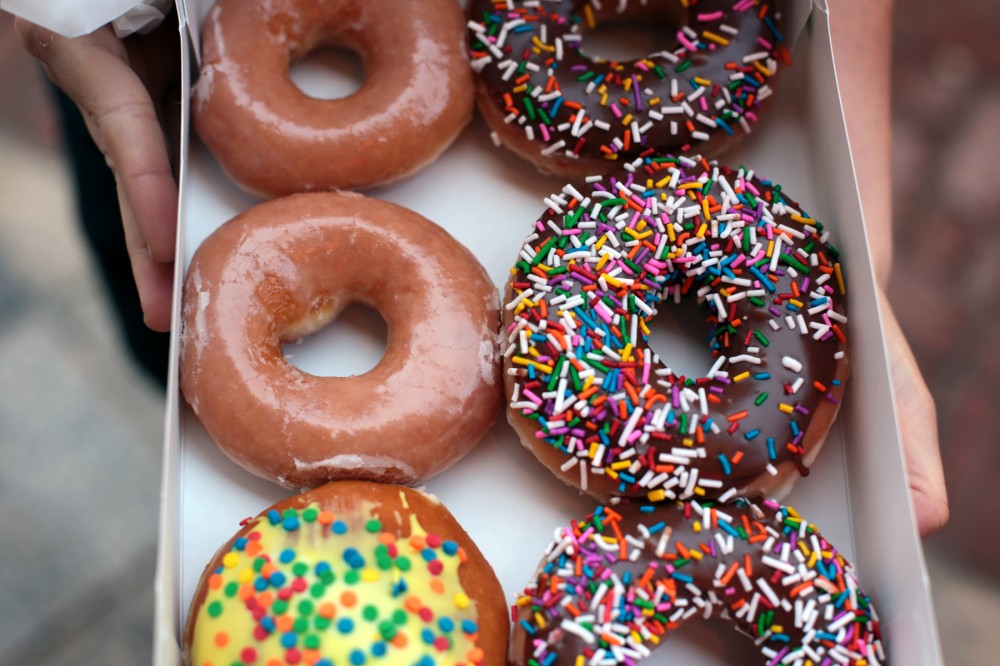
"caption": "Krispy Kreme and Dunkin' Donuts have pledged to source palm oil from suppliers who are not clear-cutting rain forests. Photo: Meredith Rizzo/NPR",
"description": "Krispy Kreme and Dunkin' Donuts have pledged to source palm oil from suppliers who are not clear-cutting rain forests.",
"title": "Krispy Kreme and Dunkin' Donuts have pledged to source palm oil from suppliers who are not clear-cutting rain forests.",
"credit": null,
"status": "inherit",
"isLoading": false,
"fetchFailed": false
},
"bayareabites_87768": {
"type": "attachments",
"id": "bayareabites_87768",
"meta": {
"index": "attachments_1716263798",
"site": "bayareabites",
"id": "87768",
"found": true
},
"parent": 87767,
"imgSizes": {
"kqedFullSize": {
"file": "https://ww2.kqed.org/app/uploads/sites/24/2014/09/cardoon_wide-5602050fc61af6e6fab237412d8b9694db9a575a-e1411079464620.jpg",
"width": 1000,
"height": 562
}
},
"publishDate": 1411078892,
"modified": 1411078892,
"caption": "The cardoon is like \"celery on steroids,\" says McLaglan. Photo: Aya Brackett/Ten Speed Press",
"description": "The cardoon is like \"celery on steroids,\" says McLaglan.",
"title": "The cardoon is like \"celery on steroids,\" says McLaglan.",
"credit": null,
"status": "inherit",
"isLoading": false,
"fetchFailed": false
},
"bayareabites_87670": {
"type": "attachments",
"id": "bayareabites_87670",
"meta": {
"index": "attachments_1716263798",
"site": "bayareabites",
"id": "87670",
"found": true
},
"parent": 87669,
"imgSizes": {
"kqedFullSize": {
"file": "https://ww2.kqed.org/app/uploads/sites/24/2014/09/dietsoda_wide-207249241b23bfe4bd2a6c3e65362beb2d06998d-e1410999873444.jpg",
"width": 1000,
"height": 562
}
},
"publishDate": 1410999652,
"modified": 1410999652,
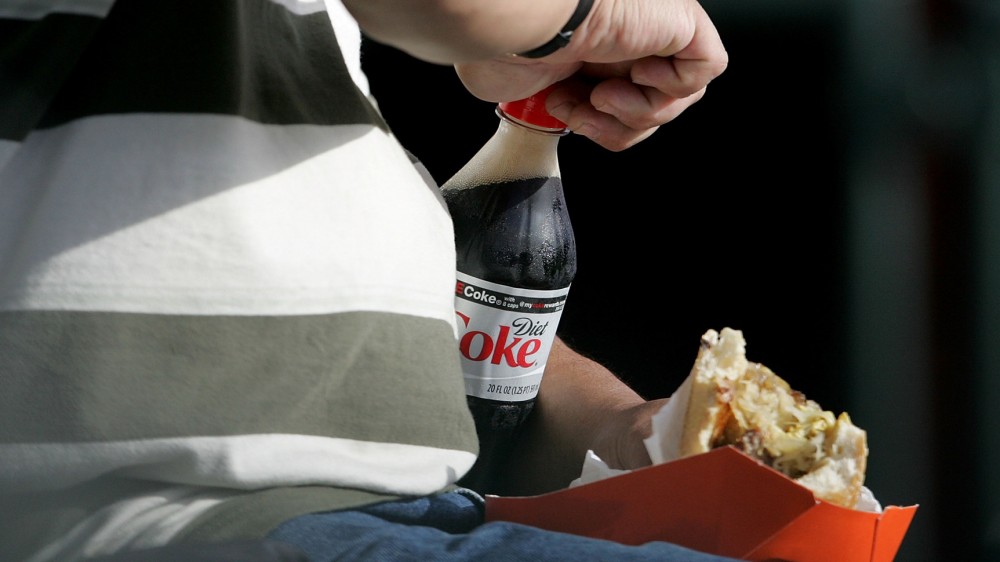
"caption": "Should we drink diet soda or not? The latest study doesn't really clear things up. Photo: Justin Sullivan/Getty Images",
"description": "Should we drink diet soda or not? The latest study doesn't really clear things up.",
"title": "Should we drink diet soda or not? The latest study doesn't really clear things up.",
"credit": null,
"status": "inherit",
"isLoading": false,
"fetchFailed": false
},
"bayareabites_87622": {
"type": "attachments",
"id": "bayareabites_87622",
"meta": {
"index": "attachments_1716263798",
"site": "bayareabites",
"id": "87622",
"found": true
},
"parent": 87621,
"imgSizes": {
"kqedFullSize": {
"file": "https://ww2.kqed.org/app/uploads/sites/24/2014/09/hazelnut03_wide-9018a7ff1c363a11c497f946fc07b38c3fb8f533-e1410918739166.jpg",
"width": 1000,
"height": 562
}
},
"publishDate": 1410917514,
"modified": 1410917514,
"caption": "Hazelnuts, in all their glory. Photo: Ingrid Taylar/Flickr",
"description": "Hazelnuts, in all their glory.",
"title": "Hazelnuts, in all their glory.",
"credit": null,
"status": "inherit",
"isLoading": false,
"fetchFailed": false
},
"bayareabites_87423": {
"type": "attachments",
"id": "bayareabites_87423",
"meta": {
"index": "attachments_1716263798",
"site": "bayareabites",
"id": "87423",
"found": true
},
"parent": 87422,
"imgSizes": {
"kqedFullSize": {
"file": "https://ww2.kqed.org/app/uploads/sites/24/2014/09/diptych_custom-f5764bf2da828d4c9fc62dcfb8f2ea77bce6bbfa-e1410473845333.jpg",
"width": 1000,
"height": 374
}
},
"publishDate": 1410473330,
"modified": 1410473330,
"caption": "To refrigerate or not to refrigerate? It boils down to bacteria, aesthetics and how much energy you're willing to use. Photos: Robert S. Donovan; Flickr / Alex Barth; Flickr",
"description": "To refrigerate or not to refrigerate? It boils down to bacteria, aesthetics and how much energy you're willing to use.",
"title": "To refrigerate or not to refrigerate? It boils down to bacteria, aesthetics and how much energy you're willing to use.",
"credit": null,
"status": "inherit",
"isLoading": false,
"fetchFailed": false
},
"bayareabites_87286": {
"type": "attachments",
"id": "bayareabites_87286",
"meta": {
"index": "attachments_1716263798",
"site": "bayareabites",
"id": "87286",
"found": true
},
"parent": 87285,
"imgSizes": {
"kqedFullSize": {
"file": "https://ww2.kqed.org/app/uploads/sites/24/2014/09/urbanfarm_wide-755060884e1d03ea379ecee4bf274f43ea398929-e1410301498126.jpg",
"width": 1000,
"height": 562
}
},
"publishDate": 1410301306,
"modified": 1410301306,
"caption": "Urban farmers turning a vacant lot into a garden plot in San Francisco's Hayes Valley. Photo: Chris Martin/Flickr",
"description": "Urban farmers turning a vacant lot into a garden plot in San Francisco's Hayes Valley.",
"title": "Urban farmers turning a vacant lot into a garden plot in San Francisco's Hayes Valley.",
"credit": null,
"status": "inherit",
"isLoading": false,
"fetchFailed": false
},
"bayareabites_87271": {
"type": "attachments",
"id": "bayareabites_87271",
"meta": {
"index": "attachments_1716263798",
"site": "bayareabites",
"id": "87271",
"found": true
},
"parent": 87270,
"imgSizes": {
"kqedFullSize": {
"file": "https://ww2.kqed.org/app/uploads/sites/24/2014/09/hotdougs_custom-15eb3eccb5fe79c90ac1c2d40a8438d77c979769-e1410289487471.jpg",
"width": 1000,
"height": 605
}
},
"publishDate": 1410289295,
"modified": 1410289295,
"caption": "Aficionados line up outside Hot Doug's, a gourmet hot dog diner in Chicago in May 2014. Owner Doug Sohn announced that he will shut the doors in October after nearly 14 years. Photo: M. Spencer Green/AP ",
"description": "Aficionados line up outside Hot Doug's, a gourmet hot dog diner in Chicago in May 2014. Owner Doug Sohn announced that he will shut the doors in October after nearly 14 years",
"title": "Aficionados line up outside Hot Doug's, a gourmet hot dog diner in Chicago in May 2014. Owner Doug Sohn announced that he will shut the doors in October after nearly 14 years.",
"credit": null,
"status": "inherit",
"isLoading": false,
"fetchFailed": false
},
"bayareabites_87166": {
"type": "attachments",
"id": "bayareabites_87166",
"meta": {
"index": "attachments_1716263798",
"site": "bayareabites",
"id": "87166",
"found": true
},
"parent": 87165,
"imgSizes": {
"kqedFullSize": {
"file": "https://ww2.kqed.org/app/uploads/sites/24/2014/09/food-workers-protest_slide-02da62fed695edeef0fd767ad59a12aec05c006f-e1409930730854.jpg",
"width": 1000,
"height": 667
}
},
"publishDate": 1409885890,
"modified": 1409885890,
"caption": "Protesters demonstrate outside a McDonald's in Chicago. Hundreds of workers from McDonald's, Taco Bell, Wendy's and other fast-food chains were expected to walk off their jobs Thursday to push the companies to pay their employees at least $15 an hour, according to labor organizers. Photo: M. Spencer Green/AP",
"description": "Protesters demonstrate outside a McDonald's in Chicago. Hundreds of workers from McDonald's, Taco Bell, Wendy's and other fast-food chains were expected to walk off their jobs Thursday to push the companies to pay their employees at least $15 an hour, according to labor organizers.",
"title": "Protesters demonstrate outside a McDonald's in Chicago. Hundreds of workers from McDonald's, Taco Bell, Wendy's and other fast-food chains were expected to walk off their jobs Thursday to push the companies to pay their employees at least $15 an hour, according to labor organizers.",
"credit": null,
"status": "inherit",
"isLoading": false,
"fetchFailed": false
},
"bayareabites_87114": {
"type": "attachments",
"id": "bayareabites_87114",
"meta": {
"index": "attachments_1716263798",
"site": "bayareabites",
"id": "87114",
"found": true
},
"parent": 87113,
"imgSizes": {
"kqedFullSize": {
"file": "https://ww2.kqed.org/app/uploads/sites/24/2014/09/food-supply_slide-cf785198c7d3ea556b7589a92efe920e14e0d069.jpg",
"width": 1798,
"height": 1198
}
},
"publishDate": 1409853162,
"modified": 1409853162,
"caption": "People shop in a Miami grocery store on July 8. USDA says that despite the drop in unemployment, the number of food insecure Americans has not declined because higher food prices and inflation last year offset the benefits of a brighter job market. Photo: Joe Raedle/Getty Images ",
"description": "People shop in a Miami grocery store on July 8. USDA says that despite the drop in unemployment, the number of food insecure Americans has not declined because higher food prices and inflation last year offset the benefits of a brighter job market.",
"title": "People shop in a Miami grocery store on July 8. USDA says that despite the drop in unemployment, the number of food insecure Americans has not declined because higher food prices and inflation last year offset the benefits of a brighter job market.",
"credit": null,
"status": "inherit",
"isLoading": false,
"fetchFailed": false
},
"bayareabites_87094": {
"type": "attachments",
"id": "bayareabites_87094",
"meta": {
"index": "attachments_1716263798",
"site": "bayareabites",
"id": "87094",
"found": true
},
"parent": 87093,
"imgSizes": {
"kqedFullSize": {
"file": "https://ww2.kqed.org/app/uploads/sites/24/2014/09/hatchery-3_slide-745a8da86a235a678943bc2f039d8ac427c3261e.jpg",
"width": 1798,
"height": 1198
}
},
"publishDate": 1409791652,
"modified": 1409791652,
"caption": "Chicks in the Perdue hatchery in Salisbury, Md. The company says all its chickens are now raised using \"no antibiotics, ever.\" Photo: Dan Charles/NPR",
"description": "Chicks in the Perdue hatchery in Salisbury, Md. The company says all its chickens are now raised using \"no antibiotics, ever.\"",
"title": "Chicks in the Perdue hatchery in Salisbury, Md. The company says all its chickens are now raised using \"no antibiotics, ever.\"",
"credit": null,
"status": "inherit",
"isLoading": false,
"fetchFailed": false
},
"bayareabites_86953": {
"type": "attachments",
"id": "bayareabites_86953",
"meta": {
"index": "attachments_1716263798",
"site": "bayareabites",
"id": "86953",
"found": true
},
"parent": 86952,
"imgSizes": {
"kqedFullSize": {
"file": "https://ww2.kqed.org/app/uploads/sites/24/2014/09/istock_000016794480large-672f4801e1eccb865265c7187789561304300021.jpg",
"width": 2418,
"height": 1810
}
},
"publishDate": 1409595176,
"modified": 1409595176,
"caption": "There's new evidence reaffirming that eating foods with fat — everything from avocados and salmon to dairy fat — doesn't make us fat. Photo: eyecrave LLC/iStock ",
"description": "There's new evidence reaffirming that eating foods with fat — everything from avocados and salmon to dairy fat — doesn't make us",
"title": "There's new evidence reaffirming that eating foods with fat — everything from avocados and salmon to dairy fat — doesn't make us fat.",
"credit": null,
"status": "inherit",
"isLoading": false,
"fetchFailed": false
},
"bayareabites_86885": {
"type": "attachments",
"id": "bayareabites_86885",
"meta": {
"index": "attachments_1716263798",
"site": "bayareabites",
"id": "86885",
"found": true
},
"parent": 86884,
"imgSizes": {
"kqedFullSize": {
"file": "https://ww2.kqed.org/app/uploads/sites/24/2014/08/vanilla-icecream-dafacdf309c1f4902e0e8b3d41165fbfcf8bd98b.jpg",
"width": 1776,
"height": 1332
}
},
"publishDate": 1409348611,
"modified": 1409348611,
"caption": "Three scoops of vanilla ice cream made with vanilla beans from Mexico, Tahiti and Madagascar. Photo: Meredith Rizzo/NPR",
"description": "Three scoops of vanilla ice cream made with vanilla beans from Mexico, Tahiti and Madagascar.",
"title": "Three scoops of vanilla ice cream made with vanilla beans from Mexico, Tahiti and Madagascar.",
"credit": null,
"status": "inherit",
"isLoading": false,
"fetchFailed": false
}
},
"audioPlayerReducer": {
"postId": "stream_live",
"isPaused": true,
"isPlaying": false,
"pfsActive": false,
"pledgeModalIsOpen": true,
"playerDrawerIsOpen": false,
"liveAudioPlayStartedAt": 0,
"liveAudioPlayContext": ""
},
"authorsReducer": {
"byline_bayareabites_87808": {
"type": "authors",
"id": "byline_bayareabites_87808",
"meta": {
"override": true
},
"slug": "byline_bayareabites_87808",
"name": "Allison Aubrey",
"isLoading": false
},
"byline_bayareabites_87767": {
"type": "authors",
"id": "byline_bayareabites_87767",
"meta": {
"override": true
},
"slug": "byline_bayareabites_87767",
"name": "NPR Staff",
"isLoading": false
},
"byline_bayareabites_87669": {
"type": "authors",
"id": "byline_bayareabites_87669",
"meta": {
"override": true
},
"slug": "byline_bayareabites_87669",
"name": "Allison Aubrey",
"isLoading": false
},
"byline_bayareabites_87621": {
"type": "authors",
"id": "byline_bayareabites_87621",
"meta": {
"override": true
},
"slug": "byline_bayareabites_87621",
"name": "Dan Charles",
"isLoading": false
},
"byline_bayareabites_87422": {
"type": "authors",
"id": "byline_bayareabites_87422",
"meta": {
"override": true
},
"slug": "byline_bayareabites_87422",
"name": "Rae Ellen Bichell",
"isLoading": false
},
"byline_bayareabites_87285": {
"type": "authors",
"id": "byline_bayareabites_87285",
"meta": {
"override": true
},
"slug": "byline_bayareabites_87285",
"name": "Alastair Bland",
"isLoading": false
},
"byline_bayareabites_87270": {
"type": "authors",
"id": "byline_bayareabites_87270",
"meta": {
"override": true
},
"slug": "byline_bayareabites_87270",
"name": "Maanvi Singh",
"isLoading": false
},
"byline_bayareabites_87165": {
"type": "authors",
"id": "byline_bayareabites_87165",
"meta": {
"override": true
},
"slug": "byline_bayareabites_87165",
"name": "Allison Aubrey",
"isLoading": false
},
"byline_bayareabites_87113": {
"type": "authors",
"id": "byline_bayareabites_87113",
"meta": {
"override": true
},
"slug": "byline_bayareabites_87113",
"name": "Pam Fessler",
"isLoading": false
},
"byline_bayareabites_87093": {
"type": "authors",
"id": "byline_bayareabites_87093",
"meta": {
"override": true
},
"slug": "byline_bayareabites_87093",
"name": "Dan Charles",
"isLoading": false
},
"byline_bayareabites_86952": {
"type": "authors",
"id": "byline_bayareabites_86952",
"meta": {
"override": true
},
"slug": "byline_bayareabites_86952",
"name": "Allison Aubrey",
"isLoading": false
},
"byline_bayareabites_86884": {
"type": "authors",
"id": "byline_bayareabites_86884",
"meta": {
"override": true
},
"slug": "byline_bayareabites_86884",
"name": "April Fulton and Eliza Barclay",
"isLoading": false
}
},
"pagesReducer": {
"bayareabites_category_npr-food": {
"type": "terms",
"id": "bayareabites_10916",
"meta": {
"index": "terms_1716263798",
"site": "bayareabites",
"id": "10916",
"score": 13.894709
},
"featImg": null,
"name": "NPR food",
"description": null,
"taxonomy": "category",
"headData": {
"twImgId": null,
"twTitle": null,
"ogTitle": null,
"ogImgId": null,
"twDescription": null,
"description": null,
"title": "NPR food Archives | KQED Bay Area Bites",
"ogDescription": null
},
"ttid": 5375,
"slug": "npr-food",
"isLoading": false,
"title": "NPR food",
"pageMeta": {
"site": "bayareabites",
"WpPageTemplate": "page-topic-editorial",
"currentPage": 35
},
"blocks": [
{
"blockName": "kqed/post-list",
"attrs": {
"layout": "cardArticle2",
"query": "posts/bayareabites?category=npr-food",
"seeMore": false,
"paginated": true,
"page": 35
}
},
{
"blockName": "kqed/ad"
}
]
}
},
"pfsSessionReducer": {},
"postsReducer": {
"stream_live": {
"type": "live",
"id": "stream_live",
"audioUrl": "https://hls.kqed.org/hls/kqed_app/playlist.m3u8",
"title": "Live Stream",
"excerpt": "Live Stream information currently unavailable.",
"link": "/radio",
"featImg": "",
"label": {
"name": "KQED Live",
"link": "/"
}
},
"stream_kqedNewscast": {
"type": "posts",
"id": "stream_kqedNewscast",
"audioUrl": "https://www.kqed.org/.stream/anon/radio/RDnews/newscast.mp3?_=1",
"title": "KQED Newscast",
"featImg": "",
"label": {
"name": "88.5 FM",
"link": "/"
}
},
"bayareabites_87808": {
"type": "posts",
"id": "bayareabites_87808",
"meta": {
"index": "posts_1716263798",
"site": "bayareabites",
"id": "87808",
"score": null,
"sort": [
1411086381000
]
},
"parent": 0,
"labelTerm": {
"site": "bayareabites"
},
"blocks": [],
"publishDate": 1411086381,
"format": "aside",
"disqusTitle": "Sweet: Dunkin' Donuts and Krispy Kreme Pump Up Pledge On Palm Oil",
"title": "Sweet: Dunkin' Donuts and Krispy Kreme Pump Up Pledge On Palm Oil",
"headTitle": "Bay Area Bites | KQED Food",
"content": "\u003cfigure id=\"attachment_87809\" class=\"wp-caption aligncenter\" style=\"max-width: 1000px\">\u003ca href=\"http://ww2.kqed.org/bayareabites/wp-content/uploads/sites/24/2014/09/donut-glaze-1_enl-b1962630c1193b118837de380a2964bed16295f6-e1411086084472.jpg\">\u003cimg src=\"http://ww2.kqed.org/bayareabites/wp-content/uploads/sites/24/2014/09/donut-glaze-1_enl-b1962630c1193b118837de380a2964bed16295f6-e1411086084472.jpg\" alt=\"Krispy Kreme and Dunkin' Donuts have pledged to source palm oil from suppliers who are not clear-cutting rain forests. Photo: Meredith Rizzo/NPR\" width=\"1000\" height=\"666\" class=\"size-full wp-image-87809\">\u003c/a>\u003cfigcaption class=\"wp-caption-text\">Krispy Kreme and Dunkin' Donuts have pledged to source palm oil from suppliers who are not clear-cutting rain forests. Photo: Meredith Rizzo/NPR\u003c/figcaption>\u003c/figure>\n\u003cp>by Allison Aubrey, \u003ca href=\"http://www.npr.org/blogs/thesalt/2014/09/18/349562067/sweet-dunkin-donuts-and-krispy-kreme-pump-up-pledge-on-palm-oil\" target=\"_blank\">The Salt at NPR Food\u003c/a> (9/18/14)\u003c/p>\n\u003cp>Environmentalists say two major doughnut chains got a little sweeter this week.\u003c/p>\n\u003cp>Krispy Kreme and Dunkin' Brands have both made new commitments to source palm oil for frying their goodies from suppliers who are not clear-cutting forests.\u003c/p>\n\u003cp>As we \u003ca href=\"http://www.npr.org/blogs/thesalt/2014/06/06/319231081/doughnut-day-downer-palm-oil-in-pastries-drives-deforestation\">reported\u003c/a> back in June, leading doughnut retailers have been sourcing some of their palm oil from suppliers who have a history of clear-cutting rain forests and destroying wildlife habitat and carbon-rich peatlands.\u003c/p>\n\u003cp>The practices were outlined in a report called \"\u003ca href=\"http://www.forestheroes.org/deforestation_doughnuts_our_new_report_on_the_dark_side_of_the_doughnut_industry\">Deforestation Doughnuts,\u003c/a>\" by the rain forest protection coalition Forest Heroes.\u003c/p>\n\u003cp>[ad fullwidth]\u003c/p>\n\u003cp>This week, Forest Heroes is applauding the industry. \"The one-two punch of Dunkin' Donuts and Krispy Kreme going deforestation-free signal a rapid shift in the U.S. fast food industry,\" Deborah Lapidus, campaign director of Forest Heroes, writes in a statement.\u003c/p>\n\u003cp>\"Now, consumers who care about forests and wildlife can know that indulging in a tasty treat won't threaten tigers and orangutans,\" Lapidus says.\u003c/p>\n\u003cp>Krispy Kreme updated its palm oil sourcing policy on its website, committing to 100 percent responsible sourcing of palm oil.\u003c/p>\n\u003cp>\"Krispy Kreme will work with its suppliers to meet these commitments as rapidly as possible, with a deadline for full compliance by the end of 2016. Suppliers who are found not in compliance will be required to submit a viable action plan for closing any identified gaps, or risk removal from the brand's supply chain,\" the policy says.\u003c/p>\n\u003cp>And in a \u003ca href=\"http://www.prnewswire.com/news-releases/dunkin-brands-announces-commitment-to-100-sustainable-palm-oil-275283651.html\">news release\u003c/a>, Dunkin' Donuts made a similar announcement: \"Dunkin' Brands will work with its suppliers and its franchisee-owned purchasing cooperative to source palm oil that is 100 percent fully traceable to the mill by the end of 2015, and to the plantation by the end of 2016 for use in Dunkin' Donuts U.S. restaurants,\" the statement reads.\u003c/p>\n\u003cp>The Union of Concerned Scientists has weighed in on the new commitments as well.\u003c/p>\n\u003cp>\"We all know that fast food isn't great for our health, but Dunkin' Brands and Krispy Kreme have demonstrated it doesn't have to be bad for the health of the planet as well,\" writes \u003ca href=\"http://www.ucsusa.org/about/staff/staff/calen-may-tobin.html\">Calen May-Tobin\u003c/a>, the lead analyst for the Union of Concerned Scientists' Tropical Forest and Climate Initiative.\u003c/p>\n\u003cp>May-Tobin previously put together \u003ca href=\"http://www.ucsusa.org/global_warming/solutions/stop-deforestation/palm-oil-scorecard.html\">an analysis\u003c/a> that examined palm oil sourcing practices for 30 leading consumer brands.\u003c/p>\n\u003cp>\"These announcements demonstrate the power that consumers can have to move companies,\" May-Tobin writes.\u003c/p>\n\u003cp>As we've reported, environmental and consumer groups have used lots of tactics to get the attention of company leaders. For instance, a shareholder advocate for \u003ca href=\"http://greencentury.com/?gclid=CJ-D7KzL27wCFeYDOgod6TYA0g\">Green Century Capital Management\u003c/a>, a mutual fund company that attracts green-minded investors\u003cem>\u003c/em>, got on an earnings conference call in August 2013 with the CEO of Kellogg to ask about the company's palm oil policy.\u003c/p>\n\u003cp>And though Kellogg was already at work drafting a new policy, the shareholder questioning may have helped to nudge the process along.\u003c/p>\n\u003cp>The Rainforest Action Network points out that lots of other big food companies have stepped up to strengthen their palm oil purchasing commitments, including Nestle, Mars, Mondelez, and ConAgra Foods.\u003c/p>\n\u003cp>The advocacy group applauds the announcements of the big doughnut chains.\u003c/p>\n\u003cp>But is there a holdout? Forest Heroes says it is waiting for action by another large chain, Tim Hortons, which was \u003ca href=\"http://www.npr.org/2014/08/26/343420295/burger-announces-merger-with-tim-hortons-move-to-canada\">recently bought\u003c/a> by Burger King and is a big player in the doughnut biz.\u003c/p>\n\u003cp>\"If Americans can eat deforestation-free doughnuts, what is Tim Hortons waiting for, eh?\" Kevin Grandia, Forest Heroes' Canada campaign coordinator, says in a statement.\u003c/p>\n\u003cp>\u003c/p>\n\u003cp>\u003cem>Copyright 2014 \u003ca href=\"http://www.npr.org/\" target=\"_blank\">NPR\u003c/a>. \u003c/em>\u003c/p>\n\n",
"disqusIdentifier": "87808 http://blogs.kqed.org/bayareabites/?p=87808",
"disqusUrl": "https://ww2.kqed.org/bayareabites/2014/09/18/sweet-dunkin-donuts-and-krispy-kreme-pump-up-pledge-on-palm-oil/",
"stats": {
"hasVideo": false,
"hasChartOrMap": false,
"hasAudio": false,
"hasPolis": false,
"wordCount": 625,
"hasGoogleForm": false,
"hasGallery": false,
"hasHearkenModule": false,
"iframeSrcs": [],
"paragraphCount": 23
},
"modified": 1411086381,
"excerpt": "Two major doughnut chains have bowed to consumer pressure to better police their palm oil purchases. Environmentalists say it's a win for consumers, trees and animals.",
"headData": {
"twImgId": "",
"twTitle": "",
"ogTitle": "",
"ogImgId": "",
"twDescription": "",
"description": "Two major doughnut chains have bowed to consumer pressure to better police their palm oil purchases. Environmentalists say it's a win for consumers, trees and animals.",
"title": "Sweet: Dunkin' Donuts and Krispy Kreme Pump Up Pledge On Palm Oil | KQED",
"ogDescription": "",
"schema": {
"@context": "https://schema.org",
"@type": "Article",
"headline": "Sweet: Dunkin' Donuts and Krispy Kreme Pump Up Pledge On Palm Oil",
"datePublished": "2014-09-18T17:26:21-07:00",
"dateModified": "2014-09-18T17:26:21-07:00",
"image": "https://cdn.kqed.org/wp-content/uploads/2020/02/KQED-OG-Image@1x.png"
}
},
"guestAuthors": [],
"slug": "sweet-dunkin-donuts-and-krispy-kreme-pump-up-pledge-on-palm-oil",
"status": "publish",
"nprApiLink": "http://api.npr.org/query?id=349562067&apiKey=MDAxOTAwOTE4MDEyMTkxMDAzNjczZDljZA004",
"nprByline": "Allison Aubrey",
"nprStoryDate": "Thu, 18 Sep 2014 16:33:00 -0400",
"nprLastModifiedDate": "Thu, 18 Sep 2014 17:57:08 -0400",
"nprHtmlLink": "http://www.npr.org/blogs/thesalt/2014/09/18/349562067/sweet-dunkin-donuts-and-krispy-kreme-pump-up-pledge-on-palm-oil?ft=3&f=349562067",
"nprStoryId": "349562067",
"nprRetrievedStory": "1",
"nprPubDate": "Thu, 18 Sep 2014 17:57:00 -0400",
"path": "/bayareabites/87808/sweet-dunkin-donuts-and-krispy-kreme-pump-up-pledge-on-palm-oil",
"audioTrackLength": null,
"parsedContent": [
{
"type": "contentString",
"content": "\u003cdiv class=\"post-body\">\u003cp>\u003cfigure id=\"attachment_87809\" class=\"wp-caption aligncenter\" style=\"max-width: 1000px\">\u003ca href=\"http://ww2.kqed.org/bayareabites/wp-content/uploads/sites/24/2014/09/donut-glaze-1_enl-b1962630c1193b118837de380a2964bed16295f6-e1411086084472.jpg\">\u003cimg src=\"http://ww2.kqed.org/bayareabites/wp-content/uploads/sites/24/2014/09/donut-glaze-1_enl-b1962630c1193b118837de380a2964bed16295f6-e1411086084472.jpg\" alt=\"Krispy Kreme and Dunkin' Donuts have pledged to source palm oil from suppliers who are not clear-cutting rain forests. Photo: Meredith Rizzo/NPR\" width=\"1000\" height=\"666\" class=\"size-full wp-image-87809\">\u003c/a>\u003cfigcaption class=\"wp-caption-text\">Krispy Kreme and Dunkin' Donuts have pledged to source palm oil from suppliers who are not clear-cutting rain forests. Photo: Meredith Rizzo/NPR\u003c/figcaption>\u003c/figure>\n\u003cp>by Allison Aubrey, \u003ca href=\"http://www.npr.org/blogs/thesalt/2014/09/18/349562067/sweet-dunkin-donuts-and-krispy-kreme-pump-up-pledge-on-palm-oil\" target=\"_blank\">The Salt at NPR Food\u003c/a> (9/18/14)\u003c/p>\n\u003cp>Environmentalists say two major doughnut chains got a little sweeter this week.\u003c/p>\n\u003cp>Krispy Kreme and Dunkin' Brands have both made new commitments to source palm oil for frying their goodies from suppliers who are not clear-cutting forests.\u003c/p>\n\u003cp>As we \u003ca href=\"http://www.npr.org/blogs/thesalt/2014/06/06/319231081/doughnut-day-downer-palm-oil-in-pastries-drives-deforestation\">reported\u003c/a> back in June, leading doughnut retailers have been sourcing some of their palm oil from suppliers who have a history of clear-cutting rain forests and destroying wildlife habitat and carbon-rich peatlands.\u003c/p>\n\u003cp>The practices were outlined in a report called \"\u003ca href=\"http://www.forestheroes.org/deforestation_doughnuts_our_new_report_on_the_dark_side_of_the_doughnut_industry\">Deforestation Doughnuts,\u003c/a>\" by the rain forest protection coalition Forest Heroes.\u003c/p>\n\u003cp>\u003c/p>\u003c/div>",
"attributes": {
"named": {},
"numeric": []
}
},
{
"type": "component",
"content": "",
"name": "ad",
"attributes": {
"named": {
"label": "fullwidth"
},
"numeric": [
"fullwidth"
]
}
},
{
"type": "contentString",
"content": "\u003cdiv class=\"post-body\">\u003cp>\u003c/p>\n\u003cp>This week, Forest Heroes is applauding the industry. \"The one-two punch of Dunkin' Donuts and Krispy Kreme going deforestation-free signal a rapid shift in the U.S. fast food industry,\" Deborah Lapidus, campaign director of Forest Heroes, writes in a statement.\u003c/p>\n\u003cp>\"Now, consumers who care about forests and wildlife can know that indulging in a tasty treat won't threaten tigers and orangutans,\" Lapidus says.\u003c/p>\n\u003cp>Krispy Kreme updated its palm oil sourcing policy on its website, committing to 100 percent responsible sourcing of palm oil.\u003c/p>\n\u003cp>\"Krispy Kreme will work with its suppliers to meet these commitments as rapidly as possible, with a deadline for full compliance by the end of 2016. Suppliers who are found not in compliance will be required to submit a viable action plan for closing any identified gaps, or risk removal from the brand's supply chain,\" the policy says.\u003c/p>\n\u003cp>And in a \u003ca href=\"http://www.prnewswire.com/news-releases/dunkin-brands-announces-commitment-to-100-sustainable-palm-oil-275283651.html\">news release\u003c/a>, Dunkin' Donuts made a similar announcement: \"Dunkin' Brands will work with its suppliers and its franchisee-owned purchasing cooperative to source palm oil that is 100 percent fully traceable to the mill by the end of 2015, and to the plantation by the end of 2016 for use in Dunkin' Donuts U.S. restaurants,\" the statement reads.\u003c/p>\n\u003cp>The Union of Concerned Scientists has weighed in on the new commitments as well.\u003c/p>\n\u003cp>\"We all know that fast food isn't great for our health, but Dunkin' Brands and Krispy Kreme have demonstrated it doesn't have to be bad for the health of the planet as well,\" writes \u003ca href=\"http://www.ucsusa.org/about/staff/staff/calen-may-tobin.html\">Calen May-Tobin\u003c/a>, the lead analyst for the Union of Concerned Scientists' Tropical Forest and Climate Initiative.\u003c/p>\n\u003cp>May-Tobin previously put together \u003ca href=\"http://www.ucsusa.org/global_warming/solutions/stop-deforestation/palm-oil-scorecard.html\">an analysis\u003c/a> that examined palm oil sourcing practices for 30 leading consumer brands.\u003c/p>\n\u003cp>\"These announcements demonstrate the power that consumers can have to move companies,\" May-Tobin writes.\u003c/p>\n\u003cp>As we've reported, environmental and consumer groups have used lots of tactics to get the attention of company leaders. For instance, a shareholder advocate for \u003ca href=\"http://greencentury.com/?gclid=CJ-D7KzL27wCFeYDOgod6TYA0g\">Green Century Capital Management\u003c/a>, a mutual fund company that attracts green-minded investors\u003cem>\u003c/em>, got on an earnings conference call in August 2013 with the CEO of Kellogg to ask about the company's palm oil policy.\u003c/p>\n\u003cp>And though Kellogg was already at work drafting a new policy, the shareholder questioning may have helped to nudge the process along.\u003c/p>\n\u003cp>The Rainforest Action Network points out that lots of other big food companies have stepped up to strengthen their palm oil purchasing commitments, including Nestle, Mars, Mondelez, and ConAgra Foods.\u003c/p>\n\u003cp>The advocacy group applauds the announcements of the big doughnut chains.\u003c/p>\n\u003cp>But is there a holdout? Forest Heroes says it is waiting for action by another large chain, Tim Hortons, which was \u003ca href=\"http://www.npr.org/2014/08/26/343420295/burger-announces-merger-with-tim-hortons-move-to-canada\">recently bought\u003c/a> by Burger King and is a big player in the doughnut biz.\u003c/p>\n\u003cp>\"If Americans can eat deforestation-free doughnuts, what is Tim Hortons waiting for, eh?\" Kevin Grandia, Forest Heroes' Canada campaign coordinator, says in a statement.\u003c/p>\n\u003cp>\u003c/p>\n\u003cp>\u003cem>Copyright 2014 \u003ca href=\"http://www.npr.org/\" target=\"_blank\">NPR\u003c/a>. \u003c/em>\u003c/p>\n\n\u003c/div>\u003c/p>",
"attributes": {
"named": {},
"numeric": []
}
}
],
"link": "/bayareabites/87808/sweet-dunkin-donuts-and-krispy-kreme-pump-up-pledge-on-palm-oil",
"authors": [
"byline_bayareabites_87808"
],
"categories": [
"bayareabites_1516",
"bayareabites_1653",
"bayareabites_4084",
"bayareabites_10916",
"bayareabites_60"
],
"tags": [
"bayareabites_13098",
"bayareabites_2889",
"bayareabites_131",
"bayareabites_13827",
"bayareabites_13826",
"bayareabites_11870",
"bayareabites_13825",
"bayareabites_10921"
],
"featImg": "bayareabites_87809",
"label": "bayareabites"
},
"bayareabites_87767": {
"type": "posts",
"id": "bayareabites_87767",
"meta": {
"index": "posts_1716263798",
"site": "bayareabites",
"id": "87767",
"score": null,
"sort": [
1411079892000
]
},
"parent": 0,
"labelTerm": {
"site": "bayareabites"
},
"blocks": [],
"publishDate": 1411079892,
"format": "aside",
"disqusTitle": "From Coffee To Chicory To Beer, 'Bitter' Flavor Can Be Addictive",
"title": "From Coffee To Chicory To Beer, 'Bitter' Flavor Can Be Addictive",
"headTitle": "Bay Area Bites | KQED Food",
"content": "\u003cfigure id=\"attachment_87768\" class=\"wp-caption aligncenter\" style=\"max-width: 1000px\">\u003ca href=\"http://ww2.kqed.org/bayareabites/wp-content/uploads/sites/24/2014/09/cardoon_wide-5602050fc61af6e6fab237412d8b9694db9a575a-e1411079464620.jpg\">\u003cimg src=\"http://ww2.kqed.org/bayareabites/wp-content/uploads/sites/24/2014/09/cardoon_wide-5602050fc61af6e6fab237412d8b9694db9a575a-e1411079464620.jpg\" alt='The cardoon is like \"celery on steroids,\" says McLaglan. Photo: Aya Brackett/Ten Speed Press' width=\"1000\" height=\"562\" class=\"size-full wp-image-87768\">\u003c/a>\u003cfigcaption class=\"wp-caption-text\">The cardoon is like \"celery on steroids,\" says McLaglan. Photo: Aya Brackett/Ten Speed Press\u003c/figcaption>\u003c/figure>\n\u003cp>\u003cstrong>Listen to the Story\u003c/strong> on Morning Edition:\u003cbr>\nhttp://pd.npr.org/anon.npr-mp3/npr/me/2014/09/20140918_me_from_coffee_to_chicory_to_beer_bitter_flavor_can_be_addictive.mp3\u003c/p>\n\u003cp>by NPR Staff, \u003ca href=\"http://www.npr.org/blogs/thesalt/2014/09/18/349277608/from-coffee-to-chicory-to-beer-bitter-flavor-can-be-addictive?utm_medium=RSS&utm_campaign=food\" target=\"_blank\">The Salt at NPR Food\u003c/a> (9/18/14)\u003c/p>\n\u003cp>\u003ca href=\"http://www.npr.org/books/titles/349276219/bitter-a-taste-of-the-worlds-most-dangerous-flavor-with-recipes\">\u003cimg src=\"http://ww2.kqed.org/bayareabites/wp-content/uploads/sites/24/2014/09/bitter-book.jpg\" alt=\"Bitter A Taste of the World's Most Dangerous Flavor, With Recipes by Jennifer McLagan\" width=\"300\" height=\"381\" class=\"alignleft size-full wp-image-87776\">\u003c/a>Food writer Jennifer McLagan has spent the past few years trying to win home cooks over to the ingredients they fear. She's written a cookbook on fat, one on bones and one titled \u003ca href=\"http://www.amazon.com/Odd-Bits-Cook-Rest-Animal/dp/158008334X\">\u003cem>Odd Bits: How to Cook the Rest of the Animal\u003c/em>.\u003c/a>\u003c/p>\n\u003cp>Now, at a time when \"arugula eater\" is nearly a political slur, McLagan is back with a book of quirky history and culture, sprinkled with recipes aimed at rehabilitating the image of bitter greens. And it's not just greens — McLagan's recipes highlight everything from grapefruit to beer and chocolate.\u003c/p>\n\u003cp>The book is called \u003ca href=\"http://www.amazon.com/Bitter-Worlds-Dangerous-Flavor-Recipes/dp/160774516X\">Bitter: A Taste of the World's Most Dangerous Flavor, with Recipes\u003c/a>\u003cem>. \u003c/em>And McLagan makes the case for why bitter is the most interesting flavor.\u003c/p>\n\u003cp>[ad fullwidth]\u003c/p>\n\u003cp>\"We're all programmed genetically to react negatively to bitter,\" McLagan tells \u003cem>Morning Edition\u003c/em> host Audie Cornish. \"Bitterness can indicate a poison or something that's toxic.\" (This is the prevailing sentiment, although \u003ca href=\"http://www.npr.org/blogs/thesalt/2013/11/12/244789655/why-can-we-taste-bitter-flavors-turns-out-it-s-still-a-mystery\">one recent study\u003c/a> raises questions about that assumption.)\u003c/p>\n\u003cp>As we grow older, we start to acquire a taste for it, she notes. \"Your first sip of coffee — it's so bitter,'\" she says. But most people get used to that taste. And it helps that coffee perks us up. \"It stimulates the nervous system,\" McLagan says. \"So you're prepared to, like, deal with the bitterness for the benefits.\"\u003c/p>\n\u003cp>Bitterness has its own benefits, of course. \"It balances things that are rich,\" McLagan explains. That's why her book features dishes like Pork Chops in Coffee Black Currant Sauce. \"The bitterness of the coffee balances out the fat,\" McLagan says.\u003c/p>\n\u003cp>In addition to coffee, the book features common ingredients like walnuts, beer and orange rind. It also includes lots of vegetables you've probably never heard of. There's cardoon, for example, a vegetable McLagan describes as \"celery on steroids.\" The flavor is bitter, similar in some ways to artichoke. \"It's an old vegetable and I'm trying to rehabilitate it single-handedly,\" McLagan says.\u003c/p>\n\u003cp>Other intriguing ingredients include methi leaves (fenugreek) and \u003ca href=\"https://www.flickr.com/photos/ulteriorepicure/4009778645/in/photolist-aeZKxr-8BtfYf-8S4Gy7-adys1t-hn6T6t-oQUsVm-5gfjD6-8S1Bcc-77p6Z9-qHhM3-77kauz-csPCJC-4RXMLK-cESKTW-8TVTLJ-6Mj5BF-fZYvMd-ajYg2p-5ZHA5o-76hi3y-9nbjvA-8S1B9R-5qaUs6-8S4GF5-ojdjVA-aekQNA-8S1ARc-41Stx-8S4Gau-8S4GAU-8S1B4p-qHhW2-8S1ACB-8S4FZJ-e99iqb-bb368z-8S1ABn-aFnNWN-4qZsn4-jERTjD-dfHBzZ-a8xBZG-6Siojg-39Kqr7-athj3Q-6Ss57j-fNJ9Fd-4aWVX1-4LsRgM-9LeN4Y\">bitter melon\u003c/a>, dandelion greens and chicory. These veggies are most popular in places like India, East Asia and Italy, McLagan says.\u003c/p>\n\u003cp>All of the dishes in the book are bitter in different ways. One of McLagan's recipes is for toast soup — soup made from charred toast. \"People say to me: 'Well, that's not bitter.' \"\u003c/p>\n\u003cp>The burnt parts of toast add bitter flavor, McLagan says. That way, when you spread jam on top, \"you're balancing the sweetness of the jam with the bitterness of the toast.\"\u003c/p>\n\u003cp>That's why in Europe, and especially in France, people like their pies and tarts to have slightly browned edges, she adds. The bitter, caramelized parts pair well with the sweet, tart filling. \"Things don't have to be immediately bitter, but if there's a little bit of underlying bitterness in them, they taste more interesting and complex,\" she says.\u003c/p>\n\u003cp>Still, not everyone will agree on what tastes bitter, McLagan says. Different people have different sensitivities to the flavor. \"Bitter is probably the most interesting taste because we probably agree on it the least.\"\u003c/p>\n\u003cp>She says she hopes her book will open up a dialogue about the flavor of bitter, and inspire readers to introduce more bitter flavor into their diets. Ultimately, she says, \"a lot of these bitter-flavored vegetables are very good for you.\"\u003c/p>\n\u003cp>Here's an example of the unusual recipes in the book. We know. You're thinking, \"Turnip Ice Cream?\"\u003c/p>\n\u003cp>\"It's good to surprise your taste buds every so often,\" McLagan says.\u003c/p>\n\u003chr>\n\u003cfigure id=\"attachment_87769\" class=\"wp-caption aligncenter\" style=\"max-width: 500px\">\u003ca href=\"http://ww2.kqed.org/bayareabites/wp-content/uploads/sites/24/2014/09/turnip_custom-346f0796bd86ddaf01e50b74cf79a6aa585730fc-e1411079631390.jpg\">\u003cimg src=\"http://ww2.kqed.org/bayareabites/wp-content/uploads/sites/24/2014/09/turnip_custom-346f0796bd86ddaf01e50b74cf79a6aa585730fc-e1411079631390.jpg\" alt=\"The bitter turnip takes a star turn in dessert. Photo: Aya Brackett/Ten Speed Press\" width=\"500\" class=\"size-full wp-image-87769\">\u003c/a>\u003cfigcaption class=\"wp-caption-text\">The bitter turnip takes a star turn in dessert. Photo: Aya Brackett/Ten Speed Press\u003c/figcaption>\u003c/figure>\n\u003ch3>Turnip Ice Cream\u003c/h3>\n\u003cul>\n\u003cstrong>Ingredients:\u003c/strong>\n\u003cli>8 3⁄4 ounces / 250 g turnips, about 3 medium\u003c/li>\n\u003cli>1 cup / 250 ml whole milk\u003c/li>\n\u003cli>1 cup / 250 ml whipping (35 percent fat) cream\u003c/li>\n\u003cli>A blade of mace, or a good pinch of freshly ground nutmeg\u003c/li>\n\u003cli>3 egg yolks 1⁄3 cup plus 2 teaspoons /2 1⁄2 ounces / 75 g sugar\u003c/li>\n\u003cli>A pinch of fine sea salt\u003c/li>\n\u003cli>1 tablespoon vodka\u003c/li>\n\u003c/ul>\n\u003col>\n\u003cstrong>Instructions:\u003c/strong>\n\u003cli>Peel and coarsely grate the turnips, then place them in a medium saucepan and add the milk, cream, and mace. Bring to a boil over medium heat, remove from the heat, cover, and let stand for 15 minutes. Taste the mixture: it should taste of turnip; if not, let stand another 10 minutes. Strain the mixture into a large measuring cup, pressing down on the turnip to extract all the liquid.\u003c/li>\n\u003cli>Whisk the egg yolks with the sugar and salt in a large bowl until the mixture is light and thick and the sugar is dissolved. Whisk the strained milk and cream mixture into the egg yolks, then pour into a clean saucepan. Cook over medium heat, stirring, until the mixture thickens and coats the back of a spoon. Strain into a bowl and cool quickly by placing it in a larger bowl or sink filled with cold water and ice. Stir the mixture often. When it is cool, cover and refrigerate overnight. Also, place a container for the ice cream in the freezer to get cold.\u003c/li>\n\u003cli>The next day, remove the ice cream mixture from the refrigerator, stir in the vodka, and then churn in an ice cream machine following the manufacturer's instructions. Transfer to the cold container and freeze until ready to serve.\u003c/li>\n\u003c/ol>\n\u003cp>\u003c/p>\n\u003cp>\u003cem>Copyright 2014 \u003ca href=\"http://www.npr.org/\" target=\"_blank\">NPR\u003c/a>.\u003c/em>\u003c/p>\n\n",
"disqusIdentifier": "87767 http://blogs.kqed.org/bayareabites/?p=87767",
"disqusUrl": "https://ww2.kqed.org/bayareabites/2014/09/18/from-coffee-to-chicory-to-beer-bitter-flavor-can-be-addictive/",
"stats": {
"hasVideo": false,
"hasChartOrMap": false,
"hasAudio": false,
"hasPolis": false,
"wordCount": 953,
"hasGoogleForm": false,
"hasGallery": false,
"hasHearkenModule": false,
"iframeSrcs": [],
"paragraphCount": 20
},
"modified": 1411079957,
"excerpt": "If you don't think you like bitter foods, try them again. Jennifer McLagan, the author of \u003cem>Bitter: A Taste of the World's Most Dangerous Flavor,\u003c/em> is on a mission to change hearts and minds.",
"headData": {
"twImgId": "",
"twTitle": "",
"ogTitle": "",
"ogImgId": "",
"twDescription": "",
"description": "If you don't think you like bitter foods, try them again. Jennifer McLagan, the author of Bitter: A Taste of the World's Most Dangerous Flavor, is on a mission to change hearts and minds.",
"title": "From Coffee To Chicory To Beer, 'Bitter' Flavor Can Be Addictive | KQED",
"ogDescription": "",
"schema": {
"@context": "https://schema.org",
"@type": "Article",
"headline": "From Coffee To Chicory To Beer, 'Bitter' Flavor Can Be Addictive",
"datePublished": "2014-09-18T15:38:12-07:00",
"dateModified": "2014-09-18T15:39:17-07:00",
"image": "https://cdn.kqed.org/wp-content/uploads/2020/02/KQED-OG-Image@1x.png"
}
},
"guestAuthors": [],
"slug": "from-coffee-to-chicory-to-beer-bitter-flavor-can-be-addictive",
"status": "publish",
"nprApiLink": "http://api.npr.org/query?id=349277608&apiKey=MDAxOTAwOTE4MDEyMTkxMDAzNjczZDljZA004",
"nprByline": "NPR Staff",
"nprStoryDate": "Thu, 18 Sep 2014 05:06:00 -0400",
"nprLastModifiedDate": "Thu, 18 Sep 2014 14:58:05 -0400",
"nprHtmlLink": "http://www.npr.org/blogs/thesalt/2014/09/18/349277608/from-coffee-to-chicory-to-beer-bitter-flavor-can-be-addictive?ft=3&f=349277608",
"nprAudio": "http://pd.npr.org/anon.npr-mp3/npr/me/2014/09/20140918_me_from_coffee_to_chicory_to_beer_bitter_flavor_can_be_addictive.mp3?orgId=1&topicId=1053&ft=3&f=349277608",
"nprAudioM3u": "http://api.npr.org/m3u/1349464217-717962.m3u?orgId=1&topicId=1053&ft=3&f=349277608",
"nprStoryId": "349277608",
"nprRetrievedStory": "1",
"nprPubDate": "Thu, 18 Sep 2014 14:58:00 -0400",
"path": "/bayareabites/87767/from-coffee-to-chicory-to-beer-bitter-flavor-can-be-addictive",
"audioUrl": "http://pd.npr.org/anon.npr-mp3/npr/me/2014/09/20140918_me_from_coffee_to_chicory_to_beer_bitter_flavor_can_be_addictive.mp3",
"audioDuration": null,
"audioTrackLength": null,
"parsedContent": [
{
"type": "contentString",
"content": "\u003cdiv class=\"post-body\">\u003cp>\u003cfigure id=\"attachment_87768\" class=\"wp-caption aligncenter\" style=\"max-width: 1000px\">\u003ca href=\"http://ww2.kqed.org/bayareabites/wp-content/uploads/sites/24/2014/09/cardoon_wide-5602050fc61af6e6fab237412d8b9694db9a575a-e1411079464620.jpg\">\u003cimg src=\"http://ww2.kqed.org/bayareabites/wp-content/uploads/sites/24/2014/09/cardoon_wide-5602050fc61af6e6fab237412d8b9694db9a575a-e1411079464620.jpg\" alt='The cardoon is like \"celery on steroids,\" says McLaglan. Photo: Aya Brackett/Ten Speed Press' width=\"1000\" height=\"562\" class=\"size-full wp-image-87768\">\u003c/a>\u003cfigcaption class=\"wp-caption-text\">The cardoon is like \"celery on steroids,\" says McLaglan. Photo: Aya Brackett/Ten Speed Press\u003c/figcaption>\u003c/figure>\n\u003cp>\u003cstrong>Listen to the Story\u003c/strong> on Morning Edition:\u003cbr>\nhttp://pd.npr.org/anon.npr-mp3/npr/me/2014/09/20140918_me_from_coffee_to_chicory_to_beer_bitter_flavor_can_be_addictive.mp3\u003c/p>\n\u003cp>by NPR Staff, \u003ca href=\"http://www.npr.org/blogs/thesalt/2014/09/18/349277608/from-coffee-to-chicory-to-beer-bitter-flavor-can-be-addictive?utm_medium=RSS&utm_campaign=food\" target=\"_blank\">The Salt at NPR Food\u003c/a> (9/18/14)\u003c/p>\n\u003cp>\u003ca href=\"http://www.npr.org/books/titles/349276219/bitter-a-taste-of-the-worlds-most-dangerous-flavor-with-recipes\">\u003cimg src=\"http://ww2.kqed.org/bayareabites/wp-content/uploads/sites/24/2014/09/bitter-book.jpg\" alt=\"Bitter A Taste of the World's Most Dangerous Flavor, With Recipes by Jennifer McLagan\" width=\"300\" height=\"381\" class=\"alignleft size-full wp-image-87776\">\u003c/a>Food writer Jennifer McLagan has spent the past few years trying to win home cooks over to the ingredients they fear. She's written a cookbook on fat, one on bones and one titled \u003ca href=\"http://www.amazon.com/Odd-Bits-Cook-Rest-Animal/dp/158008334X\">\u003cem>Odd Bits: How to Cook the Rest of the Animal\u003c/em>.\u003c/a>\u003c/p>\n\u003cp>Now, at a time when \"arugula eater\" is nearly a political slur, McLagan is back with a book of quirky history and culture, sprinkled with recipes aimed at rehabilitating the image of bitter greens. And it's not just greens — McLagan's recipes highlight everything from grapefruit to beer and chocolate.\u003c/p>\n\u003cp>The book is called \u003ca href=\"http://www.amazon.com/Bitter-Worlds-Dangerous-Flavor-Recipes/dp/160774516X\">Bitter: A Taste of the World's Most Dangerous Flavor, with Recipes\u003c/a>\u003cem>. \u003c/em>And McLagan makes the case for why bitter is the most interesting flavor.\u003c/p>\n\u003cp>\u003c/p>\u003c/div>",
"attributes": {
"named": {},
"numeric": []
}
},
{
"type": "component",
"content": "",
"name": "ad",
"attributes": {
"named": {
"label": "fullwidth"
},
"numeric": [
"fullwidth"
]
}
},
{
"type": "contentString",
"content": "\u003cdiv class=\"post-body\">\u003cp>\u003c/p>\n\u003cp>\"We're all programmed genetically to react negatively to bitter,\" McLagan tells \u003cem>Morning Edition\u003c/em> host Audie Cornish. \"Bitterness can indicate a poison or something that's toxic.\" (This is the prevailing sentiment, although \u003ca href=\"http://www.npr.org/blogs/thesalt/2013/11/12/244789655/why-can-we-taste-bitter-flavors-turns-out-it-s-still-a-mystery\">one recent study\u003c/a> raises questions about that assumption.)\u003c/p>\n\u003cp>As we grow older, we start to acquire a taste for it, she notes. \"Your first sip of coffee — it's so bitter,'\" she says. But most people get used to that taste. And it helps that coffee perks us up. \"It stimulates the nervous system,\" McLagan says. \"So you're prepared to, like, deal with the bitterness for the benefits.\"\u003c/p>\n\u003cp>Bitterness has its own benefits, of course. \"It balances things that are rich,\" McLagan explains. That's why her book features dishes like Pork Chops in Coffee Black Currant Sauce. \"The bitterness of the coffee balances out the fat,\" McLagan says.\u003c/p>\n\u003cp>In addition to coffee, the book features common ingredients like walnuts, beer and orange rind. It also includes lots of vegetables you've probably never heard of. There's cardoon, for example, a vegetable McLagan describes as \"celery on steroids.\" The flavor is bitter, similar in some ways to artichoke. \"It's an old vegetable and I'm trying to rehabilitate it single-handedly,\" McLagan says.\u003c/p>\n\u003cp>Other intriguing ingredients include methi leaves (fenugreek) and \u003ca href=\"https://www.flickr.com/photos/ulteriorepicure/4009778645/in/photolist-aeZKxr-8BtfYf-8S4Gy7-adys1t-hn6T6t-oQUsVm-5gfjD6-8S1Bcc-77p6Z9-qHhM3-77kauz-csPCJC-4RXMLK-cESKTW-8TVTLJ-6Mj5BF-fZYvMd-ajYg2p-5ZHA5o-76hi3y-9nbjvA-8S1B9R-5qaUs6-8S4GF5-ojdjVA-aekQNA-8S1ARc-41Stx-8S4Gau-8S4GAU-8S1B4p-qHhW2-8S1ACB-8S4FZJ-e99iqb-bb368z-8S1ABn-aFnNWN-4qZsn4-jERTjD-dfHBzZ-a8xBZG-6Siojg-39Kqr7-athj3Q-6Ss57j-fNJ9Fd-4aWVX1-4LsRgM-9LeN4Y\">bitter melon\u003c/a>, dandelion greens and chicory. These veggies are most popular in places like India, East Asia and Italy, McLagan says.\u003c/p>\n\u003cp>All of the dishes in the book are bitter in different ways. One of McLagan's recipes is for toast soup — soup made from charred toast. \"People say to me: 'Well, that's not bitter.' \"\u003c/p>\n\u003cp>The burnt parts of toast add bitter flavor, McLagan says. That way, when you spread jam on top, \"you're balancing the sweetness of the jam with the bitterness of the toast.\"\u003c/p>\n\u003cp>That's why in Europe, and especially in France, people like their pies and tarts to have slightly browned edges, she adds. The bitter, caramelized parts pair well with the sweet, tart filling. \"Things don't have to be immediately bitter, but if there's a little bit of underlying bitterness in them, they taste more interesting and complex,\" she says.\u003c/p>\n\u003cp>Still, not everyone will agree on what tastes bitter, McLagan says. Different people have different sensitivities to the flavor. \"Bitter is probably the most interesting taste because we probably agree on it the least.\"\u003c/p>\n\u003cp>She says she hopes her book will open up a dialogue about the flavor of bitter, and inspire readers to introduce more bitter flavor into their diets. Ultimately, she says, \"a lot of these bitter-flavored vegetables are very good for you.\"\u003c/p>\n\u003cp>Here's an example of the unusual recipes in the book. We know. You're thinking, \"Turnip Ice Cream?\"\u003c/p>\n\u003cp>\"It's good to surprise your taste buds every so often,\" McLagan says.\u003c/p>\n\u003chr>\n\u003cfigure id=\"attachment_87769\" class=\"wp-caption aligncenter\" style=\"max-width: 500px\">\u003ca href=\"http://ww2.kqed.org/bayareabites/wp-content/uploads/sites/24/2014/09/turnip_custom-346f0796bd86ddaf01e50b74cf79a6aa585730fc-e1411079631390.jpg\">\u003cimg src=\"http://ww2.kqed.org/bayareabites/wp-content/uploads/sites/24/2014/09/turnip_custom-346f0796bd86ddaf01e50b74cf79a6aa585730fc-e1411079631390.jpg\" alt=\"The bitter turnip takes a star turn in dessert. Photo: Aya Brackett/Ten Speed Press\" width=\"500\" class=\"size-full wp-image-87769\">\u003c/a>\u003cfigcaption class=\"wp-caption-text\">The bitter turnip takes a star turn in dessert. Photo: Aya Brackett/Ten Speed Press\u003c/figcaption>\u003c/figure>\n\u003ch3>Turnip Ice Cream\u003c/h3>\n\u003cul>\n\u003cstrong>Ingredients:\u003c/strong>\n\u003cli>8 3⁄4 ounces / 250 g turnips, about 3 medium\u003c/li>\n\u003cli>1 cup / 250 ml whole milk\u003c/li>\n\u003cli>1 cup / 250 ml whipping (35 percent fat) cream\u003c/li>\n\u003cli>A blade of mace, or a good pinch of freshly ground nutmeg\u003c/li>\n\u003cli>3 egg yolks 1⁄3 cup plus 2 teaspoons /2 1⁄2 ounces / 75 g sugar\u003c/li>\n\u003cli>A pinch of fine sea salt\u003c/li>\n\u003cli>1 tablespoon vodka\u003c/li>\n\u003c/ul>\n\u003col>\n\u003cstrong>Instructions:\u003c/strong>\n\u003cli>Peel and coarsely grate the turnips, then place them in a medium saucepan and add the milk, cream, and mace. Bring to a boil over medium heat, remove from the heat, cover, and let stand for 15 minutes. Taste the mixture: it should taste of turnip; if not, let stand another 10 minutes. Strain the mixture into a large measuring cup, pressing down on the turnip to extract all the liquid.\u003c/li>\n\u003cli>Whisk the egg yolks with the sugar and salt in a large bowl until the mixture is light and thick and the sugar is dissolved. Whisk the strained milk and cream mixture into the egg yolks, then pour into a clean saucepan. Cook over medium heat, stirring, until the mixture thickens and coats the back of a spoon. Strain into a bowl and cool quickly by placing it in a larger bowl or sink filled with cold water and ice. Stir the mixture often. When it is cool, cover and refrigerate overnight. Also, place a container for the ice cream in the freezer to get cold.\u003c/li>\n\u003cli>The next day, remove the ice cream mixture from the refrigerator, stir in the vodka, and then churn in an ice cream machine following the manufacturer's instructions. Transfer to the cold container and freeze until ready to serve.\u003c/li>\n\u003c/ol>\n\u003cp>\u003c/p>\n\u003cp>\u003cem>Copyright 2014 \u003ca href=\"http://www.npr.org/\" target=\"_blank\">NPR\u003c/a>.\u003c/em>\u003c/p>\n\n\u003c/div>\u003c/p>",
"attributes": {
"named": {},
"numeric": []
}
}
],
"link": "/bayareabites/87767/from-coffee-to-chicory-to-beer-bitter-flavor-can-be-addictive",
"authors": [
"byline_bayareabites_87767"
],
"categories": [
"bayareabites_2254",
"bayareabites_588",
"bayareabites_10916",
"bayareabites_34",
"bayareabites_12"
],
"tags": [
"bayareabites_13818",
"bayareabites_13819",
"bayareabites_13820",
"bayareabites_3972",
"bayareabites_13821",
"bayareabites_12756"
],
"featImg": "bayareabites_87768",
"label": "bayareabites"
},
"bayareabites_87669": {
"type": "posts",
"id": "bayareabites_87669",
"meta": {
"index": "posts_1716263798",
"site": "bayareabites",
"id": "87669",
"score": null,
"sort": [
1411000068000
]
},
"parent": 0,
"labelTerm": {
"site": "bayareabites"
},
"blocks": [],
"publishDate": 1411000068,
"format": "aside",
"disqusTitle": "Diet Soda May Alter Our Gut Microbes And The Risk Of Diabetes",
"title": "Diet Soda May Alter Our Gut Microbes And The Risk Of Diabetes",
"headTitle": "Bay Area Bites | KQED Food",
"content": "\u003cfigure id=\"attachment_87670\" class=\"wp-caption aligncenter\" style=\"max-width: 1000px\">\u003ca href=\"http://ww2.kqed.org/bayareabites/wp-content/uploads/sites/24/2014/09/dietsoda_wide-207249241b23bfe4bd2a6c3e65362beb2d06998d-e1410999873444.jpg\">\u003cimg src=\"http://ww2.kqed.org/bayareabites/wp-content/uploads/sites/24/2014/09/dietsoda_wide-207249241b23bfe4bd2a6c3e65362beb2d06998d-e1410999873444.jpg\" alt=\"Should we drink diet soda or not? The latest study doesn't really clear things up. Photo: Justin Sullivan/Getty Images\" width=\"1000\" height=\"562\" class=\"size-full wp-image-87670\">\u003c/a>\u003cfigcaption class=\"wp-caption-text\">Should we drink diet soda or not? The latest study doesn't really clear things up. Photo: Justin Sullivan/Getty Images\u003c/figcaption>\u003c/figure>\n\u003cp>\u003cstrong>Listen to the Story\u003c/strong> on All Things Considered:\u003cbr>\nhttp://pd.npr.org/anon.npr-mp3/npr/atc/2014/09/20140917_atc_diet_soda_may_alter_our_gut_microbes_and_raise_diabetes_risk.mp3\u003c/p>\n\u003cp>by Allison Aubrey, \u003ca href=\"http://www.npr.org/blogs/thesalt/2014/09/17/349270927/diet-soda-may-alter-our-gut-microbes-and-the-risk-of-diabetes\" target=\"_blank\">The Salt at NPR Food\u003c/a> (9/17/14)\u003c/p>\n\u003cp>The debate over whether diet sodas are good, bad or just OK for us never seems to end.\u003c/p>\n\u003cp>Some research suggests zero-calorie drinks can help people cut calories and \u003ca href=\"http://www.npr.org/blogs/thesalt/2012/10/22/163260960/swapping-out-sugary-soda-for-diet-drinks-may-help-tip-the-scale-in-your-favor\">fend off weight gain.\u003c/a>\u003c/p>\n\u003cp>But in recent years, the idea that artificial sweeteners may trick the brain and lead to \"metabolic derangements,\" as one researcher has \u003ca href=\"http://www.cell.com/trends/endocrinology-metabolism/abstract/S1043-2760%2813%2900087-8\">theorized\u003c/a>, has gained traction, too.\u003c/p>\n\u003cp>[ad fullwidth]\u003c/p>\n\u003cp>Now, a new \u003ca href=\"http://www.nature.com/nature/journal/vaop/ncurrent/full/nature13793.html\">study\u003c/a> published in the journal \u003cem>Nature\u003c/em> introduces a new idea: Diet sodas may alter our gut microbes in a way that increases the risk of metabolic diseases such as Type 2 diabetes — at least in some of us.\u003c/p>\n\u003cp>In the paper, researchers at the Weizmann Institute of Science in Israel describe what happened when they fed zero-calorie sweeteners, including saccharin, aspartame and sucralose, to mice.\u003c/p>\n\u003cp>\"To our surprise, [the mice] developed glucose intolerance,\" Weizmann researcher \u003ca href=\"http://wws.weizmann.ac.il/immunology/elinav/group\">Eran Elinav\u003c/a> tells us.\u003c/p>\n\u003cp>Intrigued by the findings, Elinav and his colleague \u003ca href=\"http://genie.weizmann.ac.il/\">Eran Segal\u003c/a> set out to determine if this might happen in people as well.\u003c/p>\n\u003cp>First, they analyzed data collected from a group of about 400 people who are enrolled in an ongoing \u003ca href=\"http://newsite.personalnutrition.org/WebSite/Home.aspx\">nutrition study\u003c/a>. They found that people who were heavy consumers of artificial sweeteners had slightly \u003ca href=\"http://www.mayomedicallaboratories.com/articles/hottopics/transcripts/2009/2009-7a-hba1c/7a-22.html\">elevated HbA1C levels\u003c/a> (a long-term measure of blood sugar) — compared with people who rarely or never consumed artificial sweeteners.\u003c/p>\n\u003cp>Next, they recruited seven volunteers — people who were not in the habit of drinking diet drinks — and asked them to start consuming the equivalent of 10-12 of those fake sugar packets during a one-week experiment.\u003c/p>\n\u003cp>\"What we find is that a subgroup [four of the seven people] developed significant disturbances in their blood glucose even after short-term exposure to artificial sweeteners,\" Elinav says.\u003c/p>\n\u003cp>For example, results of a \u003ca href=\"http://www.mayoclinic.org/tests-procedures/glucose-tolerance-test/basics/results/prc-20014814\">glucose tolerance test\u003c/a> found that some individuals' blood sugar temporarily shot up to levels that are characterized as pre-diabetic within just a few days of introducing the artificial sweetener.\u003c/p>\n\u003cp>\"This was a surprise to us,\" Elinav says.\u003c/p>\n\u003cp>And how it's happening may be even more surprising. Their experiments showed that artificial sweeteners can alter the mix of bacteria in the guts of mice and people in a way that can lead some to become glucose intolerant.\u003c/p>\n\u003cp>\"I found this work exciting, because to me it's a new idea,\" says physician\u003ca href=\"http://www.med.nyu.edu/biosketch/blasem01\"> Martin Blaser\u003c/a>, who directs the Human Microbiome Program at New York University.\u003c/p>\n\u003cp>After reading the paper, he says: \"I can just tell you, ... as a middle-aged man who's concerned about his diet and his waistline — and [as] somebody who drinks diet soda — I didn't drink any yesterday.\"\u003c/p>\n\u003cp>While the findings are preliminary, the paper could begin to explain why studies of diet soda point in opposite directions.\u003c/p>\n\u003cp>\"All of us have a microbiome,\" made up of trillions of organisms. \"[It's] extremely complex. Everybody's microbiome is a little different,\" Blaser says.\u003c/p>\n\u003cp>And the ways our microbiomes respond to what we eat can vary, too.\u003c/p>\n\u003cp>In the study, the Israeli researchers find that as mice and people started consuming artificial sweeteners, some types of bacteria got pushed out, and other types of bacteria began to proliferate.\u003c/p>\n\u003cp>It could be that for some people who responded negatively to the artificial sweetener, the bacteria that got crowded out were helping to keep glucose in check.\u003c/p>\n\u003cp>How it's happening isn't clear, and Blaser says a lot more research is needed.\u003c/p>\n\u003cp>\"So that's the next step,\" Blaser says. \"Firstly, for [researchers] to confirm this, to see if it's really true.\" And the next challenge is to understand the mechanism. \"How does the change in the microbial composition — how is it causing this?\"\u003c/p>\n\u003cp>Lots of researchers agree they'd like to see a large-scale study.\u003c/p>\n\u003cp>\"It's much too early, on the basis of this one study, [to conclude that] artificial sweeteners have negative impacts on humans' [risk for diabetes],\" says \u003ca href=\"http://www.ucdenver.edu/academics/colleges/medicalschool/departments/medicine/EndocrinologyMetabolismDiabetes/faculty_staff/Pages/Hill.aspx\">James Hill\u003c/a>, director of the Center for Human Nutrition at the University of Colorado.\u003c/p>\n\u003cp>He points to a randomized controlled trial \u003ca href=\"http://www.ncbi.nlm.nih.gov/pubmed/?term=Increased+postprandial+glycaemia%2C+insulinemia%2C+and+lipidemia+after+10+weeks%E2%80%99+sucrose-rich+diet+compared+to+an+artificially+sweetened+diet%3A+a+randomised+controlled+trial+Raben\">published\u003c/a> in 2011 that found artificial sweeteners helped to limit the rise in blood sugar in a group of slightly overweight people, compared with sugar.\u003c/p>\n\u003cp>Hill also points to a study of people on the \u003ca href=\"http://www.nwcr.ws/\">National Weight Control Registry\u003c/a> that found successful long-term dieters tend to consume artificially sweetened foods and beverages at a higher rate compared with the general population.\u003c/p>\n\u003cp>So expect the debate over diet sodas to continue — and also anticipate hearing more about the role of our microbiomes.\u003c/p>\n\u003cp>It's clear that our gut microbes are not just passive organisms hitching a ride on our bodies, says \u003ca href=\"http://www.uclahealth.org/body.cfm?id=479&action=detail&ref=16942\">Kirsten Tillisch\u003c/a>, a gastroenterologist at the University of California, Los Angeles. \"They're affecting our health in active and powerful ways.\"\u003c/p>\n\u003cp>Tillisch's take on the new research: It's hypothesis-generating.\u003c/p>\n\u003cp>She says many patients come in asking about diet sodas. Some keep drinking them, even while complaining that diet drinks give them headaches or make them feel bloated.\u003c/p>\n\u003cp>Her solution: Drink water instead. \u003c/p>\n\u003cp>\u003c/p>\n\u003cp> \u003cem>Copyright 2014 \u003ca href=\"http://www.npr.org/\" target=\"_blank\">NPR\u003c/a>.\u003c/em>\u003c/p>\n\n",
"disqusIdentifier": "87669 http://blogs.kqed.org/bayareabites/?p=87669",
"disqusUrl": "https://ww2.kqed.org/bayareabites/2014/09/17/diet-soda-may-alter-our-gut-microbes-and-the-risk-of-diabetes/",
"stats": {
"hasVideo": false,
"hasChartOrMap": false,
"hasAudio": false,
"hasPolis": false,
"wordCount": 900,
"hasGoogleForm": false,
"hasGallery": false,
"hasHearkenModule": false,
"iframeSrcs": [],
"paragraphCount": 36
},
"modified": 1411000068,
"excerpt": "There's a new wrinkle to the old debate over diet soda: Artificial sweeteners may alter our microbiomes. And for some, this may raise blood sugar levels and set the stage for diabetes.",
"headData": {
"twImgId": "",
"twTitle": "",
"ogTitle": "",
"ogImgId": "",
"twDescription": "",
"description": "There's a new wrinkle to the old debate over diet soda: Artificial sweeteners may alter our microbiomes. And for some, this may raise blood sugar levels and set the stage for diabetes.",
"title": "Diet Soda May Alter Our Gut Microbes And The Risk Of Diabetes | KQED",
"ogDescription": "",
"schema": {
"@context": "https://schema.org",
"@type": "Article",
"headline": "Diet Soda May Alter Our Gut Microbes And The Risk Of Diabetes",
"datePublished": "2014-09-17T17:27:48-07:00",
"dateModified": "2014-09-17T17:27:48-07:00",
"image": "https://cdn.kqed.org/wp-content/uploads/2020/02/KQED-OG-Image@1x.png"
}
},
"guestAuthors": [],
"slug": "diet-soda-may-alter-our-gut-microbes-and-the-risk-of-diabetes",
"status": "publish",
"nprApiLink": "http://api.npr.org/query?id=349270927&apiKey=MDAxOTAwOTE4MDEyMTkxMDAzNjczZDljZA004",
"nprByline": "Allison Aubrey",
"nprStoryDate": "Wed, 17 Sep 2014 16:47:00 -0400",
"nprLastModifiedDate": "Wed, 17 Sep 2014 18:57:32 -0400",
"nprHtmlLink": "http://www.npr.org/blogs/thesalt/2014/09/17/349270927/diet-soda-may-alter-our-gut-microbes-and-the-risk-of-diabetes?ft=3&f=349270927",
"nprAudio": "http://pd.npr.org/anon.npr-mp3/npr/atc/2014/09/20140917_atc_diet_soda_may_alter_our_gut_microbes_and_raise_diabetes_risk.mp3?orgId=1&topicId=1128&ft=3&f=349270927",
"nprAudioM3u": "http://api.npr.org/m3u/1349329530-56629f.m3u?orgId=1&topicId=1128&ft=3&f=349270927",
"nprStoryId": "349270927",
"nprRetrievedStory": "1",
"nprPubDate": "Wed, 17 Sep 2014 18:57:00 -0400",
"path": "/bayareabites/87669/diet-soda-may-alter-our-gut-microbes-and-the-risk-of-diabetes",
"audioUrl": "http://pd.npr.org/anon.npr-mp3/npr/atc/2014/09/20140917_atc_diet_soda_may_alter_our_gut_microbes_and_raise_diabetes_risk.mp3",
"audioDuration": null,
"audioTrackLength": null,
"parsedContent": [
{
"type": "contentString",
"content": "\u003cdiv class=\"post-body\">\u003cp>\u003cfigure id=\"attachment_87670\" class=\"wp-caption aligncenter\" style=\"max-width: 1000px\">\u003ca href=\"http://ww2.kqed.org/bayareabites/wp-content/uploads/sites/24/2014/09/dietsoda_wide-207249241b23bfe4bd2a6c3e65362beb2d06998d-e1410999873444.jpg\">\u003cimg src=\"http://ww2.kqed.org/bayareabites/wp-content/uploads/sites/24/2014/09/dietsoda_wide-207249241b23bfe4bd2a6c3e65362beb2d06998d-e1410999873444.jpg\" alt=\"Should we drink diet soda or not? The latest study doesn't really clear things up. Photo: Justin Sullivan/Getty Images\" width=\"1000\" height=\"562\" class=\"size-full wp-image-87670\">\u003c/a>\u003cfigcaption class=\"wp-caption-text\">Should we drink diet soda or not? The latest study doesn't really clear things up. Photo: Justin Sullivan/Getty Images\u003c/figcaption>\u003c/figure>\n\u003cp>\u003cstrong>Listen to the Story\u003c/strong> on All Things Considered:\u003cbr>\nhttp://pd.npr.org/anon.npr-mp3/npr/atc/2014/09/20140917_atc_diet_soda_may_alter_our_gut_microbes_and_raise_diabetes_risk.mp3\u003c/p>\n\u003cp>by Allison Aubrey, \u003ca href=\"http://www.npr.org/blogs/thesalt/2014/09/17/349270927/diet-soda-may-alter-our-gut-microbes-and-the-risk-of-diabetes\" target=\"_blank\">The Salt at NPR Food\u003c/a> (9/17/14)\u003c/p>\n\u003cp>The debate over whether diet sodas are good, bad or just OK for us never seems to end.\u003c/p>\n\u003cp>Some research suggests zero-calorie drinks can help people cut calories and \u003ca href=\"http://www.npr.org/blogs/thesalt/2012/10/22/163260960/swapping-out-sugary-soda-for-diet-drinks-may-help-tip-the-scale-in-your-favor\">fend off weight gain.\u003c/a>\u003c/p>\n\u003cp>But in recent years, the idea that artificial sweeteners may trick the brain and lead to \"metabolic derangements,\" as one researcher has \u003ca href=\"http://www.cell.com/trends/endocrinology-metabolism/abstract/S1043-2760%2813%2900087-8\">theorized\u003c/a>, has gained traction, too.\u003c/p>\n\u003cp>\u003c/p>\u003c/div>",
"attributes": {
"named": {},
"numeric": []
}
},
{
"type": "component",
"content": "",
"name": "ad",
"attributes": {
"named": {
"label": "fullwidth"
},
"numeric": [
"fullwidth"
]
}
},
{
"type": "contentString",
"content": "\u003cdiv class=\"post-body\">\u003cp>\u003c/p>\n\u003cp>Now, a new \u003ca href=\"http://www.nature.com/nature/journal/vaop/ncurrent/full/nature13793.html\">study\u003c/a> published in the journal \u003cem>Nature\u003c/em> introduces a new idea: Diet sodas may alter our gut microbes in a way that increases the risk of metabolic diseases such as Type 2 diabetes — at least in some of us.\u003c/p>\n\u003cp>In the paper, researchers at the Weizmann Institute of Science in Israel describe what happened when they fed zero-calorie sweeteners, including saccharin, aspartame and sucralose, to mice.\u003c/p>\n\u003cp>\"To our surprise, [the mice] developed glucose intolerance,\" Weizmann researcher \u003ca href=\"http://wws.weizmann.ac.il/immunology/elinav/group\">Eran Elinav\u003c/a> tells us.\u003c/p>\n\u003cp>Intrigued by the findings, Elinav and his colleague \u003ca href=\"http://genie.weizmann.ac.il/\">Eran Segal\u003c/a> set out to determine if this might happen in people as well.\u003c/p>\n\u003cp>First, they analyzed data collected from a group of about 400 people who are enrolled in an ongoing \u003ca href=\"http://newsite.personalnutrition.org/WebSite/Home.aspx\">nutrition study\u003c/a>. They found that people who were heavy consumers of artificial sweeteners had slightly \u003ca href=\"http://www.mayomedicallaboratories.com/articles/hottopics/transcripts/2009/2009-7a-hba1c/7a-22.html\">elevated HbA1C levels\u003c/a> (a long-term measure of blood sugar) — compared with people who rarely or never consumed artificial sweeteners.\u003c/p>\n\u003cp>Next, they recruited seven volunteers — people who were not in the habit of drinking diet drinks — and asked them to start consuming the equivalent of 10-12 of those fake sugar packets during a one-week experiment.\u003c/p>\n\u003cp>\"What we find is that a subgroup [four of the seven people] developed significant disturbances in their blood glucose even after short-term exposure to artificial sweeteners,\" Elinav says.\u003c/p>\n\u003cp>For example, results of a \u003ca href=\"http://www.mayoclinic.org/tests-procedures/glucose-tolerance-test/basics/results/prc-20014814\">glucose tolerance test\u003c/a> found that some individuals' blood sugar temporarily shot up to levels that are characterized as pre-diabetic within just a few days of introducing the artificial sweetener.\u003c/p>\n\u003cp>\"This was a surprise to us,\" Elinav says.\u003c/p>\n\u003cp>And how it's happening may be even more surprising. Their experiments showed that artificial sweeteners can alter the mix of bacteria in the guts of mice and people in a way that can lead some to become glucose intolerant.\u003c/p>\n\u003cp>\"I found this work exciting, because to me it's a new idea,\" says physician\u003ca href=\"http://www.med.nyu.edu/biosketch/blasem01\"> Martin Blaser\u003c/a>, who directs the Human Microbiome Program at New York University.\u003c/p>\n\u003cp>After reading the paper, he says: \"I can just tell you, ... as a middle-aged man who's concerned about his diet and his waistline — and [as] somebody who drinks diet soda — I didn't drink any yesterday.\"\u003c/p>\n\u003cp>While the findings are preliminary, the paper could begin to explain why studies of diet soda point in opposite directions.\u003c/p>\n\u003cp>\"All of us have a microbiome,\" made up of trillions of organisms. \"[It's] extremely complex. Everybody's microbiome is a little different,\" Blaser says.\u003c/p>\n\u003cp>And the ways our microbiomes respond to what we eat can vary, too.\u003c/p>\n\u003cp>In the study, the Israeli researchers find that as mice and people started consuming artificial sweeteners, some types of bacteria got pushed out, and other types of bacteria began to proliferate.\u003c/p>\n\u003cp>It could be that for some people who responded negatively to the artificial sweetener, the bacteria that got crowded out were helping to keep glucose in check.\u003c/p>\n\u003cp>How it's happening isn't clear, and Blaser says a lot more research is needed.\u003c/p>\n\u003cp>\"So that's the next step,\" Blaser says. \"Firstly, for [researchers] to confirm this, to see if it's really true.\" And the next challenge is to understand the mechanism. \"How does the change in the microbial composition — how is it causing this?\"\u003c/p>\n\u003cp>Lots of researchers agree they'd like to see a large-scale study.\u003c/p>\n\u003cp>\"It's much too early, on the basis of this one study, [to conclude that] artificial sweeteners have negative impacts on humans' [risk for diabetes],\" says \u003ca href=\"http://www.ucdenver.edu/academics/colleges/medicalschool/departments/medicine/EndocrinologyMetabolismDiabetes/faculty_staff/Pages/Hill.aspx\">James Hill\u003c/a>, director of the Center for Human Nutrition at the University of Colorado.\u003c/p>\n\u003cp>He points to a randomized controlled trial \u003ca href=\"http://www.ncbi.nlm.nih.gov/pubmed/?term=Increased+postprandial+glycaemia%2C+insulinemia%2C+and+lipidemia+after+10+weeks%E2%80%99+sucrose-rich+diet+compared+to+an+artificially+sweetened+diet%3A+a+randomised+controlled+trial+Raben\">published\u003c/a> in 2011 that found artificial sweeteners helped to limit the rise in blood sugar in a group of slightly overweight people, compared with sugar.\u003c/p>\n\u003cp>Hill also points to a study of people on the \u003ca href=\"http://www.nwcr.ws/\">National Weight Control Registry\u003c/a> that found successful long-term dieters tend to consume artificially sweetened foods and beverages at a higher rate compared with the general population.\u003c/p>\n\u003cp>So expect the debate over diet sodas to continue — and also anticipate hearing more about the role of our microbiomes.\u003c/p>\n\u003cp>It's clear that our gut microbes are not just passive organisms hitching a ride on our bodies, says \u003ca href=\"http://www.uclahealth.org/body.cfm?id=479&action=detail&ref=16942\">Kirsten Tillisch\u003c/a>, a gastroenterologist at the University of California, Los Angeles. \"They're affecting our health in active and powerful ways.\"\u003c/p>\n\u003cp>Tillisch's take on the new research: It's hypothesis-generating.\u003c/p>\n\u003cp>She says many patients come in asking about diet sodas. Some keep drinking them, even while complaining that diet drinks give them headaches or make them feel bloated.\u003c/p>\n\u003cp>Her solution: Drink water instead. \u003c/p>\n\u003cp>\u003c/p>\n\u003cp> \u003cem>Copyright 2014 \u003ca href=\"http://www.npr.org/\" target=\"_blank\">NPR\u003c/a>.\u003c/em>\u003c/p>\n\n\u003c/div>\u003c/p>",
"attributes": {
"named": {},
"numeric": []
}
}
],
"link": "/bayareabites/87669/diet-soda-may-alter-our-gut-microbes-and-the-risk-of-diabetes",
"authors": [
"byline_bayareabites_87669"
],
"categories": [
"bayareabites_752",
"bayareabites_13306",
"bayareabites_1245",
"bayareabites_10916",
"bayareabites_34",
"bayareabites_11070"
],
"tags": [
"bayareabites_13811",
"bayareabites_11215",
"bayareabites_11149",
"bayareabites_511",
"bayareabites_10921"
],
"featImg": "bayareabites_87670",
"label": "bayareabites"
},
"bayareabites_87621": {
"type": "posts",
"id": "bayareabites_87621",
"meta": {
"index": "posts_1716263798",
"site": "bayareabites",
"id": "87621",
"score": null,
"sort": [
1410919199000
]
},
"parent": 0,
"labelTerm": {
"site": "bayareabites"
},
"blocks": [],
"publishDate": 1410919199,
"format": "aside",
"disqusTitle": "Thanks To Nutella, The World Needs More Hazelnuts",
"title": "Thanks To Nutella, The World Needs More Hazelnuts",
"headTitle": "Bay Area Bites | KQED Food",
"content": "\u003cfigure id=\"attachment_87622\" class=\"wp-caption aligncenter\" style=\"max-width: 1000px\">\u003ca href=\"http://ww2.kqed.org/bayareabites/wp-content/uploads/sites/24/2014/09/hazelnut03_wide-9018a7ff1c363a11c497f946fc07b38c3fb8f533-e1410918739166.jpg\">\u003cimg src=\"http://ww2.kqed.org/bayareabites/wp-content/uploads/sites/24/2014/09/hazelnut03_wide-9018a7ff1c363a11c497f946fc07b38c3fb8f533-e1410918739166.jpg\" alt=\"Hazelnuts, in all their glory. Photo: Ingrid Taylar/Flickr\" width=\"1000\" height=\"562\" class=\"size-full wp-image-87622\">\u003c/a>\u003cfigcaption class=\"wp-caption-text\">Hazelnuts, in all their glory. Photo: \u003ca href=\"https://www.flickr.com/photos/taylar/5357767173\" target=\"_blank\">Ingrid Taylar/Flickr\u003c/a>\u003c/figcaption>\u003c/figure>\n\u003cp>\u003cstrong>Listen to the Story\u003c/strong> on All Things Considered:\u003cbr>\nhttp://pd.npr.org/anon.npr-mp3/npr/atc/2014/09/20140916_atc_thanks_to_nutella_the_world_needs_more_hazelnuts.mp3\u003c/p>\n\u003cp>by \u003ca href=\"http://www.npr.org/people/143160021/daniel-charles\" target=\"_blank\">Dan Charles\u003c/a>, \u003ca href=\"http://www.npr.org/blogs/thesalt/2014/09/16/347749070/thanks-to-nutella-the-world-needs-more-hazelnuts\" target=\"_blank\">The Salt at NPR Food\u003c/a> (9/16/14)\u003c/p>\n\u003cp>Nutella, that sinfully indulgent chocolate-hazelnut spread, turns 50 this year, and it's come a long way, baby.\u003c/p>\n\u003cp>There's even a \"Nutella bar\" in midtown Manhattan, right off Fifth Avenue, tucked inside a grand temple of Italian food called \u003ca href=\"http://www.eataly.com/\">Eataly\u003c/a>. There's another Nutella bar at Eataly in Chicago. Here, you can order Nutella on bread, Nutella on a croissant, Nutella on crepes.\u003c/p>\n\u003cp>\"We create a simple place,\" explains Dino Borri, Eataly's \"brand ambassador,\" a man so charming that he should be an ambassador for the whole Italian country. \"Simple ingredients, few ingredients. With Nutella, supertasty, supersimple. When you are simple, the people love!\"\u003c/p>\n\u003cp>[ad fullwidth]\u003c/p>\n\u003cp>Nutella was the product of hard times. During World War II, an Italian chocolate-maker named Ferrero couldn't get enough cocoa, so he mixed in some ground hazelnuts instead. Then he made a soft and creamy version.\u003c/p>\n\u003cfigure id=\"attachment_87623\" class=\"wp-caption aligncenter\" style=\"max-width: 1000px\">\u003ca href=\"http://ww2.kqed.org/bayareabites/wp-content/uploads/sites/24/2014/09/hazelnut021-ceeb4e592697d93ed07385f5b3f2701aa7d2c7ee-e1410918806103.jpg\">\u003cimg src=\"http://ww2.kqed.org/bayareabites/wp-content/uploads/sites/24/2014/09/hazelnut021-ceeb4e592697d93ed07385f5b3f2701aa7d2c7ee-e1410918806103.jpg\" alt=\"Right off Fifth Avenue, in Midtown Manhattan, Eataly has set up a shrine to Nutella. Photo: Dan Charles/NPR\" width=\"1000\" height=\"750\" class=\"size-full wp-image-87623\">\u003c/a>\u003cfigcaption class=\"wp-caption-text\">Right off Fifth Avenue, in Midtown Manhattan, Eataly has set up a shrine to Nutella. Photo: Dan Charles/NPR\u003c/figcaption>\u003c/figure>\n\u003cp>\"It was one of the greatest inventions of the last century!\" says Borri.\u003c/p>\n\u003cp>It's a bold claim, but greatness, you have to admit, is a matter of taste. In any case, Nutella conquered Italy and, eventually, the world.\u003c/p>\n\u003cp>The \u003ca href=\"http://grist.org/list/it-takes-at-least-six-countries-to-make-a-jar-of-nutella/\">recipe\u003c/a> for world domination, it turns out, isn't too complicated: Sugar, cocoa, palm oil and hazelnuts. Three of those ingredients are easy to get. Sugar, cocoa and palm oil are produced in huge quantities.Hazelnuts, though, which some people call filberts, are a different matter. Most of them come from a narrow strip of land along the coast of the Black Sea in Turkey.\u003c/p>\n\u003cp>Karim Azzaoui, vice president for sales and marketing at BALSU USA, which supplies hazelnuts to the U.S., says the hazelnut trees grow on steep slopes that rise from the Black Sea coast. The farms are small; grandparents and children help to harvest the nuts, usually by hand. \"It's a very traditional way of life,\" Azzaoui says. \"The Turkish family farmers are extremely proud of the hazelnut crop, as it has been part of their family history for centuries. Farmers have been growing hazelnuts here for 2,000 years.\"\u003c/p>\n\u003cp>Nutella is now making this traditional crop extremely trendy.\u003c/p>\n\u003cp>Ferrero, the Nutella-maker, now a giant company based in Alba, Italy, uses about a quarter of the world's hazelnut supply — more than 100,000 tons every year.\u003c/p>\n\u003cp>That's pushed up hazelnut prices. And this year, after a late frost in Turkey that froze the hazelnut blossoms and cut the country's hazelnut production in half, prices spiked even further. They're up an additional 60 percent this year.\u003c/p>\n\u003cp>Because they're so valuable, more people want to grow them. Farmers are growing hazelnuts in Chile and Australia. America's hazelnut orchards in Oregon are expanding.\u003c/p>\n\u003cp>And now, one can even find a few hazelnuts in the Northeastern United States, where they've never been successfully grown before. They're standing in a Rutgers University research farm, an oasis of orchards tucked in between highways, just outside New Brunswick, N.J.\u003c/p>\n\u003cp>\"All the green leafy things you see here are hazelnut trees. But in the beginning, they all used to die from disease,\" says Thomas Molnar, a Rutgers plant scientist who is in charge of this effort.\u003c/p>\n\u003cp>The disease, called \u003ca href=\"http://oregonstate.edu/dept/botany/epp/EFB/\">Eastern Filbert Blight\u003c/a>, is caused by a fungus. Some relatives of the commercial hazelnut, native to North America, can withstand the fungus. But the European hazelnut, the kind that fetches high prices, cannot. When the fungus attacks, it ruptures the bark around each branch, and the tree dies.\u003c/p>\n\u003cp>About 10 years ago, though, a plant breeder at Rutgers named C. Reed Funk embarked on a quest for hazelnut trees that could survive Eastern Filbert Blight. Similar \u003ca href=\"http://oregonstate.edu/dept/botany/epp/EFB/management/plant.htm\">efforts\u003c/a> have been underway at Oregon State University, because Eastern Filbert Blight has made its way to Oregon as well, threatening the orchards there.\u003c/p>\n\u003cp>\"I personally went and made seed collections in Eastern Europe, Russia, Poland, Ukraine,\" says Molnar. \"I collected thousands of seeds. We grew them as we normally would, and I'd say that 98 percent of them died.\"\u003c/p>\n\u003cp>The other 2 percent, though, did not. They carried genes that allowed them to survive the blight. Molnar cross-pollinated these blight-resistant trees with other hazelnut trees, from Oregon, that produce lots of high-quality nuts. He collected the offspring of that mating, looking for individual trees with the ideal genetic combination: blight resistance and big yields.\u003c/p>\n\u003cfigure id=\"attachment_87624\" class=\"wp-caption aligncenter\" style=\"max-width: 1000px\">\u003ca href=\"http://ww2.kqed.org/bayareabites/wp-content/uploads/sites/24/2014/09/hazelnut011_wide-65878513812de16ed1083051a02f54baba3ec2b7-e1410918909142.jpg\">\u003cimg src=\"http://ww2.kqed.org/bayareabites/wp-content/uploads/sites/24/2014/09/hazelnut011_wide-65878513812de16ed1083051a02f54baba3ec2b7-e1410918909142.jpg\" alt=\"Thomas Molnar, a plant biologist at Rutgers University, is breeding new hazelnut varieties that can resist Eastern Filbert Blight. Photo: Dan Charles/NPR\" width=\"1000\" height=\"563\" class=\"size-full wp-image-87624\">\u003c/a>\u003cfigcaption class=\"wp-caption-text\">Thomas Molnar, a plant biologist at Rutgers University, is breeding new hazelnut varieties that can resist Eastern Filbert Blight. Photo: Dan Charles/NPR\u003c/figcaption>\u003c/figure>\n\u003cp>Molnar shows me a few candidate trees. They're thriving, and producing lots of nuts. Molnar and his colleagues now are conducting field trials of these trees in 10 locations around the Eastern U.S. and Canada to see whether they yield enough nuts to be commercially successful.\u003c/p>\n\u003cp>Molnar is optimistic. His efforts have even caught the attention of Ferrero, the Nutella-maker. \"They've come here several times,\" Molnar says. \"They've told me, if we can meet their quality specifications, they'd be interested in buying all the hazelnuts that we can produce.\"\u003c/p>\n\u003cp>If you just want to get one of these trees and grow hazelnuts in your backyard, though, Molnar does have a warning. \"I haven't seen any other food that drives squirrels more crazy than hazelnuts,\" he says. Squirrels will do almost anything to get their greedy little paws on the nuts before you do.\u003c/p>\n\u003cp>So your hazelnuts may need a guard dog — one that likes to chase squirrels. \u003c/p>\n\u003cp>\u003c/p>\n\u003cp>\u003cem>Copyright 2014 \u003ca href=\"http://www.npr.org/\" target=\"_blank\">NPR\u003c/a>.\u003c/em> \u003c/p>\n\n",
"disqusIdentifier": "87621 http://blogs.kqed.org/bayareabites/?p=87621",
"disqusUrl": "https://ww2.kqed.org/bayareabites/2014/09/16/thanks-to-nutella-the-world-needs-more-hazelnuts/",
"stats": {
"hasVideo": false,
"hasChartOrMap": false,
"hasAudio": false,
"hasPolis": false,
"wordCount": 980,
"hasGoogleForm": false,
"hasGallery": false,
"hasHearkenModule": false,
"iframeSrcs": [],
"paragraphCount": 27
},
"modified": 1410919199,
"excerpt": "Nutella, launched 50 years ago, has turned into a global phenomenon, boosting demand for hazelnuts. Now producers are looking beyond Turkey's north coast, where most of these nuts are grown.",
"headData": {
"twImgId": "",
"twTitle": "",
"ogTitle": "",
"ogImgId": "",
"twDescription": "",
"description": "Nutella, launched 50 years ago, has turned into a global phenomenon, boosting demand for hazelnuts. Now producers are looking beyond Turkey's north coast, where most of these nuts are grown.",
"title": "Thanks To Nutella, The World Needs More Hazelnuts | KQED",
"ogDescription": "",
"schema": {
"@context": "https://schema.org",
"@type": "Article",
"headline": "Thanks To Nutella, The World Needs More Hazelnuts",
"datePublished": "2014-09-16T18:59:59-07:00",
"dateModified": "2014-09-16T18:59:59-07:00",
"image": "https://cdn.kqed.org/wp-content/uploads/2020/02/KQED-OG-Image@1x.png"
}
},
"guestAuthors": [],
"slug": "thanks-to-nutella-the-world-needs-more-hazelnuts",
"status": "publish",
"nprApiLink": "http://api.npr.org/query?id=347749070&apiKey=MDAxOTAwOTE4MDEyMTkxMDAzNjczZDljZA004",
"nprByline": "Dan Charles",
"nprStoryDate": "Tue, 16 Sep 2014 16:11:00 -0400",
"nprLastModifiedDate": "Tue, 16 Sep 2014 18:17:12 -0400",
"nprHtmlLink": "http://www.npr.org/blogs/thesalt/2014/09/16/347749070/thanks-to-nutella-the-world-needs-more-hazelnuts?ft=3&f=347749070",
"nprAudio": "http://pd.npr.org/anon.npr-mp3/npr/atc/2014/09/20140916_atc_thanks_to_nutella_the_world_needs_more_hazelnuts.mp3?orgId=1&topicId=1053&ft=3&f=347749070",
"nprAudioM3u": "http://api.npr.org/m3u/1349036411-cc87a6.m3u?orgId=1&topicId=1053&ft=3&f=347749070",
"nprStoryId": "347749070",
"nprRetrievedStory": "1",
"nprPubDate": "Tue, 16 Sep 2014 18:17:00 -0400",
"path": "/bayareabites/87621/thanks-to-nutella-the-world-needs-more-hazelnuts",
"audioUrl": "http://pd.npr.org/anon.npr-mp3/npr/atc/2014/09/20140916_atc_thanks_to_nutella_the_world_needs_more_hazelnuts.mp3",
"audioDuration": null,
"audioTrackLength": null,
"parsedContent": [
{
"type": "contentString",
"content": "\u003cdiv class=\"post-body\">\u003cp>\u003cfigure id=\"attachment_87622\" class=\"wp-caption aligncenter\" style=\"max-width: 1000px\">\u003ca href=\"http://ww2.kqed.org/bayareabites/wp-content/uploads/sites/24/2014/09/hazelnut03_wide-9018a7ff1c363a11c497f946fc07b38c3fb8f533-e1410918739166.jpg\">\u003cimg src=\"http://ww2.kqed.org/bayareabites/wp-content/uploads/sites/24/2014/09/hazelnut03_wide-9018a7ff1c363a11c497f946fc07b38c3fb8f533-e1410918739166.jpg\" alt=\"Hazelnuts, in all their glory. Photo: Ingrid Taylar/Flickr\" width=\"1000\" height=\"562\" class=\"size-full wp-image-87622\">\u003c/a>\u003cfigcaption class=\"wp-caption-text\">Hazelnuts, in all their glory. Photo: \u003ca href=\"https://www.flickr.com/photos/taylar/5357767173\" target=\"_blank\">Ingrid Taylar/Flickr\u003c/a>\u003c/figcaption>\u003c/figure>\n\u003cp>\u003cstrong>Listen to the Story\u003c/strong> on All Things Considered:\u003cbr>\nhttp://pd.npr.org/anon.npr-mp3/npr/atc/2014/09/20140916_atc_thanks_to_nutella_the_world_needs_more_hazelnuts.mp3\u003c/p>\n\u003cp>by \u003ca href=\"http://www.npr.org/people/143160021/daniel-charles\" target=\"_blank\">Dan Charles\u003c/a>, \u003ca href=\"http://www.npr.org/blogs/thesalt/2014/09/16/347749070/thanks-to-nutella-the-world-needs-more-hazelnuts\" target=\"_blank\">The Salt at NPR Food\u003c/a> (9/16/14)\u003c/p>\n\u003cp>Nutella, that sinfully indulgent chocolate-hazelnut spread, turns 50 this year, and it's come a long way, baby.\u003c/p>\n\u003cp>There's even a \"Nutella bar\" in midtown Manhattan, right off Fifth Avenue, tucked inside a grand temple of Italian food called \u003ca href=\"http://www.eataly.com/\">Eataly\u003c/a>. There's another Nutella bar at Eataly in Chicago. Here, you can order Nutella on bread, Nutella on a croissant, Nutella on crepes.\u003c/p>\n\u003cp>\"We create a simple place,\" explains Dino Borri, Eataly's \"brand ambassador,\" a man so charming that he should be an ambassador for the whole Italian country. \"Simple ingredients, few ingredients. With Nutella, supertasty, supersimple. When you are simple, the people love!\"\u003c/p>\n\u003cp>\u003c/p>\u003c/div>",
"attributes": {
"named": {},
"numeric": []
}
},
{
"type": "component",
"content": "",
"name": "ad",
"attributes": {
"named": {
"label": "fullwidth"
},
"numeric": [
"fullwidth"
]
}
},
{
"type": "contentString",
"content": "\u003cdiv class=\"post-body\">\u003cp>\u003c/p>\n\u003cp>Nutella was the product of hard times. During World War II, an Italian chocolate-maker named Ferrero couldn't get enough cocoa, so he mixed in some ground hazelnuts instead. Then he made a soft and creamy version.\u003c/p>\n\u003cfigure id=\"attachment_87623\" class=\"wp-caption aligncenter\" style=\"max-width: 1000px\">\u003ca href=\"http://ww2.kqed.org/bayareabites/wp-content/uploads/sites/24/2014/09/hazelnut021-ceeb4e592697d93ed07385f5b3f2701aa7d2c7ee-e1410918806103.jpg\">\u003cimg src=\"http://ww2.kqed.org/bayareabites/wp-content/uploads/sites/24/2014/09/hazelnut021-ceeb4e592697d93ed07385f5b3f2701aa7d2c7ee-e1410918806103.jpg\" alt=\"Right off Fifth Avenue, in Midtown Manhattan, Eataly has set up a shrine to Nutella. Photo: Dan Charles/NPR\" width=\"1000\" height=\"750\" class=\"size-full wp-image-87623\">\u003c/a>\u003cfigcaption class=\"wp-caption-text\">Right off Fifth Avenue, in Midtown Manhattan, Eataly has set up a shrine to Nutella. Photo: Dan Charles/NPR\u003c/figcaption>\u003c/figure>\n\u003cp>\"It was one of the greatest inventions of the last century!\" says Borri.\u003c/p>\n\u003cp>It's a bold claim, but greatness, you have to admit, is a matter of taste. In any case, Nutella conquered Italy and, eventually, the world.\u003c/p>\n\u003cp>The \u003ca href=\"http://grist.org/list/it-takes-at-least-six-countries-to-make-a-jar-of-nutella/\">recipe\u003c/a> for world domination, it turns out, isn't too complicated: Sugar, cocoa, palm oil and hazelnuts. Three of those ingredients are easy to get. Sugar, cocoa and palm oil are produced in huge quantities.Hazelnuts, though, which some people call filberts, are a different matter. Most of them come from a narrow strip of land along the coast of the Black Sea in Turkey.\u003c/p>\n\u003cp>Karim Azzaoui, vice president for sales and marketing at BALSU USA, which supplies hazelnuts to the U.S., says the hazelnut trees grow on steep slopes that rise from the Black Sea coast. The farms are small; grandparents and children help to harvest the nuts, usually by hand. \"It's a very traditional way of life,\" Azzaoui says. \"The Turkish family farmers are extremely proud of the hazelnut crop, as it has been part of their family history for centuries. Farmers have been growing hazelnuts here for 2,000 years.\"\u003c/p>\n\u003cp>Nutella is now making this traditional crop extremely trendy.\u003c/p>\n\u003cp>Ferrero, the Nutella-maker, now a giant company based in Alba, Italy, uses about a quarter of the world's hazelnut supply — more than 100,000 tons every year.\u003c/p>\n\u003cp>That's pushed up hazelnut prices. And this year, after a late frost in Turkey that froze the hazelnut blossoms and cut the country's hazelnut production in half, prices spiked even further. They're up an additional 60 percent this year.\u003c/p>\n\u003cp>Because they're so valuable, more people want to grow them. Farmers are growing hazelnuts in Chile and Australia. America's hazelnut orchards in Oregon are expanding.\u003c/p>\n\u003cp>And now, one can even find a few hazelnuts in the Northeastern United States, where they've never been successfully grown before. They're standing in a Rutgers University research farm, an oasis of orchards tucked in between highways, just outside New Brunswick, N.J.\u003c/p>\n\u003cp>\"All the green leafy things you see here are hazelnut trees. But in the beginning, they all used to die from disease,\" says Thomas Molnar, a Rutgers plant scientist who is in charge of this effort.\u003c/p>\n\u003cp>The disease, called \u003ca href=\"http://oregonstate.edu/dept/botany/epp/EFB/\">Eastern Filbert Blight\u003c/a>, is caused by a fungus. Some relatives of the commercial hazelnut, native to North America, can withstand the fungus. But the European hazelnut, the kind that fetches high prices, cannot. When the fungus attacks, it ruptures the bark around each branch, and the tree dies.\u003c/p>\n\u003cp>About 10 years ago, though, a plant breeder at Rutgers named C. Reed Funk embarked on a quest for hazelnut trees that could survive Eastern Filbert Blight. Similar \u003ca href=\"http://oregonstate.edu/dept/botany/epp/EFB/management/plant.htm\">efforts\u003c/a> have been underway at Oregon State University, because Eastern Filbert Blight has made its way to Oregon as well, threatening the orchards there.\u003c/p>\n\u003cp>\"I personally went and made seed collections in Eastern Europe, Russia, Poland, Ukraine,\" says Molnar. \"I collected thousands of seeds. We grew them as we normally would, and I'd say that 98 percent of them died.\"\u003c/p>\n\u003cp>The other 2 percent, though, did not. They carried genes that allowed them to survive the blight. Molnar cross-pollinated these blight-resistant trees with other hazelnut trees, from Oregon, that produce lots of high-quality nuts. He collected the offspring of that mating, looking for individual trees with the ideal genetic combination: blight resistance and big yields.\u003c/p>\n\u003cfigure id=\"attachment_87624\" class=\"wp-caption aligncenter\" style=\"max-width: 1000px\">\u003ca href=\"http://ww2.kqed.org/bayareabites/wp-content/uploads/sites/24/2014/09/hazelnut011_wide-65878513812de16ed1083051a02f54baba3ec2b7-e1410918909142.jpg\">\u003cimg src=\"http://ww2.kqed.org/bayareabites/wp-content/uploads/sites/24/2014/09/hazelnut011_wide-65878513812de16ed1083051a02f54baba3ec2b7-e1410918909142.jpg\" alt=\"Thomas Molnar, a plant biologist at Rutgers University, is breeding new hazelnut varieties that can resist Eastern Filbert Blight. Photo: Dan Charles/NPR\" width=\"1000\" height=\"563\" class=\"size-full wp-image-87624\">\u003c/a>\u003cfigcaption class=\"wp-caption-text\">Thomas Molnar, a plant biologist at Rutgers University, is breeding new hazelnut varieties that can resist Eastern Filbert Blight. Photo: Dan Charles/NPR\u003c/figcaption>\u003c/figure>\n\u003cp>Molnar shows me a few candidate trees. They're thriving, and producing lots of nuts. Molnar and his colleagues now are conducting field trials of these trees in 10 locations around the Eastern U.S. and Canada to see whether they yield enough nuts to be commercially successful.\u003c/p>\n\u003cp>Molnar is optimistic. His efforts have even caught the attention of Ferrero, the Nutella-maker. \"They've come here several times,\" Molnar says. \"They've told me, if we can meet their quality specifications, they'd be interested in buying all the hazelnuts that we can produce.\"\u003c/p>\n\u003cp>If you just want to get one of these trees and grow hazelnuts in your backyard, though, Molnar does have a warning. \"I haven't seen any other food that drives squirrels more crazy than hazelnuts,\" he says. Squirrels will do almost anything to get their greedy little paws on the nuts before you do.\u003c/p>\n\u003cp>So your hazelnuts may need a guard dog — one that likes to chase squirrels. \u003c/p>\n\u003cp>\u003c/p>\n\u003cp>\u003cem>Copyright 2014 \u003ca href=\"http://www.npr.org/\" target=\"_blank\">NPR\u003c/a>.\u003c/em> \u003c/p>\n\n\u003c/div>\u003c/p>",
"attributes": {
"named": {},
"numeric": []
}
}
],
"link": "/bayareabites/87621/thanks-to-nutella-the-world-needs-more-hazelnuts",
"authors": [
"byline_bayareabites_87621"
],
"categories": [
"bayareabites_2090",
"bayareabites_10916",
"bayareabites_34"
],
"tags": [
"bayareabites_11270",
"bayareabites_8685",
"bayareabites_13810",
"bayareabites_1727",
"bayareabites_10921"
],
"featImg": "bayareabites_87622",
"label": "bayareabites"
},
"bayareabites_87422": {
"type": "posts",
"id": "bayareabites_87422",
"meta": {
"index": "posts_1716263798",
"site": "bayareabites",
"id": "87422",
"score": null,
"sort": [
1410474317000
]
},
"parent": 0,
"labelTerm": {
"site": "bayareabites"
},
"blocks": [],
"publishDate": 1410474317,
"format": "aside",
"disqusTitle": "Why The U.S. Chills Its Eggs And Most Of The World Doesn't",
"title": "Why The U.S. Chills Its Eggs And Most Of The World Doesn't",
"headTitle": "Bay Area Bites | KQED Food",
"content": "\u003cfigure id=\"attachment_87423\" class=\"wp-caption aligncenter\" style=\"max-width: 1000px\">\u003ca href=\"http://ww2.kqed.org/bayareabites/wp-content/uploads/sites/24/2014/09/diptych_custom-f5764bf2da828d4c9fc62dcfb8f2ea77bce6bbfa-e1410473845333.jpg\">\u003cimg src=\"http://ww2.kqed.org/bayareabites/wp-content/uploads/sites/24/2014/09/diptych_custom-f5764bf2da828d4c9fc62dcfb8f2ea77bce6bbfa-e1410473845333.jpg\" alt=\"To refrigerate or not to refrigerate? It boils down to bacteria, aesthetics and how much energy you're willing to use. Photos: Robert S. Donovan; Flickr / Alex Barth; Flickr\" width=\"1000\" height=\"374\" class=\"size-full wp-image-87423\">\u003c/a>\u003cfigcaption class=\"wp-caption-text\">To refrigerate or not to refrigerate? It boils down to bacteria, aesthetics and how much energy you're willing to use. Photos: Robert S. Donovan; Flickr / Alex Barth; Flickr\u003c/figcaption>\u003c/figure>\n\u003cp>By Rae Ellen Bichell, \u003ca href=\"http://www.npr.org/blogs/thesalt/2014/09/11/336330502/why-the-u-s-chills-its-eggs-and-most-of-the-world-doesnt\" target=\"_blank\">The Salt at NPR Food\u003c/a> (9/11/14)\u003c/p>\n\u003cp>Go in search of eggs in most foreign countries and you might encounter a strange scene: eggs on a shelf or out in the open air, nowhere near a refrigerator.\u003c/p>\n\u003cp>Shock and confusion may ensue. What are they doing there? And are they safe to eat?\u003c/p>\n\u003cp>We Americans, along with the Japanese, \u003ca href=\"http://www.comlaw.gov.au/Details/F2011L00860\">Australians\u003c/a> and Scandinavians, tend to be squeamish about our chicken eggs, so we bathe them and then have to refrigerate them.\u003c/p>\n\u003cp>But we're oddballs. Most other countries don't mind letting unwashed eggs sit next to bread or onions.\u003c/p>\n\u003cp>[ad fullwidth]\u003c/p>\n\u003cp>The difference boils down to two key things: how to go after bacteria that could contaminate them, and how much energy we're willing to use in the name of safe eggs.\u003c/p>\n\u003cp>To understand when the rift happened, let's rewind. About a hundred years ago, many people around the world washed their eggs. But there are \u003ca href=\"http://www.mstegg.com/documents/wpsa%202003.pdf\" target=\"_blank\">a lot of ways\u003c/a> to do it wrong, so the method got a bad reputation in certain parts of the world. A batch of rotten eggs, which had been washed in Australia, left a bad impression on their British importers.\u003c/p>\n\u003cp>By 1970, the U.S. Department of Agriculture had perfected the art of the wash with the help of fancy machines, and required all egg producers to do it. Meanwhile, many European countries were prohibiting washing, and Asian countries never got on board with it. The exception was Japan, which joined the egg-washers after a bad spate of salmonella in the 1990s.\u003c/p>\n\u003cp>So what's the deal with washing and refrigeration? Soon after eggs pop out of the chicken, American producers put them straight to a machine that shampoos them with \u003ca href=\"http://www.ams.usda.gov/AMSv1.0/getfile?dDocName=STELDEV3004502\">soap and hot water\u003c/a>. The steamy \u003ca href=\"http://www.youtube.com/watch?v=mCQWVn1AfHs&feature=youtu.be&t=30s\">shower\u003c/a> leaves the shells squeaky clean. But it also compromises them, by washing away a barely visible sheen that naturally envelops each egg.\u003c/p>\n\u003cp>\"The egg is a marvel in terms of protecting itself, and one of the protections is this coating, which prevents them from being porous,\" says food writer Michael Ruhlman, \u003ca href=\"http://www.npr.org/blogs/thesalt/2014/04/11/301013384/think-you-know-how-to-cook-eggs-chances-are-youre-doing-it-wrong\">author\u003c/a> of \u003cem>Egg: A Culinary Exploration of the World's Most Versatile Ingredient.\u003c/em>\u003c/p>\n\u003cp>The coating is like a little safety vest for the egg, keeping water and oxygen in and \u003ca href=\"http://www.ncbi.nlm.nih.gov/pubmed/18409087\" target=\"_blank\">bad bacteria\u003c/a> out. Washing can damage that layer, and \"increase the chances for bacterial invasion\" into pores or hairline cracks in the shell, according to Yi Chen, a \u003ca href=\"http://www.linkedin.com/pub/yi-chen/57/68a/956\">food scientist\u003c/a> at Purdue University. So we spray eggs with oil to prevent bacteria from getting in, and refrigerate them to keep microorganisms at bay.\u003c/p>\n\u003cp>Why go to the trouble of washing eggs? A lot of it has to do with fear of salmonella.\u003c/p>\n\u003cp>\"It just sort of seeped into our culture that chickens are dirty, or crawling with bacteria,\" says Ruhlman. (The Salt \u003ca href=\"http://www.npr.org/blogs/thesalt/2013/08/31/216948010/dont-panic-your-questions-on-not-washing-raw-chickens\">stumbled into this\u003c/a> when our post started a #chickens*$!storm.)\u003c/p>\n\u003cp>\u003cem>Salmonella Enteritidis\u003c/em> \u003ca href=\"http://www.cdc.gov/nczved/divisions/dfbmd/diseases/salmonella_enteritidis/\">can infect\u003c/a> a chicken's ovaries, contaminating a yolk before the shell firms up around it. Cooking usually kills the bacteria before it can harm you; still, eggs contaminated with salmonella are responsible for about 142,000 illnesses a year in the U.S., \u003ca href=\"http://www.fda.gov/food/resourcesforyou/Consumers/ucm077342.htm\">according to\u003c/a> the Food and Drug Administration.\u003c/p>\n\u003cp>In some European countries, egg-laying hens are vaccinated against salmonella. In the U.S., vaccination is not required, but eggs must be washed and refrigerated from farm to store, and producers must follow a host of other \u003ca href=\"http://www.fda.gov/NewsEvents/Newsroom/PressAnnouncements/2010/ucm218461.htm\">safety measures\u003c/a>.\u003c/p>\n\u003cp>\"They're different approaches to basically achieve the same result,\" says Vincent Guyonnet, a poultry veterinarian and scientific adviser to the \u003ca href=\"http://www.internationalegg.com/\" target=\"_blank\">International Egg Commission\u003c/a>. \"We don't have massive [food safety] issues on either side of the Atlantic. Both methods seem to work.\"\u003c/p>\n\u003cp>The important thing, he says, is to be consistent.\u003c/p>\n\u003cp>\"Once you start refrigeration, you have to have it through the whole value chain, from farm to store. Because if you stop — if the eggs are cold and you put them in a warm environment — they're going to start sweating,\" says Guyonnet.\u003c/p>\n\u003cp>No one wants sweaty eggs. They can get moldy. Another perk of consistent refrigeration is shelf life: It \u003ca href=\"http://www.efsa.europa.eu/en/press/news/140731.htm\">lengthens\u003c/a> it from about 21 days to almost 50 days.\u003c/p>\n\u003cp>In a lot of countries, constant refrigeration just isn't possible because it's simply too costly.\u003c/p>\n\u003cp>\"Some of the countries cannot afford cold storage during the whole supply chain,\" says Chen.\u003c/p>\n\u003cp>And as for why the U.S. and Europe developed such different attitudes about washing, it's also hard to tease apart how much is \u003ca href=\"http://www.plosone.org/article/info%3Adoi%2F10.1371%2Fjournal.pone.0090987#pone.0090987-Hutchison1\">about safety\u003c/a> versus egg aesthetics.\u003c/p>\n\u003cp>\"In North America, we like to have everything super clean. So they probably initiated the washing of the egg very early on,\" leading down the refrigeration path, says Guyonnet.\u003c/p>\n\u003cp>But in a lot of places, \"a dirty egg with poop on it is no big deal. You brush it off when you get home,\" says Guyonnet, who was raised in France and now lives in Canada. Another perk of refrigeration?\u003c/p>\n\u003cp>A 38-country \u003ca href=\"http://ww2.kqed.org/bayareabites/wp-content/uploads/sites/24/2014/09/VincentGuyonneteggs.pdf\" target=\"_blank\">survey\u003c/a> by the International Egg Commission found that people feel strongly about how their eggs should look. The Irish, French, Czech, Hungarians, Portuguese, Nigerians and Brits hanker for brown eggs. Canadians, Finns, Americans and Indians prefer white shells. Dutchmen and Argentinians don't seem to care. \u003c/p>\n\u003cp>\u003c/p>\n\u003cp>\u003cem>Copyright 2014 \u003ca href=\"http://www.npr.org/\" target=\"_blank\">NPR\u003c/a>.\u003c/em>\u003c/p>\n\n",
"disqusIdentifier": "87422 http://blogs.kqed.org/bayareabites/?p=87422",
"disqusUrl": "https://ww2.kqed.org/bayareabites/2014/09/11/why-the-u-s-chills-its-eggs-and-most-of-the-world-doesnt/",
"stats": {
"hasVideo": false,
"hasChartOrMap": false,
"hasAudio": false,
"hasPolis": false,
"wordCount": 916,
"hasGoogleForm": false,
"hasGallery": false,
"hasHearkenModule": false,
"iframeSrcs": [],
"paragraphCount": 28
},
"modified": 1410474317,
"excerpt": "In many countries, eggs aren't refrigerated and they're still considered safe to eat. But in the U.S., we have to chill them, because we've washed away the cuticle that protects them from bacteria.",
"headData": {
"twImgId": "",
"twTitle": "",
"ogTitle": "",
"ogImgId": "",
"twDescription": "",
"description": "In many countries, eggs aren't refrigerated and they're still considered safe to eat. But in the U.S., we have to chill them, because we've washed away the cuticle that protects them from bacteria.",
"title": "Why The U.S. Chills Its Eggs And Most Of The World Doesn't | KQED",
"ogDescription": "",
"schema": {
"@context": "https://schema.org",
"@type": "Article",
"headline": "Why The U.S. Chills Its Eggs And Most Of The World Doesn't",
"datePublished": "2014-09-11T15:25:17-07:00",
"dateModified": "2014-09-11T15:25:17-07:00",
"image": "https://cdn.kqed.org/wp-content/uploads/2020/02/KQED-OG-Image@1x.png"
}
},
"guestAuthors": [],
"slug": "why-the-u-s-chills-its-eggs-and-most-of-the-world-doesnt",
"status": "publish",
"nprApiLink": "http://api.npr.org/query?id=336330502&apiKey=MDAxOTAwOTE4MDEyMTkxMDAzNjczZDljZA004",
"nprByline": "Rae Ellen Bichell",
"nprStoryDate": "Thu, 11 Sep 2014 12:31:00 -0400",
"nprLastModifiedDate": "Thu, 11 Sep 2014 15:13:23 -0400",
"nprHtmlLink": "http://www.npr.org/blogs/thesalt/2014/09/11/336330502/why-the-u-s-chills-its-eggs-and-most-of-the-world-doesnt?ft=3&f=336330502",
"nprStoryId": "336330502",
"nprRetrievedStory": "1",
"nprPubDate": "Thu, 11 Sep 2014 15:13:00 -0400",
"path": "/bayareabites/87422/why-the-u-s-chills-its-eggs-and-most-of-the-world-doesnt",
"audioTrackLength": null,
"parsedContent": [
{
"type": "contentString",
"content": "\u003cdiv class=\"post-body\">\u003cp>\u003cfigure id=\"attachment_87423\" class=\"wp-caption aligncenter\" style=\"max-width: 1000px\">\u003ca href=\"http://ww2.kqed.org/bayareabites/wp-content/uploads/sites/24/2014/09/diptych_custom-f5764bf2da828d4c9fc62dcfb8f2ea77bce6bbfa-e1410473845333.jpg\">\u003cimg src=\"http://ww2.kqed.org/bayareabites/wp-content/uploads/sites/24/2014/09/diptych_custom-f5764bf2da828d4c9fc62dcfb8f2ea77bce6bbfa-e1410473845333.jpg\" alt=\"To refrigerate or not to refrigerate? It boils down to bacteria, aesthetics and how much energy you're willing to use. Photos: Robert S. Donovan; Flickr / Alex Barth; Flickr\" width=\"1000\" height=\"374\" class=\"size-full wp-image-87423\">\u003c/a>\u003cfigcaption class=\"wp-caption-text\">To refrigerate or not to refrigerate? It boils down to bacteria, aesthetics and how much energy you're willing to use. Photos: Robert S. Donovan; Flickr / Alex Barth; Flickr\u003c/figcaption>\u003c/figure>\n\u003cp>By Rae Ellen Bichell, \u003ca href=\"http://www.npr.org/blogs/thesalt/2014/09/11/336330502/why-the-u-s-chills-its-eggs-and-most-of-the-world-doesnt\" target=\"_blank\">The Salt at NPR Food\u003c/a> (9/11/14)\u003c/p>\n\u003cp>Go in search of eggs in most foreign countries and you might encounter a strange scene: eggs on a shelf or out in the open air, nowhere near a refrigerator.\u003c/p>\n\u003cp>Shock and confusion may ensue. What are they doing there? And are they safe to eat?\u003c/p>\n\u003cp>We Americans, along with the Japanese, \u003ca href=\"http://www.comlaw.gov.au/Details/F2011L00860\">Australians\u003c/a> and Scandinavians, tend to be squeamish about our chicken eggs, so we bathe them and then have to refrigerate them.\u003c/p>\n\u003cp>But we're oddballs. Most other countries don't mind letting unwashed eggs sit next to bread or onions.\u003c/p>\n\u003cp>\u003c/p>\u003c/div>",
"attributes": {
"named": {},
"numeric": []
}
},
{
"type": "component",
"content": "",
"name": "ad",
"attributes": {
"named": {
"label": "fullwidth"
},
"numeric": [
"fullwidth"
]
}
},
{
"type": "contentString",
"content": "\u003cdiv class=\"post-body\">\u003cp>\u003c/p>\n\u003cp>The difference boils down to two key things: how to go after bacteria that could contaminate them, and how much energy we're willing to use in the name of safe eggs.\u003c/p>\n\u003cp>To understand when the rift happened, let's rewind. About a hundred years ago, many people around the world washed their eggs. But there are \u003ca href=\"http://www.mstegg.com/documents/wpsa%202003.pdf\" target=\"_blank\">a lot of ways\u003c/a> to do it wrong, so the method got a bad reputation in certain parts of the world. A batch of rotten eggs, which had been washed in Australia, left a bad impression on their British importers.\u003c/p>\n\u003cp>By 1970, the U.S. Department of Agriculture had perfected the art of the wash with the help of fancy machines, and required all egg producers to do it. Meanwhile, many European countries were prohibiting washing, and Asian countries never got on board with it. The exception was Japan, which joined the egg-washers after a bad spate of salmonella in the 1990s.\u003c/p>\n\u003cp>So what's the deal with washing and refrigeration? Soon after eggs pop out of the chicken, American producers put them straight to a machine that shampoos them with \u003ca href=\"http://www.ams.usda.gov/AMSv1.0/getfile?dDocName=STELDEV3004502\">soap and hot water\u003c/a>. The steamy \u003ca href=\"http://www.youtube.com/watch?v=mCQWVn1AfHs&feature=youtu.be&t=30s\">shower\u003c/a> leaves the shells squeaky clean. But it also compromises them, by washing away a barely visible sheen that naturally envelops each egg.\u003c/p>\n\u003cp>\"The egg is a marvel in terms of protecting itself, and one of the protections is this coating, which prevents them from being porous,\" says food writer Michael Ruhlman, \u003ca href=\"http://www.npr.org/blogs/thesalt/2014/04/11/301013384/think-you-know-how-to-cook-eggs-chances-are-youre-doing-it-wrong\">author\u003c/a> of \u003cem>Egg: A Culinary Exploration of the World's Most Versatile Ingredient.\u003c/em>\u003c/p>\n\u003cp>The coating is like a little safety vest for the egg, keeping water and oxygen in and \u003ca href=\"http://www.ncbi.nlm.nih.gov/pubmed/18409087\" target=\"_blank\">bad bacteria\u003c/a> out. Washing can damage that layer, and \"increase the chances for bacterial invasion\" into pores or hairline cracks in the shell, according to Yi Chen, a \u003ca href=\"http://www.linkedin.com/pub/yi-chen/57/68a/956\">food scientist\u003c/a> at Purdue University. So we spray eggs with oil to prevent bacteria from getting in, and refrigerate them to keep microorganisms at bay.\u003c/p>\n\u003cp>Why go to the trouble of washing eggs? A lot of it has to do with fear of salmonella.\u003c/p>\n\u003cp>\"It just sort of seeped into our culture that chickens are dirty, or crawling with bacteria,\" says Ruhlman. (The Salt \u003ca href=\"http://www.npr.org/blogs/thesalt/2013/08/31/216948010/dont-panic-your-questions-on-not-washing-raw-chickens\">stumbled into this\u003c/a> when our post started a #chickens*$!storm.)\u003c/p>\n\u003cp>\u003cem>Salmonella Enteritidis\u003c/em> \u003ca href=\"http://www.cdc.gov/nczved/divisions/dfbmd/diseases/salmonella_enteritidis/\">can infect\u003c/a> a chicken's ovaries, contaminating a yolk before the shell firms up around it. Cooking usually kills the bacteria before it can harm you; still, eggs contaminated with salmonella are responsible for about 142,000 illnesses a year in the U.S., \u003ca href=\"http://www.fda.gov/food/resourcesforyou/Consumers/ucm077342.htm\">according to\u003c/a> the Food and Drug Administration.\u003c/p>\n\u003cp>In some European countries, egg-laying hens are vaccinated against salmonella. In the U.S., vaccination is not required, but eggs must be washed and refrigerated from farm to store, and producers must follow a host of other \u003ca href=\"http://www.fda.gov/NewsEvents/Newsroom/PressAnnouncements/2010/ucm218461.htm\">safety measures\u003c/a>.\u003c/p>\n\u003cp>\"They're different approaches to basically achieve the same result,\" says Vincent Guyonnet, a poultry veterinarian and scientific adviser to the \u003ca href=\"http://www.internationalegg.com/\" target=\"_blank\">International Egg Commission\u003c/a>. \"We don't have massive [food safety] issues on either side of the Atlantic. Both methods seem to work.\"\u003c/p>\n\u003cp>The important thing, he says, is to be consistent.\u003c/p>\n\u003cp>\"Once you start refrigeration, you have to have it through the whole value chain, from farm to store. Because if you stop — if the eggs are cold and you put them in a warm environment — they're going to start sweating,\" says Guyonnet.\u003c/p>\n\u003cp>No one wants sweaty eggs. They can get moldy. Another perk of consistent refrigeration is shelf life: It \u003ca href=\"http://www.efsa.europa.eu/en/press/news/140731.htm\">lengthens\u003c/a> it from about 21 days to almost 50 days.\u003c/p>\n\u003cp>In a lot of countries, constant refrigeration just isn't possible because it's simply too costly.\u003c/p>\n\u003cp>\"Some of the countries cannot afford cold storage during the whole supply chain,\" says Chen.\u003c/p>\n\u003cp>And as for why the U.S. and Europe developed such different attitudes about washing, it's also hard to tease apart how much is \u003ca href=\"http://www.plosone.org/article/info%3Adoi%2F10.1371%2Fjournal.pone.0090987#pone.0090987-Hutchison1\">about safety\u003c/a> versus egg aesthetics.\u003c/p>\n\u003cp>\"In North America, we like to have everything super clean. So they probably initiated the washing of the egg very early on,\" leading down the refrigeration path, says Guyonnet.\u003c/p>\n\u003cp>But in a lot of places, \"a dirty egg with poop on it is no big deal. You brush it off when you get home,\" says Guyonnet, who was raised in France and now lives in Canada. Another perk of refrigeration?\u003c/p>\n\u003cp>A 38-country \u003ca href=\"http://ww2.kqed.org/bayareabites/wp-content/uploads/sites/24/2014/09/VincentGuyonneteggs.pdf\" target=\"_blank\">survey\u003c/a> by the International Egg Commission found that people feel strongly about how their eggs should look. The Irish, French, Czech, Hungarians, Portuguese, Nigerians and Brits hanker for brown eggs. Canadians, Finns, Americans and Indians prefer white shells. Dutchmen and Argentinians don't seem to care. \u003c/p>\n\u003cp>\u003c/p>\n\u003cp>\u003cem>Copyright 2014 \u003ca href=\"http://www.npr.org/\" target=\"_blank\">NPR\u003c/a>.\u003c/em>\u003c/p>\n\n\u003c/div>\u003c/p>",
"attributes": {
"named": {},
"numeric": []
}
}
],
"link": "/bayareabites/87422/why-the-u-s-chills-its-eggs-and-most-of-the-world-doesnt",
"authors": [
"byline_bayareabites_87422"
],
"categories": [
"bayareabites_1245",
"bayareabites_10916",
"bayareabites_2035"
],
"tags": [
"bayareabites_11456",
"bayareabites_33",
"bayareabites_1412",
"bayareabites_10921"
],
"featImg": "bayareabites_87423",
"label": "bayareabites"
},
"bayareabites_87285": {
"type": "posts",
"id": "bayareabites_87285",
"meta": {
"index": "posts_1716263798",
"site": "bayareabites",
"id": "87285",
"score": null,
"sort": [
1410301586000
]
},
"parent": 0,
"labelTerm": {
"site": "bayareabites"
},
"blocks": [],
"publishDate": 1410301586,
"format": "aside",
"disqusTitle": "Tax Breaks May Turn San Francisco's Vacant Lots Into Urban Farms",
"title": "Tax Breaks May Turn San Francisco's Vacant Lots Into Urban Farms",
"headTitle": "Bay Area Bites | KQED Food",
"content": "\u003cfigure id=\"attachment_87286\" class=\"wp-caption aligncenter\" style=\"max-width: 1000px\">\u003ca href=\"http://ww2.kqed.org/bayareabites/wp-content/uploads/sites/24/2014/09/urbanfarm_wide-755060884e1d03ea379ecee4bf274f43ea398929-e1410301498126.jpg\">\u003cimg src=\"http://ww2.kqed.org/bayareabites/wp-content/uploads/sites/24/2014/09/urbanfarm_wide-755060884e1d03ea379ecee4bf274f43ea398929-e1410301498126.jpg\" alt=\"Urban farmers turning a vacant lot into a garden plot in San Francisco's Hayes Valley. Photo: Chris Martin/Flickr\" width=\"1000\" height=\"562\" class=\"size-full wp-image-87286\">\u003c/a>\u003cfigcaption class=\"wp-caption-text\">Urban farmers turning a vacant lot into a garden plot in San Francisco's Hayes Valley. Photo: \u003ca href=\"https://www.flickr.com/photos/cjmartin/\" target=\"_blank\">Chris Martin/Flickr\u003c/a>\u003c/figcaption>\u003c/figure>\n\u003cp>by Alastair Bland, \u003ca href=\"http://www.npr.org/blogs/thesalt/2014/09/09/347141038/tax-breaks-may-turn-san-franciscos-vacant-lots-into-urban-farms\" target=\"_blank\">The Salt at NPR Food\u003c/a> (9/9/14)\u003c/p>\n\u003cp>In San Francisco, there's a new program aimed at property owners who can resist the temptations of the sky-high real estate development market and turn their vacant lots into agricultural oases instead.\u003c/p>\n\u003cp>Many sustainability advocates have applauded the creation of the tax incentive, announced in August. But critics say there is no room in San Francisco to devote space to corn, beans and kale when homes cost millions and rent is at least $2,000 per bedroom in desirable areas.\u003c/p>\n\u003cp>Here's how the tax break works: Property owners who are willing to turn uninhabited land into farms would get that land assessed at the going tax rate for the state's irrigated farmland. According to the U.S. Department of Agriculture, that was about \u003ca href=\"http://www.nass.usda.gov/Statistics_by_State/California/Publications/Other_Files/201309lndvlscshrnts.pdf\">$12,500 per acre\u003c/a> in 2013.\u003c/p>\n\u003cp>If accepted into the program, the property owner's annual dues to the city would drop from $10,000 or more to roughly $100. But the landowner would have to keep the land as an agricultural operation for at least five years or pay back the balance of the tax reduction, plus interest.\u003c/p>\n\u003cp>[ad fullwidth]\u003c/p>\n\u003cp>To qualify, the farm must also sell or donate produce to local residents, offer school tours or some other educational benefit or serve as a community-run garden space.\u003c/p>\n\u003cp>\"The city legislation requires that there be some sort of public interface,\" says Eli Zigas, an urban agriculture advocate with the San Francisco-based nonprofit \u003ca href=\"http://www.spur.org/blog/2013-10-02/california-s-new-urban-agriculture-property-tax-incentive\">SPUR\u003c/a> who helped develop the ordinance. Zigas feels urban farms can, to a small degree, increase a region's food security. But their primary value is to raise awareness among city slickers otherwise disconnected from food production systems, Zigas says.\u003c/p>\n\u003cp>The city law's author David Chiu, a member of the San Francisco Board of Supervisors, tells The Salt there is currently nowhere near enough garden space in San Francisco to accommodate locals who want to grow their own food. He says the waiting list for some city residents hoping to get their hands into the soil of local community gardens is as long as two years.\u003c/p>\n\u003cp>\"There is enormous demand for this, in every single neighborhood,\" Chiu says, adding that, nonetheless, some public gardens have been lost to development projects. \"So we want to create incentive for property owners to preserve their land by using it for farming.\"\u003c/p>\n\u003cp>San Francisco's ordinance follows passage of a state law, \u003ca href=\"http://leginfo.legislature.ca.gov/faces/billNavClient.xhtml?bill_id=201320140AB551\">Assembly Bill 551,\u003c/a> in 2013 that gave cities and counties the authority to create tax incentives to start urban farms. While San Francisco is out in front, activists in Los Angeles, Oakland, San Jose, Sacramento and Fresno have all discussed creating similar incentive programs that would foster urban farming and rid their cityscapes of blighted vacant lots, according to Zigas.\u003c/p>\n\u003cp>Nationally, too, interest in urban farming is on the upswing, and many states have passed \u003ca href=\"http://www.ncsl.org/research/agriculture-and-rural-development/urban-agriculture-state-legislation.aspx\">laws\u003c/a> to promote city farms. In New Jersey, property used for urban agriculture is exempted from property taxes as long as a nonprofit organization runs the farm.\u003c/p>\n\u003cp>In Utah, urban land may be zoned for agriculture if the lot is between two and five acres.\u003c/p>\n\u003cp>Missouri, Hawaii, Texas and other states have created their own urban farming support programs. In 2010, Cleveland updated its zoning code to permit agriculture on all vacant residentially-zoned lots while creating a \u003ca href=\"http://www.city.cleveland.oh.us/CityofCleveland/Home/Government/CityAgencies/OfficeOfSustainability/LocalFoodsAndSustainableBusiness?_piref34_1123162_34_1122462_1122462.tabstring=Tab1\">grant program\u003c/a> for farmer co-ops and community-supported agriculture.\u003c/p>\n\u003cp>In Maryland, counties and the city of Baltimore may now offer tax credits for land used exclusively for farming. Baltimore officials have drafted a \u003ca href=\"http://legistar.baltimorecitycouncil.com/attachments/12049.pdf\">bill\u003c/a> to take advantage of the state law.\u003c/p>\n\u003cp>Urban farming advocate Megan Wakefield with the Community Law Center in Baltimore says growing crops in the city is important because it revitalizes abandoned lots, allows people to experience cultivation of food and helps foster a sense of community among neighbors.\u003c/p>\n\u003cp>\"From an environmental perspective,\" Wakefield adds, \"urban farming projects throughout the city help reduce the distance food has to travel to get to the consumer and provide pervious ground that helps reduce storm water runoff.\"\u003c/p>\n\u003cp>But in San Francisco, at least, not everyone likes the idea of using valuable real estate to grow food.\u003c/p>\n\u003cp>\"It's not like we have a food shortage in California ... but we certainly have a housing shortage,\" says David Sobel, the executive director of the \u003ca href=\"http://www.sfhdc.org/index.php/contact/index\">San Francisco Housing Development Corporation\u003c/a>, a nonprofit that helps lower-to middle-income people find affordable housing.\u003c/p>\n\u003cp>Sobel says he would like to see initiatives that support rooftop farming or encourage residents to grow backyard gardens. He says lower-income neighborhoods, especially, could benefit from having access to such greenery. \"That could help meet two needs at once, without precluding people from living there,\" he says.\u003c/p>\n\u003cp>Aaron Roland owns a two-lot property in San Francisco's Potrero Hill neighborhood that has been used as a farm for years. While he recognizes there's a housing shortage, he'd like to keep the property the way it is.\u003c/p>\n\u003cp>Thanks to the new tax break, Roland will begin saving about $6,000 per year. (Roland is paying especially low taxes because he bought the property 17 years ago.)\u003c/p>\n\u003cp>\"Is there $6,000 in value to the people of San Francisco in having this land used for agriculture? I think there is,\" says Roland. He estimates he would reap about $2 million if he sold the land for development, rather than use it as a garden.\u003c/p>\n\u003cp>Karen Heisler, owner of the restaurant \u003ca href=\"http://missionpie.com/\">Mission Pie\u003c/a>, sources some of her produce from a San Francisco urban farm. She says she supported the state law passed in 2013. Heisler says encouraging temporary gardens does not prevent a house from eventually taking its place on an undeveloped property— it just encourages property owners to do something productive with their land while possibly making development plans. For properties that are unsafe for building due to instability or erosion issues, the city's tax break offers owners an alternative long-term use plan, she says.\u003c/p>\n\u003cp>\"[Assembly Bill] 551 does nothing to impede the development of housing,\" she writes in an email. \"If a developer has a site and resources ready for development, she or he will simply go forward and develop.\"\u003c/p>\n\u003cp>Sobel, though, expects any efforts to replace a beloved community garden with homes will meet with fierce resistance.\u003c/p>\n\u003cp>\"I think a temporary garden could easily become permanent,\" he says. \"I hope people's expectations are shaped around the eventuality that these properties could eventually be developed.\" \u003c/p>\n\u003cp>[ad floatright]\u003c/p>\n\u003cp>\u003cem>Copyright 2014 \u003ca href=\"http://www.npr.org/\" target=\"_blank\">NPR\u003c/a>.\u003c/em> \u003c/p>\n\n",
"disqusIdentifier": "87285 http://blogs.kqed.org/bayareabites/?p=87285",
"disqusUrl": "https://ww2.kqed.org/bayareabites/2014/09/09/tax-breaks-may-turn-san-franciscos-vacant-lots-into-urban-farms/",
"stats": {
"hasVideo": false,
"hasChartOrMap": false,
"hasAudio": false,
"hasPolis": false,
"wordCount": 1113,
"hasGoogleForm": false,
"hasGallery": false,
"hasHearkenModule": false,
"iframeSrcs": [],
"paragraphCount": 29
},
"modified": 1410455341,
"excerpt": "San Francisco is one of many U.S. cities rolling out incentives to grow food on unused land. But some San Franciscans argue that land should be used to address the acute affordable housing shortage.",
"headData": {
"twImgId": "",
"twTitle": "",
"ogTitle": "",
"ogImgId": "",
"twDescription": "",
"description": "San Francisco is one of many U.S. cities rolling out incentives to grow food on unused land. But some San Franciscans argue that land should be used to address the acute affordable housing shortage.",
"title": "Tax Breaks May Turn San Francisco's Vacant Lots Into Urban Farms | KQED",
"ogDescription": "",
"schema": {
"@context": "https://schema.org",
"@type": "Article",
"headline": "Tax Breaks May Turn San Francisco's Vacant Lots Into Urban Farms",
"datePublished": "2014-09-09T15:26:26-07:00",
"dateModified": "2014-09-11T10:09:01-07:00",
"image": "https://cdn.kqed.org/wp-content/uploads/2020/02/KQED-OG-Image@1x.png"
}
},
"guestAuthors": [],
"slug": "tax-breaks-may-turn-san-franciscos-vacant-lots-into-urban-farms",
"status": "publish",
"nprApiLink": "http://api.npr.org/query?id=347141038&apiKey=MDAxOTAwOTE4MDEyMTkxMDAzNjczZDljZA004",
"nprByline": "Alastair Bland",
"nprStoryDate": "Tue, 09 Sep 2014 18:00:00 -0400",
"nprLastModifiedDate": "Tue, 09 Sep 2014 18:03:08 -0400",
"nprHtmlLink": "http://www.npr.org/blogs/thesalt/2014/09/09/347141038/tax-breaks-may-turn-san-franciscos-vacant-lots-into-urban-farms?ft=3&f=347141038",
"nprStoryId": "347141038",
"nprRetrievedStory": "1",
"nprPubDate": "Tue, 09 Sep 2014 18:03:00 -0400",
"path": "/bayareabites/87285/tax-breaks-may-turn-san-franciscos-vacant-lots-into-urban-farms",
"audioTrackLength": null,
"parsedContent": [
{
"type": "contentString",
"content": "\u003cdiv class=\"post-body\">\u003cp>\u003cfigure id=\"attachment_87286\" class=\"wp-caption aligncenter\" style=\"max-width: 1000px\">\u003ca href=\"http://ww2.kqed.org/bayareabites/wp-content/uploads/sites/24/2014/09/urbanfarm_wide-755060884e1d03ea379ecee4bf274f43ea398929-e1410301498126.jpg\">\u003cimg src=\"http://ww2.kqed.org/bayareabites/wp-content/uploads/sites/24/2014/09/urbanfarm_wide-755060884e1d03ea379ecee4bf274f43ea398929-e1410301498126.jpg\" alt=\"Urban farmers turning a vacant lot into a garden plot in San Francisco's Hayes Valley. Photo: Chris Martin/Flickr\" width=\"1000\" height=\"562\" class=\"size-full wp-image-87286\">\u003c/a>\u003cfigcaption class=\"wp-caption-text\">Urban farmers turning a vacant lot into a garden plot in San Francisco's Hayes Valley. Photo: \u003ca href=\"https://www.flickr.com/photos/cjmartin/\" target=\"_blank\">Chris Martin/Flickr\u003c/a>\u003c/figcaption>\u003c/figure>\n\u003cp>by Alastair Bland, \u003ca href=\"http://www.npr.org/blogs/thesalt/2014/09/09/347141038/tax-breaks-may-turn-san-franciscos-vacant-lots-into-urban-farms\" target=\"_blank\">The Salt at NPR Food\u003c/a> (9/9/14)\u003c/p>\n\u003cp>In San Francisco, there's a new program aimed at property owners who can resist the temptations of the sky-high real estate development market and turn their vacant lots into agricultural oases instead.\u003c/p>\n\u003cp>Many sustainability advocates have applauded the creation of the tax incentive, announced in August. But critics say there is no room in San Francisco to devote space to corn, beans and kale when homes cost millions and rent is at least $2,000 per bedroom in desirable areas.\u003c/p>\n\u003cp>Here's how the tax break works: Property owners who are willing to turn uninhabited land into farms would get that land assessed at the going tax rate for the state's irrigated farmland. According to the U.S. Department of Agriculture, that was about \u003ca href=\"http://www.nass.usda.gov/Statistics_by_State/California/Publications/Other_Files/201309lndvlscshrnts.pdf\">$12,500 per acre\u003c/a> in 2013.\u003c/p>\n\u003cp>If accepted into the program, the property owner's annual dues to the city would drop from $10,000 or more to roughly $100. But the landowner would have to keep the land as an agricultural operation for at least five years or pay back the balance of the tax reduction, plus interest.\u003c/p>\n\u003cp>\u003c/p>\u003c/div>",
"attributes": {
"named": {},
"numeric": []
}
},
{
"type": "component",
"content": "",
"name": "ad",
"attributes": {
"named": {
"label": "fullwidth"
},
"numeric": [
"fullwidth"
]
}
},
{
"type": "contentString",
"content": "\u003cdiv class=\"post-body\">\u003cp>\u003c/p>\n\u003cp>To qualify, the farm must also sell or donate produce to local residents, offer school tours or some other educational benefit or serve as a community-run garden space.\u003c/p>\n\u003cp>\"The city legislation requires that there be some sort of public interface,\" says Eli Zigas, an urban agriculture advocate with the San Francisco-based nonprofit \u003ca href=\"http://www.spur.org/blog/2013-10-02/california-s-new-urban-agriculture-property-tax-incentive\">SPUR\u003c/a> who helped develop the ordinance. Zigas feels urban farms can, to a small degree, increase a region's food security. But their primary value is to raise awareness among city slickers otherwise disconnected from food production systems, Zigas says.\u003c/p>\n\u003cp>The city law's author David Chiu, a member of the San Francisco Board of Supervisors, tells The Salt there is currently nowhere near enough garden space in San Francisco to accommodate locals who want to grow their own food. He says the waiting list for some city residents hoping to get their hands into the soil of local community gardens is as long as two years.\u003c/p>\n\u003cp>\"There is enormous demand for this, in every single neighborhood,\" Chiu says, adding that, nonetheless, some public gardens have been lost to development projects. \"So we want to create incentive for property owners to preserve their land by using it for farming.\"\u003c/p>\n\u003cp>San Francisco's ordinance follows passage of a state law, \u003ca href=\"http://leginfo.legislature.ca.gov/faces/billNavClient.xhtml?bill_id=201320140AB551\">Assembly Bill 551,\u003c/a> in 2013 that gave cities and counties the authority to create tax incentives to start urban farms. While San Francisco is out in front, activists in Los Angeles, Oakland, San Jose, Sacramento and Fresno have all discussed creating similar incentive programs that would foster urban farming and rid their cityscapes of blighted vacant lots, according to Zigas.\u003c/p>\n\u003cp>Nationally, too, interest in urban farming is on the upswing, and many states have passed \u003ca href=\"http://www.ncsl.org/research/agriculture-and-rural-development/urban-agriculture-state-legislation.aspx\">laws\u003c/a> to promote city farms. In New Jersey, property used for urban agriculture is exempted from property taxes as long as a nonprofit organization runs the farm.\u003c/p>\n\u003cp>In Utah, urban land may be zoned for agriculture if the lot is between two and five acres.\u003c/p>\n\u003cp>Missouri, Hawaii, Texas and other states have created their own urban farming support programs. In 2010, Cleveland updated its zoning code to permit agriculture on all vacant residentially-zoned lots while creating a \u003ca href=\"http://www.city.cleveland.oh.us/CityofCleveland/Home/Government/CityAgencies/OfficeOfSustainability/LocalFoodsAndSustainableBusiness?_piref34_1123162_34_1122462_1122462.tabstring=Tab1\">grant program\u003c/a> for farmer co-ops and community-supported agriculture.\u003c/p>\n\u003cp>In Maryland, counties and the city of Baltimore may now offer tax credits for land used exclusively for farming. Baltimore officials have drafted a \u003ca href=\"http://legistar.baltimorecitycouncil.com/attachments/12049.pdf\">bill\u003c/a> to take advantage of the state law.\u003c/p>\n\u003cp>Urban farming advocate Megan Wakefield with the Community Law Center in Baltimore says growing crops in the city is important because it revitalizes abandoned lots, allows people to experience cultivation of food and helps foster a sense of community among neighbors.\u003c/p>\n\u003cp>\"From an environmental perspective,\" Wakefield adds, \"urban farming projects throughout the city help reduce the distance food has to travel to get to the consumer and provide pervious ground that helps reduce storm water runoff.\"\u003c/p>\n\u003cp>But in San Francisco, at least, not everyone likes the idea of using valuable real estate to grow food.\u003c/p>\n\u003cp>\"It's not like we have a food shortage in California ... but we certainly have a housing shortage,\" says David Sobel, the executive director of the \u003ca href=\"http://www.sfhdc.org/index.php/contact/index\">San Francisco Housing Development Corporation\u003c/a>, a nonprofit that helps lower-to middle-income people find affordable housing.\u003c/p>\n\u003cp>Sobel says he would like to see initiatives that support rooftop farming or encourage residents to grow backyard gardens. He says lower-income neighborhoods, especially, could benefit from having access to such greenery. \"That could help meet two needs at once, without precluding people from living there,\" he says.\u003c/p>\n\u003cp>Aaron Roland owns a two-lot property in San Francisco's Potrero Hill neighborhood that has been used as a farm for years. While he recognizes there's a housing shortage, he'd like to keep the property the way it is.\u003c/p>\n\u003cp>Thanks to the new tax break, Roland will begin saving about $6,000 per year. (Roland is paying especially low taxes because he bought the property 17 years ago.)\u003c/p>\n\u003cp>\"Is there $6,000 in value to the people of San Francisco in having this land used for agriculture? I think there is,\" says Roland. He estimates he would reap about $2 million if he sold the land for development, rather than use it as a garden.\u003c/p>\n\u003cp>Karen Heisler, owner of the restaurant \u003ca href=\"http://missionpie.com/\">Mission Pie\u003c/a>, sources some of her produce from a San Francisco urban farm. She says she supported the state law passed in 2013. Heisler says encouraging temporary gardens does not prevent a house from eventually taking its place on an undeveloped property— it just encourages property owners to do something productive with their land while possibly making development plans. For properties that are unsafe for building due to instability or erosion issues, the city's tax break offers owners an alternative long-term use plan, she says.\u003c/p>\n\u003cp>\"[Assembly Bill] 551 does nothing to impede the development of housing,\" she writes in an email. \"If a developer has a site and resources ready for development, she or he will simply go forward and develop.\"\u003c/p>\n\u003cp>Sobel, though, expects any efforts to replace a beloved community garden with homes will meet with fierce resistance.\u003c/p>\n\u003cp>\"I think a temporary garden could easily become permanent,\" he says. \"I hope people's expectations are shaped around the eventuality that these properties could eventually be developed.\" \u003c/p>\n\u003cp>\u003c/p>\u003c/div>",
"attributes": {
"named": {},
"numeric": []
}
},
{
"type": "component",
"content": "",
"name": "ad",
"attributes": {
"named": {
"label": "floatright"
},
"numeric": [
"floatright"
]
}
},
{
"type": "contentString",
"content": "\u003cdiv class=\"post-body\">\u003cp>\u003c/p>\n\u003cp>\u003cem>Copyright 2014 \u003ca href=\"http://www.npr.org/\" target=\"_blank\">NPR\u003c/a>.\u003c/em> \u003c/p>\n\n\u003c/div>\u003c/p>",
"attributes": {
"named": {},
"numeric": []
}
}
],
"link": "/bayareabites/87285/tax-breaks-may-turn-san-franciscos-vacant-lots-into-urban-farms",
"authors": [
"byline_bayareabites_87285"
],
"categories": [
"bayareabites_109",
"bayareabites_1962",
"bayareabites_1874",
"bayareabites_4084",
"bayareabites_2554",
"bayareabites_10916",
"bayareabites_60"
],
"tags": [
"bayareabites_13784",
"bayareabites_14745",
"bayareabites_10921",
"bayareabites_11021"
],
"featImg": "bayareabites_87286",
"label": "bayareabites"
},
"bayareabites_87270": {
"type": "posts",
"id": "bayareabites_87270",
"meta": {
"index": "posts_1716263798",
"site": "bayareabites",
"id": "87270",
"score": null,
"sort": [
1410297120000
]
},
"parent": 0,
"labelTerm": {
"site": "bayareabites"
},
"blocks": [],
"publishDate": 1410297120,
"format": "aside",
"disqusTitle": "Why Food Pilgrims Will Wait Four Hours For A Taste Of The Sublime",
"title": "Why Food Pilgrims Will Wait Four Hours For A Taste Of The Sublime",
"headTitle": "Bay Area Bites | KQED Food",
"content": "\u003cfigure id=\"attachment_87271\" class=\"wp-caption aligncenter\" style=\"max-width: 1000px\">\u003ca href=\"http://ww2.kqed.org/bayareabites/wp-content/uploads/sites/24/2014/09/hotdougs_custom-15eb3eccb5fe79c90ac1c2d40a8438d77c979769-e1410289487471.jpg\">\u003cimg src=\"http://ww2.kqed.org/bayareabites/wp-content/uploads/sites/24/2014/09/hotdougs_custom-15eb3eccb5fe79c90ac1c2d40a8438d77c979769-e1410289487471.jpg\" alt=\"Aficionados line up outside Hot Doug's, a gourmet hot dog diner in Chicago in May 2014. Owner Doug Sohn announced that he will shut the doors in October after nearly 14 years. Photo: M. Spencer Green/AP \" width=\"1000\" height=\"605\" class=\"size-full wp-image-87271\">\u003c/a>\u003cfigcaption class=\"wp-caption-text\">Aficionados line up outside Hot Doug's, a gourmet hot dog diner in Chicago in May 2014. Owner Doug Sohn announced that he will shut the doors in October after nearly 14 years. Photo: M. Spencer Green/AP\u003c/figcaption>\u003c/figure>\n\u003cp>by Maanvi Singh, \u003ca href=\"http://www.npr.org/blogs/thesalt/2014/09/09/346848776/why-food-pilgrims-will-wait-four-hours-for-a-taste-of-the-sublime\" target=\"_blank\">The Salt at NPR Food\u003c/a> (9/9/14)\u003c/p>\n\u003cp>During a trip to Austin, Tex. last year, Sarah Grieco and her friends stood in line for two hours to taste the famously delicious smoked meat at \u003ca href=\"http://labarbecue.com/\">La Barbecue\u003c/a>.\u003c/p>\n\u003cp>Before that, Grieco, 25, says she queued up for pork belly pancakes in Seattle, and ramen burgers in New York. And she and a friend waited three hours for the flashy \u003ca href=\"http://www.npr.org/2013/07/13/201807306/crazy-for-cronuts-picking-apart-the-tasty-trend\">cronut\u003c/a> at Dominic Ansel Bakery.\u003c/p>\n\u003cp>The food hasn't always lived up to the hype — she wasn't a fan of the ramen burgers. But, she says, she usually doesn't mind waiting in order to taste something truly unique. \"I don't see it as time wasted,\" she says. \"I see it as part of the experience.\"\u003c/p>\n\u003cp>Dedicated — and exceedingly patient — food pilgrims like Grieco are everywhere. At places like \u003ca href=\"http://www.tartinebakery.com/\">Tartine Bakery\u003c/a> in San Francisco, Hot Doug's in Chicago, \u003ca href=\"http://www.screendoorrestaurant.com/\">Screen Door\u003c/a> in Portland, Ore. and \u003ca href=\"https://franklinbarbecue.com/\">Franklin Barbecue\u003c/a> in Austin, customers often wait anywhere from 30 minutes to over four hours in hopes of tasting the sublime.\u003c/p>\n\u003cp>[ad fullwidth]\u003c/p>\n\u003cp>\u003ciframe src=\"//instagram.com/p/sSwzDbM60B/embed/\" width=\"612\" height=\"710\" frameborder=\"0\" scrolling=\"no\" allowtransparency=\"true\">\u003c/iframe>\u003c/p>\n\u003cp>Unlike the iconic Maine lobster shacks, New York pizzerias and Philly sub shops that have been around for decades, these meccas are all relatively new. Their signatures dishes have gained cult status among the growing foodie community — with the help of blogs and social media.\u003c/p>\n\u003cp>\"And the more you have to work to get them, the better,\" says \u003ca href=\"http://www.jamesbeard.org/recipes/chefs/izabela-wojcik\">Izabela Wojcik\u003c/a> of the James Beard Foundation. \"Often, the food is really fabulous. But if these foods were easy to get all the time, I don't know if they would be as coveted.\"\u003c/p>\n\u003cp>Indeed, Hot Doug's, a gourmet hot dog shop renowned for its foie gras dogs, has been drawing crowds since it first opened in 2001. But when owner and chef Doug Sohn announced in May he'd be closing the place down in October, the lines increased threefold, Sohn says.\u003c/p>\n\u003cp>Those who score a specialty dog get bragging rights, Wojick says. \"People who do pass the test and get one of these items, I do think they feel empowered, like they're better,\" she says, laughing.\u003c/p>\n\u003cp>Often, the people who survive brutally long lines will share photos of their winnings — toasty dogs or perfectly crusted brisket — on Twitter, Facebook and Instagram, or on their personal food blogs.\u003c/p>\n\u003cp>Social media and blogs feed the hype around certain restaurants, says Erin DeJesus, who edits the the food blog \u003ca href=\"http://pdx.eater.com/\">Eater Portland\u003c/a>. \"I think social media and digital presence is a huge part of it,\" she says. \"I don't know if people would be as excited to stand in line for a ramen burger if they couldn't share it on Instagram.\"\u003c/p>\n\u003cblockquote class=\"twitter-tweet\" lang=\"en\">\n\u003cp>About to be a situation!! \u003ca href=\"https://twitter.com/tartinebakery\">@tartinebakery\u003c/a> \u003ca href=\"https://twitter.com/hashtag/SanFrancisco?src=hash\">#SanFrancisco\u003c/a> \u003ca href=\"http://t.co/6txlm05600\">pic.twitter.com/6txlm05600\u003c/a>\u003c/p>\n\u003cp>— Billy Harris (@billyharris) \u003ca href=\"https://twitter.com/billyharris/status/459734992369627136\">April 25, 2014\u003c/a>\u003c/p>\u003c/blockquote>\n\u003cp>\u003cscript async src=\"//platform.twitter.com/widgets.js\" charset=\"utf-8\">\u003c/script>\u003c/p>\n\u003cp>But there's also something to be said for the actual experience of waiting, says Vinny Eng, the general manager at Tartine Bakery. Tartine starts a wait list for their famous bread 30 minutes before the start selling it, Eng says. And lately the bakery has worked to keep wait times fairly short.\u003c/p>\n\u003cp>When there is a wait, though, Eng says he and the bakers at Tartine are humbled by those willing to endure it. \"Time is the one resource that we can all give and take,\" he says. \"It's one way to show value for what an artisan is doing.\" Customers get something out of waiting as well, he says. \"It's a sensory experience. You can smell everything and see everything, and you see the bustle.\"\u003c/p>\n\u003cp>He may be onto something. Studies \u003ca href=\"http://www.npr.org/blogs/health/2014/09/03/345540607/look-forward-to-the-trip-not-the-gadgets-to-be-truly-happy\">show\u003c/a> that waiting for an experience can boost our happiness, as can talking about the experience afterwards.\u003c/p>\n\u003cp>\"You get pleasure from the meal itself. But in people's memories, the wait is part of the experience. That's part of what people are talking about,\" says \u003ca href=\"http://psych.cornell.edu/people/amit-kumar\">Amit Kumar\u003c/a>, a doctoral student of psychology at Cornell University who studies the relationship between money and happiness.\u003c/p>\n\u003cp>Waiting gives people the opportunity to look forward to something, he says: \"It's whetting the appetite.\" And it gives people the opportunity to bond with fellow foodies.\u003c/p>\n\u003cp>Kumar says he's a bit of a foodie himself. During a stint in New York City, he queued up for ice cream at Momofoku Milk Bar and the famous banana pudding at Magnolia's Bakery. While waiting for Momofoku, Kumar tells The Salt, \"I found myself in lots of interesting conversations with fellow ice cream lovers about where to get the best scoop in New York.\"\u003c/p>\n\u003cp>Grieco, the 25-year-old food pilgrim, concurs. While waiting for barbecue in Texas, she says, \"We talked to a bunch of the people in line. Everybody in line had a different story to tell about why they Austin. I definitely felt like I made new friends.\"\u003c/p>\n\u003cp>Have you ever stood in line for hours to try an iconic dish? Tell us your food pilgrimage stories in the comments, or tweet to us at \u003ca href=\"https://twitter.com/NPRFood\">@NPRFood\u003c/a> with the hashtag #nprfoodpilgrim.\u003c/p>\n\u003cp>\u003c/p>\n\u003cp>\u003cem>Copyright 2014 \u003ca href=\"http://www.npr.org/\" target=\"_blank\">NPR\u003c/a>.\u003c/em> \u003c/p>\n\n",
"disqusIdentifier": "87270 http://blogs.kqed.org/bayareabites/?p=87270",
"disqusUrl": "https://ww2.kqed.org/bayareabites/2014/09/09/why-food-pilgrims-will-wait-four-hours-for-a-taste-of-the-sublime/",
"stats": {
"hasVideo": false,
"hasChartOrMap": true,
"hasAudio": false,
"hasPolis": false,
"wordCount": 890,
"hasGoogleForm": false,
"hasGallery": false,
"hasHearkenModule": false,
"iframeSrcs": [
"//instagram.com/p/sSwzDbM60B/embed/"
],
"paragraphCount": 26
},
"modified": 1410362865,
"excerpt": "Psychology tells us that waiting for an experience can boost our happiness, as can talking about the experience afterwards. That's one reason food pilgrims seem to be queuing up and Instagramming it.",
"headData": {
"twImgId": "",
"twTitle": "",
"ogTitle": "",
"ogImgId": "",
"twDescription": "",
"description": "Psychology tells us that waiting for an experience can boost our happiness, as can talking about the experience afterwards. That's one reason food pilgrims seem to be queuing up and Instagramming it.",
"title": "Why Food Pilgrims Will Wait Four Hours For A Taste Of The Sublime | KQED",
"ogDescription": "",
"schema": {
"@context": "https://schema.org",
"@type": "Article",
"headline": "Why Food Pilgrims Will Wait Four Hours For A Taste Of The Sublime",
"datePublished": "2014-09-09T14:12:00-07:00",
"dateModified": "2014-09-10T08:27:45-07:00",
"image": "https://cdn.kqed.org/wp-content/uploads/2020/02/KQED-OG-Image@1x.png"
}
},
"guestAuthors": [],
"slug": "why-food-pilgrims-will-wait-four-hours-for-a-taste-of-the-sublime",
"status": "publish",
"nprApiLink": "http://api.npr.org/query?id=346848776&apiKey=MDAxOTAwOTE4MDEyMTkxMDAzNjczZDljZA004",
"nprByline": "Maanvi Singh",
"nprStoryDate": "Tue, 09 Sep 2014 14:12:00 -0400",
"nprLastModifiedDate": "Tue, 09 Sep 2014 17:54:32 -0400",
"nprHtmlLink": "http://www.npr.org/blogs/thesalt/2014/09/09/346848776/why-food-pilgrims-will-wait-four-hours-for-a-taste-of-the-sublime?ft=3&f=346848776",
"nprStoryId": "346848776",
"nprRetrievedStory": "1",
"nprPubDate": "Tue, 09 Sep 2014 17:54:00 -0400",
"path": "/bayareabites/87270/why-food-pilgrims-will-wait-four-hours-for-a-taste-of-the-sublime",
"audioTrackLength": null,
"parsedContent": [
{
"type": "contentString",
"content": "\u003cdiv class=\"post-body\">\u003cp>\u003cfigure id=\"attachment_87271\" class=\"wp-caption aligncenter\" style=\"max-width: 1000px\">\u003ca href=\"http://ww2.kqed.org/bayareabites/wp-content/uploads/sites/24/2014/09/hotdougs_custom-15eb3eccb5fe79c90ac1c2d40a8438d77c979769-e1410289487471.jpg\">\u003cimg src=\"http://ww2.kqed.org/bayareabites/wp-content/uploads/sites/24/2014/09/hotdougs_custom-15eb3eccb5fe79c90ac1c2d40a8438d77c979769-e1410289487471.jpg\" alt=\"Aficionados line up outside Hot Doug's, a gourmet hot dog diner in Chicago in May 2014. Owner Doug Sohn announced that he will shut the doors in October after nearly 14 years. Photo: M. Spencer Green/AP \" width=\"1000\" height=\"605\" class=\"size-full wp-image-87271\">\u003c/a>\u003cfigcaption class=\"wp-caption-text\">Aficionados line up outside Hot Doug's, a gourmet hot dog diner in Chicago in May 2014. Owner Doug Sohn announced that he will shut the doors in October after nearly 14 years. Photo: M. Spencer Green/AP\u003c/figcaption>\u003c/figure>\n\u003cp>by Maanvi Singh, \u003ca href=\"http://www.npr.org/blogs/thesalt/2014/09/09/346848776/why-food-pilgrims-will-wait-four-hours-for-a-taste-of-the-sublime\" target=\"_blank\">The Salt at NPR Food\u003c/a> (9/9/14)\u003c/p>\n\u003cp>During a trip to Austin, Tex. last year, Sarah Grieco and her friends stood in line for two hours to taste the famously delicious smoked meat at \u003ca href=\"http://labarbecue.com/\">La Barbecue\u003c/a>.\u003c/p>\n\u003cp>Before that, Grieco, 25, says she queued up for pork belly pancakes in Seattle, and ramen burgers in New York. And she and a friend waited three hours for the flashy \u003ca href=\"http://www.npr.org/2013/07/13/201807306/crazy-for-cronuts-picking-apart-the-tasty-trend\">cronut\u003c/a> at Dominic Ansel Bakery.\u003c/p>\n\u003cp>The food hasn't always lived up to the hype — she wasn't a fan of the ramen burgers. But, she says, she usually doesn't mind waiting in order to taste something truly unique. \"I don't see it as time wasted,\" she says. \"I see it as part of the experience.\"\u003c/p>\n\u003cp>Dedicated — and exceedingly patient — food pilgrims like Grieco are everywhere. At places like \u003ca href=\"http://www.tartinebakery.com/\">Tartine Bakery\u003c/a> in San Francisco, Hot Doug's in Chicago, \u003ca href=\"http://www.screendoorrestaurant.com/\">Screen Door\u003c/a> in Portland, Ore. and \u003ca href=\"https://franklinbarbecue.com/\">Franklin Barbecue\u003c/a> in Austin, customers often wait anywhere from 30 minutes to over four hours in hopes of tasting the sublime.\u003c/p>\n\u003cp>\u003c/p>\u003c/div>",
"attributes": {
"named": {},
"numeric": []
}
},
{
"type": "component",
"content": "",
"name": "ad",
"attributes": {
"named": {
"label": "fullwidth"
},
"numeric": [
"fullwidth"
]
}
},
{
"type": "contentString",
"content": "\u003cdiv class=\"post-body\">\u003cp>\u003c/p>\n\u003cp>\u003ciframe src=\"//instagram.com/p/sSwzDbM60B/embed/\" width=\"612\" height=\"710\" frameborder=\"0\" scrolling=\"no\" allowtransparency=\"true\">\u003c/iframe>\u003c/p>\n\u003cp>Unlike the iconic Maine lobster shacks, New York pizzerias and Philly sub shops that have been around for decades, these meccas are all relatively new. Their signatures dishes have gained cult status among the growing foodie community — with the help of blogs and social media.\u003c/p>\n\u003cp>\"And the more you have to work to get them, the better,\" says \u003ca href=\"http://www.jamesbeard.org/recipes/chefs/izabela-wojcik\">Izabela Wojcik\u003c/a> of the James Beard Foundation. \"Often, the food is really fabulous. But if these foods were easy to get all the time, I don't know if they would be as coveted.\"\u003c/p>\n\u003cp>Indeed, Hot Doug's, a gourmet hot dog shop renowned for its foie gras dogs, has been drawing crowds since it first opened in 2001. But when owner and chef Doug Sohn announced in May he'd be closing the place down in October, the lines increased threefold, Sohn says.\u003c/p>\n\u003cp>Those who score a specialty dog get bragging rights, Wojick says. \"People who do pass the test and get one of these items, I do think they feel empowered, like they're better,\" she says, laughing.\u003c/p>\n\u003cp>Often, the people who survive brutally long lines will share photos of their winnings — toasty dogs or perfectly crusted brisket — on Twitter, Facebook and Instagram, or on their personal food blogs.\u003c/p>\n\u003cp>Social media and blogs feed the hype around certain restaurants, says Erin DeJesus, who edits the the food blog \u003ca href=\"http://pdx.eater.com/\">Eater Portland\u003c/a>. \"I think social media and digital presence is a huge part of it,\" she says. \"I don't know if people would be as excited to stand in line for a ramen burger if they couldn't share it on Instagram.\"\u003c/p>\n\u003cblockquote class=\"twitter-tweet\" lang=\"en\">\n\u003cp>About to be a situation!! \u003ca href=\"https://twitter.com/tartinebakery\">@tartinebakery\u003c/a> \u003ca href=\"https://twitter.com/hashtag/SanFrancisco?src=hash\">#SanFrancisco\u003c/a> \u003ca href=\"http://t.co/6txlm05600\">pic.twitter.com/6txlm05600\u003c/a>\u003c/p>\n\u003cp>— Billy Harris (@billyharris) \u003ca href=\"https://twitter.com/billyharris/status/459734992369627136\">April 25, 2014\u003c/a>\u003c/p>\u003c/blockquote>\n\u003cp>\u003cscript async src=\"//platform.twitter.com/widgets.js\" charset=\"utf-8\">\u003c/script>\u003c/p>\n\u003cp>But there's also something to be said for the actual experience of waiting, says Vinny Eng, the general manager at Tartine Bakery. Tartine starts a wait list for their famous bread 30 minutes before the start selling it, Eng says. And lately the bakery has worked to keep wait times fairly short.\u003c/p>\n\u003cp>When there is a wait, though, Eng says he and the bakers at Tartine are humbled by those willing to endure it. \"Time is the one resource that we can all give and take,\" he says. \"It's one way to show value for what an artisan is doing.\" Customers get something out of waiting as well, he says. \"It's a sensory experience. You can smell everything and see everything, and you see the bustle.\"\u003c/p>\n\u003cp>He may be onto something. Studies \u003ca href=\"http://www.npr.org/blogs/health/2014/09/03/345540607/look-forward-to-the-trip-not-the-gadgets-to-be-truly-happy\">show\u003c/a> that waiting for an experience can boost our happiness, as can talking about the experience afterwards.\u003c/p>\n\u003cp>\"You get pleasure from the meal itself. But in people's memories, the wait is part of the experience. That's part of what people are talking about,\" says \u003ca href=\"http://psych.cornell.edu/people/amit-kumar\">Amit Kumar\u003c/a>, a doctoral student of psychology at Cornell University who studies the relationship between money and happiness.\u003c/p>\n\u003cp>Waiting gives people the opportunity to look forward to something, he says: \"It's whetting the appetite.\" And it gives people the opportunity to bond with fellow foodies.\u003c/p>\n\u003cp>Kumar says he's a bit of a foodie himself. During a stint in New York City, he queued up for ice cream at Momofoku Milk Bar and the famous banana pudding at Magnolia's Bakery. While waiting for Momofoku, Kumar tells The Salt, \"I found myself in lots of interesting conversations with fellow ice cream lovers about where to get the best scoop in New York.\"\u003c/p>\n\u003cp>Grieco, the 25-year-old food pilgrim, concurs. While waiting for barbecue in Texas, she says, \"We talked to a bunch of the people in line. Everybody in line had a different story to tell about why they Austin. I definitely felt like I made new friends.\"\u003c/p>\n\u003cp>Have you ever stood in line for hours to try an iconic dish? Tell us your food pilgrimage stories in the comments, or tweet to us at \u003ca href=\"https://twitter.com/NPRFood\">@NPRFood\u003c/a> with the hashtag #nprfoodpilgrim.\u003c/p>\n\u003cp>\u003c/p>\n\u003cp>\u003cem>Copyright 2014 \u003ca href=\"http://www.npr.org/\" target=\"_blank\">NPR\u003c/a>.\u003c/em> \u003c/p>\n\n\u003c/div>\u003c/p>",
"attributes": {
"named": {},
"numeric": []
}
}
],
"link": "/bayareabites/87270/why-food-pilgrims-will-wait-four-hours-for-a-taste-of-the-sublime",
"authors": [
"byline_bayareabites_87270"
],
"categories": [
"bayareabites_4084",
"bayareabites_10916",
"bayareabites_1807"
],
"tags": [
"bayareabites_13783",
"bayareabites_13782",
"bayareabites_13781",
"bayareabites_3147",
"bayareabites_10921"
],
"featImg": "bayareabites_87271",
"label": "bayareabites"
},
"bayareabites_87165": {
"type": "posts",
"id": "bayareabites_87165",
"meta": {
"index": "posts_1716263798",
"site": "bayareabites",
"id": "87165",
"score": null,
"sort": [
1409886309000
]
},
"parent": 0,
"labelTerm": {
"site": "bayareabites"
},
"blocks": [],
"publishDate": 1409886309,
"format": "aside",
"disqusTitle": "Across The Country, Fast-Food Workers Rally For $15-An-Hour Pay",
"title": "Across The Country, Fast-Food Workers Rally For $15-An-Hour Pay",
"headTitle": "Bay Area Bites | KQED Food",
"content": "\u003cfigure id=\"attachment_87166\" class=\"wp-caption aligncenter\" style=\"max-width: 1000px\">\u003ca href=\"http://ww2.kqed.org/bayareabites/wp-content/uploads/sites/24/2014/09/food-workers-protest_slide-02da62fed695edeef0fd767ad59a12aec05c006f-e1409930730854.jpg\">\u003cimg src=\"http://ww2.kqed.org/bayareabites/wp-content/uploads/sites/24/2014/09/food-workers-protest_slide-02da62fed695edeef0fd767ad59a12aec05c006f-e1409930730854.jpg\" alt=\"Protesters demonstrate outside a McDonald's in Chicago. Hundreds of workers from McDonald's, Taco Bell, Wendy's and other fast-food chains were expected to walk off their jobs Thursday to push the companies to pay their employees at least $15 an hour, according to labor organizers. Photo: M. Spencer Green/AP\" width=\"1000\" height=\"667\" class=\"size-full wp-image-87166\">\u003c/a>\u003cfigcaption class=\"wp-caption-text\">Protesters demonstrate outside a McDonald's in Chicago. Hundreds of workers from McDonald's, Taco Bell, Wendy's and other fast-food chains were expected to walk off their jobs Thursday to push the companies to pay their employees at least $15 an hour, according to labor organizers. Photo: M. Spencer Green/AP\u003c/figcaption>\u003c/figure>\n\u003cp>by Allison Aubrey, \u003ca href=\"http://www.npr.org/blogs/thesalt/2014/09/04/345825903/across-the-country-fast-food-workers-rally-for-15-an-hour-pay\" target=\"_blank\">The Salt at NPR Food\u003c/a> (9/4/14)\u003c/p>\n\u003cp>Fast-food workers in cities across the country, from Los Angeles to Chicago to Hartford, Conn., rallied for higher wages during a day of demonstrations Thursday.\u003c/p>\n\u003cp>Union organizers, backed by the \u003ca href=\"http://www.seiu.org/\">Service Employees International Union\u003c/a>, are building a campaign for $15 an hour pay.\u003c/p>\n\u003cp>At the corner of 87th Street and South Wabash in Chicago, an intersection that has a McDonald's on one corner and a Burger King on the other, workers chanted \"$15 an hour\" or sang \"We Shall Not be Moved\" as they blocked traffic.\u003c/p>\n\u003cp>\"We took over the whole street,\" said Jessica Davis, 26, a McDonald's employee who lives in the Chicago area. \"It was empowering.\"\u003c/p>\n\u003cp>[ad fullwidth]\u003c/p>\n\u003cp>By early afternoon, the police had handcuffed and arrested an estimated 30 demonstrators. Similar scenes played out in other cities: In Kansas City local news \u003ca href=\"http://www.kctv5.com/category/208602/news\">reported\u003c/a> a sit-down rally leading to arrests, \u003ca href=\"http://www.wisn.com/news/protesters-taken-into-custody-at-west-milwaukee-protest/27882286#!bPRQxl\">protesters\u003c/a> in Milwaukee were taken into police custody, and a march of about 100 workers in Hartford, Conn., led to \u003ca href=\"http://wnpr.org/post/fast-food-workers-strike-several-arrested-hartford\">several arrests\u003c/a>.\u003c/p>\n\u003cp>The campaign, which started two years ago when fast-food workers in New York City rallied for higher wages, has grown. In December, \u003ca href=\"http://www.npr.org/blogs/thesalt/2013/12/03/248567592/fast-food-workers-cry-poverty-wages-as-mcdonalds-buys-luxury-jet\" target=\"_blank\">demonstrators got the attention of lawmakers\u003c/a> in Washington, sparking talk of raising the federal minimum wage to $10 or more.\u003c/p>\n\u003cp>But in many cities, a living wage would need to be much higher. For instance in Chicago, where Davis lives, an adult with one child needs to make about $20 an hour to support their family, according to one \u003ca href=\"http://livingwage.mit.edu/places/1703114000\">living wage calculator\u003c/a>.\u003c/p>\n\u003cp>Davis says she makes about $9 an hour at McDonald's, which is average for the fast food industry. She argues it's not enough.\u003c/p>\n\u003cp>\"It's extremely hard. I'm forced to use government assistance to take care of my children,\" Davis said. She relies, for instance, on the SNAP program, or food stamps, to buy some of her groceries.\u003c/p>\n\u003cp>And Davis is not alone. A recent \u003ca href=\"http://www.npr.org/blogs/thesalt/2013/10/16/235398536/why-u-s-taxpayers-pay-7-billion-a-year-to-help-fast-food-workers\">study\u003c/a> by economists at the University of California Berkeley, concluded that 52 percent of fast-food workers rely on taxpayer-funded public assistance programs, such as SNAP or Medicaid.\u003c/p>\n\u003cp>Those programs and subsidies cost taxpayers about $7 billion a year, so the study led some economists to ask: Why should middle-class taxpayers subsidize corporate profits?\u003c/p>\n\u003cp>Despite the assumption that flipping burgers is a job for teenagers, the majority of fast food workers are adults, and a third of them are parents.\u003c/p>\n\u003cp>\"This is a multibillion dollar industry,\" says \u003ca href=\"http://www.nelp.org/site/about_us/policy_analyst8\">Jack Temple\u003c/a>, an economist at the National Employment Law Project. \"McDonald's' profits were $5.6 billion last year. There's plenty of revenue to afford a living wage.\"\u003c/p>\n\u003cp>In a statement, McDonald's wrote that the company and its franchisees support paying employees fair wages. \"We believe that any minimum wage increase should be implemented over time so that the impact on owners of small and medium-sized businesses – like the ones who own and operate the majority of our restaurants – is manageable,\" the statement read.\u003c/p>\n\u003cp>A sudden jump to $15 an hour, which is about double the current minimum wage, is a bad idea, the industry says.\u003c/p>\n\u003cp>\"A $15 [per hour] entry-level wage would increase the cost of food probably by about 35 percent to 40 percent,\" says \u003ca href=\"http://www.restaurant.org/Pressroom/NRA-Speakers-Bureau/Bio-Category/defife\">Scott DeFife \u003c/a>of the National Restaurant Association.\u003c/p>\n\u003cp>And economist \u003ca href=\"http://www.aei.org/scholar/michael-r-strain/\">Michael Strain\u003c/a> of the American Enterprise Institute says a jump to $15 an hour likely would lead to more automation and fewer jobs in the sector. For instance, Strain notes that fast-food workers used to fill diners' drinks for them, but that task is now delegated to the customers.\u003c/p>\n\u003cp>You think you need a person to say \"welcome to McDonald's, may I take your order?\" Nope, says Strain. In the future, we all may be keying our orders into an iPad or some other technology. \u003c/p>\n\u003cp>\u003c/p>\n\u003cp>\u003ca href=\"http://www.npr.org/\" target=\"_blank\">Copyright 2014 \u003c/a>\u003ca href=\"http://www.npr.org/\" target=\"_blank\">NPR\u003c/a>.\u003c/p>\n\n",
"disqusIdentifier": "87165 http://blogs.kqed.org/bayareabites/?p=87165",
"disqusUrl": "https://ww2.kqed.org/bayareabites/2014/09/04/across-the-country-fast-food-workers-rally-for-15-an-hour-pay/",
"stats": {
"hasVideo": false,
"hasChartOrMap": false,
"hasAudio": false,
"hasPolis": false,
"wordCount": 706,
"hasGoogleForm": false,
"hasGallery": false,
"hasHearkenModule": false,
"iframeSrcs": [],
"paragraphCount": 22
},
"modified": 1409930822,
"excerpt": "Union organizers say workers need a liveable wage and that their campaign to win them is gaining momentum, but the industry says higher wages would increase the cost of fast food.",
"headData": {
"twImgId": "",
"twTitle": "",
"ogTitle": "",
"ogImgId": "",
"twDescription": "",
"description": "Union organizers say workers need a liveable wage and that their campaign to win them is gaining momentum, but the industry says higher wages would increase the cost of fast food.",
"title": "Across The Country, Fast-Food Workers Rally For $15-An-Hour Pay | KQED",
"ogDescription": "",
"schema": {
"@context": "https://schema.org",
"@type": "Article",
"headline": "Across The Country, Fast-Food Workers Rally For $15-An-Hour Pay",
"datePublished": "2014-09-04T20:05:09-07:00",
"dateModified": "2014-09-05T08:27:02-07:00",
"image": "https://cdn.kqed.org/wp-content/uploads/2020/02/KQED-OG-Image@1x.png"
}
},
"guestAuthors": [],
"slug": "across-the-country-fast-food-workers-rally-for-15-an-hour-pay",
"status": "publish",
"nprApiLink": "http://api.npr.org/query?id=345825903&apiKey=MDAxOTAwOTE4MDEyMTkxMDAzNjczZDljZA004",
"nprByline": "Allison Aubrey",
"nprStoryDate": "Thu, 04 Sep 2014 22:42:57 -0400",
"nprLastModifiedDate": "Thu, 04 Sep 2014 22:42:57 -0400",
"nprHtmlLink": "http://www.npr.org/blogs/thesalt/2014/09/04/345825903/across-the-country-fast-food-workers-rally-for-15-an-hour-pay?ft=3&f=345825903",
"nprStoryId": "345825903",
"nprRetrievedStory": "1",
"nprPubDate": "Thu, 04 Sep 2014 22:42:00 -0400",
"path": "/bayareabites/87165/across-the-country-fast-food-workers-rally-for-15-an-hour-pay",
"audioTrackLength": null,
"parsedContent": [
{
"type": "contentString",
"content": "\u003cdiv class=\"post-body\">\u003cp>\u003cfigure id=\"attachment_87166\" class=\"wp-caption aligncenter\" style=\"max-width: 1000px\">\u003ca href=\"http://ww2.kqed.org/bayareabites/wp-content/uploads/sites/24/2014/09/food-workers-protest_slide-02da62fed695edeef0fd767ad59a12aec05c006f-e1409930730854.jpg\">\u003cimg src=\"http://ww2.kqed.org/bayareabites/wp-content/uploads/sites/24/2014/09/food-workers-protest_slide-02da62fed695edeef0fd767ad59a12aec05c006f-e1409930730854.jpg\" alt=\"Protesters demonstrate outside a McDonald's in Chicago. Hundreds of workers from McDonald's, Taco Bell, Wendy's and other fast-food chains were expected to walk off their jobs Thursday to push the companies to pay their employees at least $15 an hour, according to labor organizers. Photo: M. Spencer Green/AP\" width=\"1000\" height=\"667\" class=\"size-full wp-image-87166\">\u003c/a>\u003cfigcaption class=\"wp-caption-text\">Protesters demonstrate outside a McDonald's in Chicago. Hundreds of workers from McDonald's, Taco Bell, Wendy's and other fast-food chains were expected to walk off their jobs Thursday to push the companies to pay their employees at least $15 an hour, according to labor organizers. Photo: M. Spencer Green/AP\u003c/figcaption>\u003c/figure>\n\u003cp>by Allison Aubrey, \u003ca href=\"http://www.npr.org/blogs/thesalt/2014/09/04/345825903/across-the-country-fast-food-workers-rally-for-15-an-hour-pay\" target=\"_blank\">The Salt at NPR Food\u003c/a> (9/4/14)\u003c/p>\n\u003cp>Fast-food workers in cities across the country, from Los Angeles to Chicago to Hartford, Conn., rallied for higher wages during a day of demonstrations Thursday.\u003c/p>\n\u003cp>Union organizers, backed by the \u003ca href=\"http://www.seiu.org/\">Service Employees International Union\u003c/a>, are building a campaign for $15 an hour pay.\u003c/p>\n\u003cp>At the corner of 87th Street and South Wabash in Chicago, an intersection that has a McDonald's on one corner and a Burger King on the other, workers chanted \"$15 an hour\" or sang \"We Shall Not be Moved\" as they blocked traffic.\u003c/p>\n\u003cp>\"We took over the whole street,\" said Jessica Davis, 26, a McDonald's employee who lives in the Chicago area. \"It was empowering.\"\u003c/p>\n\u003cp>\u003c/p>\u003c/div>",
"attributes": {
"named": {},
"numeric": []
}
},
{
"type": "component",
"content": "",
"name": "ad",
"attributes": {
"named": {
"label": "fullwidth"
},
"numeric": [
"fullwidth"
]
}
},
{
"type": "contentString",
"content": "\u003cdiv class=\"post-body\">\u003cp>\u003c/p>\n\u003cp>By early afternoon, the police had handcuffed and arrested an estimated 30 demonstrators. Similar scenes played out in other cities: In Kansas City local news \u003ca href=\"http://www.kctv5.com/category/208602/news\">reported\u003c/a> a sit-down rally leading to arrests, \u003ca href=\"http://www.wisn.com/news/protesters-taken-into-custody-at-west-milwaukee-protest/27882286#!bPRQxl\">protesters\u003c/a> in Milwaukee were taken into police custody, and a march of about 100 workers in Hartford, Conn., led to \u003ca href=\"http://wnpr.org/post/fast-food-workers-strike-several-arrested-hartford\">several arrests\u003c/a>.\u003c/p>\n\u003cp>The campaign, which started two years ago when fast-food workers in New York City rallied for higher wages, has grown. In December, \u003ca href=\"http://www.npr.org/blogs/thesalt/2013/12/03/248567592/fast-food-workers-cry-poverty-wages-as-mcdonalds-buys-luxury-jet\" target=\"_blank\">demonstrators got the attention of lawmakers\u003c/a> in Washington, sparking talk of raising the federal minimum wage to $10 or more.\u003c/p>\n\u003cp>But in many cities, a living wage would need to be much higher. For instance in Chicago, where Davis lives, an adult with one child needs to make about $20 an hour to support their family, according to one \u003ca href=\"http://livingwage.mit.edu/places/1703114000\">living wage calculator\u003c/a>.\u003c/p>\n\u003cp>Davis says she makes about $9 an hour at McDonald's, which is average for the fast food industry. She argues it's not enough.\u003c/p>\n\u003cp>\"It's extremely hard. I'm forced to use government assistance to take care of my children,\" Davis said. She relies, for instance, on the SNAP program, or food stamps, to buy some of her groceries.\u003c/p>\n\u003cp>And Davis is not alone. A recent \u003ca href=\"http://www.npr.org/blogs/thesalt/2013/10/16/235398536/why-u-s-taxpayers-pay-7-billion-a-year-to-help-fast-food-workers\">study\u003c/a> by economists at the University of California Berkeley, concluded that 52 percent of fast-food workers rely on taxpayer-funded public assistance programs, such as SNAP or Medicaid.\u003c/p>\n\u003cp>Those programs and subsidies cost taxpayers about $7 billion a year, so the study led some economists to ask: Why should middle-class taxpayers subsidize corporate profits?\u003c/p>\n\u003cp>Despite the assumption that flipping burgers is a job for teenagers, the majority of fast food workers are adults, and a third of them are parents.\u003c/p>\n\u003cp>\"This is a multibillion dollar industry,\" says \u003ca href=\"http://www.nelp.org/site/about_us/policy_analyst8\">Jack Temple\u003c/a>, an economist at the National Employment Law Project. \"McDonald's' profits were $5.6 billion last year. There's plenty of revenue to afford a living wage.\"\u003c/p>\n\u003cp>In a statement, McDonald's wrote that the company and its franchisees support paying employees fair wages. \"We believe that any minimum wage increase should be implemented over time so that the impact on owners of small and medium-sized businesses – like the ones who own and operate the majority of our restaurants – is manageable,\" the statement read.\u003c/p>\n\u003cp>A sudden jump to $15 an hour, which is about double the current minimum wage, is a bad idea, the industry says.\u003c/p>\n\u003cp>\"A $15 [per hour] entry-level wage would increase the cost of food probably by about 35 percent to 40 percent,\" says \u003ca href=\"http://www.restaurant.org/Pressroom/NRA-Speakers-Bureau/Bio-Category/defife\">Scott DeFife \u003c/a>of the National Restaurant Association.\u003c/p>\n\u003cp>And economist \u003ca href=\"http://www.aei.org/scholar/michael-r-strain/\">Michael Strain\u003c/a> of the American Enterprise Institute says a jump to $15 an hour likely would lead to more automation and fewer jobs in the sector. For instance, Strain notes that fast-food workers used to fill diners' drinks for them, but that task is now delegated to the customers.\u003c/p>\n\u003cp>You think you need a person to say \"welcome to McDonald's, may I take your order?\" Nope, says Strain. In the future, we all may be keying our orders into an iPad or some other technology. \u003c/p>\n\u003cp>\u003c/p>\n\u003cp>\u003ca href=\"http://www.npr.org/\" target=\"_blank\">Copyright 2014 \u003c/a>\u003ca href=\"http://www.npr.org/\" target=\"_blank\">NPR\u003c/a>.\u003c/p>\n\n\u003c/div>\u003c/p>",
"attributes": {
"named": {},
"numeric": []
}
}
],
"link": "/bayareabites/87165/across-the-country-fast-food-workers-rally-for-15-an-hour-pay",
"authors": [
"byline_bayareabites_87165"
],
"categories": [
"bayareabites_1962",
"bayareabites_50",
"bayareabites_10916",
"bayareabites_2035",
"bayareabites_181"
],
"tags": [
"bayareabites_9103",
"bayareabites_12104",
"bayareabites_11502",
"bayareabites_9101",
"bayareabites_12284",
"bayareabites_11427",
"bayareabites_11429",
"bayareabites_11838",
"bayareabites_11318",
"bayareabites_10921"
],
"featImg": "bayareabites_87166",
"label": "bayareabites"
},
"bayareabites_87113": {
"type": "posts",
"id": "bayareabites_87113",
"meta": {
"index": "posts_1716263798",
"site": "bayareabites",
"id": "87113",
"score": null,
"sort": [
1409855807000
]
},
"parent": 0,
"labelTerm": {
"site": "bayareabites"
},
"blocks": [],
"publishDate": 1409855807,
"format": "aside",
"disqusTitle": "Millions Struggle To Get Enough To Eat Despite Jobs Returning",
"title": "Millions Struggle To Get Enough To Eat Despite Jobs Returning",
"headTitle": "Bay Area Bites | KQED Food",
"content": "\u003cfigure id=\"attachment_87114\" class=\"wp-caption aligncenter\" style=\"max-width: 1798px\">\u003ca href=\"http://ww2.kqed.org/bayareabites/wp-content/uploads/sites/24/2014/09/food-supply_slide-cf785198c7d3ea556b7589a92efe920e14e0d069.jpg\">\u003cimg src=\"http://ww2.kqed.org/bayareabites/wp-content/uploads/sites/24/2014/09/food-supply_slide-cf785198c7d3ea556b7589a92efe920e14e0d069.jpg\" alt=\"People shop in a Miami grocery store on July 8. USDA says that despite the drop in unemployment, the number of food insecure Americans has not declined because higher food prices and inflation last year offset the benefits of a brighter job market. Photo: Joe Raedle/Getty Images \" width=\"1798\" height=\"1198\" class=\"size-full wp-image-87114\">\u003c/a>\u003cfigcaption class=\"wp-caption-text\">People shop in a Miami grocery store on July 8. USDA says that despite the drop in unemployment, the number of food insecure Americans has not declined because higher food prices and inflation last year offset the benefits of a brighter job market. Photo: Joe Raedle/Getty Images\u003c/figcaption>\u003c/figure>\n\u003cp>by \u003ca href=\"http://www.npr.org/people/2100470/pam-fessler\" target=\"_blank\">Pam Fessler\u003c/a>, \u003ca href=\"http://www.npr.org/blogs/thesalt/2014/09/03/345537318/millions-struggle-to-get-enough-to-eat-despite-jobs-returning\" target=\"_blank\">The Salt at NPR Food\u003c/a> (9/3/14)\u003c/p>\n\u003cp>The number of U.S. families that struggled to get enough to eat last year was essentially unchanged from the year before, according to the U.S. Department of Agriculture's \u003ca href=\"http://www.ers.usda.gov/publications/err-economic-research-report/err173.aspx#.VAcVaaM_vjs\">latest report\u003c/a> on \"food security.\"\u003c/p>\n\u003cp>The agency says that about 17.5 million families — or 1 in 7 — were food insecure last year. That means that at some point during the year, the household had trouble feeding all of its members. In 2012, the number was 17.6 million.\u003c/p>\n\u003cp>The number of households experiencing what the government calls \"very low food security\" — which means people actually miss meals or cut back their intake because they don't have enough money for food — was also essentially unchanged last year at 6.8 million households.\u003c/p>\n\u003cp>Anti-hunger groups say the fact that so many families are still struggling to put enough food on the table, even as the economy improves, is a sign that more needs to be done to help them out.\u003c/p>\n\u003cp>[ad fullwidth]\u003c/p>\n\u003cp>\"These startling numbers prove there has been no true economic recovery for tens of millions of struggling U.S. families,\" Joel Berg, executive director of the New York City Coalition Against Hunger, said in a \u003ca href=\"https://nyccah.org/node/1716\">statement\u003c/a>. \"It is clearer than ever that we need a massive new government jobs program, a significant increase in the minimum wage and a robust increase in the federal nutrition safety net program.\"\u003c/p>\n\u003cp>USDA sociologist \u003ca href=\"http://www.ers.usda.gov/ers-staff-directory/alisha-coleman-jensen.aspx\">Alisha Coleman-Jensen\u003c/a>, an author of the report, says the numbers have not declined as much as one might expect with a drop in unemployment, because higher food prices and inflation last year offset the benefits of a brighter job market.\u003c/p>\n\u003cp>She notes that over a two-year period, the drop in the percentage of struggling families was statistically significant — from 14.9 percent in 2011 to 14.3 percent last year.\u003c/p>\n\u003cp>Still, the level of food insecurity remains much higher than it was before the recession. In 2007, about 11 percent of households struggled to get enough to eat.\u003c/p>\n\u003cp>Other highlights from the report:\u003c/p>\n\u003cul>\n\u003cli>One bright spot was a big decline in the number of families with very low food security among children. That means that at least one child in the household was hungry, skipped a meal or didn't eat for an entire day because there wasn't enough money for food. In 2012, the number was 463,000. Last year, it was 360,000.\u003c/li>\n\u003c/ul>\n\u003cul>\n\u003cli>Children in about 3.8 million households did not receive adequate, nutritious food at some point during the year. That's down slightly from 2012.\u003c/li>\n\u003c/ul>\n\u003cul>\n\u003cli>Sixty-two percent of food-insecure families reported that they received some federal food aid, such as SNAP (Supplemental Nutrition Assistance Program) benefits, formerly known as food stamps. In 2012, the percentage was 59 percent. Anti-hunger groups note that the impact of \u003ca href=\"http://www.npr.org/blogs/thesalt/2013/09/18/223627228/house-bill-would-cut-40-billion-from-food-stamp-program\">SNAP cuts\u003c/a> that went into effect late last year are not reflected in this report.\u003c/li>\n\u003c/ul>\n\u003cul>\n\u003cli>The rate of food insecurity varied greatly depending on the race or ethnicity of the head of the household — 10.6 percent of white households struggled to get enough to eat, compared with 26.1 percent of black households and 23.7 percent of Hispanic households.\u003c/li>\n\u003c/ul>\n\u003cul>\n\u003cli>More than a third of families headed by single women with children were food insecure.\u003c/li>\n\u003c/ul>\n\u003cul>\n\u003cli>Families were more likely to struggle with food if they were living in cities or rural areas, rather than in suburbs.\u003c/li>\n\u003c/ul>\n\u003cp>\u003c/p>\n\u003cp> \u003cem>Copyright 2014 \u003ca href=\"http://www.npr.org/\" target=\"_blank\">NPR\u003c/a>.\u003c/em> \u003c/p>\n\n",
"disqusIdentifier": "87113 http://blogs.kqed.org/bayareabites/?p=87113",
"disqusUrl": "https://ww2.kqed.org/bayareabites/2014/09/04/millions-struggle-to-get-enough-to-eat-despite-jobs-returning/",
"stats": {
"hasVideo": false,
"hasChartOrMap": false,
"hasAudio": false,
"hasPolis": false,
"wordCount": 635,
"hasGoogleForm": false,
"hasGallery": false,
"hasHearkenModule": false,
"iframeSrcs": [],
"paragraphCount": 13
},
"modified": 1409855807,
"excerpt": "The number of food insecure Americans did not decline between 2012 and 2013, according to the USDA. And the level of food insecurity remains much higher than it was before the recession.",
"headData": {
"twImgId": "",
"twTitle": "",
"ogTitle": "",
"ogImgId": "",
"twDescription": "",
"description": "The number of food insecure Americans did not decline between 2012 and 2013, according to the USDA. And the level of food insecurity remains much higher than it was before the recession.",
"title": "Millions Struggle To Get Enough To Eat Despite Jobs Returning | KQED",
"ogDescription": "",
"schema": {
"@context": "https://schema.org",
"@type": "Article",
"headline": "Millions Struggle To Get Enough To Eat Despite Jobs Returning",
"datePublished": "2014-09-04T11:36:47-07:00",
"dateModified": "2014-09-04T11:36:47-07:00",
"image": "https://cdn.kqed.org/wp-content/uploads/2020/02/KQED-OG-Image@1x.png"
}
},
"guestAuthors": [],
"slug": "millions-struggle-to-get-enough-to-eat-despite-jobs-returning",
"status": "publish",
"nprApiLink": "http://api.npr.org/query?id=345537318&apiKey=MDAxOTAwOTE4MDEyMTkxMDAzNjczZDljZA004",
"nprByline": "Pam Fessler",
"nprStoryDate": "Wed, 03 Sep 2014 14:00:00 -0400",
"nprLastModifiedDate": "Wed, 03 Sep 2014 15:27:45 -0400",
"nprHtmlLink": "http://www.npr.org/blogs/thesalt/2014/09/03/345537318/millions-struggle-to-get-enough-to-eat-despite-jobs-returning?ft=3&f=345537318",
"nprStoryId": "345537318",
"nprRetrievedStory": "1",
"nprPubDate": "Wed, 03 Sep 2014 15:27:00 -0400",
"path": "/bayareabites/87113/millions-struggle-to-get-enough-to-eat-despite-jobs-returning",
"audioTrackLength": null,
"parsedContent": [
{
"type": "contentString",
"content": "\u003cdiv class=\"post-body\">\u003cp>\u003cfigure id=\"attachment_87114\" class=\"wp-caption aligncenter\" style=\"max-width: 1798px\">\u003ca href=\"http://ww2.kqed.org/bayareabites/wp-content/uploads/sites/24/2014/09/food-supply_slide-cf785198c7d3ea556b7589a92efe920e14e0d069.jpg\">\u003cimg src=\"http://ww2.kqed.org/bayareabites/wp-content/uploads/sites/24/2014/09/food-supply_slide-cf785198c7d3ea556b7589a92efe920e14e0d069.jpg\" alt=\"People shop in a Miami grocery store on July 8. USDA says that despite the drop in unemployment, the number of food insecure Americans has not declined because higher food prices and inflation last year offset the benefits of a brighter job market. Photo: Joe Raedle/Getty Images \" width=\"1798\" height=\"1198\" class=\"size-full wp-image-87114\">\u003c/a>\u003cfigcaption class=\"wp-caption-text\">People shop in a Miami grocery store on July 8. USDA says that despite the drop in unemployment, the number of food insecure Americans has not declined because higher food prices and inflation last year offset the benefits of a brighter job market. Photo: Joe Raedle/Getty Images\u003c/figcaption>\u003c/figure>\n\u003cp>by \u003ca href=\"http://www.npr.org/people/2100470/pam-fessler\" target=\"_blank\">Pam Fessler\u003c/a>, \u003ca href=\"http://www.npr.org/blogs/thesalt/2014/09/03/345537318/millions-struggle-to-get-enough-to-eat-despite-jobs-returning\" target=\"_blank\">The Salt at NPR Food\u003c/a> (9/3/14)\u003c/p>\n\u003cp>The number of U.S. families that struggled to get enough to eat last year was essentially unchanged from the year before, according to the U.S. Department of Agriculture's \u003ca href=\"http://www.ers.usda.gov/publications/err-economic-research-report/err173.aspx#.VAcVaaM_vjs\">latest report\u003c/a> on \"food security.\"\u003c/p>\n\u003cp>The agency says that about 17.5 million families — or 1 in 7 — were food insecure last year. That means that at some point during the year, the household had trouble feeding all of its members. In 2012, the number was 17.6 million.\u003c/p>\n\u003cp>The number of households experiencing what the government calls \"very low food security\" — which means people actually miss meals or cut back their intake because they don't have enough money for food — was also essentially unchanged last year at 6.8 million households.\u003c/p>\n\u003cp>Anti-hunger groups say the fact that so many families are still struggling to put enough food on the table, even as the economy improves, is a sign that more needs to be done to help them out.\u003c/p>\n\u003cp>\u003c/p>\u003c/div>",
"attributes": {
"named": {},
"numeric": []
}
},
{
"type": "component",
"content": "",
"name": "ad",
"attributes": {
"named": {
"label": "fullwidth"
},
"numeric": [
"fullwidth"
]
}
},
{
"type": "contentString",
"content": "\u003cdiv class=\"post-body\">\u003cp>\u003c/p>\n\u003cp>\"These startling numbers prove there has been no true economic recovery for tens of millions of struggling U.S. families,\" Joel Berg, executive director of the New York City Coalition Against Hunger, said in a \u003ca href=\"https://nyccah.org/node/1716\">statement\u003c/a>. \"It is clearer than ever that we need a massive new government jobs program, a significant increase in the minimum wage and a robust increase in the federal nutrition safety net program.\"\u003c/p>\n\u003cp>USDA sociologist \u003ca href=\"http://www.ers.usda.gov/ers-staff-directory/alisha-coleman-jensen.aspx\">Alisha Coleman-Jensen\u003c/a>, an author of the report, says the numbers have not declined as much as one might expect with a drop in unemployment, because higher food prices and inflation last year offset the benefits of a brighter job market.\u003c/p>\n\u003cp>She notes that over a two-year period, the drop in the percentage of struggling families was statistically significant — from 14.9 percent in 2011 to 14.3 percent last year.\u003c/p>\n\u003cp>Still, the level of food insecurity remains much higher than it was before the recession. In 2007, about 11 percent of households struggled to get enough to eat.\u003c/p>\n\u003cp>Other highlights from the report:\u003c/p>\n\u003cul>\n\u003cli>One bright spot was a big decline in the number of families with very low food security among children. That means that at least one child in the household was hungry, skipped a meal or didn't eat for an entire day because there wasn't enough money for food. In 2012, the number was 463,000. Last year, it was 360,000.\u003c/li>\n\u003c/ul>\n\u003cul>\n\u003cli>Children in about 3.8 million households did not receive adequate, nutritious food at some point during the year. That's down slightly from 2012.\u003c/li>\n\u003c/ul>\n\u003cul>\n\u003cli>Sixty-two percent of food-insecure families reported that they received some federal food aid, such as SNAP (Supplemental Nutrition Assistance Program) benefits, formerly known as food stamps. In 2012, the percentage was 59 percent. Anti-hunger groups note that the impact of \u003ca href=\"http://www.npr.org/blogs/thesalt/2013/09/18/223627228/house-bill-would-cut-40-billion-from-food-stamp-program\">SNAP cuts\u003c/a> that went into effect late last year are not reflected in this report.\u003c/li>\n\u003c/ul>\n\u003cul>\n\u003cli>The rate of food insecurity varied greatly depending on the race or ethnicity of the head of the household — 10.6 percent of white households struggled to get enough to eat, compared with 26.1 percent of black households and 23.7 percent of Hispanic households.\u003c/li>\n\u003c/ul>\n\u003cul>\n\u003cli>More than a third of families headed by single women with children were food insecure.\u003c/li>\n\u003c/ul>\n\u003cul>\n\u003cli>Families were more likely to struggle with food if they were living in cities or rural areas, rather than in suburbs.\u003c/li>\n\u003c/ul>\n\u003cp>\u003c/p>\n\u003cp> \u003cem>Copyright 2014 \u003ca href=\"http://www.npr.org/\" target=\"_blank\">NPR\u003c/a>.\u003c/em> \u003c/p>\n\n\u003c/div>\u003c/p>",
"attributes": {
"named": {},
"numeric": []
}
}
],
"link": "/bayareabites/87113/millions-struggle-to-get-enough-to-eat-despite-jobs-returning",
"authors": [
"byline_bayareabites_87113"
],
"categories": [
"bayareabites_1962",
"bayareabites_3032",
"bayareabites_1245",
"bayareabites_1246",
"bayareabites_10916",
"bayareabites_2035"
],
"tags": [
"bayareabites_1397",
"bayareabites_13313",
"bayareabites_248",
"bayareabites_8832",
"bayareabites_11838",
"bayareabites_10921"
],
"featImg": "bayareabites_87114",
"label": "bayareabites"
},
"bayareabites_87093": {
"type": "posts",
"id": "bayareabites_87093",
"meta": {
"index": "posts_1716263798",
"site": "bayareabites",
"id": "87093",
"score": null,
"sort": [
1409800985000
]
},
"parent": 0,
"labelTerm": {
"site": "bayareabites"
},
"blocks": [],
"publishDate": 1409800985,
"format": "aside",
"disqusTitle": "Perdue Says Its Hatching Chicks Are Off Antibiotics",
"title": "Perdue Says Its Hatching Chicks Are Off Antibiotics",
"headTitle": "Bay Area Bites | KQED Food",
"content": "\u003cfigure id=\"attachment_87094\" class=\"wp-caption aligncenter\" style=\"max-width: 1798px\">\u003ca href=\"http://ww2.kqed.org/bayareabites/wp-content/uploads/sites/24/2014/09/hatchery-3_slide-745a8da86a235a678943bc2f039d8ac427c3261e.jpg\">\u003cimg src=\"http://ww2.kqed.org/bayareabites/wp-content/uploads/sites/24/2014/09/hatchery-3_slide-745a8da86a235a678943bc2f039d8ac427c3261e.jpg\" alt='Chicks in the Perdue hatchery in Salisbury, Md. The company says all its chickens are now raised using \"no antibiotics, ever.\" Photo: Dan Charles/NPR' width=\"1798\" height=\"1198\" class=\"size-full wp-image-87094\">\u003c/a>\u003cfigcaption class=\"wp-caption-text\">Chicks in the Perdue hatchery in Salisbury, Md. The company says all its chickens are now raised using \"no antibiotics, ever.\" Photo: Dan Charles/NPR\u003c/figcaption>\u003c/figure>\n\u003cp>\u003cstrong>Listen to the Story\u003c/strong> on All Things Considered:\u003cbr>\nhttp://pd.npr.org/anon.npr-mp3/npr/atc/2014/09/20140903_atc_perdue_says_its_hatching_chicks_get_no_antibiotics.mp3\u003c/p>\n\u003cp>by \u003ca href=\"http://www.npr.org/people/143160021/daniel-charles\" target=\"_blank\">Dan Charles\u003c/a>, \u003ca href=\"http://www.npr.org/blogs/thesalt/2014/09/03/345315380/perdue-says-its-hatching-chicks-are-off-antibiotics\" target=\"_blank\">The Salt at NPR Food\u003c/a> (9/3/14)\u003c/p>\n\u003cp>Perdue Farms \u003ca href=\"http://www.perduefarms.com/News_Room/Press_Releases/details.asp?id=1104&title=Perdue%20Foods%20reaches%20milestone%20in%20reducing%20antibiotic%20use,%20sets%20standard%20for%20responsible%20use\">says\u003c/a> it has ditched the common practice of injecting antibiotics into eggs that are just about to hatch. And public health advocates are cheering. They've been campaigning against the widespread use of antibiotics in agriculture, arguing that it's adding to the plague of antibiotic-resistant bacteria.\u003c/p>\n\u003cp>This particular use of antibiotics is ubiquitous but little-known. It happens at hatcheries, which lie at the heart of large-scale chicken production.\u003c/p>\n\u003cfigure id=\"attachment_87095\" class=\"wp-caption aligncenter\" style=\"max-width: 1798px\">\u003ca href=\"http://ww2.kqed.org/bayareabites/wp-content/uploads/sites/24/2014/09/hatchery-4_slide-968d697edf8f023cb77ccbcef66b235e89fc36ba.jpg\">\u003cimg src=\"http://ww2.kqed.org/bayareabites/wp-content/uploads/sites/24/2014/09/hatchery-4_slide-968d697edf8f023cb77ccbcef66b235e89fc36ba.jpg\" alt=\"Perdue used to inject its fertilized eggs with gentamicin but phased out the practice over 12 years. Photo: Dan Charles/NPR\" width=\"1798\" height=\"1198\" class=\"size-full wp-image-87095\">\u003c/a>\u003cfigcaption class=\"wp-caption-text\">Perdue used to inject its fertilized eggs with gentamicin but phased out the practice over 12 years. Photo: Dan Charles/NPR\u003c/figcaption>\u003c/figure>\n\u003cp>Hatcheries don't get a lot of attention. From the outside, Perdue's hatchery in Salisbury, Md., is just a simple, one-story cinder block building. What goes on \u003ca href=\"https://www.youtube.com/watch?v=IMhmmPjF478\">inside\u003c/a>, though, is amazing.\u003c/p>\n\u003cp>[ad fullwidth]\u003c/p>\n\u003cp>More than 1 million eggs arrive here every week from breeding farms a few hours away in West Virginia. Unlike the eggs you buy in the store, these eggs are fertilized; there are embryos inside.\u003c/p>\n\u003cp>They go into massive heated incubators for 18 days. Then, when they're almost ready to hatch, they're wheeled out into a hallway. Tray by tray, they go through a vaccination robot.\u003c/p>\n\u003cp>A bank of needles descends. Each needle punctures an egg and squirts in a bit of fluid: a vaccine against a common chicken virus.\u003c/p>\n\u003cp>\u003ca href=\"https://www.linkedin.com/pub/bruce-stewart-brown/49/a80/195\">Bruce Stewart-Brown\u003c/a>, a veterinarian and senior vice president for Perdue, tells me that the fluid contains a vaccine against \u003ca href=\"http://www.thepoultrysite.com/diseaseinfo/90/mareks-disease\">Marek's disease\u003c/a>, a highly contagious common chicken virus. He points out a tiny hole in each egg, where the needle went in.\u003c/p>\n\u003cfigure id=\"attachment_87096\" class=\"wp-caption aligncenter\" style=\"max-width: 1668px\">\u003ca href=\"http://ww2.kqed.org/bayareabites/wp-content/uploads/sites/24/2014/09/hatchery-1_slide-75255d7d2c567bc0a7d824366d6891dc4640443b.jpg\">\u003cimg src=\"http://ww2.kqed.org/bayareabites/wp-content/uploads/sites/24/2014/09/hatchery-1_slide-75255d7d2c567bc0a7d824366d6891dc4640443b.jpg\" alt=\"When the chicks are almost ready to hatch, they go through a vaccination robot. Photo: Dan Charles/NPR\" width=\"1668\" height=\"1112\" class=\"size-full wp-image-87096\">\u003c/a>\u003cfigcaption class=\"wp-caption-text\">When the chicks are almost ready to hatch, they go through a vaccination robot. Photo: Dan Charles/NPR\u003c/figcaption>\u003c/figure>\n\u003cp>But that hole is a risk, because the last thing you want is bacteria getting in and infecting the embryo.\u003c/p>\n\u003cp>That's why, in many hatcheries across the country, these machines also inject an antibiotic called gentamicin, along with the vaccine.\u003c/p>\n\u003cp>It's even \u003ca href=\"http://www.motherjones.com/tom-philpott/2014/01/organic-chicken-and-egg-antibiotics-edition\">allowed\u003c/a> in production of organic chicken.\u003c/p>\n\u003cp>It used to happen here, but all of Perdue's 15 hatcheries now are off antibiotics.\u003c/p>\n\u003cp>\u003ca href=\"http://www.perduefarms.com/Our_Story/Three_Generations/\">Jim Perdue\u003c/a>, the company's CEO, says that weaning wasn't easy. \"You can't do this overnight,\" he says. \"You really got to work hard at it. And that's why it's an exciting thing, because it's the culmination of a lot, a lot of effort.\"\u003c/p>\n\u003cp>Getting to this point took 12 years, Perdue says. When they first tried it, a lot of chicks got infections and died.\u003c/p>\n\u003cp>Stewart-Brown says the company learned, over the following years, how to make sure the hens laying these eggs were healthy, and that their eggs were clean as they arrived at the hatchery. \"You can't have dirty eggs coming into the hatchery and be successful at a no-antibiotic hatchery,\" he says.\u003c/p>\n\u003cp>According to Stewart-Brown, Perdue's hatcheries are working better now, antibiotic-free, than they ever did before.\u003c/p>\n\u003cfigure id=\"attachment_87097\" class=\"wp-caption aligncenter\" style=\"max-width: 1779px\">\u003ca href=\"http://ww2.kqed.org/bayareabites/wp-content/uploads/sites/24/2014/09/hatchery-2_slide-49ed18901f3dd8e91079d71d74befe2f5f89b7c6.jpg\">\u003cimg src=\"http://ww2.kqed.org/bayareabites/wp-content/uploads/sites/24/2014/09/hatchery-2_slide-49ed18901f3dd8e91079d71d74befe2f5f89b7c6.jpg\" alt=\"At left, CEO Jim Perdue inside the company's hatchery in Salisbury, Md. Photo: Dan Charles/NPR\" width=\"1779\" height=\"1186\" class=\"size-full wp-image-87097\">\u003c/a>\u003cfigcaption class=\"wp-caption-text\">At left, CEO Jim Perdue inside the company's hatchery in Salisbury, Md. Photo: Dan Charles/NPR\u003c/figcaption>\u003c/figure>\n\u003cp>Public health advocates, such as \u003ca href=\"http://www.pewtrusts.org/en/about/experts/gail-hansen\">Gail Hansen\u003c/a>, a veterinarian and senior officer with the Pew Charitable Trusts, gave Perdue a round of applause Wednesday. \"From the public health point of view, to not use gentamicin in the eggs is a big step,\" she says.\u003c/p>\n\u003cp>Hansen and others have been campaigning against the use of antibiotics in farm animals because it can increase the risk that bacteria will evolve to become \u003ca href=\"http://ww2.kqed.org/bayareabites/2013/08/29/antibiotic-use-on-the-farm-are-we-flying-blind/\">resistant to antibiotics\u003c/a>. This, in turn, can make human infections harder to treat.\u003c/p>\n\u003cp>Other poultry companies have also stopped using antibiotics at some hatcheries, but Perdue appears to be the first to make all of its hatcheries antibiotic-free.\u003c/p>\n\u003cp>The government \u003ca href=\"http://www.npr.org/blogs/thesalt/2013/12/11/250239604/drug-companies-accept-fda-plan-to-phase-out-some-animal-antibiotic-uses\">has been pushing\u003c/a> meat producers to reduce their antibiotic use in all stages of their animals' lives — not just at the hatchery.\u003c/p>\n\u003cp>For instance, a few days after eggs go through that vaccination robot, little yellow chicks emerge. Within a few hours, they'll be on their way to farms.\u003c/p>\n\u003cp>On those farms, some of Perdue's chickens will get antibiotics in their feed — but only ionophores, a class of antibiotics that humans don't take. A few flocks — fewer than 5 percent, Perdue says — are likely to get sick; they may get antibiotics in their water.\u003c/p>\n\u003cp>But an increasing number will get no antibiotics at all.\u003c/p>\n\u003cp>Stewart-Brown says the company is still learning how best to grow chickens without antibiotics. It costs more, he says.\u003c/p>\n\u003cp>But consumers\u003ca href=\"http://ww2.kqed.org/bayareabites/2014/02/19/americans-want-antibiotic-free-chicken-and-the-industry-is-listening/\"> seem willing to pay\u003c/a> a little more for chickens that Perdue says were raised using \"no antibiotics, ever.\" \u003c/p>\n\u003cp>\u003c/p>\n\u003cp>\u003cem>Copyright 2014 \u003ca href=\"http://www.npr.org/\" target=\"_blank\">NPR\u003c/a>.\u003c/em> \u003c/p>\n\n",
"disqusIdentifier": "87093 http://blogs.kqed.org/bayareabites/?p=87093",
"disqusUrl": "https://ww2.kqed.org/bayareabites/2014/09/03/perdue-says-its-hatching-chicks-are-off-antibiotics/",
"stats": {
"hasVideo": false,
"hasChartOrMap": false,
"hasAudio": false,
"hasPolis": false,
"wordCount": 830,
"hasGoogleForm": false,
"hasGallery": false,
"hasHearkenModule": false,
"iframeSrcs": [],
"paragraphCount": 29
},
"modified": 1409800985,
"excerpt": "Perdue Farms, one of the country's largest suppliers of chicken meat, says its hatcheries are working better now without antibiotics. Public health advocates call it \"a big step\" forward.",
"headData": {
"twImgId": "",
"twTitle": "",
"ogTitle": "",
"ogImgId": "",
"twDescription": "",
"description": "Perdue Farms, one of the country's largest suppliers of chicken meat, says its hatcheries are working better now without antibiotics. Public health advocates call it "a big step" forward.",
"title": "Perdue Says Its Hatching Chicks Are Off Antibiotics | KQED",
"ogDescription": "",
"schema": {
"@context": "https://schema.org",
"@type": "Article",
"headline": "Perdue Says Its Hatching Chicks Are Off Antibiotics",
"datePublished": "2014-09-03T20:23:05-07:00",
"dateModified": "2014-09-03T20:23:05-07:00",
"image": "https://cdn.kqed.org/wp-content/uploads/2020/02/KQED-OG-Image@1x.png"
}
},
"guestAuthors": [],
"slug": "perdue-says-its-hatching-chicks-are-off-antibiotics",
"status": "publish",
"nprApiLink": "http://api.npr.org/query?id=345315380&apiKey=MDAxOTAwOTE4MDEyMTkxMDAzNjczZDljZA004",
"nprByline": "Dan Charles",
"nprStoryDate": "Wed, 03 Sep 2014 17:40:00 -0400",
"nprLastModifiedDate": "Wed, 03 Sep 2014 18:17:05 -0400",
"nprHtmlLink": "http://www.npr.org/blogs/thesalt/2014/09/03/345315380/perdue-says-its-hatching-chicks-are-off-antibiotics?ft=3&f=345315380",
"nprAudio": "http://pd.npr.org/anon.npr-mp3/npr/atc/2014/09/20140903_atc_perdue_says_its_hatching_chicks_get_no_antibiotics.mp3?orgId=1&topicId=1053&ft=3&f=345315380",
"nprAudioM3u": "http://api.npr.org/m3u/1345580346-618ecf.m3u?orgId=1&topicId=1053&ft=3&f=345315380",
"nprStoryId": "345315380",
"nprRetrievedStory": "1",
"nprPubDate": "Wed, 03 Sep 2014 19:04:00 -0400",
"path": "/bayareabites/87093/perdue-says-its-hatching-chicks-are-off-antibiotics",
"audioUrl": "http://pd.npr.org/anon.npr-mp3/npr/atc/2014/09/20140903_atc_perdue_says_its_hatching_chicks_get_no_antibiotics.mp3",
"audioDuration": null,
"audioTrackLength": null,
"parsedContent": [
{
"type": "contentString",
"content": "\u003cdiv class=\"post-body\">\u003cp>\u003cfigure id=\"attachment_87094\" class=\"wp-caption aligncenter\" style=\"max-width: 1798px\">\u003ca href=\"http://ww2.kqed.org/bayareabites/wp-content/uploads/sites/24/2014/09/hatchery-3_slide-745a8da86a235a678943bc2f039d8ac427c3261e.jpg\">\u003cimg src=\"http://ww2.kqed.org/bayareabites/wp-content/uploads/sites/24/2014/09/hatchery-3_slide-745a8da86a235a678943bc2f039d8ac427c3261e.jpg\" alt='Chicks in the Perdue hatchery in Salisbury, Md. The company says all its chickens are now raised using \"no antibiotics, ever.\" Photo: Dan Charles/NPR' width=\"1798\" height=\"1198\" class=\"size-full wp-image-87094\">\u003c/a>\u003cfigcaption class=\"wp-caption-text\">Chicks in the Perdue hatchery in Salisbury, Md. The company says all its chickens are now raised using \"no antibiotics, ever.\" Photo: Dan Charles/NPR\u003c/figcaption>\u003c/figure>\n\u003cp>\u003cstrong>Listen to the Story\u003c/strong> on All Things Considered:\u003cbr>\nhttp://pd.npr.org/anon.npr-mp3/npr/atc/2014/09/20140903_atc_perdue_says_its_hatching_chicks_get_no_antibiotics.mp3\u003c/p>\n\u003cp>by \u003ca href=\"http://www.npr.org/people/143160021/daniel-charles\" target=\"_blank\">Dan Charles\u003c/a>, \u003ca href=\"http://www.npr.org/blogs/thesalt/2014/09/03/345315380/perdue-says-its-hatching-chicks-are-off-antibiotics\" target=\"_blank\">The Salt at NPR Food\u003c/a> (9/3/14)\u003c/p>\n\u003cp>Perdue Farms \u003ca href=\"http://www.perduefarms.com/News_Room/Press_Releases/details.asp?id=1104&title=Perdue%20Foods%20reaches%20milestone%20in%20reducing%20antibiotic%20use,%20sets%20standard%20for%20responsible%20use\">says\u003c/a> it has ditched the common practice of injecting antibiotics into eggs that are just about to hatch. And public health advocates are cheering. They've been campaigning against the widespread use of antibiotics in agriculture, arguing that it's adding to the plague of antibiotic-resistant bacteria.\u003c/p>\n\u003cp>This particular use of antibiotics is ubiquitous but little-known. It happens at hatcheries, which lie at the heart of large-scale chicken production.\u003c/p>\n\u003cfigure id=\"attachment_87095\" class=\"wp-caption aligncenter\" style=\"max-width: 1798px\">\u003ca href=\"http://ww2.kqed.org/bayareabites/wp-content/uploads/sites/24/2014/09/hatchery-4_slide-968d697edf8f023cb77ccbcef66b235e89fc36ba.jpg\">\u003cimg src=\"http://ww2.kqed.org/bayareabites/wp-content/uploads/sites/24/2014/09/hatchery-4_slide-968d697edf8f023cb77ccbcef66b235e89fc36ba.jpg\" alt=\"Perdue used to inject its fertilized eggs with gentamicin but phased out the practice over 12 years. Photo: Dan Charles/NPR\" width=\"1798\" height=\"1198\" class=\"size-full wp-image-87095\">\u003c/a>\u003cfigcaption class=\"wp-caption-text\">Perdue used to inject its fertilized eggs with gentamicin but phased out the practice over 12 years. Photo: Dan Charles/NPR\u003c/figcaption>\u003c/figure>\n\u003cp>Hatcheries don't get a lot of attention. From the outside, Perdue's hatchery in Salisbury, Md., is just a simple, one-story cinder block building. What goes on \u003ca href=\"https://www.youtube.com/watch?v=IMhmmPjF478\">inside\u003c/a>, though, is amazing.\u003c/p>\n\u003cp>\u003c/p>\u003c/div>",
"attributes": {
"named": {},
"numeric": []
}
},
{
"type": "component",
"content": "",
"name": "ad",
"attributes": {
"named": {
"label": "fullwidth"
},
"numeric": [
"fullwidth"
]
}
},
{
"type": "contentString",
"content": "\u003cdiv class=\"post-body\">\u003cp>\u003c/p>\n\u003cp>More than 1 million eggs arrive here every week from breeding farms a few hours away in West Virginia. Unlike the eggs you buy in the store, these eggs are fertilized; there are embryos inside.\u003c/p>\n\u003cp>They go into massive heated incubators for 18 days. Then, when they're almost ready to hatch, they're wheeled out into a hallway. Tray by tray, they go through a vaccination robot.\u003c/p>\n\u003cp>A bank of needles descends. Each needle punctures an egg and squirts in a bit of fluid: a vaccine against a common chicken virus.\u003c/p>\n\u003cp>\u003ca href=\"https://www.linkedin.com/pub/bruce-stewart-brown/49/a80/195\">Bruce Stewart-Brown\u003c/a>, a veterinarian and senior vice president for Perdue, tells me that the fluid contains a vaccine against \u003ca href=\"http://www.thepoultrysite.com/diseaseinfo/90/mareks-disease\">Marek's disease\u003c/a>, a highly contagious common chicken virus. He points out a tiny hole in each egg, where the needle went in.\u003c/p>\n\u003cfigure id=\"attachment_87096\" class=\"wp-caption aligncenter\" style=\"max-width: 1668px\">\u003ca href=\"http://ww2.kqed.org/bayareabites/wp-content/uploads/sites/24/2014/09/hatchery-1_slide-75255d7d2c567bc0a7d824366d6891dc4640443b.jpg\">\u003cimg src=\"http://ww2.kqed.org/bayareabites/wp-content/uploads/sites/24/2014/09/hatchery-1_slide-75255d7d2c567bc0a7d824366d6891dc4640443b.jpg\" alt=\"When the chicks are almost ready to hatch, they go through a vaccination robot. Photo: Dan Charles/NPR\" width=\"1668\" height=\"1112\" class=\"size-full wp-image-87096\">\u003c/a>\u003cfigcaption class=\"wp-caption-text\">When the chicks are almost ready to hatch, they go through a vaccination robot. Photo: Dan Charles/NPR\u003c/figcaption>\u003c/figure>\n\u003cp>But that hole is a risk, because the last thing you want is bacteria getting in and infecting the embryo.\u003c/p>\n\u003cp>That's why, in many hatcheries across the country, these machines also inject an antibiotic called gentamicin, along with the vaccine.\u003c/p>\n\u003cp>It's even \u003ca href=\"http://www.motherjones.com/tom-philpott/2014/01/organic-chicken-and-egg-antibiotics-edition\">allowed\u003c/a> in production of organic chicken.\u003c/p>\n\u003cp>It used to happen here, but all of Perdue's 15 hatcheries now are off antibiotics.\u003c/p>\n\u003cp>\u003ca href=\"http://www.perduefarms.com/Our_Story/Three_Generations/\">Jim Perdue\u003c/a>, the company's CEO, says that weaning wasn't easy. \"You can't do this overnight,\" he says. \"You really got to work hard at it. And that's why it's an exciting thing, because it's the culmination of a lot, a lot of effort.\"\u003c/p>\n\u003cp>Getting to this point took 12 years, Perdue says. When they first tried it, a lot of chicks got infections and died.\u003c/p>\n\u003cp>Stewart-Brown says the company learned, over the following years, how to make sure the hens laying these eggs were healthy, and that their eggs were clean as they arrived at the hatchery. \"You can't have dirty eggs coming into the hatchery and be successful at a no-antibiotic hatchery,\" he says.\u003c/p>\n\u003cp>According to Stewart-Brown, Perdue's hatcheries are working better now, antibiotic-free, than they ever did before.\u003c/p>\n\u003cfigure id=\"attachment_87097\" class=\"wp-caption aligncenter\" style=\"max-width: 1779px\">\u003ca href=\"http://ww2.kqed.org/bayareabites/wp-content/uploads/sites/24/2014/09/hatchery-2_slide-49ed18901f3dd8e91079d71d74befe2f5f89b7c6.jpg\">\u003cimg src=\"http://ww2.kqed.org/bayareabites/wp-content/uploads/sites/24/2014/09/hatchery-2_slide-49ed18901f3dd8e91079d71d74befe2f5f89b7c6.jpg\" alt=\"At left, CEO Jim Perdue inside the company's hatchery in Salisbury, Md. Photo: Dan Charles/NPR\" width=\"1779\" height=\"1186\" class=\"size-full wp-image-87097\">\u003c/a>\u003cfigcaption class=\"wp-caption-text\">At left, CEO Jim Perdue inside the company's hatchery in Salisbury, Md. Photo: Dan Charles/NPR\u003c/figcaption>\u003c/figure>\n\u003cp>Public health advocates, such as \u003ca href=\"http://www.pewtrusts.org/en/about/experts/gail-hansen\">Gail Hansen\u003c/a>, a veterinarian and senior officer with the Pew Charitable Trusts, gave Perdue a round of applause Wednesday. \"From the public health point of view, to not use gentamicin in the eggs is a big step,\" she says.\u003c/p>\n\u003cp>Hansen and others have been campaigning against the use of antibiotics in farm animals because it can increase the risk that bacteria will evolve to become \u003ca href=\"http://ww2.kqed.org/bayareabites/2013/08/29/antibiotic-use-on-the-farm-are-we-flying-blind/\">resistant to antibiotics\u003c/a>. This, in turn, can make human infections harder to treat.\u003c/p>\n\u003cp>Other poultry companies have also stopped using antibiotics at some hatcheries, but Perdue appears to be the first to make all of its hatcheries antibiotic-free.\u003c/p>\n\u003cp>The government \u003ca href=\"http://www.npr.org/blogs/thesalt/2013/12/11/250239604/drug-companies-accept-fda-plan-to-phase-out-some-animal-antibiotic-uses\">has been pushing\u003c/a> meat producers to reduce their antibiotic use in all stages of their animals' lives — not just at the hatchery.\u003c/p>\n\u003cp>For instance, a few days after eggs go through that vaccination robot, little yellow chicks emerge. Within a few hours, they'll be on their way to farms.\u003c/p>\n\u003cp>On those farms, some of Perdue's chickens will get antibiotics in their feed — but only ionophores, a class of antibiotics that humans don't take. A few flocks — fewer than 5 percent, Perdue says — are likely to get sick; they may get antibiotics in their water.\u003c/p>\n\u003cp>But an increasing number will get no antibiotics at all.\u003c/p>\n\u003cp>Stewart-Brown says the company is still learning how best to grow chickens without antibiotics. It costs more, he says.\u003c/p>\n\u003cp>But consumers\u003ca href=\"http://ww2.kqed.org/bayareabites/2014/02/19/americans-want-antibiotic-free-chicken-and-the-industry-is-listening/\"> seem willing to pay\u003c/a> a little more for chickens that Perdue says were raised using \"no antibiotics, ever.\" \u003c/p>\n\u003cp>\u003c/p>\n\u003cp>\u003cem>Copyright 2014 \u003ca href=\"http://www.npr.org/\" target=\"_blank\">NPR\u003c/a>.\u003c/em> \u003c/p>\n\n\u003c/div>\u003c/p>",
"attributes": {
"named": {},
"numeric": []
}
}
],
"link": "/bayareabites/87093/perdue-says-its-hatching-chicks-are-off-antibiotics",
"authors": [
"byline_bayareabites_87093"
],
"categories": [
"bayareabites_1874",
"bayareabites_4084",
"bayareabites_1245",
"bayareabites_10916",
"bayareabites_2035",
"bayareabites_34"
],
"tags": [
"bayareabites_11521",
"bayareabites_621",
"bayareabites_11270",
"bayareabites_13092",
"bayareabites_12328",
"bayareabites_10921"
],
"featImg": "bayareabites_87094",
"label": "bayareabites"
},
"bayareabites_86952": {
"type": "posts",
"id": "bayareabites_86952",
"meta": {
"index": "posts_1716263798",
"site": "bayareabites",
"id": "86952",
"score": null,
"sort": [
1409595694000
]
},
"parent": 0,
"labelTerm": {
"site": "bayareabites"
},
"blocks": [],
"publishDate": 1409595694,
"format": "aside",
"disqusTitle": "Cutting Back On Carbs, Not Fat, May Lead To More Weight Loss",
"title": "Cutting Back On Carbs, Not Fat, May Lead To More Weight Loss",
"headTitle": "Bay Area Bites | KQED Food",
"content": "\u003cfigure id=\"attachment_86953\" class=\"wp-caption aligncenter\" style=\"max-width: 2418px\">\u003ca href=\"http://ww2.kqed.org/bayareabites/wp-content/uploads/sites/24/2014/09/istock_000016794480large-672f4801e1eccb865265c7187789561304300021.jpg\">\u003cimg src=\"http://ww2.kqed.org/bayareabites/wp-content/uploads/sites/24/2014/09/istock_000016794480large-672f4801e1eccb865265c7187789561304300021.jpg\" alt=\"There's new evidence reaffirming that eating foods with fat — everything from avocados and salmon to dairy fat — doesn't make us fat. Photo: eyecrave LLC/iStock\" width=\"2418\" height=\"1810\" class=\"size-full wp-image-86953\">\u003c/a>\u003cfigcaption class=\"wp-caption-text\">There's new evidence reaffirming that eating foods with fat — everything from avocados and salmon to dairy fat — doesn't make us fat. Photo: eyecrave LLC/iStock\u003c/figcaption>\u003c/figure>\n\u003cp>by Allison Aubrey, \u003ca href=\"http://www.npr.org/blogs/thesalt/2014/09/01/344315405/cutting-back-on-carbs-not-fat-may-lead-to-more-weight-loss\" target=\"_blank\">The Salt at NPR Food\u003c/a> (9/1/14)\u003c/p>\n\u003cp>We've \u003ca href=\"http://ww2.kqed.org/bayareabites/2014/03/31/rethinking-fat-the-case-for-adding-some-into-your-diet/\">reported\u003c/a> a lot this year about how there's a major rethinking of fat happening in the U.S.\u003c/p>\n\u003cp>Turns out, eating foods with fat — everything from avocados and nuts to \u003ca href=\"http://www.npr.org/blogs/thesalt/2014/02/12/275376259/the-full-fat-paradox-whole-milk-may-keep-us-lean\">dairy fat\u003c/a> — doesn't make us fat.\u003c/p>\n\u003cp>But eating too many carbohydrates — particularly the heavily refined starches found in bagels, white pasta and crackers — does our collective waistlines no favors.\u003c/p>\n\u003cp>And a new study \u003ca href=\"http://annals.org/article.aspx?doi=10.7326/M14-0180\">published\u003c/a> in the \u003cem>Annals of Internal Medicine\u003c/em> adds to the body of evidence that cutting back on carbs, not fat, can lead to more weight loss.\u003c/p>\n\u003cp>[ad fullwidth]\u003c/p>\n\u003cp>Researchers at Tulane University tracked two groups of dieters for one year. The participants ranged in age from their early 20s to their mid-70s, and included a mix of African-Americans and Caucasians.\u003c/p>\n\u003cp>The low-carb group, which reduced their carb consumption to about 28 percent of their daily calories, lost almost three times as much weight as the low-fat dieters who got about 40 to 45 percent of their calories from carbs.\u003c/p>\n\u003cp>The low-fat group lost about 4 pounds, whereas the low-carb group's average weight loss was almost 12 pounds. Participants in the two groups were eating about the same amount of calories.\u003c/p>\n\u003cblockquote>\u003cp>The study showed that modest reductions in carbohydrate consumption, down to about 28 to 30 percent of diet, could help tip the scales to weight loss.\u003c/p>\n\u003cul>\nThe make-up of the low-carb group's diet was:\n\u003cli>28 percent carbs\u003c/li>\n\u003cli>40 to 43 percent fat (twice as much poly and monounsaturated compared to saturated)\u003c/li>\n\u003cli>about 28 percent protein\u003c/li>\n\u003c/ul>\n\u003cul>\nThe make-up of the low-fat group's diet was:\n\u003cli>28 percent fat\u003c/li>\n\u003cli>40 to 45 percent carbs\u003c/li>\n\u003cli>28 to 32 percent protein\u003c/li>\n\u003c/ul>\n\u003c/blockquote>\n\u003cp>\u003ca href=\"http://tulane.edu/publichealth/epi/faculty_bazzano.cfm\">Lydia Bazzano\u003c/a>, one of the study authors and an associate professor of epidemiology at Tulane, says she had anticipated some difference in weight loss between the two groups. But the size of the effect — the nearly 8-pound difference in weight loss — was surprising, she says.\u003c/p>\n\u003cp>So, what kinds of meals were the low-carb dieters eating?\u003c/p>\n\u003cp>\"Typically in the morning they were eating eggs,\" says Bazzano. Other breakfast items included small portions of high-protein, high-fiber bread, with either butter or other kinds of oily spread.\u003c/p>\n\u003cp>As for lunch and dinner, the low-carb dieters ate lots of vegetables, salads and protein, including fish, chicken and some red meat. And they had generous portions of healthy fats such as olive oils, canola and other plant-based oils.\u003c/p>\n\u003cp>Fat accounted for a sizable part of their diet: from 40 percent to 43 percent of their total daily calories, including about 12 percent from saturated fat.\u003c/p>\n\u003cp>Bazzano says with so many people still abiding by low-fat recommendations, a diet so high in fat might not sound like a good weight-loss strategy. \"It's not the general perception,\" she says.\u003c/p>\n\u003cp>But, in fact, there are a spate of studies that have have come to the same conclusion about the benefits of swapping a low-fat, high-carb strategy for a pattern of eating that emphasizes healthy fats and lower carbohydrate consumption.\u003c/p>\n\u003cp>And it's not just waistlines that respond. The low-carb, heathy fats approach has been shown to cut the risk of heart disease.\u003c/p>\n\u003cp>One big \u003ca href=\"http://www.nejm.org/doi/full/10.1056/NEJMoa1200303\">study\u003c/a> published in the \u003cem>New England Journal of Medicine\u003c/em> found that a Mediterranean diet rich in olive oil cut the risk of heart attacks and strokes by 30 percent, compared to a low-fat diet.\u003c/p>\n\u003cp>And research \u003ca href=\"http://www.ncbi.nlm.nih.gov/pubmed/22735432\">published\u003c/a> last year in the \u003cem>Journal of the American Medical Association\u003c/em>, which compared a low-glycemic-index diet — which minimizes refined starches — with a more traditional low-fat diet, also documented advantages.\u003c/p>\n\u003cp>\"We saw improvements in triglycerides, [good] cholesterol, and the possibility of lower chronic inflammation\" among the lower carb group, the \u003cem>JAMA\u003c/em> study author \u003ca href=\"http://www.childrenshospital.org/researchers/david-ludwig\">David Ludwig,\u003c/a> of Harvard Medical School and Boston Children's Hospital, told us.\u003c/p>\n\u003cp>And here's the fascinating part: Ludwig also found that when people stopped eating so many refined carbohydrates, they burned off about 150 more calories per day, compared to those eating a higher carb, lower fat diet.\u003c/p>\n\u003cp>\"Too much refined carbohydrates — white bread, white rice, potato products — all the foods that crept into our diets as we've followed the low-fat craze has undermined our metabolism,\" says Ludwig.\u003c/p>\n\u003cp>In other words, the high-carb, low-fat pattern of eating \"caused us to become hungrier and burn off fewer calories,\" he says.\u003c/p>\n\u003cp>What's happening in the body when we follow this pattern of eating is still the subject of much research, but Ludwig says the thinking goes like this: Eating too many carbs sends a signal to the body to release a lot of insulin. That extra insulin, if it's not being utilized by the muscles for energy, gets locked up and stored in fat cells.\u003c/p>\n\u003cp>\"It's a double-whammy for weight-gain,\" Ludwig says. \"We've been told for decades, that if you don't want fat on your body, don't put fat into your body. It's a very appealing notion, But the problem is: it's wrong.\" \u003c/p>\n\u003cp>\u003c/p>\n\u003cp>\u003cem>Copyright 2014 \u003ca href=\"http://www.npr.org/\" target=\"_blank\">NPR\u003c/a>.\u003c/em> \u003c/p>\n\n",
"disqusIdentifier": "86952 http://blogs.kqed.org/bayareabites/?p=86952",
"disqusUrl": "https://ww2.kqed.org/bayareabites/2014/09/01/cutting-back-on-carbs-not-fat-may-lead-to-more-weight-loss/",
"stats": {
"hasVideo": false,
"hasChartOrMap": false,
"hasAudio": false,
"hasPolis": false,
"wordCount": 906,
"hasGoogleForm": false,
"hasGallery": false,
"hasHearkenModule": false,
"iframeSrcs": [],
"paragraphCount": 28
},
"modified": 1409596127,
"excerpt": "A new diet study concludes that a low-carbohydrate diet leads to almost three times more weight loss than a traditional low-fat diet where carbs made up 40 to 45 percent of calories.",
"headData": {
"twImgId": "",
"twTitle": "",
"ogTitle": "",
"ogImgId": "",
"twDescription": "",
"description": "A new diet study concludes that a low-carbohydrate diet leads to almost three times more weight loss than a traditional low-fat diet where carbs made up 40 to 45 percent of calories.",
"title": "Cutting Back On Carbs, Not Fat, May Lead To More Weight Loss | KQED",
"ogDescription": "",
"schema": {
"@context": "https://schema.org",
"@type": "Article",
"headline": "Cutting Back On Carbs, Not Fat, May Lead To More Weight Loss",
"datePublished": "2014-09-01T11:21:34-07:00",
"dateModified": "2014-09-01T11:28:47-07:00",
"image": "https://cdn.kqed.org/wp-content/uploads/2020/02/KQED-OG-Image@1x.png"
}
},
"guestAuthors": [],
"slug": "cutting-back-on-carbs-not-fat-may-lead-to-more-weight-loss",
"status": "publish",
"nprApiLink": "http://api.npr.org/query?id=344315405&apiKey=MDAxOTAwOTE4MDEyMTkxMDAzNjczZDljZA004",
"nprByline": "Allison Aubrey",
"nprStoryDate": "Mon, 01 Sep 2014 13:51:30 -0400",
"nprLastModifiedDate": "Mon, 01 Sep 2014 13:51:30 -0400",
"nprHtmlLink": "http://www.npr.org/blogs/thesalt/2014/09/01/344315405/cutting-back-on-carbs-not-fat-may-lead-to-more-weight-loss?ft=3&f=344315405",
"nprStoryId": "344315405",
"nprRetrievedStory": "1",
"nprPubDate": "Mon, 01 Sep 2014 13:51:00 -0400",
"path": "/bayareabites/86952/cutting-back-on-carbs-not-fat-may-lead-to-more-weight-loss",
"audioTrackLength": null,
"parsedContent": [
{
"type": "contentString",
"content": "\u003cdiv class=\"post-body\">\u003cp>\u003cfigure id=\"attachment_86953\" class=\"wp-caption aligncenter\" style=\"max-width: 2418px\">\u003ca href=\"http://ww2.kqed.org/bayareabites/wp-content/uploads/sites/24/2014/09/istock_000016794480large-672f4801e1eccb865265c7187789561304300021.jpg\">\u003cimg src=\"http://ww2.kqed.org/bayareabites/wp-content/uploads/sites/24/2014/09/istock_000016794480large-672f4801e1eccb865265c7187789561304300021.jpg\" alt=\"There's new evidence reaffirming that eating foods with fat — everything from avocados and salmon to dairy fat — doesn't make us fat. Photo: eyecrave LLC/iStock\" width=\"2418\" height=\"1810\" class=\"size-full wp-image-86953\">\u003c/a>\u003cfigcaption class=\"wp-caption-text\">There's new evidence reaffirming that eating foods with fat — everything from avocados and salmon to dairy fat — doesn't make us fat. Photo: eyecrave LLC/iStock\u003c/figcaption>\u003c/figure>\n\u003cp>by Allison Aubrey, \u003ca href=\"http://www.npr.org/blogs/thesalt/2014/09/01/344315405/cutting-back-on-carbs-not-fat-may-lead-to-more-weight-loss\" target=\"_blank\">The Salt at NPR Food\u003c/a> (9/1/14)\u003c/p>\n\u003cp>We've \u003ca href=\"http://ww2.kqed.org/bayareabites/2014/03/31/rethinking-fat-the-case-for-adding-some-into-your-diet/\">reported\u003c/a> a lot this year about how there's a major rethinking of fat happening in the U.S.\u003c/p>\n\u003cp>Turns out, eating foods with fat — everything from avocados and nuts to \u003ca href=\"http://www.npr.org/blogs/thesalt/2014/02/12/275376259/the-full-fat-paradox-whole-milk-may-keep-us-lean\">dairy fat\u003c/a> — doesn't make us fat.\u003c/p>\n\u003cp>But eating too many carbohydrates — particularly the heavily refined starches found in bagels, white pasta and crackers — does our collective waistlines no favors.\u003c/p>\n\u003cp>And a new study \u003ca href=\"http://annals.org/article.aspx?doi=10.7326/M14-0180\">published\u003c/a> in the \u003cem>Annals of Internal Medicine\u003c/em> adds to the body of evidence that cutting back on carbs, not fat, can lead to more weight loss.\u003c/p>\n\u003cp>\u003c/p>\u003c/div>",
"attributes": {
"named": {},
"numeric": []
}
},
{
"type": "component",
"content": "",
"name": "ad",
"attributes": {
"named": {
"label": "fullwidth"
},
"numeric": [
"fullwidth"
]
}
},
{
"type": "contentString",
"content": "\u003cdiv class=\"post-body\">\u003cp>\u003c/p>\n\u003cp>Researchers at Tulane University tracked two groups of dieters for one year. The participants ranged in age from their early 20s to their mid-70s, and included a mix of African-Americans and Caucasians.\u003c/p>\n\u003cp>The low-carb group, which reduced their carb consumption to about 28 percent of their daily calories, lost almost three times as much weight as the low-fat dieters who got about 40 to 45 percent of their calories from carbs.\u003c/p>\n\u003cp>The low-fat group lost about 4 pounds, whereas the low-carb group's average weight loss was almost 12 pounds. Participants in the two groups were eating about the same amount of calories.\u003c/p>\n\u003cblockquote>\u003cp>The study showed that modest reductions in carbohydrate consumption, down to about 28 to 30 percent of diet, could help tip the scales to weight loss.\u003c/p>\n\u003cul>\nThe make-up of the low-carb group's diet was:\n\u003cli>28 percent carbs\u003c/li>\n\u003cli>40 to 43 percent fat (twice as much poly and monounsaturated compared to saturated)\u003c/li>\n\u003cli>about 28 percent protein\u003c/li>\n\u003c/ul>\n\u003cul>\nThe make-up of the low-fat group's diet was:\n\u003cli>28 percent fat\u003c/li>\n\u003cli>40 to 45 percent carbs\u003c/li>\n\u003cli>28 to 32 percent protein\u003c/li>\n\u003c/ul>\n\u003c/blockquote>\n\u003cp>\u003ca href=\"http://tulane.edu/publichealth/epi/faculty_bazzano.cfm\">Lydia Bazzano\u003c/a>, one of the study authors and an associate professor of epidemiology at Tulane, says she had anticipated some difference in weight loss between the two groups. But the size of the effect — the nearly 8-pound difference in weight loss — was surprising, she says.\u003c/p>\n\u003cp>So, what kinds of meals were the low-carb dieters eating?\u003c/p>\n\u003cp>\"Typically in the morning they were eating eggs,\" says Bazzano. Other breakfast items included small portions of high-protein, high-fiber bread, with either butter or other kinds of oily spread.\u003c/p>\n\u003cp>As for lunch and dinner, the low-carb dieters ate lots of vegetables, salads and protein, including fish, chicken and some red meat. And they had generous portions of healthy fats such as olive oils, canola and other plant-based oils.\u003c/p>\n\u003cp>Fat accounted for a sizable part of their diet: from 40 percent to 43 percent of their total daily calories, including about 12 percent from saturated fat.\u003c/p>\n\u003cp>Bazzano says with so many people still abiding by low-fat recommendations, a diet so high in fat might not sound like a good weight-loss strategy. \"It's not the general perception,\" she says.\u003c/p>\n\u003cp>But, in fact, there are a spate of studies that have have come to the same conclusion about the benefits of swapping a low-fat, high-carb strategy for a pattern of eating that emphasizes healthy fats and lower carbohydrate consumption.\u003c/p>\n\u003cp>And it's not just waistlines that respond. The low-carb, heathy fats approach has been shown to cut the risk of heart disease.\u003c/p>\n\u003cp>One big \u003ca href=\"http://www.nejm.org/doi/full/10.1056/NEJMoa1200303\">study\u003c/a> published in the \u003cem>New England Journal of Medicine\u003c/em> found that a Mediterranean diet rich in olive oil cut the risk of heart attacks and strokes by 30 percent, compared to a low-fat diet.\u003c/p>\n\u003cp>And research \u003ca href=\"http://www.ncbi.nlm.nih.gov/pubmed/22735432\">published\u003c/a> last year in the \u003cem>Journal of the American Medical Association\u003c/em>, which compared a low-glycemic-index diet — which minimizes refined starches — with a more traditional low-fat diet, also documented advantages.\u003c/p>\n\u003cp>\"We saw improvements in triglycerides, [good] cholesterol, and the possibility of lower chronic inflammation\" among the lower carb group, the \u003cem>JAMA\u003c/em> study author \u003ca href=\"http://www.childrenshospital.org/researchers/david-ludwig\">David Ludwig,\u003c/a> of Harvard Medical School and Boston Children's Hospital, told us.\u003c/p>\n\u003cp>And here's the fascinating part: Ludwig also found that when people stopped eating so many refined carbohydrates, they burned off about 150 more calories per day, compared to those eating a higher carb, lower fat diet.\u003c/p>\n\u003cp>\"Too much refined carbohydrates — white bread, white rice, potato products — all the foods that crept into our diets as we've followed the low-fat craze has undermined our metabolism,\" says Ludwig.\u003c/p>\n\u003cp>In other words, the high-carb, low-fat pattern of eating \"caused us to become hungrier and burn off fewer calories,\" he says.\u003c/p>\n\u003cp>What's happening in the body when we follow this pattern of eating is still the subject of much research, but Ludwig says the thinking goes like this: Eating too many carbs sends a signal to the body to release a lot of insulin. That extra insulin, if it's not being utilized by the muscles for energy, gets locked up and stored in fat cells.\u003c/p>\n\u003cp>\"It's a double-whammy for weight-gain,\" Ludwig says. \"We've been told for decades, that if you don't want fat on your body, don't put fat into your body. It's a very appealing notion, But the problem is: it's wrong.\" \u003c/p>\n\u003cp>\u003c/p>\n\u003cp>\u003cem>Copyright 2014 \u003ca href=\"http://www.npr.org/\" target=\"_blank\">NPR\u003c/a>.\u003c/em> \u003c/p>\n\n\u003c/div>\u003c/p>",
"attributes": {
"named": {},
"numeric": []
}
}
],
"link": "/bayareabites/86952/cutting-back-on-carbs-not-fat-may-lead-to-more-weight-loss",
"authors": [
"byline_bayareabites_86952"
],
"categories": [
"bayareabites_4084",
"bayareabites_1245",
"bayareabites_10916",
"bayareabites_358"
],
"tags": [
"bayareabites_663",
"bayareabites_13769",
"bayareabites_13770",
"bayareabites_12139",
"bayareabites_11318",
"bayareabites_511",
"bayareabites_10921"
],
"featImg": "bayareabites_86953",
"label": "bayareabites"
},
"bayareabites_86884": {
"type": "posts",
"id": "bayareabites_86884",
"meta": {
"index": "posts_1716263798",
"site": "bayareabites",
"id": "86884",
"score": null,
"sort": [
1409349758000
]
},
"parent": 0,
"labelTerm": {
"site": "bayareabites"
},
"blocks": [],
"publishDate": 1409349758,
"format": "aside",
"disqusTitle": "Real Vanilla Isn't Plain. It Depends On (Dare We Say It) Terroir",
"title": "Real Vanilla Isn't Plain. It Depends On (Dare We Say It) Terroir",
"headTitle": "Bay Area Bites | KQED Food",
"content": "\u003cfigure id=\"attachment_86888\" class=\"wp-caption aligncenter\" style=\"max-width: 1120px\">\u003ca href=\"http://ww2.kqed.org/bayareabites/wp-content/uploads/sites/24/2014/08/vanilla-beans.jpg\">\u003cimg src=\"http://ww2.kqed.org/bayareabites/wp-content/uploads/sites/24/2014/08/vanilla-beans.jpg\" alt=\"The vanilla bean, along with cacao, originated in the Americas and is now cultivated in several countries around the world. Here, the seeds inside the pod are shown. Photo: hcabral/Flickr\" width=\"1120\" height=\"746\" class=\"size-full wp-image-86888\">\u003c/a>\u003cfigcaption class=\"wp-caption-text\">The vanilla bean, along with cacao, originated in the Americas and is now cultivated in several countries around the world. Here, the seeds inside the pod are shown. Photo: hcabral/Flickr\u003c/figcaption>\u003c/figure>\n\u003cp>by April Fulton and Eliza Barclay, \u003ca href=\"http://www.npr.org/blogs/thesalt/2014/08/29/344262822/real-vanilla-isnt-plain-it-depends-on-dare-we-say-it-terroir\" target=\"_blank\">The Salt at NPR Food\u003c/a> (8/28/14)\u003c/p>\n\u003cp>Banish the phrase \"plain vanilla\" from your lexicon.\u003c/p>\n\u003cp>Why? Because vanilla is one of the most complex spices around, boasting at least 250 different flavor and aroma compounds, only one of which is vanillin, the stuff that can be made artificially in a lab (and is used in a lot of processed foods).\u003c/p>\n\u003cp>And as we discovered in a round-the-world tasting tour of single-origin vanilla beans — the real stuff — the plant has evolved distinctions in flavor and, dare we say it, \u003ca href=\"http://www.musingsonthevine.com/tips_ter1.shtml\">terroir\u003c/a>\u003cem>, \u003c/em>at each stage of its turbulent, globetrotting history.\u003c/p>\n\u003cp>You've likely heard of Madagascar Bourbon vanilla. It's the classic, deep, rich \"real\" vanilla the world has come to know and love. It helps that Madagascar is the world's biggest producer of vanilla bean, harvesting 10,000 to 15,000 tons per year.\u003c/p>\n\u003cp>[ad fullwidth]\u003c/p>\n\u003cp>But what about Tahitian vanilla, with its strong notes of cherry, or spicy, nutmeg-y Mexican vanilla? They're pretty amazing, too, thanks to their own rich soils, curing techniques and vanilla-friendly climates.\u003c/p>\n\u003cfigure id=\"attachment_86885\" class=\"wp-caption aligncenter\" style=\"max-width: 1776px\">\u003ca href=\"http://ww2.kqed.org/bayareabites/wp-content/uploads/sites/24/2014/08/vanilla-icecream-dafacdf309c1f4902e0e8b3d41165fbfcf8bd98b.jpg\">\u003cimg src=\"http://ww2.kqed.org/bayareabites/wp-content/uploads/sites/24/2014/08/vanilla-icecream-dafacdf309c1f4902e0e8b3d41165fbfcf8bd98b.jpg\" alt=\"Three scoops of vanilla ice cream made with vanilla beans from Mexico, Tahiti and Madagascar. Photo: Meredith Rizzo/NPR\" width=\"1776\" height=\"1332\" class=\"size-full wp-image-86885\">\u003c/a>\u003cfigcaption class=\"wp-caption-text\">Three scoops of vanilla ice cream made with vanilla beans from Mexico, Tahiti and Madagascar. Photo: Meredith Rizzo/NPR\u003c/figcaption>\u003c/figure>\n\u003cp>To compare them, we drafted our colleague Marc Silver, who's always up for a \u003ca href=\"http://ww2.kqed.org/bayareabites/2014/05/19/will-soda-lovers-drink-to-less-sugar/\">taste test\u003c/a>, into service.\u003c/p>\n\u003cp>The three of us selected beans sold by Nielsen-Massey, an Illinois company that's one of the largest suppliers of pure vanilla in the world, from Tahiti, Mexico and Madagascar, and made three vanilla ice creams with them. We used the same simple \u003ca href=\"http://www.epicurious.com/recipes/food/views/Vanilla-Bean-Ice-Cream-15285\">recipe\u003c/a> and the same ice cream makers to turn out almost identical-looking snowy mounds speckled with black. And then we set them up side by side for an unscientific tasting at NPR headquarters.\u003c/p>\n\u003cp>In an experiment like this, you're not likely to get much in the way of criticism. Because who doesn't like vanilla ice cream?\u003c/p>\n\u003cp>But several tasters preferred the exotic cherry and floral — even \"smoky marshmallow\" — notes in the Tahitian vanilla ice cream. A few sided with the tried-and-true Madagascar, and a couple went for the more subtle, woodsy Mexican variety.\u003c/p>\n\u003cp>Increasingly, says \u003ca href=\"http://www.nielsenmassey.com/consumer/bio-craig-nielsen.php\">Craig Nielsen\u003c/a>, CEO of Nielsen-Massey, consumers are learning to appreciate these differences, much like coffee. \"That's why we label our products by source so that people are aware of what area of the world the product is coming from, the different flavor profiles and how they can be used.\" (The Nielsen-Massey website offers \u003ca href=\"http://www.nielsenmassey.com/consumer/recipes.php\">recipes\u003c/a> for inspiration: tropical fruit flan with Tahitian vanilla, and whipped cream with Mexican vanilla, for example.)\u003c/p>\n\u003cp>Nielsen says he tends to go for Madagascar, if forced to choose. \"To me, it's a great, all-purpose vanilla,\" he says. \"I use it in anything,\" including tomato sauce, salmon marinades and chili. \"It's a great enhancer of other flavors, and can bring out sweetness without sugar.\"\u003c/p>\n\u003cp>Vanilla is one of the most labor-intensive crops in the world, but humans find it so intoxicating, we have come to rely on it for everything from ice cream to meat to air fresheners.\u003c/p>\n\u003cp>\"If cacao was the food of the gods, vanilla was definitely the nectar that accompanied it,\" writes Patricia Rain, a cultural anthropologist, in her book \u003ca href=\"http://books.google.com/books/about/Vanilla.html?id=etIfAQAAIAAJ\">Vanilla: The Cultural History of the World's Favorite Flavor and Fragrance\u003c/a>.\u003c/p>\n\u003cfigure id=\"attachment_86886\" class=\"wp-caption aligncenter\" style=\"max-width: 1798px\">\u003ca href=\"http://ww2.kqed.org/bayareabites/wp-content/uploads/sites/24/2014/08/vanilla-bean-2_slide-26c69252671ced8e84c457703d7af108b983c1a6.jpg\">\u003cimg src=\"http://ww2.kqed.org/bayareabites/wp-content/uploads/sites/24/2014/08/vanilla-bean-2_slide-26c69252671ced8e84c457703d7af108b983c1a6.jpg\" alt=\"The vanilla bean, along with cacao, originated in the Americas and is now cultivated in several countries around the world. Here, the seeds inside the pod are shown. Photo: Brent Hofacker/iStockphoto\" width=\"1798\" height=\"1198\" class=\"size-full wp-image-86886\">\u003c/a>\u003cfigcaption class=\"wp-caption-text\">The vanilla bean, along with cacao, originated in the Americas and is now cultivated in several countries around the world. Here, the seeds inside the pod are shown. Photo: Brent Hofacker/iStockphoto\u003c/figcaption>\u003c/figure>\n\u003cp>The \"pure, natural\" vanilla spice is really the seeds from dried pods of an orchid whose flowers bloom and die within a day. The vanilla vine originated in the wild jungles of ancient Mexico, growing upward and wrapping itself around stronger plants. It was revered by the Aztecs, but once European explorers had a taste, they realized it had great potential as a commercial spice, and eventually smuggled it to the Bourbon islands around Madagascar for domestication.\u003c/p>\n\u003cp>Then it took a wild side trip through the Philippines, where it was crossbred with another subspecies in the early 1800s. From there, it landed in Tahiti, where it was further crossbred and became a different species altogether (\u003cem>Vanilla tahitensis Moore), \u003c/em>according to Rain. It's since moved into production in Papua New Guinea, Indonesia and India, says Nielsen, who also buys from those countries.\u003c/p>\n\u003cp>Orchids are fussy plants that typically do not self-pollinate. And there are only a couple of pollinators that do a good job, which means wild-pollinated vanilla in Mexico was a hit-or-miss proposition.\u003c/p>\n\u003cp>After much human trial and error in cultivation, vanilla plants are now hand-pollinated, to ensure the kinds of quantities the world demands. In Mexico, the plants are watched over by boys with rocks who shoo pesky \u003cem>chachalaca\u003c/em> birds away who would otherwise eat their way through the precious flowers, Rain says.\u003c/p>\n\u003cp>Then there's the labor-intensive process of cooking, sweating, drying and curing the bean pods. They must be transformed from looking like oversized green beans into the dark brown, wrinkly, oily and shrunken pods with a powerful fragrance. In Mexico, they cure in adobe ovens, while in Madagascar and Tahiti, they cure in the sun, for a few hours a day, for up to six months.\u003c/p>\n\u003cp>In fact, the progression from pollination to processed bean takes about a year and a half, Rain notes.\u003c/p>\n\u003cp>Want to read more about growing vanilla? Check out \u003ca href=\"http://www.npr.org/blogs/goatsandsoda/2014/08/29/343494757/a-peace-corps-stint-in-madagascar-gave-him-a-vision-of-vanilla\">a bean-to-bottle story\u003c/a> from Madagascar on our sister blog, Goats and Soda.\u003c/p>\n\u003cp>\u003c/p>\n\u003cp>\u003cem>Copyright 2014 \u003ca href=\"http://www.npr.org/\" target=\"_blank\">NPR\u003c/a>.\u003c/em> \u003c/p>\n\n",
"disqusIdentifier": "86884 http://blogs.kqed.org/bayareabites/?p=86884",
"disqusUrl": "https://ww2.kqed.org/bayareabites/2014/08/29/real-vanilla-isnt-plain-it-depends-on-dare-we-say-it-terroir/",
"stats": {
"hasVideo": false,
"hasChartOrMap": false,
"hasAudio": false,
"hasPolis": false,
"wordCount": 974,
"hasGoogleForm": false,
"hasGallery": false,
"hasHearkenModule": false,
"iframeSrcs": [],
"paragraphCount": 24
},
"modified": 1409349758,
"excerpt": "There's no such thing as plain vanilla — at least if you're talking about beans from the vanilla orchid. Whether it's from Tahiti or Madagascar, vanilla can be creamy, spicy or even floral.",
"headData": {
"twImgId": "",
"twTitle": "",
"ogTitle": "",
"ogImgId": "",
"twDescription": "",
"description": "There's no such thing as plain vanilla — at least if you're talking about beans from the vanilla orchid. Whether it's from Tahiti or Madagascar, vanilla can be creamy, spicy or even floral.",
"title": "Real Vanilla Isn't Plain. It Depends On (Dare We Say It) Terroir | KQED",
"ogDescription": "",
"schema": {
"@context": "https://schema.org",
"@type": "Article",
"headline": "Real Vanilla Isn't Plain. It Depends On (Dare We Say It) Terroir",
"datePublished": "2014-08-29T15:02:38-07:00",
"dateModified": "2014-08-29T15:02:38-07:00",
"image": "https://cdn.kqed.org/wp-content/uploads/2020/02/KQED-OG-Image@1x.png"
}
},
"guestAuthors": [],
"slug": "real-vanilla-isnt-plain-it-depends-on-dare-we-say-it-terroir",
"status": "publish",
"nprApiLink": "http://api.npr.org/query?id=344262822&apiKey=MDAxOTAwOTE4MDEyMTkxMDAzNjczZDljZA004",
"nprByline": "April Fulton and Eliza Barclay",
"nprStoryDate": "Fri, 29 Aug 2014 15:02:00 -0400",
"nprLastModifiedDate": "Fri, 29 Aug 2014 16:05:33 -0400",
"nprHtmlLink": "http://www.npr.org/blogs/thesalt/2014/08/29/344262822/real-vanilla-isnt-plain-it-depends-on-dare-we-say-it-terroir?ft=3&f=344262822",
"nprStoryId": "344262822",
"nprRetrievedStory": "1",
"nprPubDate": "Fri, 29 Aug 2014 16:05:00 -0400",
"path": "/bayareabites/86884/real-vanilla-isnt-plain-it-depends-on-dare-we-say-it-terroir",
"audioTrackLength": null,
"parsedContent": [
{
"type": "contentString",
"content": "\u003cdiv class=\"post-body\">\u003cp>\u003cfigure id=\"attachment_86888\" class=\"wp-caption aligncenter\" style=\"max-width: 1120px\">\u003ca href=\"http://ww2.kqed.org/bayareabites/wp-content/uploads/sites/24/2014/08/vanilla-beans.jpg\">\u003cimg src=\"http://ww2.kqed.org/bayareabites/wp-content/uploads/sites/24/2014/08/vanilla-beans.jpg\" alt=\"The vanilla bean, along with cacao, originated in the Americas and is now cultivated in several countries around the world. Here, the seeds inside the pod are shown. Photo: hcabral/Flickr\" width=\"1120\" height=\"746\" class=\"size-full wp-image-86888\">\u003c/a>\u003cfigcaption class=\"wp-caption-text\">The vanilla bean, along with cacao, originated in the Americas and is now cultivated in several countries around the world. Here, the seeds inside the pod are shown. Photo: hcabral/Flickr\u003c/figcaption>\u003c/figure>\n\u003cp>by April Fulton and Eliza Barclay, \u003ca href=\"http://www.npr.org/blogs/thesalt/2014/08/29/344262822/real-vanilla-isnt-plain-it-depends-on-dare-we-say-it-terroir\" target=\"_blank\">The Salt at NPR Food\u003c/a> (8/28/14)\u003c/p>\n\u003cp>Banish the phrase \"plain vanilla\" from your lexicon.\u003c/p>\n\u003cp>Why? Because vanilla is one of the most complex spices around, boasting at least 250 different flavor and aroma compounds, only one of which is vanillin, the stuff that can be made artificially in a lab (and is used in a lot of processed foods).\u003c/p>\n\u003cp>And as we discovered in a round-the-world tasting tour of single-origin vanilla beans — the real stuff — the plant has evolved distinctions in flavor and, dare we say it, \u003ca href=\"http://www.musingsonthevine.com/tips_ter1.shtml\">terroir\u003c/a>\u003cem>, \u003c/em>at each stage of its turbulent, globetrotting history.\u003c/p>\n\u003cp>You've likely heard of Madagascar Bourbon vanilla. It's the classic, deep, rich \"real\" vanilla the world has come to know and love. It helps that Madagascar is the world's biggest producer of vanilla bean, harvesting 10,000 to 15,000 tons per year.\u003c/p>\n\u003cp>\u003c/p>\u003c/div>",
"attributes": {
"named": {},
"numeric": []
}
},
{
"type": "component",
"content": "",
"name": "ad",
"attributes": {
"named": {
"label": "fullwidth"
},
"numeric": [
"fullwidth"
]
}
},
{
"type": "contentString",
"content": "\u003cdiv class=\"post-body\">\u003cp>\u003c/p>\n\u003cp>But what about Tahitian vanilla, with its strong notes of cherry, or spicy, nutmeg-y Mexican vanilla? They're pretty amazing, too, thanks to their own rich soils, curing techniques and vanilla-friendly climates.\u003c/p>\n\u003cfigure id=\"attachment_86885\" class=\"wp-caption aligncenter\" style=\"max-width: 1776px\">\u003ca href=\"http://ww2.kqed.org/bayareabites/wp-content/uploads/sites/24/2014/08/vanilla-icecream-dafacdf309c1f4902e0e8b3d41165fbfcf8bd98b.jpg\">\u003cimg src=\"http://ww2.kqed.org/bayareabites/wp-content/uploads/sites/24/2014/08/vanilla-icecream-dafacdf309c1f4902e0e8b3d41165fbfcf8bd98b.jpg\" alt=\"Three scoops of vanilla ice cream made with vanilla beans from Mexico, Tahiti and Madagascar. Photo: Meredith Rizzo/NPR\" width=\"1776\" height=\"1332\" class=\"size-full wp-image-86885\">\u003c/a>\u003cfigcaption class=\"wp-caption-text\">Three scoops of vanilla ice cream made with vanilla beans from Mexico, Tahiti and Madagascar. Photo: Meredith Rizzo/NPR\u003c/figcaption>\u003c/figure>\n\u003cp>To compare them, we drafted our colleague Marc Silver, who's always up for a \u003ca href=\"http://ww2.kqed.org/bayareabites/2014/05/19/will-soda-lovers-drink-to-less-sugar/\">taste test\u003c/a>, into service.\u003c/p>\n\u003cp>The three of us selected beans sold by Nielsen-Massey, an Illinois company that's one of the largest suppliers of pure vanilla in the world, from Tahiti, Mexico and Madagascar, and made three vanilla ice creams with them. We used the same simple \u003ca href=\"http://www.epicurious.com/recipes/food/views/Vanilla-Bean-Ice-Cream-15285\">recipe\u003c/a> and the same ice cream makers to turn out almost identical-looking snowy mounds speckled with black. And then we set them up side by side for an unscientific tasting at NPR headquarters.\u003c/p>\n\u003cp>In an experiment like this, you're not likely to get much in the way of criticism. Because who doesn't like vanilla ice cream?\u003c/p>\n\u003cp>But several tasters preferred the exotic cherry and floral — even \"smoky marshmallow\" — notes in the Tahitian vanilla ice cream. A few sided with the tried-and-true Madagascar, and a couple went for the more subtle, woodsy Mexican variety.\u003c/p>\n\u003cp>Increasingly, says \u003ca href=\"http://www.nielsenmassey.com/consumer/bio-craig-nielsen.php\">Craig Nielsen\u003c/a>, CEO of Nielsen-Massey, consumers are learning to appreciate these differences, much like coffee. \"That's why we label our products by source so that people are aware of what area of the world the product is coming from, the different flavor profiles and how they can be used.\" (The Nielsen-Massey website offers \u003ca href=\"http://www.nielsenmassey.com/consumer/recipes.php\">recipes\u003c/a> for inspiration: tropical fruit flan with Tahitian vanilla, and whipped cream with Mexican vanilla, for example.)\u003c/p>\n\u003cp>Nielsen says he tends to go for Madagascar, if forced to choose. \"To me, it's a great, all-purpose vanilla,\" he says. \"I use it in anything,\" including tomato sauce, salmon marinades and chili. \"It's a great enhancer of other flavors, and can bring out sweetness without sugar.\"\u003c/p>\n\u003cp>Vanilla is one of the most labor-intensive crops in the world, but humans find it so intoxicating, we have come to rely on it for everything from ice cream to meat to air fresheners.\u003c/p>\n\u003cp>\"If cacao was the food of the gods, vanilla was definitely the nectar that accompanied it,\" writes Patricia Rain, a cultural anthropologist, in her book \u003ca href=\"http://books.google.com/books/about/Vanilla.html?id=etIfAQAAIAAJ\">Vanilla: The Cultural History of the World's Favorite Flavor and Fragrance\u003c/a>.\u003c/p>\n\u003cfigure id=\"attachment_86886\" class=\"wp-caption aligncenter\" style=\"max-width: 1798px\">\u003ca href=\"http://ww2.kqed.org/bayareabites/wp-content/uploads/sites/24/2014/08/vanilla-bean-2_slide-26c69252671ced8e84c457703d7af108b983c1a6.jpg\">\u003cimg src=\"http://ww2.kqed.org/bayareabites/wp-content/uploads/sites/24/2014/08/vanilla-bean-2_slide-26c69252671ced8e84c457703d7af108b983c1a6.jpg\" alt=\"The vanilla bean, along with cacao, originated in the Americas and is now cultivated in several countries around the world. Here, the seeds inside the pod are shown. Photo: Brent Hofacker/iStockphoto\" width=\"1798\" height=\"1198\" class=\"size-full wp-image-86886\">\u003c/a>\u003cfigcaption class=\"wp-caption-text\">The vanilla bean, along with cacao, originated in the Americas and is now cultivated in several countries around the world. Here, the seeds inside the pod are shown. Photo: Brent Hofacker/iStockphoto\u003c/figcaption>\u003c/figure>\n\u003cp>The \"pure, natural\" vanilla spice is really the seeds from dried pods of an orchid whose flowers bloom and die within a day. The vanilla vine originated in the wild jungles of ancient Mexico, growing upward and wrapping itself around stronger plants. It was revered by the Aztecs, but once European explorers had a taste, they realized it had great potential as a commercial spice, and eventually smuggled it to the Bourbon islands around Madagascar for domestication.\u003c/p>\n\u003cp>Then it took a wild side trip through the Philippines, where it was crossbred with another subspecies in the early 1800s. From there, it landed in Tahiti, where it was further crossbred and became a different species altogether (\u003cem>Vanilla tahitensis Moore), \u003c/em>according to Rain. It's since moved into production in Papua New Guinea, Indonesia and India, says Nielsen, who also buys from those countries.\u003c/p>\n\u003cp>Orchids are fussy plants that typically do not self-pollinate. And there are only a couple of pollinators that do a good job, which means wild-pollinated vanilla in Mexico was a hit-or-miss proposition.\u003c/p>\n\u003cp>After much human trial and error in cultivation, vanilla plants are now hand-pollinated, to ensure the kinds of quantities the world demands. In Mexico, the plants are watched over by boys with rocks who shoo pesky \u003cem>chachalaca\u003c/em> birds away who would otherwise eat their way through the precious flowers, Rain says.\u003c/p>\n\u003cp>Then there's the labor-intensive process of cooking, sweating, drying and curing the bean pods. They must be transformed from looking like oversized green beans into the dark brown, wrinkly, oily and shrunken pods with a powerful fragrance. In Mexico, they cure in adobe ovens, while in Madagascar and Tahiti, they cure in the sun, for a few hours a day, for up to six months.\u003c/p>\n\u003cp>In fact, the progression from pollination to processed bean takes about a year and a half, Rain notes.\u003c/p>\n\u003cp>Want to read more about growing vanilla? Check out \u003ca href=\"http://www.npr.org/blogs/goatsandsoda/2014/08/29/343494757/a-peace-corps-stint-in-madagascar-gave-him-a-vision-of-vanilla\">a bean-to-bottle story\u003c/a> from Madagascar on our sister blog, Goats and Soda.\u003c/p>\n\u003cp>\u003c/p>\n\u003cp>\u003cem>Copyright 2014 \u003ca href=\"http://www.npr.org/\" target=\"_blank\">NPR\u003c/a>.\u003c/em> \u003c/p>\n\n\u003c/div>\u003c/p>",
"attributes": {
"named": {},
"numeric": []
}
}
],
"link": "/bayareabites/86884/real-vanilla-isnt-plain-it-depends-on-dare-we-say-it-terroir",
"authors": [
"byline_bayareabites_86884"
],
"categories": [
"bayareabites_10916",
"bayareabites_358"
],
"tags": [
"bayareabites_11930",
"bayareabites_312",
"bayareabites_3636",
"bayareabites_3972",
"bayareabites_9293",
"bayareabites_10921",
"bayareabites_12814",
"bayareabites_13760"
],
"featImg": "bayareabites_86885",
"label": "bayareabites"
}
},
"podcastsReducer": {
"isFetching": false,
"fetchFailed": false,
"hasFetched": false,
"podcasts": {}
},
"radioProgramsReducer": {
"isFetching": false,
"fetchFailed": false,
"hasFetched": false,
"radioPrograms": {}
},
"radioSearchSegmentsReducer": {},
"programsReducer": {
"all-things-considered": {
"id": "all-things-considered",
"title": "All Things Considered",
"info": "Every weekday, \u003cem>All Things Considered\u003c/em> hosts Robert Siegel, Audie Cornish, Ari Shapiro, and Kelly McEvers present the program's trademark mix of news, interviews, commentaries, reviews, and offbeat features. Michel Martin hosts on the weekends.",
"airtime": "MON-FRI 1pm-2pm, 4:30pm-6:30pm\u003cbr />SAT-SUN 5pm-6pm",
"imageSrc": "https://cdn.kqed.org/wp-content/uploads/2024/04/All-Things-Considered-Podcast-Tile-360x360-1.jpg",
"officialWebsiteLink": "https://www.npr.org/programs/all-things-considered/",
"meta": {
"site": "news",
"source": "npr"
},
"link": "/radio/program/all-things-considered"
},
"american-suburb-podcast": {
"id": "american-suburb-podcast",
"title": "American Suburb: The Podcast",
"tagline": "The flip side of gentrification, told through one town",
"info": "Gentrification is changing cities across America, forcing people from neighborhoods they have long called home. Call them the displaced. Now those priced out of the Bay Area are looking for a better life in an unlikely place. American Suburb follows this migration to one California town along the Delta, 45 miles from San Francisco. But is this once sleepy suburb ready for them?",
"imageSrc": "https://cdn.kqed.org/wp-content/uploads/2024/04/American-Suburb-Podcast-Tile-703x703-1.jpg",
"officialWebsiteLink": "/news/series/american-suburb-podcast",
"meta": {
"site": "news",
"source": "kqed",
"order": 19
},
"link": "/news/series/american-suburb-podcast/",
"subscribe": {
"npr": "https://rpb3r.app.goo.gl/RBrW",
"apple": "https://itunes.apple.com/WebObjects/MZStore.woa/wa/viewPodcast?mt=2&id=1287748328",
"tuneIn": "https://tunein.com/radio/American-Suburb-p1086805/",
"rss": "https://ww2.kqed.org/news/series/american-suburb-podcast/feed/podcast",
"google": "https://podcasts.google.com/feed/aHR0cHM6Ly9mZWVkcy5tZWdhcGhvbmUuZm0vS1FJTkMzMDExODgxNjA5"
}
},
"baycurious": {
"id": "baycurious",
"title": "Bay Curious",
"tagline": "Exploring the Bay Area, one question at a time",
"info": "KQED’s new podcast, Bay Curious, gets to the bottom of the mysteries — both profound and peculiar — that give the Bay Area its unique identity. And we’ll do it with your help! You ask the questions. You decide what Bay Curious investigates. And you join us on the journey to find the answers.",
"imageSrc": "https://cdn.kqed.org/wp-content/uploads/2024/04/Bay-Curious-Podcast-Tile-703x703-1.jpg",
"imageAlt": "KQED Bay Curious",
"officialWebsiteLink": "/news/series/baycurious",
"meta": {
"site": "news",
"source": "kqed",
"order": 3
},
"link": "/podcasts/baycurious",
"subscribe": {
"apple": "https://podcasts.apple.com/us/podcast/bay-curious/id1172473406",
"npr": "https://www.npr.org/podcasts/500557090/bay-curious",
"rss": "https://ww2.kqed.org/news/category/bay-curious-podcast/feed/podcast",
"amazon": "https://music.amazon.com/podcasts/9a90d476-aa04-455d-9a4c-0871ed6216d4/bay-curious",
"stitcher": "https://www.stitcher.com/podcast/kqed/bay-curious",
"spotify": "https://open.spotify.com/show/6O76IdmhixfijmhTZLIJ8k"
}
},
"bbc-world-service": {
"id": "bbc-world-service",
"title": "BBC World Service",
"info": "The day's top stories from BBC News compiled twice daily in the week, once at weekends.",
"airtime": "MON-FRI 9pm-10pm, TUE-FRI 1am-2am",
"imageSrc": "https://cdn.kqed.org/wp-content/uploads/2024/04/BBC-World-Service-Podcast-Tile-360x360-1.jpg",
"officialWebsiteLink": "https://www.bbc.co.uk/sounds/play/live:bbc_world_service",
"meta": {
"site": "news",
"source": "BBC World Service"
},
"link": "/radio/program/bbc-world-service",
"subscribe": {
"apple": "https://itunes.apple.com/us/podcast/global-news-podcast/id135067274?mt=2",
"tuneIn": "https://tunein.com/radio/BBC-World-Service-p455581/",
"rss": "https://podcasts.files.bbci.co.uk/p02nq0gn.rss"
}
},
"californiareport": {
"id": "californiareport",
"title": "The California Report",
"tagline": "California, day by day",
"info": "KQED’s statewide radio news program providing daily coverage of issues, trends and public policy decisions.",
"imageSrc": "https://cdn.kqed.org/wp-content/uploads/2024/04/The-California-Report-Podcast-Tile-703x703-1.jpg",
"imageAlt": "KQED The California Report",
"officialWebsiteLink": "/californiareport",
"meta": {
"site": "news",
"source": "kqed",
"order": 8
},
"link": "/californiareport",
"subscribe": {
"apple": "https://podcasts.apple.com/us/podcast/kqeds-the-california-report/id79681292",
"amazon": "https://music.amazon.com/podcasts/26099305-72af-4542-9dde-ac1807fe36d5/kqed-s-the-california-report",
"npr": "https://www.npr.org/podcasts/432285393/the-california-report",
"stitcher": "https://www.stitcher.com/podcast/kqedfm-kqeds-the-california-report-podcast-8838",
"rss": "https://ww2.kqed.org/news/tag/tcram/feed/podcast"
}
},
"californiareportmagazine": {
"id": "californiareportmagazine",
"title": "The California Report Magazine",
"tagline": "Your state, your stories",
"info": "Every week, The California Report Magazine takes you on a road trip for the ears: to visit the places and meet the people who make California unique. The in-depth storytelling podcast from the California Report.",
"airtime": "FRI 4:30pm-5pm, 6:30pm-7pm, 11pm-11:30pm",
"imageSrc": "https://cdn.kqed.org/wp-content/uploads/2024/04/The-California-Report-Magazine-Podcast-Tile-703x703-1.jpg",
"imageAlt": "KQED The California Report Magazine",
"officialWebsiteLink": "/californiareportmagazine",
"meta": {
"site": "news",
"source": "kqed",
"order": 10
},
"link": "/californiareportmagazine",
"subscribe": {
"apple": "https://podcasts.apple.com/us/podcast/the-california-report-magazine/id1314750545",
"google": "https://podcasts.google.com/feed/aHR0cHM6Ly9mZWVkcy5tZWdhcGhvbmUuZm0vS1FJTkM3NjkwNjk1OTAz",
"npr": "https://www.npr.org/podcasts/564733126/the-california-report-magazine",
"stitcher": "https://www.stitcher.com/podcast/kqed/the-california-report-magazine",
"rss": "https://ww2.kqed.org/news/tag/tcrmag/feed/podcast"
}
},
"city-arts": {
"id": "city-arts",
"title": "City Arts & Lectures",
"info": "A one-hour radio program to hear celebrated writers, artists and thinkers address contemporary ideas and values, often discussing the creative process. Please note: tapes or transcripts are not available",
"imageSrc": "https://ww2.kqed.org/radio/wp-content/uploads/sites/50/2018/05/cityartsandlecture-300x300.jpg",
"officialWebsiteLink": "https://www.cityarts.net/",
"airtime": "SUN 1pm-2pm, TUE 10pm, WED 1am",
"meta": {
"site": "news",
"source": "City Arts & Lectures"
},
"link": "https://www.cityarts.net",
"subscribe": {
"tuneIn": "https://tunein.com/radio/City-Arts-and-Lectures-p692/",
"rss": "https://www.cityarts.net/feed/"
}
},
"closealltabs": {
"id": "closealltabs",
"title": "Close All Tabs",
"tagline": "Your irreverent guide to the trends redefining our world",
"info": "Close All Tabs breaks down how digital culture shapes our world through thoughtful insights and irreverent humor.",
"imageSrc": "https://cdn.kqed.org/wp-content/uploads/2025/02/CAT_2_Tile-scaled.jpg",
"imageAlt": "KQED Close All Tabs",
"officialWebsiteLink": "/podcasts/closealltabs",
"meta": {
"site": "news",
"source": "kqed",
"order": 1
},
"link": "/podcasts/closealltabs",
"subscribe": {
"apple": "https://podcasts.apple.com/us/podcast/close-all-tabs/id214663465",
"rss": "https://feeds.megaphone.fm/KQINC6993880386",
"amazon": "https://music.amazon.com/podcasts/92d9d4ac-67a3-4eed-b10a-fb45d45b1ef2/close-all-tabs",
"spotify": "https://open.spotify.com/show/6LAJFHnGK1pYXYzv6SIol6?si=deb0cae19813417c"
}
},
"code-switch-life-kit": {
"id": "code-switch-life-kit",
"title": "Code Switch / Life Kit",
"info": "\u003cem>Code Switch\u003c/em>, which listeners will hear in the first part of the hour, has fearless and much-needed conversations about race. Hosted by journalists of color, the show tackles the subject of race head-on, exploring how it impacts every part of society — from politics and pop culture to history, sports and more.\u003cbr />\u003cbr />\u003cem>Life Kit\u003c/em>, which will be in the second part of the hour, guides you through spaces and feelings no one prepares you for — from finances to mental health, from workplace microaggressions to imposter syndrome, from relationships to parenting. The show features experts with real world experience and shares their knowledge. Because everyone needs a little help being human.\u003cbr />\u003cbr />\u003ca href=\"https://www.npr.org/podcasts/510312/codeswitch\">\u003cem>Code Switch\u003c/em> offical site and podcast\u003c/a>\u003cbr />\u003ca href=\"https://www.npr.org/lifekit\">\u003cem>Life Kit\u003c/em> offical site and podcast\u003c/a>\u003cbr />",
"airtime": "SUN 9pm-10pm",
"imageSrc": "https://cdn.kqed.org/wp-content/uploads/2024/04/Code-Switch-Life-Kit-Podcast-Tile-360x360-1.jpg",
"meta": {
"site": "radio",
"source": "npr"
},
"link": "/radio/program/code-switch-life-kit",
"subscribe": {
"apple": "https://podcasts.apple.com/podcast/1112190608?mt=2&at=11l79Y&ct=nprdirectory",
"google": "https://podcasts.google.com/feed/aHR0cHM6Ly93d3cubnByLm9yZy9yc3MvcG9kY2FzdC5waHA_aWQ9NTEwMzEy",
"spotify": "https://open.spotify.com/show/3bExJ9JQpkwNhoHvaIIuyV",
"rss": "https://feeds.npr.org/510312/podcast.xml"
}
},
"commonwealth-club": {
"id": "commonwealth-club",
"title": "Commonwealth Club of California Podcast",
"info": "The Commonwealth Club of California is the nation's oldest and largest public affairs forum. As a non-partisan forum, The Club brings to the public airwaves diverse viewpoints on important topics. The Club's weekly radio broadcast - the oldest in the U.S., dating back to 1924 - is carried across the nation on public radio stations and is now podcasting. Our website archive features audio of our recent programs, as well as selected speeches from our long and distinguished history. This podcast feed is usually updated twice a week and is always un-edited.",
"airtime": "THU 10pm, FRI 1am",
"imageSrc": "https://cdn.kqed.org/wp-content/uploads/2024/04/Commonwealth-Club-Podcast-Tile-360x360-1.jpg",
"officialWebsiteLink": "https://www.commonwealthclub.org/podcasts",
"meta": {
"site": "news",
"source": "Commonwealth Club of California"
},
"link": "/radio/program/commonwealth-club",
"subscribe": {
"apple": "https://itunes.apple.com/us/podcast/commonwealth-club-of-california-podcast/id976334034?mt=2",
"google": "https://podcasts.google.com/feed/aHR0cDovL3d3dy5jb21tb253ZWFsdGhjbHViLm9yZy9hdWRpby9wb2RjYXN0L3dlZWtseS54bWw",
"tuneIn": "https://tunein.com/radio/Commonwealth-Club-of-California-p1060/"
}
},
"forum": {
"id": "forum",
"title": "Forum",
"tagline": "The conversation starts here",
"info": "KQED’s live call-in program discussing local, state, national and international issues, as well as in-depth interviews.",
"airtime": "MON-FRI 9am-11am, 10pm-11pm",
"imageSrc": "https://cdn.kqed.org/wp-content/uploads/2024/04/Forum-Podcast-Tile-703x703-1.jpg",
"imageAlt": "KQED Forum with Mina Kim and Alexis Madrigal",
"officialWebsiteLink": "/forum",
"meta": {
"site": "news",
"source": "kqed",
"order": 9
},
"link": "/forum",
"subscribe": {
"apple": "https://podcasts.apple.com/us/podcast/kqeds-forum/id73329719",
"google": "https://podcasts.google.com/feed/aHR0cHM6Ly9mZWVkcy5tZWdhcGhvbmUuZm0vS1FJTkM5NTU3MzgxNjMz",
"npr": "https://www.npr.org/podcasts/432307980/forum",
"stitcher": "https://www.stitcher.com/podcast/kqedfm-kqeds-forum-podcast",
"rss": "https://feeds.megaphone.fm/KQINC9557381633"
}
},
"freakonomics-radio": {
"id": "freakonomics-radio",
"title": "Freakonomics Radio",
"info": "Freakonomics Radio is a one-hour award-winning podcast and public-radio project hosted by Stephen Dubner, with co-author Steve Levitt as a regular guest. It is produced in partnership with WNYC.",
"imageSrc": "https://ww2.kqed.org/news/wp-content/uploads/sites/10/2018/05/freakonomicsRadio.png",
"officialWebsiteLink": "http://freakonomics.com/",
"airtime": "SUN 1am-2am, SAT 3pm-4pm",
"meta": {
"site": "radio",
"source": "WNYC"
},
"link": "/radio/program/freakonomics-radio",
"subscribe": {
"npr": "https://rpb3r.app.goo.gl/4s8b",
"apple": "https://itunes.apple.com/us/podcast/freakonomics-radio/id354668519",
"tuneIn": "https://tunein.com/podcasts/WNYC-Podcasts/Freakonomics-Radio-p272293/",
"rss": "https://feeds.feedburner.com/freakonomicsradio"
}
},
"fresh-air": {
"id": "fresh-air",
"title": "Fresh Air",
"info": "Hosted by Terry Gross, \u003cem>Fresh Air from WHYY\u003c/em> is the Peabody Award-winning weekday magazine of contemporary arts and issues. One of public radio's most popular programs, Fresh Air features intimate conversations with today's biggest luminaries.",
"airtime": "MON-FRI 7pm-8pm",
"imageSrc": "https://cdn.kqed.org/wp-content/uploads/2024/04/Fresh-Air-Podcast-Tile-360x360-1.jpg",
"officialWebsiteLink": "https://www.npr.org/programs/fresh-air/",
"meta": {
"site": "radio",
"source": "npr"
},
"link": "/radio/program/fresh-air",
"subscribe": {
"npr": "https://rpb3r.app.goo.gl/4s8b",
"apple": "https://itunes.apple.com/WebObjects/MZStore.woa/wa/viewPodcast?s=143441&mt=2&id=214089682&at=11l79Y&ct=nprdirectory",
"tuneIn": "https://tunein.com/radio/Fresh-Air-p17/",
"rss": "https://feeds.npr.org/381444908/podcast.xml"
}
},
"here-and-now": {
"id": "here-and-now",
"title": "Here & Now",
"info": "A live production of NPR and WBUR Boston, in collaboration with stations across the country, Here & Now reflects the fluid world of news as it's happening in the middle of the day, with timely, in-depth news, interviews and conversation. Hosted by Robin Young, Jeremy Hobson and Tonya Mosley.",
"airtime": "MON-THU 11am-12pm",
"imageSrc": "https://cdn.kqed.org/wp-content/uploads/2024/04/Here-And-Now-Podcast-Tile-360x360-1.jpg",
"officialWebsiteLink": "http://www.wbur.org/hereandnow",
"meta": {
"site": "news",
"source": "npr"
},
"link": "/radio/program/here-and-now",
"subsdcribe": {
"apple": "https://itunes.apple.com/WebObjects/MZStore.woa/wa/viewPodcast?mt=2&id=426698661",
"tuneIn": "https://tunein.com/radio/Here--Now-p211/",
"rss": "https://feeds.npr.org/510051/podcast.xml"
}
},
"hidden-brain": {
"id": "hidden-brain",
"title": "Hidden Brain",
"info": "Shankar Vedantam uses science and storytelling to reveal the unconscious patterns that drive human behavior, shape our choices and direct our relationships.",
"imageSrc": "https://ww2.kqed.org/radio/wp-content/uploads/sites/50/2018/05/hiddenbrain.jpg",
"officialWebsiteLink": "https://www.npr.org/series/423302056/hidden-brain",
"airtime": "SUN 7pm-8pm",
"meta": {
"site": "news",
"source": "NPR"
},
"link": "/radio/program/hidden-brain",
"subscribe": {
"apple": "https://itunes.apple.com/us/podcast/hidden-brain/id1028908750?mt=2",
"tuneIn": "https://tunein.com/podcasts/Science-Podcasts/Hidden-Brain-p787503/",
"rss": "https://feeds.npr.org/510308/podcast.xml"
}
},
"how-i-built-this": {
"id": "how-i-built-this",
"title": "How I Built This with Guy Raz",
"info": "Guy Raz dives into the stories behind some of the world's best known companies. How I Built This weaves a narrative journey about innovators, entrepreneurs and idealists—and the movements they built.",
"imageSrc": "https://ww2.kqed.org/news/wp-content/uploads/sites/10/2018/05/howIBuiltThis.png",
"officialWebsiteLink": "https://www.npr.org/podcasts/510313/how-i-built-this",
"airtime": "SUN 7:30pm-8pm",
"meta": {
"site": "news",
"source": "npr"
},
"link": "/radio/program/how-i-built-this",
"subscribe": {
"npr": "https://rpb3r.app.goo.gl/3zxy",
"apple": "https://itunes.apple.com/us/podcast/how-i-built-this-with-guy-raz/id1150510297?mt=2",
"tuneIn": "https://tunein.com/podcasts/Arts--Culture-Podcasts/How-I-Built-This-p910896/",
"rss": "https://feeds.npr.org/510313/podcast.xml"
}
},
"hyphenacion": {
"id": "hyphenacion",
"title": "Hyphenación",
"tagline": "Where conversation and cultura meet",
"info": "What kind of no sabo word is Hyphenación? For us, it’s about living within a hyphenation. Like being a third-gen Mexican-American from the Texas border now living that Bay Area Chicano life. Like Xorje! Each week we bring together a couple of hyphenated Latinos to talk all about personal life choices: family, careers, relationships, belonging … everything is on the table. ",
"imageSrc": "https://cdn.kqed.org/wp-content/uploads/2025/03/Hyphenacion_FinalAssets_PodcastTile.png",
"imageAlt": "KQED Hyphenación",
"officialWebsiteLink": "/podcasts/hyphenacion",
"meta": {
"site": "news",
"source": "kqed",
"order": 15
},
"link": "/podcasts/hyphenacion",
"subscribe": {
"apple": "https://podcasts.apple.com/us/podcast/hyphenaci%C3%B3n/id1191591838",
"spotify": "https://open.spotify.com/show/2p3Fifq96nw9BPcmFdIq0o?si=39209f7b25774f38",
"youtube": "https://www.youtube.com/c/kqedarts",
"amazon": "https://music.amazon.com/podcasts/6c3dd23c-93fb-4aab-97ba-1725fa6315f1/hyphenaci%C3%B3n",
"rss": "https://feeds.megaphone.fm/KQINC2275451163"
}
},
"jerrybrown": {
"id": "jerrybrown",
"title": "The Political Mind of Jerry Brown",
"tagline": "Lessons from a lifetime in politics",
"info": "The Political Mind of Jerry Brown brings listeners the wisdom of the former Governor, Mayor, and presidential candidate. Scott Shafer interviewed Brown for more than 40 hours, covering the former governor's life and half-century in the political game – and Brown has some lessons he'd like to share. ",
"imageSrc": "https://cdn.kqed.org/wp-content/uploads/2024/04/The-Political-Mind-of-Jerry-Brown-Podcast-Tile-703x703-1.jpg",
"imageAlt": "KQED The Political Mind of Jerry Brown",
"officialWebsiteLink": "/podcasts/jerrybrown",
"meta": {
"site": "news",
"source": "kqed",
"order": 18
},
"link": "/podcasts/jerrybrown",
"subscribe": {
"npr": "https://www.npr.org/podcasts/790253322/the-political-mind-of-jerry-brown",
"apple": "https://itunes.apple.com/us/podcast/id1492194549",
"rss": "https://ww2.kqed.org/news/series/jerrybrown/feed/podcast/",
"tuneIn": "http://tun.in/pjGcK",
"stitcher": "https://www.stitcher.com/podcast/kqed/the-political-mind-of-jerry-brown",
"spotify": "https://open.spotify.com/show/54C1dmuyFyKMFttY6X2j6r?si=K8SgRCoISNK6ZbjpXrX5-w",
"amazon": "https://music.amazon.com/podcasts/44420f75-3b0e-4301-ab3b-16da6b09e543/the-political-mind-of-jerry-brown"
}
},
"latino-usa": {
"id": "latino-usa",
"title": "Latino USA",
"airtime": "MON 1am-2am, SUN 6pm-7pm",
"info": "Latino USA, the radio journal of news and culture, is the only national, English-language radio program produced from a Latino perspective.",
"imageSrc": "https://ww2.kqed.org/radio/wp-content/uploads/sites/50/2018/04/latinoUsa.jpg",
"officialWebsiteLink": "http://latinousa.org/",
"meta": {
"site": "news",
"source": "npr"
},
"link": "/radio/program/latino-usa",
"subscribe": {
"npr": "https://rpb3r.app.goo.gl/xtTd",
"apple": "https://itunes.apple.com/WebObjects/MZStore.woa/wa/viewPodcast?s=143441&mt=2&id=79681317&at=11l79Y&ct=nprdirectory",
"tuneIn": "https://tunein.com/radio/Latino-USA-p621/",
"rss": "https://feeds.npr.org/510016/podcast.xml"
}
},
"marketplace": {
"id": "marketplace",
"title": "Marketplace",
"info": "Our flagship program, helmed by Kai Ryssdal, examines what the day in money delivered, through stories, conversations, newsworthy numbers and more. Updated Monday through Friday at about 3:30 p.m. PT.",
"airtime": "MON-FRI 4pm-4:30pm, MON-WED 6:30pm-7pm",
"imageSrc": "https://cdn.kqed.org/wp-content/uploads/2024/04/Marketplace-Podcast-Tile-360x360-1.jpg",
"officialWebsiteLink": "https://www.marketplace.org/",
"meta": {
"site": "news",
"source": "American Public Media"
},
"link": "/radio/program/marketplace",
"subscribe": {
"apple": "https://itunes.apple.com/WebObjects/MZStore.woa/wa/viewPodcast?s=143441&mt=2&id=201853034&at=11l79Y&ct=nprdirectory",
"tuneIn": "https://tunein.com/radio/APM-Marketplace-p88/",
"rss": "https://feeds.publicradio.org/public_feeds/marketplace-pm/rss/rss"
}
},
"masters-of-scale": {
"id": "masters-of-scale",
"title": "Masters of Scale",
"info": "Masters of Scale is an original podcast in which LinkedIn co-founder and Greylock Partner Reid Hoffman sets out to describe and prove theories that explain how great entrepreneurs take their companies from zero to a gazillion in ingenious fashion.",
"airtime": "Every other Wednesday June 12 through October 16 at 8pm (repeats Thursdays at 2am)",
"imageSrc": "https://cdn.kqed.org/wp-content/uploads/2024/04/Masters-of-Scale-Podcast-Tile-360x360-1.jpg",
"officialWebsiteLink": "https://mastersofscale.com/",
"meta": {
"site": "radio",
"source": "WaitWhat"
},
"link": "/radio/program/masters-of-scale",
"subscribe": {
"apple": "http://mastersofscale.app.link/",
"rss": "https://rss.art19.com/masters-of-scale"
}
},
"mindshift": {
"id": "mindshift",
"title": "MindShift",
"tagline": "A podcast about the future of learning and how we raise our kids",
"info": "The MindShift podcast explores the innovations in education that are shaping how kids learn. Hosts Ki Sung and Katrina Schwartz introduce listeners to educators, researchers, parents and students who are developing effective ways to improve how kids learn. We cover topics like how fed-up administrators are developing surprising tactics to deal with classroom disruptions; how listening to podcasts are helping kids develop reading skills; the consequences of overparenting; and why interdisciplinary learning can engage students on all ends of the traditional achievement spectrum. This podcast is part of the MindShift education site, a division of KQED News. KQED is an NPR/PBS member station based in San Francisco. You can also visit the MindShift website for episodes and supplemental blog posts or tweet us \u003ca href=\"https://twitter.com/MindShiftKQED\">@MindShiftKQED\u003c/a> or visit us at \u003ca href=\"/mindshift\">MindShift.KQED.org\u003c/a>",
"imageSrc": "https://cdn.kqed.org/wp-content/uploads/2024/04/Mindshift-Podcast-Tile-703x703-1.jpg",
"imageAlt": "KQED MindShift: How We Will Learn",
"officialWebsiteLink": "/mindshift/",
"meta": {
"site": "news",
"source": "kqed",
"order": 12
},
"link": "/podcasts/mindshift",
"subscribe": {
"apple": "https://podcasts.apple.com/us/podcast/mindshift-podcast/id1078765985",
"google": "https://podcasts.google.com/feed/aHR0cHM6Ly9mZWVkcy5tZWdhcGhvbmUuZm0vS1FJTkM1NzY0NjAwNDI5",
"npr": "https://www.npr.org/podcasts/464615685/mind-shift-podcast",
"stitcher": "https://www.stitcher.com/podcast/kqed/stories-teachers-share",
"spotify": "https://open.spotify.com/show/0MxSpNYZKNprFLCl7eEtyx"
}
},
"morning-edition": {
"id": "morning-edition",
"title": "Morning Edition",
"info": "\u003cem>Morning Edition\u003c/em> takes listeners around the country and the world with multi-faceted stories and commentaries every weekday. Hosts Steve Inskeep, David Greene and Rachel Martin bring you the latest breaking news and features to prepare you for the day.",
"airtime": "MON-FRI 3am-9am",
"imageSrc": "https://cdn.kqed.org/wp-content/uploads/2024/04/Morning-Edition-Podcast-Tile-360x360-1.jpg",
"officialWebsiteLink": "https://www.npr.org/programs/morning-edition/",
"meta": {
"site": "news",
"source": "npr"
},
"link": "/radio/program/morning-edition"
},
"onourwatch": {
"id": "onourwatch",
"title": "On Our Watch",
"tagline": "Deeply-reported investigative journalism",
"info": "For decades, the process for how police police themselves has been inconsistent – if not opaque. In some states, like California, these proceedings were completely hidden. After a new police transparency law unsealed scores of internal affairs files, our reporters set out to examine these cases and the shadow world of police discipline. On Our Watch brings listeners into the rooms where officers are questioned and witnesses are interrogated to find out who this system is really protecting. Is it the officers, or the public they've sworn to serve?",
"imageSrc": "https://cdn.kqed.org/wp-content/uploads/2024/04/On-Our-Watch-Podcast-Tile-703x703-1.jpg",
"imageAlt": "On Our Watch from NPR and KQED",
"officialWebsiteLink": "/podcasts/onourwatch",
"meta": {
"site": "news",
"source": "kqed",
"order": 11
},
"link": "/podcasts/onourwatch",
"subscribe": {
"apple": "https://podcasts.apple.com/podcast/id1567098962",
"google": "https://podcasts.google.com/feed/aHR0cHM6Ly9mZWVkcy5ucHIub3JnLzUxMDM2MC9wb2RjYXN0LnhtbD9zYz1nb29nbGVwb2RjYXN0cw",
"npr": "https://rpb3r.app.goo.gl/onourwatch",
"spotify": "https://open.spotify.com/show/0OLWoyizopu6tY1XiuX70x",
"tuneIn": "https://tunein.com/radio/On-Our-Watch-p1436229/",
"stitcher": "https://www.stitcher.com/show/on-our-watch",
"rss": "https://feeds.npr.org/510360/podcast.xml"
}
},
"on-the-media": {
"id": "on-the-media",
"title": "On The Media",
"info": "Our weekly podcast explores how the media 'sausage' is made, casts an incisive eye on fluctuations in the marketplace of ideas, and examines threats to the freedom of information and expression in America and abroad. For one hour a week, the show tries to lift the veil from the process of \"making media,\" especially news media, because it's through that lens that we see the world and the world sees us",
"airtime": "SUN 2pm-3pm, MON 12am-1am",
"imageSrc": "https://ww2.kqed.org/radio/wp-content/uploads/sites/50/2018/04/onTheMedia.png",
"officialWebsiteLink": "https://www.wnycstudios.org/shows/otm",
"meta": {
"site": "news",
"source": "wnyc"
},
"link": "/radio/program/on-the-media",
"subscribe": {
"apple": "https://itunes.apple.com/us/podcast/on-the-media/id73330715?mt=2",
"tuneIn": "https://tunein.com/radio/On-the-Media-p69/",
"rss": "http://feeds.wnyc.org/onthemedia"
}
},
"pbs-newshour": {
"id": "pbs-newshour",
"title": "PBS NewsHour",
"info": "Analysis, background reports and updates from the PBS NewsHour putting today's news in context.",
"airtime": "MON-FRI 3pm-4pm",
"imageSrc": "https://cdn.kqed.org/wp-content/uploads/2024/04/PBS-News-Hour-Podcast-Tile-360x360-1.jpg",
"officialWebsiteLink": "https://www.pbs.org/newshour/",
"meta": {
"site": "news",
"source": "pbs"
},
"link": "/radio/program/pbs-newshour",
"subscribe": {
"apple": "https://itunes.apple.com/us/podcast/pbs-newshour-full-show/id394432287?mt=2",
"tuneIn": "https://tunein.com/radio/PBS-NewsHour---Full-Show-p425698/",
"rss": "https://www.pbs.org/newshour/feeds/rss/podcasts/show"
}
},
"perspectives": {
"id": "perspectives",
"title": "Perspectives",
"tagline": "KQED's series of daily listener commentaries since 1991",
"info": "KQED's series of daily listener commentaries since 1991.",
"imageSrc": "https://cdn.kqed.org/wp-content/uploads/2025/01/Perspectives_Tile_Final.jpg",
"imageAlt": "KQED Perspectives",
"officialWebsiteLink": "/perspectives/",
"meta": {
"site": "radio",
"source": "kqed",
"order": 14
},
"link": "/perspectives",
"subscribe": {
"apple": "https://podcasts.apple.com/us/podcast/id73801135",
"npr": "https://www.npr.org/podcasts/432309616/perspectives",
"rss": "https://ww2.kqed.org/perspectives/category/perspectives/feed/",
"google": "https://podcasts.google.com/feed/aHR0cHM6Ly93dzIua3FlZC5vcmcvcGVyc3BlY3RpdmVzL2NhdGVnb3J5L3BlcnNwZWN0aXZlcy9mZWVkLw"
}
},
"planet-money": {
"id": "planet-money",
"title": "Planet Money",
"info": "The economy explained. Imagine you could call up a friend and say, Meet me at the bar and tell me what's going on with the economy. Now imagine that's actually a fun evening.",
"airtime": "SUN 3pm-4pm",
"imageSrc": "https://ww2.kqed.org/radio/wp-content/uploads/sites/50/2018/04/planetmoney.jpg",
"officialWebsiteLink": "https://www.npr.org/sections/money/",
"meta": {
"site": "news",
"source": "npr"
},
"link": "/radio/program/planet-money",
"subscribe": {
"npr": "https://rpb3r.app.goo.gl/M4f5",
"apple": "https://itunes.apple.com/us/podcast/planet-money/id290783428?mt=2",
"tuneIn": "https://tunein.com/podcasts/Business--Economics-Podcasts/Planet-Money-p164680/",
"rss": "https://feeds.npr.org/510289/podcast.xml"
}
},
"politicalbreakdown": {
"id": "politicalbreakdown",
"title": "Political Breakdown",
"tagline": "Politics from a personal perspective",
"info": "Political Breakdown is a new series that explores the political intersection of California and the nation. Each week hosts Scott Shafer and Marisa Lagos are joined with a new special guest to unpack politics -- with personality — and offer an insider’s glimpse at how politics happens.",
"airtime": "THU 6:30pm-7pm",
"imageSrc": "https://cdn.kqed.org/wp-content/uploads/2024/04/Political-Breakdown-2024-Podcast-Tile-703x703-1.jpg",
"imageAlt": "KQED Political Breakdown",
"officialWebsiteLink": "/podcasts/politicalbreakdown",
"meta": {
"site": "radio",
"source": "kqed",
"order": 5
},
"link": "/podcasts/politicalbreakdown",
"subscribe": {
"apple": "https://podcasts.apple.com/us/podcast/political-breakdown/id1327641087",
"amazon": "https://music.amazon.com/podcasts/e0c2d153-ad36-4c8d-901d-f1da6a724824/political-breakdown",
"npr": "https://www.npr.org/podcasts/572155894/political-breakdown",
"stitcher": "https://www.stitcher.com/podcast/kqed/political-breakdown",
"spotify": "https://open.spotify.com/show/07RVyIjIdk2WDuVehvBMoN",
"rss": "https://ww2.kqed.org/news/tag/political-breakdown/feed/podcast"
}
},
"possible": {
"id": "possible",
"title": "Possible",
"info": "Possible is hosted by entrepreneur Reid Hoffman and writer Aria Finger. Together in Possible, Hoffman and Finger lead enlightening discussions about building a brighter collective future. The show features interviews with visionary guests like Trevor Noah, Sam Altman and Janette Sadik-Khan. Possible paints an optimistic portrait of the world we can create through science, policy, business, art and our shared humanity. It asks: What if everything goes right for once? How can we get there? Each episode also includes a short fiction story generated by advanced AI GPT-4, serving as a thought-provoking springboard to speculate how humanity could leverage technology for good.",
"airtime": "SUN 2pm",
"imageSrc": "https://cdn.kqed.org/wp-content/uploads/2024/04/Possible-Podcast-Tile-360x360-1.jpg",
"officialWebsiteLink": "https://www.possible.fm/",
"meta": {
"site": "news",
"source": "Possible"
},
"link": "/radio/program/possible",
"subscribe": {
"apple": "https://podcasts.apple.com/us/podcast/possible/id1677184070",
"spotify": "https://open.spotify.com/show/730YpdUSNlMyPQwNnyjp4k"
}
},
"pri-the-world": {
"id": "pri-the-world",
"title": "PRI's The World: Latest Edition",
"info": "Each weekday, host Marco Werman and his team of producers bring you the world's most interesting stories in an hour of radio that reminds us just how small our planet really is.",
"airtime": "MON-FRI 2pm-3pm",
"imageSrc": "https://cdn.kqed.org/wp-content/uploads/2024/04/The-World-Podcast-Tile-360x360-1.jpg",
"officialWebsiteLink": "https://www.pri.org/programs/the-world",
"meta": {
"site": "news",
"source": "PRI"
},
"link": "/radio/program/pri-the-world",
"subscribe": {
"apple": "https://itunes.apple.com/us/podcast/pris-the-world-latest-edition/id278196007?mt=2",
"tuneIn": "https://tunein.com/podcasts/News--Politics-Podcasts/PRIs-The-World-p24/",
"rss": "http://feeds.feedburner.com/pri/theworld"
}
},
"radiolab": {
"id": "radiolab",
"title": "Radiolab",
"info": "A two-time Peabody Award-winner, Radiolab is an investigation told through sounds and stories, and centered around one big idea. In the Radiolab world, information sounds like music and science and culture collide. Hosted by Jad Abumrad and Robert Krulwich, the show is designed for listeners who demand skepticism, but appreciate wonder. WNYC Studios is the producer of other leading podcasts including Freakonomics Radio, Death, Sex & Money, On the Media and many more.",
"airtime": "SUN 12am-1am, SAT 2pm-3pm",
"imageSrc": "https://ww2.kqed.org/radio/wp-content/uploads/sites/50/2018/04/radiolab1400.png",
"officialWebsiteLink": "https://www.wnycstudios.org/shows/radiolab/",
"meta": {
"site": "science",
"source": "WNYC"
},
"link": "/radio/program/radiolab",
"subscribe": {
"apple": "https://itunes.apple.com/us/podcast/radiolab/id152249110?mt=2",
"tuneIn": "https://tunein.com/radio/RadioLab-p68032/",
"rss": "https://feeds.wnyc.org/radiolab"
}
},
"reveal": {
"id": "reveal",
"title": "Reveal",
"info": "Created by The Center for Investigative Reporting and PRX, Reveal is public radios first one-hour weekly radio show and podcast dedicated to investigative reporting. Credible, fact based and without a partisan agenda, Reveal combines the power and artistry of driveway moment storytelling with data-rich reporting on critically important issues. The result is stories that inform and inspire, arming our listeners with information to right injustices, hold the powerful accountable and improve lives.Reveal is hosted by Al Letson and showcases the award-winning work of CIR and newsrooms large and small across the nation. In a radio and podcast market crowded with choices, Reveal focuses on important and often surprising stories that illuminate the world for our listeners.",
"airtime": "SAT 4pm-5pm",
"imageSrc": "https://ww2.kqed.org/radio/wp-content/uploads/sites/50/2018/04/reveal300px.png",
"officialWebsiteLink": "https://www.revealnews.org/episodes/",
"meta": {
"site": "news",
"source": "npr"
},
"link": "/radio/program/reveal",
"subscribe": {
"apple": "https://itunes.apple.com/us/podcast/reveal/id886009669",
"tuneIn": "https://tunein.com/radio/Reveal-p679597/",
"rss": "http://feeds.revealradio.org/revealpodcast"
}
},
"rightnowish": {
"id": "rightnowish",
"title": "Rightnowish",
"tagline": "Art is where you find it",
"info": "Rightnowish digs into life in the Bay Area right now… ish. Journalist Pendarvis Harshaw takes us to galleries painted on the sides of liquor stores in West Oakland. We'll dance in warehouses in the Bayview, make smoothies with kids in South Berkeley, and listen to classical music in a 1984 Cutlass Supreme in Richmond. Every week, Pen talks to movers and shakers about how the Bay Area shapes what they create, and how they shape the place we call home.",
"imageSrc": "https://cdn.kqed.org/wp-content/uploads/2024/04/Rightnowish-Podcast-Tile-500x500-1.jpg",
"imageAlt": "KQED Rightnowish with Pendarvis Harshaw",
"officialWebsiteLink": "/podcasts/rightnowish",
"meta": {
"site": "arts",
"source": "kqed",
"order": 16
},
"link": "/podcasts/rightnowish",
"subscribe": {
"npr": "https://www.npr.org/podcasts/721590300/rightnowish",
"rss": "https://ww2.kqed.org/arts/programs/rightnowish/feed/podcast",
"apple": "https://podcasts.apple.com/us/podcast/rightnowish/id1482187648",
"stitcher": "https://www.stitcher.com/podcast/kqed/rightnowish",
"google": "https://podcasts.google.com/feed/aHR0cHM6Ly9mZWVkcy5tZWdhcGhvbmUuZm0vS1FJTkMxMjU5MTY3NDc4",
"spotify": "https://open.spotify.com/show/7kEJuafTzTVan7B78ttz1I"
}
},
"science-friday": {
"id": "science-friday",
"title": "Science Friday",
"info": "Science Friday is a weekly science talk show, broadcast live over public radio stations nationwide. Each week, the show focuses on science topics that are in the news and tries to bring an educated, balanced discussion to bear on the scientific issues at hand. Panels of expert guests join host Ira Flatow, a veteran science journalist, to discuss science and to take questions from listeners during the call-in portion of the program.",
"airtime": "FRI 11am-1pm",
"imageSrc": "https://cdn.kqed.org/wp-content/uploads/2024/04/Science-Friday-Podcast-Tile-360x360-1.jpg",
"officialWebsiteLink": "https://www.wnycstudios.org/shows/science-friday",
"meta": {
"site": "news",
"source": "npr"
},
"link": "/radio/program/science-friday",
"subscribe": {
"apple": "https://itunes.apple.com/WebObjects/MZStore.woa/wa/viewPodcast?s=143441&mt=2&id=73329284&at=11l79Y&ct=nprdirectory",
"tuneIn": "https://tunein.com/radio/Science-Friday-p394/",
"rss": "http://feeds.wnyc.org/science-friday"
}
},
"snap-judgment": {
"id": "snap-judgment",
"title": "Snap Judgment",
"tagline": "Real stories with killer beats",
"info": "The Snap Judgment radio show and podcast mixes real stories with killer beats to produce cinematic, dramatic radio. Snap's musical brand of storytelling dares listeners to see the world through the eyes of another. This is storytelling... with a BEAT!! Snap first aired on public radio stations nationwide in July 2010. Today, Snap Judgment airs on over 450 public radio stations and is brought to the airwaves by KQED & PRX.",
"airtime": "SAT 1pm-2pm, 9pm-10pm",
"imageSrc": "https://cdn.kqed.org/wp-content/uploads/2024/05/Snap-Judgment-Podcast-Tile-703x703-1.jpg",
"imageAlt": "KQED Snap Judgment",
"officialWebsiteLink": "https://snapjudgment.org",
"meta": {
"site": "arts",
"source": "kqed",
"order": 4
},
"link": "https://snapjudgment.org",
"subscribe": {
"apple": "https://podcasts.apple.com/us/podcast/snap-judgment/id283657561",
"npr": "https://www.npr.org/podcasts/449018144/snap-judgment",
"stitcher": "https://www.pandora.com/podcast/snap-judgment/PC:241?source=stitcher-sunset",
"spotify": "https://open.spotify.com/show/3Cct7ZWmxHNAtLgBTqjC5v",
"rss": "https://snap.feed.snapjudgment.org/"
}
},
"soldout": {
"id": "soldout",
"title": "SOLD OUT: Rethinking Housing in America",
"tagline": "A new future for housing",
"info": "Sold Out: Rethinking Housing in America",
"imageSrc": "https://cdn.kqed.org/wp-content/uploads/2024/04/Sold-Out-Podcast-Tile-703x703-1.jpg",
"imageAlt": "KQED Sold Out: Rethinking Housing in America",
"officialWebsiteLink": "/podcasts/soldout",
"meta": {
"site": "news",
"source": "kqed",
"order": 13
},
"link": "/podcasts/soldout",
"subscribe": {
"npr": "https://www.npr.org/podcasts/911586047/s-o-l-d-o-u-t-a-new-future-for-housing",
"apple": "https://podcasts.apple.com/us/podcast/introducing-sold-out-rethinking-housing-in-america/id1531354937",
"rss": "https://feeds.megaphone.fm/soldout",
"spotify": "https://open.spotify.com/show/38dTBSk2ISFoPiyYNoKn1X",
"stitcher": "https://www.stitcher.com/podcast/kqed/sold-out-rethinking-housing-in-america",
"tunein": "https://tunein.com/radio/SOLD-OUT-Rethinking-Housing-in-America-p1365871/"
}
},
"spooked": {
"id": "spooked",
"title": "Spooked",
"tagline": "True-life supernatural stories",
"info": "",
"imageSrc": "https://cdn.kqed.org/wp-content/uploads/2024/10/Spooked-Podcast-Tile-703x703-1.jpg",
"imageAlt": "KQED Spooked",
"officialWebsiteLink": "https://spookedpodcast.org/",
"meta": {
"site": "news",
"source": "kqed",
"order": 7
},
"link": "https://spookedpodcast.org/",
"subscribe": {
"apple": "https://podcasts.apple.com/us/podcast/spooked/id1279361017",
"npr": "https://www.npr.org/podcasts/549547848/snap-judgment-presents-spooked",
"spotify": "https://open.spotify.com/show/76571Rfl3m7PLJQZKQIGCT",
"rss": "https://feeds.simplecast.com/TBotaapn"
}
},
"tech-nation": {
"id": "tech-nation",
"title": "Tech Nation Radio Podcast",
"info": "Tech Nation is a weekly public radio program, hosted by Dr. Moira Gunn. Founded in 1993, it has grown from a simple interview show to a multi-faceted production, featuring conversations with noted technology and science leaders, and a weekly science and technology-related commentary.",
"airtime": "FRI 10pm",
"imageSrc": "https://cdn.kqed.org/wp-content/uploads/2024/04/Tech-Nation-Radio-Podcast-Tile-360x360-1.jpg",
"officialWebsiteLink": "http://technation.podomatic.com/",
"meta": {
"site": "science",
"source": "Tech Nation Media"
},
"link": "/radio/program/tech-nation",
"subscribe": {
"rss": "https://technation.podomatic.com/rss2.xml"
}
},
"ted-radio-hour": {
"id": "ted-radio-hour",
"title": "TED Radio Hour",
"info": "The TED Radio Hour is a journey through fascinating ideas, astonishing inventions, fresh approaches to old problems, and new ways to think and create.",
"airtime": "SUN 3pm-4pm, SAT 10pm-11pm",
"imageSrc": "https://ww2.kqed.org/radio/wp-content/uploads/sites/50/2018/04/tedRadioHour.jpg",
"officialWebsiteLink": "https://www.npr.org/programs/ted-radio-hour/?showDate=2018-06-22",
"meta": {
"site": "news",
"source": "npr"
},
"link": "/radio/program/ted-radio-hour",
"subscribe": {
"npr": "https://rpb3r.app.goo.gl/8vsS",
"apple": "https://itunes.apple.com/WebObjects/MZStore.woa/wa/viewPodcast?s=143441&mt=2&id=523121474&at=11l79Y&ct=nprdirectory",
"tuneIn": "https://tunein.com/radio/TED-Radio-Hour-p418021/",
"rss": "https://feeds.npr.org/510298/podcast.xml"
}
},
"thebay": {
"id": "thebay",
"title": "The Bay",
"tagline": "Local news to keep you rooted",
"info": "Host Devin Katayama walks you through the biggest story of the day with reporters and newsmakers.",
"imageSrc": "https://cdn.kqed.org/wp-content/uploads/2024/04/The-Bay-Podcast-Tile-703x703-1.jpg",
"imageAlt": "KQED The Bay",
"officialWebsiteLink": "/podcasts/thebay",
"meta": {
"site": "radio",
"source": "kqed",
"order": 2
},
"link": "/podcasts/thebay",
"subscribe": {
"apple": "https://podcasts.apple.com/us/podcast/the-bay/id1350043452",
"amazon": "https://music.amazon.com/podcasts/d800ea4c-7a2c-42f2-b861-edaf78a5db0b/the-bay",
"npr": "https://www.npr.org/podcasts/586725995/the-bay",
"stitcher": "https://www.stitcher.com/podcast/kqed/the-bay",
"spotify": "https://open.spotify.com/show/4BIKBKIujizLHlIlBNaAqQ",
"rss": "https://feeds.megaphone.fm/KQINC8259786327"
}
},
"thelatest": {
"id": "thelatest",
"title": "The Latest",
"tagline": "Trusted local news in real time",
"info": "",
"imageSrc": "https://cdn.kqed.org/wp-content/uploads/2025/05/The-Latest-2025-Podcast-Tile-703x703-1.jpg",
"imageAlt": "KQED The Latest",
"officialWebsiteLink": "/thelatest",
"meta": {
"site": "news",
"source": "kqed",
"order": 6
},
"link": "/thelatest",
"subscribe": {
"apple": "https://podcasts.apple.com/us/podcast/the-latest-from-kqed/id1197721799",
"npr": "https://www.npr.org/podcasts/1257949365/the-latest-from-k-q-e-d",
"spotify": "https://open.spotify.com/show/5KIIXMgM9GTi5AepwOYvIZ?si=bd3053fec7244dba",
"rss": "https://feeds.megaphone.fm/KQINC9137121918"
}
},
"theleap": {
"id": "theleap",
"title": "The Leap",
"tagline": "What if you closed your eyes, and jumped?",
"info": "Stories about people making dramatic, risky changes, told by award-winning public radio reporter Judy Campbell.",
"imageSrc": "https://cdn.kqed.org/wp-content/uploads/2024/04/The-Leap-Podcast-Tile-703x703-1.jpg",
"imageAlt": "KQED The Leap",
"officialWebsiteLink": "/podcasts/theleap",
"meta": {
"site": "news",
"source": "kqed",
"order": 17
},
"link": "/podcasts/theleap",
"subscribe": {
"apple": "https://podcasts.apple.com/us/podcast/the-leap/id1046668171",
"npr": "https://www.npr.org/podcasts/447248267/the-leap",
"stitcher": "https://www.stitcher.com/podcast/kqed/the-leap",
"spotify": "https://open.spotify.com/show/3sSlVHHzU0ytLwuGs1SD1U",
"rss": "https://ww2.kqed.org/news/programs/the-leap/feed/podcast"
}
},
"the-moth-radio-hour": {
"id": "the-moth-radio-hour",
"title": "The Moth Radio Hour",
"info": "Since its launch in 1997, The Moth has presented thousands of true stories, told live and without notes, to standing-room-only crowds worldwide. Moth storytellers stand alone, under a spotlight, with only a microphone and a roomful of strangers. The storyteller and the audience embark on a high-wire act of shared experience which is both terrifying and exhilarating. Since 2008, The Moth podcast has featured many of our favorite stories told live on Moth stages around the country. For information on all of our programs and live events, visit themoth.org.",
"airtime": "SAT 8pm-9pm and SUN 11am-12pm",
"imageSrc": "https://ww2.kqed.org/radio/wp-content/uploads/sites/50/2018/04/theMoth.jpg",
"officialWebsiteLink": "https://themoth.org/",
"meta": {
"site": "arts",
"source": "prx"
},
"link": "/radio/program/the-moth-radio-hour",
"subscribe": {
"apple": "https://itunes.apple.com/us/podcast/the-moth-podcast/id275699983?mt=2",
"tuneIn": "https://tunein.com/radio/The-Moth-p273888/",
"rss": "http://feeds.themoth.org/themothpodcast"
}
},
"the-new-yorker-radio-hour": {
"id": "the-new-yorker-radio-hour",
"title": "The New Yorker Radio Hour",
"info": "The New Yorker Radio Hour is a weekly program presented by the magazine's editor, David Remnick, and produced by WNYC Studios and The New Yorker. Each episode features a diverse mix of interviews, profiles, storytelling, and an occasional burst of humor inspired by the magazine, and shaped by its writers, artists, and editors. This isn't a radio version of a magazine, but something all its own, reflecting the rich possibilities of audio storytelling and conversation. Theme music for the show was composed and performed by Merrill Garbus of tUnE-YArDs.",
"airtime": "SAT 10am-11am",
"imageSrc": "https://cdn.kqed.org/wp-content/uploads/2024/04/The-New-Yorker-Podcast-Tile-360x360-1.jpg",
"officialWebsiteLink": "https://www.wnycstudios.org/shows/tnyradiohour",
"meta": {
"site": "arts",
"source": "WNYC"
},
"link": "/radio/program/the-new-yorker-radio-hour",
"subscribe": {
"apple": "https://itunes.apple.com/us/podcast/id1050430296",
"tuneIn": "https://tunein.com/podcasts/WNYC-Podcasts/New-Yorker-Radio-Hour-p803804/",
"rss": "https://feeds.feedburner.com/newyorkerradiohour"
}
},
"the-sam-sanders-show": {
"id": "the-sam-sanders-show",
"title": "The Sam Sanders Show",
"info": "One of public radio's most dynamic voices, Sam Sanders helped launch The NPR Politics Podcast and hosted NPR's hit show It's Been A Minute. Now, the award-winning host returns with something brand new, The Sam Sanders Show. Every week, Sam Sanders and friends dig into the culture that shapes our lives: what's driving the biggest trends, how artists really think, and even the memes you can't stop scrolling past. Sam is beloved for his way of unpacking the world and bringing you up close to fresh currents and engaging conversations. The Sam Sanders Show is smart, funny and always a good time.",
"airtime": "FRI 12-1pm AND SAT 11am-12pm",
"imageSrc": "https://cdn.kqed.org/wp-content/uploads/2025/11/The-Sam-Sanders-Show-Podcast-Tile-400x400-1.jpg",
"officialWebsiteLink": "https://www.kcrw.com/shows/the-sam-sanders-show/latest",
"meta": {
"site": "arts",
"source": "KCRW"
},
"link": "https://www.kcrw.com/shows/the-sam-sanders-show/latest",
"subscribe": {
"rss": "https://feed.cdnstream1.com/zjb/feed/download/ac/28/59/ac28594c-e1d0-4231-8728-61865cdc80e8.xml"
}
},
"the-splendid-table": {
"id": "the-splendid-table",
"title": "The Splendid Table",
"info": "\u003cem>The Splendid Table\u003c/em> hosts our nation's conversations about cooking, sustainability and food culture.",
"imageSrc": "https://cdn.kqed.org/wp-content/uploads/2024/04/The-Splendid-Table-Podcast-Tile-360x360-1.jpg",
"officialWebsiteLink": "https://www.splendidtable.org/",
"airtime": "SUN 10-11 pm",
"meta": {
"site": "radio",
"source": "npr"
},
"link": "/radio/program/the-splendid-table"
},
"this-american-life": {
"id": "this-american-life",
"title": "This American Life",
"info": "This American Life is a weekly public radio show, heard by 2.2 million people on more than 500 stations. Another 2.5 million people download the weekly podcast. It is hosted by Ira Glass, produced in collaboration with Chicago Public Media, delivered to stations by PRX The Public Radio Exchange, and has won all of the major broadcasting awards.",
"airtime": "SAT 12pm-1pm, 7pm-8pm",
"imageSrc": "https://ww2.kqed.org/radio/wp-content/uploads/sites/50/2018/04/thisAmericanLife.png",
"officialWebsiteLink": "https://www.thisamericanlife.org/",
"meta": {
"site": "news",
"source": "wbez"
},
"link": "/radio/program/this-american-life",
"subscribe": {
"apple": "https://itunes.apple.com/WebObjects/MZStore.woa/wa/viewPodcast?s=143441&mt=2&id=201671138&at=11l79Y&ct=nprdirectory",
"rss": "https://www.thisamericanlife.org/podcast/rss.xml"
}
},
"tinydeskradio": {
"id": "tinydeskradio",
"title": "Tiny Desk Radio",
"info": "We're bringing the best of Tiny Desk to the airwaves, only on public radio.",
"airtime": "SUN 8pm and SAT 9pm",
"imageSrc": "https://cdn.kqed.org/wp-content/uploads/2025/04/300x300-For-Member-Station-Logo-Tiny-Desk-Radio-@2x.png",
"officialWebsiteLink": "https://www.npr.org/series/g-s1-52030/tiny-desk-radio",
"meta": {
"site": "news",
"source": "npr"
},
"link": "/radio/program/tinydeskradio",
"subscribe": {
"rss": "https://feeds.npr.org/g-s1-52030/rss.xml"
}
},
"wait-wait-dont-tell-me": {
"id": "wait-wait-dont-tell-me",
"title": "Wait Wait... Don't Tell Me!",
"info": "Peter Sagal and Bill Kurtis host the weekly NPR News quiz show alongside some of the best and brightest news and entertainment personalities.",
"airtime": "SUN 10am-11am, SAT 11am-12pm, SAT 6pm-7pm",
"imageSrc": "https://cdn.kqed.org/wp-content/uploads/2024/04/Wait-Wait-Podcast-Tile-300x300-1.jpg",
"officialWebsiteLink": "https://www.npr.org/programs/wait-wait-dont-tell-me/",
"meta": {
"site": "news",
"source": "npr"
},
"link": "/radio/program/wait-wait-dont-tell-me",
"subscribe": {
"npr": "https://rpb3r.app.goo.gl/Xogv",
"apple": "https://itunes.apple.com/WebObjects/MZStore.woa/wa/viewPodcast?s=143441&mt=2&id=121493804&at=11l79Y&ct=nprdirectory",
"tuneIn": "https://tunein.com/radio/Wait-Wait-Dont-Tell-Me-p46/",
"rss": "https://feeds.npr.org/344098539/podcast.xml"
}
},
"weekend-edition-saturday": {
"id": "weekend-edition-saturday",
"title": "Weekend Edition Saturday",
"info": "Weekend Edition Saturday wraps up the week's news and offers a mix of analysis and features on a wide range of topics, including arts, sports, entertainment, and human interest stories. The two-hour program is hosted by NPR's Peabody Award-winning Scott Simon.",
"airtime": "SAT 5am-10am",
"imageSrc": "https://cdn.kqed.org/wp-content/uploads/2024/04/Weekend-Edition-Podcast-Tile-360x360-1.jpg",
"officialWebsiteLink": "https://www.npr.org/programs/weekend-edition-saturday/",
"meta": {
"site": "news",
"source": "npr"
},
"link": "/radio/program/weekend-edition-saturday"
},
"weekend-edition-sunday": {
"id": "weekend-edition-sunday",
"title": "Weekend Edition Sunday",
"info": "Weekend Edition Sunday features interviews with newsmakers, artists, scientists, politicians, musicians, writers, theologians and historians. The program has covered news events from Nelson Mandela's 1990 release from a South African prison to the capture of Saddam Hussein.",
"airtime": "SUN 5am-10am",
"imageSrc": "https://cdn.kqed.org/wp-content/uploads/2024/04/Weekend-Edition-Podcast-Tile-360x360-1.jpg",
"officialWebsiteLink": "https://www.npr.org/programs/weekend-edition-sunday/",
"meta": {
"site": "news",
"source": "npr"
},
"link": "/radio/program/weekend-edition-sunday"
}
},
"racesReducer": {},
"racesGenElectionReducer": {},
"racesGenElection2026Reducer": {},
"racesGenElection2026PresidentialReducer": {},
"radioSchedulesReducer": {},
"listsReducer": {
"posts/bayareabites?category=npr-food": {
"isFetching": false,
"latestQuery": {
"from": 408,
"size": 12
},
"vitalsOnly": false,
"totalRequested": 12,
"isLoading": false,
"isLoadingMore": true,
"total": {
"value": 1108,
"relation": "eq"
},
"items": [
"bayareabites_87808",
"bayareabites_87767",
"bayareabites_87669",
"bayareabites_87621",
"bayareabites_87422",
"bayareabites_87285",
"bayareabites_87270",
"bayareabites_87165",
"bayareabites_87113",
"bayareabites_87093",
"bayareabites_86952",
"bayareabites_86884"
],
"complete": true
}
},
"recallGuideReducer": {
"intros": {},
"policy": {},
"candidates": {}
},
"savedArticleReducer": {
"articles": [],
"status": {}
},
"newslettersReducer": {
"isFetching": false,
"fetchFailed": false,
"hasFetched": false,
"newsletters": {},
"isSubscribing": false,
"isUnsubscribing": false,
"subscribedNewsletters": {}
},
"termsReducer": {
"about": {
"name": "About",
"type": "terms",
"id": "about",
"slug": "about",
"link": "/about",
"taxonomy": "site"
},
"arts": {
"name": "Arts & Culture",
"grouping": [
"arts",
"pop",
"trulyca"
],
"description": "KQED Arts provides daily in-depth coverage of the Bay Area's music, art, film, performing arts, literature and arts news, as well as cultural commentary and criticism.",
"type": "terms",
"id": "arts",
"slug": "arts",
"link": "/arts",
"taxonomy": "site"
},
"artschool": {
"name": "Art School",
"parent": "arts",
"type": "terms",
"id": "artschool",
"slug": "artschool",
"link": "/artschool",
"taxonomy": "site"
},
"bayareabites": {
"name": "KQED food",
"grouping": [
"food",
"bayareabites",
"checkplease"
],
"parent": "food",
"type": "terms",
"id": "bayareabites",
"slug": "bayareabites",
"link": "/food",
"taxonomy": "site"
},
"bayareahiphop": {
"name": "Bay Area Hiphop",
"type": "terms",
"id": "bayareahiphop",
"slug": "bayareahiphop",
"link": "/bayareahiphop",
"taxonomy": "site"
},
"campaign21": {
"name": "Campaign 21",
"type": "terms",
"id": "campaign21",
"slug": "campaign21",
"link": "/campaign21",
"taxonomy": "site"
},
"careers": {
"name": "Careers",
"type": "terms",
"id": "careers",
"slug": "careers",
"link": "/careers",
"taxonomy": "site"
},
"checkplease": {
"name": "KQED food",
"grouping": [
"food",
"bayareabites",
"checkplease"
],
"parent": "food",
"type": "terms",
"id": "checkplease",
"slug": "checkplease",
"link": "/food",
"taxonomy": "site"
},
"education": {
"name": "Education",
"grouping": [
"education"
],
"type": "terms",
"id": "education",
"slug": "education",
"link": "/education",
"taxonomy": "site"
},
"elections": {
"name": "Elections",
"type": "terms",
"id": "elections",
"slug": "elections",
"link": "/elections",
"taxonomy": "site"
},
"events": {
"name": "Events",
"type": "terms",
"id": "events",
"slug": "events",
"link": "/events",
"taxonomy": "site"
},
"event": {
"name": "Event",
"alias": "events",
"type": "terms",
"id": "event",
"slug": "event",
"link": "/event",
"taxonomy": "site"
},
"filmschoolshorts": {
"name": "Film School Shorts",
"type": "terms",
"id": "filmschoolshorts",
"slug": "filmschoolshorts",
"link": "/filmschoolshorts",
"taxonomy": "site"
},
"food": {
"name": "KQED food",
"grouping": [
"food",
"bayareabites",
"checkplease"
],
"type": "terms",
"id": "food",
"slug": "food",
"link": "/food",
"taxonomy": "site"
},
"forum": {
"name": "Forum",
"relatedContentQuery": "posts/forum?",
"parent": "news",
"type": "terms",
"id": "forum",
"slug": "forum",
"link": "/forum",
"taxonomy": "site"
},
"futureofyou": {
"name": "Future of You",
"grouping": [
"science",
"futureofyou"
],
"parent": "science",
"type": "terms",
"id": "futureofyou",
"slug": "futureofyou",
"link": "/futureofyou",
"taxonomy": "site"
},
"jpepinheart": {
"name": "KQED food",
"relatedContentQuery": "posts/food,bayareabites,checkplease",
"parent": "food",
"type": "terms",
"id": "jpepinheart",
"slug": "jpepinheart",
"link": "/food",
"taxonomy": "site"
},
"liveblog": {
"name": "Live Blog",
"type": "terms",
"id": "liveblog",
"slug": "liveblog",
"link": "/liveblog",
"taxonomy": "site"
},
"livetv": {
"name": "Live TV",
"parent": "tv",
"type": "terms",
"id": "livetv",
"slug": "livetv",
"link": "/livetv",
"taxonomy": "site"
},
"lowdown": {
"name": "The Lowdown",
"relatedContentQuery": "posts/lowdown?",
"parent": "news",
"type": "terms",
"id": "lowdown",
"slug": "lowdown",
"link": "/lowdown",
"taxonomy": "site"
},
"mindshift": {
"name": "Mindshift",
"parent": "news",
"description": "MindShift explores the future of education by highlighting the innovative – and sometimes counterintuitive – ways educators and parents are helping all children succeed.",
"type": "terms",
"id": "mindshift",
"slug": "mindshift",
"link": "/mindshift",
"taxonomy": "site"
},
"news": {
"name": "News",
"grouping": [
"news",
"forum"
],
"type": "terms",
"id": "news",
"slug": "news",
"link": "/news",
"taxonomy": "site"
},
"newsletters": {
"name": "newsletters",
"type": "terms",
"id": "newsletters",
"slug": "newsletters",
"link": "/newsletters",
"taxonomy": "site"
},
"perspectives": {
"name": "Perspectives",
"parent": "radio",
"type": "terms",
"id": "perspectives",
"slug": "perspectives",
"link": "/perspectives",
"taxonomy": "site"
},
"podcasts": {
"name": "Podcasts",
"type": "terms",
"id": "podcasts",
"slug": "podcasts",
"link": "/podcasts",
"taxonomy": "site"
},
"pop": {
"name": "Pop",
"parent": "arts",
"type": "terms",
"id": "pop",
"slug": "pop",
"link": "/pop",
"taxonomy": "site"
},
"pressroom": {
"name": "Pressroom",
"type": "terms",
"id": "pressroom",
"slug": "pressroom",
"link": "/pressroom",
"taxonomy": "site"
},
"quest": {
"name": "Quest",
"parent": "science",
"type": "terms",
"id": "quest",
"slug": "quest",
"link": "/quest",
"taxonomy": "site"
},
"radio": {
"name": "Radio",
"grouping": [
"forum",
"perspectives"
],
"description": "Listen to KQED Public Radio – home of Forum and The California Report – on 88.5 FM in San Francisco, 89.3 FM in Sacramento, 88.3 FM in Santa Rosa and 88.1 FM in Martinez.",
"type": "terms",
"id": "radio",
"slug": "radio",
"link": "/radio",
"taxonomy": "site"
},
"root": {
"name": "KQED",
"image": "https://ww2.kqed.org/app/uploads/2020/02/KQED-OG-Image@1x.png",
"imageWidth": 1200,
"imageHeight": 630,
"headData": {
"title": "KQED | News, Radio, Podcasts, TV | Public Media for Northern California",
"description": "KQED provides public radio, television, and independent reporting on issues that matter to the Bay Area. We’re the NPR and PBS member station for Northern California."
},
"type": "terms",
"id": "root",
"slug": "root",
"link": "/root",
"taxonomy": "site"
},
"science": {
"name": "Science",
"grouping": [
"science",
"futureofyou"
],
"description": "KQED Science brings you award-winning science and environment coverage from the Bay Area and beyond.",
"type": "terms",
"id": "science",
"slug": "science",
"link": "/science",
"taxonomy": "site"
},
"stateofhealth": {
"name": "State of Health",
"parent": "science",
"type": "terms",
"id": "stateofhealth",
"slug": "stateofhealth",
"link": "/stateofhealth",
"taxonomy": "site"
},
"support": {
"name": "Support",
"type": "terms",
"id": "support",
"slug": "support",
"link": "/support",
"taxonomy": "site"
},
"thedolist": {
"name": "The Do List",
"parent": "arts",
"type": "terms",
"id": "thedolist",
"slug": "thedolist",
"link": "/thedolist",
"taxonomy": "site"
},
"trulyca": {
"name": "Truly CA",
"grouping": [
"arts",
"pop",
"trulyca"
],
"parent": "arts",
"type": "terms",
"id": "trulyca",
"slug": "trulyca",
"link": "/trulyca",
"taxonomy": "site"
},
"tv": {
"name": "TV",
"type": "terms",
"id": "tv",
"slug": "tv",
"link": "/tv",
"taxonomy": "site"
},
"voterguide": {
"name": "Voter Guide",
"parent": "elections",
"alias": "elections",
"type": "terms",
"id": "voterguide",
"slug": "voterguide",
"link": "/voterguide",
"taxonomy": "site"
},
"guiaelectoral": {
"name": "Guia Electoral",
"parent": "elections",
"alias": "elections",
"type": "terms",
"id": "guiaelectoral",
"slug": "guiaelectoral",
"link": "/guiaelectoral",
"taxonomy": "site"
},
"bayareabites_category_npr-food": {
"isLoading": true
},
"bayareabites_10916": {
"type": "terms",
"id": "bayareabites_10916",
"meta": {
"index": "terms_1716263798",
"site": "bayareabites",
"id": "10916",
"found": true
},
"relationships": {},
"featImg": null,
"name": "NPR food",
"description": null,
"taxonomy": "category",
"headData": {
"twImgId": null,
"twTitle": null,
"ogTitle": null,
"ogImgId": null,
"twDescription": null,
"description": null,
"title": "NPR food Archives | KQED Bay Area Bites",
"ogDescription": null
},
"ttid": 5375,
"slug": "npr-food",
"isLoading": false,
"link": "/bayareabites/category/npr-food"
},
"bayareabites_1516": {
"type": "terms",
"id": "bayareabites_1516",
"meta": {
"index": "terms_1716263798",
"site": "bayareabites",
"id": "1516",
"found": true
},
"relationships": {},
"featImg": null,
"name": "baking and bakeries",
"description": null,
"taxonomy": "category",
"headData": {
"twImgId": null,
"twTitle": null,
"ogTitle": null,
"ogImgId": null,
"twDescription": null,
"description": null,
"title": "baking and bakeries Archives | KQED Bay Area Bites",
"ogDescription": null
},
"ttid": 1253,
"slug": "baking-and-bakeries",
"isLoading": false,
"link": "/bayareabites/category/baking-and-bakeries"
},
"bayareabites_1653": {
"type": "terms",
"id": "bayareabites_1653",
"meta": {
"index": "terms_1716263798",
"site": "bayareabites",
"id": "1653",
"found": true
},
"relationships": {},
"featImg": null,
"name": "dessert and chocolate",
"description": null,
"taxonomy": "category",
"headData": {
"twImgId": null,
"twTitle": null,
"ogTitle": null,
"ogImgId": null,
"twDescription": null,
"description": null,
"title": "dessert and chocolate Archives | KQED Bay Area Bites",
"ogDescription": null
},
"ttid": 12,
"slug": "dessert-and-chocolate",
"isLoading": false,
"link": "/bayareabites/category/dessert-and-chocolate"
},
"bayareabites_4084": {
"type": "terms",
"id": "bayareabites_4084",
"meta": {
"index": "terms_1716263798",
"site": "bayareabites",
"id": "4084",
"found": true
},
"relationships": {},
"featImg": null,
"name": "food trends and technology",
"description": null,
"taxonomy": "category",
"headData": {
"twImgId": null,
"twTitle": null,
"ogTitle": null,
"ogImgId": null,
"twDescription": null,
"description": null,
"title": "food trends and technology Archives | KQED Bay Area Bites",
"ogDescription": null
},
"ttid": 2573,
"slug": "food-and-technology",
"isLoading": false,
"link": "/bayareabites/category/food-and-technology"
},
"bayareabites_60": {
"type": "terms",
"id": "bayareabites_60",
"meta": {
"index": "terms_1716263798",
"site": "bayareabites",
"id": "60",
"found": true
},
"relationships": {},
"featImg": null,
"name": "sustainability, environment, climate change",
"description": null,
"taxonomy": "category",
"headData": {
"twImgId": null,
"twTitle": null,
"ogTitle": null,
"ogImgId": null,
"twDescription": null,
"description": null,
"title": "sustainability, environment, climate change Archives | KQED Bay Area Bites",
"ogDescription": null
},
"ttid": 23,
"slug": "sustainability",
"isLoading": false,
"link": "/bayareabites/category/sustainability"
},
"bayareabites_13098": {
"type": "terms",
"id": "bayareabites_13098",
"meta": {
"index": "terms_1716263798",
"site": "bayareabites",
"id": "13098",
"found": true
},
"relationships": {},
"featImg": null,
"name": "deforestation",
"description": null,
"taxonomy": "tag",
"headData": {
"twImgId": null,
"twTitle": null,
"ogTitle": null,
"ogImgId": null,
"twDescription": null,
"description": null,
"title": "deforestation Archives | KQED Bay Area Bites",
"ogDescription": null
},
"ttid": 7561,
"slug": "deforestation",
"isLoading": false,
"link": "/bayareabites/tag/deforestation"
},
"bayareabites_2889": {
"type": "terms",
"id": "bayareabites_2889",
"meta": {
"index": "terms_1716263798",
"site": "bayareabites",
"id": "2889",
"found": true
},
"relationships": {},
"featImg": null,
"name": "donuts",
"description": null,
"taxonomy": "tag",
"headData": {
"twImgId": null,
"twTitle": null,
"ogTitle": null,
"ogImgId": null,
"twDescription": null,
"description": null,
"title": "donuts Archives | KQED Bay Area Bites",
"ogDescription": null
},
"ttid": 2017,
"slug": "donuts",
"isLoading": false,
"link": "/bayareabites/tag/donuts"
},
"bayareabites_131": {
"type": "terms",
"id": "bayareabites_131",
"meta": {
"index": "terms_1716263798",
"site": "bayareabites",
"id": "131",
"found": true
},
"relationships": {},
"featImg": null,
"name": "doughnuts",
"description": null,
"taxonomy": "tag",
"headData": {
"twImgId": null,
"twTitle": null,
"ogTitle": null,
"ogImgId": null,
"twDescription": null,
"description": null,
"title": "doughnuts Archives | KQED Bay Area Bites",
"ogDescription": null
},
"ttid": 95,
"slug": "doughnuts",
"isLoading": false,
"link": "/bayareabites/tag/doughnuts"
},
"bayareabites_13827": {
"type": "terms",
"id": "bayareabites_13827",
"meta": {
"index": "terms_1716263798",
"site": "bayareabites",
"id": "13827",
"found": true
},
"relationships": {},
"featImg": null,
"name": "Dunkin' Donuts",
"description": null,
"taxonomy": "tag",
"headData": {
"twImgId": null,
"twTitle": null,
"ogTitle": null,
"ogImgId": null,
"twDescription": null,
"description": null,
"title": "Dunkin' Donuts Archives | KQED Bay Area Bites",
"ogDescription": null
},
"ttid": 8300,
"slug": "dunkin-donuts",
"isLoading": false,
"link": "/bayareabites/tag/dunkin-donuts"
},
"bayareabites_13826": {
"type": "terms",
"id": "bayareabites_13826",
"meta": {
"index": "terms_1716263798",
"site": "bayareabites",
"id": "13826",
"found": true
},
"relationships": {},
"featImg": null,
"name": "Krispy Kreme",
"description": null,
"taxonomy": "tag",
"headData": {
"twImgId": null,
"twTitle": null,
"ogTitle": null,
"ogImgId": null,
"twDescription": null,
"description": null,
"title": "Krispy Kreme Archives | KQED Bay Area Bites",
"ogDescription": null
},
"ttid": 8299,
"slug": "krispy-kreme",
"isLoading": false,
"link": "/bayareabites/tag/krispy-kreme"
},
"bayareabites_11870": {
"type": "terms",
"id": "bayareabites_11870",
"meta": {
"index": "terms_1716263798",
"site": "bayareabites",
"id": "11870",
"found": true
},
"relationships": {},
"featImg": null,
"name": "palm oil",
"description": null,
"taxonomy": "tag",
"headData": {
"twImgId": null,
"twTitle": null,
"ogTitle": null,
"ogImgId": null,
"twDescription": null,
"description": null,
"title": "palm oil Archives | KQED Bay Area Bites",
"ogDescription": null
},
"ttid": 6332,
"slug": "palm-oil",
"isLoading": false,
"link": "/bayareabites/tag/palm-oil"
},
"bayareabites_13825": {
"type": "terms",
"id": "bayareabites_13825",
"meta": {
"index": "terms_1716263798",
"site": "bayareabites",
"id": "13825",
"found": true
},
"relationships": {},
"featImg": null,
"name": "rainforest",
"description": null,
"taxonomy": "tag",
"headData": {
"twImgId": null,
"twTitle": null,
"ogTitle": null,
"ogImgId": null,
"twDescription": null,
"description": null,
"title": "rainforest Archives | KQED Bay Area Bites",
"ogDescription": null
},
"ttid": 8298,
"slug": "rainforest",
"isLoading": false,
"link": "/bayareabites/tag/rainforest"
},
"bayareabites_10921": {
"type": "terms",
"id": "bayareabites_10921",
"meta": {
"index": "terms_1716263798",
"site": "bayareabites",
"id": "10921",
"found": true
},
"relationships": {},
"featImg": null,
"name": "the salt",
"description": null,
"taxonomy": "tag",
"headData": {
"twImgId": null,
"twTitle": null,
"ogTitle": null,
"ogImgId": null,
"twDescription": null,
"description": null,
"title": "the salt Archives | KQED Bay Area Bites",
"ogDescription": null
},
"ttid": 5380,
"slug": "the-salt",
"isLoading": false,
"link": "/bayareabites/tag/the-salt"
},
"bayareabites_2254": {
"type": "terms",
"id": "bayareabites_2254",
"meta": {
"index": "terms_1716263798",
"site": "bayareabites",
"id": "2254",
"found": true
},
"relationships": {},
"featImg": null,
"name": "books, magazines, newspapers",
"description": null,
"taxonomy": "category",
"headData": {
"twImgId": null,
"twTitle": null,
"ogTitle": null,
"ogImgId": null,
"twDescription": null,
"description": null,
"title": "books, magazines, newspapers Archives | KQED Bay Area Bites",
"ogDescription": null
},
"ttid": 11,
"slug": "books-and-magazines",
"isLoading": false,
"link": "/bayareabites/category/books-and-magazines"
},
"bayareabites_588": {
"type": "terms",
"id": "bayareabites_588",
"meta": {
"index": "terms_1716263798",
"site": "bayareabites",
"id": "588",
"found": true
},
"relationships": {},
"featImg": null,
"name": "cookbooks",
"description": null,
"taxonomy": "category",
"headData": {
"twImgId": null,
"twTitle": null,
"ogTitle": null,
"ogImgId": null,
"twDescription": null,
"description": null,
"title": "cookbooks Archives | KQED Bay Area Bites",
"ogDescription": null
},
"ttid": 76,
"slug": "cookbooks",
"isLoading": false,
"link": "/bayareabites/category/cookbooks"
},
"bayareabites_34": {
"type": "terms",
"id": "bayareabites_34",
"meta": {
"index": "terms_1716263798",
"site": "bayareabites",
"id": "34",
"found": true
},
"relationships": {},
"featImg": null,
"name": "radio",
"description": null,
"taxonomy": "category",
"headData": {
"twImgId": null,
"twTitle": null,
"ogTitle": null,
"ogImgId": null,
"twDescription": null,
"description": null,
"title": "radio Archives | KQED Bay Area Bites",
"ogDescription": null
},
"ttid": 1158,
"slug": "radio",
"isLoading": false,
"link": "/bayareabites/category/radio"
},
"bayareabites_12": {
"type": "terms",
"id": "bayareabites_12",
"meta": {
"index": "terms_1716263798",
"site": "bayareabites",
"id": "12",
"found": true
},
"relationships": {},
"featImg": null,
"name": "recipes",
"description": null,
"taxonomy": "category",
"headData": {
"twImgId": null,
"twTitle": null,
"ogTitle": null,
"ogImgId": null,
"twDescription": null,
"description": null,
"title": "recipes Archives | KQED Bay Area Bites",
"ogDescription": null
},
"ttid": 10,
"slug": "recipes",
"isLoading": false,
"link": "/bayareabites/category/recipes"
},
"bayareabites_13818": {
"type": "terms",
"id": "bayareabites_13818",
"meta": {
"index": "terms_1716263798",
"site": "bayareabites",
"id": "13818",
"found": true
},
"relationships": {},
"featImg": null,
"name": "bitter",
"description": null,
"taxonomy": "tag",
"headData": {
"twImgId": null,
"twTitle": null,
"ogTitle": null,
"ogImgId": null,
"twDescription": null,
"description": null,
"title": "bitter Archives | KQED Bay Area Bites",
"ogDescription": null
},
"ttid": 8291,
"slug": "bitter",
"isLoading": false,
"link": "/bayareabites/tag/bitter"
},
"bayareabites_13819": {
"type": "terms",
"id": "bayareabites_13819",
"meta": {
"index": "terms_1716263798",
"site": "bayareabites",
"id": "13819",
"found": true
},
"relationships": {},
"featImg": null,
"name": "chicory",
"description": null,
"taxonomy": "tag",
"headData": {
"twImgId": null,
"twTitle": null,
"ogTitle": null,
"ogImgId": null,
"twDescription": null,
"description": null,
"title": "chicory Archives | KQED Bay Area Bites",
"ogDescription": null
},
"ttid": 8292,
"slug": "chicory",
"isLoading": false,
"link": "/bayareabites/tag/chicory"
},
"bayareabites_13820": {
"type": "terms",
"id": "bayareabites_13820",
"meta": {
"index": "terms_1716263798",
"site": "bayareabites",
"id": "13820",
"found": true
},
"relationships": {},
"featImg": null,
"name": "Jennifer McLagan",
"description": null,
"taxonomy": "tag",
"headData": {
"twImgId": null,
"twTitle": null,
"ogTitle": null,
"ogImgId": null,
"twDescription": null,
"description": null,
"title": "Jennifer McLagan Archives | KQED Bay Area Bites",
"ogDescription": null
},
"ttid": 8293,
"slug": "jennifer-mclagan",
"isLoading": false,
"link": "/bayareabites/tag/jennifer-mclagan"
},
"bayareabites_3972": {
"type": "terms",
"id": "bayareabites_3972",
"meta": {
"index": "terms_1716263798",
"site": "bayareabites",
"id": "3972",
"found": true
},
"relationships": {},
"featImg": null,
"name": "taste",
"description": null,
"taxonomy": "tag",
"headData": {
"twImgId": null,
"twTitle": null,
"ogTitle": null,
"ogImgId": null,
"twDescription": null,
"description": null,
"title": "taste Archives | KQED Bay Area Bites",
"ogDescription": null
},
"ttid": 2519,
"slug": "taste",
"isLoading": false,
"link": "/bayareabites/tag/taste"
},
"bayareabites_13821": {
"type": "terms",
"id": "bayareabites_13821",
"meta": {
"index": "terms_1716263798",
"site": "bayareabites",
"id": "13821",
"found": true
},
"relationships": {},
"featImg": null,
"name": "turnip ice cream",
"description": null,
"taxonomy": "tag",
"headData": {
"twImgId": null,
"twTitle": null,
"ogTitle": null,
"ogImgId": null,
"twDescription": null,
"description": null,
"title": "turnip ice cream Archives | KQED Bay Area Bites",
"ogDescription": null
},
"ttid": 8294,
"slug": "turnip-ice-cream",
"isLoading": false,
"link": "/bayareabites/tag/turnip-ice-cream"
},
"bayareabites_12756": {
"type": "terms",
"id": "bayareabites_12756",
"meta": {
"index": "terms_1716263798",
"site": "bayareabites",
"id": "12756",
"found": true
},
"relationships": {},
"featImg": null,
"name": "turnips",
"description": null,
"taxonomy": "tag",
"headData": {
"twImgId": null,
"twTitle": null,
"ogTitle": null,
"ogImgId": null,
"twDescription": null,
"description": null,
"title": "turnips Archives | KQED Bay Area Bites",
"ogDescription": null
},
"ttid": 7219,
"slug": "turnips",
"isLoading": false,
"link": "/bayareabites/tag/turnips"
},
"bayareabites_752": {
"type": "terms",
"id": "bayareabites_752",
"meta": {
"index": "terms_1716263798",
"site": "bayareabites",
"id": "752",
"found": true
},
"relationships": {},
"featImg": null,
"name": "Bay Area Bites Food + Drink",
"description": null,
"taxonomy": "category",
"headData": {
"twImgId": null,
"twTitle": null,
"ogTitle": null,
"ogImgId": null,
"twDescription": null,
"description": null,
"title": "Bay Area Bites Food + Drink Archives | KQED Bay Area Bites",
"ogDescription": null
},
"ttid": 1,
"slug": "food-and-drink",
"isLoading": false,
"link": "/bayareabites/category/food-and-drink"
},
"bayareabites_13306": {
"type": "terms",
"id": "bayareabites_13306",
"meta": {
"index": "terms_1716263798",
"site": "bayareabites",
"id": "13306",
"found": true
},
"relationships": {},
"featImg": null,
"name": "beverages",
"description": null,
"taxonomy": "category",
"headData": {
"twImgId": null,
"twTitle": null,
"ogTitle": null,
"ogImgId": null,
"twDescription": null,
"description": null,
"title": "beverages Archives | KQED Bay Area Bites",
"ogDescription": null
},
"ttid": 7773,
"slug": "beverages",
"isLoading": false,
"link": "/bayareabites/category/beverages"
},
"bayareabites_1245": {
"type": "terms",
"id": "bayareabites_1245",
"meta": {
"index": "terms_1716263798",
"site": "bayareabites",
"id": "1245",
"found": true
},
"relationships": {},
"featImg": null,
"name": "health and nutrition",
"description": null,
"taxonomy": "category",
"headData": {
"twImgId": null,
"twTitle": null,
"ogTitle": null,
"ogImgId": null,
"twDescription": null,
"description": null,
"title": "health and nutrition Archives | KQED Bay Area Bites",
"ogDescription": null
},
"ttid": 1078,
"slug": "health-and-nutrition",
"isLoading": false,
"link": "/bayareabites/category/health-and-nutrition"
},
"bayareabites_11070": {
"type": "terms",
"id": "bayareabites_11070",
"meta": {
"index": "terms_1716263798",
"site": "bayareabites",
"id": "11070",
"found": true
},
"relationships": {},
"featImg": null,
"name": "soda",
"description": null,
"taxonomy": "category",
"headData": {
"twImgId": null,
"twTitle": null,
"ogTitle": null,
"ogImgId": null,
"twDescription": null,
"description": null,
"title": "soda Archives | KQED Bay Area Bites",
"ogDescription": null
},
"ttid": 7810,
"slug": "soda",
"isLoading": false,
"link": "/bayareabites/category/soda"
},
"bayareabites_13811": {
"type": "terms",
"id": "bayareabites_13811",
"meta": {
"index": "terms_1716263798",
"site": "bayareabites",
"id": "13811",
"found": true
},
"relationships": {},
"featImg": null,
"name": "artifical sweeteners",
"description": null,
"taxonomy": "tag",
"headData": {
"twImgId": null,
"twTitle": null,
"ogTitle": null,
"ogImgId": null,
"twDescription": null,
"description": null,
"title": "artifical sweeteners Archives | KQED Bay Area Bites",
"ogDescription": null
},
"ttid": 8284,
"slug": "artifical-sweeteners",
"isLoading": false,
"link": "/bayareabites/tag/artifical-sweeteners"
},
"bayareabites_11215": {
"type": "terms",
"id": "bayareabites_11215",
"meta": {
"index": "terms_1716263798",
"site": "bayareabites",
"id": "11215",
"found": true
},
"relationships": {},
"featImg": null,
"name": "diabetes",
"description": null,
"taxonomy": "tag",
"headData": {
"twImgId": null,
"twTitle": null,
"ogTitle": null,
"ogImgId": null,
"twDescription": null,
"description": null,
"title": "diabetes Archives | KQED Bay Area Bites",
"ogDescription": null
},
"ttid": 5674,
"slug": "diabetes",
"isLoading": false,
"link": "/bayareabites/tag/diabetes"
},
"bayareabites_11149": {
"type": "terms",
"id": "bayareabites_11149",
"meta": {
"index": "terms_1716263798",
"site": "bayareabites",
"id": "11149",
"found": true
},
"relationships": {},
"featImg": null,
"name": "diet soda",
"description": null,
"taxonomy": "tag",
"headData": {
"twImgId": null,
"twTitle": null,
"ogTitle": null,
"ogImgId": null,
"twDescription": null,
"description": null,
"title": "diet soda Archives | KQED Bay Area Bites",
"ogDescription": null
},
"ttid": 5608,
"slug": "diet-soda",
"isLoading": false,
"link": "/bayareabites/tag/diet-soda"
},
"bayareabites_511": {
"type": "terms",
"id": "bayareabites_511",
"meta": {
"index": "terms_1716263798",
"site": "bayareabites",
"id": "511",
"found": true
},
"relationships": {},
"featImg": null,
"name": "sugar",
"description": null,
"taxonomy": "tag",
"headData": {
"twImgId": null,
"twTitle": null,
"ogTitle": null,
"ogImgId": null,
"twDescription": null,
"description": null,
"title": "sugar Archives | KQED Bay Area Bites",
"ogDescription": null
},
"ttid": 476,
"slug": "sugar",
"isLoading": false,
"link": "/bayareabites/tag/sugar"
},
"bayareabites_2090": {
"type": "terms",
"id": "bayareabites_2090",
"meta": {
"index": "terms_1716263798",
"site": "bayareabites",
"id": "2090",
"found": true
},
"relationships": {},
"featImg": null,
"name": "food history and celebrities",
"description": null,
"taxonomy": "category",
"headData": {
"twImgId": null,
"twTitle": null,
"ogTitle": null,
"ogImgId": null,
"twDescription": null,
"description": null,
"title": "food history and celebrities Archives | KQED Bay Area Bites",
"ogDescription": null
},
"ttid": 1561,
"slug": "food-history-and-celebrities",
"isLoading": false,
"link": "/bayareabites/category/food-history-and-celebrities"
},
"bayareabites_11270": {
"type": "terms",
"id": "bayareabites_11270",
"meta": {
"index": "terms_1716263798",
"site": "bayareabites",
"id": "11270",
"found": true
},
"relationships": {},
"featImg": null,
"name": "dan charles",
"description": null,
"taxonomy": "tag",
"headData": {
"twImgId": null,
"twTitle": null,
"ogTitle": null,
"ogImgId": null,
"twDescription": null,
"description": null,
"title": "dan charles Archives | KQED Bay Area Bites",
"ogDescription": null
},
"ttid": 5729,
"slug": "dan-charles",
"isLoading": false,
"link": "/bayareabites/tag/dan-charles"
},
"bayareabites_8685": {
"type": "terms",
"id": "bayareabites_8685",
"meta": {
"index": "terms_1716263798",
"site": "bayareabites",
"id": "8685",
"found": true
},
"relationships": {},
"featImg": null,
"name": "eataly",
"description": null,
"taxonomy": "tag",
"headData": {
"twImgId": null,
"twTitle": null,
"ogTitle": null,
"ogImgId": null,
"twDescription": null,
"description": null,
"title": "eataly Archives | KQED Bay Area Bites",
"ogDescription": null
},
"ttid": 3138,
"slug": "eataly",
"isLoading": false,
"link": "/bayareabites/tag/eataly"
},
"bayareabites_13810": {
"type": "terms",
"id": "bayareabites_13810",
"meta": {
"index": "terms_1716263798",
"site": "bayareabites",
"id": "13810",
"found": true
},
"relationships": {},
"featImg": null,
"name": "hazelnuts",
"description": null,
"taxonomy": "tag",
"headData": {
"twImgId": null,
"twTitle": null,
"ogTitle": null,
"ogImgId": null,
"twDescription": null,
"description": null,
"title": "hazelnuts Archives | KQED Bay Area Bites",
"ogDescription": null
},
"ttid": 8283,
"slug": "hazelnuts",
"isLoading": false,
"link": "/bayareabites/tag/hazelnuts"
},
"bayareabites_1727": {
"type": "terms",
"id": "bayareabites_1727",
"meta": {
"index": "terms_1716263798",
"site": "bayareabites",
"id": "1727",
"found": true
},
"relationships": {},
"featImg": null,
"name": "nutella",
"description": null,
"taxonomy": "tag",
"headData": {
"twImgId": null,
"twTitle": null,
"ogTitle": null,
"ogImgId": null,
"twDescription": null,
"description": null,
"title": "nutella Archives | KQED Bay Area Bites",
"ogDescription": null
},
"ttid": 1370,
"slug": "nutella",
"isLoading": false,
"link": "/bayareabites/tag/nutella"
},
"bayareabites_2035": {
"type": "terms",
"id": "bayareabites_2035",
"meta": {
"index": "terms_1716263798",
"site": "bayareabites",
"id": "2035",
"found": true
},
"relationships": {},
"featImg": null,
"name": "politics, activism, food safety",
"description": null,
"taxonomy": "category",
"headData": {
"twImgId": null,
"twTitle": null,
"ogTitle": null,
"ogImgId": null,
"twDescription": null,
"description": null,
"title": "politics, activism, food safety Archives | KQED Bay Area Bites",
"ogDescription": null
},
"ttid": 943,
"slug": "politics-activism-food-safety",
"isLoading": false,
"link": "/bayareabites/category/politics-activism-food-safety"
},
"bayareabites_11456": {
"type": "terms",
"id": "bayareabites_11456",
"meta": {
"index": "terms_1716263798",
"site": "bayareabites",
"id": "11456",
"found": true
},
"relationships": {},
"featImg": null,
"name": "bacteria",
"description": null,
"taxonomy": "tag",
"headData": {
"twImgId": null,
"twTitle": null,
"ogTitle": null,
"ogImgId": null,
"twDescription": null,
"description": null,
"title": "bacteria Archives | KQED Bay Area Bites",
"ogDescription": null
},
"ttid": 5917,
"slug": "bacteria",
"isLoading": false,
"link": "/bayareabites/tag/bacteria"
},
"bayareabites_33": {
"type": "terms",
"id": "bayareabites_33",
"meta": {
"index": "terms_1716263798",
"site": "bayareabites",
"id": "33",
"found": true
},
"relationships": {},
"featImg": null,
"name": "eggs",
"description": null,
"taxonomy": "tag",
"headData": {
"twImgId": null,
"twTitle": null,
"ogTitle": null,
"ogImgId": null,
"twDescription": null,
"description": null,
"title": "eggs Archives | KQED Bay Area Bites",
"ogDescription": null
},
"ttid": 1497,
"slug": "eggs",
"isLoading": false,
"link": "/bayareabites/tag/eggs"
},
"bayareabites_1412": {
"type": "terms",
"id": "bayareabites_1412",
"meta": {
"index": "terms_1716263798",
"site": "bayareabites",
"id": "1412",
"found": true
},
"relationships": {},
"featImg": null,
"name": "food safety",
"description": null,
"taxonomy": "tag",
"headData": {
"twImgId": null,
"twTitle": null,
"ogTitle": null,
"ogImgId": null,
"twDescription": null,
"description": null,
"title": "food safety Archives | KQED Bay Area Bites",
"ogDescription": null
},
"ttid": 1205,
"slug": "food-safety",
"isLoading": false,
"link": "/bayareabites/tag/food-safety"
},
"bayareabites_109": {
"type": "terms",
"id": "bayareabites_109",
"meta": {
"index": "terms_1716263798",
"site": "bayareabites",
"id": "109",
"found": true
},
"relationships": {},
"featImg": null,
"name": "bay area",
"description": null,
"taxonomy": "category",
"headData": {
"twImgId": null,
"twTitle": null,
"ogTitle": null,
"ogImgId": null,
"twDescription": null,
"description": null,
"title": "bay area Archives | KQED Bay Area Bites",
"ogDescription": null
},
"ttid": 73,
"slug": "bay-area",
"isLoading": false,
"link": "/bayareabites/category/bay-area"
},
"bayareabites_1962": {
"type": "terms",
"id": "bayareabites_1962",
"meta": {
"index": "terms_1716263798",
"site": "bayareabites",
"id": "1962",
"found": true
},
"relationships": {},
"featImg": null,
"name": "economy and food costs",
"description": null,
"taxonomy": "category",
"headData": {
"twImgId": null,
"twTitle": null,
"ogTitle": null,
"ogImgId": null,
"twDescription": null,
"description": null,
"title": "economy and food costs Archives | KQED Bay Area Bites",
"ogDescription": null
},
"ttid": 1488,
"slug": "economy-and-food-costs",
"isLoading": false,
"link": "/bayareabites/category/economy-and-food-costs"
},
"bayareabites_1874": {
"type": "terms",
"id": "bayareabites_1874",
"meta": {
"index": "terms_1716263798",
"site": "bayareabites",
"id": "1874",
"found": true
},
"relationships": {},
"featImg": null,
"name": "farmers and farms",
"description": null,
"taxonomy": "category",
"headData": {
"twImgId": null,
"twTitle": null,
"ogTitle": null,
"ogImgId": null,
"twDescription": null,
"description": null,
"title": "farmers and farms Archives | KQED Bay Area Bites",
"ogDescription": null
},
"ttid": 1452,
"slug": "farmers-farmers-markets",
"isLoading": false,
"link": "/bayareabites/category/farmers-farmers-markets"
},
"bayareabites_2554": {
"type": "terms",
"id": "bayareabites_2554",
"meta": {
"index": "terms_1716263798",
"site": "bayareabites",
"id": "2554",
"found": true
},
"relationships": {},
"featImg": null,
"name": "gardening and urban farming",
"description": null,
"taxonomy": "category",
"headData": {
"twImgId": null,
"twTitle": null,
"ogTitle": null,
"ogImgId": null,
"twDescription": null,
"description": null,
"title": "gardening and urban farming Archives | KQED Bay Area Bites",
"ogDescription": null
},
"ttid": 1016,
"slug": "gardening-and-urban-farming",
"isLoading": false,
"link": "/bayareabites/category/gardening-and-urban-farming"
},
"bayareabites_13784": {
"type": "terms",
"id": "bayareabites_13784",
"meta": {
"index": "terms_1716263798",
"site": "bayareabites",
"id": "13784",
"found": true
},
"relationships": {},
"featImg": null,
"name": "affordable housing",
"description": null,
"taxonomy": "tag",
"headData": {
"twImgId": null,
"twTitle": null,
"ogTitle": null,
"ogImgId": null,
"twDescription": null,
"description": null,
"title": "affordable housing Archives | KQED Bay Area Bites",
"ogDescription": null
},
"ttid": 8257,
"slug": "affordable-housing",
"isLoading": false,
"link": "/bayareabites/tag/affordable-housing"
},
"bayareabites_14745": {
"type": "terms",
"id": "bayareabites_14745",
"meta": {
"index": "terms_1716263798",
"site": "bayareabites",
"id": "14745",
"found": true
},
"relationships": {},
"featImg": null,
"name": "san francisco",
"description": null,
"taxonomy": "tag",
"headData": {
"twImgId": null,
"twTitle": null,
"ogTitle": null,
"ogImgId": null,
"twDescription": null,
"description": null,
"title": "san francisco Archives | KQED Bay Area Bites",
"ogDescription": null
},
"ttid": 817,
"slug": "san-francisco",
"isLoading": false,
"link": "/bayareabites/tag/san-francisco"
},
"bayareabites_11021": {
"type": "terms",
"id": "bayareabites_11021",
"meta": {
"index": "terms_1716263798",
"site": "bayareabites",
"id": "11021",
"found": true
},
"relationships": {},
"featImg": null,
"name": "urban gardens",
"description": null,
"taxonomy": "tag",
"headData": {
"twImgId": null,
"twTitle": null,
"ogTitle": null,
"ogImgId": null,
"twDescription": null,
"description": null,
"title": "urban gardens Archives | KQED Bay Area Bites",
"ogDescription": null
},
"ttid": 5480,
"slug": "urban-gardens",
"isLoading": false,
"link": "/bayareabites/tag/urban-gardens"
},
"bayareabites_1807": {
"type": "terms",
"id": "bayareabites_1807",
"meta": {
"index": "terms_1716263798",
"site": "bayareabites",
"id": "1807",
"found": true
},
"relationships": {},
"featImg": null,
"name": "restaurants, bars, cafes, pop-ups",
"description": null,
"taxonomy": "category",
"headData": {
"twImgId": null,
"twTitle": null,
"ogTitle": null,
"ogImgId": null,
"twDescription": null,
"description": null,
"title": "restaurants, bars, cafes, pop-ups Archives | KQED Bay Area Bites",
"ogDescription": null
},
"ttid": 56,
"slug": "restaurants-and-bars",
"isLoading": false,
"link": "/bayareabites/category/restaurants-and-bars"
},
"bayareabites_13783": {
"type": "terms",
"id": "bayareabites_13783",
"meta": {
"index": "terms_1716263798",
"site": "bayareabites",
"id": "13783",
"found": true
},
"relationships": {},
"featImg": null,
"name": "Franklin Barbecue",
"description": null,
"taxonomy": "tag",
"headData": {
"twImgId": null,
"twTitle": null,
"ogTitle": null,
"ogImgId": null,
"twDescription": null,
"description": null,
"title": "Franklin Barbecue Archives | KQED Bay Area Bites",
"ogDescription": null
},
"ttid": 8256,
"slug": "franklin-barbecue",
"isLoading": false,
"link": "/bayareabites/tag/franklin-barbecue"
},
"bayareabites_13782": {
"type": "terms",
"id": "bayareabites_13782",
"meta": {
"index": "terms_1716263798",
"site": "bayareabites",
"id": "13782",
"found": true
},
"relationships": {},
"featImg": null,
"name": "Hot Doug's",
"description": null,
"taxonomy": "tag",
"headData": {
"twImgId": null,
"twTitle": null,
"ogTitle": null,
"ogImgId": null,
"twDescription": null,
"description": null,
"title": "Hot Doug's Archives | KQED Bay Area Bites",
"ogDescription": null
},
"ttid": 8255,
"slug": "hot-dougs",
"isLoading": false,
"link": "/bayareabites/tag/hot-dougs"
},
"bayareabites_13781": {
"type": "terms",
"id": "bayareabites_13781",
"meta": {
"index": "terms_1716263798",
"site": "bayareabites",
"id": "13781",
"found": true
},
"relationships": {},
"featImg": null,
"name": "La Barbecue",
"description": null,
"taxonomy": "tag",
"headData": {
"twImgId": null,
"twTitle": null,
"ogTitle": null,
"ogImgId": null,
"twDescription": null,
"description": null,
"title": "La Barbecue Archives | KQED Bay Area Bites",
"ogDescription": null
},
"ttid": 8254,
"slug": "la-barbecue",
"isLoading": false,
"link": "/bayareabites/tag/la-barbecue"
},
"bayareabites_3147": {
"type": "terms",
"id": "bayareabites_3147",
"meta": {
"index": "terms_1716263798",
"site": "bayareabites",
"id": "3147",
"found": true
},
"relationships": {},
"featImg": null,
"name": "tartine",
"description": null,
"taxonomy": "tag",
"headData": {
"twImgId": null,
"twTitle": null,
"ogTitle": null,
"ogImgId": null,
"twDescription": null,
"description": null,
"title": "tartine Archives | KQED Bay Area Bites",
"ogDescription": null
},
"ttid": 2167,
"slug": "tartine",
"isLoading": false,
"link": "/bayareabites/tag/tartine"
},
"bayareabites_50": {
"type": "terms",
"id": "bayareabites_50",
"meta": {
"index": "terms_1716263798",
"site": "bayareabites",
"id": "50",
"found": true
},
"relationships": {},
"featImg": null,
"name": "events",
"description": null,
"taxonomy": "category",
"headData": {
"twImgId": null,
"twTitle": null,
"ogTitle": null,
"ogImgId": null,
"twDescription": null,
"description": null,
"title": "events Archives | KQED Bay Area Bites",
"ogDescription": null
},
"ttid": 750,
"slug": "events",
"isLoading": false,
"link": "/bayareabites/category/events"
},
"bayareabites_181": {
"type": "terms",
"id": "bayareabites_181",
"meta": {
"index": "terms_1716263798",
"site": "bayareabites",
"id": "181",
"found": true
},
"relationships": {},
"featImg": null,
"name": "street food and fast food",
"description": null,
"taxonomy": "category",
"headData": {
"twImgId": null,
"twTitle": null,
"ogTitle": null,
"ogImgId": null,
"twDescription": null,
"description": null,
"title": "street food and fast food Archives | KQED Bay Area Bites",
"ogDescription": null
},
"ttid": 1872,
"slug": "street-food",
"isLoading": false,
"link": "/bayareabites/category/street-food"
},
"bayareabites_9103": {
"type": "terms",
"id": "bayareabites_9103",
"meta": {
"index": "terms_1716263798",
"site": "bayareabites",
"id": "9103",
"found": true
},
"relationships": {},
"featImg": null,
"name": "burger king",
"description": null,
"taxonomy": "tag",
"headData": {
"twImgId": null,
"twTitle": null,
"ogTitle": null,
"ogImgId": null,
"twDescription": null,
"description": null,
"title": "burger king Archives | KQED Bay Area Bites",
"ogDescription": null
},
"ttid": 3557,
"slug": "burger-king",
"isLoading": false,
"link": "/bayareabites/tag/burger-king"
},
"bayareabites_12104": {
"type": "terms",
"id": "bayareabites_12104",
"meta": {
"index": "terms_1716263798",
"site": "bayareabites",
"id": "12104",
"found": true
},
"relationships": {},
"featImg": null,
"name": "fast food workers",
"description": null,
"taxonomy": "tag",
"headData": {
"twImgId": null,
"twTitle": null,
"ogTitle": null,
"ogImgId": null,
"twDescription": null,
"description": null,
"title": "fast food workers Archives | KQED Bay Area Bites",
"ogDescription": null
},
"ttid": 6566,
"slug": "fast-food-workers",
"isLoading": false,
"link": "/bayareabites/tag/fast-food-workers"
},
"bayareabites_11502": {
"type": "terms",
"id": "bayareabites_11502",
"meta": {
"index": "terms_1716263798",
"site": "bayareabites",
"id": "11502",
"found": true
},
"relationships": {},
"featImg": null,
"name": "living wage",
"description": null,
"taxonomy": "tag",
"headData": {
"twImgId": null,
"twTitle": null,
"ogTitle": null,
"ogImgId": null,
"twDescription": null,
"description": null,
"title": "living wage Archives | KQED Bay Area Bites",
"ogDescription": null
},
"ttid": 5963,
"slug": "living-wage",
"isLoading": false,
"link": "/bayareabites/tag/living-wage"
},
"bayareabites_9101": {
"type": "terms",
"id": "bayareabites_9101",
"meta": {
"index": "terms_1716263798",
"site": "bayareabites",
"id": "9101",
"found": true
},
"relationships": {},
"featImg": null,
"name": "mcdonald's",
"description": null,
"taxonomy": "tag",
"headData": {
"twImgId": null,
"twTitle": null,
"ogTitle": null,
"ogImgId": null,
"twDescription": null,
"description": null,
"title": "mcdonald's Archives | KQED Bay Area Bites",
"ogDescription": null
},
"ttid": 3555,
"slug": "mcdonalds",
"isLoading": false,
"link": "/bayareabites/tag/mcdonalds"
},
"bayareabites_12284": {
"type": "terms",
"id": "bayareabites_12284",
"meta": {
"index": "terms_1716263798",
"site": "bayareabites",
"id": "12284",
"found": true
},
"relationships": {},
"featImg": null,
"name": "protest",
"description": null,
"taxonomy": "tag",
"headData": {
"twImgId": null,
"twTitle": null,
"ogTitle": null,
"ogImgId": null,
"twDescription": null,
"description": null,
"title": "protest Archives | KQED Bay Area Bites",
"ogDescription": null
},
"ttid": 6746,
"slug": "protest",
"isLoading": false,
"link": "/bayareabites/tag/protest"
},
"bayareabites_11427": {
"type": "terms",
"id": "bayareabites_11427",
"meta": {
"index": "terms_1716263798",
"site": "bayareabites",
"id": "11427",
"found": true
},
"relationships": {},
"featImg": null,
"name": "restaurant workers",
"description": null,
"taxonomy": "tag",
"headData": {
"twImgId": null,
"twTitle": null,
"ogTitle": null,
"ogImgId": null,
"twDescription": null,
"description": null,
"title": "restaurant workers Archives | KQED Bay Area Bites",
"ogDescription": null
},
"ttid": 5887,
"slug": "restaurant-workers",
"isLoading": false,
"link": "/bayareabites/tag/restaurant-workers"
},
"bayareabites_11429": {
"type": "terms",
"id": "bayareabites_11429",
"meta": {
"index": "terms_1716263798",
"site": "bayareabites",
"id": "11429",
"found": true
},
"relationships": {},
"featImg": null,
"name": "restaurant workers wages",
"description": null,
"taxonomy": "tag",
"headData": {
"twImgId": null,
"twTitle": null,
"ogTitle": null,
"ogImgId": null,
"twDescription": null,
"description": null,
"title": "restaurant workers wages Archives | KQED Bay Area Bites",
"ogDescription": null
},
"ttid": 5889,
"slug": "restaurant-workers-wages",
"isLoading": false,
"link": "/bayareabites/tag/restaurant-workers-wages"
},
"bayareabites_11838": {
"type": "terms",
"id": "bayareabites_11838",
"meta": {
"index": "terms_1716263798",
"site": "bayareabites",
"id": "11838",
"found": true
},
"relationships": {},
"featImg": null,
"name": "SNAP",
"description": null,
"taxonomy": "tag",
"headData": {
"twImgId": null,
"twTitle": null,
"ogTitle": null,
"ogImgId": null,
"twDescription": null,
"description": null,
"title": "SNAP Archives | KQED Bay Area Bites",
"ogDescription": null
},
"ttid": 6300,
"slug": "snap",
"isLoading": false,
"link": "/bayareabites/tag/snap"
},
"bayareabites_11318": {
"type": "terms",
"id": "bayareabites_11318",
"meta": {
"index": "terms_1716263798",
"site": "bayareabites",
"id": "11318",
"found": true
},
"relationships": {},
"featImg": null,
"name": "study",
"description": null,
"taxonomy": "tag",
"headData": {
"twImgId": null,
"twTitle": null,
"ogTitle": null,
"ogImgId": null,
"twDescription": null,
"description": null,
"title": "study Archives | KQED Bay Area Bites",
"ogDescription": null
},
"ttid": 5777,
"slug": "study",
"isLoading": false,
"link": "/bayareabites/tag/study"
},
"bayareabites_3032": {
"type": "terms",
"id": "bayareabites_3032",
"meta": {
"index": "terms_1716263798",
"site": "bayareabites",
"id": "3032",
"found": true
},
"relationships": {},
"featImg": null,
"name": "food banks, hunger, volunteer",
"description": null,
"taxonomy": "category",
"headData": {
"twImgId": null,
"twTitle": null,
"ogTitle": null,
"ogImgId": null,
"twDescription": null,
"description": null,
"title": "food banks, hunger, volunteer Archives | KQED Bay Area Bites",
"ogDescription": null
},
"ttid": 2109,
"slug": "food-banks-hunger-volunteer",
"isLoading": false,
"link": "/bayareabites/category/food-banks-hunger-volunteer"
},
"bayareabites_1246": {
"type": "terms",
"id": "bayareabites_1246",
"meta": {
"index": "terms_1716263798",
"site": "bayareabites",
"id": "1246",
"found": true
},
"relationships": {},
"featImg": null,
"name": "kids and family",
"description": null,
"taxonomy": "category",
"headData": {
"twImgId": null,
"twTitle": null,
"ogTitle": null,
"ogImgId": null,
"twDescription": null,
"description": null,
"title": "kids and family Archives | KQED Bay Area Bites",
"ogDescription": null
},
"ttid": 1085,
"slug": "kids-and-family",
"isLoading": false,
"link": "/bayareabites/category/kids-and-family"
},
"bayareabites_1397": {
"type": "terms",
"id": "bayareabites_1397",
"meta": {
"index": "terms_1716263798",
"site": "bayareabites",
"id": "1397",
"found": true
},
"relationships": {},
"featImg": null,
"name": "economy",
"description": null,
"taxonomy": "tag",
"headData": {
"twImgId": null,
"twTitle": null,
"ogTitle": null,
"ogImgId": null,
"twDescription": null,
"description": null,
"title": "economy Archives | KQED Bay Area Bites",
"ogDescription": null
},
"ttid": 1486,
"slug": "economy",
"isLoading": false,
"link": "/bayareabites/tag/economy"
},
"bayareabites_13313": {
"type": "terms",
"id": "bayareabites_13313",
"meta": {
"index": "terms_1716263798",
"site": "bayareabites",
"id": "13313",
"found": true
},
"relationships": {},
"featImg": null,
"name": "food insecurity",
"description": null,
"taxonomy": "tag",
"headData": {
"twImgId": null,
"twTitle": null,
"ogTitle": null,
"ogImgId": null,
"twDescription": null,
"description": null,
"title": "food insecurity Archives | KQED Bay Area Bites",
"ogDescription": null
},
"ttid": 7781,
"slug": "food-insecurity",
"isLoading": false,
"link": "/bayareabites/tag/food-insecurity"
},
"bayareabites_248": {
"type": "terms",
"id": "bayareabites_248",
"meta": {
"index": "terms_1716263798",
"site": "bayareabites",
"id": "248",
"found": true
},
"relationships": {},
"featImg": null,
"name": "hunger",
"description": null,
"taxonomy": "tag",
"headData": {
"twImgId": null,
"twTitle": null,
"ogTitle": null,
"ogImgId": null,
"twDescription": null,
"description": null,
"title": "hunger Archives | KQED Bay Area Bites",
"ogDescription": null
},
"ttid": 213,
"slug": "hunger",
"isLoading": false,
"link": "/bayareabites/tag/hunger"
},
"bayareabites_8832": {
"type": "terms",
"id": "bayareabites_8832",
"meta": {
"index": "terms_1716263798",
"site": "bayareabites",
"id": "8832",
"found": true
},
"relationships": {},
"featImg": null,
"name": "poverty",
"description": null,
"taxonomy": "tag",
"headData": {
"twImgId": null,
"twTitle": null,
"ogTitle": null,
"ogImgId": null,
"twDescription": null,
"description": null,
"title": "poverty Archives | KQED Bay Area Bites",
"ogDescription": null
},
"ttid": 3285,
"slug": "poverty",
"isLoading": false,
"link": "/bayareabites/tag/poverty"
},
"bayareabites_11521": {
"type": "terms",
"id": "bayareabites_11521",
"meta": {
"index": "terms_1716263798",
"site": "bayareabites",
"id": "11521",
"found": true
},
"relationships": {},
"featImg": null,
"name": "antibiotics",
"description": null,
"taxonomy": "tag",
"headData": {
"twImgId": null,
"twTitle": null,
"ogTitle": null,
"ogImgId": null,
"twDescription": null,
"description": null,
"title": "antibiotics Archives | KQED Bay Area Bites",
"ogDescription": null
},
"ttid": 5982,
"slug": "antibiotics",
"isLoading": false,
"link": "/bayareabites/tag/antibiotics"
},
"bayareabites_621": {
"type": "terms",
"id": "bayareabites_621",
"meta": {
"index": "terms_1716263798",
"site": "bayareabites",
"id": "621",
"found": true
},
"relationships": {},
"featImg": null,
"name": "chicken",
"description": null,
"taxonomy": "tag",
"headData": {
"twImgId": null,
"twTitle": null,
"ogTitle": null,
"ogImgId": null,
"twDescription": null,
"description": null,
"title": "chicken Archives | KQED Bay Area Bites",
"ogDescription": null
},
"ttid": 586,
"slug": "chicken",
"isLoading": false,
"link": "/bayareabites/tag/chicken"
},
"bayareabites_13092": {
"type": "terms",
"id": "bayareabites_13092",
"meta": {
"index": "terms_1716263798",
"site": "bayareabites",
"id": "13092",
"found": true
},
"relationships": {},
"featImg": null,
"name": "Perdue",
"description": null,
"taxonomy": "tag",
"headData": {
"twImgId": null,
"twTitle": null,
"ogTitle": null,
"ogImgId": null,
"twDescription": null,
"description": null,
"title": "Perdue Archives | KQED Bay Area Bites",
"ogDescription": null
},
"ttid": 7555,
"slug": "perdue",
"isLoading": false,
"link": "/bayareabites/tag/perdue"
},
"bayareabites_12328": {
"type": "terms",
"id": "bayareabites_12328",
"meta": {
"index": "terms_1716263798",
"site": "bayareabites",
"id": "12328",
"found": true
},
"relationships": {},
"featImg": null,
"name": "poultry",
"description": null,
"taxonomy": "tag",
"headData": {
"twImgId": null,
"twTitle": null,
"ogTitle": null,
"ogImgId": null,
"twDescription": null,
"description": null,
"title": "poultry Archives | KQED Bay Area Bites",
"ogDescription": null
},
"ttid": 6790,
"slug": "poultry",
"isLoading": false,
"link": "/bayareabites/tag/poultry"
},
"bayareabites_358": {
"type": "terms",
"id": "bayareabites_358",
"meta": {
"index": "terms_1716263798",
"site": "bayareabites",
"id": "358",
"found": true
},
"relationships": {},
"featImg": null,
"name": "science",
"description": null,
"taxonomy": "category",
"headData": {
"twImgId": null,
"twTitle": null,
"ogTitle": null,
"ogImgId": null,
"twDescription": null,
"description": null,
"title": "science Archives | KQED Bay Area Bites",
"ogDescription": null
},
"ttid": 7943,
"slug": "science",
"isLoading": false,
"link": "/bayareabites/category/science"
},
"bayareabites_663": {
"type": "terms",
"id": "bayareabites_663",
"meta": {
"index": "terms_1716263798",
"site": "bayareabites",
"id": "663",
"found": true
},
"relationships": {},
"featImg": null,
"name": "diet",
"description": null,
"taxonomy": "tag",
"headData": {
"twImgId": null,
"twTitle": null,
"ogTitle": null,
"ogImgId": null,
"twDescription": null,
"description": null,
"title": "diet Archives | KQED Bay Area Bites",
"ogDescription": null
},
"ttid": 628,
"slug": "diet",
"isLoading": false,
"link": "/bayareabites/tag/diet"
},
"bayareabites_13769": {
"type": "terms",
"id": "bayareabites_13769",
"meta": {
"index": "terms_1716263798",
"site": "bayareabites",
"id": "13769",
"found": true
},
"relationships": {},
"featImg": null,
"name": "low-carbohydrate",
"description": null,
"taxonomy": "tag",
"headData": {
"twImgId": null,
"twTitle": null,
"ogTitle": null,
"ogImgId": null,
"twDescription": null,
"description": null,
"title": "low-carbohydrate Archives | KQED Bay Area Bites",
"ogDescription": null
},
"ttid": 8242,
"slug": "low-carbohydrate",
"isLoading": false,
"link": "/bayareabites/tag/low-carbohydrate"
},
"bayareabites_13770": {
"type": "terms",
"id": "bayareabites_13770",
"meta": {
"index": "terms_1716263798",
"site": "bayareabites",
"id": "13770",
"found": true
},
"relationships": {},
"featImg": null,
"name": "low-fat",
"description": null,
"taxonomy": "tag",
"headData": {
"twImgId": null,
"twTitle": null,
"ogTitle": null,
"ogImgId": null,
"twDescription": null,
"description": null,
"title": "low-fat Archives | KQED Bay Area Bites",
"ogDescription": null
},
"ttid": 8243,
"slug": "low-fat",
"isLoading": false,
"link": "/bayareabites/tag/low-fat"
},
"bayareabites_12139": {
"type": "terms",
"id": "bayareabites_12139",
"meta": {
"index": "terms_1716263798",
"site": "bayareabites",
"id": "12139",
"found": true
},
"relationships": {},
"featImg": null,
"name": "research",
"description": null,
"taxonomy": "tag",
"headData": {
"twImgId": null,
"twTitle": null,
"ogTitle": null,
"ogImgId": null,
"twDescription": null,
"description": null,
"title": "research Archives | KQED Bay Area Bites",
"ogDescription": null
},
"ttid": 6601,
"slug": "research",
"isLoading": false,
"link": "/bayareabites/tag/research"
},
"bayareabites_11930": {
"type": "terms",
"id": "bayareabites_11930",
"meta": {
"index": "terms_1716263798",
"site": "bayareabites",
"id": "11930",
"found": true
},
"relationships": {},
"featImg": null,
"name": "flavor",
"description": null,
"taxonomy": "tag",
"headData": {
"twImgId": null,
"twTitle": null,
"ogTitle": null,
"ogImgId": null,
"twDescription": null,
"description": null,
"title": "flavor Archives | KQED Bay Area Bites",
"ogDescription": null
},
"ttid": 6392,
"slug": "flavor",
"isLoading": false,
"link": "/bayareabites/tag/flavor"
},
"bayareabites_312": {
"type": "terms",
"id": "bayareabites_312",
"meta": {
"index": "terms_1716263798",
"site": "bayareabites",
"id": "312",
"found": true
},
"relationships": {},
"featImg": null,
"name": "ice cream",
"description": null,
"taxonomy": "tag",
"headData": {
"twImgId": null,
"twTitle": null,
"ogTitle": null,
"ogImgId": null,
"twDescription": null,
"description": null,
"title": "ice cream Archives | KQED Bay Area Bites",
"ogDescription": null
},
"ttid": 277,
"slug": "ice-cream",
"isLoading": false,
"link": "/bayareabites/tag/ice-cream"
},
"bayareabites_3636": {
"type": "terms",
"id": "bayareabites_3636",
"meta": {
"index": "terms_1716263798",
"site": "bayareabites",
"id": "3636",
"found": true
},
"relationships": {},
"featImg": null,
"name": "madagascar",
"description": null,
"taxonomy": "tag",
"headData": {
"twImgId": null,
"twTitle": null,
"ogTitle": null,
"ogImgId": null,
"twDescription": null,
"description": null,
"title": "madagascar Archives | KQED Bay Area Bites",
"ogDescription": null
},
"ttid": 2404,
"slug": "madagascar",
"isLoading": false,
"link": "/bayareabites/tag/madagascar"
},
"bayareabites_9293": {
"type": "terms",
"id": "bayareabites_9293",
"meta": {
"index": "terms_1716263798",
"site": "bayareabites",
"id": "9293",
"found": true
},
"relationships": {},
"featImg": null,
"name": "terroir",
"description": null,
"taxonomy": "tag",
"headData": {
"twImgId": null,
"twTitle": null,
"ogTitle": null,
"ogImgId": null,
"twDescription": null,
"description": null,
"title": "terroir Archives | KQED Bay Area Bites",
"ogDescription": null
},
"ttid": 3747,
"slug": "terroir",
"isLoading": false,
"link": "/bayareabites/tag/terroir"
},
"bayareabites_12814": {
"type": "terms",
"id": "bayareabites_12814",
"meta": {
"index": "terms_1716263798",
"site": "bayareabites",
"id": "12814",
"found": true
},
"relationships": {},
"featImg": null,
"name": "vanilla",
"description": null,
"taxonomy": "tag",
"headData": {
"twImgId": null,
"twTitle": null,
"ogTitle": null,
"ogImgId": null,
"twDescription": null,
"description": null,
"title": "vanilla Archives | KQED Bay Area Bites",
"ogDescription": null
},
"ttid": 7277,
"slug": "vanilla",
"isLoading": false,
"link": "/bayareabites/tag/vanilla"
},
"bayareabites_13760": {
"type": "terms",
"id": "bayareabites_13760",
"meta": {
"index": "terms_1716263798",
"site": "bayareabites",
"id": "13760",
"found": true
},
"relationships": {},
"featImg": null,
"name": "vanilla bean",
"description": null,
"taxonomy": "tag",
"headData": {
"twImgId": null,
"twTitle": null,
"ogTitle": null,
"ogImgId": null,
"twDescription": null,
"description": null,
"title": "vanilla bean Archives | KQED Bay Area Bites",
"ogDescription": null
},
"ttid": 8233,
"slug": "vanilla-bean",
"isLoading": false,
"link": "/bayareabites/tag/vanilla-bean"
}
},
"userPermissionsReducer": {
"wpLoggedIn": false
},
"eventsReducer": {},
"fssReducer": {},
"tvDailyScheduleReducer": {},
"tvWeeklyScheduleReducer": {},
"tvPrimetimeScheduleReducer": {},
"tvMonthlyScheduleReducer": {},
"userAccountReducer": {
"user": {
"email": null,
"emailStatus": "EMAIL_UNVALIDATED",
"loggedStatus": "LOGGED_OUT",
"loggingChecked": false,
"articles": [],
"firstName": null,
"lastName": null,
"phoneNumber": null,
"fetchingMembership": false,
"membershipError": false,
"memberships": [
{
"id": null,
"startDate": null,
"firstName": null,
"lastName": null,
"familyNumber": null,
"memberNumber": null,
"memberSince": null,
"expirationDate": null,
"pfsEligible": false,
"isSustaining": false,
"membershipLevel": "Prospect",
"membershipStatus": "Non Member",
"lastGiftDate": null,
"renewalDate": null,
"lastDonationAmount": null
}
]
},
"authModal": {
"isOpen": false,
"view": "LANDING_VIEW"
},
"error": null
},
"youthMediaReducer": {},
"checkPleaseReducer": {
"filterData": {
"region": {
"key": "Restaurant Region",
"filters": [
"Any Region"
]
},
"cuisine": {
"key": "Restaurant Cuisine",
"filters": [
"Any Cuisine"
]
}
},
"restaurantDataById": {},
"restaurantIdsSorted": [],
"error": null
},
"userAgentReducer": {
"userAgent": "Mozilla/5.0 AppleWebKit/537.36 (KHTML, like Gecko; compatible; ClaudeBot/1.0; +claudebot@anthropic.com)",
"isBot": true
},
"requestOutcomesReducer": {
"notFound": []
},
"navPromosReducer": {
"isFetching": false,
"fetchFailed": false,
"hasFetched": true,
"promos": {
"news": {
"name": "2026 Voter Guide",
"link": "/voterguide",
"imageURL": "https://cdn.kqed.org/wp-content/uploads/2026/10/Nav-News-Nov2026ElectionCoverage@2x-7bd4aad4.png",
"description": "Get informed in minutes with our Voter Guide for California’s November 3 election."
},
"podcasts-radio": {},
"video-tv": {},
"events": {},
"support": {}
}
}
}