window.__IS_SSR__=true
window.__INITIAL_STATE__={
"attachmentsReducer": {
"audio_0": {
"type": "attachments",
"id": "audio_0",
"imgSizes": {
"kqedFullSize": {
"file": "https://ww2.kqed.org/news/wp-content/themes/KQED-unified/img/audio_bgs/background0.jpg"
}
}
},
"audio_1": {
"type": "attachments",
"id": "audio_1",
"imgSizes": {
"kqedFullSize": {
"file": "https://ww2.kqed.org/news/wp-content/themes/KQED-unified/img/audio_bgs/background1.jpg"
}
}
},
"audio_2": {
"type": "attachments",
"id": "audio_2",
"imgSizes": {
"kqedFullSize": {
"file": "https://ww2.kqed.org/news/wp-content/themes/KQED-unified/img/audio_bgs/background2.jpg"
}
}
},
"audio_3": {
"type": "attachments",
"id": "audio_3",
"imgSizes": {
"kqedFullSize": {
"file": "https://ww2.kqed.org/news/wp-content/themes/KQED-unified/img/audio_bgs/background3.jpg"
}
}
},
"audio_4": {
"type": "attachments",
"id": "audio_4",
"imgSizes": {
"kqedFullSize": {
"file": "https://ww2.kqed.org/news/wp-content/themes/KQED-unified/img/audio_bgs/background4.jpg"
}
}
},
"placeholder": {
"type": "attachments",
"id": "placeholder",
"imgSizes": {
"thumbnail": {
"file": "https://cdn.kqed.org/wp-content/uploads/2024/12/KQED-Default-Image-816638274-2000x1333-1-160x107.jpg",
"width": 160,
"height": 107,
"mimeType": "image/jpeg"
},
"medium": {
"file": "https://cdn.kqed.org/wp-content/uploads/2024/12/KQED-Default-Image-816638274-2000x1333-1-800x533.jpg",
"width": 800,
"height": 533,
"mimeType": "image/jpeg"
},
"medium_large": {
"file": "https://cdn.kqed.org/wp-content/uploads/2024/12/KQED-Default-Image-816638274-2000x1333-1-768x512.jpg",
"width": 768,
"height": 512,
"mimeType": "image/jpeg"
},
"large": {
"file": "https://cdn.kqed.org/wp-content/uploads/2024/12/KQED-Default-Image-816638274-2000x1333-1-1020x680.jpg",
"width": 1020,
"height": 680,
"mimeType": "image/jpeg"
},
"1536x1536": {
"file": "https://cdn.kqed.org/wp-content/uploads/2024/12/KQED-Default-Image-816638274-2000x1333-1-1536x1024.jpg",
"width": 1536,
"height": 1024,
"mimeType": "image/jpeg"
},
"fd-lrg": {
"file": "https://cdn.kqed.org/wp-content/uploads/2024/12/KQED-Default-Image-816638274-2000x1333-1-1536x1024.jpg",
"width": 1536,
"height": 1024,
"mimeType": "image/jpeg"
},
"fd-med": {
"file": "https://cdn.kqed.org/wp-content/uploads/2024/12/KQED-Default-Image-816638274-2000x1333-1-1020x680.jpg",
"width": 1020,
"height": 680,
"mimeType": "image/jpeg"
},
"fd-sm": {
"file": "https://cdn.kqed.org/wp-content/uploads/2024/12/KQED-Default-Image-816638274-2000x1333-1-800x533.jpg",
"width": 800,
"height": 533,
"mimeType": "image/jpeg"
},
"post-thumbnail": {
"file": "https://cdn.kqed.org/wp-content/uploads/2024/12/KQED-Default-Image-816638274-2000x1333-1-672x372.jpg",
"width": 672,
"height": 372,
"mimeType": "image/jpeg"
},
"twentyfourteen-full-width": {
"file": "https://cdn.kqed.org/wp-content/uploads/2024/12/KQED-Default-Image-816638274-2000x1333-1-1038x576.jpg",
"width": 1038,
"height": 576,
"mimeType": "image/jpeg"
},
"xxsmall": {
"file": "https://cdn.kqed.org/wp-content/uploads/2024/12/KQED-Default-Image-816638274-2000x1333-1-160x107.jpg",
"width": 160,
"height": 107,
"mimeType": "image/jpeg"
},
"xsmall": {
"file": "https://cdn.kqed.org/wp-content/uploads/2024/12/KQED-Default-Image-816638274-2000x1333-1-672x372.jpg",
"width": 672,
"height": 372,
"mimeType": "image/jpeg"
},
"small": {
"file": "https://cdn.kqed.org/wp-content/uploads/2024/12/KQED-Default-Image-816638274-2000x1333-1-672x372.jpg",
"width": 672,
"height": 372,
"mimeType": "image/jpeg"
},
"xlarge": {
"file": "https://cdn.kqed.org/wp-content/uploads/2024/12/KQED-Default-Image-816638274-2000x1333-1-1020x680.jpg",
"width": 1020,
"height": 680,
"mimeType": "image/jpeg"
},
"full-width": {
"file": "https://cdn.kqed.org/wp-content/uploads/2024/12/KQED-Default-Image-816638274-2000x1333-1-1920x1280.jpg",
"width": 1920,
"height": 1280,
"mimeType": "image/jpeg"
},
"guest-author-32": {
"file": "https://cdn.kqed.org/wp-content/uploads/2025/01/KQED-Default-Image-816638274-1333x1333-1-160x160.jpg",
"width": 32,
"height": 32,
"mimeType": "image/jpeg"
},
"guest-author-50": {
"file": "https://cdn.kqed.org/wp-content/uploads/2025/01/KQED-Default-Image-816638274-1333x1333-1-160x160.jpg",
"width": 50,
"height": 50,
"mimeType": "image/jpeg"
},
"guest-author-64": {
"file": "https://cdn.kqed.org/wp-content/uploads/2025/01/KQED-Default-Image-816638274-1333x1333-1-160x160.jpg",
"width": 64,
"height": 64,
"mimeType": "image/jpeg"
},
"guest-author-96": {
"file": "https://cdn.kqed.org/wp-content/uploads/2025/01/KQED-Default-Image-816638274-1333x1333-1-160x160.jpg",
"width": 96,
"height": 96,
"mimeType": "image/jpeg"
},
"guest-author-128": {
"file": "https://cdn.kqed.org/wp-content/uploads/2025/01/KQED-Default-Image-816638274-1333x1333-1-160x160.jpg",
"width": 128,
"height": 128,
"mimeType": "image/jpeg"
},
"detail": {
"file": "https://cdn.kqed.org/wp-content/uploads/2025/01/KQED-Default-Image-816638274-1333x1333-1-160x160.jpg",
"width": 160,
"height": 160,
"mimeType": "image/jpeg"
},
"kqedFullSize": {
"file": "https://cdn.kqed.org/wp-content/uploads/2024/12/KQED-Default-Image-816638274-2000x1333-1.jpg",
"width": 2000,
"height": 1333
}
}
},
"bayareabites_88385": {
"type": "attachments",
"id": "bayareabites_88385",
"meta": {
"index": "attachments_1716263798",
"site": "bayareabites",
"id": "88385",
"found": true
},
"parent": 88384,
"imgSizes": {
"kqedFullSize": {
"file": "https://ww2.kqed.org/app/uploads/sites/24/2014/10/promoimageyoutube2_wide-13f9097bdbc0712a4894ac00e6d964286cf48537.jpg",
"width": 1278,
"height": 719
}
},
"publishDate": 1412351176,
"modified": 1412351176,
"caption": null,
"description": "A collection of stills from the Skunk Bear video \"Life in a Beer.\"",
"title": "A collection of stills from the Skunk Bear video \"Life in a Beer.\"",
"credit": null,
"status": "inherit",
"isLoading": false,
"fetchFailed": false
},
"bayareabites_88340": {
"type": "attachments",
"id": "bayareabites_88340",
"meta": {
"index": "attachments_1716263798",
"site": "bayareabites",
"id": "88340",
"found": true
},
"parent": 88339,
"imgSizes": {
"kqedFullSize": {
"file": "https://ww2.kqed.org/app/uploads/sites/24/2014/10/cafarmers_wide-64d81a5286ab402c4cf9e7617a76bed8aaa91c00-e1412270495702.jpg",
"width": 1000,
"height": 562
}
},
"publishDate": 1412270311,
"modified": 1412270311,
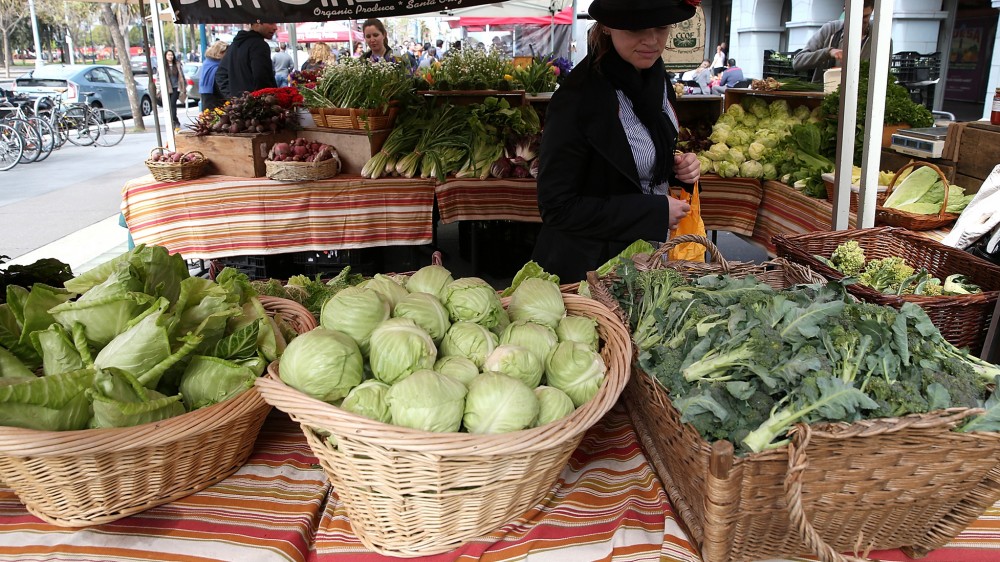
"caption": "A customer shops for produce at the Ferry Plaza Farmers Market in San Francisco in March. Photo: Justin Sullivan/Getty Images ",
"description": "A customer shops for produce at the Ferry Plaza Farmers Market in San Francisco in March.",
"title": "A customer shops for produce at the Ferry Plaza Farmers Market in San Francisco in March.",
"credit": null,
"status": "inherit",
"isLoading": false,
"fetchFailed": false
},
"bayareabites_88268": {
"type": "attachments",
"id": "bayareabites_88268",
"meta": {
"index": "attachments_1716263798",
"site": "bayareabites",
"id": "88268",
"found": true
},
"parent": 88267,
"imgSizes": {
"kqedFullSize": {
"file": "https://ww2.kqed.org/app/uploads/sites/24/2014/10/kalebeer1_wide-479752f345d4d6a5eba632bb6dbae18b7eb14d89-e1412180649859.jpg",
"width": 1000,
"height": 563
}
},
"publishDate": 1412179180,
"modified": 1412179180,
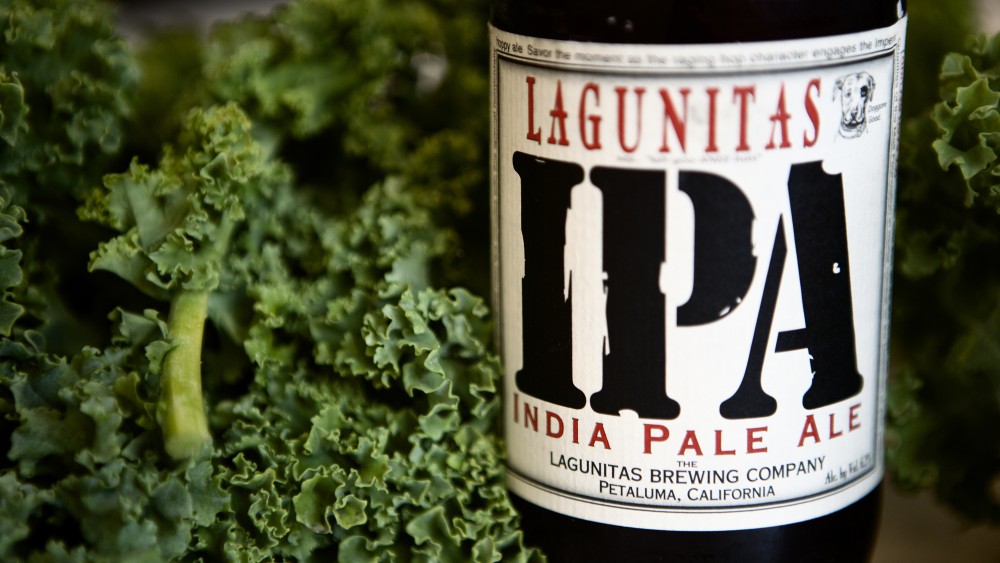
"caption": "The roots of your hankering for hoppy beers and cruciferous vegetables may be genetic. Photo: Claire Eggers/NPR ",
"description": "The roots of your hankering for hoppy beers and cruciferous vegetables may be genetic.",
"title": "The roots of your hankering for hoppy beers and cruciferous vegetables may be genetic.",
"credit": null,
"status": "inherit",
"isLoading": false,
"fetchFailed": false
},
"bayareabites_88258": {
"type": "attachments",
"id": "bayareabites_88258",
"meta": {
"index": "attachments_1716263798",
"site": "bayareabites",
"id": "88258",
"found": true
},
"parent": 88251,
"imgSizes": {
"kqedFullSize": {
"file": "https://ww2.kqed.org/app/uploads/sites/24/2014/09/humanburger-e1412110635141.jpg",
"width": 1000,
"height": 562
}
},
"publishDate": 1412110605,
"modified": 1412110605,
"caption": "Chef Jim Thomlinson at the Terminus Tavern press night Monday. Photo: Chris Coulson/Flickr",
"description": null,
"title": "humanburger",
"credit": null,
"status": "inherit",
"isLoading": false,
"fetchFailed": false
},
"bayareabites_88221": {
"type": "attachments",
"id": "bayareabites_88221",
"meta": {
"index": "attachments_1716263798",
"site": "bayareabites",
"id": "88221",
"found": true
},
"parent": 88217,
"imgSizes": {
"kqedFullSize": {
"file": "https://ww2.kqed.org/app/uploads/sites/24/2014/09/chickens-europe-e1412093628761.jpg",
"width": 1000,
"height": 562
}
},
"publishDate": 1412093594,
"modified": 1412093594,
"caption": "A poultry processing plant in France. Europe banned treating chicken carcasses with chlorine in the 1990s out of fear that it could cause cancer. Photo: Christophe Di Pascale/Corbis ",
"description": null,
"title": "chickens-europe",
"credit": null,
"status": "inherit",
"isLoading": false,
"fetchFailed": false
},
"bayareabites_88074": {
"type": "attachments",
"id": "bayareabites_88074",
"meta": {
"index": "attachments_1716263798",
"site": "bayareabites",
"id": "88074",
"found": true
},
"parent": 88067,
"imgSizes": {
"kqedFullSize": {
"file": "https://ww2.kqed.org/app/uploads/sites/24/2014/09/wheat_wide1-e1411773652535.jpg",
"width": 1000,
"height": 563
}
},
"publishDate": 1411772229,
"modified": 1411772229,
"caption": "How did that genetically modified wheat end up in a field in Oregon? Investigators still don't know, but now they've found GMO wheat in Montana, too. Photo: iStockphoto",
"description": null,
"title": "wheat_wide1",
"credit": null,
"status": "inherit",
"isLoading": false,
"fetchFailed": false
},
"bayareabites_88043": {
"type": "attachments",
"id": "bayareabites_88043",
"meta": {
"index": "attachments_1716263798",
"site": "bayareabites",
"id": "88043",
"found": true
},
"parent": 88041,
"imgSizes": {
"kqedFullSize": {
"file": "https://ww2.kqed.org/app/uploads/sites/24/2014/09/supermarket1_wide-25ffe9653338c2a493f1b3bf8fb031e3a3aa6f061-e1411682343886.jpg",
"width": 1000,
"height": 563
}
},
"publishDate": 1411681486,
"modified": 1411681486,
"caption": "Ready-to-eat meals found in the prepared food aisle are a growing source of waste, as it is difficult to reuse meals that aren't sold but are fully cooked. Photo: Kristofor Husted/Harvest Public Media",
"description": "Ready-to-eat meals found in the prepared food aisle are a growing source of waste, as it is difficult to reuse meals that aren't sold but are fully cooked.",
"title": "Ready-to-eat meals found in the prepared food aisle are a growing source of waste, as it is difficult to reuse meals that aren't sold but are fully cooked.",
"credit": null,
"status": "inherit",
"isLoading": false,
"fetchFailed": false
},
"bayareabites_88026": {
"type": "attachments",
"id": "bayareabites_88026",
"meta": {
"index": "attachments_1716263798",
"site": "bayareabites",
"id": "88026",
"found": true
},
"parent": 88025,
"imgSizes": {
"kqedFullSize": {
"file": "https://ww2.kqed.org/app/uploads/sites/24/2014/09/airline-food-1_slide-2d00f2eb262a6b51322a2af75fd396a984d10bb9-e1411660158401.jpg",
"width": 1000,
"height": 666
}
},
"publishDate": 1411659821,
"modified": 1411659821,
"caption": "The good old days: A flight attendant serves coffee and sandwiches to a passenger on board an American Airlines flight, circa 1935. Photo: Frederic Lewis/Archive Photos/Getty Images ",
"description": "\u003cstrong>The good old days: \u003c/strong>A flight attendant serves coffee and sandwiches to a passenger on board an American Airlines flight, circa 1935",
"title": "The good old days: A flight attendant serves coffee and sandwiches to a passenger on board an American Airlines flight, circa 1935.",
"credit": null,
"status": "inherit",
"isLoading": false,
"fetchFailed": false
},
"bayareabites_87982": {
"type": "attachments",
"id": "bayareabites_87982",
"meta": {
"index": "attachments_1716263798",
"site": "bayareabites",
"id": "87982",
"found": true
},
"parent": 87981,
"imgSizes": {
"kqedFullSize": {
"file": "https://ww2.kqed.org/app/uploads/sites/24/2014/09/horse-meat-1_slide-e329841a3fc31e9e3b0219fe2d3345b42a193ff8-e1411582518567.jpg",
"width": 1000,
"height": 666
}
},
"publishDate": 1411582235,
"modified": 1411582235,
"caption": "The French enjoy horse meat — here's a horse meat butcher in Paris. But even the French were angry that they had been paying beef prices for it last year. Photo: Thomas Coex/AFP/Getty Images ",
"description": "The French enjoy horse meat — here's a horse meat butcher in Paris. But even the French were angry that they had been paying beef prices for it last ye",
"title": "The French enjoy horse meat — here's a horse meat butcher in Paris. But even the French were angry that they had been paying beef prices for it last year.",
"credit": null,
"status": "inherit",
"isLoading": false,
"fetchFailed": false
},
"bayareabites_87968": {
"type": "attachments",
"id": "bayareabites_87968",
"meta": {
"index": "attachments_1716263798",
"site": "bayareabites",
"id": "87968",
"found": true
},
"parent": 87967,
"imgSizes": {
"kqedFullSize": {
"file": "https://ww2.kqed.org/app/uploads/sites/24/2014/09/foodwaste1_wide-08b72696fde1808588ec4a63ed50ae995027c332-e1411579377876.jpg",
"width": 1000,
"height": 563
}
},
"publishDate": 1411578911,
"modified": 1411578911,
"caption": "Bounty from the bin: Thaler says you can find plenty of tasty, edible produce that's tossed out. Plastic-wrapped produce tends to be a safe bet, he says. Photo: Courtesy of Maximus Thaler ",
"description": "Bounty from the bin: Thaler says you can find plenty of tasty, edible produce that's tossed out. Plastic-wrapped produce tends to be a safe bet, he says.",
"title": "Bounty from the bin: Thaler says you can find plenty of tasty, edible produce that's tossed out. Plastic-wrapped produce tends to be a safe bet, he says.",
"credit": null,
"status": "inherit",
"isLoading": false,
"fetchFailed": false
},
"bayareabites_87961": {
"type": "attachments",
"id": "bayareabites_87961",
"meta": {
"index": "attachments_1716263798",
"site": "bayareabites",
"id": "87961",
"found": true
},
"parent": 87960,
"imgSizes": {
"kqedFullSize": {
"file": "https://ww2.kqed.org/app/uploads/sites/24/2014/09/mushroom2_wide-736b9194a0fad9072788590b06022678fff7544f-e1411533173913.jpg",
"width": 1000,
"height": 563
}
},
"publishDate": 1411533018,
"modified": 1411533018,
"caption": "This grocery store packet of porcini mushrooms contained a surprise: three species of fungi never before named or described. Photo: Bryn Dentinger/Royal Botanical Gardens, Kew ",
"description": "This grocery store packet of porcini mushrooms contained a surprise: three species of fungi never before named or described.",
"title": "This grocery store packet of porcini mushrooms contained a surprise: three species of fungi never before named or described.",
"credit": null,
"status": "inherit",
"isLoading": false,
"fetchFailed": false
},
"bayareabites_87947": {
"type": "attachments",
"id": "bayareabites_87947",
"meta": {
"index": "attachments_1716263798",
"site": "bayareabites",
"id": "87947",
"found": true
},
"parent": 87946,
"imgSizes": {
"kqedFullSize": {
"file": "https://ww2.kqed.org/app/uploads/sites/24/2014/09/chicks3_wide-5b4c626f8afe2c8cf66136e592068973037f0f0b-e1411454197512.jpg",
"width": 1000,
"height": 562
}
},
"publishDate": 1411453925,
"modified": 1411453925,
"caption": "Within a day after chicks hatch, they are sorted by sex and shipped to farms. Some will be treated with antibiotics; others will not. Photo\" Dan Charles /NPR ",
"description": "Within a day after chicks hatch, they are sorted by sex and shipped to farms. Some will be treated with antibiotics; others will not.",
"title": "Within a day after chicks hatch, they are sorted by sex and shipped to farms. Some will be treated with antibiotics; others will not.",
"credit": null,
"status": "inherit",
"isLoading": false,
"fetchFailed": false
}
},
"audioPlayerReducer": {
"postId": "stream_live",
"isPaused": true,
"isPlaying": false,
"pfsActive": false,
"pledgeModalIsOpen": true,
"playerDrawerIsOpen": false,
"liveAudioPlayStartedAt": 0,
"liveAudioPlayContext": ""
},
"authorsReducer": {
"byline_bayareabites_88384": {
"type": "authors",
"id": "byline_bayareabites_88384",
"meta": {
"override": true
},
"slug": "byline_bayareabites_88384",
"name": "Adam Cole",
"isLoading": false
},
"byline_bayareabites_88339": {
"type": "authors",
"id": "byline_bayareabites_88339",
"meta": {
"override": true
},
"slug": "byline_bayareabites_88339",
"name": "Dan Charles",
"isLoading": false
},
"byline_bayareabites_88267": {
"type": "authors",
"id": "byline_bayareabites_88267",
"meta": {
"override": true
},
"slug": "byline_bayareabites_88267",
"name": "Allison Aubrey",
"isLoading": false
},
"byline_bayareabites_88251": {
"type": "authors",
"id": "byline_bayareabites_88251",
"meta": {
"override": true
},
"slug": "byline_bayareabites_88251",
"name": "Alison Bruzek",
"isLoading": false
},
"byline_bayareabites_88217": {
"type": "authors",
"id": "byline_bayareabites_88217",
"meta": {
"override": true
},
"slug": "byline_bayareabites_88217",
"name": "Susanna Capelouto",
"isLoading": false
},
"byline_bayareabites_88067": {
"type": "authors",
"id": "byline_bayareabites_88067",
"meta": {
"override": true
},
"slug": "byline_bayareabites_88067",
"name": "Dan Charles",
"isLoading": false
},
"byline_bayareabites_88041": {
"type": "authors",
"id": "byline_bayareabites_88041",
"meta": {
"override": true
},
"slug": "byline_bayareabites_88041",
"name": "Kristofor Husted",
"isLoading": false
},
"byline_bayareabites_88025": {
"type": "authors",
"id": "byline_bayareabites_88025",
"meta": {
"override": true
},
"slug": "byline_bayareabites_88025",
"name": "April Fulton",
"isLoading": false
},
"byline_bayareabites_87981": {
"type": "authors",
"id": "byline_bayareabites_87981",
"meta": {
"override": true
},
"slug": "byline_bayareabites_87981",
"name": "Maanvi Singh",
"isLoading": false
},
"byline_bayareabites_87967": {
"type": "authors",
"id": "byline_bayareabites_87967",
"meta": {
"override": true
},
"slug": "byline_bayareabites_87967",
"name": "Alison Bruzek",
"isLoading": false
},
"byline_bayareabites_87960": {
"type": "authors",
"id": "byline_bayareabites_87960",
"meta": {
"override": true
},
"slug": "byline_bayareabites_87960",
"name": "Alison Bruzek",
"isLoading": false
},
"byline_bayareabites_87946": {
"type": "authors",
"id": "byline_bayareabites_87946",
"meta": {
"override": true
},
"slug": "byline_bayareabites_87946",
"name": "Dan Charles",
"isLoading": false
}
},
"pagesReducer": {
"bayareabites_category_npr-food": {
"type": "terms",
"id": "bayareabites_10916",
"meta": {
"index": "terms_1716263798",
"site": "bayareabites",
"id": "10916",
"score": 13.894709
},
"featImg": null,
"name": "NPR food",
"description": null,
"taxonomy": "category",
"headData": {
"twImgId": null,
"twTitle": null,
"ogTitle": null,
"ogImgId": null,
"twDescription": null,
"description": null,
"title": "NPR food Archives | KQED Bay Area Bites",
"ogDescription": null
},
"ttid": 5375,
"slug": "npr-food",
"isLoading": false,
"title": "NPR food",
"pageMeta": {
"site": "bayareabites",
"WpPageTemplate": "page-topic-editorial",
"currentPage": 34
},
"blocks": [
{
"blockName": "kqed/post-list",
"attrs": {
"layout": "cardArticle2",
"query": "posts/bayareabites?category=npr-food",
"seeMore": false,
"paginated": true,
"page": 34
}
},
{
"blockName": "kqed/ad"
}
]
}
},
"pfsSessionReducer": {},
"postsReducer": {
"stream_live": {
"type": "live",
"id": "stream_live",
"audioUrl": "https://hls.kqed.org/hls/kqed_app/playlist.m3u8",
"title": "Live Stream",
"excerpt": "Live Stream information currently unavailable.",
"link": "/radio",
"featImg": "",
"label": {
"name": "KQED Live",
"link": "/"
}
},
"stream_kqedNewscast": {
"type": "posts",
"id": "stream_kqedNewscast",
"audioUrl": "https://www.kqed.org/.stream/anon/radio/RDnews/newscast.mp3?_=1",
"title": "KQED Newscast",
"featImg": "",
"label": {
"name": "88.5 FM",
"link": "/"
}
},
"bayareabites_88384": {
"type": "posts",
"id": "bayareabites_88384",
"meta": {
"index": "posts_1716263798",
"site": "bayareabites",
"id": "88384",
"score": null,
"sort": [
1412352227000
]
},
"parent": 0,
"labelTerm": {
"site": "bayareabites"
},
"blocks": [],
"publishDate": 1412352227,
"format": "aside",
"disqusTitle": "VIDEO: Glimpse The History Of Life In A Beer",
"title": "VIDEO: Glimpse The History Of Life In A Beer",
"headTitle": "Bay Area Bites | KQED Food",
"content": "\u003cp>[youtube //www.youtube.com/watch?v=LZzJGDNcW-I]\u003c/p>\n\u003cp>by Adam Cole, \u003ca href=\"http://www.npr.org/blogs/thesalt/2014/10/03/351510286/video-glimpse-the-history-of-life-in-a-beer\" target=\"_blank\">The Salt at NPR Food\u003c/a> (10/3/14)\u003c/p>\n\u003cp>Beer is a collaboration between two species — a multicellular animal called a human and a single-celled fungus called yeast. Both descended from the same single-celled organism.\u003c/p>\n\u003cp>It took time for each of them to evolve — more than a billion years — but once they did, it wasn't long before they teamed up to create beer. Now, fossil hunter \u003ca href=\"Jason%20Osborne\">Jason Osborne\u003c/a> has added a little extra flavor to this family reunion by brewing beer with yeast taken from the remains of a 35-million-year-old whale.\u003c/p>\n\u003cfigure id=\"attachment_88386\" class=\"wp-caption aligncenter\" style=\"max-width: 1000px\">\u003ca href=\"http://ww2.kqed.org/bayareabites/wp-content/uploads/sites/24/2014/10/proto_whale-05e3bc2bfbf038d1ca5f202032714be614dea8e1-e1412352027387.jpg\">\u003cimg src=\"http://ww2.kqed.org/bayareabites/wp-content/uploads/sites/24/2014/10/proto_whale-05e3bc2bfbf038d1ca5f202032714be614dea8e1-e1412352027387.jpg\" alt=\"A rendition of a proto-whale skeleton. Photo: Ryan Kellman/NPR\" width=\"1000\" height=\"750\" class=\"size-full wp-image-88386\">\u003c/a>\u003cfigcaption class=\"wp-caption-text\">A rendition of a proto-whale skeleton. Photo: Ryan Kellman/NPR\u003c/figcaption>\u003c/figure>\n\u003cp>The special ingredient in this brew was sourced from a single vertebra, one that belonged to an ancient \"proto-whale\" called \u003cem>Eocetus wardii. \u003c/em>They swam the waters of the Atlantic back when it covered the eastern United States, and now their bones (and the fossilized remains of many other proto-whales) can be found in Virginia swamps.\u003c/p>\n\u003cp>[ad fullwidth]\u003c/p>\n\u003cp>Osborne found this particular vertebra in the \u003ca href=\"http://www.bioone.org/doi/abs/10.1666/10-083.1\">Pamunkey River\u003c/a> and swabbed the bone to try to collect any yeast that might be living on it. He sent the samples to Jasper Akerboom, a microbiologist at \u003ca href=\"http://www.lostrhino.com/\" target=\"_blank\">Lost Rhino Brewing Co\u003c/a>. in Ashburn, Va.\u003c/p>\n\u003cp>After lots of trial and error, Akerboom created Bone Dusters Paleo Ale. \u003ca href=\"http://ww2.kqed.org/bayareabites/2014/07/15/captain-ahabs-revenge-brewing-beer-from-an-ancient-whale-bone/\">The Salt reported\u003c/a> on the brew they created back when it was first released. I was able to drink one of the last bottles of the first run at a recent science convention.\u003c/p>\n\u003cp>It tasted great!\u003c/p>\n\u003cp>Even better, a portion of the proceeds go to \u003ca href=\"http://paleoquest.org/\" target=\"_blank\">Paleo Quest\u003c/a>, a nonprofit organization that gives science equipment to underserved schools and promotes citizen science.\u003c/p>\n\u003cp>The Paleo Ale inspired me to put on my best David Attenborough accent (which, admittedly, is not that great) and make this video. It's a celebration of beer — and the long history of life on Earth that made beer possible.\u003c/p>\n\u003cp>\u003c/p>\n\u003cp>\u003cem>Copyright 2014 \u003ca href=\"http://www.npr.org/\" target=\"_blank\">NPR\u003c/a>.\u003c/em>\u003c/p>\n\n",
"disqusIdentifier": "88384 http://blogs.kqed.org/bayareabites/?p=88384",
"disqusUrl": "https://ww2.kqed.org/bayareabites/2014/10/03/video-glimpse-the-history-of-life-in-a-beer/",
"stats": {
"hasVideo": true,
"hasChartOrMap": false,
"hasAudio": false,
"hasPolis": false,
"wordCount": 340,
"hasGoogleForm": false,
"hasGallery": false,
"hasHearkenModule": false,
"iframeSrcs": [],
"paragraphCount": 13
},
"modified": 1412352227,
"excerpt": "It took more than a billion years of evolution to yield the biology behind a beer. Here, we bring you a video celebration of the science in a cold one.",
"headData": {
"twImgId": "",
"twTitle": "",
"ogTitle": "",
"ogImgId": "",
"twDescription": "",
"description": "It took more than a billion years of evolution to yield the biology behind a beer. Here, we bring you a video celebration of the science in a cold one.",
"title": "VIDEO: Glimpse The History Of Life In A Beer | KQED",
"ogDescription": "",
"schema": {
"@context": "https://schema.org",
"@type": "Article",
"headline": "VIDEO: Glimpse The History Of Life In A Beer",
"datePublished": "2014-10-03T09:03:47-07:00",
"dateModified": "2014-10-03T09:03:47-07:00",
"image": "https://cdn.kqed.org/wp-content/uploads/2020/02/KQED-OG-Image@1x.png"
}
},
"guestAuthors": [],
"slug": "video-glimpse-the-history-of-life-in-a-beer",
"status": "publish",
"nprApiLink": "http://api.npr.org/query?id=351510286&apiKey=MDAxOTAwOTE4MDEyMTkxMDAzNjczZDljZA004",
"nprByline": "Adam Cole",
"nprStoryDate": "Fri, 03 Oct 2014 08:51:00 -0400",
"nprLastModifiedDate": "Fri, 03 Oct 2014 09:55:25 -0400",
"nprHtmlLink": "http://www.npr.org/blogs/thesalt/2014/10/03/351510286/video-glimpse-the-history-of-life-in-a-beer?ft=3&f=351510286",
"nprStoryId": "351510286",
"nprRetrievedStory": "1",
"nprPubDate": "Fri, 03 Oct 2014 09:55:00 -0400",
"path": "/bayareabites/88384/video-glimpse-the-history-of-life-in-a-beer",
"audioTrackLength": null,
"parsedContent": [
{
"type": "contentString",
"content": "\u003cdiv class=\"post-body\">\u003cp>\u003cp>\u003c/p>\u003cp>\u003cspan class='utils-parseShortcode-shortcodes-__youtubeShortcode__embedYoutube'>\n \u003cspan class='utils-parseShortcode-shortcodes-__youtubeShortcode__embedYoutubeInside'>\n \u003ciframe\n loading='lazy'\n class='utils-parseShortcode-shortcodes-__youtubeShortcode__youtubePlayer'\n type='text/html'\n src='//www.youtube.com/embed/LZzJGDNcW-I'\n title='//www.youtube.com/embed/LZzJGDNcW-I'\n allowfullscreen='true'\n style='border:0;'>\u003c/iframe>\n \u003c/span>\n \u003c/span>\u003c/p>\u003cp>\u003c/p>\n\u003cp>by Adam Cole, \u003ca href=\"http://www.npr.org/blogs/thesalt/2014/10/03/351510286/video-glimpse-the-history-of-life-in-a-beer\" target=\"_blank\">The Salt at NPR Food\u003c/a> (10/3/14)\u003c/p>\n\u003cp>Beer is a collaboration between two species — a multicellular animal called a human and a single-celled fungus called yeast. Both descended from the same single-celled organism.\u003c/p>\n\u003cp>It took time for each of them to evolve — more than a billion years — but once they did, it wasn't long before they teamed up to create beer. Now, fossil hunter \u003ca href=\"Jason%20Osborne\">Jason Osborne\u003c/a> has added a little extra flavor to this family reunion by brewing beer with yeast taken from the remains of a 35-million-year-old whale.\u003c/p>\n\u003cfigure id=\"attachment_88386\" class=\"wp-caption aligncenter\" style=\"max-width: 1000px\">\u003ca href=\"http://ww2.kqed.org/bayareabites/wp-content/uploads/sites/24/2014/10/proto_whale-05e3bc2bfbf038d1ca5f202032714be614dea8e1-e1412352027387.jpg\">\u003cimg src=\"http://ww2.kqed.org/bayareabites/wp-content/uploads/sites/24/2014/10/proto_whale-05e3bc2bfbf038d1ca5f202032714be614dea8e1-e1412352027387.jpg\" alt=\"A rendition of a proto-whale skeleton. Photo: Ryan Kellman/NPR\" width=\"1000\" height=\"750\" class=\"size-full wp-image-88386\">\u003c/a>\u003cfigcaption class=\"wp-caption-text\">A rendition of a proto-whale skeleton. Photo: Ryan Kellman/NPR\u003c/figcaption>\u003c/figure>\n\u003cp>The special ingredient in this brew was sourced from a single vertebra, one that belonged to an ancient \"proto-whale\" called \u003cem>Eocetus wardii. \u003c/em>They swam the waters of the Atlantic back when it covered the eastern United States, and now their bones (and the fossilized remains of many other proto-whales) can be found in Virginia swamps.\u003c/p>\n\u003cp>\u003c/p>\u003c/div>",
"attributes": {
"named": {},
"numeric": []
}
},
{
"type": "component",
"content": "",
"name": "ad",
"attributes": {
"named": {
"label": "fullwidth"
},
"numeric": [
"fullwidth"
]
}
},
{
"type": "contentString",
"content": "\u003cdiv class=\"post-body\">\u003cp>\u003c/p>\n\u003cp>Osborne found this particular vertebra in the \u003ca href=\"http://www.bioone.org/doi/abs/10.1666/10-083.1\">Pamunkey River\u003c/a> and swabbed the bone to try to collect any yeast that might be living on it. He sent the samples to Jasper Akerboom, a microbiologist at \u003ca href=\"http://www.lostrhino.com/\" target=\"_blank\">Lost Rhino Brewing Co\u003c/a>. in Ashburn, Va.\u003c/p>\n\u003cp>After lots of trial and error, Akerboom created Bone Dusters Paleo Ale. \u003ca href=\"http://ww2.kqed.org/bayareabites/2014/07/15/captain-ahabs-revenge-brewing-beer-from-an-ancient-whale-bone/\">The Salt reported\u003c/a> on the brew they created back when it was first released. I was able to drink one of the last bottles of the first run at a recent science convention.\u003c/p>\n\u003cp>It tasted great!\u003c/p>\n\u003cp>Even better, a portion of the proceeds go to \u003ca href=\"http://paleoquest.org/\" target=\"_blank\">Paleo Quest\u003c/a>, a nonprofit organization that gives science equipment to underserved schools and promotes citizen science.\u003c/p>\n\u003cp>The Paleo Ale inspired me to put on my best David Attenborough accent (which, admittedly, is not that great) and make this video. It's a celebration of beer — and the long history of life on Earth that made beer possible.\u003c/p>\n\u003cp>\u003c/p>\n\u003cp>\u003cem>Copyright 2014 \u003ca href=\"http://www.npr.org/\" target=\"_blank\">NPR\u003c/a>.\u003c/em>\u003c/p>\n\n\u003c/div>\u003c/p>",
"attributes": {
"named": {},
"numeric": []
}
}
],
"link": "/bayareabites/88384/video-glimpse-the-history-of-life-in-a-beer",
"authors": [
"byline_bayareabites_88384"
],
"categories": [
"bayareabites_301",
"bayareabites_13306",
"bayareabites_10916",
"bayareabites_358",
"bayareabites_316"
],
"tags": [
"bayareabites_14753"
],
"featImg": "bayareabites_88385",
"label": "bayareabites"
},
"bayareabites_88339": {
"type": "posts",
"id": "bayareabites_88339",
"meta": {
"index": "posts_1716263798",
"site": "bayareabites",
"id": "88339",
"score": null,
"sort": [
1412270861000
]
},
"parent": 0,
"labelTerm": {
"site": "bayareabites"
},
"blocks": [],
"publishDate": 1412270861,
"format": "aside",
"disqusTitle": "California Cracks Down On Farmers Market Cheaters",
"title": "California Cracks Down On Farmers Market Cheaters",
"headTitle": "Bay Area Bites | KQED Food",
"content": "\u003cfigure id=\"attachment_88340\" class=\"wp-caption aligncenter\" style=\"max-width: 1000px\">\u003ca href=\"http://ww2.kqed.org/bayareabites/wp-content/uploads/sites/24/2014/10/cafarmers_wide-64d81a5286ab402c4cf9e7617a76bed8aaa91c00-e1412270495702.jpg\">\u003cimg src=\"http://ww2.kqed.org/bayareabites/wp-content/uploads/sites/24/2014/10/cafarmers_wide-64d81a5286ab402c4cf9e7617a76bed8aaa91c00-e1412270495702.jpg\" alt=\"A customer shops for produce at the Ferry Plaza Farmers Market in San Francisco in March. Photo: Justin Sullivan/Getty Images\" width=\"1000\" height=\"562\" class=\"size-full wp-image-88340\">\u003c/a>\u003cfigcaption class=\"wp-caption-text\">A customer shops for produce at the Ferry Plaza Farmers Market in San Francisco in March. Photo: Justin Sullivan/Getty Images\u003c/figcaption>\u003c/figure>\n\u003cp>by \u003ca href=\"http://www.npr.org/people/143160021/daniel-charles\" target=\"_blank\">Dan Charles\u003c/a>, \u003ca href=\"http://www.npr.org/blogs/thesalt/2014/10/02/352979875/california-cracks-down-on-farmers-market-cheaters\" target=\"_blank\">The Salt at NPR Food\u003c/a> (10/2/14)\u003c/p>\n\u003cp>Could that beloved farmer at your farmers market possibly be lying to you, passing off supermarket produce as locally grown?\u003c/p>\n\u003cp>California's state officials seem to think so. Last week, Gov. Jerry Brown signed a new \u003ca href=\"http://leginfo.legislature.ca.gov/faces/billNavClient.xhtml\">law\u003c/a> that will raise a million dollars to deploy a small army of inspectors to farmers markets around the state. The inspectors will check for signs that farmers are selling fruits and vegetables that they didn't actually grow themselves, but instead picked up wholesale.\u003c/p>\n\u003cp>There have been some well-publicized cases of fraud. In 2010, an investigative team from an NBC affiliate in Los Angeles \u003ca href=\"http://www.nbclosangeles.com/news/local/Hidden-Camera-Investigation-Farmers-Markets-103577594.html\">followed\u003c/a> one farmer's truck to the LA wholesale market, where he picked up a load of produce, including Mexican cantaloupes. That produce, according to the report, was later sold at farmers markets.\u003c/p>\n\u003cp>In response, Los Angeles County dispatched a few inspectors to look for evidence of mislabeled produce. According to the \u003cem>Los Angeles Times\u003c/em>, 19 vendors were \u003ca href=\"http://www.latimes.com/food/dailydish/la-dd-tighter-enforcement-snares-farmers-market-cheaters-20131226-story.html#axzz2ohNbL2P7&page=1\">fined\u003c/a> in 2013 for misrepresenting their products.\u003c/p>\n\u003cp>[ad fullwidth]\u003c/p>\n\u003cp>The new law will drastically increase funding for such inspections by raising fees that farmers pay to participate in farmers markets.\u003c/p>\n\u003cp>Eli Cook, owner of Spring Valley Farm and Orchard in Slanesville, W.Va., says nonlocal produce is a \"common problem\" at farmers markets. A casual consumer may not notice, he says, but \"I can spot it a mile away. I can tell you who's doing it and who's not doing it.\"\u003c/p>\n\u003cp>At the same time, Cook says, competition from wholesale produce \"is the least of my worries.\" The re-sellers, he says, \"can't control quality, and they sure aren't going to out-sell me.\"\u003c/p>\n\u003cp>\u003ca href=\"http://www.freshfarmmarkets.org/\">FreshFarm Markets\u003c/a>, which runs several of the markets where Cook sells his harvest, tries to verify that farmers are selling only their own produce at these markets. \"They do come around and check\" to make sure that a farm is growing the types of produce it's selling at the market, says Cook.\u003c/p>\n\u003cp>What's more difficult is verifying production quantities, making sure that farmers aren't adding a few extra boxes of tomatoes from the wholesale market. \"They almost have to be a doggone private investigator to catch some of this stuff,\" Cook says.\u003c/p>\n\u003cp>According to \u003ca href=\"http://www.wholesomewave.org/about-us/board/gus-schumacher/\">Gus Schumacher\u003c/a>, a former USDA official who's been a close observer and promoter of farmers markets for several decades, the most successful farmers markets in the country are \"producer only,\" with strict rules against selling produce acquired elsewhere. But he's also seen some markets survive and prosper with a more lax policy. The two types of produce can co-exist, Schumacher says, \"as long as it's transparent, and the product is clearly labeled.\"\u003c/p>\n\u003cp>Schumacher, who now is a vice president at \u003ca href=\"http://www.wholesomewave.org/\">Wholesome Wave\u003c/a>, an organization that tries to promote access to fresh and local food, says he was \"surprised\" that California officials felt a new law was needed. \"My sense is, the markets are self-policing,\" he says. \"Farmers monitor farmers. I see very little purchased product.\" \u003c/p>\n\u003cp>\u003c/p>\n\u003cp>\u003cem>Copyright 2014 \u003ca href=\"http://www.npr.org/\" target=\"_blank\">NPR\u003c/a>.\u003c/em>\u003c/p>\n\n",
"disqusIdentifier": "88339 http://blogs.kqed.org/bayareabites/?p=88339",
"disqusUrl": "https://ww2.kqed.org/bayareabites/2014/10/02/california-cracks-down-on-farmers-market-cheaters/",
"stats": {
"hasVideo": false,
"hasChartOrMap": false,
"hasAudio": false,
"hasPolis": false,
"wordCount": 540,
"hasGoogleForm": false,
"hasGallery": false,
"hasHearkenModule": false,
"iframeSrcs": [],
"paragraphCount": 15
},
"modified": 1412270861,
"excerpt": "Did your local farmer really grow that heirloom apple he just sold you? California wants to know, so it's sending more inspectors out to make sure the produce sold at markets is really local.",
"headData": {
"twImgId": "",
"twTitle": "",
"ogTitle": "",
"ogImgId": "",
"twDescription": "",
"description": "Did your local farmer really grow that heirloom apple he just sold you? California wants to know, so it's sending more inspectors out to make sure the produce sold at markets is really local.",
"title": "California Cracks Down On Farmers Market Cheaters | KQED",
"ogDescription": "",
"schema": {
"@context": "https://schema.org",
"@type": "Article",
"headline": "California Cracks Down On Farmers Market Cheaters",
"datePublished": "2014-10-02T10:27:41-07:00",
"dateModified": "2014-10-02T10:27:41-07:00",
"image": "https://cdn.kqed.org/wp-content/uploads/2020/02/KQED-OG-Image@1x.png"
}
},
"guestAuthors": [],
"slug": "california-cracks-down-on-farmers-market-cheaters",
"status": "publish",
"nprApiLink": "http://api.npr.org/query?id=352979875&apiKey=MDAxOTAwOTE4MDEyMTkxMDAzNjczZDljZA004",
"nprByline": "Dan Charles",
"nprStoryDate": "Thu, 02 Oct 2014 10:30:00 -0400",
"nprLastModifiedDate": "Thu, 02 Oct 2014 13:09:11 -0400",
"nprHtmlLink": "http://www.npr.org/blogs/thesalt/2014/10/02/352979875/california-cracks-down-on-farmers-market-cheaters?ft=3&f=352979875",
"nprStoryId": "352979875",
"nprRetrievedStory": "1",
"nprPubDate": "Thu, 02 Oct 2014 13:09:00 -0400",
"path": "/bayareabites/88339/california-cracks-down-on-farmers-market-cheaters",
"audioTrackLength": null,
"parsedContent": [
{
"type": "contentString",
"content": "\u003cdiv class=\"post-body\">\u003cp>\u003cfigure id=\"attachment_88340\" class=\"wp-caption aligncenter\" style=\"max-width: 1000px\">\u003ca href=\"http://ww2.kqed.org/bayareabites/wp-content/uploads/sites/24/2014/10/cafarmers_wide-64d81a5286ab402c4cf9e7617a76bed8aaa91c00-e1412270495702.jpg\">\u003cimg src=\"http://ww2.kqed.org/bayareabites/wp-content/uploads/sites/24/2014/10/cafarmers_wide-64d81a5286ab402c4cf9e7617a76bed8aaa91c00-e1412270495702.jpg\" alt=\"A customer shops for produce at the Ferry Plaza Farmers Market in San Francisco in March. Photo: Justin Sullivan/Getty Images\" width=\"1000\" height=\"562\" class=\"size-full wp-image-88340\">\u003c/a>\u003cfigcaption class=\"wp-caption-text\">A customer shops for produce at the Ferry Plaza Farmers Market in San Francisco in March. Photo: Justin Sullivan/Getty Images\u003c/figcaption>\u003c/figure>\n\u003cp>by \u003ca href=\"http://www.npr.org/people/143160021/daniel-charles\" target=\"_blank\">Dan Charles\u003c/a>, \u003ca href=\"http://www.npr.org/blogs/thesalt/2014/10/02/352979875/california-cracks-down-on-farmers-market-cheaters\" target=\"_blank\">The Salt at NPR Food\u003c/a> (10/2/14)\u003c/p>\n\u003cp>Could that beloved farmer at your farmers market possibly be lying to you, passing off supermarket produce as locally grown?\u003c/p>\n\u003cp>California's state officials seem to think so. Last week, Gov. Jerry Brown signed a new \u003ca href=\"http://leginfo.legislature.ca.gov/faces/billNavClient.xhtml\">law\u003c/a> that will raise a million dollars to deploy a small army of inspectors to farmers markets around the state. The inspectors will check for signs that farmers are selling fruits and vegetables that they didn't actually grow themselves, but instead picked up wholesale.\u003c/p>\n\u003cp>There have been some well-publicized cases of fraud. In 2010, an investigative team from an NBC affiliate in Los Angeles \u003ca href=\"http://www.nbclosangeles.com/news/local/Hidden-Camera-Investigation-Farmers-Markets-103577594.html\">followed\u003c/a> one farmer's truck to the LA wholesale market, where he picked up a load of produce, including Mexican cantaloupes. That produce, according to the report, was later sold at farmers markets.\u003c/p>\n\u003cp>In response, Los Angeles County dispatched a few inspectors to look for evidence of mislabeled produce. According to the \u003cem>Los Angeles Times\u003c/em>, 19 vendors were \u003ca href=\"http://www.latimes.com/food/dailydish/la-dd-tighter-enforcement-snares-farmers-market-cheaters-20131226-story.html#axzz2ohNbL2P7&page=1\">fined\u003c/a> in 2013 for misrepresenting their products.\u003c/p>\n\u003cp>\u003c/p>\u003c/div>",
"attributes": {
"named": {},
"numeric": []
}
},
{
"type": "component",
"content": "",
"name": "ad",
"attributes": {
"named": {
"label": "fullwidth"
},
"numeric": [
"fullwidth"
]
}
},
{
"type": "contentString",
"content": "\u003cdiv class=\"post-body\">\u003cp>\u003c/p>\n\u003cp>The new law will drastically increase funding for such inspections by raising fees that farmers pay to participate in farmers markets.\u003c/p>\n\u003cp>Eli Cook, owner of Spring Valley Farm and Orchard in Slanesville, W.Va., says nonlocal produce is a \"common problem\" at farmers markets. A casual consumer may not notice, he says, but \"I can spot it a mile away. I can tell you who's doing it and who's not doing it.\"\u003c/p>\n\u003cp>At the same time, Cook says, competition from wholesale produce \"is the least of my worries.\" The re-sellers, he says, \"can't control quality, and they sure aren't going to out-sell me.\"\u003c/p>\n\u003cp>\u003ca href=\"http://www.freshfarmmarkets.org/\">FreshFarm Markets\u003c/a>, which runs several of the markets where Cook sells his harvest, tries to verify that farmers are selling only their own produce at these markets. \"They do come around and check\" to make sure that a farm is growing the types of produce it's selling at the market, says Cook.\u003c/p>\n\u003cp>What's more difficult is verifying production quantities, making sure that farmers aren't adding a few extra boxes of tomatoes from the wholesale market. \"They almost have to be a doggone private investigator to catch some of this stuff,\" Cook says.\u003c/p>\n\u003cp>According to \u003ca href=\"http://www.wholesomewave.org/about-us/board/gus-schumacher/\">Gus Schumacher\u003c/a>, a former USDA official who's been a close observer and promoter of farmers markets for several decades, the most successful farmers markets in the country are \"producer only,\" with strict rules against selling produce acquired elsewhere. But he's also seen some markets survive and prosper with a more lax policy. The two types of produce can co-exist, Schumacher says, \"as long as it's transparent, and the product is clearly labeled.\"\u003c/p>\n\u003cp>Schumacher, who now is a vice president at \u003ca href=\"http://www.wholesomewave.org/\">Wholesome Wave\u003c/a>, an organization that tries to promote access to fresh and local food, says he was \"surprised\" that California officials felt a new law was needed. \"My sense is, the markets are self-policing,\" he says. \"Farmers monitor farmers. I see very little purchased product.\" \u003c/p>\n\u003cp>\u003c/p>\n\u003cp>\u003cem>Copyright 2014 \u003ca href=\"http://www.npr.org/\" target=\"_blank\">NPR\u003c/a>.\u003c/em>\u003c/p>\n\n\u003c/div>\u003c/p>",
"attributes": {
"named": {},
"numeric": []
}
}
],
"link": "/bayareabites/88339/california-cracks-down-on-farmers-market-cheaters",
"authors": [
"byline_bayareabites_88339"
],
"categories": [
"bayareabites_1874",
"bayareabites_95",
"bayareabites_10028",
"bayareabites_10916",
"bayareabites_2035"
],
"tags": [
"bayareabites_250",
"bayareabites_11270",
"bayareabites_13858",
"bayareabites_9392"
],
"featImg": "bayareabites_88340",
"label": "bayareabites"
},
"bayareabites_88267": {
"type": "posts",
"id": "bayareabites_88267",
"meta": {
"index": "posts_1716263798",
"site": "bayareabites",
"id": "88267",
"score": null,
"sort": [
1412180892000
]
},
"parent": 0,
"labelTerm": {
"site": "bayareabites"
},
"blocks": [],
"publishDate": 1412180892,
"format": "aside",
"disqusTitle": "From Kale To Pale Ale, A Love of Bitter May Be In Your Genes",
"title": "From Kale To Pale Ale, A Love of Bitter May Be In Your Genes",
"headTitle": "Bay Area Bites | KQED Food",
"content": "\u003cfigure id=\"attachment_88268\" class=\"wp-caption aligncenter\" style=\"max-width: 1000px\">\u003ca href=\"http://ww2.kqed.org/bayareabites/wp-content/uploads/sites/24/2014/10/kalebeer1_wide-479752f345d4d6a5eba632bb6dbae18b7eb14d89-e1412180649859.jpg\">\u003cimg src=\"http://ww2.kqed.org/bayareabites/wp-content/uploads/sites/24/2014/10/kalebeer1_wide-479752f345d4d6a5eba632bb6dbae18b7eb14d89-e1412180649859.jpg\" alt=\"The roots of your hankering for hoppy beers and cruciferous vegetables may be genetic. Photo: Claire Eggers/NPR\" width=\"1000\" height=\"563\" class=\"size-full wp-image-88268\">\u003c/a>\u003cfigcaption class=\"wp-caption-text\">The roots of your hankering for hoppy beers and cruciferous vegetables may be genetic. Photo: Claire Eggers/NPR\u003c/figcaption>\u003c/figure>\n\u003cp>\u003cstrong>Listen to the Story\u003c/strong> on Morning Edition:\u003cbr>\nhttp://pd.npr.org/anon.npr-mp3/npr/me/2014/10/20141001_me_from_kale_to_pale_ale_a_love_of_bitter_may_be_in_your_genes.mp3\u003c/p>\n\u003cp>by \u003ca href=\"http://www.npr.org/people/2100208/allison-aubrey\" target=\"_blank\">Allison Aubrey\u003c/a>, \u003ca href=\"http://www.npr.org/blogs/thesalt/2014/10/01/352771618/from-kale-to-pale-ale-a-love-of-bitter-may-be-in-your-genes\" target=\"_blank\">The Salt at NPR Food\u003c/a> (10/1/14)\u003c/p>\n\u003cp>The word bitter can make some of us wince. In conversation, we talk of \"a bitter pill to swallow\" or \"bittersweet\" memories.\u003c/p>\n\u003cp>But if you're puzzled by the bad emotional rap on bitter — perhaps you even \u003cem>like\u003c/em> the taste of bitter greens or bitter beer — it may say something about your genes.\u003c/p>\n\u003cp>Scientists have been studying a particular taste receptor gene to understand why some of us may be more predisposed to liking bitter foods and hoppy beers. And a new\u003ca href=\"http://www.ncbi.nlm.nih.gov/pubmed/25257701\"> study\u003c/a> sheds new light on the bitter gene connection.\u003c/p>\n\u003cp>[ad fullwidth]\u003c/p>\n\u003cp>\"What we're really looking at is that people differ in how intense bitterness might be to them,\" says researcher \u003ca href=\"http://foodscience.psu.edu/directory/jeh40\">John Hayes\u003c/a>, a food scientist at Penn State.\u003c/p>\n\u003cp>Several years back, Hayes and researcher \u003ca href=\"http://www.alliedhealth.uconn.edu/facultyAndStaff/ValerieDuffy.php\">Valerie Duffy\u003c/a> of the University of Connecticut set out to do an experiment.\u003c/p>\n\u003cp>They already knew that some people (about a quarter of the population) have a version of one taste receptor gene, known as TAS2R38, that makes them more sensitive to the perception of bitter.\u003c/p>\n\u003cp>\"The idea of how bitter you taste something is [tied to] how strongly the bitter [compounds] in food bind with a receptor,\" explains Duffy. Then, the receptor sends a signal to the brain that says, \"Oh, this is bitter.\"\u003c/p>\n\u003cp>Duffy says she herself must not have a version of the gene that enables bitter compounds to bind tightly. She describes herself as a \"nontaster.\" So when she eat greens or Brussels sprouts, she experiences them as sweet.\u003c/p>\n\u003cp>\"To me, they're naturally sweet,\" Duffy says. And she enjoys them.\u003c/p>\n\u003cp>Compare this with people who have a version of the receptor gene that makes them very sensitive to bitter. For these individuals, the strong perception of bitterness overwhelms the natural sweetness in greens.\u003c/p>\n\u003cp>Duffy's hunch was that this may lead them to avoid greens. So she decided to test the theory.\u003c/p>\n\u003cp>\"We recruited young adults and asked them to come into the lab and did taste tests with them,\" Duffy explains.\u003c/p>\n\u003cp>They sampled asparagus, Brussels sprouts and kale, and Duffy's team assessed their sensitivities. The young adult volunteers were also tested for the gene, and they filled out questionnaires and kept food diaries to document what they were eating.\u003c/p>\n\u003cp>\"We found that individuals who are least sensitive to these bitter compounds consumed \u003cem>significantly\u003c/em> more vegetables\" compared with those who are most sensitive, Duffy says.\u003c/p>\n\u003cp>In fact, over the course of a year, the difference was about 200 more servings of vegetables.\u003c/p>\n\u003cp>Duffy's study was not the first to find this association. Another \u003ca href=\"http://www.ncbi.nlm.nih.gov/pubmed/17596267\">study\u003c/a>, conducted in 2007 at the Centre for Cancer Epidemiology and Prevention in Turin, Italy, with about 600 volunteers, pointed to the same link between the bitter gene and the consumption of vegetables.\u003c/p>\n\u003cp>Duffy says what surprised her about her \u003ca href=\"http://www.ncbi.nlm.nih.gov/pubmed/21157576\">findings\u003c/a> is that the people who were sensitive to bitter ate fewer of all kinds of vegetables, not just bitter, cruciferous ones.\u003c/p>\n\u003cp>\"What we think [is that] if somebody finds some vegetables too bitter, they sort of generalize to all green vegetables,\" Duffy explains.\u003c/p>\n\u003cp>The same study also found a connection with papillae, those little dots on your tongue that we've \u003ca href=\"http://www.npr.org/templates/story/story.php?storyId=127914467\">reported\u003c/a> on in the past. People with more papillae reported eating more vegetables, compared with those with fewer papillae.\u003c/p>\n\u003cp>This suggests that there are multiple factors, both biological and environmental, influencing our food and beverage choices, including — as Duffy is quick to point out — how our parents raise us.\u003c/p>\n\u003cp>People can learn to like vegetables, Duffy says, even if they carry the version of the taste receptor gene that makes them more sensitive to bitter. A big piece of the puzzle is figuring out ways to make them taste good.\u003c/p>\n\u003cp>For instance, \"roasting brings out the sweetness,\" she says. Adding salt is also an effective way to cut the intensity of bitter. A \u003ca href=\"http://www.ncbi.nlm.nih.gov/pubmed/?term=Masking+Vegetable+Bitterness+to+Improve+Duffy+and+Hayes\">study\u003c/a> she published previously demonstrates that it's possible to mask the bitterness in vegetables with salt and sweeteners to make them more palatable.\u003c/p>\n\u003cp>So, does an aversion to bitter tend to be lifelong? Not necessarily.\u003c/p>\n\u003cp>Duffy points to studies that suggest there are changes over a lifetime. For instance, she says, we know that during pregnancy, many women become more sensitive to bitter.\u003c/p>\n\u003cp>And then, in older age, as smell and taste perceptions begin to fade, the taste of bitter foods can seem much less intense.\u003c/p>\n\u003cp>\u003c/p>\n\u003cp>\u003cem>Copyright 2014 \u003ca href=\"http://www.npr.org/\" target=\"_blank\">NPR\u003c/a>.\u003c/em>\u003c/p>\n\n",
"disqusIdentifier": "88267 http://blogs.kqed.org/bayareabites/?p=88267",
"disqusUrl": "https://ww2.kqed.org/bayareabites/2014/10/01/from-kale-to-pale-ale-a-love-of-bitter-may-be-in-your-genes/",
"stats": {
"hasVideo": false,
"hasChartOrMap": false,
"hasAudio": false,
"hasPolis": false,
"wordCount": 785,
"hasGoogleForm": false,
"hasGallery": false,
"hasHearkenModule": false,
"iframeSrcs": [],
"paragraphCount": 30
},
"modified": 1412180892,
"excerpt": "Researchers have found a gene that affects how strongly you experience bitter flavors. And those who aren't as sensitive eat about 200 more servings of vegetables per year.",
"headData": {
"twImgId": "",
"twTitle": "",
"ogTitle": "",
"ogImgId": "",
"twDescription": "",
"description": "Researchers have found a gene that affects how strongly you experience bitter flavors. And those who aren't as sensitive eat about 200 more servings of vegetables per year.",
"title": "From Kale To Pale Ale, A Love of Bitter May Be In Your Genes | KQED",
"ogDescription": "",
"schema": {
"@context": "https://schema.org",
"@type": "Article",
"headline": "From Kale To Pale Ale, A Love of Bitter May Be In Your Genes",
"datePublished": "2014-10-01T09:28:12-07:00",
"dateModified": "2014-10-01T09:28:12-07:00",
"image": "https://cdn.kqed.org/wp-content/uploads/2020/02/KQED-OG-Image@1x.png"
}
},
"guestAuthors": [],
"slug": "from-kale-to-pale-ale-a-love-of-bitter-may-be-in-your-genes",
"status": "publish",
"nprApiLink": "http://api.npr.org/query?id=352771618&apiKey=MDAxOTAwOTE4MDEyMTkxMDAzNjczZDljZA004",
"nprByline": "Allison Aubrey",
"nprStoryDate": "Wed, 01 Oct 2014 03:45:00 -0400",
"nprLastModifiedDate": "Wed, 01 Oct 2014 08:53:20 -0400",
"nprHtmlLink": "http://www.npr.org/blogs/thesalt/2014/10/01/352771618/from-kale-to-pale-ale-a-love-of-bitter-may-be-in-your-genes?ft=3&f=352771618",
"nprAudio": "http://pd.npr.org/anon.npr-mp3/npr/me/2014/10/20141001_me_from_kale_to_pale_ale_a_love_of_bitter_may_be_in_your_genes.mp3?orgId=1&topicId=1134&ft=3&f=352771618",
"nprAudioM3u": "http://api.npr.org/m3u/1352925455-e5a8c1.m3u?orgId=1&topicId=1134&ft=3&f=352771618",
"nprStoryId": "352771618",
"nprRetrievedStory": "1",
"nprPubDate": "Wed, 01 Oct 2014 08:53:00 -0400",
"path": "/bayareabites/88267/from-kale-to-pale-ale-a-love-of-bitter-may-be-in-your-genes",
"audioUrl": "http://pd.npr.org/anon.npr-mp3/npr/me/2014/10/20141001_me_from_kale_to_pale_ale_a_love_of_bitter_may_be_in_your_genes.mp3",
"audioDuration": null,
"audioTrackLength": null,
"parsedContent": [
{
"type": "contentString",
"content": "\u003cdiv class=\"post-body\">\u003cp>\u003cfigure id=\"attachment_88268\" class=\"wp-caption aligncenter\" style=\"max-width: 1000px\">\u003ca href=\"http://ww2.kqed.org/bayareabites/wp-content/uploads/sites/24/2014/10/kalebeer1_wide-479752f345d4d6a5eba632bb6dbae18b7eb14d89-e1412180649859.jpg\">\u003cimg src=\"http://ww2.kqed.org/bayareabites/wp-content/uploads/sites/24/2014/10/kalebeer1_wide-479752f345d4d6a5eba632bb6dbae18b7eb14d89-e1412180649859.jpg\" alt=\"The roots of your hankering for hoppy beers and cruciferous vegetables may be genetic. Photo: Claire Eggers/NPR\" width=\"1000\" height=\"563\" class=\"size-full wp-image-88268\">\u003c/a>\u003cfigcaption class=\"wp-caption-text\">The roots of your hankering for hoppy beers and cruciferous vegetables may be genetic. Photo: Claire Eggers/NPR\u003c/figcaption>\u003c/figure>\n\u003cp>\u003cstrong>Listen to the Story\u003c/strong> on Morning Edition:\u003cbr>\nhttp://pd.npr.org/anon.npr-mp3/npr/me/2014/10/20141001_me_from_kale_to_pale_ale_a_love_of_bitter_may_be_in_your_genes.mp3\u003c/p>\n\u003cp>by \u003ca href=\"http://www.npr.org/people/2100208/allison-aubrey\" target=\"_blank\">Allison Aubrey\u003c/a>, \u003ca href=\"http://www.npr.org/blogs/thesalt/2014/10/01/352771618/from-kale-to-pale-ale-a-love-of-bitter-may-be-in-your-genes\" target=\"_blank\">The Salt at NPR Food\u003c/a> (10/1/14)\u003c/p>\n\u003cp>The word bitter can make some of us wince. In conversation, we talk of \"a bitter pill to swallow\" or \"bittersweet\" memories.\u003c/p>\n\u003cp>But if you're puzzled by the bad emotional rap on bitter — perhaps you even \u003cem>like\u003c/em> the taste of bitter greens or bitter beer — it may say something about your genes.\u003c/p>\n\u003cp>Scientists have been studying a particular taste receptor gene to understand why some of us may be more predisposed to liking bitter foods and hoppy beers. And a new\u003ca href=\"http://www.ncbi.nlm.nih.gov/pubmed/25257701\"> study\u003c/a> sheds new light on the bitter gene connection.\u003c/p>\n\u003cp>\u003c/p>\u003c/div>",
"attributes": {
"named": {},
"numeric": []
}
},
{
"type": "component",
"content": "",
"name": "ad",
"attributes": {
"named": {
"label": "fullwidth"
},
"numeric": [
"fullwidth"
]
}
},
{
"type": "contentString",
"content": "\u003cdiv class=\"post-body\">\u003cp>\u003c/p>\n\u003cp>\"What we're really looking at is that people differ in how intense bitterness might be to them,\" says researcher \u003ca href=\"http://foodscience.psu.edu/directory/jeh40\">John Hayes\u003c/a>, a food scientist at Penn State.\u003c/p>\n\u003cp>Several years back, Hayes and researcher \u003ca href=\"http://www.alliedhealth.uconn.edu/facultyAndStaff/ValerieDuffy.php\">Valerie Duffy\u003c/a> of the University of Connecticut set out to do an experiment.\u003c/p>\n\u003cp>They already knew that some people (about a quarter of the population) have a version of one taste receptor gene, known as TAS2R38, that makes them more sensitive to the perception of bitter.\u003c/p>\n\u003cp>\"The idea of how bitter you taste something is [tied to] how strongly the bitter [compounds] in food bind with a receptor,\" explains Duffy. Then, the receptor sends a signal to the brain that says, \"Oh, this is bitter.\"\u003c/p>\n\u003cp>Duffy says she herself must not have a version of the gene that enables bitter compounds to bind tightly. She describes herself as a \"nontaster.\" So when she eat greens or Brussels sprouts, she experiences them as sweet.\u003c/p>\n\u003cp>\"To me, they're naturally sweet,\" Duffy says. And she enjoys them.\u003c/p>\n\u003cp>Compare this with people who have a version of the receptor gene that makes them very sensitive to bitter. For these individuals, the strong perception of bitterness overwhelms the natural sweetness in greens.\u003c/p>\n\u003cp>Duffy's hunch was that this may lead them to avoid greens. So she decided to test the theory.\u003c/p>\n\u003cp>\"We recruited young adults and asked them to come into the lab and did taste tests with them,\" Duffy explains.\u003c/p>\n\u003cp>They sampled asparagus, Brussels sprouts and kale, and Duffy's team assessed their sensitivities. The young adult volunteers were also tested for the gene, and they filled out questionnaires and kept food diaries to document what they were eating.\u003c/p>\n\u003cp>\"We found that individuals who are least sensitive to these bitter compounds consumed \u003cem>significantly\u003c/em> more vegetables\" compared with those who are most sensitive, Duffy says.\u003c/p>\n\u003cp>In fact, over the course of a year, the difference was about 200 more servings of vegetables.\u003c/p>\n\u003cp>Duffy's study was not the first to find this association. Another \u003ca href=\"http://www.ncbi.nlm.nih.gov/pubmed/17596267\">study\u003c/a>, conducted in 2007 at the Centre for Cancer Epidemiology and Prevention in Turin, Italy, with about 600 volunteers, pointed to the same link between the bitter gene and the consumption of vegetables.\u003c/p>\n\u003cp>Duffy says what surprised her about her \u003ca href=\"http://www.ncbi.nlm.nih.gov/pubmed/21157576\">findings\u003c/a> is that the people who were sensitive to bitter ate fewer of all kinds of vegetables, not just bitter, cruciferous ones.\u003c/p>\n\u003cp>\"What we think [is that] if somebody finds some vegetables too bitter, they sort of generalize to all green vegetables,\" Duffy explains.\u003c/p>\n\u003cp>The same study also found a connection with papillae, those little dots on your tongue that we've \u003ca href=\"http://www.npr.org/templates/story/story.php?storyId=127914467\">reported\u003c/a> on in the past. People with more papillae reported eating more vegetables, compared with those with fewer papillae.\u003c/p>\n\u003cp>This suggests that there are multiple factors, both biological and environmental, influencing our food and beverage choices, including — as Duffy is quick to point out — how our parents raise us.\u003c/p>\n\u003cp>People can learn to like vegetables, Duffy says, even if they carry the version of the taste receptor gene that makes them more sensitive to bitter. A big piece of the puzzle is figuring out ways to make them taste good.\u003c/p>\n\u003cp>For instance, \"roasting brings out the sweetness,\" she says. Adding salt is also an effective way to cut the intensity of bitter. A \u003ca href=\"http://www.ncbi.nlm.nih.gov/pubmed/?term=Masking+Vegetable+Bitterness+to+Improve+Duffy+and+Hayes\">study\u003c/a> she published previously demonstrates that it's possible to mask the bitterness in vegetables with salt and sweeteners to make them more palatable.\u003c/p>\n\u003cp>So, does an aversion to bitter tend to be lifelong? Not necessarily.\u003c/p>\n\u003cp>Duffy points to studies that suggest there are changes over a lifetime. For instance, she says, we know that during pregnancy, many women become more sensitive to bitter.\u003c/p>\n\u003cp>And then, in older age, as smell and taste perceptions begin to fade, the taste of bitter foods can seem much less intense.\u003c/p>\n\u003cp>\u003c/p>\n\u003cp>\u003cem>Copyright 2014 \u003ca href=\"http://www.npr.org/\" target=\"_blank\">NPR\u003c/a>.\u003c/em>\u003c/p>\n\n\u003c/div>\u003c/p>",
"attributes": {
"named": {},
"numeric": []
}
}
],
"link": "/bayareabites/88267/from-kale-to-pale-ale-a-love-of-bitter-may-be-in-your-genes",
"authors": [
"byline_bayareabites_88267"
],
"categories": [
"bayareabites_4084",
"bayareabites_10916",
"bayareabites_34",
"bayareabites_358"
],
"tags": [
"bayareabites_13818",
"bayareabites_11930",
"bayareabites_13855",
"bayareabites_11318",
"bayareabites_3972",
"bayareabites_10921"
],
"featImg": "bayareabites_88268",
"label": "bayareabites"
},
"bayareabites_88251": {
"type": "posts",
"id": "bayareabites_88251",
"meta": {
"index": "posts_1716263798",
"site": "bayareabites",
"id": "88251",
"score": null,
"sort": [
1412111020000
]
},
"parent": 0,
"labelTerm": {
"site": "bayareabites"
},
"blocks": [],
"publishDate": 1412111020,
"format": "aside",
"disqusTitle": "'Human Flesh' Burger Is A Treat To Tempt The Walking Dead",
"title": "'Human Flesh' Burger Is A Treat To Tempt The Walking Dead",
"headTitle": "Bay Area Bites | KQED Food",
"content": "\u003cfigure id=\"attachment_88258\" class=\"wp-caption aligncenter\" style=\"max-width: 1000px\">\u003ca href=\"http://ww2.kqed.org/bayareabites/wp-content/uploads/sites/24/2014/09/humanburger-e1412110635141.jpg\">\u003cimg src=\"http://ww2.kqed.org/bayareabites/wp-content/uploads/sites/24/2014/09/humanburger-e1412110635141.jpg\" alt=\"Chef Jim Thomlinson at the Terminus Tavern press night Monday. Photo: Chris Coulson/Flickr\" width=\"1000\" height=\"562\" class=\"size-full wp-image-88258\">\u003c/a>\u003cfigcaption class=\"wp-caption-text\">Chef Jim Thomlinson at the Terminus Tavern press night Monday. Photo: Chris Coulson/Flickr\u003c/figcaption>\u003c/figure>\n\u003cp>by Alison Bruzek, \u003ca href=\"http://www.npr.org/blogs/thesalt/2014/09/30/351822233/mystery-meat-s-a-zombie-treat\" target=\"_blank\">The Salt at NPR Food\u003c/a> (9/30/14) \u003c/p>\n\u003cp>Here's something to make even the most carnivorous among us shudder: a burger that tastes something like human flesh.\u003c/p>\n\u003cp>It's not just the stuff of horror flicks anymore, thanks to two pioneering foodies out of London. For a publicity stunt to promote Season 5 of \u003cem>The Walking Dead\u003c/em>, which premieres Oct. 13 in the U.K., they've created a zombie-inspired burger they say actually turned out \"delicious.\"\u003c/p>\n\u003cfigure id=\"attachment_88260\" class=\"wp-caption alignleft\" style=\"max-width: 200px\">\u003ca href=\"http://ww2.kqed.org/bayareabites/wp-content/uploads/sites/24/2014/09/jim-thomlinson.jpg\">\u003cimg src=\"http://ww2.kqed.org/bayareabites/wp-content/uploads/sites/24/2014/09/jim-thomlinson.jpg\" alt=\""I've come up with something that is tasty ... I haven't made it deliberately disgusting," says Jim Thomlinson, a freelance chef who creates exotic dishes for special events. Photo: Chris Coulson/Flickr\" width=\"200\" class=\"size-full wp-image-88260\">\u003c/a>\u003cfigcaption class=\"wp-caption-text\">\"I've come up with something that is tasty ... I haven't made it deliberately disgusting,\" says Jim Thomlinson, a freelance chef who creates exotic dishes for special events. Photo: Chris Coulson/Flickr\u003c/figcaption>\u003c/figure>\n\u003cp>\u003ca href=\"http://ldnmess.wordpress.com/\">Jim Thomlinson\u003c/a> is a freelance chef who creates exotic dishes for special events. \u003ca href=\"http://misscakehead.wordpress.com/\">Emma Thomas\u003c/a> is a creative director known for her zany public relations campaigns. Together they're Messhead, a hybrid of James' company London Mess and Thomas' firm Miss Cakehead.\u003c/p>\n\u003cp>When they got a call from FOX International Channels, which distributes the AMC show outside the U.S., asking them to come up with some kind of food campaign, they proposed a human-flavored dish.\u003c/p>\n\u003cp>[ad fullwidth]\u003c/p>\n\u003cp>Thomlinson took the assignment seriously, researching accounts of cannibalism. One came from the explorer William Seabrook, who procured human flesh from a hospital intern at the Sorbonne and ate it. As he \u003ca href=\"http://books.google.com/books?ei=6z7pUqrPCrTLsATyzIGgBQ&id=DzlCAAAAIAAJ&dq=Jungle+Ways&focus=searchwithinvolume&q=veal\" target=\"_blank\">wrote\u003c/a> in his book \u003cem>Jungle Ways\u003c/em>, \"It was like good, fully developed veal, not young, but not yet beef. It was very definitely like that, and it was not like any other meat I had ever tasted.\"\u003cem>\u003cbr> \u003c/em>\u003cem>\u003c/em>\u003c/p>\n\u003cp>Thomlinson also took inspiration from Issei Sagawa, a Japanese cannibal who \u003ca href=\"http://www.vice.com/vice-meets/issei-sagawa-part-1\">was interviewed\u003c/a> in 2010 by Vice, and the 1993 film \u003cem>Alive\u003c/em>, based on the true story of a Uruguayan rugby team who survived a plane crash in the Andes Mountains by consuming some of the team's members. These sources all led him to look for a blend of meat that was like veal but pinker than beef. \"I felt a big dodgy doing all the research ... I did feel a bit 'Oh god, what am I doing.' \"\u003c/p>\n\u003cp>But ultimately, he says, \"I've come up with something that is tasty ... I haven't made it deliberately disgusting.\"\u003c/p>\n\u003cp>In a taste test last week, he and Thomas invited a few people to try three different burgers and then help them choose the best one. The winning \u003ca href=\"https://www.facebook.com/ldnmess/posts/1487417428177723\">recipe\u003c/a> features minced pork, minced veal and bone marrow, along with \"pockets of fatness,\" Thomlinson says.\u003c/p>\n\u003cp>The lucky 250 who will attend a \u003ca href=\"https://www.facebook.com/ldnmess?fref=nf\">pop-up restaurant\u003c/a> on Tuesday in East London called Terminus Tavern will also get to try the burgers, made by hand by Thomlinson at a local butcher shop.\u003c/p>\n\u003cp>Regardless of what's inside, the burgers will be presented in a way that's, dare we say it, tasteful. They'll be topped with Thomlinson's signature sauce, a bacon ketchup, along with lettuce and cheese, and served inside a sesame brioche bun. For an additional media event Monday night, he added in sweetbread nuggets accompanied by Bloody Marys.\u003c/p>\n\u003cp>For a guy who's actually known more for his desserts, Thomlinson says he's hoping to do more food stunts like the human burger. \"This one's actually more my cup of tea ... dirty, greasy, kind of edgy.\" \u003c/p>\n\u003cp>\u003c/p>\n\u003cp>\u003cem>Copyright 2014 \u003ca href=\"http://www.npr.org/\" target=\"_blank\">NPR\u003c/a>.\u003c/em>\u003c/p>\n\n",
"disqusIdentifier": "88251 http://blogs.kqed.org/bayareabites/?p=88251",
"disqusUrl": "https://ww2.kqed.org/bayareabites/2014/09/30/human-flesh-burger-is-a-treat-to-tempt-the-walking-dead/",
"stats": {
"hasVideo": false,
"hasChartOrMap": false,
"hasAudio": false,
"hasPolis": false,
"wordCount": 567,
"hasGoogleForm": false,
"hasGallery": false,
"hasHearkenModule": false,
"iframeSrcs": [],
"paragraphCount": 15
},
"modified": 1412111020,
"excerpt": "In a stunt to promote the next season of the hit zombie show \u003cem>The Walking Dead\u003c/em>, London chefs have concocted a burger inspired by human flesh. They're giving them away Tuesday at a pop-up restaurant.",
"headData": {
"twImgId": "",
"twTitle": "",
"ogTitle": "",
"ogImgId": "",
"twDescription": "",
"description": "In a stunt to promote the next season of the hit zombie show The Walking Dead, London chefs have concocted a burger inspired by human flesh. They're giving them away Tuesday at a pop-up restaurant.",
"title": "'Human Flesh' Burger Is A Treat To Tempt The Walking Dead | KQED",
"ogDescription": "",
"schema": {
"@context": "https://schema.org",
"@type": "Article",
"headline": "'Human Flesh' Burger Is A Treat To Tempt The Walking Dead",
"datePublished": "2014-09-30T14:03:40-07:00",
"dateModified": "2014-09-30T14:03:40-07:00",
"image": "https://cdn.kqed.org/wp-content/uploads/2020/02/KQED-OG-Image@1x.png"
}
},
"guestAuthors": [],
"slug": "human-flesh-burger-is-a-treat-to-tempt-the-walking-dead",
"status": "publish",
"nprApiLink": "http://api.npr.org/query?id=351822233&apiKey=MDAxOTAwOTE4MDEyMTkxMDAzNjczZDljZA004",
"nprByline": "Alison Bruzek",
"nprStoryDate": "Tue, 30 Sep 2014 16:04:00 -0400",
"nprLastModifiedDate": "Tue, 30 Sep 2014 16:11:34 -0400",
"nprHtmlLink": "http://www.npr.org/blogs/thesalt/2014/09/30/351822233/mystery-meat-s-a-zombie-treat?ft=3&f=351822233",
"nprStoryId": "351822233",
"nprRetrievedStory": "1",
"nprPubDate": "Tue, 30 Sep 2014 16:11:00 -0400",
"path": "/bayareabites/88251/human-flesh-burger-is-a-treat-to-tempt-the-walking-dead",
"audioTrackLength": null,
"parsedContent": [
{
"type": "contentString",
"content": "\u003cdiv class=\"post-body\">\u003cp>\u003cfigure id=\"attachment_88258\" class=\"wp-caption aligncenter\" style=\"max-width: 1000px\">\u003ca href=\"http://ww2.kqed.org/bayareabites/wp-content/uploads/sites/24/2014/09/humanburger-e1412110635141.jpg\">\u003cimg src=\"http://ww2.kqed.org/bayareabites/wp-content/uploads/sites/24/2014/09/humanburger-e1412110635141.jpg\" alt=\"Chef Jim Thomlinson at the Terminus Tavern press night Monday. Photo: Chris Coulson/Flickr\" width=\"1000\" height=\"562\" class=\"size-full wp-image-88258\">\u003c/a>\u003cfigcaption class=\"wp-caption-text\">Chef Jim Thomlinson at the Terminus Tavern press night Monday. Photo: Chris Coulson/Flickr\u003c/figcaption>\u003c/figure>\n\u003cp>by Alison Bruzek, \u003ca href=\"http://www.npr.org/blogs/thesalt/2014/09/30/351822233/mystery-meat-s-a-zombie-treat\" target=\"_blank\">The Salt at NPR Food\u003c/a> (9/30/14) \u003c/p>\n\u003cp>Here's something to make even the most carnivorous among us shudder: a burger that tastes something like human flesh.\u003c/p>\n\u003cp>It's not just the stuff of horror flicks anymore, thanks to two pioneering foodies out of London. For a publicity stunt to promote Season 5 of \u003cem>The Walking Dead\u003c/em>, which premieres Oct. 13 in the U.K., they've created a zombie-inspired burger they say actually turned out \"delicious.\"\u003c/p>\n\u003cfigure id=\"attachment_88260\" class=\"wp-caption alignleft\" style=\"max-width: 200px\">\u003ca href=\"http://ww2.kqed.org/bayareabites/wp-content/uploads/sites/24/2014/09/jim-thomlinson.jpg\">\u003cimg src=\"http://ww2.kqed.org/bayareabites/wp-content/uploads/sites/24/2014/09/jim-thomlinson.jpg\" alt=\""I've come up with something that is tasty ... I haven't made it deliberately disgusting," says Jim Thomlinson, a freelance chef who creates exotic dishes for special events. Photo: Chris Coulson/Flickr\" width=\"200\" class=\"size-full wp-image-88260\">\u003c/a>\u003cfigcaption class=\"wp-caption-text\">\"I've come up with something that is tasty ... I haven't made it deliberately disgusting,\" says Jim Thomlinson, a freelance chef who creates exotic dishes for special events. Photo: Chris Coulson/Flickr\u003c/figcaption>\u003c/figure>\n\u003cp>\u003ca href=\"http://ldnmess.wordpress.com/\">Jim Thomlinson\u003c/a> is a freelance chef who creates exotic dishes for special events. \u003ca href=\"http://misscakehead.wordpress.com/\">Emma Thomas\u003c/a> is a creative director known for her zany public relations campaigns. Together they're Messhead, a hybrid of James' company London Mess and Thomas' firm Miss Cakehead.\u003c/p>\n\u003cp>When they got a call from FOX International Channels, which distributes the AMC show outside the U.S., asking them to come up with some kind of food campaign, they proposed a human-flavored dish.\u003c/p>\n\u003cp>\u003c/p>\u003c/div>",
"attributes": {
"named": {},
"numeric": []
}
},
{
"type": "component",
"content": "",
"name": "ad",
"attributes": {
"named": {
"label": "fullwidth"
},
"numeric": [
"fullwidth"
]
}
},
{
"type": "contentString",
"content": "\u003cdiv class=\"post-body\">\u003cp>\u003c/p>\n\u003cp>Thomlinson took the assignment seriously, researching accounts of cannibalism. One came from the explorer William Seabrook, who procured human flesh from a hospital intern at the Sorbonne and ate it. As he \u003ca href=\"http://books.google.com/books?ei=6z7pUqrPCrTLsATyzIGgBQ&id=DzlCAAAAIAAJ&dq=Jungle+Ways&focus=searchwithinvolume&q=veal\" target=\"_blank\">wrote\u003c/a> in his book \u003cem>Jungle Ways\u003c/em>, \"It was like good, fully developed veal, not young, but not yet beef. It was very definitely like that, and it was not like any other meat I had ever tasted.\"\u003cem>\u003cbr> \u003c/em>\u003cem>\u003c/em>\u003c/p>\n\u003cp>Thomlinson also took inspiration from Issei Sagawa, a Japanese cannibal who \u003ca href=\"http://www.vice.com/vice-meets/issei-sagawa-part-1\">was interviewed\u003c/a> in 2010 by Vice, and the 1993 film \u003cem>Alive\u003c/em>, based on the true story of a Uruguayan rugby team who survived a plane crash in the Andes Mountains by consuming some of the team's members. These sources all led him to look for a blend of meat that was like veal but pinker than beef. \"I felt a big dodgy doing all the research ... I did feel a bit 'Oh god, what am I doing.' \"\u003c/p>\n\u003cp>But ultimately, he says, \"I've come up with something that is tasty ... I haven't made it deliberately disgusting.\"\u003c/p>\n\u003cp>In a taste test last week, he and Thomas invited a few people to try three different burgers and then help them choose the best one. The winning \u003ca href=\"https://www.facebook.com/ldnmess/posts/1487417428177723\">recipe\u003c/a> features minced pork, minced veal and bone marrow, along with \"pockets of fatness,\" Thomlinson says.\u003c/p>\n\u003cp>The lucky 250 who will attend a \u003ca href=\"https://www.facebook.com/ldnmess?fref=nf\">pop-up restaurant\u003c/a> on Tuesday in East London called Terminus Tavern will also get to try the burgers, made by hand by Thomlinson at a local butcher shop.\u003c/p>\n\u003cp>Regardless of what's inside, the burgers will be presented in a way that's, dare we say it, tasteful. They'll be topped with Thomlinson's signature sauce, a bacon ketchup, along with lettuce and cheese, and served inside a sesame brioche bun. For an additional media event Monday night, he added in sweetbread nuggets accompanied by Bloody Marys.\u003c/p>\n\u003cp>For a guy who's actually known more for his desserts, Thomlinson says he's hoping to do more food stunts like the human burger. \"This one's actually more my cup of tea ... dirty, greasy, kind of edgy.\" \u003c/p>\n\u003cp>\u003c/p>\n\u003cp>\u003cem>Copyright 2014 \u003ca href=\"http://www.npr.org/\" target=\"_blank\">NPR\u003c/a>.\u003c/em>\u003c/p>\n\n\u003c/div>\u003c/p>",
"attributes": {
"named": {},
"numeric": []
}
}
],
"link": "/bayareabites/88251/human-flesh-burger-is-a-treat-to-tempt-the-walking-dead",
"authors": [
"byline_bayareabites_88251"
],
"categories": [
"bayareabites_334",
"bayareabites_10916",
"bayareabites_1593"
],
"tags": [
"bayareabites_1964",
"bayareabites_2831",
"bayareabites_13854",
"bayareabites_13853",
"bayareabites_13852"
],
"featImg": "bayareabites_88258",
"label": "bayareabites"
},
"bayareabites_88217": {
"type": "posts",
"id": "bayareabites_88217",
"meta": {
"index": "posts_1716263798",
"site": "bayareabites",
"id": "88217",
"score": null,
"sort": [
1412094248000
]
},
"parent": 0,
"labelTerm": {
"site": "bayareabites"
},
"blocks": [],
"publishDate": 1412094248,
"format": "aside",
"disqusTitle": "European Activists Say They Don't Want Any U.S. 'Chlorine Chicken'",
"title": "European Activists Say They Don't Want Any U.S. 'Chlorine Chicken'",
"headTitle": "Bay Area Bites | KQED Food",
"content": "\u003cfigure id=\"attachment_88221\" class=\"wp-caption aligncenter\" style=\"max-width: 1000px\">\u003ca href=\"http://ww2.kqed.org/bayareabites/wp-content/uploads/sites/24/2014/09/chickens-europe-e1412093628761.jpg\">\u003cimg src=\"http://ww2.kqed.org/bayareabites/wp-content/uploads/sites/24/2014/09/chickens-europe-e1412093628761.jpg\" alt=\"A poultry processing plant in France. Europe banned treating chicken carcasses with chlorine in the 1990s out of fear that it could cause cancer. Photo: Christophe Di Pascale/Corbis\" width=\"1000\" height=\"562\" class=\"size-full wp-image-88221\">\u003c/a>\u003cfigcaption class=\"wp-caption-text\">A poultry processing plant in France. Europe banned treating chicken carcasses with chlorine in the 1990s out of fear that it could cause cancer. Photo: Christophe Di Pascale/Corbis\u003c/figcaption>\u003c/figure>\n\u003cp>\u003cstrong>Listen to the Story\u003c/strong> on Morning Edition:\u003cbr>\nhttp://pd.npr.org/anon.npr-mp3/npr/me/2014/09/20140930_me_european_activists_say_they_dont_want_any_us_chlorine_chicken.mp3\u003c/p>\n\u003cp>by Susanna Capelouto, \u003ca href=\"http://www.gpb.org/\" target=\"_blank\">Georgia Public Broadcasting\u003c/a> at \u003ca href=\"http://www.npr.org/blogs/thesalt/2014/09/30/351774240/european-activists-say-they-dont-want-any-u-s-chlorine-chicken\" target=\"_blank\">The Salt at NPR Food\u003c/a> (9/30/14)\u003c/p>\n\u003cp>Mute Schimpf doesn't want to eat American chicken. That's because most U.S. poultry is chilled in antimicrobial baths that can include chlorine to keep salmonella and other bacteria in check. In Europe, chlorine treatment was banned in the 1990s out of fear that it could cause cancer.\u003cstrong> \u003c/strong>\u003c/p>\n\u003cp>\"In Europe there is definitely a disgust about chlorinated chicken,\" says Schimpf, a food activist with Friends of the Earth Europe, an environmental group.\u003c/p>\n\u003cp>The chlorine vs. no chlorine debate has come up a lot recently in the context of a massive trans-Atlantic trade agreement. This week, negotiators from Europe and the U.S. are meeting in Washington for a seventh round of talks aimed at creating the Transatlantic Trade and Investment Partnership, or TTIP.\u003c/p>\n\u003cp>[ad fullwidth]\u003c/p>\n\u003cp>The agreement would create the world's biggest free-trade zone and touch everything from banking to agriculture. But there's a lot of opposition to TTIP in Europe, where some fear it would degrade their food standards. And activists have found the perfect symbol for their fight in chlorinated American chicken.\u003c/p>\n\u003cp>On the German equivalent of \u003cem>The Daily Show\u003c/em>, called the \u003cem>\u003ca href=\"http://heuteshow.zdf.de/\">Heute Show\u003c/a>,\u003c/em> American poultry has become a running joke. In one \u003ca href=\"https://www.youtube.com/watch?v=smRF8R7Ug6s\">skit\u003c/a>, a reporter is in the White House kitchen eating a chicken nugget.\u003c/p>\n\u003cp>\"You can't be mad at someone who makes such a tasty chlorinated chicken,\" he quips. \"Mmm, it has a slight aroma of kiddy pool.\"\u003c/p>\n\u003cp>But the chlorine isn't really a public health concern, says \u003ca href=\"http://www.poultry.uga.edu/personnel/russell.htm\">Scott Russell\u003c/a>, a professor of poultry processing at the University of Georgia. \"Most of these concerns about chemical use and those kinds of things are blown up in the media to become a problem that really doesn't exist,\" he says.\u003c/p>\n\u003cp>American processors use about a cap full of chlorine per gallon, or 50 parts per million, in a water tank that chills the chicken carcasses. That chlorine, he explains, is used to disinfect the poultry. He says it gets washed off and poses no health threat to consumers.\u003c/p>\n\u003cp>But the EU takes a different approach — it operates on the precautionary principle, a kind of abundance of caution when it comes to any substance that enters your body.\u003c/p>\n\u003cp>\"In Europe, their efforts to control foodborne illness is all in the live bird. For example, the grandparent stock, the breeder stock that makes the egg of the chicken we eat eventually — all of those flocks of chicken are tested regularly for salmonella,\" Russell says. If any of these chickens test positive, farmers have to get rid of the entire flock.\u003c/p>\n\u003cp>With this method, Europeans have reduced salmonella in their chicken to just 2 percent, Russell says, but the process took 20 years.\u003c/p>\n\u003cp>Europeans have pushed for some of the toughest food-safety standards in the world. They want to eat fresh chicken that's air-chilled rather than dumped in chlorinated water tanks, says \u003ca href=\"http://www.avec-poultry.eu/structure\">Cees Vermeeren\u003c/a>, who manages the European Association of Poultry Processors and Poultry Trade.\u003c/p>\n\u003cp>\"The main principle of the European food policy is a farm-to-fork approach, and you may say that is fundamentally different from what's happening outside Europe in many places,\" Vermeeren says.\u003c/p>\n\u003cp>That strict food policy makes poultry production more expensive. A \u003ca href=\"http://www.avec-poultry.eu/communications-position-papers\">study \u003c/a>by Wageningen University in the Netherlands found it takes about a dollar in Europe to produce a pound of chicken, compared with less than 80 cents in America.\u003c/p>\n\u003cp>Over 120 countries accept the U.S. processing method, says \u003ca href=\"http://www.usapeec.org/contact/\">James Sumner\u003c/a>, the president of the U.S.A. Poultry and Egg Export Council. It's cheaper, he says, and Europe doesn't want U.S. competition. \"If the truth were to be known, that's the real reason they don't want is there, and chlorine is a convenient excuse,\" he says.\u003c/p>\n\u003cp>For activists like Mute Schimpf who are trying to sway the public to reject a big treaty that's full of legal jargon and complicated regulations, the chicken argument works. \"Very often the chlorinated chicken is used as a symbol of what European citizens and consumers don't want to have as an outcome from the trade talks,\" she says.\u003c/p>\n\u003cp>Besides changes in chicken production, activists are also fighting the possibility of hormone-treated beef and genetically engineered crops entering the European market if TTIP succeeds.\u003c/p>\n\u003cp>Though the talks between the U.S. and the EU are held in secret, any agreement needs approval from the European parliament, which is elected by a public that worries a lot about its food supply. \u003c/p>\n\u003cp>\u003c/p>\n\u003cp>\u003cem>Copyright 2014 \u003ca href=\"http://www.gpb.org/\" target=\"_blank\">Georgia Public Broadcasting\u003c/a>.\u003c/em> \u003c/p>\n\n",
"disqusIdentifier": "88217 http://blogs.kqed.org/bayareabites/?p=88217",
"disqusUrl": "https://ww2.kqed.org/bayareabites/2014/09/30/european-activists-say-they-dont-want-any-u-s-chlorine-chicken/",
"stats": {
"hasVideo": false,
"hasChartOrMap": false,
"hasAudio": false,
"hasPolis": false,
"wordCount": 824,
"hasGoogleForm": false,
"hasGallery": false,
"hasHearkenModule": false,
"iframeSrcs": [],
"paragraphCount": 23
},
"modified": 1412094248,
"excerpt": "Most U.S. poultry is bathed in a little chlorine on the way to your plate. But that treatment is banned in Europe. Now \"chlorinated chickens\" are a sticking point in a trans-Atlantic trade deal.",
"headData": {
"twImgId": "",
"twTitle": "",
"ogTitle": "",
"ogImgId": "",
"twDescription": "",
"description": "Most U.S. poultry is bathed in a little chlorine on the way to your plate. But that treatment is banned in Europe. Now "chlorinated chickens" are a sticking point in a trans-Atlantic trade deal.",
"title": "European Activists Say They Don't Want Any U.S. 'Chlorine Chicken' | KQED",
"ogDescription": "",
"schema": {
"@context": "https://schema.org",
"@type": "Article",
"headline": "European Activists Say They Don't Want Any U.S. 'Chlorine Chicken'",
"datePublished": "2014-09-30T09:24:08-07:00",
"dateModified": "2014-09-30T09:24:08-07:00",
"image": "https://cdn.kqed.org/wp-content/uploads/2020/02/KQED-OG-Image@1x.png"
}
},
"guestAuthors": [],
"slug": "european-activists-say-they-dont-want-any-u-s-chlorine-chicken",
"status": "publish",
"nprApiLink": "http://api.npr.org/query?id=351774240&apiKey=MDAxOTAwOTE4MDEyMTkxMDAzNjczZDljZA004",
"nprByline": "Susanna Capelouto",
"nprStoryDate": "Tue, 30 Sep 2014 03:37:00 -0400",
"nprLastModifiedDate": "Tue, 30 Sep 2014 07:20:34 -0400",
"nprHtmlLink": "http://www.npr.org/blogs/thesalt/2014/09/30/351774240/european-activists-say-they-dont-want-any-u-s-chlorine-chicken?ft=3&f=351774240",
"nprAudio": "http://pd.npr.org/anon.npr-mp3/npr/me/2014/09/20140930_me_european_activists_say_they_dont_want_any_us_chlorine_chicken.mp3?orgId=448&topicId=1053&ft=3&f=351774240",
"nprAudioM3u": "http://api.npr.org/m3u/1352661430-509923.m3u?orgId=448&topicId=1053&ft=3&f=351774240",
"nprStoryId": "351774240",
"nprRetrievedStory": "1",
"nprPubDate": "Tue, 30 Sep 2014 08:39:00 -0400",
"path": "/bayareabites/88217/european-activists-say-they-dont-want-any-u-s-chlorine-chicken",
"audioUrl": "http://pd.npr.org/anon.npr-mp3/npr/me/2014/09/20140930_me_european_activists_say_they_dont_want_any_us_chlorine_chicken.mp3",
"audioDuration": null,
"audioTrackLength": null,
"parsedContent": [
{
"type": "contentString",
"content": "\u003cdiv class=\"post-body\">\u003cp>\u003cfigure id=\"attachment_88221\" class=\"wp-caption aligncenter\" style=\"max-width: 1000px\">\u003ca href=\"http://ww2.kqed.org/bayareabites/wp-content/uploads/sites/24/2014/09/chickens-europe-e1412093628761.jpg\">\u003cimg src=\"http://ww2.kqed.org/bayareabites/wp-content/uploads/sites/24/2014/09/chickens-europe-e1412093628761.jpg\" alt=\"A poultry processing plant in France. Europe banned treating chicken carcasses with chlorine in the 1990s out of fear that it could cause cancer. Photo: Christophe Di Pascale/Corbis\" width=\"1000\" height=\"562\" class=\"size-full wp-image-88221\">\u003c/a>\u003cfigcaption class=\"wp-caption-text\">A poultry processing plant in France. Europe banned treating chicken carcasses with chlorine in the 1990s out of fear that it could cause cancer. Photo: Christophe Di Pascale/Corbis\u003c/figcaption>\u003c/figure>\n\u003cp>\u003cstrong>Listen to the Story\u003c/strong> on Morning Edition:\u003cbr>\nhttp://pd.npr.org/anon.npr-mp3/npr/me/2014/09/20140930_me_european_activists_say_they_dont_want_any_us_chlorine_chicken.mp3\u003c/p>\n\u003cp>by Susanna Capelouto, \u003ca href=\"http://www.gpb.org/\" target=\"_blank\">Georgia Public Broadcasting\u003c/a> at \u003ca href=\"http://www.npr.org/blogs/thesalt/2014/09/30/351774240/european-activists-say-they-dont-want-any-u-s-chlorine-chicken\" target=\"_blank\">The Salt at NPR Food\u003c/a> (9/30/14)\u003c/p>\n\u003cp>Mute Schimpf doesn't want to eat American chicken. That's because most U.S. poultry is chilled in antimicrobial baths that can include chlorine to keep salmonella and other bacteria in check. In Europe, chlorine treatment was banned in the 1990s out of fear that it could cause cancer.\u003cstrong> \u003c/strong>\u003c/p>\n\u003cp>\"In Europe there is definitely a disgust about chlorinated chicken,\" says Schimpf, a food activist with Friends of the Earth Europe, an environmental group.\u003c/p>\n\u003cp>The chlorine vs. no chlorine debate has come up a lot recently in the context of a massive trans-Atlantic trade agreement. This week, negotiators from Europe and the U.S. are meeting in Washington for a seventh round of talks aimed at creating the Transatlantic Trade and Investment Partnership, or TTIP.\u003c/p>\n\u003cp>\u003c/p>\u003c/div>",
"attributes": {
"named": {},
"numeric": []
}
},
{
"type": "component",
"content": "",
"name": "ad",
"attributes": {
"named": {
"label": "fullwidth"
},
"numeric": [
"fullwidth"
]
}
},
{
"type": "contentString",
"content": "\u003cdiv class=\"post-body\">\u003cp>\u003c/p>\n\u003cp>The agreement would create the world's biggest free-trade zone and touch everything from banking to agriculture. But there's a lot of opposition to TTIP in Europe, where some fear it would degrade their food standards. And activists have found the perfect symbol for their fight in chlorinated American chicken.\u003c/p>\n\u003cp>On the German equivalent of \u003cem>The Daily Show\u003c/em>, called the \u003cem>\u003ca href=\"http://heuteshow.zdf.de/\">Heute Show\u003c/a>,\u003c/em> American poultry has become a running joke. In one \u003ca href=\"https://www.youtube.com/watch?v=smRF8R7Ug6s\">skit\u003c/a>, a reporter is in the White House kitchen eating a chicken nugget.\u003c/p>\n\u003cp>\"You can't be mad at someone who makes such a tasty chlorinated chicken,\" he quips. \"Mmm, it has a slight aroma of kiddy pool.\"\u003c/p>\n\u003cp>But the chlorine isn't really a public health concern, says \u003ca href=\"http://www.poultry.uga.edu/personnel/russell.htm\">Scott Russell\u003c/a>, a professor of poultry processing at the University of Georgia. \"Most of these concerns about chemical use and those kinds of things are blown up in the media to become a problem that really doesn't exist,\" he says.\u003c/p>\n\u003cp>American processors use about a cap full of chlorine per gallon, or 50 parts per million, in a water tank that chills the chicken carcasses. That chlorine, he explains, is used to disinfect the poultry. He says it gets washed off and poses no health threat to consumers.\u003c/p>\n\u003cp>But the EU takes a different approach — it operates on the precautionary principle, a kind of abundance of caution when it comes to any substance that enters your body.\u003c/p>\n\u003cp>\"In Europe, their efforts to control foodborne illness is all in the live bird. For example, the grandparent stock, the breeder stock that makes the egg of the chicken we eat eventually — all of those flocks of chicken are tested regularly for salmonella,\" Russell says. If any of these chickens test positive, farmers have to get rid of the entire flock.\u003c/p>\n\u003cp>With this method, Europeans have reduced salmonella in their chicken to just 2 percent, Russell says, but the process took 20 years.\u003c/p>\n\u003cp>Europeans have pushed for some of the toughest food-safety standards in the world. They want to eat fresh chicken that's air-chilled rather than dumped in chlorinated water tanks, says \u003ca href=\"http://www.avec-poultry.eu/structure\">Cees Vermeeren\u003c/a>, who manages the European Association of Poultry Processors and Poultry Trade.\u003c/p>\n\u003cp>\"The main principle of the European food policy is a farm-to-fork approach, and you may say that is fundamentally different from what's happening outside Europe in many places,\" Vermeeren says.\u003c/p>\n\u003cp>That strict food policy makes poultry production more expensive. A \u003ca href=\"http://www.avec-poultry.eu/communications-position-papers\">study \u003c/a>by Wageningen University in the Netherlands found it takes about a dollar in Europe to produce a pound of chicken, compared with less than 80 cents in America.\u003c/p>\n\u003cp>Over 120 countries accept the U.S. processing method, says \u003ca href=\"http://www.usapeec.org/contact/\">James Sumner\u003c/a>, the president of the U.S.A. Poultry and Egg Export Council. It's cheaper, he says, and Europe doesn't want U.S. competition. \"If the truth were to be known, that's the real reason they don't want is there, and chlorine is a convenient excuse,\" he says.\u003c/p>\n\u003cp>For activists like Mute Schimpf who are trying to sway the public to reject a big treaty that's full of legal jargon and complicated regulations, the chicken argument works. \"Very often the chlorinated chicken is used as a symbol of what European citizens and consumers don't want to have as an outcome from the trade talks,\" she says.\u003c/p>\n\u003cp>Besides changes in chicken production, activists are also fighting the possibility of hormone-treated beef and genetically engineered crops entering the European market if TTIP succeeds.\u003c/p>\n\u003cp>Though the talks between the U.S. and the EU are held in secret, any agreement needs approval from the European parliament, which is elected by a public that worries a lot about its food supply. \u003c/p>\n\u003cp>\u003c/p>\n\u003cp>\u003cem>Copyright 2014 \u003ca href=\"http://www.gpb.org/\" target=\"_blank\">Georgia Public Broadcasting\u003c/a>.\u003c/em> \u003c/p>\n\n\u003c/div>\u003c/p>",
"attributes": {
"named": {},
"numeric": []
}
}
],
"link": "/bayareabites/88217/european-activists-say-they-dont-want-any-u-s-chlorine-chicken",
"authors": [
"byline_bayareabites_88217"
],
"categories": [
"bayareabites_10028",
"bayareabites_4084",
"bayareabites_1245",
"bayareabites_10916",
"bayareabites_2035",
"bayareabites_34"
],
"tags": [
"bayareabites_635",
"bayareabites_621",
"bayareabites_13848",
"bayareabites_9102",
"bayareabites_12328",
"bayareabites_10921"
],
"featImg": "bayareabites_88221",
"label": "bayareabites"
},
"bayareabites_88067": {
"type": "posts",
"id": "bayareabites_88067",
"meta": {
"index": "posts_1716263798",
"site": "bayareabites",
"id": "88067",
"score": null,
"sort": [
1411774540000
]
},
"parent": 0,
"labelTerm": {
"site": "bayareabites"
},
"blocks": [],
"publishDate": 1411774540,
"format": "aside",
"disqusTitle": "GMO Wheat Investigation Closed, But Another One Opens",
"title": "GMO Wheat Investigation Closed, But Another One Opens",
"headTitle": "Bay Area Bites | KQED Food",
"content": "\u003cfigure id=\"attachment_88074\" class=\"wp-caption aligncenter\" style=\"max-width: 1000px\">\u003ca href=\"http://ww2.kqed.org/bayareabites/wp-content/uploads/sites/24/2014/09/wheat_wide1-e1411773652535.jpg\">\u003cimg src=\"http://ww2.kqed.org/bayareabites/wp-content/uploads/sites/24/2014/09/wheat_wide1-e1411773652535.jpg\" alt=\"How did that genetically modified wheat end up in a field in Oregon? Investigators still don't know, but now they've found GMO wheat in Montana, too. Photo: iStockphoto\" width=\"1000\" height=\"563\" class=\"size-full wp-image-88074\">\u003c/a>\u003cfigcaption class=\"wp-caption-text\">How did that genetically modified wheat end up in a field in Oregon? Investigators still don't know, but now they've found GMO wheat in Montana, too. Photo: iStockphoto\u003c/figcaption>\u003c/figure>\n\u003cp>by \u003ca href=\"http://www.npr.org/people/143160021/daniel-charles\" target=\"_blank\">Dan Charles\u003c/a>, \u003ca href=\"http://www.npr.org/blogs/thesalt/2014/09/26/351785294/gmo-wheat-investigation-closed-but-another-one-opens\" target=\"_blank\">The Salt at NPR Food\u003c/a> (9/26/14)\u003c/p>\n\u003cp>Investigators from the U.S. Department of Agriculture's Animal and Plant Health Inspection Service (APHIS) say that they cannot figure out how genetically engineered wheat \u003ca href=\"http://www.npr.org/blogs/thesalt/2013/05/30/187103955/gmo-wheat-found-in-oregon-field-howd-it-get-there\">appeared\u003c/a>, as if by magic, in a farmer's field in eastern Oregon in the spring of 2013.\u003c/p>\n\u003cp>Having \"exhausted all leads,\" the agency has now \u003ca href=\"http://www.aphis.usda.gov/wps/portal/aphis/newsroom/news/!ut/p/a1/04_Sj9CPykssy0xPLMnMz0vMAfGjzOK9_D2MDJ0MjDzdXUyMDTzdPA2cAtz8jT1dTIEKIoEKnN0dPUzMfQwMDEwsjAw8XZw8XMwtfQ0MPM2I02-AAzgaENIfrh-FqsTfyMPCwNPPySjEP8DA2MDdDKoAnxPBCvC4oSA3NMIg01MRAL7m6Pg!/?1dmy&urile=wcm%3apath%3a%2FAPHIS_Content_Library%2FSA_Newsroom%2FSA_News%2FSA_By_Date%2FSA_2014%2FSA_09%2FCT_ge_wheat\">closed\u003c/a> the investigation. But that announcement was almost overshadowed by a new mini-bombshell: More unapproved GMO wheat was discovered this past summer at Montana State University's Southern Agricultural Research Center (SARC) in Huntley, Mont.\u003c/p>\n\u003cp>It was discovered when workers tried to clear a small field using the weedkiller glyphosate. Some wheat plants survived, because they carried the glyphosate-tolerance gene that the Monsanto Corporation had inserted into its GM varieties.\u003c/p>\n\u003cp>There were field trials of such wheat at that research station from 2000 to 2003, but all the grain from those trials should have been removed or destroyed. If some unharvested GMO grain remained in the field, it could have grown unnoticed in the intervening years.\u003c/p>\n\u003cp>[ad fullwidth]\u003c/p>\n\u003cp>Alan Tracy, president of \u003ca href=\"http://www.uswheat.org/\">U.S. Wheat Associates\u003c/a>, which represents wheat exporters, downplayed the Montana discovery. \"We don't expect any reaction\" from wheat buyers, he says, because the GM wheat was found at a research station, rather than a commercial field.\u003c/p>\n\u003cp>The 2013 discovery, on the other hand, rocked wheat markets. The genetically modified grain was never approved for sale, and it's unwelcome in countries that buy U.S. grain. Since it was found in a commercial wheat field, foreign buyers worried that GM wheat might have contaminated the entire American harvest, just as unapproved \u003ca href=\"http://www.npr.org/templates/story/story.php?storyId=6734070\">GM rice\u003c/a> did in 2006. Japan and South Korea stopped buying U.S. wheat for a time.\u003c/p>\n\u003cp>Tests relieved those worries. GM wheat was never found anywhere else — not in commercial seed, nor in shipments of grain. Normal trade resumed.\u003c/p>\n\u003cp>But these tests only deepened the mystery. Where had this wheat come from? Investigators from APHIS interviewed farmers and took samples of wheat seed throughout the wheat-growing areas of Oregon and Washington, looking for clues.\u003c/p>\n\u003cp>They also carried out genetic analysis of the wheat that was found in the farmer's field, hoping to match it with a specific variety of wheat, and thus with a particular field trial in which that type of wheat was grown. (Monsanto carried out numerous field trials of GMO wheat until 2005, when it cancelled the program.)\u003c/p>\n\u003cp>No clues emerged. The genetic tests showed that this GM wheat was a genetic mixture of different types of wheat. Wheat breeders create such mixtures in the course of their work, but seed companies don't sell them or carry out field trials of them.\u003c/p>\n\u003cp>Monsanto's chief technology officer, Robert Fraley, floated his own hypothesis in a teleconference with reporters last year. \"The fact pattern indicates the strong possibility that someone intentionally introduced wheat seed containing [Monsanto's new gene] into his field,\" he said at the time. He speculated that this could have been an act of sabotage carried out by anti-biotech activists who somehow had acquired genetically engineered seed.\u003c/p>\n\u003cp>USDA investigators declined to endorse that scenario. \"We were not able to determine how it took place,\" says Bernadette Juarez, who led the APHIS investigation.\u003c/p>\n\u003cp>Carol Mallory-Smith, a professor of weed science at Oregon State University, said that the rogue wheat — and other cases in which genetically modified crops have wandered far afield from their designated research plots — show that APHIS needs to monitor field trials of genetically modified crops more carefully.\u003c/p>\n\u003cp>People also need to realize that plant genes are likely to persist in the environment, once they're planted in open fields, she says.\u003c/p>\n\u003cp>\"Any time a new trait is put into the environment, there's really no way of retracting that gene or bringing it back and saying, 'We've changed our mind,' \" she says. \u003c/p>\n\u003cp>\u003c/p>\n\u003cp>\u003cem>Copyright 2014 \u003ca href=\"http://www.npr.org/\" target=\"_blank\">NPR\u003c/a>.\u003c/em> \u003c/p>\n\n",
"disqusIdentifier": "88067 http://blogs.kqed.org/bayareabites/?p=88067",
"disqusUrl": "https://ww2.kqed.org/bayareabites/2014/09/26/gmo-wheat-investigation-closed-but-another-one-opens/",
"stats": {
"hasVideo": false,
"hasChartOrMap": false,
"hasAudio": false,
"hasPolis": false,
"wordCount": 692,
"hasGoogleForm": false,
"hasGallery": false,
"hasHearkenModule": false,
"iframeSrcs": [],
"paragraphCount": 19
},
"modified": 1411774540,
"excerpt": "Investigators from the U.S. Department of Agriculture say they cannot figure out how genetically modified wheat got into an Oregon field. Now GM wheat has been found growing in Montana, too.",
"headData": {
"twImgId": "",
"twTitle": "",
"ogTitle": "",
"ogImgId": "",
"twDescription": "",
"description": "Investigators from the U.S. Department of Agriculture say they cannot figure out how genetically modified wheat got into an Oregon field. Now GM wheat has been found growing in Montana, too.",
"title": "GMO Wheat Investigation Closed, But Another One Opens | KQED",
"ogDescription": "",
"schema": {
"@context": "https://schema.org",
"@type": "Article",
"headline": "GMO Wheat Investigation Closed, But Another One Opens",
"datePublished": "2014-09-26T16:35:40-07:00",
"dateModified": "2014-09-26T16:35:40-07:00",
"image": "https://cdn.kqed.org/wp-content/uploads/2020/02/KQED-OG-Image@1x.png"
}
},
"guestAuthors": [],
"slug": "gmo-wheat-investigation-closed-but-another-one-opens",
"status": "publish",
"nprApiLink": "http://api.npr.org/query?id=351785294&apiKey=MDAxOTAwOTE4MDEyMTkxMDAzNjczZDljZA004",
"nprByline": "Dan Charles",
"nprStoryDate": "Fri, 26 Sep 2014 18:14:00 -0400",
"nprLastModifiedDate": "Fri, 26 Sep 2014 18:15:07 -0400",
"nprHtmlLink": "http://www.npr.org/blogs/thesalt/2014/09/26/351785294/gmo-wheat-investigation-closed-but-another-one-opens?ft=3&f=351785294",
"nprStoryId": "351785294",
"nprRetrievedStory": "1",
"nprPubDate": "Fri, 26 Sep 2014 18:15:00 -0400",
"path": "/bayareabites/88067/gmo-wheat-investigation-closed-but-another-one-opens",
"audioTrackLength": null,
"parsedContent": [
{
"type": "contentString",
"content": "\u003cdiv class=\"post-body\">\u003cp>\u003cfigure id=\"attachment_88074\" class=\"wp-caption aligncenter\" style=\"max-width: 1000px\">\u003ca href=\"http://ww2.kqed.org/bayareabites/wp-content/uploads/sites/24/2014/09/wheat_wide1-e1411773652535.jpg\">\u003cimg src=\"http://ww2.kqed.org/bayareabites/wp-content/uploads/sites/24/2014/09/wheat_wide1-e1411773652535.jpg\" alt=\"How did that genetically modified wheat end up in a field in Oregon? Investigators still don't know, but now they've found GMO wheat in Montana, too. Photo: iStockphoto\" width=\"1000\" height=\"563\" class=\"size-full wp-image-88074\">\u003c/a>\u003cfigcaption class=\"wp-caption-text\">How did that genetically modified wheat end up in a field in Oregon? Investigators still don't know, but now they've found GMO wheat in Montana, too. Photo: iStockphoto\u003c/figcaption>\u003c/figure>\n\u003cp>by \u003ca href=\"http://www.npr.org/people/143160021/daniel-charles\" target=\"_blank\">Dan Charles\u003c/a>, \u003ca href=\"http://www.npr.org/blogs/thesalt/2014/09/26/351785294/gmo-wheat-investigation-closed-but-another-one-opens\" target=\"_blank\">The Salt at NPR Food\u003c/a> (9/26/14)\u003c/p>\n\u003cp>Investigators from the U.S. Department of Agriculture's Animal and Plant Health Inspection Service (APHIS) say that they cannot figure out how genetically engineered wheat \u003ca href=\"http://www.npr.org/blogs/thesalt/2013/05/30/187103955/gmo-wheat-found-in-oregon-field-howd-it-get-there\">appeared\u003c/a>, as if by magic, in a farmer's field in eastern Oregon in the spring of 2013.\u003c/p>\n\u003cp>Having \"exhausted all leads,\" the agency has now \u003ca href=\"http://www.aphis.usda.gov/wps/portal/aphis/newsroom/news/!ut/p/a1/04_Sj9CPykssy0xPLMnMz0vMAfGjzOK9_D2MDJ0MjDzdXUyMDTzdPA2cAtz8jT1dTIEKIoEKnN0dPUzMfQwMDEwsjAw8XZw8XMwtfQ0MPM2I02-AAzgaENIfrh-FqsTfyMPCwNPPySjEP8DA2MDdDKoAnxPBCvC4oSA3NMIg01MRAL7m6Pg!/?1dmy&urile=wcm%3apath%3a%2FAPHIS_Content_Library%2FSA_Newsroom%2FSA_News%2FSA_By_Date%2FSA_2014%2FSA_09%2FCT_ge_wheat\">closed\u003c/a> the investigation. But that announcement was almost overshadowed by a new mini-bombshell: More unapproved GMO wheat was discovered this past summer at Montana State University's Southern Agricultural Research Center (SARC) in Huntley, Mont.\u003c/p>\n\u003cp>It was discovered when workers tried to clear a small field using the weedkiller glyphosate. Some wheat plants survived, because they carried the glyphosate-tolerance gene that the Monsanto Corporation had inserted into its GM varieties.\u003c/p>\n\u003cp>There were field trials of such wheat at that research station from 2000 to 2003, but all the grain from those trials should have been removed or destroyed. If some unharvested GMO grain remained in the field, it could have grown unnoticed in the intervening years.\u003c/p>\n\u003cp>\u003c/p>\u003c/div>",
"attributes": {
"named": {},
"numeric": []
}
},
{
"type": "component",
"content": "",
"name": "ad",
"attributes": {
"named": {
"label": "fullwidth"
},
"numeric": [
"fullwidth"
]
}
},
{
"type": "contentString",
"content": "\u003cdiv class=\"post-body\">\u003cp>\u003c/p>\n\u003cp>Alan Tracy, president of \u003ca href=\"http://www.uswheat.org/\">U.S. Wheat Associates\u003c/a>, which represents wheat exporters, downplayed the Montana discovery. \"We don't expect any reaction\" from wheat buyers, he says, because the GM wheat was found at a research station, rather than a commercial field.\u003c/p>\n\u003cp>The 2013 discovery, on the other hand, rocked wheat markets. The genetically modified grain was never approved for sale, and it's unwelcome in countries that buy U.S. grain. Since it was found in a commercial wheat field, foreign buyers worried that GM wheat might have contaminated the entire American harvest, just as unapproved \u003ca href=\"http://www.npr.org/templates/story/story.php?storyId=6734070\">GM rice\u003c/a> did in 2006. Japan and South Korea stopped buying U.S. wheat for a time.\u003c/p>\n\u003cp>Tests relieved those worries. GM wheat was never found anywhere else — not in commercial seed, nor in shipments of grain. Normal trade resumed.\u003c/p>\n\u003cp>But these tests only deepened the mystery. Where had this wheat come from? Investigators from APHIS interviewed farmers and took samples of wheat seed throughout the wheat-growing areas of Oregon and Washington, looking for clues.\u003c/p>\n\u003cp>They also carried out genetic analysis of the wheat that was found in the farmer's field, hoping to match it with a specific variety of wheat, and thus with a particular field trial in which that type of wheat was grown. (Monsanto carried out numerous field trials of GMO wheat until 2005, when it cancelled the program.)\u003c/p>\n\u003cp>No clues emerged. The genetic tests showed that this GM wheat was a genetic mixture of different types of wheat. Wheat breeders create such mixtures in the course of their work, but seed companies don't sell them or carry out field trials of them.\u003c/p>\n\u003cp>Monsanto's chief technology officer, Robert Fraley, floated his own hypothesis in a teleconference with reporters last year. \"The fact pattern indicates the strong possibility that someone intentionally introduced wheat seed containing [Monsanto's new gene] into his field,\" he said at the time. He speculated that this could have been an act of sabotage carried out by anti-biotech activists who somehow had acquired genetically engineered seed.\u003c/p>\n\u003cp>USDA investigators declined to endorse that scenario. \"We were not able to determine how it took place,\" says Bernadette Juarez, who led the APHIS investigation.\u003c/p>\n\u003cp>Carol Mallory-Smith, a professor of weed science at Oregon State University, said that the rogue wheat — and other cases in which genetically modified crops have wandered far afield from their designated research plots — show that APHIS needs to monitor field trials of genetically modified crops more carefully.\u003c/p>\n\u003cp>People also need to realize that plant genes are likely to persist in the environment, once they're planted in open fields, she says.\u003c/p>\n\u003cp>\"Any time a new trait is put into the environment, there's really no way of retracting that gene or bringing it back and saying, 'We've changed our mind,' \" she says. \u003c/p>\n\u003cp>\u003c/p>\n\u003cp>\u003cem>Copyright 2014 \u003ca href=\"http://www.npr.org/\" target=\"_blank\">NPR\u003c/a>.\u003c/em> \u003c/p>\n\n\u003c/div>\u003c/p>",
"attributes": {
"named": {},
"numeric": []
}
}
],
"link": "/bayareabites/88067/gmo-wheat-investigation-closed-but-another-one-opens",
"authors": [
"byline_bayareabites_88067"
],
"categories": [
"bayareabites_1874",
"bayareabites_10028",
"bayareabites_4084",
"bayareabites_10916",
"bayareabites_2035"
],
"tags": [
"bayareabites_11270",
"bayareabites_10787",
"bayareabites_8913",
"bayareabites_3545"
],
"featImg": "bayareabites_88074",
"label": "bayareabites"
},
"bayareabites_88041": {
"type": "posts",
"id": "bayareabites_88041",
"meta": {
"index": "posts_1716263798",
"site": "bayareabites",
"id": "88041",
"score": null,
"sort": [
1411682535000
]
},
"parent": 0,
"labelTerm": {
"site": "bayareabites"
},
"blocks": [],
"publishDate": 1411682535,
"format": "aside",
"disqusTitle": "Supermarkets Waste Tons Of Food As They Woo Shoppers",
"title": "Supermarkets Waste Tons Of Food As They Woo Shoppers",
"headTitle": "Bay Area Bites | KQED Food",
"content": "\u003cfigure id=\"attachment_88043\" class=\"wp-caption aligncenter\" style=\"max-width: 1000px\">\u003ca href=\"http://ww2.kqed.org/bayareabites/wp-content/uploads/sites/24/2014/09/supermarket1_wide-25ffe9653338c2a493f1b3bf8fb031e3a3aa6f061-e1411682343886.jpg\">\u003cimg src=\"http://ww2.kqed.org/bayareabites/wp-content/uploads/sites/24/2014/09/supermarket1_wide-25ffe9653338c2a493f1b3bf8fb031e3a3aa6f061-e1411682343886.jpg\" alt=\"Ready-to-eat meals found in the prepared food aisle are a growing source of waste, as it is difficult to reuse meals that aren't sold but are fully cooked. Photo: Kristofor Husted/Harvest Public Media\" width=\"1000\" height=\"563\" class=\"size-full wp-image-88043\">\u003c/a>\u003cfigcaption class=\"wp-caption-text\">Ready-to-eat meals found in the prepared food aisle are a growing source of waste, as it is difficult to reuse meals that aren't sold but are fully cooked. Photo: Kristofor Husted/Harvest Public Media\u003c/figcaption>\u003c/figure>\n\u003cp>by Kristofor Husted, \u003ca href=\"http://harvestpublicmedia.org/content/tossed-out\">Harvest Public Media\u003c/a> on \u003ca href=\"http://www.npr.org/blogs/thesalt/2014/09/25/351495274/supermarkets-waste-tons-of-food-as-they-woo-shoppers\" target=\"_blank\">The Salt at NPR Food\u003c/a> (9/25/14)\u003c/p>\n\u003cp>Supermarkets and restaurants serve up more than 400 million pounds of food each year, but nearly a third of it never makes it to a stomach.\u003c/p>\n\u003cp>With consumers demanding large displays of unblemished, fresh produce, many retailers end up tossing a mountain of perfectly edible food. Despite efforts to cut down on all that waste, in the U.S., the consumer end of the food chain still accounts for the largest share. It comes down to shoppers demanding stocked shelves, buying too much and generally treating food as a renewable resource.\u003c/p>\n\u003cp>A recent visit to the Hy-Vee supermarket in Independence, Mo., illustrates the problem. Shopper Shirley Phelps scans the banana stand, looking for the perfect bunch.\u003c/p>\n\u003cp>\"I don't want them too ripe,\" she says, skipping over brown-spotted bananas in favor of a bunch still tinged with green.\u003c/p>\n\u003cp>[ad fullwidth]\u003c/p>\n\u003cp>Historically, produce like those brown-dotted bananas would be headed for the landfill. \"[It's a] perfectly good banana,\" says store director Paul Hoppman. But \"it won't sell because it just doesn't look good.\"\u003c/p>\n\u003cfigure id=\"attachment_88045\" class=\"wp-caption aligncenter\" style=\"max-width: 1000px\">\u003ca href=\"http://ww2.kqed.org/bayareabites/wp-content/uploads/sites/24/2014/09/supermarket2_wide-b6e81c4c47d1620115f4303666c9c080af5e1fc11-e1411682405558.jpg\">\u003cimg src=\"http://ww2.kqed.org/bayareabites/wp-content/uploads/sites/24/2014/09/supermarket2_wide-b6e81c4c47d1620115f4303666c9c080af5e1fc11-e1411682405558.jpg\" alt=\"Most of the unsold salad bar food at the Hy-Vee store in Independence, Mo., will be sent to composting. Photo: Kristofor Husted/Harvest Public Media\" width=\"1000\" height=\"562\" class=\"size-full wp-image-88045\">\u003c/a>\u003cfigcaption class=\"wp-caption-text\">Most of the unsold salad bar food at the Hy-Vee store in Independence, Mo., will be sent to composting. Photo: Kristofor Husted/Harvest Public Media\u003c/figcaption>\u003c/figure>\n\u003cp>Hoppman says presentation is paramount to keeping business. That means culling fruit deemed too ripe and making sure the stands are stocked to the brim with perfect bounty year-round.\u003c/p>\n\u003cp>\"It's a fine line you're walking, having the best fruit out there that is going to taste good to the customer but not breaking down yet,\" Hoppman says. So stores are always rotating out the less desirable produce.\u003c/p>\n\u003cp>A full 10 percent of the available food supply in the U.S. is wasted every year at the retail level, according to the \u003ca href=\"http://www.ers.usda.gov/amber-waves/2013-june/ers-food-loss-data-help-inform-the-food-waste-discussion.aspx#.VBIJHmMgtCM\">U.S. Department of Agriculture\u003c/a>, and about 20 percent is wasted at home. That's food worth more than $160 billion. And it's food that could go toward feeding the estimated \u003ca href=\"http://www.ers.usda.gov/media/1565410/err173_summary.pdf\">1 in 7\u003c/a> American households that can't find enough to eat.\u003c/p>\n\u003cp>One group that aims to rescue food from the rubbish bin to better purpose is Indiana-based \u003ca href=\"http://food-finders.org/about/\">Food Finders\u003c/a>. The group redistributes unsellable food from supermarkets and restaurants to food banks. But the group's biggest challenge, says its executive director, Katy Bunder, is finding a useful afterlife for the ready-made meals that supermarkets serve up to cater to convenience shoppers.\u003c/p>\n\u003cp>\"To me the biggest amount of wasted food is prepared food,\" says Bunder. \u003c/p>\n\u003cp>\"We can't repackage it, freeze it, hold on to it and then distribute it through our mobile pantry the next days,\" she says. In some states, the law requires that food that's been cooked be served right away.\u003c/p>\n\u003cp>But those appetizer plates, specialized salads and hot-and-ready-to serve rotisserie chickens are unlikely to disappear from the aisles so long as hungry, harried shoppers keep scooping them up.\u003c/p>\n\u003cp>Another big source of retail food waste? Consumer confusion over date labels.\u003c/p>\n\u003cp>Food safety specialist Londa Nwadike says consumers often mistake \"sell by\" and \"best by\" dates for expiration dates — which they're NOT. They're actually meant to indicate how long food has been around, not how safe it is. (Here's our \u003ca href=\"http://ww2.kqed.org/bayareabites/2012/12/26/dont-fear-that-expired-food/\">post\u003c/a> explaining the labeling problem.)\u003c/p>\n\u003cp>One study in the United Kingdom found that label confusion was responsible for 20 percent of the perfectly edible food that gets tossed out in homes. That confusion also sticks supermarket directors, like Hy-Vee's Paul Hoppman, with heaps of healthful food that no one will buy.\u003c/p>\n\u003cp>To reduce the food waste that gets trucked to a landfill, many supermarkets are turning to compost. Compost companies can take organic waste and turn it into a valuable soil amendment.\u003c/p>\n\u003cp>The Hy-Vee store in Independence has cut its landfill deliveries from three times a week to three times a month, thanks to the compost pile. The store also works with church food banks that swing by daily to pick up unsold food. That earns the company a small tax write-off.\u003c/p>\n\u003cp>Around the country, supermarkets are also using software that projects how much food to order from the warehouse, so they're not stuck with massive amounts of extra. But, Hoppman says, although these advancements are helpful, food waste remains a problem.\u003c/p>\n\u003cp>\"As the stores have grown, that food waste [has grown] more and more all the time,\" he says. \"My progression of working in stores was 20,000- to a 30,000- to a 60,000-square-foot store, and then this store is 82,000 square feet.\"\u003c/p>\n\u003cp>That's a lot of square feet of food that might go uneaten.\u003c/p>\n\u003cp>\u003cem>This story is part of the Harvest Public Media series \u003ca href=\"http://harvestpublicmedia.org/content/tossed-out\">Tossed Out: Food Waste in America\u003c/a>. \u003c/em> \u003c/p>\n\u003cp>\u003c/p>\n\u003cp>\u003cem>Copyright 2014 \u003ca href=\"http://www.npr.org/\" target=\"_blank\">NPR\u003c/a>.\u003c/em> \u003c/p>\n\n",
"disqusIdentifier": "88041 http://blogs.kqed.org/bayareabites/?p=88041",
"disqusUrl": "https://ww2.kqed.org/bayareabites/2014/09/25/supermarkets-waste-tons-of-food-as-they-woo-shoppers/",
"stats": {
"hasVideo": false,
"hasChartOrMap": false,
"hasAudio": false,
"hasPolis": false,
"wordCount": 851,
"hasGoogleForm": false,
"hasGallery": false,
"hasHearkenModule": false,
"iframeSrcs": [],
"paragraphCount": 25
},
"modified": 1411682535,
"excerpt": "In the U.S., consumers account for the biggest share of waste in the food chain. Demand for stocked shelves and unblemished produce, and confusion over date labels lead to mountains of tossed meals.",
"headData": {
"twImgId": "",
"twTitle": "",
"ogTitle": "",
"ogImgId": "",
"twDescription": "",
"description": "In the U.S., consumers account for the biggest share of waste in the food chain. Demand for stocked shelves and unblemished produce, and confusion over date labels lead to mountains of tossed meals.",
"title": "Supermarkets Waste Tons Of Food As They Woo Shoppers | KQED",
"ogDescription": "",
"schema": {
"@context": "https://schema.org",
"@type": "Article",
"headline": "Supermarkets Waste Tons Of Food As They Woo Shoppers",
"datePublished": "2014-09-25T15:02:15-07:00",
"dateModified": "2014-09-25T15:02:15-07:00",
"image": "https://cdn.kqed.org/wp-content/uploads/2020/02/KQED-OG-Image@1x.png"
}
},
"guestAuthors": [],
"slug": "supermarkets-waste-tons-of-food-as-they-woo-shoppers",
"status": "publish",
"nprApiLink": "http://api.npr.org/query?id=351495274&apiKey=MDAxOTAwOTE4MDEyMTkxMDAzNjczZDljZA004",
"nprByline": "Kristofor Husted",
"nprStoryDate": "Thu, 25 Sep 2014 17:09:00 -0400",
"nprLastModifiedDate": "Thu, 25 Sep 2014 17:43:59 -0400",
"nprHtmlLink": "http://www.npr.org/blogs/thesalt/2014/09/25/351495274/supermarkets-waste-tons-of-food-as-they-woo-shoppers?ft=3&f=351495274",
"nprStoryId": "351495274",
"nprRetrievedStory": "1",
"nprPubDate": "Thu, 25 Sep 2014 17:43:00 -0400",
"path": "/bayareabites/88041/supermarkets-waste-tons-of-food-as-they-woo-shoppers",
"audioTrackLength": null,
"parsedContent": [
{
"type": "contentString",
"content": "\u003cdiv class=\"post-body\">\u003cp>\u003cfigure id=\"attachment_88043\" class=\"wp-caption aligncenter\" style=\"max-width: 1000px\">\u003ca href=\"http://ww2.kqed.org/bayareabites/wp-content/uploads/sites/24/2014/09/supermarket1_wide-25ffe9653338c2a493f1b3bf8fb031e3a3aa6f061-e1411682343886.jpg\">\u003cimg src=\"http://ww2.kqed.org/bayareabites/wp-content/uploads/sites/24/2014/09/supermarket1_wide-25ffe9653338c2a493f1b3bf8fb031e3a3aa6f061-e1411682343886.jpg\" alt=\"Ready-to-eat meals found in the prepared food aisle are a growing source of waste, as it is difficult to reuse meals that aren't sold but are fully cooked. Photo: Kristofor Husted/Harvest Public Media\" width=\"1000\" height=\"563\" class=\"size-full wp-image-88043\">\u003c/a>\u003cfigcaption class=\"wp-caption-text\">Ready-to-eat meals found in the prepared food aisle are a growing source of waste, as it is difficult to reuse meals that aren't sold but are fully cooked. Photo: Kristofor Husted/Harvest Public Media\u003c/figcaption>\u003c/figure>\n\u003cp>by Kristofor Husted, \u003ca href=\"http://harvestpublicmedia.org/content/tossed-out\">Harvest Public Media\u003c/a> on \u003ca href=\"http://www.npr.org/blogs/thesalt/2014/09/25/351495274/supermarkets-waste-tons-of-food-as-they-woo-shoppers\" target=\"_blank\">The Salt at NPR Food\u003c/a> (9/25/14)\u003c/p>\n\u003cp>Supermarkets and restaurants serve up more than 400 million pounds of food each year, but nearly a third of it never makes it to a stomach.\u003c/p>\n\u003cp>With consumers demanding large displays of unblemished, fresh produce, many retailers end up tossing a mountain of perfectly edible food. Despite efforts to cut down on all that waste, in the U.S., the consumer end of the food chain still accounts for the largest share. It comes down to shoppers demanding stocked shelves, buying too much and generally treating food as a renewable resource.\u003c/p>\n\u003cp>A recent visit to the Hy-Vee supermarket in Independence, Mo., illustrates the problem. Shopper Shirley Phelps scans the banana stand, looking for the perfect bunch.\u003c/p>\n\u003cp>\"I don't want them too ripe,\" she says, skipping over brown-spotted bananas in favor of a bunch still tinged with green.\u003c/p>\n\u003cp>\u003c/p>\u003c/div>",
"attributes": {
"named": {},
"numeric": []
}
},
{
"type": "component",
"content": "",
"name": "ad",
"attributes": {
"named": {
"label": "fullwidth"
},
"numeric": [
"fullwidth"
]
}
},
{
"type": "contentString",
"content": "\u003cdiv class=\"post-body\">\u003cp>\u003c/p>\n\u003cp>Historically, produce like those brown-dotted bananas would be headed for the landfill. \"[It's a] perfectly good banana,\" says store director Paul Hoppman. But \"it won't sell because it just doesn't look good.\"\u003c/p>\n\u003cfigure id=\"attachment_88045\" class=\"wp-caption aligncenter\" style=\"max-width: 1000px\">\u003ca href=\"http://ww2.kqed.org/bayareabites/wp-content/uploads/sites/24/2014/09/supermarket2_wide-b6e81c4c47d1620115f4303666c9c080af5e1fc11-e1411682405558.jpg\">\u003cimg src=\"http://ww2.kqed.org/bayareabites/wp-content/uploads/sites/24/2014/09/supermarket2_wide-b6e81c4c47d1620115f4303666c9c080af5e1fc11-e1411682405558.jpg\" alt=\"Most of the unsold salad bar food at the Hy-Vee store in Independence, Mo., will be sent to composting. Photo: Kristofor Husted/Harvest Public Media\" width=\"1000\" height=\"562\" class=\"size-full wp-image-88045\">\u003c/a>\u003cfigcaption class=\"wp-caption-text\">Most of the unsold salad bar food at the Hy-Vee store in Independence, Mo., will be sent to composting. Photo: Kristofor Husted/Harvest Public Media\u003c/figcaption>\u003c/figure>\n\u003cp>Hoppman says presentation is paramount to keeping business. That means culling fruit deemed too ripe and making sure the stands are stocked to the brim with perfect bounty year-round.\u003c/p>\n\u003cp>\"It's a fine line you're walking, having the best fruit out there that is going to taste good to the customer but not breaking down yet,\" Hoppman says. So stores are always rotating out the less desirable produce.\u003c/p>\n\u003cp>A full 10 percent of the available food supply in the U.S. is wasted every year at the retail level, according to the \u003ca href=\"http://www.ers.usda.gov/amber-waves/2013-june/ers-food-loss-data-help-inform-the-food-waste-discussion.aspx#.VBIJHmMgtCM\">U.S. Department of Agriculture\u003c/a>, and about 20 percent is wasted at home. That's food worth more than $160 billion. And it's food that could go toward feeding the estimated \u003ca href=\"http://www.ers.usda.gov/media/1565410/err173_summary.pdf\">1 in 7\u003c/a> American households that can't find enough to eat.\u003c/p>\n\u003cp>One group that aims to rescue food from the rubbish bin to better purpose is Indiana-based \u003ca href=\"http://food-finders.org/about/\">Food Finders\u003c/a>. The group redistributes unsellable food from supermarkets and restaurants to food banks. But the group's biggest challenge, says its executive director, Katy Bunder, is finding a useful afterlife for the ready-made meals that supermarkets serve up to cater to convenience shoppers.\u003c/p>\n\u003cp>\"To me the biggest amount of wasted food is prepared food,\" says Bunder. \u003c/p>\n\u003cp>\"We can't repackage it, freeze it, hold on to it and then distribute it through our mobile pantry the next days,\" she says. In some states, the law requires that food that's been cooked be served right away.\u003c/p>\n\u003cp>But those appetizer plates, specialized salads and hot-and-ready-to serve rotisserie chickens are unlikely to disappear from the aisles so long as hungry, harried shoppers keep scooping them up.\u003c/p>\n\u003cp>Another big source of retail food waste? Consumer confusion over date labels.\u003c/p>\n\u003cp>Food safety specialist Londa Nwadike says consumers often mistake \"sell by\" and \"best by\" dates for expiration dates — which they're NOT. They're actually meant to indicate how long food has been around, not how safe it is. (Here's our \u003ca href=\"http://ww2.kqed.org/bayareabites/2012/12/26/dont-fear-that-expired-food/\">post\u003c/a> explaining the labeling problem.)\u003c/p>\n\u003cp>One study in the United Kingdom found that label confusion was responsible for 20 percent of the perfectly edible food that gets tossed out in homes. That confusion also sticks supermarket directors, like Hy-Vee's Paul Hoppman, with heaps of healthful food that no one will buy.\u003c/p>\n\u003cp>To reduce the food waste that gets trucked to a landfill, many supermarkets are turning to compost. Compost companies can take organic waste and turn it into a valuable soil amendment.\u003c/p>\n\u003cp>The Hy-Vee store in Independence has cut its landfill deliveries from three times a week to three times a month, thanks to the compost pile. The store also works with church food banks that swing by daily to pick up unsold food. That earns the company a small tax write-off.\u003c/p>\n\u003cp>Around the country, supermarkets are also using software that projects how much food to order from the warehouse, so they're not stuck with massive amounts of extra. But, Hoppman says, although these advancements are helpful, food waste remains a problem.\u003c/p>\n\u003cp>\"As the stores have grown, that food waste [has grown] more and more all the time,\" he says. \"My progression of working in stores was 20,000- to a 30,000- to a 60,000-square-foot store, and then this store is 82,000 square feet.\"\u003c/p>\n\u003cp>That's a lot of square feet of food that might go uneaten.\u003c/p>\n\u003cp>\u003cem>This story is part of the Harvest Public Media series \u003ca href=\"http://harvestpublicmedia.org/content/tossed-out\">Tossed Out: Food Waste in America\u003c/a>. \u003c/em> \u003c/p>\n\u003cp>\u003c/p>\n\u003cp>\u003cem>Copyright 2014 \u003ca href=\"http://www.npr.org/\" target=\"_blank\">NPR\u003c/a>.\u003c/em> \u003c/p>\n\n\u003c/div>\u003c/p>",
"attributes": {
"named": {},
"numeric": []
}
}
],
"link": "/bayareabites/88041/supermarkets-waste-tons-of-food-as-they-woo-shoppers",
"authors": [
"byline_bayareabites_88041"
],
"categories": [
"bayareabites_3032",
"bayareabites_10028",
"bayareabites_4084",
"bayareabites_10916",
"bayareabites_2035",
"bayareabites_60"
],
"tags": [
"bayareabites_11003",
"bayareabites_3707",
"bayareabites_11840",
"bayareabites_11815",
"bayareabites_13665",
"bayareabites_13840"
],
"featImg": "bayareabites_88043",
"label": "bayareabites"
},
"bayareabites_88025": {
"type": "posts",
"id": "bayareabites_88025",
"meta": {
"index": "posts_1716263798",
"site": "bayareabites",
"id": "88025",
"score": null,
"sort": [
1411660456000
]
},
"parent": 0,
"labelTerm": {
"site": "bayareabites"
},
"blocks": [],
"publishDate": 1411660456,
"format": "aside",
"disqusTitle": "A Bumpy Ride: Airplane Food Through The Decades",
"title": "A Bumpy Ride: Airplane Food Through The Decades",
"headTitle": "Bay Area Bites | KQED Food",
"content": "\u003cfigure id=\"attachment_88026\" class=\"wp-caption aligncenter\" style=\"max-width: 1000px\">\u003ca href=\"http://ww2.kqed.org/bayareabites/wp-content/uploads/sites/24/2014/09/airline-food-1_slide-2d00f2eb262a6b51322a2af75fd396a984d10bb9-e1411660158401.jpg\">\u003cimg src=\"http://ww2.kqed.org/bayareabites/wp-content/uploads/sites/24/2014/09/airline-food-1_slide-2d00f2eb262a6b51322a2af75fd396a984d10bb9-e1411660158401.jpg\" alt=\"The good old days: A flight attendant serves coffee and sandwiches to a passenger on board an American Airlines flight, circa 1935. Photo: Frederic Lewis/Archive Photos/Getty Images\" width=\"1000\" height=\"666\" class=\"size-full wp-image-88026\">\u003c/a>\u003cfigcaption class=\"wp-caption-text\">The good old days: A flight attendant serves coffee and sandwiches to a passenger on board an American Airlines flight, circa 1935. Photo: Frederic Lewis/Archive Photos/Getty Images\u003c/figcaption>\u003c/figure>\n\u003cp>by April Fulton, \u003ca href=\"http://www.npr.org/blogs/thesalt/2014/09/25/350822871/a-bumpy-ride-airplane-food-through-the-decades\" target=\"_blank\">The Salt at NPR Food\u003c/a> (9/25/14)\u003c/p>\n\u003cp>People who fly coach on domestic carriers these days don't expect much from the in-flight service beyond watery soda and maybe a salty snack. Or if they're in the air for a few hours, they might get the option to buy a \"meal\" that looks like a cross between hospital food and school lunch. But that's not how it used to be.\u003c/p>\n\u003cp>Back in the 1920s, just a few adventurers took flight – think Amelia Earhart and Charles Lindbergh — and they usually brought their own sandwiches, \u003ca href=\"http://www.history.com/news/hungry-history/airplane-food-from-sandwiches-to-smoke-salmon\">according to\u003c/a> the History Channel blog, Hungry History.\u003c/p>\n\u003cp>As air travel attracted more pleasure passengers in the 1930s, i.e. the wealthy, flight attendants began serving elaborate multicourse meals on real china and with real silver. Airplanes hired teams of cooks and installed brand new heating elements.\u003c/p>\n\u003cblockquote>\n\u003cp>\"In a 1938 article detailing the food service program at Newark Airport, Mrs. G. Thomas French explained how she managed the kitchen program for the entire airport. She proudly noted that her kitchen 'does all our own baking – pies, tarts, pastries, cream roll desserts, breads and muffins.' She even knew individual passengers' likes and schedules, and wouldn't serve the same meal two consecutive Mondays if she knew that meant a specific traveler would have the same meal twice,\" writes Stephanie Butler of Hungry History.\u003c/p>\n\u003c/blockquote>\n\u003cp>Then, in the 1950s, more people started flying, and it got more expensive to feed all those new passengers. So the airlines started cutting the food budget.\u003c/p>\n\u003cp>[ad fullwidth]\u003c/p>\n\u003cp>\"Between the '60s and the '80s, it just got worse and worse,\" says Jason Kessler, the editor and founder of \u003ca href=\"http://flyanddine.boardingarea.com\">Fly and Dine\u003c/a>, a food blog for frequent fliers. It was like airlines began using \"a weird outdated robot who was putting things down a conveyor belt with no thought or care,\" he tells The Salt. Think tin foil-topped packages of mushy mystery meat.\u003c/p>\n\u003cp>Add to that the oil crisis and airline deregulation, which further brought \u003ca href=\"http://www.theatlantic.com/business/archive/2013/02/how-airline-ticket-prices-fell-50-in-30-years-and-why-nobody-noticed/273506/\">fares down\u003c/a> and competition up, and the airlines didn't have as much cash to spend on customers. \"Cost made good food go away,\" Kessler says.\u003c/p>\n\u003cp>That is, of course, unless you were traveling internationally.\u003c/p>\n\u003cp>If you are hungry to relive those polyester days of \"five-star dinners and unlimited cocktails\" on an international flight of the 1970s, head to Los Angeles. A film studio hosts a \u003ca href=\"http://consumerist.com/2014/09/19/recreated-pan-am-plane-transports-guests-to-1970s-all-for-the-price-of-real-airline-ticket/\">retro dinner\u003c/a> on a stage set up to look like a Pan Am double-decker 747. Note: You'll have to shell out a couple hundred bucks and show up dressed to the nines in period garb.\u003c/p>\n\u003cfigure id=\"attachment_88027\" class=\"wp-caption aligncenter\" style=\"max-width: 1000px\">\u003ca href=\"http://ww2.kqed.org/bayareabites/wp-content/uploads/sites/24/2014/09/pan-am-experience_slide-89d4dc7af222c7c52968613b72e6185bdc91e844-e1411660212857.jpg\">\u003cimg src=\"http://ww2.kqed.org/bayareabites/wp-content/uploads/sites/24/2014/09/pan-am-experience_slide-89d4dc7af222c7c52968613b72e6185bdc91e844-e1411660212857.jpg\" alt=\"Break out the polyester: For a price, you can go back in time on an L.A. sound set and enjoy a meal in the style of an international Pan Am flight in the 1970s, complete with linens and china. Photo: Courtesy of Michael Kelley/Air Hollywood\" width=\"1000\" height=\"667\" class=\"size-full wp-image-88027\">\u003c/a>\u003cfigcaption class=\"wp-caption-text\">Break out the polyester: For a price, you can go back in time on an L.A. sound set and enjoy a meal in the style of an international Pan Am flight in the 1970s, complete with linens and china. Photo: Courtesy of Michael Kelley/Air Hollywood\u003c/figcaption>\u003c/figure>\n\u003cp>By the go-go 1980s, airlines began looking for ways to distinguish themselves. One way to do that was to improve the food. \"Determined to remove the stigma attached to airline food, in 1988 American became the first airline to enlist the expertise of prominent and well-respected chefs to help craft the direction of its inflight food service,\" says an American Airlines \u003ca href=\"http://hub.aa.com/en/nr/pressrelease/american-airlines-celebrates-20th-anniversary-of-chefs-conclave\">press release \u003c/a>from 2008.\u003ca href=\"http://hub.aa.com/en/nr/pressrelease/american-airlines-celebrates-20th-anniversary-of-chefs-conclave\">\u003c/a>\u003c/p>\n\u003cfigure id=\"attachment_88034\" class=\"wp-caption aligncenter\" style=\"max-width: 1000px\">\u003ca href=\"http://ww2.kqed.org/bayareabites/wp-content/uploads/sites/24/2014/09/airline-meal-e1411660341935.jpg\">\u003cimg src=\"http://ww2.kqed.org/bayareabites/wp-content/uploads/sites/24/2014/09/airline-meal-e1411660341935.jpg\" alt=\"Hungry? These peanuts and drink, served aboard a Delta flight in July, are about all you'll get on domestic flights these days. Photo: Ron Cogswell/Flickr\" width=\"1000\" height=\"666\" class=\"size-full wp-image-88034\">\u003c/a>\u003cfigcaption class=\"wp-caption-text\">\u003cstrong>Hungry?\u003c/strong> These peanuts and drink, served aboard a Delta flight in July, are about all you'll get on domestic flights these days. Photo: \u003ca href=\"https://www.flickr.com/photos/22711505@N05/14817983494\" target=\"_blank\">Ron Cogswell/Flickr\u003c/a>\u003c/figcaption>\u003c/figure>\n\u003cp>Alas, only elite fliers got to enjoy the upgraded meals. The program, known as Chefs' Conclave, let first-class and business passengers sample meals — like Chipotle BBQ short ribs and charred tomato and eggplant soup — designed by top regional chefs.\u003cstrong>\u003c/strong>\u003c/p>\n\u003cp>Chef's Conclave was discontinued in 2013, around the time American began its merger with US Airways.\u003c/p>\n\u003cp>\"We actually no longer use celebrity chefs in our menu design process,\" Laura Nedbal, a spokeswoman for American, tells us via email. From now on, she writes, the airline will be turning to \"internal talent\" to create its passenger meals.\u003cstrong> \u003c/strong>\u003c/p>\n\u003cp>Still, amid the economic turmoil and terrorist threats of the last two decades, the quality and quantity of airline food has continued to decline, particularly in coach.\u003cstrong> \u003c/strong>\u003c/p>\n\u003cp>\"The airlines run so lean that they have to cut costs wherever they can,\" says Kessler. \"Instead of offering meals to everybody, you have to buy it on board or you don't get anything.\"\u003c/p>\n\u003cp>So what's a passenger in the cheap seats to do? Pack your own grub or grab something at the terminal, which isn't nearly as bleak-sounding as it used to be.\u003c/p>\n\u003cp>\"Terminals have completely transformed,\" Kessler says.\u003c/p>\n\u003cp>For example, the newly rehabbed Tom Bradley International Terminal at LAX boasts a handful of \u003ca href=\"http://www.discoverlosangeles.com/blog/dining-guide-los-angeles-international-airport\">boutique restaurants\u003c/a> developed by celebrity chefs. And many major terminals around the country now house upscale wine bars, full-service diners and grab-and-go fare — including salads, yogurt and other, more healthful options than in years past.\u003c/p>\n\u003cp>Technology is also helping to connect passengers with food beyond the confines of the airport.\u003c/p>\n\u003cp>If you're flying into Finland or Amsterdam, you can now shop online mid-flight and \u003ca href=\"http://flyanddine.boardingarea.com/grocery-stores-turning-airports-pick-locations/\">pick up\u003c/a> your groceries at the airport in refrigerated lockers. Now that's an idea we'd like to see land on our side of the pond. \u003c/p>\n\u003cp>\u003c/p>\n\u003cp>\u003cem>Copyright 2014 \u003ca href=\"http://www.npr.org/\" target=\"_blank\">NPR\u003c/a>.\u003c/em> \u003c/p>\n\n",
"disqusIdentifier": "88025 http://blogs.kqed.org/bayareabites/?p=88025",
"disqusUrl": "https://ww2.kqed.org/bayareabites/2014/09/25/a-bumpy-ride-airplane-food-through-the-decades/",
"stats": {
"hasVideo": false,
"hasChartOrMap": false,
"hasAudio": false,
"hasPolis": false,
"wordCount": 930,
"hasGoogleForm": false,
"hasGallery": false,
"hasHearkenModule": false,
"iframeSrcs": [],
"paragraphCount": 24
},
"modified": 1411660456,
"excerpt": "The food on U.S. planes has gone from bad to nonexistent in coach class. But airplane meals have had ups and downs before. Now, airports and food delivery services are aiming to close the gap.",
"headData": {
"twImgId": "",
"twTitle": "",
"ogTitle": "",
"ogImgId": "",
"twDescription": "",
"description": "The food on U.S. planes has gone from bad to nonexistent in coach class. But airplane meals have had ups and downs before. Now, airports and food delivery services are aiming to close the gap.",
"title": "A Bumpy Ride: Airplane Food Through The Decades | KQED",
"ogDescription": "",
"schema": {
"@context": "https://schema.org",
"@type": "Article",
"headline": "A Bumpy Ride: Airplane Food Through The Decades",
"datePublished": "2014-09-25T08:54:16-07:00",
"dateModified": "2014-09-25T08:54:16-07:00",
"image": "https://cdn.kqed.org/wp-content/uploads/2020/02/KQED-OG-Image@1x.png"
}
},
"guestAuthors": [],
"slug": "a-bumpy-ride-airplane-food-through-the-decades",
"status": "publish",
"nprApiLink": "http://api.npr.org/query?id=350822871&apiKey=MDAxOTAwOTE4MDEyMTkxMDAzNjczZDljZA004",
"nprByline": "April Fulton",
"nprStoryDate": "Thu, 25 Sep 2014 11:32:28 -0400",
"nprLastModifiedDate": "Thu, 25 Sep 2014 11:32:28 -0400",
"nprHtmlLink": "http://www.npr.org/blogs/thesalt/2014/09/25/350822871/a-bumpy-ride-airplane-food-through-the-decades?ft=3&f=350822871",
"nprStoryId": "350822871",
"nprRetrievedStory": "1",
"nprPubDate": "Thu, 25 Sep 2014 11:32:00 -0400",
"path": "/bayareabites/88025/a-bumpy-ride-airplane-food-through-the-decades",
"audioTrackLength": null,
"parsedContent": [
{
"type": "contentString",
"content": "\u003cdiv class=\"post-body\">\u003cp>\u003cfigure id=\"attachment_88026\" class=\"wp-caption aligncenter\" style=\"max-width: 1000px\">\u003ca href=\"http://ww2.kqed.org/bayareabites/wp-content/uploads/sites/24/2014/09/airline-food-1_slide-2d00f2eb262a6b51322a2af75fd396a984d10bb9-e1411660158401.jpg\">\u003cimg src=\"http://ww2.kqed.org/bayareabites/wp-content/uploads/sites/24/2014/09/airline-food-1_slide-2d00f2eb262a6b51322a2af75fd396a984d10bb9-e1411660158401.jpg\" alt=\"The good old days: A flight attendant serves coffee and sandwiches to a passenger on board an American Airlines flight, circa 1935. Photo: Frederic Lewis/Archive Photos/Getty Images\" width=\"1000\" height=\"666\" class=\"size-full wp-image-88026\">\u003c/a>\u003cfigcaption class=\"wp-caption-text\">The good old days: A flight attendant serves coffee and sandwiches to a passenger on board an American Airlines flight, circa 1935. Photo: Frederic Lewis/Archive Photos/Getty Images\u003c/figcaption>\u003c/figure>\n\u003cp>by April Fulton, \u003ca href=\"http://www.npr.org/blogs/thesalt/2014/09/25/350822871/a-bumpy-ride-airplane-food-through-the-decades\" target=\"_blank\">The Salt at NPR Food\u003c/a> (9/25/14)\u003c/p>\n\u003cp>People who fly coach on domestic carriers these days don't expect much from the in-flight service beyond watery soda and maybe a salty snack. Or if they're in the air for a few hours, they might get the option to buy a \"meal\" that looks like a cross between hospital food and school lunch. But that's not how it used to be.\u003c/p>\n\u003cp>Back in the 1920s, just a few adventurers took flight – think Amelia Earhart and Charles Lindbergh — and they usually brought their own sandwiches, \u003ca href=\"http://www.history.com/news/hungry-history/airplane-food-from-sandwiches-to-smoke-salmon\">according to\u003c/a> the History Channel blog, Hungry History.\u003c/p>\n\u003cp>As air travel attracted more pleasure passengers in the 1930s, i.e. the wealthy, flight attendants began serving elaborate multicourse meals on real china and with real silver. Airplanes hired teams of cooks and installed brand new heating elements.\u003c/p>\n\u003cblockquote>\n\u003cp>\"In a 1938 article detailing the food service program at Newark Airport, Mrs. G. Thomas French explained how she managed the kitchen program for the entire airport. She proudly noted that her kitchen 'does all our own baking – pies, tarts, pastries, cream roll desserts, breads and muffins.' She even knew individual passengers' likes and schedules, and wouldn't serve the same meal two consecutive Mondays if she knew that meant a specific traveler would have the same meal twice,\" writes Stephanie Butler of Hungry History.\u003c/p>\n\u003c/blockquote>\n\u003cp>Then, in the 1950s, more people started flying, and it got more expensive to feed all those new passengers. So the airlines started cutting the food budget.\u003c/p>\n\u003cp>\u003c/p>\u003c/div>",
"attributes": {
"named": {},
"numeric": []
}
},
{
"type": "component",
"content": "",
"name": "ad",
"attributes": {
"named": {
"label": "fullwidth"
},
"numeric": [
"fullwidth"
]
}
},
{
"type": "contentString",
"content": "\u003cdiv class=\"post-body\">\u003cp>\u003c/p>\n\u003cp>\"Between the '60s and the '80s, it just got worse and worse,\" says Jason Kessler, the editor and founder of \u003ca href=\"http://flyanddine.boardingarea.com\">Fly and Dine\u003c/a>, a food blog for frequent fliers. It was like airlines began using \"a weird outdated robot who was putting things down a conveyor belt with no thought or care,\" he tells The Salt. Think tin foil-topped packages of mushy mystery meat.\u003c/p>\n\u003cp>Add to that the oil crisis and airline deregulation, which further brought \u003ca href=\"http://www.theatlantic.com/business/archive/2013/02/how-airline-ticket-prices-fell-50-in-30-years-and-why-nobody-noticed/273506/\">fares down\u003c/a> and competition up, and the airlines didn't have as much cash to spend on customers. \"Cost made good food go away,\" Kessler says.\u003c/p>\n\u003cp>That is, of course, unless you were traveling internationally.\u003c/p>\n\u003cp>If you are hungry to relive those polyester days of \"five-star dinners and unlimited cocktails\" on an international flight of the 1970s, head to Los Angeles. A film studio hosts a \u003ca href=\"http://consumerist.com/2014/09/19/recreated-pan-am-plane-transports-guests-to-1970s-all-for-the-price-of-real-airline-ticket/\">retro dinner\u003c/a> on a stage set up to look like a Pan Am double-decker 747. Note: You'll have to shell out a couple hundred bucks and show up dressed to the nines in period garb.\u003c/p>\n\u003cfigure id=\"attachment_88027\" class=\"wp-caption aligncenter\" style=\"max-width: 1000px\">\u003ca href=\"http://ww2.kqed.org/bayareabites/wp-content/uploads/sites/24/2014/09/pan-am-experience_slide-89d4dc7af222c7c52968613b72e6185bdc91e844-e1411660212857.jpg\">\u003cimg src=\"http://ww2.kqed.org/bayareabites/wp-content/uploads/sites/24/2014/09/pan-am-experience_slide-89d4dc7af222c7c52968613b72e6185bdc91e844-e1411660212857.jpg\" alt=\"Break out the polyester: For a price, you can go back in time on an L.A. sound set and enjoy a meal in the style of an international Pan Am flight in the 1970s, complete with linens and china. Photo: Courtesy of Michael Kelley/Air Hollywood\" width=\"1000\" height=\"667\" class=\"size-full wp-image-88027\">\u003c/a>\u003cfigcaption class=\"wp-caption-text\">Break out the polyester: For a price, you can go back in time on an L.A. sound set and enjoy a meal in the style of an international Pan Am flight in the 1970s, complete with linens and china. Photo: Courtesy of Michael Kelley/Air Hollywood\u003c/figcaption>\u003c/figure>\n\u003cp>By the go-go 1980s, airlines began looking for ways to distinguish themselves. One way to do that was to improve the food. \"Determined to remove the stigma attached to airline food, in 1988 American became the first airline to enlist the expertise of prominent and well-respected chefs to help craft the direction of its inflight food service,\" says an American Airlines \u003ca href=\"http://hub.aa.com/en/nr/pressrelease/american-airlines-celebrates-20th-anniversary-of-chefs-conclave\">press release \u003c/a>from 2008.\u003ca href=\"http://hub.aa.com/en/nr/pressrelease/american-airlines-celebrates-20th-anniversary-of-chefs-conclave\">\u003c/a>\u003c/p>\n\u003cfigure id=\"attachment_88034\" class=\"wp-caption aligncenter\" style=\"max-width: 1000px\">\u003ca href=\"http://ww2.kqed.org/bayareabites/wp-content/uploads/sites/24/2014/09/airline-meal-e1411660341935.jpg\">\u003cimg src=\"http://ww2.kqed.org/bayareabites/wp-content/uploads/sites/24/2014/09/airline-meal-e1411660341935.jpg\" alt=\"Hungry? These peanuts and drink, served aboard a Delta flight in July, are about all you'll get on domestic flights these days. Photo: Ron Cogswell/Flickr\" width=\"1000\" height=\"666\" class=\"size-full wp-image-88034\">\u003c/a>\u003cfigcaption class=\"wp-caption-text\">\u003cstrong>Hungry?\u003c/strong> These peanuts and drink, served aboard a Delta flight in July, are about all you'll get on domestic flights these days. Photo: \u003ca href=\"https://www.flickr.com/photos/22711505@N05/14817983494\" target=\"_blank\">Ron Cogswell/Flickr\u003c/a>\u003c/figcaption>\u003c/figure>\n\u003cp>Alas, only elite fliers got to enjoy the upgraded meals. The program, known as Chefs' Conclave, let first-class and business passengers sample meals — like Chipotle BBQ short ribs and charred tomato and eggplant soup — designed by top regional chefs.\u003cstrong>\u003c/strong>\u003c/p>\n\u003cp>Chef's Conclave was discontinued in 2013, around the time American began its merger with US Airways.\u003c/p>\n\u003cp>\"We actually no longer use celebrity chefs in our menu design process,\" Laura Nedbal, a spokeswoman for American, tells us via email. From now on, she writes, the airline will be turning to \"internal talent\" to create its passenger meals.\u003cstrong> \u003c/strong>\u003c/p>\n\u003cp>Still, amid the economic turmoil and terrorist threats of the last two decades, the quality and quantity of airline food has continued to decline, particularly in coach.\u003cstrong> \u003c/strong>\u003c/p>\n\u003cp>\"The airlines run so lean that they have to cut costs wherever they can,\" says Kessler. \"Instead of offering meals to everybody, you have to buy it on board or you don't get anything.\"\u003c/p>\n\u003cp>So what's a passenger in the cheap seats to do? Pack your own grub or grab something at the terminal, which isn't nearly as bleak-sounding as it used to be.\u003c/p>\n\u003cp>\"Terminals have completely transformed,\" Kessler says.\u003c/p>\n\u003cp>For example, the newly rehabbed Tom Bradley International Terminal at LAX boasts a handful of \u003ca href=\"http://www.discoverlosangeles.com/blog/dining-guide-los-angeles-international-airport\">boutique restaurants\u003c/a> developed by celebrity chefs. And many major terminals around the country now house upscale wine bars, full-service diners and grab-and-go fare — including salads, yogurt and other, more healthful options than in years past.\u003c/p>\n\u003cp>Technology is also helping to connect passengers with food beyond the confines of the airport.\u003c/p>\n\u003cp>If you're flying into Finland or Amsterdam, you can now shop online mid-flight and \u003ca href=\"http://flyanddine.boardingarea.com/grocery-stores-turning-airports-pick-locations/\">pick up\u003c/a> your groceries at the airport in refrigerated lockers. Now that's an idea we'd like to see land on our side of the pond. \u003c/p>\n\u003cp>\u003c/p>\n\u003cp>\u003cem>Copyright 2014 \u003ca href=\"http://www.npr.org/\" target=\"_blank\">NPR\u003c/a>.\u003c/em> \u003c/p>\n\n\u003c/div>\u003c/p>",
"attributes": {
"named": {},
"numeric": []
}
}
],
"link": "/bayareabites/88025/a-bumpy-ride-airplane-food-through-the-decades",
"authors": [
"byline_bayareabites_88025"
],
"categories": [
"bayareabites_2090",
"bayareabites_4084",
"bayareabites_10916"
],
"tags": [
"bayareabites_1360",
"bayareabites_10921"
],
"featImg": "bayareabites_88026",
"label": "bayareabites"
},
"bayareabites_87981": {
"type": "posts",
"id": "bayareabites_87981",
"meta": {
"index": "posts_1716263798",
"site": "bayareabites",
"id": "87981",
"score": null,
"sort": [
1411582879000
]
},
"parent": 0,
"labelTerm": {
"site": "bayareabites"
},
"blocks": [],
"publishDate": 1411582879,
"format": "aside",
"disqusTitle": "Scientists Step Up Food Fraud Efforts Following Horse Meat Scandal",
"title": "Scientists Step Up Food Fraud Efforts Following Horse Meat Scandal",
"headTitle": "Bay Area Bites | KQED Food",
"content": "\u003cfigure id=\"attachment_87982\" class=\"wp-caption aligncenter\" style=\"max-width: 1000px\">\u003ca href=\"http://ww2.kqed.org/bayareabites/wp-content/uploads/sites/24/2014/09/horse-meat-1_slide-e329841a3fc31e9e3b0219fe2d3345b42a193ff8-e1411582518567.jpg\">\u003cimg src=\"http://ww2.kqed.org/bayareabites/wp-content/uploads/sites/24/2014/09/horse-meat-1_slide-e329841a3fc31e9e3b0219fe2d3345b42a193ff8-e1411582518567.jpg\" alt=\"The French enjoy horse meat — here's a horse meat butcher in Paris. But even the French were angry that they had been paying beef prices for it last year. Photo: Thomas Coex/AFP/Getty Images\" width=\"1000\" height=\"666\" class=\"size-full wp-image-87982\">\u003c/a>\u003cfigcaption class=\"wp-caption-text\">The French enjoy horse meat — here's a horse meat butcher in Paris. But even the French were angry that they had been paying beef prices for it last year. Photo: Thomas Coex/AFP/Getty Images\u003c/figcaption>\u003c/figure>\n\u003cp>by Maanvi Singh, \u003ca href=\"http://www.npr.org/blogs/thesalt/2014/09/24/350695899/food-fraud-science-aims-to-gallop-past-horse-meat-scandal\" target=\"_blank\">The Salt at NPR Food\u003c/a> (9/24/14)\u003c/p>\n\u003cp>Last year, the great European horse meat scandal alerted consumers around the world to food fraud. Traces of horse meat were found in \u003ca href=\"http://ww2.kqed.org/bayareabites/2013/02/25/horse-meat-found-in-ikeas-meatballs/\">Ikea meatballs\u003c/a> and \u003ca href=\"http://ww2.kqed.org/bayareabites/2013/02/01/wheres-the-beef-burger-king-finds-horsemeat-in-its-u-k-patties/\">Burger King\u003c/a> beef patties, in \u003ca href=\"http://www.ft.com/intl/cms/s/0/5f426c4c-774a-11e2-9ebc-00144feabdc0.html\">cottage pies\u003c/a> sold at schools in Lancashire, England, and in \u003ca href=\"http://www.reuters.com/article/2013/02/15/us-horsemeat-norway-idUSBRE91E0KH20130215\">frozen lasagna\u003c/a> sold all over Europe. Arrests were made in the U.K. and in France.\u003c/p>\n\u003cp>The contamination didn't pose any real public health threat — horse has the same amount of protein as beef, and less fat. But in the U.K., where horses are viewed as pets rather than food, people weren't happy to learn they had been eating horse unawares. And as we \u003ca href=\"http://www.npr.org/blogs/thesalt/2013/02/15/172124931/romanian-horsement-in-british-lasagna-reveals-complex-global-food-trade\">reported\u003c/a>, in France, where eating horse is more common, customers were angry that they had been paying beef prices for cheaper horse meat.\u003c/p>\n\u003cp>\"Consumers felt cheated and lost trust. It was just a total loss of confidence in the supply chain,\" says \u003ca href=\"http://www.usp.org/usp-nf-scientific-staff\">Markus Lipp\u003c/a> of U.S. Pharmacopeial Convention, a nonprofit that sets food and medicine safety standards. \"It raised questions: Were these racehorses? Were they treated with veterinary medicines that were bad for human consumption?\"\u003c/p>\n\u003cfigure id=\"attachment_87983\" class=\"wp-caption aligncenter\" style=\"max-width: 1000px\">\u003ca href=\"http://ww2.kqed.org/bayareabites/wp-content/uploads/sites/24/2014/09/horse-meat-2_slide-3b555bc1c8869670754f7766a807e4e83dc23231-e1411582568537.jpg\">\u003cimg src=\"http://ww2.kqed.org/bayareabites/wp-content/uploads/sites/24/2014/09/horse-meat-2_slide-3b555bc1c8869670754f7766a807e4e83dc23231-e1411582568537.jpg\" alt=\"A regulator tests food samples for horse meat in Braunschweig, Germany. Last year, beef products sold all over Europe were found to have traces of horse. Photo: Jochen Luebke/DPA/Landov\" width=\"1000\" height=\"667\" class=\"size-full wp-image-87983\">\u003c/a>\u003cfigcaption class=\"wp-caption-text\">A regulator tests food samples for horse meat in Braunschweig, Germany. Last year, beef products sold all over Europe were found to have traces of horse. Photo: Jochen Luebke/DPA/Landov\u003c/figcaption>\u003c/figure>\n\u003cp>As a result of the scandal, European governments started rethinking their food regulation practices. And scientists started kicking into high gear, looking for ways to improve the technology to quickly test batches of meat for contaminants. Just this month, a \u003ca href=\"http://pubs.acs.org/doi/full/10.1021/jf503468t\">paper\u003c/a> in the \u003cem>Journal of Agriculture and Food Chemistry\u003c/em> details a new method that uses mass spectrometry to quickly detect even tiny traces of pork and horse mixed into raw and cooked beef products.\u003c/p>\n\u003cp>[ad fullwidth]\u003c/p>\n\u003cp>The new technology looks promising, Lipp says. \"But there is no way [food regulators] can test 100 percent of the food. We can never test ourselves to safety.\"\u003c/p>\n\u003cp>Adulterated meat is just the tip of the iceberg, says \u003ca href=\"http://foodfraud.msu.edu/about/staff/spink/\">John Spink\u003c/a>, who heads Michigan State University's Food Safety Program. Food fraud is a huge, expansive problem, Spink says. Adulterated products show up in the market all the time — affecting everything from \u003ca href=\"http://www.npr.org/2011/12/12/143154180/losing-virginity-olive-oils-scandalous-industry\">olive oil\u003c/a> and milk to spices and additives.\u003c/p>\n\u003cp>\"With globalization, even one instance of fraud can be huge. They can make so much product, and it can so quickly move around the world,\" Spink says. \"And it's quite a challenge, because there's an unlimited number of adulterants that could be in the product.\"\u003c/p>\n\u003cp>Testing acts as a deterrent, Spink says, but it won't stop fraud. Spink's program focuses on fraud prevention. His team uses criminology and forensic tools, as well as food science, to study the global food market and predict where fraud may happen.\u003c/p>\n\u003cp>Even when scientists identify products that may be especially susceptible to fraud, it can be difficult to know which suspect ingredients are being mixed into our food, says Mitchell Weinberg, CEO of \u003ca href=\"http://www.inscatech.com/\">Inscatech\u003c/a>, a firm that advises food companies on food safety. \"It may not be horse meat next time. It may be dog meat, cat meat, rat meat — all of those have been used,\" he says.\u003c/p>\n\u003cp>This month, the British government released a \u003ca href=\"https://www.gov.uk/government/uploads/system/uploads/attachment_data/file/350726/elliot-review-final-report-july2014.pdf\">report\u003c/a> in response to the horse meat scandal. In the document, \u003ca href=\"http://pure.qub.ac.uk/portal/en/persons/christopher-elliott(10515544-0d5c-487f-a747-fe0d7f5aa94c).html\">Chris Elliott\u003c/a>, a food safety researcher and professor of microbiology at Queen's University Belfast, calls for more regulation and testing and provides suggestions for what the government should do the next time there's a big crisis.\u003c/p>\n\u003cp>Even if the U.K. implements all of Elliott's suggestions, the problem won't go away, Weinberg says. That's because most food fraud doesn't originate in Great Britain.\u003c/p>\n\u003cp>\"The problem is in India, the problem is in China and in Italy,\" he says. There is high domestic consumption of food from these countries, he notes.\u003c/p>\n\u003cp>The best way to manage the problem is for governments to work with each other and with food companies, Weinberg says. \"On the positive side, the food industry is actually collectively trying to address the issue.\"\u003c/p>\n\u003cp>That's because a food fraud scandal can destroy a company's reputation, Spink says. \"Companies realize that a recall is very costly.\"\u003c/p>\n\u003cp>Spink's lab offers both in-person and online training for food processors looking to amp up their defenses against fraud. \"And nowadays, these multinational companies are working with governments to define the scope of the problem,\" he says.\u003c/p>\n\u003cp>Of course, he notes, food fraud is as old as time. \"This is not something you just fix,\" he says. \"It has to be managed.\"\u003c/p>\n\u003cp>\u003c/p>\n\u003cp>\u003cem>Copyright 2014 \u003ca href=\"http://www.npr.org/\" target=\"_blank\">NPR\u003c/a>.\u003c/em> \u003c/p>\n\n",
"disqusIdentifier": "87981 http://blogs.kqed.org/bayareabites/?p=87981",
"disqusUrl": "https://ww2.kqed.org/bayareabites/2014/09/24/scientists-step-up-food-fraud-efforts-following-horse-meat-scandal/",
"stats": {
"hasVideo": false,
"hasChartOrMap": false,
"hasAudio": false,
"hasPolis": false,
"wordCount": 819,
"hasGoogleForm": false,
"hasGallery": false,
"hasHearkenModule": false,
"iframeSrcs": [],
"paragraphCount": 20
},
"modified": 1411582879,
"excerpt": "The latest report in response to the horse meat scandal of 2013 reminds us that the potential for fraud in the food supply is high. But scientists are working to predict and prevent the next incident.",
"headData": {
"twImgId": "",
"twTitle": "",
"ogTitle": "",
"ogImgId": "",
"twDescription": "",
"description": "The latest report in response to the horse meat scandal of 2013 reminds us that the potential for fraud in the food supply is high. But scientists are working to predict and prevent the next incident.",
"title": "Scientists Step Up Food Fraud Efforts Following Horse Meat Scandal | KQED",
"ogDescription": "",
"schema": {
"@context": "https://schema.org",
"@type": "Article",
"headline": "Scientists Step Up Food Fraud Efforts Following Horse Meat Scandal",
"datePublished": "2014-09-24T11:21:19-07:00",
"dateModified": "2014-09-24T11:21:19-07:00",
"image": "https://cdn.kqed.org/wp-content/uploads/2020/02/KQED-OG-Image@1x.png"
}
},
"guestAuthors": [],
"slug": "scientists-step-up-food-fraud-efforts-following-horse-meat-scandal",
"status": "publish",
"nprApiLink": "http://api.npr.org/query?id=350695899&apiKey=MDAxOTAwOTE4MDEyMTkxMDAzNjczZDljZA004",
"nprByline": "Maanvi Singh",
"nprStoryDate": "Wed, 24 Sep 2014 09:15:00 -0400",
"nprLastModifiedDate": "Wed, 24 Sep 2014 11:35:03 -0400",
"nprHtmlLink": "http://www.npr.org/blogs/thesalt/2014/09/24/350695899/food-fraud-science-aims-to-gallop-past-horse-meat-scandal?ft=3&f=350695899",
"nprStoryId": "350695899",
"nprRetrievedStory": "1",
"nprPubDate": "Wed, 24 Sep 2014 11:35:00 -0400",
"path": "/bayareabites/87981/scientists-step-up-food-fraud-efforts-following-horse-meat-scandal",
"audioTrackLength": null,
"parsedContent": [
{
"type": "contentString",
"content": "\u003cdiv class=\"post-body\">\u003cp>\u003cfigure id=\"attachment_87982\" class=\"wp-caption aligncenter\" style=\"max-width: 1000px\">\u003ca href=\"http://ww2.kqed.org/bayareabites/wp-content/uploads/sites/24/2014/09/horse-meat-1_slide-e329841a3fc31e9e3b0219fe2d3345b42a193ff8-e1411582518567.jpg\">\u003cimg src=\"http://ww2.kqed.org/bayareabites/wp-content/uploads/sites/24/2014/09/horse-meat-1_slide-e329841a3fc31e9e3b0219fe2d3345b42a193ff8-e1411582518567.jpg\" alt=\"The French enjoy horse meat — here's a horse meat butcher in Paris. But even the French were angry that they had been paying beef prices for it last year. Photo: Thomas Coex/AFP/Getty Images\" width=\"1000\" height=\"666\" class=\"size-full wp-image-87982\">\u003c/a>\u003cfigcaption class=\"wp-caption-text\">The French enjoy horse meat — here's a horse meat butcher in Paris. But even the French were angry that they had been paying beef prices for it last year. Photo: Thomas Coex/AFP/Getty Images\u003c/figcaption>\u003c/figure>\n\u003cp>by Maanvi Singh, \u003ca href=\"http://www.npr.org/blogs/thesalt/2014/09/24/350695899/food-fraud-science-aims-to-gallop-past-horse-meat-scandal\" target=\"_blank\">The Salt at NPR Food\u003c/a> (9/24/14)\u003c/p>\n\u003cp>Last year, the great European horse meat scandal alerted consumers around the world to food fraud. Traces of horse meat were found in \u003ca href=\"http://ww2.kqed.org/bayareabites/2013/02/25/horse-meat-found-in-ikeas-meatballs/\">Ikea meatballs\u003c/a> and \u003ca href=\"http://ww2.kqed.org/bayareabites/2013/02/01/wheres-the-beef-burger-king-finds-horsemeat-in-its-u-k-patties/\">Burger King\u003c/a> beef patties, in \u003ca href=\"http://www.ft.com/intl/cms/s/0/5f426c4c-774a-11e2-9ebc-00144feabdc0.html\">cottage pies\u003c/a> sold at schools in Lancashire, England, and in \u003ca href=\"http://www.reuters.com/article/2013/02/15/us-horsemeat-norway-idUSBRE91E0KH20130215\">frozen lasagna\u003c/a> sold all over Europe. Arrests were made in the U.K. and in France.\u003c/p>\n\u003cp>The contamination didn't pose any real public health threat — horse has the same amount of protein as beef, and less fat. But in the U.K., where horses are viewed as pets rather than food, people weren't happy to learn they had been eating horse unawares. And as we \u003ca href=\"http://www.npr.org/blogs/thesalt/2013/02/15/172124931/romanian-horsement-in-british-lasagna-reveals-complex-global-food-trade\">reported\u003c/a>, in France, where eating horse is more common, customers were angry that they had been paying beef prices for cheaper horse meat.\u003c/p>\n\u003cp>\"Consumers felt cheated and lost trust. It was just a total loss of confidence in the supply chain,\" says \u003ca href=\"http://www.usp.org/usp-nf-scientific-staff\">Markus Lipp\u003c/a> of U.S. Pharmacopeial Convention, a nonprofit that sets food and medicine safety standards. \"It raised questions: Were these racehorses? Were they treated with veterinary medicines that were bad for human consumption?\"\u003c/p>\n\u003cfigure id=\"attachment_87983\" class=\"wp-caption aligncenter\" style=\"max-width: 1000px\">\u003ca href=\"http://ww2.kqed.org/bayareabites/wp-content/uploads/sites/24/2014/09/horse-meat-2_slide-3b555bc1c8869670754f7766a807e4e83dc23231-e1411582568537.jpg\">\u003cimg src=\"http://ww2.kqed.org/bayareabites/wp-content/uploads/sites/24/2014/09/horse-meat-2_slide-3b555bc1c8869670754f7766a807e4e83dc23231-e1411582568537.jpg\" alt=\"A regulator tests food samples for horse meat in Braunschweig, Germany. Last year, beef products sold all over Europe were found to have traces of horse. Photo: Jochen Luebke/DPA/Landov\" width=\"1000\" height=\"667\" class=\"size-full wp-image-87983\">\u003c/a>\u003cfigcaption class=\"wp-caption-text\">A regulator tests food samples for horse meat in Braunschweig, Germany. Last year, beef products sold all over Europe were found to have traces of horse. Photo: Jochen Luebke/DPA/Landov\u003c/figcaption>\u003c/figure>\n\u003cp>As a result of the scandal, European governments started rethinking their food regulation practices. And scientists started kicking into high gear, looking for ways to improve the technology to quickly test batches of meat for contaminants. Just this month, a \u003ca href=\"http://pubs.acs.org/doi/full/10.1021/jf503468t\">paper\u003c/a> in the \u003cem>Journal of Agriculture and Food Chemistry\u003c/em> details a new method that uses mass spectrometry to quickly detect even tiny traces of pork and horse mixed into raw and cooked beef products.\u003c/p>\n\u003cp>\u003c/p>\u003c/div>",
"attributes": {
"named": {},
"numeric": []
}
},
{
"type": "component",
"content": "",
"name": "ad",
"attributes": {
"named": {
"label": "fullwidth"
},
"numeric": [
"fullwidth"
]
}
},
{
"type": "contentString",
"content": "\u003cdiv class=\"post-body\">\u003cp>\u003c/p>\n\u003cp>The new technology looks promising, Lipp says. \"But there is no way [food regulators] can test 100 percent of the food. We can never test ourselves to safety.\"\u003c/p>\n\u003cp>Adulterated meat is just the tip of the iceberg, says \u003ca href=\"http://foodfraud.msu.edu/about/staff/spink/\">John Spink\u003c/a>, who heads Michigan State University's Food Safety Program. Food fraud is a huge, expansive problem, Spink says. Adulterated products show up in the market all the time — affecting everything from \u003ca href=\"http://www.npr.org/2011/12/12/143154180/losing-virginity-olive-oils-scandalous-industry\">olive oil\u003c/a> and milk to spices and additives.\u003c/p>\n\u003cp>\"With globalization, even one instance of fraud can be huge. They can make so much product, and it can so quickly move around the world,\" Spink says. \"And it's quite a challenge, because there's an unlimited number of adulterants that could be in the product.\"\u003c/p>\n\u003cp>Testing acts as a deterrent, Spink says, but it won't stop fraud. Spink's program focuses on fraud prevention. His team uses criminology and forensic tools, as well as food science, to study the global food market and predict where fraud may happen.\u003c/p>\n\u003cp>Even when scientists identify products that may be especially susceptible to fraud, it can be difficult to know which suspect ingredients are being mixed into our food, says Mitchell Weinberg, CEO of \u003ca href=\"http://www.inscatech.com/\">Inscatech\u003c/a>, a firm that advises food companies on food safety. \"It may not be horse meat next time. It may be dog meat, cat meat, rat meat — all of those have been used,\" he says.\u003c/p>\n\u003cp>This month, the British government released a \u003ca href=\"https://www.gov.uk/government/uploads/system/uploads/attachment_data/file/350726/elliot-review-final-report-july2014.pdf\">report\u003c/a> in response to the horse meat scandal. In the document, \u003ca href=\"http://pure.qub.ac.uk/portal/en/persons/christopher-elliott(10515544-0d5c-487f-a747-fe0d7f5aa94c).html\">Chris Elliott\u003c/a>, a food safety researcher and professor of microbiology at Queen's University Belfast, calls for more regulation and testing and provides suggestions for what the government should do the next time there's a big crisis.\u003c/p>\n\u003cp>Even if the U.K. implements all of Elliott's suggestions, the problem won't go away, Weinberg says. That's because most food fraud doesn't originate in Great Britain.\u003c/p>\n\u003cp>\"The problem is in India, the problem is in China and in Italy,\" he says. There is high domestic consumption of food from these countries, he notes.\u003c/p>\n\u003cp>The best way to manage the problem is for governments to work with each other and with food companies, Weinberg says. \"On the positive side, the food industry is actually collectively trying to address the issue.\"\u003c/p>\n\u003cp>That's because a food fraud scandal can destroy a company's reputation, Spink says. \"Companies realize that a recall is very costly.\"\u003c/p>\n\u003cp>Spink's lab offers both in-person and online training for food processors looking to amp up their defenses against fraud. \"And nowadays, these multinational companies are working with governments to define the scope of the problem,\" he says.\u003c/p>\n\u003cp>Of course, he notes, food fraud is as old as time. \"This is not something you just fix,\" he says. \"It has to be managed.\"\u003c/p>\n\u003cp>\u003c/p>\n\u003cp>\u003cem>Copyright 2014 \u003ca href=\"http://www.npr.org/\" target=\"_blank\">NPR\u003c/a>.\u003c/em> \u003c/p>\n\n\u003c/div>\u003c/p>",
"attributes": {
"named": {},
"numeric": []
}
}
],
"link": "/bayareabites/87981/scientists-step-up-food-fraud-efforts-following-horse-meat-scandal",
"authors": [
"byline_bayareabites_87981"
],
"categories": [
"bayareabites_10028",
"bayareabites_1245",
"bayareabites_10916",
"bayareabites_2035",
"bayareabites_358"
],
"tags": [
"bayareabites_10012",
"bayareabites_11259",
"bayareabites_11291",
"bayareabites_13835",
"bayareabites_13836",
"bayareabites_8347"
],
"featImg": "bayareabites_87982",
"label": "bayareabites"
},
"bayareabites_87967": {
"type": "posts",
"id": "bayareabites_87967",
"meta": {
"index": "posts_1716263798",
"site": "bayareabites",
"id": "87967",
"score": null,
"sort": [
1411579703000
]
},
"parent": 0,
"labelTerm": {
"site": "bayareabites"
},
"blocks": [],
"publishDate": 1411579703,
"format": "aside",
"disqusTitle": "Your Guide To Dining From The Dumpster",
"title": "Your Guide To Dining From The Dumpster",
"headTitle": "Bay Area Bites | KQED Food",
"content": "\u003cp>by Alison Bruzek, \u003ca href=\"http://www.npr.org/blogs/thesalt/2014/09/23/350565050/your-guide-to-dining-from-the-dump\" target=\"_blank\">The Salt at NPR Food\u003c/a> (9/23/14)\u003c/p>\n\u003cp>When you think of a dumpster diver, you might think of someone like this:\u003c/p>\n\u003cp>[youtube //www.youtube.com/watch?v=vuD1oDth6es]\u003c/p>\n\u003cp>And while you wouldn't be totally wrong, you also wouldn't exactly be describing Maximus Thaler.\u003c/p>\n\u003cp>A 24-year-old graduate of Tufts University, Thaler is a semiprofessional dumpster diver with a moral purpose. \"At some point, I found I could get everything I wanted to eat from a dumpster,\" he tells The Salt.\u003c/p>\n\u003cp>[ad fullwidth]\u003c/p>\n\u003cp>Thaler is also the founder of The Gleaners' Kitchen — gleaner being Thaler's euphemism for dumpster diver, derived from the agricultural practice of taking leftover produce and grains from the fields after the harvest. He started the group in Massachusetts to serve dumpster-sourced dinners, but they only managed to host a few meals before the landlord kicked them out.\u003c/p>\n\u003cfigure id=\"attachment_87969\" class=\"wp-caption aligncenter\" style=\"max-width: 1000px\">\u003ca href=\"http://ww2.kqed.org/bayareabites/wp-content/uploads/sites/24/2014/09/crop_custom-bbbee10e17e01f865c88575a29fa22f0a14bc013-e1411579317415.jpg\">\u003cimg src=\"http://ww2.kqed.org/bayareabites/wp-content/uploads/sites/24/2014/09/crop_custom-bbbee10e17e01f865c88575a29fa22f0a14bc013-e1411579317415.jpg\" alt=\"Maximus Thaler. Photo: Hallie Gluk/http://halliegluk.tumblr.com/\" width=\"1000\" height=\"779\" class=\"size-full wp-image-87969\">\u003c/a>\u003cfigcaption class=\"wp-caption-text\">Maximus Thaler. Photo: Hallie Gluk/http://halliegluk.tumblr.com/\u003c/figcaption>\u003c/figure>\n\u003cp>For a period in his life, while running The Gleaners' Kitchen, Thaler says he was eating 100 percent of his meals from the dumpster.\u003c/p>\n\u003cp>\"Most of the dumpstering I would do was at Trader Joe's,\" he says, introducing me to a new verb. \"They — more than any other grocery store — they plastic-wrap their food a lot,\" so the chucked goods are still safe to eat. Some grocery stores, like Whole Foods, compact their food right away, mixing plastics and food together, leaving much less treasure for picking, he explains.\u003c/p>\n\u003cp>A \u003ca href=\"http://vimeo.com/101050308\">documentary\u003c/a> about Thaler and his friends, not yet released, shows them digging in a surprisingly efficient manner — throwing full, multicolored Odwalla bottles into a milk crate and carefully moving half-filled trash bags and papers to pick out vegetables.\u003c/p>\n\u003cp>[vimeo 101050308]\u003c/p>\n\u003cp>\"I've never found rats, and I've never gotten sick,\" he says.\u003c/p>\n\u003cp>And while he agrees it may take a little training to dive, he suggests the rules regarding finding food that's still good enough to eat are much easier to navigate than those about private property.\u003c/p>\n\u003cfigure id=\"attachment_87968\" class=\"wp-caption aligncenter\" style=\"max-width: 1000px\">\u003ca href=\"http://ww2.kqed.org/bayareabites/wp-content/uploads/sites/24/2014/09/foodwaste1_wide-08b72696fde1808588ec4a63ed50ae995027c332-e1411579377876.jpg\">\u003cimg src=\"http://ww2.kqed.org/bayareabites/wp-content/uploads/sites/24/2014/09/foodwaste1_wide-08b72696fde1808588ec4a63ed50ae995027c332-e1411579377876.jpg\" alt=\"Bounty from the bin: Thaler says you can find plenty of tasty, edible produce that's tossed out. Plastic-wrapped produce tends to be a safe bet, he says. Photo: Courtesy of Maximus Thaler\" width=\"1000\" height=\"563\" class=\"size-full wp-image-87968\">\u003c/a>\u003cfigcaption class=\"wp-caption-text\">Bounty from the bin: Thaler says you can find plenty of tasty, edible produce that's tossed out. Plastic-wrapped produce tends to be a safe bet, he says. Photo: Courtesy of Maximus Thaler\u003c/figcaption>\u003c/figure>\n\u003cp>\"You look at the food, and you smell the food. ... Using your senses is really important,\" Thaler says.\u003c/p>\n\u003cp>While vegetables may get mushy and cheeses might mold, it's nothing that Thaler can't cut off or cook up. He says the only thing that's really risky is meat.\u003c/p>\n\u003cp>\"I would never eat a rare steak out of the dumpster,\" he says. \"Don't take the meat that's obvious discolored,\" he advises. Eggs, on the other hand, are fine, he says, as long as they don't smell absurdly strong of sulfur.\u003c/p>\n\u003cp>Dumpster divers are protected by a Supreme Court case, \u003cem>California v. Greenwood\u003c/em>, in which the court ruled that the \u003ca href=\"http://www.law.cornell.edu/constitution/fourth_amendment\">Fourth Amendment\u003c/a> (the one that bans unreasonable searches and seizures)\u003cstrong> \u003c/strong>doesn't protect a person's trash left out for public collection. However, foraging in dumpsters on private property \u003cem>does\u003c/em> carry the risk of violating trespassing laws.\u003c/p>\n\u003cp>At the height of his dumpstering, Thaler and his friends would break out the gloves (also from dumpsters), magnetic LED lights and milk crates (for storage) to quest for food in the middle of the night.\u003c/p>\n\u003cp>\"You want to go really, really quickly,\" he explains, so you don't get caught.\u003c/p>\n\u003cfigure id=\"attachment_87970\" class=\"wp-caption aligncenter\" style=\"max-width: 1000px\">\u003ca href=\"http://ww2.kqed.org/bayareabites/wp-content/uploads/sites/24/2014/09/foodwaste4_custom-a6297cec5f5649cf8b60c0beaaee6f27936fe9c6-e1411579442543.jpg\">\u003cimg src=\"http://ww2.kqed.org/bayareabites/wp-content/uploads/sites/24/2014/09/foodwaste4_custom-a6297cec5f5649cf8b60c0beaaee6f27936fe9c6-e1411579442543.jpg\" alt=\"These fruits rescued from the dump look pretty palatable, don't they? Photo: Courtesy of Maximus Thaler\" width=\"1000\" height=\"939\" class=\"size-full wp-image-87970\">\u003c/a>\u003cfigcaption class=\"wp-caption-text\">These fruits rescued from the dump look pretty palatable, don't they? Photo: Courtesy of Maximus Thaler\u003c/figcaption>\u003c/figure>\n\u003cp>Cooking for a full house, Thaler could often gather as much as $1,000 worth of food in 20 to 30 minutes. The longer part of the process was sorting the food, cutting away the bad parts of mushy tomatoes or moldy bread, and figuring out what to do with preposterous quantities of one particular item he'd sometimes pick up (he recalls once stumbling upon \"thousands of bananas\").\u003c/p>\n\u003cp>For Thaler, the practice is as much philosophical as it is practical. He writes via email:\u003c/p>\n\u003cp>\"There are complex systemic reasons why there is so much food waste in this country, but at their core is the fact that most Americans have forgotten what good food is.\" He argues that humans have evolved to know what good food is, and we don't need the Food and Drug Administration or sell-by dates to tell us that.\u003c/p>\n\u003cp>Thaler's friends, he says, are also people who have embraced this \"waste not\" philosophy: \"A lot of my closest friendships have been forged in the dumpster in a lot of ways.\"\u003c/p>\n\u003cp>Now living in Berkeley, Calif., Thaler still hasn't been to the grocery store in \"a very long time.\" But he has released a cookbook, \u003ca href=\"http://www.amazon.com/Curious-Harvest-Practical-Cooking-Everything/dp/1592539289\" target=\"_blank\">\u003cem>A Curious Harvest: The Practical Art of Cooking Everything\u003c/em>\u003c/a>. The book offers advice for using and storing common ingredients, so nothing goes to waste. For instance, a page on the pineapple notes that when ripe, it will be slightly soft, and it tastes great grilled and served on a burger like tomato slices.\u003c/p>\n\u003cp>But neither the book nor Thaler's lifestyle is necessarily about legislative activism or publicity — he's just wearing his heart on his tongue.\u003c/p>\n\u003cp>\"I'm trying to build the world that I want to live in,\" he says, calling it cultural activism. \"I start by changing the tiny little world that I live in.\"\u003c/p>\n\u003cp>\u003cem>All this week, our friends at Harvest Public Media are examining the issue of food waste in America. \u003ca href=\"http://harvestpublicmedia.org/content/tossed-out\">Check out their special report.\u003c/a>\u003c/em> \u003c/p>\n\u003cp>\u003c/p>\n\u003cp> \u003cem>Copyright 2014 \u003ca href=\"http://www.npr.org/\" target=\"_blank\">NPR\u003c/a>.\u003c/em> \u003c/p>\n\n",
"disqusIdentifier": "87967 http://blogs.kqed.org/bayareabites/?p=87967",
"disqusUrl": "https://ww2.kqed.org/bayareabites/2014/09/24/your-guide-to-dining-from-the-dump/",
"stats": {
"hasVideo": true,
"hasChartOrMap": false,
"hasAudio": false,
"hasPolis": false,
"wordCount": 934,
"hasGoogleForm": false,
"hasGallery": false,
"hasHearkenModule": false,
"iframeSrcs": [],
"paragraphCount": 29
},
"modified": 1411580992,
"excerpt": "Maximus Thaler really puts his money (or, at least, his morals) where his mouth is when it comes to food waste. He's a dumpster diver. And he's happy to share tips for foraging from trash bins safely.",
"headData": {
"twImgId": "",
"twTitle": "",
"ogTitle": "",
"ogImgId": "",
"twDescription": "",
"description": "Maximus Thaler really puts his money (or, at least, his morals) where his mouth is when it comes to food waste. He's a dumpster diver. And he's happy to share tips for foraging from trash bins safely.",
"title": "Your Guide To Dining From The Dumpster | KQED",
"ogDescription": "",
"schema": {
"@context": "https://schema.org",
"@type": "Article",
"headline": "Your Guide To Dining From The Dumpster",
"datePublished": "2014-09-24T10:28:23-07:00",
"dateModified": "2014-09-24T10:49:52-07:00",
"image": "https://cdn.kqed.org/wp-content/uploads/2020/02/KQED-OG-Image@1x.png"
}
},
"guestAuthors": [],
"slug": "your-guide-to-dining-from-the-dump",
"status": "publish",
"nprApiLink": "http://api.npr.org/query?id=350565050&apiKey=MDAxOTAwOTE4MDEyMTkxMDAzNjczZDljZA004",
"nprByline": "Alison Bruzek",
"nprStoryDate": "Tue, 23 Sep 2014 10:49:00 -0400",
"nprLastModifiedDate": "Tue, 23 Sep 2014 17:40:03 -0400",
"nprHtmlLink": "http://www.npr.org/blogs/thesalt/2014/09/23/350565050/your-guide-to-dining-from-the-dump?ft=3&f=350565050",
"nprStoryId": "350565050",
"nprRetrievedStory": "1",
"nprPubDate": "Tue, 23 Sep 2014 17:40:00 -0400",
"path": "/bayareabites/87967/your-guide-to-dining-from-the-dump",
"audioTrackLength": null,
"parsedContent": [
{
"type": "contentString",
"content": "\u003cdiv class=\"post-body\">\u003cp>\u003cp>by Alison Bruzek, \u003ca href=\"http://www.npr.org/blogs/thesalt/2014/09/23/350565050/your-guide-to-dining-from-the-dump\" target=\"_blank\">The Salt at NPR Food\u003c/a> (9/23/14)\u003c/p>\n\u003cp>When you think of a dumpster diver, you might think of someone like this:\u003c/p>\n\u003cp>\u003c/p>\u003cp>\u003cspan class='utils-parseShortcode-shortcodes-__youtubeShortcode__embedYoutube'>\n \u003cspan class='utils-parseShortcode-shortcodes-__youtubeShortcode__embedYoutubeInside'>\n \u003ciframe\n loading='lazy'\n class='utils-parseShortcode-shortcodes-__youtubeShortcode__youtubePlayer'\n type='text/html'\n src='//www.youtube.com/embed/vuD1oDth6es'\n title='//www.youtube.com/embed/vuD1oDth6es'\n allowfullscreen='true'\n style='border:0;'>\u003c/iframe>\n \u003c/span>\n \u003c/span>\u003c/p>\u003cp>\u003c/p>\n\u003cp>And while you wouldn't be totally wrong, you also wouldn't exactly be describing Maximus Thaler.\u003c/p>\n\u003cp>A 24-year-old graduate of Tufts University, Thaler is a semiprofessional dumpster diver with a moral purpose. \"At some point, I found I could get everything I wanted to eat from a dumpster,\" he tells The Salt.\u003c/p>\n\u003cp>\u003c/p>\u003c/div>",
"attributes": {
"named": {},
"numeric": []
}
},
{
"type": "component",
"content": "",
"name": "ad",
"attributes": {
"named": {
"label": "fullwidth"
},
"numeric": [
"fullwidth"
]
}
},
{
"type": "contentString",
"content": "\u003cdiv class=\"post-body\">\u003cp>\u003c/p>\n\u003cp>Thaler is also the founder of The Gleaners' Kitchen — gleaner being Thaler's euphemism for dumpster diver, derived from the agricultural practice of taking leftover produce and grains from the fields after the harvest. He started the group in Massachusetts to serve dumpster-sourced dinners, but they only managed to host a few meals before the landlord kicked them out.\u003c/p>\n\u003cfigure id=\"attachment_87969\" class=\"wp-caption aligncenter\" style=\"max-width: 1000px\">\u003ca href=\"http://ww2.kqed.org/bayareabites/wp-content/uploads/sites/24/2014/09/crop_custom-bbbee10e17e01f865c88575a29fa22f0a14bc013-e1411579317415.jpg\">\u003cimg src=\"http://ww2.kqed.org/bayareabites/wp-content/uploads/sites/24/2014/09/crop_custom-bbbee10e17e01f865c88575a29fa22f0a14bc013-e1411579317415.jpg\" alt=\"Maximus Thaler. Photo: Hallie Gluk/http://halliegluk.tumblr.com/\" width=\"1000\" height=\"779\" class=\"size-full wp-image-87969\">\u003c/a>\u003cfigcaption class=\"wp-caption-text\">Maximus Thaler. Photo: Hallie Gluk/http://halliegluk.tumblr.com/\u003c/figcaption>\u003c/figure>\n\u003cp>For a period in his life, while running The Gleaners' Kitchen, Thaler says he was eating 100 percent of his meals from the dumpster.\u003c/p>\n\u003cp>\"Most of the dumpstering I would do was at Trader Joe's,\" he says, introducing me to a new verb. \"They — more than any other grocery store — they plastic-wrap their food a lot,\" so the chucked goods are still safe to eat. Some grocery stores, like Whole Foods, compact their food right away, mixing plastics and food together, leaving much less treasure for picking, he explains.\u003c/p>\n\u003cp>A \u003ca href=\"http://vimeo.com/101050308\">documentary\u003c/a> about Thaler and his friends, not yet released, shows them digging in a surprisingly efficient manner — throwing full, multicolored Odwalla bottles into a milk crate and carefully moving half-filled trash bags and papers to pick out vegetables.\u003c/p>\n\u003cp>\u003c/p>\u003c/div>",
"attributes": {
"named": {},
"numeric": []
}
},
{
"type": "component",
"content": "",
"name": "vimeo",
"attributes": {
"named": {
"label": "101050308"
},
"numeric": [
"101050308"
]
}
},
{
"type": "contentString",
"content": "\u003cdiv class=\"post-body\">\u003cp>\u003c/p>\n\u003cp>\"I've never found rats, and I've never gotten sick,\" he says.\u003c/p>\n\u003cp>And while he agrees it may take a little training to dive, he suggests the rules regarding finding food that's still good enough to eat are much easier to navigate than those about private property.\u003c/p>\n\u003cfigure id=\"attachment_87968\" class=\"wp-caption aligncenter\" style=\"max-width: 1000px\">\u003ca href=\"http://ww2.kqed.org/bayareabites/wp-content/uploads/sites/24/2014/09/foodwaste1_wide-08b72696fde1808588ec4a63ed50ae995027c332-e1411579377876.jpg\">\u003cimg src=\"http://ww2.kqed.org/bayareabites/wp-content/uploads/sites/24/2014/09/foodwaste1_wide-08b72696fde1808588ec4a63ed50ae995027c332-e1411579377876.jpg\" alt=\"Bounty from the bin: Thaler says you can find plenty of tasty, edible produce that's tossed out. Plastic-wrapped produce tends to be a safe bet, he says. Photo: Courtesy of Maximus Thaler\" width=\"1000\" height=\"563\" class=\"size-full wp-image-87968\">\u003c/a>\u003cfigcaption class=\"wp-caption-text\">Bounty from the bin: Thaler says you can find plenty of tasty, edible produce that's tossed out. Plastic-wrapped produce tends to be a safe bet, he says. Photo: Courtesy of Maximus Thaler\u003c/figcaption>\u003c/figure>\n\u003cp>\"You look at the food, and you smell the food. ... Using your senses is really important,\" Thaler says.\u003c/p>\n\u003cp>While vegetables may get mushy and cheeses might mold, it's nothing that Thaler can't cut off or cook up. He says the only thing that's really risky is meat.\u003c/p>\n\u003cp>\"I would never eat a rare steak out of the dumpster,\" he says. \"Don't take the meat that's obvious discolored,\" he advises. Eggs, on the other hand, are fine, he says, as long as they don't smell absurdly strong of sulfur.\u003c/p>\n\u003cp>Dumpster divers are protected by a Supreme Court case, \u003cem>California v. Greenwood\u003c/em>, in which the court ruled that the \u003ca href=\"http://www.law.cornell.edu/constitution/fourth_amendment\">Fourth Amendment\u003c/a> (the one that bans unreasonable searches and seizures)\u003cstrong> \u003c/strong>doesn't protect a person's trash left out for public collection. However, foraging in dumpsters on private property \u003cem>does\u003c/em> carry the risk of violating trespassing laws.\u003c/p>\n\u003cp>At the height of his dumpstering, Thaler and his friends would break out the gloves (also from dumpsters), magnetic LED lights and milk crates (for storage) to quest for food in the middle of the night.\u003c/p>\n\u003cp>\"You want to go really, really quickly,\" he explains, so you don't get caught.\u003c/p>\n\u003cfigure id=\"attachment_87970\" class=\"wp-caption aligncenter\" style=\"max-width: 1000px\">\u003ca href=\"http://ww2.kqed.org/bayareabites/wp-content/uploads/sites/24/2014/09/foodwaste4_custom-a6297cec5f5649cf8b60c0beaaee6f27936fe9c6-e1411579442543.jpg\">\u003cimg src=\"http://ww2.kqed.org/bayareabites/wp-content/uploads/sites/24/2014/09/foodwaste4_custom-a6297cec5f5649cf8b60c0beaaee6f27936fe9c6-e1411579442543.jpg\" alt=\"These fruits rescued from the dump look pretty palatable, don't they? Photo: Courtesy of Maximus Thaler\" width=\"1000\" height=\"939\" class=\"size-full wp-image-87970\">\u003c/a>\u003cfigcaption class=\"wp-caption-text\">These fruits rescued from the dump look pretty palatable, don't they? Photo: Courtesy of Maximus Thaler\u003c/figcaption>\u003c/figure>\n\u003cp>Cooking for a full house, Thaler could often gather as much as $1,000 worth of food in 20 to 30 minutes. The longer part of the process was sorting the food, cutting away the bad parts of mushy tomatoes or moldy bread, and figuring out what to do with preposterous quantities of one particular item he'd sometimes pick up (he recalls once stumbling upon \"thousands of bananas\").\u003c/p>\n\u003cp>For Thaler, the practice is as much philosophical as it is practical. He writes via email:\u003c/p>\n\u003cp>\"There are complex systemic reasons why there is so much food waste in this country, but at their core is the fact that most Americans have forgotten what good food is.\" He argues that humans have evolved to know what good food is, and we don't need the Food and Drug Administration or sell-by dates to tell us that.\u003c/p>\n\u003cp>Thaler's friends, he says, are also people who have embraced this \"waste not\" philosophy: \"A lot of my closest friendships have been forged in the dumpster in a lot of ways.\"\u003c/p>\n\u003cp>Now living in Berkeley, Calif., Thaler still hasn't been to the grocery store in \"a very long time.\" But he has released a cookbook, \u003ca href=\"http://www.amazon.com/Curious-Harvest-Practical-Cooking-Everything/dp/1592539289\" target=\"_blank\">\u003cem>A Curious Harvest: The Practical Art of Cooking Everything\u003c/em>\u003c/a>. The book offers advice for using and storing common ingredients, so nothing goes to waste. For instance, a page on the pineapple notes that when ripe, it will be slightly soft, and it tastes great grilled and served on a burger like tomato slices.\u003c/p>\n\u003cp>But neither the book nor Thaler's lifestyle is necessarily about legislative activism or publicity — he's just wearing his heart on his tongue.\u003c/p>\n\u003cp>\"I'm trying to build the world that I want to live in,\" he says, calling it cultural activism. \"I start by changing the tiny little world that I live in.\"\u003c/p>\n\u003cp>\u003cem>All this week, our friends at Harvest Public Media are examining the issue of food waste in America. \u003ca href=\"http://harvestpublicmedia.org/content/tossed-out\">Check out their special report.\u003c/a>\u003c/em> \u003c/p>\n\u003cp>\u003c/p>\n\u003cp> \u003cem>Copyright 2014 \u003ca href=\"http://www.npr.org/\" target=\"_blank\">NPR\u003c/a>.\u003c/em> \u003c/p>\n\n\u003c/div>\u003c/p>",
"attributes": {
"named": {},
"numeric": []
}
}
],
"link": "/bayareabites/87967/your-guide-to-dining-from-the-dump",
"authors": [
"byline_bayareabites_87967"
],
"categories": [
"bayareabites_2638",
"bayareabites_1962",
"bayareabites_4084",
"bayareabites_10916",
"bayareabites_2035",
"bayareabites_60",
"bayareabites_316"
],
"tags": [
"bayareabites_11003",
"bayareabites_3707",
"bayareabites_472",
"bayareabites_8572",
"bayareabites_13833",
"bayareabites_13834"
],
"featImg": "bayareabites_87968",
"label": "bayareabites"
},
"bayareabites_87960": {
"type": "posts",
"id": "bayareabites_87960",
"meta": {
"index": "posts_1716263798",
"site": "bayareabites",
"id": "87960",
"score": null,
"sort": [
1411535389000
]
},
"parent": 0,
"labelTerm": {
"site": "bayareabites"
},
"blocks": [],
"publishDate": 1411535389,
"format": "aside",
"disqusTitle": "Before You Take A Bite Of That Mushroom, Consider This",
"title": "Before You Take A Bite Of That Mushroom, Consider This",
"headTitle": "Bay Area Bites | KQED Food",
"content": "\u003cfigure id=\"attachment_87961\" class=\"wp-caption aligncenter\" style=\"max-width: 1000px\">\u003ca href=\"http://ww2.kqed.org/bayareabites/wp-content/uploads/sites/24/2014/09/mushroom2_wide-736b9194a0fad9072788590b06022678fff7544f-e1411533173913.jpg\">\u003cimg src=\"http://ww2.kqed.org/bayareabites/wp-content/uploads/sites/24/2014/09/mushroom2_wide-736b9194a0fad9072788590b06022678fff7544f-e1411533173913.jpg\" alt=\"This grocery store packet of porcini mushrooms contained a surprise: three species of fungi never before named or described. Photo: Bryn Dentinger/Royal Botanical Gardens, Kew\" width=\"1000\" height=\"563\" class=\"size-full wp-image-87961\">\u003c/a>\u003cfigcaption class=\"wp-caption-text\">This grocery store packet of porcini mushrooms contained a surprise: three species of fungi never before named or described. Photo: Bryn Dentinger/Royal Botanical Gardens, Kew\u003c/figcaption>\u003c/figure>\n\u003cp>by Alison Bruzek, \u003ca href=\"http://www.npr.org/blogs/thesalt/2014/09/23/350925545/before-you-take-a-bite-of-that-mushroom-consider-this\" target=\"_blank\">The Salt at NPR Food\u003c/a> (9/23/14)\u003c/p>\n\u003cp>If you haven't been DNA-sequencing your dinner lately, you've been missing out. In particular, we suggest examining those spongy, wild fungi before you lay them on your pizza.\u003c/p>\n\u003cp>\u003ca href=\"http://www.tc.umn.edu/~dent0015/\">Bryn Dentinger\u003c/a> and \u003ca href=\"http://www.researchgate.net/profile/Laura_Suz\" target=\"_blank\">Laura Suz\u003c/a>, mycologists with the Royal Botanic Gardens in Surrey, England, were curious about what was in their marketplace 'shrooms. So they bought a packet of dried Chinese porcini and took it to the lab.\u003c/p>\n\u003cp>They picked out 15 pieces and compared sequences of the DNA to a database of known species, creating a phylogenetic tree of Chinese boletes (those are mushrooms with pores rather than gills on the undersides of their caps). What they uncovered, \u003ca href=\"https://peerj.com/articles/570/\" target=\"_blank\">described\u003c/a> in \u003cem>PeerJ\u003c/em>, were three new species, identified in previous fungi lineages but never before named or described.\u003c/p>\n\u003cp>They took the opportunity to \u003ca href=\"http://www.indexfungorum.org/Publications/Index%20Fungorum%20no.29.pdf\">name\u003c/a> them themselves — the graphically accurate but unpalatable-sounding \u003cem>Boletus bainiugan\u003c/em> (\"white beef liver\"), \u003cem>Boletus meiweiniuganjun\u003c/em> (\"delicious cattle liver fungus\"), and \u003cem>Boletus shiyong\u003c/em> (\"edible\").\u003c/p>\n\u003cp>[ad fullwidth]\u003c/p>\n\u003cp>\"There's probably lots of different species of porcini,\" \u003ca href=\"http://fds.duke.edu/db/aas/Biology/fungi\" target=\"_blank\">Rytas Vilgalys\u003c/a>, a mycologist at Duke University who was not involved in the new study, tells The Salt. He says that even with his local mushroom club they regularly identify novel species from the wild.\u003c/p>\n\u003cp>Consumers need not worry about the different species in the bag. \"Porcini mushrooms are considered choice and edible,\" says Vilgalys. \"They're not likely to be mistaken for a poisonous species.\" (No porcini are known to be poisonous.) He says the technology for sequencing has made it much faster and much cheaper to find these things out.\u003c/p>\n\u003cp>In the past, mushrooms have been hard to classify because they can be cryptic species, in that they look identical but are genetically different. In particular, the porcini group contains a wide range of kinds, though Dentinger and Suz note all fungi species are incredibly diverse and underdocumented.\u003c/p>\n\u003cp>As they say in their paper, \"We hope that by naming these taxa and providing reference sequences for comparison, we will encourage mycologists with ready access to fresh collections of these species to record and document their characteristics and discover new features that may help to distinguish them.\"\u003c/p>\n\u003cp>So if you've got a couple of extra thousand dollars lying around, you too can buy a \u003ca href=\"http://www.labx.com/v2/newad.cfm?catid=218\" target=\"_blank\">DNA sequencer\u003c/a> and join the hunt to document new species. Or just finish that pizza. \u003c/p>\n\u003cp>\u003c/p>\n\u003cp>\u003cem>Copyright 2014 \u003ca href=\"http://www.npr.org/\" target=\"_blank\">NPR\u003c/a>.\u003c/em>\u003c/p>\n\n",
"disqusIdentifier": "87960 http://blogs.kqed.org/bayareabites/?p=87960",
"disqusUrl": "https://ww2.kqed.org/bayareabites/2014/09/23/before-you-take-a-bite-of-that-mushroom-consider-this/",
"stats": {
"hasVideo": false,
"hasChartOrMap": false,
"hasAudio": false,
"hasPolis": false,
"wordCount": 430,
"hasGoogleForm": false,
"hasGallery": false,
"hasHearkenModule": false,
"iframeSrcs": [],
"paragraphCount": 13
},
"modified": 1411535389,
"excerpt": "Guess what scientists found lurking inside a common-looking packet of supermarket porcini? Three entirely new species of fungi. That's what happens when you sequence the DNA of your dinner.",
"headData": {
"twImgId": "",
"twTitle": "",
"ogTitle": "",
"ogImgId": "",
"twDescription": "",
"description": "Guess what scientists found lurking inside a common-looking packet of supermarket porcini? Three entirely new species of fungi. That's what happens when you sequence the DNA of your dinner.",
"title": "Before You Take A Bite Of That Mushroom, Consider This | KQED",
"ogDescription": "",
"schema": {
"@context": "https://schema.org",
"@type": "Article",
"headline": "Before You Take A Bite Of That Mushroom, Consider This",
"datePublished": "2014-09-23T22:09:49-07:00",
"dateModified": "2014-09-23T22:09:49-07:00",
"image": "https://cdn.kqed.org/wp-content/uploads/2020/02/KQED-OG-Image@1x.png"
}
},
"guestAuthors": [],
"slug": "before-you-take-a-bite-of-that-mushroom-consider-this",
"status": "publish",
"nprApiLink": "http://api.npr.org/query?id=350925545&apiKey=MDAxOTAwOTE4MDEyMTkxMDAzNjczZDljZA004",
"nprByline": "Alison Bruzek",
"nprStoryDate": "Tue, 23 Sep 2014 15:46:00 -0400",
"nprLastModifiedDate": "Tue, 23 Sep 2014 19:09:33 -0400",
"nprHtmlLink": "http://www.npr.org/blogs/thesalt/2014/09/23/350925545/before-you-take-a-bite-of-that-mushroom-consider-this?ft=3&f=350925545",
"nprStoryId": "350925545",
"nprRetrievedStory": "1",
"nprPubDate": "Tue, 23 Sep 2014 19:09:00 -0400",
"path": "/bayareabites/87960/before-you-take-a-bite-of-that-mushroom-consider-this",
"audioTrackLength": null,
"parsedContent": [
{
"type": "contentString",
"content": "\u003cdiv class=\"post-body\">\u003cp>\u003cfigure id=\"attachment_87961\" class=\"wp-caption aligncenter\" style=\"max-width: 1000px\">\u003ca href=\"http://ww2.kqed.org/bayareabites/wp-content/uploads/sites/24/2014/09/mushroom2_wide-736b9194a0fad9072788590b06022678fff7544f-e1411533173913.jpg\">\u003cimg src=\"http://ww2.kqed.org/bayareabites/wp-content/uploads/sites/24/2014/09/mushroom2_wide-736b9194a0fad9072788590b06022678fff7544f-e1411533173913.jpg\" alt=\"This grocery store packet of porcini mushrooms contained a surprise: three species of fungi never before named or described. Photo: Bryn Dentinger/Royal Botanical Gardens, Kew\" width=\"1000\" height=\"563\" class=\"size-full wp-image-87961\">\u003c/a>\u003cfigcaption class=\"wp-caption-text\">This grocery store packet of porcini mushrooms contained a surprise: three species of fungi never before named or described. Photo: Bryn Dentinger/Royal Botanical Gardens, Kew\u003c/figcaption>\u003c/figure>\n\u003cp>by Alison Bruzek, \u003ca href=\"http://www.npr.org/blogs/thesalt/2014/09/23/350925545/before-you-take-a-bite-of-that-mushroom-consider-this\" target=\"_blank\">The Salt at NPR Food\u003c/a> (9/23/14)\u003c/p>\n\u003cp>If you haven't been DNA-sequencing your dinner lately, you've been missing out. In particular, we suggest examining those spongy, wild fungi before you lay them on your pizza.\u003c/p>\n\u003cp>\u003ca href=\"http://www.tc.umn.edu/~dent0015/\">Bryn Dentinger\u003c/a> and \u003ca href=\"http://www.researchgate.net/profile/Laura_Suz\" target=\"_blank\">Laura Suz\u003c/a>, mycologists with the Royal Botanic Gardens in Surrey, England, were curious about what was in their marketplace 'shrooms. So they bought a packet of dried Chinese porcini and took it to the lab.\u003c/p>\n\u003cp>They picked out 15 pieces and compared sequences of the DNA to a database of known species, creating a phylogenetic tree of Chinese boletes (those are mushrooms with pores rather than gills on the undersides of their caps). What they uncovered, \u003ca href=\"https://peerj.com/articles/570/\" target=\"_blank\">described\u003c/a> in \u003cem>PeerJ\u003c/em>, were three new species, identified in previous fungi lineages but never before named or described.\u003c/p>\n\u003cp>They took the opportunity to \u003ca href=\"http://www.indexfungorum.org/Publications/Index%20Fungorum%20no.29.pdf\">name\u003c/a> them themselves — the graphically accurate but unpalatable-sounding \u003cem>Boletus bainiugan\u003c/em> (\"white beef liver\"), \u003cem>Boletus meiweiniuganjun\u003c/em> (\"delicious cattle liver fungus\"), and \u003cem>Boletus shiyong\u003c/em> (\"edible\").\u003c/p>\n\u003cp>\u003c/p>\u003c/div>",
"attributes": {
"named": {},
"numeric": []
}
},
{
"type": "component",
"content": "",
"name": "ad",
"attributes": {
"named": {
"label": "fullwidth"
},
"numeric": [
"fullwidth"
]
}
},
{
"type": "contentString",
"content": "\u003cdiv class=\"post-body\">\u003cp>\u003c/p>\n\u003cp>\"There's probably lots of different species of porcini,\" \u003ca href=\"http://fds.duke.edu/db/aas/Biology/fungi\" target=\"_blank\">Rytas Vilgalys\u003c/a>, a mycologist at Duke University who was not involved in the new study, tells The Salt. He says that even with his local mushroom club they regularly identify novel species from the wild.\u003c/p>\n\u003cp>Consumers need not worry about the different species in the bag. \"Porcini mushrooms are considered choice and edible,\" says Vilgalys. \"They're not likely to be mistaken for a poisonous species.\" (No porcini are known to be poisonous.) He says the technology for sequencing has made it much faster and much cheaper to find these things out.\u003c/p>\n\u003cp>In the past, mushrooms have been hard to classify because they can be cryptic species, in that they look identical but are genetically different. In particular, the porcini group contains a wide range of kinds, though Dentinger and Suz note all fungi species are incredibly diverse and underdocumented.\u003c/p>\n\u003cp>As they say in their paper, \"We hope that by naming these taxa and providing reference sequences for comparison, we will encourage mycologists with ready access to fresh collections of these species to record and document their characteristics and discover new features that may help to distinguish them.\"\u003c/p>\n\u003cp>So if you've got a couple of extra thousand dollars lying around, you too can buy a \u003ca href=\"http://www.labx.com/v2/newad.cfm?catid=218\" target=\"_blank\">DNA sequencer\u003c/a> and join the hunt to document new species. Or just finish that pizza. \u003c/p>\n\u003cp>\u003c/p>\n\u003cp>\u003cem>Copyright 2014 \u003ca href=\"http://www.npr.org/\" target=\"_blank\">NPR\u003c/a>.\u003c/em>\u003c/p>\n\n\u003c/div>\u003c/p>",
"attributes": {
"named": {},
"numeric": []
}
}
],
"link": "/bayareabites/87960/before-you-take-a-bite-of-that-mushroom-consider-this",
"authors": [
"byline_bayareabites_87960"
],
"categories": [
"bayareabites_4084",
"bayareabites_10916",
"bayareabites_358"
],
"tags": [
"bayareabites_13296",
"bayareabites_12746",
"bayareabites_13830",
"bayareabites_13832",
"bayareabites_13831",
"bayareabites_10921"
],
"featImg": "bayareabites_87961",
"label": "bayareabites"
},
"bayareabites_87946": {
"type": "posts",
"id": "bayareabites_87946",
"meta": {
"index": "posts_1716263798",
"site": "bayareabites",
"id": "87946",
"score": null,
"sort": [
1411454772000
]
},
"parent": 0,
"labelTerm": {
"site": "bayareabites"
},
"blocks": [],
"publishDate": 1411454772,
"format": "aside",
"disqusTitle": "Giving Chickens Bacteria ... To Keep Them Antibiotic-Free",
"title": "Giving Chickens Bacteria ... To Keep Them Antibiotic-Free",
"headTitle": "Bay Area Bites | KQED Food",
"content": "\u003cfigure id=\"attachment_87947\" class=\"wp-caption aligncenter\" style=\"max-width: 1000px\">\u003ca href=\"http://ww2.kqed.org/bayareabites/wp-content/uploads/sites/24/2014/09/chicks3_wide-5b4c626f8afe2c8cf66136e592068973037f0f0b-e1411454197512.jpg\">\u003cimg src=\"http://ww2.kqed.org/bayareabites/wp-content/uploads/sites/24/2014/09/chicks3_wide-5b4c626f8afe2c8cf66136e592068973037f0f0b-e1411454197512.jpg\" alt='Within a day after chicks hatch, they are sorted by sex and shipped to farms. Some will be treated with antibiotics; others will not. Photo\" Dan Charles /NPR' width=\"1000\" height=\"562\" class=\"size-full wp-image-87947\">\u003c/a>\u003cfigcaption class=\"wp-caption-text\">Within a day after chicks hatch, they are sorted by sex and shipped to farms. Some will be treated with antibiotics; others will not. Photo\" Dan Charles /NPR\u003c/figcaption>\u003c/figure>\n\u003cp>by \u003ca href=\"http://www.npr.org/people/143160021/daniel-charles\" target=\"_blank\">Dan Charles\u003c/a>, \u003ca href=\"http://www.npr.org/blogs/thesalt/2014/09/22/350590488/giving-chickens-bacteria-to-keep-them-antibiotic-free\" target=\"_blank\">The Salt at NPR Food\u003c/a> (6/22/14)\u003c/p>\n\u003cp>You know those foods and pills that promise to supply your body with \"good bacteria?\"\u003c/p>\n\u003cp>They \u003ca href=\"http://www.npr.org/blogs/thesalt/2012/07/09/156381323/confusion-at-the-yogurt-aisle-time-for-probiotics-101\">may or may not\u003c/a> make \u003cem>you\u003c/em> healthier, but some of these \"probiotics\" do, in fact, appear to be effective in chickens. Poultry companies are turning to probiotics as an alternative to antibiotics, which have become increasingly controversial.\u003c/p>\n\u003cp>\"As we took antibiotics out of the feed, we put some other things in, such as probiotics,\" says Bruce Stewart-Brown, an executive at Perdue Farms. \"We've increased the amount of probiotics by five times over the past five years. It's a significant part of our program.\"\u003c/p>\n\u003cp>Poultry companies have fed antibiotics to their chickens to fight off disease, and also to make them grow faster. Public health advocates have been pushing for an end to this practice, saying that it can lead to the emergence of more antibiotic-resistant bacteria.\u003c/p>\n\u003cp>[ad fullwidth]\u003c/p>\n\u003cp>Perdue Farms has not gone completely antibiotic-free, but it has reduced or \u003ca href=\"http://www.npr.org/blogs/thesalt/2014/09/03/345315380/perdue-says-its-hatching-chicks-are-off-antibiotics\">eliminated\u003c/a> some uses of antibiotics in its operations, and it is expanding production of chickens that are raised completely without antibiotics. According to Stewart-Brown, that has forced the company to search for new ways to keep chickens healthy, which is where probiotics come in. The idea is, all these \"good bacteria\" can crowd out the harmful microbes that make a chicken sick.\u003c/p>\n\u003cp>Stewart-Brown says that he was initially skeptical about probiotics. \"Eight years ago, I would have said that they're not working in poultry. They're not very useful. Today, I'm saying that they are useful. Expensive, but useful.\" Chickens that got probiotics stayed healthier and grew faster than birds that didn't.\u003c/p>\n\u003cp>He declined to say exactly what products the company is using, but some poultry \u003ca href=\"http://www.thepoultrysite.com/focus/biomin/2270/biomin-poultrystar-defined-probiotic-product-proves-efficacy\">probiotics\u003c/a> include live \u003cem>Enterococcus, Lactobacillus \u003c/em>and\u003cem> Bifidobacterium\u003c/em> microorganisms.\u003c/p>\n\u003cfigure id=\"attachment_87948\" class=\"wp-caption aligncenter\" style=\"max-width: 1000px\">\u003ca href=\"http://ww2.kqed.org/bayareabites/wp-content/uploads/sites/24/2014/09/chicks_wide-8cce0b270d493326ac901c52cfc64cb749287c97-e1411454632397.jpg\">\u003cimg src=\"http://ww2.kqed.org/bayareabites/wp-content/uploads/sites/24/2014/09/chicks_wide-8cce0b270d493326ac901c52cfc64cb749287c97-e1411454632397.jpg\" alt=\"These chicks, at a Perdue hatchery in Salisbury, Md., have received no antibiotics. Photo: Dan Charles/NPR\" width=\"1000\" height=\"563\" class=\"size-full wp-image-87948\">\u003c/a>\u003cfigcaption class=\"wp-caption-text\">These chicks, at a Perdue hatchery in Salisbury, Md., have received no antibiotics. Photo: Dan Charles/NPR\u003c/figcaption>\u003c/figure>\n\u003cp>In addition, Perdue Farms has eliminated the use of animal byproducts, such as fat, in chicken feed, after finding that chickens appeared to stay healthier on a vegetarian diet. (Chickens, of course, aren't \"naturally\" vegetarian; given the choice, they'll happily forage for insect larvae.) \u003cstrong> \u003c/strong>It now vaccinates its chickens against a wider array of diseases. It experimented with herbal remedies that were used by Coleman Natural, an organic poultry company that Perdue bought in 2011.\u003c/p>\n\u003cp>According to Stewart-Brown, all of this has increased the company's costs.\u003c/p>\n\u003cp>\"Our birds grow a little bit slower, significantly slower than the rest of the industry, in general,\" he says.\u003c/p>\n\u003cp>But as long as consumers are willing to pay better prices for meat from chickens raised without antibiotics, the extra cost is worth it. \u003c/p>\n\u003cp>\u003c/p>\n\u003cp>\u003cem>Copyright 2014 \u003ca href=\"http://www.npr.org/\" target=\"_blank\">NPR\u003c/a>.\u003c/em>\u003c/p>\n\n",
"disqusIdentifier": "87946 http://blogs.kqed.org/bayareabites/?p=87946",
"disqusUrl": "https://ww2.kqed.org/bayareabites/2014/09/22/giving-chickens-bacteria-to-keep-them-antibiotic-free/",
"stats": {
"hasVideo": false,
"hasChartOrMap": false,
"hasAudio": false,
"hasPolis": false,
"wordCount": 492,
"hasGoogleForm": false,
"hasGallery": false,
"hasHearkenModule": false,
"iframeSrcs": [],
"paragraphCount": 15
},
"modified": 1411454772,
"excerpt": "What does it take to get chickens off antibiotics? According to Perdue Farms, an added dose of the \"good bacteria\" known as probiotics can help crowd out the harmful microbes that make a chicken sick.",
"headData": {
"twImgId": "",
"twTitle": "",
"ogTitle": "",
"ogImgId": "",
"twDescription": "",
"description": "What does it take to get chickens off antibiotics? According to Perdue Farms, an added dose of the "good bacteria" known as probiotics can help crowd out the harmful microbes that make a chicken sick.",
"title": "Giving Chickens Bacteria ... To Keep Them Antibiotic-Free | KQED",
"ogDescription": "",
"schema": {
"@context": "https://schema.org",
"@type": "Article",
"headline": "Giving Chickens Bacteria ... To Keep Them Antibiotic-Free",
"datePublished": "2014-09-22T23:46:12-07:00",
"dateModified": "2014-09-22T23:46:12-07:00",
"image": "https://cdn.kqed.org/wp-content/uploads/2020/02/KQED-OG-Image@1x.png"
}
},
"guestAuthors": [],
"slug": "giving-chickens-bacteria-to-keep-them-antibiotic-free",
"status": "publish",
"nprApiLink": "http://api.npr.org/query?id=350590488&apiKey=MDAxOTAwOTE4MDEyMTkxMDAzNjczZDljZA004",
"nprByline": "Dan Charles",
"nprStoryDate": "Mon, 22 Sep 2014 17:11:00 -0400",
"nprLastModifiedDate": "Mon, 22 Sep 2014 17:56:44 -0400",
"nprHtmlLink": "http://www.npr.org/blogs/thesalt/2014/09/22/350590488/giving-chickens-bacteria-to-keep-them-antibiotic-free?ft=3&f=350590488",
"nprStoryId": "350590488",
"nprRetrievedStory": "1",
"nprPubDate": "Mon, 22 Sep 2014 17:56:00 -0400",
"path": "/bayareabites/87946/giving-chickens-bacteria-to-keep-them-antibiotic-free",
"audioTrackLength": null,
"parsedContent": [
{
"type": "contentString",
"content": "\u003cdiv class=\"post-body\">\u003cp>\u003cfigure id=\"attachment_87947\" class=\"wp-caption aligncenter\" style=\"max-width: 1000px\">\u003ca href=\"http://ww2.kqed.org/bayareabites/wp-content/uploads/sites/24/2014/09/chicks3_wide-5b4c626f8afe2c8cf66136e592068973037f0f0b-e1411454197512.jpg\">\u003cimg src=\"http://ww2.kqed.org/bayareabites/wp-content/uploads/sites/24/2014/09/chicks3_wide-5b4c626f8afe2c8cf66136e592068973037f0f0b-e1411454197512.jpg\" alt='Within a day after chicks hatch, they are sorted by sex and shipped to farms. Some will be treated with antibiotics; others will not. Photo\" Dan Charles /NPR' width=\"1000\" height=\"562\" class=\"size-full wp-image-87947\">\u003c/a>\u003cfigcaption class=\"wp-caption-text\">Within a day after chicks hatch, they are sorted by sex and shipped to farms. Some will be treated with antibiotics; others will not. Photo\" Dan Charles /NPR\u003c/figcaption>\u003c/figure>\n\u003cp>by \u003ca href=\"http://www.npr.org/people/143160021/daniel-charles\" target=\"_blank\">Dan Charles\u003c/a>, \u003ca href=\"http://www.npr.org/blogs/thesalt/2014/09/22/350590488/giving-chickens-bacteria-to-keep-them-antibiotic-free\" target=\"_blank\">The Salt at NPR Food\u003c/a> (6/22/14)\u003c/p>\n\u003cp>You know those foods and pills that promise to supply your body with \"good bacteria?\"\u003c/p>\n\u003cp>They \u003ca href=\"http://www.npr.org/blogs/thesalt/2012/07/09/156381323/confusion-at-the-yogurt-aisle-time-for-probiotics-101\">may or may not\u003c/a> make \u003cem>you\u003c/em> healthier, but some of these \"probiotics\" do, in fact, appear to be effective in chickens. Poultry companies are turning to probiotics as an alternative to antibiotics, which have become increasingly controversial.\u003c/p>\n\u003cp>\"As we took antibiotics out of the feed, we put some other things in, such as probiotics,\" says Bruce Stewart-Brown, an executive at Perdue Farms. \"We've increased the amount of probiotics by five times over the past five years. It's a significant part of our program.\"\u003c/p>\n\u003cp>Poultry companies have fed antibiotics to their chickens to fight off disease, and also to make them grow faster. Public health advocates have been pushing for an end to this practice, saying that it can lead to the emergence of more antibiotic-resistant bacteria.\u003c/p>\n\u003cp>\u003c/p>\u003c/div>",
"attributes": {
"named": {},
"numeric": []
}
},
{
"type": "component",
"content": "",
"name": "ad",
"attributes": {
"named": {
"label": "fullwidth"
},
"numeric": [
"fullwidth"
]
}
},
{
"type": "contentString",
"content": "\u003cdiv class=\"post-body\">\u003cp>\u003c/p>\n\u003cp>Perdue Farms has not gone completely antibiotic-free, but it has reduced or \u003ca href=\"http://www.npr.org/blogs/thesalt/2014/09/03/345315380/perdue-says-its-hatching-chicks-are-off-antibiotics\">eliminated\u003c/a> some uses of antibiotics in its operations, and it is expanding production of chickens that are raised completely without antibiotics. According to Stewart-Brown, that has forced the company to search for new ways to keep chickens healthy, which is where probiotics come in. The idea is, all these \"good bacteria\" can crowd out the harmful microbes that make a chicken sick.\u003c/p>\n\u003cp>Stewart-Brown says that he was initially skeptical about probiotics. \"Eight years ago, I would have said that they're not working in poultry. They're not very useful. Today, I'm saying that they are useful. Expensive, but useful.\" Chickens that got probiotics stayed healthier and grew faster than birds that didn't.\u003c/p>\n\u003cp>He declined to say exactly what products the company is using, but some poultry \u003ca href=\"http://www.thepoultrysite.com/focus/biomin/2270/biomin-poultrystar-defined-probiotic-product-proves-efficacy\">probiotics\u003c/a> include live \u003cem>Enterococcus, Lactobacillus \u003c/em>and\u003cem> Bifidobacterium\u003c/em> microorganisms.\u003c/p>\n\u003cfigure id=\"attachment_87948\" class=\"wp-caption aligncenter\" style=\"max-width: 1000px\">\u003ca href=\"http://ww2.kqed.org/bayareabites/wp-content/uploads/sites/24/2014/09/chicks_wide-8cce0b270d493326ac901c52cfc64cb749287c97-e1411454632397.jpg\">\u003cimg src=\"http://ww2.kqed.org/bayareabites/wp-content/uploads/sites/24/2014/09/chicks_wide-8cce0b270d493326ac901c52cfc64cb749287c97-e1411454632397.jpg\" alt=\"These chicks, at a Perdue hatchery in Salisbury, Md., have received no antibiotics. Photo: Dan Charles/NPR\" width=\"1000\" height=\"563\" class=\"size-full wp-image-87948\">\u003c/a>\u003cfigcaption class=\"wp-caption-text\">These chicks, at a Perdue hatchery in Salisbury, Md., have received no antibiotics. Photo: Dan Charles/NPR\u003c/figcaption>\u003c/figure>\n\u003cp>In addition, Perdue Farms has eliminated the use of animal byproducts, such as fat, in chicken feed, after finding that chickens appeared to stay healthier on a vegetarian diet. (Chickens, of course, aren't \"naturally\" vegetarian; given the choice, they'll happily forage for insect larvae.) \u003cstrong> \u003c/strong>It now vaccinates its chickens against a wider array of diseases. It experimented with herbal remedies that were used by Coleman Natural, an organic poultry company that Perdue bought in 2011.\u003c/p>\n\u003cp>According to Stewart-Brown, all of this has increased the company's costs.\u003c/p>\n\u003cp>\"Our birds grow a little bit slower, significantly slower than the rest of the industry, in general,\" he says.\u003c/p>\n\u003cp>But as long as consumers are willing to pay better prices for meat from chickens raised without antibiotics, the extra cost is worth it. \u003c/p>\n\u003cp>\u003c/p>\n\u003cp>\u003cem>Copyright 2014 \u003ca href=\"http://www.npr.org/\" target=\"_blank\">NPR\u003c/a>.\u003c/em>\u003c/p>\n\n\u003c/div>\u003c/p>",
"attributes": {
"named": {},
"numeric": []
}
}
],
"link": "/bayareabites/87946/giving-chickens-bacteria-to-keep-them-antibiotic-free",
"authors": [
"byline_bayareabites_87946"
],
"categories": [
"bayareabites_1874",
"bayareabites_10028",
"bayareabites_4084",
"bayareabites_1245",
"bayareabites_10916",
"bayareabites_2035"
],
"tags": [
"bayareabites_11521",
"bayareabites_621",
"bayareabites_11270",
"bayareabites_13829",
"bayareabites_184"
],
"featImg": "bayareabites_87947",
"label": "bayareabites"
}
},
"podcastsReducer": {
"isFetching": false,
"fetchFailed": false,
"hasFetched": false,
"podcasts": {}
},
"radioProgramsReducer": {
"isFetching": false,
"fetchFailed": false,
"hasFetched": false,
"radioPrograms": {}
},
"radioSearchSegmentsReducer": {},
"programsReducer": {
"all-things-considered": {
"id": "all-things-considered",
"title": "All Things Considered",
"info": "Every weekday, \u003cem>All Things Considered\u003c/em> hosts Robert Siegel, Audie Cornish, Ari Shapiro, and Kelly McEvers present the program's trademark mix of news, interviews, commentaries, reviews, and offbeat features. Michel Martin hosts on the weekends.",
"airtime": "MON-FRI 1pm-2pm, 4:30pm-6:30pm\u003cbr />SAT-SUN 5pm-6pm",
"imageSrc": "https://cdn.kqed.org/wp-content/uploads/2024/04/All-Things-Considered-Podcast-Tile-360x360-1.jpg",
"officialWebsiteLink": "https://www.npr.org/programs/all-things-considered/",
"meta": {
"site": "news",
"source": "npr"
},
"link": "/radio/program/all-things-considered"
},
"american-suburb-podcast": {
"id": "american-suburb-podcast",
"title": "American Suburb: The Podcast",
"tagline": "The flip side of gentrification, told through one town",
"info": "Gentrification is changing cities across America, forcing people from neighborhoods they have long called home. Call them the displaced. Now those priced out of the Bay Area are looking for a better life in an unlikely place. American Suburb follows this migration to one California town along the Delta, 45 miles from San Francisco. But is this once sleepy suburb ready for them?",
"imageSrc": "https://cdn.kqed.org/wp-content/uploads/2024/04/American-Suburb-Podcast-Tile-703x703-1.jpg",
"officialWebsiteLink": "/news/series/american-suburb-podcast",
"meta": {
"site": "news",
"source": "kqed",
"order": 19
},
"link": "/news/series/american-suburb-podcast/",
"subscribe": {
"npr": "https://rpb3r.app.goo.gl/RBrW",
"apple": "https://itunes.apple.com/WebObjects/MZStore.woa/wa/viewPodcast?mt=2&id=1287748328",
"tuneIn": "https://tunein.com/radio/American-Suburb-p1086805/",
"rss": "https://ww2.kqed.org/news/series/american-suburb-podcast/feed/podcast",
"google": "https://podcasts.google.com/feed/aHR0cHM6Ly9mZWVkcy5tZWdhcGhvbmUuZm0vS1FJTkMzMDExODgxNjA5"
}
},
"baycurious": {
"id": "baycurious",
"title": "Bay Curious",
"tagline": "Exploring the Bay Area, one question at a time",
"info": "KQED’s new podcast, Bay Curious, gets to the bottom of the mysteries — both profound and peculiar — that give the Bay Area its unique identity. And we’ll do it with your help! You ask the questions. You decide what Bay Curious investigates. And you join us on the journey to find the answers.",
"imageSrc": "https://cdn.kqed.org/wp-content/uploads/2024/04/Bay-Curious-Podcast-Tile-703x703-1.jpg",
"imageAlt": "KQED Bay Curious",
"officialWebsiteLink": "/news/series/baycurious",
"meta": {
"site": "news",
"source": "kqed",
"order": 3
},
"link": "/podcasts/baycurious",
"subscribe": {
"apple": "https://podcasts.apple.com/us/podcast/bay-curious/id1172473406",
"npr": "https://www.npr.org/podcasts/500557090/bay-curious",
"rss": "https://ww2.kqed.org/news/category/bay-curious-podcast/feed/podcast",
"amazon": "https://music.amazon.com/podcasts/9a90d476-aa04-455d-9a4c-0871ed6216d4/bay-curious",
"stitcher": "https://www.stitcher.com/podcast/kqed/bay-curious",
"spotify": "https://open.spotify.com/show/6O76IdmhixfijmhTZLIJ8k"
}
},
"bbc-world-service": {
"id": "bbc-world-service",
"title": "BBC World Service",
"info": "The day's top stories from BBC News compiled twice daily in the week, once at weekends.",
"airtime": "MON-FRI 9pm-10pm, TUE-FRI 1am-2am",
"imageSrc": "https://cdn.kqed.org/wp-content/uploads/2024/04/BBC-World-Service-Podcast-Tile-360x360-1.jpg",
"officialWebsiteLink": "https://www.bbc.co.uk/sounds/play/live:bbc_world_service",
"meta": {
"site": "news",
"source": "BBC World Service"
},
"link": "/radio/program/bbc-world-service",
"subscribe": {
"apple": "https://itunes.apple.com/us/podcast/global-news-podcast/id135067274?mt=2",
"tuneIn": "https://tunein.com/radio/BBC-World-Service-p455581/",
"rss": "https://podcasts.files.bbci.co.uk/p02nq0gn.rss"
}
},
"californiareport": {
"id": "californiareport",
"title": "The California Report",
"tagline": "California, day by day",
"info": "KQED’s statewide radio news program providing daily coverage of issues, trends and public policy decisions.",
"imageSrc": "https://cdn.kqed.org/wp-content/uploads/2024/04/The-California-Report-Podcast-Tile-703x703-1.jpg",
"imageAlt": "KQED The California Report",
"officialWebsiteLink": "/californiareport",
"meta": {
"site": "news",
"source": "kqed",
"order": 8
},
"link": "/californiareport",
"subscribe": {
"apple": "https://podcasts.apple.com/us/podcast/kqeds-the-california-report/id79681292",
"amazon": "https://music.amazon.com/podcasts/26099305-72af-4542-9dde-ac1807fe36d5/kqed-s-the-california-report",
"npr": "https://www.npr.org/podcasts/432285393/the-california-report",
"stitcher": "https://www.stitcher.com/podcast/kqedfm-kqeds-the-california-report-podcast-8838",
"rss": "https://ww2.kqed.org/news/tag/tcram/feed/podcast"
}
},
"californiareportmagazine": {
"id": "californiareportmagazine",
"title": "The California Report Magazine",
"tagline": "Your state, your stories",
"info": "Every week, The California Report Magazine takes you on a road trip for the ears: to visit the places and meet the people who make California unique. The in-depth storytelling podcast from the California Report.",
"airtime": "FRI 4:30pm-5pm, 6:30pm-7pm, 11pm-11:30pm",
"imageSrc": "https://cdn.kqed.org/wp-content/uploads/2024/04/The-California-Report-Magazine-Podcast-Tile-703x703-1.jpg",
"imageAlt": "KQED The California Report Magazine",
"officialWebsiteLink": "/californiareportmagazine",
"meta": {
"site": "news",
"source": "kqed",
"order": 10
},
"link": "/californiareportmagazine",
"subscribe": {
"apple": "https://podcasts.apple.com/us/podcast/the-california-report-magazine/id1314750545",
"google": "https://podcasts.google.com/feed/aHR0cHM6Ly9mZWVkcy5tZWdhcGhvbmUuZm0vS1FJTkM3NjkwNjk1OTAz",
"npr": "https://www.npr.org/podcasts/564733126/the-california-report-magazine",
"stitcher": "https://www.stitcher.com/podcast/kqed/the-california-report-magazine",
"rss": "https://ww2.kqed.org/news/tag/tcrmag/feed/podcast"
}
},
"city-arts": {
"id": "city-arts",
"title": "City Arts & Lectures",
"info": "A one-hour radio program to hear celebrated writers, artists and thinkers address contemporary ideas and values, often discussing the creative process. Please note: tapes or transcripts are not available",
"imageSrc": "https://ww2.kqed.org/radio/wp-content/uploads/sites/50/2018/05/cityartsandlecture-300x300.jpg",
"officialWebsiteLink": "https://www.cityarts.net/",
"airtime": "SUN 1pm-2pm, TUE 10pm, WED 1am",
"meta": {
"site": "news",
"source": "City Arts & Lectures"
},
"link": "https://www.cityarts.net",
"subscribe": {
"tuneIn": "https://tunein.com/radio/City-Arts-and-Lectures-p692/",
"rss": "https://www.cityarts.net/feed/"
}
},
"closealltabs": {
"id": "closealltabs",
"title": "Close All Tabs",
"tagline": "Your irreverent guide to the trends redefining our world",
"info": "Close All Tabs breaks down how digital culture shapes our world through thoughtful insights and irreverent humor.",
"imageSrc": "https://cdn.kqed.org/wp-content/uploads/2025/02/CAT_2_Tile-scaled.jpg",
"imageAlt": "KQED Close All Tabs",
"officialWebsiteLink": "/podcasts/closealltabs",
"meta": {
"site": "news",
"source": "kqed",
"order": 1
},
"link": "/podcasts/closealltabs",
"subscribe": {
"apple": "https://podcasts.apple.com/us/podcast/close-all-tabs/id214663465",
"rss": "https://feeds.megaphone.fm/KQINC6993880386",
"amazon": "https://music.amazon.com/podcasts/92d9d4ac-67a3-4eed-b10a-fb45d45b1ef2/close-all-tabs",
"spotify": "https://open.spotify.com/show/6LAJFHnGK1pYXYzv6SIol6?si=deb0cae19813417c"
}
},
"code-switch-life-kit": {
"id": "code-switch-life-kit",
"title": "Code Switch / Life Kit",
"info": "\u003cem>Code Switch\u003c/em>, which listeners will hear in the first part of the hour, has fearless and much-needed conversations about race. Hosted by journalists of color, the show tackles the subject of race head-on, exploring how it impacts every part of society — from politics and pop culture to history, sports and more.\u003cbr />\u003cbr />\u003cem>Life Kit\u003c/em>, which will be in the second part of the hour, guides you through spaces and feelings no one prepares you for — from finances to mental health, from workplace microaggressions to imposter syndrome, from relationships to parenting. The show features experts with real world experience and shares their knowledge. Because everyone needs a little help being human.\u003cbr />\u003cbr />\u003ca href=\"https://www.npr.org/podcasts/510312/codeswitch\">\u003cem>Code Switch\u003c/em> offical site and podcast\u003c/a>\u003cbr />\u003ca href=\"https://www.npr.org/lifekit\">\u003cem>Life Kit\u003c/em> offical site and podcast\u003c/a>\u003cbr />",
"airtime": "SUN 9pm-10pm",
"imageSrc": "https://cdn.kqed.org/wp-content/uploads/2024/04/Code-Switch-Life-Kit-Podcast-Tile-360x360-1.jpg",
"meta": {
"site": "radio",
"source": "npr"
},
"link": "/radio/program/code-switch-life-kit",
"subscribe": {
"apple": "https://podcasts.apple.com/podcast/1112190608?mt=2&at=11l79Y&ct=nprdirectory",
"google": "https://podcasts.google.com/feed/aHR0cHM6Ly93d3cubnByLm9yZy9yc3MvcG9kY2FzdC5waHA_aWQ9NTEwMzEy",
"spotify": "https://open.spotify.com/show/3bExJ9JQpkwNhoHvaIIuyV",
"rss": "https://feeds.npr.org/510312/podcast.xml"
}
},
"commonwealth-club": {
"id": "commonwealth-club",
"title": "Commonwealth Club of California Podcast",
"info": "The Commonwealth Club of California is the nation's oldest and largest public affairs forum. As a non-partisan forum, The Club brings to the public airwaves diverse viewpoints on important topics. The Club's weekly radio broadcast - the oldest in the U.S., dating back to 1924 - is carried across the nation on public radio stations and is now podcasting. Our website archive features audio of our recent programs, as well as selected speeches from our long and distinguished history. This podcast feed is usually updated twice a week and is always un-edited.",
"airtime": "THU 10pm, FRI 1am",
"imageSrc": "https://cdn.kqed.org/wp-content/uploads/2024/04/Commonwealth-Club-Podcast-Tile-360x360-1.jpg",
"officialWebsiteLink": "https://www.commonwealthclub.org/podcasts",
"meta": {
"site": "news",
"source": "Commonwealth Club of California"
},
"link": "/radio/program/commonwealth-club",
"subscribe": {
"apple": "https://itunes.apple.com/us/podcast/commonwealth-club-of-california-podcast/id976334034?mt=2",
"google": "https://podcasts.google.com/feed/aHR0cDovL3d3dy5jb21tb253ZWFsdGhjbHViLm9yZy9hdWRpby9wb2RjYXN0L3dlZWtseS54bWw",
"tuneIn": "https://tunein.com/radio/Commonwealth-Club-of-California-p1060/"
}
},
"forum": {
"id": "forum",
"title": "Forum",
"tagline": "The conversation starts here",
"info": "KQED’s live call-in program discussing local, state, national and international issues, as well as in-depth interviews.",
"airtime": "MON-FRI 9am-11am, 10pm-11pm",
"imageSrc": "https://cdn.kqed.org/wp-content/uploads/2024/04/Forum-Podcast-Tile-703x703-1.jpg",
"imageAlt": "KQED Forum with Mina Kim and Alexis Madrigal",
"officialWebsiteLink": "/forum",
"meta": {
"site": "news",
"source": "kqed",
"order": 9
},
"link": "/forum",
"subscribe": {
"apple": "https://podcasts.apple.com/us/podcast/kqeds-forum/id73329719",
"google": "https://podcasts.google.com/feed/aHR0cHM6Ly9mZWVkcy5tZWdhcGhvbmUuZm0vS1FJTkM5NTU3MzgxNjMz",
"npr": "https://www.npr.org/podcasts/432307980/forum",
"stitcher": "https://www.stitcher.com/podcast/kqedfm-kqeds-forum-podcast",
"rss": "https://feeds.megaphone.fm/KQINC9557381633"
}
},
"freakonomics-radio": {
"id": "freakonomics-radio",
"title": "Freakonomics Radio",
"info": "Freakonomics Radio is a one-hour award-winning podcast and public-radio project hosted by Stephen Dubner, with co-author Steve Levitt as a regular guest. It is produced in partnership with WNYC.",
"imageSrc": "https://ww2.kqed.org/news/wp-content/uploads/sites/10/2018/05/freakonomicsRadio.png",
"officialWebsiteLink": "http://freakonomics.com/",
"airtime": "SUN 1am-2am, SAT 3pm-4pm",
"meta": {
"site": "radio",
"source": "WNYC"
},
"link": "/radio/program/freakonomics-radio",
"subscribe": {
"npr": "https://rpb3r.app.goo.gl/4s8b",
"apple": "https://itunes.apple.com/us/podcast/freakonomics-radio/id354668519",
"tuneIn": "https://tunein.com/podcasts/WNYC-Podcasts/Freakonomics-Radio-p272293/",
"rss": "https://feeds.feedburner.com/freakonomicsradio"
}
},
"fresh-air": {
"id": "fresh-air",
"title": "Fresh Air",
"info": "Hosted by Terry Gross, \u003cem>Fresh Air from WHYY\u003c/em> is the Peabody Award-winning weekday magazine of contemporary arts and issues. One of public radio's most popular programs, Fresh Air features intimate conversations with today's biggest luminaries.",
"airtime": "MON-FRI 7pm-8pm",
"imageSrc": "https://cdn.kqed.org/wp-content/uploads/2024/04/Fresh-Air-Podcast-Tile-360x360-1.jpg",
"officialWebsiteLink": "https://www.npr.org/programs/fresh-air/",
"meta": {
"site": "radio",
"source": "npr"
},
"link": "/radio/program/fresh-air",
"subscribe": {
"npr": "https://rpb3r.app.goo.gl/4s8b",
"apple": "https://itunes.apple.com/WebObjects/MZStore.woa/wa/viewPodcast?s=143441&mt=2&id=214089682&at=11l79Y&ct=nprdirectory",
"tuneIn": "https://tunein.com/radio/Fresh-Air-p17/",
"rss": "https://feeds.npr.org/381444908/podcast.xml"
}
},
"here-and-now": {
"id": "here-and-now",
"title": "Here & Now",
"info": "A live production of NPR and WBUR Boston, in collaboration with stations across the country, Here & Now reflects the fluid world of news as it's happening in the middle of the day, with timely, in-depth news, interviews and conversation. Hosted by Robin Young, Jeremy Hobson and Tonya Mosley.",
"airtime": "MON-THU 11am-12pm",
"imageSrc": "https://cdn.kqed.org/wp-content/uploads/2024/04/Here-And-Now-Podcast-Tile-360x360-1.jpg",
"officialWebsiteLink": "http://www.wbur.org/hereandnow",
"meta": {
"site": "news",
"source": "npr"
},
"link": "/radio/program/here-and-now",
"subsdcribe": {
"apple": "https://itunes.apple.com/WebObjects/MZStore.woa/wa/viewPodcast?mt=2&id=426698661",
"tuneIn": "https://tunein.com/radio/Here--Now-p211/",
"rss": "https://feeds.npr.org/510051/podcast.xml"
}
},
"hidden-brain": {
"id": "hidden-brain",
"title": "Hidden Brain",
"info": "Shankar Vedantam uses science and storytelling to reveal the unconscious patterns that drive human behavior, shape our choices and direct our relationships.",
"imageSrc": "https://ww2.kqed.org/radio/wp-content/uploads/sites/50/2018/05/hiddenbrain.jpg",
"officialWebsiteLink": "https://www.npr.org/series/423302056/hidden-brain",
"airtime": "SUN 7pm-8pm",
"meta": {
"site": "news",
"source": "NPR"
},
"link": "/radio/program/hidden-brain",
"subscribe": {
"apple": "https://itunes.apple.com/us/podcast/hidden-brain/id1028908750?mt=2",
"tuneIn": "https://tunein.com/podcasts/Science-Podcasts/Hidden-Brain-p787503/",
"rss": "https://feeds.npr.org/510308/podcast.xml"
}
},
"how-i-built-this": {
"id": "how-i-built-this",
"title": "How I Built This with Guy Raz",
"info": "Guy Raz dives into the stories behind some of the world's best known companies. How I Built This weaves a narrative journey about innovators, entrepreneurs and idealists—and the movements they built.",
"imageSrc": "https://ww2.kqed.org/news/wp-content/uploads/sites/10/2018/05/howIBuiltThis.png",
"officialWebsiteLink": "https://www.npr.org/podcasts/510313/how-i-built-this",
"airtime": "SUN 7:30pm-8pm",
"meta": {
"site": "news",
"source": "npr"
},
"link": "/radio/program/how-i-built-this",
"subscribe": {
"npr": "https://rpb3r.app.goo.gl/3zxy",
"apple": "https://itunes.apple.com/us/podcast/how-i-built-this-with-guy-raz/id1150510297?mt=2",
"tuneIn": "https://tunein.com/podcasts/Arts--Culture-Podcasts/How-I-Built-This-p910896/",
"rss": "https://feeds.npr.org/510313/podcast.xml"
}
},
"hyphenacion": {
"id": "hyphenacion",
"title": "Hyphenación",
"tagline": "Where conversation and cultura meet",
"info": "What kind of no sabo word is Hyphenación? For us, it’s about living within a hyphenation. Like being a third-gen Mexican-American from the Texas border now living that Bay Area Chicano life. Like Xorje! Each week we bring together a couple of hyphenated Latinos to talk all about personal life choices: family, careers, relationships, belonging … everything is on the table. ",
"imageSrc": "https://cdn.kqed.org/wp-content/uploads/2025/03/Hyphenacion_FinalAssets_PodcastTile.png",
"imageAlt": "KQED Hyphenación",
"officialWebsiteLink": "/podcasts/hyphenacion",
"meta": {
"site": "news",
"source": "kqed",
"order": 15
},
"link": "/podcasts/hyphenacion",
"subscribe": {
"apple": "https://podcasts.apple.com/us/podcast/hyphenaci%C3%B3n/id1191591838",
"spotify": "https://open.spotify.com/show/2p3Fifq96nw9BPcmFdIq0o?si=39209f7b25774f38",
"youtube": "https://www.youtube.com/c/kqedarts",
"amazon": "https://music.amazon.com/podcasts/6c3dd23c-93fb-4aab-97ba-1725fa6315f1/hyphenaci%C3%B3n",
"rss": "https://feeds.megaphone.fm/KQINC2275451163"
}
},
"jerrybrown": {
"id": "jerrybrown",
"title": "The Political Mind of Jerry Brown",
"tagline": "Lessons from a lifetime in politics",
"info": "The Political Mind of Jerry Brown brings listeners the wisdom of the former Governor, Mayor, and presidential candidate. Scott Shafer interviewed Brown for more than 40 hours, covering the former governor's life and half-century in the political game – and Brown has some lessons he'd like to share. ",
"imageSrc": "https://cdn.kqed.org/wp-content/uploads/2024/04/The-Political-Mind-of-Jerry-Brown-Podcast-Tile-703x703-1.jpg",
"imageAlt": "KQED The Political Mind of Jerry Brown",
"officialWebsiteLink": "/podcasts/jerrybrown",
"meta": {
"site": "news",
"source": "kqed",
"order": 18
},
"link": "/podcasts/jerrybrown",
"subscribe": {
"npr": "https://www.npr.org/podcasts/790253322/the-political-mind-of-jerry-brown",
"apple": "https://itunes.apple.com/us/podcast/id1492194549",
"rss": "https://ww2.kqed.org/news/series/jerrybrown/feed/podcast/",
"tuneIn": "http://tun.in/pjGcK",
"stitcher": "https://www.stitcher.com/podcast/kqed/the-political-mind-of-jerry-brown",
"spotify": "https://open.spotify.com/show/54C1dmuyFyKMFttY6X2j6r?si=K8SgRCoISNK6ZbjpXrX5-w",
"amazon": "https://music.amazon.com/podcasts/44420f75-3b0e-4301-ab3b-16da6b09e543/the-political-mind-of-jerry-brown"
}
},
"latino-usa": {
"id": "latino-usa",
"title": "Latino USA",
"airtime": "MON 1am-2am, SUN 6pm-7pm",
"info": "Latino USA, the radio journal of news and culture, is the only national, English-language radio program produced from a Latino perspective.",
"imageSrc": "https://ww2.kqed.org/radio/wp-content/uploads/sites/50/2018/04/latinoUsa.jpg",
"officialWebsiteLink": "http://latinousa.org/",
"meta": {
"site": "news",
"source": "npr"
},
"link": "/radio/program/latino-usa",
"subscribe": {
"npr": "https://rpb3r.app.goo.gl/xtTd",
"apple": "https://itunes.apple.com/WebObjects/MZStore.woa/wa/viewPodcast?s=143441&mt=2&id=79681317&at=11l79Y&ct=nprdirectory",
"tuneIn": "https://tunein.com/radio/Latino-USA-p621/",
"rss": "https://feeds.npr.org/510016/podcast.xml"
}
},
"marketplace": {
"id": "marketplace",
"title": "Marketplace",
"info": "Our flagship program, helmed by Kai Ryssdal, examines what the day in money delivered, through stories, conversations, newsworthy numbers and more. Updated Monday through Friday at about 3:30 p.m. PT.",
"airtime": "MON-FRI 4pm-4:30pm, MON-WED 6:30pm-7pm",
"imageSrc": "https://cdn.kqed.org/wp-content/uploads/2024/04/Marketplace-Podcast-Tile-360x360-1.jpg",
"officialWebsiteLink": "https://www.marketplace.org/",
"meta": {
"site": "news",
"source": "American Public Media"
},
"link": "/radio/program/marketplace",
"subscribe": {
"apple": "https://itunes.apple.com/WebObjects/MZStore.woa/wa/viewPodcast?s=143441&mt=2&id=201853034&at=11l79Y&ct=nprdirectory",
"tuneIn": "https://tunein.com/radio/APM-Marketplace-p88/",
"rss": "https://feeds.publicradio.org/public_feeds/marketplace-pm/rss/rss"
}
},
"masters-of-scale": {
"id": "masters-of-scale",
"title": "Masters of Scale",
"info": "Masters of Scale is an original podcast in which LinkedIn co-founder and Greylock Partner Reid Hoffman sets out to describe and prove theories that explain how great entrepreneurs take their companies from zero to a gazillion in ingenious fashion.",
"airtime": "Every other Wednesday June 12 through October 16 at 8pm (repeats Thursdays at 2am)",
"imageSrc": "https://cdn.kqed.org/wp-content/uploads/2024/04/Masters-of-Scale-Podcast-Tile-360x360-1.jpg",
"officialWebsiteLink": "https://mastersofscale.com/",
"meta": {
"site": "radio",
"source": "WaitWhat"
},
"link": "/radio/program/masters-of-scale",
"subscribe": {
"apple": "http://mastersofscale.app.link/",
"rss": "https://rss.art19.com/masters-of-scale"
}
},
"mindshift": {
"id": "mindshift",
"title": "MindShift",
"tagline": "A podcast about the future of learning and how we raise our kids",
"info": "The MindShift podcast explores the innovations in education that are shaping how kids learn. Hosts Ki Sung and Katrina Schwartz introduce listeners to educators, researchers, parents and students who are developing effective ways to improve how kids learn. We cover topics like how fed-up administrators are developing surprising tactics to deal with classroom disruptions; how listening to podcasts are helping kids develop reading skills; the consequences of overparenting; and why interdisciplinary learning can engage students on all ends of the traditional achievement spectrum. This podcast is part of the MindShift education site, a division of KQED News. KQED is an NPR/PBS member station based in San Francisco. You can also visit the MindShift website for episodes and supplemental blog posts or tweet us \u003ca href=\"https://twitter.com/MindShiftKQED\">@MindShiftKQED\u003c/a> or visit us at \u003ca href=\"/mindshift\">MindShift.KQED.org\u003c/a>",
"imageSrc": "https://cdn.kqed.org/wp-content/uploads/2024/04/Mindshift-Podcast-Tile-703x703-1.jpg",
"imageAlt": "KQED MindShift: How We Will Learn",
"officialWebsiteLink": "/mindshift/",
"meta": {
"site": "news",
"source": "kqed",
"order": 12
},
"link": "/podcasts/mindshift",
"subscribe": {
"apple": "https://podcasts.apple.com/us/podcast/mindshift-podcast/id1078765985",
"google": "https://podcasts.google.com/feed/aHR0cHM6Ly9mZWVkcy5tZWdhcGhvbmUuZm0vS1FJTkM1NzY0NjAwNDI5",
"npr": "https://www.npr.org/podcasts/464615685/mind-shift-podcast",
"stitcher": "https://www.stitcher.com/podcast/kqed/stories-teachers-share",
"spotify": "https://open.spotify.com/show/0MxSpNYZKNprFLCl7eEtyx"
}
},
"morning-edition": {
"id": "morning-edition",
"title": "Morning Edition",
"info": "\u003cem>Morning Edition\u003c/em> takes listeners around the country and the world with multi-faceted stories and commentaries every weekday. Hosts Steve Inskeep, David Greene and Rachel Martin bring you the latest breaking news and features to prepare you for the day.",
"airtime": "MON-FRI 3am-9am",
"imageSrc": "https://cdn.kqed.org/wp-content/uploads/2024/04/Morning-Edition-Podcast-Tile-360x360-1.jpg",
"officialWebsiteLink": "https://www.npr.org/programs/morning-edition/",
"meta": {
"site": "news",
"source": "npr"
},
"link": "/radio/program/morning-edition"
},
"onourwatch": {
"id": "onourwatch",
"title": "On Our Watch",
"tagline": "Deeply-reported investigative journalism",
"info": "For decades, the process for how police police themselves has been inconsistent – if not opaque. In some states, like California, these proceedings were completely hidden. After a new police transparency law unsealed scores of internal affairs files, our reporters set out to examine these cases and the shadow world of police discipline. On Our Watch brings listeners into the rooms where officers are questioned and witnesses are interrogated to find out who this system is really protecting. Is it the officers, or the public they've sworn to serve?",
"imageSrc": "https://cdn.kqed.org/wp-content/uploads/2024/04/On-Our-Watch-Podcast-Tile-703x703-1.jpg",
"imageAlt": "On Our Watch from NPR and KQED",
"officialWebsiteLink": "/podcasts/onourwatch",
"meta": {
"site": "news",
"source": "kqed",
"order": 11
},
"link": "/podcasts/onourwatch",
"subscribe": {
"apple": "https://podcasts.apple.com/podcast/id1567098962",
"google": "https://podcasts.google.com/feed/aHR0cHM6Ly9mZWVkcy5ucHIub3JnLzUxMDM2MC9wb2RjYXN0LnhtbD9zYz1nb29nbGVwb2RjYXN0cw",
"npr": "https://rpb3r.app.goo.gl/onourwatch",
"spotify": "https://open.spotify.com/show/0OLWoyizopu6tY1XiuX70x",
"tuneIn": "https://tunein.com/radio/On-Our-Watch-p1436229/",
"stitcher": "https://www.stitcher.com/show/on-our-watch",
"rss": "https://feeds.npr.org/510360/podcast.xml"
}
},
"on-the-media": {
"id": "on-the-media",
"title": "On The Media",
"info": "Our weekly podcast explores how the media 'sausage' is made, casts an incisive eye on fluctuations in the marketplace of ideas, and examines threats to the freedom of information and expression in America and abroad. For one hour a week, the show tries to lift the veil from the process of \"making media,\" especially news media, because it's through that lens that we see the world and the world sees us",
"airtime": "SUN 2pm-3pm, MON 12am-1am",
"imageSrc": "https://ww2.kqed.org/radio/wp-content/uploads/sites/50/2018/04/onTheMedia.png",
"officialWebsiteLink": "https://www.wnycstudios.org/shows/otm",
"meta": {
"site": "news",
"source": "wnyc"
},
"link": "/radio/program/on-the-media",
"subscribe": {
"apple": "https://itunes.apple.com/us/podcast/on-the-media/id73330715?mt=2",
"tuneIn": "https://tunein.com/radio/On-the-Media-p69/",
"rss": "http://feeds.wnyc.org/onthemedia"
}
},
"pbs-newshour": {
"id": "pbs-newshour",
"title": "PBS NewsHour",
"info": "Analysis, background reports and updates from the PBS NewsHour putting today's news in context.",
"airtime": "MON-FRI 3pm-4pm",
"imageSrc": "https://cdn.kqed.org/wp-content/uploads/2024/04/PBS-News-Hour-Podcast-Tile-360x360-1.jpg",
"officialWebsiteLink": "https://www.pbs.org/newshour/",
"meta": {
"site": "news",
"source": "pbs"
},
"link": "/radio/program/pbs-newshour",
"subscribe": {
"apple": "https://itunes.apple.com/us/podcast/pbs-newshour-full-show/id394432287?mt=2",
"tuneIn": "https://tunein.com/radio/PBS-NewsHour---Full-Show-p425698/",
"rss": "https://www.pbs.org/newshour/feeds/rss/podcasts/show"
}
},
"perspectives": {
"id": "perspectives",
"title": "Perspectives",
"tagline": "KQED's series of daily listener commentaries since 1991",
"info": "KQED's series of daily listener commentaries since 1991.",
"imageSrc": "https://cdn.kqed.org/wp-content/uploads/2025/01/Perspectives_Tile_Final.jpg",
"imageAlt": "KQED Perspectives",
"officialWebsiteLink": "/perspectives/",
"meta": {
"site": "radio",
"source": "kqed",
"order": 14
},
"link": "/perspectives",
"subscribe": {
"apple": "https://podcasts.apple.com/us/podcast/id73801135",
"npr": "https://www.npr.org/podcasts/432309616/perspectives",
"rss": "https://ww2.kqed.org/perspectives/category/perspectives/feed/",
"google": "https://podcasts.google.com/feed/aHR0cHM6Ly93dzIua3FlZC5vcmcvcGVyc3BlY3RpdmVzL2NhdGVnb3J5L3BlcnNwZWN0aXZlcy9mZWVkLw"
}
},
"planet-money": {
"id": "planet-money",
"title": "Planet Money",
"info": "The economy explained. Imagine you could call up a friend and say, Meet me at the bar and tell me what's going on with the economy. Now imagine that's actually a fun evening.",
"airtime": "SUN 3pm-4pm",
"imageSrc": "https://ww2.kqed.org/radio/wp-content/uploads/sites/50/2018/04/planetmoney.jpg",
"officialWebsiteLink": "https://www.npr.org/sections/money/",
"meta": {
"site": "news",
"source": "npr"
},
"link": "/radio/program/planet-money",
"subscribe": {
"npr": "https://rpb3r.app.goo.gl/M4f5",
"apple": "https://itunes.apple.com/us/podcast/planet-money/id290783428?mt=2",
"tuneIn": "https://tunein.com/podcasts/Business--Economics-Podcasts/Planet-Money-p164680/",
"rss": "https://feeds.npr.org/510289/podcast.xml"
}
},
"politicalbreakdown": {
"id": "politicalbreakdown",
"title": "Political Breakdown",
"tagline": "Politics from a personal perspective",
"info": "Political Breakdown is a new series that explores the political intersection of California and the nation. Each week hosts Scott Shafer and Marisa Lagos are joined with a new special guest to unpack politics -- with personality — and offer an insider’s glimpse at how politics happens.",
"airtime": "THU 6:30pm-7pm",
"imageSrc": "https://cdn.kqed.org/wp-content/uploads/2024/04/Political-Breakdown-2024-Podcast-Tile-703x703-1.jpg",
"imageAlt": "KQED Political Breakdown",
"officialWebsiteLink": "/podcasts/politicalbreakdown",
"meta": {
"site": "radio",
"source": "kqed",
"order": 5
},
"link": "/podcasts/politicalbreakdown",
"subscribe": {
"apple": "https://podcasts.apple.com/us/podcast/political-breakdown/id1327641087",
"amazon": "https://music.amazon.com/podcasts/e0c2d153-ad36-4c8d-901d-f1da6a724824/political-breakdown",
"npr": "https://www.npr.org/podcasts/572155894/political-breakdown",
"stitcher": "https://www.stitcher.com/podcast/kqed/political-breakdown",
"spotify": "https://open.spotify.com/show/07RVyIjIdk2WDuVehvBMoN",
"rss": "https://ww2.kqed.org/news/tag/political-breakdown/feed/podcast"
}
},
"possible": {
"id": "possible",
"title": "Possible",
"info": "Possible is hosted by entrepreneur Reid Hoffman and writer Aria Finger. Together in Possible, Hoffman and Finger lead enlightening discussions about building a brighter collective future. The show features interviews with visionary guests like Trevor Noah, Sam Altman and Janette Sadik-Khan. Possible paints an optimistic portrait of the world we can create through science, policy, business, art and our shared humanity. It asks: What if everything goes right for once? How can we get there? Each episode also includes a short fiction story generated by advanced AI GPT-4, serving as a thought-provoking springboard to speculate how humanity could leverage technology for good.",
"airtime": "SUN 2pm",
"imageSrc": "https://cdn.kqed.org/wp-content/uploads/2024/04/Possible-Podcast-Tile-360x360-1.jpg",
"officialWebsiteLink": "https://www.possible.fm/",
"meta": {
"site": "news",
"source": "Possible"
},
"link": "/radio/program/possible",
"subscribe": {
"apple": "https://podcasts.apple.com/us/podcast/possible/id1677184070",
"spotify": "https://open.spotify.com/show/730YpdUSNlMyPQwNnyjp4k"
}
},
"pri-the-world": {
"id": "pri-the-world",
"title": "PRI's The World: Latest Edition",
"info": "Each weekday, host Marco Werman and his team of producers bring you the world's most interesting stories in an hour of radio that reminds us just how small our planet really is.",
"airtime": "MON-FRI 2pm-3pm",
"imageSrc": "https://cdn.kqed.org/wp-content/uploads/2024/04/The-World-Podcast-Tile-360x360-1.jpg",
"officialWebsiteLink": "https://www.pri.org/programs/the-world",
"meta": {
"site": "news",
"source": "PRI"
},
"link": "/radio/program/pri-the-world",
"subscribe": {
"apple": "https://itunes.apple.com/us/podcast/pris-the-world-latest-edition/id278196007?mt=2",
"tuneIn": "https://tunein.com/podcasts/News--Politics-Podcasts/PRIs-The-World-p24/",
"rss": "http://feeds.feedburner.com/pri/theworld"
}
},
"radiolab": {
"id": "radiolab",
"title": "Radiolab",
"info": "A two-time Peabody Award-winner, Radiolab is an investigation told through sounds and stories, and centered around one big idea. In the Radiolab world, information sounds like music and science and culture collide. Hosted by Jad Abumrad and Robert Krulwich, the show is designed for listeners who demand skepticism, but appreciate wonder. WNYC Studios is the producer of other leading podcasts including Freakonomics Radio, Death, Sex & Money, On the Media and many more.",
"airtime": "SUN 12am-1am, SAT 2pm-3pm",
"imageSrc": "https://ww2.kqed.org/radio/wp-content/uploads/sites/50/2018/04/radiolab1400.png",
"officialWebsiteLink": "https://www.wnycstudios.org/shows/radiolab/",
"meta": {
"site": "science",
"source": "WNYC"
},
"link": "/radio/program/radiolab",
"subscribe": {
"apple": "https://itunes.apple.com/us/podcast/radiolab/id152249110?mt=2",
"tuneIn": "https://tunein.com/radio/RadioLab-p68032/",
"rss": "https://feeds.wnyc.org/radiolab"
}
},
"reveal": {
"id": "reveal",
"title": "Reveal",
"info": "Created by The Center for Investigative Reporting and PRX, Reveal is public radios first one-hour weekly radio show and podcast dedicated to investigative reporting. Credible, fact based and without a partisan agenda, Reveal combines the power and artistry of driveway moment storytelling with data-rich reporting on critically important issues. The result is stories that inform and inspire, arming our listeners with information to right injustices, hold the powerful accountable and improve lives.Reveal is hosted by Al Letson and showcases the award-winning work of CIR and newsrooms large and small across the nation. In a radio and podcast market crowded with choices, Reveal focuses on important and often surprising stories that illuminate the world for our listeners.",
"airtime": "SAT 4pm-5pm",
"imageSrc": "https://ww2.kqed.org/radio/wp-content/uploads/sites/50/2018/04/reveal300px.png",
"officialWebsiteLink": "https://www.revealnews.org/episodes/",
"meta": {
"site": "news",
"source": "npr"
},
"link": "/radio/program/reveal",
"subscribe": {
"apple": "https://itunes.apple.com/us/podcast/reveal/id886009669",
"tuneIn": "https://tunein.com/radio/Reveal-p679597/",
"rss": "http://feeds.revealradio.org/revealpodcast"
}
},
"rightnowish": {
"id": "rightnowish",
"title": "Rightnowish",
"tagline": "Art is where you find it",
"info": "Rightnowish digs into life in the Bay Area right now… ish. Journalist Pendarvis Harshaw takes us to galleries painted on the sides of liquor stores in West Oakland. We'll dance in warehouses in the Bayview, make smoothies with kids in South Berkeley, and listen to classical music in a 1984 Cutlass Supreme in Richmond. Every week, Pen talks to movers and shakers about how the Bay Area shapes what they create, and how they shape the place we call home.",
"imageSrc": "https://cdn.kqed.org/wp-content/uploads/2024/04/Rightnowish-Podcast-Tile-500x500-1.jpg",
"imageAlt": "KQED Rightnowish with Pendarvis Harshaw",
"officialWebsiteLink": "/podcasts/rightnowish",
"meta": {
"site": "arts",
"source": "kqed",
"order": 16
},
"link": "/podcasts/rightnowish",
"subscribe": {
"npr": "https://www.npr.org/podcasts/721590300/rightnowish",
"rss": "https://ww2.kqed.org/arts/programs/rightnowish/feed/podcast",
"apple": "https://podcasts.apple.com/us/podcast/rightnowish/id1482187648",
"stitcher": "https://www.stitcher.com/podcast/kqed/rightnowish",
"google": "https://podcasts.google.com/feed/aHR0cHM6Ly9mZWVkcy5tZWdhcGhvbmUuZm0vS1FJTkMxMjU5MTY3NDc4",
"spotify": "https://open.spotify.com/show/7kEJuafTzTVan7B78ttz1I"
}
},
"science-friday": {
"id": "science-friday",
"title": "Science Friday",
"info": "Science Friday is a weekly science talk show, broadcast live over public radio stations nationwide. Each week, the show focuses on science topics that are in the news and tries to bring an educated, balanced discussion to bear on the scientific issues at hand. Panels of expert guests join host Ira Flatow, a veteran science journalist, to discuss science and to take questions from listeners during the call-in portion of the program.",
"airtime": "FRI 11am-1pm",
"imageSrc": "https://cdn.kqed.org/wp-content/uploads/2024/04/Science-Friday-Podcast-Tile-360x360-1.jpg",
"officialWebsiteLink": "https://www.wnycstudios.org/shows/science-friday",
"meta": {
"site": "news",
"source": "npr"
},
"link": "/radio/program/science-friday",
"subscribe": {
"apple": "https://itunes.apple.com/WebObjects/MZStore.woa/wa/viewPodcast?s=143441&mt=2&id=73329284&at=11l79Y&ct=nprdirectory",
"tuneIn": "https://tunein.com/radio/Science-Friday-p394/",
"rss": "http://feeds.wnyc.org/science-friday"
}
},
"snap-judgment": {
"id": "snap-judgment",
"title": "Snap Judgment",
"tagline": "Real stories with killer beats",
"info": "The Snap Judgment radio show and podcast mixes real stories with killer beats to produce cinematic, dramatic radio. Snap's musical brand of storytelling dares listeners to see the world through the eyes of another. This is storytelling... with a BEAT!! Snap first aired on public radio stations nationwide in July 2010. Today, Snap Judgment airs on over 450 public radio stations and is brought to the airwaves by KQED & PRX.",
"airtime": "SAT 1pm-2pm, 9pm-10pm",
"imageSrc": "https://cdn.kqed.org/wp-content/uploads/2024/05/Snap-Judgment-Podcast-Tile-703x703-1.jpg",
"imageAlt": "KQED Snap Judgment",
"officialWebsiteLink": "https://snapjudgment.org",
"meta": {
"site": "arts",
"source": "kqed",
"order": 4
},
"link": "https://snapjudgment.org",
"subscribe": {
"apple": "https://podcasts.apple.com/us/podcast/snap-judgment/id283657561",
"npr": "https://www.npr.org/podcasts/449018144/snap-judgment",
"stitcher": "https://www.pandora.com/podcast/snap-judgment/PC:241?source=stitcher-sunset",
"spotify": "https://open.spotify.com/show/3Cct7ZWmxHNAtLgBTqjC5v",
"rss": "https://snap.feed.snapjudgment.org/"
}
},
"soldout": {
"id": "soldout",
"title": "SOLD OUT: Rethinking Housing in America",
"tagline": "A new future for housing",
"info": "Sold Out: Rethinking Housing in America",
"imageSrc": "https://cdn.kqed.org/wp-content/uploads/2024/04/Sold-Out-Podcast-Tile-703x703-1.jpg",
"imageAlt": "KQED Sold Out: Rethinking Housing in America",
"officialWebsiteLink": "/podcasts/soldout",
"meta": {
"site": "news",
"source": "kqed",
"order": 13
},
"link": "/podcasts/soldout",
"subscribe": {
"npr": "https://www.npr.org/podcasts/911586047/s-o-l-d-o-u-t-a-new-future-for-housing",
"apple": "https://podcasts.apple.com/us/podcast/introducing-sold-out-rethinking-housing-in-america/id1531354937",
"rss": "https://feeds.megaphone.fm/soldout",
"spotify": "https://open.spotify.com/show/38dTBSk2ISFoPiyYNoKn1X",
"stitcher": "https://www.stitcher.com/podcast/kqed/sold-out-rethinking-housing-in-america",
"tunein": "https://tunein.com/radio/SOLD-OUT-Rethinking-Housing-in-America-p1365871/"
}
},
"spooked": {
"id": "spooked",
"title": "Spooked",
"tagline": "True-life supernatural stories",
"info": "",
"imageSrc": "https://cdn.kqed.org/wp-content/uploads/2024/10/Spooked-Podcast-Tile-703x703-1.jpg",
"imageAlt": "KQED Spooked",
"officialWebsiteLink": "https://spookedpodcast.org/",
"meta": {
"site": "news",
"source": "kqed",
"order": 7
},
"link": "https://spookedpodcast.org/",
"subscribe": {
"apple": "https://podcasts.apple.com/us/podcast/spooked/id1279361017",
"npr": "https://www.npr.org/podcasts/549547848/snap-judgment-presents-spooked",
"spotify": "https://open.spotify.com/show/76571Rfl3m7PLJQZKQIGCT",
"rss": "https://feeds.simplecast.com/TBotaapn"
}
},
"tech-nation": {
"id": "tech-nation",
"title": "Tech Nation Radio Podcast",
"info": "Tech Nation is a weekly public radio program, hosted by Dr. Moira Gunn. Founded in 1993, it has grown from a simple interview show to a multi-faceted production, featuring conversations with noted technology and science leaders, and a weekly science and technology-related commentary.",
"airtime": "FRI 10pm",
"imageSrc": "https://cdn.kqed.org/wp-content/uploads/2024/04/Tech-Nation-Radio-Podcast-Tile-360x360-1.jpg",
"officialWebsiteLink": "http://technation.podomatic.com/",
"meta": {
"site": "science",
"source": "Tech Nation Media"
},
"link": "/radio/program/tech-nation",
"subscribe": {
"rss": "https://technation.podomatic.com/rss2.xml"
}
},
"ted-radio-hour": {
"id": "ted-radio-hour",
"title": "TED Radio Hour",
"info": "The TED Radio Hour is a journey through fascinating ideas, astonishing inventions, fresh approaches to old problems, and new ways to think and create.",
"airtime": "SUN 3pm-4pm, SAT 10pm-11pm",
"imageSrc": "https://ww2.kqed.org/radio/wp-content/uploads/sites/50/2018/04/tedRadioHour.jpg",
"officialWebsiteLink": "https://www.npr.org/programs/ted-radio-hour/?showDate=2018-06-22",
"meta": {
"site": "news",
"source": "npr"
},
"link": "/radio/program/ted-radio-hour",
"subscribe": {
"npr": "https://rpb3r.app.goo.gl/8vsS",
"apple": "https://itunes.apple.com/WebObjects/MZStore.woa/wa/viewPodcast?s=143441&mt=2&id=523121474&at=11l79Y&ct=nprdirectory",
"tuneIn": "https://tunein.com/radio/TED-Radio-Hour-p418021/",
"rss": "https://feeds.npr.org/510298/podcast.xml"
}
},
"thebay": {
"id": "thebay",
"title": "The Bay",
"tagline": "Local news to keep you rooted",
"info": "Host Devin Katayama walks you through the biggest story of the day with reporters and newsmakers.",
"imageSrc": "https://cdn.kqed.org/wp-content/uploads/2024/04/The-Bay-Podcast-Tile-703x703-1.jpg",
"imageAlt": "KQED The Bay",
"officialWebsiteLink": "/podcasts/thebay",
"meta": {
"site": "radio",
"source": "kqed",
"order": 2
},
"link": "/podcasts/thebay",
"subscribe": {
"apple": "https://podcasts.apple.com/us/podcast/the-bay/id1350043452",
"amazon": "https://music.amazon.com/podcasts/d800ea4c-7a2c-42f2-b861-edaf78a5db0b/the-bay",
"npr": "https://www.npr.org/podcasts/586725995/the-bay",
"stitcher": "https://www.stitcher.com/podcast/kqed/the-bay",
"spotify": "https://open.spotify.com/show/4BIKBKIujizLHlIlBNaAqQ",
"rss": "https://feeds.megaphone.fm/KQINC8259786327"
}
},
"thelatest": {
"id": "thelatest",
"title": "The Latest",
"tagline": "Trusted local news in real time",
"info": "",
"imageSrc": "https://cdn.kqed.org/wp-content/uploads/2025/05/The-Latest-2025-Podcast-Tile-703x703-1.jpg",
"imageAlt": "KQED The Latest",
"officialWebsiteLink": "/thelatest",
"meta": {
"site": "news",
"source": "kqed",
"order": 6
},
"link": "/thelatest",
"subscribe": {
"apple": "https://podcasts.apple.com/us/podcast/the-latest-from-kqed/id1197721799",
"npr": "https://www.npr.org/podcasts/1257949365/the-latest-from-k-q-e-d",
"spotify": "https://open.spotify.com/show/5KIIXMgM9GTi5AepwOYvIZ?si=bd3053fec7244dba",
"rss": "https://feeds.megaphone.fm/KQINC9137121918"
}
},
"theleap": {
"id": "theleap",
"title": "The Leap",
"tagline": "What if you closed your eyes, and jumped?",
"info": "Stories about people making dramatic, risky changes, told by award-winning public radio reporter Judy Campbell.",
"imageSrc": "https://cdn.kqed.org/wp-content/uploads/2024/04/The-Leap-Podcast-Tile-703x703-1.jpg",
"imageAlt": "KQED The Leap",
"officialWebsiteLink": "/podcasts/theleap",
"meta": {
"site": "news",
"source": "kqed",
"order": 17
},
"link": "/podcasts/theleap",
"subscribe": {
"apple": "https://podcasts.apple.com/us/podcast/the-leap/id1046668171",
"npr": "https://www.npr.org/podcasts/447248267/the-leap",
"stitcher": "https://www.stitcher.com/podcast/kqed/the-leap",
"spotify": "https://open.spotify.com/show/3sSlVHHzU0ytLwuGs1SD1U",
"rss": "https://ww2.kqed.org/news/programs/the-leap/feed/podcast"
}
},
"the-moth-radio-hour": {
"id": "the-moth-radio-hour",
"title": "The Moth Radio Hour",
"info": "Since its launch in 1997, The Moth has presented thousands of true stories, told live and without notes, to standing-room-only crowds worldwide. Moth storytellers stand alone, under a spotlight, with only a microphone and a roomful of strangers. The storyteller and the audience embark on a high-wire act of shared experience which is both terrifying and exhilarating. Since 2008, The Moth podcast has featured many of our favorite stories told live on Moth stages around the country. For information on all of our programs and live events, visit themoth.org.",
"airtime": "SAT 8pm-9pm and SUN 11am-12pm",
"imageSrc": "https://ww2.kqed.org/radio/wp-content/uploads/sites/50/2018/04/theMoth.jpg",
"officialWebsiteLink": "https://themoth.org/",
"meta": {
"site": "arts",
"source": "prx"
},
"link": "/radio/program/the-moth-radio-hour",
"subscribe": {
"apple": "https://itunes.apple.com/us/podcast/the-moth-podcast/id275699983?mt=2",
"tuneIn": "https://tunein.com/radio/The-Moth-p273888/",
"rss": "http://feeds.themoth.org/themothpodcast"
}
},
"the-new-yorker-radio-hour": {
"id": "the-new-yorker-radio-hour",
"title": "The New Yorker Radio Hour",
"info": "The New Yorker Radio Hour is a weekly program presented by the magazine's editor, David Remnick, and produced by WNYC Studios and The New Yorker. Each episode features a diverse mix of interviews, profiles, storytelling, and an occasional burst of humor inspired by the magazine, and shaped by its writers, artists, and editors. This isn't a radio version of a magazine, but something all its own, reflecting the rich possibilities of audio storytelling and conversation. Theme music for the show was composed and performed by Merrill Garbus of tUnE-YArDs.",
"airtime": "SAT 10am-11am",
"imageSrc": "https://cdn.kqed.org/wp-content/uploads/2024/04/The-New-Yorker-Podcast-Tile-360x360-1.jpg",
"officialWebsiteLink": "https://www.wnycstudios.org/shows/tnyradiohour",
"meta": {
"site": "arts",
"source": "WNYC"
},
"link": "/radio/program/the-new-yorker-radio-hour",
"subscribe": {
"apple": "https://itunes.apple.com/us/podcast/id1050430296",
"tuneIn": "https://tunein.com/podcasts/WNYC-Podcasts/New-Yorker-Radio-Hour-p803804/",
"rss": "https://feeds.feedburner.com/newyorkerradiohour"
}
},
"the-sam-sanders-show": {
"id": "the-sam-sanders-show",
"title": "The Sam Sanders Show",
"info": "One of public radio's most dynamic voices, Sam Sanders helped launch The NPR Politics Podcast and hosted NPR's hit show It's Been A Minute. Now, the award-winning host returns with something brand new, The Sam Sanders Show. Every week, Sam Sanders and friends dig into the culture that shapes our lives: what's driving the biggest trends, how artists really think, and even the memes you can't stop scrolling past. Sam is beloved for his way of unpacking the world and bringing you up close to fresh currents and engaging conversations. The Sam Sanders Show is smart, funny and always a good time.",
"airtime": "FRI 12-1pm AND SAT 11am-12pm",
"imageSrc": "https://cdn.kqed.org/wp-content/uploads/2025/11/The-Sam-Sanders-Show-Podcast-Tile-400x400-1.jpg",
"officialWebsiteLink": "https://www.kcrw.com/shows/the-sam-sanders-show/latest",
"meta": {
"site": "arts",
"source": "KCRW"
},
"link": "https://www.kcrw.com/shows/the-sam-sanders-show/latest",
"subscribe": {
"rss": "https://feed.cdnstream1.com/zjb/feed/download/ac/28/59/ac28594c-e1d0-4231-8728-61865cdc80e8.xml"
}
},
"the-splendid-table": {
"id": "the-splendid-table",
"title": "The Splendid Table",
"info": "\u003cem>The Splendid Table\u003c/em> hosts our nation's conversations about cooking, sustainability and food culture.",
"imageSrc": "https://cdn.kqed.org/wp-content/uploads/2024/04/The-Splendid-Table-Podcast-Tile-360x360-1.jpg",
"officialWebsiteLink": "https://www.splendidtable.org/",
"airtime": "SUN 10-11 pm",
"meta": {
"site": "radio",
"source": "npr"
},
"link": "/radio/program/the-splendid-table"
},
"this-american-life": {
"id": "this-american-life",
"title": "This American Life",
"info": "This American Life is a weekly public radio show, heard by 2.2 million people on more than 500 stations. Another 2.5 million people download the weekly podcast. It is hosted by Ira Glass, produced in collaboration with Chicago Public Media, delivered to stations by PRX The Public Radio Exchange, and has won all of the major broadcasting awards.",
"airtime": "SAT 12pm-1pm, 7pm-8pm",
"imageSrc": "https://ww2.kqed.org/radio/wp-content/uploads/sites/50/2018/04/thisAmericanLife.png",
"officialWebsiteLink": "https://www.thisamericanlife.org/",
"meta": {
"site": "news",
"source": "wbez"
},
"link": "/radio/program/this-american-life",
"subscribe": {
"apple": "https://itunes.apple.com/WebObjects/MZStore.woa/wa/viewPodcast?s=143441&mt=2&id=201671138&at=11l79Y&ct=nprdirectory",
"rss": "https://www.thisamericanlife.org/podcast/rss.xml"
}
},
"tinydeskradio": {
"id": "tinydeskradio",
"title": "Tiny Desk Radio",
"info": "We're bringing the best of Tiny Desk to the airwaves, only on public radio.",
"airtime": "SUN 8pm and SAT 9pm",
"imageSrc": "https://cdn.kqed.org/wp-content/uploads/2025/04/300x300-For-Member-Station-Logo-Tiny-Desk-Radio-@2x.png",
"officialWebsiteLink": "https://www.npr.org/series/g-s1-52030/tiny-desk-radio",
"meta": {
"site": "news",
"source": "npr"
},
"link": "/radio/program/tinydeskradio",
"subscribe": {
"rss": "https://feeds.npr.org/g-s1-52030/rss.xml"
}
},
"wait-wait-dont-tell-me": {
"id": "wait-wait-dont-tell-me",
"title": "Wait Wait... Don't Tell Me!",
"info": "Peter Sagal and Bill Kurtis host the weekly NPR News quiz show alongside some of the best and brightest news and entertainment personalities.",
"airtime": "SUN 10am-11am, SAT 11am-12pm, SAT 6pm-7pm",
"imageSrc": "https://cdn.kqed.org/wp-content/uploads/2024/04/Wait-Wait-Podcast-Tile-300x300-1.jpg",
"officialWebsiteLink": "https://www.npr.org/programs/wait-wait-dont-tell-me/",
"meta": {
"site": "news",
"source": "npr"
},
"link": "/radio/program/wait-wait-dont-tell-me",
"subscribe": {
"npr": "https://rpb3r.app.goo.gl/Xogv",
"apple": "https://itunes.apple.com/WebObjects/MZStore.woa/wa/viewPodcast?s=143441&mt=2&id=121493804&at=11l79Y&ct=nprdirectory",
"tuneIn": "https://tunein.com/radio/Wait-Wait-Dont-Tell-Me-p46/",
"rss": "https://feeds.npr.org/344098539/podcast.xml"
}
},
"weekend-edition-saturday": {
"id": "weekend-edition-saturday",
"title": "Weekend Edition Saturday",
"info": "Weekend Edition Saturday wraps up the week's news and offers a mix of analysis and features on a wide range of topics, including arts, sports, entertainment, and human interest stories. The two-hour program is hosted by NPR's Peabody Award-winning Scott Simon.",
"airtime": "SAT 5am-10am",
"imageSrc": "https://cdn.kqed.org/wp-content/uploads/2024/04/Weekend-Edition-Podcast-Tile-360x360-1.jpg",
"officialWebsiteLink": "https://www.npr.org/programs/weekend-edition-saturday/",
"meta": {
"site": "news",
"source": "npr"
},
"link": "/radio/program/weekend-edition-saturday"
},
"weekend-edition-sunday": {
"id": "weekend-edition-sunday",
"title": "Weekend Edition Sunday",
"info": "Weekend Edition Sunday features interviews with newsmakers, artists, scientists, politicians, musicians, writers, theologians and historians. The program has covered news events from Nelson Mandela's 1990 release from a South African prison to the capture of Saddam Hussein.",
"airtime": "SUN 5am-10am",
"imageSrc": "https://cdn.kqed.org/wp-content/uploads/2024/04/Weekend-Edition-Podcast-Tile-360x360-1.jpg",
"officialWebsiteLink": "https://www.npr.org/programs/weekend-edition-sunday/",
"meta": {
"site": "news",
"source": "npr"
},
"link": "/radio/program/weekend-edition-sunday"
}
},
"racesReducer": {},
"racesGenElectionReducer": {},
"racesGenElection2026Reducer": {},
"racesGenElection2026PresidentialReducer": {},
"radioSchedulesReducer": {},
"listsReducer": {
"posts/bayareabites?category=npr-food": {
"isFetching": false,
"latestQuery": {
"from": 396,
"size": 12
},
"vitalsOnly": false,
"totalRequested": 12,
"isLoading": false,
"isLoadingMore": true,
"total": {
"value": 1108,
"relation": "eq"
},
"items": [
"bayareabites_88384",
"bayareabites_88339",
"bayareabites_88267",
"bayareabites_88251",
"bayareabites_88217",
"bayareabites_88067",
"bayareabites_88041",
"bayareabites_88025",
"bayareabites_87981",
"bayareabites_87967",
"bayareabites_87960",
"bayareabites_87946"
],
"complete": true
}
},
"recallGuideReducer": {
"intros": {},
"policy": {},
"candidates": {}
},
"savedArticleReducer": {
"articles": [],
"status": {}
},
"newslettersReducer": {
"isFetching": false,
"fetchFailed": false,
"hasFetched": false,
"newsletters": {},
"isSubscribing": false,
"isUnsubscribing": false,
"subscribedNewsletters": {}
},
"termsReducer": {
"about": {
"name": "About",
"type": "terms",
"id": "about",
"slug": "about",
"link": "/about",
"taxonomy": "site"
},
"arts": {
"name": "Arts & Culture",
"grouping": [
"arts",
"pop",
"trulyca"
],
"description": "KQED Arts provides daily in-depth coverage of the Bay Area's music, art, film, performing arts, literature and arts news, as well as cultural commentary and criticism.",
"type": "terms",
"id": "arts",
"slug": "arts",
"link": "/arts",
"taxonomy": "site"
},
"artschool": {
"name": "Art School",
"parent": "arts",
"type": "terms",
"id": "artschool",
"slug": "artschool",
"link": "/artschool",
"taxonomy": "site"
},
"bayareabites": {
"name": "KQED food",
"grouping": [
"food",
"bayareabites",
"checkplease"
],
"parent": "food",
"type": "terms",
"id": "bayareabites",
"slug": "bayareabites",
"link": "/food",
"taxonomy": "site"
},
"bayareahiphop": {
"name": "Bay Area Hiphop",
"type": "terms",
"id": "bayareahiphop",
"slug": "bayareahiphop",
"link": "/bayareahiphop",
"taxonomy": "site"
},
"campaign21": {
"name": "Campaign 21",
"type": "terms",
"id": "campaign21",
"slug": "campaign21",
"link": "/campaign21",
"taxonomy": "site"
},
"careers": {
"name": "Careers",
"type": "terms",
"id": "careers",
"slug": "careers",
"link": "/careers",
"taxonomy": "site"
},
"checkplease": {
"name": "KQED food",
"grouping": [
"food",
"bayareabites",
"checkplease"
],
"parent": "food",
"type": "terms",
"id": "checkplease",
"slug": "checkplease",
"link": "/food",
"taxonomy": "site"
},
"education": {
"name": "Education",
"grouping": [
"education"
],
"type": "terms",
"id": "education",
"slug": "education",
"link": "/education",
"taxonomy": "site"
},
"elections": {
"name": "Elections",
"type": "terms",
"id": "elections",
"slug": "elections",
"link": "/elections",
"taxonomy": "site"
},
"events": {
"name": "Events",
"type": "terms",
"id": "events",
"slug": "events",
"link": "/events",
"taxonomy": "site"
},
"event": {
"name": "Event",
"alias": "events",
"type": "terms",
"id": "event",
"slug": "event",
"link": "/event",
"taxonomy": "site"
},
"filmschoolshorts": {
"name": "Film School Shorts",
"type": "terms",
"id": "filmschoolshorts",
"slug": "filmschoolshorts",
"link": "/filmschoolshorts",
"taxonomy": "site"
},
"food": {
"name": "KQED food",
"grouping": [
"food",
"bayareabites",
"checkplease"
],
"type": "terms",
"id": "food",
"slug": "food",
"link": "/food",
"taxonomy": "site"
},
"forum": {
"name": "Forum",
"relatedContentQuery": "posts/forum?",
"parent": "news",
"type": "terms",
"id": "forum",
"slug": "forum",
"link": "/forum",
"taxonomy": "site"
},
"futureofyou": {
"name": "Future of You",
"grouping": [
"science",
"futureofyou"
],
"parent": "science",
"type": "terms",
"id": "futureofyou",
"slug": "futureofyou",
"link": "/futureofyou",
"taxonomy": "site"
},
"jpepinheart": {
"name": "KQED food",
"relatedContentQuery": "posts/food,bayareabites,checkplease",
"parent": "food",
"type": "terms",
"id": "jpepinheart",
"slug": "jpepinheart",
"link": "/food",
"taxonomy": "site"
},
"liveblog": {
"name": "Live Blog",
"type": "terms",
"id": "liveblog",
"slug": "liveblog",
"link": "/liveblog",
"taxonomy": "site"
},
"livetv": {
"name": "Live TV",
"parent": "tv",
"type": "terms",
"id": "livetv",
"slug": "livetv",
"link": "/livetv",
"taxonomy": "site"
},
"lowdown": {
"name": "The Lowdown",
"relatedContentQuery": "posts/lowdown?",
"parent": "news",
"type": "terms",
"id": "lowdown",
"slug": "lowdown",
"link": "/lowdown",
"taxonomy": "site"
},
"mindshift": {
"name": "Mindshift",
"parent": "news",
"description": "MindShift explores the future of education by highlighting the innovative – and sometimes counterintuitive – ways educators and parents are helping all children succeed.",
"type": "terms",
"id": "mindshift",
"slug": "mindshift",
"link": "/mindshift",
"taxonomy": "site"
},
"news": {
"name": "News",
"grouping": [
"news",
"forum"
],
"type": "terms",
"id": "news",
"slug": "news",
"link": "/news",
"taxonomy": "site"
},
"newsletters": {
"name": "newsletters",
"type": "terms",
"id": "newsletters",
"slug": "newsletters",
"link": "/newsletters",
"taxonomy": "site"
},
"perspectives": {
"name": "Perspectives",
"parent": "radio",
"type": "terms",
"id": "perspectives",
"slug": "perspectives",
"link": "/perspectives",
"taxonomy": "site"
},
"podcasts": {
"name": "Podcasts",
"type": "terms",
"id": "podcasts",
"slug": "podcasts",
"link": "/podcasts",
"taxonomy": "site"
},
"pop": {
"name": "Pop",
"parent": "arts",
"type": "terms",
"id": "pop",
"slug": "pop",
"link": "/pop",
"taxonomy": "site"
},
"pressroom": {
"name": "Pressroom",
"type": "terms",
"id": "pressroom",
"slug": "pressroom",
"link": "/pressroom",
"taxonomy": "site"
},
"quest": {
"name": "Quest",
"parent": "science",
"type": "terms",
"id": "quest",
"slug": "quest",
"link": "/quest",
"taxonomy": "site"
},
"radio": {
"name": "Radio",
"grouping": [
"forum",
"perspectives"
],
"description": "Listen to KQED Public Radio – home of Forum and The California Report – on 88.5 FM in San Francisco, 89.3 FM in Sacramento, 88.3 FM in Santa Rosa and 88.1 FM in Martinez.",
"type": "terms",
"id": "radio",
"slug": "radio",
"link": "/radio",
"taxonomy": "site"
},
"root": {
"name": "KQED",
"image": "https://ww2.kqed.org/app/uploads/2020/02/KQED-OG-Image@1x.png",
"imageWidth": 1200,
"imageHeight": 630,
"headData": {
"title": "KQED | News, Radio, Podcasts, TV | Public Media for Northern California",
"description": "KQED provides public radio, television, and independent reporting on issues that matter to the Bay Area. We’re the NPR and PBS member station for Northern California."
},
"type": "terms",
"id": "root",
"slug": "root",
"link": "/root",
"taxonomy": "site"
},
"science": {
"name": "Science",
"grouping": [
"science",
"futureofyou"
],
"description": "KQED Science brings you award-winning science and environment coverage from the Bay Area and beyond.",
"type": "terms",
"id": "science",
"slug": "science",
"link": "/science",
"taxonomy": "site"
},
"stateofhealth": {
"name": "State of Health",
"parent": "science",
"type": "terms",
"id": "stateofhealth",
"slug": "stateofhealth",
"link": "/stateofhealth",
"taxonomy": "site"
},
"support": {
"name": "Support",
"type": "terms",
"id": "support",
"slug": "support",
"link": "/support",
"taxonomy": "site"
},
"thedolist": {
"name": "The Do List",
"parent": "arts",
"type": "terms",
"id": "thedolist",
"slug": "thedolist",
"link": "/thedolist",
"taxonomy": "site"
},
"trulyca": {
"name": "Truly CA",
"grouping": [
"arts",
"pop",
"trulyca"
],
"parent": "arts",
"type": "terms",
"id": "trulyca",
"slug": "trulyca",
"link": "/trulyca",
"taxonomy": "site"
},
"tv": {
"name": "TV",
"type": "terms",
"id": "tv",
"slug": "tv",
"link": "/tv",
"taxonomy": "site"
},
"voterguide": {
"name": "Voter Guide",
"parent": "elections",
"alias": "elections",
"type": "terms",
"id": "voterguide",
"slug": "voterguide",
"link": "/voterguide",
"taxonomy": "site"
},
"guiaelectoral": {
"name": "Guia Electoral",
"parent": "elections",
"alias": "elections",
"type": "terms",
"id": "guiaelectoral",
"slug": "guiaelectoral",
"link": "/guiaelectoral",
"taxonomy": "site"
},
"bayareabites_category_npr-food": {
"isLoading": true
},
"bayareabites_10916": {
"type": "terms",
"id": "bayareabites_10916",
"meta": {
"index": "terms_1716263798",
"site": "bayareabites",
"id": "10916",
"found": true
},
"relationships": {},
"featImg": null,
"name": "NPR food",
"description": null,
"taxonomy": "category",
"headData": {
"twImgId": null,
"twTitle": null,
"ogTitle": null,
"ogImgId": null,
"twDescription": null,
"description": null,
"title": "NPR food Archives | KQED Bay Area Bites",
"ogDescription": null
},
"ttid": 5375,
"slug": "npr-food",
"isLoading": false,
"link": "/bayareabites/category/npr-food"
},
"bayareabites_301": {
"type": "terms",
"id": "bayareabites_301",
"meta": {
"index": "terms_1716263798",
"site": "bayareabites",
"id": "301",
"found": true
},
"relationships": {},
"featImg": null,
"name": "beer",
"description": "Beer",
"taxonomy": "category",
"headData": {
"twImgId": null,
"twTitle": null,
"ogTitle": null,
"ogImgId": null,
"twDescription": null,
"description": "beer",
"title": "beer Archives | KQED Bay Area Bites",
"ogDescription": null
},
"ttid": 1071,
"slug": "beer",
"isLoading": false,
"link": "/bayareabites/category/beer"
},
"bayareabites_13306": {
"type": "terms",
"id": "bayareabites_13306",
"meta": {
"index": "terms_1716263798",
"site": "bayareabites",
"id": "13306",
"found": true
},
"relationships": {},
"featImg": null,
"name": "beverages",
"description": null,
"taxonomy": "category",
"headData": {
"twImgId": null,
"twTitle": null,
"ogTitle": null,
"ogImgId": null,
"twDescription": null,
"description": null,
"title": "beverages Archives | KQED Bay Area Bites",
"ogDescription": null
},
"ttid": 7773,
"slug": "beverages",
"isLoading": false,
"link": "/bayareabites/category/beverages"
},
"bayareabites_358": {
"type": "terms",
"id": "bayareabites_358",
"meta": {
"index": "terms_1716263798",
"site": "bayareabites",
"id": "358",
"found": true
},
"relationships": {},
"featImg": null,
"name": "science",
"description": null,
"taxonomy": "category",
"headData": {
"twImgId": null,
"twTitle": null,
"ogTitle": null,
"ogImgId": null,
"twDescription": null,
"description": null,
"title": "science Archives | KQED Bay Area Bites",
"ogDescription": null
},
"ttid": 7943,
"slug": "science",
"isLoading": false,
"link": "/bayareabites/category/science"
},
"bayareabites_316": {
"type": "terms",
"id": "bayareabites_316",
"meta": {
"index": "terms_1716263798",
"site": "bayareabites",
"id": "316",
"found": true
},
"relationships": {},
"featImg": null,
"name": "video",
"description": null,
"taxonomy": "category",
"headData": {
"twImgId": null,
"twTitle": null,
"ogTitle": null,
"ogImgId": null,
"twDescription": null,
"description": null,
"title": "video Archives | KQED Bay Area Bites",
"ogDescription": null
},
"ttid": 5360,
"slug": "video",
"isLoading": false,
"link": "/bayareabites/category/video"
},
"bayareabites_14753": {
"type": "terms",
"id": "bayareabites_14753",
"meta": {
"index": "terms_1716263798",
"site": "bayareabites",
"id": "14753",
"found": true
},
"relationships": {},
"featImg": null,
"name": "beer",
"description": null,
"taxonomy": "tag",
"headData": {
"twImgId": null,
"twTitle": null,
"ogTitle": null,
"ogImgId": null,
"twDescription": null,
"description": null,
"title": "beer Archives | KQED Bay Area Bites",
"ogDescription": null
},
"ttid": 266,
"slug": "beer",
"isLoading": false,
"link": "/bayareabites/tag/beer"
},
"bayareabites_1874": {
"type": "terms",
"id": "bayareabites_1874",
"meta": {
"index": "terms_1716263798",
"site": "bayareabites",
"id": "1874",
"found": true
},
"relationships": {},
"featImg": null,
"name": "farmers and farms",
"description": null,
"taxonomy": "category",
"headData": {
"twImgId": null,
"twTitle": null,
"ogTitle": null,
"ogImgId": null,
"twDescription": null,
"description": null,
"title": "farmers and farms Archives | KQED Bay Area Bites",
"ogDescription": null
},
"ttid": 1452,
"slug": "farmers-farmers-markets",
"isLoading": false,
"link": "/bayareabites/category/farmers-farmers-markets"
},
"bayareabites_95": {
"type": "terms",
"id": "bayareabites_95",
"meta": {
"index": "terms_1716263798",
"site": "bayareabites",
"id": "95",
"found": true
},
"relationships": {},
"featImg": null,
"name": "farmers markets",
"description": null,
"taxonomy": "category",
"headData": {
"twImgId": null,
"twTitle": null,
"ogTitle": null,
"ogImgId": null,
"twDescription": null,
"description": null,
"title": "farmers markets Archives | KQED Bay Area Bites",
"ogDescription": null
},
"ttid": 59,
"slug": "farmers-markets",
"isLoading": false,
"link": "/bayareabites/category/farmers-markets"
},
"bayareabites_10028": {
"type": "terms",
"id": "bayareabites_10028",
"meta": {
"index": "terms_1716263798",
"site": "bayareabites",
"id": "10028",
"found": true
},
"relationships": {},
"featImg": null,
"name": "food news",
"description": null,
"taxonomy": "category",
"headData": {
"twImgId": null,
"twTitle": null,
"ogTitle": null,
"ogImgId": null,
"twDescription": null,
"description": null,
"title": "food news Archives | KQED Bay Area Bites",
"ogDescription": null
},
"ttid": 8301,
"slug": "food-news",
"isLoading": false,
"link": "/bayareabites/category/food-news"
},
"bayareabites_2035": {
"type": "terms",
"id": "bayareabites_2035",
"meta": {
"index": "terms_1716263798",
"site": "bayareabites",
"id": "2035",
"found": true
},
"relationships": {},
"featImg": null,
"name": "politics, activism, food safety",
"description": null,
"taxonomy": "category",
"headData": {
"twImgId": null,
"twTitle": null,
"ogTitle": null,
"ogImgId": null,
"twDescription": null,
"description": null,
"title": "politics, activism, food safety Archives | KQED Bay Area Bites",
"ogDescription": null
},
"ttid": 943,
"slug": "politics-activism-food-safety",
"isLoading": false,
"link": "/bayareabites/category/politics-activism-food-safety"
},
"bayareabites_250": {
"type": "terms",
"id": "bayareabites_250",
"meta": {
"index": "terms_1716263798",
"site": "bayareabites",
"id": "250",
"found": true
},
"relationships": {},
"featImg": null,
"name": "California",
"description": null,
"taxonomy": "tag",
"headData": {
"twImgId": null,
"twTitle": null,
"ogTitle": null,
"ogImgId": null,
"twDescription": null,
"description": null,
"title": "California Archives | KQED Bay Area Bites",
"ogDescription": null
},
"ttid": 215,
"slug": "california",
"isLoading": false,
"link": "/bayareabites/tag/california"
},
"bayareabites_11270": {
"type": "terms",
"id": "bayareabites_11270",
"meta": {
"index": "terms_1716263798",
"site": "bayareabites",
"id": "11270",
"found": true
},
"relationships": {},
"featImg": null,
"name": "dan charles",
"description": null,
"taxonomy": "tag",
"headData": {
"twImgId": null,
"twTitle": null,
"ogTitle": null,
"ogImgId": null,
"twDescription": null,
"description": null,
"title": "dan charles Archives | KQED Bay Area Bites",
"ogDescription": null
},
"ttid": 5729,
"slug": "dan-charles",
"isLoading": false,
"link": "/bayareabites/tag/dan-charles"
},
"bayareabites_13858": {
"type": "terms",
"id": "bayareabites_13858",
"meta": {
"index": "terms_1716263798",
"site": "bayareabites",
"id": "13858",
"found": true
},
"relationships": {},
"featImg": null,
"name": "farmer's market fraud",
"description": null,
"taxonomy": "tag",
"headData": {
"twImgId": null,
"twTitle": null,
"ogTitle": null,
"ogImgId": null,
"twDescription": null,
"description": null,
"title": "farmer's market fraud Archives | KQED Bay Area Bites",
"ogDescription": null
},
"ttid": 8332,
"slug": "farmers-market-fraud",
"isLoading": false,
"link": "/bayareabites/tag/farmers-market-fraud"
},
"bayareabites_9392": {
"type": "terms",
"id": "bayareabites_9392",
"meta": {
"index": "terms_1716263798",
"site": "bayareabites",
"id": "9392",
"found": true
},
"relationships": {},
"featImg": null,
"name": "fraud",
"description": null,
"taxonomy": "tag",
"headData": {
"twImgId": null,
"twTitle": null,
"ogTitle": null,
"ogImgId": null,
"twDescription": null,
"description": null,
"title": "fraud Archives | KQED Bay Area Bites",
"ogDescription": null
},
"ttid": 3846,
"slug": "fraud",
"isLoading": false,
"link": "/bayareabites/tag/fraud"
},
"bayareabites_4084": {
"type": "terms",
"id": "bayareabites_4084",
"meta": {
"index": "terms_1716263798",
"site": "bayareabites",
"id": "4084",
"found": true
},
"relationships": {},
"featImg": null,
"name": "food trends and technology",
"description": null,
"taxonomy": "category",
"headData": {
"twImgId": null,
"twTitle": null,
"ogTitle": null,
"ogImgId": null,
"twDescription": null,
"description": null,
"title": "food trends and technology Archives | KQED Bay Area Bites",
"ogDescription": null
},
"ttid": 2573,
"slug": "food-and-technology",
"isLoading": false,
"link": "/bayareabites/category/food-and-technology"
},
"bayareabites_34": {
"type": "terms",
"id": "bayareabites_34",
"meta": {
"index": "terms_1716263798",
"site": "bayareabites",
"id": "34",
"found": true
},
"relationships": {},
"featImg": null,
"name": "radio",
"description": null,
"taxonomy": "category",
"headData": {
"twImgId": null,
"twTitle": null,
"ogTitle": null,
"ogImgId": null,
"twDescription": null,
"description": null,
"title": "radio Archives | KQED Bay Area Bites",
"ogDescription": null
},
"ttid": 1158,
"slug": "radio",
"isLoading": false,
"link": "/bayareabites/category/radio"
},
"bayareabites_13818": {
"type": "terms",
"id": "bayareabites_13818",
"meta": {
"index": "terms_1716263798",
"site": "bayareabites",
"id": "13818",
"found": true
},
"relationships": {},
"featImg": null,
"name": "bitter",
"description": null,
"taxonomy": "tag",
"headData": {
"twImgId": null,
"twTitle": null,
"ogTitle": null,
"ogImgId": null,
"twDescription": null,
"description": null,
"title": "bitter Archives | KQED Bay Area Bites",
"ogDescription": null
},
"ttid": 8291,
"slug": "bitter",
"isLoading": false,
"link": "/bayareabites/tag/bitter"
},
"bayareabites_11930": {
"type": "terms",
"id": "bayareabites_11930",
"meta": {
"index": "terms_1716263798",
"site": "bayareabites",
"id": "11930",
"found": true
},
"relationships": {},
"featImg": null,
"name": "flavor",
"description": null,
"taxonomy": "tag",
"headData": {
"twImgId": null,
"twTitle": null,
"ogTitle": null,
"ogImgId": null,
"twDescription": null,
"description": null,
"title": "flavor Archives | KQED Bay Area Bites",
"ogDescription": null
},
"ttid": 6392,
"slug": "flavor",
"isLoading": false,
"link": "/bayareabites/tag/flavor"
},
"bayareabites_13855": {
"type": "terms",
"id": "bayareabites_13855",
"meta": {
"index": "terms_1716263798",
"site": "bayareabites",
"id": "13855",
"found": true
},
"relationships": {},
"featImg": null,
"name": "gene",
"description": null,
"taxonomy": "tag",
"headData": {
"twImgId": null,
"twTitle": null,
"ogTitle": null,
"ogImgId": null,
"twDescription": null,
"description": null,
"title": "gene Archives | KQED Bay Area Bites",
"ogDescription": null
},
"ttid": 8329,
"slug": "gene",
"isLoading": false,
"link": "/bayareabites/tag/gene"
},
"bayareabites_11318": {
"type": "terms",
"id": "bayareabites_11318",
"meta": {
"index": "terms_1716263798",
"site": "bayareabites",
"id": "11318",
"found": true
},
"relationships": {},
"featImg": null,
"name": "study",
"description": null,
"taxonomy": "tag",
"headData": {
"twImgId": null,
"twTitle": null,
"ogTitle": null,
"ogImgId": null,
"twDescription": null,
"description": null,
"title": "study Archives | KQED Bay Area Bites",
"ogDescription": null
},
"ttid": 5777,
"slug": "study",
"isLoading": false,
"link": "/bayareabites/tag/study"
},
"bayareabites_3972": {
"type": "terms",
"id": "bayareabites_3972",
"meta": {
"index": "terms_1716263798",
"site": "bayareabites",
"id": "3972",
"found": true
},
"relationships": {},
"featImg": null,
"name": "taste",
"description": null,
"taxonomy": "tag",
"headData": {
"twImgId": null,
"twTitle": null,
"ogTitle": null,
"ogImgId": null,
"twDescription": null,
"description": null,
"title": "taste Archives | KQED Bay Area Bites",
"ogDescription": null
},
"ttid": 2519,
"slug": "taste",
"isLoading": false,
"link": "/bayareabites/tag/taste"
},
"bayareabites_10921": {
"type": "terms",
"id": "bayareabites_10921",
"meta": {
"index": "terms_1716263798",
"site": "bayareabites",
"id": "10921",
"found": true
},
"relationships": {},
"featImg": null,
"name": "the salt",
"description": null,
"taxonomy": "tag",
"headData": {
"twImgId": null,
"twTitle": null,
"ogTitle": null,
"ogImgId": null,
"twDescription": null,
"description": null,
"title": "the salt Archives | KQED Bay Area Bites",
"ogDescription": null
},
"ttid": 5380,
"slug": "the-salt",
"isLoading": false,
"link": "/bayareabites/tag/the-salt"
},
"bayareabites_334": {
"type": "terms",
"id": "bayareabites_334",
"meta": {
"index": "terms_1716263798",
"site": "bayareabites",
"id": "334",
"found": true
},
"relationships": {},
"featImg": null,
"name": "humor",
"description": null,
"taxonomy": "category",
"headData": {
"twImgId": null,
"twTitle": null,
"ogTitle": null,
"ogImgId": null,
"twDescription": null,
"description": null,
"title": "humor Archives | KQED Bay Area Bites",
"ogDescription": null
},
"ttid": 5913,
"slug": "humor",
"isLoading": false,
"link": "/bayareabites/category/humor"
},
"bayareabites_1593": {
"type": "terms",
"id": "bayareabites_1593",
"meta": {
"index": "terms_1716263798",
"site": "bayareabites",
"id": "1593",
"found": true
},
"relationships": {},
"featImg": null,
"name": "tv, film, video, photography",
"description": null,
"taxonomy": "category",
"headData": {
"twImgId": null,
"twTitle": null,
"ogTitle": null,
"ogImgId": null,
"twDescription": null,
"description": null,
"title": "tv, film, video, photography Archives | KQED Bay Area Bites",
"ogDescription": null
},
"ttid": 9,
"slug": "tv-film-video",
"isLoading": false,
"link": "/bayareabites/category/tv-film-video"
},
"bayareabites_1964": {
"type": "terms",
"id": "bayareabites_1964",
"meta": {
"index": "terms_1716263798",
"site": "bayareabites",
"id": "1964",
"found": true
},
"relationships": {},
"featImg": null,
"name": "burgers",
"description": null,
"taxonomy": "tag",
"headData": {
"twImgId": null,
"twTitle": null,
"ogTitle": null,
"ogImgId": null,
"twDescription": null,
"description": null,
"title": "burgers Archives | KQED Bay Area Bites",
"ogDescription": null
},
"ttid": 1489,
"slug": "burgers",
"isLoading": false,
"link": "/bayareabites/tag/burgers"
},
"bayareabites_2831": {
"type": "terms",
"id": "bayareabites_2831",
"meta": {
"index": "terms_1716263798",
"site": "bayareabites",
"id": "2831",
"found": true
},
"relationships": {},
"featImg": null,
"name": "cannibalism",
"description": null,
"taxonomy": "tag",
"headData": {
"twImgId": null,
"twTitle": null,
"ogTitle": null,
"ogImgId": null,
"twDescription": null,
"description": null,
"title": "cannibalism Archives | KQED Bay Area Bites",
"ogDescription": null
},
"ttid": 1987,
"slug": "cannibalism",
"isLoading": false,
"link": "/bayareabites/tag/cannibalism"
},
"bayareabites_13854": {
"type": "terms",
"id": "bayareabites_13854",
"meta": {
"index": "terms_1716263798",
"site": "bayareabites",
"id": "13854",
"found": true
},
"relationships": {},
"featImg": null,
"name": "human flesh",
"description": null,
"taxonomy": "tag",
"headData": {
"twImgId": null,
"twTitle": null,
"ogTitle": null,
"ogImgId": null,
"twDescription": null,
"description": null,
"title": "human flesh Archives | KQED Bay Area Bites",
"ogDescription": null
},
"ttid": 8328,
"slug": "human-flesh",
"isLoading": false,
"link": "/bayareabites/tag/human-flesh"
},
"bayareabites_13853": {
"type": "terms",
"id": "bayareabites_13853",
"meta": {
"index": "terms_1716263798",
"site": "bayareabites",
"id": "13853",
"found": true
},
"relationships": {},
"featImg": null,
"name": "walking dead",
"description": null,
"taxonomy": "tag",
"headData": {
"twImgId": null,
"twTitle": null,
"ogTitle": null,
"ogImgId": null,
"twDescription": null,
"description": null,
"title": "walking dead Archives | KQED Bay Area Bites",
"ogDescription": null
},
"ttid": 8327,
"slug": "walking-dead",
"isLoading": false,
"link": "/bayareabites/tag/walking-dead"
},
"bayareabites_13852": {
"type": "terms",
"id": "bayareabites_13852",
"meta": {
"index": "terms_1716263798",
"site": "bayareabites",
"id": "13852",
"found": true
},
"relationships": {},
"featImg": null,
"name": "zombies",
"description": null,
"taxonomy": "tag",
"headData": {
"twImgId": null,
"twTitle": null,
"ogTitle": null,
"ogImgId": null,
"twDescription": null,
"description": null,
"title": "zombies Archives | KQED Bay Area Bites",
"ogDescription": null
},
"ttid": 8326,
"slug": "zombies",
"isLoading": false,
"link": "/bayareabites/tag/zombies"
},
"bayareabites_1245": {
"type": "terms",
"id": "bayareabites_1245",
"meta": {
"index": "terms_1716263798",
"site": "bayareabites",
"id": "1245",
"found": true
},
"relationships": {},
"featImg": null,
"name": "health and nutrition",
"description": null,
"taxonomy": "category",
"headData": {
"twImgId": null,
"twTitle": null,
"ogTitle": null,
"ogImgId": null,
"twDescription": null,
"description": null,
"title": "health and nutrition Archives | KQED Bay Area Bites",
"ogDescription": null
},
"ttid": 1078,
"slug": "health-and-nutrition",
"isLoading": false,
"link": "/bayareabites/category/health-and-nutrition"
},
"bayareabites_635": {
"type": "terms",
"id": "bayareabites_635",
"meta": {
"index": "terms_1716263798",
"site": "bayareabites",
"id": "635",
"found": true
},
"relationships": {},
"featImg": null,
"name": "cancer",
"description": null,
"taxonomy": "tag",
"headData": {
"twImgId": null,
"twTitle": null,
"ogTitle": null,
"ogImgId": null,
"twDescription": null,
"description": null,
"title": "cancer Archives | KQED Bay Area Bites",
"ogDescription": null
},
"ttid": 600,
"slug": "cancer",
"isLoading": false,
"link": "/bayareabites/tag/cancer"
},
"bayareabites_621": {
"type": "terms",
"id": "bayareabites_621",
"meta": {
"index": "terms_1716263798",
"site": "bayareabites",
"id": "621",
"found": true
},
"relationships": {},
"featImg": null,
"name": "chicken",
"description": null,
"taxonomy": "tag",
"headData": {
"twImgId": null,
"twTitle": null,
"ogTitle": null,
"ogImgId": null,
"twDescription": null,
"description": null,
"title": "chicken Archives | KQED Bay Area Bites",
"ogDescription": null
},
"ttid": 586,
"slug": "chicken",
"isLoading": false,
"link": "/bayareabites/tag/chicken"
},
"bayareabites_13848": {
"type": "terms",
"id": "bayareabites_13848",
"meta": {
"index": "terms_1716263798",
"site": "bayareabites",
"id": "13848",
"found": true
},
"relationships": {},
"featImg": null,
"name": "chlorine",
"description": null,
"taxonomy": "tag",
"headData": {
"twImgId": null,
"twTitle": null,
"ogTitle": null,
"ogImgId": null,
"twDescription": null,
"description": null,
"title": "chlorine Archives | KQED Bay Area Bites",
"ogDescription": null
},
"ttid": 8322,
"slug": "chlorine",
"isLoading": false,
"link": "/bayareabites/tag/chlorine"
},
"bayareabites_9102": {
"type": "terms",
"id": "bayareabites_9102",
"meta": {
"index": "terms_1716263798",
"site": "bayareabites",
"id": "9102",
"found": true
},
"relationships": {},
"featImg": null,
"name": "europe",
"description": null,
"taxonomy": "tag",
"headData": {
"twImgId": null,
"twTitle": null,
"ogTitle": null,
"ogImgId": null,
"twDescription": null,
"description": null,
"title": "europe Archives | KQED Bay Area Bites",
"ogDescription": null
},
"ttid": 3556,
"slug": "europe",
"isLoading": false,
"link": "/bayareabites/tag/europe"
},
"bayareabites_12328": {
"type": "terms",
"id": "bayareabites_12328",
"meta": {
"index": "terms_1716263798",
"site": "bayareabites",
"id": "12328",
"found": true
},
"relationships": {},
"featImg": null,
"name": "poultry",
"description": null,
"taxonomy": "tag",
"headData": {
"twImgId": null,
"twTitle": null,
"ogTitle": null,
"ogImgId": null,
"twDescription": null,
"description": null,
"title": "poultry Archives | KQED Bay Area Bites",
"ogDescription": null
},
"ttid": 6790,
"slug": "poultry",
"isLoading": false,
"link": "/bayareabites/tag/poultry"
},
"bayareabites_10787": {
"type": "terms",
"id": "bayareabites_10787",
"meta": {
"index": "terms_1716263798",
"site": "bayareabites",
"id": "10787",
"found": true
},
"relationships": {},
"featImg": null,
"name": "GMOs",
"description": null,
"taxonomy": "tag",
"headData": {
"twImgId": null,
"twTitle": null,
"ogTitle": null,
"ogImgId": null,
"twDescription": null,
"description": null,
"title": "GMOs Archives | KQED Bay Area Bites",
"ogDescription": null
},
"ttid": 5241,
"slug": "gmos",
"isLoading": false,
"link": "/bayareabites/tag/gmos"
},
"bayareabites_8913": {
"type": "terms",
"id": "bayareabites_8913",
"meta": {
"index": "terms_1716263798",
"site": "bayareabites",
"id": "8913",
"found": true
},
"relationships": {},
"featImg": null,
"name": "usda",
"description": null,
"taxonomy": "tag",
"headData": {
"twImgId": null,
"twTitle": null,
"ogTitle": null,
"ogImgId": null,
"twDescription": null,
"description": null,
"title": "usda Archives | KQED Bay Area Bites",
"ogDescription": null
},
"ttid": 3366,
"slug": "usda",
"isLoading": false,
"link": "/bayareabites/tag/usda"
},
"bayareabites_3545": {
"type": "terms",
"id": "bayareabites_3545",
"meta": {
"index": "terms_1716263798",
"site": "bayareabites",
"id": "3545",
"found": true
},
"relationships": {},
"featImg": null,
"name": "wheat",
"description": null,
"taxonomy": "tag",
"headData": {
"twImgId": null,
"twTitle": null,
"ogTitle": null,
"ogImgId": null,
"twDescription": null,
"description": null,
"title": "wheat Archives | KQED Bay Area Bites",
"ogDescription": null
},
"ttid": 2354,
"slug": "wheat",
"isLoading": false,
"link": "/bayareabites/tag/wheat"
},
"bayareabites_3032": {
"type": "terms",
"id": "bayareabites_3032",
"meta": {
"index": "terms_1716263798",
"site": "bayareabites",
"id": "3032",
"found": true
},
"relationships": {},
"featImg": null,
"name": "food banks, hunger, volunteer",
"description": null,
"taxonomy": "category",
"headData": {
"twImgId": null,
"twTitle": null,
"ogTitle": null,
"ogImgId": null,
"twDescription": null,
"description": null,
"title": "food banks, hunger, volunteer Archives | KQED Bay Area Bites",
"ogDescription": null
},
"ttid": 2109,
"slug": "food-banks-hunger-volunteer",
"isLoading": false,
"link": "/bayareabites/category/food-banks-hunger-volunteer"
},
"bayareabites_60": {
"type": "terms",
"id": "bayareabites_60",
"meta": {
"index": "terms_1716263798",
"site": "bayareabites",
"id": "60",
"found": true
},
"relationships": {},
"featImg": null,
"name": "sustainability, environment, climate change",
"description": null,
"taxonomy": "category",
"headData": {
"twImgId": null,
"twTitle": null,
"ogTitle": null,
"ogImgId": null,
"twDescription": null,
"description": null,
"title": "sustainability, environment, climate change Archives | KQED Bay Area Bites",
"ogDescription": null
},
"ttid": 23,
"slug": "sustainability",
"isLoading": false,
"link": "/bayareabites/category/sustainability"
},
"bayareabites_11003": {
"type": "terms",
"id": "bayareabites_11003",
"meta": {
"index": "terms_1716263798",
"site": "bayareabites",
"id": "11003",
"found": true
},
"relationships": {},
"featImg": null,
"name": "dumpster diving",
"description": null,
"taxonomy": "tag",
"headData": {
"twImgId": null,
"twTitle": null,
"ogTitle": null,
"ogImgId": null,
"twDescription": null,
"description": null,
"title": "dumpster diving Archives | KQED Bay Area Bites",
"ogDescription": null
},
"ttid": 5462,
"slug": "dumpster-diving",
"isLoading": false,
"link": "/bayareabites/tag/dumpster-diving"
},
"bayareabites_3707": {
"type": "terms",
"id": "bayareabites_3707",
"meta": {
"index": "terms_1716263798",
"site": "bayareabites",
"id": "3707",
"found": true
},
"relationships": {},
"featImg": null,
"name": "food waste",
"description": null,
"taxonomy": "tag",
"headData": {
"twImgId": null,
"twTitle": null,
"ogTitle": null,
"ogImgId": null,
"twDescription": null,
"description": null,
"title": "food waste Archives | KQED Bay Area Bites",
"ogDescription": null
},
"ttid": 2448,
"slug": "food-waste",
"isLoading": false,
"link": "/bayareabites/tag/food-waste"
},
"bayareabites_11840": {
"type": "terms",
"id": "bayareabites_11840",
"meta": {
"index": "terms_1716263798",
"site": "bayareabites",
"id": "11840",
"found": true
},
"relationships": {},
"featImg": null,
"name": "grocery stores",
"description": null,
"taxonomy": "tag",
"headData": {
"twImgId": null,
"twTitle": null,
"ogTitle": null,
"ogImgId": null,
"twDescription": null,
"description": null,
"title": "grocery stores Archives | KQED Bay Area Bites",
"ogDescription": null
},
"ttid": 6302,
"slug": "grocery-stores",
"isLoading": false,
"link": "/bayareabites/tag/grocery-stores"
},
"bayareabites_11815": {
"type": "terms",
"id": "bayareabites_11815",
"meta": {
"index": "terms_1716263798",
"site": "bayareabites",
"id": "11815",
"found": true
},
"relationships": {},
"featImg": null,
"name": "Harvest Public Media",
"description": null,
"taxonomy": "tag",
"headData": {
"twImgId": null,
"twTitle": null,
"ogTitle": null,
"ogImgId": null,
"twDescription": null,
"description": null,
"title": "Harvest Public Media Archives | KQED Bay Area Bites",
"ogDescription": null
},
"ttid": 6277,
"slug": "harvest-public-media",
"isLoading": false,
"link": "/bayareabites/tag/harvest-public-media"
},
"bayareabites_13665": {
"type": "terms",
"id": "bayareabites_13665",
"meta": {
"index": "terms_1716263798",
"site": "bayareabites",
"id": "13665",
"found": true
},
"relationships": {},
"featImg": null,
"name": "landfill",
"description": null,
"taxonomy": "tag",
"headData": {
"twImgId": null,
"twTitle": null,
"ogTitle": null,
"ogImgId": null,
"twDescription": null,
"description": null,
"title": "landfill Archives | KQED Bay Area Bites",
"ogDescription": null
},
"ttid": 8135,
"slug": "landfill",
"isLoading": false,
"link": "/bayareabites/tag/landfill"
},
"bayareabites_13840": {
"type": "terms",
"id": "bayareabites_13840",
"meta": {
"index": "terms_1716263798",
"site": "bayareabites",
"id": "13840",
"found": true
},
"relationships": {},
"featImg": null,
"name": "retail food waste",
"description": null,
"taxonomy": "tag",
"headData": {
"twImgId": null,
"twTitle": null,
"ogTitle": null,
"ogImgId": null,
"twDescription": null,
"description": null,
"title": "retail food waste Archives | KQED Bay Area Bites",
"ogDescription": null
},
"ttid": 8314,
"slug": "retail-food-waste",
"isLoading": false,
"link": "/bayareabites/tag/retail-food-waste"
},
"bayareabites_2090": {
"type": "terms",
"id": "bayareabites_2090",
"meta": {
"index": "terms_1716263798",
"site": "bayareabites",
"id": "2090",
"found": true
},
"relationships": {},
"featImg": null,
"name": "food history and celebrities",
"description": null,
"taxonomy": "category",
"headData": {
"twImgId": null,
"twTitle": null,
"ogTitle": null,
"ogImgId": null,
"twDescription": null,
"description": null,
"title": "food history and celebrities Archives | KQED Bay Area Bites",
"ogDescription": null
},
"ttid": 1561,
"slug": "food-history-and-celebrities",
"isLoading": false,
"link": "/bayareabites/category/food-history-and-celebrities"
},
"bayareabites_1360": {
"type": "terms",
"id": "bayareabites_1360",
"meta": {
"index": "terms_1716263798",
"site": "bayareabites",
"id": "1360",
"found": true
},
"relationships": {},
"featImg": null,
"name": "airplane food",
"description": null,
"taxonomy": "tag",
"headData": {
"twImgId": null,
"twTitle": null,
"ogTitle": null,
"ogImgId": null,
"twDescription": null,
"description": null,
"title": "airplane food Archives | KQED Bay Area Bites",
"ogDescription": null
},
"ttid": 1175,
"slug": "airplane-food",
"isLoading": false,
"link": "/bayareabites/tag/airplane-food"
},
"bayareabites_10012": {
"type": "terms",
"id": "bayareabites_10012",
"meta": {
"index": "terms_1716263798",
"site": "bayareabites",
"id": "10012",
"found": true
},
"relationships": {},
"featImg": null,
"name": "food fraud",
"description": null,
"taxonomy": "tag",
"headData": {
"twImgId": null,
"twTitle": null,
"ogTitle": null,
"ogImgId": null,
"twDescription": null,
"description": null,
"title": "food fraud Archives | KQED Bay Area Bites",
"ogDescription": null
},
"ttid": 4466,
"slug": "food-fraud",
"isLoading": false,
"link": "/bayareabites/tag/food-fraud"
},
"bayareabites_11259": {
"type": "terms",
"id": "bayareabites_11259",
"meta": {
"index": "terms_1716263798",
"site": "bayareabites",
"id": "11259",
"found": true
},
"relationships": {},
"featImg": null,
"name": "horse meat",
"description": null,
"taxonomy": "tag",
"headData": {
"twImgId": null,
"twTitle": null,
"ogTitle": null,
"ogImgId": null,
"twDescription": null,
"description": null,
"title": "horse meat Archives | KQED Bay Area Bites",
"ogDescription": null
},
"ttid": 5718,
"slug": "horse-meat",
"isLoading": false,
"link": "/bayareabites/tag/horse-meat"
},
"bayareabites_11291": {
"type": "terms",
"id": "bayareabites_11291",
"meta": {
"index": "terms_1716263798",
"site": "bayareabites",
"id": "11291",
"found": true
},
"relationships": {},
"featImg": null,
"name": "horse meat scandal",
"description": null,
"taxonomy": "tag",
"headData": {
"twImgId": null,
"twTitle": null,
"ogTitle": null,
"ogImgId": null,
"twDescription": null,
"description": null,
"title": "horse meat scandal Archives | KQED Bay Area Bites",
"ogDescription": null
},
"ttid": 5750,
"slug": "horse-meat-scandal",
"isLoading": false,
"link": "/bayareabites/tag/horse-meat-scandal"
},
"bayareabites_13835": {
"type": "terms",
"id": "bayareabites_13835",
"meta": {
"index": "terms_1716263798",
"site": "bayareabites",
"id": "13835",
"found": true
},
"relationships": {},
"featImg": null,
"name": "ikea meatballs",
"description": null,
"taxonomy": "tag",
"headData": {
"twImgId": null,
"twTitle": null,
"ogTitle": null,
"ogImgId": null,
"twDescription": null,
"description": null,
"title": "ikea meatballs Archives | KQED Bay Area Bites",
"ogDescription": null
},
"ttid": 8309,
"slug": "ikea-meatballs",
"isLoading": false,
"link": "/bayareabites/tag/ikea-meatballs"
},
"bayareabites_13836": {
"type": "terms",
"id": "bayareabites_13836",
"meta": {
"index": "terms_1716263798",
"site": "bayareabites",
"id": "13836",
"found": true
},
"relationships": {},
"featImg": null,
"name": "Inscatech",
"description": null,
"taxonomy": "tag",
"headData": {
"twImgId": null,
"twTitle": null,
"ogTitle": null,
"ogImgId": null,
"twDescription": null,
"description": null,
"title": "Inscatech Archives | KQED Bay Area Bites",
"ogDescription": null
},
"ttid": 8310,
"slug": "inscatech",
"isLoading": false,
"link": "/bayareabites/tag/inscatech"
},
"bayareabites_8347": {
"type": "terms",
"id": "bayareabites_8347",
"meta": {
"index": "terms_1716263798",
"site": "bayareabites",
"id": "8347",
"found": true
},
"relationships": {},
"featImg": null,
"name": "olive oil",
"description": null,
"taxonomy": "tag",
"headData": {
"twImgId": null,
"twTitle": null,
"ogTitle": null,
"ogImgId": null,
"twDescription": null,
"description": null,
"title": "olive oil Archives | KQED Bay Area Bites",
"ogDescription": null
},
"ttid": 2800,
"slug": "olive-oil",
"isLoading": false,
"link": "/bayareabites/tag/olive-oil"
},
"bayareabites_2638": {
"type": "terms",
"id": "bayareabites_2638",
"meta": {
"index": "terms_1716263798",
"site": "bayareabites",
"id": "2638",
"found": true
},
"relationships": {},
"featImg": null,
"name": "DIY, foraging, urban homesteading",
"description": null,
"taxonomy": "category",
"headData": {
"twImgId": null,
"twTitle": null,
"ogTitle": null,
"ogImgId": null,
"twDescription": null,
"description": null,
"title": "DIY, foraging, urban homesteading Archives | KQED Bay Area Bites",
"ogDescription": null
},
"ttid": 1880,
"slug": "diy-and-urban-homesteading",
"isLoading": false,
"link": "/bayareabites/category/diy-and-urban-homesteading"
},
"bayareabites_1962": {
"type": "terms",
"id": "bayareabites_1962",
"meta": {
"index": "terms_1716263798",
"site": "bayareabites",
"id": "1962",
"found": true
},
"relationships": {},
"featImg": null,
"name": "economy and food costs",
"description": null,
"taxonomy": "category",
"headData": {
"twImgId": null,
"twTitle": null,
"ogTitle": null,
"ogImgId": null,
"twDescription": null,
"description": null,
"title": "economy and food costs Archives | KQED Bay Area Bites",
"ogDescription": null
},
"ttid": 1488,
"slug": "economy-and-food-costs",
"isLoading": false,
"link": "/bayareabites/category/economy-and-food-costs"
},
"bayareabites_472": {
"type": "terms",
"id": "bayareabites_472",
"meta": {
"index": "terms_1716263798",
"site": "bayareabites",
"id": "472",
"found": true
},
"relationships": {},
"featImg": null,
"name": "foraging",
"description": null,
"taxonomy": "tag",
"headData": {
"twImgId": null,
"twTitle": null,
"ogTitle": null,
"ogImgId": null,
"twDescription": null,
"description": null,
"title": "foraging Archives | KQED Bay Area Bites",
"ogDescription": null
},
"ttid": 437,
"slug": "foraging",
"isLoading": false,
"link": "/bayareabites/tag/foraging"
},
"bayareabites_8572": {
"type": "terms",
"id": "bayareabites_8572",
"meta": {
"index": "terms_1716263798",
"site": "bayareabites",
"id": "8572",
"found": true
},
"relationships": {},
"featImg": null,
"name": "gleaning",
"description": null,
"taxonomy": "tag",
"headData": {
"twImgId": null,
"twTitle": null,
"ogTitle": null,
"ogImgId": null,
"twDescription": null,
"description": null,
"title": "gleaning Archives | KQED Bay Area Bites",
"ogDescription": null
},
"ttid": 3025,
"slug": "gleaning",
"isLoading": false,
"link": "/bayareabites/tag/gleaning"
},
"bayareabites_13833": {
"type": "terms",
"id": "bayareabites_13833",
"meta": {
"index": "terms_1716263798",
"site": "bayareabites",
"id": "13833",
"found": true
},
"relationships": {},
"featImg": null,
"name": "Maximus Thaler",
"description": null,
"taxonomy": "tag",
"headData": {
"twImgId": null,
"twTitle": null,
"ogTitle": null,
"ogImgId": null,
"twDescription": null,
"description": null,
"title": "Maximus Thaler Archives | KQED Bay Area Bites",
"ogDescription": null
},
"ttid": 8307,
"slug": "maximus-thaler",
"isLoading": false,
"link": "/bayareabites/tag/maximus-thaler"
},
"bayareabites_13834": {
"type": "terms",
"id": "bayareabites_13834",
"meta": {
"index": "terms_1716263798",
"site": "bayareabites",
"id": "13834",
"found": true
},
"relationships": {},
"featImg": null,
"name": "The Gleaners' Kitchen",
"description": null,
"taxonomy": "tag",
"headData": {
"twImgId": null,
"twTitle": null,
"ogTitle": null,
"ogImgId": null,
"twDescription": null,
"description": null,
"title": "The Gleaners' Kitchen Archives | KQED Bay Area Bites",
"ogDescription": null
},
"ttid": 8308,
"slug": "the-gleaners-kitchen",
"isLoading": false,
"link": "/bayareabites/tag/the-gleaners-kitchen"
},
"bayareabites_13296": {
"type": "terms",
"id": "bayareabites_13296",
"meta": {
"index": "terms_1716263798",
"site": "bayareabites",
"id": "13296",
"found": true
},
"relationships": {},
"featImg": null,
"name": "DNA",
"description": null,
"taxonomy": "tag",
"headData": {
"twImgId": null,
"twTitle": null,
"ogTitle": null,
"ogImgId": null,
"twDescription": null,
"description": null,
"title": "DNA Archives | KQED Bay Area Bites",
"ogDescription": null
},
"ttid": 7763,
"slug": "dna",
"isLoading": false,
"link": "/bayareabites/tag/dna"
},
"bayareabites_12746": {
"type": "terms",
"id": "bayareabites_12746",
"meta": {
"index": "terms_1716263798",
"site": "bayareabites",
"id": "12746",
"found": true
},
"relationships": {},
"featImg": null,
"name": "fungi",
"description": null,
"taxonomy": "tag",
"headData": {
"twImgId": null,
"twTitle": null,
"ogTitle": null,
"ogImgId": null,
"twDescription": null,
"description": null,
"title": "fungi Archives | KQED Bay Area Bites",
"ogDescription": null
},
"ttid": 7209,
"slug": "fungi",
"isLoading": false,
"link": "/bayareabites/tag/fungi"
},
"bayareabites_13830": {
"type": "terms",
"id": "bayareabites_13830",
"meta": {
"index": "terms_1716263798",
"site": "bayareabites",
"id": "13830",
"found": true
},
"relationships": {},
"featImg": null,
"name": "mushroom",
"description": null,
"taxonomy": "tag",
"headData": {
"twImgId": null,
"twTitle": null,
"ogTitle": null,
"ogImgId": null,
"twDescription": null,
"description": null,
"title": "mushroom Archives | KQED Bay Area Bites",
"ogDescription": null
},
"ttid": 8304,
"slug": "mushroom",
"isLoading": false,
"link": "/bayareabites/tag/mushroom"
},
"bayareabites_13832": {
"type": "terms",
"id": "bayareabites_13832",
"meta": {
"index": "terms_1716263798",
"site": "bayareabites",
"id": "13832",
"found": true
},
"relationships": {},
"featImg": null,
"name": "mycologist",
"description": null,
"taxonomy": "tag",
"headData": {
"twImgId": null,
"twTitle": null,
"ogTitle": null,
"ogImgId": null,
"twDescription": null,
"description": null,
"title": "mycologist Archives | KQED Bay Area Bites",
"ogDescription": null
},
"ttid": 8306,
"slug": "mycologist",
"isLoading": false,
"link": "/bayareabites/tag/mycologist"
},
"bayareabites_13831": {
"type": "terms",
"id": "bayareabites_13831",
"meta": {
"index": "terms_1716263798",
"site": "bayareabites",
"id": "13831",
"found": true
},
"relationships": {},
"featImg": null,
"name": "porcini",
"description": null,
"taxonomy": "tag",
"headData": {
"twImgId": null,
"twTitle": null,
"ogTitle": null,
"ogImgId": null,
"twDescription": null,
"description": null,
"title": "porcini Archives | KQED Bay Area Bites",
"ogDescription": null
},
"ttid": 8305,
"slug": "porcini",
"isLoading": false,
"link": "/bayareabites/tag/porcini"
},
"bayareabites_11521": {
"type": "terms",
"id": "bayareabites_11521",
"meta": {
"index": "terms_1716263798",
"site": "bayareabites",
"id": "11521",
"found": true
},
"relationships": {},
"featImg": null,
"name": "antibiotics",
"description": null,
"taxonomy": "tag",
"headData": {
"twImgId": null,
"twTitle": null,
"ogTitle": null,
"ogImgId": null,
"twDescription": null,
"description": null,
"title": "antibiotics Archives | KQED Bay Area Bites",
"ogDescription": null
},
"ttid": 5982,
"slug": "antibiotics",
"isLoading": false,
"link": "/bayareabites/tag/antibiotics"
},
"bayareabites_13829": {
"type": "terms",
"id": "bayareabites_13829",
"meta": {
"index": "terms_1716263798",
"site": "bayareabites",
"id": "13829",
"found": true
},
"relationships": {},
"featImg": null,
"name": "Perdue Farms",
"description": null,
"taxonomy": "tag",
"headData": {
"twImgId": null,
"twTitle": null,
"ogTitle": null,
"ogImgId": null,
"twDescription": null,
"description": null,
"title": "Perdue Farms Archives | KQED Bay Area Bites",
"ogDescription": null
},
"ttid": 8303,
"slug": "perdue-farms",
"isLoading": false,
"link": "/bayareabites/tag/perdue-farms"
},
"bayareabites_184": {
"type": "terms",
"id": "bayareabites_184",
"meta": {
"index": "terms_1716263798",
"site": "bayareabites",
"id": "184",
"found": true
},
"relationships": {},
"featImg": null,
"name": "probiotics",
"description": null,
"taxonomy": "tag",
"headData": {
"twImgId": null,
"twTitle": null,
"ogTitle": null,
"ogImgId": null,
"twDescription": null,
"description": null,
"title": "probiotics Archives | KQED Bay Area Bites",
"ogDescription": null
},
"ttid": 149,
"slug": "probiotics",
"isLoading": false,
"link": "/bayareabites/tag/probiotics"
}
},
"userPermissionsReducer": {
"wpLoggedIn": false
},
"eventsReducer": {},
"fssReducer": {},
"tvDailyScheduleReducer": {},
"tvWeeklyScheduleReducer": {},
"tvPrimetimeScheduleReducer": {},
"tvMonthlyScheduleReducer": {},
"userAccountReducer": {
"user": {
"email": null,
"emailStatus": "EMAIL_UNVALIDATED",
"loggedStatus": "LOGGED_OUT",
"loggingChecked": false,
"articles": [],
"firstName": null,
"lastName": null,
"phoneNumber": null,
"fetchingMembership": false,
"membershipError": false,
"memberships": [
{
"id": null,
"startDate": null,
"firstName": null,
"lastName": null,
"familyNumber": null,
"memberNumber": null,
"memberSince": null,
"expirationDate": null,
"pfsEligible": false,
"isSustaining": false,
"membershipLevel": "Prospect",
"membershipStatus": "Non Member",
"lastGiftDate": null,
"renewalDate": null,
"lastDonationAmount": null
}
]
},
"authModal": {
"isOpen": false,
"view": "LANDING_VIEW"
},
"error": null
},
"youthMediaReducer": {},
"checkPleaseReducer": {
"filterData": {
"region": {
"key": "Restaurant Region",
"filters": [
"Any Region"
]
},
"cuisine": {
"key": "Restaurant Cuisine",
"filters": [
"Any Cuisine"
]
}
},
"restaurantDataById": {},
"restaurantIdsSorted": [],
"error": null
},
"userAgentReducer": {
"userAgent": "Mozilla/5.0 AppleWebKit/537.36 (KHTML, like Gecko; compatible; ClaudeBot/1.0; +claudebot@anthropic.com)",
"isBot": true
},
"requestOutcomesReducer": {
"notFound": []
},
"navPromosReducer": {
"isFetching": false,
"fetchFailed": false,
"hasFetched": true,
"promos": {
"news": {
"name": "2026 Voter Guide",
"link": "/voterguide",
"imageURL": "https://cdn.kqed.org/wp-content/uploads/2026/10/Nav-News-Nov2026ElectionCoverage@2x-7bd4aad4.png",
"description": "Get informed in minutes with our Voter Guide for California’s November 3 election."
},
"podcasts-radio": {},
"video-tv": {},
"events": {},
"support": {}
}
}
}