window.__IS_SSR__=true
window.__INITIAL_STATE__={
"attachmentsReducer": {
"audio_0": {
"type": "attachments",
"id": "audio_0",
"imgSizes": {
"kqedFullSize": {
"file": "https://ww2.kqed.org/news/wp-content/themes/KQED-unified/img/audio_bgs/background0.jpg"
}
}
},
"audio_1": {
"type": "attachments",
"id": "audio_1",
"imgSizes": {
"kqedFullSize": {
"file": "https://ww2.kqed.org/news/wp-content/themes/KQED-unified/img/audio_bgs/background1.jpg"
}
}
},
"audio_2": {
"type": "attachments",
"id": "audio_2",
"imgSizes": {
"kqedFullSize": {
"file": "https://ww2.kqed.org/news/wp-content/themes/KQED-unified/img/audio_bgs/background2.jpg"
}
}
},
"audio_3": {
"type": "attachments",
"id": "audio_3",
"imgSizes": {
"kqedFullSize": {
"file": "https://ww2.kqed.org/news/wp-content/themes/KQED-unified/img/audio_bgs/background3.jpg"
}
}
},
"audio_4": {
"type": "attachments",
"id": "audio_4",
"imgSizes": {
"kqedFullSize": {
"file": "https://ww2.kqed.org/news/wp-content/themes/KQED-unified/img/audio_bgs/background4.jpg"
}
}
},
"placeholder": {
"type": "attachments",
"id": "placeholder",
"imgSizes": {
"thumbnail": {
"file": "https://cdn.kqed.org/wp-content/uploads/2024/12/KQED-Default-Image-816638274-2000x1333-1-160x107.jpg",
"width": 160,
"height": 107,
"mimeType": "image/jpeg"
},
"medium": {
"file": "https://cdn.kqed.org/wp-content/uploads/2024/12/KQED-Default-Image-816638274-2000x1333-1-800x533.jpg",
"width": 800,
"height": 533,
"mimeType": "image/jpeg"
},
"medium_large": {
"file": "https://cdn.kqed.org/wp-content/uploads/2024/12/KQED-Default-Image-816638274-2000x1333-1-768x512.jpg",
"width": 768,
"height": 512,
"mimeType": "image/jpeg"
},
"large": {
"file": "https://cdn.kqed.org/wp-content/uploads/2024/12/KQED-Default-Image-816638274-2000x1333-1-1020x680.jpg",
"width": 1020,
"height": 680,
"mimeType": "image/jpeg"
},
"1536x1536": {
"file": "https://cdn.kqed.org/wp-content/uploads/2024/12/KQED-Default-Image-816638274-2000x1333-1-1536x1024.jpg",
"width": 1536,
"height": 1024,
"mimeType": "image/jpeg"
},
"fd-lrg": {
"file": "https://cdn.kqed.org/wp-content/uploads/2024/12/KQED-Default-Image-816638274-2000x1333-1-1536x1024.jpg",
"width": 1536,
"height": 1024,
"mimeType": "image/jpeg"
},
"fd-med": {
"file": "https://cdn.kqed.org/wp-content/uploads/2024/12/KQED-Default-Image-816638274-2000x1333-1-1020x680.jpg",
"width": 1020,
"height": 680,
"mimeType": "image/jpeg"
},
"fd-sm": {
"file": "https://cdn.kqed.org/wp-content/uploads/2024/12/KQED-Default-Image-816638274-2000x1333-1-800x533.jpg",
"width": 800,
"height": 533,
"mimeType": "image/jpeg"
},
"post-thumbnail": {
"file": "https://cdn.kqed.org/wp-content/uploads/2024/12/KQED-Default-Image-816638274-2000x1333-1-672x372.jpg",
"width": 672,
"height": 372,
"mimeType": "image/jpeg"
},
"twentyfourteen-full-width": {
"file": "https://cdn.kqed.org/wp-content/uploads/2024/12/KQED-Default-Image-816638274-2000x1333-1-1038x576.jpg",
"width": 1038,
"height": 576,
"mimeType": "image/jpeg"
},
"xxsmall": {
"file": "https://cdn.kqed.org/wp-content/uploads/2024/12/KQED-Default-Image-816638274-2000x1333-1-160x107.jpg",
"width": 160,
"height": 107,
"mimeType": "image/jpeg"
},
"xsmall": {
"file": "https://cdn.kqed.org/wp-content/uploads/2024/12/KQED-Default-Image-816638274-2000x1333-1-672x372.jpg",
"width": 672,
"height": 372,
"mimeType": "image/jpeg"
},
"small": {
"file": "https://cdn.kqed.org/wp-content/uploads/2024/12/KQED-Default-Image-816638274-2000x1333-1-672x372.jpg",
"width": 672,
"height": 372,
"mimeType": "image/jpeg"
},
"xlarge": {
"file": "https://cdn.kqed.org/wp-content/uploads/2024/12/KQED-Default-Image-816638274-2000x1333-1-1020x680.jpg",
"width": 1020,
"height": 680,
"mimeType": "image/jpeg"
},
"full-width": {
"file": "https://cdn.kqed.org/wp-content/uploads/2024/12/KQED-Default-Image-816638274-2000x1333-1-1920x1280.jpg",
"width": 1920,
"height": 1280,
"mimeType": "image/jpeg"
},
"guest-author-32": {
"file": "https://cdn.kqed.org/wp-content/uploads/2025/01/KQED-Default-Image-816638274-1333x1333-1-160x160.jpg",
"width": 32,
"height": 32,
"mimeType": "image/jpeg"
},
"guest-author-50": {
"file": "https://cdn.kqed.org/wp-content/uploads/2025/01/KQED-Default-Image-816638274-1333x1333-1-160x160.jpg",
"width": 50,
"height": 50,
"mimeType": "image/jpeg"
},
"guest-author-64": {
"file": "https://cdn.kqed.org/wp-content/uploads/2025/01/KQED-Default-Image-816638274-1333x1333-1-160x160.jpg",
"width": 64,
"height": 64,
"mimeType": "image/jpeg"
},
"guest-author-96": {
"file": "https://cdn.kqed.org/wp-content/uploads/2025/01/KQED-Default-Image-816638274-1333x1333-1-160x160.jpg",
"width": 96,
"height": 96,
"mimeType": "image/jpeg"
},
"guest-author-128": {
"file": "https://cdn.kqed.org/wp-content/uploads/2025/01/KQED-Default-Image-816638274-1333x1333-1-160x160.jpg",
"width": 128,
"height": 128,
"mimeType": "image/jpeg"
},
"detail": {
"file": "https://cdn.kqed.org/wp-content/uploads/2025/01/KQED-Default-Image-816638274-1333x1333-1-160x160.jpg",
"width": 160,
"height": 160,
"mimeType": "image/jpeg"
},
"kqedFullSize": {
"file": "https://cdn.kqed.org/wp-content/uploads/2024/12/KQED-Default-Image-816638274-2000x1333-1.jpg",
"width": 2000,
"height": 1333
}
}
},
"bayareabites_96327": {
"type": "attachments",
"id": "bayareabites_96327",
"meta": {
"index": "attachments_1716263798",
"site": "bayareabites",
"id": "96327",
"found": true
},
"parent": 96325,
"imgSizes": {
"twentyfourteen-full-width": {
"file": "https://ww2.kqed.org/app/uploads/sites/24/2015/05/bartram-s-planting-2-3_custom-1e265651dadb8420f65d5c9f6456f223498d9651-1038x576.jpg",
"width": 1038,
"mimeType": "image/jpeg",
"height": 576
},
"thumbnail": {
"file": "https://ww2.kqed.org/app/uploads/sites/24/2015/05/bartram-s-planting-2-3_custom-1e265651dadb8420f65d5c9f6456f223498d9651-400x256.jpg",
"width": 400,
"mimeType": "image/jpeg",
"height": 256
},
"fd-sm": {
"file": "https://ww2.kqed.org/app/uploads/sites/24/2015/05/bartram-s-planting-2-3_custom-1e265651dadb8420f65d5c9f6456f223498d9651-960x615.jpg",
"width": 960,
"mimeType": "image/jpeg",
"height": 615
},
"post-thumbnail": {
"file": "https://ww2.kqed.org/app/uploads/sites/24/2015/05/bartram-s-planting-2-3_custom-1e265651dadb8420f65d5c9f6456f223498d9651-672x372.jpg",
"width": 672,
"mimeType": "image/jpeg",
"height": 372
},
"kqedFullSize": {
"file": "https://ww2.kqed.org/app/uploads/sites/24/2015/05/bartram-s-planting-2-3_custom-1e265651dadb8420f65d5c9f6456f223498d9651.jpg",
"width": 2395,
"height": 1535
},
"large": {
"file": "https://ww2.kqed.org/app/uploads/sites/24/2015/05/bartram-s-planting-2-3_custom-1e265651dadb8420f65d5c9f6456f223498d9651-1440x923.jpg",
"width": 1440,
"mimeType": "image/jpeg",
"height": 923
},
"guest-author-96": {
"file": "https://ww2.kqed.org/app/uploads/sites/24/2015/05/bartram-s-planting-2-3_custom-1e265651dadb8420f65d5c9f6456f223498d9651-96x96.jpg",
"width": 96,
"mimeType": "image/jpeg",
"height": 96
},
"medium": {
"file": "https://ww2.kqed.org/app/uploads/sites/24/2015/05/bartram-s-planting-2-3_custom-1e265651dadb8420f65d5c9f6456f223498d9651-800x513.jpg",
"width": 800,
"mimeType": "image/jpeg",
"height": 513
},
"guest-author-64": {
"file": "https://ww2.kqed.org/app/uploads/sites/24/2015/05/bartram-s-planting-2-3_custom-1e265651dadb8420f65d5c9f6456f223498d9651-64x64.jpg",
"width": 64,
"mimeType": "image/jpeg",
"height": 64
},
"guest-author-32": {
"file": "https://ww2.kqed.org/app/uploads/sites/24/2015/05/bartram-s-planting-2-3_custom-1e265651dadb8420f65d5c9f6456f223498d9651-32x32.jpg",
"width": 32,
"mimeType": "image/jpeg",
"height": 32
},
"cat_post_thumb_sizecategory-posts-2": {
"file": "https://ww2.kqed.org/app/uploads/sites/24/2015/05/bartram-s-planting-2-3_custom-1e265651dadb8420f65d5c9f6456f223498d9651-150x150.jpg",
"width": 150,
"mimeType": "image/jpeg",
"height": 150
},
"fd-med": {
"file": "https://ww2.kqed.org/app/uploads/sites/24/2015/05/bartram-s-planting-2-3_custom-1e265651dadb8420f65d5c9f6456f223498d9651-1180x756.jpg",
"width": 1180,
"mimeType": "image/jpeg",
"height": 756
},
"detail": {
"file": "https://ww2.kqed.org/app/uploads/sites/24/2015/05/bartram-s-planting-2-3_custom-1e265651dadb8420f65d5c9f6456f223498d9651-75x75.jpg",
"width": 75,
"mimeType": "image/jpeg",
"height": 75
},
"guest-author-128": {
"file": "https://ww2.kqed.org/app/uploads/sites/24/2015/05/bartram-s-planting-2-3_custom-1e265651dadb8420f65d5c9f6456f223498d9651-128x128.jpg",
"width": 128,
"mimeType": "image/jpeg",
"height": 128
}
},
"publishDate": 1432228890,
"modified": 1432229661,
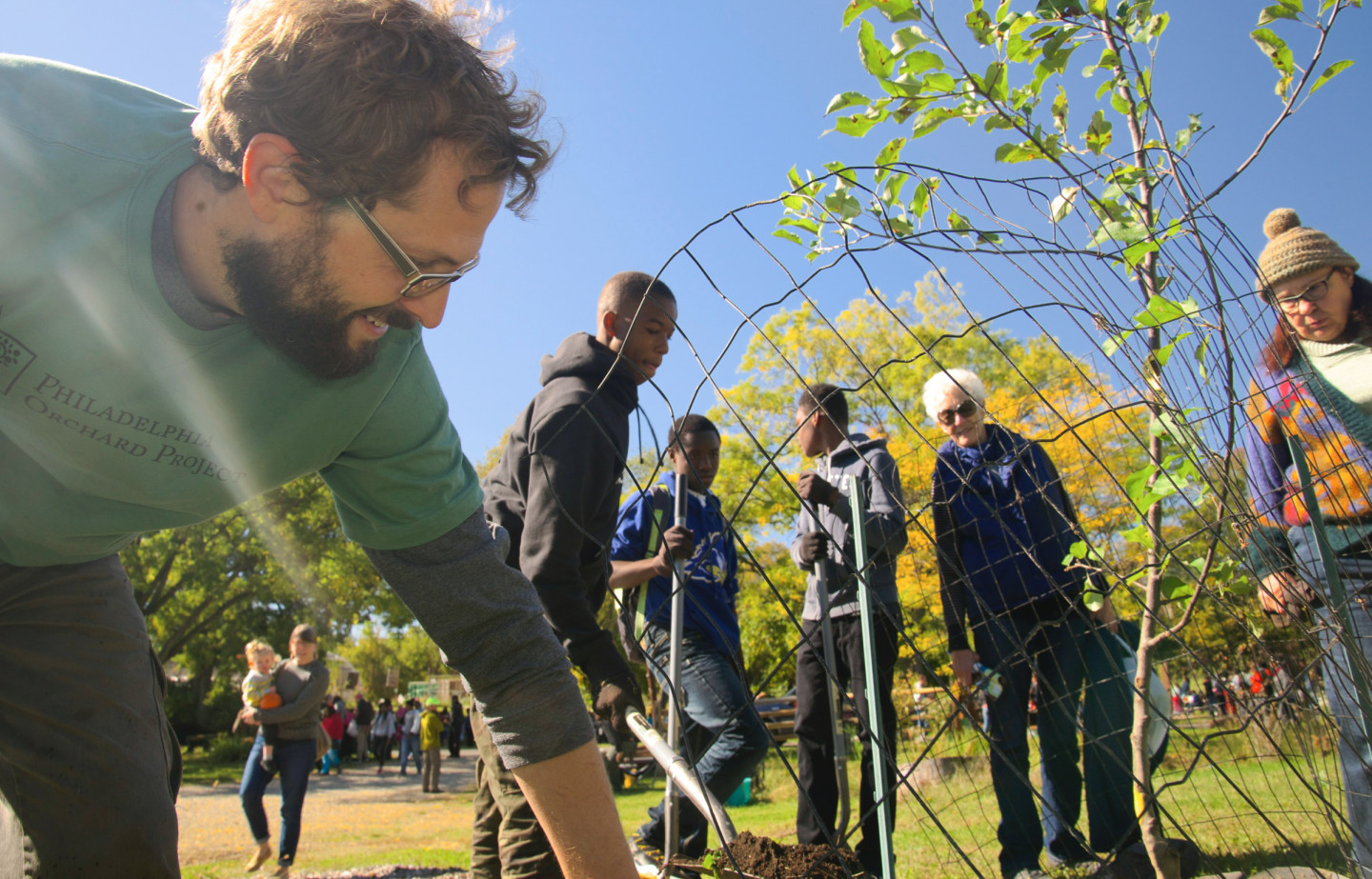
"caption": "Phil Forsyth, executive director of the Philadelphia Orchard Project, leads a fruit tree planting at Bartram's Garden in West Philadelphia.",
"description": "Phil Forsyth, executive director of the Philadelphia Orchard Project, leads a fruit tree planting at Bartram's Garden in West Philadelphia",
"title": "Phil Forsyth, executive director of the Philadelphia Orchard Project, leads a fruit tree planting at Bartram's Garden in West Philadelphia.",
"credit": "Courtesy of Philadelphia Orchard Project ",
"status": "inherit",
"isLoading": false,
"fetchFailed": false
},
"bayareabites_96288": {
"type": "attachments",
"id": "bayareabites_96288",
"meta": {
"index": "attachments_1716263798",
"site": "bayareabites",
"id": "96288",
"found": true
},
"parent": 96287,
"imgSizes": {
"twentyfourteen-full-width": {
"file": "https://ww2.kqed.org/app/uploads/sites/24/2015/05/dsc_0326_slide-588d0a7db2c7c613a3fd027ed9ee0c48e76e6312-1038x576.jpg",
"width": 1038,
"mimeType": "image/jpeg",
"height": 576
},
"thumbnail": {
"file": "https://ww2.kqed.org/app/uploads/sites/24/2015/05/dsc_0326_slide-588d0a7db2c7c613a3fd027ed9ee0c48e76e6312-400x267.jpg",
"width": 400,
"mimeType": "image/jpeg",
"height": 267
},
"fd-sm": {
"file": "https://ww2.kqed.org/app/uploads/sites/24/2015/05/dsc_0326_slide-588d0a7db2c7c613a3fd027ed9ee0c48e76e6312-960x640.jpg",
"width": 960,
"mimeType": "image/jpeg",
"height": 640
},
"post-thumbnail": {
"file": "https://ww2.kqed.org/app/uploads/sites/24/2015/05/dsc_0326_slide-588d0a7db2c7c613a3fd027ed9ee0c48e76e6312-672x372.jpg",
"width": 672,
"mimeType": "image/jpeg",
"height": 372
},
"kqedFullSize": {
"file": "https://ww2.kqed.org/app/uploads/sites/24/2015/05/dsc_0326_slide-588d0a7db2c7c613a3fd027ed9ee0c48e76e6312-e1432056413864.jpg",
"width": 1920,
"height": 1280
},
"large": {
"file": "https://ww2.kqed.org/app/uploads/sites/24/2015/05/dsc_0326_slide-588d0a7db2c7c613a3fd027ed9ee0c48e76e6312-1440x960.jpg",
"width": 1440,
"mimeType": "image/jpeg",
"height": 960
},
"guest-author-96": {
"file": "https://ww2.kqed.org/app/uploads/sites/24/2015/05/dsc_0326_slide-588d0a7db2c7c613a3fd027ed9ee0c48e76e6312-96x96.jpg",
"width": 96,
"mimeType": "image/jpeg",
"height": 96
},
"medium": {
"file": "https://ww2.kqed.org/app/uploads/sites/24/2015/05/dsc_0326_slide-588d0a7db2c7c613a3fd027ed9ee0c48e76e6312-800x533.jpg",
"width": 800,
"mimeType": "image/jpeg",
"height": 533
},
"guest-author-64": {
"file": "https://ww2.kqed.org/app/uploads/sites/24/2015/05/dsc_0326_slide-588d0a7db2c7c613a3fd027ed9ee0c48e76e6312-64x64.jpg",
"width": 64,
"mimeType": "image/jpeg",
"height": 64
},
"guest-author-32": {
"file": "https://ww2.kqed.org/app/uploads/sites/24/2015/05/dsc_0326_slide-588d0a7db2c7c613a3fd027ed9ee0c48e76e6312-32x32.jpg",
"width": 32,
"mimeType": "image/jpeg",
"height": 32
},
"cat_post_thumb_sizecategory-posts-2": {
"file": "https://ww2.kqed.org/app/uploads/sites/24/2015/05/dsc_0326_slide-588d0a7db2c7c613a3fd027ed9ee0c48e76e6312-150x150.jpg",
"width": 150,
"mimeType": "image/jpeg",
"height": 150
},
"fd-med": {
"file": "https://ww2.kqed.org/app/uploads/sites/24/2015/05/dsc_0326_slide-588d0a7db2c7c613a3fd027ed9ee0c48e76e6312-1180x787.jpg",
"width": 1180,
"mimeType": "image/jpeg",
"height": 787
},
"detail": {
"file": "https://ww2.kqed.org/app/uploads/sites/24/2015/05/dsc_0326_slide-588d0a7db2c7c613a3fd027ed9ee0c48e76e6312-75x75.jpg",
"width": 75,
"mimeType": "image/jpeg",
"height": 75
},
"guest-author-128": {
"file": "https://ww2.kqed.org/app/uploads/sites/24/2015/05/dsc_0326_slide-588d0a7db2c7c613a3fd027ed9ee0c48e76e6312-128x128.jpg",
"width": 128,
"mimeType": "image/jpeg",
"height": 128
}
},
"publishDate": 1432055605,
"modified": 1432056461,
"caption": "Mchezaji \"Che\" Axum stands in a hoop house at the University of the District of Columbia's Muirkirk Research Farm, a resource for urban farmers in the city.",
"description": "Mchezaji \"Che\" Axum stands in a hoop house at the University of the District of Columbia's Muirkirk Research Farm, a resource for urban farmers in the city.",
"title": "Mchezaji \"Che\" Axum stands in a hoop house at the University of the District of Columbia's Muirkirk Research Farm, a resource for urban farmers in the city.",
"credit": "Whitney Pipkin for NPR ",
"status": "inherit",
"isLoading": false,
"fetchFailed": false
},
"bayareabites_96211": {
"type": "attachments",
"id": "bayareabites_96211",
"meta": {
"index": "attachments_1716263798",
"site": "bayareabites",
"id": "96211",
"found": true
},
"parent": 96209,
"imgSizes": {
"twentyfourteen-full-width": {
"file": "https://ww2.kqed.org/app/uploads/sites/24/2015/05/mcd-6b7dd5de154c96261150adc1653c8813827b159e-1038x576.jpg",
"width": 1038,
"mimeType": "image/jpeg",
"height": 576
},
"thumbnail": {
"file": "https://ww2.kqed.org/app/uploads/sites/24/2015/05/mcd-6b7dd5de154c96261150adc1653c8813827b159e-400x300.jpg",
"width": 400,
"mimeType": "image/jpeg",
"height": 300
},
"fd-sm": {
"file": "https://ww2.kqed.org/app/uploads/sites/24/2015/05/mcd-6b7dd5de154c96261150adc1653c8813827b159e-960x719.jpg",
"width": 960,
"mimeType": "image/jpeg",
"height": 719
},
"post-thumbnail": {
"file": "https://ww2.kqed.org/app/uploads/sites/24/2015/05/mcd-6b7dd5de154c96261150adc1653c8813827b159e-672x372.jpg",
"width": 672,
"mimeType": "image/jpeg",
"height": 372
},
"kqedFullSize": {
"file": "https://ww2.kqed.org/app/uploads/sites/24/2015/05/mcd-6b7dd5de154c96261150adc1653c8813827b159e-e1431724529371.jpg",
"width": 1920,
"height": 1439
},
"large": {
"file": "https://ww2.kqed.org/app/uploads/sites/24/2015/05/mcd-6b7dd5de154c96261150adc1653c8813827b159e-1440x1079.jpg",
"width": 1440,
"mimeType": "image/jpeg",
"height": 1079
},
"guest-author-96": {
"file": "https://ww2.kqed.org/app/uploads/sites/24/2015/05/mcd-6b7dd5de154c96261150adc1653c8813827b159e-96x96.jpg",
"width": 96,
"mimeType": "image/jpeg",
"height": 96
},
"medium": {
"file": "https://ww2.kqed.org/app/uploads/sites/24/2015/05/mcd-6b7dd5de154c96261150adc1653c8813827b159e-800x600.jpg",
"width": 800,
"mimeType": "image/jpeg",
"height": 600
},
"guest-author-64": {
"file": "https://ww2.kqed.org/app/uploads/sites/24/2015/05/mcd-6b7dd5de154c96261150adc1653c8813827b159e-64x64.jpg",
"width": 64,
"mimeType": "image/jpeg",
"height": 64
},
"guest-author-32": {
"file": "https://ww2.kqed.org/app/uploads/sites/24/2015/05/mcd-6b7dd5de154c96261150adc1653c8813827b159e-32x32.jpg",
"width": 32,
"mimeType": "image/jpeg",
"height": 32
},
"cat_post_thumb_sizecategory-posts-2": {
"file": "https://ww2.kqed.org/app/uploads/sites/24/2015/05/mcd-6b7dd5de154c96261150adc1653c8813827b159e-150x150.jpg",
"width": 150,
"mimeType": "image/jpeg",
"height": 150
},
"fd-med": {
"file": "https://ww2.kqed.org/app/uploads/sites/24/2015/05/mcd-6b7dd5de154c96261150adc1653c8813827b159e-1180x884.jpg",
"width": 1180,
"mimeType": "image/jpeg",
"height": 884
},
"detail": {
"file": "https://ww2.kqed.org/app/uploads/sites/24/2015/05/mcd-6b7dd5de154c96261150adc1653c8813827b159e-75x75.jpg",
"width": 75,
"mimeType": "image/jpeg",
"height": 75
},
"guest-author-128": {
"file": "https://ww2.kqed.org/app/uploads/sites/24/2015/05/mcd-6b7dd5de154c96261150adc1653c8813827b159e-128x128.jpg",
"width": 128,
"mimeType": "image/jpeg",
"height": 128
}
},
"publishDate": 1431724031,
"modified": 1431724523,
"caption": "McDonald's promised earlier in May that it was on the path to becoming a \"modern, progressive burger company.\"\n",
"description": "McDonald's promised earlier in May that it was on the path to becoming a \"modern, progressive burger company.\"\n",
"title": "McDonald's promised earlier in May that it was on the path to becoming a \"modern, progressive burger company.\"",
"credit": " Gene J. Puskar/Associated Press ",
"status": "inherit",
"isLoading": false,
"fetchFailed": false
},
"bayareabites_96097": {
"type": "attachments",
"id": "bayareabites_96097",
"meta": {
"index": "attachments_1716263798",
"site": "bayareabites",
"id": "96097",
"found": true
},
"parent": 96095,
"imgSizes": {
"twentyfourteen-full-width": {
"file": "https://ww2.kqed.org/app/uploads/sites/24/2015/05/20150506_144344_wide-85e70f97eb2be103dbaf93bdd39e06f8c5efab75-1038x576.jpg",
"width": 1038,
"mimeType": "image/jpeg",
"height": 576
},
"thumbnail": {
"file": "https://ww2.kqed.org/app/uploads/sites/24/2015/05/20150506_144344_wide-85e70f97eb2be103dbaf93bdd39e06f8c5efab75-400x225.jpg",
"width": 400,
"mimeType": "image/jpeg",
"height": 225
},
"fd-sm": {
"file": "https://ww2.kqed.org/app/uploads/sites/24/2015/05/20150506_144344_wide-85e70f97eb2be103dbaf93bdd39e06f8c5efab75-960x540.jpg",
"width": 960,
"mimeType": "image/jpeg",
"height": 540
},
"post-thumbnail": {
"file": "https://ww2.kqed.org/app/uploads/sites/24/2015/05/20150506_144344_wide-85e70f97eb2be103dbaf93bdd39e06f8c5efab75-672x372.jpg",
"width": 672,
"mimeType": "image/jpeg",
"height": 372
},
"kqedFullSize": {
"file": "https://ww2.kqed.org/app/uploads/sites/24/2015/05/20150506_144344_wide-85e70f97eb2be103dbaf93bdd39e06f8c5efab75-e1431542816345.jpg",
"width": 1920,
"height": 1080
},
"large": {
"file": "https://ww2.kqed.org/app/uploads/sites/24/2015/05/20150506_144344_wide-85e70f97eb2be103dbaf93bdd39e06f8c5efab75-1440x810.jpg",
"width": 1440,
"mimeType": "image/jpeg",
"height": 810
},
"guest-author-96": {
"file": "https://ww2.kqed.org/app/uploads/sites/24/2015/05/20150506_144344_wide-85e70f97eb2be103dbaf93bdd39e06f8c5efab75-96x96.jpg",
"width": 96,
"mimeType": "image/jpeg",
"height": 96
},
"medium": {
"file": "https://ww2.kqed.org/app/uploads/sites/24/2015/05/20150506_144344_wide-85e70f97eb2be103dbaf93bdd39e06f8c5efab75-800x450.jpg",
"width": 800,
"mimeType": "image/jpeg",
"height": 450
},
"guest-author-64": {
"file": "https://ww2.kqed.org/app/uploads/sites/24/2015/05/20150506_144344_wide-85e70f97eb2be103dbaf93bdd39e06f8c5efab75-64x64.jpg",
"width": 64,
"mimeType": "image/jpeg",
"height": 64
},
"guest-author-32": {
"file": "https://ww2.kqed.org/app/uploads/sites/24/2015/05/20150506_144344_wide-85e70f97eb2be103dbaf93bdd39e06f8c5efab75-32x32.jpg",
"width": 32,
"mimeType": "image/jpeg",
"height": 32
},
"cat_post_thumb_sizecategory-posts-2": {
"file": "https://ww2.kqed.org/app/uploads/sites/24/2015/05/20150506_144344_wide-85e70f97eb2be103dbaf93bdd39e06f8c5efab75-150x150.jpg",
"width": 150,
"mimeType": "image/jpeg",
"height": 150
},
"fd-med": {
"file": "https://ww2.kqed.org/app/uploads/sites/24/2015/05/20150506_144344_wide-85e70f97eb2be103dbaf93bdd39e06f8c5efab75-1180x664.jpg",
"width": 1180,
"mimeType": "image/jpeg",
"height": 664
},
"detail": {
"file": "https://ww2.kqed.org/app/uploads/sites/24/2015/05/20150506_144344_wide-85e70f97eb2be103dbaf93bdd39e06f8c5efab75-75x75.jpg",
"width": 75,
"mimeType": "image/jpeg",
"height": 75
},
"guest-author-128": {
"file": "https://ww2.kqed.org/app/uploads/sites/24/2015/05/20150506_144344_wide-85e70f97eb2be103dbaf93bdd39e06f8c5efab75-128x128.jpg",
"width": 128,
"mimeType": "image/jpeg",
"height": 128
}
},
"publishDate": 1431542745,
"modified": 1431542808,
"caption": "Farmers lay drip tape into a lettuce field in California's Salinas Valley.\n",
"description": "Farmers lay drip tape into a lettuce field in California's Salinas Valley.",
"title": "Farmers lay drip tape into a lettuce field in California's Salinas Valley.",
"credit": " Aarti Shahani/NPR ",
"status": "inherit",
"isLoading": false,
"fetchFailed": false
},
"bayareabites_96079": {
"type": "attachments",
"id": "bayareabites_96079",
"meta": {
"index": "attachments_1716263798",
"site": "bayareabites",
"id": "96079",
"found": true
},
"parent": 96078,
"imgSizes": {
"twentyfourteen-full-width": {
"file": "https://ww2.kqed.org/app/uploads/sites/24/2015/05/coffee_3162_slide-b02d298be5692789efb69f7d81edcc7b567ed95d-1038x576.jpg",
"width": 1038,
"mimeType": "image/jpeg",
"height": 576
},
"thumbnail": {
"file": "https://ww2.kqed.org/app/uploads/sites/24/2015/05/coffee_3162_slide-b02d298be5692789efb69f7d81edcc7b567ed95d-400x267.jpg",
"width": 400,
"mimeType": "image/jpeg",
"height": 267
},
"fd-sm": {
"file": "https://ww2.kqed.org/app/uploads/sites/24/2015/05/coffee_3162_slide-b02d298be5692789efb69f7d81edcc7b567ed95d-960x640.jpg",
"width": 960,
"mimeType": "image/jpeg",
"height": 640
},
"post-thumbnail": {
"file": "https://ww2.kqed.org/app/uploads/sites/24/2015/05/coffee_3162_slide-b02d298be5692789efb69f7d81edcc7b567ed95d-672x372.jpg",
"width": 672,
"mimeType": "image/jpeg",
"height": 372
},
"kqedFullSize": {
"file": "https://ww2.kqed.org/app/uploads/sites/24/2015/05/coffee_3162_slide-b02d298be5692789efb69f7d81edcc7b567ed95d-e1431538422735.jpg",
"width": 1920,
"height": 1280
},
"large": {
"file": "https://ww2.kqed.org/app/uploads/sites/24/2015/05/coffee_3162_slide-b02d298be5692789efb69f7d81edcc7b567ed95d-1440x960.jpg",
"width": 1440,
"mimeType": "image/jpeg",
"height": 960
},
"guest-author-96": {
"file": "https://ww2.kqed.org/app/uploads/sites/24/2015/05/coffee_3162_slide-b02d298be5692789efb69f7d81edcc7b567ed95d-96x96.jpg",
"width": 96,
"mimeType": "image/jpeg",
"height": 96
},
"medium": {
"file": "https://ww2.kqed.org/app/uploads/sites/24/2015/05/coffee_3162_slide-b02d298be5692789efb69f7d81edcc7b567ed95d-800x533.jpg",
"width": 800,
"mimeType": "image/jpeg",
"height": 533
},
"guest-author-64": {
"file": "https://ww2.kqed.org/app/uploads/sites/24/2015/05/coffee_3162_slide-b02d298be5692789efb69f7d81edcc7b567ed95d-64x64.jpg",
"width": 64,
"mimeType": "image/jpeg",
"height": 64
},
"guest-author-32": {
"file": "https://ww2.kqed.org/app/uploads/sites/24/2015/05/coffee_3162_slide-b02d298be5692789efb69f7d81edcc7b567ed95d-32x32.jpg",
"width": 32,
"mimeType": "image/jpeg",
"height": 32
},
"cat_post_thumb_sizecategory-posts-2": {
"file": "https://ww2.kqed.org/app/uploads/sites/24/2015/05/coffee_3162_slide-b02d298be5692789efb69f7d81edcc7b567ed95d-150x150.jpg",
"width": 150,
"mimeType": "image/jpeg",
"height": 150
},
"fd-med": {
"file": "https://ww2.kqed.org/app/uploads/sites/24/2015/05/coffee_3162_slide-b02d298be5692789efb69f7d81edcc7b567ed95d-1180x786.jpg",
"width": 1180,
"mimeType": "image/jpeg",
"height": 786
},
"detail": {
"file": "https://ww2.kqed.org/app/uploads/sites/24/2015/05/coffee_3162_slide-b02d298be5692789efb69f7d81edcc7b567ed95d-75x75.jpg",
"width": 75,
"mimeType": "image/jpeg",
"height": 75
},
"guest-author-128": {
"file": "https://ww2.kqed.org/app/uploads/sites/24/2015/05/coffee_3162_slide-b02d298be5692789efb69f7d81edcc7b567ed95d-128x128.jpg",
"width": 128,
"mimeType": "image/jpeg",
"height": 128
}
},
"publishDate": 1431538366,
"modified": 1431538438,
"caption": "Elena Biamon holds coffee berries grown on her farm near Jayuya, a town in Puerto Rico's mountainous interior.\n",
"description": "Elena Biamon holds coffee berries grown on her farm near Jayuya, a town in Puerto Rico's mountainous interior.\n",
"title": "Elena Biamon holds coffee berries grown on her farm near Jayuya, a town in Puerto Rico's mountainous interior.",
"credit": " Greg Allen/NPR ",
"status": "inherit",
"isLoading": false,
"fetchFailed": false
},
"bayareabites_95974": {
"type": "attachments",
"id": "bayareabites_95974",
"meta": {
"index": "attachments_1716263798",
"site": "bayareabites",
"id": "95974",
"found": true
},
"parent": 95973,
"imgSizes": {
"twentyfourteen-full-width": {
"file": "https://ww2.kqed.org/app/uploads/sites/24/2015/05/istock_000044826648large_edit-28005b2b32aee7ee562c8e28f699acece3b64198-1038x576.jpg",
"width": 1038,
"mimeType": "image/jpeg",
"height": 576
},
"thumbnail": {
"file": "https://ww2.kqed.org/app/uploads/sites/24/2015/05/istock_000044826648large_edit-28005b2b32aee7ee562c8e28f699acece3b64198-400x300.jpg",
"width": 400,
"mimeType": "image/jpeg",
"height": 300
},
"fd-sm": {
"file": "https://ww2.kqed.org/app/uploads/sites/24/2015/05/istock_000044826648large_edit-28005b2b32aee7ee562c8e28f699acece3b64198-960x720.jpg",
"width": 960,
"mimeType": "image/jpeg",
"height": 720
},
"post-thumbnail": {
"file": "https://ww2.kqed.org/app/uploads/sites/24/2015/05/istock_000044826648large_edit-28005b2b32aee7ee562c8e28f699acece3b64198-672x372.jpg",
"width": 672,
"mimeType": "image/jpeg",
"height": 372
},
"kqedFullSize": {
"file": "https://ww2.kqed.org/app/uploads/sites/24/2015/05/istock_000044826648large_edit-28005b2b32aee7ee562c8e28f699acece3b64198-e1431120077108.jpg",
"width": 1920,
"height": 1440
},
"large": {
"file": "https://ww2.kqed.org/app/uploads/sites/24/2015/05/istock_000044826648large_edit-28005b2b32aee7ee562c8e28f699acece3b64198-1440x1080.jpg",
"width": 1440,
"mimeType": "image/jpeg",
"height": 1080
},
"guest-author-96": {
"file": "https://ww2.kqed.org/app/uploads/sites/24/2015/05/istock_000044826648large_edit-28005b2b32aee7ee562c8e28f699acece3b64198-96x96.jpg",
"width": 96,
"mimeType": "image/jpeg",
"height": 96
},
"medium": {
"file": "https://ww2.kqed.org/app/uploads/sites/24/2015/05/istock_000044826648large_edit-28005b2b32aee7ee562c8e28f699acece3b64198-800x600.jpg",
"width": 800,
"mimeType": "image/jpeg",
"height": 600
},
"guest-author-64": {
"file": "https://ww2.kqed.org/app/uploads/sites/24/2015/05/istock_000044826648large_edit-28005b2b32aee7ee562c8e28f699acece3b64198-64x64.jpg",
"width": 64,
"mimeType": "image/jpeg",
"height": 64
},
"guest-author-32": {
"file": "https://ww2.kqed.org/app/uploads/sites/24/2015/05/istock_000044826648large_edit-28005b2b32aee7ee562c8e28f699acece3b64198-32x32.jpg",
"width": 32,
"mimeType": "image/jpeg",
"height": 32
},
"cat_post_thumb_sizecategory-posts-2": {
"file": "https://ww2.kqed.org/app/uploads/sites/24/2015/05/istock_000044826648large_edit-28005b2b32aee7ee562c8e28f699acece3b64198-150x150.jpg",
"width": 150,
"mimeType": "image/jpeg",
"height": 150
},
"fd-med": {
"file": "https://ww2.kqed.org/app/uploads/sites/24/2015/05/istock_000044826648large_edit-28005b2b32aee7ee562c8e28f699acece3b64198-1180x885.jpg",
"width": 1180,
"mimeType": "image/jpeg",
"height": 885
},
"detail": {
"file": "https://ww2.kqed.org/app/uploads/sites/24/2015/05/istock_000044826648large_edit-28005b2b32aee7ee562c8e28f699acece3b64198-75x75.jpg",
"width": 75,
"mimeType": "image/jpeg",
"height": 75
},
"guest-author-128": {
"file": "https://ww2.kqed.org/app/uploads/sites/24/2015/05/istock_000044826648large_edit-28005b2b32aee7ee562c8e28f699acece3b64198-128x128.jpg",
"width": 128,
"mimeType": "image/jpeg",
"height": 128
}
},
"publishDate": 1431119171,
"modified": 1431120071,
"caption": "TV marketing that pushes foods high in salt, sugar and fat to children can put their long-term health at risk, according to past research. So has Big Food changed its ways?\n",
"description": "TV marketing that pushes foods high in salt, sugar and fat to children can put their long-term health at risk, according to past research. So has Big Food changed its ways?\n",
"title": "TV marketing that pushes foods high in salt, sugar and fat to children can put their long-term health at risk, according to past research. So has Big Food changed its ways?",
"credit": "iStockphoto",
"status": "inherit",
"isLoading": false,
"fetchFailed": false
},
"bayareabites_95904": {
"type": "attachments",
"id": "bayareabites_95904",
"meta": {
"index": "attachments_1716263798",
"site": "bayareabites",
"id": "95904",
"found": true
},
"parent": 95903,
"imgSizes": {
"twentyfourteen-full-width": {
"file": "https://ww2.kqed.org/app/uploads/sites/24/2015/05/wholefoods_wide-39d4ee5c7b0221db99f0d6b8ca6f0908af81769b-1038x576.jpg",
"width": 1038,
"mimeType": "image/jpeg",
"height": 576
},
"thumbnail": {
"file": "https://ww2.kqed.org/app/uploads/sites/24/2015/05/wholefoods_wide-39d4ee5c7b0221db99f0d6b8ca6f0908af81769b-400x225.jpg",
"width": 400,
"mimeType": "image/jpeg",
"height": 225
},
"fd-sm": {
"file": "https://ww2.kqed.org/app/uploads/sites/24/2015/05/wholefoods_wide-39d4ee5c7b0221db99f0d6b8ca6f0908af81769b-960x540.jpg",
"width": 960,
"mimeType": "image/jpeg",
"height": 540
},
"post-thumbnail": {
"file": "https://ww2.kqed.org/app/uploads/sites/24/2015/05/wholefoods_wide-39d4ee5c7b0221db99f0d6b8ca6f0908af81769b-672x372.jpg",
"width": 672,
"mimeType": "image/jpeg",
"height": 372
},
"kqedFullSize": {
"file": "https://ww2.kqed.org/app/uploads/sites/24/2015/05/wholefoods_wide-39d4ee5c7b0221db99f0d6b8ca6f0908af81769b-e1431042707366.jpg",
"width": 1920,
"height": 1080
},
"large": {
"file": "https://ww2.kqed.org/app/uploads/sites/24/2015/05/wholefoods_wide-39d4ee5c7b0221db99f0d6b8ca6f0908af81769b-1440x810.jpg",
"width": 1440,
"mimeType": "image/jpeg",
"height": 810
},
"guest-author-96": {
"file": "https://ww2.kqed.org/app/uploads/sites/24/2015/05/wholefoods_wide-39d4ee5c7b0221db99f0d6b8ca6f0908af81769b-96x96.jpg",
"width": 96,
"mimeType": "image/jpeg",
"height": 96
},
"medium": {
"file": "https://ww2.kqed.org/app/uploads/sites/24/2015/05/wholefoods_wide-39d4ee5c7b0221db99f0d6b8ca6f0908af81769b-800x450.jpg",
"width": 800,
"mimeType": "image/jpeg",
"height": 450
},
"guest-author-64": {
"file": "https://ww2.kqed.org/app/uploads/sites/24/2015/05/wholefoods_wide-39d4ee5c7b0221db99f0d6b8ca6f0908af81769b-64x64.jpg",
"width": 64,
"mimeType": "image/jpeg",
"height": 64
},
"guest-author-32": {
"file": "https://ww2.kqed.org/app/uploads/sites/24/2015/05/wholefoods_wide-39d4ee5c7b0221db99f0d6b8ca6f0908af81769b-32x32.jpg",
"width": 32,
"mimeType": "image/jpeg",
"height": 32
},
"cat_post_thumb_sizecategory-posts-2": {
"file": "https://ww2.kqed.org/app/uploads/sites/24/2015/05/wholefoods_wide-39d4ee5c7b0221db99f0d6b8ca6f0908af81769b-150x150.jpg",
"width": 150,
"mimeType": "image/jpeg",
"height": 150
},
"fd-med": {
"file": "https://ww2.kqed.org/app/uploads/sites/24/2015/05/wholefoods_wide-39d4ee5c7b0221db99f0d6b8ca6f0908af81769b-1180x664.jpg",
"width": 1180,
"mimeType": "image/jpeg",
"height": 664
},
"detail": {
"file": "https://ww2.kqed.org/app/uploads/sites/24/2015/05/wholefoods_wide-39d4ee5c7b0221db99f0d6b8ca6f0908af81769b-75x75.jpg",
"width": 75,
"mimeType": "image/jpeg",
"height": 75
},
"guest-author-128": {
"file": "https://ww2.kqed.org/app/uploads/sites/24/2015/05/wholefoods_wide-39d4ee5c7b0221db99f0d6b8ca6f0908af81769b-128x128.jpg",
"width": 128,
"mimeType": "image/jpeg",
"height": 128
}
},
"publishDate": 1431042380,
"modified": 1431042747,
"caption": "A man carries a surfboard past a Whole Foods store in Santa Monica, Calif. Whole Foods Market Inc. reported underwhelming second-quarter earnings on Wednesday.\n",
"description": "A man carries a surfboard past a Whole Foods store in Santa Monica, Calif. Whole Foods Market Inc. reported underwhelming second-quarter earnings on Wednesday.\n",
"title": "A man carries a surfboard past a Whole Foods store in Santa Monica, Calif. Whole Foods Market Inc. reported underwhelming second-quarter earnings on Wednesday.",
"credit": "Reed Saxon/AP",
"status": "inherit",
"isLoading": false,
"fetchFailed": false
},
"bayareabites_95871": {
"type": "attachments",
"id": "bayareabites_95871",
"meta": {
"index": "attachments_1716263798",
"site": "bayareabites",
"id": "95871",
"found": true
},
"parent": 95870,
"imgSizes": {
"twentyfourteen-full-width": {
"file": "https://ww2.kqed.org/app/uploads/sites/24/2015/05/495448523_custom-758872a20d9e4f4f44a2de78f0ea7a77abc3a4db-1038x576.jpg",
"width": 1038,
"mimeType": "image/jpeg",
"height": 576
},
"thumbnail": {
"file": "https://ww2.kqed.org/app/uploads/sites/24/2015/05/495448523_custom-758872a20d9e4f4f44a2de78f0ea7a77abc3a4db-400x266.jpg",
"width": 400,
"mimeType": "image/jpeg",
"height": 266
},
"fd-sm": {
"file": "https://ww2.kqed.org/app/uploads/sites/24/2015/05/495448523_custom-758872a20d9e4f4f44a2de78f0ea7a77abc3a4db-960x638.jpg",
"width": 960,
"mimeType": "image/jpeg",
"height": 638
},
"post-thumbnail": {
"file": "https://ww2.kqed.org/app/uploads/sites/24/2015/05/495448523_custom-758872a20d9e4f4f44a2de78f0ea7a77abc3a4db-672x372.jpg",
"width": 672,
"mimeType": "image/jpeg",
"height": 372
},
"kqedFullSize": {
"file": "https://ww2.kqed.org/app/uploads/sites/24/2015/05/495448523_custom-758872a20d9e4f4f44a2de78f0ea7a77abc3a4db-e1430941378678.jpg",
"width": 1920,
"height": 1276
},
"large": {
"file": "https://ww2.kqed.org/app/uploads/sites/24/2015/05/495448523_custom-758872a20d9e4f4f44a2de78f0ea7a77abc3a4db-1440x957.jpg",
"width": 1440,
"mimeType": "image/jpeg",
"height": 957
},
"guest-author-96": {
"file": "https://ww2.kqed.org/app/uploads/sites/24/2015/05/495448523_custom-758872a20d9e4f4f44a2de78f0ea7a77abc3a4db-96x96.jpg",
"width": 96,
"mimeType": "image/jpeg",
"height": 96
},
"medium": {
"file": "https://ww2.kqed.org/app/uploads/sites/24/2015/05/495448523_custom-758872a20d9e4f4f44a2de78f0ea7a77abc3a4db-800x531.jpg",
"width": 800,
"mimeType": "image/jpeg",
"height": 531
},
"guest-author-64": {
"file": "https://ww2.kqed.org/app/uploads/sites/24/2015/05/495448523_custom-758872a20d9e4f4f44a2de78f0ea7a77abc3a4db-64x64.jpg",
"width": 64,
"mimeType": "image/jpeg",
"height": 64
},
"guest-author-32": {
"file": "https://ww2.kqed.org/app/uploads/sites/24/2015/05/495448523_custom-758872a20d9e4f4f44a2de78f0ea7a77abc3a4db-32x32.jpg",
"width": 32,
"mimeType": "image/jpeg",
"height": 32
},
"cat_post_thumb_sizecategory-posts-2": {
"file": "https://ww2.kqed.org/app/uploads/sites/24/2015/05/495448523_custom-758872a20d9e4f4f44a2de78f0ea7a77abc3a4db-150x150.jpg",
"width": 150,
"mimeType": "image/jpeg",
"height": 150
},
"fd-med": {
"file": "https://ww2.kqed.org/app/uploads/sites/24/2015/05/495448523_custom-758872a20d9e4f4f44a2de78f0ea7a77abc3a4db-1180x784.jpg",
"width": 1180,
"mimeType": "image/jpeg",
"height": 784
},
"detail": {
"file": "https://ww2.kqed.org/app/uploads/sites/24/2015/05/495448523_custom-758872a20d9e4f4f44a2de78f0ea7a77abc3a4db-75x75.jpg",
"width": 75,
"mimeType": "image/jpeg",
"height": 75
},
"guest-author-128": {
"file": "https://ww2.kqed.org/app/uploads/sites/24/2015/05/495448523_custom-758872a20d9e4f4f44a2de78f0ea7a77abc3a4db-128x128.jpg",
"width": 128,
"mimeType": "image/jpeg",
"height": 128
}
},
"publishDate": 1430940778,
"modified": 1430941372,
"caption": "A pedestrian walks by a Panera Bread restaurant on June 3 in San Francisco. Panera Bread is set to remove artificial colors, flavors, sweeteners and preservatives from items on its menu by the end of 2016.",
"description": "A pedestrian walks by a Panera Bread restaurant on June 3 in San Francisco. Panera Bread is set to remove artificial colors, flavors, sweeteners and preservatives from items on its menu by the end of 2016.",
"title": "A pedestrian walks by a Panera Bread restaurant on June 3 in San Francisco. Panera Bread is set to remove artificial colors, flavors, sweeteners and preservatives from items on its menu by the end of 2016.",
"credit": " Justin Sullivan/Getty Images ",
"status": "inherit",
"isLoading": false,
"fetchFailed": false
},
"bayareabites_95855": {
"type": "attachments",
"id": "bayareabites_95855",
"meta": {
"index": "attachments_1716263798",
"site": "bayareabites",
"id": "95855",
"found": true
},
"parent": 95854,
"imgSizes": {
"twentyfourteen-full-width": {
"file": "https://ww2.kqed.org/app/uploads/sites/24/2015/05/big-potato-1181af98982e14c3db199e3ecbf273b3756a2d56-1038x576.jpg",
"width": 1038,
"mimeType": "image/jpeg",
"height": 576
},
"thumbnail": {
"file": "https://ww2.kqed.org/app/uploads/sites/24/2015/05/big-potato-1181af98982e14c3db199e3ecbf273b3756a2d56-400x300.jpg",
"width": 400,
"mimeType": "image/jpeg",
"height": 300
},
"fd-sm": {
"file": "https://ww2.kqed.org/app/uploads/sites/24/2015/05/big-potato-1181af98982e14c3db199e3ecbf273b3756a2d56-960x720.jpg",
"width": 960,
"mimeType": "image/jpeg",
"height": 720
},
"post-thumbnail": {
"file": "https://ww2.kqed.org/app/uploads/sites/24/2015/05/big-potato-1181af98982e14c3db199e3ecbf273b3756a2d56-672x372.jpg",
"width": 672,
"mimeType": "image/jpeg",
"height": 372
},
"kqedFullSize": {
"file": "https://ww2.kqed.org/app/uploads/sites/24/2015/05/big-potato-1181af98982e14c3db199e3ecbf273b3756a2d56.jpg",
"width": 1065,
"height": 799
},
"cat_post_thumb_sizecategory-posts-2": {
"file": "https://ww2.kqed.org/app/uploads/sites/24/2015/05/big-potato-1181af98982e14c3db199e3ecbf273b3756a2d56-150x150.jpg",
"width": 150,
"mimeType": "image/jpeg",
"height": 150
},
"guest-author-96": {
"file": "https://ww2.kqed.org/app/uploads/sites/24/2015/05/big-potato-1181af98982e14c3db199e3ecbf273b3756a2d56-96x96.jpg",
"width": 96,
"mimeType": "image/jpeg",
"height": 96
},
"medium": {
"file": "https://ww2.kqed.org/app/uploads/sites/24/2015/05/big-potato-1181af98982e14c3db199e3ecbf273b3756a2d56-800x600.jpg",
"width": 800,
"mimeType": "image/jpeg",
"height": 600
},
"guest-author-64": {
"file": "https://ww2.kqed.org/app/uploads/sites/24/2015/05/big-potato-1181af98982e14c3db199e3ecbf273b3756a2d56-64x64.jpg",
"width": 64,
"mimeType": "image/jpeg",
"height": 64
},
"detail": {
"file": "https://ww2.kqed.org/app/uploads/sites/24/2015/05/big-potato-1181af98982e14c3db199e3ecbf273b3756a2d56-75x75.jpg",
"width": 75,
"mimeType": "image/jpeg",
"height": 75
},
"guest-author-32": {
"file": "https://ww2.kqed.org/app/uploads/sites/24/2015/05/big-potato-1181af98982e14c3db199e3ecbf273b3756a2d56-32x32.jpg",
"width": 32,
"mimeType": "image/jpeg",
"height": 32
},
"guest-author-128": {
"file": "https://ww2.kqed.org/app/uploads/sites/24/2015/05/big-potato-1181af98982e14c3db199e3ecbf273b3756a2d56-128x128.jpg",
"width": 128,
"mimeType": "image/jpeg",
"height": 128
}
},
"publishDate": 1430856032,
"modified": 1430938905,
"caption": "Now that's a big root: Sweet potatoes aren't tubers, or thickened stems, like potatoes. Sweet potatoes are roots — swollen and packed with starch.\n",
"description": "Now that's a big root: Sweet potatoes aren't tubers, or thickened stems, like potatoes. Sweet potatoes are roots — swollen and packed with starch.\n",
"title": "Now that's a big root: Sweet potatoes aren't tubers, or thickened stems, like potatoes. Sweet potatoes are roots — swollen and packed with starch.",
"credit": "U-ichiro Murakami/Flickr.com ",
"status": "inherit",
"isLoading": false,
"fetchFailed": false
},
"bayareabites_95835": {
"type": "attachments",
"id": "bayareabites_95835",
"meta": {
"index": "attachments_1716263798",
"site": "bayareabites",
"id": "95835",
"found": true
},
"parent": 95834,
"imgSizes": {
"twentyfourteen-full-width": {
"file": "https://ww2.kqed.org/app/uploads/sites/24/2015/05/mcdonalds-germany_wide-f1481391c27b47c3c7a83e7765a4595f06d1b529-1038x576.jpg",
"width": 1038,
"mimeType": "image/jpeg",
"height": 576
},
"thumbnail": {
"file": "https://ww2.kqed.org/app/uploads/sites/24/2015/05/mcdonalds-germany_wide-f1481391c27b47c3c7a83e7765a4595f06d1b529-400x225.jpg",
"width": 400,
"mimeType": "image/jpeg",
"height": 225
},
"fd-sm": {
"file": "https://ww2.kqed.org/app/uploads/sites/24/2015/05/mcdonalds-germany_wide-f1481391c27b47c3c7a83e7765a4595f06d1b529-960x540.jpg",
"width": 960,
"mimeType": "image/jpeg",
"height": 540
},
"post-thumbnail": {
"file": "https://ww2.kqed.org/app/uploads/sites/24/2015/05/mcdonalds-germany_wide-f1481391c27b47c3c7a83e7765a4595f06d1b529-672x372.jpg",
"width": 672,
"mimeType": "image/jpeg",
"height": 372
},
"kqedFullSize": {
"file": "https://ww2.kqed.org/app/uploads/sites/24/2015/05/mcdonalds-germany_wide-f1481391c27b47c3c7a83e7765a4595f06d1b529-e1430762391487.jpg",
"width": 1920,
"height": 1080
},
"large": {
"file": "https://ww2.kqed.org/app/uploads/sites/24/2015/05/mcdonalds-germany_wide-f1481391c27b47c3c7a83e7765a4595f06d1b529-1440x810.jpg",
"width": 1440,
"mimeType": "image/jpeg",
"height": 810
},
"guest-author-96": {
"file": "https://ww2.kqed.org/app/uploads/sites/24/2015/05/mcdonalds-germany_wide-f1481391c27b47c3c7a83e7765a4595f06d1b529-96x96.jpg",
"width": 96,
"mimeType": "image/jpeg",
"height": 96
},
"medium": {
"file": "https://ww2.kqed.org/app/uploads/sites/24/2015/05/mcdonalds-germany_wide-f1481391c27b47c3c7a83e7765a4595f06d1b529-800x450.jpg",
"width": 800,
"mimeType": "image/jpeg",
"height": 450
},
"guest-author-64": {
"file": "https://ww2.kqed.org/app/uploads/sites/24/2015/05/mcdonalds-germany_wide-f1481391c27b47c3c7a83e7765a4595f06d1b529-64x64.jpg",
"width": 64,
"mimeType": "image/jpeg",
"height": 64
},
"guest-author-32": {
"file": "https://ww2.kqed.org/app/uploads/sites/24/2015/05/mcdonalds-germany_wide-f1481391c27b47c3c7a83e7765a4595f06d1b529-32x32.jpg",
"width": 32,
"mimeType": "image/jpeg",
"height": 32
},
"cat_post_thumb_sizecategory-posts-2": {
"file": "https://ww2.kqed.org/app/uploads/sites/24/2015/05/mcdonalds-germany_wide-f1481391c27b47c3c7a83e7765a4595f06d1b529-150x150.jpg",
"width": 150,
"mimeType": "image/jpeg",
"height": 150
},
"fd-med": {
"file": "https://ww2.kqed.org/app/uploads/sites/24/2015/05/mcdonalds-germany_wide-f1481391c27b47c3c7a83e7765a4595f06d1b529-1180x664.jpg",
"width": 1180,
"mimeType": "image/jpeg",
"height": 664
},
"detail": {
"file": "https://ww2.kqed.org/app/uploads/sites/24/2015/05/mcdonalds-germany_wide-f1481391c27b47c3c7a83e7765a4595f06d1b529-75x75.jpg",
"width": 75,
"mimeType": "image/jpeg",
"height": 75
},
"guest-author-128": {
"file": "https://ww2.kqed.org/app/uploads/sites/24/2015/05/mcdonalds-germany_wide-f1481391c27b47c3c7a83e7765a4595f06d1b529-128x128.jpg",
"width": 128,
"mimeType": "image/jpeg",
"height": 128
}
},
"publishDate": 1430762304,
"modified": 1430846744,
"caption": "Under a new global structure, McDonald's is grouping markets in Germany where a new McDonald's Flagship Restaurant opened in March, with other high-performing countries such as Australia and Canada.\n",
"description": "Under a new global structure, McDonald's is grouping markets in Germany where a new McDonald's Flagship Restaurant opened in March, with other high-performing countries such as Australia and Canada.",
"title": "Under a new global structure, McDonald's is grouping markets in Germany where a new McDonald's Flagship Restaurant opened in March, with other high-performing countries such as Australia and Canada.",
"credit": " Hannelore Foerster/Getty Images ",
"status": "inherit",
"isLoading": false,
"fetchFailed": false
},
"bayareabites_95775": {
"type": "attachments",
"id": "bayareabites_95775",
"meta": {
"index": "attachments_1716263798",
"site": "bayareabites",
"id": "95775",
"found": true
},
"parent": 95774,
"imgSizes": {
"twentyfourteen-full-width": {
"file": "https://ww2.kqed.org/app/uploads/sites/24/2015/04/471371488_slide-54628d19b1154ffd884c72b4ccd359af3666ca6f-1038x576.jpg",
"width": 1038,
"mimeType": "image/jpeg",
"height": 576
},
"thumbnail": {
"file": "https://ww2.kqed.org/app/uploads/sites/24/2015/04/471371488_slide-54628d19b1154ffd884c72b4ccd359af3666ca6f-400x267.jpg",
"width": 400,
"mimeType": "image/jpeg",
"height": 267
},
"fd-sm": {
"file": "https://ww2.kqed.org/app/uploads/sites/24/2015/04/471371488_slide-54628d19b1154ffd884c72b4ccd359af3666ca6f-960x640.jpg",
"width": 960,
"mimeType": "image/jpeg",
"height": 640
},
"post-thumbnail": {
"file": "https://ww2.kqed.org/app/uploads/sites/24/2015/04/471371488_slide-54628d19b1154ffd884c72b4ccd359af3666ca6f-672x372.jpg",
"width": 672,
"mimeType": "image/jpeg",
"height": 372
},
"kqedFullSize": {
"file": "https://ww2.kqed.org/app/uploads/sites/24/2015/04/471371488_slide-54628d19b1154ffd884c72b4ccd359af3666ca6f-e1430427289858.jpg",
"width": 1920,
"height": 1280
},
"large": {
"file": "https://ww2.kqed.org/app/uploads/sites/24/2015/04/471371488_slide-54628d19b1154ffd884c72b4ccd359af3666ca6f-1440x960.jpg",
"width": 1440,
"mimeType": "image/jpeg",
"height": 960
},
"guest-author-96": {
"file": "https://ww2.kqed.org/app/uploads/sites/24/2015/04/471371488_slide-54628d19b1154ffd884c72b4ccd359af3666ca6f-96x96.jpg",
"width": 96,
"mimeType": "image/jpeg",
"height": 96
},
"medium": {
"file": "https://ww2.kqed.org/app/uploads/sites/24/2015/04/471371488_slide-54628d19b1154ffd884c72b4ccd359af3666ca6f-800x533.jpg",
"width": 800,
"mimeType": "image/jpeg",
"height": 533
},
"guest-author-64": {
"file": "https://ww2.kqed.org/app/uploads/sites/24/2015/04/471371488_slide-54628d19b1154ffd884c72b4ccd359af3666ca6f-64x64.jpg",
"width": 64,
"mimeType": "image/jpeg",
"height": 64
},
"guest-author-32": {
"file": "https://ww2.kqed.org/app/uploads/sites/24/2015/04/471371488_slide-54628d19b1154ffd884c72b4ccd359af3666ca6f-32x32.jpg",
"width": 32,
"mimeType": "image/jpeg",
"height": 32
},
"cat_post_thumb_sizecategory-posts-2": {
"file": "https://ww2.kqed.org/app/uploads/sites/24/2015/04/471371488_slide-54628d19b1154ffd884c72b4ccd359af3666ca6f-150x150.jpg",
"width": 150,
"mimeType": "image/jpeg",
"height": 150
},
"fd-med": {
"file": "https://ww2.kqed.org/app/uploads/sites/24/2015/04/471371488_slide-54628d19b1154ffd884c72b4ccd359af3666ca6f-1180x787.jpg",
"width": 1180,
"mimeType": "image/jpeg",
"height": 787
},
"detail": {
"file": "https://ww2.kqed.org/app/uploads/sites/24/2015/04/471371488_slide-54628d19b1154ffd884c72b4ccd359af3666ca6f-75x75.jpg",
"width": 75,
"mimeType": "image/jpeg",
"height": 75
},
"guest-author-128": {
"file": "https://ww2.kqed.org/app/uploads/sites/24/2015/04/471371488_slide-54628d19b1154ffd884c72b4ccd359af3666ca6f-128x128.jpg",
"width": 128,
"mimeType": "image/jpeg",
"height": 128
}
},
"publishDate": 1430426619,
"modified": 1430426722,
"caption": "Chipotle restaurant workers in Miami, Fla., fill orders on Apr. 27, the day that the company claimed it would only use non-GMO ingredients in its food. ",
"description": "Chipotle restaurant workers in Miami, Fla., fill orders on Apr. 27, the day that the company claimed it would only use non-GMO ingredients in its food. ",
"title": "Chipotle restaurant workers in Miami, Fla., fill orders on Apr. 27, the day that the company claimed it would only use non-GMO ingredients in its food.",
"credit": "Joe Raedle/Getty Images",
"status": "inherit",
"isLoading": false,
"fetchFailed": false
},
"bayareabites_95762": {
"type": "attachments",
"id": "bayareabites_95762",
"meta": {
"index": "attachments_1716263798",
"site": "bayareabites",
"id": "95762",
"found": true
},
"parent": 95761,
"imgSizes": {
"thumbnail": {
"file": "https://ww2.kqed.org/app/uploads/sites/24/2015/04/bud-light-reddit_wide-89cfdaed71becaf471012e3a722f5e3fbabb0c2a-400x225.jpg",
"width": 400,
"mimeType": "image/jpeg",
"height": 225
},
"post-thumbnail": {
"file": "https://ww2.kqed.org/app/uploads/sites/24/2015/04/bud-light-reddit_wide-89cfdaed71becaf471012e3a722f5e3fbabb0c2a-672x372.jpg",
"width": 672,
"mimeType": "image/jpeg",
"height": 372
},
"kqedFullSize": {
"file": "https://ww2.kqed.org/app/uploads/sites/24/2015/04/bud-light-reddit_wide-89cfdaed71becaf471012e3a722f5e3fbabb0c2a.jpg",
"width": 900,
"height": 506
},
"cat_post_thumb_sizecategory-posts-2": {
"file": "https://ww2.kqed.org/app/uploads/sites/24/2015/04/bud-light-reddit_wide-89cfdaed71becaf471012e3a722f5e3fbabb0c2a-150x150.jpg",
"width": 150,
"mimeType": "image/jpeg",
"height": 150
},
"guest-author-96": {
"file": "https://ww2.kqed.org/app/uploads/sites/24/2015/04/bud-light-reddit_wide-89cfdaed71becaf471012e3a722f5e3fbabb0c2a-96x96.jpg",
"width": 96,
"mimeType": "image/jpeg",
"height": 96
},
"medium": {
"file": "https://ww2.kqed.org/app/uploads/sites/24/2015/04/bud-light-reddit_wide-89cfdaed71becaf471012e3a722f5e3fbabb0c2a-800x450.jpg",
"width": 800,
"mimeType": "image/jpeg",
"height": 450
},
"guest-author-64": {
"file": "https://ww2.kqed.org/app/uploads/sites/24/2015/04/bud-light-reddit_wide-89cfdaed71becaf471012e3a722f5e3fbabb0c2a-64x64.jpg",
"width": 64,
"mimeType": "image/jpeg",
"height": 64
},
"detail": {
"file": "https://ww2.kqed.org/app/uploads/sites/24/2015/04/bud-light-reddit_wide-89cfdaed71becaf471012e3a722f5e3fbabb0c2a-75x75.jpg",
"width": 75,
"mimeType": "image/jpeg",
"height": 75
},
"guest-author-32": {
"file": "https://ww2.kqed.org/app/uploads/sites/24/2015/04/bud-light-reddit_wide-89cfdaed71becaf471012e3a722f5e3fbabb0c2a-32x32.jpg",
"width": 32,
"mimeType": "image/jpeg",
"height": 32
},
"guest-author-128": {
"file": "https://ww2.kqed.org/app/uploads/sites/24/2015/04/bud-light-reddit_wide-89cfdaed71becaf471012e3a722f5e3fbabb0c2a-128x128.jpg",
"width": 128,
"mimeType": "image/jpeg",
"height": 128
}
},
"publishDate": 1430329688,
"modified": 1430332445,
"caption": "Anheuser-Busch has apologized for a message on bottles of Bud Light that said it is \"the perfect beer for removing 'no' from your vocabulary for the night.\" The labels are no longer being produced. ",
"description": "Anheuser-Busch has apologized for a message on bottles of Bud Light that said it is \"the perfect beer for removing 'no' from your vocabulary for the night.\" The labels are no longer being produced. ",
"title": "Anheuser-Busch has apologized for a message on bottles of Bud Light that said it is \"the perfect beer for removing 'no' from your vocabulary for the night.\" The labels are no longer being produced.",
"credit": "GhosX9/Reddit ",
"status": "inherit",
"isLoading": false,
"fetchFailed": false
}
},
"audioPlayerReducer": {
"postId": "stream_live",
"isPaused": true,
"isPlaying": false,
"pfsActive": false,
"pledgeModalIsOpen": true,
"playerDrawerIsOpen": false,
"liveAudioPlayStartedAt": 0,
"liveAudioPlayContext": ""
},
"authorsReducer": {
"byline_bayareabites_96325": {
"type": "authors",
"id": "byline_bayareabites_96325",
"meta": {
"override": true
},
"slug": "byline_bayareabites_96325",
"name": "Alastair Bland -- \u003ca href=\"http://ww2.kqed.org/bayareabites/author/nprfood/\">NPR Food\u003c/a>",
"isLoading": false
},
"byline_bayareabites_96287": {
"type": "authors",
"id": "byline_bayareabites_96287",
"meta": {
"override": true
},
"slug": "byline_bayareabites_96287",
"name": "Whitney Pipkin -- \u003ca href=\"http://ww2.kqed.org/bayareabites/author/nprfood/\">NPR Food\u003c/a>",
"isLoading": false
},
"byline_bayareabites_96209": {
"type": "authors",
"id": "byline_bayareabites_96209",
"meta": {
"override": true
},
"slug": "byline_bayareabites_96209",
"name": "Allison Aubrey, \u003ca href=\"http://ww2.kqed.org/bayareabites/author/nprfood/\">NPR Food\u003c/a>",
"isLoading": false
},
"byline_bayareabites_96095": {
"type": "authors",
"id": "byline_bayareabites_96095",
"meta": {
"override": true
},
"slug": "byline_bayareabites_96095",
"name": "Aarti Shahani, \u003ca href=\"http://ww2.kqed.org/bayareabites/author/nprfood/\" />NPR Food\u003c/a>",
"isLoading": false
},
"byline_bayareabites_96078": {
"type": "authors",
"id": "byline_bayareabites_96078",
"meta": {
"override": true
},
"slug": "byline_bayareabites_96078",
"name": "Greg Allen and Marisa Peñaloza, \u003ca href=http://ww2.kqed.org/bayareabites/author/nprfood/>NPR Food\u003c/a>",
"isLoading": false
},
"byline_bayareabites_95973": {
"type": "authors",
"id": "byline_bayareabites_95973",
"meta": {
"override": true
},
"slug": "byline_bayareabites_95973",
"name": "Allison Aubrey, \u003ca href=http://ww2.kqed.org/bayareabites/author/nprfood/>NPR Food\u003c/a>",
"isLoading": false
},
"byline_bayareabites_95903": {
"type": "authors",
"id": "byline_bayareabites_95903",
"meta": {
"override": true
},
"slug": "byline_bayareabites_95903",
"name": "Brian Naylor, \u003ca href=\"http://ww2.kqed.org/bayareabites/author/nprfood/\">NPR Food\u003c/a>",
"isLoading": false
},
"byline_bayareabites_95870": {
"type": "authors",
"id": "byline_bayareabites_95870",
"meta": {
"override": true
},
"slug": "byline_bayareabites_95870",
"name": "Allison Aubrey, \u003ca href=http://ww2.kqed.org/bayareabites/author/nprfood/>NPR Food\u003c/a>",
"isLoading": false
},
"byline_bayareabites_95854": {
"type": "authors",
"id": "byline_bayareabites_95854",
"meta": {
"override": true
},
"slug": "byline_bayareabites_95854",
"name": "Michaeleen Doucleff, \u003ca href=\"http://ww2.kqed.org/bayareabites/author/nprfood/\" />NPR Food\u003c/a> ",
"isLoading": false
},
"byline_bayareabites_95834": {
"type": "authors",
"id": "byline_bayareabites_95834",
"meta": {
"override": true
},
"slug": "byline_bayareabites_95834",
"name": "Bill Chappell, \u003ca href=\"http://ww2.kqed.org/bayareabites/author/nprfood/\">NPR Food\u003c/a>",
"isLoading": false
},
"byline_bayareabites_95774": {
"type": "authors",
"id": "byline_bayareabites_95774",
"meta": {
"override": true
},
"slug": "byline_bayareabites_95774",
"name": "Dan Charles, \u003ca href=\"http://ww2.kqed.org/bayareabites/author/nprfood/\">NPR Food\u003c/a> ",
"isLoading": false
},
"byline_bayareabites_95761": {
"type": "authors",
"id": "byline_bayareabites_95761",
"meta": {
"override": true
},
"slug": "byline_bayareabites_95761",
"name": "Bill Chappell, \u003ca href=\"http://ww2.kqed.org/bayareabites/author/nprfood/\" target=\"_blank\">NPR Food\u003c/a>",
"isLoading": false
}
},
"pagesReducer": {
"bayareabites_category_npr-food": {
"type": "terms",
"id": "bayareabites_10916",
"meta": {
"index": "terms_1716263798",
"site": "bayareabites",
"id": "10916",
"score": 13.894709
},
"featImg": null,
"name": "NPR food",
"description": null,
"taxonomy": "category",
"headData": {
"twImgId": null,
"twTitle": null,
"ogTitle": null,
"ogImgId": null,
"twDescription": null,
"description": null,
"title": "NPR food Archives | KQED Bay Area Bites",
"ogDescription": null
},
"ttid": 5375,
"slug": "npr-food",
"isLoading": false,
"title": "NPR food",
"pageMeta": {
"site": "bayareabites",
"WpPageTemplate": "page-topic-editorial",
"currentPage": 23
},
"blocks": [
{
"blockName": "kqed/post-list",
"attrs": {
"layout": "cardArticle2",
"query": "posts/bayareabites?category=npr-food",
"seeMore": false,
"paginated": true,
"page": 23
}
},
{
"blockName": "kqed/ad"
}
]
}
},
"pfsSessionReducer": {},
"postsReducer": {
"stream_live": {
"type": "live",
"id": "stream_live",
"audioUrl": "https://hls.kqed.org/hls/kqed_app/playlist.m3u8",
"title": "Live Stream",
"excerpt": "Live Stream information currently unavailable.",
"link": "/radio",
"featImg": "",
"label": {
"name": "KQED Live",
"link": "/"
}
},
"stream_kqedNewscast": {
"type": "posts",
"id": "stream_kqedNewscast",
"audioUrl": "https://www.kqed.org/.stream/anon/radio/RDnews/newscast.mp3?_=1",
"title": "KQED Newscast",
"featImg": "",
"label": {
"name": "88.5 FM",
"link": "/"
}
},
"bayareabites_96325": {
"type": "posts",
"id": "bayareabites_96325",
"meta": {
"index": "posts_1716263798",
"site": "bayareabites",
"id": "96325",
"score": null,
"sort": [
1432238433000
]
},
"parent": 0,
"labelTerm": {
"site": "bayareabites"
},
"blocks": [],
"publishDate": 1432238433,
"format": "standard",
"disqusTitle": "Urban Food Forests Make Fruit Free For The Picking",
"title": "Urban Food Forests Make Fruit Free For The Picking",
"headTitle": "Bay Area Bites | KQED Food",
"content": "\u003cp>To discover the new frontier of urban farming, you'll have to look up — and look sharp — for hanging fruit.\u003c/p>\n\u003cp>Urban orchards are dropping everything from apples to persimmons to avocados on \u003ca href=\"http://www.npr.org/sections/thesalt/2012/02/29/147668557/seattles-first-urban-food-forest-will-be-free-to-forage\">Seattle\u003c/a>, Bloomington, Ind., \u003ca href=\"http://www.bostontreeparty.org/about/party/\">Boston\u003c/a>, Toronto, San Francisco, \u003ca href=\"http://fallenfruit.org/projects/urbanfruittrails/\">Los Angeles\u003c/a> and other North American cities. Groups like the \u003ca href=\"http://www.portlandfruit.org/\">Portland Fruit Tree Project\u003c/a> advocate for public access to existing fruit trees so that people can glean crops that would otherwise go uneaten — an idea some \u003ca href=\"https://americanorchard.wordpress.com/tag/urban-orchards/\">are calling\u003c/a> radical. Other groups are more interested in planting new groves of fruit trees on previously fallow city land.\u003c/p>\n\u003cp>Fruit trees produce food, but also provide shade, keep greenhouse gases out of the atmosphere, improve water quality and may even \u003ca href=\"http://www.treesearch.fs.fed.us/pubs/40701\">deter crime\u003c/a>. Advocates say they also have a longer lasting impact on communities than vegetable beds.\u003c/p>\n\u003cp>\"When you plant lettuce, you produce food for today, which is great, but when you plant a tree, you're feeding people tomorrow,\" says Nina Beth Cardin, director of the \u003ca href=\"http://www.baltimoreorchard.org/\">Baltimore Orchard Project\u003c/a>, a program of the Baltimore non-profit \u003ca href=\"http://civicworks.com/\" target=\"_blank\" rel=\"noopener\">Civic Works\u003c/a>. The orchard project has planted thousands of apple, serviceberry, pawpaw, fig and pear trees on public and private land around Baltimore. City officials, striving to meet a \u003ca href=\"http://www.treebaltimore.org/about/\">goal\u003c/a> of increasing the city's tree canopy, have been providing starter trees to Cardin's group, which in turn helps churches and schools plant and learn to maintain fruit trees.\u003c/p>\n\u003cp>In Philadelphia, fruit trees have a special knack for bringing people together, says Phil Forsyth, executive director of \u003ca href=\"http://www.phillyorchards.org/\">Philadelphia Orchard Project\u003c/a>. Since a large tree takes up space, communities are more likely to treat it as a public resource, with the crop harvested and shared among many people, Forsyth says.\u003c/p>\n\u003cfigure id=\"attachment_96326\" class=\"wp-caption aligncenter\" style=\"max-width: 1450px\">\u003cimg class=\"size-full wp-image-96326\" src=\"http://ww2.kqed.org/bayareabites/wp-content/uploads/sites/24/2015/05/ogden-berries-2_custom-fc0e4d62a96743b00476297011b9871190cf4e54.jpg\" alt=\"A morning's berry harvest from West Philadelphia's Ogden Orchard includes raspberries, gooseberries, currants, goumis and mulberri\" width=\"1450\" height=\"867\" srcset=\"https://ww2.kqed.org/app/uploads/sites/24/2015/05/ogden-berries-2_custom-fc0e4d62a96743b00476297011b9871190cf4e54.jpg 1450w, https://ww2.kqed.org/app/uploads/sites/24/2015/05/ogden-berries-2_custom-fc0e4d62a96743b00476297011b9871190cf4e54-400x239.jpg 400w, https://ww2.kqed.org/app/uploads/sites/24/2015/05/ogden-berries-2_custom-fc0e4d62a96743b00476297011b9871190cf4e54-800x478.jpg 800w, https://ww2.kqed.org/app/uploads/sites/24/2015/05/ogden-berries-2_custom-fc0e4d62a96743b00476297011b9871190cf4e54-1440x861.jpg 1440w, https://ww2.kqed.org/app/uploads/sites/24/2015/05/ogden-berries-2_custom-fc0e4d62a96743b00476297011b9871190cf4e54-1180x706.jpg 1180w, https://ww2.kqed.org/app/uploads/sites/24/2015/05/ogden-berries-2_custom-fc0e4d62a96743b00476297011b9871190cf4e54-960x574.jpg 960w\" sizes=\"(max-width: 1450px) 100vw, 1450px\">\u003cfigcaption class=\"wp-caption-text\">A morning's berry harvest from West Philadelphia's Ogden Orchard includes raspberries, gooseberries, currants, goumis and mulberri \u003ccite>(Philadelphia Orchard Project )\u003c/cite>\u003c/figcaption>\u003c/figure>\n\u003cp>Forsyth's organization, founded in 2007, has helped plant nearly 40 orchards in and around Philadelphia and maintains a nursery stocked with small potted figs, cherries, mulberries and more. The organization provides these young trees to groups and individuals who apply for assistance to plant an orchard -- and meet some basic criteria. Forsyth says applicants must have spaces with sufficient sunlight and soil, and must also have long-term property leases or ownership of their land.\u003c/p>\n\u003cp>[ad fullwidth]\u003c/p>\n\u003cp>While fruit orchards have some advantages over other urban agriculture initiatives, they have their own disadvantages as well. Trees can be relatively expensive, and tricky to plant. While a packet of seeds sufficient to fill a veggie bed may run a few bucks, a single fruit tree sapling may go for $30 or more.\u003c/p>\n\u003cp>And, while vegetable gardens can be started by, at minimum, tossing a handful of seeds over the soil, most trees must be started by \u003ca href=\"http://www.npr.org/sections/thesalt/2014/08/03/337164041/the-gift-of-graft-new-york-artists-tree-to-grow-40-kinds-of-fruit\">grafting\u003c/a> a branch of a desired variety onto an existing tree, often referred to as rootstock. With grafting, it's possible to grow many varieties of fruit on a single tree.\u003c/p>\n\u003cp>Commercial nurseries generally handle the relatively technical work of tree propagation and sell trees several years old in small pots. (Figs are an anomaly and may be propagated very easily by rooting small branch cutting in the earth, with no grafting required.)\u003c/p>\n\u003cfigure id=\"attachment_96328\" class=\"wp-caption aligncenter\" style=\"max-width: 1282px\">\u003cimg class=\"size-full wp-image-96328\" src=\"http://ww2.kqed.org/bayareabites/wp-content/uploads/sites/24/2015/05/awbury-pears-1_custom-69221010a7a074de7b3a52ae9abbdcffcb1a0eb7.jpg\" alt=\"Pears ripen on the tree at the Awbury Arboretum Food Forest, one of the 48 sites of the Philadelphia Orchard Project.\" width=\"1282\" height=\"853\" srcset=\"https://ww2.kqed.org/app/uploads/sites/24/2015/05/awbury-pears-1_custom-69221010a7a074de7b3a52ae9abbdcffcb1a0eb7.jpg 1282w, https://ww2.kqed.org/app/uploads/sites/24/2015/05/awbury-pears-1_custom-69221010a7a074de7b3a52ae9abbdcffcb1a0eb7-400x266.jpg 400w, https://ww2.kqed.org/app/uploads/sites/24/2015/05/awbury-pears-1_custom-69221010a7a074de7b3a52ae9abbdcffcb1a0eb7-800x532.jpg 800w, https://ww2.kqed.org/app/uploads/sites/24/2015/05/awbury-pears-1_custom-69221010a7a074de7b3a52ae9abbdcffcb1a0eb7-1180x785.jpg 1180w, https://ww2.kqed.org/app/uploads/sites/24/2015/05/awbury-pears-1_custom-69221010a7a074de7b3a52ae9abbdcffcb1a0eb7-960x639.jpg 960w\" sizes=\"(max-width: 1282px) 100vw, 1282px\">\u003cfigcaption class=\"wp-caption-text\">Pears ripen on the tree at the Awbury Arboretum Food Forest, one of the 48 sites of the Philadelphia Orchard Project. \u003ccite>(Courtesy of Philadelphia Orchard Project )\u003c/cite>\u003c/figcaption>\u003c/figure>\n\u003cp>Once they are planted and their roots have set in the soil, trees and vines may be relatively self-sufficient and require far less maintenance work than vegetable gardens. However, cold winters can kill fruit trees — especially those adapted to warm climates. In the Midwest and the Eastern U.S., fig trees, for one, often get bundled up for the winter. An effective method, Forsyth says, is to wrap a thick insulating layer of autumn leaves around the tree with chicken wire.\u003c/p>\n\u003cp>Such measures are unnecessary in the mild Mediterranean climate of San Francisco, where a garbage dump was cleared and turned into a four-acre farm and orchard in the mid 1990s on the relatively warm, east side of the city, near the Bernal Heights neighborhood. Today, \u003ca href=\"http://www.alemanyfarm.org/history/\">Alemany Farm\u003c/a> is largely devoted to artichokes, lettuce and strawberries. But the biggest draw is the fruit trees. Subtropical species, including loquats, figs, pineapple guavas and avocados, thrive on the farm, and the public is welcome to come and pick the fruit.\u003c/p>\n\u003cp>Alemany also boasts a vineyard of 350 Pinot Noir vines, which Elly Hartshorn planted in 2013 as part of her winemaking project, \u003ca href=\"http://www.neighborhoodvineyards.org/\">Neighborhood Vineyards\u003c/a>. The San Francisco vines should produce their first crop this year, Hartshorn tells The Salt.\u003c/p>\n\u003cp>\"In a city where I might not have a house of my own, a vineyard is a space where I can establish long-term roots,\" says Hartshorn.\u003c/p>\n\u003cp>Of course, the labor required to establish and maintain fruit trees and vines means it's important to ensure that the sites are protected from development. Cardin says her group wants a guarantee that the land will not be built on for at least 20 years before they provide orchard planting assistance.\u003c/p>\n\u003cp>In San Francisco, a \u003ca href=\"http://www.npr.org/blogs/thesalt/2014/09/09/347141038/tax-breaks-may-turn-san-franciscos-vacant-lots-into-urban-farms\">city program\u003c/a> that gives tax breaks to landowners who turn their property over to farming ventures requires they do so for at least five years — which Hartshorn notes is not enough time to make a vineyard, or an orchard, worth the effort of planting. Many fruit trees don't bear a substantial crop until they're several years old.\u003c/p>\n\u003cp>But in the meantime, they may provide habitat for birds and insects and shade for people and animals. Tree roots help thwart erosion, and the trees themselves grow by drawing carbon from the atmosphere, and producing oxygen. Trees' beneficial effects on air quality, and their potential for helping curb climate change, are a reason that city governments are now encouraging landowners to plant them.\u003c/p>\n\u003cp>Cardin says her hope is that, by planting even a few trees, a community will make the choice to keep that piece of land undeveloped for decades.\u003c/p>\n\u003cp>\"Trees have a true spiritual element,\" says Cardin. \"The act of gardening itself has a spiritual value, but not the lettuce itself. It's the presence of the tree, the constancy of the tree, that's so special.\"\u003c/p>\n\u003chr>\n\u003cp>\u003cem>Alastair Bland is a freelance writer based in San Francisco who covers food, agriculture and the environment.\u003c/em>\u003c/p>\n\u003cp>[ad floatright]\u003c/p>\n\u003cp>Copyright 2015 \u003ca href=\"http://www.npr.org/\">NPR\u003c/a>.\u003c/p>\n\n",
"disqusIdentifier": "96325 http://ww2.kqed.org/bayareabites/?p=96325",
"disqusUrl": "https://ww2.kqed.org/bayareabites/2015/05/21/urban-food-forests-make-fruit-free-for-the-picking/",
"stats": {
"hasVideo": false,
"hasChartOrMap": false,
"hasAudio": false,
"hasPolis": false,
"wordCount": 1065,
"hasGoogleForm": false,
"hasGallery": false,
"hasHearkenModule": false,
"iframeSrcs": [],
"paragraphCount": 22
},
"modified": 1556739012,
"excerpt": "Urban orchards are dropping everything from apples to avocados on Seattle, Bloomington, Ind., Boston and several other cities. Advocates say orchards can have longer lasting impact than gardens.",
"headData": {
"twImgId": "",
"twTitle": "",
"ogTitle": "",
"ogImgId": "",
"twDescription": "",
"description": "Urban orchards are dropping everything from apples to avocados on Seattle, Bloomington, Ind., Boston and several other cities. Advocates say orchards can have longer lasting impact than gardens.",
"title": "Urban Food Forests Make Fruit Free For The Picking | KQED",
"ogDescription": "",
"schema": {
"@context": "https://schema.org",
"@type": "Article",
"headline": "Urban Food Forests Make Fruit Free For The Picking",
"datePublished": "2015-05-21T13:00:33-07:00",
"dateModified": "2019-05-01T12:30:12-07:00",
"image": "https://cdn.kqed.org/wp-content/uploads/2020/02/KQED-OG-Image@1x.png"
}
},
"guestAuthors": [],
"slug": "urban-food-forests-make-fruit-free-for-the-picking",
"status": "publish",
"nprApiLink": "http://api.npr.org/query?id=408293431&apiKey=MDAxOTAwOTE4MDEyMTkxMDAzNjczZDljZA004",
"nprByline": "Alastair Bland -- \u003ca href=\"http://ww2.kqed.org/bayareabites/author/nprfood/\">NPR Food\u003c/a>",
"nprStoryDate": "Thu, 21 May 2015 11:57:37 -0400",
"nprLastModifiedDate": "Thu, 21 May 2015 11:57:37 -0400",
"nprHtmlLink": "http://www.npr.org/sections/thesalt/2015/05/21/408293431/urban-food-forests-make-fruit-free-for-the-picking?ft=nprml&f=408293431",
"nprStoryId": "408293431",
"nprRetrievedStory": "1",
"nprPubDate": "Thu, 21 May 2015 11:57:00 -0400",
"path": "/bayareabites/96325/urban-food-forests-make-fruit-free-for-the-picking",
"audioTrackLength": null,
"parsedContent": [
{
"type": "contentString",
"content": "\u003cdiv class=\"post-body\">\u003cp>\u003cp>To discover the new frontier of urban farming, you'll have to look up — and look sharp — for hanging fruit.\u003c/p>\n\u003cp>Urban orchards are dropping everything from apples to persimmons to avocados on \u003ca href=\"http://www.npr.org/sections/thesalt/2012/02/29/147668557/seattles-first-urban-food-forest-will-be-free-to-forage\">Seattle\u003c/a>, Bloomington, Ind., \u003ca href=\"http://www.bostontreeparty.org/about/party/\">Boston\u003c/a>, Toronto, San Francisco, \u003ca href=\"http://fallenfruit.org/projects/urbanfruittrails/\">Los Angeles\u003c/a> and other North American cities. Groups like the \u003ca href=\"http://www.portlandfruit.org/\">Portland Fruit Tree Project\u003c/a> advocate for public access to existing fruit trees so that people can glean crops that would otherwise go uneaten — an idea some \u003ca href=\"https://americanorchard.wordpress.com/tag/urban-orchards/\">are calling\u003c/a> radical. Other groups are more interested in planting new groves of fruit trees on previously fallow city land.\u003c/p>\n\u003cp>Fruit trees produce food, but also provide shade, keep greenhouse gases out of the atmosphere, improve water quality and may even \u003ca href=\"http://www.treesearch.fs.fed.us/pubs/40701\">deter crime\u003c/a>. Advocates say they also have a longer lasting impact on communities than vegetable beds.\u003c/p>\n\u003cp>\"When you plant lettuce, you produce food for today, which is great, but when you plant a tree, you're feeding people tomorrow,\" says Nina Beth Cardin, director of the \u003ca href=\"http://www.baltimoreorchard.org/\">Baltimore Orchard Project\u003c/a>, a program of the Baltimore non-profit \u003ca href=\"http://civicworks.com/\" target=\"_blank\" rel=\"noopener\">Civic Works\u003c/a>. The orchard project has planted thousands of apple, serviceberry, pawpaw, fig and pear trees on public and private land around Baltimore. City officials, striving to meet a \u003ca href=\"http://www.treebaltimore.org/about/\">goal\u003c/a> of increasing the city's tree canopy, have been providing starter trees to Cardin's group, which in turn helps churches and schools plant and learn to maintain fruit trees.\u003c/p>\n\u003cp>In Philadelphia, fruit trees have a special knack for bringing people together, says Phil Forsyth, executive director of \u003ca href=\"http://www.phillyorchards.org/\">Philadelphia Orchard Project\u003c/a>. Since a large tree takes up space, communities are more likely to treat it as a public resource, with the crop harvested and shared among many people, Forsyth says.\u003c/p>\n\u003cfigure id=\"attachment_96326\" class=\"wp-caption aligncenter\" style=\"max-width: 1450px\">\u003cimg class=\"size-full wp-image-96326\" src=\"http://ww2.kqed.org/bayareabites/wp-content/uploads/sites/24/2015/05/ogden-berries-2_custom-fc0e4d62a96743b00476297011b9871190cf4e54.jpg\" alt=\"A morning's berry harvest from West Philadelphia's Ogden Orchard includes raspberries, gooseberries, currants, goumis and mulberri\" width=\"1450\" height=\"867\" srcset=\"https://ww2.kqed.org/app/uploads/sites/24/2015/05/ogden-berries-2_custom-fc0e4d62a96743b00476297011b9871190cf4e54.jpg 1450w, https://ww2.kqed.org/app/uploads/sites/24/2015/05/ogden-berries-2_custom-fc0e4d62a96743b00476297011b9871190cf4e54-400x239.jpg 400w, https://ww2.kqed.org/app/uploads/sites/24/2015/05/ogden-berries-2_custom-fc0e4d62a96743b00476297011b9871190cf4e54-800x478.jpg 800w, https://ww2.kqed.org/app/uploads/sites/24/2015/05/ogden-berries-2_custom-fc0e4d62a96743b00476297011b9871190cf4e54-1440x861.jpg 1440w, https://ww2.kqed.org/app/uploads/sites/24/2015/05/ogden-berries-2_custom-fc0e4d62a96743b00476297011b9871190cf4e54-1180x706.jpg 1180w, https://ww2.kqed.org/app/uploads/sites/24/2015/05/ogden-berries-2_custom-fc0e4d62a96743b00476297011b9871190cf4e54-960x574.jpg 960w\" sizes=\"(max-width: 1450px) 100vw, 1450px\">\u003cfigcaption class=\"wp-caption-text\">A morning's berry harvest from West Philadelphia's Ogden Orchard includes raspberries, gooseberries, currants, goumis and mulberri \u003ccite>(Philadelphia Orchard Project )\u003c/cite>\u003c/figcaption>\u003c/figure>\n\u003cp>Forsyth's organization, founded in 2007, has helped plant nearly 40 orchards in and around Philadelphia and maintains a nursery stocked with small potted figs, cherries, mulberries and more. The organization provides these young trees to groups and individuals who apply for assistance to plant an orchard -- and meet some basic criteria. Forsyth says applicants must have spaces with sufficient sunlight and soil, and must also have long-term property leases or ownership of their land.\u003c/p>\n\u003cp>\u003c/p>\u003c/div>",
"attributes": {
"named": {},
"numeric": []
}
},
{
"type": "component",
"content": "",
"name": "ad",
"attributes": {
"named": {
"label": "fullwidth"
},
"numeric": [
"fullwidth"
]
}
},
{
"type": "contentString",
"content": "\u003cdiv class=\"post-body\">\u003cp>\u003c/p>\n\u003cp>While fruit orchards have some advantages over other urban agriculture initiatives, they have their own disadvantages as well. Trees can be relatively expensive, and tricky to plant. While a packet of seeds sufficient to fill a veggie bed may run a few bucks, a single fruit tree sapling may go for $30 or more.\u003c/p>\n\u003cp>And, while vegetable gardens can be started by, at minimum, tossing a handful of seeds over the soil, most trees must be started by \u003ca href=\"http://www.npr.org/sections/thesalt/2014/08/03/337164041/the-gift-of-graft-new-york-artists-tree-to-grow-40-kinds-of-fruit\">grafting\u003c/a> a branch of a desired variety onto an existing tree, often referred to as rootstock. With grafting, it's possible to grow many varieties of fruit on a single tree.\u003c/p>\n\u003cp>Commercial nurseries generally handle the relatively technical work of tree propagation and sell trees several years old in small pots. (Figs are an anomaly and may be propagated very easily by rooting small branch cutting in the earth, with no grafting required.)\u003c/p>\n\u003cfigure id=\"attachment_96328\" class=\"wp-caption aligncenter\" style=\"max-width: 1282px\">\u003cimg class=\"size-full wp-image-96328\" src=\"http://ww2.kqed.org/bayareabites/wp-content/uploads/sites/24/2015/05/awbury-pears-1_custom-69221010a7a074de7b3a52ae9abbdcffcb1a0eb7.jpg\" alt=\"Pears ripen on the tree at the Awbury Arboretum Food Forest, one of the 48 sites of the Philadelphia Orchard Project.\" width=\"1282\" height=\"853\" srcset=\"https://ww2.kqed.org/app/uploads/sites/24/2015/05/awbury-pears-1_custom-69221010a7a074de7b3a52ae9abbdcffcb1a0eb7.jpg 1282w, https://ww2.kqed.org/app/uploads/sites/24/2015/05/awbury-pears-1_custom-69221010a7a074de7b3a52ae9abbdcffcb1a0eb7-400x266.jpg 400w, https://ww2.kqed.org/app/uploads/sites/24/2015/05/awbury-pears-1_custom-69221010a7a074de7b3a52ae9abbdcffcb1a0eb7-800x532.jpg 800w, https://ww2.kqed.org/app/uploads/sites/24/2015/05/awbury-pears-1_custom-69221010a7a074de7b3a52ae9abbdcffcb1a0eb7-1180x785.jpg 1180w, https://ww2.kqed.org/app/uploads/sites/24/2015/05/awbury-pears-1_custom-69221010a7a074de7b3a52ae9abbdcffcb1a0eb7-960x639.jpg 960w\" sizes=\"(max-width: 1282px) 100vw, 1282px\">\u003cfigcaption class=\"wp-caption-text\">Pears ripen on the tree at the Awbury Arboretum Food Forest, one of the 48 sites of the Philadelphia Orchard Project. \u003ccite>(Courtesy of Philadelphia Orchard Project )\u003c/cite>\u003c/figcaption>\u003c/figure>\n\u003cp>Once they are planted and their roots have set in the soil, trees and vines may be relatively self-sufficient and require far less maintenance work than vegetable gardens. However, cold winters can kill fruit trees — especially those adapted to warm climates. In the Midwest and the Eastern U.S., fig trees, for one, often get bundled up for the winter. An effective method, Forsyth says, is to wrap a thick insulating layer of autumn leaves around the tree with chicken wire.\u003c/p>\n\u003cp>Such measures are unnecessary in the mild Mediterranean climate of San Francisco, where a garbage dump was cleared and turned into a four-acre farm and orchard in the mid 1990s on the relatively warm, east side of the city, near the Bernal Heights neighborhood. Today, \u003ca href=\"http://www.alemanyfarm.org/history/\">Alemany Farm\u003c/a> is largely devoted to artichokes, lettuce and strawberries. But the biggest draw is the fruit trees. Subtropical species, including loquats, figs, pineapple guavas and avocados, thrive on the farm, and the public is welcome to come and pick the fruit.\u003c/p>\n\u003cp>Alemany also boasts a vineyard of 350 Pinot Noir vines, which Elly Hartshorn planted in 2013 as part of her winemaking project, \u003ca href=\"http://www.neighborhoodvineyards.org/\">Neighborhood Vineyards\u003c/a>. The San Francisco vines should produce their first crop this year, Hartshorn tells The Salt.\u003c/p>\n\u003cp>\"In a city where I might not have a house of my own, a vineyard is a space where I can establish long-term roots,\" says Hartshorn.\u003c/p>\n\u003cp>Of course, the labor required to establish and maintain fruit trees and vines means it's important to ensure that the sites are protected from development. Cardin says her group wants a guarantee that the land will not be built on for at least 20 years before they provide orchard planting assistance.\u003c/p>\n\u003cp>In San Francisco, a \u003ca href=\"http://www.npr.org/blogs/thesalt/2014/09/09/347141038/tax-breaks-may-turn-san-franciscos-vacant-lots-into-urban-farms\">city program\u003c/a> that gives tax breaks to landowners who turn their property over to farming ventures requires they do so for at least five years — which Hartshorn notes is not enough time to make a vineyard, or an orchard, worth the effort of planting. Many fruit trees don't bear a substantial crop until they're several years old.\u003c/p>\n\u003cp>But in the meantime, they may provide habitat for birds and insects and shade for people and animals. Tree roots help thwart erosion, and the trees themselves grow by drawing carbon from the atmosphere, and producing oxygen. Trees' beneficial effects on air quality, and their potential for helping curb climate change, are a reason that city governments are now encouraging landowners to plant them.\u003c/p>\n\u003cp>Cardin says her hope is that, by planting even a few trees, a community will make the choice to keep that piece of land undeveloped for decades.\u003c/p>\n\u003cp>\"Trees have a true spiritual element,\" says Cardin. \"The act of gardening itself has a spiritual value, but not the lettuce itself. It's the presence of the tree, the constancy of the tree, that's so special.\"\u003c/p>\n\u003chr>\n\u003cp>\u003cem>Alastair Bland is a freelance writer based in San Francisco who covers food, agriculture and the environment.\u003c/em>\u003c/p>\n\u003cp>\u003c/p>\u003c/div>",
"attributes": {
"named": {},
"numeric": []
}
},
{
"type": "component",
"content": "",
"name": "ad",
"attributes": {
"named": {
"label": "floatright"
},
"numeric": [
"floatright"
]
}
},
{
"type": "contentString",
"content": "\u003cdiv class=\"post-body\">\u003cp>\u003c/p>\n\u003cp>Copyright 2015 \u003ca href=\"http://www.npr.org/\">NPR\u003c/a>.\u003c/p>\n\n\u003c/div>\u003c/p>",
"attributes": {
"named": {},
"numeric": []
}
}
],
"link": "/bayareabites/96325/urban-food-forests-make-fruit-free-for-the-picking",
"authors": [
"byline_bayareabites_96325"
],
"categories": [
"bayareabites_2638",
"bayareabites_2554",
"bayareabites_10916",
"bayareabites_60"
],
"tags": [
"bayareabites_14775",
"bayareabites_449",
"bayareabites_2055"
],
"featImg": "bayareabites_96327",
"label": "bayareabites"
},
"bayareabites_96287": {
"type": "posts",
"id": "bayareabites_96287",
"meta": {
"index": "posts_1716263798",
"site": "bayareabites",
"id": "96287",
"score": null,
"sort": [
1432065628000
]
},
"parent": 0,
"labelTerm": {
"site": "bayareabites"
},
"blocks": [],
"publishDate": 1432065628,
"format": "standard",
"disqusTitle": "Urban Farmers Say It's Time They Got Their Own Research Farms",
"title": "Urban Farmers Say It's Time They Got Their Own Research Farms",
"headTitle": "Bay Area Bites | KQED Food",
"content": "\u003cp>About 80 percent of Americans now live in urban areas, and more and more of us are growing food in cities as well.\u003c/p>\n\u003cp>But where's an urban farmer to turn for \u003ca href=\"http://www.npr.org/blogs/thesalt/2015/04/28/402556821/how-newbie-gardeners-can-safely-grow-food-on-urban-land\" target=\"_blank\" rel=\"noopener\">a soil test\u003c/a> or when pests infiltrate the fruit orchard?\u003c/p>\n\u003cp>Increasingly, they can turn to institutions that have been serving farmers in rural areas for more than 150 years: \u003ca href=\"http://www.npr.org/2012/07/05/156301146/land-grant-universities-and-future-of-agriculture\" target=\"_blank\" rel=\"noopener\">land-grant colleges and universities\u003c/a>. From Cornell University to the University of Florida to Texas A&M, land grants dispense practical advice to farmers and hobby gardeners across the country.\u003c/p>\n\u003cp>The agricultural arms of these universities have historically focused on regions far from cities where the majority of our food is still grown. But their research on crop varieties, soil quality and pest resistance is just as relevant — and now in high demand — inside the city.\u003c/p>\n\u003cp>Just ask Mchezaji \"Che\" Axum, who runs \u003ca href=\"http://udc-causes.blogspot.com/2014/06/all-about-muirkirk-farm.html\" target=\"_blank\" rel=\"noopener\">a research farm\u003c/a> for the University of the District of Columbia, the only land-grant university in the country with an exclusively urban focus.\u003c/p>\n\u003cp>[ad fullwidth]\u003c/p>\n\u003cp>One of the central questions of urban agriculture is how to grow more food in less space. And so, instead of vast fields testing dozens of varieties of wheat, Axum's research farm has raised beds, narrow hoop houses and even a shipping container. He gives growers advice on where to buy decent soil or how to compost their own, in case the land they plan to grow on has a seedy industrial past.\u003c/p>\n\u003cp>He says urban farmers aren't looking to grow one crop for a commodity market, but enough crops to replace a trip to the grocery store or to fill a small farm box for customers. They need to know a little about a lot of varieties in order to make the most of small growing spaces. And, often, it's been a generation or two since anyone in their family has lived on a farm.\u003c/p>\n\u003cfigure id=\"attachment_96289\" class=\"wp-caption aligncenter\" style=\"max-width: 1920px\">\u003cimg class=\"size-full wp-image-96289\" src=\"http://ww2.kqed.org/bayareabites/wp-content/uploads/sites/24/2015/05/dsc_0343_slide-a1893d1b422dbe02026b4d8041276ee49ff644b7-e1432056514157.jpg\" alt=\"The remnants of several projects wait for spring in a hoop house at the farm this past winter. The blue pools at the end have grown fish in the past and beds are being transitioned from fall plants to spring.\" width=\"1920\" height=\"1280\">\u003cfigcaption class=\"wp-caption-text\">The remnants of several projects wait for spring in a hoop house at the farm this past winter. The blue pools at the end have grown fish in the past and beds are being transitioned from fall plants to spring. \u003ccite>(Whitney Pipkin for NPR )\u003c/cite>\u003c/figcaption>\u003c/figure>\n\u003cp>As interest in farming in the nation's capital has evolved, so has the 143-acre farm in Beltsville, MD. And it's serving as an example to other land-grants looking to cater to city farms.\u003c/p>\n\u003cp>\"It's clear that urban settings, given how many people live there, still have an important role to play in food security and production,\" says Sabine O'Hara, director of UDC's land-grant programs. \"So that's how we've positioned the farm.\"\u003c/p>\n\u003cp>The UDC farm serves as kind of a demonstration of the different ways agriculture can serve urban communities. There are apple orchards that supply area food pantries and a shipping container filled with fish that makes food and fertilizer. The farm also has greenhouses filled with seedlings of specialty crops such as African eggplant and an omega-3-rich South American plant called waterleaf cultivated with immigrant communities in mind.\u003c/p>\n\u003cp>Axum, a trained agronomist, also has all kinds of research projects underway — looking at the nutrient density of crops and increasing their yield.\u003c/p>\n\u003cp>\"They focus on some of the vital challenges of the urban setting: climate change, food security, hunger, obesity prevention,\" says Ahlishia Shipley, social science specialist with the U.S. Department of Agriculture's \u003ca href=\"http://nifa.usda.gov/\" target=\"_blank\" rel=\"noopener\">National Institute of Food and Agriculture\u003c/a>, which helps fund land-grant programs.\u003c/p>\n\u003cp>But, she says, the urban extension's biggest challenge is getting the word out \"that you're there to help.\"\u003c/p>\n\u003cp>In New York City, for example, \u003ca href=\"http://www.cce.cornell.edu/Pages/Default.aspx\" target=\"_blank\" rel=\"noopener\">Cornell University's Cooperative Extension\u003c/a> has one staff member for every 160,000 residents and tries to \"make sure that all New York residents benefit from Cornell's research,\" says Jennifer Tiffany, executive director of the college's city-based outreach.\u003c/p>\n\u003cp>In New York, the Cornell extension office works alongside dozens of other organizations that add to its work by writing prescriptions for fruits and vegetables that can then be used at nearby farmers markets. Instead of visiting individual farms to offer growers advice, as staff might in a rural setting, Tiffany says her program leads instructional tours that take almost 100 people through an indoor hydroponics facility, showing them just how many calories of food can be grown inside the city buildings.\u003c/p>\n\u003cp>Though her university has been catering extension programs to the city's nearly 8.5 million residents for some time, other states are just beginning to see urban agriculture reach a critical mass. Texas A&M University is gearing more of its land-grant programs toward the booming Dallas-Fort Worth region, where a farming workshop can draw as many as 4,000 people, Shipley says.\u003c/p>\n\u003cp>As other universities consider their urban audiences, they could take cues from the only land grant with an entirely urban charter.\u003c/p>\n\u003cp>Axum currently is experimenting with crops that specifically meet nutritional needs of D.C. residents with HIV and AIDS. He works alongside local farmers to help them troubleshoot issues throughout the growing season, demonstrating nearly every growing practice they can imagine on the farm.\u003c/p>\n\u003cp>The farm also serves as home base to the land grant's chapter of the iconic \u003ca href=\"http://www.udc.edu/college_of_urban_agriculture_and_environmental_studies/master_gardening\" target=\"_blank\" rel=\"noopener\">Master Gardener Program\u003c/a>, a national program that trains gardeners in all 50 states.\u003c/p>\n\u003cp>D.C. participants, Axum says, \"have homes and yards and balconies and they want to learn to grow food. Then they become available as resources for other growers.\"\u003c/p>\n\u003cp>The Master Gardener Program has trained more than 400 D.C. residents since it was revitalized in 2002. Along with Axum, those urban gardening pros are ready and willing to share their expertise with beginners.\u003c/p>\n\u003chr>\n\u003cp>\u003cem>Whitney Pipkin is a freelance journalist writing about food, farms and the environment from Alexandria, Va. She also is staff writer for the \u003ca href=\"http://bayjournal.com\">Chesapeake Bay Journal\u003c/a> and blogs at \u003ca href=\"http://ThinkAboutEat.com\">ThinkAboutEat.com\u003c/a>.\u003c/em>\u003c/p>\n\u003cp>\u003c/p>\n\u003cp>Copyright 2015 \u003ca href=\"http://www.npr.org/\" target=\"_blank\" rel=\"noopener\">NPR\u003c/a>.\u003c/p>\n\n",
"disqusIdentifier": "96287 http://ww2.kqed.org/bayareabites/?p=96287",
"disqusUrl": "https://ww2.kqed.org/bayareabites/2015/05/19/urban-farmers-say-its-time-they-got-their-own-research-farms/",
"stats": {
"hasVideo": false,
"hasChartOrMap": false,
"hasAudio": false,
"hasPolis": false,
"wordCount": 993,
"hasGoogleForm": false,
"hasGallery": false,
"hasHearkenModule": false,
"iframeSrcs": [],
"paragraphCount": 25
},
"modified": 1556744790,
"excerpt": "The University of the District of Columbia is the one land-grant university in the U.S. with an urban focus. It's fostering studies on growing food in raised beds, hoop houses and shipping containers.",
"headData": {
"twImgId": "",
"twTitle": "",
"ogTitle": "",
"ogImgId": "",
"twDescription": "",
"description": "The University of the District of Columbia is the one land-grant university in the U.S. with an urban focus. It's fostering studies on growing food in raised beds, hoop houses and shipping containers.",
"title": "Urban Farmers Say It's Time They Got Their Own Research Farms | KQED",
"ogDescription": "",
"schema": {
"@context": "https://schema.org",
"@type": "Article",
"headline": "Urban Farmers Say It's Time They Got Their Own Research Farms",
"datePublished": "2015-05-19T13:00:28-07:00",
"dateModified": "2019-05-01T14:06:30-07:00",
"image": "https://cdn.kqed.org/wp-content/uploads/2020/02/KQED-OG-Image@1x.png"
}
},
"guestAuthors": [],
"slug": "urban-farmers-say-its-time-they-got-their-own-research-farms",
"status": "publish",
"nprApiLink": "http://api.npr.org/query?id=407732692&apiKey=MDAxOTAwOTE4MDEyMTkxMDAzNjczZDljZA004",
"nprByline": "Whitney Pipkin -- \u003ca href=\"http://ww2.kqed.org/bayareabites/author/nprfood/\">NPR Food\u003c/a>",
"nprStoryDate": "Mon, 18 May 2015 18:07:00 -0400",
"nprLastModifiedDate": "Tue, 19 May 2015 12:27:18 -0400",
"nprHtmlLink": "http://www.npr.org/sections/thesalt/2015/05/18/407732692/urban-farmers-say-its-time-they-got-their-own-research-farms?ft=nprml&f=407732692",
"nprStoryId": "407732692",
"nprRetrievedStory": "1",
"nprPubDate": "Tue, 19 May 2015 12:27:00 -0400",
"path": "/bayareabites/96287/urban-farmers-say-its-time-they-got-their-own-research-farms",
"audioTrackLength": null,
"parsedContent": [
{
"type": "contentString",
"content": "\u003cdiv class=\"post-body\">\u003cp>\u003cp>About 80 percent of Americans now live in urban areas, and more and more of us are growing food in cities as well.\u003c/p>\n\u003cp>But where's an urban farmer to turn for \u003ca href=\"http://www.npr.org/blogs/thesalt/2015/04/28/402556821/how-newbie-gardeners-can-safely-grow-food-on-urban-land\" target=\"_blank\" rel=\"noopener\">a soil test\u003c/a> or when pests infiltrate the fruit orchard?\u003c/p>\n\u003cp>Increasingly, they can turn to institutions that have been serving farmers in rural areas for more than 150 years: \u003ca href=\"http://www.npr.org/2012/07/05/156301146/land-grant-universities-and-future-of-agriculture\" target=\"_blank\" rel=\"noopener\">land-grant colleges and universities\u003c/a>. From Cornell University to the University of Florida to Texas A&M, land grants dispense practical advice to farmers and hobby gardeners across the country.\u003c/p>\n\u003cp>The agricultural arms of these universities have historically focused on regions far from cities where the majority of our food is still grown. But their research on crop varieties, soil quality and pest resistance is just as relevant — and now in high demand — inside the city.\u003c/p>\n\u003cp>Just ask Mchezaji \"Che\" Axum, who runs \u003ca href=\"http://udc-causes.blogspot.com/2014/06/all-about-muirkirk-farm.html\" target=\"_blank\" rel=\"noopener\">a research farm\u003c/a> for the University of the District of Columbia, the only land-grant university in the country with an exclusively urban focus.\u003c/p>\n\u003cp>\u003c/p>\u003c/div>",
"attributes": {
"named": {},
"numeric": []
}
},
{
"type": "component",
"content": "",
"name": "ad",
"attributes": {
"named": {
"label": "fullwidth"
},
"numeric": [
"fullwidth"
]
}
},
{
"type": "contentString",
"content": "\u003cdiv class=\"post-body\">\u003cp>\u003c/p>\n\u003cp>One of the central questions of urban agriculture is how to grow more food in less space. And so, instead of vast fields testing dozens of varieties of wheat, Axum's research farm has raised beds, narrow hoop houses and even a shipping container. He gives growers advice on where to buy decent soil or how to compost their own, in case the land they plan to grow on has a seedy industrial past.\u003c/p>\n\u003cp>He says urban farmers aren't looking to grow one crop for a commodity market, but enough crops to replace a trip to the grocery store or to fill a small farm box for customers. They need to know a little about a lot of varieties in order to make the most of small growing spaces. And, often, it's been a generation or two since anyone in their family has lived on a farm.\u003c/p>\n\u003cfigure id=\"attachment_96289\" class=\"wp-caption aligncenter\" style=\"max-width: 1920px\">\u003cimg class=\"size-full wp-image-96289\" src=\"http://ww2.kqed.org/bayareabites/wp-content/uploads/sites/24/2015/05/dsc_0343_slide-a1893d1b422dbe02026b4d8041276ee49ff644b7-e1432056514157.jpg\" alt=\"The remnants of several projects wait for spring in a hoop house at the farm this past winter. The blue pools at the end have grown fish in the past and beds are being transitioned from fall plants to spring.\" width=\"1920\" height=\"1280\">\u003cfigcaption class=\"wp-caption-text\">The remnants of several projects wait for spring in a hoop house at the farm this past winter. The blue pools at the end have grown fish in the past and beds are being transitioned from fall plants to spring. \u003ccite>(Whitney Pipkin for NPR )\u003c/cite>\u003c/figcaption>\u003c/figure>\n\u003cp>As interest in farming in the nation's capital has evolved, so has the 143-acre farm in Beltsville, MD. And it's serving as an example to other land-grants looking to cater to city farms.\u003c/p>\n\u003cp>\"It's clear that urban settings, given how many people live there, still have an important role to play in food security and production,\" says Sabine O'Hara, director of UDC's land-grant programs. \"So that's how we've positioned the farm.\"\u003c/p>\n\u003cp>The UDC farm serves as kind of a demonstration of the different ways agriculture can serve urban communities. There are apple orchards that supply area food pantries and a shipping container filled with fish that makes food and fertilizer. The farm also has greenhouses filled with seedlings of specialty crops such as African eggplant and an omega-3-rich South American plant called waterleaf cultivated with immigrant communities in mind.\u003c/p>\n\u003cp>Axum, a trained agronomist, also has all kinds of research projects underway — looking at the nutrient density of crops and increasing their yield.\u003c/p>\n\u003cp>\"They focus on some of the vital challenges of the urban setting: climate change, food security, hunger, obesity prevention,\" says Ahlishia Shipley, social science specialist with the U.S. Department of Agriculture's \u003ca href=\"http://nifa.usda.gov/\" target=\"_blank\" rel=\"noopener\">National Institute of Food and Agriculture\u003c/a>, which helps fund land-grant programs.\u003c/p>\n\u003cp>But, she says, the urban extension's biggest challenge is getting the word out \"that you're there to help.\"\u003c/p>\n\u003cp>In New York City, for example, \u003ca href=\"http://www.cce.cornell.edu/Pages/Default.aspx\" target=\"_blank\" rel=\"noopener\">Cornell University's Cooperative Extension\u003c/a> has one staff member for every 160,000 residents and tries to \"make sure that all New York residents benefit from Cornell's research,\" says Jennifer Tiffany, executive director of the college's city-based outreach.\u003c/p>\n\u003cp>In New York, the Cornell extension office works alongside dozens of other organizations that add to its work by writing prescriptions for fruits and vegetables that can then be used at nearby farmers markets. Instead of visiting individual farms to offer growers advice, as staff might in a rural setting, Tiffany says her program leads instructional tours that take almost 100 people through an indoor hydroponics facility, showing them just how many calories of food can be grown inside the city buildings.\u003c/p>\n\u003cp>Though her university has been catering extension programs to the city's nearly 8.5 million residents for some time, other states are just beginning to see urban agriculture reach a critical mass. Texas A&M University is gearing more of its land-grant programs toward the booming Dallas-Fort Worth region, where a farming workshop can draw as many as 4,000 people, Shipley says.\u003c/p>\n\u003cp>As other universities consider their urban audiences, they could take cues from the only land grant with an entirely urban charter.\u003c/p>\n\u003cp>Axum currently is experimenting with crops that specifically meet nutritional needs of D.C. residents with HIV and AIDS. He works alongside local farmers to help them troubleshoot issues throughout the growing season, demonstrating nearly every growing practice they can imagine on the farm.\u003c/p>\n\u003cp>The farm also serves as home base to the land grant's chapter of the iconic \u003ca href=\"http://www.udc.edu/college_of_urban_agriculture_and_environmental_studies/master_gardening\" target=\"_blank\" rel=\"noopener\">Master Gardener Program\u003c/a>, a national program that trains gardeners in all 50 states.\u003c/p>\n\u003cp>D.C. participants, Axum says, \"have homes and yards and balconies and they want to learn to grow food. Then they become available as resources for other growers.\"\u003c/p>\n\u003cp>The Master Gardener Program has trained more than 400 D.C. residents since it was revitalized in 2002. Along with Axum, those urban gardening pros are ready and willing to share their expertise with beginners.\u003c/p>\n\u003chr>\n\u003cp>\u003cem>Whitney Pipkin is a freelance journalist writing about food, farms and the environment from Alexandria, Va. She also is staff writer for the \u003ca href=\"http://bayjournal.com\">Chesapeake Bay Journal\u003c/a> and blogs at \u003ca href=\"http://ThinkAboutEat.com\">ThinkAboutEat.com\u003c/a>.\u003c/em>\u003c/p>\n\u003cp>\u003c/p>\n\u003cp>Copyright 2015 \u003ca href=\"http://www.npr.org/\" target=\"_blank\" rel=\"noopener\">NPR\u003c/a>.\u003c/p>\n\n\u003c/div>\u003c/p>",
"attributes": {
"named": {},
"numeric": []
}
}
],
"link": "/bayareabites/96287/urban-farmers-say-its-time-they-got-their-own-research-farms",
"authors": [
"byline_bayareabites_96287"
],
"categories": [
"bayareabites_2554",
"bayareabites_10916",
"bayareabites_358",
"bayareabites_60"
],
"tags": [
"bayareabites_14775",
"bayareabites_11497",
"bayareabites_2055"
],
"featImg": "bayareabites_96288",
"label": "bayareabites"
},
"bayareabites_96209": {
"type": "posts",
"id": "bayareabites_96209",
"meta": {
"index": "posts_1716263798",
"site": "bayareabites",
"id": "96209",
"score": null,
"sort": [
1431715231000
]
},
"parent": 0,
"labelTerm": {
"site": "bayareabites"
},
"blocks": [],
"publishDate": 1431715231,
"format": "audio",
"disqusTitle": "From Scornin' It To Lovin' It: McDonald's Tests Out Kale On Its Menu",
"title": "From Scornin' It To Lovin' It: McDonald's Tests Out Kale On Its Menu",
"headTitle": "Bay Area Bites | KQED Food",
"content": "\u003cp>\u003cstrong>Listen to the story from \"All Things Considered:\"\u003c/strong>\u003cbr>\nhttp://pd.npr.org/anon.npr-mp3/npr/atc/2015/05/20150514_atc_mcdonalds_adds_kale_to_menu_are_customers_lovin_it.mp3\u003c/p>\n\u003cp>Just a few months ago McDonald's was showing no love for kale.\u003c/p>\n\u003cp>In a TV ad promoting the beefiness of the Big Mac, the chain poked fun at the leafy green and other vegetarian fare: \"You can't get juiciness like this from soy or quinoa,\" a low voice quips as the camera focuses on a juicy burger. \"Nor will it ever be kale.\"\u003c/p>\n\u003cp>But the chain is now showing it some affection. McDonald's has announced that it's testing a new breakfast bowl that blends kale and spinach with turkey sausage and egg whites. McDonald's spokeswoman Lisa McComb says, the bowls are \"freshly prepared.\"\u003c/p>\n\u003cp>For now, the company is testing the $4 kale bowls in nine locations in southern California.\u003c/p>\n\u003cp>[ad fullwidth]\u003c/p>\n\u003cp>So, why kale now? Well, the company \u003ca href=\"http://www.npr.org/sections/thetwo-way/2015/05/04/404166605/mcdonald-s-ceo-promises-modern-progressive-burger-company\" target=\"_blank\">promised\u003c/a> earlier this month that it was on the path to becoming a \"modern, progressive burger company.\" And there have been a string of significant changes to the menu from sourcing chickens raised without \u003ca href=\"http://www.npr.org/sections/thesalt/2015/03/04/390701295/mcdonalds-says-it-wont-be-serving-chicken-raised-on-antibiotics\" target=\"_blank\">antibiotics\u003c/a> to adding \u003ca href=\"http://news.mcdonalds.com/US/releases/McDONALD%E2%80%99S-INTRODUCES-FRESH,-WHOLE-FRUIT-OPTION-IN\">clementines\u003c/a> to Kids Meals while in season. \"We're always innovating on McDonald's food and drinks,\" one company spokesperson recently \u003ca href=\"http://www.bloomberg.com/news/articles/2015-05-12/how-mcdonald-s-could-conquer-kale\">told\u003c/a> Bloomberg Business.\u003c/p>\n\u003cp>But to a lot of observers, the company's flirtation with kale looks like a move to revive its sales, which have been sliding in the U.S., as we've \u003ca href=\"http://www.npr.org/sections/thesalt/2014/12/08/369402086/mcdonalds-reports-steep-drop-in-sales-at-u-s-restaurants\" target=\"_blank\">reported\u003c/a>.\u003c/p>\n\u003cp>\"I think it is a bit of an about-face, but I think it's a measured about-face,\" says \u003ca href=\"http://dyson.cornell.edu/people/profiles/just.php\" target=\"_blank\">David Just\u003c/a>, a professor of behavioral economics at Cornell University.\u003c/p>\n\u003cp>McDonald's is in a tricky spot, Just says. The chain does not want to alienate its hamburger-and-fries lovers. \"You don't want to offend your main customer, right?\" says Just.\u003c/p>\n\u003cp>But, at the same time, he says, \"They've got to recognize there are a lot of people who really don't see themselves as the mainline McDonald's customer at this point, and don't want that style of food.\"\u003c/p>\n\u003cfigure id=\"attachment_96210\" class=\"wp-caption alignright\" style=\"max-width: 640px\">\u003cimg src=\"http://ww2.kqed.org/bayareabites/wp-content/uploads/sites/24/2015/05/5110164265_9461846d4c_o_wide-9be1c96f8bf8efb29307ed0b2a52f34029ae7beb-1440x811.jpg\" alt=\"Kale is not only loaded with nutrients, but it's become a emblem of a healthy lifestyle that's increasingly appealing to Americans ready to move away from processed, high-calorie food.\" width=\"640\" height=\"360\" class=\"size-large wp-image-96210\">\u003cfigcaption class=\"wp-caption-text\">Kale is not only loaded with nutrients, but it's become a emblem of a healthy lifestyle that's increasingly appealing to Americans ready to move away from processed, high-calorie food.\u003cbr> \u003ccite>(\u003ca href=\"https://www.flickr.com/photos/p8/\">Peet Sneekes/Flickr\u003c/a> )\u003c/cite>\u003c/figcaption>\u003c/figure>\n\u003cp>McDonald's introduction of kale, then, could be an olive branch to the growing ranks of health-conscious eaters. And, as a buzz-worthy strategy for shaking up the menu, kale is a good bet.\u003c/p>\n\u003cp>The leafy green is not only loaded with nutrients, but it's become a emblem of a healthy lifestyle that's increasingly appealing to Americans who are ready to move away from processed, calorie-dense food.\u003c/p>\n\u003cp>A few years back, the \u003ca href=\"http://www.npr.org/2011/12/06/143195033/chicken-vs-kale-vt-artist-fights-chick-fil-a-suit\" target=\"_blank\">Eat More Kale\u003c/a> movement helped to amplify the rising tide of kale love among farmers-market goers. Think about it: No other green -- not mustard greens or spinach -- seems to have anything close to the star power of kale.\u003c/p>\n\u003cp>Now, it's unlikely that kale will ever be a top-seller at McDonald's. And that's OK, according to Columbia University's \u003ca href=\"http://drewramseymd.com/\" target=\"_blank\">Drew Ramsey\u003c/a>, a psychiatrist who launched National Kale Day several years back.\u003c/p>\n\u003cp>\"At the end of the day, if kale is at McDonald's, more people are going to be exposed to it and more people are going to try it,\" Ramsay says. \"And that's a good thing for health.\"\u003c/p>\n\u003cp>Ramsey has noticed that as people discover kale they're often pleasantly surprised: It's a little sweet and it's affordable. And it's his hope that people who try it while eating out will then start buying it to eat at home.\u003c/p>\n\u003cp>\"Kale should be a staple of the diet,\" Ramsey says.\u003c/p>\n\u003cp>And, it seems, McDonald's will soon find out if the better-for-you halo that hovers over kale can bring a healthy glow to the Golden Arches. \u003c/p>\n\u003cp>\u003c/p>\n\u003cp>Copyright 2015 \u003ca href=\"http://www.npr.org/\" target=\"_blank\">NPR\u003c/a>.\u003c/p>\n\n",
"disqusIdentifier": "96209 http://ww2.kqed.org/bayareabites/?p=96209",
"disqusUrl": "https://ww2.kqed.org/bayareabites/2015/05/15/from-scornin-it-to-lovin-it-mcdonalds-tests-out-kale-on-its-menu/",
"stats": {
"hasVideo": false,
"hasChartOrMap": false,
"hasAudio": false,
"hasPolis": false,
"wordCount": 661,
"hasGoogleForm": false,
"hasGallery": false,
"hasHearkenModule": false,
"iframeSrcs": [],
"paragraphCount": 21
},
"modified": 1431725908,
"excerpt": "The green health halo hovering over kale glows brightly, and the company is putting it in breakfast bowls in nine southern California locations. Will it help brighten up the Golden Arches?",
"headData": {
"twImgId": "",
"twTitle": "",
"ogTitle": "",
"ogImgId": "",
"twDescription": "",
"description": "The green health halo hovering over kale glows brightly, and the company is putting it in breakfast bowls in nine southern California locations. Will it help brighten up the Golden Arches?",
"title": "From Scornin' It To Lovin' It: McDonald's Tests Out Kale On Its Menu | KQED",
"ogDescription": "",
"schema": {
"@context": "https://schema.org",
"@type": "Article",
"headline": "From Scornin' It To Lovin' It: McDonald's Tests Out Kale On Its Menu",
"datePublished": "2015-05-15T11:40:31-07:00",
"dateModified": "2015-05-15T14:38:28-07:00",
"image": "https://cdn.kqed.org/wp-content/uploads/2020/02/KQED-OG-Image@1x.png"
}
},
"guestAuthors": [],
"slug": "from-scornin-it-to-lovin-it-mcdonalds-tests-out-kale-on-its-menu",
"status": "publish",
"nprApiLink": "http://api.npr.org/query?id=406750233&apiKey=MDAxOTAwOTE4MDEyMTkxMDAzNjczZDljZA004",
"nprByline": "Allison Aubrey, \u003ca href=\"http://ww2.kqed.org/bayareabites/author/nprfood/\">NPR Food\u003c/a>",
"nprStoryDate": "Thu, 14 May 2015 17:53:00 -0400",
"nprLastModifiedDate": "Thu, 14 May 2015 18:25:36 -0400",
"nprHtmlLink": "http://www.npr.org/sections/thesalt/2015/05/14/406750233/from-scornin-it-to-lovin-it-mcdonalds-tests-out-kale-on-its-menu?ft=nprml&f=406750233",
"nprAudio": "http://pd.npr.org/anon.npr-mp3/npr/atc/2015/05/20150514_atc_mcdonalds_adds_kale_to_menu_are_customers_lovin_it.mp3?orgId=1&topicId=1053&d=138&p=2&story=406750233&t=progseg&e=406768287&seg=4&ft=nprml&f=406750233",
"nprAudioM3u": "http://api.npr.org/m3u/1406768397-64b358.m3u?orgId=1&topicId=1053&d=138&p=2&story=406750233&t=progseg&e=406768287&seg=4&ft=nprml&f=406750233",
"nprStoryId": "406750233",
"nprRetrievedStory": "1",
"nprPubDate": "Thu, 14 May 2015 21:35:00 -0400",
"path": "/bayareabites/96209/from-scornin-it-to-lovin-it-mcdonalds-tests-out-kale-on-its-menu",
"audioUrl": "http://pd.npr.org/anon.npr-mp3/npr/atc/2015/05/20150514_atc_mcdonalds_adds_kale_to_menu_are_customers_lovin_it.mp3?orgId=1&topicId=1053&d=138&p=2&story=406750233&t=progseg&e=406768287&seg=4&ft=nprml&f=406750233",
"audioTrackLength": null,
"parsedContent": [
{
"type": "contentString",
"content": "\u003cdiv class=\"post-body\">\u003cp>\u003cp>\u003cstrong>Listen to the story from \"All Things Considered:\"\u003c/strong>\u003cbr>\nhttp://pd.npr.org/anon.npr-mp3/npr/atc/2015/05/20150514_atc_mcdonalds_adds_kale_to_menu_are_customers_lovin_it.mp3\u003c/p>\n\u003cp>Just a few months ago McDonald's was showing no love for kale.\u003c/p>\n\u003cp>In a TV ad promoting the beefiness of the Big Mac, the chain poked fun at the leafy green and other vegetarian fare: \"You can't get juiciness like this from soy or quinoa,\" a low voice quips as the camera focuses on a juicy burger. \"Nor will it ever be kale.\"\u003c/p>\n\u003cp>But the chain is now showing it some affection. McDonald's has announced that it's testing a new breakfast bowl that blends kale and spinach with turkey sausage and egg whites. McDonald's spokeswoman Lisa McComb says, the bowls are \"freshly prepared.\"\u003c/p>\n\u003cp>For now, the company is testing the $4 kale bowls in nine locations in southern California.\u003c/p>\n\u003cp>\u003c/p>\u003c/div>",
"attributes": {
"named": {},
"numeric": []
}
},
{
"type": "component",
"content": "",
"name": "ad",
"attributes": {
"named": {
"label": "fullwidth"
},
"numeric": [
"fullwidth"
]
}
},
{
"type": "contentString",
"content": "\u003cdiv class=\"post-body\">\u003cp>\u003c/p>\n\u003cp>So, why kale now? Well, the company \u003ca href=\"http://www.npr.org/sections/thetwo-way/2015/05/04/404166605/mcdonald-s-ceo-promises-modern-progressive-burger-company\" target=\"_blank\">promised\u003c/a> earlier this month that it was on the path to becoming a \"modern, progressive burger company.\" And there have been a string of significant changes to the menu from sourcing chickens raised without \u003ca href=\"http://www.npr.org/sections/thesalt/2015/03/04/390701295/mcdonalds-says-it-wont-be-serving-chicken-raised-on-antibiotics\" target=\"_blank\">antibiotics\u003c/a> to adding \u003ca href=\"http://news.mcdonalds.com/US/releases/McDONALD%E2%80%99S-INTRODUCES-FRESH,-WHOLE-FRUIT-OPTION-IN\">clementines\u003c/a> to Kids Meals while in season. \"We're always innovating on McDonald's food and drinks,\" one company spokesperson recently \u003ca href=\"http://www.bloomberg.com/news/articles/2015-05-12/how-mcdonald-s-could-conquer-kale\">told\u003c/a> Bloomberg Business.\u003c/p>\n\u003cp>But to a lot of observers, the company's flirtation with kale looks like a move to revive its sales, which have been sliding in the U.S., as we've \u003ca href=\"http://www.npr.org/sections/thesalt/2014/12/08/369402086/mcdonalds-reports-steep-drop-in-sales-at-u-s-restaurants\" target=\"_blank\">reported\u003c/a>.\u003c/p>\n\u003cp>\"I think it is a bit of an about-face, but I think it's a measured about-face,\" says \u003ca href=\"http://dyson.cornell.edu/people/profiles/just.php\" target=\"_blank\">David Just\u003c/a>, a professor of behavioral economics at Cornell University.\u003c/p>\n\u003cp>McDonald's is in a tricky spot, Just says. The chain does not want to alienate its hamburger-and-fries lovers. \"You don't want to offend your main customer, right?\" says Just.\u003c/p>\n\u003cp>But, at the same time, he says, \"They've got to recognize there are a lot of people who really don't see themselves as the mainline McDonald's customer at this point, and don't want that style of food.\"\u003c/p>\n\u003cfigure id=\"attachment_96210\" class=\"wp-caption alignright\" style=\"max-width: 640px\">\u003cimg src=\"http://ww2.kqed.org/bayareabites/wp-content/uploads/sites/24/2015/05/5110164265_9461846d4c_o_wide-9be1c96f8bf8efb29307ed0b2a52f34029ae7beb-1440x811.jpg\" alt=\"Kale is not only loaded with nutrients, but it's become a emblem of a healthy lifestyle that's increasingly appealing to Americans ready to move away from processed, high-calorie food.\" width=\"640\" height=\"360\" class=\"size-large wp-image-96210\">\u003cfigcaption class=\"wp-caption-text\">Kale is not only loaded with nutrients, but it's become a emblem of a healthy lifestyle that's increasingly appealing to Americans ready to move away from processed, high-calorie food.\u003cbr> \u003ccite>(\u003ca href=\"https://www.flickr.com/photos/p8/\">Peet Sneekes/Flickr\u003c/a> )\u003c/cite>\u003c/figcaption>\u003c/figure>\n\u003cp>McDonald's introduction of kale, then, could be an olive branch to the growing ranks of health-conscious eaters. And, as a buzz-worthy strategy for shaking up the menu, kale is a good bet.\u003c/p>\n\u003cp>The leafy green is not only loaded with nutrients, but it's become a emblem of a healthy lifestyle that's increasingly appealing to Americans who are ready to move away from processed, calorie-dense food.\u003c/p>\n\u003cp>A few years back, the \u003ca href=\"http://www.npr.org/2011/12/06/143195033/chicken-vs-kale-vt-artist-fights-chick-fil-a-suit\" target=\"_blank\">Eat More Kale\u003c/a> movement helped to amplify the rising tide of kale love among farmers-market goers. Think about it: No other green -- not mustard greens or spinach -- seems to have anything close to the star power of kale.\u003c/p>\n\u003cp>Now, it's unlikely that kale will ever be a top-seller at McDonald's. And that's OK, according to Columbia University's \u003ca href=\"http://drewramseymd.com/\" target=\"_blank\">Drew Ramsey\u003c/a>, a psychiatrist who launched National Kale Day several years back.\u003c/p>\n\u003cp>\"At the end of the day, if kale is at McDonald's, more people are going to be exposed to it and more people are going to try it,\" Ramsay says. \"And that's a good thing for health.\"\u003c/p>\n\u003cp>Ramsey has noticed that as people discover kale they're often pleasantly surprised: It's a little sweet and it's affordable. And it's his hope that people who try it while eating out will then start buying it to eat at home.\u003c/p>\n\u003cp>\"Kale should be a staple of the diet,\" Ramsey says.\u003c/p>\n\u003cp>And, it seems, McDonald's will soon find out if the better-for-you halo that hovers over kale can bring a healthy glow to the Golden Arches. \u003c/p>\n\u003cp>\u003c/p>\n\u003cp>Copyright 2015 \u003ca href=\"http://www.npr.org/\" target=\"_blank\">NPR\u003c/a>.\u003c/p>\n\n\u003c/div>\u003c/p>",
"attributes": {
"named": {},
"numeric": []
}
}
],
"link": "/bayareabites/96209/from-scornin-it-to-lovin-it-mcdonalds-tests-out-kale-on-its-menu",
"authors": [
"byline_bayareabites_96209"
],
"categories": [
"bayareabites_10028",
"bayareabites_1245",
"bayareabites_12555",
"bayareabites_10916"
],
"tags": [
"bayareabites_3050",
"bayareabites_9101"
],
"featImg": "bayareabites_96211",
"label": "bayareabites"
},
"bayareabites_96095": {
"type": "posts",
"id": "bayareabites_96095",
"meta": {
"index": "posts_1716263798",
"site": "bayareabites",
"id": "96095",
"score": null,
"sort": [
1431544171000
]
},
"parent": 0,
"labelTerm": {
"site": "bayareabites"
},
"blocks": [],
"publishDate": 1431544171,
"format": "standard",
"disqusTitle": "Why California Farmers Are Conflicted About Using Less Water",
"title": "Why California Farmers Are Conflicted About Using Less Water",
"headTitle": "Bay Area Bites | KQED Food",
"content": "\u003cp>\u003cstrong>Listen to the story from NPR's \"All Things Considered.\"\u003c/strong>\u003cbr>\nhttp://pd.npr.org/anon.npr-mp3/npr/atc/2015/05/20150511_atc_why_california_farmers_are_conflicted_about_using_less_water.mp3\u003c/p>\n\u003cp>The drought across much of the Western U.S. is now in its fourth year. In California — where it's the most intense — farms are \u003ca href=\"http://www.npr.org/blogs/thesalt/2015/04/07/398106067/calif-s-farmers-gulp-most-of-states-water-but-say-theyve-cut-back\">not under the same strict orders to conserve\u003c/a> as cities are.\u003c/p>\n\u003cp>And inside the agriculture industry, farmers are quietly debating how best to respond to the drought. Given uncertainty around pending state regulations, some say there may be an incentive to not invest in water-saving technologies right now.\u003c/p>\n\u003cp>In the world of water conservation, there are a few no-brainer solutions. Take drip irrigation.\u003c/p>\n\u003cp>In the Salinas Valley — known as the Salad Bowl of the World — a big green, creaky tractor rolls over the acres of empty fields. It's not planting seeds. It's laying down a long thin rubber tube — called drip tape.\u003c/p>\n\u003cp>[ad fullwidth]\u003c/p>\n\u003cp>Michael Antle, farm manager with \u003ca href=\"http://www.taproduce.com/consumer/our-story.php\">Tanimura & Antle\u003c/a>, points to the levers that pull the tape, like a sewing machine pulls thread from a wheel, and inject it into the ground. \"The weight of the soil on top of the tape holds it in,\" he explains.\u003c/p>\n\u003cp>Drip irrigation is not new tech; it's just tried and true tech. The co-founder of Antle's grandfather's farm, George Tanimura, introduced this method for lettuce decades ago. (The drip method was used as far back as \u003ca href=\"http://www.sciencedirect.com/science/article/pii/S0378377400001190\">1st century B.C. China\u003c/a>.)\u003c/p>\n\u003cfigure id=\"attachment_96096\" class=\"wp-caption aligncenter\" style=\"max-width: 1920px\">\u003cimg class=\"size-full wp-image-96096\" src=\"http://ww2.kqed.org/bayareabites/wp-content/uploads/sites/24/2015/05/20150506_144550-dd4aa12ee1c71e6c1f90358d4f3ceabe73f81373-e1431542949356.jpg\" alt=\"Tanimura & Antle workers use tractors to install drip tape into fields that will be used to grow lettuce and other crops in California's Salinas Valley.\" width=\"1920\" height=\"1440\">\u003cfigcaption class=\"wp-caption-text\">Tanimura & Antle workers use tractors to install drip tape into fields that will be used to grow lettuce and other crops in California's Salinas Valley. \u003ccite>( Aarti Shahani/NPR )\u003c/cite>\u003c/figcaption>\u003c/figure>\n\u003cp>The tape has little slits. Turn on the faucet and water seeps out, gradually, close to the seeds. It's the farmer's version of a low-flow toilet — and a nice way to save water in windy Salinas Valley.\u003c/p>\n\u003cp>Scott Rossi, another manager here, says regular sprinklers are constantly missing their mark in this wind. \"It's blowing pretty good, I'd say 12 miles an hour,\" he says. \"We're pretty much slaves to the weather.\"\u003c/p>\n\u003cp>\u003cstrong>Drill Versus Drip\u003c/strong>\u003c/p>\n\u003cp>Tanimura & Antle uses drip in nearly all its fields. But about 40 percent of farmland in Salinas doesn't do any drip irrigation at all, according to the Monterey County Farm Bureau. And a \u003ca href=\"http://ascelibrary.org/doi/abs/10.1061/%28ASCE%29IR.1943-4774.0000538?journalCode=jidedh\" target=\"_blank\" rel=\"noopener\">recent statewide survey\u003c/a> found that farmland using drip (and another water-conserving technique called micro-irrigation) increased by just 5 percent in the decade ended in 2010.\u003c/p>\n\u003cp>Rossi says many farmers have decided to drill instead of drip — to go deeper into their wells, even if it hurts the overall supply of groundwater — because in the short term it's cheaper. That bugs him.\u003c/p>\n\u003cp>\"You're saving, and then your neighbor's well next door to you is pumping and there's the sprinkler again,\" Rossi says. \"But they'll follow suit here soon or they're gonna have to follow suit soon.\"\u003c/p>\n\u003cp>\u003cstrong>Incentive To Not Conserve\u003c/strong>\u003c/p>\n\u003cp>What farms will have to do is actually a matter of huge debate — and some say there is an incentive to not conserve.\u003c/p>\n\u003cp>As part of the implementation of California's 2014 Sustainable Groundwater Management Act, new agencies are being formed across California to set baselines. Norm Groot, director of the \u003ca href=\"http://montereycfb.com/index.php?page=what-we-do\">Monterey County Farm Bureau\u003c/a>, says many farmers fear if they take less groundwater now, the baselines set for them will be smaller.\u003c/p>\n\u003cp>\"It is very much a tricky situation,\" he says. \"You're asking people to conserve. And then you're establishing a further number that they have to conserve. And that's where the pain starts, is that they do the easy parts first, and then they don't get credit for that later on.\"\u003c/p>\n\u003cp>It's that economics problem, game theory. In a zero-sum game, where there's only so much to go around, you don't want to lose your piece of the pie.\u003c/p>\n\u003cp>Groot adds that farms have already taken steps to conserve, investing in drip irrigation where it's practicable for the crops being grown, installing soil moisture censors, and even using weather station data to determine when a plant is most receptive to watering.\u003c/p>\n\u003cp>While giant farms like Tanimura & Antle can afford to lose a crop because of reduced water supplies, Groot says the small, family-owned farms will shut down. So they're fighting for survival. \"What choice do they have but to say, 'No, don't take my water, because it takes water to grow my crops'?\"\u003c/p>\n\u003cp>\u003cstrong>A \u003c/strong>\u003cstrong>Bigger Pie?\u003c/strong>\u003c/p>\n\u003cp>Local optimists say one choice is to make the pie bigger.\u003c/p>\n\u003cp>At a water recycling plant in Monterey County, Gary Petersen, the head of public works for the city of Salinas, explains how sewer water is purified into a source that isn't quite potable, but can be used for crops.\u003c/p>\n\u003cp>Last year, his team realized it could take the water used to wash lettuce in the factories — hundreds of millions of gallons — and divert it here, to be recycled. Otherwise, it was just going into a pool that evaporated.\u003c/p>\n\u003cp>Petersen says while water from the operation can't feed an entire valley, it matters because the farmers, who often work on their own, joined hands to make it happen.\u003c/p>\n\u003cp>\"What we're seeing, especially with the continued drought, is that if we don't get together on this, there's going to be some really big losers,\" he says.\u003c/p>\n\u003cp>\u003c/p>\n\u003cp>Copyright 2015 \u003ca href=\"http://www.npr.org/\" target=\"_blank\" rel=\"noopener\">NPR\u003c/a>.\u003c/p>\n\n",
"disqusIdentifier": "96095 http://ww2.kqed.org/bayareabites/?p=96095",
"disqusUrl": "https://ww2.kqed.org/bayareabites/2015/05/13/why-california-farmers-are-conflicted-about-using-less-water/",
"stats": {
"hasVideo": false,
"hasChartOrMap": false,
"hasAudio": false,
"hasPolis": false,
"wordCount": 925,
"hasGoogleForm": false,
"hasGallery": false,
"hasHearkenModule": false,
"iframeSrcs": [],
"paragraphCount": 29
},
"modified": 1556745506,
"excerpt": "Cities in California have been ordered to cut water use. Farms have not, yet. Inside the industry, there's a quiet debate: Does it makes sense to invest in water-conserving tech now — or later?",
"headData": {
"twImgId": "",
"twTitle": "",
"ogTitle": "",
"ogImgId": "",
"twDescription": "",
"description": "Cities in California have been ordered to cut water use. Farms have not, yet. Inside the industry, there's a quiet debate: Does it makes sense to invest in water-conserving tech now — or later?",
"title": "Why California Farmers Are Conflicted About Using Less Water | KQED",
"ogDescription": "",
"schema": {
"@context": "https://schema.org",
"@type": "Article",
"headline": "Why California Farmers Are Conflicted About Using Less Water",
"datePublished": "2015-05-13T12:09:31-07:00",
"dateModified": "2019-05-01T14:18:26-07:00",
"image": "https://cdn.kqed.org/wp-content/uploads/2020/02/KQED-OG-Image@1x.png"
}
},
"guestAuthors": [],
"slug": "why-california-farmers-are-conflicted-about-using-less-water",
"status": "publish",
"nprApiLink": "http://api.npr.org/query?id=405888966&apiKey=MDAxOTAwOTE4MDEyMTkxMDAzNjczZDljZA004",
"nprByline": "Aarti Shahani, \u003ca href=\"http://ww2.kqed.org/bayareabites/author/nprfood/\" />NPR Food\u003c/a>",
"nprStoryDate": "Mon, 11 May 2015 16:42:00 -0400",
"nprLastModifiedDate": "Tue, 12 May 2015 08:58:16 -0400",
"nprHtmlLink": "http://www.npr.org/sections/alltechconsidered/2015/05/11/405888966/why-california-farmers-are-conflicted-about-using-less-water?ft=nprml&f=405888966",
"nprAudio": "http://pd.npr.org/anon.npr-mp3/npr/atc/2015/05/20150511_atc_why_california_farmers_are_conflicted_about_using_less_water.mp3?orgId=1&topicId=1003&d=260&p=2&story=405888966&t=progseg&e=405936490&seg=14&ft=nprml&f=405888966",
"audioTrackLength": 260,
"nprAudioM3u": "http://api.npr.org/m3u/1405955658-e0b8de.m3u?orgId=1&topicId=1003&d=260&p=2&story=405888966&t=progseg&e=405936490&seg=14&ft=nprml&f=405888966",
"nprStoryId": "405888966",
"nprRetrievedStory": "1",
"nprPubDate": "Tue, 12 May 2015 08:58:00 -0400",
"path": "/bayareabites/96095/why-california-farmers-are-conflicted-about-using-less-water",
"audioUrl": "http://pd.npr.org/anon.npr-mp3/npr/atc/2015/05/20150511_atc_why_california_farmers_are_conflicted_about_using_less_water.mp3?orgId=1&topicId=1003&d=260&p=2&story=405888966&t=progseg&e=405936490&seg=14&ft=nprml&f=405888966",
"parsedContent": [
{
"type": "contentString",
"content": "\u003cdiv class=\"post-body\">\u003cp>\u003cp>\u003cstrong>Listen to the story from NPR's \"All Things Considered.\"\u003c/strong>\u003cbr>\nhttp://pd.npr.org/anon.npr-mp3/npr/atc/2015/05/20150511_atc_why_california_farmers_are_conflicted_about_using_less_water.mp3\u003c/p>\n\u003cp>The drought across much of the Western U.S. is now in its fourth year. In California — where it's the most intense — farms are \u003ca href=\"http://www.npr.org/blogs/thesalt/2015/04/07/398106067/calif-s-farmers-gulp-most-of-states-water-but-say-theyve-cut-back\">not under the same strict orders to conserve\u003c/a> as cities are.\u003c/p>\n\u003cp>And inside the agriculture industry, farmers are quietly debating how best to respond to the drought. Given uncertainty around pending state regulations, some say there may be an incentive to not invest in water-saving technologies right now.\u003c/p>\n\u003cp>In the world of water conservation, there are a few no-brainer solutions. Take drip irrigation.\u003c/p>\n\u003cp>In the Salinas Valley — known as the Salad Bowl of the World — a big green, creaky tractor rolls over the acres of empty fields. It's not planting seeds. It's laying down a long thin rubber tube — called drip tape.\u003c/p>\n\u003cp>\u003c/p>\u003c/div>",
"attributes": {
"named": {},
"numeric": []
}
},
{
"type": "component",
"content": "",
"name": "ad",
"attributes": {
"named": {
"label": "fullwidth"
},
"numeric": [
"fullwidth"
]
}
},
{
"type": "contentString",
"content": "\u003cdiv class=\"post-body\">\u003cp>\u003c/p>\n\u003cp>Michael Antle, farm manager with \u003ca href=\"http://www.taproduce.com/consumer/our-story.php\">Tanimura & Antle\u003c/a>, points to the levers that pull the tape, like a sewing machine pulls thread from a wheel, and inject it into the ground. \"The weight of the soil on top of the tape holds it in,\" he explains.\u003c/p>\n\u003cp>Drip irrigation is not new tech; it's just tried and true tech. The co-founder of Antle's grandfather's farm, George Tanimura, introduced this method for lettuce decades ago. (The drip method was used as far back as \u003ca href=\"http://www.sciencedirect.com/science/article/pii/S0378377400001190\">1st century B.C. China\u003c/a>.)\u003c/p>\n\u003cfigure id=\"attachment_96096\" class=\"wp-caption aligncenter\" style=\"max-width: 1920px\">\u003cimg class=\"size-full wp-image-96096\" src=\"http://ww2.kqed.org/bayareabites/wp-content/uploads/sites/24/2015/05/20150506_144550-dd4aa12ee1c71e6c1f90358d4f3ceabe73f81373-e1431542949356.jpg\" alt=\"Tanimura & Antle workers use tractors to install drip tape into fields that will be used to grow lettuce and other crops in California's Salinas Valley.\" width=\"1920\" height=\"1440\">\u003cfigcaption class=\"wp-caption-text\">Tanimura & Antle workers use tractors to install drip tape into fields that will be used to grow lettuce and other crops in California's Salinas Valley. \u003ccite>( Aarti Shahani/NPR )\u003c/cite>\u003c/figcaption>\u003c/figure>\n\u003cp>The tape has little slits. Turn on the faucet and water seeps out, gradually, close to the seeds. It's the farmer's version of a low-flow toilet — and a nice way to save water in windy Salinas Valley.\u003c/p>\n\u003cp>Scott Rossi, another manager here, says regular sprinklers are constantly missing their mark in this wind. \"It's blowing pretty good, I'd say 12 miles an hour,\" he says. \"We're pretty much slaves to the weather.\"\u003c/p>\n\u003cp>\u003cstrong>Drill Versus Drip\u003c/strong>\u003c/p>\n\u003cp>Tanimura & Antle uses drip in nearly all its fields. But about 40 percent of farmland in Salinas doesn't do any drip irrigation at all, according to the Monterey County Farm Bureau. And a \u003ca href=\"http://ascelibrary.org/doi/abs/10.1061/%28ASCE%29IR.1943-4774.0000538?journalCode=jidedh\" target=\"_blank\" rel=\"noopener\">recent statewide survey\u003c/a> found that farmland using drip (and another water-conserving technique called micro-irrigation) increased by just 5 percent in the decade ended in 2010.\u003c/p>\n\u003cp>Rossi says many farmers have decided to drill instead of drip — to go deeper into their wells, even if it hurts the overall supply of groundwater — because in the short term it's cheaper. That bugs him.\u003c/p>\n\u003cp>\"You're saving, and then your neighbor's well next door to you is pumping and there's the sprinkler again,\" Rossi says. \"But they'll follow suit here soon or they're gonna have to follow suit soon.\"\u003c/p>\n\u003cp>\u003cstrong>Incentive To Not Conserve\u003c/strong>\u003c/p>\n\u003cp>What farms will have to do is actually a matter of huge debate — and some say there is an incentive to not conserve.\u003c/p>\n\u003cp>As part of the implementation of California's 2014 Sustainable Groundwater Management Act, new agencies are being formed across California to set baselines. Norm Groot, director of the \u003ca href=\"http://montereycfb.com/index.php?page=what-we-do\">Monterey County Farm Bureau\u003c/a>, says many farmers fear if they take less groundwater now, the baselines set for them will be smaller.\u003c/p>\n\u003cp>\"It is very much a tricky situation,\" he says. \"You're asking people to conserve. And then you're establishing a further number that they have to conserve. And that's where the pain starts, is that they do the easy parts first, and then they don't get credit for that later on.\"\u003c/p>\n\u003cp>It's that economics problem, game theory. In a zero-sum game, where there's only so much to go around, you don't want to lose your piece of the pie.\u003c/p>\n\u003cp>Groot adds that farms have already taken steps to conserve, investing in drip irrigation where it's practicable for the crops being grown, installing soil moisture censors, and even using weather station data to determine when a plant is most receptive to watering.\u003c/p>\n\u003cp>While giant farms like Tanimura & Antle can afford to lose a crop because of reduced water supplies, Groot says the small, family-owned farms will shut down. So they're fighting for survival. \"What choice do they have but to say, 'No, don't take my water, because it takes water to grow my crops'?\"\u003c/p>\n\u003cp>\u003cstrong>A \u003c/strong>\u003cstrong>Bigger Pie?\u003c/strong>\u003c/p>\n\u003cp>Local optimists say one choice is to make the pie bigger.\u003c/p>\n\u003cp>At a water recycling plant in Monterey County, Gary Petersen, the head of public works for the city of Salinas, explains how sewer water is purified into a source that isn't quite potable, but can be used for crops.\u003c/p>\n\u003cp>Last year, his team realized it could take the water used to wash lettuce in the factories — hundreds of millions of gallons — and divert it here, to be recycled. Otherwise, it was just going into a pool that evaporated.\u003c/p>\n\u003cp>Petersen says while water from the operation can't feed an entire valley, it matters because the farmers, who often work on their own, joined hands to make it happen.\u003c/p>\n\u003cp>\"What we're seeing, especially with the continued drought, is that if we don't get together on this, there's going to be some really big losers,\" he says.\u003c/p>\n\u003cp>\u003c/p>\n\u003cp>Copyright 2015 \u003ca href=\"http://www.npr.org/\" target=\"_blank\" rel=\"noopener\">NPR\u003c/a>.\u003c/p>\n\n\u003c/div>\u003c/p>",
"attributes": {
"named": {},
"numeric": []
}
}
],
"link": "/bayareabites/96095/why-california-farmers-are-conflicted-about-using-less-water",
"authors": [
"byline_bayareabites_96095"
],
"categories": [
"bayareabites_1874",
"bayareabites_10028",
"bayareabites_10916"
],
"tags": [
"bayareabites_129",
"bayareabites_2143",
"bayareabites_14775",
"bayareabites_11497"
],
"featImg": "bayareabites_96097",
"label": "bayareabites"
},
"bayareabites_96078": {
"type": "posts",
"id": "bayareabites_96078",
"meta": {
"index": "posts_1716263798",
"site": "bayareabites",
"id": "96078",
"score": null,
"sort": [
1431539518000
]
},
"parent": 0,
"labelTerm": {
"site": "bayareabites"
},
"blocks": [],
"publishDate": 1431539518,
"format": "standard",
"disqusTitle": "Puerto Rico Wants to Grow Your Next Cup of Specialty Coffee",
"title": "Puerto Rico Wants to Grow Your Next Cup of Specialty Coffee",
"headTitle": "Bay Area Bites | KQED Food",
"content": "\u003cp>\u003cstrong>Listen to the story from NPR's Morning Edition:\u003c/strong>\u003cbr>\nhttp://pd.npr.org/anon.npr-mp3/npr/me/2015/05/20150513_me_puerto_rico_wants_to_grow_your_next_cup_of_specialty_coffee.mp3\u003c/p>\n\u003cp>Puerto Rico used to produce some of the best coffee in the world — but that was more than a century ago.\u003c/p>\n\u003cp>Today, Puerto Rico's coffee crop is just a fraction of what it was then, and little is exported. But there's a movement on the island to improve quality and rebuild Puerto Rico's coffee industry.\u003c/p>\n\u003cp>The U.S. territory is still America's leading coffee producer, ahead of Hawaii, the only other part of the country where it's grown in any sizable amount. (As \u003ca href=\"http://www.npr.org/sections/thesalt/\">The Salt\u003c/a> has \u003ca href=\"http://www.npr.org/blogs/thesalt/2014/11/12/363516334/golden-state-joe-california-makes-a-play-for-coffee-s-future\">reported\u003c/a>, there is some experimental commercial coffee farming in California.) Puerto Rico produced some 10 million pounds of coffee last year. Much of it is grown in places like Elena Biamon's farm near Jajuya, a town in the island's mountainous interior.\u003c/p>\n\u003cp>Her farm, \u003ca href=\"https://www.facebook.com/pages/Caf%C3%A9-Tureygua/157311901083927?sk=info&tab=overview\">Finca Gripiñas\u003c/a>, is 2,000 feet up, within sight of the island's highest peak and the world-famous Arecibo observatory. There are just five acres devoted to coffee and other crops. But getting there requires a hike — it's on the side of a mountain.\u003c/p>\n\u003cfigure id=\"attachment_96085\" class=\"wp-caption aligncenter\" style=\"max-width: 800px\">\u003cimg class=\"size-full wp-image-96085\" src=\"http://ww2.kqed.org/bayareabites/wp-content/uploads/sites/24/2015/05/coffee_3161_slide-fc0280fe72a7a8700cd48745e7fca6c0cb62d5ff-s800-c85.jpg\" alt=\"The view from Elena Biamon's coffee farm, Finca Gripiñas. Coffee has been grown on these hillsides for more than 150 years. Biamon and her husband, Miguel Sastre, bought the farm several years ago and now grow organic specialty coffee.\" width=\"800\" height=\"533\" srcset=\"https://ww2.kqed.org/app/uploads/sites/24/2015/05/coffee_3161_slide-fc0280fe72a7a8700cd48745e7fca6c0cb62d5ff-s800-c85.jpg 800w, https://ww2.kqed.org/app/uploads/sites/24/2015/05/coffee_3161_slide-fc0280fe72a7a8700cd48745e7fca6c0cb62d5ff-s800-c85-400x267.jpg 400w\" sizes=\"(max-width: 800px) 100vw, 800px\">\u003cfigcaption class=\"wp-caption-text\">The view from Elena Biamon's coffee farm, Finca Gripiñas. Coffee has been grown on these hillsides for more than 150 years. Biamon and her husband, Miguel Sastre, bought the farm several years ago and now grow organic specialty coffee. \u003ccite>( Greg Allen/NPR )\u003c/cite>\u003c/figcaption>\u003c/figure>\n\u003cp>Butterflies flit across our path. There's a waterfall nearby. On the hillside, coffee bushes are interspersed with banana and orange trees. The cover provided by the taller trees is important.\u003c/p>\n\u003cp>[ad fullwidth]\u003c/p>\n\u003cp>Like an increasing number of farmers in Puerto Rico, Biamon is raising what's known as specialty coffee: It's of a higher quality, requiring more shade than coffee for the commercial market.\u003c/p>\n\u003cp>In one section, Biamon points out where she's planted trees to provide more shade for coffee plants currently receiving full sun. For many years, she notes, the Puerto Rican agriculture department encouraged farmers to boost their yield by getting rid of shade trees that provided cover for coffee bushes. \"It takes a long time to grow these hardwood trees,\" she says.\u003c/p>\n\u003cfigure id=\"attachment_96081\" class=\"wp-caption alignright\" style=\"max-width: 640px\">\u003cimg class=\"wp-image-96081 size-large\" src=\"http://ww2.kqed.org/bayareabites/wp-content/uploads/sites/24/2015/05/coffee_3177_slide-f7de889ffa1e302c4d030a39860931117ad970eb-1440x959.jpg\" alt=\"Elena Biamon and her husband, Miguel Sastre, have invested in this depulper and other equipment to process the coffee they grow.\" width=\"640\" height=\"426\" srcset=\"https://ww2.kqed.org/app/uploads/sites/24/2015/05/coffee_3177_slide-f7de889ffa1e302c4d030a39860931117ad970eb-1440x959.jpg 1440w, https://ww2.kqed.org/app/uploads/sites/24/2015/05/coffee_3177_slide-f7de889ffa1e302c4d030a39860931117ad970eb-400x267.jpg 400w, https://ww2.kqed.org/app/uploads/sites/24/2015/05/coffee_3177_slide-f7de889ffa1e302c4d030a39860931117ad970eb-800x533.jpg 800w, https://ww2.kqed.org/app/uploads/sites/24/2015/05/coffee_3177_slide-f7de889ffa1e302c4d030a39860931117ad970eb-1180x786.jpg 1180w, https://ww2.kqed.org/app/uploads/sites/24/2015/05/coffee_3177_slide-f7de889ffa1e302c4d030a39860931117ad970eb-960x640.jpg 960w\" sizes=\"(max-width: 640px) 100vw, 640px\">\u003cfigcaption class=\"wp-caption-text\">Elena Biamon and her husband, Miguel Sastre, have invested in this depulper and other equipment to process the coffee they grow. \u003ccite>( Greg Allen/NPR )\u003c/cite>\u003c/figcaption>\u003c/figure>\n\u003cp>Coffee has been grown on these hillsides for more than 150 years. Biamon and her husband, Miguel Sastre, purchased the farm several years ago and now produce their coffee organically.\u003c/p>\n\u003cp>Sastre is a marine biologist who grew up around coffee, on the very land he now owns. His great-grandfather farmed here. His father finally sold the land and got out of the coffee business in 1968. Sastre says, \"My father, he told me, 'Don't get into farming because it is very difficult.'\"\u003c/p>\n\u003cp>For decades, coffee production declined in Puerto Rico. With small farms and scarce labor, the island struggled to compete with commercial producers in Mexico, Colombia and Brazil.\u003c/p>\n\u003cp>Biamon and Sastre are part of a new breed now getting involved in Puerto Rican coffee. Biamon says, \"More and more people are really into specialty coffee. And they're conscious of having a good coffee quality.\"\u003c/p>\n\u003cp>Last year coffee production actually increased in Puerto Rico. The island's agriculture department is using incentives to boost production, paying for everything from equipment to farm labor.\u003c/p>\n\u003cfigure id=\"attachment_96082\" class=\"wp-caption aligncenter\" style=\"max-width: 1891px\">\u003cimg src=\"http://ww2.kqed.org/bayareabites/wp-content/uploads/sites/24/2015/05/coffee_3180_slide-957f574c8113d713257fa9780c3429cc36639ef4.jpg\" alt=\"Finca Gripiñas dries its coffee beans in solar driers designed and built by owner Miguel Sastre.\" width=\"1891\" height=\"1260\" class=\"size-full wp-image-96082\" srcset=\"https://ww2.kqed.org/app/uploads/sites/24/2015/05/coffee_3180_slide-957f574c8113d713257fa9780c3429cc36639ef4.jpg 1891w, https://ww2.kqed.org/app/uploads/sites/24/2015/05/coffee_3180_slide-957f574c8113d713257fa9780c3429cc36639ef4-400x267.jpg 400w, https://ww2.kqed.org/app/uploads/sites/24/2015/05/coffee_3180_slide-957f574c8113d713257fa9780c3429cc36639ef4-800x533.jpg 800w, https://ww2.kqed.org/app/uploads/sites/24/2015/05/coffee_3180_slide-957f574c8113d713257fa9780c3429cc36639ef4-1440x959.jpg 1440w, https://ww2.kqed.org/app/uploads/sites/24/2015/05/coffee_3180_slide-957f574c8113d713257fa9780c3429cc36639ef4-1180x786.jpg 1180w, https://ww2.kqed.org/app/uploads/sites/24/2015/05/coffee_3180_slide-957f574c8113d713257fa9780c3429cc36639ef4-960x640.jpg 960w\" sizes=\"(max-width: 1891px) 100vw, 1891px\">\u003cfigcaption class=\"wp-caption-text\">Finca Gripiñas dries its coffee beans in solar driers designed and built by owner Miguel Sastre.\u003cbr> \u003ccite>( Greg Allen/NPR )\u003c/cite>\u003c/figcaption>\u003c/figure>\n\u003cp>In Utuado, a town in the heart of the coffee region, the University of Puerto Rico has created a program to help farmers improve the quality of their product.\u003c/p>\n\u003cp>Yaniria Sanchez de Leon is a soil scientist and one of a team of researchers working to develop varieties and techniques that will help farmers produce specialty coffee, which commands higher prices.\u003c/p>\n\u003cp>Sanchez says an important part of the project is educating farmers and consumers to recognize the value of good coffee — \"so that we can focus,\" she says, \"on selling quality rather than quantity. And that if the price is a little higher, people understand why it's higher.\"\u003c/p>\n\u003cp>To judge a coffee's quality, you have to taste it. In a special lab at the University of Puerto Rico, Alfredo Rodriguez teaches \"cupping\" — learning to taste and grade the quality of coffee. To really taste a coffee, Rodriguez says, you have to slurp it. In the industry, it's called aspiration. \"Aspiration is important,\" he says, \"because you have to try to distribute the coffee all over your mouth.\"\u003c/p>\n\u003cfigure id=\"attachment_96083\" class=\"wp-caption alignright\" style=\"max-width: 640px\">\u003cimg src=\"http://ww2.kqed.org/bayareabites/wp-content/uploads/sites/24/2015/05/coffee_7734_vert-86773229334adb524c343a9af691b5c87a93437a-1440x1920.jpg\" alt=\"Alfredo Rodriguez, a Puerto Rican coffee farmer and certified taster, teaches a class on the art of cupping — how to taste and discern the quality of coffee.\" width=\"640\" height=\"853\" class=\"size-large wp-image-96083\">\u003cfigcaption class=\"wp-caption-text\">Alfredo Rodriguez, a Puerto Rican coffee farmer and certified taster, teaches a class on the art of cupping — how to taste and discern the quality of coffee.\u003cbr> \u003ccite>( Marisa Penaloza/NPR )\u003c/cite>\u003c/figcaption>\u003c/figure>\n\u003cp>Rodriguez is a grower with 60 acres of coffee in Maricao, on Puerto Rico's western edge. He's also a \u003ca href=\"http://www.scaa.org/?page=development&d=certificate-credential-program\">certified\u003c/a> taster and cupping instructor, one of just 32 in the world, he says. His students learn how to identify and describe the characteristics of good coffee.\u003c/p>\n\u003cp>\"Is it sweet, is it not sweet?\" he explains to us. \"Does it have a defect? The flavor is intense or is pale, low? All those type of things are what we're looking for in the cupping.\"\u003c/p>\n\u003cp>In his classes, Rodriguez has taught doctors, lawyers, engineers, recently even an airline pilot. They're professionals who are now beginning second careers in the industry. Producers must learn to identify quality to raise good coffee — and to know when they're doing something wrong, Rodriguez says, so they can fix it. That way, he says, \" they can get better scores for the coffee and better value for their coffee.\"\u003c/p>\n\u003cp>Like wine and chocolate, Rodriguez says, there's a romance to coffee. And it's attracting new ideas and new energy to one of Puerto Rico's oldest industries.\u003c/p>\n\u003cp>\u003c/p>\n\u003cp>Copyright 2015 \u003ca href=\"http://www.npr.org/\" target=\"_blank\">NPR\u003c/a>.\u003c/p>\n\n",
"disqusIdentifier": "96078 http://ww2.kqed.org/bayareabites/?p=96078",
"disqusUrl": "https://ww2.kqed.org/bayareabites/2015/05/13/puerto-rico-wants-to-grow-your-next-cup-of-specialty-coffee/",
"stats": {
"hasVideo": false,
"hasChartOrMap": false,
"hasAudio": false,
"hasPolis": false,
"wordCount": 1004,
"hasGoogleForm": false,
"hasGallery": false,
"hasHearkenModule": false,
"iframeSrcs": [],
"paragraphCount": 24
},
"modified": 1431539560,
"excerpt": "More than a century ago, Puerto Rico used to produce world-class coffee. Now farmers there are trying to rebuild the industry by focusing on growing higher-quality beans, which command higher prices.",
"headData": {
"twImgId": "",
"twTitle": "",
"ogTitle": "",
"ogImgId": "",
"twDescription": "",
"description": "More than a century ago, Puerto Rico used to produce world-class coffee. Now farmers there are trying to rebuild the industry by focusing on growing higher-quality beans, which command higher prices.",
"title": "Puerto Rico Wants to Grow Your Next Cup of Specialty Coffee | KQED",
"ogDescription": "",
"schema": {
"@context": "https://schema.org",
"@type": "Article",
"headline": "Puerto Rico Wants to Grow Your Next Cup of Specialty Coffee",
"datePublished": "2015-05-13T10:51:58-07:00",
"dateModified": "2015-05-13T10:52:40-07:00",
"image": "https://cdn.kqed.org/wp-content/uploads/2020/02/KQED-OG-Image@1x.png"
}
},
"guestAuthors": [],
"slug": "puerto-rico-wants-to-grow-your-next-cup-of-specialty-coffee",
"status": "publish",
"nprApiLink": "http://api.npr.org/query?id=404228117&apiKey=MDAxOTAwOTE4MDEyMTkxMDAzNjczZDljZA004",
"nprByline": "Greg Allen and Marisa Peñaloza, \u003ca href=http://ww2.kqed.org/bayareabites/author/nprfood/>NPR Food\u003c/a>",
"nprStoryDate": "Wed, 13 May 2015 03:22:00 -0400",
"nprLastModifiedDate": "Wed, 13 May 2015 07:58:50 -0400",
"nprHtmlLink": "http://www.npr.org/sections/thesalt/2015/05/13/404228117/puerto-rico-wants-to-grow-your-next-cup-of-specialty-coffee?ft=nprml&f=404228117",
"nprAudio": "http://pd.npr.org/anon.npr-mp3/npr/me/2015/05/20150513_me_puerto_rico_wants_to_grow_your_next_cup_of_specialty_coffee.mp3?orgId=1&topicId=1006&d=227&p=3&story=404228117&t=progseg&e=406357221&seg=10&ft=nprml&f=404228117",
"nprAudioM3u": "http://api.npr.org/m3u/1406358766-f824fe.m3u?orgId=1&topicId=1006&d=227&p=3&story=404228117&t=progseg&e=406357221&seg=10&ft=nprml&f=404228117",
"nprStoryId": "404228117",
"nprRetrievedStory": "1",
"nprPubDate": "Wed, 13 May 2015 07:58:00 -0400",
"path": "/bayareabites/96078/puerto-rico-wants-to-grow-your-next-cup-of-specialty-coffee",
"audioUrl": "http://pd.npr.org/anon.npr-mp3/npr/me/2015/05/20150513_me_puerto_rico_wants_to_grow_your_next_cup_of_specialty_coffee.mp3?orgId=1&topicId=1006&d=227&p=3&story=404228117&t=progseg&e=406357221&seg=10&ft=nprml&f=404228117",
"audioTrackLength": null,
"parsedContent": [
{
"type": "contentString",
"content": "\u003cdiv class=\"post-body\">\u003cp>\u003cp>\u003cstrong>Listen to the story from NPR's Morning Edition:\u003c/strong>\u003cbr>\nhttp://pd.npr.org/anon.npr-mp3/npr/me/2015/05/20150513_me_puerto_rico_wants_to_grow_your_next_cup_of_specialty_coffee.mp3\u003c/p>\n\u003cp>Puerto Rico used to produce some of the best coffee in the world — but that was more than a century ago.\u003c/p>\n\u003cp>Today, Puerto Rico's coffee crop is just a fraction of what it was then, and little is exported. But there's a movement on the island to improve quality and rebuild Puerto Rico's coffee industry.\u003c/p>\n\u003cp>The U.S. territory is still America's leading coffee producer, ahead of Hawaii, the only other part of the country where it's grown in any sizable amount. (As \u003ca href=\"http://www.npr.org/sections/thesalt/\">The Salt\u003c/a> has \u003ca href=\"http://www.npr.org/blogs/thesalt/2014/11/12/363516334/golden-state-joe-california-makes-a-play-for-coffee-s-future\">reported\u003c/a>, there is some experimental commercial coffee farming in California.) Puerto Rico produced some 10 million pounds of coffee last year. Much of it is grown in places like Elena Biamon's farm near Jajuya, a town in the island's mountainous interior.\u003c/p>\n\u003cp>Her farm, \u003ca href=\"https://www.facebook.com/pages/Caf%C3%A9-Tureygua/157311901083927?sk=info&tab=overview\">Finca Gripiñas\u003c/a>, is 2,000 feet up, within sight of the island's highest peak and the world-famous Arecibo observatory. There are just five acres devoted to coffee and other crops. But getting there requires a hike — it's on the side of a mountain.\u003c/p>\n\u003cfigure id=\"attachment_96085\" class=\"wp-caption aligncenter\" style=\"max-width: 800px\">\u003cimg class=\"size-full wp-image-96085\" src=\"http://ww2.kqed.org/bayareabites/wp-content/uploads/sites/24/2015/05/coffee_3161_slide-fc0280fe72a7a8700cd48745e7fca6c0cb62d5ff-s800-c85.jpg\" alt=\"The view from Elena Biamon's coffee farm, Finca Gripiñas. Coffee has been grown on these hillsides for more than 150 years. Biamon and her husband, Miguel Sastre, bought the farm several years ago and now grow organic specialty coffee.\" width=\"800\" height=\"533\" srcset=\"https://ww2.kqed.org/app/uploads/sites/24/2015/05/coffee_3161_slide-fc0280fe72a7a8700cd48745e7fca6c0cb62d5ff-s800-c85.jpg 800w, https://ww2.kqed.org/app/uploads/sites/24/2015/05/coffee_3161_slide-fc0280fe72a7a8700cd48745e7fca6c0cb62d5ff-s800-c85-400x267.jpg 400w\" sizes=\"(max-width: 800px) 100vw, 800px\">\u003cfigcaption class=\"wp-caption-text\">The view from Elena Biamon's coffee farm, Finca Gripiñas. Coffee has been grown on these hillsides for more than 150 years. Biamon and her husband, Miguel Sastre, bought the farm several years ago and now grow organic specialty coffee. \u003ccite>( Greg Allen/NPR )\u003c/cite>\u003c/figcaption>\u003c/figure>\n\u003cp>Butterflies flit across our path. There's a waterfall nearby. On the hillside, coffee bushes are interspersed with banana and orange trees. The cover provided by the taller trees is important.\u003c/p>\n\u003cp>\u003c/p>\u003c/div>",
"attributes": {
"named": {},
"numeric": []
}
},
{
"type": "component",
"content": "",
"name": "ad",
"attributes": {
"named": {
"label": "fullwidth"
},
"numeric": [
"fullwidth"
]
}
},
{
"type": "contentString",
"content": "\u003cdiv class=\"post-body\">\u003cp>\u003c/p>\n\u003cp>Like an increasing number of farmers in Puerto Rico, Biamon is raising what's known as specialty coffee: It's of a higher quality, requiring more shade than coffee for the commercial market.\u003c/p>\n\u003cp>In one section, Biamon points out where she's planted trees to provide more shade for coffee plants currently receiving full sun. For many years, she notes, the Puerto Rican agriculture department encouraged farmers to boost their yield by getting rid of shade trees that provided cover for coffee bushes. \"It takes a long time to grow these hardwood trees,\" she says.\u003c/p>\n\u003cfigure id=\"attachment_96081\" class=\"wp-caption alignright\" style=\"max-width: 640px\">\u003cimg class=\"wp-image-96081 size-large\" src=\"http://ww2.kqed.org/bayareabites/wp-content/uploads/sites/24/2015/05/coffee_3177_slide-f7de889ffa1e302c4d030a39860931117ad970eb-1440x959.jpg\" alt=\"Elena Biamon and her husband, Miguel Sastre, have invested in this depulper and other equipment to process the coffee they grow.\" width=\"640\" height=\"426\" srcset=\"https://ww2.kqed.org/app/uploads/sites/24/2015/05/coffee_3177_slide-f7de889ffa1e302c4d030a39860931117ad970eb-1440x959.jpg 1440w, https://ww2.kqed.org/app/uploads/sites/24/2015/05/coffee_3177_slide-f7de889ffa1e302c4d030a39860931117ad970eb-400x267.jpg 400w, https://ww2.kqed.org/app/uploads/sites/24/2015/05/coffee_3177_slide-f7de889ffa1e302c4d030a39860931117ad970eb-800x533.jpg 800w, https://ww2.kqed.org/app/uploads/sites/24/2015/05/coffee_3177_slide-f7de889ffa1e302c4d030a39860931117ad970eb-1180x786.jpg 1180w, https://ww2.kqed.org/app/uploads/sites/24/2015/05/coffee_3177_slide-f7de889ffa1e302c4d030a39860931117ad970eb-960x640.jpg 960w\" sizes=\"(max-width: 640px) 100vw, 640px\">\u003cfigcaption class=\"wp-caption-text\">Elena Biamon and her husband, Miguel Sastre, have invested in this depulper and other equipment to process the coffee they grow. \u003ccite>( Greg Allen/NPR )\u003c/cite>\u003c/figcaption>\u003c/figure>\n\u003cp>Coffee has been grown on these hillsides for more than 150 years. Biamon and her husband, Miguel Sastre, purchased the farm several years ago and now produce their coffee organically.\u003c/p>\n\u003cp>Sastre is a marine biologist who grew up around coffee, on the very land he now owns. His great-grandfather farmed here. His father finally sold the land and got out of the coffee business in 1968. Sastre says, \"My father, he told me, 'Don't get into farming because it is very difficult.'\"\u003c/p>\n\u003cp>For decades, coffee production declined in Puerto Rico. With small farms and scarce labor, the island struggled to compete with commercial producers in Mexico, Colombia and Brazil.\u003c/p>\n\u003cp>Biamon and Sastre are part of a new breed now getting involved in Puerto Rican coffee. Biamon says, \"More and more people are really into specialty coffee. And they're conscious of having a good coffee quality.\"\u003c/p>\n\u003cp>Last year coffee production actually increased in Puerto Rico. The island's agriculture department is using incentives to boost production, paying for everything from equipment to farm labor.\u003c/p>\n\u003cfigure id=\"attachment_96082\" class=\"wp-caption aligncenter\" style=\"max-width: 1891px\">\u003cimg src=\"http://ww2.kqed.org/bayareabites/wp-content/uploads/sites/24/2015/05/coffee_3180_slide-957f574c8113d713257fa9780c3429cc36639ef4.jpg\" alt=\"Finca Gripiñas dries its coffee beans in solar driers designed and built by owner Miguel Sastre.\" width=\"1891\" height=\"1260\" class=\"size-full wp-image-96082\" srcset=\"https://ww2.kqed.org/app/uploads/sites/24/2015/05/coffee_3180_slide-957f574c8113d713257fa9780c3429cc36639ef4.jpg 1891w, https://ww2.kqed.org/app/uploads/sites/24/2015/05/coffee_3180_slide-957f574c8113d713257fa9780c3429cc36639ef4-400x267.jpg 400w, https://ww2.kqed.org/app/uploads/sites/24/2015/05/coffee_3180_slide-957f574c8113d713257fa9780c3429cc36639ef4-800x533.jpg 800w, https://ww2.kqed.org/app/uploads/sites/24/2015/05/coffee_3180_slide-957f574c8113d713257fa9780c3429cc36639ef4-1440x959.jpg 1440w, https://ww2.kqed.org/app/uploads/sites/24/2015/05/coffee_3180_slide-957f574c8113d713257fa9780c3429cc36639ef4-1180x786.jpg 1180w, https://ww2.kqed.org/app/uploads/sites/24/2015/05/coffee_3180_slide-957f574c8113d713257fa9780c3429cc36639ef4-960x640.jpg 960w\" sizes=\"(max-width: 1891px) 100vw, 1891px\">\u003cfigcaption class=\"wp-caption-text\">Finca Gripiñas dries its coffee beans in solar driers designed and built by owner Miguel Sastre.\u003cbr> \u003ccite>( Greg Allen/NPR )\u003c/cite>\u003c/figcaption>\u003c/figure>\n\u003cp>In Utuado, a town in the heart of the coffee region, the University of Puerto Rico has created a program to help farmers improve the quality of their product.\u003c/p>\n\u003cp>Yaniria Sanchez de Leon is a soil scientist and one of a team of researchers working to develop varieties and techniques that will help farmers produce specialty coffee, which commands higher prices.\u003c/p>\n\u003cp>Sanchez says an important part of the project is educating farmers and consumers to recognize the value of good coffee — \"so that we can focus,\" she says, \"on selling quality rather than quantity. And that if the price is a little higher, people understand why it's higher.\"\u003c/p>\n\u003cp>To judge a coffee's quality, you have to taste it. In a special lab at the University of Puerto Rico, Alfredo Rodriguez teaches \"cupping\" — learning to taste and grade the quality of coffee. To really taste a coffee, Rodriguez says, you have to slurp it. In the industry, it's called aspiration. \"Aspiration is important,\" he says, \"because you have to try to distribute the coffee all over your mouth.\"\u003c/p>\n\u003cfigure id=\"attachment_96083\" class=\"wp-caption alignright\" style=\"max-width: 640px\">\u003cimg src=\"http://ww2.kqed.org/bayareabites/wp-content/uploads/sites/24/2015/05/coffee_7734_vert-86773229334adb524c343a9af691b5c87a93437a-1440x1920.jpg\" alt=\"Alfredo Rodriguez, a Puerto Rican coffee farmer and certified taster, teaches a class on the art of cupping — how to taste and discern the quality of coffee.\" width=\"640\" height=\"853\" class=\"size-large wp-image-96083\">\u003cfigcaption class=\"wp-caption-text\">Alfredo Rodriguez, a Puerto Rican coffee farmer and certified taster, teaches a class on the art of cupping — how to taste and discern the quality of coffee.\u003cbr> \u003ccite>( Marisa Penaloza/NPR )\u003c/cite>\u003c/figcaption>\u003c/figure>\n\u003cp>Rodriguez is a grower with 60 acres of coffee in Maricao, on Puerto Rico's western edge. He's also a \u003ca href=\"http://www.scaa.org/?page=development&d=certificate-credential-program\">certified\u003c/a> taster and cupping instructor, one of just 32 in the world, he says. His students learn how to identify and describe the characteristics of good coffee.\u003c/p>\n\u003cp>\"Is it sweet, is it not sweet?\" he explains to us. \"Does it have a defect? The flavor is intense or is pale, low? All those type of things are what we're looking for in the cupping.\"\u003c/p>\n\u003cp>In his classes, Rodriguez has taught doctors, lawyers, engineers, recently even an airline pilot. They're professionals who are now beginning second careers in the industry. Producers must learn to identify quality to raise good coffee — and to know when they're doing something wrong, Rodriguez says, so they can fix it. That way, he says, \" they can get better scores for the coffee and better value for their coffee.\"\u003c/p>\n\u003cp>Like wine and chocolate, Rodriguez says, there's a romance to coffee. And it's attracting new ideas and new energy to one of Puerto Rico's oldest industries.\u003c/p>\n\u003cp>\u003c/p>\n\u003cp>Copyright 2015 \u003ca href=\"http://www.npr.org/\" target=\"_blank\">NPR\u003c/a>.\u003c/p>\n\n\u003c/div>\u003c/p>",
"attributes": {
"named": {},
"numeric": []
}
}
],
"link": "/bayareabites/96078/puerto-rico-wants-to-grow-your-next-cup-of-specialty-coffee",
"authors": [
"byline_bayareabites_96078"
],
"categories": [
"bayareabites_10916"
],
"tags": [
"bayareabites_125",
"bayareabites_14460"
],
"featImg": "bayareabites_96079",
"label": "bayareabites"
},
"bayareabites_95973": {
"type": "posts",
"id": "bayareabites_95973",
"meta": {
"index": "posts_1716263798",
"site": "bayareabites",
"id": "95973",
"score": null,
"sort": [
1431120941000
]
},
"parent": 0,
"labelTerm": {
"site": "bayareabites"
},
"blocks": [],
"publishDate": 1431120941,
"format": "standard",
"disqusTitle": "Promises, Promises: Is Big Food Marketing Less Junk To Kids On TV?",
"title": "Promises, Promises: Is Big Food Marketing Less Junk To Kids On TV?",
"headTitle": "Bay Area Bites | KQED Food",
"content": "\u003cp>It's not hard to connect the dots between what kids see on TV and what they eat. Advertising works.\u003c/p>\n\u003cp>And researchers have \u003ca href=\"http://www.iom.edu/Reports/2005/Food-Marketing-to-Children-and-Youth-Threat-or-Opportunity.aspx\" target=\"_blank\">documented\u003c/a> that marketing practices that push items like sugary cereals, salted snacks and fast food put children's long-term health at risk, by promoting unhealthy eating habits.\u003c/p>\n\u003cp>But shifting marketing away from products high in salt, sugar and fat — as the \u003ca href=\"http://www.iom.edu/\">Institute of Medicine of the National Academies\u003c/a> urged back in 2006 — has proven to be a tough challenge.\u003c/p>\n\u003cp>The food industry has been policing itself on this front. Through a collaborative known as the \u003ca href=\"http://www.bbb.org/council/the-national-partner-program/national-advertising-review-services/childrens-food-and-beverage-advertising-initiative/\" target=\"_blank\">Children's Food and Beverage Advertising Initiative\u003c/a>, which was launched at the end of 2006, companies pledged to cut back on marketing unhealthy foods to children under 12.\u003c/p>\n\u003cp>Lots of the biggest names in food are part of this initiative: from Kraft Foods and Kellogg to McDonald's USA and The Coca-Cola Company. And from their perspective, there's been lots of progress.\u003c/p>\n\u003cp>[ad fullwidth]\u003c/p>\n\u003cp>\"The foods being advertised to kids are healthier than ever,\" Elaine Kolish, the director of the industry's initiative, wrote to us in an email. And as \u003ca href=\"http://www.ajpmonline.org/article/S0749-3797(15)00095-1/abstract\" target=\"_blank\">research\u003c/a> published this week in the \u003cem>American Journal of Preventive Medicine\u003c/em> concludes, the companies have indeed met their targets.\u003c/p>\n\u003cp>For instance, Kellogg pledged that all child-targeted food ads would feature foods that contain no more than 200 calories, 2 grams of saturated fat and 12 grams of added sugar per serving. According to the new study, this promise has been kept. \"Examination of compliance with industry self-regulation revealed complete conformity with company pledges,\" the study concludes.\u003c/p>\n\u003cp>But it's too soon to give the industry a congratulatory high-five, according to \u003ca href=\"http://comm.arizona.edu/user/dale-kunkel\">Dale Kunkel\u003c/a>, a professor emeritus of communications at the University of Arizona and one of the authors of the study.\u003c/p>\n\u003cp>He tells us that the companies' efforts \u003cem>\u003c/em> \"have barely moved the needle in terms of shifting food advertising to children to genuinely healthy products.\"\u003c/p>\n\u003cp>Kunkel and his co-authors used a \u003ca href=\"http://www.nhlbi.nih.gov/health/educational/wecan/eat-right/choosing-foods.htm\" target=\"_blank\">food-grading system\u003c/a> known as \"Go\" (good to eat every day), \"Slow\" (good to eat a few times a week) and \"Whoa\" (eat only on occasion) to evaluate the kinds of foods advertised to kids.\u003c/p>\n\u003cp>Their analysis shows that in 2013, 75 percent of food ads targeted toward children by companies participating in the initiative \"promoted products in the poorest nutritional category.\"\u003c/p>\n\u003cp>Simply put, most foods marketed on TV to kids are \"Whoa\" foods. Companies may be reducing the amount of sugar or sodium in their products, or shaving down portion sizes, but they're still not promoting nutrient-dense \"Go\" foods.\u003c/p>\n\u003cp>The CFBAI's Elaine Kolish takes issue with this evaluation. She says the Go/Slow/Whoa system is flawed, and argues that contrary to what the study finds, \"progress under the Children's Food and Beverage Advertising Initiative has been substantial.\"\u003c/p>\n\u003cp>She points to cereals, one of the foods most frequently advertised to kids.\u003c/p>\n\u003cp>\"Before our program started, some cereals had as much as 15 grams of sugar per serving. To be advertised to children, they now can have no more than 10 grams of sugar, and many have even less. At the same time, their whole grain content has gone up,\" Kolish wrote in a statement to \u003ca href=\"http://www.npr.org/blogs/thesalt/\" target=\"_blank\">The Salt\u003c/a>.\u003c/p>\n\u003cp>So, do these changes give the industry credibility in arguing that it has met its goal to only advertise \"better-for-you foods\" to children, as the initiative \u003ca href=\"http://www.bbb.org/council/the-national-partner-program/national-advertising-review-services/childrens-food-and-beverage-advertising-initiative/about-the-initiative/\" target=\"_blank\">pledged\u003c/a> to do in its mission statement?\u003c/p>\n\u003cp>In Kunkel's opinion, the answer is no: \"There's a disconnect between what they say they're doing and what the study finds,\" he tells The Salt.\u003c/p>\n\u003cp>The companies participating in CFBAI \"have very self-interested definitions of what constitutes a healthy food,\" he argues.\u003c/p>\n\u003cp>In other words, if you can call a food \u003cem>better-for-you\u003c/em> because it contains a bit less sugar, this may be letting the industry off the hook a little too easily. At a time when Americans are being told to \u003ca href=\"http://www.npr.org/blogs/thesalt/2015/03/04/390726878/dump-the-lumps-the-world-health-organization-says-eat-less-sugar\" target=\"_blank\">limit sugar to fewer than 10 percent of daily calories\u003c/a>, and fill half of our plates — at every meal — with fruits and vegetables, it's clear that the ideal pattern of eating doesn't line up with what's being advertised on TV. \u003c/p>\n\u003cp>\u003c/p>\n\u003cp>Copyright 2015 \u003ca href=\"http://www.npr.org/\" target=\"_blank\">NPR\u003c/a>.\u003c/p>\n\n",
"disqusIdentifier": "95973 http://ww2.kqed.org/bayareabites/?p=95973",
"disqusUrl": "https://ww2.kqed.org/bayareabites/2015/05/08/promises-promises-is-big-food-marketing-less-junk-to-kids-on-tv/",
"stats": {
"hasVideo": false,
"hasChartOrMap": false,
"hasAudio": false,
"hasPolis": false,
"wordCount": 720,
"hasGoogleForm": false,
"hasGallery": false,
"hasHearkenModule": false,
"iframeSrcs": [],
"paragraphCount": 22
},
"modified": 1431120941,
"excerpt": "Back in 2006, food-industry giants pledged to market only \"better-for-you\" foods to children. A new study concludes they kept to the letter of that pledge, but not the spirit.",
"headData": {
"twImgId": "",
"twTitle": "",
"ogTitle": "",
"ogImgId": "",
"twDescription": "",
"description": "Back in 2006, food-industry giants pledged to market only "better-for-you" foods to children. A new study concludes they kept to the letter of that pledge, but not the spirit.",
"title": "Promises, Promises: Is Big Food Marketing Less Junk To Kids On TV? | KQED",
"ogDescription": "",
"schema": {
"@context": "https://schema.org",
"@type": "Article",
"headline": "Promises, Promises: Is Big Food Marketing Less Junk To Kids On TV?",
"datePublished": "2015-05-08T14:35:41-07:00",
"dateModified": "2015-05-08T14:35:41-07:00",
"image": "https://cdn.kqed.org/wp-content/uploads/2020/02/KQED-OG-Image@1x.png"
}
},
"guestAuthors": [],
"slug": "promises-promises-is-big-food-marketing-less-junk-to-kids-on-tv",
"status": "publish",
"nprApiLink": "http://api.npr.org/query?id=404977153&apiKey=MDAxOTAwOTE4MDEyMTkxMDAzNjczZDljZA004",
"nprByline": "Allison Aubrey, \u003ca href=http://ww2.kqed.org/bayareabites/author/nprfood/>NPR Food\u003c/a>",
"nprStoryDate": "Fri, 08 May 2015 13:58:00 -0400",
"nprLastModifiedDate": "Fri, 08 May 2015 14:21:43 -0400",
"nprHtmlLink": "http://www.npr.org/blogs/thesalt/2015/05/08/404977153/promises-promises-is-big-food-marketing-less-junk-to-kids-on-tv?ft=nprml&f=404977153",
"nprStoryId": "404977153",
"nprRetrievedStory": "1",
"nprPubDate": "Fri, 08 May 2015 14:21:00 -0400",
"path": "/bayareabites/95973/promises-promises-is-big-food-marketing-less-junk-to-kids-on-tv",
"audioTrackLength": null,
"parsedContent": [
{
"type": "contentString",
"content": "\u003cdiv class=\"post-body\">\u003cp>\u003cp>It's not hard to connect the dots between what kids see on TV and what they eat. Advertising works.\u003c/p>\n\u003cp>And researchers have \u003ca href=\"http://www.iom.edu/Reports/2005/Food-Marketing-to-Children-and-Youth-Threat-or-Opportunity.aspx\" target=\"_blank\">documented\u003c/a> that marketing practices that push items like sugary cereals, salted snacks and fast food put children's long-term health at risk, by promoting unhealthy eating habits.\u003c/p>\n\u003cp>But shifting marketing away from products high in salt, sugar and fat — as the \u003ca href=\"http://www.iom.edu/\">Institute of Medicine of the National Academies\u003c/a> urged back in 2006 — has proven to be a tough challenge.\u003c/p>\n\u003cp>The food industry has been policing itself on this front. Through a collaborative known as the \u003ca href=\"http://www.bbb.org/council/the-national-partner-program/national-advertising-review-services/childrens-food-and-beverage-advertising-initiative/\" target=\"_blank\">Children's Food and Beverage Advertising Initiative\u003c/a>, which was launched at the end of 2006, companies pledged to cut back on marketing unhealthy foods to children under 12.\u003c/p>\n\u003cp>Lots of the biggest names in food are part of this initiative: from Kraft Foods and Kellogg to McDonald's USA and The Coca-Cola Company. And from their perspective, there's been lots of progress.\u003c/p>\n\u003cp>\u003c/p>\u003c/div>",
"attributes": {
"named": {},
"numeric": []
}
},
{
"type": "component",
"content": "",
"name": "ad",
"attributes": {
"named": {
"label": "fullwidth"
},
"numeric": [
"fullwidth"
]
}
},
{
"type": "contentString",
"content": "\u003cdiv class=\"post-body\">\u003cp>\u003c/p>\n\u003cp>\"The foods being advertised to kids are healthier than ever,\" Elaine Kolish, the director of the industry's initiative, wrote to us in an email. And as \u003ca href=\"http://www.ajpmonline.org/article/S0749-3797(15)00095-1/abstract\" target=\"_blank\">research\u003c/a> published this week in the \u003cem>American Journal of Preventive Medicine\u003c/em> concludes, the companies have indeed met their targets.\u003c/p>\n\u003cp>For instance, Kellogg pledged that all child-targeted food ads would feature foods that contain no more than 200 calories, 2 grams of saturated fat and 12 grams of added sugar per serving. According to the new study, this promise has been kept. \"Examination of compliance with industry self-regulation revealed complete conformity with company pledges,\" the study concludes.\u003c/p>\n\u003cp>But it's too soon to give the industry a congratulatory high-five, according to \u003ca href=\"http://comm.arizona.edu/user/dale-kunkel\">Dale Kunkel\u003c/a>, a professor emeritus of communications at the University of Arizona and one of the authors of the study.\u003c/p>\n\u003cp>He tells us that the companies' efforts \u003cem>\u003c/em> \"have barely moved the needle in terms of shifting food advertising to children to genuinely healthy products.\"\u003c/p>\n\u003cp>Kunkel and his co-authors used a \u003ca href=\"http://www.nhlbi.nih.gov/health/educational/wecan/eat-right/choosing-foods.htm\" target=\"_blank\">food-grading system\u003c/a> known as \"Go\" (good to eat every day), \"Slow\" (good to eat a few times a week) and \"Whoa\" (eat only on occasion) to evaluate the kinds of foods advertised to kids.\u003c/p>\n\u003cp>Their analysis shows that in 2013, 75 percent of food ads targeted toward children by companies participating in the initiative \"promoted products in the poorest nutritional category.\"\u003c/p>\n\u003cp>Simply put, most foods marketed on TV to kids are \"Whoa\" foods. Companies may be reducing the amount of sugar or sodium in their products, or shaving down portion sizes, but they're still not promoting nutrient-dense \"Go\" foods.\u003c/p>\n\u003cp>The CFBAI's Elaine Kolish takes issue with this evaluation. She says the Go/Slow/Whoa system is flawed, and argues that contrary to what the study finds, \"progress under the Children's Food and Beverage Advertising Initiative has been substantial.\"\u003c/p>\n\u003cp>She points to cereals, one of the foods most frequently advertised to kids.\u003c/p>\n\u003cp>\"Before our program started, some cereals had as much as 15 grams of sugar per serving. To be advertised to children, they now can have no more than 10 grams of sugar, and many have even less. At the same time, their whole grain content has gone up,\" Kolish wrote in a statement to \u003ca href=\"http://www.npr.org/blogs/thesalt/\" target=\"_blank\">The Salt\u003c/a>.\u003c/p>\n\u003cp>So, do these changes give the industry credibility in arguing that it has met its goal to only advertise \"better-for-you foods\" to children, as the initiative \u003ca href=\"http://www.bbb.org/council/the-national-partner-program/national-advertising-review-services/childrens-food-and-beverage-advertising-initiative/about-the-initiative/\" target=\"_blank\">pledged\u003c/a> to do in its mission statement?\u003c/p>\n\u003cp>In Kunkel's opinion, the answer is no: \"There's a disconnect between what they say they're doing and what the study finds,\" he tells The Salt.\u003c/p>\n\u003cp>The companies participating in CFBAI \"have very self-interested definitions of what constitutes a healthy food,\" he argues.\u003c/p>\n\u003cp>In other words, if you can call a food \u003cem>better-for-you\u003c/em> because it contains a bit less sugar, this may be letting the industry off the hook a little too easily. At a time when Americans are being told to \u003ca href=\"http://www.npr.org/blogs/thesalt/2015/03/04/390726878/dump-the-lumps-the-world-health-organization-says-eat-less-sugar\" target=\"_blank\">limit sugar to fewer than 10 percent of daily calories\u003c/a>, and fill half of our plates — at every meal — with fruits and vegetables, it's clear that the ideal pattern of eating doesn't line up with what's being advertised on TV. \u003c/p>\n\u003cp>\u003c/p>\n\u003cp>Copyright 2015 \u003ca href=\"http://www.npr.org/\" target=\"_blank\">NPR\u003c/a>.\u003c/p>\n\n\u003c/div>\u003c/p>",
"attributes": {
"named": {},
"numeric": []
}
}
],
"link": "/bayareabites/95973/promises-promises-is-big-food-marketing-less-junk-to-kids-on-tv",
"authors": [
"byline_bayareabites_95973"
],
"categories": [
"bayareabites_10028",
"bayareabites_1245",
"bayareabites_1246",
"bayareabites_12555",
"bayareabites_10916",
"bayareabites_2035"
],
"tags": [
"bayareabites_11518",
"bayareabites_14438",
"bayareabites_14437",
"bayareabites_1853",
"bayareabites_511"
],
"featImg": "bayareabites_95974",
"label": "bayareabites"
},
"bayareabites_95903": {
"type": "posts",
"id": "bayareabites_95903",
"meta": {
"index": "posts_1716263798",
"site": "bayareabites",
"id": "95903",
"score": null,
"sort": [
1431035092000
]
},
"parent": 0,
"labelTerm": {
"site": "bayareabites"
},
"blocks": [],
"publishDate": 1431035092,
"format": "standard",
"disqusTitle": "Whole Foods Launching Lower-Cost Stores Geared Toward Millennials",
"title": "Whole Foods Launching Lower-Cost Stores Geared Toward Millennials",
"headTitle": "Bay Area Bites | KQED Food",
"content": "\u003cp>Whole Foods, the upscale grocery store chain famous for its bright displays of produce and emphasis on organic foods, plans to launch a new chain of lower-priced stores aimed at millennial shoppers.\u003c/p>\n\u003cp>The yet-to-be-named stores will \"feature a modern streamlined design, innovative technology and a curated selection,\" the company \u003ca href=\"http://assets.wholefoodsmarket.com/www/company-info/investor-relations/financial-press-releases/2015/2Q15-WFM-financial-results.pdf\" target=\"_blank\">says in a statement\u003c/a>.\u003c/p>\n\u003cp>\u003ca href=\"http://www.usatoday.com/story/money/2015/05/07/whole-foods-cheaper-millennial-chain/70934302/\" target=\"_blank\">As USA Today notes\u003c/a>, Whole Foods:\u003c/p>\n\u003cblockquote>\u003cp>\"has been losing traction recently as organic and fresh foods have become more popular at mainstream grocery chains. The company also early on earned the nickname 'Whole Paycheck' for how expensive it can be to shop there. Whole Foods is already negotiating leases for the new format and the stores will start opening next year. But executives declined to give details about where and how many, saying more information would come by Labor Day.\"\u003c/p>\u003c/blockquote>\n\u003cp>The news comes as Whole Foods disappointed investors by missing its profit estimates for the second quarter and by reporting lower than expected same-store sales.\u003c/p>\n\u003cp>Austin, Texas-based Whole Foods says in a statement that it is building a team to focus on the new concept, which it promises will be \"unlike anything that currently exists in the marketplace.\" It's also negotiating leases for the new stores, which it expects to start opening next year.\u003c/p>\n\u003cp>[ad fullwidth]\u003c/p>\n\u003cp>Whole Foods expects a \"fairly rapid\" expansion of the new chain. Walter Robb, the co-chief executive officer of Whole Foods, says the company believes the growth potential for the new stores will be \"as great as it is for our highly successful Whole Foods Market brand.\"\u003c/p>\n\u003cp>The company currently has 417 stores, and says it sees demand for some 1,200 Whole Foods stores in the U.S.\u003c/p>\n\u003cp>\u003c/p>\n\u003cp>Copyright 2015 \u003ca href=\"http://www.npr.org/\" target=\"_blank\">NPR\u003c/a>.\u003c/p>\n\n",
"disqusIdentifier": "95903 http://ww2.kqed.org/bayareabites/?p=95903",
"disqusUrl": "https://ww2.kqed.org/bayareabites/2015/05/07/whole-foods-launching-lower-cost-stores-geared-toward-millennials/",
"stats": {
"hasVideo": false,
"hasChartOrMap": false,
"hasAudio": false,
"hasPolis": false,
"wordCount": 288,
"hasGoogleForm": false,
"hasGallery": false,
"hasHearkenModule": false,
"iframeSrcs": [],
"paragraphCount": 11
},
"modified": 1431043071,
"excerpt": "The company says the yet-to-be-named stores will \"feature a modern streamlined design, innovative technology and a curated selection.\" Whole Foods hopes to begin opening the stores next year.",
"headData": {
"twImgId": "",
"twTitle": "",
"ogTitle": "",
"ogImgId": "",
"twDescription": "",
"description": "The company says the yet-to-be-named stores will "feature a modern streamlined design, innovative technology and a curated selection." Whole Foods hopes to begin opening the stores next year.",
"title": "Whole Foods Launching Lower-Cost Stores Geared Toward Millennials | KQED",
"ogDescription": "",
"schema": {
"@context": "https://schema.org",
"@type": "Article",
"headline": "Whole Foods Launching Lower-Cost Stores Geared Toward Millennials",
"datePublished": "2015-05-07T14:44:52-07:00",
"dateModified": "2015-05-07T16:57:51-07:00",
"image": "https://cdn.kqed.org/wp-content/uploads/2020/02/KQED-OG-Image@1x.png"
}
},
"guestAuthors": [],
"slug": "whole-foods-launching-lower-cost-stores-geared-toward-millennials",
"status": "publish",
"nprApiLink": "http://api.npr.org/query?id=404921579&apiKey=MDAxOTAwOTE4MDEyMTkxMDAzNjczZDljZA004",
"nprByline": "Brian Naylor, \u003ca href=\"http://ww2.kqed.org/bayareabites/author/nprfood/\">NPR Food\u003c/a>",
"nprStoryDate": "Thu, 07 May 2015 13:09:00 -0400",
"nprLastModifiedDate": "Thu, 07 May 2015 16:00:27 -0400",
"nprHtmlLink": "http://www.npr.org/blogs/thetwo-way/2015/05/07/404921579/whole-foods-launching-lower-cost-stores-geared-toward-millenials?ft=nprml&f=404921579",
"nprStoryId": "404921579",
"nprRetrievedStory": "1",
"nprPubDate": "Thu, 07 May 2015 16:00:00 -0400",
"path": "/bayareabites/95903/whole-foods-launching-lower-cost-stores-geared-toward-millennials",
"audioTrackLength": null,
"parsedContent": [
{
"type": "contentString",
"content": "\u003cdiv class=\"post-body\">\u003cp>\u003cp>Whole Foods, the upscale grocery store chain famous for its bright displays of produce and emphasis on organic foods, plans to launch a new chain of lower-priced stores aimed at millennial shoppers.\u003c/p>\n\u003cp>The yet-to-be-named stores will \"feature a modern streamlined design, innovative technology and a curated selection,\" the company \u003ca href=\"http://assets.wholefoodsmarket.com/www/company-info/investor-relations/financial-press-releases/2015/2Q15-WFM-financial-results.pdf\" target=\"_blank\">says in a statement\u003c/a>.\u003c/p>\n\u003cp>\u003ca href=\"http://www.usatoday.com/story/money/2015/05/07/whole-foods-cheaper-millennial-chain/70934302/\" target=\"_blank\">As USA Today notes\u003c/a>, Whole Foods:\u003c/p>\n\u003cblockquote>\u003cp>\"has been losing traction recently as organic and fresh foods have become more popular at mainstream grocery chains. The company also early on earned the nickname 'Whole Paycheck' for how expensive it can be to shop there. Whole Foods is already negotiating leases for the new format and the stores will start opening next year. But executives declined to give details about where and how many, saying more information would come by Labor Day.\"\u003c/p>\u003c/blockquote>\n\u003cp>The news comes as Whole Foods disappointed investors by missing its profit estimates for the second quarter and by reporting lower than expected same-store sales.\u003c/p>\n\u003cp>Austin, Texas-based Whole Foods says in a statement that it is building a team to focus on the new concept, which it promises will be \"unlike anything that currently exists in the marketplace.\" It's also negotiating leases for the new stores, which it expects to start opening next year.\u003c/p>\n\u003cp>\u003c/p>\u003c/div>",
"attributes": {
"named": {},
"numeric": []
}
},
{
"type": "component",
"content": "",
"name": "ad",
"attributes": {
"named": {
"label": "fullwidth"
},
"numeric": [
"fullwidth"
]
}
},
{
"type": "contentString",
"content": "\u003cdiv class=\"post-body\">\u003cp>\u003c/p>\n\u003cp>Whole Foods expects a \"fairly rapid\" expansion of the new chain. Walter Robb, the co-chief executive officer of Whole Foods, says the company believes the growth potential for the new stores will be \"as great as it is for our highly successful Whole Foods Market brand.\"\u003c/p>\n\u003cp>The company currently has 417 stores, and says it sees demand for some 1,200 Whole Foods stores in the U.S.\u003c/p>\n\u003cp>\u003c/p>\n\u003cp>Copyright 2015 \u003ca href=\"http://www.npr.org/\" target=\"_blank\">NPR\u003c/a>.\u003c/p>\n\n\u003c/div>\u003c/p>",
"attributes": {
"named": {},
"numeric": []
}
}
],
"link": "/bayareabites/95903/whole-foods-launching-lower-cost-stores-geared-toward-millennials",
"authors": [
"byline_bayareabites_95903"
],
"categories": [
"bayareabites_1962",
"bayareabites_10028",
"bayareabites_10916"
],
"tags": [
"bayareabites_14430",
"bayareabites_3063"
],
"featImg": "bayareabites_95904",
"label": "bayareabites"
},
"bayareabites_95870": {
"type": "posts",
"id": "bayareabites_95870",
"meta": {
"index": "posts_1716263798",
"site": "bayareabites",
"id": "95870",
"score": null,
"sort": [
1430941483000
]
},
"parent": 0,
"labelTerm": {
"site": "bayareabites"
},
"blocks": [],
"publishDate": 1430941483,
"format": "audio",
"disqusTitle": "Panera Is The Latest To Drop Artificial Ingredients From Its Food",
"title": "Panera Is The Latest To Drop Artificial Ingredients From Its Food",
"headTitle": "Bay Area Bites | KQED Food",
"content": "\u003cp>\u003cstrong>Listen to the Story on Morning Edition:\u003c/strong>\u003cbr>\nhttp://pd.npr.org/anon.npr-mp3/npr/me/2015/05/20150506_me_panera_is_the_latest_to_drop_artificial_ingredients_from_its_food.mp3\u003c/p>\n\u003cp>This news may feel like day-old bread, but here goes: Panera Bread is shaking up the fast-casual eatery world with its \u003ca href=\"https://www.panerabread.com/panerabread/documents/press/2015/no-no-list-release%205-5-15.pdf\">announcement\u003c/a> to ditch more than 150 food additives by the end of 2016.\u003c/p>\n\u003cp>That includes everything from artificial colorings to preservatives to monosodium gluatamate, or \u003ca href=\"http://www.npr.org/blogs/thesalt/2013/11/17/245728214/msg-seasoned-for-a-comeback\">MSG\u003c/a>. Here's a \u003ca href=\"https://www.panerabread.com/content/dam/panerabread/documents/panera-no-no-list-05-2015.pdf\">list\u003c/a> of Panera's new no-no list.\u003c/p>\n\u003cp>The question we're asking here at \u003ca href=\"http://www.npr.org/blogs/thesalt/\" target=\"_blank\">The Salt\u003c/a> is: How much credit should the chain get for its highly orchestrated announcement? (Believe us when we say there was more than one PR firm promoting the news.)\u003c/p>\n\u003cp>In other words, how forward-thinking is the company? And how much are they trying to take credit for changes that are actually sweeping the entire food industry?\u003c/p>\n\u003cp>[ad fullwidth]\u003c/p>\n\u003cp>Here's our take: Kudos to Panera for shining a light on some of the standard practices among commercial food suppliers -- such as adding titanium dioxide to mozzarella cheese in order to create an ultra-white appearance. Who needs bleach in their mozzarella, really?\u003c/p>\n\u003cp>Panera's head chef, Dan Kish, says that as he and his team pored over the hundreds of additives in the ingredients that Panera uses, they asked two questions: What is this? And why is it used?\u003c/p>\n\u003cp>When he realized that the titanium dioxide was used for cosmetic purposes, he said, \"Let's just take it out.\"\u003c/p>\n\u003cp>Kish says he's not a scientist, so he doesn't want get into the debate over whether removing the additives makes the food more healthful, or less harmful. In any case, there's little evidence that many of the additives Panera is eliminating pose a measurable health risk at the amounts they're commonly used in food. We've \u003ca href=\"http://www.npr.org/blogs/thesalt/2014/03/06/286886095/almost-500-foods-contain-the-yoga-mat-compound-should-we-care-keep\">reported\u003c/a>, for instance, that there's little risk associated with azodicarbonamide, a chemical on the \"no-no\" list, despite its association as being the same compound that's in yoga mats.\u003c/p>\n\u003cp>Kish says he believes that the direction Panera is headed is driven much more by his philosophy of food and cooking. \"We think a simplified pantry is a better pantry,\" he says.\u003c/p>\n\u003cp>Other Big Food companies like Nestle, Hershey and Kraft are also eliminating or cutting back on additives. And it's clear from survey data that more Americans favor such changes.\u003c/p>\n\u003cp>In January, Nielsen published a \u003ca href=\"http://www.nielsen.com/content/dam/nielsenglobal/eu/nielseninsights/pdfs/Nielsen%20Global%20Health%20and%20Wellness%20Report%20-%20January%202015.pdf\">global survey\u003c/a> showing that an increasing number of Americans say they want fresh, natural and minimally processed foods. What's more, 1 in 4 North Americans said they would pay a premium for foods that were \"all natural\" or contained no artificial colors.\u003c/p>\n\u003cp>But where Panera is not pushing new boundaries is its call to ditch trans fats. As we've \u003ca href=\"http://www.npr.org/blogs/thesalt/2013/11/07/243730263/fda-moves-to-phase-out-remaining-trans-fats-in-food-supply\">reported\u003c/a>, in 2006, the Food and Drug Administration required food companies to label the trans fats in their products. Since then, the entire food industry has cut back drastically on the use of partially hydrogenated oils. The Grocery Manufacturers Association estimates that food manufacturers have lowered the amounts of trans fats in their food products by over 73 percent.\u003c/p>\n\u003cp>So, on this particular ingredient, it's hard to give Panera credit for a change that has already swept through the entire industry.\u003c/p>\n\u003cp>And, here's one more hiccup in Panera's \"no-no\" list: The company says it will not use any high fructose corn syrup or artificial sweeteners — such as aspartame and Ace-K — in its menu items.\u003c/p>\n\u003cp>And yet it will continue to sell beverages, such as sodas and diet-colas, that contain these sweeteners. \"It's a big omission,\" says \u003ca href=\"http://www.cspinet.org/about/cspi_staff.html\">Lisa Lefferts\u003c/a>, a senior scientist at the Center for Science in the Public Interest.\u003c/p>\n\u003cp>Panera's Kish says the company is working with its beverage suppliers to move in this direction. So, he says, stay tuned. \u003c/p>\n\u003cp>\u003c/p>\n\u003cp>Copyright 2015 \u003ca href=\"http://www.npr.org/\" target=\"_blank\">NPR\u003c/a>.\u003c/p>\n\n",
"disqusIdentifier": "95870 http://ww2.kqed.org/bayareabites/?p=95870",
"disqusUrl": "https://ww2.kqed.org/bayareabites/2015/05/06/panera-is-the-latest-to-drop-artificial-ingredients-from-its-food/",
"stats": {
"hasVideo": false,
"hasChartOrMap": false,
"hasAudio": false,
"hasPolis": false,
"wordCount": 651,
"hasGoogleForm": false,
"hasGallery": false,
"hasHearkenModule": false,
"iframeSrcs": [],
"paragraphCount": 20
},
"modified": 1431117510,
"excerpt": "Panera Bread says it's dropping artificial colors, preservatives and additives from many menu items. But while it says that includes artificial sweeteners, it's leaving sodas with them on the menu.",
"headData": {
"twImgId": "",
"twTitle": "",
"ogTitle": "",
"ogImgId": "",
"twDescription": "",
"description": "Panera Bread says it's dropping artificial colors, preservatives and additives from many menu items. But while it says that includes artificial sweeteners, it's leaving sodas with them on the menu.",
"title": "Panera Is The Latest To Drop Artificial Ingredients From Its Food | KQED",
"ogDescription": "",
"schema": {
"@context": "https://schema.org",
"@type": "Article",
"headline": "Panera Is The Latest To Drop Artificial Ingredients From Its Food",
"datePublished": "2015-05-06T12:44:43-07:00",
"dateModified": "2015-05-08T13:38:30-07:00",
"image": "https://cdn.kqed.org/wp-content/uploads/2020/02/KQED-OG-Image@1x.png"
}
},
"guestAuthors": [],
"slug": "panera-is-the-latest-to-drop-artificial-ingredients-from-its-food",
"status": "publish",
"nprApiLink": "http://api.npr.org/query?id=404626500&apiKey=MDAxOTAwOTE4MDEyMTkxMDAzNjczZDljZA004",
"nprByline": "Allison Aubrey, \u003ca href=http://ww2.kqed.org/bayareabites/author/nprfood/>NPR Food\u003c/a>",
"nprStoryDate": "Wed, 06 May 2015 05:03:00 -0400",
"nprLastModifiedDate": "Wed, 06 May 2015 14:53:45 -0400",
"nprHtmlLink": "http://www.npr.org/blogs/thesalt/2015/05/06/404626500/panera-is-the-latest-to-drop-artificial-ingredients-from-its-food?ft=nprml&f=404626500",
"nprAudio": "http://pd.npr.org/anon.npr-mp3/npr/me/2015/05/20150506_me_panera_is_the_latest_to_drop_artificial_ingredients_from_its_food.mp3?orgId=1&topicId=1053&d=131&p=3&story=404626500&t=progseg&e=404625898&seg=13&ft=nprml&f=404626500",
"nprAudioM3u": "http://api.npr.org/m3u/1404626501-714c6a.m3u?orgId=1&topicId=1053&d=131&p=3&story=404626500&t=progseg&e=404625898&seg=13&ft=nprml&f=404626500",
"nprStoryId": "404626500",
"nprRetrievedStory": "1",
"nprPubDate": "Wed, 06 May 2015 14:53:00 -0400",
"path": "/bayareabites/95870/panera-is-the-latest-to-drop-artificial-ingredients-from-its-food",
"audioUrl": "http://pd.npr.org/anon.npr-mp3/npr/me/2015/05/20150506_me_panera_is_the_latest_to_drop_artificial_ingredients_from_its_food.mp3?orgId=1&topicId=1053&d=131&p=3&story=404626500&t=progseg&e=404625898&seg=13&ft=nprml&f=404626500",
"audioTrackLength": null,
"parsedContent": [
{
"type": "contentString",
"content": "\u003cdiv class=\"post-body\">\u003cp>\u003cp>\u003cstrong>Listen to the Story on Morning Edition:\u003c/strong>\u003cbr>\nhttp://pd.npr.org/anon.npr-mp3/npr/me/2015/05/20150506_me_panera_is_the_latest_to_drop_artificial_ingredients_from_its_food.mp3\u003c/p>\n\u003cp>This news may feel like day-old bread, but here goes: Panera Bread is shaking up the fast-casual eatery world with its \u003ca href=\"https://www.panerabread.com/panerabread/documents/press/2015/no-no-list-release%205-5-15.pdf\">announcement\u003c/a> to ditch more than 150 food additives by the end of 2016.\u003c/p>\n\u003cp>That includes everything from artificial colorings to preservatives to monosodium gluatamate, or \u003ca href=\"http://www.npr.org/blogs/thesalt/2013/11/17/245728214/msg-seasoned-for-a-comeback\">MSG\u003c/a>. Here's a \u003ca href=\"https://www.panerabread.com/content/dam/panerabread/documents/panera-no-no-list-05-2015.pdf\">list\u003c/a> of Panera's new no-no list.\u003c/p>\n\u003cp>The question we're asking here at \u003ca href=\"http://www.npr.org/blogs/thesalt/\" target=\"_blank\">The Salt\u003c/a> is: How much credit should the chain get for its highly orchestrated announcement? (Believe us when we say there was more than one PR firm promoting the news.)\u003c/p>\n\u003cp>In other words, how forward-thinking is the company? And how much are they trying to take credit for changes that are actually sweeping the entire food industry?\u003c/p>\n\u003cp>\u003c/p>\u003c/div>",
"attributes": {
"named": {},
"numeric": []
}
},
{
"type": "component",
"content": "",
"name": "ad",
"attributes": {
"named": {
"label": "fullwidth"
},
"numeric": [
"fullwidth"
]
}
},
{
"type": "contentString",
"content": "\u003cdiv class=\"post-body\">\u003cp>\u003c/p>\n\u003cp>Here's our take: Kudos to Panera for shining a light on some of the standard practices among commercial food suppliers -- such as adding titanium dioxide to mozzarella cheese in order to create an ultra-white appearance. Who needs bleach in their mozzarella, really?\u003c/p>\n\u003cp>Panera's head chef, Dan Kish, says that as he and his team pored over the hundreds of additives in the ingredients that Panera uses, they asked two questions: What is this? And why is it used?\u003c/p>\n\u003cp>When he realized that the titanium dioxide was used for cosmetic purposes, he said, \"Let's just take it out.\"\u003c/p>\n\u003cp>Kish says he's not a scientist, so he doesn't want get into the debate over whether removing the additives makes the food more healthful, or less harmful. In any case, there's little evidence that many of the additives Panera is eliminating pose a measurable health risk at the amounts they're commonly used in food. We've \u003ca href=\"http://www.npr.org/blogs/thesalt/2014/03/06/286886095/almost-500-foods-contain-the-yoga-mat-compound-should-we-care-keep\">reported\u003c/a>, for instance, that there's little risk associated with azodicarbonamide, a chemical on the \"no-no\" list, despite its association as being the same compound that's in yoga mats.\u003c/p>\n\u003cp>Kish says he believes that the direction Panera is headed is driven much more by his philosophy of food and cooking. \"We think a simplified pantry is a better pantry,\" he says.\u003c/p>\n\u003cp>Other Big Food companies like Nestle, Hershey and Kraft are also eliminating or cutting back on additives. And it's clear from survey data that more Americans favor such changes.\u003c/p>\n\u003cp>In January, Nielsen published a \u003ca href=\"http://www.nielsen.com/content/dam/nielsenglobal/eu/nielseninsights/pdfs/Nielsen%20Global%20Health%20and%20Wellness%20Report%20-%20January%202015.pdf\">global survey\u003c/a> showing that an increasing number of Americans say they want fresh, natural and minimally processed foods. What's more, 1 in 4 North Americans said they would pay a premium for foods that were \"all natural\" or contained no artificial colors.\u003c/p>\n\u003cp>But where Panera is not pushing new boundaries is its call to ditch trans fats. As we've \u003ca href=\"http://www.npr.org/blogs/thesalt/2013/11/07/243730263/fda-moves-to-phase-out-remaining-trans-fats-in-food-supply\">reported\u003c/a>, in 2006, the Food and Drug Administration required food companies to label the trans fats in their products. Since then, the entire food industry has cut back drastically on the use of partially hydrogenated oils. The Grocery Manufacturers Association estimates that food manufacturers have lowered the amounts of trans fats in their food products by over 73 percent.\u003c/p>\n\u003cp>So, on this particular ingredient, it's hard to give Panera credit for a change that has already swept through the entire industry.\u003c/p>\n\u003cp>And, here's one more hiccup in Panera's \"no-no\" list: The company says it will not use any high fructose corn syrup or artificial sweeteners — such as aspartame and Ace-K — in its menu items.\u003c/p>\n\u003cp>And yet it will continue to sell beverages, such as sodas and diet-colas, that contain these sweeteners. \"It's a big omission,\" says \u003ca href=\"http://www.cspinet.org/about/cspi_staff.html\">Lisa Lefferts\u003c/a>, a senior scientist at the Center for Science in the Public Interest.\u003c/p>\n\u003cp>Panera's Kish says the company is working with its beverage suppliers to move in this direction. So, he says, stay tuned. \u003c/p>\n\u003cp>\u003c/p>\n\u003cp>Copyright 2015 \u003ca href=\"http://www.npr.org/\" target=\"_blank\">NPR\u003c/a>.\u003c/p>\n\n\u003c/div>\u003c/p>",
"attributes": {
"named": {},
"numeric": []
}
}
],
"link": "/bayareabites/95870/panera-is-the-latest-to-drop-artificial-ingredients-from-its-food",
"authors": [
"byline_bayareabites_95870"
],
"categories": [
"bayareabites_10028",
"bayareabites_1245",
"bayareabites_12555",
"bayareabites_10916",
"bayareabites_1807"
],
"tags": [
"bayareabites_14428",
"bayareabites_14427",
"bayareabites_14426"
],
"featImg": "bayareabites_95871",
"label": "bayareabites"
},
"bayareabites_95854": {
"type": "posts",
"id": "bayareabites_95854",
"meta": {
"index": "posts_1716263798",
"site": "bayareabites",
"id": "95854",
"score": null,
"sort": [
1430859966000
]
},
"parent": 0,
"labelTerm": {
"site": "bayareabites"
},
"blocks": [],
"publishDate": 1430859966,
"format": "standard",
"disqusTitle": "Natural GMO? Sweet Potato Genetically Modified 8,000 Years Ago",
"title": "Natural GMO? Sweet Potato Genetically Modified 8,000 Years Ago",
"headTitle": "Bay Area Bites | KQED Food",
"content": "\u003cp>The first genetically modified crop wasn't made by a megacorporation. Or a college scientist trying to design a more durable tomato. Nope. Nature did it -- at least 8,000 years ago.\u003c/p>\n\u003cp>Well, actually bacteria in the soil were the engineers. And the microbe's handiwork is present in sweet potatoes all around the world today.\u003c/p>\n\u003cp>Scientists at the International Potato Center in Lima, Peru, have found genes from bacteria in 291 sweet potato varieties, including ones grown in the U.S., Indonesia, China, parts of South America and Africa. The findings suggest bacteria inserted the genes into the crop's wild ancestor, long before humans started cooking up sweet potato fries.\u003c/p>\n\u003cp>\"People have been eating a GMO for thousands of years without knowing it,\" says virologist \u003ca href=\"http://cipotato.org/press-room/press-releases/international-potato-center-receives-grand-challenges-explorations-grant-for-groundbreaking-research-in-global-health-and-development/\" target=\"_blank\" rel=\"noopener\">Jan Kreuze\u003c/a>, who led the study. He and his colleagues \u003ca href=\"http://www.pnas.org/content/early/2015/04/14/1419685112\" target=\"_blank\" rel=\"noopener\">reported\u003c/a> their findings last month in the \u003cem>Proceedings of the National Academy of Sciences.\u003c/em>\u003c/p>\n\u003cfigure id=\"attachment_95862\" class=\"wp-caption aligncenter\" style=\"max-width: 800px\">\u003ca href=\"http://ww2.kqed.org/bayareabites/wp-content/uploads/sites/24/2015/05/14-19685-large1_wide-e022483580c487c7faff31376cbbed5726f52240-s800-c85.jpg\">\u003cimg class=\"size-full wp-image-95862\" src=\"http://ww2.kqed.org/bayareabites/wp-content/uploads/sites/24/2015/05/14-19685-large1_wide-e022483580c487c7faff31376cbbed5726f52240-s800-c85.jpg\" alt=\"A sweet rainbow: Americans like their sweet potatoes orange and packed with sugar. But in Africa, yellow and white varieties are also popular. They tend to be less sweet.\" width=\"800\" height=\"449\" srcset=\"https://ww2.kqed.org/app/uploads/sites/24/2015/05/14-19685-large1_wide-e022483580c487c7faff31376cbbed5726f52240-s800-c85.jpg 800w, https://ww2.kqed.org/app/uploads/sites/24/2015/05/14-19685-large1_wide-e022483580c487c7faff31376cbbed5726f52240-s800-c85-400x225.jpg 400w\" sizes=\"(max-width: 800px) 100vw, 800px\">\u003c/a>\u003cfigcaption class=\"wp-caption-text\">A sweet rainbow: Americans like their sweet potatoes orange and packed with sugar. But in Africa, yellow and white varieties are also popular. They tend to be less sweet. \u003ccite>( Image courtesy of the International Potato Center (CIP) )\u003c/cite>\u003c/figcaption>\u003c/figure>\n\u003cp>Kreuze thinks the extra DNA helped with the domestication of the sugary vegetable in Central or South America.\u003c/p>\n\u003cp>[ad fullwidth]\u003c/p>\n\u003cp>Sweet potatoes aren't tubers, like potatoes. They're roots — swollen, puffed-up parts of the root. \"We think the bacteria genes help the plant produce two hormones that change the root and make it something edible,\" Kreuze tells Goats and Soda. \"We need to prove that, but right now, we can't find any sweet potatoes without these genes.\"\u003c/p>\n\u003cp>When our ancestors started to farm sweet potatoes, Krezue says, they very likely noticed the puffed up root and selected plants that carried the foreign genes. The genes stuck around as the sweet potato spread across the globe — first to Polynesia and Southeast Asia, then to Europe and Africa.\u003c/p>\n\u003cp>Today, the sweet potato is the world's seventh most important crop, in terms of pounds of food produced, the Food and Agriculture Organization of the United Nations \u003ca href=\"http://www.fao.org/wairdocs/tac/x5791e/x5791e0q.htm\">says\u003c/a>.\u003c/p>\n\u003cp>\"In the U.S., it seems to be important only at Thanksgiving,\" Kreuze jokes. \"But in parts of Africa, it's a staple crop. It's very robust. When every other crop fails, sweet potatoes still grow.\"\u003c/p>\n\u003cp>In China, sweet potatoes are used to feed livestock. And in many other places, people saute the plant's leaves to make a yummy dish called sweet potato greens.\u003c/p>\n\u003cp>All these farmers — whether they're tending to backyard plots in Rwanda or megafarms in China — are raising a natural GMO.\u003c/p>\n\u003cp>\"I don't think that's all that surprising,\" says \u003ca href=\"http://www.cspinet.org/about/cspi_staff.html\">Greg Jaffe\u003c/a>, the GMO expert at the Center for Science in the Public Interest in Washington. \"Anyone who's familiar with genetic engineering wouldn't be surprised that the [bacteria] \u003cem>Agrobacterium\u003c/em> inserted some DNA into some crops.\"\u003c/p>\n\u003cp>Making GM plants is surprisingly easy.* Scientists take a few plant cells and mix them with a special bacterium, called \u003ca href=\"http://www.apsnet.org/publications/apsnetfeatures/Pages/Agrobacterium.aspx\" target=\"_blank\" rel=\"noopener\">Agrobacterium\u003c/a>. The microbe acts a bit like a virus: It injects a little chunk of DNA into the plant cells — which eventually finds its way to the plant's genome.\u003c/p>\n\u003cp>Biologists then coax the engineered cells to replicate and grow into an entire plant, with roots and shoots. Every cell in that plant then contains the bacteria's genes. \u003cem>Voila!\u003c/em> You have a GM plant. (Unlike animals, plants don't have to grow from an embryo. Many species can sprout up out from a variety of cell types.)\u003c/p>\n\u003cp>\u003cem>Agrobacterium \u003c/em>is ubiquitous in soils all around the world — and infects more than 140 plants species. So it doesn't take much imagination to see how the bacteria's DNA could eventually find its way into our food. \"I suspect if you look in more crops, you'd find other examples,\" Jaffe says.\u003c/p>\n\u003cp>So why does an 8,000-year-old GM sweet potato matter? The example might be helpful for regulators and scientists looking at the safety of GM crops, Jaffe says. \"In many African countries, some regulators and scientists are skeptical and have some concerns about whether these crops are safe,\" Jaffe says. \"This study will probably give them some comfort. It puts this technology into context.\"\u003c/p>\n\u003cp>But the study won't assuage many consumers' worries about GMOs, Jaffe says. \"A lot people's concerns aren't just about whether what the scientists have done is natural or whether the crops are safe to eat.\"\u003c/p>\n\u003cp>Many people worry about whether GMOs increase the use of pesticides and herbicides. Or that some companies use the technology to make seeds intellectual property. \"In these instance, you have to look at the GMO on a case-by-case basis,\" Jaffe says.\u003c/p>\n\u003cp>In the case of sweet potatoes, at least, the world seems clear on all those fronts.\u003c/p>\n\u003cp>\u003cem>*There are several other ways to make GM plants. For example, another method uses a gun to shoot DNA-coated gold particles into plant cells.\u003c/em>\u003c/p>\n\u003cp>\u003c/p>\n\u003cp>\u003cem>Copyright 2015 \u003ca href=\"http://www.npr.org/\" target=\"_blank\" rel=\"noopener\">NPR\u003c/a>.\u003c/em>\u003c/p>\n\n",
"disqusIdentifier": "95854 http://ww2.kqed.org/bayareabites/?p=95854",
"disqusUrl": "https://ww2.kqed.org/bayareabites/2015/05/05/natural-gmo-sweet-potato-genetically-modified-8000-years-ago/",
"stats": {
"hasVideo": false,
"hasChartOrMap": false,
"hasAudio": false,
"hasPolis": false,
"wordCount": 838,
"hasGoogleForm": false,
"hasGallery": false,
"hasHearkenModule": false,
"iframeSrcs": [],
"paragraphCount": 23
},
"modified": 1556669829,
"excerpt": "People have been farming — and eating — a GMO for thousands of years without knowing it. Scientists have found genes from bacteria in sweet potatoes around the world. So who made the GMO?",
"headData": {
"twImgId": "",
"twTitle": "",
"ogTitle": "",
"ogImgId": "",
"twDescription": "",
"description": "People have been farming — and eating — a GMO for thousands of years without knowing it. Scientists have found genes from bacteria in sweet potatoes around the world. So who made the GMO?",
"title": "Natural GMO? Sweet Potato Genetically Modified 8,000 Years Ago | KQED",
"ogDescription": "",
"schema": {
"@context": "https://schema.org",
"@type": "Article",
"headline": "Natural GMO? Sweet Potato Genetically Modified 8,000 Years Ago",
"datePublished": "2015-05-05T14:06:06-07:00",
"dateModified": "2019-04-30T17:17:09-07:00",
"image": "https://cdn.kqed.org/wp-content/uploads/2020/02/KQED-OG-Image@1x.png"
}
},
"guestAuthors": [],
"slug": "natural-gmo-sweet-potato-genetically-modified-8000-years-ago",
"status": "publish",
"nprApiLink": "http://api.npr.org/query?id=404198552&apiKey=MDAxOTAwOTE4MDEyMTkxMDAzNjczZDljZA004",
"nprByline": "Michaeleen Doucleff, \u003ca href=\"http://ww2.kqed.org/bayareabites/author/nprfood/\" />NPR Food\u003c/a> ",
"nprStoryDate": "Tue, 05 May 2015 13:19:00 -0400",
"nprLastModifiedDate": "Tue, 05 May 2015 14:51:20 -0400",
"nprHtmlLink": "http://www.npr.org/blogs/goatsandsoda/2015/05/05/404198552/natural-gmo-sweet-potato-genetically-modified-8-000-years-ago?ft=nprml&f=404198552",
"nprStoryId": "404198552",
"nprRetrievedStory": "1",
"nprPubDate": "Tue, 05 May 2015 14:51:00 -0400",
"path": "/bayareabites/95854/natural-gmo-sweet-potato-genetically-modified-8000-years-ago",
"audioTrackLength": null,
"parsedContent": [
{
"type": "contentString",
"content": "\u003cdiv class=\"post-body\">\u003cp>\u003cp>The first genetically modified crop wasn't made by a megacorporation. Or a college scientist trying to design a more durable tomato. Nope. Nature did it -- at least 8,000 years ago.\u003c/p>\n\u003cp>Well, actually bacteria in the soil were the engineers. And the microbe's handiwork is present in sweet potatoes all around the world today.\u003c/p>\n\u003cp>Scientists at the International Potato Center in Lima, Peru, have found genes from bacteria in 291 sweet potato varieties, including ones grown in the U.S., Indonesia, China, parts of South America and Africa. The findings suggest bacteria inserted the genes into the crop's wild ancestor, long before humans started cooking up sweet potato fries.\u003c/p>\n\u003cp>\"People have been eating a GMO for thousands of years without knowing it,\" says virologist \u003ca href=\"http://cipotato.org/press-room/press-releases/international-potato-center-receives-grand-challenges-explorations-grant-for-groundbreaking-research-in-global-health-and-development/\" target=\"_blank\" rel=\"noopener\">Jan Kreuze\u003c/a>, who led the study. He and his colleagues \u003ca href=\"http://www.pnas.org/content/early/2015/04/14/1419685112\" target=\"_blank\" rel=\"noopener\">reported\u003c/a> their findings last month in the \u003cem>Proceedings of the National Academy of Sciences.\u003c/em>\u003c/p>\n\u003cfigure id=\"attachment_95862\" class=\"wp-caption aligncenter\" style=\"max-width: 800px\">\u003ca href=\"http://ww2.kqed.org/bayareabites/wp-content/uploads/sites/24/2015/05/14-19685-large1_wide-e022483580c487c7faff31376cbbed5726f52240-s800-c85.jpg\">\u003cimg class=\"size-full wp-image-95862\" src=\"http://ww2.kqed.org/bayareabites/wp-content/uploads/sites/24/2015/05/14-19685-large1_wide-e022483580c487c7faff31376cbbed5726f52240-s800-c85.jpg\" alt=\"A sweet rainbow: Americans like their sweet potatoes orange and packed with sugar. But in Africa, yellow and white varieties are also popular. They tend to be less sweet.\" width=\"800\" height=\"449\" srcset=\"https://ww2.kqed.org/app/uploads/sites/24/2015/05/14-19685-large1_wide-e022483580c487c7faff31376cbbed5726f52240-s800-c85.jpg 800w, https://ww2.kqed.org/app/uploads/sites/24/2015/05/14-19685-large1_wide-e022483580c487c7faff31376cbbed5726f52240-s800-c85-400x225.jpg 400w\" sizes=\"(max-width: 800px) 100vw, 800px\">\u003c/a>\u003cfigcaption class=\"wp-caption-text\">A sweet rainbow: Americans like their sweet potatoes orange and packed with sugar. But in Africa, yellow and white varieties are also popular. They tend to be less sweet. \u003ccite>( Image courtesy of the International Potato Center (CIP) )\u003c/cite>\u003c/figcaption>\u003c/figure>\n\u003cp>Kreuze thinks the extra DNA helped with the domestication of the sugary vegetable in Central or South America.\u003c/p>\n\u003cp>\u003c/p>\u003c/div>",
"attributes": {
"named": {},
"numeric": []
}
},
{
"type": "component",
"content": "",
"name": "ad",
"attributes": {
"named": {
"label": "fullwidth"
},
"numeric": [
"fullwidth"
]
}
},
{
"type": "contentString",
"content": "\u003cdiv class=\"post-body\">\u003cp>\u003c/p>\n\u003cp>Sweet potatoes aren't tubers, like potatoes. They're roots — swollen, puffed-up parts of the root. \"We think the bacteria genes help the plant produce two hormones that change the root and make it something edible,\" Kreuze tells Goats and Soda. \"We need to prove that, but right now, we can't find any sweet potatoes without these genes.\"\u003c/p>\n\u003cp>When our ancestors started to farm sweet potatoes, Krezue says, they very likely noticed the puffed up root and selected plants that carried the foreign genes. The genes stuck around as the sweet potato spread across the globe — first to Polynesia and Southeast Asia, then to Europe and Africa.\u003c/p>\n\u003cp>Today, the sweet potato is the world's seventh most important crop, in terms of pounds of food produced, the Food and Agriculture Organization of the United Nations \u003ca href=\"http://www.fao.org/wairdocs/tac/x5791e/x5791e0q.htm\">says\u003c/a>.\u003c/p>\n\u003cp>\"In the U.S., it seems to be important only at Thanksgiving,\" Kreuze jokes. \"But in parts of Africa, it's a staple crop. It's very robust. When every other crop fails, sweet potatoes still grow.\"\u003c/p>\n\u003cp>In China, sweet potatoes are used to feed livestock. And in many other places, people saute the plant's leaves to make a yummy dish called sweet potato greens.\u003c/p>\n\u003cp>All these farmers — whether they're tending to backyard plots in Rwanda or megafarms in China — are raising a natural GMO.\u003c/p>\n\u003cp>\"I don't think that's all that surprising,\" says \u003ca href=\"http://www.cspinet.org/about/cspi_staff.html\">Greg Jaffe\u003c/a>, the GMO expert at the Center for Science in the Public Interest in Washington. \"Anyone who's familiar with genetic engineering wouldn't be surprised that the [bacteria] \u003cem>Agrobacterium\u003c/em> inserted some DNA into some crops.\"\u003c/p>\n\u003cp>Making GM plants is surprisingly easy.* Scientists take a few plant cells and mix them with a special bacterium, called \u003ca href=\"http://www.apsnet.org/publications/apsnetfeatures/Pages/Agrobacterium.aspx\" target=\"_blank\" rel=\"noopener\">Agrobacterium\u003c/a>. The microbe acts a bit like a virus: It injects a little chunk of DNA into the plant cells — which eventually finds its way to the plant's genome.\u003c/p>\n\u003cp>Biologists then coax the engineered cells to replicate and grow into an entire plant, with roots and shoots. Every cell in that plant then contains the bacteria's genes. \u003cem>Voila!\u003c/em> You have a GM plant. (Unlike animals, plants don't have to grow from an embryo. Many species can sprout up out from a variety of cell types.)\u003c/p>\n\u003cp>\u003cem>Agrobacterium \u003c/em>is ubiquitous in soils all around the world — and infects more than 140 plants species. So it doesn't take much imagination to see how the bacteria's DNA could eventually find its way into our food. \"I suspect if you look in more crops, you'd find other examples,\" Jaffe says.\u003c/p>\n\u003cp>So why does an 8,000-year-old GM sweet potato matter? The example might be helpful for regulators and scientists looking at the safety of GM crops, Jaffe says. \"In many African countries, some regulators and scientists are skeptical and have some concerns about whether these crops are safe,\" Jaffe says. \"This study will probably give them some comfort. It puts this technology into context.\"\u003c/p>\n\u003cp>But the study won't assuage many consumers' worries about GMOs, Jaffe says. \"A lot people's concerns aren't just about whether what the scientists have done is natural or whether the crops are safe to eat.\"\u003c/p>\n\u003cp>Many people worry about whether GMOs increase the use of pesticides and herbicides. Or that some companies use the technology to make seeds intellectual property. \"In these instance, you have to look at the GMO on a case-by-case basis,\" Jaffe says.\u003c/p>\n\u003cp>In the case of sweet potatoes, at least, the world seems clear on all those fronts.\u003c/p>\n\u003cp>\u003cem>*There are several other ways to make GM plants. For example, another method uses a gun to shoot DNA-coated gold particles into plant cells.\u003c/em>\u003c/p>\n\u003cp>\u003c/p>\n\u003cp>\u003cem>Copyright 2015 \u003ca href=\"http://www.npr.org/\" target=\"_blank\" rel=\"noopener\">NPR\u003c/a>.\u003c/em>\u003c/p>\n\n\u003c/div>\u003c/p>",
"attributes": {
"named": {},
"numeric": []
}
}
],
"link": "/bayareabites/95854/natural-gmo-sweet-potato-genetically-modified-8000-years-ago",
"authors": [
"byline_bayareabites_95854"
],
"categories": [
"bayareabites_10028",
"bayareabites_10916"
],
"tags": [
"bayareabites_1608",
"bayareabites_14775",
"bayareabites_11497",
"bayareabites_10771",
"bayareabites_2961"
],
"featImg": "bayareabites_95855",
"label": "bayareabites"
},
"bayareabites_95834": {
"type": "posts",
"id": "bayareabites_95834",
"meta": {
"index": "posts_1716263798",
"site": "bayareabites",
"id": "95834",
"score": null,
"sort": [
1430762793000
]
},
"parent": 0,
"labelTerm": {
"site": "bayareabites"
},
"blocks": [],
"publishDate": 1430762793,
"format": "standard",
"disqusTitle": "McDonald's CEO Promises 'Modern, Progressive Burger Company'",
"title": "McDonald's CEO Promises 'Modern, Progressive Burger Company'",
"headTitle": "Bay Area Bites | KQED Food",
"content": "\u003cp>Looking for new growth and promising better restaurant experiences for customers, McDonald's President and CEO Steve Easterbrook is changing how the chain manages global markets and plans to boost the number of franchised restaurants.\u003c/p>\n\u003cp>\"The reality is, our recent performance has been poor,\" Easterbrook said in a video released Monday. \"The numbers don't lie. Which is why, as we celebrate 60 years of McDonald's, I will not shy away from resetting this business.\"\u003c/p>\n\u003cp>McDonald's will change the way it organizes global markets, putting leaders in charge of four main groups. The new structure relies less on geography and more on market maturity and growth prospects:\u003c/p>\n\u003cul>\n\u003cli>The United States: more than 40 percent of operating income in 2014.\u003c/li>\n\u003cli>International Lead Markets: Australia, Canada, France, Germany and the U.K., where established markets represent another 40 percent of operating income.\u003c/li>\n\u003cli>High-Growth Markets: China, Italy, Poland,Russia, South Korea, Spain, Switzerland and the Netherlands (10 percent of operating income).\u003c/li>\n\u003cli>Foundational Markets: Around 100 markets, which will mostly be franchised (independently owned).\u003c/li>\n\u003c/ul>\n\u003cp>Calling it \"a global turnaround,\" Easterbrook, who was named CEO in January — after a year in which global sales and revenue decreased — said McDonald's will become a \"modern progressive burger company.\"\u003c/p>\n\u003cp>Its slump has also led McDonald's to tinker with its menu — including the addition last month of a $5 burger. NPR's Marilyn Geewax \u003ca href=\"http://www.npr.org/blogs/thesalt/2015/04/08/398310022/the-latest-item-on-mcdonalds-shifting-menu-a-5-burger\" target=\"_blank\">reported for The Salt\u003c/a>:\u003c/p>\n\u003cblockquote>\n\u003cp>\"McDonald's \u003ca href=\"http://www.npr.org/blogs/thesalt/2014/12/08/369402086/mcdonalds-reports-steep-drop-in-sales-at-u-s-restaurants\" target=\"_blank\">has been struggling\u003c/a> in recent years to keep pace with fast-casual chains like Five Guys and Chipotle Mexican Grill.\u003c/p>\n\u003cp>\"So the fast-food giant is testing different menu options to lure back customers. Starting later this month, McDonald's diners will be able to choose a $4.99 sandwich — the Sirloin Third Pound burger.\"\u003c/p>\n\u003c/blockquote>\n\u003cp>Other changes Marilyn covered included a new range of toppings, all-day breakfast and new pastries, such as a bundt cake.\u003c/p>\n\u003cp>[ad fullwidth]\u003c/p>\n\u003cp>Aside from the promises of better food with better service, \u003ca href=\"https://mcdonalds.webcasts.com/viewer/event.jsp?ei=1063465\" target=\"_blank\">Easterbrook's video address\u003c/a> was also notable for his ability to keep his eyes open for long periods of time without blinking. By our count, in one stretch, he went nearly a minute without closing his eyes. \u003c/p>\n\u003cp>\u003c/p>\n\u003cp>Copyright 2015 \u003ca href=\"http://www.npr.org/\" target=\"_blank\">NPR\u003c/a>.\u003c/p>\n\n",
"disqusIdentifier": "95834 http://ww2.kqed.org/bayareabites/?p=95834",
"disqusUrl": "https://ww2.kqed.org/bayareabites/2015/05/04/mcdonalds-ceo-promises-modern-progressive-burger-company/",
"stats": {
"hasVideo": false,
"hasChartOrMap": false,
"hasAudio": false,
"hasPolis": false,
"wordCount": 368,
"hasGoogleForm": false,
"hasGallery": false,
"hasHearkenModule": false,
"iframeSrcs": [],
"paragraphCount": 12
},
"modified": 1430762793,
"excerpt": "\"The reality is, our recent performance has been poor,\" McDonald's President and CEO Steve Easterbrook said in a video released Monday.",
"headData": {
"twImgId": "",
"twTitle": "",
"ogTitle": "",
"ogImgId": "",
"twDescription": "",
"description": ""The reality is, our recent performance has been poor," McDonald's President and CEO Steve Easterbrook said in a video released Monday.",
"title": "McDonald's CEO Promises 'Modern, Progressive Burger Company' | KQED",
"ogDescription": "",
"schema": {
"@context": "https://schema.org",
"@type": "Article",
"headline": "McDonald's CEO Promises 'Modern, Progressive Burger Company'",
"datePublished": "2015-05-04T11:06:33-07:00",
"dateModified": "2015-05-04T11:06:33-07:00",
"image": "https://cdn.kqed.org/wp-content/uploads/2020/02/KQED-OG-Image@1x.png"
}
},
"guestAuthors": [],
"slug": "mcdonalds-ceo-promises-modern-progressive-burger-company",
"status": "publish",
"nprApiLink": "http://api.npr.org/query?id=404166605&apiKey=MDAxOTAwOTE4MDEyMTkxMDAzNjczZDljZA004",
"nprByline": "Bill Chappell, \u003ca href=\"http://ww2.kqed.org/bayareabites/author/nprfood/\">NPR Food\u003c/a>",
"nprStoryDate": "Mon, 04 May 2015 10:59:00 -0400",
"nprLastModifiedDate": "Mon, 04 May 2015 11:27:08 -0400",
"nprHtmlLink": "http://www.npr.org/blogs/thetwo-way/2015/05/04/404166605/mcdonald-s-ceo-promises-modern-progressive-burger-company?ft=nprml&f=404166605",
"nprStoryId": "404166605",
"nprRetrievedStory": "1",
"nprPubDate": "Mon, 04 May 2015 11:27:00 -0400",
"path": "/bayareabites/95834/mcdonalds-ceo-promises-modern-progressive-burger-company",
"audioTrackLength": null,
"parsedContent": [
{
"type": "contentString",
"content": "\u003cdiv class=\"post-body\">\u003cp>\u003cp>Looking for new growth and promising better restaurant experiences for customers, McDonald's President and CEO Steve Easterbrook is changing how the chain manages global markets and plans to boost the number of franchised restaurants.\u003c/p>\n\u003cp>\"The reality is, our recent performance has been poor,\" Easterbrook said in a video released Monday. \"The numbers don't lie. Which is why, as we celebrate 60 years of McDonald's, I will not shy away from resetting this business.\"\u003c/p>\n\u003cp>McDonald's will change the way it organizes global markets, putting leaders in charge of four main groups. The new structure relies less on geography and more on market maturity and growth prospects:\u003c/p>\n\u003cul>\n\u003cli>The United States: more than 40 percent of operating income in 2014.\u003c/li>\n\u003cli>International Lead Markets: Australia, Canada, France, Germany and the U.K., where established markets represent another 40 percent of operating income.\u003c/li>\n\u003cli>High-Growth Markets: China, Italy, Poland,Russia, South Korea, Spain, Switzerland and the Netherlands (10 percent of operating income).\u003c/li>\n\u003cli>Foundational Markets: Around 100 markets, which will mostly be franchised (independently owned).\u003c/li>\n\u003c/ul>\n\u003cp>Calling it \"a global turnaround,\" Easterbrook, who was named CEO in January — after a year in which global sales and revenue decreased — said McDonald's will become a \"modern progressive burger company.\"\u003c/p>\n\u003cp>Its slump has also led McDonald's to tinker with its menu — including the addition last month of a $5 burger. NPR's Marilyn Geewax \u003ca href=\"http://www.npr.org/blogs/thesalt/2015/04/08/398310022/the-latest-item-on-mcdonalds-shifting-menu-a-5-burger\" target=\"_blank\">reported for The Salt\u003c/a>:\u003c/p>\n\u003cblockquote>\n\u003cp>\"McDonald's \u003ca href=\"http://www.npr.org/blogs/thesalt/2014/12/08/369402086/mcdonalds-reports-steep-drop-in-sales-at-u-s-restaurants\" target=\"_blank\">has been struggling\u003c/a> in recent years to keep pace with fast-casual chains like Five Guys and Chipotle Mexican Grill.\u003c/p>\n\u003cp>\"So the fast-food giant is testing different menu options to lure back customers. Starting later this month, McDonald's diners will be able to choose a $4.99 sandwich — the Sirloin Third Pound burger.\"\u003c/p>\n\u003c/blockquote>\n\u003cp>Other changes Marilyn covered included a new range of toppings, all-day breakfast and new pastries, such as a bundt cake.\u003c/p>\n\u003cp>\u003c/p>\u003c/div>",
"attributes": {
"named": {},
"numeric": []
}
},
{
"type": "component",
"content": "",
"name": "ad",
"attributes": {
"named": {
"label": "fullwidth"
},
"numeric": [
"fullwidth"
]
}
},
{
"type": "contentString",
"content": "\u003cdiv class=\"post-body\">\u003cp>\u003c/p>\n\u003cp>Aside from the promises of better food with better service, \u003ca href=\"https://mcdonalds.webcasts.com/viewer/event.jsp?ei=1063465\" target=\"_blank\">Easterbrook's video address\u003c/a> was also notable for his ability to keep his eyes open for long periods of time without blinking. By our count, in one stretch, he went nearly a minute without closing his eyes. \u003c/p>\n\u003cp>\u003c/p>\n\u003cp>Copyright 2015 \u003ca href=\"http://www.npr.org/\" target=\"_blank\">NPR\u003c/a>.\u003c/p>\n\n\u003c/div>\u003c/p>",
"attributes": {
"named": {},
"numeric": []
}
}
],
"link": "/bayareabites/95834/mcdonalds-ceo-promises-modern-progressive-burger-company",
"authors": [
"byline_bayareabites_95834"
],
"categories": [
"bayareabites_10028",
"bayareabites_1245",
"bayareabites_10916"
],
"tags": [
"bayareabites_9101"
],
"featImg": "bayareabites_95835",
"label": "bayareabites"
},
"bayareabites_95774": {
"type": "posts",
"id": "bayareabites_95774",
"meta": {
"index": "posts_1716263798",
"site": "bayareabites",
"id": "95774",
"score": null,
"sort": [
1430427768000
]
},
"parent": 0,
"labelTerm": {
"site": "bayareabites"
},
"blocks": [],
"publishDate": 1430427768,
"format": "standard",
"disqusTitle": "Why We Can't Take Chipotle's GMO Announcement All That Seriously",
"title": "Why We Can't Take Chipotle's GMO Announcement All That Seriously",
"headTitle": "Bay Area Bites | KQED Food",
"content": "\u003cp>Chipotle is \u003ca href=\"http://www.npr.org/blogs/thesalt/2015/04/27/402632212/chipotle-says-adios-to-gmos-as-food-industry-strips-away-ingredients\" target=\"_blank\">trumpeting\u003c/a> its renunciation of ingredients derived from genetically modified organisms, or GMOs. The company \u003ca href=\"https://chipotle.com/gmo\" target=\"_blank\">says\u003c/a> that using GMOs — mainly corn in its tortillas and soybean oil for cooking — \"doesn't align\" with its vision of \"food with integrity.\" According to Chipotle spokesman Chris Arnold, it represents \"our commitment to serving our customers the very best ingredients we can find.\"\u003c/p>\n\u003cp>Here at The Salt, though, we've been hearing from people who think Chipotle's stance shows little integrity at all. Rather, it shows a double helping of marketing hype, they say. \u003ca href=\"http://www.cspinet.org/about/cspi_staff.html\" target=\"_blank\">Greg Jaffe\u003c/a>, the expert on GMOs at the Center for Science in the Public Interest, calls it \"hypocritical\" and based on \"smoke and mirrors.\" The \u003cem>Washington Post\u003c/em>, meanwhile, \u003ca href=\"http://www.washingtonpost.com/opinions/burrito-bunkum/2015/04/29/a4cd8382-ed18-11e4-8666-a1d756d0218e_story.html?postshare=5061430360346655\" target=\"_blank\">accused\u003c/a> the company of joining a \"global propaganda campaign.\"\u003c/p>\n\u003cp>Why? Here are five reasons.\u003c/p>\n\u003cp>1. Soda\u003c/p>\n\u003cp>Way, way down at the bottom of the \u003ca href=\"https://chipotle.com/gmo\" target=\"_blank\">page\u003c/a> that announces Chipotle's new policy, far below the headline that says \"Food With Integrity; G-M-Over It,\" you'll find this sentence: \"Many of the beverages sold in our restaurants contain genetically modified ingredients, including those containing corn syrup, which is almost always made from GMO corn.\"\u003c/p>\n\u003cp>[ad fullwidth]\u003c/p>\n\u003cp>Well. It appears that Chipotle is making a massive exception to its GMO-free policy when it comes to selling sugary drinks.\u003c/p>\n\u003cp>2. The \"superweed\" double standard\u003c/p>\n\u003cp>As an example of the ways that GMOs can damage the environment, Chipotle points to the problems caused by herbicide-tolerant GMO crops and how they encourage farmers to use a single herbicide, usually \u003ca href=\"http://www.npr.org/blogs/thesalt/2015/03/24/394912399/a-top-weedkiiller-probably-causes-cancer-should-we-be-scared\" target=\"_blank\">glyphosate\u003c/a>, or Roundup. This, in turn, has led to the emergence of herbicide-resistant weeds, which Chipotle calls \"superweeds.\"\u003c/p>\n\u003cfigure id=\"attachment_95778\" class=\"wp-caption alignright\" style=\"max-width: 400px\">\u003ca href=\"http://ww2.kqed.org/bayareabites/wp-content/uploads/sites/24/2015/04/img_9520_10006322-82ec07240f3f0180ed731fda1d3c42b0f060daa0-s400-c85.jpg\">\u003cimg src=\"http://ww2.kqed.org/bayareabites/wp-content/uploads/sites/24/2015/04/img_9520_10006322-82ec07240f3f0180ed731fda1d3c42b0f060daa0-s400-c85.jpg\" alt=\"A sunflower greenhouse in Fargo, N.D., where Brent Hulke is breeding plants that produce oil that's dramatically lower in saturated fat.\" width=\"400\" height=\"300\" class=\"size-full wp-image-95778\">\u003c/a>\u003cfigcaption class=\"wp-caption-text\">A sunflower greenhouse in Fargo, N.D., where Brent Hulke is breeding plants that produce oil that's dramatically lower in saturated fat. \u003ccite>(Dan Charles/NPR )\u003c/cite>\u003c/figcaption>\u003c/figure>\n\u003cp>Chipotle's answer to this, per its new non-GMO policy, is to switch from soybean oil to sunflower oil.\u003c/p>\n\u003cp>The problem is, many sunflower varieties, while not genetically modified, also are herbicide-tolerant. They were \u003ca href=\"http://www.npr.org/blogs/thesalt/2012/03/12/148312077/how-a-sunflower-gene-crossed-the-line-from-weed-to-crop\" target=\"_blank\">bred\u003c/a> to tolerate a class of herbicides called ALS inhibitors. And since farmers started relying on them, many weeds have evolved resistance to those herbicides. In fact, many more weeds have become resistant to ALS inhibitors than to glyphosate.\u003c/p>\n\u003cp>Why should Chipotle bemoan the emergence of weeds that are resistant to glyphosate, yet not to other weedkillers?\u003c/p>\n\u003cp>3. Salt\u003c/p>\n\u003cp>The top reason to back away from GMOs, according to Chipotle's web site, is uncertainty about the long-term safety of growing and consuming this food. Yet the company apparently has no problem with salt, a substance that poses risks that are far more clearly documented, Jaffe points out. A recent \u003ca href=\"http://www.nytimes.com/interactive/2015/02/17/upshot/what-do-people-actually-order-at-chipotle.html?_r=0&abt=0002&abg=0\" target=\"_blank\">survey\u003c/a> by the \u003cem>New York Times\u003c/em> showed that the typical meal consumed at Chipotle contains close to a full day's recommended allowance of sodium, along with 1,070 calories.\u003c/p>\n\u003cp>For CSPI's Jaffe, the company's highly publicized move away from GMOs serves merely to distract consumers from \"the real problem with Chipotle food, which is that it's just not healthy.\"\u003c/p>\n\u003cp>4. Science\u003c/p>\n\u003cp>Chipotle can't quite make up its mind what to say about the safety of GMOs. In an email, Chipotle spokesman Arnold told The Salt that \"we didn't say we were doing this because we think GMO foods are not healthy.\" Yet the company's \u003ca href=\"https://chipotle.com/gmo\">website\u003c/a> casts doubt: \"While some studies have shown GMOs to be safe, most of this research was funded by companies that sell GMO seeds and did not evaluate long-term effects. More independent studies are needed,\" it says.\u003c/p>\n\u003cp>The fact is, scientific studies have shown ill effects from eating lots of things on the Chipotle menu, if you eat them to excess. At the top of the list, of course, are \u003ca href=\"http://www.npr.org/blogs/thesalt/2015/01/19/377780329/from-detox-to-elimination-diets-skipping-sugar-may-be-the-best-bet\" target=\"_blank\">sugar\u003c/a> in those sodas, the \u003ca href=\"http://www.npr.org/blogs/thesalt/2014/03/28/295332576/why-we-got-fatter-during-the-fat-free-food-boom\">refined carbohydrates\u003c/a> in the white rice and flour tortillas, and salt. There's no such evidence about GMOs.\u003c/p>\n\u003cp>5. Meat\u003c/p>\n\u003cp>Chipotle says it wasn't too difficult or expensive to remove GMO ingredients from its burritos. It simply had to find new suppliers for corn flour and cooking oil.\u003c/p>\n\u003cp>It would be much harder, and presumably more expensive, to use only meat from pigs or chickens that consumed a non-GMO diet. That's because the amount of corn or soybeans required to feed Chipotle's animals is vastly larger than what's needed for its tortillas or cooking oil. Finding a new supply of animal feed would raise costs, so Chipotle isn't doing it. \u003c/p>\n\u003cp>\u003c/p>\n\u003cp>\u003cem>Copyright 2015 \u003ca href=\"http://www.npr.org/\" target=\"_blank\">NPR\u003c/a>.\u003c/em>\u003c/p>\n\n",
"disqusIdentifier": "95774 http://ww2.kqed.org/bayareabites/?p=95774",
"disqusUrl": "https://ww2.kqed.org/bayareabites/2015/04/30/why-we-cant-take-chipotles-gmo-announcement-all-that-seriously/",
"stats": {
"hasVideo": false,
"hasChartOrMap": false,
"hasAudio": false,
"hasPolis": false,
"wordCount": 758,
"hasGoogleForm": false,
"hasGallery": false,
"hasHearkenModule": false,
"iframeSrcs": [],
"paragraphCount": 23
},
"modified": 1430427768,
"excerpt": "Chipotle says providing \"food with integrity\" means dropping genetically modified ingredients. But critics say the company's new policy is inconsistent and even dishonest.",
"headData": {
"twImgId": "",
"twTitle": "",
"ogTitle": "",
"ogImgId": "",
"twDescription": "",
"description": "Chipotle says providing "food with integrity" means dropping genetically modified ingredients. But critics say the company's new policy is inconsistent and even dishonest.",
"title": "Why We Can't Take Chipotle's GMO Announcement All That Seriously | KQED",
"ogDescription": "",
"schema": {
"@context": "https://schema.org",
"@type": "Article",
"headline": "Why We Can't Take Chipotle's GMO Announcement All That Seriously",
"datePublished": "2015-04-30T14:02:48-07:00",
"dateModified": "2015-04-30T14:02:48-07:00",
"image": "https://cdn.kqed.org/wp-content/uploads/2020/02/KQED-OG-Image@1x.png"
}
},
"guestAuthors": [],
"slug": "why-we-cant-take-chipotles-gmo-announcement-all-that-seriously",
"status": "publish",
"nprApiLink": "http://api.npr.org/query?id=403249551&apiKey=MDAxOTAwOTE4MDEyMTkxMDAzNjczZDljZA004",
"nprByline": "Dan Charles, \u003ca href=\"http://ww2.kqed.org/bayareabites/author/nprfood/\">NPR Food\u003c/a> ",
"nprStoryDate": "Thu, 30 Apr 2015 15:09:00 -0400",
"nprLastModifiedDate": "Thu, 30 Apr 2015 15:42:23 -0400",
"nprHtmlLink": "http://www.npr.org/blogs/thesalt/2015/04/30/403249551/why-we-cant-take-chipotles-gmo-announcement-all-that-seriously?ft=nprml&f=403249551",
"nprStoryId": "403249551",
"nprRetrievedStory": "1",
"nprPubDate": "Thu, 30 Apr 2015 15:42:00 -0400",
"path": "/bayareabites/95774/why-we-cant-take-chipotles-gmo-announcement-all-that-seriously",
"audioTrackLength": null,
"parsedContent": [
{
"type": "contentString",
"content": "\u003cdiv class=\"post-body\">\u003cp>\u003cp>Chipotle is \u003ca href=\"http://www.npr.org/blogs/thesalt/2015/04/27/402632212/chipotle-says-adios-to-gmos-as-food-industry-strips-away-ingredients\" target=\"_blank\">trumpeting\u003c/a> its renunciation of ingredients derived from genetically modified organisms, or GMOs. The company \u003ca href=\"https://chipotle.com/gmo\" target=\"_blank\">says\u003c/a> that using GMOs — mainly corn in its tortillas and soybean oil for cooking — \"doesn't align\" with its vision of \"food with integrity.\" According to Chipotle spokesman Chris Arnold, it represents \"our commitment to serving our customers the very best ingredients we can find.\"\u003c/p>\n\u003cp>Here at The Salt, though, we've been hearing from people who think Chipotle's stance shows little integrity at all. Rather, it shows a double helping of marketing hype, they say. \u003ca href=\"http://www.cspinet.org/about/cspi_staff.html\" target=\"_blank\">Greg Jaffe\u003c/a>, the expert on GMOs at the Center for Science in the Public Interest, calls it \"hypocritical\" and based on \"smoke and mirrors.\" The \u003cem>Washington Post\u003c/em>, meanwhile, \u003ca href=\"http://www.washingtonpost.com/opinions/burrito-bunkum/2015/04/29/a4cd8382-ed18-11e4-8666-a1d756d0218e_story.html?postshare=5061430360346655\" target=\"_blank\">accused\u003c/a> the company of joining a \"global propaganda campaign.\"\u003c/p>\n\u003cp>Why? Here are five reasons.\u003c/p>\n\u003cp>1. Soda\u003c/p>\n\u003cp>Way, way down at the bottom of the \u003ca href=\"https://chipotle.com/gmo\" target=\"_blank\">page\u003c/a> that announces Chipotle's new policy, far below the headline that says \"Food With Integrity; G-M-Over It,\" you'll find this sentence: \"Many of the beverages sold in our restaurants contain genetically modified ingredients, including those containing corn syrup, which is almost always made from GMO corn.\"\u003c/p>\n\u003cp>\u003c/p>\u003c/div>",
"attributes": {
"named": {},
"numeric": []
}
},
{
"type": "component",
"content": "",
"name": "ad",
"attributes": {
"named": {
"label": "fullwidth"
},
"numeric": [
"fullwidth"
]
}
},
{
"type": "contentString",
"content": "\u003cdiv class=\"post-body\">\u003cp>\u003c/p>\n\u003cp>Well. It appears that Chipotle is making a massive exception to its GMO-free policy when it comes to selling sugary drinks.\u003c/p>\n\u003cp>2. The \"superweed\" double standard\u003c/p>\n\u003cp>As an example of the ways that GMOs can damage the environment, Chipotle points to the problems caused by herbicide-tolerant GMO crops and how they encourage farmers to use a single herbicide, usually \u003ca href=\"http://www.npr.org/blogs/thesalt/2015/03/24/394912399/a-top-weedkiiller-probably-causes-cancer-should-we-be-scared\" target=\"_blank\">glyphosate\u003c/a>, or Roundup. This, in turn, has led to the emergence of herbicide-resistant weeds, which Chipotle calls \"superweeds.\"\u003c/p>\n\u003cfigure id=\"attachment_95778\" class=\"wp-caption alignright\" style=\"max-width: 400px\">\u003ca href=\"http://ww2.kqed.org/bayareabites/wp-content/uploads/sites/24/2015/04/img_9520_10006322-82ec07240f3f0180ed731fda1d3c42b0f060daa0-s400-c85.jpg\">\u003cimg src=\"http://ww2.kqed.org/bayareabites/wp-content/uploads/sites/24/2015/04/img_9520_10006322-82ec07240f3f0180ed731fda1d3c42b0f060daa0-s400-c85.jpg\" alt=\"A sunflower greenhouse in Fargo, N.D., where Brent Hulke is breeding plants that produce oil that's dramatically lower in saturated fat.\" width=\"400\" height=\"300\" class=\"size-full wp-image-95778\">\u003c/a>\u003cfigcaption class=\"wp-caption-text\">A sunflower greenhouse in Fargo, N.D., where Brent Hulke is breeding plants that produce oil that's dramatically lower in saturated fat. \u003ccite>(Dan Charles/NPR )\u003c/cite>\u003c/figcaption>\u003c/figure>\n\u003cp>Chipotle's answer to this, per its new non-GMO policy, is to switch from soybean oil to sunflower oil.\u003c/p>\n\u003cp>The problem is, many sunflower varieties, while not genetically modified, also are herbicide-tolerant. They were \u003ca href=\"http://www.npr.org/blogs/thesalt/2012/03/12/148312077/how-a-sunflower-gene-crossed-the-line-from-weed-to-crop\" target=\"_blank\">bred\u003c/a> to tolerate a class of herbicides called ALS inhibitors. And since farmers started relying on them, many weeds have evolved resistance to those herbicides. In fact, many more weeds have become resistant to ALS inhibitors than to glyphosate.\u003c/p>\n\u003cp>Why should Chipotle bemoan the emergence of weeds that are resistant to glyphosate, yet not to other weedkillers?\u003c/p>\n\u003cp>3. Salt\u003c/p>\n\u003cp>The top reason to back away from GMOs, according to Chipotle's web site, is uncertainty about the long-term safety of growing and consuming this food. Yet the company apparently has no problem with salt, a substance that poses risks that are far more clearly documented, Jaffe points out. A recent \u003ca href=\"http://www.nytimes.com/interactive/2015/02/17/upshot/what-do-people-actually-order-at-chipotle.html?_r=0&abt=0002&abg=0\" target=\"_blank\">survey\u003c/a> by the \u003cem>New York Times\u003c/em> showed that the typical meal consumed at Chipotle contains close to a full day's recommended allowance of sodium, along with 1,070 calories.\u003c/p>\n\u003cp>For CSPI's Jaffe, the company's highly publicized move away from GMOs serves merely to distract consumers from \"the real problem with Chipotle food, which is that it's just not healthy.\"\u003c/p>\n\u003cp>4. Science\u003c/p>\n\u003cp>Chipotle can't quite make up its mind what to say about the safety of GMOs. In an email, Chipotle spokesman Arnold told The Salt that \"we didn't say we were doing this because we think GMO foods are not healthy.\" Yet the company's \u003ca href=\"https://chipotle.com/gmo\">website\u003c/a> casts doubt: \"While some studies have shown GMOs to be safe, most of this research was funded by companies that sell GMO seeds and did not evaluate long-term effects. More independent studies are needed,\" it says.\u003c/p>\n\u003cp>The fact is, scientific studies have shown ill effects from eating lots of things on the Chipotle menu, if you eat them to excess. At the top of the list, of course, are \u003ca href=\"http://www.npr.org/blogs/thesalt/2015/01/19/377780329/from-detox-to-elimination-diets-skipping-sugar-may-be-the-best-bet\" target=\"_blank\">sugar\u003c/a> in those sodas, the \u003ca href=\"http://www.npr.org/blogs/thesalt/2014/03/28/295332576/why-we-got-fatter-during-the-fat-free-food-boom\">refined carbohydrates\u003c/a> in the white rice and flour tortillas, and salt. There's no such evidence about GMOs.\u003c/p>\n\u003cp>5. Meat\u003c/p>\n\u003cp>Chipotle says it wasn't too difficult or expensive to remove GMO ingredients from its burritos. It simply had to find new suppliers for corn flour and cooking oil.\u003c/p>\n\u003cp>It would be much harder, and presumably more expensive, to use only meat from pigs or chickens that consumed a non-GMO diet. That's because the amount of corn or soybeans required to feed Chipotle's animals is vastly larger than what's needed for its tortillas or cooking oil. Finding a new supply of animal feed would raise costs, so Chipotle isn't doing it. \u003c/p>\n\u003cp>\u003c/p>\n\u003cp>\u003cem>Copyright 2015 \u003ca href=\"http://www.npr.org/\" target=\"_blank\">NPR\u003c/a>.\u003c/em>\u003c/p>\n\n\u003c/div>\u003c/p>",
"attributes": {
"named": {},
"numeric": []
}
}
],
"link": "/bayareabites/95774/why-we-cant-take-chipotles-gmo-announcement-all-that-seriously",
"authors": [
"byline_bayareabites_95774"
],
"categories": [
"bayareabites_10028",
"bayareabites_1245",
"bayareabites_12555",
"bayareabites_10916",
"bayareabites_2035",
"bayareabites_358"
],
"tags": [
"bayareabites_12211",
"bayareabites_10787"
],
"featImg": "bayareabites_95775",
"label": "bayareabites"
},
"bayareabites_95761": {
"type": "posts",
"id": "bayareabites_95761",
"meta": {
"index": "posts_1716263798",
"site": "bayareabites",
"id": "95761",
"score": null,
"sort": [
1430331449000
]
},
"parent": 0,
"labelTerm": {
"site": "bayareabites"
},
"blocks": [],
"publishDate": 1430331449,
"format": "standard",
"disqusTitle": "Bud Light Pulls Label With Message That Sparked Backlash",
"title": "Bud Light Pulls Label With Message That Sparked Backlash",
"headTitle": "Bay Area Bites | KQED Food",
"content": "\u003cp>The label had promised Bud Light was \"the perfect beer for removing 'no' from your vocabulary for the night.\" But that's exactly the word that occurred to many people who say the message recalls alcohol's troublesome connection to sexual assaults.\u003c/p>\n\u003cp>Anheuser-Busch says the slogan is one of many messages it has printed on beer labels as part of its \"UpForWhatever\" ad campaign. But it acknowledges that it \"missed the mark\" with this one, saying that it has stopped making the label.\u003c/p>\n\u003cp>The move follows heavy criticism of the message via social media and on Reddit, where a photo of the label was placed \u003ca href=\"http://www.reddit.com/r/funny/comments/343biu/what_the_fuck_bud_light_not_cool_man/\" target=\"_blank\">beneath a not-safe-for-work title\u003c/a> that expressed incredulousness at the message.\u003c/p>\n\u003cp>On Twitter, many said the slogan promotes rape culture.\u003c/p>\n\u003cp>Part of the Reddit discussion also turned on whether a drunk person would be able to say no to the question, \"Are you OK to drive?\" Poking fun at Bud Light, others on Twitter and elsewhere simply said that they say \"no\" to one of America's best-selling beers on a regular basis.\u003c/p>\n\u003cp>[ad fullwidth]\u003c/p>\n\u003cp>On Tuesday, the company \u003ca href=\"http://newsroom.anheuser-busch.com/statement-on-bud-light-bottle/\" target=\"_blank\">issued a statement\u003c/a> saying:\u003c/p>\n\u003cblockquote>\n\u003cp>\"The Bud Light Up for Whatever campaign, now in its second year, has inspired millions of consumers to engage with our brand in a positive and light-hearted way. In this spirit, we created more than 140 different scroll messages intended to encourage brand engagement. It's clear that this particular message missed the mark, and we regret it. We would never condone disrespectful or irresponsible behavior. As a result, we have immediately ceased production of this message on all bottles.\"\u003c/p>\n\u003c/blockquote>\n\u003cp>To put the discussion in a broader perspective, roughly half of all sexual assaults in America involve alcohol, according to the \u003ca href=\"http://pubs.niaaa.nih.gov/publications/arh25-1/43-51.htm\">National Institute on Alcohol Abuse and Alcoholism\u003c/a>:\u003c/p>\n\u003cblockquote>\n\u003cp>\"Conservative estimates of sexual assault prevalence suggest that 25 percent of American women have experienced sexual assault, including rape. Approximately one-half of those cases involve alcohol consumption by the perpetrator, victim, or both. Alcohol contributes to sexual assault through multiple pathways, often exacerbating existing risk factors.\u003c/p>\n\u003cp>\"Beliefs about alcohol's effects on sexual and aggressive behavior, stereotypes about drinking women, and alcohol's effects on cognitive and motor skills contribute to alcohol-involved sexual assault.\"\u003c/p>\n\u003c/blockquote>\n\u003cp>\u003c/p>\n\u003cp>\u003cem>Copyright 2015 \u003ca href=\"http://www.npr.org/\" target=\"_blank\">NPR\u003c/a>.\u003c/em>\u003c/p>\n\n",
"disqusIdentifier": "95761 http://ww2.kqed.org/bayareabites/?p=95761",
"disqusUrl": "https://ww2.kqed.org/bayareabites/2015/04/29/bud-light-pulls-label-with-message-that-sparked-backlash/",
"stats": {
"hasVideo": false,
"hasChartOrMap": false,
"hasAudio": false,
"hasPolis": false,
"wordCount": 380,
"hasGoogleForm": false,
"hasGallery": false,
"hasHearkenModule": false,
"iframeSrcs": [],
"paragraphCount": 13
},
"modified": 1430332459,
"excerpt": "Bud Light was touted as \"the perfect beer for removing 'no' from your vocabulary.\" But that's precisely the word that occurred to many people who saw it.",
"headData": {
"twImgId": "",
"twTitle": "",
"ogTitle": "",
"ogImgId": "",
"twDescription": "",
"description": "Bud Light was touted as "the perfect beer for removing 'no' from your vocabulary." But that's precisely the word that occurred to many people who saw it.",
"title": "Bud Light Pulls Label With Message That Sparked Backlash | KQED",
"ogDescription": "",
"schema": {
"@context": "https://schema.org",
"@type": "Article",
"headline": "Bud Light Pulls Label With Message That Sparked Backlash",
"datePublished": "2015-04-29T11:17:29-07:00",
"dateModified": "2015-04-29T11:34:19-07:00",
"image": "https://cdn.kqed.org/wp-content/uploads/2020/02/KQED-OG-Image@1x.png"
}
},
"guestAuthors": [],
"slug": "bud-light-pulls-label-with-message-that-sparked-backlash",
"status": "publish",
"nprApiLink": "http://api.npr.org/query?id=403030019&apiKey=MDAxOTAwOTE4MDEyMTkxMDAzNjczZDljZA004",
"nprByline": "Bill Chappell, \u003ca href=\"http://ww2.kqed.org/bayareabites/author/nprfood/\" target=\"_blank\">NPR Food\u003c/a>",
"nprStoryDate": "Wed, 29 Apr 2015 10:47:00 -0400",
"nprLastModifiedDate": "Wed, 29 Apr 2015 11:15:18 -0400",
"nprHtmlLink": "http://www.npr.org/blogs/thetwo-way/2015/04/29/403030019/bud-light-pulls-label-with-message-that-sparked-backlash?ft=nprml&f=403030019",
"nprStoryId": "403030019",
"nprRetrievedStory": "1",
"nprPubDate": "Wed, 29 Apr 2015 11:15:00 -0400",
"path": "/bayareabites/95761/bud-light-pulls-label-with-message-that-sparked-backlash",
"audioTrackLength": null,
"parsedContent": [
{
"type": "contentString",
"content": "\u003cdiv class=\"post-body\">\u003cp>\u003cp>The label had promised Bud Light was \"the perfect beer for removing 'no' from your vocabulary for the night.\" But that's exactly the word that occurred to many people who say the message recalls alcohol's troublesome connection to sexual assaults.\u003c/p>\n\u003cp>Anheuser-Busch says the slogan is one of many messages it has printed on beer labels as part of its \"UpForWhatever\" ad campaign. But it acknowledges that it \"missed the mark\" with this one, saying that it has stopped making the label.\u003c/p>\n\u003cp>The move follows heavy criticism of the message via social media and on Reddit, where a photo of the label was placed \u003ca href=\"http://www.reddit.com/r/funny/comments/343biu/what_the_fuck_bud_light_not_cool_man/\" target=\"_blank\">beneath a not-safe-for-work title\u003c/a> that expressed incredulousness at the message.\u003c/p>\n\u003cp>On Twitter, many said the slogan promotes rape culture.\u003c/p>\n\u003cp>Part of the Reddit discussion also turned on whether a drunk person would be able to say no to the question, \"Are you OK to drive?\" Poking fun at Bud Light, others on Twitter and elsewhere simply said that they say \"no\" to one of America's best-selling beers on a regular basis.\u003c/p>\n\u003cp>\u003c/p>\u003c/div>",
"attributes": {
"named": {},
"numeric": []
}
},
{
"type": "component",
"content": "",
"name": "ad",
"attributes": {
"named": {
"label": "fullwidth"
},
"numeric": [
"fullwidth"
]
}
},
{
"type": "contentString",
"content": "\u003cdiv class=\"post-body\">\u003cp>\u003c/p>\n\u003cp>On Tuesday, the company \u003ca href=\"http://newsroom.anheuser-busch.com/statement-on-bud-light-bottle/\" target=\"_blank\">issued a statement\u003c/a> saying:\u003c/p>\n\u003cblockquote>\n\u003cp>\"The Bud Light Up for Whatever campaign, now in its second year, has inspired millions of consumers to engage with our brand in a positive and light-hearted way. In this spirit, we created more than 140 different scroll messages intended to encourage brand engagement. It's clear that this particular message missed the mark, and we regret it. We would never condone disrespectful or irresponsible behavior. As a result, we have immediately ceased production of this message on all bottles.\"\u003c/p>\n\u003c/blockquote>\n\u003cp>To put the discussion in a broader perspective, roughly half of all sexual assaults in America involve alcohol, according to the \u003ca href=\"http://pubs.niaaa.nih.gov/publications/arh25-1/43-51.htm\">National Institute on Alcohol Abuse and Alcoholism\u003c/a>:\u003c/p>\n\u003cblockquote>\n\u003cp>\"Conservative estimates of sexual assault prevalence suggest that 25 percent of American women have experienced sexual assault, including rape. Approximately one-half of those cases involve alcohol consumption by the perpetrator, victim, or both. Alcohol contributes to sexual assault through multiple pathways, often exacerbating existing risk factors.\u003c/p>\n\u003cp>\"Beliefs about alcohol's effects on sexual and aggressive behavior, stereotypes about drinking women, and alcohol's effects on cognitive and motor skills contribute to alcohol-involved sexual assault.\"\u003c/p>\n\u003c/blockquote>\n\u003cp>\u003c/p>\n\u003cp>\u003cem>Copyright 2015 \u003ca href=\"http://www.npr.org/\" target=\"_blank\">NPR\u003c/a>.\u003c/em>\u003c/p>\n\n\u003c/div>\u003c/p>",
"attributes": {
"named": {},
"numeric": []
}
}
],
"link": "/bayareabites/95761/bud-light-pulls-label-with-message-that-sparked-backlash",
"authors": [
"byline_bayareabites_95761"
],
"categories": [
"bayareabites_10028",
"bayareabites_10916"
],
"tags": [
"bayareabites_14420"
],
"featImg": "bayareabites_95762",
"label": "bayareabites"
}
},
"podcastsReducer": {
"isFetching": false,
"fetchFailed": false,
"hasFetched": false,
"podcasts": {}
},
"radioProgramsReducer": {
"isFetching": false,
"fetchFailed": false,
"hasFetched": false,
"radioPrograms": {}
},
"radioSearchSegmentsReducer": {},
"programsReducer": {
"all-things-considered": {
"id": "all-things-considered",
"title": "All Things Considered",
"info": "Every weekday, \u003cem>All Things Considered\u003c/em> hosts Robert Siegel, Audie Cornish, Ari Shapiro, and Kelly McEvers present the program's trademark mix of news, interviews, commentaries, reviews, and offbeat features. Michel Martin hosts on the weekends.",
"airtime": "MON-FRI 1pm-2pm, 4:30pm-6:30pm\u003cbr />SAT-SUN 5pm-6pm",
"imageSrc": "https://cdn.kqed.org/wp-content/uploads/2024/04/All-Things-Considered-Podcast-Tile-360x360-1.jpg",
"officialWebsiteLink": "https://www.npr.org/programs/all-things-considered/",
"meta": {
"site": "news",
"source": "npr"
},
"link": "/radio/program/all-things-considered"
},
"american-suburb-podcast": {
"id": "american-suburb-podcast",
"title": "American Suburb: The Podcast",
"tagline": "The flip side of gentrification, told through one town",
"info": "Gentrification is changing cities across America, forcing people from neighborhoods they have long called home. Call them the displaced. Now those priced out of the Bay Area are looking for a better life in an unlikely place. American Suburb follows this migration to one California town along the Delta, 45 miles from San Francisco. But is this once sleepy suburb ready for them?",
"imageSrc": "https://cdn.kqed.org/wp-content/uploads/2024/04/American-Suburb-Podcast-Tile-703x703-1.jpg",
"officialWebsiteLink": "/news/series/american-suburb-podcast",
"meta": {
"site": "news",
"source": "kqed",
"order": 19
},
"link": "/news/series/american-suburb-podcast/",
"subscribe": {
"npr": "https://rpb3r.app.goo.gl/RBrW",
"apple": "https://itunes.apple.com/WebObjects/MZStore.woa/wa/viewPodcast?mt=2&id=1287748328",
"tuneIn": "https://tunein.com/radio/American-Suburb-p1086805/",
"rss": "https://ww2.kqed.org/news/series/american-suburb-podcast/feed/podcast",
"google": "https://podcasts.google.com/feed/aHR0cHM6Ly9mZWVkcy5tZWdhcGhvbmUuZm0vS1FJTkMzMDExODgxNjA5"
}
},
"baycurious": {
"id": "baycurious",
"title": "Bay Curious",
"tagline": "Exploring the Bay Area, one question at a time",
"info": "KQED’s new podcast, Bay Curious, gets to the bottom of the mysteries — both profound and peculiar — that give the Bay Area its unique identity. And we’ll do it with your help! You ask the questions. You decide what Bay Curious investigates. And you join us on the journey to find the answers.",
"imageSrc": "https://cdn.kqed.org/wp-content/uploads/2024/04/Bay-Curious-Podcast-Tile-703x703-1.jpg",
"imageAlt": "KQED Bay Curious",
"officialWebsiteLink": "/news/series/baycurious",
"meta": {
"site": "news",
"source": "kqed",
"order": 3
},
"link": "/podcasts/baycurious",
"subscribe": {
"apple": "https://podcasts.apple.com/us/podcast/bay-curious/id1172473406",
"npr": "https://www.npr.org/podcasts/500557090/bay-curious",
"rss": "https://ww2.kqed.org/news/category/bay-curious-podcast/feed/podcast",
"amazon": "https://music.amazon.com/podcasts/9a90d476-aa04-455d-9a4c-0871ed6216d4/bay-curious",
"stitcher": "https://www.stitcher.com/podcast/kqed/bay-curious",
"spotify": "https://open.spotify.com/show/6O76IdmhixfijmhTZLIJ8k"
}
},
"bbc-world-service": {
"id": "bbc-world-service",
"title": "BBC World Service",
"info": "The day's top stories from BBC News compiled twice daily in the week, once at weekends.",
"airtime": "MON-FRI 9pm-10pm, TUE-FRI 1am-2am",
"imageSrc": "https://cdn.kqed.org/wp-content/uploads/2024/04/BBC-World-Service-Podcast-Tile-360x360-1.jpg",
"officialWebsiteLink": "https://www.bbc.co.uk/sounds/play/live:bbc_world_service",
"meta": {
"site": "news",
"source": "BBC World Service"
},
"link": "/radio/program/bbc-world-service",
"subscribe": {
"apple": "https://itunes.apple.com/us/podcast/global-news-podcast/id135067274?mt=2",
"tuneIn": "https://tunein.com/radio/BBC-World-Service-p455581/",
"rss": "https://podcasts.files.bbci.co.uk/p02nq0gn.rss"
}
},
"californiareport": {
"id": "californiareport",
"title": "The California Report",
"tagline": "California, day by day",
"info": "KQED’s statewide radio news program providing daily coverage of issues, trends and public policy decisions.",
"imageSrc": "https://cdn.kqed.org/wp-content/uploads/2024/04/The-California-Report-Podcast-Tile-703x703-1.jpg",
"imageAlt": "KQED The California Report",
"officialWebsiteLink": "/californiareport",
"meta": {
"site": "news",
"source": "kqed",
"order": 8
},
"link": "/californiareport",
"subscribe": {
"apple": "https://podcasts.apple.com/us/podcast/kqeds-the-california-report/id79681292",
"amazon": "https://music.amazon.com/podcasts/26099305-72af-4542-9dde-ac1807fe36d5/kqed-s-the-california-report",
"npr": "https://www.npr.org/podcasts/432285393/the-california-report",
"stitcher": "https://www.stitcher.com/podcast/kqedfm-kqeds-the-california-report-podcast-8838",
"rss": "https://ww2.kqed.org/news/tag/tcram/feed/podcast"
}
},
"californiareportmagazine": {
"id": "californiareportmagazine",
"title": "The California Report Magazine",
"tagline": "Your state, your stories",
"info": "Every week, The California Report Magazine takes you on a road trip for the ears: to visit the places and meet the people who make California unique. The in-depth storytelling podcast from the California Report.",
"airtime": "FRI 4:30pm-5pm, 6:30pm-7pm, 11pm-11:30pm",
"imageSrc": "https://cdn.kqed.org/wp-content/uploads/2024/04/The-California-Report-Magazine-Podcast-Tile-703x703-1.jpg",
"imageAlt": "KQED The California Report Magazine",
"officialWebsiteLink": "/californiareportmagazine",
"meta": {
"site": "news",
"source": "kqed",
"order": 10
},
"link": "/californiareportmagazine",
"subscribe": {
"apple": "https://podcasts.apple.com/us/podcast/the-california-report-magazine/id1314750545",
"google": "https://podcasts.google.com/feed/aHR0cHM6Ly9mZWVkcy5tZWdhcGhvbmUuZm0vS1FJTkM3NjkwNjk1OTAz",
"npr": "https://www.npr.org/podcasts/564733126/the-california-report-magazine",
"stitcher": "https://www.stitcher.com/podcast/kqed/the-california-report-magazine",
"rss": "https://ww2.kqed.org/news/tag/tcrmag/feed/podcast"
}
},
"city-arts": {
"id": "city-arts",
"title": "City Arts & Lectures",
"info": "A one-hour radio program to hear celebrated writers, artists and thinkers address contemporary ideas and values, often discussing the creative process. Please note: tapes or transcripts are not available",
"imageSrc": "https://ww2.kqed.org/radio/wp-content/uploads/sites/50/2018/05/cityartsandlecture-300x300.jpg",
"officialWebsiteLink": "https://www.cityarts.net/",
"airtime": "SUN 1pm-2pm, TUE 10pm, WED 1am",
"meta": {
"site": "news",
"source": "City Arts & Lectures"
},
"link": "https://www.cityarts.net",
"subscribe": {
"tuneIn": "https://tunein.com/radio/City-Arts-and-Lectures-p692/",
"rss": "https://www.cityarts.net/feed/"
}
},
"closealltabs": {
"id": "closealltabs",
"title": "Close All Tabs",
"tagline": "Your irreverent guide to the trends redefining our world",
"info": "Close All Tabs breaks down how digital culture shapes our world through thoughtful insights and irreverent humor.",
"imageSrc": "https://cdn.kqed.org/wp-content/uploads/2025/02/CAT_2_Tile-scaled.jpg",
"imageAlt": "KQED Close All Tabs",
"officialWebsiteLink": "/podcasts/closealltabs",
"meta": {
"site": "news",
"source": "kqed",
"order": 1
},
"link": "/podcasts/closealltabs",
"subscribe": {
"apple": "https://podcasts.apple.com/us/podcast/close-all-tabs/id214663465",
"rss": "https://feeds.megaphone.fm/KQINC6993880386",
"amazon": "https://music.amazon.com/podcasts/92d9d4ac-67a3-4eed-b10a-fb45d45b1ef2/close-all-tabs",
"spotify": "https://open.spotify.com/show/6LAJFHnGK1pYXYzv6SIol6?si=deb0cae19813417c"
}
},
"code-switch-life-kit": {
"id": "code-switch-life-kit",
"title": "Code Switch / Life Kit",
"info": "\u003cem>Code Switch\u003c/em>, which listeners will hear in the first part of the hour, has fearless and much-needed conversations about race. Hosted by journalists of color, the show tackles the subject of race head-on, exploring how it impacts every part of society — from politics and pop culture to history, sports and more.\u003cbr />\u003cbr />\u003cem>Life Kit\u003c/em>, which will be in the second part of the hour, guides you through spaces and feelings no one prepares you for — from finances to mental health, from workplace microaggressions to imposter syndrome, from relationships to parenting. The show features experts with real world experience and shares their knowledge. Because everyone needs a little help being human.\u003cbr />\u003cbr />\u003ca href=\"https://www.npr.org/podcasts/510312/codeswitch\">\u003cem>Code Switch\u003c/em> offical site and podcast\u003c/a>\u003cbr />\u003ca href=\"https://www.npr.org/lifekit\">\u003cem>Life Kit\u003c/em> offical site and podcast\u003c/a>\u003cbr />",
"airtime": "SUN 9pm-10pm",
"imageSrc": "https://cdn.kqed.org/wp-content/uploads/2024/04/Code-Switch-Life-Kit-Podcast-Tile-360x360-1.jpg",
"meta": {
"site": "radio",
"source": "npr"
},
"link": "/radio/program/code-switch-life-kit",
"subscribe": {
"apple": "https://podcasts.apple.com/podcast/1112190608?mt=2&at=11l79Y&ct=nprdirectory",
"google": "https://podcasts.google.com/feed/aHR0cHM6Ly93d3cubnByLm9yZy9yc3MvcG9kY2FzdC5waHA_aWQ9NTEwMzEy",
"spotify": "https://open.spotify.com/show/3bExJ9JQpkwNhoHvaIIuyV",
"rss": "https://feeds.npr.org/510312/podcast.xml"
}
},
"commonwealth-club": {
"id": "commonwealth-club",
"title": "Commonwealth Club of California Podcast",
"info": "The Commonwealth Club of California is the nation's oldest and largest public affairs forum. As a non-partisan forum, The Club brings to the public airwaves diverse viewpoints on important topics. The Club's weekly radio broadcast - the oldest in the U.S., dating back to 1924 - is carried across the nation on public radio stations and is now podcasting. Our website archive features audio of our recent programs, as well as selected speeches from our long and distinguished history. This podcast feed is usually updated twice a week and is always un-edited.",
"airtime": "THU 10pm, FRI 1am",
"imageSrc": "https://cdn.kqed.org/wp-content/uploads/2024/04/Commonwealth-Club-Podcast-Tile-360x360-1.jpg",
"officialWebsiteLink": "https://www.commonwealthclub.org/podcasts",
"meta": {
"site": "news",
"source": "Commonwealth Club of California"
},
"link": "/radio/program/commonwealth-club",
"subscribe": {
"apple": "https://itunes.apple.com/us/podcast/commonwealth-club-of-california-podcast/id976334034?mt=2",
"google": "https://podcasts.google.com/feed/aHR0cDovL3d3dy5jb21tb253ZWFsdGhjbHViLm9yZy9hdWRpby9wb2RjYXN0L3dlZWtseS54bWw",
"tuneIn": "https://tunein.com/radio/Commonwealth-Club-of-California-p1060/"
}
},
"forum": {
"id": "forum",
"title": "Forum",
"tagline": "The conversation starts here",
"info": "KQED’s live call-in program discussing local, state, national and international issues, as well as in-depth interviews.",
"airtime": "MON-FRI 9am-11am, 10pm-11pm",
"imageSrc": "https://cdn.kqed.org/wp-content/uploads/2024/04/Forum-Podcast-Tile-703x703-1.jpg",
"imageAlt": "KQED Forum with Mina Kim and Alexis Madrigal",
"officialWebsiteLink": "/forum",
"meta": {
"site": "news",
"source": "kqed",
"order": 9
},
"link": "/forum",
"subscribe": {
"apple": "https://podcasts.apple.com/us/podcast/kqeds-forum/id73329719",
"google": "https://podcasts.google.com/feed/aHR0cHM6Ly9mZWVkcy5tZWdhcGhvbmUuZm0vS1FJTkM5NTU3MzgxNjMz",
"npr": "https://www.npr.org/podcasts/432307980/forum",
"stitcher": "https://www.stitcher.com/podcast/kqedfm-kqeds-forum-podcast",
"rss": "https://feeds.megaphone.fm/KQINC9557381633"
}
},
"freakonomics-radio": {
"id": "freakonomics-radio",
"title": "Freakonomics Radio",
"info": "Freakonomics Radio is a one-hour award-winning podcast and public-radio project hosted by Stephen Dubner, with co-author Steve Levitt as a regular guest. It is produced in partnership with WNYC.",
"imageSrc": "https://ww2.kqed.org/news/wp-content/uploads/sites/10/2018/05/freakonomicsRadio.png",
"officialWebsiteLink": "http://freakonomics.com/",
"airtime": "SUN 1am-2am, SAT 3pm-4pm",
"meta": {
"site": "radio",
"source": "WNYC"
},
"link": "/radio/program/freakonomics-radio",
"subscribe": {
"npr": "https://rpb3r.app.goo.gl/4s8b",
"apple": "https://itunes.apple.com/us/podcast/freakonomics-radio/id354668519",
"tuneIn": "https://tunein.com/podcasts/WNYC-Podcasts/Freakonomics-Radio-p272293/",
"rss": "https://feeds.feedburner.com/freakonomicsradio"
}
},
"fresh-air": {
"id": "fresh-air",
"title": "Fresh Air",
"info": "Hosted by Terry Gross, \u003cem>Fresh Air from WHYY\u003c/em> is the Peabody Award-winning weekday magazine of contemporary arts and issues. One of public radio's most popular programs, Fresh Air features intimate conversations with today's biggest luminaries.",
"airtime": "MON-FRI 7pm-8pm",
"imageSrc": "https://cdn.kqed.org/wp-content/uploads/2024/04/Fresh-Air-Podcast-Tile-360x360-1.jpg",
"officialWebsiteLink": "https://www.npr.org/programs/fresh-air/",
"meta": {
"site": "radio",
"source": "npr"
},
"link": "/radio/program/fresh-air",
"subscribe": {
"npr": "https://rpb3r.app.goo.gl/4s8b",
"apple": "https://itunes.apple.com/WebObjects/MZStore.woa/wa/viewPodcast?s=143441&mt=2&id=214089682&at=11l79Y&ct=nprdirectory",
"tuneIn": "https://tunein.com/radio/Fresh-Air-p17/",
"rss": "https://feeds.npr.org/381444908/podcast.xml"
}
},
"here-and-now": {
"id": "here-and-now",
"title": "Here & Now",
"info": "A live production of NPR and WBUR Boston, in collaboration with stations across the country, Here & Now reflects the fluid world of news as it's happening in the middle of the day, with timely, in-depth news, interviews and conversation. Hosted by Robin Young, Jeremy Hobson and Tonya Mosley.",
"airtime": "MON-THU 11am-12pm",
"imageSrc": "https://cdn.kqed.org/wp-content/uploads/2024/04/Here-And-Now-Podcast-Tile-360x360-1.jpg",
"officialWebsiteLink": "http://www.wbur.org/hereandnow",
"meta": {
"site": "news",
"source": "npr"
},
"link": "/radio/program/here-and-now",
"subsdcribe": {
"apple": "https://itunes.apple.com/WebObjects/MZStore.woa/wa/viewPodcast?mt=2&id=426698661",
"tuneIn": "https://tunein.com/radio/Here--Now-p211/",
"rss": "https://feeds.npr.org/510051/podcast.xml"
}
},
"hidden-brain": {
"id": "hidden-brain",
"title": "Hidden Brain",
"info": "Shankar Vedantam uses science and storytelling to reveal the unconscious patterns that drive human behavior, shape our choices and direct our relationships.",
"imageSrc": "https://ww2.kqed.org/radio/wp-content/uploads/sites/50/2018/05/hiddenbrain.jpg",
"officialWebsiteLink": "https://www.npr.org/series/423302056/hidden-brain",
"airtime": "SUN 7pm-8pm",
"meta": {
"site": "news",
"source": "NPR"
},
"link": "/radio/program/hidden-brain",
"subscribe": {
"apple": "https://itunes.apple.com/us/podcast/hidden-brain/id1028908750?mt=2",
"tuneIn": "https://tunein.com/podcasts/Science-Podcasts/Hidden-Brain-p787503/",
"rss": "https://feeds.npr.org/510308/podcast.xml"
}
},
"how-i-built-this": {
"id": "how-i-built-this",
"title": "How I Built This with Guy Raz",
"info": "Guy Raz dives into the stories behind some of the world's best known companies. How I Built This weaves a narrative journey about innovators, entrepreneurs and idealists—and the movements they built.",
"imageSrc": "https://ww2.kqed.org/news/wp-content/uploads/sites/10/2018/05/howIBuiltThis.png",
"officialWebsiteLink": "https://www.npr.org/podcasts/510313/how-i-built-this",
"airtime": "SUN 7:30pm-8pm",
"meta": {
"site": "news",
"source": "npr"
},
"link": "/radio/program/how-i-built-this",
"subscribe": {
"npr": "https://rpb3r.app.goo.gl/3zxy",
"apple": "https://itunes.apple.com/us/podcast/how-i-built-this-with-guy-raz/id1150510297?mt=2",
"tuneIn": "https://tunein.com/podcasts/Arts--Culture-Podcasts/How-I-Built-This-p910896/",
"rss": "https://feeds.npr.org/510313/podcast.xml"
}
},
"hyphenacion": {
"id": "hyphenacion",
"title": "Hyphenación",
"tagline": "Where conversation and cultura meet",
"info": "What kind of no sabo word is Hyphenación? For us, it’s about living within a hyphenation. Like being a third-gen Mexican-American from the Texas border now living that Bay Area Chicano life. Like Xorje! Each week we bring together a couple of hyphenated Latinos to talk all about personal life choices: family, careers, relationships, belonging … everything is on the table. ",
"imageSrc": "https://cdn.kqed.org/wp-content/uploads/2025/03/Hyphenacion_FinalAssets_PodcastTile.png",
"imageAlt": "KQED Hyphenación",
"officialWebsiteLink": "/podcasts/hyphenacion",
"meta": {
"site": "news",
"source": "kqed",
"order": 15
},
"link": "/podcasts/hyphenacion",
"subscribe": {
"apple": "https://podcasts.apple.com/us/podcast/hyphenaci%C3%B3n/id1191591838",
"spotify": "https://open.spotify.com/show/2p3Fifq96nw9BPcmFdIq0o?si=39209f7b25774f38",
"youtube": "https://www.youtube.com/c/kqedarts",
"amazon": "https://music.amazon.com/podcasts/6c3dd23c-93fb-4aab-97ba-1725fa6315f1/hyphenaci%C3%B3n",
"rss": "https://feeds.megaphone.fm/KQINC2275451163"
}
},
"jerrybrown": {
"id": "jerrybrown",
"title": "The Political Mind of Jerry Brown",
"tagline": "Lessons from a lifetime in politics",
"info": "The Political Mind of Jerry Brown brings listeners the wisdom of the former Governor, Mayor, and presidential candidate. Scott Shafer interviewed Brown for more than 40 hours, covering the former governor's life and half-century in the political game – and Brown has some lessons he'd like to share. ",
"imageSrc": "https://cdn.kqed.org/wp-content/uploads/2024/04/The-Political-Mind-of-Jerry-Brown-Podcast-Tile-703x703-1.jpg",
"imageAlt": "KQED The Political Mind of Jerry Brown",
"officialWebsiteLink": "/podcasts/jerrybrown",
"meta": {
"site": "news",
"source": "kqed",
"order": 18
},
"link": "/podcasts/jerrybrown",
"subscribe": {
"npr": "https://www.npr.org/podcasts/790253322/the-political-mind-of-jerry-brown",
"apple": "https://itunes.apple.com/us/podcast/id1492194549",
"rss": "https://ww2.kqed.org/news/series/jerrybrown/feed/podcast/",
"tuneIn": "http://tun.in/pjGcK",
"stitcher": "https://www.stitcher.com/podcast/kqed/the-political-mind-of-jerry-brown",
"spotify": "https://open.spotify.com/show/54C1dmuyFyKMFttY6X2j6r?si=K8SgRCoISNK6ZbjpXrX5-w",
"amazon": "https://music.amazon.com/podcasts/44420f75-3b0e-4301-ab3b-16da6b09e543/the-political-mind-of-jerry-brown"
}
},
"latino-usa": {
"id": "latino-usa",
"title": "Latino USA",
"airtime": "MON 1am-2am, SUN 6pm-7pm",
"info": "Latino USA, the radio journal of news and culture, is the only national, English-language radio program produced from a Latino perspective.",
"imageSrc": "https://ww2.kqed.org/radio/wp-content/uploads/sites/50/2018/04/latinoUsa.jpg",
"officialWebsiteLink": "http://latinousa.org/",
"meta": {
"site": "news",
"source": "npr"
},
"link": "/radio/program/latino-usa",
"subscribe": {
"npr": "https://rpb3r.app.goo.gl/xtTd",
"apple": "https://itunes.apple.com/WebObjects/MZStore.woa/wa/viewPodcast?s=143441&mt=2&id=79681317&at=11l79Y&ct=nprdirectory",
"tuneIn": "https://tunein.com/radio/Latino-USA-p621/",
"rss": "https://feeds.npr.org/510016/podcast.xml"
}
},
"marketplace": {
"id": "marketplace",
"title": "Marketplace",
"info": "Our flagship program, helmed by Kai Ryssdal, examines what the day in money delivered, through stories, conversations, newsworthy numbers and more. Updated Monday through Friday at about 3:30 p.m. PT.",
"airtime": "MON-FRI 4pm-4:30pm, MON-WED 6:30pm-7pm",
"imageSrc": "https://cdn.kqed.org/wp-content/uploads/2024/04/Marketplace-Podcast-Tile-360x360-1.jpg",
"officialWebsiteLink": "https://www.marketplace.org/",
"meta": {
"site": "news",
"source": "American Public Media"
},
"link": "/radio/program/marketplace",
"subscribe": {
"apple": "https://itunes.apple.com/WebObjects/MZStore.woa/wa/viewPodcast?s=143441&mt=2&id=201853034&at=11l79Y&ct=nprdirectory",
"tuneIn": "https://tunein.com/radio/APM-Marketplace-p88/",
"rss": "https://feeds.publicradio.org/public_feeds/marketplace-pm/rss/rss"
}
},
"masters-of-scale": {
"id": "masters-of-scale",
"title": "Masters of Scale",
"info": "Masters of Scale is an original podcast in which LinkedIn co-founder and Greylock Partner Reid Hoffman sets out to describe and prove theories that explain how great entrepreneurs take their companies from zero to a gazillion in ingenious fashion.",
"airtime": "Every other Wednesday June 12 through October 16 at 8pm (repeats Thursdays at 2am)",
"imageSrc": "https://cdn.kqed.org/wp-content/uploads/2024/04/Masters-of-Scale-Podcast-Tile-360x360-1.jpg",
"officialWebsiteLink": "https://mastersofscale.com/",
"meta": {
"site": "radio",
"source": "WaitWhat"
},
"link": "/radio/program/masters-of-scale",
"subscribe": {
"apple": "http://mastersofscale.app.link/",
"rss": "https://rss.art19.com/masters-of-scale"
}
},
"mindshift": {
"id": "mindshift",
"title": "MindShift",
"tagline": "A podcast about the future of learning and how we raise our kids",
"info": "The MindShift podcast explores the innovations in education that are shaping how kids learn. Hosts Ki Sung and Katrina Schwartz introduce listeners to educators, researchers, parents and students who are developing effective ways to improve how kids learn. We cover topics like how fed-up administrators are developing surprising tactics to deal with classroom disruptions; how listening to podcasts are helping kids develop reading skills; the consequences of overparenting; and why interdisciplinary learning can engage students on all ends of the traditional achievement spectrum. This podcast is part of the MindShift education site, a division of KQED News. KQED is an NPR/PBS member station based in San Francisco. You can also visit the MindShift website for episodes and supplemental blog posts or tweet us \u003ca href=\"https://twitter.com/MindShiftKQED\">@MindShiftKQED\u003c/a> or visit us at \u003ca href=\"/mindshift\">MindShift.KQED.org\u003c/a>",
"imageSrc": "https://cdn.kqed.org/wp-content/uploads/2024/04/Mindshift-Podcast-Tile-703x703-1.jpg",
"imageAlt": "KQED MindShift: How We Will Learn",
"officialWebsiteLink": "/mindshift/",
"meta": {
"site": "news",
"source": "kqed",
"order": 12
},
"link": "/podcasts/mindshift",
"subscribe": {
"apple": "https://podcasts.apple.com/us/podcast/mindshift-podcast/id1078765985",
"google": "https://podcasts.google.com/feed/aHR0cHM6Ly9mZWVkcy5tZWdhcGhvbmUuZm0vS1FJTkM1NzY0NjAwNDI5",
"npr": "https://www.npr.org/podcasts/464615685/mind-shift-podcast",
"stitcher": "https://www.stitcher.com/podcast/kqed/stories-teachers-share",
"spotify": "https://open.spotify.com/show/0MxSpNYZKNprFLCl7eEtyx"
}
},
"morning-edition": {
"id": "morning-edition",
"title": "Morning Edition",
"info": "\u003cem>Morning Edition\u003c/em> takes listeners around the country and the world with multi-faceted stories and commentaries every weekday. Hosts Steve Inskeep, David Greene and Rachel Martin bring you the latest breaking news and features to prepare you for the day.",
"airtime": "MON-FRI 3am-9am",
"imageSrc": "https://cdn.kqed.org/wp-content/uploads/2024/04/Morning-Edition-Podcast-Tile-360x360-1.jpg",
"officialWebsiteLink": "https://www.npr.org/programs/morning-edition/",
"meta": {
"site": "news",
"source": "npr"
},
"link": "/radio/program/morning-edition"
},
"onourwatch": {
"id": "onourwatch",
"title": "On Our Watch",
"tagline": "Deeply-reported investigative journalism",
"info": "For decades, the process for how police police themselves has been inconsistent – if not opaque. In some states, like California, these proceedings were completely hidden. After a new police transparency law unsealed scores of internal affairs files, our reporters set out to examine these cases and the shadow world of police discipline. On Our Watch brings listeners into the rooms where officers are questioned and witnesses are interrogated to find out who this system is really protecting. Is it the officers, or the public they've sworn to serve?",
"imageSrc": "https://cdn.kqed.org/wp-content/uploads/2024/04/On-Our-Watch-Podcast-Tile-703x703-1.jpg",
"imageAlt": "On Our Watch from NPR and KQED",
"officialWebsiteLink": "/podcasts/onourwatch",
"meta": {
"site": "news",
"source": "kqed",
"order": 11
},
"link": "/podcasts/onourwatch",
"subscribe": {
"apple": "https://podcasts.apple.com/podcast/id1567098962",
"google": "https://podcasts.google.com/feed/aHR0cHM6Ly9mZWVkcy5ucHIub3JnLzUxMDM2MC9wb2RjYXN0LnhtbD9zYz1nb29nbGVwb2RjYXN0cw",
"npr": "https://rpb3r.app.goo.gl/onourwatch",
"spotify": "https://open.spotify.com/show/0OLWoyizopu6tY1XiuX70x",
"tuneIn": "https://tunein.com/radio/On-Our-Watch-p1436229/",
"stitcher": "https://www.stitcher.com/show/on-our-watch",
"rss": "https://feeds.npr.org/510360/podcast.xml"
}
},
"on-the-media": {
"id": "on-the-media",
"title": "On The Media",
"info": "Our weekly podcast explores how the media 'sausage' is made, casts an incisive eye on fluctuations in the marketplace of ideas, and examines threats to the freedom of information and expression in America and abroad. For one hour a week, the show tries to lift the veil from the process of \"making media,\" especially news media, because it's through that lens that we see the world and the world sees us",
"airtime": "SUN 2pm-3pm, MON 12am-1am",
"imageSrc": "https://ww2.kqed.org/radio/wp-content/uploads/sites/50/2018/04/onTheMedia.png",
"officialWebsiteLink": "https://www.wnycstudios.org/shows/otm",
"meta": {
"site": "news",
"source": "wnyc"
},
"link": "/radio/program/on-the-media",
"subscribe": {
"apple": "https://itunes.apple.com/us/podcast/on-the-media/id73330715?mt=2",
"tuneIn": "https://tunein.com/radio/On-the-Media-p69/",
"rss": "http://feeds.wnyc.org/onthemedia"
}
},
"pbs-newshour": {
"id": "pbs-newshour",
"title": "PBS NewsHour",
"info": "Analysis, background reports and updates from the PBS NewsHour putting today's news in context.",
"airtime": "MON-FRI 3pm-4pm",
"imageSrc": "https://cdn.kqed.org/wp-content/uploads/2024/04/PBS-News-Hour-Podcast-Tile-360x360-1.jpg",
"officialWebsiteLink": "https://www.pbs.org/newshour/",
"meta": {
"site": "news",
"source": "pbs"
},
"link": "/radio/program/pbs-newshour",
"subscribe": {
"apple": "https://itunes.apple.com/us/podcast/pbs-newshour-full-show/id394432287?mt=2",
"tuneIn": "https://tunein.com/radio/PBS-NewsHour---Full-Show-p425698/",
"rss": "https://www.pbs.org/newshour/feeds/rss/podcasts/show"
}
},
"perspectives": {
"id": "perspectives",
"title": "Perspectives",
"tagline": "KQED's series of daily listener commentaries since 1991",
"info": "KQED's series of daily listener commentaries since 1991.",
"imageSrc": "https://cdn.kqed.org/wp-content/uploads/2025/01/Perspectives_Tile_Final.jpg",
"imageAlt": "KQED Perspectives",
"officialWebsiteLink": "/perspectives/",
"meta": {
"site": "radio",
"source": "kqed",
"order": 14
},
"link": "/perspectives",
"subscribe": {
"apple": "https://podcasts.apple.com/us/podcast/id73801135",
"npr": "https://www.npr.org/podcasts/432309616/perspectives",
"rss": "https://ww2.kqed.org/perspectives/category/perspectives/feed/",
"google": "https://podcasts.google.com/feed/aHR0cHM6Ly93dzIua3FlZC5vcmcvcGVyc3BlY3RpdmVzL2NhdGVnb3J5L3BlcnNwZWN0aXZlcy9mZWVkLw"
}
},
"planet-money": {
"id": "planet-money",
"title": "Planet Money",
"info": "The economy explained. Imagine you could call up a friend and say, Meet me at the bar and tell me what's going on with the economy. Now imagine that's actually a fun evening.",
"airtime": "SUN 3pm-4pm",
"imageSrc": "https://ww2.kqed.org/radio/wp-content/uploads/sites/50/2018/04/planetmoney.jpg",
"officialWebsiteLink": "https://www.npr.org/sections/money/",
"meta": {
"site": "news",
"source": "npr"
},
"link": "/radio/program/planet-money",
"subscribe": {
"npr": "https://rpb3r.app.goo.gl/M4f5",
"apple": "https://itunes.apple.com/us/podcast/planet-money/id290783428?mt=2",
"tuneIn": "https://tunein.com/podcasts/Business--Economics-Podcasts/Planet-Money-p164680/",
"rss": "https://feeds.npr.org/510289/podcast.xml"
}
},
"politicalbreakdown": {
"id": "politicalbreakdown",
"title": "Political Breakdown",
"tagline": "Politics from a personal perspective",
"info": "Political Breakdown is a new series that explores the political intersection of California and the nation. Each week hosts Scott Shafer and Marisa Lagos are joined with a new special guest to unpack politics -- with personality — and offer an insider’s glimpse at how politics happens.",
"airtime": "THU 6:30pm-7pm",
"imageSrc": "https://cdn.kqed.org/wp-content/uploads/2024/04/Political-Breakdown-2024-Podcast-Tile-703x703-1.jpg",
"imageAlt": "KQED Political Breakdown",
"officialWebsiteLink": "/podcasts/politicalbreakdown",
"meta": {
"site": "radio",
"source": "kqed",
"order": 5
},
"link": "/podcasts/politicalbreakdown",
"subscribe": {
"apple": "https://podcasts.apple.com/us/podcast/political-breakdown/id1327641087",
"amazon": "https://music.amazon.com/podcasts/e0c2d153-ad36-4c8d-901d-f1da6a724824/political-breakdown",
"npr": "https://www.npr.org/podcasts/572155894/political-breakdown",
"stitcher": "https://www.stitcher.com/podcast/kqed/political-breakdown",
"spotify": "https://open.spotify.com/show/07RVyIjIdk2WDuVehvBMoN",
"rss": "https://ww2.kqed.org/news/tag/political-breakdown/feed/podcast"
}
},
"possible": {
"id": "possible",
"title": "Possible",
"info": "Possible is hosted by entrepreneur Reid Hoffman and writer Aria Finger. Together in Possible, Hoffman and Finger lead enlightening discussions about building a brighter collective future. The show features interviews with visionary guests like Trevor Noah, Sam Altman and Janette Sadik-Khan. Possible paints an optimistic portrait of the world we can create through science, policy, business, art and our shared humanity. It asks: What if everything goes right for once? How can we get there? Each episode also includes a short fiction story generated by advanced AI GPT-4, serving as a thought-provoking springboard to speculate how humanity could leverage technology for good.",
"airtime": "SUN 2pm",
"imageSrc": "https://cdn.kqed.org/wp-content/uploads/2024/04/Possible-Podcast-Tile-360x360-1.jpg",
"officialWebsiteLink": "https://www.possible.fm/",
"meta": {
"site": "news",
"source": "Possible"
},
"link": "/radio/program/possible",
"subscribe": {
"apple": "https://podcasts.apple.com/us/podcast/possible/id1677184070",
"spotify": "https://open.spotify.com/show/730YpdUSNlMyPQwNnyjp4k"
}
},
"pri-the-world": {
"id": "pri-the-world",
"title": "PRI's The World: Latest Edition",
"info": "Each weekday, host Marco Werman and his team of producers bring you the world's most interesting stories in an hour of radio that reminds us just how small our planet really is.",
"airtime": "MON-FRI 2pm-3pm",
"imageSrc": "https://cdn.kqed.org/wp-content/uploads/2024/04/The-World-Podcast-Tile-360x360-1.jpg",
"officialWebsiteLink": "https://www.pri.org/programs/the-world",
"meta": {
"site": "news",
"source": "PRI"
},
"link": "/radio/program/pri-the-world",
"subscribe": {
"apple": "https://itunes.apple.com/us/podcast/pris-the-world-latest-edition/id278196007?mt=2",
"tuneIn": "https://tunein.com/podcasts/News--Politics-Podcasts/PRIs-The-World-p24/",
"rss": "http://feeds.feedburner.com/pri/theworld"
}
},
"radiolab": {
"id": "radiolab",
"title": "Radiolab",
"info": "A two-time Peabody Award-winner, Radiolab is an investigation told through sounds and stories, and centered around one big idea. In the Radiolab world, information sounds like music and science and culture collide. Hosted by Jad Abumrad and Robert Krulwich, the show is designed for listeners who demand skepticism, but appreciate wonder. WNYC Studios is the producer of other leading podcasts including Freakonomics Radio, Death, Sex & Money, On the Media and many more.",
"airtime": "SUN 12am-1am, SAT 2pm-3pm",
"imageSrc": "https://ww2.kqed.org/radio/wp-content/uploads/sites/50/2018/04/radiolab1400.png",
"officialWebsiteLink": "https://www.wnycstudios.org/shows/radiolab/",
"meta": {
"site": "science",
"source": "WNYC"
},
"link": "/radio/program/radiolab",
"subscribe": {
"apple": "https://itunes.apple.com/us/podcast/radiolab/id152249110?mt=2",
"tuneIn": "https://tunein.com/radio/RadioLab-p68032/",
"rss": "https://feeds.wnyc.org/radiolab"
}
},
"reveal": {
"id": "reveal",
"title": "Reveal",
"info": "Created by The Center for Investigative Reporting and PRX, Reveal is public radios first one-hour weekly radio show and podcast dedicated to investigative reporting. Credible, fact based and without a partisan agenda, Reveal combines the power and artistry of driveway moment storytelling with data-rich reporting on critically important issues. The result is stories that inform and inspire, arming our listeners with information to right injustices, hold the powerful accountable and improve lives.Reveal is hosted by Al Letson and showcases the award-winning work of CIR and newsrooms large and small across the nation. In a radio and podcast market crowded with choices, Reveal focuses on important and often surprising stories that illuminate the world for our listeners.",
"airtime": "SAT 4pm-5pm",
"imageSrc": "https://ww2.kqed.org/radio/wp-content/uploads/sites/50/2018/04/reveal300px.png",
"officialWebsiteLink": "https://www.revealnews.org/episodes/",
"meta": {
"site": "news",
"source": "npr"
},
"link": "/radio/program/reveal",
"subscribe": {
"apple": "https://itunes.apple.com/us/podcast/reveal/id886009669",
"tuneIn": "https://tunein.com/radio/Reveal-p679597/",
"rss": "http://feeds.revealradio.org/revealpodcast"
}
},
"rightnowish": {
"id": "rightnowish",
"title": "Rightnowish",
"tagline": "Art is where you find it",
"info": "Rightnowish digs into life in the Bay Area right now… ish. Journalist Pendarvis Harshaw takes us to galleries painted on the sides of liquor stores in West Oakland. We'll dance in warehouses in the Bayview, make smoothies with kids in South Berkeley, and listen to classical music in a 1984 Cutlass Supreme in Richmond. Every week, Pen talks to movers and shakers about how the Bay Area shapes what they create, and how they shape the place we call home.",
"imageSrc": "https://cdn.kqed.org/wp-content/uploads/2024/04/Rightnowish-Podcast-Tile-500x500-1.jpg",
"imageAlt": "KQED Rightnowish with Pendarvis Harshaw",
"officialWebsiteLink": "/podcasts/rightnowish",
"meta": {
"site": "arts",
"source": "kqed",
"order": 16
},
"link": "/podcasts/rightnowish",
"subscribe": {
"npr": "https://www.npr.org/podcasts/721590300/rightnowish",
"rss": "https://ww2.kqed.org/arts/programs/rightnowish/feed/podcast",
"apple": "https://podcasts.apple.com/us/podcast/rightnowish/id1482187648",
"stitcher": "https://www.stitcher.com/podcast/kqed/rightnowish",
"google": "https://podcasts.google.com/feed/aHR0cHM6Ly9mZWVkcy5tZWdhcGhvbmUuZm0vS1FJTkMxMjU5MTY3NDc4",
"spotify": "https://open.spotify.com/show/7kEJuafTzTVan7B78ttz1I"
}
},
"science-friday": {
"id": "science-friday",
"title": "Science Friday",
"info": "Science Friday is a weekly science talk show, broadcast live over public radio stations nationwide. Each week, the show focuses on science topics that are in the news and tries to bring an educated, balanced discussion to bear on the scientific issues at hand. Panels of expert guests join host Ira Flatow, a veteran science journalist, to discuss science and to take questions from listeners during the call-in portion of the program.",
"airtime": "FRI 11am-1pm",
"imageSrc": "https://cdn.kqed.org/wp-content/uploads/2024/04/Science-Friday-Podcast-Tile-360x360-1.jpg",
"officialWebsiteLink": "https://www.wnycstudios.org/shows/science-friday",
"meta": {
"site": "news",
"source": "npr"
},
"link": "/radio/program/science-friday",
"subscribe": {
"apple": "https://itunes.apple.com/WebObjects/MZStore.woa/wa/viewPodcast?s=143441&mt=2&id=73329284&at=11l79Y&ct=nprdirectory",
"tuneIn": "https://tunein.com/radio/Science-Friday-p394/",
"rss": "http://feeds.wnyc.org/science-friday"
}
},
"snap-judgment": {
"id": "snap-judgment",
"title": "Snap Judgment",
"tagline": "Real stories with killer beats",
"info": "The Snap Judgment radio show and podcast mixes real stories with killer beats to produce cinematic, dramatic radio. Snap's musical brand of storytelling dares listeners to see the world through the eyes of another. This is storytelling... with a BEAT!! Snap first aired on public radio stations nationwide in July 2010. Today, Snap Judgment airs on over 450 public radio stations and is brought to the airwaves by KQED & PRX.",
"airtime": "SAT 1pm-2pm, 9pm-10pm",
"imageSrc": "https://cdn.kqed.org/wp-content/uploads/2024/05/Snap-Judgment-Podcast-Tile-703x703-1.jpg",
"imageAlt": "KQED Snap Judgment",
"officialWebsiteLink": "https://snapjudgment.org",
"meta": {
"site": "arts",
"source": "kqed",
"order": 4
},
"link": "https://snapjudgment.org",
"subscribe": {
"apple": "https://podcasts.apple.com/us/podcast/snap-judgment/id283657561",
"npr": "https://www.npr.org/podcasts/449018144/snap-judgment",
"stitcher": "https://www.pandora.com/podcast/snap-judgment/PC:241?source=stitcher-sunset",
"spotify": "https://open.spotify.com/show/3Cct7ZWmxHNAtLgBTqjC5v",
"rss": "https://snap.feed.snapjudgment.org/"
}
},
"soldout": {
"id": "soldout",
"title": "SOLD OUT: Rethinking Housing in America",
"tagline": "A new future for housing",
"info": "Sold Out: Rethinking Housing in America",
"imageSrc": "https://cdn.kqed.org/wp-content/uploads/2024/04/Sold-Out-Podcast-Tile-703x703-1.jpg",
"imageAlt": "KQED Sold Out: Rethinking Housing in America",
"officialWebsiteLink": "/podcasts/soldout",
"meta": {
"site": "news",
"source": "kqed",
"order": 13
},
"link": "/podcasts/soldout",
"subscribe": {
"npr": "https://www.npr.org/podcasts/911586047/s-o-l-d-o-u-t-a-new-future-for-housing",
"apple": "https://podcasts.apple.com/us/podcast/introducing-sold-out-rethinking-housing-in-america/id1531354937",
"rss": "https://feeds.megaphone.fm/soldout",
"spotify": "https://open.spotify.com/show/38dTBSk2ISFoPiyYNoKn1X",
"stitcher": "https://www.stitcher.com/podcast/kqed/sold-out-rethinking-housing-in-america",
"tunein": "https://tunein.com/radio/SOLD-OUT-Rethinking-Housing-in-America-p1365871/"
}
},
"spooked": {
"id": "spooked",
"title": "Spooked",
"tagline": "True-life supernatural stories",
"info": "",
"imageSrc": "https://cdn.kqed.org/wp-content/uploads/2024/10/Spooked-Podcast-Tile-703x703-1.jpg",
"imageAlt": "KQED Spooked",
"officialWebsiteLink": "https://spookedpodcast.org/",
"meta": {
"site": "news",
"source": "kqed",
"order": 7
},
"link": "https://spookedpodcast.org/",
"subscribe": {
"apple": "https://podcasts.apple.com/us/podcast/spooked/id1279361017",
"npr": "https://www.npr.org/podcasts/549547848/snap-judgment-presents-spooked",
"spotify": "https://open.spotify.com/show/76571Rfl3m7PLJQZKQIGCT",
"rss": "https://feeds.simplecast.com/TBotaapn"
}
},
"tech-nation": {
"id": "tech-nation",
"title": "Tech Nation Radio Podcast",
"info": "Tech Nation is a weekly public radio program, hosted by Dr. Moira Gunn. Founded in 1993, it has grown from a simple interview show to a multi-faceted production, featuring conversations with noted technology and science leaders, and a weekly science and technology-related commentary.",
"airtime": "FRI 10pm",
"imageSrc": "https://cdn.kqed.org/wp-content/uploads/2024/04/Tech-Nation-Radio-Podcast-Tile-360x360-1.jpg",
"officialWebsiteLink": "http://technation.podomatic.com/",
"meta": {
"site": "science",
"source": "Tech Nation Media"
},
"link": "/radio/program/tech-nation",
"subscribe": {
"rss": "https://technation.podomatic.com/rss2.xml"
}
},
"ted-radio-hour": {
"id": "ted-radio-hour",
"title": "TED Radio Hour",
"info": "The TED Radio Hour is a journey through fascinating ideas, astonishing inventions, fresh approaches to old problems, and new ways to think and create.",
"airtime": "SUN 3pm-4pm, SAT 10pm-11pm",
"imageSrc": "https://ww2.kqed.org/radio/wp-content/uploads/sites/50/2018/04/tedRadioHour.jpg",
"officialWebsiteLink": "https://www.npr.org/programs/ted-radio-hour/?showDate=2018-06-22",
"meta": {
"site": "news",
"source": "npr"
},
"link": "/radio/program/ted-radio-hour",
"subscribe": {
"npr": "https://rpb3r.app.goo.gl/8vsS",
"apple": "https://itunes.apple.com/WebObjects/MZStore.woa/wa/viewPodcast?s=143441&mt=2&id=523121474&at=11l79Y&ct=nprdirectory",
"tuneIn": "https://tunein.com/radio/TED-Radio-Hour-p418021/",
"rss": "https://feeds.npr.org/510298/podcast.xml"
}
},
"thebay": {
"id": "thebay",
"title": "The Bay",
"tagline": "Local news to keep you rooted",
"info": "Host Devin Katayama walks you through the biggest story of the day with reporters and newsmakers.",
"imageSrc": "https://cdn.kqed.org/wp-content/uploads/2024/04/The-Bay-Podcast-Tile-703x703-1.jpg",
"imageAlt": "KQED The Bay",
"officialWebsiteLink": "/podcasts/thebay",
"meta": {
"site": "radio",
"source": "kqed",
"order": 2
},
"link": "/podcasts/thebay",
"subscribe": {
"apple": "https://podcasts.apple.com/us/podcast/the-bay/id1350043452",
"amazon": "https://music.amazon.com/podcasts/d800ea4c-7a2c-42f2-b861-edaf78a5db0b/the-bay",
"npr": "https://www.npr.org/podcasts/586725995/the-bay",
"stitcher": "https://www.stitcher.com/podcast/kqed/the-bay",
"spotify": "https://open.spotify.com/show/4BIKBKIujizLHlIlBNaAqQ",
"rss": "https://feeds.megaphone.fm/KQINC8259786327"
}
},
"thelatest": {
"id": "thelatest",
"title": "The Latest",
"tagline": "Trusted local news in real time",
"info": "",
"imageSrc": "https://cdn.kqed.org/wp-content/uploads/2025/05/The-Latest-2025-Podcast-Tile-703x703-1.jpg",
"imageAlt": "KQED The Latest",
"officialWebsiteLink": "/thelatest",
"meta": {
"site": "news",
"source": "kqed",
"order": 6
},
"link": "/thelatest",
"subscribe": {
"apple": "https://podcasts.apple.com/us/podcast/the-latest-from-kqed/id1197721799",
"npr": "https://www.npr.org/podcasts/1257949365/the-latest-from-k-q-e-d",
"spotify": "https://open.spotify.com/show/5KIIXMgM9GTi5AepwOYvIZ?si=bd3053fec7244dba",
"rss": "https://feeds.megaphone.fm/KQINC9137121918"
}
},
"theleap": {
"id": "theleap",
"title": "The Leap",
"tagline": "What if you closed your eyes, and jumped?",
"info": "Stories about people making dramatic, risky changes, told by award-winning public radio reporter Judy Campbell.",
"imageSrc": "https://cdn.kqed.org/wp-content/uploads/2024/04/The-Leap-Podcast-Tile-703x703-1.jpg",
"imageAlt": "KQED The Leap",
"officialWebsiteLink": "/podcasts/theleap",
"meta": {
"site": "news",
"source": "kqed",
"order": 17
},
"link": "/podcasts/theleap",
"subscribe": {
"apple": "https://podcasts.apple.com/us/podcast/the-leap/id1046668171",
"npr": "https://www.npr.org/podcasts/447248267/the-leap",
"stitcher": "https://www.stitcher.com/podcast/kqed/the-leap",
"spotify": "https://open.spotify.com/show/3sSlVHHzU0ytLwuGs1SD1U",
"rss": "https://ww2.kqed.org/news/programs/the-leap/feed/podcast"
}
},
"the-moth-radio-hour": {
"id": "the-moth-radio-hour",
"title": "The Moth Radio Hour",
"info": "Since its launch in 1997, The Moth has presented thousands of true stories, told live and without notes, to standing-room-only crowds worldwide. Moth storytellers stand alone, under a spotlight, with only a microphone and a roomful of strangers. The storyteller and the audience embark on a high-wire act of shared experience which is both terrifying and exhilarating. Since 2008, The Moth podcast has featured many of our favorite stories told live on Moth stages around the country. For information on all of our programs and live events, visit themoth.org.",
"airtime": "SAT 8pm-9pm and SUN 11am-12pm",
"imageSrc": "https://ww2.kqed.org/radio/wp-content/uploads/sites/50/2018/04/theMoth.jpg",
"officialWebsiteLink": "https://themoth.org/",
"meta": {
"site": "arts",
"source": "prx"
},
"link": "/radio/program/the-moth-radio-hour",
"subscribe": {
"apple": "https://itunes.apple.com/us/podcast/the-moth-podcast/id275699983?mt=2",
"tuneIn": "https://tunein.com/radio/The-Moth-p273888/",
"rss": "http://feeds.themoth.org/themothpodcast"
}
},
"the-new-yorker-radio-hour": {
"id": "the-new-yorker-radio-hour",
"title": "The New Yorker Radio Hour",
"info": "The New Yorker Radio Hour is a weekly program presented by the magazine's editor, David Remnick, and produced by WNYC Studios and The New Yorker. Each episode features a diverse mix of interviews, profiles, storytelling, and an occasional burst of humor inspired by the magazine, and shaped by its writers, artists, and editors. This isn't a radio version of a magazine, but something all its own, reflecting the rich possibilities of audio storytelling and conversation. Theme music for the show was composed and performed by Merrill Garbus of tUnE-YArDs.",
"airtime": "SAT 10am-11am",
"imageSrc": "https://cdn.kqed.org/wp-content/uploads/2024/04/The-New-Yorker-Podcast-Tile-360x360-1.jpg",
"officialWebsiteLink": "https://www.wnycstudios.org/shows/tnyradiohour",
"meta": {
"site": "arts",
"source": "WNYC"
},
"link": "/radio/program/the-new-yorker-radio-hour",
"subscribe": {
"apple": "https://itunes.apple.com/us/podcast/id1050430296",
"tuneIn": "https://tunein.com/podcasts/WNYC-Podcasts/New-Yorker-Radio-Hour-p803804/",
"rss": "https://feeds.feedburner.com/newyorkerradiohour"
}
},
"the-sam-sanders-show": {
"id": "the-sam-sanders-show",
"title": "The Sam Sanders Show",
"info": "One of public radio's most dynamic voices, Sam Sanders helped launch The NPR Politics Podcast and hosted NPR's hit show It's Been A Minute. Now, the award-winning host returns with something brand new, The Sam Sanders Show. Every week, Sam Sanders and friends dig into the culture that shapes our lives: what's driving the biggest trends, how artists really think, and even the memes you can't stop scrolling past. Sam is beloved for his way of unpacking the world and bringing you up close to fresh currents and engaging conversations. The Sam Sanders Show is smart, funny and always a good time.",
"airtime": "FRI 12-1pm AND SAT 11am-12pm",
"imageSrc": "https://cdn.kqed.org/wp-content/uploads/2025/11/The-Sam-Sanders-Show-Podcast-Tile-400x400-1.jpg",
"officialWebsiteLink": "https://www.kcrw.com/shows/the-sam-sanders-show/latest",
"meta": {
"site": "arts",
"source": "KCRW"
},
"link": "https://www.kcrw.com/shows/the-sam-sanders-show/latest",
"subscribe": {
"rss": "https://feed.cdnstream1.com/zjb/feed/download/ac/28/59/ac28594c-e1d0-4231-8728-61865cdc80e8.xml"
}
},
"the-splendid-table": {
"id": "the-splendid-table",
"title": "The Splendid Table",
"info": "\u003cem>The Splendid Table\u003c/em> hosts our nation's conversations about cooking, sustainability and food culture.",
"imageSrc": "https://cdn.kqed.org/wp-content/uploads/2024/04/The-Splendid-Table-Podcast-Tile-360x360-1.jpg",
"officialWebsiteLink": "https://www.splendidtable.org/",
"airtime": "SUN 10-11 pm",
"meta": {
"site": "radio",
"source": "npr"
},
"link": "/radio/program/the-splendid-table"
},
"this-american-life": {
"id": "this-american-life",
"title": "This American Life",
"info": "This American Life is a weekly public radio show, heard by 2.2 million people on more than 500 stations. Another 2.5 million people download the weekly podcast. It is hosted by Ira Glass, produced in collaboration with Chicago Public Media, delivered to stations by PRX The Public Radio Exchange, and has won all of the major broadcasting awards.",
"airtime": "SAT 12pm-1pm, 7pm-8pm",
"imageSrc": "https://ww2.kqed.org/radio/wp-content/uploads/sites/50/2018/04/thisAmericanLife.png",
"officialWebsiteLink": "https://www.thisamericanlife.org/",
"meta": {
"site": "news",
"source": "wbez"
},
"link": "/radio/program/this-american-life",
"subscribe": {
"apple": "https://itunes.apple.com/WebObjects/MZStore.woa/wa/viewPodcast?s=143441&mt=2&id=201671138&at=11l79Y&ct=nprdirectory",
"rss": "https://www.thisamericanlife.org/podcast/rss.xml"
}
},
"tinydeskradio": {
"id": "tinydeskradio",
"title": "Tiny Desk Radio",
"info": "We're bringing the best of Tiny Desk to the airwaves, only on public radio.",
"airtime": "SUN 8pm and SAT 9pm",
"imageSrc": "https://cdn.kqed.org/wp-content/uploads/2025/04/300x300-For-Member-Station-Logo-Tiny-Desk-Radio-@2x.png",
"officialWebsiteLink": "https://www.npr.org/series/g-s1-52030/tiny-desk-radio",
"meta": {
"site": "news",
"source": "npr"
},
"link": "/radio/program/tinydeskradio",
"subscribe": {
"rss": "https://feeds.npr.org/g-s1-52030/rss.xml"
}
},
"wait-wait-dont-tell-me": {
"id": "wait-wait-dont-tell-me",
"title": "Wait Wait... Don't Tell Me!",
"info": "Peter Sagal and Bill Kurtis host the weekly NPR News quiz show alongside some of the best and brightest news and entertainment personalities.",
"airtime": "SUN 10am-11am, SAT 11am-12pm, SAT 6pm-7pm",
"imageSrc": "https://cdn.kqed.org/wp-content/uploads/2024/04/Wait-Wait-Podcast-Tile-300x300-1.jpg",
"officialWebsiteLink": "https://www.npr.org/programs/wait-wait-dont-tell-me/",
"meta": {
"site": "news",
"source": "npr"
},
"link": "/radio/program/wait-wait-dont-tell-me",
"subscribe": {
"npr": "https://rpb3r.app.goo.gl/Xogv",
"apple": "https://itunes.apple.com/WebObjects/MZStore.woa/wa/viewPodcast?s=143441&mt=2&id=121493804&at=11l79Y&ct=nprdirectory",
"tuneIn": "https://tunein.com/radio/Wait-Wait-Dont-Tell-Me-p46/",
"rss": "https://feeds.npr.org/344098539/podcast.xml"
}
},
"weekend-edition-saturday": {
"id": "weekend-edition-saturday",
"title": "Weekend Edition Saturday",
"info": "Weekend Edition Saturday wraps up the week's news and offers a mix of analysis and features on a wide range of topics, including arts, sports, entertainment, and human interest stories. The two-hour program is hosted by NPR's Peabody Award-winning Scott Simon.",
"airtime": "SAT 5am-10am",
"imageSrc": "https://cdn.kqed.org/wp-content/uploads/2024/04/Weekend-Edition-Podcast-Tile-360x360-1.jpg",
"officialWebsiteLink": "https://www.npr.org/programs/weekend-edition-saturday/",
"meta": {
"site": "news",
"source": "npr"
},
"link": "/radio/program/weekend-edition-saturday"
},
"weekend-edition-sunday": {
"id": "weekend-edition-sunday",
"title": "Weekend Edition Sunday",
"info": "Weekend Edition Sunday features interviews with newsmakers, artists, scientists, politicians, musicians, writers, theologians and historians. The program has covered news events from Nelson Mandela's 1990 release from a South African prison to the capture of Saddam Hussein.",
"airtime": "SUN 5am-10am",
"imageSrc": "https://cdn.kqed.org/wp-content/uploads/2024/04/Weekend-Edition-Podcast-Tile-360x360-1.jpg",
"officialWebsiteLink": "https://www.npr.org/programs/weekend-edition-sunday/",
"meta": {
"site": "news",
"source": "npr"
},
"link": "/radio/program/weekend-edition-sunday"
}
},
"racesReducer": {},
"racesGenElectionReducer": {},
"racesGenElection2026Reducer": {},
"racesGenElection2026PresidentialReducer": {},
"radioSchedulesReducer": {},
"listsReducer": {
"posts/bayareabites?category=npr-food": {
"isFetching": false,
"latestQuery": {
"from": 264,
"size": 12
},
"vitalsOnly": false,
"totalRequested": 12,
"isLoading": false,
"isLoadingMore": true,
"total": {
"value": 1108,
"relation": "eq"
},
"items": [
"bayareabites_96325",
"bayareabites_96287",
"bayareabites_96209",
"bayareabites_96095",
"bayareabites_96078",
"bayareabites_95973",
"bayareabites_95903",
"bayareabites_95870",
"bayareabites_95854",
"bayareabites_95834",
"bayareabites_95774",
"bayareabites_95761"
],
"complete": true
}
},
"recallGuideReducer": {
"intros": {},
"policy": {},
"candidates": {}
},
"savedArticleReducer": {
"articles": [],
"status": {}
},
"newslettersReducer": {
"isFetching": false,
"fetchFailed": false,
"hasFetched": false,
"newsletters": {},
"isSubscribing": false,
"isUnsubscribing": false,
"subscribedNewsletters": {}
},
"termsReducer": {
"about": {
"name": "About",
"type": "terms",
"id": "about",
"slug": "about",
"link": "/about",
"taxonomy": "site"
},
"arts": {
"name": "Arts & Culture",
"grouping": [
"arts",
"pop",
"trulyca"
],
"description": "KQED Arts provides daily in-depth coverage of the Bay Area's music, art, film, performing arts, literature and arts news, as well as cultural commentary and criticism.",
"type": "terms",
"id": "arts",
"slug": "arts",
"link": "/arts",
"taxonomy": "site"
},
"artschool": {
"name": "Art School",
"parent": "arts",
"type": "terms",
"id": "artschool",
"slug": "artschool",
"link": "/artschool",
"taxonomy": "site"
},
"bayareabites": {
"name": "KQED food",
"grouping": [
"food",
"bayareabites",
"checkplease"
],
"parent": "food",
"type": "terms",
"id": "bayareabites",
"slug": "bayareabites",
"link": "/food",
"taxonomy": "site"
},
"bayareahiphop": {
"name": "Bay Area Hiphop",
"type": "terms",
"id": "bayareahiphop",
"slug": "bayareahiphop",
"link": "/bayareahiphop",
"taxonomy": "site"
},
"campaign21": {
"name": "Campaign 21",
"type": "terms",
"id": "campaign21",
"slug": "campaign21",
"link": "/campaign21",
"taxonomy": "site"
},
"careers": {
"name": "Careers",
"type": "terms",
"id": "careers",
"slug": "careers",
"link": "/careers",
"taxonomy": "site"
},
"checkplease": {
"name": "KQED food",
"grouping": [
"food",
"bayareabites",
"checkplease"
],
"parent": "food",
"type": "terms",
"id": "checkplease",
"slug": "checkplease",
"link": "/food",
"taxonomy": "site"
},
"education": {
"name": "Education",
"grouping": [
"education"
],
"type": "terms",
"id": "education",
"slug": "education",
"link": "/education",
"taxonomy": "site"
},
"elections": {
"name": "Elections",
"type": "terms",
"id": "elections",
"slug": "elections",
"link": "/elections",
"taxonomy": "site"
},
"events": {
"name": "Events",
"type": "terms",
"id": "events",
"slug": "events",
"link": "/events",
"taxonomy": "site"
},
"event": {
"name": "Event",
"alias": "events",
"type": "terms",
"id": "event",
"slug": "event",
"link": "/event",
"taxonomy": "site"
},
"filmschoolshorts": {
"name": "Film School Shorts",
"type": "terms",
"id": "filmschoolshorts",
"slug": "filmschoolshorts",
"link": "/filmschoolshorts",
"taxonomy": "site"
},
"food": {
"name": "KQED food",
"grouping": [
"food",
"bayareabites",
"checkplease"
],
"type": "terms",
"id": "food",
"slug": "food",
"link": "/food",
"taxonomy": "site"
},
"forum": {
"name": "Forum",
"relatedContentQuery": "posts/forum?",
"parent": "news",
"type": "terms",
"id": "forum",
"slug": "forum",
"link": "/forum",
"taxonomy": "site"
},
"futureofyou": {
"name": "Future of You",
"grouping": [
"science",
"futureofyou"
],
"parent": "science",
"type": "terms",
"id": "futureofyou",
"slug": "futureofyou",
"link": "/futureofyou",
"taxonomy": "site"
},
"jpepinheart": {
"name": "KQED food",
"relatedContentQuery": "posts/food,bayareabites,checkplease",
"parent": "food",
"type": "terms",
"id": "jpepinheart",
"slug": "jpepinheart",
"link": "/food",
"taxonomy": "site"
},
"liveblog": {
"name": "Live Blog",
"type": "terms",
"id": "liveblog",
"slug": "liveblog",
"link": "/liveblog",
"taxonomy": "site"
},
"livetv": {
"name": "Live TV",
"parent": "tv",
"type": "terms",
"id": "livetv",
"slug": "livetv",
"link": "/livetv",
"taxonomy": "site"
},
"lowdown": {
"name": "The Lowdown",
"relatedContentQuery": "posts/lowdown?",
"parent": "news",
"type": "terms",
"id": "lowdown",
"slug": "lowdown",
"link": "/lowdown",
"taxonomy": "site"
},
"mindshift": {
"name": "Mindshift",
"parent": "news",
"description": "MindShift explores the future of education by highlighting the innovative – and sometimes counterintuitive – ways educators and parents are helping all children succeed.",
"type": "terms",
"id": "mindshift",
"slug": "mindshift",
"link": "/mindshift",
"taxonomy": "site"
},
"news": {
"name": "News",
"grouping": [
"news",
"forum"
],
"type": "terms",
"id": "news",
"slug": "news",
"link": "/news",
"taxonomy": "site"
},
"newsletters": {
"name": "newsletters",
"type": "terms",
"id": "newsletters",
"slug": "newsletters",
"link": "/newsletters",
"taxonomy": "site"
},
"perspectives": {
"name": "Perspectives",
"parent": "radio",
"type": "terms",
"id": "perspectives",
"slug": "perspectives",
"link": "/perspectives",
"taxonomy": "site"
},
"podcasts": {
"name": "Podcasts",
"type": "terms",
"id": "podcasts",
"slug": "podcasts",
"link": "/podcasts",
"taxonomy": "site"
},
"pop": {
"name": "Pop",
"parent": "arts",
"type": "terms",
"id": "pop",
"slug": "pop",
"link": "/pop",
"taxonomy": "site"
},
"pressroom": {
"name": "Pressroom",
"type": "terms",
"id": "pressroom",
"slug": "pressroom",
"link": "/pressroom",
"taxonomy": "site"
},
"quest": {
"name": "Quest",
"parent": "science",
"type": "terms",
"id": "quest",
"slug": "quest",
"link": "/quest",
"taxonomy": "site"
},
"radio": {
"name": "Radio",
"grouping": [
"forum",
"perspectives"
],
"description": "Listen to KQED Public Radio – home of Forum and The California Report – on 88.5 FM in San Francisco, 89.3 FM in Sacramento, 88.3 FM in Santa Rosa and 88.1 FM in Martinez.",
"type": "terms",
"id": "radio",
"slug": "radio",
"link": "/radio",
"taxonomy": "site"
},
"root": {
"name": "KQED",
"image": "https://ww2.kqed.org/app/uploads/2020/02/KQED-OG-Image@1x.png",
"imageWidth": 1200,
"imageHeight": 630,
"headData": {
"title": "KQED | News, Radio, Podcasts, TV | Public Media for Northern California",
"description": "KQED provides public radio, television, and independent reporting on issues that matter to the Bay Area. We’re the NPR and PBS member station for Northern California."
},
"type": "terms",
"id": "root",
"slug": "root",
"link": "/root",
"taxonomy": "site"
},
"science": {
"name": "Science",
"grouping": [
"science",
"futureofyou"
],
"description": "KQED Science brings you award-winning science and environment coverage from the Bay Area and beyond.",
"type": "terms",
"id": "science",
"slug": "science",
"link": "/science",
"taxonomy": "site"
},
"stateofhealth": {
"name": "State of Health",
"parent": "science",
"type": "terms",
"id": "stateofhealth",
"slug": "stateofhealth",
"link": "/stateofhealth",
"taxonomy": "site"
},
"support": {
"name": "Support",
"type": "terms",
"id": "support",
"slug": "support",
"link": "/support",
"taxonomy": "site"
},
"thedolist": {
"name": "The Do List",
"parent": "arts",
"type": "terms",
"id": "thedolist",
"slug": "thedolist",
"link": "/thedolist",
"taxonomy": "site"
},
"trulyca": {
"name": "Truly CA",
"grouping": [
"arts",
"pop",
"trulyca"
],
"parent": "arts",
"type": "terms",
"id": "trulyca",
"slug": "trulyca",
"link": "/trulyca",
"taxonomy": "site"
},
"tv": {
"name": "TV",
"type": "terms",
"id": "tv",
"slug": "tv",
"link": "/tv",
"taxonomy": "site"
},
"voterguide": {
"name": "Voter Guide",
"parent": "elections",
"alias": "elections",
"type": "terms",
"id": "voterguide",
"slug": "voterguide",
"link": "/voterguide",
"taxonomy": "site"
},
"guiaelectoral": {
"name": "Guia Electoral",
"parent": "elections",
"alias": "elections",
"type": "terms",
"id": "guiaelectoral",
"slug": "guiaelectoral",
"link": "/guiaelectoral",
"taxonomy": "site"
},
"bayareabites_category_npr-food": {
"isLoading": true
},
"bayareabites_10916": {
"type": "terms",
"id": "bayareabites_10916",
"meta": {
"index": "terms_1716263798",
"site": "bayareabites",
"id": "10916",
"found": true
},
"relationships": {},
"featImg": null,
"name": "NPR food",
"description": null,
"taxonomy": "category",
"headData": {
"twImgId": null,
"twTitle": null,
"ogTitle": null,
"ogImgId": null,
"twDescription": null,
"description": null,
"title": "NPR food Archives | KQED Bay Area Bites",
"ogDescription": null
},
"ttid": 5375,
"slug": "npr-food",
"isLoading": false,
"link": "/bayareabites/category/npr-food"
},
"bayareabites_2638": {
"type": "terms",
"id": "bayareabites_2638",
"meta": {
"index": "terms_1716263798",
"site": "bayareabites",
"id": "2638",
"found": true
},
"relationships": {},
"featImg": null,
"name": "DIY, foraging, urban homesteading",
"description": null,
"taxonomy": "category",
"headData": {
"twImgId": null,
"twTitle": null,
"ogTitle": null,
"ogImgId": null,
"twDescription": null,
"description": null,
"title": "DIY, foraging, urban homesteading Archives | KQED Bay Area Bites",
"ogDescription": null
},
"ttid": 1880,
"slug": "diy-and-urban-homesteading",
"isLoading": false,
"link": "/bayareabites/category/diy-and-urban-homesteading"
},
"bayareabites_2554": {
"type": "terms",
"id": "bayareabites_2554",
"meta": {
"index": "terms_1716263798",
"site": "bayareabites",
"id": "2554",
"found": true
},
"relationships": {},
"featImg": null,
"name": "gardening and urban farming",
"description": null,
"taxonomy": "category",
"headData": {
"twImgId": null,
"twTitle": null,
"ogTitle": null,
"ogImgId": null,
"twDescription": null,
"description": null,
"title": "gardening and urban farming Archives | KQED Bay Area Bites",
"ogDescription": null
},
"ttid": 1016,
"slug": "gardening-and-urban-farming",
"isLoading": false,
"link": "/bayareabites/category/gardening-and-urban-farming"
},
"bayareabites_60": {
"type": "terms",
"id": "bayareabites_60",
"meta": {
"index": "terms_1716263798",
"site": "bayareabites",
"id": "60",
"found": true
},
"relationships": {},
"featImg": null,
"name": "sustainability, environment, climate change",
"description": null,
"taxonomy": "category",
"headData": {
"twImgId": null,
"twTitle": null,
"ogTitle": null,
"ogImgId": null,
"twDescription": null,
"description": null,
"title": "sustainability, environment, climate change Archives | KQED Bay Area Bites",
"ogDescription": null
},
"ttid": 23,
"slug": "sustainability",
"isLoading": false,
"link": "/bayareabites/category/sustainability"
},
"bayareabites_14775": {
"type": "terms",
"id": "bayareabites_14775",
"meta": {
"index": "terms_1716263798",
"site": "bayareabites",
"id": "14775",
"found": true
},
"relationships": {},
"featImg": null,
"name": "food news",
"description": null,
"taxonomy": "tag",
"headData": {
"twImgId": null,
"twTitle": null,
"ogTitle": null,
"ogImgId": null,
"twDescription": null,
"description": null,
"title": "food news Archives | KQED Bay Area Bites",
"ogDescription": null
},
"ttid": 4482,
"slug": "food-news",
"isLoading": false,
"link": "/bayareabites/tag/food-news"
},
"bayareabites_449": {
"type": "terms",
"id": "bayareabites_449",
"meta": {
"index": "terms_1716263798",
"site": "bayareabites",
"id": "449",
"found": true
},
"relationships": {},
"featImg": null,
"name": "nutrition",
"description": null,
"taxonomy": "tag",
"headData": {
"twImgId": null,
"twTitle": null,
"ogTitle": null,
"ogImgId": null,
"twDescription": null,
"description": null,
"title": "nutrition Archives | KQED Bay Area Bites",
"ogDescription": null
},
"ttid": 414,
"slug": "nutrition",
"isLoading": false,
"link": "/bayareabites/tag/nutrition"
},
"bayareabites_2055": {
"type": "terms",
"id": "bayareabites_2055",
"meta": {
"index": "terms_1716263798",
"site": "bayareabites",
"id": "2055",
"found": true
},
"relationships": {},
"featImg": null,
"name": "urban farming",
"description": null,
"taxonomy": "tag",
"headData": {
"twImgId": null,
"twTitle": null,
"ogTitle": null,
"ogImgId": null,
"twDescription": null,
"description": null,
"title": "urban farming Archives | KQED Bay Area Bites",
"ogDescription": null
},
"ttid": 1546,
"slug": "urban-farming",
"isLoading": false,
"link": "/bayareabites/tag/urban-farming"
},
"bayareabites_358": {
"type": "terms",
"id": "bayareabites_358",
"meta": {
"index": "terms_1716263798",
"site": "bayareabites",
"id": "358",
"found": true
},
"relationships": {},
"featImg": null,
"name": "science",
"description": null,
"taxonomy": "category",
"headData": {
"twImgId": null,
"twTitle": null,
"ogTitle": null,
"ogImgId": null,
"twDescription": null,
"description": null,
"title": "science Archives | KQED Bay Area Bites",
"ogDescription": null
},
"ttid": 7943,
"slug": "science",
"isLoading": false,
"link": "/bayareabites/category/science"
},
"bayareabites_11497": {
"type": "terms",
"id": "bayareabites_11497",
"meta": {
"index": "terms_1716263798",
"site": "bayareabites",
"id": "11497",
"found": true
},
"relationships": {},
"featImg": null,
"name": "food policy",
"description": null,
"taxonomy": "tag",
"headData": {
"twImgId": null,
"twTitle": null,
"ogTitle": null,
"ogImgId": null,
"twDescription": null,
"description": null,
"title": "food policy Archives | KQED Bay Area Bites",
"ogDescription": null
},
"ttid": 5958,
"slug": "food-policy",
"isLoading": false,
"link": "/bayareabites/tag/food-policy"
},
"bayareabites_10028": {
"type": "terms",
"id": "bayareabites_10028",
"meta": {
"index": "terms_1716263798",
"site": "bayareabites",
"id": "10028",
"found": true
},
"relationships": {},
"featImg": null,
"name": "food news",
"description": null,
"taxonomy": "category",
"headData": {
"twImgId": null,
"twTitle": null,
"ogTitle": null,
"ogImgId": null,
"twDescription": null,
"description": null,
"title": "food news Archives | KQED Bay Area Bites",
"ogDescription": null
},
"ttid": 8301,
"slug": "food-news",
"isLoading": false,
"link": "/bayareabites/category/food-news"
},
"bayareabites_1245": {
"type": "terms",
"id": "bayareabites_1245",
"meta": {
"index": "terms_1716263798",
"site": "bayareabites",
"id": "1245",
"found": true
},
"relationships": {},
"featImg": null,
"name": "health and nutrition",
"description": null,
"taxonomy": "category",
"headData": {
"twImgId": null,
"twTitle": null,
"ogTitle": null,
"ogImgId": null,
"twDescription": null,
"description": null,
"title": "health and nutrition Archives | KQED Bay Area Bites",
"ogDescription": null
},
"ttid": 1078,
"slug": "health-and-nutrition",
"isLoading": false,
"link": "/bayareabites/category/health-and-nutrition"
},
"bayareabites_12555": {
"type": "terms",
"id": "bayareabites_12555",
"meta": {
"index": "terms_1716263798",
"site": "bayareabites",
"id": "12555",
"found": true
},
"relationships": {},
"featImg": null,
"name": "marketing, advertising & labeling",
"description": null,
"taxonomy": "category",
"headData": {
"twImgId": null,
"twTitle": null,
"ogTitle": null,
"ogImgId": null,
"twDescription": null,
"description": null,
"title": "marketing, advertising & labeling Archives | KQED Bay Area Bites",
"ogDescription": null
},
"ttid": 7018,
"slug": "marketing-and-advertising",
"isLoading": false,
"link": "/bayareabites/category/marketing-and-advertising"
},
"bayareabites_3050": {
"type": "terms",
"id": "bayareabites_3050",
"meta": {
"index": "terms_1716263798",
"site": "bayareabites",
"id": "3050",
"found": true
},
"relationships": {},
"featImg": null,
"name": "kale",
"description": null,
"taxonomy": "tag",
"headData": {
"twImgId": null,
"twTitle": null,
"ogTitle": null,
"ogImgId": null,
"twDescription": null,
"description": null,
"title": "kale Archives | KQED Bay Area Bites",
"ogDescription": null
},
"ttid": 2124,
"slug": "kale",
"isLoading": false,
"link": "/bayareabites/tag/kale"
},
"bayareabites_9101": {
"type": "terms",
"id": "bayareabites_9101",
"meta": {
"index": "terms_1716263798",
"site": "bayareabites",
"id": "9101",
"found": true
},
"relationships": {},
"featImg": null,
"name": "mcdonald's",
"description": null,
"taxonomy": "tag",
"headData": {
"twImgId": null,
"twTitle": null,
"ogTitle": null,
"ogImgId": null,
"twDescription": null,
"description": null,
"title": "mcdonald's Archives | KQED Bay Area Bites",
"ogDescription": null
},
"ttid": 3555,
"slug": "mcdonalds",
"isLoading": false,
"link": "/bayareabites/tag/mcdonalds"
},
"bayareabites_1874": {
"type": "terms",
"id": "bayareabites_1874",
"meta": {
"index": "terms_1716263798",
"site": "bayareabites",
"id": "1874",
"found": true
},
"relationships": {},
"featImg": null,
"name": "farmers and farms",
"description": null,
"taxonomy": "category",
"headData": {
"twImgId": null,
"twTitle": null,
"ogTitle": null,
"ogImgId": null,
"twDescription": null,
"description": null,
"title": "farmers and farms Archives | KQED Bay Area Bites",
"ogDescription": null
},
"ttid": 1452,
"slug": "farmers-farmers-markets",
"isLoading": false,
"link": "/bayareabites/category/farmers-farmers-markets"
},
"bayareabites_129": {
"type": "terms",
"id": "bayareabites_129",
"meta": {
"index": "terms_1716263798",
"site": "bayareabites",
"id": "129",
"found": true
},
"relationships": {},
"featImg": null,
"name": "agriculture",
"description": null,
"taxonomy": "tag",
"headData": {
"twImgId": null,
"twTitle": null,
"ogTitle": null,
"ogImgId": null,
"twDescription": null,
"description": null,
"title": "agriculture Archives | KQED Bay Area Bites",
"ogDescription": null
},
"ttid": 93,
"slug": "agriculture",
"isLoading": false,
"link": "/bayareabites/tag/agriculture"
},
"bayareabites_2143": {
"type": "terms",
"id": "bayareabites_2143",
"meta": {
"index": "terms_1716263798",
"site": "bayareabites",
"id": "2143",
"found": true
},
"relationships": {},
"featImg": null,
"name": "farming",
"description": null,
"taxonomy": "tag",
"headData": {
"twImgId": null,
"twTitle": null,
"ogTitle": null,
"ogImgId": null,
"twDescription": null,
"description": null,
"title": "farming Archives | KQED Bay Area Bites",
"ogDescription": null
},
"ttid": 1597,
"slug": "farming",
"isLoading": false,
"link": "/bayareabites/tag/farming"
},
"bayareabites_125": {
"type": "terms",
"id": "bayareabites_125",
"meta": {
"index": "terms_1716263798",
"site": "bayareabites",
"id": "125",
"found": true
},
"relationships": {},
"featImg": null,
"name": "coffee",
"description": null,
"taxonomy": "tag",
"headData": {
"twImgId": null,
"twTitle": null,
"ogTitle": null,
"ogImgId": null,
"twDescription": null,
"description": null,
"title": "coffee Archives | KQED Bay Area Bites",
"ogDescription": null
},
"ttid": 89,
"slug": "coffee",
"isLoading": false,
"link": "/bayareabites/tag/coffee"
},
"bayareabites_14460": {
"type": "terms",
"id": "bayareabites_14460",
"meta": {
"index": "terms_1716263798",
"site": "bayareabites",
"id": "14460",
"found": true
},
"relationships": {},
"featImg": null,
"name": "Puerto Rico",
"description": null,
"taxonomy": "tag",
"headData": {
"twImgId": null,
"twTitle": null,
"ogTitle": null,
"ogImgId": null,
"twDescription": null,
"description": null,
"title": "Puerto Rico Archives | KQED Bay Area Bites",
"ogDescription": null
},
"ttid": 98836,
"slug": "puerto-rico",
"isLoading": false,
"link": "/bayareabites/tag/puerto-rico"
},
"bayareabites_1246": {
"type": "terms",
"id": "bayareabites_1246",
"meta": {
"index": "terms_1716263798",
"site": "bayareabites",
"id": "1246",
"found": true
},
"relationships": {},
"featImg": null,
"name": "kids and family",
"description": null,
"taxonomy": "category",
"headData": {
"twImgId": null,
"twTitle": null,
"ogTitle": null,
"ogImgId": null,
"twDescription": null,
"description": null,
"title": "kids and family Archives | KQED Bay Area Bites",
"ogDescription": null
},
"ttid": 1085,
"slug": "kids-and-family",
"isLoading": false,
"link": "/bayareabites/category/kids-and-family"
},
"bayareabites_2035": {
"type": "terms",
"id": "bayareabites_2035",
"meta": {
"index": "terms_1716263798",
"site": "bayareabites",
"id": "2035",
"found": true
},
"relationships": {},
"featImg": null,
"name": "politics, activism, food safety",
"description": null,
"taxonomy": "category",
"headData": {
"twImgId": null,
"twTitle": null,
"ogTitle": null,
"ogImgId": null,
"twDescription": null,
"description": null,
"title": "politics, activism, food safety Archives | KQED Bay Area Bites",
"ogDescription": null
},
"ttid": 943,
"slug": "politics-activism-food-safety",
"isLoading": false,
"link": "/bayareabites/category/politics-activism-food-safety"
},
"bayareabites_11518": {
"type": "terms",
"id": "bayareabites_11518",
"meta": {
"index": "terms_1716263798",
"site": "bayareabites",
"id": "11518",
"found": true
},
"relationships": {},
"featImg": null,
"name": "fat",
"description": null,
"taxonomy": "tag",
"headData": {
"twImgId": null,
"twTitle": null,
"ogTitle": null,
"ogImgId": null,
"twDescription": null,
"description": null,
"title": "fat Archives | KQED Bay Area Bites",
"ogDescription": null
},
"ttid": 5979,
"slug": "fat",
"isLoading": false,
"link": "/bayareabites/tag/fat"
},
"bayareabites_14438": {
"type": "terms",
"id": "bayareabites_14438",
"meta": {
"index": "terms_1716263798",
"site": "bayareabites",
"id": "14438",
"found": true
},
"relationships": {},
"featImg": null,
"name": "Food Marketing",
"description": null,
"taxonomy": "tag",
"headData": {
"twImgId": null,
"twTitle": null,
"ogTitle": null,
"ogImgId": null,
"twDescription": null,
"description": null,
"title": "Food Marketing Archives | KQED Bay Area Bites",
"ogDescription": null
},
"ttid": 98814,
"slug": "food-marketing",
"isLoading": false,
"link": "/bayareabites/tag/food-marketing"
},
"bayareabites_14437": {
"type": "terms",
"id": "bayareabites_14437",
"meta": {
"index": "terms_1716263798",
"site": "bayareabites",
"id": "14437",
"found": true
},
"relationships": {},
"featImg": null,
"name": "Institute of Medicine of the National Academies",
"description": null,
"taxonomy": "tag",
"headData": {
"twImgId": null,
"twTitle": null,
"ogTitle": null,
"ogImgId": null,
"twDescription": null,
"description": null,
"title": "Institute of Medicine of the National Academies Archives | KQED Bay Area Bites",
"ogDescription": null
},
"ttid": 98813,
"slug": "institute-of-medicine-of-the-national-academies",
"isLoading": false,
"link": "/bayareabites/tag/institute-of-medicine-of-the-national-academies"
},
"bayareabites_1853": {
"type": "terms",
"id": "bayareabites_1853",
"meta": {
"index": "terms_1716263798",
"site": "bayareabites",
"id": "1853",
"found": true
},
"relationships": {},
"featImg": null,
"name": "salt",
"description": null,
"taxonomy": "tag",
"headData": {
"twImgId": null,
"twTitle": null,
"ogTitle": null,
"ogImgId": null,
"twDescription": null,
"description": null,
"title": "salt Archives | KQED Bay Area Bites",
"ogDescription": null
},
"ttid": 1439,
"slug": "salt",
"isLoading": false,
"link": "/bayareabites/tag/salt"
},
"bayareabites_511": {
"type": "terms",
"id": "bayareabites_511",
"meta": {
"index": "terms_1716263798",
"site": "bayareabites",
"id": "511",
"found": true
},
"relationships": {},
"featImg": null,
"name": "sugar",
"description": null,
"taxonomy": "tag",
"headData": {
"twImgId": null,
"twTitle": null,
"ogTitle": null,
"ogImgId": null,
"twDescription": null,
"description": null,
"title": "sugar Archives | KQED Bay Area Bites",
"ogDescription": null
},
"ttid": 476,
"slug": "sugar",
"isLoading": false,
"link": "/bayareabites/tag/sugar"
},
"bayareabites_1962": {
"type": "terms",
"id": "bayareabites_1962",
"meta": {
"index": "terms_1716263798",
"site": "bayareabites",
"id": "1962",
"found": true
},
"relationships": {},
"featImg": null,
"name": "economy and food costs",
"description": null,
"taxonomy": "category",
"headData": {
"twImgId": null,
"twTitle": null,
"ogTitle": null,
"ogImgId": null,
"twDescription": null,
"description": null,
"title": "economy and food costs Archives | KQED Bay Area Bites",
"ogDescription": null
},
"ttid": 1488,
"slug": "economy-and-food-costs",
"isLoading": false,
"link": "/bayareabites/category/economy-and-food-costs"
},
"bayareabites_14430": {
"type": "terms",
"id": "bayareabites_14430",
"meta": {
"index": "terms_1716263798",
"site": "bayareabites",
"id": "14430",
"found": true
},
"relationships": {},
"featImg": null,
"name": "millennials",
"description": null,
"taxonomy": "tag",
"headData": {
"twImgId": null,
"twTitle": null,
"ogTitle": null,
"ogImgId": null,
"twDescription": null,
"description": null,
"title": "millennials Archives | KQED Bay Area Bites",
"ogDescription": null
},
"ttid": 98806,
"slug": "millennials",
"isLoading": false,
"link": "/bayareabites/tag/millennials"
},
"bayareabites_3063": {
"type": "terms",
"id": "bayareabites_3063",
"meta": {
"index": "terms_1716263798",
"site": "bayareabites",
"id": "3063",
"found": true
},
"relationships": {},
"featImg": null,
"name": "Whole Foods",
"description": null,
"taxonomy": "tag",
"headData": {
"twImgId": null,
"twTitle": null,
"ogTitle": null,
"ogImgId": null,
"twDescription": null,
"description": null,
"title": "Whole Foods Archives | KQED Bay Area Bites",
"ogDescription": null
},
"ttid": 2130,
"slug": "whole-foods",
"isLoading": false,
"link": "/bayareabites/tag/whole-foods"
},
"bayareabites_1807": {
"type": "terms",
"id": "bayareabites_1807",
"meta": {
"index": "terms_1716263798",
"site": "bayareabites",
"id": "1807",
"found": true
},
"relationships": {},
"featImg": null,
"name": "restaurants, bars, cafes, pop-ups",
"description": null,
"taxonomy": "category",
"headData": {
"twImgId": null,
"twTitle": null,
"ogTitle": null,
"ogImgId": null,
"twDescription": null,
"description": null,
"title": "restaurants, bars, cafes, pop-ups Archives | KQED Bay Area Bites",
"ogDescription": null
},
"ttid": 56,
"slug": "restaurants-and-bars",
"isLoading": false,
"link": "/bayareabites/category/restaurants-and-bars"
},
"bayareabites_14428": {
"type": "terms",
"id": "bayareabites_14428",
"meta": {
"index": "terms_1716263798",
"site": "bayareabites",
"id": "14428",
"found": true
},
"relationships": {},
"featImg": null,
"name": "additives",
"description": null,
"taxonomy": "tag",
"headData": {
"twImgId": null,
"twTitle": null,
"ogTitle": null,
"ogImgId": null,
"twDescription": null,
"description": null,
"title": "additives Archives | KQED Bay Area Bites",
"ogDescription": null
},
"ttid": 98804,
"slug": "additives",
"isLoading": false,
"link": "/bayareabites/tag/additives"
},
"bayareabites_14427": {
"type": "terms",
"id": "bayareabites_14427",
"meta": {
"index": "terms_1716263798",
"site": "bayareabites",
"id": "14427",
"found": true
},
"relationships": {},
"featImg": null,
"name": "Artificial ingredients",
"description": null,
"taxonomy": "tag",
"headData": {
"twImgId": null,
"twTitle": null,
"ogTitle": null,
"ogImgId": null,
"twDescription": null,
"description": null,
"title": "Artificial ingredients Archives | KQED Bay Area Bites",
"ogDescription": null
},
"ttid": 98803,
"slug": "artificial-ingredients",
"isLoading": false,
"link": "/bayareabites/tag/artificial-ingredients"
},
"bayareabites_14426": {
"type": "terms",
"id": "bayareabites_14426",
"meta": {
"index": "terms_1716263798",
"site": "bayareabites",
"id": "14426",
"found": true
},
"relationships": {},
"featImg": null,
"name": "Panera",
"description": null,
"taxonomy": "tag",
"headData": {
"twImgId": null,
"twTitle": null,
"ogTitle": null,
"ogImgId": null,
"twDescription": null,
"description": null,
"title": "Panera Archives | KQED Bay Area Bites",
"ogDescription": null
},
"ttid": 98802,
"slug": "panera",
"isLoading": false,
"link": "/bayareabites/tag/panera"
},
"bayareabites_1608": {
"type": "terms",
"id": "bayareabites_1608",
"meta": {
"index": "terms_1716263798",
"site": "bayareabites",
"id": "1608",
"found": true
},
"relationships": {},
"featImg": null,
"name": "food history",
"description": null,
"taxonomy": "tag",
"headData": {
"twImgId": null,
"twTitle": null,
"ogTitle": null,
"ogImgId": null,
"twDescription": null,
"description": null,
"title": "food history Archives | KQED Bay Area Bites",
"ogDescription": null
},
"ttid": 1310,
"slug": "food-history",
"isLoading": false,
"link": "/bayareabites/tag/food-history"
},
"bayareabites_10771": {
"type": "terms",
"id": "bayareabites_10771",
"meta": {
"index": "terms_1716263798",
"site": "bayareabites",
"id": "10771",
"found": true
},
"relationships": {},
"featImg": null,
"name": "GMO",
"description": null,
"taxonomy": "tag",
"headData": {
"twImgId": null,
"twTitle": null,
"ogTitle": null,
"ogImgId": null,
"twDescription": null,
"description": null,
"title": "GMO Archives | KQED Bay Area Bites",
"ogDescription": null
},
"ttid": 5225,
"slug": "gmo",
"isLoading": false,
"link": "/bayareabites/tag/gmo"
},
"bayareabites_2961": {
"type": "terms",
"id": "bayareabites_2961",
"meta": {
"index": "terms_1716263798",
"site": "bayareabites",
"id": "2961",
"found": true
},
"relationships": {},
"featImg": null,
"name": "sweet potato",
"description": null,
"taxonomy": "tag",
"headData": {
"twImgId": null,
"twTitle": null,
"ogTitle": null,
"ogImgId": null,
"twDescription": null,
"description": null,
"title": "sweet potato Archives | KQED Bay Area Bites",
"ogDescription": null
},
"ttid": 2066,
"slug": "sweet-potato",
"isLoading": false,
"link": "/bayareabites/tag/sweet-potato"
},
"bayareabites_12211": {
"type": "terms",
"id": "bayareabites_12211",
"meta": {
"index": "terms_1716263798",
"site": "bayareabites",
"id": "12211",
"found": true
},
"relationships": {},
"featImg": null,
"name": "Chipotle",
"description": null,
"taxonomy": "tag",
"headData": {
"twImgId": null,
"twTitle": null,
"ogTitle": null,
"ogImgId": null,
"twDescription": null,
"description": null,
"title": "Chipotle Archives | KQED Bay Area Bites",
"ogDescription": null
},
"ttid": 6673,
"slug": "chipotle",
"isLoading": false,
"link": "/bayareabites/tag/chipotle"
},
"bayareabites_10787": {
"type": "terms",
"id": "bayareabites_10787",
"meta": {
"index": "terms_1716263798",
"site": "bayareabites",
"id": "10787",
"found": true
},
"relationships": {},
"featImg": null,
"name": "GMOs",
"description": null,
"taxonomy": "tag",
"headData": {
"twImgId": null,
"twTitle": null,
"ogTitle": null,
"ogImgId": null,
"twDescription": null,
"description": null,
"title": "GMOs Archives | KQED Bay Area Bites",
"ogDescription": null
},
"ttid": 5241,
"slug": "gmos",
"isLoading": false,
"link": "/bayareabites/tag/gmos"
},
"bayareabites_14420": {
"type": "terms",
"id": "bayareabites_14420",
"meta": {
"index": "terms_1716263798",
"site": "bayareabites",
"id": "14420",
"found": true
},
"relationships": {},
"featImg": null,
"name": "Anheuser-Busch",
"description": null,
"taxonomy": "tag",
"headData": {
"twImgId": null,
"twTitle": null,
"ogTitle": null,
"ogImgId": null,
"twDescription": null,
"description": null,
"title": "Anheuser-Busch Archives | KQED Bay Area Bites",
"ogDescription": null
},
"ttid": 98796,
"slug": "anheuser-busch",
"isLoading": false,
"link": "/bayareabites/tag/anheuser-busch"
}
},
"userPermissionsReducer": {
"wpLoggedIn": false
},
"eventsReducer": {},
"fssReducer": {},
"tvDailyScheduleReducer": {},
"tvWeeklyScheduleReducer": {},
"tvPrimetimeScheduleReducer": {},
"tvMonthlyScheduleReducer": {},
"userAccountReducer": {
"user": {
"email": null,
"emailStatus": "EMAIL_UNVALIDATED",
"loggedStatus": "LOGGED_OUT",
"loggingChecked": false,
"articles": [],
"firstName": null,
"lastName": null,
"phoneNumber": null,
"fetchingMembership": false,
"membershipError": false,
"memberships": [
{
"id": null,
"startDate": null,
"firstName": null,
"lastName": null,
"familyNumber": null,
"memberNumber": null,
"memberSince": null,
"expirationDate": null,
"pfsEligible": false,
"isSustaining": false,
"membershipLevel": "Prospect",
"membershipStatus": "Non Member",
"lastGiftDate": null,
"renewalDate": null,
"lastDonationAmount": null
}
]
},
"authModal": {
"isOpen": false,
"view": "LANDING_VIEW"
},
"error": null
},
"youthMediaReducer": {},
"checkPleaseReducer": {
"filterData": {
"region": {
"key": "Restaurant Region",
"filters": [
"Any Region"
]
},
"cuisine": {
"key": "Restaurant Cuisine",
"filters": [
"Any Cuisine"
]
}
},
"restaurantDataById": {},
"restaurantIdsSorted": [],
"error": null
},
"userAgentReducer": {
"userAgent": "Mozilla/5.0 AppleWebKit/537.36 (KHTML, like Gecko; compatible; ClaudeBot/1.0; +claudebot@anthropic.com)",
"isBot": true
},
"requestOutcomesReducer": {
"notFound": []
},
"navPromosReducer": {
"isFetching": false,
"fetchFailed": false,
"hasFetched": true,
"promos": {
"news": {
"name": "2026 Voter Guide",
"link": "/voterguide",
"imageURL": "https://cdn.kqed.org/wp-content/uploads/2026/10/Nav-News-Nov2026ElectionCoverage@2x-7bd4aad4.png",
"description": "Get informed in minutes with our Voter Guide for California’s November 3 election."
},
"podcasts-radio": {},
"video-tv": {},
"events": {},
"support": {}
}
}
}