window.__IS_SSR__=true
window.__INITIAL_STATE__={
"attachmentsReducer": {
"audio_0": {
"type": "attachments",
"id": "audio_0",
"imgSizes": {
"kqedFullSize": {
"file": "https://ww2.kqed.org/news/wp-content/themes/KQED-unified/img/audio_bgs/background0.jpg"
}
}
},
"audio_1": {
"type": "attachments",
"id": "audio_1",
"imgSizes": {
"kqedFullSize": {
"file": "https://ww2.kqed.org/news/wp-content/themes/KQED-unified/img/audio_bgs/background1.jpg"
}
}
},
"audio_2": {
"type": "attachments",
"id": "audio_2",
"imgSizes": {
"kqedFullSize": {
"file": "https://ww2.kqed.org/news/wp-content/themes/KQED-unified/img/audio_bgs/background2.jpg"
}
}
},
"audio_3": {
"type": "attachments",
"id": "audio_3",
"imgSizes": {
"kqedFullSize": {
"file": "https://ww2.kqed.org/news/wp-content/themes/KQED-unified/img/audio_bgs/background3.jpg"
}
}
},
"audio_4": {
"type": "attachments",
"id": "audio_4",
"imgSizes": {
"kqedFullSize": {
"file": "https://ww2.kqed.org/news/wp-content/themes/KQED-unified/img/audio_bgs/background4.jpg"
}
}
},
"placeholder": {
"type": "attachments",
"id": "placeholder",
"imgSizes": {
"thumbnail": {
"file": "https://cdn.kqed.org/wp-content/uploads/2024/12/KQED-Default-Image-816638274-2000x1333-1-160x107.jpg",
"width": 160,
"height": 107,
"mimeType": "image/jpeg"
},
"medium": {
"file": "https://cdn.kqed.org/wp-content/uploads/2024/12/KQED-Default-Image-816638274-2000x1333-1-800x533.jpg",
"width": 800,
"height": 533,
"mimeType": "image/jpeg"
},
"medium_large": {
"file": "https://cdn.kqed.org/wp-content/uploads/2024/12/KQED-Default-Image-816638274-2000x1333-1-768x512.jpg",
"width": 768,
"height": 512,
"mimeType": "image/jpeg"
},
"large": {
"file": "https://cdn.kqed.org/wp-content/uploads/2024/12/KQED-Default-Image-816638274-2000x1333-1-1020x680.jpg",
"width": 1020,
"height": 680,
"mimeType": "image/jpeg"
},
"1536x1536": {
"file": "https://cdn.kqed.org/wp-content/uploads/2024/12/KQED-Default-Image-816638274-2000x1333-1-1536x1024.jpg",
"width": 1536,
"height": 1024,
"mimeType": "image/jpeg"
},
"fd-lrg": {
"file": "https://cdn.kqed.org/wp-content/uploads/2024/12/KQED-Default-Image-816638274-2000x1333-1-1536x1024.jpg",
"width": 1536,
"height": 1024,
"mimeType": "image/jpeg"
},
"fd-med": {
"file": "https://cdn.kqed.org/wp-content/uploads/2024/12/KQED-Default-Image-816638274-2000x1333-1-1020x680.jpg",
"width": 1020,
"height": 680,
"mimeType": "image/jpeg"
},
"fd-sm": {
"file": "https://cdn.kqed.org/wp-content/uploads/2024/12/KQED-Default-Image-816638274-2000x1333-1-800x533.jpg",
"width": 800,
"height": 533,
"mimeType": "image/jpeg"
},
"post-thumbnail": {
"file": "https://cdn.kqed.org/wp-content/uploads/2024/12/KQED-Default-Image-816638274-2000x1333-1-672x372.jpg",
"width": 672,
"height": 372,
"mimeType": "image/jpeg"
},
"twentyfourteen-full-width": {
"file": "https://cdn.kqed.org/wp-content/uploads/2024/12/KQED-Default-Image-816638274-2000x1333-1-1038x576.jpg",
"width": 1038,
"height": 576,
"mimeType": "image/jpeg"
},
"xxsmall": {
"file": "https://cdn.kqed.org/wp-content/uploads/2024/12/KQED-Default-Image-816638274-2000x1333-1-160x107.jpg",
"width": 160,
"height": 107,
"mimeType": "image/jpeg"
},
"xsmall": {
"file": "https://cdn.kqed.org/wp-content/uploads/2024/12/KQED-Default-Image-816638274-2000x1333-1-672x372.jpg",
"width": 672,
"height": 372,
"mimeType": "image/jpeg"
},
"small": {
"file": "https://cdn.kqed.org/wp-content/uploads/2024/12/KQED-Default-Image-816638274-2000x1333-1-672x372.jpg",
"width": 672,
"height": 372,
"mimeType": "image/jpeg"
},
"xlarge": {
"file": "https://cdn.kqed.org/wp-content/uploads/2024/12/KQED-Default-Image-816638274-2000x1333-1-1020x680.jpg",
"width": 1020,
"height": 680,
"mimeType": "image/jpeg"
},
"full-width": {
"file": "https://cdn.kqed.org/wp-content/uploads/2024/12/KQED-Default-Image-816638274-2000x1333-1-1920x1280.jpg",
"width": 1920,
"height": 1280,
"mimeType": "image/jpeg"
},
"guest-author-32": {
"file": "https://cdn.kqed.org/wp-content/uploads/2025/01/KQED-Default-Image-816638274-1333x1333-1-160x160.jpg",
"width": 32,
"height": 32,
"mimeType": "image/jpeg"
},
"guest-author-50": {
"file": "https://cdn.kqed.org/wp-content/uploads/2025/01/KQED-Default-Image-816638274-1333x1333-1-160x160.jpg",
"width": 50,
"height": 50,
"mimeType": "image/jpeg"
},
"guest-author-64": {
"file": "https://cdn.kqed.org/wp-content/uploads/2025/01/KQED-Default-Image-816638274-1333x1333-1-160x160.jpg",
"width": 64,
"height": 64,
"mimeType": "image/jpeg"
},
"guest-author-96": {
"file": "https://cdn.kqed.org/wp-content/uploads/2025/01/KQED-Default-Image-816638274-1333x1333-1-160x160.jpg",
"width": 96,
"height": 96,
"mimeType": "image/jpeg"
},
"guest-author-128": {
"file": "https://cdn.kqed.org/wp-content/uploads/2025/01/KQED-Default-Image-816638274-1333x1333-1-160x160.jpg",
"width": 128,
"height": 128,
"mimeType": "image/jpeg"
},
"detail": {
"file": "https://cdn.kqed.org/wp-content/uploads/2025/01/KQED-Default-Image-816638274-1333x1333-1-160x160.jpg",
"width": 160,
"height": 160,
"mimeType": "image/jpeg"
},
"kqedFullSize": {
"file": "https://cdn.kqed.org/wp-content/uploads/2024/12/KQED-Default-Image-816638274-2000x1333-1.jpg",
"width": 2000,
"height": 1333
}
}
},
"bayareabites_95749": {
"type": "attachments",
"id": "bayareabites_95749",
"meta": {
"index": "attachments_1716263798",
"site": "bayareabites",
"id": "95749",
"found": true
},
"parent": 95748,
"imgSizes": {
"twentyfourteen-full-width": {
"file": "https://ww2.kqed.org/app/uploads/sites/24/2015/04/ap100202158349_custom-5a955a60ae8ced30810946c4ce95c2399f3cab79-1038x576.jpg",
"width": 1038,
"mimeType": "image/jpeg",
"height": 576
},
"thumbnail": {
"file": "https://ww2.kqed.org/app/uploads/sites/24/2015/04/ap100202158349_custom-5a955a60ae8ced30810946c4ce95c2399f3cab79-400x229.jpg",
"width": 400,
"mimeType": "image/jpeg",
"height": 229
},
"fd-sm": {
"file": "https://ww2.kqed.org/app/uploads/sites/24/2015/04/ap100202158349_custom-5a955a60ae8ced30810946c4ce95c2399f3cab79-960x549.jpg",
"width": 960,
"mimeType": "image/jpeg",
"height": 549
},
"post-thumbnail": {
"file": "https://ww2.kqed.org/app/uploads/sites/24/2015/04/ap100202158349_custom-5a955a60ae8ced30810946c4ce95c2399f3cab79-672x372.jpg",
"width": 672,
"mimeType": "image/jpeg",
"height": 372
},
"kqedFullSize": {
"file": "https://ww2.kqed.org/app/uploads/sites/24/2015/04/ap100202158349_custom-5a955a60ae8ced30810946c4ce95c2399f3cab79-e1430243264262.jpg",
"width": 1920,
"height": 1098
},
"large": {
"file": "https://ww2.kqed.org/app/uploads/sites/24/2015/04/ap100202158349_custom-5a955a60ae8ced30810946c4ce95c2399f3cab79-1440x824.jpg",
"width": 1440,
"mimeType": "image/jpeg",
"height": 824
},
"guest-author-96": {
"file": "https://ww2.kqed.org/app/uploads/sites/24/2015/04/ap100202158349_custom-5a955a60ae8ced30810946c4ce95c2399f3cab79-96x96.jpg",
"width": 96,
"mimeType": "image/jpeg",
"height": 96
},
"medium": {
"file": "https://ww2.kqed.org/app/uploads/sites/24/2015/04/ap100202158349_custom-5a955a60ae8ced30810946c4ce95c2399f3cab79-800x458.jpg",
"width": 800,
"mimeType": "image/jpeg",
"height": 458
},
"guest-author-64": {
"file": "https://ww2.kqed.org/app/uploads/sites/24/2015/04/ap100202158349_custom-5a955a60ae8ced30810946c4ce95c2399f3cab79-64x64.jpg",
"width": 64,
"mimeType": "image/jpeg",
"height": 64
},
"guest-author-32": {
"file": "https://ww2.kqed.org/app/uploads/sites/24/2015/04/ap100202158349_custom-5a955a60ae8ced30810946c4ce95c2399f3cab79-32x32.jpg",
"width": 32,
"mimeType": "image/jpeg",
"height": 32
},
"cat_post_thumb_sizecategory-posts-2": {
"file": "https://ww2.kqed.org/app/uploads/sites/24/2015/04/ap100202158349_custom-5a955a60ae8ced30810946c4ce95c2399f3cab79-150x150.jpg",
"width": 150,
"mimeType": "image/jpeg",
"height": 150
},
"fd-med": {
"file": "https://ww2.kqed.org/app/uploads/sites/24/2015/04/ap100202158349_custom-5a955a60ae8ced30810946c4ce95c2399f3cab79-1180x675.jpg",
"width": 1180,
"mimeType": "image/jpeg",
"height": 675
},
"detail": {
"file": "https://ww2.kqed.org/app/uploads/sites/24/2015/04/ap100202158349_custom-5a955a60ae8ced30810946c4ce95c2399f3cab79-75x75.jpg",
"width": 75,
"mimeType": "image/jpeg",
"height": 75
},
"guest-author-128": {
"file": "https://ww2.kqed.org/app/uploads/sites/24/2015/04/ap100202158349_custom-5a955a60ae8ced30810946c4ce95c2399f3cab79-128x128.jpg",
"width": 128,
"mimeType": "image/jpeg",
"height": 128
}
},
"publishDate": 1430242841,
"modified": 1430243305,
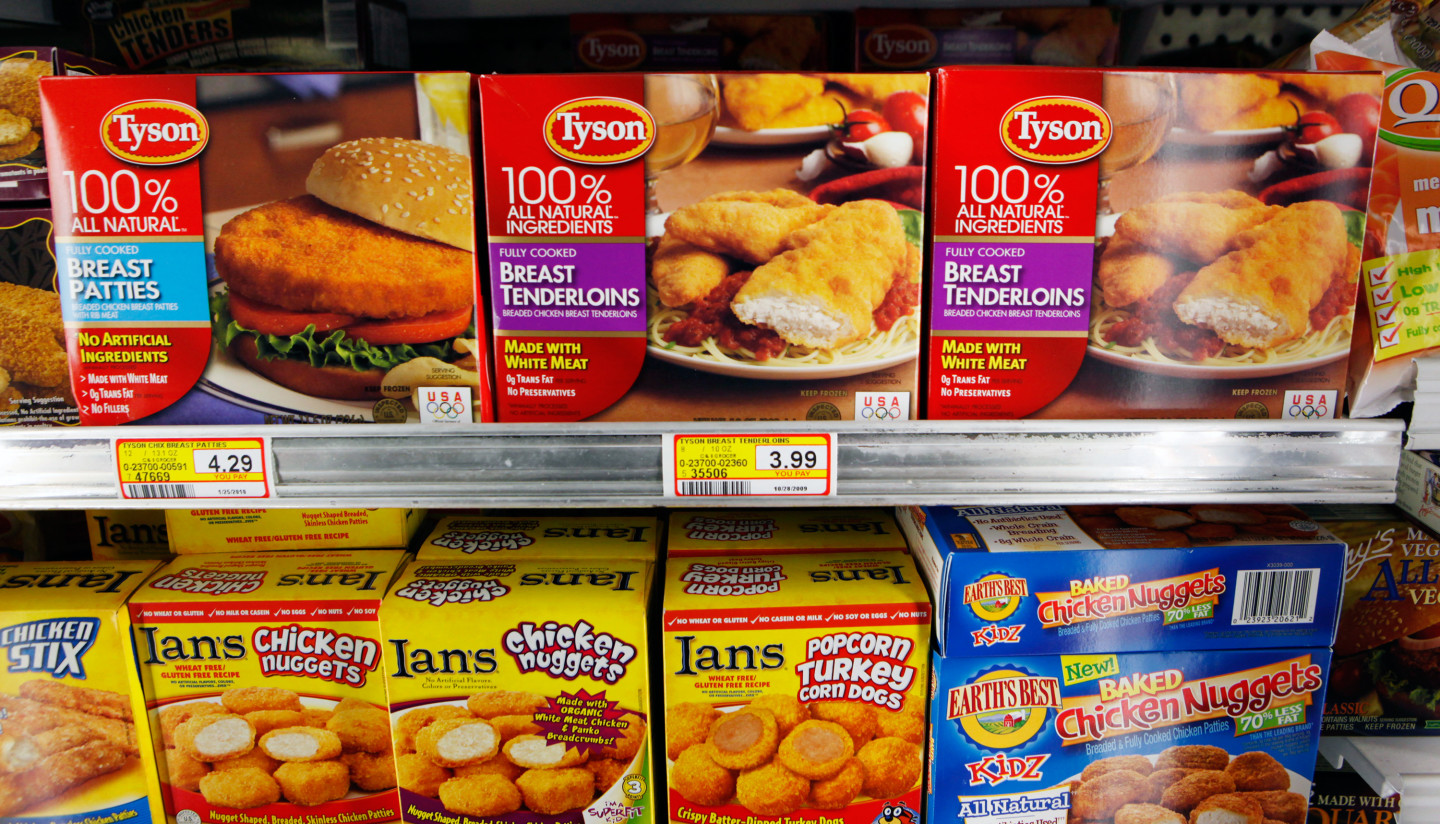
"caption": "Tyson Foods says it has already reduced its use of human-use antibiotics by 80 percent over the past four years. Here, Tyson frozen chicken on display at Piazza's market in Palo Alto, Calif., in 2010. ",
"description": "Tyson Foods says it has already reduced its use of human-use antibiotics by 80 percent over the past four years. Here, Tyson frozen chicken on display at Piazza's market in Palo Alto, Calif., inÂ",
"title": "Tyson Foods says it has already reduced its use of human-use antibiotics by 80 percent over the past four years. Here, Tyson frozen chicken on display at Piazza's market in Palo Alto, Calif., in 2010.",
"credit": "Paul Sakuma/AP ",
"status": "inherit",
"isLoading": false,
"fetchFailed": false
},
"bayareabites_95707": {
"type": "attachments",
"id": "bayareabites_95707",
"meta": {
"index": "attachments_1716263798",
"site": "bayareabites",
"id": "95707",
"found": true
},
"parent": 95706,
"imgSizes": {
"twentyfourteen-full-width": {
"file": "https://ww2.kqed.org/app/uploads/sites/24/2015/04/foodstriptease_wide-9602e49d0c73ad604eba04a2a2753856a2ca2ad9-1038x576.jpg",
"width": 1038,
"mimeType": "image/jpeg",
"height": 576
},
"thumbnail": {
"file": "https://ww2.kqed.org/app/uploads/sites/24/2015/04/foodstriptease_wide-9602e49d0c73ad604eba04a2a2753856a2ca2ad9-400x225.jpg",
"width": 400,
"mimeType": "image/jpeg",
"height": 225
},
"fd-sm": {
"file": "https://ww2.kqed.org/app/uploads/sites/24/2015/04/foodstriptease_wide-9602e49d0c73ad604eba04a2a2753856a2ca2ad9-960x540.jpg",
"width": 960,
"mimeType": "image/jpeg",
"height": 540
},
"post-thumbnail": {
"file": "https://ww2.kqed.org/app/uploads/sites/24/2015/04/foodstriptease_wide-9602e49d0c73ad604eba04a2a2753856a2ca2ad9-672x372.jpg",
"width": 672,
"mimeType": "image/jpeg",
"height": 372
},
"kqedFullSize": {
"file": "https://ww2.kqed.org/app/uploads/sites/24/2015/04/foodstriptease_wide-9602e49d0c73ad604eba04a2a2753856a2ca2ad9.jpg",
"width": 3000,
"height": 1687
},
"large": {
"file": "https://ww2.kqed.org/app/uploads/sites/24/2015/04/foodstriptease_wide-9602e49d0c73ad604eba04a2a2753856a2ca2ad9-1440x810.jpg",
"width": 1440,
"mimeType": "image/jpeg",
"height": 810
},
"guest-author-96": {
"file": "https://ww2.kqed.org/app/uploads/sites/24/2015/04/foodstriptease_wide-9602e49d0c73ad604eba04a2a2753856a2ca2ad9-96x96.jpg",
"width": 96,
"mimeType": "image/jpeg",
"height": 96
},
"medium": {
"file": "https://ww2.kqed.org/app/uploads/sites/24/2015/04/foodstriptease_wide-9602e49d0c73ad604eba04a2a2753856a2ca2ad9-800x450.jpg",
"width": 800,
"mimeType": "image/jpeg",
"height": 450
},
"guest-author-64": {
"file": "https://ww2.kqed.org/app/uploads/sites/24/2015/04/foodstriptease_wide-9602e49d0c73ad604eba04a2a2753856a2ca2ad9-64x64.jpg",
"width": 64,
"mimeType": "image/jpeg",
"height": 64
},
"guest-author-32": {
"file": "https://ww2.kqed.org/app/uploads/sites/24/2015/04/foodstriptease_wide-9602e49d0c73ad604eba04a2a2753856a2ca2ad9-32x32.jpg",
"width": 32,
"mimeType": "image/jpeg",
"height": 32
},
"cat_post_thumb_sizecategory-posts-2": {
"file": "https://ww2.kqed.org/app/uploads/sites/24/2015/04/foodstriptease_wide-9602e49d0c73ad604eba04a2a2753856a2ca2ad9-150x150.jpg",
"width": 150,
"mimeType": "image/jpeg",
"height": 150
},
"fd-med": {
"file": "https://ww2.kqed.org/app/uploads/sites/24/2015/04/foodstriptease_wide-9602e49d0c73ad604eba04a2a2753856a2ca2ad9-1180x664.jpg",
"width": 1180,
"mimeType": "image/jpeg",
"height": 664
},
"detail": {
"file": "https://ww2.kqed.org/app/uploads/sites/24/2015/04/foodstriptease_wide-9602e49d0c73ad604eba04a2a2753856a2ca2ad9-75x75.jpg",
"width": 75,
"mimeType": "image/jpeg",
"height": 75
},
"guest-author-128": {
"file": "https://ww2.kqed.org/app/uploads/sites/24/2015/04/foodstriptease_wide-9602e49d0c73ad604eba04a2a2753856a2ca2ad9-128x128.jpg",
"width": 128,
"mimeType": "image/jpeg",
"height": 128
}
},
"publishDate": 1430173650,
"modified": 1430174716,
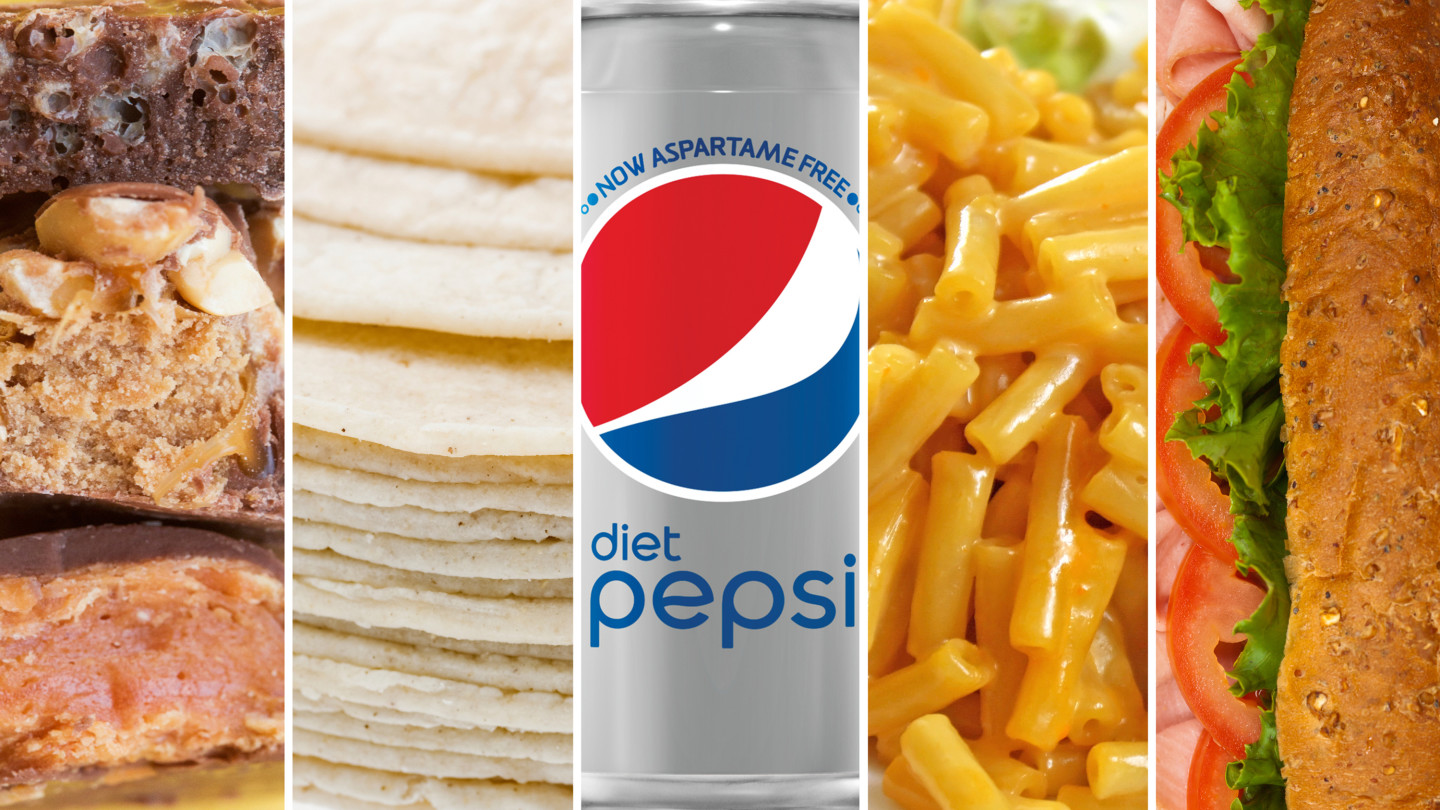
"caption": "Chipotle's announcement that it has removed all GMOs from its menu items is part of a growing food industry trend. From left: Nestle chocolates, Chipotle tortillas, Diet Pepsi, Kraft Macaroni",
"description": "Chipotle's announcement that it has removed all GMOs from its menu items is part of a growing food industry trend. From left: Nestle chocolates, Chipotle tortillas, Diet Pepsi, Kraft Macaroni",
"title": "Chipotle's announcement that it has removed all GMOs from its menu items is part of a growing food industry trend. From left: Nestle chocolates, Chipotle tortillas, Diet Pepsi, Kraft Macaroni & Cheese Dinner, a Subway sandwich. All of these companies have dropped ingredients over the past year in response to consumer demands.",
"credit": "Meredith Rizzo/NPR; iStockphoto; PepsiCo; iStockphoto; iStockphoto",
"status": "inherit",
"isLoading": false,
"fetchFailed": false
},
"bayareabites_95372": {
"type": "attachments",
"id": "bayareabites_95372",
"meta": {
"index": "attachments_1716263798",
"site": "bayareabites",
"id": "95372",
"found": true
},
"parent": 95371,
"imgSizes": {
"twentyfourteen-full-width": {
"file": "https://ww2.kqed.org/app/uploads/sites/24/2015/04/11-courtesy-pollock-krasner-house-and-study-center-east-hampton-ny_custom-d2539b7f582fa4d3e6b42572a60dc5167cd4163c-1038x576.jpg",
"width": 1038,
"mimeType": "image/jpeg",
"height": 576
},
"thumbnail": {
"file": "https://ww2.kqed.org/app/uploads/sites/24/2015/04/11-courtesy-pollock-krasner-house-and-study-center-east-hampton-ny_custom-d2539b7f582fa4d3e6b42572a60dc5167cd4163c-400x288.jpg",
"width": 400,
"mimeType": "image/jpeg",
"height": 288
},
"fd-sm": {
"file": "https://ww2.kqed.org/app/uploads/sites/24/2015/04/11-courtesy-pollock-krasner-house-and-study-center-east-hampton-ny_custom-d2539b7f582fa4d3e6b42572a60dc5167cd4163c-960x691.jpg",
"width": 960,
"mimeType": "image/jpeg",
"height": 691
},
"post-thumbnail": {
"file": "https://ww2.kqed.org/app/uploads/sites/24/2015/04/11-courtesy-pollock-krasner-house-and-study-center-east-hampton-ny_custom-d2539b7f582fa4d3e6b42572a60dc5167cd4163c-672x372.jpg",
"width": 672,
"mimeType": "image/jpeg",
"height": 372
},
"kqedFullSize": {
"file": "https://ww2.kqed.org/app/uploads/sites/24/2015/04/11-courtesy-pollock-krasner-house-and-study-center-east-hampton-ny_custom-d2539b7f582fa4d3e6b42572a60dc5167cd4163c-e1429830641667.jpg",
"width": 1920,
"height": 1382
},
"large": {
"file": "https://ww2.kqed.org/app/uploads/sites/24/2015/04/11-courtesy-pollock-krasner-house-and-study-center-east-hampton-ny_custom-d2539b7f582fa4d3e6b42572a60dc5167cd4163c-1440x1036.jpg",
"width": 1440,
"mimeType": "image/jpeg",
"height": 1036
},
"guest-author-96": {
"file": "https://ww2.kqed.org/app/uploads/sites/24/2015/04/11-courtesy-pollock-krasner-house-and-study-center-east-hampton-ny_custom-d2539b7f582fa4d3e6b42572a60dc5167cd4163c-96x96.jpg",
"width": 96,
"mimeType": "image/jpeg",
"height": 96
},
"medium": {
"file": "https://ww2.kqed.org/app/uploads/sites/24/2015/04/11-courtesy-pollock-krasner-house-and-study-center-east-hampton-ny_custom-d2539b7f582fa4d3e6b42572a60dc5167cd4163c-800x576.jpg",
"width": 800,
"mimeType": "image/jpeg",
"height": 576
},
"guest-author-64": {
"file": "https://ww2.kqed.org/app/uploads/sites/24/2015/04/11-courtesy-pollock-krasner-house-and-study-center-east-hampton-ny_custom-d2539b7f582fa4d3e6b42572a60dc5167cd4163c-64x64.jpg",
"width": 64,
"mimeType": "image/jpeg",
"height": 64
},
"guest-author-32": {
"file": "https://ww2.kqed.org/app/uploads/sites/24/2015/04/11-courtesy-pollock-krasner-house-and-study-center-east-hampton-ny_custom-d2539b7f582fa4d3e6b42572a60dc5167cd4163c-32x32.jpg",
"width": 32,
"mimeType": "image/jpeg",
"height": 32
},
"cat_post_thumb_sizecategory-posts-2": {
"file": "https://ww2.kqed.org/app/uploads/sites/24/2015/04/11-courtesy-pollock-krasner-house-and-study-center-east-hampton-ny_custom-d2539b7f582fa4d3e6b42572a60dc5167cd4163c-150x150.jpg",
"width": 150,
"mimeType": "image/jpeg",
"height": 150
},
"fd-med": {
"file": "https://ww2.kqed.org/app/uploads/sites/24/2015/04/11-courtesy-pollock-krasner-house-and-study-center-east-hampton-ny_custom-d2539b7f582fa4d3e6b42572a60dc5167cd4163c-1180x849.jpg",
"width": 1180,
"mimeType": "image/jpeg",
"height": 849
},
"detail": {
"file": "https://ww2.kqed.org/app/uploads/sites/24/2015/04/11-courtesy-pollock-krasner-house-and-study-center-east-hampton-ny_custom-d2539b7f582fa4d3e6b42572a60dc5167cd4163c-75x75.jpg",
"width": 75,
"mimeType": "image/jpeg",
"height": 75
},
"guest-author-128": {
"file": "https://ww2.kqed.org/app/uploads/sites/24/2015/04/11-courtesy-pollock-krasner-house-and-study-center-east-hampton-ny_custom-d2539b7f582fa4d3e6b42572a60dc5167cd4163c-128x128.jpg",
"width": 128,
"mimeType": "image/jpeg",
"height": 128
}
},
"publishDate": 1429830308,
"modified": 1429830695,
"caption": "Jackson Pollock cooks with his wife, the artist \u003ca href=\"http://www.moma.org/collection/artist.php?artist_id=3240\">Lee Krasner\u003c/a>, and his mother, Stella Pollock, in the kitchen of his home in Springs, in East Hampton, N.Y., 1950",
"description": "Jackson Pollock cooks with his wife, the artist \u003ca href=\"http://www.moma.org/collection/artist.php?artist_id=3240\">Lee Krasner\u003c/a>, and his mother, Stella Pollock, in the kitchen of his home in Springs, in East Hampton, N.Y., 1950",
"title": "Jackson Pollock cooks with his wife, the artist Lee Krasner, and his mother, Stella Pollock, in the kitchen of his home in Springs, in East Hampton, N.Y., 1950.",
"credit": "Courtesy Pollock‑Krasner House and Study Center",
"status": "inherit",
"isLoading": false,
"fetchFailed": false
},
"bayareabites_95351": {
"type": "attachments",
"id": "bayareabites_95351",
"meta": {
"index": "attachments_1716263798",
"site": "bayareabites",
"id": "95351",
"found": true
},
"parent": 95350,
"imgSizes": {
"twentyfourteen-full-width": {
"file": "https://ww2.kqed.org/app/uploads/sites/24/2015/04/13_apis_mellifera_albinandersson_slide-0b76a21c72a9a13a793cca4eee4bdbeaefea4ab5-1038x576.jpg",
"width": 1038,
"mimeType": "image/jpeg",
"height": 576
},
"thumbnail": {
"file": "https://ww2.kqed.org/app/uploads/sites/24/2015/04/13_apis_mellifera_albinandersson_slide-0b76a21c72a9a13a793cca4eee4bdbeaefea4ab5-400x267.jpg",
"width": 400,
"mimeType": "image/jpeg",
"height": 267
},
"fd-sm": {
"file": "https://ww2.kqed.org/app/uploads/sites/24/2015/04/13_apis_mellifera_albinandersson_slide-0b76a21c72a9a13a793cca4eee4bdbeaefea4ab5-960x640.jpg",
"width": 960,
"mimeType": "image/jpeg",
"height": 640
},
"post-thumbnail": {
"file": "https://ww2.kqed.org/app/uploads/sites/24/2015/04/13_apis_mellifera_albinandersson_slide-0b76a21c72a9a13a793cca4eee4bdbeaefea4ab5-672x372.jpg",
"width": 672,
"mimeType": "image/jpeg",
"height": 372
},
"kqedFullSize": {
"file": "https://ww2.kqed.org/app/uploads/sites/24/2015/04/13_apis_mellifera_albinandersson_slide-0b76a21c72a9a13a793cca4eee4bdbeaefea4ab5-e1429817966451.jpg",
"width": 1920,
"height": 1280
},
"large": {
"file": "https://ww2.kqed.org/app/uploads/sites/24/2015/04/13_apis_mellifera_albinandersson_slide-0b76a21c72a9a13a793cca4eee4bdbeaefea4ab5-1440x960.jpg",
"width": 1440,
"mimeType": "image/jpeg",
"height": 960
},
"guest-author-96": {
"file": "https://ww2.kqed.org/app/uploads/sites/24/2015/04/13_apis_mellifera_albinandersson_slide-0b76a21c72a9a13a793cca4eee4bdbeaefea4ab5-96x96.jpg",
"width": 96,
"mimeType": "image/jpeg",
"height": 96
},
"medium": {
"file": "https://ww2.kqed.org/app/uploads/sites/24/2015/04/13_apis_mellifera_albinandersson_slide-0b76a21c72a9a13a793cca4eee4bdbeaefea4ab5-800x533.jpg",
"width": 800,
"mimeType": "image/jpeg",
"height": 533
},
"guest-author-64": {
"file": "https://ww2.kqed.org/app/uploads/sites/24/2015/04/13_apis_mellifera_albinandersson_slide-0b76a21c72a9a13a793cca4eee4bdbeaefea4ab5-64x64.jpg",
"width": 64,
"mimeType": "image/jpeg",
"height": 64
},
"guest-author-32": {
"file": "https://ww2.kqed.org/app/uploads/sites/24/2015/04/13_apis_mellifera_albinandersson_slide-0b76a21c72a9a13a793cca4eee4bdbeaefea4ab5-32x32.jpg",
"width": 32,
"mimeType": "image/jpeg",
"height": 32
},
"cat_post_thumb_sizecategory-posts-2": {
"file": "https://ww2.kqed.org/app/uploads/sites/24/2015/04/13_apis_mellifera_albinandersson_slide-0b76a21c72a9a13a793cca4eee4bdbeaefea4ab5-150x150.jpg",
"width": 150,
"mimeType": "image/jpeg",
"height": 150
},
"fd-med": {
"file": "https://ww2.kqed.org/app/uploads/sites/24/2015/04/13_apis_mellifera_albinandersson_slide-0b76a21c72a9a13a793cca4eee4bdbeaefea4ab5-1180x787.jpg",
"width": 1180,
"mimeType": "image/jpeg",
"height": 787
},
"detail": {
"file": "https://ww2.kqed.org/app/uploads/sites/24/2015/04/13_apis_mellifera_albinandersson_slide-0b76a21c72a9a13a793cca4eee4bdbeaefea4ab5-75x75.jpg",
"width": 75,
"mimeType": "image/jpeg",
"height": 75
},
"guest-author-128": {
"file": "https://ww2.kqed.org/app/uploads/sites/24/2015/04/13_apis_mellifera_albinandersson_slide-0b76a21c72a9a13a793cca4eee4bdbeaefea4ab5-128x128.jpg",
"width": 128,
"mimeType": "image/jpeg",
"height": 128
}
},
"publishDate": 1429817330,
"modified": 1429818124,
"caption": "A honeybee forages for nectar and pollen from an oilseed rape flower",
"description": "A honeybee forages for nectar and pollen from an oilseed rape flower",
"title": "A honeybee forages for nectar and pollen from an oilseed rape flower.",
"credit": "Albin Andersson/Nature ",
"status": "inherit",
"isLoading": false,
"fetchFailed": false
},
"bayareabites_95317": {
"type": "attachments",
"id": "bayareabites_95317",
"meta": {
"index": "attachments_1716263798",
"site": "bayareabites",
"id": "95317",
"found": true
},
"parent": 95316,
"imgSizes": {
"twentyfourteen-full-width": {
"file": "https://ww2.kqed.org/app/uploads/sites/24/2015/04/ap736191657327_custom-404a72ed760da86a84f0173f0ec1c432acfe472e-1038x576.jpg",
"width": 1038,
"mimeType": "image/jpeg",
"height": 576
},
"thumbnail": {
"file": "https://ww2.kqed.org/app/uploads/sites/24/2015/04/ap736191657327_custom-404a72ed760da86a84f0173f0ec1c432acfe472e-400x271.jpg",
"width": 400,
"mimeType": "image/jpeg",
"height": 271
},
"fd-sm": {
"file": "https://ww2.kqed.org/app/uploads/sites/24/2015/04/ap736191657327_custom-404a72ed760da86a84f0173f0ec1c432acfe472e-960x651.jpg",
"width": 960,
"mimeType": "image/jpeg",
"height": 651
},
"post-thumbnail": {
"file": "https://ww2.kqed.org/app/uploads/sites/24/2015/04/ap736191657327_custom-404a72ed760da86a84f0173f0ec1c432acfe472e-672x372.jpg",
"width": 672,
"mimeType": "image/jpeg",
"height": 372
},
"kqedFullSize": {
"file": "https://ww2.kqed.org/app/uploads/sites/24/2015/04/ap736191657327_custom-404a72ed760da86a84f0173f0ec1c432acfe472e-e1429734443477.jpg",
"width": 1920,
"height": 1302
},
"large": {
"file": "https://ww2.kqed.org/app/uploads/sites/24/2015/04/ap736191657327_custom-404a72ed760da86a84f0173f0ec1c432acfe472e-1440x976.jpg",
"width": 1440,
"mimeType": "image/jpeg",
"height": 976
},
"guest-author-96": {
"file": "https://ww2.kqed.org/app/uploads/sites/24/2015/04/ap736191657327_custom-404a72ed760da86a84f0173f0ec1c432acfe472e-96x96.jpg",
"width": 96,
"mimeType": "image/jpeg",
"height": 96
},
"medium": {
"file": "https://ww2.kqed.org/app/uploads/sites/24/2015/04/ap736191657327_custom-404a72ed760da86a84f0173f0ec1c432acfe472e-800x542.jpg",
"width": 800,
"mimeType": "image/jpeg",
"height": 542
},
"guest-author-64": {
"file": "https://ww2.kqed.org/app/uploads/sites/24/2015/04/ap736191657327_custom-404a72ed760da86a84f0173f0ec1c432acfe472e-64x64.jpg",
"width": 64,
"mimeType": "image/jpeg",
"height": 64
},
"guest-author-32": {
"file": "https://ww2.kqed.org/app/uploads/sites/24/2015/04/ap736191657327_custom-404a72ed760da86a84f0173f0ec1c432acfe472e-32x32.jpg",
"width": 32,
"mimeType": "image/jpeg",
"height": 32
},
"cat_post_thumb_sizecategory-posts-2": {
"file": "https://ww2.kqed.org/app/uploads/sites/24/2015/04/ap736191657327_custom-404a72ed760da86a84f0173f0ec1c432acfe472e-150x150.jpg",
"width": 150,
"mimeType": "image/jpeg",
"height": 150
},
"fd-med": {
"file": "https://ww2.kqed.org/app/uploads/sites/24/2015/04/ap736191657327_custom-404a72ed760da86a84f0173f0ec1c432acfe472e-1180x800.jpg",
"width": 1180,
"mimeType": "image/jpeg",
"height": 800
},
"detail": {
"file": "https://ww2.kqed.org/app/uploads/sites/24/2015/04/ap736191657327_custom-404a72ed760da86a84f0173f0ec1c432acfe472e-75x75.jpg",
"width": 75,
"mimeType": "image/jpeg",
"height": 75
},
"guest-author-128": {
"file": "https://ww2.kqed.org/app/uploads/sites/24/2015/04/ap736191657327_custom-404a72ed760da86a84f0173f0ec1c432acfe472e-128x128.jpg",
"width": 128,
"mimeType": "image/jpeg",
"height": 128
}
},
"publishDate": 1429734033,
"modified": 1429734662,
"caption": "Chickens stand in their cages at a farm near Stuart, Iowa, in 2009. This week, bird flu hit a large poultry facility in Iowa. It's not clear how the virus is evading the industry's biosecurity efforts.",
"description": "Chickens stand in their cages at a farm near Stuart, Iowa, in 2009. This week, bird flu hit a large poultry facility in Iowa. It's not clear how the virus is evading the industry's biosecurity efforts",
"title": "Chickens stand in their cages at a farm near Stuart, Iowa, in 2009. This week, bird flu hit a large poultry facility in Iowa. It's not clear how the virus is evading the industry's biosecurity efforts.",
"credit": "Charlie Neibergall/AP",
"status": "inherit",
"isLoading": false,
"fetchFailed": false
},
"bayareabites_95259": {
"type": "attachments",
"id": "bayareabites_95259",
"meta": {
"index": "attachments_1716263798",
"site": "bayareabites",
"id": "95259",
"found": true
},
"parent": 95258,
"imgSizes": {
"twentyfourteen-full-width": {
"file": "https://ww2.kqed.org/app/uploads/sites/24/2015/04/altteahouse-2_enl-5f9032f170d014c53d107cf63de9cce0b2bba7c6-1038x576.jpg",
"width": 1038,
"mimeType": "image/jpeg",
"height": 576
},
"thumbnail": {
"file": "https://ww2.kqed.org/app/uploads/sites/24/2015/04/altteahouse-2_enl-5f9032f170d014c53d107cf63de9cce0b2bba7c6-400x533.jpg",
"width": 400,
"mimeType": "image/jpeg",
"height": 533
},
"fd-sm": {
"file": "https://ww2.kqed.org/app/uploads/sites/24/2015/04/altteahouse-2_enl-5f9032f170d014c53d107cf63de9cce0b2bba7c6-320x427.jpg",
"width": 320,
"mimeType": "image/jpeg",
"height": 427
},
"post-thumbnail": {
"file": "https://ww2.kqed.org/app/uploads/sites/24/2015/04/altteahouse-2_enl-5f9032f170d014c53d107cf63de9cce0b2bba7c6-672x372.jpg",
"width": 672,
"mimeType": "image/jpeg",
"height": 372
},
"kqedFullSize": {
"file": "https://ww2.kqed.org/app/uploads/sites/24/2015/04/altteahouse-2_enl-5f9032f170d014c53d107cf63de9cce0b2bba7c6-e1429642930608.jpg",
"width": 1920,
"height": 2560
},
"large": {
"file": "https://ww2.kqed.org/app/uploads/sites/24/2015/04/altteahouse-2_enl-5f9032f170d014c53d107cf63de9cce0b2bba7c6-1440x1920.jpg",
"width": 1440,
"mimeType": "image/jpeg",
"height": 1920
},
"guest-author-96": {
"file": "https://ww2.kqed.org/app/uploads/sites/24/2015/04/altteahouse-2_enl-5f9032f170d014c53d107cf63de9cce0b2bba7c6-96x96.jpg",
"width": 96,
"mimeType": "image/jpeg",
"height": 96
},
"medium": {
"file": "https://ww2.kqed.org/app/uploads/sites/24/2015/04/altteahouse-2_enl-5f9032f170d014c53d107cf63de9cce0b2bba7c6-800x1067.jpg",
"width": 800,
"mimeType": "image/jpeg",
"height": 1067
},
"guest-author-64": {
"file": "https://ww2.kqed.org/app/uploads/sites/24/2015/04/altteahouse-2_enl-5f9032f170d014c53d107cf63de9cce0b2bba7c6-64x64.jpg",
"width": 64,
"mimeType": "image/jpeg",
"height": 64
},
"guest-author-32": {
"file": "https://ww2.kqed.org/app/uploads/sites/24/2015/04/altteahouse-2_enl-5f9032f170d014c53d107cf63de9cce0b2bba7c6-32x32.jpg",
"width": 32,
"mimeType": "image/jpeg",
"height": 32
},
"cat_post_thumb_sizecategory-posts-2": {
"file": "https://ww2.kqed.org/app/uploads/sites/24/2015/04/altteahouse-2_enl-5f9032f170d014c53d107cf63de9cce0b2bba7c6-150x150.jpg",
"width": 150,
"mimeType": "image/jpeg",
"height": 150
},
"fd-lrg": {
"file": "https://ww2.kqed.org/app/uploads/sites/24/2015/04/altteahouse-2_enl-5f9032f170d014c53d107cf63de9cce0b2bba7c6-1180x1573.jpg",
"width": 1180,
"mimeType": "image/jpeg",
"height": 1573
},
"fd-med": {
"file": "https://ww2.kqed.org/app/uploads/sites/24/2015/04/altteahouse-2_enl-5f9032f170d014c53d107cf63de9cce0b2bba7c6-768x1024.jpg",
"width": 768,
"mimeType": "image/jpeg",
"height": 1024
},
"detail": {
"file": "https://ww2.kqed.org/app/uploads/sites/24/2015/04/altteahouse-2_enl-5f9032f170d014c53d107cf63de9cce0b2bba7c6-75x75.jpg",
"width": 75,
"mimeType": "image/jpeg",
"height": 75
},
"guest-author-128": {
"file": "https://ww2.kqed.org/app/uploads/sites/24/2015/04/altteahouse-2_enl-5f9032f170d014c53d107cf63de9cce0b2bba7c6-128x128.jpg",
"width": 128,
"mimeType": "image/jpeg",
"height": 128
}
},
"publishDate": 1429642193,
"modified": 1429642924,
"caption": "You can get a cup of tea at Cuiyun Palace on the west peak of Mount Hua.",
"description": "You can get a cup of tea at Cuiyun Palace on the west peak of Mount Hua.",
"title": "You can get a cup of tea at Cuiyun Palace on the west peak of Mount Hua.",
"credit": "Courtesy of James Guo",
"status": "inherit",
"isLoading": false,
"fetchFailed": false
},
"bayareabites_95195": {
"type": "attachments",
"id": "bayareabites_95195",
"meta": {
"index": "attachments_1716263798",
"site": "bayareabites",
"id": "95195",
"found": true
},
"parent": 95193,
"imgSizes": {
"thumbnail": {
"file": "https://ww2.kqed.org/app/uploads/sites/24/2015/04/food-companies-investigate-400x225.jpg",
"width": 400,
"mimeType": "image/jpeg",
"height": 225
},
"fd-sm": {
"file": "https://ww2.kqed.org/app/uploads/sites/24/2015/04/food-companies-investigate-320x180.jpg",
"width": 320,
"mimeType": "image/jpeg",
"height": 180
},
"post-thumbnail": {
"file": "https://ww2.kqed.org/app/uploads/sites/24/2015/04/food-companies-investigate-672x372.jpg",
"width": 672,
"mimeType": "image/jpeg",
"height": 372
},
"kqedFullSize": {
"file": "https://ww2.kqed.org/app/uploads/sites/24/2015/04/food-companies-investigate.jpg",
"width": 800,
"height": 449
},
"cat_post_thumb_sizecategory-posts-2": {
"file": "https://ww2.kqed.org/app/uploads/sites/24/2015/04/food-companies-investigate-150x150.jpg",
"width": 150,
"mimeType": "image/jpeg",
"height": 150
},
"fd-med": {
"file": "https://ww2.kqed.org/app/uploads/sites/24/2015/04/food-companies-investigate-768x431.jpg",
"width": 768,
"mimeType": "image/jpeg",
"height": 431
},
"guest-author-96": {
"file": "https://ww2.kqed.org/app/uploads/sites/24/2015/04/food-companies-investigate-96x96.jpg",
"width": 96,
"mimeType": "image/jpeg",
"height": 96
},
"medium": {
"file": "https://ww2.kqed.org/app/uploads/sites/24/2015/04/food-companies-investigate-800x449.jpg",
"width": 800,
"mimeType": "image/jpeg",
"height": 449
},
"guest-author-64": {
"file": "https://ww2.kqed.org/app/uploads/sites/24/2015/04/food-companies-investigate-64x64.jpg",
"width": 64,
"mimeType": "image/jpeg",
"height": 64
},
"detail": {
"file": "https://ww2.kqed.org/app/uploads/sites/24/2015/04/food-companies-investigate-75x75.jpg",
"width": 75,
"mimeType": "image/jpeg",
"height": 75
},
"guest-author-32": {
"file": "https://ww2.kqed.org/app/uploads/sites/24/2015/04/food-companies-investigate-32x32.jpg",
"width": 32,
"mimeType": "image/jpeg",
"height": 32
},
"guest-author-128": {
"file": "https://ww2.kqed.org/app/uploads/sites/24/2015/04/food-companies-investigate-128x128.jpg",
"width": 128,
"mimeType": "image/jpeg",
"height": 128
}
},
"publishDate": 1429339027,
"modified": 1429339060,
"caption": "Food companies can make safety evaluations of their products in secret without ever telling the Food and Drug Administration. ",
"description": null,
"title": "food-companies-investigate",
"credit": "Luciano Lozano/Ikon Images/Corbis ",
"status": "inherit",
"isLoading": false,
"fetchFailed": false
},
"bayareabites_95071": {
"type": "attachments",
"id": "bayareabites_95071",
"meta": {
"index": "attachments_1716263798",
"site": "bayareabites",
"id": "95071",
"found": true
},
"parent": 95070,
"imgSizes": {
"twentyfourteen-full-width": {
"file": "https://ww2.kqed.org/app/uploads/sites/24/2015/04/gettyimages-468840872_wide-6ef5050c0366e42c095bdfb1c47df999a0e4f1d0-1038x576.jpg",
"width": 1038,
"mimeType": "image/jpeg",
"height": 576
},
"thumbnail": {
"file": "https://ww2.kqed.org/app/uploads/sites/24/2015/04/gettyimages-468840872_wide-6ef5050c0366e42c095bdfb1c47df999a0e4f1d0-400x225.jpg",
"width": 400,
"mimeType": "image/jpeg",
"height": 225
},
"fd-sm": {
"file": "https://ww2.kqed.org/app/uploads/sites/24/2015/04/gettyimages-468840872_wide-6ef5050c0366e42c095bdfb1c47df999a0e4f1d0-320x180.jpg",
"width": 320,
"mimeType": "image/jpeg",
"height": 180
},
"post-thumbnail": {
"file": "https://ww2.kqed.org/app/uploads/sites/24/2015/04/gettyimages-468840872_wide-6ef5050c0366e42c095bdfb1c47df999a0e4f1d0-672x372.jpg",
"width": 672,
"mimeType": "image/jpeg",
"height": 372
},
"kqedFullSize": {
"file": "https://ww2.kqed.org/app/uploads/sites/24/2015/04/gettyimages-468840872_wide-6ef5050c0366e42c095bdfb1c47df999a0e4f1d0-e1429115004984.jpg",
"width": 1920,
"height": 1080
},
"large": {
"file": "https://ww2.kqed.org/app/uploads/sites/24/2015/04/gettyimages-468840872_wide-6ef5050c0366e42c095bdfb1c47df999a0e4f1d0-1440x810.jpg",
"width": 1440,
"mimeType": "image/jpeg",
"height": 810
},
"guest-author-96": {
"file": "https://ww2.kqed.org/app/uploads/sites/24/2015/04/gettyimages-468840872_wide-6ef5050c0366e42c095bdfb1c47df999a0e4f1d0-96x96.jpg",
"width": 96,
"mimeType": "image/jpeg",
"height": 96
},
"medium": {
"file": "https://ww2.kqed.org/app/uploads/sites/24/2015/04/gettyimages-468840872_wide-6ef5050c0366e42c095bdfb1c47df999a0e4f1d0-800x450.jpg",
"width": 800,
"mimeType": "image/jpeg",
"height": 450
},
"guest-author-64": {
"file": "https://ww2.kqed.org/app/uploads/sites/24/2015/04/gettyimages-468840872_wide-6ef5050c0366e42c095bdfb1c47df999a0e4f1d0-64x64.jpg",
"width": 64,
"mimeType": "image/jpeg",
"height": 64
},
"guest-author-32": {
"file": "https://ww2.kqed.org/app/uploads/sites/24/2015/04/gettyimages-468840872_wide-6ef5050c0366e42c095bdfb1c47df999a0e4f1d0-32x32.jpg",
"width": 32,
"mimeType": "image/jpeg",
"height": 32
},
"cat_post_thumb_sizecategory-posts-2": {
"file": "https://ww2.kqed.org/app/uploads/sites/24/2015/04/gettyimages-468840872_wide-6ef5050c0366e42c095bdfb1c47df999a0e4f1d0-150x150.jpg",
"width": 150,
"mimeType": "image/jpeg",
"height": 150
},
"fd-lrg": {
"file": "https://ww2.kqed.org/app/uploads/sites/24/2015/04/gettyimages-468840872_wide-6ef5050c0366e42c095bdfb1c47df999a0e4f1d0-1180x664.jpg",
"width": 1180,
"mimeType": "image/jpeg",
"height": 664
},
"fd-med": {
"file": "https://ww2.kqed.org/app/uploads/sites/24/2015/04/gettyimages-468840872_wide-6ef5050c0366e42c095bdfb1c47df999a0e4f1d0-768x432.jpg",
"width": 768,
"mimeType": "image/jpeg",
"height": 432
},
"detail": {
"file": "https://ww2.kqed.org/app/uploads/sites/24/2015/04/gettyimages-468840872_wide-6ef5050c0366e42c095bdfb1c47df999a0e4f1d0-75x75.jpg",
"width": 75,
"mimeType": "image/jpeg",
"height": 75
},
"guest-author-128": {
"file": "https://ww2.kqed.org/app/uploads/sites/24/2015/04/gettyimages-468840872_wide-6ef5050c0366e42c095bdfb1c47df999a0e4f1d0-128x128.jpg",
"width": 128,
"mimeType": "image/jpeg",
"height": 128
}
},
"publishDate": 1429114772,
"modified": 1429115059,
"caption": "Workers pick asparagus in early April at Del Bosque Farms in Firebaugh, Calif. This year, some farmers in the state will get water, others won't, based on when their land was first irrigated.",
"description": "Workers pick asparagus in early April at Del Bosque Farms in Firebaugh, Calif. This year, some farmers in the state will get water, others won't, based on when their land was first irrigated.",
"title": "Workers pick asparagus in early April at Del Bosque Farms in Firebaugh, Calif. This year, some farmers in the state will get water, others won't, based on when their land was first irrigated.",
"credit": "David Paul Morris/Bloomberg/Getty Images ",
"status": "inherit",
"isLoading": false,
"fetchFailed": false
},
"bayareabites_95066": {
"type": "attachments",
"id": "bayareabites_95066",
"meta": {
"index": "attachments_1716263798",
"site": "bayareabites",
"id": "95066",
"found": true
},
"parent": 95065,
"imgSizes": {
"twentyfourteen-full-width": {
"file": "https://ww2.kqed.org/app/uploads/sites/24/2015/04/supermarket-7fc6fbdf105a5ac76089e7bda05eb74fdf06bbb5-1038x576.jpg",
"width": 1038,
"mimeType": "image/jpeg",
"height": 576
},
"thumbnail": {
"file": "https://ww2.kqed.org/app/uploads/sites/24/2015/04/supermarket-7fc6fbdf105a5ac76089e7bda05eb74fdf06bbb5-400x300.jpg",
"width": 400,
"mimeType": "image/jpeg",
"height": 300
},
"fd-sm": {
"file": "https://ww2.kqed.org/app/uploads/sites/24/2015/04/supermarket-7fc6fbdf105a5ac76089e7bda05eb74fdf06bbb5-320x240.jpg",
"width": 320,
"mimeType": "image/jpeg",
"height": 240
},
"post-thumbnail": {
"file": "https://ww2.kqed.org/app/uploads/sites/24/2015/04/supermarket-7fc6fbdf105a5ac76089e7bda05eb74fdf06bbb5-672x372.jpg",
"width": 672,
"mimeType": "image/jpeg",
"height": 372
},
"kqedFullSize": {
"file": "https://ww2.kqed.org/app/uploads/sites/24/2015/04/supermarket-7fc6fbdf105a5ac76089e7bda05eb74fdf06bbb5.jpg",
"width": 4348,
"height": 3261
},
"large": {
"file": "https://ww2.kqed.org/app/uploads/sites/24/2015/04/supermarket-7fc6fbdf105a5ac76089e7bda05eb74fdf06bbb5-1440x1080.jpg",
"width": 1440,
"mimeType": "image/jpeg",
"height": 1080
},
"guest-author-96": {
"file": "https://ww2.kqed.org/app/uploads/sites/24/2015/04/supermarket-7fc6fbdf105a5ac76089e7bda05eb74fdf06bbb5-96x96.jpg",
"width": 96,
"mimeType": "image/jpeg",
"height": 96
},
"medium": {
"file": "https://ww2.kqed.org/app/uploads/sites/24/2015/04/supermarket-7fc6fbdf105a5ac76089e7bda05eb74fdf06bbb5-800x600.jpg",
"width": 800,
"mimeType": "image/jpeg",
"height": 600
},
"guest-author-64": {
"file": "https://ww2.kqed.org/app/uploads/sites/24/2015/04/supermarket-7fc6fbdf105a5ac76089e7bda05eb74fdf06bbb5-64x64.jpg",
"width": 64,
"mimeType": "image/jpeg",
"height": 64
},
"guest-author-32": {
"file": "https://ww2.kqed.org/app/uploads/sites/24/2015/04/supermarket-7fc6fbdf105a5ac76089e7bda05eb74fdf06bbb5-32x32.jpg",
"width": 32,
"mimeType": "image/jpeg",
"height": 32
},
"cat_post_thumb_sizecategory-posts-2": {
"file": "https://ww2.kqed.org/app/uploads/sites/24/2015/04/supermarket-7fc6fbdf105a5ac76089e7bda05eb74fdf06bbb5-150x150.jpg",
"width": 150,
"mimeType": "image/jpeg",
"height": 150
},
"fd-lrg": {
"file": "https://ww2.kqed.org/app/uploads/sites/24/2015/04/supermarket-7fc6fbdf105a5ac76089e7bda05eb74fdf06bbb5-1180x885.jpg",
"width": 1180,
"mimeType": "image/jpeg",
"height": 885
},
"fd-med": {
"file": "https://ww2.kqed.org/app/uploads/sites/24/2015/04/supermarket-7fc6fbdf105a5ac76089e7bda05eb74fdf06bbb5-768x576.jpg",
"width": 768,
"mimeType": "image/jpeg",
"height": 576
},
"detail": {
"file": "https://ww2.kqed.org/app/uploads/sites/24/2015/04/supermarket-7fc6fbdf105a5ac76089e7bda05eb74fdf06bbb5-75x75.jpg",
"width": 75,
"mimeType": "image/jpeg",
"height": 75
},
"guest-author-128": {
"file": "https://ww2.kqed.org/app/uploads/sites/24/2015/04/supermarket-7fc6fbdf105a5ac76089e7bda05eb74fdf06bbb5-128x128.jpg",
"width": 128,
"mimeType": "image/jpeg",
"height": 128
}
},
"publishDate": 1429055422,
"modified": 1429055469,
"caption": "Food is displayed on shelves at a grocery store in 2014 in Miami, Fla. Advocacy groups say they're concerned that Americans are consuming foods with added flavors, preservatives and other ingredients that have never been reviewed by regulators for immediate dangers or long-term health effects.",
"description": "Food is displayed on shelves at a grocery store in 2014 in Miami, Fla. Advocacy groups say they're concerned that Americans are consuming foods with added flavors, preservatives and other ingredients that have never been reviewed by regulators for immediate dangers or long-term health effec",
"title": "Food is displayed on shelves at a grocery store in 2014 in Miami, Fla. Advocacy groups say they're concerned that Americans are consuming foods with added flavors, preservatives and other ingredients that have never been reviewed by regulators for immediate dangers or long-term health effects.",
"credit": "Joe Raedle/Getty Images",
"status": "inherit",
"isLoading": false,
"fetchFailed": false
},
"bayareabites_95040": {
"type": "attachments",
"id": "bayareabites_95040",
"meta": {
"index": "attachments_1716263798",
"site": "bayareabites",
"id": "95040",
"found": true
},
"parent": 95039,
"imgSizes": {
"twentyfourteen-full-width": {
"file": "https://ww2.kqed.org/app/uploads/sites/24/2015/04/mugs_edit_wide-0f784983c24be3f9bd3ad37f84ad87ffa80aaca9-1038x576.jpg",
"width": 1038,
"mimeType": "image/jpeg",
"height": 576
},
"thumbnail": {
"file": "https://ww2.kqed.org/app/uploads/sites/24/2015/04/mugs_edit_wide-0f784983c24be3f9bd3ad37f84ad87ffa80aaca9-400x225.jpg",
"width": 400,
"mimeType": "image/jpeg",
"height": 225
},
"fd-sm": {
"file": "https://ww2.kqed.org/app/uploads/sites/24/2015/04/mugs_edit_wide-0f784983c24be3f9bd3ad37f84ad87ffa80aaca9-320x180.jpg",
"width": 320,
"mimeType": "image/jpeg",
"height": 180
},
"post-thumbnail": {
"file": "https://ww2.kqed.org/app/uploads/sites/24/2015/04/mugs_edit_wide-0f784983c24be3f9bd3ad37f84ad87ffa80aaca9-672x372.jpg",
"width": 672,
"mimeType": "image/jpeg",
"height": 372
},
"kqedFullSize": {
"file": "https://ww2.kqed.org/app/uploads/sites/24/2015/04/mugs_edit_wide-0f784983c24be3f9bd3ad37f84ad87ffa80aaca9-e1428947528449.jpg",
"width": 1920,
"height": 1080
},
"large": {
"file": "https://ww2.kqed.org/app/uploads/sites/24/2015/04/mugs_edit_wide-0f784983c24be3f9bd3ad37f84ad87ffa80aaca9-1440x810.jpg",
"width": 1440,
"mimeType": "image/jpeg",
"height": 810
},
"guest-author-96": {
"file": "https://ww2.kqed.org/app/uploads/sites/24/2015/04/mugs_edit_wide-0f784983c24be3f9bd3ad37f84ad87ffa80aaca9-96x96.jpg",
"width": 96,
"mimeType": "image/jpeg",
"height": 96
},
"medium": {
"file": "https://ww2.kqed.org/app/uploads/sites/24/2015/04/mugs_edit_wide-0f784983c24be3f9bd3ad37f84ad87ffa80aaca9-800x450.jpg",
"width": 800,
"mimeType": "image/jpeg",
"height": 450
},
"guest-author-64": {
"file": "https://ww2.kqed.org/app/uploads/sites/24/2015/04/mugs_edit_wide-0f784983c24be3f9bd3ad37f84ad87ffa80aaca9-64x64.jpg",
"width": 64,
"mimeType": "image/jpeg",
"height": 64
},
"guest-author-32": {
"file": "https://ww2.kqed.org/app/uploads/sites/24/2015/04/mugs_edit_wide-0f784983c24be3f9bd3ad37f84ad87ffa80aaca9-32x32.jpg",
"width": 32,
"mimeType": "image/jpeg",
"height": 32
},
"cat_post_thumb_sizecategory-posts-2": {
"file": "https://ww2.kqed.org/app/uploads/sites/24/2015/04/mugs_edit_wide-0f784983c24be3f9bd3ad37f84ad87ffa80aaca9-150x150.jpg",
"width": 150,
"mimeType": "image/jpeg",
"height": 150
},
"fd-lrg": {
"file": "https://ww2.kqed.org/app/uploads/sites/24/2015/04/mugs_edit_wide-0f784983c24be3f9bd3ad37f84ad87ffa80aaca9-1180x664.jpg",
"width": 1180,
"mimeType": "image/jpeg",
"height": 664
},
"fd-med": {
"file": "https://ww2.kqed.org/app/uploads/sites/24/2015/04/mugs_edit_wide-0f784983c24be3f9bd3ad37f84ad87ffa80aaca9-768x432.jpg",
"width": 768,
"mimeType": "image/jpeg",
"height": 432
},
"detail": {
"file": "https://ww2.kqed.org/app/uploads/sites/24/2015/04/mugs_edit_wide-0f784983c24be3f9bd3ad37f84ad87ffa80aaca9-75x75.jpg",
"width": 75,
"mimeType": "image/jpeg",
"height": 75
},
"guest-author-128": {
"file": "https://ww2.kqed.org/app/uploads/sites/24/2015/04/mugs_edit_wide-0f784983c24be3f9bd3ad37f84ad87ffa80aaca9-128x128.jpg",
"width": 128,
"mimeType": "image/jpeg",
"height": 128
}
},
"publishDate": 1428947292,
"modified": 1428947586,
"caption": "Almonds, cows, and consumers have all been named as leading culprits in California's water crisis.",
"description": "Almonds, cows, and consumers have all been named as leading culprits in California's water crisis.",
"title": "Almonds, cows, and consumers have all been named as leading culprits in California's water crisis.",
"credit": "Leif Parsons for NPR ",
"status": "inherit",
"isLoading": false,
"fetchFailed": false
},
"bayareabites_94896": {
"type": "attachments",
"id": "bayareabites_94896",
"meta": {
"index": "attachments_1716263798",
"site": "bayareabites",
"id": "94896",
"found": true
},
"parent": 94894,
"imgSizes": {
"thumbnail": {
"file": "https://ww2.kqed.org/app/uploads/sites/24/2015/04/sodawarninglabel_text_custom-cb5e17ac9624526a3d89d7d670997ed79ee367e6-400x114.jpg",
"width": 400,
"mimeType": "image/jpeg",
"height": 114
},
"fd-sm": {
"file": "https://ww2.kqed.org/app/uploads/sites/24/2015/04/sodawarninglabel_text_custom-cb5e17ac9624526a3d89d7d670997ed79ee367e6-320x91.jpg",
"width": 320,
"mimeType": "image/jpeg",
"height": 91
},
"post-thumbnail": {
"file": "https://ww2.kqed.org/app/uploads/sites/24/2015/04/sodawarninglabel_text_custom-cb5e17ac9624526a3d89d7d670997ed79ee367e6-672x279.jpg",
"width": 672,
"mimeType": "image/jpeg",
"height": 279
},
"kqedFullSize": {
"file": "https://ww2.kqed.org/app/uploads/sites/24/2015/04/sodawarninglabel_text_custom-cb5e17ac9624526a3d89d7d670997ed79ee367e6.jpg",
"width": 978,
"height": 279
},
"cat_post_thumb_sizecategory-posts-2": {
"file": "https://ww2.kqed.org/app/uploads/sites/24/2015/04/sodawarninglabel_text_custom-cb5e17ac9624526a3d89d7d670997ed79ee367e6-150x150.jpg",
"width": 150,
"mimeType": "image/jpeg",
"height": 150
},
"fd-med": {
"file": "https://ww2.kqed.org/app/uploads/sites/24/2015/04/sodawarninglabel_text_custom-cb5e17ac9624526a3d89d7d670997ed79ee367e6-768x219.jpg",
"width": 768,
"mimeType": "image/jpeg",
"height": 219
},
"guest-author-96": {
"file": "https://ww2.kqed.org/app/uploads/sites/24/2015/04/sodawarninglabel_text_custom-cb5e17ac9624526a3d89d7d670997ed79ee367e6-96x96.jpg",
"width": 96,
"mimeType": "image/jpeg",
"height": 96
},
"medium": {
"file": "https://ww2.kqed.org/app/uploads/sites/24/2015/04/sodawarninglabel_text_custom-cb5e17ac9624526a3d89d7d670997ed79ee367e6-800x228.jpg",
"width": 800,
"mimeType": "image/jpeg",
"height": 228
},
"guest-author-64": {
"file": "https://ww2.kqed.org/app/uploads/sites/24/2015/04/sodawarninglabel_text_custom-cb5e17ac9624526a3d89d7d670997ed79ee367e6-64x64.jpg",
"width": 64,
"mimeType": "image/jpeg",
"height": 64
},
"detail": {
"file": "https://ww2.kqed.org/app/uploads/sites/24/2015/04/sodawarninglabel_text_custom-cb5e17ac9624526a3d89d7d670997ed79ee367e6-75x75.jpg",
"width": 75,
"mimeType": "image/jpeg",
"height": 75
},
"guest-author-32": {
"file": "https://ww2.kqed.org/app/uploads/sites/24/2015/04/sodawarninglabel_text_custom-cb5e17ac9624526a3d89d7d670997ed79ee367e6-32x32.jpg",
"width": 32,
"mimeType": "image/jpeg",
"height": 32
},
"guest-author-128": {
"file": "https://ww2.kqed.org/app/uploads/sites/24/2015/04/sodawarninglabel_text_custom-cb5e17ac9624526a3d89d7d670997ed79ee367e6-128x128.jpg",
"width": 128,
"mimeType": "image/jpeg",
"height": 128
}
},
"publishDate": 1428631766,
"modified": 1428632890,
"caption": "STATE OF CALIFORNIA SAFETY WARNING: Drinking beverages with added sugar(s) contributes to obesity, diabetes, and tooth decay.",
"description": "STATE OF CALIFORNIA SAFETY WARNING: Drinking beverages with added sugar(s) contributes to obesity, diabetes, and tooth decay.",
"title": "STATE OF CALIFORNIA SAFETY WARNING: Drinking beverages with added sugar(s) contributes to obesity, diabetes, and tooth decay.",
"credit": "California Center For Public Health Advocacy",
"status": "inherit",
"isLoading": false,
"fetchFailed": false
},
"bayareabites_94784": {
"type": "attachments",
"id": "bayareabites_94784",
"meta": {
"index": "attachments_1716263798",
"site": "bayareabites",
"id": "94784",
"found": true
},
"parent": 94763,
"imgSizes": {
"twentyfourteen-full-width": {
"file": "https://ww2.kqed.org/app/uploads/sites/24/2015/04/tea-hindu-servant-800x576.jpg",
"width": 800,
"mimeType": "image/jpeg",
"height": 576
},
"thumbnail": {
"file": "https://ww2.kqed.org/app/uploads/sites/24/2015/04/tea-hindu-servant-400x298.jpg",
"width": 400,
"mimeType": "image/jpeg",
"height": 298
},
"fd-sm": {
"file": "https://ww2.kqed.org/app/uploads/sites/24/2015/04/tea-hindu-servant-320x238.jpg",
"width": 320,
"mimeType": "image/jpeg",
"height": 238
},
"post-thumbnail": {
"file": "https://ww2.kqed.org/app/uploads/sites/24/2015/04/tea-hindu-servant-672x372.jpg",
"width": 672,
"mimeType": "image/jpeg",
"height": 372
},
"kqedFullSize": {
"file": "https://ww2.kqed.org/app/uploads/sites/24/2015/04/tea-hindu-servant.jpg",
"width": 800,
"height": 596
},
"guest-author-96": {
"file": "https://ww2.kqed.org/app/uploads/sites/24/2015/04/tea-hindu-servant-96x96.jpg",
"width": 96,
"mimeType": "image/jpeg",
"height": 96
},
"medium": {
"file": "https://ww2.kqed.org/app/uploads/sites/24/2015/04/tea-hindu-servant-800x596.jpg",
"width": 800,
"mimeType": "image/jpeg",
"height": 596
},
"guest-author-64": {
"file": "https://ww2.kqed.org/app/uploads/sites/24/2015/04/tea-hindu-servant-64x64.jpg",
"width": 64,
"mimeType": "image/jpeg",
"height": 64
},
"guest-author-32": {
"file": "https://ww2.kqed.org/app/uploads/sites/24/2015/04/tea-hindu-servant-32x32.jpg",
"width": 32,
"mimeType": "image/jpeg",
"height": 32
},
"cat_post_thumb_sizecategory-posts-2": {
"file": "https://ww2.kqed.org/app/uploads/sites/24/2015/04/tea-hindu-servant-150x150.jpg",
"width": 150,
"mimeType": "image/jpeg",
"height": 150
},
"fd-med": {
"file": "https://ww2.kqed.org/app/uploads/sites/24/2015/04/tea-hindu-servant-768x572.jpg",
"width": 768,
"mimeType": "image/jpeg",
"height": 572
},
"detail": {
"file": "https://ww2.kqed.org/app/uploads/sites/24/2015/04/tea-hindu-servant-75x75.jpg",
"width": 75,
"mimeType": "image/jpeg",
"height": 75
},
"guest-author-128": {
"file": "https://ww2.kqed.org/app/uploads/sites/24/2015/04/tea-hindu-servant-128x128.jpg",
"width": 128,
"mimeType": "image/jpeg",
"height": 128
}
},
"publishDate": 1428463968,
"modified": 1428463987,
"caption": "A Hindu servant serves tea to a European colonial woman in the early 20th century. The British habit of adding tea to sugar wasn't merely a matter of taste: It also helped steer the course of history.",
"description": null,
"title": "tea-hindu-servant",
"credit": "Corbis/Underwood & Underwood",
"status": "inherit",
"isLoading": false,
"fetchFailed": false
}
},
"audioPlayerReducer": {
"postId": "stream_live",
"isPaused": true,
"isPlaying": false,
"pfsActive": false,
"pledgeModalIsOpen": true,
"playerDrawerIsOpen": false,
"liveAudioPlayStartedAt": 0,
"liveAudioPlayContext": ""
},
"authorsReducer": {
"byline_bayareabites_95748": {
"type": "authors",
"id": "byline_bayareabites_95748",
"meta": {
"override": true
},
"slug": "byline_bayareabites_95748",
"name": "Dan Charles, \u003ca href=\"http://ww2.kqed.org/bayareabites/author/nprfood/\">NPR Food\u003c/a>",
"isLoading": false
},
"byline_bayareabites_95706": {
"type": "authors",
"id": "byline_bayareabites_95706",
"meta": {
"override": true
},
"slug": "byline_bayareabites_95706",
"name": "Carole Zimmer, \u003ca href=\"http://ww2.kqed.org/bayareabites/author/nprfood/\">NPR Food\u003c/a>",
"isLoading": false
},
"byline_bayareabites_95371": {
"type": "authors",
"id": "byline_bayareabites_95371",
"meta": {
"override": true
},
"slug": "byline_bayareabites_95371",
"name": "Tove Danovich, \u003ca href=\"http://ww2.kqed.org/bayareabites/author/nprfood/\">NPR Food\u003c/a>",
"isLoading": false
},
"byline_bayareabites_95350": {
"type": "authors",
"id": "byline_bayareabites_95350",
"meta": {
"override": true
},
"slug": "byline_bayareabites_95350",
"name": "Allison Aubrey, \u003ca href=\"http://ww2.kqed.org/bayareabites/author/nprfood/\">NPR Food\u003c/a>",
"isLoading": false
},
"byline_bayareabites_95316": {
"type": "authors",
"id": "byline_bayareabites_95316",
"meta": {
"override": true
},
"slug": "byline_bayareabites_95316",
"name": "Dan Charles, \u003ca href=\"http://ww2.kqed.org/bayareabites/author/nprfood/\">NPR Food\u003c/a>",
"isLoading": false
},
"byline_bayareabites_95258": {
"type": "authors",
"id": "byline_bayareabites_95258",
"meta": {
"override": true
},
"slug": "byline_bayareabites_95258",
"name": "Laurel Dalrymple, \u003ca href=\"http://ww2.kqed.org/bayareabites/author/nprfood/\">NPR Food\u003c/a>",
"isLoading": false
},
"byline_bayareabites_95070": {
"type": "authors",
"id": "byline_bayareabites_95070",
"meta": {
"override": true
},
"slug": "byline_bayareabites_95070",
"name": "Dan Charles",
"isLoading": false
},
"byline_bayareabites_95039": {
"type": "authors",
"id": "byline_bayareabites_95039",
"meta": {
"override": true
},
"slug": "byline_bayareabites_95039",
"name": "Dan Charles, \u003ca href=\"http://ww2.kqed.org/bayareabites/author/nprfood/\">NPR Food\u003c/a>",
"isLoading": false
},
"byline_bayareabites_94894": {
"type": "authors",
"id": "byline_bayareabites_94894",
"meta": {
"override": true
},
"slug": "byline_bayareabites_94894",
"name": "Poncie Rutsch",
"isLoading": false
},
"byline_bayareabites_94763": {
"type": "authors",
"id": "byline_bayareabites_94763",
"meta": {
"override": true
},
"slug": "byline_bayareabites_94763",
"name": "Maria Godoy",
"isLoading": false
},
"nprfood": {
"type": "authors",
"id": "5403",
"meta": {
"index": "authors_1716337520",
"id": "5403",
"found": true
},
"name": "NPR Food",
"firstName": "NPR Food",
"lastName": null,
"slug": "nprfood",
"email": "nprfood@kqed.org",
"display_author_email": false,
"staff_mastheads": [],
"title": null,
"bio": "Food and Health-related stories from NPR including NPR Radio; NPR's food blog, \"The Salt\"; NPR's Health News blog, \"Shots\"; NPR's Breaking News blog \"The Two-Way\"; NPR's global stories blog \"Goats and Soda,\" NPR's economy explainer \"Planet Money\"; food-related technology news from NPR's \"All Tech Considered\"; and food series \"Kitchen Window.\"",
"avatar": "https://secure.gravatar.com/avatar/c4b735bb26404fa18ce2447d32e64291?s=600&d=blank&r=g",
"twitter": "nprfood",
"facebook": null,
"instagram": null,
"linkedin": null,
"sites": [
{
"site": "bayareabites",
"roles": [
"contributor"
]
},
{
"site": "food",
"roles": [
"contributor"
]
}
],
"headData": {
"title": "NPR Food | KQED",
"description": null,
"ogImgSrc": "https://secure.gravatar.com/avatar/c4b735bb26404fa18ce2447d32e64291?s=600&d=blank&r=g",
"twImgSrc": "https://secure.gravatar.com/avatar/c4b735bb26404fa18ce2447d32e64291?s=600&d=blank&r=g"
},
"isLoading": false,
"link": "/author/nprfood"
}
},
"pagesReducer": {
"bayareabites_category_npr-food": {
"type": "terms",
"id": "bayareabites_10916",
"meta": {
"index": "terms_1716263798",
"site": "bayareabites",
"id": "10916",
"score": 13.894751
},
"featImg": null,
"name": "NPR food",
"description": null,
"taxonomy": "category",
"headData": {
"twImgId": null,
"twTitle": null,
"ogTitle": null,
"ogImgId": null,
"twDescription": null,
"description": null,
"title": "NPR food Archives | KQED Bay Area Bites",
"ogDescription": null
},
"ttid": 5375,
"slug": "npr-food",
"isLoading": false,
"title": "NPR food",
"pageMeta": {
"site": "bayareabites",
"WpPageTemplate": "page-topic-editorial",
"currentPage": 24
},
"blocks": [
{
"blockName": "kqed/post-list",
"attrs": {
"layout": "cardArticle2",
"query": "posts/bayareabites?category=npr-food",
"seeMore": false,
"paginated": true,
"page": 24
}
},
{
"blockName": "kqed/ad"
}
]
}
},
"pfsSessionReducer": {},
"postsReducer": {
"stream_live": {
"type": "live",
"id": "stream_live",
"audioUrl": "https://hls.kqed.org/hls/kqed_app/playlist.m3u8",
"title": "Live Stream",
"excerpt": "Live Stream information currently unavailable.",
"link": "/radio",
"featImg": "",
"label": {
"name": "KQED Live",
"link": "/"
}
},
"stream_kqedNewscast": {
"type": "posts",
"id": "stream_kqedNewscast",
"audioUrl": "https://www.kqed.org/.stream/anon/radio/RDnews/newscast.mp3?_=1",
"title": "KQED Newscast",
"featImg": "",
"label": {
"name": "88.5 FM",
"link": "/"
}
},
"bayareabites_95748": {
"type": "posts",
"id": "bayareabites_95748",
"meta": {
"index": "posts_1716263798",
"site": "bayareabites",
"id": "95748",
"score": null,
"sort": [
1430243431000
]
},
"parent": 0,
"labelTerm": {
"site": "bayareabites"
},
"blocks": [],
"publishDate": 1430243431,
"format": "audio",
"disqusTitle": "Tyson Foods To Stop Giving Chickens Antibiotics Used By Humans",
"title": "Tyson Foods To Stop Giving Chickens Antibiotics Used By Humans",
"headTitle": "Bay Area Bites | KQED Food",
"content": "\u003cp>\u003cstrong>Listen to the Story on Morning Edition:\u003c/strong>\u003cbr>\nhttp://pd.npr.org/anon.npr-mp3/npr/me/2015/04/20150428_me_tyson_foods_to_stop_giving_chickens_human-used_antibiotics.mp3\u003c/p>\n\u003cp>Tyson Foods, the country's biggest poultry producer, is promising to stop feeding its chickens any antibiotics that are used in human medicine.\u003c/p>\n\u003cp>It's the most dramatic sign so far of a major shift by the poultry industry. The speed with which chicken producers have turned away from antibiotics, in fact, has surprised some of the industry's longtime critics.\u003c/p>\n\u003cp>For decades, the farmers who raise chickens, pigs and cattle have used antibiotics as part of a formula for growing more animals, and growing them more cheaply.\u003c/p>\n\u003cp>But that practice has become controversial, because the more frequently such drugs are used, the more quickly bacteria evolve resistance to them. There are fears that antibiotic resistance could be migrating from bacteria in farm animals to bacteria that infect people — and that those infections are then more difficult to treat.\u003c/p>\n\u003cp>[ad fullwidth]\u003c/p>\n\u003cp>The poultry industry now appears ready to change course.\u003c/p>\n\u003cp>Over the past year, major companies such as \u003ca href=\"http://www.npr.org/blogs/thesalt/2014/09/03/345315380/perdue-says-its-hatching-chicks-are-off-antibiotics\">Perdue\u003c/a> and \u003ca href=\"http://www.wsj.com/articles/pilgrims-expects-25-of-its-chicken-will-be-antibiotic-free-by-2019-1429564675\">Pilgrim's Pride\u003c/a> have announced significant cuts in antibiotic use.\u003c/p>\n\u003cp>Now Tyson Foods, the biggest of them all, \u003ca href=\"http://www.tysonfoods.com/Media/News-Releases/2015/04/Antibiotics-Announcement.aspx\">has announced\u003c/a> its own plan. Donnie Smith, Tyson's CEO, says that by September 2017, the company expects to eliminate the use of all antibiotics that also are used in human medicine.\u003c/p>\n\u003cp>Tyson still will use a class of antibiotics called ionophores that are not used to treat humans. If bacteria develop resistance to ionophores, doctors don't care, because they never use ionophores anyway.\u003c/p>\n\u003cp>Smith pointed out that Tyson is not promising to never ever use a human antibiotic. \"What we're saying is, we don't believe that we're going to need to. But we're not going to let chickens suffer,\" he says.\u003c/p>\n\u003cp>If the company does resort to using a human antibiotic, though, it will report that use publicly, Smith says.\u003c/p>\n\u003cp>According to Smith, Tyson already has reduced its use of human-use antibiotics by 80 percent over the past four years. More than 90 percent of its chickens, in fact, now do not receive any human-use antibiotics at any point in their lives.\u003c/p>\n\u003cp>The timetable and details of Tyson's plans echoed those of \u003ca href=\"http://news.mcdonalds.com/Corporate/news-stories/McDonald-s-USA-Announces-New-Antibiotics-Policy-an\">McDonald's\u003c/a>, which announced last month that within two years, its U.S. restaurants will not serve chicken from birds that have been treated with medically important antibiotics. Tyson Foods is a major supplier for McDonald's.\u003c/p>\n\u003cp>\u003ca href=\"http://www.pewtrusts.org/en/about/experts/gail-hansen\">Gail Hansen\u003c/a>, a longtime critic of antibiotic use with the Pew Charitable Trust's Antibiotic Resistance Project, called the announcement a really big deal. \"Tyson is the big chicken producer,\" she said. \"Lots and lots of folks are saying that they want to go to fewer and fewer antibiotics, and Tyson is saying, 'We're with you. We're going there, too.' So this is huge.\"\u003c/p>\n\u003cp>On the same day that Tyson released its plans, Hansen's group announced its own \u003ca href=\"http://certifiedresponsibleantibiotics.org/\">initiative\u003c/a> to promote antibiotic-free chicken. It's a new certification for chicken, developed in collaboration with the U.S. Department of Agriculture and a group called \u003ca href=\"http://www.schoolfoodfocus.org/\">School Food Focus\u003c/a>. Auditors will verify that meat that receives this certification came from chickens that never were treated with medically relevant antibiotics, except when the birds were sick and needed treatment.\u003c/p>\n\u003cp>Other critics of antibiotic use also welcomed the announcement and called on other meat producers to follow the poultry industry's example. \"Why are the turkey, pork and beef industries lagging so far behind?\" asked Steve Roach, with a campaign called \u003ca href=\"http://www.keepantibioticsworking.com/\">Keep Antibiotics Working\u003c/a>, in a statement emailed to reporters.\u003c/p>\n\u003cp>\u003ca href=\"http://publichealth.gwu.edu/faculty/index.cfm?employeeID=907\">Lance Price\u003c/a>, a microbiologist and director of the recently launched Antibiotic Resistance Action Center at George Washington University, echoed the call for other producers to limit antibiotic use: \"The sooner we implement sound strategies to curb all unnecessary antibiotic use in every food-animal sector, the sooner we can protect public health from the looming threat of antibiotic-resistant bacteria.\" \u003c/p>\n\u003cp>\u003c/p>\n\u003cp>\u003cem>Copyright 2015 \u003ca href=\"http://www.npr.org/\" target=\"_blank\">NPR\u003c/a>.\u003c/em> \u003c/p>\n\n",
"disqusIdentifier": "95748 http://ww2.kqed.org/bayareabites/?p=95748",
"disqusUrl": "https://ww2.kqed.org/bayareabites/2015/04/28/tyson-foods-to-stop-giving-chickens-antibiotics-used-by-humans/",
"stats": {
"hasVideo": false,
"hasChartOrMap": false,
"hasAudio": false,
"hasPolis": false,
"wordCount": 671,
"hasGoogleForm": false,
"hasGallery": false,
"hasHearkenModule": false,
"iframeSrcs": [],
"paragraphCount": 20
},
"modified": 1430243431,
"excerpt": "Antibiotic use is falling out of fashion in the poultry industry. Tyson Foods, the biggest poultry producer in the U.S., says it will stop feeding its birds human-use antibiotics in two years.",
"headData": {
"twImgId": "",
"twTitle": "",
"ogTitle": "",
"ogImgId": "",
"twDescription": "",
"description": "Antibiotic use is falling out of fashion in the poultry industry. Tyson Foods, the biggest poultry producer in the U.S., says it will stop feeding its birds human-use antibiotics in two years.",
"title": "Tyson Foods To Stop Giving Chickens Antibiotics Used By Humans | KQED",
"ogDescription": "",
"schema": {
"@context": "https://schema.org",
"@type": "Article",
"headline": "Tyson Foods To Stop Giving Chickens Antibiotics Used By Humans",
"datePublished": "2015-04-28T10:50:31-07:00",
"dateModified": "2015-04-28T10:50:31-07:00",
"image": "https://cdn.kqed.org/wp-content/uploads/2020/02/KQED-OG-Image@1x.png"
}
},
"guestAuthors": [],
"slug": "tyson-foods-to-stop-giving-chickens-antibiotics-used-by-humans",
"status": "publish",
"nprApiLink": "http://api.npr.org/query?id=402736017&apiKey=MDAxOTAwOTE4MDEyMTkxMDAzNjczZDljZA004",
"nprByline": "Dan Charles, \u003ca href=\"http://ww2.kqed.org/bayareabites/author/nprfood/\">NPR Food\u003c/a>",
"nprStoryDate": "Tue, 28 Apr 2015 05:15:00 -0400",
"nprLastModifiedDate": "Tue, 28 Apr 2015 12:16:43 -0400",
"nprHtmlLink": "http://www.npr.org/blogs/thesalt/2015/04/28/402736017/tyson-foods-to-stop-giving-chickens-human-used-antibiotics?ft=nprml&f=402736017",
"nprAudio": "http://pd.npr.org/anon.npr-mp3/npr/me/2015/04/20150428_me_tyson_foods_to_stop_giving_chickens_human-used_antibiotics.mp3?orgId=1&topicId=1053&e=402736017&d=109&ft=nprml&f=402736017",
"nprAudioM3u": "http://api.npr.org/m3u/1402736018-8c97ee.m3u?orgId=1&topicId=1053&e=402736017&d=109&ft=nprml&f=402736017",
"nprStoryId": "402736017",
"nprRetrievedStory": "1",
"nprPubDate": "Tue, 28 Apr 2015 12:16:00 -0400",
"path": "/bayareabites/95748/tyson-foods-to-stop-giving-chickens-antibiotics-used-by-humans",
"audioUrl": "http://pd.npr.org/anon.npr-mp3/npr/me/2015/04/20150428_me_tyson_foods_to_stop_giving_chickens_human-used_antibiotics.mp3?orgId=1&topicId=1053&e=402736017&d=109&ft=nprml&f=402736017",
"audioTrackLength": null,
"parsedContent": [
{
"type": "contentString",
"content": "\u003cdiv class=\"post-body\">\u003cp>\u003cp>\u003cstrong>Listen to the Story on Morning Edition:\u003c/strong>\u003cbr>\nhttp://pd.npr.org/anon.npr-mp3/npr/me/2015/04/20150428_me_tyson_foods_to_stop_giving_chickens_human-used_antibiotics.mp3\u003c/p>\n\u003cp>Tyson Foods, the country's biggest poultry producer, is promising to stop feeding its chickens any antibiotics that are used in human medicine.\u003c/p>\n\u003cp>It's the most dramatic sign so far of a major shift by the poultry industry. The speed with which chicken producers have turned away from antibiotics, in fact, has surprised some of the industry's longtime critics.\u003c/p>\n\u003cp>For decades, the farmers who raise chickens, pigs and cattle have used antibiotics as part of a formula for growing more animals, and growing them more cheaply.\u003c/p>\n\u003cp>But that practice has become controversial, because the more frequently such drugs are used, the more quickly bacteria evolve resistance to them. There are fears that antibiotic resistance could be migrating from bacteria in farm animals to bacteria that infect people — and that those infections are then more difficult to treat.\u003c/p>\n\u003cp>\u003c/p>\u003c/div>",
"attributes": {
"named": {},
"numeric": []
}
},
{
"type": "component",
"content": "",
"name": "ad",
"attributes": {
"named": {
"label": "fullwidth"
},
"numeric": [
"fullwidth"
]
}
},
{
"type": "contentString",
"content": "\u003cdiv class=\"post-body\">\u003cp>\u003c/p>\n\u003cp>The poultry industry now appears ready to change course.\u003c/p>\n\u003cp>Over the past year, major companies such as \u003ca href=\"http://www.npr.org/blogs/thesalt/2014/09/03/345315380/perdue-says-its-hatching-chicks-are-off-antibiotics\">Perdue\u003c/a> and \u003ca href=\"http://www.wsj.com/articles/pilgrims-expects-25-of-its-chicken-will-be-antibiotic-free-by-2019-1429564675\">Pilgrim's Pride\u003c/a> have announced significant cuts in antibiotic use.\u003c/p>\n\u003cp>Now Tyson Foods, the biggest of them all, \u003ca href=\"http://www.tysonfoods.com/Media/News-Releases/2015/04/Antibiotics-Announcement.aspx\">has announced\u003c/a> its own plan. Donnie Smith, Tyson's CEO, says that by September 2017, the company expects to eliminate the use of all antibiotics that also are used in human medicine.\u003c/p>\n\u003cp>Tyson still will use a class of antibiotics called ionophores that are not used to treat humans. If bacteria develop resistance to ionophores, doctors don't care, because they never use ionophores anyway.\u003c/p>\n\u003cp>Smith pointed out that Tyson is not promising to never ever use a human antibiotic. \"What we're saying is, we don't believe that we're going to need to. But we're not going to let chickens suffer,\" he says.\u003c/p>\n\u003cp>If the company does resort to using a human antibiotic, though, it will report that use publicly, Smith says.\u003c/p>\n\u003cp>According to Smith, Tyson already has reduced its use of human-use antibiotics by 80 percent over the past four years. More than 90 percent of its chickens, in fact, now do not receive any human-use antibiotics at any point in their lives.\u003c/p>\n\u003cp>The timetable and details of Tyson's plans echoed those of \u003ca href=\"http://news.mcdonalds.com/Corporate/news-stories/McDonald-s-USA-Announces-New-Antibiotics-Policy-an\">McDonald's\u003c/a>, which announced last month that within two years, its U.S. restaurants will not serve chicken from birds that have been treated with medically important antibiotics. Tyson Foods is a major supplier for McDonald's.\u003c/p>\n\u003cp>\u003ca href=\"http://www.pewtrusts.org/en/about/experts/gail-hansen\">Gail Hansen\u003c/a>, a longtime critic of antibiotic use with the Pew Charitable Trust's Antibiotic Resistance Project, called the announcement a really big deal. \"Tyson is the big chicken producer,\" she said. \"Lots and lots of folks are saying that they want to go to fewer and fewer antibiotics, and Tyson is saying, 'We're with you. We're going there, too.' So this is huge.\"\u003c/p>\n\u003cp>On the same day that Tyson released its plans, Hansen's group announced its own \u003ca href=\"http://certifiedresponsibleantibiotics.org/\">initiative\u003c/a> to promote antibiotic-free chicken. It's a new certification for chicken, developed in collaboration with the U.S. Department of Agriculture and a group called \u003ca href=\"http://www.schoolfoodfocus.org/\">School Food Focus\u003c/a>. Auditors will verify that meat that receives this certification came from chickens that never were treated with medically relevant antibiotics, except when the birds were sick and needed treatment.\u003c/p>\n\u003cp>Other critics of antibiotic use also welcomed the announcement and called on other meat producers to follow the poultry industry's example. \"Why are the turkey, pork and beef industries lagging so far behind?\" asked Steve Roach, with a campaign called \u003ca href=\"http://www.keepantibioticsworking.com/\">Keep Antibiotics Working\u003c/a>, in a statement emailed to reporters.\u003c/p>\n\u003cp>\u003ca href=\"http://publichealth.gwu.edu/faculty/index.cfm?employeeID=907\">Lance Price\u003c/a>, a microbiologist and director of the recently launched Antibiotic Resistance Action Center at George Washington University, echoed the call for other producers to limit antibiotic use: \"The sooner we implement sound strategies to curb all unnecessary antibiotic use in every food-animal sector, the sooner we can protect public health from the looming threat of antibiotic-resistant bacteria.\" \u003c/p>\n\u003cp>\u003c/p>\n\u003cp>\u003cem>Copyright 2015 \u003ca href=\"http://www.npr.org/\" target=\"_blank\">NPR\u003c/a>.\u003c/em> \u003c/p>\n\n\u003c/div>\u003c/p>",
"attributes": {
"named": {},
"numeric": []
}
}
],
"link": "/bayareabites/95748/tyson-foods-to-stop-giving-chickens-antibiotics-used-by-humans",
"authors": [
"byline_bayareabites_95748"
],
"categories": [
"bayareabites_10028",
"bayareabites_4084",
"bayareabites_1245",
"bayareabites_10916",
"bayareabites_2035"
],
"tags": [
"bayareabites_11521",
"bayareabites_12328",
"bayareabites_14419"
],
"featImg": "bayareabites_95749",
"label": "bayareabites"
},
"bayareabites_95706": {
"type": "posts",
"id": "bayareabites_95706",
"meta": {
"index": "posts_1716263798",
"site": "bayareabites",
"id": "95706",
"score": null,
"sort": [
1430174478000
]
},
"parent": 0,
"labelTerm": {
"site": "bayareabites"
},
"blocks": [],
"publishDate": 1430174478,
"format": "standard",
"disqusTitle": "Chipotle Says Adios To GMOs, As Food Industry Strips Away Ingredients",
"title": "Chipotle Says Adios To GMOs, As Food Industry Strips Away Ingredients",
"headTitle": "Bay Area Bites | KQED Food",
"content": "\u003cp>Fast-casual food chain Chipotle Mexican Grill has announced it has removed all ingredients made with genetically modified organisms from its menu, making good on a two-year-old \u003ca href=\"http://www.bloomberg.com/bw/articles/2013-06-18/the-genetically-modified-burrito-chipotle-tells-all\">promise\u003c/a>. It's the latest example of the food industry stripping away ingredients, some more questionable than others, as consumers demand a say in what's in their dinner.\u003c/p>\n\u003cp>There is no scientific evidence that GMOs pose a risk to health, as Chipotle founder and co-CEO Steve Ells readily acknowledges. \"I don't think this is about GMOs being harmful or not being harmful to your health,\" Ells tells The Salt. \"It's a bigger picture. It's really part of our food with integrity journey.\"\u003c/p>\n\u003cp>After Chipotle committed to ditching GMOs in 2013, its corn and flour tortillas were among the hardest items to revamp. But they're now GMO-free, thanks to Chipotle's collaborations with suppliers to plant non-GMO corn varieties. The soybean oil in the chips and taco shells, which was GMO, has also been replaced with non-GMO sunflower oil.\u003c/p>\n\u003cp>But the journey isn't done: Chipotle still uses meat from animals that may feed on GMO corn or soybeans. Ells says he wants to change that, but it is likely to take several years.\u003c/p>\n\u003cp>Michael Moss, author of \u003cem>Salt Sugar Fat: How the Food Giants Hooked Us,\u003c/em> applauds Chipotle's move to remove GMOs from its menu. \"I'm ambivalent about GMOs, personally,\" Moss tells The Salt, \"but I think Chipotle, with this move, is once again showing how fast it's positioning the company to respond to its customers' concerns about food.\"\u003c/p>\n\u003cfigure id=\"attachment_95708\" class=\"wp-caption aligncenter\" style=\"max-width: 500px\">\u003cimg src=\"http://ww2.kqed.org/bayareabites/wp-content/uploads/sites/24/2015/04/gmo_windowvinyl_custom-a286e4c09d6743c5a49483bafe59efcebfa87233.jpg\" alt=\"Fast-casual food chain Chipotle Mexican Grill pledged to remove all ingredients made with genetically modified organisms from its menu two years ago. It's now fulfilled that promise, although Chipotle still uses meat from animals that may feed on GMO corn or soybeans.\" width=\"500\" class=\"size-full wp-image-95708\" srcset=\"https://ww2.kqed.org/app/uploads/sites/24/2015/04/gmo_windowvinyl_custom-a286e4c09d6743c5a49483bafe59efcebfa87233.jpg 999w, https://ww2.kqed.org/app/uploads/sites/24/2015/04/gmo_windowvinyl_custom-a286e4c09d6743c5a49483bafe59efcebfa87233-400x534.jpg 400w, https://ww2.kqed.org/app/uploads/sites/24/2015/04/gmo_windowvinyl_custom-a286e4c09d6743c5a49483bafe59efcebfa87233-800x1067.jpg 800w, https://ww2.kqed.org/app/uploads/sites/24/2015/04/gmo_windowvinyl_custom-a286e4c09d6743c5a49483bafe59efcebfa87233-960x1281.jpg 960w\" sizes=\"(max-width: 999px) 100vw, 999px\">\u003cfigcaption class=\"wp-caption-text\">Fast-casual food chain Chipotle Mexican Grill pledged to remove all ingredients made with genetically modified organisms from its menu two years ago. It's now fulfilled that promise, although Chipotle still uses meat from animals that may feed on GMO corn or soybeans. \u003ccite>(Courtesy of Chipotle Mexican Grill)\u003c/cite>\u003c/figcaption>\u003c/figure>\n\u003cp>While Chipotle's announcement isn't so surprising, given its ethos of prizing fresh, high-quality ingredients, it's also part of a broader trend. These days, product reformulations, revamped recipes and changes in sourcing are increasingly becoming the price of doing business in the food industry.\u003c/p>\n\u003cp>[ad fullwidth]\u003c/p>\n\u003cp>Just last week, \u003ca href=\"http://www.npr.org/blogs/thesalt/2015/04/24/402031457/pepsico-swaps-diet-drinks-aspartame-for-other-artificial-sweeteners\">Pepsi announced\u003c/a> it was getting rid of aspartame — a sweetener federal regulators long declared safe in the amounts commonly used by the food industry — in Diet Pepsi; and Kraft announced it was dropping artificial dyes in its iconic bright-orange Macaroni & Cheese Dinner. Earlier this year, \u003ca href=\"http://www.npr.org/blogs/thesalt/2015/03/04/390701295/mcdonalds-says-it-wont-be-serving-chicken-raised-on-antibiotics\">McDonald's said\u003c/a> it would start sourcing chicken raised without antibiotics, and \u003ca href=\"http://www.npr.org/blogs/thesalt/2015/02/19/387319835/chocolate-makeover-nestle-dumps-artificial-colorings\">Nestle declared\u003c/a> it would dump artificial colorings and flavorings from its chocolate candies. Last year, a campaign that included 40,000 Facebook posts helped persuade General Mills to make Cheerios non-GMO. Another campaign \u003ca href=\"http://www.npr.org/blogs/thesalt/2014/02/06/272455631/subway-phasing-out-bread-additive-after-blogger-flags-health-concerns\">swayed Subway\u003c/a> to remove the additive azodicarbonamide from its breads.\u003c/p>\n\u003cp>Moss says falling sales and consumer-safety concerns are \u003ca href=\"http://www.npr.org/2015/03/21/394423069/as-americans-eat-healthier-processed-foods-starting-to-spoil\">driving large food firms\u003c/a> to change their products.\u003c/p>\n\u003cp>\"When consumers get concerned about one ingredient or one additive and that shows in a drop in sales, the companies go crazy and work as hard as they can to get rid of that,\" Moss says. \"They're incredibly sensitive to sales figures. We've seen one company after the next reporting horrific profits. They blame it on consumers getting concerned about what they put in their bodies.\"\u003c/p>\n\u003cp>But some of the recent fervor around stripping additives from processed foods misses the bigger picture, says Michele Simon, a public health lawyer, blogger and critic of the food industry.\u003c/p>\n\u003cp>\"Just tinkering with the ingredients in highly processed food is not going to make a dent in Americans' overall poor diet,\" Simon tells The Salt. \"The strongest scientific evidence calls for Americans to increase their intake of fruits and vegetables. I just want that bigger-picture perspective included.\"\u003c/p>\n\u003cp>Billy Roberts, a senior analyst for food and drink at Mintel, a market research firm, agrees that consumers are leading the way when it comes to demanding products that are GMO- and additive-free.\u003c/p>\n\u003cp>Roberts points to a survey of 2,000 Internet users 18 and older the company conducted in January. About 40 percent of participants indicated they would like food companies to stop using artificial sweeteners. And Roberts says following Pepsi's announcement that it will stop using aspartame, he won't be surprised if Coca-Cola announces a similar move.\u003c/p>\n\u003cp>\"I don't know of anyone who has dug in their heels on this,\" Moss says. \"These companies are not brave like that. They're risk-averse. They'll go whichever way public opinion goes. It's just a matter of time.\" \u003c/p>\n\u003cp>\u003c/p>\n\u003cp>\u003cem>Copyright 2015\u003ca href=\"http://www.npr.org/\" target=\"_blank\"> NPR\u003c/a>.\u003c/em>\u003c/p>\n\n",
"disqusIdentifier": "95706 http://ww2.kqed.org/bayareabites/?p=95706",
"disqusUrl": "https://ww2.kqed.org/bayareabites/2015/04/27/chipotle-says-adios-to-gmos-as-food-industry-strips-away-ingredients/",
"stats": {
"hasVideo": false,
"hasChartOrMap": false,
"hasAudio": false,
"hasPolis": false,
"wordCount": 777,
"hasGoogleForm": false,
"hasGallery": false,
"hasHearkenModule": false,
"iframeSrcs": [],
"paragraphCount": 17
},
"modified": 1539809198,
"excerpt": "Chipotle's move is the latest example of the food industry ditching ingredients, as consumers demand a say in what's in their dinner. Some of these ingredients are more questionable than others.",
"headData": {
"twImgId": "",
"twTitle": "",
"ogTitle": "",
"ogImgId": "",
"twDescription": "",
"description": "Chipotle's move is the latest example of the food industry ditching ingredients, as consumers demand a say in what's in their dinner. Some of these ingredients are more questionable than others.",
"title": "Chipotle Says Adios To GMOs, As Food Industry Strips Away Ingredients | KQED",
"ogDescription": "",
"schema": {
"@context": "https://schema.org",
"@type": "Article",
"headline": "Chipotle Says Adios To GMOs, As Food Industry Strips Away Ingredients",
"datePublished": "2015-04-27T15:41:18-07:00",
"dateModified": "2018-10-17T13:46:38-07:00",
"image": "https://cdn.kqed.org/wp-content/uploads/2020/02/KQED-OG-Image@1x.png"
}
},
"guestAuthors": [],
"slug": "chipotle-says-adios-to-gmos-as-food-industry-strips-away-ingredients",
"status": "publish",
"nprApiLink": "http://api.npr.org/query?id=402632212&apiKey=MDAxOTAwOTE4MDEyMTkxMDAzNjczZDljZA004",
"nprByline": "Carole Zimmer, \u003ca href=\"http://ww2.kqed.org/bayareabites/author/nprfood/\">NPR Food\u003c/a>",
"nprStoryDate": "Mon, 27 Apr 2015 17:04:00 -0400",
"nprLastModifiedDate": "Mon, 27 Apr 2015 17:27:04 -0400",
"nprHtmlLink": "http://www.npr.org/blogs/thesalt/2015/04/27/402632212/chipotle-says-adios-to-gmos-as-food-industry-strips-away-ingredients?ft=nprml&f=402632212",
"nprStoryId": "402632212",
"nprRetrievedStory": "1",
"nprPubDate": "Mon, 27 Apr 2015 17:27:00 -0400",
"path": "/bayareabites/95706/chipotle-says-adios-to-gmos-as-food-industry-strips-away-ingredients",
"audioTrackLength": null,
"parsedContent": [
{
"type": "contentString",
"content": "\u003cdiv class=\"post-body\">\u003cp>\u003cp>Fast-casual food chain Chipotle Mexican Grill has announced it has removed all ingredients made with genetically modified organisms from its menu, making good on a two-year-old \u003ca href=\"http://www.bloomberg.com/bw/articles/2013-06-18/the-genetically-modified-burrito-chipotle-tells-all\">promise\u003c/a>. It's the latest example of the food industry stripping away ingredients, some more questionable than others, as consumers demand a say in what's in their dinner.\u003c/p>\n\u003cp>There is no scientific evidence that GMOs pose a risk to health, as Chipotle founder and co-CEO Steve Ells readily acknowledges. \"I don't think this is about GMOs being harmful or not being harmful to your health,\" Ells tells The Salt. \"It's a bigger picture. It's really part of our food with integrity journey.\"\u003c/p>\n\u003cp>After Chipotle committed to ditching GMOs in 2013, its corn and flour tortillas were among the hardest items to revamp. But they're now GMO-free, thanks to Chipotle's collaborations with suppliers to plant non-GMO corn varieties. The soybean oil in the chips and taco shells, which was GMO, has also been replaced with non-GMO sunflower oil.\u003c/p>\n\u003cp>But the journey isn't done: Chipotle still uses meat from animals that may feed on GMO corn or soybeans. Ells says he wants to change that, but it is likely to take several years.\u003c/p>\n\u003cp>Michael Moss, author of \u003cem>Salt Sugar Fat: How the Food Giants Hooked Us,\u003c/em> applauds Chipotle's move to remove GMOs from its menu. \"I'm ambivalent about GMOs, personally,\" Moss tells The Salt, \"but I think Chipotle, with this move, is once again showing how fast it's positioning the company to respond to its customers' concerns about food.\"\u003c/p>\n\u003cfigure id=\"attachment_95708\" class=\"wp-caption aligncenter\" style=\"max-width: 500px\">\u003cimg src=\"http://ww2.kqed.org/bayareabites/wp-content/uploads/sites/24/2015/04/gmo_windowvinyl_custom-a286e4c09d6743c5a49483bafe59efcebfa87233.jpg\" alt=\"Fast-casual food chain Chipotle Mexican Grill pledged to remove all ingredients made with genetically modified organisms from its menu two years ago. It's now fulfilled that promise, although Chipotle still uses meat from animals that may feed on GMO corn or soybeans.\" width=\"500\" class=\"size-full wp-image-95708\" srcset=\"https://ww2.kqed.org/app/uploads/sites/24/2015/04/gmo_windowvinyl_custom-a286e4c09d6743c5a49483bafe59efcebfa87233.jpg 999w, https://ww2.kqed.org/app/uploads/sites/24/2015/04/gmo_windowvinyl_custom-a286e4c09d6743c5a49483bafe59efcebfa87233-400x534.jpg 400w, https://ww2.kqed.org/app/uploads/sites/24/2015/04/gmo_windowvinyl_custom-a286e4c09d6743c5a49483bafe59efcebfa87233-800x1067.jpg 800w, https://ww2.kqed.org/app/uploads/sites/24/2015/04/gmo_windowvinyl_custom-a286e4c09d6743c5a49483bafe59efcebfa87233-960x1281.jpg 960w\" sizes=\"(max-width: 999px) 100vw, 999px\">\u003cfigcaption class=\"wp-caption-text\">Fast-casual food chain Chipotle Mexican Grill pledged to remove all ingredients made with genetically modified organisms from its menu two years ago. It's now fulfilled that promise, although Chipotle still uses meat from animals that may feed on GMO corn or soybeans. \u003ccite>(Courtesy of Chipotle Mexican Grill)\u003c/cite>\u003c/figcaption>\u003c/figure>\n\u003cp>While Chipotle's announcement isn't so surprising, given its ethos of prizing fresh, high-quality ingredients, it's also part of a broader trend. These days, product reformulations, revamped recipes and changes in sourcing are increasingly becoming the price of doing business in the food industry.\u003c/p>\n\u003cp>\u003c/p>\u003c/div>",
"attributes": {
"named": {},
"numeric": []
}
},
{
"type": "component",
"content": "",
"name": "ad",
"attributes": {
"named": {
"label": "fullwidth"
},
"numeric": [
"fullwidth"
]
}
},
{
"type": "contentString",
"content": "\u003cdiv class=\"post-body\">\u003cp>\u003c/p>\n\u003cp>Just last week, \u003ca href=\"http://www.npr.org/blogs/thesalt/2015/04/24/402031457/pepsico-swaps-diet-drinks-aspartame-for-other-artificial-sweeteners\">Pepsi announced\u003c/a> it was getting rid of aspartame — a sweetener federal regulators long declared safe in the amounts commonly used by the food industry — in Diet Pepsi; and Kraft announced it was dropping artificial dyes in its iconic bright-orange Macaroni & Cheese Dinner. Earlier this year, \u003ca href=\"http://www.npr.org/blogs/thesalt/2015/03/04/390701295/mcdonalds-says-it-wont-be-serving-chicken-raised-on-antibiotics\">McDonald's said\u003c/a> it would start sourcing chicken raised without antibiotics, and \u003ca href=\"http://www.npr.org/blogs/thesalt/2015/02/19/387319835/chocolate-makeover-nestle-dumps-artificial-colorings\">Nestle declared\u003c/a> it would dump artificial colorings and flavorings from its chocolate candies. Last year, a campaign that included 40,000 Facebook posts helped persuade General Mills to make Cheerios non-GMO. Another campaign \u003ca href=\"http://www.npr.org/blogs/thesalt/2014/02/06/272455631/subway-phasing-out-bread-additive-after-blogger-flags-health-concerns\">swayed Subway\u003c/a> to remove the additive azodicarbonamide from its breads.\u003c/p>\n\u003cp>Moss says falling sales and consumer-safety concerns are \u003ca href=\"http://www.npr.org/2015/03/21/394423069/as-americans-eat-healthier-processed-foods-starting-to-spoil\">driving large food firms\u003c/a> to change their products.\u003c/p>\n\u003cp>\"When consumers get concerned about one ingredient or one additive and that shows in a drop in sales, the companies go crazy and work as hard as they can to get rid of that,\" Moss says. \"They're incredibly sensitive to sales figures. We've seen one company after the next reporting horrific profits. They blame it on consumers getting concerned about what they put in their bodies.\"\u003c/p>\n\u003cp>But some of the recent fervor around stripping additives from processed foods misses the bigger picture, says Michele Simon, a public health lawyer, blogger and critic of the food industry.\u003c/p>\n\u003cp>\"Just tinkering with the ingredients in highly processed food is not going to make a dent in Americans' overall poor diet,\" Simon tells The Salt. \"The strongest scientific evidence calls for Americans to increase their intake of fruits and vegetables. I just want that bigger-picture perspective included.\"\u003c/p>\n\u003cp>Billy Roberts, a senior analyst for food and drink at Mintel, a market research firm, agrees that consumers are leading the way when it comes to demanding products that are GMO- and additive-free.\u003c/p>\n\u003cp>Roberts points to a survey of 2,000 Internet users 18 and older the company conducted in January. About 40 percent of participants indicated they would like food companies to stop using artificial sweeteners. And Roberts says following Pepsi's announcement that it will stop using aspartame, he won't be surprised if Coca-Cola announces a similar move.\u003c/p>\n\u003cp>\"I don't know of anyone who has dug in their heels on this,\" Moss says. \"These companies are not brave like that. They're risk-averse. They'll go whichever way public opinion goes. It's just a matter of time.\" \u003c/p>\n\u003cp>\u003c/p>\n\u003cp>\u003cem>Copyright 2015\u003ca href=\"http://www.npr.org/\" target=\"_blank\"> NPR\u003c/a>.\u003c/em>\u003c/p>\n\n\u003c/div>\u003c/p>",
"attributes": {
"named": {},
"numeric": []
}
}
],
"link": "/bayareabites/95706/chipotle-says-adios-to-gmos-as-food-industry-strips-away-ingredients",
"authors": [
"byline_bayareabites_95706"
],
"categories": [
"bayareabites_13306",
"bayareabites_10028",
"bayareabites_4084",
"bayareabites_1245",
"bayareabites_10916",
"bayareabites_2035",
"bayareabites_11070",
"bayareabites_181"
],
"tags": [
"bayareabites_1435",
"bayareabites_14775",
"bayareabites_449",
"bayareabites_14756"
],
"featImg": "bayareabites_95707",
"label": "bayareabites"
},
"bayareabites_95371": {
"type": "posts",
"id": "bayareabites_95371",
"meta": {
"index": "posts_1716263798",
"site": "bayareabites",
"id": "95371",
"score": null,
"sort": [
1429832577000
]
},
"parent": 0,
"labelTerm": {
"site": "bayareabites"
},
"blocks": [],
"publishDate": 1429832577,
"format": "standard",
"disqusTitle": "Lunch With Monet, Dinner With Jackson Pollock",
"title": "Lunch With Monet, Dinner With Jackson Pollock",
"headTitle": "Bay Area Bites | KQED Food",
"content": "\u003cp>Regardless of our cooking prowess, all of us have undoubtedly spent some time in the kitchen. We all need to eat, and our preferences are intensely personal. Yet food is often overlooked in the biographies of anyone who wasn't a chef or gastronomic icon.\u003c/p>\n\u003cp>Two new books focusing on the culinary lives of artists — \u003ca href=\"http://www.monetspalate.com/monets_palate_cookbook.html\">Monet's Palate Cookbook\u003c/a>\u003cem>, \u003c/em>by Aileen Bordman and Derek Fell, and \u003ca href=\"http://www.assouline.com/dinner-with-jackson-pollock.html\">Dinner with Jackson Pollock\u003c/a>\u003cem>, \u003c/em>by Robyn Lea --\u003cem> \u003c/em>show this to be an oversight. The artists' approaches to food provide a new way of thinking about their very different approaches to art, and of understanding the artists themselves.\u003c/p>\n\u003cp>As Francesca Pollock, the artist's niece, writes in \u003cem>Dinner\u003c/em>'s introduction, \"He painted the same way he cooked: Endlessly using leftovers; keeping and re-using; trying one color or shape and then another. There was never ever any waste. Painting, like cooking, was a way of living.\"\u003c/p>\n\u003cfigure id=\"attachment_95373\" class=\"wp-caption aligncenter\" style=\"max-width: 500px\">\u003cimg src=\"http://ww2.kqed.org/bayareabites/wp-content/uploads/sites/24/2015/04/page-12_custom-d0a517dd65e0256eb7f6cc0f3e8754a3b48cd8ef-e1429830761670.jpg\" alt=\"Robyn Lea\" width=\"500\" class=\"size-full wp-image-95373\">\u003cfigcaption class=\"wp-caption-text\">Robyn Lea \u003ccite>(Robyn Lea)\u003c/cite>\u003c/figcaption>\u003c/figure>\n\u003cp>A giant of abstract expressionism, Pollock has an outward reputation \"as a narcissistic action-painter fueled to alcoholic self-destruction,\" author Lea writes.\u003c/p>\n\u003cp>But the handwritten recipes found at his house reveal a quieter, domestic side. His apple pie even won first place in a local pie baking competition.\u003c/p>\n\u003cp>[ad fullwidth]\u003c/p>\n\u003cp>The impressionist Claude Monet is best known for his vivid landscapes of the French countryside in Normandy, north of Paris. The region, a \u003ca href=\"http://www.monetspalate.com/film/monets_palate_preview.html\">companion film\u003c/a> also called \u003cem>Monet's Palate\u003c/em> tells us, \"inspired Monet's passion for art and his passion for fine cuisine. Both of Monet's palates met at his home in Giverny\" — whose flower gardens are featured in so many of his paintings.\u003c/p>\n\u003cfigure id=\"attachment_95374\" class=\"wp-caption aligncenter\" style=\"max-width: 1031px\">\u003cimg src=\"http://ww2.kqed.org/bayareabites/wp-content/uploads/sites/24/2015/04/water-lilies-and-japanese-bridge-1897-1899-monet_custom-4a1c268a31cf8dfe605a4db51cd8ea25721f5986.jpg\" alt=\"Monet's <em>Waterlilies and Japanese bridge, </em>1899. Monet turned a parcel of land next to his land in Giverny into a Japanese-style water garden.\" width=\"1031\" height=\"1000\" class=\"size-full wp-image-95374\" srcset=\"https://ww2.kqed.org/app/uploads/sites/24/2015/04/water-lilies-and-japanese-bridge-1897-1899-monet_custom-4a1c268a31cf8dfe605a4db51cd8ea25721f5986.jpg 1031w, https://ww2.kqed.org/app/uploads/sites/24/2015/04/water-lilies-and-japanese-bridge-1897-1899-monet_custom-4a1c268a31cf8dfe605a4db51cd8ea25721f5986-400x388.jpg 400w, https://ww2.kqed.org/app/uploads/sites/24/2015/04/water-lilies-and-japanese-bridge-1897-1899-monet_custom-4a1c268a31cf8dfe605a4db51cd8ea25721f5986-800x776.jpg 800w, https://ww2.kqed.org/app/uploads/sites/24/2015/04/water-lilies-and-japanese-bridge-1897-1899-monet_custom-4a1c268a31cf8dfe605a4db51cd8ea25721f5986-960x931.jpg 960w, https://ww2.kqed.org/app/uploads/sites/24/2015/04/water-lilies-and-japanese-bridge-1897-1899-monet_custom-4a1c268a31cf8dfe605a4db51cd8ea25721f5986-32x32.jpg 32w\" sizes=\"(max-width: 1031px) 100vw, 1031px\">\u003cfigcaption class=\"wp-caption-text\">Monet's \u003cem>Waterlilies and Japanese bridge, \u003c/em>1899. Monet turned a parcel of land next to his land in Giverny into a Japanese-style water garden. \u003ccite>(Claude Monet/Wikimedia)\u003c/cite>\u003c/figcaption>\u003c/figure>\n\u003cp>Food only occasionally appears in Monet's work, mostly in still-lifes. But though he never painted his private kitchen garden, at 2.5 acres, it was sizable in its own right, and surely at least as much a fixture in his life as its more famous blooming cousin. And Monet himself put a premium on food, according to the authors.\u003c/p>\n\u003cfigure id=\"attachment_95375\" class=\"wp-caption aligncenter\" style=\"max-width: 1920px\">\u003cimg src=\"http://ww2.kqed.org/bayareabites/wp-content/uploads/sites/24/2015/04/apples_and_grapes_custom-45afcc4062810b36c3d1a3c959e7cae81e08d6aa-e1429830892924.jpg\" alt=\"Monet's Apples and Grapes, circa 1879-80\" width=\"1920\" height=\"1461\" class=\"size-full wp-image-95375\">\u003cfigcaption class=\"wp-caption-text\">Monet's\u003cem> Apples and Grapes\u003c/em>, circa 1879-80 \u003ccite>(Claude Monet/Wikimedia)\u003c/cite>\u003c/figcaption>\u003c/figure>\n\u003cp>\"Almost every franc that he earned, after taking care of his family's welfare, he would spend on the freshest ingredients for meals and improving the interior\u003cbr>and exterior of his house\" — originally, a farmhouse and cider press, Bordman and Fell write. Monet, we learn, employed a cook, and his diet included eggs from his own chickens. He was actively involved in directing which vegetables were planted (he liked experimenting with new varieties), and which ones ended up on the dinner table.\u003c/p>\n\u003cp>Neither of the books are pure biography, though they do delve into the artists' private domestic lives. Filled with recipes — Pollock's are drawn from his own collection, while those in the Monet book are inspired by his gardens and by French cuisine — the books give readers a peek into two famous kitchens.\u003c/p>\n\u003cp>Imagine Monet's chef wandering out into the vast gardens to pick peaches and apples for a fruit gratin.\u003c/p>\n\u003cfigure id=\"attachment_95382\" class=\"wp-caption aligncenter\" style=\"max-width: 500px\">\u003cimg src=\"http://ww2.kqed.org/bayareabites/wp-content/uploads/sites/24/2015/04/claude_monet_-_jar_of_peaches.jpg\" alt=\"Monet's<em> Jar of Peaches</em>, circa 1866. The artist grew peaches along the wall of his kitchen garden.\" width=\"500\" class=\"size-full wp-image-95382\" srcset=\"https://ww2.kqed.org/app/uploads/sites/24/2015/04/claude_monet_-_jar_of_peaches.jpg 800w, https://ww2.kqed.org/app/uploads/sites/24/2015/04/claude_monet_-_jar_of_peaches-400x490.jpg 400w\" sizes=\"(max-width: 800px) 100vw, 800px\">\u003cfigcaption class=\"wp-caption-text\">Monet's\u003cem> Jar of Peaches\u003c/em>, circa 1866. The artist grew peaches along the wall of his kitchen garden. \u003ccite>(Claude Monet/Wikimedia)\u003c/cite>\u003c/figcaption>\u003c/figure>\n\u003cp>Or 22-year-old Pollock on a cross-country roadtrip with his brother during the Depression, eating cornmeal Johnny cakes and whatever cheap food they could scrounge up.\u003c/p>\n\u003cp>A normal biography may portray the artists as \"Artists\" (with a capital \"a\"), but looking at any historical figure through the lens of food makes them more recognizable, accessible and — ultimately — human.\u003c/p>\n\u003cp>\u003cem>Tove Danovich is a writer based in New York City.\u003c/em>\u003c/p>\n\u003chr>\n\u003ch3>\u003cstrong>Peach, Apple and Raisin Gratin With Walnut Streusel\u003c/strong>\u003c/h3>\n\u003cp>\u003cem>6 dessert servings\u003c/em>\u003c/p>\n\u003cfigure id=\"attachment_95385\" class=\"wp-caption alignright\" style=\"max-width: 300px\">\u003cimg src=\"http://ww2.kqed.org/bayareabites/wp-content/uploads/sites/24/2015/04/monets-palate.jpg\" alt=\"Monet's Palate Cookbook The Artist & His Kitchen Garden at Giverny by Aileen Bordman\" width=\"300\" height=\"325\" class=\"size-full wp-image-95385\">\u003cfigcaption class=\"wp-caption-text\">Monet's Palate Cookbook\u003cbr>The Artist & His Kitchen Garden at Giverny\u003cbr>by Aileen Bordman\u003c/figcaption>\u003c/figure>\n\u003cp>\u003cstrong>Streusel:\u003c/strong>\u003cbr>2/3 cup (80 g) all-purpose flour\u003cbr>3 tablespoons (35 g) firmly packed dark brown sugar\u003cbr>2 tablespoons (25 g) sugar\u003cbr>1 teaspoon ground cinnamon\u003cbr>1⁄8 teaspoon finely chopped fresh rosemary\u003cbr>1⁄8 teaspoon salt\u003cbr>1/2 cup (60 g) chopped walnuts\u003cbr>1/2 cup (1 stick) (120 g) unsalted butter, melted\u003cbr>1/8 teaspoon vanilla\u003c/p>\n\u003cp>\u003cstrong>Gratin:\u003c/strong>\u003cbr>2 cups (450 g) thinly sliced\u003cbr>peeled peaches\u003cbr>1 cup (175 g) thinly sliced tart apple\u003cbr>1 ⁄ 2 cup (100 g) sugar\u003cbr>1 ⁄ 4 cup (40 g) raisins\u003cbr>1 teaspoon fresh lemon juice\u003c/p>\n\u003cp>Monet grew his own peaches, espaliered against a walled enclosure that surrounded his vegetable garden. But it wasn't enough for Monet to grow the fruit; a white-flesh peach called pêche de la vigne also appeared in one of his paintings. A similar peach called Spring Snow is available in the United States. Here the beautiful fruit is combined with apples and raisins and topped with a walnut streusel kissed with rosemary in a gratin that is sure to please. Serve with vanilla ice cream, whipped cream or crème fraîche.\u003c/p>\n\u003cp>For streusel: Place flour, both sugars, cinnamon, rosemary and salt\u003cbr>in a medium-size bowl. Using a fork, stir to combine. Stir in walnuts.\u003cbr>Add melted butter and vanilla and stir to combine. Set aside until\u003cbr>ready to use.\u003c/p>\n\u003cp>For gratin: Preheat oven to 400 F (200 C). Butter a 9-inch (23 cm)\u003cbr>glass pie dish. Combine peaches, apple, sugar, raisins and lemon juice\u003cbr>in a medium-size bowl. Transfer to prepared dish. Bake until fruit is\u003cbr>tender, about 35 minutes. Spread streusel evenly over fruit. Return to\u003cbr>oven and bake until golden brown, about 10 minutes. Let cool to room\u003cbr>temperature and serve.\u003c/p>\n\u003cp>\u003cem>Excerpted from \u003ca href=\"http://www.monetspalate.com/\">Monet's Palate Cookbook\u003c/a> by Aileen Bordman and Derek Fell; reprinted with permission of Gibbs Smith.\u003c/em>\u003c/p>\n\u003chr>\n\u003ch3>Jackson's Prize-Winning Apple Pie\u003c/h3>\n\u003cp>\u003cem>(Recipe as written by Jackson Pollock)\u003c/em>\u003c/p>\n\u003cp>\u003cem>Serves 8\u003c/em>\u003c/p>\n\u003cfigure id=\"attachment_95384\" class=\"wp-caption alignright\" style=\"max-width: 300px\">\u003cimg src=\"http://ww2.kqed.org/bayareabites/wp-content/uploads/sites/24/2015/04/dinner-jackson-pollock.jpg\" alt=\"Dinner With Jackson Pollock Recipes, Art & Nature by Robyn Lea\" width=\"300\" height=\"363\" class=\"size-full wp-image-95384\">\u003cfigcaption class=\"wp-caption-text\">Dinner With Jackson Pollock\u003cbr>Recipes, Art & Nature\u003cbr>by Robyn Lea\u003c/figcaption>\u003c/figure>\n\u003cp>\u003cstrong>For the filling:\u003c/strong>\u003cbr>4 lb granny smith apples, or any combination of tart apples\u003cbr>¼ cup water\u003cbr>1 cup sugar, or less if desired\u003cbr>1 tsp cinnamon\u003cbr>½ tsp nutmeg\u003cbr>1 tsp all-purpose flour, sifted\u003c/p>\n\u003cp>\u003cstrong>For the pie crust:\u003c/strong>\u003cbr>2½ cups all-purpose flour\u003cbr>1 level tsp baking powder\u003cbr>1 level tsp salt\u003cbr>1½ cups cold butter\u003cbr>2 egg yolks,\u003cbr>plus 1 whole egg for egg wash\u003cbr>½ cup cold milk,\u003cbr>plus more as needed\u003c/p>\n\u003cp>To prepare the filling: Peel, core, and thinly slice apples. Stew apples in a pot with a little water to cover the fruit, plus the sugar and spices, until just cooked. Chill apples in a little of the juice. When cold, sift flour over the apples and stir gently to combine. Set aside.\u003c/p>\n\u003cp>Preheat oven to 450°F. To make the pie crust: Combine flour, baking powder, and salt. Add butter and cut in until mixture is crumbly. Add egg yolks and mix with enough milk to make a dough. Roll out dough lightly. Place the pastry in a greased 10‑inch round pie dish, allowing pastry to overhang the edge of the pan by about 1 inch; trim away excess dough, roll it into a ball, and set aside to make the top crust. Be sure there are no cracks in the bottom crust; seal them by pressing edges together with fingers. Pour apple mixture into pie shell and distribute evenly.\u003c/p>\n\u003cp>For a simple top crust, roll out the remaining dough, slide the pastry sheet onto the rolling pin, and unroll it on top of the apple pie filling. Allow top crust to overhang the edge of the pan by about 1 inch; trim away excess dough, then pinch the top and bottom crusts together all around the rim to seal the pie. Prick the top crust with a fork in about a dozen places, or slice a few small openings with a knife, to allow steam to escape. Brush top pastry with egg wash and sprinkle lightly with a pinch or two of sugar.\u003c/p>\n\u003cp>For a more elaborate lattice-style top, roll out the remaining dough, cut into ½‑inch strips, and weave strips across the top of the filling. Brush lattice strips with egg wash and lightly sprinkle with a pinch or two of sugar.\u003c/p>\n\u003cp>Place the pie in the center of oven and bake 10‑15 minutes, then reduce oven to 325°F and bake 25‑30 minutes more.\u003c/p>\n\u003cp>\u003cem>Excerpted from \u003ca href=\"http://www.assouline.com/dinner-with-jackson-pollock.html\">Dinner With Jackson Pollock: Recipes, Art & Nature\u003c/a>, by Robyn Lea, courtesy of Assouline, copyright 2015.\u003c/em> \u003c/p>\n\u003cp>[ad floatright]\u003c/p>\n\u003cp>\u003cem>Copyright 2015 \u003ca href=\"http://www.npr.org/\" target=\"_blank\">NPR\u003c/a>.\u003c/em> \u003c/p>\n\n",
"disqusIdentifier": "95371 http://ww2.kqed.org/bayareabites/?p=95371",
"disqusUrl": "https://ww2.kqed.org/bayareabites/2015/04/23/lunch-with-monet-dinner-with-jackson-pollock/",
"stats": {
"hasVideo": false,
"hasChartOrMap": false,
"hasAudio": false,
"hasPolis": false,
"wordCount": 1401,
"hasGoogleForm": false,
"hasGallery": false,
"hasHearkenModule": false,
"iframeSrcs": [],
"paragraphCount": 33
},
"modified": 1429832577,
"excerpt": "Two new books focus on the culinary lives of these two artists. Turns out, their approaches to food provide a new way of thinking about their two very different approaches to art.",
"headData": {
"twImgId": "",
"twTitle": "",
"ogTitle": "",
"ogImgId": "",
"twDescription": "",
"description": "Two new books focus on the culinary lives of these two artists. Turns out, their approaches to food provide a new way of thinking about their two very different approaches to art.",
"title": "Lunch With Monet, Dinner With Jackson Pollock | KQED",
"ogDescription": "",
"schema": {
"@context": "https://schema.org",
"@type": "Article",
"headline": "Lunch With Monet, Dinner With Jackson Pollock",
"datePublished": "2015-04-23T16:42:57-07:00",
"dateModified": "2015-04-23T16:42:57-07:00",
"image": "https://cdn.kqed.org/wp-content/uploads/2020/02/KQED-OG-Image@1x.png"
}
},
"guestAuthors": [],
"slug": "lunch-with-monet-dinner-with-jackson-pollock",
"status": "publish",
"nprApiLink": "http://api.npr.org/query?id=401537909&apiKey=MDAxOTAwOTE4MDEyMTkxMDAzNjczZDljZA004",
"nprByline": "Tove Danovich, \u003ca href=\"http://ww2.kqed.org/bayareabites/author/nprfood/\">NPR Food\u003c/a>",
"nprStoryDate": "Thu, 23 Apr 2015 12:55:00 -0400",
"nprLastModifiedDate": "Thu, 23 Apr 2015 12:55:58 -0400",
"nprHtmlLink": "http://www.npr.org/blogs/thesalt/2015/04/23/401537909/lunch-with-monet-dinner-with-jackson-pollock?ft=nprml&f=401537909",
"nprStoryId": "401537909",
"nprRetrievedStory": "1",
"nprPubDate": "Thu, 23 Apr 2015 12:55:00 -0400",
"path": "/bayareabites/95371/lunch-with-monet-dinner-with-jackson-pollock",
"audioTrackLength": null,
"parsedContent": [
{
"type": "contentString",
"content": "\u003cdiv class=\"post-body\">\u003cp>\u003cp>Regardless of our cooking prowess, all of us have undoubtedly spent some time in the kitchen. We all need to eat, and our preferences are intensely personal. Yet food is often overlooked in the biographies of anyone who wasn't a chef or gastronomic icon.\u003c/p>\n\u003cp>Two new books focusing on the culinary lives of artists — \u003ca href=\"http://www.monetspalate.com/monets_palate_cookbook.html\">Monet's Palate Cookbook\u003c/a>\u003cem>, \u003c/em>by Aileen Bordman and Derek Fell, and \u003ca href=\"http://www.assouline.com/dinner-with-jackson-pollock.html\">Dinner with Jackson Pollock\u003c/a>\u003cem>, \u003c/em>by Robyn Lea --\u003cem> \u003c/em>show this to be an oversight. The artists' approaches to food provide a new way of thinking about their very different approaches to art, and of understanding the artists themselves.\u003c/p>\n\u003cp>As Francesca Pollock, the artist's niece, writes in \u003cem>Dinner\u003c/em>'s introduction, \"He painted the same way he cooked: Endlessly using leftovers; keeping and re-using; trying one color or shape and then another. There was never ever any waste. Painting, like cooking, was a way of living.\"\u003c/p>\n\u003cfigure id=\"attachment_95373\" class=\"wp-caption aligncenter\" style=\"max-width: 500px\">\u003cimg src=\"http://ww2.kqed.org/bayareabites/wp-content/uploads/sites/24/2015/04/page-12_custom-d0a517dd65e0256eb7f6cc0f3e8754a3b48cd8ef-e1429830761670.jpg\" alt=\"Robyn Lea\" width=\"500\" class=\"size-full wp-image-95373\">\u003cfigcaption class=\"wp-caption-text\">Robyn Lea \u003ccite>(Robyn Lea)\u003c/cite>\u003c/figcaption>\u003c/figure>\n\u003cp>A giant of abstract expressionism, Pollock has an outward reputation \"as a narcissistic action-painter fueled to alcoholic self-destruction,\" author Lea writes.\u003c/p>\n\u003cp>But the handwritten recipes found at his house reveal a quieter, domestic side. His apple pie even won first place in a local pie baking competition.\u003c/p>\n\u003cp>\u003c/p>\u003c/div>",
"attributes": {
"named": {},
"numeric": []
}
},
{
"type": "component",
"content": "",
"name": "ad",
"attributes": {
"named": {
"label": "fullwidth"
},
"numeric": [
"fullwidth"
]
}
},
{
"type": "contentString",
"content": "\u003cdiv class=\"post-body\">\u003cp>\u003c/p>\n\u003cp>The impressionist Claude Monet is best known for his vivid landscapes of the French countryside in Normandy, north of Paris. The region, a \u003ca href=\"http://www.monetspalate.com/film/monets_palate_preview.html\">companion film\u003c/a> also called \u003cem>Monet's Palate\u003c/em> tells us, \"inspired Monet's passion for art and his passion for fine cuisine. Both of Monet's palates met at his home in Giverny\" — whose flower gardens are featured in so many of his paintings.\u003c/p>\n\u003cfigure id=\"attachment_95374\" class=\"wp-caption aligncenter\" style=\"max-width: 1031px\">\u003cimg src=\"http://ww2.kqed.org/bayareabites/wp-content/uploads/sites/24/2015/04/water-lilies-and-japanese-bridge-1897-1899-monet_custom-4a1c268a31cf8dfe605a4db51cd8ea25721f5986.jpg\" alt=\"Monet's <em>Waterlilies and Japanese bridge, </em>1899. Monet turned a parcel of land next to his land in Giverny into a Japanese-style water garden.\" width=\"1031\" height=\"1000\" class=\"size-full wp-image-95374\" srcset=\"https://ww2.kqed.org/app/uploads/sites/24/2015/04/water-lilies-and-japanese-bridge-1897-1899-monet_custom-4a1c268a31cf8dfe605a4db51cd8ea25721f5986.jpg 1031w, https://ww2.kqed.org/app/uploads/sites/24/2015/04/water-lilies-and-japanese-bridge-1897-1899-monet_custom-4a1c268a31cf8dfe605a4db51cd8ea25721f5986-400x388.jpg 400w, https://ww2.kqed.org/app/uploads/sites/24/2015/04/water-lilies-and-japanese-bridge-1897-1899-monet_custom-4a1c268a31cf8dfe605a4db51cd8ea25721f5986-800x776.jpg 800w, https://ww2.kqed.org/app/uploads/sites/24/2015/04/water-lilies-and-japanese-bridge-1897-1899-monet_custom-4a1c268a31cf8dfe605a4db51cd8ea25721f5986-960x931.jpg 960w, https://ww2.kqed.org/app/uploads/sites/24/2015/04/water-lilies-and-japanese-bridge-1897-1899-monet_custom-4a1c268a31cf8dfe605a4db51cd8ea25721f5986-32x32.jpg 32w\" sizes=\"(max-width: 1031px) 100vw, 1031px\">\u003cfigcaption class=\"wp-caption-text\">Monet's \u003cem>Waterlilies and Japanese bridge, \u003c/em>1899. Monet turned a parcel of land next to his land in Giverny into a Japanese-style water garden. \u003ccite>(Claude Monet/Wikimedia)\u003c/cite>\u003c/figcaption>\u003c/figure>\n\u003cp>Food only occasionally appears in Monet's work, mostly in still-lifes. But though he never painted his private kitchen garden, at 2.5 acres, it was sizable in its own right, and surely at least as much a fixture in his life as its more famous blooming cousin. And Monet himself put a premium on food, according to the authors.\u003c/p>\n\u003cfigure id=\"attachment_95375\" class=\"wp-caption aligncenter\" style=\"max-width: 1920px\">\u003cimg src=\"http://ww2.kqed.org/bayareabites/wp-content/uploads/sites/24/2015/04/apples_and_grapes_custom-45afcc4062810b36c3d1a3c959e7cae81e08d6aa-e1429830892924.jpg\" alt=\"Monet's Apples and Grapes, circa 1879-80\" width=\"1920\" height=\"1461\" class=\"size-full wp-image-95375\">\u003cfigcaption class=\"wp-caption-text\">Monet's\u003cem> Apples and Grapes\u003c/em>, circa 1879-80 \u003ccite>(Claude Monet/Wikimedia)\u003c/cite>\u003c/figcaption>\u003c/figure>\n\u003cp>\"Almost every franc that he earned, after taking care of his family's welfare, he would spend on the freshest ingredients for meals and improving the interior\u003cbr>and exterior of his house\" — originally, a farmhouse and cider press, Bordman and Fell write. Monet, we learn, employed a cook, and his diet included eggs from his own chickens. He was actively involved in directing which vegetables were planted (he liked experimenting with new varieties), and which ones ended up on the dinner table.\u003c/p>\n\u003cp>Neither of the books are pure biography, though they do delve into the artists' private domestic lives. Filled with recipes — Pollock's are drawn from his own collection, while those in the Monet book are inspired by his gardens and by French cuisine — the books give readers a peek into two famous kitchens.\u003c/p>\n\u003cp>Imagine Monet's chef wandering out into the vast gardens to pick peaches and apples for a fruit gratin.\u003c/p>\n\u003cfigure id=\"attachment_95382\" class=\"wp-caption aligncenter\" style=\"max-width: 500px\">\u003cimg src=\"http://ww2.kqed.org/bayareabites/wp-content/uploads/sites/24/2015/04/claude_monet_-_jar_of_peaches.jpg\" alt=\"Monet's<em> Jar of Peaches</em>, circa 1866. The artist grew peaches along the wall of his kitchen garden.\" width=\"500\" class=\"size-full wp-image-95382\" srcset=\"https://ww2.kqed.org/app/uploads/sites/24/2015/04/claude_monet_-_jar_of_peaches.jpg 800w, https://ww2.kqed.org/app/uploads/sites/24/2015/04/claude_monet_-_jar_of_peaches-400x490.jpg 400w\" sizes=\"(max-width: 800px) 100vw, 800px\">\u003cfigcaption class=\"wp-caption-text\">Monet's\u003cem> Jar of Peaches\u003c/em>, circa 1866. The artist grew peaches along the wall of his kitchen garden. \u003ccite>(Claude Monet/Wikimedia)\u003c/cite>\u003c/figcaption>\u003c/figure>\n\u003cp>Or 22-year-old Pollock on a cross-country roadtrip with his brother during the Depression, eating cornmeal Johnny cakes and whatever cheap food they could scrounge up.\u003c/p>\n\u003cp>A normal biography may portray the artists as \"Artists\" (with a capital \"a\"), but looking at any historical figure through the lens of food makes them more recognizable, accessible and — ultimately — human.\u003c/p>\n\u003cp>\u003cem>Tove Danovich is a writer based in New York City.\u003c/em>\u003c/p>\n\u003chr>\n\u003ch3>\u003cstrong>Peach, Apple and Raisin Gratin With Walnut Streusel\u003c/strong>\u003c/h3>\n\u003cp>\u003cem>6 dessert servings\u003c/em>\u003c/p>\n\u003cfigure id=\"attachment_95385\" class=\"wp-caption alignright\" style=\"max-width: 300px\">\u003cimg src=\"http://ww2.kqed.org/bayareabites/wp-content/uploads/sites/24/2015/04/monets-palate.jpg\" alt=\"Monet's Palate Cookbook The Artist & His Kitchen Garden at Giverny by Aileen Bordman\" width=\"300\" height=\"325\" class=\"size-full wp-image-95385\">\u003cfigcaption class=\"wp-caption-text\">Monet's Palate Cookbook\u003cbr>The Artist & His Kitchen Garden at Giverny\u003cbr>by Aileen Bordman\u003c/figcaption>\u003c/figure>\n\u003cp>\u003cstrong>Streusel:\u003c/strong>\u003cbr>2/3 cup (80 g) all-purpose flour\u003cbr>3 tablespoons (35 g) firmly packed dark brown sugar\u003cbr>2 tablespoons (25 g) sugar\u003cbr>1 teaspoon ground cinnamon\u003cbr>1⁄8 teaspoon finely chopped fresh rosemary\u003cbr>1⁄8 teaspoon salt\u003cbr>1/2 cup (60 g) chopped walnuts\u003cbr>1/2 cup (1 stick) (120 g) unsalted butter, melted\u003cbr>1/8 teaspoon vanilla\u003c/p>\n\u003cp>\u003cstrong>Gratin:\u003c/strong>\u003cbr>2 cups (450 g) thinly sliced\u003cbr>peeled peaches\u003cbr>1 cup (175 g) thinly sliced tart apple\u003cbr>1 ⁄ 2 cup (100 g) sugar\u003cbr>1 ⁄ 4 cup (40 g) raisins\u003cbr>1 teaspoon fresh lemon juice\u003c/p>\n\u003cp>Monet grew his own peaches, espaliered against a walled enclosure that surrounded his vegetable garden. But it wasn't enough for Monet to grow the fruit; a white-flesh peach called pêche de la vigne also appeared in one of his paintings. A similar peach called Spring Snow is available in the United States. Here the beautiful fruit is combined with apples and raisins and topped with a walnut streusel kissed with rosemary in a gratin that is sure to please. Serve with vanilla ice cream, whipped cream or crème fraîche.\u003c/p>\n\u003cp>For streusel: Place flour, both sugars, cinnamon, rosemary and salt\u003cbr>in a medium-size bowl. Using a fork, stir to combine. Stir in walnuts.\u003cbr>Add melted butter and vanilla and stir to combine. Set aside until\u003cbr>ready to use.\u003c/p>\n\u003cp>For gratin: Preheat oven to 400 F (200 C). Butter a 9-inch (23 cm)\u003cbr>glass pie dish. Combine peaches, apple, sugar, raisins and lemon juice\u003cbr>in a medium-size bowl. Transfer to prepared dish. Bake until fruit is\u003cbr>tender, about 35 minutes. Spread streusel evenly over fruit. Return to\u003cbr>oven and bake until golden brown, about 10 minutes. Let cool to room\u003cbr>temperature and serve.\u003c/p>\n\u003cp>\u003cem>Excerpted from \u003ca href=\"http://www.monetspalate.com/\">Monet's Palate Cookbook\u003c/a> by Aileen Bordman and Derek Fell; reprinted with permission of Gibbs Smith.\u003c/em>\u003c/p>\n\u003chr>\n\u003ch3>Jackson's Prize-Winning Apple Pie\u003c/h3>\n\u003cp>\u003cem>(Recipe as written by Jackson Pollock)\u003c/em>\u003c/p>\n\u003cp>\u003cem>Serves 8\u003c/em>\u003c/p>\n\u003cfigure id=\"attachment_95384\" class=\"wp-caption alignright\" style=\"max-width: 300px\">\u003cimg src=\"http://ww2.kqed.org/bayareabites/wp-content/uploads/sites/24/2015/04/dinner-jackson-pollock.jpg\" alt=\"Dinner With Jackson Pollock Recipes, Art & Nature by Robyn Lea\" width=\"300\" height=\"363\" class=\"size-full wp-image-95384\">\u003cfigcaption class=\"wp-caption-text\">Dinner With Jackson Pollock\u003cbr>Recipes, Art & Nature\u003cbr>by Robyn Lea\u003c/figcaption>\u003c/figure>\n\u003cp>\u003cstrong>For the filling:\u003c/strong>\u003cbr>4 lb granny smith apples, or any combination of tart apples\u003cbr>¼ cup water\u003cbr>1 cup sugar, or less if desired\u003cbr>1 tsp cinnamon\u003cbr>½ tsp nutmeg\u003cbr>1 tsp all-purpose flour, sifted\u003c/p>\n\u003cp>\u003cstrong>For the pie crust:\u003c/strong>\u003cbr>2½ cups all-purpose flour\u003cbr>1 level tsp baking powder\u003cbr>1 level tsp salt\u003cbr>1½ cups cold butter\u003cbr>2 egg yolks,\u003cbr>plus 1 whole egg for egg wash\u003cbr>½ cup cold milk,\u003cbr>plus more as needed\u003c/p>\n\u003cp>To prepare the filling: Peel, core, and thinly slice apples. Stew apples in a pot with a little water to cover the fruit, plus the sugar and spices, until just cooked. Chill apples in a little of the juice. When cold, sift flour over the apples and stir gently to combine. Set aside.\u003c/p>\n\u003cp>Preheat oven to 450°F. To make the pie crust: Combine flour, baking powder, and salt. Add butter and cut in until mixture is crumbly. Add egg yolks and mix with enough milk to make a dough. Roll out dough lightly. Place the pastry in a greased 10‑inch round pie dish, allowing pastry to overhang the edge of the pan by about 1 inch; trim away excess dough, roll it into a ball, and set aside to make the top crust. Be sure there are no cracks in the bottom crust; seal them by pressing edges together with fingers. Pour apple mixture into pie shell and distribute evenly.\u003c/p>\n\u003cp>For a simple top crust, roll out the remaining dough, slide the pastry sheet onto the rolling pin, and unroll it on top of the apple pie filling. Allow top crust to overhang the edge of the pan by about 1 inch; trim away excess dough, then pinch the top and bottom crusts together all around the rim to seal the pie. Prick the top crust with a fork in about a dozen places, or slice a few small openings with a knife, to allow steam to escape. Brush top pastry with egg wash and sprinkle lightly with a pinch or two of sugar.\u003c/p>\n\u003cp>For a more elaborate lattice-style top, roll out the remaining dough, cut into ½‑inch strips, and weave strips across the top of the filling. Brush lattice strips with egg wash and lightly sprinkle with a pinch or two of sugar.\u003c/p>\n\u003cp>Place the pie in the center of oven and bake 10‑15 minutes, then reduce oven to 325°F and bake 25‑30 minutes more.\u003c/p>\n\u003cp>\u003cem>Excerpted from \u003ca href=\"http://www.assouline.com/dinner-with-jackson-pollock.html\">Dinner With Jackson Pollock: Recipes, Art & Nature\u003c/a>, by Robyn Lea, courtesy of Assouline, copyright 2015.\u003c/em> \u003c/p>\n\u003cp>\u003c/p>\u003c/div>",
"attributes": {
"named": {},
"numeric": []
}
},
{
"type": "component",
"content": "",
"name": "ad",
"attributes": {
"named": {
"label": "floatright"
},
"numeric": [
"floatright"
]
}
},
{
"type": "contentString",
"content": "\u003cdiv class=\"post-body\">\u003cp>\u003c/p>\n\u003cp>\u003cem>Copyright 2015 \u003ca href=\"http://www.npr.org/\" target=\"_blank\">NPR\u003c/a>.\u003c/em> \u003c/p>\n\n\u003c/div>\u003c/p>",
"attributes": {
"named": {},
"numeric": []
}
}
],
"link": "/bayareabites/95371/lunch-with-monet-dinner-with-jackson-pollock",
"authors": [
"byline_bayareabites_95371"
],
"categories": [
"bayareabites_2254",
"bayareabites_588",
"bayareabites_11028",
"bayareabites_2407",
"bayareabites_2090",
"bayareabites_10916",
"bayareabites_12"
],
"tags": [
"bayareabites_14402",
"bayareabites_14403",
"bayareabites_14404"
],
"featImg": "bayareabites_95372",
"label": "bayareabites"
},
"bayareabites_95350": {
"type": "posts",
"id": "bayareabites_95350",
"meta": {
"index": "posts_1716263798",
"site": "bayareabites",
"id": "95350",
"score": null,
"sort": [
1429819301000
]
},
"parent": 0,
"labelTerm": {
"site": "bayareabites"
},
"blocks": [],
"publishDate": 1429819301,
"format": "audio",
"disqusTitle": "Buzz Over Bee Health: New Pesticide Studies Rev Up Controversy",
"title": "Buzz Over Bee Health: New Pesticide Studies Rev Up Controversy",
"headTitle": "Bay Area Bites | KQED Food",
"content": "\u003cp>\u003cstrong>Listen to the Story on All Things Considered: \u003c/strong>\u003cbr>\nhttp://pd.npr.org/anon.npr-mp3/npr/atc/2015/04/20150422_atc_bee_colony_collapse_and_insecticides_aubrey_post.mp3\u003c/p>\n\u003cp>It has been about a decade since beekeepers and scientists began documenting a decline in honeybee populations and other important pollinators.\u003c/p>\n\u003cp>Even if you're not a lover of bees or honey, you should know that bees are critically important to our food supply. They help pollinate billions of dollars of crops each year, from apples and carrots to blueberries and almonds.\u003c/p>\n\u003cp>So if bees are threatened, ultimately, the production of these crops will be threatened, too.\u003c/p>\n\u003cp>Scientists have shown that a range of factors — from climate change to viruses to loss of habitat — are contributing to the global decline in bee health.\u003c/p>\n\u003cp>[ad fullwidth]\u003c/p>\n\u003cp>And two new studies published in the journal \u003cem>Nature\u003c/em> add to the evidence that overuse of neonicotinoid pesticides may also be contributing to the decline of bees.\u003c/p>\n\u003cp>Neonics, as they're known for short, have become among the most widely used insecticides in the world. The pesticide is coated onto the seeds that farmers plant to grow their crops. These pretreated seeds are used extensively in corn, soy and canola crops. In fact, it's estimated that treated seeds are used in more than 95 percent of the U.S. corn crop.\u003c/p>\n\u003cp>Part of the appeal for farmers is that neonics are simple to use. Farmers plant the seeds in the spring. \"The neonicotinoid [which is water soluble] is then absorbed as the plant grows ... and protects the tissues,\" explains scientist \u003ca href=\"http://pure.rhul.ac.uk/portal/en/persons/nigel-raine_b25f3a4a-fcda-4f53-874d-b58577f60b83.html\">Nigel Raine\u003c/a>, who authored a \u003ca href=\"http://www.nature.com/articles/nature14391.epdf?referrer_access_token=bflxoBTpQ78aw0ew2EuY-NRgN0jAjWel9jnR3ZoTv0OeZS9B-qNJPtIKWScyD6fOBt_ORnPUst73s12l39VyBG31LTCIVzkOZINOtL7yQ9lZelyyrplUQ9Ao_E8WPA7-Jw8C6Ut7yUJIzkAw2W6gZEsrLlm5Qwnkdtt5Zhc00MlK5nZPYjH7czBEY9N3P4L23t8Ih_2Td_RWBPI5AxSdCA%3D%3D&tracking_referrer=www.nature.com\">News & Views piece\u003c/a> that accompanies the new \u003cem>Nature\u003c/em> studies.\u003c/p>\n\u003cp>This is effective at protecting farmers' crops from pests. But it may be risky for the bees, because \"you get [neonicotinoid] residues in the nectar and pollen, even when the plant is flowering months later, potentially,\" Raine says.\u003c/p>\n\u003cp>And this means that when bees feed on the nectar of these flowering crops, they can be exposed to the pesticide.\u003c/p>\n\u003cfigure id=\"attachment_95352\" class=\"wp-caption aligncenter\" style=\"max-width: 1920px\">\u003cimg src=\"http://ww2.kqed.org/bayareabites/wp-content/uploads/sites/24/2015/04/11_honeybee_frame_majrundlof_custom-4f3c0c4e8d5c6e4bac36ccd8a73745a364014c12-e1429818339617.jpg\" alt=\"Researchers estimate the strength of a honeybee colony filled with busy bees tending their brood and food storage\" width=\"1920\" height=\"1439\" class=\"size-full wp-image-95352\">\u003cfigcaption class=\"wp-caption-text\">Researchers estimate the strength of a honeybee colony filled with busy bees tending their brood and food storage. \u003ccite>(Maj Rundlöf/Nature )\u003c/cite>\u003c/figcaption>\u003c/figure>\n\u003cp>Now, neonicotinoids, as the name suggests, are derived from nicotine and act as a poison to the nervous system. There's been a theory that bees might actually be repelled by it and avoid plants grown from treated seed. But one of the new studies published Wednesday suggests this is not the case.\u003c/p>\n\u003cp>Researchers in the United Kingdom conducted a lab experiment to see which kind of food sources bees are drawn to. They offered bees a choice between a plain, sugary solution and one laced with neonics. They \u003ca href=\"http://www.nature.com/articles/nature14414.epdf?referrer_access_token=RTNAGJ0r7txW1VMgB2OwctRgN0jAjWel9jnR3ZoTv0MduC3nHCOl2J2ECXCmE9hd2x8RlCnEGmk8ywijoGHvRvePt5iOSRTu235EXr9Vo8M8UVsrY8ZiC61C-wfCSm5PlFg-e2VHR9keu0RBYfVXXCZWjcNaB0dIeD8HpIAZLYvwCs_FLBwVTHSFfhh8qQp1V2SImHnv-2MCHZRpm-LH1A%3D%3D&tracking_referrer=www.nature.com\">found\u003c/a> the bees preferred the pesticide solution.\u003c/p>\n\u003cp>\"I think it's a surprising result,\" Raine says, \"because the data suggest that they can't taste the [pesticides], but they are still preferring them.\"\u003c/p>\n\u003cp>It's possible that they're getting a little buzz from the neonics, similar to the way a human may get a buzz from nicotine.\u003c/p>\n\u003cp>\"It might be a similar pathway,\" says Raine. \"They're getting some kind of positive reinforcement.\"\u003c/p>\n\u003cp>And the upshot is that bees could be opting for the food source that may harm them.\u003c/p>\n\u003cp>In a \u003ca href=\"http://www.nature.com/nature/journal/vaop/ncurrent/full/nature14420.html\">second study\u003c/a> published in \u003cem>Nature\u003c/em>, researcher Maj Rundlof and colleagues document the negative effects on the growth and reproduction of commercial bumblebee colonies feeding on flowering canola plants that were grown from seeds coated with neonicotinoids.\u003c/p>\n\u003cp>The study also documents a negative effect on populations of wild bees — both in seed-treated fields and in adjacent meadows.\u003c/p>\n\u003cp>Interestingly, the researchers did not observe a negative effect on honeybee colonies.\u003c/p>\n\u003cp>Scientists for Bayer CropScience, a leading producer of neonics, wrote in a statement emailed to The Salt that the research \"demonstrates yet again there is no effect of neonicotinoids on honeybee colonies in realistic field conditions, consistent with previous published field studies.\" The statement goes on to question the methodology and the \"overall robustness\" of the data on wild bees.\u003c/p>\n\u003cp>But given the accumulating body of evidence on the potential risk of neonics, there's a growing movement to restrict their use.\u003c/p>\n\u003cp>The European Union already has a temporary, partial ban in place restricting the use of some neonics.\u003c/p>\n\u003cp>And the Ontario government in Canada has \u003ca href=\"http://news.ontario.ca/ene/en/2015/03/reducing-neonicotinoid-pesticide-use-by-80-per-cent.html\">proposed a regulation\u003c/a> aimed at reducing the number of acres planted with neonic-treated corn and soybean seed by 80 percent by 2017. The proposal, which is currently open for a public comment period, would take effect in July.\u003c/p>\n\u003cp>In the U.S., the Environmental Protection Agency \u003ca href=\"http://www.epa.gov/oppfead1/cb/csb_page/updates/2015/neonic-outdooruse.html\">announced\u003c/a> this month that it is unlikely to approve new neonicotinoid pesticide uses.\u003c/p>\n\u003cp>\"I definitely think we are overusing neonicotinoids,\" \u003ca href=\"https://ag.purdue.edu/entm/Pages/Profile.aspx?strAlias=ckrupke&intDirDeptID=13The\">Christian Krupke\u003c/a>, an associate professor in the department of entomology at Purdue University, tells us.\u003c/p>\n\u003cp>\"We're simply using too many of these compounds, in such an indiscriminate way,\" he says. He \u003ca href=\"http://www2.epa.gov/sites/production/files/2014-10/documents/benefits_of_neonicotinoid_seed_treatments_to_soybean_production_2.pdf\">points to a recent EPA review\u003c/a> that concludes that using neonic-coated seeds offers little, if any, economic benefit to soybean farmers' economic bottom lines. In other words, some farmers are using pesticide-treated seeds they don't need.\u003c/p>\n\u003cp>And around the globe, there's concern that this may be undermining the health of bees.\u003c/p>\n\u003cp>\u003c/p>\n\u003cp>\u003cem>Copyright 2015 \u003ca href=\"http://www.npr.org/\" target=\"_blank\">NPR\u003c/a>. \u003c/em>\u003c/p>\n\n",
"disqusIdentifier": "95350 http://ww2.kqed.org/bayareabites/?p=95350",
"disqusUrl": "https://ww2.kqed.org/bayareabites/2015/04/23/buzz-over-bee-health-new-pesticide-studies-rev-up-controversy/",
"stats": {
"hasVideo": false,
"hasChartOrMap": false,
"hasAudio": false,
"hasPolis": false,
"wordCount": 871,
"hasGoogleForm": false,
"hasGallery": false,
"hasHearkenModule": false,
"iframeSrcs": [],
"paragraphCount": 30
},
"modified": 1429820277,
"excerpt": "Two new studies published in the journal \u003cem>Nature\u003c/em> point to a connection between a class of insecticides known as neonicotinoids and a decline in bee health. What's bad for bees is bad for crops, too.",
"headData": {
"twImgId": "",
"twTitle": "",
"ogTitle": "",
"ogImgId": "",
"twDescription": "",
"description": "Two new studies published in the journal Nature point to a connection between a class of insecticides known as neonicotinoids and a decline in bee health. What's bad for bees is bad for crops, too.",
"title": "Buzz Over Bee Health: New Pesticide Studies Rev Up Controversy | KQED",
"ogDescription": "",
"schema": {
"@context": "https://schema.org",
"@type": "Article",
"headline": "Buzz Over Bee Health: New Pesticide Studies Rev Up Controversy",
"datePublished": "2015-04-23T13:01:41-07:00",
"dateModified": "2015-04-23T13:17:57-07:00",
"image": "https://cdn.kqed.org/wp-content/uploads/2020/02/KQED-OG-Image@1x.png"
}
},
"guestAuthors": [],
"slug": "buzz-over-bee-health-new-pesticide-studies-rev-up-controversy",
"status": "publish",
"nprApiLink": "http://api.npr.org/query?id=401536105&apiKey=MDAxOTAwOTE4MDEyMTkxMDAzNjczZDljZA004",
"nprByline": "Allison Aubrey, \u003ca href=\"http://ww2.kqed.org/bayareabites/author/nprfood/\">NPR Food\u003c/a>",
"nprStoryDate": "Wed, 22 Apr 2015 18:36:00 -0400",
"nprLastModifiedDate": "Thu, 23 Apr 2015 11:58:36 -0400",
"nprHtmlLink": "http://www.npr.org/blogs/thesalt/2015/04/22/401536105/buzz-over-bee-health-new-pesticide-studies-rev-up-controversy?ft=nprml&f=401536105",
"nprAudio": "http://pd.npr.org/anon.npr-mp3/npr/atc/2015/04/20150422_atc_bee_colony_collapse_and_insecticides_aubrey_post.mp3?orgId=1&topicId=1024&e=401536105&d=227&ft=nprml&f=401536105",
"nprAudioM3u": "http://api.npr.org/m3u/1401540582-7a0a12.m3u?orgId=1&topicId=1024&e=401536105&d=227&ft=nprml&f=401536105",
"nprStoryId": "401536105",
"nprRetrievedStory": "1",
"nprPubDate": "Thu, 23 Apr 2015 11:58:00 -0400",
"path": "/bayareabites/95350/buzz-over-bee-health-new-pesticide-studies-rev-up-controversy",
"audioUrl": "http://pd.npr.org/anon.npr-mp3/npr/atc/2015/04/20150422_atc_bee_colony_collapse_and_insecticides_aubrey_post.mp3?orgId=1&topicId=1024&e=401536105&d=227&ft=nprml&f=401536105",
"audioTrackLength": null,
"parsedContent": [
{
"type": "contentString",
"content": "\u003cdiv class=\"post-body\">\u003cp>\u003cp>\u003cstrong>Listen to the Story on All Things Considered: \u003c/strong>\u003cbr>\nhttp://pd.npr.org/anon.npr-mp3/npr/atc/2015/04/20150422_atc_bee_colony_collapse_and_insecticides_aubrey_post.mp3\u003c/p>\n\u003cp>It has been about a decade since beekeepers and scientists began documenting a decline in honeybee populations and other important pollinators.\u003c/p>\n\u003cp>Even if you're not a lover of bees or honey, you should know that bees are critically important to our food supply. They help pollinate billions of dollars of crops each year, from apples and carrots to blueberries and almonds.\u003c/p>\n\u003cp>So if bees are threatened, ultimately, the production of these crops will be threatened, too.\u003c/p>\n\u003cp>Scientists have shown that a range of factors — from climate change to viruses to loss of habitat — are contributing to the global decline in bee health.\u003c/p>\n\u003cp>\u003c/p>\u003c/div>",
"attributes": {
"named": {},
"numeric": []
}
},
{
"type": "component",
"content": "",
"name": "ad",
"attributes": {
"named": {
"label": "fullwidth"
},
"numeric": [
"fullwidth"
]
}
},
{
"type": "contentString",
"content": "\u003cdiv class=\"post-body\">\u003cp>\u003c/p>\n\u003cp>And two new studies published in the journal \u003cem>Nature\u003c/em> add to the evidence that overuse of neonicotinoid pesticides may also be contributing to the decline of bees.\u003c/p>\n\u003cp>Neonics, as they're known for short, have become among the most widely used insecticides in the world. The pesticide is coated onto the seeds that farmers plant to grow their crops. These pretreated seeds are used extensively in corn, soy and canola crops. In fact, it's estimated that treated seeds are used in more than 95 percent of the U.S. corn crop.\u003c/p>\n\u003cp>Part of the appeal for farmers is that neonics are simple to use. Farmers plant the seeds in the spring. \"The neonicotinoid [which is water soluble] is then absorbed as the plant grows ... and protects the tissues,\" explains scientist \u003ca href=\"http://pure.rhul.ac.uk/portal/en/persons/nigel-raine_b25f3a4a-fcda-4f53-874d-b58577f60b83.html\">Nigel Raine\u003c/a>, who authored a \u003ca href=\"http://www.nature.com/articles/nature14391.epdf?referrer_access_token=bflxoBTpQ78aw0ew2EuY-NRgN0jAjWel9jnR3ZoTv0OeZS9B-qNJPtIKWScyD6fOBt_ORnPUst73s12l39VyBG31LTCIVzkOZINOtL7yQ9lZelyyrplUQ9Ao_E8WPA7-Jw8C6Ut7yUJIzkAw2W6gZEsrLlm5Qwnkdtt5Zhc00MlK5nZPYjH7czBEY9N3P4L23t8Ih_2Td_RWBPI5AxSdCA%3D%3D&tracking_referrer=www.nature.com\">News & Views piece\u003c/a> that accompanies the new \u003cem>Nature\u003c/em> studies.\u003c/p>\n\u003cp>This is effective at protecting farmers' crops from pests. But it may be risky for the bees, because \"you get [neonicotinoid] residues in the nectar and pollen, even when the plant is flowering months later, potentially,\" Raine says.\u003c/p>\n\u003cp>And this means that when bees feed on the nectar of these flowering crops, they can be exposed to the pesticide.\u003c/p>\n\u003cfigure id=\"attachment_95352\" class=\"wp-caption aligncenter\" style=\"max-width: 1920px\">\u003cimg src=\"http://ww2.kqed.org/bayareabites/wp-content/uploads/sites/24/2015/04/11_honeybee_frame_majrundlof_custom-4f3c0c4e8d5c6e4bac36ccd8a73745a364014c12-e1429818339617.jpg\" alt=\"Researchers estimate the strength of a honeybee colony filled with busy bees tending their brood and food storage\" width=\"1920\" height=\"1439\" class=\"size-full wp-image-95352\">\u003cfigcaption class=\"wp-caption-text\">Researchers estimate the strength of a honeybee colony filled with busy bees tending their brood and food storage. \u003ccite>(Maj Rundlöf/Nature )\u003c/cite>\u003c/figcaption>\u003c/figure>\n\u003cp>Now, neonicotinoids, as the name suggests, are derived from nicotine and act as a poison to the nervous system. There's been a theory that bees might actually be repelled by it and avoid plants grown from treated seed. But one of the new studies published Wednesday suggests this is not the case.\u003c/p>\n\u003cp>Researchers in the United Kingdom conducted a lab experiment to see which kind of food sources bees are drawn to. They offered bees a choice between a plain, sugary solution and one laced with neonics. They \u003ca href=\"http://www.nature.com/articles/nature14414.epdf?referrer_access_token=RTNAGJ0r7txW1VMgB2OwctRgN0jAjWel9jnR3ZoTv0MduC3nHCOl2J2ECXCmE9hd2x8RlCnEGmk8ywijoGHvRvePt5iOSRTu235EXr9Vo8M8UVsrY8ZiC61C-wfCSm5PlFg-e2VHR9keu0RBYfVXXCZWjcNaB0dIeD8HpIAZLYvwCs_FLBwVTHSFfhh8qQp1V2SImHnv-2MCHZRpm-LH1A%3D%3D&tracking_referrer=www.nature.com\">found\u003c/a> the bees preferred the pesticide solution.\u003c/p>\n\u003cp>\"I think it's a surprising result,\" Raine says, \"because the data suggest that they can't taste the [pesticides], but they are still preferring them.\"\u003c/p>\n\u003cp>It's possible that they're getting a little buzz from the neonics, similar to the way a human may get a buzz from nicotine.\u003c/p>\n\u003cp>\"It might be a similar pathway,\" says Raine. \"They're getting some kind of positive reinforcement.\"\u003c/p>\n\u003cp>And the upshot is that bees could be opting for the food source that may harm them.\u003c/p>\n\u003cp>In a \u003ca href=\"http://www.nature.com/nature/journal/vaop/ncurrent/full/nature14420.html\">second study\u003c/a> published in \u003cem>Nature\u003c/em>, researcher Maj Rundlof and colleagues document the negative effects on the growth and reproduction of commercial bumblebee colonies feeding on flowering canola plants that were grown from seeds coated with neonicotinoids.\u003c/p>\n\u003cp>The study also documents a negative effect on populations of wild bees — both in seed-treated fields and in adjacent meadows.\u003c/p>\n\u003cp>Interestingly, the researchers did not observe a negative effect on honeybee colonies.\u003c/p>\n\u003cp>Scientists for Bayer CropScience, a leading producer of neonics, wrote in a statement emailed to The Salt that the research \"demonstrates yet again there is no effect of neonicotinoids on honeybee colonies in realistic field conditions, consistent with previous published field studies.\" The statement goes on to question the methodology and the \"overall robustness\" of the data on wild bees.\u003c/p>\n\u003cp>But given the accumulating body of evidence on the potential risk of neonics, there's a growing movement to restrict their use.\u003c/p>\n\u003cp>The European Union already has a temporary, partial ban in place restricting the use of some neonics.\u003c/p>\n\u003cp>And the Ontario government in Canada has \u003ca href=\"http://news.ontario.ca/ene/en/2015/03/reducing-neonicotinoid-pesticide-use-by-80-per-cent.html\">proposed a regulation\u003c/a> aimed at reducing the number of acres planted with neonic-treated corn and soybean seed by 80 percent by 2017. The proposal, which is currently open for a public comment period, would take effect in July.\u003c/p>\n\u003cp>In the U.S., the Environmental Protection Agency \u003ca href=\"http://www.epa.gov/oppfead1/cb/csb_page/updates/2015/neonic-outdooruse.html\">announced\u003c/a> this month that it is unlikely to approve new neonicotinoid pesticide uses.\u003c/p>\n\u003cp>\"I definitely think we are overusing neonicotinoids,\" \u003ca href=\"https://ag.purdue.edu/entm/Pages/Profile.aspx?strAlias=ckrupke&intDirDeptID=13The\">Christian Krupke\u003c/a>, an associate professor in the department of entomology at Purdue University, tells us.\u003c/p>\n\u003cp>\"We're simply using too many of these compounds, in such an indiscriminate way,\" he says. He \u003ca href=\"http://www2.epa.gov/sites/production/files/2014-10/documents/benefits_of_neonicotinoid_seed_treatments_to_soybean_production_2.pdf\">points to a recent EPA review\u003c/a> that concludes that using neonic-coated seeds offers little, if any, economic benefit to soybean farmers' economic bottom lines. In other words, some farmers are using pesticide-treated seeds they don't need.\u003c/p>\n\u003cp>And around the globe, there's concern that this may be undermining the health of bees.\u003c/p>\n\u003cp>\u003c/p>\n\u003cp>\u003cem>Copyright 2015 \u003ca href=\"http://www.npr.org/\" target=\"_blank\">NPR\u003c/a>. \u003c/em>\u003c/p>\n\n\u003c/div>\u003c/p>",
"attributes": {
"named": {},
"numeric": []
}
}
],
"link": "/bayareabites/95350/buzz-over-bee-health-new-pesticide-studies-rev-up-controversy",
"authors": [
"byline_bayareabites_95350"
],
"categories": [
"bayareabites_10028",
"bayareabites_1245",
"bayareabites_10916",
"bayareabites_2035",
"bayareabites_34",
"bayareabites_358",
"bayareabites_60"
],
"tags": [
"bayareabites_875",
"bayareabites_14400",
"bayareabites_11446"
],
"featImg": "bayareabites_95351",
"label": "bayareabites"
},
"bayareabites_95316": {
"type": "posts",
"id": "bayareabites_95316",
"meta": {
"index": "posts_1716263798",
"site": "bayareabites",
"id": "95316",
"score": null,
"sort": [
1429735319000
]
},
"parent": 0,
"labelTerm": {
"site": "bayareabites"
},
"blocks": [],
"publishDate": 1429735319,
"format": "audio",
"disqusTitle": "Millions Of Chickens To Be Killed As Bird Flu Outbreak Puzzles Industry",
"title": "Millions Of Chickens To Be Killed As Bird Flu Outbreak Puzzles Industry",
"headTitle": "Bay Area Bites | KQED Food",
"content": "\u003cp>\u003cstrong>Listen to the story on All Things Considered:\u003c/strong>\u003cbr>\nhttp://pd.npr.org/anon.npr-mp3/npr/atc/2015/04/20150421_atc_five_million_iowa_hens_to_be_killed_to_combat_bird_flu_outbreak.mp3\u003c/p>\n\u003cp>Bird flu has been striking chicken and turkey farms in parts of the West and Midwest. This past week, it hit a flock of millions egg-laying chickens in northeastern Iowa. \u003cstrong>Update 4/22/2015:\u003c/strong> The USDA now says that around 3 million birds were affected in the Iowa facility — down from a previous estimate of 5 million.\u003c/p>\n\u003cp>\u003cem>Our original post continues below.\u003c/em>\u003c/p>\n\u003cp>The disease has a devastating impact. Entire flocks have been destroyed in an effort to keep the virus from spreading. To make matters even more frustrating, farmers aren't really sure what they can do to protect their flocks.\u003c/p>\n\u003cp>Some strains of bird flu have been known to infect humans, but this one apparently does not. According to the Centers for Disease Control and Prevention, it poses little threat to humans.\u003c/p>\n\u003cp>[ad fullwidth]\u003c/p>\n\u003cp>It's carried by wild birds, especially ducks and geese. They spread virus on the ground in their droppings.\u003c/p>\n\u003cp>Last fall, for the first time in years, this strain of flu — formally known as highly pathogenic avian influenza type H5 — was detected among ducks in the Pacific Northwest. For Kim Halvorson, who raises turkeys on a farm in southeastern Minnesota, the news was like an alarm. \"It's similar to that tornado siren going off, and you try to prepare yourself for that tornado, for the worst,\" she says.\u003c/p>\n\u003cp>She, along with other poultry farmers across the country, took extra precautions to keep the virus out of the houses where their birds live. They made sure everyone stepped through disinfectant before entering.\u003c/p>\n\u003cp>Trucks that deliver feed don't just drive up to those turkey houses anymore. \"The truck will now stop just outside the site, disinfect itself, and drive onto the site,\" she explains.\u003c/p>\n\u003cp>And despite all that, the virus has managed to infect \u003ca href=\"http://www.aphis.usda.gov/wps/portal/aphis/ourfocus/animalhealth/sa_animal_disease_information/sa_avian_health/ct_avian_influenza_disease/!ut/p/a1/lZNNb-IwEIZ_Sw_sLdjNBwmVqlUolIQC3ZZSSC7RJHGIpcSOHAcEv34daCsqtWzXB0sz845n5rGNQrRGIYMt3YCknEHR2mEvmjx6-vUA6_540R9hf_56P3OmtvHomUoQKMHd2PVMe4oxNh0d-8OBN7T7M4z93s_y8TfLxf_KX6EQhQmTlcxRAFVO6yjhTBImo4LGAsS-g2uIeCOijCdNfbSA0RKKKCdQyPzck9KaQE0iyjIuyiOEU3hLgX3oE_nmULKiIewA74ltM1VCUxTEej_DPZ1ohnMNmpnEhgYWWJpupVmaJoltGPap-U_zjUcDNd_99I_9MNHxg_UmuMT3KLgAMFCE7W8R9k20-M-uJz-4U13M7mYbdSzIXGtpovVFyqfwGWW0vkB5NUAh31vUfWqb2RQ8Pj7VwGWx4aiqgmREENFthHLnUlY3HdzBu92u29QpdDd8q6xKvYWKCwlFB7fu057zkvxWX0DuK3K7WP5qf0N667767jxqL2Y5mofuV7VyXku0Pq-BqnK5LB2j9-wdXrJyNTxYxXbqXl39BbEyFd4!/?1dmy&urile=wcm%3apath%3a%2Faphis_content_library%2Fsa_our_focus%2Fsa_animal_health%2Fsa_animal_disease_information%2Fsa_avian_health%2Fsa_detections_by_states%2Fct_ai_pacific_flyway\" target=\"_blank\">flock after flock\u003c/a>, more than 40 in all, mostly in Minnesota. Wherever the virus is detected, those flocks are killed with a suffocating foam. The carcasses usually are composted in the barns where the birds had been living. It can be months before the farms are back in operation.\u003c/p>\n\u003cp>The biggest infected flock, by far, were the 3 million egg-laying chickens \u003ca href=\"http://www.iowaagriculture.gov/press/2015press/press04202015.asp\">identified\u003c/a> this week in Iowa. A spokesman for the Iowa Department of Agriculture tells \u003cem>The Salt\u003c/em> that the birds will be euthanized later this week. In this case, the birds may not all be composted. Some could also be buried, or sent to rendering plants.\u003c/p>\n\u003cp>Robert O'Connor, a veterinarian and senior vice president of Foster Farms, a large producer of chickens and turkeys on the West Coast, says no one is quite sure how the virus is evading the industry's careful biosecurity efforts. \"We're all trying to answer that. There's a lot of speculation about how it might be getting into enclosed houses,\" he says.\u003c/p>\n\u003cp>\u003ca href=\"http://blogs.usda.gov/tag/john-clifford/\">John Clifford\u003c/a>, chief veterinary officer for the U.S. Department of Agriculture, ticked off several theories. Perhaps wild ducks are getting into stored poultry feed. Or maybe strong winds are blowing dirt and debris into the houses. \"We've had some strong winds in Minnesota, 20 mile-an-hour winds to 40 mile-an-hour winds,\" he says.\u003c/p>\n\u003cp>The weather soon may come to the industry's aid: Hot summer temperatures usually kill off this virus.\u003c/p>\n\u003cp>It probably will resurface in the fall, though. By that time, Clifford says, he wants to have a better idea how this virus is spreading — and how to stop it. \u003c/p>\n\u003cp>\u003c/p>\n\u003cp>\u003cem>Copyright 2015 \u003ca href=\"http://www.npr.org/\" target=\"_blank\">NPR\u003c/a>.\u003c/em>\u003c/p>\n\n",
"disqusIdentifier": "95316 http://ww2.kqed.org/bayareabites/?p=95316",
"disqusUrl": "https://ww2.kqed.org/bayareabites/2015/04/22/millions-of-chickens-to-be-killed-as-bird-flu-outbreak-puzzles-industry/",
"stats": {
"hasVideo": false,
"hasChartOrMap": false,
"hasAudio": false,
"hasPolis": false,
"wordCount": 605,
"hasGoogleForm": false,
"hasGallery": false,
"hasHearkenModule": false,
"iframeSrcs": [],
"paragraphCount": 18
},
"modified": 1430244164,
"excerpt": "A flu strain deadly to chickens and turkeys is striking farms in the West and Midwest. This week, it hit an Iowa facility with millions of egg-laying hens. No one knows how it's entering houses.",
"headData": {
"twImgId": "",
"twTitle": "",
"ogTitle": "",
"ogImgId": "",
"twDescription": "",
"description": "A flu strain deadly to chickens and turkeys is striking farms in the West and Midwest. This week, it hit an Iowa facility with millions of egg-laying hens. No one knows how it's entering houses.",
"title": "Millions Of Chickens To Be Killed As Bird Flu Outbreak Puzzles Industry | KQED",
"ogDescription": "",
"schema": {
"@context": "https://schema.org",
"@type": "Article",
"headline": "Millions Of Chickens To Be Killed As Bird Flu Outbreak Puzzles Industry",
"datePublished": "2015-04-22T13:41:59-07:00",
"dateModified": "2015-04-28T11:02:44-07:00",
"image": "https://cdn.kqed.org/wp-content/uploads/2020/02/KQED-OG-Image@1x.png"
}
},
"guestAuthors": [],
"slug": "millions-of-chickens-to-be-killed-as-bird-flu-outbreak-puzzles-industry",
"status": "publish",
"nprApiLink": "http://api.npr.org/query?id=401319019&apiKey=MDAxOTAwOTE4MDEyMTkxMDAzNjczZDljZA004",
"nprByline": "Dan Charles, \u003ca href=\"http://ww2.kqed.org/bayareabites/author/nprfood/\">NPR Food\u003c/a>",
"nprStoryDate": "Tue, 21 Apr 2015 17:09:00 -0400",
"nprLastModifiedDate": "Wed, 22 Apr 2015 13:08:26 -0400",
"nprHtmlLink": "http://www.npr.org/blogs/thesalt/2015/04/21/401319019/5-million-chickens-to-be-killed-as-bird-flu-outbreak-puzzles-industry?ft=nprml&f=401319019",
"nprAudio": "http://pd.npr.org/anon.npr-mp3/npr/atc/2015/04/20150421_atc_five_million_iowa_hens_to_be_killed_to_combat_bird_flu_outbreak.mp3?orgId=1&topicId=1132&e=401319019&d=144&ft=nprml&f=401319019",
"nprAudioM3u": "http://api.npr.org/m3u/1401319023-164a69.m3u?orgId=1&topicId=1132&e=401319019&d=144&ft=nprml&f=401319019",
"nprStoryId": "401319019",
"nprRetrievedStory": "1",
"nprPubDate": "Wed, 22 Apr 2015 13:08:00 -0400",
"path": "/bayareabites/95316/millions-of-chickens-to-be-killed-as-bird-flu-outbreak-puzzles-industry",
"audioUrl": "http://pd.npr.org/anon.npr-mp3/npr/atc/2015/04/20150421_atc_five_million_iowa_hens_to_be_killed_to_combat_bird_flu_outbreak.mp3?orgId=1&topicId=1132&e=401319019&d=144&ft=nprml&f=401319019",
"audioTrackLength": null,
"parsedContent": [
{
"type": "contentString",
"content": "\u003cdiv class=\"post-body\">\u003cp>\u003cp>\u003cstrong>Listen to the story on All Things Considered:\u003c/strong>\u003cbr>\nhttp://pd.npr.org/anon.npr-mp3/npr/atc/2015/04/20150421_atc_five_million_iowa_hens_to_be_killed_to_combat_bird_flu_outbreak.mp3\u003c/p>\n\u003cp>Bird flu has been striking chicken and turkey farms in parts of the West and Midwest. This past week, it hit a flock of millions egg-laying chickens in northeastern Iowa. \u003cstrong>Update 4/22/2015:\u003c/strong> The USDA now says that around 3 million birds were affected in the Iowa facility — down from a previous estimate of 5 million.\u003c/p>\n\u003cp>\u003cem>Our original post continues below.\u003c/em>\u003c/p>\n\u003cp>The disease has a devastating impact. Entire flocks have been destroyed in an effort to keep the virus from spreading. To make matters even more frustrating, farmers aren't really sure what they can do to protect their flocks.\u003c/p>\n\u003cp>Some strains of bird flu have been known to infect humans, but this one apparently does not. According to the Centers for Disease Control and Prevention, it poses little threat to humans.\u003c/p>\n\u003cp>\u003c/p>\u003c/div>",
"attributes": {
"named": {},
"numeric": []
}
},
{
"type": "component",
"content": "",
"name": "ad",
"attributes": {
"named": {
"label": "fullwidth"
},
"numeric": [
"fullwidth"
]
}
},
{
"type": "contentString",
"content": "\u003cdiv class=\"post-body\">\u003cp>\u003c/p>\n\u003cp>It's carried by wild birds, especially ducks and geese. They spread virus on the ground in their droppings.\u003c/p>\n\u003cp>Last fall, for the first time in years, this strain of flu — formally known as highly pathogenic avian influenza type H5 — was detected among ducks in the Pacific Northwest. For Kim Halvorson, who raises turkeys on a farm in southeastern Minnesota, the news was like an alarm. \"It's similar to that tornado siren going off, and you try to prepare yourself for that tornado, for the worst,\" she says.\u003c/p>\n\u003cp>She, along with other poultry farmers across the country, took extra precautions to keep the virus out of the houses where their birds live. They made sure everyone stepped through disinfectant before entering.\u003c/p>\n\u003cp>Trucks that deliver feed don't just drive up to those turkey houses anymore. \"The truck will now stop just outside the site, disinfect itself, and drive onto the site,\" she explains.\u003c/p>\n\u003cp>And despite all that, the virus has managed to infect \u003ca href=\"http://www.aphis.usda.gov/wps/portal/aphis/ourfocus/animalhealth/sa_animal_disease_information/sa_avian_health/ct_avian_influenza_disease/!ut/p/a1/lZNNb-IwEIZ_Sw_sLdjNBwmVqlUolIQC3ZZSSC7RJHGIpcSOHAcEv34daCsqtWzXB0sz845n5rGNQrRGIYMt3YCknEHR2mEvmjx6-vUA6_540R9hf_56P3OmtvHomUoQKMHd2PVMe4oxNh0d-8OBN7T7M4z93s_y8TfLxf_KX6EQhQmTlcxRAFVO6yjhTBImo4LGAsS-g2uIeCOijCdNfbSA0RKKKCdQyPzck9KaQE0iyjIuyiOEU3hLgX3oE_nmULKiIewA74ltM1VCUxTEej_DPZ1ohnMNmpnEhgYWWJpupVmaJoltGPap-U_zjUcDNd_99I_9MNHxg_UmuMT3KLgAMFCE7W8R9k20-M-uJz-4U13M7mYbdSzIXGtpovVFyqfwGWW0vkB5NUAh31vUfWqb2RQ8Pj7VwGWx4aiqgmREENFthHLnUlY3HdzBu92u29QpdDd8q6xKvYWKCwlFB7fu057zkvxWX0DuK3K7WP5qf0N667767jxqL2Y5mofuV7VyXku0Pq-BqnK5LB2j9-wdXrJyNTxYxXbqXl39BbEyFd4!/?1dmy&urile=wcm%3apath%3a%2Faphis_content_library%2Fsa_our_focus%2Fsa_animal_health%2Fsa_animal_disease_information%2Fsa_avian_health%2Fsa_detections_by_states%2Fct_ai_pacific_flyway\" target=\"_blank\">flock after flock\u003c/a>, more than 40 in all, mostly in Minnesota. Wherever the virus is detected, those flocks are killed with a suffocating foam. The carcasses usually are composted in the barns where the birds had been living. It can be months before the farms are back in operation.\u003c/p>\n\u003cp>The biggest infected flock, by far, were the 3 million egg-laying chickens \u003ca href=\"http://www.iowaagriculture.gov/press/2015press/press04202015.asp\">identified\u003c/a> this week in Iowa. A spokesman for the Iowa Department of Agriculture tells \u003cem>The Salt\u003c/em> that the birds will be euthanized later this week. In this case, the birds may not all be composted. Some could also be buried, or sent to rendering plants.\u003c/p>\n\u003cp>Robert O'Connor, a veterinarian and senior vice president of Foster Farms, a large producer of chickens and turkeys on the West Coast, says no one is quite sure how the virus is evading the industry's careful biosecurity efforts. \"We're all trying to answer that. There's a lot of speculation about how it might be getting into enclosed houses,\" he says.\u003c/p>\n\u003cp>\u003ca href=\"http://blogs.usda.gov/tag/john-clifford/\">John Clifford\u003c/a>, chief veterinary officer for the U.S. Department of Agriculture, ticked off several theories. Perhaps wild ducks are getting into stored poultry feed. Or maybe strong winds are blowing dirt and debris into the houses. \"We've had some strong winds in Minnesota, 20 mile-an-hour winds to 40 mile-an-hour winds,\" he says.\u003c/p>\n\u003cp>The weather soon may come to the industry's aid: Hot summer temperatures usually kill off this virus.\u003c/p>\n\u003cp>It probably will resurface in the fall, though. By that time, Clifford says, he wants to have a better idea how this virus is spreading — and how to stop it. \u003c/p>\n\u003cp>\u003c/p>\n\u003cp>\u003cem>Copyright 2015 \u003ca href=\"http://www.npr.org/\" target=\"_blank\">NPR\u003c/a>.\u003c/em>\u003c/p>\n\n\u003c/div>\u003c/p>",
"attributes": {
"named": {},
"numeric": []
}
}
],
"link": "/bayareabites/95316/millions-of-chickens-to-be-killed-as-bird-flu-outbreak-puzzles-industry",
"authors": [
"byline_bayareabites_95316"
],
"categories": [
"bayareabites_10028",
"bayareabites_10916",
"bayareabites_34",
"bayareabites_358"
],
"tags": [
"bayareabites_14394",
"bayareabites_14393",
"bayareabites_8249"
],
"featImg": "bayareabites_95317",
"label": "bayareabites"
},
"bayareabites_95258": {
"type": "posts",
"id": "bayareabites_95258",
"meta": {
"index": "posts_1716263798",
"site": "bayareabites",
"id": "95258",
"score": null,
"sort": [
1429643013000
]
},
"parent": 0,
"labelTerm": {
"site": "bayareabites"
},
"blocks": [],
"publishDate": 1429643013,
"format": "aside",
"disqusTitle": "Tea, Tao and Tourists: China's Mount Hua Is Three-Part Harmony",
"title": "Tea, Tao and Tourists: China's Mount Hua Is Three-Part Harmony",
"headTitle": "Bay Area Bites | KQED Food",
"content": "\u003cfigure id=\"attachment_95260\" class=\"wp-caption aligncenter\" style=\"max-width: 1920px\">\u003cimg class=\"size-full wp-image-95260\" src=\"http://ww2.kqed.org/bayareabites/wp-content/uploads/sites/24/2015/04/teahouse9-6_custom-860212609323ad927f63c1820c6328517dff0dfd-e1429642692591.jpg\" alt=\"Mount Hua, one of China's five sacred mountains, is a hub of Taoism.\" width=\"1920\" height=\"1439\">\u003cfigcaption class=\"wp-caption-text\">Mount Hua, one of China's five sacred mountains, is a hub of Taoism. \u003ccite>(Courtesy of Ken Marshall)\u003c/cite>\u003c/figcaption>\u003c/figure>\n\u003cp>Imagine yourself clinging to a cliff face with nothing but uneven, worn wooden planks and chains to keep you from plummeting 7,000 feet to your untimely demise. Don't worry: You can rent a little red safety harness for $5. No one will make you wear it, though.\u003c/p>\n\u003cp>Oh, and you will probably encounter someone coming the other way, in which case you will have to maneuver around your neighbor as if playing a deadly game of Twister. Someone has to go on the outside, so I hope you're good at not blinking first.\u003c/p>\n\u003cp>You wouldn't do this for all the tea in China, you say?\u003c/p>\n\u003cp>Some people do it for just one cup.\u003c/p>\n\u003cp>Mount Hua (also known as Huashan) is in central China's Shaanxi Province, not far from the famed terracotta soldiers. Though a popular destination for thrill-seeking tourists, the mountain has been steeped in religious history since a Taoist temple was first built at its base in the 2nd century B.C.\u003c/p>\n\u003cfigure id=\"attachment_95261\" class=\"wp-caption aligncenter\" style=\"max-width: 768px\">\u003cimg class=\"size-full wp-image-95261\" src=\"http://ww2.kqed.org/bayareabites/wp-content/uploads/sites/24/2015/04/teahouse1-1_vert-92e8acf1821cec1e7a4ff30cf3346dfb55e2393a.jpg\" alt=\"A foot-wide path made of wooden planks winds around the surface of a cliff. Climbers harness themselves to a wire and grab the chain to keep from falling.\" width=\"768\" height=\"1024\" srcset=\"https://ww2.kqed.org/app/uploads/sites/24/2015/04/teahouse1-1_vert-92e8acf1821cec1e7a4ff30cf3346dfb55e2393a.jpg 768w, https://ww2.kqed.org/app/uploads/sites/24/2015/04/teahouse1-1_vert-92e8acf1821cec1e7a4ff30cf3346dfb55e2393a-400x533.jpg 400w, https://ww2.kqed.org/app/uploads/sites/24/2015/04/teahouse1-1_vert-92e8acf1821cec1e7a4ff30cf3346dfb55e2393a-320x427.jpg 320w\" sizes=\"(max-width: 768px) 100vw, 768px\">\u003cfigcaption class=\"wp-caption-text\">A foot-wide path made of wooden planks winds around the surface of a cliff. Climbers harness themselves to a wire and grab the chain to keep from falling. \u003ccite>(Courtesy of Ken Marshall)\u003c/cite>\u003c/figcaption>\u003c/figure>\n\u003cp>The plank-walk, sometimes called \"the most dangerous trail in the world,\" is along the path to a pot of tea at a Taoist temple called \u003ca href=\"http://www.travelchinaguide.com/attraction/shaanxi/xian/mt_huashan.htm\">Cuiyun Palace\u003c/a>. Which is fitting, because the \"Tao,\" which translates as \"the path\" or \"the way,\" will always lead you to tea.\u003c/p>\n\u003cp>[ad fullwidth]\u003c/p>\n\u003cp>Taoism is China's indigenous spirituality, dating back to the 4th century B.C., when Laozi, the reputed author of the \u003cem>Tao Te Ching\u003c/em>, was said to have been served the first cup of ceremonial tea.\u003c/p>\n\u003cfigure id=\"attachment_95262\" class=\"wp-caption aligncenter\" style=\"max-width: 1920px\">\u003cimg class=\"size-full wp-image-95262\" src=\"http://ww2.kqed.org/bayareabites/wp-content/uploads/sites/24/2015/04/teahouse6-11_custom-bad3319db5f04e9adb86c49b6138387c18044036-e1429642816205.jpg\" alt=\"For a better view, a hiker takes a detour to the end of a tree jutting out of the cliff.\" width=\"1920\" height=\"1439\">\u003cfigcaption class=\"wp-caption-text\">For a better view, a hiker takes a detour to the end of a tree jutting out of the cliff. \u003ccite>(Courtesy of Ken Marshall)\u003c/cite>\u003c/figcaption>\u003c/figure>\n\u003cp>Taoists seek harmonization with nature — not only outer nature, but also inner.\u003c/p>\n\u003cp>\"Tea is part of that integrated path of well-being,\" says Ken Cohen, 62, a Taoist scholar and tea master. \"It is deeply linked with the Taoist search for health, for longevity, spiritual wisdom, and \u003ca href=\"http://www.npr.org/blogs/thesalt/2013/03/15/174334493/a-daily-habit-of-green-tea-or-coffee-cuts-stroke-risk\">health benefits\u003c/a> now validated by Western medical science.\"\u003c/p>\n\u003cp>Taoism seeks to organize the body and mind to \"nurture life,\" an art called \"Yang Sheng.\" It means to \"adjust your lifestyle habits, such as meditation, physical environment, the food you eat, exercise habits — how you can create a holistic system for well-being,\" Cohen says. \"Through these habits, one becomes aligned with nature, and those who are deeply in touch with themselves will naturally express ethics and morality.\"\u003c/p>\n\u003cfigure id=\"attachment_95263\" class=\"wp-caption aligncenter\" style=\"max-width: 1920px\">\u003cimg class=\"size-full wp-image-95263\" src=\"http://ww2.kqed.org/bayareabites/wp-content/uploads/sites/24/2015/04/teahouse8-5_vert-a47544e23b098d7b390534f1257b42b4b4998179-e1429642888134.jpg\" alt=\"There are many footholds and steep staircases carved into the mountain itself.\" width=\"1920\" height=\"2560\">\u003cfigcaption class=\"wp-caption-text\">There are many footholds and steep staircases carved into the mountain itself. \u003ccite>(Courtesy of Ken Marshall)\u003c/cite>\u003c/figcaption>\u003c/figure>\n\u003cp>Meditation is vital to reach this state, and tea is at the center of it. Drinking it with a quiet mind and awareness allows the senses to open — to stop, look and listen. In his book \u003cem>The Art and Alchemy of Chinese Tea\u003c/em>, Daniel Reid writes that the true taste of tea reveals itself only to those who learn how to relax their bodies and still their minds.\u003c/p>\n\u003cp>The Chinese don't use the term \"tea ceremony\" in a way that involves religious symbolism and an exact choreography. Rather, they use the phrase \"Cha Yi,\" or \"the art of tea.\" The practice is more flexible, with general rules aimed at creating an aesthetic experience in which the mind, body and spirit are all involved and focused.\u003c/p>\n\u003cp>\"The purpose of the ceremony is to find how you can maximize your experience, from what kind of utensils you use, to how you prepare the water, to the amount of tea you put in the cup,\" says Cohen. \"The only rules are those that are necessary to bring out the flavor of the tea.\"\u003c/p>\n\u003cp>On Mount Hua, the water is pristine. It comes from snowmelt, rain and mountain springs. Sometimes porters carry bottled water to the summit. A porter, whose average age ranges from 30 to 60, navigates the treacherous trails while carrying up to 175 pounds of construction materials, food, water and rubbish on his back, says James Guo, who has lived in the area for nearly 40 years and who leads tours through the mountains. But better-maintained trails, wider paths, railings and a cable car that goes halfway up the mountain have made the climb more accessible to tourists — and has taken some of the strain off porters, he says.\u003c/p>\n\u003cfigure id=\"attachment_95259\" class=\"wp-caption aligncenter\" style=\"max-width: 1920px\">\u003cimg class=\"size-full wp-image-95259\" src=\"http://ww2.kqed.org/bayareabites/wp-content/uploads/sites/24/2015/04/altteahouse-2_enl-5f9032f170d014c53d107cf63de9cce0b2bba7c6-e1429642930608.jpg\" alt=\"You can get a cup of tea at Cuiyun Palace on the west peak of Mount Hua.\" width=\"1920\" height=\"2560\">\u003cfigcaption class=\"wp-caption-text\">You can get a cup of tea at Cuiyun Palace on the west peak of Mount Hua. \u003ccite>(Courtesy of James Guo)\u003c/cite>\u003c/figcaption>\u003c/figure>\n\u003cp>Most tourists come to scale the precipitous peaks and take in the views. But that hasn't abated Mt. Hua's religious significance. Its five peaks create the shape of a lotus flower, revered by Taoists for its wisdom and openness. The mountains, which were a place for pilgrimage for emperors of past dynasties, are still dotted with several influential temples. Mt. Hua is one of the five sacred mountains in China, and is the site of many legends involving deities and immortality.\u003c/p>\n\u003cp>The influx of tourism also hasn't diminished tea's importance and life-giving properties, Cohen contends.\u003c/p>\n\u003cp>\"When you have a Taoist monastery, or a place of meditation like Mt. Hua, or a place where they're simply serving tea in an area that is appreciative of Taoism and Chinese art, the very fact that they're serving it in healing and meditative intent changes the effect on the people who drink it,\" he says, citing a 2013 \u003ca href=\"http://deanradin.com/evidence/Shiah2013.pdf%20CHECK\">study\u003c/a> in the journal \u003cem>Explore\u003c/em>.\u003c/p>\n\u003cp>That in itself may well be worth the climb.\u003c/p>\n\u003chr>\n\u003cp>\u003cem>Laurel Dalrymple is a writer based in Virginia.\u003c/em>\u003c/p>\n\u003cp>\u003c/p>\n\u003cp>\u003cem>Copyright 2015 \u003ca href=\"http://www.npr.org/\" target=\"_blank\" rel=\"noopener\">NPR\u003c/a>.\u003c/em>\u003c/p>\n\n",
"disqusIdentifier": "95258 http://ww2.kqed.org/bayareabites/?p=95258",
"disqusUrl": "https://ww2.kqed.org/bayareabites/2015/04/21/tea-tao-and-tourists-chinas-mount-hua-is-three-part-harmony/",
"stats": {
"hasVideo": false,
"hasChartOrMap": false,
"hasAudio": false,
"hasPolis": false,
"wordCount": 971,
"hasGoogleForm": false,
"hasGallery": false,
"hasHearkenModule": false,
"iframeSrcs": [],
"paragraphCount": 22
},
"modified": 1556668750,
"excerpt": "One of China's five sacred mountains, Mount Hua is a lotus-shaped range of peaks and hub of Taoism. It has many harrowing paths to well-being — and to tea.",
"headData": {
"twImgId": "",
"twTitle": "",
"ogTitle": "",
"ogImgId": "",
"twDescription": "",
"description": "One of China's five sacred mountains, Mount Hua is a lotus-shaped range of peaks and hub of Taoism. It has many harrowing paths to well-being — and to tea.",
"title": "Tea, Tao and Tourists: China's Mount Hua Is Three-Part Harmony | KQED",
"ogDescription": "",
"schema": {
"@context": "https://schema.org",
"@type": "Article",
"headline": "Tea, Tao and Tourists: China's Mount Hua Is Three-Part Harmony",
"datePublished": "2015-04-21T12:03:33-07:00",
"dateModified": "2019-04-30T16:59:10-07:00",
"image": "https://cdn.kqed.org/wp-content/uploads/2020/02/KQED-OG-Image@1x.png"
}
},
"guestAuthors": [],
"slug": "tea-tao-and-tourists-chinas-mount-hua-is-three-part-harmony",
"status": "publish",
"nprApiLink": "http://api.npr.org/query?id=401253598&apiKey=MDAxOTAwOTE4MDEyMTkxMDAzNjczZDljZA004",
"nprByline": "Laurel Dalrymple, \u003ca href=\"http://ww2.kqed.org/bayareabites/author/nprfood/\">NPR Food\u003c/a>",
"nprStoryDate": "Tue, 21 Apr 2015 12:54:00 -0400",
"nprLastModifiedDate": "Tue, 21 Apr 2015 13:54:54 -0400",
"nprHtmlLink": "http://www.npr.org/blogs/thesalt/2015/04/21/401253598/tea-tao-and-tourists-china-s-mt-hua-is-three-part-harmony?ft=nprml&f=401253598",
"nprStoryId": "401253598",
"nprRetrievedStory": "1",
"nprPubDate": "Tue, 21 Apr 2015 13:54:00 -0400",
"path": "/bayareabites/95258/tea-tao-and-tourists-chinas-mount-hua-is-three-part-harmony",
"audioTrackLength": null,
"parsedContent": [
{
"type": "contentString",
"content": "\u003cdiv class=\"post-body\">\u003cp>\u003cfigure id=\"attachment_95260\" class=\"wp-caption aligncenter\" style=\"max-width: 1920px\">\u003cimg class=\"size-full wp-image-95260\" src=\"http://ww2.kqed.org/bayareabites/wp-content/uploads/sites/24/2015/04/teahouse9-6_custom-860212609323ad927f63c1820c6328517dff0dfd-e1429642692591.jpg\" alt=\"Mount Hua, one of China's five sacred mountains, is a hub of Taoism.\" width=\"1920\" height=\"1439\">\u003cfigcaption class=\"wp-caption-text\">Mount Hua, one of China's five sacred mountains, is a hub of Taoism. \u003ccite>(Courtesy of Ken Marshall)\u003c/cite>\u003c/figcaption>\u003c/figure>\n\u003cp>Imagine yourself clinging to a cliff face with nothing but uneven, worn wooden planks and chains to keep you from plummeting 7,000 feet to your untimely demise. Don't worry: You can rent a little red safety harness for $5. No one will make you wear it, though.\u003c/p>\n\u003cp>Oh, and you will probably encounter someone coming the other way, in which case you will have to maneuver around your neighbor as if playing a deadly game of Twister. Someone has to go on the outside, so I hope you're good at not blinking first.\u003c/p>\n\u003cp>You wouldn't do this for all the tea in China, you say?\u003c/p>\n\u003cp>Some people do it for just one cup.\u003c/p>\n\u003cp>Mount Hua (also known as Huashan) is in central China's Shaanxi Province, not far from the famed terracotta soldiers. Though a popular destination for thrill-seeking tourists, the mountain has been steeped in religious history since a Taoist temple was first built at its base in the 2nd century B.C.\u003c/p>\n\u003cfigure id=\"attachment_95261\" class=\"wp-caption aligncenter\" style=\"max-width: 768px\">\u003cimg class=\"size-full wp-image-95261\" src=\"http://ww2.kqed.org/bayareabites/wp-content/uploads/sites/24/2015/04/teahouse1-1_vert-92e8acf1821cec1e7a4ff30cf3346dfb55e2393a.jpg\" alt=\"A foot-wide path made of wooden planks winds around the surface of a cliff. Climbers harness themselves to a wire and grab the chain to keep from falling.\" width=\"768\" height=\"1024\" srcset=\"https://ww2.kqed.org/app/uploads/sites/24/2015/04/teahouse1-1_vert-92e8acf1821cec1e7a4ff30cf3346dfb55e2393a.jpg 768w, https://ww2.kqed.org/app/uploads/sites/24/2015/04/teahouse1-1_vert-92e8acf1821cec1e7a4ff30cf3346dfb55e2393a-400x533.jpg 400w, https://ww2.kqed.org/app/uploads/sites/24/2015/04/teahouse1-1_vert-92e8acf1821cec1e7a4ff30cf3346dfb55e2393a-320x427.jpg 320w\" sizes=\"(max-width: 768px) 100vw, 768px\">\u003cfigcaption class=\"wp-caption-text\">A foot-wide path made of wooden planks winds around the surface of a cliff. Climbers harness themselves to a wire and grab the chain to keep from falling. \u003ccite>(Courtesy of Ken Marshall)\u003c/cite>\u003c/figcaption>\u003c/figure>\n\u003cp>The plank-walk, sometimes called \"the most dangerous trail in the world,\" is along the path to a pot of tea at a Taoist temple called \u003ca href=\"http://www.travelchinaguide.com/attraction/shaanxi/xian/mt_huashan.htm\">Cuiyun Palace\u003c/a>. Which is fitting, because the \"Tao,\" which translates as \"the path\" or \"the way,\" will always lead you to tea.\u003c/p>\n\u003cp>\u003c/p>\u003c/div>",
"attributes": {
"named": {},
"numeric": []
}
},
{
"type": "component",
"content": "",
"name": "ad",
"attributes": {
"named": {
"label": "fullwidth"
},
"numeric": [
"fullwidth"
]
}
},
{
"type": "contentString",
"content": "\u003cdiv class=\"post-body\">\u003cp>\u003c/p>\n\u003cp>Taoism is China's indigenous spirituality, dating back to the 4th century B.C., when Laozi, the reputed author of the \u003cem>Tao Te Ching\u003c/em>, was said to have been served the first cup of ceremonial tea.\u003c/p>\n\u003cfigure id=\"attachment_95262\" class=\"wp-caption aligncenter\" style=\"max-width: 1920px\">\u003cimg class=\"size-full wp-image-95262\" src=\"http://ww2.kqed.org/bayareabites/wp-content/uploads/sites/24/2015/04/teahouse6-11_custom-bad3319db5f04e9adb86c49b6138387c18044036-e1429642816205.jpg\" alt=\"For a better view, a hiker takes a detour to the end of a tree jutting out of the cliff.\" width=\"1920\" height=\"1439\">\u003cfigcaption class=\"wp-caption-text\">For a better view, a hiker takes a detour to the end of a tree jutting out of the cliff. \u003ccite>(Courtesy of Ken Marshall)\u003c/cite>\u003c/figcaption>\u003c/figure>\n\u003cp>Taoists seek harmonization with nature — not only outer nature, but also inner.\u003c/p>\n\u003cp>\"Tea is part of that integrated path of well-being,\" says Ken Cohen, 62, a Taoist scholar and tea master. \"It is deeply linked with the Taoist search for health, for longevity, spiritual wisdom, and \u003ca href=\"http://www.npr.org/blogs/thesalt/2013/03/15/174334493/a-daily-habit-of-green-tea-or-coffee-cuts-stroke-risk\">health benefits\u003c/a> now validated by Western medical science.\"\u003c/p>\n\u003cp>Taoism seeks to organize the body and mind to \"nurture life,\" an art called \"Yang Sheng.\" It means to \"adjust your lifestyle habits, such as meditation, physical environment, the food you eat, exercise habits — how you can create a holistic system for well-being,\" Cohen says. \"Through these habits, one becomes aligned with nature, and those who are deeply in touch with themselves will naturally express ethics and morality.\"\u003c/p>\n\u003cfigure id=\"attachment_95263\" class=\"wp-caption aligncenter\" style=\"max-width: 1920px\">\u003cimg class=\"size-full wp-image-95263\" src=\"http://ww2.kqed.org/bayareabites/wp-content/uploads/sites/24/2015/04/teahouse8-5_vert-a47544e23b098d7b390534f1257b42b4b4998179-e1429642888134.jpg\" alt=\"There are many footholds and steep staircases carved into the mountain itself.\" width=\"1920\" height=\"2560\">\u003cfigcaption class=\"wp-caption-text\">There are many footholds and steep staircases carved into the mountain itself. \u003ccite>(Courtesy of Ken Marshall)\u003c/cite>\u003c/figcaption>\u003c/figure>\n\u003cp>Meditation is vital to reach this state, and tea is at the center of it. Drinking it with a quiet mind and awareness allows the senses to open — to stop, look and listen. In his book \u003cem>The Art and Alchemy of Chinese Tea\u003c/em>, Daniel Reid writes that the true taste of tea reveals itself only to those who learn how to relax their bodies and still their minds.\u003c/p>\n\u003cp>The Chinese don't use the term \"tea ceremony\" in a way that involves religious symbolism and an exact choreography. Rather, they use the phrase \"Cha Yi,\" or \"the art of tea.\" The practice is more flexible, with general rules aimed at creating an aesthetic experience in which the mind, body and spirit are all involved and focused.\u003c/p>\n\u003cp>\"The purpose of the ceremony is to find how you can maximize your experience, from what kind of utensils you use, to how you prepare the water, to the amount of tea you put in the cup,\" says Cohen. \"The only rules are those that are necessary to bring out the flavor of the tea.\"\u003c/p>\n\u003cp>On Mount Hua, the water is pristine. It comes from snowmelt, rain and mountain springs. Sometimes porters carry bottled water to the summit. A porter, whose average age ranges from 30 to 60, navigates the treacherous trails while carrying up to 175 pounds of construction materials, food, water and rubbish on his back, says James Guo, who has lived in the area for nearly 40 years and who leads tours through the mountains. But better-maintained trails, wider paths, railings and a cable car that goes halfway up the mountain have made the climb more accessible to tourists — and has taken some of the strain off porters, he says.\u003c/p>\n\u003cfigure id=\"attachment_95259\" class=\"wp-caption aligncenter\" style=\"max-width: 1920px\">\u003cimg class=\"size-full wp-image-95259\" src=\"http://ww2.kqed.org/bayareabites/wp-content/uploads/sites/24/2015/04/altteahouse-2_enl-5f9032f170d014c53d107cf63de9cce0b2bba7c6-e1429642930608.jpg\" alt=\"You can get a cup of tea at Cuiyun Palace on the west peak of Mount Hua.\" width=\"1920\" height=\"2560\">\u003cfigcaption class=\"wp-caption-text\">You can get a cup of tea at Cuiyun Palace on the west peak of Mount Hua. \u003ccite>(Courtesy of James Guo)\u003c/cite>\u003c/figcaption>\u003c/figure>\n\u003cp>Most tourists come to scale the precipitous peaks and take in the views. But that hasn't abated Mt. Hua's religious significance. Its five peaks create the shape of a lotus flower, revered by Taoists for its wisdom and openness. The mountains, which were a place for pilgrimage for emperors of past dynasties, are still dotted with several influential temples. Mt. Hua is one of the five sacred mountains in China, and is the site of many legends involving deities and immortality.\u003c/p>\n\u003cp>The influx of tourism also hasn't diminished tea's importance and life-giving properties, Cohen contends.\u003c/p>\n\u003cp>\"When you have a Taoist monastery, or a place of meditation like Mt. Hua, or a place where they're simply serving tea in an area that is appreciative of Taoism and Chinese art, the very fact that they're serving it in healing and meditative intent changes the effect on the people who drink it,\" he says, citing a 2013 \u003ca href=\"http://deanradin.com/evidence/Shiah2013.pdf%20CHECK\">study\u003c/a> in the journal \u003cem>Explore\u003c/em>.\u003c/p>\n\u003cp>That in itself may well be worth the climb.\u003c/p>\n\u003chr>\n\u003cp>\u003cem>Laurel Dalrymple is a writer based in Virginia.\u003c/em>\u003c/p>\n\u003cp>\u003c/p>\n\u003cp>\u003cem>Copyright 2015 \u003ca href=\"http://www.npr.org/\" target=\"_blank\" rel=\"noopener\">NPR\u003c/a>.\u003c/em>\u003c/p>\n\n\u003c/div>\u003c/p>",
"attributes": {
"named": {},
"numeric": []
}
}
],
"link": "/bayareabites/95258/tea-tao-and-tourists-chinas-mount-hua-is-three-part-harmony",
"authors": [
"byline_bayareabites_95258"
],
"categories": [
"bayareabites_2998",
"bayareabites_13306",
"bayareabites_2090",
"bayareabites_10916",
"bayareabites_1248",
"bayareabites_61"
],
"tags": [
"bayareabites_272",
"bayareabites_1608",
"bayareabites_165"
],
"featImg": "bayareabites_95259",
"label": "bayareabites"
},
"bayareabites_95193": {
"type": "posts",
"id": "bayareabites_95193",
"meta": {
"index": "posts_1716263798",
"site": "bayareabites",
"id": "95193",
"score": null,
"sort": [
1429339375000
]
},
"parent": 0,
"labelTerm": {
"site": "bayareabites"
},
"blocks": [],
"publishDate": 1429339375,
"format": "standard",
"disqusTitle": "How The Food Industry Relies On Scientists With Big Tobacco Ties",
"title": "How The Food Industry Relies On Scientists With Big Tobacco Ties",
"headTitle": "Bay Area Bites | KQED Food",
"content": "\u003cp>\u003cem>This story is excerpted from an investigation by the \u003ca href=\"http://www.publicintegrity.org/\">Center for Public Integrity\u003c/a>, a nonpartisan, nonprofit investigative news organization.\u003c/em>\u003c/p>\n\u003cp>The food industry regularly turns to a small group of scientists — including several with ties to Big Tobacco — to determine whether additives it is adding to food products are safe. And these relationships often allow food companies to avoid a rigorous pre-market government safety review, according to a Center for Public Integrity review of \u003ca href=\"http://www.accessdata.fda.gov/scripts/fdcc/index.cfm?set=GRASNotices&sort=GRN_No&order=DESC&showAll=true&type=basic&search=\">publicly available\u003c/a> data.\u003c/p>\n\u003cp>Critics of the system that ushers new food products to market say it is rife with conflicts of interest. When scientists depend on the food industry for income, they may be less likely to contest the safety of ingredients companies hope to market.\u003c/p>\n\u003cp>\"These are standing [scientific] panels of industry-hired guns,\" says Laura MacCleery, an attorney for the Center for Science in the Public Interest. \"It is funding bias on steroids.\"\u003c/p>\n\u003cp>A 1958 law allows companies seeking to market new ingredients to avoid an extensive safety review led by the U.S. Food and Drug Administration if they can establish that their additives are \"generally recognized as safe,\" or GRAS. In practice, that means companies must demonstrate that there is a consensus among scientific experts that their ingredients are safe.\u003c/p>\n\u003cp>[ad fullwidth]\u003c/p>\n\u003cp>To do so, they usually convene a panel of scientists to review published and unpublished safety data. Of 562 publicly available GRAS determinations voluntarily submitted to the FDA since 1998, the center analysis found that companies used such panels two-thirds of the time.\u003c/p>\n\u003cp>These panels, typically composed of three members, are meant to represent the scientific community at large. And they have great power because their decision is the final word on the use of the ingredient. Once the panel deems a new additive as GRAS, it can go into an array of foods that end up on supermarket shelves, with no notice to or review by the FDA.\u003c/p>\n\u003cp>Critics say that gives food companies an incentive to turn to experts they believe will look kindly upon their ingredients and gives scientists incentive to do so.\u003c/p>\n\u003cp>\"If I know that my paycheck is coming from a specific source, and I've been doing that for years and years, and that is what feeds me and my family, it becomes really difficult for me to be totally independent of the hand that is feeding me,\" says \u003ca href=\"http://www.nrdc.org/about/staff/erik-olson\">Erik Olson\u003c/a>, senior strategic director for health and food at the Natural Resources Defense Council.\u003c/p>\n\u003cp>Many scientific consultants dispute accusations that they are conflicted, arguing instead that they are the most qualified and most experienced scientists for the job.\u003c/p>\n\u003cp>\"If you're good at something, of course you're going to be in demand,\" says Joseph Borzelleca, who has appeared on 41 percent of the panels convened in the past 17 years — three times as many as the next most hired expert.\u003c/p>\n\u003cp>Borzelleca and other scientists say their reviews are thorough and that the GRAS process ensures the safety of food additives.\u003c/p>\n\u003cp>\"As long as you adhere to science-based review,\" says John Thomas, a scientific consultant, \"then I don't think there's a better peer-reviewed process in place.\"\u003c/p>\n\u003cp>The world of GRAS panelists is a small one. A Center for Public Integrity analysis found that the top 10 most frequently hired panelists have each sat on two dozen or more panels. Oftentimes, the same team of experts serves on panels together.\u003c/p>\n\u003cp>\"There's a reason you keep going back to the same people, and that's because these are people with sterling reputations, impeccable credentials and they know what they're doing,\" says \u003ca href=\"http://www.jheimbach.com/about.html\">James Heimbach\u003c/a>, who has convened GRAS panels for decades.\u003c/p>\n\u003cp>But \"the fact that there's ... repetition and there's familiarity ... could potentially breed a conflict,\" adds \u003ca href=\"http://www.gao.gov/key_issues/food_safety/issue_summary#t=4\">Steve Morris,\u003c/a> acting director of natural resources and environment for the Government Accountability Office, which published a \u003ca href=\"http://www.gao.gov/new.items/d10246.pdf\">report\u003c/a> in 2010 that cited financial conflicts of interest in the GRAS system as a concern.\u003c/p>\n\u003cp>The center's analysis very likely captures only a fraction of all expert panels convened to establish the GRAS status of additives. That's because companies can make safety evaluations in secret without ever telling the FDA.\u003c/p>\n\u003cp>Companies are allowed to hire a single consultant to sign off on safety determinations or rely on the judgment of their own experts — and did so about a third of the time.\u003c/p>\n\u003cp>The center identified at least 10 GRAS panelists — including four of the most frequently hired experts — who have in the past had ties to the tobacco industry, according to a \u003ca href=\"http://www.library.ucsf.edu/tobacco\">review\u003c/a> of tobacco industry documents archived by the University of California, San Francisco. Two of the 10 scientists were once full-time employees of big tobacco companies.\u003c/p>\n\u003cp>Some of these panelists said that their work for the tobacco industry was limited to evaluating the safety of cigarette additives or newly developed cigarette products that tobacco companies thought would be less dangerous. They stressed that they did not defend the safety of cigarettes in general.\u003c/p>\n\u003cp>Borzelleca's work for the tobacco industry dates at least to the early 1980s.\u003c/p>\n\u003cp>An RJ Reynolds \u003ca href=\"http://legacy.library.ucsf.edu/tid/xym39d00/pdf?search=%22borzelleca%22\">memo from 1984 notes\u003c/a> that Borzelleca \"has been secured by the tobacco industry to represent our position\" during discussions with the Department of Health and Human Services about cigarette additives.\u003c/p>\n\u003cp>Two years later, the company envisioned Borzelleca as its \"main spokesman\" if a list of cigarette additives submitted to HHS were to be leaked to the press and \"there is sustained and intense media coverage of ingredients issues,\" according to a \u003ca href=\"http://legacy.library.ucsf.edu/tid/lmq12a00/pdf?search=%22borzelleca%22\">confidential memo\u003c/a> regarding the tobacco industry's \"public relations strategy.\"\u003c/p>\n\u003cp>\"My advice to the tobacco industry was that the GRAS substances they were using are safe when ingested,\" Borzelleca wrote in an emailed response to center questions, \"but I could not comment on their effects when they were subjected to the high temperatures of a lighted cigarette, a position that I still have.\"\u003c/p>\n\u003cp>\u003cem>\u003cem>\u003cem>For the full investigation, head to the Center for Public Integrity's \u003c/em>\u003c/em>\u003c/em>\u003ca href=\"http://www.publicintegrity.org/2015/04/13/17112/why-fda-doesnt-really-know-whats-your-food\">site\u003c/a>.\u003cem>\u003cem>\u003cem> Follow the center on Twitter \u003c/em>\u003c/em>\u003c/em>\u003ca href=\"https://twitter.com/Publici\">@Publici\u003c/a> \u003cem>\u003cem>\u003cem>or sign up for its \u003c/em>\u003c/em>\u003c/em>\u003ca href=\"http://www.publicintegrity.org/email-subscribe\">newsletter\u003c/a>. \u003c/p>\n\u003cp>\u003c/p>\n\u003cp> \u003cem>Copyright 2015 \u003ca href=\"http://www.npr.org/\" target=\"_blank\">NPR\u003c/a>.\u003c/em> \u003c/p>\n\n",
"disqusIdentifier": "95193 http://ww2.kqed.org/bayareabites/?p=95193",
"disqusUrl": "https://ww2.kqed.org/bayareabites/2015/04/17/how-the-food-industry-relies-on-scientists-with-big-tobacco-ties/",
"stats": {
"hasVideo": false,
"hasChartOrMap": false,
"hasAudio": false,
"hasPolis": false,
"wordCount": 1019,
"hasGoogleForm": false,
"hasGallery": false,
"hasHearkenModule": false,
"iframeSrcs": [],
"paragraphCount": 28
},
"modified": 1429339375,
"excerpt": "Critics of the system that ushers food products to market say it is rife with conflicts of interest. When scientists depend on food companies for work, they may be less likely to contest food safety.",
"headData": {
"twImgId": "",
"twTitle": "",
"ogTitle": "",
"ogImgId": "",
"twDescription": "",
"description": "Critics of the system that ushers food products to market say it is rife with conflicts of interest. When scientists depend on food companies for work, they may be less likely to contest food safety.",
"title": "How The Food Industry Relies On Scientists With Big Tobacco Ties | KQED",
"ogDescription": "",
"schema": {
"@context": "https://schema.org",
"@type": "Article",
"headline": "How The Food Industry Relies On Scientists With Big Tobacco Ties",
"datePublished": "2015-04-17T23:42:55-07:00",
"dateModified": "2015-04-17T23:42:55-07:00",
"image": "https://cdn.kqed.org/wp-content/uploads/2020/02/KQED-OG-Image@1x.png"
}
},
"guestAuthors": [],
"slug": "how-the-food-industry-relies-on-scientists-with-big-tobacco-ties",
"status": "publish",
"nprApiLink": "http://api.npr.org/query?id=400391693&apiKey=MDAxOTAwOTE4MDEyMTkxMDAzNjczZDljZA004",
"nprStoryDate": "Fri, 17 Apr 2015 18:38:00 -0400",
"nprLastModifiedDate": "Fri, 17 Apr 2015 20:30:20 -0400",
"nprHtmlLink": "http://www.npr.org/blogs/thesalt/2015/04/17/400391693/how-the-food-industry-relies-on-scientists-with-big-tobacco-ties?ft=nprml&f=400391693",
"nprStoryId": "400391693",
"nprRetrievedStory": "1",
"nprPubDate": "Fri, 17 Apr 2015 20:30:00 -0400",
"path": "/bayareabites/95193/how-the-food-industry-relies-on-scientists-with-big-tobacco-ties",
"audioTrackLength": null,
"parsedContent": [
{
"type": "contentString",
"content": "\u003cdiv class=\"post-body\">\u003cp>\u003cp>\u003cem>This story is excerpted from an investigation by the \u003ca href=\"http://www.publicintegrity.org/\">Center for Public Integrity\u003c/a>, a nonpartisan, nonprofit investigative news organization.\u003c/em>\u003c/p>\n\u003cp>The food industry regularly turns to a small group of scientists — including several with ties to Big Tobacco — to determine whether additives it is adding to food products are safe. And these relationships often allow food companies to avoid a rigorous pre-market government safety review, according to a Center for Public Integrity review of \u003ca href=\"http://www.accessdata.fda.gov/scripts/fdcc/index.cfm?set=GRASNotices&sort=GRN_No&order=DESC&showAll=true&type=basic&search=\">publicly available\u003c/a> data.\u003c/p>\n\u003cp>Critics of the system that ushers new food products to market say it is rife with conflicts of interest. When scientists depend on the food industry for income, they may be less likely to contest the safety of ingredients companies hope to market.\u003c/p>\n\u003cp>\"These are standing [scientific] panels of industry-hired guns,\" says Laura MacCleery, an attorney for the Center for Science in the Public Interest. \"It is funding bias on steroids.\"\u003c/p>\n\u003cp>A 1958 law allows companies seeking to market new ingredients to avoid an extensive safety review led by the U.S. Food and Drug Administration if they can establish that their additives are \"generally recognized as safe,\" or GRAS. In practice, that means companies must demonstrate that there is a consensus among scientific experts that their ingredients are safe.\u003c/p>\n\u003cp>\u003c/p>\u003c/div>",
"attributes": {
"named": {},
"numeric": []
}
},
{
"type": "component",
"content": "",
"name": "ad",
"attributes": {
"named": {
"label": "fullwidth"
},
"numeric": [
"fullwidth"
]
}
},
{
"type": "contentString",
"content": "\u003cdiv class=\"post-body\">\u003cp>\u003c/p>\n\u003cp>To do so, they usually convene a panel of scientists to review published and unpublished safety data. Of 562 publicly available GRAS determinations voluntarily submitted to the FDA since 1998, the center analysis found that companies used such panels two-thirds of the time.\u003c/p>\n\u003cp>These panels, typically composed of three members, are meant to represent the scientific community at large. And they have great power because their decision is the final word on the use of the ingredient. Once the panel deems a new additive as GRAS, it can go into an array of foods that end up on supermarket shelves, with no notice to or review by the FDA.\u003c/p>\n\u003cp>Critics say that gives food companies an incentive to turn to experts they believe will look kindly upon their ingredients and gives scientists incentive to do so.\u003c/p>\n\u003cp>\"If I know that my paycheck is coming from a specific source, and I've been doing that for years and years, and that is what feeds me and my family, it becomes really difficult for me to be totally independent of the hand that is feeding me,\" says \u003ca href=\"http://www.nrdc.org/about/staff/erik-olson\">Erik Olson\u003c/a>, senior strategic director for health and food at the Natural Resources Defense Council.\u003c/p>\n\u003cp>Many scientific consultants dispute accusations that they are conflicted, arguing instead that they are the most qualified and most experienced scientists for the job.\u003c/p>\n\u003cp>\"If you're good at something, of course you're going to be in demand,\" says Joseph Borzelleca, who has appeared on 41 percent of the panels convened in the past 17 years — three times as many as the next most hired expert.\u003c/p>\n\u003cp>Borzelleca and other scientists say their reviews are thorough and that the GRAS process ensures the safety of food additives.\u003c/p>\n\u003cp>\"As long as you adhere to science-based review,\" says John Thomas, a scientific consultant, \"then I don't think there's a better peer-reviewed process in place.\"\u003c/p>\n\u003cp>The world of GRAS panelists is a small one. A Center for Public Integrity analysis found that the top 10 most frequently hired panelists have each sat on two dozen or more panels. Oftentimes, the same team of experts serves on panels together.\u003c/p>\n\u003cp>\"There's a reason you keep going back to the same people, and that's because these are people with sterling reputations, impeccable credentials and they know what they're doing,\" says \u003ca href=\"http://www.jheimbach.com/about.html\">James Heimbach\u003c/a>, who has convened GRAS panels for decades.\u003c/p>\n\u003cp>But \"the fact that there's ... repetition and there's familiarity ... could potentially breed a conflict,\" adds \u003ca href=\"http://www.gao.gov/key_issues/food_safety/issue_summary#t=4\">Steve Morris,\u003c/a> acting director of natural resources and environment for the Government Accountability Office, which published a \u003ca href=\"http://www.gao.gov/new.items/d10246.pdf\">report\u003c/a> in 2010 that cited financial conflicts of interest in the GRAS system as a concern.\u003c/p>\n\u003cp>The center's analysis very likely captures only a fraction of all expert panels convened to establish the GRAS status of additives. That's because companies can make safety evaluations in secret without ever telling the FDA.\u003c/p>\n\u003cp>Companies are allowed to hire a single consultant to sign off on safety determinations or rely on the judgment of their own experts — and did so about a third of the time.\u003c/p>\n\u003cp>The center identified at least 10 GRAS panelists — including four of the most frequently hired experts — who have in the past had ties to the tobacco industry, according to a \u003ca href=\"http://www.library.ucsf.edu/tobacco\">review\u003c/a> of tobacco industry documents archived by the University of California, San Francisco. Two of the 10 scientists were once full-time employees of big tobacco companies.\u003c/p>\n\u003cp>Some of these panelists said that their work for the tobacco industry was limited to evaluating the safety of cigarette additives or newly developed cigarette products that tobacco companies thought would be less dangerous. They stressed that they did not defend the safety of cigarettes in general.\u003c/p>\n\u003cp>Borzelleca's work for the tobacco industry dates at least to the early 1980s.\u003c/p>\n\u003cp>An RJ Reynolds \u003ca href=\"http://legacy.library.ucsf.edu/tid/xym39d00/pdf?search=%22borzelleca%22\">memo from 1984 notes\u003c/a> that Borzelleca \"has been secured by the tobacco industry to represent our position\" during discussions with the Department of Health and Human Services about cigarette additives.\u003c/p>\n\u003cp>Two years later, the company envisioned Borzelleca as its \"main spokesman\" if a list of cigarette additives submitted to HHS were to be leaked to the press and \"there is sustained and intense media coverage of ingredients issues,\" according to a \u003ca href=\"http://legacy.library.ucsf.edu/tid/lmq12a00/pdf?search=%22borzelleca%22\">confidential memo\u003c/a> regarding the tobacco industry's \"public relations strategy.\"\u003c/p>\n\u003cp>\"My advice to the tobacco industry was that the GRAS substances they were using are safe when ingested,\" Borzelleca wrote in an emailed response to center questions, \"but I could not comment on their effects when they were subjected to the high temperatures of a lighted cigarette, a position that I still have.\"\u003c/p>\n\u003cp>\u003cem>\u003cem>\u003cem>For the full investigation, head to the Center for Public Integrity's \u003c/em>\u003c/em>\u003c/em>\u003ca href=\"http://www.publicintegrity.org/2015/04/13/17112/why-fda-doesnt-really-know-whats-your-food\">site\u003c/a>.\u003cem>\u003cem>\u003cem> Follow the center on Twitter \u003c/em>\u003c/em>\u003c/em>\u003ca href=\"https://twitter.com/Publici\">@Publici\u003c/a> \u003cem>\u003cem>\u003cem>or sign up for its \u003c/em>\u003c/em>\u003c/em>\u003ca href=\"http://www.publicintegrity.org/email-subscribe\">newsletter\u003c/a>. \u003c/p>\n\u003cp>\u003c/p>\n\u003cp> \u003cem>Copyright 2015 \u003ca href=\"http://www.npr.org/\" target=\"_blank\">NPR\u003c/a>.\u003c/em> \u003c/p>\n\n\u003c/div>\u003c/p>",
"attributes": {
"named": {},
"numeric": []
}
}
],
"link": "/bayareabites/95193/how-the-food-industry-relies-on-scientists-with-big-tobacco-ties",
"authors": [
"5403"
],
"categories": [
"bayareabites_1245",
"bayareabites_10916",
"bayareabites_2035",
"bayareabites_358"
],
"tags": [
"bayareabites_14363",
"bayareabites_2608",
"bayareabites_14364",
"bayareabites_14365",
"bayareabites_14375"
],
"featImg": "bayareabites_95195",
"label": "bayareabites"
},
"bayareabites_95070": {
"type": "posts",
"id": "bayareabites_95070",
"meta": {
"index": "posts_1716263798",
"site": "bayareabites",
"id": "95070",
"score": null,
"sort": [
1429115114000
]
},
"parent": 0,
"labelTerm": {
"site": "bayareabites"
},
"blocks": [],
"publishDate": 1429115114,
"format": "audio",
"disqusTitle": "Redistribute California's Water? Not Without A Fight",
"title": "Redistribute California's Water? Not Without A Fight",
"headTitle": "Bay Area Bites | KQED Food",
"content": "\u003cp>\u003cstrong>Listen to the Story on Morning Edition:\u003c/strong>\u003cbr>\nhttp://pd.npr.org/anon.npr-mp3/npr/me/2015/04/20150415_me_redistribute_californias_water_not_without_a_fight.mp3\u003c/p>\n\u003cp>The state of California is asking a basic question right now that people often fight over: What's a fair way to divide up something that's scarce and valuable? That \"something,\" in this case, is water.\u003c/p>\n\u003cp>There's a lot at stake, including your very own nuts, fruits and vegetables, because most of the water that's up for grabs in California goes to farmers. This year, some farmers will get water, and others will not, simply based on when their land was first irrigated.\u003c/p>\n\u003cp>Consider, for instance, the case of \u003ca href=\"http://westernfarmpress.com/vegetables/cannon-michael-takes-helm-bowles-farming-co\">Cannon Michael\u003c/a>. He grows tomatoes and melons in California's Central Valley. And despite the drought, he'll still grow them this year.\u003c/p>\n\u003cp>He expects to receive about 40 percent of the amount of water that he'd receive from the state's aqueducts in a normal year, which sounds harsh, until you realize that some other farmers will get nothing at all. \"Yeah, we're thankful for being able to have whatever water that we can. We're thankful to be able to continue some employment for our [workers],\" Michael says.\u003c/p>\n\u003cp>[ad fullwidth]\u003c/p>\n\u003cp>That water, if used carefully, should be enough to raise tomatoes and melons on about 80 percent of his land. Each acre will get about a half-million gallons of water, delivered through a system of aqueducts and canals.\u003c/p>\n\u003cp>These fields will receive water, and others in California will not, because of history.\u003c/p>\n\u003cp>Cannon Michael's great-great-great-grandfather was \u003ca href=\"http://www.immigrantentrepreneurship.org/entry.php?rec=153\">Henry Miller\u003c/a>, a legendary figure in California agriculture. Miller arrived in the United States from Germany, worked as a butcher in San Francisco during the Gold Rush, then built one of the great ranching empires of the West, together with his partner Charles Lux. They owned big chunks of land along the San Joaquin River. Henry Miller looked at the river and recognized an opportunity.\u003c/p>\n\u003cp>\"He saw the value of being able to channel some of this water, to grow feed, supply communities, and those kinds of things,\" says Michael.\u003c/p>\n\u003cp>By irrigating that land, he obtained a permanent legal right to use that amount of water on those fields. And because Miller claimed his water before anyone else, this land — a small piece of which is now Cannon Michael's land — has what's called \"senior rights\" to water. When water is scarce, this land has first dibs on water. Land that was irrigated later has to get in line, and take the leftovers.\u003c/p>\n\u003cp>\u003ca href=\"https://woods.stanford.edu/about/woods-faculty/leon-szeptycki\">Leon Szeptycki\u003c/a>, who is executive director of a program called Water in the West at the Stanford Woods Institute for the Environment, says that this first-come, first-served system made sense in the 19th century. \"We wanted people to come, settle the land, cultivate the land, and we wanted them to have secure water rights,\" he says. It promoted agricultural development.\u003c/p>\n\u003cp>But Szeptycki says this system it is not so great when it comes to responding to drought.\u003c/p>\n\u003cp>When water is really scarce, he says, people might say that it should go first to ensure public safety and health, then to irrigate the most valuable crops, like almond orchards.\u003c/p>\n\u003cp>In other parts of the economy, prices do this job. When there's a critical shortage of something, whether it's gasoline or gold, people bid up the price. Then, because it's expensive, people who need it less decide to buy less.\u003c/p>\n\u003cp>But there's not much of a market for irrigation water, Szeptycki says. If you're first in line for water, it's still pretty cheap, \"and so there's no incentive to be particularly efficient with your water. You're a senior water right holder, you get your water even in times of shortage. You kind of do whatever you want with it.\" Some farmers, for instance, are still using that water to grow alfalfa, which demands a lot of water and goes to feed animals, especially dairy cattle.\u003c/p>\n\u003cp>Despite those problems, though, Szeptycki says that government officials are not seriously proposing any fundamental change to the water rules, because for farmers, it would be as shocking and disruptive as reshuffling land, or bank accounts.\u003c/p>\n\u003cp>Vegetable grower \u003ca href=\"http://www.growingproduce.com/uncategorized/2006-grower-achievement-award-winner-teixeira-farms/\">Tom Teixeira\u003c/a>, for example, has already laid out a huge amount of money to ensure a reliable supply of water. \"We've sought out and acquired land that had good water rights,\" he says. \"We paid substantially more for that ground than we would have paid for ground that had lesser water rights.\"\u003c/p>\n\u003cp>Taking that water and dividing it up some other way, he says, would be like taking everyone's paycheck, putting it into a pool, and saying: \"We're going to divide that up evenly. Even though you went to school as a doctor for eight or 10 years, and you're making a lot more money than the guy who's driving a school bus, let's take all the money and divide it up evenly.\"\u003c/p>\n\u003cp>That water is our income, Texeira says. It's also our property.\u003c/p>\n\u003cp>The basic rules governing water in the West are not about to change, says Stanford University's Leon Szeptycki, but the drought is forcing farmers to change how they use it. They're getting so little water these days that they are rationing it, using it only on their most valuable crops. The amount of land devoted to less-valuable crops like alfalfa and corn and cotton has been shrinking. Some farmers are even selling their water to other farmers — or even cities — who need it more.\u003c/p>\n\u003cp>These changes are happening more slowly than he'd like, says Szeptycki, but they are happening. \u003c/p>\n\u003cp>\u003c/p>\n\u003cp>\u003cem>Copyright 2015 \u003ca href=\"http://www.npr.org/\" target=\"_blank\">NPR\u003c/a>.\u003c/em>\u003c/p>\n\n",
"disqusIdentifier": "95070 http://ww2.kqed.org/bayareabites/?p=95070",
"disqusUrl": "https://ww2.kqed.org/bayareabites/2015/04/15/redistribute-californias-water-not-without-a-fight/",
"stats": {
"hasVideo": false,
"hasChartOrMap": false,
"hasAudio": false,
"hasPolis": false,
"wordCount": 963,
"hasGoogleForm": false,
"hasGallery": false,
"hasHearkenModule": false,
"iframeSrcs": [],
"paragraphCount": 24
},
"modified": 1429833078,
"excerpt": "What's a fair way to divide up California's scarce water? The current system relies heavily on history: Some farmers will get water, others won't, based simply on when their land was first irrigated.",
"headData": {
"twImgId": "",
"twTitle": "",
"ogTitle": "",
"ogImgId": "",
"twDescription": "",
"description": "What's a fair way to divide up California's scarce water? The current system relies heavily on history: Some farmers will get water, others won't, based simply on when their land was first irrigated.",
"title": "Redistribute California's Water? Not Without A Fight | KQED",
"ogDescription": "",
"schema": {
"@context": "https://schema.org",
"@type": "Article",
"headline": "Redistribute California's Water? Not Without A Fight",
"datePublished": "2015-04-15T09:25:14-07:00",
"dateModified": "2015-04-23T16:51:18-07:00",
"image": "https://cdn.kqed.org/wp-content/uploads/2020/02/KQED-OG-Image@1x.png"
}
},
"guestAuthors": [],
"slug": "redistribute-californias-water-not-without-a-fight",
"status": "publish",
"nprApiLink": "http://api.npr.org/query?id=398607800&apiKey=MDAxOTAwOTE4MDEyMTkxMDAzNjczZDljZA004",
"nprByline": "Dan Charles",
"nprStoryDate": "Wed, 15 Apr 2015 03:35:00 -0400",
"nprLastModifiedDate": "Wed, 15 Apr 2015 11:09:06 -0400",
"nprHtmlLink": "http://www.npr.org/blogs/thesalt/2015/04/15/398607800/redistribute-californias-water-not-without-a-fight?ft=nprml&f=398607800",
"nprAudio": "http://pd.npr.org/anon.npr-mp3/npr/me/2015/04/20150415_me_redistribute_californias_water_not_without_a_fight.mp3?orgId=1&topicId=1053&e=398607800&d=257&ft=nprml&f=398607800",
"nprAudioM3u": "http://api.npr.org/m3u/1399751548-89e5b7.m3u?orgId=1&topicId=1053&e=398607800&d=257&ft=nprml&f=398607800",
"nprStoryId": "398607800",
"nprRetrievedStory": "1",
"nprPubDate": "Wed, 15 Apr 2015 11:09:00 -0400",
"path": "/bayareabites/95070/redistribute-californias-water-not-without-a-fight",
"audioUrl": "http://pd.npr.org/anon.npr-mp3/npr/me/2015/04/20150415_me_redistribute_californias_water_not_without_a_fight.mp3?orgId=1&topicId=1053&e=398607800&d=257&ft=nprml&f=398607800",
"audioTrackLength": null,
"parsedContent": [
{
"type": "contentString",
"content": "\u003cdiv class=\"post-body\">\u003cp>\u003cp>\u003cstrong>Listen to the Story on Morning Edition:\u003c/strong>\u003cbr>\nhttp://pd.npr.org/anon.npr-mp3/npr/me/2015/04/20150415_me_redistribute_californias_water_not_without_a_fight.mp3\u003c/p>\n\u003cp>The state of California is asking a basic question right now that people often fight over: What's a fair way to divide up something that's scarce and valuable? That \"something,\" in this case, is water.\u003c/p>\n\u003cp>There's a lot at stake, including your very own nuts, fruits and vegetables, because most of the water that's up for grabs in California goes to farmers. This year, some farmers will get water, and others will not, simply based on when their land was first irrigated.\u003c/p>\n\u003cp>Consider, for instance, the case of \u003ca href=\"http://westernfarmpress.com/vegetables/cannon-michael-takes-helm-bowles-farming-co\">Cannon Michael\u003c/a>. He grows tomatoes and melons in California's Central Valley. And despite the drought, he'll still grow them this year.\u003c/p>\n\u003cp>He expects to receive about 40 percent of the amount of water that he'd receive from the state's aqueducts in a normal year, which sounds harsh, until you realize that some other farmers will get nothing at all. \"Yeah, we're thankful for being able to have whatever water that we can. We're thankful to be able to continue some employment for our [workers],\" Michael says.\u003c/p>\n\u003cp>\u003c/p>\u003c/div>",
"attributes": {
"named": {},
"numeric": []
}
},
{
"type": "component",
"content": "",
"name": "ad",
"attributes": {
"named": {
"label": "fullwidth"
},
"numeric": [
"fullwidth"
]
}
},
{
"type": "contentString",
"content": "\u003cdiv class=\"post-body\">\u003cp>\u003c/p>\n\u003cp>That water, if used carefully, should be enough to raise tomatoes and melons on about 80 percent of his land. Each acre will get about a half-million gallons of water, delivered through a system of aqueducts and canals.\u003c/p>\n\u003cp>These fields will receive water, and others in California will not, because of history.\u003c/p>\n\u003cp>Cannon Michael's great-great-great-grandfather was \u003ca href=\"http://www.immigrantentrepreneurship.org/entry.php?rec=153\">Henry Miller\u003c/a>, a legendary figure in California agriculture. Miller arrived in the United States from Germany, worked as a butcher in San Francisco during the Gold Rush, then built one of the great ranching empires of the West, together with his partner Charles Lux. They owned big chunks of land along the San Joaquin River. Henry Miller looked at the river and recognized an opportunity.\u003c/p>\n\u003cp>\"He saw the value of being able to channel some of this water, to grow feed, supply communities, and those kinds of things,\" says Michael.\u003c/p>\n\u003cp>By irrigating that land, he obtained a permanent legal right to use that amount of water on those fields. And because Miller claimed his water before anyone else, this land — a small piece of which is now Cannon Michael's land — has what's called \"senior rights\" to water. When water is scarce, this land has first dibs on water. Land that was irrigated later has to get in line, and take the leftovers.\u003c/p>\n\u003cp>\u003ca href=\"https://woods.stanford.edu/about/woods-faculty/leon-szeptycki\">Leon Szeptycki\u003c/a>, who is executive director of a program called Water in the West at the Stanford Woods Institute for the Environment, says that this first-come, first-served system made sense in the 19th century. \"We wanted people to come, settle the land, cultivate the land, and we wanted them to have secure water rights,\" he says. It promoted agricultural development.\u003c/p>\n\u003cp>But Szeptycki says this system it is not so great when it comes to responding to drought.\u003c/p>\n\u003cp>When water is really scarce, he says, people might say that it should go first to ensure public safety and health, then to irrigate the most valuable crops, like almond orchards.\u003c/p>\n\u003cp>In other parts of the economy, prices do this job. When there's a critical shortage of something, whether it's gasoline or gold, people bid up the price. Then, because it's expensive, people who need it less decide to buy less.\u003c/p>\n\u003cp>But there's not much of a market for irrigation water, Szeptycki says. If you're first in line for water, it's still pretty cheap, \"and so there's no incentive to be particularly efficient with your water. You're a senior water right holder, you get your water even in times of shortage. You kind of do whatever you want with it.\" Some farmers, for instance, are still using that water to grow alfalfa, which demands a lot of water and goes to feed animals, especially dairy cattle.\u003c/p>\n\u003cp>Despite those problems, though, Szeptycki says that government officials are not seriously proposing any fundamental change to the water rules, because for farmers, it would be as shocking and disruptive as reshuffling land, or bank accounts.\u003c/p>\n\u003cp>Vegetable grower \u003ca href=\"http://www.growingproduce.com/uncategorized/2006-grower-achievement-award-winner-teixeira-farms/\">Tom Teixeira\u003c/a>, for example, has already laid out a huge amount of money to ensure a reliable supply of water. \"We've sought out and acquired land that had good water rights,\" he says. \"We paid substantially more for that ground than we would have paid for ground that had lesser water rights.\"\u003c/p>\n\u003cp>Taking that water and dividing it up some other way, he says, would be like taking everyone's paycheck, putting it into a pool, and saying: \"We're going to divide that up evenly. Even though you went to school as a doctor for eight or 10 years, and you're making a lot more money than the guy who's driving a school bus, let's take all the money and divide it up evenly.\"\u003c/p>\n\u003cp>That water is our income, Texeira says. It's also our property.\u003c/p>\n\u003cp>The basic rules governing water in the West are not about to change, says Stanford University's Leon Szeptycki, but the drought is forcing farmers to change how they use it. They're getting so little water these days that they are rationing it, using it only on their most valuable crops. The amount of land devoted to less-valuable crops like alfalfa and corn and cotton has been shrinking. Some farmers are even selling their water to other farmers — or even cities — who need it more.\u003c/p>\n\u003cp>These changes are happening more slowly than he'd like, says Szeptycki, but they are happening. \u003c/p>\n\u003cp>\u003c/p>\n\u003cp>\u003cem>Copyright 2015 \u003ca href=\"http://www.npr.org/\" target=\"_blank\">NPR\u003c/a>.\u003c/em>\u003c/p>\n\n\u003c/div>\u003c/p>",
"attributes": {
"named": {},
"numeric": []
}
}
],
"link": "/bayareabites/95070/redistribute-californias-water-not-without-a-fight",
"authors": [
"byline_bayareabites_95070"
],
"categories": [
"bayareabites_1874",
"bayareabites_10028",
"bayareabites_10916",
"bayareabites_2035",
"bayareabites_34",
"bayareabites_60"
],
"tags": [
"bayareabites_250",
"bayareabites_11813",
"bayareabites_1344"
],
"featImg": "bayareabites_95071",
"label": "bayareabites"
},
"bayareabites_95065": {
"type": "posts",
"id": "bayareabites_95065",
"meta": {
"index": "posts_1716263798",
"site": "bayareabites",
"id": "95065",
"score": null,
"sort": [
1429055726000
]
},
"parent": 0,
"labelTerm": {
"site": "bayareabites"
},
"blocks": [],
"publishDate": 1429055726,
"format": "standard",
"disqusTitle": "Why The FDA Has Never Looked At Some Of The Additives In Our Food",
"title": "Why The FDA Has Never Looked At Some Of The Additives In Our Food",
"headTitle": "Bay Area Bites | KQED Food",
"content": "\u003cp>\u003cem>This piece comes from the \u003ca href=\"http://www.publicintegrity.org/\">Center for Public Integrity\u003c/a>, a nonpartisan, nonprofit investigative news organization.\u003c/em>\u003c/p>\n\u003cp>Companies have added thousands of ingredients to foods with little to no government oversight. That's thanks to a loophole in a decades-old law that allows them to deem an additive to be \"generally recognized as safe\" — or GRAS — without the U.S. Food and Drug Administration's blessing, or even its knowledge.\u003c/p>\n\u003cp>The loophole was originally intended to allow manufacturers of common ingredients like vinegar and table salt — when added to processed foods — to bypass the FDA's lengthy safety-review process. But over time, companies have found that it's far more efficient to take advantage of the exemption to get their products on shelves quickly. Some of these products contain additives that the FDA has found to pose dangers. And even ingredients the agency has agreed are GRAS are now drawing scrutiny from scientists and consumer groups who dispute their safety.\u003c/p>\n\u003cp>Critics of the system say the biggest concern, however, is that companies regularly introduce new additives without ever informing the FDA. That means people are consuming foods with added flavors, preservatives and other ingredients that are not reviewed at all by regulators for immediate dangers or long-term health effects.\u003c/p>\n\u003cp>The vast majority of food additives are safe. Some, however, have proven to cause severe allergic reactions or other long-term health effects. Scientists and advocates worry about the growing number of ingredients that the FDA doesn't know about and is not tracking.\u003c/p>\n\u003cp>[ad fullwidth]\u003c/p>\n\u003cp>Rather than going through the painstaking FDA-led review process to ensure that their new ingredients are safe, food companies can determine on their own that substances are \"generally recognized as safe.\" They can then ask the FDA to review their evaluation — if they wish. Or they can take their ingredients straight to market, without ever informing the agency.\u003c/p>\n\u003cp>\"FDA doesn't know what it doesn't know,\" said Steve Morris of the Government Accountability Office, which published a \u003ca href=\"http://www.gao.gov/products/GAO-10-246\">report\u003c/a> in 2010 that found that \"FDA's oversight process does not help ensure the safety of all new GRAS determinations.\"\u003c/p>\n\u003cp>And even when a company does go through the FDA review process, safety decisions have been criticized. For example, advocacy groups and lawsuits allege that mycoprotein, a type of fungus used in vegetarian products, has caused consumers to suffer a range of reactions, including nausea and anaphylactic shock. The complaints prompted the Center for Science in the Public Interest to \u003ca href=\"http://cspinet.org/new/pdf/quorn-letter-to-fda-nov-15-2011.pdf\">urge the FDA\u003c/a> in 2011 to revoke the ingredient's GRAS status.\u003c/p>\n\u003cp>For a company to determine that an ingredient is \"generally recognized as safe,\" it must establish that the additive's safety is commonly understood by qualified scientific experts.\u003c/p>\n\u003cp>But some ingredients defy consensus, as consumers, scientific groups and sometimes even the FDA have pointed out. Even GRAS additives that have been used in food for decades are now coming under fire as their uses expand and scientific research emerges that casts doubt on their safety.\u003c/p>\n\u003cp>This is true of one of the most known — and vilified — GRAS additives: partially hydrogenated oil, a form of trans fat. Widely used in food products including fried foods and cake mixes, trans fats have been named by public health experts as a contributor to heart disease, stroke and type 2 diabetes. Despite strong pushback from industry, the FDA in November 2013 made a \u003ca href=\"https://www.federalregister.gov/articles/2013/11/08/2013-26854/tentative-determination-regarding-partially-hydrogenated-oils-request-for-comments-and-for\">tentative determination\u003c/a> that artificial trans fats should not have GRAS status, and the agency is likely to make that determination final this summer.\u003c/p>\n\u003cp>But it's the ingredients the public doesn't know about that have critics of the GRAS system most worried.\u003c/p>\n\u003cp>Researchers for the Pew Charitable Trusts and Natural Resources Defense Council say that allowing companies to make safety determinations without telling the FDA makes it nearly impossible to identify whether there are health effects caused by long-term exposure to certain ingredients.\u003c/p>\n\u003cp>Their concerns are heightened because safety decisions often rest in the hands of a small group of scientific experts selected by companies or consulting firms with a financial incentive to get new ingredients on the market. Several of these scientists, a Center for Public Integrity investigation found, previously served as scientific consultants for tobacco companies during the 1980s and 1990s, when the tobacco industry fought vigorously to defend its products.\u003c/p>\n\u003cp>The GRAS loophole was born in 1958. Americans were growing concerned about the increased use of preservatives and other additives in food, so Congress passed — and President Dwight Eisenhower signed — the first law regulating ingredients added to food.\u003c/p>\n\u003cp>To restore confidence, the law set up a system requiring companies to submit new ingredients to an extensive FDA safety review before going to market.\u003c/p>\n\u003cp>\"Congress had a clear understanding of what 'generally recognized as safe' means, but that's not the understanding that basically prevailed,\" said Scott Faber, vice president of government affairs for the Environmental Working Group, a nonprofit advocacy group seeking reforms to the GRAS system. \"There are plenty of ingredients that are receiving GRAS status, the safety of which are in dispute.\"\u003c/p>\n\u003cp>In the past five decades, the number of food additives has skyrocketed — from about 800 to more than 10,000. They are added to everything from baked goods and breakfast cereals to energy bars and carbonated drinks.\u003c/p>\n\u003cp>Meanwhile, the FDA's food additive approval system has slowed to a crawl — the average review takes two years, but some drag on for decades.\u003c/p>\n\u003cp>\"The food additive review process is a highway that is constantly gridlocked. If the food additive road doesn't go anywhere, what do I do?\" asked Stuart Pape, a Washington, D.C., attorney who consults for companies that manufacture food additives. \"GRAS is the other pathway.\"\u003c/p>\n\u003cp>The FDA has publicly acknowledged the GRAS system's shortcomings.\u003c/p>\n\u003cp>\"We simply do not have the information to vouch for the safety of many of these chemicals,\" Michael Taylor, the FDA's Deputy Commissioner for Foods, \u003ca href=\"http://www.washingtonpost.com/national/food-additives-on-the-rise-as-fda-scrutiny-wanes/2014/08/17/828e9bf8-1cb2-11e4-ab7b-696c295ddfd1_story.html\">told\u003c/a> \u003cem>The Washington Post\u003c/em> last year.\u003c/p>\n\u003cp>Meanwhile, industry scientists and lawyers contend that safety concerns are overblown, and that major reforms designed to increase government oversight would cripple the resource-depleted FDA and stifle food innovation.\u003c/p>\n\u003cp>\"It isn't the Wild West out there,\" said Stanley Tarka, a toxicologist and industry consultant. \"We have the safest food supply in the world.\"\u003c/p>\n\u003cp>\u003cem>For the full investigation, head to the Center for Public Integrity's \u003ca href=\"http://www.publicintegrity.org/2015/04/13/17112/why-fda-doesnt-really-know-whats-your-food\">site\u003c/a>. Follow the center on Twitter \u003c/em>\u003ca href=\"https://twitter.com/Publici\">\u003cem>@Publici\u003c/em>\u003c/a>\u003cem>, or sign up for its \u003c/em>\u003ca href=\"http://www.publicintegrity.org/email-subscribe\">\u003cem>newsletter\u003c/em>\u003c/a>\u003cem>.\u003c/em> \u003c/p>\n\u003cp>[ad floatright]\u003c/p>\n\u003cp>\u003cem>Copyright 2015 \u003ca href=\"http://www.npr.org/\" target=\"_blank\">NPR\u003c/a>.\u003c/em>\u003c/p>\n\n",
"disqusIdentifier": "95065 http://ww2.kqed.org/bayareabites/?p=95065",
"disqusUrl": "https://ww2.kqed.org/bayareabites/2015/04/14/why-the-fda-has-never-looked-at-some-of-the-additives-in-our-food/",
"stats": {
"hasVideo": false,
"hasChartOrMap": false,
"hasAudio": false,
"hasPolis": false,
"wordCount": 1092,
"hasGoogleForm": false,
"hasGallery": false,
"hasHearkenModule": false,
"iframeSrcs": [],
"paragraphCount": 28
},
"modified": 1429055756,
"excerpt": "In recent decades, the number of food additives has skyrocketed from about 800 to more than 10,000. A legal loophole in food safety law means companies can add them to foods with no government review.",
"headData": {
"twImgId": "",
"twTitle": "",
"ogTitle": "",
"ogImgId": "",
"twDescription": "",
"description": "In recent decades, the number of food additives has skyrocketed from about 800 to more than 10,000. A legal loophole in food safety law means companies can add them to foods with no government review.",
"title": "Why The FDA Has Never Looked At Some Of The Additives In Our Food | KQED",
"ogDescription": "",
"schema": {
"@context": "https://schema.org",
"@type": "Article",
"headline": "Why The FDA Has Never Looked At Some Of The Additives In Our Food",
"datePublished": "2015-04-14T16:55:26-07:00",
"dateModified": "2015-04-14T16:55:56-07:00",
"image": "https://cdn.kqed.org/wp-content/uploads/2020/02/KQED-OG-Image@1x.png"
}
},
"guestAuthors": [],
"slug": "why-the-fda-has-never-looked-at-some-of-the-additives-in-our-food",
"status": "publish",
"nprApiLink": "http://api.npr.org/query?id=399591292&apiKey=MDAxOTAwOTE4MDEyMTkxMDAzNjczZDljZA004",
"nprStoryDate": "Tue, 14 Apr 2015 15:28:00 -0400",
"nprLastModifiedDate": "Tue, 14 Apr 2015 15:42:20 -0400",
"nprHtmlLink": "http://www.npr.org/blogs/thesalt/2015/04/14/399591292/why-the-fda-is-clueless-about-some-of-the-additives-in-our-food?ft=nprml&f=399591292",
"nprStoryId": "399591292",
"nprRetrievedStory": "1",
"nprPubDate": "Tue, 14 Apr 2015 15:42:00 -0400",
"path": "/bayareabites/95065/why-the-fda-has-never-looked-at-some-of-the-additives-in-our-food",
"audioTrackLength": null,
"parsedContent": [
{
"type": "contentString",
"content": "\u003cdiv class=\"post-body\">\u003cp>\u003cp>\u003cem>This piece comes from the \u003ca href=\"http://www.publicintegrity.org/\">Center for Public Integrity\u003c/a>, a nonpartisan, nonprofit investigative news organization.\u003c/em>\u003c/p>\n\u003cp>Companies have added thousands of ingredients to foods with little to no government oversight. That's thanks to a loophole in a decades-old law that allows them to deem an additive to be \"generally recognized as safe\" — or GRAS — without the U.S. Food and Drug Administration's blessing, or even its knowledge.\u003c/p>\n\u003cp>The loophole was originally intended to allow manufacturers of common ingredients like vinegar and table salt — when added to processed foods — to bypass the FDA's lengthy safety-review process. But over time, companies have found that it's far more efficient to take advantage of the exemption to get their products on shelves quickly. Some of these products contain additives that the FDA has found to pose dangers. And even ingredients the agency has agreed are GRAS are now drawing scrutiny from scientists and consumer groups who dispute their safety.\u003c/p>\n\u003cp>Critics of the system say the biggest concern, however, is that companies regularly introduce new additives without ever informing the FDA. That means people are consuming foods with added flavors, preservatives and other ingredients that are not reviewed at all by regulators for immediate dangers or long-term health effects.\u003c/p>\n\u003cp>The vast majority of food additives are safe. Some, however, have proven to cause severe allergic reactions or other long-term health effects. Scientists and advocates worry about the growing number of ingredients that the FDA doesn't know about and is not tracking.\u003c/p>\n\u003cp>\u003c/p>\u003c/div>",
"attributes": {
"named": {},
"numeric": []
}
},
{
"type": "component",
"content": "",
"name": "ad",
"attributes": {
"named": {
"label": "fullwidth"
},
"numeric": [
"fullwidth"
]
}
},
{
"type": "contentString",
"content": "\u003cdiv class=\"post-body\">\u003cp>\u003c/p>\n\u003cp>Rather than going through the painstaking FDA-led review process to ensure that their new ingredients are safe, food companies can determine on their own that substances are \"generally recognized as safe.\" They can then ask the FDA to review their evaluation — if they wish. Or they can take their ingredients straight to market, without ever informing the agency.\u003c/p>\n\u003cp>\"FDA doesn't know what it doesn't know,\" said Steve Morris of the Government Accountability Office, which published a \u003ca href=\"http://www.gao.gov/products/GAO-10-246\">report\u003c/a> in 2010 that found that \"FDA's oversight process does not help ensure the safety of all new GRAS determinations.\"\u003c/p>\n\u003cp>And even when a company does go through the FDA review process, safety decisions have been criticized. For example, advocacy groups and lawsuits allege that mycoprotein, a type of fungus used in vegetarian products, has caused consumers to suffer a range of reactions, including nausea and anaphylactic shock. The complaints prompted the Center for Science in the Public Interest to \u003ca href=\"http://cspinet.org/new/pdf/quorn-letter-to-fda-nov-15-2011.pdf\">urge the FDA\u003c/a> in 2011 to revoke the ingredient's GRAS status.\u003c/p>\n\u003cp>For a company to determine that an ingredient is \"generally recognized as safe,\" it must establish that the additive's safety is commonly understood by qualified scientific experts.\u003c/p>\n\u003cp>But some ingredients defy consensus, as consumers, scientific groups and sometimes even the FDA have pointed out. Even GRAS additives that have been used in food for decades are now coming under fire as their uses expand and scientific research emerges that casts doubt on their safety.\u003c/p>\n\u003cp>This is true of one of the most known — and vilified — GRAS additives: partially hydrogenated oil, a form of trans fat. Widely used in food products including fried foods and cake mixes, trans fats have been named by public health experts as a contributor to heart disease, stroke and type 2 diabetes. Despite strong pushback from industry, the FDA in November 2013 made a \u003ca href=\"https://www.federalregister.gov/articles/2013/11/08/2013-26854/tentative-determination-regarding-partially-hydrogenated-oils-request-for-comments-and-for\">tentative determination\u003c/a> that artificial trans fats should not have GRAS status, and the agency is likely to make that determination final this summer.\u003c/p>\n\u003cp>But it's the ingredients the public doesn't know about that have critics of the GRAS system most worried.\u003c/p>\n\u003cp>Researchers for the Pew Charitable Trusts and Natural Resources Defense Council say that allowing companies to make safety determinations without telling the FDA makes it nearly impossible to identify whether there are health effects caused by long-term exposure to certain ingredients.\u003c/p>\n\u003cp>Their concerns are heightened because safety decisions often rest in the hands of a small group of scientific experts selected by companies or consulting firms with a financial incentive to get new ingredients on the market. Several of these scientists, a Center for Public Integrity investigation found, previously served as scientific consultants for tobacco companies during the 1980s and 1990s, when the tobacco industry fought vigorously to defend its products.\u003c/p>\n\u003cp>The GRAS loophole was born in 1958. Americans were growing concerned about the increased use of preservatives and other additives in food, so Congress passed — and President Dwight Eisenhower signed — the first law regulating ingredients added to food.\u003c/p>\n\u003cp>To restore confidence, the law set up a system requiring companies to submit new ingredients to an extensive FDA safety review before going to market.\u003c/p>\n\u003cp>\"Congress had a clear understanding of what 'generally recognized as safe' means, but that's not the understanding that basically prevailed,\" said Scott Faber, vice president of government affairs for the Environmental Working Group, a nonprofit advocacy group seeking reforms to the GRAS system. \"There are plenty of ingredients that are receiving GRAS status, the safety of which are in dispute.\"\u003c/p>\n\u003cp>In the past five decades, the number of food additives has skyrocketed — from about 800 to more than 10,000. They are added to everything from baked goods and breakfast cereals to energy bars and carbonated drinks.\u003c/p>\n\u003cp>Meanwhile, the FDA's food additive approval system has slowed to a crawl — the average review takes two years, but some drag on for decades.\u003c/p>\n\u003cp>\"The food additive review process is a highway that is constantly gridlocked. If the food additive road doesn't go anywhere, what do I do?\" asked Stuart Pape, a Washington, D.C., attorney who consults for companies that manufacture food additives. \"GRAS is the other pathway.\"\u003c/p>\n\u003cp>The FDA has publicly acknowledged the GRAS system's shortcomings.\u003c/p>\n\u003cp>\"We simply do not have the information to vouch for the safety of many of these chemicals,\" Michael Taylor, the FDA's Deputy Commissioner for Foods, \u003ca href=\"http://www.washingtonpost.com/national/food-additives-on-the-rise-as-fda-scrutiny-wanes/2014/08/17/828e9bf8-1cb2-11e4-ab7b-696c295ddfd1_story.html\">told\u003c/a> \u003cem>The Washington Post\u003c/em> last year.\u003c/p>\n\u003cp>Meanwhile, industry scientists and lawyers contend that safety concerns are overblown, and that major reforms designed to increase government oversight would cripple the resource-depleted FDA and stifle food innovation.\u003c/p>\n\u003cp>\"It isn't the Wild West out there,\" said Stanley Tarka, a toxicologist and industry consultant. \"We have the safest food supply in the world.\"\u003c/p>\n\u003cp>\u003cem>For the full investigation, head to the Center for Public Integrity's \u003ca href=\"http://www.publicintegrity.org/2015/04/13/17112/why-fda-doesnt-really-know-whats-your-food\">site\u003c/a>. Follow the center on Twitter \u003c/em>\u003ca href=\"https://twitter.com/Publici\">\u003cem>@Publici\u003c/em>\u003c/a>\u003cem>, or sign up for its \u003c/em>\u003ca href=\"http://www.publicintegrity.org/email-subscribe\">\u003cem>newsletter\u003c/em>\u003c/a>\u003cem>.\u003c/em> \u003c/p>\n\u003cp>\u003c/p>\u003c/div>",
"attributes": {
"named": {},
"numeric": []
}
},
{
"type": "component",
"content": "",
"name": "ad",
"attributes": {
"named": {
"label": "floatright"
},
"numeric": [
"floatright"
]
}
},
{
"type": "contentString",
"content": "\u003cdiv class=\"post-body\">\u003cp>\u003c/p>\n\u003cp>\u003cem>Copyright 2015 \u003ca href=\"http://www.npr.org/\" target=\"_blank\">NPR\u003c/a>.\u003c/em>\u003c/p>\n\n\u003c/div>\u003c/p>",
"attributes": {
"named": {},
"numeric": []
}
}
],
"link": "/bayareabites/95065/why-the-fda-has-never-looked-at-some-of-the-additives-in-our-food",
"authors": [
"5403"
],
"categories": [
"bayareabites_10028",
"bayareabites_1245",
"bayareabites_10916",
"bayareabites_2035"
],
"tags": [
"bayareabites_14363",
"bayareabites_2608",
"bayareabites_14364",
"bayareabites_14365"
],
"featImg": "bayareabites_95066",
"label": "bayareabites"
},
"bayareabites_95039": {
"type": "posts",
"id": "bayareabites_95039",
"meta": {
"index": "posts_1716263798",
"site": "bayareabites",
"id": "95039",
"score": null,
"sort": [
1428947731000
]
},
"parent": 0,
"labelTerm": {
"site": "bayareabites"
},
"blocks": [],
"publishDate": 1428947731,
"format": "standard",
"disqusTitle": "Beyond Almonds: A Rogue's Gallery of Guzzlers In California's Drought",
"title": "Beyond Almonds: A Rogue's Gallery of Guzzlers In California's Drought",
"headTitle": "Bay Area Bites | KQED Food",
"content": "\u003cp>\u003cstrong>Listen to the Story on Weekend Edition Sunday:\u003c/strong>\u003cbr>\nhttp://pd.npr.org/anon.npr-mp3/npr/wesun/2015/04/20150412_wesun_beyond_almonds_a_rogues_gallery_of_guzzlers_in_californias_drought.mp3\u003c/p>\n\u003cp>California is parched. Wells are running dry. Vegetable fields have been left fallow and lawns are dying. There must be some villain behind all this, right?\u003c/p>\n\u003cp>Of course there is. In fact, have your pick. As a public service, The Salt is bringing you several of the leading candidates. They have been nominated by widely respected national publications and interest groups.\u003c/p>\n\u003cp>There's just one problem: Not all of these shady characters live up to their nefarious job description. Let us explain.\u003c/p>\n\u003cp>\u003cstrong>1. Almonds\u003c/strong>\u003c/p>\n\u003cp>[ad fullwidth]\u003c/p>\n\u003cp>Both \u003ca href=\"http://www.slate.com/articles/technology/future_tense/2014/05/_10_percent_of_california_s_water_goes_to_almond_farming.html\">Slate\u003c/a> and \u003ca href=\"http://www.motherjones.com/media/2014/12/photos-matt-black-california-drought-almonds\">Mother Jones\u003c/a> have reported that almonds are sucking California dry. Each innocent-looking nut, we learn, robs the land of an entire gallon of water. All told, California's almonds consume three times more water than the entire city of Los Angeles. And their thirst is \u003ca href=\"http://www.motherjones.com/environment/2015/01/california-drought-almonds-water-use\">growing\u003c/a>, year by year. California's farmers continue to convert new swaths of land to almond orchards.\u003c/p>\n\u003cp>Case closed? Maybe not, Grist \u003ca href=\"http://grist.org/food/making-almonds-the-droughts-scapegoat-thats-nuts/?utm_source=syndication&utm_medium=rss&utm_campaign=feed_food\">retorts\u003c/a>. Almonds get a lot of attention because production of them has been booming. And it's true that they do consume more water, per acre, than many other crops (though not all). Vineyards use much less water than almonds, and most vegetables also require less irrigation.\u003c/p>\n\u003cp>But that's only if you calculate water use in gallons per acre or gallons per pound of product. There's a different, and probably better, way to calculate water efficiency. How about water consumption \u003cem>per unit of value created?\u003c/em> Gallons used per dollar of production, say. By that measure, almonds look just great, because they are so valuable.\u003c/p>\n\u003cp>So there's a very good argument that almonds are exactly what California's farmers \u003cem>should\u003c/em> be growing with their precious water.\u003c/p>\n\u003cp>There is one problem with almonds, though. They're trees. They last for years, and they need water every single year, whether it's wet or dry. Farmers who've devoted their land to production of almonds (or walnuts and pistachios) can't easily adapt to water shortages. Letting the trees die would be a catastrophe, so they sometimes pay exorbitant prices or dig ever-deeper wells.\u003c/p>\n\u003cp>Water experts like \u003ca href=\"http://faculty.engineering.ucdavis.edu/lund/\">Jay Lund\u003c/a>, from the University of California, Davis, say that in the future, California should take care to maintain a healthy mix of trees and annual crops like vegetables. In drought years, farmers could then decide not to plant their tomato fields, freeing up water for their trees.\u003c/p>\n\u003cp>\u003cstrong>2. Cows\u003c/strong>\u003c/p>\n\u003cp>If you look at this \u003ca href=\"http://www.arb.ca.gov/fuels/lcfs/workgroups/lcfssustain/hanson.pdf\">presentation\u003c/a> by \u003ca href=\"http://lawr.ucdavis.edu/directory_facultypages.htm?id=40\">Blaine Hanson\u003c/a>, an irrigation expert also of UC-Davis, one thing jumps out. The agricultural product that truly dominates water use in California isn't almonds. It's alfalfa, plus \"other forages,\" such as irrigated pasture and corn that's chopped into a cattle feed called silage. These forage crops consume more water per acre than almonds, and they also cover nearly twice as much land.\u003c/p>\n\u003cp>And where do those products go? Primarily, they feed California's enormous (though shrinking) herd of milk-producing cows.\u003c/p>\n\u003cp>Unlike almonds, forage crops don't bring particularly high prices. And they grow just fine in other places, too, such as the Midwest. So why should California sink its scarce water into such crops? It mainly results from the long tradition of dairy farming in the state.\u003c/p>\n\u003cp>But abandoning milk production would entail considerable economic \u003ca href=\"http://grist.org/food/the-drought-is-destroying-californias-organic-dairy-farms/\">dislocation\u003c/a>. Also, these crops have remained viable because many farmers are guaranteed ample supplies of cheap water. Those in the Imperial Valley, a major alfalfa producer, get water from the Colorado River. Which leads us to ...\u003c/p>\n\u003cp>\u003cstrong>3. Laws and the politicians who make them.\u003c/strong>\u003c/p>\n\u003cp>Where to start? With the founding of the republic, maybe. When Europeans and other outsiders settled this continent, they operated under the basic rule of first-come, first-served. People who settled land got to claim it. And in much of the West, if they built a dam to irrigate their fields, they acquired a permanent legal right to that water. There were very few questions asked about how that water should be used, or what it should cost.\u003c/p>\n\u003cp>That basic idea remains in force, although the system for delivering water has been transformed by large, government-financed networks of aqueducts and canals. And hidden inside this legal framework are several characters that arouse strong suspicions.\u003c/p>\n\u003cp>\u003cstrong>4. Cheap water\u003c/strong>\u003c/p>\n\u003cp>For the most part, farmers don't have to outbid anyone for their water. They get it, or they don't, depending on the priority of their legal claim to it. Typically, they get that water for the cost of delivering it. This means that they don't have a pressing need to conserve that water, for instance, by switching into crops that make better, more economic, use of the water.\u003c/p>\n\u003cp>A limited market for water is now developing, which sets higher prices on water. It's driving farmers to treat their irrigation water more like the precious commodity that it really is.\u003c/p>\n\u003cp>\u003cstrong>5. Free water\u003c/strong>\u003c/p>\n\u003cp>This is the water that farmers pump from wells on their land. It's not exactly free, because it costs money to drill the well and pump the water, but farmers are legally free to use as much as they wish.\u003c/p>\n\u003cp>As a result, farmers have been racing to \u003ca href=\"http://californiawaterblog.com/2014/06/22/modernizing-californias-groundwater-management/\">empty their aquifers\u003c/a>, draining the water in them at an astounding rate. California has now \u003ca href=\"http://californiawaterblog.com/2014/11/04/groundwater-security-for-the-long-term/\">adopted\u003c/a> a plan which is supposed to eventually stop this, but it won't fully take effect for many years.\u003c/p>\n\u003cp>\u003cstrong>6. Fish\u003c/strong>\u003c/p>\n\u003cp>These are the villains of choice in parts of California's agricultural community. California's environmental authorities have stepped into the water allocation game, asserting that the state's endangered wildlife have rights to water that trump the claims even of the earliest settlers. As a result, in drought years, farms are getting less water — much less, in many cases, than state authorities originally promised to deliver. This is why some farmers \u003ca href=\"http://naturalresources.house.gov/issues/issue/?IssueID=5921\">complain\u003c/a>, passionately, about a \"man-made drought.\"\u003c/p>\n\u003cp>\u003cstrong>7. Exports\u003c/strong>\u003c/p>\n\u003cp>According to some \u003ca href=\"http://news.nationalgeographic.com/2015/04/150409-water-agriculture-cattle-dairy-conservation-ngfood/\">reports\u003c/a>, California's farmers are \u003ca href=\"http://www.bbc.com/news/magazine-26124989\">exporting\u003c/a> vast amounts of water to places like China, adding to the state's water shortage. These are not literal water exports, but \"virtual water\" in products like alfalfa or almonds that took a lot of water to produce. Upon closer examination, though, this villain doesn't look quite so guilty. As Lund from UC Davis \u003ca href=\"http://californiawaterblog.com/2014/02/27/virtual-water-vs-real-water-in-california/\">points out\u003c/a>, alfalfa and almonds are the exceptions to the rule. If one counts all agricultural commodities, California imports far more virtual water than it exports. Its imports of corn, meat, lumber and cotton all required huge amounts of water.\u003c/p>\n\u003cp>Okay, time to pick one. Who's your drought-provoking villain of choice?\u003c/p>\n\u003cp>[ad floatright]\u003c/p>\n\u003cp>\u003cem>Copyright 2015 \u003ca href=\"http://www.npr.org/\" target=\"_blank\" rel=\"noopener\">NPR\u003c/a>.\u003c/em>\u003c/p>\n\n",
"disqusIdentifier": "95039 http://ww2.kqed.org/bayareabites/?p=95039",
"disqusUrl": "https://ww2.kqed.org/bayareabites/2015/04/13/beyond-almonds-a-rogues-gallery-of-guzzlers-in-californias-drought/",
"stats": {
"hasVideo": false,
"hasChartOrMap": false,
"hasAudio": false,
"hasPolis": false,
"wordCount": 1132,
"hasGoogleForm": false,
"hasGallery": false,
"hasHearkenModule": false,
"iframeSrcs": [],
"paragraphCount": 33
},
"modified": 1554328593,
"excerpt": "California is parched. Wells are running dry. Vegetable fields have been left fallow and lawns are dying. Who can we blame? From almonds to politicians to cheap water, here are seven candidates.",
"headData": {
"twImgId": "",
"twTitle": "",
"ogTitle": "",
"ogImgId": "",
"twDescription": "",
"description": "California is parched. Wells are running dry. Vegetable fields have been left fallow and lawns are dying. Who can we blame? From almonds to politicians to cheap water, here are seven candidates.",
"title": "Beyond Almonds: A Rogue's Gallery of Guzzlers In California's Drought | KQED",
"ogDescription": "",
"schema": {
"@context": "https://schema.org",
"@type": "Article",
"headline": "Beyond Almonds: A Rogue's Gallery of Guzzlers In California's Drought",
"datePublished": "2015-04-13T10:55:31-07:00",
"dateModified": "2019-04-03T14:56:33-07:00",
"image": "https://cdn.kqed.org/wp-content/uploads/2020/02/KQED-OG-Image@1x.png"
}
},
"guestAuthors": [],
"slug": "beyond-almonds-a-rogues-gallery-of-guzzlers-in-californias-drought",
"status": "publish",
"nprApiLink": "http://api.npr.org/query?id=398757250&apiKey=MDAxOTAwOTE4MDEyMTkxMDAzNjczZDljZA004",
"nprByline": "Dan Charles, \u003ca href=\"http://ww2.kqed.org/bayareabites/author/nprfood/\">NPR Food\u003c/a>",
"nprStoryDate": "Sun, 12 Apr 2015 07:19:00 -0400",
"nprLastModifiedDate": "Sun, 12 Apr 2015 07:54:38 -0400",
"nprHtmlLink": "http://www.npr.org/blogs/thesalt/2015/04/12/398757250/beyond-almonds-a-rogues-gallery-of-guzzlers-in-californias-drought?ft=nprml&f=398757250",
"nprAudio": "http://pd.npr.org/anon.npr-mp3/npr/wesun/2015/04/20150412_wesun_beyond_almonds_a_rogues_gallery_of_guzzlers_in_californias_drought.mp3?orgId=1&topicId=1053&e=398757250&d=265&ft=nprml&f=398757250",
"audioTrackLength": 265,
"nprAudioM3u": "http://api.npr.org/m3u/1399138683-b7d97e.m3u?orgId=1&topicId=1053&e=398757250&d=265&ft=nprml&f=398757250",
"nprStoryId": "398757250",
"nprRetrievedStory": "1",
"nprPubDate": "Sun, 12 Apr 2015 11:01:00 -0400",
"path": "/bayareabites/95039/beyond-almonds-a-rogues-gallery-of-guzzlers-in-californias-drought",
"audioUrl": "http://pd.npr.org/anon.npr-mp3/npr/wesun/2015/04/20150412_wesun_beyond_almonds_a_rogues_gallery_of_guzzlers_in_californias_drought.mp3?orgId=1&topicId=1053&e=398757250&d=265&ft=nprml&f=398757250",
"parsedContent": [
{
"type": "contentString",
"content": "\u003cdiv class=\"post-body\">\u003cp>\u003cp>\u003cstrong>Listen to the Story on Weekend Edition Sunday:\u003c/strong>\u003cbr>\nhttp://pd.npr.org/anon.npr-mp3/npr/wesun/2015/04/20150412_wesun_beyond_almonds_a_rogues_gallery_of_guzzlers_in_californias_drought.mp3\u003c/p>\n\u003cp>California is parched. Wells are running dry. Vegetable fields have been left fallow and lawns are dying. There must be some villain behind all this, right?\u003c/p>\n\u003cp>Of course there is. In fact, have your pick. As a public service, The Salt is bringing you several of the leading candidates. They have been nominated by widely respected national publications and interest groups.\u003c/p>\n\u003cp>There's just one problem: Not all of these shady characters live up to their nefarious job description. Let us explain.\u003c/p>\n\u003cp>\u003cstrong>1. Almonds\u003c/strong>\u003c/p>\n\u003cp>\u003c/p>\u003c/div>",
"attributes": {
"named": {},
"numeric": []
}
},
{
"type": "component",
"content": "",
"name": "ad",
"attributes": {
"named": {
"label": "fullwidth"
},
"numeric": [
"fullwidth"
]
}
},
{
"type": "contentString",
"content": "\u003cdiv class=\"post-body\">\u003cp>\u003c/p>\n\u003cp>Both \u003ca href=\"http://www.slate.com/articles/technology/future_tense/2014/05/_10_percent_of_california_s_water_goes_to_almond_farming.html\">Slate\u003c/a> and \u003ca href=\"http://www.motherjones.com/media/2014/12/photos-matt-black-california-drought-almonds\">Mother Jones\u003c/a> have reported that almonds are sucking California dry. Each innocent-looking nut, we learn, robs the land of an entire gallon of water. All told, California's almonds consume three times more water than the entire city of Los Angeles. And their thirst is \u003ca href=\"http://www.motherjones.com/environment/2015/01/california-drought-almonds-water-use\">growing\u003c/a>, year by year. California's farmers continue to convert new swaths of land to almond orchards.\u003c/p>\n\u003cp>Case closed? Maybe not, Grist \u003ca href=\"http://grist.org/food/making-almonds-the-droughts-scapegoat-thats-nuts/?utm_source=syndication&utm_medium=rss&utm_campaign=feed_food\">retorts\u003c/a>. Almonds get a lot of attention because production of them has been booming. And it's true that they do consume more water, per acre, than many other crops (though not all). Vineyards use much less water than almonds, and most vegetables also require less irrigation.\u003c/p>\n\u003cp>But that's only if you calculate water use in gallons per acre or gallons per pound of product. There's a different, and probably better, way to calculate water efficiency. How about water consumption \u003cem>per unit of value created?\u003c/em> Gallons used per dollar of production, say. By that measure, almonds look just great, because they are so valuable.\u003c/p>\n\u003cp>So there's a very good argument that almonds are exactly what California's farmers \u003cem>should\u003c/em> be growing with their precious water.\u003c/p>\n\u003cp>There is one problem with almonds, though. They're trees. They last for years, and they need water every single year, whether it's wet or dry. Farmers who've devoted their land to production of almonds (or walnuts and pistachios) can't easily adapt to water shortages. Letting the trees die would be a catastrophe, so they sometimes pay exorbitant prices or dig ever-deeper wells.\u003c/p>\n\u003cp>Water experts like \u003ca href=\"http://faculty.engineering.ucdavis.edu/lund/\">Jay Lund\u003c/a>, from the University of California, Davis, say that in the future, California should take care to maintain a healthy mix of trees and annual crops like vegetables. In drought years, farmers could then decide not to plant their tomato fields, freeing up water for their trees.\u003c/p>\n\u003cp>\u003cstrong>2. Cows\u003c/strong>\u003c/p>\n\u003cp>If you look at this \u003ca href=\"http://www.arb.ca.gov/fuels/lcfs/workgroups/lcfssustain/hanson.pdf\">presentation\u003c/a> by \u003ca href=\"http://lawr.ucdavis.edu/directory_facultypages.htm?id=40\">Blaine Hanson\u003c/a>, an irrigation expert also of UC-Davis, one thing jumps out. The agricultural product that truly dominates water use in California isn't almonds. It's alfalfa, plus \"other forages,\" such as irrigated pasture and corn that's chopped into a cattle feed called silage. These forage crops consume more water per acre than almonds, and they also cover nearly twice as much land.\u003c/p>\n\u003cp>And where do those products go? Primarily, they feed California's enormous (though shrinking) herd of milk-producing cows.\u003c/p>\n\u003cp>Unlike almonds, forage crops don't bring particularly high prices. And they grow just fine in other places, too, such as the Midwest. So why should California sink its scarce water into such crops? It mainly results from the long tradition of dairy farming in the state.\u003c/p>\n\u003cp>But abandoning milk production would entail considerable economic \u003ca href=\"http://grist.org/food/the-drought-is-destroying-californias-organic-dairy-farms/\">dislocation\u003c/a>. Also, these crops have remained viable because many farmers are guaranteed ample supplies of cheap water. Those in the Imperial Valley, a major alfalfa producer, get water from the Colorado River. Which leads us to ...\u003c/p>\n\u003cp>\u003cstrong>3. Laws and the politicians who make them.\u003c/strong>\u003c/p>\n\u003cp>Where to start? With the founding of the republic, maybe. When Europeans and other outsiders settled this continent, they operated under the basic rule of first-come, first-served. People who settled land got to claim it. And in much of the West, if they built a dam to irrigate their fields, they acquired a permanent legal right to that water. There were very few questions asked about how that water should be used, or what it should cost.\u003c/p>\n\u003cp>That basic idea remains in force, although the system for delivering water has been transformed by large, government-financed networks of aqueducts and canals. And hidden inside this legal framework are several characters that arouse strong suspicions.\u003c/p>\n\u003cp>\u003cstrong>4. Cheap water\u003c/strong>\u003c/p>\n\u003cp>For the most part, farmers don't have to outbid anyone for their water. They get it, or they don't, depending on the priority of their legal claim to it. Typically, they get that water for the cost of delivering it. This means that they don't have a pressing need to conserve that water, for instance, by switching into crops that make better, more economic, use of the water.\u003c/p>\n\u003cp>A limited market for water is now developing, which sets higher prices on water. It's driving farmers to treat their irrigation water more like the precious commodity that it really is.\u003c/p>\n\u003cp>\u003cstrong>5. Free water\u003c/strong>\u003c/p>\n\u003cp>This is the water that farmers pump from wells on their land. It's not exactly free, because it costs money to drill the well and pump the water, but farmers are legally free to use as much as they wish.\u003c/p>\n\u003cp>As a result, farmers have been racing to \u003ca href=\"http://californiawaterblog.com/2014/06/22/modernizing-californias-groundwater-management/\">empty their aquifers\u003c/a>, draining the water in them at an astounding rate. California has now \u003ca href=\"http://californiawaterblog.com/2014/11/04/groundwater-security-for-the-long-term/\">adopted\u003c/a> a plan which is supposed to eventually stop this, but it won't fully take effect for many years.\u003c/p>\n\u003cp>\u003cstrong>6. Fish\u003c/strong>\u003c/p>\n\u003cp>These are the villains of choice in parts of California's agricultural community. California's environmental authorities have stepped into the water allocation game, asserting that the state's endangered wildlife have rights to water that trump the claims even of the earliest settlers. As a result, in drought years, farms are getting less water — much less, in many cases, than state authorities originally promised to deliver. This is why some farmers \u003ca href=\"http://naturalresources.house.gov/issues/issue/?IssueID=5921\">complain\u003c/a>, passionately, about a \"man-made drought.\"\u003c/p>\n\u003cp>\u003cstrong>7. Exports\u003c/strong>\u003c/p>\n\u003cp>According to some \u003ca href=\"http://news.nationalgeographic.com/2015/04/150409-water-agriculture-cattle-dairy-conservation-ngfood/\">reports\u003c/a>, California's farmers are \u003ca href=\"http://www.bbc.com/news/magazine-26124989\">exporting\u003c/a> vast amounts of water to places like China, adding to the state's water shortage. These are not literal water exports, but \"virtual water\" in products like alfalfa or almonds that took a lot of water to produce. Upon closer examination, though, this villain doesn't look quite so guilty. As Lund from UC Davis \u003ca href=\"http://californiawaterblog.com/2014/02/27/virtual-water-vs-real-water-in-california/\">points out\u003c/a>, alfalfa and almonds are the exceptions to the rule. If one counts all agricultural commodities, California imports far more virtual water than it exports. Its imports of corn, meat, lumber and cotton all required huge amounts of water.\u003c/p>\n\u003cp>Okay, time to pick one. Who's your drought-provoking villain of choice?\u003c/p>\n\u003cp>\u003c/p>\u003c/div>",
"attributes": {
"named": {},
"numeric": []
}
},
{
"type": "component",
"content": "",
"name": "ad",
"attributes": {
"named": {
"label": "floatright"
},
"numeric": [
"floatright"
]
}
},
{
"type": "contentString",
"content": "\u003cdiv class=\"post-body\">\u003cp>\u003c/p>\n\u003cp>\u003cem>Copyright 2015 \u003ca href=\"http://www.npr.org/\" target=\"_blank\" rel=\"noopener\">NPR\u003c/a>.\u003c/em>\u003c/p>\n\n\u003c/div>\u003c/p>",
"attributes": {
"named": {},
"numeric": []
}
}
],
"link": "/bayareabites/95039/beyond-almonds-a-rogues-gallery-of-guzzlers-in-californias-drought",
"authors": [
"byline_bayareabites_95039"
],
"categories": [
"bayareabites_1874",
"bayareabites_10028",
"bayareabites_10916",
"bayareabites_2035",
"bayareabites_34",
"bayareabites_60"
],
"tags": [
"bayareabites_129",
"bayareabites_8624",
"bayareabites_16381",
"bayareabites_11497"
],
"featImg": "bayareabites_95040",
"label": "bayareabites"
},
"bayareabites_94894": {
"type": "posts",
"id": "bayareabites_94894",
"meta": {
"index": "posts_1716263798",
"site": "bayareabites",
"id": "94894",
"score": null,
"sort": [
1428633254000
]
},
"parent": 0,
"labelTerm": {
"site": "bayareabites"
},
"blocks": [],
"publishDate": 1428633254,
"format": "aside",
"disqusTitle": "Is It Time For A Warning Label On Sugar-Loaded Drinks?",
"title": "Is It Time For A Warning Label On Sugar-Loaded Drinks?",
"headTitle": "Bay Area Bites | KQED Food",
"content": "\u003cp>We've said it before, and we'll say it again: We consume \u003ca href=\"http://www.npr.org/blogs/thesalt/2015/01/19/377780329/from-detox-to-elimination-diets-skipping-sugar-may-be-the-best-bet\">a lot more sugar\u003c/a> than is good for our health. Because of this, the next generation of Americans will struggle with obesity and diabetes more than any other. The most obvious culprit is the added sugar in sodas and other sugary beverages, like sports drinks or teas.\u003c/p>\n\u003cp>One idea public health advocates have floated to bring sugar consumption down is to tax beverages with more than a certain amount of added sugar. (\u003ca href=\"http://www.npr.org/blogs/thesalt/2014/11/05/361793296/how-did-berkeley-pass-a-soda-tax-bloombergs-cash-didnt-hurt\">Berkeley, Calif.\u003c/a>, and the \u003ca href=\"http://www.npr.org/blogs/thesalt/2015/04/01/396607690/navajos-fight-their-food-desert-with-junk-food-and-soda-taxes\">Navajo Nation\u003c/a> have managed to pass such legislation.) Another is to shrink the size of soda cups.\u003c/p>\n\u003cp>The latest idea is a warning label. Legislators in New York and in California are trying to emblazon sodas with a message that looks very similar to one you see on cigarette packages or \u003ca href=\"http://law.justia.com/cfr/title27/27-1.0.1.1.12.html#27:1.0.1.1.12.3.45.2\">alcohol bottles\u003c/a>.\u003c/p>\n\u003cp>The proposed California label reads:\u003c/p>\n\u003cfigure id=\"attachment_94896\" class=\"wp-caption aligncenter\" style=\"max-width: 978px\">\u003cimg class=\"size-full wp-image-94896\" src=\"http://ww2.kqed.org/bayareabites/wp-content/uploads/sites/24/2015/04/sodawarninglabel_text_custom-cb5e17ac9624526a3d89d7d670997ed79ee367e6.jpg\" alt=\"STATE OF CALIFORNIA SAFETY WARNING: Drinking beverages with added sugar(s) contributes to obesity, diabetes, and tooth decay.\" width=\"978\" height=\"279\" srcset=\"https://ww2.kqed.org/app/uploads/sites/24/2015/04/sodawarninglabel_text_custom-cb5e17ac9624526a3d89d7d670997ed79ee367e6.jpg 978w, https://ww2.kqed.org/app/uploads/sites/24/2015/04/sodawarninglabel_text_custom-cb5e17ac9624526a3d89d7d670997ed79ee367e6-400x114.jpg 400w, https://ww2.kqed.org/app/uploads/sites/24/2015/04/sodawarninglabel_text_custom-cb5e17ac9624526a3d89d7d670997ed79ee367e6-800x228.jpg 800w, https://ww2.kqed.org/app/uploads/sites/24/2015/04/sodawarninglabel_text_custom-cb5e17ac9624526a3d89d7d670997ed79ee367e6-768x219.jpg 768w, https://ww2.kqed.org/app/uploads/sites/24/2015/04/sodawarninglabel_text_custom-cb5e17ac9624526a3d89d7d670997ed79ee367e6-320x91.jpg 320w\" sizes=\"(max-width: 978px) 100vw, 978px\">\u003cfigcaption class=\"wp-caption-text\">STATE OF CALIFORNIA SAFETY WARNING: Drinking beverages with added sugar(s) contributes to obesity, diabetes, and tooth decay. \u003ccite>(California Center For Public Health Advocacy)\u003c/cite>\u003c/figcaption>\u003c/figure>\n\u003cp>Its backers argue that beverages that contain added sugar and have 75 calories or more in one 12-ounce serving should have to bear the label.\u003c/p>\n\u003cp>[ad fullwidth]\u003c/p>\n\u003cp>\"We're just saying if we know about these health problems it's also good for the consumer to know,\" \u003ca href=\"http://sd17.senate.ca.gov/\">Bill Monning\u003c/a>, California's senate majority leader and author of the label bill, tells The Salt. \"It might mitigate how often [consumers] would buy these products.\"\u003c/p>\n\u003cfigure id=\"attachment_94895\" class=\"wp-caption alignright\" style=\"max-width: 400px\">\u003cimg class=\"size-thumbnail wp-image-94895\" src=\"http://ww2.kqed.org/bayareabites/wp-content/uploads/sites/24/2015/04/soda_can_label_custom-d8cd091ebf96629935165d58c9ddaf0f8952d519-400x629.jpg\" alt=\"A mock-up of a warning label for sodas and sugary drinks proposed in California by public health advocates.\" width=\"400\" height=\"629\" srcset=\"https://ww2.kqed.org/app/uploads/sites/24/2015/04/soda_can_label_custom-d8cd091ebf96629935165d58c9ddaf0f8952d519-400x629.jpg 400w, https://ww2.kqed.org/app/uploads/sites/24/2015/04/soda_can_label_custom-d8cd091ebf96629935165d58c9ddaf0f8952d519-800x1258.jpg 800w, https://ww2.kqed.org/app/uploads/sites/24/2015/04/soda_can_label_custom-d8cd091ebf96629935165d58c9ddaf0f8952d519-768x1208.jpg 768w, https://ww2.kqed.org/app/uploads/sites/24/2015/04/soda_can_label_custom-d8cd091ebf96629935165d58c9ddaf0f8952d519-320x503.jpg 320w, https://ww2.kqed.org/app/uploads/sites/24/2015/04/soda_can_label_custom-d8cd091ebf96629935165d58c9ddaf0f8952d519.jpg 1049w\" sizes=\"(max-width: 400px) 100vw, 400px\">\u003cfigcaption class=\"wp-caption-text\">A mock-up of a warning label for sodas and sugary drinks proposed in California by public health advocates. \u003ccite>(California Center for Public Health Advocacy)\u003c/cite>\u003c/figcaption>\u003c/figure>\n\u003cp>This is actually Monning's bill's second run through the California state legislature. Last year, it made it through the Senate, but got stymied in the state assembly.\u003c/p>\n\u003cp>Monning has also authored bills taxing sugary beverages in the past, but they never received the necessary two-thirds approval from each house for the soda tax bills to pass. The warning label bill, however, needs fewer votes to pass than a soda tax bill – just a majority in both the Senate and the assembly.\u003c/p>\n\u003cp>On the other side of the country, \u003ca href=\"http://assembly.state.ny.us/mem/Jeffrey-Dinowitz/\">Jeffrey Dinowitz\u003c/a> is trying to move a similar bill through the New York state assembly. He liked the idea of \u003ca href=\"http://www.npr.org/blogs/thesalt/2013/03/11/174037195/judge-overturns-new-york-city-ban-on-big-sugary-sodas\">Bloomberg's super-sized drink ban\u003c/a>, but that policy that was eventually \u003ca href=\"http://www.npr.org/blogs/thesalt/2013/03/11/174037195/judge-overturns-new-york-city-ban-on-big-sugary-sodas\">overturned\u003c/a> by a judge just before it took effect in 2013.\u003c/p>\n\u003cp>Dinowitz is more hopeful about the label bill because it seems more feasible.\u003c/p>\n\u003cp>\"We're not banning anything, we're not telling anyone you can't have cups,\" Dinowitz says. \"It's a simple warning.\"\u003c/p>\n\u003cp>Both Dinowitz and Monning say the labels they want look similar to the one that appeared on cigarette packages in 1965, the year after the Surgeon General released a warning that smoking causes lung cancer.\u003c/p>\n\u003cp>While lumping soda in the same category as cigarettes is sure to raise eyebrows, some argue that's how serious sugar-related problems like diabetes have become.\u003c/p>\n\u003cp>\"One of the questions the beverage industry asks so commonly is 'Why are you picking on us?' \" says Harold Goldstein, the executive director of the \u003ca href=\"http://www.publichealthadvocacy.org/\">California Center for Public Health Advocacy\u003c/a>, an organization focused on fighting obesity that sponsored the bill. \"It's the liquid sugar thing. It's not the same as other products.\"\u003c/p>\n\u003cp>Goldstein says the body absorbs the liquid sugar in soda and \u003ca href=\"http://www.npr.org/blogs/thesalt/2014/06/09/319230765/fruit-juice-vs-soda-both-beverages-pack-in-sugar-and-health-risk\">other drinks\u003c/a> much faster than the sugars in other foods, raising blood sugar levels in as little as 30 minutes. It's a lot \u003ca href=\"http://www.npr.org/blogs/thesalt/2013/01/16/169504113/cutting-sugar-consumption-helps-keep-extra-weight-off\">easier to drink\u003c/a> the teaspoons of sugar in a soda than it is to eat them. And the sugar doesn't make you \u003ca href=\"http://www.npr.org/blogs/thesalt/2013/10/24/240538905/almonds-for-skinny-snackers-yes-they-help-curb-your-appetite\">feel full\u003c/a>, the way that \u003ca href=\"http://www.npr.org/blogs/thesalt/2014/02/12/275376259/the-full-fat-paradox-whole-milk-may-keep-us-lean\">fat\u003c/a> or protein might. \"More and more I am thinking of these products as diabetes in a bottle,\" he says.\u003c/p>\n\u003cp>Regardless of whether sugary drinks and cigarettes deserve equal status as villains, Goldstein hopes to emulate the \u003ca href=\"http://www.npr.org/blogs/health/2014/01/07/260438987/50-years-after-landmark-warning-8-million-fewer-smoking-deaths\">anti-tobacco campaign's success\u003c/a>. The number of smokers in the U.S. has been \u003ca href=\"http://www.cdc.gov/mmwr/preview/mmwrhtml/su6001a24.htm\">declining\u003c/a> steadily since the 1965 surgeon general's label appeared on the first cigarette packages.\u003c/p>\n\u003cp>Just like the anti-tobacco campaign, the anti-soda campaign will have to overcome resistance from the beverage industry. The American Beverage Association has already spent a lot to \u003ca href=\"http://www.npr.org/blogs/thesalt/2014/10/27/359325115/soda-makers-try-to-take-fizz-out-of-bay-area-tax-campaigns\">keep soda tax bills\u003c/a> from gaining state approval.\u003c/p>\n\u003cp>And they're ready to fight the label bills.\u003c/p>\n\u003cp>\"The beverage industry already provides consumer-friendly labels on the front of every can, bottle and pack we produce,\" American Beverage Association vice president William Dermody writes in an email to The Salt. \"A misleading warning label that singles out one industry for complex health challenges will not change behaviors or educate people about healthy lifestyles.\"\u003c/p>\n\u003cp>But the bill seems to be gaining support from Democrats and Republicans alike: A California poll from fall 2014 shows that \u003ca href=\"http://www.field.com/fieldpollonline/subscribers/Rls2461.pdf\">more than 60 percent\u003c/a> of each party and non-partisan voters support the idea.\u003c/p>\n\u003cp>\"It's really a libertarian solution: Give consumers the information and let them make the choice,\" says Goldstein. And given that soda companies now advertise with slogans like \"\u003ca href=\"http://us.coca-cola.com/happiness/\">Open Happiness\u003c/a>\" and \"\u003ca href=\"https://www.youtube.com/watch?v=T40gL-o6XnY\">Live For Now\u003c/a>\", Goldstein says a mere warning label is completely justified.\u003c/p>\n\u003cp>Still, it's early days for the movement to reduce sugar consumption. Goldstein says that if you think of the anti-tobacco movement timeline, it's only about 1970 for the sugary beverage movement. It could be decades before we see a consistent decline in how much soda Americans drink.\u003c/p>\n\u003cp>\"We're really at the beginning of warning consumers about these products,\" says Goldstein.\u003c/p>\n\u003cp>\u003c/p>\n\u003cp>\u003cem>Copyright 2015 \u003ca href=\"http://www.npr.org/\" target=\"_blank\" rel=\"noopener\">NPR\u003c/a>\u003c/em>\u003c/p>\n\n",
"disqusIdentifier": "94894 http://ww2.kqed.org/bayareabites/?p=94894",
"disqusUrl": "https://ww2.kqed.org/bayareabites/2015/04/09/is-it-time-for-a-warning-label-on-sugar-loaded-drinks/",
"stats": {
"hasVideo": false,
"hasChartOrMap": false,
"hasAudio": false,
"hasPolis": false,
"wordCount": 934,
"hasGoogleForm": false,
"hasGallery": false,
"hasHearkenModule": false,
"iframeSrcs": [],
"paragraphCount": 26
},
"modified": 1554328145,
"excerpt": "New legislation in California and New York proposes a label for sugary beverages. The label looks like the warning on cigarette packages, but the beverage industry has called it \"misleading.\"",
"headData": {
"twImgId": "",
"twTitle": "",
"ogTitle": "",
"ogImgId": "",
"twDescription": "",
"description": "New legislation in California and New York proposes a label for sugary beverages. The label looks like the warning on cigarette packages, but the beverage industry has called it "misleading."",
"title": "Is It Time For A Warning Label On Sugar-Loaded Drinks? | KQED",
"ogDescription": "",
"schema": {
"@context": "https://schema.org",
"@type": "Article",
"headline": "Is It Time For A Warning Label On Sugar-Loaded Drinks?",
"datePublished": "2015-04-09T19:34:14-07:00",
"dateModified": "2019-04-03T14:49:05-07:00",
"image": "https://cdn.kqed.org/wp-content/uploads/2020/02/KQED-OG-Image@1x.png"
}
},
"guestAuthors": [],
"slug": "is-it-time-for-a-warning-label-on-sugar-loaded-drinks",
"status": "publish",
"nprApiLink": "http://api.npr.org/query?id=398526965&apiKey=MDAxOTAwOTE4MDEyMTkxMDAzNjczZDljZA004",
"nprByline": "Poncie Rutsch",
"nprStoryDate": "Thu, 09 Apr 2015 15:52:00 -0400",
"nprLastModifiedDate": "Thu, 09 Apr 2015 17:15:09 -0400",
"nprHtmlLink": "http://www.npr.org/blogs/thesalt/2015/04/09/398526965/is-it-time-for-a-warning-label-on-sugar-loaded-drinks?ft=nprml&f=398526965",
"nprStoryId": "398526965",
"nprRetrievedStory": "1",
"nprPubDate": "Thu, 09 Apr 2015 17:15:00 -0400",
"path": "/bayareabites/94894/is-it-time-for-a-warning-label-on-sugar-loaded-drinks",
"audioTrackLength": null,
"parsedContent": [
{
"type": "contentString",
"content": "\u003cdiv class=\"post-body\">\u003cp>\u003cp>We've said it before, and we'll say it again: We consume \u003ca href=\"http://www.npr.org/blogs/thesalt/2015/01/19/377780329/from-detox-to-elimination-diets-skipping-sugar-may-be-the-best-bet\">a lot more sugar\u003c/a> than is good for our health. Because of this, the next generation of Americans will struggle with obesity and diabetes more than any other. The most obvious culprit is the added sugar in sodas and other sugary beverages, like sports drinks or teas.\u003c/p>\n\u003cp>One idea public health advocates have floated to bring sugar consumption down is to tax beverages with more than a certain amount of added sugar. (\u003ca href=\"http://www.npr.org/blogs/thesalt/2014/11/05/361793296/how-did-berkeley-pass-a-soda-tax-bloombergs-cash-didnt-hurt\">Berkeley, Calif.\u003c/a>, and the \u003ca href=\"http://www.npr.org/blogs/thesalt/2015/04/01/396607690/navajos-fight-their-food-desert-with-junk-food-and-soda-taxes\">Navajo Nation\u003c/a> have managed to pass such legislation.) Another is to shrink the size of soda cups.\u003c/p>\n\u003cp>The latest idea is a warning label. Legislators in New York and in California are trying to emblazon sodas with a message that looks very similar to one you see on cigarette packages or \u003ca href=\"http://law.justia.com/cfr/title27/27-1.0.1.1.12.html#27:1.0.1.1.12.3.45.2\">alcohol bottles\u003c/a>.\u003c/p>\n\u003cp>The proposed California label reads:\u003c/p>\n\u003cfigure id=\"attachment_94896\" class=\"wp-caption aligncenter\" style=\"max-width: 978px\">\u003cimg class=\"size-full wp-image-94896\" src=\"http://ww2.kqed.org/bayareabites/wp-content/uploads/sites/24/2015/04/sodawarninglabel_text_custom-cb5e17ac9624526a3d89d7d670997ed79ee367e6.jpg\" alt=\"STATE OF CALIFORNIA SAFETY WARNING: Drinking beverages with added sugar(s) contributes to obesity, diabetes, and tooth decay.\" width=\"978\" height=\"279\" srcset=\"https://ww2.kqed.org/app/uploads/sites/24/2015/04/sodawarninglabel_text_custom-cb5e17ac9624526a3d89d7d670997ed79ee367e6.jpg 978w, https://ww2.kqed.org/app/uploads/sites/24/2015/04/sodawarninglabel_text_custom-cb5e17ac9624526a3d89d7d670997ed79ee367e6-400x114.jpg 400w, https://ww2.kqed.org/app/uploads/sites/24/2015/04/sodawarninglabel_text_custom-cb5e17ac9624526a3d89d7d670997ed79ee367e6-800x228.jpg 800w, https://ww2.kqed.org/app/uploads/sites/24/2015/04/sodawarninglabel_text_custom-cb5e17ac9624526a3d89d7d670997ed79ee367e6-768x219.jpg 768w, https://ww2.kqed.org/app/uploads/sites/24/2015/04/sodawarninglabel_text_custom-cb5e17ac9624526a3d89d7d670997ed79ee367e6-320x91.jpg 320w\" sizes=\"(max-width: 978px) 100vw, 978px\">\u003cfigcaption class=\"wp-caption-text\">STATE OF CALIFORNIA SAFETY WARNING: Drinking beverages with added sugar(s) contributes to obesity, diabetes, and tooth decay. \u003ccite>(California Center For Public Health Advocacy)\u003c/cite>\u003c/figcaption>\u003c/figure>\n\u003cp>Its backers argue that beverages that contain added sugar and have 75 calories or more in one 12-ounce serving should have to bear the label.\u003c/p>\n\u003cp>\u003c/p>\u003c/div>",
"attributes": {
"named": {},
"numeric": []
}
},
{
"type": "component",
"content": "",
"name": "ad",
"attributes": {
"named": {
"label": "fullwidth"
},
"numeric": [
"fullwidth"
]
}
},
{
"type": "contentString",
"content": "\u003cdiv class=\"post-body\">\u003cp>\u003c/p>\n\u003cp>\"We're just saying if we know about these health problems it's also good for the consumer to know,\" \u003ca href=\"http://sd17.senate.ca.gov/\">Bill Monning\u003c/a>, California's senate majority leader and author of the label bill, tells The Salt. \"It might mitigate how often [consumers] would buy these products.\"\u003c/p>\n\u003cfigure id=\"attachment_94895\" class=\"wp-caption alignright\" style=\"max-width: 400px\">\u003cimg class=\"size-thumbnail wp-image-94895\" src=\"http://ww2.kqed.org/bayareabites/wp-content/uploads/sites/24/2015/04/soda_can_label_custom-d8cd091ebf96629935165d58c9ddaf0f8952d519-400x629.jpg\" alt=\"A mock-up of a warning label for sodas and sugary drinks proposed in California by public health advocates.\" width=\"400\" height=\"629\" srcset=\"https://ww2.kqed.org/app/uploads/sites/24/2015/04/soda_can_label_custom-d8cd091ebf96629935165d58c9ddaf0f8952d519-400x629.jpg 400w, https://ww2.kqed.org/app/uploads/sites/24/2015/04/soda_can_label_custom-d8cd091ebf96629935165d58c9ddaf0f8952d519-800x1258.jpg 800w, https://ww2.kqed.org/app/uploads/sites/24/2015/04/soda_can_label_custom-d8cd091ebf96629935165d58c9ddaf0f8952d519-768x1208.jpg 768w, https://ww2.kqed.org/app/uploads/sites/24/2015/04/soda_can_label_custom-d8cd091ebf96629935165d58c9ddaf0f8952d519-320x503.jpg 320w, https://ww2.kqed.org/app/uploads/sites/24/2015/04/soda_can_label_custom-d8cd091ebf96629935165d58c9ddaf0f8952d519.jpg 1049w\" sizes=\"(max-width: 400px) 100vw, 400px\">\u003cfigcaption class=\"wp-caption-text\">A mock-up of a warning label for sodas and sugary drinks proposed in California by public health advocates. \u003ccite>(California Center for Public Health Advocacy)\u003c/cite>\u003c/figcaption>\u003c/figure>\n\u003cp>This is actually Monning's bill's second run through the California state legislature. Last year, it made it through the Senate, but got stymied in the state assembly.\u003c/p>\n\u003cp>Monning has also authored bills taxing sugary beverages in the past, but they never received the necessary two-thirds approval from each house for the soda tax bills to pass. The warning label bill, however, needs fewer votes to pass than a soda tax bill – just a majority in both the Senate and the assembly.\u003c/p>\n\u003cp>On the other side of the country, \u003ca href=\"http://assembly.state.ny.us/mem/Jeffrey-Dinowitz/\">Jeffrey Dinowitz\u003c/a> is trying to move a similar bill through the New York state assembly. He liked the idea of \u003ca href=\"http://www.npr.org/blogs/thesalt/2013/03/11/174037195/judge-overturns-new-york-city-ban-on-big-sugary-sodas\">Bloomberg's super-sized drink ban\u003c/a>, but that policy that was eventually \u003ca href=\"http://www.npr.org/blogs/thesalt/2013/03/11/174037195/judge-overturns-new-york-city-ban-on-big-sugary-sodas\">overturned\u003c/a> by a judge just before it took effect in 2013.\u003c/p>\n\u003cp>Dinowitz is more hopeful about the label bill because it seems more feasible.\u003c/p>\n\u003cp>\"We're not banning anything, we're not telling anyone you can't have cups,\" Dinowitz says. \"It's a simple warning.\"\u003c/p>\n\u003cp>Both Dinowitz and Monning say the labels they want look similar to the one that appeared on cigarette packages in 1965, the year after the Surgeon General released a warning that smoking causes lung cancer.\u003c/p>\n\u003cp>While lumping soda in the same category as cigarettes is sure to raise eyebrows, some argue that's how serious sugar-related problems like diabetes have become.\u003c/p>\n\u003cp>\"One of the questions the beverage industry asks so commonly is 'Why are you picking on us?' \" says Harold Goldstein, the executive director of the \u003ca href=\"http://www.publichealthadvocacy.org/\">California Center for Public Health Advocacy\u003c/a>, an organization focused on fighting obesity that sponsored the bill. \"It's the liquid sugar thing. It's not the same as other products.\"\u003c/p>\n\u003cp>Goldstein says the body absorbs the liquid sugar in soda and \u003ca href=\"http://www.npr.org/blogs/thesalt/2014/06/09/319230765/fruit-juice-vs-soda-both-beverages-pack-in-sugar-and-health-risk\">other drinks\u003c/a> much faster than the sugars in other foods, raising blood sugar levels in as little as 30 minutes. It's a lot \u003ca href=\"http://www.npr.org/blogs/thesalt/2013/01/16/169504113/cutting-sugar-consumption-helps-keep-extra-weight-off\">easier to drink\u003c/a> the teaspoons of sugar in a soda than it is to eat them. And the sugar doesn't make you \u003ca href=\"http://www.npr.org/blogs/thesalt/2013/10/24/240538905/almonds-for-skinny-snackers-yes-they-help-curb-your-appetite\">feel full\u003c/a>, the way that \u003ca href=\"http://www.npr.org/blogs/thesalt/2014/02/12/275376259/the-full-fat-paradox-whole-milk-may-keep-us-lean\">fat\u003c/a> or protein might. \"More and more I am thinking of these products as diabetes in a bottle,\" he says.\u003c/p>\n\u003cp>Regardless of whether sugary drinks and cigarettes deserve equal status as villains, Goldstein hopes to emulate the \u003ca href=\"http://www.npr.org/blogs/health/2014/01/07/260438987/50-years-after-landmark-warning-8-million-fewer-smoking-deaths\">anti-tobacco campaign's success\u003c/a>. The number of smokers in the U.S. has been \u003ca href=\"http://www.cdc.gov/mmwr/preview/mmwrhtml/su6001a24.htm\">declining\u003c/a> steadily since the 1965 surgeon general's label appeared on the first cigarette packages.\u003c/p>\n\u003cp>Just like the anti-tobacco campaign, the anti-soda campaign will have to overcome resistance from the beverage industry. The American Beverage Association has already spent a lot to \u003ca href=\"http://www.npr.org/blogs/thesalt/2014/10/27/359325115/soda-makers-try-to-take-fizz-out-of-bay-area-tax-campaigns\">keep soda tax bills\u003c/a> from gaining state approval.\u003c/p>\n\u003cp>And they're ready to fight the label bills.\u003c/p>\n\u003cp>\"The beverage industry already provides consumer-friendly labels on the front of every can, bottle and pack we produce,\" American Beverage Association vice president William Dermody writes in an email to The Salt. \"A misleading warning label that singles out one industry for complex health challenges will not change behaviors or educate people about healthy lifestyles.\"\u003c/p>\n\u003cp>But the bill seems to be gaining support from Democrats and Republicans alike: A California poll from fall 2014 shows that \u003ca href=\"http://www.field.com/fieldpollonline/subscribers/Rls2461.pdf\">more than 60 percent\u003c/a> of each party and non-partisan voters support the idea.\u003c/p>\n\u003cp>\"It's really a libertarian solution: Give consumers the information and let them make the choice,\" says Goldstein. And given that soda companies now advertise with slogans like \"\u003ca href=\"http://us.coca-cola.com/happiness/\">Open Happiness\u003c/a>\" and \"\u003ca href=\"https://www.youtube.com/watch?v=T40gL-o6XnY\">Live For Now\u003c/a>\", Goldstein says a mere warning label is completely justified.\u003c/p>\n\u003cp>Still, it's early days for the movement to reduce sugar consumption. Goldstein says that if you think of the anti-tobacco movement timeline, it's only about 1970 for the sugary beverage movement. It could be decades before we see a consistent decline in how much soda Americans drink.\u003c/p>\n\u003cp>\"We're really at the beginning of warning consumers about these products,\" says Goldstein.\u003c/p>\n\u003cp>\u003c/p>\n\u003cp>\u003cem>Copyright 2015 \u003ca href=\"http://www.npr.org/\" target=\"_blank\" rel=\"noopener\">NPR\u003c/a>\u003c/em>\u003c/p>\n\n\u003c/div>\u003c/p>",
"attributes": {
"named": {},
"numeric": []
}
}
],
"link": "/bayareabites/94894/is-it-time-for-a-warning-label-on-sugar-loaded-drinks",
"authors": [
"byline_bayareabites_94894"
],
"categories": [
"bayareabites_13306",
"bayareabites_10028",
"bayareabites_1245",
"bayareabites_10916",
"bayareabites_2035",
"bayareabites_11070"
],
"tags": [
"bayareabites_16381",
"bayareabites_11497",
"bayareabites_449",
"bayareabites_511"
],
"featImg": "bayareabites_94896",
"label": "bayareabites"
},
"bayareabites_94763": {
"type": "posts",
"id": "bayareabites_94763",
"meta": {
"index": "posts_1716263798",
"site": "bayareabites",
"id": "94763",
"score": null,
"sort": [
1428465070000
]
},
"parent": 0,
"labelTerm": {
"site": "bayareabites"
},
"blocks": [],
"publishDate": 1428465070,
"format": "standard",
"disqusTitle": "Tea Tuesdays: How Tea + Sugar Reshaped The British Empire",
"title": "Tea Tuesdays: How Tea + Sugar Reshaped The British Empire",
"headTitle": "Bay Area Bites | KQED Food",
"content": "\u003cp>Coffee and tea both landed in the British isles in the 1600s. In fact, java even got a head start of about a decade. And yet, a century later, tea was well on its way to becoming a daily habit for millions of Britons — which it remains to this day.\u003c/p>\n\u003cp>So how did tea emerge as Britain's hot beverage of choice?\u003c/p>\n\u003cp>The short answer: Tea met sugar, forming a power couple that altered the course of history. It was a marriage shaped by fashion, health fads and global economics. And the growing taste for sweetened tea also helped fuel one of the worst blights on human history: the slave trade.\u003c/p>\n\u003cp>\u003cstrong>The Princess And The Tea\u003c/strong>\u003c/p>\n\u003cfigure id=\"attachment_94785\" class=\"wp-caption aligncenter\" style=\"max-width: 500px\">\u003cimg class=\"size-full wp-image-94785\" src=\"http://ww2.kqed.org/bayareabites/wp-content/uploads/sites/24/2015/04/tea-catherine-braganza.jpg\" alt=\"Catherine of Braganza was an early celebrity endorser of tea. After she wed Charles II, the fad for tea took off among the British nobility.\" width=\"500\" srcset=\"https://ww2.kqed.org/app/uploads/sites/24/2015/04/tea-catherine-braganza.jpg 1400w, https://ww2.kqed.org/app/uploads/sites/24/2015/04/tea-catherine-braganza-400x589.jpg 400w, https://ww2.kqed.org/app/uploads/sites/24/2015/04/tea-catherine-braganza-800x1178.jpg 800w, https://ww2.kqed.org/app/uploads/sites/24/2015/04/tea-catherine-braganza-1180x1737.jpg 1180w, https://ww2.kqed.org/app/uploads/sites/24/2015/04/tea-catherine-braganza-768x1131.jpg 768w, https://ww2.kqed.org/app/uploads/sites/24/2015/04/tea-catherine-braganza-320x471.jpg 320w\" sizes=\"(max-width: 1400px) 100vw, 1400px\">\u003cfigcaption class=\"wp-caption-text\">Catherine of Braganza was an early celebrity endorser of tea. After she wed Charles II, the fad for tea took off among the British nobility. \u003ccite>(Corbis/Lebrecht Music & Arts)\u003c/cite>\u003c/figcaption>\u003c/figure>\n\u003cp>Tea was practically unknown in Europe until the mid-1600s. But in England, it got an early PR boost from Catherine of Braganza, a celebrity who became its ambassador: The Portuguese royal favored the infusion, and when she married England's Charles II in 1662, tea became the \"it\" drink among the British upper classes. But it might have faded as a passing fad if not for another favorite nibble of the nobility: sugar.\u003c/p>\n\u003cp>[ad fullwidth]\u003c/p>\n\u003cp>In the 1500s and 1600s, sugar was the \"object of a sustained vogue in northern Europe,\" historian Woodruff Smith \u003ca href=\"http://www.jstor.org/discover/10.2307/205276?uid=3739256&uid=3&uid=60&uid=390977301&uid=2134&uid=2&uid=3739584&uid=70&uid=390977311&purchase-type=both&accessType=none&sid=21105915672651&showMyJstorPss=false&seq=1&showAccess=false\">wrote\u003c/a> in a 1992 paper.\u003c/p>\n\u003cp>Sugar was expensive and relatively rare, making it a perfect object of conspicuous consumption for status-chasing elites. Shaped into elaborate sculptures, mixed into wines, sprinkled on tarts and on glazed roasted meats — sugar was a much noted feature of upper-class life, says Smith, a professor emeritus at the University of Massachusetts, Boston who has studied the \u003ca href=\"http://www.amazon.com/Consumption-Making-Respectability-1600-1800-Woodruff/dp/0415933293\">history of consumption\u003c/a>. Cookbooks of the late 16th and early 17th century even treated sugar as a sort of drug to help balance the \"humors\" — energies that were believed to affect health and mood.\u003c/p>\n\u003cp>Then came the backlash: In the late 1600s, doctors started warning about the perils of sugar — it was blamed (correctly) for rotting teeth and (incorrectly) causing gout, among other ills — and it began to fall out of style among the rich and fabulous, Smith tells The Salt. Suddenly, sugar was the demon du jour. By around 1700, the word on sugar was no longer ostentation but moderation.\u003c/p>\n\u003cp>\u003cstrong>Clean Eating, Circa Late-1600s\u003c/strong>\u003c/p>\n\u003cfigure id=\"attachment_94764\" class=\"wp-caption aligncenter\" style=\"max-width: 1920px\">\u003cimg class=\"size-full wp-image-94764\" src=\"http://ww2.kqed.org/bayareabites/wp-content/uploads/sites/24/2015/04/the_anatomy_lesson_custom-7d24440fd034d252ba2b1af69a6dcfb3dbc0800b-e1428464129663.jpg\" alt=\"The Anatomy Lesson of Dr. Nicolaes Tulp by Rembrandt, 1632. Here, Tulp explains musculature matters. Elsewhere, the good doctor was promoting the health virtues of tea.\" width=\"1920\" height=\"1438\">\u003cfigcaption class=\"wp-caption-text\">\u003cem>The Anatomy Lesson of Dr. Nicolaes Tulp\u003c/em> by Rembrandt, 1632. Here, Tulp explains musculature matters. Elsewhere, the good doctor was promoting the health virtues of tea. \u003ccite>(Wikimedia Commons)\u003c/cite>\u003c/figcaption>\u003c/figure>\n\u003cp>Meanwhile, lots of people were writing about the health benefits of tea, Smith says — including Nicholaes Tulp, a famed, well-connected Dutch physician immortalized in Rembrandt's painting \u003cem>The Anatomy Lesson.\u003c/em> (Perhaps not coincidentally, Smith notes, Tulp \"probably served on the board of directors of the Dutch East India Company\" — which was, of course, importing tea.) Some enthusiasts suggested tea could induce the \"constant sluicing of the body by drinking tens or hundreds of cups daily,\" Woodruff writes. Tea detox, anyone?\u003c/p>\n\u003cp>It turns out that self-help books were popular back then, too, and one of the most influential practitioners of the form was an English writer named Thomas Tryon, who had lots of theories on nutrition. (His followers included a \u003ca href=\"http://pediatrics.aappublications.org/content/52/2/271.abstract\">young Benjamin Franklin\u003c/a>.)\u003c/p>\n\u003cp>Tryon had a love-hate relationship with sugar. He'd been to plantations in the West Indies and was horrified by the system of slavery under which sugar cane was grown. But he also believed that anything that made people feel as good as sugar does must have some intrinsic health value. A dollop of sugar in a nonalcoholic, herbal infusion was a good way to get a hit of sweetness without going overboard, he thought. While Tryon didn't specify which infusion to use for this healthful concoction, \"tea was the most obvious one,\" Smith says.\u003c/p>\n\u003cp>Such health notions, Smith says, help explain why, by the 1720s and 1730s, the custom of taking tea with sugar had taken hold among the British upper and middle classes.\u003c/p>\n\u003cp>\u003cstrong>The Birth Of A Global Economy\u003c/strong>\u003c/p>\n\u003cp>Interestingly, Smith notes, there's evidence that much of the same health claims were being made about coffee around the turn of the 18th century. But coffee came from countries like Yemen and Eritrea — \"places beyond European control and with little capacity to expand production,\" Smith writes. So when demand for coffee rose, prices did, too.\u003c/p>\n\u003cp>Tea, on the other hand, came from China — which had in place a sophisticated commerce system that could respond quickly to rising demand, Smith says. That demand was coming from the British and Dutch East India companies, which were already in China buying spices, silks and other goods for trade. As interest in tea grew back home, Smith says, the companies were in good position to ship large, reliable quantities at affordable prices \"and therefore make tea a popular fad — and beyond a fad.\"\u003c/p>\n\u003cp>\"What you're seeing is the global economy being constructed,\" Smith says. \"It's these two companies as the vanguard of modern capitalism.\"\u003c/p>\n\u003cp>As \u003ca href=\"http://simplify-your-vibrations.tumblr.com/post/49217897598\" target=\"_blank\" rel=\"noopener\">Lord Beckett\u003c/a>, the villainous, tea-and-sugar-sipping agent of the British East India Company in the \u003cem>Pirates of Caribbean\u003c/em> movies might have put it, \"it's just good business.\" (Such good business, of course, that, in the 19th century, the company went on to \u003ca href=\"http://www.npr.org/blogs/thesalt/2015/03/10/392116370/tea-tuesdays-the-scottish-spy-who-stole-chinas-tea-empire\">steal the secrets\u003c/a> of tea production from China to establish a tea empire in India.)\u003c/p>\n\u003cp>\u003cstrong>Fuel For The Industrial Revolution\u003c/strong>\u003c/p>\n\u003cp>Tea and sugar proved good for business in another sense: as a cheap source of calories for the working classes.\u003c/p>\n\u003cp>Beer and cider had long been the drink of choice for the working poor, notes food historian \u003ca href=\"http://www.rachellaudan.com/\">Rachel Laudan\u003c/a>. With good reason: The drinks were calorific, and the alcohol was mildly analgesic — both necessary when your days were filled with grinding labor. \"Of course, that came at the cost of alertness,\" Laudan says.\u003c/p>\n\u003cp>But as the Industrial Revolution got underway beginning in the mid-1700s, the working classes gave up the plow and headed to the factory, where showing up tipsy wasn't exactly a way to get ahead.\u003c/p>\n\u003cp>Tea sweetened with a strong dose of sugar was an affordable luxury: It gave workers a hit of caffeine to get through a long slog of a day, it provided cheap calories, and it offered the comfort of warmth during a meal that otherwise often consisted only of bread.\u003c/p>\n\u003cp>\u003cstrong>Paying For Empire In Tea And Sugar\u003c/strong>\u003c/p>\n\u003cp>The rise of tea and sugar as a power duo was a boon for British government coffers. By the mid-1700s, tea imports accounted for one-tenth of overall tax income, says Laudan, a visiting professor at the University of Texas, Austin.\u003c/p>\n\u003cfigure id=\"attachment_94765\" class=\"wp-caption aligncenter\" style=\"max-width: 1920px\">\u003cimg class=\"size-full wp-image-94765\" src=\"http://ww2.kqed.org/bayareabites/wp-content/uploads/sites/24/2015/04/east_indiaman_warley_custom-d678c1595671139b762d9751ea0e036cab58156c-e1428464451824.jpg\" alt=\"The Warley, a ship belonging to the British East India Company at the turn of the 19th century\" width=\"1920\" height=\"1205\">\u003cfigcaption class=\"wp-caption-text\">The Warley, a ship belonging to the British East India Company at the turn of the 19th century \u003ccite>(Wikimedia)\u003c/cite>\u003c/figcaption>\u003c/figure>\n\u003cp>As for sugar? According to one analysis, Laudan notes, in the 1760s, the annual duties on sugar imports were \"enough to pay to maintain all ships in the navy.\" A great deal of that sugar, historians say, was being stirred into tea.\u003c/p>\n\u003cp>Those tea-and-sugar monies helped supply the British navy with better foodstuffs, Laudan says, including vegetables when available. And that navy was key to spreading British might across the globe.\u003c/p>\n\u003cp>\"It's this dominance of the British navy that allows Britain to become the major colonial power in 19th century,\" Laudan tells The Salt.\u003c/p>\n\u003cp>But all this growth came at a terrible human price.\u003c/p>\n\u003cp>As Smith notes, the fad for tea came in just as sugar was under attack and had started to fall out of favor. By creating a new and lasting use for this sweetener, tea helped buoy demand for sugar from the West Indies. \"And indeed, it continued to support the expansion of slavery there,\" Smith says.\u003c/p>\n\u003cp>So the next time you finding yourself sipping a nice warm cup, consider how something as simple as a drink can shape events half a world away. Even today, our edibles aren't just about appetite — the palatable is political.\u003c/p>\n\u003cp>[ad floatright]\u003c/p>\n\u003cp>\u003cem>Copyright 2015 \u003ca href=\"http://www.npr.org/\" target=\"_blank\" rel=\"noopener\">NPR\u003c/a>.\u003c/em>\u003c/p>\n\n",
"disqusIdentifier": "94763 http://ww2.kqed.org/bayareabites/?p=94763",
"disqusUrl": "https://ww2.kqed.org/bayareabites/2015/04/07/tea-tuesdays-how-tea-sugar-reshaped-the-british-empire/",
"stats": {
"hasVideo": false,
"hasChartOrMap": false,
"hasAudio": false,
"hasPolis": false,
"wordCount": 1370,
"hasGoogleForm": false,
"hasGallery": false,
"hasHearkenModule": false,
"iframeSrcs": [],
"paragraphCount": 34
},
"modified": 1554327593,
"excerpt": "When tea met sugar, they formed a power couple that altered the course of history. It was a marriage shaped by fashion, health fads and global economics. And it doomed millions of Africans to slavery.",
"headData": {
"twImgId": "",
"twTitle": "",
"ogTitle": "",
"ogImgId": "",
"twDescription": "",
"description": "When tea met sugar, they formed a power couple that altered the course of history. It was a marriage shaped by fashion, health fads and global economics. And it doomed millions of Africans to slavery.",
"title": "Tea Tuesdays: How Tea + Sugar Reshaped The British Empire | KQED",
"ogDescription": "",
"schema": {
"@context": "https://schema.org",
"@type": "Article",
"headline": "Tea Tuesdays: How Tea + Sugar Reshaped The British Empire",
"datePublished": "2015-04-07T20:51:10-07:00",
"dateModified": "2019-04-03T14:39:53-07:00",
"image": "https://cdn.kqed.org/wp-content/uploads/2020/02/KQED-OG-Image@1x.png"
}
},
"guestAuthors": [],
"slug": "tea-tuesdays-how-tea-sugar-reshaped-the-british-empire",
"status": "publish",
"nprApiLink": "http://api.npr.org/query?id=396664685&apiKey=MDAxOTAwOTE4MDEyMTkxMDAzNjczZDljZA004",
"nprByline": "Maria Godoy",
"nprStoryDate": "Tue, 07 Apr 2015 18:45:00 -0400",
"nprLastModifiedDate": "Tue, 07 Apr 2015 19:45:23 -0400",
"nprHtmlLink": "http://www.npr.org/blogs/thesalt/2015/04/07/396664685/tea-tuesdays-how-tea-sugar-reshaped-the-british-empire?ft=nprml&f=396664685",
"nprStoryId": "396664685",
"nprRetrievedStory": "1",
"nprPubDate": "Tue, 07 Apr 2015 19:45:00 -0400",
"path": "/bayareabites/94763/tea-tuesdays-how-tea-sugar-reshaped-the-british-empire",
"audioTrackLength": null,
"parsedContent": [
{
"type": "contentString",
"content": "\u003cdiv class=\"post-body\">\u003cp>\u003cp>Coffee and tea both landed in the British isles in the 1600s. In fact, java even got a head start of about a decade. And yet, a century later, tea was well on its way to becoming a daily habit for millions of Britons — which it remains to this day.\u003c/p>\n\u003cp>So how did tea emerge as Britain's hot beverage of choice?\u003c/p>\n\u003cp>The short answer: Tea met sugar, forming a power couple that altered the course of history. It was a marriage shaped by fashion, health fads and global economics. And the growing taste for sweetened tea also helped fuel one of the worst blights on human history: the slave trade.\u003c/p>\n\u003cp>\u003cstrong>The Princess And The Tea\u003c/strong>\u003c/p>\n\u003cfigure id=\"attachment_94785\" class=\"wp-caption aligncenter\" style=\"max-width: 500px\">\u003cimg class=\"size-full wp-image-94785\" src=\"http://ww2.kqed.org/bayareabites/wp-content/uploads/sites/24/2015/04/tea-catherine-braganza.jpg\" alt=\"Catherine of Braganza was an early celebrity endorser of tea. After she wed Charles II, the fad for tea took off among the British nobility.\" width=\"500\" srcset=\"https://ww2.kqed.org/app/uploads/sites/24/2015/04/tea-catherine-braganza.jpg 1400w, https://ww2.kqed.org/app/uploads/sites/24/2015/04/tea-catherine-braganza-400x589.jpg 400w, https://ww2.kqed.org/app/uploads/sites/24/2015/04/tea-catherine-braganza-800x1178.jpg 800w, https://ww2.kqed.org/app/uploads/sites/24/2015/04/tea-catherine-braganza-1180x1737.jpg 1180w, https://ww2.kqed.org/app/uploads/sites/24/2015/04/tea-catherine-braganza-768x1131.jpg 768w, https://ww2.kqed.org/app/uploads/sites/24/2015/04/tea-catherine-braganza-320x471.jpg 320w\" sizes=\"(max-width: 1400px) 100vw, 1400px\">\u003cfigcaption class=\"wp-caption-text\">Catherine of Braganza was an early celebrity endorser of tea. After she wed Charles II, the fad for tea took off among the British nobility. \u003ccite>(Corbis/Lebrecht Music & Arts)\u003c/cite>\u003c/figcaption>\u003c/figure>\n\u003cp>Tea was practically unknown in Europe until the mid-1600s. But in England, it got an early PR boost from Catherine of Braganza, a celebrity who became its ambassador: The Portuguese royal favored the infusion, and when she married England's Charles II in 1662, tea became the \"it\" drink among the British upper classes. But it might have faded as a passing fad if not for another favorite nibble of the nobility: sugar.\u003c/p>\n\u003cp>\u003c/p>\u003c/div>",
"attributes": {
"named": {},
"numeric": []
}
},
{
"type": "component",
"content": "",
"name": "ad",
"attributes": {
"named": {
"label": "fullwidth"
},
"numeric": [
"fullwidth"
]
}
},
{
"type": "contentString",
"content": "\u003cdiv class=\"post-body\">\u003cp>\u003c/p>\n\u003cp>In the 1500s and 1600s, sugar was the \"object of a sustained vogue in northern Europe,\" historian Woodruff Smith \u003ca href=\"http://www.jstor.org/discover/10.2307/205276?uid=3739256&uid=3&uid=60&uid=390977301&uid=2134&uid=2&uid=3739584&uid=70&uid=390977311&purchase-type=both&accessType=none&sid=21105915672651&showMyJstorPss=false&seq=1&showAccess=false\">wrote\u003c/a> in a 1992 paper.\u003c/p>\n\u003cp>Sugar was expensive and relatively rare, making it a perfect object of conspicuous consumption for status-chasing elites. Shaped into elaborate sculptures, mixed into wines, sprinkled on tarts and on glazed roasted meats — sugar was a much noted feature of upper-class life, says Smith, a professor emeritus at the University of Massachusetts, Boston who has studied the \u003ca href=\"http://www.amazon.com/Consumption-Making-Respectability-1600-1800-Woodruff/dp/0415933293\">history of consumption\u003c/a>. Cookbooks of the late 16th and early 17th century even treated sugar as a sort of drug to help balance the \"humors\" — energies that were believed to affect health and mood.\u003c/p>\n\u003cp>Then came the backlash: In the late 1600s, doctors started warning about the perils of sugar — it was blamed (correctly) for rotting teeth and (incorrectly) causing gout, among other ills — and it began to fall out of style among the rich and fabulous, Smith tells The Salt. Suddenly, sugar was the demon du jour. By around 1700, the word on sugar was no longer ostentation but moderation.\u003c/p>\n\u003cp>\u003cstrong>Clean Eating, Circa Late-1600s\u003c/strong>\u003c/p>\n\u003cfigure id=\"attachment_94764\" class=\"wp-caption aligncenter\" style=\"max-width: 1920px\">\u003cimg class=\"size-full wp-image-94764\" src=\"http://ww2.kqed.org/bayareabites/wp-content/uploads/sites/24/2015/04/the_anatomy_lesson_custom-7d24440fd034d252ba2b1af69a6dcfb3dbc0800b-e1428464129663.jpg\" alt=\"The Anatomy Lesson of Dr. Nicolaes Tulp by Rembrandt, 1632. Here, Tulp explains musculature matters. Elsewhere, the good doctor was promoting the health virtues of tea.\" width=\"1920\" height=\"1438\">\u003cfigcaption class=\"wp-caption-text\">\u003cem>The Anatomy Lesson of Dr. Nicolaes Tulp\u003c/em> by Rembrandt, 1632. Here, Tulp explains musculature matters. Elsewhere, the good doctor was promoting the health virtues of tea. \u003ccite>(Wikimedia Commons)\u003c/cite>\u003c/figcaption>\u003c/figure>\n\u003cp>Meanwhile, lots of people were writing about the health benefits of tea, Smith says — including Nicholaes Tulp, a famed, well-connected Dutch physician immortalized in Rembrandt's painting \u003cem>The Anatomy Lesson.\u003c/em> (Perhaps not coincidentally, Smith notes, Tulp \"probably served on the board of directors of the Dutch East India Company\" — which was, of course, importing tea.) Some enthusiasts suggested tea could induce the \"constant sluicing of the body by drinking tens or hundreds of cups daily,\" Woodruff writes. Tea detox, anyone?\u003c/p>\n\u003cp>It turns out that self-help books were popular back then, too, and one of the most influential practitioners of the form was an English writer named Thomas Tryon, who had lots of theories on nutrition. (His followers included a \u003ca href=\"http://pediatrics.aappublications.org/content/52/2/271.abstract\">young Benjamin Franklin\u003c/a>.)\u003c/p>\n\u003cp>Tryon had a love-hate relationship with sugar. He'd been to plantations in the West Indies and was horrified by the system of slavery under which sugar cane was grown. But he also believed that anything that made people feel as good as sugar does must have some intrinsic health value. A dollop of sugar in a nonalcoholic, herbal infusion was a good way to get a hit of sweetness without going overboard, he thought. While Tryon didn't specify which infusion to use for this healthful concoction, \"tea was the most obvious one,\" Smith says.\u003c/p>\n\u003cp>Such health notions, Smith says, help explain why, by the 1720s and 1730s, the custom of taking tea with sugar had taken hold among the British upper and middle classes.\u003c/p>\n\u003cp>\u003cstrong>The Birth Of A Global Economy\u003c/strong>\u003c/p>\n\u003cp>Interestingly, Smith notes, there's evidence that much of the same health claims were being made about coffee around the turn of the 18th century. But coffee came from countries like Yemen and Eritrea — \"places beyond European control and with little capacity to expand production,\" Smith writes. So when demand for coffee rose, prices did, too.\u003c/p>\n\u003cp>Tea, on the other hand, came from China — which had in place a sophisticated commerce system that could respond quickly to rising demand, Smith says. That demand was coming from the British and Dutch East India companies, which were already in China buying spices, silks and other goods for trade. As interest in tea grew back home, Smith says, the companies were in good position to ship large, reliable quantities at affordable prices \"and therefore make tea a popular fad — and beyond a fad.\"\u003c/p>\n\u003cp>\"What you're seeing is the global economy being constructed,\" Smith says. \"It's these two companies as the vanguard of modern capitalism.\"\u003c/p>\n\u003cp>As \u003ca href=\"http://simplify-your-vibrations.tumblr.com/post/49217897598\" target=\"_blank\" rel=\"noopener\">Lord Beckett\u003c/a>, the villainous, tea-and-sugar-sipping agent of the British East India Company in the \u003cem>Pirates of Caribbean\u003c/em> movies might have put it, \"it's just good business.\" (Such good business, of course, that, in the 19th century, the company went on to \u003ca href=\"http://www.npr.org/blogs/thesalt/2015/03/10/392116370/tea-tuesdays-the-scottish-spy-who-stole-chinas-tea-empire\">steal the secrets\u003c/a> of tea production from China to establish a tea empire in India.)\u003c/p>\n\u003cp>\u003cstrong>Fuel For The Industrial Revolution\u003c/strong>\u003c/p>\n\u003cp>Tea and sugar proved good for business in another sense: as a cheap source of calories for the working classes.\u003c/p>\n\u003cp>Beer and cider had long been the drink of choice for the working poor, notes food historian \u003ca href=\"http://www.rachellaudan.com/\">Rachel Laudan\u003c/a>. With good reason: The drinks were calorific, and the alcohol was mildly analgesic — both necessary when your days were filled with grinding labor. \"Of course, that came at the cost of alertness,\" Laudan says.\u003c/p>\n\u003cp>But as the Industrial Revolution got underway beginning in the mid-1700s, the working classes gave up the plow and headed to the factory, where showing up tipsy wasn't exactly a way to get ahead.\u003c/p>\n\u003cp>Tea sweetened with a strong dose of sugar was an affordable luxury: It gave workers a hit of caffeine to get through a long slog of a day, it provided cheap calories, and it offered the comfort of warmth during a meal that otherwise often consisted only of bread.\u003c/p>\n\u003cp>\u003cstrong>Paying For Empire In Tea And Sugar\u003c/strong>\u003c/p>\n\u003cp>The rise of tea and sugar as a power duo was a boon for British government coffers. By the mid-1700s, tea imports accounted for one-tenth of overall tax income, says Laudan, a visiting professor at the University of Texas, Austin.\u003c/p>\n\u003cfigure id=\"attachment_94765\" class=\"wp-caption aligncenter\" style=\"max-width: 1920px\">\u003cimg class=\"size-full wp-image-94765\" src=\"http://ww2.kqed.org/bayareabites/wp-content/uploads/sites/24/2015/04/east_indiaman_warley_custom-d678c1595671139b762d9751ea0e036cab58156c-e1428464451824.jpg\" alt=\"The Warley, a ship belonging to the British East India Company at the turn of the 19th century\" width=\"1920\" height=\"1205\">\u003cfigcaption class=\"wp-caption-text\">The Warley, a ship belonging to the British East India Company at the turn of the 19th century \u003ccite>(Wikimedia)\u003c/cite>\u003c/figcaption>\u003c/figure>\n\u003cp>As for sugar? According to one analysis, Laudan notes, in the 1760s, the annual duties on sugar imports were \"enough to pay to maintain all ships in the navy.\" A great deal of that sugar, historians say, was being stirred into tea.\u003c/p>\n\u003cp>Those tea-and-sugar monies helped supply the British navy with better foodstuffs, Laudan says, including vegetables when available. And that navy was key to spreading British might across the globe.\u003c/p>\n\u003cp>\"It's this dominance of the British navy that allows Britain to become the major colonial power in 19th century,\" Laudan tells The Salt.\u003c/p>\n\u003cp>But all this growth came at a terrible human price.\u003c/p>\n\u003cp>As Smith notes, the fad for tea came in just as sugar was under attack and had started to fall out of favor. By creating a new and lasting use for this sweetener, tea helped buoy demand for sugar from the West Indies. \"And indeed, it continued to support the expansion of slavery there,\" Smith says.\u003c/p>\n\u003cp>So the next time you finding yourself sipping a nice warm cup, consider how something as simple as a drink can shape events half a world away. Even today, our edibles aren't just about appetite — the palatable is political.\u003c/p>\n\u003cp>\u003c/p>\u003c/div>",
"attributes": {
"named": {},
"numeric": []
}
},
{
"type": "component",
"content": "",
"name": "ad",
"attributes": {
"named": {
"label": "floatright"
},
"numeric": [
"floatright"
]
}
},
{
"type": "contentString",
"content": "\u003cdiv class=\"post-body\">\u003cp>\u003c/p>\n\u003cp>\u003cem>Copyright 2015 \u003ca href=\"http://www.npr.org/\" target=\"_blank\" rel=\"noopener\">NPR\u003c/a>.\u003c/em>\u003c/p>\n\n\u003c/div>\u003c/p>",
"attributes": {
"named": {},
"numeric": []
}
}
],
"link": "/bayareabites/94763/tea-tuesdays-how-tea-sugar-reshaped-the-british-empire",
"authors": [
"byline_bayareabites_94763"
],
"categories": [
"bayareabites_13306",
"bayareabites_2090",
"bayareabites_1245",
"bayareabites_10916",
"bayareabites_2035",
"bayareabites_1248"
],
"tags": [
"bayareabites_128",
"bayareabites_511",
"bayareabites_165"
],
"featImg": "bayareabites_94784",
"label": "bayareabites"
}
},
"podcastsReducer": {
"isFetching": false,
"fetchFailed": false,
"hasFetched": false,
"podcasts": {}
},
"radioProgramsReducer": {
"isFetching": false,
"fetchFailed": false,
"hasFetched": false,
"radioPrograms": {}
},
"radioSearchSegmentsReducer": {},
"programsReducer": {
"all-things-considered": {
"id": "all-things-considered",
"title": "All Things Considered",
"info": "Every weekday, \u003cem>All Things Considered\u003c/em> hosts Robert Siegel, Audie Cornish, Ari Shapiro, and Kelly McEvers present the program's trademark mix of news, interviews, commentaries, reviews, and offbeat features. Michel Martin hosts on the weekends.",
"airtime": "MON-FRI 1pm-2pm, 4:30pm-6:30pm\u003cbr />SAT-SUN 5pm-6pm",
"imageSrc": "https://cdn.kqed.org/wp-content/uploads/2024/04/All-Things-Considered-Podcast-Tile-360x360-1.jpg",
"officialWebsiteLink": "https://www.npr.org/programs/all-things-considered/",
"meta": {
"site": "news",
"source": "npr"
},
"link": "/radio/program/all-things-considered"
},
"american-suburb-podcast": {
"id": "american-suburb-podcast",
"title": "American Suburb: The Podcast",
"tagline": "The flip side of gentrification, told through one town",
"info": "Gentrification is changing cities across America, forcing people from neighborhoods they have long called home. Call them the displaced. Now those priced out of the Bay Area are looking for a better life in an unlikely place. American Suburb follows this migration to one California town along the Delta, 45 miles from San Francisco. But is this once sleepy suburb ready for them?",
"imageSrc": "https://cdn.kqed.org/wp-content/uploads/2024/04/American-Suburb-Podcast-Tile-703x703-1.jpg",
"officialWebsiteLink": "/news/series/american-suburb-podcast",
"meta": {
"site": "news",
"source": "kqed",
"order": 19
},
"link": "/news/series/american-suburb-podcast/",
"subscribe": {
"npr": "https://rpb3r.app.goo.gl/RBrW",
"apple": "https://itunes.apple.com/WebObjects/MZStore.woa/wa/viewPodcast?mt=2&id=1287748328",
"tuneIn": "https://tunein.com/radio/American-Suburb-p1086805/",
"rss": "https://ww2.kqed.org/news/series/american-suburb-podcast/feed/podcast",
"google": "https://podcasts.google.com/feed/aHR0cHM6Ly9mZWVkcy5tZWdhcGhvbmUuZm0vS1FJTkMzMDExODgxNjA5"
}
},
"baycurious": {
"id": "baycurious",
"title": "Bay Curious",
"tagline": "Exploring the Bay Area, one question at a time",
"info": "KQED’s new podcast, Bay Curious, gets to the bottom of the mysteries — both profound and peculiar — that give the Bay Area its unique identity. And we’ll do it with your help! You ask the questions. You decide what Bay Curious investigates. And you join us on the journey to find the answers.",
"imageSrc": "https://cdn.kqed.org/wp-content/uploads/2024/04/Bay-Curious-Podcast-Tile-703x703-1.jpg",
"imageAlt": "KQED Bay Curious",
"officialWebsiteLink": "/news/series/baycurious",
"meta": {
"site": "news",
"source": "kqed",
"order": 3
},
"link": "/podcasts/baycurious",
"subscribe": {
"apple": "https://podcasts.apple.com/us/podcast/bay-curious/id1172473406",
"npr": "https://www.npr.org/podcasts/500557090/bay-curious",
"rss": "https://ww2.kqed.org/news/category/bay-curious-podcast/feed/podcast",
"amazon": "https://music.amazon.com/podcasts/9a90d476-aa04-455d-9a4c-0871ed6216d4/bay-curious",
"stitcher": "https://www.stitcher.com/podcast/kqed/bay-curious",
"spotify": "https://open.spotify.com/show/6O76IdmhixfijmhTZLIJ8k"
}
},
"bbc-world-service": {
"id": "bbc-world-service",
"title": "BBC World Service",
"info": "The day's top stories from BBC News compiled twice daily in the week, once at weekends.",
"airtime": "MON-FRI 9pm-10pm, TUE-FRI 1am-2am",
"imageSrc": "https://cdn.kqed.org/wp-content/uploads/2024/04/BBC-World-Service-Podcast-Tile-360x360-1.jpg",
"officialWebsiteLink": "https://www.bbc.co.uk/sounds/play/live:bbc_world_service",
"meta": {
"site": "news",
"source": "BBC World Service"
},
"link": "/radio/program/bbc-world-service",
"subscribe": {
"apple": "https://itunes.apple.com/us/podcast/global-news-podcast/id135067274?mt=2",
"tuneIn": "https://tunein.com/radio/BBC-World-Service-p455581/",
"rss": "https://podcasts.files.bbci.co.uk/p02nq0gn.rss"
}
},
"californiareport": {
"id": "californiareport",
"title": "The California Report",
"tagline": "California, day by day",
"info": "KQED’s statewide radio news program providing daily coverage of issues, trends and public policy decisions.",
"imageSrc": "https://cdn.kqed.org/wp-content/uploads/2024/04/The-California-Report-Podcast-Tile-703x703-1.jpg",
"imageAlt": "KQED The California Report",
"officialWebsiteLink": "/californiareport",
"meta": {
"site": "news",
"source": "kqed",
"order": 8
},
"link": "/californiareport",
"subscribe": {
"apple": "https://podcasts.apple.com/us/podcast/kqeds-the-california-report/id79681292",
"amazon": "https://music.amazon.com/podcasts/26099305-72af-4542-9dde-ac1807fe36d5/kqed-s-the-california-report",
"npr": "https://www.npr.org/podcasts/432285393/the-california-report",
"stitcher": "https://www.stitcher.com/podcast/kqedfm-kqeds-the-california-report-podcast-8838",
"rss": "https://ww2.kqed.org/news/tag/tcram/feed/podcast"
}
},
"californiareportmagazine": {
"id": "californiareportmagazine",
"title": "The California Report Magazine",
"tagline": "Your state, your stories",
"info": "Every week, The California Report Magazine takes you on a road trip for the ears: to visit the places and meet the people who make California unique. The in-depth storytelling podcast from the California Report.",
"airtime": "FRI 4:30pm-5pm, 6:30pm-7pm, 11pm-11:30pm",
"imageSrc": "https://cdn.kqed.org/wp-content/uploads/2024/04/The-California-Report-Magazine-Podcast-Tile-703x703-1.jpg",
"imageAlt": "KQED The California Report Magazine",
"officialWebsiteLink": "/californiareportmagazine",
"meta": {
"site": "news",
"source": "kqed",
"order": 10
},
"link": "/californiareportmagazine",
"subscribe": {
"apple": "https://podcasts.apple.com/us/podcast/the-california-report-magazine/id1314750545",
"google": "https://podcasts.google.com/feed/aHR0cHM6Ly9mZWVkcy5tZWdhcGhvbmUuZm0vS1FJTkM3NjkwNjk1OTAz",
"npr": "https://www.npr.org/podcasts/564733126/the-california-report-magazine",
"stitcher": "https://www.stitcher.com/podcast/kqed/the-california-report-magazine",
"rss": "https://ww2.kqed.org/news/tag/tcrmag/feed/podcast"
}
},
"city-arts": {
"id": "city-arts",
"title": "City Arts & Lectures",
"info": "A one-hour radio program to hear celebrated writers, artists and thinkers address contemporary ideas and values, often discussing the creative process. Please note: tapes or transcripts are not available",
"imageSrc": "https://ww2.kqed.org/radio/wp-content/uploads/sites/50/2018/05/cityartsandlecture-300x300.jpg",
"officialWebsiteLink": "https://www.cityarts.net/",
"airtime": "SUN 1pm-2pm, TUE 10pm, WED 1am",
"meta": {
"site": "news",
"source": "City Arts & Lectures"
},
"link": "https://www.cityarts.net",
"subscribe": {
"tuneIn": "https://tunein.com/radio/City-Arts-and-Lectures-p692/",
"rss": "https://www.cityarts.net/feed/"
}
},
"closealltabs": {
"id": "closealltabs",
"title": "Close All Tabs",
"tagline": "Your irreverent guide to the trends redefining our world",
"info": "Close All Tabs breaks down how digital culture shapes our world through thoughtful insights and irreverent humor.",
"imageSrc": "https://cdn.kqed.org/wp-content/uploads/2025/02/CAT_2_Tile-scaled.jpg",
"imageAlt": "KQED Close All Tabs",
"officialWebsiteLink": "/podcasts/closealltabs",
"meta": {
"site": "news",
"source": "kqed",
"order": 1
},
"link": "/podcasts/closealltabs",
"subscribe": {
"apple": "https://podcasts.apple.com/us/podcast/close-all-tabs/id214663465",
"rss": "https://feeds.megaphone.fm/KQINC6993880386",
"amazon": "https://music.amazon.com/podcasts/92d9d4ac-67a3-4eed-b10a-fb45d45b1ef2/close-all-tabs",
"spotify": "https://open.spotify.com/show/6LAJFHnGK1pYXYzv6SIol6?si=deb0cae19813417c"
}
},
"code-switch-life-kit": {
"id": "code-switch-life-kit",
"title": "Code Switch / Life Kit",
"info": "\u003cem>Code Switch\u003c/em>, which listeners will hear in the first part of the hour, has fearless and much-needed conversations about race. Hosted by journalists of color, the show tackles the subject of race head-on, exploring how it impacts every part of society — from politics and pop culture to history, sports and more.\u003cbr />\u003cbr />\u003cem>Life Kit\u003c/em>, which will be in the second part of the hour, guides you through spaces and feelings no one prepares you for — from finances to mental health, from workplace microaggressions to imposter syndrome, from relationships to parenting. The show features experts with real world experience and shares their knowledge. Because everyone needs a little help being human.\u003cbr />\u003cbr />\u003ca href=\"https://www.npr.org/podcasts/510312/codeswitch\">\u003cem>Code Switch\u003c/em> offical site and podcast\u003c/a>\u003cbr />\u003ca href=\"https://www.npr.org/lifekit\">\u003cem>Life Kit\u003c/em> offical site and podcast\u003c/a>\u003cbr />",
"airtime": "SUN 9pm-10pm",
"imageSrc": "https://cdn.kqed.org/wp-content/uploads/2024/04/Code-Switch-Life-Kit-Podcast-Tile-360x360-1.jpg",
"meta": {
"site": "radio",
"source": "npr"
},
"link": "/radio/program/code-switch-life-kit",
"subscribe": {
"apple": "https://podcasts.apple.com/podcast/1112190608?mt=2&at=11l79Y&ct=nprdirectory",
"google": "https://podcasts.google.com/feed/aHR0cHM6Ly93d3cubnByLm9yZy9yc3MvcG9kY2FzdC5waHA_aWQ9NTEwMzEy",
"spotify": "https://open.spotify.com/show/3bExJ9JQpkwNhoHvaIIuyV",
"rss": "https://feeds.npr.org/510312/podcast.xml"
}
},
"commonwealth-club": {
"id": "commonwealth-club",
"title": "Commonwealth Club of California Podcast",
"info": "The Commonwealth Club of California is the nation's oldest and largest public affairs forum. As a non-partisan forum, The Club brings to the public airwaves diverse viewpoints on important topics. The Club's weekly radio broadcast - the oldest in the U.S., dating back to 1924 - is carried across the nation on public radio stations and is now podcasting. Our website archive features audio of our recent programs, as well as selected speeches from our long and distinguished history. This podcast feed is usually updated twice a week and is always un-edited.",
"airtime": "THU 10pm, FRI 1am",
"imageSrc": "https://cdn.kqed.org/wp-content/uploads/2024/04/Commonwealth-Club-Podcast-Tile-360x360-1.jpg",
"officialWebsiteLink": "https://www.commonwealthclub.org/podcasts",
"meta": {
"site": "news",
"source": "Commonwealth Club of California"
},
"link": "/radio/program/commonwealth-club",
"subscribe": {
"apple": "https://itunes.apple.com/us/podcast/commonwealth-club-of-california-podcast/id976334034?mt=2",
"google": "https://podcasts.google.com/feed/aHR0cDovL3d3dy5jb21tb253ZWFsdGhjbHViLm9yZy9hdWRpby9wb2RjYXN0L3dlZWtseS54bWw",
"tuneIn": "https://tunein.com/radio/Commonwealth-Club-of-California-p1060/"
}
},
"forum": {
"id": "forum",
"title": "Forum",
"tagline": "The conversation starts here",
"info": "KQED’s live call-in program discussing local, state, national and international issues, as well as in-depth interviews.",
"airtime": "MON-FRI 9am-11am, 10pm-11pm",
"imageSrc": "https://cdn.kqed.org/wp-content/uploads/2024/04/Forum-Podcast-Tile-703x703-1.jpg",
"imageAlt": "KQED Forum with Mina Kim and Alexis Madrigal",
"officialWebsiteLink": "/forum",
"meta": {
"site": "news",
"source": "kqed",
"order": 9
},
"link": "/forum",
"subscribe": {
"apple": "https://podcasts.apple.com/us/podcast/kqeds-forum/id73329719",
"google": "https://podcasts.google.com/feed/aHR0cHM6Ly9mZWVkcy5tZWdhcGhvbmUuZm0vS1FJTkM5NTU3MzgxNjMz",
"npr": "https://www.npr.org/podcasts/432307980/forum",
"stitcher": "https://www.stitcher.com/podcast/kqedfm-kqeds-forum-podcast",
"rss": "https://feeds.megaphone.fm/KQINC9557381633"
}
},
"freakonomics-radio": {
"id": "freakonomics-radio",
"title": "Freakonomics Radio",
"info": "Freakonomics Radio is a one-hour award-winning podcast and public-radio project hosted by Stephen Dubner, with co-author Steve Levitt as a regular guest. It is produced in partnership with WNYC.",
"imageSrc": "https://ww2.kqed.org/news/wp-content/uploads/sites/10/2018/05/freakonomicsRadio.png",
"officialWebsiteLink": "http://freakonomics.com/",
"airtime": "SUN 1am-2am, SAT 3pm-4pm",
"meta": {
"site": "radio",
"source": "WNYC"
},
"link": "/radio/program/freakonomics-radio",
"subscribe": {
"npr": "https://rpb3r.app.goo.gl/4s8b",
"apple": "https://itunes.apple.com/us/podcast/freakonomics-radio/id354668519",
"tuneIn": "https://tunein.com/podcasts/WNYC-Podcasts/Freakonomics-Radio-p272293/",
"rss": "https://feeds.feedburner.com/freakonomicsradio"
}
},
"fresh-air": {
"id": "fresh-air",
"title": "Fresh Air",
"info": "Hosted by Terry Gross, \u003cem>Fresh Air from WHYY\u003c/em> is the Peabody Award-winning weekday magazine of contemporary arts and issues. One of public radio's most popular programs, Fresh Air features intimate conversations with today's biggest luminaries.",
"airtime": "MON-FRI 7pm-8pm",
"imageSrc": "https://cdn.kqed.org/wp-content/uploads/2024/04/Fresh-Air-Podcast-Tile-360x360-1.jpg",
"officialWebsiteLink": "https://www.npr.org/programs/fresh-air/",
"meta": {
"site": "radio",
"source": "npr"
},
"link": "/radio/program/fresh-air",
"subscribe": {
"npr": "https://rpb3r.app.goo.gl/4s8b",
"apple": "https://itunes.apple.com/WebObjects/MZStore.woa/wa/viewPodcast?s=143441&mt=2&id=214089682&at=11l79Y&ct=nprdirectory",
"tuneIn": "https://tunein.com/radio/Fresh-Air-p17/",
"rss": "https://feeds.npr.org/381444908/podcast.xml"
}
},
"here-and-now": {
"id": "here-and-now",
"title": "Here & Now",
"info": "A live production of NPR and WBUR Boston, in collaboration with stations across the country, Here & Now reflects the fluid world of news as it's happening in the middle of the day, with timely, in-depth news, interviews and conversation. Hosted by Robin Young, Jeremy Hobson and Tonya Mosley.",
"airtime": "MON-THU 11am-12pm",
"imageSrc": "https://cdn.kqed.org/wp-content/uploads/2024/04/Here-And-Now-Podcast-Tile-360x360-1.jpg",
"officialWebsiteLink": "http://www.wbur.org/hereandnow",
"meta": {
"site": "news",
"source": "npr"
},
"link": "/radio/program/here-and-now",
"subsdcribe": {
"apple": "https://itunes.apple.com/WebObjects/MZStore.woa/wa/viewPodcast?mt=2&id=426698661",
"tuneIn": "https://tunein.com/radio/Here--Now-p211/",
"rss": "https://feeds.npr.org/510051/podcast.xml"
}
},
"hidden-brain": {
"id": "hidden-brain",
"title": "Hidden Brain",
"info": "Shankar Vedantam uses science and storytelling to reveal the unconscious patterns that drive human behavior, shape our choices and direct our relationships.",
"imageSrc": "https://ww2.kqed.org/radio/wp-content/uploads/sites/50/2018/05/hiddenbrain.jpg",
"officialWebsiteLink": "https://www.npr.org/series/423302056/hidden-brain",
"airtime": "SUN 7pm-8pm",
"meta": {
"site": "news",
"source": "NPR"
},
"link": "/radio/program/hidden-brain",
"subscribe": {
"apple": "https://itunes.apple.com/us/podcast/hidden-brain/id1028908750?mt=2",
"tuneIn": "https://tunein.com/podcasts/Science-Podcasts/Hidden-Brain-p787503/",
"rss": "https://feeds.npr.org/510308/podcast.xml"
}
},
"how-i-built-this": {
"id": "how-i-built-this",
"title": "How I Built This with Guy Raz",
"info": "Guy Raz dives into the stories behind some of the world's best known companies. How I Built This weaves a narrative journey about innovators, entrepreneurs and idealists—and the movements they built.",
"imageSrc": "https://ww2.kqed.org/news/wp-content/uploads/sites/10/2018/05/howIBuiltThis.png",
"officialWebsiteLink": "https://www.npr.org/podcasts/510313/how-i-built-this",
"airtime": "SUN 7:30pm-8pm",
"meta": {
"site": "news",
"source": "npr"
},
"link": "/radio/program/how-i-built-this",
"subscribe": {
"npr": "https://rpb3r.app.goo.gl/3zxy",
"apple": "https://itunes.apple.com/us/podcast/how-i-built-this-with-guy-raz/id1150510297?mt=2",
"tuneIn": "https://tunein.com/podcasts/Arts--Culture-Podcasts/How-I-Built-This-p910896/",
"rss": "https://feeds.npr.org/510313/podcast.xml"
}
},
"hyphenacion": {
"id": "hyphenacion",
"title": "Hyphenación",
"tagline": "Where conversation and cultura meet",
"info": "What kind of no sabo word is Hyphenación? For us, it’s about living within a hyphenation. Like being a third-gen Mexican-American from the Texas border now living that Bay Area Chicano life. Like Xorje! Each week we bring together a couple of hyphenated Latinos to talk all about personal life choices: family, careers, relationships, belonging … everything is on the table. ",
"imageSrc": "https://cdn.kqed.org/wp-content/uploads/2025/03/Hyphenacion_FinalAssets_PodcastTile.png",
"imageAlt": "KQED Hyphenación",
"officialWebsiteLink": "/podcasts/hyphenacion",
"meta": {
"site": "news",
"source": "kqed",
"order": 15
},
"link": "/podcasts/hyphenacion",
"subscribe": {
"apple": "https://podcasts.apple.com/us/podcast/hyphenaci%C3%B3n/id1191591838",
"spotify": "https://open.spotify.com/show/2p3Fifq96nw9BPcmFdIq0o?si=39209f7b25774f38",
"youtube": "https://www.youtube.com/c/kqedarts",
"amazon": "https://music.amazon.com/podcasts/6c3dd23c-93fb-4aab-97ba-1725fa6315f1/hyphenaci%C3%B3n",
"rss": "https://feeds.megaphone.fm/KQINC2275451163"
}
},
"jerrybrown": {
"id": "jerrybrown",
"title": "The Political Mind of Jerry Brown",
"tagline": "Lessons from a lifetime in politics",
"info": "The Political Mind of Jerry Brown brings listeners the wisdom of the former Governor, Mayor, and presidential candidate. Scott Shafer interviewed Brown for more than 40 hours, covering the former governor's life and half-century in the political game – and Brown has some lessons he'd like to share. ",
"imageSrc": "https://cdn.kqed.org/wp-content/uploads/2024/04/The-Political-Mind-of-Jerry-Brown-Podcast-Tile-703x703-1.jpg",
"imageAlt": "KQED The Political Mind of Jerry Brown",
"officialWebsiteLink": "/podcasts/jerrybrown",
"meta": {
"site": "news",
"source": "kqed",
"order": 18
},
"link": "/podcasts/jerrybrown",
"subscribe": {
"npr": "https://www.npr.org/podcasts/790253322/the-political-mind-of-jerry-brown",
"apple": "https://itunes.apple.com/us/podcast/id1492194549",
"rss": "https://ww2.kqed.org/news/series/jerrybrown/feed/podcast/",
"tuneIn": "http://tun.in/pjGcK",
"stitcher": "https://www.stitcher.com/podcast/kqed/the-political-mind-of-jerry-brown",
"spotify": "https://open.spotify.com/show/54C1dmuyFyKMFttY6X2j6r?si=K8SgRCoISNK6ZbjpXrX5-w",
"amazon": "https://music.amazon.com/podcasts/44420f75-3b0e-4301-ab3b-16da6b09e543/the-political-mind-of-jerry-brown"
}
},
"latino-usa": {
"id": "latino-usa",
"title": "Latino USA",
"airtime": "MON 1am-2am, SUN 6pm-7pm",
"info": "Latino USA, the radio journal of news and culture, is the only national, English-language radio program produced from a Latino perspective.",
"imageSrc": "https://ww2.kqed.org/radio/wp-content/uploads/sites/50/2018/04/latinoUsa.jpg",
"officialWebsiteLink": "http://latinousa.org/",
"meta": {
"site": "news",
"source": "npr"
},
"link": "/radio/program/latino-usa",
"subscribe": {
"npr": "https://rpb3r.app.goo.gl/xtTd",
"apple": "https://itunes.apple.com/WebObjects/MZStore.woa/wa/viewPodcast?s=143441&mt=2&id=79681317&at=11l79Y&ct=nprdirectory",
"tuneIn": "https://tunein.com/radio/Latino-USA-p621/",
"rss": "https://feeds.npr.org/510016/podcast.xml"
}
},
"marketplace": {
"id": "marketplace",
"title": "Marketplace",
"info": "Our flagship program, helmed by Kai Ryssdal, examines what the day in money delivered, through stories, conversations, newsworthy numbers and more. Updated Monday through Friday at about 3:30 p.m. PT.",
"airtime": "MON-FRI 4pm-4:30pm, MON-WED 6:30pm-7pm",
"imageSrc": "https://cdn.kqed.org/wp-content/uploads/2024/04/Marketplace-Podcast-Tile-360x360-1.jpg",
"officialWebsiteLink": "https://www.marketplace.org/",
"meta": {
"site": "news",
"source": "American Public Media"
},
"link": "/radio/program/marketplace",
"subscribe": {
"apple": "https://itunes.apple.com/WebObjects/MZStore.woa/wa/viewPodcast?s=143441&mt=2&id=201853034&at=11l79Y&ct=nprdirectory",
"tuneIn": "https://tunein.com/radio/APM-Marketplace-p88/",
"rss": "https://feeds.publicradio.org/public_feeds/marketplace-pm/rss/rss"
}
},
"masters-of-scale": {
"id": "masters-of-scale",
"title": "Masters of Scale",
"info": "Masters of Scale is an original podcast in which LinkedIn co-founder and Greylock Partner Reid Hoffman sets out to describe and prove theories that explain how great entrepreneurs take their companies from zero to a gazillion in ingenious fashion.",
"airtime": "Every other Wednesday June 12 through October 16 at 8pm (repeats Thursdays at 2am)",
"imageSrc": "https://cdn.kqed.org/wp-content/uploads/2024/04/Masters-of-Scale-Podcast-Tile-360x360-1.jpg",
"officialWebsiteLink": "https://mastersofscale.com/",
"meta": {
"site": "radio",
"source": "WaitWhat"
},
"link": "/radio/program/masters-of-scale",
"subscribe": {
"apple": "http://mastersofscale.app.link/",
"rss": "https://rss.art19.com/masters-of-scale"
}
},
"mindshift": {
"id": "mindshift",
"title": "MindShift",
"tagline": "A podcast about the future of learning and how we raise our kids",
"info": "The MindShift podcast explores the innovations in education that are shaping how kids learn. Hosts Ki Sung and Katrina Schwartz introduce listeners to educators, researchers, parents and students who are developing effective ways to improve how kids learn. We cover topics like how fed-up administrators are developing surprising tactics to deal with classroom disruptions; how listening to podcasts are helping kids develop reading skills; the consequences of overparenting; and why interdisciplinary learning can engage students on all ends of the traditional achievement spectrum. This podcast is part of the MindShift education site, a division of KQED News. KQED is an NPR/PBS member station based in San Francisco. You can also visit the MindShift website for episodes and supplemental blog posts or tweet us \u003ca href=\"https://twitter.com/MindShiftKQED\">@MindShiftKQED\u003c/a> or visit us at \u003ca href=\"/mindshift\">MindShift.KQED.org\u003c/a>",
"imageSrc": "https://cdn.kqed.org/wp-content/uploads/2024/04/Mindshift-Podcast-Tile-703x703-1.jpg",
"imageAlt": "KQED MindShift: How We Will Learn",
"officialWebsiteLink": "/mindshift/",
"meta": {
"site": "news",
"source": "kqed",
"order": 12
},
"link": "/podcasts/mindshift",
"subscribe": {
"apple": "https://podcasts.apple.com/us/podcast/mindshift-podcast/id1078765985",
"google": "https://podcasts.google.com/feed/aHR0cHM6Ly9mZWVkcy5tZWdhcGhvbmUuZm0vS1FJTkM1NzY0NjAwNDI5",
"npr": "https://www.npr.org/podcasts/464615685/mind-shift-podcast",
"stitcher": "https://www.stitcher.com/podcast/kqed/stories-teachers-share",
"spotify": "https://open.spotify.com/show/0MxSpNYZKNprFLCl7eEtyx"
}
},
"morning-edition": {
"id": "morning-edition",
"title": "Morning Edition",
"info": "\u003cem>Morning Edition\u003c/em> takes listeners around the country and the world with multi-faceted stories and commentaries every weekday. Hosts Steve Inskeep, David Greene and Rachel Martin bring you the latest breaking news and features to prepare you for the day.",
"airtime": "MON-FRI 3am-9am",
"imageSrc": "https://cdn.kqed.org/wp-content/uploads/2024/04/Morning-Edition-Podcast-Tile-360x360-1.jpg",
"officialWebsiteLink": "https://www.npr.org/programs/morning-edition/",
"meta": {
"site": "news",
"source": "npr"
},
"link": "/radio/program/morning-edition"
},
"onourwatch": {
"id": "onourwatch",
"title": "On Our Watch",
"tagline": "Deeply-reported investigative journalism",
"info": "For decades, the process for how police police themselves has been inconsistent – if not opaque. In some states, like California, these proceedings were completely hidden. After a new police transparency law unsealed scores of internal affairs files, our reporters set out to examine these cases and the shadow world of police discipline. On Our Watch brings listeners into the rooms where officers are questioned and witnesses are interrogated to find out who this system is really protecting. Is it the officers, or the public they've sworn to serve?",
"imageSrc": "https://cdn.kqed.org/wp-content/uploads/2024/04/On-Our-Watch-Podcast-Tile-703x703-1.jpg",
"imageAlt": "On Our Watch from NPR and KQED",
"officialWebsiteLink": "/podcasts/onourwatch",
"meta": {
"site": "news",
"source": "kqed",
"order": 11
},
"link": "/podcasts/onourwatch",
"subscribe": {
"apple": "https://podcasts.apple.com/podcast/id1567098962",
"google": "https://podcasts.google.com/feed/aHR0cHM6Ly9mZWVkcy5ucHIub3JnLzUxMDM2MC9wb2RjYXN0LnhtbD9zYz1nb29nbGVwb2RjYXN0cw",
"npr": "https://rpb3r.app.goo.gl/onourwatch",
"spotify": "https://open.spotify.com/show/0OLWoyizopu6tY1XiuX70x",
"tuneIn": "https://tunein.com/radio/On-Our-Watch-p1436229/",
"stitcher": "https://www.stitcher.com/show/on-our-watch",
"rss": "https://feeds.npr.org/510360/podcast.xml"
}
},
"on-the-media": {
"id": "on-the-media",
"title": "On The Media",
"info": "Our weekly podcast explores how the media 'sausage' is made, casts an incisive eye on fluctuations in the marketplace of ideas, and examines threats to the freedom of information and expression in America and abroad. For one hour a week, the show tries to lift the veil from the process of \"making media,\" especially news media, because it's through that lens that we see the world and the world sees us",
"airtime": "SUN 2pm-3pm, MON 12am-1am",
"imageSrc": "https://ww2.kqed.org/radio/wp-content/uploads/sites/50/2018/04/onTheMedia.png",
"officialWebsiteLink": "https://www.wnycstudios.org/shows/otm",
"meta": {
"site": "news",
"source": "wnyc"
},
"link": "/radio/program/on-the-media",
"subscribe": {
"apple": "https://itunes.apple.com/us/podcast/on-the-media/id73330715?mt=2",
"tuneIn": "https://tunein.com/radio/On-the-Media-p69/",
"rss": "http://feeds.wnyc.org/onthemedia"
}
},
"pbs-newshour": {
"id": "pbs-newshour",
"title": "PBS NewsHour",
"info": "Analysis, background reports and updates from the PBS NewsHour putting today's news in context.",
"airtime": "MON-FRI 3pm-4pm",
"imageSrc": "https://cdn.kqed.org/wp-content/uploads/2024/04/PBS-News-Hour-Podcast-Tile-360x360-1.jpg",
"officialWebsiteLink": "https://www.pbs.org/newshour/",
"meta": {
"site": "news",
"source": "pbs"
},
"link": "/radio/program/pbs-newshour",
"subscribe": {
"apple": "https://itunes.apple.com/us/podcast/pbs-newshour-full-show/id394432287?mt=2",
"tuneIn": "https://tunein.com/radio/PBS-NewsHour---Full-Show-p425698/",
"rss": "https://www.pbs.org/newshour/feeds/rss/podcasts/show"
}
},
"perspectives": {
"id": "perspectives",
"title": "Perspectives",
"tagline": "KQED's series of daily listener commentaries since 1991",
"info": "KQED's series of daily listener commentaries since 1991.",
"imageSrc": "https://cdn.kqed.org/wp-content/uploads/2025/01/Perspectives_Tile_Final.jpg",
"imageAlt": "KQED Perspectives",
"officialWebsiteLink": "/perspectives/",
"meta": {
"site": "radio",
"source": "kqed",
"order": 14
},
"link": "/perspectives",
"subscribe": {
"apple": "https://podcasts.apple.com/us/podcast/id73801135",
"npr": "https://www.npr.org/podcasts/432309616/perspectives",
"rss": "https://ww2.kqed.org/perspectives/category/perspectives/feed/",
"google": "https://podcasts.google.com/feed/aHR0cHM6Ly93dzIua3FlZC5vcmcvcGVyc3BlY3RpdmVzL2NhdGVnb3J5L3BlcnNwZWN0aXZlcy9mZWVkLw"
}
},
"planet-money": {
"id": "planet-money",
"title": "Planet Money",
"info": "The economy explained. Imagine you could call up a friend and say, Meet me at the bar and tell me what's going on with the economy. Now imagine that's actually a fun evening.",
"airtime": "SUN 3pm-4pm",
"imageSrc": "https://ww2.kqed.org/radio/wp-content/uploads/sites/50/2018/04/planetmoney.jpg",
"officialWebsiteLink": "https://www.npr.org/sections/money/",
"meta": {
"site": "news",
"source": "npr"
},
"link": "/radio/program/planet-money",
"subscribe": {
"npr": "https://rpb3r.app.goo.gl/M4f5",
"apple": "https://itunes.apple.com/us/podcast/planet-money/id290783428?mt=2",
"tuneIn": "https://tunein.com/podcasts/Business--Economics-Podcasts/Planet-Money-p164680/",
"rss": "https://feeds.npr.org/510289/podcast.xml"
}
},
"politicalbreakdown": {
"id": "politicalbreakdown",
"title": "Political Breakdown",
"tagline": "Politics from a personal perspective",
"info": "Political Breakdown is a new series that explores the political intersection of California and the nation. Each week hosts Scott Shafer and Marisa Lagos are joined with a new special guest to unpack politics -- with personality — and offer an insider’s glimpse at how politics happens.",
"airtime": "THU 6:30pm-7pm",
"imageSrc": "https://cdn.kqed.org/wp-content/uploads/2024/04/Political-Breakdown-2024-Podcast-Tile-703x703-1.jpg",
"imageAlt": "KQED Political Breakdown",
"officialWebsiteLink": "/podcasts/politicalbreakdown",
"meta": {
"site": "radio",
"source": "kqed",
"order": 5
},
"link": "/podcasts/politicalbreakdown",
"subscribe": {
"apple": "https://podcasts.apple.com/us/podcast/political-breakdown/id1327641087",
"amazon": "https://music.amazon.com/podcasts/e0c2d153-ad36-4c8d-901d-f1da6a724824/political-breakdown",
"npr": "https://www.npr.org/podcasts/572155894/political-breakdown",
"stitcher": "https://www.stitcher.com/podcast/kqed/political-breakdown",
"spotify": "https://open.spotify.com/show/07RVyIjIdk2WDuVehvBMoN",
"rss": "https://ww2.kqed.org/news/tag/political-breakdown/feed/podcast"
}
},
"possible": {
"id": "possible",
"title": "Possible",
"info": "Possible is hosted by entrepreneur Reid Hoffman and writer Aria Finger. Together in Possible, Hoffman and Finger lead enlightening discussions about building a brighter collective future. The show features interviews with visionary guests like Trevor Noah, Sam Altman and Janette Sadik-Khan. Possible paints an optimistic portrait of the world we can create through science, policy, business, art and our shared humanity. It asks: What if everything goes right for once? How can we get there? Each episode also includes a short fiction story generated by advanced AI GPT-4, serving as a thought-provoking springboard to speculate how humanity could leverage technology for good.",
"airtime": "SUN 2pm",
"imageSrc": "https://cdn.kqed.org/wp-content/uploads/2024/04/Possible-Podcast-Tile-360x360-1.jpg",
"officialWebsiteLink": "https://www.possible.fm/",
"meta": {
"site": "news",
"source": "Possible"
},
"link": "/radio/program/possible",
"subscribe": {
"apple": "https://podcasts.apple.com/us/podcast/possible/id1677184070",
"spotify": "https://open.spotify.com/show/730YpdUSNlMyPQwNnyjp4k"
}
},
"pri-the-world": {
"id": "pri-the-world",
"title": "PRI's The World: Latest Edition",
"info": "Each weekday, host Marco Werman and his team of producers bring you the world's most interesting stories in an hour of radio that reminds us just how small our planet really is.",
"airtime": "MON-FRI 2pm-3pm",
"imageSrc": "https://cdn.kqed.org/wp-content/uploads/2024/04/The-World-Podcast-Tile-360x360-1.jpg",
"officialWebsiteLink": "https://www.pri.org/programs/the-world",
"meta": {
"site": "news",
"source": "PRI"
},
"link": "/radio/program/pri-the-world",
"subscribe": {
"apple": "https://itunes.apple.com/us/podcast/pris-the-world-latest-edition/id278196007?mt=2",
"tuneIn": "https://tunein.com/podcasts/News--Politics-Podcasts/PRIs-The-World-p24/",
"rss": "http://feeds.feedburner.com/pri/theworld"
}
},
"radiolab": {
"id": "radiolab",
"title": "Radiolab",
"info": "A two-time Peabody Award-winner, Radiolab is an investigation told through sounds and stories, and centered around one big idea. In the Radiolab world, information sounds like music and science and culture collide. Hosted by Jad Abumrad and Robert Krulwich, the show is designed for listeners who demand skepticism, but appreciate wonder. WNYC Studios is the producer of other leading podcasts including Freakonomics Radio, Death, Sex & Money, On the Media and many more.",
"airtime": "SUN 12am-1am, SAT 2pm-3pm",
"imageSrc": "https://ww2.kqed.org/radio/wp-content/uploads/sites/50/2018/04/radiolab1400.png",
"officialWebsiteLink": "https://www.wnycstudios.org/shows/radiolab/",
"meta": {
"site": "science",
"source": "WNYC"
},
"link": "/radio/program/radiolab",
"subscribe": {
"apple": "https://itunes.apple.com/us/podcast/radiolab/id152249110?mt=2",
"tuneIn": "https://tunein.com/radio/RadioLab-p68032/",
"rss": "https://feeds.wnyc.org/radiolab"
}
},
"reveal": {
"id": "reveal",
"title": "Reveal",
"info": "Created by The Center for Investigative Reporting and PRX, Reveal is public radios first one-hour weekly radio show and podcast dedicated to investigative reporting. Credible, fact based and without a partisan agenda, Reveal combines the power and artistry of driveway moment storytelling with data-rich reporting on critically important issues. The result is stories that inform and inspire, arming our listeners with information to right injustices, hold the powerful accountable and improve lives.Reveal is hosted by Al Letson and showcases the award-winning work of CIR and newsrooms large and small across the nation. In a radio and podcast market crowded with choices, Reveal focuses on important and often surprising stories that illuminate the world for our listeners.",
"airtime": "SAT 4pm-5pm",
"imageSrc": "https://ww2.kqed.org/radio/wp-content/uploads/sites/50/2018/04/reveal300px.png",
"officialWebsiteLink": "https://www.revealnews.org/episodes/",
"meta": {
"site": "news",
"source": "npr"
},
"link": "/radio/program/reveal",
"subscribe": {
"apple": "https://itunes.apple.com/us/podcast/reveal/id886009669",
"tuneIn": "https://tunein.com/radio/Reveal-p679597/",
"rss": "http://feeds.revealradio.org/revealpodcast"
}
},
"rightnowish": {
"id": "rightnowish",
"title": "Rightnowish",
"tagline": "Art is where you find it",
"info": "Rightnowish digs into life in the Bay Area right now… ish. Journalist Pendarvis Harshaw takes us to galleries painted on the sides of liquor stores in West Oakland. We'll dance in warehouses in the Bayview, make smoothies with kids in South Berkeley, and listen to classical music in a 1984 Cutlass Supreme in Richmond. Every week, Pen talks to movers and shakers about how the Bay Area shapes what they create, and how they shape the place we call home.",
"imageSrc": "https://cdn.kqed.org/wp-content/uploads/2024/04/Rightnowish-Podcast-Tile-500x500-1.jpg",
"imageAlt": "KQED Rightnowish with Pendarvis Harshaw",
"officialWebsiteLink": "/podcasts/rightnowish",
"meta": {
"site": "arts",
"source": "kqed",
"order": 16
},
"link": "/podcasts/rightnowish",
"subscribe": {
"npr": "https://www.npr.org/podcasts/721590300/rightnowish",
"rss": "https://ww2.kqed.org/arts/programs/rightnowish/feed/podcast",
"apple": "https://podcasts.apple.com/us/podcast/rightnowish/id1482187648",
"stitcher": "https://www.stitcher.com/podcast/kqed/rightnowish",
"google": "https://podcasts.google.com/feed/aHR0cHM6Ly9mZWVkcy5tZWdhcGhvbmUuZm0vS1FJTkMxMjU5MTY3NDc4",
"spotify": "https://open.spotify.com/show/7kEJuafTzTVan7B78ttz1I"
}
},
"science-friday": {
"id": "science-friday",
"title": "Science Friday",
"info": "Science Friday is a weekly science talk show, broadcast live over public radio stations nationwide. Each week, the show focuses on science topics that are in the news and tries to bring an educated, balanced discussion to bear on the scientific issues at hand. Panels of expert guests join host Ira Flatow, a veteran science journalist, to discuss science and to take questions from listeners during the call-in portion of the program.",
"airtime": "FRI 11am-1pm",
"imageSrc": "https://cdn.kqed.org/wp-content/uploads/2024/04/Science-Friday-Podcast-Tile-360x360-1.jpg",
"officialWebsiteLink": "https://www.wnycstudios.org/shows/science-friday",
"meta": {
"site": "news",
"source": "npr"
},
"link": "/radio/program/science-friday",
"subscribe": {
"apple": "https://itunes.apple.com/WebObjects/MZStore.woa/wa/viewPodcast?s=143441&mt=2&id=73329284&at=11l79Y&ct=nprdirectory",
"tuneIn": "https://tunein.com/radio/Science-Friday-p394/",
"rss": "http://feeds.wnyc.org/science-friday"
}
},
"snap-judgment": {
"id": "snap-judgment",
"title": "Snap Judgment",
"tagline": "Real stories with killer beats",
"info": "The Snap Judgment radio show and podcast mixes real stories with killer beats to produce cinematic, dramatic radio. Snap's musical brand of storytelling dares listeners to see the world through the eyes of another. This is storytelling... with a BEAT!! Snap first aired on public radio stations nationwide in July 2010. Today, Snap Judgment airs on over 450 public radio stations and is brought to the airwaves by KQED & PRX.",
"airtime": "SAT 1pm-2pm, 9pm-10pm",
"imageSrc": "https://cdn.kqed.org/wp-content/uploads/2024/05/Snap-Judgment-Podcast-Tile-703x703-1.jpg",
"imageAlt": "KQED Snap Judgment",
"officialWebsiteLink": "https://snapjudgment.org",
"meta": {
"site": "arts",
"source": "kqed",
"order": 4
},
"link": "https://snapjudgment.org",
"subscribe": {
"apple": "https://podcasts.apple.com/us/podcast/snap-judgment/id283657561",
"npr": "https://www.npr.org/podcasts/449018144/snap-judgment",
"stitcher": "https://www.pandora.com/podcast/snap-judgment/PC:241?source=stitcher-sunset",
"spotify": "https://open.spotify.com/show/3Cct7ZWmxHNAtLgBTqjC5v",
"rss": "https://snap.feed.snapjudgment.org/"
}
},
"soldout": {
"id": "soldout",
"title": "SOLD OUT: Rethinking Housing in America",
"tagline": "A new future for housing",
"info": "Sold Out: Rethinking Housing in America",
"imageSrc": "https://cdn.kqed.org/wp-content/uploads/2024/04/Sold-Out-Podcast-Tile-703x703-1.jpg",
"imageAlt": "KQED Sold Out: Rethinking Housing in America",
"officialWebsiteLink": "/podcasts/soldout",
"meta": {
"site": "news",
"source": "kqed",
"order": 13
},
"link": "/podcasts/soldout",
"subscribe": {
"npr": "https://www.npr.org/podcasts/911586047/s-o-l-d-o-u-t-a-new-future-for-housing",
"apple": "https://podcasts.apple.com/us/podcast/introducing-sold-out-rethinking-housing-in-america/id1531354937",
"rss": "https://feeds.megaphone.fm/soldout",
"spotify": "https://open.spotify.com/show/38dTBSk2ISFoPiyYNoKn1X",
"stitcher": "https://www.stitcher.com/podcast/kqed/sold-out-rethinking-housing-in-america",
"tunein": "https://tunein.com/radio/SOLD-OUT-Rethinking-Housing-in-America-p1365871/"
}
},
"spooked": {
"id": "spooked",
"title": "Spooked",
"tagline": "True-life supernatural stories",
"info": "",
"imageSrc": "https://cdn.kqed.org/wp-content/uploads/2024/10/Spooked-Podcast-Tile-703x703-1.jpg",
"imageAlt": "KQED Spooked",
"officialWebsiteLink": "https://spookedpodcast.org/",
"meta": {
"site": "news",
"source": "kqed",
"order": 7
},
"link": "https://spookedpodcast.org/",
"subscribe": {
"apple": "https://podcasts.apple.com/us/podcast/spooked/id1279361017",
"npr": "https://www.npr.org/podcasts/549547848/snap-judgment-presents-spooked",
"spotify": "https://open.spotify.com/show/76571Rfl3m7PLJQZKQIGCT",
"rss": "https://feeds.simplecast.com/TBotaapn"
}
},
"tech-nation": {
"id": "tech-nation",
"title": "Tech Nation Radio Podcast",
"info": "Tech Nation is a weekly public radio program, hosted by Dr. Moira Gunn. Founded in 1993, it has grown from a simple interview show to a multi-faceted production, featuring conversations with noted technology and science leaders, and a weekly science and technology-related commentary.",
"airtime": "FRI 10pm",
"imageSrc": "https://cdn.kqed.org/wp-content/uploads/2024/04/Tech-Nation-Radio-Podcast-Tile-360x360-1.jpg",
"officialWebsiteLink": "http://technation.podomatic.com/",
"meta": {
"site": "science",
"source": "Tech Nation Media"
},
"link": "/radio/program/tech-nation",
"subscribe": {
"rss": "https://technation.podomatic.com/rss2.xml"
}
},
"ted-radio-hour": {
"id": "ted-radio-hour",
"title": "TED Radio Hour",
"info": "The TED Radio Hour is a journey through fascinating ideas, astonishing inventions, fresh approaches to old problems, and new ways to think and create.",
"airtime": "SUN 3pm-4pm, SAT 10pm-11pm",
"imageSrc": "https://ww2.kqed.org/radio/wp-content/uploads/sites/50/2018/04/tedRadioHour.jpg",
"officialWebsiteLink": "https://www.npr.org/programs/ted-radio-hour/?showDate=2018-06-22",
"meta": {
"site": "news",
"source": "npr"
},
"link": "/radio/program/ted-radio-hour",
"subscribe": {
"npr": "https://rpb3r.app.goo.gl/8vsS",
"apple": "https://itunes.apple.com/WebObjects/MZStore.woa/wa/viewPodcast?s=143441&mt=2&id=523121474&at=11l79Y&ct=nprdirectory",
"tuneIn": "https://tunein.com/radio/TED-Radio-Hour-p418021/",
"rss": "https://feeds.npr.org/510298/podcast.xml"
}
},
"thebay": {
"id": "thebay",
"title": "The Bay",
"tagline": "Local news to keep you rooted",
"info": "Host Devin Katayama walks you through the biggest story of the day with reporters and newsmakers.",
"imageSrc": "https://cdn.kqed.org/wp-content/uploads/2024/04/The-Bay-Podcast-Tile-703x703-1.jpg",
"imageAlt": "KQED The Bay",
"officialWebsiteLink": "/podcasts/thebay",
"meta": {
"site": "radio",
"source": "kqed",
"order": 2
},
"link": "/podcasts/thebay",
"subscribe": {
"apple": "https://podcasts.apple.com/us/podcast/the-bay/id1350043452",
"amazon": "https://music.amazon.com/podcasts/d800ea4c-7a2c-42f2-b861-edaf78a5db0b/the-bay",
"npr": "https://www.npr.org/podcasts/586725995/the-bay",
"stitcher": "https://www.stitcher.com/podcast/kqed/the-bay",
"spotify": "https://open.spotify.com/show/4BIKBKIujizLHlIlBNaAqQ",
"rss": "https://feeds.megaphone.fm/KQINC8259786327"
}
},
"thelatest": {
"id": "thelatest",
"title": "The Latest",
"tagline": "Trusted local news in real time",
"info": "",
"imageSrc": "https://cdn.kqed.org/wp-content/uploads/2025/05/The-Latest-2025-Podcast-Tile-703x703-1.jpg",
"imageAlt": "KQED The Latest",
"officialWebsiteLink": "/thelatest",
"meta": {
"site": "news",
"source": "kqed",
"order": 6
},
"link": "/thelatest",
"subscribe": {
"apple": "https://podcasts.apple.com/us/podcast/the-latest-from-kqed/id1197721799",
"npr": "https://www.npr.org/podcasts/1257949365/the-latest-from-k-q-e-d",
"spotify": "https://open.spotify.com/show/5KIIXMgM9GTi5AepwOYvIZ?si=bd3053fec7244dba",
"rss": "https://feeds.megaphone.fm/KQINC9137121918"
}
},
"theleap": {
"id": "theleap",
"title": "The Leap",
"tagline": "What if you closed your eyes, and jumped?",
"info": "Stories about people making dramatic, risky changes, told by award-winning public radio reporter Judy Campbell.",
"imageSrc": "https://cdn.kqed.org/wp-content/uploads/2024/04/The-Leap-Podcast-Tile-703x703-1.jpg",
"imageAlt": "KQED The Leap",
"officialWebsiteLink": "/podcasts/theleap",
"meta": {
"site": "news",
"source": "kqed",
"order": 17
},
"link": "/podcasts/theleap",
"subscribe": {
"apple": "https://podcasts.apple.com/us/podcast/the-leap/id1046668171",
"npr": "https://www.npr.org/podcasts/447248267/the-leap",
"stitcher": "https://www.stitcher.com/podcast/kqed/the-leap",
"spotify": "https://open.spotify.com/show/3sSlVHHzU0ytLwuGs1SD1U",
"rss": "https://ww2.kqed.org/news/programs/the-leap/feed/podcast"
}
},
"the-moth-radio-hour": {
"id": "the-moth-radio-hour",
"title": "The Moth Radio Hour",
"info": "Since its launch in 1997, The Moth has presented thousands of true stories, told live and without notes, to standing-room-only crowds worldwide. Moth storytellers stand alone, under a spotlight, with only a microphone and a roomful of strangers. The storyteller and the audience embark on a high-wire act of shared experience which is both terrifying and exhilarating. Since 2008, The Moth podcast has featured many of our favorite stories told live on Moth stages around the country. For information on all of our programs and live events, visit themoth.org.",
"airtime": "SAT 8pm-9pm and SUN 11am-12pm",
"imageSrc": "https://ww2.kqed.org/radio/wp-content/uploads/sites/50/2018/04/theMoth.jpg",
"officialWebsiteLink": "https://themoth.org/",
"meta": {
"site": "arts",
"source": "prx"
},
"link": "/radio/program/the-moth-radio-hour",
"subscribe": {
"apple": "https://itunes.apple.com/us/podcast/the-moth-podcast/id275699983?mt=2",
"tuneIn": "https://tunein.com/radio/The-Moth-p273888/",
"rss": "http://feeds.themoth.org/themothpodcast"
}
},
"the-new-yorker-radio-hour": {
"id": "the-new-yorker-radio-hour",
"title": "The New Yorker Radio Hour",
"info": "The New Yorker Radio Hour is a weekly program presented by the magazine's editor, David Remnick, and produced by WNYC Studios and The New Yorker. Each episode features a diverse mix of interviews, profiles, storytelling, and an occasional burst of humor inspired by the magazine, and shaped by its writers, artists, and editors. This isn't a radio version of a magazine, but something all its own, reflecting the rich possibilities of audio storytelling and conversation. Theme music for the show was composed and performed by Merrill Garbus of tUnE-YArDs.",
"airtime": "SAT 10am-11am",
"imageSrc": "https://cdn.kqed.org/wp-content/uploads/2024/04/The-New-Yorker-Podcast-Tile-360x360-1.jpg",
"officialWebsiteLink": "https://www.wnycstudios.org/shows/tnyradiohour",
"meta": {
"site": "arts",
"source": "WNYC"
},
"link": "/radio/program/the-new-yorker-radio-hour",
"subscribe": {
"apple": "https://itunes.apple.com/us/podcast/id1050430296",
"tuneIn": "https://tunein.com/podcasts/WNYC-Podcasts/New-Yorker-Radio-Hour-p803804/",
"rss": "https://feeds.feedburner.com/newyorkerradiohour"
}
},
"the-sam-sanders-show": {
"id": "the-sam-sanders-show",
"title": "The Sam Sanders Show",
"info": "One of public radio's most dynamic voices, Sam Sanders helped launch The NPR Politics Podcast and hosted NPR's hit show It's Been A Minute. Now, the award-winning host returns with something brand new, The Sam Sanders Show. Every week, Sam Sanders and friends dig into the culture that shapes our lives: what's driving the biggest trends, how artists really think, and even the memes you can't stop scrolling past. Sam is beloved for his way of unpacking the world and bringing you up close to fresh currents and engaging conversations. The Sam Sanders Show is smart, funny and always a good time.",
"airtime": "FRI 12-1pm AND SAT 11am-12pm",
"imageSrc": "https://cdn.kqed.org/wp-content/uploads/2025/11/The-Sam-Sanders-Show-Podcast-Tile-400x400-1.jpg",
"officialWebsiteLink": "https://www.kcrw.com/shows/the-sam-sanders-show/latest",
"meta": {
"site": "arts",
"source": "KCRW"
},
"link": "https://www.kcrw.com/shows/the-sam-sanders-show/latest",
"subscribe": {
"rss": "https://feed.cdnstream1.com/zjb/feed/download/ac/28/59/ac28594c-e1d0-4231-8728-61865cdc80e8.xml"
}
},
"the-splendid-table": {
"id": "the-splendid-table",
"title": "The Splendid Table",
"info": "\u003cem>The Splendid Table\u003c/em> hosts our nation's conversations about cooking, sustainability and food culture.",
"imageSrc": "https://cdn.kqed.org/wp-content/uploads/2024/04/The-Splendid-Table-Podcast-Tile-360x360-1.jpg",
"officialWebsiteLink": "https://www.splendidtable.org/",
"airtime": "SUN 10-11 pm",
"meta": {
"site": "radio",
"source": "npr"
},
"link": "/radio/program/the-splendid-table"
},
"this-american-life": {
"id": "this-american-life",
"title": "This American Life",
"info": "This American Life is a weekly public radio show, heard by 2.2 million people on more than 500 stations. Another 2.5 million people download the weekly podcast. It is hosted by Ira Glass, produced in collaboration with Chicago Public Media, delivered to stations by PRX The Public Radio Exchange, and has won all of the major broadcasting awards.",
"airtime": "SAT 12pm-1pm, 7pm-8pm",
"imageSrc": "https://ww2.kqed.org/radio/wp-content/uploads/sites/50/2018/04/thisAmericanLife.png",
"officialWebsiteLink": "https://www.thisamericanlife.org/",
"meta": {
"site": "news",
"source": "wbez"
},
"link": "/radio/program/this-american-life",
"subscribe": {
"apple": "https://itunes.apple.com/WebObjects/MZStore.woa/wa/viewPodcast?s=143441&mt=2&id=201671138&at=11l79Y&ct=nprdirectory",
"rss": "https://www.thisamericanlife.org/podcast/rss.xml"
}
},
"tinydeskradio": {
"id": "tinydeskradio",
"title": "Tiny Desk Radio",
"info": "We're bringing the best of Tiny Desk to the airwaves, only on public radio.",
"airtime": "SUN 8pm and SAT 9pm",
"imageSrc": "https://cdn.kqed.org/wp-content/uploads/2025/04/300x300-For-Member-Station-Logo-Tiny-Desk-Radio-@2x.png",
"officialWebsiteLink": "https://www.npr.org/series/g-s1-52030/tiny-desk-radio",
"meta": {
"site": "news",
"source": "npr"
},
"link": "/radio/program/tinydeskradio",
"subscribe": {
"rss": "https://feeds.npr.org/g-s1-52030/rss.xml"
}
},
"wait-wait-dont-tell-me": {
"id": "wait-wait-dont-tell-me",
"title": "Wait Wait... Don't Tell Me!",
"info": "Peter Sagal and Bill Kurtis host the weekly NPR News quiz show alongside some of the best and brightest news and entertainment personalities.",
"airtime": "SUN 10am-11am, SAT 11am-12pm, SAT 6pm-7pm",
"imageSrc": "https://cdn.kqed.org/wp-content/uploads/2024/04/Wait-Wait-Podcast-Tile-300x300-1.jpg",
"officialWebsiteLink": "https://www.npr.org/programs/wait-wait-dont-tell-me/",
"meta": {
"site": "news",
"source": "npr"
},
"link": "/radio/program/wait-wait-dont-tell-me",
"subscribe": {
"npr": "https://rpb3r.app.goo.gl/Xogv",
"apple": "https://itunes.apple.com/WebObjects/MZStore.woa/wa/viewPodcast?s=143441&mt=2&id=121493804&at=11l79Y&ct=nprdirectory",
"tuneIn": "https://tunein.com/radio/Wait-Wait-Dont-Tell-Me-p46/",
"rss": "https://feeds.npr.org/344098539/podcast.xml"
}
},
"weekend-edition-saturday": {
"id": "weekend-edition-saturday",
"title": "Weekend Edition Saturday",
"info": "Weekend Edition Saturday wraps up the week's news and offers a mix of analysis and features on a wide range of topics, including arts, sports, entertainment, and human interest stories. The two-hour program is hosted by NPR's Peabody Award-winning Scott Simon.",
"airtime": "SAT 5am-10am",
"imageSrc": "https://cdn.kqed.org/wp-content/uploads/2024/04/Weekend-Edition-Podcast-Tile-360x360-1.jpg",
"officialWebsiteLink": "https://www.npr.org/programs/weekend-edition-saturday/",
"meta": {
"site": "news",
"source": "npr"
},
"link": "/radio/program/weekend-edition-saturday"
},
"weekend-edition-sunday": {
"id": "weekend-edition-sunday",
"title": "Weekend Edition Sunday",
"info": "Weekend Edition Sunday features interviews with newsmakers, artists, scientists, politicians, musicians, writers, theologians and historians. The program has covered news events from Nelson Mandela's 1990 release from a South African prison to the capture of Saddam Hussein.",
"airtime": "SUN 5am-10am",
"imageSrc": "https://cdn.kqed.org/wp-content/uploads/2024/04/Weekend-Edition-Podcast-Tile-360x360-1.jpg",
"officialWebsiteLink": "https://www.npr.org/programs/weekend-edition-sunday/",
"meta": {
"site": "news",
"source": "npr"
},
"link": "/radio/program/weekend-edition-sunday"
}
},
"racesReducer": {},
"racesGenElectionReducer": {},
"racesGenElection2026Reducer": {},
"racesGenElection2026PresidentialReducer": {},
"radioSchedulesReducer": {},
"listsReducer": {
"posts/bayareabites?category=npr-food": {
"isFetching": false,
"latestQuery": {
"from": 276,
"size": 12
},
"vitalsOnly": false,
"totalRequested": 12,
"isLoading": false,
"isLoadingMore": true,
"total": {
"value": 1108,
"relation": "eq"
},
"items": [
"bayareabites_95748",
"bayareabites_95706",
"bayareabites_95371",
"bayareabites_95350",
"bayareabites_95316",
"bayareabites_95258",
"bayareabites_95193",
"bayareabites_95070",
"bayareabites_95065",
"bayareabites_95039",
"bayareabites_94894",
"bayareabites_94763"
],
"complete": true
}
},
"recallGuideReducer": {
"intros": {},
"policy": {},
"candidates": {}
},
"savedArticleReducer": {
"articles": [],
"status": {}
},
"newslettersReducer": {
"isFetching": false,
"fetchFailed": false,
"hasFetched": false,
"newsletters": {},
"isSubscribing": false,
"isUnsubscribing": false,
"subscribedNewsletters": {}
},
"termsReducer": {
"about": {
"name": "About",
"type": "terms",
"id": "about",
"slug": "about",
"link": "/about",
"taxonomy": "site"
},
"arts": {
"name": "Arts & Culture",
"grouping": [
"arts",
"pop",
"trulyca"
],
"description": "KQED Arts provides daily in-depth coverage of the Bay Area's music, art, film, performing arts, literature and arts news, as well as cultural commentary and criticism.",
"type": "terms",
"id": "arts",
"slug": "arts",
"link": "/arts",
"taxonomy": "site"
},
"artschool": {
"name": "Art School",
"parent": "arts",
"type": "terms",
"id": "artschool",
"slug": "artschool",
"link": "/artschool",
"taxonomy": "site"
},
"bayareabites": {
"name": "KQED food",
"grouping": [
"food",
"bayareabites",
"checkplease"
],
"parent": "food",
"type": "terms",
"id": "bayareabites",
"slug": "bayareabites",
"link": "/food",
"taxonomy": "site"
},
"bayareahiphop": {
"name": "Bay Area Hiphop",
"type": "terms",
"id": "bayareahiphop",
"slug": "bayareahiphop",
"link": "/bayareahiphop",
"taxonomy": "site"
},
"campaign21": {
"name": "Campaign 21",
"type": "terms",
"id": "campaign21",
"slug": "campaign21",
"link": "/campaign21",
"taxonomy": "site"
},
"careers": {
"name": "Careers",
"type": "terms",
"id": "careers",
"slug": "careers",
"link": "/careers",
"taxonomy": "site"
},
"checkplease": {
"name": "KQED food",
"grouping": [
"food",
"bayareabites",
"checkplease"
],
"parent": "food",
"type": "terms",
"id": "checkplease",
"slug": "checkplease",
"link": "/food",
"taxonomy": "site"
},
"education": {
"name": "Education",
"grouping": [
"education"
],
"type": "terms",
"id": "education",
"slug": "education",
"link": "/education",
"taxonomy": "site"
},
"elections": {
"name": "Elections",
"type": "terms",
"id": "elections",
"slug": "elections",
"link": "/elections",
"taxonomy": "site"
},
"events": {
"name": "Events",
"type": "terms",
"id": "events",
"slug": "events",
"link": "/events",
"taxonomy": "site"
},
"event": {
"name": "Event",
"alias": "events",
"type": "terms",
"id": "event",
"slug": "event",
"link": "/event",
"taxonomy": "site"
},
"filmschoolshorts": {
"name": "Film School Shorts",
"type": "terms",
"id": "filmschoolshorts",
"slug": "filmschoolshorts",
"link": "/filmschoolshorts",
"taxonomy": "site"
},
"food": {
"name": "KQED food",
"grouping": [
"food",
"bayareabites",
"checkplease"
],
"type": "terms",
"id": "food",
"slug": "food",
"link": "/food",
"taxonomy": "site"
},
"forum": {
"name": "Forum",
"relatedContentQuery": "posts/forum?",
"parent": "news",
"type": "terms",
"id": "forum",
"slug": "forum",
"link": "/forum",
"taxonomy": "site"
},
"futureofyou": {
"name": "Future of You",
"grouping": [
"science",
"futureofyou"
],
"parent": "science",
"type": "terms",
"id": "futureofyou",
"slug": "futureofyou",
"link": "/futureofyou",
"taxonomy": "site"
},
"jpepinheart": {
"name": "KQED food",
"relatedContentQuery": "posts/food,bayareabites,checkplease",
"parent": "food",
"type": "terms",
"id": "jpepinheart",
"slug": "jpepinheart",
"link": "/food",
"taxonomy": "site"
},
"liveblog": {
"name": "Live Blog",
"type": "terms",
"id": "liveblog",
"slug": "liveblog",
"link": "/liveblog",
"taxonomy": "site"
},
"livetv": {
"name": "Live TV",
"parent": "tv",
"type": "terms",
"id": "livetv",
"slug": "livetv",
"link": "/livetv",
"taxonomy": "site"
},
"lowdown": {
"name": "The Lowdown",
"relatedContentQuery": "posts/lowdown?",
"parent": "news",
"type": "terms",
"id": "lowdown",
"slug": "lowdown",
"link": "/lowdown",
"taxonomy": "site"
},
"mindshift": {
"name": "Mindshift",
"parent": "news",
"description": "MindShift explores the future of education by highlighting the innovative – and sometimes counterintuitive – ways educators and parents are helping all children succeed.",
"type": "terms",
"id": "mindshift",
"slug": "mindshift",
"link": "/mindshift",
"taxonomy": "site"
},
"news": {
"name": "News",
"grouping": [
"news",
"forum"
],
"type": "terms",
"id": "news",
"slug": "news",
"link": "/news",
"taxonomy": "site"
},
"newsletters": {
"name": "newsletters",
"type": "terms",
"id": "newsletters",
"slug": "newsletters",
"link": "/newsletters",
"taxonomy": "site"
},
"perspectives": {
"name": "Perspectives",
"parent": "radio",
"type": "terms",
"id": "perspectives",
"slug": "perspectives",
"link": "/perspectives",
"taxonomy": "site"
},
"podcasts": {
"name": "Podcasts",
"type": "terms",
"id": "podcasts",
"slug": "podcasts",
"link": "/podcasts",
"taxonomy": "site"
},
"pop": {
"name": "Pop",
"parent": "arts",
"type": "terms",
"id": "pop",
"slug": "pop",
"link": "/pop",
"taxonomy": "site"
},
"pressroom": {
"name": "Pressroom",
"type": "terms",
"id": "pressroom",
"slug": "pressroom",
"link": "/pressroom",
"taxonomy": "site"
},
"quest": {
"name": "Quest",
"parent": "science",
"type": "terms",
"id": "quest",
"slug": "quest",
"link": "/quest",
"taxonomy": "site"
},
"radio": {
"name": "Radio",
"grouping": [
"forum",
"perspectives"
],
"description": "Listen to KQED Public Radio – home of Forum and The California Report – on 88.5 FM in San Francisco, 89.3 FM in Sacramento, 88.3 FM in Santa Rosa and 88.1 FM in Martinez.",
"type": "terms",
"id": "radio",
"slug": "radio",
"link": "/radio",
"taxonomy": "site"
},
"root": {
"name": "KQED",
"image": "https://ww2.kqed.org/app/uploads/2020/02/KQED-OG-Image@1x.png",
"imageWidth": 1200,
"imageHeight": 630,
"headData": {
"title": "KQED | News, Radio, Podcasts, TV | Public Media for Northern California",
"description": "KQED provides public radio, television, and independent reporting on issues that matter to the Bay Area. We’re the NPR and PBS member station for Northern California."
},
"type": "terms",
"id": "root",
"slug": "root",
"link": "/root",
"taxonomy": "site"
},
"science": {
"name": "Science",
"grouping": [
"science",
"futureofyou"
],
"description": "KQED Science brings you award-winning science and environment coverage from the Bay Area and beyond.",
"type": "terms",
"id": "science",
"slug": "science",
"link": "/science",
"taxonomy": "site"
},
"stateofhealth": {
"name": "State of Health",
"parent": "science",
"type": "terms",
"id": "stateofhealth",
"slug": "stateofhealth",
"link": "/stateofhealth",
"taxonomy": "site"
},
"support": {
"name": "Support",
"type": "terms",
"id": "support",
"slug": "support",
"link": "/support",
"taxonomy": "site"
},
"thedolist": {
"name": "The Do List",
"parent": "arts",
"type": "terms",
"id": "thedolist",
"slug": "thedolist",
"link": "/thedolist",
"taxonomy": "site"
},
"trulyca": {
"name": "Truly CA",
"grouping": [
"arts",
"pop",
"trulyca"
],
"parent": "arts",
"type": "terms",
"id": "trulyca",
"slug": "trulyca",
"link": "/trulyca",
"taxonomy": "site"
},
"tv": {
"name": "TV",
"type": "terms",
"id": "tv",
"slug": "tv",
"link": "/tv",
"taxonomy": "site"
},
"voterguide": {
"name": "Voter Guide",
"parent": "elections",
"alias": "elections",
"type": "terms",
"id": "voterguide",
"slug": "voterguide",
"link": "/voterguide",
"taxonomy": "site"
},
"guiaelectoral": {
"name": "Guia Electoral",
"parent": "elections",
"alias": "elections",
"type": "terms",
"id": "guiaelectoral",
"slug": "guiaelectoral",
"link": "/guiaelectoral",
"taxonomy": "site"
},
"bayareabites_category_npr-food": {
"isLoading": true
},
"bayareabites_10916": {
"type": "terms",
"id": "bayareabites_10916",
"meta": {
"index": "terms_1716263798",
"site": "bayareabites",
"id": "10916",
"found": true
},
"relationships": {},
"featImg": null,
"name": "NPR food",
"description": null,
"taxonomy": "category",
"headData": {
"twImgId": null,
"twTitle": null,
"ogTitle": null,
"ogImgId": null,
"twDescription": null,
"description": null,
"title": "NPR food Archives | KQED Bay Area Bites",
"ogDescription": null
},
"ttid": 5375,
"slug": "npr-food",
"isLoading": false,
"link": "/bayareabites/category/npr-food"
},
"bayareabites_10028": {
"type": "terms",
"id": "bayareabites_10028",
"meta": {
"index": "terms_1716263798",
"site": "bayareabites",
"id": "10028",
"found": true
},
"relationships": {},
"featImg": null,
"name": "food news",
"description": null,
"taxonomy": "category",
"headData": {
"twImgId": null,
"twTitle": null,
"ogTitle": null,
"ogImgId": null,
"twDescription": null,
"description": null,
"title": "food news Archives | KQED Bay Area Bites",
"ogDescription": null
},
"ttid": 8301,
"slug": "food-news",
"isLoading": false,
"link": "/bayareabites/category/food-news"
},
"bayareabites_4084": {
"type": "terms",
"id": "bayareabites_4084",
"meta": {
"index": "terms_1716263798",
"site": "bayareabites",
"id": "4084",
"found": true
},
"relationships": {},
"featImg": null,
"name": "food trends and technology",
"description": null,
"taxonomy": "category",
"headData": {
"twImgId": null,
"twTitle": null,
"ogTitle": null,
"ogImgId": null,
"twDescription": null,
"description": null,
"title": "food trends and technology Archives | KQED Bay Area Bites",
"ogDescription": null
},
"ttid": 2573,
"slug": "food-and-technology",
"isLoading": false,
"link": "/bayareabites/category/food-and-technology"
},
"bayareabites_1245": {
"type": "terms",
"id": "bayareabites_1245",
"meta": {
"index": "terms_1716263798",
"site": "bayareabites",
"id": "1245",
"found": true
},
"relationships": {},
"featImg": null,
"name": "health and nutrition",
"description": null,
"taxonomy": "category",
"headData": {
"twImgId": null,
"twTitle": null,
"ogTitle": null,
"ogImgId": null,
"twDescription": null,
"description": null,
"title": "health and nutrition Archives | KQED Bay Area Bites",
"ogDescription": null
},
"ttid": 1078,
"slug": "health-and-nutrition",
"isLoading": false,
"link": "/bayareabites/category/health-and-nutrition"
},
"bayareabites_2035": {
"type": "terms",
"id": "bayareabites_2035",
"meta": {
"index": "terms_1716263798",
"site": "bayareabites",
"id": "2035",
"found": true
},
"relationships": {},
"featImg": null,
"name": "politics, activism, food safety",
"description": null,
"taxonomy": "category",
"headData": {
"twImgId": null,
"twTitle": null,
"ogTitle": null,
"ogImgId": null,
"twDescription": null,
"description": null,
"title": "politics, activism, food safety Archives | KQED Bay Area Bites",
"ogDescription": null
},
"ttid": 943,
"slug": "politics-activism-food-safety",
"isLoading": false,
"link": "/bayareabites/category/politics-activism-food-safety"
},
"bayareabites_11521": {
"type": "terms",
"id": "bayareabites_11521",
"meta": {
"index": "terms_1716263798",
"site": "bayareabites",
"id": "11521",
"found": true
},
"relationships": {},
"featImg": null,
"name": "antibiotics",
"description": null,
"taxonomy": "tag",
"headData": {
"twImgId": null,
"twTitle": null,
"ogTitle": null,
"ogImgId": null,
"twDescription": null,
"description": null,
"title": "antibiotics Archives | KQED Bay Area Bites",
"ogDescription": null
},
"ttid": 5982,
"slug": "antibiotics",
"isLoading": false,
"link": "/bayareabites/tag/antibiotics"
},
"bayareabites_12328": {
"type": "terms",
"id": "bayareabites_12328",
"meta": {
"index": "terms_1716263798",
"site": "bayareabites",
"id": "12328",
"found": true
},
"relationships": {},
"featImg": null,
"name": "poultry",
"description": null,
"taxonomy": "tag",
"headData": {
"twImgId": null,
"twTitle": null,
"ogTitle": null,
"ogImgId": null,
"twDescription": null,
"description": null,
"title": "poultry Archives | KQED Bay Area Bites",
"ogDescription": null
},
"ttid": 6790,
"slug": "poultry",
"isLoading": false,
"link": "/bayareabites/tag/poultry"
},
"bayareabites_14419": {
"type": "terms",
"id": "bayareabites_14419",
"meta": {
"index": "terms_1716263798",
"site": "bayareabites",
"id": "14419",
"found": true
},
"relationships": {},
"featImg": null,
"name": "tyson foods",
"description": null,
"taxonomy": "tag",
"headData": {
"twImgId": null,
"twTitle": null,
"ogTitle": null,
"ogImgId": null,
"twDescription": null,
"description": null,
"title": "tyson foods Archives | KQED Bay Area Bites",
"ogDescription": null
},
"ttid": 98795,
"slug": "tyson-foods",
"isLoading": false,
"link": "/bayareabites/tag/tyson-foods"
},
"bayareabites_13306": {
"type": "terms",
"id": "bayareabites_13306",
"meta": {
"index": "terms_1716263798",
"site": "bayareabites",
"id": "13306",
"found": true
},
"relationships": {},
"featImg": null,
"name": "beverages",
"description": null,
"taxonomy": "category",
"headData": {
"twImgId": null,
"twTitle": null,
"ogTitle": null,
"ogImgId": null,
"twDescription": null,
"description": null,
"title": "beverages Archives | KQED Bay Area Bites",
"ogDescription": null
},
"ttid": 7773,
"slug": "beverages",
"isLoading": false,
"link": "/bayareabites/category/beverages"
},
"bayareabites_11070": {
"type": "terms",
"id": "bayareabites_11070",
"meta": {
"index": "terms_1716263798",
"site": "bayareabites",
"id": "11070",
"found": true
},
"relationships": {},
"featImg": null,
"name": "soda",
"description": null,
"taxonomy": "category",
"headData": {
"twImgId": null,
"twTitle": null,
"ogTitle": null,
"ogImgId": null,
"twDescription": null,
"description": null,
"title": "soda Archives | KQED Bay Area Bites",
"ogDescription": null
},
"ttid": 7810,
"slug": "soda",
"isLoading": false,
"link": "/bayareabites/category/soda"
},
"bayareabites_181": {
"type": "terms",
"id": "bayareabites_181",
"meta": {
"index": "terms_1716263798",
"site": "bayareabites",
"id": "181",
"found": true
},
"relationships": {},
"featImg": null,
"name": "street food and fast food",
"description": null,
"taxonomy": "category",
"headData": {
"twImgId": null,
"twTitle": null,
"ogTitle": null,
"ogImgId": null,
"twDescription": null,
"description": null,
"title": "street food and fast food Archives | KQED Bay Area Bites",
"ogDescription": null
},
"ttid": 1872,
"slug": "street-food",
"isLoading": false,
"link": "/bayareabites/category/street-food"
},
"bayareabites_1435": {
"type": "terms",
"id": "bayareabites_1435",
"meta": {
"index": "terms_1716263798",
"site": "bayareabites",
"id": "1435",
"found": true
},
"relationships": {},
"featImg": null,
"name": "fast food",
"description": null,
"taxonomy": "tag",
"headData": {
"twImgId": null,
"twTitle": null,
"ogTitle": null,
"ogImgId": null,
"twDescription": null,
"description": null,
"title": "fast food Archives | KQED Bay Area Bites",
"ogDescription": null
},
"ttid": 1223,
"slug": "fast-food",
"isLoading": false,
"link": "/bayareabites/tag/fast-food"
},
"bayareabites_14775": {
"type": "terms",
"id": "bayareabites_14775",
"meta": {
"index": "terms_1716263798",
"site": "bayareabites",
"id": "14775",
"found": true
},
"relationships": {},
"featImg": null,
"name": "food news",
"description": null,
"taxonomy": "tag",
"headData": {
"twImgId": null,
"twTitle": null,
"ogTitle": null,
"ogImgId": null,
"twDescription": null,
"description": null,
"title": "food news Archives | KQED Bay Area Bites",
"ogDescription": null
},
"ttid": 4482,
"slug": "food-news",
"isLoading": false,
"link": "/bayareabites/tag/food-news"
},
"bayareabites_449": {
"type": "terms",
"id": "bayareabites_449",
"meta": {
"index": "terms_1716263798",
"site": "bayareabites",
"id": "449",
"found": true
},
"relationships": {},
"featImg": null,
"name": "nutrition",
"description": null,
"taxonomy": "tag",
"headData": {
"twImgId": null,
"twTitle": null,
"ogTitle": null,
"ogImgId": null,
"twDescription": null,
"description": null,
"title": "nutrition Archives | KQED Bay Area Bites",
"ogDescription": null
},
"ttid": 414,
"slug": "nutrition",
"isLoading": false,
"link": "/bayareabites/tag/nutrition"
},
"bayareabites_14756": {
"type": "terms",
"id": "bayareabites_14756",
"meta": {
"index": "terms_1716263798",
"site": "bayareabites",
"id": "14756",
"found": true
},
"relationships": {},
"featImg": null,
"name": "science",
"description": null,
"taxonomy": "tag",
"headData": {
"twImgId": null,
"twTitle": null,
"ogTitle": null,
"ogImgId": null,
"twDescription": null,
"description": null,
"title": "science Archives | KQED Bay Area Bites",
"ogDescription": null
},
"ttid": 323,
"slug": "science",
"isLoading": false,
"link": "/bayareabites/tag/science"
},
"bayareabites_2254": {
"type": "terms",
"id": "bayareabites_2254",
"meta": {
"index": "terms_1716263798",
"site": "bayareabites",
"id": "2254",
"found": true
},
"relationships": {},
"featImg": null,
"name": "books, magazines, newspapers",
"description": null,
"taxonomy": "category",
"headData": {
"twImgId": null,
"twTitle": null,
"ogTitle": null,
"ogImgId": null,
"twDescription": null,
"description": null,
"title": "books, magazines, newspapers Archives | KQED Bay Area Bites",
"ogDescription": null
},
"ttid": 11,
"slug": "books-and-magazines",
"isLoading": false,
"link": "/bayareabites/category/books-and-magazines"
},
"bayareabites_588": {
"type": "terms",
"id": "bayareabites_588",
"meta": {
"index": "terms_1716263798",
"site": "bayareabites",
"id": "588",
"found": true
},
"relationships": {},
"featImg": null,
"name": "cookbooks",
"description": null,
"taxonomy": "category",
"headData": {
"twImgId": null,
"twTitle": null,
"ogTitle": null,
"ogImgId": null,
"twDescription": null,
"description": null,
"title": "cookbooks Archives | KQED Bay Area Bites",
"ogDescription": null
},
"ttid": 76,
"slug": "cookbooks",
"isLoading": false,
"link": "/bayareabites/category/cookbooks"
},
"bayareabites_11028": {
"type": "terms",
"id": "bayareabites_11028",
"meta": {
"index": "terms_1716263798",
"site": "bayareabites",
"id": "11028",
"found": true
},
"relationships": {},
"featImg": null,
"name": "food art",
"description": null,
"taxonomy": "category",
"headData": {
"twImgId": null,
"twTitle": null,
"ogTitle": null,
"ogImgId": null,
"twDescription": null,
"description": null,
"title": "food art Archives | KQED Bay Area Bites",
"ogDescription": null
},
"ttid": 7736,
"slug": "food-art",
"isLoading": false,
"link": "/bayareabites/category/food-art"
},
"bayareabites_2407": {
"type": "terms",
"id": "bayareabites_2407",
"meta": {
"index": "terms_1716263798",
"site": "bayareabites",
"id": "2407",
"found": true
},
"relationships": {},
"featImg": null,
"name": "food art, writing, music, dance",
"description": null,
"taxonomy": "category",
"headData": {
"twImgId": null,
"twTitle": null,
"ogTitle": null,
"ogImgId": null,
"twDescription": null,
"description": null,
"title": "food art, writing, music, dance Archives | KQED Bay Area Bites",
"ogDescription": null
},
"ttid": 941,
"slug": "food-art-writing-music",
"isLoading": false,
"link": "/bayareabites/category/food-art-writing-music"
},
"bayareabites_2090": {
"type": "terms",
"id": "bayareabites_2090",
"meta": {
"index": "terms_1716263798",
"site": "bayareabites",
"id": "2090",
"found": true
},
"relationships": {},
"featImg": null,
"name": "food history and celebrities",
"description": null,
"taxonomy": "category",
"headData": {
"twImgId": null,
"twTitle": null,
"ogTitle": null,
"ogImgId": null,
"twDescription": null,
"description": null,
"title": "food history and celebrities Archives | KQED Bay Area Bites",
"ogDescription": null
},
"ttid": 1561,
"slug": "food-history-and-celebrities",
"isLoading": false,
"link": "/bayareabites/category/food-history-and-celebrities"
},
"bayareabites_12": {
"type": "terms",
"id": "bayareabites_12",
"meta": {
"index": "terms_1716263798",
"site": "bayareabites",
"id": "12",
"found": true
},
"relationships": {},
"featImg": null,
"name": "recipes",
"description": null,
"taxonomy": "category",
"headData": {
"twImgId": null,
"twTitle": null,
"ogTitle": null,
"ogImgId": null,
"twDescription": null,
"description": null,
"title": "recipes Archives | KQED Bay Area Bites",
"ogDescription": null
},
"ttid": 10,
"slug": "recipes",
"isLoading": false,
"link": "/bayareabites/category/recipes"
},
"bayareabites_14402": {
"type": "terms",
"id": "bayareabites_14402",
"meta": {
"index": "terms_1716263798",
"site": "bayareabites",
"id": "14402",
"found": true
},
"relationships": {},
"featImg": null,
"name": "jackson pollack",
"description": null,
"taxonomy": "tag",
"headData": {
"twImgId": null,
"twTitle": null,
"ogTitle": null,
"ogImgId": null,
"twDescription": null,
"description": null,
"title": "jackson pollack Archives | KQED Bay Area Bites",
"ogDescription": null
},
"ttid": 98778,
"slug": "jackson-pollack",
"isLoading": false,
"link": "/bayareabites/tag/jackson-pollack"
},
"bayareabites_14403": {
"type": "terms",
"id": "bayareabites_14403",
"meta": {
"index": "terms_1716263798",
"site": "bayareabites",
"id": "14403",
"found": true
},
"relationships": {},
"featImg": null,
"name": "monet",
"description": null,
"taxonomy": "tag",
"headData": {
"twImgId": null,
"twTitle": null,
"ogTitle": null,
"ogImgId": null,
"twDescription": null,
"description": null,
"title": "monet Archives | KQED Bay Area Bites",
"ogDescription": null
},
"ttid": 98779,
"slug": "monet",
"isLoading": false,
"link": "/bayareabites/tag/monet"
},
"bayareabites_14404": {
"type": "terms",
"id": "bayareabites_14404",
"meta": {
"index": "terms_1716263798",
"site": "bayareabites",
"id": "14404",
"found": true
},
"relationships": {},
"featImg": null,
"name": "painting",
"description": null,
"taxonomy": "tag",
"headData": {
"twImgId": null,
"twTitle": null,
"ogTitle": null,
"ogImgId": null,
"twDescription": null,
"description": null,
"title": "painting Archives | KQED Bay Area Bites",
"ogDescription": null
},
"ttid": 98780,
"slug": "painting",
"isLoading": false,
"link": "/bayareabites/tag/painting"
},
"bayareabites_34": {
"type": "terms",
"id": "bayareabites_34",
"meta": {
"index": "terms_1716263798",
"site": "bayareabites",
"id": "34",
"found": true
},
"relationships": {},
"featImg": null,
"name": "radio",
"description": null,
"taxonomy": "category",
"headData": {
"twImgId": null,
"twTitle": null,
"ogTitle": null,
"ogImgId": null,
"twDescription": null,
"description": null,
"title": "radio Archives | KQED Bay Area Bites",
"ogDescription": null
},
"ttid": 1158,
"slug": "radio",
"isLoading": false,
"link": "/bayareabites/category/radio"
},
"bayareabites_358": {
"type": "terms",
"id": "bayareabites_358",
"meta": {
"index": "terms_1716263798",
"site": "bayareabites",
"id": "358",
"found": true
},
"relationships": {},
"featImg": null,
"name": "science",
"description": null,
"taxonomy": "category",
"headData": {
"twImgId": null,
"twTitle": null,
"ogTitle": null,
"ogImgId": null,
"twDescription": null,
"description": null,
"title": "science Archives | KQED Bay Area Bites",
"ogDescription": null
},
"ttid": 7943,
"slug": "science",
"isLoading": false,
"link": "/bayareabites/category/science"
},
"bayareabites_60": {
"type": "terms",
"id": "bayareabites_60",
"meta": {
"index": "terms_1716263798",
"site": "bayareabites",
"id": "60",
"found": true
},
"relationships": {},
"featImg": null,
"name": "sustainability, environment, climate change",
"description": null,
"taxonomy": "category",
"headData": {
"twImgId": null,
"twTitle": null,
"ogTitle": null,
"ogImgId": null,
"twDescription": null,
"description": null,
"title": "sustainability, environment, climate change Archives | KQED Bay Area Bites",
"ogDescription": null
},
"ttid": 23,
"slug": "sustainability",
"isLoading": false,
"link": "/bayareabites/category/sustainability"
},
"bayareabites_875": {
"type": "terms",
"id": "bayareabites_875",
"meta": {
"index": "terms_1716263798",
"site": "bayareabites",
"id": "875",
"found": true
},
"relationships": {},
"featImg": null,
"name": "bees",
"description": null,
"taxonomy": "tag",
"headData": {
"twImgId": null,
"twTitle": null,
"ogTitle": null,
"ogImgId": null,
"twDescription": null,
"description": null,
"title": "bees Archives | KQED Bay Area Bites",
"ogDescription": null
},
"ttid": 852,
"slug": "bees",
"isLoading": false,
"link": "/bayareabites/tag/bees"
},
"bayareabites_14400": {
"type": "terms",
"id": "bayareabites_14400",
"meta": {
"index": "terms_1716263798",
"site": "bayareabites",
"id": "14400",
"found": true
},
"relationships": {},
"featImg": null,
"name": "insecticides",
"description": null,
"taxonomy": "tag",
"headData": {
"twImgId": null,
"twTitle": null,
"ogTitle": null,
"ogImgId": null,
"twDescription": null,
"description": null,
"title": "insecticides Archives | KQED Bay Area Bites",
"ogDescription": null
},
"ttid": 98776,
"slug": "insecticides",
"isLoading": false,
"link": "/bayareabites/tag/insecticides"
},
"bayareabites_11446": {
"type": "terms",
"id": "bayareabites_11446",
"meta": {
"index": "terms_1716263798",
"site": "bayareabites",
"id": "11446",
"found": true
},
"relationships": {},
"featImg": null,
"name": "neonicotinoids",
"description": null,
"taxonomy": "tag",
"headData": {
"twImgId": null,
"twTitle": null,
"ogTitle": null,
"ogImgId": null,
"twDescription": null,
"description": null,
"title": "neonicotinoids Archives | KQED Bay Area Bites",
"ogDescription": null
},
"ttid": 5906,
"slug": "neonicotinoids",
"isLoading": false,
"link": "/bayareabites/tag/neonicotinoids"
},
"bayareabites_14394": {
"type": "terms",
"id": "bayareabites_14394",
"meta": {
"index": "terms_1716263798",
"site": "bayareabites",
"id": "14394",
"found": true
},
"relationships": {},
"featImg": null,
"name": "avian influenza type H5",
"description": null,
"taxonomy": "tag",
"headData": {
"twImgId": null,
"twTitle": null,
"ogTitle": null,
"ogImgId": null,
"twDescription": null,
"description": null,
"title": "avian influenza type H5 Archives | KQED Bay Area Bites",
"ogDescription": null
},
"ttid": 98770,
"slug": "avian-influenza-type-h5",
"isLoading": false,
"link": "/bayareabites/tag/avian-influenza-type-h5"
},
"bayareabites_14393": {
"type": "terms",
"id": "bayareabites_14393",
"meta": {
"index": "terms_1716263798",
"site": "bayareabites",
"id": "14393",
"found": true
},
"relationships": {},
"featImg": null,
"name": "Bird Flu",
"description": null,
"taxonomy": "tag",
"headData": {
"twImgId": null,
"twTitle": null,
"ogTitle": null,
"ogImgId": null,
"twDescription": null,
"description": null,
"title": "Bird Flu Archives | KQED Bay Area Bites",
"ogDescription": null
},
"ttid": 98769,
"slug": "bird-flu",
"isLoading": false,
"link": "/bayareabites/tag/bird-flu"
},
"bayareabites_8249": {
"type": "terms",
"id": "bayareabites_8249",
"meta": {
"index": "terms_1716263798",
"site": "bayareabites",
"id": "8249",
"found": true
},
"relationships": {},
"featImg": null,
"name": "chickens",
"description": null,
"taxonomy": "tag",
"headData": {
"twImgId": null,
"twTitle": null,
"ogTitle": null,
"ogImgId": null,
"twDescription": null,
"description": null,
"title": "chickens Archives | KQED Bay Area Bites",
"ogDescription": null
},
"ttid": 2702,
"slug": "chickens",
"isLoading": false,
"link": "/bayareabites/tag/chickens"
},
"bayareabites_2998": {
"type": "terms",
"id": "bayareabites_2998",
"meta": {
"index": "terms_1716263798",
"site": "bayareabites",
"id": "2998",
"found": true
},
"relationships": {},
"featImg": null,
"name": "asian food and drink",
"description": null,
"taxonomy": "category",
"headData": {
"twImgId": null,
"twTitle": null,
"ogTitle": null,
"ogImgId": null,
"twDescription": null,
"description": null,
"title": "asian food and drink Archives | KQED Bay Area Bites",
"ogDescription": null
},
"ttid": 58,
"slug": "asian-food-and-drink",
"isLoading": false,
"link": "/bayareabites/category/asian-food-and-drink"
},
"bayareabites_1248": {
"type": "terms",
"id": "bayareabites_1248",
"meta": {
"index": "terms_1716263798",
"site": "bayareabites",
"id": "1248",
"found": true
},
"relationships": {},
"featImg": null,
"name": "tea and coffee",
"description": null,
"taxonomy": "category",
"headData": {
"twImgId": null,
"twTitle": null,
"ogTitle": null,
"ogImgId": null,
"twDescription": null,
"description": null,
"title": "tea and coffee Archives | KQED Bay Area Bites",
"ogDescription": null
},
"ttid": 1086,
"slug": "tea-and-coffee",
"isLoading": false,
"link": "/bayareabites/category/tea-and-coffee"
},
"bayareabites_61": {
"type": "terms",
"id": "bayareabites_61",
"meta": {
"index": "terms_1716263798",
"site": "bayareabites",
"id": "61",
"found": true
},
"relationships": {},
"featImg": null,
"name": "travel",
"description": null,
"taxonomy": "category",
"headData": {
"twImgId": null,
"twTitle": null,
"ogTitle": null,
"ogImgId": null,
"twDescription": null,
"description": null,
"title": "travel Archives | KQED Bay Area Bites",
"ogDescription": null
},
"ttid": 1216,
"slug": "travel",
"isLoading": false,
"link": "/bayareabites/category/travel"
},
"bayareabites_272": {
"type": "terms",
"id": "bayareabites_272",
"meta": {
"index": "terms_1716263798",
"site": "bayareabites",
"id": "272",
"found": true
},
"relationships": {},
"featImg": null,
"name": "china",
"description": null,
"taxonomy": "tag",
"headData": {
"twImgId": null,
"twTitle": null,
"ogTitle": null,
"ogImgId": null,
"twDescription": null,
"description": null,
"title": "china Archives | KQED Bay Area Bites",
"ogDescription": null
},
"ttid": 237,
"slug": "china",
"isLoading": false,
"link": "/bayareabites/tag/china"
},
"bayareabites_1608": {
"type": "terms",
"id": "bayareabites_1608",
"meta": {
"index": "terms_1716263798",
"site": "bayareabites",
"id": "1608",
"found": true
},
"relationships": {},
"featImg": null,
"name": "food history",
"description": null,
"taxonomy": "tag",
"headData": {
"twImgId": null,
"twTitle": null,
"ogTitle": null,
"ogImgId": null,
"twDescription": null,
"description": null,
"title": "food history Archives | KQED Bay Area Bites",
"ogDescription": null
},
"ttid": 1310,
"slug": "food-history",
"isLoading": false,
"link": "/bayareabites/tag/food-history"
},
"bayareabites_165": {
"type": "terms",
"id": "bayareabites_165",
"meta": {
"index": "terms_1716263798",
"site": "bayareabites",
"id": "165",
"found": true
},
"relationships": {},
"featImg": null,
"name": "tea",
"description": null,
"taxonomy": "tag",
"headData": {
"twImgId": null,
"twTitle": null,
"ogTitle": null,
"ogImgId": null,
"twDescription": null,
"description": null,
"title": "tea Archives | KQED Bay Area Bites",
"ogDescription": null
},
"ttid": 130,
"slug": "tea",
"isLoading": false,
"link": "/bayareabites/tag/tea"
},
"bayareabites_14363": {
"type": "terms",
"id": "bayareabites_14363",
"meta": {
"index": "terms_1716263798",
"site": "bayareabites",
"id": "14363",
"found": true
},
"relationships": {},
"featImg": null,
"name": "Center for Public Integrity",
"description": null,
"taxonomy": "tag",
"headData": {
"twImgId": null,
"twTitle": null,
"ogTitle": null,
"ogImgId": null,
"twDescription": null,
"description": null,
"title": "Center for Public Integrity Archives | KQED Bay Area Bites",
"ogDescription": null
},
"ttid": 98739,
"slug": "center-for-public-integrity",
"isLoading": false,
"link": "/bayareabites/tag/center-for-public-integrity"
},
"bayareabites_2608": {
"type": "terms",
"id": "bayareabites_2608",
"meta": {
"index": "terms_1716263798",
"site": "bayareabites",
"id": "2608",
"found": true
},
"relationships": {},
"featImg": null,
"name": "FDA",
"description": null,
"taxonomy": "tag",
"headData": {
"twImgId": null,
"twTitle": null,
"ogTitle": null,
"ogImgId": null,
"twDescription": null,
"description": null,
"title": "FDA Archives | KQED Bay Area Bites",
"ogDescription": null
},
"ttid": 1862,
"slug": "fda",
"isLoading": false,
"link": "/bayareabites/tag/fda"
},
"bayareabites_14364": {
"type": "terms",
"id": "bayareabites_14364",
"meta": {
"index": "terms_1716263798",
"site": "bayareabites",
"id": "14364",
"found": true
},
"relationships": {},
"featImg": null,
"name": "food additives",
"description": null,
"taxonomy": "tag",
"headData": {
"twImgId": null,
"twTitle": null,
"ogTitle": null,
"ogImgId": null,
"twDescription": null,
"description": null,
"title": "food additives Archives | KQED Bay Area Bites",
"ogDescription": null
},
"ttid": 98740,
"slug": "food-additives",
"isLoading": false,
"link": "/bayareabites/tag/food-additives"
},
"bayareabites_14365": {
"type": "terms",
"id": "bayareabites_14365",
"meta": {
"index": "terms_1716263798",
"site": "bayareabites",
"id": "14365",
"found": true
},
"relationships": {},
"featImg": null,
"name": "GRAS",
"description": null,
"taxonomy": "tag",
"headData": {
"twImgId": null,
"twTitle": null,
"ogTitle": null,
"ogImgId": null,
"twDescription": null,
"description": null,
"title": "GRAS Archives | KQED Bay Area Bites",
"ogDescription": null
},
"ttid": 98741,
"slug": "gras",
"isLoading": false,
"link": "/bayareabites/tag/gras"
},
"bayareabites_14375": {
"type": "terms",
"id": "bayareabites_14375",
"meta": {
"index": "terms_1716263798",
"site": "bayareabites",
"id": "14375",
"found": true
},
"relationships": {},
"featImg": null,
"name": "tobacco",
"description": null,
"taxonomy": "tag",
"headData": {
"twImgId": null,
"twTitle": null,
"ogTitle": null,
"ogImgId": null,
"twDescription": null,
"description": null,
"title": "tobacco Archives | KQED Bay Area Bites",
"ogDescription": null
},
"ttid": 98751,
"slug": "tobacco",
"isLoading": false,
"link": "/bayareabites/tag/tobacco"
},
"bayareabites_1874": {
"type": "terms",
"id": "bayareabites_1874",
"meta": {
"index": "terms_1716263798",
"site": "bayareabites",
"id": "1874",
"found": true
},
"relationships": {},
"featImg": null,
"name": "farmers and farms",
"description": null,
"taxonomy": "category",
"headData": {
"twImgId": null,
"twTitle": null,
"ogTitle": null,
"ogImgId": null,
"twDescription": null,
"description": null,
"title": "farmers and farms Archives | KQED Bay Area Bites",
"ogDescription": null
},
"ttid": 1452,
"slug": "farmers-farmers-markets",
"isLoading": false,
"link": "/bayareabites/category/farmers-farmers-markets"
},
"bayareabites_250": {
"type": "terms",
"id": "bayareabites_250",
"meta": {
"index": "terms_1716263798",
"site": "bayareabites",
"id": "250",
"found": true
},
"relationships": {},
"featImg": null,
"name": "California",
"description": null,
"taxonomy": "tag",
"headData": {
"twImgId": null,
"twTitle": null,
"ogTitle": null,
"ogImgId": null,
"twDescription": null,
"description": null,
"title": "California Archives | KQED Bay Area Bites",
"ogDescription": null
},
"ttid": 215,
"slug": "california",
"isLoading": false,
"link": "/bayareabites/tag/california"
},
"bayareabites_11813": {
"type": "terms",
"id": "bayareabites_11813",
"meta": {
"index": "terms_1716263798",
"site": "bayareabites",
"id": "11813",
"found": true
},
"relationships": {},
"featImg": null,
"name": "drought",
"description": null,
"taxonomy": "tag",
"headData": {
"twImgId": null,
"twTitle": null,
"ogTitle": null,
"ogImgId": null,
"twDescription": null,
"description": null,
"title": "drought Archives | KQED Bay Area Bites",
"ogDescription": null
},
"ttid": 6275,
"slug": "drought",
"isLoading": false,
"link": "/bayareabites/tag/drought"
},
"bayareabites_1344": {
"type": "terms",
"id": "bayareabites_1344",
"meta": {
"index": "terms_1716263798",
"site": "bayareabites",
"id": "1344",
"found": true
},
"relationships": {},
"featImg": null,
"name": "water",
"description": null,
"taxonomy": "tag",
"headData": {
"twImgId": null,
"twTitle": null,
"ogTitle": null,
"ogImgId": null,
"twDescription": null,
"description": null,
"title": "water Archives | KQED Bay Area Bites",
"ogDescription": null
},
"ttid": 1295,
"slug": "water",
"isLoading": false,
"link": "/bayareabites/tag/water"
},
"bayareabites_129": {
"type": "terms",
"id": "bayareabites_129",
"meta": {
"index": "terms_1716263798",
"site": "bayareabites",
"id": "129",
"found": true
},
"relationships": {},
"featImg": null,
"name": "agriculture",
"description": null,
"taxonomy": "tag",
"headData": {
"twImgId": null,
"twTitle": null,
"ogTitle": null,
"ogImgId": null,
"twDescription": null,
"description": null,
"title": "agriculture Archives | KQED Bay Area Bites",
"ogDescription": null
},
"ttid": 93,
"slug": "agriculture",
"isLoading": false,
"link": "/bayareabites/tag/agriculture"
},
"bayareabites_8624": {
"type": "terms",
"id": "bayareabites_8624",
"meta": {
"index": "terms_1716263798",
"site": "bayareabites",
"id": "8624",
"found": true
},
"relationships": {},
"featImg": null,
"name": "almonds",
"description": null,
"taxonomy": "tag",
"headData": {
"twImgId": null,
"twTitle": null,
"ogTitle": null,
"ogImgId": null,
"twDescription": null,
"description": null,
"title": "almonds Archives | KQED Bay Area Bites",
"ogDescription": null
},
"ttid": 3077,
"slug": "almonds",
"isLoading": false,
"link": "/bayareabites/tag/almonds"
},
"bayareabites_16381": {
"type": "terms",
"id": "bayareabites_16381",
"meta": {
"index": "terms_1716263798",
"site": "bayareabites",
"id": "16381",
"found": true
},
"relationships": {},
"featImg": null,
"name": "food law",
"description": null,
"taxonomy": "tag",
"headData": {
"twImgId": null,
"twTitle": null,
"ogTitle": null,
"ogImgId": null,
"twDescription": null,
"description": null,
"title": "food law Archives | KQED Bay Area Bites",
"ogDescription": null
},
"ttid": 100711,
"slug": "food-law",
"isLoading": false,
"link": "/bayareabites/tag/food-law"
},
"bayareabites_11497": {
"type": "terms",
"id": "bayareabites_11497",
"meta": {
"index": "terms_1716263798",
"site": "bayareabites",
"id": "11497",
"found": true
},
"relationships": {},
"featImg": null,
"name": "food policy",
"description": null,
"taxonomy": "tag",
"headData": {
"twImgId": null,
"twTitle": null,
"ogTitle": null,
"ogImgId": null,
"twDescription": null,
"description": null,
"title": "food policy Archives | KQED Bay Area Bites",
"ogDescription": null
},
"ttid": 5958,
"slug": "food-policy",
"isLoading": false,
"link": "/bayareabites/tag/food-policy"
},
"bayareabites_511": {
"type": "terms",
"id": "bayareabites_511",
"meta": {
"index": "terms_1716263798",
"site": "bayareabites",
"id": "511",
"found": true
},
"relationships": {},
"featImg": null,
"name": "sugar",
"description": null,
"taxonomy": "tag",
"headData": {
"twImgId": null,
"twTitle": null,
"ogTitle": null,
"ogImgId": null,
"twDescription": null,
"description": null,
"title": "sugar Archives | KQED Bay Area Bites",
"ogDescription": null
},
"ttid": 476,
"slug": "sugar",
"isLoading": false,
"link": "/bayareabites/tag/sugar"
},
"bayareabites_128": {
"type": "terms",
"id": "bayareabites_128",
"meta": {
"index": "terms_1716263798",
"site": "bayareabites",
"id": "128",
"found": true
},
"relationships": {},
"featImg": null,
"name": "history",
"description": null,
"taxonomy": "tag",
"headData": {
"twImgId": null,
"twTitle": null,
"ogTitle": null,
"ogImgId": null,
"twDescription": null,
"description": null,
"title": "history Archives | KQED Bay Area Bites",
"ogDescription": null
},
"ttid": 92,
"slug": "history",
"isLoading": false,
"link": "/bayareabites/tag/history"
}
},
"userPermissionsReducer": {
"wpLoggedIn": false
},
"eventsReducer": {},
"fssReducer": {},
"tvDailyScheduleReducer": {},
"tvWeeklyScheduleReducer": {},
"tvPrimetimeScheduleReducer": {},
"tvMonthlyScheduleReducer": {},
"userAccountReducer": {
"user": {
"email": null,
"emailStatus": "EMAIL_UNVALIDATED",
"loggedStatus": "LOGGED_OUT",
"loggingChecked": false,
"articles": [],
"firstName": null,
"lastName": null,
"phoneNumber": null,
"fetchingMembership": false,
"membershipError": false,
"memberships": [
{
"id": null,
"startDate": null,
"firstName": null,
"lastName": null,
"familyNumber": null,
"memberNumber": null,
"memberSince": null,
"expirationDate": null,
"pfsEligible": false,
"isSustaining": false,
"membershipLevel": "Prospect",
"membershipStatus": "Non Member",
"lastGiftDate": null,
"renewalDate": null,
"lastDonationAmount": null
}
]
},
"authModal": {
"isOpen": false,
"view": "LANDING_VIEW"
},
"error": null
},
"youthMediaReducer": {},
"checkPleaseReducer": {
"filterData": {
"region": {
"key": "Restaurant Region",
"filters": [
"Any Region"
]
},
"cuisine": {
"key": "Restaurant Cuisine",
"filters": [
"Any Cuisine"
]
}
},
"restaurantDataById": {},
"restaurantIdsSorted": [],
"error": null
},
"userAgentReducer": {
"userAgent": "Mozilla/5.0 AppleWebKit/537.36 (KHTML, like Gecko; compatible; ClaudeBot/1.0; +claudebot@anthropic.com)",
"isBot": true
},
"requestOutcomesReducer": {
"notFound": []
},
"navPromosReducer": {
"isFetching": false,
"fetchFailed": false,
"hasFetched": true,
"promos": {
"news": {
"name": "2026 Voter Guide",
"link": "/voterguide",
"imageURL": "https://cdn.kqed.org/wp-content/uploads/2026/10/Nav-News-Nov2026ElectionCoverage@2x-7bd4aad4.png",
"description": "Get informed in minutes with our Voter Guide for California’s November 3 election."
},
"podcasts-radio": {},
"video-tv": {},
"events": {},
"support": {}
}
}
}