window.__IS_SSR__=true
window.__INITIAL_STATE__={
"attachmentsReducer": {
"audio_0": {
"type": "attachments",
"id": "audio_0",
"imgSizes": {
"kqedFullSize": {
"file": "https://ww2.kqed.org/news/wp-content/themes/KQED-unified/img/audio_bgs/background0.jpg"
}
}
},
"audio_1": {
"type": "attachments",
"id": "audio_1",
"imgSizes": {
"kqedFullSize": {
"file": "https://ww2.kqed.org/news/wp-content/themes/KQED-unified/img/audio_bgs/background1.jpg"
}
}
},
"audio_2": {
"type": "attachments",
"id": "audio_2",
"imgSizes": {
"kqedFullSize": {
"file": "https://ww2.kqed.org/news/wp-content/themes/KQED-unified/img/audio_bgs/background2.jpg"
}
}
},
"audio_3": {
"type": "attachments",
"id": "audio_3",
"imgSizes": {
"kqedFullSize": {
"file": "https://ww2.kqed.org/news/wp-content/themes/KQED-unified/img/audio_bgs/background3.jpg"
}
}
},
"audio_4": {
"type": "attachments",
"id": "audio_4",
"imgSizes": {
"kqedFullSize": {
"file": "https://ww2.kqed.org/news/wp-content/themes/KQED-unified/img/audio_bgs/background4.jpg"
}
}
},
"placeholder": {
"type": "attachments",
"id": "placeholder",
"imgSizes": {
"thumbnail": {
"file": "https://cdn.kqed.org/wp-content/uploads/2024/12/KQED-Default-Image-816638274-2000x1333-1-160x107.jpg",
"width": 160,
"height": 107,
"mimeType": "image/jpeg"
},
"medium": {
"file": "https://cdn.kqed.org/wp-content/uploads/2024/12/KQED-Default-Image-816638274-2000x1333-1-800x533.jpg",
"width": 800,
"height": 533,
"mimeType": "image/jpeg"
},
"medium_large": {
"file": "https://cdn.kqed.org/wp-content/uploads/2024/12/KQED-Default-Image-816638274-2000x1333-1-768x512.jpg",
"width": 768,
"height": 512,
"mimeType": "image/jpeg"
},
"large": {
"file": "https://cdn.kqed.org/wp-content/uploads/2024/12/KQED-Default-Image-816638274-2000x1333-1-1020x680.jpg",
"width": 1020,
"height": 680,
"mimeType": "image/jpeg"
},
"1536x1536": {
"file": "https://cdn.kqed.org/wp-content/uploads/2024/12/KQED-Default-Image-816638274-2000x1333-1-1536x1024.jpg",
"width": 1536,
"height": 1024,
"mimeType": "image/jpeg"
},
"fd-lrg": {
"file": "https://cdn.kqed.org/wp-content/uploads/2024/12/KQED-Default-Image-816638274-2000x1333-1-1536x1024.jpg",
"width": 1536,
"height": 1024,
"mimeType": "image/jpeg"
},
"fd-med": {
"file": "https://cdn.kqed.org/wp-content/uploads/2024/12/KQED-Default-Image-816638274-2000x1333-1-1020x680.jpg",
"width": 1020,
"height": 680,
"mimeType": "image/jpeg"
},
"fd-sm": {
"file": "https://cdn.kqed.org/wp-content/uploads/2024/12/KQED-Default-Image-816638274-2000x1333-1-800x533.jpg",
"width": 800,
"height": 533,
"mimeType": "image/jpeg"
},
"post-thumbnail": {
"file": "https://cdn.kqed.org/wp-content/uploads/2024/12/KQED-Default-Image-816638274-2000x1333-1-672x372.jpg",
"width": 672,
"height": 372,
"mimeType": "image/jpeg"
},
"twentyfourteen-full-width": {
"file": "https://cdn.kqed.org/wp-content/uploads/2024/12/KQED-Default-Image-816638274-2000x1333-1-1038x576.jpg",
"width": 1038,
"height": 576,
"mimeType": "image/jpeg"
},
"xxsmall": {
"file": "https://cdn.kqed.org/wp-content/uploads/2024/12/KQED-Default-Image-816638274-2000x1333-1-160x107.jpg",
"width": 160,
"height": 107,
"mimeType": "image/jpeg"
},
"xsmall": {
"file": "https://cdn.kqed.org/wp-content/uploads/2024/12/KQED-Default-Image-816638274-2000x1333-1-672x372.jpg",
"width": 672,
"height": 372,
"mimeType": "image/jpeg"
},
"small": {
"file": "https://cdn.kqed.org/wp-content/uploads/2024/12/KQED-Default-Image-816638274-2000x1333-1-672x372.jpg",
"width": 672,
"height": 372,
"mimeType": "image/jpeg"
},
"xlarge": {
"file": "https://cdn.kqed.org/wp-content/uploads/2024/12/KQED-Default-Image-816638274-2000x1333-1-1020x680.jpg",
"width": 1020,
"height": 680,
"mimeType": "image/jpeg"
},
"full-width": {
"file": "https://cdn.kqed.org/wp-content/uploads/2024/12/KQED-Default-Image-816638274-2000x1333-1-1920x1280.jpg",
"width": 1920,
"height": 1280,
"mimeType": "image/jpeg"
},
"guest-author-32": {
"file": "https://cdn.kqed.org/wp-content/uploads/2025/01/KQED-Default-Image-816638274-1333x1333-1-160x160.jpg",
"width": 32,
"height": 32,
"mimeType": "image/jpeg"
},
"guest-author-50": {
"file": "https://cdn.kqed.org/wp-content/uploads/2025/01/KQED-Default-Image-816638274-1333x1333-1-160x160.jpg",
"width": 50,
"height": 50,
"mimeType": "image/jpeg"
},
"guest-author-64": {
"file": "https://cdn.kqed.org/wp-content/uploads/2025/01/KQED-Default-Image-816638274-1333x1333-1-160x160.jpg",
"width": 64,
"height": 64,
"mimeType": "image/jpeg"
},
"guest-author-96": {
"file": "https://cdn.kqed.org/wp-content/uploads/2025/01/KQED-Default-Image-816638274-1333x1333-1-160x160.jpg",
"width": 96,
"height": 96,
"mimeType": "image/jpeg"
},
"guest-author-128": {
"file": "https://cdn.kqed.org/wp-content/uploads/2025/01/KQED-Default-Image-816638274-1333x1333-1-160x160.jpg",
"width": 128,
"height": 128,
"mimeType": "image/jpeg"
},
"detail": {
"file": "https://cdn.kqed.org/wp-content/uploads/2025/01/KQED-Default-Image-816638274-1333x1333-1-160x160.jpg",
"width": 160,
"height": 160,
"mimeType": "image/jpeg"
},
"kqedFullSize": {
"file": "https://cdn.kqed.org/wp-content/uploads/2024/12/KQED-Default-Image-816638274-2000x1333-1.jpg",
"width": 2000,
"height": 1333
}
}
},
"bayareabites_113603": {
"type": "attachments",
"id": "bayareabites_113603",
"meta": {
"index": "attachments_1716263798",
"site": "bayareabites",
"id": "113603",
"found": true
},
"parent": 113602,
"imgSizes": {
"small": {
"file": "https://ww2.kqed.org/app/uploads/sites/24/2016/11/navajo-chef-2_wide-9ed5518ac8f6bac84dca24f36fabe574d853eed5-520x292.jpg",
"width": 520,
"mimeType": "image/jpeg",
"height": 292
},
"twentyfourteen-full-width": {
"file": "https://ww2.kqed.org/app/uploads/sites/24/2016/11/navajo-chef-2_wide-9ed5518ac8f6bac84dca24f36fabe574d853eed5-1038x576.jpg",
"width": 1038,
"mimeType": "image/jpeg",
"height": 576
},
"thumbnail": {
"file": "https://ww2.kqed.org/app/uploads/sites/24/2016/11/navajo-chef-2_wide-9ed5518ac8f6bac84dca24f36fabe574d853eed5-160x90.jpg",
"width": 160,
"mimeType": "image/jpeg",
"height": 90
},
"fd-sm": {
"file": "https://ww2.kqed.org/app/uploads/sites/24/2016/11/navajo-chef-2_wide-9ed5518ac8f6bac84dca24f36fabe574d853eed5-960x540.jpg",
"width": 960,
"mimeType": "image/jpeg",
"height": 540
},
"post-thumbnail": {
"file": "https://ww2.kqed.org/app/uploads/sites/24/2016/11/navajo-chef-2_wide-9ed5518ac8f6bac84dca24f36fabe574d853eed5-672x372.jpg",
"width": 672,
"mimeType": "image/jpeg",
"height": 372
},
"xsmall": {
"file": "https://ww2.kqed.org/app/uploads/sites/24/2016/11/navajo-chef-2_wide-9ed5518ac8f6bac84dca24f36fabe574d853eed5-375x211.jpg",
"width": 375,
"mimeType": "image/jpeg",
"height": 211
},
"kqedFullSize": {
"file": "https://ww2.kqed.org/app/uploads/sites/24/2016/11/navajo-chef-2_wide-9ed5518ac8f6bac84dca24f36fabe574d853eed5.jpg",
"width": 1997,
"height": 1123
},
"large": {
"file": "https://ww2.kqed.org/app/uploads/sites/24/2016/11/navajo-chef-2_wide-9ed5518ac8f6bac84dca24f36fabe574d853eed5-1020x574.jpg",
"width": 1020,
"mimeType": "image/jpeg",
"height": 574
},
"xlarge": {
"file": "https://ww2.kqed.org/app/uploads/sites/24/2016/11/navajo-chef-2_wide-9ed5518ac8f6bac84dca24f36fabe574d853eed5-1180x664.jpg",
"width": 1180,
"mimeType": "image/jpeg",
"height": 664
},
"guest-author-50": {
"file": "https://ww2.kqed.org/app/uploads/sites/24/2016/11/navajo-chef-2_wide-9ed5518ac8f6bac84dca24f36fabe574d853eed5-50x50.jpg",
"width": 50,
"mimeType": "image/jpeg",
"height": 50
},
"guest-author-96": {
"file": "https://ww2.kqed.org/app/uploads/sites/24/2016/11/navajo-chef-2_wide-9ed5518ac8f6bac84dca24f36fabe574d853eed5-96x96.jpg",
"width": 96,
"mimeType": "image/jpeg",
"height": 96
},
"medium": {
"file": "https://ww2.kqed.org/app/uploads/sites/24/2016/11/navajo-chef-2_wide-9ed5518ac8f6bac84dca24f36fabe574d853eed5-800x450.jpg",
"width": 800,
"mimeType": "image/jpeg",
"height": 450
},
"guest-author-64": {
"file": "https://ww2.kqed.org/app/uploads/sites/24/2016/11/navajo-chef-2_wide-9ed5518ac8f6bac84dca24f36fabe574d853eed5-64x64.jpg",
"width": 64,
"mimeType": "image/jpeg",
"height": 64
},
"guest-author-32": {
"file": "https://ww2.kqed.org/app/uploads/sites/24/2016/11/navajo-chef-2_wide-9ed5518ac8f6bac84dca24f36fabe574d853eed5-32x32.jpg",
"width": 32,
"mimeType": "image/jpeg",
"height": 32
},
"fd-lrg": {
"file": "https://ww2.kqed.org/app/uploads/sites/24/2016/11/navajo-chef-2_wide-9ed5518ac8f6bac84dca24f36fabe574d853eed5-1920x1080.jpg",
"width": 1920,
"mimeType": "image/jpeg",
"height": 1080
},
"fd-med": {
"file": "https://ww2.kqed.org/app/uploads/sites/24/2016/11/navajo-chef-2_wide-9ed5518ac8f6bac84dca24f36fabe574d853eed5-1180x664.jpg",
"width": 1180,
"mimeType": "image/jpeg",
"height": 664
},
"full-width": {
"file": "https://ww2.kqed.org/app/uploads/sites/24/2016/11/navajo-chef-2_wide-9ed5518ac8f6bac84dca24f36fabe574d853eed5-1920x1080.jpg",
"width": 1920,
"mimeType": "image/jpeg",
"height": 1080
},
"detail": {
"file": "https://ww2.kqed.org/app/uploads/sites/24/2016/11/navajo-chef-2_wide-9ed5518ac8f6bac84dca24f36fabe574d853eed5-150x150.jpg",
"width": 150,
"mimeType": "image/jpeg",
"height": 150
},
"medium_large": {
"file": "https://ww2.kqed.org/app/uploads/sites/24/2016/11/navajo-chef-2_wide-9ed5518ac8f6bac84dca24f36fabe574d853eed5-768x432.jpg",
"width": 768,
"mimeType": "image/jpeg",
"height": 432
},
"guest-author-128": {
"file": "https://ww2.kqed.org/app/uploads/sites/24/2016/11/navajo-chef-2_wide-9ed5518ac8f6bac84dca24f36fabe574d853eed5-128x128.jpg",
"width": 128,
"mimeType": "image/jpeg",
"height": 128
},
"xxsmall": {
"file": "https://ww2.kqed.org/app/uploads/sites/24/2016/11/navajo-chef-2_wide-9ed5518ac8f6bac84dca24f36fabe574d853eed5-240x135.jpg",
"width": 240,
"mimeType": "image/jpeg",
"height": 135
}
},
"publishDate": 1478548115,
"modified": 1478548763,
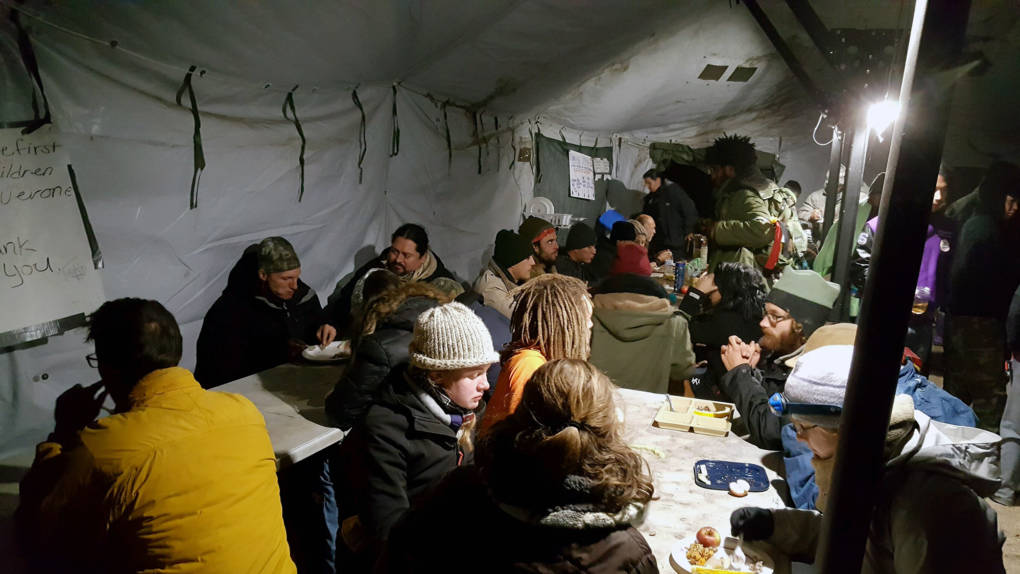
"caption": "People at the Oceti Sakowin Camp enjoy a meal inside a tent that serves as a dining hall. Oceti Sakowin is the largest of several camps housing demonstrators against the Dakota Access Pipeline.",
"description": "People at the Oceti Sakowin Camp enjoy a meal inside a tent that serves as a dining hall. Oceti Sakowin is the largest of several camps housing demonstrators against the Dakota Access Pipeline",
"title": "People at the Oceti Sakowin Camp enjoy a meal inside a tent that serves as a dining hall. Oceti Sakowin is the largest of several camps housing demonstrators against the Dakota Access Pipeline.",
"credit": "Courtesy of Brian Yazzie",
"status": "inherit",
"isLoading": false,
"fetchFailed": false
},
"bayareabites_109415": {
"type": "attachments",
"id": "bayareabites_109415",
"meta": {
"index": "attachments_1716263798",
"site": "bayareabites",
"id": "109415",
"found": true
},
"parent": 109414,
"imgSizes": {
"twentyfourteen-full-width": {
"file": "https://ww2.kqed.org/app/uploads/sites/24/2016/05/monsantocorn_enl-de25c3086f2b445847c7e86ca85cf0374f86aa7d-1038x576.jpg",
"width": 1038,
"mimeType": "image/jpeg",
"height": 576
},
"thumbnail": {
"file": "https://ww2.kqed.org/app/uploads/sites/24/2016/05/monsantocorn_enl-de25c3086f2b445847c7e86ca85cf0374f86aa7d-400x201.jpg",
"width": 400,
"mimeType": "image/jpeg",
"height": 201
},
"fd-sm": {
"file": "https://ww2.kqed.org/app/uploads/sites/24/2016/05/monsantocorn_enl-de25c3086f2b445847c7e86ca85cf0374f86aa7d-960x483.jpg",
"width": 960,
"mimeType": "image/jpeg",
"height": 483
},
"post-thumbnail": {
"file": "https://ww2.kqed.org/app/uploads/sites/24/2016/05/monsantocorn_enl-de25c3086f2b445847c7e86ca85cf0374f86aa7d-672x372.jpg",
"width": 672,
"mimeType": "image/jpeg",
"height": 372
},
"kqedFullSize": {
"file": "https://ww2.kqed.org/app/uploads/sites/24/2016/05/monsantocorn_enl-de25c3086f2b445847c7e86ca85cf0374f86aa7d.jpg",
"width": 1784,
"height": 897
},
"large": {
"file": "https://ww2.kqed.org/app/uploads/sites/24/2016/05/monsantocorn_enl-de25c3086f2b445847c7e86ca85cf0374f86aa7d-1440x724.jpg",
"width": 1440,
"mimeType": "image/jpeg",
"height": 724
},
"guest-author-50": {
"file": "https://ww2.kqed.org/app/uploads/sites/24/2016/05/monsantocorn_enl-de25c3086f2b445847c7e86ca85cf0374f86aa7d-50x50.jpg",
"width": 50,
"mimeType": "image/jpeg",
"height": 50
},
"guest-author-96": {
"file": "https://ww2.kqed.org/app/uploads/sites/24/2016/05/monsantocorn_enl-de25c3086f2b445847c7e86ca85cf0374f86aa7d-96x96.jpg",
"width": 96,
"mimeType": "image/jpeg",
"height": 96
},
"medium": {
"file": "https://ww2.kqed.org/app/uploads/sites/24/2016/05/monsantocorn_enl-de25c3086f2b445847c7e86ca85cf0374f86aa7d-800x402.jpg",
"width": 800,
"mimeType": "image/jpeg",
"height": 402
},
"guest-author-64": {
"file": "https://ww2.kqed.org/app/uploads/sites/24/2016/05/monsantocorn_enl-de25c3086f2b445847c7e86ca85cf0374f86aa7d-64x64.jpg",
"width": 64,
"mimeType": "image/jpeg",
"height": 64
},
"guest-author-32": {
"file": "https://ww2.kqed.org/app/uploads/sites/24/2016/05/monsantocorn_enl-de25c3086f2b445847c7e86ca85cf0374f86aa7d-32x32.jpg",
"width": 32,
"mimeType": "image/jpeg",
"height": 32
},
"cat_post_thumb_sizecategory-posts-2": {
"file": "https://ww2.kqed.org/app/uploads/sites/24/2016/05/monsantocorn_enl-de25c3086f2b445847c7e86ca85cf0374f86aa7d-150x150.jpg",
"width": 150,
"mimeType": "image/jpeg",
"height": 150
},
"fd-med": {
"file": "https://ww2.kqed.org/app/uploads/sites/24/2016/05/monsantocorn_enl-de25c3086f2b445847c7e86ca85cf0374f86aa7d-1180x593.jpg",
"width": 1180,
"mimeType": "image/jpeg",
"height": 593
},
"detail": {
"file": "https://ww2.kqed.org/app/uploads/sites/24/2016/05/monsantocorn_enl-de25c3086f2b445847c7e86ca85cf0374f86aa7d-150x150.jpg",
"width": 150,
"mimeType": "image/jpeg",
"height": 150
},
"medium_large": {
"file": "https://ww2.kqed.org/app/uploads/sites/24/2016/05/monsantocorn_enl-de25c3086f2b445847c7e86ca85cf0374f86aa7d-768x386.jpg",
"width": 768,
"mimeType": "image/jpeg",
"height": 386
},
"guest-author-128": {
"file": "https://ww2.kqed.org/app/uploads/sites/24/2016/05/monsantocorn_enl-de25c3086f2b445847c7e86ca85cf0374f86aa7d-128x128.jpg",
"width": 128,
"mimeType": "image/jpeg",
"height": 128
}
},
"publishDate": 1463544703,
"modified": 1463544902,
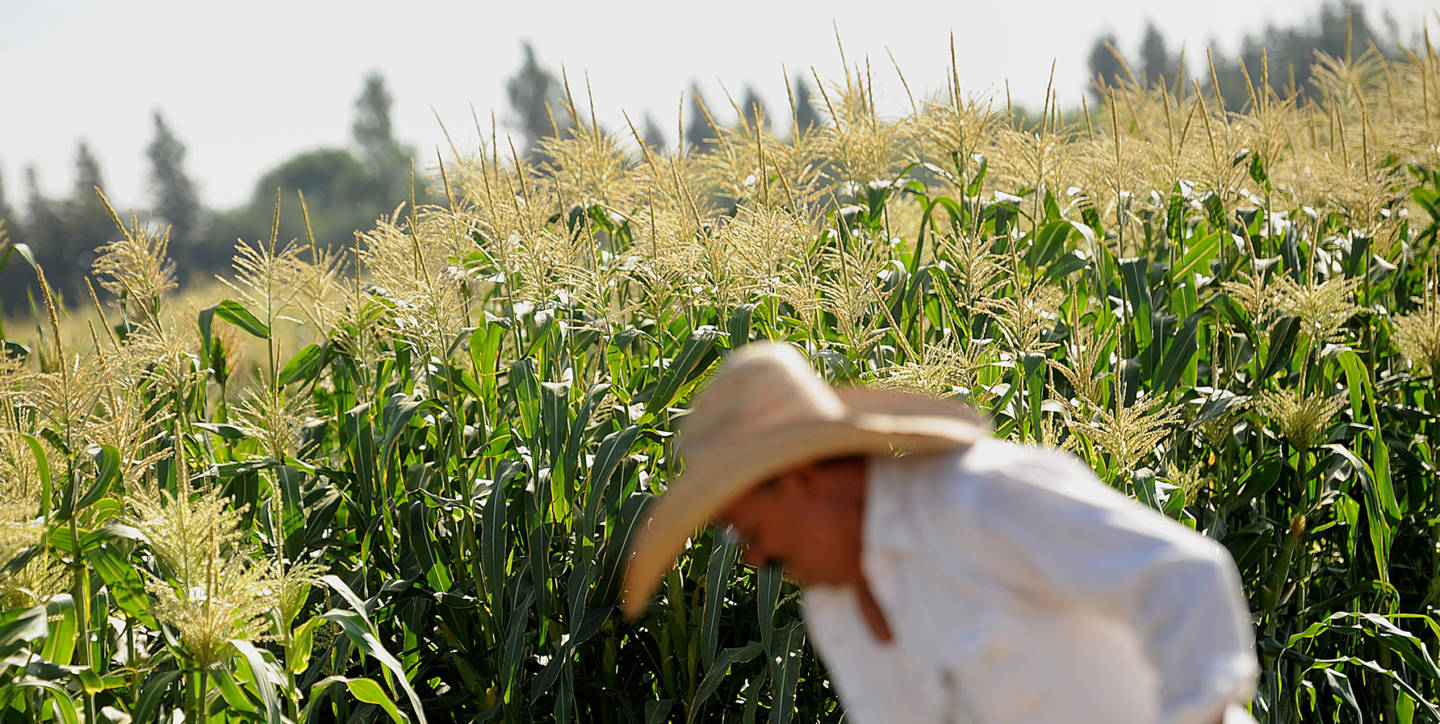
"caption": "Worker Javier Alcantar tends to corn crops at the Monsanto Co. test field in Woodland, Calif., in 2012.",
"description": "Worker Javier Alcantar tends to corn crops at the Monsanto Co. test field in Woodland, Calif., in 2012.",
"title": "Worker Javier Alcantar tends to corn crops at the Monsanto Co. test field in Woodland, Calif., in 2012.",
"credit": "Noah Berger/Bloomberg via Getty Images ",
"status": "inherit",
"isLoading": false,
"fetchFailed": false
},
"bayareabites_106925": {
"type": "attachments",
"id": "bayareabites_106925",
"meta": {
"index": "attachments_1716263798",
"site": "bayareabites",
"id": "106925",
"found": true
},
"parent": 106924,
"imgSizes": {
"twentyfourteen-full-width": {
"file": "https://ww2.kqed.org/app/uploads/sites/24/2016/02/15-09456_figure2large_custom-e3d04f7ae59ae81fd8b13585a3917f64c34e7778-1038x576.jpg",
"width": 1038,
"mimeType": "image/jpeg",
"height": 576
},
"thumbnail": {
"file": "https://ww2.kqed.org/app/uploads/sites/24/2016/02/15-09456_figure2large_custom-e3d04f7ae59ae81fd8b13585a3917f64c34e7778-400x376.jpg",
"width": 400,
"mimeType": "image/jpeg",
"height": 376
},
"fd-sm": {
"file": "https://ww2.kqed.org/app/uploads/sites/24/2016/02/15-09456_figure2large_custom-e3d04f7ae59ae81fd8b13585a3917f64c34e7778-960x901.jpg",
"width": 960,
"mimeType": "image/jpeg",
"height": 901
},
"post-thumbnail": {
"file": "https://ww2.kqed.org/app/uploads/sites/24/2016/02/15-09456_figure2large_custom-e3d04f7ae59ae81fd8b13585a3917f64c34e7778-672x372.jpg",
"width": 672,
"mimeType": "image/jpeg",
"height": 372
},
"kqedFullSize": {
"file": "https://ww2.kqed.org/app/uploads/sites/24/2016/02/15-09456_figure2large_custom-e3d04f7ae59ae81fd8b13585a3917f64c34e7778.jpg",
"width": 1193,
"height": 1120
},
"guest-author-96": {
"file": "https://ww2.kqed.org/app/uploads/sites/24/2016/02/15-09456_figure2large_custom-e3d04f7ae59ae81fd8b13585a3917f64c34e7778-96x96.jpg",
"width": 96,
"mimeType": "image/jpeg",
"height": 96
},
"medium": {
"file": "https://ww2.kqed.org/app/uploads/sites/24/2016/02/15-09456_figure2large_custom-e3d04f7ae59ae81fd8b13585a3917f64c34e7778-800x751.jpg",
"width": 800,
"mimeType": "image/jpeg",
"height": 751
},
"guest-author-64": {
"file": "https://ww2.kqed.org/app/uploads/sites/24/2016/02/15-09456_figure2large_custom-e3d04f7ae59ae81fd8b13585a3917f64c34e7778-64x64.jpg",
"width": 64,
"mimeType": "image/jpeg",
"height": 64
},
"guest-author-32": {
"file": "https://ww2.kqed.org/app/uploads/sites/24/2016/02/15-09456_figure2large_custom-e3d04f7ae59ae81fd8b13585a3917f64c34e7778-32x32.jpg",
"width": 32,
"mimeType": "image/jpeg",
"height": 32
},
"cat_post_thumb_sizecategory-posts-2": {
"file": "https://ww2.kqed.org/app/uploads/sites/24/2016/02/15-09456_figure2large_custom-e3d04f7ae59ae81fd8b13585a3917f64c34e7778-150x150.jpg",
"width": 150,
"mimeType": "image/jpeg",
"height": 150
},
"fd-med": {
"file": "https://ww2.kqed.org/app/uploads/sites/24/2016/02/15-09456_figure2large_custom-e3d04f7ae59ae81fd8b13585a3917f64c34e7778-1180x1108.jpg",
"width": 1180,
"mimeType": "image/jpeg",
"height": 1108
},
"detail": {
"file": "https://ww2.kqed.org/app/uploads/sites/24/2016/02/15-09456_figure2large_custom-e3d04f7ae59ae81fd8b13585a3917f64c34e7778-75x75.jpg",
"width": 75,
"mimeType": "image/jpeg",
"height": 75
},
"medium_large": {
"file": "https://ww2.kqed.org/app/uploads/sites/24/2016/02/15-09456_figure2large_custom-e3d04f7ae59ae81fd8b13585a3917f64c34e7778-768x721.jpg",
"width": 768,
"mimeType": "image/jpeg",
"height": 721
},
"guest-author-128": {
"file": "https://ww2.kqed.org/app/uploads/sites/24/2016/02/15-09456_figure2large_custom-e3d04f7ae59ae81fd8b13585a3917f64c34e7778-128x128.jpg",
"width": 128,
"mimeType": "image/jpeg",
"height": 128
}
},
"publishDate": 1455648390,
"modified": 1455651223,
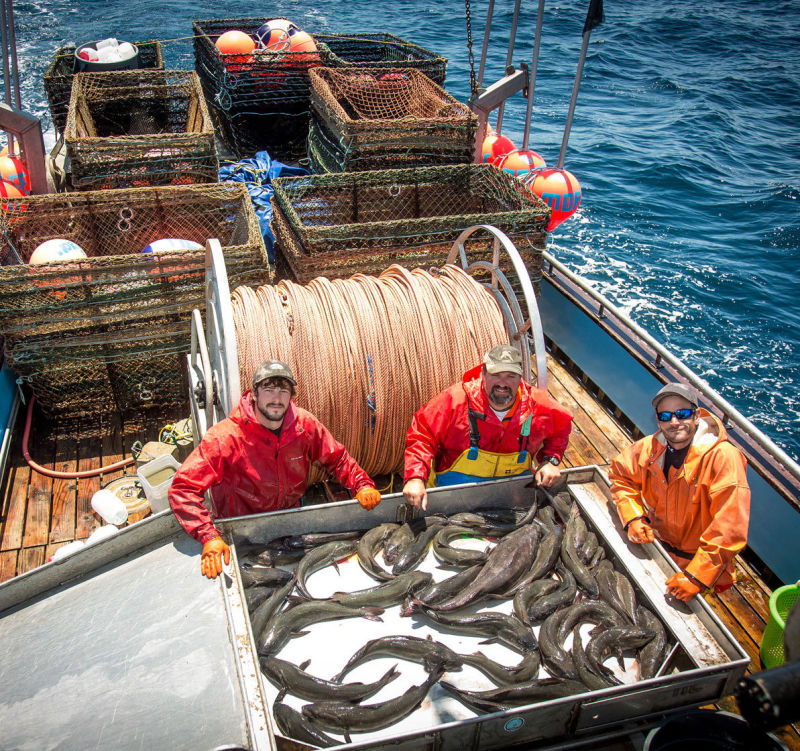
"caption": "The captain and crew of the Moriah Lee pose with sablefish caught off the coast of Half Moon Bay, Calif. A new study found that fishermen in the West Coast sablefishery were much less likely to engage in risky behavior — like sailing out in stormy weather — after catch share quotas were implemented.",
"description": "The captain and crew of the Moriah Lee pose with sablefish caught off the coast of Half Moon Bay, Calif. A new study found that fishermen in the West Coast sablefishery were much less likely to engage in risky behavior -- like sailing out in stormy weather -- after catch share quotas were implemented.",
"title": "The captain and crew of the Moriah Lee pose with sablefish caught off the coast of Half Moon Bay, Calif. A new study found that fishermen in the West Coast sablefishery were much less likely to engage in risky behavior — like sailing out in stormy weather — after catch share quotas were implemented.",
"credit": "Courtesy of Ethan Righter ",
"status": "inherit",
"isLoading": false,
"fetchFailed": false
},
"bayareabites_106395": {
"type": "attachments",
"id": "bayareabites_106395",
"meta": {
"index": "attachments_1716263798",
"site": "bayareabites",
"id": "106395",
"found": true
},
"parent": 106394,
"imgSizes": {
"twentyfourteen-full-width": {
"file": "https://ww2.kqed.org/app/uploads/sites/24/2016/01/farmworkers_enl-eeb9360947960e0e964f5fd8de8c076b54d2f321-1038x576.jpg",
"width": 1038,
"mimeType": "image/jpeg",
"height": 576
},
"thumbnail": {
"file": "https://ww2.kqed.org/app/uploads/sites/24/2016/01/farmworkers_enl-eeb9360947960e0e964f5fd8de8c076b54d2f321-400x275.jpg",
"width": 400,
"mimeType": "image/jpeg",
"height": 275
},
"fd-sm": {
"file": "https://ww2.kqed.org/app/uploads/sites/24/2016/01/farmworkers_enl-eeb9360947960e0e964f5fd8de8c076b54d2f321-960x661.jpg",
"width": 960,
"mimeType": "image/jpeg",
"height": 661
},
"post-thumbnail": {
"file": "https://ww2.kqed.org/app/uploads/sites/24/2016/01/farmworkers_enl-eeb9360947960e0e964f5fd8de8c076b54d2f321-672x372.jpg",
"width": 672,
"mimeType": "image/jpeg",
"height": 372
},
"kqedFullSize": {
"file": "https://ww2.kqed.org/app/uploads/sites/24/2016/01/farmworkers_enl-eeb9360947960e0e964f5fd8de8c076b54d2f321.jpg",
"width": 2000,
"height": 1377
},
"large": {
"file": "https://ww2.kqed.org/app/uploads/sites/24/2016/01/farmworkers_enl-eeb9360947960e0e964f5fd8de8c076b54d2f321-1440x991.jpg",
"width": 1440,
"mimeType": "image/jpeg",
"height": 991
},
"guest-author-96": {
"file": "https://ww2.kqed.org/app/uploads/sites/24/2016/01/farmworkers_enl-eeb9360947960e0e964f5fd8de8c076b54d2f321-96x96.jpg",
"width": 96,
"mimeType": "image/jpeg",
"height": 96
},
"medium": {
"file": "https://ww2.kqed.org/app/uploads/sites/24/2016/01/farmworkers_enl-eeb9360947960e0e964f5fd8de8c076b54d2f321-800x551.jpg",
"width": 800,
"mimeType": "image/jpeg",
"height": 551
},
"guest-author-64": {
"file": "https://ww2.kqed.org/app/uploads/sites/24/2016/01/farmworkers_enl-eeb9360947960e0e964f5fd8de8c076b54d2f321-64x64.jpg",
"width": 64,
"mimeType": "image/jpeg",
"height": 64
},
"guest-author-32": {
"file": "https://ww2.kqed.org/app/uploads/sites/24/2016/01/farmworkers_enl-eeb9360947960e0e964f5fd8de8c076b54d2f321-32x32.jpg",
"width": 32,
"mimeType": "image/jpeg",
"height": 32
},
"cat_post_thumb_sizecategory-posts-2": {
"file": "https://ww2.kqed.org/app/uploads/sites/24/2016/01/farmworkers_enl-eeb9360947960e0e964f5fd8de8c076b54d2f321-150x150.jpg",
"width": 150,
"mimeType": "image/jpeg",
"height": 150
},
"fd-lrg": {
"file": "https://ww2.kqed.org/app/uploads/sites/24/2016/01/farmworkers_enl-eeb9360947960e0e964f5fd8de8c076b54d2f321-1920x1322.jpg",
"width": 1920,
"mimeType": "image/jpeg",
"height": 1322
},
"fd-med": {
"file": "https://ww2.kqed.org/app/uploads/sites/24/2016/01/farmworkers_enl-eeb9360947960e0e964f5fd8de8c076b54d2f321-1180x812.jpg",
"width": 1180,
"mimeType": "image/jpeg",
"height": 812
},
"detail": {
"file": "https://ww2.kqed.org/app/uploads/sites/24/2016/01/farmworkers_enl-eeb9360947960e0e964f5fd8de8c076b54d2f321-75x75.jpg",
"width": 75,
"mimeType": "image/jpeg",
"height": 75
},
"medium_large": {
"file": "https://ww2.kqed.org/app/uploads/sites/24/2016/01/farmworkers_enl-eeb9360947960e0e964f5fd8de8c076b54d2f321-768x529.jpg",
"width": 768,
"mimeType": "image/jpeg",
"height": 529
},
"guest-author-128": {
"file": "https://ww2.kqed.org/app/uploads/sites/24/2016/01/farmworkers_enl-eeb9360947960e0e964f5fd8de8c076b54d2f321-128x128.jpg",
"width": 128,
"mimeType": "image/jpeg",
"height": 128
}
},
"publishDate": 1454096690,
"modified": 1454096690,
"caption": null,
"description": "Migrant workers harvest strawberries at a farm near Oxnard, Calif. Ventura County is one of two counties where labor organizers hope to get a Bill of Rights passed to protect farm workers from abuse and wage theft.",
"title": "Migrant workers harvest strawberries at a farm near Oxnard, Calif. Ventura County is one of two counties where labor organizers hope to get a Bill of Rights passed to protect farm workers from abuse and wage theft.",
"credit": null,
"status": "inherit",
"isLoading": false,
"fetchFailed": false
},
"bayareabites_106382": {
"type": "attachments",
"id": "bayareabites_106382",
"meta": {
"index": "attachments_1716263798",
"site": "bayareabites",
"id": "106382",
"found": true
},
"parent": 106380,
"imgSizes": {
"twentyfourteen-full-width": {
"file": "https://ww2.kqed.org/app/uploads/sites/24/2016/01/mi-comida-latina_lomo-saltado_encebollado-web_edited_enl-d05f6a3bc3e24486a225089e21e4ae1ed3787c86-1038x576.jpg",
"width": 1038,
"mimeType": "image/jpeg",
"height": 576
},
"thumbnail": {
"file": "https://ww2.kqed.org/app/uploads/sites/24/2016/01/mi-comida-latina_lomo-saltado_encebollado-web_edited_enl-d05f6a3bc3e24486a225089e21e4ae1ed3787c86-400x248.jpg",
"width": 400,
"mimeType": "image/jpeg",
"height": 248
},
"fd-sm": {
"file": "https://ww2.kqed.org/app/uploads/sites/24/2016/01/mi-comida-latina_lomo-saltado_encebollado-web_edited_enl-d05f6a3bc3e24486a225089e21e4ae1ed3787c86-960x596.jpg",
"width": 960,
"mimeType": "image/jpeg",
"height": 596
},
"post-thumbnail": {
"file": "https://ww2.kqed.org/app/uploads/sites/24/2016/01/mi-comida-latina_lomo-saltado_encebollado-web_edited_enl-d05f6a3bc3e24486a225089e21e4ae1ed3787c86-672x372.jpg",
"width": 672,
"mimeType": "image/jpeg",
"height": 372
},
"kqedFullSize": {
"file": "https://ww2.kqed.org/app/uploads/sites/24/2016/01/mi-comida-latina_lomo-saltado_encebollado-web_edited_enl-d05f6a3bc3e24486a225089e21e4ae1ed3787c86.jpg",
"width": 1400,
"height": 869
},
"guest-author-96": {
"file": "https://ww2.kqed.org/app/uploads/sites/24/2016/01/mi-comida-latina_lomo-saltado_encebollado-web_edited_enl-d05f6a3bc3e24486a225089e21e4ae1ed3787c86-96x96.jpg",
"width": 96,
"mimeType": "image/jpeg",
"height": 96
},
"medium": {
"file": "https://ww2.kqed.org/app/uploads/sites/24/2016/01/mi-comida-latina_lomo-saltado_encebollado-web_edited_enl-d05f6a3bc3e24486a225089e21e4ae1ed3787c86-800x497.jpg",
"width": 800,
"mimeType": "image/jpeg",
"height": 497
},
"guest-author-64": {
"file": "https://ww2.kqed.org/app/uploads/sites/24/2016/01/mi-comida-latina_lomo-saltado_encebollado-web_edited_enl-d05f6a3bc3e24486a225089e21e4ae1ed3787c86-64x64.jpg",
"width": 64,
"mimeType": "image/jpeg",
"height": 64
},
"guest-author-32": {
"file": "https://ww2.kqed.org/app/uploads/sites/24/2016/01/mi-comida-latina_lomo-saltado_encebollado-web_edited_enl-d05f6a3bc3e24486a225089e21e4ae1ed3787c86-32x32.jpg",
"width": 32,
"mimeType": "image/jpeg",
"height": 32
},
"cat_post_thumb_sizecategory-posts-2": {
"file": "https://ww2.kqed.org/app/uploads/sites/24/2016/01/mi-comida-latina_lomo-saltado_encebollado-web_edited_enl-d05f6a3bc3e24486a225089e21e4ae1ed3787c86-150x150.jpg",
"width": 150,
"mimeType": "image/jpeg",
"height": 150
},
"fd-med": {
"file": "https://ww2.kqed.org/app/uploads/sites/24/2016/01/mi-comida-latina_lomo-saltado_encebollado-web_edited_enl-d05f6a3bc3e24486a225089e21e4ae1ed3787c86-1180x732.jpg",
"width": 1180,
"mimeType": "image/jpeg",
"height": 732
},
"detail": {
"file": "https://ww2.kqed.org/app/uploads/sites/24/2016/01/mi-comida-latina_lomo-saltado_encebollado-web_edited_enl-d05f6a3bc3e24486a225089e21e4ae1ed3787c86-75x75.jpg",
"width": 75,
"mimeType": "image/jpeg",
"height": 75
},
"medium_large": {
"file": "https://ww2.kqed.org/app/uploads/sites/24/2016/01/mi-comida-latina_lomo-saltado_encebollado-web_edited_enl-d05f6a3bc3e24486a225089e21e4ae1ed3787c86-768x477.jpg",
"width": 768,
"mimeType": "image/jpeg",
"height": 477
},
"guest-author-128": {
"file": "https://ww2.kqed.org/app/uploads/sites/24/2016/01/mi-comida-latina_lomo-saltado_encebollado-web_edited_enl-d05f6a3bc3e24486a225089e21e4ae1ed3787c86-128x128.jpg",
"width": 128,
"mimeType": "image/jpeg",
"height": 128
}
},
"publishDate": 1454006222,
"modified": 1454006277,
"caption": "Illustrated recipes for lomo saltado, a Peruvian beef and potato stir fry, and encebollado, a fish soup with yuca that is typical in coastal Ecuador and northern Peru.",
"description": "Illustrated recipes for \u003cem>lomo saltado\u003c/em>, a Peruvian beef and potato stir fry, and e\u003cem>ncebollado\u003c/em>, a fish soup with yuca that is typical in coastal Ecuador and northern Peru.",
"title": "Illustrated recipes for lomo saltado, a Peruvian beef and potato stir fry, and encebollado, a fish soup with yuca that is typical in coastal Ecuador and northern Peru.",
"credit": "Marcella Kriebel",
"status": "inherit",
"isLoading": false,
"fetchFailed": false
},
"bayareabites_106372": {
"type": "attachments",
"id": "bayareabites_106372",
"meta": {
"index": "attachments_1716263798",
"site": "bayareabites",
"id": "106372",
"found": true
},
"parent": 106371,
"imgSizes": {
"twentyfourteen-full-width": {
"file": "https://ww2.kqed.org/app/uploads/sites/24/2016/01/persianbreakfast_enl-e883be881cac126a794885e5c0fc7dd6ec75cf3f-1038x576.jpg",
"width": 1038,
"mimeType": "image/jpeg",
"height": 576
},
"thumbnail": {
"file": "https://ww2.kqed.org/app/uploads/sites/24/2016/01/persianbreakfast_enl-e883be881cac126a794885e5c0fc7dd6ec75cf3f-400x266.jpg",
"width": 400,
"mimeType": "image/jpeg",
"height": 266
},
"fd-sm": {
"file": "https://ww2.kqed.org/app/uploads/sites/24/2016/01/persianbreakfast_enl-e883be881cac126a794885e5c0fc7dd6ec75cf3f-960x637.jpg",
"width": 960,
"mimeType": "image/jpeg",
"height": 637
},
"post-thumbnail": {
"file": "https://ww2.kqed.org/app/uploads/sites/24/2016/01/persianbreakfast_enl-e883be881cac126a794885e5c0fc7dd6ec75cf3f-672x372.jpg",
"width": 672,
"mimeType": "image/jpeg",
"height": 372
},
"kqedFullSize": {
"file": "https://ww2.kqed.org/app/uploads/sites/24/2016/01/persianbreakfast_enl-e883be881cac126a794885e5c0fc7dd6ec75cf3f-e1454005078826.jpg",
"width": 1920,
"height": 1275
},
"large": {
"file": "https://ww2.kqed.org/app/uploads/sites/24/2016/01/persianbreakfast_enl-e883be881cac126a794885e5c0fc7dd6ec75cf3f-1440x956.jpg",
"width": 1440,
"mimeType": "image/jpeg",
"height": 956
},
"guest-author-96": {
"file": "https://ww2.kqed.org/app/uploads/sites/24/2016/01/persianbreakfast_enl-e883be881cac126a794885e5c0fc7dd6ec75cf3f-96x96.jpg",
"width": 96,
"mimeType": "image/jpeg",
"height": 96
},
"medium": {
"file": "https://ww2.kqed.org/app/uploads/sites/24/2016/01/persianbreakfast_enl-e883be881cac126a794885e5c0fc7dd6ec75cf3f-800x531.jpg",
"width": 800,
"mimeType": "image/jpeg",
"height": 531
},
"guest-author-64": {
"file": "https://ww2.kqed.org/app/uploads/sites/24/2016/01/persianbreakfast_enl-e883be881cac126a794885e5c0fc7dd6ec75cf3f-64x64.jpg",
"width": 64,
"mimeType": "image/jpeg",
"height": 64
},
"guest-author-32": {
"file": "https://ww2.kqed.org/app/uploads/sites/24/2016/01/persianbreakfast_enl-e883be881cac126a794885e5c0fc7dd6ec75cf3f-32x32.jpg",
"width": 32,
"mimeType": "image/jpeg",
"height": 32
},
"cat_post_thumb_sizecategory-posts-2": {
"file": "https://ww2.kqed.org/app/uploads/sites/24/2016/01/persianbreakfast_enl-e883be881cac126a794885e5c0fc7dd6ec75cf3f-150x150.jpg",
"width": 150,
"mimeType": "image/jpeg",
"height": 150
},
"fd-lrg": {
"file": "https://ww2.kqed.org/app/uploads/sites/24/2016/01/persianbreakfast_enl-e883be881cac126a794885e5c0fc7dd6ec75cf3f-1920x1275.jpg",
"width": 1920,
"mimeType": "image/jpeg",
"height": 1275
},
"fd-med": {
"file": "https://ww2.kqed.org/app/uploads/sites/24/2016/01/persianbreakfast_enl-e883be881cac126a794885e5c0fc7dd6ec75cf3f-1180x784.jpg",
"width": 1180,
"mimeType": "image/jpeg",
"height": 784
},
"detail": {
"file": "https://ww2.kqed.org/app/uploads/sites/24/2016/01/persianbreakfast_enl-e883be881cac126a794885e5c0fc7dd6ec75cf3f-75x75.jpg",
"width": 75,
"mimeType": "image/jpeg",
"height": 75
},
"medium_large": {
"file": "https://ww2.kqed.org/app/uploads/sites/24/2016/01/persianbreakfast_enl-e883be881cac126a794885e5c0fc7dd6ec75cf3f-768x510.jpg",
"width": 768,
"mimeType": "image/jpeg",
"height": 510
},
"guest-author-128": {
"file": "https://ww2.kqed.org/app/uploads/sites/24/2016/01/persianbreakfast_enl-e883be881cac126a794885e5c0fc7dd6ec75cf3f-128x128.jpg",
"width": 128,
"mimeType": "image/jpeg",
"height": 128
}
},
"publishDate": 1454004753,
"modified": 1454005068,
"caption": "Persian men kneel on the floor to enjoy breakfast in an illustration by James Morier, published in 1818. Because of Iran's strategic position on the ancient Silk Road, Persian culture was disseminated far and wide. There's no better evidence of this than the imprimatur of the Persian language on the nomenclature of food.",
"description": "Persian men kneel on the floor to enjoy breakfast in an illustration by James Morier, published in 1818. Because of Iran's strategic position on the ancient Silk Road, Persian culture was disseminated far and wide. There's no better evidence of this than the imprimatur of the Persian language on the nomenclature of food.",
"title": "Persian men kneel on the floor to enjoy breakfast in an illustration by James Morier, published in 1818. Because of Iran's strategic position on the ancient Silk Road, Persian culture was disseminated far and wide. There's no better evidence of this than the imprimatur of the Persian language on the nomenclature of food.",
"credit": "Henry Guttmann/Getty Images",
"status": "inherit",
"isLoading": false,
"fetchFailed": false
},
"bayareabites_106361": {
"type": "attachments",
"id": "bayareabites_106361",
"meta": {
"index": "attachments_1716263798",
"site": "bayareabites",
"id": "106361",
"found": true
},
"parent": 106359,
"imgSizes": {
"twentyfourteen-full-width": {
"file": "https://ww2.kqed.org/app/uploads/sites/24/2016/01/citrus-1_enl-a08420a92d352a57b1098eae4c857acbf1a4cbd1-1038x576.jpg",
"width": 1038,
"mimeType": "image/jpeg",
"height": 576
},
"thumbnail": {
"file": "https://ww2.kqed.org/app/uploads/sites/24/2016/01/citrus-1_enl-a08420a92d352a57b1098eae4c857acbf1a4cbd1-400x266.jpg",
"width": 400,
"mimeType": "image/jpeg",
"height": 266
},
"fd-sm": {
"file": "https://ww2.kqed.org/app/uploads/sites/24/2016/01/citrus-1_enl-a08420a92d352a57b1098eae4c857acbf1a4cbd1-960x639.jpg",
"width": 960,
"mimeType": "image/jpeg",
"height": 639
},
"post-thumbnail": {
"file": "https://ww2.kqed.org/app/uploads/sites/24/2016/01/citrus-1_enl-a08420a92d352a57b1098eae4c857acbf1a4cbd1-672x372.jpg",
"width": 672,
"mimeType": "image/jpeg",
"height": 372
},
"kqedFullSize": {
"file": "https://ww2.kqed.org/app/uploads/sites/24/2016/01/citrus-1_enl-a08420a92d352a57b1098eae4c857acbf1a4cbd1-e1454002609590.jpg",
"width": 1920,
"height": 1279
},
"large": {
"file": "https://ww2.kqed.org/app/uploads/sites/24/2016/01/citrus-1_enl-a08420a92d352a57b1098eae4c857acbf1a4cbd1-1440x959.jpg",
"width": 1440,
"mimeType": "image/jpeg",
"height": 959
},
"guest-author-96": {
"file": "https://ww2.kqed.org/app/uploads/sites/24/2016/01/citrus-1_enl-a08420a92d352a57b1098eae4c857acbf1a4cbd1-96x96.jpg",
"width": 96,
"mimeType": "image/jpeg",
"height": 96
},
"medium": {
"file": "https://ww2.kqed.org/app/uploads/sites/24/2016/01/citrus-1_enl-a08420a92d352a57b1098eae4c857acbf1a4cbd1-800x533.jpg",
"width": 800,
"mimeType": "image/jpeg",
"height": 533
},
"guest-author-64": {
"file": "https://ww2.kqed.org/app/uploads/sites/24/2016/01/citrus-1_enl-a08420a92d352a57b1098eae4c857acbf1a4cbd1-64x64.jpg",
"width": 64,
"mimeType": "image/jpeg",
"height": 64
},
"guest-author-32": {
"file": "https://ww2.kqed.org/app/uploads/sites/24/2016/01/citrus-1_enl-a08420a92d352a57b1098eae4c857acbf1a4cbd1-32x32.jpg",
"width": 32,
"mimeType": "image/jpeg",
"height": 32
},
"cat_post_thumb_sizecategory-posts-2": {
"file": "https://ww2.kqed.org/app/uploads/sites/24/2016/01/citrus-1_enl-a08420a92d352a57b1098eae4c857acbf1a4cbd1-150x150.jpg",
"width": 150,
"mimeType": "image/jpeg",
"height": 150
},
"fd-lrg": {
"file": "https://ww2.kqed.org/app/uploads/sites/24/2016/01/citrus-1_enl-a08420a92d352a57b1098eae4c857acbf1a4cbd1-1920x1279.jpg",
"width": 1920,
"mimeType": "image/jpeg",
"height": 1279
},
"fd-med": {
"file": "https://ww2.kqed.org/app/uploads/sites/24/2016/01/citrus-1_enl-a08420a92d352a57b1098eae4c857acbf1a4cbd1-1180x786.jpg",
"width": 1180,
"mimeType": "image/jpeg",
"height": 786
},
"detail": {
"file": "https://ww2.kqed.org/app/uploads/sites/24/2016/01/citrus-1_enl-a08420a92d352a57b1098eae4c857acbf1a4cbd1-75x75.jpg",
"width": 75,
"mimeType": "image/jpeg",
"height": 75
},
"medium_large": {
"file": "https://ww2.kqed.org/app/uploads/sites/24/2016/01/citrus-1_enl-a08420a92d352a57b1098eae4c857acbf1a4cbd1-768x511.jpg",
"width": 768,
"mimeType": "image/jpeg",
"height": 511
},
"guest-author-128": {
"file": "https://ww2.kqed.org/app/uploads/sites/24/2016/01/citrus-1_enl-a08420a92d352a57b1098eae4c857acbf1a4cbd1-128x128.jpg",
"width": 128,
"mimeType": "image/jpeg",
"height": 128
}
},
"publishDate": 1454002437,
"modified": 1454002601,
"caption": "A worker harvests grapefruit near Arcadia, Florida.",
"description": "A worker harvests grapefruit near Arcadia, Florida.",
"title": "A worker harvests grapefruit near Arcadia, Florida.",
"credit": "Dan Charles/NPR",
"status": "inherit",
"isLoading": false,
"fetchFailed": false
},
"bayareabites_106346": {
"type": "attachments",
"id": "bayareabites_106346",
"meta": {
"index": "attachments_1716263798",
"site": "bayareabites",
"id": "106346",
"found": true
},
"parent": 106345,
"imgSizes": {
"twentyfourteen-full-width": {
"file": "https://ww2.kqed.org/app/uploads/sites/24/2016/01/sfsp_wide-76ac27d833a5df68fedce641e4b339dcf6e0b896-1038x576.jpg",
"width": 1038,
"mimeType": "image/jpeg",
"height": 576
},
"thumbnail": {
"file": "https://ww2.kqed.org/app/uploads/sites/24/2016/01/sfsp_wide-76ac27d833a5df68fedce641e4b339dcf6e0b896-400x225.jpg",
"width": 400,
"mimeType": "image/jpeg",
"height": 225
},
"fd-sm": {
"file": "https://ww2.kqed.org/app/uploads/sites/24/2016/01/sfsp_wide-76ac27d833a5df68fedce641e4b339dcf6e0b896-960x540.jpg",
"width": 960,
"mimeType": "image/jpeg",
"height": 540
},
"post-thumbnail": {
"file": "https://ww2.kqed.org/app/uploads/sites/24/2016/01/sfsp_wide-76ac27d833a5df68fedce641e4b339dcf6e0b896-672x372.jpg",
"width": 672,
"mimeType": "image/jpeg",
"height": 372
},
"kqedFullSize": {
"file": "https://ww2.kqed.org/app/uploads/sites/24/2016/01/sfsp_wide-76ac27d833a5df68fedce641e4b339dcf6e0b896.jpg",
"width": 1997,
"height": 1123
},
"large": {
"file": "https://ww2.kqed.org/app/uploads/sites/24/2016/01/sfsp_wide-76ac27d833a5df68fedce641e4b339dcf6e0b896-1440x810.jpg",
"width": 1440,
"mimeType": "image/jpeg",
"height": 810
},
"guest-author-96": {
"file": "https://ww2.kqed.org/app/uploads/sites/24/2016/01/sfsp_wide-76ac27d833a5df68fedce641e4b339dcf6e0b896-96x96.jpg",
"width": 96,
"mimeType": "image/jpeg",
"height": 96
},
"medium": {
"file": "https://ww2.kqed.org/app/uploads/sites/24/2016/01/sfsp_wide-76ac27d833a5df68fedce641e4b339dcf6e0b896-800x450.jpg",
"width": 800,
"mimeType": "image/jpeg",
"height": 450
},
"guest-author-64": {
"file": "https://ww2.kqed.org/app/uploads/sites/24/2016/01/sfsp_wide-76ac27d833a5df68fedce641e4b339dcf6e0b896-64x64.jpg",
"width": 64,
"mimeType": "image/jpeg",
"height": 64
},
"guest-author-32": {
"file": "https://ww2.kqed.org/app/uploads/sites/24/2016/01/sfsp_wide-76ac27d833a5df68fedce641e4b339dcf6e0b896-32x32.jpg",
"width": 32,
"mimeType": "image/jpeg",
"height": 32
},
"cat_post_thumb_sizecategory-posts-2": {
"file": "https://ww2.kqed.org/app/uploads/sites/24/2016/01/sfsp_wide-76ac27d833a5df68fedce641e4b339dcf6e0b896-150x150.jpg",
"width": 150,
"mimeType": "image/jpeg",
"height": 150
},
"fd-lrg": {
"file": "https://ww2.kqed.org/app/uploads/sites/24/2016/01/sfsp_wide-76ac27d833a5df68fedce641e4b339dcf6e0b896-1920x1080.jpg",
"width": 1920,
"mimeType": "image/jpeg",
"height": 1080
},
"fd-med": {
"file": "https://ww2.kqed.org/app/uploads/sites/24/2016/01/sfsp_wide-76ac27d833a5df68fedce641e4b339dcf6e0b896-1180x664.jpg",
"width": 1180,
"mimeType": "image/jpeg",
"height": 664
},
"detail": {
"file": "https://ww2.kqed.org/app/uploads/sites/24/2016/01/sfsp_wide-76ac27d833a5df68fedce641e4b339dcf6e0b896-75x75.jpg",
"width": 75,
"mimeType": "image/jpeg",
"height": 75
},
"medium_large": {
"file": "https://ww2.kqed.org/app/uploads/sites/24/2016/01/sfsp_wide-76ac27d833a5df68fedce641e4b339dcf6e0b896-768x432.jpg",
"width": 768,
"mimeType": "image/jpeg",
"height": 432
},
"guest-author-128": {
"file": "https://ww2.kqed.org/app/uploads/sites/24/2016/01/sfsp_wide-76ac27d833a5df68fedce641e4b339dcf6e0b896-128x128.jpg",
"width": 128,
"mimeType": "image/jpeg",
"height": 128
}
},
"publishDate": 1453918829,
"modified": 1453919492,
"caption": "The Super Food Express bus travels to schools in Mobile County, Ala., to ensure children are fed healthy meals when school is out of session. The bus is part of the USDA's summer food program, which President Obama says needs additional funding.",
"description": "The Super Food Express bus travels to schools in Mobile County, Ala., to ensure children are fed healthy meals when school is out of session. The bus is part of the USDA's summer food program, which President Obama says needs additional funding.",
"title": "The Super Food Express bus travels to schools in Mobile County, Ala., to ensure children are fed healthy meals when school is out of session. The bus is part of the USDA's summer food program, which President Obama says needs additional funding.",
"credit": "\u003ca href=\"https://www.flickr.com/photos/usdagov/14886765535/in/photolist-oFuyKi-h9frST-h9fB8W-ovGeTF-f1Qvwz-bb3f8k-bj1BRX-bifpb2-bb37K4-pomUkB-biHzoe-biHz5D-biChbK-fpCr7P-bjnqVX-bjn94V-bjceMx-biCgwM-oy8uf4-bjceuz-baYAxR-t8YYwR-sTQJJs-bb3a1z-uU3vJP-nYjCc6-tgruEV-9yq\">USDA/Flickr\u003c/a>",
"status": "inherit",
"isLoading": false,
"fetchFailed": false
},
"bayareabites_106339": {
"type": "attachments",
"id": "bayareabites_106339",
"meta": {
"index": "attachments_1716263798",
"site": "bayareabites",
"id": "106339",
"found": true
},
"parent": 106333,
"imgSizes": {
"twentyfourteen-full-width": {
"file": "https://ww2.kqed.org/app/uploads/sites/24/2016/01/david-doll-almonds_edited-8188379ea0f0a8b937cf96a9c30cb4336cd16db8-s800-c85-800x576.jpg",
"width": 800,
"mimeType": "image/jpeg",
"height": 576
},
"thumbnail": {
"file": "https://ww2.kqed.org/app/uploads/sites/24/2016/01/david-doll-almonds_edited-8188379ea0f0a8b937cf96a9c30cb4336cd16db8-s800-c85-400x300.jpg",
"width": 400,
"mimeType": "image/jpeg",
"height": 300
},
"post-thumbnail": {
"file": "https://ww2.kqed.org/app/uploads/sites/24/2016/01/david-doll-almonds_edited-8188379ea0f0a8b937cf96a9c30cb4336cd16db8-s800-c85-672x372.jpg",
"width": 672,
"mimeType": "image/jpeg",
"height": 372
},
"kqedFullSize": {
"file": "https://ww2.kqed.org/app/uploads/sites/24/2016/01/david-doll-almonds_edited-8188379ea0f0a8b937cf96a9c30cb4336cd16db8-s800-c85.jpg",
"width": 800,
"height": 599
},
"cat_post_thumb_sizecategory-posts-2": {
"file": "https://ww2.kqed.org/app/uploads/sites/24/2016/01/david-doll-almonds_edited-8188379ea0f0a8b937cf96a9c30cb4336cd16db8-s800-c85-150x150.jpg",
"width": 150,
"mimeType": "image/jpeg",
"height": 150
},
"guest-author-96": {
"file": "https://ww2.kqed.org/app/uploads/sites/24/2016/01/david-doll-almonds_edited-8188379ea0f0a8b937cf96a9c30cb4336cd16db8-s800-c85-96x96.jpg",
"width": 96,
"mimeType": "image/jpeg",
"height": 96
},
"medium": {
"file": "https://ww2.kqed.org/app/uploads/sites/24/2016/01/david-doll-almonds_edited-8188379ea0f0a8b937cf96a9c30cb4336cd16db8-s800-c85-800x599.jpg",
"width": 800,
"mimeType": "image/jpeg",
"height": 599
},
"guest-author-64": {
"file": "https://ww2.kqed.org/app/uploads/sites/24/2016/01/david-doll-almonds_edited-8188379ea0f0a8b937cf96a9c30cb4336cd16db8-s800-c85-64x64.jpg",
"width": 64,
"mimeType": "image/jpeg",
"height": 64
},
"detail": {
"file": "https://ww2.kqed.org/app/uploads/sites/24/2016/01/david-doll-almonds_edited-8188379ea0f0a8b937cf96a9c30cb4336cd16db8-s800-c85-75x75.jpg",
"width": 75,
"mimeType": "image/jpeg",
"height": 75
},
"guest-author-32": {
"file": "https://ww2.kqed.org/app/uploads/sites/24/2016/01/david-doll-almonds_edited-8188379ea0f0a8b937cf96a9c30cb4336cd16db8-s800-c85-32x32.jpg",
"width": 32,
"mimeType": "image/jpeg",
"height": 32
},
"medium_large": {
"file": "https://ww2.kqed.org/app/uploads/sites/24/2016/01/david-doll-almonds_edited-8188379ea0f0a8b937cf96a9c30cb4336cd16db8-s800-c85-768x575.jpg",
"width": 768,
"mimeType": "image/jpeg",
"height": 575
},
"guest-author-128": {
"file": "https://ww2.kqed.org/app/uploads/sites/24/2016/01/david-doll-almonds_edited-8188379ea0f0a8b937cf96a9c30cb4336cd16db8-s800-c85-128x128.jpg",
"width": 128,
"mimeType": "image/jpeg",
"height": 128
}
},
"publishDate": 1453917124,
"modified": 1453917148,
"caption": "\n\nDavid Doll of the University of California Division of Agriculture and Natural Resources, examines an almond tree. High almond prices prompted many California growers to put in new plantings of the nut tree in recent years. But those prices have now fallen about 20 percent.",
"description": "\n\nDavid Doll of the University of California Division of Agriculture and Natural Resources, examines an almond tree. High almond prices prompted many California growers to put in new plantings of the nut tree in recent years. But those prices have now fallen about 20 percent.",
"title": "david-doll-almonds_edited-8188379ea0f0a8b937cf96a9c30cb4336cd16db8-s800-c85",
"credit": " Ezra David Romero/Valley Public Radio ",
"status": "inherit",
"isLoading": false,
"fetchFailed": false
},
"bayareabites_106323": {
"type": "attachments",
"id": "bayareabites_106323",
"meta": {
"index": "attachments_1716263798",
"site": "bayareabites",
"id": "106323",
"found": true
},
"parent": 106322,
"imgSizes": {
"twentyfourteen-full-width": {
"file": "https://ww2.kqed.org/app/uploads/sites/24/2016/01/dole-salad_enl-62cc65ae4ff5a2d30c605def15e807b459329fd6-524x576.jpg",
"width": 524,
"mimeType": "image/jpeg",
"height": 576
},
"thumbnail": {
"file": "https://ww2.kqed.org/app/uploads/sites/24/2016/01/dole-salad_enl-62cc65ae4ff5a2d30c605def15e807b459329fd6-400x466.jpg",
"width": 400,
"mimeType": "image/jpeg",
"height": 466
},
"post-thumbnail": {
"file": "https://ww2.kqed.org/app/uploads/sites/24/2016/01/dole-salad_enl-62cc65ae4ff5a2d30c605def15e807b459329fd6-524x372.jpg",
"width": 524,
"mimeType": "image/jpeg",
"height": 372
},
"kqedFullSize": {
"file": "https://ww2.kqed.org/app/uploads/sites/24/2016/01/dole-salad_enl-62cc65ae4ff5a2d30c605def15e807b459329fd6.jpg",
"width": 524,
"height": 610
},
"cat_post_thumb_sizecategory-posts-2": {
"file": "https://ww2.kqed.org/app/uploads/sites/24/2016/01/dole-salad_enl-62cc65ae4ff5a2d30c605def15e807b459329fd6-150x150.jpg",
"width": 150,
"mimeType": "image/jpeg",
"height": 150
},
"guest-author-96": {
"file": "https://ww2.kqed.org/app/uploads/sites/24/2016/01/dole-salad_enl-62cc65ae4ff5a2d30c605def15e807b459329fd6-96x96.jpg",
"width": 96,
"mimeType": "image/jpeg",
"height": 96
},
"guest-author-64": {
"file": "https://ww2.kqed.org/app/uploads/sites/24/2016/01/dole-salad_enl-62cc65ae4ff5a2d30c605def15e807b459329fd6-64x64.jpg",
"width": 64,
"mimeType": "image/jpeg",
"height": 64
},
"detail": {
"file": "https://ww2.kqed.org/app/uploads/sites/24/2016/01/dole-salad_enl-62cc65ae4ff5a2d30c605def15e807b459329fd6-75x75.jpg",
"width": 75,
"mimeType": "image/jpeg",
"height": 75
},
"guest-author-32": {
"file": "https://ww2.kqed.org/app/uploads/sites/24/2016/01/dole-salad_enl-62cc65ae4ff5a2d30c605def15e807b459329fd6-32x32.jpg",
"width": 32,
"mimeType": "image/jpeg",
"height": 32
},
"guest-author-128": {
"file": "https://ww2.kqed.org/app/uploads/sites/24/2016/01/dole-salad_enl-62cc65ae4ff5a2d30c605def15e807b459329fd6-128x128.jpg",
"width": 128,
"mimeType": "image/jpeg",
"height": 128
}
},
"publishDate": 1453753308,
"modified": 1453753789,
"caption": "\n\nFresh Vegetables has voluntarily withdrawn all of its Dole-branded and private label packaged salads processed at the Springfield, Ohio plant in the wake of a listeria outbreak.",
"description": "Fresh Vegetables has voluntarily withdrawn all of its Dole-branded and private label packaged salads processed at the Springfield, Ohio plant in the wake of a listeria outbreak",
"title": "Fresh Vegetables has voluntarily withdrawn all of its Dole-branded and private label packaged salads processed at the Springfield, Ohio plant in the wake of a listeria outbreak.",
"credit": "Courtesy of the FDA",
"status": "inherit",
"isLoading": false,
"fetchFailed": false
},
"bayareabites_106208": {
"type": "attachments",
"id": "bayareabites_106208",
"meta": {
"index": "attachments_1716263798",
"site": "bayareabites",
"id": "106208",
"found": true
},
"parent": 106207,
"imgSizes": {
"twentyfourteen-full-width": {
"file": "https://ww2.kqed.org/app/uploads/sites/24/2016/01/incomeandobesity-9a17bbf4805b8085ba047bcb76952175c1758ccd-1038x576.jpg",
"width": 1038,
"mimeType": "image/jpeg",
"height": 576
},
"thumbnail": {
"file": "https://ww2.kqed.org/app/uploads/sites/24/2016/01/incomeandobesity-9a17bbf4805b8085ba047bcb76952175c1758ccd-400x300.jpg",
"width": 400,
"mimeType": "image/jpeg",
"height": 300
},
"fd-sm": {
"file": "https://ww2.kqed.org/app/uploads/sites/24/2016/01/incomeandobesity-9a17bbf4805b8085ba047bcb76952175c1758ccd-960x720.jpg",
"width": 960,
"mimeType": "image/jpeg",
"height": 720
},
"post-thumbnail": {
"file": "https://ww2.kqed.org/app/uploads/sites/24/2016/01/incomeandobesity-9a17bbf4805b8085ba047bcb76952175c1758ccd-672x372.jpg",
"width": 672,
"mimeType": "image/jpeg",
"height": 372
},
"kqedFullSize": {
"file": "https://ww2.kqed.org/app/uploads/sites/24/2016/01/incomeandobesity-9a17bbf4805b8085ba047bcb76952175c1758ccd.jpg",
"width": 1657,
"height": 1243
},
"large": {
"file": "https://ww2.kqed.org/app/uploads/sites/24/2016/01/incomeandobesity-9a17bbf4805b8085ba047bcb76952175c1758ccd-1440x1080.jpg",
"width": 1440,
"mimeType": "image/jpeg",
"height": 1080
},
"guest-author-96": {
"file": "https://ww2.kqed.org/app/uploads/sites/24/2016/01/incomeandobesity-9a17bbf4805b8085ba047bcb76952175c1758ccd-96x96.jpg",
"width": 96,
"mimeType": "image/jpeg",
"height": 96
},
"medium": {
"file": "https://ww2.kqed.org/app/uploads/sites/24/2016/01/incomeandobesity-9a17bbf4805b8085ba047bcb76952175c1758ccd-800x600.jpg",
"width": 800,
"mimeType": "image/jpeg",
"height": 600
},
"guest-author-64": {
"file": "https://ww2.kqed.org/app/uploads/sites/24/2016/01/incomeandobesity-9a17bbf4805b8085ba047bcb76952175c1758ccd-64x64.jpg",
"width": 64,
"mimeType": "image/jpeg",
"height": 64
},
"guest-author-32": {
"file": "https://ww2.kqed.org/app/uploads/sites/24/2016/01/incomeandobesity-9a17bbf4805b8085ba047bcb76952175c1758ccd-32x32.jpg",
"width": 32,
"mimeType": "image/jpeg",
"height": 32
},
"cat_post_thumb_sizecategory-posts-2": {
"file": "https://ww2.kqed.org/app/uploads/sites/24/2016/01/incomeandobesity-9a17bbf4805b8085ba047bcb76952175c1758ccd-150x150.jpg",
"width": 150,
"mimeType": "image/jpeg",
"height": 150
},
"fd-med": {
"file": "https://ww2.kqed.org/app/uploads/sites/24/2016/01/incomeandobesity-9a17bbf4805b8085ba047bcb76952175c1758ccd-1180x885.jpg",
"width": 1180,
"mimeType": "image/jpeg",
"height": 885
},
"detail": {
"file": "https://ww2.kqed.org/app/uploads/sites/24/2016/01/incomeandobesity-9a17bbf4805b8085ba047bcb76952175c1758ccd-75x75.jpg",
"width": 75,
"mimeType": "image/jpeg",
"height": 75
},
"medium_large": {
"file": "https://ww2.kqed.org/app/uploads/sites/24/2016/01/incomeandobesity-9a17bbf4805b8085ba047bcb76952175c1758ccd-768x576.jpg",
"width": 768,
"mimeType": "image/jpeg",
"height": 576
},
"guest-author-128": {
"file": "https://ww2.kqed.org/app/uploads/sites/24/2016/01/incomeandobesity-9a17bbf4805b8085ba047bcb76952175c1758ccd-128x128.jpg",
"width": 128,
"mimeType": "image/jpeg",
"height": 128
}
},
"publishDate": 1453490267,
"modified": 1453491888,
"caption": "Studies show that kids' household income seems to be a more important predictor of their risk of becoming overweight and obese than their race or ethnicity.",
"description": "Studies show that kids' household income seems to be a more important predictor of their risk of becoming overweight and obese than their race or ethnicity.",
"title": "Studies show that kids' household income seems to be a more important predictor of their risk of becoming overweight and obese than their race or ethnicity.",
"credit": "Raleigh News & Observer/MCT via Getty Images ",
"status": "inherit",
"isLoading": false,
"fetchFailed": false
},
"bayareabites_106135": {
"type": "attachments",
"id": "bayareabites_106135",
"meta": {
"index": "attachments_1716263798",
"site": "bayareabites",
"id": "106135",
"found": true
},
"parent": 106134,
"imgSizes": {
"twentyfourteen-full-width": {
"file": "https://ww2.kqed.org/app/uploads/sites/24/2016/01/mcf-chongqing-chicken-wings-b93cf6e3c4c5061fb807bfabe0eb69fe6ff5903c-1038x576.jpg",
"width": 1038,
"mimeType": "image/jpeg",
"height": 576
},
"thumbnail": {
"file": "https://ww2.kqed.org/app/uploads/sites/24/2016/01/mcf-chongqing-chicken-wings-b93cf6e3c4c5061fb807bfabe0eb69fe6ff5903c-400x300.jpg",
"width": 400,
"mimeType": "image/jpeg",
"height": 300
},
"fd-sm": {
"file": "https://ww2.kqed.org/app/uploads/sites/24/2016/01/mcf-chongqing-chicken-wings-b93cf6e3c4c5061fb807bfabe0eb69fe6ff5903c-960x720.jpg",
"width": 960,
"mimeType": "image/jpeg",
"height": 720
},
"post-thumbnail": {
"file": "https://ww2.kqed.org/app/uploads/sites/24/2016/01/mcf-chongqing-chicken-wings-b93cf6e3c4c5061fb807bfabe0eb69fe6ff5903c-672x372.jpg",
"width": 672,
"mimeType": "image/jpeg",
"height": 372
},
"kqedFullSize": {
"file": "https://ww2.kqed.org/app/uploads/sites/24/2016/01/mcf-chongqing-chicken-wings-b93cf6e3c4c5061fb807bfabe0eb69fe6ff5903c.jpg",
"width": 1839,
"height": 1379
},
"large": {
"file": "https://ww2.kqed.org/app/uploads/sites/24/2016/01/mcf-chongqing-chicken-wings-b93cf6e3c4c5061fb807bfabe0eb69fe6ff5903c-1440x1080.jpg",
"width": 1440,
"mimeType": "image/jpeg",
"height": 1080
},
"guest-author-96": {
"file": "https://ww2.kqed.org/app/uploads/sites/24/2016/01/mcf-chongqing-chicken-wings-b93cf6e3c4c5061fb807bfabe0eb69fe6ff5903c-96x96.jpg",
"width": 96,
"mimeType": "image/jpeg",
"height": 96
},
"medium": {
"file": "https://ww2.kqed.org/app/uploads/sites/24/2016/01/mcf-chongqing-chicken-wings-b93cf6e3c4c5061fb807bfabe0eb69fe6ff5903c-800x600.jpg",
"width": 800,
"mimeType": "image/jpeg",
"height": 600
},
"guest-author-64": {
"file": "https://ww2.kqed.org/app/uploads/sites/24/2016/01/mcf-chongqing-chicken-wings-b93cf6e3c4c5061fb807bfabe0eb69fe6ff5903c-64x64.jpg",
"width": 64,
"mimeType": "image/jpeg",
"height": 64
},
"guest-author-32": {
"file": "https://ww2.kqed.org/app/uploads/sites/24/2016/01/mcf-chongqing-chicken-wings-b93cf6e3c4c5061fb807bfabe0eb69fe6ff5903c-32x32.jpg",
"width": 32,
"mimeType": "image/jpeg",
"height": 32
},
"cat_post_thumb_sizecategory-posts-2": {
"file": "https://ww2.kqed.org/app/uploads/sites/24/2016/01/mcf-chongqing-chicken-wings-b93cf6e3c4c5061fb807bfabe0eb69fe6ff5903c-150x150.jpg",
"width": 150,
"mimeType": "image/jpeg",
"height": 150
},
"fd-med": {
"file": "https://ww2.kqed.org/app/uploads/sites/24/2016/01/mcf-chongqing-chicken-wings-b93cf6e3c4c5061fb807bfabe0eb69fe6ff5903c-1180x885.jpg",
"width": 1180,
"mimeType": "image/jpeg",
"height": 885
},
"detail": {
"file": "https://ww2.kqed.org/app/uploads/sites/24/2016/01/mcf-chongqing-chicken-wings-b93cf6e3c4c5061fb807bfabe0eb69fe6ff5903c-75x75.jpg",
"width": 75,
"mimeType": "image/jpeg",
"height": 75
},
"medium_large": {
"file": "https://ww2.kqed.org/app/uploads/sites/24/2016/01/mcf-chongqing-chicken-wings-b93cf6e3c4c5061fb807bfabe0eb69fe6ff5903c-768x576.jpg",
"width": 768,
"mimeType": "image/jpeg",
"height": 576
},
"guest-author-128": {
"file": "https://ww2.kqed.org/app/uploads/sites/24/2016/01/mcf-chongqing-chicken-wings-b93cf6e3c4c5061fb807bfabe0eb69fe6ff5903c-128x128.jpg",
"width": 128,
"mimeType": "image/jpeg",
"height": 128
}
},
"publishDate": 1453424487,
"modified": 1453424820,
"caption": "Danny Bowien says Szechuanese cuisine is \"really about balance and restraint and not having things be over-the-top spicy.\" Bowien's Chongqing Chicken Wings, featured in The Mission Chinese Cookbook, are pictured above.",
"description": "Danny Bowien says Szechuanese cuisine is \"really about balance and restraint and not having things be over-the-top spicy.\" Bowien's Chongqing Chicken Wings, featured in \u003cem>The Mission Chinese Cookbook, \u003c/em>are pictured above.",
"title": "Danny Bowien says Szechuanese cuisine is \"really about balance and restraint and not having things be over-the-top spicy.\" Bowien's Chongqing Chicken Wings, featured in The Mission Chinese Cookbook, are pictured above.",
"credit": "Anthony Bourdain/Ecco",
"status": "inherit",
"isLoading": false,
"fetchFailed": false
}
},
"audioPlayerReducer": {
"postId": "stream_live",
"isPaused": true,
"isPlaying": false,
"pfsActive": false,
"pledgeModalIsOpen": true,
"playerDrawerIsOpen": false,
"liveAudioPlayStartedAt": 0,
"liveAudioPlayContext": ""
},
"authorsReducer": {
"byline_bayareabites_113602": {
"type": "authors",
"id": "byline_bayareabites_113602",
"meta": {
"override": true
},
"slug": "byline_bayareabites_113602",
"name": "Maria Godoy, \u003ca href=\"https://ww2.kqed.org/bayareabites/author/nprfood/\">NPR Food\u003c/a>",
"isLoading": false
},
"byline_bayareabites_109414": {
"type": "authors",
"id": "byline_bayareabites_109414",
"meta": {
"override": true
},
"slug": "byline_bayareabites_109414",
"name": "Dan Charles, \u003ca href=\"https://ww2.kqed.org/bayareabites/author/nprfood/\">NPR Food\u003c/a>",
"isLoading": false
},
"byline_bayareabites_106924": {
"type": "authors",
"id": "byline_bayareabites_106924",
"meta": {
"override": true
},
"slug": "byline_bayareabites_106924",
"name": "Clare Leschin-Hoar",
"isLoading": false
},
"byline_bayareabites_106394": {
"type": "authors",
"id": "byline_bayareabites_106394",
"meta": {
"override": true
},
"slug": "byline_bayareabites_106394",
"name": "Tracie McMillan, \u003ca href=\"https://ww2.kqed.org/bayareabites/author/nprfood/\">NPR Food\u003c/a>",
"isLoading": false
},
"byline_bayareabites_106380": {
"type": "authors",
"id": "byline_bayareabites_106380",
"meta": {
"override": true
},
"slug": "byline_bayareabites_106380",
"name": "Morgan McCloy, \u003ca href=\"https://ww2.kqed.org/bayareabites/author/nprfood/\">NPR Food\u003c/a> ",
"isLoading": false
},
"byline_bayareabites_106371": {
"type": "authors",
"id": "byline_bayareabites_106371",
"meta": {
"override": true
},
"slug": "byline_bayareabites_106371",
"name": "Nina Martyris, \u003ca href=\"https://ww2.kqed.org/bayareabites/author/nprfood/\">NPR Food\u003c/a> ",
"isLoading": false
},
"byline_bayareabites_106359": {
"type": "authors",
"id": "byline_bayareabites_106359",
"meta": {
"override": true
},
"slug": "byline_bayareabites_106359",
"name": "Dan Charles, \u003ca href=\"https://ww2.kqed.org/bayareabites/author/nprfood/\">NPR Food\u003c/a>",
"isLoading": false
},
"byline_bayareabites_106345": {
"type": "authors",
"id": "byline_bayareabites_106345",
"meta": {
"override": true
},
"slug": "byline_bayareabites_106345",
"name": "Pam Fessler, \u003ca href=\"https://ww2.kqed.org/bayareabites/author/nprfood/\">NPR Food\u003c/a> ",
"isLoading": false
},
"byline_bayareabites_106333": {
"type": "authors",
"id": "byline_bayareabites_106333",
"meta": {
"override": true
},
"slug": "byline_bayareabites_106333",
"name": "Ezra David Romero, \u003ca href=\"https://ww2.kqed.org/bayareabites/author/nprfood/\">NPR Food\u003c/a> ",
"isLoading": false
},
"byline_bayareabites_106322": {
"type": "authors",
"id": "byline_bayareabites_106322",
"meta": {
"override": true
},
"slug": "byline_bayareabites_106322",
"name": "Allison Aubrey, \u003ca href=\"https://ww2.kqed.org/bayareabites/author/nprfood/\">NPR Food\u003c/a>",
"isLoading": false
},
"byline_bayareabites_106207": {
"type": "authors",
"id": "byline_bayareabites_106207",
"meta": {
"override": true
},
"slug": "byline_bayareabites_106207",
"name": "Vanessa Rancano, \u003ca href=\"https://ww2.kqed.org/bayareabites/author/nprfood/\">NPR Food\u003c/a>",
"isLoading": false
},
"nprfood": {
"type": "authors",
"id": "5403",
"meta": {
"index": "authors_1716337520",
"id": "5403",
"found": true
},
"name": "NPR Food",
"firstName": "NPR Food",
"lastName": null,
"slug": "nprfood",
"email": "nprfood@kqed.org",
"display_author_email": false,
"staff_mastheads": [],
"title": null,
"bio": "Food and Health-related stories from NPR including NPR Radio; NPR's food blog, \"The Salt\"; NPR's Health News blog, \"Shots\"; NPR's Breaking News blog \"The Two-Way\"; NPR's global stories blog \"Goats and Soda,\" NPR's economy explainer \"Planet Money\"; food-related technology news from NPR's \"All Tech Considered\"; and food series \"Kitchen Window.\"",
"avatar": "https://secure.gravatar.com/avatar/c4b735bb26404fa18ce2447d32e64291?s=600&d=blank&r=g",
"twitter": "nprfood",
"facebook": null,
"instagram": null,
"linkedin": null,
"sites": [
{
"site": "bayareabites",
"roles": [
"contributor"
]
},
{
"site": "food",
"roles": [
"contributor"
]
}
],
"headData": {
"title": "NPR Food | KQED",
"description": null,
"ogImgSrc": "https://secure.gravatar.com/avatar/c4b735bb26404fa18ce2447d32e64291?s=600&d=blank&r=g",
"twImgSrc": "https://secure.gravatar.com/avatar/c4b735bb26404fa18ce2447d32e64291?s=600&d=blank&r=g"
},
"isLoading": false,
"link": "/author/nprfood"
}
},
"pagesReducer": {
"bayareabites_category_npr-food": {
"type": "terms",
"id": "bayareabites_10916",
"meta": {
"index": "terms_1716263798",
"site": "bayareabites",
"id": "10916",
"score": 13.894498
},
"featImg": null,
"name": "NPR food",
"description": null,
"taxonomy": "category",
"headData": {
"twImgId": null,
"twTitle": null,
"ogTitle": null,
"ogImgId": null,
"twDescription": null,
"description": null,
"title": "NPR food Archives | KQED Bay Area Bites",
"ogDescription": null
},
"ttid": 5375,
"slug": "npr-food",
"isLoading": false,
"title": "NPR food",
"pageMeta": {
"site": "bayareabites",
"WpPageTemplate": "page-topic-editorial",
"currentPage": 12
},
"blocks": [
{
"blockName": "kqed/post-list",
"attrs": {
"layout": "cardArticle2",
"query": "posts/bayareabites?category=npr-food",
"seeMore": false,
"paginated": true,
"page": 12
}
},
{
"blockName": "kqed/ad"
}
]
}
},
"pfsSessionReducer": {},
"postsReducer": {
"stream_live": {
"type": "live",
"id": "stream_live",
"audioUrl": "https://hls.kqed.org/hls/kqed_app/playlist.m3u8",
"title": "Live Stream",
"excerpt": "Live Stream information currently unavailable.",
"link": "/radio",
"featImg": "",
"label": {
"name": "KQED Live",
"link": "/"
}
},
"stream_kqedNewscast": {
"type": "posts",
"id": "stream_kqedNewscast",
"audioUrl": "https://www.kqed.org/.stream/anon/radio/RDnews/newscast.mp3?_=1",
"title": "KQED Newscast",
"featImg": "",
"label": {
"name": "88.5 FM",
"link": "/"
}
},
"bayareabites_113602": {
"type": "posts",
"id": "bayareabites_113602",
"meta": {
"index": "posts_1716263798",
"site": "bayareabites",
"id": "113602",
"score": null,
"sort": [
1478549045000
]
},
"parent": 0,
"labelTerm": {
"site": "bayareabites"
},
"blocks": [],
"publishDate": 1478549045,
"format": "standard",
"disqusTitle": "A Navajo Chef Gives A Glimpse Inside The Makeshift Kitchens At Standing Rock",
"title": "A Navajo Chef Gives A Glimpse Inside The Makeshift Kitchens At Standing Rock",
"headTitle": "Bay Area Bites | KQED Food",
"content": "\u003cp>At the Standing Rock Indian Reservation, as a Sioux tribe fights the construction of the Dakota Access Pipeline, the months-long standoff has raised a question: How do you feed the encamped masses?\u003c/p>\n\u003cp>For Navajo chef \u003ca href=\"https://www.facebook.com/Yazziethecook/\">Brian Yazzie\u003c/a>, the answer was clear: in a way that honors indigenous traditions.\u003c/p>\n\u003cp>Yazzie is the chef du cuisine at \u003ca href=\"http://sioux-chef.com/\">The Sioux Chef\u003c/a>, a Minneapolis-based catering and food education company whose mission is to revitalize Native American food culture, which was marginalized by centuries of colonization and forced assimilation. (The company's name is a nod to its Sioux founder, Sean Sherman.)\u003c/p>\n\u003cp>For months now, Yazzie says, he's watched the Standing Rock demonstrations unfold from afar and has been wanting to go there.\u003c/p>\n\u003cp>\"Being on the front-lines of revitalizing indigenous foods, my way of contributing to the cause is being in the kitchen and cooking for the people,\" he says.\u003c/p>\n\u003cp>[ad fullwidth]\u003c/p>\n\u003cp>So last weekend, Yazzie traveled to the Standing Rock reservation and showed up to volunteer at the main makeshift kitchen that's been churning out meals for protesters living at the \u003ca href=\"http://www.ocetisakowincamp.org/\">Oceti Sakowin Camp\u003c/a>. It's the largest of several camps that are housing the demonstrators, who oppose a section of the pipeline that would run under the Missouri River near their reservation.\u003c/p>\n\u003cp>The tribe says the route crosses sacred land and burial sites, and it's worried that an oil spill could pollute drinking water, which is why protesters call themselves water protectors.\u003c/p>\n\u003cp>The main camp kitchen, Yazzie says, is housed in three tents. One large tent is used for prep work and cooking, a second serves as a pantry and the third is a dining hall. It's staffed by volunteers, many of whom, Yazzie says, are not American Indians.\u003c/p>\n\u003cfigure id=\"attachment_113604\" class=\"wp-caption aligncenter\" style=\"max-width: 2067px\">\u003ca href=\"http://ww2.kqed.org/bayareabites/wp-content/uploads/sites/24/2016/11/navajo-chef-3_enl-cfc6a661a4f3e49757e50489663d379d4eedc3b6.jpg\">\u003cimg class=\"size-full wp-image-113604\" src=\"http://ww2.kqed.org/bayareabites/wp-content/uploads/sites/24/2016/11/navajo-chef-3_enl-cfc6a661a4f3e49757e50489663d379d4eedc3b6.jpg\" alt=\"When Navajo chef Brian Yazzie showed up to volunteer at the camp kitchen, he found lots of bison donated by a local tribe. Yazzie (in the foreground at right) used it to cook up a blue hominy and bison soup.\" width=\"2067\" height=\"1423\" srcset=\"https://ww2.kqed.org/app/uploads/sites/24/2016/11/navajo-chef-3_enl-cfc6a661a4f3e49757e50489663d379d4eedc3b6.jpg 2067w, https://ww2.kqed.org/app/uploads/sites/24/2016/11/navajo-chef-3_enl-cfc6a661a4f3e49757e50489663d379d4eedc3b6-160x110.jpg 160w, https://ww2.kqed.org/app/uploads/sites/24/2016/11/navajo-chef-3_enl-cfc6a661a4f3e49757e50489663d379d4eedc3b6-800x551.jpg 800w, https://ww2.kqed.org/app/uploads/sites/24/2016/11/navajo-chef-3_enl-cfc6a661a4f3e49757e50489663d379d4eedc3b6-768x529.jpg 768w, https://ww2.kqed.org/app/uploads/sites/24/2016/11/navajo-chef-3_enl-cfc6a661a4f3e49757e50489663d379d4eedc3b6-1020x702.jpg 1020w, https://ww2.kqed.org/app/uploads/sites/24/2016/11/navajo-chef-3_enl-cfc6a661a4f3e49757e50489663d379d4eedc3b6-1180x812.jpg 1180w, https://ww2.kqed.org/app/uploads/sites/24/2016/11/navajo-chef-3_enl-cfc6a661a4f3e49757e50489663d379d4eedc3b6-960x661.jpg 960w, https://ww2.kqed.org/app/uploads/sites/24/2016/11/navajo-chef-3_enl-cfc6a661a4f3e49757e50489663d379d4eedc3b6-240x165.jpg 240w, https://ww2.kqed.org/app/uploads/sites/24/2016/11/navajo-chef-3_enl-cfc6a661a4f3e49757e50489663d379d4eedc3b6-375x258.jpg 375w, https://ww2.kqed.org/app/uploads/sites/24/2016/11/navajo-chef-3_enl-cfc6a661a4f3e49757e50489663d379d4eedc3b6-520x358.jpg 520w\" sizes=\"(max-width: 2067px) 100vw, 2067px\">\u003c/a>\u003cfigcaption class=\"wp-caption-text\">When Navajo chef Brian Yazzie showed up to volunteer at the camp kitchen, he found lots of bison donated by a local tribe. Yazzie (in the foreground at right) used it to cook up a blue hominy and bison soup. \u003ccite>(Courtesy of Brian Yazzie)\u003c/cite>\u003c/figcaption>\u003c/figure>\n\u003cp>Yazzie offered his cooking services for a couple of days. \"With the credentials I had, they gave me the opportunity to take over,\" he says.\u003c/p>\n\u003cp>His first stop was the pantry, stocked with \u003ca href=\"http://www.ocetisakowincamp.org/donate\">donated foods\u003c/a>. \"When I stepped into the pantry in the tent, that's all I [saw] – a stack of flour just ceiling high,\" Yazzie says. \"Just nothing but canned goods, processed foods.\"\u003c/p>\n\u003cp>The sight, he said, conjured painful associations.\u003c/p>\n\u003cp>\"As a native chef, it brought back this ancestral memory of survival food, when our ancestors were put on internment camps, when they were put on reservations,\" he says.\u003c/p>\n\u003cp>Cut off from their hunting and foraging grounds, many American Indians were forced to abandon traditional diets — and the active lifestyle they required.\u003c/p>\n\u003cp>\"They were given government rations,\" Yazzie says — commodities like lard, flour, sugar — \"and there was no natural resources or natural food to be found.\"\u003c/p>\n\u003cp>Today, American Indians are one-and-a-half times as likely as Caucasians \u003ca href=\"http://minorityhealth.hhs.gov/omh/browse.aspx?lvl=4&lvlid=40\">to be obese\u003c/a>, and they also face high rates of \u003ca href=\"http://www.diabetes.org/in-my-community/awareness-programs/american-indian-programs/\">diabetes\u003c/a>. Many trace the roots of these health problems to the forced shift in diet that began more than 150 years ago.\u003c/p>\n\u003cp>But Yazzie also found promising dry goods in the pantry — like beans, hominy and wild rice. And a trailer used as a cooler and freezer held \"just a mass amount of bison\" donated by a local tribe. \"That was beautiful to see,\" he says.\u003c/p>\n\u003cp>Yazzie cooked up a vegan three-bean soup, and a second soup of bison and blue hominy, which was donated by the Navajo Nation. The meal was a nod to \"traditional flavors,\" he says.\u003c/p>\n\u003cp>He also had some fresh produce to work with — rutabaga, parsnips, carrots, sunchokes, which he roasted, and pumpkin, which he sautéed with quinoa and sunflower seeds drizzled with maple syrup.\u003c/p>\n\u003cp>Dessert was a simple display of fresh melons \"donated from the new tribal garden on the Navajo Nation,\" he says. (Other native chefs volunteering in the kitchen have also cooked traditional indigenous meals, according to\u003ca href=\"https://indiancountrytodaymedianetwork.com/2016/10/17/nourishing-protectors-oceti-sakowin-kitchen-almost-always-open-166121\"> Indian Country.\u003c/a>)\u003c/p>\n\u003cfigure id=\"attachment_113605\" class=\"wp-caption aligncenter\" style=\"max-width: 1997px\">\u003ca href=\"http://ww2.kqed.org/bayareabites/wp-content/uploads/sites/24/2016/11/navajo-chef-1_wide-da25a9dea5008e04826378f9f069fc9ff4c90cc2.jpg\">\u003cimg class=\"size-full wp-image-113605\" src=\"http://ww2.kqed.org/bayareabites/wp-content/uploads/sites/24/2016/11/navajo-chef-1_wide-da25a9dea5008e04826378f9f069fc9ff4c90cc2.jpg\" alt=\"Tents at the Oceti Sakowin Camp. Yazzie estimates he saw about 1,500 people at the camp last weekend.\" width=\"1997\" height=\"1123\" srcset=\"https://ww2.kqed.org/app/uploads/sites/24/2016/11/navajo-chef-1_wide-da25a9dea5008e04826378f9f069fc9ff4c90cc2.jpg 1997w, https://ww2.kqed.org/app/uploads/sites/24/2016/11/navajo-chef-1_wide-da25a9dea5008e04826378f9f069fc9ff4c90cc2-160x90.jpg 160w, https://ww2.kqed.org/app/uploads/sites/24/2016/11/navajo-chef-1_wide-da25a9dea5008e04826378f9f069fc9ff4c90cc2-800x450.jpg 800w, https://ww2.kqed.org/app/uploads/sites/24/2016/11/navajo-chef-1_wide-da25a9dea5008e04826378f9f069fc9ff4c90cc2-768x432.jpg 768w, https://ww2.kqed.org/app/uploads/sites/24/2016/11/navajo-chef-1_wide-da25a9dea5008e04826378f9f069fc9ff4c90cc2-1020x574.jpg 1020w, https://ww2.kqed.org/app/uploads/sites/24/2016/11/navajo-chef-1_wide-da25a9dea5008e04826378f9f069fc9ff4c90cc2-1180x664.jpg 1180w, https://ww2.kqed.org/app/uploads/sites/24/2016/11/navajo-chef-1_wide-da25a9dea5008e04826378f9f069fc9ff4c90cc2-960x540.jpg 960w, https://ww2.kqed.org/app/uploads/sites/24/2016/11/navajo-chef-1_wide-da25a9dea5008e04826378f9f069fc9ff4c90cc2-240x135.jpg 240w, https://ww2.kqed.org/app/uploads/sites/24/2016/11/navajo-chef-1_wide-da25a9dea5008e04826378f9f069fc9ff4c90cc2-375x211.jpg 375w, https://ww2.kqed.org/app/uploads/sites/24/2016/11/navajo-chef-1_wide-da25a9dea5008e04826378f9f069fc9ff4c90cc2-520x292.jpg 520w\" sizes=\"(max-width: 1997px) 100vw, 1997px\">\u003c/a>\u003cfigcaption class=\"wp-caption-text\">Tents at the Oceti Sakowin Camp. Yazzie estimates he saw about 1,500 people at the camp last weekend. \u003ccite>(Courtesy of Brian Yazzie)\u003c/cite>\u003c/figcaption>\u003c/figure>\n\u003cp>On tribal lands, Yazzie notes, much of the available food is processed, though \"tribal gardens are popping up on reservations now. They're bringing back their ancestral food — these seeds that were saved for hundreds of years are finally being planted again and being given to the community.\"\u003c/p>\n\u003cp>Yazzie and Sherman are among a growing number of American Indian chefs and historians around the country who are working to raise awareness about indigenous ingredients and cooking techniques as a way to reclaim identity and cultural heritage. But Yazzie says that message was still new to many of the people he encountered at Standing Rock, both native and non-native.\u003c/p>\n\u003cp>One night, when he was cooking a wild rice side dish at the camp kitchen, he says, a volunteer brought him a tub of butter to flavor it with. \"I told the person, 'I don't need butter.' \"\u003c/p>\n\u003cp>Like other Native American chefs who are restoring traditional cuisine, Yazzie avoids dairy because it was not part of the precolonial diet of indigenous peoples. When he explained this to volunteers, he says, it piqued their interest.\u003c/p>\n\u003cp>But Yazzie says he was mostly focused \"on feeding people – just finding what was there and what's healthiest to serve them.\"\u003c/p>\n\u003cp>Official counts of the number of encamped protesters are hard to come by, because people come and go frequently. Yazzie estimates he saw about 1,500 people there, with the main kitchen feeding about 1,000 people a day during his stay at Oceti Sakowin camp. (There are two other, smaller kitchens at the camp, he says.)\u003c/p>\n\u003cp>Now he's trying to spread the word to \u003ca href=\"https://m.facebook.com/story.php?story_fbid=554192598112578&substory_index=0&id=476724115859427\">gather more donations\u003c/a> of healthy foods for the protesters. He plans to go back to cook at the camp for Thanksgiving.\u003c/p>\n\u003cp>\"I can't just sit back and do nothing,\" Yazzie says. \"With the network I have, I'm doing what I can to support the cause.\"\u003c/p>\n\u003cp>\u003c/p>\n\u003cp>\u003cem>Copyright 2016 \u003ca href=\"http://www.npr.org/\" target=\"_blank\">NPR\u003c/a>.\u003c/em>\u003c/p>\n\n",
"disqusIdentifier": "113602 http://ww2.kqed.org/bayareabites/?p=113602",
"disqusUrl": "https://ww2.kqed.org/bayareabites/2016/11/07/a-navajo-chef-gives-a-glimpse-inside-the-makeshift-kitchens-at-standing-rock/",
"stats": {
"hasVideo": false,
"hasChartOrMap": false,
"hasAudio": false,
"hasPolis": false,
"wordCount": 1031,
"hasGoogleForm": false,
"hasGallery": false,
"hasHearkenModule": false,
"iframeSrcs": [],
"paragraphCount": 30
},
"modified": 1480709164,
"excerpt": "Protesters in the months-long standoff at the Indian reservation live in camps with makeshift kitchens. Chef Brian Yazzie was just there, feeding activists in a way that honors indigenous traditions.",
"headData": {
"twImgId": "",
"twTitle": "",
"ogTitle": "",
"ogImgId": "",
"twDescription": "",
"description": "Protesters in the months-long standoff at the Indian reservation live in camps with makeshift kitchens. Chef Brian Yazzie was just there, feeding activists in a way that honors indigenous traditions.",
"title": "A Navajo Chef Gives A Glimpse Inside The Makeshift Kitchens At Standing Rock | KQED",
"ogDescription": "",
"schema": {
"@context": "https://schema.org",
"@type": "Article",
"headline": "A Navajo Chef Gives A Glimpse Inside The Makeshift Kitchens At Standing Rock",
"datePublished": "2016-11-07T12:04:05-08:00",
"dateModified": "2016-12-02T12:06:04-08:00",
"image": "https://cdn.kqed.org/wp-content/uploads/2020/02/KQED-OG-Image@1x.png"
}
},
"guestAuthors": [],
"slug": "a-navajo-chef-gives-a-glimpse-inside-the-makeshift-kitchens-at-standing-rock",
"status": "publish",
"nprApiLink": "http://api.npr.org/query?id=499807252&apiKey=MDAxOTAwOTE4MDEyMTkxMDAzNjczZDljZA004",
"nprByline": "Maria Godoy, \u003ca href=\"https://ww2.kqed.org/bayareabites/author/nprfood/\">NPR Food\u003c/a>",
"nprStoryDate": "Sat, 05 Nov 2016 08:32:00 -0400",
"nprLastModifiedDate": "Sat, 05 Nov 2016 08:32:57 -0400",
"nprHtmlLink": "http://www.npr.org/sections/thesalt/2016/11/05/499807252/a-navajo-chef-gives-a-glimpse-inside-the-makeshift-kitchens-at-standing-rock?ft=nprml&f=499807252",
"nprImageAgency": "Courtesy of Brian Yazzie",
"nprStoryId": "499807252",
"nprRetrievedStory": "1",
"nprPubDate": "Sat, 05 Nov 2016 08:32:00 -0400",
"path": "/bayareabites/113602/a-navajo-chef-gives-a-glimpse-inside-the-makeshift-kitchens-at-standing-rock",
"audioTrackLength": null,
"parsedContent": [
{
"type": "contentString",
"content": "\u003cdiv class=\"post-body\">\u003cp>\u003cp>At the Standing Rock Indian Reservation, as a Sioux tribe fights the construction of the Dakota Access Pipeline, the months-long standoff has raised a question: How do you feed the encamped masses?\u003c/p>\n\u003cp>For Navajo chef \u003ca href=\"https://www.facebook.com/Yazziethecook/\">Brian Yazzie\u003c/a>, the answer was clear: in a way that honors indigenous traditions.\u003c/p>\n\u003cp>Yazzie is the chef du cuisine at \u003ca href=\"http://sioux-chef.com/\">The Sioux Chef\u003c/a>, a Minneapolis-based catering and food education company whose mission is to revitalize Native American food culture, which was marginalized by centuries of colonization and forced assimilation. (The company's name is a nod to its Sioux founder, Sean Sherman.)\u003c/p>\n\u003cp>For months now, Yazzie says, he's watched the Standing Rock demonstrations unfold from afar and has been wanting to go there.\u003c/p>\n\u003cp>\"Being on the front-lines of revitalizing indigenous foods, my way of contributing to the cause is being in the kitchen and cooking for the people,\" he says.\u003c/p>\n\u003cp>\u003c/p>\u003c/div>",
"attributes": {
"named": {},
"numeric": []
}
},
{
"type": "component",
"content": "",
"name": "ad",
"attributes": {
"named": {
"label": "fullwidth"
},
"numeric": [
"fullwidth"
]
}
},
{
"type": "contentString",
"content": "\u003cdiv class=\"post-body\">\u003cp>\u003c/p>\n\u003cp>So last weekend, Yazzie traveled to the Standing Rock reservation and showed up to volunteer at the main makeshift kitchen that's been churning out meals for protesters living at the \u003ca href=\"http://www.ocetisakowincamp.org/\">Oceti Sakowin Camp\u003c/a>. It's the largest of several camps that are housing the demonstrators, who oppose a section of the pipeline that would run under the Missouri River near their reservation.\u003c/p>\n\u003cp>The tribe says the route crosses sacred land and burial sites, and it's worried that an oil spill could pollute drinking water, which is why protesters call themselves water protectors.\u003c/p>\n\u003cp>The main camp kitchen, Yazzie says, is housed in three tents. One large tent is used for prep work and cooking, a second serves as a pantry and the third is a dining hall. It's staffed by volunteers, many of whom, Yazzie says, are not American Indians.\u003c/p>\n\u003cfigure id=\"attachment_113604\" class=\"wp-caption aligncenter\" style=\"max-width: 2067px\">\u003ca href=\"http://ww2.kqed.org/bayareabites/wp-content/uploads/sites/24/2016/11/navajo-chef-3_enl-cfc6a661a4f3e49757e50489663d379d4eedc3b6.jpg\">\u003cimg class=\"size-full wp-image-113604\" src=\"http://ww2.kqed.org/bayareabites/wp-content/uploads/sites/24/2016/11/navajo-chef-3_enl-cfc6a661a4f3e49757e50489663d379d4eedc3b6.jpg\" alt=\"When Navajo chef Brian Yazzie showed up to volunteer at the camp kitchen, he found lots of bison donated by a local tribe. Yazzie (in the foreground at right) used it to cook up a blue hominy and bison soup.\" width=\"2067\" height=\"1423\" srcset=\"https://ww2.kqed.org/app/uploads/sites/24/2016/11/navajo-chef-3_enl-cfc6a661a4f3e49757e50489663d379d4eedc3b6.jpg 2067w, https://ww2.kqed.org/app/uploads/sites/24/2016/11/navajo-chef-3_enl-cfc6a661a4f3e49757e50489663d379d4eedc3b6-160x110.jpg 160w, https://ww2.kqed.org/app/uploads/sites/24/2016/11/navajo-chef-3_enl-cfc6a661a4f3e49757e50489663d379d4eedc3b6-800x551.jpg 800w, https://ww2.kqed.org/app/uploads/sites/24/2016/11/navajo-chef-3_enl-cfc6a661a4f3e49757e50489663d379d4eedc3b6-768x529.jpg 768w, https://ww2.kqed.org/app/uploads/sites/24/2016/11/navajo-chef-3_enl-cfc6a661a4f3e49757e50489663d379d4eedc3b6-1020x702.jpg 1020w, https://ww2.kqed.org/app/uploads/sites/24/2016/11/navajo-chef-3_enl-cfc6a661a4f3e49757e50489663d379d4eedc3b6-1180x812.jpg 1180w, https://ww2.kqed.org/app/uploads/sites/24/2016/11/navajo-chef-3_enl-cfc6a661a4f3e49757e50489663d379d4eedc3b6-960x661.jpg 960w, https://ww2.kqed.org/app/uploads/sites/24/2016/11/navajo-chef-3_enl-cfc6a661a4f3e49757e50489663d379d4eedc3b6-240x165.jpg 240w, https://ww2.kqed.org/app/uploads/sites/24/2016/11/navajo-chef-3_enl-cfc6a661a4f3e49757e50489663d379d4eedc3b6-375x258.jpg 375w, https://ww2.kqed.org/app/uploads/sites/24/2016/11/navajo-chef-3_enl-cfc6a661a4f3e49757e50489663d379d4eedc3b6-520x358.jpg 520w\" sizes=\"(max-width: 2067px) 100vw, 2067px\">\u003c/a>\u003cfigcaption class=\"wp-caption-text\">When Navajo chef Brian Yazzie showed up to volunteer at the camp kitchen, he found lots of bison donated by a local tribe. Yazzie (in the foreground at right) used it to cook up a blue hominy and bison soup. \u003ccite>(Courtesy of Brian Yazzie)\u003c/cite>\u003c/figcaption>\u003c/figure>\n\u003cp>Yazzie offered his cooking services for a couple of days. \"With the credentials I had, they gave me the opportunity to take over,\" he says.\u003c/p>\n\u003cp>His first stop was the pantry, stocked with \u003ca href=\"http://www.ocetisakowincamp.org/donate\">donated foods\u003c/a>. \"When I stepped into the pantry in the tent, that's all I [saw] – a stack of flour just ceiling high,\" Yazzie says. \"Just nothing but canned goods, processed foods.\"\u003c/p>\n\u003cp>The sight, he said, conjured painful associations.\u003c/p>\n\u003cp>\"As a native chef, it brought back this ancestral memory of survival food, when our ancestors were put on internment camps, when they were put on reservations,\" he says.\u003c/p>\n\u003cp>Cut off from their hunting and foraging grounds, many American Indians were forced to abandon traditional diets — and the active lifestyle they required.\u003c/p>\n\u003cp>\"They were given government rations,\" Yazzie says — commodities like lard, flour, sugar — \"and there was no natural resources or natural food to be found.\"\u003c/p>\n\u003cp>Today, American Indians are one-and-a-half times as likely as Caucasians \u003ca href=\"http://minorityhealth.hhs.gov/omh/browse.aspx?lvl=4&lvlid=40\">to be obese\u003c/a>, and they also face high rates of \u003ca href=\"http://www.diabetes.org/in-my-community/awareness-programs/american-indian-programs/\">diabetes\u003c/a>. Many trace the roots of these health problems to the forced shift in diet that began more than 150 years ago.\u003c/p>\n\u003cp>But Yazzie also found promising dry goods in the pantry — like beans, hominy and wild rice. And a trailer used as a cooler and freezer held \"just a mass amount of bison\" donated by a local tribe. \"That was beautiful to see,\" he says.\u003c/p>\n\u003cp>Yazzie cooked up a vegan three-bean soup, and a second soup of bison and blue hominy, which was donated by the Navajo Nation. The meal was a nod to \"traditional flavors,\" he says.\u003c/p>\n\u003cp>He also had some fresh produce to work with — rutabaga, parsnips, carrots, sunchokes, which he roasted, and pumpkin, which he sautéed with quinoa and sunflower seeds drizzled with maple syrup.\u003c/p>\n\u003cp>Dessert was a simple display of fresh melons \"donated from the new tribal garden on the Navajo Nation,\" he says. (Other native chefs volunteering in the kitchen have also cooked traditional indigenous meals, according to\u003ca href=\"https://indiancountrytodaymedianetwork.com/2016/10/17/nourishing-protectors-oceti-sakowin-kitchen-almost-always-open-166121\"> Indian Country.\u003c/a>)\u003c/p>\n\u003cfigure id=\"attachment_113605\" class=\"wp-caption aligncenter\" style=\"max-width: 1997px\">\u003ca href=\"http://ww2.kqed.org/bayareabites/wp-content/uploads/sites/24/2016/11/navajo-chef-1_wide-da25a9dea5008e04826378f9f069fc9ff4c90cc2.jpg\">\u003cimg class=\"size-full wp-image-113605\" src=\"http://ww2.kqed.org/bayareabites/wp-content/uploads/sites/24/2016/11/navajo-chef-1_wide-da25a9dea5008e04826378f9f069fc9ff4c90cc2.jpg\" alt=\"Tents at the Oceti Sakowin Camp. Yazzie estimates he saw about 1,500 people at the camp last weekend.\" width=\"1997\" height=\"1123\" srcset=\"https://ww2.kqed.org/app/uploads/sites/24/2016/11/navajo-chef-1_wide-da25a9dea5008e04826378f9f069fc9ff4c90cc2.jpg 1997w, https://ww2.kqed.org/app/uploads/sites/24/2016/11/navajo-chef-1_wide-da25a9dea5008e04826378f9f069fc9ff4c90cc2-160x90.jpg 160w, https://ww2.kqed.org/app/uploads/sites/24/2016/11/navajo-chef-1_wide-da25a9dea5008e04826378f9f069fc9ff4c90cc2-800x450.jpg 800w, https://ww2.kqed.org/app/uploads/sites/24/2016/11/navajo-chef-1_wide-da25a9dea5008e04826378f9f069fc9ff4c90cc2-768x432.jpg 768w, https://ww2.kqed.org/app/uploads/sites/24/2016/11/navajo-chef-1_wide-da25a9dea5008e04826378f9f069fc9ff4c90cc2-1020x574.jpg 1020w, https://ww2.kqed.org/app/uploads/sites/24/2016/11/navajo-chef-1_wide-da25a9dea5008e04826378f9f069fc9ff4c90cc2-1180x664.jpg 1180w, https://ww2.kqed.org/app/uploads/sites/24/2016/11/navajo-chef-1_wide-da25a9dea5008e04826378f9f069fc9ff4c90cc2-960x540.jpg 960w, https://ww2.kqed.org/app/uploads/sites/24/2016/11/navajo-chef-1_wide-da25a9dea5008e04826378f9f069fc9ff4c90cc2-240x135.jpg 240w, https://ww2.kqed.org/app/uploads/sites/24/2016/11/navajo-chef-1_wide-da25a9dea5008e04826378f9f069fc9ff4c90cc2-375x211.jpg 375w, https://ww2.kqed.org/app/uploads/sites/24/2016/11/navajo-chef-1_wide-da25a9dea5008e04826378f9f069fc9ff4c90cc2-520x292.jpg 520w\" sizes=\"(max-width: 1997px) 100vw, 1997px\">\u003c/a>\u003cfigcaption class=\"wp-caption-text\">Tents at the Oceti Sakowin Camp. Yazzie estimates he saw about 1,500 people at the camp last weekend. \u003ccite>(Courtesy of Brian Yazzie)\u003c/cite>\u003c/figcaption>\u003c/figure>\n\u003cp>On tribal lands, Yazzie notes, much of the available food is processed, though \"tribal gardens are popping up on reservations now. They're bringing back their ancestral food — these seeds that were saved for hundreds of years are finally being planted again and being given to the community.\"\u003c/p>\n\u003cp>Yazzie and Sherman are among a growing number of American Indian chefs and historians around the country who are working to raise awareness about indigenous ingredients and cooking techniques as a way to reclaim identity and cultural heritage. But Yazzie says that message was still new to many of the people he encountered at Standing Rock, both native and non-native.\u003c/p>\n\u003cp>One night, when he was cooking a wild rice side dish at the camp kitchen, he says, a volunteer brought him a tub of butter to flavor it with. \"I told the person, 'I don't need butter.' \"\u003c/p>\n\u003cp>Like other Native American chefs who are restoring traditional cuisine, Yazzie avoids dairy because it was not part of the precolonial diet of indigenous peoples. When he explained this to volunteers, he says, it piqued their interest.\u003c/p>\n\u003cp>But Yazzie says he was mostly focused \"on feeding people – just finding what was there and what's healthiest to serve them.\"\u003c/p>\n\u003cp>Official counts of the number of encamped protesters are hard to come by, because people come and go frequently. Yazzie estimates he saw about 1,500 people there, with the main kitchen feeding about 1,000 people a day during his stay at Oceti Sakowin camp. (There are two other, smaller kitchens at the camp, he says.)\u003c/p>\n\u003cp>Now he's trying to spread the word to \u003ca href=\"https://m.facebook.com/story.php?story_fbid=554192598112578&substory_index=0&id=476724115859427\">gather more donations\u003c/a> of healthy foods for the protesters. He plans to go back to cook at the camp for Thanksgiving.\u003c/p>\n\u003cp>\"I can't just sit back and do nothing,\" Yazzie says. \"With the network I have, I'm doing what I can to support the cause.\"\u003c/p>\n\u003cp>\u003c/p>\n\u003cp>\u003cem>Copyright 2016 \u003ca href=\"http://www.npr.org/\" target=\"_blank\">NPR\u003c/a>.\u003c/em>\u003c/p>\n\n\u003c/div>\u003c/p>",
"attributes": {
"named": {},
"numeric": []
}
}
],
"link": "/bayareabites/113602/a-navajo-chef-gives-a-glimpse-inside-the-makeshift-kitchens-at-standing-rock",
"authors": [
"byline_bayareabites_113602"
],
"categories": [
"bayareabites_10028",
"bayareabites_10916",
"bayareabites_2035"
],
"tags": [
"bayareabites_11215",
"bayareabites_2306",
"bayareabites_15679"
],
"featImg": "bayareabites_113603",
"label": "bayareabites"
},
"bayareabites_109414": {
"type": "posts",
"id": "bayareabites_109414",
"meta": {
"index": "posts_1716263798",
"site": "bayareabites",
"id": "109414",
"score": null,
"sort": [
1463544978000
]
},
"parent": 0,
"labelTerm": {
"site": "bayareabites"
},
"blocks": [],
"publishDate": 1463544978,
"format": "standard",
"disqusTitle": "GMOs Are Safe, But Don't Always Deliver On Promises, Top Scientists Say",
"title": "GMOs Are Safe, But Don't Always Deliver On Promises, Top Scientists Say",
"headTitle": "Bay Area Bites | KQED Food",
"content": "\u003cp>Listen to the Story on All Things Considered:\u003cbr>\nhttp://pd.npr.org/anon.npr-mp3/npr/atc/2016/05/20160517_atc_gmos_after_20_years.mp3\u003c/p>\n\u003cp>The National Academy of Sciences — probably the country's most prestigious scientific group — has reaffirmed its judgment that GMOs are safe to eat. But the group's new report struck a different tone from previous ones, with much more space devoted to concerns about genetically modified foods, including social and economic ones.\u003c/p>\n\u003cp>The report marks an anniversary. Twenty years ago, farmers started growing soybeans that had been genetically modified to tolerate the popular weedkiller known as Roundup and corn that contains a protein, extracted from bacteria, that kills some insect pests.\u003c/p>\n\u003cp>In the years since, arguments about these crops have grown so contentious that the National Academy can't be sure that people will believe whatever it has to say on the topic.\u003c/p>\n\u003cp>Even before this report came out, an anti-GMO group called Food & Water Watch attacked it. The group accused some members of the committee that prepared the report of receiving research funding from biotech companies, or having other ties to the industry.\u003c/p>\n\u003cp>[ad fullwidth]\u003c/p>\n\u003cp>\"The makeup of the panel is pretty clear. People are coming in with a perspective that is pro-genetically engineered crop,\" says \u003ca href=\"https://www.foodandwaterwatch.org/bio/patty-lovera\">Patty Lovera\u003c/a>, assistant director of Food & Water Watch.\u003c/p>\n\u003cp>The preemptive attack frustrates \u003ca href=\"https://www.cals.ncsu.edu/entomology/Gould\">Fred Gould\u003c/a>, the North Carolina State University scientist who chaired the committee. Gould has been known in the past as a GMO critic. He has pushed for restrictions on the planting of some GMO crops. \"I have not been a darling of the industry. As a matter of fact, they denied me seeds and plants to do my experiments,\" he says.\u003c/p>\n\u003cp>Gould says that over the two years that he and the other members of this committee worked on this report, they had one important rule: \"If you had an opinion, you had to back it up with data. If you didn't have the data, it didn't go into the report.\"\u003c/p>\n\u003cp>The report tries to answer a long list of questions about GMOs, involving nutrition, environmental effects, effects on the farm economy and monopoly control over seeds.\u003c/p>\n\u003cp>The most basic conclusion: There's no evidence that GMOs are risky to eat.\u003c/p>\n\u003cp>The committee also found that GMOs, as promised, have allowed farmers of some crops to spray less insecticide to protect their crops — although there's a risk that the GMO crops may not work as well in the future, because insects could develop resistance to them. Also, there's no evidence that GMOs have reduced the amount of wild plant and insect life on farms.\u003c/p>\n\u003cp>And the report found that some claims about the benefits of GMOs have been exaggerated.\u003c/p>\n\u003cp>For instance, the productivity of crops has been increasing for a century, and that didn't change when GMOs came along. \"The expectation from some of the [GMO] proponents was that we need genetic engineering to feed the world, and we're going to use genetic engineering to make that increase in yield go up faster. We saw no evidence of that,\" Gould says.\u003c/p>\n\u003cp>The report urges federal agencies to change the way they regulate GMOs. Up to now, companies have introduced just a small number of different kinds of genetically modified crops. That could change very soon, because there's new technology, called gene editing, that isn't exactly genetic engineering, but it's not traditional plant breeding, either.\u003c/p>\n\u003cp>The report urges regulators to look at all new crops, no matter how they're created, if they \"have novelty and the possibility of some kind of risk associated with them,\" Gould says.\u003c/p>\n\u003cp>Many scientists who got their first look at the report Tuesday praised it. Some called it the most comprehensive review of GMOs that anyone, so far, has carried out.\u003c/p>\n\u003cp>But longtime critics of GMOs were less impressed.\u003c/p>\n\u003cp>Patty Lovera, from Food & Water Watch, the group that attacked the National Academy's committee for being too closely linked to industry, took a quick look at the report and didn't see much that seemed new. \"It's not the final word\" on GMOs, she says.\u003c/p>\n\u003cp>The National Academy of Sciences is trying to make this report more easily accessible to the public. It has set up a website where people can read the report and also \u003ca href=\"http://nas-sites.org/ge-crops/2016/05/04/appendix-f/\">look up\u003c/a> the sections that address specific comments that were submitted by the public.\u003c/p>\n\u003cp>\u003c/p>\n\u003cp> \u003cem>Copyright 2016 \u003ca href=\"http://www.npr.org/\" target=\"_blank\">NPR\u003c/a>.\u003c/em> \u003c/p>\n\n",
"disqusIdentifier": "109414 http://ww2.kqed.org/bayareabites/?p=109414",
"disqusUrl": "https://ww2.kqed.org/bayareabites/2016/05/17/gmos-are-safe-but-dont-always-deliver-on-promises-top-scientists-say/",
"stats": {
"hasVideo": false,
"hasChartOrMap": false,
"hasAudio": false,
"hasPolis": false,
"wordCount": 746,
"hasGoogleForm": false,
"hasGallery": false,
"hasHearkenModule": false,
"iframeSrcs": [],
"paragraphCount": 22
},
"modified": 1463544978,
"excerpt": "A new report from the National Academy of Sciences knocked down some pro-GMO claims, such as that they've boosted crop yields, and urged federal agencies to change the way these foods are regulated.",
"headData": {
"twImgId": "",
"twTitle": "",
"ogTitle": "",
"ogImgId": "",
"twDescription": "",
"description": "A new report from the National Academy of Sciences knocked down some pro-GMO claims, such as that they've boosted crop yields, and urged federal agencies to change the way these foods are regulated.",
"title": "GMOs Are Safe, But Don't Always Deliver On Promises, Top Scientists Say | KQED",
"ogDescription": "",
"schema": {
"@context": "https://schema.org",
"@type": "Article",
"headline": "GMOs Are Safe, But Don't Always Deliver On Promises, Top Scientists Say",
"datePublished": "2016-05-17T21:16:18-07:00",
"dateModified": "2016-05-17T21:16:18-07:00",
"image": "https://cdn.kqed.org/wp-content/uploads/2020/02/KQED-OG-Image@1x.png"
}
},
"guestAuthors": [],
"slug": "gmos-are-safe-but-dont-always-deliver-on-promises-top-scientists-say",
"status": "publish",
"nprApiLink": "http://api.npr.org/query?id=478415310&apiKey=MDAxOTAwOTE4MDEyMTkxMDAzNjczZDljZA004",
"nprStoryDate": "Tue, 17 May 2016 16:57:00 -0400",
"nprLastModifiedDate": "Tue, 17 May 2016 18:43:06 -0400",
"nprHtmlLink": "http://www.npr.org/sections/thesalt/2016/05/17/478415310/top-scientists-say-gmos-are-safe-but-dont-always-deliver-on-promises?ft=nprml&f=478415310",
"nprAudio": "http://pd.npr.org/anon.npr-mp3/npr/atc/2016/05/20160517_atc_gmos_after_20_years.mp3?orgId=1&topicId=1007&d=216&p=2&story=478415310&t=progseg&e=478339923&seg=1&ft=nprml&f=478415310",
"nprImageAgency": "Bloomberg via Getty Images",
"nprAudioM3u": "http://api.npr.org/m3u/1478432474-4f1684.m3u?orgId=1&topicId=1007&d=216&p=2&story=478415310&t=progseg&e=478339923&seg=1&ft=nprml&f=478415310",
"nprStoryId": "478415310",
"nprByline": "Dan Charles, \u003ca href=\"https://ww2.kqed.org/bayareabites/author/nprfood/\">NPR Food\u003c/a>",
"nprImageCredit": "Noah Berger",
"nprRetrievedStory": "1",
"nprPubDate": "Tue, 17 May 2016 19:00:00 -0400",
"path": "/bayareabites/109414/gmos-are-safe-but-dont-always-deliver-on-promises-top-scientists-say",
"audioUrl": "http://pd.npr.org/anon.npr-mp3/npr/atc/2016/05/20160517_atc_gmos_after_20_years.mp3",
"audioDuration": null,
"audioTrackLength": null,
"parsedContent": [
{
"type": "contentString",
"content": "\u003cdiv class=\"post-body\">\u003cp>\u003cp>Listen to the Story on All Things Considered:\u003cbr>\nhttp://pd.npr.org/anon.npr-mp3/npr/atc/2016/05/20160517_atc_gmos_after_20_years.mp3\u003c/p>\n\u003cp>The National Academy of Sciences — probably the country's most prestigious scientific group — has reaffirmed its judgment that GMOs are safe to eat. But the group's new report struck a different tone from previous ones, with much more space devoted to concerns about genetically modified foods, including social and economic ones.\u003c/p>\n\u003cp>The report marks an anniversary. Twenty years ago, farmers started growing soybeans that had been genetically modified to tolerate the popular weedkiller known as Roundup and corn that contains a protein, extracted from bacteria, that kills some insect pests.\u003c/p>\n\u003cp>In the years since, arguments about these crops have grown so contentious that the National Academy can't be sure that people will believe whatever it has to say on the topic.\u003c/p>\n\u003cp>Even before this report came out, an anti-GMO group called Food & Water Watch attacked it. The group accused some members of the committee that prepared the report of receiving research funding from biotech companies, or having other ties to the industry.\u003c/p>\n\u003cp>\u003c/p>\u003c/div>",
"attributes": {
"named": {},
"numeric": []
}
},
{
"type": "component",
"content": "",
"name": "ad",
"attributes": {
"named": {
"label": "fullwidth"
},
"numeric": [
"fullwidth"
]
}
},
{
"type": "contentString",
"content": "\u003cdiv class=\"post-body\">\u003cp>\u003c/p>\n\u003cp>\"The makeup of the panel is pretty clear. People are coming in with a perspective that is pro-genetically engineered crop,\" says \u003ca href=\"https://www.foodandwaterwatch.org/bio/patty-lovera\">Patty Lovera\u003c/a>, assistant director of Food & Water Watch.\u003c/p>\n\u003cp>The preemptive attack frustrates \u003ca href=\"https://www.cals.ncsu.edu/entomology/Gould\">Fred Gould\u003c/a>, the North Carolina State University scientist who chaired the committee. Gould has been known in the past as a GMO critic. He has pushed for restrictions on the planting of some GMO crops. \"I have not been a darling of the industry. As a matter of fact, they denied me seeds and plants to do my experiments,\" he says.\u003c/p>\n\u003cp>Gould says that over the two years that he and the other members of this committee worked on this report, they had one important rule: \"If you had an opinion, you had to back it up with data. If you didn't have the data, it didn't go into the report.\"\u003c/p>\n\u003cp>The report tries to answer a long list of questions about GMOs, involving nutrition, environmental effects, effects on the farm economy and monopoly control over seeds.\u003c/p>\n\u003cp>The most basic conclusion: There's no evidence that GMOs are risky to eat.\u003c/p>\n\u003cp>The committee also found that GMOs, as promised, have allowed farmers of some crops to spray less insecticide to protect their crops — although there's a risk that the GMO crops may not work as well in the future, because insects could develop resistance to them. Also, there's no evidence that GMOs have reduced the amount of wild plant and insect life on farms.\u003c/p>\n\u003cp>And the report found that some claims about the benefits of GMOs have been exaggerated.\u003c/p>\n\u003cp>For instance, the productivity of crops has been increasing for a century, and that didn't change when GMOs came along. \"The expectation from some of the [GMO] proponents was that we need genetic engineering to feed the world, and we're going to use genetic engineering to make that increase in yield go up faster. We saw no evidence of that,\" Gould says.\u003c/p>\n\u003cp>The report urges federal agencies to change the way they regulate GMOs. Up to now, companies have introduced just a small number of different kinds of genetically modified crops. That could change very soon, because there's new technology, called gene editing, that isn't exactly genetic engineering, but it's not traditional plant breeding, either.\u003c/p>\n\u003cp>The report urges regulators to look at all new crops, no matter how they're created, if they \"have novelty and the possibility of some kind of risk associated with them,\" Gould says.\u003c/p>\n\u003cp>Many scientists who got their first look at the report Tuesday praised it. Some called it the most comprehensive review of GMOs that anyone, so far, has carried out.\u003c/p>\n\u003cp>But longtime critics of GMOs were less impressed.\u003c/p>\n\u003cp>Patty Lovera, from Food & Water Watch, the group that attacked the National Academy's committee for being too closely linked to industry, took a quick look at the report and didn't see much that seemed new. \"It's not the final word\" on GMOs, she says.\u003c/p>\n\u003cp>The National Academy of Sciences is trying to make this report more easily accessible to the public. It has set up a website where people can read the report and also \u003ca href=\"http://nas-sites.org/ge-crops/2016/05/04/appendix-f/\">look up\u003c/a> the sections that address specific comments that were submitted by the public.\u003c/p>\n\u003cp>\u003c/p>\n\u003cp> \u003cem>Copyright 2016 \u003ca href=\"http://www.npr.org/\" target=\"_blank\">NPR\u003c/a>.\u003c/em> \u003c/p>\n\n\u003c/div>\u003c/p>",
"attributes": {
"named": {},
"numeric": []
}
}
],
"link": "/bayareabites/109414/gmos-are-safe-but-dont-always-deliver-on-promises-top-scientists-say",
"authors": [
"byline_bayareabites_109414"
],
"categories": [
"bayareabites_10028",
"bayareabites_4084",
"bayareabites_1245",
"bayareabites_10916",
"bayareabites_34",
"bayareabites_358",
"bayareabites_60"
],
"tags": [
"bayareabites_15458",
"bayareabites_11354",
"bayareabites_10787",
"bayareabites_15457"
],
"featImg": "bayareabites_109415",
"label": "bayareabites"
},
"bayareabites_106924": {
"type": "posts",
"id": "bayareabites_106924",
"meta": {
"index": "posts_1716263798",
"site": "bayareabites",
"id": "106924",
"score": null,
"sort": [
1455651302000
]
},
"parent": 0,
"labelTerm": {
"site": "bayareabites"
},
"blocks": [],
"publishDate": 1455651302,
"format": "standard",
"disqusTitle": "Study: Program To Protect Fish Is Saving Fishermen's Lives, Too",
"title": "Study: Program To Protect Fish Is Saving Fishermen's Lives, Too",
"headTitle": "Bay Area Bites | KQED Food",
"content": "\u003cp>A program used in many U.S. fisheries to protect the marine environment and maintain healthy fish populations may have an immensely important added benefit: preserving the lives of American fishermen.\u003c/p>\n\u003cp>That's according to a new study published Monday in the \u003cem>Proceedings of the National Academy of Sciences\u003c/em>. Researchers found that\u003ca href=\"http://www.npr.org/sections/money/2015/11/04/454698093/episode-661-the-less-deadly-catch\"> catch share programs\u003c/a> (where fishermen are allotted a set quota of the catch) reduce some of the notoriously risky behavior fishermen are known for, such as fishing in stormy weather, delaying vessel maintenance, or heading out to sea in a boat laden with too much heavy fishing gear.\u003c/p>\n\u003cp>Traditional fishery-management programs open and close fishing seasons on specific days. By contrast, catch shares work on a quota system, under which fishermen have a longer window to harvest their predetermined share. That gives fishermen the luxury (and perhaps the life-saving option) of time.\u003c/p>\n\u003cp>The findings don't surprise Scott Campbell Sr., who spent most of his 35-year career fishing the Bering Sea for king crab the way it used to be done: derby-style. Crab season would open, and regardless of weather, Campbell and his crew would be on the water, hoping to nab enough crab during the season's brief window to keep his business afloat.\u003c/p>\n\u003cp>\"If you can picture a four-day season for crab — and that's the only four days you're going to get — and a 50-knot storm blows in for 24 to 48 hours of that four days, well, a lot of boats didn't stop fishing, because that was their only revenue stream for the whole year,\" says Campbell. \"It forced us to take unnecessary risks for financial survival.\" (His son, Scott Campbell Jr., is a former star of Discovery Channel's \u003cem>Deadliest Catch\u003c/em>, about the hazards of the fishing industry.)\u003c/p>\n\u003cp>[ad fullwidth]\u003c/p>\n\u003cp>That kind of risk-taking has historically made fishing one of the nation's most dangerous professions, with a fatality rate more than 30 times the U.S. average, according to the new report.\u003c/p>\n\u003cp>Today there are approximately two dozen state and federal catch share programs in the U.S.\u003ca href=\"http://fisherysolutionscenter.edf.org/sites/catchshares.edf.org/files/US_Catch_Shares_Over_Time_0.pdf\"> Most launched in the last decade\u003c/a>. However, derby-style fishing still exists in many U.S. regions, including the Pacific and Atlantic swordfish fisheries, the Northeast's monkfish and herring fisheries, and the West Coast dungeness crab fishery.\u003c/p>\n\u003cp>Plenty of studies have looked at the environmental benefits of catch share programs — such as the reduction of bycatch, the ability to maximize the value of the catch, and direct impacts on the way fisheries are managed. But what makes this paper innovative is that it's looking at actual risk-taking data, says the study's author, \u003ca href=\"http://www.nwfsc.noaa.gov/contact/display_staffprofile.cfm?staffid=3040\">Lisa Pfeiffer,\u003c/a> an economist at the Northwest Fisheries Science Center.\u003c/p>\n\u003cp>Pfeiffer examined the impact a catch-share management program had on fishing safety by looking at the particularly data-rich West Coast sablefish fishery.\u003c/p>\n\u003cp>In 1994, the fishery had a nine-day season and was managed with traditional commercial fishing licenses. In 2001, it transitioned to a catch-share management system, with a set quota divided among fishermen and a season that now lasted seven months. Pfeiffer crunched data pulled from fishing records with information from the National Weather Service. She tracked high wind days — where fishermen would face rough waves and stormy conditions. And she found that, under the catch share program, fishermen were far more likely to keep their boats docked than risk their lives at sea — fishing trips on high wind days dropped by a whopping 79 percent.\u003c/p>\n\u003cp>Tim Fitzgerald, director of impact at the Environmental Defense Fund (which \u003ca href=\"https://www.edf.org/oceans/how-catch-shares-work-promising-solution\">supports and promotes\u003c/a> catch share programs), says that dramatic jump in safe fishing behavior makes sense.\u003c/p>\n\u003cp>\"Usually, catch share programs are implemented for environmental or economic reasons. Safety is probably not the goal at the outset, but it's one of those things that gets realized almost immediately, whether you're fishing in tropical waters like the Gulf of Mexico or in the cold waters of Alaska,\" says Fitzgerald.\u003c/p>\n\u003cp>But can Pfeiffer's findings be applied broadly to the other 23 U.S. catch share programs? If a catch share program replaces derby-style fishing seasons, then yes, she says. But she warns that catch share programs may not reduce risk in fisheries where derby-style fishing didn't previously exist.\u003c/p>\n\u003cp>Not everyone is convinced that catch share programs help all fishermen equally. Many worry that these programs push small fishermen out of the market. That includes Niaz Dorry, coordinating director for the\u003ca href=\"http://www.namanet.org/index.php/about-us\"> Northwest Atlantic Marine Alliance\u003c/a>, a fishermen-led nonprofit that focuses on marine biodiversity.\u003c/p>\n\u003cp>She says fisheries that operate under catch share quotas \"probably have [fewer] incidents because there are fewer boats involved and fewer fishermen. When fleet consolidation from catch shares happens, and you go from 200 smaller boats to five large boats, you're going to have fewer deaths because you have fewer fishermen at sea,\" Dorry says.\u003c/p>\n\u003cp>Indeed, the study did note a 30 percent reduction of the sablefish fishery's fleet size. But Pfeiffer, the study's author, suggests that more boats in the water would have buoyed the safety findings.\u003c/p>\n\u003cp>\"If there's a change in the size of the vessels fishing, that could be a contributing factor,\" she says, because larger ships may withstand stormy weather better. \"But in this case, the boats fishing for sablefish aren't the huge processing vessels you may imagine. Here they have a two- or three-member crew on board,\" says Pfeiffer.\u003c/p>\n\u003cp>But Dorry says that there are other ways to protect the lives of fishermen without pushing small fishermen out of the market. She points to\u003ca href=\"http://www.npr.org/sections/thesalt/2015/09/02/436934709/from-dock-to-dish-a-new-model-connects-chefs-to-local-fishermen\"> community supported fishery programs\u003c/a>, which create a ready-made market for what fishermen are able to catch, regardless of weather.\u003c/p>\n\u003cp>\"Finding markets that understand fishermen better gives them more control over when they should go fishing and other means of staying safe at sea,\" she says.\u003c/p>\n\u003chr>\n\u003cp>\u003cem>\u003ca href=\"http://www.leschin-hoar.com/\">Clare Leschin-Hoar\u003c/a> is a journalist based in San Diego who covers food policy and sustainability issues.\u003c/em> \u003c/p>\n\u003cp>\u003c/p>\n\u003cp>\u003cem>Copyright 2016 \u003ca href=\"http://www.npr.org/\" target=\"_blank\">NPR\u003c/a>.\u003c/em> \u003c/p>\n\n",
"disqusIdentifier": "106924 http://ww2.kqed.org/bayareabites/?p=106924",
"disqusUrl": "https://ww2.kqed.org/bayareabites/2016/02/16/study-program-to-protect-fish-is-saving-fishermens-lives-too/",
"stats": {
"hasVideo": false,
"hasChartOrMap": false,
"hasAudio": false,
"hasPolis": false,
"wordCount": 1015,
"hasGoogleForm": false,
"hasGallery": false,
"hasHearkenModule": false,
"iframeSrcs": [],
"paragraphCount": 23
},
"modified": 1455651382,
"excerpt": "Catch share programs — where fishermen are allotted a set quota of the catch --reduce the notoriously risky behavior fishermen are known for, like sailing in stormy weather, a new study finds.",
"headData": {
"twImgId": "",
"twTitle": "",
"ogTitle": "",
"ogImgId": "",
"twDescription": "",
"description": "Catch share programs — where fishermen are allotted a set quota of the catch --reduce the notoriously risky behavior fishermen are known for, like sailing in stormy weather, a new study finds.",
"title": "Study: Program To Protect Fish Is Saving Fishermen's Lives, Too | KQED",
"ogDescription": "",
"schema": {
"@context": "https://schema.org",
"@type": "Article",
"headline": "Study: Program To Protect Fish Is Saving Fishermen's Lives, Too",
"datePublished": "2016-02-16T11:35:02-08:00",
"dateModified": "2016-02-16T11:36:22-08:00",
"image": "https://cdn.kqed.org/wp-content/uploads/2020/02/KQED-OG-Image@1x.png"
}
},
"guestAuthors": [],
"slug": "study-program-to-protect-fish-is-saving-fishermens-lives-too",
"status": "publish",
"nprApiLink": "http://api.npr.org/query?id=466612148&apiKey=MDAxOTAwOTE4MDEyMTkxMDAzNjczZDljZA004",
"nprByline": "Clare Leschin-Hoar",
"nprStoryDate": "Tue, 16 Feb 2016 07:00:00 -0500",
"nprLastModifiedDate": "Tue, 16 Feb 2016 11:00:00 -0500",
"nprHtmlLink": "http://www.npr.org/sections/thesalt/2016/02/16/466612148/study-program-to-protect-fish-is-saving-fishermens-lives-too?ft=nprml&f=466612148",
"nprImageAgency": "Courtesy of Ethan Righter",
"nprStoryId": "466612148",
"nprRetrievedStory": "1",
"nprPubDate": "Tue, 16 Feb 2016 11:00:00 -0500",
"path": "/bayareabites/106924/study-program-to-protect-fish-is-saving-fishermens-lives-too",
"audioTrackLength": null,
"parsedContent": [
{
"type": "contentString",
"content": "\u003cdiv class=\"post-body\">\u003cp>\u003cp>A program used in many U.S. fisheries to protect the marine environment and maintain healthy fish populations may have an immensely important added benefit: preserving the lives of American fishermen.\u003c/p>\n\u003cp>That's according to a new study published Monday in the \u003cem>Proceedings of the National Academy of Sciences\u003c/em>. Researchers found that\u003ca href=\"http://www.npr.org/sections/money/2015/11/04/454698093/episode-661-the-less-deadly-catch\"> catch share programs\u003c/a> (where fishermen are allotted a set quota of the catch) reduce some of the notoriously risky behavior fishermen are known for, such as fishing in stormy weather, delaying vessel maintenance, or heading out to sea in a boat laden with too much heavy fishing gear.\u003c/p>\n\u003cp>Traditional fishery-management programs open and close fishing seasons on specific days. By contrast, catch shares work on a quota system, under which fishermen have a longer window to harvest their predetermined share. That gives fishermen the luxury (and perhaps the life-saving option) of time.\u003c/p>\n\u003cp>The findings don't surprise Scott Campbell Sr., who spent most of his 35-year career fishing the Bering Sea for king crab the way it used to be done: derby-style. Crab season would open, and regardless of weather, Campbell and his crew would be on the water, hoping to nab enough crab during the season's brief window to keep his business afloat.\u003c/p>\n\u003cp>\"If you can picture a four-day season for crab — and that's the only four days you're going to get — and a 50-knot storm blows in for 24 to 48 hours of that four days, well, a lot of boats didn't stop fishing, because that was their only revenue stream for the whole year,\" says Campbell. \"It forced us to take unnecessary risks for financial survival.\" (His son, Scott Campbell Jr., is a former star of Discovery Channel's \u003cem>Deadliest Catch\u003c/em>, about the hazards of the fishing industry.)\u003c/p>\n\u003cp>\u003c/p>\u003c/div>",
"attributes": {
"named": {},
"numeric": []
}
},
{
"type": "component",
"content": "",
"name": "ad",
"attributes": {
"named": {
"label": "fullwidth"
},
"numeric": [
"fullwidth"
]
}
},
{
"type": "contentString",
"content": "\u003cdiv class=\"post-body\">\u003cp>\u003c/p>\n\u003cp>That kind of risk-taking has historically made fishing one of the nation's most dangerous professions, with a fatality rate more than 30 times the U.S. average, according to the new report.\u003c/p>\n\u003cp>Today there are approximately two dozen state and federal catch share programs in the U.S.\u003ca href=\"http://fisherysolutionscenter.edf.org/sites/catchshares.edf.org/files/US_Catch_Shares_Over_Time_0.pdf\"> Most launched in the last decade\u003c/a>. However, derby-style fishing still exists in many U.S. regions, including the Pacific and Atlantic swordfish fisheries, the Northeast's monkfish and herring fisheries, and the West Coast dungeness crab fishery.\u003c/p>\n\u003cp>Plenty of studies have looked at the environmental benefits of catch share programs — such as the reduction of bycatch, the ability to maximize the value of the catch, and direct impacts on the way fisheries are managed. But what makes this paper innovative is that it's looking at actual risk-taking data, says the study's author, \u003ca href=\"http://www.nwfsc.noaa.gov/contact/display_staffprofile.cfm?staffid=3040\">Lisa Pfeiffer,\u003c/a> an economist at the Northwest Fisheries Science Center.\u003c/p>\n\u003cp>Pfeiffer examined the impact a catch-share management program had on fishing safety by looking at the particularly data-rich West Coast sablefish fishery.\u003c/p>\n\u003cp>In 1994, the fishery had a nine-day season and was managed with traditional commercial fishing licenses. In 2001, it transitioned to a catch-share management system, with a set quota divided among fishermen and a season that now lasted seven months. Pfeiffer crunched data pulled from fishing records with information from the National Weather Service. She tracked high wind days — where fishermen would face rough waves and stormy conditions. And she found that, under the catch share program, fishermen were far more likely to keep their boats docked than risk their lives at sea — fishing trips on high wind days dropped by a whopping 79 percent.\u003c/p>\n\u003cp>Tim Fitzgerald, director of impact at the Environmental Defense Fund (which \u003ca href=\"https://www.edf.org/oceans/how-catch-shares-work-promising-solution\">supports and promotes\u003c/a> catch share programs), says that dramatic jump in safe fishing behavior makes sense.\u003c/p>\n\u003cp>\"Usually, catch share programs are implemented for environmental or economic reasons. Safety is probably not the goal at the outset, but it's one of those things that gets realized almost immediately, whether you're fishing in tropical waters like the Gulf of Mexico or in the cold waters of Alaska,\" says Fitzgerald.\u003c/p>\n\u003cp>But can Pfeiffer's findings be applied broadly to the other 23 U.S. catch share programs? If a catch share program replaces derby-style fishing seasons, then yes, she says. But she warns that catch share programs may not reduce risk in fisheries where derby-style fishing didn't previously exist.\u003c/p>\n\u003cp>Not everyone is convinced that catch share programs help all fishermen equally. Many worry that these programs push small fishermen out of the market. That includes Niaz Dorry, coordinating director for the\u003ca href=\"http://www.namanet.org/index.php/about-us\"> Northwest Atlantic Marine Alliance\u003c/a>, a fishermen-led nonprofit that focuses on marine biodiversity.\u003c/p>\n\u003cp>She says fisheries that operate under catch share quotas \"probably have [fewer] incidents because there are fewer boats involved and fewer fishermen. When fleet consolidation from catch shares happens, and you go from 200 smaller boats to five large boats, you're going to have fewer deaths because you have fewer fishermen at sea,\" Dorry says.\u003c/p>\n\u003cp>Indeed, the study did note a 30 percent reduction of the sablefish fishery's fleet size. But Pfeiffer, the study's author, suggests that more boats in the water would have buoyed the safety findings.\u003c/p>\n\u003cp>\"If there's a change in the size of the vessels fishing, that could be a contributing factor,\" she says, because larger ships may withstand stormy weather better. \"But in this case, the boats fishing for sablefish aren't the huge processing vessels you may imagine. Here they have a two- or three-member crew on board,\" says Pfeiffer.\u003c/p>\n\u003cp>But Dorry says that there are other ways to protect the lives of fishermen without pushing small fishermen out of the market. She points to\u003ca href=\"http://www.npr.org/sections/thesalt/2015/09/02/436934709/from-dock-to-dish-a-new-model-connects-chefs-to-local-fishermen\"> community supported fishery programs\u003c/a>, which create a ready-made market for what fishermen are able to catch, regardless of weather.\u003c/p>\n\u003cp>\"Finding markets that understand fishermen better gives them more control over when they should go fishing and other means of staying safe at sea,\" she says.\u003c/p>\n\u003chr>\n\u003cp>\u003cem>\u003ca href=\"http://www.leschin-hoar.com/\">Clare Leschin-Hoar\u003c/a> is a journalist based in San Diego who covers food policy and sustainability issues.\u003c/em> \u003c/p>\n\u003cp>\u003c/p>\n\u003cp>\u003cem>Copyright 2016 \u003ca href=\"http://www.npr.org/\" target=\"_blank\">NPR\u003c/a>.\u003c/em> \u003c/p>\n\n\u003c/div>\u003c/p>",
"attributes": {
"named": {},
"numeric": []
}
}
],
"link": "/bayareabites/106924/study-program-to-protect-fish-is-saving-fishermens-lives-too",
"authors": [
"byline_bayareabites_106924"
],
"categories": [
"bayareabites_10916",
"bayareabites_2035",
"bayareabites_358",
"bayareabites_60"
],
"tags": [
"bayareabites_15291",
"bayareabites_15292",
"bayareabites_376",
"bayareabites_15070",
"bayareabites_10659",
"bayareabites_12139",
"bayareabites_11318"
],
"featImg": "bayareabites_106925",
"label": "bayareabites"
},
"bayareabites_106394": {
"type": "posts",
"id": "bayareabites_106394",
"meta": {
"index": "posts_1716263798",
"site": "bayareabites",
"id": "106394",
"score": null,
"sort": [
1454098578000
]
},
"parent": 0,
"labelTerm": {
"site": "bayareabites"
},
"blocks": [],
"publishDate": 1454098578,
"format": "standard",
"disqusTitle": "Activists Demand a Bill of Rights for California Farmworkers",
"title": "Activists Demand a Bill of Rights for California Farmworkers",
"headTitle": "Bay Area Bites | KQED Food",
"content": "\u003cp>Farmworkers in two of the nation's most important agricultural counties joined other low-wage food sector workers on Wednesday, demanding better wages with a new Bill of Rights.\u003c/p>\n\u003cp>The thrust of the bill, which is aimed at workers in Ventura and Santa Barbara counties in California, is to establish a \"rule of law\" in the fields, observers say.\u003c/p>\n\u003cp>\u003cstrong>\"\u003c/strong>There are rampant violations of farmworkers rights in agriculture,\" says Bruce Goldstein, executive director of \u003ca href=\"http://www.farmworkerjustice.org/\">Farmworker Justice\u003c/a>, a national advocacy group supporting the effort. \"A lot of this is that a lot of employers feel like it's not likely they're going to get caught [breaking laws], and that if they get caught the cost is not that much – so they might as well take the risk.\"\u003c/p>\n\u003cp>That's particularly true because so many farmworkers – an \u003ca href=\"http://www.ers.usda.gov/topics/farm-economy/farm-labor/background.aspx%23legalstatus\">estimated 40 to 50 percent\u003c/a> – are undocumented\u003cstrong>. \u003c/strong>Many are\u003cstrong> \u003c/strong>afraid that if they report labor abuse they'll be deported, says Goldstein.\u003c/p>\n\u003cp>More than 80 groups back the list of demands in the bill, says Lucas Zucker, policy director for \u003ca href=\"http://causenow.org/\">Central Coast Alliance United for a Sustainable Economy\u003c/a>, one of the groups leading the charge. The movement has garnered support from the United Farm Workers, Planned Parenthood and Maria Echaveste, who formerly headed up the federal Department of Labor's wage and hour division.\u003c/p>\n\u003cp>[ad fullwidth]\u003c/p>\n\u003cp>The bill's organizers say they've been inspired by watching other low-wage workers, particularly those in the food industry, make gains. Major cities like San Francisco and \u003ca href=\"http://www.npr.org/sections/thesalt/2015/07/23/425460095/fast-food-workers-cheer-as-15-minimum-wage-advances-in-new-york-state\">New York\u003c/a> have passed ordinances raising wages to $15 an hour. Meanwhile, restaurateur Danny Meyer in New York \u003ca href=\"http://www.npr.org/sections/thesalt/2015/10/14/448678237/danny-meyer-will-banish-tipping-and-raise-prices-at-his-restaurants\">has banned\u003c/a> tipping in part to stabilize restaurant wages.\u003c/p>\n\u003cp>\"There have been lots of kind of explosions of the last couple years of cities trying to move minimum wages, maternity leave, wage theft ordinances,\" says Zucker. \"But that's really been concentrated in urban areas. There's been essentially nothing like this in a rural areas. We think this can set precedent for other counties to set stronger labor conditions for farmworkers.\"\u003c/p>\n\u003cp>The two counties the bill of rights would affect, Ventura and Santa Barbara counties, are immediately north of Los Angeles. Combined, they are home to roughly 40,000 farmworkers or roughly 1 in every 10 farmworkers in the state. And because the U.S. holds roughly \u003ca href=\"http://www.ers.usda.gov/topics/farm-economy/farm-labor/background.aspx%23Numbers\">1 million farmworkers total\u003c/a>, a bill of rights in those counties would cover about 4 percent of all farmworkers in the country, organizers say.\u003c/p>\n\u003cp>Many of the bill's items – which are grouped into wage theft, safety and health, and overwork – simply demand that existing laws be enforced, like respecting required rest breaks and penalizing employers who steal wages. It also calls for educating farmworkers on their rights and establishing a complaint hotline.\u003c/p>\n\u003cp>But a few items are arguably more ambitious, such as a request to hold jobs for pregnant women who choose to avoid pesticide exposure by not working in fields and technical assistance for growers to reduce dependency on dangerous pesticides. The bill also calls for the creation of a position in local government to address extensive sexual harassment and violence against women in the fields.\u003c/p>\n\u003cp>Though framed as a bill of rights, the organizers will need to shore up county-level political support for the enforcement efforts, government funding and new public offices. Zucker says his group hopes to gain traction on the bill quickly, and get some of the demands written into county ordinances before the end of the year.\u003c/p>\n\u003cp>If farmworkers can catch the momentum created by other efforts to improve working conditions, says Goldstein, they can set the stage for bigger changes down the road.\u003c/p>\n\u003cp>\"There's a lot of gridlock in Congress on many labor and immigration and occupational safety and health issues,\" says Goldstein. But local initiatives are often more progressive than federal ones. And when those initiatives succeed locally, he says, \"changes at the local and state levels can bubble up to the national level.\"\u003c/p>\n\u003chr>\n\u003cp>\u003cem>Tracie McMillan is the author of \u003ca href=\"http://www.americanwayofeating.com/\">The American Way of Eating,\u003c/a> a New York Times bestseller, and a senior fellow at the Schuster Institute for Investigative Journalism at Brandeis University. You can follow her on Twitter @tmmcmillan.\u003c/em> \u003c/p>\n\u003cp>\u003c/p>\n\u003cp>\u003cem>Copyright 2016 \u003ca href=\"http://www.npr.org/\">NPR\u003c/a>.\u003c/em>\u003c/p>\n\n",
"disqusIdentifier": "106394 http://ww2.kqed.org/bayareabites/?p=106394",
"disqusUrl": "https://ww2.kqed.org/bayareabites/2016/01/29/activists-demand-a-bill-of-rights-for-california-farmworkers/",
"stats": {
"hasVideo": false,
"hasChartOrMap": false,
"hasAudio": false,
"hasPolis": false,
"wordCount": 706,
"hasGoogleForm": false,
"hasGallery": false,
"hasHearkenModule": false,
"iframeSrcs": [],
"paragraphCount": 17
},
"modified": 1454099122,
"excerpt": "Labor organizers are urging boards of two of the biggest farming counties in the state to adopt a Farm Worker Bill of Rights to protect them from wage theft, abuse and health and safety threats.",
"headData": {
"twImgId": "",
"twTitle": "",
"ogTitle": "",
"ogImgId": "",
"twDescription": "",
"description": "Labor organizers are urging boards of two of the biggest farming counties in the state to adopt a Farm Worker Bill of Rights to protect them from wage theft, abuse and health and safety threats.",
"title": "Activists Demand a Bill of Rights for California Farmworkers | KQED",
"ogDescription": "",
"schema": {
"@context": "https://schema.org",
"@type": "Article",
"headline": "Activists Demand a Bill of Rights for California Farmworkers",
"datePublished": "2016-01-29T12:16:18-08:00",
"dateModified": "2016-01-29T12:25:22-08:00",
"image": "https://cdn.kqed.org/wp-content/uploads/2020/02/KQED-OG-Image@1x.png"
}
},
"guestAuthors": [],
"slug": "activists-demand-a-bill-of-rights-for-california-farmworkers",
"status": "publish",
"nprApiLink": "http://api.npr.org/query?id=464758284&apiKey=MDAxOTAwOTE4MDEyMTkxMDAzNjczZDljZA004",
"nprByline": "Tracie McMillan, \u003ca href=\"https://ww2.kqed.org/bayareabites/author/nprfood/\">NPR Food\u003c/a>",
"nprStoryDate": "Fri, 29 Jan 2016 11:35:00 -0500",
"nprLastModifiedDate": "Fri, 29 Jan 2016 14:28:22 -0500",
"nprHtmlLink": "http://www.npr.org/sections/thesalt/2016/01/29/464758284/activists-demand-a-bill-of-rights-for-california-farm-workers?ft=nprml&f=464758284",
"nprImageAgency": "Joe Klamar/AFP/Getty Images",
"nprStoryId": "464758284",
"nprRetrievedStory": "1",
"nprPubDate": "Fri, 29 Jan 2016 14:28:00 -0500",
"path": "/bayareabites/106394/activists-demand-a-bill-of-rights-for-california-farmworkers",
"audioTrackLength": null,
"parsedContent": [
{
"type": "contentString",
"content": "\u003cdiv class=\"post-body\">\u003cp>\u003cp>Farmworkers in two of the nation's most important agricultural counties joined other low-wage food sector workers on Wednesday, demanding better wages with a new Bill of Rights.\u003c/p>\n\u003cp>The thrust of the bill, which is aimed at workers in Ventura and Santa Barbara counties in California, is to establish a \"rule of law\" in the fields, observers say.\u003c/p>\n\u003cp>\u003cstrong>\"\u003c/strong>There are rampant violations of farmworkers rights in agriculture,\" says Bruce Goldstein, executive director of \u003ca href=\"http://www.farmworkerjustice.org/\">Farmworker Justice\u003c/a>, a national advocacy group supporting the effort. \"A lot of this is that a lot of employers feel like it's not likely they're going to get caught [breaking laws], and that if they get caught the cost is not that much – so they might as well take the risk.\"\u003c/p>\n\u003cp>That's particularly true because so many farmworkers – an \u003ca href=\"http://www.ers.usda.gov/topics/farm-economy/farm-labor/background.aspx%23legalstatus\">estimated 40 to 50 percent\u003c/a> – are undocumented\u003cstrong>. \u003c/strong>Many are\u003cstrong> \u003c/strong>afraid that if they report labor abuse they'll be deported, says Goldstein.\u003c/p>\n\u003cp>More than 80 groups back the list of demands in the bill, says Lucas Zucker, policy director for \u003ca href=\"http://causenow.org/\">Central Coast Alliance United for a Sustainable Economy\u003c/a>, one of the groups leading the charge. The movement has garnered support from the United Farm Workers, Planned Parenthood and Maria Echaveste, who formerly headed up the federal Department of Labor's wage and hour division.\u003c/p>\n\u003cp>\u003c/p>\u003c/div>",
"attributes": {
"named": {},
"numeric": []
}
},
{
"type": "component",
"content": "",
"name": "ad",
"attributes": {
"named": {
"label": "fullwidth"
},
"numeric": [
"fullwidth"
]
}
},
{
"type": "contentString",
"content": "\u003cdiv class=\"post-body\">\u003cp>\u003c/p>\n\u003cp>The bill's organizers say they've been inspired by watching other low-wage workers, particularly those in the food industry, make gains. Major cities like San Francisco and \u003ca href=\"http://www.npr.org/sections/thesalt/2015/07/23/425460095/fast-food-workers-cheer-as-15-minimum-wage-advances-in-new-york-state\">New York\u003c/a> have passed ordinances raising wages to $15 an hour. Meanwhile, restaurateur Danny Meyer in New York \u003ca href=\"http://www.npr.org/sections/thesalt/2015/10/14/448678237/danny-meyer-will-banish-tipping-and-raise-prices-at-his-restaurants\">has banned\u003c/a> tipping in part to stabilize restaurant wages.\u003c/p>\n\u003cp>\"There have been lots of kind of explosions of the last couple years of cities trying to move minimum wages, maternity leave, wage theft ordinances,\" says Zucker. \"But that's really been concentrated in urban areas. There's been essentially nothing like this in a rural areas. We think this can set precedent for other counties to set stronger labor conditions for farmworkers.\"\u003c/p>\n\u003cp>The two counties the bill of rights would affect, Ventura and Santa Barbara counties, are immediately north of Los Angeles. Combined, they are home to roughly 40,000 farmworkers or roughly 1 in every 10 farmworkers in the state. And because the U.S. holds roughly \u003ca href=\"http://www.ers.usda.gov/topics/farm-economy/farm-labor/background.aspx%23Numbers\">1 million farmworkers total\u003c/a>, a bill of rights in those counties would cover about 4 percent of all farmworkers in the country, organizers say.\u003c/p>\n\u003cp>Many of the bill's items – which are grouped into wage theft, safety and health, and overwork – simply demand that existing laws be enforced, like respecting required rest breaks and penalizing employers who steal wages. It also calls for educating farmworkers on their rights and establishing a complaint hotline.\u003c/p>\n\u003cp>But a few items are arguably more ambitious, such as a request to hold jobs for pregnant women who choose to avoid pesticide exposure by not working in fields and technical assistance for growers to reduce dependency on dangerous pesticides. The bill also calls for the creation of a position in local government to address extensive sexual harassment and violence against women in the fields.\u003c/p>\n\u003cp>Though framed as a bill of rights, the organizers will need to shore up county-level political support for the enforcement efforts, government funding and new public offices. Zucker says his group hopes to gain traction on the bill quickly, and get some of the demands written into county ordinances before the end of the year.\u003c/p>\n\u003cp>If farmworkers can catch the momentum created by other efforts to improve working conditions, says Goldstein, they can set the stage for bigger changes down the road.\u003c/p>\n\u003cp>\"There's a lot of gridlock in Congress on many labor and immigration and occupational safety and health issues,\" says Goldstein. But local initiatives are often more progressive than federal ones. And when those initiatives succeed locally, he says, \"changes at the local and state levels can bubble up to the national level.\"\u003c/p>\n\u003chr>\n\u003cp>\u003cem>Tracie McMillan is the author of \u003ca href=\"http://www.americanwayofeating.com/\">The American Way of Eating,\u003c/a> a New York Times bestseller, and a senior fellow at the Schuster Institute for Investigative Journalism at Brandeis University. You can follow her on Twitter @tmmcmillan.\u003c/em> \u003c/p>\n\u003cp>\u003c/p>\n\u003cp>\u003cem>Copyright 2016 \u003ca href=\"http://www.npr.org/\">NPR\u003c/a>.\u003c/em>\u003c/p>\n\n\u003c/div>\u003c/p>",
"attributes": {
"named": {},
"numeric": []
}
}
],
"link": "/bayareabites/106394/activists-demand-a-bill-of-rights-for-california-farmworkers",
"authors": [
"byline_bayareabites_106394"
],
"categories": [
"bayareabites_10028",
"bayareabites_10916",
"bayareabites_2035"
],
"tags": [
"bayareabites_15254",
"bayareabites_15250",
"bayareabites_15251",
"bayareabites_15257",
"bayareabites_15253",
"bayareabites_15255",
"bayareabites_15252",
"bayareabites_15256"
],
"featImg": "bayareabites_106395",
"label": "bayareabites"
},
"bayareabites_106380": {
"type": "posts",
"id": "bayareabites_106380",
"meta": {
"index": "posts_1716263798",
"site": "bayareabites",
"id": "106380",
"score": null,
"sort": [
1454007635000
]
},
"parent": 0,
"labelTerm": {
"site": "bayareabites"
},
"blocks": [],
"publishDate": 1454007635,
"format": "standard",
"disqusTitle": "'Mi Comida Latina': A Hand-Drawn Guide To Latin Cuisines",
"title": "'Mi Comida Latina': A Hand-Drawn Guide To Latin Cuisines",
"headTitle": "Bay Area Bites | KQED Food",
"content": "\u003cp>Flip through the pages of \u003cem>Mi Comida Latina \u003c/em>and you may quickly fall under its spell. The pages of this cookbook beckon with vibrant watercolor illustrations and recipes written in the kind of delicate hand lettering that make us mourn penmanship as a dying art. The end result combines the charm of a children's book, the promise of a tasty meal and the intimacy of a journal.\u003c/p>\n\u003cp>Which makes sense, because the book was inspired by the sketchbooks that author and illustrator \u003ca href=\"http://marcellakriebel.com/\">Marcella Kriebel\u003c/a> kept starting in 2004, when she took her first of many trips to Latin American countries. She started going to improve her Spanish, but kept returning after she fell in love with the cultures she encountered. And for her, food became an important way to connect with those cultures. As she watched family cooks prepare meals in their homes, she jotted down notes and illustrations.\u003c/p>\n\u003cfigure id=\"attachment_106388\" class=\"wp-caption alignright\" style=\"max-width: 300px\">\u003cimg src=\"http://ww2.kqed.org/bayareabites/wp-content/uploads/sites/24/2016/01/9781941868010_custom-4501f80f7eae906897072ee1cb07637535bad766-s300-c85.jpg\" alt=\"Mi Comida Latina\" width=\"300\" height=\"373\" class=\"size-full wp-image-106388\">\u003cfigcaption class=\"wp-caption-text\">Mi Comida Latina \u003ccite>(Marcella Kriebel)\u003c/cite>\u003c/figcaption>\u003c/figure>\n\u003cp>\"Once I got there, I became incredibly inspired by the warmth of the people ... and the vibrancy of the cultures [that] can be found in many different things — the visuals and the smells and the cuisine itself,\" she says.\u003c/p>\n\u003cp>Those journals might have remained private had Kriebel not lost her job as an art installation technician in a D.C. museum in 2012. That provided the catalyst for her to transform her travel notes into a cookbook, published last year. \u003cstrong>\u003c/strong>\u003c/p>\n\u003cp>The pages of \u003cem>Mi Comida Latina\u003c/em> document recipes from her travels throughout much of Latin America, including Ecuador, Peru, Colombia, Puerto Rico and Mexico, to name a few, along with recipes from family and friends in the United States. Kriebel — who is not Latin American — hopes readers who pick up the book will see food as she does: as an invitation to explore the world.\u003c/p>\n\u003cp>[ad fullwidth]\u003c/p>\n\u003cp>I recently chatted with Kriebel. Highlights from our conversation follow, edited for length and clarity.\u003c/p>\n\u003cp>\u003cstrong>What is your most vivid food-related memory from your travels?\u003c/strong>\u003c/p>\n\u003cp>Well there's one that I'm reminded of every time I cut an onion. One of my host parents in Quito, Ecuador, his name was Marco Fiallo, he taught me an efficient way to cut an onion, and it's a skill that I use all the time. So the memory is that, you know, I wasn't cutting an onion correctly, or so he said, so he took the knife from my hand and showed me this sequence of steps. And it was kind of that magic moment, that, \"Aha! Here's how easy it can be\" moment. That memory in particular is something that is really important for me, because it's a skill I use [practically] every day.\u003c/p>\n\u003cfigure id=\"attachment_106383\" class=\"wp-caption aligncenter\" style=\"max-width: 800px\">\u003cimg src=\"http://ww2.kqed.org/bayareabites/wp-content/uploads/sites/24/2016/01/mi-comida-latina_-thebestwaytocutanonion_efficientavocadocut_edited_enl-6f3c6f6e50290daa2873a2b112e1311162702be9-800x496.jpg\" alt='An illustrated guide demonstrating \"An Efficient Way to Enjoy and Avocado\" and \"The Best Way to Cut an Onion.\"' width=\"800\" height=\"496\" class=\"size-medium wp-image-106383\">\u003cfigcaption class=\"wp-caption-text\">An illustrated guide demonstrating \"An Efficient Way to Enjoy and Avocado\" and \"The Best Way to Cut an Onion.\" \u003ccite>(Marcella Kriebel)\u003c/cite>\u003c/figcaption>\u003c/figure>\n\u003cp>\u003cstrong>Do you have a favorite recipe from the book?\u003c/strong>\u003c/p>\n\u003cp>They're all my favorite recipes because they're in the book, you know. ... All of them are things I make here on a regular basis. But one thing in particular that I think is pretty distinctive and is really colorful and beautiful is \u003cem>llapingacho\u003c/em>. That is [an Ecuadorian] potato pancake that's fried, and there's cheese in the middle and it melts, and then it's served with a fried egg on top with a marinated beet salad, hot sauce and avocado. It's also often accompanied by a sausage.\u003c/p>\n\u003cfigure id=\"attachment_106381\" class=\"wp-caption aligncenter\" style=\"max-width: 800px\">\u003cimg src=\"http://ww2.kqed.org/bayareabites/wp-content/uploads/sites/24/2016/01/mi-comida-latina_llapingacho_-causa_edited_enl-e1ad792e3e74012e72d43df086d7aa2cef10cb0e-800x496.jpg\" alt=\"<em>Llapingacho</em> is one of Marcella Kriebel's favorite recipes from her travels. It is an Ecuadorian cheese-stuffed potato pancake. Juxtaposed is c<em>ausa</em>, a Peruvian dish of layered potato, shrimp and avocado.\" width=\"800\" height=\"496\" class=\"size-medium wp-image-106381\" srcset=\"https://ww2.kqed.org/app/uploads/sites/24/2016/01/mi-comida-latina_llapingacho_-causa_edited_enl-e1ad792e3e74012e72d43df086d7aa2cef10cb0e-800x496.jpg 800w, https://ww2.kqed.org/app/uploads/sites/24/2016/01/mi-comida-latina_llapingacho_-causa_edited_enl-e1ad792e3e74012e72d43df086d7aa2cef10cb0e-400x248.jpg 400w, https://ww2.kqed.org/app/uploads/sites/24/2016/01/mi-comida-latina_llapingacho_-causa_edited_enl-e1ad792e3e74012e72d43df086d7aa2cef10cb0e-768x477.jpg 768w, https://ww2.kqed.org/app/uploads/sites/24/2016/01/mi-comida-latina_llapingacho_-causa_edited_enl-e1ad792e3e74012e72d43df086d7aa2cef10cb0e-1440x894.jpg 1440w, https://ww2.kqed.org/app/uploads/sites/24/2016/01/mi-comida-latina_llapingacho_-causa_edited_enl-e1ad792e3e74012e72d43df086d7aa2cef10cb0e-1180x732.jpg 1180w, https://ww2.kqed.org/app/uploads/sites/24/2016/01/mi-comida-latina_llapingacho_-causa_edited_enl-e1ad792e3e74012e72d43df086d7aa2cef10cb0e-960x596.jpg 960w\" sizes=\"(max-width: 800px) 100vw, 800px\">\u003cfigcaption class=\"wp-caption-text\">\u003cem>Llapingacho\u003c/em> is one of Marcella Kriebel's favorite recipes from her travels. It is an Ecuadorian cheese-stuffed potato pancake. Juxtaposed is c\u003cem>ausa\u003c/em>, a Peruvian dish of layered potato, shrimp and avocado. \u003ccite>(Marcella Kriebel)\u003c/cite>\u003c/figcaption>\u003c/figure>\n\u003cp>\u003cstrong>Why the decision to do all the hand lettering and hand illustration? I imagine that was pretty labor intensive.\u003c/strong>\u003c/p>\n\u003cp>I think it's because it started as a journal project. I think it's pretty accurate that it's really a refined version of this sketchbook journal experience. So I wanted to retain that level of authenticity and first-person [point of view]. But as you can imagine, it was an incredible task to hand write a whole book, and the editing really was a meticulous task. I mean, it's very much equal parts art project and cookbook. As a person who is first and foremost an artist, and someone that loves to cook and loves to share recipes, it really is a very special thing for me to share with the world.\u003c/p>\n\u003cfigure id=\"attachment_106390\" class=\"wp-caption aligncenter\" style=\"max-width: 700px\">\u003cimg src=\"http://ww2.kqed.org/bayareabites/wp-content/uploads/sites/24/2016/01/mi-comida-latina_aguafresca_refrescos_edited_custom-2665ee2b480c4af7a06f01501e63aefe6e8280b4-s700-c85.jpg\" alt=\"Recipes for agua fresca, beverages made with fresh fruit, and refrescos like iced ginger and iced hibiscus teas.\" width=\"700\" height=\"434\" class=\"size-full wp-image-106390\" srcset=\"https://ww2.kqed.org/app/uploads/sites/24/2016/01/mi-comida-latina_aguafresca_refrescos_edited_custom-2665ee2b480c4af7a06f01501e63aefe6e8280b4-s700-c85.jpg 700w, https://ww2.kqed.org/app/uploads/sites/24/2016/01/mi-comida-latina_aguafresca_refrescos_edited_custom-2665ee2b480c4af7a06f01501e63aefe6e8280b4-s700-c85-400x248.jpg 400w\" sizes=\"(max-width: 700px) 100vw, 700px\">\u003cfigcaption class=\"wp-caption-text\">Recipes for agua fresca, beverages made with fresh fruit, and refrescos like iced ginger and iced hibiscus teas. \u003ccite>(Marcella Kriebel)\u003c/cite>\u003c/figcaption>\u003c/figure>\n\u003cp>\u003cstrong>What do you want readers to take away from the book?\u003c/strong>\u003c/p>\n\u003cp>I want them to be inspired to travel and to try new foods. I hope that people realize that with Latin American cooking, it's not as absolute in terms of the portions of salt and spice. So I want to inspire people to get in the kitchen and experiment and try new things. There's a whole world out there, and it's exciting that food can kind of be a motivator to experience the world and learn about people. Food is a lens to experience culture.\u003c/p>\n\u003cfigure id=\"attachment_106385\" class=\"wp-caption aligncenter\" style=\"max-width: 800px\">\u003cimg src=\"http://ww2.kqed.org/bayareabites/wp-content/uploads/sites/24/2016/01/mi-comida-latina_select-the-best-fruit_web_edited_enl-76faa85fec1c1fcd3b80a7c149c1f9087363099b-800x497.jpg\" alt='A guide for \"how to select the best, most beautiful, juicy, flavorful piece of fruit in the pile.\"' width=\"800\" height=\"497\" class=\"size-medium wp-image-106385\" srcset=\"https://ww2.kqed.org/app/uploads/sites/24/2016/01/mi-comida-latina_select-the-best-fruit_web_edited_enl-76faa85fec1c1fcd3b80a7c149c1f9087363099b-800x497.jpg 800w, https://ww2.kqed.org/app/uploads/sites/24/2016/01/mi-comida-latina_select-the-best-fruit_web_edited_enl-76faa85fec1c1fcd3b80a7c149c1f9087363099b-400x248.jpg 400w, https://ww2.kqed.org/app/uploads/sites/24/2016/01/mi-comida-latina_select-the-best-fruit_web_edited_enl-76faa85fec1c1fcd3b80a7c149c1f9087363099b-768x477.jpg 768w, https://ww2.kqed.org/app/uploads/sites/24/2016/01/mi-comida-latina_select-the-best-fruit_web_edited_enl-76faa85fec1c1fcd3b80a7c149c1f9087363099b-1180x733.jpg 1180w, https://ww2.kqed.org/app/uploads/sites/24/2016/01/mi-comida-latina_select-the-best-fruit_web_edited_enl-76faa85fec1c1fcd3b80a7c149c1f9087363099b-960x596.jpg 960w, https://ww2.kqed.org/app/uploads/sites/24/2016/01/mi-comida-latina_select-the-best-fruit_web_edited_enl-76faa85fec1c1fcd3b80a7c149c1f9087363099b.jpg 1200w\" sizes=\"(max-width: 800px) 100vw, 800px\">\u003cfigcaption class=\"wp-caption-text\">A guide for \"how to select the best, most beautiful, juicy, flavorful piece of fruit in the pile.\" \u003ccite>(Marcella Kriebel)\u003c/cite>\u003c/figcaption>\u003c/figure>\n\u003cp>\u003cstrong>Are there any other long-term projects that you're working on?\u003c/strong>\u003c/p>\n\u003cp>I just signed a contract to do another book, and I'm doing lots of research right now. I'm going to do a book about Cuba. I've never been to Cuba and I'm set to go in March. It's actually going to be a collaboration between Maria Gonzalez and myself. She is a Cuban-American who will be doing the technical writing of all of the signature dishes of Cuba. And so it'll be still through my lens, but I'm excited to bring on Maria to kind of illuminate all of these classic Cuban dishes. It will be heavily illustrated, watercolor and all about Cuba. \u003c/p>\n\u003cp>\u003c/p>\n\u003cp>\u003cem>Copyright 2016 \u003ca href=\"http://www.npr.org/\">NPR\u003c/a>.\u003c/em>\u003c/p>\n\n",
"disqusIdentifier": "106380 http://ww2.kqed.org/bayareabites/?p=106380",
"disqusUrl": "https://ww2.kqed.org/bayareabites/2016/01/28/mi-comida-latina-a-hand-drawn-guide-to-latin-cuisines/",
"stats": {
"hasVideo": false,
"hasChartOrMap": false,
"hasAudio": false,
"hasPolis": false,
"wordCount": 1008,
"hasGoogleForm": false,
"hasGallery": false,
"hasHearkenModule": false,
"iframeSrcs": [],
"paragraphCount": 19
},
"modified": 1454007635,
"excerpt": "With its vibrant watercolor illustrations and recipes written in delicate hand lettering, artist Marcella Kriebel's cookbook is as much an art project as a manual to tasty meals from Latin America.",
"headData": {
"twImgId": "",
"twTitle": "",
"ogTitle": "",
"ogImgId": "",
"twDescription": "",
"description": "With its vibrant watercolor illustrations and recipes written in delicate hand lettering, artist Marcella Kriebel's cookbook is as much an art project as a manual to tasty meals from Latin America.",
"title": "'Mi Comida Latina': A Hand-Drawn Guide To Latin Cuisines | KQED",
"ogDescription": "",
"schema": {
"@context": "https://schema.org",
"@type": "Article",
"headline": "'Mi Comida Latina': A Hand-Drawn Guide To Latin Cuisines",
"datePublished": "2016-01-28T11:00:35-08:00",
"dateModified": "2016-01-28T11:00:35-08:00",
"image": "https://cdn.kqed.org/wp-content/uploads/2020/02/KQED-OG-Image@1x.png"
}
},
"guestAuthors": [],
"slug": "mi-comida-latina-a-hand-drawn-guide-to-latin-cuisines",
"status": "publish",
"nprApiLink": "http://api.npr.org/query?id=464283412&apiKey=MDAxOTAwOTE4MDEyMTkxMDAzNjczZDljZA004",
"nprByline": "Morgan McCloy, \u003ca href=\"https://ww2.kqed.org/bayareabites/author/nprfood/\">NPR Food\u003c/a> ",
"nprStoryDate": "Thu, 28 Jan 2016 13:20:00 -0500",
"nprLastModifiedDate": "Thu, 28 Jan 2016 13:36:22 -0500",
"nprHtmlLink": "http://www.npr.org/sections/thesalt/2016/01/28/464283412/mi-comida-latina-a-hand-drawn-guide-to-latin-cuisines?ft=nprml&f=464283412",
"nprImageAgency": "Marcella Kriebel",
"nprStoryId": "464283412",
"nprRetrievedStory": "1",
"nprPubDate": "Thu, 28 Jan 2016 13:36:00 -0500",
"path": "/bayareabites/106380/mi-comida-latina-a-hand-drawn-guide-to-latin-cuisines",
"audioTrackLength": null,
"parsedContent": [
{
"type": "contentString",
"content": "\u003cdiv class=\"post-body\">\u003cp>\u003cp>Flip through the pages of \u003cem>Mi Comida Latina \u003c/em>and you may quickly fall under its spell. The pages of this cookbook beckon with vibrant watercolor illustrations and recipes written in the kind of delicate hand lettering that make us mourn penmanship as a dying art. The end result combines the charm of a children's book, the promise of a tasty meal and the intimacy of a journal.\u003c/p>\n\u003cp>Which makes sense, because the book was inspired by the sketchbooks that author and illustrator \u003ca href=\"http://marcellakriebel.com/\">Marcella Kriebel\u003c/a> kept starting in 2004, when she took her first of many trips to Latin American countries. She started going to improve her Spanish, but kept returning after she fell in love with the cultures she encountered. And for her, food became an important way to connect with those cultures. As she watched family cooks prepare meals in their homes, she jotted down notes and illustrations.\u003c/p>\n\u003cfigure id=\"attachment_106388\" class=\"wp-caption alignright\" style=\"max-width: 300px\">\u003cimg src=\"http://ww2.kqed.org/bayareabites/wp-content/uploads/sites/24/2016/01/9781941868010_custom-4501f80f7eae906897072ee1cb07637535bad766-s300-c85.jpg\" alt=\"Mi Comida Latina\" width=\"300\" height=\"373\" class=\"size-full wp-image-106388\">\u003cfigcaption class=\"wp-caption-text\">Mi Comida Latina \u003ccite>(Marcella Kriebel)\u003c/cite>\u003c/figcaption>\u003c/figure>\n\u003cp>\"Once I got there, I became incredibly inspired by the warmth of the people ... and the vibrancy of the cultures [that] can be found in many different things — the visuals and the smells and the cuisine itself,\" she says.\u003c/p>\n\u003cp>Those journals might have remained private had Kriebel not lost her job as an art installation technician in a D.C. museum in 2012. That provided the catalyst for her to transform her travel notes into a cookbook, published last year. \u003cstrong>\u003c/strong>\u003c/p>\n\u003cp>The pages of \u003cem>Mi Comida Latina\u003c/em> document recipes from her travels throughout much of Latin America, including Ecuador, Peru, Colombia, Puerto Rico and Mexico, to name a few, along with recipes from family and friends in the United States. Kriebel — who is not Latin American — hopes readers who pick up the book will see food as she does: as an invitation to explore the world.\u003c/p>\n\u003cp>\u003c/p>\u003c/div>",
"attributes": {
"named": {},
"numeric": []
}
},
{
"type": "component",
"content": "",
"name": "ad",
"attributes": {
"named": {
"label": "fullwidth"
},
"numeric": [
"fullwidth"
]
}
},
{
"type": "contentString",
"content": "\u003cdiv class=\"post-body\">\u003cp>\u003c/p>\n\u003cp>I recently chatted with Kriebel. Highlights from our conversation follow, edited for length and clarity.\u003c/p>\n\u003cp>\u003cstrong>What is your most vivid food-related memory from your travels?\u003c/strong>\u003c/p>\n\u003cp>Well there's one that I'm reminded of every time I cut an onion. One of my host parents in Quito, Ecuador, his name was Marco Fiallo, he taught me an efficient way to cut an onion, and it's a skill that I use all the time. So the memory is that, you know, I wasn't cutting an onion correctly, or so he said, so he took the knife from my hand and showed me this sequence of steps. And it was kind of that magic moment, that, \"Aha! Here's how easy it can be\" moment. That memory in particular is something that is really important for me, because it's a skill I use [practically] every day.\u003c/p>\n\u003cfigure id=\"attachment_106383\" class=\"wp-caption aligncenter\" style=\"max-width: 800px\">\u003cimg src=\"http://ww2.kqed.org/bayareabites/wp-content/uploads/sites/24/2016/01/mi-comida-latina_-thebestwaytocutanonion_efficientavocadocut_edited_enl-6f3c6f6e50290daa2873a2b112e1311162702be9-800x496.jpg\" alt='An illustrated guide demonstrating \"An Efficient Way to Enjoy and Avocado\" and \"The Best Way to Cut an Onion.\"' width=\"800\" height=\"496\" class=\"size-medium wp-image-106383\">\u003cfigcaption class=\"wp-caption-text\">An illustrated guide demonstrating \"An Efficient Way to Enjoy and Avocado\" and \"The Best Way to Cut an Onion.\" \u003ccite>(Marcella Kriebel)\u003c/cite>\u003c/figcaption>\u003c/figure>\n\u003cp>\u003cstrong>Do you have a favorite recipe from the book?\u003c/strong>\u003c/p>\n\u003cp>They're all my favorite recipes because they're in the book, you know. ... All of them are things I make here on a regular basis. But one thing in particular that I think is pretty distinctive and is really colorful and beautiful is \u003cem>llapingacho\u003c/em>. That is [an Ecuadorian] potato pancake that's fried, and there's cheese in the middle and it melts, and then it's served with a fried egg on top with a marinated beet salad, hot sauce and avocado. It's also often accompanied by a sausage.\u003c/p>\n\u003cfigure id=\"attachment_106381\" class=\"wp-caption aligncenter\" style=\"max-width: 800px\">\u003cimg src=\"http://ww2.kqed.org/bayareabites/wp-content/uploads/sites/24/2016/01/mi-comida-latina_llapingacho_-causa_edited_enl-e1ad792e3e74012e72d43df086d7aa2cef10cb0e-800x496.jpg\" alt=\"<em>Llapingacho</em> is one of Marcella Kriebel's favorite recipes from her travels. It is an Ecuadorian cheese-stuffed potato pancake. Juxtaposed is c<em>ausa</em>, a Peruvian dish of layered potato, shrimp and avocado.\" width=\"800\" height=\"496\" class=\"size-medium wp-image-106381\" srcset=\"https://ww2.kqed.org/app/uploads/sites/24/2016/01/mi-comida-latina_llapingacho_-causa_edited_enl-e1ad792e3e74012e72d43df086d7aa2cef10cb0e-800x496.jpg 800w, https://ww2.kqed.org/app/uploads/sites/24/2016/01/mi-comida-latina_llapingacho_-causa_edited_enl-e1ad792e3e74012e72d43df086d7aa2cef10cb0e-400x248.jpg 400w, https://ww2.kqed.org/app/uploads/sites/24/2016/01/mi-comida-latina_llapingacho_-causa_edited_enl-e1ad792e3e74012e72d43df086d7aa2cef10cb0e-768x477.jpg 768w, https://ww2.kqed.org/app/uploads/sites/24/2016/01/mi-comida-latina_llapingacho_-causa_edited_enl-e1ad792e3e74012e72d43df086d7aa2cef10cb0e-1440x894.jpg 1440w, https://ww2.kqed.org/app/uploads/sites/24/2016/01/mi-comida-latina_llapingacho_-causa_edited_enl-e1ad792e3e74012e72d43df086d7aa2cef10cb0e-1180x732.jpg 1180w, https://ww2.kqed.org/app/uploads/sites/24/2016/01/mi-comida-latina_llapingacho_-causa_edited_enl-e1ad792e3e74012e72d43df086d7aa2cef10cb0e-960x596.jpg 960w\" sizes=\"(max-width: 800px) 100vw, 800px\">\u003cfigcaption class=\"wp-caption-text\">\u003cem>Llapingacho\u003c/em> is one of Marcella Kriebel's favorite recipes from her travels. It is an Ecuadorian cheese-stuffed potato pancake. Juxtaposed is c\u003cem>ausa\u003c/em>, a Peruvian dish of layered potato, shrimp and avocado. \u003ccite>(Marcella Kriebel)\u003c/cite>\u003c/figcaption>\u003c/figure>\n\u003cp>\u003cstrong>Why the decision to do all the hand lettering and hand illustration? I imagine that was pretty labor intensive.\u003c/strong>\u003c/p>\n\u003cp>I think it's because it started as a journal project. I think it's pretty accurate that it's really a refined version of this sketchbook journal experience. So I wanted to retain that level of authenticity and first-person [point of view]. But as you can imagine, it was an incredible task to hand write a whole book, and the editing really was a meticulous task. I mean, it's very much equal parts art project and cookbook. As a person who is first and foremost an artist, and someone that loves to cook and loves to share recipes, it really is a very special thing for me to share with the world.\u003c/p>\n\u003cfigure id=\"attachment_106390\" class=\"wp-caption aligncenter\" style=\"max-width: 700px\">\u003cimg src=\"http://ww2.kqed.org/bayareabites/wp-content/uploads/sites/24/2016/01/mi-comida-latina_aguafresca_refrescos_edited_custom-2665ee2b480c4af7a06f01501e63aefe6e8280b4-s700-c85.jpg\" alt=\"Recipes for agua fresca, beverages made with fresh fruit, and refrescos like iced ginger and iced hibiscus teas.\" width=\"700\" height=\"434\" class=\"size-full wp-image-106390\" srcset=\"https://ww2.kqed.org/app/uploads/sites/24/2016/01/mi-comida-latina_aguafresca_refrescos_edited_custom-2665ee2b480c4af7a06f01501e63aefe6e8280b4-s700-c85.jpg 700w, https://ww2.kqed.org/app/uploads/sites/24/2016/01/mi-comida-latina_aguafresca_refrescos_edited_custom-2665ee2b480c4af7a06f01501e63aefe6e8280b4-s700-c85-400x248.jpg 400w\" sizes=\"(max-width: 700px) 100vw, 700px\">\u003cfigcaption class=\"wp-caption-text\">Recipes for agua fresca, beverages made with fresh fruit, and refrescos like iced ginger and iced hibiscus teas. \u003ccite>(Marcella Kriebel)\u003c/cite>\u003c/figcaption>\u003c/figure>\n\u003cp>\u003cstrong>What do you want readers to take away from the book?\u003c/strong>\u003c/p>\n\u003cp>I want them to be inspired to travel and to try new foods. I hope that people realize that with Latin American cooking, it's not as absolute in terms of the portions of salt and spice. So I want to inspire people to get in the kitchen and experiment and try new things. There's a whole world out there, and it's exciting that food can kind of be a motivator to experience the world and learn about people. Food is a lens to experience culture.\u003c/p>\n\u003cfigure id=\"attachment_106385\" class=\"wp-caption aligncenter\" style=\"max-width: 800px\">\u003cimg src=\"http://ww2.kqed.org/bayareabites/wp-content/uploads/sites/24/2016/01/mi-comida-latina_select-the-best-fruit_web_edited_enl-76faa85fec1c1fcd3b80a7c149c1f9087363099b-800x497.jpg\" alt='A guide for \"how to select the best, most beautiful, juicy, flavorful piece of fruit in the pile.\"' width=\"800\" height=\"497\" class=\"size-medium wp-image-106385\" srcset=\"https://ww2.kqed.org/app/uploads/sites/24/2016/01/mi-comida-latina_select-the-best-fruit_web_edited_enl-76faa85fec1c1fcd3b80a7c149c1f9087363099b-800x497.jpg 800w, https://ww2.kqed.org/app/uploads/sites/24/2016/01/mi-comida-latina_select-the-best-fruit_web_edited_enl-76faa85fec1c1fcd3b80a7c149c1f9087363099b-400x248.jpg 400w, https://ww2.kqed.org/app/uploads/sites/24/2016/01/mi-comida-latina_select-the-best-fruit_web_edited_enl-76faa85fec1c1fcd3b80a7c149c1f9087363099b-768x477.jpg 768w, https://ww2.kqed.org/app/uploads/sites/24/2016/01/mi-comida-latina_select-the-best-fruit_web_edited_enl-76faa85fec1c1fcd3b80a7c149c1f9087363099b-1180x733.jpg 1180w, https://ww2.kqed.org/app/uploads/sites/24/2016/01/mi-comida-latina_select-the-best-fruit_web_edited_enl-76faa85fec1c1fcd3b80a7c149c1f9087363099b-960x596.jpg 960w, https://ww2.kqed.org/app/uploads/sites/24/2016/01/mi-comida-latina_select-the-best-fruit_web_edited_enl-76faa85fec1c1fcd3b80a7c149c1f9087363099b.jpg 1200w\" sizes=\"(max-width: 800px) 100vw, 800px\">\u003cfigcaption class=\"wp-caption-text\">A guide for \"how to select the best, most beautiful, juicy, flavorful piece of fruit in the pile.\" \u003ccite>(Marcella Kriebel)\u003c/cite>\u003c/figcaption>\u003c/figure>\n\u003cp>\u003cstrong>Are there any other long-term projects that you're working on?\u003c/strong>\u003c/p>\n\u003cp>I just signed a contract to do another book, and I'm doing lots of research right now. I'm going to do a book about Cuba. I've never been to Cuba and I'm set to go in March. It's actually going to be a collaboration between Maria Gonzalez and myself. She is a Cuban-American who will be doing the technical writing of all of the signature dishes of Cuba. And so it'll be still through my lens, but I'm excited to bring on Maria to kind of illuminate all of these classic Cuban dishes. It will be heavily illustrated, watercolor and all about Cuba. \u003c/p>\n\u003cp>\u003c/p>\n\u003cp>\u003cem>Copyright 2016 \u003ca href=\"http://www.npr.org/\">NPR\u003c/a>.\u003c/em>\u003c/p>\n\n\u003c/div>\u003c/p>",
"attributes": {
"named": {},
"numeric": []
}
}
],
"link": "/bayareabites/106380/mi-comida-latina-a-hand-drawn-guide-to-latin-cuisines",
"authors": [
"byline_bayareabites_106380"
],
"categories": [
"bayareabites_11028",
"bayareabites_1245",
"bayareabites_10916",
"bayareabites_12"
],
"tags": [
"bayareabites_15249",
"bayareabites_15247",
"bayareabites_15248"
],
"featImg": "bayareabites_106382",
"label": "bayareabites"
},
"bayareabites_106371": {
"type": "posts",
"id": "bayareabites_106371",
"meta": {
"index": "posts_1716263798",
"site": "bayareabites",
"id": "106371",
"score": null,
"sort": [
1454005502000
]
},
"parent": 0,
"labelTerm": {
"site": "bayareabites"
},
"blocks": [],
"publishDate": 1454005502,
"format": "standard",
"disqusTitle": "From Candy To Juleps, Persians Left Imprint On Many Edible Delights",
"title": "From Candy To Juleps, Persians Left Imprint On Many Edible Delights",
"headTitle": "Bay Area Bites | KQED Food",
"content": "\u003cp>With the historic nuclear deal finally taking effect, a sanctions-free Iran can now get back to doing what it has excelled at for centuries: trade.\u003c/p>\n\u003cp>Because of Iran's strategic position on the Silk Road, that ancient highway that snaked from China to Europe, the caravans of tea, spice and silk passing through it also carried a weightless but imperishable cargo to foreign shores: Persian culture.\u003c/p>\n\u003cp>In the past decade, the rhetoric around Iran has been so dominated by the enrichment of uranium that it has all but eclipsed the numerous ways in which Persia — the name Iran was known by before 1935 — has enriched the world and been enriched by it.\u003c/p>\n\u003cp>There's no better evidence of this than the imprimatur of Persian on the nomenclature of food.\u003c/p>\n\u003cp>Not just food with an obviously Eastern pedigree, like saffron, naan, tandoori chicken, samosa, kebab and pilaf, but everyday, Western-sounding food names such as lemon, tamarind, pistachio and jujube — all names with Persian roots.\u003c/p>\n\u003cp>[ad fullwidth]\u003c/p>\n\u003cp>Fascinating though these etymologies are, they lie buried deep inside dictionaries. One woman who has worked hard to unearth them is the chef and cookbook writer \u003ca href=\"http://www.najmieh.com/\">Najmieh Batmanglij\u003c/a>, known as the Julia Child of Persian cooking.\u003c/p>\n\u003cp>\"The reason I wrote five cookbooks over the past 35 years was to bring about awareness among Americans and make second-generation Iranian-Americans proud of their ancient heritage,\" Batmanglij tells us. She grew up in Tehran but has lived in Washington for the past three decades.\u003c/p>\n\u003cp>\"The Persian kings had royal kitchens with butlers, sommeliers and pastry chefs,\" she says. \"Iran was the first home of many commonly used herbs, from basil to cilantro, and to scores of familiar preparations, including sweet and sour sauces and almond pastries. We know that quinces, pomegranates, almonds, fenugreek (despite its name), cumin, coriander and mustard seeds went from Iran to the West. I want to tell my readers — you know more about Persian food than you might think.\"\u003c/p>\n\u003cp>Batmanglij's assertion is validated by this quick question: How are Halloween, Popeye and the Kentucky Derby connected to Iran?\u003c/p>\n\u003cp>The short answer is that \"candy\" is derived from the Persian \u003cem>qand,\u003c/em> meaning sugar cube. The Sailor Man's muscle-enhancing biofuel, spinach, is from the Persian \u003cem>aspanakh\u003c/em>. And as for the Kentucky Derby, can one even imagine it without mint julep? And thereby hangs a rosy tale.\u003c/p>\n\u003cfigure id=\"attachment_106376\" class=\"wp-caption aligncenter\" style=\"max-width: 700px\">\u003cimg src=\"http://ww2.kqed.org/bayareabites/wp-content/uploads/sites/24/2016/01/iranian-foods_custom-60293502ea846953522f91d0e680370196bdd537-s700-c85.jpg\" alt='The words \"sherbet\" and \"sorbet\" derive from the Persian sharbat; biryani comes from biryān; and julep started as the Persian gul-āb (rose water), then entered Arabic as julāb, and from there entered a number of European languages, with the \"b\" softened into a \"p.\"' width=\"700\" height=\"309\" class=\"size-full wp-image-106376\" srcset=\"https://ww2.kqed.org/app/uploads/sites/24/2016/01/iranian-foods_custom-60293502ea846953522f91d0e680370196bdd537-s700-c85.jpg 700w, https://ww2.kqed.org/app/uploads/sites/24/2016/01/iranian-foods_custom-60293502ea846953522f91d0e680370196bdd537-s700-c85-400x177.jpg 400w\" sizes=\"(max-width: 700px) 100vw, 700px\">\u003cfigcaption class=\"wp-caption-text\">The words \"sherbet\" and \"sorbet\" derive from the Persian sharbat; biryani comes from biryān; and julep started as the Persian gul-āb (rose water), then entered Arabic as julāb, and from there entered a number of European languages, with the \"b\" softened into a \"p.\" \u003ccite>(my_amii/Flickr, Jay Galvin/Flickr, Justin van Dyke/Flickr)\u003c/cite>\u003c/figcaption>\u003c/figure>\n\u003cp>\"Julep is a classic example,\" says \u003ca href=\"http://www.ames.cam.ac.uk/directory/dudneyarthur/\">Arthur Dudney\u003c/a>, a researcher in Asian and Middle Eastern studies at Cambridge University. \"It started as Persian \u003cem>gul-āb\u003c/em> (rose water), then entered Arabic as \u003cem>julāb\u003c/em> ... and from there entered a number of European languages (Latin, Provençal, Spanish, Portuguese, and French) with the 'b' softened into a 'p' (e.g.,\u003cem> julapium\u003c/em> in Latin). And from French it entered English in the 15th century. The bourbon-spiked Kentucky Derby mint julep tastes nothing like the Persian rose-water drink, but the name is from Persia.\"\u003c/p>\n\u003cp>Another word that has been through a complex series of linguistic hops is sherbet.\u003c/p>\n\u003cp>For American kids, sherbet is a frozen desert, while in England it's a fizzy drink. Fans of the English children's author Enid Blyton might remember that exquisite confection called the Google bun — yes, Google — stuffed with very large currant, which features in her Faraway Tree series. When you bit into the bun, \"sherbet frothed out and filled your mouth with fine bubbles that tasted delicious.\"\u003c/p>\n\u003cp>\"Sherbet or sorbet is from \u003cem>sharbat,\u003c/em> a sweet iced juice drink,\" says Dudney. \"It likely came through Turkey, even though it was known in Persian-speaking India and Iran. In any case, the name in Persian and Turkish comes from \u003cem>shariba,\u003c/em> the Arabic verb to drink.\"\u003c/p>\n\u003cp>\"\u003cem>Sharbat\u003c/em>'s basis was the ice and snow that ancient Iranians had learned to preserve during the hot summer months in spectacular domed ice wells on the edges of towns and along caravan routes,\" writes Batmanglij in \u003cem>Silk Road Cooking: A Vegetarian Journey.\u003c/em> \"The flavorings were syrups, made by combining fruit or vegetable juice with honey, sugar or date or grape molasses and boiling the mixture down to intensify the flavor. Sipped through a mound of crushed ice or snow, the syrup became a delightful drink.\"\u003c/p>\n\u003cp>Even foods that didn't originate in Persia got Persian names, since Persia was responsible for their spread westward. Batmanglij makes this point in her best-selling book \u003cem>Food of Life: Ancient Persian and Modern Iranian Cooking and Ceremonies.\u003c/em>\u003c/p>\n\u003cp>\"Peaches, for instance, originated in China, but as they were taken from Iran to the West, they became known as the Persian apple,\" she says.\u003c/p>\n\u003cp>Orange, adds Dudney, comes to English via Spanish from the Persian \u003cem>nārang,\u003c/em> which comes from a Sanskrit word that probably had a Dravidian origin. Aubergine (eggplant), too, has a Sanskrit root, but gets its name from the Persian \u003cem>b\u003c/em>\u003cem>ā\u003c/em>\u003cem>dinj\u003c/em>\u003cem>ā\u003c/em>\u003cem>n.\u003c/em>\u003c/p>\n\u003cfigure id=\"attachment_106373\" class=\"wp-caption aligncenter\" style=\"max-width: 800px\">\u003cimg src=\"http://ww2.kqed.org/bayareabites/wp-content/uploads/sites/24/2016/01/silkroad_enl-f5bc92248701961a1cfdbfbd9fb78feb452ae8b7-800x535.jpg\" alt=\"An illustrated map depicts the journey of the Venetian merchant Marco Polo (1254-1324) along the Silk Road to China. The caravans of tea, spice and silk passing through also carried a weightless but imperishable cargo to foreign shores: Persian culture.\" width=\"800\" height=\"535\" class=\"size-medium wp-image-106373\" srcset=\"https://ww2.kqed.org/app/uploads/sites/24/2016/01/silkroad_enl-f5bc92248701961a1cfdbfbd9fb78feb452ae8b7-800x535.jpg 800w, https://ww2.kqed.org/app/uploads/sites/24/2016/01/silkroad_enl-f5bc92248701961a1cfdbfbd9fb78feb452ae8b7-400x268.jpg 400w, https://ww2.kqed.org/app/uploads/sites/24/2016/01/silkroad_enl-f5bc92248701961a1cfdbfbd9fb78feb452ae8b7-768x514.jpg 768w, https://ww2.kqed.org/app/uploads/sites/24/2016/01/silkroad_enl-f5bc92248701961a1cfdbfbd9fb78feb452ae8b7-1440x963.jpg 1440w, https://ww2.kqed.org/app/uploads/sites/24/2016/01/silkroad_enl-f5bc92248701961a1cfdbfbd9fb78feb452ae8b7-1180x789.jpg 1180w, https://ww2.kqed.org/app/uploads/sites/24/2016/01/silkroad_enl-f5bc92248701961a1cfdbfbd9fb78feb452ae8b7-960x642.jpg 960w\" sizes=\"(max-width: 800px) 100vw, 800px\">\u003cfigcaption class=\"wp-caption-text\">An illustrated map depicts the journey of the Venetian merchant Marco Polo (1254-1324) along the Silk Road to China. The caravans of tea, spice and silk passing through also carried a weightless but imperishable cargo to foreign shores: Persian culture. \u003ccite>(MPI/Getty Images)\u003c/cite>\u003c/figcaption>\u003c/figure>\n\u003cp>Apart from trade, Persian words traveled in other ways as well. Conquerors proved to be excellent couriers. Alexander the Great, the Crusaders, the Mongols, and especially the British — who colonized India, where Persian was the court language of the Mughal emperors — all had a role to play.\u003c/p>\n\u003cp>\"The British picked up Persian words that were common in India, and these words became popular in the West,\" says Dudney, who explores this transference in his book \u003cem>Delhi: Pages From A Forgotten History.\u003c/em> \"A lot of foods traditionally associated with India have a Persian connection. Biryani comes from Persian \u003cem>biryān,\u003c/em> which means fried or roasted. And though garam masala is a spice mixture inescapably identified with Indian cooking, its name comes from Persian \u003cem>garm\u003c/em> (hot) + \u003cem>masālih\u003c/em> (spices, medicines).\"\u003c/p>\n\u003cp>But culinary and linguistic influence is a two-way street, and Iran, too, has absorbed influences from other countries, such as rice from China.\u003c/p>\n\u003cp>Fruits and vegetables imported into Iran several centuries ago are still tagged with the word \u003cem>farangi\u003c/em> (foreign) as a marker of their exotic provenance, points out Sina Negahban, a first-generation Iranian-American who blogs at \u003ca href=\"http://theunmanlychef.com/\">The Unmanly Chef\u003c/a>. So in Farsi \"the tomato is still called \u003cem>gojeh farangi,\u003c/em> meaning European plum; strawberries are \u003cem>tut farangi\u003c/em> (European berry), and green peas are \u003cem>nukhud farangi\u003c/em> (European pea).\"\u003c/p>\n\u003cp>But more modern food imports, he says, are simply known by their original names, albeit with a Persianized twang. \"So cutlet is \u003cem>kotlet,\u003c/em> schnitzel \u003cem>shennycell,\u003c/em> and macaroni is \u003cem>mākāruni.\u003c/em>\"\u003c/p>\n\u003cp>Russia, Iran's almost-neighbor and on-off ally, has had a distinctive influence.\u003c/p>\n\u003cp>\"In Iran the word for sausage is \u003cem>kalbas\u003c/em> from the Russian \u003cem>kolbasa,\u003c/em>\" says Negahban, \"and the \u003ca href=\"http://www.npr.org/sections/thesalt/2015/12/14/459239436/from-russia-with-mayonnaise-cookbook-revisits-soviet-classics\">traditional mayonnaise Russian Olivier Salad\u003c/a> is a national favorite in Iran and is called Salad Olivieh.\" Interestingly, it was a Belgian chef, Lucien Olivier, who made this salad at a Moscow restaurant — another example of the layered origins of food.\u003c/p>\n\u003cp>But the kiwi fruit is plain old kiwi. \"This is a good thing,\" Negahban says with a grin. \"Because when it first appeared in the bazaars, it was called \u003cem>tukhm-e-goril,\u003c/em> or gorilla testicles. Luckily, as far as I know, no one calls it that anymore.\"\u003c/p>\n\u003cp>Despite the decades-old ban on U.S. food chains and hard-line sloganeering against the \"Great Satan,\" American fast foods are enormously popular in Iran.\u003c/p>\n\u003cp>\"All you need to do is ask for a '\u003cem>sundivich'\u003c/em>, a \u003cem>'peetZah'\u003c/em> or \u003cem>'hambaregare,'\u003c/em> \" says Negahban. \"And if you want Kentucky Fried Chicken, look for Kabooki Fried Chicken. In 1973, Colonel Sanders and his wife came to Iran to open the first KFC. After the Islamic Revolution in 1979, the franchise ended, so the name was quickly changed to Kabooki Fried Chicken.\"\u003c/p>\n\u003cp>You can also find Mash Donald's, Burger House, and Pizza Hat: names that are a legacy of a bitter economic detente between the U.S. and Iran, but also a cheeky testimony to the borderless appeal of food.\u003c/p>\n\u003chr>\n\u003cp>\u003ca href=\"http://ninamartyris.pressfolios.com/\">Nina Martyris\u003c/a>\u003cem>\u003ca href=\"http://ninamartyris.pressfolios.com/\"> \u003c/a>is a freelance journalist based in Knoxville, Tenn.\u003c/em> \u003c/p>\n\u003cp>[ad floatright]\u003c/p>\n\u003cp>\u003cem>Copyright 2016 \u003ca href=\"http://www.npr.org/\">NPR\u003c/a>.\u003c/em>\u003c/p>\n\n",
"disqusIdentifier": "106371 http://ww2.kqed.org/bayareabites/?p=106371",
"disqusUrl": "https://ww2.kqed.org/bayareabites/2016/01/28/from-candy-to-juleps-persians-left-imprint-on-many-edible-delights/",
"stats": {
"hasVideo": false,
"hasChartOrMap": false,
"hasAudio": false,
"hasPolis": false,
"wordCount": 1438,
"hasGoogleForm": false,
"hasGallery": false,
"hasHearkenModule": false,
"iframeSrcs": [],
"paragraphCount": 33
},
"modified": 1454006028,
"excerpt": "With sanctions lifting, Iran is open for trade again. You might not realize we've been consuming the fruits of trade with Persians for centuries — in the names used for many common foods.",
"headData": {
"twImgId": "",
"twTitle": "",
"ogTitle": "",
"ogImgId": "",
"twDescription": "",
"description": "With sanctions lifting, Iran is open for trade again. You might not realize we've been consuming the fruits of trade with Persians for centuries — in the names used for many common foods.",
"title": "From Candy To Juleps, Persians Left Imprint On Many Edible Delights | KQED",
"ogDescription": "",
"schema": {
"@context": "https://schema.org",
"@type": "Article",
"headline": "From Candy To Juleps, Persians Left Imprint On Many Edible Delights",
"datePublished": "2016-01-28T10:25:02-08:00",
"dateModified": "2016-01-28T10:33:48-08:00",
"image": "https://cdn.kqed.org/wp-content/uploads/2020/02/KQED-OG-Image@1x.png"
}
},
"guestAuthors": [],
"slug": "from-candy-to-juleps-persians-left-imprint-on-many-edible-delights",
"status": "publish",
"nprApiLink": "http://api.npr.org/query?id=463583428&apiKey=MDAxOTAwOTE4MDEyMTkxMDAzNjczZDljZA004",
"nprByline": "Nina Martyris, \u003ca href=\"https://ww2.kqed.org/bayareabites/author/nprfood/\">NPR Food\u003c/a> ",
"nprStoryDate": "Tue, 19 Jan 2016 16:07:00 -0500",
"nprLastModifiedDate": "Fri, 22 Jan 2016 09:29:36 -0500",
"nprHtmlLink": "http://www.npr.org/sections/thesalt/2016/01/19/463583428/from-candy-to-juleps-persians-left-imprint-on-many-edible-delights?ft=nprml&f=463583428",
"nprImageAgency": "Henry Guttmann/Getty Images",
"nprStoryId": "463583428",
"nprRetrievedStory": "1",
"nprPubDate": "Fri, 22 Jan 2016 09:29:00 -0500",
"path": "/bayareabites/106371/from-candy-to-juleps-persians-left-imprint-on-many-edible-delights",
"audioTrackLength": null,
"parsedContent": [
{
"type": "contentString",
"content": "\u003cdiv class=\"post-body\">\u003cp>\u003cp>With the historic nuclear deal finally taking effect, a sanctions-free Iran can now get back to doing what it has excelled at for centuries: trade.\u003c/p>\n\u003cp>Because of Iran's strategic position on the Silk Road, that ancient highway that snaked from China to Europe, the caravans of tea, spice and silk passing through it also carried a weightless but imperishable cargo to foreign shores: Persian culture.\u003c/p>\n\u003cp>In the past decade, the rhetoric around Iran has been so dominated by the enrichment of uranium that it has all but eclipsed the numerous ways in which Persia — the name Iran was known by before 1935 — has enriched the world and been enriched by it.\u003c/p>\n\u003cp>There's no better evidence of this than the imprimatur of Persian on the nomenclature of food.\u003c/p>\n\u003cp>Not just food with an obviously Eastern pedigree, like saffron, naan, tandoori chicken, samosa, kebab and pilaf, but everyday, Western-sounding food names such as lemon, tamarind, pistachio and jujube — all names with Persian roots.\u003c/p>\n\u003cp>\u003c/p>\u003c/div>",
"attributes": {
"named": {},
"numeric": []
}
},
{
"type": "component",
"content": "",
"name": "ad",
"attributes": {
"named": {
"label": "fullwidth"
},
"numeric": [
"fullwidth"
]
}
},
{
"type": "contentString",
"content": "\u003cdiv class=\"post-body\">\u003cp>\u003c/p>\n\u003cp>Fascinating though these etymologies are, they lie buried deep inside dictionaries. One woman who has worked hard to unearth them is the chef and cookbook writer \u003ca href=\"http://www.najmieh.com/\">Najmieh Batmanglij\u003c/a>, known as the Julia Child of Persian cooking.\u003c/p>\n\u003cp>\"The reason I wrote five cookbooks over the past 35 years was to bring about awareness among Americans and make second-generation Iranian-Americans proud of their ancient heritage,\" Batmanglij tells us. She grew up in Tehran but has lived in Washington for the past three decades.\u003c/p>\n\u003cp>\"The Persian kings had royal kitchens with butlers, sommeliers and pastry chefs,\" she says. \"Iran was the first home of many commonly used herbs, from basil to cilantro, and to scores of familiar preparations, including sweet and sour sauces and almond pastries. We know that quinces, pomegranates, almonds, fenugreek (despite its name), cumin, coriander and mustard seeds went from Iran to the West. I want to tell my readers — you know more about Persian food than you might think.\"\u003c/p>\n\u003cp>Batmanglij's assertion is validated by this quick question: How are Halloween, Popeye and the Kentucky Derby connected to Iran?\u003c/p>\n\u003cp>The short answer is that \"candy\" is derived from the Persian \u003cem>qand,\u003c/em> meaning sugar cube. The Sailor Man's muscle-enhancing biofuel, spinach, is from the Persian \u003cem>aspanakh\u003c/em>. And as for the Kentucky Derby, can one even imagine it without mint julep? And thereby hangs a rosy tale.\u003c/p>\n\u003cfigure id=\"attachment_106376\" class=\"wp-caption aligncenter\" style=\"max-width: 700px\">\u003cimg src=\"http://ww2.kqed.org/bayareabites/wp-content/uploads/sites/24/2016/01/iranian-foods_custom-60293502ea846953522f91d0e680370196bdd537-s700-c85.jpg\" alt='The words \"sherbet\" and \"sorbet\" derive from the Persian sharbat; biryani comes from biryān; and julep started as the Persian gul-āb (rose water), then entered Arabic as julāb, and from there entered a number of European languages, with the \"b\" softened into a \"p.\"' width=\"700\" height=\"309\" class=\"size-full wp-image-106376\" srcset=\"https://ww2.kqed.org/app/uploads/sites/24/2016/01/iranian-foods_custom-60293502ea846953522f91d0e680370196bdd537-s700-c85.jpg 700w, https://ww2.kqed.org/app/uploads/sites/24/2016/01/iranian-foods_custom-60293502ea846953522f91d0e680370196bdd537-s700-c85-400x177.jpg 400w\" sizes=\"(max-width: 700px) 100vw, 700px\">\u003cfigcaption class=\"wp-caption-text\">The words \"sherbet\" and \"sorbet\" derive from the Persian sharbat; biryani comes from biryān; and julep started as the Persian gul-āb (rose water), then entered Arabic as julāb, and from there entered a number of European languages, with the \"b\" softened into a \"p.\" \u003ccite>(my_amii/Flickr, Jay Galvin/Flickr, Justin van Dyke/Flickr)\u003c/cite>\u003c/figcaption>\u003c/figure>\n\u003cp>\"Julep is a classic example,\" says \u003ca href=\"http://www.ames.cam.ac.uk/directory/dudneyarthur/\">Arthur Dudney\u003c/a>, a researcher in Asian and Middle Eastern studies at Cambridge University. \"It started as Persian \u003cem>gul-āb\u003c/em> (rose water), then entered Arabic as \u003cem>julāb\u003c/em> ... and from there entered a number of European languages (Latin, Provençal, Spanish, Portuguese, and French) with the 'b' softened into a 'p' (e.g.,\u003cem> julapium\u003c/em> in Latin). And from French it entered English in the 15th century. The bourbon-spiked Kentucky Derby mint julep tastes nothing like the Persian rose-water drink, but the name is from Persia.\"\u003c/p>\n\u003cp>Another word that has been through a complex series of linguistic hops is sherbet.\u003c/p>\n\u003cp>For American kids, sherbet is a frozen desert, while in England it's a fizzy drink. Fans of the English children's author Enid Blyton might remember that exquisite confection called the Google bun — yes, Google — stuffed with very large currant, which features in her Faraway Tree series. When you bit into the bun, \"sherbet frothed out and filled your mouth with fine bubbles that tasted delicious.\"\u003c/p>\n\u003cp>\"Sherbet or sorbet is from \u003cem>sharbat,\u003c/em> a sweet iced juice drink,\" says Dudney. \"It likely came through Turkey, even though it was known in Persian-speaking India and Iran. In any case, the name in Persian and Turkish comes from \u003cem>shariba,\u003c/em> the Arabic verb to drink.\"\u003c/p>\n\u003cp>\"\u003cem>Sharbat\u003c/em>'s basis was the ice and snow that ancient Iranians had learned to preserve during the hot summer months in spectacular domed ice wells on the edges of towns and along caravan routes,\" writes Batmanglij in \u003cem>Silk Road Cooking: A Vegetarian Journey.\u003c/em> \"The flavorings were syrups, made by combining fruit or vegetable juice with honey, sugar or date or grape molasses and boiling the mixture down to intensify the flavor. Sipped through a mound of crushed ice or snow, the syrup became a delightful drink.\"\u003c/p>\n\u003cp>Even foods that didn't originate in Persia got Persian names, since Persia was responsible for their spread westward. Batmanglij makes this point in her best-selling book \u003cem>Food of Life: Ancient Persian and Modern Iranian Cooking and Ceremonies.\u003c/em>\u003c/p>\n\u003cp>\"Peaches, for instance, originated in China, but as they were taken from Iran to the West, they became known as the Persian apple,\" she says.\u003c/p>\n\u003cp>Orange, adds Dudney, comes to English via Spanish from the Persian \u003cem>nārang,\u003c/em> which comes from a Sanskrit word that probably had a Dravidian origin. Aubergine (eggplant), too, has a Sanskrit root, but gets its name from the Persian \u003cem>b\u003c/em>\u003cem>ā\u003c/em>\u003cem>dinj\u003c/em>\u003cem>ā\u003c/em>\u003cem>n.\u003c/em>\u003c/p>\n\u003cfigure id=\"attachment_106373\" class=\"wp-caption aligncenter\" style=\"max-width: 800px\">\u003cimg src=\"http://ww2.kqed.org/bayareabites/wp-content/uploads/sites/24/2016/01/silkroad_enl-f5bc92248701961a1cfdbfbd9fb78feb452ae8b7-800x535.jpg\" alt=\"An illustrated map depicts the journey of the Venetian merchant Marco Polo (1254-1324) along the Silk Road to China. The caravans of tea, spice and silk passing through also carried a weightless but imperishable cargo to foreign shores: Persian culture.\" width=\"800\" height=\"535\" class=\"size-medium wp-image-106373\" srcset=\"https://ww2.kqed.org/app/uploads/sites/24/2016/01/silkroad_enl-f5bc92248701961a1cfdbfbd9fb78feb452ae8b7-800x535.jpg 800w, https://ww2.kqed.org/app/uploads/sites/24/2016/01/silkroad_enl-f5bc92248701961a1cfdbfbd9fb78feb452ae8b7-400x268.jpg 400w, https://ww2.kqed.org/app/uploads/sites/24/2016/01/silkroad_enl-f5bc92248701961a1cfdbfbd9fb78feb452ae8b7-768x514.jpg 768w, https://ww2.kqed.org/app/uploads/sites/24/2016/01/silkroad_enl-f5bc92248701961a1cfdbfbd9fb78feb452ae8b7-1440x963.jpg 1440w, https://ww2.kqed.org/app/uploads/sites/24/2016/01/silkroad_enl-f5bc92248701961a1cfdbfbd9fb78feb452ae8b7-1180x789.jpg 1180w, https://ww2.kqed.org/app/uploads/sites/24/2016/01/silkroad_enl-f5bc92248701961a1cfdbfbd9fb78feb452ae8b7-960x642.jpg 960w\" sizes=\"(max-width: 800px) 100vw, 800px\">\u003cfigcaption class=\"wp-caption-text\">An illustrated map depicts the journey of the Venetian merchant Marco Polo (1254-1324) along the Silk Road to China. The caravans of tea, spice and silk passing through also carried a weightless but imperishable cargo to foreign shores: Persian culture. \u003ccite>(MPI/Getty Images)\u003c/cite>\u003c/figcaption>\u003c/figure>\n\u003cp>Apart from trade, Persian words traveled in other ways as well. Conquerors proved to be excellent couriers. Alexander the Great, the Crusaders, the Mongols, and especially the British — who colonized India, where Persian was the court language of the Mughal emperors — all had a role to play.\u003c/p>\n\u003cp>\"The British picked up Persian words that were common in India, and these words became popular in the West,\" says Dudney, who explores this transference in his book \u003cem>Delhi: Pages From A Forgotten History.\u003c/em> \"A lot of foods traditionally associated with India have a Persian connection. Biryani comes from Persian \u003cem>biryān,\u003c/em> which means fried or roasted. And though garam masala is a spice mixture inescapably identified with Indian cooking, its name comes from Persian \u003cem>garm\u003c/em> (hot) + \u003cem>masālih\u003c/em> (spices, medicines).\"\u003c/p>\n\u003cp>But culinary and linguistic influence is a two-way street, and Iran, too, has absorbed influences from other countries, such as rice from China.\u003c/p>\n\u003cp>Fruits and vegetables imported into Iran several centuries ago are still tagged with the word \u003cem>farangi\u003c/em> (foreign) as a marker of their exotic provenance, points out Sina Negahban, a first-generation Iranian-American who blogs at \u003ca href=\"http://theunmanlychef.com/\">The Unmanly Chef\u003c/a>. So in Farsi \"the tomato is still called \u003cem>gojeh farangi,\u003c/em> meaning European plum; strawberries are \u003cem>tut farangi\u003c/em> (European berry), and green peas are \u003cem>nukhud farangi\u003c/em> (European pea).\"\u003c/p>\n\u003cp>But more modern food imports, he says, are simply known by their original names, albeit with a Persianized twang. \"So cutlet is \u003cem>kotlet,\u003c/em> schnitzel \u003cem>shennycell,\u003c/em> and macaroni is \u003cem>mākāruni.\u003c/em>\"\u003c/p>\n\u003cp>Russia, Iran's almost-neighbor and on-off ally, has had a distinctive influence.\u003c/p>\n\u003cp>\"In Iran the word for sausage is \u003cem>kalbas\u003c/em> from the Russian \u003cem>kolbasa,\u003c/em>\" says Negahban, \"and the \u003ca href=\"http://www.npr.org/sections/thesalt/2015/12/14/459239436/from-russia-with-mayonnaise-cookbook-revisits-soviet-classics\">traditional mayonnaise Russian Olivier Salad\u003c/a> is a national favorite in Iran and is called Salad Olivieh.\" Interestingly, it was a Belgian chef, Lucien Olivier, who made this salad at a Moscow restaurant — another example of the layered origins of food.\u003c/p>\n\u003cp>But the kiwi fruit is plain old kiwi. \"This is a good thing,\" Negahban says with a grin. \"Because when it first appeared in the bazaars, it was called \u003cem>tukhm-e-goril,\u003c/em> or gorilla testicles. Luckily, as far as I know, no one calls it that anymore.\"\u003c/p>\n\u003cp>Despite the decades-old ban on U.S. food chains and hard-line sloganeering against the \"Great Satan,\" American fast foods are enormously popular in Iran.\u003c/p>\n\u003cp>\"All you need to do is ask for a '\u003cem>sundivich'\u003c/em>, a \u003cem>'peetZah'\u003c/em> or \u003cem>'hambaregare,'\u003c/em> \" says Negahban. \"And if you want Kentucky Fried Chicken, look for Kabooki Fried Chicken. In 1973, Colonel Sanders and his wife came to Iran to open the first KFC. After the Islamic Revolution in 1979, the franchise ended, so the name was quickly changed to Kabooki Fried Chicken.\"\u003c/p>\n\u003cp>You can also find Mash Donald's, Burger House, and Pizza Hat: names that are a legacy of a bitter economic detente between the U.S. and Iran, but also a cheeky testimony to the borderless appeal of food.\u003c/p>\n\u003chr>\n\u003cp>\u003ca href=\"http://ninamartyris.pressfolios.com/\">Nina Martyris\u003c/a>\u003cem>\u003ca href=\"http://ninamartyris.pressfolios.com/\"> \u003c/a>is a freelance journalist based in Knoxville, Tenn.\u003c/em> \u003c/p>\n\u003cp>\u003c/p>\u003c/div>",
"attributes": {
"named": {},
"numeric": []
}
},
{
"type": "component",
"content": "",
"name": "ad",
"attributes": {
"named": {
"label": "floatright"
},
"numeric": [
"floatright"
]
}
},
{
"type": "contentString",
"content": "\u003cdiv class=\"post-body\">\u003cp>\u003c/p>\n\u003cp>\u003cem>Copyright 2016 \u003ca href=\"http://www.npr.org/\">NPR\u003c/a>.\u003c/em>\u003c/p>\n\n\u003c/div>\u003c/p>",
"attributes": {
"named": {},
"numeric": []
}
}
],
"link": "/bayareabites/106371/from-candy-to-juleps-persians-left-imprint-on-many-edible-delights",
"authors": [
"byline_bayareabites_106371"
],
"categories": [
"bayareabites_10916"
],
"tags": [
"bayareabites_11945",
"bayareabites_15246",
"bayareabites_11896",
"bayareabites_15245",
"bayareabites_15244"
],
"featImg": "bayareabites_106372",
"label": "bayareabites"
},
"bayareabites_106359": {
"type": "posts",
"id": "bayareabites_106359",
"meta": {
"index": "posts_1716263798",
"site": "bayareabites",
"id": "106359",
"score": null,
"sort": [
1454003634000
]
},
"parent": 0,
"labelTerm": {
"site": "bayareabites"
},
"blocks": [],
"publishDate": 1454003634,
"format": "standard",
"disqusTitle": "Guest Workers, Legal Yet Not Quite Free, Pick Florida's Oranges",
"title": "Guest Workers, Legal Yet Not Quite Free, Pick Florida's Oranges",
"headTitle": "Bay Area Bites | KQED Food",
"content": "\u003cp>\u003cstrong>Listen to the story on NPR's \"The Salt\":\u003c/strong>\u003cbr>\nhttp://pd.npr.org/anon.npr-mp3/npr/me/2016/01/20160128_me_guest_workers_legal_yet_not_quite_free_pick_floridas_oranges.mp3\u003c/p>\n\u003cp>In citrus-growing areas, you see lots of old converted school buses on the road; these are company buses, carrying the workers who will harvest oranges and grapefruit. And in the evening, some of those buses roll into a truck stop on a two-lane country road south of the town of LaBelle. Young men scramble out, trot into the store and line up at the taco counter.\u003c/p>\n\u003cp>This is where I met Esteban Gonzalez and his brother Isaac, from the Mexican state of Veracruz.\u003c/p>\n\u003cp>They are part of a small army of \"guest\" workers who now pick most of Florida's citrus crop. Employers are allowed to bring in such seasonal farmworkers from other countries using a category of visa called H-2A.\u003c/p>\n\u003cp>For employers, the program involves some extra costs: They have to provide free housing for H-2A workers, and cover the costs of transportation here.\u003c/p>\n\u003cp>[ad fullwidth]\u003c/p>\n\u003cp>They also have to pay a wage that the federal government considers fair. But the good thing — if you're an employer — is that workers on H-2As are only allowed to work for you.\u003c/p>\n\u003cfigure id=\"attachment_106362\" class=\"wp-caption alignright\" style=\"max-width: 400px\">\u003cimg src=\"http://ww2.kqed.org/bayareabites/wp-content/uploads/sites/24/2016/01/citrus-7_enl-998cb65e2bd10740c0dcd3999804eba3e3d6d8d6-400x277.jpg\" alt=\"Esteban Gonzalez has spent most of each year, for the past eight years, as a guest worker in Florida. His family remains back home in Veracruz, Mexico.\" width=\"400\" height=\"277\" class=\"size-thumbnail wp-image-106362\" srcset=\"https://ww2.kqed.org/app/uploads/sites/24/2016/01/citrus-7_enl-998cb65e2bd10740c0dcd3999804eba3e3d6d8d6-400x277.jpg 400w, https://ww2.kqed.org/app/uploads/sites/24/2016/01/citrus-7_enl-998cb65e2bd10740c0dcd3999804eba3e3d6d8d6-800x554.jpg 800w, https://ww2.kqed.org/app/uploads/sites/24/2016/01/citrus-7_enl-998cb65e2bd10740c0dcd3999804eba3e3d6d8d6-768x532.jpg 768w, https://ww2.kqed.org/app/uploads/sites/24/2016/01/citrus-7_enl-998cb65e2bd10740c0dcd3999804eba3e3d6d8d6-1440x997.jpg 1440w, https://ww2.kqed.org/app/uploads/sites/24/2016/01/citrus-7_enl-998cb65e2bd10740c0dcd3999804eba3e3d6d8d6-1180x817.jpg 1180w, https://ww2.kqed.org/app/uploads/sites/24/2016/01/citrus-7_enl-998cb65e2bd10740c0dcd3999804eba3e3d6d8d6-960x664.jpg 960w\" sizes=\"(max-width: 400px) 100vw, 400px\">\u003cfigcaption class=\"wp-caption-text\">Esteban Gonzalez has spent most of each year, for the past eight years, as a guest worker in Florida. His family remains back home in Veracruz, Mexico.\u003c/figcaption>\u003c/figure>\n\u003cp>And this is the reason that the H-2A program has become increasingly popular, especially among citrus growers.\u003c/p>\n\u003cp>The way Justin Sorrells tells the story it began with a single moment, 17 years ago.\u003c/p>\n\u003cp>\"We were harvesting one of our family groves, with a harvesting crew,\" Sorrells says, \"and directly across the street, there was another grove owner who was having trouble getting labor. So he walked across the street, went to our harvest crew, and offered them a nickel more per box to pick his oranges instead of ours. And the crew did that.\"\u003c/p>\n\u003cp>\"And that was the day my father said, 'This is it. We have got to have more reliability in our labor force,' \" Sorrells says.\u003c/p>\n\u003cp>His father could have offered the workers who had defected a little more money. But Sorrells says that would have led to never-ending negotiations with every work crew.\u003c/p>\n\u003cp>\"We have been 100 percent H-2A since that day,\" Sorrells says. \"We were the first company in the state of Florida to utilize H-2A labor in citrus.\"\u003c/p>\n\u003cp>They were the first of many. Just in the past five years, use of H-2A workers has boomed. Sorrells estimates that 85 percent of the workers currently picking citrus crops in Florida are foreign guest workers. It's expanding into other crops, too. Nationwide, about 140,000 farm jobs were filled by H-2A workers last year; that's twice what it was four years ago.\u003c/p>\n\u003cp>Esteban Gonzalez says he accepted the offer to come to Florida because there's not much work back home. Here in Florida, he's guaranteed a wage of $10.70 an hour and can earn more if he's a fast picker.\u003c/p>\n\u003cp>He's done this for part of every year since 2007. This year, his contract calls for him to spend eight months in the U.S. During the last two months of his stay, a labor contractor will take him by bus to Georgia to pick melons, and then to Indiana to detassel corn (a labor-intensive step in the production of hybrid corn seed).\u003c/p>\n\u003cfigure id=\"attachment_106363\" class=\"wp-caption aligncenter\" style=\"max-width: 800px\">\u003cimg src=\"http://ww2.kqed.org/bayareabites/wp-content/uploads/sites/24/2016/01/citrus-8_enl-d2574d18c6b05b42fb56d5543cd7367bf4088887-800x533.jpg\" alt=\"Some employers build special housing compounds just for their H-2A workers. About 300 workers live in this fenced compound.\" width=\"800\" height=\"533\" class=\"size-medium wp-image-106363\">\u003cfigcaption class=\"wp-caption-text\">Some employers build special housing compounds just for their H-2A workers. About 300 workers live in this fenced compound. \u003ccite>(Dan Charles/NPR )\u003c/cite>\u003c/figcaption>\u003c/figure>\n\u003cp>When he's in Florida, he lives in a fenced housing compound behind the truck stop in LaBelle, in one of 30 identical yellow houses that were built to house H-2A workers.\u003c/p>\n\u003cp>In the back there's a room where 10 workers sleep. A couple of mattresses are just lying on the floor. In the front, there's a kitchen, but it's not very useful at the moment. The gas stove doesn't work at all, and the refrigerator isn't keeping things cool. There's a gallon container of milk, about a quarter full, sitting on the kitchen table.\u003c/p>\n\u003cp>Buses take these workers everywhere: to the citrus groves in the morning and back here again in the evening, with a stop along the way to pick up food.\u003c/p>\n\u003cp>It's an austere life, but Gonzalez says he's really only here to work. In fact, his main complaint is that there's not enough work. A disease called citrus greening has cut into Florida's harvest. \"Last year and this one have been very difficult,\" Gonzalez says.\u003c/p>\n\u003cp>On this particular day, for instance, his work crew was assigned to pick one section of a grove, and it took only three hours, so he earned only about $30 for the day.\u003c/p>\n\u003cp>That has happened a lot, he says, and he does feel a little trapped.\u003c/p>\n\u003cfigure id=\"attachment_106360\" class=\"wp-caption aligncenter\" style=\"max-width: 800px\">\u003cimg src=\"http://ww2.kqed.org/bayareabites/wp-content/uploads/sites/24/2016/01/citrus-3_enl-4d00f6f8b1b60d31ad988fd9d873d9a6ac90dc62-800x533.jpg\" alt=\"Harvesting oranges near Arcadia, Fla. The sacks that workers carry weigh about 90 pounds when they are full of fruit.\" width=\"800\" height=\"533\" class=\"size-medium wp-image-106360\">\u003cfigcaption class=\"wp-caption-text\">Harvesting oranges near Arcadia, Fla. The sacks that workers carry weigh about 90 pounds when they are full of fruit. \u003ccite>( Dan Charles/NPR)\u003c/cite>\u003c/figcaption>\u003c/figure>\n\u003cp>This is one of the biggest \u003ca href=\"https://www.farmworkerjustice.org/sites/default/files/documents/7.2.a.6%20No%20Way%20To%20Treat%20A%20Guest%20H-2A%20Report.pdf\">criticisms\u003c/a> of the guest worker program: that these workers are bound to work for a single employer, and are dependent on that employer for work, housing and transportation for the entire period of the contract. They can choose not to return next year. But for the term of their contract, they're stuck.\u003c/p>\n\u003cp>\u003ca href=\"http://are.ucdavis.edu/en/people/faculty/emeriti/philip-martin/\">Philip Martin\u003c/a>, an economist at the University of California, Davis, who has spent most of his professional life studying the situation of farmworkers, says the freedom to find a better deal can be really important.\u003c/p>\n\u003cp>\"The biggest thing that has helped farmworkers has not been unions,\" he says. \"It's been cellphones. Because they can call each other and say, 'Hey this guy's paying a little more per bin than over there,' and workers can move.\"\u003c/p>\n\u003cp>Martin expects the number of H-2A workers to keep growing. He thinks they already make up about 10 percent of the agricultural workforce and could reach 20 percent, even though employers are expected to hire U.S. workers first.\u003c/p>\n\u003cp>It means that these two groups — foreign guest workers and domestic workers — will increasingly work side-by-side, while living very different lives.\u003c/p>\n\u003cp>Many domestic farmworkers also came to the U.S. from other countries. It's estimated, in fact, that about half of them are in the U.S. illegally.\u003c/p>\n\u003cp>And it's actually hard to say who's better off: The H-2A worker or the undocumented domestic worker.\u003c/p>\n\u003cp>I met one of those U.S. workers, named Jaime. He spent 15 years working in citrus, but switched this year to other crops, in part because citrus greening disease has made the citrus harvest less attractive for workers.\u003c/p>\n\u003cp>Unlike an H-2A worker, he gets to decide how much he'll work, and where he'll work. Also, he points out, he has a real life here, and a family.\u003c/p>\n\u003cp>He pulls out his smartphone and plays me a recording of his daughter practicing for a presentation at school. This daughter was born here; she is a citizen.\u003c/p>\n\u003cp>We listen together as his daughter talks about her dreams. \"My ultimate goal is to become a pediatrician,\" she says. \"I like helping people out, whether it's dedicating my free hours to help out in the community, at my church, and helping to tutor younger children after school.\"\u003c/p>\n\u003cp>But another aspect of his life is fear — enough fear that he did not want me to use his full name. He and a couple of his other children are not here legally.\u003c/p>\n\u003cp>On the H-2A side of this divide, Esteban Gonzalez, from Veracruz, says he prefers being here in the country legally. \"Just to have papers; it's better to be legal,\" he says. He pulls out his passport, and shows me the visa that's proof of his right to be here.\u003c/p>\n\u003cp>Gonzalez has a family, too. That family, back in Veracruz, is a big reason why he's here. \"I have a son in university, and a daughter in high school,\" he says. If I was there, I wouldn't be able to pay her semester fees, his university fees. I'm able to help the kids get ahead, that's what the U.S. allows me to do.\"\u003c/p>\n\u003cp>I asked each of these workers, \"Which of you has a better life?\"\u003c/p>\n\u003cp>And each worker preferred his own life.\u003c/p>\n\u003cp>But each one also said that what he'd really like would be to live here legally, yet also have the freedom to choose his own job. \u003c/p>\n\u003cp>[ad floatright]\u003c/p>\n\u003cp>\u003cem>Copyright 2016 \u003ca href=\"http://www.npr.org/\" target=\"_blank\">NPR\u003c/a>.\u003c/em>\u003c/p>\n\n",
"disqusIdentifier": "106359 http://ww2.kqed.org/bayareabites/?p=106359",
"disqusUrl": "https://ww2.kqed.org/bayareabites/2016/01/28/guest-workers-legal-yet-not-quite-free-pick-floridas-oranges/",
"stats": {
"hasVideo": false,
"hasChartOrMap": false,
"hasAudio": false,
"hasPolis": false,
"wordCount": 1464,
"hasGoogleForm": false,
"hasGallery": false,
"hasHearkenModule": false,
"iframeSrcs": [],
"paragraphCount": 41
},
"modified": 1454003634,
"excerpt": "Most workers who are picking oranges in Florida are temporary \"guest\" workers from Mexico. They have signed contracts to work only for growers who arranged their visas and provide their housing.",
"headData": {
"twImgId": "",
"twTitle": "",
"ogTitle": "",
"ogImgId": "",
"twDescription": "",
"description": "Most workers who are picking oranges in Florida are temporary "guest" workers from Mexico. They have signed contracts to work only for growers who arranged their visas and provide their housing.",
"title": "Guest Workers, Legal Yet Not Quite Free, Pick Florida's Oranges | KQED",
"ogDescription": "",
"schema": {
"@context": "https://schema.org",
"@type": "Article",
"headline": "Guest Workers, Legal Yet Not Quite Free, Pick Florida's Oranges",
"datePublished": "2016-01-28T09:53:54-08:00",
"dateModified": "2016-01-28T09:53:54-08:00",
"image": "https://cdn.kqed.org/wp-content/uploads/2020/02/KQED-OG-Image@1x.png"
}
},
"guestAuthors": [],
"slug": "guest-workers-legal-yet-not-quite-free-pick-floridas-oranges",
"status": "publish",
"nprApiLink": "http://api.npr.org/query?id=464453958&apiKey=MDAxOTAwOTE4MDEyMTkxMDAzNjczZDljZA004",
"nprByline": "Dan Charles, \u003ca href=\"https://ww2.kqed.org/bayareabites/author/nprfood/\">NPR Food\u003c/a>",
"nprStoryDate": "Thu, 28 Jan 2016 04:59:00 -0500",
"nprLastModifiedDate": "Thu, 28 Jan 2016 10:31:49 -0500",
"nprHtmlLink": "http://www.npr.org/sections/thesalt/2016/01/28/464453958/guest-workers-legal-yet-not-quite-free-pick-floridas-oranges?ft=nprml&f=464453958",
"nprAudio": "http://pd.npr.org/anon.npr-mp3/npr/me/2016/01/20160128_me_guest_workers_legal_yet_not_quite_free_pick_floridas_oranges.mp3?orgId=1&topicId=1053&d=422&p=3&story=464453958&t=progseg&e=464657257&seg=4&ft=nprml&f=464453958",
"nprImageAgency": "Dan Charles/NPR",
"nprAudioM3u": "http://api.npr.org/m3u/1464664801-308099.m3u?orgId=1&topicId=1053&d=422&p=3&story=464453958&t=progseg&e=464657257&seg=4&ft=nprml&f=464453958",
"nprStoryId": "464453958",
"nprRetrievedStory": "1",
"nprPubDate": "Thu, 28 Jan 2016 10:31:00 -0500",
"path": "/bayareabites/106359/guest-workers-legal-yet-not-quite-free-pick-floridas-oranges",
"audioUrl": "http://pd.npr.org/anon.npr-mp3/npr/me/2016/01/20160128_me_guest_workers_legal_yet_not_quite_free_pick_floridas_oranges.mp3",
"audioDuration": null,
"audioTrackLength": null,
"parsedContent": [
{
"type": "contentString",
"content": "\u003cdiv class=\"post-body\">\u003cp>\u003cp>\u003cstrong>Listen to the story on NPR's \"The Salt\":\u003c/strong>\u003cbr>\nhttp://pd.npr.org/anon.npr-mp3/npr/me/2016/01/20160128_me_guest_workers_legal_yet_not_quite_free_pick_floridas_oranges.mp3\u003c/p>\n\u003cp>In citrus-growing areas, you see lots of old converted school buses on the road; these are company buses, carrying the workers who will harvest oranges and grapefruit. And in the evening, some of those buses roll into a truck stop on a two-lane country road south of the town of LaBelle. Young men scramble out, trot into the store and line up at the taco counter.\u003c/p>\n\u003cp>This is where I met Esteban Gonzalez and his brother Isaac, from the Mexican state of Veracruz.\u003c/p>\n\u003cp>They are part of a small army of \"guest\" workers who now pick most of Florida's citrus crop. Employers are allowed to bring in such seasonal farmworkers from other countries using a category of visa called H-2A.\u003c/p>\n\u003cp>For employers, the program involves some extra costs: They have to provide free housing for H-2A workers, and cover the costs of transportation here.\u003c/p>\n\u003cp>\u003c/p>\u003c/div>",
"attributes": {
"named": {},
"numeric": []
}
},
{
"type": "component",
"content": "",
"name": "ad",
"attributes": {
"named": {
"label": "fullwidth"
},
"numeric": [
"fullwidth"
]
}
},
{
"type": "contentString",
"content": "\u003cdiv class=\"post-body\">\u003cp>\u003c/p>\n\u003cp>They also have to pay a wage that the federal government considers fair. But the good thing — if you're an employer — is that workers on H-2As are only allowed to work for you.\u003c/p>\n\u003cfigure id=\"attachment_106362\" class=\"wp-caption alignright\" style=\"max-width: 400px\">\u003cimg src=\"http://ww2.kqed.org/bayareabites/wp-content/uploads/sites/24/2016/01/citrus-7_enl-998cb65e2bd10740c0dcd3999804eba3e3d6d8d6-400x277.jpg\" alt=\"Esteban Gonzalez has spent most of each year, for the past eight years, as a guest worker in Florida. His family remains back home in Veracruz, Mexico.\" width=\"400\" height=\"277\" class=\"size-thumbnail wp-image-106362\" srcset=\"https://ww2.kqed.org/app/uploads/sites/24/2016/01/citrus-7_enl-998cb65e2bd10740c0dcd3999804eba3e3d6d8d6-400x277.jpg 400w, https://ww2.kqed.org/app/uploads/sites/24/2016/01/citrus-7_enl-998cb65e2bd10740c0dcd3999804eba3e3d6d8d6-800x554.jpg 800w, https://ww2.kqed.org/app/uploads/sites/24/2016/01/citrus-7_enl-998cb65e2bd10740c0dcd3999804eba3e3d6d8d6-768x532.jpg 768w, https://ww2.kqed.org/app/uploads/sites/24/2016/01/citrus-7_enl-998cb65e2bd10740c0dcd3999804eba3e3d6d8d6-1440x997.jpg 1440w, https://ww2.kqed.org/app/uploads/sites/24/2016/01/citrus-7_enl-998cb65e2bd10740c0dcd3999804eba3e3d6d8d6-1180x817.jpg 1180w, https://ww2.kqed.org/app/uploads/sites/24/2016/01/citrus-7_enl-998cb65e2bd10740c0dcd3999804eba3e3d6d8d6-960x664.jpg 960w\" sizes=\"(max-width: 400px) 100vw, 400px\">\u003cfigcaption class=\"wp-caption-text\">Esteban Gonzalez has spent most of each year, for the past eight years, as a guest worker in Florida. His family remains back home in Veracruz, Mexico.\u003c/figcaption>\u003c/figure>\n\u003cp>And this is the reason that the H-2A program has become increasingly popular, especially among citrus growers.\u003c/p>\n\u003cp>The way Justin Sorrells tells the story it began with a single moment, 17 years ago.\u003c/p>\n\u003cp>\"We were harvesting one of our family groves, with a harvesting crew,\" Sorrells says, \"and directly across the street, there was another grove owner who was having trouble getting labor. So he walked across the street, went to our harvest crew, and offered them a nickel more per box to pick his oranges instead of ours. And the crew did that.\"\u003c/p>\n\u003cp>\"And that was the day my father said, 'This is it. We have got to have more reliability in our labor force,' \" Sorrells says.\u003c/p>\n\u003cp>His father could have offered the workers who had defected a little more money. But Sorrells says that would have led to never-ending negotiations with every work crew.\u003c/p>\n\u003cp>\"We have been 100 percent H-2A since that day,\" Sorrells says. \"We were the first company in the state of Florida to utilize H-2A labor in citrus.\"\u003c/p>\n\u003cp>They were the first of many. Just in the past five years, use of H-2A workers has boomed. Sorrells estimates that 85 percent of the workers currently picking citrus crops in Florida are foreign guest workers. It's expanding into other crops, too. Nationwide, about 140,000 farm jobs were filled by H-2A workers last year; that's twice what it was four years ago.\u003c/p>\n\u003cp>Esteban Gonzalez says he accepted the offer to come to Florida because there's not much work back home. Here in Florida, he's guaranteed a wage of $10.70 an hour and can earn more if he's a fast picker.\u003c/p>\n\u003cp>He's done this for part of every year since 2007. This year, his contract calls for him to spend eight months in the U.S. During the last two months of his stay, a labor contractor will take him by bus to Georgia to pick melons, and then to Indiana to detassel corn (a labor-intensive step in the production of hybrid corn seed).\u003c/p>\n\u003cfigure id=\"attachment_106363\" class=\"wp-caption aligncenter\" style=\"max-width: 800px\">\u003cimg src=\"http://ww2.kqed.org/bayareabites/wp-content/uploads/sites/24/2016/01/citrus-8_enl-d2574d18c6b05b42fb56d5543cd7367bf4088887-800x533.jpg\" alt=\"Some employers build special housing compounds just for their H-2A workers. About 300 workers live in this fenced compound.\" width=\"800\" height=\"533\" class=\"size-medium wp-image-106363\">\u003cfigcaption class=\"wp-caption-text\">Some employers build special housing compounds just for their H-2A workers. About 300 workers live in this fenced compound. \u003ccite>(Dan Charles/NPR )\u003c/cite>\u003c/figcaption>\u003c/figure>\n\u003cp>When he's in Florida, he lives in a fenced housing compound behind the truck stop in LaBelle, in one of 30 identical yellow houses that were built to house H-2A workers.\u003c/p>\n\u003cp>In the back there's a room where 10 workers sleep. A couple of mattresses are just lying on the floor. In the front, there's a kitchen, but it's not very useful at the moment. The gas stove doesn't work at all, and the refrigerator isn't keeping things cool. There's a gallon container of milk, about a quarter full, sitting on the kitchen table.\u003c/p>\n\u003cp>Buses take these workers everywhere: to the citrus groves in the morning and back here again in the evening, with a stop along the way to pick up food.\u003c/p>\n\u003cp>It's an austere life, but Gonzalez says he's really only here to work. In fact, his main complaint is that there's not enough work. A disease called citrus greening has cut into Florida's harvest. \"Last year and this one have been very difficult,\" Gonzalez says.\u003c/p>\n\u003cp>On this particular day, for instance, his work crew was assigned to pick one section of a grove, and it took only three hours, so he earned only about $30 for the day.\u003c/p>\n\u003cp>That has happened a lot, he says, and he does feel a little trapped.\u003c/p>\n\u003cfigure id=\"attachment_106360\" class=\"wp-caption aligncenter\" style=\"max-width: 800px\">\u003cimg src=\"http://ww2.kqed.org/bayareabites/wp-content/uploads/sites/24/2016/01/citrus-3_enl-4d00f6f8b1b60d31ad988fd9d873d9a6ac90dc62-800x533.jpg\" alt=\"Harvesting oranges near Arcadia, Fla. The sacks that workers carry weigh about 90 pounds when they are full of fruit.\" width=\"800\" height=\"533\" class=\"size-medium wp-image-106360\">\u003cfigcaption class=\"wp-caption-text\">Harvesting oranges near Arcadia, Fla. The sacks that workers carry weigh about 90 pounds when they are full of fruit. \u003ccite>( Dan Charles/NPR)\u003c/cite>\u003c/figcaption>\u003c/figure>\n\u003cp>This is one of the biggest \u003ca href=\"https://www.farmworkerjustice.org/sites/default/files/documents/7.2.a.6%20No%20Way%20To%20Treat%20A%20Guest%20H-2A%20Report.pdf\">criticisms\u003c/a> of the guest worker program: that these workers are bound to work for a single employer, and are dependent on that employer for work, housing and transportation for the entire period of the contract. They can choose not to return next year. But for the term of their contract, they're stuck.\u003c/p>\n\u003cp>\u003ca href=\"http://are.ucdavis.edu/en/people/faculty/emeriti/philip-martin/\">Philip Martin\u003c/a>, an economist at the University of California, Davis, who has spent most of his professional life studying the situation of farmworkers, says the freedom to find a better deal can be really important.\u003c/p>\n\u003cp>\"The biggest thing that has helped farmworkers has not been unions,\" he says. \"It's been cellphones. Because they can call each other and say, 'Hey this guy's paying a little more per bin than over there,' and workers can move.\"\u003c/p>\n\u003cp>Martin expects the number of H-2A workers to keep growing. He thinks they already make up about 10 percent of the agricultural workforce and could reach 20 percent, even though employers are expected to hire U.S. workers first.\u003c/p>\n\u003cp>It means that these two groups — foreign guest workers and domestic workers — will increasingly work side-by-side, while living very different lives.\u003c/p>\n\u003cp>Many domestic farmworkers also came to the U.S. from other countries. It's estimated, in fact, that about half of them are in the U.S. illegally.\u003c/p>\n\u003cp>And it's actually hard to say who's better off: The H-2A worker or the undocumented domestic worker.\u003c/p>\n\u003cp>I met one of those U.S. workers, named Jaime. He spent 15 years working in citrus, but switched this year to other crops, in part because citrus greening disease has made the citrus harvest less attractive for workers.\u003c/p>\n\u003cp>Unlike an H-2A worker, he gets to decide how much he'll work, and where he'll work. Also, he points out, he has a real life here, and a family.\u003c/p>\n\u003cp>He pulls out his smartphone and plays me a recording of his daughter practicing for a presentation at school. This daughter was born here; she is a citizen.\u003c/p>\n\u003cp>We listen together as his daughter talks about her dreams. \"My ultimate goal is to become a pediatrician,\" she says. \"I like helping people out, whether it's dedicating my free hours to help out in the community, at my church, and helping to tutor younger children after school.\"\u003c/p>\n\u003cp>But another aspect of his life is fear — enough fear that he did not want me to use his full name. He and a couple of his other children are not here legally.\u003c/p>\n\u003cp>On the H-2A side of this divide, Esteban Gonzalez, from Veracruz, says he prefers being here in the country legally. \"Just to have papers; it's better to be legal,\" he says. He pulls out his passport, and shows me the visa that's proof of his right to be here.\u003c/p>\n\u003cp>Gonzalez has a family, too. That family, back in Veracruz, is a big reason why he's here. \"I have a son in university, and a daughter in high school,\" he says. If I was there, I wouldn't be able to pay her semester fees, his university fees. I'm able to help the kids get ahead, that's what the U.S. allows me to do.\"\u003c/p>\n\u003cp>I asked each of these workers, \"Which of you has a better life?\"\u003c/p>\n\u003cp>And each worker preferred his own life.\u003c/p>\n\u003cp>But each one also said that what he'd really like would be to live here legally, yet also have the freedom to choose his own job. \u003c/p>\n\u003cp>\u003c/p>\u003c/div>",
"attributes": {
"named": {},
"numeric": []
}
},
{
"type": "component",
"content": "",
"name": "ad",
"attributes": {
"named": {
"label": "floatright"
},
"numeric": [
"floatright"
]
}
},
{
"type": "contentString",
"content": "\u003cdiv class=\"post-body\">\u003cp>\u003c/p>\n\u003cp>\u003cem>Copyright 2016 \u003ca href=\"http://www.npr.org/\" target=\"_blank\">NPR\u003c/a>.\u003c/em>\u003c/p>\n\n\u003c/div>\u003c/p>",
"attributes": {
"named": {},
"numeric": []
}
}
],
"link": "/bayareabites/106359/guest-workers-legal-yet-not-quite-free-pick-floridas-oranges",
"authors": [
"byline_bayareabites_106359"
],
"categories": [
"bayareabites_1874",
"bayareabites_10916"
],
"tags": [
"bayareabites_15243",
"bayareabites_3644",
"bayareabites_15241",
"bayareabites_15242",
"bayareabites_14177"
],
"featImg": "bayareabites_106361",
"label": "bayareabites"
},
"bayareabites_106345": {
"type": "posts",
"id": "bayareabites_106345",
"meta": {
"index": "posts_1716263798",
"site": "bayareabites",
"id": "106345",
"score": null,
"sort": [
1453919551000
]
},
"parent": 0,
"labelTerm": {},
"blocks": [],
"publishDate": 1453919551,
"format": "standard",
"disqusTitle": "President Obama Wants More Funds To Feed Low-Income Kids In Summer",
"title": "President Obama Wants More Funds To Feed Low-Income Kids In Summer",
"headTitle": "Bay Area Bites | KQED Food",
"content": "\u003cp>It's a challenge making sure that low-income children who get free- and reduced-priced meals during the school year continue to get fed during the summer.\u003c/p>\n\u003cp>Government meal programs served 3.8 million children on an average summer day last year — far fewer than the 22 million children who got subsidized meals during the school year.\u003c/p>\n\u003cp>Now, the Obama administration wants to change that. The president will propose in his 2017 budget next month that families who qualify for subsidized school meals be given a special electronic benefits card that will allow them to buy an additional $45 in groceries per child each month when school is out.\u003c/p>\n\u003cp>\"The reality is, obviously, we still have millions of kids that are not getting the help and assistance they need,\" says Agriculture Secretary Tom Vilsack, who oversees the program.\u003c/p>\n\u003cp>Vilsack says there are many reasons for the summertime drop-off in participation. It's hard to find sites where kids can be fed during the summer, when they're home and schools are closed. This is especially difficult in rural areas, where children live far from any church or public space where meals can be served. They often lack the transportation needed to get there.\u003c/p>\n\u003cp>[ad fullwidth]\u003c/p>\n\u003cp>The USDA, states and nonprofit groups have been trying for several years now to figure out how to boost participation in a summer feeding program. They've experimented with offering free meals at camps and libraries, where children are likely to show up. And they're using food trucks \u003ca href=\"http://www.npr.org/sections/thesalt/2014/07/23/334041056/summer-program-for-hungry-kids-gets-creative-with-food-delivery\">to deliver meals\u003c/a> to more remote areas.\u003c/p>\n\u003cp>Some states have also tried electronic benefit transfer, or EBT, cards to give families extra money for food in the summertime. It's this pilot program that the administration would like to expand to every state over the next 10 years.\u003c/p>\n\u003cp>\"The president is suggesting the time has come to make a longer term, permanent commitment to making sure that all kids have access to meals during the summer,\" says Vilsack.\u003c/p>\n\u003cp>But that commitment would be costly — an estimated $12 billion over the next 10 years. That's unlikely to attract much support in the Republican-led Congress, which has been trying to cut back on such spending in recent years.\u003c/p>\n\u003cp>In fact, leading Republicans, such as House Speaker Paul Ryan and several presidential candidates, say they'd like to combine food aid and other safety net programs into block grants, and give states more flexibility over how to spend the money. They say the current programs discourage people from working and getting off government aid.\u003c/p>\n\u003cp>\"I'd combine a lot of them and send that money back to the states for better poverty-fighting solutions: Require everyone who can to work. Let states and communities try different ideas. And then test the results,\" Ryan said in a speech last month.\u003c/p>\n\u003cp>Still, historically, there's been bipartisan support for programs to feed needy children. The Senate Agriculture Committee approved a more limited version of the EBT plan this month, at an estimated cost of about $50 million a year. The House has yet to weigh in.\u003c/p>\n\u003cp>Vilsack also announced that the administration is doing something else to boost participation in the free and reduced-price lunch program. It plans to allow states to start using Medicaid data to automatically enroll qualified low-income children into the program. The idea is to reduce some of the administrative paperwork in signing kids up for food aid, and to identify those who are qualified for subsidized meals, but for one reason or another haven't been getting them.\u003c/p>\n\u003cp>\u003c/p>\n\u003cp>\u003cem>Copyright 2016 \u003ca href=\"\">NPR.\u003c/a>\u003c/em>\u003c/p>\n\n",
"disqusIdentifier": "106345 http://ww2.kqed.org/bayareabites/?p=106345",
"disqusUrl": "https://ww2.kqed.org/bayareabites/2016/01/27/president-obama-wants-more-funds-to-feed-low-income-kids-in-summer/",
"stats": {
"hasVideo": false,
"hasChartOrMap": false,
"hasAudio": false,
"hasPolis": false,
"wordCount": 603,
"hasGoogleForm": false,
"hasGallery": false,
"hasHearkenModule": false,
"iframeSrcs": [],
"paragraphCount": 16
},
"modified": 1453919779,
"excerpt": "The president will propose in his 2017 budget that families who qualify for subsidized school meals receive benefits to buy an extra $45 in groceries per child each month when school is out.",
"headData": {
"twImgId": "",
"twTitle": "",
"ogTitle": "",
"ogImgId": "",
"twDescription": "",
"description": "The president will propose in his 2017 budget that families who qualify for subsidized school meals receive benefits to buy an extra $45 in groceries per child each month when school is out.",
"title": "President Obama Wants More Funds To Feed Low-Income Kids In Summer | KQED",
"ogDescription": "",
"schema": {
"@context": "https://schema.org",
"@type": "Article",
"headline": "President Obama Wants More Funds To Feed Low-Income Kids In Summer",
"datePublished": "2016-01-27T10:32:31-08:00",
"dateModified": "2016-01-27T10:36:19-08:00",
"image": "https://cdn.kqed.org/wp-content/uploads/2020/02/KQED-OG-Image@1x.png"
}
},
"guestAuthors": [],
"slug": "president-obama-wants-more-funds-to-feed-low-income-kids-in-summer",
"status": "publish",
"sourceUrl": "https://ww2.kqed.org/bayareabites/category/health-and-nutrition/",
"nprApiLink": "http://api.npr.org/query?id=464480281&apiKey=MDAxOTAwOTE4MDEyMTkxMDAzNjczZDljZA004",
"nprByline": "Pam Fessler, \u003ca href=\"https://ww2.kqed.org/bayareabites/author/nprfood/\">NPR Food\u003c/a> ",
"nprStoryDate": "Wed, 27 Jan 2016 06:00:00 -0500",
"nprLastModifiedDate": "Wed, 27 Jan 2016 10:52:40 -0500",
"nprHtmlLink": "http://www.npr.org/sections/thesalt/2016/01/27/464480281/president-obama-wants-more-funds-to-feed-low-income-kids-in-summer?ft=nprml&f=464480281",
"nprImageAgency": "USDA/Flickr",
"source": "Health and Nutrition",
"nprStoryId": "464480281",
"nprRetrievedStory": "1",
"nprPubDate": "Wed, 27 Jan 2016 10:52:00 -0500",
"path": "/bayareabites/106345/president-obama-wants-more-funds-to-feed-low-income-kids-in-summer",
"audioTrackLength": null,
"parsedContent": [
{
"type": "contentString",
"content": "\u003cdiv class=\"post-body\">\u003cp>\u003cp>It's a challenge making sure that low-income children who get free- and reduced-priced meals during the school year continue to get fed during the summer.\u003c/p>\n\u003cp>Government meal programs served 3.8 million children on an average summer day last year — far fewer than the 22 million children who got subsidized meals during the school year.\u003c/p>\n\u003cp>Now, the Obama administration wants to change that. The president will propose in his 2017 budget next month that families who qualify for subsidized school meals be given a special electronic benefits card that will allow them to buy an additional $45 in groceries per child each month when school is out.\u003c/p>\n\u003cp>\"The reality is, obviously, we still have millions of kids that are not getting the help and assistance they need,\" says Agriculture Secretary Tom Vilsack, who oversees the program.\u003c/p>\n\u003cp>Vilsack says there are many reasons for the summertime drop-off in participation. It's hard to find sites where kids can be fed during the summer, when they're home and schools are closed. This is especially difficult in rural areas, where children live far from any church or public space where meals can be served. They often lack the transportation needed to get there.\u003c/p>\n\u003cp>\u003c/p>\u003c/div>",
"attributes": {
"named": {},
"numeric": []
}
},
{
"type": "component",
"content": "",
"name": "ad",
"attributes": {
"named": {
"label": "fullwidth"
},
"numeric": [
"fullwidth"
]
}
},
{
"type": "contentString",
"content": "\u003cdiv class=\"post-body\">\u003cp>\u003c/p>\n\u003cp>The USDA, states and nonprofit groups have been trying for several years now to figure out how to boost participation in a summer feeding program. They've experimented with offering free meals at camps and libraries, where children are likely to show up. And they're using food trucks \u003ca href=\"http://www.npr.org/sections/thesalt/2014/07/23/334041056/summer-program-for-hungry-kids-gets-creative-with-food-delivery\">to deliver meals\u003c/a> to more remote areas.\u003c/p>\n\u003cp>Some states have also tried electronic benefit transfer, or EBT, cards to give families extra money for food in the summertime. It's this pilot program that the administration would like to expand to every state over the next 10 years.\u003c/p>\n\u003cp>\"The president is suggesting the time has come to make a longer term, permanent commitment to making sure that all kids have access to meals during the summer,\" says Vilsack.\u003c/p>\n\u003cp>But that commitment would be costly — an estimated $12 billion over the next 10 years. That's unlikely to attract much support in the Republican-led Congress, which has been trying to cut back on such spending in recent years.\u003c/p>\n\u003cp>In fact, leading Republicans, such as House Speaker Paul Ryan and several presidential candidates, say they'd like to combine food aid and other safety net programs into block grants, and give states more flexibility over how to spend the money. They say the current programs discourage people from working and getting off government aid.\u003c/p>\n\u003cp>\"I'd combine a lot of them and send that money back to the states for better poverty-fighting solutions: Require everyone who can to work. Let states and communities try different ideas. And then test the results,\" Ryan said in a speech last month.\u003c/p>\n\u003cp>Still, historically, there's been bipartisan support for programs to feed needy children. The Senate Agriculture Committee approved a more limited version of the EBT plan this month, at an estimated cost of about $50 million a year. The House has yet to weigh in.\u003c/p>\n\u003cp>Vilsack also announced that the administration is doing something else to boost participation in the free and reduced-price lunch program. It plans to allow states to start using Medicaid data to automatically enroll qualified low-income children into the program. The idea is to reduce some of the administrative paperwork in signing kids up for food aid, and to identify those who are qualified for subsidized meals, but for one reason or another haven't been getting them.\u003c/p>\n\u003cp>\u003c/p>\n\u003cp>\u003cem>Copyright 2016 \u003ca href=\"\">NPR.\u003c/a>\u003c/em>\u003c/p>\n\n\u003c/div>\u003c/p>",
"attributes": {
"named": {},
"numeric": []
}
}
],
"link": "/bayareabites/106345/president-obama-wants-more-funds-to-feed-low-income-kids-in-summer",
"authors": [
"byline_bayareabites_106345"
],
"categories": [
"bayareabites_10028",
"bayareabites_1245",
"bayareabites_10916"
],
"tags": [
"bayareabites_15238",
"bayareabites_15239",
"bayareabites_15240"
],
"featImg": "bayareabites_106346",
"label": "source_bayareabites_106345"
},
"bayareabites_106333": {
"type": "posts",
"id": "bayareabites_106333",
"meta": {
"index": "posts_1716263798",
"site": "bayareabites",
"id": "106333",
"score": null,
"sort": [
1453917665000
]
},
"parent": 0,
"labelTerm": {
"site": "bayareabites"
},
"blocks": [],
"publishDate": 1453917665,
"format": "standard",
"disqusTitle": "The Price of Almonds May Have Met a Slippery Slope",
"title": "The Price of Almonds May Have Met a Slippery Slope",
"headTitle": "Bay Area Bites | KQED Food",
"content": "\u003cp>Drive anywhere in Central California and you'll find fields of almonds. So many new trees have been planted in recent years that people have begun to wonder whether the growth of the almond industry is unsustainable. It seems like the price of the nut may have met a slippery slope.\u003c/p>\n\u003cp>It started out with almonds getting a lot of bad press over the last few years. The nut was called out for soaking up too much water, while at the same time farmers were making bank on the tree crop. Meanwhile, the commodity slowly lost value.\u003c/p>\n\u003cp>\u003ca href=\"https://far.rabobank.com/en/authors/vernon-crowder.html\">Vernon Crowder \u003c/a>says the price of the nut per pound has dropped \"about 20 percent, maybe just a little bit more, since late 2014.\" Crowder is part of a \u003ca href=\"https://far.rabobank.com/en/home/index.html\">Food and Agribusiness Research Advisory Group\u003c/a> with Rabobank in Fresno.\u003c/p>\n\u003cp>That 20 percent equals a loss of around $1.8 billion. Crowder says the problem is too much supply.\u003c/p>\n\u003cp>\"There have been a lot of new almonds planted over the last three years,\" says Crowder. \"And that's probably part of the reason why the crop was a little bigger than we expected this year. And people know there will be more almonds produced this fall as well.\"\u003c/p>\n\u003cfigure id=\"attachment_106340\" class=\"wp-caption alignright\" style=\"max-width: 300px\">\u003cimg src=\"http://ww2.kqed.org/bayareabites/wp-content/uploads/sites/24/2016/01/almonds-on-tree_edited-f9ff2282adda0768dbde42b8808d560afdd66676-s300-c85.jpg\" alt=\"Even with the decrease in prices, almond growers are planting new fields of the nut.\" width=\"300\" height=\"225\" class=\"size-full wp-image-106340\">\u003cfigcaption class=\"wp-caption-text\">Even with the decrease in prices, almond growers are planting new fields of the nut. \u003ccite>( Ezra David Romero/Valley Public Radio)\u003c/cite>\u003c/figcaption>\u003c/figure>\n\u003cp>When the price of almonds rose from around $2.50 three years ago to over $4 per pound in 2014, farmers went crazy. Many replaced their lower-priced crops, like grapes or cotton, with fields of almonds. That flooded the market, and the price dropped to around $3 per pound.\u003c/p>\n\u003cp>[ad fullwidth]\u003c/p>\n\u003cp>The real kicker was the strength of the dollar in 2015. It began to cost more for places like China and India to buy almonds. In turn, Asian markets are shelling out less cash for the crop.\u003c/p>\n\u003cp>\"We probably pushed the price up too high,\" says Darren Rigg. He handles over 50 million pounds of nuts with \u003ca href=\"http://www.meridiangrowers.com/\">Meridian Growers\u003c/a> in Tulare, Calif.\u003c/p>\n\u003cp>\"It killed off demand, and people at a certain point, they just don't buy,\" Rigg says. \"We're probably coming back into an equilibrium point, but we possibly have overcorrected as well.\"\u003c/p>\n\u003cp>He says over-reliance on markets with a lack of infrastructure and shaky finances are the root cause.\u003c/p>\n\u003cp>\"The whole entire industry has dealt with a lot of defaults out of India and Dubai,\" says Rigg. \"Guys going out of business, guys not picking up loads. And some of them just packing up shop and running off to the Himalayas. And so we still have cargo at foreign ports.\"\u003c/p>\n\u003cfigure id=\"attachment_106341\" class=\"wp-caption aligncenter\" style=\"max-width: 800px\">\u003cimg src=\"http://ww2.kqed.org/bayareabites/wp-content/uploads/sites/24/2016/01/almonds-processing_edited-53438a7e750a1fa8acc7e4e4755e6927dead6017-s800-c85.jpg\" alt=\"In 2015 more than 1.8 billion pounds of almonds were processed in California.\" width=\"800\" height=\"599\" class=\"size-full wp-image-106341\" srcset=\"https://ww2.kqed.org/app/uploads/sites/24/2016/01/almonds-processing_edited-53438a7e750a1fa8acc7e4e4755e6927dead6017-s800-c85.jpg 800w, https://ww2.kqed.org/app/uploads/sites/24/2016/01/almonds-processing_edited-53438a7e750a1fa8acc7e4e4755e6927dead6017-s800-c85-400x300.jpg 400w, https://ww2.kqed.org/app/uploads/sites/24/2016/01/almonds-processing_edited-53438a7e750a1fa8acc7e4e4755e6927dead6017-s800-c85-768x575.jpg 768w\" sizes=\"(max-width: 800px) 100vw, 800px\">\u003cfigcaption class=\"wp-caption-text\">In 2015 more than 1.8 billion pounds of almonds were processed in California. \u003ccite>( Ezra David Romero/Valley Public Radio)\u003c/cite>\u003c/figcaption>\u003c/figure>\n\u003cp>Even with the current decrease in the price per pound of almonds, growers are still earning more than they were five years ago. Almond growers like\u003ca href=\"http://delbosquefarms.com/?page_id=20\"> Joe Del Bosque \u003c/a>in Firebaugh, Calif., say they haven't felt the pinch yet.\u003c/p>\n\u003cp>\"Having a couple of good years has given us a good foundation ... to be able to weather this thing,\" Del Bosque says.\u003c/p>\n\u003cp>Del Bosque farms more than 600 acres of almonds. And he says he does worry that the high cost of water, coupled with the lower price of almonds, would decrease profits.\u003c/p>\n\u003cp>\"We're not panicking,\" Del Bosque says. \"If the market stays where it is right now, I think we'll still be OK — if we have water that isn't too expensive this coming year.\"\u003c/p>\n\u003cp>But this is all a balancing act, and Mother Nature has a role to play. Adequate chill hours – almond trees need to rest in winter under 45 degrees for up to 300 hours for normal growth – and ample rains brought by El Nino could mean a healthy crop. But too large of a yield could depress the price of almonds, leading to fewer dollars in farmers' pockets.\u003c/p>\n\u003cp>At the same time, growers are worried that strong storms in February could knock too many flowers off trees during bloom time. The loss of too many flowers could result in a smaller crop — which would make almonds too expensive for foreign bank accounts. Both scenarios could lead to an even greater price drop, but the growers I spoke with remain optimistic.\u003c/p>\n\u003chr>\n\u003cp>\u003cem>Ezra David Romero covers food and agriculture for Valley Public Radio in California. This \u003ca href=\"http://kvpr.org/\" target=\"_blank\">story\u003c/a> first appeared on the station's website.\u003c/em>\u003c/p>\n\u003cp>\u003c/p>\n\u003cp>\u003cem>Copyright 2016 \u003ca href=\"http://www.npr.org/\" target=\"_blank\">NPR\u003c/a>.\u003c/em>\u003c/p>\n\n",
"disqusIdentifier": "106333 http://ww2.kqed.org/bayareabites/?p=106333",
"disqusUrl": "https://ww2.kqed.org/bayareabites/2016/01/27/the-price-of-almonds-may-have-met-a-slippery-slope/",
"stats": {
"hasVideo": false,
"hasChartOrMap": false,
"hasAudio": false,
"hasPolis": false,
"wordCount": 747,
"hasGoogleForm": false,
"hasGallery": false,
"hasHearkenModule": false,
"iframeSrcs": [],
"paragraphCount": 21
},
"modified": 1453919151,
"excerpt": "High almond prices led many California growers to put in new plantings in recent years. Too many, it seems: Oversupply has helped push prices down by about 20 percent.",
"headData": {
"twImgId": "",
"twTitle": "",
"ogTitle": "",
"ogImgId": "",
"twDescription": "",
"description": "High almond prices led many California growers to put in new plantings in recent years. Too many, it seems: Oversupply has helped push prices down by about 20 percent.",
"title": "The Price of Almonds May Have Met a Slippery Slope | KQED",
"ogDescription": "",
"schema": {
"@context": "https://schema.org",
"@type": "Article",
"headline": "The Price of Almonds May Have Met a Slippery Slope",
"datePublished": "2016-01-27T10:01:05-08:00",
"dateModified": "2016-01-27T10:25:51-08:00",
"image": "https://cdn.kqed.org/wp-content/uploads/2020/02/KQED-OG-Image@1x.png"
}
},
"guestAuthors": [],
"slug": "the-price-of-almonds-may-have-met-a-slippery-slope",
"status": "publish",
"nprApiLink": "http://api.npr.org/query?id=463877351&apiKey=MDAxOTAwOTE4MDEyMTkxMDAzNjczZDljZA004",
"nprByline": "Ezra David Romero, \u003ca href=\"https://ww2.kqed.org/bayareabites/author/nprfood/\">NPR Food\u003c/a> ",
"nprStoryDate": "Wed, 27 Jan 2016 07:00:00 -0500",
"nprLastModifiedDate": "Wed, 27 Jan 2016 08:42:00 -0500",
"nprHtmlLink": "http://www.npr.org/sections/thesalt/2016/01/27/463877351/the-price-of-almonds-may-have-met-a-slippery-slope?ft=nprml&f=463877351",
"nprImageAgency": "Ezra David Romero/Valley Public Radio",
"nprStoryId": "463877351",
"nprRetrievedStory": "1",
"nprPubDate": "Wed, 27 Jan 2016 08:42:00 -0500",
"path": "/bayareabites/106333/the-price-of-almonds-may-have-met-a-slippery-slope",
"audioTrackLength": null,
"parsedContent": [
{
"type": "contentString",
"content": "\u003cdiv class=\"post-body\">\u003cp>\u003cp>Drive anywhere in Central California and you'll find fields of almonds. So many new trees have been planted in recent years that people have begun to wonder whether the growth of the almond industry is unsustainable. It seems like the price of the nut may have met a slippery slope.\u003c/p>\n\u003cp>It started out with almonds getting a lot of bad press over the last few years. The nut was called out for soaking up too much water, while at the same time farmers were making bank on the tree crop. Meanwhile, the commodity slowly lost value.\u003c/p>\n\u003cp>\u003ca href=\"https://far.rabobank.com/en/authors/vernon-crowder.html\">Vernon Crowder \u003c/a>says the price of the nut per pound has dropped \"about 20 percent, maybe just a little bit more, since late 2014.\" Crowder is part of a \u003ca href=\"https://far.rabobank.com/en/home/index.html\">Food and Agribusiness Research Advisory Group\u003c/a> with Rabobank in Fresno.\u003c/p>\n\u003cp>That 20 percent equals a loss of around $1.8 billion. Crowder says the problem is too much supply.\u003c/p>\n\u003cp>\"There have been a lot of new almonds planted over the last three years,\" says Crowder. \"And that's probably part of the reason why the crop was a little bigger than we expected this year. And people know there will be more almonds produced this fall as well.\"\u003c/p>\n\u003cfigure id=\"attachment_106340\" class=\"wp-caption alignright\" style=\"max-width: 300px\">\u003cimg src=\"http://ww2.kqed.org/bayareabites/wp-content/uploads/sites/24/2016/01/almonds-on-tree_edited-f9ff2282adda0768dbde42b8808d560afdd66676-s300-c85.jpg\" alt=\"Even with the decrease in prices, almond growers are planting new fields of the nut.\" width=\"300\" height=\"225\" class=\"size-full wp-image-106340\">\u003cfigcaption class=\"wp-caption-text\">Even with the decrease in prices, almond growers are planting new fields of the nut. \u003ccite>( Ezra David Romero/Valley Public Radio)\u003c/cite>\u003c/figcaption>\u003c/figure>\n\u003cp>When the price of almonds rose from around $2.50 three years ago to over $4 per pound in 2014, farmers went crazy. Many replaced their lower-priced crops, like grapes or cotton, with fields of almonds. That flooded the market, and the price dropped to around $3 per pound.\u003c/p>\n\u003cp>\u003c/p>\u003c/div>",
"attributes": {
"named": {},
"numeric": []
}
},
{
"type": "component",
"content": "",
"name": "ad",
"attributes": {
"named": {
"label": "fullwidth"
},
"numeric": [
"fullwidth"
]
}
},
{
"type": "contentString",
"content": "\u003cdiv class=\"post-body\">\u003cp>\u003c/p>\n\u003cp>The real kicker was the strength of the dollar in 2015. It began to cost more for places like China and India to buy almonds. In turn, Asian markets are shelling out less cash for the crop.\u003c/p>\n\u003cp>\"We probably pushed the price up too high,\" says Darren Rigg. He handles over 50 million pounds of nuts with \u003ca href=\"http://www.meridiangrowers.com/\">Meridian Growers\u003c/a> in Tulare, Calif.\u003c/p>\n\u003cp>\"It killed off demand, and people at a certain point, they just don't buy,\" Rigg says. \"We're probably coming back into an equilibrium point, but we possibly have overcorrected as well.\"\u003c/p>\n\u003cp>He says over-reliance on markets with a lack of infrastructure and shaky finances are the root cause.\u003c/p>\n\u003cp>\"The whole entire industry has dealt with a lot of defaults out of India and Dubai,\" says Rigg. \"Guys going out of business, guys not picking up loads. And some of them just packing up shop and running off to the Himalayas. And so we still have cargo at foreign ports.\"\u003c/p>\n\u003cfigure id=\"attachment_106341\" class=\"wp-caption aligncenter\" style=\"max-width: 800px\">\u003cimg src=\"http://ww2.kqed.org/bayareabites/wp-content/uploads/sites/24/2016/01/almonds-processing_edited-53438a7e750a1fa8acc7e4e4755e6927dead6017-s800-c85.jpg\" alt=\"In 2015 more than 1.8 billion pounds of almonds were processed in California.\" width=\"800\" height=\"599\" class=\"size-full wp-image-106341\" srcset=\"https://ww2.kqed.org/app/uploads/sites/24/2016/01/almonds-processing_edited-53438a7e750a1fa8acc7e4e4755e6927dead6017-s800-c85.jpg 800w, https://ww2.kqed.org/app/uploads/sites/24/2016/01/almonds-processing_edited-53438a7e750a1fa8acc7e4e4755e6927dead6017-s800-c85-400x300.jpg 400w, https://ww2.kqed.org/app/uploads/sites/24/2016/01/almonds-processing_edited-53438a7e750a1fa8acc7e4e4755e6927dead6017-s800-c85-768x575.jpg 768w\" sizes=\"(max-width: 800px) 100vw, 800px\">\u003cfigcaption class=\"wp-caption-text\">In 2015 more than 1.8 billion pounds of almonds were processed in California. \u003ccite>( Ezra David Romero/Valley Public Radio)\u003c/cite>\u003c/figcaption>\u003c/figure>\n\u003cp>Even with the current decrease in the price per pound of almonds, growers are still earning more than they were five years ago. Almond growers like\u003ca href=\"http://delbosquefarms.com/?page_id=20\"> Joe Del Bosque \u003c/a>in Firebaugh, Calif., say they haven't felt the pinch yet.\u003c/p>\n\u003cp>\"Having a couple of good years has given us a good foundation ... to be able to weather this thing,\" Del Bosque says.\u003c/p>\n\u003cp>Del Bosque farms more than 600 acres of almonds. And he says he does worry that the high cost of water, coupled with the lower price of almonds, would decrease profits.\u003c/p>\n\u003cp>\"We're not panicking,\" Del Bosque says. \"If the market stays where it is right now, I think we'll still be OK — if we have water that isn't too expensive this coming year.\"\u003c/p>\n\u003cp>But this is all a balancing act, and Mother Nature has a role to play. Adequate chill hours – almond trees need to rest in winter under 45 degrees for up to 300 hours for normal growth – and ample rains brought by El Nino could mean a healthy crop. But too large of a yield could depress the price of almonds, leading to fewer dollars in farmers' pockets.\u003c/p>\n\u003cp>At the same time, growers are worried that strong storms in February could knock too many flowers off trees during bloom time. The loss of too many flowers could result in a smaller crop — which would make almonds too expensive for foreign bank accounts. Both scenarios could lead to an even greater price drop, but the growers I spoke with remain optimistic.\u003c/p>\n\u003chr>\n\u003cp>\u003cem>Ezra David Romero covers food and agriculture for Valley Public Radio in California. This \u003ca href=\"http://kvpr.org/\" target=\"_blank\">story\u003c/a> first appeared on the station's website.\u003c/em>\u003c/p>\n\u003cp>\u003c/p>\n\u003cp>\u003cem>Copyright 2016 \u003ca href=\"http://www.npr.org/\" target=\"_blank\">NPR\u003c/a>.\u003c/em>\u003c/p>\n\n\u003c/div>\u003c/p>",
"attributes": {
"named": {},
"numeric": []
}
}
],
"link": "/bayareabites/106333/the-price-of-almonds-may-have-met-a-slippery-slope",
"authors": [
"byline_bayareabites_106333"
],
"categories": [
"bayareabites_10028",
"bayareabites_10916",
"bayareabites_60"
],
"tags": [
"bayareabites_8624",
"bayareabites_15237",
"bayareabites_11813",
"bayareabites_835"
],
"featImg": "bayareabites_106339",
"label": "bayareabites"
},
"bayareabites_106322": {
"type": "posts",
"id": "bayareabites_106322",
"meta": {
"index": "posts_1716263798",
"site": "bayareabites",
"id": "106322",
"score": null,
"sort": [
1453754336000
]
},
"parent": 0,
"labelTerm": {},
"blocks": [],
"publishDate": 1453754336,
"format": "standard",
"disqusTitle": "The Mystery of the Listeria That Lurked in Bags of Dole Salad",
"title": "The Mystery of the Listeria That Lurked in Bags of Dole Salad",
"headTitle": "Bay Area Bites | KQED Food",
"content": "\u003cp>Last summer, cases of particular strain of Listeria started popping up in six states in the Northeast and Midwest U.S.\u003c/p>\n\u003cp>The Centers for Disease Control and Prevention \u003ca href=\"http://www.cdc.gov/listeria/outbreaks/bagged-salads-01-16/index.html\">says\u003c/a> since July 2015, 12 people have been sickened and one person from Michigan has died in this outbreak. And the agency recently confirmed that five of the people who got sick reported eating packaged salad. Two of them specified that they ate Dole brand packaged salad.\u003c/p>\n\u003cp>Why are investigators only connecting the dots between the outbreak and its source?\u003c/p>\n\u003cp>Well, it wasn't until last week that DNA \"fingerprinting\" tests on a bag of salad greens packaged at a Dole facility in Springfield, Ohio conducted by the Ohio Department of Agriculture came back. The lab tests \"showed that the Listeria isolate from the packaged salad was highly related genetically to isolates from ill people,\" according to a CDC release.\u003c/p>\n\u003cp>Dole Fresh Vegetables \u003ca href=\"http://www.fda.gov/Safety/Recalls/ucm482822.htm\">told\u003c/a> the Food and Drug Administration on Friday it was temporarily suspending operations at the Springfield processing facility. The company also voluntarily withdrew from the market all of its Dole-branded and private label packaged salads processed at that location. (They include Fresh Selections, Simple Truth, Marketside, The Little Salad Bar and President's Choice Organics brands.)\u003c/p>\n\u003cp>[ad fullwidth]\u003c/p>\n\u003cp>Each year in the U.S., the CDC estimates that 1,600 people get sick from Listeria infections and 260 people die.\u003c/p>\n\u003cp>As the CDC \u003ca href=\"http://www.cdc.gov/listeria/risk.html\">notes\u003c/a>, pregnant women, elderly people and those with compromised immune systems are most at risk. The CDC says at least 90 percent of people sickened by Listeria infections are in one of these higher-risk categories. In this outbreak, the mean age of the people who got sick is 66.\u003c/p>\n\u003cp>Meanwhile, some healthy people who are exposed to the bacteria never end up getting sick – or have just minor symptoms.\u003c/p>\n\u003cp>So, how do the guts of healthy people help fend off dangerous bacteria such as listeria? As we \u003ca href=\"http://www.npr.org/sections/thesalt/2011/10/11/141233998/listeria-outbreak-why-more-of-us-didnt-get-sick\">reported\u003c/a> a few years back, the immune system of healthy people can protect against pathogens. Soon after Listeria invade our gut, white blood cells are dispatched to the scene. Each one acts as a little foot soldier battling it out with the bacteria.\u003c/p>\n\u003cp>For those who are infected, symptoms may \u003ca href=\"http://www.cdc.gov/listeria/definition.html\">include\u003c/a> a fever, muscle aches and a stiff neck. \u003c/p>\n\u003cp>\u003c/p>\n\u003cp>\u003cem>Copyright 2016 \u003ca href=\"http://www.npr.org/\" target=\"_blank\">NPR\u003c/a>.\u003c/em>\u003c/p>\n\n",
"disqusIdentifier": "106322 http://ww2.kqed.org/bayareabites/?p=106322",
"disqusUrl": "https://ww2.kqed.org/bayareabites/2016/01/25/the-mystery-of-the-listeria-that-lurked-in-bags-of-dole-salad/",
"stats": {
"hasVideo": false,
"hasChartOrMap": false,
"hasAudio": false,
"hasPolis": false,
"wordCount": 386,
"hasGoogleForm": false,
"hasGallery": false,
"hasHearkenModule": false,
"iframeSrcs": [],
"paragraphCount": 13
},
"modified": 1453754336,
"excerpt": "Foodborne illness investigators at the Centers for Disease Control and Prevention and other agencies have identified the source of a Listeria outbreak that sickened 12 people and led to one death.",
"headData": {
"twImgId": "",
"twTitle": "",
"ogTitle": "",
"ogImgId": "",
"twDescription": "",
"description": "Foodborne illness investigators at the Centers for Disease Control and Prevention and other agencies have identified the source of a Listeria outbreak that sickened 12 people and led to one death.",
"title": "The Mystery of the Listeria That Lurked in Bags of Dole Salad | KQED",
"ogDescription": "",
"schema": {
"@context": "https://schema.org",
"@type": "Article",
"headline": "The Mystery of the Listeria That Lurked in Bags of Dole Salad",
"datePublished": "2016-01-25T12:38:56-08:00",
"dateModified": "2016-01-25T12:38:56-08:00",
"image": "https://cdn.kqed.org/wp-content/uploads/2020/02/KQED-OG-Image@1x.png"
}
},
"guestAuthors": [],
"slug": "the-mystery-of-the-listeria-that-lurked-in-bags-of-dole-salad",
"status": "publish",
"sourceUrl": "https://ww2.kqed.org/bayareabites/category/health-and-nutrition/",
"nprApiLink": "http://api.npr.org/query?id=464310352&apiKey=MDAxOTAwOTE4MDEyMTkxMDAzNjczZDljZA004",
"nprByline": "Allison Aubrey, \u003ca href=\"https://ww2.kqed.org/bayareabites/author/nprfood/\">NPR Food\u003c/a>",
"nprStoryDate": "Mon, 25 Jan 2016 15:13:00 -0500",
"nprLastModifiedDate": "Mon, 25 Jan 2016 15:22:10 -0500",
"nprHtmlLink": "http://www.npr.org/sections/thesalt/2016/01/25/464310352/the-mystery-of-the-listeria-that-lurked-in-bags-of-dole-salad?ft=nprml&f=464310352",
"nprImageAgency": "FDA",
"source": "Health and Nutrition",
"nprStoryId": "464310352",
"nprRetrievedStory": "1",
"nprPubDate": "Mon, 25 Jan 2016 15:22:00 -0500",
"path": "/bayareabites/106322/the-mystery-of-the-listeria-that-lurked-in-bags-of-dole-salad",
"audioTrackLength": null,
"parsedContent": [
{
"type": "contentString",
"content": "\u003cdiv class=\"post-body\">\u003cp>\u003cp>Last summer, cases of particular strain of Listeria started popping up in six states in the Northeast and Midwest U.S.\u003c/p>\n\u003cp>The Centers for Disease Control and Prevention \u003ca href=\"http://www.cdc.gov/listeria/outbreaks/bagged-salads-01-16/index.html\">says\u003c/a> since July 2015, 12 people have been sickened and one person from Michigan has died in this outbreak. And the agency recently confirmed that five of the people who got sick reported eating packaged salad. Two of them specified that they ate Dole brand packaged salad.\u003c/p>\n\u003cp>Why are investigators only connecting the dots between the outbreak and its source?\u003c/p>\n\u003cp>Well, it wasn't until last week that DNA \"fingerprinting\" tests on a bag of salad greens packaged at a Dole facility in Springfield, Ohio conducted by the Ohio Department of Agriculture came back. The lab tests \"showed that the Listeria isolate from the packaged salad was highly related genetically to isolates from ill people,\" according to a CDC release.\u003c/p>\n\u003cp>Dole Fresh Vegetables \u003ca href=\"http://www.fda.gov/Safety/Recalls/ucm482822.htm\">told\u003c/a> the Food and Drug Administration on Friday it was temporarily suspending operations at the Springfield processing facility. The company also voluntarily withdrew from the market all of its Dole-branded and private label packaged salads processed at that location. (They include Fresh Selections, Simple Truth, Marketside, The Little Salad Bar and President's Choice Organics brands.)\u003c/p>\n\u003cp>\u003c/p>\u003c/div>",
"attributes": {
"named": {},
"numeric": []
}
},
{
"type": "component",
"content": "",
"name": "ad",
"attributes": {
"named": {
"label": "fullwidth"
},
"numeric": [
"fullwidth"
]
}
},
{
"type": "contentString",
"content": "\u003cdiv class=\"post-body\">\u003cp>\u003c/p>\n\u003cp>Each year in the U.S., the CDC estimates that 1,600 people get sick from Listeria infections and 260 people die.\u003c/p>\n\u003cp>As the CDC \u003ca href=\"http://www.cdc.gov/listeria/risk.html\">notes\u003c/a>, pregnant women, elderly people and those with compromised immune systems are most at risk. The CDC says at least 90 percent of people sickened by Listeria infections are in one of these higher-risk categories. In this outbreak, the mean age of the people who got sick is 66.\u003c/p>\n\u003cp>Meanwhile, some healthy people who are exposed to the bacteria never end up getting sick – or have just minor symptoms.\u003c/p>\n\u003cp>So, how do the guts of healthy people help fend off dangerous bacteria such as listeria? As we \u003ca href=\"http://www.npr.org/sections/thesalt/2011/10/11/141233998/listeria-outbreak-why-more-of-us-didnt-get-sick\">reported\u003c/a> a few years back, the immune system of healthy people can protect against pathogens. Soon after Listeria invade our gut, white blood cells are dispatched to the scene. Each one acts as a little foot soldier battling it out with the bacteria.\u003c/p>\n\u003cp>For those who are infected, symptoms may \u003ca href=\"http://www.cdc.gov/listeria/definition.html\">include\u003c/a> a fever, muscle aches and a stiff neck. \u003c/p>\n\u003cp>\u003c/p>\n\u003cp>\u003cem>Copyright 2016 \u003ca href=\"http://www.npr.org/\" target=\"_blank\">NPR\u003c/a>.\u003c/em>\u003c/p>\n\n\u003c/div>\u003c/p>",
"attributes": {
"named": {},
"numeric": []
}
}
],
"link": "/bayareabites/106322/the-mystery-of-the-listeria-that-lurked-in-bags-of-dole-salad",
"authors": [
"byline_bayareabites_106322"
],
"categories": [
"bayareabites_10028",
"bayareabites_1245",
"bayareabites_10916"
],
"tags": [
"bayareabites_15234",
"bayareabites_15235",
"bayareabites_15236",
"bayareabites_12219"
],
"featImg": "bayareabites_106323",
"label": "source_bayareabites_106322"
},
"bayareabites_106207": {
"type": "posts",
"id": "bayareabites_106207",
"meta": {
"index": "posts_1716263798",
"site": "bayareabites",
"id": "106207",
"score": null,
"sort": [
1453497620000
]
},
"parent": 0,
"labelTerm": {},
"blocks": [],
"publishDate": 1453497620,
"format": "standard",
"disqusTitle": "Why Poverty May Be More Relevant Than Race For Childhood Obesity",
"title": "Why Poverty May Be More Relevant Than Race For Childhood Obesity",
"headTitle": "Bay Area Bites | KQED Food",
"content": "\u003cp>As researchers have searched for ways to explain the childhood obesity epidemic in the U.S., many have posited that a child's race or ethnicity alone can put them at greater risk of becoming overweight or obese.\u003c/p>\n\u003cp>\u003ca href=\"http://www.umcvc.org/kim-eagle-md-macc\">Kim Eagle\u003c/a>, a professor of internal medicine and health management and policy at the University of Michigan, was skeptical of this thinking. His hunch was that poverty was a much more important part of the equation.\u003c/p>\n\u003cp>And he saw an opportunity to parse the connections between childhood obesity, poverty and race in Massachusetts, where public health officials have been collecting race, body mass index and other data on about 112,000 students from about 70 of the state's school districts. Eagle and colleagues decided to compare those data to students' eligibility for free school lunch programs, an indicator of poverty, to find out what predicts whether a child might become overweight or obese.\u003c/p>\n\u003cp>\"At first glance it looked like childhood obesity was more common among African-Americans or Hispanics,\" Eagle says. When they accounted for poverty, though, the trend vanished. What his \u003ca href=\"http://www.ncbi.nlm.nih.gov/pubmed/26562758\">findings\u003c/a>, which appeared in December in the journal \u003cem>Childhood Obesity\u003c/em>, show is that \"[obesity] is not about our race or ethnicity at all — it's about resources,\" he says.\u003c/p>\n\u003cp>It's far from the first study to reach this conclusion. A 2012 \u003ca href=\"http://www.sciencedirect.com/science/article/pii/S0002870312001743\">paper\u003c/a> published in the \u003cem>American Heart Journal\u003c/em> that also looked at kids in Massachusetts found that prevalence of obesity and overweight in children rose in communities with lower household income.\u003c/p>\n\u003cp>[ad fullwidth]\u003c/p>\n\u003cp>While not entirely surprising, this is an important insight for our understanding of attitudes about childhood obesity. \"When you have particular groups with higher rates of a problem, people start to think that they're doing something wrong that's specific to them,\" says \u003ca href=\"https://www.chip.uconn.edu/chipweb/bio.php?id=878\">Marlene Schwartz\u003c/a>, director of the Rudd Center for Food Policy and Obesity at the University of Connecticut. \"This [finding] helps fight against that bias.\"\u003c/p>\n\u003cp>For Eagle and his colleagues, understanding that it's poverty, not race, that can help explain obesity rates is also useful for addressing the crisis. Viewed through the lens of genetics or culture, the issue can feel intractable, Eagle says, but reframing it as a matter of resources points toward tangible solutions. \"This is something communities can wrap their arms around,\" he says. \"It's not something a child is born with.\"\u003c/p>\n\u003cp>In 2004, Eagle founded \u003ca href=\"http://www.projecthealthyschools.org/\">Project Healthy Schools\u003c/a>, a curriculum-based program aimed at curbing obesity in middle schoolers. Kids learn about nutrition, but they also get healthier options at school: Eagle's team has taken on vending machines and cafeteria menus — nixing two-for-one hot dog days and Pop-Tarts for breakfast. They also work on sports programs and school gardens.\u003c/p>\n\u003cp>Eagle says students at first complained about salad carts and yogurt in the cafeteria, but over time, they've turned out to be hugely popular. \"It's not that students want to eat unhealthfully,\" he says. \"A lot of times [unhealthy food is] all they have.\"\u003c/p>\n\u003cp>The program is now at more than 50 middle schools in Michigan. Eagle says while most kids of all income levels benefit within three months, he sees the most dramatic improvements in low-income students. And, he says, being vulnerable doesn't mean you're destined to be overweight and in poor health — if you intervene in communities with few resources, health outcomes can improve. \u003c/p>\n\u003cp>\u003c/p>\n\u003cp>\u003cem>Copyright 2016 \u003ca href=\"http://www.npr.org\" target=\"_blank\">NPR\u003c/a>.\u003c/em>\u003c/p>\n\n",
"disqusIdentifier": "106207 http://ww2.kqed.org/bayareabites/?p=106207",
"disqusUrl": "https://ww2.kqed.org/bayareabites/2016/01/22/why-poverty-may-be-more-relevant-than-race-for-childhood-obesity/",
"stats": {
"hasVideo": false,
"hasChartOrMap": false,
"hasAudio": false,
"hasPolis": false,
"wordCount": 574,
"hasGoogleForm": false,
"hasGallery": false,
"hasHearkenModule": false,
"iframeSrcs": [],
"paragraphCount": 13
},
"modified": 1453497620,
"excerpt": "Are kids more at risk of becoming obese because of their race or their economic status? A group of researchers at the University of Michigan tried to tease out an answer.",
"headData": {
"twImgId": "",
"twTitle": "",
"ogTitle": "",
"ogImgId": "",
"twDescription": "",
"description": "Are kids more at risk of becoming obese because of their race or their economic status? A group of researchers at the University of Michigan tried to tease out an answer.",
"title": "Why Poverty May Be More Relevant Than Race For Childhood Obesity | KQED",
"ogDescription": "",
"schema": {
"@context": "https://schema.org",
"@type": "Article",
"headline": "Why Poverty May Be More Relevant Than Race For Childhood Obesity",
"datePublished": "2016-01-22T13:20:20-08:00",
"dateModified": "2016-01-22T13:20:20-08:00",
"image": "https://cdn.kqed.org/wp-content/uploads/2020/02/KQED-OG-Image@1x.png"
}
},
"guestAuthors": [],
"slug": "why-poverty-may-be-more-relevant-than-race-for-childhood-obesity",
"status": "publish",
"sourceUrl": "https://ww2.kqed.org/bayareabites/category/health-and-nutrition/",
"nprApiLink": "http://api.npr.org/query?id=463074965&apiKey=MDAxOTAwOTE4MDEyMTkxMDAzNjczZDljZA004",
"nprByline": "Vanessa Rancano, \u003ca href=\"https://ww2.kqed.org/bayareabites/author/nprfood/\">NPR Food\u003c/a>",
"nprStoryDate": "Fri, 22 Jan 2016 11:37:00 -0500",
"nprLastModifiedDate": "Fri, 22 Jan 2016 13:28:50 -0500",
"nprHtmlLink": "http://www.npr.org/sections/thesalt/2016/01/22/463074965/why-poverty-may-be-more-relevant-than-race-for-childhood-obesity?ft=nprml&f=463074965",
"nprImageAgency": "MCT via Getty Images",
"nprImageCredit": "Raleigh News & Observer",
"source": "Health and Nutrition",
"nprStoryId": "463074965",
"nprRetrievedStory": "1",
"nprPubDate": "Fri, 22 Jan 2016 13:28:00 -0500",
"path": "/bayareabites/106207/why-poverty-may-be-more-relevant-than-race-for-childhood-obesity",
"audioTrackLength": null,
"parsedContent": [
{
"type": "contentString",
"content": "\u003cdiv class=\"post-body\">\u003cp>\u003cp>As researchers have searched for ways to explain the childhood obesity epidemic in the U.S., many have posited that a child's race or ethnicity alone can put them at greater risk of becoming overweight or obese.\u003c/p>\n\u003cp>\u003ca href=\"http://www.umcvc.org/kim-eagle-md-macc\">Kim Eagle\u003c/a>, a professor of internal medicine and health management and policy at the University of Michigan, was skeptical of this thinking. His hunch was that poverty was a much more important part of the equation.\u003c/p>\n\u003cp>And he saw an opportunity to parse the connections between childhood obesity, poverty and race in Massachusetts, where public health officials have been collecting race, body mass index and other data on about 112,000 students from about 70 of the state's school districts. Eagle and colleagues decided to compare those data to students' eligibility for free school lunch programs, an indicator of poverty, to find out what predicts whether a child might become overweight or obese.\u003c/p>\n\u003cp>\"At first glance it looked like childhood obesity was more common among African-Americans or Hispanics,\" Eagle says. When they accounted for poverty, though, the trend vanished. What his \u003ca href=\"http://www.ncbi.nlm.nih.gov/pubmed/26562758\">findings\u003c/a>, which appeared in December in the journal \u003cem>Childhood Obesity\u003c/em>, show is that \"[obesity] is not about our race or ethnicity at all — it's about resources,\" he says.\u003c/p>\n\u003cp>It's far from the first study to reach this conclusion. A 2012 \u003ca href=\"http://www.sciencedirect.com/science/article/pii/S0002870312001743\">paper\u003c/a> published in the \u003cem>American Heart Journal\u003c/em> that also looked at kids in Massachusetts found that prevalence of obesity and overweight in children rose in communities with lower household income.\u003c/p>\n\u003cp>\u003c/p>\u003c/div>",
"attributes": {
"named": {},
"numeric": []
}
},
{
"type": "component",
"content": "",
"name": "ad",
"attributes": {
"named": {
"label": "fullwidth"
},
"numeric": [
"fullwidth"
]
}
},
{
"type": "contentString",
"content": "\u003cdiv class=\"post-body\">\u003cp>\u003c/p>\n\u003cp>While not entirely surprising, this is an important insight for our understanding of attitudes about childhood obesity. \"When you have particular groups with higher rates of a problem, people start to think that they're doing something wrong that's specific to them,\" says \u003ca href=\"https://www.chip.uconn.edu/chipweb/bio.php?id=878\">Marlene Schwartz\u003c/a>, director of the Rudd Center for Food Policy and Obesity at the University of Connecticut. \"This [finding] helps fight against that bias.\"\u003c/p>\n\u003cp>For Eagle and his colleagues, understanding that it's poverty, not race, that can help explain obesity rates is also useful for addressing the crisis. Viewed through the lens of genetics or culture, the issue can feel intractable, Eagle says, but reframing it as a matter of resources points toward tangible solutions. \"This is something communities can wrap their arms around,\" he says. \"It's not something a child is born with.\"\u003c/p>\n\u003cp>In 2004, Eagle founded \u003ca href=\"http://www.projecthealthyschools.org/\">Project Healthy Schools\u003c/a>, a curriculum-based program aimed at curbing obesity in middle schoolers. Kids learn about nutrition, but they also get healthier options at school: Eagle's team has taken on vending machines and cafeteria menus — nixing two-for-one hot dog days and Pop-Tarts for breakfast. They also work on sports programs and school gardens.\u003c/p>\n\u003cp>Eagle says students at first complained about salad carts and yogurt in the cafeteria, but over time, they've turned out to be hugely popular. \"It's not that students want to eat unhealthfully,\" he says. \"A lot of times [unhealthy food is] all they have.\"\u003c/p>\n\u003cp>The program is now at more than 50 middle schools in Michigan. Eagle says while most kids of all income levels benefit within three months, he sees the most dramatic improvements in low-income students. And, he says, being vulnerable doesn't mean you're destined to be overweight and in poor health — if you intervene in communities with few resources, health outcomes can improve. \u003c/p>\n\u003cp>\u003c/p>\n\u003cp>\u003cem>Copyright 2016 \u003ca href=\"http://www.npr.org\" target=\"_blank\">NPR\u003c/a>.\u003c/em>\u003c/p>\n\n\u003c/div>\u003c/p>",
"attributes": {
"named": {},
"numeric": []
}
}
],
"link": "/bayareabites/106207/why-poverty-may-be-more-relevant-than-race-for-childhood-obesity",
"authors": [
"byline_bayareabites_106207"
],
"categories": [
"bayareabites_10028",
"bayareabites_1245",
"bayareabites_10916",
"bayareabites_358"
],
"tags": [
"bayareabites_2613",
"bayareabites_8832",
"bayareabites_11319"
],
"featImg": "bayareabites_106208",
"label": "source_bayareabites_106207"
},
"bayareabites_106134": {
"type": "posts",
"id": "bayareabites_106134",
"meta": {
"index": "posts_1716263798",
"site": "bayareabites",
"id": "106134",
"score": null,
"sort": [
1453425387000
]
},
"parent": 0,
"labelTerm": {
"site": "bayareabites"
},
"blocks": [],
"publishDate": 1453425387,
"format": "audio",
"disqusTitle": "The Audacious Korean-American Chef Who Mastered 'Mission Chinese Food'",
"title": "The Audacious Korean-American Chef Who Mastered 'Mission Chinese Food'",
"headTitle": "Bay Area Bites | KQED Food",
"content": "\u003cp>\u003cstrong>Listen to the Story on Fresh Air:\u003c/strong>\u003cbr>\nhttp://pd.npr.org/anon.npr-mp3/npr/fa/2016/01/20160121_fa_02.mp3\u003c/p>\n\u003cp>Danny Bowien, the founder of the \u003ca href=\"https://missionchinesefood.com/\">Mission Chinese Food\u003c/a> restaurants, didn't grow up cooking Chinese cuisine. Born in Korea, then adopted by a family in Oklahoma, Bowien was already an adult living in San Francisco when he decided to learn how to cook Szechuanese fare, known for its bold, pungent, spicy flavors.\u003c/p>\n\u003cp>Burned out from working in fine dining establishments, Bowien considered applying to work in a Szechuanese restaurant as a line cook. But since he couldn't speak Chinese, he realized he would have a hard time. Plus, many of the restaurant owners he approached viewed him with suspicion. \"They thought I was crazy,\" Bowien tells \u003cem>Fresh Air's\u003c/em> Sam Briger. \"They thought I was trying to steal recipes.\"\u003c/p>\n\u003cp>Ultimately, Bowien wound up teaching himself how to cook Chinese food. Later, he opened the first Mission Chinese Food — a pop-up restaurant with a punk rock, DIY attitude. Located inside an existing Chinese restaurant in San Francisco's Mission District, it was a hole-in-the-wall takeout joint that drew long lines and rave reviews: Both \u003cem>Bon Appetit\u003c/em> and \u003cem>GQ\u003c/em> magazines named it one of the best new restaurants of 2001.\u003c/p>\n\u003cp>Looking back at his efforts to master his own brand of Chinese cooking, Bowien says, \"It [was] audacious, but at the same time, the whole feeling behind what we were doing just felt very organic, and for me there was no risk.\"\u003c/p>\n\u003cp>[ad fullwidth]\u003c/p>\n\u003cp>Bowien took that audacious attitude with him when he opened the first Mission Chinese in New York City in a tiny space in the Lower East Side. It, too, earned accolades — one reviewer said Bowien did to Chinese food what Led Zeppelin had done to the blues.\u003c/p>\n\u003cfigure id=\"attachment_106140\" class=\"wp-caption alignright\" style=\"max-width: 300px\">\u003ca href=\"http://www.npr.org/books/titles/458373704/the-mission-chinese-food-cookbook\" rel=\"attachment wp-att-106140\">\u003cimg src=\"http://ww2.kqed.org/bayareabites/wp-content/uploads/sites/24/2016/01/missionchinesefood.jpg\" alt=\"The Mission Chinese Food Cookbook by Danny Bowien and Chris Ying\" width=\"300\" height=\"375\" class=\"size-full wp-image-106140\">\u003c/a>\u003cfigcaption class=\"wp-caption-text\">The Mission Chinese Food Cookbook\u003cbr>by Danny Bowien and Chris Ying\u003c/figcaption>\u003c/figure>\n\u003cp>But it broke too many rules: In 2013, the New York restaurant was shut down for various violations. Bowien describes it as a devastating blow. But, he recovered. Indeed, later that same year, the James Beard Foundation bestowed Bowien with its prestigious \u003ca href=\"http://www.eater.com/2013/5/6/6438605/winners-2013-james-beard-restaurant-and-chef-awards\">Rising Star Chef\u003c/a> award. And last year, Bowien re-opened Mission Chinese Food in a new New York location.\u003c/p>\n\u003cp>Bowien is now the co-author, with Chris Ying, of \u003cem>The Mission Chinese Food Cookbook.\u003c/em> Highlights from his \u003cem>Fresh Air\u003c/em> interview are below.\u003c/p>\n\u003chr>\n\u003ch3>Interview Highlights\u003c/h3>\n\u003cp>\u003cstrong>On the allure of Szechuanese cuisine, and what drove him to learn to cook it \u003c/strong>\u003c/p>\n\u003cp>Szechuanese cuisine was something crazy for me, out of left field, because some of the traits and characteristics of that are like flavor profiles, such as numbing. Like, you eat Szechuan peppercorns and Szechuan peppercorn oil, which causes your mouth to literally — your tongue goes numb, it almost tastes like you've licked a battery. Which doesn't sound pleasant, but it really is. It's really interesting how that combines with the dry heat in Szechuan cooking. ... As a cook who thought I knew everything at the time, I never experienced that flavor profile.\u003c/p>\n\u003cp>A lot of super-fermented flavor profiles ... are really popular now in fine dining. But at the time, eating a piece of tofu that had been fermented for a couple of months was really crazy for me. I hadn't seen that. So I think very pungent, very spicy, very numbing, really loud flavors are what Szechuanese cooking [was] to me. When I first discovered it, I thought that was what the backbone of it was. And the more I dove into Szechuanese cooking, it's really about balance and restraint and not having things be over-the-top spicy, which I learned after my first trip to Chengdu, to the Szechuan province.\u003c/p>\n\u003cfigure id=\"attachment_106136\" class=\"wp-caption alignright\" style=\"max-width: 267px\">\u003cimg src=\"http://ww2.kqed.org/bayareabites/wp-content/uploads/sites/24/2016/01/unspecified-1-5c918b585a318acb0828e8c09fe7dbbcf6061db1.jpg\" alt=\"The James Beard Foundation named Danny Bowien its Rising Star chef of the year in 2013.\" width=\"267\" height=\"200\" class=\"size-full wp-image-106136\">\u003cfigcaption class=\"wp-caption-text\">The James Beard Foundation named Danny Bowien its Rising Star chef of the year in 2013. \u003ccite>(Anthony Bourdain/Ecco)\u003c/cite>\u003c/figcaption>\u003c/figure>\n\u003cp>\u003cstrong>On how the original Mission Chinese Food started in San Francisco \u003c/strong>\u003c/p>\n\u003cp>It was just a pop-up inside of Lung Shan, and then it slowly took over, over time. You could order off two menus — I loved that about it — but the problem was that we'd be running our menu alongside their menu, and their chef was responsible for cooking 154 dishes off their takeout menu, just one guy on this little station. If they got really busy for delivery, which they would, and someone ordered something from their menu, I didn't know how to make their food. ...\u003c/p>\n\u003cp>Then eventually, I think they saw Mission Chinese Food, which was becoming very popular, and we were running out of storage space for two full-sized menus. So they actually were the ones that said, \"Look, we're just going to change it and you guys just do everything, and our chef will work for you and we'll make your food. Just show them how to do it.\"\u003c/p>\n\u003cp>\u003cstrong>On opening a Mission Chinese Food in New York that closed – despite its many accolades – because of structural issues and a sanitary violation \u003c/strong>\u003c/p>\n\u003cp>In retrospect, should we have [had] a structural engineer go through the building with us and everything else? Yeah, probably. We just let our emotions get the best of us. We felt an energy in that space when we walked through it. ... It wasn't legally supposed to even be a restaurant. ... The basement wasn't even legally zoned to be used for any sort of kitchen prep or preparation at all, it was supposed to be a cellar. We opened the restaurant three months after we moved here. ... We didn't do any major construction, nothing structural, we just opened. ...\u003c/p>\n\u003cp>We didn't even have time to actually reflect on and really appreciate all the accolades we had gotten, because when you're working that much, things are just flying back. I didn't even know what \"Restaurant of the Year\" meant, I didn't even know there was an end of the year, restaurant of the year section in \u003cem>The New York Times. \u003c/em>So when people said, \"You won this 'Restaurant of the Year' thing,\" I was like, \"That's amazing! What does that even mean?\" And then I kept cooking. ...\u003c/p>\n\u003cp>[Then] all of the sudden it came to a complete halt, a screeching halt. The restaurant closed. We could've tried to reopen it again, but we knew just as much as everyone else did, we looked into doing it the right way, \"OK, how much would it cost to level the whole entire [building], structurally rebuild it to where it is zoned [so] it will actually pass inspection and be up to code?\" And that costs like three quarters of a million dollars for a 1,000-square-foot space. It just didn't make sense.\u003c/p>\n\u003cp>\u003cstrong>On a bad experience he had working at an upscale Japanese-French restaurant \u003c/strong>\u003c/p>\n\u003cp>It was like a hazing period that never ended. ... There was a lot of physical abuse. There were pans thrown at my head while I was working. I had to dodge that. ... They would hit me. They would force me to do push-ups in the basement while sitting on my back. ... [The chef and sous-chef] would be doing massive amounts of cocaine and drinking beer the whole time. And I was just trying my hardest to keep up with these amazing cooks that were highly stimulated and drunk and super obnoxious.\u003c/p>\n\u003cp>[ad floatright]\u003c/p>\n\u003cp>That, to me, was really a proving ground for myself. I was like, \"Gosh, is this really what I'm going to be doing?\" I wanted to get better. It made me better in a sense of knowing how far I could be pushed. ... That experience, for me, taught me, really, mostly how not to treat other people.\u003cbr>\n\u003cem>\u003cbr>\nCopyright 2016 \u003ca href=\"http://www.npr.org/programs/fresh-air/\">Fresh Air\u003c/a>.\u003c/em> \u003c/p>\n\n",
"disqusIdentifier": "106134 http://ww2.kqed.org/bayareabites/?p=106134",
"disqusUrl": "https://ww2.kqed.org/bayareabites/2016/01/21/the-audacious-korean-american-chef-who-mastered-mission-chinese-food/",
"stats": {
"hasVideo": false,
"hasChartOrMap": false,
"hasAudio": false,
"hasPolis": false,
"wordCount": 1302,
"hasGoogleForm": false,
"hasGallery": false,
"hasHearkenModule": false,
"iframeSrcs": [],
"paragraphCount": 23
},
"modified": 1453425387,
"excerpt": "Born in Korea, raised in Oklahoma, Danny Bowien was an adult when he taught himself to make Chinese food. That DIY vibe to his cooking has made him a rising star. Now he's written a cookbook.",
"headData": {
"twImgId": "",
"twTitle": "",
"ogTitle": "",
"ogImgId": "",
"twDescription": "",
"description": "Born in Korea, raised in Oklahoma, Danny Bowien was an adult when he taught himself to make Chinese food. That DIY vibe to his cooking has made him a rising star. Now he's written a cookbook.",
"title": "The Audacious Korean-American Chef Who Mastered 'Mission Chinese Food' | KQED",
"ogDescription": "",
"schema": {
"@context": "https://schema.org",
"@type": "Article",
"headline": "The Audacious Korean-American Chef Who Mastered 'Mission Chinese Food'",
"datePublished": "2016-01-21T17:16:27-08:00",
"dateModified": "2016-01-21T17:16:27-08:00",
"image": "https://cdn.kqed.org/wp-content/uploads/2020/02/KQED-OG-Image@1x.png"
}
},
"guestAuthors": [],
"slug": "the-audacious-korean-american-chef-who-mastered-mission-chinese-food",
"status": "publish",
"nprApiLink": "http://api.npr.org/query?id=462150071&apiKey=MDAxOTAwOTE4MDEyMTkxMDAzNjczZDljZA004",
"nprStoryDate": "Thu, 21 Jan 2016 16:02:00 -0500",
"nprLastModifiedDate": "Thu, 21 Jan 2016 17:57:59 -0500",
"nprHtmlLink": "http://www.npr.org/sections/thesalt/2016/01/21/462150071/the-audacious-korean-american-chef-who-mastered-mission-chinese-food?ft=nprml&f=462150071",
"nprAudio": "http://pd.npr.org/anon.npr-mp3/npr/fa/2016/01/20160121_fa_02.mp3?orgId=427869011&topicId=1053&d=763&p=13&story=462150071&t=progseg&e=463832078&seg=2&ft=nprml&f=462150071",
"nprImageAgency": "Anthony Bourdain/Ecco ",
"nprAudioM3u": "http://api.npr.org/m3u/1463852960-a621db.m3u?orgId=427869011&topicId=1053&d=763&p=13&story=462150071&t=progseg&e=463832078&seg=2&ft=nprml&f=462150071",
"nprStoryId": "462150071",
"nprRetrievedStory": "1",
"nprPubDate": "Thu, 21 Jan 2016 17:57:00 -0500",
"path": "/bayareabites/106134/the-audacious-korean-american-chef-who-mastered-mission-chinese-food",
"audioUrl": "http://pd.npr.org/anon.npr-mp3/npr/fa/2016/01/20160121_fa_02.mp3",
"audioDuration": null,
"audioTrackLength": null,
"parsedContent": [
{
"type": "contentString",
"content": "\u003cdiv class=\"post-body\">\u003cp>\u003cp>\u003cstrong>Listen to the Story on Fresh Air:\u003c/strong>\u003cbr>\nhttp://pd.npr.org/anon.npr-mp3/npr/fa/2016/01/20160121_fa_02.mp3\u003c/p>\n\u003cp>Danny Bowien, the founder of the \u003ca href=\"https://missionchinesefood.com/\">Mission Chinese Food\u003c/a> restaurants, didn't grow up cooking Chinese cuisine. Born in Korea, then adopted by a family in Oklahoma, Bowien was already an adult living in San Francisco when he decided to learn how to cook Szechuanese fare, known for its bold, pungent, spicy flavors.\u003c/p>\n\u003cp>Burned out from working in fine dining establishments, Bowien considered applying to work in a Szechuanese restaurant as a line cook. But since he couldn't speak Chinese, he realized he would have a hard time. Plus, many of the restaurant owners he approached viewed him with suspicion. \"They thought I was crazy,\" Bowien tells \u003cem>Fresh Air's\u003c/em> Sam Briger. \"They thought I was trying to steal recipes.\"\u003c/p>\n\u003cp>Ultimately, Bowien wound up teaching himself how to cook Chinese food. Later, he opened the first Mission Chinese Food — a pop-up restaurant with a punk rock, DIY attitude. Located inside an existing Chinese restaurant in San Francisco's Mission District, it was a hole-in-the-wall takeout joint that drew long lines and rave reviews: Both \u003cem>Bon Appetit\u003c/em> and \u003cem>GQ\u003c/em> magazines named it one of the best new restaurants of 2001.\u003c/p>\n\u003cp>Looking back at his efforts to master his own brand of Chinese cooking, Bowien says, \"It [was] audacious, but at the same time, the whole feeling behind what we were doing just felt very organic, and for me there was no risk.\"\u003c/p>\n\u003cp>\u003c/p>\u003c/div>",
"attributes": {
"named": {},
"numeric": []
}
},
{
"type": "component",
"content": "",
"name": "ad",
"attributes": {
"named": {
"label": "fullwidth"
},
"numeric": [
"fullwidth"
]
}
},
{
"type": "contentString",
"content": "\u003cdiv class=\"post-body\">\u003cp>\u003c/p>\n\u003cp>Bowien took that audacious attitude with him when he opened the first Mission Chinese in New York City in a tiny space in the Lower East Side. It, too, earned accolades — one reviewer said Bowien did to Chinese food what Led Zeppelin had done to the blues.\u003c/p>\n\u003cfigure id=\"attachment_106140\" class=\"wp-caption alignright\" style=\"max-width: 300px\">\u003ca href=\"http://www.npr.org/books/titles/458373704/the-mission-chinese-food-cookbook\" rel=\"attachment wp-att-106140\">\u003cimg src=\"http://ww2.kqed.org/bayareabites/wp-content/uploads/sites/24/2016/01/missionchinesefood.jpg\" alt=\"The Mission Chinese Food Cookbook by Danny Bowien and Chris Ying\" width=\"300\" height=\"375\" class=\"size-full wp-image-106140\">\u003c/a>\u003cfigcaption class=\"wp-caption-text\">The Mission Chinese Food Cookbook\u003cbr>by Danny Bowien and Chris Ying\u003c/figcaption>\u003c/figure>\n\u003cp>But it broke too many rules: In 2013, the New York restaurant was shut down for various violations. Bowien describes it as a devastating blow. But, he recovered. Indeed, later that same year, the James Beard Foundation bestowed Bowien with its prestigious \u003ca href=\"http://www.eater.com/2013/5/6/6438605/winners-2013-james-beard-restaurant-and-chef-awards\">Rising Star Chef\u003c/a> award. And last year, Bowien re-opened Mission Chinese Food in a new New York location.\u003c/p>\n\u003cp>Bowien is now the co-author, with Chris Ying, of \u003cem>The Mission Chinese Food Cookbook.\u003c/em> Highlights from his \u003cem>Fresh Air\u003c/em> interview are below.\u003c/p>\n\u003chr>\n\u003ch3>Interview Highlights\u003c/h3>\n\u003cp>\u003cstrong>On the allure of Szechuanese cuisine, and what drove him to learn to cook it \u003c/strong>\u003c/p>\n\u003cp>Szechuanese cuisine was something crazy for me, out of left field, because some of the traits and characteristics of that are like flavor profiles, such as numbing. Like, you eat Szechuan peppercorns and Szechuan peppercorn oil, which causes your mouth to literally — your tongue goes numb, it almost tastes like you've licked a battery. Which doesn't sound pleasant, but it really is. It's really interesting how that combines with the dry heat in Szechuan cooking. ... As a cook who thought I knew everything at the time, I never experienced that flavor profile.\u003c/p>\n\u003cp>A lot of super-fermented flavor profiles ... are really popular now in fine dining. But at the time, eating a piece of tofu that had been fermented for a couple of months was really crazy for me. I hadn't seen that. So I think very pungent, very spicy, very numbing, really loud flavors are what Szechuanese cooking [was] to me. When I first discovered it, I thought that was what the backbone of it was. And the more I dove into Szechuanese cooking, it's really about balance and restraint and not having things be over-the-top spicy, which I learned after my first trip to Chengdu, to the Szechuan province.\u003c/p>\n\u003cfigure id=\"attachment_106136\" class=\"wp-caption alignright\" style=\"max-width: 267px\">\u003cimg src=\"http://ww2.kqed.org/bayareabites/wp-content/uploads/sites/24/2016/01/unspecified-1-5c918b585a318acb0828e8c09fe7dbbcf6061db1.jpg\" alt=\"The James Beard Foundation named Danny Bowien its Rising Star chef of the year in 2013.\" width=\"267\" height=\"200\" class=\"size-full wp-image-106136\">\u003cfigcaption class=\"wp-caption-text\">The James Beard Foundation named Danny Bowien its Rising Star chef of the year in 2013. \u003ccite>(Anthony Bourdain/Ecco)\u003c/cite>\u003c/figcaption>\u003c/figure>\n\u003cp>\u003cstrong>On how the original Mission Chinese Food started in San Francisco \u003c/strong>\u003c/p>\n\u003cp>It was just a pop-up inside of Lung Shan, and then it slowly took over, over time. You could order off two menus — I loved that about it — but the problem was that we'd be running our menu alongside their menu, and their chef was responsible for cooking 154 dishes off their takeout menu, just one guy on this little station. If they got really busy for delivery, which they would, and someone ordered something from their menu, I didn't know how to make their food. ...\u003c/p>\n\u003cp>Then eventually, I think they saw Mission Chinese Food, which was becoming very popular, and we were running out of storage space for two full-sized menus. So they actually were the ones that said, \"Look, we're just going to change it and you guys just do everything, and our chef will work for you and we'll make your food. Just show them how to do it.\"\u003c/p>\n\u003cp>\u003cstrong>On opening a Mission Chinese Food in New York that closed – despite its many accolades – because of structural issues and a sanitary violation \u003c/strong>\u003c/p>\n\u003cp>In retrospect, should we have [had] a structural engineer go through the building with us and everything else? Yeah, probably. We just let our emotions get the best of us. We felt an energy in that space when we walked through it. ... It wasn't legally supposed to even be a restaurant. ... The basement wasn't even legally zoned to be used for any sort of kitchen prep or preparation at all, it was supposed to be a cellar. We opened the restaurant three months after we moved here. ... We didn't do any major construction, nothing structural, we just opened. ...\u003c/p>\n\u003cp>We didn't even have time to actually reflect on and really appreciate all the accolades we had gotten, because when you're working that much, things are just flying back. I didn't even know what \"Restaurant of the Year\" meant, I didn't even know there was an end of the year, restaurant of the year section in \u003cem>The New York Times. \u003c/em>So when people said, \"You won this 'Restaurant of the Year' thing,\" I was like, \"That's amazing! What does that even mean?\" And then I kept cooking. ...\u003c/p>\n\u003cp>[Then] all of the sudden it came to a complete halt, a screeching halt. The restaurant closed. We could've tried to reopen it again, but we knew just as much as everyone else did, we looked into doing it the right way, \"OK, how much would it cost to level the whole entire [building], structurally rebuild it to where it is zoned [so] it will actually pass inspection and be up to code?\" And that costs like three quarters of a million dollars for a 1,000-square-foot space. It just didn't make sense.\u003c/p>\n\u003cp>\u003cstrong>On a bad experience he had working at an upscale Japanese-French restaurant \u003c/strong>\u003c/p>\n\u003cp>It was like a hazing period that never ended. ... There was a lot of physical abuse. There were pans thrown at my head while I was working. I had to dodge that. ... They would hit me. They would force me to do push-ups in the basement while sitting on my back. ... [The chef and sous-chef] would be doing massive amounts of cocaine and drinking beer the whole time. And I was just trying my hardest to keep up with these amazing cooks that were highly stimulated and drunk and super obnoxious.\u003c/p>\n\u003cp>\u003c/p>\u003c/div>",
"attributes": {
"named": {},
"numeric": []
}
},
{
"type": "component",
"content": "",
"name": "ad",
"attributes": {
"named": {
"label": "floatright"
},
"numeric": [
"floatright"
]
}
},
{
"type": "contentString",
"content": "\u003cdiv class=\"post-body\">\u003cp>\u003c/p>\n\u003cp>That, to me, was really a proving ground for myself. I was like, \"Gosh, is this really what I'm going to be doing?\" I wanted to get better. It made me better in a sense of knowing how far I could be pushed. ... That experience, for me, taught me, really, mostly how not to treat other people.\u003cbr>\n\u003cem>\u003cbr>\nCopyright 2016 \u003ca href=\"http://www.npr.org/programs/fresh-air/\">Fresh Air\u003c/a>.\u003c/em> \u003c/p>\n\n\u003c/div>\u003c/p>",
"attributes": {
"named": {},
"numeric": []
}
}
],
"link": "/bayareabites/106134/the-audacious-korean-american-chef-who-mastered-mission-chinese-food",
"authors": [
"5403"
],
"categories": [
"bayareabites_2998",
"bayareabites_109",
"bayareabites_10916",
"bayareabites_34",
"bayareabites_1807"
],
"tags": [
"bayareabites_2386",
"bayareabites_10984",
"bayareabites_494",
"bayareabites_9546",
"bayareabites_15223"
],
"featImg": "bayareabites_106135",
"label": "bayareabites"
}
},
"podcastsReducer": {
"isFetching": false,
"fetchFailed": false,
"hasFetched": false,
"podcasts": {}
},
"radioProgramsReducer": {
"isFetching": false,
"fetchFailed": false,
"hasFetched": false,
"radioPrograms": {}
},
"radioSearchSegmentsReducer": {},
"programsReducer": {
"all-things-considered": {
"id": "all-things-considered",
"title": "All Things Considered",
"info": "Every weekday, \u003cem>All Things Considered\u003c/em> hosts Robert Siegel, Audie Cornish, Ari Shapiro, and Kelly McEvers present the program's trademark mix of news, interviews, commentaries, reviews, and offbeat features. Michel Martin hosts on the weekends.",
"airtime": "MON-FRI 1pm-2pm, 4:30pm-6:30pm\u003cbr />SAT-SUN 5pm-6pm",
"imageSrc": "https://cdn.kqed.org/wp-content/uploads/2024/04/All-Things-Considered-Podcast-Tile-360x360-1.jpg",
"officialWebsiteLink": "https://www.npr.org/programs/all-things-considered/",
"meta": {
"site": "news",
"source": "npr"
},
"link": "/radio/program/all-things-considered"
},
"american-suburb-podcast": {
"id": "american-suburb-podcast",
"title": "American Suburb: The Podcast",
"tagline": "The flip side of gentrification, told through one town",
"info": "Gentrification is changing cities across America, forcing people from neighborhoods they have long called home. Call them the displaced. Now those priced out of the Bay Area are looking for a better life in an unlikely place. American Suburb follows this migration to one California town along the Delta, 45 miles from San Francisco. But is this once sleepy suburb ready for them?",
"imageSrc": "https://cdn.kqed.org/wp-content/uploads/2024/04/American-Suburb-Podcast-Tile-703x703-1.jpg",
"officialWebsiteLink": "/news/series/american-suburb-podcast",
"meta": {
"site": "news",
"source": "kqed",
"order": 19
},
"link": "/news/series/american-suburb-podcast/",
"subscribe": {
"npr": "https://rpb3r.app.goo.gl/RBrW",
"apple": "https://itunes.apple.com/WebObjects/MZStore.woa/wa/viewPodcast?mt=2&id=1287748328",
"tuneIn": "https://tunein.com/radio/American-Suburb-p1086805/",
"rss": "https://ww2.kqed.org/news/series/american-suburb-podcast/feed/podcast",
"google": "https://podcasts.google.com/feed/aHR0cHM6Ly9mZWVkcy5tZWdhcGhvbmUuZm0vS1FJTkMzMDExODgxNjA5"
}
},
"baycurious": {
"id": "baycurious",
"title": "Bay Curious",
"tagline": "Exploring the Bay Area, one question at a time",
"info": "KQED’s new podcast, Bay Curious, gets to the bottom of the mysteries — both profound and peculiar — that give the Bay Area its unique identity. And we’ll do it with your help! You ask the questions. You decide what Bay Curious investigates. And you join us on the journey to find the answers.",
"imageSrc": "https://cdn.kqed.org/wp-content/uploads/2024/04/Bay-Curious-Podcast-Tile-703x703-1.jpg",
"imageAlt": "KQED Bay Curious",
"officialWebsiteLink": "/news/series/baycurious",
"meta": {
"site": "news",
"source": "kqed",
"order": 3
},
"link": "/podcasts/baycurious",
"subscribe": {
"apple": "https://podcasts.apple.com/us/podcast/bay-curious/id1172473406",
"npr": "https://www.npr.org/podcasts/500557090/bay-curious",
"rss": "https://ww2.kqed.org/news/category/bay-curious-podcast/feed/podcast",
"amazon": "https://music.amazon.com/podcasts/9a90d476-aa04-455d-9a4c-0871ed6216d4/bay-curious",
"stitcher": "https://www.stitcher.com/podcast/kqed/bay-curious",
"spotify": "https://open.spotify.com/show/6O76IdmhixfijmhTZLIJ8k"
}
},
"bbc-world-service": {
"id": "bbc-world-service",
"title": "BBC World Service",
"info": "The day's top stories from BBC News compiled twice daily in the week, once at weekends.",
"airtime": "MON-FRI 9pm-10pm, TUE-FRI 1am-2am",
"imageSrc": "https://cdn.kqed.org/wp-content/uploads/2024/04/BBC-World-Service-Podcast-Tile-360x360-1.jpg",
"officialWebsiteLink": "https://www.bbc.co.uk/sounds/play/live:bbc_world_service",
"meta": {
"site": "news",
"source": "BBC World Service"
},
"link": "/radio/program/bbc-world-service",
"subscribe": {
"apple": "https://itunes.apple.com/us/podcast/global-news-podcast/id135067274?mt=2",
"tuneIn": "https://tunein.com/radio/BBC-World-Service-p455581/",
"rss": "https://podcasts.files.bbci.co.uk/p02nq0gn.rss"
}
},
"californiareport": {
"id": "californiareport",
"title": "The California Report",
"tagline": "California, day by day",
"info": "KQED’s statewide radio news program providing daily coverage of issues, trends and public policy decisions.",
"imageSrc": "https://cdn.kqed.org/wp-content/uploads/2024/04/The-California-Report-Podcast-Tile-703x703-1.jpg",
"imageAlt": "KQED The California Report",
"officialWebsiteLink": "/californiareport",
"meta": {
"site": "news",
"source": "kqed",
"order": 8
},
"link": "/californiareport",
"subscribe": {
"apple": "https://podcasts.apple.com/us/podcast/kqeds-the-california-report/id79681292",
"amazon": "https://music.amazon.com/podcasts/26099305-72af-4542-9dde-ac1807fe36d5/kqed-s-the-california-report",
"npr": "https://www.npr.org/podcasts/432285393/the-california-report",
"stitcher": "https://www.stitcher.com/podcast/kqedfm-kqeds-the-california-report-podcast-8838",
"rss": "https://ww2.kqed.org/news/tag/tcram/feed/podcast"
}
},
"californiareportmagazine": {
"id": "californiareportmagazine",
"title": "The California Report Magazine",
"tagline": "Your state, your stories",
"info": "Every week, The California Report Magazine takes you on a road trip for the ears: to visit the places and meet the people who make California unique. The in-depth storytelling podcast from the California Report.",
"airtime": "FRI 4:30pm-5pm, 6:30pm-7pm, 11pm-11:30pm",
"imageSrc": "https://cdn.kqed.org/wp-content/uploads/2024/04/The-California-Report-Magazine-Podcast-Tile-703x703-1.jpg",
"imageAlt": "KQED The California Report Magazine",
"officialWebsiteLink": "/californiareportmagazine",
"meta": {
"site": "news",
"source": "kqed",
"order": 10
},
"link": "/californiareportmagazine",
"subscribe": {
"apple": "https://podcasts.apple.com/us/podcast/the-california-report-magazine/id1314750545",
"google": "https://podcasts.google.com/feed/aHR0cHM6Ly9mZWVkcy5tZWdhcGhvbmUuZm0vS1FJTkM3NjkwNjk1OTAz",
"npr": "https://www.npr.org/podcasts/564733126/the-california-report-magazine",
"stitcher": "https://www.stitcher.com/podcast/kqed/the-california-report-magazine",
"rss": "https://ww2.kqed.org/news/tag/tcrmag/feed/podcast"
}
},
"city-arts": {
"id": "city-arts",
"title": "City Arts & Lectures",
"info": "A one-hour radio program to hear celebrated writers, artists and thinkers address contemporary ideas and values, often discussing the creative process. Please note: tapes or transcripts are not available",
"imageSrc": "https://ww2.kqed.org/radio/wp-content/uploads/sites/50/2018/05/cityartsandlecture-300x300.jpg",
"officialWebsiteLink": "https://www.cityarts.net/",
"airtime": "SUN 1pm-2pm, TUE 10pm, WED 1am",
"meta": {
"site": "news",
"source": "City Arts & Lectures"
},
"link": "https://www.cityarts.net",
"subscribe": {
"tuneIn": "https://tunein.com/radio/City-Arts-and-Lectures-p692/",
"rss": "https://www.cityarts.net/feed/"
}
},
"closealltabs": {
"id": "closealltabs",
"title": "Close All Tabs",
"tagline": "Your irreverent guide to the trends redefining our world",
"info": "Close All Tabs breaks down how digital culture shapes our world through thoughtful insights and irreverent humor.",
"imageSrc": "https://cdn.kqed.org/wp-content/uploads/2025/02/CAT_2_Tile-scaled.jpg",
"imageAlt": "KQED Close All Tabs",
"officialWebsiteLink": "/podcasts/closealltabs",
"meta": {
"site": "news",
"source": "kqed",
"order": 1
},
"link": "/podcasts/closealltabs",
"subscribe": {
"apple": "https://podcasts.apple.com/us/podcast/close-all-tabs/id214663465",
"rss": "https://feeds.megaphone.fm/KQINC6993880386",
"amazon": "https://music.amazon.com/podcasts/92d9d4ac-67a3-4eed-b10a-fb45d45b1ef2/close-all-tabs",
"spotify": "https://open.spotify.com/show/6LAJFHnGK1pYXYzv6SIol6?si=deb0cae19813417c"
}
},
"code-switch-life-kit": {
"id": "code-switch-life-kit",
"title": "Code Switch / Life Kit",
"info": "\u003cem>Code Switch\u003c/em>, which listeners will hear in the first part of the hour, has fearless and much-needed conversations about race. Hosted by journalists of color, the show tackles the subject of race head-on, exploring how it impacts every part of society — from politics and pop culture to history, sports and more.\u003cbr />\u003cbr />\u003cem>Life Kit\u003c/em>, which will be in the second part of the hour, guides you through spaces and feelings no one prepares you for — from finances to mental health, from workplace microaggressions to imposter syndrome, from relationships to parenting. The show features experts with real world experience and shares their knowledge. Because everyone needs a little help being human.\u003cbr />\u003cbr />\u003ca href=\"https://www.npr.org/podcasts/510312/codeswitch\">\u003cem>Code Switch\u003c/em> offical site and podcast\u003c/a>\u003cbr />\u003ca href=\"https://www.npr.org/lifekit\">\u003cem>Life Kit\u003c/em> offical site and podcast\u003c/a>\u003cbr />",
"airtime": "SUN 9pm-10pm",
"imageSrc": "https://cdn.kqed.org/wp-content/uploads/2024/04/Code-Switch-Life-Kit-Podcast-Tile-360x360-1.jpg",
"meta": {
"site": "radio",
"source": "npr"
},
"link": "/radio/program/code-switch-life-kit",
"subscribe": {
"apple": "https://podcasts.apple.com/podcast/1112190608?mt=2&at=11l79Y&ct=nprdirectory",
"google": "https://podcasts.google.com/feed/aHR0cHM6Ly93d3cubnByLm9yZy9yc3MvcG9kY2FzdC5waHA_aWQ9NTEwMzEy",
"spotify": "https://open.spotify.com/show/3bExJ9JQpkwNhoHvaIIuyV",
"rss": "https://feeds.npr.org/510312/podcast.xml"
}
},
"commonwealth-club": {
"id": "commonwealth-club",
"title": "Commonwealth Club of California Podcast",
"info": "The Commonwealth Club of California is the nation's oldest and largest public affairs forum. As a non-partisan forum, The Club brings to the public airwaves diverse viewpoints on important topics. The Club's weekly radio broadcast - the oldest in the U.S., dating back to 1924 - is carried across the nation on public radio stations and is now podcasting. Our website archive features audio of our recent programs, as well as selected speeches from our long and distinguished history. This podcast feed is usually updated twice a week and is always un-edited.",
"airtime": "THU 10pm, FRI 1am",
"imageSrc": "https://cdn.kqed.org/wp-content/uploads/2024/04/Commonwealth-Club-Podcast-Tile-360x360-1.jpg",
"officialWebsiteLink": "https://www.commonwealthclub.org/podcasts",
"meta": {
"site": "news",
"source": "Commonwealth Club of California"
},
"link": "/radio/program/commonwealth-club",
"subscribe": {
"apple": "https://itunes.apple.com/us/podcast/commonwealth-club-of-california-podcast/id976334034?mt=2",
"google": "https://podcasts.google.com/feed/aHR0cDovL3d3dy5jb21tb253ZWFsdGhjbHViLm9yZy9hdWRpby9wb2RjYXN0L3dlZWtseS54bWw",
"tuneIn": "https://tunein.com/radio/Commonwealth-Club-of-California-p1060/"
}
},
"forum": {
"id": "forum",
"title": "Forum",
"tagline": "The conversation starts here",
"info": "KQED’s live call-in program discussing local, state, national and international issues, as well as in-depth interviews.",
"airtime": "MON-FRI 9am-11am, 10pm-11pm",
"imageSrc": "https://cdn.kqed.org/wp-content/uploads/2024/04/Forum-Podcast-Tile-703x703-1.jpg",
"imageAlt": "KQED Forum with Mina Kim and Alexis Madrigal",
"officialWebsiteLink": "/forum",
"meta": {
"site": "news",
"source": "kqed",
"order": 9
},
"link": "/forum",
"subscribe": {
"apple": "https://podcasts.apple.com/us/podcast/kqeds-forum/id73329719",
"google": "https://podcasts.google.com/feed/aHR0cHM6Ly9mZWVkcy5tZWdhcGhvbmUuZm0vS1FJTkM5NTU3MzgxNjMz",
"npr": "https://www.npr.org/podcasts/432307980/forum",
"stitcher": "https://www.stitcher.com/podcast/kqedfm-kqeds-forum-podcast",
"rss": "https://feeds.megaphone.fm/KQINC9557381633"
}
},
"freakonomics-radio": {
"id": "freakonomics-radio",
"title": "Freakonomics Radio",
"info": "Freakonomics Radio is a one-hour award-winning podcast and public-radio project hosted by Stephen Dubner, with co-author Steve Levitt as a regular guest. It is produced in partnership with WNYC.",
"imageSrc": "https://ww2.kqed.org/news/wp-content/uploads/sites/10/2018/05/freakonomicsRadio.png",
"officialWebsiteLink": "http://freakonomics.com/",
"airtime": "SUN 1am-2am, SAT 3pm-4pm",
"meta": {
"site": "radio",
"source": "WNYC"
},
"link": "/radio/program/freakonomics-radio",
"subscribe": {
"npr": "https://rpb3r.app.goo.gl/4s8b",
"apple": "https://itunes.apple.com/us/podcast/freakonomics-radio/id354668519",
"tuneIn": "https://tunein.com/podcasts/WNYC-Podcasts/Freakonomics-Radio-p272293/",
"rss": "https://feeds.feedburner.com/freakonomicsradio"
}
},
"fresh-air": {
"id": "fresh-air",
"title": "Fresh Air",
"info": "Hosted by Terry Gross, \u003cem>Fresh Air from WHYY\u003c/em> is the Peabody Award-winning weekday magazine of contemporary arts and issues. One of public radio's most popular programs, Fresh Air features intimate conversations with today's biggest luminaries.",
"airtime": "MON-FRI 7pm-8pm",
"imageSrc": "https://cdn.kqed.org/wp-content/uploads/2024/04/Fresh-Air-Podcast-Tile-360x360-1.jpg",
"officialWebsiteLink": "https://www.npr.org/programs/fresh-air/",
"meta": {
"site": "radio",
"source": "npr"
},
"link": "/radio/program/fresh-air",
"subscribe": {
"npr": "https://rpb3r.app.goo.gl/4s8b",
"apple": "https://itunes.apple.com/WebObjects/MZStore.woa/wa/viewPodcast?s=143441&mt=2&id=214089682&at=11l79Y&ct=nprdirectory",
"tuneIn": "https://tunein.com/radio/Fresh-Air-p17/",
"rss": "https://feeds.npr.org/381444908/podcast.xml"
}
},
"here-and-now": {
"id": "here-and-now",
"title": "Here & Now",
"info": "A live production of NPR and WBUR Boston, in collaboration with stations across the country, Here & Now reflects the fluid world of news as it's happening in the middle of the day, with timely, in-depth news, interviews and conversation. Hosted by Robin Young, Jeremy Hobson and Tonya Mosley.",
"airtime": "MON-THU 11am-12pm",
"imageSrc": "https://cdn.kqed.org/wp-content/uploads/2024/04/Here-And-Now-Podcast-Tile-360x360-1.jpg",
"officialWebsiteLink": "http://www.wbur.org/hereandnow",
"meta": {
"site": "news",
"source": "npr"
},
"link": "/radio/program/here-and-now",
"subsdcribe": {
"apple": "https://itunes.apple.com/WebObjects/MZStore.woa/wa/viewPodcast?mt=2&id=426698661",
"tuneIn": "https://tunein.com/radio/Here--Now-p211/",
"rss": "https://feeds.npr.org/510051/podcast.xml"
}
},
"hidden-brain": {
"id": "hidden-brain",
"title": "Hidden Brain",
"info": "Shankar Vedantam uses science and storytelling to reveal the unconscious patterns that drive human behavior, shape our choices and direct our relationships.",
"imageSrc": "https://ww2.kqed.org/radio/wp-content/uploads/sites/50/2018/05/hiddenbrain.jpg",
"officialWebsiteLink": "https://www.npr.org/series/423302056/hidden-brain",
"airtime": "SUN 7pm-8pm",
"meta": {
"site": "news",
"source": "NPR"
},
"link": "/radio/program/hidden-brain",
"subscribe": {
"apple": "https://itunes.apple.com/us/podcast/hidden-brain/id1028908750?mt=2",
"tuneIn": "https://tunein.com/podcasts/Science-Podcasts/Hidden-Brain-p787503/",
"rss": "https://feeds.npr.org/510308/podcast.xml"
}
},
"how-i-built-this": {
"id": "how-i-built-this",
"title": "How I Built This with Guy Raz",
"info": "Guy Raz dives into the stories behind some of the world's best known companies. How I Built This weaves a narrative journey about innovators, entrepreneurs and idealists—and the movements they built.",
"imageSrc": "https://ww2.kqed.org/news/wp-content/uploads/sites/10/2018/05/howIBuiltThis.png",
"officialWebsiteLink": "https://www.npr.org/podcasts/510313/how-i-built-this",
"airtime": "SUN 7:30pm-8pm",
"meta": {
"site": "news",
"source": "npr"
},
"link": "/radio/program/how-i-built-this",
"subscribe": {
"npr": "https://rpb3r.app.goo.gl/3zxy",
"apple": "https://itunes.apple.com/us/podcast/how-i-built-this-with-guy-raz/id1150510297?mt=2",
"tuneIn": "https://tunein.com/podcasts/Arts--Culture-Podcasts/How-I-Built-This-p910896/",
"rss": "https://feeds.npr.org/510313/podcast.xml"
}
},
"hyphenacion": {
"id": "hyphenacion",
"title": "Hyphenación",
"tagline": "Where conversation and cultura meet",
"info": "What kind of no sabo word is Hyphenación? For us, it’s about living within a hyphenation. Like being a third-gen Mexican-American from the Texas border now living that Bay Area Chicano life. Like Xorje! Each week we bring together a couple of hyphenated Latinos to talk all about personal life choices: family, careers, relationships, belonging … everything is on the table. ",
"imageSrc": "https://cdn.kqed.org/wp-content/uploads/2025/03/Hyphenacion_FinalAssets_PodcastTile.png",
"imageAlt": "KQED Hyphenación",
"officialWebsiteLink": "/podcasts/hyphenacion",
"meta": {
"site": "news",
"source": "kqed",
"order": 15
},
"link": "/podcasts/hyphenacion",
"subscribe": {
"apple": "https://podcasts.apple.com/us/podcast/hyphenaci%C3%B3n/id1191591838",
"spotify": "https://open.spotify.com/show/2p3Fifq96nw9BPcmFdIq0o?si=39209f7b25774f38",
"youtube": "https://www.youtube.com/c/kqedarts",
"amazon": "https://music.amazon.com/podcasts/6c3dd23c-93fb-4aab-97ba-1725fa6315f1/hyphenaci%C3%B3n",
"rss": "https://feeds.megaphone.fm/KQINC2275451163"
}
},
"jerrybrown": {
"id": "jerrybrown",
"title": "The Political Mind of Jerry Brown",
"tagline": "Lessons from a lifetime in politics",
"info": "The Political Mind of Jerry Brown brings listeners the wisdom of the former Governor, Mayor, and presidential candidate. Scott Shafer interviewed Brown for more than 40 hours, covering the former governor's life and half-century in the political game – and Brown has some lessons he'd like to share. ",
"imageSrc": "https://cdn.kqed.org/wp-content/uploads/2024/04/The-Political-Mind-of-Jerry-Brown-Podcast-Tile-703x703-1.jpg",
"imageAlt": "KQED The Political Mind of Jerry Brown",
"officialWebsiteLink": "/podcasts/jerrybrown",
"meta": {
"site": "news",
"source": "kqed",
"order": 18
},
"link": "/podcasts/jerrybrown",
"subscribe": {
"npr": "https://www.npr.org/podcasts/790253322/the-political-mind-of-jerry-brown",
"apple": "https://itunes.apple.com/us/podcast/id1492194549",
"rss": "https://ww2.kqed.org/news/series/jerrybrown/feed/podcast/",
"tuneIn": "http://tun.in/pjGcK",
"stitcher": "https://www.stitcher.com/podcast/kqed/the-political-mind-of-jerry-brown",
"spotify": "https://open.spotify.com/show/54C1dmuyFyKMFttY6X2j6r?si=K8SgRCoISNK6ZbjpXrX5-w",
"amazon": "https://music.amazon.com/podcasts/44420f75-3b0e-4301-ab3b-16da6b09e543/the-political-mind-of-jerry-brown"
}
},
"latino-usa": {
"id": "latino-usa",
"title": "Latino USA",
"airtime": "MON 1am-2am, SUN 6pm-7pm",
"info": "Latino USA, the radio journal of news and culture, is the only national, English-language radio program produced from a Latino perspective.",
"imageSrc": "https://ww2.kqed.org/radio/wp-content/uploads/sites/50/2018/04/latinoUsa.jpg",
"officialWebsiteLink": "http://latinousa.org/",
"meta": {
"site": "news",
"source": "npr"
},
"link": "/radio/program/latino-usa",
"subscribe": {
"npr": "https://rpb3r.app.goo.gl/xtTd",
"apple": "https://itunes.apple.com/WebObjects/MZStore.woa/wa/viewPodcast?s=143441&mt=2&id=79681317&at=11l79Y&ct=nprdirectory",
"tuneIn": "https://tunein.com/radio/Latino-USA-p621/",
"rss": "https://feeds.npr.org/510016/podcast.xml"
}
},
"marketplace": {
"id": "marketplace",
"title": "Marketplace",
"info": "Our flagship program, helmed by Kai Ryssdal, examines what the day in money delivered, through stories, conversations, newsworthy numbers and more. Updated Monday through Friday at about 3:30 p.m. PT.",
"airtime": "MON-FRI 4pm-4:30pm, MON-WED 6:30pm-7pm",
"imageSrc": "https://cdn.kqed.org/wp-content/uploads/2024/04/Marketplace-Podcast-Tile-360x360-1.jpg",
"officialWebsiteLink": "https://www.marketplace.org/",
"meta": {
"site": "news",
"source": "American Public Media"
},
"link": "/radio/program/marketplace",
"subscribe": {
"apple": "https://itunes.apple.com/WebObjects/MZStore.woa/wa/viewPodcast?s=143441&mt=2&id=201853034&at=11l79Y&ct=nprdirectory",
"tuneIn": "https://tunein.com/radio/APM-Marketplace-p88/",
"rss": "https://feeds.publicradio.org/public_feeds/marketplace-pm/rss/rss"
}
},
"masters-of-scale": {
"id": "masters-of-scale",
"title": "Masters of Scale",
"info": "Masters of Scale is an original podcast in which LinkedIn co-founder and Greylock Partner Reid Hoffman sets out to describe and prove theories that explain how great entrepreneurs take their companies from zero to a gazillion in ingenious fashion.",
"airtime": "Every other Wednesday June 12 through October 16 at 8pm (repeats Thursdays at 2am)",
"imageSrc": "https://cdn.kqed.org/wp-content/uploads/2024/04/Masters-of-Scale-Podcast-Tile-360x360-1.jpg",
"officialWebsiteLink": "https://mastersofscale.com/",
"meta": {
"site": "radio",
"source": "WaitWhat"
},
"link": "/radio/program/masters-of-scale",
"subscribe": {
"apple": "http://mastersofscale.app.link/",
"rss": "https://rss.art19.com/masters-of-scale"
}
},
"mindshift": {
"id": "mindshift",
"title": "MindShift",
"tagline": "A podcast about the future of learning and how we raise our kids",
"info": "The MindShift podcast explores the innovations in education that are shaping how kids learn. Hosts Ki Sung and Katrina Schwartz introduce listeners to educators, researchers, parents and students who are developing effective ways to improve how kids learn. We cover topics like how fed-up administrators are developing surprising tactics to deal with classroom disruptions; how listening to podcasts are helping kids develop reading skills; the consequences of overparenting; and why interdisciplinary learning can engage students on all ends of the traditional achievement spectrum. This podcast is part of the MindShift education site, a division of KQED News. KQED is an NPR/PBS member station based in San Francisco. You can also visit the MindShift website for episodes and supplemental blog posts or tweet us \u003ca href=\"https://twitter.com/MindShiftKQED\">@MindShiftKQED\u003c/a> or visit us at \u003ca href=\"/mindshift\">MindShift.KQED.org\u003c/a>",
"imageSrc": "https://cdn.kqed.org/wp-content/uploads/2024/04/Mindshift-Podcast-Tile-703x703-1.jpg",
"imageAlt": "KQED MindShift: How We Will Learn",
"officialWebsiteLink": "/mindshift/",
"meta": {
"site": "news",
"source": "kqed",
"order": 12
},
"link": "/podcasts/mindshift",
"subscribe": {
"apple": "https://podcasts.apple.com/us/podcast/mindshift-podcast/id1078765985",
"google": "https://podcasts.google.com/feed/aHR0cHM6Ly9mZWVkcy5tZWdhcGhvbmUuZm0vS1FJTkM1NzY0NjAwNDI5",
"npr": "https://www.npr.org/podcasts/464615685/mind-shift-podcast",
"stitcher": "https://www.stitcher.com/podcast/kqed/stories-teachers-share",
"spotify": "https://open.spotify.com/show/0MxSpNYZKNprFLCl7eEtyx"
}
},
"morning-edition": {
"id": "morning-edition",
"title": "Morning Edition",
"info": "\u003cem>Morning Edition\u003c/em> takes listeners around the country and the world with multi-faceted stories and commentaries every weekday. Hosts Steve Inskeep, David Greene and Rachel Martin bring you the latest breaking news and features to prepare you for the day.",
"airtime": "MON-FRI 3am-9am",
"imageSrc": "https://cdn.kqed.org/wp-content/uploads/2024/04/Morning-Edition-Podcast-Tile-360x360-1.jpg",
"officialWebsiteLink": "https://www.npr.org/programs/morning-edition/",
"meta": {
"site": "news",
"source": "npr"
},
"link": "/radio/program/morning-edition"
},
"onourwatch": {
"id": "onourwatch",
"title": "On Our Watch",
"tagline": "Deeply-reported investigative journalism",
"info": "For decades, the process for how police police themselves has been inconsistent – if not opaque. In some states, like California, these proceedings were completely hidden. After a new police transparency law unsealed scores of internal affairs files, our reporters set out to examine these cases and the shadow world of police discipline. On Our Watch brings listeners into the rooms where officers are questioned and witnesses are interrogated to find out who this system is really protecting. Is it the officers, or the public they've sworn to serve?",
"imageSrc": "https://cdn.kqed.org/wp-content/uploads/2024/04/On-Our-Watch-Podcast-Tile-703x703-1.jpg",
"imageAlt": "On Our Watch from NPR and KQED",
"officialWebsiteLink": "/podcasts/onourwatch",
"meta": {
"site": "news",
"source": "kqed",
"order": 11
},
"link": "/podcasts/onourwatch",
"subscribe": {
"apple": "https://podcasts.apple.com/podcast/id1567098962",
"google": "https://podcasts.google.com/feed/aHR0cHM6Ly9mZWVkcy5ucHIub3JnLzUxMDM2MC9wb2RjYXN0LnhtbD9zYz1nb29nbGVwb2RjYXN0cw",
"npr": "https://rpb3r.app.goo.gl/onourwatch",
"spotify": "https://open.spotify.com/show/0OLWoyizopu6tY1XiuX70x",
"tuneIn": "https://tunein.com/radio/On-Our-Watch-p1436229/",
"stitcher": "https://www.stitcher.com/show/on-our-watch",
"rss": "https://feeds.npr.org/510360/podcast.xml"
}
},
"on-the-media": {
"id": "on-the-media",
"title": "On The Media",
"info": "Our weekly podcast explores how the media 'sausage' is made, casts an incisive eye on fluctuations in the marketplace of ideas, and examines threats to the freedom of information and expression in America and abroad. For one hour a week, the show tries to lift the veil from the process of \"making media,\" especially news media, because it's through that lens that we see the world and the world sees us",
"airtime": "SUN 2pm-3pm, MON 12am-1am",
"imageSrc": "https://ww2.kqed.org/radio/wp-content/uploads/sites/50/2018/04/onTheMedia.png",
"officialWebsiteLink": "https://www.wnycstudios.org/shows/otm",
"meta": {
"site": "news",
"source": "wnyc"
},
"link": "/radio/program/on-the-media",
"subscribe": {
"apple": "https://itunes.apple.com/us/podcast/on-the-media/id73330715?mt=2",
"tuneIn": "https://tunein.com/radio/On-the-Media-p69/",
"rss": "http://feeds.wnyc.org/onthemedia"
}
},
"pbs-newshour": {
"id": "pbs-newshour",
"title": "PBS NewsHour",
"info": "Analysis, background reports and updates from the PBS NewsHour putting today's news in context.",
"airtime": "MON-FRI 3pm-4pm",
"imageSrc": "https://cdn.kqed.org/wp-content/uploads/2024/04/PBS-News-Hour-Podcast-Tile-360x360-1.jpg",
"officialWebsiteLink": "https://www.pbs.org/newshour/",
"meta": {
"site": "news",
"source": "pbs"
},
"link": "/radio/program/pbs-newshour",
"subscribe": {
"apple": "https://itunes.apple.com/us/podcast/pbs-newshour-full-show/id394432287?mt=2",
"tuneIn": "https://tunein.com/radio/PBS-NewsHour---Full-Show-p425698/",
"rss": "https://www.pbs.org/newshour/feeds/rss/podcasts/show"
}
},
"perspectives": {
"id": "perspectives",
"title": "Perspectives",
"tagline": "KQED's series of daily listener commentaries since 1991",
"info": "KQED's series of daily listener commentaries since 1991.",
"imageSrc": "https://cdn.kqed.org/wp-content/uploads/2025/01/Perspectives_Tile_Final.jpg",
"imageAlt": "KQED Perspectives",
"officialWebsiteLink": "/perspectives/",
"meta": {
"site": "radio",
"source": "kqed",
"order": 14
},
"link": "/perspectives",
"subscribe": {
"apple": "https://podcasts.apple.com/us/podcast/id73801135",
"npr": "https://www.npr.org/podcasts/432309616/perspectives",
"rss": "https://ww2.kqed.org/perspectives/category/perspectives/feed/",
"google": "https://podcasts.google.com/feed/aHR0cHM6Ly93dzIua3FlZC5vcmcvcGVyc3BlY3RpdmVzL2NhdGVnb3J5L3BlcnNwZWN0aXZlcy9mZWVkLw"
}
},
"planet-money": {
"id": "planet-money",
"title": "Planet Money",
"info": "The economy explained. Imagine you could call up a friend and say, Meet me at the bar and tell me what's going on with the economy. Now imagine that's actually a fun evening.",
"airtime": "SUN 3pm-4pm",
"imageSrc": "https://ww2.kqed.org/radio/wp-content/uploads/sites/50/2018/04/planetmoney.jpg",
"officialWebsiteLink": "https://www.npr.org/sections/money/",
"meta": {
"site": "news",
"source": "npr"
},
"link": "/radio/program/planet-money",
"subscribe": {
"npr": "https://rpb3r.app.goo.gl/M4f5",
"apple": "https://itunes.apple.com/us/podcast/planet-money/id290783428?mt=2",
"tuneIn": "https://tunein.com/podcasts/Business--Economics-Podcasts/Planet-Money-p164680/",
"rss": "https://feeds.npr.org/510289/podcast.xml"
}
},
"politicalbreakdown": {
"id": "politicalbreakdown",
"title": "Political Breakdown",
"tagline": "Politics from a personal perspective",
"info": "Political Breakdown is a new series that explores the political intersection of California and the nation. Each week hosts Scott Shafer and Marisa Lagos are joined with a new special guest to unpack politics -- with personality — and offer an insider’s glimpse at how politics happens.",
"airtime": "THU 6:30pm-7pm",
"imageSrc": "https://cdn.kqed.org/wp-content/uploads/2024/04/Political-Breakdown-2024-Podcast-Tile-703x703-1.jpg",
"imageAlt": "KQED Political Breakdown",
"officialWebsiteLink": "/podcasts/politicalbreakdown",
"meta": {
"site": "radio",
"source": "kqed",
"order": 5
},
"link": "/podcasts/politicalbreakdown",
"subscribe": {
"apple": "https://podcasts.apple.com/us/podcast/political-breakdown/id1327641087",
"amazon": "https://music.amazon.com/podcasts/e0c2d153-ad36-4c8d-901d-f1da6a724824/political-breakdown",
"npr": "https://www.npr.org/podcasts/572155894/political-breakdown",
"stitcher": "https://www.stitcher.com/podcast/kqed/political-breakdown",
"spotify": "https://open.spotify.com/show/07RVyIjIdk2WDuVehvBMoN",
"rss": "https://ww2.kqed.org/news/tag/political-breakdown/feed/podcast"
}
},
"possible": {
"id": "possible",
"title": "Possible",
"info": "Possible is hosted by entrepreneur Reid Hoffman and writer Aria Finger. Together in Possible, Hoffman and Finger lead enlightening discussions about building a brighter collective future. The show features interviews with visionary guests like Trevor Noah, Sam Altman and Janette Sadik-Khan. Possible paints an optimistic portrait of the world we can create through science, policy, business, art and our shared humanity. It asks: What if everything goes right for once? How can we get there? Each episode also includes a short fiction story generated by advanced AI GPT-4, serving as a thought-provoking springboard to speculate how humanity could leverage technology for good.",
"airtime": "SUN 2pm",
"imageSrc": "https://cdn.kqed.org/wp-content/uploads/2024/04/Possible-Podcast-Tile-360x360-1.jpg",
"officialWebsiteLink": "https://www.possible.fm/",
"meta": {
"site": "news",
"source": "Possible"
},
"link": "/radio/program/possible",
"subscribe": {
"apple": "https://podcasts.apple.com/us/podcast/possible/id1677184070",
"spotify": "https://open.spotify.com/show/730YpdUSNlMyPQwNnyjp4k"
}
},
"pri-the-world": {
"id": "pri-the-world",
"title": "PRI's The World: Latest Edition",
"info": "Each weekday, host Marco Werman and his team of producers bring you the world's most interesting stories in an hour of radio that reminds us just how small our planet really is.",
"airtime": "MON-FRI 2pm-3pm",
"imageSrc": "https://cdn.kqed.org/wp-content/uploads/2024/04/The-World-Podcast-Tile-360x360-1.jpg",
"officialWebsiteLink": "https://www.pri.org/programs/the-world",
"meta": {
"site": "news",
"source": "PRI"
},
"link": "/radio/program/pri-the-world",
"subscribe": {
"apple": "https://itunes.apple.com/us/podcast/pris-the-world-latest-edition/id278196007?mt=2",
"tuneIn": "https://tunein.com/podcasts/News--Politics-Podcasts/PRIs-The-World-p24/",
"rss": "http://feeds.feedburner.com/pri/theworld"
}
},
"radiolab": {
"id": "radiolab",
"title": "Radiolab",
"info": "A two-time Peabody Award-winner, Radiolab is an investigation told through sounds and stories, and centered around one big idea. In the Radiolab world, information sounds like music and science and culture collide. Hosted by Jad Abumrad and Robert Krulwich, the show is designed for listeners who demand skepticism, but appreciate wonder. WNYC Studios is the producer of other leading podcasts including Freakonomics Radio, Death, Sex & Money, On the Media and many more.",
"airtime": "SUN 12am-1am, SAT 2pm-3pm",
"imageSrc": "https://ww2.kqed.org/radio/wp-content/uploads/sites/50/2018/04/radiolab1400.png",
"officialWebsiteLink": "https://www.wnycstudios.org/shows/radiolab/",
"meta": {
"site": "science",
"source": "WNYC"
},
"link": "/radio/program/radiolab",
"subscribe": {
"apple": "https://itunes.apple.com/us/podcast/radiolab/id152249110?mt=2",
"tuneIn": "https://tunein.com/radio/RadioLab-p68032/",
"rss": "https://feeds.wnyc.org/radiolab"
}
},
"reveal": {
"id": "reveal",
"title": "Reveal",
"info": "Created by The Center for Investigative Reporting and PRX, Reveal is public radios first one-hour weekly radio show and podcast dedicated to investigative reporting. Credible, fact based and without a partisan agenda, Reveal combines the power and artistry of driveway moment storytelling with data-rich reporting on critically important issues. The result is stories that inform and inspire, arming our listeners with information to right injustices, hold the powerful accountable and improve lives.Reveal is hosted by Al Letson and showcases the award-winning work of CIR and newsrooms large and small across the nation. In a radio and podcast market crowded with choices, Reveal focuses on important and often surprising stories that illuminate the world for our listeners.",
"airtime": "SAT 4pm-5pm",
"imageSrc": "https://ww2.kqed.org/radio/wp-content/uploads/sites/50/2018/04/reveal300px.png",
"officialWebsiteLink": "https://www.revealnews.org/episodes/",
"meta": {
"site": "news",
"source": "npr"
},
"link": "/radio/program/reveal",
"subscribe": {
"apple": "https://itunes.apple.com/us/podcast/reveal/id886009669",
"tuneIn": "https://tunein.com/radio/Reveal-p679597/",
"rss": "http://feeds.revealradio.org/revealpodcast"
}
},
"rightnowish": {
"id": "rightnowish",
"title": "Rightnowish",
"tagline": "Art is where you find it",
"info": "Rightnowish digs into life in the Bay Area right now… ish. Journalist Pendarvis Harshaw takes us to galleries painted on the sides of liquor stores in West Oakland. We'll dance in warehouses in the Bayview, make smoothies with kids in South Berkeley, and listen to classical music in a 1984 Cutlass Supreme in Richmond. Every week, Pen talks to movers and shakers about how the Bay Area shapes what they create, and how they shape the place we call home.",
"imageSrc": "https://cdn.kqed.org/wp-content/uploads/2024/04/Rightnowish-Podcast-Tile-500x500-1.jpg",
"imageAlt": "KQED Rightnowish with Pendarvis Harshaw",
"officialWebsiteLink": "/podcasts/rightnowish",
"meta": {
"site": "arts",
"source": "kqed",
"order": 16
},
"link": "/podcasts/rightnowish",
"subscribe": {
"npr": "https://www.npr.org/podcasts/721590300/rightnowish",
"rss": "https://ww2.kqed.org/arts/programs/rightnowish/feed/podcast",
"apple": "https://podcasts.apple.com/us/podcast/rightnowish/id1482187648",
"stitcher": "https://www.stitcher.com/podcast/kqed/rightnowish",
"google": "https://podcasts.google.com/feed/aHR0cHM6Ly9mZWVkcy5tZWdhcGhvbmUuZm0vS1FJTkMxMjU5MTY3NDc4",
"spotify": "https://open.spotify.com/show/7kEJuafTzTVan7B78ttz1I"
}
},
"science-friday": {
"id": "science-friday",
"title": "Science Friday",
"info": "Science Friday is a weekly science talk show, broadcast live over public radio stations nationwide. Each week, the show focuses on science topics that are in the news and tries to bring an educated, balanced discussion to bear on the scientific issues at hand. Panels of expert guests join host Ira Flatow, a veteran science journalist, to discuss science and to take questions from listeners during the call-in portion of the program.",
"airtime": "FRI 11am-1pm",
"imageSrc": "https://cdn.kqed.org/wp-content/uploads/2024/04/Science-Friday-Podcast-Tile-360x360-1.jpg",
"officialWebsiteLink": "https://www.wnycstudios.org/shows/science-friday",
"meta": {
"site": "news",
"source": "npr"
},
"link": "/radio/program/science-friday",
"subscribe": {
"apple": "https://itunes.apple.com/WebObjects/MZStore.woa/wa/viewPodcast?s=143441&mt=2&id=73329284&at=11l79Y&ct=nprdirectory",
"tuneIn": "https://tunein.com/radio/Science-Friday-p394/",
"rss": "http://feeds.wnyc.org/science-friday"
}
},
"snap-judgment": {
"id": "snap-judgment",
"title": "Snap Judgment",
"tagline": "Real stories with killer beats",
"info": "The Snap Judgment radio show and podcast mixes real stories with killer beats to produce cinematic, dramatic radio. Snap's musical brand of storytelling dares listeners to see the world through the eyes of another. This is storytelling... with a BEAT!! Snap first aired on public radio stations nationwide in July 2010. Today, Snap Judgment airs on over 450 public radio stations and is brought to the airwaves by KQED & PRX.",
"airtime": "SAT 1pm-2pm, 9pm-10pm",
"imageSrc": "https://cdn.kqed.org/wp-content/uploads/2024/05/Snap-Judgment-Podcast-Tile-703x703-1.jpg",
"imageAlt": "KQED Snap Judgment",
"officialWebsiteLink": "https://snapjudgment.org",
"meta": {
"site": "arts",
"source": "kqed",
"order": 4
},
"link": "https://snapjudgment.org",
"subscribe": {
"apple": "https://podcasts.apple.com/us/podcast/snap-judgment/id283657561",
"npr": "https://www.npr.org/podcasts/449018144/snap-judgment",
"stitcher": "https://www.pandora.com/podcast/snap-judgment/PC:241?source=stitcher-sunset",
"spotify": "https://open.spotify.com/show/3Cct7ZWmxHNAtLgBTqjC5v",
"rss": "https://snap.feed.snapjudgment.org/"
}
},
"soldout": {
"id": "soldout",
"title": "SOLD OUT: Rethinking Housing in America",
"tagline": "A new future for housing",
"info": "Sold Out: Rethinking Housing in America",
"imageSrc": "https://cdn.kqed.org/wp-content/uploads/2024/04/Sold-Out-Podcast-Tile-703x703-1.jpg",
"imageAlt": "KQED Sold Out: Rethinking Housing in America",
"officialWebsiteLink": "/podcasts/soldout",
"meta": {
"site": "news",
"source": "kqed",
"order": 13
},
"link": "/podcasts/soldout",
"subscribe": {
"npr": "https://www.npr.org/podcasts/911586047/s-o-l-d-o-u-t-a-new-future-for-housing",
"apple": "https://podcasts.apple.com/us/podcast/introducing-sold-out-rethinking-housing-in-america/id1531354937",
"rss": "https://feeds.megaphone.fm/soldout",
"spotify": "https://open.spotify.com/show/38dTBSk2ISFoPiyYNoKn1X",
"stitcher": "https://www.stitcher.com/podcast/kqed/sold-out-rethinking-housing-in-america",
"tunein": "https://tunein.com/radio/SOLD-OUT-Rethinking-Housing-in-America-p1365871/"
}
},
"spooked": {
"id": "spooked",
"title": "Spooked",
"tagline": "True-life supernatural stories",
"info": "",
"imageSrc": "https://cdn.kqed.org/wp-content/uploads/2024/10/Spooked-Podcast-Tile-703x703-1.jpg",
"imageAlt": "KQED Spooked",
"officialWebsiteLink": "https://spookedpodcast.org/",
"meta": {
"site": "news",
"source": "kqed",
"order": 7
},
"link": "https://spookedpodcast.org/",
"subscribe": {
"apple": "https://podcasts.apple.com/us/podcast/spooked/id1279361017",
"npr": "https://www.npr.org/podcasts/549547848/snap-judgment-presents-spooked",
"spotify": "https://open.spotify.com/show/76571Rfl3m7PLJQZKQIGCT",
"rss": "https://feeds.simplecast.com/TBotaapn"
}
},
"tech-nation": {
"id": "tech-nation",
"title": "Tech Nation Radio Podcast",
"info": "Tech Nation is a weekly public radio program, hosted by Dr. Moira Gunn. Founded in 1993, it has grown from a simple interview show to a multi-faceted production, featuring conversations with noted technology and science leaders, and a weekly science and technology-related commentary.",
"airtime": "FRI 10pm",
"imageSrc": "https://cdn.kqed.org/wp-content/uploads/2024/04/Tech-Nation-Radio-Podcast-Tile-360x360-1.jpg",
"officialWebsiteLink": "http://technation.podomatic.com/",
"meta": {
"site": "science",
"source": "Tech Nation Media"
},
"link": "/radio/program/tech-nation",
"subscribe": {
"rss": "https://technation.podomatic.com/rss2.xml"
}
},
"ted-radio-hour": {
"id": "ted-radio-hour",
"title": "TED Radio Hour",
"info": "The TED Radio Hour is a journey through fascinating ideas, astonishing inventions, fresh approaches to old problems, and new ways to think and create.",
"airtime": "SUN 3pm-4pm, SAT 10pm-11pm",
"imageSrc": "https://ww2.kqed.org/radio/wp-content/uploads/sites/50/2018/04/tedRadioHour.jpg",
"officialWebsiteLink": "https://www.npr.org/programs/ted-radio-hour/?showDate=2018-06-22",
"meta": {
"site": "news",
"source": "npr"
},
"link": "/radio/program/ted-radio-hour",
"subscribe": {
"npr": "https://rpb3r.app.goo.gl/8vsS",
"apple": "https://itunes.apple.com/WebObjects/MZStore.woa/wa/viewPodcast?s=143441&mt=2&id=523121474&at=11l79Y&ct=nprdirectory",
"tuneIn": "https://tunein.com/radio/TED-Radio-Hour-p418021/",
"rss": "https://feeds.npr.org/510298/podcast.xml"
}
},
"thebay": {
"id": "thebay",
"title": "The Bay",
"tagline": "Local news to keep you rooted",
"info": "Host Devin Katayama walks you through the biggest story of the day with reporters and newsmakers.",
"imageSrc": "https://cdn.kqed.org/wp-content/uploads/2024/04/The-Bay-Podcast-Tile-703x703-1.jpg",
"imageAlt": "KQED The Bay",
"officialWebsiteLink": "/podcasts/thebay",
"meta": {
"site": "radio",
"source": "kqed",
"order": 2
},
"link": "/podcasts/thebay",
"subscribe": {
"apple": "https://podcasts.apple.com/us/podcast/the-bay/id1350043452",
"amazon": "https://music.amazon.com/podcasts/d800ea4c-7a2c-42f2-b861-edaf78a5db0b/the-bay",
"npr": "https://www.npr.org/podcasts/586725995/the-bay",
"stitcher": "https://www.stitcher.com/podcast/kqed/the-bay",
"spotify": "https://open.spotify.com/show/4BIKBKIujizLHlIlBNaAqQ",
"rss": "https://feeds.megaphone.fm/KQINC8259786327"
}
},
"thelatest": {
"id": "thelatest",
"title": "The Latest",
"tagline": "Trusted local news in real time",
"info": "",
"imageSrc": "https://cdn.kqed.org/wp-content/uploads/2025/05/The-Latest-2025-Podcast-Tile-703x703-1.jpg",
"imageAlt": "KQED The Latest",
"officialWebsiteLink": "/thelatest",
"meta": {
"site": "news",
"source": "kqed",
"order": 6
},
"link": "/thelatest",
"subscribe": {
"apple": "https://podcasts.apple.com/us/podcast/the-latest-from-kqed/id1197721799",
"npr": "https://www.npr.org/podcasts/1257949365/the-latest-from-k-q-e-d",
"spotify": "https://open.spotify.com/show/5KIIXMgM9GTi5AepwOYvIZ?si=bd3053fec7244dba",
"rss": "https://feeds.megaphone.fm/KQINC9137121918"
}
},
"theleap": {
"id": "theleap",
"title": "The Leap",
"tagline": "What if you closed your eyes, and jumped?",
"info": "Stories about people making dramatic, risky changes, told by award-winning public radio reporter Judy Campbell.",
"imageSrc": "https://cdn.kqed.org/wp-content/uploads/2024/04/The-Leap-Podcast-Tile-703x703-1.jpg",
"imageAlt": "KQED The Leap",
"officialWebsiteLink": "/podcasts/theleap",
"meta": {
"site": "news",
"source": "kqed",
"order": 17
},
"link": "/podcasts/theleap",
"subscribe": {
"apple": "https://podcasts.apple.com/us/podcast/the-leap/id1046668171",
"npr": "https://www.npr.org/podcasts/447248267/the-leap",
"stitcher": "https://www.stitcher.com/podcast/kqed/the-leap",
"spotify": "https://open.spotify.com/show/3sSlVHHzU0ytLwuGs1SD1U",
"rss": "https://ww2.kqed.org/news/programs/the-leap/feed/podcast"
}
},
"the-moth-radio-hour": {
"id": "the-moth-radio-hour",
"title": "The Moth Radio Hour",
"info": "Since its launch in 1997, The Moth has presented thousands of true stories, told live and without notes, to standing-room-only crowds worldwide. Moth storytellers stand alone, under a spotlight, with only a microphone and a roomful of strangers. The storyteller and the audience embark on a high-wire act of shared experience which is both terrifying and exhilarating. Since 2008, The Moth podcast has featured many of our favorite stories told live on Moth stages around the country. For information on all of our programs and live events, visit themoth.org.",
"airtime": "SAT 8pm-9pm and SUN 11am-12pm",
"imageSrc": "https://ww2.kqed.org/radio/wp-content/uploads/sites/50/2018/04/theMoth.jpg",
"officialWebsiteLink": "https://themoth.org/",
"meta": {
"site": "arts",
"source": "prx"
},
"link": "/radio/program/the-moth-radio-hour",
"subscribe": {
"apple": "https://itunes.apple.com/us/podcast/the-moth-podcast/id275699983?mt=2",
"tuneIn": "https://tunein.com/radio/The-Moth-p273888/",
"rss": "http://feeds.themoth.org/themothpodcast"
}
},
"the-new-yorker-radio-hour": {
"id": "the-new-yorker-radio-hour",
"title": "The New Yorker Radio Hour",
"info": "The New Yorker Radio Hour is a weekly program presented by the magazine's editor, David Remnick, and produced by WNYC Studios and The New Yorker. Each episode features a diverse mix of interviews, profiles, storytelling, and an occasional burst of humor inspired by the magazine, and shaped by its writers, artists, and editors. This isn't a radio version of a magazine, but something all its own, reflecting the rich possibilities of audio storytelling and conversation. Theme music for the show was composed and performed by Merrill Garbus of tUnE-YArDs.",
"airtime": "SAT 10am-11am",
"imageSrc": "https://cdn.kqed.org/wp-content/uploads/2024/04/The-New-Yorker-Podcast-Tile-360x360-1.jpg",
"officialWebsiteLink": "https://www.wnycstudios.org/shows/tnyradiohour",
"meta": {
"site": "arts",
"source": "WNYC"
},
"link": "/radio/program/the-new-yorker-radio-hour",
"subscribe": {
"apple": "https://itunes.apple.com/us/podcast/id1050430296",
"tuneIn": "https://tunein.com/podcasts/WNYC-Podcasts/New-Yorker-Radio-Hour-p803804/",
"rss": "https://feeds.feedburner.com/newyorkerradiohour"
}
},
"the-sam-sanders-show": {
"id": "the-sam-sanders-show",
"title": "The Sam Sanders Show",
"info": "One of public radio's most dynamic voices, Sam Sanders helped launch The NPR Politics Podcast and hosted NPR's hit show It's Been A Minute. Now, the award-winning host returns with something brand new, The Sam Sanders Show. Every week, Sam Sanders and friends dig into the culture that shapes our lives: what's driving the biggest trends, how artists really think, and even the memes you can't stop scrolling past. Sam is beloved for his way of unpacking the world and bringing you up close to fresh currents and engaging conversations. The Sam Sanders Show is smart, funny and always a good time.",
"airtime": "FRI 12-1pm AND SAT 11am-12pm",
"imageSrc": "https://cdn.kqed.org/wp-content/uploads/2025/11/The-Sam-Sanders-Show-Podcast-Tile-400x400-1.jpg",
"officialWebsiteLink": "https://www.kcrw.com/shows/the-sam-sanders-show/latest",
"meta": {
"site": "arts",
"source": "KCRW"
},
"link": "https://www.kcrw.com/shows/the-sam-sanders-show/latest",
"subscribe": {
"rss": "https://feed.cdnstream1.com/zjb/feed/download/ac/28/59/ac28594c-e1d0-4231-8728-61865cdc80e8.xml"
}
},
"the-splendid-table": {
"id": "the-splendid-table",
"title": "The Splendid Table",
"info": "\u003cem>The Splendid Table\u003c/em> hosts our nation's conversations about cooking, sustainability and food culture.",
"imageSrc": "https://cdn.kqed.org/wp-content/uploads/2024/04/The-Splendid-Table-Podcast-Tile-360x360-1.jpg",
"officialWebsiteLink": "https://www.splendidtable.org/",
"airtime": "SUN 10-11 pm",
"meta": {
"site": "radio",
"source": "npr"
},
"link": "/radio/program/the-splendid-table"
},
"this-american-life": {
"id": "this-american-life",
"title": "This American Life",
"info": "This American Life is a weekly public radio show, heard by 2.2 million people on more than 500 stations. Another 2.5 million people download the weekly podcast. It is hosted by Ira Glass, produced in collaboration with Chicago Public Media, delivered to stations by PRX The Public Radio Exchange, and has won all of the major broadcasting awards.",
"airtime": "SAT 12pm-1pm, 7pm-8pm",
"imageSrc": "https://ww2.kqed.org/radio/wp-content/uploads/sites/50/2018/04/thisAmericanLife.png",
"officialWebsiteLink": "https://www.thisamericanlife.org/",
"meta": {
"site": "news",
"source": "wbez"
},
"link": "/radio/program/this-american-life",
"subscribe": {
"apple": "https://itunes.apple.com/WebObjects/MZStore.woa/wa/viewPodcast?s=143441&mt=2&id=201671138&at=11l79Y&ct=nprdirectory",
"rss": "https://www.thisamericanlife.org/podcast/rss.xml"
}
},
"tinydeskradio": {
"id": "tinydeskradio",
"title": "Tiny Desk Radio",
"info": "We're bringing the best of Tiny Desk to the airwaves, only on public radio.",
"airtime": "SUN 8pm and SAT 9pm",
"imageSrc": "https://cdn.kqed.org/wp-content/uploads/2025/04/300x300-For-Member-Station-Logo-Tiny-Desk-Radio-@2x.png",
"officialWebsiteLink": "https://www.npr.org/series/g-s1-52030/tiny-desk-radio",
"meta": {
"site": "news",
"source": "npr"
},
"link": "/radio/program/tinydeskradio",
"subscribe": {
"rss": "https://feeds.npr.org/g-s1-52030/rss.xml"
}
},
"wait-wait-dont-tell-me": {
"id": "wait-wait-dont-tell-me",
"title": "Wait Wait... Don't Tell Me!",
"info": "Peter Sagal and Bill Kurtis host the weekly NPR News quiz show alongside some of the best and brightest news and entertainment personalities.",
"airtime": "SUN 10am-11am, SAT 11am-12pm, SAT 6pm-7pm",
"imageSrc": "https://cdn.kqed.org/wp-content/uploads/2024/04/Wait-Wait-Podcast-Tile-300x300-1.jpg",
"officialWebsiteLink": "https://www.npr.org/programs/wait-wait-dont-tell-me/",
"meta": {
"site": "news",
"source": "npr"
},
"link": "/radio/program/wait-wait-dont-tell-me",
"subscribe": {
"npr": "https://rpb3r.app.goo.gl/Xogv",
"apple": "https://itunes.apple.com/WebObjects/MZStore.woa/wa/viewPodcast?s=143441&mt=2&id=121493804&at=11l79Y&ct=nprdirectory",
"tuneIn": "https://tunein.com/radio/Wait-Wait-Dont-Tell-Me-p46/",
"rss": "https://feeds.npr.org/344098539/podcast.xml"
}
},
"weekend-edition-saturday": {
"id": "weekend-edition-saturday",
"title": "Weekend Edition Saturday",
"info": "Weekend Edition Saturday wraps up the week's news and offers a mix of analysis and features on a wide range of topics, including arts, sports, entertainment, and human interest stories. The two-hour program is hosted by NPR's Peabody Award-winning Scott Simon.",
"airtime": "SAT 5am-10am",
"imageSrc": "https://cdn.kqed.org/wp-content/uploads/2024/04/Weekend-Edition-Podcast-Tile-360x360-1.jpg",
"officialWebsiteLink": "https://www.npr.org/programs/weekend-edition-saturday/",
"meta": {
"site": "news",
"source": "npr"
},
"link": "/radio/program/weekend-edition-saturday"
},
"weekend-edition-sunday": {
"id": "weekend-edition-sunday",
"title": "Weekend Edition Sunday",
"info": "Weekend Edition Sunday features interviews with newsmakers, artists, scientists, politicians, musicians, writers, theologians and historians. The program has covered news events from Nelson Mandela's 1990 release from a South African prison to the capture of Saddam Hussein.",
"airtime": "SUN 5am-10am",
"imageSrc": "https://cdn.kqed.org/wp-content/uploads/2024/04/Weekend-Edition-Podcast-Tile-360x360-1.jpg",
"officialWebsiteLink": "https://www.npr.org/programs/weekend-edition-sunday/",
"meta": {
"site": "news",
"source": "npr"
},
"link": "/radio/program/weekend-edition-sunday"
}
},
"racesReducer": {},
"racesGenElectionReducer": {},
"racesGenElection2026Reducer": {},
"racesGenElection2026PresidentialReducer": {},
"radioSchedulesReducer": {},
"listsReducer": {
"posts/bayareabites?category=npr-food": {
"isFetching": false,
"latestQuery": {
"from": 132,
"size": 12
},
"vitalsOnly": false,
"totalRequested": 12,
"isLoading": false,
"isLoadingMore": true,
"total": {
"value": 1108,
"relation": "eq"
},
"items": [
"bayareabites_113602",
"bayareabites_109414",
"bayareabites_106924",
"bayareabites_106394",
"bayareabites_106380",
"bayareabites_106371",
"bayareabites_106359",
"bayareabites_106345",
"bayareabites_106333",
"bayareabites_106322",
"bayareabites_106207",
"bayareabites_106134"
],
"complete": true
}
},
"recallGuideReducer": {
"intros": {},
"policy": {},
"candidates": {}
},
"savedArticleReducer": {
"articles": [],
"status": {}
},
"newslettersReducer": {
"isFetching": false,
"fetchFailed": false,
"hasFetched": false,
"newsletters": {},
"isSubscribing": false,
"isUnsubscribing": false,
"subscribedNewsletters": {}
},
"termsReducer": {
"about": {
"name": "About",
"type": "terms",
"id": "about",
"slug": "about",
"link": "/about",
"taxonomy": "site"
},
"arts": {
"name": "Arts & Culture",
"grouping": [
"arts",
"pop",
"trulyca"
],
"description": "KQED Arts provides daily in-depth coverage of the Bay Area's music, art, film, performing arts, literature and arts news, as well as cultural commentary and criticism.",
"type": "terms",
"id": "arts",
"slug": "arts",
"link": "/arts",
"taxonomy": "site"
},
"artschool": {
"name": "Art School",
"parent": "arts",
"type": "terms",
"id": "artschool",
"slug": "artschool",
"link": "/artschool",
"taxonomy": "site"
},
"bayareabites": {
"name": "KQED food",
"grouping": [
"food",
"bayareabites",
"checkplease"
],
"parent": "food",
"type": "terms",
"id": "bayareabites",
"slug": "bayareabites",
"link": "/food",
"taxonomy": "site"
},
"bayareahiphop": {
"name": "Bay Area Hiphop",
"type": "terms",
"id": "bayareahiphop",
"slug": "bayareahiphop",
"link": "/bayareahiphop",
"taxonomy": "site"
},
"campaign21": {
"name": "Campaign 21",
"type": "terms",
"id": "campaign21",
"slug": "campaign21",
"link": "/campaign21",
"taxonomy": "site"
},
"careers": {
"name": "Careers",
"type": "terms",
"id": "careers",
"slug": "careers",
"link": "/careers",
"taxonomy": "site"
},
"checkplease": {
"name": "KQED food",
"grouping": [
"food",
"bayareabites",
"checkplease"
],
"parent": "food",
"type": "terms",
"id": "checkplease",
"slug": "checkplease",
"link": "/food",
"taxonomy": "site"
},
"education": {
"name": "Education",
"grouping": [
"education"
],
"type": "terms",
"id": "education",
"slug": "education",
"link": "/education",
"taxonomy": "site"
},
"elections": {
"name": "Elections",
"type": "terms",
"id": "elections",
"slug": "elections",
"link": "/elections",
"taxonomy": "site"
},
"events": {
"name": "Events",
"type": "terms",
"id": "events",
"slug": "events",
"link": "/events",
"taxonomy": "site"
},
"event": {
"name": "Event",
"alias": "events",
"type": "terms",
"id": "event",
"slug": "event",
"link": "/event",
"taxonomy": "site"
},
"filmschoolshorts": {
"name": "Film School Shorts",
"type": "terms",
"id": "filmschoolshorts",
"slug": "filmschoolshorts",
"link": "/filmschoolshorts",
"taxonomy": "site"
},
"food": {
"name": "KQED food",
"grouping": [
"food",
"bayareabites",
"checkplease"
],
"type": "terms",
"id": "food",
"slug": "food",
"link": "/food",
"taxonomy": "site"
},
"forum": {
"name": "Forum",
"relatedContentQuery": "posts/forum?",
"parent": "news",
"type": "terms",
"id": "forum",
"slug": "forum",
"link": "/forum",
"taxonomy": "site"
},
"futureofyou": {
"name": "Future of You",
"grouping": [
"science",
"futureofyou"
],
"parent": "science",
"type": "terms",
"id": "futureofyou",
"slug": "futureofyou",
"link": "/futureofyou",
"taxonomy": "site"
},
"jpepinheart": {
"name": "KQED food",
"relatedContentQuery": "posts/food,bayareabites,checkplease",
"parent": "food",
"type": "terms",
"id": "jpepinheart",
"slug": "jpepinheart",
"link": "/food",
"taxonomy": "site"
},
"liveblog": {
"name": "Live Blog",
"type": "terms",
"id": "liveblog",
"slug": "liveblog",
"link": "/liveblog",
"taxonomy": "site"
},
"livetv": {
"name": "Live TV",
"parent": "tv",
"type": "terms",
"id": "livetv",
"slug": "livetv",
"link": "/livetv",
"taxonomy": "site"
},
"lowdown": {
"name": "The Lowdown",
"relatedContentQuery": "posts/lowdown?",
"parent": "news",
"type": "terms",
"id": "lowdown",
"slug": "lowdown",
"link": "/lowdown",
"taxonomy": "site"
},
"mindshift": {
"name": "Mindshift",
"parent": "news",
"description": "MindShift explores the future of education by highlighting the innovative – and sometimes counterintuitive – ways educators and parents are helping all children succeed.",
"type": "terms",
"id": "mindshift",
"slug": "mindshift",
"link": "/mindshift",
"taxonomy": "site"
},
"news": {
"name": "News",
"grouping": [
"news",
"forum"
],
"type": "terms",
"id": "news",
"slug": "news",
"link": "/news",
"taxonomy": "site"
},
"newsletters": {
"name": "newsletters",
"type": "terms",
"id": "newsletters",
"slug": "newsletters",
"link": "/newsletters",
"taxonomy": "site"
},
"perspectives": {
"name": "Perspectives",
"parent": "radio",
"type": "terms",
"id": "perspectives",
"slug": "perspectives",
"link": "/perspectives",
"taxonomy": "site"
},
"podcasts": {
"name": "Podcasts",
"type": "terms",
"id": "podcasts",
"slug": "podcasts",
"link": "/podcasts",
"taxonomy": "site"
},
"pop": {
"name": "Pop",
"parent": "arts",
"type": "terms",
"id": "pop",
"slug": "pop",
"link": "/pop",
"taxonomy": "site"
},
"pressroom": {
"name": "Pressroom",
"type": "terms",
"id": "pressroom",
"slug": "pressroom",
"link": "/pressroom",
"taxonomy": "site"
},
"quest": {
"name": "Quest",
"parent": "science",
"type": "terms",
"id": "quest",
"slug": "quest",
"link": "/quest",
"taxonomy": "site"
},
"radio": {
"name": "Radio",
"grouping": [
"forum",
"perspectives"
],
"description": "Listen to KQED Public Radio – home of Forum and The California Report – on 88.5 FM in San Francisco, 89.3 FM in Sacramento, 88.3 FM in Santa Rosa and 88.1 FM in Martinez.",
"type": "terms",
"id": "radio",
"slug": "radio",
"link": "/radio",
"taxonomy": "site"
},
"root": {
"name": "KQED",
"image": "https://ww2.kqed.org/app/uploads/2020/02/KQED-OG-Image@1x.png",
"imageWidth": 1200,
"imageHeight": 630,
"headData": {
"title": "KQED | News, Radio, Podcasts, TV | Public Media for Northern California",
"description": "KQED provides public radio, television, and independent reporting on issues that matter to the Bay Area. We’re the NPR and PBS member station for Northern California."
},
"type": "terms",
"id": "root",
"slug": "root",
"link": "/root",
"taxonomy": "site"
},
"science": {
"name": "Science",
"grouping": [
"science",
"futureofyou"
],
"description": "KQED Science brings you award-winning science and environment coverage from the Bay Area and beyond.",
"type": "terms",
"id": "science",
"slug": "science",
"link": "/science",
"taxonomy": "site"
},
"stateofhealth": {
"name": "State of Health",
"parent": "science",
"type": "terms",
"id": "stateofhealth",
"slug": "stateofhealth",
"link": "/stateofhealth",
"taxonomy": "site"
},
"support": {
"name": "Support",
"type": "terms",
"id": "support",
"slug": "support",
"link": "/support",
"taxonomy": "site"
},
"thedolist": {
"name": "The Do List",
"parent": "arts",
"type": "terms",
"id": "thedolist",
"slug": "thedolist",
"link": "/thedolist",
"taxonomy": "site"
},
"trulyca": {
"name": "Truly CA",
"grouping": [
"arts",
"pop",
"trulyca"
],
"parent": "arts",
"type": "terms",
"id": "trulyca",
"slug": "trulyca",
"link": "/trulyca",
"taxonomy": "site"
},
"tv": {
"name": "TV",
"type": "terms",
"id": "tv",
"slug": "tv",
"link": "/tv",
"taxonomy": "site"
},
"voterguide": {
"name": "Voter Guide",
"parent": "elections",
"alias": "elections",
"type": "terms",
"id": "voterguide",
"slug": "voterguide",
"link": "/voterguide",
"taxonomy": "site"
},
"guiaelectoral": {
"name": "Guia Electoral",
"parent": "elections",
"alias": "elections",
"type": "terms",
"id": "guiaelectoral",
"slug": "guiaelectoral",
"link": "/guiaelectoral",
"taxonomy": "site"
},
"bayareabites_category_npr-food": {
"isLoading": true
},
"bayareabites_10916": {
"type": "terms",
"id": "bayareabites_10916",
"meta": {
"index": "terms_1716263798",
"site": "bayareabites",
"id": "10916",
"found": true
},
"relationships": {},
"featImg": null,
"name": "NPR food",
"description": null,
"taxonomy": "category",
"headData": {
"twImgId": null,
"twTitle": null,
"ogTitle": null,
"ogImgId": null,
"twDescription": null,
"description": null,
"title": "NPR food Archives | KQED Bay Area Bites",
"ogDescription": null
},
"ttid": 5375,
"slug": "npr-food",
"isLoading": false,
"link": "/bayareabites/category/npr-food"
},
"source_bayareabites_106345": {
"type": "terms",
"id": "source_bayareabites_106345",
"meta": {
"override": true
},
"name": "Health and Nutrition",
"link": "https://ww2.kqed.org/bayareabites/category/health-and-nutrition/",
"isLoading": false
},
"source_bayareabites_106322": {
"type": "terms",
"id": "source_bayareabites_106322",
"meta": {
"override": true
},
"name": "Health and Nutrition",
"link": "https://ww2.kqed.org/bayareabites/category/health-and-nutrition/",
"isLoading": false
},
"source_bayareabites_106207": {
"type": "terms",
"id": "source_bayareabites_106207",
"meta": {
"override": true
},
"name": "Health and Nutrition",
"link": "https://ww2.kqed.org/bayareabites/category/health-and-nutrition/",
"isLoading": false
},
"bayareabites_10028": {
"type": "terms",
"id": "bayareabites_10028",
"meta": {
"index": "terms_1716263798",
"site": "bayareabites",
"id": "10028",
"found": true
},
"relationships": {},
"featImg": null,
"name": "food news",
"description": null,
"taxonomy": "category",
"headData": {
"twImgId": null,
"twTitle": null,
"ogTitle": null,
"ogImgId": null,
"twDescription": null,
"description": null,
"title": "food news Archives | KQED Bay Area Bites",
"ogDescription": null
},
"ttid": 8301,
"slug": "food-news",
"isLoading": false,
"link": "/bayareabites/category/food-news"
},
"bayareabites_2035": {
"type": "terms",
"id": "bayareabites_2035",
"meta": {
"index": "terms_1716263798",
"site": "bayareabites",
"id": "2035",
"found": true
},
"relationships": {},
"featImg": null,
"name": "politics, activism, food safety",
"description": null,
"taxonomy": "category",
"headData": {
"twImgId": null,
"twTitle": null,
"ogTitle": null,
"ogImgId": null,
"twDescription": null,
"description": null,
"title": "politics, activism, food safety Archives | KQED Bay Area Bites",
"ogDescription": null
},
"ttid": 943,
"slug": "politics-activism-food-safety",
"isLoading": false,
"link": "/bayareabites/category/politics-activism-food-safety"
},
"bayareabites_11215": {
"type": "terms",
"id": "bayareabites_11215",
"meta": {
"index": "terms_1716263798",
"site": "bayareabites",
"id": "11215",
"found": true
},
"relationships": {},
"featImg": null,
"name": "diabetes",
"description": null,
"taxonomy": "tag",
"headData": {
"twImgId": null,
"twTitle": null,
"ogTitle": null,
"ogImgId": null,
"twDescription": null,
"description": null,
"title": "diabetes Archives | KQED Bay Area Bites",
"ogDescription": null
},
"ttid": 5674,
"slug": "diabetes",
"isLoading": false,
"link": "/bayareabites/tag/diabetes"
},
"bayareabites_2306": {
"type": "terms",
"id": "bayareabites_2306",
"meta": {
"index": "terms_1716263798",
"site": "bayareabites",
"id": "2306",
"found": true
},
"relationships": {},
"featImg": null,
"name": "native american",
"description": null,
"taxonomy": "tag",
"headData": {
"twImgId": null,
"twTitle": null,
"ogTitle": null,
"ogImgId": null,
"twDescription": null,
"description": null,
"title": "native american Archives | KQED Bay Area Bites",
"ogDescription": null
},
"ttid": 1718,
"slug": "native-american",
"isLoading": false,
"link": "/bayareabites/tag/native-american"
},
"bayareabites_15679": {
"type": "terms",
"id": "bayareabites_15679",
"meta": {
"index": "terms_1716263798",
"site": "bayareabites",
"id": "15679",
"found": true
},
"relationships": {},
"featImg": null,
"name": "Standing Rock",
"description": null,
"taxonomy": "tag",
"headData": {
"twImgId": null,
"twTitle": null,
"ogTitle": null,
"ogImgId": null,
"twDescription": null,
"description": null,
"title": "Standing Rock Archives | KQED Bay Area Bites",
"ogDescription": null
},
"ttid": 100009,
"slug": "standing-rock",
"isLoading": false,
"link": "/bayareabites/tag/standing-rock"
},
"bayareabites_4084": {
"type": "terms",
"id": "bayareabites_4084",
"meta": {
"index": "terms_1716263798",
"site": "bayareabites",
"id": "4084",
"found": true
},
"relationships": {},
"featImg": null,
"name": "food trends and technology",
"description": null,
"taxonomy": "category",
"headData": {
"twImgId": null,
"twTitle": null,
"ogTitle": null,
"ogImgId": null,
"twDescription": null,
"description": null,
"title": "food trends and technology Archives | KQED Bay Area Bites",
"ogDescription": null
},
"ttid": 2573,
"slug": "food-and-technology",
"isLoading": false,
"link": "/bayareabites/category/food-and-technology"
},
"bayareabites_1245": {
"type": "terms",
"id": "bayareabites_1245",
"meta": {
"index": "terms_1716263798",
"site": "bayareabites",
"id": "1245",
"found": true
},
"relationships": {},
"featImg": null,
"name": "health and nutrition",
"description": null,
"taxonomy": "category",
"headData": {
"twImgId": null,
"twTitle": null,
"ogTitle": null,
"ogImgId": null,
"twDescription": null,
"description": null,
"title": "health and nutrition Archives | KQED Bay Area Bites",
"ogDescription": null
},
"ttid": 1078,
"slug": "health-and-nutrition",
"isLoading": false,
"link": "/bayareabites/category/health-and-nutrition"
},
"bayareabites_34": {
"type": "terms",
"id": "bayareabites_34",
"meta": {
"index": "terms_1716263798",
"site": "bayareabites",
"id": "34",
"found": true
},
"relationships": {},
"featImg": null,
"name": "radio",
"description": null,
"taxonomy": "category",
"headData": {
"twImgId": null,
"twTitle": null,
"ogTitle": null,
"ogImgId": null,
"twDescription": null,
"description": null,
"title": "radio Archives | KQED Bay Area Bites",
"ogDescription": null
},
"ttid": 1158,
"slug": "radio",
"isLoading": false,
"link": "/bayareabites/category/radio"
},
"bayareabites_358": {
"type": "terms",
"id": "bayareabites_358",
"meta": {
"index": "terms_1716263798",
"site": "bayareabites",
"id": "358",
"found": true
},
"relationships": {},
"featImg": null,
"name": "science",
"description": null,
"taxonomy": "category",
"headData": {
"twImgId": null,
"twTitle": null,
"ogTitle": null,
"ogImgId": null,
"twDescription": null,
"description": null,
"title": "science Archives | KQED Bay Area Bites",
"ogDescription": null
},
"ttid": 7943,
"slug": "science",
"isLoading": false,
"link": "/bayareabites/category/science"
},
"bayareabites_60": {
"type": "terms",
"id": "bayareabites_60",
"meta": {
"index": "terms_1716263798",
"site": "bayareabites",
"id": "60",
"found": true
},
"relationships": {},
"featImg": null,
"name": "sustainability, environment, climate change",
"description": null,
"taxonomy": "category",
"headData": {
"twImgId": null,
"twTitle": null,
"ogTitle": null,
"ogImgId": null,
"twDescription": null,
"description": null,
"title": "sustainability, environment, climate change Archives | KQED Bay Area Bites",
"ogDescription": null
},
"ttid": 23,
"slug": "sustainability",
"isLoading": false,
"link": "/bayareabites/category/sustainability"
},
"bayareabites_15458": {
"type": "terms",
"id": "bayareabites_15458",
"meta": {
"index": "terms_1716263798",
"site": "bayareabites",
"id": "15458",
"found": true
},
"relationships": {},
"featImg": null,
"name": "G.E. Food",
"description": null,
"taxonomy": "tag",
"headData": {
"twImgId": null,
"twTitle": null,
"ogTitle": null,
"ogImgId": null,
"twDescription": null,
"description": null,
"title": "G.E. Food Archives | KQED Bay Area Bites",
"ogDescription": null
},
"ttid": 99788,
"slug": "g-e-food",
"isLoading": false,
"link": "/bayareabites/tag/g-e-food"
},
"bayareabites_11354": {
"type": "terms",
"id": "bayareabites_11354",
"meta": {
"index": "terms_1716263798",
"site": "bayareabites",
"id": "11354",
"found": true
},
"relationships": {},
"featImg": null,
"name": "genetically engineered",
"description": null,
"taxonomy": "tag",
"headData": {
"twImgId": null,
"twTitle": null,
"ogTitle": null,
"ogImgId": null,
"twDescription": null,
"description": null,
"title": "genetically engineered Archives | KQED Bay Area Bites",
"ogDescription": null
},
"ttid": 5813,
"slug": "genetically-engineered",
"isLoading": false,
"link": "/bayareabites/tag/genetically-engineered"
},
"bayareabites_10787": {
"type": "terms",
"id": "bayareabites_10787",
"meta": {
"index": "terms_1716263798",
"site": "bayareabites",
"id": "10787",
"found": true
},
"relationships": {},
"featImg": null,
"name": "GMOs",
"description": null,
"taxonomy": "tag",
"headData": {
"twImgId": null,
"twTitle": null,
"ogTitle": null,
"ogImgId": null,
"twDescription": null,
"description": null,
"title": "GMOs Archives | KQED Bay Area Bites",
"ogDescription": null
},
"ttid": 5241,
"slug": "gmos",
"isLoading": false,
"link": "/bayareabites/tag/gmos"
},
"bayareabites_15457": {
"type": "terms",
"id": "bayareabites_15457",
"meta": {
"index": "terms_1716263798",
"site": "bayareabites",
"id": "15457",
"found": true
},
"relationships": {},
"featImg": null,
"name": "The National Academy of Sciences",
"description": null,
"taxonomy": "tag",
"headData": {
"twImgId": null,
"twTitle": null,
"ogTitle": null,
"ogImgId": null,
"twDescription": null,
"description": null,
"title": "The National Academy of Sciences Archives | KQED Bay Area Bites",
"ogDescription": null
},
"ttid": 99787,
"slug": "the-national-academy-of-sciences",
"isLoading": false,
"link": "/bayareabites/tag/the-national-academy-of-sciences"
},
"bayareabites_15291": {
"type": "terms",
"id": "bayareabites_15291",
"meta": {
"index": "terms_1716263798",
"site": "bayareabites",
"id": "15291",
"found": true
},
"relationships": {},
"featImg": null,
"name": "by-catch",
"description": null,
"taxonomy": "tag",
"headData": {
"twImgId": null,
"twTitle": null,
"ogTitle": null,
"ogImgId": null,
"twDescription": null,
"description": null,
"title": "by-catch Archives | KQED Bay Area Bites",
"ogDescription": null
},
"ttid": 99621,
"slug": "by-catch",
"isLoading": false,
"link": "/bayareabites/tag/by-catch"
},
"bayareabites_15292": {
"type": "terms",
"id": "bayareabites_15292",
"meta": {
"index": "terms_1716263798",
"site": "bayareabites",
"id": "15292",
"found": true
},
"relationships": {},
"featImg": null,
"name": "catch share",
"description": null,
"taxonomy": "tag",
"headData": {
"twImgId": null,
"twTitle": null,
"ogTitle": null,
"ogImgId": null,
"twDescription": null,
"description": null,
"title": "catch share Archives | KQED Bay Area Bites",
"ogDescription": null
},
"ttid": 99622,
"slug": "catch-share",
"isLoading": false,
"link": "/bayareabites/tag/catch-share"
},
"bayareabites_376": {
"type": "terms",
"id": "bayareabites_376",
"meta": {
"index": "terms_1716263798",
"site": "bayareabites",
"id": "376",
"found": true
},
"relationships": {},
"featImg": null,
"name": "fish",
"description": null,
"taxonomy": "tag",
"headData": {
"twImgId": null,
"twTitle": null,
"ogTitle": null,
"ogImgId": null,
"twDescription": null,
"description": null,
"title": "fish Archives | KQED Bay Area Bites",
"ogDescription": null
},
"ttid": 341,
"slug": "fish",
"isLoading": false,
"link": "/bayareabites/tag/fish"
},
"bayareabites_15070": {
"type": "terms",
"id": "bayareabites_15070",
"meta": {
"index": "terms_1716263798",
"site": "bayareabites",
"id": "15070",
"found": true
},
"relationships": {},
"featImg": null,
"name": "fisherman",
"description": null,
"taxonomy": "tag",
"headData": {
"twImgId": null,
"twTitle": null,
"ogTitle": null,
"ogImgId": null,
"twDescription": null,
"description": null,
"title": "fisherman Archives | KQED Bay Area Bites",
"ogDescription": null
},
"ttid": 99400,
"slug": "fisherman",
"isLoading": false,
"link": "/bayareabites/tag/fisherman"
},
"bayareabites_10659": {
"type": "terms",
"id": "bayareabites_10659",
"meta": {
"index": "terms_1716263798",
"site": "bayareabites",
"id": "10659",
"found": true
},
"relationships": {},
"featImg": null,
"name": "fishing",
"description": null,
"taxonomy": "tag",
"headData": {
"twImgId": null,
"twTitle": null,
"ogTitle": null,
"ogImgId": null,
"twDescription": null,
"description": null,
"title": "fishing Archives | KQED Bay Area Bites",
"ogDescription": null
},
"ttid": 5113,
"slug": "fishing",
"isLoading": false,
"link": "/bayareabites/tag/fishing"
},
"bayareabites_12139": {
"type": "terms",
"id": "bayareabites_12139",
"meta": {
"index": "terms_1716263798",
"site": "bayareabites",
"id": "12139",
"found": true
},
"relationships": {},
"featImg": null,
"name": "research",
"description": null,
"taxonomy": "tag",
"headData": {
"twImgId": null,
"twTitle": null,
"ogTitle": null,
"ogImgId": null,
"twDescription": null,
"description": null,
"title": "research Archives | KQED Bay Area Bites",
"ogDescription": null
},
"ttid": 6601,
"slug": "research",
"isLoading": false,
"link": "/bayareabites/tag/research"
},
"bayareabites_11318": {
"type": "terms",
"id": "bayareabites_11318",
"meta": {
"index": "terms_1716263798",
"site": "bayareabites",
"id": "11318",
"found": true
},
"relationships": {},
"featImg": null,
"name": "study",
"description": null,
"taxonomy": "tag",
"headData": {
"twImgId": null,
"twTitle": null,
"ogTitle": null,
"ogImgId": null,
"twDescription": null,
"description": null,
"title": "study Archives | KQED Bay Area Bites",
"ogDescription": null
},
"ttid": 5777,
"slug": "study",
"isLoading": false,
"link": "/bayareabites/tag/study"
},
"bayareabites_15254": {
"type": "terms",
"id": "bayareabites_15254",
"meta": {
"index": "terms_1716263798",
"site": "bayareabites",
"id": "15254",
"found": true
},
"relationships": {},
"featImg": null,
"name": "California Agriculture",
"description": null,
"taxonomy": "tag",
"headData": {
"twImgId": null,
"twTitle": null,
"ogTitle": null,
"ogImgId": null,
"twDescription": null,
"description": null,
"title": "California Agriculture Archives | KQED Bay Area Bites",
"ogDescription": null
},
"ttid": 99584,
"slug": "california-agriculture",
"isLoading": false,
"link": "/bayareabites/tag/california-agriculture"
},
"bayareabites_15250": {
"type": "terms",
"id": "bayareabites_15250",
"meta": {
"index": "terms_1716263798",
"site": "bayareabites",
"id": "15250",
"found": true
},
"relationships": {},
"featImg": null,
"name": "Farm Worker Bill of Rights",
"description": null,
"taxonomy": "tag",
"headData": {
"twImgId": null,
"twTitle": null,
"ogTitle": null,
"ogImgId": null,
"twDescription": null,
"description": null,
"title": "Farm Worker Bill of Rights Archives | KQED Bay Area Bites",
"ogDescription": null
},
"ttid": 99580,
"slug": "farm-worker-bill-of-rights",
"isLoading": false,
"link": "/bayareabites/tag/farm-worker-bill-of-rights"
},
"bayareabites_15251": {
"type": "terms",
"id": "bayareabites_15251",
"meta": {
"index": "terms_1716263798",
"site": "bayareabites",
"id": "15251",
"found": true
},
"relationships": {},
"featImg": null,
"name": "Farmworker rights",
"description": null,
"taxonomy": "tag",
"headData": {
"twImgId": null,
"twTitle": null,
"ogTitle": null,
"ogImgId": null,
"twDescription": null,
"description": null,
"title": "Farmworker rights Archives | KQED Bay Area Bites",
"ogDescription": null
},
"ttid": 99581,
"slug": "farmworker-rights",
"isLoading": false,
"link": "/bayareabites/tag/farmworker-rights"
},
"bayareabites_15257": {
"type": "terms",
"id": "bayareabites_15257",
"meta": {
"index": "terms_1716263798",
"site": "bayareabites",
"id": "15257",
"found": true
},
"relationships": {},
"featImg": null,
"name": "health and safety",
"description": null,
"taxonomy": "tag",
"headData": {
"twImgId": null,
"twTitle": null,
"ogTitle": null,
"ogImgId": null,
"twDescription": null,
"description": null,
"title": "health and safety Archives | KQED Bay Area Bites",
"ogDescription": null
},
"ttid": 99587,
"slug": "health-and-safety",
"isLoading": false,
"link": "/bayareabites/tag/health-and-safety"
},
"bayareabites_15253": {
"type": "terms",
"id": "bayareabites_15253",
"meta": {
"index": "terms_1716263798",
"site": "bayareabites",
"id": "15253",
"found": true
},
"relationships": {},
"featImg": null,
"name": "Santa Barbara County",
"description": null,
"taxonomy": "tag",
"headData": {
"twImgId": null,
"twTitle": null,
"ogTitle": null,
"ogImgId": null,
"twDescription": null,
"description": null,
"title": "Santa Barbara County Archives | KQED Bay Area Bites",
"ogDescription": null
},
"ttid": 99583,
"slug": "santa-barbara-county",
"isLoading": false,
"link": "/bayareabites/tag/santa-barbara-county"
},
"bayareabites_15255": {
"type": "terms",
"id": "bayareabites_15255",
"meta": {
"index": "terms_1716263798",
"site": "bayareabites",
"id": "15255",
"found": true
},
"relationships": {},
"featImg": null,
"name": "undocumented workers",
"description": null,
"taxonomy": "tag",
"headData": {
"twImgId": null,
"twTitle": null,
"ogTitle": null,
"ogImgId": null,
"twDescription": null,
"description": null,
"title": "undocumented workers Archives | KQED Bay Area Bites",
"ogDescription": null
},
"ttid": 99585,
"slug": "undocumented-workers",
"isLoading": false,
"link": "/bayareabites/tag/undocumented-workers"
},
"bayareabites_15252": {
"type": "terms",
"id": "bayareabites_15252",
"meta": {
"index": "terms_1716263798",
"site": "bayareabites",
"id": "15252",
"found": true
},
"relationships": {},
"featImg": null,
"name": "Ventura County",
"description": null,
"taxonomy": "tag",
"headData": {
"twImgId": null,
"twTitle": null,
"ogTitle": null,
"ogImgId": null,
"twDescription": null,
"description": null,
"title": "Ventura County Archives | KQED Bay Area Bites",
"ogDescription": null
},
"ttid": 99582,
"slug": "ventura-county",
"isLoading": false,
"link": "/bayareabites/tag/ventura-county"
},
"bayareabites_15256": {
"type": "terms",
"id": "bayareabites_15256",
"meta": {
"index": "terms_1716263798",
"site": "bayareabites",
"id": "15256",
"found": true
},
"relationships": {},
"featImg": null,
"name": "wage theft",
"description": null,
"taxonomy": "tag",
"headData": {
"twImgId": null,
"twTitle": null,
"ogTitle": null,
"ogImgId": null,
"twDescription": null,
"description": null,
"title": "wage theft Archives | KQED Bay Area Bites",
"ogDescription": null
},
"ttid": 99586,
"slug": "wage-theft",
"isLoading": false,
"link": "/bayareabites/tag/wage-theft"
},
"bayareabites_11028": {
"type": "terms",
"id": "bayareabites_11028",
"meta": {
"index": "terms_1716263798",
"site": "bayareabites",
"id": "11028",
"found": true
},
"relationships": {},
"featImg": null,
"name": "food art",
"description": null,
"taxonomy": "category",
"headData": {
"twImgId": null,
"twTitle": null,
"ogTitle": null,
"ogImgId": null,
"twDescription": null,
"description": null,
"title": "food art Archives | KQED Bay Area Bites",
"ogDescription": null
},
"ttid": 7736,
"slug": "food-art",
"isLoading": false,
"link": "/bayareabites/category/food-art"
},
"bayareabites_12": {
"type": "terms",
"id": "bayareabites_12",
"meta": {
"index": "terms_1716263798",
"site": "bayareabites",
"id": "12",
"found": true
},
"relationships": {},
"featImg": null,
"name": "recipes",
"description": null,
"taxonomy": "category",
"headData": {
"twImgId": null,
"twTitle": null,
"ogTitle": null,
"ogImgId": null,
"twDescription": null,
"description": null,
"title": "recipes Archives | KQED Bay Area Bites",
"ogDescription": null
},
"ttid": 10,
"slug": "recipes",
"isLoading": false,
"link": "/bayareabites/category/recipes"
},
"bayareabites_15249": {
"type": "terms",
"id": "bayareabites_15249",
"meta": {
"index": "terms_1716263798",
"site": "bayareabites",
"id": "15249",
"found": true
},
"relationships": {},
"featImg": null,
"name": "Latin American cooking",
"description": null,
"taxonomy": "tag",
"headData": {
"twImgId": null,
"twTitle": null,
"ogTitle": null,
"ogImgId": null,
"twDescription": null,
"description": null,
"title": "Latin American cooking Archives | KQED Bay Area Bites",
"ogDescription": null
},
"ttid": 99579,
"slug": "latin-american-cooking",
"isLoading": false,
"link": "/bayareabites/tag/latin-american-cooking"
},
"bayareabites_15247": {
"type": "terms",
"id": "bayareabites_15247",
"meta": {
"index": "terms_1716263798",
"site": "bayareabites",
"id": "15247",
"found": true
},
"relationships": {},
"featImg": null,
"name": "Latin Cuisine",
"description": null,
"taxonomy": "tag",
"headData": {
"twImgId": null,
"twTitle": null,
"ogTitle": null,
"ogImgId": null,
"twDescription": null,
"description": null,
"title": "Latin Cuisine Archives | KQED Bay Area Bites",
"ogDescription": null
},
"ttid": 99577,
"slug": "latin-cuisine",
"isLoading": false,
"link": "/bayareabites/tag/latin-cuisine"
},
"bayareabites_15248": {
"type": "terms",
"id": "bayareabites_15248",
"meta": {
"index": "terms_1716263798",
"site": "bayareabites",
"id": "15248",
"found": true
},
"relationships": {},
"featImg": null,
"name": "Mi Comida Latina",
"description": null,
"taxonomy": "tag",
"headData": {
"twImgId": null,
"twTitle": null,
"ogTitle": null,
"ogImgId": null,
"twDescription": null,
"description": null,
"title": "Mi Comida Latina Archives | KQED Bay Area Bites",
"ogDescription": null
},
"ttid": 99578,
"slug": "mi-comida-latina",
"isLoading": false,
"link": "/bayareabites/tag/mi-comida-latina"
},
"bayareabites_11945": {
"type": "terms",
"id": "bayareabites_11945",
"meta": {
"index": "terms_1716263798",
"site": "bayareabites",
"id": "11945",
"found": true
},
"relationships": {},
"featImg": null,
"name": "iran",
"description": null,
"taxonomy": "tag",
"headData": {
"twImgId": null,
"twTitle": null,
"ogTitle": null,
"ogImgId": null,
"twDescription": null,
"description": null,
"title": "iran Archives | KQED Bay Area Bites",
"ogDescription": null
},
"ttid": 6407,
"slug": "iran",
"isLoading": false,
"link": "/bayareabites/tag/iran"
},
"bayareabites_15246": {
"type": "terms",
"id": "bayareabites_15246",
"meta": {
"index": "terms_1716263798",
"site": "bayareabites",
"id": "15246",
"found": true
},
"relationships": {},
"featImg": null,
"name": "persian cooking",
"description": null,
"taxonomy": "tag",
"headData": {
"twImgId": null,
"twTitle": null,
"ogTitle": null,
"ogImgId": null,
"twDescription": null,
"description": null,
"title": "persian cooking Archives | KQED Bay Area Bites",
"ogDescription": null
},
"ttid": 99576,
"slug": "persian-cooking",
"isLoading": false,
"link": "/bayareabites/tag/persian-cooking"
},
"bayareabites_11896": {
"type": "terms",
"id": "bayareabites_11896",
"meta": {
"index": "terms_1716263798",
"site": "bayareabites",
"id": "11896",
"found": true
},
"relationships": {},
"featImg": null,
"name": "persian food",
"description": null,
"taxonomy": "tag",
"headData": {
"twImgId": null,
"twTitle": null,
"ogTitle": null,
"ogImgId": null,
"twDescription": null,
"description": null,
"title": "persian food Archives | KQED Bay Area Bites",
"ogDescription": null
},
"ttid": 6358,
"slug": "persian-food",
"isLoading": false,
"link": "/bayareabites/tag/persian-food"
},
"bayareabites_15245": {
"type": "terms",
"id": "bayareabites_15245",
"meta": {
"index": "terms_1716263798",
"site": "bayareabites",
"id": "15245",
"found": true
},
"relationships": {},
"featImg": null,
"name": "Silk Road",
"description": null,
"taxonomy": "tag",
"headData": {
"twImgId": null,
"twTitle": null,
"ogTitle": null,
"ogImgId": null,
"twDescription": null,
"description": null,
"title": "Silk Road Archives | KQED Bay Area Bites",
"ogDescription": null
},
"ttid": 99575,
"slug": "silk-road",
"isLoading": false,
"link": "/bayareabites/tag/silk-road"
},
"bayareabites_15244": {
"type": "terms",
"id": "bayareabites_15244",
"meta": {
"index": "terms_1716263798",
"site": "bayareabites",
"id": "15244",
"found": true
},
"relationships": {},
"featImg": null,
"name": "trade",
"description": null,
"taxonomy": "tag",
"headData": {
"twImgId": null,
"twTitle": null,
"ogTitle": null,
"ogImgId": null,
"twDescription": null,
"description": null,
"title": "trade Archives | KQED Bay Area Bites",
"ogDescription": null
},
"ttid": 99574,
"slug": "trade",
"isLoading": false,
"link": "/bayareabites/tag/trade"
},
"bayareabites_1874": {
"type": "terms",
"id": "bayareabites_1874",
"meta": {
"index": "terms_1716263798",
"site": "bayareabites",
"id": "1874",
"found": true
},
"relationships": {},
"featImg": null,
"name": "farmers and farms",
"description": null,
"taxonomy": "category",
"headData": {
"twImgId": null,
"twTitle": null,
"ogTitle": null,
"ogImgId": null,
"twDescription": null,
"description": null,
"title": "farmers and farms Archives | KQED Bay Area Bites",
"ogDescription": null
},
"ttid": 1452,
"slug": "farmers-farmers-markets",
"isLoading": false,
"link": "/bayareabites/category/farmers-farmers-markets"
},
"bayareabites_15243": {
"type": "terms",
"id": "bayareabites_15243",
"meta": {
"index": "terms_1716263798",
"site": "bayareabites",
"id": "15243",
"found": true
},
"relationships": {},
"featImg": null,
"name": "citrus harvest",
"description": null,
"taxonomy": "tag",
"headData": {
"twImgId": null,
"twTitle": null,
"ogTitle": null,
"ogImgId": null,
"twDescription": null,
"description": null,
"title": "citrus harvest Archives | KQED Bay Area Bites",
"ogDescription": null
},
"ttid": 99573,
"slug": "citrus-harvest",
"isLoading": false,
"link": "/bayareabites/tag/citrus-harvest"
},
"bayareabites_3644": {
"type": "terms",
"id": "bayareabites_3644",
"meta": {
"index": "terms_1716263798",
"site": "bayareabites",
"id": "3644",
"found": true
},
"relationships": {},
"featImg": null,
"name": "farmworkers",
"description": null,
"taxonomy": "tag",
"headData": {
"twImgId": null,
"twTitle": null,
"ogTitle": null,
"ogImgId": null,
"twDescription": null,
"description": null,
"title": "farmworkers Archives | KQED Bay Area Bites",
"ogDescription": null
},
"ttid": 2408,
"slug": "farmworkers",
"isLoading": false,
"link": "/bayareabites/tag/farmworkers"
},
"bayareabites_15241": {
"type": "terms",
"id": "bayareabites_15241",
"meta": {
"index": "terms_1716263798",
"site": "bayareabites",
"id": "15241",
"found": true
},
"relationships": {},
"featImg": null,
"name": "Guest workers",
"description": null,
"taxonomy": "tag",
"headData": {
"twImgId": null,
"twTitle": null,
"ogTitle": null,
"ogImgId": null,
"twDescription": null,
"description": null,
"title": "Guest workers Archives | KQED Bay Area Bites",
"ogDescription": null
},
"ttid": 99571,
"slug": "guest-workers",
"isLoading": false,
"link": "/bayareabites/tag/guest-workers"
},
"bayareabites_15242": {
"type": "terms",
"id": "bayareabites_15242",
"meta": {
"index": "terms_1716263798",
"site": "bayareabites",
"id": "15242",
"found": true
},
"relationships": {},
"featImg": null,
"name": "H2-A visa. Florida Oranges",
"description": null,
"taxonomy": "tag",
"headData": {
"twImgId": null,
"twTitle": null,
"ogTitle": null,
"ogImgId": null,
"twDescription": null,
"description": null,
"title": "H2-A visa. Florida Oranges Archives | KQED Bay Area Bites",
"ogDescription": null
},
"ttid": 99572,
"slug": "h2-a-visa-florida-oranges",
"isLoading": false,
"link": "/bayareabites/tag/h2-a-visa-florida-oranges"
},
"bayareabites_14177": {
"type": "terms",
"id": "bayareabites_14177",
"meta": {
"index": "terms_1716263798",
"site": "bayareabites",
"id": "14177",
"found": true
},
"relationships": {},
"featImg": null,
"name": "immigration",
"description": null,
"taxonomy": "tag",
"headData": {
"twImgId": null,
"twTitle": null,
"ogTitle": null,
"ogImgId": null,
"twDescription": null,
"description": null,
"title": "immigration Archives | KQED Bay Area Bites",
"ogDescription": null
},
"ttid": 8653,
"slug": "immigration",
"isLoading": false,
"link": "/bayareabites/tag/immigration"
},
"bayareabites_15238": {
"type": "terms",
"id": "bayareabites_15238",
"meta": {
"index": "terms_1716263798",
"site": "bayareabites",
"id": "15238",
"found": true
},
"relationships": {},
"featImg": null,
"name": "Low-income children",
"description": null,
"taxonomy": "tag",
"headData": {
"twImgId": null,
"twTitle": null,
"ogTitle": null,
"ogImgId": null,
"twDescription": null,
"description": null,
"title": "Low-income children Archives | KQED Bay Area Bites",
"ogDescription": null
},
"ttid": 99568,
"slug": "low-income-children",
"isLoading": false,
"link": "/bayareabites/tag/low-income-children"
},
"bayareabites_15239": {
"type": "terms",
"id": "bayareabites_15239",
"meta": {
"index": "terms_1716263798",
"site": "bayareabites",
"id": "15239",
"found": true
},
"relationships": {},
"featImg": null,
"name": "school meals",
"description": null,
"taxonomy": "tag",
"headData": {
"twImgId": null,
"twTitle": null,
"ogTitle": null,
"ogImgId": null,
"twDescription": null,
"description": null,
"title": "school meals Archives | KQED Bay Area Bites",
"ogDescription": null
},
"ttid": 99569,
"slug": "school-meals",
"isLoading": false,
"link": "/bayareabites/tag/school-meals"
},
"bayareabites_15240": {
"type": "terms",
"id": "bayareabites_15240",
"meta": {
"index": "terms_1716263798",
"site": "bayareabites",
"id": "15240",
"found": true
},
"relationships": {},
"featImg": null,
"name": "subsidized meals",
"description": null,
"taxonomy": "tag",
"headData": {
"twImgId": null,
"twTitle": null,
"ogTitle": null,
"ogImgId": null,
"twDescription": null,
"description": null,
"title": "subsidized meals Archives | KQED Bay Area Bites",
"ogDescription": null
},
"ttid": 99570,
"slug": "subsidized-meals",
"isLoading": false,
"link": "/bayareabites/tag/subsidized-meals"
},
"bayareabites_8624": {
"type": "terms",
"id": "bayareabites_8624",
"meta": {
"index": "terms_1716263798",
"site": "bayareabites",
"id": "8624",
"found": true
},
"relationships": {},
"featImg": null,
"name": "almonds",
"description": null,
"taxonomy": "tag",
"headData": {
"twImgId": null,
"twTitle": null,
"ogTitle": null,
"ogImgId": null,
"twDescription": null,
"description": null,
"title": "almonds Archives | KQED Bay Area Bites",
"ogDescription": null
},
"ttid": 3077,
"slug": "almonds",
"isLoading": false,
"link": "/bayareabites/tag/almonds"
},
"bayareabites_15237": {
"type": "terms",
"id": "bayareabites_15237",
"meta": {
"index": "terms_1716263798",
"site": "bayareabites",
"id": "15237",
"found": true
},
"relationships": {},
"featImg": null,
"name": "Central California",
"description": null,
"taxonomy": "tag",
"headData": {
"twImgId": null,
"twTitle": null,
"ogTitle": null,
"ogImgId": null,
"twDescription": null,
"description": null,
"title": "Central California Archives | KQED Bay Area Bites",
"ogDescription": null
},
"ttid": 99567,
"slug": "central-california",
"isLoading": false,
"link": "/bayareabites/tag/central-california"
},
"bayareabites_11813": {
"type": "terms",
"id": "bayareabites_11813",
"meta": {
"index": "terms_1716263798",
"site": "bayareabites",
"id": "11813",
"found": true
},
"relationships": {},
"featImg": null,
"name": "drought",
"description": null,
"taxonomy": "tag",
"headData": {
"twImgId": null,
"twTitle": null,
"ogTitle": null,
"ogImgId": null,
"twDescription": null,
"description": null,
"title": "drought Archives | KQED Bay Area Bites",
"ogDescription": null
},
"ttid": 6275,
"slug": "drought",
"isLoading": false,
"link": "/bayareabites/tag/drought"
},
"bayareabites_835": {
"type": "terms",
"id": "bayareabites_835",
"meta": {
"index": "terms_1716263798",
"site": "bayareabites",
"id": "835",
"found": true
},
"relationships": {},
"featImg": null,
"name": "food prices",
"description": null,
"taxonomy": "tag",
"headData": {
"twImgId": null,
"twTitle": null,
"ogTitle": null,
"ogImgId": null,
"twDescription": null,
"description": null,
"title": "food prices Archives | KQED Bay Area Bites",
"ogDescription": null
},
"ttid": 833,
"slug": "food-prices",
"isLoading": false,
"link": "/bayareabites/tag/food-prices"
},
"bayareabites_15234": {
"type": "terms",
"id": "bayareabites_15234",
"meta": {
"index": "terms_1716263798",
"site": "bayareabites",
"id": "15234",
"found": true
},
"relationships": {},
"featImg": null,
"name": "Centers for Disease Control and Prevention",
"description": null,
"taxonomy": "tag",
"headData": {
"twImgId": null,
"twTitle": null,
"ogTitle": null,
"ogImgId": null,
"twDescription": null,
"description": null,
"title": "Centers for Disease Control and Prevention Archives | KQED Bay Area Bites",
"ogDescription": null
},
"ttid": 99564,
"slug": "centers-for-disease-control-and-prevention",
"isLoading": false,
"link": "/bayareabites/tag/centers-for-disease-control-and-prevention"
},
"bayareabites_15235": {
"type": "terms",
"id": "bayareabites_15235",
"meta": {
"index": "terms_1716263798",
"site": "bayareabites",
"id": "15235",
"found": true
},
"relationships": {},
"featImg": null,
"name": "Dole",
"description": null,
"taxonomy": "tag",
"headData": {
"twImgId": null,
"twTitle": null,
"ogTitle": null,
"ogImgId": null,
"twDescription": null,
"description": null,
"title": "Dole Archives | KQED Bay Area Bites",
"ogDescription": null
},
"ttid": 99565,
"slug": "dole",
"isLoading": false,
"link": "/bayareabites/tag/dole"
},
"bayareabites_15236": {
"type": "terms",
"id": "bayareabites_15236",
"meta": {
"index": "terms_1716263798",
"site": "bayareabites",
"id": "15236",
"found": true
},
"relationships": {},
"featImg": null,
"name": "Food and Drug Administration",
"description": null,
"taxonomy": "tag",
"headData": {
"twImgId": null,
"twTitle": null,
"ogTitle": null,
"ogImgId": null,
"twDescription": null,
"description": null,
"title": "Food and Drug Administration Archives | KQED Bay Area Bites",
"ogDescription": null
},
"ttid": 99566,
"slug": "food-and-drug-administration",
"isLoading": false,
"link": "/bayareabites/tag/food-and-drug-administration"
},
"bayareabites_12219": {
"type": "terms",
"id": "bayareabites_12219",
"meta": {
"index": "terms_1716263798",
"site": "bayareabites",
"id": "12219",
"found": true
},
"relationships": {},
"featImg": null,
"name": "listeria",
"description": null,
"taxonomy": "tag",
"headData": {
"twImgId": null,
"twTitle": null,
"ogTitle": null,
"ogImgId": null,
"twDescription": null,
"description": null,
"title": "listeria Archives | KQED Bay Area Bites",
"ogDescription": null
},
"ttid": 6681,
"slug": "listeria",
"isLoading": false,
"link": "/bayareabites/tag/listeria"
},
"bayareabites_2613": {
"type": "terms",
"id": "bayareabites_2613",
"meta": {
"index": "terms_1716263798",
"site": "bayareabites",
"id": "2613",
"found": true
},
"relationships": {},
"featImg": null,
"name": "obesity",
"description": null,
"taxonomy": "tag",
"headData": {
"twImgId": null,
"twTitle": null,
"ogTitle": null,
"ogImgId": null,
"twDescription": null,
"description": null,
"title": "obesity Archives | KQED Bay Area Bites",
"ogDescription": null
},
"ttid": 1907,
"slug": "obesity",
"isLoading": false,
"link": "/bayareabites/tag/obesity"
},
"bayareabites_8832": {
"type": "terms",
"id": "bayareabites_8832",
"meta": {
"index": "terms_1716263798",
"site": "bayareabites",
"id": "8832",
"found": true
},
"relationships": {},
"featImg": null,
"name": "poverty",
"description": null,
"taxonomy": "tag",
"headData": {
"twImgId": null,
"twTitle": null,
"ogTitle": null,
"ogImgId": null,
"twDescription": null,
"description": null,
"title": "poverty Archives | KQED Bay Area Bites",
"ogDescription": null
},
"ttid": 3285,
"slug": "poverty",
"isLoading": false,
"link": "/bayareabites/tag/poverty"
},
"bayareabites_11319": {
"type": "terms",
"id": "bayareabites_11319",
"meta": {
"index": "terms_1716263798",
"site": "bayareabites",
"id": "11319",
"found": true
},
"relationships": {},
"featImg": null,
"name": "public health",
"description": null,
"taxonomy": "tag",
"headData": {
"twImgId": null,
"twTitle": null,
"ogTitle": null,
"ogImgId": null,
"twDescription": null,
"description": null,
"title": "public health Archives | KQED Bay Area Bites",
"ogDescription": null
},
"ttid": 5778,
"slug": "public-health",
"isLoading": false,
"link": "/bayareabites/tag/public-health"
},
"bayareabites_2998": {
"type": "terms",
"id": "bayareabites_2998",
"meta": {
"index": "terms_1716263798",
"site": "bayareabites",
"id": "2998",
"found": true
},
"relationships": {},
"featImg": null,
"name": "asian food and drink",
"description": null,
"taxonomy": "category",
"headData": {
"twImgId": null,
"twTitle": null,
"ogTitle": null,
"ogImgId": null,
"twDescription": null,
"description": null,
"title": "asian food and drink Archives | KQED Bay Area Bites",
"ogDescription": null
},
"ttid": 58,
"slug": "asian-food-and-drink",
"isLoading": false,
"link": "/bayareabites/category/asian-food-and-drink"
},
"bayareabites_109": {
"type": "terms",
"id": "bayareabites_109",
"meta": {
"index": "terms_1716263798",
"site": "bayareabites",
"id": "109",
"found": true
},
"relationships": {},
"featImg": null,
"name": "bay area",
"description": null,
"taxonomy": "category",
"headData": {
"twImgId": null,
"twTitle": null,
"ogTitle": null,
"ogImgId": null,
"twDescription": null,
"description": null,
"title": "bay area Archives | KQED Bay Area Bites",
"ogDescription": null
},
"ttid": 73,
"slug": "bay-area",
"isLoading": false,
"link": "/bayareabites/category/bay-area"
},
"bayareabites_1807": {
"type": "terms",
"id": "bayareabites_1807",
"meta": {
"index": "terms_1716263798",
"site": "bayareabites",
"id": "1807",
"found": true
},
"relationships": {},
"featImg": null,
"name": "restaurants, bars, cafes, pop-ups",
"description": null,
"taxonomy": "category",
"headData": {
"twImgId": null,
"twTitle": null,
"ogTitle": null,
"ogImgId": null,
"twDescription": null,
"description": null,
"title": "restaurants, bars, cafes, pop-ups Archives | KQED Bay Area Bites",
"ogDescription": null
},
"ttid": 56,
"slug": "restaurants-and-bars",
"isLoading": false,
"link": "/bayareabites/category/restaurants-and-bars"
},
"bayareabites_2386": {
"type": "terms",
"id": "bayareabites_2386",
"meta": {
"index": "terms_1716263798",
"site": "bayareabites",
"id": "2386",
"found": true
},
"relationships": {},
"featImg": null,
"name": "chinese food",
"description": null,
"taxonomy": "tag",
"headData": {
"twImgId": null,
"twTitle": null,
"ogTitle": null,
"ogImgId": null,
"twDescription": null,
"description": null,
"title": "chinese food Archives | KQED Bay Area Bites",
"ogDescription": null
},
"ttid": 1773,
"slug": "chinese-food",
"isLoading": false,
"link": "/bayareabites/tag/chinese-food"
},
"bayareabites_10984": {
"type": "terms",
"id": "bayareabites_10984",
"meta": {
"index": "terms_1716263798",
"site": "bayareabites",
"id": "10984",
"found": true
},
"relationships": {},
"featImg": null,
"name": "danny bowien",
"description": null,
"taxonomy": "tag",
"headData": {
"twImgId": null,
"twTitle": null,
"ogTitle": null,
"ogImgId": null,
"twDescription": null,
"description": null,
"title": "danny bowien Archives | KQED Bay Area Bites",
"ogDescription": null
},
"ttid": 5443,
"slug": "danny-bowien",
"isLoading": false,
"link": "/bayareabites/tag/danny-bowien"
},
"bayareabites_494": {
"type": "terms",
"id": "bayareabites_494",
"meta": {
"index": "terms_1716263798",
"site": "bayareabites",
"id": "494",
"found": true
},
"relationships": {},
"featImg": null,
"name": "korean",
"description": null,
"taxonomy": "tag",
"headData": {
"twImgId": null,
"twTitle": null,
"ogTitle": null,
"ogImgId": null,
"twDescription": null,
"description": null,
"title": "korean Archives | KQED Bay Area Bites",
"ogDescription": null
},
"ttid": 459,
"slug": "korean",
"isLoading": false,
"link": "/bayareabites/tag/korean"
},
"bayareabites_9546": {
"type": "terms",
"id": "bayareabites_9546",
"meta": {
"index": "terms_1716263798",
"site": "bayareabites",
"id": "9546",
"found": true
},
"relationships": {},
"featImg": null,
"name": "mission chinese food",
"description": null,
"taxonomy": "tag",
"headData": {
"twImgId": null,
"twTitle": null,
"ogTitle": null,
"ogImgId": null,
"twDescription": null,
"description": null,
"title": "mission chinese food Archives | KQED Bay Area Bites",
"ogDescription": null
},
"ttid": 4000,
"slug": "mission-chinese-food",
"isLoading": false,
"link": "/bayareabites/tag/mission-chinese-food"
},
"bayareabites_15223": {
"type": "terms",
"id": "bayareabites_15223",
"meta": {
"index": "terms_1716263798",
"site": "bayareabites",
"id": "15223",
"found": true
},
"relationships": {},
"featImg": null,
"name": "Szechuanese cuisine",
"description": null,
"taxonomy": "tag",
"headData": {
"twImgId": null,
"twTitle": null,
"ogTitle": null,
"ogImgId": null,
"twDescription": null,
"description": null,
"title": "Szechuanese cuisine Archives | KQED Bay Area Bites",
"ogDescription": null
},
"ttid": 99553,
"slug": "szechuanese-cuisine",
"isLoading": false,
"link": "/bayareabites/tag/szechuanese-cuisine"
}
},
"userPermissionsReducer": {
"wpLoggedIn": false
},
"eventsReducer": {},
"fssReducer": {},
"tvDailyScheduleReducer": {},
"tvWeeklyScheduleReducer": {},
"tvPrimetimeScheduleReducer": {},
"tvMonthlyScheduleReducer": {},
"userAccountReducer": {
"user": {
"email": null,
"emailStatus": "EMAIL_UNVALIDATED",
"loggedStatus": "LOGGED_OUT",
"loggingChecked": false,
"articles": [],
"firstName": null,
"lastName": null,
"phoneNumber": null,
"fetchingMembership": false,
"membershipError": false,
"memberships": [
{
"id": null,
"startDate": null,
"firstName": null,
"lastName": null,
"familyNumber": null,
"memberNumber": null,
"memberSince": null,
"expirationDate": null,
"pfsEligible": false,
"isSustaining": false,
"membershipLevel": "Prospect",
"membershipStatus": "Non Member",
"lastGiftDate": null,
"renewalDate": null,
"lastDonationAmount": null
}
]
},
"authModal": {
"isOpen": false,
"view": "LANDING_VIEW"
},
"error": null
},
"youthMediaReducer": {},
"checkPleaseReducer": {
"filterData": {
"region": {
"key": "Restaurant Region",
"filters": [
"Any Region"
]
},
"cuisine": {
"key": "Restaurant Cuisine",
"filters": [
"Any Cuisine"
]
}
},
"restaurantDataById": {},
"restaurantIdsSorted": [],
"error": null
},
"userAgentReducer": {
"userAgent": "Mozilla/5.0 AppleWebKit/537.36 (KHTML, like Gecko; compatible; ClaudeBot/1.0; +claudebot@anthropic.com)",
"isBot": true
},
"requestOutcomesReducer": {
"notFound": []
},
"navPromosReducer": {
"isFetching": false,
"fetchFailed": false,
"hasFetched": true,
"promos": {
"news": {
"name": "2026 Voter Guide",
"link": "/voterguide",
"imageURL": "https://cdn.kqed.org/wp-content/uploads/2026/10/Nav-News-Nov2026ElectionCoverage@2x-7bd4aad4.png",
"description": "Get informed in minutes with our Voter Guide for California’s November 3 election."
},
"podcasts-radio": {},
"video-tv": {},
"events": {},
"support": {}
}
}
}