window.__IS_SSR__=true
window.__INITIAL_STATE__={
"attachmentsReducer": {
"audio_0": {
"type": "attachments",
"id": "audio_0",
"imgSizes": {
"kqedFullSize": {
"file": "https://ww2.kqed.org/news/wp-content/themes/KQED-unified/img/audio_bgs/background0.jpg"
}
}
},
"audio_1": {
"type": "attachments",
"id": "audio_1",
"imgSizes": {
"kqedFullSize": {
"file": "https://ww2.kqed.org/news/wp-content/themes/KQED-unified/img/audio_bgs/background1.jpg"
}
}
},
"audio_2": {
"type": "attachments",
"id": "audio_2",
"imgSizes": {
"kqedFullSize": {
"file": "https://ww2.kqed.org/news/wp-content/themes/KQED-unified/img/audio_bgs/background2.jpg"
}
}
},
"audio_3": {
"type": "attachments",
"id": "audio_3",
"imgSizes": {
"kqedFullSize": {
"file": "https://ww2.kqed.org/news/wp-content/themes/KQED-unified/img/audio_bgs/background3.jpg"
}
}
},
"audio_4": {
"type": "attachments",
"id": "audio_4",
"imgSizes": {
"kqedFullSize": {
"file": "https://ww2.kqed.org/news/wp-content/themes/KQED-unified/img/audio_bgs/background4.jpg"
}
}
},
"placeholder": {
"type": "attachments",
"id": "placeholder",
"imgSizes": {
"thumbnail": {
"file": "https://cdn.kqed.org/wp-content/uploads/2024/12/KQED-Default-Image-816638274-2000x1333-1-160x107.jpg",
"width": 160,
"height": 107,
"mimeType": "image/jpeg"
},
"medium": {
"file": "https://cdn.kqed.org/wp-content/uploads/2024/12/KQED-Default-Image-816638274-2000x1333-1-800x533.jpg",
"width": 800,
"height": 533,
"mimeType": "image/jpeg"
},
"medium_large": {
"file": "https://cdn.kqed.org/wp-content/uploads/2024/12/KQED-Default-Image-816638274-2000x1333-1-768x512.jpg",
"width": 768,
"height": 512,
"mimeType": "image/jpeg"
},
"large": {
"file": "https://cdn.kqed.org/wp-content/uploads/2024/12/KQED-Default-Image-816638274-2000x1333-1-1020x680.jpg",
"width": 1020,
"height": 680,
"mimeType": "image/jpeg"
},
"1536x1536": {
"file": "https://cdn.kqed.org/wp-content/uploads/2024/12/KQED-Default-Image-816638274-2000x1333-1-1536x1024.jpg",
"width": 1536,
"height": 1024,
"mimeType": "image/jpeg"
},
"fd-lrg": {
"file": "https://cdn.kqed.org/wp-content/uploads/2024/12/KQED-Default-Image-816638274-2000x1333-1-1536x1024.jpg",
"width": 1536,
"height": 1024,
"mimeType": "image/jpeg"
},
"fd-med": {
"file": "https://cdn.kqed.org/wp-content/uploads/2024/12/KQED-Default-Image-816638274-2000x1333-1-1020x680.jpg",
"width": 1020,
"height": 680,
"mimeType": "image/jpeg"
},
"fd-sm": {
"file": "https://cdn.kqed.org/wp-content/uploads/2024/12/KQED-Default-Image-816638274-2000x1333-1-800x533.jpg",
"width": 800,
"height": 533,
"mimeType": "image/jpeg"
},
"post-thumbnail": {
"file": "https://cdn.kqed.org/wp-content/uploads/2024/12/KQED-Default-Image-816638274-2000x1333-1-672x372.jpg",
"width": 672,
"height": 372,
"mimeType": "image/jpeg"
},
"twentyfourteen-full-width": {
"file": "https://cdn.kqed.org/wp-content/uploads/2024/12/KQED-Default-Image-816638274-2000x1333-1-1038x576.jpg",
"width": 1038,
"height": 576,
"mimeType": "image/jpeg"
},
"xxsmall": {
"file": "https://cdn.kqed.org/wp-content/uploads/2024/12/KQED-Default-Image-816638274-2000x1333-1-160x107.jpg",
"width": 160,
"height": 107,
"mimeType": "image/jpeg"
},
"xsmall": {
"file": "https://cdn.kqed.org/wp-content/uploads/2024/12/KQED-Default-Image-816638274-2000x1333-1-672x372.jpg",
"width": 672,
"height": 372,
"mimeType": "image/jpeg"
},
"small": {
"file": "https://cdn.kqed.org/wp-content/uploads/2024/12/KQED-Default-Image-816638274-2000x1333-1-672x372.jpg",
"width": 672,
"height": 372,
"mimeType": "image/jpeg"
},
"xlarge": {
"file": "https://cdn.kqed.org/wp-content/uploads/2024/12/KQED-Default-Image-816638274-2000x1333-1-1020x680.jpg",
"width": 1020,
"height": 680,
"mimeType": "image/jpeg"
},
"full-width": {
"file": "https://cdn.kqed.org/wp-content/uploads/2024/12/KQED-Default-Image-816638274-2000x1333-1-1920x1280.jpg",
"width": 1920,
"height": 1280,
"mimeType": "image/jpeg"
},
"guest-author-32": {
"file": "https://cdn.kqed.org/wp-content/uploads/2025/01/KQED-Default-Image-816638274-1333x1333-1-160x160.jpg",
"width": 32,
"height": 32,
"mimeType": "image/jpeg"
},
"guest-author-50": {
"file": "https://cdn.kqed.org/wp-content/uploads/2025/01/KQED-Default-Image-816638274-1333x1333-1-160x160.jpg",
"width": 50,
"height": 50,
"mimeType": "image/jpeg"
},
"guest-author-64": {
"file": "https://cdn.kqed.org/wp-content/uploads/2025/01/KQED-Default-Image-816638274-1333x1333-1-160x160.jpg",
"width": 64,
"height": 64,
"mimeType": "image/jpeg"
},
"guest-author-96": {
"file": "https://cdn.kqed.org/wp-content/uploads/2025/01/KQED-Default-Image-816638274-1333x1333-1-160x160.jpg",
"width": 96,
"height": 96,
"mimeType": "image/jpeg"
},
"guest-author-128": {
"file": "https://cdn.kqed.org/wp-content/uploads/2025/01/KQED-Default-Image-816638274-1333x1333-1-160x160.jpg",
"width": 128,
"height": 128,
"mimeType": "image/jpeg"
},
"detail": {
"file": "https://cdn.kqed.org/wp-content/uploads/2025/01/KQED-Default-Image-816638274-1333x1333-1-160x160.jpg",
"width": 160,
"height": 160,
"mimeType": "image/jpeg"
},
"kqedFullSize": {
"file": "https://cdn.kqed.org/wp-content/uploads/2024/12/KQED-Default-Image-816638274-2000x1333-1.jpg",
"width": 2000,
"height": 1333
}
}
},
"bayareabites_117001": {
"type": "attachments",
"id": "bayareabites_117001",
"meta": {
"index": "attachments_1716263798",
"site": "bayareabites",
"id": "117001",
"found": true
},
"parent": 117000,
"imgSizes": {
"small": {
"file": "https://ww2.kqed.org/app/uploads/sites/24/2017/04/tyson_wide-54173c636eae6806c523810ecffc26eece1afc34-520x292.jpg",
"width": 520,
"mimeType": "image/jpeg",
"height": 292
},
"twentyfourteen-full-width": {
"file": "https://ww2.kqed.org/app/uploads/sites/24/2017/04/tyson_wide-54173c636eae6806c523810ecffc26eece1afc34-1038x576.jpg",
"width": 1038,
"mimeType": "image/jpeg",
"height": 576
},
"thumbnail": {
"file": "https://ww2.kqed.org/app/uploads/sites/24/2017/04/tyson_wide-54173c636eae6806c523810ecffc26eece1afc34-160x90.jpg",
"width": 160,
"mimeType": "image/jpeg",
"height": 90
},
"fd-sm": {
"file": "https://ww2.kqed.org/app/uploads/sites/24/2017/04/tyson_wide-54173c636eae6806c523810ecffc26eece1afc34-960x540.jpg",
"width": 960,
"mimeType": "image/jpeg",
"height": 540
},
"post-thumbnail": {
"file": "https://ww2.kqed.org/app/uploads/sites/24/2017/04/tyson_wide-54173c636eae6806c523810ecffc26eece1afc34-672x372.jpg",
"width": 672,
"mimeType": "image/jpeg",
"height": 372
},
"xsmall": {
"file": "https://ww2.kqed.org/app/uploads/sites/24/2017/04/tyson_wide-54173c636eae6806c523810ecffc26eece1afc34-375x211.jpg",
"width": 375,
"mimeType": "image/jpeg",
"height": 211
},
"kqedFullSize": {
"file": "https://ww2.kqed.org/app/uploads/sites/24/2017/04/tyson_wide-54173c636eae6806c523810ecffc26eece1afc34.jpg",
"width": 1497,
"height": 842
},
"large": {
"file": "https://ww2.kqed.org/app/uploads/sites/24/2017/04/tyson_wide-54173c636eae6806c523810ecffc26eece1afc34-1020x574.jpg",
"width": 1020,
"mimeType": "image/jpeg",
"height": 574
},
"xlarge": {
"file": "https://ww2.kqed.org/app/uploads/sites/24/2017/04/tyson_wide-54173c636eae6806c523810ecffc26eece1afc34-1180x664.jpg",
"width": 1180,
"mimeType": "image/jpeg",
"height": 664
},
"guest-author-50": {
"file": "https://ww2.kqed.org/app/uploads/sites/24/2017/04/tyson_wide-54173c636eae6806c523810ecffc26eece1afc34-50x50.jpg",
"width": 50,
"mimeType": "image/jpeg",
"height": 50
},
"guest-author-96": {
"file": "https://ww2.kqed.org/app/uploads/sites/24/2017/04/tyson_wide-54173c636eae6806c523810ecffc26eece1afc34-96x96.jpg",
"width": 96,
"mimeType": "image/jpeg",
"height": 96
},
"medium": {
"file": "https://ww2.kqed.org/app/uploads/sites/24/2017/04/tyson_wide-54173c636eae6806c523810ecffc26eece1afc34-800x450.jpg",
"width": 800,
"mimeType": "image/jpeg",
"height": 450
},
"guest-author-64": {
"file": "https://ww2.kqed.org/app/uploads/sites/24/2017/04/tyson_wide-54173c636eae6806c523810ecffc26eece1afc34-64x64.jpg",
"width": 64,
"mimeType": "image/jpeg",
"height": 64
},
"guest-author-32": {
"file": "https://ww2.kqed.org/app/uploads/sites/24/2017/04/tyson_wide-54173c636eae6806c523810ecffc26eece1afc34-32x32.jpg",
"width": 32,
"mimeType": "image/jpeg",
"height": 32
},
"fd-med": {
"file": "https://ww2.kqed.org/app/uploads/sites/24/2017/04/tyson_wide-54173c636eae6806c523810ecffc26eece1afc34-1180x664.jpg",
"width": 1180,
"mimeType": "image/jpeg",
"height": 664
},
"detail": {
"file": "https://ww2.kqed.org/app/uploads/sites/24/2017/04/tyson_wide-54173c636eae6806c523810ecffc26eece1afc34-150x150.jpg",
"width": 150,
"mimeType": "image/jpeg",
"height": 150
},
"medium_large": {
"file": "https://ww2.kqed.org/app/uploads/sites/24/2017/04/tyson_wide-54173c636eae6806c523810ecffc26eece1afc34-768x432.jpg",
"width": 768,
"mimeType": "image/jpeg",
"height": 432
},
"guest-author-128": {
"file": "https://ww2.kqed.org/app/uploads/sites/24/2017/04/tyson_wide-54173c636eae6806c523810ecffc26eece1afc34-128x128.jpg",
"width": 128,
"mimeType": "image/jpeg",
"height": 128
},
"xxsmall": {
"file": "https://ww2.kqed.org/app/uploads/sites/24/2017/04/tyson_wide-54173c636eae6806c523810ecffc26eece1afc34-240x135.jpg",
"width": 240,
"mimeType": "image/jpeg",
"height": 135
}
},
"publishDate": 1493233384,
"modified": 1493233670,
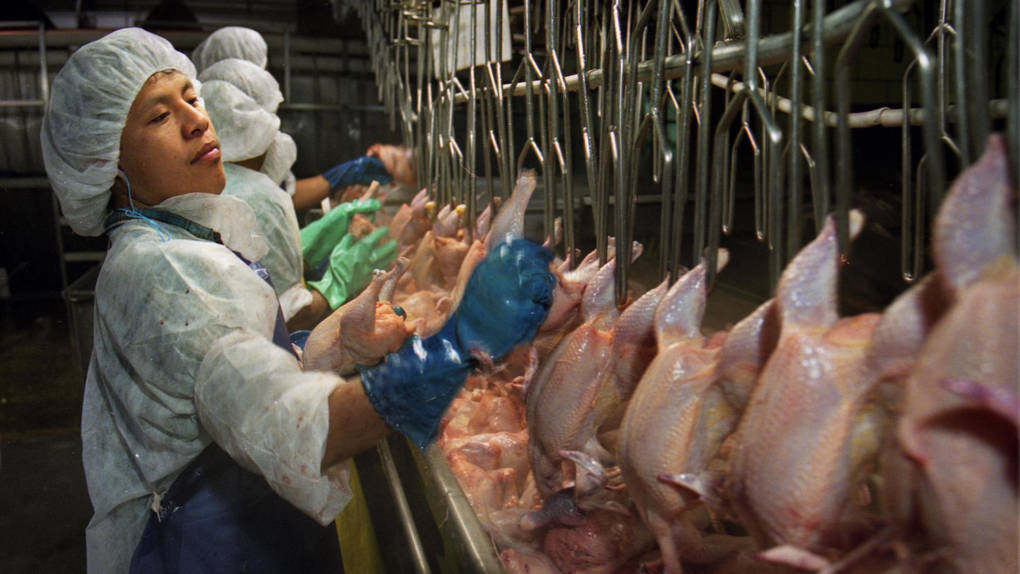
"caption": "Poultry workers at major U.S. meat-processing plants are highly susceptible to repetitive-motion injuries, denied bathroom breaks and are most often immigrants and refugees.",
"description": "Poultry workers at major U.S. meat-processing plants are highly susceptible to repetitive-motion injuries, denied bathroom breaks and are most often immigrants and refugees.",
"title": "Poultry workers at major U.S. meat-processing plants are highly susceptible to repetitive-motion injuries, denied bathroom breaks and are most often immigrants and refugees.",
"credit": "Earl Dotter/Oxfam",
"status": "inherit",
"isLoading": false,
"fetchFailed": false
},
"bayareabites_116976": {
"type": "attachments",
"id": "bayareabites_116976",
"meta": {
"index": "attachments_1716263798",
"site": "bayareabites",
"id": "116976",
"found": true
},
"parent": 116975,
"imgSizes": {
"small": {
"file": "https://ww2.kqed.org/app/uploads/sites/24/2017/04/jeremiahtower_5_approved-238ec218eacc0f1dbe328574ff3d503752d638d7-520x390.jpg",
"width": 520,
"mimeType": "image/jpeg",
"height": 390
},
"twentyfourteen-full-width": {
"file": "https://ww2.kqed.org/app/uploads/sites/24/2017/04/jeremiahtower_5_approved-238ec218eacc0f1dbe328574ff3d503752d638d7-1038x576.jpg",
"width": 1038,
"mimeType": "image/jpeg",
"height": 576
},
"thumbnail": {
"file": "https://ww2.kqed.org/app/uploads/sites/24/2017/04/jeremiahtower_5_approved-238ec218eacc0f1dbe328574ff3d503752d638d7-160x120.jpg",
"width": 160,
"mimeType": "image/jpeg",
"height": 120
},
"fd-sm": {
"file": "https://ww2.kqed.org/app/uploads/sites/24/2017/04/jeremiahtower_5_approved-238ec218eacc0f1dbe328574ff3d503752d638d7-960x720.jpg",
"width": 960,
"mimeType": "image/jpeg",
"height": 720
},
"post-thumbnail": {
"file": "https://ww2.kqed.org/app/uploads/sites/24/2017/04/jeremiahtower_5_approved-238ec218eacc0f1dbe328574ff3d503752d638d7-672x372.jpg",
"width": 672,
"mimeType": "image/jpeg",
"height": 372
},
"xsmall": {
"file": "https://ww2.kqed.org/app/uploads/sites/24/2017/04/jeremiahtower_5_approved-238ec218eacc0f1dbe328574ff3d503752d638d7-375x281.jpg",
"width": 375,
"mimeType": "image/jpeg",
"height": 281
},
"kqedFullSize": {
"file": "https://ww2.kqed.org/app/uploads/sites/24/2017/04/jeremiahtower_5_approved-238ec218eacc0f1dbe328574ff3d503752d638d7.jpg",
"width": 1442,
"height": 1081
},
"large": {
"file": "https://ww2.kqed.org/app/uploads/sites/24/2017/04/jeremiahtower_5_approved-238ec218eacc0f1dbe328574ff3d503752d638d7-1020x765.jpg",
"width": 1020,
"mimeType": "image/jpeg",
"height": 765
},
"xlarge": {
"file": "https://ww2.kqed.org/app/uploads/sites/24/2017/04/jeremiahtower_5_approved-238ec218eacc0f1dbe328574ff3d503752d638d7-1180x885.jpg",
"width": 1180,
"mimeType": "image/jpeg",
"height": 885
},
"guest-author-50": {
"file": "https://ww2.kqed.org/app/uploads/sites/24/2017/04/jeremiahtower_5_approved-238ec218eacc0f1dbe328574ff3d503752d638d7-50x50.jpg",
"width": 50,
"mimeType": "image/jpeg",
"height": 50
},
"guest-author-96": {
"file": "https://ww2.kqed.org/app/uploads/sites/24/2017/04/jeremiahtower_5_approved-238ec218eacc0f1dbe328574ff3d503752d638d7-96x96.jpg",
"width": 96,
"mimeType": "image/jpeg",
"height": 96
},
"medium": {
"file": "https://ww2.kqed.org/app/uploads/sites/24/2017/04/jeremiahtower_5_approved-238ec218eacc0f1dbe328574ff3d503752d638d7-800x600.jpg",
"width": 800,
"mimeType": "image/jpeg",
"height": 600
},
"guest-author-64": {
"file": "https://ww2.kqed.org/app/uploads/sites/24/2017/04/jeremiahtower_5_approved-238ec218eacc0f1dbe328574ff3d503752d638d7-64x64.jpg",
"width": 64,
"mimeType": "image/jpeg",
"height": 64
},
"guest-author-32": {
"file": "https://ww2.kqed.org/app/uploads/sites/24/2017/04/jeremiahtower_5_approved-238ec218eacc0f1dbe328574ff3d503752d638d7-32x32.jpg",
"width": 32,
"mimeType": "image/jpeg",
"height": 32
},
"fd-med": {
"file": "https://ww2.kqed.org/app/uploads/sites/24/2017/04/jeremiahtower_5_approved-238ec218eacc0f1dbe328574ff3d503752d638d7-1180x885.jpg",
"width": 1180,
"mimeType": "image/jpeg",
"height": 885
},
"detail": {
"file": "https://ww2.kqed.org/app/uploads/sites/24/2017/04/jeremiahtower_5_approved-238ec218eacc0f1dbe328574ff3d503752d638d7-150x150.jpg",
"width": 150,
"mimeType": "image/jpeg",
"height": 150
},
"medium_large": {
"file": "https://ww2.kqed.org/app/uploads/sites/24/2017/04/jeremiahtower_5_approved-238ec218eacc0f1dbe328574ff3d503752d638d7-768x576.jpg",
"width": 768,
"mimeType": "image/jpeg",
"height": 576
},
"guest-author-128": {
"file": "https://ww2.kqed.org/app/uploads/sites/24/2017/04/jeremiahtower_5_approved-238ec218eacc0f1dbe328574ff3d503752d638d7-128x128.jpg",
"width": 128,
"mimeType": "image/jpeg",
"height": 128
},
"xxsmall": {
"file": "https://ww2.kqed.org/app/uploads/sites/24/2017/04/jeremiahtower_5_approved-238ec218eacc0f1dbe328574ff3d503752d638d7-240x180.jpg",
"width": 240,
"mimeType": "image/jpeg",
"height": 180
}
},
"publishDate": 1493087635,
"modified": 1493087996,
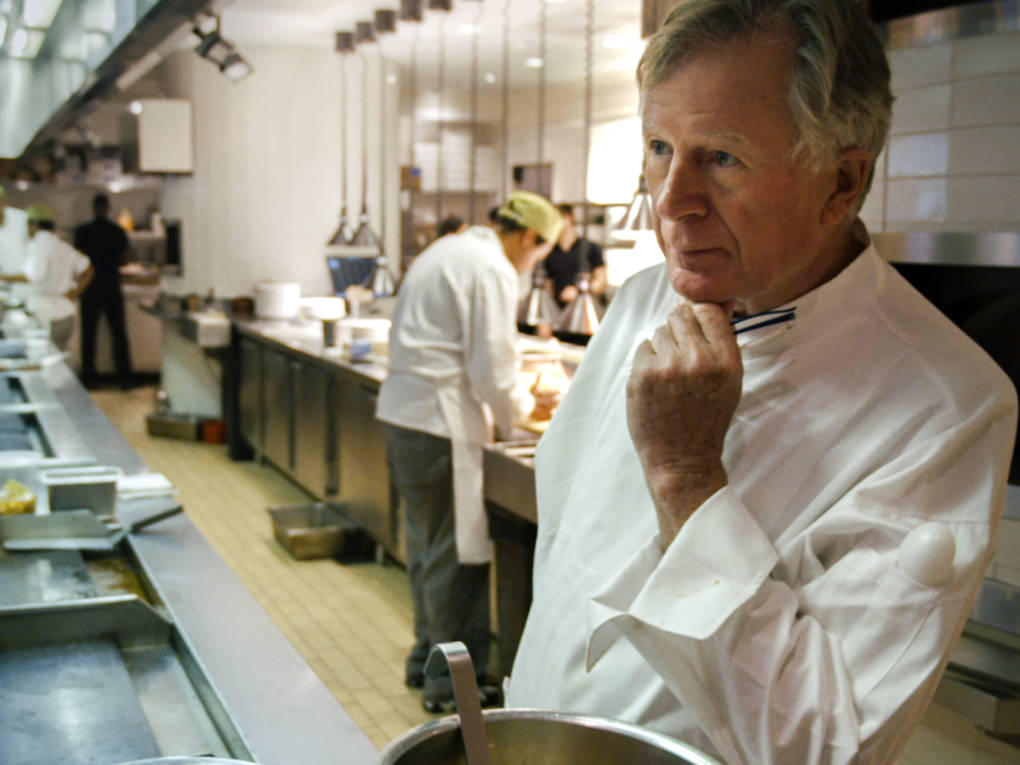
"caption": "Jeremiah Tower is the subject of \u003cem>The Last Magnificent\u003c/em>, a new documentary on his crash-and-burn career. It was produced by Anthony Bourdain, who feels that Tower has been denied his due in the American culinary pantheon.",
"description": "Jeremiah Tower is the subject of \u003cem>The Last Magnificent\u003c/em>, a new documentary on his crash-and-burn career. It was produced by Anthony Bourdain, who feels that Tower has been denied his due in the American culinary pantheon.",
"title": "Jeremiah Tower is the subject of The Last Magnificent, a new documentary on his crash-and-burn career. It was produced by Anthony Bourdain, who feels that Tower has been denied his due in the American culinary pantheon.",
"credit": "Courtesy of The Orchard",
"status": "inherit",
"isLoading": false,
"fetchFailed": false
},
"bayareabites_116953": {
"type": "attachments",
"id": "bayareabites_116953",
"meta": {
"index": "attachments_1716263798",
"site": "bayareabites",
"id": "116953",
"found": true
},
"parent": 116952,
"imgSizes": {
"small": {
"file": "https://ww2.kqed.org/app/uploads/sites/24/2017/04/gettyimages-521729610_custom-5a18efbae788d3a613faca583f530a43d9730cbc-520x350.jpg",
"width": 520,
"mimeType": "image/jpeg",
"height": 350
},
"twentyfourteen-full-width": {
"file": "https://ww2.kqed.org/app/uploads/sites/24/2017/04/gettyimages-521729610_custom-5a18efbae788d3a613faca583f530a43d9730cbc-1038x576.jpg",
"width": 1038,
"mimeType": "image/jpeg",
"height": 576
},
"thumbnail": {
"file": "https://ww2.kqed.org/app/uploads/sites/24/2017/04/gettyimages-521729610_custom-5a18efbae788d3a613faca583f530a43d9730cbc-160x108.jpg",
"width": 160,
"mimeType": "image/jpeg",
"height": 108
},
"fd-sm": {
"file": "https://ww2.kqed.org/app/uploads/sites/24/2017/04/gettyimages-521729610_custom-5a18efbae788d3a613faca583f530a43d9730cbc-960x646.jpg",
"width": 960,
"mimeType": "image/jpeg",
"height": 646
},
"post-thumbnail": {
"file": "https://ww2.kqed.org/app/uploads/sites/24/2017/04/gettyimages-521729610_custom-5a18efbae788d3a613faca583f530a43d9730cbc-672x372.jpg",
"width": 672,
"mimeType": "image/jpeg",
"height": 372
},
"xsmall": {
"file": "https://ww2.kqed.org/app/uploads/sites/24/2017/04/gettyimages-521729610_custom-5a18efbae788d3a613faca583f530a43d9730cbc-375x252.jpg",
"width": 375,
"mimeType": "image/jpeg",
"height": 252
},
"kqedFullSize": {
"file": "https://ww2.kqed.org/app/uploads/sites/24/2017/04/gettyimages-521729610_custom-5a18efbae788d3a613faca583f530a43d9730cbc.jpg",
"width": 1798,
"height": 1210
},
"large": {
"file": "https://ww2.kqed.org/app/uploads/sites/24/2017/04/gettyimages-521729610_custom-5a18efbae788d3a613faca583f530a43d9730cbc-1020x686.jpg",
"width": 1020,
"mimeType": "image/jpeg",
"height": 686
},
"xlarge": {
"file": "https://ww2.kqed.org/app/uploads/sites/24/2017/04/gettyimages-521729610_custom-5a18efbae788d3a613faca583f530a43d9730cbc-1180x794.jpg",
"width": 1180,
"mimeType": "image/jpeg",
"height": 794
},
"guest-author-50": {
"file": "https://ww2.kqed.org/app/uploads/sites/24/2017/04/gettyimages-521729610_custom-5a18efbae788d3a613faca583f530a43d9730cbc-50x50.jpg",
"width": 50,
"mimeType": "image/jpeg",
"height": 50
},
"guest-author-96": {
"file": "https://ww2.kqed.org/app/uploads/sites/24/2017/04/gettyimages-521729610_custom-5a18efbae788d3a613faca583f530a43d9730cbc-96x96.jpg",
"width": 96,
"mimeType": "image/jpeg",
"height": 96
},
"medium": {
"file": "https://ww2.kqed.org/app/uploads/sites/24/2017/04/gettyimages-521729610_custom-5a18efbae788d3a613faca583f530a43d9730cbc-800x538.jpg",
"width": 800,
"mimeType": "image/jpeg",
"height": 538
},
"guest-author-64": {
"file": "https://ww2.kqed.org/app/uploads/sites/24/2017/04/gettyimages-521729610_custom-5a18efbae788d3a613faca583f530a43d9730cbc-64x64.jpg",
"width": 64,
"mimeType": "image/jpeg",
"height": 64
},
"guest-author-32": {
"file": "https://ww2.kqed.org/app/uploads/sites/24/2017/04/gettyimages-521729610_custom-5a18efbae788d3a613faca583f530a43d9730cbc-32x32.jpg",
"width": 32,
"mimeType": "image/jpeg",
"height": 32
},
"fd-med": {
"file": "https://ww2.kqed.org/app/uploads/sites/24/2017/04/gettyimages-521729610_custom-5a18efbae788d3a613faca583f530a43d9730cbc-1180x794.jpg",
"width": 1180,
"mimeType": "image/jpeg",
"height": 794
},
"detail": {
"file": "https://ww2.kqed.org/app/uploads/sites/24/2017/04/gettyimages-521729610_custom-5a18efbae788d3a613faca583f530a43d9730cbc-150x150.jpg",
"width": 150,
"mimeType": "image/jpeg",
"height": 150
},
"medium_large": {
"file": "https://ww2.kqed.org/app/uploads/sites/24/2017/04/gettyimages-521729610_custom-5a18efbae788d3a613faca583f530a43d9730cbc-768x517.jpg",
"width": 768,
"mimeType": "image/jpeg",
"height": 517
},
"guest-author-128": {
"file": "https://ww2.kqed.org/app/uploads/sites/24/2017/04/gettyimages-521729610_custom-5a18efbae788d3a613faca583f530a43d9730cbc-128x128.jpg",
"width": 128,
"mimeType": "image/jpeg",
"height": 128
},
"xxsmall": {
"file": "https://ww2.kqed.org/app/uploads/sites/24/2017/04/gettyimages-521729610_custom-5a18efbae788d3a613faca583f530a43d9730cbc-240x162.jpg",
"width": 240,
"mimeType": "image/jpeg",
"height": 162
}
},
"publishDate": 1493048713,
"modified": 1493048977,
"caption": null,
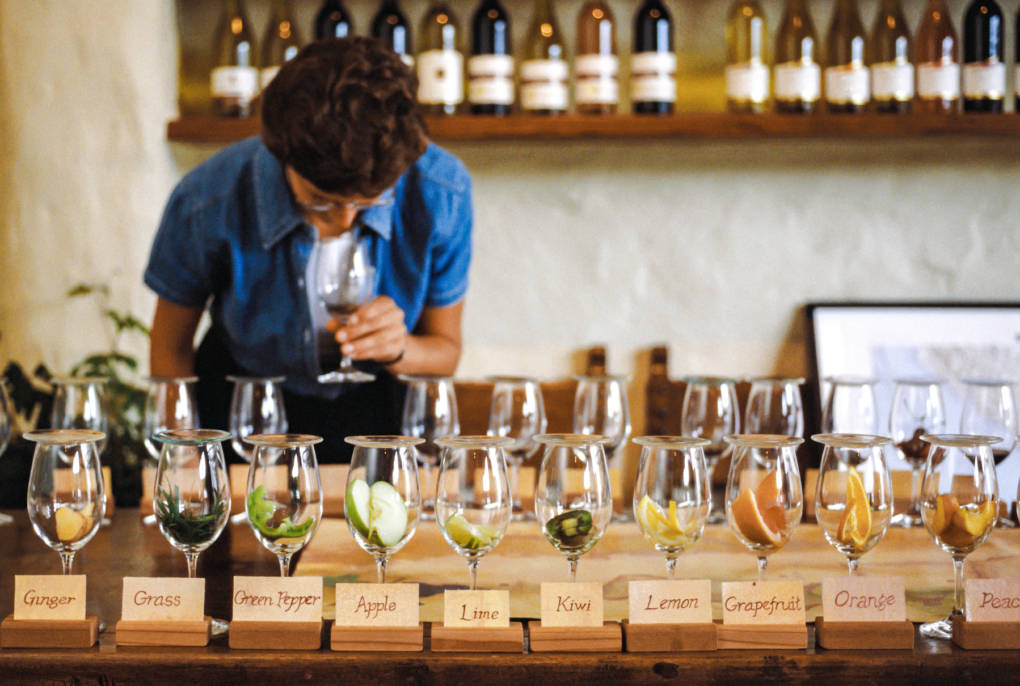
"description": "A visitor to the Robert Mondavi Winery in Napa Valley, Calif., attends a wine tasting class. Unlike food — which gives us sensory cues like crunchy and hot, as well as tasting, say, salty — with wine, it's all about tiny differences in taste and smell. The danger is in getting too p",
"title": "A visitor to the Robert Mondavi Winery in Napa Valley, Calif., attends a wine tasting class. Unlike food — which gives us sensory cues like crunchy and hot, as well as tasting, say, salty — with wine, it's all about tiny differences in taste and smell. The danger is in getting too poetic.",
"credit": "Charles O'Rear/Getty Images",
"status": "inherit",
"isLoading": false,
"fetchFailed": false
},
"bayareabites_116944": {
"type": "attachments",
"id": "bayareabites_116944",
"meta": {
"index": "attachments_1716263798",
"site": "bayareabites",
"id": "116944",
"found": true
},
"parent": 116943,
"imgSizes": {
"small": {
"file": "https://ww2.kqed.org/app/uploads/sites/24/2017/04/ugly-food-3-2_custom-cc92226033db64c1a304ffb194c5bb1bbda670ce-520x350.jpg",
"width": 520,
"mimeType": "image/jpeg",
"height": 350
},
"twentyfourteen-full-width": {
"file": "https://ww2.kqed.org/app/uploads/sites/24/2017/04/ugly-food-3-2_custom-cc92226033db64c1a304ffb194c5bb1bbda670ce-1038x576.jpg",
"width": 1038,
"mimeType": "image/jpeg",
"height": 576
},
"thumbnail": {
"file": "https://ww2.kqed.org/app/uploads/sites/24/2017/04/ugly-food-3-2_custom-cc92226033db64c1a304ffb194c5bb1bbda670ce-160x108.jpg",
"width": 160,
"mimeType": "image/jpeg",
"height": 108
},
"fd-sm": {
"file": "https://ww2.kqed.org/app/uploads/sites/24/2017/04/ugly-food-3-2_custom-cc92226033db64c1a304ffb194c5bb1bbda670ce-960x646.jpg",
"width": 960,
"mimeType": "image/jpeg",
"height": 646
},
"post-thumbnail": {
"file": "https://ww2.kqed.org/app/uploads/sites/24/2017/04/ugly-food-3-2_custom-cc92226033db64c1a304ffb194c5bb1bbda670ce-672x372.jpg",
"width": 672,
"mimeType": "image/jpeg",
"height": 372
},
"xsmall": {
"file": "https://ww2.kqed.org/app/uploads/sites/24/2017/04/ugly-food-3-2_custom-cc92226033db64c1a304ffb194c5bb1bbda670ce-375x252.jpg",
"width": 375,
"mimeType": "image/jpeg",
"height": 252
},
"kqedFullSize": {
"file": "https://ww2.kqed.org/app/uploads/sites/24/2017/04/ugly-food-3-2_custom-cc92226033db64c1a304ffb194c5bb1bbda670ce.jpg",
"width": 1979,
"height": 1332
},
"large": {
"file": "https://ww2.kqed.org/app/uploads/sites/24/2017/04/ugly-food-3-2_custom-cc92226033db64c1a304ffb194c5bb1bbda670ce-1020x687.jpg",
"width": 1020,
"mimeType": "image/jpeg",
"height": 687
},
"xlarge": {
"file": "https://ww2.kqed.org/app/uploads/sites/24/2017/04/ugly-food-3-2_custom-cc92226033db64c1a304ffb194c5bb1bbda670ce-1180x794.jpg",
"width": 1180,
"mimeType": "image/jpeg",
"height": 794
},
"guest-author-50": {
"file": "https://ww2.kqed.org/app/uploads/sites/24/2017/04/ugly-food-3-2_custom-cc92226033db64c1a304ffb194c5bb1bbda670ce-50x50.jpg",
"width": 50,
"mimeType": "image/jpeg",
"height": 50
},
"guest-author-96": {
"file": "https://ww2.kqed.org/app/uploads/sites/24/2017/04/ugly-food-3-2_custom-cc92226033db64c1a304ffb194c5bb1bbda670ce-96x96.jpg",
"width": 96,
"mimeType": "image/jpeg",
"height": 96
},
"medium": {
"file": "https://ww2.kqed.org/app/uploads/sites/24/2017/04/ugly-food-3-2_custom-cc92226033db64c1a304ffb194c5bb1bbda670ce-800x538.jpg",
"width": 800,
"mimeType": "image/jpeg",
"height": 538
},
"guest-author-64": {
"file": "https://ww2.kqed.org/app/uploads/sites/24/2017/04/ugly-food-3-2_custom-cc92226033db64c1a304ffb194c5bb1bbda670ce-64x64.jpg",
"width": 64,
"mimeType": "image/jpeg",
"height": 64
},
"guest-author-32": {
"file": "https://ww2.kqed.org/app/uploads/sites/24/2017/04/ugly-food-3-2_custom-cc92226033db64c1a304ffb194c5bb1bbda670ce-32x32.jpg",
"width": 32,
"mimeType": "image/jpeg",
"height": 32
},
"fd-lrg": {
"file": "https://ww2.kqed.org/app/uploads/sites/24/2017/04/ugly-food-3-2_custom-cc92226033db64c1a304ffb194c5bb1bbda670ce-1920x1292.jpg",
"width": 1920,
"mimeType": "image/jpeg",
"height": 1292
},
"fd-med": {
"file": "https://ww2.kqed.org/app/uploads/sites/24/2017/04/ugly-food-3-2_custom-cc92226033db64c1a304ffb194c5bb1bbda670ce-1180x794.jpg",
"width": 1180,
"mimeType": "image/jpeg",
"height": 794
},
"full-width": {
"file": "https://ww2.kqed.org/app/uploads/sites/24/2017/04/ugly-food-3-2_custom-cc92226033db64c1a304ffb194c5bb1bbda670ce-1920x1292.jpg",
"width": 1920,
"mimeType": "image/jpeg",
"height": 1292
},
"detail": {
"file": "https://ww2.kqed.org/app/uploads/sites/24/2017/04/ugly-food-3-2_custom-cc92226033db64c1a304ffb194c5bb1bbda670ce-150x150.jpg",
"width": 150,
"mimeType": "image/jpeg",
"height": 150
},
"medium_large": {
"file": "https://ww2.kqed.org/app/uploads/sites/24/2017/04/ugly-food-3-2_custom-cc92226033db64c1a304ffb194c5bb1bbda670ce-768x517.jpg",
"width": 768,
"mimeType": "image/jpeg",
"height": 517
},
"guest-author-128": {
"file": "https://ww2.kqed.org/app/uploads/sites/24/2017/04/ugly-food-3-2_custom-cc92226033db64c1a304ffb194c5bb1bbda670ce-128x128.jpg",
"width": 128,
"mimeType": "image/jpeg",
"height": 128
},
"xxsmall": {
"file": "https://ww2.kqed.org/app/uploads/sites/24/2017/04/ugly-food-3-2_custom-cc92226033db64c1a304ffb194c5bb1bbda670ce-240x162.jpg",
"width": 240,
"mimeType": "image/jpeg",
"height": 162
}
},
"publishDate": 1492842864,
"modified": 1492843189,
"caption": "Boiled octopus, a recipe for \"reliably tender, flavorful octopus that can be used as it is, or as a basis for fried or grilled octopus dishes,\" write Richard Horsey and Tim Wharton in Ugly Food. \"Octopus is also totally sustainable, very economical and incredibly versatile — the various methods of preparation and cooking lend it subtly different flavors,\" says Wharton.",
"description": "Boiled octopus, a recipe for \"reliably tender, flavorful octopus that can be used as it is, or as a basis for fried or grilled octopus dishes,\" write Richard Horsey and Tim Wharton in \u003cem>Ugly Food\u003c/em>. \"Octopus is also totally sustainable, very economical and incredibly versatile — the various methods of preparation and cooking lend it subtly different flavors,\" says Wharto",
"title": "Boiled octopus, a recipe for \"reliably tender, flavorful octopus that can be used as it is, or as a basis for fried or grilled octopus dishes,\" write Richard Horsey and Tim Wharton in Ugly Food. \"Octopus is also totally sustainable, very economical and incredibly versatile — the various methods of preparation and cooking lend it subtly different flavors,\" says Wharton.",
"credit": "Courtesy of Tanya Ghosh",
"status": "inherit",
"isLoading": false,
"fetchFailed": false
},
"bayareabites_116923": {
"type": "attachments",
"id": "bayareabites_116923",
"meta": {
"index": "attachments_1716263798",
"site": "bayareabites",
"id": "116923",
"found": true
},
"parent": 116922,
"imgSizes": {
"small": {
"file": "https://ww2.kqed.org/app/uploads/sites/24/2017/04/breadmold_wide-358f830f7abff5cfb5db1908eadb775ab701b99b-520x292.jpe",
"width": 520,
"mimeType": "image/jpeg",
"height": 292
},
"twentyfourteen-full-width": {
"file": "https://ww2.kqed.org/app/uploads/sites/24/2017/04/breadmold_wide-358f830f7abff5cfb5db1908eadb775ab701b99b-1038x576.jpe",
"width": 1038,
"mimeType": "image/jpeg",
"height": 576
},
"thumbnail": {
"file": "https://ww2.kqed.org/app/uploads/sites/24/2017/04/breadmold_wide-358f830f7abff5cfb5db1908eadb775ab701b99b-160x90.jpe",
"width": 160,
"mimeType": "image/jpeg",
"height": 90
},
"fd-sm": {
"file": "https://ww2.kqed.org/app/uploads/sites/24/2017/04/breadmold_wide-358f830f7abff5cfb5db1908eadb775ab701b99b-960x540.jpe",
"width": 960,
"mimeType": "image/jpeg",
"height": 540
},
"post-thumbnail": {
"file": "https://ww2.kqed.org/app/uploads/sites/24/2017/04/breadmold_wide-358f830f7abff5cfb5db1908eadb775ab701b99b-672x372.jpe",
"width": 672,
"mimeType": "image/jpeg",
"height": 372
},
"xsmall": {
"file": "https://ww2.kqed.org/app/uploads/sites/24/2017/04/breadmold_wide-358f830f7abff5cfb5db1908eadb775ab701b99b-375x211.jpe",
"width": 375,
"mimeType": "image/jpeg",
"height": 211
},
"kqedFullSize": {
"file": "https://ww2.kqed.org/app/uploads/sites/24/2017/04/breadmold_wide-358f830f7abff5cfb5db1908eadb775ab701b99b.jpe",
"width": 3000,
"height": 1687
},
"large": {
"file": "https://ww2.kqed.org/app/uploads/sites/24/2017/04/breadmold_wide-358f830f7abff5cfb5db1908eadb775ab701b99b-1020x574.jpe",
"width": 1020,
"mimeType": "image/jpeg",
"height": 574
},
"xlarge": {
"file": "https://ww2.kqed.org/app/uploads/sites/24/2017/04/breadmold_wide-358f830f7abff5cfb5db1908eadb775ab701b99b-1180x664.jpe",
"width": 1180,
"mimeType": "image/jpeg",
"height": 664
},
"guest-author-50": {
"file": "https://ww2.kqed.org/app/uploads/sites/24/2017/04/breadmold_wide-358f830f7abff5cfb5db1908eadb775ab701b99b-50x50.jpe",
"width": 50,
"mimeType": "image/jpeg",
"height": 50
},
"guest-author-96": {
"file": "https://ww2.kqed.org/app/uploads/sites/24/2017/04/breadmold_wide-358f830f7abff5cfb5db1908eadb775ab701b99b-96x96.jpe",
"width": 96,
"mimeType": "image/jpeg",
"height": 96
},
"medium": {
"file": "https://ww2.kqed.org/app/uploads/sites/24/2017/04/breadmold_wide-358f830f7abff5cfb5db1908eadb775ab701b99b-800x450.jpe",
"width": 800,
"mimeType": "image/jpeg",
"height": 450
},
"guest-author-64": {
"file": "https://ww2.kqed.org/app/uploads/sites/24/2017/04/breadmold_wide-358f830f7abff5cfb5db1908eadb775ab701b99b-64x64.jpe",
"width": 64,
"mimeType": "image/jpeg",
"height": 64
},
"guest-author-32": {
"file": "https://ww2.kqed.org/app/uploads/sites/24/2017/04/breadmold_wide-358f830f7abff5cfb5db1908eadb775ab701b99b-32x32.jpe",
"width": 32,
"mimeType": "image/jpeg",
"height": 32
},
"fd-lrg": {
"file": "https://ww2.kqed.org/app/uploads/sites/24/2017/04/breadmold_wide-358f830f7abff5cfb5db1908eadb775ab701b99b-1920x1080.jpe",
"width": 1920,
"mimeType": "image/jpeg",
"height": 1080
},
"fd-med": {
"file": "https://ww2.kqed.org/app/uploads/sites/24/2017/04/breadmold_wide-358f830f7abff5cfb5db1908eadb775ab701b99b-1180x664.jpe",
"width": 1180,
"mimeType": "image/jpeg",
"height": 664
},
"full-width": {
"file": "https://ww2.kqed.org/app/uploads/sites/24/2017/04/breadmold_wide-358f830f7abff5cfb5db1908eadb775ab701b99b-1920x1080.jpe",
"width": 1920,
"mimeType": "image/jpeg",
"height": 1080
},
"detail": {
"file": "https://ww2.kqed.org/app/uploads/sites/24/2017/04/breadmold_wide-358f830f7abff5cfb5db1908eadb775ab701b99b-150x150.jpe",
"width": 150,
"mimeType": "image/jpeg",
"height": 150
},
"medium_large": {
"file": "https://ww2.kqed.org/app/uploads/sites/24/2017/04/breadmold_wide-358f830f7abff5cfb5db1908eadb775ab701b99b-768x432.jpe",
"width": 768,
"mimeType": "image/jpeg",
"height": 432
},
"guest-author-128": {
"file": "https://ww2.kqed.org/app/uploads/sites/24/2017/04/breadmold_wide-358f830f7abff5cfb5db1908eadb775ab701b99b-128x128.jpe",
"width": 128,
"mimeType": "image/jpeg",
"height": 128
},
"xxsmall": {
"file": "https://ww2.kqed.org/app/uploads/sites/24/2017/04/breadmold_wide-358f830f7abff5cfb5db1908eadb775ab701b99b-240x135.jpe",
"width": 240,
"mimeType": "image/jpeg",
"height": 135
}
},
"publishDate": 1492792997,
"modified": 1492793315,
"caption": "You may be tempted to save a piece of a moldy loaf by discarding the fuzzy bits. But food safety experts say molds penetrate deeper into the food than what's visible to us. And eating moldy food comes with health risks.",
"description": "You may be tempted to save a piece of a moldy loaf by discarding the fuzzy bits. But food safety experts say molds penetrate deeper into the food than what's visible to us. And eating moldy food comes with health risks",
"title": "You may be tempted to save a piece of a moldy loaf by discarding the fuzzy bits. But food safety experts say molds penetrate deeper into the food than what's visible to us. And eating moldy food comes with health risks.",
"credit": "Alex Reynolds/NPR",
"status": "inherit",
"isLoading": false,
"fetchFailed": false
},
"bayareabites_113676": {
"type": "attachments",
"id": "bayareabites_113676",
"meta": {
"index": "attachments_1716263798",
"site": "bayareabites",
"id": "113676",
"found": true
},
"parent": 113675,
"imgSizes": {
"small": {
"file": "https://ww2.kqed.org/app/uploads/sites/24/2016/11/mindful-muffin-2-a0014580311dce60542fefeaad3c741c4929902c-520x390.jpg",
"width": 520,
"mimeType": "image/jpeg",
"height": 390
},
"twentyfourteen-full-width": {
"file": "https://ww2.kqed.org/app/uploads/sites/24/2016/11/mindful-muffin-2-a0014580311dce60542fefeaad3c741c4929902c-1038x576.jpg",
"width": 1038,
"mimeType": "image/jpeg",
"height": 576
},
"thumbnail": {
"file": "https://ww2.kqed.org/app/uploads/sites/24/2016/11/mindful-muffin-2-a0014580311dce60542fefeaad3c741c4929902c-160x120.jpg",
"width": 160,
"mimeType": "image/jpeg",
"height": 120
},
"fd-sm": {
"file": "https://ww2.kqed.org/app/uploads/sites/24/2016/11/mindful-muffin-2-a0014580311dce60542fefeaad3c741c4929902c-960x720.jpg",
"width": 960,
"mimeType": "image/jpeg",
"height": 720
},
"post-thumbnail": {
"file": "https://ww2.kqed.org/app/uploads/sites/24/2016/11/mindful-muffin-2-a0014580311dce60542fefeaad3c741c4929902c-672x372.jpg",
"width": 672,
"mimeType": "image/jpeg",
"height": 372
},
"xsmall": {
"file": "https://ww2.kqed.org/app/uploads/sites/24/2016/11/mindful-muffin-2-a0014580311dce60542fefeaad3c741c4929902c-375x281.jpg",
"width": 375,
"mimeType": "image/jpeg",
"height": 281
},
"kqedFullSize": {
"file": "https://ww2.kqed.org/app/uploads/sites/24/2016/11/mindful-muffin-2-a0014580311dce60542fefeaad3c741c4929902c.jpg",
"width": 2000,
"height": 1501
},
"large": {
"file": "https://ww2.kqed.org/app/uploads/sites/24/2016/11/mindful-muffin-2-a0014580311dce60542fefeaad3c741c4929902c-1020x766.jpg",
"width": 1020,
"mimeType": "image/jpeg",
"height": 766
},
"xlarge": {
"file": "https://ww2.kqed.org/app/uploads/sites/24/2016/11/mindful-muffin-2-a0014580311dce60542fefeaad3c741c4929902c-1180x886.jpg",
"width": 1180,
"mimeType": "image/jpeg",
"height": 886
},
"guest-author-50": {
"file": "https://ww2.kqed.org/app/uploads/sites/24/2016/11/mindful-muffin-2-a0014580311dce60542fefeaad3c741c4929902c-50x50.jpg",
"width": 50,
"mimeType": "image/jpeg",
"height": 50
},
"guest-author-96": {
"file": "https://ww2.kqed.org/app/uploads/sites/24/2016/11/mindful-muffin-2-a0014580311dce60542fefeaad3c741c4929902c-96x96.jpg",
"width": 96,
"mimeType": "image/jpeg",
"height": 96
},
"medium": {
"file": "https://ww2.kqed.org/app/uploads/sites/24/2016/11/mindful-muffin-2-a0014580311dce60542fefeaad3c741c4929902c-800x600.jpg",
"width": 800,
"mimeType": "image/jpeg",
"height": 600
},
"guest-author-64": {
"file": "https://ww2.kqed.org/app/uploads/sites/24/2016/11/mindful-muffin-2-a0014580311dce60542fefeaad3c741c4929902c-64x64.jpg",
"width": 64,
"mimeType": "image/jpeg",
"height": 64
},
"guest-author-32": {
"file": "https://ww2.kqed.org/app/uploads/sites/24/2016/11/mindful-muffin-2-a0014580311dce60542fefeaad3c741c4929902c-32x32.jpg",
"width": 32,
"mimeType": "image/jpeg",
"height": 32
},
"fd-lrg": {
"file": "https://ww2.kqed.org/app/uploads/sites/24/2016/11/mindful-muffin-2-a0014580311dce60542fefeaad3c741c4929902c-1920x1441.jpg",
"width": 1920,
"mimeType": "image/jpeg",
"height": 1441
},
"fd-med": {
"file": "https://ww2.kqed.org/app/uploads/sites/24/2016/11/mindful-muffin-2-a0014580311dce60542fefeaad3c741c4929902c-1180x886.jpg",
"width": 1180,
"mimeType": "image/jpeg",
"height": 886
},
"full-width": {
"file": "https://ww2.kqed.org/app/uploads/sites/24/2016/11/mindful-muffin-2-a0014580311dce60542fefeaad3c741c4929902c-1920x1441.jpg",
"width": 1920,
"mimeType": "image/jpeg",
"height": 1441
},
"detail": {
"file": "https://ww2.kqed.org/app/uploads/sites/24/2016/11/mindful-muffin-2-a0014580311dce60542fefeaad3c741c4929902c-150x150.jpg",
"width": 150,
"mimeType": "image/jpeg",
"height": 150
},
"medium_large": {
"file": "https://ww2.kqed.org/app/uploads/sites/24/2016/11/mindful-muffin-2-a0014580311dce60542fefeaad3c741c4929902c-768x576.jpg",
"width": 768,
"mimeType": "image/jpeg",
"height": 576
},
"guest-author-128": {
"file": "https://ww2.kqed.org/app/uploads/sites/24/2016/11/mindful-muffin-2-a0014580311dce60542fefeaad3c741c4929902c-128x128.jpg",
"width": 128,
"mimeType": "image/jpeg",
"height": 128
},
"xxsmall": {
"file": "https://ww2.kqed.org/app/uploads/sites/24/2016/11/mindful-muffin-2-a0014580311dce60542fefeaad3c741c4929902c-240x180.jpg",
"width": 240,
"mimeType": "image/jpeg",
"height": 180
}
},
"publishDate": 1479495509,
"modified": 1479495639,
"caption": "This election season, therapist Jean Fain found that making muffins as a meditative practice to be a reliable source of comfort and hope",
"description": "This election season, therapist Jean Fain found that making muffins as a meditative practice to be a reliable source of comfort and hope",
"title": "This election season, therapist Jean Fain found that making muffins as a meditative practice to be a reliable source of comfort and hope.",
"credit": "Jean Fain for NPR",
"status": "inherit",
"isLoading": false,
"fetchFailed": false
},
"bayareabites_113672": {
"type": "attachments",
"id": "bayareabites_113672",
"meta": {
"index": "attachments_1716263798",
"site": "bayareabites",
"id": "113672",
"found": true
},
"parent": 113671,
"imgSizes": {
"small": {
"file": "https://ww2.kqed.org/app/uploads/sites/24/2016/11/gettyimages-157333245-90_custom-d153c5ac95df8cf1509508adc0ecc266d06e46af-520x345.jpg",
"width": 520,
"mimeType": "image/jpeg",
"height": 345
},
"twentyfourteen-full-width": {
"file": "https://ww2.kqed.org/app/uploads/sites/24/2016/11/gettyimages-157333245-90_custom-d153c5ac95df8cf1509508adc0ecc266d06e46af-1038x576.jpg",
"width": 1038,
"mimeType": "image/jpeg",
"height": 576
},
"thumbnail": {
"file": "https://ww2.kqed.org/app/uploads/sites/24/2016/11/gettyimages-157333245-90_custom-d153c5ac95df8cf1509508adc0ecc266d06e46af-160x106.jpg",
"width": 160,
"mimeType": "image/jpeg",
"height": 106
},
"fd-sm": {
"file": "https://ww2.kqed.org/app/uploads/sites/24/2016/11/gettyimages-157333245-90_custom-d153c5ac95df8cf1509508adc0ecc266d06e46af-960x637.jpg",
"width": 960,
"mimeType": "image/jpeg",
"height": 637
},
"post-thumbnail": {
"file": "https://ww2.kqed.org/app/uploads/sites/24/2016/11/gettyimages-157333245-90_custom-d153c5ac95df8cf1509508adc0ecc266d06e46af-672x372.jpg",
"width": 672,
"mimeType": "image/jpeg",
"height": 372
},
"xsmall": {
"file": "https://ww2.kqed.org/app/uploads/sites/24/2016/11/gettyimages-157333245-90_custom-d153c5ac95df8cf1509508adc0ecc266d06e46af-375x249.jpg",
"width": 375,
"mimeType": "image/jpeg",
"height": 249
},
"kqedFullSize": {
"file": "https://ww2.kqed.org/app/uploads/sites/24/2016/11/gettyimages-157333245-90_custom-d153c5ac95df8cf1509508adc0ecc266d06e46af.jpg",
"width": 2000,
"height": 1328
},
"large": {
"file": "https://ww2.kqed.org/app/uploads/sites/24/2016/11/gettyimages-157333245-90_custom-d153c5ac95df8cf1509508adc0ecc266d06e46af-1020x677.jpg",
"width": 1020,
"mimeType": "image/jpeg",
"height": 677
},
"xlarge": {
"file": "https://ww2.kqed.org/app/uploads/sites/24/2016/11/gettyimages-157333245-90_custom-d153c5ac95df8cf1509508adc0ecc266d06e46af-1180x784.jpg",
"width": 1180,
"mimeType": "image/jpeg",
"height": 784
},
"guest-author-50": {
"file": "https://ww2.kqed.org/app/uploads/sites/24/2016/11/gettyimages-157333245-90_custom-d153c5ac95df8cf1509508adc0ecc266d06e46af-50x50.jpg",
"width": 50,
"mimeType": "image/jpeg",
"height": 50
},
"guest-author-96": {
"file": "https://ww2.kqed.org/app/uploads/sites/24/2016/11/gettyimages-157333245-90_custom-d153c5ac95df8cf1509508adc0ecc266d06e46af-96x96.jpg",
"width": 96,
"mimeType": "image/jpeg",
"height": 96
},
"medium": {
"file": "https://ww2.kqed.org/app/uploads/sites/24/2016/11/gettyimages-157333245-90_custom-d153c5ac95df8cf1509508adc0ecc266d06e46af-800x531.jpg",
"width": 800,
"mimeType": "image/jpeg",
"height": 531
},
"guest-author-64": {
"file": "https://ww2.kqed.org/app/uploads/sites/24/2016/11/gettyimages-157333245-90_custom-d153c5ac95df8cf1509508adc0ecc266d06e46af-64x64.jpg",
"width": 64,
"mimeType": "image/jpeg",
"height": 64
},
"guest-author-32": {
"file": "https://ww2.kqed.org/app/uploads/sites/24/2016/11/gettyimages-157333245-90_custom-d153c5ac95df8cf1509508adc0ecc266d06e46af-32x32.jpg",
"width": 32,
"mimeType": "image/jpeg",
"height": 32
},
"fd-lrg": {
"file": "https://ww2.kqed.org/app/uploads/sites/24/2016/11/gettyimages-157333245-90_custom-d153c5ac95df8cf1509508adc0ecc266d06e46af-1920x1275.jpg",
"width": 1920,
"mimeType": "image/jpeg",
"height": 1275
},
"fd-med": {
"file": "https://ww2.kqed.org/app/uploads/sites/24/2016/11/gettyimages-157333245-90_custom-d153c5ac95df8cf1509508adc0ecc266d06e46af-1180x784.jpg",
"width": 1180,
"mimeType": "image/jpeg",
"height": 784
},
"full-width": {
"file": "https://ww2.kqed.org/app/uploads/sites/24/2016/11/gettyimages-157333245-90_custom-d153c5ac95df8cf1509508adc0ecc266d06e46af-1920x1275.jpg",
"width": 1920,
"mimeType": "image/jpeg",
"height": 1275
},
"detail": {
"file": "https://ww2.kqed.org/app/uploads/sites/24/2016/11/gettyimages-157333245-90_custom-d153c5ac95df8cf1509508adc0ecc266d06e46af-150x150.jpg",
"width": 150,
"mimeType": "image/jpeg",
"height": 150
},
"medium_large": {
"file": "https://ww2.kqed.org/app/uploads/sites/24/2016/11/gettyimages-157333245-90_custom-d153c5ac95df8cf1509508adc0ecc266d06e46af-768x510.jpg",
"width": 768,
"mimeType": "image/jpeg",
"height": 510
},
"guest-author-128": {
"file": "https://ww2.kqed.org/app/uploads/sites/24/2016/11/gettyimages-157333245-90_custom-d153c5ac95df8cf1509508adc0ecc266d06e46af-128x128.jpg",
"width": 128,
"mimeType": "image/jpeg",
"height": 128
},
"xxsmall": {
"file": "https://ww2.kqed.org/app/uploads/sites/24/2016/11/gettyimages-157333245-90_custom-d153c5ac95df8cf1509508adc0ecc266d06e46af-240x159.jpg",
"width": 240,
"mimeType": "image/jpeg",
"height": 159
}
},
"publishDate": 1479448101,
"modified": 1479448220,
"caption": "The average cost of Thanksgiving dinner for 10 is $49.87 this year, down from last year's $50.11. One big change: a drop in the price of turkey.",
"description": "The average cost of Thanksgiving dinner for 10 is $49.87 this year, down from last year's $50.11. One big change: a drop in the price of turkey.",
"title": "The average cost of Thanksgiving dinner for 10 is $49.87 this year, down from last year's $50.11. One big change: a drop in the price of turkey.",
"credit": "Love_Life /Getty Images",
"status": "inherit",
"isLoading": false,
"fetchFailed": false
},
"bayareabites_113658": {
"type": "attachments",
"id": "bayareabites_113658",
"meta": {
"index": "attachments_1716263798",
"site": "bayareabites",
"id": "113658",
"found": true
},
"parent": 113657,
"imgSizes": {
"small": {
"file": "https://ww2.kqed.org/app/uploads/sites/24/2016/11/hydroponics-1_enl-425ef989d08a76685f1494987448d9d26bff79e4-520x345.jpg",
"width": 520,
"mimeType": "image/jpeg",
"height": 345
},
"twentyfourteen-full-width": {
"file": "https://ww2.kqed.org/app/uploads/sites/24/2016/11/hydroponics-1_enl-425ef989d08a76685f1494987448d9d26bff79e4-1038x576.jpg",
"width": 1038,
"mimeType": "image/jpeg",
"height": 576
},
"thumbnail": {
"file": "https://ww2.kqed.org/app/uploads/sites/24/2016/11/hydroponics-1_enl-425ef989d08a76685f1494987448d9d26bff79e4-160x106.jpg",
"width": 160,
"mimeType": "image/jpeg",
"height": 106
},
"fd-sm": {
"file": "https://ww2.kqed.org/app/uploads/sites/24/2016/11/hydroponics-1_enl-425ef989d08a76685f1494987448d9d26bff79e4-960x636.jpg",
"width": 960,
"mimeType": "image/jpeg",
"height": 636
},
"post-thumbnail": {
"file": "https://ww2.kqed.org/app/uploads/sites/24/2016/11/hydroponics-1_enl-425ef989d08a76685f1494987448d9d26bff79e4-672x372.jpg",
"width": 672,
"mimeType": "image/jpeg",
"height": 372
},
"xsmall": {
"file": "https://ww2.kqed.org/app/uploads/sites/24/2016/11/hydroponics-1_enl-425ef989d08a76685f1494987448d9d26bff79e4-375x248.jpg",
"width": 375,
"mimeType": "image/jpeg",
"height": 248
},
"kqedFullSize": {
"file": "https://ww2.kqed.org/app/uploads/sites/24/2016/11/hydroponics-1_enl-425ef989d08a76685f1494987448d9d26bff79e4.jpg",
"width": 3500,
"height": 2319
},
"large": {
"file": "https://ww2.kqed.org/app/uploads/sites/24/2016/11/hydroponics-1_enl-425ef989d08a76685f1494987448d9d26bff79e4-1020x676.jpg",
"width": 1020,
"mimeType": "image/jpeg",
"height": 676
},
"xlarge": {
"file": "https://ww2.kqed.org/app/uploads/sites/24/2016/11/hydroponics-1_enl-425ef989d08a76685f1494987448d9d26bff79e4-1180x782.jpg",
"width": 1180,
"mimeType": "image/jpeg",
"height": 782
},
"guest-author-50": {
"file": "https://ww2.kqed.org/app/uploads/sites/24/2016/11/hydroponics-1_enl-425ef989d08a76685f1494987448d9d26bff79e4-50x50.jpg",
"width": 50,
"mimeType": "image/jpeg",
"height": 50
},
"guest-author-96": {
"file": "https://ww2.kqed.org/app/uploads/sites/24/2016/11/hydroponics-1_enl-425ef989d08a76685f1494987448d9d26bff79e4-96x96.jpg",
"width": 96,
"mimeType": "image/jpeg",
"height": 96
},
"medium": {
"file": "https://ww2.kqed.org/app/uploads/sites/24/2016/11/hydroponics-1_enl-425ef989d08a76685f1494987448d9d26bff79e4-800x530.jpg",
"width": 800,
"mimeType": "image/jpeg",
"height": 530
},
"guest-author-64": {
"file": "https://ww2.kqed.org/app/uploads/sites/24/2016/11/hydroponics-1_enl-425ef989d08a76685f1494987448d9d26bff79e4-64x64.jpg",
"width": 64,
"mimeType": "image/jpeg",
"height": 64
},
"guest-author-32": {
"file": "https://ww2.kqed.org/app/uploads/sites/24/2016/11/hydroponics-1_enl-425ef989d08a76685f1494987448d9d26bff79e4-32x32.jpg",
"width": 32,
"mimeType": "image/jpeg",
"height": 32
},
"fd-lrg": {
"file": "https://ww2.kqed.org/app/uploads/sites/24/2016/11/hydroponics-1_enl-425ef989d08a76685f1494987448d9d26bff79e4-1920x1272.jpg",
"width": 1920,
"mimeType": "image/jpeg",
"height": 1272
},
"fd-med": {
"file": "https://ww2.kqed.org/app/uploads/sites/24/2016/11/hydroponics-1_enl-425ef989d08a76685f1494987448d9d26bff79e4-1180x782.jpg",
"width": 1180,
"mimeType": "image/jpeg",
"height": 782
},
"full-width": {
"file": "https://ww2.kqed.org/app/uploads/sites/24/2016/11/hydroponics-1_enl-425ef989d08a76685f1494987448d9d26bff79e4-1920x1272.jpg",
"width": 1920,
"mimeType": "image/jpeg",
"height": 1272
},
"detail": {
"file": "https://ww2.kqed.org/app/uploads/sites/24/2016/11/hydroponics-1_enl-425ef989d08a76685f1494987448d9d26bff79e4-150x150.jpg",
"width": 150,
"mimeType": "image/jpeg",
"height": 150
},
"medium_large": {
"file": "https://ww2.kqed.org/app/uploads/sites/24/2016/11/hydroponics-1_enl-425ef989d08a76685f1494987448d9d26bff79e4-768x509.jpg",
"width": 768,
"mimeType": "image/jpeg",
"height": 509
},
"guest-author-128": {
"file": "https://ww2.kqed.org/app/uploads/sites/24/2016/11/hydroponics-1_enl-425ef989d08a76685f1494987448d9d26bff79e4-128x128.jpg",
"width": 128,
"mimeType": "image/jpeg",
"height": 128
},
"xxsmall": {
"file": "https://ww2.kqed.org/app/uploads/sites/24/2016/11/hydroponics-1_enl-425ef989d08a76685f1494987448d9d26bff79e4-240x159.jpg",
"width": 240,
"mimeType": "image/jpeg",
"height": 159
}
},
"publishDate": 1479363782,
"modified": 1479364029,
"caption": "Baby basil is planted in PVC piping through which nutrient-infused water flows at regular intervals at a hydroponics farm in Nevada. This week, the National Organic Standards Board is set to vote on whether foods grown hydroponically can be sold as \"certified organic.\"",
"description": "Baby basil is planted in PVC piping through which nutrient-infused water flows at regular intervals at a hydroponics farm in Nevada. This week, the National Organic Standards Board is set to vote on whether foods grown hydroponically can be sold as \"certified organic.\"",
"title": "Baby basil is planted in PVC piping through which nutrient-infused water flows at regular intervals at a hydroponics farm in Nevada. This week, the National Organic Standards Board is set to vote on whether foods grown hydroponically can be sold as \"certified organic.\"",
"credit": "Julie Jacobson/AP",
"status": "inherit",
"isLoading": false,
"fetchFailed": false
},
"bayareabites_113643": {
"type": "attachments",
"id": "bayareabites_113643",
"meta": {
"index": "attachments_1716263798",
"site": "bayareabites",
"id": "113643",
"found": true
},
"parent": 113642,
"imgSizes": {
"small": {
"file": "https://ww2.kqed.org/app/uploads/sites/24/2016/11/cohen-1_enl-2809309f7d20b757ec848081385dc6b1b0b0ca83-520x342.jpg",
"width": 520,
"mimeType": "image/jpeg",
"height": 342
},
"twentyfourteen-full-width": {
"file": "https://ww2.kqed.org/app/uploads/sites/24/2016/11/cohen-1_enl-2809309f7d20b757ec848081385dc6b1b0b0ca83-1038x576.jpg",
"width": 1038,
"mimeType": "image/jpeg",
"height": 576
},
"thumbnail": {
"file": "https://ww2.kqed.org/app/uploads/sites/24/2016/11/cohen-1_enl-2809309f7d20b757ec848081385dc6b1b0b0ca83-160x105.jpg",
"width": 160,
"mimeType": "image/jpeg",
"height": 105
},
"fd-sm": {
"file": "https://ww2.kqed.org/app/uploads/sites/24/2016/11/cohen-1_enl-2809309f7d20b757ec848081385dc6b1b0b0ca83-960x631.jpg",
"width": 960,
"mimeType": "image/jpeg",
"height": 631
},
"post-thumbnail": {
"file": "https://ww2.kqed.org/app/uploads/sites/24/2016/11/cohen-1_enl-2809309f7d20b757ec848081385dc6b1b0b0ca83-672x372.jpg",
"width": 672,
"mimeType": "image/jpeg",
"height": 372
},
"xsmall": {
"file": "https://ww2.kqed.org/app/uploads/sites/24/2016/11/cohen-1_enl-2809309f7d20b757ec848081385dc6b1b0b0ca83-375x246.jpg",
"width": 375,
"mimeType": "image/jpeg",
"height": 246
},
"kqedFullSize": {
"file": "https://ww2.kqed.org/app/uploads/sites/24/2016/11/cohen-1_enl-2809309f7d20b757ec848081385dc6b1b0b0ca83.jpg",
"width": 3323,
"height": 2184
},
"large": {
"file": "https://ww2.kqed.org/app/uploads/sites/24/2016/11/cohen-1_enl-2809309f7d20b757ec848081385dc6b1b0b0ca83-1020x670.jpg",
"width": 1020,
"mimeType": "image/jpeg",
"height": 670
},
"xlarge": {
"file": "https://ww2.kqed.org/app/uploads/sites/24/2016/11/cohen-1_enl-2809309f7d20b757ec848081385dc6b1b0b0ca83-1180x776.jpg",
"width": 1180,
"mimeType": "image/jpeg",
"height": 776
},
"guest-author-50": {
"file": "https://ww2.kqed.org/app/uploads/sites/24/2016/11/cohen-1_enl-2809309f7d20b757ec848081385dc6b1b0b0ca83-50x50.jpg",
"width": 50,
"mimeType": "image/jpeg",
"height": 50
},
"guest-author-96": {
"file": "https://ww2.kqed.org/app/uploads/sites/24/2016/11/cohen-1_enl-2809309f7d20b757ec848081385dc6b1b0b0ca83-96x96.jpg",
"width": 96,
"mimeType": "image/jpeg",
"height": 96
},
"medium": {
"file": "https://ww2.kqed.org/app/uploads/sites/24/2016/11/cohen-1_enl-2809309f7d20b757ec848081385dc6b1b0b0ca83-800x526.jpg",
"width": 800,
"mimeType": "image/jpeg",
"height": 526
},
"guest-author-64": {
"file": "https://ww2.kqed.org/app/uploads/sites/24/2016/11/cohen-1_enl-2809309f7d20b757ec848081385dc6b1b0b0ca83-64x64.jpg",
"width": 64,
"mimeType": "image/jpeg",
"height": 64
},
"guest-author-32": {
"file": "https://ww2.kqed.org/app/uploads/sites/24/2016/11/cohen-1_enl-2809309f7d20b757ec848081385dc6b1b0b0ca83-32x32.jpg",
"width": 32,
"mimeType": "image/jpeg",
"height": 32
},
"fd-lrg": {
"file": "https://ww2.kqed.org/app/uploads/sites/24/2016/11/cohen-1_enl-2809309f7d20b757ec848081385dc6b1b0b0ca83-1920x1262.jpg",
"width": 1920,
"mimeType": "image/jpeg",
"height": 1262
},
"fd-med": {
"file": "https://ww2.kqed.org/app/uploads/sites/24/2016/11/cohen-1_enl-2809309f7d20b757ec848081385dc6b1b0b0ca83-1180x776.jpg",
"width": 1180,
"mimeType": "image/jpeg",
"height": 776
},
"full-width": {
"file": "https://ww2.kqed.org/app/uploads/sites/24/2016/11/cohen-1_enl-2809309f7d20b757ec848081385dc6b1b0b0ca83-1920x1262.jpg",
"width": 1920,
"mimeType": "image/jpeg",
"height": 1262
},
"detail": {
"file": "https://ww2.kqed.org/app/uploads/sites/24/2016/11/cohen-1_enl-2809309f7d20b757ec848081385dc6b1b0b0ca83-150x150.jpg",
"width": 150,
"mimeType": "image/jpeg",
"height": 150
},
"medium_large": {
"file": "https://ww2.kqed.org/app/uploads/sites/24/2016/11/cohen-1_enl-2809309f7d20b757ec848081385dc6b1b0b0ca83-768x505.jpg",
"width": 768,
"mimeType": "image/jpeg",
"height": 505
},
"guest-author-128": {
"file": "https://ww2.kqed.org/app/uploads/sites/24/2016/11/cohen-1_enl-2809309f7d20b757ec848081385dc6b1b0b0ca83-128x128.jpg",
"width": 128,
"mimeType": "image/jpeg",
"height": 128
},
"xxsmall": {
"file": "https://ww2.kqed.org/app/uploads/sites/24/2016/11/cohen-1_enl-2809309f7d20b757ec848081385dc6b1b0b0ca83-240x158.jpg",
"width": 240,
"mimeType": "image/jpeg",
"height": 158
}
},
"publishDate": 1479252614,
"modified": 1479252819,
"caption": "Leonard Cohen performs on stage at the Musikhalle in 1970 in Hamburg, Germany.",
"description": "Leonard Cohen performs on stage at the Musikhalle in 1970 in Hamburg, Germany.",
"title": "Leonard Cohen performs on stage at the Musikhalle in 1970 in Hamburg, Germany.",
"credit": "K & K Ulf Kruger OHG/Redferns/Getty Images",
"status": "inherit",
"isLoading": false,
"fetchFailed": false
},
"bayareabites_113630": {
"type": "attachments",
"id": "bayareabites_113630",
"meta": {
"index": "attachments_1716263798",
"site": "bayareabites",
"id": "113630",
"found": true
},
"parent": 113629,
"imgSizes": {
"small": {
"file": "https://ww2.kqed.org/app/uploads/sites/24/2016/11/halo-halo_sq-7665def75ea2afbab241a36691971aac62f561ef-520x520.jpg",
"width": 520,
"mimeType": "image/jpeg",
"height": 520
},
"twentyfourteen-full-width": {
"file": "https://ww2.kqed.org/app/uploads/sites/24/2016/11/halo-halo_sq-7665def75ea2afbab241a36691971aac62f561ef-1038x576.jpg",
"width": 1038,
"mimeType": "image/jpeg",
"height": 576
},
"thumbnail": {
"file": "https://ww2.kqed.org/app/uploads/sites/24/2016/11/halo-halo_sq-7665def75ea2afbab241a36691971aac62f561ef-160x160.jpg",
"width": 160,
"mimeType": "image/jpeg",
"height": 160
},
"fd-sm": {
"file": "https://ww2.kqed.org/app/uploads/sites/24/2016/11/halo-halo_sq-7665def75ea2afbab241a36691971aac62f561ef-960x960.jpg",
"width": 960,
"mimeType": "image/jpeg",
"height": 960
},
"post-thumbnail": {
"file": "https://ww2.kqed.org/app/uploads/sites/24/2016/11/halo-halo_sq-7665def75ea2afbab241a36691971aac62f561ef-672x372.jpg",
"width": 672,
"mimeType": "image/jpeg",
"height": 372
},
"xsmall": {
"file": "https://ww2.kqed.org/app/uploads/sites/24/2016/11/halo-halo_sq-7665def75ea2afbab241a36691971aac62f561ef-375x375.jpg",
"width": 375,
"mimeType": "image/jpeg",
"height": 375
},
"kqedFullSize": {
"file": "https://ww2.kqed.org/app/uploads/sites/24/2016/11/halo-halo_sq-7665def75ea2afbab241a36691971aac62f561ef.jpg",
"width": 1805,
"height": 1805
},
"large": {
"file": "https://ww2.kqed.org/app/uploads/sites/24/2016/11/halo-halo_sq-7665def75ea2afbab241a36691971aac62f561ef-1020x1020.jpg",
"width": 1020,
"mimeType": "image/jpeg",
"height": 1020
},
"xlarge": {
"file": "https://ww2.kqed.org/app/uploads/sites/24/2016/11/halo-halo_sq-7665def75ea2afbab241a36691971aac62f561ef-1180x1180.jpg",
"width": 1180,
"mimeType": "image/jpeg",
"height": 1180
},
"guest-author-50": {
"file": "https://ww2.kqed.org/app/uploads/sites/24/2016/11/halo-halo_sq-7665def75ea2afbab241a36691971aac62f561ef-50x50.jpg",
"width": 50,
"mimeType": "image/jpeg",
"height": 50
},
"guest-author-96": {
"file": "https://ww2.kqed.org/app/uploads/sites/24/2016/11/halo-halo_sq-7665def75ea2afbab241a36691971aac62f561ef-96x96.jpg",
"width": 96,
"mimeType": "image/jpeg",
"height": 96
},
"medium": {
"file": "https://ww2.kqed.org/app/uploads/sites/24/2016/11/halo-halo_sq-7665def75ea2afbab241a36691971aac62f561ef-800x800.jpg",
"width": 800,
"mimeType": "image/jpeg",
"height": 800
},
"guest-author-64": {
"file": "https://ww2.kqed.org/app/uploads/sites/24/2016/11/halo-halo_sq-7665def75ea2afbab241a36691971aac62f561ef-64x64.jpg",
"width": 64,
"mimeType": "image/jpeg",
"height": 64
},
"guest-author-32": {
"file": "https://ww2.kqed.org/app/uploads/sites/24/2016/11/halo-halo_sq-7665def75ea2afbab241a36691971aac62f561ef-32x32.jpg",
"width": 32,
"mimeType": "image/jpeg",
"height": 32
},
"fd-med": {
"file": "https://ww2.kqed.org/app/uploads/sites/24/2016/11/halo-halo_sq-7665def75ea2afbab241a36691971aac62f561ef-1180x1180.jpg",
"width": 1180,
"mimeType": "image/jpeg",
"height": 1180
},
"detail": {
"file": "https://ww2.kqed.org/app/uploads/sites/24/2016/11/halo-halo_sq-7665def75ea2afbab241a36691971aac62f561ef-150x150.jpg",
"width": 150,
"mimeType": "image/jpeg",
"height": 150
},
"medium_large": {
"file": "https://ww2.kqed.org/app/uploads/sites/24/2016/11/halo-halo_sq-7665def75ea2afbab241a36691971aac62f561ef-768x768.jpg",
"width": 768,
"mimeType": "image/jpeg",
"height": 768
},
"guest-author-128": {
"file": "https://ww2.kqed.org/app/uploads/sites/24/2016/11/halo-halo_sq-7665def75ea2afbab241a36691971aac62f561ef-128x128.jpg",
"width": 128,
"mimeType": "image/jpeg",
"height": 128
},
"xxsmall": {
"file": "https://ww2.kqed.org/app/uploads/sites/24/2016/11/halo-halo_sq-7665def75ea2afbab241a36691971aac62f561ef-240x240.jpg",
"width": 240,
"mimeType": "image/jpeg",
"height": 240
}
},
"publishDate": 1478897704,
"modified": 1478898142,
"caption": "During the hot and humid summers in the Philippines, salvation is found in the manna called halo-halo (HAH-loh HAH-loh), an iconic refresher.",
"description": "During the hot and humid summers in the Philippines, salvation is found in the manna called halo-halo (HAH-loh HAH-loh), an iconic refresher.",
"title": "During the hot and humid summers in the Philippines, salvation is found in the manna called halo-halo (HAH-loh HAH-loh), an iconic refresher.",
"credit": "Chris Danielle Tabangay/EyeEm/Getty Images",
"status": "inherit",
"isLoading": false,
"fetchFailed": false
},
"bayareabites_113623": {
"type": "attachments",
"id": "bayareabites_113623",
"meta": {
"index": "attachments_1716263798",
"site": "bayareabites",
"id": "113623",
"found": true
},
"parent": 113622,
"imgSizes": {
"small": {
"file": "https://ww2.kqed.org/app/uploads/sites/24/2016/11/orange-mule-kit-smirnoff-82-01b6042c3979407563f4ac67f6cc1e203c62f44a-520x390.jpg",
"width": 520,
"mimeType": "image/jpeg",
"height": 390
},
"twentyfourteen-full-width": {
"file": "https://ww2.kqed.org/app/uploads/sites/24/2016/11/orange-mule-kit-smirnoff-82-01b6042c3979407563f4ac67f6cc1e203c62f44a-1038x576.jpg",
"width": 1038,
"mimeType": "image/jpeg",
"height": 576
},
"thumbnail": {
"file": "https://ww2.kqed.org/app/uploads/sites/24/2016/11/orange-mule-kit-smirnoff-82-01b6042c3979407563f4ac67f6cc1e203c62f44a-160x120.jpg",
"width": 160,
"mimeType": "image/jpeg",
"height": 120
},
"fd-sm": {
"file": "https://ww2.kqed.org/app/uploads/sites/24/2016/11/orange-mule-kit-smirnoff-82-01b6042c3979407563f4ac67f6cc1e203c62f44a-960x720.jpg",
"width": 960,
"mimeType": "image/jpeg",
"height": 720
},
"post-thumbnail": {
"file": "https://ww2.kqed.org/app/uploads/sites/24/2016/11/orange-mule-kit-smirnoff-82-01b6042c3979407563f4ac67f6cc1e203c62f44a-672x372.jpg",
"width": 672,
"mimeType": "image/jpeg",
"height": 372
},
"xsmall": {
"file": "https://ww2.kqed.org/app/uploads/sites/24/2016/11/orange-mule-kit-smirnoff-82-01b6042c3979407563f4ac67f6cc1e203c62f44a-375x281.jpg",
"width": 375,
"mimeType": "image/jpeg",
"height": 281
},
"kqedFullSize": {
"file": "https://ww2.kqed.org/app/uploads/sites/24/2016/11/orange-mule-kit-smirnoff-82-01b6042c3979407563f4ac67f6cc1e203c62f44a.jpg",
"width": 2657,
"height": 1993
},
"large": {
"file": "https://ww2.kqed.org/app/uploads/sites/24/2016/11/orange-mule-kit-smirnoff-82-01b6042c3979407563f4ac67f6cc1e203c62f44a-1020x765.jpg",
"width": 1020,
"mimeType": "image/jpeg",
"height": 765
},
"xlarge": {
"file": "https://ww2.kqed.org/app/uploads/sites/24/2016/11/orange-mule-kit-smirnoff-82-01b6042c3979407563f4ac67f6cc1e203c62f44a-1180x885.jpg",
"width": 1180,
"mimeType": "image/jpeg",
"height": 885
},
"guest-author-50": {
"file": "https://ww2.kqed.org/app/uploads/sites/24/2016/11/orange-mule-kit-smirnoff-82-01b6042c3979407563f4ac67f6cc1e203c62f44a-50x50.jpg",
"width": 50,
"mimeType": "image/jpeg",
"height": 50
},
"guest-author-96": {
"file": "https://ww2.kqed.org/app/uploads/sites/24/2016/11/orange-mule-kit-smirnoff-82-01b6042c3979407563f4ac67f6cc1e203c62f44a-96x96.jpg",
"width": 96,
"mimeType": "image/jpeg",
"height": 96
},
"medium": {
"file": "https://ww2.kqed.org/app/uploads/sites/24/2016/11/orange-mule-kit-smirnoff-82-01b6042c3979407563f4ac67f6cc1e203c62f44a-800x600.jpg",
"width": 800,
"mimeType": "image/jpeg",
"height": 600
},
"guest-author-64": {
"file": "https://ww2.kqed.org/app/uploads/sites/24/2016/11/orange-mule-kit-smirnoff-82-01b6042c3979407563f4ac67f6cc1e203c62f44a-64x64.jpg",
"width": 64,
"mimeType": "image/jpeg",
"height": 64
},
"guest-author-32": {
"file": "https://ww2.kqed.org/app/uploads/sites/24/2016/11/orange-mule-kit-smirnoff-82-01b6042c3979407563f4ac67f6cc1e203c62f44a-32x32.jpg",
"width": 32,
"mimeType": "image/jpeg",
"height": 32
},
"fd-lrg": {
"file": "https://ww2.kqed.org/app/uploads/sites/24/2016/11/orange-mule-kit-smirnoff-82-01b6042c3979407563f4ac67f6cc1e203c62f44a-1920x1440.jpg",
"width": 1920,
"mimeType": "image/jpeg",
"height": 1440
},
"fd-med": {
"file": "https://ww2.kqed.org/app/uploads/sites/24/2016/11/orange-mule-kit-smirnoff-82-01b6042c3979407563f4ac67f6cc1e203c62f44a-1180x885.jpg",
"width": 1180,
"mimeType": "image/jpeg",
"height": 885
},
"full-width": {
"file": "https://ww2.kqed.org/app/uploads/sites/24/2016/11/orange-mule-kit-smirnoff-82-01b6042c3979407563f4ac67f6cc1e203c62f44a-1920x1440.jpg",
"width": 1920,
"mimeType": "image/jpeg",
"height": 1440
},
"detail": {
"file": "https://ww2.kqed.org/app/uploads/sites/24/2016/11/orange-mule-kit-smirnoff-82-01b6042c3979407563f4ac67f6cc1e203c62f44a-150x150.jpg",
"width": 150,
"mimeType": "image/jpeg",
"height": 150
},
"medium_large": {
"file": "https://ww2.kqed.org/app/uploads/sites/24/2016/11/orange-mule-kit-smirnoff-82-01b6042c3979407563f4ac67f6cc1e203c62f44a-768x576.jpg",
"width": 768,
"mimeType": "image/jpeg",
"height": 576
},
"guest-author-128": {
"file": "https://ww2.kqed.org/app/uploads/sites/24/2016/11/orange-mule-kit-smirnoff-82-01b6042c3979407563f4ac67f6cc1e203c62f44a-128x128.jpg",
"width": 128,
"mimeType": "image/jpeg",
"height": 128
},
"xxsmall": {
"file": "https://ww2.kqed.org/app/uploads/sites/24/2016/11/orange-mule-kit-smirnoff-82-01b6042c3979407563f4ac67f6cc1e203c62f44a-240x180.jpg",
"width": 240,
"mimeType": "image/jpeg",
"height": 180
}
},
"publishDate": 1478728741,
"modified": 1478729115,
"caption": "As meal kits gain market share, craft cocktail subscription boxes have followed. Each service has a different take on the model. Some, like Cocktail Courier, deliver mini bottles of alcohol — just enough to make the featured recipe, like the ingredients for an Orange Mule.",
"description": "As meal kits gain market share, craft cocktail subscription boxes have followed. Each service has a different take on the model. Some, like Cocktail Courier, deliver mini bottles of alcohol — just enough to make the featured recipe, like the ingredients for an Orange Mule.",
"title": "As meal kits gain market share, craft cocktail subscription boxes have followed. Each service has a different take on the model. Some, like Cocktail Courier, deliver mini bottles of alcohol — just enough to make the featured recipe, like the ingredients for an Orange Mule (above).",
"credit": "Jeff Schear",
"status": "inherit",
"isLoading": false,
"fetchFailed": false
},
"bayareabites_113617": {
"type": "attachments",
"id": "bayareabites_113617",
"meta": {
"index": "attachments_1716263798",
"site": "bayareabites",
"id": "113617",
"found": true
},
"parent": 113616,
"imgSizes": {
"small": {
"file": "https://ww2.kqed.org/app/uploads/sites/24/2016/11/wine-cheese-341b82af670681228500ecf8f21e53d9caabb8b1-520x390.jpg",
"width": 520,
"mimeType": "image/jpeg",
"height": 390
},
"twentyfourteen-full-width": {
"file": "https://ww2.kqed.org/app/uploads/sites/24/2016/11/wine-cheese-341b82af670681228500ecf8f21e53d9caabb8b1-1038x576.jpg",
"width": 1038,
"mimeType": "image/jpeg",
"height": 576
},
"thumbnail": {
"file": "https://ww2.kqed.org/app/uploads/sites/24/2016/11/wine-cheese-341b82af670681228500ecf8f21e53d9caabb8b1-160x120.jpg",
"width": 160,
"mimeType": "image/jpeg",
"height": 120
},
"fd-sm": {
"file": "https://ww2.kqed.org/app/uploads/sites/24/2016/11/wine-cheese-341b82af670681228500ecf8f21e53d9caabb8b1-960x720.jpg",
"width": 960,
"mimeType": "image/jpeg",
"height": 720
},
"post-thumbnail": {
"file": "https://ww2.kqed.org/app/uploads/sites/24/2016/11/wine-cheese-341b82af670681228500ecf8f21e53d9caabb8b1-672x372.jpg",
"width": 672,
"mimeType": "image/jpeg",
"height": 372
},
"xsmall": {
"file": "https://ww2.kqed.org/app/uploads/sites/24/2016/11/wine-cheese-341b82af670681228500ecf8f21e53d9caabb8b1-375x281.jpg",
"width": 375,
"mimeType": "image/jpeg",
"height": 281
},
"kqedFullSize": {
"file": "https://ww2.kqed.org/app/uploads/sites/24/2016/11/wine-cheese-341b82af670681228500ecf8f21e53d9caabb8b1.jpg",
"width": 1498,
"height": 1124
},
"large": {
"file": "https://ww2.kqed.org/app/uploads/sites/24/2016/11/wine-cheese-341b82af670681228500ecf8f21e53d9caabb8b1-1020x765.jpg",
"width": 1020,
"mimeType": "image/jpeg",
"height": 765
},
"xlarge": {
"file": "https://ww2.kqed.org/app/uploads/sites/24/2016/11/wine-cheese-341b82af670681228500ecf8f21e53d9caabb8b1-1180x885.jpg",
"width": 1180,
"mimeType": "image/jpeg",
"height": 885
},
"guest-author-50": {
"file": "https://ww2.kqed.org/app/uploads/sites/24/2016/11/wine-cheese-341b82af670681228500ecf8f21e53d9caabb8b1-50x50.jpg",
"width": 50,
"mimeType": "image/jpeg",
"height": 50
},
"guest-author-96": {
"file": "https://ww2.kqed.org/app/uploads/sites/24/2016/11/wine-cheese-341b82af670681228500ecf8f21e53d9caabb8b1-96x96.jpg",
"width": 96,
"mimeType": "image/jpeg",
"height": 96
},
"medium": {
"file": "https://ww2.kqed.org/app/uploads/sites/24/2016/11/wine-cheese-341b82af670681228500ecf8f21e53d9caabb8b1-800x600.jpg",
"width": 800,
"mimeType": "image/jpeg",
"height": 600
},
"guest-author-64": {
"file": "https://ww2.kqed.org/app/uploads/sites/24/2016/11/wine-cheese-341b82af670681228500ecf8f21e53d9caabb8b1-64x64.jpg",
"width": 64,
"mimeType": "image/jpeg",
"height": 64
},
"guest-author-32": {
"file": "https://ww2.kqed.org/app/uploads/sites/24/2016/11/wine-cheese-341b82af670681228500ecf8f21e53d9caabb8b1-32x32.jpg",
"width": 32,
"mimeType": "image/jpeg",
"height": 32
},
"fd-med": {
"file": "https://ww2.kqed.org/app/uploads/sites/24/2016/11/wine-cheese-341b82af670681228500ecf8f21e53d9caabb8b1-1180x885.jpg",
"width": 1180,
"mimeType": "image/jpeg",
"height": 885
},
"detail": {
"file": "https://ww2.kqed.org/app/uploads/sites/24/2016/11/wine-cheese-341b82af670681228500ecf8f21e53d9caabb8b1-150x150.jpg",
"width": 150,
"mimeType": "image/jpeg",
"height": 150
},
"medium_large": {
"file": "https://ww2.kqed.org/app/uploads/sites/24/2016/11/wine-cheese-341b82af670681228500ecf8f21e53d9caabb8b1-768x576.jpg",
"width": 768,
"mimeType": "image/jpeg",
"height": 576
},
"guest-author-128": {
"file": "https://ww2.kqed.org/app/uploads/sites/24/2016/11/wine-cheese-341b82af670681228500ecf8f21e53d9caabb8b1-128x128.jpg",
"width": 128,
"mimeType": "image/jpeg",
"height": 128
},
"xxsmall": {
"file": "https://ww2.kqed.org/app/uploads/sites/24/2016/11/wine-cheese-341b82af670681228500ecf8f21e53d9caabb8b1-240x180.jpg",
"width": 240,
"mimeType": "image/jpeg",
"height": 180
}
},
"publishDate": 1478660537,
"modified": 1478661132,
"caption": "Red and white wine in glasses with a cheese platter of a variety of cheeses with crackers and bread",
"description": "Red and white wine in glasses with a cheese platter of a variety of cheeses with crackers and bread",
"title": "Red and white wine in glasses with a cheese platter of a variety of cheeses with crackers and bread",
"credit": "Virginia Star/Getty Images",
"status": "inherit",
"isLoading": false,
"fetchFailed": false
}
},
"audioPlayerReducer": {
"postId": "stream_live",
"isPaused": true,
"isPlaying": false,
"pfsActive": false,
"pledgeModalIsOpen": true,
"playerDrawerIsOpen": false,
"liveAudioPlayStartedAt": 0,
"liveAudioPlayContext": ""
},
"authorsReducer": {
"byline_bayareabites_117000": {
"type": "authors",
"id": "byline_bayareabites_117000",
"meta": {
"override": true
},
"slug": "byline_bayareabites_117000",
"name": "Peggy Lowe, \u003cstrong>\u003ca href=\"http://www.npr.org/sections/thesalt/2017/04/26/525736888/tyson-foods-promises-better-conditions-and-safety-for-meat-workers\">NPR Food\u003c/a>\u003c/strong>",
"isLoading": false
},
"byline_bayareabites_116975": {
"type": "authors",
"id": "byline_bayareabites_116975",
"meta": {
"override": true
},
"slug": "byline_bayareabites_116975",
"name": "Nina Martyris, \u003cstrong>\u003ca href=\"http://www.npr.org/\">NPR Food\u003c/a>\u003c/strong>",
"isLoading": false
},
"byline_bayareabites_116952": {
"type": "authors",
"id": "byline_bayareabites_116952",
"meta": {
"override": true
},
"slug": "byline_bayareabites_116952",
"name": "Tove Danovich, \u003cstrong>\u003ca href=\"http://www.npr.org/sections/thesalt/2017/04/10/522748035/oaky-with-notes-of-bs-why-wine-tasting-struggles-to-get-it-on-the-nose\">NPR Food\u003c/a>\u003c/strong>",
"isLoading": false
},
"byline_bayareabites_116943": {
"type": "authors",
"id": "byline_bayareabites_116943",
"meta": {
"override": true
},
"slug": "byline_bayareabites_116943",
"name": "Stephen Phillips, \u003cstrong>\u003ca href=\"http://www.npr.org/sections/thesalt/2017/04/20/524725995/the-truth-about-ugly-food-theyre-delicious-abundant-and-good-for-the-planet\">NPR Food\u003c/a>\u003c/strong>",
"isLoading": false
},
"byline_bayareabites_116922": {
"type": "authors",
"id": "byline_bayareabites_116922",
"meta": {
"override": true
},
"slug": "byline_bayareabites_116922",
"name": "Natalie Jacewicz, \u003cstrong>\u003ca href=\"http://www.npr.org/sections/thesalt/2017/04/21/523647669/is-it-safe-to-eat-moldy-bread\">NPR Food\u003c/a>\u003c/strong>",
"isLoading": false
},
"byline_bayareabites_113675": {
"type": "authors",
"id": "byline_bayareabites_113675",
"meta": {
"override": true
},
"slug": "byline_bayareabites_113675",
"name": "Jean Fain, \u003ca href=\"https://ww2.kqed.org/bayareabites/authors/nprfood/\">NPR Food\u003c/a>",
"isLoading": false
},
"byline_bayareabites_113671": {
"type": "authors",
"id": "byline_bayareabites_113671",
"meta": {
"override": true
},
"slug": "byline_bayareabites_113671",
"name": "Maria Hollenhorst, \u003ca href=\"https://ww2.kqed.org/bayareabites/authors/nprfood/\">NPR Food\u003c/a>",
"isLoading": false
},
"byline_bayareabites_113657": {
"type": "authors",
"id": "byline_bayareabites_113657",
"meta": {
"override": true
},
"slug": "byline_bayareabites_113657",
"name": "Rebecca Sananes, \u003ca href=\"https://ww2.kqed.org/bayareabites/author/nprfood/\">NPR Food\u003c/a>",
"isLoading": false
},
"byline_bayareabites_113642": {
"type": "authors",
"id": "byline_bayareabites_113642",
"meta": {
"override": true
},
"slug": "byline_bayareabites_113642",
"name": "Nina Martyris, \u003ca href=\"https://ww2.kqed.org/bayareabites/author/nprfood/\">NPR Food\u003c/a>",
"isLoading": false
},
"byline_bayareabites_113629": {
"type": "authors",
"id": "byline_bayareabites_113629",
"meta": {
"override": true
},
"slug": "byline_bayareabites_113629",
"name": "Wilma B. Consul, \u003ca href=\"https://ww2.kqed.org/bayareabites/author/nprfood/\">NPR Food\u003c/a>",
"isLoading": false
},
"byline_bayareabites_113622": {
"type": "authors",
"id": "byline_bayareabites_113622",
"meta": {
"override": true
},
"slug": "byline_bayareabites_113622",
"name": "Jodi Helmer, \u003ca href=\"https://ww2.kqed.org/bayareabites/author/nprfood/\">NPR Food\u003c/a>",
"isLoading": false
},
"byline_bayareabites_113616": {
"type": "authors",
"id": "byline_bayareabites_113616",
"meta": {
"override": true
},
"slug": "byline_bayareabites_113616",
"name": "Jeremy Cherfas, \u003ca href=\"https://ww2.kqed.org/bayareabites/author/nprfood/\">NPR Food\u003c/a>",
"isLoading": false
}
},
"pagesReducer": {
"bayareabites_category_npr-food": {
"type": "terms",
"id": "bayareabites_10916",
"meta": {
"index": "terms_1716263798",
"site": "bayareabites",
"id": "10916",
"score": 13.894413
},
"featImg": null,
"name": "NPR food",
"description": null,
"taxonomy": "category",
"headData": {
"twImgId": null,
"twTitle": null,
"ogTitle": null,
"ogImgId": null,
"twDescription": null,
"description": null,
"title": "NPR food Archives | KQED Bay Area Bites",
"ogDescription": null
},
"ttid": 5375,
"slug": "npr-food",
"isLoading": false,
"title": "NPR food",
"pageMeta": {
"site": "bayareabites",
"WpPageTemplate": "page-topic-editorial",
"currentPage": 11
},
"blocks": [
{
"blockName": "kqed/post-list",
"attrs": {
"layout": "cardArticle2",
"query": "posts/bayareabites?category=npr-food",
"seeMore": false,
"paginated": true,
"page": 11
}
},
{
"blockName": "kqed/ad"
}
]
}
},
"pfsSessionReducer": {},
"postsReducer": {
"stream_live": {
"type": "live",
"id": "stream_live",
"audioUrl": "https://hls.kqed.org/hls/kqed_app/playlist.m3u8",
"title": "Live Stream",
"excerpt": "Live Stream information currently unavailable.",
"link": "/radio",
"featImg": "",
"label": {
"name": "KQED Live",
"link": "/"
}
},
"stream_kqedNewscast": {
"type": "posts",
"id": "stream_kqedNewscast",
"audioUrl": "https://www.kqed.org/.stream/anon/radio/RDnews/newscast.mp3?_=1",
"title": "KQED Newscast",
"featImg": "",
"label": {
"name": "88.5 FM",
"link": "/"
}
},
"bayareabites_117000": {
"type": "posts",
"id": "bayareabites_117000",
"meta": {
"index": "posts_1716263798",
"site": "bayareabites",
"id": "117000",
"score": null,
"sort": [
1493233726000
]
},
"parent": 0,
"labelTerm": {
"site": "bayareabites"
},
"blocks": [],
"publishDate": 1493233726,
"format": "standard",
"disqusTitle": "Tyson Foods Promises Better Conditions And Safety For Meat Workers",
"title": "Tyson Foods Promises Better Conditions And Safety For Meat Workers",
"headTitle": "Bay Area Bites | KQED Food",
"content": "\u003cp>Under pressure from worker advocates and growing consumer awareness, Tyson Foods on Wednesday promised better conditions for employees at its meat-processing plants.\u003c/p>\n\u003cp>Tyson, in a rare move for an industry heavily criticized for lack of worker safeguards, announced it would provide regularly scheduled bathroom breaks, give more attention to line speeds at plants, offer training on workers' rights and establish safety councils that include employees.\u003c/p>\n\u003cp>The initiatives are an expansion of a workplace safety pilot program launched in 2015 and social compliance audits begun in 2012, says Gary Mickelson, a Tyson spokesman. They are also part of \u003ca href=\"http://ir.tyson.com/investor-relations/news-releases/news-releases-details/2016/Tom-Hayes-to-Succeed-Donnie-Smith-as-CEO-of-Tyson-Foods-on-December-31-2016/default.aspx\">new CEO Tom Hayes'\u003c/a> deeper focus on sustainability, Mickelson says.\u003c/p>\n\u003cp>The announcement was made in conjunction with Oxfam America, an anti-poverty group that has long pushed for such concessions, and the United Food and Commercial Workers International Union, the primary union for 70,000 U.S. poultry workers.\u003c/p>\n\u003cp>A \u003ca href=\"http://harvestpublicmedia.org/topic/dangerous-jobs-cheap-meat\">Harvest Public Media investigation\u003c/a> found that the more than 500,000 men and women who work in slaughterhouses and meat-processing plants have some of the most dangerous factory jobs in America. Government fines for abuses are low and lines speeds are so fast that workers are often crippled for life with repetitive motion problems, the investigation found.\u003c/p>\n\u003cp>[ad fullwidth]\u003c/p>\n\u003cp>In a \u003ca href=\"http://www.kunc.org/post/poultry-plant-workers-face-abuse-job-report-says\">report issued last year called \"No Relief,\"\u003c/a> Oxfam charged that workers at the four largest U.S. poultry companies — Tyson Foods, Sanderson Farms, Perdue Farms and Pilgrim's Pride — are routinely denied bathroom breaks, forcing some to wear adult diapers to work and others to urinate on themselves in order to avoid retribution from supervisors.\u003c/p>\n\u003cp>Oxfam and other worker advocates want to use consumers as a lever to push companies to make changes. Without pressure from grocery-shoppers – much like buyers' growing concerns about animal welfare issues and antibiotic use – food companies have been slow to respond, says Oliver Gottfried, a senior campaign strategist for Oxfam America.\u003c/p>\n\u003cp>https://www.youtube.com/watch?v=KctDrk6yVsY\u003c/p>\n\u003cp>\"Consumers are becoming more aware of that and we feel like once they learned what was happening to the hands that were feeding them, the hands that were processing the chicken, that they'd want to speak out about it,\" Gottfried says. \"And they have.\"\u003c/p>\n\u003cp>Gottfried \u003ca href=\"https://secure2.oxfamamerica.org/page/s/stand_with_poultry_workers\">points to an Oxfam petition\u003c/a>, signed by 150,000 people, demanding that Tyson Foods, Sanderson Farms, Perdue Farms and Pilgrim's Pride offer fair and safe working conditions.\u003c/p>\n\u003cp>Tyson, based in Springdale, Ark., employs 114,000 people, including roughly 95,000 in the company's U.S. chicken, beef, pork and prepared foods facilities.\u003c/p>\n\u003cp>Wednesday's announcement was among the first for incoming Chief Operating Officer Noel White, who was named to the spot in February \u003ca href=\"http://siouxcityjournal.com/business/local/king-to-depart-tyson-foods-white-to-serve-as-chief/article_be82e9e0-5358-58bc-91fb-8e3818cfcc2c.html\">following a shakeup of Tyson's leadership team\u003c/a>.\u003c/p>\n\u003cp>\"We've always been committed to supporting our employees and have sound workplace practices in place, but also want to do better,\" White said in a prepared announcement. \"That's why we're taking steps that include expanding training, improving workplace safety and compensation, increasing transparency and helping workers with life skills.\"\u003c/p>\n\u003cp>Other initiatives announced Wednesday include hiking wages, publicly sharing results of a third-party audit on worker conditions, increasing benefits to include more vacation and holidays, and expanding existing safety programs.\u003c/p>\n\u003cp>Gottfried says Tyson is the first company to respond to Oxfam's call to action. Next up is Perdue, which Oxfam will visit this week to share customers' petitions calling for better working conditions.\u003c/p>\n\u003cp>The meatpacking industry has had a culture of secrecy and a lack of transparency in the past, Gottfried says, adding that the more consumers know about that, the more that culture will change.\u003c/p>\n\u003cp>\"The lack of response from these companies to requests from consumers, to requests from advocates like Oxfam, to requests from the media, is to pretend that simply the problem doesn't exist and ignore it,\" Gottfried says. \"We believe they can't do that anymore.\"\u003c/p>\n\u003cp>\u003cem>This\u003c/em>\u003cem> story comes to us from \u003ca href=\"http://www.harvestpublicmedia.org\">Harvest Public Media\u003c/a>, a reporting collaboration focused on food and agriculture. \u003c/em> \u003c/p>\n\u003cp>\u003c/p>\n\u003cp>\u003cem>Copyright 2017 \u003ca href=\"//www.kcur.org/\" target=\"_blank\">KCUR-FM\u003c/a>. \u003c/em>\u003c/p>\n\n",
"disqusIdentifier": "117000 https://ww2.kqed.org/bayareabites/?p=117000",
"disqusUrl": "https://ww2.kqed.org/bayareabites/2017/04/26/tyson-foods-promises-better-conditions-and-safety-for-meat-workers/",
"stats": {
"hasVideo": true,
"hasChartOrMap": false,
"hasAudio": false,
"hasPolis": false,
"wordCount": 674,
"hasGoogleForm": false,
"hasGallery": false,
"hasHearkenModule": false,
"iframeSrcs": [],
"paragraphCount": 20
},
"modified": 1493233726,
"excerpt": "Meat-processing employs more than a half-million people. An investigation found they've got some of the most dangerous factory jobs in America and suffer from injury, low pay and lack of work breaks.",
"headData": {
"twImgId": "",
"twTitle": "",
"ogTitle": "",
"ogImgId": "",
"twDescription": "",
"description": "Meat-processing employs more than a half-million people. An investigation found they've got some of the most dangerous factory jobs in America and suffer from injury, low pay and lack of work breaks.",
"title": "Tyson Foods Promises Better Conditions And Safety For Meat Workers | KQED",
"ogDescription": "",
"schema": {
"@context": "https://schema.org",
"@type": "Article",
"headline": "Tyson Foods Promises Better Conditions And Safety For Meat Workers",
"datePublished": "2017-04-26T12:08:46-07:00",
"dateModified": "2017-04-26T12:08:46-07:00",
"image": "https://cdn.kqed.org/wp-content/uploads/2020/02/KQED-OG-Image@1x.png"
}
},
"guestAuthors": [],
"slug": "tyson-foods-promises-better-conditions-and-safety-for-meat-workers",
"status": "publish",
"nprApiLink": "http://api.npr.org/query?id=525736888&apiKey=MDAxOTAwOTE4MDEyMTkxMDAzNjczZDljZA004",
"nprByline": "Peggy Lowe, \u003cstrong>\u003ca href=\"http://www.npr.org/sections/thesalt/2017/04/26/525736888/tyson-foods-promises-better-conditions-and-safety-for-meat-workers\">NPR Food\u003c/a>\u003c/strong>",
"nprStoryDate": "Wed, 26 Apr 2017 14:36:40 -0400",
"nprLastModifiedDate": "Wed, 26 Apr 2017 14:36:40 -0400",
"nprHtmlLink": "http://www.npr.org/sections/thesalt/2017/04/26/525736888/tyson-foods-promises-better-conditions-and-safety-for-meat-workers?ft=nprml&f=525736888",
"nprImageAgency": "Oxfam",
"nprImageCredit": "Earl Dotter",
"nprStoryId": "525736888",
"nprRetrievedStory": "1",
"nprPubDate": "Wed, 26 Apr 2017 14:36:00 -0400",
"path": "/bayareabites/117000/tyson-foods-promises-better-conditions-and-safety-for-meat-workers",
"audioTrackLength": null,
"parsedContent": [
{
"type": "contentString",
"content": "\u003cdiv class=\"post-body\">\u003cp>\u003cp>Under pressure from worker advocates and growing consumer awareness, Tyson Foods on Wednesday promised better conditions for employees at its meat-processing plants.\u003c/p>\n\u003cp>Tyson, in a rare move for an industry heavily criticized for lack of worker safeguards, announced it would provide regularly scheduled bathroom breaks, give more attention to line speeds at plants, offer training on workers' rights and establish safety councils that include employees.\u003c/p>\n\u003cp>The initiatives are an expansion of a workplace safety pilot program launched in 2015 and social compliance audits begun in 2012, says Gary Mickelson, a Tyson spokesman. They are also part of \u003ca href=\"http://ir.tyson.com/investor-relations/news-releases/news-releases-details/2016/Tom-Hayes-to-Succeed-Donnie-Smith-as-CEO-of-Tyson-Foods-on-December-31-2016/default.aspx\">new CEO Tom Hayes'\u003c/a> deeper focus on sustainability, Mickelson says.\u003c/p>\n\u003cp>The announcement was made in conjunction with Oxfam America, an anti-poverty group that has long pushed for such concessions, and the United Food and Commercial Workers International Union, the primary union for 70,000 U.S. poultry workers.\u003c/p>\n\u003cp>A \u003ca href=\"http://harvestpublicmedia.org/topic/dangerous-jobs-cheap-meat\">Harvest Public Media investigation\u003c/a> found that the more than 500,000 men and women who work in slaughterhouses and meat-processing plants have some of the most dangerous factory jobs in America. Government fines for abuses are low and lines speeds are so fast that workers are often crippled for life with repetitive motion problems, the investigation found.\u003c/p>\n\u003cp>\u003c/p>\u003c/div>",
"attributes": {
"named": {},
"numeric": []
}
},
{
"type": "component",
"content": "",
"name": "ad",
"attributes": {
"named": {
"label": "fullwidth"
},
"numeric": [
"fullwidth"
]
}
},
{
"type": "contentString",
"content": "\u003cdiv class=\"post-body\">\u003cp>\u003c/p>\n\u003cp>In a \u003ca href=\"http://www.kunc.org/post/poultry-plant-workers-face-abuse-job-report-says\">report issued last year called \"No Relief,\"\u003c/a> Oxfam charged that workers at the four largest U.S. poultry companies — Tyson Foods, Sanderson Farms, Perdue Farms and Pilgrim's Pride — are routinely denied bathroom breaks, forcing some to wear adult diapers to work and others to urinate on themselves in order to avoid retribution from supervisors.\u003c/p>\n\u003cp>Oxfam and other worker advocates want to use consumers as a lever to push companies to make changes. Without pressure from grocery-shoppers – much like buyers' growing concerns about animal welfare issues and antibiotic use – food companies have been slow to respond, says Oliver Gottfried, a senior campaign strategist for Oxfam America.\u003c/p>\u003c/p>\u003cp>\u003cspan class='utils-parseShortcode-shortcodes-__youtubeShortcode__embedYoutube'>\n \u003cspan class='utils-parseShortcode-shortcodes-__youtubeShortcode__embedYoutubeInside'>\n \u003ciframe\n loading='lazy'\n class='utils-parseShortcode-shortcodes-__youtubeShortcode__youtubePlayer'\n type='text/html'\n src='//www.youtube.com/embed/KctDrk6yVsY'\n title='//www.youtube.com/embed/KctDrk6yVsY'\n allowfullscreen='true'\n style='border:0;'>\u003c/iframe>\n \u003c/span>\n \u003c/span>\u003c/p>\u003cp>\u003cp>\"Consumers are becoming more aware of that and we feel like once they learned what was happening to the hands that were feeding them, the hands that were processing the chicken, that they'd want to speak out about it,\" Gottfried says. \"And they have.\"\u003c/p>\n\u003cp>Gottfried \u003ca href=\"https://secure2.oxfamamerica.org/page/s/stand_with_poultry_workers\">points to an Oxfam petition\u003c/a>, signed by 150,000 people, demanding that Tyson Foods, Sanderson Farms, Perdue Farms and Pilgrim's Pride offer fair and safe working conditions.\u003c/p>\n\u003cp>Tyson, based in Springdale, Ark., employs 114,000 people, including roughly 95,000 in the company's U.S. chicken, beef, pork and prepared foods facilities.\u003c/p>\n\u003cp>Wednesday's announcement was among the first for incoming Chief Operating Officer Noel White, who was named to the spot in February \u003ca href=\"http://siouxcityjournal.com/business/local/king-to-depart-tyson-foods-white-to-serve-as-chief/article_be82e9e0-5358-58bc-91fb-8e3818cfcc2c.html\">following a shakeup of Tyson's leadership team\u003c/a>.\u003c/p>\n\u003cp>\"We've always been committed to supporting our employees and have sound workplace practices in place, but also want to do better,\" White said in a prepared announcement. \"That's why we're taking steps that include expanding training, improving workplace safety and compensation, increasing transparency and helping workers with life skills.\"\u003c/p>\n\u003cp>Other initiatives announced Wednesday include hiking wages, publicly sharing results of a third-party audit on worker conditions, increasing benefits to include more vacation and holidays, and expanding existing safety programs.\u003c/p>\n\u003cp>Gottfried says Tyson is the first company to respond to Oxfam's call to action. Next up is Perdue, which Oxfam will visit this week to share customers' petitions calling for better working conditions.\u003c/p>\n\u003cp>The meatpacking industry has had a culture of secrecy and a lack of transparency in the past, Gottfried says, adding that the more consumers know about that, the more that culture will change.\u003c/p>\n\u003cp>\"The lack of response from these companies to requests from consumers, to requests from advocates like Oxfam, to requests from the media, is to pretend that simply the problem doesn't exist and ignore it,\" Gottfried says. \"We believe they can't do that anymore.\"\u003c/p>\n\u003cp>\u003cem>This\u003c/em>\u003cem> story comes to us from \u003ca href=\"http://www.harvestpublicmedia.org\">Harvest Public Media\u003c/a>, a reporting collaboration focused on food and agriculture. \u003c/em> \u003c/p>\n\u003cp>\u003c/p>\n\u003cp>\u003cem>Copyright 2017 \u003ca href=\"//www.kcur.org/\" target=\"_blank\">KCUR-FM\u003c/a>. \u003c/em>\u003c/p>\n\n\u003c/div>\u003c/p>",
"attributes": {
"named": {},
"numeric": []
}
}
],
"link": "/bayareabites/117000/tyson-foods-promises-better-conditions-and-safety-for-meat-workers",
"authors": [
"byline_bayareabites_117000"
],
"categories": [
"bayareabites_1962",
"bayareabites_10028",
"bayareabites_10916",
"bayareabites_2035"
],
"tags": [
"bayareabites_3898",
"bayareabites_14419"
],
"featImg": "bayareabites_117001",
"label": "bayareabites"
},
"bayareabites_116975": {
"type": "posts",
"id": "bayareabites_116975",
"meta": {
"index": "posts_1716263798",
"site": "bayareabites",
"id": "116975",
"score": null,
"sort": [
1493088465000
]
},
"parent": 0,
"labelTerm": {
"site": "bayareabites"
},
"blocks": [],
"publishDate": 1493088465,
"format": "standard",
"disqusTitle": "A Watergate Villain Walks Into A Berkeley Restaurant. What Could Go Wrong?",
"title": "A Watergate Villain Walks Into A Berkeley Restaurant. What Could Go Wrong?",
"headTitle": "Bay Area Bites | KQED Food",
"content": "\u003cp>\u003cem>Editor's note: This post is about chefs and they can be quite coarse when they talk. Don't be surprised by a little foul language.\u003c/em>\u003c/p>\n\u003cp>In these acrimonious times, many restaurants are treading the fine line between hospitality and politics. Anxiety-inducing though it might be, restaurants have found themselves in this awkward position before.\u003c/p>\n\u003cp>Just ask Jeremiah Tower, one of America's most influential chefs, who faced a similarly sticky situation four decades ago.\u003c/p>\n\u003cp>In 1974, when Tower was head chef at Alice Waters' Berkeley restaurant, Chez Panisse, in walked H.R. Haldeman, Richard Nixon's former chief of staff and a key player in the Watergate cover-up. Today, Haldeman's name might not ring too many bells, but at the time, the man known as \"Nixon's son of a bitch\" was nationally notorious.\u003c/p>\n\u003cp>The Chez Panisse staff – very Berkeley and self-righteous – refused to serve him.\u003c/p>\n\u003cfigure id=\"attachment_116981\" class=\"wp-caption aligncenter\" style=\"max-width: 1500px\">\u003ca href=\"https://ww2.kqed.org/bayareabites/wp-content/uploads/sites/24/2017/04/jeremiah-in-the-chez-panisse-kitchen-1974_custom-4e44684906e36134e339a915759f267f5ef45ab4-s1500-c85.jpg\">\u003cimg src=\"https://ww2.kqed.org/bayareabites/wp-content/uploads/sites/24/2017/04/jeremiah-in-the-chez-panisse-kitchen-1974_custom-4e44684906e36134e339a915759f267f5ef45ab4-s1500-c85.jpg\" alt=\"Jeremiah in the kitchen at Chez Panisse, the landmark restaurant where, alongside Alice Waters, he helped shape modern American cuisine. When HR Haldeman, President Richard Nixon's former chief of staff and a key player in the Watergate cover-up, walked into the very Berkeley restaurant back in the '70s, a colorful scene ensued.\" width=\"1500\" height=\"853\" class=\"size-full wp-image-116981\" srcset=\"https://ww2.kqed.org/app/uploads/sites/24/2017/04/jeremiah-in-the-chez-panisse-kitchen-1974_custom-4e44684906e36134e339a915759f267f5ef45ab4-s1500-c85.jpg 1500w, https://ww2.kqed.org/app/uploads/sites/24/2017/04/jeremiah-in-the-chez-panisse-kitchen-1974_custom-4e44684906e36134e339a915759f267f5ef45ab4-s1500-c85-160x91.jpg 160w, https://ww2.kqed.org/app/uploads/sites/24/2017/04/jeremiah-in-the-chez-panisse-kitchen-1974_custom-4e44684906e36134e339a915759f267f5ef45ab4-s1500-c85-800x455.jpg 800w, https://ww2.kqed.org/app/uploads/sites/24/2017/04/jeremiah-in-the-chez-panisse-kitchen-1974_custom-4e44684906e36134e339a915759f267f5ef45ab4-s1500-c85-768x437.jpg 768w, https://ww2.kqed.org/app/uploads/sites/24/2017/04/jeremiah-in-the-chez-panisse-kitchen-1974_custom-4e44684906e36134e339a915759f267f5ef45ab4-s1500-c85-1020x580.jpg 1020w, https://ww2.kqed.org/app/uploads/sites/24/2017/04/jeremiah-in-the-chez-panisse-kitchen-1974_custom-4e44684906e36134e339a915759f267f5ef45ab4-s1500-c85-1180x671.jpg 1180w, https://ww2.kqed.org/app/uploads/sites/24/2017/04/jeremiah-in-the-chez-panisse-kitchen-1974_custom-4e44684906e36134e339a915759f267f5ef45ab4-s1500-c85-960x546.jpg 960w, https://ww2.kqed.org/app/uploads/sites/24/2017/04/jeremiah-in-the-chez-panisse-kitchen-1974_custom-4e44684906e36134e339a915759f267f5ef45ab4-s1500-c85-240x136.jpg 240w, https://ww2.kqed.org/app/uploads/sites/24/2017/04/jeremiah-in-the-chez-panisse-kitchen-1974_custom-4e44684906e36134e339a915759f267f5ef45ab4-s1500-c85-375x213.jpg 375w, https://ww2.kqed.org/app/uploads/sites/24/2017/04/jeremiah-in-the-chez-panisse-kitchen-1974_custom-4e44684906e36134e339a915759f267f5ef45ab4-s1500-c85-520x296.jpg 520w\" sizes=\"(max-width: 1500px) 100vw, 1500px\">\u003c/a>\u003cfigcaption class=\"wp-caption-text\">Jeremiah in the kitchen at Chez Panisse, the landmark restaurant where, alongside Alice Waters, he helped shape modern American cuisine. When HR Haldeman, President Richard Nixon's former chief of staff and a key player in the Watergate cover-up, walked into the very Berkeley restaurant back in the '70s, a colorful scene ensued. \u003ccite>(Courtesy of The Orchard)\u003c/cite>\u003c/figcaption>\u003c/figure>\n\u003cp>It was a classic '70s moment. The country's sleaziest political scandal intersecting with a counterculture restaurant that would become the founding church of modern American cuisine.\u003c/p>\n\u003cp>[ad fullwidth]\u003c/p>\n\u003cp>What happened next?\u003c/p>\n\u003cp>In order to truly savor the Haldeman story, one must first conjure Tower's exuberant personality. His name probably rings fewer bells today than Haldeman's, but in his prime, first at Chez Panisse and then at his swanky San Francisco restaurant Stars, Tower reportedly rivaled Meryl Streep for column inches.\u003c/p>\n\u003cp>After ducking the spotlight for nearly two decades by hiding out in Mexico, Tower is currently basking in its amber glow. His elegant and acerbic 2003 memoir has been reissued as \u003cem>Start the Fire\u003c/em>: \u003cem>How I Began a Food Revolution in America – \u003c/em>the superb bibliography alone makes it worth the price, and arouses a deep admiration for this erudite if arrogant epicurean. But more significant is the launch of \u003cem>Jeremiah Tower:\u003c/em> \u003cem>The Last Magnificent\u003c/em>, a documentary on his crash-and-burn career. Produced by Anthony Bourdain, who feels that Tower has been denied his due in the American culinary pantheon, the film is well-intentioned but marred by an arch lyricism and interminable footage of Tower wandering among the Mayan ruins like an ageing hermit. Bourdain, ever ready with a vulgar bon mot, delights in calling the handsome and gay Tower \"the first f***able American chef.\"\u003c/p>\n\u003cp>Tower was shaped by a wealthy and lonely childhood. He went to an English boarding school, where he learned about bad food and good manners, and later studied architecture at Harvard during the turbulent Vietnam era. Fleetingly moved to revolution, he filled a Dom Pérignon bottle with gasoline, stuffed it with an old Hermès scarf, carried it in a Tiffany bag to campus, and flung it ineptly against a wall. Posturing over, he fled back to his stove. Ever since he fixed himself a nasturtium sandwich as a solitary 5-year-old, he has spent his whole life as an apostle of good food.\u003c/p>\n\u003cfigure id=\"attachment_116982\" class=\"wp-caption aligncenter\" style=\"max-width: 1500px\">\u003ca href=\"https://ww2.kqed.org/bayareabites/wp-content/uploads/sites/24/2017/04/the-author-with-julia-child-at-her-birthday-celebration-1982_courtesy-of-jt_custom-675ef0e5f2939f165e42573821dd69b4104774e9-s1500-c85.jpg\">\u003cimg src=\"https://ww2.kqed.org/bayareabites/wp-content/uploads/sites/24/2017/04/the-author-with-julia-child-at-her-birthday-celebration-1982_courtesy-of-jt_custom-675ef0e5f2939f165e42573821dd69b4104774e9-s1500-c85.jpg\" alt=\"Jeremiah Tower with Julia Child at her birthday party in the early 1980s\" width=\"1500\" height=\"1048\" class=\"size-full wp-image-116982\" srcset=\"https://ww2.kqed.org/app/uploads/sites/24/2017/04/the-author-with-julia-child-at-her-birthday-celebration-1982_courtesy-of-jt_custom-675ef0e5f2939f165e42573821dd69b4104774e9-s1500-c85.jpg 1500w, https://ww2.kqed.org/app/uploads/sites/24/2017/04/the-author-with-julia-child-at-her-birthday-celebration-1982_courtesy-of-jt_custom-675ef0e5f2939f165e42573821dd69b4104774e9-s1500-c85-160x112.jpg 160w, https://ww2.kqed.org/app/uploads/sites/24/2017/04/the-author-with-julia-child-at-her-birthday-celebration-1982_courtesy-of-jt_custom-675ef0e5f2939f165e42573821dd69b4104774e9-s1500-c85-800x559.jpg 800w, https://ww2.kqed.org/app/uploads/sites/24/2017/04/the-author-with-julia-child-at-her-birthday-celebration-1982_courtesy-of-jt_custom-675ef0e5f2939f165e42573821dd69b4104774e9-s1500-c85-768x537.jpg 768w, https://ww2.kqed.org/app/uploads/sites/24/2017/04/the-author-with-julia-child-at-her-birthday-celebration-1982_courtesy-of-jt_custom-675ef0e5f2939f165e42573821dd69b4104774e9-s1500-c85-1020x713.jpg 1020w, https://ww2.kqed.org/app/uploads/sites/24/2017/04/the-author-with-julia-child-at-her-birthday-celebration-1982_courtesy-of-jt_custom-675ef0e5f2939f165e42573821dd69b4104774e9-s1500-c85-1180x824.jpg 1180w, https://ww2.kqed.org/app/uploads/sites/24/2017/04/the-author-with-julia-child-at-her-birthday-celebration-1982_courtesy-of-jt_custom-675ef0e5f2939f165e42573821dd69b4104774e9-s1500-c85-960x671.jpg 960w, https://ww2.kqed.org/app/uploads/sites/24/2017/04/the-author-with-julia-child-at-her-birthday-celebration-1982_courtesy-of-jt_custom-675ef0e5f2939f165e42573821dd69b4104774e9-s1500-c85-240x168.jpg 240w, https://ww2.kqed.org/app/uploads/sites/24/2017/04/the-author-with-julia-child-at-her-birthday-celebration-1982_courtesy-of-jt_custom-675ef0e5f2939f165e42573821dd69b4104774e9-s1500-c85-375x262.jpg 375w, https://ww2.kqed.org/app/uploads/sites/24/2017/04/the-author-with-julia-child-at-her-birthday-celebration-1982_courtesy-of-jt_custom-675ef0e5f2939f165e42573821dd69b4104774e9-s1500-c85-520x363.jpg 520w\" sizes=\"(max-width: 1500px) 100vw, 1500px\">\u003c/a>\u003cfigcaption class=\"wp-caption-text\">Jeremiah Tower with Julia Child at her birthday party in the early 1980s \u003ccite>(Courtesy of Jeremiah Tower)\u003c/cite>\u003c/figcaption>\u003c/figure>\n\u003cp>In 1973, Tower joined Chez Panisse as head chef. Fortified by heroic amounts of cocaine, champagne, oysters and the soaring operas of Verdi and Puccini, he, along with the \"diminutive, bandannaed\" Alice Waters, unleashed the California cuisine food revolution. It celebrated fresh, local ingredients classically prepared, with Tower providing the sensuous loft to Waters' mesclun asceticism.\u003c/p>\n\u003cp>One fateful summer evening in 1974, Watergate collided with Chez Panisse.\u003c/p>\n\u003cp>\u003ca href=\"https://ww2.kqed.org/bayareabites/wp-content/uploads/sites/24/2017/04/9780062498434_custom-a597994f3ffefb979c04f0eb4779b790e1c9af8b-s600-c85.jpg\">\u003cimg src=\"https://ww2.kqed.org/bayareabites/wp-content/uploads/sites/24/2017/04/9780062498434_custom-a597994f3ffefb979c04f0eb4779b790e1c9af8b-s600-c85.jpg\" alt=\"9780062498434_custom-a597994f3ffefb979c04f0eb4779b790e1c9af8b-s600-c85\" width=\"400\" height=\"600\" class=\"alignright size-full wp-image-116983\" srcset=\"https://ww2.kqed.org/app/uploads/sites/24/2017/04/9780062498434_custom-a597994f3ffefb979c04f0eb4779b790e1c9af8b-s600-c85.jpg 400w, https://ww2.kqed.org/app/uploads/sites/24/2017/04/9780062498434_custom-a597994f3ffefb979c04f0eb4779b790e1c9af8b-s600-c85-160x240.jpg 160w, https://ww2.kqed.org/app/uploads/sites/24/2017/04/9780062498434_custom-a597994f3ffefb979c04f0eb4779b790e1c9af8b-s600-c85-240x360.jpg 240w, https://ww2.kqed.org/app/uploads/sites/24/2017/04/9780062498434_custom-a597994f3ffefb979c04f0eb4779b790e1c9af8b-s600-c85-375x563.jpg 375w\" sizes=\"(max-width: 400px) 100vw, 400px\">\u003c/a>The man who recalls it vividly is Jerry Budrick, then a partner at Panisse. \"Haldeman came in with a large party, about six or eight, including his daughter,\" says Budrick, on the phone from his home in California. \"I was waiting tables that day and I didn't recognize him, but the sous chef, Willy Bishop, did. Willy was a Beatnik who was known for erotic art. He got very upset. I remember him saying, 'There's a presence of evil in the dining room.' \"\u003c/p>\n\u003cp>In the meantime, Tower, closeted in his tiny, opera-blasted kitchen, was unaware of \"the waitstaff's powwows about the politically undesirable 'sh**head' in the dining room.\" Until a waiter came up and announced, \"I am not serving that prick!\"\u003c/p>\n\u003cp>\"I recoiled in shock,\" writes Tower. \"It would take something very rare indeed for a waiter to talk like that to a chef.\"\u003c/p>\n\u003cp>Haldeman was that \"very rare\" something. Socially, the tanned, cultured and patrician Californian was a perfect fit at Panisse. Politically, he was a pariah. But he had someone in his corner.\u003c/p>\n\u003cp>Tower turned on the waiter. \"He's paying, isn't he? Take the food out \u003cem>now\u003c/em>.\"\u003c/p>\n\u003cp>The waiter refused. As did the \"mutinous staff\" who had Waters' backing. The food was getting cold, but, writes Tower, \"I was adamant that the man would be served and served well. As somewhat of an outcast myself, I sympathized. Throw Molotov cocktails as a political gesture I did, but intentionally serving bad food was not in my repertoire.\"\u003c/p>\n\u003cp>Fortunately, Jerry Budrick, whom Tower remembers warmly as \"a steady presence,\" offered to take the dishes to the Haldeman table. Tower noticed the phone lines blinking – \"most of the customers and half the staff were trying to call out — to reporters or for reinforcements, I was not sure.\" Regardless, he was getting on with his cooking when he heard his bearded beatnik sous chef snarl, \"motherf***me.\"\u003c/p>\n\u003cfigure id=\"attachment_116979\" class=\"wp-caption aligncenter\" style=\"max-width: 2951px\">\u003ca href=\"https://ww2.kqed.org/bayareabites/wp-content/uploads/sites/24/2017/04/the-author-cooking-lunch-for-one-hundred-food-journalists-at-the-astor-mansion-1983_-courtesy-of-jt_custom-82dae9f57740dea2ec7a15ee9982a116a4a7f7bd.jpg\">\u003cimg src=\"https://ww2.kqed.org/bayareabites/wp-content/uploads/sites/24/2017/04/the-author-cooking-lunch-for-one-hundred-food-journalists-at-the-astor-mansion-1983_-courtesy-of-jt_custom-82dae9f57740dea2ec7a15ee9982a116a4a7f7bd.jpg\" alt='Jeremiah Tower grills lunch for 100 food journalists on the lawn of the Astor mansion in Newport Beach, R.I., in 1983. Tower wowed the East Coasters with his \"new California\" or new American cooking.' width=\"2951\" height=\"2124\" class=\"size-full wp-image-116979\" srcset=\"https://ww2.kqed.org/app/uploads/sites/24/2017/04/the-author-cooking-lunch-for-one-hundred-food-journalists-at-the-astor-mansion-1983_-courtesy-of-jt_custom-82dae9f57740dea2ec7a15ee9982a116a4a7f7bd.jpg 2951w, https://ww2.kqed.org/app/uploads/sites/24/2017/04/the-author-cooking-lunch-for-one-hundred-food-journalists-at-the-astor-mansion-1983_-courtesy-of-jt_custom-82dae9f57740dea2ec7a15ee9982a116a4a7f7bd-160x115.jpg 160w, https://ww2.kqed.org/app/uploads/sites/24/2017/04/the-author-cooking-lunch-for-one-hundred-food-journalists-at-the-astor-mansion-1983_-courtesy-of-jt_custom-82dae9f57740dea2ec7a15ee9982a116a4a7f7bd-800x576.jpg 800w, https://ww2.kqed.org/app/uploads/sites/24/2017/04/the-author-cooking-lunch-for-one-hundred-food-journalists-at-the-astor-mansion-1983_-courtesy-of-jt_custom-82dae9f57740dea2ec7a15ee9982a116a4a7f7bd-768x553.jpg 768w, https://ww2.kqed.org/app/uploads/sites/24/2017/04/the-author-cooking-lunch-for-one-hundred-food-journalists-at-the-astor-mansion-1983_-courtesy-of-jt_custom-82dae9f57740dea2ec7a15ee9982a116a4a7f7bd-1020x734.jpg 1020w, https://ww2.kqed.org/app/uploads/sites/24/2017/04/the-author-cooking-lunch-for-one-hundred-food-journalists-at-the-astor-mansion-1983_-courtesy-of-jt_custom-82dae9f57740dea2ec7a15ee9982a116a4a7f7bd-1180x849.jpg 1180w, https://ww2.kqed.org/app/uploads/sites/24/2017/04/the-author-cooking-lunch-for-one-hundred-food-journalists-at-the-astor-mansion-1983_-courtesy-of-jt_custom-82dae9f57740dea2ec7a15ee9982a116a4a7f7bd-960x691.jpg 960w, https://ww2.kqed.org/app/uploads/sites/24/2017/04/the-author-cooking-lunch-for-one-hundred-food-journalists-at-the-astor-mansion-1983_-courtesy-of-jt_custom-82dae9f57740dea2ec7a15ee9982a116a4a7f7bd-240x173.jpg 240w, https://ww2.kqed.org/app/uploads/sites/24/2017/04/the-author-cooking-lunch-for-one-hundred-food-journalists-at-the-astor-mansion-1983_-courtesy-of-jt_custom-82dae9f57740dea2ec7a15ee9982a116a4a7f7bd-375x270.jpg 375w, https://ww2.kqed.org/app/uploads/sites/24/2017/04/the-author-cooking-lunch-for-one-hundred-food-journalists-at-the-astor-mansion-1983_-courtesy-of-jt_custom-82dae9f57740dea2ec7a15ee9982a116a4a7f7bd-520x374.jpg 520w\" sizes=\"(max-width: 2951px) 100vw, 2951px\">\u003c/a>\u003cfigcaption class=\"wp-caption-text\">Jeremiah Tower \u003ca href=\"http://www.csmonitor.com/1983/0518/051807.html\">grills lunch\u003c/a> for 100 food journalists on the lawn of the Astor mansion in Newport Beach, R.I., in 1983. Tower wowed the East Coasters with his \"new California\" or new American cooking. \u003ccite>(Courtesy of Jeremiah Tower)\u003c/cite>\u003c/figcaption>\u003c/figure>\n\u003cp>Tower turned around to see \"Haldeman advancing on me with a smile and an outstretched hand.\"\u003c/p>\n\u003cp>He describes what transpired:\u003c/p>\n\u003cblockquote>\u003cp>\u003cem>\"The best about English public school training is that, when all else fails, your manners take over. Mine did. So I watched my hand as it rose slowly to clasp Haldeman's.\u003cbr>\n\u003c/em>\u003c/p>\n\u003cp>\u003cem>\"Thank you,\" he said. And for not shaming him in front of his daughter. \"Thank you for that.\"\u003c/em>\u003c/p>\n\u003cp>\u003cem>He was nice. \u003c/em>\u003c/p>\u003c/blockquote>\n\u003cp>\"This is the perfect time to write about the Haldeman story,\" says Tower on the phone. \"What chefs should know is, it's not about you. It's about the customer. You don't get to judge who can partake of that hospitality. If customers are being obnoxious you can ask them to leave. But not because of who they are or what their politics is. Everyone has the same right to live in this country. If they're just sitting there and enjoying their dinner, hallelujah.\"\u003c/p>\n\u003cp>If he had a restaurant today, would someone whose politics he disagreed with, say President Trump's chief strategist, Steve Bannon, be welcome? \"Of course,\" says Tower. \"I can't stand the idiot, but that's not the point. He probably can't stand me, either, probably thinks I'm a dangerous liberal. He can refuse to come to the restaurant. But once he's there, and being nice and normal, hallelujah.\"\u003c/p>\n\u003cp>The Haldeman dinner is part of Chez Panisse mythology. Competing versions abound, including the pernicious one that Haldeman was not charged because \"this restaurant does not accept tainted money.\"\u003c/p>\n\u003cp>\"Rubbish,\" says Budrick. \"It was my job to wait his table, and I did. But then, Willy and Jeremiah, whom I love, but who is a royalist and loves the grand gesture, came up with the scheme that we wouldn't take his money. So, very politely I conveyed to Haldeman that the restaurant wasn't going to charge him. There was no talk of tainted money. We treated everyone politely. Edward Teller, the father of the hydrogen bomb, lived in Berkeley and was the object of local derision and hatred – but he came often to Chez Panisse and was welcome. That tainted-money story was written by Herb Caen\" – a Pulitzer Prize-winner who wrote a much-loved gossip column for the \u003cem>San Francisco Chronicle\u003c/em>.\u003c/p>\n\u003cp>\"Somewhat blessedly,\" writes Tower about the fallout of the Haldeman visit, \"Alice and the staff did not speak to me for a week.\"\u003c/p>\n\u003cp>A whole week?\u003c/p>\n\u003cp>\"Okay, maybe it was two days,\" he laughs. \"But, you know, a week has a bit of a ring to it.\"\u003c/p>\n\u003chr>\n\u003cp>\u003ca href=\"http://ninamartyris.pressfolios.com/\">Nina Martyris\u003c/a> \u003cem>is a journalist based in Knoxville, Tenn.\u003c/em>\u003c/p>\n\u003cp>[ad floatright]\u003c/p>\n\u003cp>\u003cem>Copyright 2017 \u003ca href=\"http://www.npr.org/\" target=\"_blank\">NPR\u003c/a>. \u003c/em>\u003c/p>\n\n",
"disqusIdentifier": "116975 https://ww2.kqed.org/bayareabites/?p=116975",
"disqusUrl": "https://ww2.kqed.org/bayareabites/2017/04/24/a-watergate-villain-walks-into-a-berkeley-restaurant-what-could-go-wrong/",
"stats": {
"hasVideo": false,
"hasChartOrMap": false,
"hasAudio": false,
"hasPolis": false,
"wordCount": 1447,
"hasGoogleForm": false,
"hasGallery": false,
"hasHearkenModule": false,
"iframeSrcs": [],
"paragraphCount": 35
},
"modified": 1493088465,
"excerpt": "A new film profiles influential chef Jeremiah Tower. When one of the most hated men in U.S. politics walked in for dinner at Berkeley's famed Chez Panisse, where Tower worked, a colorful scene ensued.",
"headData": {
"twImgId": "",
"twTitle": "",
"ogTitle": "",
"ogImgId": "",
"twDescription": "",
"description": "A new film profiles influential chef Jeremiah Tower. When one of the most hated men in U.S. politics walked in for dinner at Berkeley's famed Chez Panisse, where Tower worked, a colorful scene ensued.",
"title": "A Watergate Villain Walks Into A Berkeley Restaurant. What Could Go Wrong? | KQED",
"ogDescription": "",
"schema": {
"@context": "https://schema.org",
"@type": "Article",
"headline": "A Watergate Villain Walks Into A Berkeley Restaurant. What Could Go Wrong?",
"datePublished": "2017-04-24T19:47:45-07:00",
"dateModified": "2017-04-24T19:47:45-07:00",
"image": "https://cdn.kqed.org/wp-content/uploads/2020/02/KQED-OG-Image@1x.png"
}
},
"guestAuthors": [],
"slug": "a-watergate-villain-walks-into-a-berkeley-restaurant-what-could-go-wrong",
"status": "publish",
"nprApiLink": "http://api.npr.org/query?id=525113739&apiKey=MDAxOTAwOTE4MDEyMTkxMDAzNjczZDljZA004",
"nprByline": "Nina Martyris, \u003cstrong>\u003ca href=\"http://www.npr.org/\">NPR Food\u003c/a>\u003c/strong>",
"nprStoryDate": "Mon, 24 Apr 2017 15:30:00 -0400",
"nprLastModifiedDate": "Mon, 24 Apr 2017 16:22:26 -0400",
"nprHtmlLink": "http://www.npr.org/sections/thesalt/2017/04/24/525113739/a-watergate-villain-walks-into-a-berkeley-restaurant-what-could-go-wrong?ft=nprml&f=525113739",
"nprImageAgency": "Courtesy of The Orchard",
"nprStoryId": "525113739",
"nprRetrievedStory": "1",
"nprPubDate": "Mon, 24 Apr 2017 15:30:00 -0400",
"path": "/bayareabites/116975/a-watergate-villain-walks-into-a-berkeley-restaurant-what-could-go-wrong",
"audioTrackLength": null,
"parsedContent": [
{
"type": "contentString",
"content": "\u003cdiv class=\"post-body\">\u003cp>\u003cp>\u003cem>Editor's note: This post is about chefs and they can be quite coarse when they talk. Don't be surprised by a little foul language.\u003c/em>\u003c/p>\n\u003cp>In these acrimonious times, many restaurants are treading the fine line between hospitality and politics. Anxiety-inducing though it might be, restaurants have found themselves in this awkward position before.\u003c/p>\n\u003cp>Just ask Jeremiah Tower, one of America's most influential chefs, who faced a similarly sticky situation four decades ago.\u003c/p>\n\u003cp>In 1974, when Tower was head chef at Alice Waters' Berkeley restaurant, Chez Panisse, in walked H.R. Haldeman, Richard Nixon's former chief of staff and a key player in the Watergate cover-up. Today, Haldeman's name might not ring too many bells, but at the time, the man known as \"Nixon's son of a bitch\" was nationally notorious.\u003c/p>\n\u003cp>The Chez Panisse staff – very Berkeley and self-righteous – refused to serve him.\u003c/p>\n\u003cfigure id=\"attachment_116981\" class=\"wp-caption aligncenter\" style=\"max-width: 1500px\">\u003ca href=\"https://ww2.kqed.org/bayareabites/wp-content/uploads/sites/24/2017/04/jeremiah-in-the-chez-panisse-kitchen-1974_custom-4e44684906e36134e339a915759f267f5ef45ab4-s1500-c85.jpg\">\u003cimg src=\"https://ww2.kqed.org/bayareabites/wp-content/uploads/sites/24/2017/04/jeremiah-in-the-chez-panisse-kitchen-1974_custom-4e44684906e36134e339a915759f267f5ef45ab4-s1500-c85.jpg\" alt=\"Jeremiah in the kitchen at Chez Panisse, the landmark restaurant where, alongside Alice Waters, he helped shape modern American cuisine. When HR Haldeman, President Richard Nixon's former chief of staff and a key player in the Watergate cover-up, walked into the very Berkeley restaurant back in the '70s, a colorful scene ensued.\" width=\"1500\" height=\"853\" class=\"size-full wp-image-116981\" srcset=\"https://ww2.kqed.org/app/uploads/sites/24/2017/04/jeremiah-in-the-chez-panisse-kitchen-1974_custom-4e44684906e36134e339a915759f267f5ef45ab4-s1500-c85.jpg 1500w, https://ww2.kqed.org/app/uploads/sites/24/2017/04/jeremiah-in-the-chez-panisse-kitchen-1974_custom-4e44684906e36134e339a915759f267f5ef45ab4-s1500-c85-160x91.jpg 160w, https://ww2.kqed.org/app/uploads/sites/24/2017/04/jeremiah-in-the-chez-panisse-kitchen-1974_custom-4e44684906e36134e339a915759f267f5ef45ab4-s1500-c85-800x455.jpg 800w, https://ww2.kqed.org/app/uploads/sites/24/2017/04/jeremiah-in-the-chez-panisse-kitchen-1974_custom-4e44684906e36134e339a915759f267f5ef45ab4-s1500-c85-768x437.jpg 768w, https://ww2.kqed.org/app/uploads/sites/24/2017/04/jeremiah-in-the-chez-panisse-kitchen-1974_custom-4e44684906e36134e339a915759f267f5ef45ab4-s1500-c85-1020x580.jpg 1020w, https://ww2.kqed.org/app/uploads/sites/24/2017/04/jeremiah-in-the-chez-panisse-kitchen-1974_custom-4e44684906e36134e339a915759f267f5ef45ab4-s1500-c85-1180x671.jpg 1180w, https://ww2.kqed.org/app/uploads/sites/24/2017/04/jeremiah-in-the-chez-panisse-kitchen-1974_custom-4e44684906e36134e339a915759f267f5ef45ab4-s1500-c85-960x546.jpg 960w, https://ww2.kqed.org/app/uploads/sites/24/2017/04/jeremiah-in-the-chez-panisse-kitchen-1974_custom-4e44684906e36134e339a915759f267f5ef45ab4-s1500-c85-240x136.jpg 240w, https://ww2.kqed.org/app/uploads/sites/24/2017/04/jeremiah-in-the-chez-panisse-kitchen-1974_custom-4e44684906e36134e339a915759f267f5ef45ab4-s1500-c85-375x213.jpg 375w, https://ww2.kqed.org/app/uploads/sites/24/2017/04/jeremiah-in-the-chez-panisse-kitchen-1974_custom-4e44684906e36134e339a915759f267f5ef45ab4-s1500-c85-520x296.jpg 520w\" sizes=\"(max-width: 1500px) 100vw, 1500px\">\u003c/a>\u003cfigcaption class=\"wp-caption-text\">Jeremiah in the kitchen at Chez Panisse, the landmark restaurant where, alongside Alice Waters, he helped shape modern American cuisine. When HR Haldeman, President Richard Nixon's former chief of staff and a key player in the Watergate cover-up, walked into the very Berkeley restaurant back in the '70s, a colorful scene ensued. \u003ccite>(Courtesy of The Orchard)\u003c/cite>\u003c/figcaption>\u003c/figure>\n\u003cp>It was a classic '70s moment. The country's sleaziest political scandal intersecting with a counterculture restaurant that would become the founding church of modern American cuisine.\u003c/p>\n\u003cp>\u003c/p>\u003c/div>",
"attributes": {
"named": {},
"numeric": []
}
},
{
"type": "component",
"content": "",
"name": "ad",
"attributes": {
"named": {
"label": "fullwidth"
},
"numeric": [
"fullwidth"
]
}
},
{
"type": "contentString",
"content": "\u003cdiv class=\"post-body\">\u003cp>\u003c/p>\n\u003cp>What happened next?\u003c/p>\n\u003cp>In order to truly savor the Haldeman story, one must first conjure Tower's exuberant personality. His name probably rings fewer bells today than Haldeman's, but in his prime, first at Chez Panisse and then at his swanky San Francisco restaurant Stars, Tower reportedly rivaled Meryl Streep for column inches.\u003c/p>\n\u003cp>After ducking the spotlight for nearly two decades by hiding out in Mexico, Tower is currently basking in its amber glow. His elegant and acerbic 2003 memoir has been reissued as \u003cem>Start the Fire\u003c/em>: \u003cem>How I Began a Food Revolution in America – \u003c/em>the superb bibliography alone makes it worth the price, and arouses a deep admiration for this erudite if arrogant epicurean. But more significant is the launch of \u003cem>Jeremiah Tower:\u003c/em> \u003cem>The Last Magnificent\u003c/em>, a documentary on his crash-and-burn career. Produced by Anthony Bourdain, who feels that Tower has been denied his due in the American culinary pantheon, the film is well-intentioned but marred by an arch lyricism and interminable footage of Tower wandering among the Mayan ruins like an ageing hermit. Bourdain, ever ready with a vulgar bon mot, delights in calling the handsome and gay Tower \"the first f***able American chef.\"\u003c/p>\n\u003cp>Tower was shaped by a wealthy and lonely childhood. He went to an English boarding school, where he learned about bad food and good manners, and later studied architecture at Harvard during the turbulent Vietnam era. Fleetingly moved to revolution, he filled a Dom Pérignon bottle with gasoline, stuffed it with an old Hermès scarf, carried it in a Tiffany bag to campus, and flung it ineptly against a wall. Posturing over, he fled back to his stove. Ever since he fixed himself a nasturtium sandwich as a solitary 5-year-old, he has spent his whole life as an apostle of good food.\u003c/p>\n\u003cfigure id=\"attachment_116982\" class=\"wp-caption aligncenter\" style=\"max-width: 1500px\">\u003ca href=\"https://ww2.kqed.org/bayareabites/wp-content/uploads/sites/24/2017/04/the-author-with-julia-child-at-her-birthday-celebration-1982_courtesy-of-jt_custom-675ef0e5f2939f165e42573821dd69b4104774e9-s1500-c85.jpg\">\u003cimg src=\"https://ww2.kqed.org/bayareabites/wp-content/uploads/sites/24/2017/04/the-author-with-julia-child-at-her-birthday-celebration-1982_courtesy-of-jt_custom-675ef0e5f2939f165e42573821dd69b4104774e9-s1500-c85.jpg\" alt=\"Jeremiah Tower with Julia Child at her birthday party in the early 1980s\" width=\"1500\" height=\"1048\" class=\"size-full wp-image-116982\" srcset=\"https://ww2.kqed.org/app/uploads/sites/24/2017/04/the-author-with-julia-child-at-her-birthday-celebration-1982_courtesy-of-jt_custom-675ef0e5f2939f165e42573821dd69b4104774e9-s1500-c85.jpg 1500w, https://ww2.kqed.org/app/uploads/sites/24/2017/04/the-author-with-julia-child-at-her-birthday-celebration-1982_courtesy-of-jt_custom-675ef0e5f2939f165e42573821dd69b4104774e9-s1500-c85-160x112.jpg 160w, https://ww2.kqed.org/app/uploads/sites/24/2017/04/the-author-with-julia-child-at-her-birthday-celebration-1982_courtesy-of-jt_custom-675ef0e5f2939f165e42573821dd69b4104774e9-s1500-c85-800x559.jpg 800w, https://ww2.kqed.org/app/uploads/sites/24/2017/04/the-author-with-julia-child-at-her-birthday-celebration-1982_courtesy-of-jt_custom-675ef0e5f2939f165e42573821dd69b4104774e9-s1500-c85-768x537.jpg 768w, https://ww2.kqed.org/app/uploads/sites/24/2017/04/the-author-with-julia-child-at-her-birthday-celebration-1982_courtesy-of-jt_custom-675ef0e5f2939f165e42573821dd69b4104774e9-s1500-c85-1020x713.jpg 1020w, https://ww2.kqed.org/app/uploads/sites/24/2017/04/the-author-with-julia-child-at-her-birthday-celebration-1982_courtesy-of-jt_custom-675ef0e5f2939f165e42573821dd69b4104774e9-s1500-c85-1180x824.jpg 1180w, https://ww2.kqed.org/app/uploads/sites/24/2017/04/the-author-with-julia-child-at-her-birthday-celebration-1982_courtesy-of-jt_custom-675ef0e5f2939f165e42573821dd69b4104774e9-s1500-c85-960x671.jpg 960w, https://ww2.kqed.org/app/uploads/sites/24/2017/04/the-author-with-julia-child-at-her-birthday-celebration-1982_courtesy-of-jt_custom-675ef0e5f2939f165e42573821dd69b4104774e9-s1500-c85-240x168.jpg 240w, https://ww2.kqed.org/app/uploads/sites/24/2017/04/the-author-with-julia-child-at-her-birthday-celebration-1982_courtesy-of-jt_custom-675ef0e5f2939f165e42573821dd69b4104774e9-s1500-c85-375x262.jpg 375w, https://ww2.kqed.org/app/uploads/sites/24/2017/04/the-author-with-julia-child-at-her-birthday-celebration-1982_courtesy-of-jt_custom-675ef0e5f2939f165e42573821dd69b4104774e9-s1500-c85-520x363.jpg 520w\" sizes=\"(max-width: 1500px) 100vw, 1500px\">\u003c/a>\u003cfigcaption class=\"wp-caption-text\">Jeremiah Tower with Julia Child at her birthday party in the early 1980s \u003ccite>(Courtesy of Jeremiah Tower)\u003c/cite>\u003c/figcaption>\u003c/figure>\n\u003cp>In 1973, Tower joined Chez Panisse as head chef. Fortified by heroic amounts of cocaine, champagne, oysters and the soaring operas of Verdi and Puccini, he, along with the \"diminutive, bandannaed\" Alice Waters, unleashed the California cuisine food revolution. It celebrated fresh, local ingredients classically prepared, with Tower providing the sensuous loft to Waters' mesclun asceticism.\u003c/p>\n\u003cp>One fateful summer evening in 1974, Watergate collided with Chez Panisse.\u003c/p>\n\u003cp>\u003ca href=\"https://ww2.kqed.org/bayareabites/wp-content/uploads/sites/24/2017/04/9780062498434_custom-a597994f3ffefb979c04f0eb4779b790e1c9af8b-s600-c85.jpg\">\u003cimg src=\"https://ww2.kqed.org/bayareabites/wp-content/uploads/sites/24/2017/04/9780062498434_custom-a597994f3ffefb979c04f0eb4779b790e1c9af8b-s600-c85.jpg\" alt=\"9780062498434_custom-a597994f3ffefb979c04f0eb4779b790e1c9af8b-s600-c85\" width=\"400\" height=\"600\" class=\"alignright size-full wp-image-116983\" srcset=\"https://ww2.kqed.org/app/uploads/sites/24/2017/04/9780062498434_custom-a597994f3ffefb979c04f0eb4779b790e1c9af8b-s600-c85.jpg 400w, https://ww2.kqed.org/app/uploads/sites/24/2017/04/9780062498434_custom-a597994f3ffefb979c04f0eb4779b790e1c9af8b-s600-c85-160x240.jpg 160w, https://ww2.kqed.org/app/uploads/sites/24/2017/04/9780062498434_custom-a597994f3ffefb979c04f0eb4779b790e1c9af8b-s600-c85-240x360.jpg 240w, https://ww2.kqed.org/app/uploads/sites/24/2017/04/9780062498434_custom-a597994f3ffefb979c04f0eb4779b790e1c9af8b-s600-c85-375x563.jpg 375w\" sizes=\"(max-width: 400px) 100vw, 400px\">\u003c/a>The man who recalls it vividly is Jerry Budrick, then a partner at Panisse. \"Haldeman came in with a large party, about six or eight, including his daughter,\" says Budrick, on the phone from his home in California. \"I was waiting tables that day and I didn't recognize him, but the sous chef, Willy Bishop, did. Willy was a Beatnik who was known for erotic art. He got very upset. I remember him saying, 'There's a presence of evil in the dining room.' \"\u003c/p>\n\u003cp>In the meantime, Tower, closeted in his tiny, opera-blasted kitchen, was unaware of \"the waitstaff's powwows about the politically undesirable 'sh**head' in the dining room.\" Until a waiter came up and announced, \"I am not serving that prick!\"\u003c/p>\n\u003cp>\"I recoiled in shock,\" writes Tower. \"It would take something very rare indeed for a waiter to talk like that to a chef.\"\u003c/p>\n\u003cp>Haldeman was that \"very rare\" something. Socially, the tanned, cultured and patrician Californian was a perfect fit at Panisse. Politically, he was a pariah. But he had someone in his corner.\u003c/p>\n\u003cp>Tower turned on the waiter. \"He's paying, isn't he? Take the food out \u003cem>now\u003c/em>.\"\u003c/p>\n\u003cp>The waiter refused. As did the \"mutinous staff\" who had Waters' backing. The food was getting cold, but, writes Tower, \"I was adamant that the man would be served and served well. As somewhat of an outcast myself, I sympathized. Throw Molotov cocktails as a political gesture I did, but intentionally serving bad food was not in my repertoire.\"\u003c/p>\n\u003cp>Fortunately, Jerry Budrick, whom Tower remembers warmly as \"a steady presence,\" offered to take the dishes to the Haldeman table. Tower noticed the phone lines blinking – \"most of the customers and half the staff were trying to call out — to reporters or for reinforcements, I was not sure.\" Regardless, he was getting on with his cooking when he heard his bearded beatnik sous chef snarl, \"motherf***me.\"\u003c/p>\n\u003cfigure id=\"attachment_116979\" class=\"wp-caption aligncenter\" style=\"max-width: 2951px\">\u003ca href=\"https://ww2.kqed.org/bayareabites/wp-content/uploads/sites/24/2017/04/the-author-cooking-lunch-for-one-hundred-food-journalists-at-the-astor-mansion-1983_-courtesy-of-jt_custom-82dae9f57740dea2ec7a15ee9982a116a4a7f7bd.jpg\">\u003cimg src=\"https://ww2.kqed.org/bayareabites/wp-content/uploads/sites/24/2017/04/the-author-cooking-lunch-for-one-hundred-food-journalists-at-the-astor-mansion-1983_-courtesy-of-jt_custom-82dae9f57740dea2ec7a15ee9982a116a4a7f7bd.jpg\" alt='Jeremiah Tower grills lunch for 100 food journalists on the lawn of the Astor mansion in Newport Beach, R.I., in 1983. Tower wowed the East Coasters with his \"new California\" or new American cooking.' width=\"2951\" height=\"2124\" class=\"size-full wp-image-116979\" srcset=\"https://ww2.kqed.org/app/uploads/sites/24/2017/04/the-author-cooking-lunch-for-one-hundred-food-journalists-at-the-astor-mansion-1983_-courtesy-of-jt_custom-82dae9f57740dea2ec7a15ee9982a116a4a7f7bd.jpg 2951w, https://ww2.kqed.org/app/uploads/sites/24/2017/04/the-author-cooking-lunch-for-one-hundred-food-journalists-at-the-astor-mansion-1983_-courtesy-of-jt_custom-82dae9f57740dea2ec7a15ee9982a116a4a7f7bd-160x115.jpg 160w, https://ww2.kqed.org/app/uploads/sites/24/2017/04/the-author-cooking-lunch-for-one-hundred-food-journalists-at-the-astor-mansion-1983_-courtesy-of-jt_custom-82dae9f57740dea2ec7a15ee9982a116a4a7f7bd-800x576.jpg 800w, https://ww2.kqed.org/app/uploads/sites/24/2017/04/the-author-cooking-lunch-for-one-hundred-food-journalists-at-the-astor-mansion-1983_-courtesy-of-jt_custom-82dae9f57740dea2ec7a15ee9982a116a4a7f7bd-768x553.jpg 768w, https://ww2.kqed.org/app/uploads/sites/24/2017/04/the-author-cooking-lunch-for-one-hundred-food-journalists-at-the-astor-mansion-1983_-courtesy-of-jt_custom-82dae9f57740dea2ec7a15ee9982a116a4a7f7bd-1020x734.jpg 1020w, https://ww2.kqed.org/app/uploads/sites/24/2017/04/the-author-cooking-lunch-for-one-hundred-food-journalists-at-the-astor-mansion-1983_-courtesy-of-jt_custom-82dae9f57740dea2ec7a15ee9982a116a4a7f7bd-1180x849.jpg 1180w, https://ww2.kqed.org/app/uploads/sites/24/2017/04/the-author-cooking-lunch-for-one-hundred-food-journalists-at-the-astor-mansion-1983_-courtesy-of-jt_custom-82dae9f57740dea2ec7a15ee9982a116a4a7f7bd-960x691.jpg 960w, https://ww2.kqed.org/app/uploads/sites/24/2017/04/the-author-cooking-lunch-for-one-hundred-food-journalists-at-the-astor-mansion-1983_-courtesy-of-jt_custom-82dae9f57740dea2ec7a15ee9982a116a4a7f7bd-240x173.jpg 240w, https://ww2.kqed.org/app/uploads/sites/24/2017/04/the-author-cooking-lunch-for-one-hundred-food-journalists-at-the-astor-mansion-1983_-courtesy-of-jt_custom-82dae9f57740dea2ec7a15ee9982a116a4a7f7bd-375x270.jpg 375w, https://ww2.kqed.org/app/uploads/sites/24/2017/04/the-author-cooking-lunch-for-one-hundred-food-journalists-at-the-astor-mansion-1983_-courtesy-of-jt_custom-82dae9f57740dea2ec7a15ee9982a116a4a7f7bd-520x374.jpg 520w\" sizes=\"(max-width: 2951px) 100vw, 2951px\">\u003c/a>\u003cfigcaption class=\"wp-caption-text\">Jeremiah Tower \u003ca href=\"http://www.csmonitor.com/1983/0518/051807.html\">grills lunch\u003c/a> for 100 food journalists on the lawn of the Astor mansion in Newport Beach, R.I., in 1983. Tower wowed the East Coasters with his \"new California\" or new American cooking. \u003ccite>(Courtesy of Jeremiah Tower)\u003c/cite>\u003c/figcaption>\u003c/figure>\n\u003cp>Tower turned around to see \"Haldeman advancing on me with a smile and an outstretched hand.\"\u003c/p>\n\u003cp>He describes what transpired:\u003c/p>\n\u003cblockquote>\u003cp>\u003cem>\"The best about English public school training is that, when all else fails, your manners take over. Mine did. So I watched my hand as it rose slowly to clasp Haldeman's.\u003cbr>\n\u003c/em>\u003c/p>\n\u003cp>\u003cem>\"Thank you,\" he said. And for not shaming him in front of his daughter. \"Thank you for that.\"\u003c/em>\u003c/p>\n\u003cp>\u003cem>He was nice. \u003c/em>\u003c/p>\u003c/blockquote>\n\u003cp>\"This is the perfect time to write about the Haldeman story,\" says Tower on the phone. \"What chefs should know is, it's not about you. It's about the customer. You don't get to judge who can partake of that hospitality. If customers are being obnoxious you can ask them to leave. But not because of who they are or what their politics is. Everyone has the same right to live in this country. If they're just sitting there and enjoying their dinner, hallelujah.\"\u003c/p>\n\u003cp>If he had a restaurant today, would someone whose politics he disagreed with, say President Trump's chief strategist, Steve Bannon, be welcome? \"Of course,\" says Tower. \"I can't stand the idiot, but that's not the point. He probably can't stand me, either, probably thinks I'm a dangerous liberal. He can refuse to come to the restaurant. But once he's there, and being nice and normal, hallelujah.\"\u003c/p>\n\u003cp>The Haldeman dinner is part of Chez Panisse mythology. Competing versions abound, including the pernicious one that Haldeman was not charged because \"this restaurant does not accept tainted money.\"\u003c/p>\n\u003cp>\"Rubbish,\" says Budrick. \"It was my job to wait his table, and I did. But then, Willy and Jeremiah, whom I love, but who is a royalist and loves the grand gesture, came up with the scheme that we wouldn't take his money. So, very politely I conveyed to Haldeman that the restaurant wasn't going to charge him. There was no talk of tainted money. We treated everyone politely. Edward Teller, the father of the hydrogen bomb, lived in Berkeley and was the object of local derision and hatred – but he came often to Chez Panisse and was welcome. That tainted-money story was written by Herb Caen\" – a Pulitzer Prize-winner who wrote a much-loved gossip column for the \u003cem>San Francisco Chronicle\u003c/em>.\u003c/p>\n\u003cp>\"Somewhat blessedly,\" writes Tower about the fallout of the Haldeman visit, \"Alice and the staff did not speak to me for a week.\"\u003c/p>\n\u003cp>A whole week?\u003c/p>\n\u003cp>\"Okay, maybe it was two days,\" he laughs. \"But, you know, a week has a bit of a ring to it.\"\u003c/p>\n\u003chr>\n\u003cp>\u003ca href=\"http://ninamartyris.pressfolios.com/\">Nina Martyris\u003c/a> \u003cem>is a journalist based in Knoxville, Tenn.\u003c/em>\u003c/p>\n\u003cp>\u003c/p>\u003c/div>",
"attributes": {
"named": {},
"numeric": []
}
},
{
"type": "component",
"content": "",
"name": "ad",
"attributes": {
"named": {
"label": "floatright"
},
"numeric": [
"floatright"
]
}
},
{
"type": "contentString",
"content": "\u003cdiv class=\"post-body\">\u003cp>\u003c/p>\n\u003cp>\u003cem>Copyright 2017 \u003ca href=\"http://www.npr.org/\" target=\"_blank\">NPR\u003c/a>. \u003c/em>\u003c/p>\n\n\u003c/div>\u003c/p>",
"attributes": {
"named": {},
"numeric": []
}
}
],
"link": "/bayareabites/116975/a-watergate-villain-walks-into-a-berkeley-restaurant-what-could-go-wrong",
"authors": [
"byline_bayareabites_116975"
],
"categories": [
"bayareabites_2090",
"bayareabites_10916",
"bayareabites_1593"
],
"tags": [
"bayareabites_583",
"bayareabites_15635"
],
"featImg": "bayareabites_116976",
"label": "bayareabites"
},
"bayareabites_116952": {
"type": "posts",
"id": "bayareabites_116952",
"meta": {
"index": "posts_1716263798",
"site": "bayareabites",
"id": "116952",
"score": null,
"sort": [
1493049137000
]
},
"parent": 0,
"labelTerm": {
"site": "bayareabites"
},
"blocks": [],
"publishDate": 1493049137,
"format": "standard",
"disqusTitle": "Oaky, With Notes Of BS: Why Wine Tasting Struggles To Get It On The Nose",
"title": "Oaky, With Notes Of BS: Why Wine Tasting Struggles To Get It On The Nose",
"headTitle": "Bay Area Bites | KQED Food",
"content": "\u003cp>To get you to buy a bottle of champagne, M. Cole Chilton, the face who was always behind the counter of my neighborhood wine store in Brooklyn, would send out emails with elaborate descriptions: \"I taste like sunshine, and I tell of brighter days ahead. I will make you forget that three people cheated on you last year. I will make you forget that you didn't contribute anything to your 401(k). I will make you forget that dog sitting is not as easy as it sounds.\"\u003c/p>\n\u003cp>Rarely have I gotten so much enjoyment from a newsletter, but also, rarely have I been so confused. Did I want to buy these wines that smelled like \"Bing cherries burnt by a flaming walrus tusk and washed down with gulp of bitter Iron Goddess tea?\" Yes, yes I did. Did I know what any of that meant or what to expect when I opened a bottle? God, no.\u003c/p>\n\u003cp>This is a common problem with the average wine consumer. In her new \u003ca href=\"https://www.amazon.com/Cork-Dork-Wine-Fueled-Sommeliers-Scientists/dp/0143128094\">book\u003c/a>, \u003cem>Cork Dork, \u003c/em>writer and certified sommelier Bianca Bosker says you can teach yourself to taste.\u003c/p>\n\u003cp>She traces her wine education from being a total novice working as a cellar rat in a New York restaurant to becoming someone who could blind taste with impressive accuracy. Though the book is very much a glimpse into the strange world of wine, it's even more about taste — how to do it, how to describe it, and whether anyone knows what they're doing at all.\u003c/p>\n\u003cp>Bosker describes having a \"crisis of confidence\" after bringing a blind-smelling exercise to her fellow sommeliers. She filled six plastic cups with herbs, covered them in foil, and poked holes into the top. \"If the somms could smell chervil in their wine, surely they could smell chervil in chervil?\" Bosker writes.\u003c/p>\n\u003cp>[ad fullwidth]\u003c/p>\n\u003cp>Unfortunately, this was not the case.\u003c/p>\n\u003cp>According to a theory she notes elsewhere in the book, perhaps instead of real chervil, the aroma these sommeliers were noting was simply something they'd heard others describe as chervil in the past — a game of telephone for the nose.\u003c/p>\n\u003cp>Tasting notes, which are meant to be a helpful guide, might just be creating new confusion for the lay drinker. \"If you're a [wine] critic and you say you smell 'peppered raspberry' and 'pomegranate' and you, the drinker, don't sense them, you'll think there's something wrong with the wine or something wrong with you,\" Bosker tells NPR.\u003c/p>\n\u003cp>While we may know as many as 30,000 words in our native language, we're not nearly so good at defining the hundreds of thousands of distinct smells our brains process.\u003c/p>\n\u003cp>\"There's an incredible richness of information we're neglecting and we can remedy that by teaching ourselves how to taste,\" Bosker says.\u003c/p>\n\u003cp>In the 1980s, \u003ca href=\"http://wineserver.ucdavis.edu/people/emeriti/noble.html\">Ann Noble\u003c/a>, a professor at the University of California, Davis, came up with a solution to this challenge, at least for wine. Frustrated by the lack of accountability in tasting notes — especially with impossible-to-define descriptions like \"skyscraper-like texture,\" \"elegant,\" or \"romantic\" — Noble developed an \u003ca href=\"http://www.winearomawheel.com/\">aroma wheel\u003c/a>, which culled and categorized some of the most common aromas identified by the wine industry.\u003c/p>\n\u003cp>Does the wine seem reminiscent of tropical fruit? Take it a step further and try to identify whether it's more like bubblegum or kiwi. If there's a hint of vanilla, the aroma wheel hints that it's likely to be caused by oak aging. It's hard to state how influential this wheel has been. Variations of it can now be found to help identify distinct aromas in coffee, olive oil, honey and chocolate.\u003c/p>\n\u003cp>\"You used to have all these emotional sort of words that would be off-putting to someone who didn't know what it meant — 'esoteric' or 'exclusive,' \" Noble says of pre-aroma wheel tasting notes. \"Now you see more specific terminology.\"\u003c/p>\n\u003cp>Speaking the same language, whether in wine or life, is important for communication. For many consumers, a sommelier's saying a wine is \"bold\" means as much as saying it's gobbeldygook. And these words are important.\u003c/p>\n\u003cp>Unlike food — which gives us multiple sensory cues like crunchy, hot, squishy or stringy in addition to tasting salty or like apricot — with wine, it's all about minute differences between taste and smell.\u003c/p>\n\u003cp>In the interest of selling wine or passing sommelier exams, Bosker said, people sometimes take the poetry of wine too far without understanding where these words come from and how to use them. The terms we use to describe wine have often been representative of the times we live in.\u003c/p>\n\u003cp>For example, in the '80s there were a lot of terms like \"svelte and lithe and muscular,\" Bosker says, reflecting a cultural attachment to spandex and Jazzercise. Today the foodie movement has led to terms like \"organic rutabaga,\" while a need to \"quantify our hedonism\" has started some tasters down a path of referring to the chemicals that we're smelling like pyrazine (found in bell pepper) or mercaptans (the culprit behind the smell of odorous socks or rotten cabbage).\u003c/p>\n\u003cp>\"Wine tasting, yes, it helps you appreciate wine, but it's a discipline that can teach you how to appreciate anything in life more whether it's a walk in the park or,\" Bosker says, laughing, \"the smells of the subway.\"\u003c/p>\n\u003cp>All this isn't to say that the poetry of wine should be lost forever. Perhaps it's time wine was marketed more like food: Start with an objective list of ingredients and then use marketing language to make consumers feel a certain way to buy it. A wine can taste of red fruit and leather at the same time it makes you feel like you're in a cabin listening to love songs on the radio. Now that's a wine I'd like to drink.\u003c/p>\n\u003chr>\n\u003cp>\u003ca href=\"http://www.twitter.com/tkdano\">Tove K. Danovich\u003c/a> \u003cem>is a journalist based in Portland, Ore\u003c/em>. \u003c/p>\n\u003cp>\u003c/p>\n\u003cp>\u003cem>Copyright 2017 \u003ca href=\"http://www.npr.org/\" target=\"_blank\">NPR\u003c/a>. \u003c/em>\u003c/p>\n\n",
"disqusIdentifier": "116952 https://ww2.kqed.org/bayareabites/?p=116952",
"disqusUrl": "https://ww2.kqed.org/bayareabites/2017/04/24/oaky-with-notes-of-bs-why-wine-tasting-struggles-to-get-it-on-the-nose/",
"stats": {
"hasVideo": false,
"hasChartOrMap": false,
"hasAudio": false,
"hasPolis": false,
"wordCount": 1004,
"hasGoogleForm": false,
"hasGallery": false,
"hasHearkenModule": false,
"iframeSrcs": [],
"paragraphCount": 23
},
"modified": 1493049137,
"excerpt": "Unlike food — which gives us sensory cues like crunchy and hot, as well as tasting, say, salty — with wine, it's all about tiny differences in taste and smell. The danger is in getting too poetic.",
"headData": {
"twImgId": "",
"twTitle": "",
"ogTitle": "",
"ogImgId": "",
"twDescription": "",
"description": "Unlike food — which gives us sensory cues like crunchy and hot, as well as tasting, say, salty — with wine, it's all about tiny differences in taste and smell. The danger is in getting too poetic.",
"title": "Oaky, With Notes Of BS: Why Wine Tasting Struggles To Get It On The Nose | KQED",
"ogDescription": "",
"schema": {
"@context": "https://schema.org",
"@type": "Article",
"headline": "Oaky, With Notes Of BS: Why Wine Tasting Struggles To Get It On The Nose",
"datePublished": "2017-04-24T08:52:17-07:00",
"dateModified": "2017-04-24T08:52:17-07:00",
"image": "https://cdn.kqed.org/wp-content/uploads/2020/02/KQED-OG-Image@1x.png"
}
},
"guestAuthors": [],
"slug": "oaky-with-notes-of-bs-why-wine-tasting-struggles-to-get-it-on-the-nose",
"status": "publish",
"nprApiLink": "http://api.npr.org/query?id=522748035&apiKey=MDAxOTAwOTE4MDEyMTkxMDAzNjczZDljZA004",
"nprByline": "Tove Danovich, \u003cstrong>\u003ca href=\"http://www.npr.org/sections/thesalt/2017/04/10/522748035/oaky-with-notes-of-bs-why-wine-tasting-struggles-to-get-it-on-the-nose\">NPR Food\u003c/a>\u003c/strong>",
"nprStoryDate": "Mon, 10 Apr 2017 09:00:00 -0400",
"nprLastModifiedDate": "Wed, 19 Apr 2017 15:39:42 -0400",
"nprHtmlLink": "http://www.npr.org/sections/thesalt/2017/04/10/522748035/oaky-with-notes-of-bs-why-wine-tasting-struggles-to-get-it-on-the-nose?ft=nprml&f=522748035",
"nprImageAgency": "Charles O'Rear/Getty Images",
"nprStoryId": "522748035",
"nprRetrievedStory": "1",
"nprPubDate": "Wed, 19 Apr 2017 15:39:00 -0400",
"path": "/bayareabites/116952/oaky-with-notes-of-bs-why-wine-tasting-struggles-to-get-it-on-the-nose",
"audioTrackLength": null,
"parsedContent": [
{
"type": "contentString",
"content": "\u003cdiv class=\"post-body\">\u003cp>\u003cp>To get you to buy a bottle of champagne, M. Cole Chilton, the face who was always behind the counter of my neighborhood wine store in Brooklyn, would send out emails with elaborate descriptions: \"I taste like sunshine, and I tell of brighter days ahead. I will make you forget that three people cheated on you last year. I will make you forget that you didn't contribute anything to your 401(k). I will make you forget that dog sitting is not as easy as it sounds.\"\u003c/p>\n\u003cp>Rarely have I gotten so much enjoyment from a newsletter, but also, rarely have I been so confused. Did I want to buy these wines that smelled like \"Bing cherries burnt by a flaming walrus tusk and washed down with gulp of bitter Iron Goddess tea?\" Yes, yes I did. Did I know what any of that meant or what to expect when I opened a bottle? God, no.\u003c/p>\n\u003cp>This is a common problem with the average wine consumer. In her new \u003ca href=\"https://www.amazon.com/Cork-Dork-Wine-Fueled-Sommeliers-Scientists/dp/0143128094\">book\u003c/a>, \u003cem>Cork Dork, \u003c/em>writer and certified sommelier Bianca Bosker says you can teach yourself to taste.\u003c/p>\n\u003cp>She traces her wine education from being a total novice working as a cellar rat in a New York restaurant to becoming someone who could blind taste with impressive accuracy. Though the book is very much a glimpse into the strange world of wine, it's even more about taste — how to do it, how to describe it, and whether anyone knows what they're doing at all.\u003c/p>\n\u003cp>Bosker describes having a \"crisis of confidence\" after bringing a blind-smelling exercise to her fellow sommeliers. She filled six plastic cups with herbs, covered them in foil, and poked holes into the top. \"If the somms could smell chervil in their wine, surely they could smell chervil in chervil?\" Bosker writes.\u003c/p>\n\u003cp>\u003c/p>\u003c/div>",
"attributes": {
"named": {},
"numeric": []
}
},
{
"type": "component",
"content": "",
"name": "ad",
"attributes": {
"named": {
"label": "fullwidth"
},
"numeric": [
"fullwidth"
]
}
},
{
"type": "contentString",
"content": "\u003cdiv class=\"post-body\">\u003cp>\u003c/p>\n\u003cp>Unfortunately, this was not the case.\u003c/p>\n\u003cp>According to a theory she notes elsewhere in the book, perhaps instead of real chervil, the aroma these sommeliers were noting was simply something they'd heard others describe as chervil in the past — a game of telephone for the nose.\u003c/p>\n\u003cp>Tasting notes, which are meant to be a helpful guide, might just be creating new confusion for the lay drinker. \"If you're a [wine] critic and you say you smell 'peppered raspberry' and 'pomegranate' and you, the drinker, don't sense them, you'll think there's something wrong with the wine or something wrong with you,\" Bosker tells NPR.\u003c/p>\n\u003cp>While we may know as many as 30,000 words in our native language, we're not nearly so good at defining the hundreds of thousands of distinct smells our brains process.\u003c/p>\n\u003cp>\"There's an incredible richness of information we're neglecting and we can remedy that by teaching ourselves how to taste,\" Bosker says.\u003c/p>\n\u003cp>In the 1980s, \u003ca href=\"http://wineserver.ucdavis.edu/people/emeriti/noble.html\">Ann Noble\u003c/a>, a professor at the University of California, Davis, came up with a solution to this challenge, at least for wine. Frustrated by the lack of accountability in tasting notes — especially with impossible-to-define descriptions like \"skyscraper-like texture,\" \"elegant,\" or \"romantic\" — Noble developed an \u003ca href=\"http://www.winearomawheel.com/\">aroma wheel\u003c/a>, which culled and categorized some of the most common aromas identified by the wine industry.\u003c/p>\n\u003cp>Does the wine seem reminiscent of tropical fruit? Take it a step further and try to identify whether it's more like bubblegum or kiwi. If there's a hint of vanilla, the aroma wheel hints that it's likely to be caused by oak aging. It's hard to state how influential this wheel has been. Variations of it can now be found to help identify distinct aromas in coffee, olive oil, honey and chocolate.\u003c/p>\n\u003cp>\"You used to have all these emotional sort of words that would be off-putting to someone who didn't know what it meant — 'esoteric' or 'exclusive,' \" Noble says of pre-aroma wheel tasting notes. \"Now you see more specific terminology.\"\u003c/p>\n\u003cp>Speaking the same language, whether in wine or life, is important for communication. For many consumers, a sommelier's saying a wine is \"bold\" means as much as saying it's gobbeldygook. And these words are important.\u003c/p>\n\u003cp>Unlike food — which gives us multiple sensory cues like crunchy, hot, squishy or stringy in addition to tasting salty or like apricot — with wine, it's all about minute differences between taste and smell.\u003c/p>\n\u003cp>In the interest of selling wine or passing sommelier exams, Bosker said, people sometimes take the poetry of wine too far without understanding where these words come from and how to use them. The terms we use to describe wine have often been representative of the times we live in.\u003c/p>\n\u003cp>For example, in the '80s there were a lot of terms like \"svelte and lithe and muscular,\" Bosker says, reflecting a cultural attachment to spandex and Jazzercise. Today the foodie movement has led to terms like \"organic rutabaga,\" while a need to \"quantify our hedonism\" has started some tasters down a path of referring to the chemicals that we're smelling like pyrazine (found in bell pepper) or mercaptans (the culprit behind the smell of odorous socks or rotten cabbage).\u003c/p>\n\u003cp>\"Wine tasting, yes, it helps you appreciate wine, but it's a discipline that can teach you how to appreciate anything in life more whether it's a walk in the park or,\" Bosker says, laughing, \"the smells of the subway.\"\u003c/p>\n\u003cp>All this isn't to say that the poetry of wine should be lost forever. Perhaps it's time wine was marketed more like food: Start with an objective list of ingredients and then use marketing language to make consumers feel a certain way to buy it. A wine can taste of red fruit and leather at the same time it makes you feel like you're in a cabin listening to love songs on the radio. Now that's a wine I'd like to drink.\u003c/p>\n\u003chr>\n\u003cp>\u003ca href=\"http://www.twitter.com/tkdano\">Tove K. Danovich\u003c/a> \u003cem>is a journalist based in Portland, Ore\u003c/em>. \u003c/p>\n\u003cp>\u003c/p>\n\u003cp>\u003cem>Copyright 2017 \u003ca href=\"http://www.npr.org/\" target=\"_blank\">NPR\u003c/a>. \u003c/em>\u003c/p>\n\n\u003c/div>\u003c/p>",
"attributes": {
"named": {},
"numeric": []
}
}
],
"link": "/bayareabites/116952/oaky-with-notes-of-bs-why-wine-tasting-struggles-to-get-it-on-the-nose",
"authors": [
"byline_bayareabites_116952"
],
"categories": [
"bayareabites_2254",
"bayareabites_10916",
"bayareabites_119"
],
"tags": [
"bayareabites_14748",
"bayareabites_1605"
],
"featImg": "bayareabites_116953",
"label": "bayareabites"
},
"bayareabites_116943": {
"type": "posts",
"id": "bayareabites_116943",
"meta": {
"index": "posts_1716263798",
"site": "bayareabites",
"id": "116943",
"score": null,
"sort": [
1492869628000
]
},
"parent": 0,
"labelTerm": {
"site": "bayareabites"
},
"blocks": [],
"publishDate": 1492869628,
"format": "standard",
"disqusTitle": "The Truth About Ugly Foods: They're Delicious, Abundant And Good For The Planet",
"title": "The Truth About Ugly Foods: They're Delicious, Abundant And Good For The Planet",
"headTitle": "Bay Area Bites | KQED Food",
"content": "\u003cp>Tim Wharton bristles at being called a \"foodie,\" with its connotation of lush, sumptuous \"food porn.\" He prefers \"gastronaut,\" a label popularized by late British television chef \u003ca href=\"http://www.bbc.co.uk/food/chefs/keith_floyd\">Keith Floyd\u003c/a>, for its evocation of intrepid culinary exploration.\u003c/p>\n\u003cp>Wharton's provocative new book \u003ca href=\"http://www.hurstpublishers.com/book/ugly-food/\">Ugly Food: Overlooked and Undercooked\u003c/a>, written with fellow gourmet Richard Horsey, is a celebration of the gustatory pleasures of octopus and other beasts and plants less eaten. The authors make an impassioned case for why we should prefer the likes of sea robin, a plug-ugly whiskered fish found along America's eastern seaboard, to the comelier but parlously-overfished Atlantic cod and its kin.\u003c/p>\n\u003cp>Horsey and Wharton met as grad students at the University of London in the 1990s, bonding over a mutual love of food on a trip to California. They found the academic conference they were attending underwhelming, but accomplished their extra-curricular mission, says Horsey, \"to blow all (our) money on the best food we could get.\" \u003cstrong>\u003c/strong>\u003c/p>\n\u003cp>\u003cem>Ugly Food\u003c/em> is a love letter to the dishes Horsey, an international political analyst based in Myanmar, and Wharton, a musician-turned-academic at the University of Brighton in southern England, have encountered in their quest to delve \"beyond the [chicken] breast.\" But the recipes it serves up — Maldivian curried octopus, boiled sheep's head from Scandinavia, rabbit stifado from Greece, French giblet pie and, of their own devising, ice-filtered squirrel consommé among other delicacies — throw into sharp relief a mainstream Anglo-American food culture fixated on the sanitized presentation of flawless specimens of a few favored foods. Besides being a cookbook, \u003cem>Ugly Food\u003c/em> is equal parts culinary \"manifesto,\" earthy polemic and disquisition into why we embrace some ingredients but balk at others no less nourishing and delicious and often considerably cheaper.\u003c/p>\n\u003cp>Actually, ugliness isn't the half of it. For every homely fish in \u003cem>Ugly Food\u003c/em> there are cute critters like rabbit or squirrel that are similarly spurned — anything in fact that evokes an \"emotional reaction, positive or negative,\" according to Horsey and Wharton.\u003c/p>\n\u003cp>[ad fullwidth]\u003c/p>\n\u003cp>\"The food industry, like the fashion industry, seems driven by the pursuit of impossible perfection,\" they write. \"Endless rows of blemish-free fruit and vegetables in supermarkets that taste of not-very-much. Pre-packaged meats with nary a head or foot or tail in sight. And a steady stream of cookbooks and articles with Photoshopped, super-saturated photos of beautiful dishes bathed in summer sunlight.\"\u003c/p>\n\u003cfigure id=\"attachment_116947\" class=\"wp-caption alignright\" style=\"max-width: 600px\">\u003ca href=\"https://ww2.kqed.org/bayareabites/wp-content/uploads/sites/24/2017/04/ugly-food-7-2_custom-270ef64d30fa1a530eb7f0e7a157361de5b70e9f-s600-c85.jpg\">\u003cimg src=\"https://ww2.kqed.org/bayareabites/wp-content/uploads/sites/24/2017/04/ugly-food-7-2_custom-270ef64d30fa1a530eb7f0e7a157361de5b70e9f-s600-c85.jpg\" alt=\"Rabbit, skinned and gutted, and ready to be made into rabbit stifado (a Greek stew with wine and onions) or rabbit ragu with penne and parmesan, a recipe devised by Horsey that has received rave reviews from 'Ugly Food' readers in the UK.\" width=\"600\" height=\"757\" class=\"size-full wp-image-116947\" srcset=\"https://ww2.kqed.org/app/uploads/sites/24/2017/04/ugly-food-7-2_custom-270ef64d30fa1a530eb7f0e7a157361de5b70e9f-s600-c85.jpg 600w, https://ww2.kqed.org/app/uploads/sites/24/2017/04/ugly-food-7-2_custom-270ef64d30fa1a530eb7f0e7a157361de5b70e9f-s600-c85-160x202.jpg 160w, https://ww2.kqed.org/app/uploads/sites/24/2017/04/ugly-food-7-2_custom-270ef64d30fa1a530eb7f0e7a157361de5b70e9f-s600-c85-240x303.jpg 240w, https://ww2.kqed.org/app/uploads/sites/24/2017/04/ugly-food-7-2_custom-270ef64d30fa1a530eb7f0e7a157361de5b70e9f-s600-c85-375x473.jpg 375w, https://ww2.kqed.org/app/uploads/sites/24/2017/04/ugly-food-7-2_custom-270ef64d30fa1a530eb7f0e7a157361de5b70e9f-s600-c85-520x656.jpg 520w\" sizes=\"(max-width: 600px) 100vw, 600px\">\u003c/a>\u003cfigcaption class=\"wp-caption-text\">Rabbit, skinned and gutted, and ready to be made into rabbit stifado (a Greek stew with wine and onions) or rabbit ragu with penne and parmesan, a recipe devised by Horsey that has received rave reviews from 'Ugly Food' readers in the UK. \u003ccite>(Courtesy of Tanya Ghosh)\u003c/cite>\u003c/figcaption>\u003c/figure>\n\u003cp>As a result, we've become estranged from the \"messy reality\" of the origins of food, says Horsey. Any sign of life — blood, guts, feathers, mud — is \"suspect.\"\u003c/p>\n\u003cp>This is a relatively recent phenomenon, Horsey and Wharton note. Many foods we shun now were once staples in Britain, Ireland and America.\u003c/p>\n\u003cp>In perhaps the most celebrated English-language novel of the 20\u003csup>th\u003c/sup> century, set in Dublin on June 16, 1904, James Joyce introduces \u003cem>Ulysses\u003c/em>' everyman lead character with a description of his culinary habits:\u003c/p>\n\u003cp>\"Mr. Leopold Bloom ate with relish the inner organs of beasts and fowls. He liked thick giblet soup, nutty gizzards, a stuffed roast heart, liver slices fried with crustcrumbs, fried hencod's roes. Most of all he liked grilled mutton kidneys which gave to his palate a fine tang of faintly scented urine.\"\u003c/p>\n\u003cp>It's a menu of items that have long since disappeared from most of our plates. But it isn't only the impoverishment of diets and loss of culinary heritage that Horsey and Wharton lament. Confining ourselves to a narrow range of foodstuffs promotes unsustainable fishing practices, focused on a few prized species, and intensive factory farming, they write. Then there's the sheer waste from discarding perfectly edible fish outside the approved canon, not to mention the carbon footprint of shipping produce from afar when it's unavailable locally.\u003c/p>\n\u003cp>Horsey applauds the movement to rehabilitate \"misshapen\" fruit and vegetables and push supermarkets to stock them at markdowns for \"highlighting waste in the supply chain.\" But he worries that selling them at a discount stigmatizes them as inferior when they're no less tasty than their perfectly formed brethren along the aisle. Besides, it reinforces a food production system that extols beauty over flavor, he adds. No supermarket carrots, pristine or otherwise, are going to taste very good, he says, because they're \"cultivated for appearance rather than taste.\"\u003c/p>\n\u003cp>\u003cem>Ugly Food\u003c/em> pushes a more radical agenda. \"[We can] get tasty, sustainable, environmentally sound ingredients,\" says Horsey, \"if [we] move away from the idea of the food industry as a purveyor of impossibly perfect ideals and start seeing it as a purveyor of grubby things that... taste great.\"\u003c/p>\n\u003cp>Horsey applauds the efforts of certain food TV personalities to \"demythologize\" unfamiliar and, yes, ugly food. Still, this often takes the form of a \"dare me to eat it\" approach that \"exceptionalizes\" such items, he says.\u003c/p>\n\u003cp>Horsey and Wharton conceive of their mission in more practical terms. Many of the ingredients they spotlight can seem a little\u003cstrong> \u003c/strong>exotic and far from table-ready. So \u003cem>Ugly Food\u003c/em> offers techniques to cook ingredients like octopus (delicious braised, boiled, blanched or dried) and make them more approachable.\u003c/p>\n\u003cp>\"People [don't] need to visit an expensive restaurant to experience this,\" says Wharton. \"[It's] something they can do themselves.\" For example, buying a whole fish and freezing the head and bones to make soup or stew, he says.\u003c/p>\n\u003cp>Horsey and Wharton are already plotting a sequel to show home cooks how to shop for cheap and flavorful ugly food.\u003c/p>\n\u003cp>Take giblets, says Horsey. \"They're not expensive and really are quite delicate and approachable.\"\u003c/p>\n\u003cp>\"A char-grilled chicken heart... with plenty of salt and some lemon is my favorite part of a chicken,\" adds Wharton. \"It's just a shame they only have one small heart.\"\u003c/p>\n\u003chr>\n\u003cp>Stephen Phillips is a writer in Portland, OR. His work has appeared in \u003cem>The Los Angeles Times\u003c/em>, \u003cem>The San Francisco Chronicle,\u003c/em> \u003cem>The Financial Times\u003c/em>, \u003cem>Times\u003c/em>\u003cem> \u003c/em>\u003cem>Higher Education, \u003c/em>the \u003cem>South China Morning \u003c/em>Post and on \u003cem>The Atlantic\u003c/em>'s website. \u003c/p>\n\u003cp>[ad floatright]\u003c/p>\n\u003cp>\u003cem>Copyright 2017 \u003ca href=\"http://www.npr.org/\" target=\"_blank\">NPR\u003c/a>. \u003c/em>\u003c/p>\n\n",
"disqusIdentifier": "116943 https://ww2.kqed.org/bayareabites/?p=116943",
"disqusUrl": "https://ww2.kqed.org/bayareabites/2017/04/22/the-truth-about-ugly-foods-theyre-delicious-abundant-and-good-for-the-planet/",
"stats": {
"hasVideo": false,
"hasChartOrMap": false,
"hasAudio": false,
"hasPolis": false,
"wordCount": 1058,
"hasGoogleForm": false,
"hasGallery": false,
"hasHearkenModule": false,
"iframeSrcs": [],
"paragraphCount": 23
},
"modified": 1492843324,
"excerpt": "From ugly fish like sea robin to the discarded parts of livestock, like ox cheeks and chicken feet, a new book celebrates repugnant-looking but flavorful foods, and urges us to eat more of them.",
"headData": {
"twImgId": "",
"twTitle": "",
"ogTitle": "",
"ogImgId": "",
"twDescription": "",
"description": "From ugly fish like sea robin to the discarded parts of livestock, like ox cheeks and chicken feet, a new book celebrates repugnant-looking but flavorful foods, and urges us to eat more of them.",
"title": "The Truth About Ugly Foods: They're Delicious, Abundant And Good For The Planet | KQED",
"ogDescription": "",
"schema": {
"@context": "https://schema.org",
"@type": "Article",
"headline": "The Truth About Ugly Foods: They're Delicious, Abundant And Good For The Planet",
"datePublished": "2017-04-22T07:00:28-07:00",
"dateModified": "2017-04-21T23:42:04-07:00",
"image": "https://cdn.kqed.org/wp-content/uploads/2020/02/KQED-OG-Image@1x.png"
}
},
"guestAuthors": [],
"slug": "the-truth-about-ugly-foods-theyre-delicious-abundant-and-good-for-the-planet",
"status": "publish",
"nprApiLink": "http://api.npr.org/query?id=524725995&apiKey=MDAxOTAwOTE4MDEyMTkxMDAzNjczZDljZA004",
"nprByline": "Stephen Phillips, \u003cstrong>\u003ca href=\"http://www.npr.org/sections/thesalt/2017/04/20/524725995/the-truth-about-ugly-food-theyre-delicious-abundant-and-good-for-the-planet\">NPR Food\u003c/a>\u003c/strong>",
"nprStoryDate": "Thu, 20 Apr 2017 14:25:00 -0400",
"nprLastModifiedDate": "Thu, 20 Apr 2017 14:29:00 -0400",
"nprHtmlLink": "http://www.npr.org/sections/thesalt/2017/04/20/524725995/the-truth-about-ugly-food-theyre-delicious-abundant-and-good-for-the-planet?ft=nprml&f=524725995",
"nprImageAgency": "Couresty of Tanya Ghosh",
"nprStoryId": "524725995",
"nprRetrievedStory": "1",
"nprPubDate": "Thu, 20 Apr 2017 14:28:00 -0400",
"path": "/bayareabites/116943/the-truth-about-ugly-foods-theyre-delicious-abundant-and-good-for-the-planet",
"audioTrackLength": null,
"parsedContent": [
{
"type": "contentString",
"content": "\u003cdiv class=\"post-body\">\u003cp>\u003cp>Tim Wharton bristles at being called a \"foodie,\" with its connotation of lush, sumptuous \"food porn.\" He prefers \"gastronaut,\" a label popularized by late British television chef \u003ca href=\"http://www.bbc.co.uk/food/chefs/keith_floyd\">Keith Floyd\u003c/a>, for its evocation of intrepid culinary exploration.\u003c/p>\n\u003cp>Wharton's provocative new book \u003ca href=\"http://www.hurstpublishers.com/book/ugly-food/\">Ugly Food: Overlooked and Undercooked\u003c/a>, written with fellow gourmet Richard Horsey, is a celebration of the gustatory pleasures of octopus and other beasts and plants less eaten. The authors make an impassioned case for why we should prefer the likes of sea robin, a plug-ugly whiskered fish found along America's eastern seaboard, to the comelier but parlously-overfished Atlantic cod and its kin.\u003c/p>\n\u003cp>Horsey and Wharton met as grad students at the University of London in the 1990s, bonding over a mutual love of food on a trip to California. They found the academic conference they were attending underwhelming, but accomplished their extra-curricular mission, says Horsey, \"to blow all (our) money on the best food we could get.\" \u003cstrong>\u003c/strong>\u003c/p>\n\u003cp>\u003cem>Ugly Food\u003c/em> is a love letter to the dishes Horsey, an international political analyst based in Myanmar, and Wharton, a musician-turned-academic at the University of Brighton in southern England, have encountered in their quest to delve \"beyond the [chicken] breast.\" But the recipes it serves up — Maldivian curried octopus, boiled sheep's head from Scandinavia, rabbit stifado from Greece, French giblet pie and, of their own devising, ice-filtered squirrel consommé among other delicacies — throw into sharp relief a mainstream Anglo-American food culture fixated on the sanitized presentation of flawless specimens of a few favored foods. Besides being a cookbook, \u003cem>Ugly Food\u003c/em> is equal parts culinary \"manifesto,\" earthy polemic and disquisition into why we embrace some ingredients but balk at others no less nourishing and delicious and often considerably cheaper.\u003c/p>\n\u003cp>Actually, ugliness isn't the half of it. For every homely fish in \u003cem>Ugly Food\u003c/em> there are cute critters like rabbit or squirrel that are similarly spurned — anything in fact that evokes an \"emotional reaction, positive or negative,\" according to Horsey and Wharton.\u003c/p>\n\u003cp>\u003c/p>\u003c/div>",
"attributes": {
"named": {},
"numeric": []
}
},
{
"type": "component",
"content": "",
"name": "ad",
"attributes": {
"named": {
"label": "fullwidth"
},
"numeric": [
"fullwidth"
]
}
},
{
"type": "contentString",
"content": "\u003cdiv class=\"post-body\">\u003cp>\u003c/p>\n\u003cp>\"The food industry, like the fashion industry, seems driven by the pursuit of impossible perfection,\" they write. \"Endless rows of blemish-free fruit and vegetables in supermarkets that taste of not-very-much. Pre-packaged meats with nary a head or foot or tail in sight. And a steady stream of cookbooks and articles with Photoshopped, super-saturated photos of beautiful dishes bathed in summer sunlight.\"\u003c/p>\n\u003cfigure id=\"attachment_116947\" class=\"wp-caption alignright\" style=\"max-width: 600px\">\u003ca href=\"https://ww2.kqed.org/bayareabites/wp-content/uploads/sites/24/2017/04/ugly-food-7-2_custom-270ef64d30fa1a530eb7f0e7a157361de5b70e9f-s600-c85.jpg\">\u003cimg src=\"https://ww2.kqed.org/bayareabites/wp-content/uploads/sites/24/2017/04/ugly-food-7-2_custom-270ef64d30fa1a530eb7f0e7a157361de5b70e9f-s600-c85.jpg\" alt=\"Rabbit, skinned and gutted, and ready to be made into rabbit stifado (a Greek stew with wine and onions) or rabbit ragu with penne and parmesan, a recipe devised by Horsey that has received rave reviews from 'Ugly Food' readers in the UK.\" width=\"600\" height=\"757\" class=\"size-full wp-image-116947\" srcset=\"https://ww2.kqed.org/app/uploads/sites/24/2017/04/ugly-food-7-2_custom-270ef64d30fa1a530eb7f0e7a157361de5b70e9f-s600-c85.jpg 600w, https://ww2.kqed.org/app/uploads/sites/24/2017/04/ugly-food-7-2_custom-270ef64d30fa1a530eb7f0e7a157361de5b70e9f-s600-c85-160x202.jpg 160w, https://ww2.kqed.org/app/uploads/sites/24/2017/04/ugly-food-7-2_custom-270ef64d30fa1a530eb7f0e7a157361de5b70e9f-s600-c85-240x303.jpg 240w, https://ww2.kqed.org/app/uploads/sites/24/2017/04/ugly-food-7-2_custom-270ef64d30fa1a530eb7f0e7a157361de5b70e9f-s600-c85-375x473.jpg 375w, https://ww2.kqed.org/app/uploads/sites/24/2017/04/ugly-food-7-2_custom-270ef64d30fa1a530eb7f0e7a157361de5b70e9f-s600-c85-520x656.jpg 520w\" sizes=\"(max-width: 600px) 100vw, 600px\">\u003c/a>\u003cfigcaption class=\"wp-caption-text\">Rabbit, skinned and gutted, and ready to be made into rabbit stifado (a Greek stew with wine and onions) or rabbit ragu with penne and parmesan, a recipe devised by Horsey that has received rave reviews from 'Ugly Food' readers in the UK. \u003ccite>(Courtesy of Tanya Ghosh)\u003c/cite>\u003c/figcaption>\u003c/figure>\n\u003cp>As a result, we've become estranged from the \"messy reality\" of the origins of food, says Horsey. Any sign of life — blood, guts, feathers, mud — is \"suspect.\"\u003c/p>\n\u003cp>This is a relatively recent phenomenon, Horsey and Wharton note. Many foods we shun now were once staples in Britain, Ireland and America.\u003c/p>\n\u003cp>In perhaps the most celebrated English-language novel of the 20\u003csup>th\u003c/sup> century, set in Dublin on June 16, 1904, James Joyce introduces \u003cem>Ulysses\u003c/em>' everyman lead character with a description of his culinary habits:\u003c/p>\n\u003cp>\"Mr. Leopold Bloom ate with relish the inner organs of beasts and fowls. He liked thick giblet soup, nutty gizzards, a stuffed roast heart, liver slices fried with crustcrumbs, fried hencod's roes. Most of all he liked grilled mutton kidneys which gave to his palate a fine tang of faintly scented urine.\"\u003c/p>\n\u003cp>It's a menu of items that have long since disappeared from most of our plates. But it isn't only the impoverishment of diets and loss of culinary heritage that Horsey and Wharton lament. Confining ourselves to a narrow range of foodstuffs promotes unsustainable fishing practices, focused on a few prized species, and intensive factory farming, they write. Then there's the sheer waste from discarding perfectly edible fish outside the approved canon, not to mention the carbon footprint of shipping produce from afar when it's unavailable locally.\u003c/p>\n\u003cp>Horsey applauds the movement to rehabilitate \"misshapen\" fruit and vegetables and push supermarkets to stock them at markdowns for \"highlighting waste in the supply chain.\" But he worries that selling them at a discount stigmatizes them as inferior when they're no less tasty than their perfectly formed brethren along the aisle. Besides, it reinforces a food production system that extols beauty over flavor, he adds. No supermarket carrots, pristine or otherwise, are going to taste very good, he says, because they're \"cultivated for appearance rather than taste.\"\u003c/p>\n\u003cp>\u003cem>Ugly Food\u003c/em> pushes a more radical agenda. \"[We can] get tasty, sustainable, environmentally sound ingredients,\" says Horsey, \"if [we] move away from the idea of the food industry as a purveyor of impossibly perfect ideals and start seeing it as a purveyor of grubby things that... taste great.\"\u003c/p>\n\u003cp>Horsey applauds the efforts of certain food TV personalities to \"demythologize\" unfamiliar and, yes, ugly food. Still, this often takes the form of a \"dare me to eat it\" approach that \"exceptionalizes\" such items, he says.\u003c/p>\n\u003cp>Horsey and Wharton conceive of their mission in more practical terms. Many of the ingredients they spotlight can seem a little\u003cstrong> \u003c/strong>exotic and far from table-ready. So \u003cem>Ugly Food\u003c/em> offers techniques to cook ingredients like octopus (delicious braised, boiled, blanched or dried) and make them more approachable.\u003c/p>\n\u003cp>\"People [don't] need to visit an expensive restaurant to experience this,\" says Wharton. \"[It's] something they can do themselves.\" For example, buying a whole fish and freezing the head and bones to make soup or stew, he says.\u003c/p>\n\u003cp>Horsey and Wharton are already plotting a sequel to show home cooks how to shop for cheap and flavorful ugly food.\u003c/p>\n\u003cp>Take giblets, says Horsey. \"They're not expensive and really are quite delicate and approachable.\"\u003c/p>\n\u003cp>\"A char-grilled chicken heart... with plenty of salt and some lemon is my favorite part of a chicken,\" adds Wharton. \"It's just a shame they only have one small heart.\"\u003c/p>\n\u003chr>\n\u003cp>Stephen Phillips is a writer in Portland, OR. His work has appeared in \u003cem>The Los Angeles Times\u003c/em>, \u003cem>The San Francisco Chronicle,\u003c/em> \u003cem>The Financial Times\u003c/em>, \u003cem>Times\u003c/em>\u003cem> \u003c/em>\u003cem>Higher Education, \u003c/em>the \u003cem>South China Morning \u003c/em>Post and on \u003cem>The Atlantic\u003c/em>'s website. \u003c/p>\n\u003cp>\u003c/p>\u003c/div>",
"attributes": {
"named": {},
"numeric": []
}
},
{
"type": "component",
"content": "",
"name": "ad",
"attributes": {
"named": {
"label": "floatright"
},
"numeric": [
"floatright"
]
}
},
{
"type": "contentString",
"content": "\u003cdiv class=\"post-body\">\u003cp>\u003c/p>\n\u003cp>\u003cem>Copyright 2017 \u003ca href=\"http://www.npr.org/\" target=\"_blank\">NPR\u003c/a>. \u003c/em>\u003c/p>\n\n\u003c/div>\u003c/p>",
"attributes": {
"named": {},
"numeric": []
}
}
],
"link": "/bayareabites/116943/the-truth-about-ugly-foods-theyre-delicious-abundant-and-good-for-the-planet",
"authors": [
"byline_bayareabites_116943"
],
"categories": [
"bayareabites_4084",
"bayareabites_10916",
"bayareabites_60"
],
"tags": [
"bayareabites_8932",
"bayareabites_10492"
],
"featImg": "bayareabites_116944",
"label": "bayareabites"
},
"bayareabites_116922": {
"type": "posts",
"id": "bayareabites_116922",
"meta": {
"index": "posts_1716263798",
"site": "bayareabites",
"id": "116922",
"score": null,
"sort": [
1492793397000
]
},
"parent": 0,
"labelTerm": {
"site": "bayareabites"
},
"blocks": [],
"publishDate": 1492793397,
"format": "standard",
"disqusTitle": "Is It Safe To Eat Moldy Bread?",
"title": "Is It Safe To Eat Moldy Bread?",
"headTitle": "Bay Area Bites | KQED Food",
"content": "\u003cp>Like politics and music, the question of whether to eat moldy food can divide families, with relatives' admonishments reverberating in one's head for years.\u003c/p>\n\u003cp>\"Every time I throw out moldy bread, I can still hear my dad lecturing me: 'That's perfectly good! Just cut that part off! It's penicillin!'\" says Shawna Iwaniuk, a graphic designer in Alberta, Canada. \"But ... I just can't.\"\u003c/p>\n\u003cp>So, who's right? Is the furry green stuff a death knell for a baguette, or just a minor setback?\u003c/p>\n\u003cp>For food safety experts, the answer is clear: Moldy bread is bad news.\u003c/p>\n\u003cp>\"We don't recommend cutting mold off of bread, because it's a soft food,\" says Marianne Gravely, a senior technical information specialist for the United States Department of Agriculture. \"With soft food, it's very easy for the roots [of the mold], or the tentacles, or whatever creepy word you want to use, to penetrate\" deeper into the food.\u003c/p>\n\u003cp>[ad fullwidth]\u003c/p>\n\u003cp>Molds, which look like \u003ca href=\"http://fineartamerica.com/featured/bread-mold-fungus-rhizopus-nigricans-gregory-g-dimijian.html\">mini-mushrooms\u003c/a> under a microscope, are actually \u003ca href=\"https://www.fsis.usda.gov/wps/portal/fsis/topics/food-safety-education/get-answers/food-safety-fact-sheets/safe-food-handling/molds-on-food-are-they-dangerous_/ct_index\">a type of fungi\u003c/a>, with visible spores on the surface and a network of microscopic roots that twist deep below that are often invisible to the naked eye. So a mold's penetration into a piece of bread may be greater than a quick look-over suggests, says Gravely.\u003c/p>\n\u003cp>You might have slightly more leeway when it comes to sliced bread in a bag: If after careful inspection of the interior and exterior of the bread on a long loaf, you can tell one end is unaffected, keep it, Gravely says. But otherwise, it should be tossed — the fact that bread is sliced is no guarantor that mold hasn't spread.\u003c/p>\n\u003cp>\"I have seen mold spread from one slice to the next,\" she says.\u003c/p>\n\u003cp>What's more, by the time mold has moved in, other harmful kinds of bacteria associated with food spoiling may also have infiltrated the food.\u003c/p>\n\u003cp>Some molds, like those used for Gorgonzola cheese, are safe to eat. But the mold dotting bread isn't a benign source of extra fiber. Gravely says people who eat moldy food may suffer \u003ca href=\"https://www.cdc.gov/mold/faqs.htm#affect\">allergic reactions and respiratory problems\u003c/a>. Even inhaling mold can be dangerous. To avoid breathing mold, the USDA recommends putting food in a plastic bag and then in a covered trashcan, out of the reach of children and animals.\u003c/p>\n\u003cp>\"I'm sure some people would really want to press the situation, but bread is cheap,\" says Gravely. \"Go buy some more.\"\u003c/p>\n\u003cp>Soft fruits, lunch meats and jams also must be tossed once moldy, she adds. But for those who mourn their castaway croissants, there's some good news: Tougher foods are salvageable even after fungus has invaded. Hard cheeses, salamis and vegetables like carrots, bell peppers and cabbage have tougher surfaces, making it more difficult for a mold's roots to move through. So you can excise the mold at the surface before it ruins the food's interior. For such foods, Gravely recommends cutting the mold out with a clean knife, allowing an inch of buffer on each side of a fuzzy patch.\u003c/p>\n\u003cp>Of course, the best way to cut down on funeral dirges for food past its prime is not to let the food get moldy in the first place. Gravely advises inspecting produce sold in plastic containers before buying it at the store. If shoppers discover a couple of moldy strawberries once at home, no need to jettison the entire bunch — just wash the other strawberries well and make sure the mold hasn't spread. The U.S. Department of Health and Human Services also \u003ca href=\"https://www.foodsafety.gov/keep/foodkeeperapp/index.html\">has an app\u003c/a> that helps consumers know how long different types of food generally last. Refrigerating food keeps it fresh longer, and cleaning the refrigerator every few months helps purge any food beginning to mold.\u003c/p>\n\u003cp>\"They're pretty clever and adaptable,\" Gravely says of mold spores. \"They prefer moist environments and warm temperatures, but they can grow in the refrigerator, and they can grow in sweet things or salty things.\"\u003c/p>\n\u003cp>But consumers shouldn't feel overwhelmed by the puny kitchen invaders, she says. After all, she adds, remember who's in charge: \"Food in your kitchen is completely within your control.\"\u003c/p>\n\u003chr>\n\u003cp>Gnawing Questions\u003cem> is a semi-weekly column answering the food mysteries puzzling us and our readers. Got a question you want us to explore? \u003cstrong>Let us know via our\u003ca href=\"https://help.npr.org/customer/portal/emails/new?i=1&s=The%20Salt\"> contact form\u003c/a>.\u003c/strong>\u003c/em> \u003c/p>\n\u003cp>\u003c/p>\n\u003cp>\u003cem>Copyright 2017 \u003ca href=\"http://www.npr.org/\" target=\"_blank\">NPR\u003c/a>. \u003c/em>\u003c/p>\n\n",
"disqusIdentifier": "116922 https://ww2.kqed.org/bayareabites/?p=116922",
"disqusUrl": "https://ww2.kqed.org/bayareabites/2017/04/21/is-it-safe-to-eat-moldy-bread/",
"stats": {
"hasVideo": false,
"hasChartOrMap": false,
"hasAudio": false,
"hasPolis": false,
"wordCount": 739,
"hasGoogleForm": false,
"hasGallery": false,
"hasHearkenModule": false,
"iframeSrcs": [],
"paragraphCount": 19
},
"modified": 1492793397,
"excerpt": "No, say food safety experts. Molds can easily penetrate deep into a soft food, like bread. But you can salvage other foods with tougher surfaces, like cabbages, carrots and hard cheeses.",
"headData": {
"twImgId": "",
"twTitle": "",
"ogTitle": "",
"ogImgId": "",
"twDescription": "",
"description": "No, say food safety experts. Molds can easily penetrate deep into a soft food, like bread. But you can salvage other foods with tougher surfaces, like cabbages, carrots and hard cheeses.",
"title": "Is It Safe To Eat Moldy Bread? | KQED",
"ogDescription": "",
"schema": {
"@context": "https://schema.org",
"@type": "Article",
"headline": "Is It Safe To Eat Moldy Bread?",
"datePublished": "2017-04-21T09:49:57-07:00",
"dateModified": "2017-04-21T09:49:57-07:00",
"image": "https://cdn.kqed.org/wp-content/uploads/2020/02/KQED-OG-Image@1x.png"
}
},
"guestAuthors": [],
"slug": "is-it-safe-to-eat-moldy-bread",
"status": "publish",
"nprApiLink": "http://api.npr.org/query?id=523647669&apiKey=MDAxOTAwOTE4MDEyMTkxMDAzNjczZDljZA004",
"nprByline": "Natalie Jacewicz, \u003cstrong>\u003ca href=\"http://www.npr.org/sections/thesalt/2017/04/21/523647669/is-it-safe-to-eat-moldy-bread\">NPR Food\u003c/a>\u003c/strong>",
"nprStoryDate": "Fri, 21 Apr 2017 09:00:00 -0400",
"nprLastModifiedDate": "Fri, 21 Apr 2017 09:15:25 -0400",
"nprHtmlLink": "http://www.npr.org/sections/thesalt/2017/04/21/523647669/is-it-safe-to-eat-moldy-bread?ft=nprml&f=523647669",
"nprImageAgency": "Alex Reynolds/NPR",
"nprStoryId": "523647669",
"nprRetrievedStory": "1",
"nprPubDate": "Fri, 21 Apr 2017 09:15:00 -0400",
"path": "/bayareabites/116922/is-it-safe-to-eat-moldy-bread",
"audioTrackLength": null,
"parsedContent": [
{
"type": "contentString",
"content": "\u003cdiv class=\"post-body\">\u003cp>\u003cp>Like politics and music, the question of whether to eat moldy food can divide families, with relatives' admonishments reverberating in one's head for years.\u003c/p>\n\u003cp>\"Every time I throw out moldy bread, I can still hear my dad lecturing me: 'That's perfectly good! Just cut that part off! It's penicillin!'\" says Shawna Iwaniuk, a graphic designer in Alberta, Canada. \"But ... I just can't.\"\u003c/p>\n\u003cp>So, who's right? Is the furry green stuff a death knell for a baguette, or just a minor setback?\u003c/p>\n\u003cp>For food safety experts, the answer is clear: Moldy bread is bad news.\u003c/p>\n\u003cp>\"We don't recommend cutting mold off of bread, because it's a soft food,\" says Marianne Gravely, a senior technical information specialist for the United States Department of Agriculture. \"With soft food, it's very easy for the roots [of the mold], or the tentacles, or whatever creepy word you want to use, to penetrate\" deeper into the food.\u003c/p>\n\u003cp>\u003c/p>\u003c/div>",
"attributes": {
"named": {},
"numeric": []
}
},
{
"type": "component",
"content": "",
"name": "ad",
"attributes": {
"named": {
"label": "fullwidth"
},
"numeric": [
"fullwidth"
]
}
},
{
"type": "contentString",
"content": "\u003cdiv class=\"post-body\">\u003cp>\u003c/p>\n\u003cp>Molds, which look like \u003ca href=\"http://fineartamerica.com/featured/bread-mold-fungus-rhizopus-nigricans-gregory-g-dimijian.html\">mini-mushrooms\u003c/a> under a microscope, are actually \u003ca href=\"https://www.fsis.usda.gov/wps/portal/fsis/topics/food-safety-education/get-answers/food-safety-fact-sheets/safe-food-handling/molds-on-food-are-they-dangerous_/ct_index\">a type of fungi\u003c/a>, with visible spores on the surface and a network of microscopic roots that twist deep below that are often invisible to the naked eye. So a mold's penetration into a piece of bread may be greater than a quick look-over suggests, says Gravely.\u003c/p>\n\u003cp>You might have slightly more leeway when it comes to sliced bread in a bag: If after careful inspection of the interior and exterior of the bread on a long loaf, you can tell one end is unaffected, keep it, Gravely says. But otherwise, it should be tossed — the fact that bread is sliced is no guarantor that mold hasn't spread.\u003c/p>\n\u003cp>\"I have seen mold spread from one slice to the next,\" she says.\u003c/p>\n\u003cp>What's more, by the time mold has moved in, other harmful kinds of bacteria associated with food spoiling may also have infiltrated the food.\u003c/p>\n\u003cp>Some molds, like those used for Gorgonzola cheese, are safe to eat. But the mold dotting bread isn't a benign source of extra fiber. Gravely says people who eat moldy food may suffer \u003ca href=\"https://www.cdc.gov/mold/faqs.htm#affect\">allergic reactions and respiratory problems\u003c/a>. Even inhaling mold can be dangerous. To avoid breathing mold, the USDA recommends putting food in a plastic bag and then in a covered trashcan, out of the reach of children and animals.\u003c/p>\n\u003cp>\"I'm sure some people would really want to press the situation, but bread is cheap,\" says Gravely. \"Go buy some more.\"\u003c/p>\n\u003cp>Soft fruits, lunch meats and jams also must be tossed once moldy, she adds. But for those who mourn their castaway croissants, there's some good news: Tougher foods are salvageable even after fungus has invaded. Hard cheeses, salamis and vegetables like carrots, bell peppers and cabbage have tougher surfaces, making it more difficult for a mold's roots to move through. So you can excise the mold at the surface before it ruins the food's interior. For such foods, Gravely recommends cutting the mold out with a clean knife, allowing an inch of buffer on each side of a fuzzy patch.\u003c/p>\n\u003cp>Of course, the best way to cut down on funeral dirges for food past its prime is not to let the food get moldy in the first place. Gravely advises inspecting produce sold in plastic containers before buying it at the store. If shoppers discover a couple of moldy strawberries once at home, no need to jettison the entire bunch — just wash the other strawberries well and make sure the mold hasn't spread. The U.S. Department of Health and Human Services also \u003ca href=\"https://www.foodsafety.gov/keep/foodkeeperapp/index.html\">has an app\u003c/a> that helps consumers know how long different types of food generally last. Refrigerating food keeps it fresh longer, and cleaning the refrigerator every few months helps purge any food beginning to mold.\u003c/p>\n\u003cp>\"They're pretty clever and adaptable,\" Gravely says of mold spores. \"They prefer moist environments and warm temperatures, but they can grow in the refrigerator, and they can grow in sweet things or salty things.\"\u003c/p>\n\u003cp>But consumers shouldn't feel overwhelmed by the puny kitchen invaders, she says. After all, she adds, remember who's in charge: \"Food in your kitchen is completely within your control.\"\u003c/p>\n\u003chr>\n\u003cp>Gnawing Questions\u003cem> is a semi-weekly column answering the food mysteries puzzling us and our readers. Got a question you want us to explore? \u003cstrong>Let us know via our\u003ca href=\"https://help.npr.org/customer/portal/emails/new?i=1&s=The%20Salt\"> contact form\u003c/a>.\u003c/strong>\u003c/em> \u003c/p>\n\u003cp>\u003c/p>\n\u003cp>\u003cem>Copyright 2017 \u003ca href=\"http://www.npr.org/\" target=\"_blank\">NPR\u003c/a>. \u003c/em>\u003c/p>\n\n\u003c/div>\u003c/p>",
"attributes": {
"named": {},
"numeric": []
}
}
],
"link": "/bayareabites/116922/is-it-safe-to-eat-moldy-bread",
"authors": [
"byline_bayareabites_116922"
],
"categories": [
"bayareabites_1245",
"bayareabites_10916",
"bayareabites_2035"
],
"tags": [
"bayareabites_59",
"bayareabites_1412",
"bayareabites_12335"
],
"featImg": "bayareabites_116923",
"label": "bayareabites"
},
"bayareabites_113675": {
"type": "posts",
"id": "bayareabites_113675",
"meta": {
"index": "posts_1716263798",
"site": "bayareabites",
"id": "113675",
"score": null,
"sort": [
1479495829000
]
},
"parent": 0,
"labelTerm": {
"site": "bayareabites"
},
"blocks": [],
"publishDate": 1479495829,
"format": "standard",
"disqusTitle": "Therapist Discovers Surprising Cure For Election Stress: Mindful Muffins",
"title": "Therapist Discovers Surprising Cure For Election Stress: Mindful Muffins",
"headTitle": "Bay Area Bites | KQED Food",
"content": "\u003cp>Food works better than valium, I'm famous for telling my eating-disordered clients. Cookies and milk are comforting. A bowl of ice cream eases stress like nothing else. But as comforting as food can be, if it's the only thing that helps you manage your mood, you're at greater risk for more serious mental health problems, from anxiety and depression to body dissatisfaction and eating disorders.\u003c/p>\n\u003cp>Instead of relying exclusively on food to manage mood, I encourage clients to practice meditation, self-compassion, yoga and other \"non-food\" coping strategies. So when stress hits big-time, like, say, in a highly contentious election, they can choose how best to comfort themselves — with or without food.\u003c/p>\n\u003cp>That said, as the presidential race lurched and swerved toward the bitter end, swimming and my other go-to strategies offered little solace. Super-stressed and at a loss, I was surprised to discover the best cure for election stress was, in fact, the very thing I'd cautioned my clients against — food. Specifically, mindful muffins.\u003c/p>\n\u003cp>No, I didn't stuff my feelings with muffins. Rather, the antidote to my election anxiety was mindfully making muffins, not eating them. In the last grueling months of the election, I'd retreat from the political chaos to the sanctuary of my kitchen, where I'd bake batch after batch of muffins. Turns out, muffin making as a meditative practice is a reliable source of comfort and hope.\u003c/p>\n\u003cp>Don't get me wrong, mindful muffins aren't some anti-feminist response to a political crisis. I have no illusions that if women don aprons like '50s housewives, these divided states of America will reunite. I'm not naïve, just relieved to find a stress-reduction strategy that works better than hitting the psychotropic drugs.\u003c/p>\n\u003cp>[ad fullwidth]\u003c/p>\n\u003cp>If you're wondering if there's a recipe for mindful muffins, there's not. In fact, any recipe can become a meditative practice if you give it your full, undivided attention. Easier said than done, but, I find it far easier to focus on the baking task at hand than the breath or a mantra.\u003c/p>\n\u003cp>Which isn't to say the unfolding political drama doesn't derail my focus. It does. And when it does, words from a favorite teaching tale of Zen priest and cookbook author \u003ca href=\"https://urldefense.proofpoint.com/v2/url?u=http-3A__www.cuke.com_bibliography_brown_tomato-2520blessings_03-2520wash-2520rice.html&d=CwMFAw&c=WO-RGvefibhHBZq3fL85hQ&r=cC6PG1ktFhu66U-AnudS1IZrpWtOtAmSvp0kMK8yAEI&m=ymvjTMR5DFcuFamWEzkj-XDRgHcTc0J7iftMsICqMkg&s=cWEHwUQSnL2iFhWDv2jfFQrVaUjIgk1N5QviwbfRe-U&e=\">Ed Espe Brown\u003c/a> help me refocus: \"When you wash the rice, wash the rice; when you cut the carrots, cut the carrots; when you stir the soup, stir the soup.\" So when I line the muffin tin, I concentrate on lining the muffin tin. Ditto for when I measure the flour and melt the butter.\u003c/p>\n\u003cp>Over the course of the election, I experimented with a variety of flavors: mocha, chocolate chip, corn raspberry, even Hermit-cookie flavored muffins. But the hands'-down, all-around winner was the blueberry muffin inspired by none other than Hillary Clinton.\u003c/p>\n\u003cp>No joke! In the early '90s, the Martha's Vineyard coffee shop Espresso Love created two muffins in honor of the Clintons' first Vineyard vacations. A Presidential Muffin for Bill — studded with the red, white and blue of strawberries, cream cheese and blueberries — and A First Lady Muffin for Hillary, which was a healthier version of the traditional blueberry muffin.\u003c/p>\n\u003cp>I, too, vacationed on the vineyard in the '90s and frequently bought those First Lady Muffins – they were the best I've ever had. Espresso Love still makes the historic Presidential Muffin, but Hillary's muffin has all but disappeared.\u003c/p>\n\u003cp>So when Hillary's return to the White House seemed all but guaranteed, I set out to rectify the Hillary muffin situation. I enlisted the founder of Espresso Love, Carol McManus, to create a muffin befitting of the first woman POTUS — something substantive and dignified.\u003c/p>\n\u003cp>When things didn't work out as expected, I was beyond disappointed, but not defeated. I re-enlisted McManus to create a \"Mourning Glory Muffin\" – something to sweeten the defeat and honor Hillary's enormous contribution to American politics. McManus had her own ideas for \"The Hillary\" — a fat-free oatmeal muffin that tastes like chocolate hazelnut cake. You can buy one at \u003ca href=\"https://urldefense.proofpoint.com/v2/url?u=http-3A__espressolove.com_&d=CwMFAw&c=WO-RGvefibhHBZq3fL85hQ&r=cC6PG1ktFhu66U-AnudS1IZrpWtOtAmSvp0kMK8yAEI&m=ymvjTMR5DFcuFamWEzkj-XDRgHcTc0J7iftMsICqMkg&s=BmAkkKNJFSsc6s_KrkUjAVPVTJXJvcOVCXG2Bk_ue6A&e=\">Espresso Love\u003c/a>, or you can bake your own batch. The recipe is below.\u003c/p>\n\u003cp>\u003cem>\u003ca href=\"http://jeanfain.com/\">Jean Fain\u003c/a> is a Harvard Medical School-affiliated psychotherapist and the author of The Self-Compassion Diet.\u003c/em>\u003c/p>\n\u003chr>\n\u003ch3>\u003cstrong>THE HILLARY\u003c/strong>\u003c/h3>\n\u003cp>Yield: 12 large muffins\u003c/p>\n\u003cp>Ingredients\u003c/p>\n\u003cp>2 eggs\u003c/p>\n\u003cp>1 1/2 cups of brown sugar\u003c/p>\n\u003cp>3 mashed bananas\u003c/p>\n\u003cp>3/4 cup applesauce\u003c/p>\n\u003cp>3 cups flour\u003c/p>\n\u003cp>1 cup oatmeal\u003c/p>\n\u003cp>4 teaspoons baking powder\u003c/p>\n\u003cp>2 teaspoons baking soda\u003c/p>\n\u003cp>1 cup ground hazelnuts\u003c/p>\n\u003cp>1 cup chocolate chips\u003c/p>\n\u003cp>Directions\u003c/p>\n\u003cp>Preheat oven to 375 degrees. Prepare muffin pan with baking cups.\u003c/p>\n\u003cp>In a mixing bowl, beat the brown sugar and the eggs until they are well combined. Add the bananas, applesauce. Beat until combined.\u003c/p>\n\u003cp>In a separate bowl combine the flour, oatmeal, baking powder & baking soda. Slowly add to the wet ingredients. Beat until just combined. Add the hazelnuts and chocolate chips and mix.\u003c/p>\n\u003cp>Put the batter in 12 muffin cups. They should be large muffins. Cook for 25 to 30 minutes. Should be slightly brown on top and cooked through.\u003c/p>\n\u003cp>\u003c/p>\n\u003cp>\u003cem>Copyright 2016 \u003ca href=\"http://www.npr.org/\" target=\"_blank\">NPR\u003c/a>. \u003c/em>\u003c/p>\n\n",
"disqusIdentifier": "113675 http://ww2.kqed.org/bayareabites/?p=113675",
"disqusUrl": "https://ww2.kqed.org/bayareabites/2016/11/18/therapist-discovers-surprising-cure-for-election-stress-mindful-muffins/",
"stats": {
"hasVideo": false,
"hasChartOrMap": false,
"hasAudio": false,
"hasPolis": false,
"wordCount": 874,
"hasGoogleForm": false,
"hasGallery": false,
"hasHearkenModule": false,
"iframeSrcs": [],
"paragraphCount": 33
},
"modified": 1480708628,
"excerpt": "Food works better than valium but shouldn't be your sole comfort, therapist Jean Fain advises clients. But, she says, making muffins as a meditative practice is a reliable source of comfort and hope.",
"headData": {
"twImgId": "",
"twTitle": "",
"ogTitle": "",
"ogImgId": "",
"twDescription": "",
"description": "Food works better than valium but shouldn't be your sole comfort, therapist Jean Fain advises clients. But, she says, making muffins as a meditative practice is a reliable source of comfort and hope.",
"title": "Therapist Discovers Surprising Cure For Election Stress: Mindful Muffins | KQED",
"ogDescription": "",
"schema": {
"@context": "https://schema.org",
"@type": "Article",
"headline": "Therapist Discovers Surprising Cure For Election Stress: Mindful Muffins",
"datePublished": "2016-11-18T11:03:49-08:00",
"dateModified": "2016-12-02T11:57:08-08:00",
"image": "https://cdn.kqed.org/wp-content/uploads/2020/02/KQED-OG-Image@1x.png"
}
},
"guestAuthors": [],
"slug": "therapist-discovers-surprising-cure-for-election-stress-mindful-muffins",
"status": "publish",
"nprApiLink": "http://api.npr.org/query?id=502584321&apiKey=MDAxOTAwOTE4MDEyMTkxMDAzNjczZDljZA004",
"nprByline": "Jean Fain, \u003ca href=\"https://ww2.kqed.org/bayareabites/authors/nprfood/\">NPR Food\u003c/a>",
"nprStoryDate": "Fri, 18 Nov 2016 12:47:00 -0500",
"nprLastModifiedDate": "Fri, 18 Nov 2016 12:47:56 -0500",
"nprHtmlLink": "http://www.npr.org/sections/thesalt/2016/11/18/502584321/therapist-discovers-surprising-cure-for-election-stress-mindful-muffins?ft=nprml&f=502584321",
"nprImageAgency": "Jean Fain for NPR",
"nprStoryId": "502584321",
"nprRetrievedStory": "1",
"nprPubDate": "Fri, 18 Nov 2016 12:47:00 -0500",
"path": "/bayareabites/113675/therapist-discovers-surprising-cure-for-election-stress-mindful-muffins",
"audioTrackLength": null,
"parsedContent": [
{
"type": "contentString",
"content": "\u003cdiv class=\"post-body\">\u003cp>\u003cp>Food works better than valium, I'm famous for telling my eating-disordered clients. Cookies and milk are comforting. A bowl of ice cream eases stress like nothing else. But as comforting as food can be, if it's the only thing that helps you manage your mood, you're at greater risk for more serious mental health problems, from anxiety and depression to body dissatisfaction and eating disorders.\u003c/p>\n\u003cp>Instead of relying exclusively on food to manage mood, I encourage clients to practice meditation, self-compassion, yoga and other \"non-food\" coping strategies. So when stress hits big-time, like, say, in a highly contentious election, they can choose how best to comfort themselves — with or without food.\u003c/p>\n\u003cp>That said, as the presidential race lurched and swerved toward the bitter end, swimming and my other go-to strategies offered little solace. Super-stressed and at a loss, I was surprised to discover the best cure for election stress was, in fact, the very thing I'd cautioned my clients against — food. Specifically, mindful muffins.\u003c/p>\n\u003cp>No, I didn't stuff my feelings with muffins. Rather, the antidote to my election anxiety was mindfully making muffins, not eating them. In the last grueling months of the election, I'd retreat from the political chaos to the sanctuary of my kitchen, where I'd bake batch after batch of muffins. Turns out, muffin making as a meditative practice is a reliable source of comfort and hope.\u003c/p>\n\u003cp>Don't get me wrong, mindful muffins aren't some anti-feminist response to a political crisis. I have no illusions that if women don aprons like '50s housewives, these divided states of America will reunite. I'm not naïve, just relieved to find a stress-reduction strategy that works better than hitting the psychotropic drugs.\u003c/p>\n\u003cp>\u003c/p>\u003c/div>",
"attributes": {
"named": {},
"numeric": []
}
},
{
"type": "component",
"content": "",
"name": "ad",
"attributes": {
"named": {
"label": "fullwidth"
},
"numeric": [
"fullwidth"
]
}
},
{
"type": "contentString",
"content": "\u003cdiv class=\"post-body\">\u003cp>\u003c/p>\n\u003cp>If you're wondering if there's a recipe for mindful muffins, there's not. In fact, any recipe can become a meditative practice if you give it your full, undivided attention. Easier said than done, but, I find it far easier to focus on the baking task at hand than the breath or a mantra.\u003c/p>\n\u003cp>Which isn't to say the unfolding political drama doesn't derail my focus. It does. And when it does, words from a favorite teaching tale of Zen priest and cookbook author \u003ca href=\"https://urldefense.proofpoint.com/v2/url?u=http-3A__www.cuke.com_bibliography_brown_tomato-2520blessings_03-2520wash-2520rice.html&d=CwMFAw&c=WO-RGvefibhHBZq3fL85hQ&r=cC6PG1ktFhu66U-AnudS1IZrpWtOtAmSvp0kMK8yAEI&m=ymvjTMR5DFcuFamWEzkj-XDRgHcTc0J7iftMsICqMkg&s=cWEHwUQSnL2iFhWDv2jfFQrVaUjIgk1N5QviwbfRe-U&e=\">Ed Espe Brown\u003c/a> help me refocus: \"When you wash the rice, wash the rice; when you cut the carrots, cut the carrots; when you stir the soup, stir the soup.\" So when I line the muffin tin, I concentrate on lining the muffin tin. Ditto for when I measure the flour and melt the butter.\u003c/p>\n\u003cp>Over the course of the election, I experimented with a variety of flavors: mocha, chocolate chip, corn raspberry, even Hermit-cookie flavored muffins. But the hands'-down, all-around winner was the blueberry muffin inspired by none other than Hillary Clinton.\u003c/p>\n\u003cp>No joke! In the early '90s, the Martha's Vineyard coffee shop Espresso Love created two muffins in honor of the Clintons' first Vineyard vacations. A Presidential Muffin for Bill — studded with the red, white and blue of strawberries, cream cheese and blueberries — and A First Lady Muffin for Hillary, which was a healthier version of the traditional blueberry muffin.\u003c/p>\n\u003cp>I, too, vacationed on the vineyard in the '90s and frequently bought those First Lady Muffins – they were the best I've ever had. Espresso Love still makes the historic Presidential Muffin, but Hillary's muffin has all but disappeared.\u003c/p>\n\u003cp>So when Hillary's return to the White House seemed all but guaranteed, I set out to rectify the Hillary muffin situation. I enlisted the founder of Espresso Love, Carol McManus, to create a muffin befitting of the first woman POTUS — something substantive and dignified.\u003c/p>\n\u003cp>When things didn't work out as expected, I was beyond disappointed, but not defeated. I re-enlisted McManus to create a \"Mourning Glory Muffin\" – something to sweeten the defeat and honor Hillary's enormous contribution to American politics. McManus had her own ideas for \"The Hillary\" — a fat-free oatmeal muffin that tastes like chocolate hazelnut cake. You can buy one at \u003ca href=\"https://urldefense.proofpoint.com/v2/url?u=http-3A__espressolove.com_&d=CwMFAw&c=WO-RGvefibhHBZq3fL85hQ&r=cC6PG1ktFhu66U-AnudS1IZrpWtOtAmSvp0kMK8yAEI&m=ymvjTMR5DFcuFamWEzkj-XDRgHcTc0J7iftMsICqMkg&s=BmAkkKNJFSsc6s_KrkUjAVPVTJXJvcOVCXG2Bk_ue6A&e=\">Espresso Love\u003c/a>, or you can bake your own batch. The recipe is below.\u003c/p>\n\u003cp>\u003cem>\u003ca href=\"http://jeanfain.com/\">Jean Fain\u003c/a> is a Harvard Medical School-affiliated psychotherapist and the author of The Self-Compassion Diet.\u003c/em>\u003c/p>\n\u003chr>\n\u003ch3>\u003cstrong>THE HILLARY\u003c/strong>\u003c/h3>\n\u003cp>Yield: 12 large muffins\u003c/p>\n\u003cp>Ingredients\u003c/p>\n\u003cp>2 eggs\u003c/p>\n\u003cp>1 1/2 cups of brown sugar\u003c/p>\n\u003cp>3 mashed bananas\u003c/p>\n\u003cp>3/4 cup applesauce\u003c/p>\n\u003cp>3 cups flour\u003c/p>\n\u003cp>1 cup oatmeal\u003c/p>\n\u003cp>4 teaspoons baking powder\u003c/p>\n\u003cp>2 teaspoons baking soda\u003c/p>\n\u003cp>1 cup ground hazelnuts\u003c/p>\n\u003cp>1 cup chocolate chips\u003c/p>\n\u003cp>Directions\u003c/p>\n\u003cp>Preheat oven to 375 degrees. Prepare muffin pan with baking cups.\u003c/p>\n\u003cp>In a mixing bowl, beat the brown sugar and the eggs until they are well combined. Add the bananas, applesauce. Beat until combined.\u003c/p>\n\u003cp>In a separate bowl combine the flour, oatmeal, baking powder & baking soda. Slowly add to the wet ingredients. Beat until just combined. Add the hazelnuts and chocolate chips and mix.\u003c/p>\n\u003cp>Put the batter in 12 muffin cups. They should be large muffins. Cook for 25 to 30 minutes. Should be slightly brown on top and cooked through.\u003c/p>\n\u003cp>\u003c/p>\n\u003cp>\u003cem>Copyright 2016 \u003ca href=\"http://www.npr.org/\" target=\"_blank\">NPR\u003c/a>. \u003c/em>\u003c/p>\n\n\u003c/div>\u003c/p>",
"attributes": {
"named": {},
"numeric": []
}
}
],
"link": "/bayareabites/113675/therapist-discovers-surprising-cure-for-election-stress-mindful-muffins",
"authors": [
"byline_bayareabites_113675"
],
"categories": [
"bayareabites_1516",
"bayareabites_10916",
"bayareabites_12"
],
"tags": [
"bayareabites_644",
"bayareabites_11787"
],
"featImg": "bayareabites_113676",
"label": "bayareabites"
},
"bayareabites_113671": {
"type": "posts",
"id": "bayareabites_113671",
"meta": {
"index": "posts_1716263798",
"site": "bayareabites",
"id": "113671",
"score": null,
"sort": [
1479481243000
]
},
"parent": 0,
"labelTerm": {
"site": "bayareabites"
},
"blocks": [],
"publishDate": 1479481243,
"format": "standard",
"disqusTitle": "Thanksgiving Dinner Is Getting Cheaper, As Grocery Prices Fall Again",
"title": "Thanksgiving Dinner Is Getting Cheaper, As Grocery Prices Fall Again",
"headTitle": "Bay Area Bites | KQED Food",
"content": "\u003cp>Meals cooked at home keep getting cheaper, and Thanksgiving dinner will be a real bargain this year.\u003c/p>\n\u003cp>That's what two separate measures of food prices showed on Thursday.\u003c/p>\n\u003cp>One gauge, the \u003ca href=\"http://www.bls.gov/news.release/cpi.nr0.htm\">Consumer Price Index \u003c/a>done in October by the Bureau of Labor Statistics, showed that the cost of food at the supermarket — known as \"food-at-home\" prices — fell for the sixth straight month. Such prices are now down 2.3 percent from the same time last year.\u003c/p>\n\u003cp>And in its annual survey of Thanksgiving dinner prices, the \u003ca href=\"http://www.fb.org/newsroom/news_article/501/\">American Farm Bureau Federation\u003c/a> reports that the cost of a Thanksgiving Day meal for 10 has fallen from last year, reflecting lower turkey and milk prices.\u003c/p>\n\u003cp>Cheaper food in October helped offset a 7 percent leap in gasoline prices. Overall, the CPI rose 0.4 percent in October, the BLS says.\u003c/p>\n\u003cp>[ad fullwidth]\u003c/p>\n\u003cp>\"The fall in grocery prices is likely to help out many middle- and lower-income households deal with rising energy prices,\" IHS Global Insight economist Chris Christopher wrote in his analysis of the CPI data.\u003c/p>\n\u003cp>In part because food prices have been so restrained, the CPI has risen just 1.6 percent over the past 12 months. The BLS said October marked the 14th consecutive month of decline for eggs, meats, poultry and fish indexes.\u003c/p>\n\u003cp>And then there's turkey specifically. The Farm Bureau says the average cost of Thanksgiving dinner for 10 is $49.87 this year, down from last year's $50.11. The group bases its estimate on an informal survey carried out by volunteer shoppers.\u003c/p>\n\u003cp>The surveyors check grocery store prices for classic Thanksgiving items: turkey, bread, stuffing, sweet potatoes, rolls with butter, cranberries, a veggie tray, pumpkin pie and coffee and milk. They search for the lowest prices, excluding coupons and promotional offers.\u003c/p>\n\u003cp>The most significant change this year was a 30-cent drop in the price of a 16-pound turkey. Additionally, the bureau reported the price of milk has fallen to its lowest level since 2009. The October CPI confirmed such drops, showing a 2.8 percent and 1.8 percent decline this year in the cost of poultry and milk respectively.\u003c/p>\n\u003cp>\"We have seen farm prices for many foods — including turkeys — fall from the higher levels of recent years,\" Farm Bureau director of market intelligence John Newton said in a statement.\u003c/p>\n\u003cp>The Farm Bureau notes that its menu — which has not changed since 1986 — is \"considered modest by some\" and acknowledges that many Americans enhance their holiday meals with additional dishes.\u003c/p>\n\u003cp>But environmentalists are hoping Americans don't get too carried away with those extra dishes. One group, the Natural Resources Defense Council, estimates \u003ca href=\"https://www.nrdc.org/experts/dana-gunders/dont-waste-turkey-tips-save-food-t-day\">204 million pounds\u003c/a> of turkey will get thrown away over this Thanksgiving holiday period. The group notes that those scrapped leftovers use up many resources, from water to energy.\u003c/p>\n\u003cp>The group offers this recommendation: \"Buy less than you think. If you're hosting anything like the average Thanksgiving dinner for 10, almost a third of that dinner will go to waste this year.\"\u003c/p>\n\u003cp>\u003c/p>\n\u003cp>\u003cem>Copyright 2016 \u003ca href=\"http://www.npr.org/\" target=\"_blank\">NPR\u003c/a>. \u003c/em>\u003c/p>\n\n",
"disqusIdentifier": "113671 http://ww2.kqed.org/bayareabites/?p=113671",
"disqusUrl": "https://ww2.kqed.org/bayareabites/2016/11/18/thanksgiving-dinner-is-getting-cheaper-as-grocery-prices-fall-again/",
"stats": {
"hasVideo": false,
"hasChartOrMap": false,
"hasAudio": false,
"hasPolis": false,
"wordCount": 515,
"hasGoogleForm": false,
"hasGallery": false,
"hasHearkenModule": false,
"iframeSrcs": [],
"paragraphCount": 17
},
"modified": 1480708668,
"excerpt": "The government's measure of consumer prices showed supermarket food prices dropped in October for the sixth straight month. The Farm Bureau's measure of Thanksgiving meal prices dropped, too.",
"headData": {
"twImgId": "",
"twTitle": "",
"ogTitle": "",
"ogImgId": "",
"twDescription": "",
"description": "The government's measure of consumer prices showed supermarket food prices dropped in October for the sixth straight month. The Farm Bureau's measure of Thanksgiving meal prices dropped, too.",
"title": "Thanksgiving Dinner Is Getting Cheaper, As Grocery Prices Fall Again | KQED",
"ogDescription": "",
"schema": {
"@context": "https://schema.org",
"@type": "Article",
"headline": "Thanksgiving Dinner Is Getting Cheaper, As Grocery Prices Fall Again",
"datePublished": "2016-11-18T07:00:43-08:00",
"dateModified": "2016-12-02T11:57:48-08:00",
"image": "https://cdn.kqed.org/wp-content/uploads/2020/02/KQED-OG-Image@1x.png"
}
},
"guestAuthors": [],
"slug": "thanksgiving-dinner-is-getting-cheaper-as-grocery-prices-fall-again",
"status": "publish",
"nprApiLink": "http://api.npr.org/query?id=502449964&apiKey=MDAxOTAwOTE4MDEyMTkxMDAzNjczZDljZA004",
"nprByline": "Maria Hollenhorst, \u003ca href=\"https://ww2.kqed.org/bayareabites/authors/nprfood/\">NPR Food\u003c/a>",
"nprStoryDate": "Thu, 17 Nov 2016 13:59:00 -0500",
"nprLastModifiedDate": "Thu, 17 Nov 2016 15:11:54 -0500",
"nprHtmlLink": "http://www.npr.org/sections/thesalt/2016/11/17/502449964/thanksgiving-dinner-is-getting-cheaper-as-grocery-prices-fall-again?ft=nprml&f=502449964",
"nprImageAgency": "Getty Images",
"nprImageCredit": "Love_Life ",
"nprStoryId": "502449964",
"nprRetrievedStory": "1",
"nprPubDate": "Thu, 17 Nov 2016 15:11:00 -0500",
"path": "/bayareabites/113671/thanksgiving-dinner-is-getting-cheaper-as-grocery-prices-fall-again",
"audioTrackLength": null,
"parsedContent": [
{
"type": "contentString",
"content": "\u003cdiv class=\"post-body\">\u003cp>\u003cp>Meals cooked at home keep getting cheaper, and Thanksgiving dinner will be a real bargain this year.\u003c/p>\n\u003cp>That's what two separate measures of food prices showed on Thursday.\u003c/p>\n\u003cp>One gauge, the \u003ca href=\"http://www.bls.gov/news.release/cpi.nr0.htm\">Consumer Price Index \u003c/a>done in October by the Bureau of Labor Statistics, showed that the cost of food at the supermarket — known as \"food-at-home\" prices — fell for the sixth straight month. Such prices are now down 2.3 percent from the same time last year.\u003c/p>\n\u003cp>And in its annual survey of Thanksgiving dinner prices, the \u003ca href=\"http://www.fb.org/newsroom/news_article/501/\">American Farm Bureau Federation\u003c/a> reports that the cost of a Thanksgiving Day meal for 10 has fallen from last year, reflecting lower turkey and milk prices.\u003c/p>\n\u003cp>Cheaper food in October helped offset a 7 percent leap in gasoline prices. Overall, the CPI rose 0.4 percent in October, the BLS says.\u003c/p>\n\u003cp>\u003c/p>\u003c/div>",
"attributes": {
"named": {},
"numeric": []
}
},
{
"type": "component",
"content": "",
"name": "ad",
"attributes": {
"named": {
"label": "fullwidth"
},
"numeric": [
"fullwidth"
]
}
},
{
"type": "contentString",
"content": "\u003cdiv class=\"post-body\">\u003cp>\u003c/p>\n\u003cp>\"The fall in grocery prices is likely to help out many middle- and lower-income households deal with rising energy prices,\" IHS Global Insight economist Chris Christopher wrote in his analysis of the CPI data.\u003c/p>\n\u003cp>In part because food prices have been so restrained, the CPI has risen just 1.6 percent over the past 12 months. The BLS said October marked the 14th consecutive month of decline for eggs, meats, poultry and fish indexes.\u003c/p>\n\u003cp>And then there's turkey specifically. The Farm Bureau says the average cost of Thanksgiving dinner for 10 is $49.87 this year, down from last year's $50.11. The group bases its estimate on an informal survey carried out by volunteer shoppers.\u003c/p>\n\u003cp>The surveyors check grocery store prices for classic Thanksgiving items: turkey, bread, stuffing, sweet potatoes, rolls with butter, cranberries, a veggie tray, pumpkin pie and coffee and milk. They search for the lowest prices, excluding coupons and promotional offers.\u003c/p>\n\u003cp>The most significant change this year was a 30-cent drop in the price of a 16-pound turkey. Additionally, the bureau reported the price of milk has fallen to its lowest level since 2009. The October CPI confirmed such drops, showing a 2.8 percent and 1.8 percent decline this year in the cost of poultry and milk respectively.\u003c/p>\n\u003cp>\"We have seen farm prices for many foods — including turkeys — fall from the higher levels of recent years,\" Farm Bureau director of market intelligence John Newton said in a statement.\u003c/p>\n\u003cp>The Farm Bureau notes that its menu — which has not changed since 1986 — is \"considered modest by some\" and acknowledges that many Americans enhance their holiday meals with additional dishes.\u003c/p>\n\u003cp>But environmentalists are hoping Americans don't get too carried away with those extra dishes. One group, the Natural Resources Defense Council, estimates \u003ca href=\"https://www.nrdc.org/experts/dana-gunders/dont-waste-turkey-tips-save-food-t-day\">204 million pounds\u003c/a> of turkey will get thrown away over this Thanksgiving holiday period. The group notes that those scrapped leftovers use up many resources, from water to energy.\u003c/p>\n\u003cp>The group offers this recommendation: \"Buy less than you think. If you're hosting anything like the average Thanksgiving dinner for 10, almost a third of that dinner will go to waste this year.\"\u003c/p>\n\u003cp>\u003c/p>\n\u003cp>\u003cem>Copyright 2016 \u003ca href=\"http://www.npr.org/\" target=\"_blank\">NPR\u003c/a>. \u003c/em>\u003c/p>\n\n\u003c/div>\u003c/p>",
"attributes": {
"named": {},
"numeric": []
}
}
],
"link": "/bayareabites/113671/thanksgiving-dinner-is-getting-cheaper-as-grocery-prices-fall-again",
"authors": [
"byline_bayareabites_113671"
],
"categories": [
"bayareabites_1962",
"bayareabites_1763",
"bayareabites_10916"
],
"tags": [
"bayareabites_15688",
"bayareabites_530"
],
"featImg": "bayareabites_113672",
"label": "bayareabites"
},
"bayareabites_113657": {
"type": "posts",
"id": "bayareabites_113657",
"meta": {
"index": "posts_1716263798",
"site": "bayareabites",
"id": "113657",
"score": null,
"sort": [
1479396672000
]
},
"parent": 0,
"labelTerm": {
"site": "bayareabites"
},
"blocks": [],
"publishDate": 1479396672,
"format": "audio",
"disqusTitle": "Some Growers Say Organic Label Will Be Watered Down If It Extends To Hydroponics",
"title": "Some Growers Say Organic Label Will Be Watered Down If It Extends To Hydroponics",
"headTitle": "Bay Area Bites | KQED Food",
"content": "\u003cp>\u003cstrong>Listen to the story on All Things Considered:\u003c/strong>\u003cbr>\nhttps://ondemand.npr.org/anon.npr-mp3/npr/atc/2016/11/20161116_atc_some_growers_say_organic_label_will_be_watered_down_if_it_extends_to_hydroponic.mp3\u003c/p>\n\u003cp>The National Organic Standards Board plans to decide this week whether hydroponically grown foods, a water-based model of cultivation, can be sold under the label \"certified organic.\"\u003c/p>\n\u003cp>But some organic farmers and advocates are saying no — the organic label should be rooted in soil. The decision at stake for the $40 billion-a-year industry will have impacts that reach from small farms to global corporations.\u003c/p>\n\u003cp>Farmer Eliot Coleman is among those who oppose giving hydroponic produce the organic label. He recently joined other farmers at a rally in Thetford, Vt. They were holding signs saying \"soil is the soul of organic.\"\u003c/p>\n\u003cp>\"As far as we're concerned,\" Coleman says, \"if it's not grown in soil with all the wonderful features that soil puts into the plants, there's no way you can call it organic.\"\u003c/p>\n\u003cp>[ad fullwidth]\u003c/p>\n\u003cp>Coleman's peers call him an \"elder of the organic movement.\" The calluses on his hands are stained with soil. Coleman thinks that the central principle in growing organic produce is that the farmer feeds the soil, not the plant.\u003c/p>\n\u003cp>Part of the legal qualification of organic farming — and, in Coleman's opinion, the label consumers have come to trust — is about the healthfulness and stewardship of the land.\u003c/p>\n\u003cp>But Mark Mordasky, who owns Whipple Hollow Hydroponic Farm, says a sustainable model is important to him, too.\u003c/p>\n\u003cp>\"We're in a greenhouse,\" Mordasky says. \"We're not doing anything with the land, good or bad. We're not irresponsibly using land. We're simply choosing not to use land at all. Does that make us not organic?\"\u003c/p>\n\u003cp>His greenhouse looks like it could have been designed by the late Steve Jobs — sleek and clean with rows upon rows of identical tomato plants stabilized in organic coconut fibers.\u003c/p>\n\u003cp>These plants are fed liquid fertilizers, which could be made from organic materials. But Vermont's organic certifiers bar Mordasky from labeling his produce as organic.\u003c/p>\n\u003cp>Mordasky thinks that, on a planet with fewer places to grow food and more mouths to feed, different growth methods should be accepted under the organic label.\u003c/p>\n\u003cp>\"If we had all of our nutrients organic, all of our pesticides and herbicides — whatever we're doing to control disease was organic, and the medium itself that the roots are growing in is also organic, all the inputs are organic. The outcome, it seems to me, would be organic,\" he argues.\u003c/p>\n\u003cp>The National Organic Standards Board plans to vote this week. But both hydroponic producers and soil-growing advocates will be parsing lucrative labels into the future.\u003c/p>\n\u003cp>\u003c/p>\n\u003cp>\u003cem>Copyright 2016 \u003ca href=\"http://www.vpr.net\" target=\"_blank\">Vermont Public Radio\u003c/a>. \u003c/em>\u003c/p>\n\n",
"disqusIdentifier": "113657 http://ww2.kqed.org/bayareabites/?p=113657",
"disqusUrl": "https://ww2.kqed.org/bayareabites/2016/11/17/some-growers-say-organic-label-will-be-watered-down-if-it-extends-to-hydroponics/",
"stats": {
"hasVideo": false,
"hasChartOrMap": false,
"hasAudio": false,
"hasPolis": false,
"wordCount": 459,
"hasGoogleForm": false,
"hasGallery": false,
"hasHearkenModule": false,
"iframeSrcs": [],
"paragraphCount": 17
},
"modified": 1480708778,
"excerpt": "The National Organic Standards Board this week plans to decide whether hydroponically grown foods can be sold under the label \"certified organic.\"",
"headData": {
"twImgId": "",
"twTitle": "",
"ogTitle": "",
"ogImgId": "",
"twDescription": "",
"description": "The National Organic Standards Board this week plans to decide whether hydroponically grown foods can be sold under the label "certified organic."",
"title": "Some Growers Say Organic Label Will Be Watered Down If It Extends To Hydroponics | KQED",
"ogDescription": "",
"schema": {
"@context": "https://schema.org",
"@type": "Article",
"headline": "Some Growers Say Organic Label Will Be Watered Down If It Extends To Hydroponics",
"datePublished": "2016-11-17T07:31:12-08:00",
"dateModified": "2016-12-02T11:59:38-08:00",
"image": "https://cdn.kqed.org/wp-content/uploads/2020/02/KQED-OG-Image@1x.png"
}
},
"guestAuthors": [],
"slug": "some-growers-say-organic-label-will-be-watered-down-if-it-extends-to-hydroponics",
"status": "publish",
"nprApiLink": "http://api.npr.org/query?id=502330731&apiKey=MDAxOTAwOTE4MDEyMTkxMDAzNjczZDljZA004",
"nprByline": "Rebecca Sananes, \u003ca href=\"https://ww2.kqed.org/bayareabites/author/nprfood/\">NPR Food\u003c/a>",
"nprStoryDate": "Wed, 16 Nov 2016 15:31:00 -0500",
"nprLastModifiedDate": "Wed, 16 Nov 2016 18:47:06 -0500",
"nprHtmlLink": "http://www.npr.org/sections/thesalt/2016/11/16/502330731/some-growers-say-organic-label-will-be-watered-down-if-it-extends-to-hydroponic?ft=nprml&f=502330731",
"nprAudio": "https://ondemand.npr.org/anon.npr-mp3/npr/atc/2016/11/20161116_atc_some_growers_say_organic_label_will_be_watered_down_if_it_extends_to_hydroponic.mp3?orgId=691&topicId=1053&d=160&p=2&story=502330731&t=progseg&e=502301789&seg=3&ft=nprml&f=502330731",
"nprImageAgency": "AP",
"nprImageCredit": "Julie Jacobson",
"nprAudioM3u": "http://api.npr.org/m3u/1502345082-bd8827.m3u?orgId=691&topicId=1053&d=160&p=2&story=502330731&t=progseg&e=502301789&seg=3&ft=nprml&f=502330731",
"nprStoryId": "502330731",
"nprRetrievedStory": "1",
"nprPubDate": "Wed, 16 Nov 2016 18:47:00 -0500",
"path": "/bayareabites/113657/some-growers-say-organic-label-will-be-watered-down-if-it-extends-to-hydroponics",
"audioUrl": "https://ondemand.npr.org/anon.npr-mp3/npr/atc/2016/11/20161116_atc_some_growers_say_organic_label_will_be_watered_down_if_it_extends_to_hydroponic.mp3?orgId=691&topicId=1053&d=160&p=2&story=502330731&t=progseg&e=502301789&seg=3&ft=nprml&f=502330731",
"audioTrackLength": null,
"parsedContent": [
{
"type": "contentString",
"content": "\u003cdiv class=\"post-body\">\u003cp>\u003cp>\u003cstrong>Listen to the story on All Things Considered:\u003c/strong>\u003cbr>\n\u003c/p>\u003c/div>",
"attributes": {
"named": {},
"numeric": []
}
},
{
"type": "component",
"content": "",
"name": "nprOneAudioLink",
"attributes": {
"named": {
"src": "https://ondemand.npr.org/anon.npr-mp3/npr/atc/2016/11/20161116_atc_some_growers_say_organic_label_will_be_watered_down_if_it_extends_to_hydroponic.mp3"
},
"numeric": []
}
},
{
"type": "contentString",
"content": "\u003cdiv class=\"post-body\">\u003cp>\u003c/p>\n\u003cp>The National Organic Standards Board plans to decide this week whether hydroponically grown foods, a water-based model of cultivation, can be sold under the label \"certified organic.\"\u003c/p>\n\u003cp>But some organic farmers and advocates are saying no — the organic label should be rooted in soil. The decision at stake for the $40 billion-a-year industry will have impacts that reach from small farms to global corporations.\u003c/p>\n\u003cp>Farmer Eliot Coleman is among those who oppose giving hydroponic produce the organic label. He recently joined other farmers at a rally in Thetford, Vt. They were holding signs saying \"soil is the soul of organic.\"\u003c/p>\n\u003cp>\"As far as we're concerned,\" Coleman says, \"if it's not grown in soil with all the wonderful features that soil puts into the plants, there's no way you can call it organic.\"\u003c/p>\n\u003cp>\u003c/p>\u003c/div>",
"attributes": {
"named": {},
"numeric": []
}
},
{
"type": "component",
"content": "",
"name": "ad",
"attributes": {
"named": {
"label": "fullwidth"
},
"numeric": [
"fullwidth"
]
}
},
{
"type": "contentString",
"content": "\u003cdiv class=\"post-body\">\u003cp>\u003c/p>\n\u003cp>Coleman's peers call him an \"elder of the organic movement.\" The calluses on his hands are stained with soil. Coleman thinks that the central principle in growing organic produce is that the farmer feeds the soil, not the plant.\u003c/p>\n\u003cp>Part of the legal qualification of organic farming — and, in Coleman's opinion, the label consumers have come to trust — is about the healthfulness and stewardship of the land.\u003c/p>\n\u003cp>But Mark Mordasky, who owns Whipple Hollow Hydroponic Farm, says a sustainable model is important to him, too.\u003c/p>\n\u003cp>\"We're in a greenhouse,\" Mordasky says. \"We're not doing anything with the land, good or bad. We're not irresponsibly using land. We're simply choosing not to use land at all. Does that make us not organic?\"\u003c/p>\n\u003cp>His greenhouse looks like it could have been designed by the late Steve Jobs — sleek and clean with rows upon rows of identical tomato plants stabilized in organic coconut fibers.\u003c/p>\n\u003cp>These plants are fed liquid fertilizers, which could be made from organic materials. But Vermont's organic certifiers bar Mordasky from labeling his produce as organic.\u003c/p>\n\u003cp>Mordasky thinks that, on a planet with fewer places to grow food and more mouths to feed, different growth methods should be accepted under the organic label.\u003c/p>\n\u003cp>\"If we had all of our nutrients organic, all of our pesticides and herbicides — whatever we're doing to control disease was organic, and the medium itself that the roots are growing in is also organic, all the inputs are organic. The outcome, it seems to me, would be organic,\" he argues.\u003c/p>\n\u003cp>The National Organic Standards Board plans to vote this week. But both hydroponic producers and soil-growing advocates will be parsing lucrative labels into the future.\u003c/p>\n\u003cp>\u003c/p>\n\u003cp>\u003cem>Copyright 2016 \u003ca href=\"http://www.vpr.net\" target=\"_blank\">Vermont Public Radio\u003c/a>. \u003c/em>\u003c/p>\n\n\u003c/div>\u003c/p>",
"attributes": {
"named": {},
"numeric": []
}
}
],
"link": "/bayareabites/113657/some-growers-say-organic-label-will-be-watered-down-if-it-extends-to-hydroponics",
"authors": [
"byline_bayareabites_113657"
],
"categories": [
"bayareabites_10028",
"bayareabites_10916",
"bayareabites_2035",
"bayareabites_34"
],
"tags": [
"bayareabites_14168",
"bayareabites_65"
],
"featImg": "bayareabites_113658",
"label": "bayareabites"
},
"bayareabites_113642": {
"type": "posts",
"id": "bayareabites_113642",
"meta": {
"index": "posts_1716263798",
"site": "bayareabites",
"id": "113642",
"score": null,
"sort": [
1479253326000
]
},
"parent": 0,
"labelTerm": {
"site": "bayareabites"
},
"blocks": [],
"publishDate": 1479253326,
"format": "standard",
"disqusTitle": "The Story Behind the 'Tea And Oranges' in Leonard Cohen's Song 'Suzanne'",
"title": "The Story Behind the 'Tea And Oranges' in Leonard Cohen's Song 'Suzanne'",
"headTitle": "Bay Area Bites | KQED Food",
"content": "\u003cp>In the summer of '65, Leonard Cohen, the great poet-singer who died last week, spent many happy hours in a warehouse by the St Lawrence River in his hometown, Montreal. As he watched the boats go by, his friend, a young bohemian dancer named Suzanne Verdal, whose warehouse it was, served him tea and oranges that came all the way from China.\u003c/p>\n\u003cp>Or so he famously sang in his 1967 debut single, \u003ca href=\"https://www.youtube.com/watch?v=6o6zMPLcXZ8\">Suzanne\u003c/a>. The haunting ballad would launch Cohen's musical career, taking him from a minor poet and novelist to one of the great songwriters of our time. Tinctured with melancholy, the song touches on love, longing, redemption and faith. It has a mystical quality, but Cohen insisted it was pure journalism. He had simply reported what had happened in that warehouse and set it to music.\u003c/p>\n\u003cp>So did Suzanne really serve tea and oranges? In more than one interview, Cohen was asked what exactly was meant by those fragrant lines:\u003c/p>\n\u003cp>\u003cem>\"and she feeds you tea and oranges \u003cbr> that come all the way from China\"\u003c/em>\u003c/p>\n\u003cp>His answer never varied: \"She fed me a tea called Constant Comment, which has small pieces of orange rind in it, which gave birth to the image.\"\u003c/p>\n\u003cp>[ad fullwidth]\u003c/p>\n\u003cp>He was in fact referring to a store-bought tea manufactured by the Connecticut firm, Bigelow Tea Co. All Cohen had done was deconstruct it into its component parts and whimsically garnish it with a China connection.\u003c/p>\n\u003cp>Disappointingly prosaic? It might have been, except that Constant Comment has an origin story infused with\u003cstrong> \u003c/strong>all the romance of the American entrepreneurial spirit. A child of the Great Depression, this tea would be the founding product of what is one of America's leading specialty tea companies today.\u003c/p>\n\u003cp>It was created by Ruth Campbell Bigelow, the grandmother of the company's current CEO, Cindi Bigelow. Ruth was a successful interior designer till the Great Depression dealt a body blow to her business.\u003c/p>\n\u003cfigure id=\"attachment_113644\" class=\"wp-caption aligncenter\" style=\"max-width: 1659px\">\u003ca href=\"http://ww2.kqed.org/bayareabites/wp-content/uploads/sites/24/2016/11/bigelow-tea-3_enl-548f76df2fddbaf38e04355d76d24c53ae724d2c.jpg\">\u003cimg src=\"http://ww2.kqed.org/bayareabites/wp-content/uploads/sites/24/2016/11/bigelow-tea-3_enl-548f76df2fddbaf38e04355d76d24c53ae724d2c.jpg\" alt=\"Constant Comment creator Ruth Campbell Bigelow with her husband David. She developed the formula in the kitchen of her New York brownstone.\" width=\"1659\" height=\"1476\" class=\"size-full wp-image-113644\" srcset=\"https://ww2.kqed.org/app/uploads/sites/24/2016/11/bigelow-tea-3_enl-548f76df2fddbaf38e04355d76d24c53ae724d2c.jpg 1659w, https://ww2.kqed.org/app/uploads/sites/24/2016/11/bigelow-tea-3_enl-548f76df2fddbaf38e04355d76d24c53ae724d2c-160x142.jpg 160w, https://ww2.kqed.org/app/uploads/sites/24/2016/11/bigelow-tea-3_enl-548f76df2fddbaf38e04355d76d24c53ae724d2c-800x712.jpg 800w, https://ww2.kqed.org/app/uploads/sites/24/2016/11/bigelow-tea-3_enl-548f76df2fddbaf38e04355d76d24c53ae724d2c-768x683.jpg 768w, https://ww2.kqed.org/app/uploads/sites/24/2016/11/bigelow-tea-3_enl-548f76df2fddbaf38e04355d76d24c53ae724d2c-1020x907.jpg 1020w, https://ww2.kqed.org/app/uploads/sites/24/2016/11/bigelow-tea-3_enl-548f76df2fddbaf38e04355d76d24c53ae724d2c-1180x1050.jpg 1180w, https://ww2.kqed.org/app/uploads/sites/24/2016/11/bigelow-tea-3_enl-548f76df2fddbaf38e04355d76d24c53ae724d2c-960x854.jpg 960w, https://ww2.kqed.org/app/uploads/sites/24/2016/11/bigelow-tea-3_enl-548f76df2fddbaf38e04355d76d24c53ae724d2c-240x214.jpg 240w, https://ww2.kqed.org/app/uploads/sites/24/2016/11/bigelow-tea-3_enl-548f76df2fddbaf38e04355d76d24c53ae724d2c-375x334.jpg 375w, https://ww2.kqed.org/app/uploads/sites/24/2016/11/bigelow-tea-3_enl-548f76df2fddbaf38e04355d76d24c53ae724d2c-520x463.jpg 520w\" sizes=\"(max-width: 1659px) 100vw, 1659px\">\u003c/a>\u003cfigcaption class=\"wp-caption-text\">Constant Comment creator Ruth Campbell Bigelow with her husband David. She developed the formula in the kitchen of her New York brownstone. \u003ccite>(Courtesy of Bigelow Tea)\u003c/cite>\u003c/figcaption>\u003c/figure>\n\u003cp>\"My grandparents literally had no money,\" says Bigelow. \"They had to move to an inn for some time. Those years were very hard.\"\u003c/p>\n\u003cp>In 1945, Ruth chanced upon an old colonial tea recipe to make tea in stone containers, flavored with orange peel and sweet spices. She disappeared into the kitchen of her New York brownstone on 50\u003csup>th\u003c/sup> Street – they'd bought the dilapidated apartment cheap – and began experimenting. She worked at it for weeks. Finally, when she served it to her friends, she was so pleasantly taken aback by the flood of warm comments, she decided to call it Constant Comment.\u003c/p>\n\u003cp>At the time, America had only black tea and green tea. Ruth would pioneer the concept of specialty teas. However,\u003cstrong> \u003c/strong>despite the glowing reviews from her friends, establishing her new orange-tea in the market proved to be an uphill slog.\u003c/p>\n\u003cp>It was first sold in squat tins wrapped in gold foil to specialty stores and boutiques. Since the family\u003cstrong> \u003c/strong>couldn't afford a colored label, Ruth's husband and son, David Sr. and David Jr., sat up every night painstakingly hand-painting the green background and red dresses of the two ladies on the label shown drinking tea. In the morning, the tins were loaded into the family station wagon and sold store by store.\u003c/p>\n\u003cfigure id=\"attachment_113645\" class=\"wp-caption alignright\" style=\"max-width: 640px\">\u003ca href=\"http://ww2.kqed.org/bayareabites/wp-content/uploads/sites/24/2016/11/bigelow-tea-1_enl-8786edc270f160f1f23d61e51009e1ff64705b76.jpg\">\u003cimg src=\"http://ww2.kqed.org/bayareabites/wp-content/uploads/sites/24/2016/11/bigelow-tea-1_enl-8786edc270f160f1f23d61e51009e1ff64705b76-1020x1333.jpg\" alt=\"Constant Comment was first sold in tins wrapped in gold foil. The family could only afford single color labels for the first tea tins. So David Sr. and his son, David Jr., would hand-paint the red ladies on the labels.\" width=\"640\" height=\"836\" class=\"size-large wp-image-113645\" srcset=\"https://ww2.kqed.org/app/uploads/sites/24/2016/11/bigelow-tea-1_enl-8786edc270f160f1f23d61e51009e1ff64705b76-1020x1333.jpg 1020w, https://ww2.kqed.org/app/uploads/sites/24/2016/11/bigelow-tea-1_enl-8786edc270f160f1f23d61e51009e1ff64705b76-160x209.jpg 160w, https://ww2.kqed.org/app/uploads/sites/24/2016/11/bigelow-tea-1_enl-8786edc270f160f1f23d61e51009e1ff64705b76-800x1046.jpg 800w, https://ww2.kqed.org/app/uploads/sites/24/2016/11/bigelow-tea-1_enl-8786edc270f160f1f23d61e51009e1ff64705b76-768x1004.jpg 768w, https://ww2.kqed.org/app/uploads/sites/24/2016/11/bigelow-tea-1_enl-8786edc270f160f1f23d61e51009e1ff64705b76-1180x1542.jpg 1180w, https://ww2.kqed.org/app/uploads/sites/24/2016/11/bigelow-tea-1_enl-8786edc270f160f1f23d61e51009e1ff64705b76-960x1255.jpg 960w, https://ww2.kqed.org/app/uploads/sites/24/2016/11/bigelow-tea-1_enl-8786edc270f160f1f23d61e51009e1ff64705b76-240x314.jpg 240w, https://ww2.kqed.org/app/uploads/sites/24/2016/11/bigelow-tea-1_enl-8786edc270f160f1f23d61e51009e1ff64705b76-375x490.jpg 375w, https://ww2.kqed.org/app/uploads/sites/24/2016/11/bigelow-tea-1_enl-8786edc270f160f1f23d61e51009e1ff64705b76-520x680.jpg 520w, https://ww2.kqed.org/app/uploads/sites/24/2016/11/bigelow-tea-1_enl-8786edc270f160f1f23d61e51009e1ff64705b76.jpg 1530w\" sizes=\"(max-width: 640px) 100vw, 640px\">\u003c/a>\u003cfigcaption class=\"wp-caption-text\">Constant Comment was first sold in tins wrapped in gold foil. The family could only afford single color labels for the first tea tins. So David Sr. and his son, David Jr., would hand-paint the red ladies on the labels. \u003ccite>(Courtesy of Bigelow Tea)\u003c/cite>\u003c/figcaption>\u003c/figure>\n\u003cp>One night, a dejected David Sr. said, \"Son, don't tell your mother, but I don't think this company is ever going anywhere.\"\u003c/p>\n\u003cp>But then the Bigelows received an invaluable piece of feedback. One grocer reported that a customer had opened a tin, got a whiff of the heady orange fragrance, and was captivated. Realizing that the zestful\u003cstrong> \u003c/strong>aroma was the product's defining feature, the inventive Ruth supplied every shopkeeper with a \"whiffing jar.\" Labeled \"Open and Whiff,\" it was placed by the cash register in the way that perfume-testing bottles are available today at cosmetic counters.\u003c/p>\n\u003cp>Soon Constant Comment was being sold at Bergdorf's and Bloomingdales. But even then, says Cindi Bigelow, sales did not leap. \"It was a very slow, gentle rise. The major jump took place in the 1970s,\" she says, \"when we put our teabags in a folding box instead of a tin – now it became more presentable. And sales took off.\"\u003c/p>\n\u003cp>Bigelow is \"very, very proud\" of the Cohen connection. \"When I first heard the song years and years ago, a friend pointed it out to me, and said\u003cstrong>, \u003c/strong>did you know he's talking about Constant Comment?\" she says. \"It was a real surprise, but we're thrilled to have that association.\"\u003c/p>\n\u003cp>So did the tea and oranges come all the way from China?\u003c/p>\n\u003cp>\"No, they did not,\" laughs Bigelow. \"The tea my grandmother used – and which we continue to use – is handpicked from the top of a mountain in Sri Lanka. We continue to buy from the same tea gardens even today.\"\u003c/p>\n\u003cp>And the oranges? \"Not China, not even close,\" she says. \"I can't tell you which country our oranges are from because that would be giving away too much, but it's from the same source that my grandmother used.\"\u003c/p>\n\u003cp>Interestingly, Suzanne Verdal remembers the \"tea and oranges\" a little differently. In 1998 she told BBC Radio, \"We had tea together many times and mandarin oranges... I would always light a candle and serve tea and it would be quiet for several minutes, then we would speak. And I would speak about life and poetry and we'd share ideas.\"\u003c/p>\n\u003cp>\"I believe Cohen's version,\" says Bigelow. \"Because he was registering everything.\"\u003c/p>\n\u003cp>But where Suzanne Verdal and the Bigelow Tea Co. are in perfect accord is in their common devotion to the environment. Suzanne was an early recycler. Cohen's song describes her wearing \"rags and feathers from Salvation Army counters,\" an aesthetic shaped by her commitment to repurposing old clothes. Bigelow, which tags itself as a \"Zero Waste to Landfill\" company, is big on recycling.\u003c/p>\n\u003cp>\"It's part of the DNA of the employees,\" says Bigelow. \"Corrugated boxes are shredded for packaging, tea dust is used on farms for compost, all our cafeterias use compostable components. There are 900 solar panels on the roof of our Fairfield plant, which gives us 15 per cent of the energy we use. We are proud of being a family-run, inclusive company that believes in kindness. All our teabags are made in America.\"\u003c/p>\n\u003cp>The Bigelow website has several complaints from Constant Comment connoisseurs about missing the old taste. So has the formula of their founding tea changed? The question appalls Bigelow.\u003c/p>\n\u003cp>\"Absolutely not,\" she says. \"People drink with their eyes — and because the design on the box has changed\u003cstrong>, \u003c/strong>they assume the taste has changed. It hasn't. Till today, the only two people who know the formula are my parents. They put on their lab coats, go into a room and do the mixing – 6 minutes of this and 12 minutes of that. What we can't help is the variability in the crop of oranges from year to year, but we would never ever change the original recipe. My father hasn't read those comments, and if he did, he would be so insulted and so hurt – his whole view of mankind would change. I'm not joking.\"\u003c/p>\n\u003cfigure id=\"attachment_113650\" class=\"wp-caption alignright\" style=\"max-width: 600px\">\u003ca href=\"http://ww2.kqed.org/bayareabites/wp-content/uploads/sites/24/2016/11/bigelow-tea-4_custom-825abd19553f8b1973ebe8ed5d431295100d1ef3-s600-c85.jpg\">\u003cimg src=\"http://ww2.kqed.org/bayareabites/wp-content/uploads/sites/24/2016/11/bigelow-tea-4_custom-825abd19553f8b1973ebe8ed5d431295100d1ef3-s600-c85.jpg\" alt=\"Ruth Campbell Bigelow, the creator of Constant Comment.\" width=\"600\" height=\"483\" class=\"size-full wp-image-113650\" srcset=\"https://ww2.kqed.org/app/uploads/sites/24/2016/11/bigelow-tea-4_custom-825abd19553f8b1973ebe8ed5d431295100d1ef3-s600-c85.jpg 600w, https://ww2.kqed.org/app/uploads/sites/24/2016/11/bigelow-tea-4_custom-825abd19553f8b1973ebe8ed5d431295100d1ef3-s600-c85-160x129.jpg 160w, https://ww2.kqed.org/app/uploads/sites/24/2016/11/bigelow-tea-4_custom-825abd19553f8b1973ebe8ed5d431295100d1ef3-s600-c85-240x193.jpg 240w, https://ww2.kqed.org/app/uploads/sites/24/2016/11/bigelow-tea-4_custom-825abd19553f8b1973ebe8ed5d431295100d1ef3-s600-c85-375x302.jpg 375w, https://ww2.kqed.org/app/uploads/sites/24/2016/11/bigelow-tea-4_custom-825abd19553f8b1973ebe8ed5d431295100d1ef3-s600-c85-520x419.jpg 520w\" sizes=\"(max-width: 600px) 100vw, 600px\">\u003c/a>\u003cfigcaption class=\"wp-caption-text\">Ruth Campbell Bigelow, the creator of Constant Comment. \u003ccite>(Courtesy of Bigelow Tea)\u003c/cite>\u003c/figcaption>\u003c/figure>\n\u003cp>Ruth Bigelow died before seeing her company prosper or knowing that her tea would make its way into one of the most beautiful love songs of the age.\u003cstrong> \u003c/strong>She died in 1966, the same year that \u003cem>Suzanne \u003c/em>was made famous by Judy Collins.\u003c/p>\n\u003cp>\"My grandmother was a very generous woman, the sort who would give the shirt off her back,\" says Bigelow. \"But more than anything, she was tenacious. For a woman to be running a business in the 1940s was not an easy thing at all, but she persevered. Because of her, we are where we are today.\"\u003c/p>\n\u003cp>That's why the family has resisted suggestions from canny advertising agencies to change the name of the tea. Constant Comment\u003cstrong> \u003c/strong>doesn't exactly trip off the tongue. \u003cstrong>\"\u003c/strong>It's the name my grandmother gave,\" says Bigelow, \"and we're not changing it.\"\u003c/p>\n\u003cp>[ad floatright]\u003c/p>\n\u003cp>\u003cem>Nina Martyris is a freelance journalist based in Knoxville, Tenn.Copyright 2016 \u003ca href=\"http://www.npr.org/\" target=\"_blank\">NPR\u003c/a>.\u003c/em>\u003c/p>\n\n",
"disqusIdentifier": "113642 http://ww2.kqed.org/bayareabites/?p=113642",
"disqusUrl": "https://ww2.kqed.org/bayareabites/2016/11/15/the-story-behind-the-tea-and-oranges-in-leonard-cohens-song-suzanne/",
"stats": {
"hasVideo": false,
"hasChartOrMap": false,
"hasAudio": false,
"hasPolis": false,
"wordCount": 1453,
"hasGoogleForm": false,
"hasGallery": false,
"hasHearkenModule": false,
"iframeSrcs": [],
"paragraphCount": 31
},
"modified": 1479253326,
"excerpt": "Cohen's friend Suzanne Verdal fed him a black tea with pieces of orange rind in it. That tea is Constant Comment, sold by the Bigelow Tea Co. First sold in the 1940s, it remains popular even today.",
"headData": {
"twImgId": "",
"twTitle": "",
"ogTitle": "",
"ogImgId": "",
"twDescription": "",
"description": "Cohen's friend Suzanne Verdal fed him a black tea with pieces of orange rind in it. That tea is Constant Comment, sold by the Bigelow Tea Co. First sold in the 1940s, it remains popular even today.",
"title": "The Story Behind the 'Tea And Oranges' in Leonard Cohen's Song 'Suzanne' | KQED",
"ogDescription": "",
"schema": {
"@context": "https://schema.org",
"@type": "Article",
"headline": "The Story Behind the 'Tea And Oranges' in Leonard Cohen's Song 'Suzanne'",
"datePublished": "2016-11-15T15:42:06-08:00",
"dateModified": "2016-11-15T15:42:06-08:00",
"image": "https://cdn.kqed.org/wp-content/uploads/2020/02/KQED-OG-Image@1x.png"
}
},
"guestAuthors": [],
"slug": "the-story-behind-the-tea-and-oranges-in-leonard-cohens-song-suzanne",
"status": "publish",
"nprApiLink": "http://api.npr.org/query?id=502047665&apiKey=MDAxOTAwOTE4MDEyMTkxMDAzNjczZDljZA004",
"nprByline": "Nina Martyris, \u003ca href=\"https://ww2.kqed.org/bayareabites/author/nprfood/\">NPR Food\u003c/a>",
"nprStoryDate": "Tue, 15 Nov 2016 16:27:00 -0500",
"nprLastModifiedDate": "Tue, 15 Nov 2016 18:04:44 -0500",
"nprHtmlLink": "http://www.npr.org/sections/thesalt/2016/11/15/502047665/the-story-behind-the-tea-and-oranges-in-leonard-cohens-song-suzanne?ft=nprml&f=502047665",
"nprImageAgency": "Redferns/Getty Images",
"nprImageCredit": "K & K Ulf Kruger OHG",
"nprStoryId": "502047665",
"nprRetrievedStory": "1",
"nprPubDate": "Tue, 15 Nov 2016 18:04:00 -0500",
"path": "/bayareabites/113642/the-story-behind-the-tea-and-oranges-in-leonard-cohens-song-suzanne",
"audioTrackLength": null,
"parsedContent": [
{
"type": "contentString",
"content": "\u003cdiv class=\"post-body\">\u003cp>\u003cp>In the summer of '65, Leonard Cohen, the great poet-singer who died last week, spent many happy hours in a warehouse by the St Lawrence River in his hometown, Montreal. As he watched the boats go by, his friend, a young bohemian dancer named Suzanne Verdal, whose warehouse it was, served him tea and oranges that came all the way from China.\u003c/p>\n\u003cp>Or so he famously sang in his 1967 debut single, \u003ca href=\"https://www.youtube.com/watch?v=6o6zMPLcXZ8\">Suzanne\u003c/a>. The haunting ballad would launch Cohen's musical career, taking him from a minor poet and novelist to one of the great songwriters of our time. Tinctured with melancholy, the song touches on love, longing, redemption and faith. It has a mystical quality, but Cohen insisted it was pure journalism. He had simply reported what had happened in that warehouse and set it to music.\u003c/p>\n\u003cp>So did Suzanne really serve tea and oranges? In more than one interview, Cohen was asked what exactly was meant by those fragrant lines:\u003c/p>\n\u003cp>\u003cem>\"and she feeds you tea and oranges \u003cbr> that come all the way from China\"\u003c/em>\u003c/p>\n\u003cp>His answer never varied: \"She fed me a tea called Constant Comment, which has small pieces of orange rind in it, which gave birth to the image.\"\u003c/p>\n\u003cp>\u003c/p>\u003c/div>",
"attributes": {
"named": {},
"numeric": []
}
},
{
"type": "component",
"content": "",
"name": "ad",
"attributes": {
"named": {
"label": "fullwidth"
},
"numeric": [
"fullwidth"
]
}
},
{
"type": "contentString",
"content": "\u003cdiv class=\"post-body\">\u003cp>\u003c/p>\n\u003cp>He was in fact referring to a store-bought tea manufactured by the Connecticut firm, Bigelow Tea Co. All Cohen had done was deconstruct it into its component parts and whimsically garnish it with a China connection.\u003c/p>\n\u003cp>Disappointingly prosaic? It might have been, except that Constant Comment has an origin story infused with\u003cstrong> \u003c/strong>all the romance of the American entrepreneurial spirit. A child of the Great Depression, this tea would be the founding product of what is one of America's leading specialty tea companies today.\u003c/p>\n\u003cp>It was created by Ruth Campbell Bigelow, the grandmother of the company's current CEO, Cindi Bigelow. Ruth was a successful interior designer till the Great Depression dealt a body blow to her business.\u003c/p>\n\u003cfigure id=\"attachment_113644\" class=\"wp-caption aligncenter\" style=\"max-width: 1659px\">\u003ca href=\"http://ww2.kqed.org/bayareabites/wp-content/uploads/sites/24/2016/11/bigelow-tea-3_enl-548f76df2fddbaf38e04355d76d24c53ae724d2c.jpg\">\u003cimg src=\"http://ww2.kqed.org/bayareabites/wp-content/uploads/sites/24/2016/11/bigelow-tea-3_enl-548f76df2fddbaf38e04355d76d24c53ae724d2c.jpg\" alt=\"Constant Comment creator Ruth Campbell Bigelow with her husband David. She developed the formula in the kitchen of her New York brownstone.\" width=\"1659\" height=\"1476\" class=\"size-full wp-image-113644\" srcset=\"https://ww2.kqed.org/app/uploads/sites/24/2016/11/bigelow-tea-3_enl-548f76df2fddbaf38e04355d76d24c53ae724d2c.jpg 1659w, https://ww2.kqed.org/app/uploads/sites/24/2016/11/bigelow-tea-3_enl-548f76df2fddbaf38e04355d76d24c53ae724d2c-160x142.jpg 160w, https://ww2.kqed.org/app/uploads/sites/24/2016/11/bigelow-tea-3_enl-548f76df2fddbaf38e04355d76d24c53ae724d2c-800x712.jpg 800w, https://ww2.kqed.org/app/uploads/sites/24/2016/11/bigelow-tea-3_enl-548f76df2fddbaf38e04355d76d24c53ae724d2c-768x683.jpg 768w, https://ww2.kqed.org/app/uploads/sites/24/2016/11/bigelow-tea-3_enl-548f76df2fddbaf38e04355d76d24c53ae724d2c-1020x907.jpg 1020w, https://ww2.kqed.org/app/uploads/sites/24/2016/11/bigelow-tea-3_enl-548f76df2fddbaf38e04355d76d24c53ae724d2c-1180x1050.jpg 1180w, https://ww2.kqed.org/app/uploads/sites/24/2016/11/bigelow-tea-3_enl-548f76df2fddbaf38e04355d76d24c53ae724d2c-960x854.jpg 960w, https://ww2.kqed.org/app/uploads/sites/24/2016/11/bigelow-tea-3_enl-548f76df2fddbaf38e04355d76d24c53ae724d2c-240x214.jpg 240w, https://ww2.kqed.org/app/uploads/sites/24/2016/11/bigelow-tea-3_enl-548f76df2fddbaf38e04355d76d24c53ae724d2c-375x334.jpg 375w, https://ww2.kqed.org/app/uploads/sites/24/2016/11/bigelow-tea-3_enl-548f76df2fddbaf38e04355d76d24c53ae724d2c-520x463.jpg 520w\" sizes=\"(max-width: 1659px) 100vw, 1659px\">\u003c/a>\u003cfigcaption class=\"wp-caption-text\">Constant Comment creator Ruth Campbell Bigelow with her husband David. She developed the formula in the kitchen of her New York brownstone. \u003ccite>(Courtesy of Bigelow Tea)\u003c/cite>\u003c/figcaption>\u003c/figure>\n\u003cp>\"My grandparents literally had no money,\" says Bigelow. \"They had to move to an inn for some time. Those years were very hard.\"\u003c/p>\n\u003cp>In 1945, Ruth chanced upon an old colonial tea recipe to make tea in stone containers, flavored with orange peel and sweet spices. She disappeared into the kitchen of her New York brownstone on 50\u003csup>th\u003c/sup> Street – they'd bought the dilapidated apartment cheap – and began experimenting. She worked at it for weeks. Finally, when she served it to her friends, she was so pleasantly taken aback by the flood of warm comments, she decided to call it Constant Comment.\u003c/p>\n\u003cp>At the time, America had only black tea and green tea. Ruth would pioneer the concept of specialty teas. However,\u003cstrong> \u003c/strong>despite the glowing reviews from her friends, establishing her new orange-tea in the market proved to be an uphill slog.\u003c/p>\n\u003cp>It was first sold in squat tins wrapped in gold foil to specialty stores and boutiques. Since the family\u003cstrong> \u003c/strong>couldn't afford a colored label, Ruth's husband and son, David Sr. and David Jr., sat up every night painstakingly hand-painting the green background and red dresses of the two ladies on the label shown drinking tea. In the morning, the tins were loaded into the family station wagon and sold store by store.\u003c/p>\n\u003cfigure id=\"attachment_113645\" class=\"wp-caption alignright\" style=\"max-width: 640px\">\u003ca href=\"http://ww2.kqed.org/bayareabites/wp-content/uploads/sites/24/2016/11/bigelow-tea-1_enl-8786edc270f160f1f23d61e51009e1ff64705b76.jpg\">\u003cimg src=\"http://ww2.kqed.org/bayareabites/wp-content/uploads/sites/24/2016/11/bigelow-tea-1_enl-8786edc270f160f1f23d61e51009e1ff64705b76-1020x1333.jpg\" alt=\"Constant Comment was first sold in tins wrapped in gold foil. The family could only afford single color labels for the first tea tins. So David Sr. and his son, David Jr., would hand-paint the red ladies on the labels.\" width=\"640\" height=\"836\" class=\"size-large wp-image-113645\" srcset=\"https://ww2.kqed.org/app/uploads/sites/24/2016/11/bigelow-tea-1_enl-8786edc270f160f1f23d61e51009e1ff64705b76-1020x1333.jpg 1020w, https://ww2.kqed.org/app/uploads/sites/24/2016/11/bigelow-tea-1_enl-8786edc270f160f1f23d61e51009e1ff64705b76-160x209.jpg 160w, https://ww2.kqed.org/app/uploads/sites/24/2016/11/bigelow-tea-1_enl-8786edc270f160f1f23d61e51009e1ff64705b76-800x1046.jpg 800w, https://ww2.kqed.org/app/uploads/sites/24/2016/11/bigelow-tea-1_enl-8786edc270f160f1f23d61e51009e1ff64705b76-768x1004.jpg 768w, https://ww2.kqed.org/app/uploads/sites/24/2016/11/bigelow-tea-1_enl-8786edc270f160f1f23d61e51009e1ff64705b76-1180x1542.jpg 1180w, https://ww2.kqed.org/app/uploads/sites/24/2016/11/bigelow-tea-1_enl-8786edc270f160f1f23d61e51009e1ff64705b76-960x1255.jpg 960w, https://ww2.kqed.org/app/uploads/sites/24/2016/11/bigelow-tea-1_enl-8786edc270f160f1f23d61e51009e1ff64705b76-240x314.jpg 240w, https://ww2.kqed.org/app/uploads/sites/24/2016/11/bigelow-tea-1_enl-8786edc270f160f1f23d61e51009e1ff64705b76-375x490.jpg 375w, https://ww2.kqed.org/app/uploads/sites/24/2016/11/bigelow-tea-1_enl-8786edc270f160f1f23d61e51009e1ff64705b76-520x680.jpg 520w, https://ww2.kqed.org/app/uploads/sites/24/2016/11/bigelow-tea-1_enl-8786edc270f160f1f23d61e51009e1ff64705b76.jpg 1530w\" sizes=\"(max-width: 640px) 100vw, 640px\">\u003c/a>\u003cfigcaption class=\"wp-caption-text\">Constant Comment was first sold in tins wrapped in gold foil. The family could only afford single color labels for the first tea tins. So David Sr. and his son, David Jr., would hand-paint the red ladies on the labels. \u003ccite>(Courtesy of Bigelow Tea)\u003c/cite>\u003c/figcaption>\u003c/figure>\n\u003cp>One night, a dejected David Sr. said, \"Son, don't tell your mother, but I don't think this company is ever going anywhere.\"\u003c/p>\n\u003cp>But then the Bigelows received an invaluable piece of feedback. One grocer reported that a customer had opened a tin, got a whiff of the heady orange fragrance, and was captivated. Realizing that the zestful\u003cstrong> \u003c/strong>aroma was the product's defining feature, the inventive Ruth supplied every shopkeeper with a \"whiffing jar.\" Labeled \"Open and Whiff,\" it was placed by the cash register in the way that perfume-testing bottles are available today at cosmetic counters.\u003c/p>\n\u003cp>Soon Constant Comment was being sold at Bergdorf's and Bloomingdales. But even then, says Cindi Bigelow, sales did not leap. \"It was a very slow, gentle rise. The major jump took place in the 1970s,\" she says, \"when we put our teabags in a folding box instead of a tin – now it became more presentable. And sales took off.\"\u003c/p>\n\u003cp>Bigelow is \"very, very proud\" of the Cohen connection. \"When I first heard the song years and years ago, a friend pointed it out to me, and said\u003cstrong>, \u003c/strong>did you know he's talking about Constant Comment?\" she says. \"It was a real surprise, but we're thrilled to have that association.\"\u003c/p>\n\u003cp>So did the tea and oranges come all the way from China?\u003c/p>\n\u003cp>\"No, they did not,\" laughs Bigelow. \"The tea my grandmother used – and which we continue to use – is handpicked from the top of a mountain in Sri Lanka. We continue to buy from the same tea gardens even today.\"\u003c/p>\n\u003cp>And the oranges? \"Not China, not even close,\" she says. \"I can't tell you which country our oranges are from because that would be giving away too much, but it's from the same source that my grandmother used.\"\u003c/p>\n\u003cp>Interestingly, Suzanne Verdal remembers the \"tea and oranges\" a little differently. In 1998 she told BBC Radio, \"We had tea together many times and mandarin oranges... I would always light a candle and serve tea and it would be quiet for several minutes, then we would speak. And I would speak about life and poetry and we'd share ideas.\"\u003c/p>\n\u003cp>\"I believe Cohen's version,\" says Bigelow. \"Because he was registering everything.\"\u003c/p>\n\u003cp>But where Suzanne Verdal and the Bigelow Tea Co. are in perfect accord is in their common devotion to the environment. Suzanne was an early recycler. Cohen's song describes her wearing \"rags and feathers from Salvation Army counters,\" an aesthetic shaped by her commitment to repurposing old clothes. Bigelow, which tags itself as a \"Zero Waste to Landfill\" company, is big on recycling.\u003c/p>\n\u003cp>\"It's part of the DNA of the employees,\" says Bigelow. \"Corrugated boxes are shredded for packaging, tea dust is used on farms for compost, all our cafeterias use compostable components. There are 900 solar panels on the roof of our Fairfield plant, which gives us 15 per cent of the energy we use. We are proud of being a family-run, inclusive company that believes in kindness. All our teabags are made in America.\"\u003c/p>\n\u003cp>The Bigelow website has several complaints from Constant Comment connoisseurs about missing the old taste. So has the formula of their founding tea changed? The question appalls Bigelow.\u003c/p>\n\u003cp>\"Absolutely not,\" she says. \"People drink with their eyes — and because the design on the box has changed\u003cstrong>, \u003c/strong>they assume the taste has changed. It hasn't. Till today, the only two people who know the formula are my parents. They put on their lab coats, go into a room and do the mixing – 6 minutes of this and 12 minutes of that. What we can't help is the variability in the crop of oranges from year to year, but we would never ever change the original recipe. My father hasn't read those comments, and if he did, he would be so insulted and so hurt – his whole view of mankind would change. I'm not joking.\"\u003c/p>\n\u003cfigure id=\"attachment_113650\" class=\"wp-caption alignright\" style=\"max-width: 600px\">\u003ca href=\"http://ww2.kqed.org/bayareabites/wp-content/uploads/sites/24/2016/11/bigelow-tea-4_custom-825abd19553f8b1973ebe8ed5d431295100d1ef3-s600-c85.jpg\">\u003cimg src=\"http://ww2.kqed.org/bayareabites/wp-content/uploads/sites/24/2016/11/bigelow-tea-4_custom-825abd19553f8b1973ebe8ed5d431295100d1ef3-s600-c85.jpg\" alt=\"Ruth Campbell Bigelow, the creator of Constant Comment.\" width=\"600\" height=\"483\" class=\"size-full wp-image-113650\" srcset=\"https://ww2.kqed.org/app/uploads/sites/24/2016/11/bigelow-tea-4_custom-825abd19553f8b1973ebe8ed5d431295100d1ef3-s600-c85.jpg 600w, https://ww2.kqed.org/app/uploads/sites/24/2016/11/bigelow-tea-4_custom-825abd19553f8b1973ebe8ed5d431295100d1ef3-s600-c85-160x129.jpg 160w, https://ww2.kqed.org/app/uploads/sites/24/2016/11/bigelow-tea-4_custom-825abd19553f8b1973ebe8ed5d431295100d1ef3-s600-c85-240x193.jpg 240w, https://ww2.kqed.org/app/uploads/sites/24/2016/11/bigelow-tea-4_custom-825abd19553f8b1973ebe8ed5d431295100d1ef3-s600-c85-375x302.jpg 375w, https://ww2.kqed.org/app/uploads/sites/24/2016/11/bigelow-tea-4_custom-825abd19553f8b1973ebe8ed5d431295100d1ef3-s600-c85-520x419.jpg 520w\" sizes=\"(max-width: 600px) 100vw, 600px\">\u003c/a>\u003cfigcaption class=\"wp-caption-text\">Ruth Campbell Bigelow, the creator of Constant Comment. \u003ccite>(Courtesy of Bigelow Tea)\u003c/cite>\u003c/figcaption>\u003c/figure>\n\u003cp>Ruth Bigelow died before seeing her company prosper or knowing that her tea would make its way into one of the most beautiful love songs of the age.\u003cstrong> \u003c/strong>She died in 1966, the same year that \u003cem>Suzanne \u003c/em>was made famous by Judy Collins.\u003c/p>\n\u003cp>\"My grandmother was a very generous woman, the sort who would give the shirt off her back,\" says Bigelow. \"But more than anything, she was tenacious. For a woman to be running a business in the 1940s was not an easy thing at all, but she persevered. Because of her, we are where we are today.\"\u003c/p>\n\u003cp>That's why the family has resisted suggestions from canny advertising agencies to change the name of the tea. Constant Comment\u003cstrong> \u003c/strong>doesn't exactly trip off the tongue. \u003cstrong>\"\u003c/strong>It's the name my grandmother gave,\" says Bigelow, \"and we're not changing it.\"\u003c/p>\n\u003cp>\u003c/p>\u003c/div>",
"attributes": {
"named": {},
"numeric": []
}
},
{
"type": "component",
"content": "",
"name": "ad",
"attributes": {
"named": {
"label": "floatright"
},
"numeric": [
"floatright"
]
}
},
{
"type": "contentString",
"content": "\u003cdiv class=\"post-body\">\u003cp>\u003c/p>\n\u003cp>\u003cem>Nina Martyris is a freelance journalist based in Knoxville, Tenn.Copyright 2016 \u003ca href=\"http://www.npr.org/\" target=\"_blank\">NPR\u003c/a>.\u003c/em>\u003c/p>\n\n\u003c/div>\u003c/p>",
"attributes": {
"named": {},
"numeric": []
}
}
],
"link": "/bayareabites/113642/the-story-behind-the-tea-and-oranges-in-leonard-cohens-song-suzanne",
"authors": [
"byline_bayareabites_113642"
],
"categories": [
"bayareabites_2407",
"bayareabites_10916",
"bayareabites_1248"
],
"tags": [
"bayareabites_15682",
"bayareabites_272",
"bayareabites_15681"
],
"featImg": "bayareabites_113643",
"label": "bayareabites"
},
"bayareabites_113629": {
"type": "posts",
"id": "bayareabites_113629",
"meta": {
"index": "posts_1716263798",
"site": "bayareabites",
"id": "113629",
"score": null,
"sort": [
1478898346000
]
},
"parent": 0,
"labelTerm": {
"site": "bayareabites"
},
"blocks": [],
"publishDate": 1478898346,
"format": "standard",
"disqusTitle": "Why Over-Modifying Traditional Foods Can Dishonor Cultural Identity",
"title": "Why Over-Modifying Traditional Foods Can Dishonor Cultural Identity",
"headTitle": "Bay Area Bites | KQED Food",
"content": "\u003cp>\u003cem>Bon Appétit\u003c/em> infuriated many in the Asian American community in September for its admittedly \"wrong\" and epic-fail \u003ca href=\"http://www.bonappetit.com/story/how-you-should-eating-pho\">tutorial video\u003c/a> on pho, the Vietnamese noodle soup. The magazine touted pho as \"the new ramen,\" which is, of course, Japanese, and featured a young white chef as the guru on how to eat pho.\u003c/p>\n\u003cp>A month later, the magazine that prides itself as \"where food and culture meets\" did it again with its \"Ode to Halo-Halo,\" a Filipino iconic refresher of shaved ice and tropical fruits. \u003cem>Bon Appétit\u003c/em> published \u003ca href=\"http://www.bonappetit.com/recipe/ode-to-halo-halo\">the article\u003c/a> in August 2016. But the recipe went viral in October, which is Filipino American History Month.\u003c/p>\n\u003cp>The homage recipe includes mashed blueberries and blackberries, lime juice, coconut milk, gummy bears and popcorn (popcorn?!?). First, halo-halo is not a smoothie. And it's a mix that, frankly, feels sacrilegious.\u003c/p>\n\u003cp>The comments section, which \u003cem>Bon Appétit\u003c/em> has since deleted, blew up with vitriol from an otherwise polite and fun-loving people (Well, not counting the current situation of killings in the Philippines under its new president, of course.) Readers who took to Twitter called it a \"desecration,\" \"disgusting\" and a \"Christopher Columbus recipe.\" On Facebook, Filipinos posted angry comments about recipe maker (Chris Morocco) and photographer (Alex Lau), much like those directed toward the chef in pho-gate.\u003c/p>\n\u003cp>I've eaten Filipino food all my life, and have heard many predictions that Filipino food would be the next big thing. But somehow, the smell of \u003cem>bagoong\u003c/em> (shrimp paste), \u003cem>patis\u003c/em> (fish sauce), fried \u003cem>tuyo\u003c/em> (dried fish) or the fear factor of\u003cem> balut\u003c/em> (duck embryo) always kept our dishes under the lids.\u003c/p>\n\u003cp>[ad fullwidth]\u003c/p>\n\u003cp>Well, Filipino cuisine's time has finally arrived. The interest exists no longer just on the West coast or in Queens, where there are big Filipino populations, but is now also thriving on the East coast, with a growing fan base in Europe. Now, it's okay — even cool — to go out for Filipino food, thanks in part to \u003cem>Bon Appétit\u003c/em>, which in August 2016 rated the Washington D.C. restaurant Bad Saint as the number two eatery in the country.\u003c/p>\n\u003cp>And therein lies the irony.\u003c/p>\n\u003cp>Several articles have been written about why the halo-halo tribute is so wrong on so many levels.\u003c/p>\n\u003cp>This is \u003cem>my\u003c/em> ode to halo halo.\u003c/p>\n\u003cp>The hot and humid summer in the Philippines, the tropical country where I was born, deserves a cooling savior. We pray for shade, showers and air-conditioner. But with or without those blessings, Filipinos find salvation in the manna called \u003cem>halo-halo\u003c/em> (HAH-loh HAH-loh).\u003c/p>\n\u003cp>This native \u003cem>merienda\u003c/em>, or snack, consists of shaved ice and a combination of beans, fruit preserves, evaporated milk and sometimes ice-cream, flan and \u003cem>ubeng halaya\u003c/em> (purple yam jam). Piled together, these fillings can resemble a colorful, tropical fruit-tossed salad on snow.\u003c/p>\n\u003cp>Imagine red and black \u003cem>monggo\u003c/em> (mung beans) at the bottom; yellow from cooked \u003cem>saging na saba (\u003c/em>indigenous bananas), \u003cem>langka (\u003c/em>jackfruit) or garbanzos; white from evaporated milk, \u003cem>nata de coco\u003c/em>, (coconut jelly), \u003cem>macapuno\u003c/em> (young coconut) and \u003cem>kaong (\u003c/em>palm fruit); and orange from kamote (yams). Add in the translucent and chewy goodness of \u003cem>sago\u003c/em> (tapioca pearls) and \u003cem>gulaman\u003c/em> (like jello made with natural agar-agar). The crunch comes from\u003cem> pinipig\u003c/em> (pounded and toasted glutinous rice).\u003c/p>\n\u003cp>Halo in Tagalog means mix – which is what you do when consuming this treat, whirling it together until it becomes one glass of beautiful purple.\u003c/p>\n\u003cp>While Filipinos consider halo-halo to be quintessentially Filipino, this tropical cooler harkens back to our colonial past. The Japanese, who came to the Philippines before World War II and whose royalty have enjoyed ice since the 10th century, brought us the first version of halo-halo, called \u003cem>mongo-ya \u003c/em>-- plain beans served over ice. In 1902, after the Spanish-American War made the Philippines a territory of the United States, the Americans built the Insular Ice Plant in Manila.\u003c/p>\n\u003cp>Halo-halo evokes fond memories of living in the Philippines for millions of Filipinos scattered all over the world. I think of Leveriza, the street of my childhood, where my \u003cem>barkada\u003c/em> (tight group of friends) got our halo-halo treat from the corner \u003cem>carinderia\u003c/em> (like a food truck but in the cook's house). I think of our neighbor, Lola Lucing, a friend's grandmother, who sold halo-halo for two pesos. She set up a small table in front of her house with small plastic containers and bowls of the ingredients. We pointed to the ones we wanted in our little glasses.\u003c/p>\n\u003cp>I can understand \u003cem>Bon Appétit's\u003c/em> desire to jazz up an old recipe and maybe even why it chose to use certain ingredients. The dark berries, when mixed with the ice, can probably create a hue similar to that of the traditional purple yam. The gooey texture of gummy bears can resemble the softness of coconut jelly and tapioca pearls.The popcorn, possibly the oddest inclusion, could be a nod to another Filipino ice snack, \u003cem>mais con hielo \u003c/em>(corn with ice). But popcorn doesn't taste good stale or wet. Lime juice is a mystery because we don't put citrus in halo-halo at all. And coconut milk...well, it's a cool thing now that we use in a lot of our food — except naturally in halo-halo.\u003c/p>\n\u003cp>Like any cultural dish on western stage, Filipino food's popularity has made it subject to different interpretations. No problem there except when the modification resembles nothing in taste and texture like the original. And it's not that authenticity has not been a topic of serious discussion about ethnic food in the western world.\u003c/p>\n\u003cp>I love tradition, but as a chef and an artist, I respect evolution — a twist or tweak here and there. I do it myself for healthier versions — oatmeal for rice in \u003cem>champorado\u003c/em> (chocolate breakfast porridge), ground turkey instead of pork and hotdog for \u003cem>embutido\u003c/em> (rolled meatloaf) and \u003cem>edamame\u003c/em> for the peas in my paella.\u003c/p>\n\u003cp>When a tweak successfully brings forth the chef's culinary vision without sacrificing the taste, I will sing a love song of praises. But sadly, \u003cem>Bon Appétit's\u003c/em> recent efforts to engage diverse readers by modernizing dishes from other cultures has resulted in social media disaster. And yet, I've seen no apology for this halo-halo debacle.\u003c/p>\n\u003cp>Still, something positive might emerge. For sure, millions more in this generation of foodies are beginning to embrace Filipino food and culture. And if nothing else, maybe this fiasco will teach those who want to recreate or modify tradition to cook carefully and respectfully.\u003c/p>\n\u003cp>[ad floatright]\u003c/p>\n\u003cp>\u003cem>Copyright 2016 \u003ca href=\"http://www.npr.org/\" target=\"_blank\">NPR\u003c/a>. \u003c/em>\u003c/p>\n\n",
"disqusIdentifier": "113629 http://ww2.kqed.org/bayareabites/?p=113629",
"disqusUrl": "https://ww2.kqed.org/bayareabites/2016/11/11/why-over-modifying-traditional-foods-can-dishonor-cultural-identity/",
"stats": {
"hasVideo": false,
"hasChartOrMap": false,
"hasAudio": false,
"hasPolis": false,
"wordCount": 1117,
"hasGoogleForm": false,
"hasGallery": false,
"hasHearkenModule": false,
"iframeSrcs": [],
"paragraphCount": 23
},
"modified": 1480708887,
"excerpt": "Many Filipinos have responded angrily to \u003cem>Bon Appétit's\u003c/em> \"Ode to Halo-Halo,\" an iconic treat of the Philippines, because the recipe is so far off the mark that it feels \"sacrilegious.\"",
"headData": {
"twImgId": "",
"twTitle": "",
"ogTitle": "",
"ogImgId": "",
"twDescription": "",
"description": "Many Filipinos have responded angrily to Bon Appétit's "Ode to Halo-Halo," an iconic treat of the Philippines, because the recipe is so far off the mark that it feels "sacrilegious."",
"title": "Why Over-Modifying Traditional Foods Can Dishonor Cultural Identity | KQED",
"ogDescription": "",
"schema": {
"@context": "https://schema.org",
"@type": "Article",
"headline": "Why Over-Modifying Traditional Foods Can Dishonor Cultural Identity",
"datePublished": "2016-11-11T13:05:46-08:00",
"dateModified": "2016-12-02T12:01:27-08:00",
"image": "https://cdn.kqed.org/wp-content/uploads/2020/02/KQED-OG-Image@1x.png"
}
},
"guestAuthors": [],
"slug": "why-over-modifying-traditional-foods-can-dishonor-cultural-identity",
"status": "publish",
"nprApiLink": "http://api.npr.org/query?id=501705432&apiKey=MDAxOTAwOTE4MDEyMTkxMDAzNjczZDljZA004",
"nprByline": "Wilma B. Consul, \u003ca href=\"https://ww2.kqed.org/bayareabites/author/nprfood/\">NPR Food\u003c/a>",
"nprStoryDate": "Fri, 11 Nov 2016 13:02:58 -0500",
"nprLastModifiedDate": "Fri, 11 Nov 2016 13:02:58 -0500",
"nprHtmlLink": "http://www.npr.org/sections/thesalt/2016/11/11/501705432/why-over-modifying-traditional-foods-can-dishonor-cultural-identity?ft=nprml&f=501705432",
"nprImageAgency": "Getty Images",
"nprImageCredit": "Chris Danielle Tabangay/EyeEm",
"nprStoryId": "501705432",
"nprRetrievedStory": "1",
"nprPubDate": "Fri, 11 Nov 2016 13:02:00 -0500",
"path": "/bayareabites/113629/why-over-modifying-traditional-foods-can-dishonor-cultural-identity",
"audioTrackLength": null,
"parsedContent": [
{
"type": "contentString",
"content": "\u003cdiv class=\"post-body\">\u003cp>\u003cp>\u003cem>Bon Appétit\u003c/em> infuriated many in the Asian American community in September for its admittedly \"wrong\" and epic-fail \u003ca href=\"http://www.bonappetit.com/story/how-you-should-eating-pho\">tutorial video\u003c/a> on pho, the Vietnamese noodle soup. The magazine touted pho as \"the new ramen,\" which is, of course, Japanese, and featured a young white chef as the guru on how to eat pho.\u003c/p>\n\u003cp>A month later, the magazine that prides itself as \"where food and culture meets\" did it again with its \"Ode to Halo-Halo,\" a Filipino iconic refresher of shaved ice and tropical fruits. \u003cem>Bon Appétit\u003c/em> published \u003ca href=\"http://www.bonappetit.com/recipe/ode-to-halo-halo\">the article\u003c/a> in August 2016. But the recipe went viral in October, which is Filipino American History Month.\u003c/p>\n\u003cp>The homage recipe includes mashed blueberries and blackberries, lime juice, coconut milk, gummy bears and popcorn (popcorn?!?). First, halo-halo is not a smoothie. And it's a mix that, frankly, feels sacrilegious.\u003c/p>\n\u003cp>The comments section, which \u003cem>Bon Appétit\u003c/em> has since deleted, blew up with vitriol from an otherwise polite and fun-loving people (Well, not counting the current situation of killings in the Philippines under its new president, of course.) Readers who took to Twitter called it a \"desecration,\" \"disgusting\" and a \"Christopher Columbus recipe.\" On Facebook, Filipinos posted angry comments about recipe maker (Chris Morocco) and photographer (Alex Lau), much like those directed toward the chef in pho-gate.\u003c/p>\n\u003cp>I've eaten Filipino food all my life, and have heard many predictions that Filipino food would be the next big thing. But somehow, the smell of \u003cem>bagoong\u003c/em> (shrimp paste), \u003cem>patis\u003c/em> (fish sauce), fried \u003cem>tuyo\u003c/em> (dried fish) or the fear factor of\u003cem> balut\u003c/em> (duck embryo) always kept our dishes under the lids.\u003c/p>\n\u003cp>\u003c/p>\u003c/div>",
"attributes": {
"named": {},
"numeric": []
}
},
{
"type": "component",
"content": "",
"name": "ad",
"attributes": {
"named": {
"label": "fullwidth"
},
"numeric": [
"fullwidth"
]
}
},
{
"type": "contentString",
"content": "\u003cdiv class=\"post-body\">\u003cp>\u003c/p>\n\u003cp>Well, Filipino cuisine's time has finally arrived. The interest exists no longer just on the West coast or in Queens, where there are big Filipino populations, but is now also thriving on the East coast, with a growing fan base in Europe. Now, it's okay — even cool — to go out for Filipino food, thanks in part to \u003cem>Bon Appétit\u003c/em>, which in August 2016 rated the Washington D.C. restaurant Bad Saint as the number two eatery in the country.\u003c/p>\n\u003cp>And therein lies the irony.\u003c/p>\n\u003cp>Several articles have been written about why the halo-halo tribute is so wrong on so many levels.\u003c/p>\n\u003cp>This is \u003cem>my\u003c/em> ode to halo halo.\u003c/p>\n\u003cp>The hot and humid summer in the Philippines, the tropical country where I was born, deserves a cooling savior. We pray for shade, showers and air-conditioner. But with or without those blessings, Filipinos find salvation in the manna called \u003cem>halo-halo\u003c/em> (HAH-loh HAH-loh).\u003c/p>\n\u003cp>This native \u003cem>merienda\u003c/em>, or snack, consists of shaved ice and a combination of beans, fruit preserves, evaporated milk and sometimes ice-cream, flan and \u003cem>ubeng halaya\u003c/em> (purple yam jam). Piled together, these fillings can resemble a colorful, tropical fruit-tossed salad on snow.\u003c/p>\n\u003cp>Imagine red and black \u003cem>monggo\u003c/em> (mung beans) at the bottom; yellow from cooked \u003cem>saging na saba (\u003c/em>indigenous bananas), \u003cem>langka (\u003c/em>jackfruit) or garbanzos; white from evaporated milk, \u003cem>nata de coco\u003c/em>, (coconut jelly), \u003cem>macapuno\u003c/em> (young coconut) and \u003cem>kaong (\u003c/em>palm fruit); and orange from kamote (yams). Add in the translucent and chewy goodness of \u003cem>sago\u003c/em> (tapioca pearls) and \u003cem>gulaman\u003c/em> (like jello made with natural agar-agar). The crunch comes from\u003cem> pinipig\u003c/em> (pounded and toasted glutinous rice).\u003c/p>\n\u003cp>Halo in Tagalog means mix – which is what you do when consuming this treat, whirling it together until it becomes one glass of beautiful purple.\u003c/p>\n\u003cp>While Filipinos consider halo-halo to be quintessentially Filipino, this tropical cooler harkens back to our colonial past. The Japanese, who came to the Philippines before World War II and whose royalty have enjoyed ice since the 10th century, brought us the first version of halo-halo, called \u003cem>mongo-ya \u003c/em>-- plain beans served over ice. In 1902, after the Spanish-American War made the Philippines a territory of the United States, the Americans built the Insular Ice Plant in Manila.\u003c/p>\n\u003cp>Halo-halo evokes fond memories of living in the Philippines for millions of Filipinos scattered all over the world. I think of Leveriza, the street of my childhood, where my \u003cem>barkada\u003c/em> (tight group of friends) got our halo-halo treat from the corner \u003cem>carinderia\u003c/em> (like a food truck but in the cook's house). I think of our neighbor, Lola Lucing, a friend's grandmother, who sold halo-halo for two pesos. She set up a small table in front of her house with small plastic containers and bowls of the ingredients. We pointed to the ones we wanted in our little glasses.\u003c/p>\n\u003cp>I can understand \u003cem>Bon Appétit's\u003c/em> desire to jazz up an old recipe and maybe even why it chose to use certain ingredients. The dark berries, when mixed with the ice, can probably create a hue similar to that of the traditional purple yam. The gooey texture of gummy bears can resemble the softness of coconut jelly and tapioca pearls.The popcorn, possibly the oddest inclusion, could be a nod to another Filipino ice snack, \u003cem>mais con hielo \u003c/em>(corn with ice). But popcorn doesn't taste good stale or wet. Lime juice is a mystery because we don't put citrus in halo-halo at all. And coconut milk...well, it's a cool thing now that we use in a lot of our food — except naturally in halo-halo.\u003c/p>\n\u003cp>Like any cultural dish on western stage, Filipino food's popularity has made it subject to different interpretations. No problem there except when the modification resembles nothing in taste and texture like the original. And it's not that authenticity has not been a topic of serious discussion about ethnic food in the western world.\u003c/p>\n\u003cp>I love tradition, but as a chef and an artist, I respect evolution — a twist or tweak here and there. I do it myself for healthier versions — oatmeal for rice in \u003cem>champorado\u003c/em> (chocolate breakfast porridge), ground turkey instead of pork and hotdog for \u003cem>embutido\u003c/em> (rolled meatloaf) and \u003cem>edamame\u003c/em> for the peas in my paella.\u003c/p>\n\u003cp>When a tweak successfully brings forth the chef's culinary vision without sacrificing the taste, I will sing a love song of praises. But sadly, \u003cem>Bon Appétit's\u003c/em> recent efforts to engage diverse readers by modernizing dishes from other cultures has resulted in social media disaster. And yet, I've seen no apology for this halo-halo debacle.\u003c/p>\n\u003cp>Still, something positive might emerge. For sure, millions more in this generation of foodies are beginning to embrace Filipino food and culture. And if nothing else, maybe this fiasco will teach those who want to recreate or modify tradition to cook carefully and respectfully.\u003c/p>\n\u003cp>\u003c/p>\u003c/div>",
"attributes": {
"named": {},
"numeric": []
}
},
{
"type": "component",
"content": "",
"name": "ad",
"attributes": {
"named": {
"label": "floatright"
},
"numeric": [
"floatright"
]
}
},
{
"type": "contentString",
"content": "\u003cdiv class=\"post-body\">\u003cp>\u003c/p>\n\u003cp>\u003cem>Copyright 2016 \u003ca href=\"http://www.npr.org/\" target=\"_blank\">NPR\u003c/a>. \u003c/em>\u003c/p>\n\n\u003c/div>\u003c/p>",
"attributes": {
"named": {},
"numeric": []
}
}
],
"link": "/bayareabites/113629/why-over-modifying-traditional-foods-can-dishonor-cultural-identity",
"authors": [
"byline_bayareabites_113629"
],
"categories": [
"bayareabites_2998",
"bayareabites_10916"
],
"tags": [
"bayareabites_9166",
"bayareabites_10739",
"bayareabites_12467"
],
"featImg": "bayareabites_113630",
"label": "bayareabites"
},
"bayareabites_113622": {
"type": "posts",
"id": "bayareabites_113622",
"meta": {
"index": "posts_1716263798",
"site": "bayareabites",
"id": "113622",
"score": null,
"sort": [
1478729257000
]
},
"parent": 0,
"labelTerm": {
"site": "bayareabites"
},
"blocks": [],
"publishDate": 1478729257,
"format": "standard",
"disqusTitle": "Cheering Or Mourning Election Results? Mail-Order Cocktails Head Your Way",
"title": "Cheering Or Mourning Election Results? Mail-Order Cocktails Head Your Way",
"headTitle": "Bay Area Bites | KQED Food",
"content": "\u003cp>Drowning your sorrows or celebrating last night's election results with booze? If fancy mixed drinks are your tipple of choice, there's no need to leave the house to imbibe. Craft cocktails are now coming to your mailbox.\u003c/p>\n\u003cp>As meal kits have gained market share — Technomic, a food consulting firm, estimates that the market for meal kit subscriptions will grow up to a total market of $5 billion by 2025 — cocktail subscription boxes have followed.\u003c/p>\n\u003cp>The concepts are similar: Just as companies like Blue Apron (which supports NPR) curate all of the ingredients for make-at-home meals, new players like SaloonBox, \u003ca href=\"https://www.cocktailcourier.com/\">Cocktail Courier\u003c/a> and \u003ca href=\"https://www.craftedtaste.com/\">Crafted Taste\u003c/a> are assembling and shipping subscription kits containing all of the ingredients for craft cocktails straight to your door.\u003c/p>\n\u003cp>\"Mixology is intimidating,\" says Samantha Spector, founder and CEO of \u003ca href=\"https://saloonbox.com/\">SaloonBox\u003c/a>, a San Francisco-based service that launched in 2015. \"People love the idea of making craft cocktails but don't think it's something they can do at home.\"\u003c/p>\n\u003cp>These craft cocktail subscription startups are working to change that.\u003c/p>\n\u003cfigure id=\"attachment_113624\" class=\"wp-caption aligncenter\" style=\"max-width: 1996px\">\u003ca href=\"http://ww2.kqed.org/bayareabites/wp-content/uploads/sites/24/2016/11/craftedtaste-30-x_custom-86a60c086c2bb9c6cbc7fb5499e3067dd03805fd.jpg\">\u003cimg class=\"size-full wp-image-113624\" src=\"http://ww2.kqed.org/bayareabites/wp-content/uploads/sites/24/2016/11/craftedtaste-30-x_custom-86a60c086c2bb9c6cbc7fb5499e3067dd03805fd.jpg\" alt=\""We're not just sending a bunch of ingredients and a recipe," explains founder and CEO of Crafted Taste, Kat Rudberg. "We want our subscribers to get a cocktail education."To that end, its kits feature recipes for drinks ranging from classic to creative and information on bartending techniques.\" width=\"1996\" height=\"1332\" srcset=\"https://ww2.kqed.org/app/uploads/sites/24/2016/11/craftedtaste-30-x_custom-86a60c086c2bb9c6cbc7fb5499e3067dd03805fd.jpg 1996w, https://ww2.kqed.org/app/uploads/sites/24/2016/11/craftedtaste-30-x_custom-86a60c086c2bb9c6cbc7fb5499e3067dd03805fd-160x107.jpg 160w, https://ww2.kqed.org/app/uploads/sites/24/2016/11/craftedtaste-30-x_custom-86a60c086c2bb9c6cbc7fb5499e3067dd03805fd-800x534.jpg 800w, https://ww2.kqed.org/app/uploads/sites/24/2016/11/craftedtaste-30-x_custom-86a60c086c2bb9c6cbc7fb5499e3067dd03805fd-768x513.jpg 768w, https://ww2.kqed.org/app/uploads/sites/24/2016/11/craftedtaste-30-x_custom-86a60c086c2bb9c6cbc7fb5499e3067dd03805fd-1020x681.jpg 1020w, https://ww2.kqed.org/app/uploads/sites/24/2016/11/craftedtaste-30-x_custom-86a60c086c2bb9c6cbc7fb5499e3067dd03805fd-1180x787.jpg 1180w, https://ww2.kqed.org/app/uploads/sites/24/2016/11/craftedtaste-30-x_custom-86a60c086c2bb9c6cbc7fb5499e3067dd03805fd-960x641.jpg 960w, https://ww2.kqed.org/app/uploads/sites/24/2016/11/craftedtaste-30-x_custom-86a60c086c2bb9c6cbc7fb5499e3067dd03805fd-240x160.jpg 240w, https://ww2.kqed.org/app/uploads/sites/24/2016/11/craftedtaste-30-x_custom-86a60c086c2bb9c6cbc7fb5499e3067dd03805fd-375x250.jpg 375w, https://ww2.kqed.org/app/uploads/sites/24/2016/11/craftedtaste-30-x_custom-86a60c086c2bb9c6cbc7fb5499e3067dd03805fd-520x347.jpg 520w\" sizes=\"(max-width: 1996px) 100vw, 1996px\">\u003c/a>\u003cfigcaption class=\"wp-caption-text\">\"We're not just sending a bunch of ingredients and a recipe,\" explains founder and CEO of Crafted Taste, Kat Rudberg. \"We want our subscribers to get a cocktail education.\"To that end, its kits feature recipes for drinks ranging from classic to creative and information on bartending techniques. \u003ccite>(Kelley Jordan Photography/Crafted Taste)\u003c/cite>\u003c/figcaption>\u003c/figure>\n\u003cp>Alexandra Sklansky, spokesperson for the American Craft Spirits Association, calls subscription kits \"a natural extension of the craft cocktail movement.\"\u003c/p>\n\u003cp>[ad fullwidth]\u003c/p>\n\u003cp>The kits, she believes, appeal to fans of artisan spirits and the maker movement. And, because sales of sample-size bottles are rare and spirits tastings are, in some states, illegal, cocktail subscription kits allow tipplers to discover new drinks and small batch brands without splashing out for a big bottle of unfamiliar booze.\u003c/p>\n\u003cp>\"It's all about creativity and experimentation,\" Sklansky says.\u003c/p>\n\u003cp>The same can be said for the creation of cocktail kits.\u003c/p>\n\u003cp>Each subscription service has a different take on the model. Some, like SaloonBox and Cocktail Courier, deliver mini bottles of alcohol — just enough to make the featured recipe. Others, like Crafted Taste, ship craft cocktail ingredients with full-sized bottles of spirits to help subscribers build their bars.\u003c/p>\n\u003cp>The fees range from $50 for ingredients to make up to four cocktails, to $185 per month for full-sized bottles of premium alcohol and mixers.\u003c/p>\n\u003cfigure id=\"attachment_113625\" class=\"wp-caption aligncenter\" style=\"max-width: 2650px\">\u003ca href=\"http://ww2.kqed.org/bayareabites/wp-content/uploads/sites/24/2016/11/margarita-kit-don-julio-81_custom-dc1e65966bb373f5fd51b4cfa8f7d2b563ce6543.jpg\">\u003cimg class=\"size-full wp-image-113625\" src=\"http://ww2.kqed.org/bayareabites/wp-content/uploads/sites/24/2016/11/margarita-kit-don-julio-81_custom-dc1e65966bb373f5fd51b4cfa8f7d2b563ce6543.jpg\" alt=\"A margarita kit from Cocktail Courier.\" width=\"2650\" height=\"1878\" srcset=\"https://ww2.kqed.org/app/uploads/sites/24/2016/11/margarita-kit-don-julio-81_custom-dc1e65966bb373f5fd51b4cfa8f7d2b563ce6543.jpg 2650w, https://ww2.kqed.org/app/uploads/sites/24/2016/11/margarita-kit-don-julio-81_custom-dc1e65966bb373f5fd51b4cfa8f7d2b563ce6543-160x113.jpg 160w, https://ww2.kqed.org/app/uploads/sites/24/2016/11/margarita-kit-don-julio-81_custom-dc1e65966bb373f5fd51b4cfa8f7d2b563ce6543-800x567.jpg 800w, https://ww2.kqed.org/app/uploads/sites/24/2016/11/margarita-kit-don-julio-81_custom-dc1e65966bb373f5fd51b4cfa8f7d2b563ce6543-768x544.jpg 768w, https://ww2.kqed.org/app/uploads/sites/24/2016/11/margarita-kit-don-julio-81_custom-dc1e65966bb373f5fd51b4cfa8f7d2b563ce6543-1020x723.jpg 1020w, https://ww2.kqed.org/app/uploads/sites/24/2016/11/margarita-kit-don-julio-81_custom-dc1e65966bb373f5fd51b4cfa8f7d2b563ce6543-1180x836.jpg 1180w, https://ww2.kqed.org/app/uploads/sites/24/2016/11/margarita-kit-don-julio-81_custom-dc1e65966bb373f5fd51b4cfa8f7d2b563ce6543-960x680.jpg 960w, https://ww2.kqed.org/app/uploads/sites/24/2016/11/margarita-kit-don-julio-81_custom-dc1e65966bb373f5fd51b4cfa8f7d2b563ce6543-240x170.jpg 240w, https://ww2.kqed.org/app/uploads/sites/24/2016/11/margarita-kit-don-julio-81_custom-dc1e65966bb373f5fd51b4cfa8f7d2b563ce6543-375x266.jpg 375w, https://ww2.kqed.org/app/uploads/sites/24/2016/11/margarita-kit-don-julio-81_custom-dc1e65966bb373f5fd51b4cfa8f7d2b563ce6543-520x369.jpg 520w\" sizes=\"(max-width: 2650px) 100vw, 2650px\">\u003c/a>\u003cfigcaption class=\"wp-caption-text\">A margarita kit from Cocktail Courier. \u003ccite>(Jeff Schear/Cocktail Courier)\u003c/cite>\u003c/figcaption>\u003c/figure>\n\u003cp>For subscribers, the kits are about more than the fixings for creative cocktails.\u003c/p>\n\u003cp>\"We're not just sending a bunch of ingredients and a recipe,\" explains Kat Rudberg, founder and CEO of Crafted Taste. \"We want our subscribers to get a cocktail education.\"\u003c/p>\n\u003cp>To that end, Crafted Taste's kits feature recipes for drinks ranging from classic to creative. Past kits have included Classic Mojito and Just Beet It, a cocktail made with vodka, beet and carrot shrub and ginger syrup. There's also information on bartending techniques, including the reasons some drinks are shaken, not stirred and when a drink should be poured through a strainer.\u003c/p>\n\u003cp>While \"ecommerce for alcohol is on fire,\" according to Scott Goldman, co-founder of Cocktail Courier, selling craft cocktail subscription kits is complicated.\u003c/p>\n\u003cp>It's illegal to ship alcohol to 14 states: Alaska, Alabama, Arkansas, Delaware, Hawaii, Kentucky, Mississippi, North Dakota, New Hampshire, Oklahoma, Pennsylvania, Rhode Island, South Dakota and Utah. Creative companies get around the restrictions in these \"controlled states\" by offering lower-priced kits with all of the ingredients except alcohol.\u003c/p>\n\u003cp>Even in states where alcohol deliveries are permitted, companies still cannot sell or ship direct-to-consumer and must, instead, partner with licensed liquor retailers that handle fulfillment.\u003c/p>\n\u003cp>Despite the challenges, Rudberg says, \"the market is out there. We've seen a lot of competitors come in, because the cocktail renaissance is going strong.\"\u003c/p>\n\u003cp>The market for make-at-home cocktail kits might be strong, but Goldman is confident that the subscription services will not keep people from going out for drinks.\u003c/p>\n\u003cp>\"There is nothing like the experience of going to a bar and ordering a cocktail. The atmosphere and the conversation with the bartender can't be re-created at home,\" he says. But \"people are always going to drink at home and, when they do, we want them to drink well.\"\u003c/p>\n\u003cp>\u003c/p>\n\u003cp>\u003cem>Jodi Helmer is a North Carolina journalist and beekeeper who frequently writes about food and farming. Copyright 2016 \u003ca href=\"//www.npr.org/\" target=\"_blank\">NPR\u003c/a>. \u003c/em>\u003c/p>\n\n",
"disqusIdentifier": "113622 http://ww2.kqed.org/bayareabites/?p=113622",
"disqusUrl": "https://ww2.kqed.org/bayareabites/2016/11/09/cheering-or-mourning-election-results-mail-order-cocktails-head-your-way/",
"stats": {
"hasVideo": false,
"hasChartOrMap": false,
"hasAudio": false,
"hasPolis": false,
"wordCount": 745,
"hasGoogleForm": false,
"hasGallery": false,
"hasHearkenModule": false,
"iframeSrcs": [],
"paragraphCount": 23
},
"modified": 1480708962,
"excerpt": "Craft cocktail kits allow tipplers to explore new drinks and small brands without splashing out for a big bottle of booze.",
"headData": {
"twImgId": "",
"twTitle": "",
"ogTitle": "",
"ogImgId": "",
"twDescription": "",
"description": "Craft cocktail kits allow tipplers to explore new drinks and small brands without splashing out for a big bottle of booze.",
"title": "Cheering Or Mourning Election Results? Mail-Order Cocktails Head Your Way | KQED",
"ogDescription": "",
"schema": {
"@context": "https://schema.org",
"@type": "Article",
"headline": "Cheering Or Mourning Election Results? Mail-Order Cocktails Head Your Way",
"datePublished": "2016-11-09T14:07:37-08:00",
"dateModified": "2016-12-02T12:02:42-08:00",
"image": "https://cdn.kqed.org/wp-content/uploads/2020/02/KQED-OG-Image@1x.png"
}
},
"guestAuthors": [],
"slug": "cheering-or-mourning-election-results-mail-order-cocktails-head-your-way",
"status": "publish",
"nprApiLink": "http://api.npr.org/query?id=501065363&apiKey=MDAxOTAwOTE4MDEyMTkxMDAzNjczZDljZA004",
"nprByline": "Jodi Helmer, \u003ca href=\"https://ww2.kqed.org/bayareabites/author/nprfood/\">NPR Food\u003c/a>",
"nprStoryDate": "Wed, 09 Nov 2016 14:51:00 -0500",
"nprLastModifiedDate": "Wed, 09 Nov 2016 15:48:00 -0500",
"nprHtmlLink": "http://www.npr.org/sections/thesalt/2016/11/09/501065363/cheering-or-mourning-election-results-mail-order-cocktails-head-your-way?ft=nprml&f=501065363",
"nprImageAgency": "Jeff Schear",
"nprStoryId": "501065363",
"nprRetrievedStory": "1",
"nprPubDate": "Wed, 09 Nov 2016 15:48:00 -0500",
"path": "/bayareabites/113622/cheering-or-mourning-election-results-mail-order-cocktails-head-your-way",
"audioTrackLength": null,
"parsedContent": [
{
"type": "contentString",
"content": "\u003cdiv class=\"post-body\">\u003cp>\u003cp>Drowning your sorrows or celebrating last night's election results with booze? If fancy mixed drinks are your tipple of choice, there's no need to leave the house to imbibe. Craft cocktails are now coming to your mailbox.\u003c/p>\n\u003cp>As meal kits have gained market share — Technomic, a food consulting firm, estimates that the market for meal kit subscriptions will grow up to a total market of $5 billion by 2025 — cocktail subscription boxes have followed.\u003c/p>\n\u003cp>The concepts are similar: Just as companies like Blue Apron (which supports NPR) curate all of the ingredients for make-at-home meals, new players like SaloonBox, \u003ca href=\"https://www.cocktailcourier.com/\">Cocktail Courier\u003c/a> and \u003ca href=\"https://www.craftedtaste.com/\">Crafted Taste\u003c/a> are assembling and shipping subscription kits containing all of the ingredients for craft cocktails straight to your door.\u003c/p>\n\u003cp>\"Mixology is intimidating,\" says Samantha Spector, founder and CEO of \u003ca href=\"https://saloonbox.com/\">SaloonBox\u003c/a>, a San Francisco-based service that launched in 2015. \"People love the idea of making craft cocktails but don't think it's something they can do at home.\"\u003c/p>\n\u003cp>These craft cocktail subscription startups are working to change that.\u003c/p>\n\u003cfigure id=\"attachment_113624\" class=\"wp-caption aligncenter\" style=\"max-width: 1996px\">\u003ca href=\"http://ww2.kqed.org/bayareabites/wp-content/uploads/sites/24/2016/11/craftedtaste-30-x_custom-86a60c086c2bb9c6cbc7fb5499e3067dd03805fd.jpg\">\u003cimg class=\"size-full wp-image-113624\" src=\"http://ww2.kqed.org/bayareabites/wp-content/uploads/sites/24/2016/11/craftedtaste-30-x_custom-86a60c086c2bb9c6cbc7fb5499e3067dd03805fd.jpg\" alt=\""We're not just sending a bunch of ingredients and a recipe," explains founder and CEO of Crafted Taste, Kat Rudberg. "We want our subscribers to get a cocktail education."To that end, its kits feature recipes for drinks ranging from classic to creative and information on bartending techniques.\" width=\"1996\" height=\"1332\" srcset=\"https://ww2.kqed.org/app/uploads/sites/24/2016/11/craftedtaste-30-x_custom-86a60c086c2bb9c6cbc7fb5499e3067dd03805fd.jpg 1996w, https://ww2.kqed.org/app/uploads/sites/24/2016/11/craftedtaste-30-x_custom-86a60c086c2bb9c6cbc7fb5499e3067dd03805fd-160x107.jpg 160w, https://ww2.kqed.org/app/uploads/sites/24/2016/11/craftedtaste-30-x_custom-86a60c086c2bb9c6cbc7fb5499e3067dd03805fd-800x534.jpg 800w, https://ww2.kqed.org/app/uploads/sites/24/2016/11/craftedtaste-30-x_custom-86a60c086c2bb9c6cbc7fb5499e3067dd03805fd-768x513.jpg 768w, https://ww2.kqed.org/app/uploads/sites/24/2016/11/craftedtaste-30-x_custom-86a60c086c2bb9c6cbc7fb5499e3067dd03805fd-1020x681.jpg 1020w, https://ww2.kqed.org/app/uploads/sites/24/2016/11/craftedtaste-30-x_custom-86a60c086c2bb9c6cbc7fb5499e3067dd03805fd-1180x787.jpg 1180w, https://ww2.kqed.org/app/uploads/sites/24/2016/11/craftedtaste-30-x_custom-86a60c086c2bb9c6cbc7fb5499e3067dd03805fd-960x641.jpg 960w, https://ww2.kqed.org/app/uploads/sites/24/2016/11/craftedtaste-30-x_custom-86a60c086c2bb9c6cbc7fb5499e3067dd03805fd-240x160.jpg 240w, https://ww2.kqed.org/app/uploads/sites/24/2016/11/craftedtaste-30-x_custom-86a60c086c2bb9c6cbc7fb5499e3067dd03805fd-375x250.jpg 375w, https://ww2.kqed.org/app/uploads/sites/24/2016/11/craftedtaste-30-x_custom-86a60c086c2bb9c6cbc7fb5499e3067dd03805fd-520x347.jpg 520w\" sizes=\"(max-width: 1996px) 100vw, 1996px\">\u003c/a>\u003cfigcaption class=\"wp-caption-text\">\"We're not just sending a bunch of ingredients and a recipe,\" explains founder and CEO of Crafted Taste, Kat Rudberg. \"We want our subscribers to get a cocktail education.\"To that end, its kits feature recipes for drinks ranging from classic to creative and information on bartending techniques. \u003ccite>(Kelley Jordan Photography/Crafted Taste)\u003c/cite>\u003c/figcaption>\u003c/figure>\n\u003cp>Alexandra Sklansky, spokesperson for the American Craft Spirits Association, calls subscription kits \"a natural extension of the craft cocktail movement.\"\u003c/p>\n\u003cp>\u003c/p>\u003c/div>",
"attributes": {
"named": {},
"numeric": []
}
},
{
"type": "component",
"content": "",
"name": "ad",
"attributes": {
"named": {
"label": "fullwidth"
},
"numeric": [
"fullwidth"
]
}
},
{
"type": "contentString",
"content": "\u003cdiv class=\"post-body\">\u003cp>\u003c/p>\n\u003cp>The kits, she believes, appeal to fans of artisan spirits and the maker movement. And, because sales of sample-size bottles are rare and spirits tastings are, in some states, illegal, cocktail subscription kits allow tipplers to discover new drinks and small batch brands without splashing out for a big bottle of unfamiliar booze.\u003c/p>\n\u003cp>\"It's all about creativity and experimentation,\" Sklansky says.\u003c/p>\n\u003cp>The same can be said for the creation of cocktail kits.\u003c/p>\n\u003cp>Each subscription service has a different take on the model. Some, like SaloonBox and Cocktail Courier, deliver mini bottles of alcohol — just enough to make the featured recipe. Others, like Crafted Taste, ship craft cocktail ingredients with full-sized bottles of spirits to help subscribers build their bars.\u003c/p>\n\u003cp>The fees range from $50 for ingredients to make up to four cocktails, to $185 per month for full-sized bottles of premium alcohol and mixers.\u003c/p>\n\u003cfigure id=\"attachment_113625\" class=\"wp-caption aligncenter\" style=\"max-width: 2650px\">\u003ca href=\"http://ww2.kqed.org/bayareabites/wp-content/uploads/sites/24/2016/11/margarita-kit-don-julio-81_custom-dc1e65966bb373f5fd51b4cfa8f7d2b563ce6543.jpg\">\u003cimg class=\"size-full wp-image-113625\" src=\"http://ww2.kqed.org/bayareabites/wp-content/uploads/sites/24/2016/11/margarita-kit-don-julio-81_custom-dc1e65966bb373f5fd51b4cfa8f7d2b563ce6543.jpg\" alt=\"A margarita kit from Cocktail Courier.\" width=\"2650\" height=\"1878\" srcset=\"https://ww2.kqed.org/app/uploads/sites/24/2016/11/margarita-kit-don-julio-81_custom-dc1e65966bb373f5fd51b4cfa8f7d2b563ce6543.jpg 2650w, https://ww2.kqed.org/app/uploads/sites/24/2016/11/margarita-kit-don-julio-81_custom-dc1e65966bb373f5fd51b4cfa8f7d2b563ce6543-160x113.jpg 160w, https://ww2.kqed.org/app/uploads/sites/24/2016/11/margarita-kit-don-julio-81_custom-dc1e65966bb373f5fd51b4cfa8f7d2b563ce6543-800x567.jpg 800w, https://ww2.kqed.org/app/uploads/sites/24/2016/11/margarita-kit-don-julio-81_custom-dc1e65966bb373f5fd51b4cfa8f7d2b563ce6543-768x544.jpg 768w, https://ww2.kqed.org/app/uploads/sites/24/2016/11/margarita-kit-don-julio-81_custom-dc1e65966bb373f5fd51b4cfa8f7d2b563ce6543-1020x723.jpg 1020w, https://ww2.kqed.org/app/uploads/sites/24/2016/11/margarita-kit-don-julio-81_custom-dc1e65966bb373f5fd51b4cfa8f7d2b563ce6543-1180x836.jpg 1180w, https://ww2.kqed.org/app/uploads/sites/24/2016/11/margarita-kit-don-julio-81_custom-dc1e65966bb373f5fd51b4cfa8f7d2b563ce6543-960x680.jpg 960w, https://ww2.kqed.org/app/uploads/sites/24/2016/11/margarita-kit-don-julio-81_custom-dc1e65966bb373f5fd51b4cfa8f7d2b563ce6543-240x170.jpg 240w, https://ww2.kqed.org/app/uploads/sites/24/2016/11/margarita-kit-don-julio-81_custom-dc1e65966bb373f5fd51b4cfa8f7d2b563ce6543-375x266.jpg 375w, https://ww2.kqed.org/app/uploads/sites/24/2016/11/margarita-kit-don-julio-81_custom-dc1e65966bb373f5fd51b4cfa8f7d2b563ce6543-520x369.jpg 520w\" sizes=\"(max-width: 2650px) 100vw, 2650px\">\u003c/a>\u003cfigcaption class=\"wp-caption-text\">A margarita kit from Cocktail Courier. \u003ccite>(Jeff Schear/Cocktail Courier)\u003c/cite>\u003c/figcaption>\u003c/figure>\n\u003cp>For subscribers, the kits are about more than the fixings for creative cocktails.\u003c/p>\n\u003cp>\"We're not just sending a bunch of ingredients and a recipe,\" explains Kat Rudberg, founder and CEO of Crafted Taste. \"We want our subscribers to get a cocktail education.\"\u003c/p>\n\u003cp>To that end, Crafted Taste's kits feature recipes for drinks ranging from classic to creative. Past kits have included Classic Mojito and Just Beet It, a cocktail made with vodka, beet and carrot shrub and ginger syrup. There's also information on bartending techniques, including the reasons some drinks are shaken, not stirred and when a drink should be poured through a strainer.\u003c/p>\n\u003cp>While \"ecommerce for alcohol is on fire,\" according to Scott Goldman, co-founder of Cocktail Courier, selling craft cocktail subscription kits is complicated.\u003c/p>\n\u003cp>It's illegal to ship alcohol to 14 states: Alaska, Alabama, Arkansas, Delaware, Hawaii, Kentucky, Mississippi, North Dakota, New Hampshire, Oklahoma, Pennsylvania, Rhode Island, South Dakota and Utah. Creative companies get around the restrictions in these \"controlled states\" by offering lower-priced kits with all of the ingredients except alcohol.\u003c/p>\n\u003cp>Even in states where alcohol deliveries are permitted, companies still cannot sell or ship direct-to-consumer and must, instead, partner with licensed liquor retailers that handle fulfillment.\u003c/p>\n\u003cp>Despite the challenges, Rudberg says, \"the market is out there. We've seen a lot of competitors come in, because the cocktail renaissance is going strong.\"\u003c/p>\n\u003cp>The market for make-at-home cocktail kits might be strong, but Goldman is confident that the subscription services will not keep people from going out for drinks.\u003c/p>\n\u003cp>\"There is nothing like the experience of going to a bar and ordering a cocktail. The atmosphere and the conversation with the bartender can't be re-created at home,\" he says. But \"people are always going to drink at home and, when they do, we want them to drink well.\"\u003c/p>\n\u003cp>\u003c/p>\n\u003cp>\u003cem>Jodi Helmer is a North Carolina journalist and beekeeper who frequently writes about food and farming. Copyright 2016 \u003ca href=\"//www.npr.org/\" target=\"_blank\">NPR\u003c/a>. \u003c/em>\u003c/p>\n\n\u003c/div>\u003c/p>",
"attributes": {
"named": {},
"numeric": []
}
}
],
"link": "/bayareabites/113622/cheering-or-mourning-election-results-mail-order-cocktails-head-your-way",
"authors": [
"byline_bayareabites_113622"
],
"categories": [
"bayareabites_1244",
"bayareabites_4084",
"bayareabites_10916"
],
"tags": [
"bayareabites_11940",
"bayareabites_12542"
],
"featImg": "bayareabites_113623",
"label": "bayareabites"
},
"bayareabites_113616": {
"type": "posts",
"id": "bayareabites_113616",
"meta": {
"index": "posts_1716263798",
"site": "bayareabites",
"id": "113616",
"score": null,
"sort": [
1478700038000
]
},
"parent": 0,
"labelTerm": {
"site": "bayareabites"
},
"blocks": [],
"publishDate": 1478700038,
"format": "standard",
"disqusTitle": "Pairing Wine And Cheese? Science Says White May Be A Better Choice Than Red",
"title": "Pairing Wine And Cheese? Science Says White May Be A Better Choice Than Red",
"headTitle": "Bay Area Bites | KQED Food",
"content": "\u003cp>Conventional wisdom would have you drink red wine with cheese. A new study, \u003ca href=\"http://onlinelibrary.wiley.com/doi/10.1111/1750-3841.13500/abstract\">published in the \u003cem>Journal of Food Science\u003c/em>\u003c/a>, only partially supports that pairing, and also adds a new tool to the scientific study of food combinations.\u003c/p>\n\u003cp>\"Red wine with cheese, it can either go really well or not that well,\" says Mara Galmarini, a sensory scientist at CONICET, the Argentinian National Scientific and Technical Research Council. \"A white wine, you have less risk.\"\u003c/p>\n\u003cp>Ed Behr, editor of the influential \u003ca href=\"http://artofeating.com/\">Art of Eating\u003c/a> newsletter, says he's not surprised. Behr has long argued that red wines and cheeses often fight, to the detriment of both.\u003c/p>\n\u003cp>\"There's no question in my mind that white wine goes better. And more often than not, depending on the cheese, a little sweetness makes things even easier,\" Behr told The Salt.\u003c/p>\n\u003cp>Galmarini spent two years exploring wine and cheese pairings at the Centre des Sciences du Goût et de l'Alimentation (\u003ca href=\"https://www2.dijon.inra.fr/csga/index_eng.php\">CGSA\u003c/a> – Centre for Taste and Feeding Behavior) in Dijon, France. Much of the work was to build on a new technique called temporal dominance of sensations (TDS) that researchers there developed to examine how taste evolves over time.\u003c/p>\n\u003cp>[ad fullwidth]\u003c/p>\n\u003cp>The problem with current methods, Galmarini says, is that they are static and singular. Expert tasters can accurately describe what is in their mouths, often giving a numerical rating to the intensity of each element of the flavor. That doesn't work to chart how the taste of a mouthful changes or how different foods and drinks affect one another.\u003c/p>\n\u003cp>TDS is designed to reveal how the taste of something evolves as you consume it. The taster sits down in front of a computer screen with a black glass of an unknown wine. On the screen are 11 words describing attributes or sensations such as sour, astringent, bitter, floral and so on.\u003c/p>\n\u003cfigure id=\"attachment_113618\" class=\"wp-caption aligncenter\" style=\"max-width: 2971px\">\u003ca href=\"http://ww2.kqed.org/bayareabites/wp-content/uploads/sites/24/2016/11/wine-cheese-eng-c00f52df92f522a8a67ba3bc1bd5e80d9b060419.jpg\">\u003cimg class=\"size-full wp-image-113618\" src=\"http://ww2.kqed.org/bayareabites/wp-content/uploads/sites/24/2016/11/wine-cheese-eng-c00f52df92f522a8a67ba3bc1bd5e80d9b060419.jpg\" alt=\"During the experiment, the taster rates a black glass of unknown wine, describing attributes or sensations such as sour, astringent, bitter, floral and so on.\" width=\"2971\" height=\"2228\" srcset=\"https://ww2.kqed.org/app/uploads/sites/24/2016/11/wine-cheese-eng-c00f52df92f522a8a67ba3bc1bd5e80d9b060419.jpg 2971w, https://ww2.kqed.org/app/uploads/sites/24/2016/11/wine-cheese-eng-c00f52df92f522a8a67ba3bc1bd5e80d9b060419-160x120.jpg 160w, https://ww2.kqed.org/app/uploads/sites/24/2016/11/wine-cheese-eng-c00f52df92f522a8a67ba3bc1bd5e80d9b060419-800x600.jpg 800w, https://ww2.kqed.org/app/uploads/sites/24/2016/11/wine-cheese-eng-c00f52df92f522a8a67ba3bc1bd5e80d9b060419-768x576.jpg 768w, https://ww2.kqed.org/app/uploads/sites/24/2016/11/wine-cheese-eng-c00f52df92f522a8a67ba3bc1bd5e80d9b060419-1020x765.jpg 1020w, https://ww2.kqed.org/app/uploads/sites/24/2016/11/wine-cheese-eng-c00f52df92f522a8a67ba3bc1bd5e80d9b060419-1180x885.jpg 1180w, https://ww2.kqed.org/app/uploads/sites/24/2016/11/wine-cheese-eng-c00f52df92f522a8a67ba3bc1bd5e80d9b060419-960x720.jpg 960w, https://ww2.kqed.org/app/uploads/sites/24/2016/11/wine-cheese-eng-c00f52df92f522a8a67ba3bc1bd5e80d9b060419-240x180.jpg 240w, https://ww2.kqed.org/app/uploads/sites/24/2016/11/wine-cheese-eng-c00f52df92f522a8a67ba3bc1bd5e80d9b060419-375x281.jpg 375w, https://ww2.kqed.org/app/uploads/sites/24/2016/11/wine-cheese-eng-c00f52df92f522a8a67ba3bc1bd5e80d9b060419-520x390.jpg 520w\" sizes=\"(max-width: 2971px) 100vw, 2971px\">\u003c/a>\u003cfigcaption class=\"wp-caption-text\">During the experiment, the taster rates a black glass of unknown wine, describing attributes or sensations such as sour, astringent, bitter, floral and so on. \u003ccite>(Courtesy CSGA, Dijon)\u003c/cite>\u003c/figcaption>\u003c/figure>\n\u003cp>Before the test, the tasters are given canonical examples of each sensation – such as a citric acid solution for \"sour\" and the scent of violets for \"floral\" – so that they understand exactly what each attribute means. The taster takes a sip and then clicks on whichever sensation is dominant at that moment. When the sensation changes — say, from \"sour\" to \"red fruits\" — the tester clicks the new attribute, until there is no sensation left.\u003c/p>\n\u003cp>Then the testers rate how much they like the wine. That's a purely subjective judgment, with no attempt to define what \"liking\" means. They take another sip and do it all again. After a final sip, the test is over.\u003c/p>\n\u003cp>While the TDS technique is relatively new, it is proving useful. Charles Spence, professor of experimental psychology at Oxford University and \u003ca href=\"https://www.psy.ox.ac.uk/team/charles-spence\">an expert on sensory evaluation\u003c/a>, told The Salt that \"it gives a finer degree of analysis.\"\u003c/p>\n\u003cp>The temporal evolution of tasting experiences, Spence says, \"has been kind of ignored previously, perhaps because it has been harder to get a dynamic sense of how perception is changing.\" TDS addresses that and, Spence says, is relatively easy. \"That's part of its appeal,\" he said.\u003c/p>\n\u003cp>For Galmarini, too, that is important. \"Providing that the attributes are simple enough and well explained,\" she says \"it can be used with consumers.\"\u003c/p>\n\u003cp>For the experiment, 31 regular consumers of wine and cheese assessed four different wines: a sweet white Pacherenc, a dry white Sancerre, a full-bodied red Bourgogne and a rather tannic red Madiran. Then they did it again, between each sip of wine eating a small bit of cheese, four in all, so each wine was paired with each cheese. The cheeses were a chewy, firm cow's milk Epoisses, a semi-hard cow's milk Comté, a salty, blue-veined sheep's milk Roquefort and a crumbly, goat's milk Crottin de Chavignol.\u003c/p>\n\u003cp>With so many combinations, the detailed results are complex. Nevertheless, Galmarini says there is a clear conclusion for certain sensations, such as sourness and astringency, which would probably be considered negative.\u003c/p>\n\u003cp>\"With cheese,\" she told The Salt, \"the sensation is reduced. It does not last so long in the mouth.\"\u003c/p>\n\u003cp>The reduction in negative sensations is mirrored by changes in likeability. Overall, tasters liked the wines more after the second and third sips with cheese than they did without cheese. The effect was most marked for the Madiran, which was also the wine that tasters liked least after the second and third sips.\u003c/p>\n\u003cp>\"I think that's because of an interaction with the fattiness of the cheese,\" Galmarini said. \"It makes a coating in the mouth which reduces the astringency.\"\u003c/p>\n\u003cp>Although the researchers did not set out to recommend specific pairings, The Salt pressed Dr. Galmarini. Her latest study, as yet unpublished, does offer some advice.\u003c/p>\n\u003cp>\"If you have many cheeses, better to serve a white wine,\" she says.\u003c/p>\n\u003cp>Behr points out that most red wines \"are completely unrefreshing.\" That's fine with a little cheese at the end of a structured meal, to finish the red wine. But Behr says, when the cheese is more than just a taste but \"maybe the central protein of the meal, what you want is a drink that's much more refreshing.\" In other words: a dry white.\u003c/p>\n\u003cp>Galmarini and her colleagues stress that the real value of their study is that it extends the new TDS method to study interactions with food.\u003c/p>\n\u003cp>Spence sees the value in that. \"Chefs are becoming more aware of the sequencing of sensations, rather than just combining flavors.\" The new method will help them understand why some of those sequences work and others don't.\u003c/p>\n\u003cp>For Galmarini, wine and cheese is just a starting point. Whiskey and cigars, wine and chocolate, tea and pastries – all are now in her sights.\u003c/p>\n\u003cp>\"There are so many of these traditional pairings that have no sensory science background,\" she said. \"Now we can study them with good data.\"\u003c/p>\n\u003cp>\u003c/p>\n\u003cp>\u003cem>\u003ca href=\"http://www.jeremycherfas.net/about/\">Jeremy Cherfas\u003c/a> is a biologist and science journalist based in Rome. Copyright 2016 \u003ca href=\"http://www.npr.org/\" target=\"_blank\">NPR\u003c/a>. \u003c/em>\u003c/p>\n\n",
"disqusIdentifier": "113616 http://ww2.kqed.org/bayareabites/?p=113616",
"disqusUrl": "https://ww2.kqed.org/bayareabites/2016/11/09/pairing-wine-and-cheese-science-says-white-may-be-a-better-choice-than-red/",
"stats": {
"hasVideo": false,
"hasChartOrMap": false,
"hasAudio": false,
"hasPolis": false,
"wordCount": 1025,
"hasGoogleForm": false,
"hasGallery": false,
"hasHearkenModule": false,
"iframeSrcs": [],
"paragraphCount": 27
},
"modified": 1480709068,
"excerpt": "A new technique that examines the evolution of taste suggests that the strong flavor of red wine may dominate the taste of some cheeses, while white varieties may be more versatile and refreshing.",
"headData": {
"twImgId": "",
"twTitle": "",
"ogTitle": "",
"ogImgId": "",
"twDescription": "",
"description": "A new technique that examines the evolution of taste suggests that the strong flavor of red wine may dominate the taste of some cheeses, while white varieties may be more versatile and refreshing.",
"title": "Pairing Wine And Cheese? Science Says White May Be A Better Choice Than Red | KQED",
"ogDescription": "",
"schema": {
"@context": "https://schema.org",
"@type": "Article",
"headline": "Pairing Wine And Cheese? Science Says White May Be A Better Choice Than Red",
"datePublished": "2016-11-09T06:00:38-08:00",
"dateModified": "2016-12-02T12:04:28-08:00",
"image": "https://cdn.kqed.org/wp-content/uploads/2020/02/KQED-OG-Image@1x.png"
}
},
"guestAuthors": [],
"slug": "pairing-wine-and-cheese-science-says-white-may-be-a-better-choice-than-red",
"status": "publish",
"nprApiLink": "http://api.npr.org/query?id=501073142&apiKey=MDAxOTAwOTE4MDEyMTkxMDAzNjczZDljZA004",
"nprByline": "Jeremy Cherfas, \u003ca href=\"https://ww2.kqed.org/bayareabites/author/nprfood/\">NPR Food\u003c/a>",
"nprStoryDate": "Tue, 08 Nov 2016 14:36:00 -0500",
"nprLastModifiedDate": "Tue, 08 Nov 2016 14:36:40 -0500",
"nprHtmlLink": "http://www.npr.org/sections/thesalt/2016/11/08/501073142/pairing-wine-and-cheese-science-says-white-may-be-a-better-choice-than-red?ft=nprml&f=501073142",
"nprImageAgency": "Getty Images",
"nprImageCredit": "Virginia Star",
"nprStoryId": "501073142",
"nprRetrievedStory": "1",
"nprPubDate": "Tue, 08 Nov 2016 14:36:00 -0500",
"path": "/bayareabites/113616/pairing-wine-and-cheese-science-says-white-may-be-a-better-choice-than-red",
"audioTrackLength": null,
"parsedContent": [
{
"type": "contentString",
"content": "\u003cdiv class=\"post-body\">\u003cp>\u003cp>Conventional wisdom would have you drink red wine with cheese. A new study, \u003ca href=\"http://onlinelibrary.wiley.com/doi/10.1111/1750-3841.13500/abstract\">published in the \u003cem>Journal of Food Science\u003c/em>\u003c/a>, only partially supports that pairing, and also adds a new tool to the scientific study of food combinations.\u003c/p>\n\u003cp>\"Red wine with cheese, it can either go really well or not that well,\" says Mara Galmarini, a sensory scientist at CONICET, the Argentinian National Scientific and Technical Research Council. \"A white wine, you have less risk.\"\u003c/p>\n\u003cp>Ed Behr, editor of the influential \u003ca href=\"http://artofeating.com/\">Art of Eating\u003c/a> newsletter, says he's not surprised. Behr has long argued that red wines and cheeses often fight, to the detriment of both.\u003c/p>\n\u003cp>\"There's no question in my mind that white wine goes better. And more often than not, depending on the cheese, a little sweetness makes things even easier,\" Behr told The Salt.\u003c/p>\n\u003cp>Galmarini spent two years exploring wine and cheese pairings at the Centre des Sciences du Goût et de l'Alimentation (\u003ca href=\"https://www2.dijon.inra.fr/csga/index_eng.php\">CGSA\u003c/a> – Centre for Taste and Feeding Behavior) in Dijon, France. Much of the work was to build on a new technique called temporal dominance of sensations (TDS) that researchers there developed to examine how taste evolves over time.\u003c/p>\n\u003cp>\u003c/p>\u003c/div>",
"attributes": {
"named": {},
"numeric": []
}
},
{
"type": "component",
"content": "",
"name": "ad",
"attributes": {
"named": {
"label": "fullwidth"
},
"numeric": [
"fullwidth"
]
}
},
{
"type": "contentString",
"content": "\u003cdiv class=\"post-body\">\u003cp>\u003c/p>\n\u003cp>The problem with current methods, Galmarini says, is that they are static and singular. Expert tasters can accurately describe what is in their mouths, often giving a numerical rating to the intensity of each element of the flavor. That doesn't work to chart how the taste of a mouthful changes or how different foods and drinks affect one another.\u003c/p>\n\u003cp>TDS is designed to reveal how the taste of something evolves as you consume it. The taster sits down in front of a computer screen with a black glass of an unknown wine. On the screen are 11 words describing attributes or sensations such as sour, astringent, bitter, floral and so on.\u003c/p>\n\u003cfigure id=\"attachment_113618\" class=\"wp-caption aligncenter\" style=\"max-width: 2971px\">\u003ca href=\"http://ww2.kqed.org/bayareabites/wp-content/uploads/sites/24/2016/11/wine-cheese-eng-c00f52df92f522a8a67ba3bc1bd5e80d9b060419.jpg\">\u003cimg class=\"size-full wp-image-113618\" src=\"http://ww2.kqed.org/bayareabites/wp-content/uploads/sites/24/2016/11/wine-cheese-eng-c00f52df92f522a8a67ba3bc1bd5e80d9b060419.jpg\" alt=\"During the experiment, the taster rates a black glass of unknown wine, describing attributes or sensations such as sour, astringent, bitter, floral and so on.\" width=\"2971\" height=\"2228\" srcset=\"https://ww2.kqed.org/app/uploads/sites/24/2016/11/wine-cheese-eng-c00f52df92f522a8a67ba3bc1bd5e80d9b060419.jpg 2971w, https://ww2.kqed.org/app/uploads/sites/24/2016/11/wine-cheese-eng-c00f52df92f522a8a67ba3bc1bd5e80d9b060419-160x120.jpg 160w, https://ww2.kqed.org/app/uploads/sites/24/2016/11/wine-cheese-eng-c00f52df92f522a8a67ba3bc1bd5e80d9b060419-800x600.jpg 800w, https://ww2.kqed.org/app/uploads/sites/24/2016/11/wine-cheese-eng-c00f52df92f522a8a67ba3bc1bd5e80d9b060419-768x576.jpg 768w, https://ww2.kqed.org/app/uploads/sites/24/2016/11/wine-cheese-eng-c00f52df92f522a8a67ba3bc1bd5e80d9b060419-1020x765.jpg 1020w, https://ww2.kqed.org/app/uploads/sites/24/2016/11/wine-cheese-eng-c00f52df92f522a8a67ba3bc1bd5e80d9b060419-1180x885.jpg 1180w, https://ww2.kqed.org/app/uploads/sites/24/2016/11/wine-cheese-eng-c00f52df92f522a8a67ba3bc1bd5e80d9b060419-960x720.jpg 960w, https://ww2.kqed.org/app/uploads/sites/24/2016/11/wine-cheese-eng-c00f52df92f522a8a67ba3bc1bd5e80d9b060419-240x180.jpg 240w, https://ww2.kqed.org/app/uploads/sites/24/2016/11/wine-cheese-eng-c00f52df92f522a8a67ba3bc1bd5e80d9b060419-375x281.jpg 375w, https://ww2.kqed.org/app/uploads/sites/24/2016/11/wine-cheese-eng-c00f52df92f522a8a67ba3bc1bd5e80d9b060419-520x390.jpg 520w\" sizes=\"(max-width: 2971px) 100vw, 2971px\">\u003c/a>\u003cfigcaption class=\"wp-caption-text\">During the experiment, the taster rates a black glass of unknown wine, describing attributes or sensations such as sour, astringent, bitter, floral and so on. \u003ccite>(Courtesy CSGA, Dijon)\u003c/cite>\u003c/figcaption>\u003c/figure>\n\u003cp>Before the test, the tasters are given canonical examples of each sensation – such as a citric acid solution for \"sour\" and the scent of violets for \"floral\" – so that they understand exactly what each attribute means. The taster takes a sip and then clicks on whichever sensation is dominant at that moment. When the sensation changes — say, from \"sour\" to \"red fruits\" — the tester clicks the new attribute, until there is no sensation left.\u003c/p>\n\u003cp>Then the testers rate how much they like the wine. That's a purely subjective judgment, with no attempt to define what \"liking\" means. They take another sip and do it all again. After a final sip, the test is over.\u003c/p>\n\u003cp>While the TDS technique is relatively new, it is proving useful. Charles Spence, professor of experimental psychology at Oxford University and \u003ca href=\"https://www.psy.ox.ac.uk/team/charles-spence\">an expert on sensory evaluation\u003c/a>, told The Salt that \"it gives a finer degree of analysis.\"\u003c/p>\n\u003cp>The temporal evolution of tasting experiences, Spence says, \"has been kind of ignored previously, perhaps because it has been harder to get a dynamic sense of how perception is changing.\" TDS addresses that and, Spence says, is relatively easy. \"That's part of its appeal,\" he said.\u003c/p>\n\u003cp>For Galmarini, too, that is important. \"Providing that the attributes are simple enough and well explained,\" she says \"it can be used with consumers.\"\u003c/p>\n\u003cp>For the experiment, 31 regular consumers of wine and cheese assessed four different wines: a sweet white Pacherenc, a dry white Sancerre, a full-bodied red Bourgogne and a rather tannic red Madiran. Then they did it again, between each sip of wine eating a small bit of cheese, four in all, so each wine was paired with each cheese. The cheeses were a chewy, firm cow's milk Epoisses, a semi-hard cow's milk Comté, a salty, blue-veined sheep's milk Roquefort and a crumbly, goat's milk Crottin de Chavignol.\u003c/p>\n\u003cp>With so many combinations, the detailed results are complex. Nevertheless, Galmarini says there is a clear conclusion for certain sensations, such as sourness and astringency, which would probably be considered negative.\u003c/p>\n\u003cp>\"With cheese,\" she told The Salt, \"the sensation is reduced. It does not last so long in the mouth.\"\u003c/p>\n\u003cp>The reduction in negative sensations is mirrored by changes in likeability. Overall, tasters liked the wines more after the second and third sips with cheese than they did without cheese. The effect was most marked for the Madiran, which was also the wine that tasters liked least after the second and third sips.\u003c/p>\n\u003cp>\"I think that's because of an interaction with the fattiness of the cheese,\" Galmarini said. \"It makes a coating in the mouth which reduces the astringency.\"\u003c/p>\n\u003cp>Although the researchers did not set out to recommend specific pairings, The Salt pressed Dr. Galmarini. Her latest study, as yet unpublished, does offer some advice.\u003c/p>\n\u003cp>\"If you have many cheeses, better to serve a white wine,\" she says.\u003c/p>\n\u003cp>Behr points out that most red wines \"are completely unrefreshing.\" That's fine with a little cheese at the end of a structured meal, to finish the red wine. But Behr says, when the cheese is more than just a taste but \"maybe the central protein of the meal, what you want is a drink that's much more refreshing.\" In other words: a dry white.\u003c/p>\n\u003cp>Galmarini and her colleagues stress that the real value of their study is that it extends the new TDS method to study interactions with food.\u003c/p>\n\u003cp>Spence sees the value in that. \"Chefs are becoming more aware of the sequencing of sensations, rather than just combining flavors.\" The new method will help them understand why some of those sequences work and others don't.\u003c/p>\n\u003cp>For Galmarini, wine and cheese is just a starting point. Whiskey and cigars, wine and chocolate, tea and pastries – all are now in her sights.\u003c/p>\n\u003cp>\"There are so many of these traditional pairings that have no sensory science background,\" she said. \"Now we can study them with good data.\"\u003c/p>\n\u003cp>\u003c/p>\n\u003cp>\u003cem>\u003ca href=\"http://www.jeremycherfas.net/about/\">Jeremy Cherfas\u003c/a> is a biologist and science journalist based in Rome. Copyright 2016 \u003ca href=\"http://www.npr.org/\" target=\"_blank\">NPR\u003c/a>. \u003c/em>\u003c/p>\n\n\u003c/div>\u003c/p>",
"attributes": {
"named": {},
"numeric": []
}
}
],
"link": "/bayareabites/113616/pairing-wine-and-cheese-science-says-white-may-be-a-better-choice-than-red",
"authors": [
"byline_bayareabites_113616"
],
"categories": [
"bayareabites_188",
"bayareabites_10916",
"bayareabites_119"
],
"tags": [
"bayareabites_14750",
"bayareabites_10124",
"bayareabites_3972",
"bayareabites_10201"
],
"featImg": "bayareabites_113617",
"label": "bayareabites"
}
},
"podcastsReducer": {
"isFetching": false,
"fetchFailed": false,
"hasFetched": false,
"podcasts": {}
},
"radioProgramsReducer": {
"isFetching": false,
"fetchFailed": false,
"hasFetched": false,
"radioPrograms": {}
},
"radioSearchSegmentsReducer": {},
"programsReducer": {
"all-things-considered": {
"id": "all-things-considered",
"title": "All Things Considered",
"info": "Every weekday, \u003cem>All Things Considered\u003c/em> hosts Robert Siegel, Audie Cornish, Ari Shapiro, and Kelly McEvers present the program's trademark mix of news, interviews, commentaries, reviews, and offbeat features. Michel Martin hosts on the weekends.",
"airtime": "MON-FRI 1pm-2pm, 4:30pm-6:30pm\u003cbr />SAT-SUN 5pm-6pm",
"imageSrc": "https://cdn.kqed.org/wp-content/uploads/2024/04/All-Things-Considered-Podcast-Tile-360x360-1.jpg",
"officialWebsiteLink": "https://www.npr.org/programs/all-things-considered/",
"meta": {
"site": "news",
"source": "npr"
},
"link": "/radio/program/all-things-considered"
},
"american-suburb-podcast": {
"id": "american-suburb-podcast",
"title": "American Suburb: The Podcast",
"tagline": "The flip side of gentrification, told through one town",
"info": "Gentrification is changing cities across America, forcing people from neighborhoods they have long called home. Call them the displaced. Now those priced out of the Bay Area are looking for a better life in an unlikely place. American Suburb follows this migration to one California town along the Delta, 45 miles from San Francisco. But is this once sleepy suburb ready for them?",
"imageSrc": "https://cdn.kqed.org/wp-content/uploads/2024/04/American-Suburb-Podcast-Tile-703x703-1.jpg",
"officialWebsiteLink": "/news/series/american-suburb-podcast",
"meta": {
"site": "news",
"source": "kqed",
"order": 19
},
"link": "/news/series/american-suburb-podcast/",
"subscribe": {
"npr": "https://rpb3r.app.goo.gl/RBrW",
"apple": "https://itunes.apple.com/WebObjects/MZStore.woa/wa/viewPodcast?mt=2&id=1287748328",
"tuneIn": "https://tunein.com/radio/American-Suburb-p1086805/",
"rss": "https://ww2.kqed.org/news/series/american-suburb-podcast/feed/podcast",
"google": "https://podcasts.google.com/feed/aHR0cHM6Ly9mZWVkcy5tZWdhcGhvbmUuZm0vS1FJTkMzMDExODgxNjA5"
}
},
"baycurious": {
"id": "baycurious",
"title": "Bay Curious",
"tagline": "Exploring the Bay Area, one question at a time",
"info": "KQED’s new podcast, Bay Curious, gets to the bottom of the mysteries — both profound and peculiar — that give the Bay Area its unique identity. And we’ll do it with your help! You ask the questions. You decide what Bay Curious investigates. And you join us on the journey to find the answers.",
"imageSrc": "https://cdn.kqed.org/wp-content/uploads/2024/04/Bay-Curious-Podcast-Tile-703x703-1.jpg",
"imageAlt": "KQED Bay Curious",
"officialWebsiteLink": "/news/series/baycurious",
"meta": {
"site": "news",
"source": "kqed",
"order": 3
},
"link": "/podcasts/baycurious",
"subscribe": {
"apple": "https://podcasts.apple.com/us/podcast/bay-curious/id1172473406",
"npr": "https://www.npr.org/podcasts/500557090/bay-curious",
"rss": "https://ww2.kqed.org/news/category/bay-curious-podcast/feed/podcast",
"amazon": "https://music.amazon.com/podcasts/9a90d476-aa04-455d-9a4c-0871ed6216d4/bay-curious",
"stitcher": "https://www.stitcher.com/podcast/kqed/bay-curious",
"spotify": "https://open.spotify.com/show/6O76IdmhixfijmhTZLIJ8k"
}
},
"bbc-world-service": {
"id": "bbc-world-service",
"title": "BBC World Service",
"info": "The day's top stories from BBC News compiled twice daily in the week, once at weekends.",
"airtime": "MON-FRI 9pm-10pm, TUE-FRI 1am-2am",
"imageSrc": "https://cdn.kqed.org/wp-content/uploads/2024/04/BBC-World-Service-Podcast-Tile-360x360-1.jpg",
"officialWebsiteLink": "https://www.bbc.co.uk/sounds/play/live:bbc_world_service",
"meta": {
"site": "news",
"source": "BBC World Service"
},
"link": "/radio/program/bbc-world-service",
"subscribe": {
"apple": "https://itunes.apple.com/us/podcast/global-news-podcast/id135067274?mt=2",
"tuneIn": "https://tunein.com/radio/BBC-World-Service-p455581/",
"rss": "https://podcasts.files.bbci.co.uk/p02nq0gn.rss"
}
},
"californiareport": {
"id": "californiareport",
"title": "The California Report",
"tagline": "California, day by day",
"info": "KQED’s statewide radio news program providing daily coverage of issues, trends and public policy decisions.",
"imageSrc": "https://cdn.kqed.org/wp-content/uploads/2024/04/The-California-Report-Podcast-Tile-703x703-1.jpg",
"imageAlt": "KQED The California Report",
"officialWebsiteLink": "/californiareport",
"meta": {
"site": "news",
"source": "kqed",
"order": 8
},
"link": "/californiareport",
"subscribe": {
"apple": "https://podcasts.apple.com/us/podcast/kqeds-the-california-report/id79681292",
"amazon": "https://music.amazon.com/podcasts/26099305-72af-4542-9dde-ac1807fe36d5/kqed-s-the-california-report",
"npr": "https://www.npr.org/podcasts/432285393/the-california-report",
"stitcher": "https://www.stitcher.com/podcast/kqedfm-kqeds-the-california-report-podcast-8838",
"rss": "https://ww2.kqed.org/news/tag/tcram/feed/podcast"
}
},
"californiareportmagazine": {
"id": "californiareportmagazine",
"title": "The California Report Magazine",
"tagline": "Your state, your stories",
"info": "Every week, The California Report Magazine takes you on a road trip for the ears: to visit the places and meet the people who make California unique. The in-depth storytelling podcast from the California Report.",
"airtime": "FRI 4:30pm-5pm, 6:30pm-7pm, 11pm-11:30pm",
"imageSrc": "https://cdn.kqed.org/wp-content/uploads/2024/04/The-California-Report-Magazine-Podcast-Tile-703x703-1.jpg",
"imageAlt": "KQED The California Report Magazine",
"officialWebsiteLink": "/californiareportmagazine",
"meta": {
"site": "news",
"source": "kqed",
"order": 10
},
"link": "/californiareportmagazine",
"subscribe": {
"apple": "https://podcasts.apple.com/us/podcast/the-california-report-magazine/id1314750545",
"google": "https://podcasts.google.com/feed/aHR0cHM6Ly9mZWVkcy5tZWdhcGhvbmUuZm0vS1FJTkM3NjkwNjk1OTAz",
"npr": "https://www.npr.org/podcasts/564733126/the-california-report-magazine",
"stitcher": "https://www.stitcher.com/podcast/kqed/the-california-report-magazine",
"rss": "https://ww2.kqed.org/news/tag/tcrmag/feed/podcast"
}
},
"city-arts": {
"id": "city-arts",
"title": "City Arts & Lectures",
"info": "A one-hour radio program to hear celebrated writers, artists and thinkers address contemporary ideas and values, often discussing the creative process. Please note: tapes or transcripts are not available",
"imageSrc": "https://ww2.kqed.org/radio/wp-content/uploads/sites/50/2018/05/cityartsandlecture-300x300.jpg",
"officialWebsiteLink": "https://www.cityarts.net/",
"airtime": "SUN 1pm-2pm, TUE 10pm, WED 1am",
"meta": {
"site": "news",
"source": "City Arts & Lectures"
},
"link": "https://www.cityarts.net",
"subscribe": {
"tuneIn": "https://tunein.com/radio/City-Arts-and-Lectures-p692/",
"rss": "https://www.cityarts.net/feed/"
}
},
"closealltabs": {
"id": "closealltabs",
"title": "Close All Tabs",
"tagline": "Your irreverent guide to the trends redefining our world",
"info": "Close All Tabs breaks down how digital culture shapes our world through thoughtful insights and irreverent humor.",
"imageSrc": "https://cdn.kqed.org/wp-content/uploads/2025/02/CAT_2_Tile-scaled.jpg",
"imageAlt": "KQED Close All Tabs",
"officialWebsiteLink": "/podcasts/closealltabs",
"meta": {
"site": "news",
"source": "kqed",
"order": 1
},
"link": "/podcasts/closealltabs",
"subscribe": {
"apple": "https://podcasts.apple.com/us/podcast/close-all-tabs/id214663465",
"rss": "https://feeds.megaphone.fm/KQINC6993880386",
"amazon": "https://music.amazon.com/podcasts/92d9d4ac-67a3-4eed-b10a-fb45d45b1ef2/close-all-tabs",
"spotify": "https://open.spotify.com/show/6LAJFHnGK1pYXYzv6SIol6?si=deb0cae19813417c"
}
},
"code-switch-life-kit": {
"id": "code-switch-life-kit",
"title": "Code Switch / Life Kit",
"info": "\u003cem>Code Switch\u003c/em>, which listeners will hear in the first part of the hour, has fearless and much-needed conversations about race. Hosted by journalists of color, the show tackles the subject of race head-on, exploring how it impacts every part of society — from politics and pop culture to history, sports and more.\u003cbr />\u003cbr />\u003cem>Life Kit\u003c/em>, which will be in the second part of the hour, guides you through spaces and feelings no one prepares you for — from finances to mental health, from workplace microaggressions to imposter syndrome, from relationships to parenting. The show features experts with real world experience and shares their knowledge. Because everyone needs a little help being human.\u003cbr />\u003cbr />\u003ca href=\"https://www.npr.org/podcasts/510312/codeswitch\">\u003cem>Code Switch\u003c/em> offical site and podcast\u003c/a>\u003cbr />\u003ca href=\"https://www.npr.org/lifekit\">\u003cem>Life Kit\u003c/em> offical site and podcast\u003c/a>\u003cbr />",
"airtime": "SUN 9pm-10pm",
"imageSrc": "https://cdn.kqed.org/wp-content/uploads/2024/04/Code-Switch-Life-Kit-Podcast-Tile-360x360-1.jpg",
"meta": {
"site": "radio",
"source": "npr"
},
"link": "/radio/program/code-switch-life-kit",
"subscribe": {
"apple": "https://podcasts.apple.com/podcast/1112190608?mt=2&at=11l79Y&ct=nprdirectory",
"google": "https://podcasts.google.com/feed/aHR0cHM6Ly93d3cubnByLm9yZy9yc3MvcG9kY2FzdC5waHA_aWQ9NTEwMzEy",
"spotify": "https://open.spotify.com/show/3bExJ9JQpkwNhoHvaIIuyV",
"rss": "https://feeds.npr.org/510312/podcast.xml"
}
},
"commonwealth-club": {
"id": "commonwealth-club",
"title": "Commonwealth Club of California Podcast",
"info": "The Commonwealth Club of California is the nation's oldest and largest public affairs forum. As a non-partisan forum, The Club brings to the public airwaves diverse viewpoints on important topics. The Club's weekly radio broadcast - the oldest in the U.S., dating back to 1924 - is carried across the nation on public radio stations and is now podcasting. Our website archive features audio of our recent programs, as well as selected speeches from our long and distinguished history. This podcast feed is usually updated twice a week and is always un-edited.",
"airtime": "THU 10pm, FRI 1am",
"imageSrc": "https://cdn.kqed.org/wp-content/uploads/2024/04/Commonwealth-Club-Podcast-Tile-360x360-1.jpg",
"officialWebsiteLink": "https://www.commonwealthclub.org/podcasts",
"meta": {
"site": "news",
"source": "Commonwealth Club of California"
},
"link": "/radio/program/commonwealth-club",
"subscribe": {
"apple": "https://itunes.apple.com/us/podcast/commonwealth-club-of-california-podcast/id976334034?mt=2",
"google": "https://podcasts.google.com/feed/aHR0cDovL3d3dy5jb21tb253ZWFsdGhjbHViLm9yZy9hdWRpby9wb2RjYXN0L3dlZWtseS54bWw",
"tuneIn": "https://tunein.com/radio/Commonwealth-Club-of-California-p1060/"
}
},
"forum": {
"id": "forum",
"title": "Forum",
"tagline": "The conversation starts here",
"info": "KQED’s live call-in program discussing local, state, national and international issues, as well as in-depth interviews.",
"airtime": "MON-FRI 9am-11am, 10pm-11pm",
"imageSrc": "https://cdn.kqed.org/wp-content/uploads/2024/04/Forum-Podcast-Tile-703x703-1.jpg",
"imageAlt": "KQED Forum with Mina Kim and Alexis Madrigal",
"officialWebsiteLink": "/forum",
"meta": {
"site": "news",
"source": "kqed",
"order": 9
},
"link": "/forum",
"subscribe": {
"apple": "https://podcasts.apple.com/us/podcast/kqeds-forum/id73329719",
"google": "https://podcasts.google.com/feed/aHR0cHM6Ly9mZWVkcy5tZWdhcGhvbmUuZm0vS1FJTkM5NTU3MzgxNjMz",
"npr": "https://www.npr.org/podcasts/432307980/forum",
"stitcher": "https://www.stitcher.com/podcast/kqedfm-kqeds-forum-podcast",
"rss": "https://feeds.megaphone.fm/KQINC9557381633"
}
},
"freakonomics-radio": {
"id": "freakonomics-radio",
"title": "Freakonomics Radio",
"info": "Freakonomics Radio is a one-hour award-winning podcast and public-radio project hosted by Stephen Dubner, with co-author Steve Levitt as a regular guest. It is produced in partnership with WNYC.",
"imageSrc": "https://ww2.kqed.org/news/wp-content/uploads/sites/10/2018/05/freakonomicsRadio.png",
"officialWebsiteLink": "http://freakonomics.com/",
"airtime": "SUN 1am-2am, SAT 3pm-4pm",
"meta": {
"site": "radio",
"source": "WNYC"
},
"link": "/radio/program/freakonomics-radio",
"subscribe": {
"npr": "https://rpb3r.app.goo.gl/4s8b",
"apple": "https://itunes.apple.com/us/podcast/freakonomics-radio/id354668519",
"tuneIn": "https://tunein.com/podcasts/WNYC-Podcasts/Freakonomics-Radio-p272293/",
"rss": "https://feeds.feedburner.com/freakonomicsradio"
}
},
"fresh-air": {
"id": "fresh-air",
"title": "Fresh Air",
"info": "Hosted by Terry Gross, \u003cem>Fresh Air from WHYY\u003c/em> is the Peabody Award-winning weekday magazine of contemporary arts and issues. One of public radio's most popular programs, Fresh Air features intimate conversations with today's biggest luminaries.",
"airtime": "MON-FRI 7pm-8pm",
"imageSrc": "https://cdn.kqed.org/wp-content/uploads/2024/04/Fresh-Air-Podcast-Tile-360x360-1.jpg",
"officialWebsiteLink": "https://www.npr.org/programs/fresh-air/",
"meta": {
"site": "radio",
"source": "npr"
},
"link": "/radio/program/fresh-air",
"subscribe": {
"npr": "https://rpb3r.app.goo.gl/4s8b",
"apple": "https://itunes.apple.com/WebObjects/MZStore.woa/wa/viewPodcast?s=143441&mt=2&id=214089682&at=11l79Y&ct=nprdirectory",
"tuneIn": "https://tunein.com/radio/Fresh-Air-p17/",
"rss": "https://feeds.npr.org/381444908/podcast.xml"
}
},
"here-and-now": {
"id": "here-and-now",
"title": "Here & Now",
"info": "A live production of NPR and WBUR Boston, in collaboration with stations across the country, Here & Now reflects the fluid world of news as it's happening in the middle of the day, with timely, in-depth news, interviews and conversation. Hosted by Robin Young, Jeremy Hobson and Tonya Mosley.",
"airtime": "MON-THU 11am-12pm",
"imageSrc": "https://cdn.kqed.org/wp-content/uploads/2024/04/Here-And-Now-Podcast-Tile-360x360-1.jpg",
"officialWebsiteLink": "http://www.wbur.org/hereandnow",
"meta": {
"site": "news",
"source": "npr"
},
"link": "/radio/program/here-and-now",
"subsdcribe": {
"apple": "https://itunes.apple.com/WebObjects/MZStore.woa/wa/viewPodcast?mt=2&id=426698661",
"tuneIn": "https://tunein.com/radio/Here--Now-p211/",
"rss": "https://feeds.npr.org/510051/podcast.xml"
}
},
"hidden-brain": {
"id": "hidden-brain",
"title": "Hidden Brain",
"info": "Shankar Vedantam uses science and storytelling to reveal the unconscious patterns that drive human behavior, shape our choices and direct our relationships.",
"imageSrc": "https://ww2.kqed.org/radio/wp-content/uploads/sites/50/2018/05/hiddenbrain.jpg",
"officialWebsiteLink": "https://www.npr.org/series/423302056/hidden-brain",
"airtime": "SUN 7pm-8pm",
"meta": {
"site": "news",
"source": "NPR"
},
"link": "/radio/program/hidden-brain",
"subscribe": {
"apple": "https://itunes.apple.com/us/podcast/hidden-brain/id1028908750?mt=2",
"tuneIn": "https://tunein.com/podcasts/Science-Podcasts/Hidden-Brain-p787503/",
"rss": "https://feeds.npr.org/510308/podcast.xml"
}
},
"how-i-built-this": {
"id": "how-i-built-this",
"title": "How I Built This with Guy Raz",
"info": "Guy Raz dives into the stories behind some of the world's best known companies. How I Built This weaves a narrative journey about innovators, entrepreneurs and idealists—and the movements they built.",
"imageSrc": "https://ww2.kqed.org/news/wp-content/uploads/sites/10/2018/05/howIBuiltThis.png",
"officialWebsiteLink": "https://www.npr.org/podcasts/510313/how-i-built-this",
"airtime": "SUN 7:30pm-8pm",
"meta": {
"site": "news",
"source": "npr"
},
"link": "/radio/program/how-i-built-this",
"subscribe": {
"npr": "https://rpb3r.app.goo.gl/3zxy",
"apple": "https://itunes.apple.com/us/podcast/how-i-built-this-with-guy-raz/id1150510297?mt=2",
"tuneIn": "https://tunein.com/podcasts/Arts--Culture-Podcasts/How-I-Built-This-p910896/",
"rss": "https://feeds.npr.org/510313/podcast.xml"
}
},
"hyphenacion": {
"id": "hyphenacion",
"title": "Hyphenación",
"tagline": "Where conversation and cultura meet",
"info": "What kind of no sabo word is Hyphenación? For us, it’s about living within a hyphenation. Like being a third-gen Mexican-American from the Texas border now living that Bay Area Chicano life. Like Xorje! Each week we bring together a couple of hyphenated Latinos to talk all about personal life choices: family, careers, relationships, belonging … everything is on the table. ",
"imageSrc": "https://cdn.kqed.org/wp-content/uploads/2025/03/Hyphenacion_FinalAssets_PodcastTile.png",
"imageAlt": "KQED Hyphenación",
"officialWebsiteLink": "/podcasts/hyphenacion",
"meta": {
"site": "news",
"source": "kqed",
"order": 15
},
"link": "/podcasts/hyphenacion",
"subscribe": {
"apple": "https://podcasts.apple.com/us/podcast/hyphenaci%C3%B3n/id1191591838",
"spotify": "https://open.spotify.com/show/2p3Fifq96nw9BPcmFdIq0o?si=39209f7b25774f38",
"youtube": "https://www.youtube.com/c/kqedarts",
"amazon": "https://music.amazon.com/podcasts/6c3dd23c-93fb-4aab-97ba-1725fa6315f1/hyphenaci%C3%B3n",
"rss": "https://feeds.megaphone.fm/KQINC2275451163"
}
},
"jerrybrown": {
"id": "jerrybrown",
"title": "The Political Mind of Jerry Brown",
"tagline": "Lessons from a lifetime in politics",
"info": "The Political Mind of Jerry Brown brings listeners the wisdom of the former Governor, Mayor, and presidential candidate. Scott Shafer interviewed Brown for more than 40 hours, covering the former governor's life and half-century in the political game – and Brown has some lessons he'd like to share. ",
"imageSrc": "https://cdn.kqed.org/wp-content/uploads/2024/04/The-Political-Mind-of-Jerry-Brown-Podcast-Tile-703x703-1.jpg",
"imageAlt": "KQED The Political Mind of Jerry Brown",
"officialWebsiteLink": "/podcasts/jerrybrown",
"meta": {
"site": "news",
"source": "kqed",
"order": 18
},
"link": "/podcasts/jerrybrown",
"subscribe": {
"npr": "https://www.npr.org/podcasts/790253322/the-political-mind-of-jerry-brown",
"apple": "https://itunes.apple.com/us/podcast/id1492194549",
"rss": "https://ww2.kqed.org/news/series/jerrybrown/feed/podcast/",
"tuneIn": "http://tun.in/pjGcK",
"stitcher": "https://www.stitcher.com/podcast/kqed/the-political-mind-of-jerry-brown",
"spotify": "https://open.spotify.com/show/54C1dmuyFyKMFttY6X2j6r?si=K8SgRCoISNK6ZbjpXrX5-w",
"amazon": "https://music.amazon.com/podcasts/44420f75-3b0e-4301-ab3b-16da6b09e543/the-political-mind-of-jerry-brown"
}
},
"latino-usa": {
"id": "latino-usa",
"title": "Latino USA",
"airtime": "MON 1am-2am, SUN 6pm-7pm",
"info": "Latino USA, the radio journal of news and culture, is the only national, English-language radio program produced from a Latino perspective.",
"imageSrc": "https://ww2.kqed.org/radio/wp-content/uploads/sites/50/2018/04/latinoUsa.jpg",
"officialWebsiteLink": "http://latinousa.org/",
"meta": {
"site": "news",
"source": "npr"
},
"link": "/radio/program/latino-usa",
"subscribe": {
"npr": "https://rpb3r.app.goo.gl/xtTd",
"apple": "https://itunes.apple.com/WebObjects/MZStore.woa/wa/viewPodcast?s=143441&mt=2&id=79681317&at=11l79Y&ct=nprdirectory",
"tuneIn": "https://tunein.com/radio/Latino-USA-p621/",
"rss": "https://feeds.npr.org/510016/podcast.xml"
}
},
"marketplace": {
"id": "marketplace",
"title": "Marketplace",
"info": "Our flagship program, helmed by Kai Ryssdal, examines what the day in money delivered, through stories, conversations, newsworthy numbers and more. Updated Monday through Friday at about 3:30 p.m. PT.",
"airtime": "MON-FRI 4pm-4:30pm, MON-WED 6:30pm-7pm",
"imageSrc": "https://cdn.kqed.org/wp-content/uploads/2024/04/Marketplace-Podcast-Tile-360x360-1.jpg",
"officialWebsiteLink": "https://www.marketplace.org/",
"meta": {
"site": "news",
"source": "American Public Media"
},
"link": "/radio/program/marketplace",
"subscribe": {
"apple": "https://itunes.apple.com/WebObjects/MZStore.woa/wa/viewPodcast?s=143441&mt=2&id=201853034&at=11l79Y&ct=nprdirectory",
"tuneIn": "https://tunein.com/radio/APM-Marketplace-p88/",
"rss": "https://feeds.publicradio.org/public_feeds/marketplace-pm/rss/rss"
}
},
"masters-of-scale": {
"id": "masters-of-scale",
"title": "Masters of Scale",
"info": "Masters of Scale is an original podcast in which LinkedIn co-founder and Greylock Partner Reid Hoffman sets out to describe and prove theories that explain how great entrepreneurs take their companies from zero to a gazillion in ingenious fashion.",
"airtime": "Every other Wednesday June 12 through October 16 at 8pm (repeats Thursdays at 2am)",
"imageSrc": "https://cdn.kqed.org/wp-content/uploads/2024/04/Masters-of-Scale-Podcast-Tile-360x360-1.jpg",
"officialWebsiteLink": "https://mastersofscale.com/",
"meta": {
"site": "radio",
"source": "WaitWhat"
},
"link": "/radio/program/masters-of-scale",
"subscribe": {
"apple": "http://mastersofscale.app.link/",
"rss": "https://rss.art19.com/masters-of-scale"
}
},
"mindshift": {
"id": "mindshift",
"title": "MindShift",
"tagline": "A podcast about the future of learning and how we raise our kids",
"info": "The MindShift podcast explores the innovations in education that are shaping how kids learn. Hosts Ki Sung and Katrina Schwartz introduce listeners to educators, researchers, parents and students who are developing effective ways to improve how kids learn. We cover topics like how fed-up administrators are developing surprising tactics to deal with classroom disruptions; how listening to podcasts are helping kids develop reading skills; the consequences of overparenting; and why interdisciplinary learning can engage students on all ends of the traditional achievement spectrum. This podcast is part of the MindShift education site, a division of KQED News. KQED is an NPR/PBS member station based in San Francisco. You can also visit the MindShift website for episodes and supplemental blog posts or tweet us \u003ca href=\"https://twitter.com/MindShiftKQED\">@MindShiftKQED\u003c/a> or visit us at \u003ca href=\"/mindshift\">MindShift.KQED.org\u003c/a>",
"imageSrc": "https://cdn.kqed.org/wp-content/uploads/2024/04/Mindshift-Podcast-Tile-703x703-1.jpg",
"imageAlt": "KQED MindShift: How We Will Learn",
"officialWebsiteLink": "/mindshift/",
"meta": {
"site": "news",
"source": "kqed",
"order": 12
},
"link": "/podcasts/mindshift",
"subscribe": {
"apple": "https://podcasts.apple.com/us/podcast/mindshift-podcast/id1078765985",
"google": "https://podcasts.google.com/feed/aHR0cHM6Ly9mZWVkcy5tZWdhcGhvbmUuZm0vS1FJTkM1NzY0NjAwNDI5",
"npr": "https://www.npr.org/podcasts/464615685/mind-shift-podcast",
"stitcher": "https://www.stitcher.com/podcast/kqed/stories-teachers-share",
"spotify": "https://open.spotify.com/show/0MxSpNYZKNprFLCl7eEtyx"
}
},
"morning-edition": {
"id": "morning-edition",
"title": "Morning Edition",
"info": "\u003cem>Morning Edition\u003c/em> takes listeners around the country and the world with multi-faceted stories and commentaries every weekday. Hosts Steve Inskeep, David Greene and Rachel Martin bring you the latest breaking news and features to prepare you for the day.",
"airtime": "MON-FRI 3am-9am",
"imageSrc": "https://cdn.kqed.org/wp-content/uploads/2024/04/Morning-Edition-Podcast-Tile-360x360-1.jpg",
"officialWebsiteLink": "https://www.npr.org/programs/morning-edition/",
"meta": {
"site": "news",
"source": "npr"
},
"link": "/radio/program/morning-edition"
},
"onourwatch": {
"id": "onourwatch",
"title": "On Our Watch",
"tagline": "Deeply-reported investigative journalism",
"info": "For decades, the process for how police police themselves has been inconsistent – if not opaque. In some states, like California, these proceedings were completely hidden. After a new police transparency law unsealed scores of internal affairs files, our reporters set out to examine these cases and the shadow world of police discipline. On Our Watch brings listeners into the rooms where officers are questioned and witnesses are interrogated to find out who this system is really protecting. Is it the officers, or the public they've sworn to serve?",
"imageSrc": "https://cdn.kqed.org/wp-content/uploads/2024/04/On-Our-Watch-Podcast-Tile-703x703-1.jpg",
"imageAlt": "On Our Watch from NPR and KQED",
"officialWebsiteLink": "/podcasts/onourwatch",
"meta": {
"site": "news",
"source": "kqed",
"order": 11
},
"link": "/podcasts/onourwatch",
"subscribe": {
"apple": "https://podcasts.apple.com/podcast/id1567098962",
"google": "https://podcasts.google.com/feed/aHR0cHM6Ly9mZWVkcy5ucHIub3JnLzUxMDM2MC9wb2RjYXN0LnhtbD9zYz1nb29nbGVwb2RjYXN0cw",
"npr": "https://rpb3r.app.goo.gl/onourwatch",
"spotify": "https://open.spotify.com/show/0OLWoyizopu6tY1XiuX70x",
"tuneIn": "https://tunein.com/radio/On-Our-Watch-p1436229/",
"stitcher": "https://www.stitcher.com/show/on-our-watch",
"rss": "https://feeds.npr.org/510360/podcast.xml"
}
},
"on-the-media": {
"id": "on-the-media",
"title": "On The Media",
"info": "Our weekly podcast explores how the media 'sausage' is made, casts an incisive eye on fluctuations in the marketplace of ideas, and examines threats to the freedom of information and expression in America and abroad. For one hour a week, the show tries to lift the veil from the process of \"making media,\" especially news media, because it's through that lens that we see the world and the world sees us",
"airtime": "SUN 2pm-3pm, MON 12am-1am",
"imageSrc": "https://ww2.kqed.org/radio/wp-content/uploads/sites/50/2018/04/onTheMedia.png",
"officialWebsiteLink": "https://www.wnycstudios.org/shows/otm",
"meta": {
"site": "news",
"source": "wnyc"
},
"link": "/radio/program/on-the-media",
"subscribe": {
"apple": "https://itunes.apple.com/us/podcast/on-the-media/id73330715?mt=2",
"tuneIn": "https://tunein.com/radio/On-the-Media-p69/",
"rss": "http://feeds.wnyc.org/onthemedia"
}
},
"pbs-newshour": {
"id": "pbs-newshour",
"title": "PBS NewsHour",
"info": "Analysis, background reports and updates from the PBS NewsHour putting today's news in context.",
"airtime": "MON-FRI 3pm-4pm",
"imageSrc": "https://cdn.kqed.org/wp-content/uploads/2024/04/PBS-News-Hour-Podcast-Tile-360x360-1.jpg",
"officialWebsiteLink": "https://www.pbs.org/newshour/",
"meta": {
"site": "news",
"source": "pbs"
},
"link": "/radio/program/pbs-newshour",
"subscribe": {
"apple": "https://itunes.apple.com/us/podcast/pbs-newshour-full-show/id394432287?mt=2",
"tuneIn": "https://tunein.com/radio/PBS-NewsHour---Full-Show-p425698/",
"rss": "https://www.pbs.org/newshour/feeds/rss/podcasts/show"
}
},
"perspectives": {
"id": "perspectives",
"title": "Perspectives",
"tagline": "KQED's series of daily listener commentaries since 1991",
"info": "KQED's series of daily listener commentaries since 1991.",
"imageSrc": "https://cdn.kqed.org/wp-content/uploads/2025/01/Perspectives_Tile_Final.jpg",
"imageAlt": "KQED Perspectives",
"officialWebsiteLink": "/perspectives/",
"meta": {
"site": "radio",
"source": "kqed",
"order": 14
},
"link": "/perspectives",
"subscribe": {
"apple": "https://podcasts.apple.com/us/podcast/id73801135",
"npr": "https://www.npr.org/podcasts/432309616/perspectives",
"rss": "https://ww2.kqed.org/perspectives/category/perspectives/feed/",
"google": "https://podcasts.google.com/feed/aHR0cHM6Ly93dzIua3FlZC5vcmcvcGVyc3BlY3RpdmVzL2NhdGVnb3J5L3BlcnNwZWN0aXZlcy9mZWVkLw"
}
},
"planet-money": {
"id": "planet-money",
"title": "Planet Money",
"info": "The economy explained. Imagine you could call up a friend and say, Meet me at the bar and tell me what's going on with the economy. Now imagine that's actually a fun evening.",
"airtime": "SUN 3pm-4pm",
"imageSrc": "https://ww2.kqed.org/radio/wp-content/uploads/sites/50/2018/04/planetmoney.jpg",
"officialWebsiteLink": "https://www.npr.org/sections/money/",
"meta": {
"site": "news",
"source": "npr"
},
"link": "/radio/program/planet-money",
"subscribe": {
"npr": "https://rpb3r.app.goo.gl/M4f5",
"apple": "https://itunes.apple.com/us/podcast/planet-money/id290783428?mt=2",
"tuneIn": "https://tunein.com/podcasts/Business--Economics-Podcasts/Planet-Money-p164680/",
"rss": "https://feeds.npr.org/510289/podcast.xml"
}
},
"politicalbreakdown": {
"id": "politicalbreakdown",
"title": "Political Breakdown",
"tagline": "Politics from a personal perspective",
"info": "Political Breakdown is a new series that explores the political intersection of California and the nation. Each week hosts Scott Shafer and Marisa Lagos are joined with a new special guest to unpack politics -- with personality — and offer an insider’s glimpse at how politics happens.",
"airtime": "THU 6:30pm-7pm",
"imageSrc": "https://cdn.kqed.org/wp-content/uploads/2024/04/Political-Breakdown-2024-Podcast-Tile-703x703-1.jpg",
"imageAlt": "KQED Political Breakdown",
"officialWebsiteLink": "/podcasts/politicalbreakdown",
"meta": {
"site": "radio",
"source": "kqed",
"order": 5
},
"link": "/podcasts/politicalbreakdown",
"subscribe": {
"apple": "https://podcasts.apple.com/us/podcast/political-breakdown/id1327641087",
"amazon": "https://music.amazon.com/podcasts/e0c2d153-ad36-4c8d-901d-f1da6a724824/political-breakdown",
"npr": "https://www.npr.org/podcasts/572155894/political-breakdown",
"stitcher": "https://www.stitcher.com/podcast/kqed/political-breakdown",
"spotify": "https://open.spotify.com/show/07RVyIjIdk2WDuVehvBMoN",
"rss": "https://ww2.kqed.org/news/tag/political-breakdown/feed/podcast"
}
},
"possible": {
"id": "possible",
"title": "Possible",
"info": "Possible is hosted by entrepreneur Reid Hoffman and writer Aria Finger. Together in Possible, Hoffman and Finger lead enlightening discussions about building a brighter collective future. The show features interviews with visionary guests like Trevor Noah, Sam Altman and Janette Sadik-Khan. Possible paints an optimistic portrait of the world we can create through science, policy, business, art and our shared humanity. It asks: What if everything goes right for once? How can we get there? Each episode also includes a short fiction story generated by advanced AI GPT-4, serving as a thought-provoking springboard to speculate how humanity could leverage technology for good.",
"airtime": "SUN 2pm",
"imageSrc": "https://cdn.kqed.org/wp-content/uploads/2024/04/Possible-Podcast-Tile-360x360-1.jpg",
"officialWebsiteLink": "https://www.possible.fm/",
"meta": {
"site": "news",
"source": "Possible"
},
"link": "/radio/program/possible",
"subscribe": {
"apple": "https://podcasts.apple.com/us/podcast/possible/id1677184070",
"spotify": "https://open.spotify.com/show/730YpdUSNlMyPQwNnyjp4k"
}
},
"pri-the-world": {
"id": "pri-the-world",
"title": "PRI's The World: Latest Edition",
"info": "Each weekday, host Marco Werman and his team of producers bring you the world's most interesting stories in an hour of radio that reminds us just how small our planet really is.",
"airtime": "MON-FRI 2pm-3pm",
"imageSrc": "https://cdn.kqed.org/wp-content/uploads/2024/04/The-World-Podcast-Tile-360x360-1.jpg",
"officialWebsiteLink": "https://www.pri.org/programs/the-world",
"meta": {
"site": "news",
"source": "PRI"
},
"link": "/radio/program/pri-the-world",
"subscribe": {
"apple": "https://itunes.apple.com/us/podcast/pris-the-world-latest-edition/id278196007?mt=2",
"tuneIn": "https://tunein.com/podcasts/News--Politics-Podcasts/PRIs-The-World-p24/",
"rss": "http://feeds.feedburner.com/pri/theworld"
}
},
"radiolab": {
"id": "radiolab",
"title": "Radiolab",
"info": "A two-time Peabody Award-winner, Radiolab is an investigation told through sounds and stories, and centered around one big idea. In the Radiolab world, information sounds like music and science and culture collide. Hosted by Jad Abumrad and Robert Krulwich, the show is designed for listeners who demand skepticism, but appreciate wonder. WNYC Studios is the producer of other leading podcasts including Freakonomics Radio, Death, Sex & Money, On the Media and many more.",
"airtime": "SUN 12am-1am, SAT 2pm-3pm",
"imageSrc": "https://ww2.kqed.org/radio/wp-content/uploads/sites/50/2018/04/radiolab1400.png",
"officialWebsiteLink": "https://www.wnycstudios.org/shows/radiolab/",
"meta": {
"site": "science",
"source": "WNYC"
},
"link": "/radio/program/radiolab",
"subscribe": {
"apple": "https://itunes.apple.com/us/podcast/radiolab/id152249110?mt=2",
"tuneIn": "https://tunein.com/radio/RadioLab-p68032/",
"rss": "https://feeds.wnyc.org/radiolab"
}
},
"reveal": {
"id": "reveal",
"title": "Reveal",
"info": "Created by The Center for Investigative Reporting and PRX, Reveal is public radios first one-hour weekly radio show and podcast dedicated to investigative reporting. Credible, fact based and without a partisan agenda, Reveal combines the power and artistry of driveway moment storytelling with data-rich reporting on critically important issues. The result is stories that inform and inspire, arming our listeners with information to right injustices, hold the powerful accountable and improve lives.Reveal is hosted by Al Letson and showcases the award-winning work of CIR and newsrooms large and small across the nation. In a radio and podcast market crowded with choices, Reveal focuses on important and often surprising stories that illuminate the world for our listeners.",
"airtime": "SAT 4pm-5pm",
"imageSrc": "https://ww2.kqed.org/radio/wp-content/uploads/sites/50/2018/04/reveal300px.png",
"officialWebsiteLink": "https://www.revealnews.org/episodes/",
"meta": {
"site": "news",
"source": "npr"
},
"link": "/radio/program/reveal",
"subscribe": {
"apple": "https://itunes.apple.com/us/podcast/reveal/id886009669",
"tuneIn": "https://tunein.com/radio/Reveal-p679597/",
"rss": "http://feeds.revealradio.org/revealpodcast"
}
},
"rightnowish": {
"id": "rightnowish",
"title": "Rightnowish",
"tagline": "Art is where you find it",
"info": "Rightnowish digs into life in the Bay Area right now… ish. Journalist Pendarvis Harshaw takes us to galleries painted on the sides of liquor stores in West Oakland. We'll dance in warehouses in the Bayview, make smoothies with kids in South Berkeley, and listen to classical music in a 1984 Cutlass Supreme in Richmond. Every week, Pen talks to movers and shakers about how the Bay Area shapes what they create, and how they shape the place we call home.",
"imageSrc": "https://cdn.kqed.org/wp-content/uploads/2024/04/Rightnowish-Podcast-Tile-500x500-1.jpg",
"imageAlt": "KQED Rightnowish with Pendarvis Harshaw",
"officialWebsiteLink": "/podcasts/rightnowish",
"meta": {
"site": "arts",
"source": "kqed",
"order": 16
},
"link": "/podcasts/rightnowish",
"subscribe": {
"npr": "https://www.npr.org/podcasts/721590300/rightnowish",
"rss": "https://ww2.kqed.org/arts/programs/rightnowish/feed/podcast",
"apple": "https://podcasts.apple.com/us/podcast/rightnowish/id1482187648",
"stitcher": "https://www.stitcher.com/podcast/kqed/rightnowish",
"google": "https://podcasts.google.com/feed/aHR0cHM6Ly9mZWVkcy5tZWdhcGhvbmUuZm0vS1FJTkMxMjU5MTY3NDc4",
"spotify": "https://open.spotify.com/show/7kEJuafTzTVan7B78ttz1I"
}
},
"science-friday": {
"id": "science-friday",
"title": "Science Friday",
"info": "Science Friday is a weekly science talk show, broadcast live over public radio stations nationwide. Each week, the show focuses on science topics that are in the news and tries to bring an educated, balanced discussion to bear on the scientific issues at hand. Panels of expert guests join host Ira Flatow, a veteran science journalist, to discuss science and to take questions from listeners during the call-in portion of the program.",
"airtime": "FRI 11am-1pm",
"imageSrc": "https://cdn.kqed.org/wp-content/uploads/2024/04/Science-Friday-Podcast-Tile-360x360-1.jpg",
"officialWebsiteLink": "https://www.wnycstudios.org/shows/science-friday",
"meta": {
"site": "news",
"source": "npr"
},
"link": "/radio/program/science-friday",
"subscribe": {
"apple": "https://itunes.apple.com/WebObjects/MZStore.woa/wa/viewPodcast?s=143441&mt=2&id=73329284&at=11l79Y&ct=nprdirectory",
"tuneIn": "https://tunein.com/radio/Science-Friday-p394/",
"rss": "http://feeds.wnyc.org/science-friday"
}
},
"snap-judgment": {
"id": "snap-judgment",
"title": "Snap Judgment",
"tagline": "Real stories with killer beats",
"info": "The Snap Judgment radio show and podcast mixes real stories with killer beats to produce cinematic, dramatic radio. Snap's musical brand of storytelling dares listeners to see the world through the eyes of another. This is storytelling... with a BEAT!! Snap first aired on public radio stations nationwide in July 2010. Today, Snap Judgment airs on over 450 public radio stations and is brought to the airwaves by KQED & PRX.",
"airtime": "SAT 1pm-2pm, 9pm-10pm",
"imageSrc": "https://cdn.kqed.org/wp-content/uploads/2024/05/Snap-Judgment-Podcast-Tile-703x703-1.jpg",
"imageAlt": "KQED Snap Judgment",
"officialWebsiteLink": "https://snapjudgment.org",
"meta": {
"site": "arts",
"source": "kqed",
"order": 4
},
"link": "https://snapjudgment.org",
"subscribe": {
"apple": "https://podcasts.apple.com/us/podcast/snap-judgment/id283657561",
"npr": "https://www.npr.org/podcasts/449018144/snap-judgment",
"stitcher": "https://www.pandora.com/podcast/snap-judgment/PC:241?source=stitcher-sunset",
"spotify": "https://open.spotify.com/show/3Cct7ZWmxHNAtLgBTqjC5v",
"rss": "https://snap.feed.snapjudgment.org/"
}
},
"soldout": {
"id": "soldout",
"title": "SOLD OUT: Rethinking Housing in America",
"tagline": "A new future for housing",
"info": "Sold Out: Rethinking Housing in America",
"imageSrc": "https://cdn.kqed.org/wp-content/uploads/2024/04/Sold-Out-Podcast-Tile-703x703-1.jpg",
"imageAlt": "KQED Sold Out: Rethinking Housing in America",
"officialWebsiteLink": "/podcasts/soldout",
"meta": {
"site": "news",
"source": "kqed",
"order": 13
},
"link": "/podcasts/soldout",
"subscribe": {
"npr": "https://www.npr.org/podcasts/911586047/s-o-l-d-o-u-t-a-new-future-for-housing",
"apple": "https://podcasts.apple.com/us/podcast/introducing-sold-out-rethinking-housing-in-america/id1531354937",
"rss": "https://feeds.megaphone.fm/soldout",
"spotify": "https://open.spotify.com/show/38dTBSk2ISFoPiyYNoKn1X",
"stitcher": "https://www.stitcher.com/podcast/kqed/sold-out-rethinking-housing-in-america",
"tunein": "https://tunein.com/radio/SOLD-OUT-Rethinking-Housing-in-America-p1365871/"
}
},
"spooked": {
"id": "spooked",
"title": "Spooked",
"tagline": "True-life supernatural stories",
"info": "",
"imageSrc": "https://cdn.kqed.org/wp-content/uploads/2024/10/Spooked-Podcast-Tile-703x703-1.jpg",
"imageAlt": "KQED Spooked",
"officialWebsiteLink": "https://spookedpodcast.org/",
"meta": {
"site": "news",
"source": "kqed",
"order": 7
},
"link": "https://spookedpodcast.org/",
"subscribe": {
"apple": "https://podcasts.apple.com/us/podcast/spooked/id1279361017",
"npr": "https://www.npr.org/podcasts/549547848/snap-judgment-presents-spooked",
"spotify": "https://open.spotify.com/show/76571Rfl3m7PLJQZKQIGCT",
"rss": "https://feeds.simplecast.com/TBotaapn"
}
},
"tech-nation": {
"id": "tech-nation",
"title": "Tech Nation Radio Podcast",
"info": "Tech Nation is a weekly public radio program, hosted by Dr. Moira Gunn. Founded in 1993, it has grown from a simple interview show to a multi-faceted production, featuring conversations with noted technology and science leaders, and a weekly science and technology-related commentary.",
"airtime": "FRI 10pm",
"imageSrc": "https://cdn.kqed.org/wp-content/uploads/2024/04/Tech-Nation-Radio-Podcast-Tile-360x360-1.jpg",
"officialWebsiteLink": "http://technation.podomatic.com/",
"meta": {
"site": "science",
"source": "Tech Nation Media"
},
"link": "/radio/program/tech-nation",
"subscribe": {
"rss": "https://technation.podomatic.com/rss2.xml"
}
},
"ted-radio-hour": {
"id": "ted-radio-hour",
"title": "TED Radio Hour",
"info": "The TED Radio Hour is a journey through fascinating ideas, astonishing inventions, fresh approaches to old problems, and new ways to think and create.",
"airtime": "SUN 3pm-4pm, SAT 10pm-11pm",
"imageSrc": "https://ww2.kqed.org/radio/wp-content/uploads/sites/50/2018/04/tedRadioHour.jpg",
"officialWebsiteLink": "https://www.npr.org/programs/ted-radio-hour/?showDate=2018-06-22",
"meta": {
"site": "news",
"source": "npr"
},
"link": "/radio/program/ted-radio-hour",
"subscribe": {
"npr": "https://rpb3r.app.goo.gl/8vsS",
"apple": "https://itunes.apple.com/WebObjects/MZStore.woa/wa/viewPodcast?s=143441&mt=2&id=523121474&at=11l79Y&ct=nprdirectory",
"tuneIn": "https://tunein.com/radio/TED-Radio-Hour-p418021/",
"rss": "https://feeds.npr.org/510298/podcast.xml"
}
},
"thebay": {
"id": "thebay",
"title": "The Bay",
"tagline": "Local news to keep you rooted",
"info": "Host Devin Katayama walks you through the biggest story of the day with reporters and newsmakers.",
"imageSrc": "https://cdn.kqed.org/wp-content/uploads/2024/04/The-Bay-Podcast-Tile-703x703-1.jpg",
"imageAlt": "KQED The Bay",
"officialWebsiteLink": "/podcasts/thebay",
"meta": {
"site": "radio",
"source": "kqed",
"order": 2
},
"link": "/podcasts/thebay",
"subscribe": {
"apple": "https://podcasts.apple.com/us/podcast/the-bay/id1350043452",
"amazon": "https://music.amazon.com/podcasts/d800ea4c-7a2c-42f2-b861-edaf78a5db0b/the-bay",
"npr": "https://www.npr.org/podcasts/586725995/the-bay",
"stitcher": "https://www.stitcher.com/podcast/kqed/the-bay",
"spotify": "https://open.spotify.com/show/4BIKBKIujizLHlIlBNaAqQ",
"rss": "https://feeds.megaphone.fm/KQINC8259786327"
}
},
"thelatest": {
"id": "thelatest",
"title": "The Latest",
"tagline": "Trusted local news in real time",
"info": "",
"imageSrc": "https://cdn.kqed.org/wp-content/uploads/2025/05/The-Latest-2025-Podcast-Tile-703x703-1.jpg",
"imageAlt": "KQED The Latest",
"officialWebsiteLink": "/thelatest",
"meta": {
"site": "news",
"source": "kqed",
"order": 6
},
"link": "/thelatest",
"subscribe": {
"apple": "https://podcasts.apple.com/us/podcast/the-latest-from-kqed/id1197721799",
"npr": "https://www.npr.org/podcasts/1257949365/the-latest-from-k-q-e-d",
"spotify": "https://open.spotify.com/show/5KIIXMgM9GTi5AepwOYvIZ?si=bd3053fec7244dba",
"rss": "https://feeds.megaphone.fm/KQINC9137121918"
}
},
"theleap": {
"id": "theleap",
"title": "The Leap",
"tagline": "What if you closed your eyes, and jumped?",
"info": "Stories about people making dramatic, risky changes, told by award-winning public radio reporter Judy Campbell.",
"imageSrc": "https://cdn.kqed.org/wp-content/uploads/2024/04/The-Leap-Podcast-Tile-703x703-1.jpg",
"imageAlt": "KQED The Leap",
"officialWebsiteLink": "/podcasts/theleap",
"meta": {
"site": "news",
"source": "kqed",
"order": 17
},
"link": "/podcasts/theleap",
"subscribe": {
"apple": "https://podcasts.apple.com/us/podcast/the-leap/id1046668171",
"npr": "https://www.npr.org/podcasts/447248267/the-leap",
"stitcher": "https://www.stitcher.com/podcast/kqed/the-leap",
"spotify": "https://open.spotify.com/show/3sSlVHHzU0ytLwuGs1SD1U",
"rss": "https://ww2.kqed.org/news/programs/the-leap/feed/podcast"
}
},
"the-moth-radio-hour": {
"id": "the-moth-radio-hour",
"title": "The Moth Radio Hour",
"info": "Since its launch in 1997, The Moth has presented thousands of true stories, told live and without notes, to standing-room-only crowds worldwide. Moth storytellers stand alone, under a spotlight, with only a microphone and a roomful of strangers. The storyteller and the audience embark on a high-wire act of shared experience which is both terrifying and exhilarating. Since 2008, The Moth podcast has featured many of our favorite stories told live on Moth stages around the country. For information on all of our programs and live events, visit themoth.org.",
"airtime": "SAT 8pm-9pm and SUN 11am-12pm",
"imageSrc": "https://ww2.kqed.org/radio/wp-content/uploads/sites/50/2018/04/theMoth.jpg",
"officialWebsiteLink": "https://themoth.org/",
"meta": {
"site": "arts",
"source": "prx"
},
"link": "/radio/program/the-moth-radio-hour",
"subscribe": {
"apple": "https://itunes.apple.com/us/podcast/the-moth-podcast/id275699983?mt=2",
"tuneIn": "https://tunein.com/radio/The-Moth-p273888/",
"rss": "http://feeds.themoth.org/themothpodcast"
}
},
"the-new-yorker-radio-hour": {
"id": "the-new-yorker-radio-hour",
"title": "The New Yorker Radio Hour",
"info": "The New Yorker Radio Hour is a weekly program presented by the magazine's editor, David Remnick, and produced by WNYC Studios and The New Yorker. Each episode features a diverse mix of interviews, profiles, storytelling, and an occasional burst of humor inspired by the magazine, and shaped by its writers, artists, and editors. This isn't a radio version of a magazine, but something all its own, reflecting the rich possibilities of audio storytelling and conversation. Theme music for the show was composed and performed by Merrill Garbus of tUnE-YArDs.",
"airtime": "SAT 10am-11am",
"imageSrc": "https://cdn.kqed.org/wp-content/uploads/2024/04/The-New-Yorker-Podcast-Tile-360x360-1.jpg",
"officialWebsiteLink": "https://www.wnycstudios.org/shows/tnyradiohour",
"meta": {
"site": "arts",
"source": "WNYC"
},
"link": "/radio/program/the-new-yorker-radio-hour",
"subscribe": {
"apple": "https://itunes.apple.com/us/podcast/id1050430296",
"tuneIn": "https://tunein.com/podcasts/WNYC-Podcasts/New-Yorker-Radio-Hour-p803804/",
"rss": "https://feeds.feedburner.com/newyorkerradiohour"
}
},
"the-sam-sanders-show": {
"id": "the-sam-sanders-show",
"title": "The Sam Sanders Show",
"info": "One of public radio's most dynamic voices, Sam Sanders helped launch The NPR Politics Podcast and hosted NPR's hit show It's Been A Minute. Now, the award-winning host returns with something brand new, The Sam Sanders Show. Every week, Sam Sanders and friends dig into the culture that shapes our lives: what's driving the biggest trends, how artists really think, and even the memes you can't stop scrolling past. Sam is beloved for his way of unpacking the world and bringing you up close to fresh currents and engaging conversations. The Sam Sanders Show is smart, funny and always a good time.",
"airtime": "FRI 12-1pm AND SAT 11am-12pm",
"imageSrc": "https://cdn.kqed.org/wp-content/uploads/2025/11/The-Sam-Sanders-Show-Podcast-Tile-400x400-1.jpg",
"officialWebsiteLink": "https://www.kcrw.com/shows/the-sam-sanders-show/latest",
"meta": {
"site": "arts",
"source": "KCRW"
},
"link": "https://www.kcrw.com/shows/the-sam-sanders-show/latest",
"subscribe": {
"rss": "https://feed.cdnstream1.com/zjb/feed/download/ac/28/59/ac28594c-e1d0-4231-8728-61865cdc80e8.xml"
}
},
"the-splendid-table": {
"id": "the-splendid-table",
"title": "The Splendid Table",
"info": "\u003cem>The Splendid Table\u003c/em> hosts our nation's conversations about cooking, sustainability and food culture.",
"imageSrc": "https://cdn.kqed.org/wp-content/uploads/2024/04/The-Splendid-Table-Podcast-Tile-360x360-1.jpg",
"officialWebsiteLink": "https://www.splendidtable.org/",
"airtime": "SUN 10-11 pm",
"meta": {
"site": "radio",
"source": "npr"
},
"link": "/radio/program/the-splendid-table"
},
"this-american-life": {
"id": "this-american-life",
"title": "This American Life",
"info": "This American Life is a weekly public radio show, heard by 2.2 million people on more than 500 stations. Another 2.5 million people download the weekly podcast. It is hosted by Ira Glass, produced in collaboration with Chicago Public Media, delivered to stations by PRX The Public Radio Exchange, and has won all of the major broadcasting awards.",
"airtime": "SAT 12pm-1pm, 7pm-8pm",
"imageSrc": "https://ww2.kqed.org/radio/wp-content/uploads/sites/50/2018/04/thisAmericanLife.png",
"officialWebsiteLink": "https://www.thisamericanlife.org/",
"meta": {
"site": "news",
"source": "wbez"
},
"link": "/radio/program/this-american-life",
"subscribe": {
"apple": "https://itunes.apple.com/WebObjects/MZStore.woa/wa/viewPodcast?s=143441&mt=2&id=201671138&at=11l79Y&ct=nprdirectory",
"rss": "https://www.thisamericanlife.org/podcast/rss.xml"
}
},
"tinydeskradio": {
"id": "tinydeskradio",
"title": "Tiny Desk Radio",
"info": "We're bringing the best of Tiny Desk to the airwaves, only on public radio.",
"airtime": "SUN 8pm and SAT 9pm",
"imageSrc": "https://cdn.kqed.org/wp-content/uploads/2025/04/300x300-For-Member-Station-Logo-Tiny-Desk-Radio-@2x.png",
"officialWebsiteLink": "https://www.npr.org/series/g-s1-52030/tiny-desk-radio",
"meta": {
"site": "news",
"source": "npr"
},
"link": "/radio/program/tinydeskradio",
"subscribe": {
"rss": "https://feeds.npr.org/g-s1-52030/rss.xml"
}
},
"wait-wait-dont-tell-me": {
"id": "wait-wait-dont-tell-me",
"title": "Wait Wait... Don't Tell Me!",
"info": "Peter Sagal and Bill Kurtis host the weekly NPR News quiz show alongside some of the best and brightest news and entertainment personalities.",
"airtime": "SUN 10am-11am, SAT 11am-12pm, SAT 6pm-7pm",
"imageSrc": "https://cdn.kqed.org/wp-content/uploads/2024/04/Wait-Wait-Podcast-Tile-300x300-1.jpg",
"officialWebsiteLink": "https://www.npr.org/programs/wait-wait-dont-tell-me/",
"meta": {
"site": "news",
"source": "npr"
},
"link": "/radio/program/wait-wait-dont-tell-me",
"subscribe": {
"npr": "https://rpb3r.app.goo.gl/Xogv",
"apple": "https://itunes.apple.com/WebObjects/MZStore.woa/wa/viewPodcast?s=143441&mt=2&id=121493804&at=11l79Y&ct=nprdirectory",
"tuneIn": "https://tunein.com/radio/Wait-Wait-Dont-Tell-Me-p46/",
"rss": "https://feeds.npr.org/344098539/podcast.xml"
}
},
"weekend-edition-saturday": {
"id": "weekend-edition-saturday",
"title": "Weekend Edition Saturday",
"info": "Weekend Edition Saturday wraps up the week's news and offers a mix of analysis and features on a wide range of topics, including arts, sports, entertainment, and human interest stories. The two-hour program is hosted by NPR's Peabody Award-winning Scott Simon.",
"airtime": "SAT 5am-10am",
"imageSrc": "https://cdn.kqed.org/wp-content/uploads/2024/04/Weekend-Edition-Podcast-Tile-360x360-1.jpg",
"officialWebsiteLink": "https://www.npr.org/programs/weekend-edition-saturday/",
"meta": {
"site": "news",
"source": "npr"
},
"link": "/radio/program/weekend-edition-saturday"
},
"weekend-edition-sunday": {
"id": "weekend-edition-sunday",
"title": "Weekend Edition Sunday",
"info": "Weekend Edition Sunday features interviews with newsmakers, artists, scientists, politicians, musicians, writers, theologians and historians. The program has covered news events from Nelson Mandela's 1990 release from a South African prison to the capture of Saddam Hussein.",
"airtime": "SUN 5am-10am",
"imageSrc": "https://cdn.kqed.org/wp-content/uploads/2024/04/Weekend-Edition-Podcast-Tile-360x360-1.jpg",
"officialWebsiteLink": "https://www.npr.org/programs/weekend-edition-sunday/",
"meta": {
"site": "news",
"source": "npr"
},
"link": "/radio/program/weekend-edition-sunday"
}
},
"racesReducer": {},
"racesGenElectionReducer": {},
"racesGenElection2026Reducer": {},
"racesGenElection2026PresidentialReducer": {},
"radioSchedulesReducer": {},
"listsReducer": {
"posts/bayareabites?category=npr-food": {
"isFetching": false,
"latestQuery": {
"from": 120,
"size": 12
},
"vitalsOnly": false,
"totalRequested": 12,
"isLoading": false,
"isLoadingMore": true,
"total": {
"value": 1108,
"relation": "eq"
},
"items": [
"bayareabites_117000",
"bayareabites_116975",
"bayareabites_116952",
"bayareabites_116943",
"bayareabites_116922",
"bayareabites_113675",
"bayareabites_113671",
"bayareabites_113657",
"bayareabites_113642",
"bayareabites_113629",
"bayareabites_113622",
"bayareabites_113616"
],
"complete": true
}
},
"recallGuideReducer": {
"intros": {},
"policy": {},
"candidates": {}
},
"savedArticleReducer": {
"articles": [],
"status": {}
},
"newslettersReducer": {
"isFetching": false,
"fetchFailed": false,
"hasFetched": false,
"newsletters": {},
"isSubscribing": false,
"isUnsubscribing": false,
"subscribedNewsletters": {}
},
"termsReducer": {
"about": {
"name": "About",
"type": "terms",
"id": "about",
"slug": "about",
"link": "/about",
"taxonomy": "site"
},
"arts": {
"name": "Arts & Culture",
"grouping": [
"arts",
"pop",
"trulyca"
],
"description": "KQED Arts provides daily in-depth coverage of the Bay Area's music, art, film, performing arts, literature and arts news, as well as cultural commentary and criticism.",
"type": "terms",
"id": "arts",
"slug": "arts",
"link": "/arts",
"taxonomy": "site"
},
"artschool": {
"name": "Art School",
"parent": "arts",
"type": "terms",
"id": "artschool",
"slug": "artschool",
"link": "/artschool",
"taxonomy": "site"
},
"bayareabites": {
"name": "KQED food",
"grouping": [
"food",
"bayareabites",
"checkplease"
],
"parent": "food",
"type": "terms",
"id": "bayareabites",
"slug": "bayareabites",
"link": "/food",
"taxonomy": "site"
},
"bayareahiphop": {
"name": "Bay Area Hiphop",
"type": "terms",
"id": "bayareahiphop",
"slug": "bayareahiphop",
"link": "/bayareahiphop",
"taxonomy": "site"
},
"campaign21": {
"name": "Campaign 21",
"type": "terms",
"id": "campaign21",
"slug": "campaign21",
"link": "/campaign21",
"taxonomy": "site"
},
"careers": {
"name": "Careers",
"type": "terms",
"id": "careers",
"slug": "careers",
"link": "/careers",
"taxonomy": "site"
},
"checkplease": {
"name": "KQED food",
"grouping": [
"food",
"bayareabites",
"checkplease"
],
"parent": "food",
"type": "terms",
"id": "checkplease",
"slug": "checkplease",
"link": "/food",
"taxonomy": "site"
},
"education": {
"name": "Education",
"grouping": [
"education"
],
"type": "terms",
"id": "education",
"slug": "education",
"link": "/education",
"taxonomy": "site"
},
"elections": {
"name": "Elections",
"type": "terms",
"id": "elections",
"slug": "elections",
"link": "/elections",
"taxonomy": "site"
},
"events": {
"name": "Events",
"type": "terms",
"id": "events",
"slug": "events",
"link": "/events",
"taxonomy": "site"
},
"event": {
"name": "Event",
"alias": "events",
"type": "terms",
"id": "event",
"slug": "event",
"link": "/event",
"taxonomy": "site"
},
"filmschoolshorts": {
"name": "Film School Shorts",
"type": "terms",
"id": "filmschoolshorts",
"slug": "filmschoolshorts",
"link": "/filmschoolshorts",
"taxonomy": "site"
},
"food": {
"name": "KQED food",
"grouping": [
"food",
"bayareabites",
"checkplease"
],
"type": "terms",
"id": "food",
"slug": "food",
"link": "/food",
"taxonomy": "site"
},
"forum": {
"name": "Forum",
"relatedContentQuery": "posts/forum?",
"parent": "news",
"type": "terms",
"id": "forum",
"slug": "forum",
"link": "/forum",
"taxonomy": "site"
},
"futureofyou": {
"name": "Future of You",
"grouping": [
"science",
"futureofyou"
],
"parent": "science",
"type": "terms",
"id": "futureofyou",
"slug": "futureofyou",
"link": "/futureofyou",
"taxonomy": "site"
},
"jpepinheart": {
"name": "KQED food",
"relatedContentQuery": "posts/food,bayareabites,checkplease",
"parent": "food",
"type": "terms",
"id": "jpepinheart",
"slug": "jpepinheart",
"link": "/food",
"taxonomy": "site"
},
"liveblog": {
"name": "Live Blog",
"type": "terms",
"id": "liveblog",
"slug": "liveblog",
"link": "/liveblog",
"taxonomy": "site"
},
"livetv": {
"name": "Live TV",
"parent": "tv",
"type": "terms",
"id": "livetv",
"slug": "livetv",
"link": "/livetv",
"taxonomy": "site"
},
"lowdown": {
"name": "The Lowdown",
"relatedContentQuery": "posts/lowdown?",
"parent": "news",
"type": "terms",
"id": "lowdown",
"slug": "lowdown",
"link": "/lowdown",
"taxonomy": "site"
},
"mindshift": {
"name": "Mindshift",
"parent": "news",
"description": "MindShift explores the future of education by highlighting the innovative – and sometimes counterintuitive – ways educators and parents are helping all children succeed.",
"type": "terms",
"id": "mindshift",
"slug": "mindshift",
"link": "/mindshift",
"taxonomy": "site"
},
"news": {
"name": "News",
"grouping": [
"news",
"forum"
],
"type": "terms",
"id": "news",
"slug": "news",
"link": "/news",
"taxonomy": "site"
},
"newsletters": {
"name": "newsletters",
"type": "terms",
"id": "newsletters",
"slug": "newsletters",
"link": "/newsletters",
"taxonomy": "site"
},
"perspectives": {
"name": "Perspectives",
"parent": "radio",
"type": "terms",
"id": "perspectives",
"slug": "perspectives",
"link": "/perspectives",
"taxonomy": "site"
},
"podcasts": {
"name": "Podcasts",
"type": "terms",
"id": "podcasts",
"slug": "podcasts",
"link": "/podcasts",
"taxonomy": "site"
},
"pop": {
"name": "Pop",
"parent": "arts",
"type": "terms",
"id": "pop",
"slug": "pop",
"link": "/pop",
"taxonomy": "site"
},
"pressroom": {
"name": "Pressroom",
"type": "terms",
"id": "pressroom",
"slug": "pressroom",
"link": "/pressroom",
"taxonomy": "site"
},
"quest": {
"name": "Quest",
"parent": "science",
"type": "terms",
"id": "quest",
"slug": "quest",
"link": "/quest",
"taxonomy": "site"
},
"radio": {
"name": "Radio",
"grouping": [
"forum",
"perspectives"
],
"description": "Listen to KQED Public Radio – home of Forum and The California Report – on 88.5 FM in San Francisco, 89.3 FM in Sacramento, 88.3 FM in Santa Rosa and 88.1 FM in Martinez.",
"type": "terms",
"id": "radio",
"slug": "radio",
"link": "/radio",
"taxonomy": "site"
},
"root": {
"name": "KQED",
"image": "https://ww2.kqed.org/app/uploads/2020/02/KQED-OG-Image@1x.png",
"imageWidth": 1200,
"imageHeight": 630,
"headData": {
"title": "KQED | News, Radio, Podcasts, TV | Public Media for Northern California",
"description": "KQED provides public radio, television, and independent reporting on issues that matter to the Bay Area. We’re the NPR and PBS member station for Northern California."
},
"type": "terms",
"id": "root",
"slug": "root",
"link": "/root",
"taxonomy": "site"
},
"science": {
"name": "Science",
"grouping": [
"science",
"futureofyou"
],
"description": "KQED Science brings you award-winning science and environment coverage from the Bay Area and beyond.",
"type": "terms",
"id": "science",
"slug": "science",
"link": "/science",
"taxonomy": "site"
},
"stateofhealth": {
"name": "State of Health",
"parent": "science",
"type": "terms",
"id": "stateofhealth",
"slug": "stateofhealth",
"link": "/stateofhealth",
"taxonomy": "site"
},
"support": {
"name": "Support",
"type": "terms",
"id": "support",
"slug": "support",
"link": "/support",
"taxonomy": "site"
},
"thedolist": {
"name": "The Do List",
"parent": "arts",
"type": "terms",
"id": "thedolist",
"slug": "thedolist",
"link": "/thedolist",
"taxonomy": "site"
},
"trulyca": {
"name": "Truly CA",
"grouping": [
"arts",
"pop",
"trulyca"
],
"parent": "arts",
"type": "terms",
"id": "trulyca",
"slug": "trulyca",
"link": "/trulyca",
"taxonomy": "site"
},
"tv": {
"name": "TV",
"type": "terms",
"id": "tv",
"slug": "tv",
"link": "/tv",
"taxonomy": "site"
},
"voterguide": {
"name": "Voter Guide",
"parent": "elections",
"alias": "elections",
"type": "terms",
"id": "voterguide",
"slug": "voterguide",
"link": "/voterguide",
"taxonomy": "site"
},
"guiaelectoral": {
"name": "Guia Electoral",
"parent": "elections",
"alias": "elections",
"type": "terms",
"id": "guiaelectoral",
"slug": "guiaelectoral",
"link": "/guiaelectoral",
"taxonomy": "site"
},
"bayareabites_category_npr-food": {
"isLoading": true
},
"bayareabites_10916": {
"type": "terms",
"id": "bayareabites_10916",
"meta": {
"index": "terms_1716263798",
"site": "bayareabites",
"id": "10916",
"found": true
},
"relationships": {},
"featImg": null,
"name": "NPR food",
"description": null,
"taxonomy": "category",
"headData": {
"twImgId": null,
"twTitle": null,
"ogTitle": null,
"ogImgId": null,
"twDescription": null,
"description": null,
"title": "NPR food Archives | KQED Bay Area Bites",
"ogDescription": null
},
"ttid": 5375,
"slug": "npr-food",
"isLoading": false,
"link": "/bayareabites/category/npr-food"
},
"bayareabites_1962": {
"type": "terms",
"id": "bayareabites_1962",
"meta": {
"index": "terms_1716263798",
"site": "bayareabites",
"id": "1962",
"found": true
},
"relationships": {},
"featImg": null,
"name": "economy and food costs",
"description": null,
"taxonomy": "category",
"headData": {
"twImgId": null,
"twTitle": null,
"ogTitle": null,
"ogImgId": null,
"twDescription": null,
"description": null,
"title": "economy and food costs Archives | KQED Bay Area Bites",
"ogDescription": null
},
"ttid": 1488,
"slug": "economy-and-food-costs",
"isLoading": false,
"link": "/bayareabites/category/economy-and-food-costs"
},
"bayareabites_10028": {
"type": "terms",
"id": "bayareabites_10028",
"meta": {
"index": "terms_1716263798",
"site": "bayareabites",
"id": "10028",
"found": true
},
"relationships": {},
"featImg": null,
"name": "food news",
"description": null,
"taxonomy": "category",
"headData": {
"twImgId": null,
"twTitle": null,
"ogTitle": null,
"ogImgId": null,
"twDescription": null,
"description": null,
"title": "food news Archives | KQED Bay Area Bites",
"ogDescription": null
},
"ttid": 8301,
"slug": "food-news",
"isLoading": false,
"link": "/bayareabites/category/food-news"
},
"bayareabites_2035": {
"type": "terms",
"id": "bayareabites_2035",
"meta": {
"index": "terms_1716263798",
"site": "bayareabites",
"id": "2035",
"found": true
},
"relationships": {},
"featImg": null,
"name": "politics, activism, food safety",
"description": null,
"taxonomy": "category",
"headData": {
"twImgId": null,
"twTitle": null,
"ogTitle": null,
"ogImgId": null,
"twDescription": null,
"description": null,
"title": "politics, activism, food safety Archives | KQED Bay Area Bites",
"ogDescription": null
},
"ttid": 943,
"slug": "politics-activism-food-safety",
"isLoading": false,
"link": "/bayareabites/category/politics-activism-food-safety"
},
"bayareabites_3898": {
"type": "terms",
"id": "bayareabites_3898",
"meta": {
"index": "terms_1716263798",
"site": "bayareabites",
"id": "3898",
"found": true
},
"relationships": {},
"featImg": null,
"name": "meat industry",
"description": null,
"taxonomy": "tag",
"headData": {
"twImgId": null,
"twTitle": null,
"ogTitle": null,
"ogImgId": null,
"twDescription": null,
"description": null,
"title": "meat industry Archives | KQED Bay Area Bites",
"ogDescription": null
},
"ttid": 2488,
"slug": "meat-industry",
"isLoading": false,
"link": "/bayareabites/tag/meat-industry"
},
"bayareabites_14419": {
"type": "terms",
"id": "bayareabites_14419",
"meta": {
"index": "terms_1716263798",
"site": "bayareabites",
"id": "14419",
"found": true
},
"relationships": {},
"featImg": null,
"name": "tyson foods",
"description": null,
"taxonomy": "tag",
"headData": {
"twImgId": null,
"twTitle": null,
"ogTitle": null,
"ogImgId": null,
"twDescription": null,
"description": null,
"title": "tyson foods Archives | KQED Bay Area Bites",
"ogDescription": null
},
"ttid": 98795,
"slug": "tyson-foods",
"isLoading": false,
"link": "/bayareabites/tag/tyson-foods"
},
"bayareabites_2090": {
"type": "terms",
"id": "bayareabites_2090",
"meta": {
"index": "terms_1716263798",
"site": "bayareabites",
"id": "2090",
"found": true
},
"relationships": {},
"featImg": null,
"name": "food history and celebrities",
"description": null,
"taxonomy": "category",
"headData": {
"twImgId": null,
"twTitle": null,
"ogTitle": null,
"ogImgId": null,
"twDescription": null,
"description": null,
"title": "food history and celebrities Archives | KQED Bay Area Bites",
"ogDescription": null
},
"ttid": 1561,
"slug": "food-history-and-celebrities",
"isLoading": false,
"link": "/bayareabites/category/food-history-and-celebrities"
},
"bayareabites_1593": {
"type": "terms",
"id": "bayareabites_1593",
"meta": {
"index": "terms_1716263798",
"site": "bayareabites",
"id": "1593",
"found": true
},
"relationships": {},
"featImg": null,
"name": "tv, film, video, photography",
"description": null,
"taxonomy": "category",
"headData": {
"twImgId": null,
"twTitle": null,
"ogTitle": null,
"ogImgId": null,
"twDescription": null,
"description": null,
"title": "tv, film, video, photography Archives | KQED Bay Area Bites",
"ogDescription": null
},
"ttid": 9,
"slug": "tv-film-video",
"isLoading": false,
"link": "/bayareabites/category/tv-film-video"
},
"bayareabites_583": {
"type": "terms",
"id": "bayareabites_583",
"meta": {
"index": "terms_1716263798",
"site": "bayareabites",
"id": "583",
"found": true
},
"relationships": {},
"featImg": null,
"name": "chez panisse",
"description": null,
"taxonomy": "tag",
"headData": {
"twImgId": null,
"twTitle": null,
"ogTitle": null,
"ogImgId": null,
"twDescription": null,
"description": null,
"title": "chez panisse Archives | KQED Bay Area Bites",
"ogDescription": null
},
"ttid": 548,
"slug": "chez-panisse",
"isLoading": false,
"link": "/bayareabites/tag/chez-panisse"
},
"bayareabites_15635": {
"type": "terms",
"id": "bayareabites_15635",
"meta": {
"index": "terms_1716263798",
"site": "bayareabites",
"id": "15635",
"found": true
},
"relationships": {},
"featImg": null,
"name": "Jeremiah Tower",
"description": null,
"taxonomy": "tag",
"headData": {
"twImgId": null,
"twTitle": null,
"ogTitle": null,
"ogImgId": null,
"twDescription": null,
"description": null,
"title": "Jeremiah Tower Archives | KQED Bay Area Bites",
"ogDescription": null
},
"ttid": 99965,
"slug": "jeremiah-tower",
"isLoading": false,
"link": "/bayareabites/tag/jeremiah-tower"
},
"bayareabites_2254": {
"type": "terms",
"id": "bayareabites_2254",
"meta": {
"index": "terms_1716263798",
"site": "bayareabites",
"id": "2254",
"found": true
},
"relationships": {},
"featImg": null,
"name": "books, magazines, newspapers",
"description": null,
"taxonomy": "category",
"headData": {
"twImgId": null,
"twTitle": null,
"ogTitle": null,
"ogImgId": null,
"twDescription": null,
"description": null,
"title": "books, magazines, newspapers Archives | KQED Bay Area Bites",
"ogDescription": null
},
"ttid": 11,
"slug": "books-and-magazines",
"isLoading": false,
"link": "/bayareabites/category/books-and-magazines"
},
"bayareabites_119": {
"type": "terms",
"id": "bayareabites_119",
"meta": {
"index": "terms_1716263798",
"site": "bayareabites",
"id": "119",
"found": true
},
"relationships": {},
"featImg": null,
"name": "wine",
"description": null,
"taxonomy": "category",
"headData": {
"twImgId": null,
"twTitle": null,
"ogTitle": null,
"ogImgId": null,
"twDescription": null,
"description": null,
"title": "wine Archives | KQED Bay Area Bites",
"ogDescription": null
},
"ttid": 83,
"slug": "wine",
"isLoading": false,
"link": "/bayareabites/category/wine"
},
"bayareabites_14748": {
"type": "terms",
"id": "bayareabites_14748",
"meta": {
"index": "terms_1716263798",
"site": "bayareabites",
"id": "14748",
"found": true
},
"relationships": {},
"featImg": null,
"name": "wine",
"description": null,
"taxonomy": "tag",
"headData": {
"twImgId": null,
"twTitle": null,
"ogTitle": null,
"ogImgId": null,
"twDescription": null,
"description": null,
"title": "wine Archives | KQED Bay Area Bites",
"ogDescription": null
},
"ttid": 930,
"slug": "wine",
"isLoading": false,
"link": "/bayareabites/tag/wine"
},
"bayareabites_1605": {
"type": "terms",
"id": "bayareabites_1605",
"meta": {
"index": "terms_1716263798",
"site": "bayareabites",
"id": "1605",
"found": true
},
"relationships": {},
"featImg": null,
"name": "Wine Tasting",
"description": null,
"taxonomy": "tag",
"headData": {
"twImgId": null,
"twTitle": null,
"ogTitle": null,
"ogImgId": null,
"twDescription": null,
"description": null,
"title": "Wine Tasting Archives | KQED Bay Area Bites",
"ogDescription": null
},
"ttid": 1307,
"slug": "wine-tasting",
"isLoading": false,
"link": "/bayareabites/tag/wine-tasting"
},
"bayareabites_4084": {
"type": "terms",
"id": "bayareabites_4084",
"meta": {
"index": "terms_1716263798",
"site": "bayareabites",
"id": "4084",
"found": true
},
"relationships": {},
"featImg": null,
"name": "food trends and technology",
"description": null,
"taxonomy": "category",
"headData": {
"twImgId": null,
"twTitle": null,
"ogTitle": null,
"ogImgId": null,
"twDescription": null,
"description": null,
"title": "food trends and technology Archives | KQED Bay Area Bites",
"ogDescription": null
},
"ttid": 2573,
"slug": "food-and-technology",
"isLoading": false,
"link": "/bayareabites/category/food-and-technology"
},
"bayareabites_60": {
"type": "terms",
"id": "bayareabites_60",
"meta": {
"index": "terms_1716263798",
"site": "bayareabites",
"id": "60",
"found": true
},
"relationships": {},
"featImg": null,
"name": "sustainability, environment, climate change",
"description": null,
"taxonomy": "category",
"headData": {
"twImgId": null,
"twTitle": null,
"ogTitle": null,
"ogImgId": null,
"twDescription": null,
"description": null,
"title": "sustainability, environment, climate change Archives | KQED Bay Area Bites",
"ogDescription": null
},
"ttid": 23,
"slug": "sustainability",
"isLoading": false,
"link": "/bayareabites/category/sustainability"
},
"bayareabites_8932": {
"type": "terms",
"id": "bayareabites_8932",
"meta": {
"index": "terms_1716263798",
"site": "bayareabites",
"id": "8932",
"found": true
},
"relationships": {},
"featImg": null,
"name": "environment",
"description": null,
"taxonomy": "tag",
"headData": {
"twImgId": null,
"twTitle": null,
"ogTitle": null,
"ogImgId": null,
"twDescription": null,
"description": null,
"title": "environment Archives | KQED Bay Area Bites",
"ogDescription": null
},
"ttid": 3385,
"slug": "environment",
"isLoading": false,
"link": "/bayareabites/tag/environment"
},
"bayareabites_10492": {
"type": "terms",
"id": "bayareabites_10492",
"meta": {
"index": "terms_1716263798",
"site": "bayareabites",
"id": "10492",
"found": true
},
"relationships": {},
"featImg": null,
"name": "sustainable food",
"description": null,
"taxonomy": "tag",
"headData": {
"twImgId": null,
"twTitle": null,
"ogTitle": null,
"ogImgId": null,
"twDescription": null,
"description": null,
"title": "sustainable food Archives | KQED Bay Area Bites",
"ogDescription": null
},
"ttid": 4946,
"slug": "sustainable-food",
"isLoading": false,
"link": "/bayareabites/tag/sustainable-food"
},
"bayareabites_1245": {
"type": "terms",
"id": "bayareabites_1245",
"meta": {
"index": "terms_1716263798",
"site": "bayareabites",
"id": "1245",
"found": true
},
"relationships": {},
"featImg": null,
"name": "health and nutrition",
"description": null,
"taxonomy": "category",
"headData": {
"twImgId": null,
"twTitle": null,
"ogTitle": null,
"ogImgId": null,
"twDescription": null,
"description": null,
"title": "health and nutrition Archives | KQED Bay Area Bites",
"ogDescription": null
},
"ttid": 1078,
"slug": "health-and-nutrition",
"isLoading": false,
"link": "/bayareabites/category/health-and-nutrition"
},
"bayareabites_59": {
"type": "terms",
"id": "bayareabites_59",
"meta": {
"index": "terms_1716263798",
"site": "bayareabites",
"id": "59",
"found": true
},
"relationships": {},
"featImg": null,
"name": "bread",
"description": null,
"taxonomy": "tag",
"headData": {
"twImgId": null,
"twTitle": null,
"ogTitle": null,
"ogImgId": null,
"twDescription": null,
"description": null,
"title": "bread Archives | KQED Bay Area Bites",
"ogDescription": null
},
"ttid": 22,
"slug": "bread",
"isLoading": false,
"link": "/bayareabites/tag/bread"
},
"bayareabites_1412": {
"type": "terms",
"id": "bayareabites_1412",
"meta": {
"index": "terms_1716263798",
"site": "bayareabites",
"id": "1412",
"found": true
},
"relationships": {},
"featImg": null,
"name": "food safety",
"description": null,
"taxonomy": "tag",
"headData": {
"twImgId": null,
"twTitle": null,
"ogTitle": null,
"ogImgId": null,
"twDescription": null,
"description": null,
"title": "food safety Archives | KQED Bay Area Bites",
"ogDescription": null
},
"ttid": 1205,
"slug": "food-safety",
"isLoading": false,
"link": "/bayareabites/tag/food-safety"
},
"bayareabites_12335": {
"type": "terms",
"id": "bayareabites_12335",
"meta": {
"index": "terms_1716263798",
"site": "bayareabites",
"id": "12335",
"found": true
},
"relationships": {},
"featImg": null,
"name": "mold",
"description": null,
"taxonomy": "tag",
"headData": {
"twImgId": null,
"twTitle": null,
"ogTitle": null,
"ogImgId": null,
"twDescription": null,
"description": null,
"title": "mold Archives | KQED Bay Area Bites",
"ogDescription": null
},
"ttid": 6797,
"slug": "mold",
"isLoading": false,
"link": "/bayareabites/tag/mold"
},
"bayareabites_1516": {
"type": "terms",
"id": "bayareabites_1516",
"meta": {
"index": "terms_1716263798",
"site": "bayareabites",
"id": "1516",
"found": true
},
"relationships": {},
"featImg": null,
"name": "baking and bakeries",
"description": null,
"taxonomy": "category",
"headData": {
"twImgId": null,
"twTitle": null,
"ogTitle": null,
"ogImgId": null,
"twDescription": null,
"description": null,
"title": "baking and bakeries Archives | KQED Bay Area Bites",
"ogDescription": null
},
"ttid": 1253,
"slug": "baking-and-bakeries",
"isLoading": false,
"link": "/bayareabites/category/baking-and-bakeries"
},
"bayareabites_12": {
"type": "terms",
"id": "bayareabites_12",
"meta": {
"index": "terms_1716263798",
"site": "bayareabites",
"id": "12",
"found": true
},
"relationships": {},
"featImg": null,
"name": "recipes",
"description": null,
"taxonomy": "category",
"headData": {
"twImgId": null,
"twTitle": null,
"ogTitle": null,
"ogImgId": null,
"twDescription": null,
"description": null,
"title": "recipes Archives | KQED Bay Area Bites",
"ogDescription": null
},
"ttid": 10,
"slug": "recipes",
"isLoading": false,
"link": "/bayareabites/category/recipes"
},
"bayareabites_644": {
"type": "terms",
"id": "bayareabites_644",
"meta": {
"index": "terms_1716263798",
"site": "bayareabites",
"id": "644",
"found": true
},
"relationships": {},
"featImg": null,
"name": "election",
"description": null,
"taxonomy": "tag",
"headData": {
"twImgId": null,
"twTitle": null,
"ogTitle": null,
"ogImgId": null,
"twDescription": null,
"description": null,
"title": "election Archives | KQED Bay Area Bites",
"ogDescription": null
},
"ttid": 609,
"slug": "election",
"isLoading": false,
"link": "/bayareabites/tag/election"
},
"bayareabites_11787": {
"type": "terms",
"id": "bayareabites_11787",
"meta": {
"index": "terms_1716263798",
"site": "bayareabites",
"id": "11787",
"found": true
},
"relationships": {},
"featImg": null,
"name": "emotional eating",
"description": null,
"taxonomy": "tag",
"headData": {
"twImgId": null,
"twTitle": null,
"ogTitle": null,
"ogImgId": null,
"twDescription": null,
"description": null,
"title": "emotional eating Archives | KQED Bay Area Bites",
"ogDescription": null
},
"ttid": 6249,
"slug": "emotional-eating",
"isLoading": false,
"link": "/bayareabites/tag/emotional-eating"
},
"bayareabites_1763": {
"type": "terms",
"id": "bayareabites_1763",
"meta": {
"index": "terms_1716263798",
"site": "bayareabites",
"id": "1763",
"found": true
},
"relationships": {},
"featImg": null,
"name": "holidays and traditions",
"description": null,
"taxonomy": "category",
"headData": {
"twImgId": null,
"twTitle": null,
"ogTitle": null,
"ogImgId": null,
"twDescription": null,
"description": null,
"title": "holidays and traditions Archives | KQED Bay Area Bites",
"ogDescription": null
},
"ttid": 1254,
"slug": "holidays-and-traditions",
"isLoading": false,
"link": "/bayareabites/category/holidays-and-traditions"
},
"bayareabites_15688": {
"type": "terms",
"id": "bayareabites_15688",
"meta": {
"index": "terms_1716263798",
"site": "bayareabites",
"id": "15688",
"found": true
},
"relationships": {},
"featImg": null,
"name": "consumer price index",
"description": null,
"taxonomy": "tag",
"headData": {
"twImgId": null,
"twTitle": null,
"ogTitle": null,
"ogImgId": null,
"twDescription": null,
"description": null,
"title": "consumer price index Archives | KQED Bay Area Bites",
"ogDescription": null
},
"ttid": 100018,
"slug": "consumer-price-index",
"isLoading": false,
"link": "/bayareabites/tag/consumer-price-index"
},
"bayareabites_530": {
"type": "terms",
"id": "bayareabites_530",
"meta": {
"index": "terms_1716263798",
"site": "bayareabites",
"id": "530",
"found": true
},
"relationships": {},
"featImg": null,
"name": "thanksgiving",
"description": null,
"taxonomy": "tag",
"headData": {
"twImgId": null,
"twTitle": null,
"ogTitle": null,
"ogImgId": null,
"twDescription": null,
"description": null,
"title": "thanksgiving Archives | KQED Bay Area Bites",
"ogDescription": null
},
"ttid": 495,
"slug": "thanksgiving",
"isLoading": false,
"link": "/bayareabites/tag/thanksgiving"
},
"bayareabites_34": {
"type": "terms",
"id": "bayareabites_34",
"meta": {
"index": "terms_1716263798",
"site": "bayareabites",
"id": "34",
"found": true
},
"relationships": {},
"featImg": null,
"name": "radio",
"description": null,
"taxonomy": "category",
"headData": {
"twImgId": null,
"twTitle": null,
"ogTitle": null,
"ogImgId": null,
"twDescription": null,
"description": null,
"title": "radio Archives | KQED Bay Area Bites",
"ogDescription": null
},
"ttid": 1158,
"slug": "radio",
"isLoading": false,
"link": "/bayareabites/category/radio"
},
"bayareabites_14168": {
"type": "terms",
"id": "bayareabites_14168",
"meta": {
"index": "terms_1716263798",
"site": "bayareabites",
"id": "14168",
"found": true
},
"relationships": {},
"featImg": null,
"name": "hydroponic farming",
"description": null,
"taxonomy": "tag",
"headData": {
"twImgId": null,
"twTitle": null,
"ogTitle": null,
"ogImgId": null,
"twDescription": null,
"description": null,
"title": "hydroponic farming Archives | KQED Bay Area Bites",
"ogDescription": null
},
"ttid": 8644,
"slug": "hydroponic-farming",
"isLoading": false,
"link": "/bayareabites/tag/hydroponic-farming"
},
"bayareabites_65": {
"type": "terms",
"id": "bayareabites_65",
"meta": {
"index": "terms_1716263798",
"site": "bayareabites",
"id": "65",
"found": true
},
"relationships": {},
"featImg": null,
"name": "organic",
"description": null,
"taxonomy": "tag",
"headData": {
"twImgId": null,
"twTitle": null,
"ogTitle": null,
"ogImgId": null,
"twDescription": null,
"description": null,
"title": "organic Archives | KQED Bay Area Bites",
"ogDescription": null
},
"ttid": 29,
"slug": "organic",
"isLoading": false,
"link": "/bayareabites/tag/organic"
},
"bayareabites_2407": {
"type": "terms",
"id": "bayareabites_2407",
"meta": {
"index": "terms_1716263798",
"site": "bayareabites",
"id": "2407",
"found": true
},
"relationships": {},
"featImg": null,
"name": "food art, writing, music, dance",
"description": null,
"taxonomy": "category",
"headData": {
"twImgId": null,
"twTitle": null,
"ogTitle": null,
"ogImgId": null,
"twDescription": null,
"description": null,
"title": "food art, writing, music, dance Archives | KQED Bay Area Bites",
"ogDescription": null
},
"ttid": 941,
"slug": "food-art-writing-music",
"isLoading": false,
"link": "/bayareabites/category/food-art-writing-music"
},
"bayareabites_1248": {
"type": "terms",
"id": "bayareabites_1248",
"meta": {
"index": "terms_1716263798",
"site": "bayareabites",
"id": "1248",
"found": true
},
"relationships": {},
"featImg": null,
"name": "tea and coffee",
"description": null,
"taxonomy": "category",
"headData": {
"twImgId": null,
"twTitle": null,
"ogTitle": null,
"ogImgId": null,
"twDescription": null,
"description": null,
"title": "tea and coffee Archives | KQED Bay Area Bites",
"ogDescription": null
},
"ttid": 1086,
"slug": "tea-and-coffee",
"isLoading": false,
"link": "/bayareabites/category/tea-and-coffee"
},
"bayareabites_15682": {
"type": "terms",
"id": "bayareabites_15682",
"meta": {
"index": "terms_1716263798",
"site": "bayareabites",
"id": "15682",
"found": true
},
"relationships": {},
"featImg": null,
"name": "black tea",
"description": null,
"taxonomy": "tag",
"headData": {
"twImgId": null,
"twTitle": null,
"ogTitle": null,
"ogImgId": null,
"twDescription": null,
"description": null,
"title": "black tea Archives | KQED Bay Area Bites",
"ogDescription": null
},
"ttid": 100012,
"slug": "black-tea",
"isLoading": false,
"link": "/bayareabites/tag/black-tea"
},
"bayareabites_272": {
"type": "terms",
"id": "bayareabites_272",
"meta": {
"index": "terms_1716263798",
"site": "bayareabites",
"id": "272",
"found": true
},
"relationships": {},
"featImg": null,
"name": "china",
"description": null,
"taxonomy": "tag",
"headData": {
"twImgId": null,
"twTitle": null,
"ogTitle": null,
"ogImgId": null,
"twDescription": null,
"description": null,
"title": "china Archives | KQED Bay Area Bites",
"ogDescription": null
},
"ttid": 237,
"slug": "china",
"isLoading": false,
"link": "/bayareabites/tag/china"
},
"bayareabites_15681": {
"type": "terms",
"id": "bayareabites_15681",
"meta": {
"index": "terms_1716263798",
"site": "bayareabites",
"id": "15681",
"found": true
},
"relationships": {},
"featImg": null,
"name": "leonard cohen",
"description": null,
"taxonomy": "tag",
"headData": {
"twImgId": null,
"twTitle": null,
"ogTitle": null,
"ogImgId": null,
"twDescription": null,
"description": null,
"title": "leonard cohen Archives | KQED Bay Area Bites",
"ogDescription": null
},
"ttid": 100011,
"slug": "leonard-cohen",
"isLoading": false,
"link": "/bayareabites/tag/leonard-cohen"
},
"bayareabites_2998": {
"type": "terms",
"id": "bayareabites_2998",
"meta": {
"index": "terms_1716263798",
"site": "bayareabites",
"id": "2998",
"found": true
},
"relationships": {},
"featImg": null,
"name": "asian food and drink",
"description": null,
"taxonomy": "category",
"headData": {
"twImgId": null,
"twTitle": null,
"ogTitle": null,
"ogImgId": null,
"twDescription": null,
"description": null,
"title": "asian food and drink Archives | KQED Bay Area Bites",
"ogDescription": null
},
"ttid": 58,
"slug": "asian-food-and-drink",
"isLoading": false,
"link": "/bayareabites/category/asian-food-and-drink"
},
"bayareabites_9166": {
"type": "terms",
"id": "bayareabites_9166",
"meta": {
"index": "terms_1716263798",
"site": "bayareabites",
"id": "9166",
"found": true
},
"relationships": {},
"featImg": null,
"name": "Bon Appetit",
"description": null,
"taxonomy": "tag",
"headData": {
"twImgId": null,
"twTitle": null,
"ogTitle": null,
"ogImgId": null,
"twDescription": null,
"description": null,
"title": "Bon Appetit Archives | KQED Bay Area Bites",
"ogDescription": null
},
"ttid": 3620,
"slug": "bon-appetit",
"isLoading": false,
"link": "/bayareabites/tag/bon-appetit"
},
"bayareabites_10739": {
"type": "terms",
"id": "bayareabites_10739",
"meta": {
"index": "terms_1716263798",
"site": "bayareabites",
"id": "10739",
"found": true
},
"relationships": {},
"featImg": null,
"name": "Filipino cuisine",
"description": null,
"taxonomy": "tag",
"headData": {
"twImgId": null,
"twTitle": null,
"ogTitle": null,
"ogImgId": null,
"twDescription": null,
"description": null,
"title": "Filipino cuisine Archives | KQED Bay Area Bites",
"ogDescription": null
},
"ttid": 5193,
"slug": "filipino-cuisine",
"isLoading": false,
"link": "/bayareabites/tag/filipino-cuisine"
},
"bayareabites_12467": {
"type": "terms",
"id": "bayareabites_12467",
"meta": {
"index": "terms_1716263798",
"site": "bayareabites",
"id": "12467",
"found": true
},
"relationships": {},
"featImg": null,
"name": "halo halo",
"description": null,
"taxonomy": "tag",
"headData": {
"twImgId": null,
"twTitle": null,
"ogTitle": null,
"ogImgId": null,
"twDescription": null,
"description": null,
"title": "halo halo Archives | KQED Bay Area Bites",
"ogDescription": null
},
"ttid": 6929,
"slug": "halo-halo",
"isLoading": false,
"link": "/bayareabites/tag/halo-halo"
},
"bayareabites_1244": {
"type": "terms",
"id": "bayareabites_1244",
"meta": {
"index": "terms_1716263798",
"site": "bayareabites",
"id": "1244",
"found": true
},
"relationships": {},
"featImg": null,
"name": "cocktails and spirits",
"description": null,
"taxonomy": "category",
"headData": {
"twImgId": null,
"twTitle": null,
"ogTitle": null,
"ogImgId": null,
"twDescription": null,
"description": null,
"title": "cocktails and spirits Archives | KQED Bay Area Bites",
"ogDescription": null
},
"ttid": 53,
"slug": "cocktails-and-spirits",
"isLoading": false,
"link": "/bayareabites/category/cocktails-and-spirits"
},
"bayareabites_11940": {
"type": "terms",
"id": "bayareabites_11940",
"meta": {
"index": "terms_1716263798",
"site": "bayareabites",
"id": "11940",
"found": true
},
"relationships": {},
"featImg": null,
"name": "craft cocktails",
"description": null,
"taxonomy": "tag",
"headData": {
"twImgId": null,
"twTitle": null,
"ogTitle": null,
"ogImgId": null,
"twDescription": null,
"description": null,
"title": "craft cocktails Archives | KQED Bay Area Bites",
"ogDescription": null
},
"ttid": 6402,
"slug": "craft-cocktails",
"isLoading": false,
"link": "/bayareabites/tag/craft-cocktails"
},
"bayareabites_12542": {
"type": "terms",
"id": "bayareabites_12542",
"meta": {
"index": "terms_1716263798",
"site": "bayareabites",
"id": "12542",
"found": true
},
"relationships": {},
"featImg": null,
"name": "spirits",
"description": null,
"taxonomy": "tag",
"headData": {
"twImgId": null,
"twTitle": null,
"ogTitle": null,
"ogImgId": null,
"twDescription": null,
"description": null,
"title": "spirits Archives | KQED Bay Area Bites",
"ogDescription": null
},
"ttid": 7005,
"slug": "spirits",
"isLoading": false,
"link": "/bayareabites/tag/spirits"
},
"bayareabites_188": {
"type": "terms",
"id": "bayareabites_188",
"meta": {
"index": "terms_1716263798",
"site": "bayareabites",
"id": "188",
"found": true
},
"relationships": {},
"featImg": null,
"name": "cheese",
"description": null,
"taxonomy": "category",
"headData": {
"twImgId": null,
"twTitle": null,
"ogTitle": null,
"ogImgId": null,
"twDescription": null,
"description": null,
"title": "cheese Archives | KQED Bay Area Bites",
"ogDescription": null
},
"ttid": 5989,
"slug": "cheese",
"isLoading": false,
"link": "/bayareabites/category/cheese"
},
"bayareabites_14750": {
"type": "terms",
"id": "bayareabites_14750",
"meta": {
"index": "terms_1716263798",
"site": "bayareabites",
"id": "14750",
"found": true
},
"relationships": {},
"featImg": null,
"name": "cheese",
"description": null,
"taxonomy": "tag",
"headData": {
"twImgId": null,
"twTitle": null,
"ogTitle": null,
"ogImgId": null,
"twDescription": null,
"description": null,
"title": "cheese Archives | KQED Bay Area Bites",
"ogDescription": null
},
"ttid": 153,
"slug": "cheese",
"isLoading": false,
"link": "/bayareabites/tag/cheese"
},
"bayareabites_10124": {
"type": "terms",
"id": "bayareabites_10124",
"meta": {
"index": "terms_1716263798",
"site": "bayareabites",
"id": "10124",
"found": true
},
"relationships": {},
"featImg": null,
"name": "red wine",
"description": null,
"taxonomy": "tag",
"headData": {
"twImgId": null,
"twTitle": null,
"ogTitle": null,
"ogImgId": null,
"twDescription": null,
"description": null,
"title": "red wine Archives | KQED Bay Area Bites",
"ogDescription": null
},
"ttid": 4578,
"slug": "red-wine",
"isLoading": false,
"link": "/bayareabites/tag/red-wine"
},
"bayareabites_3972": {
"type": "terms",
"id": "bayareabites_3972",
"meta": {
"index": "terms_1716263798",
"site": "bayareabites",
"id": "3972",
"found": true
},
"relationships": {},
"featImg": null,
"name": "taste",
"description": null,
"taxonomy": "tag",
"headData": {
"twImgId": null,
"twTitle": null,
"ogTitle": null,
"ogImgId": null,
"twDescription": null,
"description": null,
"title": "taste Archives | KQED Bay Area Bites",
"ogDescription": null
},
"ttid": 2519,
"slug": "taste",
"isLoading": false,
"link": "/bayareabites/tag/taste"
},
"bayareabites_10201": {
"type": "terms",
"id": "bayareabites_10201",
"meta": {
"index": "terms_1716263798",
"site": "bayareabites",
"id": "10201",
"found": true
},
"relationships": {},
"featImg": null,
"name": "white wine",
"description": null,
"taxonomy": "tag",
"headData": {
"twImgId": null,
"twTitle": null,
"ogTitle": null,
"ogImgId": null,
"twDescription": null,
"description": null,
"title": "white wine Archives | KQED Bay Area Bites",
"ogDescription": null
},
"ttid": 4655,
"slug": "white-wine",
"isLoading": false,
"link": "/bayareabites/tag/white-wine"
}
},
"userPermissionsReducer": {
"wpLoggedIn": false
},
"eventsReducer": {},
"fssReducer": {},
"tvDailyScheduleReducer": {},
"tvWeeklyScheduleReducer": {},
"tvPrimetimeScheduleReducer": {},
"tvMonthlyScheduleReducer": {},
"userAccountReducer": {
"user": {
"email": null,
"emailStatus": "EMAIL_UNVALIDATED",
"loggedStatus": "LOGGED_OUT",
"loggingChecked": false,
"articles": [],
"firstName": null,
"lastName": null,
"phoneNumber": null,
"fetchingMembership": false,
"membershipError": false,
"memberships": [
{
"id": null,
"startDate": null,
"firstName": null,
"lastName": null,
"familyNumber": null,
"memberNumber": null,
"memberSince": null,
"expirationDate": null,
"pfsEligible": false,
"isSustaining": false,
"membershipLevel": "Prospect",
"membershipStatus": "Non Member",
"lastGiftDate": null,
"renewalDate": null,
"lastDonationAmount": null
}
]
},
"authModal": {
"isOpen": false,
"view": "LANDING_VIEW"
},
"error": null
},
"youthMediaReducer": {},
"checkPleaseReducer": {
"filterData": {
"region": {
"key": "Restaurant Region",
"filters": [
"Any Region"
]
},
"cuisine": {
"key": "Restaurant Cuisine",
"filters": [
"Any Cuisine"
]
}
},
"restaurantDataById": {},
"restaurantIdsSorted": [],
"error": null
},
"userAgentReducer": {
"userAgent": "Mozilla/5.0 AppleWebKit/537.36 (KHTML, like Gecko; compatible; ClaudeBot/1.0; +claudebot@anthropic.com)",
"isBot": true
},
"requestOutcomesReducer": {
"notFound": []
},
"navPromosReducer": {
"isFetching": false,
"fetchFailed": false,
"hasFetched": true,
"promos": {
"news": {
"name": "2026 Voter Guide",
"link": "/voterguide",
"imageURL": "https://cdn.kqed.org/wp-content/uploads/2026/10/Nav-News-Nov2026ElectionCoverage@2x-7bd4aad4.png",
"description": "Get informed in minutes with our Voter Guide for California’s November 3 election."
},
"podcasts-radio": {},
"video-tv": {},
"events": {},
"support": {}
}
}
}