window.__IS_SSR__=true
window.__INITIAL_STATE__={
"attachmentsReducer": {
"audio_0": {
"type": "attachments",
"id": "audio_0",
"imgSizes": {
"kqedFullSize": {
"file": "https://ww2.kqed.org/news/wp-content/themes/KQED-unified/img/audio_bgs/background0.jpg"
}
}
},
"audio_1": {
"type": "attachments",
"id": "audio_1",
"imgSizes": {
"kqedFullSize": {
"file": "https://ww2.kqed.org/news/wp-content/themes/KQED-unified/img/audio_bgs/background1.jpg"
}
}
},
"audio_2": {
"type": "attachments",
"id": "audio_2",
"imgSizes": {
"kqedFullSize": {
"file": "https://ww2.kqed.org/news/wp-content/themes/KQED-unified/img/audio_bgs/background2.jpg"
}
}
},
"audio_3": {
"type": "attachments",
"id": "audio_3",
"imgSizes": {
"kqedFullSize": {
"file": "https://ww2.kqed.org/news/wp-content/themes/KQED-unified/img/audio_bgs/background3.jpg"
}
}
},
"audio_4": {
"type": "attachments",
"id": "audio_4",
"imgSizes": {
"kqedFullSize": {
"file": "https://ww2.kqed.org/news/wp-content/themes/KQED-unified/img/audio_bgs/background4.jpg"
}
}
},
"placeholder": {
"type": "attachments",
"id": "placeholder",
"imgSizes": {
"thumbnail": {
"file": "https://cdn.kqed.org/wp-content/uploads/2024/12/KQED-Default-Image-816638274-2000x1333-1-160x107.jpg",
"width": 160,
"height": 107,
"mimeType": "image/jpeg"
},
"medium": {
"file": "https://cdn.kqed.org/wp-content/uploads/2024/12/KQED-Default-Image-816638274-2000x1333-1-800x533.jpg",
"width": 800,
"height": 533,
"mimeType": "image/jpeg"
},
"medium_large": {
"file": "https://cdn.kqed.org/wp-content/uploads/2024/12/KQED-Default-Image-816638274-2000x1333-1-768x512.jpg",
"width": 768,
"height": 512,
"mimeType": "image/jpeg"
},
"large": {
"file": "https://cdn.kqed.org/wp-content/uploads/2024/12/KQED-Default-Image-816638274-2000x1333-1-1020x680.jpg",
"width": 1020,
"height": 680,
"mimeType": "image/jpeg"
},
"1536x1536": {
"file": "https://cdn.kqed.org/wp-content/uploads/2024/12/KQED-Default-Image-816638274-2000x1333-1-1536x1024.jpg",
"width": 1536,
"height": 1024,
"mimeType": "image/jpeg"
},
"fd-lrg": {
"file": "https://cdn.kqed.org/wp-content/uploads/2024/12/KQED-Default-Image-816638274-2000x1333-1-1536x1024.jpg",
"width": 1536,
"height": 1024,
"mimeType": "image/jpeg"
},
"fd-med": {
"file": "https://cdn.kqed.org/wp-content/uploads/2024/12/KQED-Default-Image-816638274-2000x1333-1-1020x680.jpg",
"width": 1020,
"height": 680,
"mimeType": "image/jpeg"
},
"fd-sm": {
"file": "https://cdn.kqed.org/wp-content/uploads/2024/12/KQED-Default-Image-816638274-2000x1333-1-800x533.jpg",
"width": 800,
"height": 533,
"mimeType": "image/jpeg"
},
"post-thumbnail": {
"file": "https://cdn.kqed.org/wp-content/uploads/2024/12/KQED-Default-Image-816638274-2000x1333-1-672x372.jpg",
"width": 672,
"height": 372,
"mimeType": "image/jpeg"
},
"twentyfourteen-full-width": {
"file": "https://cdn.kqed.org/wp-content/uploads/2024/12/KQED-Default-Image-816638274-2000x1333-1-1038x576.jpg",
"width": 1038,
"height": 576,
"mimeType": "image/jpeg"
},
"xxsmall": {
"file": "https://cdn.kqed.org/wp-content/uploads/2024/12/KQED-Default-Image-816638274-2000x1333-1-160x107.jpg",
"width": 160,
"height": 107,
"mimeType": "image/jpeg"
},
"xsmall": {
"file": "https://cdn.kqed.org/wp-content/uploads/2024/12/KQED-Default-Image-816638274-2000x1333-1-672x372.jpg",
"width": 672,
"height": 372,
"mimeType": "image/jpeg"
},
"small": {
"file": "https://cdn.kqed.org/wp-content/uploads/2024/12/KQED-Default-Image-816638274-2000x1333-1-672x372.jpg",
"width": 672,
"height": 372,
"mimeType": "image/jpeg"
},
"xlarge": {
"file": "https://cdn.kqed.org/wp-content/uploads/2024/12/KQED-Default-Image-816638274-2000x1333-1-1020x680.jpg",
"width": 1020,
"height": 680,
"mimeType": "image/jpeg"
},
"full-width": {
"file": "https://cdn.kqed.org/wp-content/uploads/2024/12/KQED-Default-Image-816638274-2000x1333-1-1920x1280.jpg",
"width": 1920,
"height": 1280,
"mimeType": "image/jpeg"
},
"guest-author-32": {
"file": "https://cdn.kqed.org/wp-content/uploads/2025/01/KQED-Default-Image-816638274-1333x1333-1-160x160.jpg",
"width": 32,
"height": 32,
"mimeType": "image/jpeg"
},
"guest-author-50": {
"file": "https://cdn.kqed.org/wp-content/uploads/2025/01/KQED-Default-Image-816638274-1333x1333-1-160x160.jpg",
"width": 50,
"height": 50,
"mimeType": "image/jpeg"
},
"guest-author-64": {
"file": "https://cdn.kqed.org/wp-content/uploads/2025/01/KQED-Default-Image-816638274-1333x1333-1-160x160.jpg",
"width": 64,
"height": 64,
"mimeType": "image/jpeg"
},
"guest-author-96": {
"file": "https://cdn.kqed.org/wp-content/uploads/2025/01/KQED-Default-Image-816638274-1333x1333-1-160x160.jpg",
"width": 96,
"height": 96,
"mimeType": "image/jpeg"
},
"guest-author-128": {
"file": "https://cdn.kqed.org/wp-content/uploads/2025/01/KQED-Default-Image-816638274-1333x1333-1-160x160.jpg",
"width": 128,
"height": 128,
"mimeType": "image/jpeg"
},
"detail": {
"file": "https://cdn.kqed.org/wp-content/uploads/2025/01/KQED-Default-Image-816638274-1333x1333-1-160x160.jpg",
"width": 160,
"height": 160,
"mimeType": "image/jpeg"
},
"kqedFullSize": {
"file": "https://cdn.kqed.org/wp-content/uploads/2024/12/KQED-Default-Image-816638274-2000x1333-1.jpg",
"width": 2000,
"height": 1333
}
}
},
"bayareabites_87947": {
"type": "attachments",
"id": "bayareabites_87947",
"meta": {
"index": "attachments_1716263798",
"site": "bayareabites",
"id": "87947",
"found": true
},
"parent": 87946,
"imgSizes": {
"kqedFullSize": {
"file": "https://ww2.kqed.org/app/uploads/sites/24/2014/09/chicks3_wide-5b4c626f8afe2c8cf66136e592068973037f0f0b-e1411454197512.jpg",
"width": 1000,
"height": 562
}
},
"publishDate": 1411453925,
"modified": 1411453925,
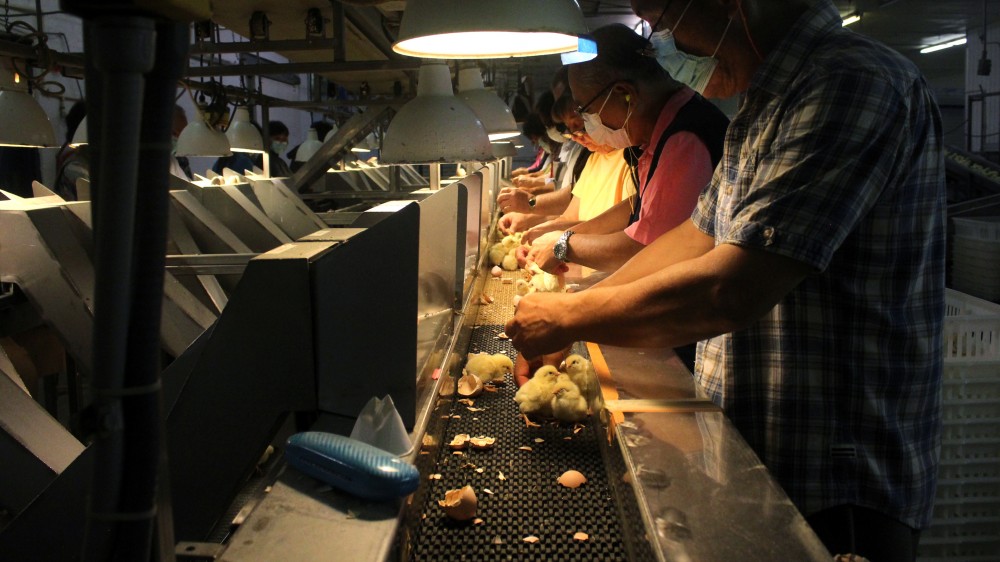
"caption": "Within a day after chicks hatch, they are sorted by sex and shipped to farms. Some will be treated with antibiotics; others will not. Photo\" Dan Charles /NPR ",
"description": "Within a day after chicks hatch, they are sorted by sex and shipped to farms. Some will be treated with antibiotics; others will not.",
"title": "Within a day after chicks hatch, they are sorted by sex and shipped to farms. Some will be treated with antibiotics; others will not.",
"credit": null,
"status": "inherit",
"isLoading": false,
"fetchFailed": false
},
"bayareabites_87809": {
"type": "attachments",
"id": "bayareabites_87809",
"meta": {
"index": "attachments_1716263798",
"site": "bayareabites",
"id": "87809",
"found": true
},
"parent": 87808,
"imgSizes": {
"kqedFullSize": {
"file": "https://ww2.kqed.org/app/uploads/sites/24/2014/09/donut-glaze-1_enl-b1962630c1193b118837de380a2964bed16295f6-e1411086084472.jpg",
"width": 1000,
"height": 666
}
},
"publishDate": 1411085814,
"modified": 1411085814,
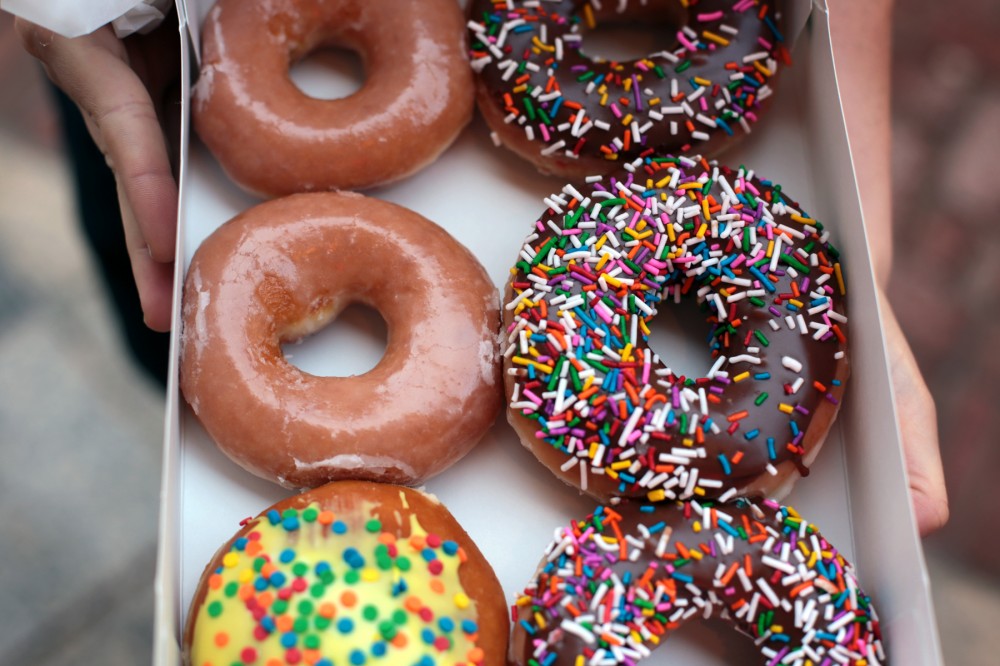
"caption": "Krispy Kreme and Dunkin' Donuts have pledged to source palm oil from suppliers who are not clear-cutting rain forests. Photo: Meredith Rizzo/NPR",
"description": "Krispy Kreme and Dunkin' Donuts have pledged to source palm oil from suppliers who are not clear-cutting rain forests.",
"title": "Krispy Kreme and Dunkin' Donuts have pledged to source palm oil from suppliers who are not clear-cutting rain forests.",
"credit": null,
"status": "inherit",
"isLoading": false,
"fetchFailed": false
},
"bayareabites_87797": {
"type": "attachments",
"id": "bayareabites_87797",
"meta": {
"index": "attachments_1716263798",
"site": "bayareabites",
"id": "87797",
"found": true
},
"parent": 87783,
"imgSizes": {
"kqedFullSize": {
"file": "https://ww2.kqed.org/app/uploads/sites/24/2014/09/ToastPatio.jpg",
"width": 450,
"height": 800
}
},
"publishDate": 1411081695,
"modified": 1411081695,
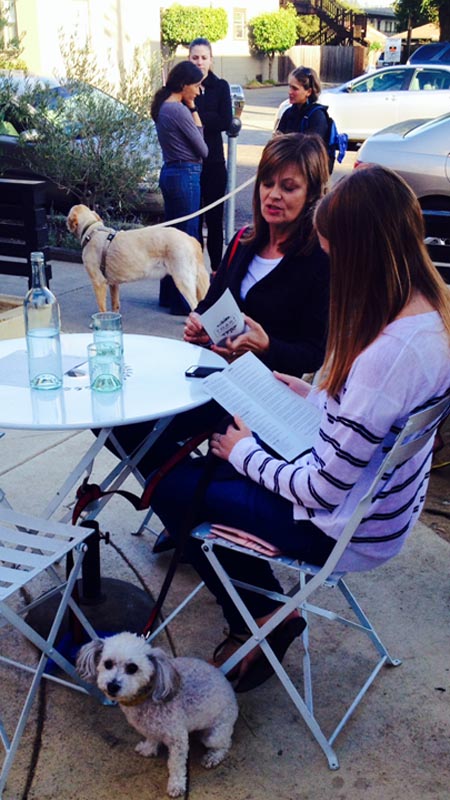
"caption": "Outdoor dining at Toast. Photo: Adrienne DeAngelo",
"description": null,
"title": "ToastPatio",
"credit": null,
"status": "inherit",
"isLoading": false,
"fetchFailed": false
},
"bayareabites_87460": {
"type": "attachments",
"id": "bayareabites_87460",
"meta": {
"index": "attachments_1716263798",
"site": "bayareabites",
"id": "87460",
"found": true
},
"parent": 87453,
"imgSizes": {
"kqedFullSize": {
"file": "https://ww2.kqed.org/app/uploads/sites/24/2014/09/Dandelion-tray.jpg",
"width": 1000,
"height": 695
}
},
"publishDate": 1410751426,
"modified": 1410751426,
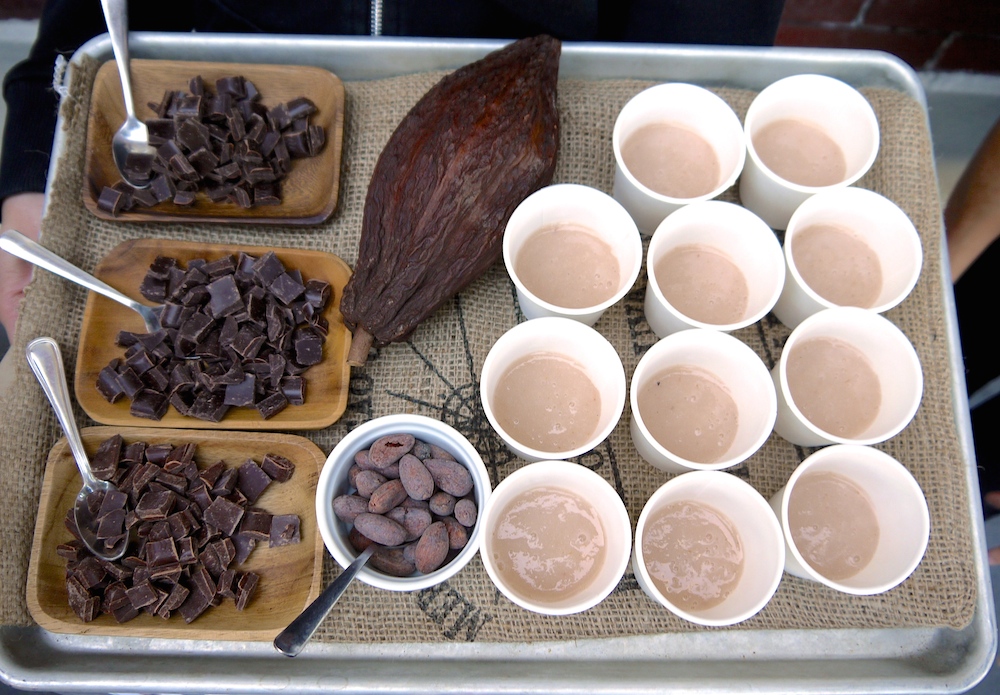
"caption": "Tray of chocolate tastes at Dandelion. photo: LilaVolkas",
"description": null,
"title": "Dandelion tray",
"credit": null,
"status": "inherit",
"isLoading": false,
"fetchFailed": false
},
"bayareabites_87379": {
"type": "attachments",
"id": "bayareabites_87379",
"meta": {
"index": "attachments_1716263798",
"site": "bayareabites",
"id": "87379",
"found": true
},
"parent": 86189,
"imgSizes": {
"kqedFullSize": {
"file": "https://ww2.kqed.org/app/uploads/sites/24/2014/08/deer1000.jpg",
"width": 1000,
"height": 752
}
},
"publishDate": 1410393645,
"modified": 1410393645,
"caption": null,
"description": null,
"title": "deer1000",
"credit": null,
"status": "inherit",
"isLoading": false,
"fetchFailed": false
},
"bayareabites_87286": {
"type": "attachments",
"id": "bayareabites_87286",
"meta": {
"index": "attachments_1716263798",
"site": "bayareabites",
"id": "87286",
"found": true
},
"parent": 87285,
"imgSizes": {
"kqedFullSize": {
"file": "https://ww2.kqed.org/app/uploads/sites/24/2014/09/urbanfarm_wide-755060884e1d03ea379ecee4bf274f43ea398929-e1410301498126.jpg",
"width": 1000,
"height": 562
}
},
"publishDate": 1410301306,
"modified": 1410301306,
"caption": "Urban farmers turning a vacant lot into a garden plot in San Francisco's Hayes Valley. Photo: Chris Martin/Flickr",
"description": "Urban farmers turning a vacant lot into a garden plot in San Francisco's Hayes Valley.",
"title": "Urban farmers turning a vacant lot into a garden plot in San Francisco's Hayes Valley.",
"credit": null,
"status": "inherit",
"isLoading": false,
"fetchFailed": false
},
"bayareabites_87271": {
"type": "attachments",
"id": "bayareabites_87271",
"meta": {
"index": "attachments_1716263798",
"site": "bayareabites",
"id": "87271",
"found": true
},
"parent": 87270,
"imgSizes": {
"kqedFullSize": {
"file": "https://ww2.kqed.org/app/uploads/sites/24/2014/09/hotdougs_custom-15eb3eccb5fe79c90ac1c2d40a8438d77c979769-e1410289487471.jpg",
"width": 1000,
"height": 605
}
},
"publishDate": 1410289295,
"modified": 1410289295,
"caption": "Aficionados line up outside Hot Doug's, a gourmet hot dog diner in Chicago in May 2014. Owner Doug Sohn announced that he will shut the doors in October after nearly 14 years. Photo: M. Spencer Green/AP ",
"description": "Aficionados line up outside Hot Doug's, a gourmet hot dog diner in Chicago in May 2014. Owner Doug Sohn announced that he will shut the doors in October after nearly 14 years",
"title": "Aficionados line up outside Hot Doug's, a gourmet hot dog diner in Chicago in May 2014. Owner Doug Sohn announced that he will shut the doors in October after nearly 14 years.",
"credit": null,
"status": "inherit",
"isLoading": false,
"fetchFailed": false
},
"bayareabites_87262": {
"type": "attachments",
"id": "bayareabites_87262",
"meta": {
"index": "attachments_1716263798",
"site": "bayareabites",
"id": "87262",
"found": true
},
"parent": 87254,
"imgSizes": {
"kqedFullSize": {
"file": "https://ww2.kqed.org/app/uploads/sites/24/2014/09/foodlabel.jpg",
"width": 680,
"height": 322
}
},
"publishDate": 1410285218,
"modified": 1410285218,
"caption": null,
"description": null,
"title": "foodlabel",
"credit": null,
"status": "inherit",
"isLoading": false,
"fetchFailed": false
},
"bayareabites_87094": {
"type": "attachments",
"id": "bayareabites_87094",
"meta": {
"index": "attachments_1716263798",
"site": "bayareabites",
"id": "87094",
"found": true
},
"parent": 87093,
"imgSizes": {
"kqedFullSize": {
"file": "https://ww2.kqed.org/app/uploads/sites/24/2014/09/hatchery-3_slide-745a8da86a235a678943bc2f039d8ac427c3261e.jpg",
"width": 1798,
"height": 1198
}
},
"publishDate": 1409791652,
"modified": 1409791652,
"caption": "Chicks in the Perdue hatchery in Salisbury, Md. The company says all its chickens are now raised using \"no antibiotics, ever.\" Photo: Dan Charles/NPR",
"description": "Chicks in the Perdue hatchery in Salisbury, Md. The company says all its chickens are now raised using \"no antibiotics, ever.\"",
"title": "Chicks in the Perdue hatchery in Salisbury, Md. The company says all its chickens are now raised using \"no antibiotics, ever.\"",
"credit": null,
"status": "inherit",
"isLoading": false,
"fetchFailed": false
},
"bayareabites_86953": {
"type": "attachments",
"id": "bayareabites_86953",
"meta": {
"index": "attachments_1716263798",
"site": "bayareabites",
"id": "86953",
"found": true
},
"parent": 86952,
"imgSizes": {
"kqedFullSize": {
"file": "https://ww2.kqed.org/app/uploads/sites/24/2014/09/istock_000016794480large-672f4801e1eccb865265c7187789561304300021.jpg",
"width": 2418,
"height": 1810
}
},
"publishDate": 1409595176,
"modified": 1409595176,
"caption": "There's new evidence reaffirming that eating foods with fat — everything from avocados and salmon to dairy fat — doesn't make us fat. Photo: eyecrave LLC/iStock ",
"description": "There's new evidence reaffirming that eating foods with fat — everything from avocados and salmon to dairy fat — doesn't make us",
"title": "There's new evidence reaffirming that eating foods with fat — everything from avocados and salmon to dairy fat — doesn't make us fat.",
"credit": null,
"status": "inherit",
"isLoading": false,
"fetchFailed": false
},
"bayareabites_86771": {
"type": "attachments",
"id": "bayareabites_86771",
"meta": {
"index": "attachments_1716263798",
"site": "bayareabites",
"id": "86771",
"found": true
},
"parent": 86768,
"imgSizes": {
"kqedFullSize": {
"file": "https://ww2.kqed.org/app/uploads/sites/24/2014/08/pizza.jpg",
"width": 1120,
"height": 840
}
},
"publishDate": 1409157945,
"modified": 1409157945,
"caption": "The unique browning patterns on mozzarella come from the way it bubbles, a scientist says. Photo: sierravalleygirl/Flickr",
"description": null,
"title": "pizza",
"credit": null,
"status": "inherit",
"isLoading": false,
"fetchFailed": false
},
"bayareabites_86696": {
"type": "attachments",
"id": "bayareabites_86696",
"meta": {
"index": "attachments_1716263798",
"site": "bayareabites",
"id": "86696",
"found": true
},
"parent": 86695,
"imgSizes": {
"kqedFullSize": {
"file": "https://ww2.kqed.org/app/uploads/sites/24/2014/08/marijuana-edibles_slide-7b899a7c7760c52da2e95f20d1c2aaa963b81875.jpg",
"width": 1798,
"height": 1198
}
},
"publishDate": 1409092127,
"modified": 1409092127,
"caption": "Edibles available at LoDo Wellness Center in Denver, Colo. LoDo Wellness Center is both a retail marijuana and medical marijuana dispensary and grow facility in downtown Denver. Photo: Matthew Staver/Landov",
"description": "Edibles available at LoDo Wellness Center in Denver, Colo. LoDo Wellness Center is both a retail marijuana and medical marijuana dispensary and grow facility in downtown Denver.",
"title": "Edibles available at LoDo Wellness Center in Denver, Colo. LoDo Wellness Center is both a retail marijuana and medical marijuana dispensary and grow facility in downtown Denver.",
"credit": null,
"status": "inherit",
"isLoading": false,
"fetchFailed": false
}
},
"audioPlayerReducer": {
"postId": "stream_live",
"isPaused": true,
"isPlaying": false,
"pfsActive": false,
"pledgeModalIsOpen": true,
"playerDrawerIsOpen": false,
"liveAudioPlayStartedAt": 0,
"liveAudioPlayContext": ""
},
"authorsReducer": {
"byline_bayareabites_87946": {
"type": "authors",
"id": "byline_bayareabites_87946",
"meta": {
"override": true
},
"slug": "byline_bayareabites_87946",
"name": "Dan Charles",
"isLoading": false
},
"byline_bayareabites_87808": {
"type": "authors",
"id": "byline_bayareabites_87808",
"meta": {
"override": true
},
"slug": "byline_bayareabites_87808",
"name": "Allison Aubrey",
"isLoading": false
},
"byline_bayareabites_87285": {
"type": "authors",
"id": "byline_bayareabites_87285",
"meta": {
"override": true
},
"slug": "byline_bayareabites_87285",
"name": "Alastair Bland",
"isLoading": false
},
"byline_bayareabites_87270": {
"type": "authors",
"id": "byline_bayareabites_87270",
"meta": {
"override": true
},
"slug": "byline_bayareabites_87270",
"name": "Maanvi Singh",
"isLoading": false
},
"byline_bayareabites_87093": {
"type": "authors",
"id": "byline_bayareabites_87093",
"meta": {
"override": true
},
"slug": "byline_bayareabites_87093",
"name": "Dan Charles",
"isLoading": false
},
"byline_bayareabites_86952": {
"type": "authors",
"id": "byline_bayareabites_86952",
"meta": {
"override": true
},
"slug": "byline_bayareabites_86952",
"name": "Allison Aubrey",
"isLoading": false
},
"byline_bayareabites_86768": {
"type": "authors",
"id": "byline_bayareabites_86768",
"meta": {
"override": true
},
"slug": "byline_bayareabites_86768",
"name": "Maanvi Singh",
"isLoading": false
},
"byline_bayareabites_86695": {
"type": "authors",
"id": "byline_bayareabites_86695",
"meta": {
"override": true
},
"slug": "byline_bayareabites_86695",
"name": "Luke Runyon",
"isLoading": false
},
"annamindess": {
"type": "authors",
"id": "5283",
"meta": {
"index": "authors_1716337520",
"id": "5283",
"found": true
},
"name": "Anna Mindess",
"firstName": "Anna",
"lastName": "Mindess",
"slug": "annamindess",
"email": "amindess@aol.com",
"display_author_email": false,
"staff_mastheads": [],
"title": "KQED Contributor",
"bio": "My passion is exploring the connections between food, travel and culture. I am a regular contributor to AFAR, Edible East Bay Magazine, Oakland Magazine, Berkeleyside's NOSH and other publications. I usually take a route that's slightly off the beaten path, like \u003ca href=\"http://edibleeastbay.com/online-magazine/fall-harvest-2017/fun-with-food-insults/\">collecting food-related insults\u003c/a> around the world or \u003ca href=\"https://www.afar.com/magazine/what-i-learned-hawking-sweet-potatoes-with-a-street-vendor-in-taiwan?email=amindess%40aol.com&utm_source=Sailthru&utm_medium=email&utm_campaign=Doctors%20Without%20Borders&utm_term=Daily%20Wander%20Newsletter\">volunteering with a Sweet Potato Mama\u003c/a> (street food seller) in Tapei.\r\n\r\nCulture is the thread that ties together my several careers. I also work as a sign language interpreter, educator and author. My study of Deaf culture has taken me around the world, where I am always on a quest to find Deaf-owned restaurants. I love making connections between my different worlds, for example in this AFAR story where I share \u003ca href=\"https://www.afar.com/magazine/tips-from-a-sign-language-interpreter-for-overcoming-language-barriers\">tips for communicating across cultures\u003c/a> that I learned from the real experts, Deaf people. Or this \u003ca href=\"http://edibleeastbay.com/online-magazine/fall-harvest-2017/deaf-chefs-compete/\">profile of a Deaf chef and culinary arts instructor\u003c/a> at the California School for the Deaf.\r\n\r\nTo see my visual/edible take on the world, follow me on Instagram: \u003ca href=\"https://www.instagram.com/annamindess/\">annamindess. \u003c/a>\r\n\r\nFor more of my stories: visit Contently \u003ca href=\"http://annamindess.contently.com\">annamindess.contently.com\u003c/a>",
"avatar": "https://secure.gravatar.com/avatar/23c79f04bf3d58b2e727d35ca471d184e8945f6ed82e41a0c062eab5e7dc2bb5?s=600&d=blank&r=g",
"twitter": null,
"bluesky": null,
"facebook": null,
"instagram": null,
"linkedin": null,
"sites": [
{
"site": "arts",
"roles": [
"subscriber"
]
},
{
"site": "bayareabites",
"roles": [
"author"
]
},
{
"site": "food",
"roles": [
"contributor"
]
}
],
"headData": {
"title": "Anna Mindess | KQED",
"description": "KQED Contributor",
"ogImgSrc": "https://secure.gravatar.com/avatar/23c79f04bf3d58b2e727d35ca471d184e8945f6ed82e41a0c062eab5e7dc2bb5?s=600&d=blank&r=g",
"twImgSrc": "https://secure.gravatar.com/avatar/23c79f04bf3d58b2e727d35ca471d184e8945f6ed82e41a0c062eab5e7dc2bb5?s=600&d=blank&r=g"
},
"isLoading": false,
"link": "/author/annamindess"
},
"oaklandlocal": {
"type": "authors",
"id": "5475",
"meta": {
"index": "authors_1716337520",
"id": "5475",
"found": true
},
"name": "Oakland Local",
"firstName": "Oakland",
"lastName": "Local",
"slug": "oaklandlocal",
"email": "oaklandlocal@oaklandlocal.com",
"display_author_email": false,
"staff_mastheads": [],
"title": null,
"bio": "\u003ca href=\"http://oaklandlocal.com/\">Oakland Local\u003c/a>, Oakland's leading news & community site, is filled with people who love to eat, drink and talk about food equity issues, sometimes all at the same time. We're avid about farm to table, affordable local restaurants, food artisans, intense chefs, butchers, bakers, and gardeners and everyone who wants to talk about what tastes good--and where to get it/make it or grow it--in Oakland, CA",
"avatar": "https://secure.gravatar.com/avatar/487293d74fcce97c7016ed0309409181?s=600&d=blank&r=g",
"twitter": "oaklandlocal",
"facebook": "oaklocal",
"instagram": null,
"linkedin": null,
"sites": [
{
"site": "bayareabites",
"roles": [
"contributor"
]
}
],
"headData": {
"title": "Oakland Local | KQED",
"description": null,
"ogImgSrc": "https://secure.gravatar.com/avatar/487293d74fcce97c7016ed0309409181?s=600&d=blank&r=g",
"twImgSrc": "https://secure.gravatar.com/avatar/487293d74fcce97c7016ed0309409181?s=600&d=blank&r=g"
},
"isLoading": false,
"link": "/author/oaklandlocal"
},
"annelirufus": {
"type": "authors",
"id": "5576",
"meta": {
"index": "authors_1716337520",
"id": "5576",
"found": true
},
"name": "Anneli Rufus",
"firstName": "Anneli",
"lastName": "Rufus",
"slug": "annelirufus",
"email": "anneli@annelirufus.com",
"display_author_email": false,
"staff_mastheads": [],
"title": null,
"bio": "Anneli Rufus is a Mystic Mint-craving, award-winning journalist whose work can be found at Psychology Today, Spirituality & Health, Experience Life, the San Francisco Chronicle, the Huffington Post and other venues. She is also the author of numerous books, including Party of One: The Loners' Manifesto and Unworthy: How to Stop Hating Yourself.",
"avatar": "https://secure.gravatar.com/avatar/a1442fc91c47bb8b99d339bf03988838?s=600&d=blank&r=g",
"twitter": "annelirufus",
"facebook": null,
"instagram": null,
"linkedin": null,
"sites": [
{
"site": "bayareabites",
"roles": [
"contributor"
]
}
],
"headData": {
"title": "Anneli Rufus | KQED",
"description": null,
"ogImgSrc": "https://secure.gravatar.com/avatar/a1442fc91c47bb8b99d339bf03988838?s=600&d=blank&r=g",
"twImgSrc": "https://secure.gravatar.com/avatar/a1442fc91c47bb8b99d339bf03988838?s=600&d=blank&r=g"
},
"isLoading": false,
"link": "/author/annelirufus"
},
"civileat": {
"type": "authors",
"id": "5583",
"meta": {
"index": "authors_1716337520",
"id": "5583",
"found": true
},
"name": "Civil Eats",
"firstName": "Civil",
"lastName": "Eats",
"slug": "civileat",
"email": "twilight@civileats.com",
"display_author_email": false,
"staff_mastheads": [],
"title": null,
"bio": "\u003ca href=\"http://civileats.com/\">Civil Eats\u003c/a> is a daily news source for critical thought about the American food system. We publish stories that shift the conversation around sustainable agriculture in an effort to build economically and socially just communities. Follow Civil Eats on Twitter \u003ca href=\"https://twitter.com/CivilEats\">@civileats\u003c/a> and on \u003ca href=\"https://www.facebook.com/pages/Civil-Eats/56766540637\">Facebook\u003c/a>.",
"avatar": "https://secure.gravatar.com/avatar/8f6f50bfb6403afe7cbc194b66cc1d4d?s=600&d=blank&r=g",
"twitter": "CivilEats",
"facebook": "/pages/Civil-Eats/56766540637?ref=hl",
"instagram": null,
"linkedin": null,
"sites": [
{
"site": "bayareabites",
"roles": [
"contributor"
]
},
{
"site": "food",
"roles": [
"contributor"
]
}
],
"headData": {
"title": "Civil Eats | KQED",
"description": null,
"ogImgSrc": "https://secure.gravatar.com/avatar/8f6f50bfb6403afe7cbc194b66cc1d4d?s=600&d=blank&r=g",
"twImgSrc": "https://secure.gravatar.com/avatar/8f6f50bfb6403afe7cbc194b66cc1d4d?s=600&d=blank&r=g"
},
"isLoading": false,
"link": "/author/civileat"
}
},
"pagesReducer": {
"bayareabites_category_food-and-technology": {
"type": "terms",
"id": "bayareabites_4084",
"meta": {
"index": "terms_1716263798",
"site": "bayareabites",
"id": "4084",
"score": 14.405561
},
"featImg": null,
"name": "food trends and technology",
"description": null,
"taxonomy": "category",
"headData": {
"twImgId": null,
"twTitle": null,
"ogTitle": null,
"ogImgId": null,
"twDescription": null,
"description": null,
"title": "food trends and technology Archives | KQED Bay Area Bites",
"ogDescription": null
},
"ttid": 2573,
"slug": "food-and-technology",
"isLoading": false,
"title": "food trends and technology",
"pageMeta": {
"site": "bayareabites",
"WpPageTemplate": "page-topic-editorial",
"currentPage": 33
},
"blocks": [
{
"blockName": "kqed/post-list",
"attrs": {
"layout": "cardArticle2",
"query": "posts/bayareabites?category=food-and-technology",
"seeMore": false,
"paginated": true,
"page": 33
}
},
{
"blockName": "kqed/ad"
}
]
}
},
"pfsSessionReducer": {},
"postsReducer": {
"stream_live": {
"type": "live",
"id": "stream_live",
"audioUrl": "https://streams.kqed.org/kqedradio",
"title": "Live Stream",
"excerpt": "Live Stream information currently unavailable.",
"link": "/radio",
"featImg": "",
"label": {
"name": "KQED Live",
"link": "/"
}
},
"stream_kqedNewscast": {
"type": "posts",
"id": "stream_kqedNewscast",
"audioUrl": "https://www.kqed.org/.stream/anon/radio/RDnews/newscast.mp3?_=1",
"title": "KQED Newscast",
"featImg": "",
"label": {
"name": "88.5 FM",
"link": "/"
}
},
"bayareabites_87946": {
"type": "posts",
"id": "bayareabites_87946",
"meta": {
"index": "posts_1716263798",
"site": "bayareabites",
"id": "87946",
"score": null,
"sort": [
1411454772000
]
},
"parent": 0,
"labelTerm": {
"site": "bayareabites"
},
"blocks": [],
"publishDate": 1411454772,
"format": "aside",
"disqusTitle": "Giving Chickens Bacteria ... To Keep Them Antibiotic-Free",
"title": "Giving Chickens Bacteria ... To Keep Them Antibiotic-Free",
"headTitle": "Bay Area Bites | KQED Food",
"content": "\u003cfigure id=\"attachment_87947\" class=\"wp-caption aligncenter\" style=\"max-width: 1000px\">\u003ca href=\"http://ww2.kqed.org/bayareabites/wp-content/uploads/sites/24/2014/09/chicks3_wide-5b4c626f8afe2c8cf66136e592068973037f0f0b-e1411454197512.jpg\">\u003cimg src=\"http://ww2.kqed.org/bayareabites/wp-content/uploads/sites/24/2014/09/chicks3_wide-5b4c626f8afe2c8cf66136e592068973037f0f0b-e1411454197512.jpg\" alt='Within a day after chicks hatch, they are sorted by sex and shipped to farms. Some will be treated with antibiotics; others will not. Photo\" Dan Charles /NPR' width=\"1000\" height=\"562\" class=\"size-full wp-image-87947\">\u003c/a>\u003cfigcaption class=\"wp-caption-text\">Within a day after chicks hatch, they are sorted by sex and shipped to farms. Some will be treated with antibiotics; others will not. Photo\" Dan Charles /NPR\u003c/figcaption>\u003c/figure>\n\u003cp>by \u003ca href=\"http://www.npr.org/people/143160021/daniel-charles\" target=\"_blank\">Dan Charles\u003c/a>, \u003ca href=\"http://www.npr.org/blogs/thesalt/2014/09/22/350590488/giving-chickens-bacteria-to-keep-them-antibiotic-free\" target=\"_blank\">The Salt at NPR Food\u003c/a> (6/22/14)\u003c/p>\n\u003cp>You know those foods and pills that promise to supply your body with \"good bacteria?\"\u003c/p>\n\u003cp>They \u003ca href=\"http://www.npr.org/blogs/thesalt/2012/07/09/156381323/confusion-at-the-yogurt-aisle-time-for-probiotics-101\">may or may not\u003c/a> make \u003cem>you\u003c/em> healthier, but some of these \"probiotics\" do, in fact, appear to be effective in chickens. Poultry companies are turning to probiotics as an alternative to antibiotics, which have become increasingly controversial.\u003c/p>\n\u003cp>\"As we took antibiotics out of the feed, we put some other things in, such as probiotics,\" says Bruce Stewart-Brown, an executive at Perdue Farms. \"We've increased the amount of probiotics by five times over the past five years. It's a significant part of our program.\"\u003c/p>\n\u003cp>Poultry companies have fed antibiotics to their chickens to fight off disease, and also to make them grow faster. Public health advocates have been pushing for an end to this practice, saying that it can lead to the emergence of more antibiotic-resistant bacteria.\u003c/p>\n\u003cp>[ad fullwidth]\u003c/p>\n\u003cp>Perdue Farms has not gone completely antibiotic-free, but it has reduced or \u003ca href=\"http://www.npr.org/blogs/thesalt/2014/09/03/345315380/perdue-says-its-hatching-chicks-are-off-antibiotics\">eliminated\u003c/a> some uses of antibiotics in its operations, and it is expanding production of chickens that are raised completely without antibiotics. According to Stewart-Brown, that has forced the company to search for new ways to keep chickens healthy, which is where probiotics come in. The idea is, all these \"good bacteria\" can crowd out the harmful microbes that make a chicken sick.\u003c/p>\n\u003cp>Stewart-Brown says that he was initially skeptical about probiotics. \"Eight years ago, I would have said that they're not working in poultry. They're not very useful. Today, I'm saying that they are useful. Expensive, but useful.\" Chickens that got probiotics stayed healthier and grew faster than birds that didn't.\u003c/p>\n\u003cp>He declined to say exactly what products the company is using, but some poultry \u003ca href=\"http://www.thepoultrysite.com/focus/biomin/2270/biomin-poultrystar-defined-probiotic-product-proves-efficacy\">probiotics\u003c/a> include live \u003cem>Enterococcus, Lactobacillus \u003c/em>and\u003cem> Bifidobacterium\u003c/em> microorganisms.\u003c/p>\n\u003cfigure id=\"attachment_87948\" class=\"wp-caption aligncenter\" style=\"max-width: 1000px\">\u003ca href=\"http://ww2.kqed.org/bayareabites/wp-content/uploads/sites/24/2014/09/chicks_wide-8cce0b270d493326ac901c52cfc64cb749287c97-e1411454632397.jpg\">\u003cimg src=\"http://ww2.kqed.org/bayareabites/wp-content/uploads/sites/24/2014/09/chicks_wide-8cce0b270d493326ac901c52cfc64cb749287c97-e1411454632397.jpg\" alt=\"These chicks, at a Perdue hatchery in Salisbury, Md., have received no antibiotics. Photo: Dan Charles/NPR\" width=\"1000\" height=\"563\" class=\"size-full wp-image-87948\">\u003c/a>\u003cfigcaption class=\"wp-caption-text\">These chicks, at a Perdue hatchery in Salisbury, Md., have received no antibiotics. Photo: Dan Charles/NPR\u003c/figcaption>\u003c/figure>\n\u003cp>In addition, Perdue Farms has eliminated the use of animal byproducts, such as fat, in chicken feed, after finding that chickens appeared to stay healthier on a vegetarian diet. (Chickens, of course, aren't \"naturally\" vegetarian; given the choice, they'll happily forage for insect larvae.) \u003cstrong> \u003c/strong>It now vaccinates its chickens against a wider array of diseases. It experimented with herbal remedies that were used by Coleman Natural, an organic poultry company that Perdue bought in 2011.\u003c/p>\n\u003cp>According to Stewart-Brown, all of this has increased the company's costs.\u003c/p>\n\u003cp>\"Our birds grow a little bit slower, significantly slower than the rest of the industry, in general,\" he says.\u003c/p>\n\u003cp>But as long as consumers are willing to pay better prices for meat from chickens raised without antibiotics, the extra cost is worth it. \u003c/p>\n\u003cp>\u003c/p>\n\u003cp>\u003cem>Copyright 2014 \u003ca href=\"http://www.npr.org/\" target=\"_blank\">NPR\u003c/a>.\u003c/em>\u003c/p>\n\n",
"disqusIdentifier": "87946 http://blogs.kqed.org/bayareabites/?p=87946",
"disqusUrl": "https://ww2.kqed.org/bayareabites/2014/09/22/giving-chickens-bacteria-to-keep-them-antibiotic-free/",
"stats": {
"hasVideo": false,
"hasChartOrMap": false,
"hasAudio": false,
"hasPolis": false,
"wordCount": 492,
"hasGoogleForm": false,
"hasGallery": false,
"hasHearkenModule": false,
"iframeSrcs": [],
"paragraphCount": 15
},
"modified": 1411454772,
"excerpt": "What does it take to get chickens off antibiotics? According to Perdue Farms, an added dose of the \"good bacteria\" known as probiotics can help crowd out the harmful microbes that make a chicken sick.",
"headData": {
"twImgId": "",
"twTitle": "",
"ogTitle": "",
"ogImgId": "",
"twDescription": "",
"description": "What does it take to get chickens off antibiotics? According to Perdue Farms, an added dose of the "good bacteria" known as probiotics can help crowd out the harmful microbes that make a chicken sick.",
"title": "Giving Chickens Bacteria ... To Keep Them Antibiotic-Free | KQED",
"ogDescription": "",
"schema": {
"@context": "https://schema.org",
"@type": "Article",
"headline": "Giving Chickens Bacteria ... To Keep Them Antibiotic-Free",
"datePublished": "2014-09-22T23:46:12-07:00",
"dateModified": "2014-09-22T23:46:12-07:00",
"image": "https://cdn.kqed.org/wp-content/uploads/2020/02/KQED-OG-Image@1x.png"
}
},
"guestAuthors": [],
"slug": "giving-chickens-bacteria-to-keep-them-antibiotic-free",
"status": "publish",
"nprApiLink": "http://api.npr.org/query?id=350590488&apiKey=MDAxOTAwOTE4MDEyMTkxMDAzNjczZDljZA004",
"nprByline": "Dan Charles",
"nprStoryDate": "Mon, 22 Sep 2014 17:11:00 -0400",
"nprLastModifiedDate": "Mon, 22 Sep 2014 17:56:44 -0400",
"nprHtmlLink": "http://www.npr.org/blogs/thesalt/2014/09/22/350590488/giving-chickens-bacteria-to-keep-them-antibiotic-free?ft=3&f=350590488",
"nprStoryId": "350590488",
"nprRetrievedStory": "1",
"nprPubDate": "Mon, 22 Sep 2014 17:56:00 -0400",
"path": "/bayareabites/87946/giving-chickens-bacteria-to-keep-them-antibiotic-free",
"audioTrackLength": null,
"parsedContent": [
{
"type": "contentString",
"content": "\u003cdiv class=\"post-body\">\u003cp>\u003cfigure id=\"attachment_87947\" class=\"wp-caption aligncenter\" style=\"max-width: 1000px\">\u003ca href=\"http://ww2.kqed.org/bayareabites/wp-content/uploads/sites/24/2014/09/chicks3_wide-5b4c626f8afe2c8cf66136e592068973037f0f0b-e1411454197512.jpg\">\u003cimg src=\"http://ww2.kqed.org/bayareabites/wp-content/uploads/sites/24/2014/09/chicks3_wide-5b4c626f8afe2c8cf66136e592068973037f0f0b-e1411454197512.jpg\" alt='Within a day after chicks hatch, they are sorted by sex and shipped to farms. Some will be treated with antibiotics; others will not. Photo\" Dan Charles /NPR' width=\"1000\" height=\"562\" class=\"size-full wp-image-87947\">\u003c/a>\u003cfigcaption class=\"wp-caption-text\">Within a day after chicks hatch, they are sorted by sex and shipped to farms. Some will be treated with antibiotics; others will not. Photo\" Dan Charles /NPR\u003c/figcaption>\u003c/figure>\n\u003cp>by \u003ca href=\"http://www.npr.org/people/143160021/daniel-charles\" target=\"_blank\">Dan Charles\u003c/a>, \u003ca href=\"http://www.npr.org/blogs/thesalt/2014/09/22/350590488/giving-chickens-bacteria-to-keep-them-antibiotic-free\" target=\"_blank\">The Salt at NPR Food\u003c/a> (6/22/14)\u003c/p>\n\u003cp>You know those foods and pills that promise to supply your body with \"good bacteria?\"\u003c/p>\n\u003cp>They \u003ca href=\"http://www.npr.org/blogs/thesalt/2012/07/09/156381323/confusion-at-the-yogurt-aisle-time-for-probiotics-101\">may or may not\u003c/a> make \u003cem>you\u003c/em> healthier, but some of these \"probiotics\" do, in fact, appear to be effective in chickens. Poultry companies are turning to probiotics as an alternative to antibiotics, which have become increasingly controversial.\u003c/p>\n\u003cp>\"As we took antibiotics out of the feed, we put some other things in, such as probiotics,\" says Bruce Stewart-Brown, an executive at Perdue Farms. \"We've increased the amount of probiotics by five times over the past five years. It's a significant part of our program.\"\u003c/p>\n\u003cp>Poultry companies have fed antibiotics to their chickens to fight off disease, and also to make them grow faster. Public health advocates have been pushing for an end to this practice, saying that it can lead to the emergence of more antibiotic-resistant bacteria.\u003c/p>\n\u003cp>\u003c/p>\u003c/div>",
"attributes": {
"named": {},
"numeric": []
}
},
{
"type": "component",
"content": "",
"name": "ad",
"attributes": {
"named": {
"label": "fullwidth"
},
"numeric": [
"fullwidth"
]
}
},
{
"type": "contentString",
"content": "\u003cdiv class=\"post-body\">\u003cp>\u003c/p>\n\u003cp>Perdue Farms has not gone completely antibiotic-free, but it has reduced or \u003ca href=\"http://www.npr.org/blogs/thesalt/2014/09/03/345315380/perdue-says-its-hatching-chicks-are-off-antibiotics\">eliminated\u003c/a> some uses of antibiotics in its operations, and it is expanding production of chickens that are raised completely without antibiotics. According to Stewart-Brown, that has forced the company to search for new ways to keep chickens healthy, which is where probiotics come in. The idea is, all these \"good bacteria\" can crowd out the harmful microbes that make a chicken sick.\u003c/p>\n\u003cp>Stewart-Brown says that he was initially skeptical about probiotics. \"Eight years ago, I would have said that they're not working in poultry. They're not very useful. Today, I'm saying that they are useful. Expensive, but useful.\" Chickens that got probiotics stayed healthier and grew faster than birds that didn't.\u003c/p>\n\u003cp>He declined to say exactly what products the company is using, but some poultry \u003ca href=\"http://www.thepoultrysite.com/focus/biomin/2270/biomin-poultrystar-defined-probiotic-product-proves-efficacy\">probiotics\u003c/a> include live \u003cem>Enterococcus, Lactobacillus \u003c/em>and\u003cem> Bifidobacterium\u003c/em> microorganisms.\u003c/p>\n\u003cfigure id=\"attachment_87948\" class=\"wp-caption aligncenter\" style=\"max-width: 1000px\">\u003ca href=\"http://ww2.kqed.org/bayareabites/wp-content/uploads/sites/24/2014/09/chicks_wide-8cce0b270d493326ac901c52cfc64cb749287c97-e1411454632397.jpg\">\u003cimg src=\"http://ww2.kqed.org/bayareabites/wp-content/uploads/sites/24/2014/09/chicks_wide-8cce0b270d493326ac901c52cfc64cb749287c97-e1411454632397.jpg\" alt=\"These chicks, at a Perdue hatchery in Salisbury, Md., have received no antibiotics. Photo: Dan Charles/NPR\" width=\"1000\" height=\"563\" class=\"size-full wp-image-87948\">\u003c/a>\u003cfigcaption class=\"wp-caption-text\">These chicks, at a Perdue hatchery in Salisbury, Md., have received no antibiotics. Photo: Dan Charles/NPR\u003c/figcaption>\u003c/figure>\n\u003cp>In addition, Perdue Farms has eliminated the use of animal byproducts, such as fat, in chicken feed, after finding that chickens appeared to stay healthier on a vegetarian diet. (Chickens, of course, aren't \"naturally\" vegetarian; given the choice, they'll happily forage for insect larvae.) \u003cstrong> \u003c/strong>It now vaccinates its chickens against a wider array of diseases. It experimented with herbal remedies that were used by Coleman Natural, an organic poultry company that Perdue bought in 2011.\u003c/p>\n\u003cp>According to Stewart-Brown, all of this has increased the company's costs.\u003c/p>\n\u003cp>\"Our birds grow a little bit slower, significantly slower than the rest of the industry, in general,\" he says.\u003c/p>\n\u003cp>But as long as consumers are willing to pay better prices for meat from chickens raised without antibiotics, the extra cost is worth it. \u003c/p>\n\u003cp>\u003c/p>\n\u003cp>\u003cem>Copyright 2014 \u003ca href=\"http://www.npr.org/\" target=\"_blank\">NPR\u003c/a>.\u003c/em>\u003c/p>\n\n\u003c/div>\u003c/p>",
"attributes": {
"named": {},
"numeric": []
}
}
],
"link": "/bayareabites/87946/giving-chickens-bacteria-to-keep-them-antibiotic-free",
"authors": [
"byline_bayareabites_87946"
],
"categories": [
"bayareabites_1874",
"bayareabites_10028",
"bayareabites_4084",
"bayareabites_1245",
"bayareabites_10916",
"bayareabites_2035"
],
"tags": [
"bayareabites_11521",
"bayareabites_621",
"bayareabites_11270",
"bayareabites_13829",
"bayareabites_184"
],
"featImg": "bayareabites_87947",
"label": "bayareabites"
},
"bayareabites_87808": {
"type": "posts",
"id": "bayareabites_87808",
"meta": {
"index": "posts_1716263798",
"site": "bayareabites",
"id": "87808",
"score": null,
"sort": [
1411086381000
]
},
"parent": 0,
"labelTerm": {
"site": "bayareabites"
},
"blocks": [],
"publishDate": 1411086381,
"format": "aside",
"disqusTitle": "Sweet: Dunkin' Donuts and Krispy Kreme Pump Up Pledge On Palm Oil",
"title": "Sweet: Dunkin' Donuts and Krispy Kreme Pump Up Pledge On Palm Oil",
"headTitle": "Bay Area Bites | KQED Food",
"content": "\u003cfigure id=\"attachment_87809\" class=\"wp-caption aligncenter\" style=\"max-width: 1000px\">\u003ca href=\"http://ww2.kqed.org/bayareabites/wp-content/uploads/sites/24/2014/09/donut-glaze-1_enl-b1962630c1193b118837de380a2964bed16295f6-e1411086084472.jpg\">\u003cimg src=\"http://ww2.kqed.org/bayareabites/wp-content/uploads/sites/24/2014/09/donut-glaze-1_enl-b1962630c1193b118837de380a2964bed16295f6-e1411086084472.jpg\" alt=\"Krispy Kreme and Dunkin' Donuts have pledged to source palm oil from suppliers who are not clear-cutting rain forests. Photo: Meredith Rizzo/NPR\" width=\"1000\" height=\"666\" class=\"size-full wp-image-87809\">\u003c/a>\u003cfigcaption class=\"wp-caption-text\">Krispy Kreme and Dunkin' Donuts have pledged to source palm oil from suppliers who are not clear-cutting rain forests. Photo: Meredith Rizzo/NPR\u003c/figcaption>\u003c/figure>\n\u003cp>by Allison Aubrey, \u003ca href=\"http://www.npr.org/blogs/thesalt/2014/09/18/349562067/sweet-dunkin-donuts-and-krispy-kreme-pump-up-pledge-on-palm-oil\" target=\"_blank\">The Salt at NPR Food\u003c/a> (9/18/14)\u003c/p>\n\u003cp>Environmentalists say two major doughnut chains got a little sweeter this week.\u003c/p>\n\u003cp>Krispy Kreme and Dunkin' Brands have both made new commitments to source palm oil for frying their goodies from suppliers who are not clear-cutting forests.\u003c/p>\n\u003cp>As we \u003ca href=\"http://www.npr.org/blogs/thesalt/2014/06/06/319231081/doughnut-day-downer-palm-oil-in-pastries-drives-deforestation\">reported\u003c/a> back in June, leading doughnut retailers have been sourcing some of their palm oil from suppliers who have a history of clear-cutting rain forests and destroying wildlife habitat and carbon-rich peatlands.\u003c/p>\n\u003cp>The practices were outlined in a report called \"\u003ca href=\"http://www.forestheroes.org/deforestation_doughnuts_our_new_report_on_the_dark_side_of_the_doughnut_industry\">Deforestation Doughnuts,\u003c/a>\" by the rain forest protection coalition Forest Heroes.\u003c/p>\n\u003cp>[ad fullwidth]\u003c/p>\n\u003cp>This week, Forest Heroes is applauding the industry. \"The one-two punch of Dunkin' Donuts and Krispy Kreme going deforestation-free signal a rapid shift in the U.S. fast food industry,\" Deborah Lapidus, campaign director of Forest Heroes, writes in a statement.\u003c/p>\n\u003cp>\"Now, consumers who care about forests and wildlife can know that indulging in a tasty treat won't threaten tigers and orangutans,\" Lapidus says.\u003c/p>\n\u003cp>Krispy Kreme updated its palm oil sourcing policy on its website, committing to 100 percent responsible sourcing of palm oil.\u003c/p>\n\u003cp>\"Krispy Kreme will work with its suppliers to meet these commitments as rapidly as possible, with a deadline for full compliance by the end of 2016. Suppliers who are found not in compliance will be required to submit a viable action plan for closing any identified gaps, or risk removal from the brand's supply chain,\" the policy says.\u003c/p>\n\u003cp>And in a \u003ca href=\"http://www.prnewswire.com/news-releases/dunkin-brands-announces-commitment-to-100-sustainable-palm-oil-275283651.html\">news release\u003c/a>, Dunkin' Donuts made a similar announcement: \"Dunkin' Brands will work with its suppliers and its franchisee-owned purchasing cooperative to source palm oil that is 100 percent fully traceable to the mill by the end of 2015, and to the plantation by the end of 2016 for use in Dunkin' Donuts U.S. restaurants,\" the statement reads.\u003c/p>\n\u003cp>The Union of Concerned Scientists has weighed in on the new commitments as well.\u003c/p>\n\u003cp>\"We all know that fast food isn't great for our health, but Dunkin' Brands and Krispy Kreme have demonstrated it doesn't have to be bad for the health of the planet as well,\" writes \u003ca href=\"http://www.ucsusa.org/about/staff/staff/calen-may-tobin.html\">Calen May-Tobin\u003c/a>, the lead analyst for the Union of Concerned Scientists' Tropical Forest and Climate Initiative.\u003c/p>\n\u003cp>May-Tobin previously put together \u003ca href=\"http://www.ucsusa.org/global_warming/solutions/stop-deforestation/palm-oil-scorecard.html\">an analysis\u003c/a> that examined palm oil sourcing practices for 30 leading consumer brands.\u003c/p>\n\u003cp>\"These announcements demonstrate the power that consumers can have to move companies,\" May-Tobin writes.\u003c/p>\n\u003cp>As we've reported, environmental and consumer groups have used lots of tactics to get the attention of company leaders. For instance, a shareholder advocate for \u003ca href=\"http://greencentury.com/?gclid=CJ-D7KzL27wCFeYDOgod6TYA0g\">Green Century Capital Management\u003c/a>, a mutual fund company that attracts green-minded investors\u003cem>\u003c/em>, got on an earnings conference call in August 2013 with the CEO of Kellogg to ask about the company's palm oil policy.\u003c/p>\n\u003cp>And though Kellogg was already at work drafting a new policy, the shareholder questioning may have helped to nudge the process along.\u003c/p>\n\u003cp>The Rainforest Action Network points out that lots of other big food companies have stepped up to strengthen their palm oil purchasing commitments, including Nestle, Mars, Mondelez, and ConAgra Foods.\u003c/p>\n\u003cp>The advocacy group applauds the announcements of the big doughnut chains.\u003c/p>\n\u003cp>But is there a holdout? Forest Heroes says it is waiting for action by another large chain, Tim Hortons, which was \u003ca href=\"http://www.npr.org/2014/08/26/343420295/burger-announces-merger-with-tim-hortons-move-to-canada\">recently bought\u003c/a> by Burger King and is a big player in the doughnut biz.\u003c/p>\n\u003cp>\"If Americans can eat deforestation-free doughnuts, what is Tim Hortons waiting for, eh?\" Kevin Grandia, Forest Heroes' Canada campaign coordinator, says in a statement.\u003c/p>\n\u003cp>\u003c/p>\n\u003cp>\u003cem>Copyright 2014 \u003ca href=\"http://www.npr.org/\" target=\"_blank\">NPR\u003c/a>. \u003c/em>\u003c/p>\n\n",
"disqusIdentifier": "87808 http://blogs.kqed.org/bayareabites/?p=87808",
"disqusUrl": "https://ww2.kqed.org/bayareabites/2014/09/18/sweet-dunkin-donuts-and-krispy-kreme-pump-up-pledge-on-palm-oil/",
"stats": {
"hasVideo": false,
"hasChartOrMap": false,
"hasAudio": false,
"hasPolis": false,
"wordCount": 625,
"hasGoogleForm": false,
"hasGallery": false,
"hasHearkenModule": false,
"iframeSrcs": [],
"paragraphCount": 23
},
"modified": 1411086381,
"excerpt": "Two major doughnut chains have bowed to consumer pressure to better police their palm oil purchases. Environmentalists say it's a win for consumers, trees and animals.",
"headData": {
"twImgId": "",
"twTitle": "",
"ogTitle": "",
"ogImgId": "",
"twDescription": "",
"description": "Two major doughnut chains have bowed to consumer pressure to better police their palm oil purchases. Environmentalists say it's a win for consumers, trees and animals.",
"title": "Sweet: Dunkin' Donuts and Krispy Kreme Pump Up Pledge On Palm Oil | KQED",
"ogDescription": "",
"schema": {
"@context": "https://schema.org",
"@type": "Article",
"headline": "Sweet: Dunkin' Donuts and Krispy Kreme Pump Up Pledge On Palm Oil",
"datePublished": "2014-09-18T17:26:21-07:00",
"dateModified": "2014-09-18T17:26:21-07:00",
"image": "https://cdn.kqed.org/wp-content/uploads/2020/02/KQED-OG-Image@1x.png"
}
},
"guestAuthors": [],
"slug": "sweet-dunkin-donuts-and-krispy-kreme-pump-up-pledge-on-palm-oil",
"status": "publish",
"nprApiLink": "http://api.npr.org/query?id=349562067&apiKey=MDAxOTAwOTE4MDEyMTkxMDAzNjczZDljZA004",
"nprByline": "Allison Aubrey",
"nprStoryDate": "Thu, 18 Sep 2014 16:33:00 -0400",
"nprLastModifiedDate": "Thu, 18 Sep 2014 17:57:08 -0400",
"nprHtmlLink": "http://www.npr.org/blogs/thesalt/2014/09/18/349562067/sweet-dunkin-donuts-and-krispy-kreme-pump-up-pledge-on-palm-oil?ft=3&f=349562067",
"nprStoryId": "349562067",
"nprRetrievedStory": "1",
"nprPubDate": "Thu, 18 Sep 2014 17:57:00 -0400",
"path": "/bayareabites/87808/sweet-dunkin-donuts-and-krispy-kreme-pump-up-pledge-on-palm-oil",
"audioTrackLength": null,
"parsedContent": [
{
"type": "contentString",
"content": "\u003cdiv class=\"post-body\">\u003cp>\u003cfigure id=\"attachment_87809\" class=\"wp-caption aligncenter\" style=\"max-width: 1000px\">\u003ca href=\"http://ww2.kqed.org/bayareabites/wp-content/uploads/sites/24/2014/09/donut-glaze-1_enl-b1962630c1193b118837de380a2964bed16295f6-e1411086084472.jpg\">\u003cimg src=\"http://ww2.kqed.org/bayareabites/wp-content/uploads/sites/24/2014/09/donut-glaze-1_enl-b1962630c1193b118837de380a2964bed16295f6-e1411086084472.jpg\" alt=\"Krispy Kreme and Dunkin' Donuts have pledged to source palm oil from suppliers who are not clear-cutting rain forests. Photo: Meredith Rizzo/NPR\" width=\"1000\" height=\"666\" class=\"size-full wp-image-87809\">\u003c/a>\u003cfigcaption class=\"wp-caption-text\">Krispy Kreme and Dunkin' Donuts have pledged to source palm oil from suppliers who are not clear-cutting rain forests. Photo: Meredith Rizzo/NPR\u003c/figcaption>\u003c/figure>\n\u003cp>by Allison Aubrey, \u003ca href=\"http://www.npr.org/blogs/thesalt/2014/09/18/349562067/sweet-dunkin-donuts-and-krispy-kreme-pump-up-pledge-on-palm-oil\" target=\"_blank\">The Salt at NPR Food\u003c/a> (9/18/14)\u003c/p>\n\u003cp>Environmentalists say two major doughnut chains got a little sweeter this week.\u003c/p>\n\u003cp>Krispy Kreme and Dunkin' Brands have both made new commitments to source palm oil for frying their goodies from suppliers who are not clear-cutting forests.\u003c/p>\n\u003cp>As we \u003ca href=\"http://www.npr.org/blogs/thesalt/2014/06/06/319231081/doughnut-day-downer-palm-oil-in-pastries-drives-deforestation\">reported\u003c/a> back in June, leading doughnut retailers have been sourcing some of their palm oil from suppliers who have a history of clear-cutting rain forests and destroying wildlife habitat and carbon-rich peatlands.\u003c/p>\n\u003cp>The practices were outlined in a report called \"\u003ca href=\"http://www.forestheroes.org/deforestation_doughnuts_our_new_report_on_the_dark_side_of_the_doughnut_industry\">Deforestation Doughnuts,\u003c/a>\" by the rain forest protection coalition Forest Heroes.\u003c/p>\n\u003cp>\u003c/p>\u003c/div>",
"attributes": {
"named": {},
"numeric": []
}
},
{
"type": "component",
"content": "",
"name": "ad",
"attributes": {
"named": {
"label": "fullwidth"
},
"numeric": [
"fullwidth"
]
}
},
{
"type": "contentString",
"content": "\u003cdiv class=\"post-body\">\u003cp>\u003c/p>\n\u003cp>This week, Forest Heroes is applauding the industry. \"The one-two punch of Dunkin' Donuts and Krispy Kreme going deforestation-free signal a rapid shift in the U.S. fast food industry,\" Deborah Lapidus, campaign director of Forest Heroes, writes in a statement.\u003c/p>\n\u003cp>\"Now, consumers who care about forests and wildlife can know that indulging in a tasty treat won't threaten tigers and orangutans,\" Lapidus says.\u003c/p>\n\u003cp>Krispy Kreme updated its palm oil sourcing policy on its website, committing to 100 percent responsible sourcing of palm oil.\u003c/p>\n\u003cp>\"Krispy Kreme will work with its suppliers to meet these commitments as rapidly as possible, with a deadline for full compliance by the end of 2016. Suppliers who are found not in compliance will be required to submit a viable action plan for closing any identified gaps, or risk removal from the brand's supply chain,\" the policy says.\u003c/p>\n\u003cp>And in a \u003ca href=\"http://www.prnewswire.com/news-releases/dunkin-brands-announces-commitment-to-100-sustainable-palm-oil-275283651.html\">news release\u003c/a>, Dunkin' Donuts made a similar announcement: \"Dunkin' Brands will work with its suppliers and its franchisee-owned purchasing cooperative to source palm oil that is 100 percent fully traceable to the mill by the end of 2015, and to the plantation by the end of 2016 for use in Dunkin' Donuts U.S. restaurants,\" the statement reads.\u003c/p>\n\u003cp>The Union of Concerned Scientists has weighed in on the new commitments as well.\u003c/p>\n\u003cp>\"We all know that fast food isn't great for our health, but Dunkin' Brands and Krispy Kreme have demonstrated it doesn't have to be bad for the health of the planet as well,\" writes \u003ca href=\"http://www.ucsusa.org/about/staff/staff/calen-may-tobin.html\">Calen May-Tobin\u003c/a>, the lead analyst for the Union of Concerned Scientists' Tropical Forest and Climate Initiative.\u003c/p>\n\u003cp>May-Tobin previously put together \u003ca href=\"http://www.ucsusa.org/global_warming/solutions/stop-deforestation/palm-oil-scorecard.html\">an analysis\u003c/a> that examined palm oil sourcing practices for 30 leading consumer brands.\u003c/p>\n\u003cp>\"These announcements demonstrate the power that consumers can have to move companies,\" May-Tobin writes.\u003c/p>\n\u003cp>As we've reported, environmental and consumer groups have used lots of tactics to get the attention of company leaders. For instance, a shareholder advocate for \u003ca href=\"http://greencentury.com/?gclid=CJ-D7KzL27wCFeYDOgod6TYA0g\">Green Century Capital Management\u003c/a>, a mutual fund company that attracts green-minded investors\u003cem>\u003c/em>, got on an earnings conference call in August 2013 with the CEO of Kellogg to ask about the company's palm oil policy.\u003c/p>\n\u003cp>And though Kellogg was already at work drafting a new policy, the shareholder questioning may have helped to nudge the process along.\u003c/p>\n\u003cp>The Rainforest Action Network points out that lots of other big food companies have stepped up to strengthen their palm oil purchasing commitments, including Nestle, Mars, Mondelez, and ConAgra Foods.\u003c/p>\n\u003cp>The advocacy group applauds the announcements of the big doughnut chains.\u003c/p>\n\u003cp>But is there a holdout? Forest Heroes says it is waiting for action by another large chain, Tim Hortons, which was \u003ca href=\"http://www.npr.org/2014/08/26/343420295/burger-announces-merger-with-tim-hortons-move-to-canada\">recently bought\u003c/a> by Burger King and is a big player in the doughnut biz.\u003c/p>\n\u003cp>\"If Americans can eat deforestation-free doughnuts, what is Tim Hortons waiting for, eh?\" Kevin Grandia, Forest Heroes' Canada campaign coordinator, says in a statement.\u003c/p>\n\u003cp>\u003c/p>\n\u003cp>\u003cem>Copyright 2014 \u003ca href=\"http://www.npr.org/\" target=\"_blank\">NPR\u003c/a>. \u003c/em>\u003c/p>\n\n\u003c/div>\u003c/p>",
"attributes": {
"named": {},
"numeric": []
}
}
],
"link": "/bayareabites/87808/sweet-dunkin-donuts-and-krispy-kreme-pump-up-pledge-on-palm-oil",
"authors": [
"byline_bayareabites_87808"
],
"categories": [
"bayareabites_1516",
"bayareabites_1653",
"bayareabites_4084",
"bayareabites_10916",
"bayareabites_60"
],
"tags": [
"bayareabites_13098",
"bayareabites_2889",
"bayareabites_131",
"bayareabites_13827",
"bayareabites_13826",
"bayareabites_11870",
"bayareabites_13825",
"bayareabites_10921"
],
"featImg": "bayareabites_87809",
"label": "bayareabites"
},
"bayareabites_87783": {
"type": "posts",
"id": "bayareabites_87783",
"meta": {
"index": "posts_1716263798",
"site": "bayareabites",
"id": "87783",
"score": null,
"sort": [
1411082473000
]
},
"parent": 0,
"labelTerm": {
"site": "bayareabites"
},
"blocks": [],
"publishDate": 1411082473,
"format": "aside",
"disqusTitle": "Five Oakland Restaurants with Outdoor Patios to Dine with Your Dog",
"title": "Five Oakland Restaurants with Outdoor Patios to Dine with Your Dog",
"headTitle": "Bay Area Bites | KQED Food",
"content": "\u003cfigure id=\"attachment_87792\" class=\"wp-caption aligncenter\" style=\"max-width: 400px\">\u003ca href=\"http://ww2.kqed.org/bayareabites/wp-content/uploads/sites/24/2014/09/Barlago_creditJustinGreer.jpg\">\u003cimg src=\"http://ww2.kqed.org/bayareabites/wp-content/uploads/sites/24/2014/09/Barlago_creditJustinGreer.jpg\" alt=\"Outdoor dining at Barlago. Photo: Justin Greer\" width=\"400\" class=\"size-full wp-image-87792\">\u003c/a>\u003cfigcaption class=\"wp-caption-text\">Outdoor dining at Barlago. Photo: Justin Greer\u003c/figcaption>\u003c/figure>\n\u003cp>by \u003ca href=\"http://oaklandlocal.com/author/loakavore/\" target=\"_blank\">loakavore\u003c/a>, \u003ca href=\"http://oaklandlocal.com/2014/09/five-oakland-spots-to-dine-with-your-dog/\" target=\"_blank\">Oakland Local\u003c/a> (9/16/14)\u003c/p>\n\u003cp>While many local restaurateurs have long allowed pooches on their patios, they’ll soon be able to do so without fear of being cited, thanks to a bill recently signed by Governor Jerry Brown. Beginning in January, it will be perfectly legal to dine with your dog–providing your well-mannered Fido is appropriately leashed with you in an outdoor-seating area.\u003c/p>\n\u003cp>Just because a restaurant can legally allow dogs, however, doesn’t mean that every outdoor venue welcomes your four-legged friend. Here are five Oakland dining destinations that encourage you and your canine companion to sit and stay awhile.\u003c/p>\n\u003cfigure id=\"attachment_87795\" class=\"wp-caption aligncenter\" style=\"max-width: 350px\">\u003ca href=\"http://ww2.kqed.org/bayareabites/wp-content/uploads/sites/24/2014/09/HomeroomPatio-e1410406130622.jpg\">\u003cimg src=\"http://ww2.kqed.org/bayareabites/wp-content/uploads/sites/24/2014/09/HomeroomPatio-e1410406130622.jpg\" alt=\"Homeroom’s sidewalk seating. Photo: Adrienne DeAngelo\" width=\"350\" height=\"622\" class=\"size-full wp-image-87795\">\u003c/a>\u003cfigcaption class=\"wp-caption-text\">Homeroom’s sidewalk seating. Photo: Adrienne DeAngelo\u003c/figcaption>\u003c/figure>\n\u003cp>\u003ca href=\"http://homeroom510.com/\" target=\"_blank\">\u003cstrong>Homeroom\u003c/strong>\u003c/a>\u003cbr>\n400 40th Street, (510) 597-0400\u003cbr>\nOpen Sunday through Saturday 11 a.m. – 10 p.m. Closed Monday.\u003cbr>\nNeighborhood: Temescal\u003cbr>\n\u003ca href=\"http://homeroom510.com/\" target=\"_blank\">homeroom510.com\u003c/a>\u003c/p>\n\u003cp>“Lots of pet owners sit outside with their dogs here,” says Erin Wade, co-owner of Temescal’s mac and cheese mecca, Homeroom. That may be in part because the staff dole out water and treats to canine diners and passersby alike, although Wade points out that the treats disappear “crazy fast” with so many dog owners stopping by the busy neighborhood corner. To illustrate the point, Wade shares the story of a neighbor who walks by with his dogs every day. “When one of [his dogs] passed away,” she says, “he sent us a postcard saying how much he appreciated that we gave his dog a treat every day and how much his pet loved coming to our restaurant.” Although there’s no dog-friendly mac and cheese on the menu, customers have been known to order bacon on the side for their pooches. Restaurant co-owner Allison Arevalo has a cute Jack Russell mix named Ema.\u003c/p>\n\u003cfigure id=\"attachment_87794\" class=\"wp-caption aligncenter\" style=\"max-width: 1000px\">\u003ca href=\"http://ww2.kqed.org/bayareabites/wp-content/uploads/sites/24/2014/09/Haven_Patio2-e1411081930502.jpg\">\u003cimg src=\"http://ww2.kqed.org/bayareabites/wp-content/uploads/sites/24/2014/09/Haven_Patio2-e1411081930502.jpg\" alt=\"Haven’s patio overlooks the waterfront. Photo: Adrienne DeAngelo\" width=\"1000\" height=\"563\" class=\"size-full wp-image-87794\">\u003c/a>\u003cfigcaption class=\"wp-caption-text\">Haven’s patio overlooks the waterfront. Photo: Adrienne DeAngelo\u003c/figcaption>\u003c/figure>\n\u003cp>\u003ca href=\"http://www.havenoakland.com/\" target=\"_blank\">\u003cstrong>Haven Oakland\u003c/strong>\u003c/a>\u003cbr>\n44 Webster Street, (510) 663-4440\u003cbr>\nOpen Sunday through Thursday 5 – 10 p.m., Friday and Saturday 5 – 10:30 p.m., and Saturday and Sunday 10:30 a.m. – 2 p.m. Closed Monday.\u003cbr>\nNeighborhood: Jack London\u003cbr>\n\u003ca href=\"http://www.havenoakland.com/\" target=\"_blank\">havenoakland.com\u003c/a>\u003c/p>\n\u003cp>[ad fullwidth]\u003c/p>\n\u003cp>“We love dogs around here,” says Haven’s General Manager Bobi Adle, himself the owner of a Pomeranian. It’s not uncommon to find dogs sprawled on the patio of this sleekly designed modern American restaurant in Jack London Square, ideally situated next to a large lawn. Several Haven employees are dog owners, and before the restaurant opens, you’re sure to see some very happy pets trailing their owners in the office and on the patio. Expect to find water bowls and plenty of affection for dogs who find their way to Haven.\u003c/p>\n\u003cp>“We love dogs around here,” says Haven’s General Manager Bobi Adle, himself the owner of a Pomeranian. It’s not uncommon to find dogs sprawled on the patio of this sleekly designed modern American restaurant in Jack London Square, ideally situated next to a large lawn. Several Haven employees are dog owners, and before the restaurant opens, you’re sure to see some very happy pets trailing their owners in the office and on the patio. Expect to find water bowls and plenty of affection for dogs who find their way to Haven.\u003c/p>\n\u003cfigure id=\"attachment_87797\" class=\"wp-caption aligncenter\" style=\"max-width: 450px\">\u003ca href=\"http://ww2.kqed.org/bayareabites/wp-content/uploads/sites/24/2014/09/ToastPatio.jpg\">\u003cimg src=\"http://ww2.kqed.org/bayareabites/wp-content/uploads/sites/24/2014/09/ToastPatio.jpg\" alt=\"Outdoor dining at Toast. Photo: Adrienne DeAngelo\" width=\"450\" height=\"800\" class=\"size-full wp-image-87797\">\u003c/a>\u003cfigcaption class=\"wp-caption-text\">Outdoor dining at Toast. Photo: Adrienne DeAngelo\u003c/figcaption>\u003c/figure>\n\u003cp>\u003ca href=\"http://www.toastoakland.com/\" target=\"_blank\">\u003cstrong>Toast Kitchen + Bar\u003c/strong>\u003c/a>\u003cbr>\n5900 College Avenue, (510) 658-5900\u003cbr>\nOpen Saturday 10 a.m. – 10 p.m., Sunday 10 a.m. – 9 p.m., Tuesday 11:30 a.m. – 9 p.m., and Wednesday through Friday, 11:30 a.m. – 10 p.m. Closed Monday.\u003cbr>\nNeighborhood: Rockridge\u003cbr>\n\u003ca href=\"http://www.toastoakland.com/\" target=\"_blank\">toastoakland.com\u003c/a>\u003c/p>\n\u003cp>This casual yet stylish neighborhood restaurant has a large patio with ample room for your dog to stretch out while you sip a glass of wine and nosh on fresh, seasonal small plates. For chilly days, Toast has patio heaters and woolly throws to make your time outside with Fido and friends more comfortable. Expect to find water bowls, the occasional dog treat, and friendly service.\u003c/p>\n\u003cfigure id=\"attachment_87796\" class=\"wp-caption aligncenter\" style=\"max-width: 800px\">\u003ca href=\"http://ww2.kqed.org/bayareabites/wp-content/uploads/sites/24/2014/09/RudysCantFail_option12.jpg\">\u003cimg src=\"http://ww2.kqed.org/bayareabites/wp-content/uploads/sites/24/2014/09/RudysCantFail_option12.jpg\" alt=\"Rudy’s sidewalk seating on Telegraph. Photo: Adrienne DeAngelo\" width=\"800\" height=\"450\" class=\"size-full wp-image-87796\">\u003c/a>\u003cfigcaption class=\"wp-caption-text\">Rudy’s sidewalk seating on Telegraph. Photo: Adrienne DeAngelo\u003c/figcaption>\u003c/figure>\n\u003cp>\u003ca href=\"http://iamrudy.com/\" target=\"_blank\">\u003cstrong>Rudy’s Can’t Fail Café\u003c/strong>\u003c/a>\u003cbr>\n1805 Telegraph Avenue, (510) 251-9400\u003cbr>\nOpen every day 7 a.m. – 1 a.m.\u003cbr>\nNeighborhood: Uptown\u003cbr>\n\u003ca href=\"http://iamrudy.com/\" target=\"_blank\">iamrudy.com\u003c/a>\u003c/p>\n\u003cp>Rudy’s is one of a handful of Uptown locations with sidewalk seating, making it an ideal people-watching spot for you and your dog. Consistent with Rudy’s philosophy of being “everyone’s place,” you can expect dog-friendly service and a wide range of classic American diner offerings. This lively eatery is open from morning ‘til night and serves breakfast all day.\u003c/p>\n\u003cfigure id=\"attachment_87793\" class=\"wp-caption aligncenter\" style=\"max-width: 800px\">\u003ca href=\"http://ww2.kqed.org/bayareabites/wp-content/uploads/sites/24/2014/09/Barlago_Marquee1.jpg\">\u003cimg src=\"http://ww2.kqed.org/bayareabites/wp-content/uploads/sites/24/2014/09/Barlago_Marquee1.jpg\" alt=\"Recently opened Barlago overlooks Lake Merritt. Photo: Adrienne DeAngelo\" width=\"800\" height=\"450\" class=\"size-full wp-image-87793\">\u003c/a>\u003cfigcaption class=\"wp-caption-text\">Recently opened Barlago overlooks Lake Merritt. Photo: Adrienne DeAngelo\u003c/figcaption>\u003c/figure>\n\u003cp>\u003ca href=\"http://www.barlago.biz/\" target=\"_blank\">\u003cstrong>Barlago\u003c/strong>\u003c/a>\u003cbr>\n550 Grand Avenue, (510) 836-2424\u003cbr>\nOpen Tuesday through Friday 11:30 a.m. – 11 p.m., Saturday 11 a.m. – 11 p.m., and Sunday 11 a.m. – 10 p.m.\u003cbr>\nNeighborhood: Adams Point\u003cbr>\n\u003ca href=\"http://www.barlago.biz/\" target=\"_blank\">barlago.biz\u003c/a>\u003c/p>\n\u003cp>With winsome views of Lake Merritt and heated outdoor seating, Barlago is molto bene for dog owners who like fancy rustic Italian fare. Barlago offers locally-sourced Italian comfort food, house-made pasta, happy hour appetizers, and wine and craft cocktails in a comfortable exposed brick and reclaimed wood setting featuring vintage photos of the lake. Proprietor Philip Raskin is dad to a newly-adopted rescue dog and a longtime dog owner, so expect to find water bowls and biscuits for your pooch. Raskin also owns the tiny neighborhood restaurant Filippos in Rockridge, which is likewise dog friendly.\u003c/p>\n\u003cp>\u003cem>This is of course not an exhaustive list. What’s your favorite dog-friendly restaurant? Leave us a comment below!\u003c/em>\u003c/p>\n\u003cp>\u003cstrong>New & Noteworthy\u003c/strong>\u003c/p>\n\u003cfigure id=\"attachment_87798\" class=\"wp-caption aligncenter\" style=\"max-width: 1000px\">\u003ca href=\"http://ww2.kqed.org/bayareabites/wp-content/uploads/sites/24/2014/09/UnderwoodCafe31-e1411082156950.jpg\">\u003cimg src=\"http://ww2.kqed.org/bayareabites/wp-content/uploads/sites/24/2014/09/UnderwoodCafe31-e1411082156950.jpg\" alt=\"Broadway’s newest cafe, Café Underwood. Photo: Adrienne DeAngelo\" width=\"1000\" height=\"563\" class=\"size-full wp-image-87798\">\u003c/a>\u003cfigcaption class=\"wp-caption-text\">Broadway’s newest cafe, Café Underwood. Photo: Adrienne DeAngelo\u003c/figcaption>\u003c/figure>\n\u003cp>\u003ca href=\"http://www.cafeunderwood.com/\" target=\"_blank\">Café Underwood\u003c/a>, a collaborative work space/beer garden/wine bar with a friendly neighborhood vibe is newly open on Broadway at 41st Street. Underwood offers a hearty, house-made café menu, free WiFi, pretty patio seating and a rentable loft space that can accommodate about 20 people. Dog-friendly, too! Open Monday through Thursday 7 a.m. – 10 p.m., Friday 7 a.m. – 1 a.m., Saturday 8 a.m. – 1 a.m., and Sunday 8 a.m. – 5 p.m. It’s located at 308 41st Street (at Broadway), (510) 995-6660.\u003c/p>\n\u003cp>Next door to Café Underwood at 4101 Broadway, \u003ca href=\"http://trueburgeroakland.com/\" target=\"_blank\">TrueBurger\u003c/a> is still under construction, but is slated to open in mid-October. The local burger joint will share Underwood’s patio space.\u003c/p>\n\u003cp>[ad floatright]\u003c/p>\n\u003cp>Uptown’s lush new tiki-style bar, \u003ca href=\"http://longitudeoakland.com/\" target=\"_blank\">Longitude\u003c/a>, opened in August. Open Tuesday, Wednesday, Thursday and Sunday 4 p.m. – midnight, and Friday and Saturday 4 p.m. – 1:30 a.m. It’s at 347 14th Street, (510) 465-2008.\u003c/p>\n\n",
"disqusIdentifier": "87783 http://blogs.kqed.org/bayareabites/?p=87783",
"disqusUrl": "https://ww2.kqed.org/bayareabites/2014/09/18/five-oakland-restaurants-with-outdoor-patios-to-dine-with-your-dog/",
"stats": {
"hasVideo": false,
"hasChartOrMap": false,
"hasAudio": false,
"hasPolis": false,
"wordCount": 1172,
"hasGoogleForm": false,
"hasGallery": false,
"hasHearkenModule": false,
"iframeSrcs": [],
"paragraphCount": 21
},
"modified": 1411082636,
"excerpt": "Beginning in January, it will be perfectly legal to dine with your dog–providing your well-mannered Fido is appropriately leashed with you in an outdoor-seating area. Here are five Oakland dining destinations that encourage you and your canine companion to sit and stay awhile.",
"headData": {
"twImgId": "",
"twTitle": "",
"ogTitle": "",
"ogImgId": "",
"twDescription": "",
"description": "Beginning in January, it will be perfectly legal to dine with your dog–providing your well-mannered Fido is appropriately leashed with you in an outdoor-seating area. Here are five Oakland dining destinations that encourage you and your canine companion to sit and stay awhile.",
"title": "Five Oakland Restaurants with Outdoor Patios to Dine with Your Dog | KQED",
"ogDescription": "",
"schema": {
"@context": "https://schema.org",
"@type": "Article",
"headline": "Five Oakland Restaurants with Outdoor Patios to Dine with Your Dog",
"datePublished": "2014-09-18T16:21:13-07:00",
"dateModified": "2014-09-18T16:23:56-07:00",
"image": "https://cdn.kqed.org/wp-content/uploads/2020/02/KQED-OG-Image@1x.png"
}
},
"guestAuthors": [],
"slug": "five-oakland-restaurants-with-outdoor-patios-to-dine-with-your-dog",
"status": "publish",
"path": "/bayareabites/87783/five-oakland-restaurants-with-outdoor-patios-to-dine-with-your-dog",
"audioTrackLength": null,
"parsedContent": [
{
"type": "contentString",
"content": "\u003cdiv class=\"post-body\">\u003cp>\u003cfigure id=\"attachment_87792\" class=\"wp-caption aligncenter\" style=\"max-width: 400px\">\u003ca href=\"http://ww2.kqed.org/bayareabites/wp-content/uploads/sites/24/2014/09/Barlago_creditJustinGreer.jpg\">\u003cimg src=\"http://ww2.kqed.org/bayareabites/wp-content/uploads/sites/24/2014/09/Barlago_creditJustinGreer.jpg\" alt=\"Outdoor dining at Barlago. Photo: Justin Greer\" width=\"400\" class=\"size-full wp-image-87792\">\u003c/a>\u003cfigcaption class=\"wp-caption-text\">Outdoor dining at Barlago. Photo: Justin Greer\u003c/figcaption>\u003c/figure>\n\u003cp>by \u003ca href=\"http://oaklandlocal.com/author/loakavore/\" target=\"_blank\">loakavore\u003c/a>, \u003ca href=\"http://oaklandlocal.com/2014/09/five-oakland-spots-to-dine-with-your-dog/\" target=\"_blank\">Oakland Local\u003c/a> (9/16/14)\u003c/p>\n\u003cp>While many local restaurateurs have long allowed pooches on their patios, they’ll soon be able to do so without fear of being cited, thanks to a bill recently signed by Governor Jerry Brown. Beginning in January, it will be perfectly legal to dine with your dog–providing your well-mannered Fido is appropriately leashed with you in an outdoor-seating area.\u003c/p>\n\u003cp>Just because a restaurant can legally allow dogs, however, doesn’t mean that every outdoor venue welcomes your four-legged friend. Here are five Oakland dining destinations that encourage you and your canine companion to sit and stay awhile.\u003c/p>\n\u003cfigure id=\"attachment_87795\" class=\"wp-caption aligncenter\" style=\"max-width: 350px\">\u003ca href=\"http://ww2.kqed.org/bayareabites/wp-content/uploads/sites/24/2014/09/HomeroomPatio-e1410406130622.jpg\">\u003cimg src=\"http://ww2.kqed.org/bayareabites/wp-content/uploads/sites/24/2014/09/HomeroomPatio-e1410406130622.jpg\" alt=\"Homeroom’s sidewalk seating. Photo: Adrienne DeAngelo\" width=\"350\" height=\"622\" class=\"size-full wp-image-87795\">\u003c/a>\u003cfigcaption class=\"wp-caption-text\">Homeroom’s sidewalk seating. Photo: Adrienne DeAngelo\u003c/figcaption>\u003c/figure>\n\u003cp>\u003ca href=\"http://homeroom510.com/\" target=\"_blank\">\u003cstrong>Homeroom\u003c/strong>\u003c/a>\u003cbr>\n400 40th Street, (510) 597-0400\u003cbr>\nOpen Sunday through Saturday 11 a.m. – 10 p.m. Closed Monday.\u003cbr>\nNeighborhood: Temescal\u003cbr>\n\u003ca href=\"http://homeroom510.com/\" target=\"_blank\">homeroom510.com\u003c/a>\u003c/p>\n\u003cp>“Lots of pet owners sit outside with their dogs here,” says Erin Wade, co-owner of Temescal’s mac and cheese mecca, Homeroom. That may be in part because the staff dole out water and treats to canine diners and passersby alike, although Wade points out that the treats disappear “crazy fast” with so many dog owners stopping by the busy neighborhood corner. To illustrate the point, Wade shares the story of a neighbor who walks by with his dogs every day. “When one of [his dogs] passed away,” she says, “he sent us a postcard saying how much he appreciated that we gave his dog a treat every day and how much his pet loved coming to our restaurant.” Although there’s no dog-friendly mac and cheese on the menu, customers have been known to order bacon on the side for their pooches. Restaurant co-owner Allison Arevalo has a cute Jack Russell mix named Ema.\u003c/p>\n\u003cfigure id=\"attachment_87794\" class=\"wp-caption aligncenter\" style=\"max-width: 1000px\">\u003ca href=\"http://ww2.kqed.org/bayareabites/wp-content/uploads/sites/24/2014/09/Haven_Patio2-e1411081930502.jpg\">\u003cimg src=\"http://ww2.kqed.org/bayareabites/wp-content/uploads/sites/24/2014/09/Haven_Patio2-e1411081930502.jpg\" alt=\"Haven’s patio overlooks the waterfront. Photo: Adrienne DeAngelo\" width=\"1000\" height=\"563\" class=\"size-full wp-image-87794\">\u003c/a>\u003cfigcaption class=\"wp-caption-text\">Haven’s patio overlooks the waterfront. Photo: Adrienne DeAngelo\u003c/figcaption>\u003c/figure>\n\u003cp>\u003ca href=\"http://www.havenoakland.com/\" target=\"_blank\">\u003cstrong>Haven Oakland\u003c/strong>\u003c/a>\u003cbr>\n44 Webster Street, (510) 663-4440\u003cbr>\nOpen Sunday through Thursday 5 – 10 p.m., Friday and Saturday 5 – 10:30 p.m., and Saturday and Sunday 10:30 a.m. – 2 p.m. Closed Monday.\u003cbr>\nNeighborhood: Jack London\u003cbr>\n\u003ca href=\"http://www.havenoakland.com/\" target=\"_blank\">havenoakland.com\u003c/a>\u003c/p>\n\u003cp>\u003c/p>\u003c/div>",
"attributes": {
"named": {},
"numeric": []
}
},
{
"type": "component",
"content": "",
"name": "ad",
"attributes": {
"named": {
"label": "fullwidth"
},
"numeric": [
"fullwidth"
]
}
},
{
"type": "contentString",
"content": "\u003cdiv class=\"post-body\">\u003cp>\u003c/p>\n\u003cp>“We love dogs around here,” says Haven’s General Manager Bobi Adle, himself the owner of a Pomeranian. It’s not uncommon to find dogs sprawled on the patio of this sleekly designed modern American restaurant in Jack London Square, ideally situated next to a large lawn. Several Haven employees are dog owners, and before the restaurant opens, you’re sure to see some very happy pets trailing their owners in the office and on the patio. Expect to find water bowls and plenty of affection for dogs who find their way to Haven.\u003c/p>\n\u003cp>“We love dogs around here,” says Haven’s General Manager Bobi Adle, himself the owner of a Pomeranian. It’s not uncommon to find dogs sprawled on the patio of this sleekly designed modern American restaurant in Jack London Square, ideally situated next to a large lawn. Several Haven employees are dog owners, and before the restaurant opens, you’re sure to see some very happy pets trailing their owners in the office and on the patio. Expect to find water bowls and plenty of affection for dogs who find their way to Haven.\u003c/p>\n\u003cfigure id=\"attachment_87797\" class=\"wp-caption aligncenter\" style=\"max-width: 450px\">\u003ca href=\"http://ww2.kqed.org/bayareabites/wp-content/uploads/sites/24/2014/09/ToastPatio.jpg\">\u003cimg src=\"http://ww2.kqed.org/bayareabites/wp-content/uploads/sites/24/2014/09/ToastPatio.jpg\" alt=\"Outdoor dining at Toast. Photo: Adrienne DeAngelo\" width=\"450\" height=\"800\" class=\"size-full wp-image-87797\">\u003c/a>\u003cfigcaption class=\"wp-caption-text\">Outdoor dining at Toast. Photo: Adrienne DeAngelo\u003c/figcaption>\u003c/figure>\n\u003cp>\u003ca href=\"http://www.toastoakland.com/\" target=\"_blank\">\u003cstrong>Toast Kitchen + Bar\u003c/strong>\u003c/a>\u003cbr>\n5900 College Avenue, (510) 658-5900\u003cbr>\nOpen Saturday 10 a.m. – 10 p.m., Sunday 10 a.m. – 9 p.m., Tuesday 11:30 a.m. – 9 p.m., and Wednesday through Friday, 11:30 a.m. – 10 p.m. Closed Monday.\u003cbr>\nNeighborhood: Rockridge\u003cbr>\n\u003ca href=\"http://www.toastoakland.com/\" target=\"_blank\">toastoakland.com\u003c/a>\u003c/p>\n\u003cp>This casual yet stylish neighborhood restaurant has a large patio with ample room for your dog to stretch out while you sip a glass of wine and nosh on fresh, seasonal small plates. For chilly days, Toast has patio heaters and woolly throws to make your time outside with Fido and friends more comfortable. Expect to find water bowls, the occasional dog treat, and friendly service.\u003c/p>\n\u003cfigure id=\"attachment_87796\" class=\"wp-caption aligncenter\" style=\"max-width: 800px\">\u003ca href=\"http://ww2.kqed.org/bayareabites/wp-content/uploads/sites/24/2014/09/RudysCantFail_option12.jpg\">\u003cimg src=\"http://ww2.kqed.org/bayareabites/wp-content/uploads/sites/24/2014/09/RudysCantFail_option12.jpg\" alt=\"Rudy’s sidewalk seating on Telegraph. Photo: Adrienne DeAngelo\" width=\"800\" height=\"450\" class=\"size-full wp-image-87796\">\u003c/a>\u003cfigcaption class=\"wp-caption-text\">Rudy’s sidewalk seating on Telegraph. Photo: Adrienne DeAngelo\u003c/figcaption>\u003c/figure>\n\u003cp>\u003ca href=\"http://iamrudy.com/\" target=\"_blank\">\u003cstrong>Rudy’s Can’t Fail Café\u003c/strong>\u003c/a>\u003cbr>\n1805 Telegraph Avenue, (510) 251-9400\u003cbr>\nOpen every day 7 a.m. – 1 a.m.\u003cbr>\nNeighborhood: Uptown\u003cbr>\n\u003ca href=\"http://iamrudy.com/\" target=\"_blank\">iamrudy.com\u003c/a>\u003c/p>\n\u003cp>Rudy’s is one of a handful of Uptown locations with sidewalk seating, making it an ideal people-watching spot for you and your dog. Consistent with Rudy’s philosophy of being “everyone’s place,” you can expect dog-friendly service and a wide range of classic American diner offerings. This lively eatery is open from morning ‘til night and serves breakfast all day.\u003c/p>\n\u003cfigure id=\"attachment_87793\" class=\"wp-caption aligncenter\" style=\"max-width: 800px\">\u003ca href=\"http://ww2.kqed.org/bayareabites/wp-content/uploads/sites/24/2014/09/Barlago_Marquee1.jpg\">\u003cimg src=\"http://ww2.kqed.org/bayareabites/wp-content/uploads/sites/24/2014/09/Barlago_Marquee1.jpg\" alt=\"Recently opened Barlago overlooks Lake Merritt. Photo: Adrienne DeAngelo\" width=\"800\" height=\"450\" class=\"size-full wp-image-87793\">\u003c/a>\u003cfigcaption class=\"wp-caption-text\">Recently opened Barlago overlooks Lake Merritt. Photo: Adrienne DeAngelo\u003c/figcaption>\u003c/figure>\n\u003cp>\u003ca href=\"http://www.barlago.biz/\" target=\"_blank\">\u003cstrong>Barlago\u003c/strong>\u003c/a>\u003cbr>\n550 Grand Avenue, (510) 836-2424\u003cbr>\nOpen Tuesday through Friday 11:30 a.m. – 11 p.m., Saturday 11 a.m. – 11 p.m., and Sunday 11 a.m. – 10 p.m.\u003cbr>\nNeighborhood: Adams Point\u003cbr>\n\u003ca href=\"http://www.barlago.biz/\" target=\"_blank\">barlago.biz\u003c/a>\u003c/p>\n\u003cp>With winsome views of Lake Merritt and heated outdoor seating, Barlago is molto bene for dog owners who like fancy rustic Italian fare. Barlago offers locally-sourced Italian comfort food, house-made pasta, happy hour appetizers, and wine and craft cocktails in a comfortable exposed brick and reclaimed wood setting featuring vintage photos of the lake. Proprietor Philip Raskin is dad to a newly-adopted rescue dog and a longtime dog owner, so expect to find water bowls and biscuits for your pooch. Raskin also owns the tiny neighborhood restaurant Filippos in Rockridge, which is likewise dog friendly.\u003c/p>\n\u003cp>\u003cem>This is of course not an exhaustive list. What’s your favorite dog-friendly restaurant? Leave us a comment below!\u003c/em>\u003c/p>\n\u003cp>\u003cstrong>New & Noteworthy\u003c/strong>\u003c/p>\n\u003cfigure id=\"attachment_87798\" class=\"wp-caption aligncenter\" style=\"max-width: 1000px\">\u003ca href=\"http://ww2.kqed.org/bayareabites/wp-content/uploads/sites/24/2014/09/UnderwoodCafe31-e1411082156950.jpg\">\u003cimg src=\"http://ww2.kqed.org/bayareabites/wp-content/uploads/sites/24/2014/09/UnderwoodCafe31-e1411082156950.jpg\" alt=\"Broadway’s newest cafe, Café Underwood. Photo: Adrienne DeAngelo\" width=\"1000\" height=\"563\" class=\"size-full wp-image-87798\">\u003c/a>\u003cfigcaption class=\"wp-caption-text\">Broadway’s newest cafe, Café Underwood. Photo: Adrienne DeAngelo\u003c/figcaption>\u003c/figure>\n\u003cp>\u003ca href=\"http://www.cafeunderwood.com/\" target=\"_blank\">Café Underwood\u003c/a>, a collaborative work space/beer garden/wine bar with a friendly neighborhood vibe is newly open on Broadway at 41st Street. Underwood offers a hearty, house-made café menu, free WiFi, pretty patio seating and a rentable loft space that can accommodate about 20 people. Dog-friendly, too! Open Monday through Thursday 7 a.m. – 10 p.m., Friday 7 a.m. – 1 a.m., Saturday 8 a.m. – 1 a.m., and Sunday 8 a.m. – 5 p.m. It’s located at 308 41st Street (at Broadway), (510) 995-6660.\u003c/p>\n\u003cp>Next door to Café Underwood at 4101 Broadway, \u003ca href=\"http://trueburgeroakland.com/\" target=\"_blank\">TrueBurger\u003c/a> is still under construction, but is slated to open in mid-October. The local burger joint will share Underwood’s patio space.\u003c/p>\n\u003cp>\u003c/p>\u003c/div>",
"attributes": {
"named": {},
"numeric": []
}
},
{
"type": "component",
"content": "",
"name": "ad",
"attributes": {
"named": {
"label": "floatright"
},
"numeric": [
"floatright"
]
}
},
{
"type": "contentString",
"content": "\u003cdiv class=\"post-body\">\u003cp>\u003c/p>\n\u003cp>Uptown’s lush new tiki-style bar, \u003ca href=\"http://longitudeoakland.com/\" target=\"_blank\">Longitude\u003c/a>, opened in August. Open Tuesday, Wednesday, Thursday and Sunday 4 p.m. – midnight, and Friday and Saturday 4 p.m. – 1:30 a.m. It’s at 347 14th Street, (510) 465-2008.\u003c/p>\n\n\u003c/div>\u003c/p>",
"attributes": {
"named": {},
"numeric": []
}
}
],
"link": "/bayareabites/87783/five-oakland-restaurants-with-outdoor-patios-to-dine-with-your-dog",
"authors": [
"5475"
],
"categories": [
"bayareabites_109",
"bayareabites_8770",
"bayareabites_4084",
"bayareabites_1875",
"bayareabites_366",
"bayareabites_12093",
"bayareabites_2035",
"bayareabites_1807"
],
"tags": [
"bayareabites_13823",
"bayareabites_13761",
"bayareabites_12991",
"bayareabites_13822",
"bayareabites_10066",
"bayareabites_8995",
"bayareabites_10746",
"bayareabites_13736",
"bayareabites_13824",
"bayareabites_9782",
"bayareabites_3875"
],
"featImg": "bayareabites_87797",
"label": "bayareabites"
},
"bayareabites_87453": {
"type": "posts",
"id": "bayareabites_87453",
"meta": {
"index": "posts_1716263798",
"site": "bayareabites",
"id": "87453",
"score": null,
"sort": [
1410798785000
]
},
"parent": 0,
"labelTerm": {
"site": "bayareabites"
},
"blocks": [],
"publishDate": 1410798785,
"format": "aside",
"disqusTitle": "Chocolate Tour of the Mission Unwraps More than a Taste of History",
"title": "Chocolate Tour of the Mission Unwraps More than a Taste of History",
"headTitle": "Bay Area Bites | KQED Food",
"content": "\u003cfigure id=\"attachment_87460\" class=\"wp-caption aligncenter\" style=\"max-width: 1000px\">\u003ca href=\"http://ww2.kqed.org/bayareabites/wp-content/uploads/sites/24/2014/09/Dandelion-tray.jpg\">\u003cimg class=\"size-full wp-image-87460\" src=\"http://ww2.kqed.org/bayareabites/wp-content/uploads/sites/24/2014/09/Dandelion-tray.jpg\" alt=\"Tray of chocolate tastes at Dandelion. photo: LilaVolkas\" width=\"1000\" height=\"695\">\u003c/a>\u003cfigcaption class=\"wp-caption-text\">Tray of chocolate tastes at Dandelion. photo: Lila Volkas\u003c/figcaption>\u003c/figure>\n\u003cp>Ten ardent chocophiles are seated around \u003ca href=\"http://sanjalisco.com\" target=\"_blank\">San Jalisco\u003c/a>’s multicolored tile table. We scan the festive tangerine and lemon walls adorned with assorted masks, guitars and images of \u003ca href=\"https://www.google.com/search?q=Frida&client=firefox-a&hs=xjF&rls=org.mozilla:en-US:official&channel=sb&tbm=isch&tbo=u&source=univ&sa=X&ei=bgsXVIuuNYiejAKezICQBw&ved=0CEsQsAQ&biw=1198&bih=1023\" target=\"_blank\">Frida\u003c/a>, but when steaming platters of chicken mole appear, the tantalizing aroma and deep russet sauce ensure that all eyes are riveted to our plates.\u003c/p>\n\u003cfigure id=\"attachment_87462\" class=\"wp-caption aligncenter\" style=\"max-width: 1000px\">\u003ca href=\"http://ww2.kqed.org/bayareabites/wp-content/uploads/sites/24/2014/09/mole.jpg\">\u003cimg class=\"size-full wp-image-87462\" src=\"http://ww2.kqed.org/bayareabites/wp-content/uploads/sites/24/2014/09/mole.jpg\" alt=\"San Jalisco's chocolate mole. photo: Lila Volkas\" width=\"1000\" height=\"750\">\u003c/a>\u003cfigcaption class=\"wp-caption-text\">San Jalisco's chocolate mole. photo: Lila Volkas\u003c/figcaption>\u003c/figure>\n\u003cp>This beloved family-owned restaurant has been filling the bellies of Mission regulars with Mexican comfort food since the 1950s and is famous for its goat stew. But our group is on a different mission: to trace the edible history of chocolate by sampling its local incarnations (sweet, savory and drinkable) with the help of Lisa Rogovin, founder of \u003ca href=\"http://www.edibleexcursions.net\" target=\"_blank\">Edible Excursions\u003c/a>. Her company’s latest tour takes our taste buds on a 3-hour exploration of traditional and innovative chocolate creations that dot San Francisco’s Mission District. Our first stop connects chocolate to its Mexican roots: chicken drenched in an earthy Poblano Chocolate Mole, a \u003ca href=\"http://en.wikipedia.org/wiki/Mole_sauce\" target=\"_blank\">celebratory dish\u003c/a> that dates back to the 1600s and represents Mexico’s mixed indigenous and European heritage.\u003c/p>\n\u003cp>Mole’s silken, sienna sauce is the result of a multi-step process of roasting, grinding and simmering more than 20 ingredients, including chili peppers (ancho, pasilla, mulato and chipotle), spices such as cumin, cloves, anise, cinnamon and garlic, plus the Mexican chocolate that gives the spicy heat its tinge of sweetness. The rich warmth of this dish lingers on our throats as we gather outside to continue our journey. Before the next stop on our walking tour, Lisa fills us in on a brief history of chocolate, its place in San Francisco and specifically the Mission.\u003c/p>\n\u003cfigure id=\"attachment_87466\" class=\"wp-caption aligncenter\" style=\"max-width: 1000px\">\u003ca href=\"http://ww2.kqed.org/bayareabites/wp-content/uploads/sites/24/2014/09/Lisa-group.jpg\">\u003cimg class=\"size-full wp-image-87466\" src=\"http://ww2.kqed.org/bayareabites/wp-content/uploads/sites/24/2014/09/Lisa-group.jpg\" alt=\"Lisa Rogovin of Edible Excursions relates the history of chocolate. photo: Lila Volkas\" width=\"1000\" height=\"656\">\u003c/a>\u003cfigcaption class=\"wp-caption-text\">Lisa Rogovin of Edible Excursions relates the history of chocolate. photo: Lila Volkas\u003c/figcaption>\u003c/figure>\n\u003cp>The cocoa bean (or cacao) has been traced back to ancient Mesoamerican civilizations. The Mayans and Aztecs used cacao both as a form of currency and a beverage, which was reserved for royalty, nobility and warriors. Once this chocolate drink made its way back to Europe -- first documented in 1544 in Spain -- it was also imbibed there by the ruling classes. The Italians began adding chocolate to food (cakes, meats, pastries, and pasta) and the French exclusively used it with desserts. While the Aztecs only drank their chocolate, more contemporary Mesoamericans were eating chocolate in the savory Mole Poblano sauce from the late 17th century.\u003c/p>\n\u003cp>\u003cstrong>History of Chocolate in San Francisco\u003c/strong>\u003c/p>\n\u003cp>[ad fullwidth]\u003c/p>\n\u003cp>By the early 18th century, chocolate had made its way to the American colonies. San Francisco is synonymous with chocolate. (Think \u003ca href=\"http://www.ghirardelli.com\" target=\"_blank\">Ghirardelli\u003c/a> and \u003ca href=\"https://www.guittard.com\" target=\"_blank\">Guittard\u003c/a>.) In the mid 1800s, both Domingo Ghirardelli and Etienne Guittard realized that wealthy gold miners were the perfect patrons for their chocolate luxuries. The Ghirardelli Chocolate Company is America’s longest continuously operating chocolate manufacturer, but is no longer family-owned. Guittard, who started in 1868 with a small shop near the Embarcadero, now operates out of a 200-person factory in Burlingame and is the oldest family-owned chocolate company in the United States.\u003c/p>\n\u003cp>\u003ca href=\"http://en.wikipedia.org/wiki/Joseph_Schmidt_Confections\" target=\"_blank\">Joseph Schmidt\u003c/a> – famous for their egg shaped truffles - had a factory on Folsom and 16th and a store on Sanchez. Sadly, Hershey’s bought and then eliminated the brand. The ubiquitous \u003ca href=\"http://www.sees.com/index.cfm/about_us\" target=\"_blank\">See’s Candy\u003c/a>, which began in Los Angeles and then expanded north, once also had factory in the Mission. Happily, two vibrant chocolate factories are still operating in the Mission and await us on our tour today.\u003c/p>\n\u003cp>As we round the corner of 20th and Florida, Lisa tells us that \u003ca href=\"http://www.charleschocolates.com\" target=\"_blank\">Charles Chocolates\u003c/a> has been part of the San Francisco chocolate scene since 1987. Today, we are lucky to have the owner, self-taught chocolatier, Charles “Chuck” Siegel, enlighten us about his passionate affair with chocolate.\u003c/p>\n\u003cfigure id=\"attachment_87470\" class=\"wp-caption aligncenter\" style=\"max-width: 750px\">\u003ca href=\"http://ww2.kqed.org/bayareabites/wp-content/uploads/sites/24/2014/09/Chuck-Siegel.jpg\">\u003cimg class=\"size-full wp-image-87470\" src=\"http://ww2.kqed.org/bayareabites/wp-content/uploads/sites/24/2014/09/Chuck-Siegel.jpg\" alt=\"Chuck Siegel of Charles Chocolates. photo: Lila Volkas\" width=\"750\" height=\"883\">\u003c/a>\u003cfigcaption class=\"wp-caption-text\">Chuck Siegel of Charles Chocolates. photo: Lila Volkas\u003c/figcaption>\u003c/figure>\n\u003cp>In his blue jeans, t-shirt and running shoes, Chuck bubbles over with boyish enthusiasm, especially when he rhapsodizes on his favorite subject. Although he grew up in Flint, Michigan, a locale he calls “a culinary wasteland,” his family traveled a lot, and his father would always present his mother a gift of premium chocolates from New York, England or France. Tastes of those gifts inspired Chuck to recreate his favorite childhood candies with a gourmet reinterpretation. “I feel strongly that confections are ‘food’ if you start with good ingredients,” Chuck tells us. “So we use the best cream, butter, fresh herbs, fruit and nuts.” As in its former Emeryville location, the floor to ceiling glass walls of his open kitchens allow patrons to watch the entire process of candy making. Siegel emphasizes that candy, like bread, is best eaten fresh. “You don’t want to buy a week-old baguette or a box of month-old chocolate.”\u003c/p>\n\u003cfigure id=\"attachment_87473\" class=\"wp-caption aligncenter\" style=\"max-width: 1000px\">\u003ca href=\"http://ww2.kqed.org/bayareabites/wp-content/uploads/sites/24/2014/09/charles-choc-1.jpg\">\u003cimg class=\"size-full wp-image-87473\" src=\"http://ww2.kqed.org/bayareabites/wp-content/uploads/sites/24/2014/09/charles-choc-1.jpg\" alt=\"Charles chocolates sampler. photo: Lila Volkas.\" width=\"1000\" height=\"667\">\u003c/a>\u003cfigcaption class=\"wp-caption-text\">Charles Chocolates sampler. photo: Lila Volkas.\u003c/figcaption>\u003c/figure>\n\u003cp>Our sampling starts with a heart-shaped raspberry truffle, which Chuck instructs us to bite only halfway through (an act of extreme self-control that not everyone can manage) and then expounds on the importance of a thin shell, which can only be made by hand.\u003c/p>\n\u003cp>For me, however, the edible revelation is his butterfly shaped “peanut butter ganache.” Siegel confesses that he loved Reese’s peanut butter cups as a child but realized they were made with low quality ingredients. For many years, he tried making his own peanut butter to fabricate an improved version of the original, but was never happy with the results. Then only recently, he had an epiphany and created a peanut praline first, by cooking the nuts in sugar and then crushing them. The result is one of the most dynamic confections I have ever tasted: the caramelized sugar’s tiny shards explode with a surprise crunch in the midst of a creamy bite uniting the sweet and salty notes in an exquisite marriage.\u003c/p>\n\u003cp>We also try a bourbon truffle and a fleur de sel caramel – for which Seigel explains that the salt must be blended into the chocolate because when it is sprinkled on top, it dries out the tongue and impedes the tasting process. (These were fine confections – but my mind was still on the contradictory crunchy/creamy dynamic of the peanut butter ganache.) Chuck seems like he could enjoy discussing the finer points of candy making much longer, but with a schedule to keep to, after thanking him, Lisa herds the 10 of us out onto Florida Street for a brisk walk to our next stop as she points out some neighborhood culinary landmarks.\u003c/p>\n\u003cp>I am no stranger to Edible Excursions tours. Once I discovered and wrote about their \u003ca href=\"http://ww2.kqed.org/bayareabites/2012/01/12/tasting-tour-uncovers-japantown%E2%80%99s-tempting-secrets/\" target=\"_blank\">tour of hidden culinary delights in San Francisco’s Japantown\u003c/a>, I was inspired to join Edible Excursions as a guide, specializing in \u003ca href=\"http://ww2.kqed.org/bayareabites/2013/03/18/deaf-foodies-savor-gourmet-ghetto-tasting-tour-in-sign-language/\">tours in ASL for eager Deaf Foodies\u003c/a>. Of all the Edible Excursions tours, this one has the most walking between stops, which is a welcome way to digest the experience, both mentally and physically. As we turn onto lively Valencia Avenue, Lisa reminds us that cacao, for ninety percent of its history, was drunk instead of eaten.\u003c/p>\n\u003cfigure id=\"attachment_87475\" class=\"wp-caption aligncenter\" style=\"max-width: 1000px\">\u003ca href=\"http://ww2.kqed.org/bayareabites/wp-content/uploads/sites/24/2014/09/C-and-W-Collage.jpg\">\u003cimg class=\"size-full wp-image-87475\" src=\"http://ww2.kqed.org/bayareabites/wp-content/uploads/sites/24/2014/09/C-and-W-Collage.jpg\" alt=\"Sipping chocolate from Craftsman and Wolves. photo: Lila Volkas.\" width=\"1000\" height=\"564\">\u003c/a>\u003cfigcaption class=\"wp-caption-text\">Sipping chocolate from Craftsman and Wolves. photo: Lila Volkas.\u003c/figcaption>\u003c/figure>\n\u003cp>In front of bustling \u003ca href=\"http://craftsman-wolves.com.\" target=\"_blank\">Craftsman and Wolves\u003c/a>, we are invited to drink mini-cups of sipping chocolate made with finely ground \u003ca href=\"http://www.valrhona-chocolate.com/shop/Expertise.php\" target=\"_blank\">Valrhona\u003c/a> bittersweet chocolate and topped with a house-made lavender marshmallow. A few sips of the revitalizing beverage, and I understand why drinking chocolate has been revered for its magical properties and health benefits for thousands of years. We take a brief peek inside the store at the gorgeous, creative pastries, several featuring chocolate, such as a chocolate croissant stack and chocolate sourdough.\u003c/p>\n\u003cfigure id=\"attachment_87477\" class=\"wp-caption aligncenter\" style=\"max-width: 1000px\">\u003ca href=\"http://ww2.kqed.org/bayareabites/wp-content/uploads/sites/24/2014/09/Dandelion-collage.jpg\">\u003cimg class=\"size-full wp-image-87477\" src=\"http://ww2.kqed.org/bayareabites/wp-content/uploads/sites/24/2014/09/Dandelion-collage.jpg\" alt=\"Dandelion cafe and cocoa beans. photo: Lila Volkas\" width=\"1000\" height=\"455\">\u003c/a>\u003cfigcaption class=\"wp-caption-text\">Dandelion cafe and cocoa beans. photo: Lila Volkas\u003c/figcaption>\u003c/figure>\n\u003cp>A few steps away, in front of \u003ca href=\"http://dandelionchocolate.com\" target=\"_blank\">Dandelion Chocolate\u003c/a>, Becky Wurang, a passionate pixie, with a wealth of information, greets us with a tray of delectable tidbits that reflect Dandelion’s commitment to crafting small-batch chocolates from bean to bar, working directly with small farmers around the globe to bring back what they believe is the best, and most ethically sourced cacao beans. As we examine the football shaped dried cocoa pod, dried cocoa beans are passed around and we’re instructed to rub off the roasted shells to nibble on the nibs. While Becky continues her talk and shows photos of the cacao plant, I hear one of the guests murmur that it’s hard to absorb the geographical details of growing cacao in the equatorial ring, when someone is holding a tray of chocolate right in front of our faces.\u003c/p>\n\u003cfigure id=\"attachment_87476\" class=\"wp-caption aligncenter\" style=\"max-width: 750px\">\u003ca href=\"http://ww2.kqed.org/bayareabites/wp-content/uploads/sites/24/2014/09/Becky-D.jpg\">\u003cimg class=\"size-full wp-image-87476\" src=\"http://ww2.kqed.org/bayareabites/wp-content/uploads/sites/24/2014/09/Becky-D.jpg\" alt=\"Becky Wurang describes Dandelion's bean to bar chocolate. photo: Lila Volkas.\" width=\"750\" height=\"993\">\u003c/a>\u003cfigcaption class=\"wp-caption-text\">Becky Wurang describes Dandelion's bean to bar chocolate. photo: Lila Volkas.\u003c/figcaption>\u003c/figure>\n\u003cp>Our first sample is a slurp of a cacao fruit smoothie, which is the pureed form of the pulp that surrounds the chocolate seeds, or beans. The pulp is necessary in fermentation and this drink is imbued with a hint of tropical fruit. Finally, Becky hands out samples of three different chocolate bars that came from beans grown in Liberia, Belize and Madagascar. All are 70% chocolate, 30% cane sugar which makes their vastly different flavor personalities stand out. To me, the Liberian is mild and mellow, while the Belize has a citrusy zing and a floral finish, and the Madagascar a deep but not unpleasant smoky-sourness. Tasting three in succession emphasizes their variation.\u003c/p>\n\u003cp>What makes these single origin bars taste so different is the \u003cem>terroir\u003c/em>, or the land on which their beans were grown. It should not be surprising that just as coffee and wines vary depending on their place of origin; the flavor of the cacao bean depends on the type of soil, rainfall, how the farmers handle the beans and how the beans are processed. Speaking of processing, Becky leads us inside Dandelion to show us where the beans become bars through a series of complex and time-intensive steps.\u003c/p>\n\u003cp>We get a brief tour of the living museum of machines inside Dandelion’s onsite chocolate factory, including a roaster, cracking machine, sorter, winnower, melanger, tempering machine and a vintage German wrapper from the 1950s that encases Dandelion bars in their distinctive gold foil. I never realized how each step of the process could be subject to many possible variations of time and temperature that all affect the final product.\u003c/p>\n\u003cfigure id=\"attachment_87480\" class=\"wp-caption aligncenter\" style=\"max-width: 1000px\">\u003ca href=\"http://ww2.kqed.org/bayareabites/wp-content/uploads/sites/24/2014/09/chocolate-cocktail.jpg\">\u003cimg class=\"size-full wp-image-87480\" src=\"http://ww2.kqed.org/bayareabites/wp-content/uploads/sites/24/2014/09/chocolate-cocktail.jpg\" alt=\"Mosto's chocolate cocktail. photo: Lila Volkas.\" width=\"1000\" height=\"871\">\u003c/a>\u003cfigcaption class=\"wp-caption-text\">Mosto's chocolate cocktail. photo: Lila Volkas.\u003c/figcaption>\u003c/figure>\n\u003cp>After this fascinating backstory of the chocolate-making process, we cross Valenicia and duck into \u003ca href=\"http://mostosf.com\" target=\"_blank\">Mosto\u003c/a>, sister bar to \u003ca href=\"http://tacolicious.com/\" target=\"_blank\">Tacolicious\u003c/a>, which boasts over 300 varieties of tequila, mezcal and \u003ca href=\"http://en.wikipedia.org/wiki/Sotol\" target=\"_blank\">sotol\u003c/a>. We end the intense tour relaxing in a dusky corner with a custom cocktail concocted just for the Chocolate tour: made with lime, orange, reposado tequila and – of course - Aztec chocolate bitters. As I sip the pleasant potion and relax on Mosto’s banquette, I find a persistent sense memory fluttering around my brain. It’s the crunch of the peanut butter praline that Chuck Siegel finally figured out. So after good-byes all around, I scamper back to Charles Chocolates, and net a swarm of peanut butter butterflies to bring home.\u003c/p>\n\u003cfigure id=\"attachment_87478\" class=\"wp-caption aligncenter\" style=\"max-width: 1000px\">\u003ca href=\"http://ww2.kqed.org/bayareabites/wp-content/uploads/sites/24/2014/09/choc-butterfly.jpg\">\u003cimg class=\"size-full wp-image-87478\" src=\"http://ww2.kqed.org/bayareabites/wp-content/uploads/sites/24/2014/09/choc-butterfly.jpg\" alt=\"Charles Chocolates' peanut butter ganache butterfly. photo: Lila Volkas.\" width=\"1000\" height=\"851\">\u003c/a>\u003cfigcaption class=\"wp-caption-text\">Charles Chocolates' peanut butter ganache butterfly. photo: Lila Volkas.\u003c/figcaption>\u003c/figure>\n\u003cp>\u003ca href=\"http://losjarritos.com\" target=\"_blank\">\u003cstrong>San Jalisco\u003c/strong>\u003c/a>\u003cbr>\n901 S Van Ness Avenue, San Francisco\u003cbr>\n(415)648-8383\u003c/p>\n\u003cp>\u003ca href=\"http://www.charleschocolates.com\" target=\"_blank\">\u003cstrong>Charles Chocolates\u003c/strong>\u003c/a>\u003cbr>\n535 Florida Avenue, San Francisco\u003cbr>\n(415)659-8770\u003c/p>\n\u003cp>\u003ca href=\"http://craftsman-wolves.com\" target=\"_blank\">\u003cstrong>Craftsman & Wolves\u003c/strong>\u003c/a>\u003cbr>\n746 Valencia Street,San Francisco\u003cbr>\n(415)913-7713\u003c/p>\n\u003cp>\u003ca href=\"http://dandelionchocolate.com\" target=\"_blank\">\u003cstrong>Dandelion Chocolate\u003c/strong>\u003c/a>\u003cbr>\n740 Valencia Street, San Francisco\u003cbr>\n(415)349-0942\u003c/p>\n\u003cp>[ad floatright]\u003c/p>\n\u003cp>\u003ca href=\"http://mostosf.com\" target=\"_blank\">\u003cstrong>Mosto\u003c/strong>\u003c/a> (next to Tacolicious)\u003cbr>\n741 Valencia Street, San Francisco\u003cbr>\n(415)626-1344\u003c/p>\n\n",
"disqusIdentifier": "87453 http://blogs.kqed.org/bayareabites/?p=87453",
"disqusUrl": "https://ww2.kqed.org/bayareabites/2014/09/15/chocolate-tour-of-the-mission-unwraps-more-than-a-taste-of-history/",
"stats": {
"hasVideo": false,
"hasChartOrMap": false,
"hasAudio": false,
"hasPolis": false,
"wordCount": 1952,
"hasGoogleForm": false,
"hasGallery": false,
"hasHearkenModule": false,
"iframeSrcs": [],
"paragraphCount": 26
},
"modified": 1410971526,
"excerpt": "Chocoholics of the Bay Area, rejoice! A new tasting tour from Edible Excursions takes you behind the scenes of 5 Mission District chocolate hot spots, shares the neighborhood's history, plus samples of drinking chocolate, chicken in mole, a cacao smoothie and exquisite hand-molded confections.",
"headData": {
"twImgId": "",
"twTitle": "",
"ogTitle": "",
"ogImgId": "",
"twDescription": "",
"description": "Chocoholics of the Bay Area, rejoice! A new tasting tour from Edible Excursions takes you behind the scenes of 5 Mission District chocolate hot spots, shares the neighborhood's history, plus samples of drinking chocolate, chicken in mole, a cacao smoothie and exquisite hand-molded confections.",
"title": "Chocolate Tour of the Mission Unwraps More than a Taste of History | KQED",
"ogDescription": "",
"schema": {
"@context": "https://schema.org",
"@type": "Article",
"headline": "Chocolate Tour of the Mission Unwraps More than a Taste of History",
"datePublished": "2014-09-15T09:33:05-07:00",
"dateModified": "2014-09-17T09:32:06-07:00",
"image": "https://cdn.kqed.org/wp-content/uploads/2020/02/KQED-OG-Image@1x.png"
}
},
"guestAuthors": [],
"slug": "chocolate-tour-of-the-mission-unwraps-more-than-a-taste-of-history",
"status": "publish",
"path": "/bayareabites/87453/chocolate-tour-of-the-mission-unwraps-more-than-a-taste-of-history",
"audioTrackLength": null,
"parsedContent": [
{
"type": "contentString",
"content": "\u003cdiv class=\"post-body\">\u003cp>\u003cfigure id=\"attachment_87460\" class=\"wp-caption aligncenter\" style=\"max-width: 1000px\">\u003ca href=\"http://ww2.kqed.org/bayareabites/wp-content/uploads/sites/24/2014/09/Dandelion-tray.jpg\">\u003cimg class=\"size-full wp-image-87460\" src=\"http://ww2.kqed.org/bayareabites/wp-content/uploads/sites/24/2014/09/Dandelion-tray.jpg\" alt=\"Tray of chocolate tastes at Dandelion. photo: LilaVolkas\" width=\"1000\" height=\"695\">\u003c/a>\u003cfigcaption class=\"wp-caption-text\">Tray of chocolate tastes at Dandelion. photo: Lila Volkas\u003c/figcaption>\u003c/figure>\n\u003cp>Ten ardent chocophiles are seated around \u003ca href=\"http://sanjalisco.com\" target=\"_blank\">San Jalisco\u003c/a>’s multicolored tile table. We scan the festive tangerine and lemon walls adorned with assorted masks, guitars and images of \u003ca href=\"https://www.google.com/search?q=Frida&client=firefox-a&hs=xjF&rls=org.mozilla:en-US:official&channel=sb&tbm=isch&tbo=u&source=univ&sa=X&ei=bgsXVIuuNYiejAKezICQBw&ved=0CEsQsAQ&biw=1198&bih=1023\" target=\"_blank\">Frida\u003c/a>, but when steaming platters of chicken mole appear, the tantalizing aroma and deep russet sauce ensure that all eyes are riveted to our plates.\u003c/p>\n\u003cfigure id=\"attachment_87462\" class=\"wp-caption aligncenter\" style=\"max-width: 1000px\">\u003ca href=\"http://ww2.kqed.org/bayareabites/wp-content/uploads/sites/24/2014/09/mole.jpg\">\u003cimg class=\"size-full wp-image-87462\" src=\"http://ww2.kqed.org/bayareabites/wp-content/uploads/sites/24/2014/09/mole.jpg\" alt=\"San Jalisco's chocolate mole. photo: Lila Volkas\" width=\"1000\" height=\"750\">\u003c/a>\u003cfigcaption class=\"wp-caption-text\">San Jalisco's chocolate mole. photo: Lila Volkas\u003c/figcaption>\u003c/figure>\n\u003cp>This beloved family-owned restaurant has been filling the bellies of Mission regulars with Mexican comfort food since the 1950s and is famous for its goat stew. But our group is on a different mission: to trace the edible history of chocolate by sampling its local incarnations (sweet, savory and drinkable) with the help of Lisa Rogovin, founder of \u003ca href=\"http://www.edibleexcursions.net\" target=\"_blank\">Edible Excursions\u003c/a>. Her company’s latest tour takes our taste buds on a 3-hour exploration of traditional and innovative chocolate creations that dot San Francisco’s Mission District. Our first stop connects chocolate to its Mexican roots: chicken drenched in an earthy Poblano Chocolate Mole, a \u003ca href=\"http://en.wikipedia.org/wiki/Mole_sauce\" target=\"_blank\">celebratory dish\u003c/a> that dates back to the 1600s and represents Mexico’s mixed indigenous and European heritage.\u003c/p>\n\u003cp>Mole’s silken, sienna sauce is the result of a multi-step process of roasting, grinding and simmering more than 20 ingredients, including chili peppers (ancho, pasilla, mulato and chipotle), spices such as cumin, cloves, anise, cinnamon and garlic, plus the Mexican chocolate that gives the spicy heat its tinge of sweetness. The rich warmth of this dish lingers on our throats as we gather outside to continue our journey. Before the next stop on our walking tour, Lisa fills us in on a brief history of chocolate, its place in San Francisco and specifically the Mission.\u003c/p>\n\u003cfigure id=\"attachment_87466\" class=\"wp-caption aligncenter\" style=\"max-width: 1000px\">\u003ca href=\"http://ww2.kqed.org/bayareabites/wp-content/uploads/sites/24/2014/09/Lisa-group.jpg\">\u003cimg class=\"size-full wp-image-87466\" src=\"http://ww2.kqed.org/bayareabites/wp-content/uploads/sites/24/2014/09/Lisa-group.jpg\" alt=\"Lisa Rogovin of Edible Excursions relates the history of chocolate. photo: Lila Volkas\" width=\"1000\" height=\"656\">\u003c/a>\u003cfigcaption class=\"wp-caption-text\">Lisa Rogovin of Edible Excursions relates the history of chocolate. photo: Lila Volkas\u003c/figcaption>\u003c/figure>\n\u003cp>The cocoa bean (or cacao) has been traced back to ancient Mesoamerican civilizations. The Mayans and Aztecs used cacao both as a form of currency and a beverage, which was reserved for royalty, nobility and warriors. Once this chocolate drink made its way back to Europe -- first documented in 1544 in Spain -- it was also imbibed there by the ruling classes. The Italians began adding chocolate to food (cakes, meats, pastries, and pasta) and the French exclusively used it with desserts. While the Aztecs only drank their chocolate, more contemporary Mesoamericans were eating chocolate in the savory Mole Poblano sauce from the late 17th century.\u003c/p>\n\u003cp>\u003cstrong>History of Chocolate in San Francisco\u003c/strong>\u003c/p>\n\u003cp>\u003c/p>\u003c/div>",
"attributes": {
"named": {},
"numeric": []
}
},
{
"type": "component",
"content": "",
"name": "ad",
"attributes": {
"named": {
"label": "fullwidth"
},
"numeric": [
"fullwidth"
]
}
},
{
"type": "contentString",
"content": "\u003cdiv class=\"post-body\">\u003cp>\u003c/p>\n\u003cp>By the early 18th century, chocolate had made its way to the American colonies. San Francisco is synonymous with chocolate. (Think \u003ca href=\"http://www.ghirardelli.com\" target=\"_blank\">Ghirardelli\u003c/a> and \u003ca href=\"https://www.guittard.com\" target=\"_blank\">Guittard\u003c/a>.) In the mid 1800s, both Domingo Ghirardelli and Etienne Guittard realized that wealthy gold miners were the perfect patrons for their chocolate luxuries. The Ghirardelli Chocolate Company is America’s longest continuously operating chocolate manufacturer, but is no longer family-owned. Guittard, who started in 1868 with a small shop near the Embarcadero, now operates out of a 200-person factory in Burlingame and is the oldest family-owned chocolate company in the United States.\u003c/p>\n\u003cp>\u003ca href=\"http://en.wikipedia.org/wiki/Joseph_Schmidt_Confections\" target=\"_blank\">Joseph Schmidt\u003c/a> – famous for their egg shaped truffles - had a factory on Folsom and 16th and a store on Sanchez. Sadly, Hershey’s bought and then eliminated the brand. The ubiquitous \u003ca href=\"http://www.sees.com/index.cfm/about_us\" target=\"_blank\">See’s Candy\u003c/a>, which began in Los Angeles and then expanded north, once also had factory in the Mission. Happily, two vibrant chocolate factories are still operating in the Mission and await us on our tour today.\u003c/p>\n\u003cp>As we round the corner of 20th and Florida, Lisa tells us that \u003ca href=\"http://www.charleschocolates.com\" target=\"_blank\">Charles Chocolates\u003c/a> has been part of the San Francisco chocolate scene since 1987. Today, we are lucky to have the owner, self-taught chocolatier, Charles “Chuck” Siegel, enlighten us about his passionate affair with chocolate.\u003c/p>\n\u003cfigure id=\"attachment_87470\" class=\"wp-caption aligncenter\" style=\"max-width: 750px\">\u003ca href=\"http://ww2.kqed.org/bayareabites/wp-content/uploads/sites/24/2014/09/Chuck-Siegel.jpg\">\u003cimg class=\"size-full wp-image-87470\" src=\"http://ww2.kqed.org/bayareabites/wp-content/uploads/sites/24/2014/09/Chuck-Siegel.jpg\" alt=\"Chuck Siegel of Charles Chocolates. photo: Lila Volkas\" width=\"750\" height=\"883\">\u003c/a>\u003cfigcaption class=\"wp-caption-text\">Chuck Siegel of Charles Chocolates. photo: Lila Volkas\u003c/figcaption>\u003c/figure>\n\u003cp>In his blue jeans, t-shirt and running shoes, Chuck bubbles over with boyish enthusiasm, especially when he rhapsodizes on his favorite subject. Although he grew up in Flint, Michigan, a locale he calls “a culinary wasteland,” his family traveled a lot, and his father would always present his mother a gift of premium chocolates from New York, England or France. Tastes of those gifts inspired Chuck to recreate his favorite childhood candies with a gourmet reinterpretation. “I feel strongly that confections are ‘food’ if you start with good ingredients,” Chuck tells us. “So we use the best cream, butter, fresh herbs, fruit and nuts.” As in its former Emeryville location, the floor to ceiling glass walls of his open kitchens allow patrons to watch the entire process of candy making. Siegel emphasizes that candy, like bread, is best eaten fresh. “You don’t want to buy a week-old baguette or a box of month-old chocolate.”\u003c/p>\n\u003cfigure id=\"attachment_87473\" class=\"wp-caption aligncenter\" style=\"max-width: 1000px\">\u003ca href=\"http://ww2.kqed.org/bayareabites/wp-content/uploads/sites/24/2014/09/charles-choc-1.jpg\">\u003cimg class=\"size-full wp-image-87473\" src=\"http://ww2.kqed.org/bayareabites/wp-content/uploads/sites/24/2014/09/charles-choc-1.jpg\" alt=\"Charles chocolates sampler. photo: Lila Volkas.\" width=\"1000\" height=\"667\">\u003c/a>\u003cfigcaption class=\"wp-caption-text\">Charles Chocolates sampler. photo: Lila Volkas.\u003c/figcaption>\u003c/figure>\n\u003cp>Our sampling starts with a heart-shaped raspberry truffle, which Chuck instructs us to bite only halfway through (an act of extreme self-control that not everyone can manage) and then expounds on the importance of a thin shell, which can only be made by hand.\u003c/p>\n\u003cp>For me, however, the edible revelation is his butterfly shaped “peanut butter ganache.” Siegel confesses that he loved Reese’s peanut butter cups as a child but realized they were made with low quality ingredients. For many years, he tried making his own peanut butter to fabricate an improved version of the original, but was never happy with the results. Then only recently, he had an epiphany and created a peanut praline first, by cooking the nuts in sugar and then crushing them. The result is one of the most dynamic confections I have ever tasted: the caramelized sugar’s tiny shards explode with a surprise crunch in the midst of a creamy bite uniting the sweet and salty notes in an exquisite marriage.\u003c/p>\n\u003cp>We also try a bourbon truffle and a fleur de sel caramel – for which Seigel explains that the salt must be blended into the chocolate because when it is sprinkled on top, it dries out the tongue and impedes the tasting process. (These were fine confections – but my mind was still on the contradictory crunchy/creamy dynamic of the peanut butter ganache.) Chuck seems like he could enjoy discussing the finer points of candy making much longer, but with a schedule to keep to, after thanking him, Lisa herds the 10 of us out onto Florida Street for a brisk walk to our next stop as she points out some neighborhood culinary landmarks.\u003c/p>\n\u003cp>I am no stranger to Edible Excursions tours. Once I discovered and wrote about their \u003ca href=\"http://ww2.kqed.org/bayareabites/2012/01/12/tasting-tour-uncovers-japantown%E2%80%99s-tempting-secrets/\" target=\"_blank\">tour of hidden culinary delights in San Francisco’s Japantown\u003c/a>, I was inspired to join Edible Excursions as a guide, specializing in \u003ca href=\"http://ww2.kqed.org/bayareabites/2013/03/18/deaf-foodies-savor-gourmet-ghetto-tasting-tour-in-sign-language/\">tours in ASL for eager Deaf Foodies\u003c/a>. Of all the Edible Excursions tours, this one has the most walking between stops, which is a welcome way to digest the experience, both mentally and physically. As we turn onto lively Valencia Avenue, Lisa reminds us that cacao, for ninety percent of its history, was drunk instead of eaten.\u003c/p>\n\u003cfigure id=\"attachment_87475\" class=\"wp-caption aligncenter\" style=\"max-width: 1000px\">\u003ca href=\"http://ww2.kqed.org/bayareabites/wp-content/uploads/sites/24/2014/09/C-and-W-Collage.jpg\">\u003cimg class=\"size-full wp-image-87475\" src=\"http://ww2.kqed.org/bayareabites/wp-content/uploads/sites/24/2014/09/C-and-W-Collage.jpg\" alt=\"Sipping chocolate from Craftsman and Wolves. photo: Lila Volkas.\" width=\"1000\" height=\"564\">\u003c/a>\u003cfigcaption class=\"wp-caption-text\">Sipping chocolate from Craftsman and Wolves. photo: Lila Volkas.\u003c/figcaption>\u003c/figure>\n\u003cp>In front of bustling \u003ca href=\"http://craftsman-wolves.com.\" target=\"_blank\">Craftsman and Wolves\u003c/a>, we are invited to drink mini-cups of sipping chocolate made with finely ground \u003ca href=\"http://www.valrhona-chocolate.com/shop/Expertise.php\" target=\"_blank\">Valrhona\u003c/a> bittersweet chocolate and topped with a house-made lavender marshmallow. A few sips of the revitalizing beverage, and I understand why drinking chocolate has been revered for its magical properties and health benefits for thousands of years. We take a brief peek inside the store at the gorgeous, creative pastries, several featuring chocolate, such as a chocolate croissant stack and chocolate sourdough.\u003c/p>\n\u003cfigure id=\"attachment_87477\" class=\"wp-caption aligncenter\" style=\"max-width: 1000px\">\u003ca href=\"http://ww2.kqed.org/bayareabites/wp-content/uploads/sites/24/2014/09/Dandelion-collage.jpg\">\u003cimg class=\"size-full wp-image-87477\" src=\"http://ww2.kqed.org/bayareabites/wp-content/uploads/sites/24/2014/09/Dandelion-collage.jpg\" alt=\"Dandelion cafe and cocoa beans. photo: Lila Volkas\" width=\"1000\" height=\"455\">\u003c/a>\u003cfigcaption class=\"wp-caption-text\">Dandelion cafe and cocoa beans. photo: Lila Volkas\u003c/figcaption>\u003c/figure>\n\u003cp>A few steps away, in front of \u003ca href=\"http://dandelionchocolate.com\" target=\"_blank\">Dandelion Chocolate\u003c/a>, Becky Wurang, a passionate pixie, with a wealth of information, greets us with a tray of delectable tidbits that reflect Dandelion’s commitment to crafting small-batch chocolates from bean to bar, working directly with small farmers around the globe to bring back what they believe is the best, and most ethically sourced cacao beans. As we examine the football shaped dried cocoa pod, dried cocoa beans are passed around and we’re instructed to rub off the roasted shells to nibble on the nibs. While Becky continues her talk and shows photos of the cacao plant, I hear one of the guests murmur that it’s hard to absorb the geographical details of growing cacao in the equatorial ring, when someone is holding a tray of chocolate right in front of our faces.\u003c/p>\n\u003cfigure id=\"attachment_87476\" class=\"wp-caption aligncenter\" style=\"max-width: 750px\">\u003ca href=\"http://ww2.kqed.org/bayareabites/wp-content/uploads/sites/24/2014/09/Becky-D.jpg\">\u003cimg class=\"size-full wp-image-87476\" src=\"http://ww2.kqed.org/bayareabites/wp-content/uploads/sites/24/2014/09/Becky-D.jpg\" alt=\"Becky Wurang describes Dandelion's bean to bar chocolate. photo: Lila Volkas.\" width=\"750\" height=\"993\">\u003c/a>\u003cfigcaption class=\"wp-caption-text\">Becky Wurang describes Dandelion's bean to bar chocolate. photo: Lila Volkas.\u003c/figcaption>\u003c/figure>\n\u003cp>Our first sample is a slurp of a cacao fruit smoothie, which is the pureed form of the pulp that surrounds the chocolate seeds, or beans. The pulp is necessary in fermentation and this drink is imbued with a hint of tropical fruit. Finally, Becky hands out samples of three different chocolate bars that came from beans grown in Liberia, Belize and Madagascar. All are 70% chocolate, 30% cane sugar which makes their vastly different flavor personalities stand out. To me, the Liberian is mild and mellow, while the Belize has a citrusy zing and a floral finish, and the Madagascar a deep but not unpleasant smoky-sourness. Tasting three in succession emphasizes their variation.\u003c/p>\n\u003cp>What makes these single origin bars taste so different is the \u003cem>terroir\u003c/em>, or the land on which their beans were grown. It should not be surprising that just as coffee and wines vary depending on their place of origin; the flavor of the cacao bean depends on the type of soil, rainfall, how the farmers handle the beans and how the beans are processed. Speaking of processing, Becky leads us inside Dandelion to show us where the beans become bars through a series of complex and time-intensive steps.\u003c/p>\n\u003cp>We get a brief tour of the living museum of machines inside Dandelion’s onsite chocolate factory, including a roaster, cracking machine, sorter, winnower, melanger, tempering machine and a vintage German wrapper from the 1950s that encases Dandelion bars in their distinctive gold foil. I never realized how each step of the process could be subject to many possible variations of time and temperature that all affect the final product.\u003c/p>\n\u003cfigure id=\"attachment_87480\" class=\"wp-caption aligncenter\" style=\"max-width: 1000px\">\u003ca href=\"http://ww2.kqed.org/bayareabites/wp-content/uploads/sites/24/2014/09/chocolate-cocktail.jpg\">\u003cimg class=\"size-full wp-image-87480\" src=\"http://ww2.kqed.org/bayareabites/wp-content/uploads/sites/24/2014/09/chocolate-cocktail.jpg\" alt=\"Mosto's chocolate cocktail. photo: Lila Volkas.\" width=\"1000\" height=\"871\">\u003c/a>\u003cfigcaption class=\"wp-caption-text\">Mosto's chocolate cocktail. photo: Lila Volkas.\u003c/figcaption>\u003c/figure>\n\u003cp>After this fascinating backstory of the chocolate-making process, we cross Valenicia and duck into \u003ca href=\"http://mostosf.com\" target=\"_blank\">Mosto\u003c/a>, sister bar to \u003ca href=\"http://tacolicious.com/\" target=\"_blank\">Tacolicious\u003c/a>, which boasts over 300 varieties of tequila, mezcal and \u003ca href=\"http://en.wikipedia.org/wiki/Sotol\" target=\"_blank\">sotol\u003c/a>. We end the intense tour relaxing in a dusky corner with a custom cocktail concocted just for the Chocolate tour: made with lime, orange, reposado tequila and – of course - Aztec chocolate bitters. As I sip the pleasant potion and relax on Mosto’s banquette, I find a persistent sense memory fluttering around my brain. It’s the crunch of the peanut butter praline that Chuck Siegel finally figured out. So after good-byes all around, I scamper back to Charles Chocolates, and net a swarm of peanut butter butterflies to bring home.\u003c/p>\n\u003cfigure id=\"attachment_87478\" class=\"wp-caption aligncenter\" style=\"max-width: 1000px\">\u003ca href=\"http://ww2.kqed.org/bayareabites/wp-content/uploads/sites/24/2014/09/choc-butterfly.jpg\">\u003cimg class=\"size-full wp-image-87478\" src=\"http://ww2.kqed.org/bayareabites/wp-content/uploads/sites/24/2014/09/choc-butterfly.jpg\" alt=\"Charles Chocolates' peanut butter ganache butterfly. photo: Lila Volkas.\" width=\"1000\" height=\"851\">\u003c/a>\u003cfigcaption class=\"wp-caption-text\">Charles Chocolates' peanut butter ganache butterfly. photo: Lila Volkas.\u003c/figcaption>\u003c/figure>\n\u003cp>\u003ca href=\"http://losjarritos.com\" target=\"_blank\">\u003cstrong>San Jalisco\u003c/strong>\u003c/a>\u003cbr>\n901 S Van Ness Avenue, San Francisco\u003cbr>\n(415)648-8383\u003c/p>\n\u003cp>\u003ca href=\"http://www.charleschocolates.com\" target=\"_blank\">\u003cstrong>Charles Chocolates\u003c/strong>\u003c/a>\u003cbr>\n535 Florida Avenue, San Francisco\u003cbr>\n(415)659-8770\u003c/p>\n\u003cp>\u003ca href=\"http://craftsman-wolves.com\" target=\"_blank\">\u003cstrong>Craftsman & Wolves\u003c/strong>\u003c/a>\u003cbr>\n746 Valencia Street,San Francisco\u003cbr>\n(415)913-7713\u003c/p>\n\u003cp>\u003ca href=\"http://dandelionchocolate.com\" target=\"_blank\">\u003cstrong>Dandelion Chocolate\u003c/strong>\u003c/a>\u003cbr>\n740 Valencia Street, San Francisco\u003cbr>\n(415)349-0942\u003c/p>\n\u003cp>\u003c/p>\u003c/div>",
"attributes": {
"named": {},
"numeric": []
}
},
{
"type": "component",
"content": "",
"name": "ad",
"attributes": {
"named": {
"label": "floatright"
},
"numeric": [
"floatright"
]
}
},
{
"type": "contentString",
"content": "\u003cdiv class=\"post-body\">\u003cp>\u003c/p>\n\u003cp>\u003ca href=\"http://mostosf.com\" target=\"_blank\">\u003cstrong>Mosto\u003c/strong>\u003c/a> (next to Tacolicious)\u003cbr>\n741 Valencia Street, San Francisco\u003cbr>\n(415)626-1344\u003c/p>\n\n\u003c/div>\u003c/p>",
"attributes": {
"named": {},
"numeric": []
}
}
],
"link": "/bayareabites/87453/chocolate-tour-of-the-mission-unwraps-more-than-a-taste-of-history",
"authors": [
"5283"
],
"categories": [
"bayareabites_1516",
"bayareabites_109",
"bayareabites_752",
"bayareabites_13306",
"bayareabites_1244",
"bayareabites_1653",
"bayareabites_2090",
"bayareabites_4084",
"bayareabites_1875",
"bayareabites_1807",
"bayareabites_90"
],
"tags": [
"bayareabites_1025",
"bayareabites_11206",
"bayareabites_1123",
"bayareabites_147",
"bayareabites_8604",
"bayareabites_13805",
"bayareabites_10080",
"bayareabites_9142",
"bayareabites_1721",
"bayareabites_9144",
"bayareabites_13804",
"bayareabites_13803",
"bayareabites_13802"
],
"featImg": "bayareabites_87460",
"label": "bayareabites"
},
"bayareabites_86189": {
"type": "posts",
"id": "bayareabites_86189",
"meta": {
"index": "posts_1716263798",
"site": "bayareabites",
"id": "86189",
"score": null,
"sort": [
1410545803000
]
},
"parent": 0,
"labelTerm": {
"site": "bayareabites"
},
"blocks": [],
"publishDate": 1410545803,
"format": "aside",
"disqusTitle": "Wild Game Is Invading Bay Area Menus, But Why?",
"title": "Wild Game Is Invading Bay Area Menus, But Why?",
"headTitle": "Bay Area Bites | KQED Food",
"content": "\u003cp>\u003cstrong>Picture this:\u003c/strong>\u003cbr>\nYou fling open your front door and, as sometimes happens in the Berkeley hills and certain other Bay Area neighborhoods, a blacktail deer glances up from the low-growing roses it's been eating. Antlers glinting, velvety muzzle twitching, jaws working, the stately creature fixes its tentative, chocolate-syrup gaze on you, not trusting but wondering. And if you stand still as if playing Freeze, this deer will take you for a rock or tree and, with a relieved shudder, start feeding again.\u003c/p>\n\u003cfigure id=\"attachment_87380\" class=\"wp-caption aligncenter\" style=\"max-width: 1000px\">\u003ca href=\"http://ww2.kqed.org/bayareabites/wp-content/uploads/sites/24/2014/08/Berkeley_deer1000.jpg\">\u003cimg src=\"http://ww2.kqed.org/bayareabites/wp-content/uploads/sites/24/2014/08/Berkeley_deer1000.jpg\" alt=\"A wild blacktail deer in the Berkeley hills. Credit: Kristan Lawson\" width=\"1000\" height=\"628\" class=\"size-full wp-image-87380\">\u003c/a>\u003cfigcaption class=\"wp-caption-text\">A wild blacktail deer in the Berkeley hills. Credit: Kristan Lawson\u003c/figcaption>\u003c/figure>\n\u003cp>\u003cstrong>Now picture this:\u003c/strong>\u003cbr>\nYou stealthily reach back into your house, seize a rifle and shoot the deer, dressing its flesh on your driveway and cooking some for lunch.\u003c/p>\n\u003cp>Eww, right? But isn't this scenario just one small step away from ordering roasted venison at \u003ca href=\"http://www.lafolie.com/\" target=\"_blank\">La Folie\u003c/a> or, for that matter, wild-boar paella at \u003ca href=\"http://www.vengapaella.com/\" target=\"_blank\">Venga Paella\u003c/a>, a bison burger at \u003ca href=\"http://www.ironsidesf.com/index.php\" target=\"_blank\">Ironside\u003c/a>, or a boar-, bison-, venison, or alligator burger at the \u003ca href=\"http://bistrosfgrill.com/\" target=\"_blank\">Bistro S.F. Grill\u003c/a>? \u003c/p>\n\u003cp>Seared venison medallions with honey-lavender sauce, served at \u003ca href=\"http://www.visitsequoia.com/the-peaks-restaurant.aspx\" target=\"_blank\">The Peaks restaurant\u003c/a> in Sequoia National Park, are at least contextual. But on menus here in urban and suburban Locavoreville, where we don't shoot the deer in our driveways, wild game meats are becoming bizarrely ubiquitous. \u003c/p>\n\u003cfigure id=\"attachment_87381\" class=\"wp-caption aligncenter\" style=\"max-width: 1000px\">\u003ca href=\"http://ww2.kqed.org/bayareabites/wp-content/uploads/sites/24/2014/08/boar_risotto1000.jpg\">\u003cimg src=\"http://ww2.kqed.org/bayareabites/wp-content/uploads/sites/24/2014/08/boar_risotto1000.jpg\" alt=\"Wild-boar risotto at Palio d'Asti. Credit: Martino Di Grande\" width=\"1000\" height=\"898\" class=\"size-full wp-image-87381\">\u003c/a>\u003cfigcaption class=\"wp-caption-text\">Wild-boar risotto at Palio d'Asti. Credit: Martino Di Grande\u003c/figcaption>\u003c/figure>\n\u003cp>At Oakland's \u003ca href=\"http://michelbistro.com/\" target=\"_blank\">Michel Bistro\u003c/a>, executive chef Anthony Salguero serves a Wild Westishly sassy-tasting, silkily tender bison tartare, spiced with strong house-made mustard. \u003ca href=\"http://www.a16sf.com/\" target=\"_blank\">A16\u003c/a> and A16 Rockridge's chef Rocky Maselli, who's won a wild-game cooking competition, serves wild rabbit year 'round and will feature other game meats in sugos, sausages, lasagnes and meatballs this fall. \u003ca href=\"http://www.25lusk.com/\" target=\"_blank\">Twenty Five Lusk\u003c/a>'s executive chef Matthew Dolan serves quail, rabbit, venison and boar, and wishes he could also source and serve the snow grouse he loved while working in Scandinavia. Chef Pelle Nilsson, who has cooked for the King of Sweden, serves moose sliders from his Chef Pelle food truck.\u003c/p>\n\u003cp>[ad fullwidth]\u003c/p>\n\u003cp>At Palio d'Asti in the Financial District, wild-boar shoulder is marinated in red wine and spices, then braised overnight before being cooked into a ragu: \"Wild boar is a very common ingredient in Italy and especially Tuscany,\" says owner Martino Di Grande, who also serves boar-loin risotto, boar lasagne and roasted venison loin with juniper. \u003c/p>\n\u003cp>Such ideas are catching on -- stampeding, as it were, through Bay Area kitchens far from the nearest forest or prairie. Granted, wild-caught salmon is old news. But reindeer sausages -- in the Tenderloin? New news. \u003c/p>\n\u003cfigure id=\"attachment_87387\" class=\"wp-caption aligncenter\" style=\"max-width: 1000px\">\u003ca href=\"http://ww2.kqed.org/bayareabites/wp-content/uploads/sites/24/2014/09/ChefPelleMoosesliders1000.jpg\">\u003cimg src=\"http://ww2.kqed.org/bayareabites/wp-content/uploads/sites/24/2014/09/ChefPelleMoosesliders1000.jpg\" alt=\"Moose sliders on the Chef Pelle food truck menu at this year's San Francisco Street Food Festival. Credit: Kristan Lawson\" width=\"1000\" height=\"727\" class=\"size-full wp-image-87387\">\u003c/a>\u003cfigcaption class=\"wp-caption-text\">Moose sliders on the Chef Pelle food truck menu at this year's San Francisco Street Food Festival. Credit: Kristan Lawson\u003c/figcaption>\u003c/figure>\n\u003cp>And why? Because elk steak is the anti-cupcake? Because safe suburban childhoods spent eating Lunchables while playing Myst left hipsters with holes in their souls that make them (still safely) crave blood, guts and the ostensible wild? Because their beards, hats, plaids, vintage typewriters and tattooed anchors comprise a plaintive chorus of cries for help, signaling howling nostalgia for the steampunk stickiness of gory, tech-free, hands-on history in which their kidney-cooking forebears wielded crossbows, guns, hatchets and hooks?\u003c/p>\n\u003cp>Perhaps as part of this inchoate yearning, the Bay Area food scene has become in the last few years a virtual beast-feast. How, when blood sausage grows boring, to raise the shock stakes?\u003c/p>\n\u003cp>With the flesh of creatures not traditionally bred for slaughter but, although some of them are indeed now raised on farms, evoking the catch-me-if-you-can thrill and horror of the hunt. \u003c/p>\n\u003cp>That's not just meat. It's meat squared.\u003c/p>\n\u003cp>Sachin Chopra and Shoshana Wolff, the married chef/winemaker pair whose \u003ca href=\"http://www.allspicerestaurant.com/\" target=\"_blank\">All Spice\u003c/a> restaurant in San Mateo has maintained a Michelin star for all of its four years, are launching a game-themed restaurant in Nob Hill. Its name, GAME, was selected to signify a certain elegant playfulness but mainly means: \"Pheasant and Bison Served Here.\"\u003c/p>\n\u003cfigure id=\"attachment_87389\" class=\"wp-caption aligncenter\" style=\"max-width: 576px\">\u003ca href=\"http://ww2.kqed.org/bayareabites/wp-content/uploads/sites/24/2014/09/pheasant_hardywilson_036.jpeg\">\u003cimg src=\"http://ww2.kqed.org/bayareabites/wp-content/uploads/sites/24/2014/09/pheasant_hardywilson_036.jpeg\" alt=\"Pheasant at All Spice. Photo: Hardy Wilson\" width=\"576\" height=\"384\" class=\"size-full wp-image-87389\">\u003c/a>\u003cfigcaption class=\"wp-caption-text\">Pheasant at All Spice. Photo: Hardy Wilson\u003c/figcaption>\u003c/figure>\n\u003cp>\"I'm classically trained, with a French-cooking background, so I was looking for new avenues in which to work with meat,\" says Culinary Institute of America grad Chopra, an alum of Daniel Boulud's four-star restaurant\u003ca href=\"http://danielnyc.com/\" target=\"_blank\"> Daniel\u003c/a> whose popular experiments with venison, boar, squab, pheasant, partridge and elk at All Spice inspired him to open \u003ca href=\"https://www.facebook.com/GameRestaurantSF\" target=\"_blank\">GAME\u003c/a>. \u003c/p>\n\u003cp>\"A lot of people might think game tastes really strong and that it stinks, but it isn't and it doesn't. I've found that these meats are actually quite good,\" Chopra says. \"They're not all that different to my palate than standard meats, but they provide cleaner meat flavors. They have a lower cholesterol footprint than beef and pork and, of course, are much leaner -- so they must be cooked with other fats. Game meats especially shine when you cook them medium rare -- but, because they cook faster than standard meats, this requires a lot of care.\"\u003c/p>\n\u003cp>\"You really need to have your cooking skills down in order to prepare game well.\"\u003c/p>\n\u003cp>\u003ca href=\"https://twitter.com/GameRestaurant\" target=\"_blank\">GAME\u003c/a>'s inaugural menu -- civic red tape has stalled the restaurant's opening from mid-June to mid-to-late September -- will feature ever-shifting gameburgers along with other game entrées, overseen by executive chef Zack Freitas. \u003c/p>\n\u003cp>David Smith, whose sausage-shaped \u003ca href=\"http://www.missinglinksf.com/\" target=\"_blank\">Missing Link\u003c/a> food cart is a fixture at the Treasure Island Flea Market and might soon join Off the Grid, credits himself with pioneering the City's new game game. Smith started selling wild-game sausages in the Tenderloin three years ago after learning to love elk chops and elk sliders while working as a bartender at Alaska's Denali National Park.\u003c/p>\n\u003cfigure id=\"attachment_87386\" class=\"wp-caption aligncenter\" style=\"max-width: 700px\">\u003ca href=\"http://ww2.kqed.org/bayareabites/wp-content/uploads/sites/24/2014/09/Missing_Link_cart700.jpg\">\u003cimg src=\"http://ww2.kqed.org/bayareabites/wp-content/uploads/sites/24/2014/09/Missing_Link_cart700.jpg\" alt=\"The Missing Link cart. Photo: Chad Norket\" width=\"700\" height=\"933\" class=\"size-full wp-image-87386\">\u003c/a>\u003cfigcaption class=\"wp-caption-text\">The Missing Link cart. Photo: Chad Norket\u003c/figcaption>\u003c/figure>\n\u003cp>\"I'm from Texas; I was familiar with these animals,\" Smith recalls. But, for him, the game-changer was \"this guy in downtown Anchorage who just killed it with reindeer nachos.\"\u003c/p>\n\u003cp>Yup: chips. Salsa. And delicious ground Donder-and-Blitzen.\u003c/p>\n\u003cp>\"I saw it as a niche and knew exactly where I wanted to go with it,\" Smith says. \u003c/p>\n\u003cp>While bison had long been served in San Francisco -- most notably at \u003ca href=\"http://www.tommysjoynt.com/\" target=\"_blank\">Tommy's Joynt\u003c/a> -- Smith introduced such retro-neo-exotica as elk sausages stuffed with jalapeño cheddar, dressed with coleslaw and watermelon radish.\u003c/p>\n\u003cp>He describes his mission as \"educating people and breaking them down. I'd watch someone start to walk away from my cart because I didn't sell regular hot dogs, then I'd ask them: 'You want a hot dog? Do you know what's in hot dogs? It's disgusting. You'd really rather walk away from this?'\"\u003c/p>\n\u003cp>To persuade them, he'd slice up free samples of his own sausages -- hormone-free and sourced mainly from family-owned outfits in South Dakota and Alaska.\u003c/p>\n\u003cp>His mission continues. As more and more restaurants put game on their menus, Smith samples their fare. \u003c/p>\n\u003cp>\"I don't usually call people out on stuff, but I was sitting in this Marina District place eating a burger which is listed on the menu as 100 percent elk and thinking, 'I know elk. That's not elk.' So I asked, and they said, 'Oh yes, it definitely is.' I thought, 'Y'all are miseducating people, because whatever this is, it tastes like cafeteria burgers to me.'\u003c/p>\n\u003cp>\"I did some research online and learned that you can add soy protein to elk and still legally call it 100 percent elk -- even if it's 35 percent soy. I don't understand why that loophole exists, allowing people to use so much filler. To me, it's disturbing.\"\u003c/p>\n\u003cp>[ad floatright]\u003c/p>\n\u003cp>That being said, \"\u003ca href=\"http://www.fuddruckers.com/local/location.php?s=388\" target=\"_blank\">Fuddrucker\u003c/a>'s in Emeryville does an elkburger which is definitely kick-ass,\" Smith asserts.\u003c/p>\n\n",
"disqusIdentifier": "86189 http://blogs.kqed.org/bayareabites/?p=86189",
"disqusUrl": "https://ww2.kqed.org/bayareabites/2014/09/12/wild-game-is-invading-bay-area-menus-but-why/",
"stats": {
"hasVideo": false,
"hasChartOrMap": false,
"hasAudio": false,
"hasPolis": false,
"wordCount": 1299,
"hasGoogleForm": false,
"hasGallery": false,
"hasHearkenModule": false,
"iframeSrcs": [],
"paragraphCount": 29
},
"modified": 1410550083,
"excerpt": "Wild game is now the hottest thing on more and more Bay Area menus. Is the increasing ubiquity of deer, elk, boar, bison and other such creatures the latest phase -- after bacon-in-everything, whole-animal butchery and in-your-face offal -- in a search for the meatiest meats? Or does it signify an urban yearning for the gritty, blood-and-gutsy past?",
"headData": {
"twImgId": "",
"twTitle": "",
"ogTitle": "",
"ogImgId": "",
"twDescription": "",
"description": "Wild game is now the hottest thing on more and more Bay Area menus. Is the increasing ubiquity of deer, elk, boar, bison and other such creatures the latest phase -- after bacon-in-everything, whole-animal butchery and in-your-face offal -- in a search for the meatiest meats? Or does it signify an urban yearning for the gritty, blood-and-gutsy past?",
"title": "Wild Game Is Invading Bay Area Menus, But Why? | KQED",
"ogDescription": "",
"schema": {
"@context": "https://schema.org",
"@type": "Article",
"headline": "Wild Game Is Invading Bay Area Menus, But Why?",
"datePublished": "2014-09-12T11:16:43-07:00",
"dateModified": "2014-09-12T12:28:03-07:00",
"image": "https://cdn.kqed.org/wp-content/uploads/2020/02/KQED-OG-Image@1x.png"
}
},
"guestAuthors": [],
"slug": "wild-game-is-invading-bay-area-menus-but-why",
"status": "publish",
"path": "/bayareabites/86189/wild-game-is-invading-bay-area-menus-but-why",
"audioTrackLength": null,
"parsedContent": [
{
"type": "contentString",
"content": "\u003cdiv class=\"post-body\">\u003cp>\u003cp>\u003cstrong>Picture this:\u003c/strong>\u003cbr>\nYou fling open your front door and, as sometimes happens in the Berkeley hills and certain other Bay Area neighborhoods, a blacktail deer glances up from the low-growing roses it's been eating. Antlers glinting, velvety muzzle twitching, jaws working, the stately creature fixes its tentative, chocolate-syrup gaze on you, not trusting but wondering. And if you stand still as if playing Freeze, this deer will take you for a rock or tree and, with a relieved shudder, start feeding again.\u003c/p>\n\u003cfigure id=\"attachment_87380\" class=\"wp-caption aligncenter\" style=\"max-width: 1000px\">\u003ca href=\"http://ww2.kqed.org/bayareabites/wp-content/uploads/sites/24/2014/08/Berkeley_deer1000.jpg\">\u003cimg src=\"http://ww2.kqed.org/bayareabites/wp-content/uploads/sites/24/2014/08/Berkeley_deer1000.jpg\" alt=\"A wild blacktail deer in the Berkeley hills. Credit: Kristan Lawson\" width=\"1000\" height=\"628\" class=\"size-full wp-image-87380\">\u003c/a>\u003cfigcaption class=\"wp-caption-text\">A wild blacktail deer in the Berkeley hills. Credit: Kristan Lawson\u003c/figcaption>\u003c/figure>\n\u003cp>\u003cstrong>Now picture this:\u003c/strong>\u003cbr>\nYou stealthily reach back into your house, seize a rifle and shoot the deer, dressing its flesh on your driveway and cooking some for lunch.\u003c/p>\n\u003cp>Eww, right? But isn't this scenario just one small step away from ordering roasted venison at \u003ca href=\"http://www.lafolie.com/\" target=\"_blank\">La Folie\u003c/a> or, for that matter, wild-boar paella at \u003ca href=\"http://www.vengapaella.com/\" target=\"_blank\">Venga Paella\u003c/a>, a bison burger at \u003ca href=\"http://www.ironsidesf.com/index.php\" target=\"_blank\">Ironside\u003c/a>, or a boar-, bison-, venison, or alligator burger at the \u003ca href=\"http://bistrosfgrill.com/\" target=\"_blank\">Bistro S.F. Grill\u003c/a>? \u003c/p>\n\u003cp>Seared venison medallions with honey-lavender sauce, served at \u003ca href=\"http://www.visitsequoia.com/the-peaks-restaurant.aspx\" target=\"_blank\">The Peaks restaurant\u003c/a> in Sequoia National Park, are at least contextual. But on menus here in urban and suburban Locavoreville, where we don't shoot the deer in our driveways, wild game meats are becoming bizarrely ubiquitous. \u003c/p>\n\u003cfigure id=\"attachment_87381\" class=\"wp-caption aligncenter\" style=\"max-width: 1000px\">\u003ca href=\"http://ww2.kqed.org/bayareabites/wp-content/uploads/sites/24/2014/08/boar_risotto1000.jpg\">\u003cimg src=\"http://ww2.kqed.org/bayareabites/wp-content/uploads/sites/24/2014/08/boar_risotto1000.jpg\" alt=\"Wild-boar risotto at Palio d'Asti. Credit: Martino Di Grande\" width=\"1000\" height=\"898\" class=\"size-full wp-image-87381\">\u003c/a>\u003cfigcaption class=\"wp-caption-text\">Wild-boar risotto at Palio d'Asti. Credit: Martino Di Grande\u003c/figcaption>\u003c/figure>\n\u003cp>At Oakland's \u003ca href=\"http://michelbistro.com/\" target=\"_blank\">Michel Bistro\u003c/a>, executive chef Anthony Salguero serves a Wild Westishly sassy-tasting, silkily tender bison tartare, spiced with strong house-made mustard. \u003ca href=\"http://www.a16sf.com/\" target=\"_blank\">A16\u003c/a> and A16 Rockridge's chef Rocky Maselli, who's won a wild-game cooking competition, serves wild rabbit year 'round and will feature other game meats in sugos, sausages, lasagnes and meatballs this fall. \u003ca href=\"http://www.25lusk.com/\" target=\"_blank\">Twenty Five Lusk\u003c/a>'s executive chef Matthew Dolan serves quail, rabbit, venison and boar, and wishes he could also source and serve the snow grouse he loved while working in Scandinavia. Chef Pelle Nilsson, who has cooked for the King of Sweden, serves moose sliders from his Chef Pelle food truck.\u003c/p>\n\u003cp>\u003c/p>\u003c/div>",
"attributes": {
"named": {},
"numeric": []
}
},
{
"type": "component",
"content": "",
"name": "ad",
"attributes": {
"named": {
"label": "fullwidth"
},
"numeric": [
"fullwidth"
]
}
},
{
"type": "contentString",
"content": "\u003cdiv class=\"post-body\">\u003cp>\u003c/p>\n\u003cp>At Palio d'Asti in the Financial District, wild-boar shoulder is marinated in red wine and spices, then braised overnight before being cooked into a ragu: \"Wild boar is a very common ingredient in Italy and especially Tuscany,\" says owner Martino Di Grande, who also serves boar-loin risotto, boar lasagne and roasted venison loin with juniper. \u003c/p>\n\u003cp>Such ideas are catching on -- stampeding, as it were, through Bay Area kitchens far from the nearest forest or prairie. Granted, wild-caught salmon is old news. But reindeer sausages -- in the Tenderloin? New news. \u003c/p>\n\u003cfigure id=\"attachment_87387\" class=\"wp-caption aligncenter\" style=\"max-width: 1000px\">\u003ca href=\"http://ww2.kqed.org/bayareabites/wp-content/uploads/sites/24/2014/09/ChefPelleMoosesliders1000.jpg\">\u003cimg src=\"http://ww2.kqed.org/bayareabites/wp-content/uploads/sites/24/2014/09/ChefPelleMoosesliders1000.jpg\" alt=\"Moose sliders on the Chef Pelle food truck menu at this year's San Francisco Street Food Festival. Credit: Kristan Lawson\" width=\"1000\" height=\"727\" class=\"size-full wp-image-87387\">\u003c/a>\u003cfigcaption class=\"wp-caption-text\">Moose sliders on the Chef Pelle food truck menu at this year's San Francisco Street Food Festival. Credit: Kristan Lawson\u003c/figcaption>\u003c/figure>\n\u003cp>And why? Because elk steak is the anti-cupcake? Because safe suburban childhoods spent eating Lunchables while playing Myst left hipsters with holes in their souls that make them (still safely) crave blood, guts and the ostensible wild? Because their beards, hats, plaids, vintage typewriters and tattooed anchors comprise a plaintive chorus of cries for help, signaling howling nostalgia for the steampunk stickiness of gory, tech-free, hands-on history in which their kidney-cooking forebears wielded crossbows, guns, hatchets and hooks?\u003c/p>\n\u003cp>Perhaps as part of this inchoate yearning, the Bay Area food scene has become in the last few years a virtual beast-feast. How, when blood sausage grows boring, to raise the shock stakes?\u003c/p>\n\u003cp>With the flesh of creatures not traditionally bred for slaughter but, although some of them are indeed now raised on farms, evoking the catch-me-if-you-can thrill and horror of the hunt. \u003c/p>\n\u003cp>That's not just meat. It's meat squared.\u003c/p>\n\u003cp>Sachin Chopra and Shoshana Wolff, the married chef/winemaker pair whose \u003ca href=\"http://www.allspicerestaurant.com/\" target=\"_blank\">All Spice\u003c/a> restaurant in San Mateo has maintained a Michelin star for all of its four years, are launching a game-themed restaurant in Nob Hill. Its name, GAME, was selected to signify a certain elegant playfulness but mainly means: \"Pheasant and Bison Served Here.\"\u003c/p>\n\u003cfigure id=\"attachment_87389\" class=\"wp-caption aligncenter\" style=\"max-width: 576px\">\u003ca href=\"http://ww2.kqed.org/bayareabites/wp-content/uploads/sites/24/2014/09/pheasant_hardywilson_036.jpeg\">\u003cimg src=\"http://ww2.kqed.org/bayareabites/wp-content/uploads/sites/24/2014/09/pheasant_hardywilson_036.jpeg\" alt=\"Pheasant at All Spice. Photo: Hardy Wilson\" width=\"576\" height=\"384\" class=\"size-full wp-image-87389\">\u003c/a>\u003cfigcaption class=\"wp-caption-text\">Pheasant at All Spice. Photo: Hardy Wilson\u003c/figcaption>\u003c/figure>\n\u003cp>\"I'm classically trained, with a French-cooking background, so I was looking for new avenues in which to work with meat,\" says Culinary Institute of America grad Chopra, an alum of Daniel Boulud's four-star restaurant\u003ca href=\"http://danielnyc.com/\" target=\"_blank\"> Daniel\u003c/a> whose popular experiments with venison, boar, squab, pheasant, partridge and elk at All Spice inspired him to open \u003ca href=\"https://www.facebook.com/GameRestaurantSF\" target=\"_blank\">GAME\u003c/a>. \u003c/p>\n\u003cp>\"A lot of people might think game tastes really strong and that it stinks, but it isn't and it doesn't. I've found that these meats are actually quite good,\" Chopra says. \"They're not all that different to my palate than standard meats, but they provide cleaner meat flavors. They have a lower cholesterol footprint than beef and pork and, of course, are much leaner -- so they must be cooked with other fats. Game meats especially shine when you cook them medium rare -- but, because they cook faster than standard meats, this requires a lot of care.\"\u003c/p>\n\u003cp>\"You really need to have your cooking skills down in order to prepare game well.\"\u003c/p>\n\u003cp>\u003ca href=\"https://twitter.com/GameRestaurant\" target=\"_blank\">GAME\u003c/a>'s inaugural menu -- civic red tape has stalled the restaurant's opening from mid-June to mid-to-late September -- will feature ever-shifting gameburgers along with other game entrées, overseen by executive chef Zack Freitas. \u003c/p>\n\u003cp>David Smith, whose sausage-shaped \u003ca href=\"http://www.missinglinksf.com/\" target=\"_blank\">Missing Link\u003c/a> food cart is a fixture at the Treasure Island Flea Market and might soon join Off the Grid, credits himself with pioneering the City's new game game. Smith started selling wild-game sausages in the Tenderloin three years ago after learning to love elk chops and elk sliders while working as a bartender at Alaska's Denali National Park.\u003c/p>\n\u003cfigure id=\"attachment_87386\" class=\"wp-caption aligncenter\" style=\"max-width: 700px\">\u003ca href=\"http://ww2.kqed.org/bayareabites/wp-content/uploads/sites/24/2014/09/Missing_Link_cart700.jpg\">\u003cimg src=\"http://ww2.kqed.org/bayareabites/wp-content/uploads/sites/24/2014/09/Missing_Link_cart700.jpg\" alt=\"The Missing Link cart. Photo: Chad Norket\" width=\"700\" height=\"933\" class=\"size-full wp-image-87386\">\u003c/a>\u003cfigcaption class=\"wp-caption-text\">The Missing Link cart. Photo: Chad Norket\u003c/figcaption>\u003c/figure>\n\u003cp>\"I'm from Texas; I was familiar with these animals,\" Smith recalls. But, for him, the game-changer was \"this guy in downtown Anchorage who just killed it with reindeer nachos.\"\u003c/p>\n\u003cp>Yup: chips. Salsa. And delicious ground Donder-and-Blitzen.\u003c/p>\n\u003cp>\"I saw it as a niche and knew exactly where I wanted to go with it,\" Smith says. \u003c/p>\n\u003cp>While bison had long been served in San Francisco -- most notably at \u003ca href=\"http://www.tommysjoynt.com/\" target=\"_blank\">Tommy's Joynt\u003c/a> -- Smith introduced such retro-neo-exotica as elk sausages stuffed with jalapeño cheddar, dressed with coleslaw and watermelon radish.\u003c/p>\n\u003cp>He describes his mission as \"educating people and breaking them down. I'd watch someone start to walk away from my cart because I didn't sell regular hot dogs, then I'd ask them: 'You want a hot dog? Do you know what's in hot dogs? It's disgusting. You'd really rather walk away from this?'\"\u003c/p>\n\u003cp>To persuade them, he'd slice up free samples of his own sausages -- hormone-free and sourced mainly from family-owned outfits in South Dakota and Alaska.\u003c/p>\n\u003cp>His mission continues. As more and more restaurants put game on their menus, Smith samples their fare. \u003c/p>\n\u003cp>\"I don't usually call people out on stuff, but I was sitting in this Marina District place eating a burger which is listed on the menu as 100 percent elk and thinking, 'I know elk. That's not elk.' So I asked, and they said, 'Oh yes, it definitely is.' I thought, 'Y'all are miseducating people, because whatever this is, it tastes like cafeteria burgers to me.'\u003c/p>\n\u003cp>\"I did some research online and learned that you can add soy protein to elk and still legally call it 100 percent elk -- even if it's 35 percent soy. I don't understand why that loophole exists, allowing people to use so much filler. To me, it's disturbing.\"\u003c/p>\n\u003cp>\u003c/p>\u003c/div>",
"attributes": {
"named": {},
"numeric": []
}
},
{
"type": "component",
"content": "",
"name": "ad",
"attributes": {
"named": {
"label": "floatright"
},
"numeric": [
"floatright"
]
}
},
{
"type": "contentString",
"content": "\u003cdiv class=\"post-body\">\u003cp>\u003c/p>\n\u003cp>That being said, \"\u003ca href=\"http://www.fuddruckers.com/local/location.php?s=388\" target=\"_blank\">Fuddrucker\u003c/a>'s in Emeryville does an elkburger which is definitely kick-ass,\" Smith asserts.\u003c/p>\n\n\u003c/div>\u003c/p>",
"attributes": {
"named": {},
"numeric": []
}
}
],
"link": "/bayareabites/86189/wild-game-is-invading-bay-area-menus-but-why",
"authors": [
"5576"
],
"categories": [
"bayareabites_109",
"bayareabites_752",
"bayareabites_4084",
"bayareabites_1875",
"bayareabites_1807"
],
"tags": [
"bayareabites_13793",
"bayareabites_13792",
"bayareabites_13790",
"bayareabites_13791",
"bayareabites_13796",
"bayareabites_13789",
"bayareabites_13794",
"bayareabites_13795",
"bayareabites_13798"
],
"featImg": "bayareabites_87379",
"label": "bayareabites"
},
"bayareabites_87285": {
"type": "posts",
"id": "bayareabites_87285",
"meta": {
"index": "posts_1716263798",
"site": "bayareabites",
"id": "87285",
"score": null,
"sort": [
1410301586000
]
},
"parent": 0,
"labelTerm": {
"site": "bayareabites"
},
"blocks": [],
"publishDate": 1410301586,
"format": "aside",
"disqusTitle": "Tax Breaks May Turn San Francisco's Vacant Lots Into Urban Farms",
"title": "Tax Breaks May Turn San Francisco's Vacant Lots Into Urban Farms",
"headTitle": "Bay Area Bites | KQED Food",
"content": "\u003cfigure id=\"attachment_87286\" class=\"wp-caption aligncenter\" style=\"max-width: 1000px\">\u003ca href=\"http://ww2.kqed.org/bayareabites/wp-content/uploads/sites/24/2014/09/urbanfarm_wide-755060884e1d03ea379ecee4bf274f43ea398929-e1410301498126.jpg\">\u003cimg src=\"http://ww2.kqed.org/bayareabites/wp-content/uploads/sites/24/2014/09/urbanfarm_wide-755060884e1d03ea379ecee4bf274f43ea398929-e1410301498126.jpg\" alt=\"Urban farmers turning a vacant lot into a garden plot in San Francisco's Hayes Valley. Photo: Chris Martin/Flickr\" width=\"1000\" height=\"562\" class=\"size-full wp-image-87286\">\u003c/a>\u003cfigcaption class=\"wp-caption-text\">Urban farmers turning a vacant lot into a garden plot in San Francisco's Hayes Valley. Photo: \u003ca href=\"https://www.flickr.com/photos/cjmartin/\" target=\"_blank\">Chris Martin/Flickr\u003c/a>\u003c/figcaption>\u003c/figure>\n\u003cp>by Alastair Bland, \u003ca href=\"http://www.npr.org/blogs/thesalt/2014/09/09/347141038/tax-breaks-may-turn-san-franciscos-vacant-lots-into-urban-farms\" target=\"_blank\">The Salt at NPR Food\u003c/a> (9/9/14)\u003c/p>\n\u003cp>In San Francisco, there's a new program aimed at property owners who can resist the temptations of the sky-high real estate development market and turn their vacant lots into agricultural oases instead.\u003c/p>\n\u003cp>Many sustainability advocates have applauded the creation of the tax incentive, announced in August. But critics say there is no room in San Francisco to devote space to corn, beans and kale when homes cost millions and rent is at least $2,000 per bedroom in desirable areas.\u003c/p>\n\u003cp>Here's how the tax break works: Property owners who are willing to turn uninhabited land into farms would get that land assessed at the going tax rate for the state's irrigated farmland. According to the U.S. Department of Agriculture, that was about \u003ca href=\"http://www.nass.usda.gov/Statistics_by_State/California/Publications/Other_Files/201309lndvlscshrnts.pdf\">$12,500 per acre\u003c/a> in 2013.\u003c/p>\n\u003cp>If accepted into the program, the property owner's annual dues to the city would drop from $10,000 or more to roughly $100. But the landowner would have to keep the land as an agricultural operation for at least five years or pay back the balance of the tax reduction, plus interest.\u003c/p>\n\u003cp>[ad fullwidth]\u003c/p>\n\u003cp>To qualify, the farm must also sell or donate produce to local residents, offer school tours or some other educational benefit or serve as a community-run garden space.\u003c/p>\n\u003cp>\"The city legislation requires that there be some sort of public interface,\" says Eli Zigas, an urban agriculture advocate with the San Francisco-based nonprofit \u003ca href=\"http://www.spur.org/blog/2013-10-02/california-s-new-urban-agriculture-property-tax-incentive\">SPUR\u003c/a> who helped develop the ordinance. Zigas feels urban farms can, to a small degree, increase a region's food security. But their primary value is to raise awareness among city slickers otherwise disconnected from food production systems, Zigas says.\u003c/p>\n\u003cp>The city law's author David Chiu, a member of the San Francisco Board of Supervisors, tells The Salt there is currently nowhere near enough garden space in San Francisco to accommodate locals who want to grow their own food. He says the waiting list for some city residents hoping to get their hands into the soil of local community gardens is as long as two years.\u003c/p>\n\u003cp>\"There is enormous demand for this, in every single neighborhood,\" Chiu says, adding that, nonetheless, some public gardens have been lost to development projects. \"So we want to create incentive for property owners to preserve their land by using it for farming.\"\u003c/p>\n\u003cp>San Francisco's ordinance follows passage of a state law, \u003ca href=\"http://leginfo.legislature.ca.gov/faces/billNavClient.xhtml?bill_id=201320140AB551\">Assembly Bill 551,\u003c/a> in 2013 that gave cities and counties the authority to create tax incentives to start urban farms. While San Francisco is out in front, activists in Los Angeles, Oakland, San Jose, Sacramento and Fresno have all discussed creating similar incentive programs that would foster urban farming and rid their cityscapes of blighted vacant lots, according to Zigas.\u003c/p>\n\u003cp>Nationally, too, interest in urban farming is on the upswing, and many states have passed \u003ca href=\"http://www.ncsl.org/research/agriculture-and-rural-development/urban-agriculture-state-legislation.aspx\">laws\u003c/a> to promote city farms. In New Jersey, property used for urban agriculture is exempted from property taxes as long as a nonprofit organization runs the farm.\u003c/p>\n\u003cp>In Utah, urban land may be zoned for agriculture if the lot is between two and five acres.\u003c/p>\n\u003cp>Missouri, Hawaii, Texas and other states have created their own urban farming support programs. In 2010, Cleveland updated its zoning code to permit agriculture on all vacant residentially-zoned lots while creating a \u003ca href=\"http://www.city.cleveland.oh.us/CityofCleveland/Home/Government/CityAgencies/OfficeOfSustainability/LocalFoodsAndSustainableBusiness?_piref34_1123162_34_1122462_1122462.tabstring=Tab1\">grant program\u003c/a> for farmer co-ops and community-supported agriculture.\u003c/p>\n\u003cp>In Maryland, counties and the city of Baltimore may now offer tax credits for land used exclusively for farming. Baltimore officials have drafted a \u003ca href=\"http://legistar.baltimorecitycouncil.com/attachments/12049.pdf\">bill\u003c/a> to take advantage of the state law.\u003c/p>\n\u003cp>Urban farming advocate Megan Wakefield with the Community Law Center in Baltimore says growing crops in the city is important because it revitalizes abandoned lots, allows people to experience cultivation of food and helps foster a sense of community among neighbors.\u003c/p>\n\u003cp>\"From an environmental perspective,\" Wakefield adds, \"urban farming projects throughout the city help reduce the distance food has to travel to get to the consumer and provide pervious ground that helps reduce storm water runoff.\"\u003c/p>\n\u003cp>But in San Francisco, at least, not everyone likes the idea of using valuable real estate to grow food.\u003c/p>\n\u003cp>\"It's not like we have a food shortage in California ... but we certainly have a housing shortage,\" says David Sobel, the executive director of the \u003ca href=\"http://www.sfhdc.org/index.php/contact/index\">San Francisco Housing Development Corporation\u003c/a>, a nonprofit that helps lower-to middle-income people find affordable housing.\u003c/p>\n\u003cp>Sobel says he would like to see initiatives that support rooftop farming or encourage residents to grow backyard gardens. He says lower-income neighborhoods, especially, could benefit from having access to such greenery. \"That could help meet two needs at once, without precluding people from living there,\" he says.\u003c/p>\n\u003cp>Aaron Roland owns a two-lot property in San Francisco's Potrero Hill neighborhood that has been used as a farm for years. While he recognizes there's a housing shortage, he'd like to keep the property the way it is.\u003c/p>\n\u003cp>Thanks to the new tax break, Roland will begin saving about $6,000 per year. (Roland is paying especially low taxes because he bought the property 17 years ago.)\u003c/p>\n\u003cp>\"Is there $6,000 in value to the people of San Francisco in having this land used for agriculture? I think there is,\" says Roland. He estimates he would reap about $2 million if he sold the land for development, rather than use it as a garden.\u003c/p>\n\u003cp>Karen Heisler, owner of the restaurant \u003ca href=\"http://missionpie.com/\">Mission Pie\u003c/a>, sources some of her produce from a San Francisco urban farm. She says she supported the state law passed in 2013. Heisler says encouraging temporary gardens does not prevent a house from eventually taking its place on an undeveloped property— it just encourages property owners to do something productive with their land while possibly making development plans. For properties that are unsafe for building due to instability or erosion issues, the city's tax break offers owners an alternative long-term use plan, she says.\u003c/p>\n\u003cp>\"[Assembly Bill] 551 does nothing to impede the development of housing,\" she writes in an email. \"If a developer has a site and resources ready for development, she or he will simply go forward and develop.\"\u003c/p>\n\u003cp>Sobel, though, expects any efforts to replace a beloved community garden with homes will meet with fierce resistance.\u003c/p>\n\u003cp>\"I think a temporary garden could easily become permanent,\" he says. \"I hope people's expectations are shaped around the eventuality that these properties could eventually be developed.\" \u003c/p>\n\u003cp>[ad floatright]\u003c/p>\n\u003cp>\u003cem>Copyright 2014 \u003ca href=\"http://www.npr.org/\" target=\"_blank\">NPR\u003c/a>.\u003c/em> \u003c/p>\n\n",
"disqusIdentifier": "87285 http://blogs.kqed.org/bayareabites/?p=87285",
"disqusUrl": "https://ww2.kqed.org/bayareabites/2014/09/09/tax-breaks-may-turn-san-franciscos-vacant-lots-into-urban-farms/",
"stats": {
"hasVideo": false,
"hasChartOrMap": false,
"hasAudio": false,
"hasPolis": false,
"wordCount": 1113,
"hasGoogleForm": false,
"hasGallery": false,
"hasHearkenModule": false,
"iframeSrcs": [],
"paragraphCount": 29
},
"modified": 1410455341,
"excerpt": "San Francisco is one of many U.S. cities rolling out incentives to grow food on unused land. But some San Franciscans argue that land should be used to address the acute affordable housing shortage.",
"headData": {
"twImgId": "",
"twTitle": "",
"ogTitle": "",
"ogImgId": "",
"twDescription": "",
"description": "San Francisco is one of many U.S. cities rolling out incentives to grow food on unused land. But some San Franciscans argue that land should be used to address the acute affordable housing shortage.",
"title": "Tax Breaks May Turn San Francisco's Vacant Lots Into Urban Farms | KQED",
"ogDescription": "",
"schema": {
"@context": "https://schema.org",
"@type": "Article",
"headline": "Tax Breaks May Turn San Francisco's Vacant Lots Into Urban Farms",
"datePublished": "2014-09-09T15:26:26-07:00",
"dateModified": "2014-09-11T10:09:01-07:00",
"image": "https://cdn.kqed.org/wp-content/uploads/2020/02/KQED-OG-Image@1x.png"
}
},
"guestAuthors": [],
"slug": "tax-breaks-may-turn-san-franciscos-vacant-lots-into-urban-farms",
"status": "publish",
"nprApiLink": "http://api.npr.org/query?id=347141038&apiKey=MDAxOTAwOTE4MDEyMTkxMDAzNjczZDljZA004",
"nprByline": "Alastair Bland",
"nprStoryDate": "Tue, 09 Sep 2014 18:00:00 -0400",
"nprLastModifiedDate": "Tue, 09 Sep 2014 18:03:08 -0400",
"nprHtmlLink": "http://www.npr.org/blogs/thesalt/2014/09/09/347141038/tax-breaks-may-turn-san-franciscos-vacant-lots-into-urban-farms?ft=3&f=347141038",
"nprStoryId": "347141038",
"nprRetrievedStory": "1",
"nprPubDate": "Tue, 09 Sep 2014 18:03:00 -0400",
"path": "/bayareabites/87285/tax-breaks-may-turn-san-franciscos-vacant-lots-into-urban-farms",
"audioTrackLength": null,
"parsedContent": [
{
"type": "contentString",
"content": "\u003cdiv class=\"post-body\">\u003cp>\u003cfigure id=\"attachment_87286\" class=\"wp-caption aligncenter\" style=\"max-width: 1000px\">\u003ca href=\"http://ww2.kqed.org/bayareabites/wp-content/uploads/sites/24/2014/09/urbanfarm_wide-755060884e1d03ea379ecee4bf274f43ea398929-e1410301498126.jpg\">\u003cimg src=\"http://ww2.kqed.org/bayareabites/wp-content/uploads/sites/24/2014/09/urbanfarm_wide-755060884e1d03ea379ecee4bf274f43ea398929-e1410301498126.jpg\" alt=\"Urban farmers turning a vacant lot into a garden plot in San Francisco's Hayes Valley. Photo: Chris Martin/Flickr\" width=\"1000\" height=\"562\" class=\"size-full wp-image-87286\">\u003c/a>\u003cfigcaption class=\"wp-caption-text\">Urban farmers turning a vacant lot into a garden plot in San Francisco's Hayes Valley. Photo: \u003ca href=\"https://www.flickr.com/photos/cjmartin/\" target=\"_blank\">Chris Martin/Flickr\u003c/a>\u003c/figcaption>\u003c/figure>\n\u003cp>by Alastair Bland, \u003ca href=\"http://www.npr.org/blogs/thesalt/2014/09/09/347141038/tax-breaks-may-turn-san-franciscos-vacant-lots-into-urban-farms\" target=\"_blank\">The Salt at NPR Food\u003c/a> (9/9/14)\u003c/p>\n\u003cp>In San Francisco, there's a new program aimed at property owners who can resist the temptations of the sky-high real estate development market and turn their vacant lots into agricultural oases instead.\u003c/p>\n\u003cp>Many sustainability advocates have applauded the creation of the tax incentive, announced in August. But critics say there is no room in San Francisco to devote space to corn, beans and kale when homes cost millions and rent is at least $2,000 per bedroom in desirable areas.\u003c/p>\n\u003cp>Here's how the tax break works: Property owners who are willing to turn uninhabited land into farms would get that land assessed at the going tax rate for the state's irrigated farmland. According to the U.S. Department of Agriculture, that was about \u003ca href=\"http://www.nass.usda.gov/Statistics_by_State/California/Publications/Other_Files/201309lndvlscshrnts.pdf\">$12,500 per acre\u003c/a> in 2013.\u003c/p>\n\u003cp>If accepted into the program, the property owner's annual dues to the city would drop from $10,000 or more to roughly $100. But the landowner would have to keep the land as an agricultural operation for at least five years or pay back the balance of the tax reduction, plus interest.\u003c/p>\n\u003cp>\u003c/p>\u003c/div>",
"attributes": {
"named": {},
"numeric": []
}
},
{
"type": "component",
"content": "",
"name": "ad",
"attributes": {
"named": {
"label": "fullwidth"
},
"numeric": [
"fullwidth"
]
}
},
{
"type": "contentString",
"content": "\u003cdiv class=\"post-body\">\u003cp>\u003c/p>\n\u003cp>To qualify, the farm must also sell or donate produce to local residents, offer school tours or some other educational benefit or serve as a community-run garden space.\u003c/p>\n\u003cp>\"The city legislation requires that there be some sort of public interface,\" says Eli Zigas, an urban agriculture advocate with the San Francisco-based nonprofit \u003ca href=\"http://www.spur.org/blog/2013-10-02/california-s-new-urban-agriculture-property-tax-incentive\">SPUR\u003c/a> who helped develop the ordinance. Zigas feels urban farms can, to a small degree, increase a region's food security. But their primary value is to raise awareness among city slickers otherwise disconnected from food production systems, Zigas says.\u003c/p>\n\u003cp>The city law's author David Chiu, a member of the San Francisco Board of Supervisors, tells The Salt there is currently nowhere near enough garden space in San Francisco to accommodate locals who want to grow their own food. He says the waiting list for some city residents hoping to get their hands into the soil of local community gardens is as long as two years.\u003c/p>\n\u003cp>\"There is enormous demand for this, in every single neighborhood,\" Chiu says, adding that, nonetheless, some public gardens have been lost to development projects. \"So we want to create incentive for property owners to preserve their land by using it for farming.\"\u003c/p>\n\u003cp>San Francisco's ordinance follows passage of a state law, \u003ca href=\"http://leginfo.legislature.ca.gov/faces/billNavClient.xhtml?bill_id=201320140AB551\">Assembly Bill 551,\u003c/a> in 2013 that gave cities and counties the authority to create tax incentives to start urban farms. While San Francisco is out in front, activists in Los Angeles, Oakland, San Jose, Sacramento and Fresno have all discussed creating similar incentive programs that would foster urban farming and rid their cityscapes of blighted vacant lots, according to Zigas.\u003c/p>\n\u003cp>Nationally, too, interest in urban farming is on the upswing, and many states have passed \u003ca href=\"http://www.ncsl.org/research/agriculture-and-rural-development/urban-agriculture-state-legislation.aspx\">laws\u003c/a> to promote city farms. In New Jersey, property used for urban agriculture is exempted from property taxes as long as a nonprofit organization runs the farm.\u003c/p>\n\u003cp>In Utah, urban land may be zoned for agriculture if the lot is between two and five acres.\u003c/p>\n\u003cp>Missouri, Hawaii, Texas and other states have created their own urban farming support programs. In 2010, Cleveland updated its zoning code to permit agriculture on all vacant residentially-zoned lots while creating a \u003ca href=\"http://www.city.cleveland.oh.us/CityofCleveland/Home/Government/CityAgencies/OfficeOfSustainability/LocalFoodsAndSustainableBusiness?_piref34_1123162_34_1122462_1122462.tabstring=Tab1\">grant program\u003c/a> for farmer co-ops and community-supported agriculture.\u003c/p>\n\u003cp>In Maryland, counties and the city of Baltimore may now offer tax credits for land used exclusively for farming. Baltimore officials have drafted a \u003ca href=\"http://legistar.baltimorecitycouncil.com/attachments/12049.pdf\">bill\u003c/a> to take advantage of the state law.\u003c/p>\n\u003cp>Urban farming advocate Megan Wakefield with the Community Law Center in Baltimore says growing crops in the city is important because it revitalizes abandoned lots, allows people to experience cultivation of food and helps foster a sense of community among neighbors.\u003c/p>\n\u003cp>\"From an environmental perspective,\" Wakefield adds, \"urban farming projects throughout the city help reduce the distance food has to travel to get to the consumer and provide pervious ground that helps reduce storm water runoff.\"\u003c/p>\n\u003cp>But in San Francisco, at least, not everyone likes the idea of using valuable real estate to grow food.\u003c/p>\n\u003cp>\"It's not like we have a food shortage in California ... but we certainly have a housing shortage,\" says David Sobel, the executive director of the \u003ca href=\"http://www.sfhdc.org/index.php/contact/index\">San Francisco Housing Development Corporation\u003c/a>, a nonprofit that helps lower-to middle-income people find affordable housing.\u003c/p>\n\u003cp>Sobel says he would like to see initiatives that support rooftop farming or encourage residents to grow backyard gardens. He says lower-income neighborhoods, especially, could benefit from having access to such greenery. \"That could help meet two needs at once, without precluding people from living there,\" he says.\u003c/p>\n\u003cp>Aaron Roland owns a two-lot property in San Francisco's Potrero Hill neighborhood that has been used as a farm for years. While he recognizes there's a housing shortage, he'd like to keep the property the way it is.\u003c/p>\n\u003cp>Thanks to the new tax break, Roland will begin saving about $6,000 per year. (Roland is paying especially low taxes because he bought the property 17 years ago.)\u003c/p>\n\u003cp>\"Is there $6,000 in value to the people of San Francisco in having this land used for agriculture? I think there is,\" says Roland. He estimates he would reap about $2 million if he sold the land for development, rather than use it as a garden.\u003c/p>\n\u003cp>Karen Heisler, owner of the restaurant \u003ca href=\"http://missionpie.com/\">Mission Pie\u003c/a>, sources some of her produce from a San Francisco urban farm. She says she supported the state law passed in 2013. Heisler says encouraging temporary gardens does not prevent a house from eventually taking its place on an undeveloped property— it just encourages property owners to do something productive with their land while possibly making development plans. For properties that are unsafe for building due to instability or erosion issues, the city's tax break offers owners an alternative long-term use plan, she says.\u003c/p>\n\u003cp>\"[Assembly Bill] 551 does nothing to impede the development of housing,\" she writes in an email. \"If a developer has a site and resources ready for development, she or he will simply go forward and develop.\"\u003c/p>\n\u003cp>Sobel, though, expects any efforts to replace a beloved community garden with homes will meet with fierce resistance.\u003c/p>\n\u003cp>\"I think a temporary garden could easily become permanent,\" he says. \"I hope people's expectations are shaped around the eventuality that these properties could eventually be developed.\" \u003c/p>\n\u003cp>\u003c/p>\u003c/div>",
"attributes": {
"named": {},
"numeric": []
}
},
{
"type": "component",
"content": "",
"name": "ad",
"attributes": {
"named": {
"label": "floatright"
},
"numeric": [
"floatright"
]
}
},
{
"type": "contentString",
"content": "\u003cdiv class=\"post-body\">\u003cp>\u003c/p>\n\u003cp>\u003cem>Copyright 2014 \u003ca href=\"http://www.npr.org/\" target=\"_blank\">NPR\u003c/a>.\u003c/em> \u003c/p>\n\n\u003c/div>\u003c/p>",
"attributes": {
"named": {},
"numeric": []
}
}
],
"link": "/bayareabites/87285/tax-breaks-may-turn-san-franciscos-vacant-lots-into-urban-farms",
"authors": [
"byline_bayareabites_87285"
],
"categories": [
"bayareabites_109",
"bayareabites_1962",
"bayareabites_1874",
"bayareabites_4084",
"bayareabites_2554",
"bayareabites_10916",
"bayareabites_60"
],
"tags": [
"bayareabites_13784",
"bayareabites_14745",
"bayareabites_10921",
"bayareabites_11021"
],
"featImg": "bayareabites_87286",
"label": "bayareabites"
},
"bayareabites_87270": {
"type": "posts",
"id": "bayareabites_87270",
"meta": {
"index": "posts_1716263798",
"site": "bayareabites",
"id": "87270",
"score": null,
"sort": [
1410297120000
]
},
"parent": 0,
"labelTerm": {
"site": "bayareabites"
},
"blocks": [],
"publishDate": 1410297120,
"format": "aside",
"disqusTitle": "Why Food Pilgrims Will Wait Four Hours For A Taste Of The Sublime",
"title": "Why Food Pilgrims Will Wait Four Hours For A Taste Of The Sublime",
"headTitle": "Bay Area Bites | KQED Food",
"content": "\u003cfigure id=\"attachment_87271\" class=\"wp-caption aligncenter\" style=\"max-width: 1000px\">\u003ca href=\"http://ww2.kqed.org/bayareabites/wp-content/uploads/sites/24/2014/09/hotdougs_custom-15eb3eccb5fe79c90ac1c2d40a8438d77c979769-e1410289487471.jpg\">\u003cimg src=\"http://ww2.kqed.org/bayareabites/wp-content/uploads/sites/24/2014/09/hotdougs_custom-15eb3eccb5fe79c90ac1c2d40a8438d77c979769-e1410289487471.jpg\" alt=\"Aficionados line up outside Hot Doug's, a gourmet hot dog diner in Chicago in May 2014. Owner Doug Sohn announced that he will shut the doors in October after nearly 14 years. Photo: M. Spencer Green/AP \" width=\"1000\" height=\"605\" class=\"size-full wp-image-87271\">\u003c/a>\u003cfigcaption class=\"wp-caption-text\">Aficionados line up outside Hot Doug's, a gourmet hot dog diner in Chicago in May 2014. Owner Doug Sohn announced that he will shut the doors in October after nearly 14 years. Photo: M. Spencer Green/AP\u003c/figcaption>\u003c/figure>\n\u003cp>by Maanvi Singh, \u003ca href=\"http://www.npr.org/blogs/thesalt/2014/09/09/346848776/why-food-pilgrims-will-wait-four-hours-for-a-taste-of-the-sublime\" target=\"_blank\">The Salt at NPR Food\u003c/a> (9/9/14)\u003c/p>\n\u003cp>During a trip to Austin, Tex. last year, Sarah Grieco and her friends stood in line for two hours to taste the famously delicious smoked meat at \u003ca href=\"http://labarbecue.com/\">La Barbecue\u003c/a>.\u003c/p>\n\u003cp>Before that, Grieco, 25, says she queued up for pork belly pancakes in Seattle, and ramen burgers in New York. And she and a friend waited three hours for the flashy \u003ca href=\"http://www.npr.org/2013/07/13/201807306/crazy-for-cronuts-picking-apart-the-tasty-trend\">cronut\u003c/a> at Dominic Ansel Bakery.\u003c/p>\n\u003cp>The food hasn't always lived up to the hype — she wasn't a fan of the ramen burgers. But, she says, she usually doesn't mind waiting in order to taste something truly unique. \"I don't see it as time wasted,\" she says. \"I see it as part of the experience.\"\u003c/p>\n\u003cp>Dedicated — and exceedingly patient — food pilgrims like Grieco are everywhere. At places like \u003ca href=\"http://www.tartinebakery.com/\">Tartine Bakery\u003c/a> in San Francisco, Hot Doug's in Chicago, \u003ca href=\"http://www.screendoorrestaurant.com/\">Screen Door\u003c/a> in Portland, Ore. and \u003ca href=\"https://franklinbarbecue.com/\">Franklin Barbecue\u003c/a> in Austin, customers often wait anywhere from 30 minutes to over four hours in hopes of tasting the sublime.\u003c/p>\n\u003cp>[ad fullwidth]\u003c/p>\n\u003cp>\u003ciframe src=\"//instagram.com/p/sSwzDbM60B/embed/\" width=\"612\" height=\"710\" frameborder=\"0\" scrolling=\"no\" allowtransparency=\"true\">\u003c/iframe>\u003c/p>\n\u003cp>Unlike the iconic Maine lobster shacks, New York pizzerias and Philly sub shops that have been around for decades, these meccas are all relatively new. Their signatures dishes have gained cult status among the growing foodie community — with the help of blogs and social media.\u003c/p>\n\u003cp>\"And the more you have to work to get them, the better,\" says \u003ca href=\"http://www.jamesbeard.org/recipes/chefs/izabela-wojcik\">Izabela Wojcik\u003c/a> of the James Beard Foundation. \"Often, the food is really fabulous. But if these foods were easy to get all the time, I don't know if they would be as coveted.\"\u003c/p>\n\u003cp>Indeed, Hot Doug's, a gourmet hot dog shop renowned for its foie gras dogs, has been drawing crowds since it first opened in 2001. But when owner and chef Doug Sohn announced in May he'd be closing the place down in October, the lines increased threefold, Sohn says.\u003c/p>\n\u003cp>Those who score a specialty dog get bragging rights, Wojick says. \"People who do pass the test and get one of these items, I do think they feel empowered, like they're better,\" she says, laughing.\u003c/p>\n\u003cp>Often, the people who survive brutally long lines will share photos of their winnings — toasty dogs or perfectly crusted brisket — on Twitter, Facebook and Instagram, or on their personal food blogs.\u003c/p>\n\u003cp>Social media and blogs feed the hype around certain restaurants, says Erin DeJesus, who edits the the food blog \u003ca href=\"http://pdx.eater.com/\">Eater Portland\u003c/a>. \"I think social media and digital presence is a huge part of it,\" she says. \"I don't know if people would be as excited to stand in line for a ramen burger if they couldn't share it on Instagram.\"\u003c/p>\n\u003cblockquote class=\"twitter-tweet\" lang=\"en\">\n\u003cp>About to be a situation!! \u003ca href=\"https://twitter.com/tartinebakery\">@tartinebakery\u003c/a> \u003ca href=\"https://twitter.com/hashtag/SanFrancisco?src=hash\">#SanFrancisco\u003c/a> \u003ca href=\"http://t.co/6txlm05600\">pic.twitter.com/6txlm05600\u003c/a>\u003c/p>\n\u003cp>— Billy Harris (@billyharris) \u003ca href=\"https://twitter.com/billyharris/status/459734992369627136\">April 25, 2014\u003c/a>\u003c/p>\u003c/blockquote>\n\u003cp>\u003cscript async src=\"//platform.twitter.com/widgets.js\" charset=\"utf-8\">\u003c/script>\u003c/p>\n\u003cp>But there's also something to be said for the actual experience of waiting, says Vinny Eng, the general manager at Tartine Bakery. Tartine starts a wait list for their famous bread 30 minutes before the start selling it, Eng says. And lately the bakery has worked to keep wait times fairly short.\u003c/p>\n\u003cp>When there is a wait, though, Eng says he and the bakers at Tartine are humbled by those willing to endure it. \"Time is the one resource that we can all give and take,\" he says. \"It's one way to show value for what an artisan is doing.\" Customers get something out of waiting as well, he says. \"It's a sensory experience. You can smell everything and see everything, and you see the bustle.\"\u003c/p>\n\u003cp>He may be onto something. Studies \u003ca href=\"http://www.npr.org/blogs/health/2014/09/03/345540607/look-forward-to-the-trip-not-the-gadgets-to-be-truly-happy\">show\u003c/a> that waiting for an experience can boost our happiness, as can talking about the experience afterwards.\u003c/p>\n\u003cp>\"You get pleasure from the meal itself. But in people's memories, the wait is part of the experience. That's part of what people are talking about,\" says \u003ca href=\"http://psych.cornell.edu/people/amit-kumar\">Amit Kumar\u003c/a>, a doctoral student of psychology at Cornell University who studies the relationship between money and happiness.\u003c/p>\n\u003cp>Waiting gives people the opportunity to look forward to something, he says: \"It's whetting the appetite.\" And it gives people the opportunity to bond with fellow foodies.\u003c/p>\n\u003cp>Kumar says he's a bit of a foodie himself. During a stint in New York City, he queued up for ice cream at Momofoku Milk Bar and the famous banana pudding at Magnolia's Bakery. While waiting for Momofoku, Kumar tells The Salt, \"I found myself in lots of interesting conversations with fellow ice cream lovers about where to get the best scoop in New York.\"\u003c/p>\n\u003cp>Grieco, the 25-year-old food pilgrim, concurs. While waiting for barbecue in Texas, she says, \"We talked to a bunch of the people in line. Everybody in line had a different story to tell about why they Austin. I definitely felt like I made new friends.\"\u003c/p>\n\u003cp>Have you ever stood in line for hours to try an iconic dish? Tell us your food pilgrimage stories in the comments, or tweet to us at \u003ca href=\"https://twitter.com/NPRFood\">@NPRFood\u003c/a> with the hashtag #nprfoodpilgrim.\u003c/p>\n\u003cp>\u003c/p>\n\u003cp>\u003cem>Copyright 2014 \u003ca href=\"http://www.npr.org/\" target=\"_blank\">NPR\u003c/a>.\u003c/em> \u003c/p>\n\n",
"disqusIdentifier": "87270 http://blogs.kqed.org/bayareabites/?p=87270",
"disqusUrl": "https://ww2.kqed.org/bayareabites/2014/09/09/why-food-pilgrims-will-wait-four-hours-for-a-taste-of-the-sublime/",
"stats": {
"hasVideo": false,
"hasChartOrMap": true,
"hasAudio": false,
"hasPolis": false,
"wordCount": 890,
"hasGoogleForm": false,
"hasGallery": false,
"hasHearkenModule": false,
"iframeSrcs": [
"//instagram.com/p/sSwzDbM60B/embed/"
],
"paragraphCount": 26
},
"modified": 1410362865,
"excerpt": "Psychology tells us that waiting for an experience can boost our happiness, as can talking about the experience afterwards. That's one reason food pilgrims seem to be queuing up and Instagramming it.",
"headData": {
"twImgId": "",
"twTitle": "",
"ogTitle": "",
"ogImgId": "",
"twDescription": "",
"description": "Psychology tells us that waiting for an experience can boost our happiness, as can talking about the experience afterwards. That's one reason food pilgrims seem to be queuing up and Instagramming it.",
"title": "Why Food Pilgrims Will Wait Four Hours For A Taste Of The Sublime | KQED",
"ogDescription": "",
"schema": {
"@context": "https://schema.org",
"@type": "Article",
"headline": "Why Food Pilgrims Will Wait Four Hours For A Taste Of The Sublime",
"datePublished": "2014-09-09T14:12:00-07:00",
"dateModified": "2014-09-10T08:27:45-07:00",
"image": "https://cdn.kqed.org/wp-content/uploads/2020/02/KQED-OG-Image@1x.png"
}
},
"guestAuthors": [],
"slug": "why-food-pilgrims-will-wait-four-hours-for-a-taste-of-the-sublime",
"status": "publish",
"nprApiLink": "http://api.npr.org/query?id=346848776&apiKey=MDAxOTAwOTE4MDEyMTkxMDAzNjczZDljZA004",
"nprByline": "Maanvi Singh",
"nprStoryDate": "Tue, 09 Sep 2014 14:12:00 -0400",
"nprLastModifiedDate": "Tue, 09 Sep 2014 17:54:32 -0400",
"nprHtmlLink": "http://www.npr.org/blogs/thesalt/2014/09/09/346848776/why-food-pilgrims-will-wait-four-hours-for-a-taste-of-the-sublime?ft=3&f=346848776",
"nprStoryId": "346848776",
"nprRetrievedStory": "1",
"nprPubDate": "Tue, 09 Sep 2014 17:54:00 -0400",
"path": "/bayareabites/87270/why-food-pilgrims-will-wait-four-hours-for-a-taste-of-the-sublime",
"audioTrackLength": null,
"parsedContent": [
{
"type": "contentString",
"content": "\u003cdiv class=\"post-body\">\u003cp>\u003cfigure id=\"attachment_87271\" class=\"wp-caption aligncenter\" style=\"max-width: 1000px\">\u003ca href=\"http://ww2.kqed.org/bayareabites/wp-content/uploads/sites/24/2014/09/hotdougs_custom-15eb3eccb5fe79c90ac1c2d40a8438d77c979769-e1410289487471.jpg\">\u003cimg src=\"http://ww2.kqed.org/bayareabites/wp-content/uploads/sites/24/2014/09/hotdougs_custom-15eb3eccb5fe79c90ac1c2d40a8438d77c979769-e1410289487471.jpg\" alt=\"Aficionados line up outside Hot Doug's, a gourmet hot dog diner in Chicago in May 2014. Owner Doug Sohn announced that he will shut the doors in October after nearly 14 years. Photo: M. Spencer Green/AP \" width=\"1000\" height=\"605\" class=\"size-full wp-image-87271\">\u003c/a>\u003cfigcaption class=\"wp-caption-text\">Aficionados line up outside Hot Doug's, a gourmet hot dog diner in Chicago in May 2014. Owner Doug Sohn announced that he will shut the doors in October after nearly 14 years. Photo: M. Spencer Green/AP\u003c/figcaption>\u003c/figure>\n\u003cp>by Maanvi Singh, \u003ca href=\"http://www.npr.org/blogs/thesalt/2014/09/09/346848776/why-food-pilgrims-will-wait-four-hours-for-a-taste-of-the-sublime\" target=\"_blank\">The Salt at NPR Food\u003c/a> (9/9/14)\u003c/p>\n\u003cp>During a trip to Austin, Tex. last year, Sarah Grieco and her friends stood in line for two hours to taste the famously delicious smoked meat at \u003ca href=\"http://labarbecue.com/\">La Barbecue\u003c/a>.\u003c/p>\n\u003cp>Before that, Grieco, 25, says she queued up for pork belly pancakes in Seattle, and ramen burgers in New York. And she and a friend waited three hours for the flashy \u003ca href=\"http://www.npr.org/2013/07/13/201807306/crazy-for-cronuts-picking-apart-the-tasty-trend\">cronut\u003c/a> at Dominic Ansel Bakery.\u003c/p>\n\u003cp>The food hasn't always lived up to the hype — she wasn't a fan of the ramen burgers. But, she says, she usually doesn't mind waiting in order to taste something truly unique. \"I don't see it as time wasted,\" she says. \"I see it as part of the experience.\"\u003c/p>\n\u003cp>Dedicated — and exceedingly patient — food pilgrims like Grieco are everywhere. At places like \u003ca href=\"http://www.tartinebakery.com/\">Tartine Bakery\u003c/a> in San Francisco, Hot Doug's in Chicago, \u003ca href=\"http://www.screendoorrestaurant.com/\">Screen Door\u003c/a> in Portland, Ore. and \u003ca href=\"https://franklinbarbecue.com/\">Franklin Barbecue\u003c/a> in Austin, customers often wait anywhere from 30 minutes to over four hours in hopes of tasting the sublime.\u003c/p>\n\u003cp>\u003c/p>\u003c/div>",
"attributes": {
"named": {},
"numeric": []
}
},
{
"type": "component",
"content": "",
"name": "ad",
"attributes": {
"named": {
"label": "fullwidth"
},
"numeric": [
"fullwidth"
]
}
},
{
"type": "contentString",
"content": "\u003cdiv class=\"post-body\">\u003cp>\u003c/p>\n\u003cp>\u003ciframe src=\"//instagram.com/p/sSwzDbM60B/embed/\" width=\"612\" height=\"710\" frameborder=\"0\" scrolling=\"no\" allowtransparency=\"true\">\u003c/iframe>\u003c/p>\n\u003cp>Unlike the iconic Maine lobster shacks, New York pizzerias and Philly sub shops that have been around for decades, these meccas are all relatively new. Their signatures dishes have gained cult status among the growing foodie community — with the help of blogs and social media.\u003c/p>\n\u003cp>\"And the more you have to work to get them, the better,\" says \u003ca href=\"http://www.jamesbeard.org/recipes/chefs/izabela-wojcik\">Izabela Wojcik\u003c/a> of the James Beard Foundation. \"Often, the food is really fabulous. But if these foods were easy to get all the time, I don't know if they would be as coveted.\"\u003c/p>\n\u003cp>Indeed, Hot Doug's, a gourmet hot dog shop renowned for its foie gras dogs, has been drawing crowds since it first opened in 2001. But when owner and chef Doug Sohn announced in May he'd be closing the place down in October, the lines increased threefold, Sohn says.\u003c/p>\n\u003cp>Those who score a specialty dog get bragging rights, Wojick says. \"People who do pass the test and get one of these items, I do think they feel empowered, like they're better,\" she says, laughing.\u003c/p>\n\u003cp>Often, the people who survive brutally long lines will share photos of their winnings — toasty dogs or perfectly crusted brisket — on Twitter, Facebook and Instagram, or on their personal food blogs.\u003c/p>\n\u003cp>Social media and blogs feed the hype around certain restaurants, says Erin DeJesus, who edits the the food blog \u003ca href=\"http://pdx.eater.com/\">Eater Portland\u003c/a>. \"I think social media and digital presence is a huge part of it,\" she says. \"I don't know if people would be as excited to stand in line for a ramen burger if they couldn't share it on Instagram.\"\u003c/p>\n\u003cblockquote class=\"twitter-tweet\" lang=\"en\">\n\u003cp>About to be a situation!! \u003ca href=\"https://twitter.com/tartinebakery\">@tartinebakery\u003c/a> \u003ca href=\"https://twitter.com/hashtag/SanFrancisco?src=hash\">#SanFrancisco\u003c/a> \u003ca href=\"http://t.co/6txlm05600\">pic.twitter.com/6txlm05600\u003c/a>\u003c/p>\n\u003cp>— Billy Harris (@billyharris) \u003ca href=\"https://twitter.com/billyharris/status/459734992369627136\">April 25, 2014\u003c/a>\u003c/p>\u003c/blockquote>\n\u003cp>\u003cscript async src=\"//platform.twitter.com/widgets.js\" charset=\"utf-8\">\u003c/script>\u003c/p>\n\u003cp>But there's also something to be said for the actual experience of waiting, says Vinny Eng, the general manager at Tartine Bakery. Tartine starts a wait list for their famous bread 30 minutes before the start selling it, Eng says. And lately the bakery has worked to keep wait times fairly short.\u003c/p>\n\u003cp>When there is a wait, though, Eng says he and the bakers at Tartine are humbled by those willing to endure it. \"Time is the one resource that we can all give and take,\" he says. \"It's one way to show value for what an artisan is doing.\" Customers get something out of waiting as well, he says. \"It's a sensory experience. You can smell everything and see everything, and you see the bustle.\"\u003c/p>\n\u003cp>He may be onto something. Studies \u003ca href=\"http://www.npr.org/blogs/health/2014/09/03/345540607/look-forward-to-the-trip-not-the-gadgets-to-be-truly-happy\">show\u003c/a> that waiting for an experience can boost our happiness, as can talking about the experience afterwards.\u003c/p>\n\u003cp>\"You get pleasure from the meal itself. But in people's memories, the wait is part of the experience. That's part of what people are talking about,\" says \u003ca href=\"http://psych.cornell.edu/people/amit-kumar\">Amit Kumar\u003c/a>, a doctoral student of psychology at Cornell University who studies the relationship between money and happiness.\u003c/p>\n\u003cp>Waiting gives people the opportunity to look forward to something, he says: \"It's whetting the appetite.\" And it gives people the opportunity to bond with fellow foodies.\u003c/p>\n\u003cp>Kumar says he's a bit of a foodie himself. During a stint in New York City, he queued up for ice cream at Momofoku Milk Bar and the famous banana pudding at Magnolia's Bakery. While waiting for Momofoku, Kumar tells The Salt, \"I found myself in lots of interesting conversations with fellow ice cream lovers about where to get the best scoop in New York.\"\u003c/p>\n\u003cp>Grieco, the 25-year-old food pilgrim, concurs. While waiting for barbecue in Texas, she says, \"We talked to a bunch of the people in line. Everybody in line had a different story to tell about why they Austin. I definitely felt like I made new friends.\"\u003c/p>\n\u003cp>Have you ever stood in line for hours to try an iconic dish? Tell us your food pilgrimage stories in the comments, or tweet to us at \u003ca href=\"https://twitter.com/NPRFood\">@NPRFood\u003c/a> with the hashtag #nprfoodpilgrim.\u003c/p>\n\u003cp>\u003c/p>\n\u003cp>\u003cem>Copyright 2014 \u003ca href=\"http://www.npr.org/\" target=\"_blank\">NPR\u003c/a>.\u003c/em> \u003c/p>\n\n\u003c/div>\u003c/p>",
"attributes": {
"named": {},
"numeric": []
}
}
],
"link": "/bayareabites/87270/why-food-pilgrims-will-wait-four-hours-for-a-taste-of-the-sublime",
"authors": [
"byline_bayareabites_87270"
],
"categories": [
"bayareabites_4084",
"bayareabites_10916",
"bayareabites_1807"
],
"tags": [
"bayareabites_13783",
"bayareabites_13782",
"bayareabites_13781",
"bayareabites_3147",
"bayareabites_10921"
],
"featImg": "bayareabites_87271",
"label": "bayareabites"
},
"bayareabites_87254": {
"type": "posts",
"id": "bayareabites_87254",
"meta": {
"index": "posts_1716263798",
"site": "bayareabites",
"id": "87254",
"score": null,
"sort": [
1410286844000
]
},
"parent": 0,
"labelTerm": {
"site": "bayareabites"
},
"blocks": [],
"publishDate": 1410286844,
"format": "aside",
"disqusTitle": "Low-Fat vs. Low-Carb: The Winner is Neither",
"title": "Low-Fat vs. Low-Carb: The Winner is Neither",
"headTitle": "Bay Area Bites | KQED Food",
"content": "\u003cp>\u003ca href=\"http://ww2.kqed.org/bayareabites/wp-content/uploads/sites/24/2014/09/foodlabel.jpg\">\u003cimg src=\"http://ww2.kqed.org/bayareabites/wp-content/uploads/sites/24/2014/09/foodlabel.jpg\" alt=\"Food label\" width=\"680\" height=\"322\" class=\"aligncenter size-full wp-image-87262\">\u003c/a>\u003c/p>\n\u003cp>By \u003ca href=\"http://civileats.com/author/abellatti/\" target=\"_blank\">Andy Bellatti\u003c/a>, \u003ca href=\"http://civileats.com/2014/09/04/low-fat-vs-low-carb-the-winner-is-neither/\" target=\"_blank\">Civil Eats\u003c/a> (9/4/14) \u003c/p>\n\u003cp>Welcome to round 3,752 of the Diet Wars. This week’s opponents have been battling it out for decades, each with hordes of devoted fans. In one corner: carbohydrates. In the other: fat. Both have taken their share of punches throughout the years, and they are back for more following the release of \u003ca href=\"http://annals.org/article.aspx?articleid=1900694\" target=\"_blank\">a new study\u003c/a> published in the \u003cem>Annals of Internal Medicine\u003c/em>.\u003c/p>\n\u003cp>A much-cited \u003cem>New York Times\u003c/em> article on the study titled “\u003ca href=\"http://www.nytimes.com/2014/09/02/health/low-carb-vs-low-fat-diet.html?_r=1\" target=\"_blank\">A Call For a Low-Carb Diet\u003c/a>” reads: “People who avoid carbohydrates and eat more fat, even saturated fat, lose more body fat and have fewer cardiovascular risks than people who follow the low-fat diet that health authorities have favored for decades.”\u003c/p>\n\u003cp>The study in question, financed by the \u003ca href=\"http://topics.nytimes.com/top/reference/timestopics/organizations/n/national_institutes_of_health/index.html?inline=nyt-org\" target=\"_blank\">National Institutes of Health\u003c/a>, and authored by Dr. Lydia A. Bazzano of Tulane University, “included a racially diverse group of 150 men and women—a rarity in clinical nutrition studies—who were assigned to follow diets for one year that limited either the amount of carbs or fat that they could eat, but not overall calories,” \u003cem>The New York Times\u003c/em> reports.\u003c/p>\n\u003cp>[ad fullwidth]\u003c/p>\n\u003cp>And so, once again, the dialogue on health and diet is stringently focused on nutrients–an approach that is utterly unhelpful and misleading. As I see it, there is nothing inherently bad for us about carbohydrates or fats. Our bodies require both. The more important question is whether we’re eating whole, unprocessed foods.\u003c/p>\n\u003cp>Furthermore, save a few exceptions (like added sugars, which are 100 percent carbohydrate, and oils, which are 100 percent fat), most foods contain two, if not all, of the three macronutrients: carbohydrates, fats, and protein. A quarter-cup serving of pecans, for instance, contains 21 grams of fat, 4 grams of carbohydrates, and 3 grams of protein. A half-cup serving of garbanzo beans, meanwhile, offers 1.5 grams of fat, 20 grams of carbohydrates, and 6 grams of protein. The nuts are usually categorized as a fat, and the beans often as a carbohydrate, because those respective nutrients provide the bulk of those foods’ caloric contributions. In other words, it’s overly simplistic to talk about most food as “carbohydrates” and “fats.”\u003c/p>\n\u003cp>To make matters more complicated, the “low-fat” and “low-carb” categories in this study may not be all that accurate. For instance, the low-fat group in the study lowered their total fat intake to no more than 30 percent of their daily calories.\u003c/p>\n\u003cp>But Dr. Marion Nestle, professor of nutrition at New York University and author of \u003cem>Food Politics, What to Eat\u003c/em>, and \u003cem>Why Calories Count\u003c/em> takes issue with that classification. “Fat at 30 percent of calories is just slightly below what Americans consume now, on average,” she says. “The investigators called it low-fat, but it isn’t.”\u003c/p>\n\u003cp>Nestle also points out that the low-carb group was simply eating less. “It’s easier for some people to lose weight if they cut out whole categories of food, in this case, carbohydrates,” she says. But Nestle doesn’t see the latter as a long-term solution. “For that, we need to see results for several years. Studies that examine the effects of different kinds of diets—and there have been many—typically find that all work to the extent that they cut calories, but that people have trouble sticking to extreme diets, which the low-carb was in this study.”\u003c/p>\n\u003cp>When studies comparing carbohydrates to fats go mainstream–and, depending on the study, the victor differs–the subsequent dialogue usually ends up demonizing one of the two nutrients. One is branded a health and weight panacea; the other, a saboteur.\u003c/p>\n\u003cp>However, the really crucial element missing from this conversation is the one that ultimately has the biggest effect on our health–the way carbohydrates and fats are processed before they’re eaten.\u003c/p>\n\u003cp>Dr. Robert Lustig, Professor of Pediatrics in the Division of Endocrinology at University of California, San Francisco, and author of multiple books, including \u003ca href=\"http://www.amazon.com/Fat-Chance-bitter-truth-about-ebook/dp/B00A626UYW\" target=\"_blank\">\u003cem>Fat Chance: The Bitter Truth About Sugar\u003c/em>\u003c/a> says the “dietary-fat-is-bad” hypothesis “is so dead it’s got rigor mortis.” He points to this study as “one more nail in an airtight coffin.” But, he adds, “The problem is really what this paper doesn’t address. Was it all carb restriction? Was it refined carb restriction? Was it processed food restriction? Or was it sugar restriction?” He also pointed to the fact that the Bazanno study didn’t even break out sugar as a variable.\u003c/p>\n\u003cp>Whole, or minimally-processed carbohydrates–vegetables, whole fruit, beans, and whole grains—are very different than highly processed ones (think soda, donuts, instant mashed potatoes, white flour bagels, Pop-Tarts, and candy). Not only do the minimally processed carbohydrates offer more fiber (which in turn helps to keep blood sugar levels steady), they also offer vitamins, minerals, phytonutrients, and antioxidants.\u003c/p>\n\u003cp>Certainly, a “high carb, low-fat” apple has very little in common with Twizzlers, another “high carb, low-fat” snack. The apple offers phytonutrients like quercetin and catechins (which, as this study points out, \u003ca href=\"http://www.nutritionj.com/content/3/1/5\" target=\"_blank\">have various benefits and are present in significantly lower quantities in processed apple products\u003c/a>), as well as fiber (\u003ca href=\"http://www.hsph.harvard.edu/nutritionsource/fiber-full-story/\" target=\"_blank\">which plays a role in helping lower risk of heart disease, Type 2 diabetes, and some cancers\u003c/a>). Twizzlers, meanwhile, are mainly made of white flour, and sugar, with a little palm oil, artificial flavoring, and artificial coloring.\u003c/p>\n\u003cp>Similarly, some high-fat food–nuts, seeds, avocados, and cold-pressed oils like olive, hemp, and flax oil have very little in common with their highly-processed counterparts–\u003ca href=\"http://www.sciencedaily.com/releases/2007/01/070116131545.htm\" target=\"_blank\">interesterified\u003c/a>, partially hydrogenated, and highly refined oils. Whole-food fats–especially plant-based ones–offer fiber along with vitamins, minerals, and phytonutrients. Additionally, the health benefits of \u003ca href=\"http://www.lipidworld.com/content/8/1/25\" target=\"_blank\">monounsaturated fats\u003c/a> and \u003ca href=\"http://www.urmc.rochester.edu/encyclopedia/content.aspx?ContentTypeID=1&ContentID=3054\" target=\"_blank\">omega-3 fatty acids\u003c/a> have been well documented. However, \u003ca href=\"http://www.cdc.gov/nutrition/everyone/basics/fat/transfat.html\" target=\"_blank\">partially hydrogenated oils\u003c/a> (“trans fats”) are cardiovascular atrocities, and the newer kids on the block, interesterified fats, come with their share of concerns.\u003c/p>\n\u003cp>Furthermore, as Dr. Lustig wisely points out, “In America, a low-fat diet is a processed food diet.”\u003c/p>\n\u003cp>And Lustig is right. The low-fat craze of the early 1990s did not usher in an increase in fruit and vegetable intake; it was fat-free and low-fat cookies–Snackwells, to be exact–that flew off the shelves. In my own nutrition practice, clients often include fat-free (and sugar laden) frozen yogurt, pudding, and popsicles on their lists of favorite snacks. Fresh fruit rarely gets a mention.\u003c/p>\n\u003cp>The average American consumes \u003ca href=\"http://www.webmd.com/food-recipes/features/fiber-how-much-do-you-need\" target=\"_blank\">slightly more than half\u003c/a> the recommended daily intake of fiber, \u003ca href=\"http://www.cdc.gov/features/dssodium/\" target=\"_blank\">far exceeds the daily sodium limits\u003c/a>, and comes up very short on their intake of minerals like \u003ca href=\"http://ods.od.nih.gov/factsheets/Magnesium-HealthProfessional/\" target=\"_blank\">magnesium\u003c/a> and \u003ca href=\"http://www.ars.usda.gov/SP2UserFiles/Place/12355000/pdf/DBrief/10_potassium_intake_0910.pdf\" target=\"_blank\">potassium\u003c/a>. These figures all point to one thing—we eat a lot of highly processed foods.\u003c/p>\n\u003cp>And while fervent low-fat and low-carb devotees may love sitting ringside, larger systemic issues continue to affect American public health. Case in point: Earlier this week, Harvard’s School of Public Health reported that “overall dietary quality remains poor and \u003ca href=\"http://www.hsph.harvard.edu/news/press-releases/u-s-diet-shows-modest-improvement-but-overall-remains-poor/\" target=\"_blank\">disparities continue to widen among socioeconomic and racial/ethnic groups\u003c/a>.”\u003c/p>\n\u003cp>As long as studies like this continue to pit carbohydrates and fats against one another we can expect this ferocious fight to continue, and for the real cracks in our food system to get larger. Lustig put it best when he said: “What Bazzano et al. should have studied was real food versus processed food.”\u003c/p>\n\u003cp>[ad floatright]\u003c/p>\n\u003cp>\u003cstrong>About the Writer\u003c/strong>\u003cbr>\nAndy Bellatti, MS, RD is a Las Vegas-based nutritionist with a plant-centric and whole-food focus who takes an interest in food politics, deceptive food marketing, sustainability, and social justice. His work has been published in Grist, The Huffington Post, Today’s Dietitian, Food Safety News, and Civil Eats, among others. He is also the creator and co-founder of \u003ca href=\"https://www.facebook.com/DietitiansForProfessionalIntegrity\" target=\"_blank\">Dietitians for Professional Integrity\u003c/a>, a group that advocates for ethical and socially responsible partnerships within the Academy of Nutrition and Dietetics. You can read more of his work on his \u003ca href=\"http://smallbites.andybellatti.com/\" target=\"_blank\">Small Bites\u003c/a> blog and can also follow him on \u003ca href=\"https://twitter.com/andybellatti\" target=\"_blank\">Twitter\u003c/a> and \u003ca href=\"https://www.facebook.com/pages/Andy-Bellattis-Small-Bites/208083712560911\" target=\"_blank\">Facebook\u003c/a>. \u003c/p>\n\n",
"disqusIdentifier": "87254 http://blogs.kqed.org/bayareabites/?p=87254",
"disqusUrl": "https://ww2.kqed.org/bayareabites/2014/09/09/low-fat-vs-low-carb-the-winner-is-neither/",
"stats": {
"hasVideo": false,
"hasChartOrMap": false,
"hasAudio": false,
"hasPolis": false,
"wordCount": 1422,
"hasGoogleForm": false,
"hasGallery": false,
"hasHearkenModule": false,
"iframeSrcs": [],
"paragraphCount": 24
},
"modified": 1410286844,
"excerpt": "Welcome to round 3,752 of the Diet Wars. This week’s opponents have been battling it out for decades, each with hordes of devoted fans. In one corner: carbohydrates. In the other: fat. Both have taken their share of punches throughout the years, and they are back for more following the release of a new study published in the\u003cem>Annals of Internal Medicine\u003c/em>.",
"headData": {
"twImgId": "",
"twTitle": "",
"ogTitle": "",
"ogImgId": "",
"twDescription": "",
"description": "Welcome to round 3,752 of the Diet Wars. This week’s opponents have been battling it out for decades, each with hordes of devoted fans. In one corner: carbohydrates. In the other: fat. Both have taken their share of punches throughout the years, and they are back for more following the release of a new study published in theAnnals of Internal Medicine.",
"title": "Low-Fat vs. Low-Carb: The Winner is Neither | KQED",
"ogDescription": "",
"schema": {
"@context": "https://schema.org",
"@type": "Article",
"headline": "Low-Fat vs. Low-Carb: The Winner is Neither",
"datePublished": "2014-09-09T11:20:44-07:00",
"dateModified": "2014-09-09T11:20:44-07:00",
"image": "https://cdn.kqed.org/wp-content/uploads/2020/02/KQED-OG-Image@1x.png"
}
},
"guestAuthors": [],
"slug": "low-fat-vs-low-carb-the-winner-is-neither",
"status": "publish",
"path": "/bayareabites/87254/low-fat-vs-low-carb-the-winner-is-neither",
"audioTrackLength": null,
"parsedContent": [
{
"type": "contentString",
"content": "\u003cdiv class=\"post-body\">\u003cp>\u003cp>\u003ca href=\"http://ww2.kqed.org/bayareabites/wp-content/uploads/sites/24/2014/09/foodlabel.jpg\">\u003cimg src=\"http://ww2.kqed.org/bayareabites/wp-content/uploads/sites/24/2014/09/foodlabel.jpg\" alt=\"Food label\" width=\"680\" height=\"322\" class=\"aligncenter size-full wp-image-87262\">\u003c/a>\u003c/p>\n\u003cp>By \u003ca href=\"http://civileats.com/author/abellatti/\" target=\"_blank\">Andy Bellatti\u003c/a>, \u003ca href=\"http://civileats.com/2014/09/04/low-fat-vs-low-carb-the-winner-is-neither/\" target=\"_blank\">Civil Eats\u003c/a> (9/4/14) \u003c/p>\n\u003cp>Welcome to round 3,752 of the Diet Wars. This week’s opponents have been battling it out for decades, each with hordes of devoted fans. In one corner: carbohydrates. In the other: fat. Both have taken their share of punches throughout the years, and they are back for more following the release of \u003ca href=\"http://annals.org/article.aspx?articleid=1900694\" target=\"_blank\">a new study\u003c/a> published in the \u003cem>Annals of Internal Medicine\u003c/em>.\u003c/p>\n\u003cp>A much-cited \u003cem>New York Times\u003c/em> article on the study titled “\u003ca href=\"http://www.nytimes.com/2014/09/02/health/low-carb-vs-low-fat-diet.html?_r=1\" target=\"_blank\">A Call For a Low-Carb Diet\u003c/a>” reads: “People who avoid carbohydrates and eat more fat, even saturated fat, lose more body fat and have fewer cardiovascular risks than people who follow the low-fat diet that health authorities have favored for decades.”\u003c/p>\n\u003cp>The study in question, financed by the \u003ca href=\"http://topics.nytimes.com/top/reference/timestopics/organizations/n/national_institutes_of_health/index.html?inline=nyt-org\" target=\"_blank\">National Institutes of Health\u003c/a>, and authored by Dr. Lydia A. Bazzano of Tulane University, “included a racially diverse group of 150 men and women—a rarity in clinical nutrition studies—who were assigned to follow diets for one year that limited either the amount of carbs or fat that they could eat, but not overall calories,” \u003cem>The New York Times\u003c/em> reports.\u003c/p>\n\u003cp>\u003c/p>\u003c/div>",
"attributes": {
"named": {},
"numeric": []
}
},
{
"type": "component",
"content": "",
"name": "ad",
"attributes": {
"named": {
"label": "fullwidth"
},
"numeric": [
"fullwidth"
]
}
},
{
"type": "contentString",
"content": "\u003cdiv class=\"post-body\">\u003cp>\u003c/p>\n\u003cp>And so, once again, the dialogue on health and diet is stringently focused on nutrients–an approach that is utterly unhelpful and misleading. As I see it, there is nothing inherently bad for us about carbohydrates or fats. Our bodies require both. The more important question is whether we’re eating whole, unprocessed foods.\u003c/p>\n\u003cp>Furthermore, save a few exceptions (like added sugars, which are 100 percent carbohydrate, and oils, which are 100 percent fat), most foods contain two, if not all, of the three macronutrients: carbohydrates, fats, and protein. A quarter-cup serving of pecans, for instance, contains 21 grams of fat, 4 grams of carbohydrates, and 3 grams of protein. A half-cup serving of garbanzo beans, meanwhile, offers 1.5 grams of fat, 20 grams of carbohydrates, and 6 grams of protein. The nuts are usually categorized as a fat, and the beans often as a carbohydrate, because those respective nutrients provide the bulk of those foods’ caloric contributions. In other words, it’s overly simplistic to talk about most food as “carbohydrates” and “fats.”\u003c/p>\n\u003cp>To make matters more complicated, the “low-fat” and “low-carb” categories in this study may not be all that accurate. For instance, the low-fat group in the study lowered their total fat intake to no more than 30 percent of their daily calories.\u003c/p>\n\u003cp>But Dr. Marion Nestle, professor of nutrition at New York University and author of \u003cem>Food Politics, What to Eat\u003c/em>, and \u003cem>Why Calories Count\u003c/em> takes issue with that classification. “Fat at 30 percent of calories is just slightly below what Americans consume now, on average,” she says. “The investigators called it low-fat, but it isn’t.”\u003c/p>\n\u003cp>Nestle also points out that the low-carb group was simply eating less. “It’s easier for some people to lose weight if they cut out whole categories of food, in this case, carbohydrates,” she says. But Nestle doesn’t see the latter as a long-term solution. “For that, we need to see results for several years. Studies that examine the effects of different kinds of diets—and there have been many—typically find that all work to the extent that they cut calories, but that people have trouble sticking to extreme diets, which the low-carb was in this study.”\u003c/p>\n\u003cp>When studies comparing carbohydrates to fats go mainstream–and, depending on the study, the victor differs–the subsequent dialogue usually ends up demonizing one of the two nutrients. One is branded a health and weight panacea; the other, a saboteur.\u003c/p>\n\u003cp>However, the really crucial element missing from this conversation is the one that ultimately has the biggest effect on our health–the way carbohydrates and fats are processed before they’re eaten.\u003c/p>\n\u003cp>Dr. Robert Lustig, Professor of Pediatrics in the Division of Endocrinology at University of California, San Francisco, and author of multiple books, including \u003ca href=\"http://www.amazon.com/Fat-Chance-bitter-truth-about-ebook/dp/B00A626UYW\" target=\"_blank\">\u003cem>Fat Chance: The Bitter Truth About Sugar\u003c/em>\u003c/a> says the “dietary-fat-is-bad” hypothesis “is so dead it’s got rigor mortis.” He points to this study as “one more nail in an airtight coffin.” But, he adds, “The problem is really what this paper doesn’t address. Was it all carb restriction? Was it refined carb restriction? Was it processed food restriction? Or was it sugar restriction?” He also pointed to the fact that the Bazanno study didn’t even break out sugar as a variable.\u003c/p>\n\u003cp>Whole, or minimally-processed carbohydrates–vegetables, whole fruit, beans, and whole grains—are very different than highly processed ones (think soda, donuts, instant mashed potatoes, white flour bagels, Pop-Tarts, and candy). Not only do the minimally processed carbohydrates offer more fiber (which in turn helps to keep blood sugar levels steady), they also offer vitamins, minerals, phytonutrients, and antioxidants.\u003c/p>\n\u003cp>Certainly, a “high carb, low-fat” apple has very little in common with Twizzlers, another “high carb, low-fat” snack. The apple offers phytonutrients like quercetin and catechins (which, as this study points out, \u003ca href=\"http://www.nutritionj.com/content/3/1/5\" target=\"_blank\">have various benefits and are present in significantly lower quantities in processed apple products\u003c/a>), as well as fiber (\u003ca href=\"http://www.hsph.harvard.edu/nutritionsource/fiber-full-story/\" target=\"_blank\">which plays a role in helping lower risk of heart disease, Type 2 diabetes, and some cancers\u003c/a>). Twizzlers, meanwhile, are mainly made of white flour, and sugar, with a little palm oil, artificial flavoring, and artificial coloring.\u003c/p>\n\u003cp>Similarly, some high-fat food–nuts, seeds, avocados, and cold-pressed oils like olive, hemp, and flax oil have very little in common with their highly-processed counterparts–\u003ca href=\"http://www.sciencedaily.com/releases/2007/01/070116131545.htm\" target=\"_blank\">interesterified\u003c/a>, partially hydrogenated, and highly refined oils. Whole-food fats–especially plant-based ones–offer fiber along with vitamins, minerals, and phytonutrients. Additionally, the health benefits of \u003ca href=\"http://www.lipidworld.com/content/8/1/25\" target=\"_blank\">monounsaturated fats\u003c/a> and \u003ca href=\"http://www.urmc.rochester.edu/encyclopedia/content.aspx?ContentTypeID=1&ContentID=3054\" target=\"_blank\">omega-3 fatty acids\u003c/a> have been well documented. However, \u003ca href=\"http://www.cdc.gov/nutrition/everyone/basics/fat/transfat.html\" target=\"_blank\">partially hydrogenated oils\u003c/a> (“trans fats”) are cardiovascular atrocities, and the newer kids on the block, interesterified fats, come with their share of concerns.\u003c/p>\n\u003cp>Furthermore, as Dr. Lustig wisely points out, “In America, a low-fat diet is a processed food diet.”\u003c/p>\n\u003cp>And Lustig is right. The low-fat craze of the early 1990s did not usher in an increase in fruit and vegetable intake; it was fat-free and low-fat cookies–Snackwells, to be exact–that flew off the shelves. In my own nutrition practice, clients often include fat-free (and sugar laden) frozen yogurt, pudding, and popsicles on their lists of favorite snacks. Fresh fruit rarely gets a mention.\u003c/p>\n\u003cp>The average American consumes \u003ca href=\"http://www.webmd.com/food-recipes/features/fiber-how-much-do-you-need\" target=\"_blank\">slightly more than half\u003c/a> the recommended daily intake of fiber, \u003ca href=\"http://www.cdc.gov/features/dssodium/\" target=\"_blank\">far exceeds the daily sodium limits\u003c/a>, and comes up very short on their intake of minerals like \u003ca href=\"http://ods.od.nih.gov/factsheets/Magnesium-HealthProfessional/\" target=\"_blank\">magnesium\u003c/a> and \u003ca href=\"http://www.ars.usda.gov/SP2UserFiles/Place/12355000/pdf/DBrief/10_potassium_intake_0910.pdf\" target=\"_blank\">potassium\u003c/a>. These figures all point to one thing—we eat a lot of highly processed foods.\u003c/p>\n\u003cp>And while fervent low-fat and low-carb devotees may love sitting ringside, larger systemic issues continue to affect American public health. Case in point: Earlier this week, Harvard’s School of Public Health reported that “overall dietary quality remains poor and \u003ca href=\"http://www.hsph.harvard.edu/news/press-releases/u-s-diet-shows-modest-improvement-but-overall-remains-poor/\" target=\"_blank\">disparities continue to widen among socioeconomic and racial/ethnic groups\u003c/a>.”\u003c/p>\n\u003cp>As long as studies like this continue to pit carbohydrates and fats against one another we can expect this ferocious fight to continue, and for the real cracks in our food system to get larger. Lustig put it best when he said: “What Bazzano et al. should have studied was real food versus processed food.”\u003c/p>\n\u003cp>\u003c/p>\u003c/div>",
"attributes": {
"named": {},
"numeric": []
}
},
{
"type": "component",
"content": "",
"name": "ad",
"attributes": {
"named": {
"label": "floatright"
},
"numeric": [
"floatright"
]
}
},
{
"type": "contentString",
"content": "\u003cdiv class=\"post-body\">\u003cp>\u003c/p>\n\u003cp>\u003cstrong>About the Writer\u003c/strong>\u003cbr>\nAndy Bellatti, MS, RD is a Las Vegas-based nutritionist with a plant-centric and whole-food focus who takes an interest in food politics, deceptive food marketing, sustainability, and social justice. His work has been published in Grist, The Huffington Post, Today’s Dietitian, Food Safety News, and Civil Eats, among others. He is also the creator and co-founder of \u003ca href=\"https://www.facebook.com/DietitiansForProfessionalIntegrity\" target=\"_blank\">Dietitians for Professional Integrity\u003c/a>, a group that advocates for ethical and socially responsible partnerships within the Academy of Nutrition and Dietetics. You can read more of his work on his \u003ca href=\"http://smallbites.andybellatti.com/\" target=\"_blank\">Small Bites\u003c/a> blog and can also follow him on \u003ca href=\"https://twitter.com/andybellatti\" target=\"_blank\">Twitter\u003c/a> and \u003ca href=\"https://www.facebook.com/pages/Andy-Bellattis-Small-Bites/208083712560911\" target=\"_blank\">Facebook\u003c/a>. \u003c/p>\n\n\u003c/div>\u003c/p>",
"attributes": {
"named": {},
"numeric": []
}
}
],
"link": "/bayareabites/87254/low-fat-vs-low-carb-the-winner-is-neither",
"authors": [
"5583"
],
"categories": [
"bayareabites_13718",
"bayareabites_4084",
"bayareabites_1245",
"bayareabites_2035"
],
"tags": [
"bayareabites_11745",
"bayareabites_12330",
"bayareabites_11806",
"bayareabites_2038",
"bayareabites_9224",
"bayareabites_511"
],
"featImg": "bayareabites_87262",
"label": "bayareabites"
},
"bayareabites_87093": {
"type": "posts",
"id": "bayareabites_87093",
"meta": {
"index": "posts_1716263798",
"site": "bayareabites",
"id": "87093",
"score": null,
"sort": [
1409800985000
]
},
"parent": 0,
"labelTerm": {
"site": "bayareabites"
},
"blocks": [],
"publishDate": 1409800985,
"format": "aside",
"disqusTitle": "Perdue Says Its Hatching Chicks Are Off Antibiotics",
"title": "Perdue Says Its Hatching Chicks Are Off Antibiotics",
"headTitle": "Bay Area Bites | KQED Food",
"content": "\u003cfigure id=\"attachment_87094\" class=\"wp-caption aligncenter\" style=\"max-width: 1798px\">\u003ca href=\"http://ww2.kqed.org/bayareabites/wp-content/uploads/sites/24/2014/09/hatchery-3_slide-745a8da86a235a678943bc2f039d8ac427c3261e.jpg\">\u003cimg src=\"http://ww2.kqed.org/bayareabites/wp-content/uploads/sites/24/2014/09/hatchery-3_slide-745a8da86a235a678943bc2f039d8ac427c3261e.jpg\" alt='Chicks in the Perdue hatchery in Salisbury, Md. The company says all its chickens are now raised using \"no antibiotics, ever.\" Photo: Dan Charles/NPR' width=\"1798\" height=\"1198\" class=\"size-full wp-image-87094\">\u003c/a>\u003cfigcaption class=\"wp-caption-text\">Chicks in the Perdue hatchery in Salisbury, Md. The company says all its chickens are now raised using \"no antibiotics, ever.\" Photo: Dan Charles/NPR\u003c/figcaption>\u003c/figure>\n\u003cp>\u003cstrong>Listen to the Story\u003c/strong> on All Things Considered:\u003cbr>\nhttp://pd.npr.org/anon.npr-mp3/npr/atc/2014/09/20140903_atc_perdue_says_its_hatching_chicks_get_no_antibiotics.mp3\u003c/p>\n\u003cp>by \u003ca href=\"http://www.npr.org/people/143160021/daniel-charles\" target=\"_blank\">Dan Charles\u003c/a>, \u003ca href=\"http://www.npr.org/blogs/thesalt/2014/09/03/345315380/perdue-says-its-hatching-chicks-are-off-antibiotics\" target=\"_blank\">The Salt at NPR Food\u003c/a> (9/3/14)\u003c/p>\n\u003cp>Perdue Farms \u003ca href=\"http://www.perduefarms.com/News_Room/Press_Releases/details.asp?id=1104&title=Perdue%20Foods%20reaches%20milestone%20in%20reducing%20antibiotic%20use,%20sets%20standard%20for%20responsible%20use\">says\u003c/a> it has ditched the common practice of injecting antibiotics into eggs that are just about to hatch. And public health advocates are cheering. They've been campaigning against the widespread use of antibiotics in agriculture, arguing that it's adding to the plague of antibiotic-resistant bacteria.\u003c/p>\n\u003cp>This particular use of antibiotics is ubiquitous but little-known. It happens at hatcheries, which lie at the heart of large-scale chicken production.\u003c/p>\n\u003cfigure id=\"attachment_87095\" class=\"wp-caption aligncenter\" style=\"max-width: 1798px\">\u003ca href=\"http://ww2.kqed.org/bayareabites/wp-content/uploads/sites/24/2014/09/hatchery-4_slide-968d697edf8f023cb77ccbcef66b235e89fc36ba.jpg\">\u003cimg src=\"http://ww2.kqed.org/bayareabites/wp-content/uploads/sites/24/2014/09/hatchery-4_slide-968d697edf8f023cb77ccbcef66b235e89fc36ba.jpg\" alt=\"Perdue used to inject its fertilized eggs with gentamicin but phased out the practice over 12 years. Photo: Dan Charles/NPR\" width=\"1798\" height=\"1198\" class=\"size-full wp-image-87095\">\u003c/a>\u003cfigcaption class=\"wp-caption-text\">Perdue used to inject its fertilized eggs with gentamicin but phased out the practice over 12 years. Photo: Dan Charles/NPR\u003c/figcaption>\u003c/figure>\n\u003cp>Hatcheries don't get a lot of attention. From the outside, Perdue's hatchery in Salisbury, Md., is just a simple, one-story cinder block building. What goes on \u003ca href=\"https://www.youtube.com/watch?v=IMhmmPjF478\">inside\u003c/a>, though, is amazing.\u003c/p>\n\u003cp>[ad fullwidth]\u003c/p>\n\u003cp>More than 1 million eggs arrive here every week from breeding farms a few hours away in West Virginia. Unlike the eggs you buy in the store, these eggs are fertilized; there are embryos inside.\u003c/p>\n\u003cp>They go into massive heated incubators for 18 days. Then, when they're almost ready to hatch, they're wheeled out into a hallway. Tray by tray, they go through a vaccination robot.\u003c/p>\n\u003cp>A bank of needles descends. Each needle punctures an egg and squirts in a bit of fluid: a vaccine against a common chicken virus.\u003c/p>\n\u003cp>\u003ca href=\"https://www.linkedin.com/pub/bruce-stewart-brown/49/a80/195\">Bruce Stewart-Brown\u003c/a>, a veterinarian and senior vice president for Perdue, tells me that the fluid contains a vaccine against \u003ca href=\"http://www.thepoultrysite.com/diseaseinfo/90/mareks-disease\">Marek's disease\u003c/a>, a highly contagious common chicken virus. He points out a tiny hole in each egg, where the needle went in.\u003c/p>\n\u003cfigure id=\"attachment_87096\" class=\"wp-caption aligncenter\" style=\"max-width: 1668px\">\u003ca href=\"http://ww2.kqed.org/bayareabites/wp-content/uploads/sites/24/2014/09/hatchery-1_slide-75255d7d2c567bc0a7d824366d6891dc4640443b.jpg\">\u003cimg src=\"http://ww2.kqed.org/bayareabites/wp-content/uploads/sites/24/2014/09/hatchery-1_slide-75255d7d2c567bc0a7d824366d6891dc4640443b.jpg\" alt=\"When the chicks are almost ready to hatch, they go through a vaccination robot. Photo: Dan Charles/NPR\" width=\"1668\" height=\"1112\" class=\"size-full wp-image-87096\">\u003c/a>\u003cfigcaption class=\"wp-caption-text\">When the chicks are almost ready to hatch, they go through a vaccination robot. Photo: Dan Charles/NPR\u003c/figcaption>\u003c/figure>\n\u003cp>But that hole is a risk, because the last thing you want is bacteria getting in and infecting the embryo.\u003c/p>\n\u003cp>That's why, in many hatcheries across the country, these machines also inject an antibiotic called gentamicin, along with the vaccine.\u003c/p>\n\u003cp>It's even \u003ca href=\"http://www.motherjones.com/tom-philpott/2014/01/organic-chicken-and-egg-antibiotics-edition\">allowed\u003c/a> in production of organic chicken.\u003c/p>\n\u003cp>It used to happen here, but all of Perdue's 15 hatcheries now are off antibiotics.\u003c/p>\n\u003cp>\u003ca href=\"http://www.perduefarms.com/Our_Story/Three_Generations/\">Jim Perdue\u003c/a>, the company's CEO, says that weaning wasn't easy. \"You can't do this overnight,\" he says. \"You really got to work hard at it. And that's why it's an exciting thing, because it's the culmination of a lot, a lot of effort.\"\u003c/p>\n\u003cp>Getting to this point took 12 years, Perdue says. When they first tried it, a lot of chicks got infections and died.\u003c/p>\n\u003cp>Stewart-Brown says the company learned, over the following years, how to make sure the hens laying these eggs were healthy, and that their eggs were clean as they arrived at the hatchery. \"You can't have dirty eggs coming into the hatchery and be successful at a no-antibiotic hatchery,\" he says.\u003c/p>\n\u003cp>According to Stewart-Brown, Perdue's hatcheries are working better now, antibiotic-free, than they ever did before.\u003c/p>\n\u003cfigure id=\"attachment_87097\" class=\"wp-caption aligncenter\" style=\"max-width: 1779px\">\u003ca href=\"http://ww2.kqed.org/bayareabites/wp-content/uploads/sites/24/2014/09/hatchery-2_slide-49ed18901f3dd8e91079d71d74befe2f5f89b7c6.jpg\">\u003cimg src=\"http://ww2.kqed.org/bayareabites/wp-content/uploads/sites/24/2014/09/hatchery-2_slide-49ed18901f3dd8e91079d71d74befe2f5f89b7c6.jpg\" alt=\"At left, CEO Jim Perdue inside the company's hatchery in Salisbury, Md. Photo: Dan Charles/NPR\" width=\"1779\" height=\"1186\" class=\"size-full wp-image-87097\">\u003c/a>\u003cfigcaption class=\"wp-caption-text\">At left, CEO Jim Perdue inside the company's hatchery in Salisbury, Md. Photo: Dan Charles/NPR\u003c/figcaption>\u003c/figure>\n\u003cp>Public health advocates, such as \u003ca href=\"http://www.pewtrusts.org/en/about/experts/gail-hansen\">Gail Hansen\u003c/a>, a veterinarian and senior officer with the Pew Charitable Trusts, gave Perdue a round of applause Wednesday. \"From the public health point of view, to not use gentamicin in the eggs is a big step,\" she says.\u003c/p>\n\u003cp>Hansen and others have been campaigning against the use of antibiotics in farm animals because it can increase the risk that bacteria will evolve to become \u003ca href=\"http://ww2.kqed.org/bayareabites/2013/08/29/antibiotic-use-on-the-farm-are-we-flying-blind/\">resistant to antibiotics\u003c/a>. This, in turn, can make human infections harder to treat.\u003c/p>\n\u003cp>Other poultry companies have also stopped using antibiotics at some hatcheries, but Perdue appears to be the first to make all of its hatcheries antibiotic-free.\u003c/p>\n\u003cp>The government \u003ca href=\"http://www.npr.org/blogs/thesalt/2013/12/11/250239604/drug-companies-accept-fda-plan-to-phase-out-some-animal-antibiotic-uses\">has been pushing\u003c/a> meat producers to reduce their antibiotic use in all stages of their animals' lives — not just at the hatchery.\u003c/p>\n\u003cp>For instance, a few days after eggs go through that vaccination robot, little yellow chicks emerge. Within a few hours, they'll be on their way to farms.\u003c/p>\n\u003cp>On those farms, some of Perdue's chickens will get antibiotics in their feed — but only ionophores, a class of antibiotics that humans don't take. A few flocks — fewer than 5 percent, Perdue says — are likely to get sick; they may get antibiotics in their water.\u003c/p>\n\u003cp>But an increasing number will get no antibiotics at all.\u003c/p>\n\u003cp>Stewart-Brown says the company is still learning how best to grow chickens without antibiotics. It costs more, he says.\u003c/p>\n\u003cp>But consumers\u003ca href=\"http://ww2.kqed.org/bayareabites/2014/02/19/americans-want-antibiotic-free-chicken-and-the-industry-is-listening/\"> seem willing to pay\u003c/a> a little more for chickens that Perdue says were raised using \"no antibiotics, ever.\" \u003c/p>\n\u003cp>\u003c/p>\n\u003cp>\u003cem>Copyright 2014 \u003ca href=\"http://www.npr.org/\" target=\"_blank\">NPR\u003c/a>.\u003c/em> \u003c/p>\n\n",
"disqusIdentifier": "87093 http://blogs.kqed.org/bayareabites/?p=87093",
"disqusUrl": "https://ww2.kqed.org/bayareabites/2014/09/03/perdue-says-its-hatching-chicks-are-off-antibiotics/",
"stats": {
"hasVideo": false,
"hasChartOrMap": false,
"hasAudio": false,
"hasPolis": false,
"wordCount": 830,
"hasGoogleForm": false,
"hasGallery": false,
"hasHearkenModule": false,
"iframeSrcs": [],
"paragraphCount": 29
},
"modified": 1409800985,
"excerpt": "Perdue Farms, one of the country's largest suppliers of chicken meat, says its hatcheries are working better now without antibiotics. Public health advocates call it \"a big step\" forward.",
"headData": {
"twImgId": "",
"twTitle": "",
"ogTitle": "",
"ogImgId": "",
"twDescription": "",
"description": "Perdue Farms, one of the country's largest suppliers of chicken meat, says its hatcheries are working better now without antibiotics. Public health advocates call it "a big step" forward.",
"title": "Perdue Says Its Hatching Chicks Are Off Antibiotics | KQED",
"ogDescription": "",
"schema": {
"@context": "https://schema.org",
"@type": "Article",
"headline": "Perdue Says Its Hatching Chicks Are Off Antibiotics",
"datePublished": "2014-09-03T20:23:05-07:00",
"dateModified": "2014-09-03T20:23:05-07:00",
"image": "https://cdn.kqed.org/wp-content/uploads/2020/02/KQED-OG-Image@1x.png"
}
},
"guestAuthors": [],
"slug": "perdue-says-its-hatching-chicks-are-off-antibiotics",
"status": "publish",
"nprApiLink": "http://api.npr.org/query?id=345315380&apiKey=MDAxOTAwOTE4MDEyMTkxMDAzNjczZDljZA004",
"nprByline": "Dan Charles",
"nprStoryDate": "Wed, 03 Sep 2014 17:40:00 -0400",
"nprLastModifiedDate": "Wed, 03 Sep 2014 18:17:05 -0400",
"nprHtmlLink": "http://www.npr.org/blogs/thesalt/2014/09/03/345315380/perdue-says-its-hatching-chicks-are-off-antibiotics?ft=3&f=345315380",
"nprAudio": "http://pd.npr.org/anon.npr-mp3/npr/atc/2014/09/20140903_atc_perdue_says_its_hatching_chicks_get_no_antibiotics.mp3?orgId=1&topicId=1053&ft=3&f=345315380",
"nprAudioM3u": "http://api.npr.org/m3u/1345580346-618ecf.m3u?orgId=1&topicId=1053&ft=3&f=345315380",
"nprStoryId": "345315380",
"nprRetrievedStory": "1",
"nprPubDate": "Wed, 03 Sep 2014 19:04:00 -0400",
"path": "/bayareabites/87093/perdue-says-its-hatching-chicks-are-off-antibiotics",
"audioUrl": "http://pd.npr.org/anon.npr-mp3/npr/atc/2014/09/20140903_atc_perdue_says_its_hatching_chicks_get_no_antibiotics.mp3",
"audioDuration": null,
"audioTrackLength": null,
"parsedContent": [
{
"type": "contentString",
"content": "\u003cdiv class=\"post-body\">\u003cp>\u003cfigure id=\"attachment_87094\" class=\"wp-caption aligncenter\" style=\"max-width: 1798px\">\u003ca href=\"http://ww2.kqed.org/bayareabites/wp-content/uploads/sites/24/2014/09/hatchery-3_slide-745a8da86a235a678943bc2f039d8ac427c3261e.jpg\">\u003cimg src=\"http://ww2.kqed.org/bayareabites/wp-content/uploads/sites/24/2014/09/hatchery-3_slide-745a8da86a235a678943bc2f039d8ac427c3261e.jpg\" alt='Chicks in the Perdue hatchery in Salisbury, Md. The company says all its chickens are now raised using \"no antibiotics, ever.\" Photo: Dan Charles/NPR' width=\"1798\" height=\"1198\" class=\"size-full wp-image-87094\">\u003c/a>\u003cfigcaption class=\"wp-caption-text\">Chicks in the Perdue hatchery in Salisbury, Md. The company says all its chickens are now raised using \"no antibiotics, ever.\" Photo: Dan Charles/NPR\u003c/figcaption>\u003c/figure>\n\u003cp>\u003cstrong>Listen to the Story\u003c/strong> on All Things Considered:\u003cbr>\nhttp://pd.npr.org/anon.npr-mp3/npr/atc/2014/09/20140903_atc_perdue_says_its_hatching_chicks_get_no_antibiotics.mp3\u003c/p>\n\u003cp>by \u003ca href=\"http://www.npr.org/people/143160021/daniel-charles\" target=\"_blank\">Dan Charles\u003c/a>, \u003ca href=\"http://www.npr.org/blogs/thesalt/2014/09/03/345315380/perdue-says-its-hatching-chicks-are-off-antibiotics\" target=\"_blank\">The Salt at NPR Food\u003c/a> (9/3/14)\u003c/p>\n\u003cp>Perdue Farms \u003ca href=\"http://www.perduefarms.com/News_Room/Press_Releases/details.asp?id=1104&title=Perdue%20Foods%20reaches%20milestone%20in%20reducing%20antibiotic%20use,%20sets%20standard%20for%20responsible%20use\">says\u003c/a> it has ditched the common practice of injecting antibiotics into eggs that are just about to hatch. And public health advocates are cheering. They've been campaigning against the widespread use of antibiotics in agriculture, arguing that it's adding to the plague of antibiotic-resistant bacteria.\u003c/p>\n\u003cp>This particular use of antibiotics is ubiquitous but little-known. It happens at hatcheries, which lie at the heart of large-scale chicken production.\u003c/p>\n\u003cfigure id=\"attachment_87095\" class=\"wp-caption aligncenter\" style=\"max-width: 1798px\">\u003ca href=\"http://ww2.kqed.org/bayareabites/wp-content/uploads/sites/24/2014/09/hatchery-4_slide-968d697edf8f023cb77ccbcef66b235e89fc36ba.jpg\">\u003cimg src=\"http://ww2.kqed.org/bayareabites/wp-content/uploads/sites/24/2014/09/hatchery-4_slide-968d697edf8f023cb77ccbcef66b235e89fc36ba.jpg\" alt=\"Perdue used to inject its fertilized eggs with gentamicin but phased out the practice over 12 years. Photo: Dan Charles/NPR\" width=\"1798\" height=\"1198\" class=\"size-full wp-image-87095\">\u003c/a>\u003cfigcaption class=\"wp-caption-text\">Perdue used to inject its fertilized eggs with gentamicin but phased out the practice over 12 years. Photo: Dan Charles/NPR\u003c/figcaption>\u003c/figure>\n\u003cp>Hatcheries don't get a lot of attention. From the outside, Perdue's hatchery in Salisbury, Md., is just a simple, one-story cinder block building. What goes on \u003ca href=\"https://www.youtube.com/watch?v=IMhmmPjF478\">inside\u003c/a>, though, is amazing.\u003c/p>\n\u003cp>\u003c/p>\u003c/div>",
"attributes": {
"named": {},
"numeric": []
}
},
{
"type": "component",
"content": "",
"name": "ad",
"attributes": {
"named": {
"label": "fullwidth"
},
"numeric": [
"fullwidth"
]
}
},
{
"type": "contentString",
"content": "\u003cdiv class=\"post-body\">\u003cp>\u003c/p>\n\u003cp>More than 1 million eggs arrive here every week from breeding farms a few hours away in West Virginia. Unlike the eggs you buy in the store, these eggs are fertilized; there are embryos inside.\u003c/p>\n\u003cp>They go into massive heated incubators for 18 days. Then, when they're almost ready to hatch, they're wheeled out into a hallway. Tray by tray, they go through a vaccination robot.\u003c/p>\n\u003cp>A bank of needles descends. Each needle punctures an egg and squirts in a bit of fluid: a vaccine against a common chicken virus.\u003c/p>\n\u003cp>\u003ca href=\"https://www.linkedin.com/pub/bruce-stewart-brown/49/a80/195\">Bruce Stewart-Brown\u003c/a>, a veterinarian and senior vice president for Perdue, tells me that the fluid contains a vaccine against \u003ca href=\"http://www.thepoultrysite.com/diseaseinfo/90/mareks-disease\">Marek's disease\u003c/a>, a highly contagious common chicken virus. He points out a tiny hole in each egg, where the needle went in.\u003c/p>\n\u003cfigure id=\"attachment_87096\" class=\"wp-caption aligncenter\" style=\"max-width: 1668px\">\u003ca href=\"http://ww2.kqed.org/bayareabites/wp-content/uploads/sites/24/2014/09/hatchery-1_slide-75255d7d2c567bc0a7d824366d6891dc4640443b.jpg\">\u003cimg src=\"http://ww2.kqed.org/bayareabites/wp-content/uploads/sites/24/2014/09/hatchery-1_slide-75255d7d2c567bc0a7d824366d6891dc4640443b.jpg\" alt=\"When the chicks are almost ready to hatch, they go through a vaccination robot. Photo: Dan Charles/NPR\" width=\"1668\" height=\"1112\" class=\"size-full wp-image-87096\">\u003c/a>\u003cfigcaption class=\"wp-caption-text\">When the chicks are almost ready to hatch, they go through a vaccination robot. Photo: Dan Charles/NPR\u003c/figcaption>\u003c/figure>\n\u003cp>But that hole is a risk, because the last thing you want is bacteria getting in and infecting the embryo.\u003c/p>\n\u003cp>That's why, in many hatcheries across the country, these machines also inject an antibiotic called gentamicin, along with the vaccine.\u003c/p>\n\u003cp>It's even \u003ca href=\"http://www.motherjones.com/tom-philpott/2014/01/organic-chicken-and-egg-antibiotics-edition\">allowed\u003c/a> in production of organic chicken.\u003c/p>\n\u003cp>It used to happen here, but all of Perdue's 15 hatcheries now are off antibiotics.\u003c/p>\n\u003cp>\u003ca href=\"http://www.perduefarms.com/Our_Story/Three_Generations/\">Jim Perdue\u003c/a>, the company's CEO, says that weaning wasn't easy. \"You can't do this overnight,\" he says. \"You really got to work hard at it. And that's why it's an exciting thing, because it's the culmination of a lot, a lot of effort.\"\u003c/p>\n\u003cp>Getting to this point took 12 years, Perdue says. When they first tried it, a lot of chicks got infections and died.\u003c/p>\n\u003cp>Stewart-Brown says the company learned, over the following years, how to make sure the hens laying these eggs were healthy, and that their eggs were clean as they arrived at the hatchery. \"You can't have dirty eggs coming into the hatchery and be successful at a no-antibiotic hatchery,\" he says.\u003c/p>\n\u003cp>According to Stewart-Brown, Perdue's hatcheries are working better now, antibiotic-free, than they ever did before.\u003c/p>\n\u003cfigure id=\"attachment_87097\" class=\"wp-caption aligncenter\" style=\"max-width: 1779px\">\u003ca href=\"http://ww2.kqed.org/bayareabites/wp-content/uploads/sites/24/2014/09/hatchery-2_slide-49ed18901f3dd8e91079d71d74befe2f5f89b7c6.jpg\">\u003cimg src=\"http://ww2.kqed.org/bayareabites/wp-content/uploads/sites/24/2014/09/hatchery-2_slide-49ed18901f3dd8e91079d71d74befe2f5f89b7c6.jpg\" alt=\"At left, CEO Jim Perdue inside the company's hatchery in Salisbury, Md. Photo: Dan Charles/NPR\" width=\"1779\" height=\"1186\" class=\"size-full wp-image-87097\">\u003c/a>\u003cfigcaption class=\"wp-caption-text\">At left, CEO Jim Perdue inside the company's hatchery in Salisbury, Md. Photo: Dan Charles/NPR\u003c/figcaption>\u003c/figure>\n\u003cp>Public health advocates, such as \u003ca href=\"http://www.pewtrusts.org/en/about/experts/gail-hansen\">Gail Hansen\u003c/a>, a veterinarian and senior officer with the Pew Charitable Trusts, gave Perdue a round of applause Wednesday. \"From the public health point of view, to not use gentamicin in the eggs is a big step,\" she says.\u003c/p>\n\u003cp>Hansen and others have been campaigning against the use of antibiotics in farm animals because it can increase the risk that bacteria will evolve to become \u003ca href=\"http://ww2.kqed.org/bayareabites/2013/08/29/antibiotic-use-on-the-farm-are-we-flying-blind/\">resistant to antibiotics\u003c/a>. This, in turn, can make human infections harder to treat.\u003c/p>\n\u003cp>Other poultry companies have also stopped using antibiotics at some hatcheries, but Perdue appears to be the first to make all of its hatcheries antibiotic-free.\u003c/p>\n\u003cp>The government \u003ca href=\"http://www.npr.org/blogs/thesalt/2013/12/11/250239604/drug-companies-accept-fda-plan-to-phase-out-some-animal-antibiotic-uses\">has been pushing\u003c/a> meat producers to reduce their antibiotic use in all stages of their animals' lives — not just at the hatchery.\u003c/p>\n\u003cp>For instance, a few days after eggs go through that vaccination robot, little yellow chicks emerge. Within a few hours, they'll be on their way to farms.\u003c/p>\n\u003cp>On those farms, some of Perdue's chickens will get antibiotics in their feed — but only ionophores, a class of antibiotics that humans don't take. A few flocks — fewer than 5 percent, Perdue says — are likely to get sick; they may get antibiotics in their water.\u003c/p>\n\u003cp>But an increasing number will get no antibiotics at all.\u003c/p>\n\u003cp>Stewart-Brown says the company is still learning how best to grow chickens without antibiotics. It costs more, he says.\u003c/p>\n\u003cp>But consumers\u003ca href=\"http://ww2.kqed.org/bayareabites/2014/02/19/americans-want-antibiotic-free-chicken-and-the-industry-is-listening/\"> seem willing to pay\u003c/a> a little more for chickens that Perdue says were raised using \"no antibiotics, ever.\" \u003c/p>\n\u003cp>\u003c/p>\n\u003cp>\u003cem>Copyright 2014 \u003ca href=\"http://www.npr.org/\" target=\"_blank\">NPR\u003c/a>.\u003c/em> \u003c/p>\n\n\u003c/div>\u003c/p>",
"attributes": {
"named": {},
"numeric": []
}
}
],
"link": "/bayareabites/87093/perdue-says-its-hatching-chicks-are-off-antibiotics",
"authors": [
"byline_bayareabites_87093"
],
"categories": [
"bayareabites_1874",
"bayareabites_4084",
"bayareabites_1245",
"bayareabites_10916",
"bayareabites_2035",
"bayareabites_34"
],
"tags": [
"bayareabites_11521",
"bayareabites_621",
"bayareabites_11270",
"bayareabites_13092",
"bayareabites_12328",
"bayareabites_10921"
],
"featImg": "bayareabites_87094",
"label": "bayareabites"
},
"bayareabites_86952": {
"type": "posts",
"id": "bayareabites_86952",
"meta": {
"index": "posts_1716263798",
"site": "bayareabites",
"id": "86952",
"score": null,
"sort": [
1409595694000
]
},
"parent": 0,
"labelTerm": {
"site": "bayareabites"
},
"blocks": [],
"publishDate": 1409595694,
"format": "aside",
"disqusTitle": "Cutting Back On Carbs, Not Fat, May Lead To More Weight Loss",
"title": "Cutting Back On Carbs, Not Fat, May Lead To More Weight Loss",
"headTitle": "Bay Area Bites | KQED Food",
"content": "\u003cfigure id=\"attachment_86953\" class=\"wp-caption aligncenter\" style=\"max-width: 2418px\">\u003ca href=\"http://ww2.kqed.org/bayareabites/wp-content/uploads/sites/24/2014/09/istock_000016794480large-672f4801e1eccb865265c7187789561304300021.jpg\">\u003cimg src=\"http://ww2.kqed.org/bayareabites/wp-content/uploads/sites/24/2014/09/istock_000016794480large-672f4801e1eccb865265c7187789561304300021.jpg\" alt=\"There's new evidence reaffirming that eating foods with fat — everything from avocados and salmon to dairy fat — doesn't make us fat. Photo: eyecrave LLC/iStock\" width=\"2418\" height=\"1810\" class=\"size-full wp-image-86953\">\u003c/a>\u003cfigcaption class=\"wp-caption-text\">There's new evidence reaffirming that eating foods with fat — everything from avocados and salmon to dairy fat — doesn't make us fat. Photo: eyecrave LLC/iStock\u003c/figcaption>\u003c/figure>\n\u003cp>by Allison Aubrey, \u003ca href=\"http://www.npr.org/blogs/thesalt/2014/09/01/344315405/cutting-back-on-carbs-not-fat-may-lead-to-more-weight-loss\" target=\"_blank\">The Salt at NPR Food\u003c/a> (9/1/14)\u003c/p>\n\u003cp>We've \u003ca href=\"http://ww2.kqed.org/bayareabites/2014/03/31/rethinking-fat-the-case-for-adding-some-into-your-diet/\">reported\u003c/a> a lot this year about how there's a major rethinking of fat happening in the U.S.\u003c/p>\n\u003cp>Turns out, eating foods with fat — everything from avocados and nuts to \u003ca href=\"http://www.npr.org/blogs/thesalt/2014/02/12/275376259/the-full-fat-paradox-whole-milk-may-keep-us-lean\">dairy fat\u003c/a> — doesn't make us fat.\u003c/p>\n\u003cp>But eating too many carbohydrates — particularly the heavily refined starches found in bagels, white pasta and crackers — does our collective waistlines no favors.\u003c/p>\n\u003cp>And a new study \u003ca href=\"http://annals.org/article.aspx?doi=10.7326/M14-0180\">published\u003c/a> in the \u003cem>Annals of Internal Medicine\u003c/em> adds to the body of evidence that cutting back on carbs, not fat, can lead to more weight loss.\u003c/p>\n\u003cp>[ad fullwidth]\u003c/p>\n\u003cp>Researchers at Tulane University tracked two groups of dieters for one year. The participants ranged in age from their early 20s to their mid-70s, and included a mix of African-Americans and Caucasians.\u003c/p>\n\u003cp>The low-carb group, which reduced their carb consumption to about 28 percent of their daily calories, lost almost three times as much weight as the low-fat dieters who got about 40 to 45 percent of their calories from carbs.\u003c/p>\n\u003cp>The low-fat group lost about 4 pounds, whereas the low-carb group's average weight loss was almost 12 pounds. Participants in the two groups were eating about the same amount of calories.\u003c/p>\n\u003cblockquote>\u003cp>The study showed that modest reductions in carbohydrate consumption, down to about 28 to 30 percent of diet, could help tip the scales to weight loss.\u003c/p>\n\u003cul>\nThe make-up of the low-carb group's diet was:\n\u003cli>28 percent carbs\u003c/li>\n\u003cli>40 to 43 percent fat (twice as much poly and monounsaturated compared to saturated)\u003c/li>\n\u003cli>about 28 percent protein\u003c/li>\n\u003c/ul>\n\u003cul>\nThe make-up of the low-fat group's diet was:\n\u003cli>28 percent fat\u003c/li>\n\u003cli>40 to 45 percent carbs\u003c/li>\n\u003cli>28 to 32 percent protein\u003c/li>\n\u003c/ul>\n\u003c/blockquote>\n\u003cp>\u003ca href=\"http://tulane.edu/publichealth/epi/faculty_bazzano.cfm\">Lydia Bazzano\u003c/a>, one of the study authors and an associate professor of epidemiology at Tulane, says she had anticipated some difference in weight loss between the two groups. But the size of the effect — the nearly 8-pound difference in weight loss — was surprising, she says.\u003c/p>\n\u003cp>So, what kinds of meals were the low-carb dieters eating?\u003c/p>\n\u003cp>\"Typically in the morning they were eating eggs,\" says Bazzano. Other breakfast items included small portions of high-protein, high-fiber bread, with either butter or other kinds of oily spread.\u003c/p>\n\u003cp>As for lunch and dinner, the low-carb dieters ate lots of vegetables, salads and protein, including fish, chicken and some red meat. And they had generous portions of healthy fats such as olive oils, canola and other plant-based oils.\u003c/p>\n\u003cp>Fat accounted for a sizable part of their diet: from 40 percent to 43 percent of their total daily calories, including about 12 percent from saturated fat.\u003c/p>\n\u003cp>Bazzano says with so many people still abiding by low-fat recommendations, a diet so high in fat might not sound like a good weight-loss strategy. \"It's not the general perception,\" she says.\u003c/p>\n\u003cp>But, in fact, there are a spate of studies that have have come to the same conclusion about the benefits of swapping a low-fat, high-carb strategy for a pattern of eating that emphasizes healthy fats and lower carbohydrate consumption.\u003c/p>\n\u003cp>And it's not just waistlines that respond. The low-carb, heathy fats approach has been shown to cut the risk of heart disease.\u003c/p>\n\u003cp>One big \u003ca href=\"http://www.nejm.org/doi/full/10.1056/NEJMoa1200303\">study\u003c/a> published in the \u003cem>New England Journal of Medicine\u003c/em> found that a Mediterranean diet rich in olive oil cut the risk of heart attacks and strokes by 30 percent, compared to a low-fat diet.\u003c/p>\n\u003cp>And research \u003ca href=\"http://www.ncbi.nlm.nih.gov/pubmed/22735432\">published\u003c/a> last year in the \u003cem>Journal of the American Medical Association\u003c/em>, which compared a low-glycemic-index diet — which minimizes refined starches — with a more traditional low-fat diet, also documented advantages.\u003c/p>\n\u003cp>\"We saw improvements in triglycerides, [good] cholesterol, and the possibility of lower chronic inflammation\" among the lower carb group, the \u003cem>JAMA\u003c/em> study author \u003ca href=\"http://www.childrenshospital.org/researchers/david-ludwig\">David Ludwig,\u003c/a> of Harvard Medical School and Boston Children's Hospital, told us.\u003c/p>\n\u003cp>And here's the fascinating part: Ludwig also found that when people stopped eating so many refined carbohydrates, they burned off about 150 more calories per day, compared to those eating a higher carb, lower fat diet.\u003c/p>\n\u003cp>\"Too much refined carbohydrates — white bread, white rice, potato products — all the foods that crept into our diets as we've followed the low-fat craze has undermined our metabolism,\" says Ludwig.\u003c/p>\n\u003cp>In other words, the high-carb, low-fat pattern of eating \"caused us to become hungrier and burn off fewer calories,\" he says.\u003c/p>\n\u003cp>What's happening in the body when we follow this pattern of eating is still the subject of much research, but Ludwig says the thinking goes like this: Eating too many carbs sends a signal to the body to release a lot of insulin. That extra insulin, if it's not being utilized by the muscles for energy, gets locked up and stored in fat cells.\u003c/p>\n\u003cp>\"It's a double-whammy for weight-gain,\" Ludwig says. \"We've been told for decades, that if you don't want fat on your body, don't put fat into your body. It's a very appealing notion, But the problem is: it's wrong.\" \u003c/p>\n\u003cp>\u003c/p>\n\u003cp>\u003cem>Copyright 2014 \u003ca href=\"http://www.npr.org/\" target=\"_blank\">NPR\u003c/a>.\u003c/em> \u003c/p>\n\n",
"disqusIdentifier": "86952 http://blogs.kqed.org/bayareabites/?p=86952",
"disqusUrl": "https://ww2.kqed.org/bayareabites/2014/09/01/cutting-back-on-carbs-not-fat-may-lead-to-more-weight-loss/",
"stats": {
"hasVideo": false,
"hasChartOrMap": false,
"hasAudio": false,
"hasPolis": false,
"wordCount": 906,
"hasGoogleForm": false,
"hasGallery": false,
"hasHearkenModule": false,
"iframeSrcs": [],
"paragraphCount": 28
},
"modified": 1409596127,
"excerpt": "A new diet study concludes that a low-carbohydrate diet leads to almost three times more weight loss than a traditional low-fat diet where carbs made up 40 to 45 percent of calories.",
"headData": {
"twImgId": "",
"twTitle": "",
"ogTitle": "",
"ogImgId": "",
"twDescription": "",
"description": "A new diet study concludes that a low-carbohydrate diet leads to almost three times more weight loss than a traditional low-fat diet where carbs made up 40 to 45 percent of calories.",
"title": "Cutting Back On Carbs, Not Fat, May Lead To More Weight Loss | KQED",
"ogDescription": "",
"schema": {
"@context": "https://schema.org",
"@type": "Article",
"headline": "Cutting Back On Carbs, Not Fat, May Lead To More Weight Loss",
"datePublished": "2014-09-01T11:21:34-07:00",
"dateModified": "2014-09-01T11:28:47-07:00",
"image": "https://cdn.kqed.org/wp-content/uploads/2020/02/KQED-OG-Image@1x.png"
}
},
"guestAuthors": [],
"slug": "cutting-back-on-carbs-not-fat-may-lead-to-more-weight-loss",
"status": "publish",
"nprApiLink": "http://api.npr.org/query?id=344315405&apiKey=MDAxOTAwOTE4MDEyMTkxMDAzNjczZDljZA004",
"nprByline": "Allison Aubrey",
"nprStoryDate": "Mon, 01 Sep 2014 13:51:30 -0400",
"nprLastModifiedDate": "Mon, 01 Sep 2014 13:51:30 -0400",
"nprHtmlLink": "http://www.npr.org/blogs/thesalt/2014/09/01/344315405/cutting-back-on-carbs-not-fat-may-lead-to-more-weight-loss?ft=3&f=344315405",
"nprStoryId": "344315405",
"nprRetrievedStory": "1",
"nprPubDate": "Mon, 01 Sep 2014 13:51:00 -0400",
"path": "/bayareabites/86952/cutting-back-on-carbs-not-fat-may-lead-to-more-weight-loss",
"audioTrackLength": null,
"parsedContent": [
{
"type": "contentString",
"content": "\u003cdiv class=\"post-body\">\u003cp>\u003cfigure id=\"attachment_86953\" class=\"wp-caption aligncenter\" style=\"max-width: 2418px\">\u003ca href=\"http://ww2.kqed.org/bayareabites/wp-content/uploads/sites/24/2014/09/istock_000016794480large-672f4801e1eccb865265c7187789561304300021.jpg\">\u003cimg src=\"http://ww2.kqed.org/bayareabites/wp-content/uploads/sites/24/2014/09/istock_000016794480large-672f4801e1eccb865265c7187789561304300021.jpg\" alt=\"There's new evidence reaffirming that eating foods with fat — everything from avocados and salmon to dairy fat — doesn't make us fat. Photo: eyecrave LLC/iStock\" width=\"2418\" height=\"1810\" class=\"size-full wp-image-86953\">\u003c/a>\u003cfigcaption class=\"wp-caption-text\">There's new evidence reaffirming that eating foods with fat — everything from avocados and salmon to dairy fat — doesn't make us fat. Photo: eyecrave LLC/iStock\u003c/figcaption>\u003c/figure>\n\u003cp>by Allison Aubrey, \u003ca href=\"http://www.npr.org/blogs/thesalt/2014/09/01/344315405/cutting-back-on-carbs-not-fat-may-lead-to-more-weight-loss\" target=\"_blank\">The Salt at NPR Food\u003c/a> (9/1/14)\u003c/p>\n\u003cp>We've \u003ca href=\"http://ww2.kqed.org/bayareabites/2014/03/31/rethinking-fat-the-case-for-adding-some-into-your-diet/\">reported\u003c/a> a lot this year about how there's a major rethinking of fat happening in the U.S.\u003c/p>\n\u003cp>Turns out, eating foods with fat — everything from avocados and nuts to \u003ca href=\"http://www.npr.org/blogs/thesalt/2014/02/12/275376259/the-full-fat-paradox-whole-milk-may-keep-us-lean\">dairy fat\u003c/a> — doesn't make us fat.\u003c/p>\n\u003cp>But eating too many carbohydrates — particularly the heavily refined starches found in bagels, white pasta and crackers — does our collective waistlines no favors.\u003c/p>\n\u003cp>And a new study \u003ca href=\"http://annals.org/article.aspx?doi=10.7326/M14-0180\">published\u003c/a> in the \u003cem>Annals of Internal Medicine\u003c/em> adds to the body of evidence that cutting back on carbs, not fat, can lead to more weight loss.\u003c/p>\n\u003cp>\u003c/p>\u003c/div>",
"attributes": {
"named": {},
"numeric": []
}
},
{
"type": "component",
"content": "",
"name": "ad",
"attributes": {
"named": {
"label": "fullwidth"
},
"numeric": [
"fullwidth"
]
}
},
{
"type": "contentString",
"content": "\u003cdiv class=\"post-body\">\u003cp>\u003c/p>\n\u003cp>Researchers at Tulane University tracked two groups of dieters for one year. The participants ranged in age from their early 20s to their mid-70s, and included a mix of African-Americans and Caucasians.\u003c/p>\n\u003cp>The low-carb group, which reduced their carb consumption to about 28 percent of their daily calories, lost almost three times as much weight as the low-fat dieters who got about 40 to 45 percent of their calories from carbs.\u003c/p>\n\u003cp>The low-fat group lost about 4 pounds, whereas the low-carb group's average weight loss was almost 12 pounds. Participants in the two groups were eating about the same amount of calories.\u003c/p>\n\u003cblockquote>\u003cp>The study showed that modest reductions in carbohydrate consumption, down to about 28 to 30 percent of diet, could help tip the scales to weight loss.\u003c/p>\n\u003cul>\nThe make-up of the low-carb group's diet was:\n\u003cli>28 percent carbs\u003c/li>\n\u003cli>40 to 43 percent fat (twice as much poly and monounsaturated compared to saturated)\u003c/li>\n\u003cli>about 28 percent protein\u003c/li>\n\u003c/ul>\n\u003cul>\nThe make-up of the low-fat group's diet was:\n\u003cli>28 percent fat\u003c/li>\n\u003cli>40 to 45 percent carbs\u003c/li>\n\u003cli>28 to 32 percent protein\u003c/li>\n\u003c/ul>\n\u003c/blockquote>\n\u003cp>\u003ca href=\"http://tulane.edu/publichealth/epi/faculty_bazzano.cfm\">Lydia Bazzano\u003c/a>, one of the study authors and an associate professor of epidemiology at Tulane, says she had anticipated some difference in weight loss between the two groups. But the size of the effect — the nearly 8-pound difference in weight loss — was surprising, she says.\u003c/p>\n\u003cp>So, what kinds of meals were the low-carb dieters eating?\u003c/p>\n\u003cp>\"Typically in the morning they were eating eggs,\" says Bazzano. Other breakfast items included small portions of high-protein, high-fiber bread, with either butter or other kinds of oily spread.\u003c/p>\n\u003cp>As for lunch and dinner, the low-carb dieters ate lots of vegetables, salads and protein, including fish, chicken and some red meat. And they had generous portions of healthy fats such as olive oils, canola and other plant-based oils.\u003c/p>\n\u003cp>Fat accounted for a sizable part of their diet: from 40 percent to 43 percent of their total daily calories, including about 12 percent from saturated fat.\u003c/p>\n\u003cp>Bazzano says with so many people still abiding by low-fat recommendations, a diet so high in fat might not sound like a good weight-loss strategy. \"It's not the general perception,\" she says.\u003c/p>\n\u003cp>But, in fact, there are a spate of studies that have have come to the same conclusion about the benefits of swapping a low-fat, high-carb strategy for a pattern of eating that emphasizes healthy fats and lower carbohydrate consumption.\u003c/p>\n\u003cp>And it's not just waistlines that respond. The low-carb, heathy fats approach has been shown to cut the risk of heart disease.\u003c/p>\n\u003cp>One big \u003ca href=\"http://www.nejm.org/doi/full/10.1056/NEJMoa1200303\">study\u003c/a> published in the \u003cem>New England Journal of Medicine\u003c/em> found that a Mediterranean diet rich in olive oil cut the risk of heart attacks and strokes by 30 percent, compared to a low-fat diet.\u003c/p>\n\u003cp>And research \u003ca href=\"http://www.ncbi.nlm.nih.gov/pubmed/22735432\">published\u003c/a> last year in the \u003cem>Journal of the American Medical Association\u003c/em>, which compared a low-glycemic-index diet — which minimizes refined starches — with a more traditional low-fat diet, also documented advantages.\u003c/p>\n\u003cp>\"We saw improvements in triglycerides, [good] cholesterol, and the possibility of lower chronic inflammation\" among the lower carb group, the \u003cem>JAMA\u003c/em> study author \u003ca href=\"http://www.childrenshospital.org/researchers/david-ludwig\">David Ludwig,\u003c/a> of Harvard Medical School and Boston Children's Hospital, told us.\u003c/p>\n\u003cp>And here's the fascinating part: Ludwig also found that when people stopped eating so many refined carbohydrates, they burned off about 150 more calories per day, compared to those eating a higher carb, lower fat diet.\u003c/p>\n\u003cp>\"Too much refined carbohydrates — white bread, white rice, potato products — all the foods that crept into our diets as we've followed the low-fat craze has undermined our metabolism,\" says Ludwig.\u003c/p>\n\u003cp>In other words, the high-carb, low-fat pattern of eating \"caused us to become hungrier and burn off fewer calories,\" he says.\u003c/p>\n\u003cp>What's happening in the body when we follow this pattern of eating is still the subject of much research, but Ludwig says the thinking goes like this: Eating too many carbs sends a signal to the body to release a lot of insulin. That extra insulin, if it's not being utilized by the muscles for energy, gets locked up and stored in fat cells.\u003c/p>\n\u003cp>\"It's a double-whammy for weight-gain,\" Ludwig says. \"We've been told for decades, that if you don't want fat on your body, don't put fat into your body. It's a very appealing notion, But the problem is: it's wrong.\" \u003c/p>\n\u003cp>\u003c/p>\n\u003cp>\u003cem>Copyright 2014 \u003ca href=\"http://www.npr.org/\" target=\"_blank\">NPR\u003c/a>.\u003c/em> \u003c/p>\n\n\u003c/div>\u003c/p>",
"attributes": {
"named": {},
"numeric": []
}
}
],
"link": "/bayareabites/86952/cutting-back-on-carbs-not-fat-may-lead-to-more-weight-loss",
"authors": [
"byline_bayareabites_86952"
],
"categories": [
"bayareabites_4084",
"bayareabites_1245",
"bayareabites_10916",
"bayareabites_358"
],
"tags": [
"bayareabites_663",
"bayareabites_13769",
"bayareabites_13770",
"bayareabites_12139",
"bayareabites_11318",
"bayareabites_511",
"bayareabites_10921"
],
"featImg": "bayareabites_86953",
"label": "bayareabites"
},
"bayareabites_86768": {
"type": "posts",
"id": "bayareabites_86768",
"meta": {
"index": "posts_1716263798",
"site": "bayareabites",
"id": "86768",
"score": null,
"sort": [
1409158387000
]
},
"parent": 0,
"labelTerm": {
"site": "bayareabites"
},
"blocks": [],
"publishDate": 1409158387,
"format": "aside",
"disqusTitle": "Science Crowns Mozzarella The King Of Pizza Cheese",
"title": "Science Crowns Mozzarella The King Of Pizza Cheese",
"headTitle": "Bay Area Bites | KQED Food",
"content": "\u003cfigure id=\"attachment_86771\" class=\"wp-caption aligncenter\" style=\"max-width: 1120px\">\u003ca href=\"http://ww2.kqed.org/bayareabites/wp-content/uploads/sites/24/2014/08/pizza.jpg\">\u003cimg src=\"http://ww2.kqed.org/bayareabites/wp-content/uploads/sites/24/2014/08/pizza.jpg\" alt=\"The unique browning patterns on mozzarella come from the way it bubbles, a scientist says. Photo: sierravalleygirl/Flickr\" width=\"1120\" height=\"840\" class=\"size-full wp-image-86771\">\u003c/a>\u003cfigcaption class=\"wp-caption-text\">The unique browning patterns on mozzarella come from the way it bubbles, a scientist says. Photo: \u003ca href=\"https://www.flickr.com/photos/sierravalleygirl/4146664242/in/photostream/\" target=\"_blank\">sierravalleygirl/Flickr\u003c/a>\u003c/figcaption>\u003c/figure>\n\u003cp>by Maanvi Singh, \u003ca href=\"http://www.npr.org/blogs/thesalt/2014/08/27/342448774/science-crowns-mozzarella-the-king-of-pizza-cheese\" target=\"_blank\">The Salt at NPR Food\u003c/a> (8/27/14)\u003c/p>\n\u003cp>Any way you slice it, Americans are obsessed with pizza. One in eight of us are noshing it on any given day, \u003ca href=\"http://www.ars.usda.gov/SP2UserFiles/Place/12355000/pdf/DBrief/11_consumption_of_pizza_0710.pdf\">according to\u003c/a> the U.S. Department of Agriculture. And the average American consumes pizza about 39 times a year, according to the NPD Group, a market research firm.\u003cstrong>\u003cbr>\u003c/strong>\u003c/p>\n\u003cp>The signature of a great American-style pizza is not the toppings \u003cem>du jour\u003c/em> but the cheese: hot, gooey mozzarella, with big, dark splotches of caramelization.\u003c/p>\n\u003cp>Pizzerias didn't happen upon that winning recipe by coincidence. Food scientists have been studying and finessing the low-moisture part-skim mozzarella we now put on most of our pizzas for decades. Pizza companies fighting for consumers' loyalty are especially \u003ca href=\"http://news.cals.wisc.edu/2013/11/21/the-power-of-pizza-cals-researchers-are-helping-state-cheesemakers-develop-new-varieties/\">invested in\u003c/a> such work.\u003c/p>\n\u003cp>But a few researchers are interested in studying the chemical and physical properties of pizza simply for the sake of science. \u003ca href=\"https://unidirectory.auckland.ac.nz/profile/b-james\">Bryony James\u003c/a>, a professor of materials engineering at the University of Auckland in New Zealand, is one of them.\u003c/p>\n\u003cp>[ad fullwidth]\u003c/p>\n\u003cp>It's been \u003ca href=\"http://digitalcommons.unl.edu/cgi/viewcontent.cgi?article=1029&context=foodsciefacpub\">known\u003c/a> for a while that mozzarella melts and blisters better than most other cheeses. But James and some colleagues wanted to investigate further: Why do different cheeses look and taste different when they're baked? Their paper, titled \"Quantification of Pizza Baking Properties of Different Cheeses, and Their Correlation with Cheese Functionality,\" \u003ca href=\"http://onlinelibrary.wiley.com/doi/10.1111/1750-3841.12540/abstract\">appears\u003c/a> in the August issue of the \u003cem>Journal of Food Science\u003c/em>.\u003c/p>\n\u003cp>The researchers started by cooking up a bunch of pies using various cheeses, including mozzarella, cheddar, Edam and Gruyere, as James explains in a \u003ca href=\"http://link.brightcove.com/services/player/bcpid1379595131001?bckey=AQ~~,AAABQKHY2bE~,ITTF-QY62MEggpqvaQZc97fFtMTHzGs3&bctid=3725548517001\">video\u003c/a>. Then, they analyzed the pizzas using cameras and special software designed to precisely measure the amount of browning, blistering and oil content.\u003c/p>\n\u003cp>To further tease out the physical properties of the cheeses, the researchers measured water content and elasticity. They also developed detailed diagrams of what happens to each cheese as it bakes.\u003cstrong> \u003cbr>\u003c/strong>\u003c/p>\n\u003cp>The unique browning patterns on mozzarella come from the way it bubbles, James says. Since it's made by repeatedly stretching and molding fresh curds, \"mozzarella has a lot of elasticity,\" she explains. \"If you look at it under a microscope, you see it has these channels of fat surrounded by protein.\"\u003c/p>\n\u003cp>In the oven, the water in the cheese evaporates to create of steam, which causes it to bubble. Since mozzarella is so stretchy, the bubbles can expand and become fairly big. As the bubbles grow, the oil sitting on top slides off and the exposed mozzarella starts to brown. \"Finally, the bubbles pop and recede back down,\" James says.\u003c/p>\n\u003cp>Cheddar isn't very elastic, so it barely bubbles, the study found. Yet a cheddar pizza will bake to an even, golden brown.In contrast, Gruyere bubbles really well but barely browns. It's a lot more oily than mozzarella, and the fat keeps the moisture in the cheese from evaporating.\u003c/p>\n\u003cp>\"As a home consumer, you might want play around with these things,\" James says. Want a pizza with the traditional blistering, but sharper flavor? Try mixing mozzarella with another cheese.\u003cstrong>\u003c/strong>\u003c/p>\n\u003cp>Eventually, James says, the sort of research she's doing could be used to manipulate the properties of foods, like a low-fat cheese that tastes and looks just as good as the fattier stuff. Or maybe food scientists will figure out how to make a pizza crust that stays crisp, even after a day in the fridge. \"When we understand food right down to its micro-structural level,\" she says, \"it gives us the levers we need to change the way it behaves.\"\u003c/p>\n\u003cp>We'll raise a slice to that. \u003c/p>\n\u003cp>\u003c/p>\n\u003cp>\u003cem>Copyright 2014 \u003ca href=\"http://www.npr.org/\" target=\"_blank\">NPR\u003c/a>\u003c/em>.\u003c/p>\n\n",
"disqusIdentifier": "86768 http://blogs.kqed.org/bayareabites/?p=86768",
"disqusUrl": "https://ww2.kqed.org/bayareabites/2014/08/27/science-crowns-mozzarella-the-king-of-pizza-cheese/",
"stats": {
"hasVideo": false,
"hasChartOrMap": false,
"hasAudio": false,
"hasPolis": false,
"wordCount": 622,
"hasGoogleForm": false,
"hasGallery": false,
"hasHearkenModule": false,
"iframeSrcs": [],
"paragraphCount": 17
},
"modified": 1409158387,
"excerpt": "Why do some cheeses melt and caramelize better than others? Researchers used high-tech cameras and special software to figure it out.",
"headData": {
"twImgId": "",
"twTitle": "",
"ogTitle": "",
"ogImgId": "",
"twDescription": "",
"description": "Why do some cheeses melt and caramelize better than others? Researchers used high-tech cameras and special software to figure it out.",
"title": "Science Crowns Mozzarella The King Of Pizza Cheese | KQED",
"ogDescription": "",
"schema": {
"@context": "https://schema.org",
"@type": "Article",
"headline": "Science Crowns Mozzarella The King Of Pizza Cheese",
"datePublished": "2014-08-27T09:53:07-07:00",
"dateModified": "2014-08-27T09:53:07-07:00",
"image": "https://cdn.kqed.org/wp-content/uploads/2020/02/KQED-OG-Image@1x.png"
}
},
"guestAuthors": [],
"slug": "science-crowns-mozzarella-the-king-of-pizza-cheese",
"status": "publish",
"nprApiLink": "http://api.npr.org/query?id=342448774&apiKey=MDAxOTAwOTE4MDEyMTkxMDAzNjczZDljZA004",
"nprByline": "Maanvi Singh",
"nprStoryDate": "Wed, 27 Aug 2014 07:31:08 -0400",
"nprLastModifiedDate": "Wed, 27 Aug 2014 07:31:08 -0400",
"nprHtmlLink": "http://www.npr.org/blogs/thesalt/2014/08/27/342448774/science-crowns-mozzarella-the-king-of-pizza-cheese?ft=3&f=342448774",
"nprStoryId": "342448774",
"nprRetrievedStory": "1",
"nprPubDate": "Wed, 27 Aug 2014 07:31:00 -0400",
"path": "/bayareabites/86768/science-crowns-mozzarella-the-king-of-pizza-cheese",
"audioTrackLength": null,
"parsedContent": [
{
"type": "contentString",
"content": "\u003cdiv class=\"post-body\">\u003cp>\u003cfigure id=\"attachment_86771\" class=\"wp-caption aligncenter\" style=\"max-width: 1120px\">\u003ca href=\"http://ww2.kqed.org/bayareabites/wp-content/uploads/sites/24/2014/08/pizza.jpg\">\u003cimg src=\"http://ww2.kqed.org/bayareabites/wp-content/uploads/sites/24/2014/08/pizza.jpg\" alt=\"The unique browning patterns on mozzarella come from the way it bubbles, a scientist says. Photo: sierravalleygirl/Flickr\" width=\"1120\" height=\"840\" class=\"size-full wp-image-86771\">\u003c/a>\u003cfigcaption class=\"wp-caption-text\">The unique browning patterns on mozzarella come from the way it bubbles, a scientist says. Photo: \u003ca href=\"https://www.flickr.com/photos/sierravalleygirl/4146664242/in/photostream/\" target=\"_blank\">sierravalleygirl/Flickr\u003c/a>\u003c/figcaption>\u003c/figure>\n\u003cp>by Maanvi Singh, \u003ca href=\"http://www.npr.org/blogs/thesalt/2014/08/27/342448774/science-crowns-mozzarella-the-king-of-pizza-cheese\" target=\"_blank\">The Salt at NPR Food\u003c/a> (8/27/14)\u003c/p>\n\u003cp>Any way you slice it, Americans are obsessed with pizza. One in eight of us are noshing it on any given day, \u003ca href=\"http://www.ars.usda.gov/SP2UserFiles/Place/12355000/pdf/DBrief/11_consumption_of_pizza_0710.pdf\">according to\u003c/a> the U.S. Department of Agriculture. And the average American consumes pizza about 39 times a year, according to the NPD Group, a market research firm.\u003cstrong>\u003cbr>\u003c/strong>\u003c/p>\n\u003cp>The signature of a great American-style pizza is not the toppings \u003cem>du jour\u003c/em> but the cheese: hot, gooey mozzarella, with big, dark splotches of caramelization.\u003c/p>\n\u003cp>Pizzerias didn't happen upon that winning recipe by coincidence. Food scientists have been studying and finessing the low-moisture part-skim mozzarella we now put on most of our pizzas for decades. Pizza companies fighting for consumers' loyalty are especially \u003ca href=\"http://news.cals.wisc.edu/2013/11/21/the-power-of-pizza-cals-researchers-are-helping-state-cheesemakers-develop-new-varieties/\">invested in\u003c/a> such work.\u003c/p>\n\u003cp>But a few researchers are interested in studying the chemical and physical properties of pizza simply for the sake of science. \u003ca href=\"https://unidirectory.auckland.ac.nz/profile/b-james\">Bryony James\u003c/a>, a professor of materials engineering at the University of Auckland in New Zealand, is one of them.\u003c/p>\n\u003cp>\u003c/p>\u003c/div>",
"attributes": {
"named": {},
"numeric": []
}
},
{
"type": "component",
"content": "",
"name": "ad",
"attributes": {
"named": {
"label": "fullwidth"
},
"numeric": [
"fullwidth"
]
}
},
{
"type": "contentString",
"content": "\u003cdiv class=\"post-body\">\u003cp>\u003c/p>\n\u003cp>It's been \u003ca href=\"http://digitalcommons.unl.edu/cgi/viewcontent.cgi?article=1029&context=foodsciefacpub\">known\u003c/a> for a while that mozzarella melts and blisters better than most other cheeses. But James and some colleagues wanted to investigate further: Why do different cheeses look and taste different when they're baked? Their paper, titled \"Quantification of Pizza Baking Properties of Different Cheeses, and Their Correlation with Cheese Functionality,\" \u003ca href=\"http://onlinelibrary.wiley.com/doi/10.1111/1750-3841.12540/abstract\">appears\u003c/a> in the August issue of the \u003cem>Journal of Food Science\u003c/em>.\u003c/p>\n\u003cp>The researchers started by cooking up a bunch of pies using various cheeses, including mozzarella, cheddar, Edam and Gruyere, as James explains in a \u003ca href=\"http://link.brightcove.com/services/player/bcpid1379595131001?bckey=AQ~~,AAABQKHY2bE~,ITTF-QY62MEggpqvaQZc97fFtMTHzGs3&bctid=3725548517001\">video\u003c/a>. Then, they analyzed the pizzas using cameras and special software designed to precisely measure the amount of browning, blistering and oil content.\u003c/p>\n\u003cp>To further tease out the physical properties of the cheeses, the researchers measured water content and elasticity. They also developed detailed diagrams of what happens to each cheese as it bakes.\u003cstrong> \u003cbr>\u003c/strong>\u003c/p>\n\u003cp>The unique browning patterns on mozzarella come from the way it bubbles, James says. Since it's made by repeatedly stretching and molding fresh curds, \"mozzarella has a lot of elasticity,\" she explains. \"If you look at it under a microscope, you see it has these channels of fat surrounded by protein.\"\u003c/p>\n\u003cp>In the oven, the water in the cheese evaporates to create of steam, which causes it to bubble. Since mozzarella is so stretchy, the bubbles can expand and become fairly big. As the bubbles grow, the oil sitting on top slides off and the exposed mozzarella starts to brown. \"Finally, the bubbles pop and recede back down,\" James says.\u003c/p>\n\u003cp>Cheddar isn't very elastic, so it barely bubbles, the study found. Yet a cheddar pizza will bake to an even, golden brown.In contrast, Gruyere bubbles really well but barely browns. It's a lot more oily than mozzarella, and the fat keeps the moisture in the cheese from evaporating.\u003c/p>\n\u003cp>\"As a home consumer, you might want play around with these things,\" James says. Want a pizza with the traditional blistering, but sharper flavor? Try mixing mozzarella with another cheese.\u003cstrong>\u003c/strong>\u003c/p>\n\u003cp>Eventually, James says, the sort of research she's doing could be used to manipulate the properties of foods, like a low-fat cheese that tastes and looks just as good as the fattier stuff. Or maybe food scientists will figure out how to make a pizza crust that stays crisp, even after a day in the fridge. \"When we understand food right down to its micro-structural level,\" she says, \"it gives us the levers we need to change the way it behaves.\"\u003c/p>\n\u003cp>We'll raise a slice to that. \u003c/p>\n\u003cp>\u003c/p>\n\u003cp>\u003cem>Copyright 2014 \u003ca href=\"http://www.npr.org/\" target=\"_blank\">NPR\u003c/a>\u003c/em>.\u003c/p>\n\n\u003c/div>\u003c/p>",
"attributes": {
"named": {},
"numeric": []
}
}
],
"link": "/bayareabites/86768/science-crowns-mozzarella-the-king-of-pizza-cheese",
"authors": [
"byline_bayareabites_86768"
],
"categories": [
"bayareabites_188",
"bayareabites_4084",
"bayareabites_10916",
"bayareabites_358"
],
"tags": [
"bayareabites_14750",
"bayareabites_13750",
"bayareabites_443",
"bayareabites_12139",
"bayareabites_11318",
"bayareabites_10921"
],
"featImg": "bayareabites_86771",
"label": "bayareabites"
},
"bayareabites_86695": {
"type": "posts",
"id": "bayareabites_86695",
"meta": {
"index": "posts_1716263798",
"site": "bayareabites",
"id": "86695",
"score": null,
"sort": [
1409092608000
]
},
"parent": 0,
"labelTerm": {
"site": "bayareabites"
},
"blocks": [],
"publishDate": 1409092608,
"format": "aside",
"disqusTitle": "Colorado's Pot Brownies Have A New Ingredient — Warning Labels",
"title": "Colorado's Pot Brownies Have A New Ingredient — Warning Labels",
"headTitle": "Bay Area Bites | KQED Food",
"content": "\u003cfigure id=\"attachment_86696\" class=\"wp-caption aligncenter\" style=\"max-width: 1798px\">\u003ca href=\"http://ww2.kqed.org/bayareabites/wp-content/uploads/sites/24/2014/08/marijuana-edibles_slide-7b899a7c7760c52da2e95f20d1c2aaa963b81875.jpg\">\u003cimg src=\"http://ww2.kqed.org/bayareabites/wp-content/uploads/sites/24/2014/08/marijuana-edibles_slide-7b899a7c7760c52da2e95f20d1c2aaa963b81875.jpg\" alt=\"Edibles available at LoDo Wellness Center in Denver, Colo. LoDo Wellness Center is both a retail marijuana and medical marijuana dispensary and grow facility in downtown Denver. Photo: Matthew Staver/Landov\" width=\"1798\" height=\"1198\" class=\"size-full wp-image-86696\">\u003c/a>\u003cfigcaption class=\"wp-caption-text\">Edibles available at LoDo Wellness Center in Denver, Colo. LoDo Wellness Center is both a retail marijuana and medical marijuana dispensary and grow facility in downtown Denver. Photo: Matthew Staver/Landov\u003c/figcaption>\u003c/figure>\n\u003cp>\u003cstrong>Listen to the Story\u003c/strong> on All Things Considered:\u003cbr>\nhttp://pd.npr.org/anon.npr-mp3/npr/atc/2014/08/20140826_atc_regulating_edible_pot.mp3\u003c/p>\n\u003cp>by \u003ca href=\"http://www.kunc.org/people/luke-runyon\" target=\"_blank\">Luke Runyon\u003c/a>, \u003ca href=\"http://www.kunc.org/\" target=\"_blank\">KUNC\u003c/a>, \u003ca href=\"http://www.npr.org/blogs/thesalt/2014/08/26/343432131/colorados-pot-brownies-have-a-new-ingredient-warning-labels\" target=\"_blank\">The Salt at NPR Food\u003c/a> (8/26/14)\u003c/p>\n\u003cp>When Colorado \u003ca href=\"http://harvestpublicmedia.org/article/colorado-creates-food-safety-system-regulate-marijuana-industry-edibles\">legalized\u003c/a> recreational marijuana use earlier this year, it also opened the door for food products infused with the psychoactive ingredient, THC, to anyone over the age of 21. That means bakers and food companies now have to ensure new products aren't contaminated with foodborne pathogens. And they have to make sure they're not falling into the hands of children or are too potent to eat.\u003c/p>\n\u003cp>While public policy think tanks like the Brookings Institution have \u003ca href=\"http://www.brookings.edu/research/reports/2014/07/colorado-marijuana-legalization-succeeding\">praised\u003c/a> state regulators and legislators for their handling of legal marijuana so far, problems with potency in edible products have made headlines and turned into public relations headaches for the marijuana industry.\u003c/p>\n\u003cp>Some eager, inexperienced consumers have overindulged on the pot-infused food and then showed up in emergency rooms sweating and paranoid. Edibles were \u003ca href=\"http://www.denverpost.com/news/ci_25488963/marijuana-edibles-spotlight-colorado-after-students-death\">linked to\u003c/a> the death of a Wyoming college student in Denver.\u003c/p>\n\u003cp>[ad fullwidth]\u003c/p>\n\u003cp>\"There's been anecdotal evidence that some of the new consumers in the legalized market were not very well informed in terms of how to safely take that product,\" said \u003ca href=\"http://www.colorado.gov/cs/Satellite?blobcol=urldata&blobheadername1=Content-Disposition&blobheadername2=Content-Type&blobheadervalue1=inline%3B+filename%3D%22PR+Announcing+Lewis+Koski+as+MED+Division+Director%2C+January+14%2C+2014.pdf%22&blobheadervalue2=application%2Fpdf&blobkey=id&blobtable=MungoBlobs&blobwhere=1251929826925&ssbinary=true\">Lewis Koski\u003c/a>, Colorado's marijuana enforcement director.\u003c/p>\n\u003cp>But that's not for lack of information on labels. State law requires specific information on all marijuana packages. In addition, Colorado's been rolling out rules for the edible marijuana sector in batches for almost a year now.\u003c/p>\n\u003cp>Regulators dropped a big set of what they call \"emergency rules\" on August 1, which spell out serving sizes limited to 100 milligrams of THC per product, and now, warning labels.\u003c/p>\n\u003cp>But adding even more notes to packages of THC-infused chocolate and granola bars won't likely increase safety, Koski said.\u003c/p>\n\u003cp>\"If you continue to put other warnings on there, you have to really question whether or not that becomes effective as a means to really educate a consumer,\" Koski said.\u003c/p>\n\u003cfigure id=\"attachment_86697\" class=\"wp-caption aligncenter\" style=\"max-width: 2000px\">\u003ca href=\"http://ww2.kqed.org/bayareabites/wp-content/uploads/sites/24/2014/08/edibles-education1_slide-f8bfbe64b4ea63f71fcd5e53504cf59f5be6fce7.jpg\">\u003cimg src=\"http://ww2.kqed.org/bayareabites/wp-content/uploads/sites/24/2014/08/edibles-education1_slide-f8bfbe64b4ea63f71fcd5e53504cf59f5be6fce7.jpg\" alt=\"Maka Kalaí, the manager of Organic Alternatives, a recreational and medical marijuana store in Fort Collins, Colo., hands out edible education cards with each purchase. Photo: Luke Runyon/KUNC\" width=\"2000\" height=\"1333\" class=\"size-full wp-image-86697\">\u003c/a>\u003cfigcaption class=\"wp-caption-text\">Maka Kalaí, the manager of Organic Alternatives, a recreational and medical marijuana store in Fort Collins, Colo., hands out edible education cards with each purchase. Photo: Luke Runyon/KUNC\u003c/figcaption>\u003c/figure>\n\u003cp>So for now, most of the dosage education has fallen to the pot shops themselves. Brendon Greney works behind the counter at Organic Alternatives, a recreational and medical marijuana store in Fort Collins, Colo. Greney is a \"budtender,\" as in marijuana flower buds. Even though labels are packed full of information, Greney says most people don't read them. He views himself as an educator.\u003c/p>\n\u003cp>For instance, when a customer asks about orange flavored THC-infused liquids in little spray bottles — like a breath freshener – Greney walks them through an appropriate dose.\u003c/p>\n\u003cp>\"I don't know what your tolerance is,\" Greney says to the customer. \"It varies by the individual and metabolism. But 10 milligrams is what we recommend.\"\u003c/p>\n\u003cp>The shop is filled with other items, too — granola bars, lollipops and gummy bears. Many edibles stick to the sweets, with candies and chocolates dominating store shelves. But as marijuana acceptance spreads, entrepreneurs are testing the limits of consumer tastes. A\u003ca href=\"http://ww2.kqed.org/bayareabites/2014/05/14/the-latest-food-truck-theme-is-marijuana-for-lunch/\"> pop-up food truck\u003c/a> has dished out THC-infused pulled pork sandwiches.\u003c/p>\n\u003cp>\"This is fun. It should be fun,\" says Greney. \"And I think it's safe if consumed and used the right way... It's not some scary back alley thing.\"\u003c/p>\n\u003cp>Organic Alternatives is fielding questions from customers all over the globe.\u003cem>\u003cstrong> \u003c/strong>\u003c/em>Open for recreational sales since the end of June 2014, the store has already had visitors from all seven continents. Yes, even Antarctica. The store says a researcher based at a substation there recently stopped by.\u003c/p>\n\u003cp>\"It's really our job and our responsibility to educate them and let them know, this is a lot different than what your friend made in the '60s,\" says Organic Alternatives manager Maka Kalaí. That's why the staff hand out industry-developed edible education cards with every purchase, telling consumers to \"Start Low and Go Slow.\"\u003c/p>\n\u003cp>It's in the best interest of marijuana food manufacturers to make sure first-time consumers have a good experience, says Monique Nobil, director of marketing for Julie and Kate Baked Goods, a Denver-based THC-infused granola producer. The company sells its granola packages with the cards included, as well.\u003c/p>\n\u003cp>\"You want to do it in a way that's responsible,\" Nobil says. \"So that you know your end product is what you say it is. And so your consumer knows exactly what it is.\"\u003c/p>\n\u003cp>The relatively young industry of edible marijuana manufacturing is still learning lessons in professionalism and good business practices. Before Jan. 1, these food companies operated in a legal gray area in Colorado, serving medical marijuana patients, not the general public. Now they have to think about new concerns like food safety.\u003c/p>\n\u003cp>In a Denver conference room, that transition from underground market to a more established, respected one is on display. It's set up like a classroom. The students all have one thing in common. They're making, testing and selling edible marijuana.\u003c/p>\n\u003cp>\"Today is not a cannabis cooking class. It's about food safety,\" ServSafe trainer Maureen McNamara tells the room. ServSafe is a food safety training used widely in the restaurant and hospitality industry.\u003c/p>\n\u003cp>For years, McNamara taught kitchen staff how to wash their hands and keep food at the right temperature. But just recently she started a side business to pass along the same information to people making food infused with THC, calling her enterprise \"Cannabis Trainers,\" with classes on food safety and proper in-store education for budtenders.\u003c/p>\n\u003cp>Trainings like McNamara's are mandatory for pot-infused food preparers. Edibles makers also have to test their products for potency, molds, and foodborne pathogens. Any violations handed out by the state could put them out of business.\u003c/p>\n\u003cp>With the drug still illegal at the federal level, Colorado is wading into uncharted regulatory territory.\u003c/p>\n\u003cp>\"This is the direct result of taking a product that used to exist on the underground market and putting it into a legal regulated one,\" said \u003ca href=\"https://thecannabisindustry.org/tag/taylor-west/\">Taylor West\u003c/a>, deputy director of the National Cannabis Industry Association.\u003c/p>\n\u003cp>\"Now we have the impetus to do things like trainings to be sure that everything is being handled in a professional manner,\" West says. \"You don't have that in an illegal market.\"\u003c/p>\n\u003cp>Creating a legal, regulated market though has presented some challenges. Regulators worried pot candies would appeal to children, so they forced all foods to be sold in child-resistant packages. Washington state, also working to establish rules for a recreational marijuana industry, has banned marijuana-infused candies, but allows baked goods and bottled drinks.\u003c/p>\n\u003cp>While Colorado and Washington attempt to create standards for the recreational marijuana sector, other states are watching closely.\u003c/p>\n\u003cp>\"I would think for any state that is looking to go down that path, they'd be crazy not to look at Colorado and look at the successes and look at the places where we've had to tweak things,\" West said.\u003c/p>\n\u003cp>\u003cem>Runyon reports for KUNC and \u003c/em>\u003ca href=\"http://www.harvestpublicmedia.org/\">Harvest Public Media\u003c/a>,\u003cem> a reporting collaboration that focuses on agriculture and food production.\u003c/em> \u003c/p>\n\u003cp>[ad floatright]\u003c/p>\n\u003cp> \u003cem>Copyright 2014 \u003ca href=\"http://www.npr.org/\" target=\"_blank\">NPR\u003c/a>.\u003c/em> \u003c/p>\n\n",
"disqusIdentifier": "86695 http://blogs.kqed.org/bayareabites/?p=86695",
"disqusUrl": "https://ww2.kqed.org/bayareabites/2014/08/26/colorados-pot-brownies-have-a-new-ingredient-warning-labels/",
"stats": {
"hasVideo": false,
"hasChartOrMap": false,
"hasAudio": false,
"hasPolis": false,
"wordCount": 1237,
"hasGoogleForm": false,
"hasGallery": false,
"hasHearkenModule": false,
"iframeSrcs": [],
"paragraphCount": 34
},
"modified": 1409092825,
"excerpt": "Colorado is rolling out regulations for the edible marijuana sector, including \"emergency rules,\" which spell out serving sizes. But for now, most of the dosage education is falling to pot shops.",
"headData": {
"twImgId": "",
"twTitle": "",
"ogTitle": "",
"ogImgId": "",
"twDescription": "",
"description": "Colorado is rolling out regulations for the edible marijuana sector, including "emergency rules," which spell out serving sizes. But for now, most of the dosage education is falling to pot shops.",
"title": "Colorado's Pot Brownies Have A New Ingredient — Warning Labels | KQED",
"ogDescription": "",
"schema": {
"@context": "https://schema.org",
"@type": "Article",
"headline": "Colorado's Pot Brownies Have A New Ingredient — Warning Labels",
"datePublished": "2014-08-26T15:36:48-07:00",
"dateModified": "2014-08-26T15:40:25-07:00",
"image": "https://cdn.kqed.org/wp-content/uploads/2020/02/KQED-OG-Image@1x.png"
}
},
"guestAuthors": [],
"slug": "colorados-pot-brownies-have-a-new-ingredient-warning-labels",
"status": "publish",
"nprApiLink": "http://api.npr.org/query?id=343432131&apiKey=MDAxOTAwOTE4MDEyMTkxMDAzNjczZDljZA004",
"nprByline": "Luke Runyon",
"nprStoryDate": "Tue, 26 Aug 2014 18:02:00 -0400",
"nprLastModifiedDate": "Tue, 26 Aug 2014 18:11:03 -0400",
"nprHtmlLink": "http://www.npr.org/blogs/thesalt/2014/08/26/343432131/colorados-pot-brownies-have-a-new-ingredient-warning-labels?ft=3&f=343432131",
"nprAudio": "http://pd.npr.org/anon.npr-mp3/npr/atc/2014/08/20140826_atc_regulating_edible_pot.mp3?orgId=1&topicId=1053&ft=3&f=343432131",
"nprAudioM3u": "http://api.npr.org/m3u/1343484379-01714a.m3u?orgId=1&topicId=1053&ft=3&f=343432131",
"nprStoryId": "343432131",
"nprRetrievedStory": "1",
"nprPubDate": "Tue, 26 Aug 2014 18:11:00 -0400",
"path": "/bayareabites/86695/colorados-pot-brownies-have-a-new-ingredient-warning-labels",
"audioUrl": "http://pd.npr.org/anon.npr-mp3/npr/atc/2014/08/20140826_atc_regulating_edible_pot.mp3",
"audioDuration": null,
"audioTrackLength": null,
"parsedContent": [
{
"type": "contentString",
"content": "\u003cdiv class=\"post-body\">\u003cp>\u003cfigure id=\"attachment_86696\" class=\"wp-caption aligncenter\" style=\"max-width: 1798px\">\u003ca href=\"http://ww2.kqed.org/bayareabites/wp-content/uploads/sites/24/2014/08/marijuana-edibles_slide-7b899a7c7760c52da2e95f20d1c2aaa963b81875.jpg\">\u003cimg src=\"http://ww2.kqed.org/bayareabites/wp-content/uploads/sites/24/2014/08/marijuana-edibles_slide-7b899a7c7760c52da2e95f20d1c2aaa963b81875.jpg\" alt=\"Edibles available at LoDo Wellness Center in Denver, Colo. LoDo Wellness Center is both a retail marijuana and medical marijuana dispensary and grow facility in downtown Denver. Photo: Matthew Staver/Landov\" width=\"1798\" height=\"1198\" class=\"size-full wp-image-86696\">\u003c/a>\u003cfigcaption class=\"wp-caption-text\">Edibles available at LoDo Wellness Center in Denver, Colo. LoDo Wellness Center is both a retail marijuana and medical marijuana dispensary and grow facility in downtown Denver. Photo: Matthew Staver/Landov\u003c/figcaption>\u003c/figure>\n\u003cp>\u003cstrong>Listen to the Story\u003c/strong> on All Things Considered:\u003cbr>\nhttp://pd.npr.org/anon.npr-mp3/npr/atc/2014/08/20140826_atc_regulating_edible_pot.mp3\u003c/p>\n\u003cp>by \u003ca href=\"http://www.kunc.org/people/luke-runyon\" target=\"_blank\">Luke Runyon\u003c/a>, \u003ca href=\"http://www.kunc.org/\" target=\"_blank\">KUNC\u003c/a>, \u003ca href=\"http://www.npr.org/blogs/thesalt/2014/08/26/343432131/colorados-pot-brownies-have-a-new-ingredient-warning-labels\" target=\"_blank\">The Salt at NPR Food\u003c/a> (8/26/14)\u003c/p>\n\u003cp>When Colorado \u003ca href=\"http://harvestpublicmedia.org/article/colorado-creates-food-safety-system-regulate-marijuana-industry-edibles\">legalized\u003c/a> recreational marijuana use earlier this year, it also opened the door for food products infused with the psychoactive ingredient, THC, to anyone over the age of 21. That means bakers and food companies now have to ensure new products aren't contaminated with foodborne pathogens. And they have to make sure they're not falling into the hands of children or are too potent to eat.\u003c/p>\n\u003cp>While public policy think tanks like the Brookings Institution have \u003ca href=\"http://www.brookings.edu/research/reports/2014/07/colorado-marijuana-legalization-succeeding\">praised\u003c/a> state regulators and legislators for their handling of legal marijuana so far, problems with potency in edible products have made headlines and turned into public relations headaches for the marijuana industry.\u003c/p>\n\u003cp>Some eager, inexperienced consumers have overindulged on the pot-infused food and then showed up in emergency rooms sweating and paranoid. Edibles were \u003ca href=\"http://www.denverpost.com/news/ci_25488963/marijuana-edibles-spotlight-colorado-after-students-death\">linked to\u003c/a> the death of a Wyoming college student in Denver.\u003c/p>\n\u003cp>\u003c/p>\u003c/div>",
"attributes": {
"named": {},
"numeric": []
}
},
{
"type": "component",
"content": "",
"name": "ad",
"attributes": {
"named": {
"label": "fullwidth"
},
"numeric": [
"fullwidth"
]
}
},
{
"type": "contentString",
"content": "\u003cdiv class=\"post-body\">\u003cp>\u003c/p>\n\u003cp>\"There's been anecdotal evidence that some of the new consumers in the legalized market were not very well informed in terms of how to safely take that product,\" said \u003ca href=\"http://www.colorado.gov/cs/Satellite?blobcol=urldata&blobheadername1=Content-Disposition&blobheadername2=Content-Type&blobheadervalue1=inline%3B+filename%3D%22PR+Announcing+Lewis+Koski+as+MED+Division+Director%2C+January+14%2C+2014.pdf%22&blobheadervalue2=application%2Fpdf&blobkey=id&blobtable=MungoBlobs&blobwhere=1251929826925&ssbinary=true\">Lewis Koski\u003c/a>, Colorado's marijuana enforcement director.\u003c/p>\n\u003cp>But that's not for lack of information on labels. State law requires specific information on all marijuana packages. In addition, Colorado's been rolling out rules for the edible marijuana sector in batches for almost a year now.\u003c/p>\n\u003cp>Regulators dropped a big set of what they call \"emergency rules\" on August 1, which spell out serving sizes limited to 100 milligrams of THC per product, and now, warning labels.\u003c/p>\n\u003cp>But adding even more notes to packages of THC-infused chocolate and granola bars won't likely increase safety, Koski said.\u003c/p>\n\u003cp>\"If you continue to put other warnings on there, you have to really question whether or not that becomes effective as a means to really educate a consumer,\" Koski said.\u003c/p>\n\u003cfigure id=\"attachment_86697\" class=\"wp-caption aligncenter\" style=\"max-width: 2000px\">\u003ca href=\"http://ww2.kqed.org/bayareabites/wp-content/uploads/sites/24/2014/08/edibles-education1_slide-f8bfbe64b4ea63f71fcd5e53504cf59f5be6fce7.jpg\">\u003cimg src=\"http://ww2.kqed.org/bayareabites/wp-content/uploads/sites/24/2014/08/edibles-education1_slide-f8bfbe64b4ea63f71fcd5e53504cf59f5be6fce7.jpg\" alt=\"Maka Kalaí, the manager of Organic Alternatives, a recreational and medical marijuana store in Fort Collins, Colo., hands out edible education cards with each purchase. Photo: Luke Runyon/KUNC\" width=\"2000\" height=\"1333\" class=\"size-full wp-image-86697\">\u003c/a>\u003cfigcaption class=\"wp-caption-text\">Maka Kalaí, the manager of Organic Alternatives, a recreational and medical marijuana store in Fort Collins, Colo., hands out edible education cards with each purchase. Photo: Luke Runyon/KUNC\u003c/figcaption>\u003c/figure>\n\u003cp>So for now, most of the dosage education has fallen to the pot shops themselves. Brendon Greney works behind the counter at Organic Alternatives, a recreational and medical marijuana store in Fort Collins, Colo. Greney is a \"budtender,\" as in marijuana flower buds. Even though labels are packed full of information, Greney says most people don't read them. He views himself as an educator.\u003c/p>\n\u003cp>For instance, when a customer asks about orange flavored THC-infused liquids in little spray bottles — like a breath freshener – Greney walks them through an appropriate dose.\u003c/p>\n\u003cp>\"I don't know what your tolerance is,\" Greney says to the customer. \"It varies by the individual and metabolism. But 10 milligrams is what we recommend.\"\u003c/p>\n\u003cp>The shop is filled with other items, too — granola bars, lollipops and gummy bears. Many edibles stick to the sweets, with candies and chocolates dominating store shelves. But as marijuana acceptance spreads, entrepreneurs are testing the limits of consumer tastes. A\u003ca href=\"http://ww2.kqed.org/bayareabites/2014/05/14/the-latest-food-truck-theme-is-marijuana-for-lunch/\"> pop-up food truck\u003c/a> has dished out THC-infused pulled pork sandwiches.\u003c/p>\n\u003cp>\"This is fun. It should be fun,\" says Greney. \"And I think it's safe if consumed and used the right way... It's not some scary back alley thing.\"\u003c/p>\n\u003cp>Organic Alternatives is fielding questions from customers all over the globe.\u003cem>\u003cstrong> \u003c/strong>\u003c/em>Open for recreational sales since the end of June 2014, the store has already had visitors from all seven continents. Yes, even Antarctica. The store says a researcher based at a substation there recently stopped by.\u003c/p>\n\u003cp>\"It's really our job and our responsibility to educate them and let them know, this is a lot different than what your friend made in the '60s,\" says Organic Alternatives manager Maka Kalaí. That's why the staff hand out industry-developed edible education cards with every purchase, telling consumers to \"Start Low and Go Slow.\"\u003c/p>\n\u003cp>It's in the best interest of marijuana food manufacturers to make sure first-time consumers have a good experience, says Monique Nobil, director of marketing for Julie and Kate Baked Goods, a Denver-based THC-infused granola producer. The company sells its granola packages with the cards included, as well.\u003c/p>\n\u003cp>\"You want to do it in a way that's responsible,\" Nobil says. \"So that you know your end product is what you say it is. And so your consumer knows exactly what it is.\"\u003c/p>\n\u003cp>The relatively young industry of edible marijuana manufacturing is still learning lessons in professionalism and good business practices. Before Jan. 1, these food companies operated in a legal gray area in Colorado, serving medical marijuana patients, not the general public. Now they have to think about new concerns like food safety.\u003c/p>\n\u003cp>In a Denver conference room, that transition from underground market to a more established, respected one is on display. It's set up like a classroom. The students all have one thing in common. They're making, testing and selling edible marijuana.\u003c/p>\n\u003cp>\"Today is not a cannabis cooking class. It's about food safety,\" ServSafe trainer Maureen McNamara tells the room. ServSafe is a food safety training used widely in the restaurant and hospitality industry.\u003c/p>\n\u003cp>For years, McNamara taught kitchen staff how to wash their hands and keep food at the right temperature. But just recently she started a side business to pass along the same information to people making food infused with THC, calling her enterprise \"Cannabis Trainers,\" with classes on food safety and proper in-store education for budtenders.\u003c/p>\n\u003cp>Trainings like McNamara's are mandatory for pot-infused food preparers. Edibles makers also have to test their products for potency, molds, and foodborne pathogens. Any violations handed out by the state could put them out of business.\u003c/p>\n\u003cp>With the drug still illegal at the federal level, Colorado is wading into uncharted regulatory territory.\u003c/p>\n\u003cp>\"This is the direct result of taking a product that used to exist on the underground market and putting it into a legal regulated one,\" said \u003ca href=\"https://thecannabisindustry.org/tag/taylor-west/\">Taylor West\u003c/a>, deputy director of the National Cannabis Industry Association.\u003c/p>\n\u003cp>\"Now we have the impetus to do things like trainings to be sure that everything is being handled in a professional manner,\" West says. \"You don't have that in an illegal market.\"\u003c/p>\n\u003cp>Creating a legal, regulated market though has presented some challenges. Regulators worried pot candies would appeal to children, so they forced all foods to be sold in child-resistant packages. Washington state, also working to establish rules for a recreational marijuana industry, has banned marijuana-infused candies, but allows baked goods and bottled drinks.\u003c/p>\n\u003cp>While Colorado and Washington attempt to create standards for the recreational marijuana sector, other states are watching closely.\u003c/p>\n\u003cp>\"I would think for any state that is looking to go down that path, they'd be crazy not to look at Colorado and look at the successes and look at the places where we've had to tweak things,\" West said.\u003c/p>\n\u003cp>\u003cem>Runyon reports for KUNC and \u003c/em>\u003ca href=\"http://www.harvestpublicmedia.org/\">Harvest Public Media\u003c/a>,\u003cem> a reporting collaboration that focuses on agriculture and food production.\u003c/em> \u003c/p>\n\u003cp>\u003c/p>\u003c/div>",
"attributes": {
"named": {},
"numeric": []
}
},
{
"type": "component",
"content": "",
"name": "ad",
"attributes": {
"named": {
"label": "floatright"
},
"numeric": [
"floatright"
]
}
},
{
"type": "contentString",
"content": "\u003cdiv class=\"post-body\">\u003cp>\u003c/p>\n\u003cp> \u003cem>Copyright 2014 \u003ca href=\"http://www.npr.org/\" target=\"_blank\">NPR\u003c/a>.\u003c/em> \u003c/p>\n\n\u003c/div>\u003c/p>",
"attributes": {
"named": {},
"numeric": []
}
}
],
"link": "/bayareabites/86695/colorados-pot-brownies-have-a-new-ingredient-warning-labels",
"authors": [
"byline_bayareabites_86695"
],
"categories": [
"bayareabites_4084",
"bayareabites_1245",
"bayareabites_12555",
"bayareabites_10916",
"bayareabites_2035",
"bayareabites_34"
],
"tags": [
"bayareabites_12217",
"bayareabites_10774",
"bayareabites_11746",
"bayareabites_12897",
"bayareabites_11747",
"bayareabites_13747",
"bayareabites_10921",
"bayareabites_13748"
],
"featImg": "bayareabites_86696",
"label": "bayareabites"
}
},
"podcastsReducer": {
"isFetching": false,
"fetchFailed": false,
"hasFetched": false,
"podcasts": {}
},
"radioProgramsReducer": {
"isFetching": false,
"fetchFailed": false,
"hasFetched": false,
"radioPrograms": {}
},
"radioSearchSegmentsReducer": {},
"programsReducer": {
"all-things-considered": {
"id": "all-things-considered",
"title": "All Things Considered",
"info": "Every weekday, \u003cem>All Things Considered\u003c/em> hosts Robert Siegel, Audie Cornish, Ari Shapiro, and Kelly McEvers present the program's trademark mix of news, interviews, commentaries, reviews, and offbeat features. Michel Martin hosts on the weekends.",
"airtime": "MON-FRI 1pm-2pm, 4:30pm-6:30pm\u003cbr />SAT-SUN 5pm-6pm",
"imageSrc": "https://cdn.kqed.org/wp-content/uploads/2024/04/All-Things-Considered-Podcast-Tile-360x360-1.jpg",
"officialWebsiteLink": "https://www.npr.org/programs/all-things-considered/",
"meta": {
"site": "news",
"source": "npr"
},
"link": "/radio/program/all-things-considered"
},
"american-suburb-podcast": {
"id": "american-suburb-podcast",
"title": "American Suburb: The Podcast",
"tagline": "The flip side of gentrification, told through one town",
"info": "Gentrification is changing cities across America, forcing people from neighborhoods they have long called home. Call them the displaced. Now those priced out of the Bay Area are looking for a better life in an unlikely place. American Suburb follows this migration to one California town along the Delta, 45 miles from San Francisco. But is this once sleepy suburb ready for them?",
"imageSrc": "https://cdn.kqed.org/wp-content/uploads/2024/04/American-Suburb-Podcast-Tile-703x703-1.jpg",
"officialWebsiteLink": "/news/series/american-suburb-podcast",
"meta": {
"site": "news",
"source": "kqed",
"order": 19
},
"link": "/news/series/american-suburb-podcast/",
"subscribe": {
"npr": "https://rpb3r.app.goo.gl/RBrW",
"apple": "https://itunes.apple.com/WebObjects/MZStore.woa/wa/viewPodcast?mt=2&id=1287748328",
"tuneIn": "https://tunein.com/radio/American-Suburb-p1086805/",
"rss": "https://ww2.kqed.org/news/series/american-suburb-podcast/feed/podcast",
"google": "https://podcasts.google.com/feed/aHR0cHM6Ly9mZWVkcy5tZWdhcGhvbmUuZm0vS1FJTkMzMDExODgxNjA5"
}
},
"baycurious": {
"id": "baycurious",
"title": "Bay Curious",
"tagline": "Exploring the Bay Area, one question at a time",
"info": "KQED’s new podcast, Bay Curious, gets to the bottom of the mysteries — both profound and peculiar — that give the Bay Area its unique identity. And we’ll do it with your help! You ask the questions. You decide what Bay Curious investigates. And you join us on the journey to find the answers.",
"imageSrc": "https://cdn.kqed.org/wp-content/uploads/2024/04/Bay-Curious-Podcast-Tile-703x703-1.jpg",
"imageAlt": "KQED Bay Curious",
"officialWebsiteLink": "/news/series/baycurious",
"meta": {
"site": "news",
"source": "kqed",
"order": 3
},
"link": "/podcasts/baycurious",
"subscribe": {
"apple": "https://podcasts.apple.com/us/podcast/bay-curious/id1172473406",
"npr": "https://www.npr.org/podcasts/500557090/bay-curious",
"rss": "https://ww2.kqed.org/news/category/bay-curious-podcast/feed/podcast",
"amazon": "https://music.amazon.com/podcasts/9a90d476-aa04-455d-9a4c-0871ed6216d4/bay-curious",
"stitcher": "https://www.stitcher.com/podcast/kqed/bay-curious",
"spotify": "https://open.spotify.com/show/6O76IdmhixfijmhTZLIJ8k"
}
},
"bbc-world-service": {
"id": "bbc-world-service",
"title": "BBC World Service",
"info": "The day's top stories from BBC News compiled twice daily in the week, once at weekends.",
"airtime": "MON-FRI 9pm-10pm, TUE-FRI 1am-2am",
"imageSrc": "https://cdn.kqed.org/wp-content/uploads/2024/04/BBC-World-Service-Podcast-Tile-360x360-1.jpg",
"officialWebsiteLink": "https://www.bbc.co.uk/sounds/play/live:bbc_world_service",
"meta": {
"site": "news",
"source": "BBC World Service"
},
"link": "/radio/program/bbc-world-service",
"subscribe": {
"apple": "https://itunes.apple.com/us/podcast/global-news-podcast/id135067274?mt=2",
"tuneIn": "https://tunein.com/radio/BBC-World-Service-p455581/",
"rss": "https://podcasts.files.bbci.co.uk/p02nq0gn.rss"
}
},
"californiareport": {
"id": "californiareport",
"title": "The California Report",
"tagline": "California, day by day",
"info": "KQED’s statewide radio news program providing daily coverage of issues, trends and public policy decisions.",
"imageSrc": "https://cdn.kqed.org/wp-content/uploads/2024/04/The-California-Report-Podcast-Tile-703x703-1.jpg",
"imageAlt": "KQED The California Report",
"officialWebsiteLink": "/californiareport",
"meta": {
"site": "news",
"source": "kqed",
"order": 8
},
"link": "/californiareport",
"subscribe": {
"apple": "https://podcasts.apple.com/us/podcast/kqeds-the-california-report/id79681292",
"amazon": "https://music.amazon.com/podcasts/26099305-72af-4542-9dde-ac1807fe36d5/kqed-s-the-california-report",
"npr": "https://www.npr.org/podcasts/432285393/the-california-report",
"stitcher": "https://www.stitcher.com/podcast/kqedfm-kqeds-the-california-report-podcast-8838",
"rss": "https://ww2.kqed.org/news/tag/tcram/feed/podcast"
}
},
"californiareportmagazine": {
"id": "californiareportmagazine",
"title": "The California Report Magazine",
"tagline": "Your state, your stories",
"info": "Every week, The California Report Magazine takes you on a road trip for the ears: to visit the places and meet the people who make California unique. The in-depth storytelling podcast from the California Report.",
"airtime": "FRI 4:30pm-5pm, 6:30pm-7pm, 11pm-11:30pm",
"imageSrc": "https://cdn.kqed.org/wp-content/uploads/2024/04/The-California-Report-Magazine-Podcast-Tile-703x703-1.jpg",
"imageAlt": "KQED The California Report Magazine",
"officialWebsiteLink": "/californiareportmagazine",
"meta": {
"site": "news",
"source": "kqed",
"order": 10
},
"link": "/californiareportmagazine",
"subscribe": {
"apple": "https://podcasts.apple.com/us/podcast/the-california-report-magazine/id1314750545",
"google": "https://podcasts.google.com/feed/aHR0cHM6Ly9mZWVkcy5tZWdhcGhvbmUuZm0vS1FJTkM3NjkwNjk1OTAz",
"npr": "https://www.npr.org/podcasts/564733126/the-california-report-magazine",
"stitcher": "https://www.stitcher.com/podcast/kqed/the-california-report-magazine",
"rss": "https://ww2.kqed.org/news/tag/tcrmag/feed/podcast"
}
},
"city-arts": {
"id": "city-arts",
"title": "City Arts & Lectures",
"info": "A one-hour radio program to hear celebrated writers, artists and thinkers address contemporary ideas and values, often discussing the creative process. Please note: tapes or transcripts are not available",
"imageSrc": "https://ww2.kqed.org/radio/wp-content/uploads/sites/50/2018/05/cityartsandlecture-300x300.jpg",
"officialWebsiteLink": "https://www.cityarts.net/",
"airtime": "SUN 1pm-2pm, TUE 10pm, WED 1am",
"meta": {
"site": "news",
"source": "City Arts & Lectures"
},
"link": "https://www.cityarts.net",
"subscribe": {
"tuneIn": "https://tunein.com/radio/City-Arts-and-Lectures-p692/",
"rss": "https://www.cityarts.net/feed/"
}
},
"closealltabs": {
"id": "closealltabs",
"title": "Close All Tabs",
"tagline": "Your irreverent guide to the trends redefining our world",
"info": "Close All Tabs breaks down how digital culture shapes our world through thoughtful insights and irreverent humor.",
"imageSrc": "https://cdn.kqed.org/wp-content/uploads/2025/02/CAT_2_Tile-scaled.jpg",
"imageAlt": "KQED Close All Tabs",
"officialWebsiteLink": "/podcasts/closealltabs",
"meta": {
"site": "news",
"source": "kqed",
"order": 1
},
"link": "/podcasts/closealltabs",
"subscribe": {
"apple": "https://podcasts.apple.com/us/podcast/close-all-tabs/id214663465",
"rss": "https://feeds.megaphone.fm/KQINC6993880386",
"amazon": "https://music.amazon.com/podcasts/92d9d4ac-67a3-4eed-b10a-fb45d45b1ef2/close-all-tabs",
"spotify": "https://open.spotify.com/show/6LAJFHnGK1pYXYzv6SIol6?si=deb0cae19813417c"
}
},
"code-switch-life-kit": {
"id": "code-switch-life-kit",
"title": "Code Switch / Life Kit",
"info": "\u003cem>Code Switch\u003c/em>, which listeners will hear in the first part of the hour, has fearless and much-needed conversations about race. Hosted by journalists of color, the show tackles the subject of race head-on, exploring how it impacts every part of society — from politics and pop culture to history, sports and more.\u003cbr />\u003cbr />\u003cem>Life Kit\u003c/em>, which will be in the second part of the hour, guides you through spaces and feelings no one prepares you for — from finances to mental health, from workplace microaggressions to imposter syndrome, from relationships to parenting. The show features experts with real world experience and shares their knowledge. Because everyone needs a little help being human.\u003cbr />\u003cbr />\u003ca href=\"https://www.npr.org/podcasts/510312/codeswitch\">\u003cem>Code Switch\u003c/em> offical site and podcast\u003c/a>\u003cbr />\u003ca href=\"https://www.npr.org/lifekit\">\u003cem>Life Kit\u003c/em> offical site and podcast\u003c/a>\u003cbr />",
"airtime": "SUN 9pm-10pm",
"imageSrc": "https://cdn.kqed.org/wp-content/uploads/2024/04/Code-Switch-Life-Kit-Podcast-Tile-360x360-1.jpg",
"meta": {
"site": "radio",
"source": "npr"
},
"link": "/radio/program/code-switch-life-kit",
"subscribe": {
"apple": "https://podcasts.apple.com/podcast/1112190608?mt=2&at=11l79Y&ct=nprdirectory",
"google": "https://podcasts.google.com/feed/aHR0cHM6Ly93d3cubnByLm9yZy9yc3MvcG9kY2FzdC5waHA_aWQ9NTEwMzEy",
"spotify": "https://open.spotify.com/show/3bExJ9JQpkwNhoHvaIIuyV",
"rss": "https://feeds.npr.org/510312/podcast.xml"
}
},
"commonwealth-club": {
"id": "commonwealth-club",
"title": "Commonwealth Club of California Podcast",
"info": "The Commonwealth Club of California is the nation's oldest and largest public affairs forum. As a non-partisan forum, The Club brings to the public airwaves diverse viewpoints on important topics. The Club's weekly radio broadcast - the oldest in the U.S., dating back to 1924 - is carried across the nation on public radio stations and is now podcasting. Our website archive features audio of our recent programs, as well as selected speeches from our long and distinguished history. This podcast feed is usually updated twice a week and is always un-edited.",
"airtime": "THU 10pm, FRI 1am",
"imageSrc": "https://cdn.kqed.org/wp-content/uploads/2024/04/Commonwealth-Club-Podcast-Tile-360x360-1.jpg",
"officialWebsiteLink": "https://www.commonwealthclub.org/podcasts",
"meta": {
"site": "news",
"source": "Commonwealth Club of California"
},
"link": "/radio/program/commonwealth-club",
"subscribe": {
"apple": "https://itunes.apple.com/us/podcast/commonwealth-club-of-california-podcast/id976334034?mt=2",
"google": "https://podcasts.google.com/feed/aHR0cDovL3d3dy5jb21tb253ZWFsdGhjbHViLm9yZy9hdWRpby9wb2RjYXN0L3dlZWtseS54bWw",
"tuneIn": "https://tunein.com/radio/Commonwealth-Club-of-California-p1060/"
}
},
"forum": {
"id": "forum",
"title": "Forum",
"tagline": "The conversation starts here",
"info": "KQED’s live call-in program discussing local, state, national and international issues, as well as in-depth interviews.",
"airtime": "MON-FRI 9am-11am, 10pm-11pm",
"imageSrc": "https://cdn.kqed.org/wp-content/uploads/2024/04/Forum-Podcast-Tile-703x703-1.jpg",
"imageAlt": "KQED Forum with Mina Kim and Alexis Madrigal",
"officialWebsiteLink": "/forum",
"meta": {
"site": "news",
"source": "kqed",
"order": 9
},
"link": "/forum",
"subscribe": {
"apple": "https://podcasts.apple.com/us/podcast/kqeds-forum/id73329719",
"google": "https://podcasts.google.com/feed/aHR0cHM6Ly9mZWVkcy5tZWdhcGhvbmUuZm0vS1FJTkM5NTU3MzgxNjMz",
"npr": "https://www.npr.org/podcasts/432307980/forum",
"stitcher": "https://www.stitcher.com/podcast/kqedfm-kqeds-forum-podcast",
"rss": "https://feeds.megaphone.fm/KQINC9557381633"
}
},
"freakonomics-radio": {
"id": "freakonomics-radio",
"title": "Freakonomics Radio",
"info": "Freakonomics Radio is a one-hour award-winning podcast and public-radio project hosted by Stephen Dubner, with co-author Steve Levitt as a regular guest. It is produced in partnership with WNYC.",
"imageSrc": "https://ww2.kqed.org/news/wp-content/uploads/sites/10/2018/05/freakonomicsRadio.png",
"officialWebsiteLink": "http://freakonomics.com/",
"airtime": "SUN 1am-2am, SAT 3pm-4pm",
"meta": {
"site": "radio",
"source": "WNYC"
},
"link": "/radio/program/freakonomics-radio",
"subscribe": {
"npr": "https://rpb3r.app.goo.gl/4s8b",
"apple": "https://itunes.apple.com/us/podcast/freakonomics-radio/id354668519",
"tuneIn": "https://tunein.com/podcasts/WNYC-Podcasts/Freakonomics-Radio-p272293/",
"rss": "https://feeds.feedburner.com/freakonomicsradio"
}
},
"fresh-air": {
"id": "fresh-air",
"title": "Fresh Air",
"info": "Hosted by Terry Gross, \u003cem>Fresh Air from WHYY\u003c/em> is the Peabody Award-winning weekday magazine of contemporary arts and issues. One of public radio's most popular programs, Fresh Air features intimate conversations with today's biggest luminaries.",
"airtime": "MON-FRI 7pm-8pm",
"imageSrc": "https://cdn.kqed.org/wp-content/uploads/2024/04/Fresh-Air-Podcast-Tile-360x360-1.jpg",
"officialWebsiteLink": "https://www.npr.org/programs/fresh-air/",
"meta": {
"site": "radio",
"source": "npr"
},
"link": "/radio/program/fresh-air",
"subscribe": {
"npr": "https://rpb3r.app.goo.gl/4s8b",
"apple": "https://itunes.apple.com/WebObjects/MZStore.woa/wa/viewPodcast?s=143441&mt=2&id=214089682&at=11l79Y&ct=nprdirectory",
"tuneIn": "https://tunein.com/radio/Fresh-Air-p17/",
"rss": "https://feeds.npr.org/381444908/podcast.xml"
}
},
"here-and-now": {
"id": "here-and-now",
"title": "Here & Now",
"info": "A live production of NPR and WBUR Boston, in collaboration with stations across the country, Here & Now reflects the fluid world of news as it's happening in the middle of the day, with timely, in-depth news, interviews and conversation. Hosted by Robin Young, Jeremy Hobson and Tonya Mosley.",
"airtime": "MON-THU 11am-12pm",
"imageSrc": "https://cdn.kqed.org/wp-content/uploads/2024/04/Here-And-Now-Podcast-Tile-360x360-1.jpg",
"officialWebsiteLink": "http://www.wbur.org/hereandnow",
"meta": {
"site": "news",
"source": "npr"
},
"link": "/radio/program/here-and-now",
"subsdcribe": {
"apple": "https://itunes.apple.com/WebObjects/MZStore.woa/wa/viewPodcast?mt=2&id=426698661",
"tuneIn": "https://tunein.com/radio/Here--Now-p211/",
"rss": "https://feeds.npr.org/510051/podcast.xml"
}
},
"hidden-brain": {
"id": "hidden-brain",
"title": "Hidden Brain",
"info": "Shankar Vedantam uses science and storytelling to reveal the unconscious patterns that drive human behavior, shape our choices and direct our relationships.",
"imageSrc": "https://ww2.kqed.org/radio/wp-content/uploads/sites/50/2018/05/hiddenbrain.jpg",
"officialWebsiteLink": "https://www.npr.org/series/423302056/hidden-brain",
"airtime": "SUN 7pm-8pm",
"meta": {
"site": "news",
"source": "NPR"
},
"link": "/radio/program/hidden-brain",
"subscribe": {
"apple": "https://itunes.apple.com/us/podcast/hidden-brain/id1028908750?mt=2",
"tuneIn": "https://tunein.com/podcasts/Science-Podcasts/Hidden-Brain-p787503/",
"rss": "https://feeds.npr.org/510308/podcast.xml"
}
},
"how-i-built-this": {
"id": "how-i-built-this",
"title": "How I Built This with Guy Raz",
"info": "Guy Raz dives into the stories behind some of the world's best known companies. How I Built This weaves a narrative journey about innovators, entrepreneurs and idealists—and the movements they built.",
"imageSrc": "https://ww2.kqed.org/news/wp-content/uploads/sites/10/2018/05/howIBuiltThis.png",
"officialWebsiteLink": "https://www.npr.org/podcasts/510313/how-i-built-this",
"airtime": "SUN 7:30pm-8pm",
"meta": {
"site": "news",
"source": "npr"
},
"link": "/radio/program/how-i-built-this",
"subscribe": {
"npr": "https://rpb3r.app.goo.gl/3zxy",
"apple": "https://itunes.apple.com/us/podcast/how-i-built-this-with-guy-raz/id1150510297?mt=2",
"tuneIn": "https://tunein.com/podcasts/Arts--Culture-Podcasts/How-I-Built-This-p910896/",
"rss": "https://feeds.npr.org/510313/podcast.xml"
}
},
"hyphenacion": {
"id": "hyphenacion",
"title": "Hyphenación",
"tagline": "Where conversation and cultura meet",
"info": "What kind of no sabo word is Hyphenación? For us, it’s about living within a hyphenation. Like being a third-gen Mexican-American from the Texas border now living that Bay Area Chicano life. Like Xorje! Each week we bring together a couple of hyphenated Latinos to talk all about personal life choices: family, careers, relationships, belonging … everything is on the table. ",
"imageSrc": "https://cdn.kqed.org/wp-content/uploads/2025/03/Hyphenacion_FinalAssets_PodcastTile.png",
"imageAlt": "KQED Hyphenación",
"officialWebsiteLink": "/podcasts/hyphenacion",
"meta": {
"site": "news",
"source": "kqed",
"order": 15
},
"link": "/podcasts/hyphenacion",
"subscribe": {
"apple": "https://podcasts.apple.com/us/podcast/hyphenaci%C3%B3n/id1191591838",
"spotify": "https://open.spotify.com/show/2p3Fifq96nw9BPcmFdIq0o?si=39209f7b25774f38",
"youtube": "https://www.youtube.com/c/kqedarts",
"amazon": "https://music.amazon.com/podcasts/6c3dd23c-93fb-4aab-97ba-1725fa6315f1/hyphenaci%C3%B3n",
"rss": "https://feeds.megaphone.fm/KQINC2275451163"
}
},
"jerrybrown": {
"id": "jerrybrown",
"title": "The Political Mind of Jerry Brown",
"tagline": "Lessons from a lifetime in politics",
"info": "The Political Mind of Jerry Brown brings listeners the wisdom of the former Governor, Mayor, and presidential candidate. Scott Shafer interviewed Brown for more than 40 hours, covering the former governor's life and half-century in the political game – and Brown has some lessons he'd like to share. ",
"imageSrc": "https://cdn.kqed.org/wp-content/uploads/2024/04/The-Political-Mind-of-Jerry-Brown-Podcast-Tile-703x703-1.jpg",
"imageAlt": "KQED The Political Mind of Jerry Brown",
"officialWebsiteLink": "/podcasts/jerrybrown",
"meta": {
"site": "news",
"source": "kqed",
"order": 18
},
"link": "/podcasts/jerrybrown",
"subscribe": {
"npr": "https://www.npr.org/podcasts/790253322/the-political-mind-of-jerry-brown",
"apple": "https://itunes.apple.com/us/podcast/id1492194549",
"rss": "https://ww2.kqed.org/news/series/jerrybrown/feed/podcast/",
"tuneIn": "http://tun.in/pjGcK",
"stitcher": "https://www.stitcher.com/podcast/kqed/the-political-mind-of-jerry-brown",
"spotify": "https://open.spotify.com/show/54C1dmuyFyKMFttY6X2j6r?si=K8SgRCoISNK6ZbjpXrX5-w",
"amazon": "https://music.amazon.com/podcasts/44420f75-3b0e-4301-ab3b-16da6b09e543/the-political-mind-of-jerry-brown"
}
},
"latino-usa": {
"id": "latino-usa",
"title": "Latino USA",
"airtime": "MON 1am-2am, SUN 6pm-7pm",
"info": "Latino USA, the radio journal of news and culture, is the only national, English-language radio program produced from a Latino perspective.",
"imageSrc": "https://ww2.kqed.org/radio/wp-content/uploads/sites/50/2018/04/latinoUsa.jpg",
"officialWebsiteLink": "http://latinousa.org/",
"meta": {
"site": "news",
"source": "npr"
},
"link": "/radio/program/latino-usa",
"subscribe": {
"npr": "https://rpb3r.app.goo.gl/xtTd",
"apple": "https://itunes.apple.com/WebObjects/MZStore.woa/wa/viewPodcast?s=143441&mt=2&id=79681317&at=11l79Y&ct=nprdirectory",
"tuneIn": "https://tunein.com/radio/Latino-USA-p621/",
"rss": "https://feeds.npr.org/510016/podcast.xml"
}
},
"marketplace": {
"id": "marketplace",
"title": "Marketplace",
"info": "Our flagship program, helmed by Kai Ryssdal, examines what the day in money delivered, through stories, conversations, newsworthy numbers and more. Updated Monday through Friday at about 3:30 p.m. PT.",
"airtime": "MON-FRI 4pm-4:30pm, MON-WED 6:30pm-7pm",
"imageSrc": "https://cdn.kqed.org/wp-content/uploads/2024/04/Marketplace-Podcast-Tile-360x360-1.jpg",
"officialWebsiteLink": "https://www.marketplace.org/",
"meta": {
"site": "news",
"source": "American Public Media"
},
"link": "/radio/program/marketplace",
"subscribe": {
"apple": "https://itunes.apple.com/WebObjects/MZStore.woa/wa/viewPodcast?s=143441&mt=2&id=201853034&at=11l79Y&ct=nprdirectory",
"tuneIn": "https://tunein.com/radio/APM-Marketplace-p88/",
"rss": "https://feeds.publicradio.org/public_feeds/marketplace-pm/rss/rss"
}
},
"masters-of-scale": {
"id": "masters-of-scale",
"title": "Masters of Scale",
"info": "Masters of Scale is an original podcast in which LinkedIn co-founder and Greylock Partner Reid Hoffman sets out to describe and prove theories that explain how great entrepreneurs take their companies from zero to a gazillion in ingenious fashion.",
"airtime": "Every other Wednesday June 12 through October 16 at 8pm (repeats Thursdays at 2am)",
"imageSrc": "https://cdn.kqed.org/wp-content/uploads/2024/04/Masters-of-Scale-Podcast-Tile-360x360-1.jpg",
"officialWebsiteLink": "https://mastersofscale.com/",
"meta": {
"site": "radio",
"source": "WaitWhat"
},
"link": "/radio/program/masters-of-scale",
"subscribe": {
"apple": "http://mastersofscale.app.link/",
"rss": "https://rss.art19.com/masters-of-scale"
}
},
"mindshift": {
"id": "mindshift",
"title": "MindShift",
"tagline": "A podcast about the future of learning and how we raise our kids",
"info": "The MindShift podcast explores the innovations in education that are shaping how kids learn. Hosts Ki Sung and Katrina Schwartz introduce listeners to educators, researchers, parents and students who are developing effective ways to improve how kids learn. We cover topics like how fed-up administrators are developing surprising tactics to deal with classroom disruptions; how listening to podcasts are helping kids develop reading skills; the consequences of overparenting; and why interdisciplinary learning can engage students on all ends of the traditional achievement spectrum. This podcast is part of the MindShift education site, a division of KQED News. KQED is an NPR/PBS member station based in San Francisco. You can also visit the MindShift website for episodes and supplemental blog posts or tweet us \u003ca href=\"https://twitter.com/MindShiftKQED\">@MindShiftKQED\u003c/a> or visit us at \u003ca href=\"/mindshift\">MindShift.KQED.org\u003c/a>",
"imageSrc": "https://cdn.kqed.org/wp-content/uploads/2024/04/Mindshift-Podcast-Tile-703x703-1.jpg",
"imageAlt": "KQED MindShift: How We Will Learn",
"officialWebsiteLink": "/mindshift/",
"meta": {
"site": "news",
"source": "kqed",
"order": 12
},
"link": "/podcasts/mindshift",
"subscribe": {
"apple": "https://podcasts.apple.com/us/podcast/mindshift-podcast/id1078765985",
"google": "https://podcasts.google.com/feed/aHR0cHM6Ly9mZWVkcy5tZWdhcGhvbmUuZm0vS1FJTkM1NzY0NjAwNDI5",
"npr": "https://www.npr.org/podcasts/464615685/mind-shift-podcast",
"stitcher": "https://www.stitcher.com/podcast/kqed/stories-teachers-share",
"spotify": "https://open.spotify.com/show/0MxSpNYZKNprFLCl7eEtyx"
}
},
"morning-edition": {
"id": "morning-edition",
"title": "Morning Edition",
"info": "\u003cem>Morning Edition\u003c/em> takes listeners around the country and the world with multi-faceted stories and commentaries every weekday. Hosts Steve Inskeep, David Greene and Rachel Martin bring you the latest breaking news and features to prepare you for the day.",
"airtime": "MON-FRI 3am-9am",
"imageSrc": "https://cdn.kqed.org/wp-content/uploads/2024/04/Morning-Edition-Podcast-Tile-360x360-1.jpg",
"officialWebsiteLink": "https://www.npr.org/programs/morning-edition/",
"meta": {
"site": "news",
"source": "npr"
},
"link": "/radio/program/morning-edition"
},
"onourwatch": {
"id": "onourwatch",
"title": "On Our Watch",
"tagline": "Deeply-reported investigative journalism",
"info": "For decades, the process for how police police themselves has been inconsistent – if not opaque. In some states, like California, these proceedings were completely hidden. After a new police transparency law unsealed scores of internal affairs files, our reporters set out to examine these cases and the shadow world of police discipline. On Our Watch brings listeners into the rooms where officers are questioned and witnesses are interrogated to find out who this system is really protecting. Is it the officers, or the public they've sworn to serve?",
"imageSrc": "https://cdn.kqed.org/wp-content/uploads/2024/04/On-Our-Watch-Podcast-Tile-703x703-1.jpg",
"imageAlt": "On Our Watch from NPR and KQED",
"officialWebsiteLink": "/podcasts/onourwatch",
"meta": {
"site": "news",
"source": "kqed",
"order": 11
},
"link": "/podcasts/onourwatch",
"subscribe": {
"apple": "https://podcasts.apple.com/podcast/id1567098962",
"google": "https://podcasts.google.com/feed/aHR0cHM6Ly9mZWVkcy5ucHIub3JnLzUxMDM2MC9wb2RjYXN0LnhtbD9zYz1nb29nbGVwb2RjYXN0cw",
"npr": "https://rpb3r.app.goo.gl/onourwatch",
"spotify": "https://open.spotify.com/show/0OLWoyizopu6tY1XiuX70x",
"tuneIn": "https://tunein.com/radio/On-Our-Watch-p1436229/",
"stitcher": "https://www.stitcher.com/show/on-our-watch",
"rss": "https://feeds.npr.org/510360/podcast.xml"
}
},
"on-the-media": {
"id": "on-the-media",
"title": "On The Media",
"info": "Our weekly podcast explores how the media 'sausage' is made, casts an incisive eye on fluctuations in the marketplace of ideas, and examines threats to the freedom of information and expression in America and abroad. For one hour a week, the show tries to lift the veil from the process of \"making media,\" especially news media, because it's through that lens that we see the world and the world sees us",
"airtime": "SUN 2pm-3pm, MON 12am-1am",
"imageSrc": "https://ww2.kqed.org/radio/wp-content/uploads/sites/50/2018/04/onTheMedia.png",
"officialWebsiteLink": "https://www.wnycstudios.org/shows/otm",
"meta": {
"site": "news",
"source": "wnyc"
},
"link": "/radio/program/on-the-media",
"subscribe": {
"apple": "https://itunes.apple.com/us/podcast/on-the-media/id73330715?mt=2",
"tuneIn": "https://tunein.com/radio/On-the-Media-p69/",
"rss": "http://feeds.wnyc.org/onthemedia"
}
},
"pbs-newshour": {
"id": "pbs-newshour",
"title": "PBS NewsHour",
"info": "Analysis, background reports and updates from the PBS NewsHour putting today's news in context.",
"airtime": "MON-FRI 3pm-4pm",
"imageSrc": "https://cdn.kqed.org/wp-content/uploads/2024/04/PBS-News-Hour-Podcast-Tile-360x360-1.jpg",
"officialWebsiteLink": "https://www.pbs.org/newshour/",
"meta": {
"site": "news",
"source": "pbs"
},
"link": "/radio/program/pbs-newshour",
"subscribe": {
"apple": "https://itunes.apple.com/us/podcast/pbs-newshour-full-show/id394432287?mt=2",
"tuneIn": "https://tunein.com/radio/PBS-NewsHour---Full-Show-p425698/",
"rss": "https://www.pbs.org/newshour/feeds/rss/podcasts/show"
}
},
"perspectives": {
"id": "perspectives",
"title": "Perspectives",
"tagline": "KQED's series of daily listener commentaries since 1991",
"info": "KQED's series of daily listener commentaries since 1991.",
"imageSrc": "https://cdn.kqed.org/wp-content/uploads/2025/01/Perspectives_Tile_Final.jpg",
"imageAlt": "KQED Perspectives",
"officialWebsiteLink": "/perspectives/",
"meta": {
"site": "radio",
"source": "kqed",
"order": 14
},
"link": "/perspectives",
"subscribe": {
"apple": "https://podcasts.apple.com/us/podcast/id73801135",
"npr": "https://www.npr.org/podcasts/432309616/perspectives",
"rss": "https://ww2.kqed.org/perspectives/category/perspectives/feed/",
"google": "https://podcasts.google.com/feed/aHR0cHM6Ly93dzIua3FlZC5vcmcvcGVyc3BlY3RpdmVzL2NhdGVnb3J5L3BlcnNwZWN0aXZlcy9mZWVkLw"
}
},
"planet-money": {
"id": "planet-money",
"title": "Planet Money",
"info": "The economy explained. Imagine you could call up a friend and say, Meet me at the bar and tell me what's going on with the economy. Now imagine that's actually a fun evening.",
"airtime": "SUN 3pm-4pm",
"imageSrc": "https://ww2.kqed.org/radio/wp-content/uploads/sites/50/2018/04/planetmoney.jpg",
"officialWebsiteLink": "https://www.npr.org/sections/money/",
"meta": {
"site": "news",
"source": "npr"
},
"link": "/radio/program/planet-money",
"subscribe": {
"npr": "https://rpb3r.app.goo.gl/M4f5",
"apple": "https://itunes.apple.com/us/podcast/planet-money/id290783428?mt=2",
"tuneIn": "https://tunein.com/podcasts/Business--Economics-Podcasts/Planet-Money-p164680/",
"rss": "https://feeds.npr.org/510289/podcast.xml"
}
},
"politicalbreakdown": {
"id": "politicalbreakdown",
"title": "Political Breakdown",
"tagline": "Politics from a personal perspective",
"info": "Political Breakdown is a new series that explores the political intersection of California and the nation. Each week hosts Scott Shafer and Marisa Lagos are joined with a new special guest to unpack politics -- with personality — and offer an insider’s glimpse at how politics happens.",
"airtime": "THU 6:30pm-7pm",
"imageSrc": "https://cdn.kqed.org/wp-content/uploads/2024/04/Political-Breakdown-2024-Podcast-Tile-703x703-1.jpg",
"imageAlt": "KQED Political Breakdown",
"officialWebsiteLink": "/podcasts/politicalbreakdown",
"meta": {
"site": "radio",
"source": "kqed",
"order": 5
},
"link": "/podcasts/politicalbreakdown",
"subscribe": {
"apple": "https://podcasts.apple.com/us/podcast/political-breakdown/id1327641087",
"amazon": "https://music.amazon.com/podcasts/e0c2d153-ad36-4c8d-901d-f1da6a724824/political-breakdown",
"npr": "https://www.npr.org/podcasts/572155894/political-breakdown",
"stitcher": "https://www.stitcher.com/podcast/kqed/political-breakdown",
"spotify": "https://open.spotify.com/show/07RVyIjIdk2WDuVehvBMoN",
"rss": "https://ww2.kqed.org/news/tag/political-breakdown/feed/podcast"
}
},
"possible": {
"id": "possible",
"title": "Possible",
"info": "Possible is hosted by entrepreneur Reid Hoffman and writer Aria Finger. Together in Possible, Hoffman and Finger lead enlightening discussions about building a brighter collective future. The show features interviews with visionary guests like Trevor Noah, Sam Altman and Janette Sadik-Khan. Possible paints an optimistic portrait of the world we can create through science, policy, business, art and our shared humanity. It asks: What if everything goes right for once? How can we get there? Each episode also includes a short fiction story generated by advanced AI GPT-4, serving as a thought-provoking springboard to speculate how humanity could leverage technology for good.",
"airtime": "SUN 2pm",
"imageSrc": "https://cdn.kqed.org/wp-content/uploads/2024/04/Possible-Podcast-Tile-360x360-1.jpg",
"officialWebsiteLink": "https://www.possible.fm/",
"meta": {
"site": "news",
"source": "Possible"
},
"link": "/radio/program/possible",
"subscribe": {
"apple": "https://podcasts.apple.com/us/podcast/possible/id1677184070",
"spotify": "https://open.spotify.com/show/730YpdUSNlMyPQwNnyjp4k"
}
},
"pri-the-world": {
"id": "pri-the-world",
"title": "PRI's The World: Latest Edition",
"info": "Each weekday, host Marco Werman and his team of producers bring you the world's most interesting stories in an hour of radio that reminds us just how small our planet really is.",
"airtime": "MON-FRI 2pm-3pm",
"imageSrc": "https://cdn.kqed.org/wp-content/uploads/2024/04/The-World-Podcast-Tile-360x360-1.jpg",
"officialWebsiteLink": "https://www.pri.org/programs/the-world",
"meta": {
"site": "news",
"source": "PRI"
},
"link": "/radio/program/pri-the-world",
"subscribe": {
"apple": "https://itunes.apple.com/us/podcast/pris-the-world-latest-edition/id278196007?mt=2",
"tuneIn": "https://tunein.com/podcasts/News--Politics-Podcasts/PRIs-The-World-p24/",
"rss": "http://feeds.feedburner.com/pri/theworld"
}
},
"radiolab": {
"id": "radiolab",
"title": "Radiolab",
"info": "A two-time Peabody Award-winner, Radiolab is an investigation told through sounds and stories, and centered around one big idea. In the Radiolab world, information sounds like music and science and culture collide. Hosted by Jad Abumrad and Robert Krulwich, the show is designed for listeners who demand skepticism, but appreciate wonder. WNYC Studios is the producer of other leading podcasts including Freakonomics Radio, Death, Sex & Money, On the Media and many more.",
"airtime": "SUN 12am-1am, SAT 2pm-3pm",
"imageSrc": "https://ww2.kqed.org/radio/wp-content/uploads/sites/50/2018/04/radiolab1400.png",
"officialWebsiteLink": "https://www.wnycstudios.org/shows/radiolab/",
"meta": {
"site": "science",
"source": "WNYC"
},
"link": "/radio/program/radiolab",
"subscribe": {
"apple": "https://itunes.apple.com/us/podcast/radiolab/id152249110?mt=2",
"tuneIn": "https://tunein.com/radio/RadioLab-p68032/",
"rss": "https://feeds.wnyc.org/radiolab"
}
},
"reveal": {
"id": "reveal",
"title": "Reveal",
"info": "Created by The Center for Investigative Reporting and PRX, Reveal is public radios first one-hour weekly radio show and podcast dedicated to investigative reporting. Credible, fact based and without a partisan agenda, Reveal combines the power and artistry of driveway moment storytelling with data-rich reporting on critically important issues. The result is stories that inform and inspire, arming our listeners with information to right injustices, hold the powerful accountable and improve lives.Reveal is hosted by Al Letson and showcases the award-winning work of CIR and newsrooms large and small across the nation. In a radio and podcast market crowded with choices, Reveal focuses on important and often surprising stories that illuminate the world for our listeners.",
"airtime": "SAT 4pm-5pm",
"imageSrc": "https://ww2.kqed.org/radio/wp-content/uploads/sites/50/2018/04/reveal300px.png",
"officialWebsiteLink": "https://www.revealnews.org/episodes/",
"meta": {
"site": "news",
"source": "npr"
},
"link": "/radio/program/reveal",
"subscribe": {
"apple": "https://itunes.apple.com/us/podcast/reveal/id886009669",
"tuneIn": "https://tunein.com/radio/Reveal-p679597/",
"rss": "http://feeds.revealradio.org/revealpodcast"
}
},
"rightnowish": {
"id": "rightnowish",
"title": "Rightnowish",
"tagline": "Art is where you find it",
"info": "Rightnowish digs into life in the Bay Area right now… ish. Journalist Pendarvis Harshaw takes us to galleries painted on the sides of liquor stores in West Oakland. We'll dance in warehouses in the Bayview, make smoothies with kids in South Berkeley, and listen to classical music in a 1984 Cutlass Supreme in Richmond. Every week, Pen talks to movers and shakers about how the Bay Area shapes what they create, and how they shape the place we call home.",
"imageSrc": "https://cdn.kqed.org/wp-content/uploads/2024/04/Rightnowish-Podcast-Tile-500x500-1.jpg",
"imageAlt": "KQED Rightnowish with Pendarvis Harshaw",
"officialWebsiteLink": "/podcasts/rightnowish",
"meta": {
"site": "arts",
"source": "kqed",
"order": 16
},
"link": "/podcasts/rightnowish",
"subscribe": {
"npr": "https://www.npr.org/podcasts/721590300/rightnowish",
"rss": "https://ww2.kqed.org/arts/programs/rightnowish/feed/podcast",
"apple": "https://podcasts.apple.com/us/podcast/rightnowish/id1482187648",
"stitcher": "https://www.stitcher.com/podcast/kqed/rightnowish",
"google": "https://podcasts.google.com/feed/aHR0cHM6Ly9mZWVkcy5tZWdhcGhvbmUuZm0vS1FJTkMxMjU5MTY3NDc4",
"spotify": "https://open.spotify.com/show/7kEJuafTzTVan7B78ttz1I"
}
},
"science-friday": {
"id": "science-friday",
"title": "Science Friday",
"info": "Science Friday is a weekly science talk show, broadcast live over public radio stations nationwide. Each week, the show focuses on science topics that are in the news and tries to bring an educated, balanced discussion to bear on the scientific issues at hand. Panels of expert guests join host Ira Flatow, a veteran science journalist, to discuss science and to take questions from listeners during the call-in portion of the program.",
"airtime": "FRI 11am-1pm",
"imageSrc": "https://cdn.kqed.org/wp-content/uploads/2024/04/Science-Friday-Podcast-Tile-360x360-1.jpg",
"officialWebsiteLink": "https://www.wnycstudios.org/shows/science-friday",
"meta": {
"site": "news",
"source": "npr"
},
"link": "/radio/program/science-friday",
"subscribe": {
"apple": "https://itunes.apple.com/WebObjects/MZStore.woa/wa/viewPodcast?s=143441&mt=2&id=73329284&at=11l79Y&ct=nprdirectory",
"tuneIn": "https://tunein.com/radio/Science-Friday-p394/",
"rss": "http://feeds.wnyc.org/science-friday"
}
},
"snap-judgment": {
"id": "snap-judgment",
"title": "Snap Judgment",
"tagline": "Real stories with killer beats",
"info": "The Snap Judgment radio show and podcast mixes real stories with killer beats to produce cinematic, dramatic radio. Snap's musical brand of storytelling dares listeners to see the world through the eyes of another. This is storytelling... with a BEAT!! Snap first aired on public radio stations nationwide in July 2010. Today, Snap Judgment airs on over 450 public radio stations and is brought to the airwaves by KQED & PRX.",
"airtime": "SAT 1pm-2pm, 9pm-10pm",
"imageSrc": "https://cdn.kqed.org/wp-content/uploads/2024/05/Snap-Judgment-Podcast-Tile-703x703-1.jpg",
"imageAlt": "KQED Snap Judgment",
"officialWebsiteLink": "https://snapjudgment.org",
"meta": {
"site": "arts",
"source": "kqed",
"order": 4
},
"link": "https://snapjudgment.org",
"subscribe": {
"apple": "https://podcasts.apple.com/us/podcast/snap-judgment/id283657561",
"npr": "https://www.npr.org/podcasts/449018144/snap-judgment",
"stitcher": "https://www.pandora.com/podcast/snap-judgment/PC:241?source=stitcher-sunset",
"spotify": "https://open.spotify.com/show/3Cct7ZWmxHNAtLgBTqjC5v",
"rss": "https://snap.feed.snapjudgment.org/"
}
},
"soldout": {
"id": "soldout",
"title": "SOLD OUT: Rethinking Housing in America",
"tagline": "A new future for housing",
"info": "Sold Out: Rethinking Housing in America",
"imageSrc": "https://cdn.kqed.org/wp-content/uploads/2024/04/Sold-Out-Podcast-Tile-703x703-1.jpg",
"imageAlt": "KQED Sold Out: Rethinking Housing in America",
"officialWebsiteLink": "/podcasts/soldout",
"meta": {
"site": "news",
"source": "kqed",
"order": 13
},
"link": "/podcasts/soldout",
"subscribe": {
"npr": "https://www.npr.org/podcasts/911586047/s-o-l-d-o-u-t-a-new-future-for-housing",
"apple": "https://podcasts.apple.com/us/podcast/introducing-sold-out-rethinking-housing-in-america/id1531354937",
"rss": "https://feeds.megaphone.fm/soldout",
"spotify": "https://open.spotify.com/show/38dTBSk2ISFoPiyYNoKn1X",
"stitcher": "https://www.stitcher.com/podcast/kqed/sold-out-rethinking-housing-in-america",
"tunein": "https://tunein.com/radio/SOLD-OUT-Rethinking-Housing-in-America-p1365871/"
}
},
"spooked": {
"id": "spooked",
"title": "Spooked",
"tagline": "True-life supernatural stories",
"info": "",
"imageSrc": "https://cdn.kqed.org/wp-content/uploads/2024/10/Spooked-Podcast-Tile-703x703-1.jpg",
"imageAlt": "KQED Spooked",
"officialWebsiteLink": "https://spookedpodcast.org/",
"meta": {
"site": "news",
"source": "kqed",
"order": 7
},
"link": "https://spookedpodcast.org/",
"subscribe": {
"apple": "https://podcasts.apple.com/us/podcast/spooked/id1279361017",
"npr": "https://www.npr.org/podcasts/549547848/snap-judgment-presents-spooked",
"spotify": "https://open.spotify.com/show/76571Rfl3m7PLJQZKQIGCT",
"rss": "https://feeds.simplecast.com/TBotaapn"
}
},
"tech-nation": {
"id": "tech-nation",
"title": "Tech Nation Radio Podcast",
"info": "Tech Nation is a weekly public radio program, hosted by Dr. Moira Gunn. Founded in 1993, it has grown from a simple interview show to a multi-faceted production, featuring conversations with noted technology and science leaders, and a weekly science and technology-related commentary.",
"airtime": "FRI 10pm",
"imageSrc": "https://cdn.kqed.org/wp-content/uploads/2024/04/Tech-Nation-Radio-Podcast-Tile-360x360-1.jpg",
"officialWebsiteLink": "http://technation.podomatic.com/",
"meta": {
"site": "science",
"source": "Tech Nation Media"
},
"link": "/radio/program/tech-nation",
"subscribe": {
"rss": "https://technation.podomatic.com/rss2.xml"
}
},
"ted-radio-hour": {
"id": "ted-radio-hour",
"title": "TED Radio Hour",
"info": "The TED Radio Hour is a journey through fascinating ideas, astonishing inventions, fresh approaches to old problems, and new ways to think and create.",
"airtime": "SUN 3pm-4pm, SAT 10pm-11pm",
"imageSrc": "https://ww2.kqed.org/radio/wp-content/uploads/sites/50/2018/04/tedRadioHour.jpg",
"officialWebsiteLink": "https://www.npr.org/programs/ted-radio-hour/?showDate=2018-06-22",
"meta": {
"site": "news",
"source": "npr"
},
"link": "/radio/program/ted-radio-hour",
"subscribe": {
"npr": "https://rpb3r.app.goo.gl/8vsS",
"apple": "https://itunes.apple.com/WebObjects/MZStore.woa/wa/viewPodcast?s=143441&mt=2&id=523121474&at=11l79Y&ct=nprdirectory",
"tuneIn": "https://tunein.com/radio/TED-Radio-Hour-p418021/",
"rss": "https://feeds.npr.org/510298/podcast.xml"
}
},
"thebay": {
"id": "thebay",
"title": "The Bay",
"tagline": "Local news to keep you rooted",
"info": "Host Devin Katayama walks you through the biggest story of the day with reporters and newsmakers.",
"imageSrc": "https://cdn.kqed.org/wp-content/uploads/2024/04/The-Bay-Podcast-Tile-703x703-1.jpg",
"imageAlt": "KQED The Bay",
"officialWebsiteLink": "/podcasts/thebay",
"meta": {
"site": "radio",
"source": "kqed",
"order": 2
},
"link": "/podcasts/thebay",
"subscribe": {
"apple": "https://podcasts.apple.com/us/podcast/the-bay/id1350043452",
"amazon": "https://music.amazon.com/podcasts/d800ea4c-7a2c-42f2-b861-edaf78a5db0b/the-bay",
"npr": "https://www.npr.org/podcasts/586725995/the-bay",
"stitcher": "https://www.stitcher.com/podcast/kqed/the-bay",
"spotify": "https://open.spotify.com/show/4BIKBKIujizLHlIlBNaAqQ",
"rss": "https://feeds.megaphone.fm/KQINC8259786327"
}
},
"thelatest": {
"id": "thelatest",
"title": "The Latest",
"tagline": "Trusted local news in real time",
"info": "",
"imageSrc": "https://cdn.kqed.org/wp-content/uploads/2025/05/The-Latest-2025-Podcast-Tile-703x703-1.jpg",
"imageAlt": "KQED The Latest",
"officialWebsiteLink": "/thelatest",
"meta": {
"site": "news",
"source": "kqed",
"order": 6
},
"link": "/thelatest",
"subscribe": {
"apple": "https://podcasts.apple.com/us/podcast/the-latest-from-kqed/id1197721799",
"npr": "https://www.npr.org/podcasts/1257949365/the-latest-from-k-q-e-d",
"spotify": "https://open.spotify.com/show/5KIIXMgM9GTi5AepwOYvIZ?si=bd3053fec7244dba",
"rss": "https://feeds.megaphone.fm/KQINC9137121918"
}
},
"theleap": {
"id": "theleap",
"title": "The Leap",
"tagline": "What if you closed your eyes, and jumped?",
"info": "Stories about people making dramatic, risky changes, told by award-winning public radio reporter Judy Campbell.",
"imageSrc": "https://cdn.kqed.org/wp-content/uploads/2024/04/The-Leap-Podcast-Tile-703x703-1.jpg",
"imageAlt": "KQED The Leap",
"officialWebsiteLink": "/podcasts/theleap",
"meta": {
"site": "news",
"source": "kqed",
"order": 17
},
"link": "/podcasts/theleap",
"subscribe": {
"apple": "https://podcasts.apple.com/us/podcast/the-leap/id1046668171",
"npr": "https://www.npr.org/podcasts/447248267/the-leap",
"stitcher": "https://www.stitcher.com/podcast/kqed/the-leap",
"spotify": "https://open.spotify.com/show/3sSlVHHzU0ytLwuGs1SD1U",
"rss": "https://ww2.kqed.org/news/programs/the-leap/feed/podcast"
}
},
"the-moth-radio-hour": {
"id": "the-moth-radio-hour",
"title": "The Moth Radio Hour",
"info": "Since its launch in 1997, The Moth has presented thousands of true stories, told live and without notes, to standing-room-only crowds worldwide. Moth storytellers stand alone, under a spotlight, with only a microphone and a roomful of strangers. The storyteller and the audience embark on a high-wire act of shared experience which is both terrifying and exhilarating. Since 2008, The Moth podcast has featured many of our favorite stories told live on Moth stages around the country. For information on all of our programs and live events, visit themoth.org.",
"airtime": "SAT 8pm-9pm and SUN 11am-12pm",
"imageSrc": "https://ww2.kqed.org/radio/wp-content/uploads/sites/50/2018/04/theMoth.jpg",
"officialWebsiteLink": "https://themoth.org/",
"meta": {
"site": "arts",
"source": "prx"
},
"link": "/radio/program/the-moth-radio-hour",
"subscribe": {
"apple": "https://itunes.apple.com/us/podcast/the-moth-podcast/id275699983?mt=2",
"tuneIn": "https://tunein.com/radio/The-Moth-p273888/",
"rss": "http://feeds.themoth.org/themothpodcast"
}
},
"the-new-yorker-radio-hour": {
"id": "the-new-yorker-radio-hour",
"title": "The New Yorker Radio Hour",
"info": "The New Yorker Radio Hour is a weekly program presented by the magazine's editor, David Remnick, and produced by WNYC Studios and The New Yorker. Each episode features a diverse mix of interviews, profiles, storytelling, and an occasional burst of humor inspired by the magazine, and shaped by its writers, artists, and editors. This isn't a radio version of a magazine, but something all its own, reflecting the rich possibilities of audio storytelling and conversation. Theme music for the show was composed and performed by Merrill Garbus of tUnE-YArDs.",
"airtime": "SAT 10am-11am",
"imageSrc": "https://cdn.kqed.org/wp-content/uploads/2024/04/The-New-Yorker-Podcast-Tile-360x360-1.jpg",
"officialWebsiteLink": "https://www.wnycstudios.org/shows/tnyradiohour",
"meta": {
"site": "arts",
"source": "WNYC"
},
"link": "/radio/program/the-new-yorker-radio-hour",
"subscribe": {
"apple": "https://itunes.apple.com/us/podcast/id1050430296",
"tuneIn": "https://tunein.com/podcasts/WNYC-Podcasts/New-Yorker-Radio-Hour-p803804/",
"rss": "https://feeds.feedburner.com/newyorkerradiohour"
}
},
"the-sam-sanders-show": {
"id": "the-sam-sanders-show",
"title": "The Sam Sanders Show",
"info": "One of public radio's most dynamic voices, Sam Sanders helped launch The NPR Politics Podcast and hosted NPR's hit show It's Been A Minute. Now, the award-winning host returns with something brand new, The Sam Sanders Show. Every week, Sam Sanders and friends dig into the culture that shapes our lives: what's driving the biggest trends, how artists really think, and even the memes you can't stop scrolling past. Sam is beloved for his way of unpacking the world and bringing you up close to fresh currents and engaging conversations. The Sam Sanders Show is smart, funny and always a good time.",
"airtime": "FRI 12-1pm AND SAT 11am-12pm",
"imageSrc": "https://cdn.kqed.org/wp-content/uploads/2025/11/The-Sam-Sanders-Show-Podcast-Tile-400x400-1.jpg",
"officialWebsiteLink": "https://www.kcrw.com/shows/the-sam-sanders-show/latest",
"meta": {
"site": "arts",
"source": "KCRW"
},
"link": "https://www.kcrw.com/shows/the-sam-sanders-show/latest",
"subscribe": {
"rss": "https://feed.cdnstream1.com/zjb/feed/download/ac/28/59/ac28594c-e1d0-4231-8728-61865cdc80e8.xml"
}
},
"the-splendid-table": {
"id": "the-splendid-table",
"title": "The Splendid Table",
"info": "\u003cem>The Splendid Table\u003c/em> hosts our nation's conversations about cooking, sustainability and food culture.",
"imageSrc": "https://cdn.kqed.org/wp-content/uploads/2024/04/The-Splendid-Table-Podcast-Tile-360x360-1.jpg",
"officialWebsiteLink": "https://www.splendidtable.org/",
"airtime": "SUN 10-11 pm",
"meta": {
"site": "radio",
"source": "npr"
},
"link": "/radio/program/the-splendid-table"
},
"this-american-life": {
"id": "this-american-life",
"title": "This American Life",
"info": "This American Life is a weekly public radio show, heard by 2.2 million people on more than 500 stations. Another 2.5 million people download the weekly podcast. It is hosted by Ira Glass, produced in collaboration with Chicago Public Media, delivered to stations by PRX The Public Radio Exchange, and has won all of the major broadcasting awards.",
"airtime": "SAT 12pm-1pm, 7pm-8pm",
"imageSrc": "https://ww2.kqed.org/radio/wp-content/uploads/sites/50/2018/04/thisAmericanLife.png",
"officialWebsiteLink": "https://www.thisamericanlife.org/",
"meta": {
"site": "news",
"source": "wbez"
},
"link": "/radio/program/this-american-life",
"subscribe": {
"apple": "https://itunes.apple.com/WebObjects/MZStore.woa/wa/viewPodcast?s=143441&mt=2&id=201671138&at=11l79Y&ct=nprdirectory",
"rss": "https://www.thisamericanlife.org/podcast/rss.xml"
}
},
"tinydeskradio": {
"id": "tinydeskradio",
"title": "Tiny Desk Radio",
"info": "We're bringing the best of Tiny Desk to the airwaves, only on public radio.",
"airtime": "SUN 8pm and SAT 9pm",
"imageSrc": "https://cdn.kqed.org/wp-content/uploads/2025/04/300x300-For-Member-Station-Logo-Tiny-Desk-Radio-@2x.png",
"officialWebsiteLink": "https://www.npr.org/series/g-s1-52030/tiny-desk-radio",
"meta": {
"site": "news",
"source": "npr"
},
"link": "/radio/program/tinydeskradio",
"subscribe": {
"rss": "https://feeds.npr.org/g-s1-52030/rss.xml"
}
},
"wait-wait-dont-tell-me": {
"id": "wait-wait-dont-tell-me",
"title": "Wait Wait... Don't Tell Me!",
"info": "Peter Sagal and Bill Kurtis host the weekly NPR News quiz show alongside some of the best and brightest news and entertainment personalities.",
"airtime": "SUN 10am-11am, SAT 11am-12pm, SAT 6pm-7pm",
"imageSrc": "https://cdn.kqed.org/wp-content/uploads/2024/04/Wait-Wait-Podcast-Tile-300x300-1.jpg",
"officialWebsiteLink": "https://www.npr.org/programs/wait-wait-dont-tell-me/",
"meta": {
"site": "news",
"source": "npr"
},
"link": "/radio/program/wait-wait-dont-tell-me",
"subscribe": {
"npr": "https://rpb3r.app.goo.gl/Xogv",
"apple": "https://itunes.apple.com/WebObjects/MZStore.woa/wa/viewPodcast?s=143441&mt=2&id=121493804&at=11l79Y&ct=nprdirectory",
"tuneIn": "https://tunein.com/radio/Wait-Wait-Dont-Tell-Me-p46/",
"rss": "https://feeds.npr.org/344098539/podcast.xml"
}
},
"weekend-edition-saturday": {
"id": "weekend-edition-saturday",
"title": "Weekend Edition Saturday",
"info": "Weekend Edition Saturday wraps up the week's news and offers a mix of analysis and features on a wide range of topics, including arts, sports, entertainment, and human interest stories. The two-hour program is hosted by NPR's Peabody Award-winning Scott Simon.",
"airtime": "SAT 5am-10am",
"imageSrc": "https://cdn.kqed.org/wp-content/uploads/2024/04/Weekend-Edition-Podcast-Tile-360x360-1.jpg",
"officialWebsiteLink": "https://www.npr.org/programs/weekend-edition-saturday/",
"meta": {
"site": "news",
"source": "npr"
},
"link": "/radio/program/weekend-edition-saturday"
},
"weekend-edition-sunday": {
"id": "weekend-edition-sunday",
"title": "Weekend Edition Sunday",
"info": "Weekend Edition Sunday features interviews with newsmakers, artists, scientists, politicians, musicians, writers, theologians and historians. The program has covered news events from Nelson Mandela's 1990 release from a South African prison to the capture of Saddam Hussein.",
"airtime": "SUN 5am-10am",
"imageSrc": "https://cdn.kqed.org/wp-content/uploads/2024/04/Weekend-Edition-Podcast-Tile-360x360-1.jpg",
"officialWebsiteLink": "https://www.npr.org/programs/weekend-edition-sunday/",
"meta": {
"site": "news",
"source": "npr"
},
"link": "/radio/program/weekend-edition-sunday"
}
},
"racesReducer": {},
"racesGenElectionReducer": {},
"racesGenElection2026Reducer": {},
"radioSchedulesReducer": {},
"listsReducer": {
"posts/bayareabites?category=food-and-technology": {
"isFetching": false,
"latestQuery": {
"from": 384,
"size": 12
},
"vitalsOnly": false,
"totalRequested": 12,
"isLoading": false,
"isLoadingMore": true,
"total": {
"value": 743,
"relation": "eq"
},
"items": [
"bayareabites_87946",
"bayareabites_87808",
"bayareabites_87783",
"bayareabites_87453",
"bayareabites_86189",
"bayareabites_87285",
"bayareabites_87270",
"bayareabites_87254",
"bayareabites_87093",
"bayareabites_86952",
"bayareabites_86768",
"bayareabites_86695"
],
"complete": true
}
},
"recallGuideReducer": {
"intros": {},
"policy": {},
"candidates": {}
},
"savedArticleReducer": {
"articles": [],
"status": {}
},
"newslettersReducer": {
"isFetching": false,
"fetchFailed": false,
"hasFetched": false,
"newsletters": {},
"isSubscribing": false,
"isUnsubscribing": false,
"subscribedNewsletters": {}
},
"termsReducer": {
"about": {
"name": "About",
"type": "terms",
"id": "about",
"slug": "about",
"link": "/about",
"taxonomy": "site"
},
"arts": {
"name": "Arts & Culture",
"grouping": [
"arts",
"pop",
"trulyca"
],
"description": "KQED Arts provides daily in-depth coverage of the Bay Area's music, art, film, performing arts, literature and arts news, as well as cultural commentary and criticism.",
"type": "terms",
"id": "arts",
"slug": "arts",
"link": "/arts",
"taxonomy": "site"
},
"artschool": {
"name": "Art School",
"parent": "arts",
"type": "terms",
"id": "artschool",
"slug": "artschool",
"link": "/artschool",
"taxonomy": "site"
},
"bayareabites": {
"name": "KQED food",
"grouping": [
"food",
"bayareabites",
"checkplease"
],
"parent": "food",
"type": "terms",
"id": "bayareabites",
"slug": "bayareabites",
"link": "/food",
"taxonomy": "site"
},
"bayareahiphop": {
"name": "Bay Area Hiphop",
"type": "terms",
"id": "bayareahiphop",
"slug": "bayareahiphop",
"link": "/bayareahiphop",
"taxonomy": "site"
},
"campaign21": {
"name": "Campaign 21",
"type": "terms",
"id": "campaign21",
"slug": "campaign21",
"link": "/campaign21",
"taxonomy": "site"
},
"careers": {
"name": "Careers",
"type": "terms",
"id": "careers",
"slug": "careers",
"link": "/careers",
"taxonomy": "site"
},
"checkplease": {
"name": "KQED food",
"grouping": [
"food",
"bayareabites",
"checkplease"
],
"parent": "food",
"type": "terms",
"id": "checkplease",
"slug": "checkplease",
"link": "/food",
"taxonomy": "site"
},
"education": {
"name": "Education",
"grouping": [
"education"
],
"type": "terms",
"id": "education",
"slug": "education",
"link": "/education",
"taxonomy": "site"
},
"elections": {
"name": "Elections",
"type": "terms",
"id": "elections",
"slug": "elections",
"link": "/elections",
"taxonomy": "site"
},
"events": {
"name": "Events",
"type": "terms",
"id": "events",
"slug": "events",
"link": "/events",
"taxonomy": "site"
},
"event": {
"name": "Event",
"alias": "events",
"type": "terms",
"id": "event",
"slug": "event",
"link": "/event",
"taxonomy": "site"
},
"filmschoolshorts": {
"name": "Film School Shorts",
"type": "terms",
"id": "filmschoolshorts",
"slug": "filmschoolshorts",
"link": "/filmschoolshorts",
"taxonomy": "site"
},
"food": {
"name": "KQED food",
"grouping": [
"food",
"bayareabites",
"checkplease"
],
"type": "terms",
"id": "food",
"slug": "food",
"link": "/food",
"taxonomy": "site"
},
"forum": {
"name": "Forum",
"relatedContentQuery": "posts/forum?",
"parent": "news",
"type": "terms",
"id": "forum",
"slug": "forum",
"link": "/forum",
"taxonomy": "site"
},
"futureofyou": {
"name": "Future of You",
"grouping": [
"science",
"futureofyou"
],
"parent": "science",
"type": "terms",
"id": "futureofyou",
"slug": "futureofyou",
"link": "/futureofyou",
"taxonomy": "site"
},
"jpepinheart": {
"name": "KQED food",
"relatedContentQuery": "posts/food,bayareabites,checkplease",
"parent": "food",
"type": "terms",
"id": "jpepinheart",
"slug": "jpepinheart",
"link": "/food",
"taxonomy": "site"
},
"liveblog": {
"name": "Live Blog",
"type": "terms",
"id": "liveblog",
"slug": "liveblog",
"link": "/liveblog",
"taxonomy": "site"
},
"livetv": {
"name": "Live TV",
"parent": "tv",
"type": "terms",
"id": "livetv",
"slug": "livetv",
"link": "/livetv",
"taxonomy": "site"
},
"lowdown": {
"name": "The Lowdown",
"relatedContentQuery": "posts/lowdown?",
"parent": "news",
"type": "terms",
"id": "lowdown",
"slug": "lowdown",
"link": "/lowdown",
"taxonomy": "site"
},
"mindshift": {
"name": "Mindshift",
"parent": "news",
"description": "MindShift explores the future of education by highlighting the innovative – and sometimes counterintuitive – ways educators and parents are helping all children succeed.",
"type": "terms",
"id": "mindshift",
"slug": "mindshift",
"link": "/mindshift",
"taxonomy": "site"
},
"news": {
"name": "News",
"grouping": [
"news",
"forum"
],
"type": "terms",
"id": "news",
"slug": "news",
"link": "/news",
"taxonomy": "site"
},
"newsletters": {
"name": "newsletters",
"type": "terms",
"id": "newsletters",
"slug": "newsletters",
"link": "/newsletters",
"taxonomy": "site"
},
"perspectives": {
"name": "Perspectives",
"parent": "radio",
"type": "terms",
"id": "perspectives",
"slug": "perspectives",
"link": "/perspectives",
"taxonomy": "site"
},
"podcasts": {
"name": "Podcasts",
"type": "terms",
"id": "podcasts",
"slug": "podcasts",
"link": "/podcasts",
"taxonomy": "site"
},
"pop": {
"name": "Pop",
"parent": "arts",
"type": "terms",
"id": "pop",
"slug": "pop",
"link": "/pop",
"taxonomy": "site"
},
"pressroom": {
"name": "Pressroom",
"type": "terms",
"id": "pressroom",
"slug": "pressroom",
"link": "/pressroom",
"taxonomy": "site"
},
"quest": {
"name": "Quest",
"parent": "science",
"type": "terms",
"id": "quest",
"slug": "quest",
"link": "/quest",
"taxonomy": "site"
},
"radio": {
"name": "Radio",
"grouping": [
"forum",
"perspectives"
],
"description": "Listen to KQED Public Radio – home of Forum and The California Report – on 88.5 FM in San Francisco, 89.3 FM in Sacramento, 88.3 FM in Santa Rosa and 88.1 FM in Martinez.",
"type": "terms",
"id": "radio",
"slug": "radio",
"link": "/radio",
"taxonomy": "site"
},
"root": {
"name": "KQED",
"image": "https://ww2.kqed.org/app/uploads/2020/02/KQED-OG-Image@1x.png",
"imageWidth": 1200,
"imageHeight": 630,
"headData": {
"title": "KQED | News, Radio, Podcasts, TV | Public Media for Northern California",
"description": "KQED provides public radio, television, and independent reporting on issues that matter to the Bay Area. We’re the NPR and PBS member station for Northern California."
},
"type": "terms",
"id": "root",
"slug": "root",
"link": "/root",
"taxonomy": "site"
},
"science": {
"name": "Science",
"grouping": [
"science",
"futureofyou"
],
"description": "KQED Science brings you award-winning science and environment coverage from the Bay Area and beyond.",
"type": "terms",
"id": "science",
"slug": "science",
"link": "/science",
"taxonomy": "site"
},
"stateofhealth": {
"name": "State of Health",
"parent": "science",
"type": "terms",
"id": "stateofhealth",
"slug": "stateofhealth",
"link": "/stateofhealth",
"taxonomy": "site"
},
"support": {
"name": "Support",
"type": "terms",
"id": "support",
"slug": "support",
"link": "/support",
"taxonomy": "site"
},
"thedolist": {
"name": "The Do List",
"parent": "arts",
"type": "terms",
"id": "thedolist",
"slug": "thedolist",
"link": "/thedolist",
"taxonomy": "site"
},
"trulyca": {
"name": "Truly CA",
"grouping": [
"arts",
"pop",
"trulyca"
],
"parent": "arts",
"type": "terms",
"id": "trulyca",
"slug": "trulyca",
"link": "/trulyca",
"taxonomy": "site"
},
"tv": {
"name": "TV",
"type": "terms",
"id": "tv",
"slug": "tv",
"link": "/tv",
"taxonomy": "site"
},
"voterguide": {
"name": "Voter Guide",
"parent": "elections",
"alias": "elections",
"type": "terms",
"id": "voterguide",
"slug": "voterguide",
"link": "/voterguide",
"taxonomy": "site"
},
"guiaelectoral": {
"name": "Guia Electoral",
"parent": "elections",
"alias": "elections",
"type": "terms",
"id": "guiaelectoral",
"slug": "guiaelectoral",
"link": "/guiaelectoral",
"taxonomy": "site"
},
"bayareabites_category_food-and-technology": {
"isLoading": true
},
"bayareabites_4084": {
"type": "terms",
"id": "bayareabites_4084",
"meta": {
"index": "terms_1716263798",
"site": "bayareabites",
"id": "4084",
"found": true
},
"relationships": {},
"featImg": null,
"name": "food trends and technology",
"description": null,
"taxonomy": "category",
"headData": {
"twImgId": null,
"twTitle": null,
"ogTitle": null,
"ogImgId": null,
"twDescription": null,
"description": null,
"title": "food trends and technology Archives | KQED Bay Area Bites",
"ogDescription": null
},
"ttid": 2573,
"slug": "food-and-technology",
"isLoading": false,
"link": "/bayareabites/category/food-and-technology"
},
"bayareabites_1874": {
"type": "terms",
"id": "bayareabites_1874",
"meta": {
"index": "terms_1716263798",
"site": "bayareabites",
"id": "1874",
"found": true
},
"relationships": {},
"featImg": null,
"name": "farmers and farms",
"description": null,
"taxonomy": "category",
"headData": {
"twImgId": null,
"twTitle": null,
"ogTitle": null,
"ogImgId": null,
"twDescription": null,
"description": null,
"title": "farmers and farms Archives | KQED Bay Area Bites",
"ogDescription": null
},
"ttid": 1452,
"slug": "farmers-farmers-markets",
"isLoading": false,
"link": "/bayareabites/category/farmers-farmers-markets"
},
"bayareabites_10028": {
"type": "terms",
"id": "bayareabites_10028",
"meta": {
"index": "terms_1716263798",
"site": "bayareabites",
"id": "10028",
"found": true
},
"relationships": {},
"featImg": null,
"name": "food news",
"description": null,
"taxonomy": "category",
"headData": {
"twImgId": null,
"twTitle": null,
"ogTitle": null,
"ogImgId": null,
"twDescription": null,
"description": null,
"title": "food news Archives | KQED Bay Area Bites",
"ogDescription": null
},
"ttid": 8301,
"slug": "food-news",
"isLoading": false,
"link": "/bayareabites/category/food-news"
},
"bayareabites_1245": {
"type": "terms",
"id": "bayareabites_1245",
"meta": {
"index": "terms_1716263798",
"site": "bayareabites",
"id": "1245",
"found": true
},
"relationships": {},
"featImg": null,
"name": "health and nutrition",
"description": null,
"taxonomy": "category",
"headData": {
"twImgId": null,
"twTitle": null,
"ogTitle": null,
"ogImgId": null,
"twDescription": null,
"description": null,
"title": "health and nutrition Archives | KQED Bay Area Bites",
"ogDescription": null
},
"ttid": 1078,
"slug": "health-and-nutrition",
"isLoading": false,
"link": "/bayareabites/category/health-and-nutrition"
},
"bayareabites_10916": {
"type": "terms",
"id": "bayareabites_10916",
"meta": {
"index": "terms_1716263798",
"site": "bayareabites",
"id": "10916",
"found": true
},
"relationships": {},
"featImg": null,
"name": "NPR food",
"description": null,
"taxonomy": "category",
"headData": {
"twImgId": null,
"twTitle": null,
"ogTitle": null,
"ogImgId": null,
"twDescription": null,
"description": null,
"title": "NPR food Archives | KQED Bay Area Bites",
"ogDescription": null
},
"ttid": 5375,
"slug": "npr-food",
"isLoading": false,
"link": "/bayareabites/category/npr-food"
},
"bayareabites_2035": {
"type": "terms",
"id": "bayareabites_2035",
"meta": {
"index": "terms_1716263798",
"site": "bayareabites",
"id": "2035",
"found": true
},
"relationships": {},
"featImg": null,
"name": "politics, activism, food safety",
"description": null,
"taxonomy": "category",
"headData": {
"twImgId": null,
"twTitle": null,
"ogTitle": null,
"ogImgId": null,
"twDescription": null,
"description": null,
"title": "politics, activism, food safety Archives | KQED Bay Area Bites",
"ogDescription": null
},
"ttid": 943,
"slug": "politics-activism-food-safety",
"isLoading": false,
"link": "/bayareabites/category/politics-activism-food-safety"
},
"bayareabites_11521": {
"type": "terms",
"id": "bayareabites_11521",
"meta": {
"index": "terms_1716263798",
"site": "bayareabites",
"id": "11521",
"found": true
},
"relationships": {},
"featImg": null,
"name": "antibiotics",
"description": null,
"taxonomy": "tag",
"headData": {
"twImgId": null,
"twTitle": null,
"ogTitle": null,
"ogImgId": null,
"twDescription": null,
"description": null,
"title": "antibiotics Archives | KQED Bay Area Bites",
"ogDescription": null
},
"ttid": 5982,
"slug": "antibiotics",
"isLoading": false,
"link": "/bayareabites/tag/antibiotics"
},
"bayareabites_621": {
"type": "terms",
"id": "bayareabites_621",
"meta": {
"index": "terms_1716263798",
"site": "bayareabites",
"id": "621",
"found": true
},
"relationships": {},
"featImg": null,
"name": "chicken",
"description": null,
"taxonomy": "tag",
"headData": {
"twImgId": null,
"twTitle": null,
"ogTitle": null,
"ogImgId": null,
"twDescription": null,
"description": null,
"title": "chicken Archives | KQED Bay Area Bites",
"ogDescription": null
},
"ttid": 586,
"slug": "chicken",
"isLoading": false,
"link": "/bayareabites/tag/chicken"
},
"bayareabites_11270": {
"type": "terms",
"id": "bayareabites_11270",
"meta": {
"index": "terms_1716263798",
"site": "bayareabites",
"id": "11270",
"found": true
},
"relationships": {},
"featImg": null,
"name": "dan charles",
"description": null,
"taxonomy": "tag",
"headData": {
"twImgId": null,
"twTitle": null,
"ogTitle": null,
"ogImgId": null,
"twDescription": null,
"description": null,
"title": "dan charles Archives | KQED Bay Area Bites",
"ogDescription": null
},
"ttid": 5729,
"slug": "dan-charles",
"isLoading": false,
"link": "/bayareabites/tag/dan-charles"
},
"bayareabites_13829": {
"type": "terms",
"id": "bayareabites_13829",
"meta": {
"index": "terms_1716263798",
"site": "bayareabites",
"id": "13829",
"found": true
},
"relationships": {},
"featImg": null,
"name": "Perdue Farms",
"description": null,
"taxonomy": "tag",
"headData": {
"twImgId": null,
"twTitle": null,
"ogTitle": null,
"ogImgId": null,
"twDescription": null,
"description": null,
"title": "Perdue Farms Archives | KQED Bay Area Bites",
"ogDescription": null
},
"ttid": 8303,
"slug": "perdue-farms",
"isLoading": false,
"link": "/bayareabites/tag/perdue-farms"
},
"bayareabites_184": {
"type": "terms",
"id": "bayareabites_184",
"meta": {
"index": "terms_1716263798",
"site": "bayareabites",
"id": "184",
"found": true
},
"relationships": {},
"featImg": null,
"name": "probiotics",
"description": null,
"taxonomy": "tag",
"headData": {
"twImgId": null,
"twTitle": null,
"ogTitle": null,
"ogImgId": null,
"twDescription": null,
"description": null,
"title": "probiotics Archives | KQED Bay Area Bites",
"ogDescription": null
},
"ttid": 149,
"slug": "probiotics",
"isLoading": false,
"link": "/bayareabites/tag/probiotics"
},
"bayareabites_1516": {
"type": "terms",
"id": "bayareabites_1516",
"meta": {
"index": "terms_1716263798",
"site": "bayareabites",
"id": "1516",
"found": true
},
"relationships": {},
"featImg": null,
"name": "baking and bakeries",
"description": null,
"taxonomy": "category",
"headData": {
"twImgId": null,
"twTitle": null,
"ogTitle": null,
"ogImgId": null,
"twDescription": null,
"description": null,
"title": "baking and bakeries Archives | KQED Bay Area Bites",
"ogDescription": null
},
"ttid": 1253,
"slug": "baking-and-bakeries",
"isLoading": false,
"link": "/bayareabites/category/baking-and-bakeries"
},
"bayareabites_1653": {
"type": "terms",
"id": "bayareabites_1653",
"meta": {
"index": "terms_1716263798",
"site": "bayareabites",
"id": "1653",
"found": true
},
"relationships": {},
"featImg": null,
"name": "dessert and chocolate",
"description": null,
"taxonomy": "category",
"headData": {
"twImgId": null,
"twTitle": null,
"ogTitle": null,
"ogImgId": null,
"twDescription": null,
"description": null,
"title": "dessert and chocolate Archives | KQED Bay Area Bites",
"ogDescription": null
},
"ttid": 12,
"slug": "dessert-and-chocolate",
"isLoading": false,
"link": "/bayareabites/category/dessert-and-chocolate"
},
"bayareabites_60": {
"type": "terms",
"id": "bayareabites_60",
"meta": {
"index": "terms_1716263798",
"site": "bayareabites",
"id": "60",
"found": true
},
"relationships": {},
"featImg": null,
"name": "sustainability, environment, climate change",
"description": null,
"taxonomy": "category",
"headData": {
"twImgId": null,
"twTitle": null,
"ogTitle": null,
"ogImgId": null,
"twDescription": null,
"description": null,
"title": "sustainability, environment, climate change Archives | KQED Bay Area Bites",
"ogDescription": null
},
"ttid": 23,
"slug": "sustainability",
"isLoading": false,
"link": "/bayareabites/category/sustainability"
},
"bayareabites_13098": {
"type": "terms",
"id": "bayareabites_13098",
"meta": {
"index": "terms_1716263798",
"site": "bayareabites",
"id": "13098",
"found": true
},
"relationships": {},
"featImg": null,
"name": "deforestation",
"description": null,
"taxonomy": "tag",
"headData": {
"twImgId": null,
"twTitle": null,
"ogTitle": null,
"ogImgId": null,
"twDescription": null,
"description": null,
"title": "deforestation Archives | KQED Bay Area Bites",
"ogDescription": null
},
"ttid": 7561,
"slug": "deforestation",
"isLoading": false,
"link": "/bayareabites/tag/deforestation"
},
"bayareabites_2889": {
"type": "terms",
"id": "bayareabites_2889",
"meta": {
"index": "terms_1716263798",
"site": "bayareabites",
"id": "2889",
"found": true
},
"relationships": {},
"featImg": null,
"name": "donuts",
"description": null,
"taxonomy": "tag",
"headData": {
"twImgId": null,
"twTitle": null,
"ogTitle": null,
"ogImgId": null,
"twDescription": null,
"description": null,
"title": "donuts Archives | KQED Bay Area Bites",
"ogDescription": null
},
"ttid": 2017,
"slug": "donuts",
"isLoading": false,
"link": "/bayareabites/tag/donuts"
},
"bayareabites_131": {
"type": "terms",
"id": "bayareabites_131",
"meta": {
"index": "terms_1716263798",
"site": "bayareabites",
"id": "131",
"found": true
},
"relationships": {},
"featImg": null,
"name": "doughnuts",
"description": null,
"taxonomy": "tag",
"headData": {
"twImgId": null,
"twTitle": null,
"ogTitle": null,
"ogImgId": null,
"twDescription": null,
"description": null,
"title": "doughnuts Archives | KQED Bay Area Bites",
"ogDescription": null
},
"ttid": 95,
"slug": "doughnuts",
"isLoading": false,
"link": "/bayareabites/tag/doughnuts"
},
"bayareabites_13827": {
"type": "terms",
"id": "bayareabites_13827",
"meta": {
"index": "terms_1716263798",
"site": "bayareabites",
"id": "13827",
"found": true
},
"relationships": {},
"featImg": null,
"name": "Dunkin' Donuts",
"description": null,
"taxonomy": "tag",
"headData": {
"twImgId": null,
"twTitle": null,
"ogTitle": null,
"ogImgId": null,
"twDescription": null,
"description": null,
"title": "Dunkin' Donuts Archives | KQED Bay Area Bites",
"ogDescription": null
},
"ttid": 8300,
"slug": "dunkin-donuts",
"isLoading": false,
"link": "/bayareabites/tag/dunkin-donuts"
},
"bayareabites_13826": {
"type": "terms",
"id": "bayareabites_13826",
"meta": {
"index": "terms_1716263798",
"site": "bayareabites",
"id": "13826",
"found": true
},
"relationships": {},
"featImg": null,
"name": "Krispy Kreme",
"description": null,
"taxonomy": "tag",
"headData": {
"twImgId": null,
"twTitle": null,
"ogTitle": null,
"ogImgId": null,
"twDescription": null,
"description": null,
"title": "Krispy Kreme Archives | KQED Bay Area Bites",
"ogDescription": null
},
"ttid": 8299,
"slug": "krispy-kreme",
"isLoading": false,
"link": "/bayareabites/tag/krispy-kreme"
},
"bayareabites_11870": {
"type": "terms",
"id": "bayareabites_11870",
"meta": {
"index": "terms_1716263798",
"site": "bayareabites",
"id": "11870",
"found": true
},
"relationships": {},
"featImg": null,
"name": "palm oil",
"description": null,
"taxonomy": "tag",
"headData": {
"twImgId": null,
"twTitle": null,
"ogTitle": null,
"ogImgId": null,
"twDescription": null,
"description": null,
"title": "palm oil Archives | KQED Bay Area Bites",
"ogDescription": null
},
"ttid": 6332,
"slug": "palm-oil",
"isLoading": false,
"link": "/bayareabites/tag/palm-oil"
},
"bayareabites_13825": {
"type": "terms",
"id": "bayareabites_13825",
"meta": {
"index": "terms_1716263798",
"site": "bayareabites",
"id": "13825",
"found": true
},
"relationships": {},
"featImg": null,
"name": "rainforest",
"description": null,
"taxonomy": "tag",
"headData": {
"twImgId": null,
"twTitle": null,
"ogTitle": null,
"ogImgId": null,
"twDescription": null,
"description": null,
"title": "rainforest Archives | KQED Bay Area Bites",
"ogDescription": null
},
"ttid": 8298,
"slug": "rainforest",
"isLoading": false,
"link": "/bayareabites/tag/rainforest"
},
"bayareabites_10921": {
"type": "terms",
"id": "bayareabites_10921",
"meta": {
"index": "terms_1716263798",
"site": "bayareabites",
"id": "10921",
"found": true
},
"relationships": {},
"featImg": null,
"name": "the salt",
"description": null,
"taxonomy": "tag",
"headData": {
"twImgId": null,
"twTitle": null,
"ogTitle": null,
"ogImgId": null,
"twDescription": null,
"description": null,
"title": "the salt Archives | KQED Bay Area Bites",
"ogDescription": null
},
"ttid": 5380,
"slug": "the-salt",
"isLoading": false,
"link": "/bayareabites/tag/the-salt"
},
"bayareabites_109": {
"type": "terms",
"id": "bayareabites_109",
"meta": {
"index": "terms_1716263798",
"site": "bayareabites",
"id": "109",
"found": true
},
"relationships": {},
"featImg": null,
"name": "bay area",
"description": null,
"taxonomy": "category",
"headData": {
"twImgId": null,
"twTitle": null,
"ogTitle": null,
"ogImgId": null,
"twDescription": null,
"description": null,
"title": "bay area Archives | KQED Bay Area Bites",
"ogDescription": null
},
"ttid": 73,
"slug": "bay-area",
"isLoading": false,
"link": "/bayareabites/category/bay-area"
},
"bayareabites_8770": {
"type": "terms",
"id": "bayareabites_8770",
"meta": {
"index": "terms_1716263798",
"site": "bayareabites",
"id": "8770",
"found": true
},
"relationships": {},
"featImg": null,
"name": "east bay",
"description": null,
"taxonomy": "category",
"headData": {
"twImgId": null,
"twTitle": null,
"ogTitle": null,
"ogImgId": null,
"twDescription": null,
"description": null,
"title": "east bay Archives | KQED Bay Area Bites",
"ogDescription": null
},
"ttid": 7634,
"slug": "east-bay",
"isLoading": false,
"link": "/bayareabites/category/east-bay"
},
"bayareabites_1875": {
"type": "terms",
"id": "bayareabites_1875",
"meta": {
"index": "terms_1716263798",
"site": "bayareabites",
"id": "1875",
"found": true
},
"relationships": {},
"featImg": null,
"name": "local food businesses",
"description": null,
"taxonomy": "category",
"headData": {
"twImgId": null,
"twTitle": null,
"ogTitle": null,
"ogImgId": null,
"twDescription": null,
"description": null,
"title": "local food businesses Archives | KQED Bay Area Bites",
"ogDescription": null
},
"ttid": 1453,
"slug": "local-food-businesses",
"isLoading": false,
"link": "/bayareabites/category/local-food-businesses"
},
"bayareabites_366": {
"type": "terms",
"id": "bayareabites_366",
"meta": {
"index": "terms_1716263798",
"site": "bayareabites",
"id": "366",
"found": true
},
"relationships": {},
"featImg": null,
"name": "oakland",
"description": null,
"taxonomy": "category",
"headData": {
"twImgId": null,
"twTitle": null,
"ogTitle": null,
"ogImgId": null,
"twDescription": null,
"description": null,
"title": "oakland Archives | KQED Bay Area Bites",
"ogDescription": null
},
"ttid": 7635,
"slug": "oakland",
"isLoading": false,
"link": "/bayareabites/category/oakland"
},
"bayareabites_12093": {
"type": "terms",
"id": "bayareabites_12093",
"meta": {
"index": "terms_1716263798",
"site": "bayareabites",
"id": "12093",
"found": true
},
"relationships": {},
"featImg": null,
"name": "Oakland Local",
"description": null,
"taxonomy": "category",
"headData": {
"twImgId": null,
"twTitle": null,
"ogTitle": null,
"ogImgId": null,
"twDescription": null,
"description": null,
"title": "Oakland Local Archives | KQED Bay Area Bites",
"ogDescription": null
},
"ttid": 6555,
"slug": "oakland-local",
"isLoading": false,
"link": "/bayareabites/category/oakland-local"
},
"bayareabites_1807": {
"type": "terms",
"id": "bayareabites_1807",
"meta": {
"index": "terms_1716263798",
"site": "bayareabites",
"id": "1807",
"found": true
},
"relationships": {},
"featImg": null,
"name": "restaurants, bars, cafes, pop-ups",
"description": null,
"taxonomy": "category",
"headData": {
"twImgId": null,
"twTitle": null,
"ogTitle": null,
"ogImgId": null,
"twDescription": null,
"description": null,
"title": "restaurants, bars, cafes, pop-ups Archives | KQED Bay Area Bites",
"ogDescription": null
},
"ttid": 56,
"slug": "restaurants-and-bars",
"isLoading": false,
"link": "/bayareabites/category/restaurants-and-bars"
},
"bayareabites_13823": {
"type": "terms",
"id": "bayareabites_13823",
"meta": {
"index": "terms_1716263798",
"site": "bayareabites",
"id": "13823",
"found": true
},
"relationships": {},
"featImg": null,
"name": "Barlago",
"description": null,
"taxonomy": "tag",
"headData": {
"twImgId": null,
"twTitle": null,
"ogTitle": null,
"ogImgId": null,
"twDescription": null,
"description": null,
"title": "Barlago Archives | KQED Bay Area Bites",
"ogDescription": null
},
"ttid": 8296,
"slug": "barlago",
"isLoading": false,
"link": "/bayareabites/tag/barlago"
},
"bayareabites_13761": {
"type": "terms",
"id": "bayareabites_13761",
"meta": {
"index": "terms_1716263798",
"site": "bayareabites",
"id": "13761",
"found": true
},
"relationships": {},
"featImg": null,
"name": "Café Underwood",
"description": null,
"taxonomy": "tag",
"headData": {
"twImgId": null,
"twTitle": null,
"ogTitle": null,
"ogImgId": null,
"twDescription": null,
"description": null,
"title": "Café Underwood Archives | KQED Bay Area Bites",
"ogDescription": null
},
"ttid": 8234,
"slug": "cafe-underwood",
"isLoading": false,
"link": "/bayareabites/tag/cafe-underwood"
},
"bayareabites_12991": {
"type": "terms",
"id": "bayareabites_12991",
"meta": {
"index": "terms_1716263798",
"site": "bayareabites",
"id": "12991",
"found": true
},
"relationships": {},
"featImg": null,
"name": "California law",
"description": null,
"taxonomy": "tag",
"headData": {
"twImgId": null,
"twTitle": null,
"ogTitle": null,
"ogImgId": null,
"twDescription": null,
"description": null,
"title": "California law Archives | KQED Bay Area Bites",
"ogDescription": null
},
"ttid": 7454,
"slug": "california-law",
"isLoading": false,
"link": "/bayareabites/tag/california-law"
},
"bayareabites_13822": {
"type": "terms",
"id": "bayareabites_13822",
"meta": {
"index": "terms_1716263798",
"site": "bayareabites",
"id": "13822",
"found": true
},
"relationships": {},
"featImg": null,
"name": "dogs",
"description": null,
"taxonomy": "tag",
"headData": {
"twImgId": null,
"twTitle": null,
"ogTitle": null,
"ogImgId": null,
"twDescription": null,
"description": null,
"title": "dogs Archives | KQED Bay Area Bites",
"ogDescription": null
},
"ttid": 8295,
"slug": "dogs",
"isLoading": false,
"link": "/bayareabites/tag/dogs"
},
"bayareabites_10066": {
"type": "terms",
"id": "bayareabites_10066",
"meta": {
"index": "terms_1716263798",
"site": "bayareabites",
"id": "10066",
"found": true
},
"relationships": {},
"featImg": null,
"name": "haven",
"description": null,
"taxonomy": "tag",
"headData": {
"twImgId": null,
"twTitle": null,
"ogTitle": null,
"ogImgId": null,
"twDescription": null,
"description": null,
"title": "haven Archives | KQED Bay Area Bites",
"ogDescription": null
},
"ttid": 4520,
"slug": "haven",
"isLoading": false,
"link": "/bayareabites/tag/haven"
},
"bayareabites_8995": {
"type": "terms",
"id": "bayareabites_8995",
"meta": {
"index": "terms_1716263798",
"site": "bayareabites",
"id": "8995",
"found": true
},
"relationships": {},
"featImg": null,
"name": "Homeroom",
"description": null,
"taxonomy": "tag",
"headData": {
"twImgId": null,
"twTitle": null,
"ogTitle": null,
"ogImgId": null,
"twDescription": null,
"description": null,
"title": "Homeroom Archives | KQED Bay Area Bites",
"ogDescription": null
},
"ttid": 3448,
"slug": "homeroom",
"isLoading": false,
"link": "/bayareabites/tag/homeroom"
},
"bayareabites_10746": {
"type": "terms",
"id": "bayareabites_10746",
"meta": {
"index": "terms_1716263798",
"site": "bayareabites",
"id": "10746",
"found": true
},
"relationships": {},
"featImg": null,
"name": "Jerry Brown",
"description": null,
"taxonomy": "tag",
"headData": {
"twImgId": null,
"twTitle": null,
"ogTitle": null,
"ogImgId": null,
"twDescription": null,
"description": null,
"title": "Jerry Brown Archives | KQED Bay Area Bites",
"ogDescription": null
},
"ttid": 5200,
"slug": "jerry-brown",
"isLoading": false,
"link": "/bayareabites/tag/jerry-brown"
},
"bayareabites_13736": {
"type": "terms",
"id": "bayareabites_13736",
"meta": {
"index": "terms_1716263798",
"site": "bayareabites",
"id": "13736",
"found": true
},
"relationships": {},
"featImg": null,
"name": "longitude",
"description": null,
"taxonomy": "tag",
"headData": {
"twImgId": null,
"twTitle": null,
"ogTitle": null,
"ogImgId": null,
"twDescription": null,
"description": null,
"title": "longitude Archives | KQED Bay Area Bites",
"ogDescription": null
},
"ttid": 8208,
"slug": "longitude",
"isLoading": false,
"link": "/bayareabites/tag/longitude"
},
"bayareabites_13824": {
"type": "terms",
"id": "bayareabites_13824",
"meta": {
"index": "terms_1716263798",
"site": "bayareabites",
"id": "13824",
"found": true
},
"relationships": {},
"featImg": null,
"name": "Rudy’s Can’t Fail Café",
"description": null,
"taxonomy": "tag",
"headData": {
"twImgId": null,
"twTitle": null,
"ogTitle": null,
"ogImgId": null,
"twDescription": null,
"description": null,
"title": "Rudy’s Can’t Fail Café Archives | KQED Bay Area Bites",
"ogDescription": null
},
"ttid": 8297,
"slug": "rudys-cant-fail-cafe",
"isLoading": false,
"link": "/bayareabites/tag/rudys-cant-fail-cafe"
},
"bayareabites_9782": {
"type": "terms",
"id": "bayareabites_9782",
"meta": {
"index": "terms_1716263798",
"site": "bayareabites",
"id": "9782",
"found": true
},
"relationships": {},
"featImg": null,
"name": "Toast",
"description": null,
"taxonomy": "tag",
"headData": {
"twImgId": null,
"twTitle": null,
"ogTitle": null,
"ogImgId": null,
"twDescription": null,
"description": null,
"title": "Toast Archives | KQED Bay Area Bites",
"ogDescription": null
},
"ttid": 4236,
"slug": "toast",
"isLoading": false,
"link": "/bayareabites/tag/toast"
},
"bayareabites_3875": {
"type": "terms",
"id": "bayareabites_3875",
"meta": {
"index": "terms_1716263798",
"site": "bayareabites",
"id": "3875",
"found": true
},
"relationships": {},
"featImg": null,
"name": "trueburger",
"description": null,
"taxonomy": "tag",
"headData": {
"twImgId": null,
"twTitle": null,
"ogTitle": null,
"ogImgId": null,
"twDescription": null,
"description": null,
"title": "trueburger Archives | KQED Bay Area Bites",
"ogDescription": null
},
"ttid": 2478,
"slug": "trueburger",
"isLoading": false,
"link": "/bayareabites/tag/trueburger"
},
"bayareabites_752": {
"type": "terms",
"id": "bayareabites_752",
"meta": {
"index": "terms_1716263798",
"site": "bayareabites",
"id": "752",
"found": true
},
"relationships": {},
"featImg": null,
"name": "Bay Area Bites Food + Drink",
"description": null,
"taxonomy": "category",
"headData": {
"twImgId": null,
"twTitle": null,
"ogTitle": null,
"ogImgId": null,
"twDescription": null,
"description": null,
"title": "Bay Area Bites Food + Drink Archives | KQED Bay Area Bites",
"ogDescription": null
},
"ttid": 1,
"slug": "food-and-drink",
"isLoading": false,
"link": "/bayareabites/category/food-and-drink"
},
"bayareabites_13306": {
"type": "terms",
"id": "bayareabites_13306",
"meta": {
"index": "terms_1716263798",
"site": "bayareabites",
"id": "13306",
"found": true
},
"relationships": {},
"featImg": null,
"name": "beverages",
"description": null,
"taxonomy": "category",
"headData": {
"twImgId": null,
"twTitle": null,
"ogTitle": null,
"ogImgId": null,
"twDescription": null,
"description": null,
"title": "beverages Archives | KQED Bay Area Bites",
"ogDescription": null
},
"ttid": 7773,
"slug": "beverages",
"isLoading": false,
"link": "/bayareabites/category/beverages"
},
"bayareabites_1244": {
"type": "terms",
"id": "bayareabites_1244",
"meta": {
"index": "terms_1716263798",
"site": "bayareabites",
"id": "1244",
"found": true
},
"relationships": {},
"featImg": null,
"name": "cocktails and spirits",
"description": null,
"taxonomy": "category",
"headData": {
"twImgId": null,
"twTitle": null,
"ogTitle": null,
"ogImgId": null,
"twDescription": null,
"description": null,
"title": "cocktails and spirits Archives | KQED Bay Area Bites",
"ogDescription": null
},
"ttid": 53,
"slug": "cocktails-and-spirits",
"isLoading": false,
"link": "/bayareabites/category/cocktails-and-spirits"
},
"bayareabites_2090": {
"type": "terms",
"id": "bayareabites_2090",
"meta": {
"index": "terms_1716263798",
"site": "bayareabites",
"id": "2090",
"found": true
},
"relationships": {},
"featImg": null,
"name": "food history and celebrities",
"description": null,
"taxonomy": "category",
"headData": {
"twImgId": null,
"twTitle": null,
"ogTitle": null,
"ogImgId": null,
"twDescription": null,
"description": null,
"title": "food history and celebrities Archives | KQED Bay Area Bites",
"ogDescription": null
},
"ttid": 1561,
"slug": "food-history-and-celebrities",
"isLoading": false,
"link": "/bayareabites/category/food-history-and-celebrities"
},
"bayareabites_90": {
"type": "terms",
"id": "bayareabites_90",
"meta": {
"index": "terms_1716263798",
"site": "bayareabites",
"id": "90",
"found": true
},
"relationships": {},
"featImg": null,
"name": "san francisco",
"description": null,
"taxonomy": "category",
"headData": {
"twImgId": null,
"twTitle": null,
"ogTitle": null,
"ogImgId": null,
"twDescription": null,
"description": null,
"title": "san francisco Archives | KQED Bay Area Bites",
"ogDescription": null
},
"ttid": 54,
"slug": "san-francisco",
"isLoading": false,
"link": "/bayareabites/category/san-francisco"
},
"bayareabites_1025": {
"type": "terms",
"id": "bayareabites_1025",
"meta": {
"index": "terms_1716263798",
"site": "bayareabites",
"id": "1025",
"found": true
},
"relationships": {},
"featImg": null,
"name": "artisanal chocolate",
"description": null,
"taxonomy": "tag",
"headData": {
"twImgId": null,
"twTitle": null,
"ogTitle": null,
"ogImgId": null,
"twDescription": null,
"description": null,
"title": "artisanal chocolate Archives | KQED Bay Area Bites",
"ogDescription": null
},
"ttid": 933,
"slug": "artisanal-chocolate",
"isLoading": false,
"link": "/bayareabites/tag/artisanal-chocolate"
},
"bayareabites_11206": {
"type": "terms",
"id": "bayareabites_11206",
"meta": {
"index": "terms_1716263798",
"site": "bayareabites",
"id": "11206",
"found": true
},
"relationships": {},
"featImg": null,
"name": "bean to bar chocolate",
"description": null,
"taxonomy": "tag",
"headData": {
"twImgId": null,
"twTitle": null,
"ogTitle": null,
"ogImgId": null,
"twDescription": null,
"description": null,
"title": "bean to bar chocolate Archives | KQED Bay Area Bites",
"ogDescription": null
},
"ttid": 5665,
"slug": "bean-to-bar-chocolate",
"isLoading": false,
"link": "/bayareabites/tag/bean-to-bar-chocolate"
},
"bayareabites_1123": {
"type": "terms",
"id": "bayareabites_1123",
"meta": {
"index": "terms_1716263798",
"site": "bayareabites",
"id": "1123",
"found": true
},
"relationships": {},
"featImg": null,
"name": "Charles Chocolates",
"description": null,
"taxonomy": "tag",
"headData": {
"twImgId": null,
"twTitle": null,
"ogTitle": null,
"ogImgId": null,
"twDescription": null,
"description": null,
"title": "Charles Chocolates Archives | KQED Bay Area Bites",
"ogDescription": null
},
"ttid": 1003,
"slug": "charles-chocolates",
"isLoading": false,
"link": "/bayareabites/tag/charles-chocolates"
},
"bayareabites_147": {
"type": "terms",
"id": "bayareabites_147",
"meta": {
"index": "terms_1716263798",
"site": "bayareabites",
"id": "147",
"found": true
},
"relationships": {},
"featImg": null,
"name": "chocolate",
"description": null,
"taxonomy": "tag",
"headData": {
"twImgId": null,
"twTitle": null,
"ogTitle": null,
"ogImgId": null,
"twDescription": null,
"description": null,
"title": "chocolate Archives | KQED Bay Area Bites",
"ogDescription": null
},
"ttid": 112,
"slug": "chocolate",
"isLoading": false,
"link": "/bayareabites/tag/chocolate"
},
"bayareabites_8604": {
"type": "terms",
"id": "bayareabites_8604",
"meta": {
"index": "terms_1716263798",
"site": "bayareabites",
"id": "8604",
"found": true
},
"relationships": {},
"featImg": null,
"name": "chuck siegel",
"description": null,
"taxonomy": "tag",
"headData": {
"twImgId": null,
"twTitle": null,
"ogTitle": null,
"ogImgId": null,
"twDescription": null,
"description": null,
"title": "chuck siegel Archives | KQED Bay Area Bites",
"ogDescription": null
},
"ttid": 3057,
"slug": "chuck-siegel",
"isLoading": false,
"link": "/bayareabites/tag/chuck-siegel"
},
"bayareabites_13805": {
"type": "terms",
"id": "bayareabites_13805",
"meta": {
"index": "terms_1716263798",
"site": "bayareabites",
"id": "13805",
"found": true
},
"relationships": {},
"featImg": null,
"name": "Craftsman and Wolves",
"description": null,
"taxonomy": "tag",
"headData": {
"twImgId": null,
"twTitle": null,
"ogTitle": null,
"ogImgId": null,
"twDescription": null,
"description": null,
"title": "Craftsman and Wolves Archives | KQED Bay Area Bites",
"ogDescription": null
},
"ttid": 8278,
"slug": "craftsman-and-wolves",
"isLoading": false,
"link": "/bayareabites/tag/craftsman-and-wolves"
},
"bayareabites_10080": {
"type": "terms",
"id": "bayareabites_10080",
"meta": {
"index": "terms_1716263798",
"site": "bayareabites",
"id": "10080",
"found": true
},
"relationships": {},
"featImg": null,
"name": "Dandelion chocolate",
"description": null,
"taxonomy": "tag",
"headData": {
"twImgId": null,
"twTitle": null,
"ogTitle": null,
"ogImgId": null,
"twDescription": null,
"description": null,
"title": "Dandelion chocolate Archives | KQED Bay Area Bites",
"ogDescription": null
},
"ttid": 4534,
"slug": "dandelion-chocolate",
"isLoading": false,
"link": "/bayareabites/tag/dandelion-chocolate"
},
"bayareabites_9142": {
"type": "terms",
"id": "bayareabites_9142",
"meta": {
"index": "terms_1716263798",
"site": "bayareabites",
"id": "9142",
"found": true
},
"relationships": {},
"featImg": null,
"name": "Edible Excursions",
"description": null,
"taxonomy": "tag",
"headData": {
"twImgId": null,
"twTitle": null,
"ogTitle": null,
"ogImgId": null,
"twDescription": null,
"description": null,
"title": "Edible Excursions Archives | KQED Bay Area Bites",
"ogDescription": null
},
"ttid": 3596,
"slug": "edible-excursions",
"isLoading": false,
"link": "/bayareabites/tag/edible-excursions"
},
"bayareabites_1721": {
"type": "terms",
"id": "bayareabites_1721",
"meta": {
"index": "terms_1716263798",
"site": "bayareabites",
"id": "1721",
"found": true
},
"relationships": {},
"featImg": null,
"name": "hot chocolate",
"description": null,
"taxonomy": "tag",
"headData": {
"twImgId": null,
"twTitle": null,
"ogTitle": null,
"ogImgId": null,
"twDescription": null,
"description": null,
"title": "hot chocolate Archives | KQED Bay Area Bites",
"ogDescription": null
},
"ttid": 1366,
"slug": "hot-chocolate",
"isLoading": false,
"link": "/bayareabites/tag/hot-chocolate"
},
"bayareabites_9144": {
"type": "terms",
"id": "bayareabites_9144",
"meta": {
"index": "terms_1716263798",
"site": "bayareabites",
"id": "9144",
"found": true
},
"relationships": {},
"featImg": null,
"name": "Lisa Rogovin",
"description": null,
"taxonomy": "tag",
"headData": {
"twImgId": null,
"twTitle": null,
"ogTitle": null,
"ogImgId": null,
"twDescription": null,
"description": null,
"title": "Lisa Rogovin Archives | KQED Bay Area Bites",
"ogDescription": null
},
"ttid": 3598,
"slug": "lisa-rogovin",
"isLoading": false,
"link": "/bayareabites/tag/lisa-rogovin"
},
"bayareabites_13804": {
"type": "terms",
"id": "bayareabites_13804",
"meta": {
"index": "terms_1716263798",
"site": "bayareabites",
"id": "13804",
"found": true
},
"relationships": {},
"featImg": null,
"name": "Mosto",
"description": null,
"taxonomy": "tag",
"headData": {
"twImgId": null,
"twTitle": null,
"ogTitle": null,
"ogImgId": null,
"twDescription": null,
"description": null,
"title": "Mosto Archives | KQED Bay Area Bites",
"ogDescription": null
},
"ttid": 8277,
"slug": "mosto",
"isLoading": false,
"link": "/bayareabites/tag/mosto"
},
"bayareabites_13803": {
"type": "terms",
"id": "bayareabites_13803",
"meta": {
"index": "terms_1716263798",
"site": "bayareabites",
"id": "13803",
"found": true
},
"relationships": {},
"featImg": null,
"name": "San Jalisco",
"description": null,
"taxonomy": "tag",
"headData": {
"twImgId": null,
"twTitle": null,
"ogTitle": null,
"ogImgId": null,
"twDescription": null,
"description": null,
"title": "San Jalisco Archives | KQED Bay Area Bites",
"ogDescription": null
},
"ttid": 8276,
"slug": "san-jalisco",
"isLoading": false,
"link": "/bayareabites/tag/san-jalisco"
},
"bayareabites_13802": {
"type": "terms",
"id": "bayareabites_13802",
"meta": {
"index": "terms_1716263798",
"site": "bayareabites",
"id": "13802",
"found": true
},
"relationships": {},
"featImg": null,
"name": "tasting tours",
"description": null,
"taxonomy": "tag",
"headData": {
"twImgId": null,
"twTitle": null,
"ogTitle": null,
"ogImgId": null,
"twDescription": null,
"description": null,
"title": "tasting tours Archives | KQED Bay Area Bites",
"ogDescription": null
},
"ttid": 8275,
"slug": "tasting-tours",
"isLoading": false,
"link": "/bayareabites/tag/tasting-tours"
},
"bayareabites_13793": {
"type": "terms",
"id": "bayareabites_13793",
"meta": {
"index": "terms_1716263798",
"site": "bayareabites",
"id": "13793",
"found": true
},
"relationships": {},
"featImg": null,
"name": "bison",
"description": null,
"taxonomy": "tag",
"headData": {
"twImgId": null,
"twTitle": null,
"ogTitle": null,
"ogImgId": null,
"twDescription": null,
"description": null,
"title": "bison Archives | KQED Bay Area Bites",
"ogDescription": null
},
"ttid": 8266,
"slug": "bison",
"isLoading": false,
"link": "/bayareabites/tag/bison"
},
"bayareabites_13792": {
"type": "terms",
"id": "bayareabites_13792",
"meta": {
"index": "terms_1716263798",
"site": "bayareabites",
"id": "13792",
"found": true
},
"relationships": {},
"featImg": null,
"name": "buffalo",
"description": null,
"taxonomy": "tag",
"headData": {
"twImgId": null,
"twTitle": null,
"ogTitle": null,
"ogImgId": null,
"twDescription": null,
"description": null,
"title": "buffalo Archives | KQED Bay Area Bites",
"ogDescription": null
},
"ttid": 8265,
"slug": "buffalo",
"isLoading": false,
"link": "/bayareabites/tag/buffalo"
},
"bayareabites_13790": {
"type": "terms",
"id": "bayareabites_13790",
"meta": {
"index": "terms_1716263798",
"site": "bayareabites",
"id": "13790",
"found": true
},
"relationships": {},
"featImg": null,
"name": "deer",
"description": null,
"taxonomy": "tag",
"headData": {
"twImgId": null,
"twTitle": null,
"ogTitle": null,
"ogImgId": null,
"twDescription": null,
"description": null,
"title": "deer Archives | KQED Bay Area Bites",
"ogDescription": null
},
"ttid": 8263,
"slug": "deer",
"isLoading": false,
"link": "/bayareabites/tag/deer"
},
"bayareabites_13791": {
"type": "terms",
"id": "bayareabites_13791",
"meta": {
"index": "terms_1716263798",
"site": "bayareabites",
"id": "13791",
"found": true
},
"relationships": {},
"featImg": null,
"name": "elk",
"description": null,
"taxonomy": "tag",
"headData": {
"twImgId": null,
"twTitle": null,
"ogTitle": null,
"ogImgId": null,
"twDescription": null,
"description": null,
"title": "elk Archives | KQED Bay Area Bites",
"ogDescription": null
},
"ttid": 8264,
"slug": "elk",
"isLoading": false,
"link": "/bayareabites/tag/elk"
},
"bayareabites_13796": {
"type": "terms",
"id": "bayareabites_13796",
"meta": {
"index": "terms_1716263798",
"site": "bayareabites",
"id": "13796",
"found": true
},
"relationships": {},
"featImg": null,
"name": "game",
"description": null,
"taxonomy": "tag",
"headData": {
"twImgId": null,
"twTitle": null,
"ogTitle": null,
"ogImgId": null,
"twDescription": null,
"description": null,
"title": "game Archives | KQED Bay Area Bites",
"ogDescription": null
},
"ttid": 8269,
"slug": "game",
"isLoading": false,
"link": "/bayareabites/tag/game"
},
"bayareabites_13789": {
"type": "terms",
"id": "bayareabites_13789",
"meta": {
"index": "terms_1716263798",
"site": "bayareabites",
"id": "13789",
"found": true
},
"relationships": {},
"featImg": null,
"name": "game meat",
"description": null,
"taxonomy": "tag",
"headData": {
"twImgId": null,
"twTitle": null,
"ogTitle": null,
"ogImgId": null,
"twDescription": null,
"description": null,
"title": "game meat Archives | KQED Bay Area Bites",
"ogDescription": null
},
"ttid": 8262,
"slug": "game-meat",
"isLoading": false,
"link": "/bayareabites/tag/game-meat"
},
"bayareabites_13794": {
"type": "terms",
"id": "bayareabites_13794",
"meta": {
"index": "terms_1716263798",
"site": "bayareabites",
"id": "13794",
"found": true
},
"relationships": {},
"featImg": null,
"name": "moose",
"description": null,
"taxonomy": "tag",
"headData": {
"twImgId": null,
"twTitle": null,
"ogTitle": null,
"ogImgId": null,
"twDescription": null,
"description": null,
"title": "moose Archives | KQED Bay Area Bites",
"ogDescription": null
},
"ttid": 8267,
"slug": "moose",
"isLoading": false,
"link": "/bayareabites/tag/moose"
},
"bayareabites_13795": {
"type": "terms",
"id": "bayareabites_13795",
"meta": {
"index": "terms_1716263798",
"site": "bayareabites",
"id": "13795",
"found": true
},
"relationships": {},
"featImg": null,
"name": "wild boar",
"description": null,
"taxonomy": "tag",
"headData": {
"twImgId": null,
"twTitle": null,
"ogTitle": null,
"ogImgId": null,
"twDescription": null,
"description": null,
"title": "wild boar Archives | KQED Bay Area Bites",
"ogDescription": null
},
"ttid": 8268,
"slug": "wild-boar",
"isLoading": false,
"link": "/bayareabites/tag/wild-boar"
},
"bayareabites_13798": {
"type": "terms",
"id": "bayareabites_13798",
"meta": {
"index": "terms_1716263798",
"site": "bayareabites",
"id": "13798",
"found": true
},
"relationships": {},
"featImg": null,
"name": "wild game",
"description": null,
"taxonomy": "tag",
"headData": {
"twImgId": null,
"twTitle": null,
"ogTitle": null,
"ogImgId": null,
"twDescription": null,
"description": null,
"title": "wild game Archives | KQED Bay Area Bites",
"ogDescription": null
},
"ttid": 8271,
"slug": "wild-game",
"isLoading": false,
"link": "/bayareabites/tag/wild-game"
},
"bayareabites_1962": {
"type": "terms",
"id": "bayareabites_1962",
"meta": {
"index": "terms_1716263798",
"site": "bayareabites",
"id": "1962",
"found": true
},
"relationships": {},
"featImg": null,
"name": "economy and food costs",
"description": null,
"taxonomy": "category",
"headData": {
"twImgId": null,
"twTitle": null,
"ogTitle": null,
"ogImgId": null,
"twDescription": null,
"description": null,
"title": "economy and food costs Archives | KQED Bay Area Bites",
"ogDescription": null
},
"ttid": 1488,
"slug": "economy-and-food-costs",
"isLoading": false,
"link": "/bayareabites/category/economy-and-food-costs"
},
"bayareabites_2554": {
"type": "terms",
"id": "bayareabites_2554",
"meta": {
"index": "terms_1716263798",
"site": "bayareabites",
"id": "2554",
"found": true
},
"relationships": {},
"featImg": null,
"name": "gardening and urban farming",
"description": null,
"taxonomy": "category",
"headData": {
"twImgId": null,
"twTitle": null,
"ogTitle": null,
"ogImgId": null,
"twDescription": null,
"description": null,
"title": "gardening and urban farming Archives | KQED Bay Area Bites",
"ogDescription": null
},
"ttid": 1016,
"slug": "gardening-and-urban-farming",
"isLoading": false,
"link": "/bayareabites/category/gardening-and-urban-farming"
},
"bayareabites_13784": {
"type": "terms",
"id": "bayareabites_13784",
"meta": {
"index": "terms_1716263798",
"site": "bayareabites",
"id": "13784",
"found": true
},
"relationships": {},
"featImg": null,
"name": "affordable housing",
"description": null,
"taxonomy": "tag",
"headData": {
"twImgId": null,
"twTitle": null,
"ogTitle": null,
"ogImgId": null,
"twDescription": null,
"description": null,
"title": "affordable housing Archives | KQED Bay Area Bites",
"ogDescription": null
},
"ttid": 8257,
"slug": "affordable-housing",
"isLoading": false,
"link": "/bayareabites/tag/affordable-housing"
},
"bayareabites_14745": {
"type": "terms",
"id": "bayareabites_14745",
"meta": {
"index": "terms_1716263798",
"site": "bayareabites",
"id": "14745",
"found": true
},
"relationships": {},
"featImg": null,
"name": "san francisco",
"description": null,
"taxonomy": "tag",
"headData": {
"twImgId": null,
"twTitle": null,
"ogTitle": null,
"ogImgId": null,
"twDescription": null,
"description": null,
"title": "san francisco Archives | KQED Bay Area Bites",
"ogDescription": null
},
"ttid": 817,
"slug": "san-francisco",
"isLoading": false,
"link": "/bayareabites/tag/san-francisco"
},
"bayareabites_11021": {
"type": "terms",
"id": "bayareabites_11021",
"meta": {
"index": "terms_1716263798",
"site": "bayareabites",
"id": "11021",
"found": true
},
"relationships": {},
"featImg": null,
"name": "urban gardens",
"description": null,
"taxonomy": "tag",
"headData": {
"twImgId": null,
"twTitle": null,
"ogTitle": null,
"ogImgId": null,
"twDescription": null,
"description": null,
"title": "urban gardens Archives | KQED Bay Area Bites",
"ogDescription": null
},
"ttid": 5480,
"slug": "urban-gardens",
"isLoading": false,
"link": "/bayareabites/tag/urban-gardens"
},
"bayareabites_13783": {
"type": "terms",
"id": "bayareabites_13783",
"meta": {
"index": "terms_1716263798",
"site": "bayareabites",
"id": "13783",
"found": true
},
"relationships": {},
"featImg": null,
"name": "Franklin Barbecue",
"description": null,
"taxonomy": "tag",
"headData": {
"twImgId": null,
"twTitle": null,
"ogTitle": null,
"ogImgId": null,
"twDescription": null,
"description": null,
"title": "Franklin Barbecue Archives | KQED Bay Area Bites",
"ogDescription": null
},
"ttid": 8256,
"slug": "franklin-barbecue",
"isLoading": false,
"link": "/bayareabites/tag/franklin-barbecue"
},
"bayareabites_13782": {
"type": "terms",
"id": "bayareabites_13782",
"meta": {
"index": "terms_1716263798",
"site": "bayareabites",
"id": "13782",
"found": true
},
"relationships": {},
"featImg": null,
"name": "Hot Doug's",
"description": null,
"taxonomy": "tag",
"headData": {
"twImgId": null,
"twTitle": null,
"ogTitle": null,
"ogImgId": null,
"twDescription": null,
"description": null,
"title": "Hot Doug's Archives | KQED Bay Area Bites",
"ogDescription": null
},
"ttid": 8255,
"slug": "hot-dougs",
"isLoading": false,
"link": "/bayareabites/tag/hot-dougs"
},
"bayareabites_13781": {
"type": "terms",
"id": "bayareabites_13781",
"meta": {
"index": "terms_1716263798",
"site": "bayareabites",
"id": "13781",
"found": true
},
"relationships": {},
"featImg": null,
"name": "La Barbecue",
"description": null,
"taxonomy": "tag",
"headData": {
"twImgId": null,
"twTitle": null,
"ogTitle": null,
"ogImgId": null,
"twDescription": null,
"description": null,
"title": "La Barbecue Archives | KQED Bay Area Bites",
"ogDescription": null
},
"ttid": 8254,
"slug": "la-barbecue",
"isLoading": false,
"link": "/bayareabites/tag/la-barbecue"
},
"bayareabites_3147": {
"type": "terms",
"id": "bayareabites_3147",
"meta": {
"index": "terms_1716263798",
"site": "bayareabites",
"id": "3147",
"found": true
},
"relationships": {},
"featImg": null,
"name": "tartine",
"description": null,
"taxonomy": "tag",
"headData": {
"twImgId": null,
"twTitle": null,
"ogTitle": null,
"ogImgId": null,
"twDescription": null,
"description": null,
"title": "tartine Archives | KQED Bay Area Bites",
"ogDescription": null
},
"ttid": 2167,
"slug": "tartine",
"isLoading": false,
"link": "/bayareabites/tag/tartine"
},
"bayareabites_13718": {
"type": "terms",
"id": "bayareabites_13718",
"meta": {
"index": "terms_1716263798",
"site": "bayareabites",
"id": "13718",
"found": true
},
"relationships": {},
"featImg": null,
"name": "Civil Eats",
"description": null,
"taxonomy": "category",
"headData": {
"twImgId": null,
"twTitle": null,
"ogTitle": null,
"ogImgId": null,
"twDescription": null,
"description": null,
"title": "Civil Eats Archives | KQED Bay Area Bites",
"ogDescription": null
},
"ttid": 8190,
"slug": "civil-eats",
"isLoading": false,
"link": "/bayareabites/category/civil-eats"
},
"bayareabites_11745": {
"type": "terms",
"id": "bayareabites_11745",
"meta": {
"index": "terms_1716263798",
"site": "bayareabites",
"id": "11745",
"found": true
},
"relationships": {},
"featImg": null,
"name": "carbohydrates",
"description": null,
"taxonomy": "tag",
"headData": {
"twImgId": null,
"twTitle": null,
"ogTitle": null,
"ogImgId": null,
"twDescription": null,
"description": null,
"title": "carbohydrates Archives | KQED Bay Area Bites",
"ogDescription": null
},
"ttid": 6207,
"slug": "carbohydrates",
"isLoading": false,
"link": "/bayareabites/tag/carbohydrates"
},
"bayareabites_12330": {
"type": "terms",
"id": "bayareabites_12330",
"meta": {
"index": "terms_1716263798",
"site": "bayareabites",
"id": "12330",
"found": true
},
"relationships": {},
"featImg": null,
"name": "diets",
"description": null,
"taxonomy": "tag",
"headData": {
"twImgId": null,
"twTitle": null,
"ogTitle": null,
"ogImgId": null,
"twDescription": null,
"description": null,
"title": "diets Archives | KQED Bay Area Bites",
"ogDescription": null
},
"ttid": 6792,
"slug": "diets",
"isLoading": false,
"link": "/bayareabites/tag/diets"
},
"bayareabites_11806": {
"type": "terms",
"id": "bayareabites_11806",
"meta": {
"index": "terms_1716263798",
"site": "bayareabites",
"id": "11806",
"found": true
},
"relationships": {},
"featImg": null,
"name": "fats",
"description": null,
"taxonomy": "tag",
"headData": {
"twImgId": null,
"twTitle": null,
"ogTitle": null,
"ogImgId": null,
"twDescription": null,
"description": null,
"title": "fats Archives | KQED Bay Area Bites",
"ogDescription": null
},
"ttid": 6268,
"slug": "fats",
"isLoading": false,
"link": "/bayareabites/tag/fats"
},
"bayareabites_2038": {
"type": "terms",
"id": "bayareabites_2038",
"meta": {
"index": "terms_1716263798",
"site": "bayareabites",
"id": "2038",
"found": true
},
"relationships": {},
"featImg": null,
"name": "Marion Nestle",
"description": null,
"taxonomy": "tag",
"headData": {
"twImgId": null,
"twTitle": null,
"ogTitle": null,
"ogImgId": null,
"twDescription": null,
"description": null,
"title": "Marion Nestle Archives | KQED Bay Area Bites",
"ogDescription": null
},
"ttid": 1538,
"slug": "marion-nestle",
"isLoading": false,
"link": "/bayareabites/tag/marion-nestle"
},
"bayareabites_9224": {
"type": "terms",
"id": "bayareabites_9224",
"meta": {
"index": "terms_1716263798",
"site": "bayareabites",
"id": "9224",
"found": true
},
"relationships": {},
"featImg": null,
"name": "Robert Lustig",
"description": null,
"taxonomy": "tag",
"headData": {
"twImgId": null,
"twTitle": null,
"ogTitle": null,
"ogImgId": null,
"twDescription": null,
"description": null,
"title": "Robert Lustig Archives | KQED Bay Area Bites",
"ogDescription": null
},
"ttid": 3678,
"slug": "robert-lustig",
"isLoading": false,
"link": "/bayareabites/tag/robert-lustig"
},
"bayareabites_511": {
"type": "terms",
"id": "bayareabites_511",
"meta": {
"index": "terms_1716263798",
"site": "bayareabites",
"id": "511",
"found": true
},
"relationships": {},
"featImg": null,
"name": "sugar",
"description": null,
"taxonomy": "tag",
"headData": {
"twImgId": null,
"twTitle": null,
"ogTitle": null,
"ogImgId": null,
"twDescription": null,
"description": null,
"title": "sugar Archives | KQED Bay Area Bites",
"ogDescription": null
},
"ttid": 476,
"slug": "sugar",
"isLoading": false,
"link": "/bayareabites/tag/sugar"
},
"bayareabites_34": {
"type": "terms",
"id": "bayareabites_34",
"meta": {
"index": "terms_1716263798",
"site": "bayareabites",
"id": "34",
"found": true
},
"relationships": {},
"featImg": null,
"name": "radio",
"description": null,
"taxonomy": "category",
"headData": {
"twImgId": null,
"twTitle": null,
"ogTitle": null,
"ogImgId": null,
"twDescription": null,
"description": null,
"title": "radio Archives | KQED Bay Area Bites",
"ogDescription": null
},
"ttid": 1158,
"slug": "radio",
"isLoading": false,
"link": "/bayareabites/category/radio"
},
"bayareabites_13092": {
"type": "terms",
"id": "bayareabites_13092",
"meta": {
"index": "terms_1716263798",
"site": "bayareabites",
"id": "13092",
"found": true
},
"relationships": {},
"featImg": null,
"name": "Perdue",
"description": null,
"taxonomy": "tag",
"headData": {
"twImgId": null,
"twTitle": null,
"ogTitle": null,
"ogImgId": null,
"twDescription": null,
"description": null,
"title": "Perdue Archives | KQED Bay Area Bites",
"ogDescription": null
},
"ttid": 7555,
"slug": "perdue",
"isLoading": false,
"link": "/bayareabites/tag/perdue"
},
"bayareabites_12328": {
"type": "terms",
"id": "bayareabites_12328",
"meta": {
"index": "terms_1716263798",
"site": "bayareabites",
"id": "12328",
"found": true
},
"relationships": {},
"featImg": null,
"name": "poultry",
"description": null,
"taxonomy": "tag",
"headData": {
"twImgId": null,
"twTitle": null,
"ogTitle": null,
"ogImgId": null,
"twDescription": null,
"description": null,
"title": "poultry Archives | KQED Bay Area Bites",
"ogDescription": null
},
"ttid": 6790,
"slug": "poultry",
"isLoading": false,
"link": "/bayareabites/tag/poultry"
},
"bayareabites_358": {
"type": "terms",
"id": "bayareabites_358",
"meta": {
"index": "terms_1716263798",
"site": "bayareabites",
"id": "358",
"found": true
},
"relationships": {},
"featImg": null,
"name": "science",
"description": null,
"taxonomy": "category",
"headData": {
"twImgId": null,
"twTitle": null,
"ogTitle": null,
"ogImgId": null,
"twDescription": null,
"description": null,
"title": "science Archives | KQED Bay Area Bites",
"ogDescription": null
},
"ttid": 7943,
"slug": "science",
"isLoading": false,
"link": "/bayareabites/category/science"
},
"bayareabites_663": {
"type": "terms",
"id": "bayareabites_663",
"meta": {
"index": "terms_1716263798",
"site": "bayareabites",
"id": "663",
"found": true
},
"relationships": {},
"featImg": null,
"name": "diet",
"description": null,
"taxonomy": "tag",
"headData": {
"twImgId": null,
"twTitle": null,
"ogTitle": null,
"ogImgId": null,
"twDescription": null,
"description": null,
"title": "diet Archives | KQED Bay Area Bites",
"ogDescription": null
},
"ttid": 628,
"slug": "diet",
"isLoading": false,
"link": "/bayareabites/tag/diet"
},
"bayareabites_13769": {
"type": "terms",
"id": "bayareabites_13769",
"meta": {
"index": "terms_1716263798",
"site": "bayareabites",
"id": "13769",
"found": true
},
"relationships": {},
"featImg": null,
"name": "low-carbohydrate",
"description": null,
"taxonomy": "tag",
"headData": {
"twImgId": null,
"twTitle": null,
"ogTitle": null,
"ogImgId": null,
"twDescription": null,
"description": null,
"title": "low-carbohydrate Archives | KQED Bay Area Bites",
"ogDescription": null
},
"ttid": 8242,
"slug": "low-carbohydrate",
"isLoading": false,
"link": "/bayareabites/tag/low-carbohydrate"
},
"bayareabites_13770": {
"type": "terms",
"id": "bayareabites_13770",
"meta": {
"index": "terms_1716263798",
"site": "bayareabites",
"id": "13770",
"found": true
},
"relationships": {},
"featImg": null,
"name": "low-fat",
"description": null,
"taxonomy": "tag",
"headData": {
"twImgId": null,
"twTitle": null,
"ogTitle": null,
"ogImgId": null,
"twDescription": null,
"description": null,
"title": "low-fat Archives | KQED Bay Area Bites",
"ogDescription": null
},
"ttid": 8243,
"slug": "low-fat",
"isLoading": false,
"link": "/bayareabites/tag/low-fat"
},
"bayareabites_12139": {
"type": "terms",
"id": "bayareabites_12139",
"meta": {
"index": "terms_1716263798",
"site": "bayareabites",
"id": "12139",
"found": true
},
"relationships": {},
"featImg": null,
"name": "research",
"description": null,
"taxonomy": "tag",
"headData": {
"twImgId": null,
"twTitle": null,
"ogTitle": null,
"ogImgId": null,
"twDescription": null,
"description": null,
"title": "research Archives | KQED Bay Area Bites",
"ogDescription": null
},
"ttid": 6601,
"slug": "research",
"isLoading": false,
"link": "/bayareabites/tag/research"
},
"bayareabites_11318": {
"type": "terms",
"id": "bayareabites_11318",
"meta": {
"index": "terms_1716263798",
"site": "bayareabites",
"id": "11318",
"found": true
},
"relationships": {},
"featImg": null,
"name": "study",
"description": null,
"taxonomy": "tag",
"headData": {
"twImgId": null,
"twTitle": null,
"ogTitle": null,
"ogImgId": null,
"twDescription": null,
"description": null,
"title": "study Archives | KQED Bay Area Bites",
"ogDescription": null
},
"ttid": 5777,
"slug": "study",
"isLoading": false,
"link": "/bayareabites/tag/study"
},
"bayareabites_188": {
"type": "terms",
"id": "bayareabites_188",
"meta": {
"index": "terms_1716263798",
"site": "bayareabites",
"id": "188",
"found": true
},
"relationships": {},
"featImg": null,
"name": "cheese",
"description": null,
"taxonomy": "category",
"headData": {
"twImgId": null,
"twTitle": null,
"ogTitle": null,
"ogImgId": null,
"twDescription": null,
"description": null,
"title": "cheese Archives | KQED Bay Area Bites",
"ogDescription": null
},
"ttid": 5989,
"slug": "cheese",
"isLoading": false,
"link": "/bayareabites/category/cheese"
},
"bayareabites_14750": {
"type": "terms",
"id": "bayareabites_14750",
"meta": {
"index": "terms_1716263798",
"site": "bayareabites",
"id": "14750",
"found": true
},
"relationships": {},
"featImg": null,
"name": "cheese",
"description": null,
"taxonomy": "tag",
"headData": {
"twImgId": null,
"twTitle": null,
"ogTitle": null,
"ogImgId": null,
"twDescription": null,
"description": null,
"title": "cheese Archives | KQED Bay Area Bites",
"ogDescription": null
},
"ttid": 153,
"slug": "cheese",
"isLoading": false,
"link": "/bayareabites/tag/cheese"
},
"bayareabites_13750": {
"type": "terms",
"id": "bayareabites_13750",
"meta": {
"index": "terms_1716263798",
"site": "bayareabites",
"id": "13750",
"found": true
},
"relationships": {},
"featImg": null,
"name": "mozzarella",
"description": null,
"taxonomy": "tag",
"headData": {
"twImgId": null,
"twTitle": null,
"ogTitle": null,
"ogImgId": null,
"twDescription": null,
"description": null,
"title": "mozzarella Archives | KQED Bay Area Bites",
"ogDescription": null
},
"ttid": 8223,
"slug": "mozzarella",
"isLoading": false,
"link": "/bayareabites/tag/mozzarella"
},
"bayareabites_443": {
"type": "terms",
"id": "bayareabites_443",
"meta": {
"index": "terms_1716263798",
"site": "bayareabites",
"id": "443",
"found": true
},
"relationships": {},
"featImg": null,
"name": "pizza",
"description": null,
"taxonomy": "tag",
"headData": {
"twImgId": null,
"twTitle": null,
"ogTitle": null,
"ogImgId": null,
"twDescription": null,
"description": null,
"title": "pizza Archives | KQED Bay Area Bites",
"ogDescription": null
},
"ttid": 408,
"slug": "pizza",
"isLoading": false,
"link": "/bayareabites/tag/pizza"
},
"bayareabites_12555": {
"type": "terms",
"id": "bayareabites_12555",
"meta": {
"index": "terms_1716263798",
"site": "bayareabites",
"id": "12555",
"found": true
},
"relationships": {},
"featImg": null,
"name": "marketing, advertising & labeling",
"description": null,
"taxonomy": "category",
"headData": {
"twImgId": null,
"twTitle": null,
"ogTitle": null,
"ogImgId": null,
"twDescription": null,
"description": null,
"title": "marketing, advertising & labeling Archives | KQED Bay Area Bites",
"ogDescription": null
},
"ttid": 7018,
"slug": "marketing-and-advertising",
"isLoading": false,
"link": "/bayareabites/category/marketing-and-advertising"
},
"bayareabites_12217": {
"type": "terms",
"id": "bayareabites_12217",
"meta": {
"index": "terms_1716263798",
"site": "bayareabites",
"id": "12217",
"found": true
},
"relationships": {},
"featImg": null,
"name": "Colorado",
"description": null,
"taxonomy": "tag",
"headData": {
"twImgId": null,
"twTitle": null,
"ogTitle": null,
"ogImgId": null,
"twDescription": null,
"description": null,
"title": "Colorado Archives | KQED Bay Area Bites",
"ogDescription": null
},
"ttid": 6679,
"slug": "colorado",
"isLoading": false,
"link": "/bayareabites/tag/colorado"
},
"bayareabites_10774": {
"type": "terms",
"id": "bayareabites_10774",
"meta": {
"index": "terms_1716263798",
"site": "bayareabites",
"id": "10774",
"found": true
},
"relationships": {},
"featImg": null,
"name": "labeling",
"description": null,
"taxonomy": "tag",
"headData": {
"twImgId": null,
"twTitle": null,
"ogTitle": null,
"ogImgId": null,
"twDescription": null,
"description": null,
"title": "labeling Archives | KQED Bay Area Bites",
"ogDescription": null
},
"ttid": 5228,
"slug": "labeling",
"isLoading": false,
"link": "/bayareabites/tag/labeling"
},
"bayareabites_11746": {
"type": "terms",
"id": "bayareabites_11746",
"meta": {
"index": "terms_1716263798",
"site": "bayareabites",
"id": "11746",
"found": true
},
"relationships": {},
"featImg": null,
"name": "marijuana",
"description": null,
"taxonomy": "tag",
"headData": {
"twImgId": null,
"twTitle": null,
"ogTitle": null,
"ogImgId": null,
"twDescription": null,
"description": null,
"title": "marijuana Archives | KQED Bay Area Bites",
"ogDescription": null
},
"ttid": 6208,
"slug": "marijuana",
"isLoading": false,
"link": "/bayareabites/tag/marijuana"
},
"bayareabites_12897": {
"type": "terms",
"id": "bayareabites_12897",
"meta": {
"index": "terms_1716263798",
"site": "bayareabites",
"id": "12897",
"found": true
},
"relationships": {},
"featImg": null,
"name": "marijuana edibles",
"description": null,
"taxonomy": "tag",
"headData": {
"twImgId": null,
"twTitle": null,
"ogTitle": null,
"ogImgId": null,
"twDescription": null,
"description": null,
"title": "marijuana edibles Archives | KQED Bay Area Bites",
"ogDescription": null
},
"ttid": 7360,
"slug": "marijuana-edibles",
"isLoading": false,
"link": "/bayareabites/tag/marijuana-edibles"
},
"bayareabites_11747": {
"type": "terms",
"id": "bayareabites_11747",
"meta": {
"index": "terms_1716263798",
"site": "bayareabites",
"id": "11747",
"found": true
},
"relationships": {},
"featImg": null,
"name": "pot",
"description": null,
"taxonomy": "tag",
"headData": {
"twImgId": null,
"twTitle": null,
"ogTitle": null,
"ogImgId": null,
"twDescription": null,
"description": null,
"title": "pot Archives | KQED Bay Area Bites",
"ogDescription": null
},
"ttid": 6209,
"slug": "pot",
"isLoading": false,
"link": "/bayareabites/tag/pot"
},
"bayareabites_13747": {
"type": "terms",
"id": "bayareabites_13747",
"meta": {
"index": "terms_1716263798",
"site": "bayareabites",
"id": "13747",
"found": true
},
"relationships": {},
"featImg": null,
"name": "pot brownies",
"description": null,
"taxonomy": "tag",
"headData": {
"twImgId": null,
"twTitle": null,
"ogTitle": null,
"ogImgId": null,
"twDescription": null,
"description": null,
"title": "pot brownies Archives | KQED Bay Area Bites",
"ogDescription": null
},
"ttid": 8220,
"slug": "pot-brownies",
"isLoading": false,
"link": "/bayareabites/tag/pot-brownies"
},
"bayareabites_13748": {
"type": "terms",
"id": "bayareabites_13748",
"meta": {
"index": "terms_1716263798",
"site": "bayareabites",
"id": "13748",
"found": true
},
"relationships": {},
"featImg": null,
"name": "warning labels",
"description": null,
"taxonomy": "tag",
"headData": {
"twImgId": null,
"twTitle": null,
"ogTitle": null,
"ogImgId": null,
"twDescription": null,
"description": null,
"title": "warning labels Archives | KQED Bay Area Bites",
"ogDescription": null
},
"ttid": 8221,
"slug": "warning-labels",
"isLoading": false,
"link": "/bayareabites/tag/warning-labels"
}
},
"userPermissionsReducer": {
"wpLoggedIn": false
},
"eventsReducer": {},
"fssReducer": {},
"tvDailyScheduleReducer": {},
"tvWeeklyScheduleReducer": {},
"tvPrimetimeScheduleReducer": {},
"tvMonthlyScheduleReducer": {},
"userAccountReducer": {
"user": {
"email": null,
"emailStatus": "EMAIL_UNVALIDATED",
"loggedStatus": "LOGGED_OUT",
"loggingChecked": false,
"articles": [],
"firstName": null,
"lastName": null,
"phoneNumber": null,
"fetchingMembership": false,
"membershipError": false,
"memberships": [
{
"id": null,
"startDate": null,
"firstName": null,
"lastName": null,
"familyNumber": null,
"memberNumber": null,
"memberSince": null,
"expirationDate": null,
"pfsEligible": false,
"isSustaining": false,
"membershipLevel": "Prospect",
"membershipStatus": "Non Member",
"lastGiftDate": null,
"renewalDate": null,
"lastDonationAmount": null
}
]
},
"authModal": {
"isOpen": false,
"view": "LANDING_VIEW"
},
"error": null
},
"youthMediaReducer": {},
"checkPleaseReducer": {
"filterData": {
"region": {
"key": "Restaurant Region",
"filters": [
"Any Region"
]
},
"cuisine": {
"key": "Restaurant Cuisine",
"filters": [
"Any Cuisine"
]
}
},
"restaurantDataById": {},
"restaurantIdsSorted": [],
"error": null
},
"userAgentReducer": {
"userAgent": "Mozilla/5.0 AppleWebKit/537.36 (KHTML, like Gecko; compatible; ClaudeBot/1.0; +claudebot@anthropic.com)",
"isBot": true
},
"requestOutcomesReducer": {
"notFound": []
}
}