window.__IS_SSR__=true
window.__INITIAL_STATE__={
"attachmentsReducer": {
"audio_0": {
"type": "attachments",
"id": "audio_0",
"imgSizes": {
"kqedFullSize": {
"file": "https://ww2.kqed.org/news/wp-content/themes/KQED-unified/img/audio_bgs/background0.jpg"
}
}
},
"audio_1": {
"type": "attachments",
"id": "audio_1",
"imgSizes": {
"kqedFullSize": {
"file": "https://ww2.kqed.org/news/wp-content/themes/KQED-unified/img/audio_bgs/background1.jpg"
}
}
},
"audio_2": {
"type": "attachments",
"id": "audio_2",
"imgSizes": {
"kqedFullSize": {
"file": "https://ww2.kqed.org/news/wp-content/themes/KQED-unified/img/audio_bgs/background2.jpg"
}
}
},
"audio_3": {
"type": "attachments",
"id": "audio_3",
"imgSizes": {
"kqedFullSize": {
"file": "https://ww2.kqed.org/news/wp-content/themes/KQED-unified/img/audio_bgs/background3.jpg"
}
}
},
"audio_4": {
"type": "attachments",
"id": "audio_4",
"imgSizes": {
"kqedFullSize": {
"file": "https://ww2.kqed.org/news/wp-content/themes/KQED-unified/img/audio_bgs/background4.jpg"
}
}
},
"placeholder": {
"type": "attachments",
"id": "placeholder",
"imgSizes": {
"thumbnail": {
"file": "https://cdn.kqed.org/wp-content/uploads/2024/12/KQED-Default-Image-816638274-2000x1333-1-160x107.jpg",
"width": 160,
"height": 107,
"mimeType": "image/jpeg"
},
"medium": {
"file": "https://cdn.kqed.org/wp-content/uploads/2024/12/KQED-Default-Image-816638274-2000x1333-1-800x533.jpg",
"width": 800,
"height": 533,
"mimeType": "image/jpeg"
},
"medium_large": {
"file": "https://cdn.kqed.org/wp-content/uploads/2024/12/KQED-Default-Image-816638274-2000x1333-1-768x512.jpg",
"width": 768,
"height": 512,
"mimeType": "image/jpeg"
},
"large": {
"file": "https://cdn.kqed.org/wp-content/uploads/2024/12/KQED-Default-Image-816638274-2000x1333-1-1020x680.jpg",
"width": 1020,
"height": 680,
"mimeType": "image/jpeg"
},
"1536x1536": {
"file": "https://cdn.kqed.org/wp-content/uploads/2024/12/KQED-Default-Image-816638274-2000x1333-1-1536x1024.jpg",
"width": 1536,
"height": 1024,
"mimeType": "image/jpeg"
},
"fd-lrg": {
"file": "https://cdn.kqed.org/wp-content/uploads/2024/12/KQED-Default-Image-816638274-2000x1333-1-1536x1024.jpg",
"width": 1536,
"height": 1024,
"mimeType": "image/jpeg"
},
"fd-med": {
"file": "https://cdn.kqed.org/wp-content/uploads/2024/12/KQED-Default-Image-816638274-2000x1333-1-1020x680.jpg",
"width": 1020,
"height": 680,
"mimeType": "image/jpeg"
},
"fd-sm": {
"file": "https://cdn.kqed.org/wp-content/uploads/2024/12/KQED-Default-Image-816638274-2000x1333-1-800x533.jpg",
"width": 800,
"height": 533,
"mimeType": "image/jpeg"
},
"post-thumbnail": {
"file": "https://cdn.kqed.org/wp-content/uploads/2024/12/KQED-Default-Image-816638274-2000x1333-1-672x372.jpg",
"width": 672,
"height": 372,
"mimeType": "image/jpeg"
},
"twentyfourteen-full-width": {
"file": "https://cdn.kqed.org/wp-content/uploads/2024/12/KQED-Default-Image-816638274-2000x1333-1-1038x576.jpg",
"width": 1038,
"height": 576,
"mimeType": "image/jpeg"
},
"xxsmall": {
"file": "https://cdn.kqed.org/wp-content/uploads/2024/12/KQED-Default-Image-816638274-2000x1333-1-160x107.jpg",
"width": 160,
"height": 107,
"mimeType": "image/jpeg"
},
"xsmall": {
"file": "https://cdn.kqed.org/wp-content/uploads/2024/12/KQED-Default-Image-816638274-2000x1333-1-672x372.jpg",
"width": 672,
"height": 372,
"mimeType": "image/jpeg"
},
"small": {
"file": "https://cdn.kqed.org/wp-content/uploads/2024/12/KQED-Default-Image-816638274-2000x1333-1-672x372.jpg",
"width": 672,
"height": 372,
"mimeType": "image/jpeg"
},
"xlarge": {
"file": "https://cdn.kqed.org/wp-content/uploads/2024/12/KQED-Default-Image-816638274-2000x1333-1-1020x680.jpg",
"width": 1020,
"height": 680,
"mimeType": "image/jpeg"
},
"full-width": {
"file": "https://cdn.kqed.org/wp-content/uploads/2024/12/KQED-Default-Image-816638274-2000x1333-1-1920x1280.jpg",
"width": 1920,
"height": 1280,
"mimeType": "image/jpeg"
},
"guest-author-32": {
"file": "https://cdn.kqed.org/wp-content/uploads/2025/01/KQED-Default-Image-816638274-1333x1333-1-160x160.jpg",
"width": 32,
"height": 32,
"mimeType": "image/jpeg"
},
"guest-author-50": {
"file": "https://cdn.kqed.org/wp-content/uploads/2025/01/KQED-Default-Image-816638274-1333x1333-1-160x160.jpg",
"width": 50,
"height": 50,
"mimeType": "image/jpeg"
},
"guest-author-64": {
"file": "https://cdn.kqed.org/wp-content/uploads/2025/01/KQED-Default-Image-816638274-1333x1333-1-160x160.jpg",
"width": 64,
"height": 64,
"mimeType": "image/jpeg"
},
"guest-author-96": {
"file": "https://cdn.kqed.org/wp-content/uploads/2025/01/KQED-Default-Image-816638274-1333x1333-1-160x160.jpg",
"width": 96,
"height": 96,
"mimeType": "image/jpeg"
},
"guest-author-128": {
"file": "https://cdn.kqed.org/wp-content/uploads/2025/01/KQED-Default-Image-816638274-1333x1333-1-160x160.jpg",
"width": 128,
"height": 128,
"mimeType": "image/jpeg"
},
"detail": {
"file": "https://cdn.kqed.org/wp-content/uploads/2025/01/KQED-Default-Image-816638274-1333x1333-1-160x160.jpg",
"width": 160,
"height": 160,
"mimeType": "image/jpeg"
},
"kqedFullSize": {
"file": "https://cdn.kqed.org/wp-content/uploads/2024/12/KQED-Default-Image-816638274-2000x1333-1.jpg",
"width": 2000,
"height": 1333
}
}
},
"bayareabites_102159": {
"type": "attachments",
"id": "bayareabites_102159",
"meta": {
"index": "attachments_1716263798",
"site": "bayareabites",
"id": "102159",
"found": true
},
"parent": 102158,
"imgSizes": {
"twentyfourteen-full-width": {
"file": "https://ww2.kqed.org/app/uploads/sites/24/2015/10/ap_796448410270-44b91c4dea35881d5d8d3f509e379be3bff082d4-1038x576.jpg",
"width": 1038,
"mimeType": "image/jpeg",
"height": 576
},
"thumbnail": {
"file": "https://ww2.kqed.org/app/uploads/sites/24/2015/10/ap_796448410270-44b91c4dea35881d5d8d3f509e379be3bff082d4-400x300.jpg",
"width": 400,
"mimeType": "image/jpeg",
"height": 300
},
"fd-sm": {
"file": "https://ww2.kqed.org/app/uploads/sites/24/2015/10/ap_796448410270-44b91c4dea35881d5d8d3f509e379be3bff082d4-960x720.jpg",
"width": 960,
"mimeType": "image/jpeg",
"height": 720
},
"post-thumbnail": {
"file": "https://ww2.kqed.org/app/uploads/sites/24/2015/10/ap_796448410270-44b91c4dea35881d5d8d3f509e379be3bff082d4-672x372.jpg",
"width": 672,
"mimeType": "image/jpeg",
"height": 372
},
"kqedFullSize": {
"file": "https://ww2.kqed.org/app/uploads/sites/24/2015/10/ap_796448410270-44b91c4dea35881d5d8d3f509e379be3bff082d4.jpg",
"width": 2664,
"height": 1998
},
"large": {
"file": "https://ww2.kqed.org/app/uploads/sites/24/2015/10/ap_796448410270-44b91c4dea35881d5d8d3f509e379be3bff082d4-1440x1080.jpg",
"width": 1440,
"mimeType": "image/jpeg",
"height": 1080
},
"guest-author-96": {
"file": "https://ww2.kqed.org/app/uploads/sites/24/2015/10/ap_796448410270-44b91c4dea35881d5d8d3f509e379be3bff082d4-96x96.jpg",
"width": 96,
"mimeType": "image/jpeg",
"height": 96
},
"medium": {
"file": "https://ww2.kqed.org/app/uploads/sites/24/2015/10/ap_796448410270-44b91c4dea35881d5d8d3f509e379be3bff082d4-800x600.jpg",
"width": 800,
"mimeType": "image/jpeg",
"height": 600
},
"guest-author-64": {
"file": "https://ww2.kqed.org/app/uploads/sites/24/2015/10/ap_796448410270-44b91c4dea35881d5d8d3f509e379be3bff082d4-64x64.jpg",
"width": 64,
"mimeType": "image/jpeg",
"height": 64
},
"guest-author-32": {
"file": "https://ww2.kqed.org/app/uploads/sites/24/2015/10/ap_796448410270-44b91c4dea35881d5d8d3f509e379be3bff082d4-32x32.jpg",
"width": 32,
"mimeType": "image/jpeg",
"height": 32
},
"cat_post_thumb_sizecategory-posts-2": {
"file": "https://ww2.kqed.org/app/uploads/sites/24/2015/10/ap_796448410270-44b91c4dea35881d5d8d3f509e379be3bff082d4-150x150.jpg",
"width": 150,
"mimeType": "image/jpeg",
"height": 150
},
"fd-lrg": {
"file": "https://ww2.kqed.org/app/uploads/sites/24/2015/10/ap_796448410270-44b91c4dea35881d5d8d3f509e379be3bff082d4-1920x1440.jpg",
"width": 1920,
"mimeType": "image/jpeg",
"height": 1440
},
"fd-med": {
"file": "https://ww2.kqed.org/app/uploads/sites/24/2015/10/ap_796448410270-44b91c4dea35881d5d8d3f509e379be3bff082d4-1180x885.jpg",
"width": 1180,
"mimeType": "image/jpeg",
"height": 885
},
"detail": {
"file": "https://ww2.kqed.org/app/uploads/sites/24/2015/10/ap_796448410270-44b91c4dea35881d5d8d3f509e379be3bff082d4-75x75.jpg",
"width": 75,
"mimeType": "image/jpeg",
"height": 75
},
"guest-author-128": {
"file": "https://ww2.kqed.org/app/uploads/sites/24/2015/10/ap_796448410270-44b91c4dea35881d5d8d3f509e379be3bff082d4-128x128.jpg",
"width": 128,
"mimeType": "image/jpeg",
"height": 128
}
},
"publishDate": 1444777205,
"modified": 1444844645,
"caption": "Shoppers walks from the checkout at a Walmart Supercenter store in Springdale, Ark., Thursday, June 4, 2015.",
"description": "Shoppers walks from the checkout at a Walmart Supercenter store in Springdale, Ark., Thursday, June 4, 2015.",
"title": "Shoppers walks from the checkout at a Walmart Supercenter store in Springdale, Ark., Thursday, June 4, 2015.",
"credit": "Danny Johnston/AP",
"status": "inherit",
"isLoading": false,
"fetchFailed": false
},
"bayareabites_101962": {
"type": "attachments",
"id": "bayareabites_101962",
"meta": {
"index": "attachments_1716263798",
"site": "bayareabites",
"id": "101962",
"found": true
},
"parent": 101961,
"imgSizes": {
"twentyfourteen-full-width": {
"file": "https://ww2.kqed.org/app/uploads/sites/24/2015/10/sunpreme-photo-2-c505a362f06613024c44a5134b908adf8798fbfc-1038x576.jpg",
"width": 1038,
"mimeType": "image/jpeg",
"height": 576
},
"thumbnail": {
"file": "https://ww2.kqed.org/app/uploads/sites/24/2015/10/sunpreme-photo-2-c505a362f06613024c44a5134b908adf8798fbfc-400x300.jpg",
"width": 400,
"mimeType": "image/jpeg",
"height": 300
},
"fd-sm": {
"file": "https://ww2.kqed.org/app/uploads/sites/24/2015/10/sunpreme-photo-2-c505a362f06613024c44a5134b908adf8798fbfc-960x720.jpg",
"width": 960,
"mimeType": "image/jpeg",
"height": 720
},
"post-thumbnail": {
"file": "https://ww2.kqed.org/app/uploads/sites/24/2015/10/sunpreme-photo-2-c505a362f06613024c44a5134b908adf8798fbfc-672x372.jpg",
"width": 672,
"mimeType": "image/jpeg",
"height": 372
},
"kqedFullSize": {
"file": "https://ww2.kqed.org/app/uploads/sites/24/2015/10/sunpreme-photo-2-c505a362f06613024c44a5134b908adf8798fbfc.jpg",
"width": 1932,
"height": 1449
},
"large": {
"file": "https://ww2.kqed.org/app/uploads/sites/24/2015/10/sunpreme-photo-2-c505a362f06613024c44a5134b908adf8798fbfc-1440x1080.jpg",
"width": 1440,
"mimeType": "image/jpeg",
"height": 1080
},
"guest-author-96": {
"file": "https://ww2.kqed.org/app/uploads/sites/24/2015/10/sunpreme-photo-2-c505a362f06613024c44a5134b908adf8798fbfc-96x96.jpg",
"width": 96,
"mimeType": "image/jpeg",
"height": 96
},
"medium": {
"file": "https://ww2.kqed.org/app/uploads/sites/24/2015/10/sunpreme-photo-2-c505a362f06613024c44a5134b908adf8798fbfc-800x600.jpg",
"width": 800,
"mimeType": "image/jpeg",
"height": 600
},
"guest-author-64": {
"file": "https://ww2.kqed.org/app/uploads/sites/24/2015/10/sunpreme-photo-2-c505a362f06613024c44a5134b908adf8798fbfc-64x64.jpg",
"width": 64,
"mimeType": "image/jpeg",
"height": 64
},
"guest-author-32": {
"file": "https://ww2.kqed.org/app/uploads/sites/24/2015/10/sunpreme-photo-2-c505a362f06613024c44a5134b908adf8798fbfc-32x32.jpg",
"width": 32,
"mimeType": "image/jpeg",
"height": 32
},
"cat_post_thumb_sizecategory-posts-2": {
"file": "https://ww2.kqed.org/app/uploads/sites/24/2015/10/sunpreme-photo-2-c505a362f06613024c44a5134b908adf8798fbfc-150x150.jpg",
"width": 150,
"mimeType": "image/jpeg",
"height": 150
},
"fd-lrg": {
"file": "https://ww2.kqed.org/app/uploads/sites/24/2015/10/sunpreme-photo-2-c505a362f06613024c44a5134b908adf8798fbfc-1920x1440.jpg",
"width": 1920,
"mimeType": "image/jpeg",
"height": 1440
},
"fd-med": {
"file": "https://ww2.kqed.org/app/uploads/sites/24/2015/10/sunpreme-photo-2-c505a362f06613024c44a5134b908adf8798fbfc-1180x885.jpg",
"width": 1180,
"mimeType": "image/jpeg",
"height": 885
},
"detail": {
"file": "https://ww2.kqed.org/app/uploads/sites/24/2015/10/sunpreme-photo-2-c505a362f06613024c44a5134b908adf8798fbfc-75x75.jpg",
"width": 75,
"mimeType": "image/jpeg",
"height": 75
},
"guest-author-128": {
"file": "https://ww2.kqed.org/app/uploads/sites/24/2015/10/sunpreme-photo-2-c505a362f06613024c44a5134b908adf8798fbfc-128x128.jpg",
"width": 128,
"mimeType": "image/jpeg",
"height": 128
}
},
"publishDate": 1444346167,
"modified": 1444346419,
"caption": "Sunpreme raisins dry on the vine and don't require farmworkers to clip the bunches of grapes before they dry.",
"description": "Sunpreme raisins dry on the vine and don't require farmworkers to clip the bunches of grapes before they dry.",
"title": "Sunpreme raisins dry on the vine and don't require farmworkers to clip the bunches of grapes before they dry.",
"credit": "Ezra David Romero/Valley Public Radio",
"status": "inherit",
"isLoading": false,
"fetchFailed": false
},
"bayareabites_101994": {
"type": "attachments",
"id": "bayareabites_101994",
"meta": {
"index": "attachments_1716263798",
"site": "bayareabites",
"id": "101994",
"found": true
},
"parent": 101993,
"imgSizes": {
"twentyfourteen-full-width": {
"file": "https://ww2.kqed.org/app/uploads/sites/24/2015/10/stamets-mushroom-tree_wide-45267aa512f5e4098fe4285558a7413edca1ad4b-1038x576.jpg",
"width": 1038,
"mimeType": "image/jpeg",
"height": 576
},
"thumbnail": {
"file": "https://ww2.kqed.org/app/uploads/sites/24/2015/10/stamets-mushroom-tree_wide-45267aa512f5e4098fe4285558a7413edca1ad4b-400x225.jpg",
"width": 400,
"mimeType": "image/jpeg",
"height": 225
},
"fd-sm": {
"file": "https://ww2.kqed.org/app/uploads/sites/24/2015/10/stamets-mushroom-tree_wide-45267aa512f5e4098fe4285558a7413edca1ad4b-960x540.jpg",
"width": 960,
"mimeType": "image/jpeg",
"height": 540
},
"post-thumbnail": {
"file": "https://ww2.kqed.org/app/uploads/sites/24/2015/10/stamets-mushroom-tree_wide-45267aa512f5e4098fe4285558a7413edca1ad4b-672x372.jpg",
"width": 672,
"mimeType": "image/jpeg",
"height": 372
},
"kqedFullSize": {
"file": "https://ww2.kqed.org/app/uploads/sites/24/2015/10/stamets-mushroom-tree_wide-45267aa512f5e4098fe4285558a7413edca1ad4b.jpg",
"width": 1917,
"height": 1078
},
"large": {
"file": "https://ww2.kqed.org/app/uploads/sites/24/2015/10/stamets-mushroom-tree_wide-45267aa512f5e4098fe4285558a7413edca1ad4b-1440x810.jpg",
"width": 1440,
"mimeType": "image/jpeg",
"height": 810
},
"guest-author-96": {
"file": "https://ww2.kqed.org/app/uploads/sites/24/2015/10/stamets-mushroom-tree_wide-45267aa512f5e4098fe4285558a7413edca1ad4b-96x96.jpg",
"width": 96,
"mimeType": "image/jpeg",
"height": 96
},
"medium": {
"file": "https://ww2.kqed.org/app/uploads/sites/24/2015/10/stamets-mushroom-tree_wide-45267aa512f5e4098fe4285558a7413edca1ad4b-800x450.jpg",
"width": 800,
"mimeType": "image/jpeg",
"height": 450
},
"guest-author-64": {
"file": "https://ww2.kqed.org/app/uploads/sites/24/2015/10/stamets-mushroom-tree_wide-45267aa512f5e4098fe4285558a7413edca1ad4b-64x64.jpg",
"width": 64,
"mimeType": "image/jpeg",
"height": 64
},
"guest-author-32": {
"file": "https://ww2.kqed.org/app/uploads/sites/24/2015/10/stamets-mushroom-tree_wide-45267aa512f5e4098fe4285558a7413edca1ad4b-32x32.jpg",
"width": 32,
"mimeType": "image/jpeg",
"height": 32
},
"cat_post_thumb_sizecategory-posts-2": {
"file": "https://ww2.kqed.org/app/uploads/sites/24/2015/10/stamets-mushroom-tree_wide-45267aa512f5e4098fe4285558a7413edca1ad4b-150x150.jpg",
"width": 150,
"mimeType": "image/jpeg",
"height": 150
},
"fd-med": {
"file": "https://ww2.kqed.org/app/uploads/sites/24/2015/10/stamets-mushroom-tree_wide-45267aa512f5e4098fe4285558a7413edca1ad4b-1180x664.jpg",
"width": 1180,
"mimeType": "image/jpeg",
"height": 664
},
"detail": {
"file": "https://ww2.kqed.org/app/uploads/sites/24/2015/10/stamets-mushroom-tree_wide-45267aa512f5e4098fe4285558a7413edca1ad4b-75x75.jpg",
"width": 75,
"mimeType": "image/jpeg",
"height": 75
},
"guest-author-128": {
"file": "https://ww2.kqed.org/app/uploads/sites/24/2015/10/stamets-mushroom-tree_wide-45267aa512f5e4098fe4285558a7413edca1ad4b-128x128.jpg",
"width": 128,
"mimeType": "image/jpeg",
"height": 128
}
},
"publishDate": 1444428006,
"modified": 1444428006,
"caption": null,
"description": "mushroom expert Paul Stamets.",
"title": "mushroom expert Paul Stamets.",
"credit": null,
"status": "inherit",
"isLoading": false,
"fetchFailed": false
},
"bayareabites_100732": {
"type": "attachments",
"id": "bayareabites_100732",
"meta": {
"index": "attachments_1716263798",
"site": "bayareabites",
"id": "100732",
"found": true
},
"parent": 0,
"imgSizes": {
"twentyfourteen-full-width": {
"file": "https://ww2.kqed.org/app/uploads/sites/24/2015/09/DSC_0981-1038x576.jpg",
"width": 1038,
"mimeType": "image/jpeg",
"height": 576
},
"thumbnail": {
"file": "https://ww2.kqed.org/app/uploads/sites/24/2015/09/DSC_0981-400x267.jpg",
"width": 400,
"mimeType": "image/jpeg",
"height": 267
},
"fd-sm": {
"file": "https://ww2.kqed.org/app/uploads/sites/24/2015/09/DSC_0981-960x640.jpg",
"width": 960,
"mimeType": "image/jpeg",
"height": 640
},
"post-thumbnail": {
"file": "https://ww2.kqed.org/app/uploads/sites/24/2015/09/DSC_0981-672x372.jpg",
"width": 672,
"mimeType": "image/jpeg",
"height": 372
},
"kqedFullSize": {
"file": "https://ww2.kqed.org/app/uploads/sites/24/2015/09/DSC_0981.jpg",
"width": 1920,
"height": 1280
},
"large": {
"file": "https://ww2.kqed.org/app/uploads/sites/24/2015/09/DSC_0981-1440x960.jpg",
"width": 1440,
"mimeType": "image/jpeg",
"height": 960
},
"guest-author-96": {
"file": "https://ww2.kqed.org/app/uploads/sites/24/2015/09/DSC_0981-96x96.jpg",
"width": 96,
"mimeType": "image/jpeg",
"height": 96
},
"medium": {
"file": "https://ww2.kqed.org/app/uploads/sites/24/2015/09/DSC_0981-800x533.jpg",
"width": 800,
"mimeType": "image/jpeg",
"height": 533
},
"guest-author-64": {
"file": "https://ww2.kqed.org/app/uploads/sites/24/2015/09/DSC_0981-64x64.jpg",
"width": 64,
"mimeType": "image/jpeg",
"height": 64
},
"guest-author-32": {
"file": "https://ww2.kqed.org/app/uploads/sites/24/2015/09/DSC_0981-32x32.jpg",
"width": 32,
"mimeType": "image/jpeg",
"height": 32
},
"cat_post_thumb_sizecategory-posts-2": {
"file": "https://ww2.kqed.org/app/uploads/sites/24/2015/09/DSC_0981-150x150.jpg",
"width": 150,
"mimeType": "image/jpeg",
"height": 150
},
"fd-lrg": {
"file": "https://ww2.kqed.org/app/uploads/sites/24/2015/09/DSC_0981-1920x1280.jpg",
"width": 1920,
"mimeType": "image/jpeg",
"height": 1280
},
"fd-med": {
"file": "https://ww2.kqed.org/app/uploads/sites/24/2015/09/DSC_0981-1180x787.jpg",
"width": 1180,
"mimeType": "image/jpeg",
"height": 787
},
"detail": {
"file": "https://ww2.kqed.org/app/uploads/sites/24/2015/09/DSC_0981-75x75.jpg",
"width": 75,
"mimeType": "image/jpeg",
"height": 75
},
"guest-author-128": {
"file": "https://ww2.kqed.org/app/uploads/sites/24/2015/09/DSC_0981-128x128.jpg",
"width": 128,
"mimeType": "image/jpeg",
"height": 128
}
},
"publishDate": 1442539273,
"modified": 1442540451,
"caption": "R&B Cafe's ramen burger.",
"description": "R&B Cafe's ramen burger.",
"title": "R&B Cafe's ramen burger.",
"credit": "Shelby Pope",
"status": "inherit",
"isLoading": false,
"fetchFailed": false
},
"bayareabites_101232": {
"type": "attachments",
"id": "bayareabites_101232",
"meta": {
"index": "attachments_1716263798",
"site": "bayareabites",
"id": "101232",
"found": true
},
"parent": 101229,
"imgSizes": {
"thumbnail": {
"file": "https://ww2.kqed.org/app/uploads/sites/24/2015/09/classroom-Jirka_Matousek-680x453-400x266.jpg",
"width": 400,
"mimeType": "image/jpeg",
"height": 266
},
"post-thumbnail": {
"file": "https://ww2.kqed.org/app/uploads/sites/24/2015/09/classroom-Jirka_Matousek-680x453-672x372.jpg",
"width": 672,
"mimeType": "image/jpeg",
"height": 372
},
"kqedFullSize": {
"file": "https://ww2.kqed.org/app/uploads/sites/24/2015/09/classroom-Jirka_Matousek-680x453.jpg",
"width": 680,
"height": 453
},
"cat_post_thumb_sizecategory-posts-2": {
"file": "https://ww2.kqed.org/app/uploads/sites/24/2015/09/classroom-Jirka_Matousek-680x453-150x150.jpg",
"width": 150,
"mimeType": "image/jpeg",
"height": 150
},
"guest-author-96": {
"file": "https://ww2.kqed.org/app/uploads/sites/24/2015/09/classroom-Jirka_Matousek-680x453-96x96.jpg",
"width": 96,
"mimeType": "image/jpeg",
"height": 96
},
"guest-author-64": {
"file": "https://ww2.kqed.org/app/uploads/sites/24/2015/09/classroom-Jirka_Matousek-680x453-64x64.jpg",
"width": 64,
"mimeType": "image/jpeg",
"height": 64
},
"detail": {
"file": "https://ww2.kqed.org/app/uploads/sites/24/2015/09/classroom-Jirka_Matousek-680x453-75x75.jpg",
"width": 75,
"mimeType": "image/jpeg",
"height": 75
},
"guest-author-32": {
"file": "https://ww2.kqed.org/app/uploads/sites/24/2015/09/classroom-Jirka_Matousek-680x453-32x32.jpg",
"width": 32,
"mimeType": "image/jpeg",
"height": 32
},
"guest-author-128": {
"file": "https://ww2.kqed.org/app/uploads/sites/24/2015/09/classroom-Jirka_Matousek-680x453-128x128.jpg",
"width": 128,
"mimeType": "image/jpeg",
"height": 128
}
},
"publishDate": 1443043668,
"modified": 1443043729,
"caption": "Classroom at University",
"description": "Classroom at University",
"title": "Classroom at University",
"credit": " Jirka Matousek",
"status": "inherit",
"isLoading": false,
"fetchFailed": false
},
"bayareabites_100830": {
"type": "attachments",
"id": "bayareabites_100830",
"meta": {
"index": "attachments_1716263798",
"site": "bayareabites",
"id": "100830",
"found": true
},
"parent": 100828,
"imgSizes": {
"twentyfourteen-full-width": {
"file": "https://ww2.kqed.org/app/uploads/sites/24/2015/09/gettyimages-76752535_custom-94c9cceba80676c271ceb8f431c47b7e016144aa-1038x576.jpg",
"width": 1038,
"mimeType": "image/jpeg",
"height": 576
},
"thumbnail": {
"file": "https://ww2.kqed.org/app/uploads/sites/24/2015/09/gettyimages-76752535_custom-94c9cceba80676c271ceb8f431c47b7e016144aa-400x266.jpg",
"width": 400,
"mimeType": "image/jpeg",
"height": 266
},
"fd-sm": {
"file": "https://ww2.kqed.org/app/uploads/sites/24/2015/09/gettyimages-76752535_custom-94c9cceba80676c271ceb8f431c47b7e016144aa-960x639.jpg",
"width": 960,
"mimeType": "image/jpeg",
"height": 639
},
"post-thumbnail": {
"file": "https://ww2.kqed.org/app/uploads/sites/24/2015/09/gettyimages-76752535_custom-94c9cceba80676c271ceb8f431c47b7e016144aa-672x372.jpg",
"width": 672,
"mimeType": "image/jpeg",
"height": 372
},
"kqedFullSize": {
"file": "https://ww2.kqed.org/app/uploads/sites/24/2015/09/gettyimages-76752535_custom-94c9cceba80676c271ceb8f431c47b7e016144aa.jpg",
"width": 3000,
"height": 1998
},
"large": {
"file": "https://ww2.kqed.org/app/uploads/sites/24/2015/09/gettyimages-76752535_custom-94c9cceba80676c271ceb8f431c47b7e016144aa-1440x959.jpg",
"width": 1440,
"mimeType": "image/jpeg",
"height": 959
},
"guest-author-96": {
"file": "https://ww2.kqed.org/app/uploads/sites/24/2015/09/gettyimages-76752535_custom-94c9cceba80676c271ceb8f431c47b7e016144aa-96x96.jpg",
"width": 96,
"mimeType": "image/jpeg",
"height": 96
},
"medium": {
"file": "https://ww2.kqed.org/app/uploads/sites/24/2015/09/gettyimages-76752535_custom-94c9cceba80676c271ceb8f431c47b7e016144aa-800x533.jpg",
"width": 800,
"mimeType": "image/jpeg",
"height": 533
},
"guest-author-64": {
"file": "https://ww2.kqed.org/app/uploads/sites/24/2015/09/gettyimages-76752535_custom-94c9cceba80676c271ceb8f431c47b7e016144aa-64x64.jpg",
"width": 64,
"mimeType": "image/jpeg",
"height": 64
},
"guest-author-32": {
"file": "https://ww2.kqed.org/app/uploads/sites/24/2015/09/gettyimages-76752535_custom-94c9cceba80676c271ceb8f431c47b7e016144aa-32x32.jpg",
"width": 32,
"mimeType": "image/jpeg",
"height": 32
},
"cat_post_thumb_sizecategory-posts-2": {
"file": "https://ww2.kqed.org/app/uploads/sites/24/2015/09/gettyimages-76752535_custom-94c9cceba80676c271ceb8f431c47b7e016144aa-150x150.jpg",
"width": 150,
"mimeType": "image/jpeg",
"height": 150
},
"fd-lrg": {
"file": "https://ww2.kqed.org/app/uploads/sites/24/2015/09/gettyimages-76752535_custom-94c9cceba80676c271ceb8f431c47b7e016144aa-1920x1279.jpg",
"width": 1920,
"mimeType": "image/jpeg",
"height": 1279
},
"fd-med": {
"file": "https://ww2.kqed.org/app/uploads/sites/24/2015/09/gettyimages-76752535_custom-94c9cceba80676c271ceb8f431c47b7e016144aa-1180x786.jpg",
"width": 1180,
"mimeType": "image/jpeg",
"height": 786
},
"detail": {
"file": "https://ww2.kqed.org/app/uploads/sites/24/2015/09/gettyimages-76752535_custom-94c9cceba80676c271ceb8f431c47b7e016144aa-75x75.jpg",
"width": 75,
"mimeType": "image/jpeg",
"height": 75
},
"guest-author-128": {
"file": "https://ww2.kqed.org/app/uploads/sites/24/2015/09/gettyimages-76752535_custom-94c9cceba80676c271ceb8f431c47b7e016144aa-128x128.jpg",
"width": 128,
"mimeType": "image/jpeg",
"height": 128
}
},
"publishDate": 1442597529,
"modified": 1442598089,
"caption": "Arne Lange, a 39-year-old Inuit fisherman, and his family barbecue seal meat on an island near the village of Ilimanaq, Greenland in 2007.",
"description": "Arne Lange, a 39-year-old Inuit fisherman, and his family barbecue seal meat on an island near the village of Ilimanaq, Greenland in 2007.",
"title": "Arne Lange, a 39-year-old Inuit fisherman, and his family barbecue seal meat on an island near the village of Ilimanaq, Greenland in 2007.",
"credit": "Uriel Sinai/Getty Images ",
"status": "inherit",
"isLoading": false,
"fetchFailed": false
},
"bayareabites_100280": {
"type": "attachments",
"id": "bayareabites_100280",
"meta": {
"index": "attachments_1716263798",
"site": "bayareabites",
"id": "100280",
"found": true
},
"parent": 99849,
"imgSizes": {
"twentyfourteen-full-width": {
"file": "https://ww2.kqed.org/app/uploads/sites/24/2015/08/living-apothecary-1038x576.jpg",
"width": 1038,
"mimeType": "image/jpeg",
"height": 576
},
"thumbnail": {
"file": "https://ww2.kqed.org/app/uploads/sites/24/2015/08/living-apothecary-400x300.jpg",
"width": 400,
"mimeType": "image/jpeg",
"height": 300
},
"fd-sm": {
"file": "https://ww2.kqed.org/app/uploads/sites/24/2015/08/living-apothecary-960x720.jpg",
"width": 960,
"mimeType": "image/jpeg",
"height": 720
},
"post-thumbnail": {
"file": "https://ww2.kqed.org/app/uploads/sites/24/2015/08/living-apothecary-672x372.jpg",
"width": 672,
"mimeType": "image/jpeg",
"height": 372
},
"kqedFullSize": {
"file": "https://ww2.kqed.org/app/uploads/sites/24/2015/08/living-apothecary.jpg",
"width": 1920,
"height": 1440
},
"large": {
"file": "https://ww2.kqed.org/app/uploads/sites/24/2015/08/living-apothecary-1440x1080.jpg",
"width": 1440,
"mimeType": "image/jpeg",
"height": 1080
},
"guest-author-96": {
"file": "https://ww2.kqed.org/app/uploads/sites/24/2015/08/living-apothecary-96x96.jpg",
"width": 96,
"mimeType": "image/jpeg",
"height": 96
},
"medium": {
"file": "https://ww2.kqed.org/app/uploads/sites/24/2015/08/living-apothecary-800x600.jpg",
"width": 800,
"mimeType": "image/jpeg",
"height": 600
},
"guest-author-64": {
"file": "https://ww2.kqed.org/app/uploads/sites/24/2015/08/living-apothecary-64x64.jpg",
"width": 64,
"mimeType": "image/jpeg",
"height": 64
},
"guest-author-32": {
"file": "https://ww2.kqed.org/app/uploads/sites/24/2015/08/living-apothecary-32x32.jpg",
"width": 32,
"mimeType": "image/jpeg",
"height": 32
},
"cat_post_thumb_sizecategory-posts-2": {
"file": "https://ww2.kqed.org/app/uploads/sites/24/2015/08/living-apothecary-150x150.jpg",
"width": 150,
"mimeType": "image/jpeg",
"height": 150
},
"fd-lrg": {
"file": "https://ww2.kqed.org/app/uploads/sites/24/2015/08/living-apothecary-1920x1440.jpg",
"width": 1920,
"mimeType": "image/jpeg",
"height": 1440
},
"fd-med": {
"file": "https://ww2.kqed.org/app/uploads/sites/24/2015/08/living-apothecary-1180x885.jpg",
"width": 1180,
"mimeType": "image/jpeg",
"height": 885
},
"detail": {
"file": "https://ww2.kqed.org/app/uploads/sites/24/2015/08/living-apothecary-75x75.jpg",
"width": 75,
"mimeType": "image/jpeg",
"height": 75
},
"guest-author-128": {
"file": "https://ww2.kqed.org/app/uploads/sites/24/2015/08/living-apothecary-128x128.jpg",
"width": 128,
"mimeType": "image/jpeg",
"height": 128
}
},
"publishDate": 1441850879,
"modified": 1441850920,
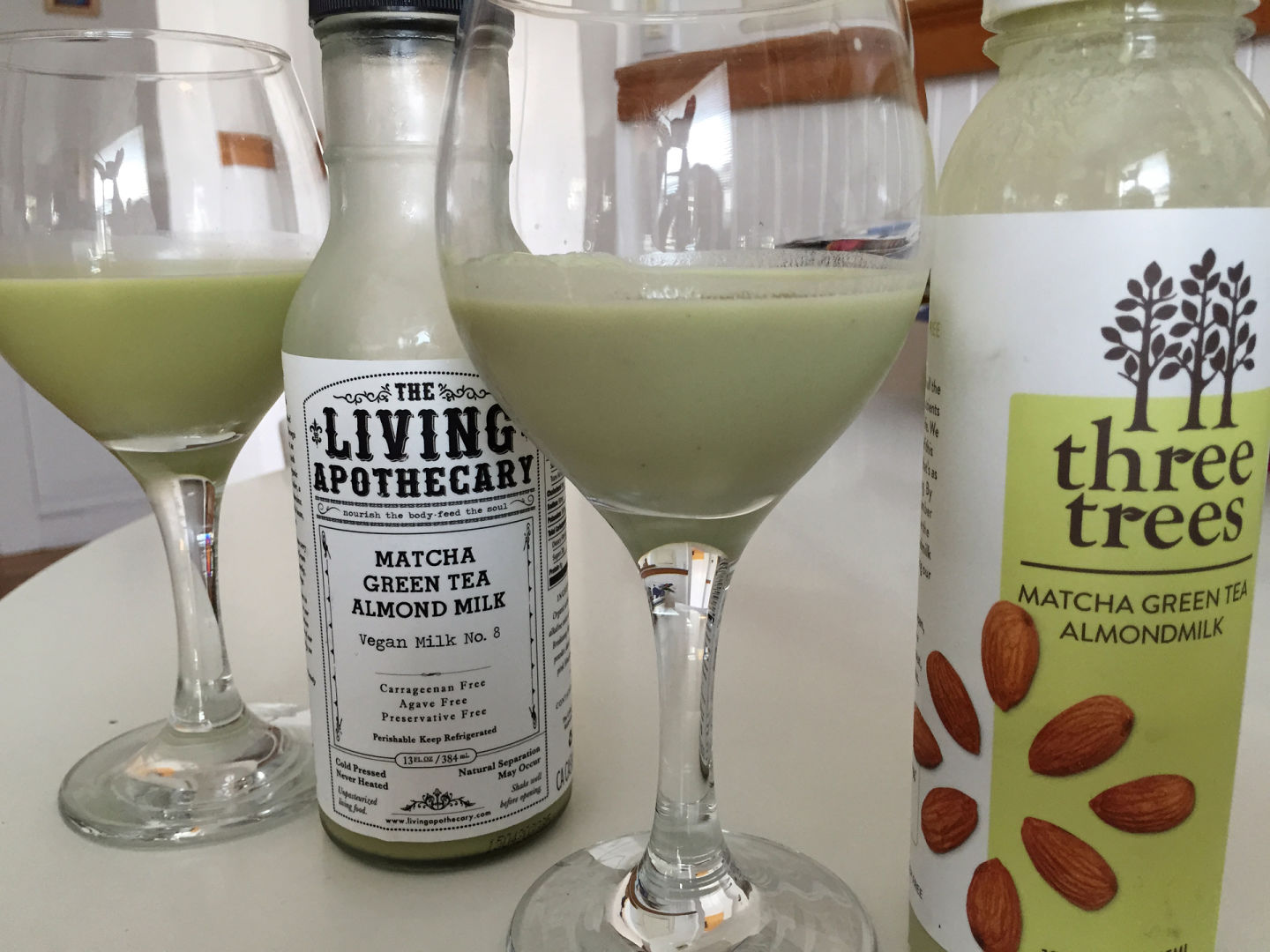
"caption": "Both Three Trees and The Living Apothecary offer a Matcha Green Tea flavored almond milk.",
"description": "Both Three Trees and The Living Apothecary offer a Matcha Green Tea flavored almond milk.",
"title": "Both Three Trees and The Living Apothecary offer a Matcha Green Tea flavored almond milk.",
"credit": "Alix Wall",
"status": "inherit",
"isLoading": false,
"fetchFailed": false
},
"bayareabites_100022": {
"type": "attachments",
"id": "bayareabites_100022",
"meta": {
"index": "attachments_1716263798",
"site": "bayareabites",
"id": "100022",
"found": true
},
"parent": 100021,
"imgSizes": {
"twentyfourteen-full-width": {
"file": "https://ww2.kqed.org/app/uploads/sites/24/2015/09/hampton-creek-foods_day1_-6_custom-cdd74f803aa68630ee1b625b0008564bffae62fd-1038x576.jpg",
"width": 1038,
"mimeType": "image/jpeg",
"height": 576
},
"thumbnail": {
"file": "https://ww2.kqed.org/app/uploads/sites/24/2015/09/hampton-creek-foods_day1_-6_custom-cdd74f803aa68630ee1b625b0008564bffae62fd-400x267.jpg",
"width": 400,
"mimeType": "image/jpeg",
"height": 267
},
"fd-sm": {
"file": "https://ww2.kqed.org/app/uploads/sites/24/2015/09/hampton-creek-foods_day1_-6_custom-cdd74f803aa68630ee1b625b0008564bffae62fd-960x641.jpg",
"width": 960,
"mimeType": "image/jpeg",
"height": 641
},
"post-thumbnail": {
"file": "https://ww2.kqed.org/app/uploads/sites/24/2015/09/hampton-creek-foods_day1_-6_custom-cdd74f803aa68630ee1b625b0008564bffae62fd-672x372.jpg",
"width": 672,
"mimeType": "image/jpeg",
"height": 372
},
"kqedFullSize": {
"file": "https://ww2.kqed.org/app/uploads/sites/24/2015/09/hampton-creek-foods_day1_-6_custom-cdd74f803aa68630ee1b625b0008564bffae62fd.jpg",
"width": 3000,
"height": 2002
},
"large": {
"file": "https://ww2.kqed.org/app/uploads/sites/24/2015/09/hampton-creek-foods_day1_-6_custom-cdd74f803aa68630ee1b625b0008564bffae62fd-1440x961.jpg",
"width": 1440,
"mimeType": "image/jpeg",
"height": 961
},
"guest-author-96": {
"file": "https://ww2.kqed.org/app/uploads/sites/24/2015/09/hampton-creek-foods_day1_-6_custom-cdd74f803aa68630ee1b625b0008564bffae62fd-96x96.jpg",
"width": 96,
"mimeType": "image/jpeg",
"height": 96
},
"medium": {
"file": "https://ww2.kqed.org/app/uploads/sites/24/2015/09/hampton-creek-foods_day1_-6_custom-cdd74f803aa68630ee1b625b0008564bffae62fd-800x534.jpg",
"width": 800,
"mimeType": "image/jpeg",
"height": 534
},
"guest-author-64": {
"file": "https://ww2.kqed.org/app/uploads/sites/24/2015/09/hampton-creek-foods_day1_-6_custom-cdd74f803aa68630ee1b625b0008564bffae62fd-64x64.jpg",
"width": 64,
"mimeType": "image/jpeg",
"height": 64
},
"guest-author-32": {
"file": "https://ww2.kqed.org/app/uploads/sites/24/2015/09/hampton-creek-foods_day1_-6_custom-cdd74f803aa68630ee1b625b0008564bffae62fd-32x32.jpg",
"width": 32,
"mimeType": "image/jpeg",
"height": 32
},
"cat_post_thumb_sizecategory-posts-2": {
"file": "https://ww2.kqed.org/app/uploads/sites/24/2015/09/hampton-creek-foods_day1_-6_custom-cdd74f803aa68630ee1b625b0008564bffae62fd-150x150.jpg",
"width": 150,
"mimeType": "image/jpeg",
"height": 150
},
"fd-lrg": {
"file": "https://ww2.kqed.org/app/uploads/sites/24/2015/09/hampton-creek-foods_day1_-6_custom-cdd74f803aa68630ee1b625b0008564bffae62fd-1920x1281.jpg",
"width": 1920,
"mimeType": "image/jpeg",
"height": 1281
},
"fd-med": {
"file": "https://ww2.kqed.org/app/uploads/sites/24/2015/09/hampton-creek-foods_day1_-6_custom-cdd74f803aa68630ee1b625b0008564bffae62fd-1180x787.jpg",
"width": 1180,
"mimeType": "image/jpeg",
"height": 787
},
"detail": {
"file": "https://ww2.kqed.org/app/uploads/sites/24/2015/09/hampton-creek-foods_day1_-6_custom-cdd74f803aa68630ee1b625b0008564bffae62fd-75x75.jpg",
"width": 75,
"mimeType": "image/jpeg",
"height": 75
},
"guest-author-128": {
"file": "https://ww2.kqed.org/app/uploads/sites/24/2015/09/hampton-creek-foods_day1_-6_custom-cdd74f803aa68630ee1b625b0008564bffae62fd-128x128.jpg",
"width": 128,
"mimeType": "image/jpeg",
"height": 128
}
},
"publishDate": 1441327530,
"modified": 1441329625,
"caption": "Just Mayo looks like mayonnaise and tastes like mayonnaise but contains no eggs. That's ruffled the feathers of the egg industry.",
"description": "Just Mayo looks like mayonnaise and tastes like mayonnaise but contains no eggs. That's ruffled the feathers of the egg industr",
"title": "Just Mayo looks like mayonnaise and tastes like mayonnaise but contains no eggs. That's ruffled the feathers of the egg industry.",
"credit": "Courtesy of Hampton Creek",
"status": "inherit",
"isLoading": false,
"fetchFailed": false
},
"bayareabites_99784": {
"type": "attachments",
"id": "bayareabites_99784",
"meta": {
"index": "attachments_1716263798",
"site": "bayareabites",
"id": "99784",
"found": true
},
"parent": 99783,
"imgSizes": {
"twentyfourteen-full-width": {
"file": "https://ww2.kqed.org/app/uploads/sites/24/2015/08/mg_8565_custom-012bfbd4cb1ec2306752711b39a713f30abe958b-1038x576.jpg",
"width": 1038,
"mimeType": "image/jpeg",
"height": 576
},
"thumbnail": {
"file": "https://ww2.kqed.org/app/uploads/sites/24/2015/08/mg_8565_custom-012bfbd4cb1ec2306752711b39a713f30abe958b-400x266.jpg",
"width": 400,
"mimeType": "image/jpeg",
"height": 266
},
"fd-sm": {
"file": "https://ww2.kqed.org/app/uploads/sites/24/2015/08/mg_8565_custom-012bfbd4cb1ec2306752711b39a713f30abe958b-960x639.jpg",
"width": 960,
"mimeType": "image/jpeg",
"height": 639
},
"post-thumbnail": {
"file": "https://ww2.kqed.org/app/uploads/sites/24/2015/08/mg_8565_custom-012bfbd4cb1ec2306752711b39a713f30abe958b-672x372.jpg",
"width": 672,
"mimeType": "image/jpeg",
"height": 372
},
"kqedFullSize": {
"file": "https://ww2.kqed.org/app/uploads/sites/24/2015/08/mg_8565_custom-012bfbd4cb1ec2306752711b39a713f30abe958b.jpg",
"width": 3000,
"height": 1998
},
"large": {
"file": "https://ww2.kqed.org/app/uploads/sites/24/2015/08/mg_8565_custom-012bfbd4cb1ec2306752711b39a713f30abe958b-1440x959.jpg",
"width": 1440,
"mimeType": "image/jpeg",
"height": 959
},
"guest-author-96": {
"file": "https://ww2.kqed.org/app/uploads/sites/24/2015/08/mg_8565_custom-012bfbd4cb1ec2306752711b39a713f30abe958b-96x96.jpg",
"width": 96,
"mimeType": "image/jpeg",
"height": 96
},
"medium": {
"file": "https://ww2.kqed.org/app/uploads/sites/24/2015/08/mg_8565_custom-012bfbd4cb1ec2306752711b39a713f30abe958b-800x533.jpg",
"width": 800,
"mimeType": "image/jpeg",
"height": 533
},
"guest-author-64": {
"file": "https://ww2.kqed.org/app/uploads/sites/24/2015/08/mg_8565_custom-012bfbd4cb1ec2306752711b39a713f30abe958b-64x64.jpg",
"width": 64,
"mimeType": "image/jpeg",
"height": 64
},
"guest-author-32": {
"file": "https://ww2.kqed.org/app/uploads/sites/24/2015/08/mg_8565_custom-012bfbd4cb1ec2306752711b39a713f30abe958b-32x32.jpg",
"width": 32,
"mimeType": "image/jpeg",
"height": 32
},
"cat_post_thumb_sizecategory-posts-2": {
"file": "https://ww2.kqed.org/app/uploads/sites/24/2015/08/mg_8565_custom-012bfbd4cb1ec2306752711b39a713f30abe958b-150x150.jpg",
"width": 150,
"mimeType": "image/jpeg",
"height": 150
},
"fd-lrg": {
"file": "https://ww2.kqed.org/app/uploads/sites/24/2015/08/mg_8565_custom-012bfbd4cb1ec2306752711b39a713f30abe958b-1920x1279.jpg",
"width": 1920,
"mimeType": "image/jpeg",
"height": 1279
},
"fd-med": {
"file": "https://ww2.kqed.org/app/uploads/sites/24/2015/08/mg_8565_custom-012bfbd4cb1ec2306752711b39a713f30abe958b-1180x786.jpg",
"width": 1180,
"mimeType": "image/jpeg",
"height": 786
},
"detail": {
"file": "https://ww2.kqed.org/app/uploads/sites/24/2015/08/mg_8565_custom-012bfbd4cb1ec2306752711b39a713f30abe958b-75x75.jpg",
"width": 75,
"mimeType": "image/jpeg",
"height": 75
},
"guest-author-128": {
"file": "https://ww2.kqed.org/app/uploads/sites/24/2015/08/mg_8565_custom-012bfbd4cb1ec2306752711b39a713f30abe958b-128x128.jpg",
"width": 128,
"mimeType": "image/jpeg",
"height": 128
}
},
"publishDate": 1440630621,
"modified": 1440630956,
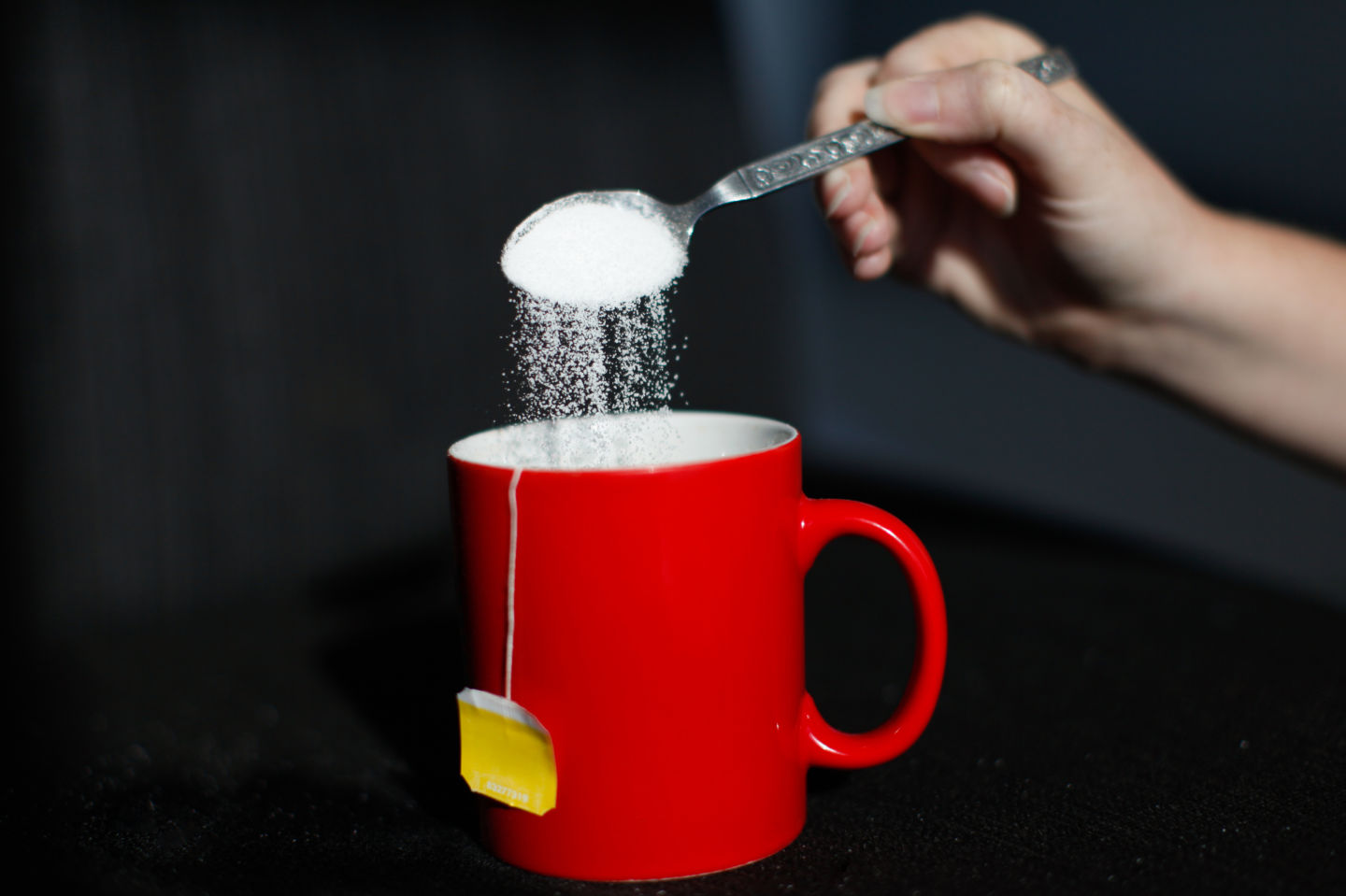
"caption": "Ah, sugar — we love the sweetness, but not the calories. For more than a century, food technologists have been on a quest for the perfect, guilt-free substitute. The latest candidate, allulose, is not available to consumers in a crystal form: It is a syrup only available to manufacturers.",
"description": "Ah, sugar — we love the sweetness, but not the calories. For more than a century, food technologists have been on a quest for the perfect, guilt-free substitute. The latest candidate, allulose, is not available to consumers in a crystal form: It is a syrup only available to manufactur",
"title": "Ah, sugar — we love the sweetness, but not the calories. For more than a century, food technologists have been on a quest for the perfect, guilt-free substitute. The latest candidate, allulose, is not available to consumers in a crystal form: It is a syrup only available to manufacturers.",
"credit": "Ryan Kellman/NPR",
"status": "inherit",
"isLoading": false,
"fetchFailed": false
},
"bayareabites_99709": {
"type": "attachments",
"id": "bayareabites_99709",
"meta": {
"index": "attachments_1716263798",
"site": "bayareabites",
"id": "99709",
"found": true
},
"parent": 99708,
"imgSizes": {
"twentyfourteen-full-width": {
"file": "https://ww2.kqed.org/app/uploads/sites/24/2015/08/gettyimages-159919238_custom-338670e5155fdf5b2d0dba1bd0ee99f2483ce4c1-1038x576.jpg",
"width": 1038,
"mimeType": "image/jpeg",
"height": 576
},
"thumbnail": {
"file": "https://ww2.kqed.org/app/uploads/sites/24/2015/08/gettyimages-159919238_custom-338670e5155fdf5b2d0dba1bd0ee99f2483ce4c1-400x247.jpg",
"width": 400,
"mimeType": "image/jpeg",
"height": 247
},
"fd-sm": {
"file": "https://ww2.kqed.org/app/uploads/sites/24/2015/08/gettyimages-159919238_custom-338670e5155fdf5b2d0dba1bd0ee99f2483ce4c1-960x594.jpg",
"width": 960,
"mimeType": "image/jpeg",
"height": 594
},
"post-thumbnail": {
"file": "https://ww2.kqed.org/app/uploads/sites/24/2015/08/gettyimages-159919238_custom-338670e5155fdf5b2d0dba1bd0ee99f2483ce4c1-672x372.jpg",
"width": 672,
"mimeType": "image/jpeg",
"height": 372
},
"kqedFullSize": {
"file": "https://ww2.kqed.org/app/uploads/sites/24/2015/08/gettyimages-159919238_custom-338670e5155fdf5b2d0dba1bd0ee99f2483ce4c1.jpg",
"width": 3000,
"height": 1856
},
"large": {
"file": "https://ww2.kqed.org/app/uploads/sites/24/2015/08/gettyimages-159919238_custom-338670e5155fdf5b2d0dba1bd0ee99f2483ce4c1-1440x891.jpg",
"width": 1440,
"mimeType": "image/jpeg",
"height": 891
},
"guest-author-96": {
"file": "https://ww2.kqed.org/app/uploads/sites/24/2015/08/gettyimages-159919238_custom-338670e5155fdf5b2d0dba1bd0ee99f2483ce4c1-96x96.jpg",
"width": 96,
"mimeType": "image/jpeg",
"height": 96
},
"medium": {
"file": "https://ww2.kqed.org/app/uploads/sites/24/2015/08/gettyimages-159919238_custom-338670e5155fdf5b2d0dba1bd0ee99f2483ce4c1-800x495.jpg",
"width": 800,
"mimeType": "image/jpeg",
"height": 495
},
"guest-author-64": {
"file": "https://ww2.kqed.org/app/uploads/sites/24/2015/08/gettyimages-159919238_custom-338670e5155fdf5b2d0dba1bd0ee99f2483ce4c1-64x64.jpg",
"width": 64,
"mimeType": "image/jpeg",
"height": 64
},
"guest-author-32": {
"file": "https://ww2.kqed.org/app/uploads/sites/24/2015/08/gettyimages-159919238_custom-338670e5155fdf5b2d0dba1bd0ee99f2483ce4c1-32x32.jpg",
"width": 32,
"mimeType": "image/jpeg",
"height": 32
},
"cat_post_thumb_sizecategory-posts-2": {
"file": "https://ww2.kqed.org/app/uploads/sites/24/2015/08/gettyimages-159919238_custom-338670e5155fdf5b2d0dba1bd0ee99f2483ce4c1-150x150.jpg",
"width": 150,
"mimeType": "image/jpeg",
"height": 150
},
"fd-lrg": {
"file": "https://ww2.kqed.org/app/uploads/sites/24/2015/08/gettyimages-159919238_custom-338670e5155fdf5b2d0dba1bd0ee99f2483ce4c1-1920x1188.jpg",
"width": 1920,
"mimeType": "image/jpeg",
"height": 1188
},
"fd-med": {
"file": "https://ww2.kqed.org/app/uploads/sites/24/2015/08/gettyimages-159919238_custom-338670e5155fdf5b2d0dba1bd0ee99f2483ce4c1-1180x730.jpg",
"width": 1180,
"mimeType": "image/jpeg",
"height": 730
},
"detail": {
"file": "https://ww2.kqed.org/app/uploads/sites/24/2015/08/gettyimages-159919238_custom-338670e5155fdf5b2d0dba1bd0ee99f2483ce4c1-75x75.jpg",
"width": 75,
"mimeType": "image/jpeg",
"height": 75
},
"guest-author-128": {
"file": "https://ww2.kqed.org/app/uploads/sites/24/2015/08/gettyimages-159919238_custom-338670e5155fdf5b2d0dba1bd0ee99f2483ce4c1-128x128.jpg",
"width": 128,
"mimeType": "image/jpeg",
"height": 128
}
},
"publishDate": 1440456467,
"modified": 1440456688,
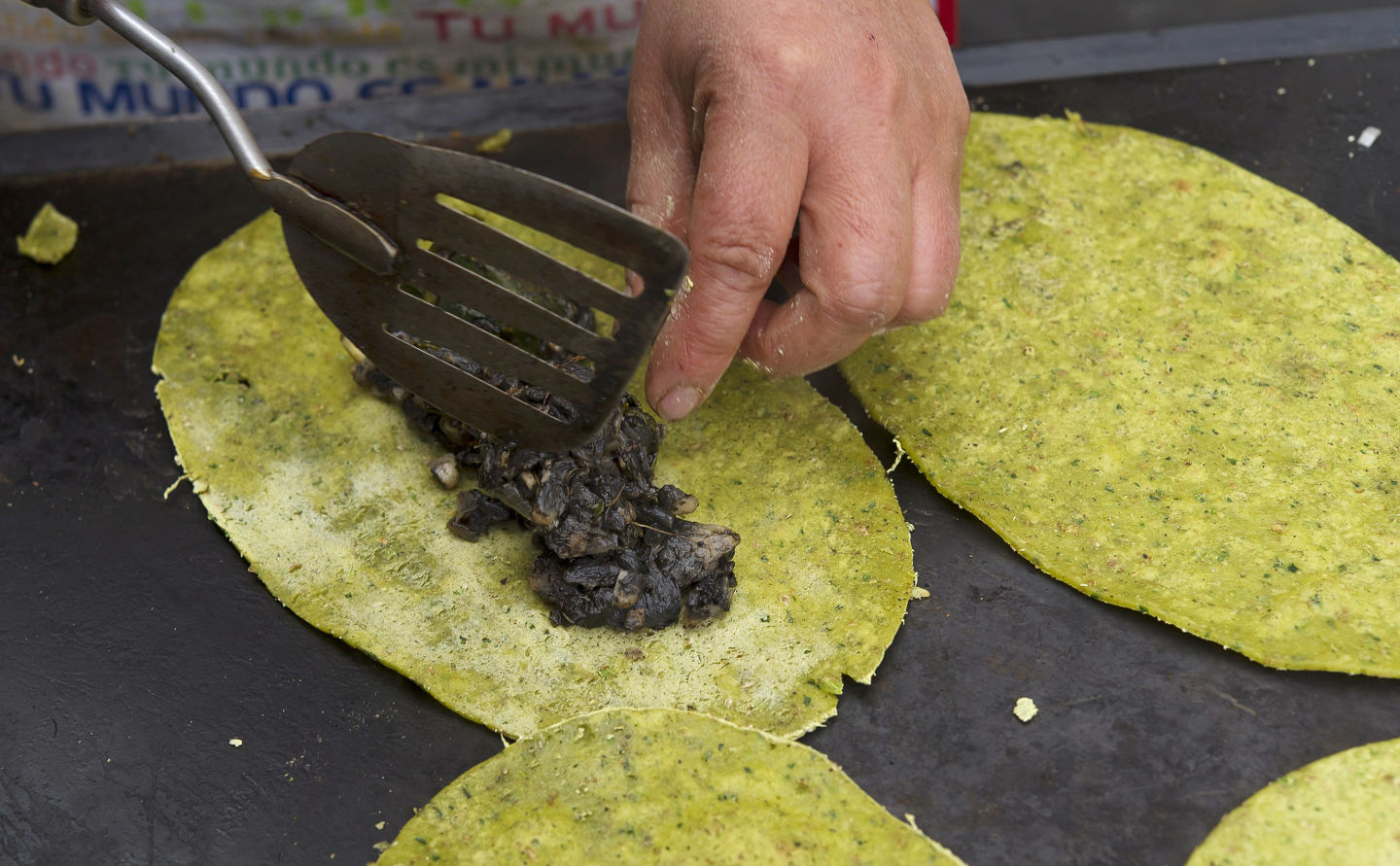
"caption": "Huitlacoche quesadillas with spinach in Mexico City in 2013.",
"description": "Huitlacoche quesadillas with spinach in Mexico City in 2013",
"title": "Huitlacoche quesadillas with spinach in Mexico City in 2013.",
"credit": "Omar Torres/AFP/Getty Images",
"status": "inherit",
"isLoading": false,
"fetchFailed": false
},
"bayareabites_99642": {
"type": "attachments",
"id": "bayareabites_99642",
"meta": {
"index": "attachments_1716263798",
"site": "bayareabites",
"id": "99642",
"found": true
},
"parent": 99641,
"imgSizes": {
"twentyfourteen-full-width": {
"file": "https://ww2.kqed.org/app/uploads/sites/24/2015/08/ecoskies-ssw_wide-09c0cb9e10e950f2d8a2cb54ab34d45c550ec954-1038x576.jpg",
"width": 1038,
"mimeType": "image/jpeg",
"height": 576
},
"thumbnail": {
"file": "https://ww2.kqed.org/app/uploads/sites/24/2015/08/ecoskies-ssw_wide-09c0cb9e10e950f2d8a2cb54ab34d45c550ec954-400x225.jpg",
"width": 400,
"mimeType": "image/jpeg",
"height": 225
},
"fd-sm": {
"file": "https://ww2.kqed.org/app/uploads/sites/24/2015/08/ecoskies-ssw_wide-09c0cb9e10e950f2d8a2cb54ab34d45c550ec954-960x539.jpg",
"width": 960,
"mimeType": "image/jpeg",
"height": 539
},
"post-thumbnail": {
"file": "https://ww2.kqed.org/app/uploads/sites/24/2015/08/ecoskies-ssw_wide-09c0cb9e10e950f2d8a2cb54ab34d45c550ec954-672x372.jpg",
"width": 672,
"mimeType": "image/jpeg",
"height": 372
},
"kqedFullSize": {
"file": "https://ww2.kqed.org/app/uploads/sites/24/2015/08/ecoskies-ssw_wide-09c0cb9e10e950f2d8a2cb54ab34d45c550ec954.jpg",
"width": 1996,
"height": 1121
},
"large": {
"file": "https://ww2.kqed.org/app/uploads/sites/24/2015/08/ecoskies-ssw_wide-09c0cb9e10e950f2d8a2cb54ab34d45c550ec954-1440x809.jpg",
"width": 1440,
"mimeType": "image/jpeg",
"height": 809
},
"guest-author-96": {
"file": "https://ww2.kqed.org/app/uploads/sites/24/2015/08/ecoskies-ssw_wide-09c0cb9e10e950f2d8a2cb54ab34d45c550ec954-96x96.jpg",
"width": 96,
"mimeType": "image/jpeg",
"height": 96
},
"medium": {
"file": "https://ww2.kqed.org/app/uploads/sites/24/2015/08/ecoskies-ssw_wide-09c0cb9e10e950f2d8a2cb54ab34d45c550ec954-800x449.jpg",
"width": 800,
"mimeType": "image/jpeg",
"height": 449
},
"guest-author-64": {
"file": "https://ww2.kqed.org/app/uploads/sites/24/2015/08/ecoskies-ssw_wide-09c0cb9e10e950f2d8a2cb54ab34d45c550ec954-64x64.jpg",
"width": 64,
"mimeType": "image/jpeg",
"height": 64
},
"guest-author-32": {
"file": "https://ww2.kqed.org/app/uploads/sites/24/2015/08/ecoskies-ssw_wide-09c0cb9e10e950f2d8a2cb54ab34d45c550ec954-32x32.jpg",
"width": 32,
"mimeType": "image/jpeg",
"height": 32
},
"cat_post_thumb_sizecategory-posts-2": {
"file": "https://ww2.kqed.org/app/uploads/sites/24/2015/08/ecoskies-ssw_wide-09c0cb9e10e950f2d8a2cb54ab34d45c550ec954-150x150.jpg",
"width": 150,
"mimeType": "image/jpeg",
"height": 150
},
"fd-lrg": {
"file": "https://ww2.kqed.org/app/uploads/sites/24/2015/08/ecoskies-ssw_wide-09c0cb9e10e950f2d8a2cb54ab34d45c550ec954-1920x1078.jpg",
"width": 1920,
"mimeType": "image/jpeg",
"height": 1078
},
"fd-med": {
"file": "https://ww2.kqed.org/app/uploads/sites/24/2015/08/ecoskies-ssw_wide-09c0cb9e10e950f2d8a2cb54ab34d45c550ec954-1180x663.jpg",
"width": 1180,
"mimeType": "image/jpeg",
"height": 663
},
"detail": {
"file": "https://ww2.kqed.org/app/uploads/sites/24/2015/08/ecoskies-ssw_wide-09c0cb9e10e950f2d8a2cb54ab34d45c550ec954-75x75.jpg",
"width": 75,
"mimeType": "image/jpeg",
"height": 75
},
"guest-author-128": {
"file": "https://ww2.kqed.org/app/uploads/sites/24/2015/08/ecoskies-ssw_wide-09c0cb9e10e950f2d8a2cb54ab34d45c550ec954-128x128.jpg",
"width": 128,
"mimeType": "image/jpeg",
"height": 128
}
},
"publishDate": 1440117352,
"modified": 1440117490,
"caption": "United has purchased 15 million gallons of renewable jet fuel made from beef tallow, or fat, by Alt Air Fuels and plans to use the fuel this year for Los Angeles-to-San Francisco flights.",
"description": "United has purchased 15 million gallons of renewable jet fuel made from beef tallow, or fat, by Alt Air Fuels and plans to use the fuel this year for Los Angeles-to-San Francisco flights.",
"title": "United has purchased 15 million gallons of renewable jet fuel made from beef tallow, or fat, by Alt Air Fuels and plans to use the fuel this year for Los Angeles-to-San Francisco flights.",
"credit": "Tony Ruppe/United",
"status": "inherit",
"isLoading": false,
"fetchFailed": false
},
"bayareabites_99510": {
"type": "attachments",
"id": "bayareabites_99510",
"meta": {
"index": "attachments_1716263798",
"site": "bayareabites",
"id": "99510",
"found": true
},
"parent": 99507,
"imgSizes": {
"twentyfourteen-full-width": {
"file": "https://ww2.kqed.org/app/uploads/sites/24/2015/08/Screen-shot-2015-08-17-at-7.10.49-PM-920x576.png",
"width": 920,
"mimeType": "image/png",
"height": 576
},
"thumbnail": {
"file": "https://ww2.kqed.org/app/uploads/sites/24/2015/08/Screen-shot-2015-08-17-at-7.10.49-PM-400x292.png",
"width": 400,
"mimeType": "image/png",
"height": 292
},
"post-thumbnail": {
"file": "https://ww2.kqed.org/app/uploads/sites/24/2015/08/Screen-shot-2015-08-17-at-7.10.49-PM-672x372.png",
"width": 672,
"mimeType": "image/png",
"height": 372
},
"kqedFullSize": {
"file": "https://ww2.kqed.org/app/uploads/sites/24/2015/08/Screen-shot-2015-08-17-at-7.10.49-PM.png",
"width": 920,
"height": 672
},
"cat_post_thumb_sizecategory-posts-2": {
"file": "https://ww2.kqed.org/app/uploads/sites/24/2015/08/Screen-shot-2015-08-17-at-7.10.49-PM-150x150.png",
"width": 150,
"mimeType": "image/png",
"height": 150
},
"guest-author-96": {
"file": "https://ww2.kqed.org/app/uploads/sites/24/2015/08/Screen-shot-2015-08-17-at-7.10.49-PM-96x96.png",
"width": 96,
"mimeType": "image/png",
"height": 96
},
"medium": {
"file": "https://ww2.kqed.org/app/uploads/sites/24/2015/08/Screen-shot-2015-08-17-at-7.10.49-PM-800x584.png",
"width": 800,
"mimeType": "image/png",
"height": 584
},
"guest-author-64": {
"file": "https://ww2.kqed.org/app/uploads/sites/24/2015/08/Screen-shot-2015-08-17-at-7.10.49-PM-64x64.png",
"width": 64,
"mimeType": "image/png",
"height": 64
},
"detail": {
"file": "https://ww2.kqed.org/app/uploads/sites/24/2015/08/Screen-shot-2015-08-17-at-7.10.49-PM-75x75.png",
"width": 75,
"mimeType": "image/png",
"height": 75
},
"guest-author-32": {
"file": "https://ww2.kqed.org/app/uploads/sites/24/2015/08/Screen-shot-2015-08-17-at-7.10.49-PM-32x32.png",
"width": 32,
"mimeType": "image/png",
"height": 32
},
"guest-author-128": {
"file": "https://ww2.kqed.org/app/uploads/sites/24/2015/08/Screen-shot-2015-08-17-at-7.10.49-PM-128x128.png",
"width": 128,
"mimeType": "image/png",
"height": 128
}
},
"publishDate": 1439864076,
"modified": 1439864119,
"caption": "Meals available on the Josephine website.",
"description": "Meals available on the Josephine website.",
"title": "Meals available on the Josephine website.",
"credit": "Josephine",
"status": "inherit",
"isLoading": false,
"fetchFailed": false
}
},
"audioPlayerReducer": {
"postId": "stream_live",
"isPaused": true,
"isPlaying": false,
"pfsActive": false,
"pledgeModalIsOpen": true,
"playerDrawerIsOpen": false,
"liveAudioPlayStartedAt": 0,
"liveAudioPlayContext": ""
},
"authorsReducer": {
"byline_bayareabites_102158": {
"type": "authors",
"id": "byline_bayareabites_102158",
"meta": {
"override": true
},
"slug": "byline_bayareabites_102158",
"name": "Tracie McMillan, \u003ca href=\"https://ww2.kqed.org/bayareabites/category/npr-food/\">NPR Food\u003c/a>",
"isLoading": false
},
"byline_bayareabites_101961": {
"type": "authors",
"id": "byline_bayareabites_101961",
"meta": {
"override": true
},
"slug": "byline_bayareabites_101961",
"name": "Ezra David Romero, \u003ca href=\"http://kvpr.org\">KVPR\u003c/a> at NPR Food",
"isLoading": false
},
"byline_bayareabites_101993": {
"type": "authors",
"id": "byline_bayareabites_101993",
"meta": {
"override": true
},
"slug": "byline_bayareabites_101993",
"name": "Ken Christensen, \u003ca href=\"http://earthfix.info/\">EarthFix\u003c/a> at NPR Food",
"isLoading": false
},
"byline_bayareabites_100828": {
"type": "authors",
"id": "byline_bayareabites_100828",
"meta": {
"override": true
},
"slug": "byline_bayareabites_100828",
"name": "Angus Chen, \u003ca href=\"https://ww2.kqed.org/bayareabites/author/nprfood/\">NPR Food\u003c/a>",
"isLoading": false
},
"byline_bayareabites_100021": {
"type": "authors",
"id": "byline_bayareabites_100021",
"meta": {
"override": true
},
"slug": "byline_bayareabites_100021",
"name": "Dan Charles, \u003ca href=\"https://ww2.kqed.org/bayareabites/author/nprfood/\">NPR Food\u003c/a>",
"isLoading": false
},
"byline_bayareabites_99783": {
"type": "authors",
"id": "byline_bayareabites_99783",
"meta": {
"override": true
},
"slug": "byline_bayareabites_99783",
"name": "Dan Charles, \u003ca href=\"https://ww2.kqed.org/bayareabites/author/nprfood/\">NPR Food\u003c/a>",
"isLoading": false
},
"byline_bayareabites_99708": {
"type": "authors",
"id": "byline_bayareabites_99708",
"meta": {
"override": true
},
"slug": "byline_bayareabites_99708",
"name": "Jill Neimark, \u003ca href\"https://ww2.kqed.org/bayareabites/author/nprfood/\">NPR Food\u003c/a>",
"isLoading": false
},
"byline_bayareabites_99641": {
"type": "authors",
"id": "byline_bayareabites_99641",
"meta": {
"override": true
},
"slug": "byline_bayareabites_99641",
"name": "Abbie Fentress Swanson, \u003ca href=\"https://ww2.kqed.org/bayareabites/author/nprfood/\">NPR Food\u003c/a>",
"isLoading": false
},
"byline_bayareabites_99507": {
"type": "authors",
"id": "byline_bayareabites_99507",
"meta": {
"override": true
},
"slug": "byline_bayareabites_99507",
"name": "\u003ca href=\"http://civileats.com/author/lclark/\">Leilani Clark\u003c/a>, \u003ca href=\"https://ww2.kqed.org/bayareabites/author/civileat/\">Civil Eats\u003c/a>",
"isLoading": false
},
"shelbypope": {
"type": "authors",
"id": "5566",
"meta": {
"index": "authors_1716337520",
"id": "5566",
"found": true
},
"name": "Shelby Pope",
"firstName": "Shelby",
"lastName": "Pope",
"slug": "shelbypope",
"email": "shelbylpope@gmail.com",
"display_author_email": false,
"staff_mastheads": [],
"title": "KQED Contributor",
"bio": "Shelby Pope is a freelance writer living and eating her way through the East Bay. She’s written about food, art and science for publications including the Smithsonian, Lucky Peach, and the Washington Post's pet blog. When she’s not taste testing sourdough bread to find the Bay Area’s best loaf, you can find her on Twitter \u003ca href=\"https://twitter.com/shelbylpope\">@shelbylpope\u003c/a> or at \u003ca href=\"https://shelbypope.com/\">shelbypope.com\u003c/a>",
"avatar": "https://secure.gravatar.com/avatar/df74e904399e45720e48e36c6e1ae7a90c32216eb2c9c82f3b2e1a9641b507d3?s=600&d=blank&r=g",
"twitter": "shelbylpope",
"bluesky": null,
"facebook": null,
"instagram": null,
"linkedin": null,
"sites": [
{
"site": "arts",
"roles": [
"subscriber"
]
},
{
"site": "food",
"roles": [
"subscriber"
]
}
],
"headData": {
"title": "Shelby Pope | KQED",
"description": "KQED Contributor",
"ogImgSrc": "https://secure.gravatar.com/avatar/df74e904399e45720e48e36c6e1ae7a90c32216eb2c9c82f3b2e1a9641b507d3?s=600&d=blank&r=g",
"twImgSrc": "https://secure.gravatar.com/avatar/df74e904399e45720e48e36c6e1ae7a90c32216eb2c9c82f3b2e1a9641b507d3?s=600&d=blank&r=g"
},
"isLoading": false,
"link": "/author/shelbypope"
},
"alexandrawall": {
"type": "authors",
"id": "5567",
"meta": {
"index": "authors_1716337520",
"id": "5567",
"found": true
},
"name": "Alix Wall",
"firstName": "Alix",
"lastName": "Wall",
"slug": "alexandrawall",
"email": "alixwall@sbcglobal.net",
"display_author_email": false,
"staff_mastheads": [],
"title": null,
"bio": "Alix Wall appeared in her hometown paper in Riverside, California as “Chef of the Week” when she was 15 years old, and in high school, she founded “The Bon Appetit Club.” After working as a journalist for many years, Alix became a certified natural foods chef from Bauman College in Berkeley. While she cooks part-time healthy, organic meals for busy families, she is also a contributing editor of j. weekly, the Bay Area’s Jewish newspaper, in which she has a monthly food column. Her food writing can also be found on Berkeleyside’s NOSH and in Edible East Bay. In addition to food, she loves writing about how couples met and fell in love, which she does for The San Francisco Chronicle’s Style section and j. weekly. In 2016, she founded The Illuminoshi: The Not-So-Secret Society of Bay Area Jewish Food Professionals. She is also writer/producer for a documentary-in-progress called \u003ca href=\"https://www.lonelychildmovie.com/\">The Lonely Child\u003c/a>. Follow Alix on Twitter \u003ca href=\"https://twitter.com/WallAlix\">@WallAlix\u003c/a>.",
"avatar": "https://secure.gravatar.com/avatar/421a27f26a185be932f8d567b499b1f1?s=600&d=blank&r=g",
"twitter": null,
"facebook": null,
"instagram": null,
"linkedin": null,
"sites": [
{
"site": "bayareabites",
"roles": [
"contributor"
]
},
{
"site": "food",
"roles": [
"contributor"
]
}
],
"headData": {
"title": "Alix Wall | KQED",
"description": null,
"ogImgSrc": "https://secure.gravatar.com/avatar/421a27f26a185be932f8d567b499b1f1?s=600&d=blank&r=g",
"twImgSrc": "https://secure.gravatar.com/avatar/421a27f26a185be932f8d567b499b1f1?s=600&d=blank&r=g"
},
"isLoading": false,
"link": "/author/alexandrawall"
},
"civileat": {
"type": "authors",
"id": "5583",
"meta": {
"index": "authors_1716337520",
"id": "5583",
"found": true
},
"name": "Civil Eats",
"firstName": "Civil",
"lastName": "Eats",
"slug": "civileat",
"email": "twilight@civileats.com",
"display_author_email": false,
"staff_mastheads": [],
"title": null,
"bio": "\u003ca href=\"http://civileats.com/\">Civil Eats\u003c/a> is a daily news source for critical thought about the American food system. We publish stories that shift the conversation around sustainable agriculture in an effort to build economically and socially just communities. Follow Civil Eats on Twitter \u003ca href=\"https://twitter.com/CivilEats\">@civileats\u003c/a> and on \u003ca href=\"https://www.facebook.com/pages/Civil-Eats/56766540637\">Facebook\u003c/a>.",
"avatar": "https://secure.gravatar.com/avatar/8f6f50bfb6403afe7cbc194b66cc1d4d?s=600&d=blank&r=g",
"twitter": "CivilEats",
"facebook": "/pages/Civil-Eats/56766540637?ref=hl",
"instagram": null,
"linkedin": null,
"sites": [
{
"site": "bayareabites",
"roles": [
"contributor"
]
},
{
"site": "food",
"roles": [
"contributor"
]
}
],
"headData": {
"title": "Civil Eats | KQED",
"description": null,
"ogImgSrc": "https://secure.gravatar.com/avatar/8f6f50bfb6403afe7cbc194b66cc1d4d?s=600&d=blank&r=g",
"twImgSrc": "https://secure.gravatar.com/avatar/8f6f50bfb6403afe7cbc194b66cc1d4d?s=600&d=blank&r=g"
},
"isLoading": false,
"link": "/author/civileat"
}
},
"pagesReducer": {
"bayareabites_category_food-and-technology": {
"type": "terms",
"id": "bayareabites_4084",
"meta": {
"index": "terms_1716263798",
"site": "bayareabites",
"id": "4084",
"score": 14.405603
},
"featImg": null,
"name": "food trends and technology",
"description": null,
"taxonomy": "category",
"headData": {
"twImgId": null,
"twTitle": null,
"ogTitle": null,
"ogImgId": null,
"twDescription": null,
"description": null,
"title": "food trends and technology Archives | KQED Bay Area Bites",
"ogDescription": null
},
"ttid": 2573,
"slug": "food-and-technology",
"isLoading": false,
"title": "food trends and technology",
"pageMeta": {
"site": "bayareabites",
"WpPageTemplate": "page-topic-editorial",
"currentPage": 22
},
"blocks": [
{
"blockName": "kqed/post-list",
"attrs": {
"layout": "cardArticle2",
"query": "posts/bayareabites?category=food-and-technology",
"seeMore": false,
"paginated": true,
"page": 22
}
},
{
"blockName": "kqed/ad"
}
]
}
},
"pfsSessionReducer": {},
"postsReducer": {
"stream_live": {
"type": "live",
"id": "stream_live",
"audioUrl": "https://streams.kqed.org/kqedradio",
"title": "Live Stream",
"excerpt": "Live Stream information currently unavailable.",
"link": "/radio",
"featImg": "",
"label": {
"name": "KQED Live",
"link": "/"
}
},
"stream_kqedNewscast": {
"type": "posts",
"id": "stream_kqedNewscast",
"audioUrl": "https://www.kqed.org/.stream/anon/radio/RDnews/newscast.mp3?_=1",
"title": "KQED Newscast",
"featImg": "",
"label": {
"name": "88.5 FM",
"link": "/"
}
},
"bayareabites_102158": {
"type": "posts",
"id": "bayareabites_102158",
"meta": {
"index": "posts_1716263798",
"site": "bayareabites",
"id": "102158",
"score": null,
"sort": [
1444843794000
]
},
"parent": 0,
"labelTerm": {
"site": "bayareabites"
},
"blocks": [],
"publishDate": 1444843794,
"format": "standard",
"disqusTitle": "Why Walmart And Other Retail Chains May Not Fix The Food Deserts",
"title": "Why Walmart And Other Retail Chains May Not Fix The Food Deserts",
"headTitle": "Bay Area Bites | KQED Food",
"content": "\u003cp>Earlier this month, \u003ca href=\"http://corporate.walmart.com/article/walmart-outlines-new-ways-it-is-helping-customers-live-healthy-lives\">Walmart trumpeted that it had beaten a goal\u003c/a> it set five years ago: to open at least 275 stores in food deserts by 2016. That targeted expansion into \"neighborhoods without access to fresh affordable groceries\" came as part of the retailer's \"healthier food initiative,\" \u003ca href=\"http://www.reuters.com/article/2011/07/20/us-grocers-whitehouse-idUSTRE76J5S420110720\">lauded by — and launched with — First Lady Michelle Obama\u003c/a> in 2011. Walmarts have been popping up in lower-income urban areas where grocery stores are scarce ever since.\u003c/p>\n\u003cp>But new research suggests that plugging food access holes with big box stores may not lead to healthier habits. According to a study just published online in the \u003ca href=\"http://www.ajpmonline.org/article/S0749-3797(15)00415-8/fulltext\">American Journal of Public Health\u003c/a>, Americans' junk food calories increasingly come from big box stores rather than traditional grocers.\u003c/p>\n\u003cp>The share of calories from packaged food products purchased at mass merchandisers, convenience stores and warehouse clubs nearly doubled from 2000 to 2012, rising from 23 percent to 40 percent, according to an \u003ca href=\"http://www.ajpmonline.org/cms/attachment/2037401609/2051875473/gr1_lrg.jpg\">analysis of Nielsen Homescan data\u003c/a> by University of North Carolina researchers. That increase was almost entirely driven by a loss in packaged food sales at grocery stores, whose share of those sales dropped from 69 to 51 percent over the same period. (\"Packaged food products\" here means processed and shelf-stable foods, including snacks, soda and desserts.)\u003c/p>\n\u003cp>What's more, the packaged foods people bought at big box and convenience stores were, on average, higher in sugar, sodium and saturated fat than those bought at traditional grocers, the researchers found.\u003c/p>\n\u003cp>The problem, says Dalia Stern, a researcher at the Carolina Population Center and lead author of the study, is that big box stories sell plenty of junk along with healthy options — and shoppers don't necessarily go for the latter.\u003c/p>\n\u003cp>[ad fullwidth]\u003c/p>\n\u003cp>\"We can't assume that because a store is bigger and stocks healthy and unhealthy products, that [people] are going to choose the healthy products,\" says Stern.\u003c/p>\n\u003cp>While that's particularly true at places like Walmart, other food retailers aren't off the hook, either. Other 2011 Homescan data in the \u003cem>AJPM\u003c/em> study indicated that produce purchases top out at grocery stores: about 6 to 12 percent of shoppers' budgets. Shoppers at big merchandisers and warehouse clubs, by comparison, spent 4 and 2 percent of their food bill on fruits and vegetables, respectively.\u003c/p>\n\u003cp>Stern's findings about junk food purchases at big box stores adds weight to other research on large-scale retailers' impact on our diet. In January, a \u003ca href=\"http://www.nber.org/papers/w20892\">report\u003c/a> from researchers at the National Bureau of Economic Research suggested that the density of supercenters like Walmart played a key role in increasing the rate of obesity in the U.S.\u003c/p>\n\u003cp>Even so, says Stern, \"it might not necessarily be the type of store that is really driving what people are purchasing.\" Instead, she noted, it could be a mix of consumer preference and junk food simply outnumbering — and out-marketing — the healthy stuff.\u003c/p>\n\u003cp>That's not to say that having a grocery store nearby is irrelevant to health, caution public health advocates. \"Access is not a silver bullet,\" Allison Hagey, associate director of Policy Link, a public policy organization, tells The Salt. Instead, she says, changing people's diets is a problem of \"both manufacturers and working with consumers. You need to access in order to have healthy food,\" she says. But \"telling someone 'kale' without telling them what to do with it is really hard.\"\u003c/p>\n\u003cp>The only retail outlet where produce sales outstrip packaged foods may be the farmer's market. But consider how many Americans are actually eating from there. While there are now about 8,700 farmers markets in the U.S. – \u003ca href=\"http://www.ams.usda.gov/sites/default/files/media/FarmersMarketDirectoryListing.jpg\">quadruple\u003c/a> what we had 20 years ago — , the share of sales attributed to them (along with wholesalers and processors) was just under 6 percent in 2014.\u003c/p>\n\u003cp>Compare that to the boom in big box stores: From 1994 to 2015, Walmart went from having \u003ca href=\"http://media.corporate-ir.net/media_files/irol/11/112761/ARs/1994AR.pdf\">68 supercenters\u003c/a>, the store format that includes grocery departments, to \u003ca href=\"http://stock.walmart.com/files/doc_financials/2014/Annual/2014-annual-report.pdf\">3,288\u003c/a>. All combined, supercenters (think Target's grocery division) made up 17 percent of grocery sales last year, according to the \u003ca href=\"http://https/docs.google.com/viewer?url=http%3A%2F%2Fwww.ers.usda.gov%2Fdatafiles%2FFood_Expenditures%2FFood_Expenditures%2Ftable14.xls\">USDA, \u003c/a>while plain old supermarkets and grocers made up another 64 percent.\u003c/p>\n\u003cp>So how can all these stores do more to help people be healthy? Stern and her colleagues write that they need to \"stock and promote purchases of more healthful products at better prices relative to less healthful foods.\" \u003c/p>\n\u003cp>\u003c/p>\n\u003cp>\u003cem>Copyright 2015 \u003ca href=\"http://www.npr.org/\" target=\"_blank\">NPR\u003c/a>.\u003c/em> \u003c/p>\n\n",
"disqusIdentifier": "102158 http://ww2.kqed.org/bayareabites/?p=102158",
"disqusUrl": "https://ww2.kqed.org/bayareabites/2015/10/14/why-wal-mart-and-other-retail-chains-may-not-fix-the-food-deserts/",
"stats": {
"hasVideo": false,
"hasChartOrMap": false,
"hasAudio": false,
"hasPolis": false,
"wordCount": 740,
"hasGoogleForm": false,
"hasGallery": false,
"hasHearkenModule": false,
"iframeSrcs": [],
"paragraphCount": 16
},
"modified": 1444844753,
"excerpt": "Americans' junk food calories increasingly come from big box and convenience stores rather than traditional grocers, a study finds. And researchers say this trend is a public health concern.",
"headData": {
"twImgId": "",
"twTitle": "",
"ogTitle": "",
"ogImgId": "",
"twDescription": "",
"description": "Americans' junk food calories increasingly come from big box and convenience stores rather than traditional grocers, a study finds. And researchers say this trend is a public health concern.",
"title": "Why Walmart And Other Retail Chains May Not Fix The Food Deserts | KQED",
"ogDescription": "",
"schema": {
"@context": "https://schema.org",
"@type": "Article",
"headline": "Why Walmart And Other Retail Chains May Not Fix The Food Deserts",
"datePublished": "2015-10-14T10:29:54-07:00",
"dateModified": "2015-10-14T10:45:53-07:00",
"image": "https://cdn.kqed.org/wp-content/uploads/2020/02/KQED-OG-Image@1x.png"
}
},
"guestAuthors": [],
"slug": "why-wal-mart-and-other-retail-chains-may-not-fix-the-food-deserts",
"status": "publish",
"nprApiLink": "http://api.npr.org/query?id=448300139&apiKey=MDAxOTAwOTE4MDEyMTkxMDAzNjczZDljZA004",
"nprByline": "Tracie McMillan, \u003ca href=\"https://ww2.kqed.org/bayareabites/category/npr-food/\">NPR Food\u003c/a>",
"nprStoryDate": "Tue, 13 Oct 2015 16:58:49 -0400",
"nprLastModifiedDate": "Tue, 13 Oct 2015 16:58:49 -0400",
"nprHtmlLink": "http://www.npr.org/sections/thesalt/2015/10/13/448300139/why-wal-mart-and-other-retail-chains-may-not-fix-the-food-deserts?ft=nprml&f=448300139",
"nprStoryId": "448300139",
"nprRetrievedStory": "1",
"nprPubDate": "Tue, 13 Oct 2015 16:58:00 -0400",
"path": "/bayareabites/102158/why-wal-mart-and-other-retail-chains-may-not-fix-the-food-deserts",
"audioTrackLength": null,
"parsedContent": [
{
"type": "contentString",
"content": "\u003cdiv class=\"post-body\">\u003cp>\u003cp>Earlier this month, \u003ca href=\"http://corporate.walmart.com/article/walmart-outlines-new-ways-it-is-helping-customers-live-healthy-lives\">Walmart trumpeted that it had beaten a goal\u003c/a> it set five years ago: to open at least 275 stores in food deserts by 2016. That targeted expansion into \"neighborhoods without access to fresh affordable groceries\" came as part of the retailer's \"healthier food initiative,\" \u003ca href=\"http://www.reuters.com/article/2011/07/20/us-grocers-whitehouse-idUSTRE76J5S420110720\">lauded by — and launched with — First Lady Michelle Obama\u003c/a> in 2011. Walmarts have been popping up in lower-income urban areas where grocery stores are scarce ever since.\u003c/p>\n\u003cp>But new research suggests that plugging food access holes with big box stores may not lead to healthier habits. According to a study just published online in the \u003ca href=\"http://www.ajpmonline.org/article/S0749-3797(15)00415-8/fulltext\">American Journal of Public Health\u003c/a>, Americans' junk food calories increasingly come from big box stores rather than traditional grocers.\u003c/p>\n\u003cp>The share of calories from packaged food products purchased at mass merchandisers, convenience stores and warehouse clubs nearly doubled from 2000 to 2012, rising from 23 percent to 40 percent, according to an \u003ca href=\"http://www.ajpmonline.org/cms/attachment/2037401609/2051875473/gr1_lrg.jpg\">analysis of Nielsen Homescan data\u003c/a> by University of North Carolina researchers. That increase was almost entirely driven by a loss in packaged food sales at grocery stores, whose share of those sales dropped from 69 to 51 percent over the same period. (\"Packaged food products\" here means processed and shelf-stable foods, including snacks, soda and desserts.)\u003c/p>\n\u003cp>What's more, the packaged foods people bought at big box and convenience stores were, on average, higher in sugar, sodium and saturated fat than those bought at traditional grocers, the researchers found.\u003c/p>\n\u003cp>The problem, says Dalia Stern, a researcher at the Carolina Population Center and lead author of the study, is that big box stories sell plenty of junk along with healthy options — and shoppers don't necessarily go for the latter.\u003c/p>\n\u003cp>\u003c/p>\u003c/div>",
"attributes": {
"named": {},
"numeric": []
}
},
{
"type": "component",
"content": "",
"name": "ad",
"attributes": {
"named": {
"label": "fullwidth"
},
"numeric": [
"fullwidth"
]
}
},
{
"type": "contentString",
"content": "\u003cdiv class=\"post-body\">\u003cp>\u003c/p>\n\u003cp>\"We can't assume that because a store is bigger and stocks healthy and unhealthy products, that [people] are going to choose the healthy products,\" says Stern.\u003c/p>\n\u003cp>While that's particularly true at places like Walmart, other food retailers aren't off the hook, either. Other 2011 Homescan data in the \u003cem>AJPM\u003c/em> study indicated that produce purchases top out at grocery stores: about 6 to 12 percent of shoppers' budgets. Shoppers at big merchandisers and warehouse clubs, by comparison, spent 4 and 2 percent of their food bill on fruits and vegetables, respectively.\u003c/p>\n\u003cp>Stern's findings about junk food purchases at big box stores adds weight to other research on large-scale retailers' impact on our diet. In January, a \u003ca href=\"http://www.nber.org/papers/w20892\">report\u003c/a> from researchers at the National Bureau of Economic Research suggested that the density of supercenters like Walmart played a key role in increasing the rate of obesity in the U.S.\u003c/p>\n\u003cp>Even so, says Stern, \"it might not necessarily be the type of store that is really driving what people are purchasing.\" Instead, she noted, it could be a mix of consumer preference and junk food simply outnumbering — and out-marketing — the healthy stuff.\u003c/p>\n\u003cp>That's not to say that having a grocery store nearby is irrelevant to health, caution public health advocates. \"Access is not a silver bullet,\" Allison Hagey, associate director of Policy Link, a public policy organization, tells The Salt. Instead, she says, changing people's diets is a problem of \"both manufacturers and working with consumers. You need to access in order to have healthy food,\" she says. But \"telling someone 'kale' without telling them what to do with it is really hard.\"\u003c/p>\n\u003cp>The only retail outlet where produce sales outstrip packaged foods may be the farmer's market. But consider how many Americans are actually eating from there. While there are now about 8,700 farmers markets in the U.S. – \u003ca href=\"http://www.ams.usda.gov/sites/default/files/media/FarmersMarketDirectoryListing.jpg\">quadruple\u003c/a> what we had 20 years ago — , the share of sales attributed to them (along with wholesalers and processors) was just under 6 percent in 2014.\u003c/p>\n\u003cp>Compare that to the boom in big box stores: From 1994 to 2015, Walmart went from having \u003ca href=\"http://media.corporate-ir.net/media_files/irol/11/112761/ARs/1994AR.pdf\">68 supercenters\u003c/a>, the store format that includes grocery departments, to \u003ca href=\"http://stock.walmart.com/files/doc_financials/2014/Annual/2014-annual-report.pdf\">3,288\u003c/a>. All combined, supercenters (think Target's grocery division) made up 17 percent of grocery sales last year, according to the \u003ca href=\"http://https/docs.google.com/viewer?url=http%3A%2F%2Fwww.ers.usda.gov%2Fdatafiles%2FFood_Expenditures%2FFood_Expenditures%2Ftable14.xls\">USDA, \u003c/a>while plain old supermarkets and grocers made up another 64 percent.\u003c/p>\n\u003cp>So how can all these stores do more to help people be healthy? Stern and her colleagues write that they need to \"stock and promote purchases of more healthful products at better prices relative to less healthful foods.\" \u003c/p>\n\u003cp>\u003c/p>\n\u003cp>\u003cem>Copyright 2015 \u003ca href=\"http://www.npr.org/\" target=\"_blank\">NPR\u003c/a>.\u003c/em> \u003c/p>\n\n\u003c/div>\u003c/p>",
"attributes": {
"named": {},
"numeric": []
}
}
],
"link": "/bayareabites/102158/why-wal-mart-and-other-retail-chains-may-not-fix-the-food-deserts",
"authors": [
"byline_bayareabites_102158"
],
"categories": [
"bayareabites_1962",
"bayareabites_4084",
"bayareabites_10916"
],
"tags": [
"bayareabites_9531",
"bayareabites_11872"
],
"featImg": "bayareabites_102159",
"label": "bayareabites"
},
"bayareabites_101961": {
"type": "posts",
"id": "bayareabites_101961",
"meta": {
"index": "posts_1716263798",
"site": "bayareabites",
"id": "101961",
"score": null,
"sort": [
1444495068000
]
},
"parent": 0,
"labelTerm": {},
"blocks": [],
"publishDate": 1444495068,
"format": "standard",
"disqusTitle": "Sunpreme: The Grape That Could Revolutionize The Raisin Industry",
"title": "Sunpreme: The Grape That Could Revolutionize The Raisin Industry",
"headTitle": "Bay Area Bites | KQED Food",
"content": "\u003cp>Grapes, including raisins, are the third largest crop in California grossing almost $6 billion in 2014. Harvesting the labor-intensive crop takes thousands of workers. But a new raisin grape variety bred in Central California could severely decrease that need for workers.\u003c/p>\n\u003cp>It takes a lot of hand labor to harvest raisins, three or more rounds of pruning, quality control and picking. And to pay those workers costs a lot of money. That's why the raisin industry is desperately searching for a way to spend less on labor creating a larger profit margin.\u003cstrong>\u003c/strong>\u003c/p>\n\u003cp>Retired USDA plant breeder \u003ca href=\"http://ucanr.edu/blogs/blogcore/postdetail.cfm?postnum=9096\">David Ramming\u003c/a> says he thinks he found the answer in a testing field of crossbred raisin grapes near Parlier.\u003c/p>\n\u003cp>\"I happened to notice two plants that the fruit was completely dry and the raisins were approximately the size that we wanted. And we said, 'Wow, eureka!\" Ramming says. \"One of those has turned out to be Sunpreme.\"\u003c/p>\n\u003cp>Ramming discovered Sunpreme in the mid-1990s, after crossbreeding raisin varieties that dry on the vine. The variety eliminates the need for workers to cut and hang grapes and the need for paper trays for sun-drying. Ramming says this could be an answer to labor issues farmers face as the number of workers has decreased.\u003c/p>\n\u003cfigure id=\"attachment_101963\" class=\"wp-caption aligncenter\" style=\"max-width: 1608px\">\u003cimg src=\"http://ww2.kqed.org/bayareabites/wp-content/uploads/sites/24/2015/10/sunpreme-photo-3-6a59342656a4d762d2d25cbc8e3bab248df33b84.jpg\" alt=\"Sunpreme and other raisin grape varieties are raised in greenhouses in a laboratory at the USDA's Agricultural Sciences Center in Parlier, Calif.\" width=\"1608\" height=\"1207\" class=\"size-full wp-image-101963\" srcset=\"https://ww2.kqed.org/app/uploads/sites/24/2015/10/sunpreme-photo-3-6a59342656a4d762d2d25cbc8e3bab248df33b84.jpg 1608w, https://ww2.kqed.org/app/uploads/sites/24/2015/10/sunpreme-photo-3-6a59342656a4d762d2d25cbc8e3bab248df33b84-400x300.jpg 400w, https://ww2.kqed.org/app/uploads/sites/24/2015/10/sunpreme-photo-3-6a59342656a4d762d2d25cbc8e3bab248df33b84-800x600.jpg 800w, https://ww2.kqed.org/app/uploads/sites/24/2015/10/sunpreme-photo-3-6a59342656a4d762d2d25cbc8e3bab248df33b84-1440x1081.jpg 1440w, https://ww2.kqed.org/app/uploads/sites/24/2015/10/sunpreme-photo-3-6a59342656a4d762d2d25cbc8e3bab248df33b84-1180x886.jpg 1180w, https://ww2.kqed.org/app/uploads/sites/24/2015/10/sunpreme-photo-3-6a59342656a4d762d2d25cbc8e3bab248df33b84-960x721.jpg 960w\" sizes=\"(max-width: 1608px) 100vw, 1608px\">\u003cfigcaption class=\"wp-caption-text\">Sunpreme and other raisin grape varieties are raised in greenhouses in a laboratory at the USDA's Agricultural Sciences Center in Parlier, Calif. \u003ccite>(Ezra David Romero/Valley Public Radio)\u003c/cite>\u003c/figcaption>\u003c/figure>\n\u003cp>\"It has the potential to make a big impact on the industry, because [of] its ability to naturally dry on the vine without cutting the canes. What that allows is not needing the pruners,\" Ramming says.\u003c/p>\n\u003cp>[ad fullwidth]\u003c/p>\n\u003cp>Ramming says Sunpreme could reduce the need for labor so much that a vineyard that usually takes hundreds of workers could be maintained by just a few people. If the raisin proves cost effective, it could prevent the steady loss of raisin acreage to more profitable crops like almonds or pistachios. \u003ca href=\"http://www.ars.usda.gov/pandp/people/people.htm?personid=3272\">Craig Ledbetter\u003c/a> is the USDA geneticist who is continuing Ramming's research and release of Sunpreme to growers.\u003c/p>\n\u003cp>\"Basically, the raisin industry desires to be more like the almond industry --being completely mechanized,\" Ledbetter says. \"Using Sunpreme, it is one step closer.\"\u003c/p>\n\u003cp>He showed me some of these dry-on-the-vine raisins at the \u003ca href=\"http://www.ars.usda.gov/main/site_main.htm?modecode=20-34-05-00\">USDA's Agricultural Sciences Center in Parlier\u003c/a>, where Sunpreme was born.\u003c/p>\n\u003cp>\"You can see that it's firmly attached to the vine, you can see that it's fully dry at this point in time,\" says Ledbetter.\u003c/p>\n\u003cp>But with any new product there are concerns — issues like flavor and color. The Sunpreme raisin is a little lighter in pigment and doesn't have as strong a flavor as the traditional raisin. \"It's a meaty grape with a good skin on it,\" Ledbetter says. \"It has a little bit of fruity flavor, it's not a muscat-type raisin, but it has a very pleasant, floral-type flavor.\"\u003c/p>\n\u003cfigure id=\"attachment_101964\" class=\"wp-caption aligncenter\" style=\"max-width: 1487px\">\u003cimg src=\"http://ww2.kqed.org/bayareabites/wp-content/uploads/sites/24/2015/10/sunpreme-photo-1-d04883a624e6e426eb53a695826d04c19cf9114c.jpg\" alt=\"All grapes, including raisins, are labor-intensive to harvest. Now the raisin industry is looking to the Sunpreme to help dramatically reduce the need for workers.\" width=\"1487\" height=\"1115\" class=\"size-full wp-image-101964\" srcset=\"https://ww2.kqed.org/app/uploads/sites/24/2015/10/sunpreme-photo-1-d04883a624e6e426eb53a695826d04c19cf9114c.jpg 1487w, https://ww2.kqed.org/app/uploads/sites/24/2015/10/sunpreme-photo-1-d04883a624e6e426eb53a695826d04c19cf9114c-400x300.jpg 400w, https://ww2.kqed.org/app/uploads/sites/24/2015/10/sunpreme-photo-1-d04883a624e6e426eb53a695826d04c19cf9114c-800x600.jpg 800w, https://ww2.kqed.org/app/uploads/sites/24/2015/10/sunpreme-photo-1-d04883a624e6e426eb53a695826d04c19cf9114c-1440x1080.jpg 1440w, https://ww2.kqed.org/app/uploads/sites/24/2015/10/sunpreme-photo-1-d04883a624e6e426eb53a695826d04c19cf9114c-1180x885.jpg 1180w, https://ww2.kqed.org/app/uploads/sites/24/2015/10/sunpreme-photo-1-d04883a624e6e426eb53a695826d04c19cf9114c-960x720.jpg 960w\" sizes=\"(max-width: 1487px) 100vw, 1487px\">\u003cfigcaption class=\"wp-caption-text\">All grapes, including raisins, are labor-intensive to harvest. Now the raisin industry is looking to the Sunpreme to help dramatically reduce the need for workers. \u003ccite>(Ezra David Romero/Valley Public Radio)\u003c/cite>\u003c/figcaption>\u003c/figure>\n\u003cp>Ron Kazarian farms raisins in Fowler, Calif., an agricultural community in the San Joaquin Valley. He says he likes the taste of the Sunpreme and is excited about its release, but he's afraid the raisins will fall off the vine too early.\u003c/p>\n\u003cp>\"This variety is falling down on the ground before the machine even gets in the row,\" says Kazarain. \"What do you think is going to happen when the vine begins to shake? We would be concerned that all the fruit would be on the ground.\"\u003c/p>\n\u003cp>He plans to solve that problem by creating a mechanical harvester that picks the crop by shaking the vine and vacuuming raisins off the ground.\u003c/p>\n\u003cp>Lupe Sandoval, with the \u003ca href=\"http://www.calflca.org/\">California Farm Labor Contractor Association\u003c/a>, says the move to mechanization won't be a huge loss to farm laborers.\u003c/p>\n\u003cp>\"With the labor shortage, this will just require some kind of adjustment,\" Sandoval explains. \"There are going to be some workers that will find, 'I'm not going to be a raisin grape worker. I'm going to be a citrus worker.' \"\u003c/p>\n\u003cp>Kazarian, the grower from Fowler, thinks turning to mechanization to harvest his crops increases the probability his farm will be able turn a profit in the future.\u003c/p>\n\u003cp>\"The minimum wage is going up, and it's getting harder and harder every year to deal with the cost of hand harvesting,\" Kazarian says.\u003c/p>\n\u003cp>He diversified this year by planting almonds to decrease his reliance on labor. He hopes to plant Sunpreme in 2017, when nurseries are expected to release cuttings of the plant.\u003c/p>\n\u003chr>\n\u003cp>\u003cem>Ezra David Romero covers food and agriculture for Valley Public Radio in California. This \u003ca href=\"http://kvpr.org/post/sunpreme-grape-could-revolutionize-raisin-industry\">story\u003c/a> first appeared on the station's website.\u003c/em> \u003c/p>\n\u003cp>\u003c/p>\n\u003cp>\u003cem>Copyright 2015 \u003ca href=\"http://www.npr.org/\" target=\"_blank\">NPR\u003c/a>.\u003c/em> \u003c/p>\n\n",
"disqusIdentifier": "101961 http://ww2.kqed.org/bayareabites/?p=101961",
"disqusUrl": "https://ww2.kqed.org/bayareabites/2015/10/10/sunpreme-the-grape-that-could-revolutionize-the-raisin-industry/",
"stats": {
"hasVideo": false,
"hasChartOrMap": false,
"hasAudio": false,
"hasPolis": false,
"wordCount": 810,
"hasGoogleForm": false,
"hasGallery": false,
"hasHearkenModule": false,
"iframeSrcs": [],
"paragraphCount": 23
},
"modified": 1444495068,
"excerpt": "Harvesting grapes usually takes thousands of workers. But a new raisin grape variety bred in Central California could dramatically cut down on the need for labor.",
"headData": {
"twImgId": "",
"twTitle": "",
"ogTitle": "",
"ogImgId": "",
"twDescription": "",
"description": "Harvesting grapes usually takes thousands of workers. But a new raisin grape variety bred in Central California could dramatically cut down on the need for labor.",
"title": "Sunpreme: The Grape That Could Revolutionize The Raisin Industry | KQED",
"ogDescription": "",
"schema": {
"@context": "https://schema.org",
"@type": "Article",
"headline": "Sunpreme: The Grape That Could Revolutionize The Raisin Industry",
"datePublished": "2015-10-10T09:37:48-07:00",
"dateModified": "2015-10-10T09:37:48-07:00",
"image": "https://cdn.kqed.org/wp-content/uploads/2020/02/KQED-OG-Image@1x.png"
}
},
"guestAuthors": [],
"slug": "sunpreme-the-grape-that-could-revolutionize-the-raisin-industry",
"status": "publish",
"sourceUrl": "https://ww2.kqed.org/bayareabites/category/farmers-markets/farmers-farmers-markets/",
"nprApiLink": "http://api.npr.org/query?id=446590533&apiKey=MDAxOTAwOTE4MDEyMTkxMDAzNjczZDljZA004",
"nprByline": "Ezra David Romero, \u003ca href=\"http://kvpr.org\">KVPR\u003c/a> at NPR Food",
"nprStoryDate": "Wed, 07 Oct 2015 13:42:13 -0400",
"nprLastModifiedDate": "Wed, 07 Oct 2015 13:42:13 -0400",
"nprHtmlLink": "http://www.npr.org/sections/thesalt/2015/10/07/446590533/sunpreme-the-grape-that-could-revolutionize-the-raisin-industry?ft=nprml&f=446590533",
"source": "Farms and Labor Costs",
"nprStoryId": "446590533",
"nprRetrievedStory": "1",
"nprPubDate": "Wed, 07 Oct 2015 13:42:00 -0400",
"path": "/bayareabites/101961/sunpreme-the-grape-that-could-revolutionize-the-raisin-industry",
"audioTrackLength": null,
"parsedContent": [
{
"type": "contentString",
"content": "\u003cdiv class=\"post-body\">\u003cp>\u003cp>Grapes, including raisins, are the third largest crop in California grossing almost $6 billion in 2014. Harvesting the labor-intensive crop takes thousands of workers. But a new raisin grape variety bred in Central California could severely decrease that need for workers.\u003c/p>\n\u003cp>It takes a lot of hand labor to harvest raisins, three or more rounds of pruning, quality control and picking. And to pay those workers costs a lot of money. That's why the raisin industry is desperately searching for a way to spend less on labor creating a larger profit margin.\u003cstrong>\u003c/strong>\u003c/p>\n\u003cp>Retired USDA plant breeder \u003ca href=\"http://ucanr.edu/blogs/blogcore/postdetail.cfm?postnum=9096\">David Ramming\u003c/a> says he thinks he found the answer in a testing field of crossbred raisin grapes near Parlier.\u003c/p>\n\u003cp>\"I happened to notice two plants that the fruit was completely dry and the raisins were approximately the size that we wanted. And we said, 'Wow, eureka!\" Ramming says. \"One of those has turned out to be Sunpreme.\"\u003c/p>\n\u003cp>Ramming discovered Sunpreme in the mid-1990s, after crossbreeding raisin varieties that dry on the vine. The variety eliminates the need for workers to cut and hang grapes and the need for paper trays for sun-drying. Ramming says this could be an answer to labor issues farmers face as the number of workers has decreased.\u003c/p>\n\u003cfigure id=\"attachment_101963\" class=\"wp-caption aligncenter\" style=\"max-width: 1608px\">\u003cimg src=\"http://ww2.kqed.org/bayareabites/wp-content/uploads/sites/24/2015/10/sunpreme-photo-3-6a59342656a4d762d2d25cbc8e3bab248df33b84.jpg\" alt=\"Sunpreme and other raisin grape varieties are raised in greenhouses in a laboratory at the USDA's Agricultural Sciences Center in Parlier, Calif.\" width=\"1608\" height=\"1207\" class=\"size-full wp-image-101963\" srcset=\"https://ww2.kqed.org/app/uploads/sites/24/2015/10/sunpreme-photo-3-6a59342656a4d762d2d25cbc8e3bab248df33b84.jpg 1608w, https://ww2.kqed.org/app/uploads/sites/24/2015/10/sunpreme-photo-3-6a59342656a4d762d2d25cbc8e3bab248df33b84-400x300.jpg 400w, https://ww2.kqed.org/app/uploads/sites/24/2015/10/sunpreme-photo-3-6a59342656a4d762d2d25cbc8e3bab248df33b84-800x600.jpg 800w, https://ww2.kqed.org/app/uploads/sites/24/2015/10/sunpreme-photo-3-6a59342656a4d762d2d25cbc8e3bab248df33b84-1440x1081.jpg 1440w, https://ww2.kqed.org/app/uploads/sites/24/2015/10/sunpreme-photo-3-6a59342656a4d762d2d25cbc8e3bab248df33b84-1180x886.jpg 1180w, https://ww2.kqed.org/app/uploads/sites/24/2015/10/sunpreme-photo-3-6a59342656a4d762d2d25cbc8e3bab248df33b84-960x721.jpg 960w\" sizes=\"(max-width: 1608px) 100vw, 1608px\">\u003cfigcaption class=\"wp-caption-text\">Sunpreme and other raisin grape varieties are raised in greenhouses in a laboratory at the USDA's Agricultural Sciences Center in Parlier, Calif. \u003ccite>(Ezra David Romero/Valley Public Radio)\u003c/cite>\u003c/figcaption>\u003c/figure>\n\u003cp>\"It has the potential to make a big impact on the industry, because [of] its ability to naturally dry on the vine without cutting the canes. What that allows is not needing the pruners,\" Ramming says.\u003c/p>\n\u003cp>\u003c/p>\u003c/div>",
"attributes": {
"named": {},
"numeric": []
}
},
{
"type": "component",
"content": "",
"name": "ad",
"attributes": {
"named": {
"label": "fullwidth"
},
"numeric": [
"fullwidth"
]
}
},
{
"type": "contentString",
"content": "\u003cdiv class=\"post-body\">\u003cp>\u003c/p>\n\u003cp>Ramming says Sunpreme could reduce the need for labor so much that a vineyard that usually takes hundreds of workers could be maintained by just a few people. If the raisin proves cost effective, it could prevent the steady loss of raisin acreage to more profitable crops like almonds or pistachios. \u003ca href=\"http://www.ars.usda.gov/pandp/people/people.htm?personid=3272\">Craig Ledbetter\u003c/a> is the USDA geneticist who is continuing Ramming's research and release of Sunpreme to growers.\u003c/p>\n\u003cp>\"Basically, the raisin industry desires to be more like the almond industry --being completely mechanized,\" Ledbetter says. \"Using Sunpreme, it is one step closer.\"\u003c/p>\n\u003cp>He showed me some of these dry-on-the-vine raisins at the \u003ca href=\"http://www.ars.usda.gov/main/site_main.htm?modecode=20-34-05-00\">USDA's Agricultural Sciences Center in Parlier\u003c/a>, where Sunpreme was born.\u003c/p>\n\u003cp>\"You can see that it's firmly attached to the vine, you can see that it's fully dry at this point in time,\" says Ledbetter.\u003c/p>\n\u003cp>But with any new product there are concerns — issues like flavor and color. The Sunpreme raisin is a little lighter in pigment and doesn't have as strong a flavor as the traditional raisin. \"It's a meaty grape with a good skin on it,\" Ledbetter says. \"It has a little bit of fruity flavor, it's not a muscat-type raisin, but it has a very pleasant, floral-type flavor.\"\u003c/p>\n\u003cfigure id=\"attachment_101964\" class=\"wp-caption aligncenter\" style=\"max-width: 1487px\">\u003cimg src=\"http://ww2.kqed.org/bayareabites/wp-content/uploads/sites/24/2015/10/sunpreme-photo-1-d04883a624e6e426eb53a695826d04c19cf9114c.jpg\" alt=\"All grapes, including raisins, are labor-intensive to harvest. Now the raisin industry is looking to the Sunpreme to help dramatically reduce the need for workers.\" width=\"1487\" height=\"1115\" class=\"size-full wp-image-101964\" srcset=\"https://ww2.kqed.org/app/uploads/sites/24/2015/10/sunpreme-photo-1-d04883a624e6e426eb53a695826d04c19cf9114c.jpg 1487w, https://ww2.kqed.org/app/uploads/sites/24/2015/10/sunpreme-photo-1-d04883a624e6e426eb53a695826d04c19cf9114c-400x300.jpg 400w, https://ww2.kqed.org/app/uploads/sites/24/2015/10/sunpreme-photo-1-d04883a624e6e426eb53a695826d04c19cf9114c-800x600.jpg 800w, https://ww2.kqed.org/app/uploads/sites/24/2015/10/sunpreme-photo-1-d04883a624e6e426eb53a695826d04c19cf9114c-1440x1080.jpg 1440w, https://ww2.kqed.org/app/uploads/sites/24/2015/10/sunpreme-photo-1-d04883a624e6e426eb53a695826d04c19cf9114c-1180x885.jpg 1180w, https://ww2.kqed.org/app/uploads/sites/24/2015/10/sunpreme-photo-1-d04883a624e6e426eb53a695826d04c19cf9114c-960x720.jpg 960w\" sizes=\"(max-width: 1487px) 100vw, 1487px\">\u003cfigcaption class=\"wp-caption-text\">All grapes, including raisins, are labor-intensive to harvest. Now the raisin industry is looking to the Sunpreme to help dramatically reduce the need for workers. \u003ccite>(Ezra David Romero/Valley Public Radio)\u003c/cite>\u003c/figcaption>\u003c/figure>\n\u003cp>Ron Kazarian farms raisins in Fowler, Calif., an agricultural community in the San Joaquin Valley. He says he likes the taste of the Sunpreme and is excited about its release, but he's afraid the raisins will fall off the vine too early.\u003c/p>\n\u003cp>\"This variety is falling down on the ground before the machine even gets in the row,\" says Kazarain. \"What do you think is going to happen when the vine begins to shake? We would be concerned that all the fruit would be on the ground.\"\u003c/p>\n\u003cp>He plans to solve that problem by creating a mechanical harvester that picks the crop by shaking the vine and vacuuming raisins off the ground.\u003c/p>\n\u003cp>Lupe Sandoval, with the \u003ca href=\"http://www.calflca.org/\">California Farm Labor Contractor Association\u003c/a>, says the move to mechanization won't be a huge loss to farm laborers.\u003c/p>\n\u003cp>\"With the labor shortage, this will just require some kind of adjustment,\" Sandoval explains. \"There are going to be some workers that will find, 'I'm not going to be a raisin grape worker. I'm going to be a citrus worker.' \"\u003c/p>\n\u003cp>Kazarian, the grower from Fowler, thinks turning to mechanization to harvest his crops increases the probability his farm will be able turn a profit in the future.\u003c/p>\n\u003cp>\"The minimum wage is going up, and it's getting harder and harder every year to deal with the cost of hand harvesting,\" Kazarian says.\u003c/p>\n\u003cp>He diversified this year by planting almonds to decrease his reliance on labor. He hopes to plant Sunpreme in 2017, when nurseries are expected to release cuttings of the plant.\u003c/p>\n\u003chr>\n\u003cp>\u003cem>Ezra David Romero covers food and agriculture for Valley Public Radio in California. This \u003ca href=\"http://kvpr.org/post/sunpreme-grape-could-revolutionize-raisin-industry\">story\u003c/a> first appeared on the station's website.\u003c/em> \u003c/p>\n\u003cp>\u003c/p>\n\u003cp>\u003cem>Copyright 2015 \u003ca href=\"http://www.npr.org/\" target=\"_blank\">NPR\u003c/a>.\u003c/em> \u003c/p>\n\n\u003c/div>\u003c/p>",
"attributes": {
"named": {},
"numeric": []
}
}
],
"link": "/bayareabites/101961/sunpreme-the-grape-that-could-revolutionize-the-raisin-industry",
"authors": [
"byline_bayareabites_101961"
],
"categories": [
"bayareabites_1874",
"bayareabites_4084",
"bayareabites_10916"
],
"tags": [
"bayareabites_2758",
"bayareabites_14947",
"bayareabites_8662",
"bayareabites_14946"
],
"featImg": "bayareabites_101962",
"label": "source_bayareabites_101961"
},
"bayareabites_101993": {
"type": "posts",
"id": "bayareabites_101993",
"meta": {
"index": "posts_1716263798",
"site": "bayareabites",
"id": "101993",
"score": null,
"sort": [
1444429008000
]
},
"parent": 0,
"labelTerm": {
"site": "bayareabites"
},
"blocks": [],
"publishDate": 1444429008,
"format": "aside",
"disqusTitle": "Could A Mushroom Save The Honeybee?",
"title": "Could A Mushroom Save The Honeybee?",
"headTitle": "Bay Area Bites | KQED Food",
"content": "\u003cfigure id=\"attachment_101995\" class=\"wp-caption aligncenter\" style=\"max-width: 1438px\">\u003cimg src=\"http://ww2.kqed.org/bayareabites/wp-content/uploads/sites/24/2015/10/honeybee-1-ada8df793816e8a4612a4b62e7cc2c693422ceb0.jpg\" alt=\"A honeybee is seen on the countertop of entomologist Steve Sheppard's lab at Washington State University. Sheppard is studying whether he can boost honeybees' immunity using liquid extracted from wood-rotting mushrooms.\" width=\"1438\" height=\"1078\" class=\"size-full wp-image-101995\" srcset=\"https://ww2.kqed.org/app/uploads/sites/24/2015/10/honeybee-1-ada8df793816e8a4612a4b62e7cc2c693422ceb0.jpg 1438w, https://ww2.kqed.org/app/uploads/sites/24/2015/10/honeybee-1-ada8df793816e8a4612a4b62e7cc2c693422ceb0-400x300.jpg 400w, https://ww2.kqed.org/app/uploads/sites/24/2015/10/honeybee-1-ada8df793816e8a4612a4b62e7cc2c693422ceb0-800x600.jpg 800w, https://ww2.kqed.org/app/uploads/sites/24/2015/10/honeybee-1-ada8df793816e8a4612a4b62e7cc2c693422ceb0-1180x885.jpg 1180w, https://ww2.kqed.org/app/uploads/sites/24/2015/10/honeybee-1-ada8df793816e8a4612a4b62e7cc2c693422ceb0-960x720.jpg 960w\" sizes=\"(max-width: 1438px) 100vw, 1438px\">\u003cfigcaption class=\"wp-caption-text\">A honeybee is seen on the countertop of entomologist Steve Sheppard's lab at Washington State University. Sheppard is studying whether he can boost honeybees' immunity using liquid extracted from wood-rotting mushrooms. \u003ccite>(Ken Christensen/Courtesy of EarthFix/KCTS 9 )\u003c/cite>\u003c/figcaption>\u003c/figure>\n\u003cp>Honeybees need a healthy diet of pollen, nectar and water. But at a bee laboratory in eastern Washington state, \u003ca href=\"http://entomology.wsu.edu/blog/faculty/pullman/sheppard/\">Steve Sheppard\u003c/a> fills their feeding tubes with murky brown liquid from the forest.\u003c/p>\n\u003cp>His bees are getting a healthy dose of mushroom juice.\u003c/p>\n\u003cp>\"If this does what we hope, it will be truly revolutionary,\" says Sheppard, who heads the Department of Entomology at Washington State University. \"Beekeepers are running out of options.\"\u003c/p>\n\u003cp>Commercial honeybees, which pollinate $15 billion worth of crops in the United States annually, have teetered on the brink of collapse for nearly a decade. A third of all bee colonies have died each year since 2006, on average, according to the U.S. Department of Agriculture.\u003c/p>\n\u003cp>Scientists say the mysterious phenomenon, known as colony collapse disorder, may be the result of at least \u003ca href=\"http://journals.plos.org/plosone/article?id=10.1371/journal.pone.0006481\" target=\"_blank\">60 environmental factors\u003c/a> that combine to cripple honeybees — including pesticides, disease, malnutrition, loss of habitat and climate change.\u003c/p>\n\u003cp>[ad fullwidth]\u003c/p>\n\u003cp>Beekeepers, however, say the honeybee's single greatest threat is a virus-carrying parasite called the varroa mite.\u003c/p>\n\u003cp>Sheppard has spent decades breeding western honeybees to better tolerate the mite and its viruses. But he hasn't had much success, he says.\u003c/p>\n\u003cp>Varroa mites have devastated U.S. beehives since the late 1980s, when they arrived here from Asia. In 1996, half of the colonies east of the Mississippi River died due to mite infestations.\u003c/p>\n\u003cp>https://youtu.be/Y_lqIUlON1s\u003c/p>\n\u003cp>The reddish-brown pests, which are no bigger than the head of a pin, invade colonies and multiply rapidly. They \u003ca href=\"http://www.ars.usda.gov/Research/docs.htm?docid=2744&page=14\" target=\"_blank\">hide among bee larvae\u003c/a> developing in the honeycomb, feed on infant bee blood and lay several eggs each.\u003c/p>\n\u003cp>\"It would be like having something the size of a pancake feeding on you,\" Sheppard says.\u003c/p>\n\u003cp>Honeybees that emerge from the infected hives typically carry illnesses, like a virus that results in deformed wings that prevent bees from flying.\u003c/p>\n\u003cp>If beekeepers don't intervene, the varroa mite can destroy a colony in less than two years. Meanwhile, the pest reproduces so rapidly, it builds resistance to chemical pesticides more quickly than solutions can be invented, Sheppard says.\u003c/p>\n\u003cp>That's why he decided to try an unconventional approach last year, after local mushroom expert \u003ca href=\"http://www.fungi.com/about-paul-stamets.html\">Paul Stamets\u003c/a> called him with an idea to help arm the honeybee in its fight against the mite.\u003c/p>\n\u003cp>\"We've gone to the moon, we've gone to Mars, but we don't know the way of the bee?\" says Stamets, who owns the medicinal mushroom company Fungi Perfecti near Olympia, Wash.\u003c/p>\n\u003cp>The self-taught mycologist says he noticed a relationship between honeybees and mushrooms when he observed bees sipping on sugar-rich fungal roots growing in his backyard.\u003c/p>\n\u003cp>\"I looked down, and they were sucking on my mycelium,\" he says.\u003c/p>\n\u003cp>Now he thinks he knows why.\u003c/p>\n\u003cp>In recent years, his research has shown that rare fungi found in the old-growth forests of western Washington can help fight other viruses and diseases, including tuberculosis, smallpox and bird flu. He wondered if the honeybee would see similar health benefits from wood-rotting mushrooms.\u003c/p>\n\u003cp>\"Bees have immune systems, just like we do,\" he says. \"These mushrooms are like miniature pharmaceutical factories.\"\u003c/p>\n\u003cp>Stamets and Sheppard are feeding liquid extracts of those forest mushrooms to mite-infected honeybees. Initial findings suggest that five species of the wood-rotting fungi can reduce the honeybees' viruses and increase their lifespans.\u003c/p>\n\u003cp>In addition, the scientists are trying to fight honeybee viruses by taking aim at the varroa mite itself. Insect-killing fungi have been used as an alternative to synthetic chemical pesticides for years, and \u003ca href=\"http://www.ncbi.nlm.nih.gov/pubmed/20512613\" target=\"_blank\">previous studies\u003c/a> show that one type of entomopathogenic fungus can weaken varroa mites in beehives.\u003c/p>\n\u003cfigure id=\"attachment_101996\" class=\"wp-caption aligncenter\" style=\"max-width: 1891px\">\u003cimg src=\"http://ww2.kqed.org/bayareabites/wp-content/uploads/sites/24/2015/10/stamets-culture-edit-1_wide-c96e7dd548e868ed1ccf36d9b2e1cc4b6154d871.jpg\" alt=\"Paul Stamets cultures mycelium at his laboratory near Olympia, Wash.\" width=\"1891\" height=\"1063\" class=\"size-full wp-image-101996\" srcset=\"https://ww2.kqed.org/app/uploads/sites/24/2015/10/stamets-culture-edit-1_wide-c96e7dd548e868ed1ccf36d9b2e1cc4b6154d871.jpg 1891w, https://ww2.kqed.org/app/uploads/sites/24/2015/10/stamets-culture-edit-1_wide-c96e7dd548e868ed1ccf36d9b2e1cc4b6154d871-400x225.jpg 400w, https://ww2.kqed.org/app/uploads/sites/24/2015/10/stamets-culture-edit-1_wide-c96e7dd548e868ed1ccf36d9b2e1cc4b6154d871-800x450.jpg 800w, https://ww2.kqed.org/app/uploads/sites/24/2015/10/stamets-culture-edit-1_wide-c96e7dd548e868ed1ccf36d9b2e1cc4b6154d871-1440x809.jpg 1440w, https://ww2.kqed.org/app/uploads/sites/24/2015/10/stamets-culture-edit-1_wide-c96e7dd548e868ed1ccf36d9b2e1cc4b6154d871-1180x663.jpg 1180w, https://ww2.kqed.org/app/uploads/sites/24/2015/10/stamets-culture-edit-1_wide-c96e7dd548e868ed1ccf36d9b2e1cc4b6154d871-960x540.jpg 960w\" sizes=\"(max-width: 1891px) 100vw, 1891px\">\u003cfigcaption class=\"wp-caption-text\">Paul Stamets cultures mycelium at his laboratory near Olympia, Wash. \u003ccite>( Ken Christensen/Courtesy of EarthFix/KCTS 9 )\u003c/cite>\u003c/figcaption>\u003c/figure>\n\u003cp>Paul Stamets thinks \u003ca href=\"http://www.google.com/patents/US7122176\" target=\"_blank\">his version of the fungus\u003c/a> will be more effective. So far, the results of the experiments in Sheppard's lab look promising.\u003c/p>\n\u003cp>\"The product seems to be killing mites without harming bees,\" Sheppard says.\u003c/p>\n\u003cp>This fall, the scientists plan to expand both experiments by partnering with commercial beekeepers like Eric Olson, who runs the largest commercial beekeeping operation in Washington.\u003c/p>\n\u003cp>Olson says two-thirds of his beehives died five years ago because of a varroa mite infestation. After several years successfully controlling the pest, he arrived this year in California for almond pollination season and nearly half of his bees had died during the winter.\u003c/p>\n\u003cp>He spent $770,000 to buy replacement hives, he says.\u003c/p>\n\u003cp>\"I was lucky that I had the cash and the connections to recover from that,\" he says.\u003c/p>\n\u003cp>Olson recently donated about $50,000 to Sheppard's department to help find a solution to the mite. Looking at the bees in one of his hives, he says, \"I'm really concerned about whether these little girls will survive.\"\u003c/p>\n\u003chr>\n\u003cp>\u003cem>\u003ca href=\"http://www.opb.org/contributor/ken-christensen/\">Ken Christensen\u003c/a> is an associate video producer at KCTS9 in Seattle, Wash., as part of \u003ca href=\"http://earthfix.info/\">EarthFix,\u003c/a> a public media collaboration reporting on the environment. This \u003ca href=\"http://www.opb.org/news/article/could-a-mushroom-save-the-honeybee/\">story\u003c/a> first appeared on the EarthFix site.\u003c/em> \u003c/p>\n\u003cp>\u003c/p>\n\u003cp>\u003cem>Copyright 2015 \u003ca href=\"http://earthfix.info/\">ERTHFX\u003c/a>.\u003c/em> \u003c/p>\n\n",
"disqusIdentifier": "101993 http://ww2.kqed.org/bayareabites/?p=101993",
"disqusUrl": "https://ww2.kqed.org/bayareabites/2015/10/09/could-a-mushroom-save-the-honeybee/",
"stats": {
"hasVideo": false,
"hasChartOrMap": false,
"hasAudio": false,
"hasPolis": false,
"wordCount": 877,
"hasGoogleForm": false,
"hasGallery": false,
"hasHearkenModule": false,
"iframeSrcs": [],
"paragraphCount": 32
},
"modified": 1444429008,
"excerpt": "The bees that pollinate crops are on the brink of collapse. One big reason why: a virus-carrying mite. Now, researchers think a rare fungi could boost bees' immune system and attack the mite itself.",
"headData": {
"twImgId": "",
"twTitle": "",
"ogTitle": "",
"ogImgId": "",
"twDescription": "",
"description": "The bees that pollinate crops are on the brink of collapse. One big reason why: a virus-carrying mite. Now, researchers think a rare fungi could boost bees' immune system and attack the mite itself.",
"title": "Could A Mushroom Save The Honeybee? | KQED",
"ogDescription": "",
"schema": {
"@context": "https://schema.org",
"@type": "Article",
"headline": "Could A Mushroom Save The Honeybee?",
"datePublished": "2015-10-09T15:16:48-07:00",
"dateModified": "2015-10-09T15:16:48-07:00",
"image": "https://cdn.kqed.org/wp-content/uploads/2020/02/KQED-OG-Image@1x.png"
}
},
"guestAuthors": [],
"slug": "could-a-mushroom-save-the-honeybee",
"status": "publish",
"nprApiLink": "http://api.npr.org/query?id=446928755&apiKey=MDAxOTAwOTE4MDEyMTkxMDAzNjczZDljZA004",
"nprByline": "Ken Christensen, \u003ca href=\"http://earthfix.info/\">EarthFix\u003c/a> at NPR Food",
"nprStoryDate": "Fri, 09 Oct 2015 10:46:00 -0400",
"nprLastModifiedDate": "Fri, 09 Oct 2015 10:46:19 -0400",
"nprHtmlLink": "http://www.npr.org/sections/thesalt/2015/10/09/446928755/could-a-mushroom-save-the-honeybee?ft=nprml&f=446928755",
"nprStoryId": "446928755",
"nprRetrievedStory": "1",
"nprPubDate": "Fri, 09 Oct 2015 10:46:00 -0400",
"path": "/bayareabites/101993/could-a-mushroom-save-the-honeybee",
"audioTrackLength": null,
"parsedContent": [
{
"type": "contentString",
"content": "\u003cdiv class=\"post-body\">\u003cp>\u003cfigure id=\"attachment_101995\" class=\"wp-caption aligncenter\" style=\"max-width: 1438px\">\u003cimg src=\"http://ww2.kqed.org/bayareabites/wp-content/uploads/sites/24/2015/10/honeybee-1-ada8df793816e8a4612a4b62e7cc2c693422ceb0.jpg\" alt=\"A honeybee is seen on the countertop of entomologist Steve Sheppard's lab at Washington State University. Sheppard is studying whether he can boost honeybees' immunity using liquid extracted from wood-rotting mushrooms.\" width=\"1438\" height=\"1078\" class=\"size-full wp-image-101995\" srcset=\"https://ww2.kqed.org/app/uploads/sites/24/2015/10/honeybee-1-ada8df793816e8a4612a4b62e7cc2c693422ceb0.jpg 1438w, https://ww2.kqed.org/app/uploads/sites/24/2015/10/honeybee-1-ada8df793816e8a4612a4b62e7cc2c693422ceb0-400x300.jpg 400w, https://ww2.kqed.org/app/uploads/sites/24/2015/10/honeybee-1-ada8df793816e8a4612a4b62e7cc2c693422ceb0-800x600.jpg 800w, https://ww2.kqed.org/app/uploads/sites/24/2015/10/honeybee-1-ada8df793816e8a4612a4b62e7cc2c693422ceb0-1180x885.jpg 1180w, https://ww2.kqed.org/app/uploads/sites/24/2015/10/honeybee-1-ada8df793816e8a4612a4b62e7cc2c693422ceb0-960x720.jpg 960w\" sizes=\"(max-width: 1438px) 100vw, 1438px\">\u003cfigcaption class=\"wp-caption-text\">A honeybee is seen on the countertop of entomologist Steve Sheppard's lab at Washington State University. Sheppard is studying whether he can boost honeybees' immunity using liquid extracted from wood-rotting mushrooms. \u003ccite>(Ken Christensen/Courtesy of EarthFix/KCTS 9 )\u003c/cite>\u003c/figcaption>\u003c/figure>\n\u003cp>Honeybees need a healthy diet of pollen, nectar and water. But at a bee laboratory in eastern Washington state, \u003ca href=\"http://entomology.wsu.edu/blog/faculty/pullman/sheppard/\">Steve Sheppard\u003c/a> fills their feeding tubes with murky brown liquid from the forest.\u003c/p>\n\u003cp>His bees are getting a healthy dose of mushroom juice.\u003c/p>\n\u003cp>\"If this does what we hope, it will be truly revolutionary,\" says Sheppard, who heads the Department of Entomology at Washington State University. \"Beekeepers are running out of options.\"\u003c/p>\n\u003cp>Commercial honeybees, which pollinate $15 billion worth of crops in the United States annually, have teetered on the brink of collapse for nearly a decade. A third of all bee colonies have died each year since 2006, on average, according to the U.S. Department of Agriculture.\u003c/p>\n\u003cp>Scientists say the mysterious phenomenon, known as colony collapse disorder, may be the result of at least \u003ca href=\"http://journals.plos.org/plosone/article?id=10.1371/journal.pone.0006481\" target=\"_blank\">60 environmental factors\u003c/a> that combine to cripple honeybees — including pesticides, disease, malnutrition, loss of habitat and climate change.\u003c/p>\n\u003cp>\u003c/p>\u003c/div>",
"attributes": {
"named": {},
"numeric": []
}
},
{
"type": "component",
"content": "",
"name": "ad",
"attributes": {
"named": {
"label": "fullwidth"
},
"numeric": [
"fullwidth"
]
}
},
{
"type": "contentString",
"content": "\u003cdiv class=\"post-body\">\u003cp>\u003c/p>\n\u003cp>Beekeepers, however, say the honeybee's single greatest threat is a virus-carrying parasite called the varroa mite.\u003c/p>\n\u003cp>Sheppard has spent decades breeding western honeybees to better tolerate the mite and its viruses. But he hasn't had much success, he says.\u003c/p>\n\u003cp>Varroa mites have devastated U.S. beehives since the late 1980s, when they arrived here from Asia. In 1996, half of the colonies east of the Mississippi River died due to mite infestations.\u003c/p>\u003c/p>\u003cp>\u003cspan class='utils-parseShortcode-shortcodes-__youtubeShortcode__embedYoutube'>\n \u003cspan class='utils-parseShortcode-shortcodes-__youtubeShortcode__embedYoutubeInside'>\n \u003ciframe\n loading='lazy'\n class='utils-parseShortcode-shortcodes-__youtubeShortcode__youtubePlayer'\n type='text/html'\n src='//www.youtube.com/embed/Y_lqIUlON1s'\n title='//www.youtube.com/embed/Y_lqIUlON1s'\n allowfullscreen='true'\n style='border:0;'>\u003c/iframe>\n \u003c/span>\n \u003c/span>\u003c/p>\u003cp>\u003cp>The reddish-brown pests, which are no bigger than the head of a pin, invade colonies and multiply rapidly. They \u003ca href=\"http://www.ars.usda.gov/Research/docs.htm?docid=2744&page=14\" target=\"_blank\">hide among bee larvae\u003c/a> developing in the honeycomb, feed on infant bee blood and lay several eggs each.\u003c/p>\n\u003cp>\"It would be like having something the size of a pancake feeding on you,\" Sheppard says.\u003c/p>\n\u003cp>Honeybees that emerge from the infected hives typically carry illnesses, like a virus that results in deformed wings that prevent bees from flying.\u003c/p>\n\u003cp>If beekeepers don't intervene, the varroa mite can destroy a colony in less than two years. Meanwhile, the pest reproduces so rapidly, it builds resistance to chemical pesticides more quickly than solutions can be invented, Sheppard says.\u003c/p>\n\u003cp>That's why he decided to try an unconventional approach last year, after local mushroom expert \u003ca href=\"http://www.fungi.com/about-paul-stamets.html\">Paul Stamets\u003c/a> called him with an idea to help arm the honeybee in its fight against the mite.\u003c/p>\n\u003cp>\"We've gone to the moon, we've gone to Mars, but we don't know the way of the bee?\" says Stamets, who owns the medicinal mushroom company Fungi Perfecti near Olympia, Wash.\u003c/p>\n\u003cp>The self-taught mycologist says he noticed a relationship between honeybees and mushrooms when he observed bees sipping on sugar-rich fungal roots growing in his backyard.\u003c/p>\n\u003cp>\"I looked down, and they were sucking on my mycelium,\" he says.\u003c/p>\n\u003cp>Now he thinks he knows why.\u003c/p>\n\u003cp>In recent years, his research has shown that rare fungi found in the old-growth forests of western Washington can help fight other viruses and diseases, including tuberculosis, smallpox and bird flu. He wondered if the honeybee would see similar health benefits from wood-rotting mushrooms.\u003c/p>\n\u003cp>\"Bees have immune systems, just like we do,\" he says. \"These mushrooms are like miniature pharmaceutical factories.\"\u003c/p>\n\u003cp>Stamets and Sheppard are feeding liquid extracts of those forest mushrooms to mite-infected honeybees. Initial findings suggest that five species of the wood-rotting fungi can reduce the honeybees' viruses and increase their lifespans.\u003c/p>\n\u003cp>In addition, the scientists are trying to fight honeybee viruses by taking aim at the varroa mite itself. Insect-killing fungi have been used as an alternative to synthetic chemical pesticides for years, and \u003ca href=\"http://www.ncbi.nlm.nih.gov/pubmed/20512613\" target=\"_blank\">previous studies\u003c/a> show that one type of entomopathogenic fungus can weaken varroa mites in beehives.\u003c/p>\n\u003cfigure id=\"attachment_101996\" class=\"wp-caption aligncenter\" style=\"max-width: 1891px\">\u003cimg src=\"http://ww2.kqed.org/bayareabites/wp-content/uploads/sites/24/2015/10/stamets-culture-edit-1_wide-c96e7dd548e868ed1ccf36d9b2e1cc4b6154d871.jpg\" alt=\"Paul Stamets cultures mycelium at his laboratory near Olympia, Wash.\" width=\"1891\" height=\"1063\" class=\"size-full wp-image-101996\" srcset=\"https://ww2.kqed.org/app/uploads/sites/24/2015/10/stamets-culture-edit-1_wide-c96e7dd548e868ed1ccf36d9b2e1cc4b6154d871.jpg 1891w, https://ww2.kqed.org/app/uploads/sites/24/2015/10/stamets-culture-edit-1_wide-c96e7dd548e868ed1ccf36d9b2e1cc4b6154d871-400x225.jpg 400w, https://ww2.kqed.org/app/uploads/sites/24/2015/10/stamets-culture-edit-1_wide-c96e7dd548e868ed1ccf36d9b2e1cc4b6154d871-800x450.jpg 800w, https://ww2.kqed.org/app/uploads/sites/24/2015/10/stamets-culture-edit-1_wide-c96e7dd548e868ed1ccf36d9b2e1cc4b6154d871-1440x809.jpg 1440w, https://ww2.kqed.org/app/uploads/sites/24/2015/10/stamets-culture-edit-1_wide-c96e7dd548e868ed1ccf36d9b2e1cc4b6154d871-1180x663.jpg 1180w, https://ww2.kqed.org/app/uploads/sites/24/2015/10/stamets-culture-edit-1_wide-c96e7dd548e868ed1ccf36d9b2e1cc4b6154d871-960x540.jpg 960w\" sizes=\"(max-width: 1891px) 100vw, 1891px\">\u003cfigcaption class=\"wp-caption-text\">Paul Stamets cultures mycelium at his laboratory near Olympia, Wash. \u003ccite>( Ken Christensen/Courtesy of EarthFix/KCTS 9 )\u003c/cite>\u003c/figcaption>\u003c/figure>\n\u003cp>Paul Stamets thinks \u003ca href=\"http://www.google.com/patents/US7122176\" target=\"_blank\">his version of the fungus\u003c/a> will be more effective. So far, the results of the experiments in Sheppard's lab look promising.\u003c/p>\n\u003cp>\"The product seems to be killing mites without harming bees,\" Sheppard says.\u003c/p>\n\u003cp>This fall, the scientists plan to expand both experiments by partnering with commercial beekeepers like Eric Olson, who runs the largest commercial beekeeping operation in Washington.\u003c/p>\n\u003cp>Olson says two-thirds of his beehives died five years ago because of a varroa mite infestation. After several years successfully controlling the pest, he arrived this year in California for almond pollination season and nearly half of his bees had died during the winter.\u003c/p>\n\u003cp>He spent $770,000 to buy replacement hives, he says.\u003c/p>\n\u003cp>\"I was lucky that I had the cash and the connections to recover from that,\" he says.\u003c/p>\n\u003cp>Olson recently donated about $50,000 to Sheppard's department to help find a solution to the mite. Looking at the bees in one of his hives, he says, \"I'm really concerned about whether these little girls will survive.\"\u003c/p>\n\u003chr>\n\u003cp>\u003cem>\u003ca href=\"http://www.opb.org/contributor/ken-christensen/\">Ken Christensen\u003c/a> is an associate video producer at KCTS9 in Seattle, Wash., as part of \u003ca href=\"http://earthfix.info/\">EarthFix,\u003c/a> a public media collaboration reporting on the environment. This \u003ca href=\"http://www.opb.org/news/article/could-a-mushroom-save-the-honeybee/\">story\u003c/a> first appeared on the EarthFix site.\u003c/em> \u003c/p>\n\u003cp>\u003c/p>\n\u003cp>\u003cem>Copyright 2015 \u003ca href=\"http://earthfix.info/\">ERTHFX\u003c/a>.\u003c/em> \u003c/p>\n\n\u003c/div>\u003c/p>",
"attributes": {
"named": {},
"numeric": []
}
}
],
"link": "/bayareabites/101993/could-a-mushroom-save-the-honeybee",
"authors": [
"byline_bayareabites_101993"
],
"categories": [
"bayareabites_4084",
"bayareabites_10916",
"bayareabites_358",
"bayareabites_60"
],
"tags": [
"bayareabites_875",
"bayareabites_11677",
"bayareabites_14949",
"bayareabites_877",
"bayareabites_11695",
"bayareabites_538",
"bayareabites_14948"
],
"featImg": "bayareabites_101994",
"label": "bayareabites"
},
"bayareabites_100746": {
"type": "posts",
"id": "bayareabites_100746",
"meta": {
"index": "posts_1716263798",
"site": "bayareabites",
"id": "100746",
"score": null,
"sort": [
1443196950000
]
},
"parent": 0,
"labelTerm": {},
"blocks": [],
"publishDate": 1443196950,
"format": "standard",
"disqusTitle": "Bay Area Bites Guide to 5 Favorite Fusion Dishes",
"title": "Bay Area Bites Guide to 5 Favorite Fusion Dishes",
"headTitle": "Our Top 20 Guides From 2015 | Bay Area Bites | KQED Food",
"content": "\u003cp>Earlier this year, the Onion ran an article titled “\u003ca href=\"http://www.theonion.com/article/restaurant-gives-totally-unwanted-twist-to-mexican-38088\" target=\"_blank\">Restaurant Gives Totally Unwanted Twist To Mexican Cuisine\u003c/a>.” The location stamp? Berkeley, California. As any Bay Area resident knows, that article was far from satire. Thanks to a combination of a diverse population and a constant quest to find the next zeitgeisty food trend, the Bay Area has an abundance of food mashups: some good, some bad, some completely misguided. From Korean tacos to Indian pizza, here’s a roundup of five of my favorites; let us know yours in the comments.\u003c/p>\n\u003cp>[gallery type=\"slideshow\" size=\"full\" ids=\"100737,100739,100738\"]\u003c/p>\n\u003cp>Indian pizza may not be authentically Indian or Italian, but it’s definitely a Bay Area original with restaurants from Fremont to Berkeley offering Indian-influenced pies. In San Francisco, the most popular is \u003ca href=\"http://www.zantepizza.com/\" target=\"_blank\">Zante’s\u003c/a>, whose owner Dalvinder Multani is said to have have invented Indian pizza in 1986.\u003c/p>\n\u003cp>Zante’s was closed when I made the trek out to Bernal Heights (but they do offer free delivery within San Francisco,) so I tried out newcomer Namaste Pizza in North Oakland which has been open for about six months. We tried the Tikka Masala pizza with paneer (other options included the “Tandoorilicious” or “Mango Monsoon”) and were pleasantly surprised by the quality of the ingredients: thick chunks of well-spiced, bright orange chicken; creamy, salty paneer and a generous amount of tomatoes and cilantro.\u003c/p>\n\u003cp>The crust is the opposite of the naan-thin, blistered Italian-style popular at fancy pizza places around the bay. It's crispy, but thick and hearty enough to withstand the heavy ingredients piled on top. It seemed like there was a layer of mozzarella, whose decidedly non-Indian flavor initially seemed a little strange in conjunction with the other toppings, but ended up serving as a solid base for the piles of well seasoned toppings. Ultimately, Namaste was a success, a pleasantly decadent compromise when some people want Indian and others want pizza. Their current promotion was an added bonus: any large pizza that you pick up comes with a free order of their mint bread, a spicy and cheesy snack.\u003c/p>\n\u003cp>[ad fullwidth]\u003c/p>\n\u003cp>\u003ca href=\"http://www.namastepizza.com/\" target=\"_blank\">\u003cstrong>Namaste Pizza\u003c/strong>\u003c/a>\u003cbr>\n5942 San Pablo Avenue [\u003ca href=\"https://goo.gl/maps/O3B7t\" target=\"_blank\">Map\u003c/a>]\u003cbr>\nOakland, CA 94608\u003cbr>\nPh: (510) 601-1100\u003cbr>\nHours: Mon 4:00pm-10:00pm; Closed Tue; Wed-Thu 4:00pm-10:00pm; Fri-Sat 11:00am-10:30pm; Sun 11:00am-10:00pm\u003cbr>\nFacebook: \u003ca href=\"https://www.facebook.com/namastepizza\" target=\"_blank\">Namaste Pizza\u003c/a>\u003cbr>\nTwitter: \u003ca href=\"https://twitter.com/namastepizza510\" target=\"_blank\">@NamastePizza510\u003c/a>\u003cbr>\nPrice Range: $$$ Entrees ($18-$24)\u003c/p>\n\u003cp>[gallery type=\"slideshow\" size=\"full\" ids=\"100734,100735,100736\"]\u003c/p>\n\u003cp>In 2008, Peter Yen trademarked the unique name \"Sushiritto\" and opened his first store in 2011. It was born of Yen’s simple desire: a quicker way to eat sushi. Now his concept has expanded to four official Sushiritto restaurants, with three in San Francisco and one in Palo Alto. Marrying the two seems like an odd choice at first; sushi is typically consumed in smaller quantities, appealingly minimalist in its ingredients and whether deserved or not, has a reputation as a healthier-than-most meal choice. Burritos, on the other hand, will always be overstuffed and indulgent. But the combination appears to be successful, as eight people came into the tiny Soma location while I was placing my order and formed a line that stretched out the door.\u003c/p>\n\u003cp>A Satori sushi burrito seemed like it featured ingredients closest to those found in traditional rolls: yellowtail, cucumber, and tobiko. Wrapped in seaweed, it tasted fine for the most part, but the inclusion of roe and corn was off-putting. I preferred the more decadent Sumo Crunch. The farthest from a traditional roll, this was stuffed with shrimp tempura, Surimi crab, and “ginger guac.” It had a satisfying crunch and an almost crab cake-like taste, and the sheer amount of ingredients justified the $11 price tag.\u003c/p>\n\u003cp>\u003ca href=\"http://www.sushirrito.com/\" target=\"_blank\">\u003cstrong>Sushirrito\u003c/strong>\u003c/a>\u003cbr>\n59 New Montgomery Street [\u003ca href=\"https://goo.gl/maps/YB1Jx\" target=\"_blank\">Map\u003c/a>]\u003cbr>\nSan Francisco, CA 94105\u003cbr>\nPh: (415) 495-7655\u003cbr>\nHours: Mon-Thu, 11:00am–4pm; Closed Sat and Sun\u003cbr>\nFacebook: \u003ca href=\"https://www.facebook.com/pages/Sushirrito/168065739903897\" target=\"_blank\">Sushirrito\u003c/a>\u003cbr>\nTwitter: \u003ca href=\"https://twitter.com/sushirrito\" target=\"_blank\">@Sushirrito\u003c/a>\u003cbr>\nPrice Range: $$ Entrees ($11-$17)\u003c/p>\n\u003cp>[gallery type=\"slideshow\" size=\"full\" ids=\"100733,100732\"]\u003c/p>\n\u003cp>While most of these fusion foods gain something from being paired together--adding the delicate flavors of sushi to the convenience of a burrito, stuffing wonderfully messy Indian food into an easy-to-eat wrap--the ramen burger is a head scratcher. What, you may ask, is there to gain by replacing one carb for another: a pile of cooked ramen noodles shaped into a bun, then lightly fried? A ramen bun doesn’t add any flavor. It doesn’t elevate a mediocre burger into something greater. It seems to mainly provide something new for your Instagram followers to gawk at. If the beauty of ramen comes from the complex interplay of textures and flavors--rich, savory broth, a custardy egg, and perfectly cooked meats--why borrow arguably the weakest part of it for your fusion dish?\u003c/p>\n\u003cp>But what do I know? There are enough \u003ca href=\"http://www.yelp.com/search?find_desc=%22Ramen+Burger%22&find_loc=San+Francisco%2C+CA\" target=\"_blank\">restaurants and trucks\u003c/a> offering the dish to prove that it obviously has a following. I tried the ramen burger at R&B Cafe, a nondescript cafe off the lobby of a SOMA office building. R&B is one of those delightfully indiscriminate places that seems to have selections from every style of cuisine. Their speciality is ostensibly ramen, but they have an equally large collection of burgers (categorized as either “fancy” or “Asian”). There are Southern offerings (grits, cajun fries), Mexican options (quesadillas) and American specialties (patty melts, bacon cheese dogs). The ramen burger, which they proudly advertise as an “East Meets West” eating experience, was fine. The ramen bun was chewy, slightly crispy, and diligently absorbed the teriyaki sauce the burger was slathered with. If it intrigues you, you should try it, but I'm betting that you’ll quickly go back to eating burgers and ramen separately.\u003c/p>\n\u003cp>\u003ca href=\"http://www.yelp.com/biz/r-and-b-cafe-san-francisco\" target=\"_blank\">\u003cstrong>R&B Cafe\u003c/strong>\u003c/a>\u003cbr>\n633 Folsom Street [\u003ca href=\"https://goo.gl/maps/Tq5wS\" target=\"_blank\">Map\u003c/a>]\u003cbr>\nSan Francisco, CA 94107\u003cbr>\nPh: (415) 359-6263\u003cbr>\nHours: Mon-Fri, 7:30am–3pm; Closed Sat-Sun\u003cbr>\nPrice Range: $ (entrees under $10)\u003c/p>\n\u003cp>[gallery type=\"slideshow\" size=\"full\" ids=\"100731,100729,100730\"]\u003c/p>\n\u003cp>Many of the Yelp reviews for North Berkeley’s Urban Turbann compare it to an Indian Chipotle. (\u003ca href=\"http://www.yelp.com/biz/urbann-turbann-berkeley-2?q=Chipotle\" target=\"_blank\">159 of the 353\u003c/a> total reviews, in fact.) It’s easy to make the comparison: both offer burritos and bowls piled high with meats and vegetables and emphasize the quality of their ingredients. But Urban Turbann’s slightly gimmicky concept belies the extremely high-quality Indian food this tiny restaurant is preparing daily. Naan is fried in a 1000 degree tandoor in front of you. A giant vat of chutney simmers on a stove. The workers quickly wrap gigantic burritos with enough speed to rival their counterparts in the Mission.\u003c/p>\n\u003cp>Tandoori chicken with potatoes wrapped in naan had well-seasoned, tender and juicy chicken complimented by a refreshing dollop of raita. Vegetarian options were equally satisfying. The vegetables and paneer wrapped in roti was a messy, five-napkin affair; its spicy tomato sauce added an intense, flavorful kick. Both wraps were huge, more than enough for two meals. And with prices less than $10, they’re a bargain.\u003c/p>\n\u003cp>\u003ca href=\"http://www.urbannturbann.com/\" target=\"_blank\">\u003cstrong>Urbann Turbann\u003c/strong>\u003c/a>\u003cbr>\n1870 Euclid Avenue [\u003ca href=\"https://goo.gl/maps/Yz8Ud\" target=\"_blank\">Map\u003c/a>]\u003cbr>\nBerkeley, CA 94709\u003cbr>\nHours: Mon-Sat, 11:30am–8:30pm; Sat 12:00pm–8pm; Closed Sun\u003cbr>\nFacebook: \u003ca href=\"https://www.facebook.com/Urbann-Turbann-108342199184003/timeline/\" target=\"_blank\">Urbann Turbann\u003c/a>\u003cbr>\nTwitter: \u003ca href=\"https://twitter.com/urbannturbann\" target=\"_blank\">@urbannturbann\u003c/a>\u003cbr>\nPrice Range: $ (entrees under $10)\u003c/p>\n\u003cp>[gallery type=\"slideshow\" size=\"full\" ids=\"100728,100727\"]\u003c/p>\n\u003cp>Korean tacos have been an established trend for a few years now, ever since popular LA food truck helmed by celebrity chef Roy Choi -- \u003ca href=\"http://kogibbq.com/\" target=\"_blank\">Kogi Korean BBQ\u003c/a> -- debuted their tacos in 2009. (Kogi went on to gross $2 million that first year.) The concept, the subject of many trend pieces, quickly spread to other urban areas where people like to wait in line for fashionable food: Austin, Portland, and yes, the Bay Area. There's \u003ca href=\"http://www.yelp.com/search?find_desc=korean+taco&find_loc=San+Francisco%2C+CA\" target=\"_blank\">a few local spots\u003c/a> serving up the Easternized tacos, which typically feature pork belly, bulgogi-like steak and lots of kimchi. One of the most worthy versions is served at Oakland’s Belly, which specializes in unconventional fillings for tacos and burritos: steak and eggs, tempura shrimp and fried tofu. (They’re also one of the \u003ca href=\"http://www.eastbayexpress.com/oakland/the-search-for-a-california-burrito-leads-to-an-office-park-in-alameda/Content?oid=4489243\" target=\"_blank\">few places \u003c/a>in the Bay Area where you can get a riceless and fry-stuffed “Cali Burrito.”) Their Belly taco features incredibly tender beef marinated in \u003ca href=\"https://en.wikipedia.org/wiki/Mirin\" target=\"_blank\">mirin\u003c/a>, soy sauce and a selection of spices. Rice adds bulk and heft, a “Korean slaw” adds crunch, but a bright orange kimchi aioli adds only the mildest fermented kick--I wish it had more distinctive kimchi funk.\u003c/p>\n\u003cp>[ad floatright]\u003c/p>\n\u003cp>\u003ca href=\"http://www.bellyuptown.com/\" target=\"_blank\">\u003cstrong>Belly\u003c/strong>\u003c/a>\u003cbr>\n1901 San Pablo Avenue [\u003ca href=\"https://goo.gl/maps/wjJUv\" target=\"_blank\">Map\u003c/a>]\u003cbr>\nOakland, CA 94612\u003cbr>\nPh: (510) 839-0000\u003cbr>\nHours: Mon-Sat, 11am–9pm; Closed Sun\u003cbr>\nFacebook: \u003ca href=\"https://www.facebook.com/bellyuptown\" target=\"_blank\">Belly\u003c/a>\u003cbr>\nTwitter: \u003ca href=\"https://twitter.com/bellyuptown\" target=\"_blank\">@BellyUptown\u003c/a>\u003cbr>\nPrice Range: Between $-$$ Entrees (entrees under $11)\u003c/p>\n\n",
"disqusIdentifier": "100746 http://ww2.kqed.org/bayareabites/?p=100746",
"disqusUrl": "https://ww2.kqed.org/bayareabites/2015/09/25/bay-area-bites-guide-to-5-favorite-fusion-dishes/",
"stats": {
"hasVideo": false,
"hasChartOrMap": false,
"hasAudio": false,
"hasPolis": false,
"wordCount": 1493,
"hasGoogleForm": false,
"hasGallery": true,
"hasHearkenModule": false,
"iframeSrcs": [],
"paragraphCount": 23
},
"modified": 1450204242,
"excerpt": "From Indian pizza to ramen burgers, this guide highlights five of the Bay Area’s most popular cross-cultural fusion foods.",
"headData": {
"twImgId": "",
"twTitle": "",
"ogTitle": "",
"ogImgId": "",
"twDescription": "",
"description": "From Indian pizza to ramen burgers, this guide highlights five of the Bay Area’s most popular cross-cultural fusion foods.",
"title": "Bay Area Bites Guide to 5 Favorite Fusion Dishes | KQED",
"ogDescription": "",
"schema": {
"@context": "https://schema.org",
"@type": "Article",
"headline": "Bay Area Bites Guide to 5 Favorite Fusion Dishes",
"datePublished": "2015-09-25T09:02:30-07:00",
"dateModified": "2015-12-15T10:30:42-08:00",
"image": "https://cdn.kqed.org/wp-content/uploads/2020/02/KQED-OG-Image@1x.png"
}
},
"guestAuthors": [],
"slug": "bay-area-bites-guide-to-5-favorite-fusion-dishes",
"status": "publish",
"sourceUrl": "https://ww2.kqed.org/bayareabites/category/guides-2/",
"source": "Guides",
"path": "/bayareabites/100746/bay-area-bites-guide-to-5-favorite-fusion-dishes",
"audioTrackLength": null,
"parsedContent": [
{
"type": "contentString",
"content": "\u003cdiv class=\"post-body\">\u003cp>\u003cp>Earlier this year, the Onion ran an article titled “\u003ca href=\"http://www.theonion.com/article/restaurant-gives-totally-unwanted-twist-to-mexican-38088\" target=\"_blank\">Restaurant Gives Totally Unwanted Twist To Mexican Cuisine\u003c/a>.” The location stamp? Berkeley, California. As any Bay Area resident knows, that article was far from satire. Thanks to a combination of a diverse population and a constant quest to find the next zeitgeisty food trend, the Bay Area has an abundance of food mashups: some good, some bad, some completely misguided. From Korean tacos to Indian pizza, here’s a roundup of five of my favorites; let us know yours in the comments.\u003c/p>\n\u003cp>\u003c/p>\u003c/div>",
"attributes": {
"named": {},
"numeric": []
}
},
{
"type": "component",
"content": "",
"name": "gallery",
"attributes": {
"named": {
"type": "slideshow",
"size": "full",
"ids": "100737,100739,100738",
"label": ""
},
"numeric": []
}
},
{
"type": "contentString",
"content": "\u003cdiv class=\"post-body\">\u003cp>\u003c/p>\n\u003cp>Indian pizza may not be authentically Indian or Italian, but it’s definitely a Bay Area original with restaurants from Fremont to Berkeley offering Indian-influenced pies. In San Francisco, the most popular is \u003ca href=\"http://www.zantepizza.com/\" target=\"_blank\">Zante’s\u003c/a>, whose owner Dalvinder Multani is said to have have invented Indian pizza in 1986.\u003c/p>\n\u003cp>Zante’s was closed when I made the trek out to Bernal Heights (but they do offer free delivery within San Francisco,) so I tried out newcomer Namaste Pizza in North Oakland which has been open for about six months. We tried the Tikka Masala pizza with paneer (other options included the “Tandoorilicious” or “Mango Monsoon”) and were pleasantly surprised by the quality of the ingredients: thick chunks of well-spiced, bright orange chicken; creamy, salty paneer and a generous amount of tomatoes and cilantro.\u003c/p>\n\u003cp>The crust is the opposite of the naan-thin, blistered Italian-style popular at fancy pizza places around the bay. It's crispy, but thick and hearty enough to withstand the heavy ingredients piled on top. It seemed like there was a layer of mozzarella, whose decidedly non-Indian flavor initially seemed a little strange in conjunction with the other toppings, but ended up serving as a solid base for the piles of well seasoned toppings. Ultimately, Namaste was a success, a pleasantly decadent compromise when some people want Indian and others want pizza. Their current promotion was an added bonus: any large pizza that you pick up comes with a free order of their mint bread, a spicy and cheesy snack.\u003c/p>\n\u003cp>\u003c/p>\u003c/div>",
"attributes": {
"named": {},
"numeric": []
}
},
{
"type": "component",
"content": "",
"name": "ad",
"attributes": {
"named": {
"label": "fullwidth"
},
"numeric": [
"fullwidth"
]
}
},
{
"type": "contentString",
"content": "\u003cdiv class=\"post-body\">\u003cp>\u003c/p>\n\u003cp>\u003ca href=\"http://www.namastepizza.com/\" target=\"_blank\">\u003cstrong>Namaste Pizza\u003c/strong>\u003c/a>\u003cbr>\n5942 San Pablo Avenue [\u003ca href=\"https://goo.gl/maps/O3B7t\" target=\"_blank\">Map\u003c/a>]\u003cbr>\nOakland, CA 94608\u003cbr>\nPh: (510) 601-1100\u003cbr>\nHours: Mon 4:00pm-10:00pm; Closed Tue; Wed-Thu 4:00pm-10:00pm; Fri-Sat 11:00am-10:30pm; Sun 11:00am-10:00pm\u003cbr>\nFacebook: \u003ca href=\"https://www.facebook.com/namastepizza\" target=\"_blank\">Namaste Pizza\u003c/a>\u003cbr>\nTwitter: \u003ca href=\"https://twitter.com/namastepizza510\" target=\"_blank\">@NamastePizza510\u003c/a>\u003cbr>\nPrice Range: $$$ Entrees ($18-$24)\u003c/p>\n\u003cp>\u003c/p>\u003c/div>",
"attributes": {
"named": {},
"numeric": []
}
},
{
"type": "component",
"content": "",
"name": "gallery",
"attributes": {
"named": {
"type": "slideshow",
"size": "full",
"ids": "100734,100735,100736",
"label": ""
},
"numeric": []
}
},
{
"type": "contentString",
"content": "\u003cdiv class=\"post-body\">\u003cp>\u003c/p>\n\u003cp>In 2008, Peter Yen trademarked the unique name \"Sushiritto\" and opened his first store in 2011. It was born of Yen’s simple desire: a quicker way to eat sushi. Now his concept has expanded to four official Sushiritto restaurants, with three in San Francisco and one in Palo Alto. Marrying the two seems like an odd choice at first; sushi is typically consumed in smaller quantities, appealingly minimalist in its ingredients and whether deserved or not, has a reputation as a healthier-than-most meal choice. Burritos, on the other hand, will always be overstuffed and indulgent. But the combination appears to be successful, as eight people came into the tiny Soma location while I was placing my order and formed a line that stretched out the door.\u003c/p>\n\u003cp>A Satori sushi burrito seemed like it featured ingredients closest to those found in traditional rolls: yellowtail, cucumber, and tobiko. Wrapped in seaweed, it tasted fine for the most part, but the inclusion of roe and corn was off-putting. I preferred the more decadent Sumo Crunch. The farthest from a traditional roll, this was stuffed with shrimp tempura, Surimi crab, and “ginger guac.” It had a satisfying crunch and an almost crab cake-like taste, and the sheer amount of ingredients justified the $11 price tag.\u003c/p>\n\u003cp>\u003ca href=\"http://www.sushirrito.com/\" target=\"_blank\">\u003cstrong>Sushirrito\u003c/strong>\u003c/a>\u003cbr>\n59 New Montgomery Street [\u003ca href=\"https://goo.gl/maps/YB1Jx\" target=\"_blank\">Map\u003c/a>]\u003cbr>\nSan Francisco, CA 94105\u003cbr>\nPh: (415) 495-7655\u003cbr>\nHours: Mon-Thu, 11:00am–4pm; Closed Sat and Sun\u003cbr>\nFacebook: \u003ca href=\"https://www.facebook.com/pages/Sushirrito/168065739903897\" target=\"_blank\">Sushirrito\u003c/a>\u003cbr>\nTwitter: \u003ca href=\"https://twitter.com/sushirrito\" target=\"_blank\">@Sushirrito\u003c/a>\u003cbr>\nPrice Range: $$ Entrees ($11-$17)\u003c/p>\n\u003cp>\u003c/p>\u003c/div>",
"attributes": {
"named": {},
"numeric": []
}
},
{
"type": "component",
"content": "",
"name": "gallery",
"attributes": {
"named": {
"type": "slideshow",
"size": "full",
"ids": "100733,100732",
"label": ""
},
"numeric": []
}
},
{
"type": "contentString",
"content": "\u003cdiv class=\"post-body\">\u003cp>\u003c/p>\n\u003cp>While most of these fusion foods gain something from being paired together--adding the delicate flavors of sushi to the convenience of a burrito, stuffing wonderfully messy Indian food into an easy-to-eat wrap--the ramen burger is a head scratcher. What, you may ask, is there to gain by replacing one carb for another: a pile of cooked ramen noodles shaped into a bun, then lightly fried? A ramen bun doesn’t add any flavor. It doesn’t elevate a mediocre burger into something greater. It seems to mainly provide something new for your Instagram followers to gawk at. If the beauty of ramen comes from the complex interplay of textures and flavors--rich, savory broth, a custardy egg, and perfectly cooked meats--why borrow arguably the weakest part of it for your fusion dish?\u003c/p>\n\u003cp>But what do I know? There are enough \u003ca href=\"http://www.yelp.com/search?find_desc=%22Ramen+Burger%22&find_loc=San+Francisco%2C+CA\" target=\"_blank\">restaurants and trucks\u003c/a> offering the dish to prove that it obviously has a following. I tried the ramen burger at R&B Cafe, a nondescript cafe off the lobby of a SOMA office building. R&B is one of those delightfully indiscriminate places that seems to have selections from every style of cuisine. Their speciality is ostensibly ramen, but they have an equally large collection of burgers (categorized as either “fancy” or “Asian”). There are Southern offerings (grits, cajun fries), Mexican options (quesadillas) and American specialties (patty melts, bacon cheese dogs). The ramen burger, which they proudly advertise as an “East Meets West” eating experience, was fine. The ramen bun was chewy, slightly crispy, and diligently absorbed the teriyaki sauce the burger was slathered with. If it intrigues you, you should try it, but I'm betting that you’ll quickly go back to eating burgers and ramen separately.\u003c/p>\n\u003cp>\u003ca href=\"http://www.yelp.com/biz/r-and-b-cafe-san-francisco\" target=\"_blank\">\u003cstrong>R&B Cafe\u003c/strong>\u003c/a>\u003cbr>\n633 Folsom Street [\u003ca href=\"https://goo.gl/maps/Tq5wS\" target=\"_blank\">Map\u003c/a>]\u003cbr>\nSan Francisco, CA 94107\u003cbr>\nPh: (415) 359-6263\u003cbr>\nHours: Mon-Fri, 7:30am–3pm; Closed Sat-Sun\u003cbr>\nPrice Range: $ (entrees under $10)\u003c/p>\n\u003cp>\u003c/p>\u003c/div>",
"attributes": {
"named": {},
"numeric": []
}
},
{
"type": "component",
"content": "",
"name": "gallery",
"attributes": {
"named": {
"type": "slideshow",
"size": "full",
"ids": "100731,100729,100730",
"label": ""
},
"numeric": []
}
},
{
"type": "contentString",
"content": "\u003cdiv class=\"post-body\">\u003cp>\u003c/p>\n\u003cp>Many of the Yelp reviews for North Berkeley’s Urban Turbann compare it to an Indian Chipotle. (\u003ca href=\"http://www.yelp.com/biz/urbann-turbann-berkeley-2?q=Chipotle\" target=\"_blank\">159 of the 353\u003c/a> total reviews, in fact.) It’s easy to make the comparison: both offer burritos and bowls piled high with meats and vegetables and emphasize the quality of their ingredients. But Urban Turbann’s slightly gimmicky concept belies the extremely high-quality Indian food this tiny restaurant is preparing daily. Naan is fried in a 1000 degree tandoor in front of you. A giant vat of chutney simmers on a stove. The workers quickly wrap gigantic burritos with enough speed to rival their counterparts in the Mission.\u003c/p>\n\u003cp>Tandoori chicken with potatoes wrapped in naan had well-seasoned, tender and juicy chicken complimented by a refreshing dollop of raita. Vegetarian options were equally satisfying. The vegetables and paneer wrapped in roti was a messy, five-napkin affair; its spicy tomato sauce added an intense, flavorful kick. Both wraps were huge, more than enough for two meals. And with prices less than $10, they’re a bargain.\u003c/p>\n\u003cp>\u003ca href=\"http://www.urbannturbann.com/\" target=\"_blank\">\u003cstrong>Urbann Turbann\u003c/strong>\u003c/a>\u003cbr>\n1870 Euclid Avenue [\u003ca href=\"https://goo.gl/maps/Yz8Ud\" target=\"_blank\">Map\u003c/a>]\u003cbr>\nBerkeley, CA 94709\u003cbr>\nHours: Mon-Sat, 11:30am–8:30pm; Sat 12:00pm–8pm; Closed Sun\u003cbr>\nFacebook: \u003ca href=\"https://www.facebook.com/Urbann-Turbann-108342199184003/timeline/\" target=\"_blank\">Urbann Turbann\u003c/a>\u003cbr>\nTwitter: \u003ca href=\"https://twitter.com/urbannturbann\" target=\"_blank\">@urbannturbann\u003c/a>\u003cbr>\nPrice Range: $ (entrees under $10)\u003c/p>\n\u003cp>\u003c/p>\u003c/div>",
"attributes": {
"named": {},
"numeric": []
}
},
{
"type": "component",
"content": "",
"name": "gallery",
"attributes": {
"named": {
"type": "slideshow",
"size": "full",
"ids": "100728,100727",
"label": ""
},
"numeric": []
}
},
{
"type": "contentString",
"content": "\u003cdiv class=\"post-body\">\u003cp>\u003c/p>\n\u003cp>Korean tacos have been an established trend for a few years now, ever since popular LA food truck helmed by celebrity chef Roy Choi -- \u003ca href=\"http://kogibbq.com/\" target=\"_blank\">Kogi Korean BBQ\u003c/a> -- debuted their tacos in 2009. (Kogi went on to gross $2 million that first year.) The concept, the subject of many trend pieces, quickly spread to other urban areas where people like to wait in line for fashionable food: Austin, Portland, and yes, the Bay Area. There's \u003ca href=\"http://www.yelp.com/search?find_desc=korean+taco&find_loc=San+Francisco%2C+CA\" target=\"_blank\">a few local spots\u003c/a> serving up the Easternized tacos, which typically feature pork belly, bulgogi-like steak and lots of kimchi. One of the most worthy versions is served at Oakland’s Belly, which specializes in unconventional fillings for tacos and burritos: steak and eggs, tempura shrimp and fried tofu. (They’re also one of the \u003ca href=\"http://www.eastbayexpress.com/oakland/the-search-for-a-california-burrito-leads-to-an-office-park-in-alameda/Content?oid=4489243\" target=\"_blank\">few places \u003c/a>in the Bay Area where you can get a riceless and fry-stuffed “Cali Burrito.”) Their Belly taco features incredibly tender beef marinated in \u003ca href=\"https://en.wikipedia.org/wiki/Mirin\" target=\"_blank\">mirin\u003c/a>, soy sauce and a selection of spices. Rice adds bulk and heft, a “Korean slaw” adds crunch, but a bright orange kimchi aioli adds only the mildest fermented kick--I wish it had more distinctive kimchi funk.\u003c/p>\n\u003cp>\u003c/p>\u003c/div>",
"attributes": {
"named": {},
"numeric": []
}
},
{
"type": "component",
"content": "",
"name": "ad",
"attributes": {
"named": {
"label": "floatright"
},
"numeric": [
"floatright"
]
}
},
{
"type": "contentString",
"content": "\u003cdiv class=\"post-body\">\u003cp>\u003c/p>\n\u003cp>\u003ca href=\"http://www.bellyuptown.com/\" target=\"_blank\">\u003cstrong>Belly\u003c/strong>\u003c/a>\u003cbr>\n1901 San Pablo Avenue [\u003ca href=\"https://goo.gl/maps/wjJUv\" target=\"_blank\">Map\u003c/a>]\u003cbr>\nOakland, CA 94612\u003cbr>\nPh: (510) 839-0000\u003cbr>\nHours: Mon-Sat, 11am–9pm; Closed Sun\u003cbr>\nFacebook: \u003ca href=\"https://www.facebook.com/bellyuptown\" target=\"_blank\">Belly\u003c/a>\u003cbr>\nTwitter: \u003ca href=\"https://twitter.com/bellyuptown\" target=\"_blank\">@BellyUptown\u003c/a>\u003cbr>\nPrice Range: Between $-$$ Entrees (entrees under $11)\u003c/p>\n\n\u003c/div>\u003c/p>",
"attributes": {
"named": {},
"numeric": []
}
}
],
"link": "/bayareabites/100746/bay-area-bites-guide-to-5-favorite-fusion-dishes",
"authors": [
"5566"
],
"series": [
"bayareabites_15150"
],
"categories": [
"bayareabites_2998",
"bayareabites_109",
"bayareabites_8770",
"bayareabites_4084",
"bayareabites_13746",
"bayareabites_1875",
"bayareabites_366",
"bayareabites_90"
],
"tags": [
"bayareabites_14844",
"bayareabites_14840",
"bayareabites_14836",
"bayareabites_14838",
"bayareabites_14841",
"bayareabites_14842",
"bayareabites_14839",
"bayareabites_14837",
"bayareabites_9443",
"bayareabites_14843"
],
"featImg": "bayareabites_100732",
"label": "source_bayareabites_100746"
},
"bayareabites_101229": {
"type": "posts",
"id": "bayareabites_101229",
"meta": {
"index": "posts_1716263798",
"site": "bayareabites",
"id": "101229",
"score": null,
"sort": [
1443103208000
]
},
"parent": 0,
"labelTerm": {},
"blocks": [],
"publishDate": 1443103208,
"format": "standard",
"disqusTitle": "Majoring in Food: Colleges Offering More Courses, Degrees",
"title": "Majoring in Food: Colleges Offering More Courses, Degrees",
"headTitle": "Bay Area Bites | KQED Food",
"content": "\u003cp>When professor Jennifer Otten stands in front of her first classes this Fall, she’ll see a student in every seat and know that the names of dozens more fill a waiting list. Each of the undergraduate courses she teaches at the University of Washington in Seattle have more than doubled since she started teaching them three years ago, outgrowing lecture halls and even attracting the attention of graduate students hoping to sit in.\u003c/p>\n\u003cp>What exactly is luring so many students to Otten’s classes? Is she offering an easy A?\u003c/p>\n\u003cp>On the contrary, the courses in question have names like “Food Studies: Harvest to Health” and “U.S. Food and Nutrition Policy,” niche subjects that would have attracted a much smaller and more specialized student population just a few years ago. These days, though, UW undergrads from every major flock to the university’s ever-expanding slate of food courses—often with little knowledge of the topic, says Otten. “I have really high attendance, which is unusual for an undergraduate class,” she says, adding that the students are also often more willing to participate than usual.\u003c/p>\n\u003cp>This surge of interest in food as an academic subject extends beyond the classroom at UW. Students at the university volunteer with \u003ca href=\"http://www.huskyrealfoodchallenge.org/\">food justice groups\u003c/a>, support campus \u003ca href=\"http://food.washington.edu/farm/\">farms\u003c/a>, and some even live together in new \u003ca href=\"http://food.washington.edu/grow/food-exploration-community-in-lander-hall/\">“food exploration” dorms.\u003c/a> Otten attributes all this, in part, to the school’s location in food-progressive Seattle. But it’s happening everywhere—from the coasts to small college towns and everywhere in between.\u003c/p>\n\u003cp>A few recent examples showcase the growth of food-related courses in higher education:\u003c/p>\n\u003cul>\n\u003cli>Marylhurst College in Portland, Oregon recently added a \u003ca href=\"http://marylhurst.edu/academics/schools-colleges-departments/food-systems-society/ms-food-systems-society/index.html?utm_source=bookmark&utm_medium=print&utm_campaign=food-program\">Master of Science in Food Systems and Society\u003c/a>, which “focuses specifically on root causes of social inequality through the lens of the food system,” according to program coordinator Emily Burruel.\u003c/li>\n\u003c/ul>\n\u003cul>\n\u003cli>According to the \u003ca href=\"http://food.berkeley.edu/wp-content/uploads/2015/01/BFI-2014-15-Annual-Report.pdf\">Berkeley Food Institute\u003c/a>, the University of California-Berkeley is now home to 80 food and agriculture courses, including a brand-new undergraduate minor in Food Systems.\u003c/li>\n\u003c/ul>\n\u003cul>\n\u003cli>A few years ago, a design project in a food class at Stanford University set the stage for student Matt Rothe to launch \u003ca href=\"http://feedcollaborative.org/\">FEED Collaborative\u003c/a>—“a program in design thinking and food system innovation and impact.”\u003c/li>\n\u003c/ul>\n\u003cul>\n\u003cli>Emory University’s Peggy Barlett has introduced several food courses with titles like “Anthropology of Coffee and Chocolate” and “Fast Food/Slow Food.”\u003c/li>\n\u003c/ul>\n\u003cul>\n\u003cli>At Kalamazoo Valley Community College in Kalamazoo, Michigan, brand-new degree programs in \u003ca href=\"https://www.kvcc.edu/programs/human/casfs.aas.php\">Culinary Arts\u003c/a> and Sustainable Brewing require that students take an “Introduction to Sustainable Food Systems” course, which was over-enrolled this Fall.\u003c/li>\n\u003c/ul>\n\u003cul>\n\u003cli>Both the \u003ca href=\"http://sites.lsa.umich.edu/sustainablefoodsystems/\">University of Michigan\u003c/a> and the \u003ca href=\"https://www.uvm.edu/foodsystems/\">University of Vermont\u003c/a> have established university-wide, trans-disciplinary programs in food systems.\u003c/li>\n\u003c/ul>\n\u003cul>\n\u003cli>After developing the \u003ca href=\"http://newsinfo.iu.edu/news-archive/6266.html\">first Ph.D\u003c/a> in the anthropology of food in 2007, Indiana University reports an upswing in the addition of and interest in food-related courses, and food was even a university-wide focus for the Spring semester.\u003c/li>\n\u003c/ul>\n\u003cul>\n\u003cli>Through its \u003ca href=\"https://foodbetter.squarespace.com/\">FoodBetter challenge\u003c/a>, deans at Harvard College last Fall put out a call to all students to come up with ideas for improving the health, social, and environmental outcomes of the food system worldwide, resulting in a year-long focus on food issues throughout the Ivy League institution.\u003c/li>\n\u003c/ul>\n\u003cul>\n\u003cli>Tufts University has \u003ca href=\"http://www.nutrition.tufts.edu/academics/certificate-programs/sustainable-agriculture\">added an online certificate program in Sustainable Agriculture and Food Systems\u003c/a>, catering to a crush of interest from professionals working in the food system, says instructor Jennifer Obadia.\u003c/li>\n\u003c/ul>\n\u003cul>\n\u003cli>New York University has seen applications for enrollment in its \u003ca href=\"http://steinhardt.nyu.edu/nutrition/food/ma/\">Master of Arts in Food Studies\u003c/a> increase from 80 in 2005 to around 170 today, and the university has increased its food and nutrition offerings from 30 classes a decade ago to 60 today.\u003c/li>\n\u003c/ul>\n\u003cp>More than 70 community colleges, four-year colleges, and universities now have specific degree programs for sustainable agriculture or food systems. This growth in interest on college campuses nationwide comes at a time when interest in food—and specifically local, sustainable food—is fomenting in popular culture at large, says pioneer food systems educator Dr. Molly Anderson of Middlebury College in Vermont.\u003c/p>\n\u003cp>[ad fullwidth]\u003c/p>\n\u003cp>“This is trickling down into student interest, but it’s also surging up from students into colleges and universities,” she says. “Students are demanding these courses, demanding that there be attention to food, and demanding that there be student farms set up at their colleges and universities.”\u003c/p>\n\u003cp>Like the \u003ca href=\"http://civileats.com/2015/07/31/generation-yum-why-millennials-are-the-most-food-obsessed-generation-in-history/\">Millennial generation\u003c/a> before them, today’s college students are obsessed with food. In fact, this is precisely why professor Anderson was invited to teach at Middlebury this Fall. Students there have for a few years been asking for more courses, and possibly a degree program, in sustainable food. Anderson developed the landmark program at Tufts University in 1995, which she directed for five years, and most recently launched a successful \u003ca href=\"http://www.coa.edu/academics/areas-of-study/farming-food-systems/\">sustainable food systems program at College of the Atlantic\u003c/a>. At Middlebury, she’ll teach food systems courses while working with students and faculty to “figure out what’s needed” in terms of the larger food focus of the school.\u003c/p>\n\u003cp>“I suspect the students really want a major in food studies, or sustainable food systems, and I suspect the faculty want something more like a cluster of food courses,” she says. “My job is to reconcile those two.”\u003c/p>\n\u003cp>Anderson adds that two decades after co-founding what became a nationally recognized sustainable food program at Tufts, many of today’s students bring a deeper concern for issues of justice and inequality than their predecessors.\u003c/p>\n\u003cp>“You see students now coming in who want to work on farmworker issues and Native American health—things I wasn’t really seeing at all when I started the Agriculture, Food & Environment program at Tufts,” she says. “Social justice was a smaller theme.”\u003c/p>\n\u003cp>Learning more about the many facets of food earlier in life may also deepen students’ interest in food courses once they get to college. Take recent University of Washington graduate Ryan Laws, for example. Laws grew up in the Berkeley public school system and participated throughout elementary and middle school in Alice Waters’ \u003ca href=\"https://edibleschoolyard.org/node/356\">Edible Schoolyard\u003c/a> programming. When he got to college, Laws took both of Otten’s classes, he says, and by the time he graduated with a degree in medical anthropology, he had racked up around 10 food-related courses.\u003c/p>\n\u003cp>“I took one and caught the bug,” he says.\u003c/p>\n\u003cp>Laws isn’t alone. Otten says about 60 percent of her introductory Food Studies students go on to take her Food Policy course, and that students from both classes have taken that interest and gotten involved in the campus groups like \u003ca href=\"http://www.huskyrealfoodchallenge.org/\">Real Food Challenge\u003c/a>.\u003c/p>\n\u003cp>Challenges arise, of course, anytime a social movement makes its way to the lecture halls of the academy. A historical pitfall to avoid is the “professionalization” of the food movement, whereby experts in the field are expected to earn an undergraduate degree in food systems, says Dr. Christine Porter, who directs \u003ca href=\"http://fooddignity.org/\">Food Dignity\u003c/a>, a collaboration between three universities, one college and five community-based organizations which in 2011 received a $5 million grant by the United States Department of Agriculture to build sustainable food systems that create food security.\u003c/p>\n\u003cp>The cost of a college education and “massive overhang of student debt” remain challenges as well, says Dr. Krishnendu Ray, who chairs the Department of Nutrition, Food Studies, and Public Health at New York University. He sees, however, opportunities for even more young Americans to study food at community colleges, which have recently begun rolling out programs of their own.\u003c/p>\n\u003cp>If you talk to enough academic food activists, though, the majority say the movement is and always has been in the fields and markets, and the academic revolution we’re witnessing ought to serve in a supporting role to community-based organizations—not the other way around.\u003c/p>\n\u003cp>This has worked well at North Carolina-based \u003ca href=\"http://ncchoices.ces.ncsu.edu/\">NC Choices\u003c/a>, a program based out of the Center for Environmental Farming Systems at the North Carolina State University, which works with businesses along the state’s supply chain to support sustainable local meat production and sales. Director Sarah Blacklin—who says she had to create her own undergraduate degree program at University of North Carolina Chapel Hill “because there weren’t any food courses”—now lectures to 400 students there and has seen a sharp uptick in student interest in the food supply chain work NC Choices is doing. The collaboration stands as an example of how classroom learning can and should be translated into real-world action.\u003c/p>\n\u003cp>“You might have heard the phrase that communities have problems and universities have departments,” says Porter of Food Dignity. “While that highlights a need for more systemic approaches in education and knowledge generation, it also ignores a crucial point: Communities also have solutions.”\u003c/p>\n\u003cp>[ad floatright]\u003c/p>\n\u003cp>\u003cstrong>ABOUT THE WRITER\u003c/strong>\u003cbr>\nSteve Holt writes about everything from food to real estate for a diverse collection of publications and websites that includes \u003cem>The Boston Globe\u003c/em>, \u003cem>Boston Magazine\u003c/em>, \u003cem>Edible Boston\u003c/em>, and TakePart. In 2011, his feature about sustainable hamburgers in Boston was selected to be a part of that year’s Best Food Writing anthology. Read more of Steve’s articles at \u003ca href=\"http://www.thebostonwriter.com/\">thebostonwriter.com\u003c/a> and follow him on Twitter and Instagram @\u003ca href=\"https://twitter.com/thebostonwriter\" target=\"_blank\">thebostonwriter\u003c/a>.\u003c/p>\n\n",
"disqusIdentifier": "101229 http://ww2.kqed.org/bayareabites/?p=101229",
"disqusUrl": "https://ww2.kqed.org/bayareabites/2015/09/24/majoring-in-food-colleges-offering-more-courses-degrees/",
"stats": {
"hasVideo": false,
"hasChartOrMap": false,
"hasAudio": false,
"hasPolis": false,
"wordCount": 1604,
"hasGoogleForm": false,
"hasGallery": false,
"hasHearkenModule": false,
"iframeSrcs": [],
"paragraphCount": 22
},
"modified": 1443044558,
"excerpt": "As the food movement grows, the demand for college and university classes focusing on food systems is exploding.\r\n",
"headData": {
"twImgId": "",
"twTitle": "",
"ogTitle": "",
"ogImgId": "",
"twDescription": "",
"description": "As the food movement grows, the demand for college and university classes focusing on food systems is exploding.\r\n",
"title": "Majoring in Food: Colleges Offering More Courses, Degrees | KQED",
"ogDescription": "",
"schema": {
"@context": "https://schema.org",
"@type": "Article",
"headline": "Majoring in Food: Colleges Offering More Courses, Degrees",
"datePublished": "2015-09-24T07:00:08-07:00",
"dateModified": "2015-09-23T14:42:38-07:00",
"image": "https://cdn.kqed.org/wp-content/uploads/2020/02/KQED-OG-Image@1x.png"
}
},
"guestAuthors": [],
"slug": "majoring-in-food-colleges-offering-more-courses-degrees",
"status": "publish",
"sourceUrl": "https://ww2.kqed.org/bayareabites/category/culinary-education/",
"source": "Culinary Education And Classes",
"path": "/bayareabites/101229/majoring-in-food-colleges-offering-more-courses-degrees",
"audioTrackLength": null,
"parsedContent": [
{
"type": "contentString",
"content": "\u003cdiv class=\"post-body\">\u003cp>\u003cp>When professor Jennifer Otten stands in front of her first classes this Fall, she’ll see a student in every seat and know that the names of dozens more fill a waiting list. Each of the undergraduate courses she teaches at the University of Washington in Seattle have more than doubled since she started teaching them three years ago, outgrowing lecture halls and even attracting the attention of graduate students hoping to sit in.\u003c/p>\n\u003cp>What exactly is luring so many students to Otten’s classes? Is she offering an easy A?\u003c/p>\n\u003cp>On the contrary, the courses in question have names like “Food Studies: Harvest to Health” and “U.S. Food and Nutrition Policy,” niche subjects that would have attracted a much smaller and more specialized student population just a few years ago. These days, though, UW undergrads from every major flock to the university’s ever-expanding slate of food courses—often with little knowledge of the topic, says Otten. “I have really high attendance, which is unusual for an undergraduate class,” she says, adding that the students are also often more willing to participate than usual.\u003c/p>\n\u003cp>This surge of interest in food as an academic subject extends beyond the classroom at UW. Students at the university volunteer with \u003ca href=\"http://www.huskyrealfoodchallenge.org/\">food justice groups\u003c/a>, support campus \u003ca href=\"http://food.washington.edu/farm/\">farms\u003c/a>, and some even live together in new \u003ca href=\"http://food.washington.edu/grow/food-exploration-community-in-lander-hall/\">“food exploration” dorms.\u003c/a> Otten attributes all this, in part, to the school’s location in food-progressive Seattle. But it’s happening everywhere—from the coasts to small college towns and everywhere in between.\u003c/p>\n\u003cp>A few recent examples showcase the growth of food-related courses in higher education:\u003c/p>\n\u003cul>\n\u003cli>Marylhurst College in Portland, Oregon recently added a \u003ca href=\"http://marylhurst.edu/academics/schools-colleges-departments/food-systems-society/ms-food-systems-society/index.html?utm_source=bookmark&utm_medium=print&utm_campaign=food-program\">Master of Science in Food Systems and Society\u003c/a>, which “focuses specifically on root causes of social inequality through the lens of the food system,” according to program coordinator Emily Burruel.\u003c/li>\n\u003c/ul>\n\u003cul>\n\u003cli>According to the \u003ca href=\"http://food.berkeley.edu/wp-content/uploads/2015/01/BFI-2014-15-Annual-Report.pdf\">Berkeley Food Institute\u003c/a>, the University of California-Berkeley is now home to 80 food and agriculture courses, including a brand-new undergraduate minor in Food Systems.\u003c/li>\n\u003c/ul>\n\u003cul>\n\u003cli>A few years ago, a design project in a food class at Stanford University set the stage for student Matt Rothe to launch \u003ca href=\"http://feedcollaborative.org/\">FEED Collaborative\u003c/a>—“a program in design thinking and food system innovation and impact.”\u003c/li>\n\u003c/ul>\n\u003cul>\n\u003cli>Emory University’s Peggy Barlett has introduced several food courses with titles like “Anthropology of Coffee and Chocolate” and “Fast Food/Slow Food.”\u003c/li>\n\u003c/ul>\n\u003cul>\n\u003cli>At Kalamazoo Valley Community College in Kalamazoo, Michigan, brand-new degree programs in \u003ca href=\"https://www.kvcc.edu/programs/human/casfs.aas.php\">Culinary Arts\u003c/a> and Sustainable Brewing require that students take an “Introduction to Sustainable Food Systems” course, which was over-enrolled this Fall.\u003c/li>\n\u003c/ul>\n\u003cul>\n\u003cli>Both the \u003ca href=\"http://sites.lsa.umich.edu/sustainablefoodsystems/\">University of Michigan\u003c/a> and the \u003ca href=\"https://www.uvm.edu/foodsystems/\">University of Vermont\u003c/a> have established university-wide, trans-disciplinary programs in food systems.\u003c/li>\n\u003c/ul>\n\u003cul>\n\u003cli>After developing the \u003ca href=\"http://newsinfo.iu.edu/news-archive/6266.html\">first Ph.D\u003c/a> in the anthropology of food in 2007, Indiana University reports an upswing in the addition of and interest in food-related courses, and food was even a university-wide focus for the Spring semester.\u003c/li>\n\u003c/ul>\n\u003cul>\n\u003cli>Through its \u003ca href=\"https://foodbetter.squarespace.com/\">FoodBetter challenge\u003c/a>, deans at Harvard College last Fall put out a call to all students to come up with ideas for improving the health, social, and environmental outcomes of the food system worldwide, resulting in a year-long focus on food issues throughout the Ivy League institution.\u003c/li>\n\u003c/ul>\n\u003cul>\n\u003cli>Tufts University has \u003ca href=\"http://www.nutrition.tufts.edu/academics/certificate-programs/sustainable-agriculture\">added an online certificate program in Sustainable Agriculture and Food Systems\u003c/a>, catering to a crush of interest from professionals working in the food system, says instructor Jennifer Obadia.\u003c/li>\n\u003c/ul>\n\u003cul>\n\u003cli>New York University has seen applications for enrollment in its \u003ca href=\"http://steinhardt.nyu.edu/nutrition/food/ma/\">Master of Arts in Food Studies\u003c/a> increase from 80 in 2005 to around 170 today, and the university has increased its food and nutrition offerings from 30 classes a decade ago to 60 today.\u003c/li>\n\u003c/ul>\n\u003cp>More than 70 community colleges, four-year colleges, and universities now have specific degree programs for sustainable agriculture or food systems. This growth in interest on college campuses nationwide comes at a time when interest in food—and specifically local, sustainable food—is fomenting in popular culture at large, says pioneer food systems educator Dr. Molly Anderson of Middlebury College in Vermont.\u003c/p>\n\u003cp>\u003c/p>\u003c/div>",
"attributes": {
"named": {},
"numeric": []
}
},
{
"type": "component",
"content": "",
"name": "ad",
"attributes": {
"named": {
"label": "fullwidth"
},
"numeric": [
"fullwidth"
]
}
},
{
"type": "contentString",
"content": "\u003cdiv class=\"post-body\">\u003cp>\u003c/p>\n\u003cp>“This is trickling down into student interest, but it’s also surging up from students into colleges and universities,” she says. “Students are demanding these courses, demanding that there be attention to food, and demanding that there be student farms set up at their colleges and universities.”\u003c/p>\n\u003cp>Like the \u003ca href=\"http://civileats.com/2015/07/31/generation-yum-why-millennials-are-the-most-food-obsessed-generation-in-history/\">Millennial generation\u003c/a> before them, today’s college students are obsessed with food. In fact, this is precisely why professor Anderson was invited to teach at Middlebury this Fall. Students there have for a few years been asking for more courses, and possibly a degree program, in sustainable food. Anderson developed the landmark program at Tufts University in 1995, which she directed for five years, and most recently launched a successful \u003ca href=\"http://www.coa.edu/academics/areas-of-study/farming-food-systems/\">sustainable food systems program at College of the Atlantic\u003c/a>. At Middlebury, she’ll teach food systems courses while working with students and faculty to “figure out what’s needed” in terms of the larger food focus of the school.\u003c/p>\n\u003cp>“I suspect the students really want a major in food studies, or sustainable food systems, and I suspect the faculty want something more like a cluster of food courses,” she says. “My job is to reconcile those two.”\u003c/p>\n\u003cp>Anderson adds that two decades after co-founding what became a nationally recognized sustainable food program at Tufts, many of today’s students bring a deeper concern for issues of justice and inequality than their predecessors.\u003c/p>\n\u003cp>“You see students now coming in who want to work on farmworker issues and Native American health—things I wasn’t really seeing at all when I started the Agriculture, Food & Environment program at Tufts,” she says. “Social justice was a smaller theme.”\u003c/p>\n\u003cp>Learning more about the many facets of food earlier in life may also deepen students’ interest in food courses once they get to college. Take recent University of Washington graduate Ryan Laws, for example. Laws grew up in the Berkeley public school system and participated throughout elementary and middle school in Alice Waters’ \u003ca href=\"https://edibleschoolyard.org/node/356\">Edible Schoolyard\u003c/a> programming. When he got to college, Laws took both of Otten’s classes, he says, and by the time he graduated with a degree in medical anthropology, he had racked up around 10 food-related courses.\u003c/p>\n\u003cp>“I took one and caught the bug,” he says.\u003c/p>\n\u003cp>Laws isn’t alone. Otten says about 60 percent of her introductory Food Studies students go on to take her Food Policy course, and that students from both classes have taken that interest and gotten involved in the campus groups like \u003ca href=\"http://www.huskyrealfoodchallenge.org/\">Real Food Challenge\u003c/a>.\u003c/p>\n\u003cp>Challenges arise, of course, anytime a social movement makes its way to the lecture halls of the academy. A historical pitfall to avoid is the “professionalization” of the food movement, whereby experts in the field are expected to earn an undergraduate degree in food systems, says Dr. Christine Porter, who directs \u003ca href=\"http://fooddignity.org/\">Food Dignity\u003c/a>, a collaboration between three universities, one college and five community-based organizations which in 2011 received a $5 million grant by the United States Department of Agriculture to build sustainable food systems that create food security.\u003c/p>\n\u003cp>The cost of a college education and “massive overhang of student debt” remain challenges as well, says Dr. Krishnendu Ray, who chairs the Department of Nutrition, Food Studies, and Public Health at New York University. He sees, however, opportunities for even more young Americans to study food at community colleges, which have recently begun rolling out programs of their own.\u003c/p>\n\u003cp>If you talk to enough academic food activists, though, the majority say the movement is and always has been in the fields and markets, and the academic revolution we’re witnessing ought to serve in a supporting role to community-based organizations—not the other way around.\u003c/p>\n\u003cp>This has worked well at North Carolina-based \u003ca href=\"http://ncchoices.ces.ncsu.edu/\">NC Choices\u003c/a>, a program based out of the Center for Environmental Farming Systems at the North Carolina State University, which works with businesses along the state’s supply chain to support sustainable local meat production and sales. Director Sarah Blacklin—who says she had to create her own undergraduate degree program at University of North Carolina Chapel Hill “because there weren’t any food courses”—now lectures to 400 students there and has seen a sharp uptick in student interest in the food supply chain work NC Choices is doing. The collaboration stands as an example of how classroom learning can and should be translated into real-world action.\u003c/p>\n\u003cp>“You might have heard the phrase that communities have problems and universities have departments,” says Porter of Food Dignity. “While that highlights a need for more systemic approaches in education and knowledge generation, it also ignores a crucial point: Communities also have solutions.”\u003c/p>\n\u003cp>\u003c/p>\u003c/div>",
"attributes": {
"named": {},
"numeric": []
}
},
{
"type": "component",
"content": "",
"name": "ad",
"attributes": {
"named": {
"label": "floatright"
},
"numeric": [
"floatright"
]
}
},
{
"type": "contentString",
"content": "\u003cdiv class=\"post-body\">\u003cp>\u003c/p>\n\u003cp>\u003cstrong>ABOUT THE WRITER\u003c/strong>\u003cbr>\nSteve Holt writes about everything from food to real estate for a diverse collection of publications and websites that includes \u003cem>The Boston Globe\u003c/em>, \u003cem>Boston Magazine\u003c/em>, \u003cem>Edible Boston\u003c/em>, and TakePart. In 2011, his feature about sustainable hamburgers in Boston was selected to be a part of that year’s Best Food Writing anthology. Read more of Steve’s articles at \u003ca href=\"http://www.thebostonwriter.com/\">thebostonwriter.com\u003c/a> and follow him on Twitter and Instagram @\u003ca href=\"https://twitter.com/thebostonwriter\" target=\"_blank\">thebostonwriter\u003c/a>.\u003c/p>\n\n\u003c/div>\u003c/p>",
"attributes": {
"named": {},
"numeric": []
}
}
],
"link": "/bayareabites/101229/majoring-in-food-colleges-offering-more-courses-degrees",
"authors": [
"5583"
],
"categories": [
"bayareabites_13718",
"bayareabites_64",
"bayareabites_4084"
],
"tags": [
"bayareabites_14178",
"bayareabites_14877",
"bayareabites_9649"
],
"featImg": "bayareabites_101232",
"label": "source_bayareabites_101229"
},
"bayareabites_100828": {
"type": "posts",
"id": "bayareabites_100828",
"meta": {
"index": "posts_1716263798",
"site": "bayareabites",
"id": "100828",
"score": null,
"sort": [
1442598485000
]
},
"parent": 0,
"labelTerm": {
"site": "bayareabites"
},
"blocks": [],
"publishDate": 1442598485,
"format": "standard",
"disqusTitle": "The Secret To The Inuit High-Fat Diet May Be Good Genes",
"title": "The Secret To The Inuit High-Fat Diet May Be Good Genes",
"headTitle": "Bay Area Bites | KQED Food",
"content": "\u003cp>We talk a lot on The Salt about the \u003ca href=\"http://www.npr.org/tags/172883560/mediterranean-diet\">Mediterranean diet\u003c/a>, which is rich in nuts, olive oil, fish, fruits and vegetables. Scientists believe it's one of the world's healthiest patterns of eating, and can protect against a lot of chronic diseases.\u003c/p>\n\u003cp>In the Arctic, the typical meal looks very different. There, a traditional plate would have some fatty marine animal like seal or whale and not much else – fruits and vegetables are hard to come by in the harsh climate.\u003c/p>\n\u003cp>And yet despite the fact that the high-fat Arctic diet may sound like a heart attack waiting to happen, these people tend to have low rates of heart disease and diabetes.\u003c/p>\n\u003cp>Researchers thought maybe it was the omega-3 fatty acids in the meat and blubber that might be protective. But a \u003ca href=\"http://www.sciencemag.org/content/349/6254/1343.short\">new study\u003c/a> on Inuit in Greenland suggests that Arctic peoples evolved certain genetic adaptations that allow them to consume much higher amounts of fat than most other people around the world, according a team of researchers reporting Thursday in the journal \u003cem>Science\u003c/em>.\u003c/p>\n\u003cp>Computational biologist \u003ca href=\"http://cteg.berkeley.edu/~nielsen/\">Rasmus Nielsen\u003c/a> at the University of California, Berkeley lead the research, and began by looking for genetic differences between a 191 Inuit in Greenland, 60 Europeans, and 44 ethnic Chinese. \"When we did that, it pointed directly to one group of genes where we had an extremely strong signal,\" Nielsen says. \"They regulate how much of these omega-3s and omega-6s you make yourself naturally.\"\u003c/p>\n\u003cp>[ad fullwidth]\u003c/p>\n\u003cp>Nearly all of the Inuit in Nielsen's study had variances in these genes that researchers think slow down the body's natural production of omega-3 and omega-6 fats. \"We saw that the Inuit have such a high diet of omega-3s, so they produce much less of it themselves,\" Nielsen says. And the genes seem to play a role in lowering levels of LDL cholesterol, the bad kind that's linked to heart disease. Only about 3 percent of Europeans and 15 percent of Chinese had the same genetic markers, the team writes.\u003c/p>\n\u003cp>Nielsen thinks these genes helped Inuit ancestors survive in the brutal cold near the North Pole and stay healthy on a diet of almost exclusively fat and protein. And he thinks the genes are mostly unique to humans living in this environment.\u003c/p>\n\u003cfigure id=\"attachment_100829\" class=\"wp-caption aligncenter\" style=\"max-width: 1920px\">\u003cimg src=\"http://ww2.kqed.org/bayareabites/wp-content/uploads/sites/24/2015/09/fumagalli2hr_custom-7131a6fff5ecd97f09ed2cead81a2f5676c4c0d5-e1442597797167.jpg\" alt=\"The village of Ukkusissat, Greenland, near where the researchers conducted their study of the Inuit diet.\" width=\"1920\" height=\"1279\" class=\"size-full wp-image-100829\">\u003cfigcaption class=\"wp-caption-text\">The village of Ukkusissat, Greenland, near where the researchers conducted their study of the Inuit diet. \u003ccite>( Uriel Sinai/Getty Images)\u003c/cite>\u003c/figcaption>\u003c/figure>\n\u003cp>But there's a lot of uncertainty about the genes. \"The regulation of fats in your body is a really complex network. You turn one knob, and it just changes everything everywhere else,\" Nielsen says. So, he notes, the full implication of having these mutations still isn't well understood.\u003c/p>\n\u003cp>That's part of the reason why some researchers aren't completely blown away by the study. Whether or not these genes have helped Inuit stay slim on a high-fat diet is still unclear, says \u003ca href=\"https://genetics.med.harvard.edu/faculty/hirschhorn\">Joel Hirschhorn\u003c/a>, a geneticist at Harvard Medical School. \"They're taking a leap of faith,\" he says.\u003c/p>\n\u003cp>The genes in question seem to influence so many different processes in the body that pinpointing their effect is difficult, he says. \"It's harder to go beyond the known biology of these genes and make connections to weight.\"\u003c/p>\n\u003cp>On top of that, Hirschhorn thinks there could be reasons other than diet for why Inuit have these mutations. \"There are lots of things about the lifestyle in Greenland that are different and could lead to these adaptations,\" he says.\u003c/p>\n\u003cfigure id=\"attachment_100831\" class=\"wp-caption aligncenter\" style=\"max-width: 1920px\">\u003cimg src=\"http://ww2.kqed.org/bayareabites/wp-content/uploads/sites/24/2015/09/198400850_5959b708f3_o-76c48fc35e9d8dec48eece2080ae6de6eb47779d-e1442597936322.jpg\" alt=\"Seal meat and fish air dry in Greenland.\" width=\"1920\" height=\"1440\" class=\"size-full wp-image-100831\">\u003cfigcaption class=\"wp-caption-text\">Seal meat and fish air dry in Greenland. \u003ccite>(\u003ca href=\"https://www.flickr.com/photos/wili/198400850/\">Ville Miettinen/Flickr\u003c/a> )\u003c/cite>\u003c/figcaption>\u003c/figure>\n\u003cp>Even so, Hirschhorn says he's excited about the paper because \"it's a clear example of human evolution.\" Like the genes that have allowed groups that practice dairying to \u003ca href=\"http://www.npr.org/sections/thesalt/2012/12/27/168144785/an-evolutionary-whodunit-how-did-humans-develop-lactose-tolerance\">tolerate lactose\u003c/a> in milk, it's another example of human adaptations to different environments or diets, says \u003ca href=\"http://www.med.upenn.edu/tishkoff/Lab/Tishkoff/Tishkoff.html\">Sarah Tishkoff\u003c/a>, a geneticist at the University of Pennsylvania.\u003c/p>\n\u003cp>Nowadays, very few Greenlanders still eat a completely traditional diet. And the move away from the high-fat, high-protein diet may be leading to the rising rate of \u003ca href=\"http://www.ncbi.nlm.nih.gov/pmc/articles/PMC3851810/\">diabetes\u003c/a>. \"If they switch to a modern diet that's high in carbohydrates, particularly simple ones like glucose and sugar, then they tend to be quite unhealthy,\" Nielsen says.\u003c/p>\n\u003cp>That suggests that understanding these adaptations could eventually lead to specialized diets for each person. \"We know now that the Inuit adapted to a very specific diet. That may be true for other populations as well,\" he says.\u003c/p>\n\u003cp>In other words: The answer to how harmful a high-fat diet is for you could depend on your genomics. \u003c/p>\n\u003cp>\u003c/p>\n\u003cp> \u003cem>Copyright 2015 \u003ca href=\"http://www.npr.org/\" target=\"_blank\">NPR\u003c/a>.\u003c/em> \u003c/p>\n\n",
"disqusIdentifier": "100828 http://ww2.kqed.org/bayareabites/?p=100828",
"disqusUrl": "https://ww2.kqed.org/bayareabites/2015/09/18/the-secret-to-the-inuit-high-fat-diet-may-be-good-genes/",
"stats": {
"hasVideo": false,
"hasChartOrMap": false,
"hasAudio": false,
"hasPolis": false,
"wordCount": 775,
"hasGoogleForm": false,
"hasGallery": false,
"hasHearkenModule": false,
"iframeSrcs": [],
"paragraphCount": 18
},
"modified": 1442598485,
"excerpt": "A new study on Inuit in Greenland suggests that Arctic peoples evolved genetic adaptations that allow them to get by mostly on seal blubber and meat without developing health problems.",
"headData": {
"twImgId": "",
"twTitle": "",
"ogTitle": "",
"ogImgId": "",
"twDescription": "",
"description": "A new study on Inuit in Greenland suggests that Arctic peoples evolved genetic adaptations that allow them to get by mostly on seal blubber and meat without developing health problems.",
"title": "The Secret To The Inuit High-Fat Diet May Be Good Genes | KQED",
"ogDescription": "",
"schema": {
"@context": "https://schema.org",
"@type": "Article",
"headline": "The Secret To The Inuit High-Fat Diet May Be Good Genes",
"datePublished": "2015-09-18T10:48:05-07:00",
"dateModified": "2015-09-18T10:48:05-07:00",
"image": "https://cdn.kqed.org/wp-content/uploads/2020/02/KQED-OG-Image@1x.png"
}
},
"guestAuthors": [],
"slug": "the-secret-to-the-inuit-high-fat-diet-may-be-good-genes",
"status": "publish",
"nprApiLink": "http://api.npr.org/query?id=441169188&apiKey=MDAxOTAwOTE4MDEyMTkxMDAzNjczZDljZA004",
"nprByline": "Angus Chen, \u003ca href=\"https://ww2.kqed.org/bayareabites/author/nprfood/\">NPR Food\u003c/a>",
"nprStoryDate": "Thu, 17 Sep 2015 18:20:00 -0400",
"nprLastModifiedDate": "Thu, 17 Sep 2015 18:23:58 -0400",
"nprHtmlLink": "http://www.npr.org/sections/thesalt/2015/09/17/441169188/the-secret-to-the-inuit-high-fat-diet-may-be-good-genes?ft=nprml&f=441169188",
"nprStoryId": "441169188",
"nprRetrievedStory": "1",
"nprPubDate": "Thu, 17 Sep 2015 18:24:00 -0400",
"path": "/bayareabites/100828/the-secret-to-the-inuit-high-fat-diet-may-be-good-genes",
"audioTrackLength": null,
"parsedContent": [
{
"type": "contentString",
"content": "\u003cdiv class=\"post-body\">\u003cp>\u003cp>We talk a lot on The Salt about the \u003ca href=\"http://www.npr.org/tags/172883560/mediterranean-diet\">Mediterranean diet\u003c/a>, which is rich in nuts, olive oil, fish, fruits and vegetables. Scientists believe it's one of the world's healthiest patterns of eating, and can protect against a lot of chronic diseases.\u003c/p>\n\u003cp>In the Arctic, the typical meal looks very different. There, a traditional plate would have some fatty marine animal like seal or whale and not much else – fruits and vegetables are hard to come by in the harsh climate.\u003c/p>\n\u003cp>And yet despite the fact that the high-fat Arctic diet may sound like a heart attack waiting to happen, these people tend to have low rates of heart disease and diabetes.\u003c/p>\n\u003cp>Researchers thought maybe it was the omega-3 fatty acids in the meat and blubber that might be protective. But a \u003ca href=\"http://www.sciencemag.org/content/349/6254/1343.short\">new study\u003c/a> on Inuit in Greenland suggests that Arctic peoples evolved certain genetic adaptations that allow them to consume much higher amounts of fat than most other people around the world, according a team of researchers reporting Thursday in the journal \u003cem>Science\u003c/em>.\u003c/p>\n\u003cp>Computational biologist \u003ca href=\"http://cteg.berkeley.edu/~nielsen/\">Rasmus Nielsen\u003c/a> at the University of California, Berkeley lead the research, and began by looking for genetic differences between a 191 Inuit in Greenland, 60 Europeans, and 44 ethnic Chinese. \"When we did that, it pointed directly to one group of genes where we had an extremely strong signal,\" Nielsen says. \"They regulate how much of these omega-3s and omega-6s you make yourself naturally.\"\u003c/p>\n\u003cp>\u003c/p>\u003c/div>",
"attributes": {
"named": {},
"numeric": []
}
},
{
"type": "component",
"content": "",
"name": "ad",
"attributes": {
"named": {
"label": "fullwidth"
},
"numeric": [
"fullwidth"
]
}
},
{
"type": "contentString",
"content": "\u003cdiv class=\"post-body\">\u003cp>\u003c/p>\n\u003cp>Nearly all of the Inuit in Nielsen's study had variances in these genes that researchers think slow down the body's natural production of omega-3 and omega-6 fats. \"We saw that the Inuit have such a high diet of omega-3s, so they produce much less of it themselves,\" Nielsen says. And the genes seem to play a role in lowering levels of LDL cholesterol, the bad kind that's linked to heart disease. Only about 3 percent of Europeans and 15 percent of Chinese had the same genetic markers, the team writes.\u003c/p>\n\u003cp>Nielsen thinks these genes helped Inuit ancestors survive in the brutal cold near the North Pole and stay healthy on a diet of almost exclusively fat and protein. And he thinks the genes are mostly unique to humans living in this environment.\u003c/p>\n\u003cfigure id=\"attachment_100829\" class=\"wp-caption aligncenter\" style=\"max-width: 1920px\">\u003cimg src=\"http://ww2.kqed.org/bayareabites/wp-content/uploads/sites/24/2015/09/fumagalli2hr_custom-7131a6fff5ecd97f09ed2cead81a2f5676c4c0d5-e1442597797167.jpg\" alt=\"The village of Ukkusissat, Greenland, near where the researchers conducted their study of the Inuit diet.\" width=\"1920\" height=\"1279\" class=\"size-full wp-image-100829\">\u003cfigcaption class=\"wp-caption-text\">The village of Ukkusissat, Greenland, near where the researchers conducted their study of the Inuit diet. \u003ccite>( Uriel Sinai/Getty Images)\u003c/cite>\u003c/figcaption>\u003c/figure>\n\u003cp>But there's a lot of uncertainty about the genes. \"The regulation of fats in your body is a really complex network. You turn one knob, and it just changes everything everywhere else,\" Nielsen says. So, he notes, the full implication of having these mutations still isn't well understood.\u003c/p>\n\u003cp>That's part of the reason why some researchers aren't completely blown away by the study. Whether or not these genes have helped Inuit stay slim on a high-fat diet is still unclear, says \u003ca href=\"https://genetics.med.harvard.edu/faculty/hirschhorn\">Joel Hirschhorn\u003c/a>, a geneticist at Harvard Medical School. \"They're taking a leap of faith,\" he says.\u003c/p>\n\u003cp>The genes in question seem to influence so many different processes in the body that pinpointing their effect is difficult, he says. \"It's harder to go beyond the known biology of these genes and make connections to weight.\"\u003c/p>\n\u003cp>On top of that, Hirschhorn thinks there could be reasons other than diet for why Inuit have these mutations. \"There are lots of things about the lifestyle in Greenland that are different and could lead to these adaptations,\" he says.\u003c/p>\n\u003cfigure id=\"attachment_100831\" class=\"wp-caption aligncenter\" style=\"max-width: 1920px\">\u003cimg src=\"http://ww2.kqed.org/bayareabites/wp-content/uploads/sites/24/2015/09/198400850_5959b708f3_o-76c48fc35e9d8dec48eece2080ae6de6eb47779d-e1442597936322.jpg\" alt=\"Seal meat and fish air dry in Greenland.\" width=\"1920\" height=\"1440\" class=\"size-full wp-image-100831\">\u003cfigcaption class=\"wp-caption-text\">Seal meat and fish air dry in Greenland. \u003ccite>(\u003ca href=\"https://www.flickr.com/photos/wili/198400850/\">Ville Miettinen/Flickr\u003c/a> )\u003c/cite>\u003c/figcaption>\u003c/figure>\n\u003cp>Even so, Hirschhorn says he's excited about the paper because \"it's a clear example of human evolution.\" Like the genes that have allowed groups that practice dairying to \u003ca href=\"http://www.npr.org/sections/thesalt/2012/12/27/168144785/an-evolutionary-whodunit-how-did-humans-develop-lactose-tolerance\">tolerate lactose\u003c/a> in milk, it's another example of human adaptations to different environments or diets, says \u003ca href=\"http://www.med.upenn.edu/tishkoff/Lab/Tishkoff/Tishkoff.html\">Sarah Tishkoff\u003c/a>, a geneticist at the University of Pennsylvania.\u003c/p>\n\u003cp>Nowadays, very few Greenlanders still eat a completely traditional diet. And the move away from the high-fat, high-protein diet may be leading to the rising rate of \u003ca href=\"http://www.ncbi.nlm.nih.gov/pmc/articles/PMC3851810/\">diabetes\u003c/a>. \"If they switch to a modern diet that's high in carbohydrates, particularly simple ones like glucose and sugar, then they tend to be quite unhealthy,\" Nielsen says.\u003c/p>\n\u003cp>That suggests that understanding these adaptations could eventually lead to specialized diets for each person. \"We know now that the Inuit adapted to a very specific diet. That may be true for other populations as well,\" he says.\u003c/p>\n\u003cp>In other words: The answer to how harmful a high-fat diet is for you could depend on your genomics. \u003c/p>\n\u003cp>\u003c/p>\n\u003cp> \u003cem>Copyright 2015 \u003ca href=\"http://www.npr.org/\" target=\"_blank\">NPR\u003c/a>.\u003c/em> \u003c/p>\n\n\u003c/div>\u003c/p>",
"attributes": {
"named": {},
"numeric": []
}
}
],
"link": "/bayareabites/100828/the-secret-to-the-inuit-high-fat-diet-may-be-good-genes",
"authors": [
"byline_bayareabites_100828"
],
"categories": [
"bayareabites_10028",
"bayareabites_4084",
"bayareabites_1245",
"bayareabites_10916",
"bayareabites_358"
],
"tags": [
"bayareabites_11215",
"bayareabites_12330",
"bayareabites_14845",
"bayareabites_11260",
"bayareabites_11103"
],
"featImg": "bayareabites_100830",
"label": "bayareabites"
},
"bayareabites_99849": {
"type": "posts",
"id": "bayareabites_99849",
"meta": {
"index": "posts_1716263798",
"site": "bayareabites",
"id": "99849",
"score": null,
"sort": [
1441926123000
]
},
"parent": 0,
"labelTerm": {
"site": "bayareabites"
},
"blocks": [],
"publishDate": 1441926123,
"format": "standard",
"disqusTitle": "Two Bay Area Almond Milk Companies are Offering Up All Kinds of Flavor",
"title": "Two Bay Area Almond Milk Companies are Offering Up All Kinds of Flavor",
"headTitle": "Bay Area Bites | KQED Food",
"content": "\u003cp>As almond milk continues to grow in popularity – drought be damned – two local companies are distinguishing themselves by offering a variety of different flavors; everything from matcha to ginger to chai to cacao to turmeric to a root beer float.\u003c/p>\n\u003cp>\u003ca href=\"http://livingapothecary.com\" target=\"_blank\">The Living Apothecary\u003c/a> and \u003ca href=\"http://threetrees.com\" target=\"_blank\">Three Trees\u003c/a> are both women-owned businesses. And while one is now based in San Mateo, and the other is in the process of building its own kitchen space in Richmond, for a time, they were both at \u003ca href=\"http://www.theberkeleykitchens.com\" target=\"_blank\">The Berkeley Kitchens\u003c/a>, at the same time.\u003c/p>\n\u003cp>“It could been seen as hard when there’s more competition, but I like to think that we’re all creating a legitimate beverage space for almond milk, we’re all helping to make it more of an accessible and understood beverage,” said Shari Stein Curry, a founder of The Living Apothecary, a business that began in Oakland, in 2012, then moved to Berkeley, and will soon be in Richmond.\u003c/p>\n\u003cp>“We all have a similar mentality so I’m all about being supportive and building each other up, because ultimately that will create more space and more markets will want to pick us up.”\u003c/p>\n\u003cp>It’s worthy of mention that the fresh almond milk that these two companies make – and is found in the refrigerated section – is a world of difference than those found in tetrapaks, and it’s more expensive as well. While the latter can sit on store shelves for months, the fresh ones have a relatively short shelf life – eight days for The Living Apothecary and three to four weeks for Three Trees, but both only last a few days once opened – because both of these brands have no fillers or preservatives in them.\u003c/p>\n\u003cfigure id=\"attachment_100281\" class=\"wp-caption aligncenter\" style=\"max-width: 1920px\">\u003cimg src=\"http://ww2.kqed.org/bayareabites/wp-content/uploads/sites/24/2015/08/living-apothecary1.jpg\" alt=\"The Living Apothecary is known for its flavored almond milks and pro-biotic tonics.\" width=\"1920\" height=\"686\" class=\"size-full wp-image-100281\" srcset=\"https://ww2.kqed.org/app/uploads/sites/24/2015/08/living-apothecary1.jpg 1920w, https://ww2.kqed.org/app/uploads/sites/24/2015/08/living-apothecary1-400x143.jpg 400w, https://ww2.kqed.org/app/uploads/sites/24/2015/08/living-apothecary1-800x286.jpg 800w, https://ww2.kqed.org/app/uploads/sites/24/2015/08/living-apothecary1-1440x515.jpg 1440w, https://ww2.kqed.org/app/uploads/sites/24/2015/08/living-apothecary1-1180x422.jpg 1180w, https://ww2.kqed.org/app/uploads/sites/24/2015/08/living-apothecary1-960x343.jpg 960w\" sizes=\"(max-width: 1920px) 100vw, 1920px\">\u003cfigcaption class=\"wp-caption-text\">The Living Apothecary is known for its flavored almond milks and pro-biotic tonics. \u003ccite>(Good Eggs)\u003c/cite>\u003c/figcaption>\u003c/figure>\n\u003cp>Curry was a mixologist at Berkeley’s \u003ca href=\"http://www.rivolirestaurant.com\" target=\"_blank\">Rivoli Restaurant\u003c/a>, and became known for her produce-heavy cocktails that changed with the seasons. She became friendly with a server on staff there, Traci Hunt who was a juicing enthusiast, and they launched their business focusing mostly on pressed juices, but with lines of almond milks and probiotic tonics, too.\u003c/p>\n\u003cp>[ad fullwidth]\u003c/p>\n\u003cp>This January, they decided to drop the pressed juices and focus only on their almond milks and tonics, which are made from kefir grains.\u003c/p>\n\u003cp>“It was an emotional decision but our business has dictated what’s needed to happen, and we’re more focused now,” said Curry.\u003c/p>\n\u003cp>While they launched with four flavors of almond milk: regular, cacao rose, turmeric snap and ginger vanilla bean, they’ve since added matcha, root beer float “we needed to create our own syrup to make it healthy, so we use dates, molasses, sasparilla, burdock root and juniper berries,” said Curry, “it’s such a beautiful syrup that’s actually healthy,” and a cacao peppermint almond cashew milk that was meant to be seasonal, but sold so well that they’ve kept it year-round.\u003c/p>\n\u003cp>A flavored 13 ounce bottle sells for $7.99 on the online marketplace \u003ca href=\"https://www.goodeggs.com/sfbay/everyday-staples-new\" target=\"_blank\">Good Eggs\u003c/a>.\u003c/p>\n\u003cp>Currently they are sourcing their almonds from Spain, where they can get high quality organic almonds.\u003c/p>\n\u003cp>“With the drought, we feel a bit more passionate about not contributing to it,” said Curry, which is why they went from sourcing their almonds locally to getting them from abroad. “However, the almond industry is a fluctuating world, and we’re trying to do our best. We have some relationships with some farmers in the area who are pesticide-free and can’t afford to be certified as organic. We could potentially switch over at some point.”\u003c/p>\n\u003cp>The only sweetener they use is dates.\u003c/p>\n\u003cp>“People are floored by our flavors, and they have so many nutritional benefits,” said Curry, explaining that with almond milk, you get all of the nutrients of the almonds, but without the high fat content, and the nut milk is also a rich source of vitamin E.\u003c/p>\n\u003cfigure id=\"attachment_100279\" class=\"wp-caption aligncenter\" style=\"max-width: 1920px\">\u003cimg src=\"http://ww2.kqed.org/bayareabites/wp-content/uploads/sites/24/2015/08/almond-three-trees.jpg\" alt=\"Three Trees offers a thicker almond milk and uses organic cane sugar as a sweetener, making it more of an indulgence.\" width=\"1920\" height=\"1256\" class=\"size-full wp-image-100279\" srcset=\"https://ww2.kqed.org/app/uploads/sites/24/2015/08/almond-three-trees.jpg 1920w, https://ww2.kqed.org/app/uploads/sites/24/2015/08/almond-three-trees-400x262.jpg 400w, https://ww2.kqed.org/app/uploads/sites/24/2015/08/almond-three-trees-800x523.jpg 800w, https://ww2.kqed.org/app/uploads/sites/24/2015/08/almond-three-trees-1440x942.jpg 1440w, https://ww2.kqed.org/app/uploads/sites/24/2015/08/almond-three-trees-1180x772.jpg 1180w, https://ww2.kqed.org/app/uploads/sites/24/2015/08/almond-three-trees-960x628.jpg 960w\" sizes=\"(max-width: 1920px) 100vw, 1920px\">\u003cfigcaption class=\"wp-caption-text\">Three Trees offers a thicker almond milk and uses organic cane sugar as a sweetener, making it more of an indulgence. \u003ccite>(Lauren Burnett)\u003c/cite>\u003c/figcaption>\u003c/figure>\n\u003cp>Meanwhile, Three Trees was founded by Jenny Eu, who also set out to create a pure, healthful plant-based beverage. While she offered pistachio and cashew milks at first as well, she too narrowed down her product line, deciding to just focus on almond milk.\u003c/p>\n\u003cp>Lauren Burnett, a production manager at Three Trees said the company did not feel it could keep its product at a reasonable price point if they used organic almonds, so they source conventional almonds from the Central Valley. When asked about the drought, Salleigh Knox, operations manager, said “we’ve built in fluctuating almond pricing into our price on the shelves, so now we don’t foresee passing on additional costs to our consumers. But we’re listening to the news like everyone else.”\u003c/p>\n\u003cp>Given that there is a lot of talk about how much water is used to produce one almond, she said, “Everything we grow uses water, and almonds have a spotlight on them because they’re a high-yielding crop. We don’t want to point fingers, as everyone can help with the drought by using water more efficiently.”\u003c/p>\n\u003cp>Three Trees is the almond milk supplier for \u003ca href=\"https://www.goodeggs.com/sfbay/produce?welcome=yes\" target=\"_blank\">Blue Bottle Coffee \u003c/a>stores in the Bay Area, and it’s sold in about 15 markets.\u003c/p>\n\u003cp>In addition to unsweetened regular – in which it also comes in a large size – it comes in vanilla, which they say tastes a bit like melted vanilla ice cream, cold-brewed coffee – which has a third the amount of caffeine as a cup of coffee does – a chai spice, which has no caffeine, cocoa and matcha.\u003c/p>\n\u003cp>The company positions the 12-oz size, which retails on Good Eggs for $6.99 as “a healthy indulgence for breakfast, or on your way out the door, or when you need something to hold you over between meals,” said Burnett. “It fills you up but not so much that you’re not hungry for dinner.”\u003c/p>\n\u003cp>In summary, here are the main differences between the two: while both companies have a matcha flavor, all of their other flavors are different from each other. Three Trees is definitely thicker, making it more like a milkshake, and indeed, “some of our customers feel they can have one as an afternoon pick-me-up and not feel as guilty as if they had a milkshake,” said Burnett. Both companies soak their almonds to make them more easily digestible. The Living Apothecary uses glass bottles while Three Trees uses plastic (those who buy the Living Apothecary at the Farmers Markets can and do bring their bottles back for re-use) and The Living Apothecary uses dates as its sweetening agent, while Three Trees uses organic cane sugar, because they prefer the taste. Also, the Living Apothecary currently uses organic almonds from Spain, while Three Trees gets its non-organic almonds from the Central Valley. Both companies sell single sizes of their flavored milks, and large-sized plain ones. While both companies provided me with plenty of samples, I didn’t find myself liking one company over the other; they are just different, and my guess is that most people will probably just choose by which flavor they like the best, though those looking more for a milkshake-like treat will be predisposed to go for Three Threes, and those who prefer organic and/or no sugar will go for The Living Apothecary.\u003c/p>\n\u003cp>[ad floatright]\u003c/p>\n\u003cp>This is certainly an expanding market; while the two companies profiled above certainly offer more in terms of their selection of flavors, there are plenty of other Bay Area companies making other flavored almond milks. \u003ca href=\"http://milkmansf.com\" target=\"_blank\">MilkmanSF\u003c/a> has coconut almond, and a kit for making your own cacao almond milk; \u003ca href=\"http://foragerproject.com\" target=\"_blank\">Forager\u003c/a> offers nut milks made from a variety of nuts, not only almonds, with coffee, coconut, vanilla, chocolate, matcha and walnuts and honey; \u003ca href=\"http://happymoosejuice.com\" target=\"_blank\">Happy Moose Juice\u003c/a> offers vanilla and chocolate almond milk; \u003ca href=\"http://www.popandbottle.com\" target=\"_blank\">Pop & Bottle\u003c/a> offers vanilla and chai; \u003ca href=\"https://www.urbanremedy.com\" target=\"_blank\">Urban Remedy\u003c/a> offers regular and matcha; \u003ca href=\"http://www.marinlivingfoods.com\" target=\"_blank\">Marin Living Foods\u003c/a> has regular, vanilla and chia seeds; and a cacao almond smoothie. (Did we miss anyone? Please announce yourselves in the comments if we did).\u003c/p>\n\n",
"disqusIdentifier": "99849 http://ww2.kqed.org/bayareabites/?p=99849",
"disqusUrl": "https://ww2.kqed.org/bayareabites/2015/09/10/two-bay-area-almond-milk-companies-are-offering-up-all-kinds-of-flavor/",
"stats": {
"hasVideo": false,
"hasChartOrMap": false,
"hasAudio": false,
"hasPolis": false,
"wordCount": 1426,
"hasGoogleForm": false,
"hasGallery": false,
"hasHearkenModule": false,
"iframeSrcs": [],
"paragraphCount": 24
},
"modified": 1441991118,
"excerpt": "Local brands of fresh almond milks are proliferating like crazy. We take a look at two brands that are offering way beyond your plain, vanilla and chocolate.",
"headData": {
"twImgId": "",
"twTitle": "",
"ogTitle": "",
"ogImgId": "",
"twDescription": "",
"description": "Local brands of fresh almond milks are proliferating like crazy. We take a look at two brands that are offering way beyond your plain, vanilla and chocolate.",
"title": "Two Bay Area Almond Milk Companies are Offering Up All Kinds of Flavor | KQED",
"ogDescription": "",
"schema": {
"@context": "https://schema.org",
"@type": "Article",
"headline": "Two Bay Area Almond Milk Companies are Offering Up All Kinds of Flavor",
"datePublished": "2015-09-10T16:02:03-07:00",
"dateModified": "2015-09-11T10:05:18-07:00",
"image": "https://cdn.kqed.org/wp-content/uploads/2020/02/KQED-OG-Image@1x.png"
}
},
"guestAuthors": [],
"slug": "two-bay-area-almond-milk-companies-are-offering-up-all-kinds-of-flavor",
"status": "publish",
"path": "/bayareabites/99849/two-bay-area-almond-milk-companies-are-offering-up-all-kinds-of-flavor",
"audioTrackLength": null,
"parsedContent": [
{
"type": "contentString",
"content": "\u003cdiv class=\"post-body\">\u003cp>\u003cp>As almond milk continues to grow in popularity – drought be damned – two local companies are distinguishing themselves by offering a variety of different flavors; everything from matcha to ginger to chai to cacao to turmeric to a root beer float.\u003c/p>\n\u003cp>\u003ca href=\"http://livingapothecary.com\" target=\"_blank\">The Living Apothecary\u003c/a> and \u003ca href=\"http://threetrees.com\" target=\"_blank\">Three Trees\u003c/a> are both women-owned businesses. And while one is now based in San Mateo, and the other is in the process of building its own kitchen space in Richmond, for a time, they were both at \u003ca href=\"http://www.theberkeleykitchens.com\" target=\"_blank\">The Berkeley Kitchens\u003c/a>, at the same time.\u003c/p>\n\u003cp>“It could been seen as hard when there’s more competition, but I like to think that we’re all creating a legitimate beverage space for almond milk, we’re all helping to make it more of an accessible and understood beverage,” said Shari Stein Curry, a founder of The Living Apothecary, a business that began in Oakland, in 2012, then moved to Berkeley, and will soon be in Richmond.\u003c/p>\n\u003cp>“We all have a similar mentality so I’m all about being supportive and building each other up, because ultimately that will create more space and more markets will want to pick us up.”\u003c/p>\n\u003cp>It’s worthy of mention that the fresh almond milk that these two companies make – and is found in the refrigerated section – is a world of difference than those found in tetrapaks, and it’s more expensive as well. While the latter can sit on store shelves for months, the fresh ones have a relatively short shelf life – eight days for The Living Apothecary and three to four weeks for Three Trees, but both only last a few days once opened – because both of these brands have no fillers or preservatives in them.\u003c/p>\n\u003cfigure id=\"attachment_100281\" class=\"wp-caption aligncenter\" style=\"max-width: 1920px\">\u003cimg src=\"http://ww2.kqed.org/bayareabites/wp-content/uploads/sites/24/2015/08/living-apothecary1.jpg\" alt=\"The Living Apothecary is known for its flavored almond milks and pro-biotic tonics.\" width=\"1920\" height=\"686\" class=\"size-full wp-image-100281\" srcset=\"https://ww2.kqed.org/app/uploads/sites/24/2015/08/living-apothecary1.jpg 1920w, https://ww2.kqed.org/app/uploads/sites/24/2015/08/living-apothecary1-400x143.jpg 400w, https://ww2.kqed.org/app/uploads/sites/24/2015/08/living-apothecary1-800x286.jpg 800w, https://ww2.kqed.org/app/uploads/sites/24/2015/08/living-apothecary1-1440x515.jpg 1440w, https://ww2.kqed.org/app/uploads/sites/24/2015/08/living-apothecary1-1180x422.jpg 1180w, https://ww2.kqed.org/app/uploads/sites/24/2015/08/living-apothecary1-960x343.jpg 960w\" sizes=\"(max-width: 1920px) 100vw, 1920px\">\u003cfigcaption class=\"wp-caption-text\">The Living Apothecary is known for its flavored almond milks and pro-biotic tonics. \u003ccite>(Good Eggs)\u003c/cite>\u003c/figcaption>\u003c/figure>\n\u003cp>Curry was a mixologist at Berkeley’s \u003ca href=\"http://www.rivolirestaurant.com\" target=\"_blank\">Rivoli Restaurant\u003c/a>, and became known for her produce-heavy cocktails that changed with the seasons. She became friendly with a server on staff there, Traci Hunt who was a juicing enthusiast, and they launched their business focusing mostly on pressed juices, but with lines of almond milks and probiotic tonics, too.\u003c/p>\n\u003cp>\u003c/p>\u003c/div>",
"attributes": {
"named": {},
"numeric": []
}
},
{
"type": "component",
"content": "",
"name": "ad",
"attributes": {
"named": {
"label": "fullwidth"
},
"numeric": [
"fullwidth"
]
}
},
{
"type": "contentString",
"content": "\u003cdiv class=\"post-body\">\u003cp>\u003c/p>\n\u003cp>This January, they decided to drop the pressed juices and focus only on their almond milks and tonics, which are made from kefir grains.\u003c/p>\n\u003cp>“It was an emotional decision but our business has dictated what’s needed to happen, and we’re more focused now,” said Curry.\u003c/p>\n\u003cp>While they launched with four flavors of almond milk: regular, cacao rose, turmeric snap and ginger vanilla bean, they’ve since added matcha, root beer float “we needed to create our own syrup to make it healthy, so we use dates, molasses, sasparilla, burdock root and juniper berries,” said Curry, “it’s such a beautiful syrup that’s actually healthy,” and a cacao peppermint almond cashew milk that was meant to be seasonal, but sold so well that they’ve kept it year-round.\u003c/p>\n\u003cp>A flavored 13 ounce bottle sells for $7.99 on the online marketplace \u003ca href=\"https://www.goodeggs.com/sfbay/everyday-staples-new\" target=\"_blank\">Good Eggs\u003c/a>.\u003c/p>\n\u003cp>Currently they are sourcing their almonds from Spain, where they can get high quality organic almonds.\u003c/p>\n\u003cp>“With the drought, we feel a bit more passionate about not contributing to it,” said Curry, which is why they went from sourcing their almonds locally to getting them from abroad. “However, the almond industry is a fluctuating world, and we’re trying to do our best. We have some relationships with some farmers in the area who are pesticide-free and can’t afford to be certified as organic. We could potentially switch over at some point.”\u003c/p>\n\u003cp>The only sweetener they use is dates.\u003c/p>\n\u003cp>“People are floored by our flavors, and they have so many nutritional benefits,” said Curry, explaining that with almond milk, you get all of the nutrients of the almonds, but without the high fat content, and the nut milk is also a rich source of vitamin E.\u003c/p>\n\u003cfigure id=\"attachment_100279\" class=\"wp-caption aligncenter\" style=\"max-width: 1920px\">\u003cimg src=\"http://ww2.kqed.org/bayareabites/wp-content/uploads/sites/24/2015/08/almond-three-trees.jpg\" alt=\"Three Trees offers a thicker almond milk and uses organic cane sugar as a sweetener, making it more of an indulgence.\" width=\"1920\" height=\"1256\" class=\"size-full wp-image-100279\" srcset=\"https://ww2.kqed.org/app/uploads/sites/24/2015/08/almond-three-trees.jpg 1920w, https://ww2.kqed.org/app/uploads/sites/24/2015/08/almond-three-trees-400x262.jpg 400w, https://ww2.kqed.org/app/uploads/sites/24/2015/08/almond-three-trees-800x523.jpg 800w, https://ww2.kqed.org/app/uploads/sites/24/2015/08/almond-three-trees-1440x942.jpg 1440w, https://ww2.kqed.org/app/uploads/sites/24/2015/08/almond-three-trees-1180x772.jpg 1180w, https://ww2.kqed.org/app/uploads/sites/24/2015/08/almond-three-trees-960x628.jpg 960w\" sizes=\"(max-width: 1920px) 100vw, 1920px\">\u003cfigcaption class=\"wp-caption-text\">Three Trees offers a thicker almond milk and uses organic cane sugar as a sweetener, making it more of an indulgence. \u003ccite>(Lauren Burnett)\u003c/cite>\u003c/figcaption>\u003c/figure>\n\u003cp>Meanwhile, Three Trees was founded by Jenny Eu, who also set out to create a pure, healthful plant-based beverage. While she offered pistachio and cashew milks at first as well, she too narrowed down her product line, deciding to just focus on almond milk.\u003c/p>\n\u003cp>Lauren Burnett, a production manager at Three Trees said the company did not feel it could keep its product at a reasonable price point if they used organic almonds, so they source conventional almonds from the Central Valley. When asked about the drought, Salleigh Knox, operations manager, said “we’ve built in fluctuating almond pricing into our price on the shelves, so now we don’t foresee passing on additional costs to our consumers. But we’re listening to the news like everyone else.”\u003c/p>\n\u003cp>Given that there is a lot of talk about how much water is used to produce one almond, she said, “Everything we grow uses water, and almonds have a spotlight on them because they’re a high-yielding crop. We don’t want to point fingers, as everyone can help with the drought by using water more efficiently.”\u003c/p>\n\u003cp>Three Trees is the almond milk supplier for \u003ca href=\"https://www.goodeggs.com/sfbay/produce?welcome=yes\" target=\"_blank\">Blue Bottle Coffee \u003c/a>stores in the Bay Area, and it’s sold in about 15 markets.\u003c/p>\n\u003cp>In addition to unsweetened regular – in which it also comes in a large size – it comes in vanilla, which they say tastes a bit like melted vanilla ice cream, cold-brewed coffee – which has a third the amount of caffeine as a cup of coffee does – a chai spice, which has no caffeine, cocoa and matcha.\u003c/p>\n\u003cp>The company positions the 12-oz size, which retails on Good Eggs for $6.99 as “a healthy indulgence for breakfast, or on your way out the door, or when you need something to hold you over between meals,” said Burnett. “It fills you up but not so much that you’re not hungry for dinner.”\u003c/p>\n\u003cp>In summary, here are the main differences between the two: while both companies have a matcha flavor, all of their other flavors are different from each other. Three Trees is definitely thicker, making it more like a milkshake, and indeed, “some of our customers feel they can have one as an afternoon pick-me-up and not feel as guilty as if they had a milkshake,” said Burnett. Both companies soak their almonds to make them more easily digestible. The Living Apothecary uses glass bottles while Three Trees uses plastic (those who buy the Living Apothecary at the Farmers Markets can and do bring their bottles back for re-use) and The Living Apothecary uses dates as its sweetening agent, while Three Trees uses organic cane sugar, because they prefer the taste. Also, the Living Apothecary currently uses organic almonds from Spain, while Three Trees gets its non-organic almonds from the Central Valley. Both companies sell single sizes of their flavored milks, and large-sized plain ones. While both companies provided me with plenty of samples, I didn’t find myself liking one company over the other; they are just different, and my guess is that most people will probably just choose by which flavor they like the best, though those looking more for a milkshake-like treat will be predisposed to go for Three Threes, and those who prefer organic and/or no sugar will go for The Living Apothecary.\u003c/p>\n\u003cp>\u003c/p>\u003c/div>",
"attributes": {
"named": {},
"numeric": []
}
},
{
"type": "component",
"content": "",
"name": "ad",
"attributes": {
"named": {
"label": "floatright"
},
"numeric": [
"floatright"
]
}
},
{
"type": "contentString",
"content": "\u003cdiv class=\"post-body\">\u003cp>\u003c/p>\n\u003cp>This is certainly an expanding market; while the two companies profiled above certainly offer more in terms of their selection of flavors, there are plenty of other Bay Area companies making other flavored almond milks. \u003ca href=\"http://milkmansf.com\" target=\"_blank\">MilkmanSF\u003c/a> has coconut almond, and a kit for making your own cacao almond milk; \u003ca href=\"http://foragerproject.com\" target=\"_blank\">Forager\u003c/a> offers nut milks made from a variety of nuts, not only almonds, with coffee, coconut, vanilla, chocolate, matcha and walnuts and honey; \u003ca href=\"http://happymoosejuice.com\" target=\"_blank\">Happy Moose Juice\u003c/a> offers vanilla and chocolate almond milk; \u003ca href=\"http://www.popandbottle.com\" target=\"_blank\">Pop & Bottle\u003c/a> offers vanilla and chai; \u003ca href=\"https://www.urbanremedy.com\" target=\"_blank\">Urban Remedy\u003c/a> offers regular and matcha; \u003ca href=\"http://www.marinlivingfoods.com\" target=\"_blank\">Marin Living Foods\u003c/a> has regular, vanilla and chia seeds; and a cacao almond smoothie. (Did we miss anyone? Please announce yourselves in the comments if we did).\u003c/p>\n\n\u003c/div>\u003c/p>",
"attributes": {
"named": {},
"numeric": []
}
}
],
"link": "/bayareabites/99849/two-bay-area-almond-milk-companies-are-offering-up-all-kinds-of-flavor",
"authors": [
"5567"
],
"categories": [
"bayareabites_109",
"bayareabites_13306",
"bayareabites_8770",
"bayareabites_4084",
"bayareabites_1245",
"bayareabites_1875",
"bayareabites_91",
"bayareabites_1873"
],
"tags": [
"bayareabites_8841",
"bayareabites_8624",
"bayareabites_11813",
"bayareabites_14774",
"bayareabites_1621",
"bayareabites_14813",
"bayareabites_14814",
"bayareabites_1344"
],
"featImg": "bayareabites_100280",
"label": "bayareabites"
},
"bayareabites_100021": {
"type": "posts",
"id": "bayareabites_100021",
"meta": {
"index": "posts_1716263798",
"site": "bayareabites",
"id": "100021",
"score": null,
"sort": [
1441324880000
]
},
"parent": 0,
"labelTerm": {
"site": "bayareabites"
},
"blocks": [],
"publishDate": 1441324880,
"format": "standard",
"disqusTitle": "How Big Egg Tried To Bring Down Little 'Mayo' (And Failed)",
"title": "How Big Egg Tried To Bring Down Little 'Mayo' (And Failed)",
"headTitle": "Bay Area Bites | KQED Food",
"content": "\u003cp>\u003cstrong>Listen to the Story on All Things Considered:\u003c/strong>\u003cbr>\nhttp://pd.npr.org/anon.npr-mp3/npr/atc/2015/09/20150903_atc_big_egg_just_mayo_conspiracy.mp3\u003c/p>\n\u003cp>In the annals of ill-conceived public relations campaigns, the egg industry's war on Just Mayo deserves at least a mention.\u003c/p>\n\u003cp>\u003ca href=\"https://www.hamptoncreek.com/just-mayo\">Just Mayo\u003c/a> is a product that looks like mayonnaise, tastes like mayonnaise and yet contains no eggs. The company behind it, Hampton Creek, has been getting lots of attention.\u003c/p>\n\u003cp>Josh Tetrick, the company's founder, has big ambitions. \"If we're successful, there are a lot of [food] industries out there that are going to have to adjust,\" says Tetrick.\u003c/p>\n\u003cp>That kind of attitude apparently provoked agitation at the headquarters of the \u003ca href=\"http://www.aeb.org/\">American Egg Board\u003c/a>. Two years ago, the board's president, Joanne Ivy, sent an email to her organization's public relations consultants at Edelman. \"It would be a good idea if Edelman looked at this product as a crisis and major threat to the future of the egg product business,\" she wrote. She wanted something done about it.\u003c/p>\n\u003cp>[ad fullwidth]\u003c/p>\n\u003cp>In later emails, officials at the American Egg Board talked about how the name Just Mayo was misleading the public. They discussed alerting the Food and Drug Administration to this fact. They asked another consultant to call Whole Foods, to try to persuade the supermarket to drop Just Mayo. There was even a joke about putting a gangster-style hit on Hampton Creek's CEO, which was a bit of a shock for Tetrick when he eventually saw the emails.\u003c/p>\n\u003cp>\"I'm sure that was joking, but nonetheless, that was unexpected, to see this entity talking about putting a hit out on me,\" he says.\u003c/p>\n\u003cp>The \u003ca href=\"https://s3.amazonaws.com/5082679272/foia-slides.pdf\">emails\u003c/a> all came to light because the American Egg Board is technically part of the government. It's funded by the egg industry, but it's run by the U.S. Department of Agriculture.\u003c/p>\n\u003cp>This means that it is covered by the Freedom of Information Act, and \u003ca href=\"http://web.mit.edu/hasts/graduate/shapiro.html\">Ryan Shapiro\u003c/a>, a FOIA expert at the Massachusetts Institute of Technology, and Shapiro's Washington, D.C.-based FOIA-specialist attorney, Jeffrey Light, used the law to get all these documents. Shapiro sent them to Hampton Creek, which released them to journalists. The documents led to a wave of \u003ca href=\"http://www.eatdrinkpolitics.com/2015/09/02/hampton-creek-targeted-by-usda-controlled-egg-industry-program/\">stories\u003c/a> calling the campaign a government \u003ca href=\"http://qz.com/493958/there-is-literally-a-us-government-conspiracy-against-vegan-mayo/\">conspiracy\u003c/a> to bring down Just Mayo. It's hard to imagine better publicity for the product that the egg board was trying to fight.\u003c/p>\n\u003cfigure id=\"attachment_100023\" class=\"wp-caption alignright\" style=\"max-width: 400px\">\u003cimg src=\"http://ww2.kqed.org/bayareabites/wp-content/uploads/sites/24/2015/09/3661879364_aa9903cff5_b_custom-680653385f996cb9f6a4ee433b0271ab50ca31d1-400x284.jpg\" alt='Officials at the American Egg Board have said that the name \"Just Mayo\" misleads the public.' width=\"400\" height=\"284\" class=\"size-thumbnail wp-image-100023\" srcset=\"https://ww2.kqed.org/app/uploads/sites/24/2015/09/3661879364_aa9903cff5_b_custom-680653385f996cb9f6a4ee433b0271ab50ca31d1-400x284.jpg 400w, https://ww2.kqed.org/app/uploads/sites/24/2015/09/3661879364_aa9903cff5_b_custom-680653385f996cb9f6a4ee433b0271ab50ca31d1-800x567.jpg 800w, https://ww2.kqed.org/app/uploads/sites/24/2015/09/3661879364_aa9903cff5_b_custom-680653385f996cb9f6a4ee433b0271ab50ca31d1-960x681.jpg 960w, https://ww2.kqed.org/app/uploads/sites/24/2015/09/3661879364_aa9903cff5_b_custom-680653385f996cb9f6a4ee433b0271ab50ca31d1.jpg 1024w\" sizes=\"(max-width: 400px) 100vw, 400px\">\u003cfigcaption class=\"wp-caption-text\">Officials at the American Egg Board have said that the name \"Just Mayo\" misleads the public. \u003ccite>(\u003ca href=\"https://www.flickr.com/photos/briannalehman/3661879364/in/photolist-bR9Xar-52oKwu-bCwVEr-bkNVqH-oniakP-693Jn7-3YoJiq-9zWzqk-9D6164-4e9FUa-bVRVGy-e4Z1oL-7Tpubd-8aUB4H-oQ3c7U-gBKpBC-dYBDcb-6zA6a7-4CMXXB-2bZNg-5UaVQp-7MJ1rz-mcaBie-6426NW-e7niq6-e6vaBv-4qK8LC\">Brianna Lehman/Flickr\u003c/a>)\u003c/cite>\u003c/figcaption>\u003c/figure>\n\u003cp>The emails seemed particularly provocative because the American Egg Board appeared to be violating the spirit of special rules that govern such government-industry partnerships. (There's a whole family of such organizations, including the National Pork Board and the United Soybean Board.)\u003c/p>\n\u003cp>\"The egg board is supposed to promote eggs. It's not supposed to take down competitors,\" says Michele Simon, a frequent critic of the food industry who runs a consulting business called \u003ca href=\"http://www.eatdrinkpolitics.com/\">Eat, Drink, Politics\u003c/a>.\u003c/p>\n\u003cp>The egg board also is not supposed to try to influence government regulators like the FDA, she says, \"and yet these emails reveal discussions around how to make a complaint to FDA and who should make a complaint.\"\u003c/p>\n\u003cp>Ivy, the egg board's president, wrote in a statement that the board never did, in the end, contact the FDA, and that \"we remain extremely confident that AEB has not broken any laws.\" Its efforts, she wrote, were simply intended to \"educate consumers about the benefits of eggs, especially as they are faced with new egg replacement options.\"\u003c/p>\n\u003cp>As it happens, the FDA did send Hampton Creek a \u003ca href=\"http://www.fda.gov/ICECI/EnforcementActions/WarningLetters/2015/ucm458824.htm\">warning letter\u003c/a> a few weeks ago, informing the company that its products violate FDA rules. \"The use of the term 'Just' together with 'Mayo' reinforces the impression that the products are real mayonnaise,\" the FDA wrote. According to the FDA, real mayonnaise legally has to contain eggs. \u003c/p>\n\u003cp>\u003c/p>\n\u003cp> \u003cem>Copyright 2015 \u003ca href=\"http://www.npr.org/\" target=\"_blank\">NPR\u003c/a>.\u003c/em> \u003c/p>\n\n",
"disqusIdentifier": "100021 http://ww2.kqed.org/bayareabites/?p=100021",
"disqusUrl": "https://ww2.kqed.org/bayareabites/2015/09/03/how-big-egg-tried-to-bring-down-little-mayo-and-failed/",
"stats": {
"hasVideo": false,
"hasChartOrMap": false,
"hasAudio": false,
"hasPolis": false,
"wordCount": 661,
"hasGoogleForm": false,
"hasGallery": false,
"hasHearkenModule": false,
"iframeSrcs": [],
"paragraphCount": 17
},
"modified": 1441329631,
"excerpt": "Newly released emails from the American Egg Board reveal embarrassing details about its fight against the vegan product Just Mayo. Industry critics say the board's antics may have broken the law.",
"headData": {
"twImgId": "",
"twTitle": "",
"ogTitle": "",
"ogImgId": "",
"twDescription": "",
"description": "Newly released emails from the American Egg Board reveal embarrassing details about its fight against the vegan product Just Mayo. Industry critics say the board's antics may have broken the law.",
"title": "How Big Egg Tried To Bring Down Little 'Mayo' (And Failed) | KQED",
"ogDescription": "",
"schema": {
"@context": "https://schema.org",
"@type": "Article",
"headline": "How Big Egg Tried To Bring Down Little 'Mayo' (And Failed)",
"datePublished": "2015-09-03T17:01:20-07:00",
"dateModified": "2015-09-03T18:20:31-07:00",
"image": "https://cdn.kqed.org/wp-content/uploads/2020/02/KQED-OG-Image@1x.png"
}
},
"guestAuthors": [],
"slug": "how-big-egg-tried-to-bring-down-little-mayo-and-failed",
"status": "publish",
"nprApiLink": "http://api.npr.org/query?id=437213511&apiKey=MDAxOTAwOTE4MDEyMTkxMDAzNjczZDljZA004",
"nprByline": "Dan Charles, \u003ca href=\"https://ww2.kqed.org/bayareabites/author/nprfood/\">NPR Food\u003c/a>",
"nprStoryDate": "Thu, 03 Sep 2015 17:37:00 -0400",
"nprLastModifiedDate": "Thu, 03 Sep 2015 19:04:16 -0400",
"nprHtmlLink": "http://www.npr.org/sections/thesalt/2015/09/03/437213511/how-big-egg-tried-to-bring-down-little-mayo-and-failed?ft=nprml&f=437213511",
"nprAudio": "http://pd.npr.org/anon.npr-mp3/npr/atc/2015/09/20150903_atc_big_egg_just_mayo_conspiracy.mp3?orgId=1&topicId=1053&d=149&p=2&story=437213511&t=progseg&e=437193421&seg=6&ft=nprml&f=437213511",
"nprAudioM3u": "http://api.npr.org/m3u/1437291827-39faac.m3u?orgId=1&topicId=1053&d=149&p=2&story=437213511&t=progseg&e=437193421&seg=6&ft=nprml&f=437213511",
"nprStoryId": "437213511",
"nprRetrievedStory": "1",
"nprPubDate": "Thu, 03 Sep 2015 19:04:00 -0400",
"path": "/bayareabites/100021/how-big-egg-tried-to-bring-down-little-mayo-and-failed",
"audioUrl": "http://pd.npr.org/anon.npr-mp3/npr/atc/2015/09/20150903_atc_big_egg_just_mayo_conspiracy.mp3?orgId=1&topicId=1053&d=149&p=2&story=437213511&t=progseg&e=437193421&seg=6&ft=nprml&f=437213511",
"audioTrackLength": null,
"parsedContent": [
{
"type": "contentString",
"content": "\u003cdiv class=\"post-body\">\u003cp>\u003cp>\u003cstrong>Listen to the Story on All Things Considered:\u003c/strong>\u003cbr>\nhttp://pd.npr.org/anon.npr-mp3/npr/atc/2015/09/20150903_atc_big_egg_just_mayo_conspiracy.mp3\u003c/p>\n\u003cp>In the annals of ill-conceived public relations campaigns, the egg industry's war on Just Mayo deserves at least a mention.\u003c/p>\n\u003cp>\u003ca href=\"https://www.hamptoncreek.com/just-mayo\">Just Mayo\u003c/a> is a product that looks like mayonnaise, tastes like mayonnaise and yet contains no eggs. The company behind it, Hampton Creek, has been getting lots of attention.\u003c/p>\n\u003cp>Josh Tetrick, the company's founder, has big ambitions. \"If we're successful, there are a lot of [food] industries out there that are going to have to adjust,\" says Tetrick.\u003c/p>\n\u003cp>That kind of attitude apparently provoked agitation at the headquarters of the \u003ca href=\"http://www.aeb.org/\">American Egg Board\u003c/a>. Two years ago, the board's president, Joanne Ivy, sent an email to her organization's public relations consultants at Edelman. \"It would be a good idea if Edelman looked at this product as a crisis and major threat to the future of the egg product business,\" she wrote. She wanted something done about it.\u003c/p>\n\u003cp>\u003c/p>\u003c/div>",
"attributes": {
"named": {},
"numeric": []
}
},
{
"type": "component",
"content": "",
"name": "ad",
"attributes": {
"named": {
"label": "fullwidth"
},
"numeric": [
"fullwidth"
]
}
},
{
"type": "contentString",
"content": "\u003cdiv class=\"post-body\">\u003cp>\u003c/p>\n\u003cp>In later emails, officials at the American Egg Board talked about how the name Just Mayo was misleading the public. They discussed alerting the Food and Drug Administration to this fact. They asked another consultant to call Whole Foods, to try to persuade the supermarket to drop Just Mayo. There was even a joke about putting a gangster-style hit on Hampton Creek's CEO, which was a bit of a shock for Tetrick when he eventually saw the emails.\u003c/p>\n\u003cp>\"I'm sure that was joking, but nonetheless, that was unexpected, to see this entity talking about putting a hit out on me,\" he says.\u003c/p>\n\u003cp>The \u003ca href=\"https://s3.amazonaws.com/5082679272/foia-slides.pdf\">emails\u003c/a> all came to light because the American Egg Board is technically part of the government. It's funded by the egg industry, but it's run by the U.S. Department of Agriculture.\u003c/p>\n\u003cp>This means that it is covered by the Freedom of Information Act, and \u003ca href=\"http://web.mit.edu/hasts/graduate/shapiro.html\">Ryan Shapiro\u003c/a>, a FOIA expert at the Massachusetts Institute of Technology, and Shapiro's Washington, D.C.-based FOIA-specialist attorney, Jeffrey Light, used the law to get all these documents. Shapiro sent them to Hampton Creek, which released them to journalists. The documents led to a wave of \u003ca href=\"http://www.eatdrinkpolitics.com/2015/09/02/hampton-creek-targeted-by-usda-controlled-egg-industry-program/\">stories\u003c/a> calling the campaign a government \u003ca href=\"http://qz.com/493958/there-is-literally-a-us-government-conspiracy-against-vegan-mayo/\">conspiracy\u003c/a> to bring down Just Mayo. It's hard to imagine better publicity for the product that the egg board was trying to fight.\u003c/p>\n\u003cfigure id=\"attachment_100023\" class=\"wp-caption alignright\" style=\"max-width: 400px\">\u003cimg src=\"http://ww2.kqed.org/bayareabites/wp-content/uploads/sites/24/2015/09/3661879364_aa9903cff5_b_custom-680653385f996cb9f6a4ee433b0271ab50ca31d1-400x284.jpg\" alt='Officials at the American Egg Board have said that the name \"Just Mayo\" misleads the public.' width=\"400\" height=\"284\" class=\"size-thumbnail wp-image-100023\" srcset=\"https://ww2.kqed.org/app/uploads/sites/24/2015/09/3661879364_aa9903cff5_b_custom-680653385f996cb9f6a4ee433b0271ab50ca31d1-400x284.jpg 400w, https://ww2.kqed.org/app/uploads/sites/24/2015/09/3661879364_aa9903cff5_b_custom-680653385f996cb9f6a4ee433b0271ab50ca31d1-800x567.jpg 800w, https://ww2.kqed.org/app/uploads/sites/24/2015/09/3661879364_aa9903cff5_b_custom-680653385f996cb9f6a4ee433b0271ab50ca31d1-960x681.jpg 960w, https://ww2.kqed.org/app/uploads/sites/24/2015/09/3661879364_aa9903cff5_b_custom-680653385f996cb9f6a4ee433b0271ab50ca31d1.jpg 1024w\" sizes=\"(max-width: 400px) 100vw, 400px\">\u003cfigcaption class=\"wp-caption-text\">Officials at the American Egg Board have said that the name \"Just Mayo\" misleads the public. \u003ccite>(\u003ca href=\"https://www.flickr.com/photos/briannalehman/3661879364/in/photolist-bR9Xar-52oKwu-bCwVEr-bkNVqH-oniakP-693Jn7-3YoJiq-9zWzqk-9D6164-4e9FUa-bVRVGy-e4Z1oL-7Tpubd-8aUB4H-oQ3c7U-gBKpBC-dYBDcb-6zA6a7-4CMXXB-2bZNg-5UaVQp-7MJ1rz-mcaBie-6426NW-e7niq6-e6vaBv-4qK8LC\">Brianna Lehman/Flickr\u003c/a>)\u003c/cite>\u003c/figcaption>\u003c/figure>\n\u003cp>The emails seemed particularly provocative because the American Egg Board appeared to be violating the spirit of special rules that govern such government-industry partnerships. (There's a whole family of such organizations, including the National Pork Board and the United Soybean Board.)\u003c/p>\n\u003cp>\"The egg board is supposed to promote eggs. It's not supposed to take down competitors,\" says Michele Simon, a frequent critic of the food industry who runs a consulting business called \u003ca href=\"http://www.eatdrinkpolitics.com/\">Eat, Drink, Politics\u003c/a>.\u003c/p>\n\u003cp>The egg board also is not supposed to try to influence government regulators like the FDA, she says, \"and yet these emails reveal discussions around how to make a complaint to FDA and who should make a complaint.\"\u003c/p>\n\u003cp>Ivy, the egg board's president, wrote in a statement that the board never did, in the end, contact the FDA, and that \"we remain extremely confident that AEB has not broken any laws.\" Its efforts, she wrote, were simply intended to \"educate consumers about the benefits of eggs, especially as they are faced with new egg replacement options.\"\u003c/p>\n\u003cp>As it happens, the FDA did send Hampton Creek a \u003ca href=\"http://www.fda.gov/ICECI/EnforcementActions/WarningLetters/2015/ucm458824.htm\">warning letter\u003c/a> a few weeks ago, informing the company that its products violate FDA rules. \"The use of the term 'Just' together with 'Mayo' reinforces the impression that the products are real mayonnaise,\" the FDA wrote. According to the FDA, real mayonnaise legally has to contain eggs. \u003c/p>\n\u003cp>\u003c/p>\n\u003cp> \u003cem>Copyright 2015 \u003ca href=\"http://www.npr.org/\" target=\"_blank\">NPR\u003c/a>.\u003c/em> \u003c/p>\n\n\u003c/div>\u003c/p>",
"attributes": {
"named": {},
"numeric": []
}
}
],
"link": "/bayareabites/100021/how-big-egg-tried-to-bring-down-little-mayo-and-failed",
"authors": [
"byline_bayareabites_100021"
],
"categories": [
"bayareabites_4084",
"bayareabites_12555",
"bayareabites_1873"
],
"tags": [
"bayareabites_14791",
"bayareabites_33",
"bayareabites_2608",
"bayareabites_14790",
"bayareabites_14789"
],
"featImg": "bayareabites_100022",
"label": "bayareabites"
},
"bayareabites_99783": {
"type": "posts",
"id": "bayareabites_99783",
"meta": {
"index": "posts_1716263798",
"site": "bayareabites",
"id": "99783",
"score": null,
"sort": [
1440786515000
]
},
"parent": 0,
"labelTerm": {
"site": "bayareabites"
},
"blocks": [],
"publishDate": 1440786515,
"format": "audio",
"disqusTitle": "In The Search For The Perfect Sugar Substitute, Another Candidate Emerges",
"title": "In The Search For The Perfect Sugar Substitute, Another Candidate Emerges",
"headTitle": "Bay Area Bites | KQED Food",
"content": "\u003cp>\u003cstrong>Listen to the Story on All Things Considered:\u003c/strong>\u003cbr>\nhttp://pd.npr.org/anon.npr-mp3/npr/atc/2015/08/20150825_atc_in_the_hunt_for_the_perfect_sugar_substitute_another_candidate_emerges.mp3\u003c/p>\n\u003cp>There's a new candidate in the century-old quest for perfect, guiltless sweetness.\u003c/p>\n\u003cp>I encountered it at the annual meeting of the \u003ca href=\"http://www.am-fe.ift.org/cms/\">Institute of Food Technologists\u003c/a>, a combination of Super Bowl, Mecca, and Disneyland for the folks who put the processing in processed food.\u003c/p>\n\u003cp>It was right in the middle of the vast exhibition hall, at the \u003ca href=\"http://www.tateandlyle.com/Pages/default.aspx\">Tate & Lyle\u003c/a> booth. This is the company that \u003ca href=\"http://www.tateandlyle.com/aboutus/history/Pages/History.aspx\">introduced\u003c/a> the British Empire to the sugar cube, back in 1875. A century later, it invented sucralose, aka Splenda. \"We have a deep understanding of sweetening,\" says Michael Harrison, Tate & Lyle's vice president of new product development.\u003c/p>\n\u003cp>This year, his company launched its latest gift to your sweet tooth. It's called allulose.\u003c/p>\n\u003cp>[ad fullwidth]\u003c/p>\n\u003cp>\"This is a rare sugar. A sugar that's found in nature,\" Harrison explains.\u003c/p>\n\u003cp>Chemically speaking, it's almost identical to ordinary sugar. It has the same chemical formula as fructose and glucose, but the atoms of hydrogen and oxygen are arranged slightly differently.\u003c/p>\n\u003cp>And that slight difference means that my body won't turn this sugar into calories.\u003c/p>\n\u003cp>A few feet from us, people are lining up to taste it, in cups of chocolate and vanilla soft serve ice cream.\u003c/p>\n\u003cp>I try it. It's good. Sweet.\u003c/p>\n\u003cp>That's not so unusual, of course. There are plenty of low-calorie sugar substitutes. But Harrison says most of them wouldn't work in this ice cream. Because sugar, and allulose, do more than deliver sweetness: They also keep the ice cream from freezing solid.\u003c/p>\n\u003cp>\"It allows that ice cream to be soft-served. It's a smooth, creamy texture,\" Harrison says. \"It's bringing the functionality of sugar because it \u003cem>is\u003c/em> sugar.\"\u003c/p>\n\u003cp>Tate & Lyle has now come up with a way to manufacture this rare sugar in large quantities.\u003c/p>\n\u003cp>To my ears, it all sounds practically perfect. All the pleasure of sugar with none of the pain.\u003c/p>\n\u003cp>Could this finally be a free lunch?\u003c/p>\n\u003cp>I called \u003ca href=\"http://ansci.illinois.edu/directory/gcfahey\">George Fahey\u003c/a>, a nutrition expert at the University of Illinois.\u003c/p>\n\u003cp>Fahey is actually a fan of allulose. He signed off on a \u003ca href=\"http://www.fda.gov/downloads/Food/IngredientsPackagingLabeling/GRAS/NoticeInventory/UCM277372\">report\u003c/a> to the Food and Drug Administration, arguing that allulose is safe. (Relying in part on that report, the FDA \u003ca href=\"http://www.fda.gov/Food/IngredientsPackagingLabeling/GRAS/NoticeInventory/ucm319617.htm\">considers\u003c/a> allulose, also called psicose, \"generally recognized as safe.\")\u003c/p>\n\u003cp>But Fahey says that there's also good reason to be careful with low-calorie sugar substitutes like allulose. The same quality that makes them attractive can also make them quite unpleasant.\u003c/p>\n\u003cp>Our bodies don't digest them, he says. \"They travel right through the small intestine and get into the large bowel.\"\u003c/p>\n\u003cp>They're just dietary fiber, Fahey says. Which is good. We need more fiber. But, he says, \"the bad news is, you have to be very cautious about how much you eat of this stuff.\" Because once it goes into the large bowel, all the bacteria that live there may start feasting on it. In other words, the allulose might ferment, releasing gas and creating painful intestinal problems.\u003c/p>\n\u003cp>\u003cstrong>UPDATE: August 25, 7:30 p.m\u003c/strong>. — Tate & Lyle tells us that this doesn't happen, at least not very much, with allulose. This particular low-calorie sugar, the company says, \"is absorbed by the small intestine and excreted in the urine without being significantly metabolized.\" According to one study, in which 14 people consumed allulose, more than two-thirds of it was excreted in the urine. The rest presumably went into the large bowel, but according to Tate & Lyle, it did not appear to be very fermentable.)\u003c/p>\n\u003cp>\u003cem>Our original story continues below.\u003c/em>\u003c/p>\n\u003cp>But this is what happens to lactose — the sugar in milk — when people who are lactose-intolerant consume it. Lacking the lactase enzyme, they can't digest lactose. For them, lactose is, in fact, a low-calorie sugar, but eating it is not pleasant at all.\u003c/p>\n\u003cp>\"When we come up with a carbohydrate that excapes intestinal digestion, you have to worry a lot about what happens when it gets into the large bowel,\" says Fahey.\u003c/p>\n\u003cp>The companies that are planning to use allulose in foods have assured the Food and Drug Administration that they won't use a lot of it. Allulose will never replace all the ordinary sugar in food.\u003c/p>\n\u003cp>Such small amounts of allulose, they say, won't cause any problems.\u003c/p>\n\u003cp>But there also could be other effects that aren't as well understood. \u003ca href=\"http://www.monell.org/faculty/people/margolskee\">Robert Margolskee\u003c/a>, director of the \u003ca href=\"http://www.monell.org/\">Monell Chemical Senses Center\u003c/a> in Philadelphia, says that when a once-rare carbohydrate like allulose enters the food supply, it could affect the living community of microbes in our gut — the so-called microbiome.\u003c/p>\n\u003cp>\"That would be another issue that one would want to know about with any of these compounds,\" Margolskee says. \"What do they do to the microbiome? And then what does that do to the person?\"\u003c/p>\n\u003cp>The effect could be positive. It could also be not so positive.\u003c/p>\n\u003cp>A few believe that effects on the microbiome could help explain a curious observation. In some \u003ca href=\"http://www.npr.org/sections/thesalt/2014/09/17/349270927/diet-soda-may-alter-our-gut-microbes-and-the-risk-of-diabetes\">studies\u003c/a>, people who ate lots of sugar and people who ate lots of low-calorie sweeteners \u003cem>both\u003c/em> seemed more prone to obesity and type II diabetes.\u003c/p>\n\u003cp>There are other theories that may also explain this. Perhaps people who've just consumed low-calorie sweeteners then feel entitled to add some additional high-caloric foods to their plate.\u003c/p>\n\u003cp>But the bottom line? No free lunch, probably.\u003c/p>\n\u003cp>Sorry.\u003c/p>\n\u003cp>\u003c/p>\n\u003cp>\u003cem>Copyright 2015 \u003ca href=\"http://www.npr.org/\" target=\"_blank\">NPR\u003c/a>.\u003c/em> \u003c/p>\n\n",
"disqusIdentifier": "99783 http://ww2.kqed.org/bayareabites/?p=99783",
"disqusUrl": "https://ww2.kqed.org/bayareabites/2015/08/28/in-the-search-for-the-perfect-sugar-substitute-another-candidate-emerges/",
"stats": {
"hasVideo": false,
"hasChartOrMap": false,
"hasAudio": false,
"hasPolis": false,
"wordCount": 930,
"hasGoogleForm": false,
"hasGallery": false,
"hasHearkenModule": false,
"iframeSrcs": [],
"paragraphCount": 36
},
"modified": 1440786515,
"excerpt": "There's a new contender in the century-old quest for perfect, guiltless sweetness: allulose. It's sugar — but in a form that our bodies don't convert into calories. Perfect? Not quite.",
"headData": {
"twImgId": "",
"twTitle": "",
"ogTitle": "",
"ogImgId": "",
"twDescription": "",
"description": "There's a new contender in the century-old quest for perfect, guiltless sweetness: allulose. It's sugar — but in a form that our bodies don't convert into calories. Perfect? Not quite.",
"title": "In The Search For The Perfect Sugar Substitute, Another Candidate Emerges | KQED",
"ogDescription": "",
"schema": {
"@context": "https://schema.org",
"@type": "Article",
"headline": "In The Search For The Perfect Sugar Substitute, Another Candidate Emerges",
"datePublished": "2015-08-28T11:28:35-07:00",
"dateModified": "2015-08-28T11:28:35-07:00",
"image": "https://cdn.kqed.org/wp-content/uploads/2020/02/KQED-OG-Image@1x.png"
}
},
"guestAuthors": [],
"slug": "in-the-search-for-the-perfect-sugar-substitute-another-candidate-emerges",
"status": "publish",
"nprApiLink": "http://api.npr.org/query?id=434597445&apiKey=MDAxOTAwOTE4MDEyMTkxMDAzNjczZDljZA004",
"nprByline": "Dan Charles, \u003ca href=\"https://ww2.kqed.org/bayareabites/author/nprfood/\">NPR Food\u003c/a>",
"nprStoryDate": "Tue, 25 Aug 2015 16:22:00 -0400",
"nprLastModifiedDate": "Wed, 26 Aug 2015 13:43:19 -0400",
"nprHtmlLink": "http://www.npr.org/sections/thesalt/2015/08/25/434597445/in-the-hunt-for-the-perfect-sugar-substitute-another-candidate-emerges?ft=nprml&f=434597445",
"nprAudio": "http://pd.npr.org/anon.npr-mp3/npr/atc/2015/08/20150825_atc_in_the_hunt_for_the_perfect_sugar_substitute_another_candidate_emerges.mp3?orgId=1&topicId=1134&d=246&p=2&story=434597445&t=progseg&e=434544653&seg=18&ft=nprml&f=434597445",
"nprAudioM3u": "http://api.npr.org/m3u/1434668784-edb5cf.m3u?orgId=1&topicId=1134&d=246&p=2&story=434597445&t=progseg&e=434544653&seg=18&ft=nprml&f=434597445",
"nprStoryId": "434597445",
"nprRetrievedStory": "1",
"nprPubDate": "Wed, 26 Aug 2015 13:43:00 -0400",
"path": "/bayareabites/99783/in-the-search-for-the-perfect-sugar-substitute-another-candidate-emerges",
"audioUrl": "http://pd.npr.org/anon.npr-mp3/npr/atc/2015/08/20150825_atc_in_the_hunt_for_the_perfect_sugar_substitute_another_candidate_emerges.mp3?orgId=1&topicId=1134&d=246&p=2&story=434597445&t=progseg&e=434544653&seg=18&ft=nprml&f=434597445",
"audioTrackLength": null,
"parsedContent": [
{
"type": "contentString",
"content": "\u003cdiv class=\"post-body\">\u003cp>\u003cp>\u003cstrong>Listen to the Story on All Things Considered:\u003c/strong>\u003cbr>\nhttp://pd.npr.org/anon.npr-mp3/npr/atc/2015/08/20150825_atc_in_the_hunt_for_the_perfect_sugar_substitute_another_candidate_emerges.mp3\u003c/p>\n\u003cp>There's a new candidate in the century-old quest for perfect, guiltless sweetness.\u003c/p>\n\u003cp>I encountered it at the annual meeting of the \u003ca href=\"http://www.am-fe.ift.org/cms/\">Institute of Food Technologists\u003c/a>, a combination of Super Bowl, Mecca, and Disneyland for the folks who put the processing in processed food.\u003c/p>\n\u003cp>It was right in the middle of the vast exhibition hall, at the \u003ca href=\"http://www.tateandlyle.com/Pages/default.aspx\">Tate & Lyle\u003c/a> booth. This is the company that \u003ca href=\"http://www.tateandlyle.com/aboutus/history/Pages/History.aspx\">introduced\u003c/a> the British Empire to the sugar cube, back in 1875. A century later, it invented sucralose, aka Splenda. \"We have a deep understanding of sweetening,\" says Michael Harrison, Tate & Lyle's vice president of new product development.\u003c/p>\n\u003cp>This year, his company launched its latest gift to your sweet tooth. It's called allulose.\u003c/p>\n\u003cp>\u003c/p>\u003c/div>",
"attributes": {
"named": {},
"numeric": []
}
},
{
"type": "component",
"content": "",
"name": "ad",
"attributes": {
"named": {
"label": "fullwidth"
},
"numeric": [
"fullwidth"
]
}
},
{
"type": "contentString",
"content": "\u003cdiv class=\"post-body\">\u003cp>\u003c/p>\n\u003cp>\"This is a rare sugar. A sugar that's found in nature,\" Harrison explains.\u003c/p>\n\u003cp>Chemically speaking, it's almost identical to ordinary sugar. It has the same chemical formula as fructose and glucose, but the atoms of hydrogen and oxygen are arranged slightly differently.\u003c/p>\n\u003cp>And that slight difference means that my body won't turn this sugar into calories.\u003c/p>\n\u003cp>A few feet from us, people are lining up to taste it, in cups of chocolate and vanilla soft serve ice cream.\u003c/p>\n\u003cp>I try it. It's good. Sweet.\u003c/p>\n\u003cp>That's not so unusual, of course. There are plenty of low-calorie sugar substitutes. But Harrison says most of them wouldn't work in this ice cream. Because sugar, and allulose, do more than deliver sweetness: They also keep the ice cream from freezing solid.\u003c/p>\n\u003cp>\"It allows that ice cream to be soft-served. It's a smooth, creamy texture,\" Harrison says. \"It's bringing the functionality of sugar because it \u003cem>is\u003c/em> sugar.\"\u003c/p>\n\u003cp>Tate & Lyle has now come up with a way to manufacture this rare sugar in large quantities.\u003c/p>\n\u003cp>To my ears, it all sounds practically perfect. All the pleasure of sugar with none of the pain.\u003c/p>\n\u003cp>Could this finally be a free lunch?\u003c/p>\n\u003cp>I called \u003ca href=\"http://ansci.illinois.edu/directory/gcfahey\">George Fahey\u003c/a>, a nutrition expert at the University of Illinois.\u003c/p>\n\u003cp>Fahey is actually a fan of allulose. He signed off on a \u003ca href=\"http://www.fda.gov/downloads/Food/IngredientsPackagingLabeling/GRAS/NoticeInventory/UCM277372\">report\u003c/a> to the Food and Drug Administration, arguing that allulose is safe. (Relying in part on that report, the FDA \u003ca href=\"http://www.fda.gov/Food/IngredientsPackagingLabeling/GRAS/NoticeInventory/ucm319617.htm\">considers\u003c/a> allulose, also called psicose, \"generally recognized as safe.\")\u003c/p>\n\u003cp>But Fahey says that there's also good reason to be careful with low-calorie sugar substitutes like allulose. The same quality that makes them attractive can also make them quite unpleasant.\u003c/p>\n\u003cp>Our bodies don't digest them, he says. \"They travel right through the small intestine and get into the large bowel.\"\u003c/p>\n\u003cp>They're just dietary fiber, Fahey says. Which is good. We need more fiber. But, he says, \"the bad news is, you have to be very cautious about how much you eat of this stuff.\" Because once it goes into the large bowel, all the bacteria that live there may start feasting on it. In other words, the allulose might ferment, releasing gas and creating painful intestinal problems.\u003c/p>\n\u003cp>\u003cstrong>UPDATE: August 25, 7:30 p.m\u003c/strong>. — Tate & Lyle tells us that this doesn't happen, at least not very much, with allulose. This particular low-calorie sugar, the company says, \"is absorbed by the small intestine and excreted in the urine without being significantly metabolized.\" According to one study, in which 14 people consumed allulose, more than two-thirds of it was excreted in the urine. The rest presumably went into the large bowel, but according to Tate & Lyle, it did not appear to be very fermentable.)\u003c/p>\n\u003cp>\u003cem>Our original story continues below.\u003c/em>\u003c/p>\n\u003cp>But this is what happens to lactose — the sugar in milk — when people who are lactose-intolerant consume it. Lacking the lactase enzyme, they can't digest lactose. For them, lactose is, in fact, a low-calorie sugar, but eating it is not pleasant at all.\u003c/p>\n\u003cp>\"When we come up with a carbohydrate that excapes intestinal digestion, you have to worry a lot about what happens when it gets into the large bowel,\" says Fahey.\u003c/p>\n\u003cp>The companies that are planning to use allulose in foods have assured the Food and Drug Administration that they won't use a lot of it. Allulose will never replace all the ordinary sugar in food.\u003c/p>\n\u003cp>Such small amounts of allulose, they say, won't cause any problems.\u003c/p>\n\u003cp>But there also could be other effects that aren't as well understood. \u003ca href=\"http://www.monell.org/faculty/people/margolskee\">Robert Margolskee\u003c/a>, director of the \u003ca href=\"http://www.monell.org/\">Monell Chemical Senses Center\u003c/a> in Philadelphia, says that when a once-rare carbohydrate like allulose enters the food supply, it could affect the living community of microbes in our gut — the so-called microbiome.\u003c/p>\n\u003cp>\"That would be another issue that one would want to know about with any of these compounds,\" Margolskee says. \"What do they do to the microbiome? And then what does that do to the person?\"\u003c/p>\n\u003cp>The effect could be positive. It could also be not so positive.\u003c/p>\n\u003cp>A few believe that effects on the microbiome could help explain a curious observation. In some \u003ca href=\"http://www.npr.org/sections/thesalt/2014/09/17/349270927/diet-soda-may-alter-our-gut-microbes-and-the-risk-of-diabetes\">studies\u003c/a>, people who ate lots of sugar and people who ate lots of low-calorie sweeteners \u003cem>both\u003c/em> seemed more prone to obesity and type II diabetes.\u003c/p>\n\u003cp>There are other theories that may also explain this. Perhaps people who've just consumed low-calorie sweeteners then feel entitled to add some additional high-caloric foods to their plate.\u003c/p>\n\u003cp>But the bottom line? No free lunch, probably.\u003c/p>\n\u003cp>Sorry.\u003c/p>\n\u003cp>\u003c/p>\n\u003cp>\u003cem>Copyright 2015 \u003ca href=\"http://www.npr.org/\" target=\"_blank\">NPR\u003c/a>.\u003c/em> \u003c/p>\n\n\u003c/div>\u003c/p>",
"attributes": {
"named": {},
"numeric": []
}
}
],
"link": "/bayareabites/99783/in-the-search-for-the-perfect-sugar-substitute-another-candidate-emerges",
"authors": [
"byline_bayareabites_99783"
],
"categories": [
"bayareabites_4084",
"bayareabites_1245",
"bayareabites_12555",
"bayareabites_10916",
"bayareabites_2035",
"bayareabites_34",
"bayareabites_358"
],
"tags": [
"bayareabites_14732",
"bayareabites_663",
"bayareabites_2613",
"bayareabites_511",
"bayareabites_14733"
],
"featImg": "bayareabites_99784",
"label": "bayareabites"
},
"bayareabites_99708": {
"type": "posts",
"id": "bayareabites_99708",
"meta": {
"index": "posts_1716263798",
"site": "bayareabites",
"id": "99708",
"score": null,
"sort": [
1440456841000
]
},
"parent": 0,
"labelTerm": {
"site": "bayareabites"
},
"blocks": [],
"publishDate": 1440456841,
"format": "standard",
"disqusTitle": "Scourge No More: Chefs Invite Corn Fungus To The Plate",
"title": "Scourge No More: Chefs Invite Corn Fungus To The Plate",
"headTitle": "Bay Area Bites | KQED Food",
"content": "\u003cp>One evening last July, Nat Bradford walked along rows of White Bolita Mexican corn at his Sumter, S.C., farm, and nearly wept. All 1,400 of the corn plants had been overtaken almost overnight by corn smut, recalls Bradford, who's also a landscape architect. The smut, from a fungus called \u003cem>Ustilago maydis\u003c/em>, literally transforms each corn kernel into a bulbous, bulging bluish-grey gall. It is naturally present in the soil and can be lofted easily into the air and onto plants.\u003c/p>\n\u003cp>Smut is considered a scourge by most U.S. farmers, and it goes by the nickname \"devil's corn.\"Just one discolored kernel typically renders an ear completely unsellable. Bradford was particularly devastated because he was growing the corn for Chef Sean Brock, who'd imported the White Bolita seeds from Mexico and asked Bradford to grow it for the handmade tortillas he planned to serve at \u003ca href=\"http://minerorestaurant.com/\">Minero\u003c/a>, his Mexican restaurant in Charleston, S.C. After Bradford saw the smut, he sat at his kitchen table, shoulders slumped and said to his wife, \"How am I going to tell him?\"\u003c/p>\n\u003cfigure id=\"attachment_99710\" class=\"wp-caption alignright\" style=\"max-width: 999px\">\u003cimg src=\"http://ww2.kqed.org/bayareabites/wp-content/uploads/sites/24/2015/08/cornfungus_custom-8d2b4f06329dcf888f9200c08fb9fc688c6c8850.jpg\" alt=\"Huitlacoche growing on corn kernels in Mexico.\" width=\"999\" height=\"1333\" class=\"size-full wp-image-99710\" srcset=\"https://ww2.kqed.org/app/uploads/sites/24/2015/08/cornfungus_custom-8d2b4f06329dcf888f9200c08fb9fc688c6c8850.jpg 999w, https://ww2.kqed.org/app/uploads/sites/24/2015/08/cornfungus_custom-8d2b4f06329dcf888f9200c08fb9fc688c6c8850-400x534.jpg 400w, https://ww2.kqed.org/app/uploads/sites/24/2015/08/cornfungus_custom-8d2b4f06329dcf888f9200c08fb9fc688c6c8850-800x1067.jpg 800w, https://ww2.kqed.org/app/uploads/sites/24/2015/08/cornfungus_custom-8d2b4f06329dcf888f9200c08fb9fc688c6c8850-960x1281.jpg 960w\" sizes=\"(max-width: 999px) 100vw, 999px\">\u003cfigcaption class=\"wp-caption-text\">Huitlacoche growing on corn kernels in Mexico. \u003ccite>(Monica Ortiz Uribe for NPR)\u003c/cite>\u003c/figcaption>\u003c/figure>\n\u003cp>But one man's blight is another man's treasure, and Brock, also an executive chef at \u003ca href=\"http://www.huskrestaurant.com/\">Husk Restaurant\u003c/a> and co-owner of \u003ca href=\"http://mccradysrestaurant.com/\">McCrady's Restaurant\u003c/a>, both in Charleston was delighted to hear that his crop had been infested with the fungus. He'd first encountered it in 2001 when working with a chef named Walter Bundy at \u003ca href=\"http://www.lemairerestaurant.com/\">LeMaire\u003c/a> restaurant in Richmond, Va.\u003c/p>\n\u003cp>He asked Bradford to harvest the smut by hand and bring it to Charleston, where Brock prepared tacos with it. \"I love when nature throws you a curveball, and it tastes like this,\" says Brock. \"It's insanely delicious and luxurious, like black truffles.\"\u003c/p>\n\u003cp>Brock isn't alone in his view—there has been a dedicated corn smut underground for decades in America, even as corn growers and the government have spent millions trying to \u003ca href=\"http://www.ars.usda.gov/research/publications/publications.htm?SEQ_NO_115=309838\">eradicate it\u003c/a>, forbid imports of it and breed strains of corn resistant to it.\u003c/p>\n\u003cp>[ad fullwidth]\u003c/p>\n\u003cp>But in Mexico, corn smut is known as \u003cem>huitlacoche,\u003c/em> and it's long been a delicacy. Traditionally, families would walk miles among the cornstalks just to gather a basket of ears infected with this distant relative of mushrooms. It is still sold fresh at markets and used as a filling in tacos, quesadillas and soups. \"It may have been ambrosia of the Aztec gods with an inky, mushroomy flavor that is almost impossible to describe,\" wrote \u003ca href=\"http://www.npr.org/templates/story/story.php?storyId=130271914\">Diana Kennedy\u003c/a>, the \"Julia Child of Mexico,\" in her 1986 book \u003cem>The Cuisines of Mexico.\u003c/em>\u003c/p>\n\u003cp>In Mexico's corn-loving culture, the quasi-mushroom also provides nutrition: high amounts of the essential amino acid lysine that's absent in corn, as well as lots of fiber and protein. Together, corn and huitlacoche make a complete protein meal.\u003c/p>\n\u003cp>Here in the U.S., huitlacoche first gained national attention in 1989, when Josefina Howard, chef and co-founder of the Mexican food chain \u003ca href=\"http://www.rosamexicano.com/\">Rosa Mexicano\u003c/a>, served a celebrated huitlacoche feast at the James Beard House in New York City. The restaurant still regularly offers huitlacoche dishes at its New York and Washington, D.C., locations, and it can be found at assorted other restaurants around the country.\u003c/p>\n\u003cp>But even if some chefs are keen to serve huitlacoche, it's difficult to source fresh. The fungal infection depends on nature's whims. \"My husband Randall and I grow a really tall local heirloom field corn that produces one ear per stalk,\" says Liz Porter, of \u003ca href=\"https://www.facebook.com/buckeyecreekfarm\">Buckeye Creek Farm\u003c/a> in Woodstock, Ga. \"When we get ears with huitlacoche we harvest them and sell it to local chefs. But we never know when it will show up.\"\u003c/p>\n\u003cp>Rosa Mexicano's executive chef, Joe Quintana, gets his huitlacoche flash frozen from the nation's only specialty grower: Roy Burns of \u003ca href=\"http://www.burnshuitlacoche.com/\">Burns Farms Huitlacoche\u003c/a> in Groveland, Fla. \"More and more customers are willing to try it,\" says Quintana. \"It's sweet, savory and earthy.\"\u003c/p>\n\u003cp>Farmers like Liz Porter and Nat Bradford say they would like to inoculate a certain amount of corn each year, with advance orders from chefs. That may soon be possible, as mycologists and scientists start to get involved in a new approach to infecting corn deliberately.\u003c/p>\n\u003cp>At \u003ca href=\"http://www.mushroommountain.com/\">Mushroom Mountain\u003c/a> farm in Easley, S.C., mycologist Tradd Cotter has a 42,000-square-foot mushroom production facility. He is now growing huitlacoche on several varieties of corn, including Brock's favored White Bolita. \"Years ago I found one black, dry kernel of corn in an old warehouse at Clemson University, ground it up and injected a solution into every ear of Silver Queen heirloom corn, a variety susceptible to the fungus, growing at my house,\" he says. \"Within two weeks, we had our huitlacoche and we ate it all.\"\u003c/p>\n\u003cp>Cotter plans to produce and stock a pure liquid inoculum that farmers can buy —just as beer brewers buy yeast. He notes that huitlacoche must be picked when firm but spongy, sort of like a foamy popcorn, before it starts to degrade and turn sooty black. If harvested too late, it's not only far less tasty, but can loft clouds of black fungal spores into the air, which might infect the entire crop, as well as neighboring cornfields.\u003c/p>\n\u003cp>At Trent University in Peterborough, Canada, scientist \u003ca href=\"http://people.trentu.ca/~barrysaville/Huitlacoche.html\">Barry Saville\u003c/a> is also working with a liquid inoculum. Saville specializes in genomic approaches to mitigate fungal threats to crops, but is fascinated by huitlacoche and runs a program to infect local varieties of sweet corn.\u003c/p>\n\u003cp>In 2014, Saville harvested over 600 pounds, all of which was used by local chefs in Ontario. One chef pickled the huitlacoche and later in the year another chef simply rinsed off the vinegar and used it as if it were fresh. Saville plans to offer it at farmers markets this fall and hopes Canadians will adopt the delicacy. \"We eat lots of foods like this that don't look palatable, like mussels or bleu cheese. You just have to have the right mindset to eat it.\"\u003c/p>\n\u003cp>Nat Bradford, the farmer in South Carolina, is also hoping huitlacoche's moment has arrived. \"Next year I'm going to make sure Chef Sean Brock has all he wants,\" he says. Bradford plans to import other Mexican corn strains along with White Bolita and with Tradd Cotter's help, infect his entire crop.\u003c/p>\n\u003cp>\"Smut is part of the natural life cycle of corn,\" says Brock. \"It's how Mother Nature works, and I'm thankful for that, because huitlacoche tastes like nothing you've ever had. It's a treasure.\"\u003c/p>\n\u003chr>\n\u003cp>\u003cem>Jill Neimark is an Atlanta-based writer whose work has been featured in\u003c/em> Discover, Scientific American, Science, Nautilus, Aeon, Psychology Today \u003cem>and\u003c/em> The New York Times.\u003c/p>\n\u003cp>[ad floatright]\u003c/p>\n\u003cp>\u003cem>Copyright 2015 \u003ca href=\"http://www.npr.org/\" target=\"_blank\">NPR\u003c/a>.\u003c/em> \u003c/p>\n\n",
"disqusIdentifier": "99708 http://ww2.kqed.org/bayareabites/?p=99708",
"disqusUrl": "https://ww2.kqed.org/bayareabites/2015/08/24/scourge-no-more-chefs-invite-corn-fungus-to-the-plate/",
"stats": {
"hasVideo": false,
"hasChartOrMap": false,
"hasAudio": false,
"hasPolis": false,
"wordCount": 1144,
"hasGoogleForm": false,
"hasGallery": false,
"hasHearkenModule": false,
"iframeSrcs": [],
"paragraphCount": 21
},
"modified": 1440456841,
"excerpt": "American and Canadian chefs are learning what Mexicans have long known: a bluish fungus that infects corn kernels is delicious. And now scientists want to figure out how to grow it on corn on purpose.",
"headData": {
"twImgId": "",
"twTitle": "",
"ogTitle": "",
"ogImgId": "",
"twDescription": "",
"description": "American and Canadian chefs are learning what Mexicans have long known: a bluish fungus that infects corn kernels is delicious. And now scientists want to figure out how to grow it on corn on purpose.",
"title": "Scourge No More: Chefs Invite Corn Fungus To The Plate | KQED",
"ogDescription": "",
"schema": {
"@context": "https://schema.org",
"@type": "Article",
"headline": "Scourge No More: Chefs Invite Corn Fungus To The Plate",
"datePublished": "2015-08-24T15:54:01-07:00",
"dateModified": "2015-08-24T15:54:01-07:00",
"image": "https://cdn.kqed.org/wp-content/uploads/2020/02/KQED-OG-Image@1x.png"
}
},
"guestAuthors": [],
"slug": "scourge-no-more-chefs-invite-corn-fungus-to-the-plate",
"status": "publish",
"nprApiLink": "http://api.npr.org/query?id=433232707&apiKey=MDAxOTAwOTE4MDEyMTkxMDAzNjczZDljZA004",
"nprByline": "Jill Neimark, \u003ca href\"https://ww2.kqed.org/bayareabites/author/nprfood/\">NPR Food\u003c/a>",
"nprStoryDate": "Mon, 24 Aug 2015 15:01:00 -0400",
"nprLastModifiedDate": "Mon, 24 Aug 2015 16:58:30 -0400",
"nprHtmlLink": "http://www.npr.org/sections/thesalt/2015/08/24/433232707/scourge-no-more-chefs-invite-corn-fungus-to-the-plate?ft=nprml&f=433232707",
"nprStoryId": "433232707",
"nprRetrievedStory": "1",
"nprPubDate": "Mon, 24 Aug 2015 16:58:00 -0400",
"path": "/bayareabites/99708/scourge-no-more-chefs-invite-corn-fungus-to-the-plate",
"audioTrackLength": null,
"parsedContent": [
{
"type": "contentString",
"content": "\u003cdiv class=\"post-body\">\u003cp>\u003cp>One evening last July, Nat Bradford walked along rows of White Bolita Mexican corn at his Sumter, S.C., farm, and nearly wept. All 1,400 of the corn plants had been overtaken almost overnight by corn smut, recalls Bradford, who's also a landscape architect. The smut, from a fungus called \u003cem>Ustilago maydis\u003c/em>, literally transforms each corn kernel into a bulbous, bulging bluish-grey gall. It is naturally present in the soil and can be lofted easily into the air and onto plants.\u003c/p>\n\u003cp>Smut is considered a scourge by most U.S. farmers, and it goes by the nickname \"devil's corn.\"Just one discolored kernel typically renders an ear completely unsellable. Bradford was particularly devastated because he was growing the corn for Chef Sean Brock, who'd imported the White Bolita seeds from Mexico and asked Bradford to grow it for the handmade tortillas he planned to serve at \u003ca href=\"http://minerorestaurant.com/\">Minero\u003c/a>, his Mexican restaurant in Charleston, S.C. After Bradford saw the smut, he sat at his kitchen table, shoulders slumped and said to his wife, \"How am I going to tell him?\"\u003c/p>\n\u003cfigure id=\"attachment_99710\" class=\"wp-caption alignright\" style=\"max-width: 999px\">\u003cimg src=\"http://ww2.kqed.org/bayareabites/wp-content/uploads/sites/24/2015/08/cornfungus_custom-8d2b4f06329dcf888f9200c08fb9fc688c6c8850.jpg\" alt=\"Huitlacoche growing on corn kernels in Mexico.\" width=\"999\" height=\"1333\" class=\"size-full wp-image-99710\" srcset=\"https://ww2.kqed.org/app/uploads/sites/24/2015/08/cornfungus_custom-8d2b4f06329dcf888f9200c08fb9fc688c6c8850.jpg 999w, https://ww2.kqed.org/app/uploads/sites/24/2015/08/cornfungus_custom-8d2b4f06329dcf888f9200c08fb9fc688c6c8850-400x534.jpg 400w, https://ww2.kqed.org/app/uploads/sites/24/2015/08/cornfungus_custom-8d2b4f06329dcf888f9200c08fb9fc688c6c8850-800x1067.jpg 800w, https://ww2.kqed.org/app/uploads/sites/24/2015/08/cornfungus_custom-8d2b4f06329dcf888f9200c08fb9fc688c6c8850-960x1281.jpg 960w\" sizes=\"(max-width: 999px) 100vw, 999px\">\u003cfigcaption class=\"wp-caption-text\">Huitlacoche growing on corn kernels in Mexico. \u003ccite>(Monica Ortiz Uribe for NPR)\u003c/cite>\u003c/figcaption>\u003c/figure>\n\u003cp>But one man's blight is another man's treasure, and Brock, also an executive chef at \u003ca href=\"http://www.huskrestaurant.com/\">Husk Restaurant\u003c/a> and co-owner of \u003ca href=\"http://mccradysrestaurant.com/\">McCrady's Restaurant\u003c/a>, both in Charleston was delighted to hear that his crop had been infested with the fungus. He'd first encountered it in 2001 when working with a chef named Walter Bundy at \u003ca href=\"http://www.lemairerestaurant.com/\">LeMaire\u003c/a> restaurant in Richmond, Va.\u003c/p>\n\u003cp>He asked Bradford to harvest the smut by hand and bring it to Charleston, where Brock prepared tacos with it. \"I love when nature throws you a curveball, and it tastes like this,\" says Brock. \"It's insanely delicious and luxurious, like black truffles.\"\u003c/p>\n\u003cp>Brock isn't alone in his view—there has been a dedicated corn smut underground for decades in America, even as corn growers and the government have spent millions trying to \u003ca href=\"http://www.ars.usda.gov/research/publications/publications.htm?SEQ_NO_115=309838\">eradicate it\u003c/a>, forbid imports of it and breed strains of corn resistant to it.\u003c/p>\n\u003cp>\u003c/p>\u003c/div>",
"attributes": {
"named": {},
"numeric": []
}
},
{
"type": "component",
"content": "",
"name": "ad",
"attributes": {
"named": {
"label": "fullwidth"
},
"numeric": [
"fullwidth"
]
}
},
{
"type": "contentString",
"content": "\u003cdiv class=\"post-body\">\u003cp>\u003c/p>\n\u003cp>But in Mexico, corn smut is known as \u003cem>huitlacoche,\u003c/em> and it's long been a delicacy. Traditionally, families would walk miles among the cornstalks just to gather a basket of ears infected with this distant relative of mushrooms. It is still sold fresh at markets and used as a filling in tacos, quesadillas and soups. \"It may have been ambrosia of the Aztec gods with an inky, mushroomy flavor that is almost impossible to describe,\" wrote \u003ca href=\"http://www.npr.org/templates/story/story.php?storyId=130271914\">Diana Kennedy\u003c/a>, the \"Julia Child of Mexico,\" in her 1986 book \u003cem>The Cuisines of Mexico.\u003c/em>\u003c/p>\n\u003cp>In Mexico's corn-loving culture, the quasi-mushroom also provides nutrition: high amounts of the essential amino acid lysine that's absent in corn, as well as lots of fiber and protein. Together, corn and huitlacoche make a complete protein meal.\u003c/p>\n\u003cp>Here in the U.S., huitlacoche first gained national attention in 1989, when Josefina Howard, chef and co-founder of the Mexican food chain \u003ca href=\"http://www.rosamexicano.com/\">Rosa Mexicano\u003c/a>, served a celebrated huitlacoche feast at the James Beard House in New York City. The restaurant still regularly offers huitlacoche dishes at its New York and Washington, D.C., locations, and it can be found at assorted other restaurants around the country.\u003c/p>\n\u003cp>But even if some chefs are keen to serve huitlacoche, it's difficult to source fresh. The fungal infection depends on nature's whims. \"My husband Randall and I grow a really tall local heirloom field corn that produces one ear per stalk,\" says Liz Porter, of \u003ca href=\"https://www.facebook.com/buckeyecreekfarm\">Buckeye Creek Farm\u003c/a> in Woodstock, Ga. \"When we get ears with huitlacoche we harvest them and sell it to local chefs. But we never know when it will show up.\"\u003c/p>\n\u003cp>Rosa Mexicano's executive chef, Joe Quintana, gets his huitlacoche flash frozen from the nation's only specialty grower: Roy Burns of \u003ca href=\"http://www.burnshuitlacoche.com/\">Burns Farms Huitlacoche\u003c/a> in Groveland, Fla. \"More and more customers are willing to try it,\" says Quintana. \"It's sweet, savory and earthy.\"\u003c/p>\n\u003cp>Farmers like Liz Porter and Nat Bradford say they would like to inoculate a certain amount of corn each year, with advance orders from chefs. That may soon be possible, as mycologists and scientists start to get involved in a new approach to infecting corn deliberately.\u003c/p>\n\u003cp>At \u003ca href=\"http://www.mushroommountain.com/\">Mushroom Mountain\u003c/a> farm in Easley, S.C., mycologist Tradd Cotter has a 42,000-square-foot mushroom production facility. He is now growing huitlacoche on several varieties of corn, including Brock's favored White Bolita. \"Years ago I found one black, dry kernel of corn in an old warehouse at Clemson University, ground it up and injected a solution into every ear of Silver Queen heirloom corn, a variety susceptible to the fungus, growing at my house,\" he says. \"Within two weeks, we had our huitlacoche and we ate it all.\"\u003c/p>\n\u003cp>Cotter plans to produce and stock a pure liquid inoculum that farmers can buy —just as beer brewers buy yeast. He notes that huitlacoche must be picked when firm but spongy, sort of like a foamy popcorn, before it starts to degrade and turn sooty black. If harvested too late, it's not only far less tasty, but can loft clouds of black fungal spores into the air, which might infect the entire crop, as well as neighboring cornfields.\u003c/p>\n\u003cp>At Trent University in Peterborough, Canada, scientist \u003ca href=\"http://people.trentu.ca/~barrysaville/Huitlacoche.html\">Barry Saville\u003c/a> is also working with a liquid inoculum. Saville specializes in genomic approaches to mitigate fungal threats to crops, but is fascinated by huitlacoche and runs a program to infect local varieties of sweet corn.\u003c/p>\n\u003cp>In 2014, Saville harvested over 600 pounds, all of which was used by local chefs in Ontario. One chef pickled the huitlacoche and later in the year another chef simply rinsed off the vinegar and used it as if it were fresh. Saville plans to offer it at farmers markets this fall and hopes Canadians will adopt the delicacy. \"We eat lots of foods like this that don't look palatable, like mussels or bleu cheese. You just have to have the right mindset to eat it.\"\u003c/p>\n\u003cp>Nat Bradford, the farmer in South Carolina, is also hoping huitlacoche's moment has arrived. \"Next year I'm going to make sure Chef Sean Brock has all he wants,\" he says. Bradford plans to import other Mexican corn strains along with White Bolita and with Tradd Cotter's help, infect his entire crop.\u003c/p>\n\u003cp>\"Smut is part of the natural life cycle of corn,\" says Brock. \"It's how Mother Nature works, and I'm thankful for that, because huitlacoche tastes like nothing you've ever had. It's a treasure.\"\u003c/p>\n\u003chr>\n\u003cp>\u003cem>Jill Neimark is an Atlanta-based writer whose work has been featured in\u003c/em> Discover, Scientific American, Science, Nautilus, Aeon, Psychology Today \u003cem>and\u003c/em> The New York Times.\u003c/p>\n\u003cp>\u003c/p>\u003c/div>",
"attributes": {
"named": {},
"numeric": []
}
},
{
"type": "component",
"content": "",
"name": "ad",
"attributes": {
"named": {
"label": "floatright"
},
"numeric": [
"floatright"
]
}
},
{
"type": "contentString",
"content": "\u003cdiv class=\"post-body\">\u003cp>\u003c/p>\n\u003cp>\u003cem>Copyright 2015 \u003ca href=\"http://www.npr.org/\" target=\"_blank\">NPR\u003c/a>.\u003c/em> \u003c/p>\n\n\u003c/div>\u003c/p>",
"attributes": {
"named": {},
"numeric": []
}
}
],
"link": "/bayareabites/99708/scourge-no-more-chefs-invite-corn-fungus-to-the-plate",
"authors": [
"byline_bayareabites_99708"
],
"categories": [
"bayareabites_4084",
"bayareabites_10916"
],
"tags": [
"bayareabites_515",
"bayareabites_178",
"bayareabites_14722",
"bayareabites_14721"
],
"featImg": "bayareabites_99709",
"label": "bayareabites"
},
"bayareabites_99641": {
"type": "posts",
"id": "bayareabites_99641",
"meta": {
"index": "posts_1716263798",
"site": "bayareabites",
"id": "99641",
"score": null,
"sort": [
1440117708000
]
},
"parent": 0,
"labelTerm": {
"site": "bayareabites"
},
"blocks": [],
"publishDate": 1440117708,
"format": "standard",
"disqusTitle": "Food Waste And Beef Fat Will Be Making Airplanes Soar",
"title": "Food Waste And Beef Fat Will Be Making Airplanes Soar",
"headTitle": "Bay Area Bites | KQED Food",
"content": "\u003cp>What do beef tallow and manure have in common with t-shirts and pine needles? Turns out you can make high-quality, low-carbon transportation fuel with all of them. A growing number of biofuel producers are teaming up with farms, meatpackers and waste management companies to tap gassy waste to meet new demand for renewable jet fuel and diesel for vehicles.\u003c/p>\n\u003cp>Lots of different agricultural \u003ca href=\"http://www.eesi.org/topics/bioenergy-biofuels-biomass/description\">feedstocks\u003c/a> – from sugarcane to sweet potatoes — can be used in renewable fuel. But there's a bonus if you use organic waste. Methane, a super potent greenhouse gas, is released into the atmosphere as manure and food decompose. And that gas and that waste are increasingly a liability for farmers.\u003c/p>\n\u003cp>According to \u003ca href=\"http://www.plantsciences.ucdavis.edu/kaffka/main/biographical_sketch.htm\">Steve Kaffka\u003c/a>, director of the California Biomass Collaborative at the University of California, Davis, anaerobic digesters, which convert the waste into biogas and power, can be a good way for large farms to minimize their waste and create a value-added product from it at the same time.\u003cstrong> \u003c/strong> \u003cstrong>\u003c/strong>\u003c/p>\n\u003cp>Meanwhile, the transportation industry is starting to feel the heat to fill up on renewable fuels. Airlines aren't yet required to shrink their carbon footprints, but the Environmental Protection Agency is currently \u003ca href=\"http://www.epa.gov/otaq/documents/aviation/420f15023.pdf\">seeking public input\u003c/a> on emissions standards that could one day apply to airlines operating in the U.S. The EPA says domestic aircraft account for 11 percent of the US transportation industry's greenhouse gas emissions, and that these emissions contribute to air pollution in the atmosphere and endanger public health.\u003c/p>\n\u003cp>\"Reducing greenhouse gas emissions from the fuel that powers our transportation is a critical part of addressing climate change. When fuel can be made out of waste into a value-added product, there can be big benefits,\" says an agency spokesperson.\u003c/p>\n\u003cp>[ad fullwidth]\u003c/p>\n\u003cp>Many airlines aren't waiting for regulations to be enacted.\u003c/p>\n\u003cp>United has purchased 15 million gallons of renewable jet fuel made from beef tallow, or fat, by Alt Air Fuels and plans to use the fuel this year for Los Angeles-to-San Francisco flights. The airline has \u003ca href=\"http://fulcrum-bioenergy.com/wp-content/uploads/2015/03/2015-06-30-Fulcrum-United-Strategic-Partnership-FINAL.pdf\">also invested $30 million in Fulcrum BioEnergy, Inc.,\u003c/a> which uses household garbage, including food waste, for its fuel feedstock.\u003c/p>\n\u003cp>FedEx and Southwest Airlines recently each bought 3 million gallons of jet fuel that will be made from forest waste by Red Rock Biofuels. FedEx has a goal to get 30 percent of its jet fuel from alternative sources by 2030. In July, UPS \u003ca href=\"https://www.pressroom.ups.com/pressroom/ContentDetailsViewer.page?ConceptType=PressReleases&id=1438111777421-236\">announced\u003c/a> it would purchase 46 million gallons of renewable diesel made from used cooking oils, animal fats and algae in the next three years for its delivery trucks.\u003c/p>\n\u003cfigure id=\"attachment_99643\" class=\"wp-caption aligncenter\" style=\"max-width: 1237px\">\u003cimg src=\"http://ww2.kqed.org/bayareabites/wp-content/uploads/sites/24/2015/08/fairoaksdigester-2-1ac7ab9fea6d61648dadaae017935c24dfebe86d.jpg\" alt=\"At Fair Oaks Farms in Fair Oaks, Ind., an anaerobic digester converts half a million gallons of cow and hog manure each day into enough renewable energy to run a fleet of 42 milk delivery trucks.\" width=\"1237\" height=\"928\" class=\"size-full wp-image-99643\" srcset=\"https://ww2.kqed.org/app/uploads/sites/24/2015/08/fairoaksdigester-2-1ac7ab9fea6d61648dadaae017935c24dfebe86d.jpg 1237w, https://ww2.kqed.org/app/uploads/sites/24/2015/08/fairoaksdigester-2-1ac7ab9fea6d61648dadaae017935c24dfebe86d-400x300.jpg 400w, https://ww2.kqed.org/app/uploads/sites/24/2015/08/fairoaksdigester-2-1ac7ab9fea6d61648dadaae017935c24dfebe86d-800x600.jpg 800w, https://ww2.kqed.org/app/uploads/sites/24/2015/08/fairoaksdigester-2-1ac7ab9fea6d61648dadaae017935c24dfebe86d-1180x885.jpg 1180w, https://ww2.kqed.org/app/uploads/sites/24/2015/08/fairoaksdigester-2-1ac7ab9fea6d61648dadaae017935c24dfebe86d-960x720.jpg 960w\" sizes=\"(max-width: 1237px) 100vw, 1237px\">\u003cfigcaption class=\"wp-caption-text\">At Fair Oaks Farms in Fair Oaks, Ind., an anaerobic digester converts half a million gallons of cow and hog manure each day into enough renewable energy to run a fleet of 42 milk delivery trucks. \u003ccite>(Abbie Fentress Swanson for NPR)\u003c/cite>\u003c/figcaption>\u003c/figure>\n\u003cp>In Indiana, Fair Oaks Farms does the waste-to-fuel production itself with the help of a digester. This huge, sealed container converts half a million gallons of manure from 15,000 cows and 3,000 hogs into biogas. The biogas is captured, cleaned, compressed and odorized before being used to fuel a fleet of 42 tanker trucks that deliver Fair Oaks' milk from Michigan to Tennessee.\u003c/p>\n\u003cp>\"We are extremely interested in converting all of our waste to a full asset instead of a liability,\" says Fair Oaks President Mike McCloskey. \"Our goal is to sooner or later have a completely closed cycle where we're taking full advantage of sustainability.\"\u003c/p>\n\u003cp>Fulcrum claims one gallon of its renewable fuel produces 80 percent less greenhouse gas emissions than one gallon of conventionally produced petroleum-based fuels.\u003c/p>\n\u003cp>\"There's a huge carbon savings from our process,\" says Rick Barraza, vice president of Fulcrum. \"Airlines are looking at that and being able to show that they are reducing their carbon footprint with the fuel that they're buying from us.\"\u003c/p>\n\u003cp>But Kaffka of the California Biomass Collaborative says the industry is still struggling to measure the true carbon footprint of biofuels, and how much emissions they actually offset. \"It's difficult methodologically and in part because a lot of biomass is produced under varying circumstances,\" Kaffka says.\u003c/p>\n\u003cp>Alt Air's\u003ca href=\"http://www.uop.com/processing-solutions/renewables/green-jet-fuel/\"> green jet fuel\u003c/a> promises to reduce greenhouse gas emissions by between 65 and 85 percent. The company produces its fuel in a retrofitted asphalt factory and petroleum refinery southeast of Los Angeles with beef fat from Midwest meatpacking companies like National Beef. Its advanced hydroprocessing technology involves adding hydrogen to the tallow to remove oxygen before refining the fuel to meet stringent aircraft fuel specifications. It can then be blended at a 50-50 ratio with standard petroleum-based fuel.\u003c/p>\n\u003cp>Secretary Tom Vilsack of the U.S. Department of Agriculture says his agency also sees food waste and other animal products as a tremendous energy opportunity. \"I have no hesitation in telling you that we will have plenty of feedstock,\" he \u003ca href=\"http://www.usda.gov/wps/portal/usda/usdahome?contentidonly=true&contentid=2015/04/0109.xml\">said\u003c/a> in April in a speech at Michigan State University. \"The challenge is figuring out how to do it, where to do it, and the most efficient way region to region to do it, and using the feedstock that makes the best sense for that particular region.\"\u003c/p>\n\u003chr>\n\u003cp>\u003cem>\u003cem>Abbie Fentress Swanson is a journalist based in Los Angeles. She covers agriculture, food production, science, health and the environment.\u003c/em>\u003c/em> \u003c/p>\n\u003cp>\u003c/p>\n\u003cp>\u003cem>Copyright 2015 \u003ca href=\"http://www.npr.org/\" target=\"_blank\">NPR\u003c/a>.\u003c/em> \u003c/p>\n\n",
"disqusIdentifier": "99641 http://ww2.kqed.org/bayareabites/?p=99641",
"disqusUrl": "https://ww2.kqed.org/bayareabites/2015/08/20/food-waste-and-beef-fat-will-be-making-airplanes-soar/",
"stats": {
"hasVideo": false,
"hasChartOrMap": false,
"hasAudio": false,
"hasPolis": false,
"wordCount": 893,
"hasGoogleForm": false,
"hasGallery": false,
"hasHearkenModule": false,
"iframeSrcs": [],
"paragraphCount": 19
},
"modified": 1440117806,
"excerpt": "Biofuel producers are teaming up with farms, meatpackers and waste management companies to tap the gassy waste on farms to make renewable jet fuel and diesel for vehicles.",
"headData": {
"twImgId": "",
"twTitle": "",
"ogTitle": "",
"ogImgId": "",
"twDescription": "",
"description": "Biofuel producers are teaming up with farms, meatpackers and waste management companies to tap the gassy waste on farms to make renewable jet fuel and diesel for vehicles.",
"title": "Food Waste And Beef Fat Will Be Making Airplanes Soar | KQED",
"ogDescription": "",
"schema": {
"@context": "https://schema.org",
"@type": "Article",
"headline": "Food Waste And Beef Fat Will Be Making Airplanes Soar",
"datePublished": "2015-08-20T17:41:48-07:00",
"dateModified": "2015-08-20T17:43:26-07:00",
"image": "https://cdn.kqed.org/wp-content/uploads/2020/02/KQED-OG-Image@1x.png"
}
},
"guestAuthors": [],
"slug": "food-waste-and-beef-fat-will-be-making-airplanes-soar",
"status": "publish",
"nprApiLink": "http://api.npr.org/query?id=433193445&apiKey=MDAxOTAwOTE4MDEyMTkxMDAzNjczZDljZA004",
"nprByline": "Abbie Fentress Swanson, \u003ca href=\"https://ww2.kqed.org/bayareabites/author/nprfood/\">NPR Food\u003c/a>",
"nprStoryDate": "Thu, 20 Aug 2015 18:31:32 -0400",
"nprLastModifiedDate": "Thu, 20 Aug 2015 18:31:32 -0400",
"nprHtmlLink": "http://www.npr.org/sections/thesalt/2015/08/20/433193445/food-waste-and-beef-fat-will-be-making-airplanes-soar?ft=nprml&f=433193445",
"nprStoryId": "433193445",
"nprRetrievedStory": "1",
"nprPubDate": "Thu, 20 Aug 2015 18:31:00 -0400",
"path": "/bayareabites/99641/food-waste-and-beef-fat-will-be-making-airplanes-soar",
"audioTrackLength": null,
"parsedContent": [
{
"type": "contentString",
"content": "\u003cdiv class=\"post-body\">\u003cp>\u003cp>What do beef tallow and manure have in common with t-shirts and pine needles? Turns out you can make high-quality, low-carbon transportation fuel with all of them. A growing number of biofuel producers are teaming up with farms, meatpackers and waste management companies to tap gassy waste to meet new demand for renewable jet fuel and diesel for vehicles.\u003c/p>\n\u003cp>Lots of different agricultural \u003ca href=\"http://www.eesi.org/topics/bioenergy-biofuels-biomass/description\">feedstocks\u003c/a> – from sugarcane to sweet potatoes — can be used in renewable fuel. But there's a bonus if you use organic waste. Methane, a super potent greenhouse gas, is released into the atmosphere as manure and food decompose. And that gas and that waste are increasingly a liability for farmers.\u003c/p>\n\u003cp>According to \u003ca href=\"http://www.plantsciences.ucdavis.edu/kaffka/main/biographical_sketch.htm\">Steve Kaffka\u003c/a>, director of the California Biomass Collaborative at the University of California, Davis, anaerobic digesters, which convert the waste into biogas and power, can be a good way for large farms to minimize their waste and create a value-added product from it at the same time.\u003cstrong> \u003c/strong> \u003cstrong>\u003c/strong>\u003c/p>\n\u003cp>Meanwhile, the transportation industry is starting to feel the heat to fill up on renewable fuels. Airlines aren't yet required to shrink their carbon footprints, but the Environmental Protection Agency is currently \u003ca href=\"http://www.epa.gov/otaq/documents/aviation/420f15023.pdf\">seeking public input\u003c/a> on emissions standards that could one day apply to airlines operating in the U.S. The EPA says domestic aircraft account for 11 percent of the US transportation industry's greenhouse gas emissions, and that these emissions contribute to air pollution in the atmosphere and endanger public health.\u003c/p>\n\u003cp>\"Reducing greenhouse gas emissions from the fuel that powers our transportation is a critical part of addressing climate change. When fuel can be made out of waste into a value-added product, there can be big benefits,\" says an agency spokesperson.\u003c/p>\n\u003cp>\u003c/p>\u003c/div>",
"attributes": {
"named": {},
"numeric": []
}
},
{
"type": "component",
"content": "",
"name": "ad",
"attributes": {
"named": {
"label": "fullwidth"
},
"numeric": [
"fullwidth"
]
}
},
{
"type": "contentString",
"content": "\u003cdiv class=\"post-body\">\u003cp>\u003c/p>\n\u003cp>Many airlines aren't waiting for regulations to be enacted.\u003c/p>\n\u003cp>United has purchased 15 million gallons of renewable jet fuel made from beef tallow, or fat, by Alt Air Fuels and plans to use the fuel this year for Los Angeles-to-San Francisco flights. The airline has \u003ca href=\"http://fulcrum-bioenergy.com/wp-content/uploads/2015/03/2015-06-30-Fulcrum-United-Strategic-Partnership-FINAL.pdf\">also invested $30 million in Fulcrum BioEnergy, Inc.,\u003c/a> which uses household garbage, including food waste, for its fuel feedstock.\u003c/p>\n\u003cp>FedEx and Southwest Airlines recently each bought 3 million gallons of jet fuel that will be made from forest waste by Red Rock Biofuels. FedEx has a goal to get 30 percent of its jet fuel from alternative sources by 2030. In July, UPS \u003ca href=\"https://www.pressroom.ups.com/pressroom/ContentDetailsViewer.page?ConceptType=PressReleases&id=1438111777421-236\">announced\u003c/a> it would purchase 46 million gallons of renewable diesel made from used cooking oils, animal fats and algae in the next three years for its delivery trucks.\u003c/p>\n\u003cfigure id=\"attachment_99643\" class=\"wp-caption aligncenter\" style=\"max-width: 1237px\">\u003cimg src=\"http://ww2.kqed.org/bayareabites/wp-content/uploads/sites/24/2015/08/fairoaksdigester-2-1ac7ab9fea6d61648dadaae017935c24dfebe86d.jpg\" alt=\"At Fair Oaks Farms in Fair Oaks, Ind., an anaerobic digester converts half a million gallons of cow and hog manure each day into enough renewable energy to run a fleet of 42 milk delivery trucks.\" width=\"1237\" height=\"928\" class=\"size-full wp-image-99643\" srcset=\"https://ww2.kqed.org/app/uploads/sites/24/2015/08/fairoaksdigester-2-1ac7ab9fea6d61648dadaae017935c24dfebe86d.jpg 1237w, https://ww2.kqed.org/app/uploads/sites/24/2015/08/fairoaksdigester-2-1ac7ab9fea6d61648dadaae017935c24dfebe86d-400x300.jpg 400w, https://ww2.kqed.org/app/uploads/sites/24/2015/08/fairoaksdigester-2-1ac7ab9fea6d61648dadaae017935c24dfebe86d-800x600.jpg 800w, https://ww2.kqed.org/app/uploads/sites/24/2015/08/fairoaksdigester-2-1ac7ab9fea6d61648dadaae017935c24dfebe86d-1180x885.jpg 1180w, https://ww2.kqed.org/app/uploads/sites/24/2015/08/fairoaksdigester-2-1ac7ab9fea6d61648dadaae017935c24dfebe86d-960x720.jpg 960w\" sizes=\"(max-width: 1237px) 100vw, 1237px\">\u003cfigcaption class=\"wp-caption-text\">At Fair Oaks Farms in Fair Oaks, Ind., an anaerobic digester converts half a million gallons of cow and hog manure each day into enough renewable energy to run a fleet of 42 milk delivery trucks. \u003ccite>(Abbie Fentress Swanson for NPR)\u003c/cite>\u003c/figcaption>\u003c/figure>\n\u003cp>In Indiana, Fair Oaks Farms does the waste-to-fuel production itself with the help of a digester. This huge, sealed container converts half a million gallons of manure from 15,000 cows and 3,000 hogs into biogas. The biogas is captured, cleaned, compressed and odorized before being used to fuel a fleet of 42 tanker trucks that deliver Fair Oaks' milk from Michigan to Tennessee.\u003c/p>\n\u003cp>\"We are extremely interested in converting all of our waste to a full asset instead of a liability,\" says Fair Oaks President Mike McCloskey. \"Our goal is to sooner or later have a completely closed cycle where we're taking full advantage of sustainability.\"\u003c/p>\n\u003cp>Fulcrum claims one gallon of its renewable fuel produces 80 percent less greenhouse gas emissions than one gallon of conventionally produced petroleum-based fuels.\u003c/p>\n\u003cp>\"There's a huge carbon savings from our process,\" says Rick Barraza, vice president of Fulcrum. \"Airlines are looking at that and being able to show that they are reducing their carbon footprint with the fuel that they're buying from us.\"\u003c/p>\n\u003cp>But Kaffka of the California Biomass Collaborative says the industry is still struggling to measure the true carbon footprint of biofuels, and how much emissions they actually offset. \"It's difficult methodologically and in part because a lot of biomass is produced under varying circumstances,\" Kaffka says.\u003c/p>\n\u003cp>Alt Air's\u003ca href=\"http://www.uop.com/processing-solutions/renewables/green-jet-fuel/\"> green jet fuel\u003c/a> promises to reduce greenhouse gas emissions by between 65 and 85 percent. The company produces its fuel in a retrofitted asphalt factory and petroleum refinery southeast of Los Angeles with beef fat from Midwest meatpacking companies like National Beef. Its advanced hydroprocessing technology involves adding hydrogen to the tallow to remove oxygen before refining the fuel to meet stringent aircraft fuel specifications. It can then be blended at a 50-50 ratio with standard petroleum-based fuel.\u003c/p>\n\u003cp>Secretary Tom Vilsack of the U.S. Department of Agriculture says his agency also sees food waste and other animal products as a tremendous energy opportunity. \"I have no hesitation in telling you that we will have plenty of feedstock,\" he \u003ca href=\"http://www.usda.gov/wps/portal/usda/usdahome?contentidonly=true&contentid=2015/04/0109.xml\">said\u003c/a> in April in a speech at Michigan State University. \"The challenge is figuring out how to do it, where to do it, and the most efficient way region to region to do it, and using the feedstock that makes the best sense for that particular region.\"\u003c/p>\n\u003chr>\n\u003cp>\u003cem>\u003cem>Abbie Fentress Swanson is a journalist based in Los Angeles. She covers agriculture, food production, science, health and the environment.\u003c/em>\u003c/em> \u003c/p>\n\u003cp>\u003c/p>\n\u003cp>\u003cem>Copyright 2015 \u003ca href=\"http://www.npr.org/\" target=\"_blank\">NPR\u003c/a>.\u003c/em> \u003c/p>\n\n\u003c/div>\u003c/p>",
"attributes": {
"named": {},
"numeric": []
}
}
],
"link": "/bayareabites/99641/food-waste-and-beef-fat-will-be-making-airplanes-soar",
"authors": [
"byline_bayareabites_99641"
],
"categories": [
"bayareabites_10028",
"bayareabites_4084",
"bayareabites_60"
],
"tags": [
"bayareabites_14716",
"bayareabites_14717",
"bayareabites_14715"
],
"featImg": "bayareabites_99642",
"label": "bayareabites"
},
"bayareabites_99507": {
"type": "posts",
"id": "bayareabites_99507",
"meta": {
"index": "posts_1716263798",
"site": "bayareabites",
"id": "99507",
"score": null,
"sort": [
1439925834000
]
},
"parent": 0,
"labelTerm": {
"site": "bayareabites"
},
"blocks": [],
"publishDate": 1439925834,
"format": "standard",
"disqusTitle": "Josephine Wants to Bring the Sharing Economy to Your Kitchen",
"title": "Josephine Wants to Bring the Sharing Economy to Your Kitchen",
"headTitle": "Bay Area Bites | KQED Food",
"content": "\u003cp>On a Wednesday afternoon in late July, I sat in a stranger’s kitchen dipping a crispy papadum into a bowl of homemade lentil soup. No, I don’t burst into people’s houses, Goldilocks-style, demanding soup and crackers. I bought and paid for this particular meal ahead of time, through \u003ca href=\"https://josephine.com/\">Josephine\u003c/a>, a new website that aims to connect home cooks with hungry, local customers.\u003c/p>\n\u003cp>Truthfully, it felt awkward to approach an unfamiliar two-story house on a tree-lined street in Berkeley, California in search of my lunch. That is, until I spotted a sign advertising “Josephine.com–Home Cooked Meals.” A man standing at the top of the steps introduced himself as “Traci’s husband” and directed me back to the kitchen, where Traci Siegel constructed lamb shish-kebobs and dished out soup for people who had come to pick up their to-go “home cooked” meals.\u003c/p>\n\u003cp>Dressed casually in a grey T-shirt and jeans shorts, Siegel invited me to sit down to eat at a small table in her bright and airy kitchen. As we talked, her two teenage children rambled in and out, chatting as they ladled up lentils for themselves. Siegel works in marketing and doesn’t have a professional culinary background, but she’s been cooking for her family and friends for years. Now, thanks to Josephine, she’s also cooking for strangers—and getting paid for it.\u003c/p>\n\u003cp>\u003cstrong>The ‘Etsy of Food’\u003c/strong>\u003c/p>\n\u003cp>The premise behind Josephine is simple. Potential customers go online to peruse meals cooked by a stable of vetted home cooks on any given day of the week. Each cook posts a description of the meal, along with a photo, and the price per plate, ranging anywhere from $7 to $13. If you want a meal, just click to reserve a plate, and then use a credit card to pay ahead. Once the reservation is complete, Josephine sends you the cook’s home address.\u003c/p>\n\u003cp>[ad fullwidth]\u003c/p>\n\u003cp>When you’ve eaten, you can review the meal, much as you might review an apartment on Airbnb or a scarf on Etsy. The service is currently limited to residents of Oakland and Berkeley, but plans to expand to San Francisco later this year.\u003c/p>\n\u003cp>The company’s goal is two-fold, says Josephine’s 25-year-old CEO Charley Wang. In addition to providing nutritious home-cooked meals for people too busy or overwhelmed to cook, the company hopes to empower cooks who might find it difficult to find an entry point into the competitive food world.\u003c/p>\n\u003cp>In an industry where imitating a working model is encouraged, and nearly everyone describes their startup as “like Facebook/Google/Instagram, but for music/food/photos,” Wang is very cautious about the comparisons he uses. “Our goal is not to be the next Uber of food,” he said, in a conversation at the downtown Oakland co-working space where Josephine is headquartered. In fact, Josephine hopes to become the Etsy of food.\u003c/p>\n\u003cp>“We want to empower people, through support, marketing, technology, software and education, to build their cooking brand,” he says. Future plans include individual online storefronts for each home cook, similar to Etsy’s craftsperson pages.\u003c/p>\n\u003cfigure id=\"attachment_99509\" class=\"wp-caption alignright\" style=\"max-width: 421px\">\u003cimg src=\"http://ww2.kqed.org/bayareabites/wp-content/uploads/sites/24/2015/08/josephine.png\" alt=\"A meal available on the Josephine website.\" width=\"421\" height=\"305\" class=\"size-full wp-image-99509\" srcset=\"https://ww2.kqed.org/app/uploads/sites/24/2015/08/josephine.png 421w, https://ww2.kqed.org/app/uploads/sites/24/2015/08/josephine-400x290.png 400w\" sizes=\"(max-width: 421px) 100vw, 421px\">\u003cfigcaption class=\"wp-caption-text\">A meal available on the Josephine website. \u003ccite>(Josephine)\u003c/cite>\u003c/figcaption>\u003c/figure>\n\u003cp>Aspiring Josephine cooks apply online. If they look promising, they are invited to cook a meal for a Josephine team member, in their own home. If the cook’s food, personality, community reach, and kitchen cleanliness passes muster, the next step is to get a California food handler’s license (Josephine pays for this). If the first meal goes well, the cook receives full access to the Josephine platform. Cooks receive 90 percent of the revenue from each meal and Josephine takes 10 percent for software tools, community support, and the training component.\u003c/p>\n\u003cp>Each cook is considered an independent contractor, with creative license in pricing, meal planning, shopping, and marketing. On average, though the number can vary, the cooks shop and prep for 30 to 40 portions, and make about $200 profit, according to Wang. According to Siegel, she receives payment promptly the day after her Wednesday meals. There are currently 40 cooks on the platform.\u003c/p>\n\u003cp>“There are tons of people who have a passion for food, but who can’t make a living at it because they don’t have access to the business skills or the capital,” says Wang.\u003c/p>\n\u003cfigure id=\"attachment_99516\" class=\"wp-caption alignright\" style=\"max-width: 467px\">\u003cimg src=\"http://ww2.kqed.org/bayareabites/wp-content/uploads/sites/24/2015/08/Screen-shot-2015-08-17-at-7.27.25-PM.png\" alt=\"A meal available on the Josephine website.\" width=\"467\" height=\"347\" class=\"size-full wp-image-99516\" srcset=\"https://ww2.kqed.org/app/uploads/sites/24/2015/08/Screen-shot-2015-08-17-at-7.27.25-PM.png 467w, https://ww2.kqed.org/app/uploads/sites/24/2015/08/Screen-shot-2015-08-17-at-7.27.25-PM-400x297.png 400w\" sizes=\"(max-width: 467px) 100vw, 467px\">\u003cfigcaption class=\"wp-caption-text\">A meal available on the Josephine website. \u003ccite>(Josephine)\u003c/cite>\u003c/figcaption>\u003c/figure>\n\u003cp>The biggest challenge for Siegel, who had never cooked commercially before, was figuring out just how much to prepare. In the beginning, she often found herself with leftovers. Recently, in attempt to streamline, she hired a local high school student, part-time, to help with prep.\u003c/p>\n\u003cp>The seed for Josephine appeared in early 2014. After uprooting from tech jobs in Los Angeles, Wang and co-founder Tal Safran moved to the Bay Area. Feeling nostalgia for home-cooked food, they set out to find an entry point into the food tech world. For eight months, they cooked and sold meals out of a rental home in Oakland, as they attempted to discover what people wanted out of an online “home-cooking” experience.\u003c/p>\n\u003cp>What they found, says Wang, is that their early customers, most of whom were parents of young children, turned to Josephine instead of other services because of the experience itself, not necessarily because the food was healthier or better than restaurant fare. They craved the experience of getting a “home-cooked meal,” even if it wasn’t one cooked in their own home.\u003c/p>\n\u003cp>\u003cstrong>Defining Home Cooking\u003c/strong>\u003c/p>\n\u003cp>Home-cooking by Americans, or the lack thereof, has garnered much attention of late. \u003cem>New York Times\u003c/em> columnist Mark Bittman has spent the last decade trying to convince people that cooking at home is \u003ca href=\"http://time.com/3483888/the-truth-about-home-cooking/\">easier than we think\u003c/a>. Journalist and author Michael Pollan has also spent several years arguing for the value of home cooking, beginning with his iconic 2009 New York Times Magazine \u003ca href=\"http://www.nytimes.com/2009/08/02/magazine/02cooking-t.html?pagewanted=all&_r=0\">essay\u003c/a> and continuing with his 2013 nonfiction book, \u003ci>Cooked\u003c/i>.\u003c/p>\n\u003cp>But it’s not just the food movement leaders who are talking about home cooking. A \u003ca href=\"http://civileats.com/2014/11/17/toss-those-take-out-menus-new-study-says-cooking-makes-us-healthier/\">2014 study\u003c/a> published in the journal \u003ci>Public Health Nutrition\u003c/i> found that people who cook tend to eat more fresh fruits and vegetables, and get significantly more fiber, fewer carbohydrates, and less sugar than those who rely heavily on restaurants and pre-prepared foods.\u003c/p>\n\u003cp>But does buying home-cooked meals from someone else count? Julia Wolfson, one of the study’s authors and a researcher in the Department of Health Policy and Management at the Johns Hopkins Bloomberg School of Public Health, told \u003cem>Civil Eats\u003c/em> that the Josephine.com model seems like an innovative alternative that can help people have access to freshly prepared—and perhaps healthier—meal options.\u003c/p>\n\u003cp>“However, people tend to associate home cooking with an investment of one’s own time, effort, creativity, and love,” Wolfson added via email. In other words, she doesn’t necessarily think buying meals others are cooking on a large scale in their homes necessarily counts as “home cooking.”\u003c/p>\n\u003cp>Sara Bleich, another author of the John Hopkins University study, says that the service could provide the same benefits of cooking at home, but that it also raises food safety questions since the food and kitchens will not be regulated in the way that restaurants and other commercial food outlets generally are.\u003c/p>\n\u003cp>With their January launch, Josephine.com entered into an increasingly crowded food tech start-up landscape. Companies like \u003ca href=\"https://www.sprig.com/\">Sprig\u003c/a>, \u003ca href=\"https://munchery.com/\">Munchery\u003c/a>, and \u003ca href=\"https://www.spoonrocket.com/\">Spoon Rocket\u003c/a> are working to replace pizza delivery with whole foods-based, chef-prepared meals, and \u003ca href=\"http://civileats.com/2015/07/09/dinner-by-the-numbers-how-do-meal-kits-stack-up/\">meal kits\u003c/a>. \u003ca href=\"https://eatfeastly.com/\">Feastly,\u003c/a> which raised over $1 million in seed funding last year, uses a similar peer-to-peer model where people can reserve a spot at a high-end homemade dinner.\u003c/p>\n\u003cp>\u003cstrong>Two Kinds of Sharing\u003c/strong>\u003c/p>\n\u003cp>Wang says it would be easy to lump Josephine.com in with the slew of companies that want a cut of the $8 billion food industry, but he insists the company has a soul. “We’re working within a capitalist infrastructure, we’re taking money from our angel investors, and we have the same kind of aggressive growth model,” he acknowledged. At the same time, he said, the newbie food tech company lies at the convergence of three different movements based in the Bay Area: the “sharing economy,” a newly legitimate California \u003ca href=\"http://www.cdph.ca.gov/programs/Pages/fdbCottageFood.aspx\">cottage food industry\u003c/a>, and the food justice movement.\u003c/p>\n\u003cp>The Princeton graduate sees Josephine.com as more “mission-driven” than companies like Uber, which started by staking a claim in the “sharing economy,” but have profited mightily from the exploitation of \u003ca href=\"http://billmoyers.com/2014/10/01/ubers-business-model-screwing-workers/\">independent contractors\u003c/a>. In a recent op-ed published on \u003cem>Medium\u003c/em>, Wang argued that Josephine falls squarely on the “\u003ca href=\"https://medium.com/ondemand/the-shelf-life-of-sharing-26d1f5d32d7c\">teach someone to fish\u003c/a>” side of the scalable sharing economy business model.\u003c/p>\n\u003cp>The company has raised $600,000 in angel funding since it launched, though Wang says he has been very selective about applying for venture funding in an effort to pursue the company’s people-centric mission.\u003c/p>\n\u003cp>“Instead of having white people rolling a food truck into West Oakland saying, ‘hey, eat more salads,’ you can use Josephine, and find the entrepreneurs and the cooks—who are already [community] pillars and cooking culturally relevant food—and empower them to increase their reach and better their local community,” he said in a later conversation.\u003c/p>\n\u003cp>As I finished the last of my soup, Traci Siegel told me that, by offering an online marketplace for cooks who don’t necessarily have formal training, Josephine has “elevated” home-cooking. Another benefit? She’s made connections with people in the community—and other cooks—she wouldn’t have met otherwise.\u003c/p>\n\u003cp>[ad floatright]\u003c/p>\n\u003cp>“Maybe people don’t have time to make dinner themselves, but it gives them the chance to have that experience,” she says. “The [home-cooked meal] has been lost and this is a way to get it back.”\u003c/p>\n\n",
"disqusIdentifier": "99507 http://ww2.kqed.org/bayareabites/?p=99507",
"disqusUrl": "https://ww2.kqed.org/bayareabites/2015/08/18/josephine-wants-to-bring-the-sharing-economy-to-your-kitchen/",
"stats": {
"hasVideo": false,
"hasChartOrMap": false,
"hasAudio": false,
"hasPolis": false,
"wordCount": 1721,
"hasGoogleForm": false,
"hasGallery": false,
"hasHearkenModule": false,
"iframeSrcs": [],
"paragraphCount": 31
},
"modified": 1440027274,
"excerpt": "The site offers home cooked meals made in other people's homes.",
"headData": {
"twImgId": "",
"twTitle": "",
"ogTitle": "",
"ogImgId": "",
"twDescription": "",
"description": "The site offers home cooked meals made in other people's homes.",
"title": "Josephine Wants to Bring the Sharing Economy to Your Kitchen | KQED",
"ogDescription": "",
"schema": {
"@context": "https://schema.org",
"@type": "Article",
"headline": "Josephine Wants to Bring the Sharing Economy to Your Kitchen",
"datePublished": "2015-08-18T12:23:54-07:00",
"dateModified": "2015-08-19T16:34:34-07:00",
"image": "https://cdn.kqed.org/wp-content/uploads/2020/02/KQED-OG-Image@1x.png"
}
},
"guestAuthors": [],
"slug": "josephine-wants-to-bring-the-sharing-economy-to-your-kitchen",
"status": "publish",
"nprByline": "\u003ca href=\"http://civileats.com/author/lclark/\">Leilani Clark\u003c/a>, \u003ca href=\"https://ww2.kqed.org/bayareabites/author/civileat/\">Civil Eats\u003c/a>",
"path": "/bayareabites/99507/josephine-wants-to-bring-the-sharing-economy-to-your-kitchen",
"audioTrackLength": null,
"parsedContent": [
{
"type": "contentString",
"content": "\u003cdiv class=\"post-body\">\u003cp>\u003cp>On a Wednesday afternoon in late July, I sat in a stranger’s kitchen dipping a crispy papadum into a bowl of homemade lentil soup. No, I don’t burst into people’s houses, Goldilocks-style, demanding soup and crackers. I bought and paid for this particular meal ahead of time, through \u003ca href=\"https://josephine.com/\">Josephine\u003c/a>, a new website that aims to connect home cooks with hungry, local customers.\u003c/p>\n\u003cp>Truthfully, it felt awkward to approach an unfamiliar two-story house on a tree-lined street in Berkeley, California in search of my lunch. That is, until I spotted a sign advertising “Josephine.com–Home Cooked Meals.” A man standing at the top of the steps introduced himself as “Traci’s husband” and directed me back to the kitchen, where Traci Siegel constructed lamb shish-kebobs and dished out soup for people who had come to pick up their to-go “home cooked” meals.\u003c/p>\n\u003cp>Dressed casually in a grey T-shirt and jeans shorts, Siegel invited me to sit down to eat at a small table in her bright and airy kitchen. As we talked, her two teenage children rambled in and out, chatting as they ladled up lentils for themselves. Siegel works in marketing and doesn’t have a professional culinary background, but she’s been cooking for her family and friends for years. Now, thanks to Josephine, she’s also cooking for strangers—and getting paid for it.\u003c/p>\n\u003cp>\u003cstrong>The ‘Etsy of Food’\u003c/strong>\u003c/p>\n\u003cp>The premise behind Josephine is simple. Potential customers go online to peruse meals cooked by a stable of vetted home cooks on any given day of the week. Each cook posts a description of the meal, along with a photo, and the price per plate, ranging anywhere from $7 to $13. If you want a meal, just click to reserve a plate, and then use a credit card to pay ahead. Once the reservation is complete, Josephine sends you the cook’s home address.\u003c/p>\n\u003cp>\u003c/p>\u003c/div>",
"attributes": {
"named": {},
"numeric": []
}
},
{
"type": "component",
"content": "",
"name": "ad",
"attributes": {
"named": {
"label": "fullwidth"
},
"numeric": [
"fullwidth"
]
}
},
{
"type": "contentString",
"content": "\u003cdiv class=\"post-body\">\u003cp>\u003c/p>\n\u003cp>When you’ve eaten, you can review the meal, much as you might review an apartment on Airbnb or a scarf on Etsy. The service is currently limited to residents of Oakland and Berkeley, but plans to expand to San Francisco later this year.\u003c/p>\n\u003cp>The company’s goal is two-fold, says Josephine’s 25-year-old CEO Charley Wang. In addition to providing nutritious home-cooked meals for people too busy or overwhelmed to cook, the company hopes to empower cooks who might find it difficult to find an entry point into the competitive food world.\u003c/p>\n\u003cp>In an industry where imitating a working model is encouraged, and nearly everyone describes their startup as “like Facebook/Google/Instagram, but for music/food/photos,” Wang is very cautious about the comparisons he uses. “Our goal is not to be the next Uber of food,” he said, in a conversation at the downtown Oakland co-working space where Josephine is headquartered. In fact, Josephine hopes to become the Etsy of food.\u003c/p>\n\u003cp>“We want to empower people, through support, marketing, technology, software and education, to build their cooking brand,” he says. Future plans include individual online storefronts for each home cook, similar to Etsy’s craftsperson pages.\u003c/p>\n\u003cfigure id=\"attachment_99509\" class=\"wp-caption alignright\" style=\"max-width: 421px\">\u003cimg src=\"http://ww2.kqed.org/bayareabites/wp-content/uploads/sites/24/2015/08/josephine.png\" alt=\"A meal available on the Josephine website.\" width=\"421\" height=\"305\" class=\"size-full wp-image-99509\" srcset=\"https://ww2.kqed.org/app/uploads/sites/24/2015/08/josephine.png 421w, https://ww2.kqed.org/app/uploads/sites/24/2015/08/josephine-400x290.png 400w\" sizes=\"(max-width: 421px) 100vw, 421px\">\u003cfigcaption class=\"wp-caption-text\">A meal available on the Josephine website. \u003ccite>(Josephine)\u003c/cite>\u003c/figcaption>\u003c/figure>\n\u003cp>Aspiring Josephine cooks apply online. If they look promising, they are invited to cook a meal for a Josephine team member, in their own home. If the cook’s food, personality, community reach, and kitchen cleanliness passes muster, the next step is to get a California food handler’s license (Josephine pays for this). If the first meal goes well, the cook receives full access to the Josephine platform. Cooks receive 90 percent of the revenue from each meal and Josephine takes 10 percent for software tools, community support, and the training component.\u003c/p>\n\u003cp>Each cook is considered an independent contractor, with creative license in pricing, meal planning, shopping, and marketing. On average, though the number can vary, the cooks shop and prep for 30 to 40 portions, and make about $200 profit, according to Wang. According to Siegel, she receives payment promptly the day after her Wednesday meals. There are currently 40 cooks on the platform.\u003c/p>\n\u003cp>“There are tons of people who have a passion for food, but who can’t make a living at it because they don’t have access to the business skills or the capital,” says Wang.\u003c/p>\n\u003cfigure id=\"attachment_99516\" class=\"wp-caption alignright\" style=\"max-width: 467px\">\u003cimg src=\"http://ww2.kqed.org/bayareabites/wp-content/uploads/sites/24/2015/08/Screen-shot-2015-08-17-at-7.27.25-PM.png\" alt=\"A meal available on the Josephine website.\" width=\"467\" height=\"347\" class=\"size-full wp-image-99516\" srcset=\"https://ww2.kqed.org/app/uploads/sites/24/2015/08/Screen-shot-2015-08-17-at-7.27.25-PM.png 467w, https://ww2.kqed.org/app/uploads/sites/24/2015/08/Screen-shot-2015-08-17-at-7.27.25-PM-400x297.png 400w\" sizes=\"(max-width: 467px) 100vw, 467px\">\u003cfigcaption class=\"wp-caption-text\">A meal available on the Josephine website. \u003ccite>(Josephine)\u003c/cite>\u003c/figcaption>\u003c/figure>\n\u003cp>The biggest challenge for Siegel, who had never cooked commercially before, was figuring out just how much to prepare. In the beginning, she often found herself with leftovers. Recently, in attempt to streamline, she hired a local high school student, part-time, to help with prep.\u003c/p>\n\u003cp>The seed for Josephine appeared in early 2014. After uprooting from tech jobs in Los Angeles, Wang and co-founder Tal Safran moved to the Bay Area. Feeling nostalgia for home-cooked food, they set out to find an entry point into the food tech world. For eight months, they cooked and sold meals out of a rental home in Oakland, as they attempted to discover what people wanted out of an online “home-cooking” experience.\u003c/p>\n\u003cp>What they found, says Wang, is that their early customers, most of whom were parents of young children, turned to Josephine instead of other services because of the experience itself, not necessarily because the food was healthier or better than restaurant fare. They craved the experience of getting a “home-cooked meal,” even if it wasn’t one cooked in their own home.\u003c/p>\n\u003cp>\u003cstrong>Defining Home Cooking\u003c/strong>\u003c/p>\n\u003cp>Home-cooking by Americans, or the lack thereof, has garnered much attention of late. \u003cem>New York Times\u003c/em> columnist Mark Bittman has spent the last decade trying to convince people that cooking at home is \u003ca href=\"http://time.com/3483888/the-truth-about-home-cooking/\">easier than we think\u003c/a>. Journalist and author Michael Pollan has also spent several years arguing for the value of home cooking, beginning with his iconic 2009 New York Times Magazine \u003ca href=\"http://www.nytimes.com/2009/08/02/magazine/02cooking-t.html?pagewanted=all&_r=0\">essay\u003c/a> and continuing with his 2013 nonfiction book, \u003ci>Cooked\u003c/i>.\u003c/p>\n\u003cp>But it’s not just the food movement leaders who are talking about home cooking. A \u003ca href=\"http://civileats.com/2014/11/17/toss-those-take-out-menus-new-study-says-cooking-makes-us-healthier/\">2014 study\u003c/a> published in the journal \u003ci>Public Health Nutrition\u003c/i> found that people who cook tend to eat more fresh fruits and vegetables, and get significantly more fiber, fewer carbohydrates, and less sugar than those who rely heavily on restaurants and pre-prepared foods.\u003c/p>\n\u003cp>But does buying home-cooked meals from someone else count? Julia Wolfson, one of the study’s authors and a researcher in the Department of Health Policy and Management at the Johns Hopkins Bloomberg School of Public Health, told \u003cem>Civil Eats\u003c/em> that the Josephine.com model seems like an innovative alternative that can help people have access to freshly prepared—and perhaps healthier—meal options.\u003c/p>\n\u003cp>“However, people tend to associate home cooking with an investment of one’s own time, effort, creativity, and love,” Wolfson added via email. In other words, she doesn’t necessarily think buying meals others are cooking on a large scale in their homes necessarily counts as “home cooking.”\u003c/p>\n\u003cp>Sara Bleich, another author of the John Hopkins University study, says that the service could provide the same benefits of cooking at home, but that it also raises food safety questions since the food and kitchens will not be regulated in the way that restaurants and other commercial food outlets generally are.\u003c/p>\n\u003cp>With their January launch, Josephine.com entered into an increasingly crowded food tech start-up landscape. Companies like \u003ca href=\"https://www.sprig.com/\">Sprig\u003c/a>, \u003ca href=\"https://munchery.com/\">Munchery\u003c/a>, and \u003ca href=\"https://www.spoonrocket.com/\">Spoon Rocket\u003c/a> are working to replace pizza delivery with whole foods-based, chef-prepared meals, and \u003ca href=\"http://civileats.com/2015/07/09/dinner-by-the-numbers-how-do-meal-kits-stack-up/\">meal kits\u003c/a>. \u003ca href=\"https://eatfeastly.com/\">Feastly,\u003c/a> which raised over $1 million in seed funding last year, uses a similar peer-to-peer model where people can reserve a spot at a high-end homemade dinner.\u003c/p>\n\u003cp>\u003cstrong>Two Kinds of Sharing\u003c/strong>\u003c/p>\n\u003cp>Wang says it would be easy to lump Josephine.com in with the slew of companies that want a cut of the $8 billion food industry, but he insists the company has a soul. “We’re working within a capitalist infrastructure, we’re taking money from our angel investors, and we have the same kind of aggressive growth model,” he acknowledged. At the same time, he said, the newbie food tech company lies at the convergence of three different movements based in the Bay Area: the “sharing economy,” a newly legitimate California \u003ca href=\"http://www.cdph.ca.gov/programs/Pages/fdbCottageFood.aspx\">cottage food industry\u003c/a>, and the food justice movement.\u003c/p>\n\u003cp>The Princeton graduate sees Josephine.com as more “mission-driven” than companies like Uber, which started by staking a claim in the “sharing economy,” but have profited mightily from the exploitation of \u003ca href=\"http://billmoyers.com/2014/10/01/ubers-business-model-screwing-workers/\">independent contractors\u003c/a>. In a recent op-ed published on \u003cem>Medium\u003c/em>, Wang argued that Josephine falls squarely on the “\u003ca href=\"https://medium.com/ondemand/the-shelf-life-of-sharing-26d1f5d32d7c\">teach someone to fish\u003c/a>” side of the scalable sharing economy business model.\u003c/p>\n\u003cp>The company has raised $600,000 in angel funding since it launched, though Wang says he has been very selective about applying for venture funding in an effort to pursue the company’s people-centric mission.\u003c/p>\n\u003cp>“Instead of having white people rolling a food truck into West Oakland saying, ‘hey, eat more salads,’ you can use Josephine, and find the entrepreneurs and the cooks—who are already [community] pillars and cooking culturally relevant food—and empower them to increase their reach and better their local community,” he said in a later conversation.\u003c/p>\n\u003cp>As I finished the last of my soup, Traci Siegel told me that, by offering an online marketplace for cooks who don’t necessarily have formal training, Josephine has “elevated” home-cooking. Another benefit? She’s made connections with people in the community—and other cooks—she wouldn’t have met otherwise.\u003c/p>\n\u003cp>\u003c/p>\u003c/div>",
"attributes": {
"named": {},
"numeric": []
}
},
{
"type": "component",
"content": "",
"name": "ad",
"attributes": {
"named": {
"label": "floatright"
},
"numeric": [
"floatright"
]
}
},
{
"type": "contentString",
"content": "\u003cdiv class=\"post-body\">\u003cp>\u003c/p>\n\u003cp>“Maybe people don’t have time to make dinner themselves, but it gives them the chance to have that experience,” she says. “The [home-cooked meal] has been lost and this is a way to get it back.”\u003c/p>\n\n\u003c/div>\u003c/p>",
"attributes": {
"named": {},
"numeric": []
}
}
],
"link": "/bayareabites/99507/josephine-wants-to-bring-the-sharing-economy-to-your-kitchen",
"authors": [
"byline_bayareabites_99507"
],
"categories": [
"bayareabites_4084"
],
"tags": [
"bayareabites_14709",
"bayareabites_14710"
],
"featImg": "bayareabites_99510",
"label": "bayareabites"
}
},
"podcastsReducer": {
"isFetching": false,
"fetchFailed": false,
"hasFetched": false,
"podcasts": {}
},
"radioProgramsReducer": {
"isFetching": false,
"fetchFailed": false,
"hasFetched": false,
"radioPrograms": {}
},
"radioSearchSegmentsReducer": {},
"programsReducer": {
"all-things-considered": {
"id": "all-things-considered",
"title": "All Things Considered",
"info": "Every weekday, \u003cem>All Things Considered\u003c/em> hosts Robert Siegel, Audie Cornish, Ari Shapiro, and Kelly McEvers present the program's trademark mix of news, interviews, commentaries, reviews, and offbeat features. Michel Martin hosts on the weekends.",
"airtime": "MON-FRI 1pm-2pm, 4:30pm-6:30pm\u003cbr />SAT-SUN 5pm-6pm",
"imageSrc": "https://cdn.kqed.org/wp-content/uploads/2024/04/All-Things-Considered-Podcast-Tile-360x360-1.jpg",
"officialWebsiteLink": "https://www.npr.org/programs/all-things-considered/",
"meta": {
"site": "news",
"source": "npr"
},
"link": "/radio/program/all-things-considered"
},
"american-suburb-podcast": {
"id": "american-suburb-podcast",
"title": "American Suburb: The Podcast",
"tagline": "The flip side of gentrification, told through one town",
"info": "Gentrification is changing cities across America, forcing people from neighborhoods they have long called home. Call them the displaced. Now those priced out of the Bay Area are looking for a better life in an unlikely place. American Suburb follows this migration to one California town along the Delta, 45 miles from San Francisco. But is this once sleepy suburb ready for them?",
"imageSrc": "https://cdn.kqed.org/wp-content/uploads/2024/04/American-Suburb-Podcast-Tile-703x703-1.jpg",
"officialWebsiteLink": "/news/series/american-suburb-podcast",
"meta": {
"site": "news",
"source": "kqed",
"order": 19
},
"link": "/news/series/american-suburb-podcast/",
"subscribe": {
"npr": "https://rpb3r.app.goo.gl/RBrW",
"apple": "https://itunes.apple.com/WebObjects/MZStore.woa/wa/viewPodcast?mt=2&id=1287748328",
"tuneIn": "https://tunein.com/radio/American-Suburb-p1086805/",
"rss": "https://ww2.kqed.org/news/series/american-suburb-podcast/feed/podcast",
"google": "https://podcasts.google.com/feed/aHR0cHM6Ly9mZWVkcy5tZWdhcGhvbmUuZm0vS1FJTkMzMDExODgxNjA5"
}
},
"baycurious": {
"id": "baycurious",
"title": "Bay Curious",
"tagline": "Exploring the Bay Area, one question at a time",
"info": "KQED’s new podcast, Bay Curious, gets to the bottom of the mysteries — both profound and peculiar — that give the Bay Area its unique identity. And we’ll do it with your help! You ask the questions. You decide what Bay Curious investigates. And you join us on the journey to find the answers.",
"imageSrc": "https://cdn.kqed.org/wp-content/uploads/2024/04/Bay-Curious-Podcast-Tile-703x703-1.jpg",
"imageAlt": "KQED Bay Curious",
"officialWebsiteLink": "/news/series/baycurious",
"meta": {
"site": "news",
"source": "kqed",
"order": 3
},
"link": "/podcasts/baycurious",
"subscribe": {
"apple": "https://podcasts.apple.com/us/podcast/bay-curious/id1172473406",
"npr": "https://www.npr.org/podcasts/500557090/bay-curious",
"rss": "https://ww2.kqed.org/news/category/bay-curious-podcast/feed/podcast",
"amazon": "https://music.amazon.com/podcasts/9a90d476-aa04-455d-9a4c-0871ed6216d4/bay-curious",
"stitcher": "https://www.stitcher.com/podcast/kqed/bay-curious",
"spotify": "https://open.spotify.com/show/6O76IdmhixfijmhTZLIJ8k"
}
},
"bbc-world-service": {
"id": "bbc-world-service",
"title": "BBC World Service",
"info": "The day's top stories from BBC News compiled twice daily in the week, once at weekends.",
"airtime": "MON-FRI 9pm-10pm, TUE-FRI 1am-2am",
"imageSrc": "https://cdn.kqed.org/wp-content/uploads/2024/04/BBC-World-Service-Podcast-Tile-360x360-1.jpg",
"officialWebsiteLink": "https://www.bbc.co.uk/sounds/play/live:bbc_world_service",
"meta": {
"site": "news",
"source": "BBC World Service"
},
"link": "/radio/program/bbc-world-service",
"subscribe": {
"apple": "https://itunes.apple.com/us/podcast/global-news-podcast/id135067274?mt=2",
"tuneIn": "https://tunein.com/radio/BBC-World-Service-p455581/",
"rss": "https://podcasts.files.bbci.co.uk/p02nq0gn.rss"
}
},
"californiareport": {
"id": "californiareport",
"title": "The California Report",
"tagline": "California, day by day",
"info": "KQED’s statewide radio news program providing daily coverage of issues, trends and public policy decisions.",
"imageSrc": "https://cdn.kqed.org/wp-content/uploads/2024/04/The-California-Report-Podcast-Tile-703x703-1.jpg",
"imageAlt": "KQED The California Report",
"officialWebsiteLink": "/californiareport",
"meta": {
"site": "news",
"source": "kqed",
"order": 8
},
"link": "/californiareport",
"subscribe": {
"apple": "https://podcasts.apple.com/us/podcast/kqeds-the-california-report/id79681292",
"amazon": "https://music.amazon.com/podcasts/26099305-72af-4542-9dde-ac1807fe36d5/kqed-s-the-california-report",
"npr": "https://www.npr.org/podcasts/432285393/the-california-report",
"stitcher": "https://www.stitcher.com/podcast/kqedfm-kqeds-the-california-report-podcast-8838",
"rss": "https://ww2.kqed.org/news/tag/tcram/feed/podcast"
}
},
"californiareportmagazine": {
"id": "californiareportmagazine",
"title": "The California Report Magazine",
"tagline": "Your state, your stories",
"info": "Every week, The California Report Magazine takes you on a road trip for the ears: to visit the places and meet the people who make California unique. The in-depth storytelling podcast from the California Report.",
"airtime": "FRI 4:30pm-5pm, 6:30pm-7pm, 11pm-11:30pm",
"imageSrc": "https://cdn.kqed.org/wp-content/uploads/2024/04/The-California-Report-Magazine-Podcast-Tile-703x703-1.jpg",
"imageAlt": "KQED The California Report Magazine",
"officialWebsiteLink": "/californiareportmagazine",
"meta": {
"site": "news",
"source": "kqed",
"order": 10
},
"link": "/californiareportmagazine",
"subscribe": {
"apple": "https://podcasts.apple.com/us/podcast/the-california-report-magazine/id1314750545",
"google": "https://podcasts.google.com/feed/aHR0cHM6Ly9mZWVkcy5tZWdhcGhvbmUuZm0vS1FJTkM3NjkwNjk1OTAz",
"npr": "https://www.npr.org/podcasts/564733126/the-california-report-magazine",
"stitcher": "https://www.stitcher.com/podcast/kqed/the-california-report-magazine",
"rss": "https://ww2.kqed.org/news/tag/tcrmag/feed/podcast"
}
},
"city-arts": {
"id": "city-arts",
"title": "City Arts & Lectures",
"info": "A one-hour radio program to hear celebrated writers, artists and thinkers address contemporary ideas and values, often discussing the creative process. Please note: tapes or transcripts are not available",
"imageSrc": "https://ww2.kqed.org/radio/wp-content/uploads/sites/50/2018/05/cityartsandlecture-300x300.jpg",
"officialWebsiteLink": "https://www.cityarts.net/",
"airtime": "SUN 1pm-2pm, TUE 10pm, WED 1am",
"meta": {
"site": "news",
"source": "City Arts & Lectures"
},
"link": "https://www.cityarts.net",
"subscribe": {
"tuneIn": "https://tunein.com/radio/City-Arts-and-Lectures-p692/",
"rss": "https://www.cityarts.net/feed/"
}
},
"closealltabs": {
"id": "closealltabs",
"title": "Close All Tabs",
"tagline": "Your irreverent guide to the trends redefining our world",
"info": "Close All Tabs breaks down how digital culture shapes our world through thoughtful insights and irreverent humor.",
"imageSrc": "https://cdn.kqed.org/wp-content/uploads/2025/02/CAT_2_Tile-scaled.jpg",
"imageAlt": "KQED Close All Tabs",
"officialWebsiteLink": "/podcasts/closealltabs",
"meta": {
"site": "news",
"source": "kqed",
"order": 1
},
"link": "/podcasts/closealltabs",
"subscribe": {
"apple": "https://podcasts.apple.com/us/podcast/close-all-tabs/id214663465",
"rss": "https://feeds.megaphone.fm/KQINC6993880386",
"amazon": "https://music.amazon.com/podcasts/92d9d4ac-67a3-4eed-b10a-fb45d45b1ef2/close-all-tabs",
"spotify": "https://open.spotify.com/show/6LAJFHnGK1pYXYzv6SIol6?si=deb0cae19813417c"
}
},
"code-switch-life-kit": {
"id": "code-switch-life-kit",
"title": "Code Switch / Life Kit",
"info": "\u003cem>Code Switch\u003c/em>, which listeners will hear in the first part of the hour, has fearless and much-needed conversations about race. Hosted by journalists of color, the show tackles the subject of race head-on, exploring how it impacts every part of society — from politics and pop culture to history, sports and more.\u003cbr />\u003cbr />\u003cem>Life Kit\u003c/em>, which will be in the second part of the hour, guides you through spaces and feelings no one prepares you for — from finances to mental health, from workplace microaggressions to imposter syndrome, from relationships to parenting. The show features experts with real world experience and shares their knowledge. Because everyone needs a little help being human.\u003cbr />\u003cbr />\u003ca href=\"https://www.npr.org/podcasts/510312/codeswitch\">\u003cem>Code Switch\u003c/em> offical site and podcast\u003c/a>\u003cbr />\u003ca href=\"https://www.npr.org/lifekit\">\u003cem>Life Kit\u003c/em> offical site and podcast\u003c/a>\u003cbr />",
"airtime": "SUN 9pm-10pm",
"imageSrc": "https://cdn.kqed.org/wp-content/uploads/2024/04/Code-Switch-Life-Kit-Podcast-Tile-360x360-1.jpg",
"meta": {
"site": "radio",
"source": "npr"
},
"link": "/radio/program/code-switch-life-kit",
"subscribe": {
"apple": "https://podcasts.apple.com/podcast/1112190608?mt=2&at=11l79Y&ct=nprdirectory",
"google": "https://podcasts.google.com/feed/aHR0cHM6Ly93d3cubnByLm9yZy9yc3MvcG9kY2FzdC5waHA_aWQ9NTEwMzEy",
"spotify": "https://open.spotify.com/show/3bExJ9JQpkwNhoHvaIIuyV",
"rss": "https://feeds.npr.org/510312/podcast.xml"
}
},
"commonwealth-club": {
"id": "commonwealth-club",
"title": "Commonwealth Club of California Podcast",
"info": "The Commonwealth Club of California is the nation's oldest and largest public affairs forum. As a non-partisan forum, The Club brings to the public airwaves diverse viewpoints on important topics. The Club's weekly radio broadcast - the oldest in the U.S., dating back to 1924 - is carried across the nation on public radio stations and is now podcasting. Our website archive features audio of our recent programs, as well as selected speeches from our long and distinguished history. This podcast feed is usually updated twice a week and is always un-edited.",
"airtime": "THU 10pm, FRI 1am",
"imageSrc": "https://cdn.kqed.org/wp-content/uploads/2024/04/Commonwealth-Club-Podcast-Tile-360x360-1.jpg",
"officialWebsiteLink": "https://www.commonwealthclub.org/podcasts",
"meta": {
"site": "news",
"source": "Commonwealth Club of California"
},
"link": "/radio/program/commonwealth-club",
"subscribe": {
"apple": "https://itunes.apple.com/us/podcast/commonwealth-club-of-california-podcast/id976334034?mt=2",
"google": "https://podcasts.google.com/feed/aHR0cDovL3d3dy5jb21tb253ZWFsdGhjbHViLm9yZy9hdWRpby9wb2RjYXN0L3dlZWtseS54bWw",
"tuneIn": "https://tunein.com/radio/Commonwealth-Club-of-California-p1060/"
}
},
"forum": {
"id": "forum",
"title": "Forum",
"tagline": "The conversation starts here",
"info": "KQED’s live call-in program discussing local, state, national and international issues, as well as in-depth interviews.",
"airtime": "MON-FRI 9am-11am, 10pm-11pm",
"imageSrc": "https://cdn.kqed.org/wp-content/uploads/2024/04/Forum-Podcast-Tile-703x703-1.jpg",
"imageAlt": "KQED Forum with Mina Kim and Alexis Madrigal",
"officialWebsiteLink": "/forum",
"meta": {
"site": "news",
"source": "kqed",
"order": 9
},
"link": "/forum",
"subscribe": {
"apple": "https://podcasts.apple.com/us/podcast/kqeds-forum/id73329719",
"google": "https://podcasts.google.com/feed/aHR0cHM6Ly9mZWVkcy5tZWdhcGhvbmUuZm0vS1FJTkM5NTU3MzgxNjMz",
"npr": "https://www.npr.org/podcasts/432307980/forum",
"stitcher": "https://www.stitcher.com/podcast/kqedfm-kqeds-forum-podcast",
"rss": "https://feeds.megaphone.fm/KQINC9557381633"
}
},
"freakonomics-radio": {
"id": "freakonomics-radio",
"title": "Freakonomics Radio",
"info": "Freakonomics Radio is a one-hour award-winning podcast and public-radio project hosted by Stephen Dubner, with co-author Steve Levitt as a regular guest. It is produced in partnership with WNYC.",
"imageSrc": "https://ww2.kqed.org/news/wp-content/uploads/sites/10/2018/05/freakonomicsRadio.png",
"officialWebsiteLink": "http://freakonomics.com/",
"airtime": "SUN 1am-2am, SAT 3pm-4pm",
"meta": {
"site": "radio",
"source": "WNYC"
},
"link": "/radio/program/freakonomics-radio",
"subscribe": {
"npr": "https://rpb3r.app.goo.gl/4s8b",
"apple": "https://itunes.apple.com/us/podcast/freakonomics-radio/id354668519",
"tuneIn": "https://tunein.com/podcasts/WNYC-Podcasts/Freakonomics-Radio-p272293/",
"rss": "https://feeds.feedburner.com/freakonomicsradio"
}
},
"fresh-air": {
"id": "fresh-air",
"title": "Fresh Air",
"info": "Hosted by Terry Gross, \u003cem>Fresh Air from WHYY\u003c/em> is the Peabody Award-winning weekday magazine of contemporary arts and issues. One of public radio's most popular programs, Fresh Air features intimate conversations with today's biggest luminaries.",
"airtime": "MON-FRI 7pm-8pm",
"imageSrc": "https://cdn.kqed.org/wp-content/uploads/2024/04/Fresh-Air-Podcast-Tile-360x360-1.jpg",
"officialWebsiteLink": "https://www.npr.org/programs/fresh-air/",
"meta": {
"site": "radio",
"source": "npr"
},
"link": "/radio/program/fresh-air",
"subscribe": {
"npr": "https://rpb3r.app.goo.gl/4s8b",
"apple": "https://itunes.apple.com/WebObjects/MZStore.woa/wa/viewPodcast?s=143441&mt=2&id=214089682&at=11l79Y&ct=nprdirectory",
"tuneIn": "https://tunein.com/radio/Fresh-Air-p17/",
"rss": "https://feeds.npr.org/381444908/podcast.xml"
}
},
"here-and-now": {
"id": "here-and-now",
"title": "Here & Now",
"info": "A live production of NPR and WBUR Boston, in collaboration with stations across the country, Here & Now reflects the fluid world of news as it's happening in the middle of the day, with timely, in-depth news, interviews and conversation. Hosted by Robin Young, Jeremy Hobson and Tonya Mosley.",
"airtime": "MON-THU 11am-12pm",
"imageSrc": "https://cdn.kqed.org/wp-content/uploads/2024/04/Here-And-Now-Podcast-Tile-360x360-1.jpg",
"officialWebsiteLink": "http://www.wbur.org/hereandnow",
"meta": {
"site": "news",
"source": "npr"
},
"link": "/radio/program/here-and-now",
"subsdcribe": {
"apple": "https://itunes.apple.com/WebObjects/MZStore.woa/wa/viewPodcast?mt=2&id=426698661",
"tuneIn": "https://tunein.com/radio/Here--Now-p211/",
"rss": "https://feeds.npr.org/510051/podcast.xml"
}
},
"hidden-brain": {
"id": "hidden-brain",
"title": "Hidden Brain",
"info": "Shankar Vedantam uses science and storytelling to reveal the unconscious patterns that drive human behavior, shape our choices and direct our relationships.",
"imageSrc": "https://ww2.kqed.org/radio/wp-content/uploads/sites/50/2018/05/hiddenbrain.jpg",
"officialWebsiteLink": "https://www.npr.org/series/423302056/hidden-brain",
"airtime": "SUN 7pm-8pm",
"meta": {
"site": "news",
"source": "NPR"
},
"link": "/radio/program/hidden-brain",
"subscribe": {
"apple": "https://itunes.apple.com/us/podcast/hidden-brain/id1028908750?mt=2",
"tuneIn": "https://tunein.com/podcasts/Science-Podcasts/Hidden-Brain-p787503/",
"rss": "https://feeds.npr.org/510308/podcast.xml"
}
},
"how-i-built-this": {
"id": "how-i-built-this",
"title": "How I Built This with Guy Raz",
"info": "Guy Raz dives into the stories behind some of the world's best known companies. How I Built This weaves a narrative journey about innovators, entrepreneurs and idealists—and the movements they built.",
"imageSrc": "https://ww2.kqed.org/news/wp-content/uploads/sites/10/2018/05/howIBuiltThis.png",
"officialWebsiteLink": "https://www.npr.org/podcasts/510313/how-i-built-this",
"airtime": "SUN 7:30pm-8pm",
"meta": {
"site": "news",
"source": "npr"
},
"link": "/radio/program/how-i-built-this",
"subscribe": {
"npr": "https://rpb3r.app.goo.gl/3zxy",
"apple": "https://itunes.apple.com/us/podcast/how-i-built-this-with-guy-raz/id1150510297?mt=2",
"tuneIn": "https://tunein.com/podcasts/Arts--Culture-Podcasts/How-I-Built-This-p910896/",
"rss": "https://feeds.npr.org/510313/podcast.xml"
}
},
"hyphenacion": {
"id": "hyphenacion",
"title": "Hyphenación",
"tagline": "Where conversation and cultura meet",
"info": "What kind of no sabo word is Hyphenación? For us, it’s about living within a hyphenation. Like being a third-gen Mexican-American from the Texas border now living that Bay Area Chicano life. Like Xorje! Each week we bring together a couple of hyphenated Latinos to talk all about personal life choices: family, careers, relationships, belonging … everything is on the table. ",
"imageSrc": "https://cdn.kqed.org/wp-content/uploads/2025/03/Hyphenacion_FinalAssets_PodcastTile.png",
"imageAlt": "KQED Hyphenación",
"officialWebsiteLink": "/podcasts/hyphenacion",
"meta": {
"site": "news",
"source": "kqed",
"order": 15
},
"link": "/podcasts/hyphenacion",
"subscribe": {
"apple": "https://podcasts.apple.com/us/podcast/hyphenaci%C3%B3n/id1191591838",
"spotify": "https://open.spotify.com/show/2p3Fifq96nw9BPcmFdIq0o?si=39209f7b25774f38",
"youtube": "https://www.youtube.com/c/kqedarts",
"amazon": "https://music.amazon.com/podcasts/6c3dd23c-93fb-4aab-97ba-1725fa6315f1/hyphenaci%C3%B3n",
"rss": "https://feeds.megaphone.fm/KQINC2275451163"
}
},
"jerrybrown": {
"id": "jerrybrown",
"title": "The Political Mind of Jerry Brown",
"tagline": "Lessons from a lifetime in politics",
"info": "The Political Mind of Jerry Brown brings listeners the wisdom of the former Governor, Mayor, and presidential candidate. Scott Shafer interviewed Brown for more than 40 hours, covering the former governor's life and half-century in the political game – and Brown has some lessons he'd like to share. ",
"imageSrc": "https://cdn.kqed.org/wp-content/uploads/2024/04/The-Political-Mind-of-Jerry-Brown-Podcast-Tile-703x703-1.jpg",
"imageAlt": "KQED The Political Mind of Jerry Brown",
"officialWebsiteLink": "/podcasts/jerrybrown",
"meta": {
"site": "news",
"source": "kqed",
"order": 18
},
"link": "/podcasts/jerrybrown",
"subscribe": {
"npr": "https://www.npr.org/podcasts/790253322/the-political-mind-of-jerry-brown",
"apple": "https://itunes.apple.com/us/podcast/id1492194549",
"rss": "https://ww2.kqed.org/news/series/jerrybrown/feed/podcast/",
"tuneIn": "http://tun.in/pjGcK",
"stitcher": "https://www.stitcher.com/podcast/kqed/the-political-mind-of-jerry-brown",
"spotify": "https://open.spotify.com/show/54C1dmuyFyKMFttY6X2j6r?si=K8SgRCoISNK6ZbjpXrX5-w",
"amazon": "https://music.amazon.com/podcasts/44420f75-3b0e-4301-ab3b-16da6b09e543/the-political-mind-of-jerry-brown"
}
},
"latino-usa": {
"id": "latino-usa",
"title": "Latino USA",
"airtime": "MON 1am-2am, SUN 6pm-7pm",
"info": "Latino USA, the radio journal of news and culture, is the only national, English-language radio program produced from a Latino perspective.",
"imageSrc": "https://ww2.kqed.org/radio/wp-content/uploads/sites/50/2018/04/latinoUsa.jpg",
"officialWebsiteLink": "http://latinousa.org/",
"meta": {
"site": "news",
"source": "npr"
},
"link": "/radio/program/latino-usa",
"subscribe": {
"npr": "https://rpb3r.app.goo.gl/xtTd",
"apple": "https://itunes.apple.com/WebObjects/MZStore.woa/wa/viewPodcast?s=143441&mt=2&id=79681317&at=11l79Y&ct=nprdirectory",
"tuneIn": "https://tunein.com/radio/Latino-USA-p621/",
"rss": "https://feeds.npr.org/510016/podcast.xml"
}
},
"marketplace": {
"id": "marketplace",
"title": "Marketplace",
"info": "Our flagship program, helmed by Kai Ryssdal, examines what the day in money delivered, through stories, conversations, newsworthy numbers and more. Updated Monday through Friday at about 3:30 p.m. PT.",
"airtime": "MON-FRI 4pm-4:30pm, MON-WED 6:30pm-7pm",
"imageSrc": "https://cdn.kqed.org/wp-content/uploads/2024/04/Marketplace-Podcast-Tile-360x360-1.jpg",
"officialWebsiteLink": "https://www.marketplace.org/",
"meta": {
"site": "news",
"source": "American Public Media"
},
"link": "/radio/program/marketplace",
"subscribe": {
"apple": "https://itunes.apple.com/WebObjects/MZStore.woa/wa/viewPodcast?s=143441&mt=2&id=201853034&at=11l79Y&ct=nprdirectory",
"tuneIn": "https://tunein.com/radio/APM-Marketplace-p88/",
"rss": "https://feeds.publicradio.org/public_feeds/marketplace-pm/rss/rss"
}
},
"masters-of-scale": {
"id": "masters-of-scale",
"title": "Masters of Scale",
"info": "Masters of Scale is an original podcast in which LinkedIn co-founder and Greylock Partner Reid Hoffman sets out to describe and prove theories that explain how great entrepreneurs take their companies from zero to a gazillion in ingenious fashion.",
"airtime": "Every other Wednesday June 12 through October 16 at 8pm (repeats Thursdays at 2am)",
"imageSrc": "https://cdn.kqed.org/wp-content/uploads/2024/04/Masters-of-Scale-Podcast-Tile-360x360-1.jpg",
"officialWebsiteLink": "https://mastersofscale.com/",
"meta": {
"site": "radio",
"source": "WaitWhat"
},
"link": "/radio/program/masters-of-scale",
"subscribe": {
"apple": "http://mastersofscale.app.link/",
"rss": "https://rss.art19.com/masters-of-scale"
}
},
"mindshift": {
"id": "mindshift",
"title": "MindShift",
"tagline": "A podcast about the future of learning and how we raise our kids",
"info": "The MindShift podcast explores the innovations in education that are shaping how kids learn. Hosts Ki Sung and Katrina Schwartz introduce listeners to educators, researchers, parents and students who are developing effective ways to improve how kids learn. We cover topics like how fed-up administrators are developing surprising tactics to deal with classroom disruptions; how listening to podcasts are helping kids develop reading skills; the consequences of overparenting; and why interdisciplinary learning can engage students on all ends of the traditional achievement spectrum. This podcast is part of the MindShift education site, a division of KQED News. KQED is an NPR/PBS member station based in San Francisco. You can also visit the MindShift website for episodes and supplemental blog posts or tweet us \u003ca href=\"https://twitter.com/MindShiftKQED\">@MindShiftKQED\u003c/a> or visit us at \u003ca href=\"/mindshift\">MindShift.KQED.org\u003c/a>",
"imageSrc": "https://cdn.kqed.org/wp-content/uploads/2024/04/Mindshift-Podcast-Tile-703x703-1.jpg",
"imageAlt": "KQED MindShift: How We Will Learn",
"officialWebsiteLink": "/mindshift/",
"meta": {
"site": "news",
"source": "kqed",
"order": 12
},
"link": "/podcasts/mindshift",
"subscribe": {
"apple": "https://podcasts.apple.com/us/podcast/mindshift-podcast/id1078765985",
"google": "https://podcasts.google.com/feed/aHR0cHM6Ly9mZWVkcy5tZWdhcGhvbmUuZm0vS1FJTkM1NzY0NjAwNDI5",
"npr": "https://www.npr.org/podcasts/464615685/mind-shift-podcast",
"stitcher": "https://www.stitcher.com/podcast/kqed/stories-teachers-share",
"spotify": "https://open.spotify.com/show/0MxSpNYZKNprFLCl7eEtyx"
}
},
"morning-edition": {
"id": "morning-edition",
"title": "Morning Edition",
"info": "\u003cem>Morning Edition\u003c/em> takes listeners around the country and the world with multi-faceted stories and commentaries every weekday. Hosts Steve Inskeep, David Greene and Rachel Martin bring you the latest breaking news and features to prepare you for the day.",
"airtime": "MON-FRI 3am-9am",
"imageSrc": "https://cdn.kqed.org/wp-content/uploads/2024/04/Morning-Edition-Podcast-Tile-360x360-1.jpg",
"officialWebsiteLink": "https://www.npr.org/programs/morning-edition/",
"meta": {
"site": "news",
"source": "npr"
},
"link": "/radio/program/morning-edition"
},
"onourwatch": {
"id": "onourwatch",
"title": "On Our Watch",
"tagline": "Deeply-reported investigative journalism",
"info": "For decades, the process for how police police themselves has been inconsistent – if not opaque. In some states, like California, these proceedings were completely hidden. After a new police transparency law unsealed scores of internal affairs files, our reporters set out to examine these cases and the shadow world of police discipline. On Our Watch brings listeners into the rooms where officers are questioned and witnesses are interrogated to find out who this system is really protecting. Is it the officers, or the public they've sworn to serve?",
"imageSrc": "https://cdn.kqed.org/wp-content/uploads/2024/04/On-Our-Watch-Podcast-Tile-703x703-1.jpg",
"imageAlt": "On Our Watch from NPR and KQED",
"officialWebsiteLink": "/podcasts/onourwatch",
"meta": {
"site": "news",
"source": "kqed",
"order": 11
},
"link": "/podcasts/onourwatch",
"subscribe": {
"apple": "https://podcasts.apple.com/podcast/id1567098962",
"google": "https://podcasts.google.com/feed/aHR0cHM6Ly9mZWVkcy5ucHIub3JnLzUxMDM2MC9wb2RjYXN0LnhtbD9zYz1nb29nbGVwb2RjYXN0cw",
"npr": "https://rpb3r.app.goo.gl/onourwatch",
"spotify": "https://open.spotify.com/show/0OLWoyizopu6tY1XiuX70x",
"tuneIn": "https://tunein.com/radio/On-Our-Watch-p1436229/",
"stitcher": "https://www.stitcher.com/show/on-our-watch",
"rss": "https://feeds.npr.org/510360/podcast.xml"
}
},
"on-the-media": {
"id": "on-the-media",
"title": "On The Media",
"info": "Our weekly podcast explores how the media 'sausage' is made, casts an incisive eye on fluctuations in the marketplace of ideas, and examines threats to the freedom of information and expression in America and abroad. For one hour a week, the show tries to lift the veil from the process of \"making media,\" especially news media, because it's through that lens that we see the world and the world sees us",
"airtime": "SUN 2pm-3pm, MON 12am-1am",
"imageSrc": "https://ww2.kqed.org/radio/wp-content/uploads/sites/50/2018/04/onTheMedia.png",
"officialWebsiteLink": "https://www.wnycstudios.org/shows/otm",
"meta": {
"site": "news",
"source": "wnyc"
},
"link": "/radio/program/on-the-media",
"subscribe": {
"apple": "https://itunes.apple.com/us/podcast/on-the-media/id73330715?mt=2",
"tuneIn": "https://tunein.com/radio/On-the-Media-p69/",
"rss": "http://feeds.wnyc.org/onthemedia"
}
},
"pbs-newshour": {
"id": "pbs-newshour",
"title": "PBS NewsHour",
"info": "Analysis, background reports and updates from the PBS NewsHour putting today's news in context.",
"airtime": "MON-FRI 3pm-4pm",
"imageSrc": "https://cdn.kqed.org/wp-content/uploads/2024/04/PBS-News-Hour-Podcast-Tile-360x360-1.jpg",
"officialWebsiteLink": "https://www.pbs.org/newshour/",
"meta": {
"site": "news",
"source": "pbs"
},
"link": "/radio/program/pbs-newshour",
"subscribe": {
"apple": "https://itunes.apple.com/us/podcast/pbs-newshour-full-show/id394432287?mt=2",
"tuneIn": "https://tunein.com/radio/PBS-NewsHour---Full-Show-p425698/",
"rss": "https://www.pbs.org/newshour/feeds/rss/podcasts/show"
}
},
"perspectives": {
"id": "perspectives",
"title": "Perspectives",
"tagline": "KQED's series of daily listener commentaries since 1991",
"info": "KQED's series of daily listener commentaries since 1991.",
"imageSrc": "https://cdn.kqed.org/wp-content/uploads/2025/01/Perspectives_Tile_Final.jpg",
"imageAlt": "KQED Perspectives",
"officialWebsiteLink": "/perspectives/",
"meta": {
"site": "radio",
"source": "kqed",
"order": 14
},
"link": "/perspectives",
"subscribe": {
"apple": "https://podcasts.apple.com/us/podcast/id73801135",
"npr": "https://www.npr.org/podcasts/432309616/perspectives",
"rss": "https://ww2.kqed.org/perspectives/category/perspectives/feed/",
"google": "https://podcasts.google.com/feed/aHR0cHM6Ly93dzIua3FlZC5vcmcvcGVyc3BlY3RpdmVzL2NhdGVnb3J5L3BlcnNwZWN0aXZlcy9mZWVkLw"
}
},
"planet-money": {
"id": "planet-money",
"title": "Planet Money",
"info": "The economy explained. Imagine you could call up a friend and say, Meet me at the bar and tell me what's going on with the economy. Now imagine that's actually a fun evening.",
"airtime": "SUN 3pm-4pm",
"imageSrc": "https://ww2.kqed.org/radio/wp-content/uploads/sites/50/2018/04/planetmoney.jpg",
"officialWebsiteLink": "https://www.npr.org/sections/money/",
"meta": {
"site": "news",
"source": "npr"
},
"link": "/radio/program/planet-money",
"subscribe": {
"npr": "https://rpb3r.app.goo.gl/M4f5",
"apple": "https://itunes.apple.com/us/podcast/planet-money/id290783428?mt=2",
"tuneIn": "https://tunein.com/podcasts/Business--Economics-Podcasts/Planet-Money-p164680/",
"rss": "https://feeds.npr.org/510289/podcast.xml"
}
},
"politicalbreakdown": {
"id": "politicalbreakdown",
"title": "Political Breakdown",
"tagline": "Politics from a personal perspective",
"info": "Political Breakdown is a new series that explores the political intersection of California and the nation. Each week hosts Scott Shafer and Marisa Lagos are joined with a new special guest to unpack politics -- with personality — and offer an insider’s glimpse at how politics happens.",
"airtime": "THU 6:30pm-7pm",
"imageSrc": "https://cdn.kqed.org/wp-content/uploads/2024/04/Political-Breakdown-2024-Podcast-Tile-703x703-1.jpg",
"imageAlt": "KQED Political Breakdown",
"officialWebsiteLink": "/podcasts/politicalbreakdown",
"meta": {
"site": "radio",
"source": "kqed",
"order": 5
},
"link": "/podcasts/politicalbreakdown",
"subscribe": {
"apple": "https://podcasts.apple.com/us/podcast/political-breakdown/id1327641087",
"amazon": "https://music.amazon.com/podcasts/e0c2d153-ad36-4c8d-901d-f1da6a724824/political-breakdown",
"npr": "https://www.npr.org/podcasts/572155894/political-breakdown",
"stitcher": "https://www.stitcher.com/podcast/kqed/political-breakdown",
"spotify": "https://open.spotify.com/show/07RVyIjIdk2WDuVehvBMoN",
"rss": "https://ww2.kqed.org/news/tag/political-breakdown/feed/podcast"
}
},
"possible": {
"id": "possible",
"title": "Possible",
"info": "Possible is hosted by entrepreneur Reid Hoffman and writer Aria Finger. Together in Possible, Hoffman and Finger lead enlightening discussions about building a brighter collective future. The show features interviews with visionary guests like Trevor Noah, Sam Altman and Janette Sadik-Khan. Possible paints an optimistic portrait of the world we can create through science, policy, business, art and our shared humanity. It asks: What if everything goes right for once? How can we get there? Each episode also includes a short fiction story generated by advanced AI GPT-4, serving as a thought-provoking springboard to speculate how humanity could leverage technology for good.",
"airtime": "SUN 2pm",
"imageSrc": "https://cdn.kqed.org/wp-content/uploads/2024/04/Possible-Podcast-Tile-360x360-1.jpg",
"officialWebsiteLink": "https://www.possible.fm/",
"meta": {
"site": "news",
"source": "Possible"
},
"link": "/radio/program/possible",
"subscribe": {
"apple": "https://podcasts.apple.com/us/podcast/possible/id1677184070",
"spotify": "https://open.spotify.com/show/730YpdUSNlMyPQwNnyjp4k"
}
},
"pri-the-world": {
"id": "pri-the-world",
"title": "PRI's The World: Latest Edition",
"info": "Each weekday, host Marco Werman and his team of producers bring you the world's most interesting stories in an hour of radio that reminds us just how small our planet really is.",
"airtime": "MON-FRI 2pm-3pm",
"imageSrc": "https://cdn.kqed.org/wp-content/uploads/2024/04/The-World-Podcast-Tile-360x360-1.jpg",
"officialWebsiteLink": "https://www.pri.org/programs/the-world",
"meta": {
"site": "news",
"source": "PRI"
},
"link": "/radio/program/pri-the-world",
"subscribe": {
"apple": "https://itunes.apple.com/us/podcast/pris-the-world-latest-edition/id278196007?mt=2",
"tuneIn": "https://tunein.com/podcasts/News--Politics-Podcasts/PRIs-The-World-p24/",
"rss": "http://feeds.feedburner.com/pri/theworld"
}
},
"radiolab": {
"id": "radiolab",
"title": "Radiolab",
"info": "A two-time Peabody Award-winner, Radiolab is an investigation told through sounds and stories, and centered around one big idea. In the Radiolab world, information sounds like music and science and culture collide. Hosted by Jad Abumrad and Robert Krulwich, the show is designed for listeners who demand skepticism, but appreciate wonder. WNYC Studios is the producer of other leading podcasts including Freakonomics Radio, Death, Sex & Money, On the Media and many more.",
"airtime": "SUN 12am-1am, SAT 2pm-3pm",
"imageSrc": "https://ww2.kqed.org/radio/wp-content/uploads/sites/50/2018/04/radiolab1400.png",
"officialWebsiteLink": "https://www.wnycstudios.org/shows/radiolab/",
"meta": {
"site": "science",
"source": "WNYC"
},
"link": "/radio/program/radiolab",
"subscribe": {
"apple": "https://itunes.apple.com/us/podcast/radiolab/id152249110?mt=2",
"tuneIn": "https://tunein.com/radio/RadioLab-p68032/",
"rss": "https://feeds.wnyc.org/radiolab"
}
},
"reveal": {
"id": "reveal",
"title": "Reveal",
"info": "Created by The Center for Investigative Reporting and PRX, Reveal is public radios first one-hour weekly radio show and podcast dedicated to investigative reporting. Credible, fact based and without a partisan agenda, Reveal combines the power and artistry of driveway moment storytelling with data-rich reporting on critically important issues. The result is stories that inform and inspire, arming our listeners with information to right injustices, hold the powerful accountable and improve lives.Reveal is hosted by Al Letson and showcases the award-winning work of CIR and newsrooms large and small across the nation. In a radio and podcast market crowded with choices, Reveal focuses on important and often surprising stories that illuminate the world for our listeners.",
"airtime": "SAT 4pm-5pm",
"imageSrc": "https://ww2.kqed.org/radio/wp-content/uploads/sites/50/2018/04/reveal300px.png",
"officialWebsiteLink": "https://www.revealnews.org/episodes/",
"meta": {
"site": "news",
"source": "npr"
},
"link": "/radio/program/reveal",
"subscribe": {
"apple": "https://itunes.apple.com/us/podcast/reveal/id886009669",
"tuneIn": "https://tunein.com/radio/Reveal-p679597/",
"rss": "http://feeds.revealradio.org/revealpodcast"
}
},
"rightnowish": {
"id": "rightnowish",
"title": "Rightnowish",
"tagline": "Art is where you find it",
"info": "Rightnowish digs into life in the Bay Area right now… ish. Journalist Pendarvis Harshaw takes us to galleries painted on the sides of liquor stores in West Oakland. We'll dance in warehouses in the Bayview, make smoothies with kids in South Berkeley, and listen to classical music in a 1984 Cutlass Supreme in Richmond. Every week, Pen talks to movers and shakers about how the Bay Area shapes what they create, and how they shape the place we call home.",
"imageSrc": "https://cdn.kqed.org/wp-content/uploads/2024/04/Rightnowish-Podcast-Tile-500x500-1.jpg",
"imageAlt": "KQED Rightnowish with Pendarvis Harshaw",
"officialWebsiteLink": "/podcasts/rightnowish",
"meta": {
"site": "arts",
"source": "kqed",
"order": 16
},
"link": "/podcasts/rightnowish",
"subscribe": {
"npr": "https://www.npr.org/podcasts/721590300/rightnowish",
"rss": "https://ww2.kqed.org/arts/programs/rightnowish/feed/podcast",
"apple": "https://podcasts.apple.com/us/podcast/rightnowish/id1482187648",
"stitcher": "https://www.stitcher.com/podcast/kqed/rightnowish",
"google": "https://podcasts.google.com/feed/aHR0cHM6Ly9mZWVkcy5tZWdhcGhvbmUuZm0vS1FJTkMxMjU5MTY3NDc4",
"spotify": "https://open.spotify.com/show/7kEJuafTzTVan7B78ttz1I"
}
},
"science-friday": {
"id": "science-friday",
"title": "Science Friday",
"info": "Science Friday is a weekly science talk show, broadcast live over public radio stations nationwide. Each week, the show focuses on science topics that are in the news and tries to bring an educated, balanced discussion to bear on the scientific issues at hand. Panels of expert guests join host Ira Flatow, a veteran science journalist, to discuss science and to take questions from listeners during the call-in portion of the program.",
"airtime": "FRI 11am-1pm",
"imageSrc": "https://cdn.kqed.org/wp-content/uploads/2024/04/Science-Friday-Podcast-Tile-360x360-1.jpg",
"officialWebsiteLink": "https://www.wnycstudios.org/shows/science-friday",
"meta": {
"site": "news",
"source": "npr"
},
"link": "/radio/program/science-friday",
"subscribe": {
"apple": "https://itunes.apple.com/WebObjects/MZStore.woa/wa/viewPodcast?s=143441&mt=2&id=73329284&at=11l79Y&ct=nprdirectory",
"tuneIn": "https://tunein.com/radio/Science-Friday-p394/",
"rss": "http://feeds.wnyc.org/science-friday"
}
},
"snap-judgment": {
"id": "snap-judgment",
"title": "Snap Judgment",
"tagline": "Real stories with killer beats",
"info": "The Snap Judgment radio show and podcast mixes real stories with killer beats to produce cinematic, dramatic radio. Snap's musical brand of storytelling dares listeners to see the world through the eyes of another. This is storytelling... with a BEAT!! Snap first aired on public radio stations nationwide in July 2010. Today, Snap Judgment airs on over 450 public radio stations and is brought to the airwaves by KQED & PRX.",
"airtime": "SAT 1pm-2pm, 9pm-10pm",
"imageSrc": "https://cdn.kqed.org/wp-content/uploads/2024/05/Snap-Judgment-Podcast-Tile-703x703-1.jpg",
"imageAlt": "KQED Snap Judgment",
"officialWebsiteLink": "https://snapjudgment.org",
"meta": {
"site": "arts",
"source": "kqed",
"order": 4
},
"link": "https://snapjudgment.org",
"subscribe": {
"apple": "https://podcasts.apple.com/us/podcast/snap-judgment/id283657561",
"npr": "https://www.npr.org/podcasts/449018144/snap-judgment",
"stitcher": "https://www.pandora.com/podcast/snap-judgment/PC:241?source=stitcher-sunset",
"spotify": "https://open.spotify.com/show/3Cct7ZWmxHNAtLgBTqjC5v",
"rss": "https://snap.feed.snapjudgment.org/"
}
},
"soldout": {
"id": "soldout",
"title": "SOLD OUT: Rethinking Housing in America",
"tagline": "A new future for housing",
"info": "Sold Out: Rethinking Housing in America",
"imageSrc": "https://cdn.kqed.org/wp-content/uploads/2024/04/Sold-Out-Podcast-Tile-703x703-1.jpg",
"imageAlt": "KQED Sold Out: Rethinking Housing in America",
"officialWebsiteLink": "/podcasts/soldout",
"meta": {
"site": "news",
"source": "kqed",
"order": 13
},
"link": "/podcasts/soldout",
"subscribe": {
"npr": "https://www.npr.org/podcasts/911586047/s-o-l-d-o-u-t-a-new-future-for-housing",
"apple": "https://podcasts.apple.com/us/podcast/introducing-sold-out-rethinking-housing-in-america/id1531354937",
"rss": "https://feeds.megaphone.fm/soldout",
"spotify": "https://open.spotify.com/show/38dTBSk2ISFoPiyYNoKn1X",
"stitcher": "https://www.stitcher.com/podcast/kqed/sold-out-rethinking-housing-in-america",
"tunein": "https://tunein.com/radio/SOLD-OUT-Rethinking-Housing-in-America-p1365871/"
}
},
"spooked": {
"id": "spooked",
"title": "Spooked",
"tagline": "True-life supernatural stories",
"info": "",
"imageSrc": "https://cdn.kqed.org/wp-content/uploads/2024/10/Spooked-Podcast-Tile-703x703-1.jpg",
"imageAlt": "KQED Spooked",
"officialWebsiteLink": "https://spookedpodcast.org/",
"meta": {
"site": "news",
"source": "kqed",
"order": 7
},
"link": "https://spookedpodcast.org/",
"subscribe": {
"apple": "https://podcasts.apple.com/us/podcast/spooked/id1279361017",
"npr": "https://www.npr.org/podcasts/549547848/snap-judgment-presents-spooked",
"spotify": "https://open.spotify.com/show/76571Rfl3m7PLJQZKQIGCT",
"rss": "https://feeds.simplecast.com/TBotaapn"
}
},
"tech-nation": {
"id": "tech-nation",
"title": "Tech Nation Radio Podcast",
"info": "Tech Nation is a weekly public radio program, hosted by Dr. Moira Gunn. Founded in 1993, it has grown from a simple interview show to a multi-faceted production, featuring conversations with noted technology and science leaders, and a weekly science and technology-related commentary.",
"airtime": "FRI 10pm",
"imageSrc": "https://cdn.kqed.org/wp-content/uploads/2024/04/Tech-Nation-Radio-Podcast-Tile-360x360-1.jpg",
"officialWebsiteLink": "http://technation.podomatic.com/",
"meta": {
"site": "science",
"source": "Tech Nation Media"
},
"link": "/radio/program/tech-nation",
"subscribe": {
"rss": "https://technation.podomatic.com/rss2.xml"
}
},
"ted-radio-hour": {
"id": "ted-radio-hour",
"title": "TED Radio Hour",
"info": "The TED Radio Hour is a journey through fascinating ideas, astonishing inventions, fresh approaches to old problems, and new ways to think and create.",
"airtime": "SUN 3pm-4pm, SAT 10pm-11pm",
"imageSrc": "https://ww2.kqed.org/radio/wp-content/uploads/sites/50/2018/04/tedRadioHour.jpg",
"officialWebsiteLink": "https://www.npr.org/programs/ted-radio-hour/?showDate=2018-06-22",
"meta": {
"site": "news",
"source": "npr"
},
"link": "/radio/program/ted-radio-hour",
"subscribe": {
"npr": "https://rpb3r.app.goo.gl/8vsS",
"apple": "https://itunes.apple.com/WebObjects/MZStore.woa/wa/viewPodcast?s=143441&mt=2&id=523121474&at=11l79Y&ct=nprdirectory",
"tuneIn": "https://tunein.com/radio/TED-Radio-Hour-p418021/",
"rss": "https://feeds.npr.org/510298/podcast.xml"
}
},
"thebay": {
"id": "thebay",
"title": "The Bay",
"tagline": "Local news to keep you rooted",
"info": "Host Devin Katayama walks you through the biggest story of the day with reporters and newsmakers.",
"imageSrc": "https://cdn.kqed.org/wp-content/uploads/2024/04/The-Bay-Podcast-Tile-703x703-1.jpg",
"imageAlt": "KQED The Bay",
"officialWebsiteLink": "/podcasts/thebay",
"meta": {
"site": "radio",
"source": "kqed",
"order": 2
},
"link": "/podcasts/thebay",
"subscribe": {
"apple": "https://podcasts.apple.com/us/podcast/the-bay/id1350043452",
"amazon": "https://music.amazon.com/podcasts/d800ea4c-7a2c-42f2-b861-edaf78a5db0b/the-bay",
"npr": "https://www.npr.org/podcasts/586725995/the-bay",
"stitcher": "https://www.stitcher.com/podcast/kqed/the-bay",
"spotify": "https://open.spotify.com/show/4BIKBKIujizLHlIlBNaAqQ",
"rss": "https://feeds.megaphone.fm/KQINC8259786327"
}
},
"thelatest": {
"id": "thelatest",
"title": "The Latest",
"tagline": "Trusted local news in real time",
"info": "",
"imageSrc": "https://cdn.kqed.org/wp-content/uploads/2025/05/The-Latest-2025-Podcast-Tile-703x703-1.jpg",
"imageAlt": "KQED The Latest",
"officialWebsiteLink": "/thelatest",
"meta": {
"site": "news",
"source": "kqed",
"order": 6
},
"link": "/thelatest",
"subscribe": {
"apple": "https://podcasts.apple.com/us/podcast/the-latest-from-kqed/id1197721799",
"npr": "https://www.npr.org/podcasts/1257949365/the-latest-from-k-q-e-d",
"spotify": "https://open.spotify.com/show/5KIIXMgM9GTi5AepwOYvIZ?si=bd3053fec7244dba",
"rss": "https://feeds.megaphone.fm/KQINC9137121918"
}
},
"theleap": {
"id": "theleap",
"title": "The Leap",
"tagline": "What if you closed your eyes, and jumped?",
"info": "Stories about people making dramatic, risky changes, told by award-winning public radio reporter Judy Campbell.",
"imageSrc": "https://cdn.kqed.org/wp-content/uploads/2024/04/The-Leap-Podcast-Tile-703x703-1.jpg",
"imageAlt": "KQED The Leap",
"officialWebsiteLink": "/podcasts/theleap",
"meta": {
"site": "news",
"source": "kqed",
"order": 17
},
"link": "/podcasts/theleap",
"subscribe": {
"apple": "https://podcasts.apple.com/us/podcast/the-leap/id1046668171",
"npr": "https://www.npr.org/podcasts/447248267/the-leap",
"stitcher": "https://www.stitcher.com/podcast/kqed/the-leap",
"spotify": "https://open.spotify.com/show/3sSlVHHzU0ytLwuGs1SD1U",
"rss": "https://ww2.kqed.org/news/programs/the-leap/feed/podcast"
}
},
"the-moth-radio-hour": {
"id": "the-moth-radio-hour",
"title": "The Moth Radio Hour",
"info": "Since its launch in 1997, The Moth has presented thousands of true stories, told live and without notes, to standing-room-only crowds worldwide. Moth storytellers stand alone, under a spotlight, with only a microphone and a roomful of strangers. The storyteller and the audience embark on a high-wire act of shared experience which is both terrifying and exhilarating. Since 2008, The Moth podcast has featured many of our favorite stories told live on Moth stages around the country. For information on all of our programs and live events, visit themoth.org.",
"airtime": "SAT 8pm-9pm and SUN 11am-12pm",
"imageSrc": "https://ww2.kqed.org/radio/wp-content/uploads/sites/50/2018/04/theMoth.jpg",
"officialWebsiteLink": "https://themoth.org/",
"meta": {
"site": "arts",
"source": "prx"
},
"link": "/radio/program/the-moth-radio-hour",
"subscribe": {
"apple": "https://itunes.apple.com/us/podcast/the-moth-podcast/id275699983?mt=2",
"tuneIn": "https://tunein.com/radio/The-Moth-p273888/",
"rss": "http://feeds.themoth.org/themothpodcast"
}
},
"the-new-yorker-radio-hour": {
"id": "the-new-yorker-radio-hour",
"title": "The New Yorker Radio Hour",
"info": "The New Yorker Radio Hour is a weekly program presented by the magazine's editor, David Remnick, and produced by WNYC Studios and The New Yorker. Each episode features a diverse mix of interviews, profiles, storytelling, and an occasional burst of humor inspired by the magazine, and shaped by its writers, artists, and editors. This isn't a radio version of a magazine, but something all its own, reflecting the rich possibilities of audio storytelling and conversation. Theme music for the show was composed and performed by Merrill Garbus of tUnE-YArDs.",
"airtime": "SAT 10am-11am",
"imageSrc": "https://cdn.kqed.org/wp-content/uploads/2024/04/The-New-Yorker-Podcast-Tile-360x360-1.jpg",
"officialWebsiteLink": "https://www.wnycstudios.org/shows/tnyradiohour",
"meta": {
"site": "arts",
"source": "WNYC"
},
"link": "/radio/program/the-new-yorker-radio-hour",
"subscribe": {
"apple": "https://itunes.apple.com/us/podcast/id1050430296",
"tuneIn": "https://tunein.com/podcasts/WNYC-Podcasts/New-Yorker-Radio-Hour-p803804/",
"rss": "https://feeds.feedburner.com/newyorkerradiohour"
}
},
"the-sam-sanders-show": {
"id": "the-sam-sanders-show",
"title": "The Sam Sanders Show",
"info": "One of public radio's most dynamic voices, Sam Sanders helped launch The NPR Politics Podcast and hosted NPR's hit show It's Been A Minute. Now, the award-winning host returns with something brand new, The Sam Sanders Show. Every week, Sam Sanders and friends dig into the culture that shapes our lives: what's driving the biggest trends, how artists really think, and even the memes you can't stop scrolling past. Sam is beloved for his way of unpacking the world and bringing you up close to fresh currents and engaging conversations. The Sam Sanders Show is smart, funny and always a good time.",
"airtime": "FRI 12-1pm AND SAT 11am-12pm",
"imageSrc": "https://cdn.kqed.org/wp-content/uploads/2025/11/The-Sam-Sanders-Show-Podcast-Tile-400x400-1.jpg",
"officialWebsiteLink": "https://www.kcrw.com/shows/the-sam-sanders-show/latest",
"meta": {
"site": "arts",
"source": "KCRW"
},
"link": "https://www.kcrw.com/shows/the-sam-sanders-show/latest",
"subscribe": {
"rss": "https://feed.cdnstream1.com/zjb/feed/download/ac/28/59/ac28594c-e1d0-4231-8728-61865cdc80e8.xml"
}
},
"the-splendid-table": {
"id": "the-splendid-table",
"title": "The Splendid Table",
"info": "\u003cem>The Splendid Table\u003c/em> hosts our nation's conversations about cooking, sustainability and food culture.",
"imageSrc": "https://cdn.kqed.org/wp-content/uploads/2024/04/The-Splendid-Table-Podcast-Tile-360x360-1.jpg",
"officialWebsiteLink": "https://www.splendidtable.org/",
"airtime": "SUN 10-11 pm",
"meta": {
"site": "radio",
"source": "npr"
},
"link": "/radio/program/the-splendid-table"
},
"this-american-life": {
"id": "this-american-life",
"title": "This American Life",
"info": "This American Life is a weekly public radio show, heard by 2.2 million people on more than 500 stations. Another 2.5 million people download the weekly podcast. It is hosted by Ira Glass, produced in collaboration with Chicago Public Media, delivered to stations by PRX The Public Radio Exchange, and has won all of the major broadcasting awards.",
"airtime": "SAT 12pm-1pm, 7pm-8pm",
"imageSrc": "https://ww2.kqed.org/radio/wp-content/uploads/sites/50/2018/04/thisAmericanLife.png",
"officialWebsiteLink": "https://www.thisamericanlife.org/",
"meta": {
"site": "news",
"source": "wbez"
},
"link": "/radio/program/this-american-life",
"subscribe": {
"apple": "https://itunes.apple.com/WebObjects/MZStore.woa/wa/viewPodcast?s=143441&mt=2&id=201671138&at=11l79Y&ct=nprdirectory",
"rss": "https://www.thisamericanlife.org/podcast/rss.xml"
}
},
"tinydeskradio": {
"id": "tinydeskradio",
"title": "Tiny Desk Radio",
"info": "We're bringing the best of Tiny Desk to the airwaves, only on public radio.",
"airtime": "SUN 8pm and SAT 9pm",
"imageSrc": "https://cdn.kqed.org/wp-content/uploads/2025/04/300x300-For-Member-Station-Logo-Tiny-Desk-Radio-@2x.png",
"officialWebsiteLink": "https://www.npr.org/series/g-s1-52030/tiny-desk-radio",
"meta": {
"site": "news",
"source": "npr"
},
"link": "/radio/program/tinydeskradio",
"subscribe": {
"rss": "https://feeds.npr.org/g-s1-52030/rss.xml"
}
},
"wait-wait-dont-tell-me": {
"id": "wait-wait-dont-tell-me",
"title": "Wait Wait... Don't Tell Me!",
"info": "Peter Sagal and Bill Kurtis host the weekly NPR News quiz show alongside some of the best and brightest news and entertainment personalities.",
"airtime": "SUN 10am-11am, SAT 11am-12pm, SAT 6pm-7pm",
"imageSrc": "https://cdn.kqed.org/wp-content/uploads/2024/04/Wait-Wait-Podcast-Tile-300x300-1.jpg",
"officialWebsiteLink": "https://www.npr.org/programs/wait-wait-dont-tell-me/",
"meta": {
"site": "news",
"source": "npr"
},
"link": "/radio/program/wait-wait-dont-tell-me",
"subscribe": {
"npr": "https://rpb3r.app.goo.gl/Xogv",
"apple": "https://itunes.apple.com/WebObjects/MZStore.woa/wa/viewPodcast?s=143441&mt=2&id=121493804&at=11l79Y&ct=nprdirectory",
"tuneIn": "https://tunein.com/radio/Wait-Wait-Dont-Tell-Me-p46/",
"rss": "https://feeds.npr.org/344098539/podcast.xml"
}
},
"weekend-edition-saturday": {
"id": "weekend-edition-saturday",
"title": "Weekend Edition Saturday",
"info": "Weekend Edition Saturday wraps up the week's news and offers a mix of analysis and features on a wide range of topics, including arts, sports, entertainment, and human interest stories. The two-hour program is hosted by NPR's Peabody Award-winning Scott Simon.",
"airtime": "SAT 5am-10am",
"imageSrc": "https://cdn.kqed.org/wp-content/uploads/2024/04/Weekend-Edition-Podcast-Tile-360x360-1.jpg",
"officialWebsiteLink": "https://www.npr.org/programs/weekend-edition-saturday/",
"meta": {
"site": "news",
"source": "npr"
},
"link": "/radio/program/weekend-edition-saturday"
},
"weekend-edition-sunday": {
"id": "weekend-edition-sunday",
"title": "Weekend Edition Sunday",
"info": "Weekend Edition Sunday features interviews with newsmakers, artists, scientists, politicians, musicians, writers, theologians and historians. The program has covered news events from Nelson Mandela's 1990 release from a South African prison to the capture of Saddam Hussein.",
"airtime": "SUN 5am-10am",
"imageSrc": "https://cdn.kqed.org/wp-content/uploads/2024/04/Weekend-Edition-Podcast-Tile-360x360-1.jpg",
"officialWebsiteLink": "https://www.npr.org/programs/weekend-edition-sunday/",
"meta": {
"site": "news",
"source": "npr"
},
"link": "/radio/program/weekend-edition-sunday"
}
},
"racesReducer": {},
"racesGenElectionReducer": {},
"racesGenElection2026Reducer": {},
"radioSchedulesReducer": {},
"listsReducer": {
"posts/bayareabites?category=food-and-technology": {
"isFetching": false,
"latestQuery": {
"from": 252,
"size": 12
},
"vitalsOnly": false,
"totalRequested": 12,
"isLoading": false,
"isLoadingMore": true,
"total": {
"value": 743,
"relation": "eq"
},
"items": [
"bayareabites_102158",
"bayareabites_101961",
"bayareabites_101993",
"bayareabites_100746",
"bayareabites_101229",
"bayareabites_100828",
"bayareabites_99849",
"bayareabites_100021",
"bayareabites_99783",
"bayareabites_99708",
"bayareabites_99641",
"bayareabites_99507"
],
"complete": true
}
},
"recallGuideReducer": {
"intros": {},
"policy": {},
"candidates": {}
},
"savedArticleReducer": {
"articles": [],
"status": {}
},
"newslettersReducer": {
"isFetching": false,
"fetchFailed": false,
"hasFetched": false,
"newsletters": {},
"isSubscribing": false,
"isUnsubscribing": false,
"subscribedNewsletters": {}
},
"termsReducer": {
"about": {
"name": "About",
"type": "terms",
"id": "about",
"slug": "about",
"link": "/about",
"taxonomy": "site"
},
"arts": {
"name": "Arts & Culture",
"grouping": [
"arts",
"pop",
"trulyca"
],
"description": "KQED Arts provides daily in-depth coverage of the Bay Area's music, art, film, performing arts, literature and arts news, as well as cultural commentary and criticism.",
"type": "terms",
"id": "arts",
"slug": "arts",
"link": "/arts",
"taxonomy": "site"
},
"artschool": {
"name": "Art School",
"parent": "arts",
"type": "terms",
"id": "artschool",
"slug": "artschool",
"link": "/artschool",
"taxonomy": "site"
},
"bayareabites": {
"name": "KQED food",
"grouping": [
"food",
"bayareabites",
"checkplease"
],
"parent": "food",
"type": "terms",
"id": "bayareabites",
"slug": "bayareabites",
"link": "/food",
"taxonomy": "site"
},
"bayareahiphop": {
"name": "Bay Area Hiphop",
"type": "terms",
"id": "bayareahiphop",
"slug": "bayareahiphop",
"link": "/bayareahiphop",
"taxonomy": "site"
},
"campaign21": {
"name": "Campaign 21",
"type": "terms",
"id": "campaign21",
"slug": "campaign21",
"link": "/campaign21",
"taxonomy": "site"
},
"careers": {
"name": "Careers",
"type": "terms",
"id": "careers",
"slug": "careers",
"link": "/careers",
"taxonomy": "site"
},
"checkplease": {
"name": "KQED food",
"grouping": [
"food",
"bayareabites",
"checkplease"
],
"parent": "food",
"type": "terms",
"id": "checkplease",
"slug": "checkplease",
"link": "/food",
"taxonomy": "site"
},
"education": {
"name": "Education",
"grouping": [
"education"
],
"type": "terms",
"id": "education",
"slug": "education",
"link": "/education",
"taxonomy": "site"
},
"elections": {
"name": "Elections",
"type": "terms",
"id": "elections",
"slug": "elections",
"link": "/elections",
"taxonomy": "site"
},
"events": {
"name": "Events",
"type": "terms",
"id": "events",
"slug": "events",
"link": "/events",
"taxonomy": "site"
},
"event": {
"name": "Event",
"alias": "events",
"type": "terms",
"id": "event",
"slug": "event",
"link": "/event",
"taxonomy": "site"
},
"filmschoolshorts": {
"name": "Film School Shorts",
"type": "terms",
"id": "filmschoolshorts",
"slug": "filmschoolshorts",
"link": "/filmschoolshorts",
"taxonomy": "site"
},
"food": {
"name": "KQED food",
"grouping": [
"food",
"bayareabites",
"checkplease"
],
"type": "terms",
"id": "food",
"slug": "food",
"link": "/food",
"taxonomy": "site"
},
"forum": {
"name": "Forum",
"relatedContentQuery": "posts/forum?",
"parent": "news",
"type": "terms",
"id": "forum",
"slug": "forum",
"link": "/forum",
"taxonomy": "site"
},
"futureofyou": {
"name": "Future of You",
"grouping": [
"science",
"futureofyou"
],
"parent": "science",
"type": "terms",
"id": "futureofyou",
"slug": "futureofyou",
"link": "/futureofyou",
"taxonomy": "site"
},
"jpepinheart": {
"name": "KQED food",
"relatedContentQuery": "posts/food,bayareabites,checkplease",
"parent": "food",
"type": "terms",
"id": "jpepinheart",
"slug": "jpepinheart",
"link": "/food",
"taxonomy": "site"
},
"liveblog": {
"name": "Live Blog",
"type": "terms",
"id": "liveblog",
"slug": "liveblog",
"link": "/liveblog",
"taxonomy": "site"
},
"livetv": {
"name": "Live TV",
"parent": "tv",
"type": "terms",
"id": "livetv",
"slug": "livetv",
"link": "/livetv",
"taxonomy": "site"
},
"lowdown": {
"name": "The Lowdown",
"relatedContentQuery": "posts/lowdown?",
"parent": "news",
"type": "terms",
"id": "lowdown",
"slug": "lowdown",
"link": "/lowdown",
"taxonomy": "site"
},
"mindshift": {
"name": "Mindshift",
"parent": "news",
"description": "MindShift explores the future of education by highlighting the innovative – and sometimes counterintuitive – ways educators and parents are helping all children succeed.",
"type": "terms",
"id": "mindshift",
"slug": "mindshift",
"link": "/mindshift",
"taxonomy": "site"
},
"news": {
"name": "News",
"grouping": [
"news",
"forum"
],
"type": "terms",
"id": "news",
"slug": "news",
"link": "/news",
"taxonomy": "site"
},
"newsletters": {
"name": "newsletters",
"type": "terms",
"id": "newsletters",
"slug": "newsletters",
"link": "/newsletters",
"taxonomy": "site"
},
"perspectives": {
"name": "Perspectives",
"parent": "radio",
"type": "terms",
"id": "perspectives",
"slug": "perspectives",
"link": "/perspectives",
"taxonomy": "site"
},
"podcasts": {
"name": "Podcasts",
"type": "terms",
"id": "podcasts",
"slug": "podcasts",
"link": "/podcasts",
"taxonomy": "site"
},
"pop": {
"name": "Pop",
"parent": "arts",
"type": "terms",
"id": "pop",
"slug": "pop",
"link": "/pop",
"taxonomy": "site"
},
"pressroom": {
"name": "Pressroom",
"type": "terms",
"id": "pressroom",
"slug": "pressroom",
"link": "/pressroom",
"taxonomy": "site"
},
"quest": {
"name": "Quest",
"parent": "science",
"type": "terms",
"id": "quest",
"slug": "quest",
"link": "/quest",
"taxonomy": "site"
},
"radio": {
"name": "Radio",
"grouping": [
"forum",
"perspectives"
],
"description": "Listen to KQED Public Radio – home of Forum and The California Report – on 88.5 FM in San Francisco, 89.3 FM in Sacramento, 88.3 FM in Santa Rosa and 88.1 FM in Martinez.",
"type": "terms",
"id": "radio",
"slug": "radio",
"link": "/radio",
"taxonomy": "site"
},
"root": {
"name": "KQED",
"image": "https://ww2.kqed.org/app/uploads/2020/02/KQED-OG-Image@1x.png",
"imageWidth": 1200,
"imageHeight": 630,
"headData": {
"title": "KQED | News, Radio, Podcasts, TV | Public Media for Northern California",
"description": "KQED provides public radio, television, and independent reporting on issues that matter to the Bay Area. We’re the NPR and PBS member station for Northern California."
},
"type": "terms",
"id": "root",
"slug": "root",
"link": "/root",
"taxonomy": "site"
},
"science": {
"name": "Science",
"grouping": [
"science",
"futureofyou"
],
"description": "KQED Science brings you award-winning science and environment coverage from the Bay Area and beyond.",
"type": "terms",
"id": "science",
"slug": "science",
"link": "/science",
"taxonomy": "site"
},
"stateofhealth": {
"name": "State of Health",
"parent": "science",
"type": "terms",
"id": "stateofhealth",
"slug": "stateofhealth",
"link": "/stateofhealth",
"taxonomy": "site"
},
"support": {
"name": "Support",
"type": "terms",
"id": "support",
"slug": "support",
"link": "/support",
"taxonomy": "site"
},
"thedolist": {
"name": "The Do List",
"parent": "arts",
"type": "terms",
"id": "thedolist",
"slug": "thedolist",
"link": "/thedolist",
"taxonomy": "site"
},
"trulyca": {
"name": "Truly CA",
"grouping": [
"arts",
"pop",
"trulyca"
],
"parent": "arts",
"type": "terms",
"id": "trulyca",
"slug": "trulyca",
"link": "/trulyca",
"taxonomy": "site"
},
"tv": {
"name": "TV",
"type": "terms",
"id": "tv",
"slug": "tv",
"link": "/tv",
"taxonomy": "site"
},
"voterguide": {
"name": "Voter Guide",
"parent": "elections",
"alias": "elections",
"type": "terms",
"id": "voterguide",
"slug": "voterguide",
"link": "/voterguide",
"taxonomy": "site"
},
"guiaelectoral": {
"name": "Guia Electoral",
"parent": "elections",
"alias": "elections",
"type": "terms",
"id": "guiaelectoral",
"slug": "guiaelectoral",
"link": "/guiaelectoral",
"taxonomy": "site"
},
"bayareabites_category_food-and-technology": {
"isLoading": true
},
"bayareabites_4084": {
"type": "terms",
"id": "bayareabites_4084",
"meta": {
"index": "terms_1716263798",
"site": "bayareabites",
"id": "4084",
"found": true
},
"relationships": {},
"featImg": null,
"name": "food trends and technology",
"description": null,
"taxonomy": "category",
"headData": {
"twImgId": null,
"twTitle": null,
"ogTitle": null,
"ogImgId": null,
"twDescription": null,
"description": null,
"title": "food trends and technology Archives | KQED Bay Area Bites",
"ogDescription": null
},
"ttid": 2573,
"slug": "food-and-technology",
"isLoading": false,
"link": "/bayareabites/category/food-and-technology"
},
"source_bayareabites_101961": {
"type": "terms",
"id": "source_bayareabites_101961",
"meta": {
"override": true
},
"name": "Farms and Labor Costs",
"link": "https://ww2.kqed.org/bayareabites/category/farmers-markets/farmers-farmers-markets/",
"isLoading": false
},
"source_bayareabites_100746": {
"type": "terms",
"id": "source_bayareabites_100746",
"meta": {
"override": true
},
"name": "Guides",
"link": "https://ww2.kqed.org/bayareabites/category/guides-2/",
"isLoading": false
},
"source_bayareabites_101229": {
"type": "terms",
"id": "source_bayareabites_101229",
"meta": {
"override": true
},
"name": "Culinary Education And Classes",
"link": "https://ww2.kqed.org/bayareabites/category/culinary-education/",
"isLoading": false
},
"bayareabites_1962": {
"type": "terms",
"id": "bayareabites_1962",
"meta": {
"index": "terms_1716263798",
"site": "bayareabites",
"id": "1962",
"found": true
},
"relationships": {},
"featImg": null,
"name": "economy and food costs",
"description": null,
"taxonomy": "category",
"headData": {
"twImgId": null,
"twTitle": null,
"ogTitle": null,
"ogImgId": null,
"twDescription": null,
"description": null,
"title": "economy and food costs Archives | KQED Bay Area Bites",
"ogDescription": null
},
"ttid": 1488,
"slug": "economy-and-food-costs",
"isLoading": false,
"link": "/bayareabites/category/economy-and-food-costs"
},
"bayareabites_10916": {
"type": "terms",
"id": "bayareabites_10916",
"meta": {
"index": "terms_1716263798",
"site": "bayareabites",
"id": "10916",
"found": true
},
"relationships": {},
"featImg": null,
"name": "NPR food",
"description": null,
"taxonomy": "category",
"headData": {
"twImgId": null,
"twTitle": null,
"ogTitle": null,
"ogImgId": null,
"twDescription": null,
"description": null,
"title": "NPR food Archives | KQED Bay Area Bites",
"ogDescription": null
},
"ttid": 5375,
"slug": "npr-food",
"isLoading": false,
"link": "/bayareabites/category/npr-food"
},
"bayareabites_9531": {
"type": "terms",
"id": "bayareabites_9531",
"meta": {
"index": "terms_1716263798",
"site": "bayareabites",
"id": "9531",
"found": true
},
"relationships": {},
"featImg": null,
"name": "food deserts",
"description": null,
"taxonomy": "tag",
"headData": {
"twImgId": null,
"twTitle": null,
"ogTitle": null,
"ogImgId": null,
"twDescription": null,
"description": null,
"title": "food deserts Archives | KQED Bay Area Bites",
"ogDescription": null
},
"ttid": 3985,
"slug": "food-deserts",
"isLoading": false,
"link": "/bayareabites/tag/food-deserts"
},
"bayareabites_11872": {
"type": "terms",
"id": "bayareabites_11872",
"meta": {
"index": "terms_1716263798",
"site": "bayareabites",
"id": "11872",
"found": true
},
"relationships": {},
"featImg": null,
"name": "Walmart",
"description": null,
"taxonomy": "tag",
"headData": {
"twImgId": null,
"twTitle": null,
"ogTitle": null,
"ogImgId": null,
"twDescription": null,
"description": null,
"title": "Walmart Archives | KQED Bay Area Bites",
"ogDescription": null
},
"ttid": 6334,
"slug": "walmart",
"isLoading": false,
"link": "/bayareabites/tag/walmart"
},
"bayareabites_1874": {
"type": "terms",
"id": "bayareabites_1874",
"meta": {
"index": "terms_1716263798",
"site": "bayareabites",
"id": "1874",
"found": true
},
"relationships": {},
"featImg": null,
"name": "farmers and farms",
"description": null,
"taxonomy": "category",
"headData": {
"twImgId": null,
"twTitle": null,
"ogTitle": null,
"ogImgId": null,
"twDescription": null,
"description": null,
"title": "farmers and farms Archives | KQED Bay Area Bites",
"ogDescription": null
},
"ttid": 1452,
"slug": "farmers-farmers-markets",
"isLoading": false,
"link": "/bayareabites/category/farmers-farmers-markets"
},
"bayareabites_2758": {
"type": "terms",
"id": "bayareabites_2758",
"meta": {
"index": "terms_1716263798",
"site": "bayareabites",
"id": "2758",
"found": true
},
"relationships": {},
"featImg": null,
"name": "grapes",
"description": null,
"taxonomy": "tag",
"headData": {
"twImgId": null,
"twTitle": null,
"ogTitle": null,
"ogImgId": null,
"twDescription": null,
"description": null,
"title": "grapes Archives | KQED Bay Area Bites",
"ogDescription": null
},
"ttid": 1943,
"slug": "grapes",
"isLoading": false,
"link": "/bayareabites/tag/grapes"
},
"bayareabites_14947": {
"type": "terms",
"id": "bayareabites_14947",
"meta": {
"index": "terms_1716263798",
"site": "bayareabites",
"id": "14947",
"found": true
},
"relationships": {},
"featImg": null,
"name": "labor",
"description": null,
"taxonomy": "tag",
"headData": {
"twImgId": null,
"twTitle": null,
"ogTitle": null,
"ogImgId": null,
"twDescription": null,
"description": null,
"title": "labor Archives | KQED Bay Area Bites",
"ogDescription": null
},
"ttid": 99277,
"slug": "labor",
"isLoading": false,
"link": "/bayareabites/tag/labor"
},
"bayareabites_8662": {
"type": "terms",
"id": "bayareabites_8662",
"meta": {
"index": "terms_1716263798",
"site": "bayareabites",
"id": "8662",
"found": true
},
"relationships": {},
"featImg": null,
"name": "raisins",
"description": null,
"taxonomy": "tag",
"headData": {
"twImgId": null,
"twTitle": null,
"ogTitle": null,
"ogImgId": null,
"twDescription": null,
"description": null,
"title": "raisins Archives | KQED Bay Area Bites",
"ogDescription": null
},
"ttid": 3115,
"slug": "raisins",
"isLoading": false,
"link": "/bayareabites/tag/raisins"
},
"bayareabites_14946": {
"type": "terms",
"id": "bayareabites_14946",
"meta": {
"index": "terms_1716263798",
"site": "bayareabites",
"id": "14946",
"found": true
},
"relationships": {},
"featImg": null,
"name": "Sunpreme raisins",
"description": null,
"taxonomy": "tag",
"headData": {
"twImgId": null,
"twTitle": null,
"ogTitle": null,
"ogImgId": null,
"twDescription": null,
"description": null,
"title": "Sunpreme raisins Archives | KQED Bay Area Bites",
"ogDescription": null
},
"ttid": 99276,
"slug": "sunpreme-raisins",
"isLoading": false,
"link": "/bayareabites/tag/sunpreme-raisins"
},
"bayareabites_358": {
"type": "terms",
"id": "bayareabites_358",
"meta": {
"index": "terms_1716263798",
"site": "bayareabites",
"id": "358",
"found": true
},
"relationships": {},
"featImg": null,
"name": "science",
"description": null,
"taxonomy": "category",
"headData": {
"twImgId": null,
"twTitle": null,
"ogTitle": null,
"ogImgId": null,
"twDescription": null,
"description": null,
"title": "science Archives | KQED Bay Area Bites",
"ogDescription": null
},
"ttid": 7943,
"slug": "science",
"isLoading": false,
"link": "/bayareabites/category/science"
},
"bayareabites_60": {
"type": "terms",
"id": "bayareabites_60",
"meta": {
"index": "terms_1716263798",
"site": "bayareabites",
"id": "60",
"found": true
},
"relationships": {},
"featImg": null,
"name": "sustainability, environment, climate change",
"description": null,
"taxonomy": "category",
"headData": {
"twImgId": null,
"twTitle": null,
"ogTitle": null,
"ogImgId": null,
"twDescription": null,
"description": null,
"title": "sustainability, environment, climate change Archives | KQED Bay Area Bites",
"ogDescription": null
},
"ttid": 23,
"slug": "sustainability",
"isLoading": false,
"link": "/bayareabites/category/sustainability"
},
"bayareabites_875": {
"type": "terms",
"id": "bayareabites_875",
"meta": {
"index": "terms_1716263798",
"site": "bayareabites",
"id": "875",
"found": true
},
"relationships": {},
"featImg": null,
"name": "bees",
"description": null,
"taxonomy": "tag",
"headData": {
"twImgId": null,
"twTitle": null,
"ogTitle": null,
"ogImgId": null,
"twDescription": null,
"description": null,
"title": "bees Archives | KQED Bay Area Bites",
"ogDescription": null
},
"ttid": 852,
"slug": "bees",
"isLoading": false,
"link": "/bayareabites/tag/bees"
},
"bayareabites_11677": {
"type": "terms",
"id": "bayareabites_11677",
"meta": {
"index": "terms_1716263798",
"site": "bayareabites",
"id": "11677",
"found": true
},
"relationships": {},
"featImg": null,
"name": "colony collapse disorder",
"description": null,
"taxonomy": "tag",
"headData": {
"twImgId": null,
"twTitle": null,
"ogTitle": null,
"ogImgId": null,
"twDescription": null,
"description": null,
"title": "colony collapse disorder Archives | KQED Bay Area Bites",
"ogDescription": null
},
"ttid": 6139,
"slug": "colony-collapse-disorder",
"isLoading": false,
"link": "/bayareabites/tag/colony-collapse-disorder"
},
"bayareabites_14949": {
"type": "terms",
"id": "bayareabites_14949",
"meta": {
"index": "terms_1716263798",
"site": "bayareabites",
"id": "14949",
"found": true
},
"relationships": {},
"featImg": null,
"name": "EarthFix",
"description": null,
"taxonomy": "tag",
"headData": {
"twImgId": null,
"twTitle": null,
"ogTitle": null,
"ogImgId": null,
"twDescription": null,
"description": null,
"title": "EarthFix Archives | KQED Bay Area Bites",
"ogDescription": null
},
"ttid": 99279,
"slug": "earthfix",
"isLoading": false,
"link": "/bayareabites/tag/earthfix"
},
"bayareabites_877": {
"type": "terms",
"id": "bayareabites_877",
"meta": {
"index": "terms_1716263798",
"site": "bayareabites",
"id": "877",
"found": true
},
"relationships": {},
"featImg": null,
"name": "honeybees",
"description": null,
"taxonomy": "tag",
"headData": {
"twImgId": null,
"twTitle": null,
"ogTitle": null,
"ogImgId": null,
"twDescription": null,
"description": null,
"title": "honeybees Archives | KQED Bay Area Bites",
"ogDescription": null
},
"ttid": 854,
"slug": "honeybees",
"isLoading": false,
"link": "/bayareabites/tag/honeybees"
},
"bayareabites_11695": {
"type": "terms",
"id": "bayareabites_11695",
"meta": {
"index": "terms_1716263798",
"site": "bayareabites",
"id": "11695",
"found": true
},
"relationships": {},
"featImg": null,
"name": "mites",
"description": null,
"taxonomy": "tag",
"headData": {
"twImgId": null,
"twTitle": null,
"ogTitle": null,
"ogImgId": null,
"twDescription": null,
"description": null,
"title": "mites Archives | KQED Bay Area Bites",
"ogDescription": null
},
"ttid": 6157,
"slug": "mites",
"isLoading": false,
"link": "/bayareabites/tag/mites"
},
"bayareabites_538": {
"type": "terms",
"id": "bayareabites_538",
"meta": {
"index": "terms_1716263798",
"site": "bayareabites",
"id": "538",
"found": true
},
"relationships": {},
"featImg": null,
"name": "mushrooms",
"description": null,
"taxonomy": "tag",
"headData": {
"twImgId": null,
"twTitle": null,
"ogTitle": null,
"ogImgId": null,
"twDescription": null,
"description": null,
"title": "mushrooms Archives | KQED Bay Area Bites",
"ogDescription": null
},
"ttid": 503,
"slug": "mushrooms",
"isLoading": false,
"link": "/bayareabites/tag/mushrooms"
},
"bayareabites_14948": {
"type": "terms",
"id": "bayareabites_14948",
"meta": {
"index": "terms_1716263798",
"site": "bayareabites",
"id": "14948",
"found": true
},
"relationships": {},
"featImg": null,
"name": "Paul Stamets",
"description": null,
"taxonomy": "tag",
"headData": {
"twImgId": null,
"twTitle": null,
"ogTitle": null,
"ogImgId": null,
"twDescription": null,
"description": null,
"title": "Paul Stamets Archives | KQED Bay Area Bites",
"ogDescription": null
},
"ttid": 99278,
"slug": "paul-stamets",
"isLoading": false,
"link": "/bayareabites/tag/paul-stamets"
},
"bayareabites_15150": {
"type": "terms",
"id": "bayareabites_15150",
"meta": {
"index": "terms_1716263798",
"site": "bayareabites",
"id": "15150",
"found": true
},
"relationships": {},
"featImg": null,
"name": "Our Top 20 Guides From 2015",
"description": "[caption id=\"attachment_92613\" align=\"aligncenter\" width=\"1000\"]\u003ca href=\"https://ww2.kqed.org/bayareabites/2015/02/02/bay-area-bites-guide-to-10-popular-south-bay-banh-mi-shops/\" rel=\"attachment wp-att-92613\">\u003cimg src=\"https://ww2.kqed.org/bayareabites/wp-content/uploads/sites/24/2015/01/PhatTriSpecial.jpg\" alt=\"The Phat Tri special bánh mì with a generous smear of pâté. Photo: Jeff Cianci\" width=\"1000\" height=\"667\" class=\"size-full wp-image-92613\" />\u003c/a> The Phat Tri special bánh mì with a generous smear of pâté[/caption]\r\n\r\n\u003ca href=\"https://ww2.kqed.org/bayareabites/2015/02/02/bay-area-bites-guide-to-10-popular-south-bay-banh-mi-shops/\" target=\"_blank\">Bánh mì\u003c/a> topped the list of your favorite foods to eat in 2015 (and in the \u003ca href=\"https://ww2.kqed.org/bayareabites/2015/04/21/bay-area-bites-guide-to-8-favorite-east-bay-banh-mi-spots/\" target=\"_blank\">East Bay\u003c/a>, too.) Here's your favorite guides from our Bay Area Bites contributors -- visit these restaurants and shops again by bookmarking this handy list.",
"taxonomy": "series",
"headData": {
"twImgId": null,
"twTitle": null,
"ogTitle": null,
"ogImgId": null,
"twDescription": null,
"description": "[caption id=\"attachment_92613\" align=\"aligncenter\" width=\"1000\"] The Phat Tri special bánh mì with a generous smear of pâté[/caption] Bánh mì topped the list of your favorite foods to eat in 2015 (and in the East Bay, too.) Here's your favorite guides from our Bay Area Bites contributors -- visit these restaurants and shops again by bookmarking this handy list.",
"title": "Our Top 20 Guides From 2015 Archives | KQED Bay Area Bites",
"ogDescription": null
},
"ttid": 99480,
"slug": "our-top-20-guides-from-2015",
"isLoading": false,
"link": "/bayareabites/series/our-top-20-guides-from-2015"
},
"bayareabites_2998": {
"type": "terms",
"id": "bayareabites_2998",
"meta": {
"index": "terms_1716263798",
"site": "bayareabites",
"id": "2998",
"found": true
},
"relationships": {},
"featImg": null,
"name": "asian food and drink",
"description": null,
"taxonomy": "category",
"headData": {
"twImgId": null,
"twTitle": null,
"ogTitle": null,
"ogImgId": null,
"twDescription": null,
"description": null,
"title": "asian food and drink Archives | KQED Bay Area Bites",
"ogDescription": null
},
"ttid": 58,
"slug": "asian-food-and-drink",
"isLoading": false,
"link": "/bayareabites/category/asian-food-and-drink"
},
"bayareabites_109": {
"type": "terms",
"id": "bayareabites_109",
"meta": {
"index": "terms_1716263798",
"site": "bayareabites",
"id": "109",
"found": true
},
"relationships": {},
"featImg": null,
"name": "bay area",
"description": null,
"taxonomy": "category",
"headData": {
"twImgId": null,
"twTitle": null,
"ogTitle": null,
"ogImgId": null,
"twDescription": null,
"description": null,
"title": "bay area Archives | KQED Bay Area Bites",
"ogDescription": null
},
"ttid": 73,
"slug": "bay-area",
"isLoading": false,
"link": "/bayareabites/category/bay-area"
},
"bayareabites_8770": {
"type": "terms",
"id": "bayareabites_8770",
"meta": {
"index": "terms_1716263798",
"site": "bayareabites",
"id": "8770",
"found": true
},
"relationships": {},
"featImg": null,
"name": "east bay",
"description": null,
"taxonomy": "category",
"headData": {
"twImgId": null,
"twTitle": null,
"ogTitle": null,
"ogImgId": null,
"twDescription": null,
"description": null,
"title": "east bay Archives | KQED Bay Area Bites",
"ogDescription": null
},
"ttid": 7634,
"slug": "east-bay",
"isLoading": false,
"link": "/bayareabites/category/east-bay"
},
"bayareabites_13746": {
"type": "terms",
"id": "bayareabites_13746",
"meta": {
"index": "terms_1716263798",
"site": "bayareabites",
"id": "13746",
"found": true
},
"relationships": {},
"featImg": null,
"name": "guides",
"description": null,
"taxonomy": "category",
"headData": {
"twImgId": null,
"twTitle": null,
"ogTitle": null,
"ogImgId": null,
"twDescription": null,
"description": null,
"title": "guides Archives | KQED Bay Area Bites",
"ogDescription": null
},
"ttid": 8219,
"slug": "guides-2",
"isLoading": false,
"link": "/bayareabites/category/guides-2"
},
"bayareabites_1875": {
"type": "terms",
"id": "bayareabites_1875",
"meta": {
"index": "terms_1716263798",
"site": "bayareabites",
"id": "1875",
"found": true
},
"relationships": {},
"featImg": null,
"name": "local food businesses",
"description": null,
"taxonomy": "category",
"headData": {
"twImgId": null,
"twTitle": null,
"ogTitle": null,
"ogImgId": null,
"twDescription": null,
"description": null,
"title": "local food businesses Archives | KQED Bay Area Bites",
"ogDescription": null
},
"ttid": 1453,
"slug": "local-food-businesses",
"isLoading": false,
"link": "/bayareabites/category/local-food-businesses"
},
"bayareabites_366": {
"type": "terms",
"id": "bayareabites_366",
"meta": {
"index": "terms_1716263798",
"site": "bayareabites",
"id": "366",
"found": true
},
"relationships": {},
"featImg": null,
"name": "oakland",
"description": null,
"taxonomy": "category",
"headData": {
"twImgId": null,
"twTitle": null,
"ogTitle": null,
"ogImgId": null,
"twDescription": null,
"description": null,
"title": "oakland Archives | KQED Bay Area Bites",
"ogDescription": null
},
"ttid": 7635,
"slug": "oakland",
"isLoading": false,
"link": "/bayareabites/category/oakland"
},
"bayareabites_90": {
"type": "terms",
"id": "bayareabites_90",
"meta": {
"index": "terms_1716263798",
"site": "bayareabites",
"id": "90",
"found": true
},
"relationships": {},
"featImg": null,
"name": "san francisco",
"description": null,
"taxonomy": "category",
"headData": {
"twImgId": null,
"twTitle": null,
"ogTitle": null,
"ogImgId": null,
"twDescription": null,
"description": null,
"title": "san francisco Archives | KQED Bay Area Bites",
"ogDescription": null
},
"ttid": 54,
"slug": "san-francisco",
"isLoading": false,
"link": "/bayareabites/category/san-francisco"
},
"bayareabites_14844": {
"type": "terms",
"id": "bayareabites_14844",
"meta": {
"index": "terms_1716263798",
"site": "bayareabites",
"id": "14844",
"found": true
},
"relationships": {},
"featImg": null,
"name": "Belly",
"description": null,
"taxonomy": "tag",
"headData": {
"twImgId": null,
"twTitle": null,
"ogTitle": null,
"ogImgId": null,
"twDescription": null,
"description": null,
"title": "Belly Archives | KQED Bay Area Bites",
"ogDescription": null
},
"ttid": 99174,
"slug": "belly",
"isLoading": false,
"link": "/bayareabites/tag/belly"
},
"bayareabites_14840": {
"type": "terms",
"id": "bayareabites_14840",
"meta": {
"index": "terms_1716263798",
"site": "bayareabites",
"id": "14840",
"found": true
},
"relationships": {},
"featImg": null,
"name": "Indian burrito",
"description": null,
"taxonomy": "tag",
"headData": {
"twImgId": null,
"twTitle": null,
"ogTitle": null,
"ogImgId": null,
"twDescription": null,
"description": null,
"title": "Indian burrito Archives | KQED Bay Area Bites",
"ogDescription": null
},
"ttid": 99170,
"slug": "indian-burrito",
"isLoading": false,
"link": "/bayareabites/tag/indian-burrito"
},
"bayareabites_14836": {
"type": "terms",
"id": "bayareabites_14836",
"meta": {
"index": "terms_1716263798",
"site": "bayareabites",
"id": "14836",
"found": true
},
"relationships": {},
"featImg": null,
"name": "indian pizza",
"description": null,
"taxonomy": "tag",
"headData": {
"twImgId": null,
"twTitle": null,
"ogTitle": null,
"ogImgId": null,
"twDescription": null,
"description": null,
"title": "indian pizza Archives | KQED Bay Area Bites",
"ogDescription": null
},
"ttid": 99166,
"slug": "indian-pizza",
"isLoading": false,
"link": "/bayareabites/tag/indian-pizza"
},
"bayareabites_14838": {
"type": "terms",
"id": "bayareabites_14838",
"meta": {
"index": "terms_1716263798",
"site": "bayareabites",
"id": "14838",
"found": true
},
"relationships": {},
"featImg": null,
"name": "korean tacos",
"description": null,
"taxonomy": "tag",
"headData": {
"twImgId": null,
"twTitle": null,
"ogTitle": null,
"ogImgId": null,
"twDescription": null,
"description": null,
"title": "korean tacos Archives | KQED Bay Area Bites",
"ogDescription": null
},
"ttid": 99168,
"slug": "korean-tacos",
"isLoading": false,
"link": "/bayareabites/tag/korean-tacos"
},
"bayareabites_14841": {
"type": "terms",
"id": "bayareabites_14841",
"meta": {
"index": "terms_1716263798",
"site": "bayareabites",
"id": "14841",
"found": true
},
"relationships": {},
"featImg": null,
"name": "Namaste Pizza",
"description": null,
"taxonomy": "tag",
"headData": {
"twImgId": null,
"twTitle": null,
"ogTitle": null,
"ogImgId": null,
"twDescription": null,
"description": null,
"title": "Namaste Pizza Archives | KQED Bay Area Bites",
"ogDescription": null
},
"ttid": 99171,
"slug": "namaste-pizza",
"isLoading": false,
"link": "/bayareabites/tag/namaste-pizza"
},
"bayareabites_14842": {
"type": "terms",
"id": "bayareabites_14842",
"meta": {
"index": "terms_1716263798",
"site": "bayareabites",
"id": "14842",
"found": true
},
"relationships": {},
"featImg": null,
"name": "R&B Cafe",
"description": null,
"taxonomy": "tag",
"headData": {
"twImgId": null,
"twTitle": null,
"ogTitle": null,
"ogImgId": null,
"twDescription": null,
"description": null,
"title": "R&B Cafe Archives | KQED Bay Area Bites",
"ogDescription": null
},
"ttid": 99172,
"slug": "rb-cafe",
"isLoading": false,
"link": "/bayareabites/tag/rb-cafe"
},
"bayareabites_14839": {
"type": "terms",
"id": "bayareabites_14839",
"meta": {
"index": "terms_1716263798",
"site": "bayareabites",
"id": "14839",
"found": true
},
"relationships": {},
"featImg": null,
"name": "ramen burger",
"description": null,
"taxonomy": "tag",
"headData": {
"twImgId": null,
"twTitle": null,
"ogTitle": null,
"ogImgId": null,
"twDescription": null,
"description": null,
"title": "ramen burger Archives | KQED Bay Area Bites",
"ogDescription": null
},
"ttid": 99169,
"slug": "ramen-burger",
"isLoading": false,
"link": "/bayareabites/tag/ramen-burger"
},
"bayareabites_14837": {
"type": "terms",
"id": "bayareabites_14837",
"meta": {
"index": "terms_1716263798",
"site": "bayareabites",
"id": "14837",
"found": true
},
"relationships": {},
"featImg": null,
"name": "sushi burrito",
"description": null,
"taxonomy": "tag",
"headData": {
"twImgId": null,
"twTitle": null,
"ogTitle": null,
"ogImgId": null,
"twDescription": null,
"description": null,
"title": "sushi burrito Archives | KQED Bay Area Bites",
"ogDescription": null
},
"ttid": 99167,
"slug": "sushi-burrito",
"isLoading": false,
"link": "/bayareabites/tag/sushi-burrito"
},
"bayareabites_9443": {
"type": "terms",
"id": "bayareabites_9443",
"meta": {
"index": "terms_1716263798",
"site": "bayareabites",
"id": "9443",
"found": true
},
"relationships": {},
"featImg": null,
"name": "Sushirrito",
"description": null,
"taxonomy": "tag",
"headData": {
"twImgId": null,
"twTitle": null,
"ogTitle": null,
"ogImgId": null,
"twDescription": null,
"description": null,
"title": "Sushirrito Archives | KQED Bay Area Bites",
"ogDescription": null
},
"ttid": 3897,
"slug": "sushirrito",
"isLoading": false,
"link": "/bayareabites/tag/sushirrito"
},
"bayareabites_14843": {
"type": "terms",
"id": "bayareabites_14843",
"meta": {
"index": "terms_1716263798",
"site": "bayareabites",
"id": "14843",
"found": true
},
"relationships": {},
"featImg": null,
"name": "Urbann Turbann",
"description": null,
"taxonomy": "tag",
"headData": {
"twImgId": null,
"twTitle": null,
"ogTitle": null,
"ogImgId": null,
"twDescription": null,
"description": null,
"title": "Urbann Turbann Archives | KQED Bay Area Bites",
"ogDescription": null
},
"ttid": 99173,
"slug": "urbann-turbann",
"isLoading": false,
"link": "/bayareabites/tag/urbann-turbann"
},
"bayareabites_13718": {
"type": "terms",
"id": "bayareabites_13718",
"meta": {
"index": "terms_1716263798",
"site": "bayareabites",
"id": "13718",
"found": true
},
"relationships": {},
"featImg": null,
"name": "Civil Eats",
"description": null,
"taxonomy": "category",
"headData": {
"twImgId": null,
"twTitle": null,
"ogTitle": null,
"ogImgId": null,
"twDescription": null,
"description": null,
"title": "Civil Eats Archives | KQED Bay Area Bites",
"ogDescription": null
},
"ttid": 8190,
"slug": "civil-eats",
"isLoading": false,
"link": "/bayareabites/category/civil-eats"
},
"bayareabites_64": {
"type": "terms",
"id": "bayareabites_64",
"meta": {
"index": "terms_1716263798",
"site": "bayareabites",
"id": "64",
"found": true
},
"relationships": {},
"featImg": null,
"name": "culinary education and classes",
"description": null,
"taxonomy": "category",
"headData": {
"twImgId": null,
"twTitle": null,
"ogTitle": null,
"ogImgId": null,
"twDescription": null,
"description": null,
"title": "culinary education and classes Archives | KQED Bay Area Bites",
"ogDescription": null
},
"ttid": 28,
"slug": "culinary-education",
"isLoading": false,
"link": "/bayareabites/category/culinary-education"
},
"bayareabites_14178": {
"type": "terms",
"id": "bayareabites_14178",
"meta": {
"index": "terms_1716263798",
"site": "bayareabites",
"id": "14178",
"found": true
},
"relationships": {},
"featImg": null,
"name": "college",
"description": null,
"taxonomy": "tag",
"headData": {
"twImgId": null,
"twTitle": null,
"ogTitle": null,
"ogImgId": null,
"twDescription": null,
"description": null,
"title": "college Archives | KQED Bay Area Bites",
"ogDescription": null
},
"ttid": 8654,
"slug": "college",
"isLoading": false,
"link": "/bayareabites/tag/college"
},
"bayareabites_14877": {
"type": "terms",
"id": "bayareabites_14877",
"meta": {
"index": "terms_1716263798",
"site": "bayareabites",
"id": "14877",
"found": true
},
"relationships": {},
"featImg": null,
"name": "food education",
"description": null,
"taxonomy": "tag",
"headData": {
"twImgId": null,
"twTitle": null,
"ogTitle": null,
"ogImgId": null,
"twDescription": null,
"description": null,
"title": "food education Archives | KQED Bay Area Bites",
"ogDescription": null
},
"ttid": 99207,
"slug": "food-education",
"isLoading": false,
"link": "/bayareabites/tag/food-education"
},
"bayareabites_9649": {
"type": "terms",
"id": "bayareabites_9649",
"meta": {
"index": "terms_1716263798",
"site": "bayareabites",
"id": "9649",
"found": true
},
"relationships": {},
"featImg": null,
"name": "UC Berkeley",
"description": null,
"taxonomy": "tag",
"headData": {
"twImgId": null,
"twTitle": null,
"ogTitle": null,
"ogImgId": null,
"twDescription": null,
"description": null,
"title": "UC Berkeley Archives | KQED Bay Area Bites",
"ogDescription": null
},
"ttid": 4103,
"slug": "uc-berkeley",
"isLoading": false,
"link": "/bayareabites/tag/uc-berkeley"
},
"bayareabites_10028": {
"type": "terms",
"id": "bayareabites_10028",
"meta": {
"index": "terms_1716263798",
"site": "bayareabites",
"id": "10028",
"found": true
},
"relationships": {},
"featImg": null,
"name": "food news",
"description": null,
"taxonomy": "category",
"headData": {
"twImgId": null,
"twTitle": null,
"ogTitle": null,
"ogImgId": null,
"twDescription": null,
"description": null,
"title": "food news Archives | KQED Bay Area Bites",
"ogDescription": null
},
"ttid": 8301,
"slug": "food-news",
"isLoading": false,
"link": "/bayareabites/category/food-news"
},
"bayareabites_1245": {
"type": "terms",
"id": "bayareabites_1245",
"meta": {
"index": "terms_1716263798",
"site": "bayareabites",
"id": "1245",
"found": true
},
"relationships": {},
"featImg": null,
"name": "health and nutrition",
"description": null,
"taxonomy": "category",
"headData": {
"twImgId": null,
"twTitle": null,
"ogTitle": null,
"ogImgId": null,
"twDescription": null,
"description": null,
"title": "health and nutrition Archives | KQED Bay Area Bites",
"ogDescription": null
},
"ttid": 1078,
"slug": "health-and-nutrition",
"isLoading": false,
"link": "/bayareabites/category/health-and-nutrition"
},
"bayareabites_11215": {
"type": "terms",
"id": "bayareabites_11215",
"meta": {
"index": "terms_1716263798",
"site": "bayareabites",
"id": "11215",
"found": true
},
"relationships": {},
"featImg": null,
"name": "diabetes",
"description": null,
"taxonomy": "tag",
"headData": {
"twImgId": null,
"twTitle": null,
"ogTitle": null,
"ogImgId": null,
"twDescription": null,
"description": null,
"title": "diabetes Archives | KQED Bay Area Bites",
"ogDescription": null
},
"ttid": 5674,
"slug": "diabetes",
"isLoading": false,
"link": "/bayareabites/tag/diabetes"
},
"bayareabites_12330": {
"type": "terms",
"id": "bayareabites_12330",
"meta": {
"index": "terms_1716263798",
"site": "bayareabites",
"id": "12330",
"found": true
},
"relationships": {},
"featImg": null,
"name": "diets",
"description": null,
"taxonomy": "tag",
"headData": {
"twImgId": null,
"twTitle": null,
"ogTitle": null,
"ogImgId": null,
"twDescription": null,
"description": null,
"title": "diets Archives | KQED Bay Area Bites",
"ogDescription": null
},
"ttid": 6792,
"slug": "diets",
"isLoading": false,
"link": "/bayareabites/tag/diets"
},
"bayareabites_14845": {
"type": "terms",
"id": "bayareabites_14845",
"meta": {
"index": "terms_1716263798",
"site": "bayareabites",
"id": "14845",
"found": true
},
"relationships": {},
"featImg": null,
"name": "high-fat diet",
"description": null,
"taxonomy": "tag",
"headData": {
"twImgId": null,
"twTitle": null,
"ogTitle": null,
"ogImgId": null,
"twDescription": null,
"description": null,
"title": "high-fat diet Archives | KQED Bay Area Bites",
"ogDescription": null
},
"ttid": 99175,
"slug": "high-fat-diet",
"isLoading": false,
"link": "/bayareabites/tag/high-fat-diet"
},
"bayareabites_11260": {
"type": "terms",
"id": "bayareabites_11260",
"meta": {
"index": "terms_1716263798",
"site": "bayareabites",
"id": "11260",
"found": true
},
"relationships": {},
"featImg": null,
"name": "Mediterranean Diet",
"description": null,
"taxonomy": "tag",
"headData": {
"twImgId": null,
"twTitle": null,
"ogTitle": null,
"ogImgId": null,
"twDescription": null,
"description": null,
"title": "Mediterranean Diet Archives | KQED Bay Area Bites",
"ogDescription": null
},
"ttid": 5719,
"slug": "mediterranean-diet",
"isLoading": false,
"link": "/bayareabites/tag/mediterranean-diet"
},
"bayareabites_11103": {
"type": "terms",
"id": "bayareabites_11103",
"meta": {
"index": "terms_1716263798",
"site": "bayareabites",
"id": "11103",
"found": true
},
"relationships": {},
"featImg": null,
"name": "omega-3s",
"description": null,
"taxonomy": "tag",
"headData": {
"twImgId": null,
"twTitle": null,
"ogTitle": null,
"ogImgId": null,
"twDescription": null,
"description": null,
"title": "omega-3s Archives | KQED Bay Area Bites",
"ogDescription": null
},
"ttid": 5562,
"slug": "omega-3s",
"isLoading": false,
"link": "/bayareabites/tag/omega-3s"
},
"bayareabites_13306": {
"type": "terms",
"id": "bayareabites_13306",
"meta": {
"index": "terms_1716263798",
"site": "bayareabites",
"id": "13306",
"found": true
},
"relationships": {},
"featImg": null,
"name": "beverages",
"description": null,
"taxonomy": "category",
"headData": {
"twImgId": null,
"twTitle": null,
"ogTitle": null,
"ogImgId": null,
"twDescription": null,
"description": null,
"title": "beverages Archives | KQED Bay Area Bites",
"ogDescription": null
},
"ttid": 7773,
"slug": "beverages",
"isLoading": false,
"link": "/bayareabites/category/beverages"
},
"bayareabites_91": {
"type": "terms",
"id": "bayareabites_91",
"meta": {
"index": "terms_1716263798",
"site": "bayareabites",
"id": "91",
"found": true
},
"relationships": {},
"featImg": null,
"name": "south bay",
"description": null,
"taxonomy": "category",
"headData": {
"twImgId": null,
"twTitle": null,
"ogTitle": null,
"ogImgId": null,
"twDescription": null,
"description": null,
"title": "south bay Archives | KQED Bay Area Bites",
"ogDescription": null
},
"ttid": 8157,
"slug": "south-bay",
"isLoading": false,
"link": "/bayareabites/category/south-bay"
},
"bayareabites_1873": {
"type": "terms",
"id": "bayareabites_1873",
"meta": {
"index": "terms_1716263798",
"site": "bayareabites",
"id": "1873",
"found": true
},
"relationships": {},
"featImg": null,
"name": "vegetarian and vegan",
"description": null,
"taxonomy": "category",
"headData": {
"twImgId": null,
"twTitle": null,
"ogTitle": null,
"ogImgId": null,
"twDescription": null,
"description": null,
"title": "vegetarian and vegan Archives | KQED Bay Area Bites",
"ogDescription": null
},
"ttid": 1451,
"slug": "vegetarian-and-vegan",
"isLoading": false,
"link": "/bayareabites/category/vegetarian-and-vegan"
},
"bayareabites_8841": {
"type": "terms",
"id": "bayareabites_8841",
"meta": {
"index": "terms_1716263798",
"site": "bayareabites",
"id": "8841",
"found": true
},
"relationships": {},
"featImg": null,
"name": "almond milk",
"description": null,
"taxonomy": "tag",
"headData": {
"twImgId": null,
"twTitle": null,
"ogTitle": null,
"ogImgId": null,
"twDescription": null,
"description": null,
"title": "almond milk Archives | KQED Bay Area Bites",
"ogDescription": null
},
"ttid": 3294,
"slug": "almond-milk",
"isLoading": false,
"link": "/bayareabites/tag/almond-milk"
},
"bayareabites_8624": {
"type": "terms",
"id": "bayareabites_8624",
"meta": {
"index": "terms_1716263798",
"site": "bayareabites",
"id": "8624",
"found": true
},
"relationships": {},
"featImg": null,
"name": "almonds",
"description": null,
"taxonomy": "tag",
"headData": {
"twImgId": null,
"twTitle": null,
"ogTitle": null,
"ogImgId": null,
"twDescription": null,
"description": null,
"title": "almonds Archives | KQED Bay Area Bites",
"ogDescription": null
},
"ttid": 3077,
"slug": "almonds",
"isLoading": false,
"link": "/bayareabites/tag/almonds"
},
"bayareabites_11813": {
"type": "terms",
"id": "bayareabites_11813",
"meta": {
"index": "terms_1716263798",
"site": "bayareabites",
"id": "11813",
"found": true
},
"relationships": {},
"featImg": null,
"name": "drought",
"description": null,
"taxonomy": "tag",
"headData": {
"twImgId": null,
"twTitle": null,
"ogTitle": null,
"ogImgId": null,
"twDescription": null,
"description": null,
"title": "drought Archives | KQED Bay Area Bites",
"ogDescription": null
},
"ttid": 6275,
"slug": "drought",
"isLoading": false,
"link": "/bayareabites/tag/drought"
},
"bayareabites_14774": {
"type": "terms",
"id": "bayareabites_14774",
"meta": {
"index": "terms_1716263798",
"site": "bayareabites",
"id": "14774",
"found": true
},
"relationships": {},
"featImg": null,
"name": "juice",
"description": null,
"taxonomy": "tag",
"headData": {
"twImgId": null,
"twTitle": null,
"ogTitle": null,
"ogImgId": null,
"twDescription": null,
"description": null,
"title": "juice Archives | KQED Bay Area Bites",
"ogDescription": null
},
"ttid": 3737,
"slug": "juice",
"isLoading": false,
"link": "/bayareabites/tag/juice"
},
"bayareabites_1621": {
"type": "terms",
"id": "bayareabites_1621",
"meta": {
"index": "terms_1716263798",
"site": "bayareabites",
"id": "1621",
"found": true
},
"relationships": {},
"featImg": null,
"name": "milk",
"description": null,
"taxonomy": "tag",
"headData": {
"twImgId": null,
"twTitle": null,
"ogTitle": null,
"ogImgId": null,
"twDescription": null,
"description": null,
"title": "milk Archives | KQED Bay Area Bites",
"ogDescription": null
},
"ttid": 1320,
"slug": "milk",
"isLoading": false,
"link": "/bayareabites/tag/milk"
},
"bayareabites_14813": {
"type": "terms",
"id": "bayareabites_14813",
"meta": {
"index": "terms_1716263798",
"site": "bayareabites",
"id": "14813",
"found": true
},
"relationships": {},
"featImg": null,
"name": "The Living Apothecary",
"description": null,
"taxonomy": "tag",
"headData": {
"twImgId": null,
"twTitle": null,
"ogTitle": null,
"ogImgId": null,
"twDescription": null,
"description": null,
"title": "The Living Apothecary Archives | KQED Bay Area Bites",
"ogDescription": null
},
"ttid": 99143,
"slug": "the-living-apothecary",
"isLoading": false,
"link": "/bayareabites/tag/the-living-apothecary"
},
"bayareabites_14814": {
"type": "terms",
"id": "bayareabites_14814",
"meta": {
"index": "terms_1716263798",
"site": "bayareabites",
"id": "14814",
"found": true
},
"relationships": {},
"featImg": null,
"name": "Three Trees",
"description": null,
"taxonomy": "tag",
"headData": {
"twImgId": null,
"twTitle": null,
"ogTitle": null,
"ogImgId": null,
"twDescription": null,
"description": null,
"title": "Three Trees Archives | KQED Bay Area Bites",
"ogDescription": null
},
"ttid": 99144,
"slug": "three-trees",
"isLoading": false,
"link": "/bayareabites/tag/three-trees"
},
"bayareabites_1344": {
"type": "terms",
"id": "bayareabites_1344",
"meta": {
"index": "terms_1716263798",
"site": "bayareabites",
"id": "1344",
"found": true
},
"relationships": {},
"featImg": null,
"name": "water",
"description": null,
"taxonomy": "tag",
"headData": {
"twImgId": null,
"twTitle": null,
"ogTitle": null,
"ogImgId": null,
"twDescription": null,
"description": null,
"title": "water Archives | KQED Bay Area Bites",
"ogDescription": null
},
"ttid": 1295,
"slug": "water",
"isLoading": false,
"link": "/bayareabites/tag/water"
},
"bayareabites_12555": {
"type": "terms",
"id": "bayareabites_12555",
"meta": {
"index": "terms_1716263798",
"site": "bayareabites",
"id": "12555",
"found": true
},
"relationships": {},
"featImg": null,
"name": "marketing, advertising & labeling",
"description": null,
"taxonomy": "category",
"headData": {
"twImgId": null,
"twTitle": null,
"ogTitle": null,
"ogImgId": null,
"twDescription": null,
"description": null,
"title": "marketing, advertising & labeling Archives | KQED Bay Area Bites",
"ogDescription": null
},
"ttid": 7018,
"slug": "marketing-and-advertising",
"isLoading": false,
"link": "/bayareabites/category/marketing-and-advertising"
},
"bayareabites_14791": {
"type": "terms",
"id": "bayareabites_14791",
"meta": {
"index": "terms_1716263798",
"site": "bayareabites",
"id": "14791",
"found": true
},
"relationships": {},
"featImg": null,
"name": "American Egg Board",
"description": null,
"taxonomy": "tag",
"headData": {
"twImgId": null,
"twTitle": null,
"ogTitle": null,
"ogImgId": null,
"twDescription": null,
"description": null,
"title": "American Egg Board Archives | KQED Bay Area Bites",
"ogDescription": null
},
"ttid": 99121,
"slug": "american-egg-board",
"isLoading": false,
"link": "/bayareabites/tag/american-egg-board"
},
"bayareabites_33": {
"type": "terms",
"id": "bayareabites_33",
"meta": {
"index": "terms_1716263798",
"site": "bayareabites",
"id": "33",
"found": true
},
"relationships": {},
"featImg": null,
"name": "eggs",
"description": null,
"taxonomy": "tag",
"headData": {
"twImgId": null,
"twTitle": null,
"ogTitle": null,
"ogImgId": null,
"twDescription": null,
"description": null,
"title": "eggs Archives | KQED Bay Area Bites",
"ogDescription": null
},
"ttid": 1497,
"slug": "eggs",
"isLoading": false,
"link": "/bayareabites/tag/eggs"
},
"bayareabites_2608": {
"type": "terms",
"id": "bayareabites_2608",
"meta": {
"index": "terms_1716263798",
"site": "bayareabites",
"id": "2608",
"found": true
},
"relationships": {},
"featImg": null,
"name": "FDA",
"description": null,
"taxonomy": "tag",
"headData": {
"twImgId": null,
"twTitle": null,
"ogTitle": null,
"ogImgId": null,
"twDescription": null,
"description": null,
"title": "FDA Archives | KQED Bay Area Bites",
"ogDescription": null
},
"ttid": 1862,
"slug": "fda",
"isLoading": false,
"link": "/bayareabites/tag/fda"
},
"bayareabites_14790": {
"type": "terms",
"id": "bayareabites_14790",
"meta": {
"index": "terms_1716263798",
"site": "bayareabites",
"id": "14790",
"found": true
},
"relationships": {},
"featImg": null,
"name": "Hampton Creek",
"description": null,
"taxonomy": "tag",
"headData": {
"twImgId": null,
"twTitle": null,
"ogTitle": null,
"ogImgId": null,
"twDescription": null,
"description": null,
"title": "Hampton Creek Archives | KQED Bay Area Bites",
"ogDescription": null
},
"ttid": 99120,
"slug": "hampton-creek",
"isLoading": false,
"link": "/bayareabites/tag/hampton-creek"
},
"bayareabites_14789": {
"type": "terms",
"id": "bayareabites_14789",
"meta": {
"index": "terms_1716263798",
"site": "bayareabites",
"id": "14789",
"found": true
},
"relationships": {},
"featImg": null,
"name": "just mayo",
"description": null,
"taxonomy": "tag",
"headData": {
"twImgId": null,
"twTitle": null,
"ogTitle": null,
"ogImgId": null,
"twDescription": null,
"description": null,
"title": "just mayo Archives | KQED Bay Area Bites",
"ogDescription": null
},
"ttid": 99119,
"slug": "just-mayo",
"isLoading": false,
"link": "/bayareabites/tag/just-mayo"
},
"bayareabites_2035": {
"type": "terms",
"id": "bayareabites_2035",
"meta": {
"index": "terms_1716263798",
"site": "bayareabites",
"id": "2035",
"found": true
},
"relationships": {},
"featImg": null,
"name": "politics, activism, food safety",
"description": null,
"taxonomy": "category",
"headData": {
"twImgId": null,
"twTitle": null,
"ogTitle": null,
"ogImgId": null,
"twDescription": null,
"description": null,
"title": "politics, activism, food safety Archives | KQED Bay Area Bites",
"ogDescription": null
},
"ttid": 943,
"slug": "politics-activism-food-safety",
"isLoading": false,
"link": "/bayareabites/category/politics-activism-food-safety"
},
"bayareabites_34": {
"type": "terms",
"id": "bayareabites_34",
"meta": {
"index": "terms_1716263798",
"site": "bayareabites",
"id": "34",
"found": true
},
"relationships": {},
"featImg": null,
"name": "radio",
"description": null,
"taxonomy": "category",
"headData": {
"twImgId": null,
"twTitle": null,
"ogTitle": null,
"ogImgId": null,
"twDescription": null,
"description": null,
"title": "radio Archives | KQED Bay Area Bites",
"ogDescription": null
},
"ttid": 1158,
"slug": "radio",
"isLoading": false,
"link": "/bayareabites/category/radio"
},
"bayareabites_14732": {
"type": "terms",
"id": "bayareabites_14732",
"meta": {
"index": "terms_1716263798",
"site": "bayareabites",
"id": "14732",
"found": true
},
"relationships": {},
"featImg": null,
"name": "allulose",
"description": null,
"taxonomy": "tag",
"headData": {
"twImgId": null,
"twTitle": null,
"ogTitle": null,
"ogImgId": null,
"twDescription": null,
"description": null,
"title": "allulose Archives | KQED Bay Area Bites",
"ogDescription": null
},
"ttid": 99108,
"slug": "allulose",
"isLoading": false,
"link": "/bayareabites/tag/allulose"
},
"bayareabites_663": {
"type": "terms",
"id": "bayareabites_663",
"meta": {
"index": "terms_1716263798",
"site": "bayareabites",
"id": "663",
"found": true
},
"relationships": {},
"featImg": null,
"name": "diet",
"description": null,
"taxonomy": "tag",
"headData": {
"twImgId": null,
"twTitle": null,
"ogTitle": null,
"ogImgId": null,
"twDescription": null,
"description": null,
"title": "diet Archives | KQED Bay Area Bites",
"ogDescription": null
},
"ttid": 628,
"slug": "diet",
"isLoading": false,
"link": "/bayareabites/tag/diet"
},
"bayareabites_2613": {
"type": "terms",
"id": "bayareabites_2613",
"meta": {
"index": "terms_1716263798",
"site": "bayareabites",
"id": "2613",
"found": true
},
"relationships": {},
"featImg": null,
"name": "obesity",
"description": null,
"taxonomy": "tag",
"headData": {
"twImgId": null,
"twTitle": null,
"ogTitle": null,
"ogImgId": null,
"twDescription": null,
"description": null,
"title": "obesity Archives | KQED Bay Area Bites",
"ogDescription": null
},
"ttid": 1907,
"slug": "obesity",
"isLoading": false,
"link": "/bayareabites/tag/obesity"
},
"bayareabites_511": {
"type": "terms",
"id": "bayareabites_511",
"meta": {
"index": "terms_1716263798",
"site": "bayareabites",
"id": "511",
"found": true
},
"relationships": {},
"featImg": null,
"name": "sugar",
"description": null,
"taxonomy": "tag",
"headData": {
"twImgId": null,
"twTitle": null,
"ogTitle": null,
"ogImgId": null,
"twDescription": null,
"description": null,
"title": "sugar Archives | KQED Bay Area Bites",
"ogDescription": null
},
"ttid": 476,
"slug": "sugar",
"isLoading": false,
"link": "/bayareabites/tag/sugar"
},
"bayareabites_14733": {
"type": "terms",
"id": "bayareabites_14733",
"meta": {
"index": "terms_1716263798",
"site": "bayareabites",
"id": "14733",
"found": true
},
"relationships": {},
"featImg": null,
"name": "sugar substitutes",
"description": null,
"taxonomy": "tag",
"headData": {
"twImgId": null,
"twTitle": null,
"ogTitle": null,
"ogImgId": null,
"twDescription": null,
"description": null,
"title": "sugar substitutes Archives | KQED Bay Area Bites",
"ogDescription": null
},
"ttid": 99109,
"slug": "sugar-substitutes",
"isLoading": false,
"link": "/bayareabites/tag/sugar-substitutes"
},
"bayareabites_515": {
"type": "terms",
"id": "bayareabites_515",
"meta": {
"index": "terms_1716263798",
"site": "bayareabites",
"id": "515",
"found": true
},
"relationships": {},
"featImg": null,
"name": "corn",
"description": null,
"taxonomy": "tag",
"headData": {
"twImgId": null,
"twTitle": null,
"ogTitle": null,
"ogImgId": null,
"twDescription": null,
"description": null,
"title": "corn Archives | KQED Bay Area Bites",
"ogDescription": null
},
"ttid": 480,
"slug": "corn",
"isLoading": false,
"link": "/bayareabites/tag/corn"
},
"bayareabites_178": {
"type": "terms",
"id": "bayareabites_178",
"meta": {
"index": "terms_1716263798",
"site": "bayareabites",
"id": "178",
"found": true
},
"relationships": {},
"featImg": null,
"name": "fungus",
"description": null,
"taxonomy": "tag",
"headData": {
"twImgId": null,
"twTitle": null,
"ogTitle": null,
"ogImgId": null,
"twDescription": null,
"description": null,
"title": "fungus Archives | KQED Bay Area Bites",
"ogDescription": null
},
"ttid": 143,
"slug": "fungus",
"isLoading": false,
"link": "/bayareabites/tag/fungus"
},
"bayareabites_14722": {
"type": "terms",
"id": "bayareabites_14722",
"meta": {
"index": "terms_1716263798",
"site": "bayareabites",
"id": "14722",
"found": true
},
"relationships": {},
"featImg": null,
"name": "huitlacoche",
"description": null,
"taxonomy": "tag",
"headData": {
"twImgId": null,
"twTitle": null,
"ogTitle": null,
"ogImgId": null,
"twDescription": null,
"description": null,
"title": "huitlacoche Archives | KQED Bay Area Bites",
"ogDescription": null
},
"ttid": 99098,
"slug": "huitlacoche",
"isLoading": false,
"link": "/bayareabites/tag/huitlacoche"
},
"bayareabites_14721": {
"type": "terms",
"id": "bayareabites_14721",
"meta": {
"index": "terms_1716263798",
"site": "bayareabites",
"id": "14721",
"found": true
},
"relationships": {},
"featImg": null,
"name": "smut",
"description": null,
"taxonomy": "tag",
"headData": {
"twImgId": null,
"twTitle": null,
"ogTitle": null,
"ogImgId": null,
"twDescription": null,
"description": null,
"title": "smut Archives | KQED Bay Area Bites",
"ogDescription": null
},
"ttid": 99097,
"slug": "smut",
"isLoading": false,
"link": "/bayareabites/tag/smut"
},
"bayareabites_14716": {
"type": "terms",
"id": "bayareabites_14716",
"meta": {
"index": "terms_1716263798",
"site": "bayareabites",
"id": "14716",
"found": true
},
"relationships": {},
"featImg": null,
"name": "airlines",
"description": null,
"taxonomy": "tag",
"headData": {
"twImgId": null,
"twTitle": null,
"ogTitle": null,
"ogImgId": null,
"twDescription": null,
"description": null,
"title": "airlines Archives | KQED Bay Area Bites",
"ogDescription": null
},
"ttid": 99092,
"slug": "airlines",
"isLoading": false,
"link": "/bayareabites/tag/airlines"
},
"bayareabites_14717": {
"type": "terms",
"id": "bayareabites_14717",
"meta": {
"index": "terms_1716263798",
"site": "bayareabites",
"id": "14717",
"found": true
},
"relationships": {},
"featImg": null,
"name": "airplanes",
"description": null,
"taxonomy": "tag",
"headData": {
"twImgId": null,
"twTitle": null,
"ogTitle": null,
"ogImgId": null,
"twDescription": null,
"description": null,
"title": "airplanes Archives | KQED Bay Area Bites",
"ogDescription": null
},
"ttid": 99093,
"slug": "airplanes",
"isLoading": false,
"link": "/bayareabites/tag/airplanes"
},
"bayareabites_14715": {
"type": "terms",
"id": "bayareabites_14715",
"meta": {
"index": "terms_1716263798",
"site": "bayareabites",
"id": "14715",
"found": true
},
"relationships": {},
"featImg": null,
"name": "Biofuel",
"description": null,
"taxonomy": "tag",
"headData": {
"twImgId": null,
"twTitle": null,
"ogTitle": null,
"ogImgId": null,
"twDescription": null,
"description": null,
"title": "Biofuel Archives | KQED Bay Area Bites",
"ogDescription": null
},
"ttid": 99091,
"slug": "biofuel",
"isLoading": false,
"link": "/bayareabites/tag/biofuel"
},
"bayareabites_14709": {
"type": "terms",
"id": "bayareabites_14709",
"meta": {
"index": "terms_1716263798",
"site": "bayareabites",
"id": "14709",
"found": true
},
"relationships": {},
"featImg": null,
"name": "Josephine",
"description": null,
"taxonomy": "tag",
"headData": {
"twImgId": null,
"twTitle": null,
"ogTitle": null,
"ogImgId": null,
"twDescription": null,
"description": null,
"title": "Josephine Archives | KQED Bay Area Bites",
"ogDescription": null
},
"ttid": 99085,
"slug": "josephine",
"isLoading": false,
"link": "/bayareabites/tag/josephine"
},
"bayareabites_14710": {
"type": "terms",
"id": "bayareabites_14710",
"meta": {
"index": "terms_1716263798",
"site": "bayareabites",
"id": "14710",
"found": true
},
"relationships": {},
"featImg": null,
"name": "meal service",
"description": null,
"taxonomy": "tag",
"headData": {
"twImgId": null,
"twTitle": null,
"ogTitle": null,
"ogImgId": null,
"twDescription": null,
"description": null,
"title": "meal service Archives | KQED Bay Area Bites",
"ogDescription": null
},
"ttid": 99086,
"slug": "meal-service",
"isLoading": false,
"link": "/bayareabites/tag/meal-service"
}
},
"userPermissionsReducer": {
"wpLoggedIn": false
},
"eventsReducer": {},
"fssReducer": {},
"tvDailyScheduleReducer": {},
"tvWeeklyScheduleReducer": {},
"tvPrimetimeScheduleReducer": {},
"tvMonthlyScheduleReducer": {},
"userAccountReducer": {
"user": {
"email": null,
"emailStatus": "EMAIL_UNVALIDATED",
"loggedStatus": "LOGGED_OUT",
"loggingChecked": false,
"articles": [],
"firstName": null,
"lastName": null,
"phoneNumber": null,
"fetchingMembership": false,
"membershipError": false,
"memberships": [
{
"id": null,
"startDate": null,
"firstName": null,
"lastName": null,
"familyNumber": null,
"memberNumber": null,
"memberSince": null,
"expirationDate": null,
"pfsEligible": false,
"isSustaining": false,
"membershipLevel": "Prospect",
"membershipStatus": "Non Member",
"lastGiftDate": null,
"renewalDate": null,
"lastDonationAmount": null
}
]
},
"authModal": {
"isOpen": false,
"view": "LANDING_VIEW"
},
"error": null
},
"youthMediaReducer": {},
"checkPleaseReducer": {
"filterData": {
"region": {
"key": "Restaurant Region",
"filters": [
"Any Region"
]
},
"cuisine": {
"key": "Restaurant Cuisine",
"filters": [
"Any Cuisine"
]
}
},
"restaurantDataById": {},
"restaurantIdsSorted": [],
"error": null
},
"userAgentReducer": {
"userAgent": "Mozilla/5.0 AppleWebKit/537.36 (KHTML, like Gecko; compatible; ClaudeBot/1.0; +claudebot@anthropic.com)",
"isBot": true
},
"requestOutcomesReducer": {
"notFound": []
}
}