window.__IS_SSR__=true
window.__INITIAL_STATE__={
"attachmentsReducer": {
"audio_0": {
"type": "attachments",
"id": "audio_0",
"imgSizes": {
"kqedFullSize": {
"file": "https://ww2.kqed.org/news/wp-content/themes/KQED-unified/img/audio_bgs/background0.jpg"
}
}
},
"audio_1": {
"type": "attachments",
"id": "audio_1",
"imgSizes": {
"kqedFullSize": {
"file": "https://ww2.kqed.org/news/wp-content/themes/KQED-unified/img/audio_bgs/background1.jpg"
}
}
},
"audio_2": {
"type": "attachments",
"id": "audio_2",
"imgSizes": {
"kqedFullSize": {
"file": "https://ww2.kqed.org/news/wp-content/themes/KQED-unified/img/audio_bgs/background2.jpg"
}
}
},
"audio_3": {
"type": "attachments",
"id": "audio_3",
"imgSizes": {
"kqedFullSize": {
"file": "https://ww2.kqed.org/news/wp-content/themes/KQED-unified/img/audio_bgs/background3.jpg"
}
}
},
"audio_4": {
"type": "attachments",
"id": "audio_4",
"imgSizes": {
"kqedFullSize": {
"file": "https://ww2.kqed.org/news/wp-content/themes/KQED-unified/img/audio_bgs/background4.jpg"
}
}
},
"placeholder": {
"type": "attachments",
"id": "placeholder",
"imgSizes": {
"thumbnail": {
"file": "https://cdn.kqed.org/wp-content/uploads/2024/12/KQED-Default-Image-816638274-2000x1333-1-160x107.jpg",
"width": 160,
"height": 107,
"mimeType": "image/jpeg"
},
"medium": {
"file": "https://cdn.kqed.org/wp-content/uploads/2024/12/KQED-Default-Image-816638274-2000x1333-1-800x533.jpg",
"width": 800,
"height": 533,
"mimeType": "image/jpeg"
},
"medium_large": {
"file": "https://cdn.kqed.org/wp-content/uploads/2024/12/KQED-Default-Image-816638274-2000x1333-1-768x512.jpg",
"width": 768,
"height": 512,
"mimeType": "image/jpeg"
},
"large": {
"file": "https://cdn.kqed.org/wp-content/uploads/2024/12/KQED-Default-Image-816638274-2000x1333-1-1020x680.jpg",
"width": 1020,
"height": 680,
"mimeType": "image/jpeg"
},
"1536x1536": {
"file": "https://cdn.kqed.org/wp-content/uploads/2024/12/KQED-Default-Image-816638274-2000x1333-1-1536x1024.jpg",
"width": 1536,
"height": 1024,
"mimeType": "image/jpeg"
},
"fd-lrg": {
"file": "https://cdn.kqed.org/wp-content/uploads/2024/12/KQED-Default-Image-816638274-2000x1333-1-1536x1024.jpg",
"width": 1536,
"height": 1024,
"mimeType": "image/jpeg"
},
"fd-med": {
"file": "https://cdn.kqed.org/wp-content/uploads/2024/12/KQED-Default-Image-816638274-2000x1333-1-1020x680.jpg",
"width": 1020,
"height": 680,
"mimeType": "image/jpeg"
},
"fd-sm": {
"file": "https://cdn.kqed.org/wp-content/uploads/2024/12/KQED-Default-Image-816638274-2000x1333-1-800x533.jpg",
"width": 800,
"height": 533,
"mimeType": "image/jpeg"
},
"post-thumbnail": {
"file": "https://cdn.kqed.org/wp-content/uploads/2024/12/KQED-Default-Image-816638274-2000x1333-1-672x372.jpg",
"width": 672,
"height": 372,
"mimeType": "image/jpeg"
},
"twentyfourteen-full-width": {
"file": "https://cdn.kqed.org/wp-content/uploads/2024/12/KQED-Default-Image-816638274-2000x1333-1-1038x576.jpg",
"width": 1038,
"height": 576,
"mimeType": "image/jpeg"
},
"xxsmall": {
"file": "https://cdn.kqed.org/wp-content/uploads/2024/12/KQED-Default-Image-816638274-2000x1333-1-160x107.jpg",
"width": 160,
"height": 107,
"mimeType": "image/jpeg"
},
"xsmall": {
"file": "https://cdn.kqed.org/wp-content/uploads/2024/12/KQED-Default-Image-816638274-2000x1333-1-672x372.jpg",
"width": 672,
"height": 372,
"mimeType": "image/jpeg"
},
"small": {
"file": "https://cdn.kqed.org/wp-content/uploads/2024/12/KQED-Default-Image-816638274-2000x1333-1-672x372.jpg",
"width": 672,
"height": 372,
"mimeType": "image/jpeg"
},
"xlarge": {
"file": "https://cdn.kqed.org/wp-content/uploads/2024/12/KQED-Default-Image-816638274-2000x1333-1-1020x680.jpg",
"width": 1020,
"height": 680,
"mimeType": "image/jpeg"
},
"full-width": {
"file": "https://cdn.kqed.org/wp-content/uploads/2024/12/KQED-Default-Image-816638274-2000x1333-1-1920x1280.jpg",
"width": 1920,
"height": 1280,
"mimeType": "image/jpeg"
},
"guest-author-32": {
"file": "https://cdn.kqed.org/wp-content/uploads/2025/01/KQED-Default-Image-816638274-1333x1333-1-160x160.jpg",
"width": 32,
"height": 32,
"mimeType": "image/jpeg"
},
"guest-author-50": {
"file": "https://cdn.kqed.org/wp-content/uploads/2025/01/KQED-Default-Image-816638274-1333x1333-1-160x160.jpg",
"width": 50,
"height": 50,
"mimeType": "image/jpeg"
},
"guest-author-64": {
"file": "https://cdn.kqed.org/wp-content/uploads/2025/01/KQED-Default-Image-816638274-1333x1333-1-160x160.jpg",
"width": 64,
"height": 64,
"mimeType": "image/jpeg"
},
"guest-author-96": {
"file": "https://cdn.kqed.org/wp-content/uploads/2025/01/KQED-Default-Image-816638274-1333x1333-1-160x160.jpg",
"width": 96,
"height": 96,
"mimeType": "image/jpeg"
},
"guest-author-128": {
"file": "https://cdn.kqed.org/wp-content/uploads/2025/01/KQED-Default-Image-816638274-1333x1333-1-160x160.jpg",
"width": 128,
"height": 128,
"mimeType": "image/jpeg"
},
"detail": {
"file": "https://cdn.kqed.org/wp-content/uploads/2025/01/KQED-Default-Image-816638274-1333x1333-1-160x160.jpg",
"width": 160,
"height": 160,
"mimeType": "image/jpeg"
},
"kqedFullSize": {
"file": "https://cdn.kqed.org/wp-content/uploads/2024/12/KQED-Default-Image-816638274-2000x1333-1.jpg",
"width": 2000,
"height": 1333
}
}
},
"bayareabites_105965": {
"type": "attachments",
"id": "bayareabites_105965",
"meta": {
"index": "attachments_1716263798",
"site": "bayareabites",
"id": "105965",
"found": true
},
"parent": 105964,
"imgSizes": {
"twentyfourteen-full-width": {
"file": "https://ww2.kqed.org/app/uploads/sites/24/2016/01/basic7promoimage-b836536aaad9509320f62226229fec77d9b0c50c-1038x576.jpg",
"width": 1038,
"mimeType": "image/jpeg",
"height": 576
},
"thumbnail": {
"file": "https://ww2.kqed.org/app/uploads/sites/24/2016/01/basic7promoimage-b836536aaad9509320f62226229fec77d9b0c50c-400x300.jpg",
"width": 400,
"mimeType": "image/jpeg",
"height": 300
},
"fd-sm": {
"file": "https://ww2.kqed.org/app/uploads/sites/24/2016/01/basic7promoimage-b836536aaad9509320f62226229fec77d9b0c50c-960x720.jpg",
"width": 960,
"mimeType": "image/jpeg",
"height": 720
},
"post-thumbnail": {
"file": "https://ww2.kqed.org/app/uploads/sites/24/2016/01/basic7promoimage-b836536aaad9509320f62226229fec77d9b0c50c-672x372.jpg",
"width": 672,
"mimeType": "image/jpeg",
"height": 372
},
"kqedFullSize": {
"file": "https://ww2.kqed.org/app/uploads/sites/24/2016/01/basic7promoimage-b836536aaad9509320f62226229fec77d9b0c50c.jpg",
"width": 1286,
"height": 965
},
"guest-author-96": {
"file": "https://ww2.kqed.org/app/uploads/sites/24/2016/01/basic7promoimage-b836536aaad9509320f62226229fec77d9b0c50c-96x96.jpg",
"width": 96,
"mimeType": "image/jpeg",
"height": 96
},
"medium": {
"file": "https://ww2.kqed.org/app/uploads/sites/24/2016/01/basic7promoimage-b836536aaad9509320f62226229fec77d9b0c50c-800x600.jpg",
"width": 800,
"mimeType": "image/jpeg",
"height": 600
},
"guest-author-64": {
"file": "https://ww2.kqed.org/app/uploads/sites/24/2016/01/basic7promoimage-b836536aaad9509320f62226229fec77d9b0c50c-64x64.jpg",
"width": 64,
"mimeType": "image/jpeg",
"height": 64
},
"guest-author-32": {
"file": "https://ww2.kqed.org/app/uploads/sites/24/2016/01/basic7promoimage-b836536aaad9509320f62226229fec77d9b0c50c-32x32.jpg",
"width": 32,
"mimeType": "image/jpeg",
"height": 32
},
"cat_post_thumb_sizecategory-posts-2": {
"file": "https://ww2.kqed.org/app/uploads/sites/24/2016/01/basic7promoimage-b836536aaad9509320f62226229fec77d9b0c50c-150x150.jpg",
"width": 150,
"mimeType": "image/jpeg",
"height": 150
},
"fd-med": {
"file": "https://ww2.kqed.org/app/uploads/sites/24/2016/01/basic7promoimage-b836536aaad9509320f62226229fec77d9b0c50c-1180x885.jpg",
"width": 1180,
"mimeType": "image/jpeg",
"height": 885
},
"detail": {
"file": "https://ww2.kqed.org/app/uploads/sites/24/2016/01/basic7promoimage-b836536aaad9509320f62226229fec77d9b0c50c-75x75.jpg",
"width": 75,
"mimeType": "image/jpeg",
"height": 75
},
"medium_large": {
"file": "https://ww2.kqed.org/app/uploads/sites/24/2016/01/basic7promoimage-b836536aaad9509320f62226229fec77d9b0c50c-768x576.jpg",
"width": 768,
"mimeType": "image/jpeg",
"height": 576
},
"guest-author-128": {
"file": "https://ww2.kqed.org/app/uploads/sites/24/2016/01/basic7promoimage-b836536aaad9509320f62226229fec77d9b0c50c-128x128.jpg",
"width": 128,
"mimeType": "image/jpeg",
"height": 128
}
},
"publishDate": 1452744631,
"modified": 1452744631,
"caption": null,
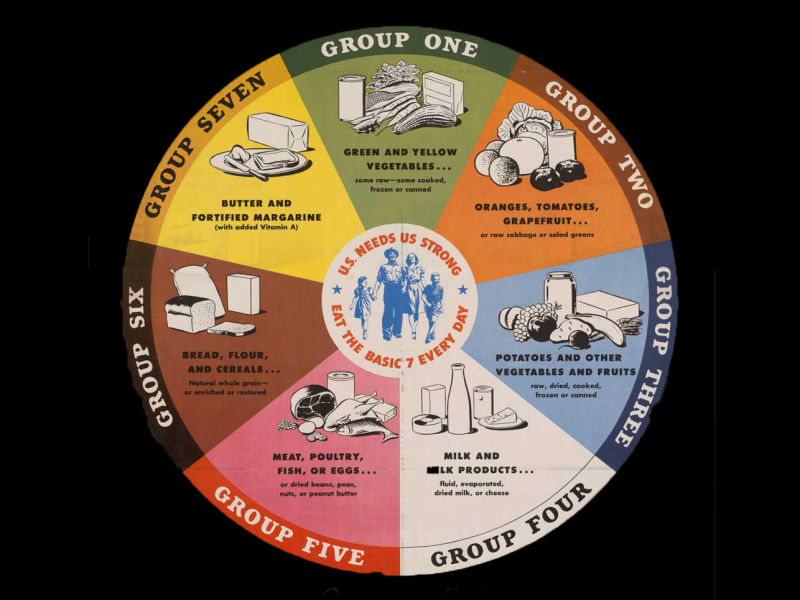
"description": "for promo",
"title": "for promo",
"credit": null,
"status": "inherit",
"isLoading": false,
"fetchFailed": false
},
"bayareabites_105045": {
"type": "attachments",
"id": "bayareabites_105045",
"meta": {
"index": "attachments_1716263798",
"site": "bayareabites",
"id": "105045",
"found": true
},
"parent": 0,
"imgSizes": {
"twentyfourteen-full-width": {
"file": "https://ww2.kqed.org/app/uploads/sites/24/2015/12/clubmate-2-1038x576.jpg",
"width": 1038,
"mimeType": "image/jpeg",
"height": 576
},
"thumbnail": {
"file": "https://ww2.kqed.org/app/uploads/sites/24/2015/12/clubmate-2-400x267.jpg",
"width": 400,
"mimeType": "image/jpeg",
"height": 267
},
"fd-sm": {
"file": "https://ww2.kqed.org/app/uploads/sites/24/2015/12/clubmate-2-960x640.jpg",
"width": 960,
"mimeType": "image/jpeg",
"height": 640
},
"post-thumbnail": {
"file": "https://ww2.kqed.org/app/uploads/sites/24/2015/12/clubmate-2-672x372.jpg",
"width": 672,
"mimeType": "image/jpeg",
"height": 372
},
"kqedFullSize": {
"file": "https://ww2.kqed.org/app/uploads/sites/24/2015/12/clubmate-2.jpg",
"width": 1920,
"height": 1280
},
"large": {
"file": "https://ww2.kqed.org/app/uploads/sites/24/2015/12/clubmate-2-1440x960.jpg",
"width": 1440,
"mimeType": "image/jpeg",
"height": 960
},
"guest-author-96": {
"file": "https://ww2.kqed.org/app/uploads/sites/24/2015/12/clubmate-2-96x96.jpg",
"width": 96,
"mimeType": "image/jpeg",
"height": 96
},
"medium": {
"file": "https://ww2.kqed.org/app/uploads/sites/24/2015/12/clubmate-2-800x533.jpg",
"width": 800,
"mimeType": "image/jpeg",
"height": 533
},
"guest-author-64": {
"file": "https://ww2.kqed.org/app/uploads/sites/24/2015/12/clubmate-2-64x64.jpg",
"width": 64,
"mimeType": "image/jpeg",
"height": 64
},
"guest-author-32": {
"file": "https://ww2.kqed.org/app/uploads/sites/24/2015/12/clubmate-2-32x32.jpg",
"width": 32,
"mimeType": "image/jpeg",
"height": 32
},
"cat_post_thumb_sizecategory-posts-2": {
"file": "https://ww2.kqed.org/app/uploads/sites/24/2015/12/clubmate-2-150x150.jpg",
"width": 150,
"mimeType": "image/jpeg",
"height": 150
},
"fd-lrg": {
"file": "https://ww2.kqed.org/app/uploads/sites/24/2015/12/clubmate-2-1920x1280.jpg",
"width": 1920,
"mimeType": "image/jpeg",
"height": 1280
},
"fd-med": {
"file": "https://ww2.kqed.org/app/uploads/sites/24/2015/12/clubmate-2-1180x787.jpg",
"width": 1180,
"mimeType": "image/jpeg",
"height": 787
},
"detail": {
"file": "https://ww2.kqed.org/app/uploads/sites/24/2015/12/clubmate-2-75x75.jpg",
"width": 75,
"mimeType": "image/jpeg",
"height": 75
},
"medium_large": {
"file": "https://ww2.kqed.org/app/uploads/sites/24/2015/12/clubmate-2-768x512.jpg",
"width": 768,
"mimeType": "image/jpeg",
"height": 512
},
"guest-author-128": {
"file": "https://ww2.kqed.org/app/uploads/sites/24/2015/12/clubmate-2-128x128.jpg",
"width": 128,
"mimeType": "image/jpeg",
"height": 128
}
},
"publishDate": 1450404240,
"modified": 1450404291,
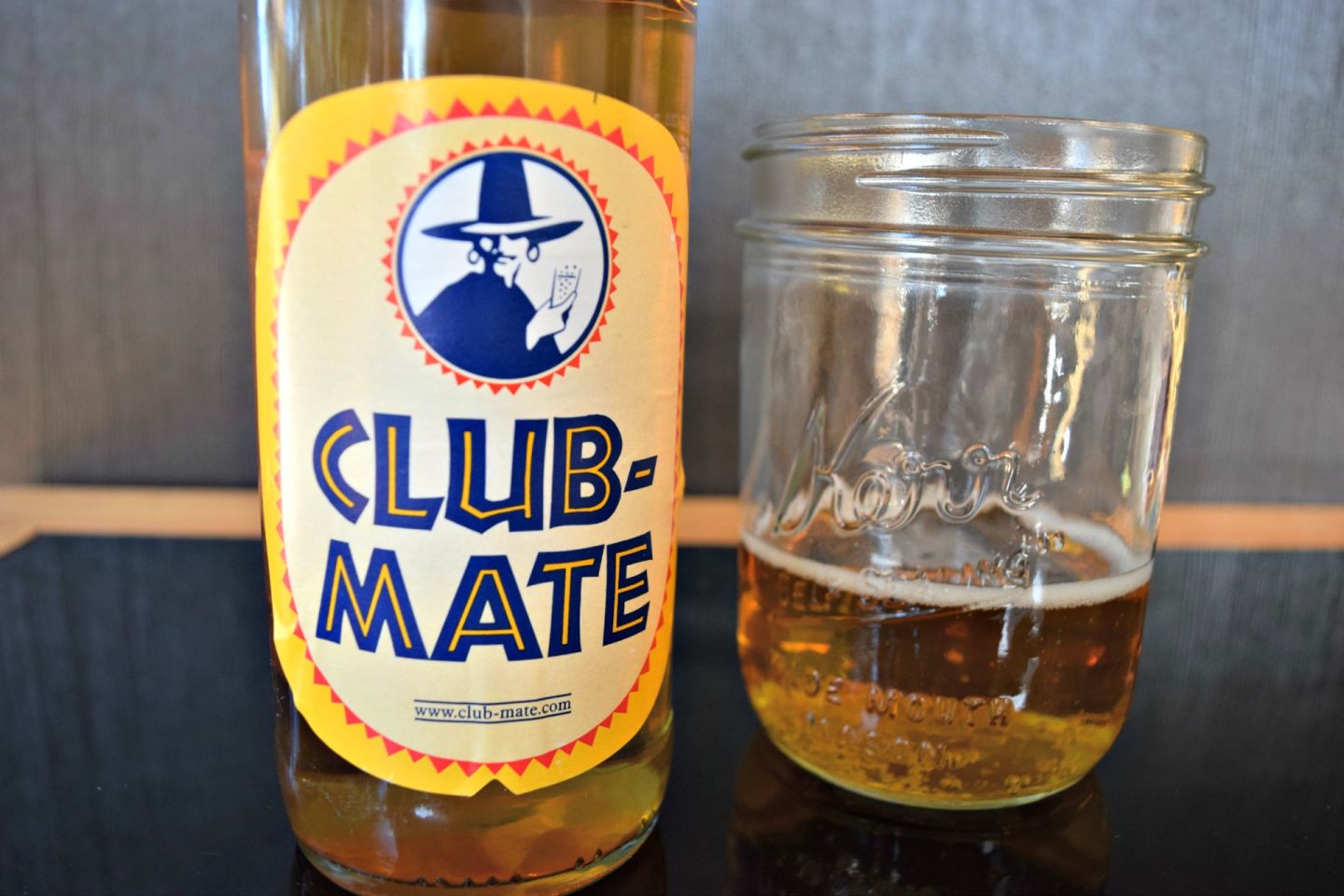
"caption": "A bottle of Club Mate--\"one gets used to it.\"",
"description": "A bottle of Club Mate--\"one gets used to it.\"",
"title": "A bottle of Club Mate--\"one gets used to it.\"",
"credit": "Shelby Pope ",
"status": "inherit",
"isLoading": false,
"fetchFailed": false
},
"bayareabites_105716": {
"type": "attachments",
"id": "bayareabites_105716",
"meta": {
"index": "attachments_1716263798",
"site": "bayareabites",
"id": "105716",
"found": true
},
"parent": 105715,
"imgSizes": {
"twentyfourteen-full-width": {
"file": "https://ww2.kqed.org/app/uploads/sites/24/2016/01/hires-3825b51a40945cf09cf5066224ad784840696b68-1038x576.jpg",
"width": 1038,
"mimeType": "image/jpeg",
"height": 576
},
"thumbnail": {
"file": "https://ww2.kqed.org/app/uploads/sites/24/2016/01/hires-3825b51a40945cf09cf5066224ad784840696b68-400x300.jpg",
"width": 400,
"mimeType": "image/jpeg",
"height": 300
},
"fd-sm": {
"file": "https://ww2.kqed.org/app/uploads/sites/24/2016/01/hires-3825b51a40945cf09cf5066224ad784840696b68-960x720.jpg",
"width": 960,
"mimeType": "image/jpeg",
"height": 720
},
"post-thumbnail": {
"file": "https://ww2.kqed.org/app/uploads/sites/24/2016/01/hires-3825b51a40945cf09cf5066224ad784840696b68-672x372.jpg",
"width": 672,
"mimeType": "image/jpeg",
"height": 372
},
"kqedFullSize": {
"file": "https://ww2.kqed.org/app/uploads/sites/24/2016/01/hires-3825b51a40945cf09cf5066224ad784840696b68.jpg",
"width": 4395,
"height": 3296
},
"large": {
"file": "https://ww2.kqed.org/app/uploads/sites/24/2016/01/hires-3825b51a40945cf09cf5066224ad784840696b68-1440x1080.jpg",
"width": 1440,
"mimeType": "image/jpeg",
"height": 1080
},
"guest-author-96": {
"file": "https://ww2.kqed.org/app/uploads/sites/24/2016/01/hires-3825b51a40945cf09cf5066224ad784840696b68-96x96.jpg",
"width": 96,
"mimeType": "image/jpeg",
"height": 96
},
"medium": {
"file": "https://ww2.kqed.org/app/uploads/sites/24/2016/01/hires-3825b51a40945cf09cf5066224ad784840696b68-800x600.jpg",
"width": 800,
"mimeType": "image/jpeg",
"height": 600
},
"guest-author-64": {
"file": "https://ww2.kqed.org/app/uploads/sites/24/2016/01/hires-3825b51a40945cf09cf5066224ad784840696b68-64x64.jpg",
"width": 64,
"mimeType": "image/jpeg",
"height": 64
},
"guest-author-32": {
"file": "https://ww2.kqed.org/app/uploads/sites/24/2016/01/hires-3825b51a40945cf09cf5066224ad784840696b68-32x32.jpg",
"width": 32,
"mimeType": "image/jpeg",
"height": 32
},
"cat_post_thumb_sizecategory-posts-2": {
"file": "https://ww2.kqed.org/app/uploads/sites/24/2016/01/hires-3825b51a40945cf09cf5066224ad784840696b68-150x150.jpg",
"width": 150,
"mimeType": "image/jpeg",
"height": 150
},
"fd-lrg": {
"file": "https://ww2.kqed.org/app/uploads/sites/24/2016/01/hires-3825b51a40945cf09cf5066224ad784840696b68-1920x1440.jpg",
"width": 1920,
"mimeType": "image/jpeg",
"height": 1440
},
"fd-med": {
"file": "https://ww2.kqed.org/app/uploads/sites/24/2016/01/hires-3825b51a40945cf09cf5066224ad784840696b68-1180x885.jpg",
"width": 1180,
"mimeType": "image/jpeg",
"height": 885
},
"detail": {
"file": "https://ww2.kqed.org/app/uploads/sites/24/2016/01/hires-3825b51a40945cf09cf5066224ad784840696b68-75x75.jpg",
"width": 75,
"mimeType": "image/jpeg",
"height": 75
},
"medium_large": {
"file": "https://ww2.kqed.org/app/uploads/sites/24/2016/01/hires-3825b51a40945cf09cf5066224ad784840696b68-768x576.jpg",
"width": 768,
"mimeType": "image/jpeg",
"height": 576
},
"guest-author-128": {
"file": "https://ww2.kqed.org/app/uploads/sites/24/2016/01/hires-3825b51a40945cf09cf5066224ad784840696b68-128x128.jpg",
"width": 128,
"mimeType": "image/jpeg",
"height": 128
}
},
"publishDate": 1451798605,
"modified": 1451798953,
"caption": null,
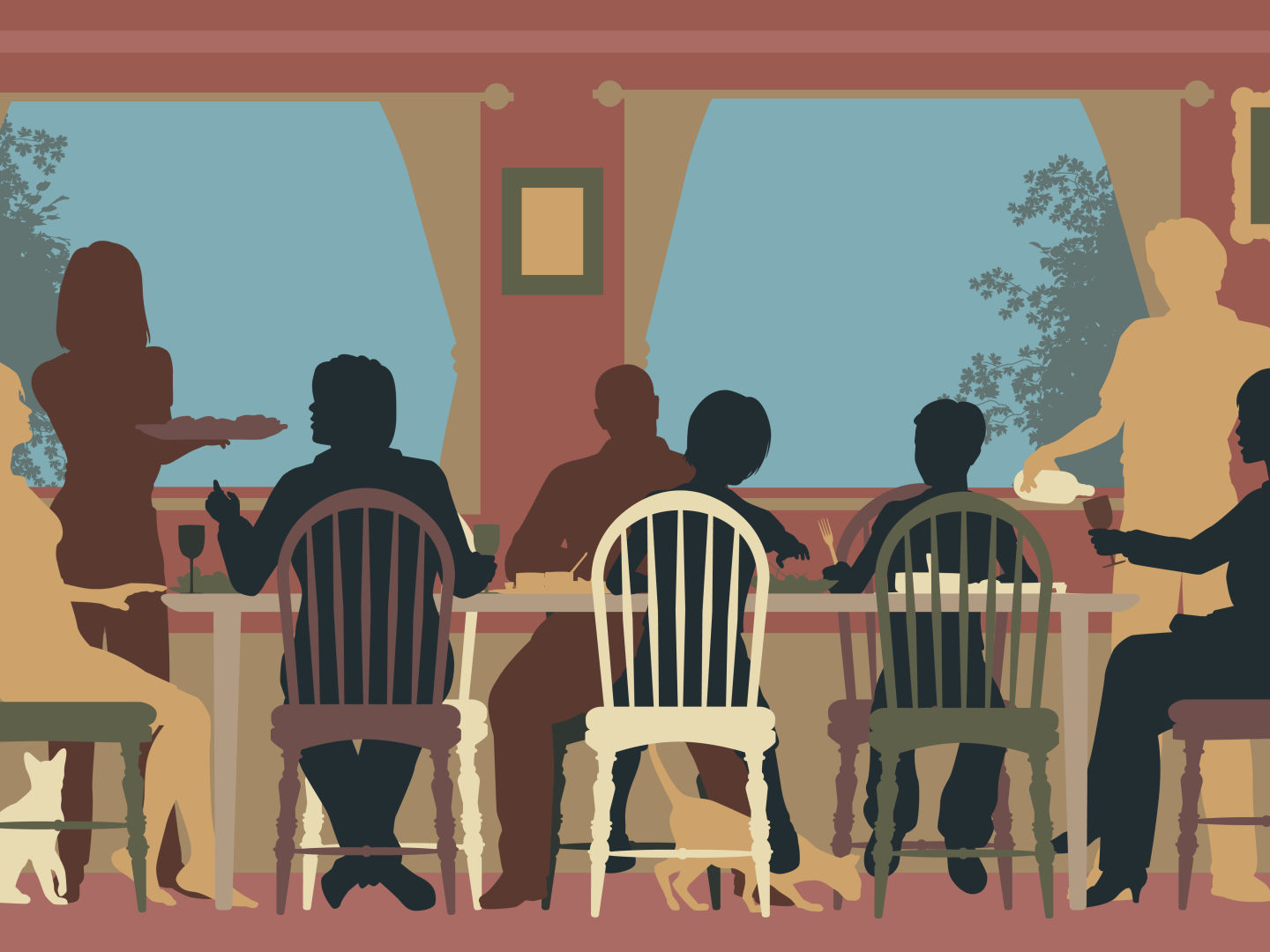
"description": "Stock graphic of people eating at a table",
"title": "Stock graphic of people eating at a table",
"credit": "iStockphoto ",
"status": "inherit",
"isLoading": false,
"fetchFailed": false
},
"bayareabites_105696": {
"type": "attachments",
"id": "bayareabites_105696",
"meta": {
"index": "attachments_1716263798",
"site": "bayareabites",
"id": "105696",
"found": true
},
"parent": 105695,
"imgSizes": {
"twentyfourteen-full-width": {
"file": "https://ww2.kqed.org/app/uploads/sites/24/2015/12/istock_000072892879_xxxlarge_mini-f43689c260acc722dd85cc6b62126995f94b47d9-1038x576.jpg",
"width": 1038,
"mimeType": "image/jpeg",
"height": 576
},
"thumbnail": {
"file": "https://ww2.kqed.org/app/uploads/sites/24/2015/12/istock_000072892879_xxxlarge_mini-f43689c260acc722dd85cc6b62126995f94b47d9-400x300.jpg",
"width": 400,
"mimeType": "image/jpeg",
"height": 300
},
"fd-sm": {
"file": "https://ww2.kqed.org/app/uploads/sites/24/2015/12/istock_000072892879_xxxlarge_mini-f43689c260acc722dd85cc6b62126995f94b47d9-960x720.jpg",
"width": 960,
"mimeType": "image/jpeg",
"height": 720
},
"post-thumbnail": {
"file": "https://ww2.kqed.org/app/uploads/sites/24/2015/12/istock_000072892879_xxxlarge_mini-f43689c260acc722dd85cc6b62126995f94b47d9-672x372.jpg",
"width": 672,
"mimeType": "image/jpeg",
"height": 372
},
"kqedFullSize": {
"file": "https://ww2.kqed.org/app/uploads/sites/24/2015/12/istock_000072892879_xxxlarge_mini-f43689c260acc722dd85cc6b62126995f94b47d9.jpg",
"width": 4987,
"height": 3740
},
"large": {
"file": "https://ww2.kqed.org/app/uploads/sites/24/2015/12/istock_000072892879_xxxlarge_mini-f43689c260acc722dd85cc6b62126995f94b47d9-1440x1080.jpg",
"width": 1440,
"mimeType": "image/jpeg",
"height": 1080
},
"guest-author-96": {
"file": "https://ww2.kqed.org/app/uploads/sites/24/2015/12/istock_000072892879_xxxlarge_mini-f43689c260acc722dd85cc6b62126995f94b47d9-96x96.jpg",
"width": 96,
"mimeType": "image/jpeg",
"height": 96
},
"medium": {
"file": "https://ww2.kqed.org/app/uploads/sites/24/2015/12/istock_000072892879_xxxlarge_mini-f43689c260acc722dd85cc6b62126995f94b47d9-800x600.jpg",
"width": 800,
"mimeType": "image/jpeg",
"height": 600
},
"guest-author-64": {
"file": "https://ww2.kqed.org/app/uploads/sites/24/2015/12/istock_000072892879_xxxlarge_mini-f43689c260acc722dd85cc6b62126995f94b47d9-64x64.jpg",
"width": 64,
"mimeType": "image/jpeg",
"height": 64
},
"guest-author-32": {
"file": "https://ww2.kqed.org/app/uploads/sites/24/2015/12/istock_000072892879_xxxlarge_mini-f43689c260acc722dd85cc6b62126995f94b47d9-32x32.jpg",
"width": 32,
"mimeType": "image/jpeg",
"height": 32
},
"cat_post_thumb_sizecategory-posts-2": {
"file": "https://ww2.kqed.org/app/uploads/sites/24/2015/12/istock_000072892879_xxxlarge_mini-f43689c260acc722dd85cc6b62126995f94b47d9-150x150.jpg",
"width": 150,
"mimeType": "image/jpeg",
"height": 150
},
"fd-lrg": {
"file": "https://ww2.kqed.org/app/uploads/sites/24/2015/12/istock_000072892879_xxxlarge_mini-f43689c260acc722dd85cc6b62126995f94b47d9-1920x1440.jpg",
"width": 1920,
"mimeType": "image/jpeg",
"height": 1440
},
"fd-med": {
"file": "https://ww2.kqed.org/app/uploads/sites/24/2015/12/istock_000072892879_xxxlarge_mini-f43689c260acc722dd85cc6b62126995f94b47d9-1180x885.jpg",
"width": 1180,
"mimeType": "image/jpeg",
"height": 885
},
"detail": {
"file": "https://ww2.kqed.org/app/uploads/sites/24/2015/12/istock_000072892879_xxxlarge_mini-f43689c260acc722dd85cc6b62126995f94b47d9-75x75.jpg",
"width": 75,
"mimeType": "image/jpeg",
"height": 75
},
"medium_large": {
"file": "https://ww2.kqed.org/app/uploads/sites/24/2015/12/istock_000072892879_xxxlarge_mini-f43689c260acc722dd85cc6b62126995f94b47d9-768x576.jpg",
"width": 768,
"mimeType": "image/jpeg",
"height": 576
},
"guest-author-128": {
"file": "https://ww2.kqed.org/app/uploads/sites/24/2015/12/istock_000072892879_xxxlarge_mini-f43689c260acc722dd85cc6b62126995f94b47d9-128x128.jpg",
"width": 128,
"mimeType": "image/jpeg",
"height": 128
}
},
"publishDate": 1451668826,
"modified": 1451669079,
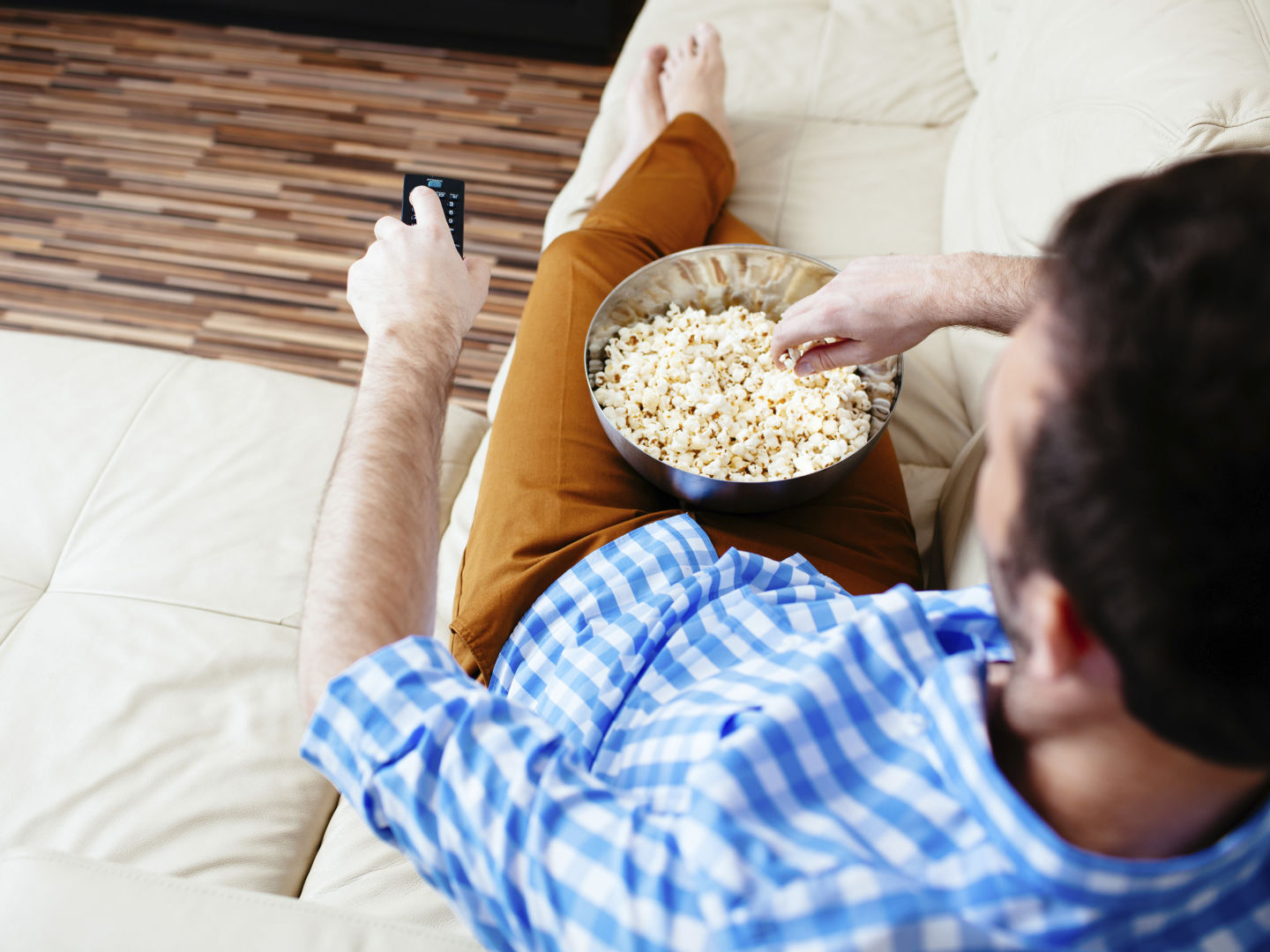
"caption": "Researchers have been studying the links between TV viewing and mindless eating for years. The news isn't good for our waistlines.",
"description": "Researchers have been studying the links between TV viewing and mindless eating for years. The news isn't good for our waistlines.",
"title": "Researchers have been studying the links between TV viewing and mindless eating for years. The news isn't good for our waistlines.",
"credit": "iStockphoto ",
"status": "inherit",
"isLoading": false,
"fetchFailed": false
},
"bayareabites_105499": {
"type": "attachments",
"id": "bayareabites_105499",
"meta": {
"index": "attachments_1716263798",
"site": "bayareabites",
"id": "105499",
"found": true
},
"parent": 105497,
"imgSizes": {
"thumbnail": {
"file": "https://ww2.kqed.org/app/uploads/sites/24/2015/12/yearendfoodtrends-400x175.jpg",
"width": 400,
"mimeType": "image/jpeg",
"height": 175
},
"kqedFullSize": {
"file": "https://ww2.kqed.org/app/uploads/sites/24/2015/12/yearendfoodtrends.jpg",
"width": 600,
"height": 263
},
"cat_post_thumb_sizecategory-posts-2": {
"file": "https://ww2.kqed.org/app/uploads/sites/24/2015/12/yearendfoodtrends-150x150.jpg",
"width": 150,
"mimeType": "image/jpeg",
"height": 150
},
"guest-author-96": {
"file": "https://ww2.kqed.org/app/uploads/sites/24/2015/12/yearendfoodtrends-96x96.jpg",
"width": 96,
"mimeType": "image/jpeg",
"height": 96
},
"guest-author-64": {
"file": "https://ww2.kqed.org/app/uploads/sites/24/2015/12/yearendfoodtrends-64x64.jpg",
"width": 64,
"mimeType": "image/jpeg",
"height": 64
},
"detail": {
"file": "https://ww2.kqed.org/app/uploads/sites/24/2015/12/yearendfoodtrends-75x75.jpg",
"width": 75,
"mimeType": "image/jpeg",
"height": 75
},
"guest-author-32": {
"file": "https://ww2.kqed.org/app/uploads/sites/24/2015/12/yearendfoodtrends-32x32.jpg",
"width": 32,
"mimeType": "image/jpeg",
"height": 32
},
"guest-author-128": {
"file": "https://ww2.kqed.org/app/uploads/sites/24/2015/12/yearendfoodtrends-128x128.jpg",
"width": 128,
"mimeType": "image/jpeg",
"height": 128
}
},
"publishDate": 1451410917,
"modified": 1451410946,
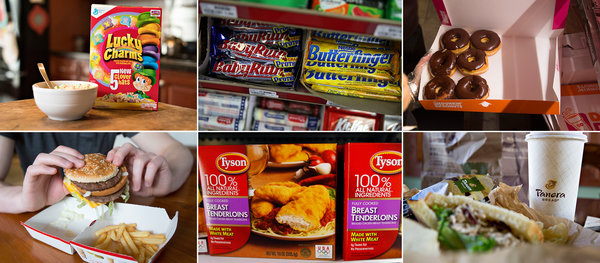
"caption": "Clockwise from top left: General Mills, Nestle, Dunkin Donuts, Panera, Tyson Chicken and McDonald's, among other big food companies, made commitments in 2015 to change the way they prepare and procure their food products. ",
"description": "Clockwise from top left: General Mills, Nestle, Dunkin Donuts, Panera, Tyson Chicken and McDonald's, among other big food companies, made commitments in 2015 to change the way they prepare and procure their food products. ",
"title": "yearendfoodtrends",
"credit": "Daniel Acker/Bloomberg/Getty; Justin Sullivan/Getty; Susana Gonzalez/Bloomberg/Getty; Daniel Acker/Bloomberg/Getty; Paul Sakuma/AP; Ulrich Baumgarten/Getty ",
"status": "inherit",
"isLoading": false,
"fetchFailed": false
},
"bayareabites_104053": {
"type": "attachments",
"id": "bayareabites_104053",
"meta": {
"index": "attachments_1716263798",
"site": "bayareabites",
"id": "104053",
"found": true
},
"parent": 104051,
"imgSizes": {
"thumbnail": {
"file": "https://ww2.kqed.org/app/uploads/sites/24/2015/11/shutterstock-salmon-400x266.jpg",
"width": 400,
"mimeType": "image/jpeg",
"height": 266
},
"post-thumbnail": {
"file": "https://ww2.kqed.org/app/uploads/sites/24/2015/11/shutterstock-salmon-672x372.jpg",
"width": 672,
"mimeType": "image/jpeg",
"height": 372
},
"kqedFullSize": {
"file": "https://ww2.kqed.org/app/uploads/sites/24/2015/11/shutterstock-salmon.jpg",
"width": 680,
"height": 452
},
"cat_post_thumb_sizecategory-posts-2": {
"file": "https://ww2.kqed.org/app/uploads/sites/24/2015/11/shutterstock-salmon-150x150.jpg",
"width": 150,
"mimeType": "image/jpeg",
"height": 150
},
"guest-author-96": {
"file": "https://ww2.kqed.org/app/uploads/sites/24/2015/11/shutterstock-salmon-96x96.jpg",
"width": 96,
"mimeType": "image/jpeg",
"height": 96
},
"guest-author-64": {
"file": "https://ww2.kqed.org/app/uploads/sites/24/2015/11/shutterstock-salmon-64x64.jpg",
"width": 64,
"mimeType": "image/jpeg",
"height": 64
},
"detail": {
"file": "https://ww2.kqed.org/app/uploads/sites/24/2015/11/shutterstock-salmon-75x75.jpg",
"width": 75,
"mimeType": "image/jpeg",
"height": 75
},
"guest-author-32": {
"file": "https://ww2.kqed.org/app/uploads/sites/24/2015/11/shutterstock-salmon-32x32.jpg",
"width": 32,
"mimeType": "image/jpeg",
"height": 32
},
"guest-author-128": {
"file": "https://ww2.kqed.org/app/uploads/sites/24/2015/11/shutterstock-salmon-128x128.jpg",
"width": 128,
"mimeType": "image/jpeg",
"height": 128
}
},
"publishDate": 1448477121,
"modified": 1448477145,
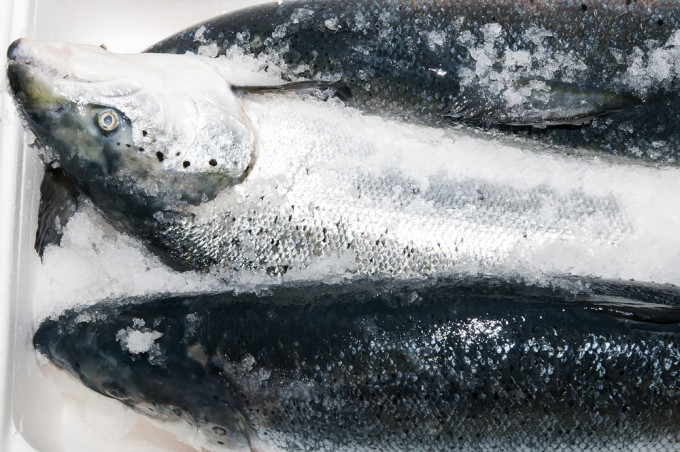
"caption": "Salmon",
"description": "Salmon",
"title": "Salmon",
"credit": "Shutterstock",
"status": "inherit",
"isLoading": false,
"fetchFailed": false
},
"bayareabites_103849": {
"type": "attachments",
"id": "bayareabites_103849",
"meta": {
"index": "attachments_1716263798",
"site": "bayareabites",
"id": "103849",
"found": true
},
"parent": 103847,
"imgSizes": {
"twentyfourteen-full-width": {
"file": "https://ww2.kqed.org/app/uploads/sites/24/2015/11/BuyingPoultry-Homepage-screenshot-e1447873721678-1038x576.png",
"width": 1038,
"mimeType": "image/png",
"height": 576
},
"thumbnail": {
"file": "https://ww2.kqed.org/app/uploads/sites/24/2015/11/BuyingPoultry-Homepage-screenshot-e1447873721678-400x225.png",
"width": 400,
"mimeType": "image/png",
"height": 225
},
"fd-sm": {
"file": "https://ww2.kqed.org/app/uploads/sites/24/2015/11/BuyingPoultry-Homepage-screenshot-e1447873721678-960x540.png",
"width": 960,
"mimeType": "image/png",
"height": 540
},
"post-thumbnail": {
"file": "https://ww2.kqed.org/app/uploads/sites/24/2015/11/BuyingPoultry-Homepage-screenshot-e1447873721678-672x372.png",
"width": 672,
"mimeType": "image/png",
"height": 372
},
"kqedFullSize": {
"file": "https://ww2.kqed.org/app/uploads/sites/24/2015/11/BuyingPoultry-Homepage-screenshot-e1447873721678.png",
"width": 1920,
"height": 1080
},
"large": {
"file": "https://ww2.kqed.org/app/uploads/sites/24/2015/11/BuyingPoultry-Homepage-screenshot-e1447873721678-1440x810.png",
"width": 1440,
"mimeType": "image/png",
"height": 810
},
"guest-author-96": {
"file": "https://ww2.kqed.org/app/uploads/sites/24/2015/11/BuyingPoultry-Homepage-screenshot-e1447873721678-96x96.png",
"width": 96,
"mimeType": "image/png",
"height": 96
},
"medium": {
"file": "https://ww2.kqed.org/app/uploads/sites/24/2015/11/BuyingPoultry-Homepage-screenshot-e1447873721678-800x450.png",
"width": 800,
"mimeType": "image/png",
"height": 450
},
"guest-author-64": {
"file": "https://ww2.kqed.org/app/uploads/sites/24/2015/11/BuyingPoultry-Homepage-screenshot-e1447873721678-64x64.png",
"width": 64,
"mimeType": "image/png",
"height": 64
},
"guest-author-32": {
"file": "https://ww2.kqed.org/app/uploads/sites/24/2015/11/BuyingPoultry-Homepage-screenshot-e1447873721678-32x32.png",
"width": 32,
"mimeType": "image/png",
"height": 32
},
"cat_post_thumb_sizecategory-posts-2": {
"file": "https://ww2.kqed.org/app/uploads/sites/24/2015/11/BuyingPoultry-Homepage-screenshot-e1447873721678-150x150.png",
"width": 150,
"mimeType": "image/png",
"height": 150
},
"fd-lrg": {
"file": "https://ww2.kqed.org/app/uploads/sites/24/2015/11/BuyingPoultry-Homepage-screenshot-e1447873721678-1920x1080.png",
"width": 1920,
"mimeType": "image/png",
"height": 1080
},
"fd-med": {
"file": "https://ww2.kqed.org/app/uploads/sites/24/2015/11/BuyingPoultry-Homepage-screenshot-e1447873721678-1180x664.png",
"width": 1180,
"mimeType": "image/png",
"height": 664
},
"detail": {
"file": "https://ww2.kqed.org/app/uploads/sites/24/2015/11/BuyingPoultry-Homepage-screenshot-e1447873721678-75x75.png",
"width": 75,
"mimeType": "image/png",
"height": 75
},
"guest-author-128": {
"file": "https://ww2.kqed.org/app/uploads/sites/24/2015/11/BuyingPoultry-Homepage-screenshot-e1447873721678-128x128.png",
"width": 128,
"mimeType": "image/png",
"height": 128
}
},
"publishDate": 1447868235,
"modified": 1447877950,
"caption": "BuyingPoultry.com is a new website from Farm Forward, a national nonprofit that promotes conscientious food choices and educates about animal cruelty on traditional factory farms.",
"description": "BuyingPoultry.com is a new website from Farm Forward, a national nonprofit that promotes conscientious food choices and educates about animal cruelty on traditional factory farms.",
"title": "BuyingPoultry.com is a new website from Farm Forward, a national nonprofit that promotes conscientious food choices and educates about animal cruelty on traditional factory farms.",
"credit": "Farm Forward",
"status": "inherit",
"isLoading": false,
"fetchFailed": false
},
"bayareabites_103532": {
"type": "attachments",
"id": "bayareabites_103532",
"meta": {
"index": "attachments_1716263798",
"site": "bayareabites",
"id": "103532",
"found": true
},
"parent": 103531,
"imgSizes": {
"twentyfourteen-full-width": {
"file": "https://ww2.kqed.org/app/uploads/sites/24/2015/11/sherman-harvesting-greensnew-c725b16e33a345c3eb9dcb2e1e4f2edff7423733-1038x576.jpg",
"width": 1038,
"mimeType": "image/jpeg",
"height": 576
},
"thumbnail": {
"file": "https://ww2.kqed.org/app/uploads/sites/24/2015/11/sherman-harvesting-greensnew-c725b16e33a345c3eb9dcb2e1e4f2edff7423733-400x300.jpg",
"width": 400,
"mimeType": "image/jpeg",
"height": 300
},
"fd-sm": {
"file": "https://ww2.kqed.org/app/uploads/sites/24/2015/11/sherman-harvesting-greensnew-c725b16e33a345c3eb9dcb2e1e4f2edff7423733-960x720.jpg",
"width": 960,
"mimeType": "image/jpeg",
"height": 720
},
"post-thumbnail": {
"file": "https://ww2.kqed.org/app/uploads/sites/24/2015/11/sherman-harvesting-greensnew-c725b16e33a345c3eb9dcb2e1e4f2edff7423733-672x372.jpg",
"width": 672,
"mimeType": "image/jpeg",
"height": 372
},
"kqedFullSize": {
"file": "https://ww2.kqed.org/app/uploads/sites/24/2015/11/sherman-harvesting-greensnew-c725b16e33a345c3eb9dcb2e1e4f2edff7423733.jpg",
"width": 1050,
"height": 787
},
"cat_post_thumb_sizecategory-posts-2": {
"file": "https://ww2.kqed.org/app/uploads/sites/24/2015/11/sherman-harvesting-greensnew-c725b16e33a345c3eb9dcb2e1e4f2edff7423733-150x150.jpg",
"width": 150,
"mimeType": "image/jpeg",
"height": 150
},
"guest-author-96": {
"file": "https://ww2.kqed.org/app/uploads/sites/24/2015/11/sherman-harvesting-greensnew-c725b16e33a345c3eb9dcb2e1e4f2edff7423733-96x96.jpg",
"width": 96,
"mimeType": "image/jpeg",
"height": 96
},
"medium": {
"file": "https://ww2.kqed.org/app/uploads/sites/24/2015/11/sherman-harvesting-greensnew-c725b16e33a345c3eb9dcb2e1e4f2edff7423733-800x600.jpg",
"width": 800,
"mimeType": "image/jpeg",
"height": 600
},
"guest-author-64": {
"file": "https://ww2.kqed.org/app/uploads/sites/24/2015/11/sherman-harvesting-greensnew-c725b16e33a345c3eb9dcb2e1e4f2edff7423733-64x64.jpg",
"width": 64,
"mimeType": "image/jpeg",
"height": 64
},
"detail": {
"file": "https://ww2.kqed.org/app/uploads/sites/24/2015/11/sherman-harvesting-greensnew-c725b16e33a345c3eb9dcb2e1e4f2edff7423733-75x75.jpg",
"width": 75,
"mimeType": "image/jpeg",
"height": 75
},
"guest-author-32": {
"file": "https://ww2.kqed.org/app/uploads/sites/24/2015/11/sherman-harvesting-greensnew-c725b16e33a345c3eb9dcb2e1e4f2edff7423733-32x32.jpg",
"width": 32,
"mimeType": "image/jpeg",
"height": 32
},
"guest-author-128": {
"file": "https://ww2.kqed.org/app/uploads/sites/24/2015/11/sherman-harvesting-greensnew-c725b16e33a345c3eb9dcb2e1e4f2edff7423733-128x128.jpg",
"width": 128,
"mimeType": "image/jpeg",
"height": 128
}
},
"publishDate": 1447142070,
"modified": 1447142534,
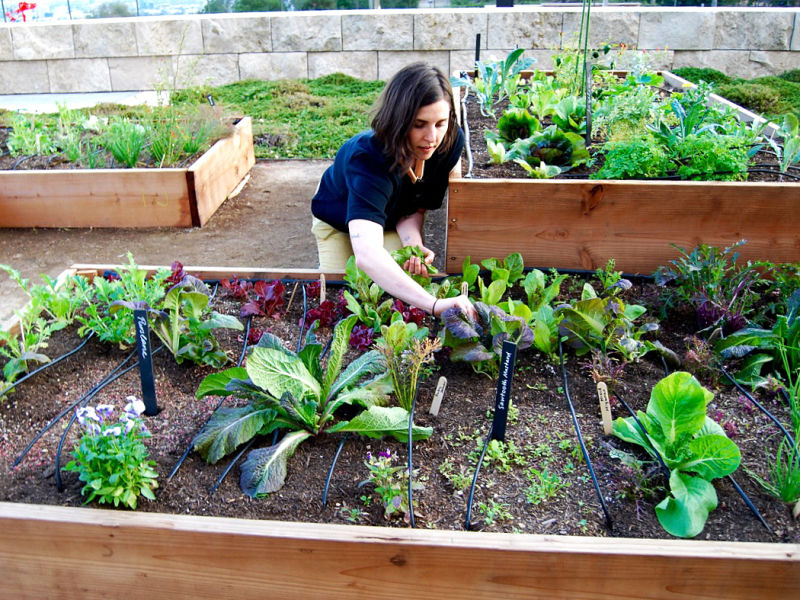
"caption": "Julia Sherman is the mastermind behind the Salad Garden at the Getty. Here, she pulls up heirloom greens for the salad.",
"description": "Julia Sherman is the mastermind behind the Salad Garden at the Getty. Here, she pulls up heirloom greens for the salad.",
"title": "Julia Sherman is the mastermind behind the Salad Garden at the Getty. Here, she pulls up heirloom greens for the salad.",
"credit": "Abbie Fentress Swanson for NPR ",
"status": "inherit",
"isLoading": false,
"fetchFailed": false
},
"bayareabites_102753": {
"type": "attachments",
"id": "bayareabites_102753",
"meta": {
"index": "attachments_1716263798",
"site": "bayareabites",
"id": "102753",
"found": true
},
"parent": 102752,
"imgSizes": {
"twentyfourteen-full-width": {
"file": "https://ww2.kqed.org/app/uploads/sites/24/2015/11/turmeric3_wide-3ca8d3f6907f0e1500d76b01a9761f680a7a61d0-1038x576.jpg",
"width": 1038,
"mimeType": "image/jpeg",
"height": 576
},
"thumbnail": {
"file": "https://ww2.kqed.org/app/uploads/sites/24/2015/11/turmeric3_wide-3ca8d3f6907f0e1500d76b01a9761f680a7a61d0-400x225.jpg",
"width": 400,
"mimeType": "image/jpeg",
"height": 225
},
"fd-sm": {
"file": "https://ww2.kqed.org/app/uploads/sites/24/2015/11/turmeric3_wide-3ca8d3f6907f0e1500d76b01a9761f680a7a61d0-960x540.jpg",
"width": 960,
"mimeType": "image/jpeg",
"height": 540
},
"post-thumbnail": {
"file": "https://ww2.kqed.org/app/uploads/sites/24/2015/11/turmeric3_wide-3ca8d3f6907f0e1500d76b01a9761f680a7a61d0-672x372.jpg",
"width": 672,
"mimeType": "image/jpeg",
"height": 372
},
"kqedFullSize": {
"file": "https://ww2.kqed.org/app/uploads/sites/24/2015/11/turmeric3_wide-3ca8d3f6907f0e1500d76b01a9761f680a7a61d0.jpg",
"width": 1198,
"height": 674
},
"guest-author-96": {
"file": "https://ww2.kqed.org/app/uploads/sites/24/2015/11/turmeric3_wide-3ca8d3f6907f0e1500d76b01a9761f680a7a61d0-96x96.jpg",
"width": 96,
"mimeType": "image/jpeg",
"height": 96
},
"medium": {
"file": "https://ww2.kqed.org/app/uploads/sites/24/2015/11/turmeric3_wide-3ca8d3f6907f0e1500d76b01a9761f680a7a61d0-800x450.jpg",
"width": 800,
"mimeType": "image/jpeg",
"height": 450
},
"guest-author-64": {
"file": "https://ww2.kqed.org/app/uploads/sites/24/2015/11/turmeric3_wide-3ca8d3f6907f0e1500d76b01a9761f680a7a61d0-64x64.jpg",
"width": 64,
"mimeType": "image/jpeg",
"height": 64
},
"guest-author-32": {
"file": "https://ww2.kqed.org/app/uploads/sites/24/2015/11/turmeric3_wide-3ca8d3f6907f0e1500d76b01a9761f680a7a61d0-32x32.jpg",
"width": 32,
"mimeType": "image/jpeg",
"height": 32
},
"cat_post_thumb_sizecategory-posts-2": {
"file": "https://ww2.kqed.org/app/uploads/sites/24/2015/11/turmeric3_wide-3ca8d3f6907f0e1500d76b01a9761f680a7a61d0-150x150.jpg",
"width": 150,
"mimeType": "image/jpeg",
"height": 150
},
"fd-med": {
"file": "https://ww2.kqed.org/app/uploads/sites/24/2015/11/turmeric3_wide-3ca8d3f6907f0e1500d76b01a9761f680a7a61d0-1180x664.jpg",
"width": 1180,
"mimeType": "image/jpeg",
"height": 664
},
"detail": {
"file": "https://ww2.kqed.org/app/uploads/sites/24/2015/11/turmeric3_wide-3ca8d3f6907f0e1500d76b01a9761f680a7a61d0-75x75.jpg",
"width": 75,
"mimeType": "image/jpeg",
"height": 75
},
"guest-author-128": {
"file": "https://ww2.kqed.org/app/uploads/sites/24/2015/11/turmeric3_wide-3ca8d3f6907f0e1500d76b01a9761f680a7a61d0-128x128.jpg",
"width": 128,
"mimeType": "image/jpeg",
"height": 128
}
},
"publishDate": 1446490442,
"modified": 1446582340,
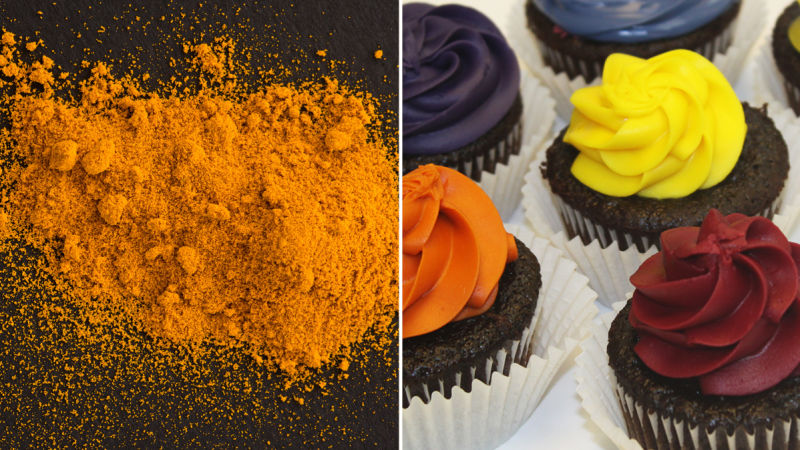
"caption": "Turmeric, on left, was used to make the yellow in the cupcakes on the right.",
"description": "Turmeric, on left, was used to make the yellow in the cupcakes on the right.",
"title": "Turmeric, on left, was used to make the yellow in the cupcakes on the right.",
"credit": "NPR; Courtesy of colorMaker Inc.",
"status": "inherit",
"isLoading": false,
"fetchFailed": false
},
"bayareabites_102904": {
"type": "attachments",
"id": "bayareabites_102904",
"meta": {
"index": "attachments_1716263798",
"site": "bayareabites",
"id": "102904",
"found": true
},
"parent": 102902,
"imgSizes": {
"twentyfourteen-full-width": {
"file": "https://ww2.kqed.org/app/uploads/sites/24/2015/11/mb_ingredients_chickpeasbroth1451-f5d30c27a6de41d23dd04c9dd9e9450b8f11e061-1038x576.jpg",
"width": 1038,
"mimeType": "image/jpeg",
"height": 576
},
"thumbnail": {
"file": "https://ww2.kqed.org/app/uploads/sites/24/2015/11/mb_ingredients_chickpeasbroth1451-f5d30c27a6de41d23dd04c9dd9e9450b8f11e061-400x300.jpg",
"width": 400,
"mimeType": "image/jpeg",
"height": 300
},
"fd-sm": {
"file": "https://ww2.kqed.org/app/uploads/sites/24/2015/11/mb_ingredients_chickpeasbroth1451-f5d30c27a6de41d23dd04c9dd9e9450b8f11e061-960x720.jpg",
"width": 960,
"mimeType": "image/jpeg",
"height": 720
},
"post-thumbnail": {
"file": "https://ww2.kqed.org/app/uploads/sites/24/2015/11/mb_ingredients_chickpeasbroth1451-f5d30c27a6de41d23dd04c9dd9e9450b8f11e061-672x372.jpg",
"width": 672,
"mimeType": "image/jpeg",
"height": 372
},
"kqedFullSize": {
"file": "https://ww2.kqed.org/app/uploads/sites/24/2015/11/mb_ingredients_chickpeasbroth1451-f5d30c27a6de41d23dd04c9dd9e9450b8f11e061.jpg",
"width": 5053,
"height": 3790
},
"large": {
"file": "https://ww2.kqed.org/app/uploads/sites/24/2015/11/mb_ingredients_chickpeasbroth1451-f5d30c27a6de41d23dd04c9dd9e9450b8f11e061-1440x1080.jpg",
"width": 1440,
"mimeType": "image/jpeg",
"height": 1080
},
"guest-author-96": {
"file": "https://ww2.kqed.org/app/uploads/sites/24/2015/11/mb_ingredients_chickpeasbroth1451-f5d30c27a6de41d23dd04c9dd9e9450b8f11e061-96x96.jpg",
"width": 96,
"mimeType": "image/jpeg",
"height": 96
},
"medium": {
"file": "https://ww2.kqed.org/app/uploads/sites/24/2015/11/mb_ingredients_chickpeasbroth1451-f5d30c27a6de41d23dd04c9dd9e9450b8f11e061-800x600.jpg",
"width": 800,
"mimeType": "image/jpeg",
"height": 600
},
"guest-author-64": {
"file": "https://ww2.kqed.org/app/uploads/sites/24/2015/11/mb_ingredients_chickpeasbroth1451-f5d30c27a6de41d23dd04c9dd9e9450b8f11e061-64x64.jpg",
"width": 64,
"mimeType": "image/jpeg",
"height": 64
},
"guest-author-32": {
"file": "https://ww2.kqed.org/app/uploads/sites/24/2015/11/mb_ingredients_chickpeasbroth1451-f5d30c27a6de41d23dd04c9dd9e9450b8f11e061-32x32.jpg",
"width": 32,
"mimeType": "image/jpeg",
"height": 32
},
"cat_post_thumb_sizecategory-posts-2": {
"file": "https://ww2.kqed.org/app/uploads/sites/24/2015/11/mb_ingredients_chickpeasbroth1451-f5d30c27a6de41d23dd04c9dd9e9450b8f11e061-150x150.jpg",
"width": 150,
"mimeType": "image/jpeg",
"height": 150
},
"fd-lrg": {
"file": "https://ww2.kqed.org/app/uploads/sites/24/2015/11/mb_ingredients_chickpeasbroth1451-f5d30c27a6de41d23dd04c9dd9e9450b8f11e061-1920x1440.jpg",
"width": 1920,
"mimeType": "image/jpeg",
"height": 1440
},
"fd-med": {
"file": "https://ww2.kqed.org/app/uploads/sites/24/2015/11/mb_ingredients_chickpeasbroth1451-f5d30c27a6de41d23dd04c9dd9e9450b8f11e061-1180x885.jpg",
"width": 1180,
"mimeType": "image/jpeg",
"height": 885
},
"detail": {
"file": "https://ww2.kqed.org/app/uploads/sites/24/2015/11/mb_ingredients_chickpeasbroth1451-f5d30c27a6de41d23dd04c9dd9e9450b8f11e061-75x75.jpg",
"width": 75,
"mimeType": "image/jpeg",
"height": 75
},
"guest-author-128": {
"file": "https://ww2.kqed.org/app/uploads/sites/24/2015/11/mb_ingredients_chickpeasbroth1451-f5d30c27a6de41d23dd04c9dd9e9450b8f11e061-128x128.jpg",
"width": 128,
"mimeType": "image/jpeg",
"height": 128
}
},
"publishDate": 1446513997,
"modified": 1446514722,
"caption": "Chickpeas in their own broth (with lots of extras). This recipe is coming soon, according to the folks at The Purple Carrot. Mark Bittman, who left The New York Times to join the meal delivery startup, says he and a team of test cooks are trying to develop eight new recipes a week.",
"description": "Chickpeas in their own broth (with lots of extras). This recipe is coming soon, according to the folks at The Purple Carrot. Mark Bittman, who left \u003cem>The New York Times\u003c/em> to join the meal delivery startup, says he and a team of test cooks are trying to develop eight new recipes a week",
"title": "Chickpeas in their own broth (with lots of extras). This recipe is coming soon, according to the folks at The Purple Carrot. Mark Bittman, who left The New York Times to join the meal delivery startup, says he and a team of test cooks are trying to develop eight new recipes a week.",
"credit": "Aya Bracket/The Purple Carrot",
"status": "inherit",
"isLoading": false,
"fetchFailed": false
},
"bayareabites_102200": {
"type": "attachments",
"id": "bayareabites_102200",
"meta": {
"index": "attachments_1716263798",
"site": "bayareabites",
"id": "102200",
"found": true
},
"parent": 102199,
"imgSizes": {
"twentyfourteen-full-width": {
"file": "https://ww2.kqed.org/app/uploads/sites/24/2015/10/kitchen_0292_custom-895bdcf5a82a7995563d8292f5778ba00cef6721-1038x576.jpg",
"width": 1038,
"mimeType": "image/jpeg",
"height": 576
},
"thumbnail": {
"file": "https://ww2.kqed.org/app/uploads/sites/24/2015/10/kitchen_0292_custom-895bdcf5a82a7995563d8292f5778ba00cef6721-400x266.jpg",
"width": 400,
"mimeType": "image/jpeg",
"height": 266
},
"fd-sm": {
"file": "https://ww2.kqed.org/app/uploads/sites/24/2015/10/kitchen_0292_custom-895bdcf5a82a7995563d8292f5778ba00cef6721-960x639.jpg",
"width": 960,
"mimeType": "image/jpeg",
"height": 639
},
"post-thumbnail": {
"file": "https://ww2.kqed.org/app/uploads/sites/24/2015/10/kitchen_0292_custom-895bdcf5a82a7995563d8292f5778ba00cef6721-672x372.jpg",
"width": 672,
"mimeType": "image/jpeg",
"height": 372
},
"kqedFullSize": {
"file": "https://ww2.kqed.org/app/uploads/sites/24/2015/10/kitchen_0292_custom-895bdcf5a82a7995563d8292f5778ba00cef6721.jpg",
"width": 2880,
"height": 1918
},
"large": {
"file": "https://ww2.kqed.org/app/uploads/sites/24/2015/10/kitchen_0292_custom-895bdcf5a82a7995563d8292f5778ba00cef6721-1440x959.jpg",
"width": 1440,
"mimeType": "image/jpeg",
"height": 959
},
"guest-author-96": {
"file": "https://ww2.kqed.org/app/uploads/sites/24/2015/10/kitchen_0292_custom-895bdcf5a82a7995563d8292f5778ba00cef6721-96x96.jpg",
"width": 96,
"mimeType": "image/jpeg",
"height": 96
},
"medium": {
"file": "https://ww2.kqed.org/app/uploads/sites/24/2015/10/kitchen_0292_custom-895bdcf5a82a7995563d8292f5778ba00cef6721-800x533.jpg",
"width": 800,
"mimeType": "image/jpeg",
"height": 533
},
"guest-author-64": {
"file": "https://ww2.kqed.org/app/uploads/sites/24/2015/10/kitchen_0292_custom-895bdcf5a82a7995563d8292f5778ba00cef6721-64x64.jpg",
"width": 64,
"mimeType": "image/jpeg",
"height": 64
},
"guest-author-32": {
"file": "https://ww2.kqed.org/app/uploads/sites/24/2015/10/kitchen_0292_custom-895bdcf5a82a7995563d8292f5778ba00cef6721-32x32.jpg",
"width": 32,
"mimeType": "image/jpeg",
"height": 32
},
"cat_post_thumb_sizecategory-posts-2": {
"file": "https://ww2.kqed.org/app/uploads/sites/24/2015/10/kitchen_0292_custom-895bdcf5a82a7995563d8292f5778ba00cef6721-150x150.jpg",
"width": 150,
"mimeType": "image/jpeg",
"height": 150
},
"fd-lrg": {
"file": "https://ww2.kqed.org/app/uploads/sites/24/2015/10/kitchen_0292_custom-895bdcf5a82a7995563d8292f5778ba00cef6721-1920x1279.jpg",
"width": 1920,
"mimeType": "image/jpeg",
"height": 1279
},
"fd-med": {
"file": "https://ww2.kqed.org/app/uploads/sites/24/2015/10/kitchen_0292_custom-895bdcf5a82a7995563d8292f5778ba00cef6721-1180x786.jpg",
"width": 1180,
"mimeType": "image/jpeg",
"height": 786
},
"detail": {
"file": "https://ww2.kqed.org/app/uploads/sites/24/2015/10/kitchen_0292_custom-895bdcf5a82a7995563d8292f5778ba00cef6721-75x75.jpg",
"width": 75,
"mimeType": "image/jpeg",
"height": 75
},
"guest-author-128": {
"file": "https://ww2.kqed.org/app/uploads/sites/24/2015/10/kitchen_0292_custom-895bdcf5a82a7995563d8292f5778ba00cef6721-128x128.jpg",
"width": 128,
"mimeType": "image/jpeg",
"height": 128
}
},
"publishDate": 1444928795,
"modified": 1444929192,
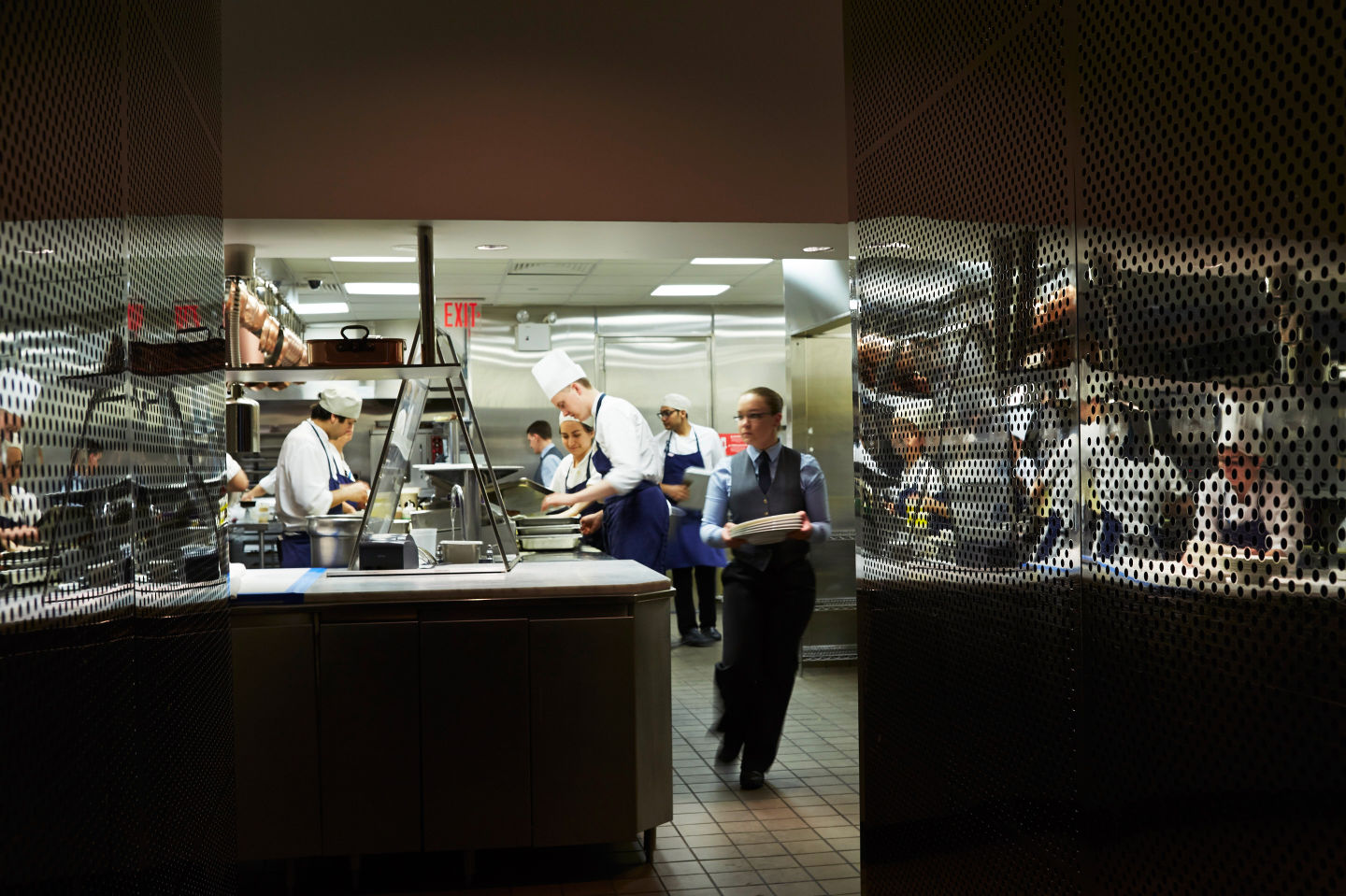
"caption": "Staff in the kitchen of The Modern, a restaurant operated by Meyer's Union Square Hospitality Group and located in the Museum of Modern Art.",
"description": "Staff in the kitchen of The Modern, a restaurant operated by Meyer's Union Square Hospitality Group and located in the Museum of Modern A",
"title": "Staff in the kitchen of The Modern, a restaurant operated by Meyer's Union Square Hospitality Group and located in the Museum of Modern Art.",
"credit": "Ellen Silverman/Union Square Hospitality Group ",
"status": "inherit",
"isLoading": false,
"fetchFailed": false
},
"bayareabites_102168": {
"type": "attachments",
"id": "bayareabites_102168",
"meta": {
"index": "attachments_1716263798",
"site": "bayareabites",
"id": "102168",
"found": true
},
"parent": 102167,
"imgSizes": {
"twentyfourteen-full-width": {
"file": "https://ww2.kqed.org/app/uploads/sites/24/2015/10/img_1821_custom-56f2b7c3f9f73d66a58f065a20236123e2105ddd-1038x576.jpg",
"width": 1038,
"mimeType": "image/jpeg",
"height": 576
},
"thumbnail": {
"file": "https://ww2.kqed.org/app/uploads/sites/24/2015/10/img_1821_custom-56f2b7c3f9f73d66a58f065a20236123e2105ddd-400x252.jpg",
"width": 400,
"mimeType": "image/jpeg",
"height": 252
},
"fd-sm": {
"file": "https://ww2.kqed.org/app/uploads/sites/24/2015/10/img_1821_custom-56f2b7c3f9f73d66a58f065a20236123e2105ddd-960x606.jpg",
"width": 960,
"mimeType": "image/jpeg",
"height": 606
},
"post-thumbnail": {
"file": "https://ww2.kqed.org/app/uploads/sites/24/2015/10/img_1821_custom-56f2b7c3f9f73d66a58f065a20236123e2105ddd-672x372.jpg",
"width": 672,
"mimeType": "image/jpeg",
"height": 372
},
"kqedFullSize": {
"file": "https://ww2.kqed.org/app/uploads/sites/24/2015/10/img_1821_custom-56f2b7c3f9f73d66a58f065a20236123e2105ddd.jpg",
"width": 2380,
"height": 1502
},
"large": {
"file": "https://ww2.kqed.org/app/uploads/sites/24/2015/10/img_1821_custom-56f2b7c3f9f73d66a58f065a20236123e2105ddd-1440x909.jpg",
"width": 1440,
"mimeType": "image/jpeg",
"height": 909
},
"guest-author-96": {
"file": "https://ww2.kqed.org/app/uploads/sites/24/2015/10/img_1821_custom-56f2b7c3f9f73d66a58f065a20236123e2105ddd-96x96.jpg",
"width": 96,
"mimeType": "image/jpeg",
"height": 96
},
"medium": {
"file": "https://ww2.kqed.org/app/uploads/sites/24/2015/10/img_1821_custom-56f2b7c3f9f73d66a58f065a20236123e2105ddd-800x505.jpg",
"width": 800,
"mimeType": "image/jpeg",
"height": 505
},
"guest-author-64": {
"file": "https://ww2.kqed.org/app/uploads/sites/24/2015/10/img_1821_custom-56f2b7c3f9f73d66a58f065a20236123e2105ddd-64x64.jpg",
"width": 64,
"mimeType": "image/jpeg",
"height": 64
},
"guest-author-32": {
"file": "https://ww2.kqed.org/app/uploads/sites/24/2015/10/img_1821_custom-56f2b7c3f9f73d66a58f065a20236123e2105ddd-32x32.jpg",
"width": 32,
"mimeType": "image/jpeg",
"height": 32
},
"cat_post_thumb_sizecategory-posts-2": {
"file": "https://ww2.kqed.org/app/uploads/sites/24/2015/10/img_1821_custom-56f2b7c3f9f73d66a58f065a20236123e2105ddd-150x150.jpg",
"width": 150,
"mimeType": "image/jpeg",
"height": 150
},
"fd-lrg": {
"file": "https://ww2.kqed.org/app/uploads/sites/24/2015/10/img_1821_custom-56f2b7c3f9f73d66a58f065a20236123e2105ddd-1920x1212.jpg",
"width": 1920,
"mimeType": "image/jpeg",
"height": 1212
},
"fd-med": {
"file": "https://ww2.kqed.org/app/uploads/sites/24/2015/10/img_1821_custom-56f2b7c3f9f73d66a58f065a20236123e2105ddd-1180x745.jpg",
"width": 1180,
"mimeType": "image/jpeg",
"height": 745
},
"detail": {
"file": "https://ww2.kqed.org/app/uploads/sites/24/2015/10/img_1821_custom-56f2b7c3f9f73d66a58f065a20236123e2105ddd-75x75.jpg",
"width": 75,
"mimeType": "image/jpeg",
"height": 75
},
"guest-author-128": {
"file": "https://ww2.kqed.org/app/uploads/sites/24/2015/10/img_1821_custom-56f2b7c3f9f73d66a58f065a20236123e2105ddd-128x128.jpg",
"width": 128,
"mimeType": "image/jpeg",
"height": 128
}
},
"publishDate": 1444848142,
"modified": 1444848235,
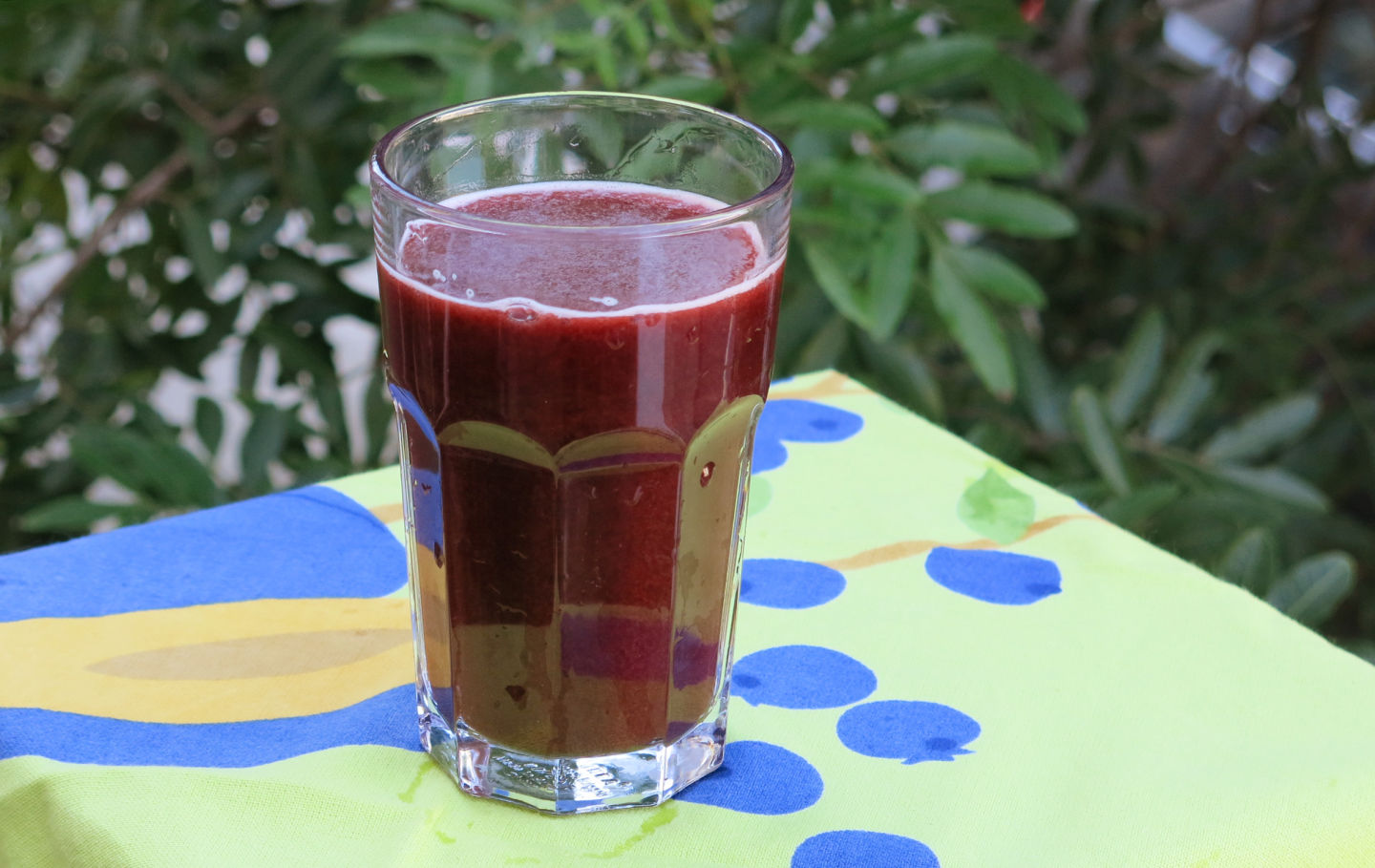
"caption": "Beet juice has a small effect on athletes. \"But the difference between not making the podium at the Olympics and standing on the top step is often only a couple percent,\" says Andrew Coggan of Washington University.",
"description": "Beet juice has a small effect on athletes. \"But the difference between not making the podium at the Olympics and standing on the top step is often only a couple percent,\" says \u003ca href=\"https://www.mir.wustl.edu/research/research-laboratories/cardiovascular-imaging-laboratory-cvil/people/cvil-faculty/bio-andy-coggan\">Andrew Coggan\u003c/a> of Washington Univers",
"title": "Beet juice has a small effect on athletes. \"But the difference between not making the podium at the Olympics and standing on the top step is often only a couple percent,\" says Andrew Coggan of Washington University.",
"credit": "Alastair Bland for NPR",
"status": "inherit",
"isLoading": false,
"fetchFailed": false
}
},
"audioPlayerReducer": {
"postId": "stream_live",
"isPaused": true,
"isPlaying": false,
"pfsActive": false,
"pledgeModalIsOpen": true,
"playerDrawerIsOpen": false,
"liveAudioPlayStartedAt": 0,
"liveAudioPlayContext": ""
},
"authorsReducer": {
"byline_bayareabites_105964": {
"type": "authors",
"id": "byline_bayareabites_105964",
"meta": {
"override": true
},
"slug": "byline_bayareabites_105964",
"name": "Maria Godoy, \u003ca href=\"http://ww2.kqed.org/bayareabites/author/nprfood/\">NPR Food\u003c/a>",
"isLoading": false
},
"byline_bayareabites_105715": {
"type": "authors",
"id": "byline_bayareabites_105715",
"meta": {
"override": true
},
"slug": "byline_bayareabites_105715",
"name": "Deborah Becker, \u003ca href=\"http://www.wbur.org/\">WBUR\u003c/a> at \u003ca href=\"https://ww2.kqed.org/bayareabites/author/nprfood/\">NPR Food\u003c/a>",
"isLoading": false
},
"byline_bayareabites_105695": {
"type": "authors",
"id": "byline_bayareabites_105695",
"meta": {
"override": true
},
"slug": "byline_bayareabites_105695",
"name": "Susmita Baral, \u003ca href=\"https://ww2.kqed.org/bayareabites/author/nprfood/\">NPR Food\u003c/a>",
"isLoading": false
},
"byline_bayareabites_105497": {
"type": "authors",
"id": "byline_bayareabites_105497",
"meta": {
"override": true
},
"slug": "byline_bayareabites_105497",
"name": "Eliza Barclay and Allison Aubrey, NPR Food",
"isLoading": false
},
"byline_bayareabites_103531": {
"type": "authors",
"id": "byline_bayareabites_103531",
"meta": {
"override": true
},
"slug": "byline_bayareabites_103531",
"name": "Abbie Fentress Swanson, \u003ca href=\"https://ww2.kqed.org/bayareabites/author/nprfood/\">NPR Food\u003c/a>",
"isLoading": false
},
"byline_bayareabites_102752": {
"type": "authors",
"id": "byline_bayareabites_102752",
"meta": {
"override": true
},
"slug": "byline_bayareabites_102752",
"name": "Lynne Shallcross, \u003ca href=\"https://ww2.kqed.org/bayareabites/author/nprfood/\">NPR Food\u003c/a>",
"isLoading": false
},
"byline_bayareabites_102902": {
"type": "authors",
"id": "byline_bayareabites_102902",
"meta": {
"override": true
},
"slug": "byline_bayareabites_102902",
"name": "Allison Aubrey, \u003ca href=\"https://ww2.kqed.org/bayareabites/author/nprfood/\">NPR Food\u003c/a>",
"isLoading": false
},
"byline_bayareabites_102167": {
"type": "authors",
"id": "byline_bayareabites_102167",
"meta": {
"override": true
},
"slug": "byline_bayareabites_102167",
"name": "Alastair Bland, \u003ca href=\"https://ww2.kqed.org/bayareabites/category/npr-food/\">NPR Food\u003c/a>",
"isLoading": false
},
"nprfood": {
"type": "authors",
"id": "5403",
"meta": {
"index": "authors_1716337520",
"id": "5403",
"found": true
},
"name": "NPR Food",
"firstName": "NPR Food",
"lastName": null,
"slug": "nprfood",
"email": "nprfood@kqed.org",
"display_author_email": false,
"staff_mastheads": [],
"title": null,
"bio": "Food and Health-related stories from NPR including NPR Radio; NPR's food blog, \"The Salt\"; NPR's Health News blog, \"Shots\"; NPR's Breaking News blog \"The Two-Way\"; NPR's global stories blog \"Goats and Soda,\" NPR's economy explainer \"Planet Money\"; food-related technology news from NPR's \"All Tech Considered\"; and food series \"Kitchen Window.\"",
"avatar": "https://secure.gravatar.com/avatar/c4b735bb26404fa18ce2447d32e64291?s=600&d=blank&r=g",
"twitter": "nprfood",
"facebook": null,
"instagram": null,
"linkedin": null,
"sites": [
{
"site": "bayareabites",
"roles": [
"contributor"
]
},
{
"site": "food",
"roles": [
"contributor"
]
}
],
"headData": {
"title": "NPR Food | KQED",
"description": null,
"ogImgSrc": "https://secure.gravatar.com/avatar/c4b735bb26404fa18ce2447d32e64291?s=600&d=blank&r=g",
"twImgSrc": "https://secure.gravatar.com/avatar/c4b735bb26404fa18ce2447d32e64291?s=600&d=blank&r=g"
},
"isLoading": false,
"link": "/author/nprfood"
},
"shelbypope": {
"type": "authors",
"id": "5566",
"meta": {
"index": "authors_1716337520",
"id": "5566",
"found": true
},
"name": "Shelby Pope",
"firstName": "Shelby",
"lastName": "Pope",
"slug": "shelbypope",
"email": "shelbylpope@gmail.com",
"display_author_email": false,
"staff_mastheads": [],
"title": "KQED Contributor",
"bio": "Shelby Pope is a freelance writer living and eating her way through the East Bay. She’s written about food, art and science for publications including the Smithsonian, Lucky Peach, and the Washington Post's pet blog. When she’s not taste testing sourdough bread to find the Bay Area’s best loaf, you can find her on Twitter \u003ca href=\"https://twitter.com/shelbylpope\">@shelbylpope\u003c/a> or at \u003ca href=\"https://shelbypope.com/\">shelbypope.com\u003c/a>",
"avatar": "https://secure.gravatar.com/avatar/df74e904399e45720e48e36c6e1ae7a90c32216eb2c9c82f3b2e1a9641b507d3?s=600&d=blank&r=g",
"twitter": "shelbylpope",
"bluesky": null,
"facebook": null,
"instagram": null,
"linkedin": null,
"sites": [
{
"site": "arts",
"roles": [
"subscriber"
]
},
{
"site": "food",
"roles": [
"subscriber"
]
}
],
"headData": {
"title": "Shelby Pope | KQED",
"description": "KQED Contributor",
"ogImgSrc": "https://secure.gravatar.com/avatar/df74e904399e45720e48e36c6e1ae7a90c32216eb2c9c82f3b2e1a9641b507d3?s=600&d=blank&r=g",
"twImgSrc": "https://secure.gravatar.com/avatar/df74e904399e45720e48e36c6e1ae7a90c32216eb2c9c82f3b2e1a9641b507d3?s=600&d=blank&r=g"
},
"isLoading": false,
"link": "/author/shelbypope"
},
"alexandrawall": {
"type": "authors",
"id": "5567",
"meta": {
"index": "authors_1716337520",
"id": "5567",
"found": true
},
"name": "Alix Wall",
"firstName": "Alix",
"lastName": "Wall",
"slug": "alexandrawall",
"email": "alixwall@sbcglobal.net",
"display_author_email": false,
"staff_mastheads": [],
"title": null,
"bio": "Alix Wall appeared in her hometown paper in Riverside, California as “Chef of the Week” when she was 15 years old, and in high school, she founded “The Bon Appetit Club.” After working as a journalist for many years, Alix became a certified natural foods chef from Bauman College in Berkeley. While she cooks part-time healthy, organic meals for busy families, she is also a contributing editor of j. weekly, the Bay Area’s Jewish newspaper, in which she has a monthly food column. Her food writing can also be found on Berkeleyside’s NOSH and in Edible East Bay. In addition to food, she loves writing about how couples met and fell in love, which she does for The San Francisco Chronicle’s Style section and j. weekly. In 2016, she founded The Illuminoshi: The Not-So-Secret Society of Bay Area Jewish Food Professionals. She is also writer/producer for a documentary-in-progress called \u003ca href=\"https://www.lonelychildmovie.com/\">The Lonely Child\u003c/a>. Follow Alix on Twitter \u003ca href=\"https://twitter.com/WallAlix\">@WallAlix\u003c/a>.",
"avatar": "https://secure.gravatar.com/avatar/421a27f26a185be932f8d567b499b1f1?s=600&d=blank&r=g",
"twitter": null,
"facebook": null,
"instagram": null,
"linkedin": null,
"sites": [
{
"site": "bayareabites",
"roles": [
"contributor"
]
},
{
"site": "food",
"roles": [
"contributor"
]
}
],
"headData": {
"title": "Alix Wall | KQED",
"description": null,
"ogImgSrc": "https://secure.gravatar.com/avatar/421a27f26a185be932f8d567b499b1f1?s=600&d=blank&r=g",
"twImgSrc": "https://secure.gravatar.com/avatar/421a27f26a185be932f8d567b499b1f1?s=600&d=blank&r=g"
},
"isLoading": false,
"link": "/author/alexandrawall"
},
"civileat": {
"type": "authors",
"id": "5583",
"meta": {
"index": "authors_1716337520",
"id": "5583",
"found": true
},
"name": "Civil Eats",
"firstName": "Civil",
"lastName": "Eats",
"slug": "civileat",
"email": "twilight@civileats.com",
"display_author_email": false,
"staff_mastheads": [],
"title": null,
"bio": "\u003ca href=\"http://civileats.com/\">Civil Eats\u003c/a> is a daily news source for critical thought about the American food system. We publish stories that shift the conversation around sustainable agriculture in an effort to build economically and socially just communities. Follow Civil Eats on Twitter \u003ca href=\"https://twitter.com/CivilEats\">@civileats\u003c/a> and on \u003ca href=\"https://www.facebook.com/pages/Civil-Eats/56766540637\">Facebook\u003c/a>.",
"avatar": "https://secure.gravatar.com/avatar/8f6f50bfb6403afe7cbc194b66cc1d4d?s=600&d=blank&r=g",
"twitter": "CivilEats",
"facebook": "/pages/Civil-Eats/56766540637?ref=hl",
"instagram": null,
"linkedin": null,
"sites": [
{
"site": "bayareabites",
"roles": [
"contributor"
]
},
{
"site": "food",
"roles": [
"contributor"
]
}
],
"headData": {
"title": "Civil Eats | KQED",
"description": null,
"ogImgSrc": "https://secure.gravatar.com/avatar/8f6f50bfb6403afe7cbc194b66cc1d4d?s=600&d=blank&r=g",
"twImgSrc": "https://secure.gravatar.com/avatar/8f6f50bfb6403afe7cbc194b66cc1d4d?s=600&d=blank&r=g"
},
"isLoading": false,
"link": "/author/civileat"
}
},
"pagesReducer": {
"bayareabites_category_food-and-technology": {
"type": "terms",
"id": "bayareabites_4084",
"meta": {
"index": "terms_1716263798",
"site": "bayareabites",
"id": "4084",
"score": 14.405561
},
"featImg": null,
"name": "food trends and technology",
"description": null,
"taxonomy": "category",
"headData": {
"twImgId": null,
"twTitle": null,
"ogTitle": null,
"ogImgId": null,
"twDescription": null,
"description": null,
"title": "food trends and technology Archives | KQED Bay Area Bites",
"ogDescription": null
},
"ttid": 2573,
"slug": "food-and-technology",
"isLoading": false,
"title": "food trends and technology",
"pageMeta": {
"site": "bayareabites",
"WpPageTemplate": "page-topic-editorial",
"currentPage": 21
},
"blocks": [
{
"blockName": "kqed/post-list",
"attrs": {
"layout": "cardArticle2",
"query": "posts/bayareabites?category=food-and-technology",
"seeMore": false,
"paginated": true,
"page": 21
}
},
{
"blockName": "kqed/ad"
}
]
}
},
"pfsSessionReducer": {},
"postsReducer": {
"stream_live": {
"type": "live",
"id": "stream_live",
"audioUrl": "https://streams.kqed.org/kqedradio",
"title": "Live Stream",
"excerpt": "Live Stream information currently unavailable.",
"link": "/radio",
"featImg": "",
"label": {
"name": "KQED Live",
"link": "/"
}
},
"stream_kqedNewscast": {
"type": "posts",
"id": "stream_kqedNewscast",
"audioUrl": "https://www.kqed.org/.stream/anon/radio/RDnews/newscast.mp3?_=1",
"title": "KQED Newscast",
"featImg": "",
"label": {
"name": "88.5 FM",
"link": "/"
}
},
"bayareabites_105964": {
"type": "posts",
"id": "bayareabites_105964",
"meta": {
"index": "posts_1716263798",
"site": "bayareabites",
"id": "105964",
"score": null,
"sort": [
1452745294000
]
},
"parent": 0,
"labelTerm": {
"site": "bayareabites"
},
"blocks": [],
"publishDate": 1452745294,
"format": "image",
"disqusTitle": "Wheels, Pyramids And Plates: USDA's Struggles To Illustrate Good Diet",
"title": "Wheels, Pyramids And Plates: USDA's Struggles To Illustrate Good Diet",
"headTitle": "Bay Area Bites | KQED Food",
"content": "\u003cp>The U.S. Department of Agriculture's first stab at offering nutrition advice came in 1894, when W. O. Atwater, a chemist and pioneering nutrition investigator for the agency, published this warning in a \u003cem>Farmer's Bulletin\u003c/em>:\u003c/p>\n\u003cblockquote>\n\u003cp>\"Unless care is exercised in selecting food, a diet may result which is one-sided or badly balanced. ... The evils of overeating may not be felt at once, but sooner or later they are sure to appear...\"\u003c/p>\n\u003c/blockquote>\n\u003cp>Thus began the USDA's long struggle to craft eating advice based on the latest scientific evidence. That science, of course, has evolved quite a bit since 1894 – a time when micronutrients like vitamins \u003ca href=\"http://www.clinchem.org/content/43/4/680.full\">hadn't even been discovered\u003c/a>.\u003c/p>\n\u003cp>As the science changed, so did the USDA's efforts to represent its best advice with visuals – sometimes, with amusing results to our modern eyes.\u003c/p>\n\u003ch3>\u003cstrong>1943: The Basic 7\u003c/strong>\u003c/h3>\n\u003cfigure id=\"attachment_105966\" class=\"wp-caption aligncenter\" style=\"max-width: 1024px\">\u003cimg src=\"http://ww2.kqed.org/bayareabites/wp-content/uploads/sites/24/2016/01/basic7_enl-bae3d39273e35bb08f2ce648cd83a1239f54e4e5.jpg\" alt=\"The Basic 7: In 1943, the USDA introduced this food guide. Released during World War II, it was aimed at helping to maintain nutrition standards amid wartime food shortages. Notice butter's place of visual prominence.\" width=\"1024\" height=\"1293\" class=\"size-full wp-image-105966\" srcset=\"https://ww2.kqed.org/app/uploads/sites/24/2016/01/basic7_enl-bae3d39273e35bb08f2ce648cd83a1239f54e4e5.jpg 1024w, https://ww2.kqed.org/app/uploads/sites/24/2016/01/basic7_enl-bae3d39273e35bb08f2ce648cd83a1239f54e4e5-400x505.jpg 400w, https://ww2.kqed.org/app/uploads/sites/24/2016/01/basic7_enl-bae3d39273e35bb08f2ce648cd83a1239f54e4e5-800x1010.jpg 800w, https://ww2.kqed.org/app/uploads/sites/24/2016/01/basic7_enl-bae3d39273e35bb08f2ce648cd83a1239f54e4e5-768x970.jpg 768w, https://ww2.kqed.org/app/uploads/sites/24/2016/01/basic7_enl-bae3d39273e35bb08f2ce648cd83a1239f54e4e5-960x1212.jpg 960w\" sizes=\"(max-width: 1024px) 100vw, 1024px\">\u003cfigcaption class=\"wp-caption-text\">The Basic 7: In 1943, the USDA introduced this food guide. Released during World War II, it was aimed at helping to maintain nutrition standards amid wartime food shortages. Notice butter's place of visual prominence. \u003ccite>(U.S. National Archives and Records/USDA)\u003c/cite>\u003c/figcaption>\u003c/figure>\n\u003cp>Along with margarine, butter gets a place of prominence in this food wheel from 1943 — when wartime butter shortages prompted many consumers to switch to margarine. It's hard to imagine either one playing a starring role in today's Dietary Guidelines, which still urge limits on saturated fats in foods like butter, and frown on \u003ca href=\"http://health.clevelandclinic.org/2014/01/margarine-or-butter-the-heart-healthiest-spreads-infographic/\">margarine\u003c/a>, which can be high in \u003ca href=\"http://www.npr.org/sections/thesalt/2015/06/16/414906829/fda-to-food-companies-this-time-zero-means-zero-trans-fats\">trans fats\u003c/a>.\u003c/p>\n\u003cp>At first blush, butter is as prominent as the vegetables next to it. But look closely and you'll see fruits and vegetables in not one but three separate categories. While these guidelines were criticized at the time for lacking specific information on serving sizes, visually, at least, they seem to place a healthy emphasis on produce.\u003c/p>\n\u003ch3>\u003cstrong>1956: The Basic 4\u003c/strong>\u003c/h3>\n\u003cfigure id=\"attachment_105967\" class=\"wp-caption aligncenter\" style=\"max-width: 473px\">\u003cimg src=\"http://ww2.kqed.org/bayareabites/wp-content/uploads/sites/24/2016/01/1966basicfour_enl-fe86a70f781a860d5cb9c55e4b87e3106f91885c.jpg\" alt=\"This version of the Basic 4 was published in 1966.\" width=\"473\" height=\"610\" class=\"size-full wp-image-105967\" srcset=\"https://ww2.kqed.org/app/uploads/sites/24/2016/01/1966basicfour_enl-fe86a70f781a860d5cb9c55e4b87e3106f91885c.jpg 473w, https://ww2.kqed.org/app/uploads/sites/24/2016/01/1966basicfour_enl-fe86a70f781a860d5cb9c55e4b87e3106f91885c-400x516.jpg 400w\" sizes=\"(max-width: 473px) 100vw, 473px\">\u003cfigcaption class=\"wp-caption-text\">This version of the Basic 4 was published in 1966. \u003ccite>(USDA)\u003c/cite>\u003c/figcaption>\u003c/figure>\n\u003cp>In the 1950s, the USDA put the Basic 7 on a diet and slimmed it down to the Basic 4 – which did offer recommended minimum servings. Widely used into the 1970s, this diet guide was designed to meet basic nutritional needs – the assumption was that Americans would eat more than what was laid out here.\u003c/p>\n\u003ch3>\u003cstrong>1980: The Food Wheel\u003c/strong>\u003c/h3>\n\u003cfigure id=\"attachment_105968\" class=\"wp-caption aligncenter\" style=\"max-width: 833px\">\u003cimg src=\"http://ww2.kqed.org/bayareabites/wp-content/uploads/sites/24/2016/01/food-wheel_enl-c3831769ddbab714437a3183acc2060362af85e8.jpg\" alt=\"The Food Wheel: The Dietary Guidelines for America were first released in 1980. Its nutrition advice was visualized as a food wheel. The pyramid many of us grew up with came later.\" width=\"833\" height=\"1260\" class=\"size-full wp-image-105968\" srcset=\"https://ww2.kqed.org/app/uploads/sites/24/2016/01/food-wheel_enl-c3831769ddbab714437a3183acc2060362af85e8.jpg 833w, https://ww2.kqed.org/app/uploads/sites/24/2016/01/food-wheel_enl-c3831769ddbab714437a3183acc2060362af85e8-400x605.jpg 400w, https://ww2.kqed.org/app/uploads/sites/24/2016/01/food-wheel_enl-c3831769ddbab714437a3183acc2060362af85e8-800x1210.jpg 800w, https://ww2.kqed.org/app/uploads/sites/24/2016/01/food-wheel_enl-c3831769ddbab714437a3183acc2060362af85e8-768x1162.jpg 768w\" sizes=\"(max-width: 833px) 100vw, 833px\">\u003cfigcaption class=\"wp-caption-text\">The Food Wheel: The Dietary Guidelines for America were first released in 1980. Its nutrition advice was visualized as a food wheel. The pyramid many of us grew up with came later. \u003ccite>(American Red Cross/USDA)\u003c/cite>\u003c/figcaption>\u003c/figure>\n\u003cp>In the late 1970s, the focus of Uncle Sam's guidelines shifted – from getting enough of the right nutrients, to avoiding the wrong ones — as \u003ca href=\"http://www.npr.org/sections/thesalt/2014/03/28/295332576/why-we-got-fatter-during-the-fat-free-food-boom\">concerns rose\u003c/a> about the links between diet and disease. Though there weren't a lot of data available, fat became a prime nutrient of concern.\u003c/p>\n\u003cp>[ad fullwidth]\u003c/p>\n\u003cp>The Dietary Guidelines as we know them today were born of this era. First published in 1980, they were (and still are) supposed to be based on a review of the latest nutritional science. Back then, they emphasized a diet low in fat, saturated fat and cholesterol. First visualized as a food wheel, the guidelines later took the form of the food pyramid many of us grew up with.\u003c/p>\n\u003ch3>\u003cstrong>1992: The Food Pyramid\u003c/strong>\u003c/h3>\n\u003cfigure id=\"attachment_105969\" class=\"wp-caption aligncenter\" style=\"max-width: 730px\">\u003cimg src=\"http://ww2.kqed.org/bayareabites/wp-content/uploads/sites/24/2016/01/usda_food_pyramid_enl-269f45594d5051adbfafec4881a755e9da8e657b.jpg\" alt=\"1992 Food Pyramid: Carbs were the base of this pyramid, sending the message to eat all you want.\" width=\"730\" height=\"568\" class=\"size-full wp-image-105969\" srcset=\"https://ww2.kqed.org/app/uploads/sites/24/2016/01/usda_food_pyramid_enl-269f45594d5051adbfafec4881a755e9da8e657b.jpg 730w, https://ww2.kqed.org/app/uploads/sites/24/2016/01/usda_food_pyramid_enl-269f45594d5051adbfafec4881a755e9da8e657b-400x311.jpg 400w\" sizes=\"(max-width: 730px) 100vw, 730px\">\u003cfigcaption class=\"wp-caption-text\">1992 Food Pyramid: Carbs were the base of this pyramid, sending the message to eat all you want. \u003ccite>(USDA)\u003c/cite>\u003c/figcaption>\u003c/figure>\n\u003cp>Carbs were the base of this pyramid, sending the message to eat all you want. And Americans did, gobbling up refined grains and processed snacks like SnackWell cookies — that staple of the low-fat craze — in their quest to avoid the dreaded dietary fat.\u003c/p>\n\u003cp>We know now that \"carbohydrates worsen glucose and insulin — they have negative effects on blood cholesterol levels,\" as \u003ca href=\"http://www.nutrition.tufts.edu/about/welcome-dean-mozaffarian\">Dariush Mozaffarian\u003c/a>, dean of the Friedman School of Nutrition Science and Policy at Tufts University, \u003ca href=\"http://www.npr.org/sections/thesalt/2014/03/31/295719579/rethinking-fat-the-case-for-adding-some-into-your-diet\">told us\u003c/a> back in 2014. In other words, he told us, replacing saturated fats with refined carbs \"has not been useful advice.\"\u003c/p>\n\u003ch3>2005: My Pyramid\u003c/h3>\n\u003cfigure id=\"attachment_105970\" class=\"wp-caption aligncenter\" style=\"max-width: 1423px\">\u003cimg src=\"http://ww2.kqed.org/bayareabites/wp-content/uploads/sites/24/2016/01/2005mypyramid_enl-dccc5b08cb8e3a9e4688a6179d0170a18a83e10f.jpg\" alt=\"2005 My Pyramid\" width=\"1423\" height=\"1098\" class=\"size-full wp-image-105970\" srcset=\"https://ww2.kqed.org/app/uploads/sites/24/2016/01/2005mypyramid_enl-dccc5b08cb8e3a9e4688a6179d0170a18a83e10f.jpg 1423w, https://ww2.kqed.org/app/uploads/sites/24/2016/01/2005mypyramid_enl-dccc5b08cb8e3a9e4688a6179d0170a18a83e10f-400x309.jpg 400w, https://ww2.kqed.org/app/uploads/sites/24/2016/01/2005mypyramid_enl-dccc5b08cb8e3a9e4688a6179d0170a18a83e10f-800x617.jpg 800w, https://ww2.kqed.org/app/uploads/sites/24/2016/01/2005mypyramid_enl-dccc5b08cb8e3a9e4688a6179d0170a18a83e10f-768x593.jpg 768w, https://ww2.kqed.org/app/uploads/sites/24/2016/01/2005mypyramid_enl-dccc5b08cb8e3a9e4688a6179d0170a18a83e10f-1180x910.jpg 1180w, https://ww2.kqed.org/app/uploads/sites/24/2016/01/2005mypyramid_enl-dccc5b08cb8e3a9e4688a6179d0170a18a83e10f-960x741.jpg 960w\" sizes=\"(max-width: 1423px) 100vw, 1423px\">\u003cfigcaption class=\"wp-caption-text\">2005 My Pyramid \u003ccite>(USDA)\u003c/cite>\u003c/figcaption>\u003c/figure>\n\u003cp>With the obesity epidemic in full swing, this update to the food pyramid tried to emphasize the importance of exercise along with a healthy diet. The vertical wedges were supposed to indicate how much to eat of each food groups, but visually, it's a jumble: It looks like someone spilled the contents of a dinner table on the floor. Even worse was \u003ca href=\"https://en.wikipedia.org/wiki/MyPyramid#/media/File:MyPyramid.svg\">this bare-bones version \u003c/a>of MyPyramid, which ditches the food images altogether. Without visual or written cues, just how are you supposed to know that blue is for milk?\u003c/p>\n\u003ch3>\u003cstrong>2011: MyPlate\u003c/strong>\u003c/h3>\n\u003cfigure id=\"attachment_105971\" class=\"wp-caption aligncenter\" style=\"max-width: 1100px\">\u003cimg src=\"http://ww2.kqed.org/bayareabites/wp-content/uploads/sites/24/2016/01/myplate_blue_enl-63bef82fa269c96f4c8499c720ad5b15680bb784.jpg\" alt=\"The MyPlate icon is the visual centerpiece of the USDA's advice for healthy eating aimed at the general public.\" width=\"1100\" height=\"1000\" class=\"size-full wp-image-105971\" srcset=\"https://ww2.kqed.org/app/uploads/sites/24/2016/01/myplate_blue_enl-63bef82fa269c96f4c8499c720ad5b15680bb784.jpg 1100w, https://ww2.kqed.org/app/uploads/sites/24/2016/01/myplate_blue_enl-63bef82fa269c96f4c8499c720ad5b15680bb784-400x364.jpg 400w, https://ww2.kqed.org/app/uploads/sites/24/2016/01/myplate_blue_enl-63bef82fa269c96f4c8499c720ad5b15680bb784-800x727.jpg 800w, https://ww2.kqed.org/app/uploads/sites/24/2016/01/myplate_blue_enl-63bef82fa269c96f4c8499c720ad5b15680bb784-768x698.jpg 768w, https://ww2.kqed.org/app/uploads/sites/24/2016/01/myplate_blue_enl-63bef82fa269c96f4c8499c720ad5b15680bb784-960x873.jpg 960w\" sizes=\"(max-width: 1100px) 100vw, 1100px\">\u003cfigcaption class=\"wp-caption-text\">The MyPlate icon is the visual centerpiece of the USDA's advice for healthy eating aimed at the general public. \u003ccite>(USDA)\u003c/cite>\u003c/figcaption>\u003c/figure>\n\u003cp>By comparison, MyPlate, the latest visualization of the food guide, is sleek, and definitely a step in the right directly. The plate makes it clear, for instance, that fruits and veggies should be half of each meal.\u003c/p>\n\u003cp>Not that Americans are necessarily absorbing the message. According to USDA data, most of us \u003ca href=\"http://www.npr.org/sections/thesalt/2015/09/19/441494432/the-u-s-doesnt-have-enough-of-the-vegetables-were-supposed-to-eat\">don't eat\u003c/a> the daily recommended amount of produce. \u003c/p>\n\u003cp>\u003c/p>\n\u003cp>\u003cem>Copyright 2016 \u003ca href=\"http://www.npr.org/\" target=\"_blank\">NPR\u003c/a>.\u003c/em> \u003c/p>\n\n",
"disqusIdentifier": "105964 http://ww2.kqed.org/bayareabites/?p=105964",
"disqusUrl": "https://ww2.kqed.org/bayareabites/2016/01/13/wheels-pyramids-and-plates-usdas-struggles-to-illustrate-good-diet/",
"stats": {
"hasVideo": false,
"hasChartOrMap": false,
"hasAudio": false,
"hasPolis": false,
"wordCount": 855,
"hasGoogleForm": false,
"hasGallery": false,
"hasHearkenModule": false,
"iframeSrcs": [],
"paragraphCount": 17
},
"modified": 1452746111,
"excerpt": "The USDA has been doling out nutrition advice since 1894. As the science changed, so did the government's efforts to visualize its best advice – sometimes, with amusing results to our modern eyes.",
"headData": {
"twImgId": "",
"twTitle": "",
"ogTitle": "",
"ogImgId": "",
"twDescription": "",
"description": "The USDA has been doling out nutrition advice since 1894. As the science changed, so did the government's efforts to visualize its best advice – sometimes, with amusing results to our modern eyes.",
"title": "Wheels, Pyramids And Plates: USDA's Struggles To Illustrate Good Diet | KQED",
"ogDescription": "",
"schema": {
"@context": "https://schema.org",
"@type": "Article",
"headline": "Wheels, Pyramids And Plates: USDA's Struggles To Illustrate Good Diet",
"datePublished": "2016-01-13T20:21:34-08:00",
"dateModified": "2016-01-13T20:35:11-08:00",
"image": "https://cdn.kqed.org/wp-content/uploads/2020/02/KQED-OG-Image@1x.png"
}
},
"guestAuthors": [],
"slug": "wheels-pyramids-and-plates-usdas-struggles-to-illustrate-good-diet",
"status": "publish",
"nprApiLink": "http://api.npr.org/query?id=462821161&apiKey=MDAxOTAwOTE4MDEyMTkxMDAzNjczZDljZA004",
"nprByline": "Maria Godoy, \u003ca href=\"http://ww2.kqed.org/bayareabites/author/nprfood/\">NPR Food\u003c/a>",
"nprStoryDate": "Wed, 13 Jan 2016 14:05:00 -0500",
"nprLastModifiedDate": "Wed, 13 Jan 2016 18:24:27 -0500",
"nprHtmlLink": "http://www.npr.org/sections/thesalt/2016/01/13/462821161/illustrating-diet-advice-is-hard-heres-how-usda-has-tried-to-do-it?ft=nprml&f=462821161",
"nprImageAgency": "USDA",
"nprStoryId": "462821161",
"nprRetrievedStory": "1",
"nprPubDate": "Wed, 13 Jan 2016 18:24:00 -0500",
"path": "/bayareabites/105964/wheels-pyramids-and-plates-usdas-struggles-to-illustrate-good-diet",
"audioTrackLength": null,
"parsedContent": [
{
"type": "contentString",
"content": "\u003cdiv class=\"post-body\">\u003cp>\u003cp>The U.S. Department of Agriculture's first stab at offering nutrition advice came in 1894, when W. O. Atwater, a chemist and pioneering nutrition investigator for the agency, published this warning in a \u003cem>Farmer's Bulletin\u003c/em>:\u003c/p>\n\u003cblockquote>\n\u003cp>\"Unless care is exercised in selecting food, a diet may result which is one-sided or badly balanced. ... The evils of overeating may not be felt at once, but sooner or later they are sure to appear...\"\u003c/p>\n\u003c/blockquote>\n\u003cp>Thus began the USDA's long struggle to craft eating advice based on the latest scientific evidence. That science, of course, has evolved quite a bit since 1894 – a time when micronutrients like vitamins \u003ca href=\"http://www.clinchem.org/content/43/4/680.full\">hadn't even been discovered\u003c/a>.\u003c/p>\n\u003cp>As the science changed, so did the USDA's efforts to represent its best advice with visuals – sometimes, with amusing results to our modern eyes.\u003c/p>\n\u003ch3>\u003cstrong>1943: The Basic 7\u003c/strong>\u003c/h3>\n\u003cfigure id=\"attachment_105966\" class=\"wp-caption aligncenter\" style=\"max-width: 1024px\">\u003cimg src=\"http://ww2.kqed.org/bayareabites/wp-content/uploads/sites/24/2016/01/basic7_enl-bae3d39273e35bb08f2ce648cd83a1239f54e4e5.jpg\" alt=\"The Basic 7: In 1943, the USDA introduced this food guide. Released during World War II, it was aimed at helping to maintain nutrition standards amid wartime food shortages. Notice butter's place of visual prominence.\" width=\"1024\" height=\"1293\" class=\"size-full wp-image-105966\" srcset=\"https://ww2.kqed.org/app/uploads/sites/24/2016/01/basic7_enl-bae3d39273e35bb08f2ce648cd83a1239f54e4e5.jpg 1024w, https://ww2.kqed.org/app/uploads/sites/24/2016/01/basic7_enl-bae3d39273e35bb08f2ce648cd83a1239f54e4e5-400x505.jpg 400w, https://ww2.kqed.org/app/uploads/sites/24/2016/01/basic7_enl-bae3d39273e35bb08f2ce648cd83a1239f54e4e5-800x1010.jpg 800w, https://ww2.kqed.org/app/uploads/sites/24/2016/01/basic7_enl-bae3d39273e35bb08f2ce648cd83a1239f54e4e5-768x970.jpg 768w, https://ww2.kqed.org/app/uploads/sites/24/2016/01/basic7_enl-bae3d39273e35bb08f2ce648cd83a1239f54e4e5-960x1212.jpg 960w\" sizes=\"(max-width: 1024px) 100vw, 1024px\">\u003cfigcaption class=\"wp-caption-text\">The Basic 7: In 1943, the USDA introduced this food guide. Released during World War II, it was aimed at helping to maintain nutrition standards amid wartime food shortages. Notice butter's place of visual prominence. \u003ccite>(U.S. National Archives and Records/USDA)\u003c/cite>\u003c/figcaption>\u003c/figure>\n\u003cp>Along with margarine, butter gets a place of prominence in this food wheel from 1943 — when wartime butter shortages prompted many consumers to switch to margarine. It's hard to imagine either one playing a starring role in today's Dietary Guidelines, which still urge limits on saturated fats in foods like butter, and frown on \u003ca href=\"http://health.clevelandclinic.org/2014/01/margarine-or-butter-the-heart-healthiest-spreads-infographic/\">margarine\u003c/a>, which can be high in \u003ca href=\"http://www.npr.org/sections/thesalt/2015/06/16/414906829/fda-to-food-companies-this-time-zero-means-zero-trans-fats\">trans fats\u003c/a>.\u003c/p>\n\u003cp>At first blush, butter is as prominent as the vegetables next to it. But look closely and you'll see fruits and vegetables in not one but three separate categories. While these guidelines were criticized at the time for lacking specific information on serving sizes, visually, at least, they seem to place a healthy emphasis on produce.\u003c/p>\n\u003ch3>\u003cstrong>1956: The Basic 4\u003c/strong>\u003c/h3>\n\u003cfigure id=\"attachment_105967\" class=\"wp-caption aligncenter\" style=\"max-width: 473px\">\u003cimg src=\"http://ww2.kqed.org/bayareabites/wp-content/uploads/sites/24/2016/01/1966basicfour_enl-fe86a70f781a860d5cb9c55e4b87e3106f91885c.jpg\" alt=\"This version of the Basic 4 was published in 1966.\" width=\"473\" height=\"610\" class=\"size-full wp-image-105967\" srcset=\"https://ww2.kqed.org/app/uploads/sites/24/2016/01/1966basicfour_enl-fe86a70f781a860d5cb9c55e4b87e3106f91885c.jpg 473w, https://ww2.kqed.org/app/uploads/sites/24/2016/01/1966basicfour_enl-fe86a70f781a860d5cb9c55e4b87e3106f91885c-400x516.jpg 400w\" sizes=\"(max-width: 473px) 100vw, 473px\">\u003cfigcaption class=\"wp-caption-text\">This version of the Basic 4 was published in 1966. \u003ccite>(USDA)\u003c/cite>\u003c/figcaption>\u003c/figure>\n\u003cp>In the 1950s, the USDA put the Basic 7 on a diet and slimmed it down to the Basic 4 – which did offer recommended minimum servings. Widely used into the 1970s, this diet guide was designed to meet basic nutritional needs – the assumption was that Americans would eat more than what was laid out here.\u003c/p>\n\u003ch3>\u003cstrong>1980: The Food Wheel\u003c/strong>\u003c/h3>\n\u003cfigure id=\"attachment_105968\" class=\"wp-caption aligncenter\" style=\"max-width: 833px\">\u003cimg src=\"http://ww2.kqed.org/bayareabites/wp-content/uploads/sites/24/2016/01/food-wheel_enl-c3831769ddbab714437a3183acc2060362af85e8.jpg\" alt=\"The Food Wheel: The Dietary Guidelines for America were first released in 1980. Its nutrition advice was visualized as a food wheel. The pyramid many of us grew up with came later.\" width=\"833\" height=\"1260\" class=\"size-full wp-image-105968\" srcset=\"https://ww2.kqed.org/app/uploads/sites/24/2016/01/food-wheel_enl-c3831769ddbab714437a3183acc2060362af85e8.jpg 833w, https://ww2.kqed.org/app/uploads/sites/24/2016/01/food-wheel_enl-c3831769ddbab714437a3183acc2060362af85e8-400x605.jpg 400w, https://ww2.kqed.org/app/uploads/sites/24/2016/01/food-wheel_enl-c3831769ddbab714437a3183acc2060362af85e8-800x1210.jpg 800w, https://ww2.kqed.org/app/uploads/sites/24/2016/01/food-wheel_enl-c3831769ddbab714437a3183acc2060362af85e8-768x1162.jpg 768w\" sizes=\"(max-width: 833px) 100vw, 833px\">\u003cfigcaption class=\"wp-caption-text\">The Food Wheel: The Dietary Guidelines for America were first released in 1980. Its nutrition advice was visualized as a food wheel. The pyramid many of us grew up with came later. \u003ccite>(American Red Cross/USDA)\u003c/cite>\u003c/figcaption>\u003c/figure>\n\u003cp>In the late 1970s, the focus of Uncle Sam's guidelines shifted – from getting enough of the right nutrients, to avoiding the wrong ones — as \u003ca href=\"http://www.npr.org/sections/thesalt/2014/03/28/295332576/why-we-got-fatter-during-the-fat-free-food-boom\">concerns rose\u003c/a> about the links between diet and disease. Though there weren't a lot of data available, fat became a prime nutrient of concern.\u003c/p>\n\u003cp>\u003c/p>\u003c/div>",
"attributes": {
"named": {},
"numeric": []
}
},
{
"type": "component",
"content": "",
"name": "ad",
"attributes": {
"named": {
"label": "fullwidth"
},
"numeric": [
"fullwidth"
]
}
},
{
"type": "contentString",
"content": "\u003cdiv class=\"post-body\">\u003cp>\u003c/p>\n\u003cp>The Dietary Guidelines as we know them today were born of this era. First published in 1980, they were (and still are) supposed to be based on a review of the latest nutritional science. Back then, they emphasized a diet low in fat, saturated fat and cholesterol. First visualized as a food wheel, the guidelines later took the form of the food pyramid many of us grew up with.\u003c/p>\n\u003ch3>\u003cstrong>1992: The Food Pyramid\u003c/strong>\u003c/h3>\n\u003cfigure id=\"attachment_105969\" class=\"wp-caption aligncenter\" style=\"max-width: 730px\">\u003cimg src=\"http://ww2.kqed.org/bayareabites/wp-content/uploads/sites/24/2016/01/usda_food_pyramid_enl-269f45594d5051adbfafec4881a755e9da8e657b.jpg\" alt=\"1992 Food Pyramid: Carbs were the base of this pyramid, sending the message to eat all you want.\" width=\"730\" height=\"568\" class=\"size-full wp-image-105969\" srcset=\"https://ww2.kqed.org/app/uploads/sites/24/2016/01/usda_food_pyramid_enl-269f45594d5051adbfafec4881a755e9da8e657b.jpg 730w, https://ww2.kqed.org/app/uploads/sites/24/2016/01/usda_food_pyramid_enl-269f45594d5051adbfafec4881a755e9da8e657b-400x311.jpg 400w\" sizes=\"(max-width: 730px) 100vw, 730px\">\u003cfigcaption class=\"wp-caption-text\">1992 Food Pyramid: Carbs were the base of this pyramid, sending the message to eat all you want. \u003ccite>(USDA)\u003c/cite>\u003c/figcaption>\u003c/figure>\n\u003cp>Carbs were the base of this pyramid, sending the message to eat all you want. And Americans did, gobbling up refined grains and processed snacks like SnackWell cookies — that staple of the low-fat craze — in their quest to avoid the dreaded dietary fat.\u003c/p>\n\u003cp>We know now that \"carbohydrates worsen glucose and insulin — they have negative effects on blood cholesterol levels,\" as \u003ca href=\"http://www.nutrition.tufts.edu/about/welcome-dean-mozaffarian\">Dariush Mozaffarian\u003c/a>, dean of the Friedman School of Nutrition Science and Policy at Tufts University, \u003ca href=\"http://www.npr.org/sections/thesalt/2014/03/31/295719579/rethinking-fat-the-case-for-adding-some-into-your-diet\">told us\u003c/a> back in 2014. In other words, he told us, replacing saturated fats with refined carbs \"has not been useful advice.\"\u003c/p>\n\u003ch3>2005: My Pyramid\u003c/h3>\n\u003cfigure id=\"attachment_105970\" class=\"wp-caption aligncenter\" style=\"max-width: 1423px\">\u003cimg src=\"http://ww2.kqed.org/bayareabites/wp-content/uploads/sites/24/2016/01/2005mypyramid_enl-dccc5b08cb8e3a9e4688a6179d0170a18a83e10f.jpg\" alt=\"2005 My Pyramid\" width=\"1423\" height=\"1098\" class=\"size-full wp-image-105970\" srcset=\"https://ww2.kqed.org/app/uploads/sites/24/2016/01/2005mypyramid_enl-dccc5b08cb8e3a9e4688a6179d0170a18a83e10f.jpg 1423w, https://ww2.kqed.org/app/uploads/sites/24/2016/01/2005mypyramid_enl-dccc5b08cb8e3a9e4688a6179d0170a18a83e10f-400x309.jpg 400w, https://ww2.kqed.org/app/uploads/sites/24/2016/01/2005mypyramid_enl-dccc5b08cb8e3a9e4688a6179d0170a18a83e10f-800x617.jpg 800w, https://ww2.kqed.org/app/uploads/sites/24/2016/01/2005mypyramid_enl-dccc5b08cb8e3a9e4688a6179d0170a18a83e10f-768x593.jpg 768w, https://ww2.kqed.org/app/uploads/sites/24/2016/01/2005mypyramid_enl-dccc5b08cb8e3a9e4688a6179d0170a18a83e10f-1180x910.jpg 1180w, https://ww2.kqed.org/app/uploads/sites/24/2016/01/2005mypyramid_enl-dccc5b08cb8e3a9e4688a6179d0170a18a83e10f-960x741.jpg 960w\" sizes=\"(max-width: 1423px) 100vw, 1423px\">\u003cfigcaption class=\"wp-caption-text\">2005 My Pyramid \u003ccite>(USDA)\u003c/cite>\u003c/figcaption>\u003c/figure>\n\u003cp>With the obesity epidemic in full swing, this update to the food pyramid tried to emphasize the importance of exercise along with a healthy diet. The vertical wedges were supposed to indicate how much to eat of each food groups, but visually, it's a jumble: It looks like someone spilled the contents of a dinner table on the floor. Even worse was \u003ca href=\"https://en.wikipedia.org/wiki/MyPyramid#/media/File:MyPyramid.svg\">this bare-bones version \u003c/a>of MyPyramid, which ditches the food images altogether. Without visual or written cues, just how are you supposed to know that blue is for milk?\u003c/p>\n\u003ch3>\u003cstrong>2011: MyPlate\u003c/strong>\u003c/h3>\n\u003cfigure id=\"attachment_105971\" class=\"wp-caption aligncenter\" style=\"max-width: 1100px\">\u003cimg src=\"http://ww2.kqed.org/bayareabites/wp-content/uploads/sites/24/2016/01/myplate_blue_enl-63bef82fa269c96f4c8499c720ad5b15680bb784.jpg\" alt=\"The MyPlate icon is the visual centerpiece of the USDA's advice for healthy eating aimed at the general public.\" width=\"1100\" height=\"1000\" class=\"size-full wp-image-105971\" srcset=\"https://ww2.kqed.org/app/uploads/sites/24/2016/01/myplate_blue_enl-63bef82fa269c96f4c8499c720ad5b15680bb784.jpg 1100w, https://ww2.kqed.org/app/uploads/sites/24/2016/01/myplate_blue_enl-63bef82fa269c96f4c8499c720ad5b15680bb784-400x364.jpg 400w, https://ww2.kqed.org/app/uploads/sites/24/2016/01/myplate_blue_enl-63bef82fa269c96f4c8499c720ad5b15680bb784-800x727.jpg 800w, https://ww2.kqed.org/app/uploads/sites/24/2016/01/myplate_blue_enl-63bef82fa269c96f4c8499c720ad5b15680bb784-768x698.jpg 768w, https://ww2.kqed.org/app/uploads/sites/24/2016/01/myplate_blue_enl-63bef82fa269c96f4c8499c720ad5b15680bb784-960x873.jpg 960w\" sizes=\"(max-width: 1100px) 100vw, 1100px\">\u003cfigcaption class=\"wp-caption-text\">The MyPlate icon is the visual centerpiece of the USDA's advice for healthy eating aimed at the general public. \u003ccite>(USDA)\u003c/cite>\u003c/figcaption>\u003c/figure>\n\u003cp>By comparison, MyPlate, the latest visualization of the food guide, is sleek, and definitely a step in the right directly. The plate makes it clear, for instance, that fruits and veggies should be half of each meal.\u003c/p>\n\u003cp>Not that Americans are necessarily absorbing the message. According to USDA data, most of us \u003ca href=\"http://www.npr.org/sections/thesalt/2015/09/19/441494432/the-u-s-doesnt-have-enough-of-the-vegetables-were-supposed-to-eat\">don't eat\u003c/a> the daily recommended amount of produce. \u003c/p>\n\u003cp>\u003c/p>\n\u003cp>\u003cem>Copyright 2016 \u003ca href=\"http://www.npr.org/\" target=\"_blank\">NPR\u003c/a>.\u003c/em> \u003c/p>\n\n\u003c/div>\u003c/p>",
"attributes": {
"named": {},
"numeric": []
}
}
],
"link": "/bayareabites/105964/wheels-pyramids-and-plates-usdas-struggles-to-illustrate-good-diet",
"authors": [
"byline_bayareabites_105964"
],
"categories": [
"bayareabites_4084",
"bayareabites_1245",
"bayareabites_10916",
"bayareabites_2035"
],
"tags": [
"bayareabites_663",
"bayareabites_15208",
"bayareabites_10014",
"bayareabites_15207",
"bayareabites_8913"
],
"featImg": "bayareabites_105965",
"label": "bayareabites"
},
"bayareabites_105046": {
"type": "posts",
"id": "bayareabites_105046",
"meta": {
"index": "posts_1716263798",
"site": "bayareabites",
"id": "105046",
"score": null,
"sort": [
1452046464000
]
},
"parent": 0,
"labelTerm": {
"site": "bayareabites"
},
"blocks": [],
"publishDate": 1452046464,
"format": "standard",
"disqusTitle": "Your New Favorite Energy Drink: An Exclusive Club (Mate) Comes To SF",
"title": "Your New Favorite Energy Drink: An Exclusive Club (Mate) Comes To SF",
"headTitle": "Bay Area Bites | KQED Food",
"content": "\u003cp>It’s more caffeinated than coffee, contains less sugar than Red Bull and is beloved by insomniacs all over the globe. It’s the drink of choice for groups that need to stay up late, including hackers and Berlin ravers. And it’s hard to like--its German slogan roughly translates into a shrugging challenge to the drinker: “One gets used to it” (Man gewöhnt sich daran).\u003c/p>\n\u003cp>This magical drink is called \u003ca href=\"http://club-mate.us/\" target=\"_blank\">Club Mate\u003c/a>, and you probably haven’t heard of it. While the drink, a sparkling yerba mate soda is ubiquitous in its native Germany, and is \u003ca href=\"http://www.clubmate.de/international-resellers.html\" target=\"_blank\">sold in countries\u003c/a> from Iran to China, it’s virtually unknown in most of the US--except in rare, tech-centric pockets like San Francisco, where it’s become an increasingly common sight.\u003c/p>\n\u003cp>There’s nothing new about \u003ca href=\"https://en.wikipedia.org/wiki/Yerba_mate\" target=\"_blank\">yerba mate\u003c/a>: it’s been consumed in South American countries since at least the 17th century. People typically drank the leaves of the yerba mate tree--a member of the holly species--as a tea. Mate’s popularity slowly grew worldwide, and according to Club Mate lore, the drink was first produced as a Bavarian regional speciality starting in the 1920s.\u003c/p>\n\u003cp>In 1994, mid-sized brewery Loscher Brauerei bought the rights to the drink and rebranded it as Club Mate. In the 90s, it grew popular in post-reunification Berlin and became a staple at both nightclubs (where it was mixed with vodka and Jägermeister) and hackerspaces, and slowly spread throughout Germany.\u003c/p>\n\u003cp>https://www.youtube.com/watch?v=ZEqSJMgHauU\u003c/p>\n\u003cp>[ad fullwidth]\u003c/p>\n\u003cp>Playing into its underground reputation, the company has had avoided advertising, relying on word-of-mouth to encourage its rise in the hacking world. Now a staple at international tech conferences, it’s the latest in long line of drinks--including \u003ca href=\"https://www.youtube.com/watch?v=xhpoqjB4NkE\" target=\"_blank\">Jolt Cola\u003c/a> and Mountain Dew--adopted by programmers desperately trying to stave off tiredness as they code into the night. Occasionally, there’s been a crisis: in 2011, the supply chain broke down because people didn’t return their bottles, leading to what fans referred to as the “\u003ca href=\"http://blog.beetlebum.de/2011/07/14/matecalypse/\" target=\"_blank\">Matecalypse\u003c/a>.” Now, it’s so pervasive in German tech circles that in an October episode of Showtime’s \u003cem>Homeland\u003c/em>, the Berlin hackerspace the characters visit is \u003ca href=\"https://twitter.com/tatezero/status/674949150568525824\" target=\"_blank\">conspicuously littered\u003c/a> with bottles of Club Mate.\u003c/p>\n\u003cp>“If you’ve been to Berlin, Club Mate is everywhere,” said Andy Isaacson, a programmer and cofounder of \u003ca href=\"https://www.noisebridge.net/\" target=\"_blank\">Noisebridge\u003c/a>, a hackerspace in the Mission. “It’s at every train station, every subway station, every falafel stand--[and] they’ve got falafel stands like the Mission has bacon-wrapped hot dog [stands].”\u003c/p>\n\u003cp>Isaacson first tried Club Mate in 2007, when he went to \u003ca href=\"https://en.wikipedia.org/wiki/Chaos_Communication_Congress\" target=\"_blank\">Chaos Communication Congress \u003c/a>in Berlin, a hacking conference where the drink was omnipresent.\u003c/p>\n\u003cp>“I went to Berlin and everybody was drinking this weird yellow thing, so I tried it. Six hours later, I realized it was 2 AM and I hadn’t yawned once,” Isaacson said. “It has a lot of caffeine, so it gives you that up, it helps your brain work better for a little while, but it doesn’t have as much sugar and the flavor isn’t as syrupy as American soda. I find that it’s a smoother high. It doesn’t have as much of a kick and a drop as you get with soda like Coke or Jolt.”\u003c/p>\n\u003cp>Since then, he’s imported pallets of the stuff, and its presence at Noisebridge has introduced others to the drink (there’s a whole \u003ca href=\"https://www.noisebridge.net/wiki/Club_Mate\" target=\"_blank\">article \u003c/a>on the Noisebridge wiki about importing it)--and inspired them to create their own version.\u003c/p>\n\u003cfigure id=\"attachment_105043\" class=\"wp-caption aligncenter\" style=\"max-width: 1920px\">\u003cimg class=\"size-full wp-image-105043\" src=\"http://ww2.kqed.org/bayareabites/wp-content/uploads/sites/24/2015/12/Sudo_Mate_Brewing-2.jpg\" alt=\"Brewing a batch of sudo mate\" width=\"1920\" height=\"1440\" srcset=\"https://ww2.kqed.org/app/uploads/sites/24/2015/12/Sudo_Mate_Brewing-2.jpg 1920w, https://ww2.kqed.org/app/uploads/sites/24/2015/12/Sudo_Mate_Brewing-2-400x300.jpg 400w, https://ww2.kqed.org/app/uploads/sites/24/2015/12/Sudo_Mate_Brewing-2-800x600.jpg 800w, https://ww2.kqed.org/app/uploads/sites/24/2015/12/Sudo_Mate_Brewing-2-768x576.jpg 768w, https://ww2.kqed.org/app/uploads/sites/24/2015/12/Sudo_Mate_Brewing-2-1440x1080.jpg 1440w, https://ww2.kqed.org/app/uploads/sites/24/2015/12/Sudo_Mate_Brewing-2-1180x885.jpg 1180w, https://ww2.kqed.org/app/uploads/sites/24/2015/12/Sudo_Mate_Brewing-2-960x720.jpg 960w\" sizes=\"(max-width: 1920px) 100vw, 1920px\">\u003cfigcaption class=\"wp-caption-text\">Brewing a batch of sudo mate \u003ccite>(An anonymous Sudoer)\u003c/cite>\u003c/figcaption>\u003c/figure>\n\u003cp>During the early days of Noisebridge, enterprising hackers, sick of the economic and ecological costs of shipping the drink from Germany, started to develop their own version. They called it alternately \u003ca href=\"https://www.noisebridge.net/wiki/sudo_pop\" target=\"_blank\">sudo pop\u003c/a> and \u003ca href=\"https://sudoroom.org/wiki/Sudomate\" target=\"_blank\">sudo mate\u003c/a>, and posted the recipes for it--a “substitute for this benighted continent,” as Isaacson calls it--online.\u003c/p>\n\u003cp>Noisebridge and the cross-pollination of the San Francisco and German hacker scenes helped propel Club Mate’s presence in San Francisco. Currently, there are only two distributors in the US: one in New York and one in \u003ca href=\"http://www.club-matesf.com/\" target=\"_blank\">San Francisco\u003c/a>.\u003c/p>\n\u003cp>It’s also the drink of choice for Berlin startups opening up locations in San Francisco. Instead of the typical Red Bull or Diet Coke, it’s now Club Mate and it’s sleek label featuring an enigmatic gaucho being stocked as startup fuel.\u003c/p>\n\u003cfigure id=\"attachment_105044\" class=\"wp-caption aligncenter\" style=\"max-width: 1920px\">\u003ca href=\"https://www.eyeem.com/p/59334436\">\u003cimg class=\"wp-image-105044 size-full\" src=\"http://ww2.kqed.org/bayareabites/wp-content/uploads/sites/24/2015/12/clubmate-33.jpg\" alt=\"Lisbeth Ortega, EyeEm SF's blog editor with the company's stock's of Club Mate.\" width=\"1920\" height=\"1280\" srcset=\"https://ww2.kqed.org/app/uploads/sites/24/2015/12/clubmate-33.jpg 1920w, https://ww2.kqed.org/app/uploads/sites/24/2015/12/clubmate-33-400x267.jpg 400w, https://ww2.kqed.org/app/uploads/sites/24/2015/12/clubmate-33-800x533.jpg 800w, https://ww2.kqed.org/app/uploads/sites/24/2015/12/clubmate-33-768x512.jpg 768w, https://ww2.kqed.org/app/uploads/sites/24/2015/12/clubmate-33-1440x960.jpg 1440w, https://ww2.kqed.org/app/uploads/sites/24/2015/12/clubmate-33-1180x787.jpg 1180w, https://ww2.kqed.org/app/uploads/sites/24/2015/12/clubmate-33-960x640.jpg 960w\" sizes=\"(max-width: 1920px) 100vw, 1920px\">\u003c/a>\u003cfigcaption class=\"wp-caption-text\">Lisbeth Ortega, EyeEm SF's blog editor with the company's stock's of Club Mate. \u003ccite>(EyeEm/Markus Spiering)\u003c/cite>\u003c/figcaption>\u003c/figure>\n\u003cp>\u003ca href=\"https://www.eyeem.com/market\" target=\"_blank\">EyeEm\u003c/a>, a photo sharing app, is headquartered in Berlin, and was used to stocking Club Mate. And so when they opened up their San Francisco outpost, they knew they wanted to offer it to their staff. One day, Markus Spiering, EyeEm's Chief Product Officer, started talking to his Uber driver, and \u003ca href=\"https://www.eyeem.com/p/59334436\" target=\"_blank\">discovered \u003c/a>the driver was also a Club Mate distributor. The company now has a steady supply of the drink. Lisbeth Ortega, EyeEm SF’s blog editor describes it as \"like mate tea, but sweeter and really refreshing with ice.\"\u003c/p>\n\u003cp>Part of the Club Mate’s allure is also its rarity and sheen of international hipness--after all, you can already get a soda-like yerba mate from Sonoma County’s \u003ca href=\"http://guayaki.com/\" target=\"_blank\">Guayaki\u003c/a> at stores throughout the Bay Area. The website for the SF Club Mate distributor lists \u003ca href=\"http://www.club-matesf.com/retail\" target=\"_blank\">only two locations\u003c/a>. One, The Fizzary, closed this year, and the other, \u003ca href=\"http://www.mikesliquors.com/\" target=\"_blank\">Mike’s Liquors\u003c/a>, says they’re currently out of stock and don’t know when their supplier will get more.\u003c/p>\n\u003cp>I finally tracked down a bottle at the \u003ca href=\"http://www.yelp.com/biz/new-grand-lake-market-oakland\" target=\"_blank\">New Grand Lake Market\u003c/a> in Oakland (filled with everything from authentic New York seltzer to locally made absinthe) where it wasn’t shelved with the other yerba mate--a fridge full of yellow cans of Guayaki--but behind the counter, underneath the vodka and whiskey and next to a hemp soda.\u003c/p>\n\u003cp>The cashier was excited for me, telling me how he used to drink two Red Bulls per day until he switched to Club Mate. He feels much better now, he said--it’s a lot less sugar.\u003c/p>\n\u003cp>[ad floatright]\u003c/p>\n\u003cp>So, what does it taste like? I’m not a fan of energy drinks and have embarrassingly low tolerance for most caffeine supplements: coffee gives me a stomachache, soda makes my teeth hurt, and Red Bull makes me gag. But I was pleasantly surprised by Club Mate. Its sweetness is tempered by its herbaceousness, and it’s appealingly fizzy, with a pleasant buzz that kept me focused for hours. Indeed, one does get used to it.\u003c/p>\n\n",
"disqusIdentifier": "105046 http://ww2.kqed.org/bayareabites/?p=105046",
"disqusUrl": "https://ww2.kqed.org/bayareabites/2016/01/05/your-new-favorite-energy-drink-an-exclusive-club-mate-comes-to-sf/",
"stats": {
"hasVideo": true,
"hasChartOrMap": false,
"hasAudio": false,
"hasPolis": false,
"wordCount": 1163,
"hasGoogleForm": false,
"hasGallery": false,
"hasHearkenModule": false,
"iframeSrcs": [],
"paragraphCount": 19
},
"modified": 1452193827,
"excerpt": "It’s more caffeinated than coffee, contains less sugar than Red Bull and is beloved by insomniacs all over the globe. Club Mate is virtually unknown in most of the US–except in rare, tech-centric pockets like San Francisco, where it’s become an increasingly common sight.",
"headData": {
"twImgId": "",
"twTitle": "",
"ogTitle": "",
"ogImgId": "",
"twDescription": "",
"description": "It’s more caffeinated than coffee, contains less sugar than Red Bull and is beloved by insomniacs all over the globe. Club Mate is virtually unknown in most of the US–except in rare, tech-centric pockets like San Francisco, where it’s become an increasingly common sight.",
"title": "Your New Favorite Energy Drink: An Exclusive Club (Mate) Comes To SF | KQED",
"ogDescription": "",
"schema": {
"@context": "https://schema.org",
"@type": "Article",
"headline": "Your New Favorite Energy Drink: An Exclusive Club (Mate) Comes To SF",
"datePublished": "2016-01-05T18:14:24-08:00",
"dateModified": "2016-01-07T11:10:27-08:00",
"image": "https://cdn.kqed.org/wp-content/uploads/2020/02/KQED-OG-Image@1x.png"
}
},
"guestAuthors": [],
"slug": "your-new-favorite-energy-drink-an-exclusive-club-mate-comes-to-sf",
"status": "publish",
"path": "/bayareabites/105046/your-new-favorite-energy-drink-an-exclusive-club-mate-comes-to-sf",
"audioTrackLength": null,
"parsedContent": [
{
"type": "contentString",
"content": "\u003cdiv class=\"post-body\">\u003cp>\u003cp>It’s more caffeinated than coffee, contains less sugar than Red Bull and is beloved by insomniacs all over the globe. It’s the drink of choice for groups that need to stay up late, including hackers and Berlin ravers. And it’s hard to like--its German slogan roughly translates into a shrugging challenge to the drinker: “One gets used to it” (Man gewöhnt sich daran).\u003c/p>\n\u003cp>This magical drink is called \u003ca href=\"http://club-mate.us/\" target=\"_blank\">Club Mate\u003c/a>, and you probably haven’t heard of it. While the drink, a sparkling yerba mate soda is ubiquitous in its native Germany, and is \u003ca href=\"http://www.clubmate.de/international-resellers.html\" target=\"_blank\">sold in countries\u003c/a> from Iran to China, it’s virtually unknown in most of the US--except in rare, tech-centric pockets like San Francisco, where it’s become an increasingly common sight.\u003c/p>\n\u003cp>There’s nothing new about \u003ca href=\"https://en.wikipedia.org/wiki/Yerba_mate\" target=\"_blank\">yerba mate\u003c/a>: it’s been consumed in South American countries since at least the 17th century. People typically drank the leaves of the yerba mate tree--a member of the holly species--as a tea. Mate’s popularity slowly grew worldwide, and according to Club Mate lore, the drink was first produced as a Bavarian regional speciality starting in the 1920s.\u003c/p>\n\u003cp>In 1994, mid-sized brewery Loscher Brauerei bought the rights to the drink and rebranded it as Club Mate. In the 90s, it grew popular in post-reunification Berlin and became a staple at both nightclubs (where it was mixed with vodka and Jägermeister) and hackerspaces, and slowly spread throughout Germany.\u003c/p>\u003c/p>\u003cp>\u003cspan class='utils-parseShortcode-shortcodes-__youtubeShortcode__embedYoutube'>\n \u003cspan class='utils-parseShortcode-shortcodes-__youtubeShortcode__embedYoutubeInside'>\n \u003ciframe\n loading='lazy'\n class='utils-parseShortcode-shortcodes-__youtubeShortcode__youtubePlayer'\n type='text/html'\n src='//www.youtube.com/embed/ZEqSJMgHauU'\n title='//www.youtube.com/embed/ZEqSJMgHauU'\n allowfullscreen='true'\n style='border:0;'>\u003c/iframe>\n \u003c/span>\n \u003c/span>\u003c/p>\u003cp>\u003cp>\u003c/p>\u003c/div>",
"attributes": {
"named": {},
"numeric": []
}
},
{
"type": "component",
"content": "",
"name": "ad",
"attributes": {
"named": {
"label": "fullwidth"
},
"numeric": [
"fullwidth"
]
}
},
{
"type": "contentString",
"content": "\u003cdiv class=\"post-body\">\u003cp>\u003c/p>\n\u003cp>Playing into its underground reputation, the company has had avoided advertising, relying on word-of-mouth to encourage its rise in the hacking world. Now a staple at international tech conferences, it’s the latest in long line of drinks--including \u003ca href=\"https://www.youtube.com/watch?v=xhpoqjB4NkE\" target=\"_blank\">Jolt Cola\u003c/a> and Mountain Dew--adopted by programmers desperately trying to stave off tiredness as they code into the night. Occasionally, there’s been a crisis: in 2011, the supply chain broke down because people didn’t return their bottles, leading to what fans referred to as the “\u003ca href=\"http://blog.beetlebum.de/2011/07/14/matecalypse/\" target=\"_blank\">Matecalypse\u003c/a>.” Now, it’s so pervasive in German tech circles that in an October episode of Showtime’s \u003cem>Homeland\u003c/em>, the Berlin hackerspace the characters visit is \u003ca href=\"https://twitter.com/tatezero/status/674949150568525824\" target=\"_blank\">conspicuously littered\u003c/a> with bottles of Club Mate.\u003c/p>\n\u003cp>“If you’ve been to Berlin, Club Mate is everywhere,” said Andy Isaacson, a programmer and cofounder of \u003ca href=\"https://www.noisebridge.net/\" target=\"_blank\">Noisebridge\u003c/a>, a hackerspace in the Mission. “It’s at every train station, every subway station, every falafel stand--[and] they’ve got falafel stands like the Mission has bacon-wrapped hot dog [stands].”\u003c/p>\n\u003cp>Isaacson first tried Club Mate in 2007, when he went to \u003ca href=\"https://en.wikipedia.org/wiki/Chaos_Communication_Congress\" target=\"_blank\">Chaos Communication Congress \u003c/a>in Berlin, a hacking conference where the drink was omnipresent.\u003c/p>\n\u003cp>“I went to Berlin and everybody was drinking this weird yellow thing, so I tried it. Six hours later, I realized it was 2 AM and I hadn’t yawned once,” Isaacson said. “It has a lot of caffeine, so it gives you that up, it helps your brain work better for a little while, but it doesn’t have as much sugar and the flavor isn’t as syrupy as American soda. I find that it’s a smoother high. It doesn’t have as much of a kick and a drop as you get with soda like Coke or Jolt.”\u003c/p>\n\u003cp>Since then, he’s imported pallets of the stuff, and its presence at Noisebridge has introduced others to the drink (there’s a whole \u003ca href=\"https://www.noisebridge.net/wiki/Club_Mate\" target=\"_blank\">article \u003c/a>on the Noisebridge wiki about importing it)--and inspired them to create their own version.\u003c/p>\n\u003cfigure id=\"attachment_105043\" class=\"wp-caption aligncenter\" style=\"max-width: 1920px\">\u003cimg class=\"size-full wp-image-105043\" src=\"http://ww2.kqed.org/bayareabites/wp-content/uploads/sites/24/2015/12/Sudo_Mate_Brewing-2.jpg\" alt=\"Brewing a batch of sudo mate\" width=\"1920\" height=\"1440\" srcset=\"https://ww2.kqed.org/app/uploads/sites/24/2015/12/Sudo_Mate_Brewing-2.jpg 1920w, https://ww2.kqed.org/app/uploads/sites/24/2015/12/Sudo_Mate_Brewing-2-400x300.jpg 400w, https://ww2.kqed.org/app/uploads/sites/24/2015/12/Sudo_Mate_Brewing-2-800x600.jpg 800w, https://ww2.kqed.org/app/uploads/sites/24/2015/12/Sudo_Mate_Brewing-2-768x576.jpg 768w, https://ww2.kqed.org/app/uploads/sites/24/2015/12/Sudo_Mate_Brewing-2-1440x1080.jpg 1440w, https://ww2.kqed.org/app/uploads/sites/24/2015/12/Sudo_Mate_Brewing-2-1180x885.jpg 1180w, https://ww2.kqed.org/app/uploads/sites/24/2015/12/Sudo_Mate_Brewing-2-960x720.jpg 960w\" sizes=\"(max-width: 1920px) 100vw, 1920px\">\u003cfigcaption class=\"wp-caption-text\">Brewing a batch of sudo mate \u003ccite>(An anonymous Sudoer)\u003c/cite>\u003c/figcaption>\u003c/figure>\n\u003cp>During the early days of Noisebridge, enterprising hackers, sick of the economic and ecological costs of shipping the drink from Germany, started to develop their own version. They called it alternately \u003ca href=\"https://www.noisebridge.net/wiki/sudo_pop\" target=\"_blank\">sudo pop\u003c/a> and \u003ca href=\"https://sudoroom.org/wiki/Sudomate\" target=\"_blank\">sudo mate\u003c/a>, and posted the recipes for it--a “substitute for this benighted continent,” as Isaacson calls it--online.\u003c/p>\n\u003cp>Noisebridge and the cross-pollination of the San Francisco and German hacker scenes helped propel Club Mate’s presence in San Francisco. Currently, there are only two distributors in the US: one in New York and one in \u003ca href=\"http://www.club-matesf.com/\" target=\"_blank\">San Francisco\u003c/a>.\u003c/p>\n\u003cp>It’s also the drink of choice for Berlin startups opening up locations in San Francisco. Instead of the typical Red Bull or Diet Coke, it’s now Club Mate and it’s sleek label featuring an enigmatic gaucho being stocked as startup fuel.\u003c/p>\n\u003cfigure id=\"attachment_105044\" class=\"wp-caption aligncenter\" style=\"max-width: 1920px\">\u003ca href=\"https://www.eyeem.com/p/59334436\">\u003cimg class=\"wp-image-105044 size-full\" src=\"http://ww2.kqed.org/bayareabites/wp-content/uploads/sites/24/2015/12/clubmate-33.jpg\" alt=\"Lisbeth Ortega, EyeEm SF's blog editor with the company's stock's of Club Mate.\" width=\"1920\" height=\"1280\" srcset=\"https://ww2.kqed.org/app/uploads/sites/24/2015/12/clubmate-33.jpg 1920w, https://ww2.kqed.org/app/uploads/sites/24/2015/12/clubmate-33-400x267.jpg 400w, https://ww2.kqed.org/app/uploads/sites/24/2015/12/clubmate-33-800x533.jpg 800w, https://ww2.kqed.org/app/uploads/sites/24/2015/12/clubmate-33-768x512.jpg 768w, https://ww2.kqed.org/app/uploads/sites/24/2015/12/clubmate-33-1440x960.jpg 1440w, https://ww2.kqed.org/app/uploads/sites/24/2015/12/clubmate-33-1180x787.jpg 1180w, https://ww2.kqed.org/app/uploads/sites/24/2015/12/clubmate-33-960x640.jpg 960w\" sizes=\"(max-width: 1920px) 100vw, 1920px\">\u003c/a>\u003cfigcaption class=\"wp-caption-text\">Lisbeth Ortega, EyeEm SF's blog editor with the company's stock's of Club Mate. \u003ccite>(EyeEm/Markus Spiering)\u003c/cite>\u003c/figcaption>\u003c/figure>\n\u003cp>\u003ca href=\"https://www.eyeem.com/market\" target=\"_blank\">EyeEm\u003c/a>, a photo sharing app, is headquartered in Berlin, and was used to stocking Club Mate. And so when they opened up their San Francisco outpost, they knew they wanted to offer it to their staff. One day, Markus Spiering, EyeEm's Chief Product Officer, started talking to his Uber driver, and \u003ca href=\"https://www.eyeem.com/p/59334436\" target=\"_blank\">discovered \u003c/a>the driver was also a Club Mate distributor. The company now has a steady supply of the drink. Lisbeth Ortega, EyeEm SF’s blog editor describes it as \"like mate tea, but sweeter and really refreshing with ice.\"\u003c/p>\n\u003cp>Part of the Club Mate’s allure is also its rarity and sheen of international hipness--after all, you can already get a soda-like yerba mate from Sonoma County’s \u003ca href=\"http://guayaki.com/\" target=\"_blank\">Guayaki\u003c/a> at stores throughout the Bay Area. The website for the SF Club Mate distributor lists \u003ca href=\"http://www.club-matesf.com/retail\" target=\"_blank\">only two locations\u003c/a>. One, The Fizzary, closed this year, and the other, \u003ca href=\"http://www.mikesliquors.com/\" target=\"_blank\">Mike’s Liquors\u003c/a>, says they’re currently out of stock and don’t know when their supplier will get more.\u003c/p>\n\u003cp>I finally tracked down a bottle at the \u003ca href=\"http://www.yelp.com/biz/new-grand-lake-market-oakland\" target=\"_blank\">New Grand Lake Market\u003c/a> in Oakland (filled with everything from authentic New York seltzer to locally made absinthe) where it wasn’t shelved with the other yerba mate--a fridge full of yellow cans of Guayaki--but behind the counter, underneath the vodka and whiskey and next to a hemp soda.\u003c/p>\n\u003cp>The cashier was excited for me, telling me how he used to drink two Red Bulls per day until he switched to Club Mate. He feels much better now, he said--it’s a lot less sugar.\u003c/p>\n\u003cp>\u003c/p>\u003c/div>",
"attributes": {
"named": {},
"numeric": []
}
},
{
"type": "component",
"content": "",
"name": "ad",
"attributes": {
"named": {
"label": "floatright"
},
"numeric": [
"floatright"
]
}
},
{
"type": "contentString",
"content": "\u003cdiv class=\"post-body\">\u003cp>\u003c/p>\n\u003cp>So, what does it taste like? I’m not a fan of energy drinks and have embarrassingly low tolerance for most caffeine supplements: coffee gives me a stomachache, soda makes my teeth hurt, and Red Bull makes me gag. But I was pleasantly surprised by Club Mate. Its sweetness is tempered by its herbaceousness, and it’s appealingly fizzy, with a pleasant buzz that kept me focused for hours. Indeed, one does get used to it.\u003c/p>\n\n\u003c/div>\u003c/p>",
"attributes": {
"named": {},
"numeric": []
}
}
],
"link": "/bayareabites/105046/your-new-favorite-energy-drink-an-exclusive-club-mate-comes-to-sf",
"authors": [
"5566"
],
"categories": [
"bayareabites_109",
"bayareabites_13306",
"bayareabites_4084",
"bayareabites_90",
"bayareabites_1248"
],
"tags": [
"bayareabites_15157",
"bayareabites_15160",
"bayareabites_15158",
"bayareabites_15159",
"bayareabites_14222"
],
"featImg": "bayareabites_105045",
"label": "bayareabites"
},
"bayareabites_105715": {
"type": "posts",
"id": "bayareabites_105715",
"meta": {
"index": "posts_1716263798",
"site": "bayareabites",
"id": "105715",
"score": null,
"sort": [
1451866991000
]
},
"parent": 0,
"labelTerm": {
"site": "bayareabites"
},
"blocks": [],
"publishDate": 1451866991,
"format": "standard",
"disqusTitle": "At This Dinner Party, Talking About Death With Strangers Isn't Taboo",
"title": "At This Dinner Party, Talking About Death With Strangers Isn't Taboo",
"headTitle": "Bay Area Bites | KQED Food",
"content": "\u003cp>\u003cstrong>Listen to the story on Weekend Edition Saturday:\u003c/strong>\u003cbr>\nhttp://pd.npr.org/anon.npr-mp3/npr/wesat/2016/01/20160102_wesat_at_this_dinner_party_talking_about_death_with_strangers_isnt_taboo.mp3\u003c/p>\n\u003cp>Talking about grief and the loss of a loved one isn't typically dinner conversation. Many people, even those struggling to cope with loss, will avoid talking about such heavy topics, especially over supper.\u003c/p>\n\u003cp>But a fledgling nonprofit designs dinners specifically for young adults to get together and talk about their experiences with loss.\u003c/p>\n\u003cp>In cities across the country, the group \u003ca href=\"http://thedinnerparty.org/\">The Dinner Party\u003c/a> advises 20- and 30-somethings on how to arrange these gatherings.\u003c/p>\n\u003cp>Some say it's one of the new ways that young adults, often skeptical of organized religion, are connecting to find meaning in their lives.\u003c/p>\n\u003cp>[ad fullwidth]\u003c/p>\n\u003cp>At a recent dinner in Boston, it first seemed like any other dinner party. Everyone was putting the last-minute touches on the meal as they waited for all the guests to arrive. They talked easily, even though it was the first time they had met in person.\u003c/p>\n\u003cp>Rosy Hosking was hosting the dinner in her Jamaica Plain apartment, where she set the table and prepared the main course for her guests.\u003c/p>\n\u003cp>\"I have prepared a ratatouille. It's very easy, and it's also vegan,\" she said. \"So it hits all the plus points of making dinner for people you don't know very well.\"\u003c/p>\n\u003cp>The guests at this potluck dinner had never met in person before, yet they'd come together to talk about something that has profoundly affected each of them — the loss of a loved one. After a toast and the usual small talk about traffic or the food, the conversation quickly became deeper.\u003c/p>\n\u003cp>Lennon Flowers, who started The Dinner Party group, was in town to talk with other Dinner Party hosts, as well as to attend a Harvard conference about these types of gatherings.\u003c/p>\n\u003cp>At dinner, she began the conversation everyone was there to have. In her case, she wanted to talk about the death of her mother nearly nine years ago.\u003c/p>\n\u003cp>\"I was asked the question last week: 'How long has it been?' And I had to count on my fingers, and I realized that it will be nine years in February,\" Flowers said. \"I'm just shocked by the passage of time. I just had this surge of missing the s— out of my mom.\"\u003c/p>\n\u003cp>The four women at the meal — and 80 percent of the people who attend these dinners are women — had lost a parent. Alison Bard, 29, lost her mother six years ago. She says she often can't talk about her loss with relatives, who may also be grieving, or friends who may find such conversations uncomfortable. She finds helpful to talk with others who are navigating early adulthood.\u003c/p>\n\u003cp>\"I just started grad school, business school. My mom went to the same business school. This whole experience has been like, ' Hey mom — mom what would you — tell me about this ! I'm feeling out of my element here,\" Bard tells her fellow guests.\u003c/p>\n\u003cp>The Dinner Party started — by accident — five years ago, when Flowers and a co-worker arranged a dinner in Los Angeles for friends they knew who had lost a parent. Soon they were inundated with people asking how to hold their own. Now a formal nonprofit, The Dinner Party helps connect participants with tables across the country. The gatherings are not meant to offer professional grief support — but to pair young adults with others who can relate.\u003c/p>\n\u003cp>Jessica Foley was 13 when her father died. \"I' m volunteering at this camp for kids who've lost someone and that's been really amazing - just feeling like in awe of that process,\" she says. \"Like where the hell was camp when I was 13? ... This venue is my camp – with wine,\" she says of the dinner party.\u003c/p>\n\u003cp>The Dinner Party was cited in a recent \u003ca href=\"https://caspertk.files.wordpress.com/2015/04/how-we-gather.pdf\">Harvard Divinity School study\u003c/a> as an example of how millennials are gathering in new ways that are almost religious. But a \u003ca href=\"http://www.pewresearch.org/fact-tank/2015/05/12/millennials-increasingly-are-driving-growth-of-nones/\">Pew Research Center survey\u003c/a> in May found that more than a third of millennials, defined as those born after 1980, do not affiliate with any religion. Flowers believes young adults are eager to create their own communities to help find meaning in their lives.\u003c/p>\n\u003cp>\"As we have kind of abandoned institutions and sacred spaces,\" Flowers says, \"we are still looking for spaces where we can talk about what we normally would have shared with a priest.\"\u003c/p>\n\u003cp>Dinner Parties are now being held in more than four dozen cities around the country. \u003c/p>\n\u003cp>\u003c/p>\n\u003cp>\u003cem>Copyright 2016 \u003ca href=\"http://www.wbur.org\">WBUR\u003c/a>.\u003c/em> \u003c/p>\n\n",
"disqusIdentifier": "105715 http://ww2.kqed.org/bayareabites/?p=105715",
"disqusUrl": "https://ww2.kqed.org/bayareabites/2016/01/03/at-this-dinner-party-talking-about-death-with-strangers-isnt-taboo/",
"stats": {
"hasVideo": false,
"hasChartOrMap": false,
"hasAudio": false,
"hasPolis": false,
"wordCount": 776,
"hasGoogleForm": false,
"hasGallery": false,
"hasHearkenModule": false,
"iframeSrcs": [],
"paragraphCount": 22
},
"modified": 1451866991,
"excerpt": "Grieving can be isolating for young adults. A fledgling nonprofit invites 20- and 30-somethings to share their grief, with strangers, over a meal.",
"headData": {
"twImgId": "",
"twTitle": "",
"ogTitle": "",
"ogImgId": "",
"twDescription": "",
"description": "Grieving can be isolating for young adults. A fledgling nonprofit invites 20- and 30-somethings to share their grief, with strangers, over a meal.",
"title": "At This Dinner Party, Talking About Death With Strangers Isn't Taboo | KQED",
"ogDescription": "",
"schema": {
"@context": "https://schema.org",
"@type": "Article",
"headline": "At This Dinner Party, Talking About Death With Strangers Isn't Taboo",
"datePublished": "2016-01-03T16:23:11-08:00",
"dateModified": "2016-01-03T16:23:11-08:00",
"image": "https://cdn.kqed.org/wp-content/uploads/2020/02/KQED-OG-Image@1x.png"
}
},
"guestAuthors": [],
"slug": "at-this-dinner-party-talking-about-death-with-strangers-isnt-taboo",
"status": "publish",
"nprApiLink": "http://api.npr.org/query?id=461635753&apiKey=MDAxOTAwOTE4MDEyMTkxMDAzNjczZDljZA004",
"nprByline": "Deborah Becker, \u003ca href=\"http://www.wbur.org/\">WBUR\u003c/a> at \u003ca href=\"https://ww2.kqed.org/bayareabites/author/nprfood/\">NPR Food\u003c/a>",
"nprStoryDate": "Sat, 02 Jan 2016 07:00:02 -0500",
"nprLastModifiedDate": "Sat, 02 Jan 2016 07:00:02 -0500",
"nprHtmlLink": "http://www.npr.org/sections/thesalt/2016/01/02/461635753/at-this-dinner-party-talking-about-death-with-strangers-isn-t-taboo?ft=nprml&f=461635753",
"nprAudio": "http://pd.npr.org/anon.npr-mp3/npr/wesat/2016/01/20160102_wesat_at_this_dinner_party_talking_about_death_with_strangers_isnt_taboo.mp3?orgId=329&topicId=1128&d=235&p=7&story=461635753&t=progseg&e=461753999&seg=18&ft=nprml&f=461635753",
"nprImageAgency": "iStockphoto",
"nprAudioM3u": "http://api.npr.org/m3u/1461754134-24888c.m3u?orgId=329&topicId=1128&d=235&p=7&story=461635753&t=progseg&e=461753999&seg=18&ft=nprml&f=461635753",
"nprStoryId": "461635753",
"nprRetrievedStory": "1",
"nprPubDate": "Sat, 02 Jan 2016 11:37:00 -0500",
"path": "/bayareabites/105715/at-this-dinner-party-talking-about-death-with-strangers-isnt-taboo",
"audioUrl": "http://pd.npr.org/anon.npr-mp3/npr/wesat/2016/01/20160102_wesat_at_this_dinner_party_talking_about_death_with_strangers_isnt_taboo.mp3",
"audioDuration": null,
"audioTrackLength": null,
"parsedContent": [
{
"type": "contentString",
"content": "\u003cdiv class=\"post-body\">\u003cp>\u003cp>\u003cstrong>Listen to the story on Weekend Edition Saturday:\u003c/strong>\u003cbr>\nhttp://pd.npr.org/anon.npr-mp3/npr/wesat/2016/01/20160102_wesat_at_this_dinner_party_talking_about_death_with_strangers_isnt_taboo.mp3\u003c/p>\n\u003cp>Talking about grief and the loss of a loved one isn't typically dinner conversation. Many people, even those struggling to cope with loss, will avoid talking about such heavy topics, especially over supper.\u003c/p>\n\u003cp>But a fledgling nonprofit designs dinners specifically for young adults to get together and talk about their experiences with loss.\u003c/p>\n\u003cp>In cities across the country, the group \u003ca href=\"http://thedinnerparty.org/\">The Dinner Party\u003c/a> advises 20- and 30-somethings on how to arrange these gatherings.\u003c/p>\n\u003cp>Some say it's one of the new ways that young adults, often skeptical of organized religion, are connecting to find meaning in their lives.\u003c/p>\n\u003cp>\u003c/p>\u003c/div>",
"attributes": {
"named": {},
"numeric": []
}
},
{
"type": "component",
"content": "",
"name": "ad",
"attributes": {
"named": {
"label": "fullwidth"
},
"numeric": [
"fullwidth"
]
}
},
{
"type": "contentString",
"content": "\u003cdiv class=\"post-body\">\u003cp>\u003c/p>\n\u003cp>At a recent dinner in Boston, it first seemed like any other dinner party. Everyone was putting the last-minute touches on the meal as they waited for all the guests to arrive. They talked easily, even though it was the first time they had met in person.\u003c/p>\n\u003cp>Rosy Hosking was hosting the dinner in her Jamaica Plain apartment, where she set the table and prepared the main course for her guests.\u003c/p>\n\u003cp>\"I have prepared a ratatouille. It's very easy, and it's also vegan,\" she said. \"So it hits all the plus points of making dinner for people you don't know very well.\"\u003c/p>\n\u003cp>The guests at this potluck dinner had never met in person before, yet they'd come together to talk about something that has profoundly affected each of them — the loss of a loved one. After a toast and the usual small talk about traffic or the food, the conversation quickly became deeper.\u003c/p>\n\u003cp>Lennon Flowers, who started The Dinner Party group, was in town to talk with other Dinner Party hosts, as well as to attend a Harvard conference about these types of gatherings.\u003c/p>\n\u003cp>At dinner, she began the conversation everyone was there to have. In her case, she wanted to talk about the death of her mother nearly nine years ago.\u003c/p>\n\u003cp>\"I was asked the question last week: 'How long has it been?' And I had to count on my fingers, and I realized that it will be nine years in February,\" Flowers said. \"I'm just shocked by the passage of time. I just had this surge of missing the s— out of my mom.\"\u003c/p>\n\u003cp>The four women at the meal — and 80 percent of the people who attend these dinners are women — had lost a parent. Alison Bard, 29, lost her mother six years ago. She says she often can't talk about her loss with relatives, who may also be grieving, or friends who may find such conversations uncomfortable. She finds helpful to talk with others who are navigating early adulthood.\u003c/p>\n\u003cp>\"I just started grad school, business school. My mom went to the same business school. This whole experience has been like, ' Hey mom — mom what would you — tell me about this ! I'm feeling out of my element here,\" Bard tells her fellow guests.\u003c/p>\n\u003cp>The Dinner Party started — by accident — five years ago, when Flowers and a co-worker arranged a dinner in Los Angeles for friends they knew who had lost a parent. Soon they were inundated with people asking how to hold their own. Now a formal nonprofit, The Dinner Party helps connect participants with tables across the country. The gatherings are not meant to offer professional grief support — but to pair young adults with others who can relate.\u003c/p>\n\u003cp>Jessica Foley was 13 when her father died. \"I' m volunteering at this camp for kids who've lost someone and that's been really amazing - just feeling like in awe of that process,\" she says. \"Like where the hell was camp when I was 13? ... This venue is my camp – with wine,\" she says of the dinner party.\u003c/p>\n\u003cp>The Dinner Party was cited in a recent \u003ca href=\"https://caspertk.files.wordpress.com/2015/04/how-we-gather.pdf\">Harvard Divinity School study\u003c/a> as an example of how millennials are gathering in new ways that are almost religious. But a \u003ca href=\"http://www.pewresearch.org/fact-tank/2015/05/12/millennials-increasingly-are-driving-growth-of-nones/\">Pew Research Center survey\u003c/a> in May found that more than a third of millennials, defined as those born after 1980, do not affiliate with any religion. Flowers believes young adults are eager to create their own communities to help find meaning in their lives.\u003c/p>\n\u003cp>\"As we have kind of abandoned institutions and sacred spaces,\" Flowers says, \"we are still looking for spaces where we can talk about what we normally would have shared with a priest.\"\u003c/p>\n\u003cp>Dinner Parties are now being held in more than four dozen cities around the country. \u003c/p>\n\u003cp>\u003c/p>\n\u003cp>\u003cem>Copyright 2016 \u003ca href=\"http://www.wbur.org\">WBUR\u003c/a>.\u003c/em> \u003c/p>\n\n\u003c/div>\u003c/p>",
"attributes": {
"named": {},
"numeric": []
}
}
],
"link": "/bayareabites/105715/at-this-dinner-party-talking-about-death-with-strangers-isnt-taboo",
"authors": [
"byline_bayareabites_105715"
],
"categories": [
"bayareabites_4084"
],
"tags": [
"bayareabites_15187",
"bayareabites_8327",
"bayareabites_15186",
"bayareabites_13619"
],
"featImg": "bayareabites_105716",
"label": "bayareabites"
},
"bayareabites_105695": {
"type": "posts",
"id": "bayareabites_105695",
"meta": {
"index": "posts_1716263798",
"site": "bayareabites",
"id": "105695",
"score": null,
"sort": [
1451669411000
]
},
"parent": 0,
"labelTerm": {},
"blocks": [],
"publishDate": 1451669411,
"format": "standard",
"disqusTitle": "Netflix And Chew: How Binge Watching Affects Our Eating Habits",
"title": "Netflix And Chew: How Binge Watching Affects Our Eating Habits",
"headTitle": "Bay Area Bites | KQED Food",
"content": "\u003cp>Bingeing has become many people's favorite way to consume television. But marathon-viewing doesn't just change how we watch, it also affects how we eat.\u003c/p>\n\u003cp>While the culture of the Netflix all-nighter is relatively recent, researchers have been studying the links between TV viewing and mindless eating for years. And the news isn't good for our waistlines.\u003c/p>\n\u003cp>\"There's convincing evidence in adults that the more television they watch, the more likely they are to gain weight or become overweight or obese,\" says \u003ca href=\"http://www.hsph.harvard.edu/lilian-cheung/\">Lilian Cheung\u003c/a>, director of health promotion and communication at Harvard School of Public Health and author of \u003ca href=\"http://savorthebook.com/\">Savor: Mindful Eating, Mindful Life\u003c/a>.\u003c/p>\n\u003cp>She says the sedentary nature of prolonged viewing as just one contributing factor: \"TV viewing may also promote poor dietary behavior due to frequent exposure to unhealthy food and beverage marketing, as well as providing more opportunities for unhealthy snacking, and interfering with adequate sleep.\" \u003cstrong> \u003c/strong>\u003c/p>\n\u003cp>Preliminary research has also suggested a connection between binge viewing and higher rates of \u003ca href=\"http://www.npr.org/sections/health-shots/2015/02/04/383527370/does-binge-watching-make-us-depressed-good-question\">depression\u003c/a> and increased risk of developing type 2 \u003ca href=\"http://time.com/3767458/tv-binge-watching-health/\">diabetes\u003c/a>, among other concerns.\u003c/p>\n\u003cp>[ad fullwidth]\u003c/p>\n\u003cp>University of Houston associate professor \u003ca href=\"http://www.uh.edu/class/communication/faculty-staff/faculty/TempleNorthup/index.php\">Temple Northup\u003c/a> has looked at the relationship between food consumption and the number of hours spent in front of the television. Northup's \u003ca href=\"http://communicationandhealth.ro/upload/number3/TEMPLE-NORTHUP.pdf\">study\u003c/a>, published in the January 2015 issue of \u003cem>The International Journal of Communication and Health\u003c/em>, surveyed 591 undergraduate students on their viewing, eating and drinking habits. Consistent with past studies, he found that the more people watched TV, the more they engaged in unhealthy eating. \"The explanation is relatively straightforward — the act of watching TV is a sedentary activity that encourages snacking,\" says Northup, the interim director of the university's Jack J. Valenti School of Communication.\u003c/p>\n\u003cp>Lots of research shows mindless eating plays a prominent role in how much we ingest while distracted with what is happening on screen. \"Watching TV while eating is also common behavior,\" says Cheung. \"When we are distracted while eating, or eating mindlessly, we are not paying full attention to the food in front of us, and miss the satiety cues letting us know that we are full.\"\u003c/p>\n\u003cp>Overall viewing time is certainly a key factor. But the genre of what you are watching may also influence how much you munch. Researchers from Cornell University's Food and Brand Lab have found that action content (say, \u003cem>The Walking Dead\u003c/em>) made subjects eat twice as much — \u003ca href=\"http://foodpsychology.cornell.edu/OP/watch-what-you-eat\">98 percent\u003c/a> more, to be exact — than their counterparts who watched a talk show. And sad content (like the sci-fi drama\u003cem> Solaris\u003c/em>) made participants eat \u003ca href=\"http://foodpsychology.cornell.edu/OP/watch-what-you-eat\">55 percent\u003c/a> more than those who watched more upbeat content, like the romantic comedy\u003cem> My Big Fat Greek Wedding.\u003c/em>\u003c/p>\n\u003cp>Researchers speculate that action and adventure shows may promote mindless eating because people consume more to keep up with the pace of the content. \"It might be the level of distraction — how engaging the content is,\" says \u003ca href=\"http://foodpsychology.cornell.edu/content/aner-tal\">Aner Tal\u003c/a>, a research associate at Cornell's Food and Brand Lab. \"Another possibility is that it's the feelings associated with what you are watching. Specifically, anything that involves a stress reaction enhances people's levels of cortisol — and we know that leads to overeating.\"\u003c/p>\n\u003cp>With tearjerkers, the increase in snacking can be credited to stress responses but also to emotional eating, which compensates for sadness. \"It makes you feel temporarily better,\" says Tal.\u003c/p>\n\u003cp>Less-obvious cues may also modify eating habits. A separate \u003ca href=\"http://www.sciencedirect.com/science/article/pii/S0195666311005472\">study\u003c/a> from Cornell's Food and Brand Lab found that food-related content on television makes those who are watching their diet (\"restrained eaters\") eat more. Led by Food and Brand Lab Director \u003ca href=\"http://mindlesseating.org/about.php\">Brian Wansink\u003c/a>, the study found that, when subjects watched episodes of \u003cem>SpongeBob SquarePants\u003c/em> in which the protagonist was selling chocolate bars, they ate more than their counterparts who watched an episode unrelated to food.\u003c/p>\n\u003cp>But you don't have to cancel Netflix and Hulu subscriptions to save your waistline. Cheung recommends separating food and television by unplugging while eating.\u003c/p>\n\u003cp>\"To reduce \u003cem>mindless\u003c/em> eating, one can practice \u003cem>mindful\u003c/em> eating for more control over their relationship with food,\" says Cheung. \"When eating, only eat. Turn off the television [and] computer, and put the cellphone away to refrain from checking messages. By removing these distractions, you can bring your full attention to the food in front of you, going beyond just taste and engaging all senses — including sight, smell, texture and the sound your food makes.\"\u003c/p>\n\u003cp>Tal, on the other hand, suggests you don't have to banish snacking while viewing. He says just be aware how television influences what you put in your mouth, and plan accordingly. \"Monitor ahead of time what is there for you to eat. Put out healthier snacks on the table or not have snacks available,\" says Tal. \"You can also substitute your snacks for healthier ones like vegetables.\"\u003c/p>\n\u003chr>\n\u003cp>\u003cem>Susmita Baral is a journalist based in New York City. She frequently writes about science, food and health. \u003c/em>\u003c/p>\n\u003cp>\u003c/p>\n\u003cp> \u003cem>Copyright 2016 \u003ca href=\"http://www.npr.org/\" target=\"_blank\">NPR\u003c/a>.\u003c/em>\u003c/p>\n\n",
"disqusIdentifier": "105695 http://ww2.kqed.org/bayareabites/?p=105695",
"disqusUrl": "https://ww2.kqed.org/bayareabites/2016/01/01/netflix-and-chew-how-binge-watching-affects-our-eating-habits/",
"stats": {
"hasVideo": false,
"hasChartOrMap": false,
"hasAudio": false,
"hasPolis": false,
"wordCount": 829,
"hasGoogleForm": false,
"hasGallery": false,
"hasHearkenModule": false,
"iframeSrcs": [],
"paragraphCount": 18
},
"modified": 1451669411,
"excerpt": "Lots of research suggests munching while watching TV promotes mindless eating. Overall viewing time is a key factor. But the genre of what you are watching may also influence how much you consume.",
"headData": {
"twImgId": "",
"twTitle": "",
"ogTitle": "",
"ogImgId": "",
"twDescription": "",
"description": "Lots of research suggests munching while watching TV promotes mindless eating. Overall viewing time is a key factor. But the genre of what you are watching may also influence how much you consume.",
"title": "Netflix And Chew: How Binge Watching Affects Our Eating Habits | KQED",
"ogDescription": "",
"schema": {
"@context": "https://schema.org",
"@type": "Article",
"headline": "Netflix And Chew: How Binge Watching Affects Our Eating Habits",
"datePublished": "2016-01-01T09:30:11-08:00",
"dateModified": "2016-01-01T09:30:11-08:00",
"image": "https://cdn.kqed.org/wp-content/uploads/2020/02/KQED-OG-Image@1x.png"
}
},
"guestAuthors": [],
"slug": "netflix-and-chew-how-binge-watching-affects-our-eating-habits",
"status": "publish",
"sourceUrl": "https://ww2.kqed.org/bayareabites/category/health-and-nutrition/",
"nprApiLink": "http://api.npr.org/query?id=461594989&apiKey=MDAxOTAwOTE4MDEyMTkxMDAzNjczZDljZA004",
"nprByline": "Susmita Baral, \u003ca href=\"https://ww2.kqed.org/bayareabites/author/nprfood/\">NPR Food\u003c/a>",
"nprStoryDate": "Thu, 31 Dec 2015 16:57:00 -0500",
"nprLastModifiedDate": "Thu, 31 Dec 2015 18:25:10 -0500",
"nprHtmlLink": "http://www.npr.org/sections/thesalt/2015/12/31/461594989/netflix-and-chew-how-binge-watching-affects-our-eating-habits?ft=nprml&f=461594989",
"nprImageAgency": "iStockphoto",
"source": "Health and Nutrition",
"nprStoryId": "461594989",
"nprRetrievedStory": "1",
"nprPubDate": "Thu, 31 Dec 2015 18:25:00 -0500",
"path": "/bayareabites/105695/netflix-and-chew-how-binge-watching-affects-our-eating-habits",
"audioTrackLength": null,
"parsedContent": [
{
"type": "contentString",
"content": "\u003cdiv class=\"post-body\">\u003cp>\u003cp>Bingeing has become many people's favorite way to consume television. But marathon-viewing doesn't just change how we watch, it also affects how we eat.\u003c/p>\n\u003cp>While the culture of the Netflix all-nighter is relatively recent, researchers have been studying the links between TV viewing and mindless eating for years. And the news isn't good for our waistlines.\u003c/p>\n\u003cp>\"There's convincing evidence in adults that the more television they watch, the more likely they are to gain weight or become overweight or obese,\" says \u003ca href=\"http://www.hsph.harvard.edu/lilian-cheung/\">Lilian Cheung\u003c/a>, director of health promotion and communication at Harvard School of Public Health and author of \u003ca href=\"http://savorthebook.com/\">Savor: Mindful Eating, Mindful Life\u003c/a>.\u003c/p>\n\u003cp>She says the sedentary nature of prolonged viewing as just one contributing factor: \"TV viewing may also promote poor dietary behavior due to frequent exposure to unhealthy food and beverage marketing, as well as providing more opportunities for unhealthy snacking, and interfering with adequate sleep.\" \u003cstrong> \u003c/strong>\u003c/p>\n\u003cp>Preliminary research has also suggested a connection between binge viewing and higher rates of \u003ca href=\"http://www.npr.org/sections/health-shots/2015/02/04/383527370/does-binge-watching-make-us-depressed-good-question\">depression\u003c/a> and increased risk of developing type 2 \u003ca href=\"http://time.com/3767458/tv-binge-watching-health/\">diabetes\u003c/a>, among other concerns.\u003c/p>\n\u003cp>\u003c/p>\u003c/div>",
"attributes": {
"named": {},
"numeric": []
}
},
{
"type": "component",
"content": "",
"name": "ad",
"attributes": {
"named": {
"label": "fullwidth"
},
"numeric": [
"fullwidth"
]
}
},
{
"type": "contentString",
"content": "\u003cdiv class=\"post-body\">\u003cp>\u003c/p>\n\u003cp>University of Houston associate professor \u003ca href=\"http://www.uh.edu/class/communication/faculty-staff/faculty/TempleNorthup/index.php\">Temple Northup\u003c/a> has looked at the relationship between food consumption and the number of hours spent in front of the television. Northup's \u003ca href=\"http://communicationandhealth.ro/upload/number3/TEMPLE-NORTHUP.pdf\">study\u003c/a>, published in the January 2015 issue of \u003cem>The International Journal of Communication and Health\u003c/em>, surveyed 591 undergraduate students on their viewing, eating and drinking habits. Consistent with past studies, he found that the more people watched TV, the more they engaged in unhealthy eating. \"The explanation is relatively straightforward — the act of watching TV is a sedentary activity that encourages snacking,\" says Northup, the interim director of the university's Jack J. Valenti School of Communication.\u003c/p>\n\u003cp>Lots of research shows mindless eating plays a prominent role in how much we ingest while distracted with what is happening on screen. \"Watching TV while eating is also common behavior,\" says Cheung. \"When we are distracted while eating, or eating mindlessly, we are not paying full attention to the food in front of us, and miss the satiety cues letting us know that we are full.\"\u003c/p>\n\u003cp>Overall viewing time is certainly a key factor. But the genre of what you are watching may also influence how much you munch. Researchers from Cornell University's Food and Brand Lab have found that action content (say, \u003cem>The Walking Dead\u003c/em>) made subjects eat twice as much — \u003ca href=\"http://foodpsychology.cornell.edu/OP/watch-what-you-eat\">98 percent\u003c/a> more, to be exact — than their counterparts who watched a talk show. And sad content (like the sci-fi drama\u003cem> Solaris\u003c/em>) made participants eat \u003ca href=\"http://foodpsychology.cornell.edu/OP/watch-what-you-eat\">55 percent\u003c/a> more than those who watched more upbeat content, like the romantic comedy\u003cem> My Big Fat Greek Wedding.\u003c/em>\u003c/p>\n\u003cp>Researchers speculate that action and adventure shows may promote mindless eating because people consume more to keep up with the pace of the content. \"It might be the level of distraction — how engaging the content is,\" says \u003ca href=\"http://foodpsychology.cornell.edu/content/aner-tal\">Aner Tal\u003c/a>, a research associate at Cornell's Food and Brand Lab. \"Another possibility is that it's the feelings associated with what you are watching. Specifically, anything that involves a stress reaction enhances people's levels of cortisol — and we know that leads to overeating.\"\u003c/p>\n\u003cp>With tearjerkers, the increase in snacking can be credited to stress responses but also to emotional eating, which compensates for sadness. \"It makes you feel temporarily better,\" says Tal.\u003c/p>\n\u003cp>Less-obvious cues may also modify eating habits. A separate \u003ca href=\"http://www.sciencedirect.com/science/article/pii/S0195666311005472\">study\u003c/a> from Cornell's Food and Brand Lab found that food-related content on television makes those who are watching their diet (\"restrained eaters\") eat more. Led by Food and Brand Lab Director \u003ca href=\"http://mindlesseating.org/about.php\">Brian Wansink\u003c/a>, the study found that, when subjects watched episodes of \u003cem>SpongeBob SquarePants\u003c/em> in which the protagonist was selling chocolate bars, they ate more than their counterparts who watched an episode unrelated to food.\u003c/p>\n\u003cp>But you don't have to cancel Netflix and Hulu subscriptions to save your waistline. Cheung recommends separating food and television by unplugging while eating.\u003c/p>\n\u003cp>\"To reduce \u003cem>mindless\u003c/em> eating, one can practice \u003cem>mindful\u003c/em> eating for more control over their relationship with food,\" says Cheung. \"When eating, only eat. Turn off the television [and] computer, and put the cellphone away to refrain from checking messages. By removing these distractions, you can bring your full attention to the food in front of you, going beyond just taste and engaging all senses — including sight, smell, texture and the sound your food makes.\"\u003c/p>\n\u003cp>Tal, on the other hand, suggests you don't have to banish snacking while viewing. He says just be aware how television influences what you put in your mouth, and plan accordingly. \"Monitor ahead of time what is there for you to eat. Put out healthier snacks on the table or not have snacks available,\" says Tal. \"You can also substitute your snacks for healthier ones like vegetables.\"\u003c/p>\n\u003chr>\n\u003cp>\u003cem>Susmita Baral is a journalist based in New York City. She frequently writes about science, food and health. \u003c/em>\u003c/p>\n\u003cp>\u003c/p>\n\u003cp> \u003cem>Copyright 2016 \u003ca href=\"http://www.npr.org/\" target=\"_blank\">NPR\u003c/a>.\u003c/em>\u003c/p>\n\n\u003c/div>\u003c/p>",
"attributes": {
"named": {},
"numeric": []
}
}
],
"link": "/bayareabites/105695/netflix-and-chew-how-binge-watching-affects-our-eating-habits",
"authors": [
"byline_bayareabites_105695"
],
"categories": [
"bayareabites_4084",
"bayareabites_1245",
"bayareabites_10916",
"bayareabites_358",
"bayareabites_1593"
],
"tags": [
"bayareabites_15181",
"bayareabites_15184",
"bayareabites_11927",
"bayareabites_12473",
"bayareabites_15183",
"bayareabites_15182",
"bayareabites_12139",
"bayareabites_11318"
],
"featImg": "bayareabites_105696",
"label": "source_bayareabites_105695"
},
"bayareabites_105497": {
"type": "posts",
"id": "bayareabites_105497",
"meta": {
"index": "posts_1716263798",
"site": "bayareabites",
"id": "105497",
"score": null,
"sort": [
1451411532000
]
},
"parent": 0,
"labelTerm": {},
"blocks": [],
"publishDate": 1451411532,
"format": "standard",
"disqusTitle": "The Year In Food: Artificial Out, Innovation In (And 2 More Trends)",
"title": "The Year In Food: Artificial Out, Innovation In (And 2 More Trends)",
"headTitle": "Bay Area Bites | KQED Food",
"content": "\u003cp>\u003cstrong>Listen to the Story on Morning Edition:\u003c/strong>\u003cbr>\nhttp://pd.npr.org/anon.npr-mp3/npr/me/2015/12/20151229_me_the_year_in_food_artificial_out_innovation_in_and_2_more_trends.mp3\u003c/p>\n\u003cp>Cage-free, antibiotic-free, artificial-free. Sound familiar?\u003c/p>\n\u003cp>Many of the world's biggest food companies announced major changes this year — in what they purchase and how they manufacture their food.\u003c/p>\n\u003cp>Many of the big moves we saw came from companies striving to bring more transparency to their supply chain. McDonald's \u003ca href=\"http://www.npr.org/sections/thesalt/2015/03/04/390701295/mcdonalds-says-it-wont-be-serving-chicken-raised-on-antibiotics\">pledged \u003c/a>to source chickens raised without antibiotics. Dunkin' Donuts and \u003ca href=\"https://customerservice.costco.com/system/templates/selfservice/costco_en_us/?sf9909006=1#!portal/200500000001002/article/200500000043548/Hillandale-Farms-Humane-Society-Egg-Response\">Costco\u003c/a> are switching to cage-free eggs.\u003c/p>\n\u003cp>Some companies signaled to customers that they were \"cleaning up\" and simplifying their ingredient lists. Panera \u003ca href=\"http://www.npr.org/sections/thesalt/2015/05/06/404626500/panera-is-the-latest-to-drop-artificial-ingredients-from-its-food\">ditched\u003c/a> dozens of additives. Even Lucky Charms and Butterfingers are \u003ca href=\"http://www.npr.org/sections/thesalt/2015/06/22/416486286/sans-artificial-general-mills-scrambles-to-reformulate-lucky-charms\">getting minor makeovers:\u003c/a> General Mills and Nestle said they're removing artificial colors and flavors from their products.\u003c/p>\n\u003cp>[ad fullwidth]\u003c/p>\n\u003cp>\"Big Food is definitely feeling the pressure,\" \u003ca href=\"http://www.ciachef.edu/scott-allmendinger-cia-consulting-release/\">Scott Allmendinger\u003c/a>, who consults with food companies for the Culinary Institute of America,\u003ca href=\"http://www.npr.org/2015/11/10/455510032/simplifying-soup-campbells-tinkers-with-chicken-noodle-recipe\"> told us\u003c/a>. Packaged-food companies \u003ca href=\"http://fortune.com/2015/05/21/the-war-on-big-food/\">lost $4 billion\u003c/a> in market share last year, according to a \u003cem>Fortune\u003c/em> analysis.\u003c/p>\n\u003cp>A 2015 Nielsen \u003ca href=\"http://www.nielsen.com/content/dam/nielsenglobal/eu/nielseninsights/pdfs/Nielsen%20Global%20Health%20and%20Wellness%20Report%20-%20January%202015.pdf\">survey\u003c/a> found an increasing number of consumers say they're willing to pay a premium for \"all natural,\" \"clean\" and minimally processed foods. (As we've reported, it's hard to know what any of these terms actually mean. The federal government \u003ca href=\"http://www.npr.org/sections/thesalt/2015/11/11/455506222/whats-natural-food-the-government-isnt-sure-and-wants-your-input\">is soliciting input\u003c/a> for how to define \"natural.\")\u003c/p>\n\u003cp>And, it seems, these foods marketed as cleaner and more natural are blending into mainstream grocery stores. One example: the success of Kroger's Simple Truth line of products, which focus on \"simpler\" and organic ingredients.\u003c/p>\n\u003cp>\"Consumers are slowly migrating away\" from the center aisle of the grocery store that's filled with processed baked goods and canned foods, says \u003ca href=\"https://www.edwardjones.com/about/media/strategists-analysts-companies/analysts/jack-russo.html\">Jack Russo\u003c/a>, an analyst with Edward Jones, a financial advisory firm.\u003c/p>\n\u003cp>At the same time, the sales of foods marketed as \"local\" have \u003ca href=\"http://www.npr.org/sections/thesalt/2015/06/30/418835394/communities-get-a-lift-as-local-food-sales-surge-to-11-billion-a-year\">surged to $11 billion\u003c/a> a year. The organic and natural sector, including GMO-free and gluten-free, is growing at about 8 to 10 percent a year, says Russo.\u003c/p>\n\u003cp>Russo sees this trend continuing, with growth continuing in the 6 to 8 percent range for the next few years, he says.\u003c/p>\n\u003cp>\u003cstrong>Food Waste\u003c/strong>\u003c/p>\n\u003cp>Another issue that gained traction this year: the 133 billion pounds of food wasted in the U.S. annually.\u003c/p>\n\u003cp>To put a visual to this estimate, imagine filling a huge skyscraper such as the Willis Tower (formerly known as the Sears Tower) 44 times.\u003c/p>\n\u003cp>That's the image that Agriculture Secretary Tom Vilsack used when he announced in October a \u003ca href=\"http://www.npr.org/sections/thesalt/2015/09/16/440825159/its-time-to-get-serious-about-reducing-food-waste-feds-say\">new national goal\u003c/a> to reduce food waste by 50 percent by the year 2030.\u003c/p>\n\u003cp>Everyone who eats could play a role in reducing waste. And we have plenty of moral imperatives to do it. As Pope Francis \u003ca href=\"https://www.washingtonpost.com/national/on-faith/pope-francis-wasting-food-is-like-stealing-from-the-poor/2013/06/05/d4dc167c-ce13-11e2-8573-3baeea6a2647_story.html\">once said,\u003c/a> some food waste is akin to \"stealing from the table of those who are poor and hungry.\" The Environmental Protection Agency has estimated that the typical American family tosses out about $1,600 a year in groceries.\u003c/p>\n\u003cp>There's plenty wasted on farms, too, some of which is entirely unavoidable. But as we documented in \u003ca href=\"http://www.npr.org/sections/thesalt/2015/06/17/414986650/to-tackle-food-waste-big-grocery-chain-will-sell-produce-rejects\">this story\u003c/a>, a lot of food isn't harvested simply because it's not quite up to our cosmetic standards. Often, \u003ca href=\"http://www.npr.org/sections/thesalt/2015/06/16/414667913/landfill-of-lettuce-what-happens-to-salad-past-its-prime\">bags of salad\u003c/a> and plenty of other edible food items end up in landfills because they won't stay fresh long enough to be shipped across the country. A number of NGOs and startups are trying to figure out how to get more of it into the hands of the hungry and the people happy to pay less for imperfect produce.\u003c/p>\n\u003cp>The environmental footprint of food waste is significant. As we've \u003ca href=\"http://www.npr.org/sections/thesalt/2013/09/11/221153037/wasted-food-around-the-world-takes-heavy-toll-on-environment\">reported\u003c/a>, all that food we toss out is creating billions of tons of greenhouse gases, and costing us precious \u003ca href=\"http://www.npr.org/blogs/thesalt/2013/06/06/189192870/when-you-waste-food-youre-wasting-tons-of-water-too\">water\u003c/a> and land.\u003c/p>\n\u003cp>\u003cstrong>Foodborne Illness\u003c/strong>\u003c/p>\n\u003cp>This year also brought some high-profile outbreaks of foodborne illness. If you're a Chipotle stockholder, you're probably well aware of the fallout.\u003c/p>\n\u003cp>As we've reported, Chipotle Mexican Grill is linked to two separate outbreaks of \u003cem>E. coli\u003c/em> infections. The first outbreak sickened 53 people in nine states and prompted the temporary closure of many Chipotle locations in Washington and Oregon.\u003c/p>\n\u003cp>Then, in early December an \u003ca href=\"http://www.npr.org/sections/thesalt/2015/12/09/459056550/chipotle-faces-another-foodborne-illness-outbreak-this-time-in-boston\">outbreak of norovirus\u003c/a> sickened at least 120 people in Boston, mostly students at Boston College. Most of the sick students reported eating at a nearby Chipotle.\u003c/p>\n\u003cp>As our colleague Dan Charles reported, city health inspectors \u003ca href=\"http://www.cityofboston.gov/isd/health/mfc/viewinsp.asp?inspno=278271\">cited \u003c/a>Chipotle for allowing a sick employee to work his shift. In the violation report, the inspectors specified that the restaurant should follow its employee illness policy.\u003c/p>\n\u003cp>Though the Chipotle outbreak got a lot of attention, there are thousands of outbreaks of norovirus each year.\u003c/p>\n\u003cp>The CDC says norovirus is the \u003ca href=\"http://www.cdc.gov/media/releases/2014/p0603-norovirus.html\">leading cause\u003c/a> of foodborne disease in the U.S. It's estimated that about 20 million people a year get sick with it.\u003c/p>\n\u003cp>The vast majority of outbreaks are caused by infected workers. So, hopefully, the lesson learned in 2015 is this: Restaurants need to keep sick workers off the job.\u003c/p>\n\u003cp>The CDC estimates that 1 in 5 food service workers has gone to work while sick with vomiting or diarrhea. \"It is vital that food service workers stay home if they are sick,\" says the CDC's \u003ca href=\"http://www.cdc.gov/media/pdf/spokesperson/sme-bio/hall.pdf\">Aron Hall\u003c/a>. He says businesses should consider measures such as paid sick days.\u003c/p>\n\u003cp>\u003cstrong>Innovation And Investment In Food And Agriculture\u003c/strong>\u003c/p>\n\u003cp>While Big Food is hustling to keep up with changing consumer tastes and values, hundreds of new and nimble companies are entering the marketplace to compete with them. A \u003ca href=\"http://agfundernews.com/wp-content/uploads/2015/10/Rabobank-Building-Smarter-Food-Systems-report.pdf\">report\u003c/a> by the Dutch banking group Rabobank found that investment in food and agriculture is set to surpass $4 billion by the end of the year.\u003c/p>\n\u003cp>Rabobank thinks we're headed toward a \"smarter food system.\" And plenty of companies and investors want to help us get there. How? Mainly, with technology and (big) data tools for both consumers and farmers.\u003c/p>\n\u003cp>Venture capitalists are excited about food and agriculture, too, and are pouring money into startups. \u003cem>Entrepreneur \u003c/em>\u003ca href=\"http://www.entrepreneur.com/article/251515\">reported\u003c/a> earlier this year that \"startups all along the food chain — from farmers and tech companies to home cooks — are reaping huge rewards [from venture firms]: $2.06 billion invested in the first half of 2015 ... nearly as much as the $2.36 billion total for 2014.\" \u003c/p>\n\u003cp>[ad floatright]\u003c/p>\n\u003cp>\u003cem>Copyright 2015 \u003ca href=\"http://www.npr.org/\" target=\"_blank\">NPR\u003c/a>.\u003c/em> \u003c/p>\n\n",
"disqusIdentifier": "105497 http://ww2.kqed.org/bayareabites/?p=105497",
"disqusUrl": "https://ww2.kqed.org/bayareabites/2015/12/29/the-year-in-food-artificial-out-innovation-in-and-2-more-trends/",
"stats": {
"hasVideo": false,
"hasChartOrMap": false,
"hasAudio": false,
"hasPolis": false,
"wordCount": 1057,
"hasGoogleForm": false,
"hasGallery": false,
"hasHearkenModule": false,
"iframeSrcs": [],
"paragraphCount": 34
},
"modified": 1546993045,
"excerpt": "From big food companies simplifying ingredients, to the U.S. government's new goal to reduce food waste, to a public image crisis for Chipotle, 2015 has been a big year for food.",
"headData": {
"twImgId": "",
"twTitle": "",
"ogTitle": "",
"ogImgId": "",
"twDescription": "",
"description": "From big food companies simplifying ingredients, to the U.S. government's new goal to reduce food waste, to a public image crisis for Chipotle, 2015 has been a big year for food.",
"title": "The Year In Food: Artificial Out, Innovation In (And 2 More Trends) | KQED",
"ogDescription": "",
"schema": {
"@context": "https://schema.org",
"@type": "Article",
"headline": "The Year In Food: Artificial Out, Innovation In (And 2 More Trends)",
"datePublished": "2015-12-29T09:52:12-08:00",
"dateModified": "2019-01-08T16:17:25-08:00",
"image": "https://cdn.kqed.org/wp-content/uploads/2020/02/KQED-OG-Image@1x.png"
}
},
"guestAuthors": [],
"slug": "the-year-in-food-artificial-out-innovation-in-and-2-more-trends",
"status": "publish",
"nprApiLink": "http://api.npr.org/query?id=460589462&apiKey=MDAxOTAwOTE4MDEyMTkxMDAzNjczZDljZA004",
"nprStoryDate": "Tue, 29 Dec 2015 04:54:00 -0500",
"nprLastModifiedDate": "Tue, 29 Dec 2015 12:39:00 -0500",
"nprHtmlLink": "http://www.npr.org/sections/thesalt/2015/12/29/460589462/the-year-in-food-artificial-out-innovation-in-and-2-more-trends?ft=nprml&f=460589462",
"nprAudio": "http://pd.npr.org/anon.npr-mp3/npr/me/2015/12/20151229_me_the_year_in_food_artificial_out_innovation_in_and_2_more_trends.mp3?orgId=1&topicId=1053&d=226&p=3&story=460589462&t=progseg&e=461350803&seg=18&ft=nprml&f=460589462",
"source": "Food Trends and Technology",
"nprAudioM3u": "http://api.npr.org/m3u/1461352978-a799ae.m3u?orgId=1&topicId=1053&d=226&p=3&story=460589462&t=progseg&e=461350803&seg=18&ft=nprml&f=460589462",
"nprStoryId": "460589462",
"sourceUrl": "https://ww2.kqed.org/bayareabites/category/food-and-technology/",
"nprByline": "Eliza Barclay and Allison Aubrey, NPR Food",
"audioTrackLength": 227,
"nprRetrievedStory": "1",
"nprPubDate": "Tue, 29 Dec 2015 12:39:00 -0500",
"path": "/bayareabites/105497/the-year-in-food-artificial-out-innovation-in-and-2-more-trends",
"audioUrl": "http://pd.npr.org/anon.npr-mp3/npr/me/2015/12/20151229_me_the_year_in_food_artificial_out_innovation_in_and_2_more_trends.mp3",
"audioDuration": null,
"parsedContent": [
{
"type": "contentString",
"content": "\u003cdiv class=\"post-body\">\u003cp>\u003cp>\u003cstrong>Listen to the Story on Morning Edition:\u003c/strong>\u003cbr>\nhttp://pd.npr.org/anon.npr-mp3/npr/me/2015/12/20151229_me_the_year_in_food_artificial_out_innovation_in_and_2_more_trends.mp3\u003c/p>\n\u003cp>Cage-free, antibiotic-free, artificial-free. Sound familiar?\u003c/p>\n\u003cp>Many of the world's biggest food companies announced major changes this year — in what they purchase and how they manufacture their food.\u003c/p>\n\u003cp>Many of the big moves we saw came from companies striving to bring more transparency to their supply chain. McDonald's \u003ca href=\"http://www.npr.org/sections/thesalt/2015/03/04/390701295/mcdonalds-says-it-wont-be-serving-chicken-raised-on-antibiotics\">pledged \u003c/a>to source chickens raised without antibiotics. Dunkin' Donuts and \u003ca href=\"https://customerservice.costco.com/system/templates/selfservice/costco_en_us/?sf9909006=1#!portal/200500000001002/article/200500000043548/Hillandale-Farms-Humane-Society-Egg-Response\">Costco\u003c/a> are switching to cage-free eggs.\u003c/p>\n\u003cp>Some companies signaled to customers that they were \"cleaning up\" and simplifying their ingredient lists. Panera \u003ca href=\"http://www.npr.org/sections/thesalt/2015/05/06/404626500/panera-is-the-latest-to-drop-artificial-ingredients-from-its-food\">ditched\u003c/a> dozens of additives. Even Lucky Charms and Butterfingers are \u003ca href=\"http://www.npr.org/sections/thesalt/2015/06/22/416486286/sans-artificial-general-mills-scrambles-to-reformulate-lucky-charms\">getting minor makeovers:\u003c/a> General Mills and Nestle said they're removing artificial colors and flavors from their products.\u003c/p>\n\u003cp>\u003c/p>\u003c/div>",
"attributes": {
"named": {},
"numeric": []
}
},
{
"type": "component",
"content": "",
"name": "ad",
"attributes": {
"named": {
"label": "fullwidth"
},
"numeric": [
"fullwidth"
]
}
},
{
"type": "contentString",
"content": "\u003cdiv class=\"post-body\">\u003cp>\u003c/p>\n\u003cp>\"Big Food is definitely feeling the pressure,\" \u003ca href=\"http://www.ciachef.edu/scott-allmendinger-cia-consulting-release/\">Scott Allmendinger\u003c/a>, who consults with food companies for the Culinary Institute of America,\u003ca href=\"http://www.npr.org/2015/11/10/455510032/simplifying-soup-campbells-tinkers-with-chicken-noodle-recipe\"> told us\u003c/a>. Packaged-food companies \u003ca href=\"http://fortune.com/2015/05/21/the-war-on-big-food/\">lost $4 billion\u003c/a> in market share last year, according to a \u003cem>Fortune\u003c/em> analysis.\u003c/p>\n\u003cp>A 2015 Nielsen \u003ca href=\"http://www.nielsen.com/content/dam/nielsenglobal/eu/nielseninsights/pdfs/Nielsen%20Global%20Health%20and%20Wellness%20Report%20-%20January%202015.pdf\">survey\u003c/a> found an increasing number of consumers say they're willing to pay a premium for \"all natural,\" \"clean\" and minimally processed foods. (As we've reported, it's hard to know what any of these terms actually mean. The federal government \u003ca href=\"http://www.npr.org/sections/thesalt/2015/11/11/455506222/whats-natural-food-the-government-isnt-sure-and-wants-your-input\">is soliciting input\u003c/a> for how to define \"natural.\")\u003c/p>\n\u003cp>And, it seems, these foods marketed as cleaner and more natural are blending into mainstream grocery stores. One example: the success of Kroger's Simple Truth line of products, which focus on \"simpler\" and organic ingredients.\u003c/p>\n\u003cp>\"Consumers are slowly migrating away\" from the center aisle of the grocery store that's filled with processed baked goods and canned foods, says \u003ca href=\"https://www.edwardjones.com/about/media/strategists-analysts-companies/analysts/jack-russo.html\">Jack Russo\u003c/a>, an analyst with Edward Jones, a financial advisory firm.\u003c/p>\n\u003cp>At the same time, the sales of foods marketed as \"local\" have \u003ca href=\"http://www.npr.org/sections/thesalt/2015/06/30/418835394/communities-get-a-lift-as-local-food-sales-surge-to-11-billion-a-year\">surged to $11 billion\u003c/a> a year. The organic and natural sector, including GMO-free and gluten-free, is growing at about 8 to 10 percent a year, says Russo.\u003c/p>\n\u003cp>Russo sees this trend continuing, with growth continuing in the 6 to 8 percent range for the next few years, he says.\u003c/p>\n\u003cp>\u003cstrong>Food Waste\u003c/strong>\u003c/p>\n\u003cp>Another issue that gained traction this year: the 133 billion pounds of food wasted in the U.S. annually.\u003c/p>\n\u003cp>To put a visual to this estimate, imagine filling a huge skyscraper such as the Willis Tower (formerly known as the Sears Tower) 44 times.\u003c/p>\n\u003cp>That's the image that Agriculture Secretary Tom Vilsack used when he announced in October a \u003ca href=\"http://www.npr.org/sections/thesalt/2015/09/16/440825159/its-time-to-get-serious-about-reducing-food-waste-feds-say\">new national goal\u003c/a> to reduce food waste by 50 percent by the year 2030.\u003c/p>\n\u003cp>Everyone who eats could play a role in reducing waste. And we have plenty of moral imperatives to do it. As Pope Francis \u003ca href=\"https://www.washingtonpost.com/national/on-faith/pope-francis-wasting-food-is-like-stealing-from-the-poor/2013/06/05/d4dc167c-ce13-11e2-8573-3baeea6a2647_story.html\">once said,\u003c/a> some food waste is akin to \"stealing from the table of those who are poor and hungry.\" The Environmental Protection Agency has estimated that the typical American family tosses out about $1,600 a year in groceries.\u003c/p>\n\u003cp>There's plenty wasted on farms, too, some of which is entirely unavoidable. But as we documented in \u003ca href=\"http://www.npr.org/sections/thesalt/2015/06/17/414986650/to-tackle-food-waste-big-grocery-chain-will-sell-produce-rejects\">this story\u003c/a>, a lot of food isn't harvested simply because it's not quite up to our cosmetic standards. Often, \u003ca href=\"http://www.npr.org/sections/thesalt/2015/06/16/414667913/landfill-of-lettuce-what-happens-to-salad-past-its-prime\">bags of salad\u003c/a> and plenty of other edible food items end up in landfills because they won't stay fresh long enough to be shipped across the country. A number of NGOs and startups are trying to figure out how to get more of it into the hands of the hungry and the people happy to pay less for imperfect produce.\u003c/p>\n\u003cp>The environmental footprint of food waste is significant. As we've \u003ca href=\"http://www.npr.org/sections/thesalt/2013/09/11/221153037/wasted-food-around-the-world-takes-heavy-toll-on-environment\">reported\u003c/a>, all that food we toss out is creating billions of tons of greenhouse gases, and costing us precious \u003ca href=\"http://www.npr.org/blogs/thesalt/2013/06/06/189192870/when-you-waste-food-youre-wasting-tons-of-water-too\">water\u003c/a> and land.\u003c/p>\n\u003cp>\u003cstrong>Foodborne Illness\u003c/strong>\u003c/p>\n\u003cp>This year also brought some high-profile outbreaks of foodborne illness. If you're a Chipotle stockholder, you're probably well aware of the fallout.\u003c/p>\n\u003cp>As we've reported, Chipotle Mexican Grill is linked to two separate outbreaks of \u003cem>E. coli\u003c/em> infections. The first outbreak sickened 53 people in nine states and prompted the temporary closure of many Chipotle locations in Washington and Oregon.\u003c/p>\n\u003cp>Then, in early December an \u003ca href=\"http://www.npr.org/sections/thesalt/2015/12/09/459056550/chipotle-faces-another-foodborne-illness-outbreak-this-time-in-boston\">outbreak of norovirus\u003c/a> sickened at least 120 people in Boston, mostly students at Boston College. Most of the sick students reported eating at a nearby Chipotle.\u003c/p>\n\u003cp>As our colleague Dan Charles reported, city health inspectors \u003ca href=\"http://www.cityofboston.gov/isd/health/mfc/viewinsp.asp?inspno=278271\">cited \u003c/a>Chipotle for allowing a sick employee to work his shift. In the violation report, the inspectors specified that the restaurant should follow its employee illness policy.\u003c/p>\n\u003cp>Though the Chipotle outbreak got a lot of attention, there are thousands of outbreaks of norovirus each year.\u003c/p>\n\u003cp>The CDC says norovirus is the \u003ca href=\"http://www.cdc.gov/media/releases/2014/p0603-norovirus.html\">leading cause\u003c/a> of foodborne disease in the U.S. It's estimated that about 20 million people a year get sick with it.\u003c/p>\n\u003cp>The vast majority of outbreaks are caused by infected workers. So, hopefully, the lesson learned in 2015 is this: Restaurants need to keep sick workers off the job.\u003c/p>\n\u003cp>The CDC estimates that 1 in 5 food service workers has gone to work while sick with vomiting or diarrhea. \"It is vital that food service workers stay home if they are sick,\" says the CDC's \u003ca href=\"http://www.cdc.gov/media/pdf/spokesperson/sme-bio/hall.pdf\">Aron Hall\u003c/a>. He says businesses should consider measures such as paid sick days.\u003c/p>\n\u003cp>\u003cstrong>Innovation And Investment In Food And Agriculture\u003c/strong>\u003c/p>\n\u003cp>While Big Food is hustling to keep up with changing consumer tastes and values, hundreds of new and nimble companies are entering the marketplace to compete with them. A \u003ca href=\"http://agfundernews.com/wp-content/uploads/2015/10/Rabobank-Building-Smarter-Food-Systems-report.pdf\">report\u003c/a> by the Dutch banking group Rabobank found that investment in food and agriculture is set to surpass $4 billion by the end of the year.\u003c/p>\n\u003cp>Rabobank thinks we're headed toward a \"smarter food system.\" And plenty of companies and investors want to help us get there. How? Mainly, with technology and (big) data tools for both consumers and farmers.\u003c/p>\n\u003cp>Venture capitalists are excited about food and agriculture, too, and are pouring money into startups. \u003cem>Entrepreneur \u003c/em>\u003ca href=\"http://www.entrepreneur.com/article/251515\">reported\u003c/a> earlier this year that \"startups all along the food chain — from farmers and tech companies to home cooks — are reaping huge rewards [from venture firms]: $2.06 billion invested in the first half of 2015 ... nearly as much as the $2.36 billion total for 2014.\" \u003c/p>\n\u003cp>\u003c/p>\u003c/div>",
"attributes": {
"named": {},
"numeric": []
}
},
{
"type": "component",
"content": "",
"name": "ad",
"attributes": {
"named": {
"label": "floatright"
},
"numeric": [
"floatright"
]
}
},
{
"type": "contentString",
"content": "\u003cdiv class=\"post-body\">\u003cp>\u003c/p>\n\u003cp>\u003cem>Copyright 2015 \u003ca href=\"http://www.npr.org/\" target=\"_blank\">NPR\u003c/a>.\u003c/em> \u003c/p>\n\n\u003c/div>\u003c/p>",
"attributes": {
"named": {},
"numeric": []
}
}
],
"link": "/bayareabites/105497/the-year-in-food-artificial-out-innovation-in-and-2-more-trends",
"authors": [
"byline_bayareabites_105497"
],
"categories": [
"bayareabites_4084",
"bayareabites_10916",
"bayareabites_2035",
"bayareabites_60"
],
"tags": [
"bayareabites_16263",
"bayareabites_14775",
"bayareabites_3707",
"bayareabites_16272"
],
"featImg": "bayareabites_105499",
"label": "source_bayareabites_105497"
},
"bayareabites_104051": {
"type": "posts",
"id": "bayareabites_104051",
"meta": {
"index": "posts_1716263798",
"site": "bayareabites",
"id": "104051",
"score": null,
"sort": [
1448812426000
]
},
"parent": 0,
"labelTerm": {
"site": "bayareabites"
},
"blocks": [],
"publishDate": 1448812426,
"format": "standard",
"disqusTitle": "GMO Salmon is Coming to a Store Near You. Will You Know When it Arrives?",
"title": "GMO Salmon is Coming to a Store Near You. Will You Know When it Arrives?",
"headTitle": "Bay Area Bites | KQED Food",
"content": "\u003cp>Late last week, the U.S. Food and Drug Administration (FDA) approved AquAdvantage salmon—the first edible genetically engineered animal to earn such an approval. The salmon, produced by \u003ca href=\"http://www.prnewswire.com/news-releases/fda-approves-aquadvantage-salmon-300181839.html\">AquaBounty Technologies\u003c/a>, are genetically engineered (GE) with DNA that causes them to grow to market size much faster than other salmon. And while many advocates have shown concern over the fish in recent years, the FDA has declared it safe to eat.\u003c/p>\n\u003cp>The AquAdvantage salmon will only be raised in contained, inland facilities in Panama, from eggs produced in Canada. Once harvested, they will be imported for sale in the U.S. But exactly when they could show up on store shelves remains uncertain. “It is too early to discuss commercialization plans, but there are several paths to market that are being considered,” \u003ca href=\"https://aquabounty.com\">AquaBounty\u003c/a> spokesperson Dave Conley told Civil Eats.\u003cspan id=\"more-23470\">\u003c/span>\u003c/p>\n\u003cp>When the GE salmon does reach consumer audiences, will consumers be able to identify it? Probably not.\u003c/p>\n\u003cp>According to the “\u003ca href=\"http://www.fda.gov/Food/GuidanceRegulation/GuidanceDocumentsRegulatoryInformation/ucm469802.htm#C\">voluntary guidelines for GMO labeling\u003c/a>” the FDA proposed when they approved the salmon last week, that decision will be left entirely up to the companies selling the fish. In their guidelines the FDA is suggesting—not requiring—that manufacturers “should consider” keeping records documenting whether or not their product is genetically engineered. The agency has also proposed that if companies \u003cem>do\u003c/em> opt to label the salmon, the labels they use must meet existing \u003ca href=\"http://www.fda.gov/Food/GuidanceRegulation/GuidanceDocumentsRegulatoryInformation/ucm469802.htm#C\">FDA rules\u003c/a> that manufacturers’ claims are “truthful and not misleading.”\u003c/p>\n\u003cp>But \u003ca href=\"https://www.foodandwaterwatch.org/abo\">Food & Water Watch\u003c/a> assistant director Patty Lovera says the odds that companies will disclose this information are incredibly low. In fact, she has yet to seen a food company do so. “The practical effect of voluntary labeling is no labeling,” she told Civil Eats.\u003c/p>\n\u003cp>[ad fullwidth]\u003c/p>\n\u003cp>\u003cstrong>A Guessing Game for Consumers\u003c/strong>\u003c/p>\n\u003cp>When it comes to fresh or frozen fish, eagle-eyed shoppers will, however, have a few clues with which to work. Because the AquAdvantage salmon will be raised in Panama, it will have to carry the \u003ca href=\"http://www.ams.usda.gov/rules-regulations/cool\">country-of-origin\u003c/a> (COOL) label required by the U.S. Department of Agriculture (USDA). These rules also require imported fish sold by retailers to be labeled as “farm-raised” or “wild caught.” So if shoppers see “farm-raised” and “Product of Panama” all on one package, the salmon \u003cem>could well be\u003c/em> genetically engineered by AquaBounty.\u003c/p>\n\u003cp>Right now, \u003ca href=\"http://www.centerforfoodsafety.org\">Center for Food Safety\u003c/a> policy analyst Jaydee Hanson says, “no other salmon is being raised commercially in Panama.” But there’s no guarantee that will remain the case.\u003c/p>\n\u003cp>Fish that has been processed—cooked or combined with other ingredients in a product like a frozen entrée with sauce or a salmon burger—has another set of labeling rules entirely. Salmon in these forms are exempt from \u003ca href=\"http://www.ams.usda.gov/rules-regulations/cool\">COOL requirements\u003c/a>. So are restaurants and what the USDA calls “food service establishments,” like cafeterias. The agency explains that while restaurant suppliers must make country-of-origin information and farmed or wild caught information “available” to their buyers, the restaurants themselves are not required to share this information with their customers.\u003c/p>\n\u003cp>Either way, if the FDA’s proposed voluntary labeling guidelines are approved, Just Label It executive director Scott Faber says, “consumers will have no way of knowing whether the salmon they are buying comes from nature or from a lab.”\u003c/p>\n\u003cp>\u003ca href=\"http://www.prnewswire.com/news-releases/fda-approves-aquadvantage-salmon-300181839.html\">AquaBounty maintains\u003c/a>, however, that their GE salmon will be “traceable.”\u003c/p>\n\u003cp>\u003cstrong>The Lawsuits\u003c/strong>\u003c/p>\n\u003cp>The FDA has rejected petitions from Food &Water Watch asking that GE salmon be considered under food additive regulations rather than animal drug laws that it has used for this approval. The FDA has also rejected a Center for Food Safety (CFS) petition asking that labeling be mandatory for all food containing GE ingredients. CFS says it will bring a \u003ca href=\"http://www.centerforfoodsafety.org/press-releases/4131/fda-approves-first-genetically-engineered-animal-for-human-consumption-over-the-objections-of-millions\">new lawsuit\u003c/a> against the FDA for its approval of AquaBounty’s GE salmon. Other groups, including Food & Water Watch, are also considering legal action.\u003c/p>\n\u003cp>“We recognize that some consumers are interested in knowing whether food ingredients are derived from GE sources,” said Susan Mayne, director of the FDA’s Center for Food Safety and Applied Nutrition, in a statement. But so far, FDA is leaving this up to manufacturers and setting \u003ca href=\"http://www.fda.gov/Food/GuidanceRegulation/GuidanceDocumentsRegulatoryInformation/ucm469802.htm#C\">strict rules for companies claiming to be GMO-free\u003c/a>.\u003c/p>\n\u003cp>\u003cstrong>Is GE Salmon an “Animal Drug”?\u003c/strong>\u003c/p>\n\u003cp>On a technical note, AquaBounty’s salmon was approved through legal maneuvering under the federal Food, Drug, and Cosmetic Act that has allowed the GE salmon to be approved as an “animal drug.” And it turns out, this could further obscure what the public knows about GE fish—or other GE food animals that may eventually be approved.\u003c/p>\n\u003cp>“Lawyers at FDA figured out they could use the definition of a drug in the Food, Drug, and Cosmetic Act, [which says] a drug involves any substance that is intended to change the structure or function of an organism,” Dartmouth College professor of environmental studies and Union of Concerned Scientists board chair Anne Kapuscinski explained to Civil Eats. “They said, ‘we could stretch that to cover the transgene inserted into an animal whose intent is to change the function of the organism.’”\u003c/p>\n\u003cp>Why does this matter to general public? Because the Food, Drug, and Cosmetic Act “requires the FDA to keep the entire drug application process secret unless the applicant wants to make it public,” Kapuscinski explained. In the case of the AquaBounty GE salmon, the process was made public, but “that doesn’t mean others will be,” she said.\u003c/p>\n\u003cp>“The concern is about future applications. If they’re secret, how are we to know if the FDA is going to maintain adequate scientific rigor for assessing environmental risks,” Kapuscinski said.\u003c/p>\n\u003cp>There may indeed be other GE animals in the pipeline. For example, research is also apparently underway for a \u003ca href=\"http://www.ars.usda.gov/research/projects/projects.htm?accn_no=425211\">genetically engineered pig\u003c/a>. In that case, scientists hope to reduce the animal’s odor and alter its taste.\u003c/p>\n\u003cp>Kapuscinski and colleagues have submitted extensive comments to the FDA pointing out environmental concerns, including potential gaps in information about how the GE salmon will be kept contained in Panama. \u003ca href=\"http://www.fda.gov/AnimalVeterinary/DevelopmentApprovalProcess/GeneticEngineering/GeneticallyEngineeredAnimals/ucm473238.htm\">According to the FDA\u003c/a>, both Canadian and Panamanian facilities have \u003ca href=\"http://www.fda.gov/AnimalVeterinary/DevelopmentApprovalProcess/GeneticEngineering/GeneticallyEngineeredAnimals/ucm473238.htm\">numerous measures\u003c/a> to prevent eggs or fish from escaping. In addition, the fish “produced for food in Panama will be an all-female, reproductively sterile population.”\u003c/p>\n\u003cp>In addition, Hanson points to inadequacies in the food safety review process. These include concerns about the \u003ca href=\"http://www.centerforfoodsafety.org/files/cfs-appendix-2-aquaadvantage-risk-assessment_56192.pdf\">small number of samples\u003c/a> put through safety tests, including those for potential allergens.\u003c/p>\n\u003cp>Of course, retailers’ willingness is another important piece of the puzzle. Several including \u003ca href=\"http://www.seattletimes.com/business/retail/costco-says-it-wont-sell-genetically-modified-salmon/\">Costco\u003c/a>, \u003ca href=\"http://csrsite.safeway.com/home/report-overview/position-statements/\">Safeway\u003c/a>, and Kroger have said they have no plans to sell the AquAdvantage salmon. \u003ca href=\"http://www.rodalesorganiclife.com/food/stores-wont-sell-genetically-engineered-salmon\">Other supermarket chains and retailers\u003c/a>, including Target, Whole Foods, Trader Joe’s, and Aldi have made similar announcements. Last week, Walmart—a likely candidate—said it was too busy with “Black Friday” planning to comment.\u003c/p>\n\u003cp>Advocates are also concerned about the precedent this approval sets. Although the U.S. is the first nation to approve the salmon, Food and Water Watch’s Lovera says, “We’re very concerned about foreign markets. A lot of people take the FDA as a green-light.”\u003c/p>\n\u003cp>\u003cem>The FDA’s proposed voluntary guidelines on labeling for both GE salmon and other GE foods is open for public comment for 60 days beginning November 23rd.\u003c/em>\u003c/p>\n\u003cp>[ad floatright]\u003c/p>\n\u003cp>\u003cstrong>About the Writer\u003c/strong>\u003cbr>\nElizabeth Grossman is a Portland, Oregon-based journalist specializing in environmental and science issues. She is the author of Chasing Molecules, High Tech Trash, Watershed and other books. Her work has appeared in a variety of publications, including \u003cem>Scientific American\u003c/em>, \u003cem>Environmental Health Perspectives\u003c/em>, Yale e360, \u003cem>Ensia\u003c/em>, \u003cem>High Country News\u003c/em>, The Pump Handle, Chemical Watch, \u003cem>Washington Post\u003c/em>, TheAtlantic.com, Salon, \u003cem>The Nation\u003c/em>, and \u003cem>Mother Jones\u003c/em>.\u003c/p>\n\n",
"disqusIdentifier": "104051 http://ww2.kqed.org/bayareabites/?p=104051",
"disqusUrl": "https://ww2.kqed.org/bayareabites/2015/11/29/gmo-salmon-is-coming-to-a-store-near-you-will-you-know-when-it-arrives/",
"stats": {
"hasVideo": false,
"hasChartOrMap": false,
"hasAudio": false,
"hasPolis": false,
"wordCount": 1349,
"hasGoogleForm": false,
"hasGallery": false,
"hasHearkenModule": false,
"iframeSrcs": [],
"paragraphCount": 28
},
"modified": 1448812501,
"excerpt": "If you’re choosing salmon, here’s what labels will—and won’t—tell you about the first edible genetically engineered animal approved for sale.",
"headData": {
"twImgId": "",
"twTitle": "",
"ogTitle": "",
"ogImgId": "",
"twDescription": "",
"description": "If you’re choosing salmon, here’s what labels will—and won’t—tell you about the first edible genetically engineered animal approved for sale.",
"title": "GMO Salmon is Coming to a Store Near You. Will You Know When it Arrives? | KQED",
"ogDescription": "",
"schema": {
"@context": "https://schema.org",
"@type": "Article",
"headline": "GMO Salmon is Coming to a Store Near You. Will You Know When it Arrives?",
"datePublished": "2015-11-29T07:53:46-08:00",
"dateModified": "2015-11-29T07:55:01-08:00",
"image": "https://cdn.kqed.org/wp-content/uploads/2020/02/KQED-OG-Image@1x.png"
}
},
"guestAuthors": [],
"slug": "gmo-salmon-is-coming-to-a-store-near-you-will-you-know-when-it-arrives",
"status": "publish",
"path": "/bayareabites/104051/gmo-salmon-is-coming-to-a-store-near-you-will-you-know-when-it-arrives",
"audioTrackLength": null,
"parsedContent": [
{
"type": "contentString",
"content": "\u003cdiv class=\"post-body\">\u003cp>\u003cp>Late last week, the U.S. Food and Drug Administration (FDA) approved AquAdvantage salmon—the first edible genetically engineered animal to earn such an approval. The salmon, produced by \u003ca href=\"http://www.prnewswire.com/news-releases/fda-approves-aquadvantage-salmon-300181839.html\">AquaBounty Technologies\u003c/a>, are genetically engineered (GE) with DNA that causes them to grow to market size much faster than other salmon. And while many advocates have shown concern over the fish in recent years, the FDA has declared it safe to eat.\u003c/p>\n\u003cp>The AquAdvantage salmon will only be raised in contained, inland facilities in Panama, from eggs produced in Canada. Once harvested, they will be imported for sale in the U.S. But exactly when they could show up on store shelves remains uncertain. “It is too early to discuss commercialization plans, but there are several paths to market that are being considered,” \u003ca href=\"https://aquabounty.com\">AquaBounty\u003c/a> spokesperson Dave Conley told Civil Eats.\u003cspan id=\"more-23470\">\u003c/span>\u003c/p>\n\u003cp>When the GE salmon does reach consumer audiences, will consumers be able to identify it? Probably not.\u003c/p>\n\u003cp>According to the “\u003ca href=\"http://www.fda.gov/Food/GuidanceRegulation/GuidanceDocumentsRegulatoryInformation/ucm469802.htm#C\">voluntary guidelines for GMO labeling\u003c/a>” the FDA proposed when they approved the salmon last week, that decision will be left entirely up to the companies selling the fish. In their guidelines the FDA is suggesting—not requiring—that manufacturers “should consider” keeping records documenting whether or not their product is genetically engineered. The agency has also proposed that if companies \u003cem>do\u003c/em> opt to label the salmon, the labels they use must meet existing \u003ca href=\"http://www.fda.gov/Food/GuidanceRegulation/GuidanceDocumentsRegulatoryInformation/ucm469802.htm#C\">FDA rules\u003c/a> that manufacturers’ claims are “truthful and not misleading.”\u003c/p>\n\u003cp>But \u003ca href=\"https://www.foodandwaterwatch.org/abo\">Food & Water Watch\u003c/a> assistant director Patty Lovera says the odds that companies will disclose this information are incredibly low. In fact, she has yet to seen a food company do so. “The practical effect of voluntary labeling is no labeling,” she told Civil Eats.\u003c/p>\n\u003cp>\u003c/p>\u003c/div>",
"attributes": {
"named": {},
"numeric": []
}
},
{
"type": "component",
"content": "",
"name": "ad",
"attributes": {
"named": {
"label": "fullwidth"
},
"numeric": [
"fullwidth"
]
}
},
{
"type": "contentString",
"content": "\u003cdiv class=\"post-body\">\u003cp>\u003c/p>\n\u003cp>\u003cstrong>A Guessing Game for Consumers\u003c/strong>\u003c/p>\n\u003cp>When it comes to fresh or frozen fish, eagle-eyed shoppers will, however, have a few clues with which to work. Because the AquAdvantage salmon will be raised in Panama, it will have to carry the \u003ca href=\"http://www.ams.usda.gov/rules-regulations/cool\">country-of-origin\u003c/a> (COOL) label required by the U.S. Department of Agriculture (USDA). These rules also require imported fish sold by retailers to be labeled as “farm-raised” or “wild caught.” So if shoppers see “farm-raised” and “Product of Panama” all on one package, the salmon \u003cem>could well be\u003c/em> genetically engineered by AquaBounty.\u003c/p>\n\u003cp>Right now, \u003ca href=\"http://www.centerforfoodsafety.org\">Center for Food Safety\u003c/a> policy analyst Jaydee Hanson says, “no other salmon is being raised commercially in Panama.” But there’s no guarantee that will remain the case.\u003c/p>\n\u003cp>Fish that has been processed—cooked or combined with other ingredients in a product like a frozen entrée with sauce or a salmon burger—has another set of labeling rules entirely. Salmon in these forms are exempt from \u003ca href=\"http://www.ams.usda.gov/rules-regulations/cool\">COOL requirements\u003c/a>. So are restaurants and what the USDA calls “food service establishments,” like cafeterias. The agency explains that while restaurant suppliers must make country-of-origin information and farmed or wild caught information “available” to their buyers, the restaurants themselves are not required to share this information with their customers.\u003c/p>\n\u003cp>Either way, if the FDA’s proposed voluntary labeling guidelines are approved, Just Label It executive director Scott Faber says, “consumers will have no way of knowing whether the salmon they are buying comes from nature or from a lab.”\u003c/p>\n\u003cp>\u003ca href=\"http://www.prnewswire.com/news-releases/fda-approves-aquadvantage-salmon-300181839.html\">AquaBounty maintains\u003c/a>, however, that their GE salmon will be “traceable.”\u003c/p>\n\u003cp>\u003cstrong>The Lawsuits\u003c/strong>\u003c/p>\n\u003cp>The FDA has rejected petitions from Food &Water Watch asking that GE salmon be considered under food additive regulations rather than animal drug laws that it has used for this approval. The FDA has also rejected a Center for Food Safety (CFS) petition asking that labeling be mandatory for all food containing GE ingredients. CFS says it will bring a \u003ca href=\"http://www.centerforfoodsafety.org/press-releases/4131/fda-approves-first-genetically-engineered-animal-for-human-consumption-over-the-objections-of-millions\">new lawsuit\u003c/a> against the FDA for its approval of AquaBounty’s GE salmon. Other groups, including Food & Water Watch, are also considering legal action.\u003c/p>\n\u003cp>“We recognize that some consumers are interested in knowing whether food ingredients are derived from GE sources,” said Susan Mayne, director of the FDA’s Center for Food Safety and Applied Nutrition, in a statement. But so far, FDA is leaving this up to manufacturers and setting \u003ca href=\"http://www.fda.gov/Food/GuidanceRegulation/GuidanceDocumentsRegulatoryInformation/ucm469802.htm#C\">strict rules for companies claiming to be GMO-free\u003c/a>.\u003c/p>\n\u003cp>\u003cstrong>Is GE Salmon an “Animal Drug”?\u003c/strong>\u003c/p>\n\u003cp>On a technical note, AquaBounty’s salmon was approved through legal maneuvering under the federal Food, Drug, and Cosmetic Act that has allowed the GE salmon to be approved as an “animal drug.” And it turns out, this could further obscure what the public knows about GE fish—or other GE food animals that may eventually be approved.\u003c/p>\n\u003cp>“Lawyers at FDA figured out they could use the definition of a drug in the Food, Drug, and Cosmetic Act, [which says] a drug involves any substance that is intended to change the structure or function of an organism,” Dartmouth College professor of environmental studies and Union of Concerned Scientists board chair Anne Kapuscinski explained to Civil Eats. “They said, ‘we could stretch that to cover the transgene inserted into an animal whose intent is to change the function of the organism.’”\u003c/p>\n\u003cp>Why does this matter to general public? Because the Food, Drug, and Cosmetic Act “requires the FDA to keep the entire drug application process secret unless the applicant wants to make it public,” Kapuscinski explained. In the case of the AquaBounty GE salmon, the process was made public, but “that doesn’t mean others will be,” she said.\u003c/p>\n\u003cp>“The concern is about future applications. If they’re secret, how are we to know if the FDA is going to maintain adequate scientific rigor for assessing environmental risks,” Kapuscinski said.\u003c/p>\n\u003cp>There may indeed be other GE animals in the pipeline. For example, research is also apparently underway for a \u003ca href=\"http://www.ars.usda.gov/research/projects/projects.htm?accn_no=425211\">genetically engineered pig\u003c/a>. In that case, scientists hope to reduce the animal’s odor and alter its taste.\u003c/p>\n\u003cp>Kapuscinski and colleagues have submitted extensive comments to the FDA pointing out environmental concerns, including potential gaps in information about how the GE salmon will be kept contained in Panama. \u003ca href=\"http://www.fda.gov/AnimalVeterinary/DevelopmentApprovalProcess/GeneticEngineering/GeneticallyEngineeredAnimals/ucm473238.htm\">According to the FDA\u003c/a>, both Canadian and Panamanian facilities have \u003ca href=\"http://www.fda.gov/AnimalVeterinary/DevelopmentApprovalProcess/GeneticEngineering/GeneticallyEngineeredAnimals/ucm473238.htm\">numerous measures\u003c/a> to prevent eggs or fish from escaping. In addition, the fish “produced for food in Panama will be an all-female, reproductively sterile population.”\u003c/p>\n\u003cp>In addition, Hanson points to inadequacies in the food safety review process. These include concerns about the \u003ca href=\"http://www.centerforfoodsafety.org/files/cfs-appendix-2-aquaadvantage-risk-assessment_56192.pdf\">small number of samples\u003c/a> put through safety tests, including those for potential allergens.\u003c/p>\n\u003cp>Of course, retailers’ willingness is another important piece of the puzzle. Several including \u003ca href=\"http://www.seattletimes.com/business/retail/costco-says-it-wont-sell-genetically-modified-salmon/\">Costco\u003c/a>, \u003ca href=\"http://csrsite.safeway.com/home/report-overview/position-statements/\">Safeway\u003c/a>, and Kroger have said they have no plans to sell the AquAdvantage salmon. \u003ca href=\"http://www.rodalesorganiclife.com/food/stores-wont-sell-genetically-engineered-salmon\">Other supermarket chains and retailers\u003c/a>, including Target, Whole Foods, Trader Joe’s, and Aldi have made similar announcements. Last week, Walmart—a likely candidate—said it was too busy with “Black Friday” planning to comment.\u003c/p>\n\u003cp>Advocates are also concerned about the precedent this approval sets. Although the U.S. is the first nation to approve the salmon, Food and Water Watch’s Lovera says, “We’re very concerned about foreign markets. A lot of people take the FDA as a green-light.”\u003c/p>\n\u003cp>\u003cem>The FDA’s proposed voluntary guidelines on labeling for both GE salmon and other GE foods is open for public comment for 60 days beginning November 23rd.\u003c/em>\u003c/p>\n\u003cp>\u003c/p>\u003c/div>",
"attributes": {
"named": {},
"numeric": []
}
},
{
"type": "component",
"content": "",
"name": "ad",
"attributes": {
"named": {
"label": "floatright"
},
"numeric": [
"floatright"
]
}
},
{
"type": "contentString",
"content": "\u003cdiv class=\"post-body\">\u003cp>\u003c/p>\n\u003cp>\u003cstrong>About the Writer\u003c/strong>\u003cbr>\nElizabeth Grossman is a Portland, Oregon-based journalist specializing in environmental and science issues. She is the author of Chasing Molecules, High Tech Trash, Watershed and other books. Her work has appeared in a variety of publications, including \u003cem>Scientific American\u003c/em>, \u003cem>Environmental Health Perspectives\u003c/em>, Yale e360, \u003cem>Ensia\u003c/em>, \u003cem>High Country News\u003c/em>, The Pump Handle, Chemical Watch, \u003cem>Washington Post\u003c/em>, TheAtlantic.com, Salon, \u003cem>The Nation\u003c/em>, and \u003cem>Mother Jones\u003c/em>.\u003c/p>\n\n\u003c/div>\u003c/p>",
"attributes": {
"named": {},
"numeric": []
}
}
],
"link": "/bayareabites/104051/gmo-salmon-is-coming-to-a-store-near-you-will-you-know-when-it-arrives",
"authors": [
"5583"
],
"categories": [
"bayareabites_13718",
"bayareabites_10028",
"bayareabites_4084",
"bayareabites_2035",
"bayareabites_358",
"bayareabites_60"
],
"tags": [
"bayareabites_2608",
"bayareabites_15109",
"bayareabites_11354",
"bayareabites_10771",
"bayareabites_10787",
"bayareabites_80"
],
"featImg": "bayareabites_104053",
"label": "bayareabites"
},
"bayareabites_103847": {
"type": "posts",
"id": "bayareabites_103847",
"meta": {
"index": "posts_1716263798",
"site": "bayareabites",
"id": "103847",
"score": null,
"sort": [
1447877966000
]
},
"parent": 0,
"labelTerm": {},
"blocks": [],
"publishDate": 1447877966,
"format": "standard",
"disqusTitle": "Farm Forward's New Website Helps Consumers Buy Better Poultry",
"title": "Farm Forward's New Website Helps Consumers Buy Better Poultry",
"headTitle": "Bay Area Bites | KQED Food",
"content": "\u003cp>The nonprofit animal advocacy group \u003ca href=\"http://farmforward.com\" target=\"_blank\">Farm Forward\u003c/a> hopes \u003ca href=\"http://buyingpoultry.com\" target=\"_blank\">its new website, BuyingPoultry.com,\u003c/a> will do for poultry what the Monterey Bay Aquarium’s \u003ca href=\"http://www.seafoodwatch.org\" target=\"_blank\">Seafood Watch\u003c/a> wallet cards and app did for fish. \u003c/p>\n\u003cp>But farm-raised poultry, unlike fish, isn’t in any danger of becoming extinct in this country. According to Portland, Oregon-based Farm Forward, some eight billion chickens and turkeys are raised for food in the United States annually, and 99 percent of those come from factory farms.\u003c/p>\n\u003cp>While consumers are more interested in where their food comes from than ever before, trying to find out details, especially when it comes to meat, can be incredibly difficult. \u003c/p>\n\u003cp>“If you want to find out how this animal was raised, it’s usually virtually impossible. There’s a tremendous amount of work to bring some level of transparency to all of these products on the market,” said Andrew deCoriolis, director of strategic programs and engagement at Farm Forward.\u003c/p>\n\u003cfigure id=\"attachment_103850\" class=\"wp-caption aligncenter\" style=\"max-width: 1920px\">\u003cimg src=\"http://ww2.kqed.org/bayareabites/wp-content/uploads/sites/24/2015/11/Cornish-hybrid-chicken.jpg\" alt=\"This factory-farmed chicken is how the majority of American chickens are raised.\" width=\"1920\" height=\"1299\" class=\"size-full wp-image-103850\" srcset=\"https://ww2.kqed.org/app/uploads/sites/24/2015/11/Cornish-hybrid-chicken.jpg 1920w, https://ww2.kqed.org/app/uploads/sites/24/2015/11/Cornish-hybrid-chicken-400x271.jpg 400w, https://ww2.kqed.org/app/uploads/sites/24/2015/11/Cornish-hybrid-chicken-800x541.jpg 800w, https://ww2.kqed.org/app/uploads/sites/24/2015/11/Cornish-hybrid-chicken-1440x974.jpg 1440w, https://ww2.kqed.org/app/uploads/sites/24/2015/11/Cornish-hybrid-chicken-1180x798.jpg 1180w, https://ww2.kqed.org/app/uploads/sites/24/2015/11/Cornish-hybrid-chicken-960x650.jpg 960w\" sizes=\"(max-width: 1920px) 100vw, 1920px\">\u003cfigcaption class=\"wp-caption-text\">This factory-farmed chicken is how the majority of American chickens are raised. \u003ccite>(Farm Forward)\u003c/cite>\u003c/figcaption>\u003c/figure>\n\u003cp>Just in time for the Thanksgiving holidays, \u003ca href=\"http://buyingpoultry.com/\" target=\"_blank\">BuyingPoultry.com\u003c/a> launched today for consumers.\u003c/p>\n\u003cp>[ad fullwidth]\u003c/p>\n\u003cp>This project has been three years in the making, deCoriolis said, to meet the growing demand for this kind of information.\u003c/p>\n\u003cblockquote>\u003cp>“Consumers needed a buying guide that was rooted in science, with farmers and experts helping them buy products aligned with their values,” said deCoriolis. “With BuyingPoultry, we hope to help people make the best food choices for them, and connect great farmers to thoughtful consumers.”\u003c/p>\u003c/blockquote>\n\u003cp>Given that there’s a heightened awareness about how animals are treated in factory farms, “most consumers know that chickens and turkeys are some of the most abused farm animals in America,” he said. “They want to buy products that come from places that have higher standards when it comes to animal welfare.”\u003c/p>\n\u003cp>Unfortunately, the food industry is rife with labels that consumers may think mean one thing, when they actually mean something different, said deCoriolis.\u003c/p>\n\u003cp>For example, many think the “all-natural” label means that “the animals go outside and the chickens and turkeys feel the sunshine and run on pasture,” said deCoriolis, which couldn’t be further from reality.\u003c/p>\n\u003cp>“It just means that there’s no synthetic or unnatural ingredients in the meat products. In short, it couldn’t be more different what the label means and what consumers want it to mean,” he said.\u003c/p>\n\u003cp>Providing clarity for those labels is one mission of the BuyingPoultry site, as it includes a \u003ca href=\"http://buyingpoultry.com/blog/glossary\" target=\"_blank\">glossary\u003c/a> for all of those terms that are likely to be misunderstood by consumers. Moreover, it’s also meant to be consulted when shoppers are at their local market, unsure of which brand of eggs to buy.\u003c/p>\n\u003cp>While some Bay Area residents already get their meat and eggs from farmers markets and specialty grocers that supply meat from small, local farms, more do not. And despite its reputation as being ahead of the latest food trends, San Francisco ranks fifth on a list of American cities where it’s easiest to find higher-welfare ranked animal products, behind New York City, Washington D.C., Atlanta and Seattle.\u003c/p>\n\u003cp>“We compiled a database of just about every poultry product sold in the U.S. and we graded them on an A to F scale,” said deCoriolis, adding that the smallest farms that sell at farmers markets are not likely to be included.\u003c/p>\n\u003cfigure id=\"attachment_103851\" class=\"wp-caption alignnone\" style=\"max-width: 800px\">\u003ca href=\"http://ww2.kqed.org/bayareabites/wp-content/uploads/sites/24/2015/11/Andrew-deCoriolis.jpg\">\u003cimg class=\"wp-image-103851 size-medium\" src=\"http://ww2.kqed.org/bayareabites/wp-content/uploads/sites/24/2015/11/Andrew-deCoriolis-800x800.jpg\" alt=\"Andrew deCoriolis\" width=\"800\" height=\"800\" srcset=\"https://ww2.kqed.org/app/uploads/sites/24/2015/11/Andrew-deCoriolis.jpg 800w, https://ww2.kqed.org/app/uploads/sites/24/2015/11/Andrew-deCoriolis-400x400.jpg 400w, https://ww2.kqed.org/app/uploads/sites/24/2015/11/Andrew-deCoriolis-32x32.jpg 32w, https://ww2.kqed.org/app/uploads/sites/24/2015/11/Andrew-deCoriolis-64x64.jpg 64w, https://ww2.kqed.org/app/uploads/sites/24/2015/11/Andrew-deCoriolis-96x96.jpg 96w, https://ww2.kqed.org/app/uploads/sites/24/2015/11/Andrew-deCoriolis-128x128.jpg 128w, https://ww2.kqed.org/app/uploads/sites/24/2015/11/Andrew-deCoriolis-150x150.jpg 150w, https://ww2.kqed.org/app/uploads/sites/24/2015/11/Andrew-deCoriolis-75x75.jpg 75w\" sizes=\"(max-width: 800px) 100vw, 800px\">\u003c/a>\u003cfigcaption class=\"wp-caption-text\">Andrew deCoriolis of Farm Forward\u003c/figcaption>\u003c/figure>\n\u003cp>“We worked with a group of animal welfare experts and farmers to create this system that describes the best conditions and the worst.”\u003c/p>\n\u003cp>Noting that these experts are some of the most well-respected in the industry, deCoriolis said that consulting the site before you buy “is like having a group of experts going shopping with you.”\u003c/p>\n\u003cp>To try out the site, I typed in “\u003ca href=\"http://www.maryschickens.com/organicchicken.htm\">Mary’s Chicken\u003c/a>” which is carried at my local market, to see how it ranked, and found that even when I buy organic, which I do, it’s only ranked a C. The chickens have been altered genetically to achieve increased growth rates, and they have some access to outdoors -- but it’s not as much as it could be.\u003c/p>\n\u003cp>Even the larger grocery chains are carrying products that may get a “better” ranking, due to customer demand, said deCoriolis.\u003c/p>\n\u003cp>\u003c/p>\n\u003cp>“Obviously if everyone could go to these farms and take a look and ask questions, that would be great,” he said. “But it’s not practical or possible.”\u003c/p>\n\n",
"disqusIdentifier": "103847 http://ww2.kqed.org/bayareabites/?p=103847",
"disqusUrl": "https://ww2.kqed.org/bayareabites/2015/11/18/buying-better-poultry-new-website-helps-consumers-make-informed-choices/",
"stats": {
"hasVideo": false,
"hasChartOrMap": false,
"hasAudio": false,
"hasPolis": false,
"wordCount": 789,
"hasGoogleForm": false,
"hasGallery": false,
"hasHearkenModule": false,
"iframeSrcs": [],
"paragraphCount": 21
},
"modified": 1448161839,
"excerpt": "An organization called Farm Forward hopes its new website will do for poultry what the Monterey Bay Aquarium’s Seafood Watch wallet cards and app did for fish.",
"headData": {
"twImgId": "",
"twTitle": "",
"ogTitle": "",
"ogImgId": "",
"twDescription": "",
"description": "An organization called Farm Forward hopes its new website will do for poultry what the Monterey Bay Aquarium’s Seafood Watch wallet cards and app did for fish.",
"title": "Farm Forward's New Website Helps Consumers Buy Better Poultry | KQED",
"ogDescription": "",
"schema": {
"@context": "https://schema.org",
"@type": "Article",
"headline": "Farm Forward's New Website Helps Consumers Buy Better Poultry",
"datePublished": "2015-11-18T12:19:26-08:00",
"dateModified": "2015-11-21T19:10:39-08:00",
"image": "https://cdn.kqed.org/wp-content/uploads/2020/02/KQED-OG-Image@1x.png"
}
},
"guestAuthors": [],
"slug": "buying-better-poultry-new-website-helps-consumers-make-informed-choices",
"status": "publish",
"sourceUrl": "http://ww2.kqed.org/bayareabites/category/politics-activism-food-safety/",
"source": "Politics, Activism & Food Safety",
"path": "/bayareabites/103847/buying-better-poultry-new-website-helps-consumers-make-informed-choices",
"audioTrackLength": null,
"parsedContent": [
{
"type": "contentString",
"content": "\u003cdiv class=\"post-body\">\u003cp>\u003cp>The nonprofit animal advocacy group \u003ca href=\"http://farmforward.com\" target=\"_blank\">Farm Forward\u003c/a> hopes \u003ca href=\"http://buyingpoultry.com\" target=\"_blank\">its new website, BuyingPoultry.com,\u003c/a> will do for poultry what the Monterey Bay Aquarium’s \u003ca href=\"http://www.seafoodwatch.org\" target=\"_blank\">Seafood Watch\u003c/a> wallet cards and app did for fish. \u003c/p>\n\u003cp>But farm-raised poultry, unlike fish, isn’t in any danger of becoming extinct in this country. According to Portland, Oregon-based Farm Forward, some eight billion chickens and turkeys are raised for food in the United States annually, and 99 percent of those come from factory farms.\u003c/p>\n\u003cp>While consumers are more interested in where their food comes from than ever before, trying to find out details, especially when it comes to meat, can be incredibly difficult. \u003c/p>\n\u003cp>“If you want to find out how this animal was raised, it’s usually virtually impossible. There’s a tremendous amount of work to bring some level of transparency to all of these products on the market,” said Andrew deCoriolis, director of strategic programs and engagement at Farm Forward.\u003c/p>\n\u003cfigure id=\"attachment_103850\" class=\"wp-caption aligncenter\" style=\"max-width: 1920px\">\u003cimg src=\"http://ww2.kqed.org/bayareabites/wp-content/uploads/sites/24/2015/11/Cornish-hybrid-chicken.jpg\" alt=\"This factory-farmed chicken is how the majority of American chickens are raised.\" width=\"1920\" height=\"1299\" class=\"size-full wp-image-103850\" srcset=\"https://ww2.kqed.org/app/uploads/sites/24/2015/11/Cornish-hybrid-chicken.jpg 1920w, https://ww2.kqed.org/app/uploads/sites/24/2015/11/Cornish-hybrid-chicken-400x271.jpg 400w, https://ww2.kqed.org/app/uploads/sites/24/2015/11/Cornish-hybrid-chicken-800x541.jpg 800w, https://ww2.kqed.org/app/uploads/sites/24/2015/11/Cornish-hybrid-chicken-1440x974.jpg 1440w, https://ww2.kqed.org/app/uploads/sites/24/2015/11/Cornish-hybrid-chicken-1180x798.jpg 1180w, https://ww2.kqed.org/app/uploads/sites/24/2015/11/Cornish-hybrid-chicken-960x650.jpg 960w\" sizes=\"(max-width: 1920px) 100vw, 1920px\">\u003cfigcaption class=\"wp-caption-text\">This factory-farmed chicken is how the majority of American chickens are raised. \u003ccite>(Farm Forward)\u003c/cite>\u003c/figcaption>\u003c/figure>\n\u003cp>Just in time for the Thanksgiving holidays, \u003ca href=\"http://buyingpoultry.com/\" target=\"_blank\">BuyingPoultry.com\u003c/a> launched today for consumers.\u003c/p>\n\u003cp>\u003c/p>\u003c/div>",
"attributes": {
"named": {},
"numeric": []
}
},
{
"type": "component",
"content": "",
"name": "ad",
"attributes": {
"named": {
"label": "fullwidth"
},
"numeric": [
"fullwidth"
]
}
},
{
"type": "contentString",
"content": "\u003cdiv class=\"post-body\">\u003cp>\u003c/p>\n\u003cp>This project has been three years in the making, deCoriolis said, to meet the growing demand for this kind of information.\u003c/p>\n\u003cblockquote>\u003cp>“Consumers needed a buying guide that was rooted in science, with farmers and experts helping them buy products aligned with their values,” said deCoriolis. “With BuyingPoultry, we hope to help people make the best food choices for them, and connect great farmers to thoughtful consumers.”\u003c/p>\u003c/blockquote>\n\u003cp>Given that there’s a heightened awareness about how animals are treated in factory farms, “most consumers know that chickens and turkeys are some of the most abused farm animals in America,” he said. “They want to buy products that come from places that have higher standards when it comes to animal welfare.”\u003c/p>\n\u003cp>Unfortunately, the food industry is rife with labels that consumers may think mean one thing, when they actually mean something different, said deCoriolis.\u003c/p>\n\u003cp>For example, many think the “all-natural” label means that “the animals go outside and the chickens and turkeys feel the sunshine and run on pasture,” said deCoriolis, which couldn’t be further from reality.\u003c/p>\n\u003cp>“It just means that there’s no synthetic or unnatural ingredients in the meat products. In short, it couldn’t be more different what the label means and what consumers want it to mean,” he said.\u003c/p>\n\u003cp>Providing clarity for those labels is one mission of the BuyingPoultry site, as it includes a \u003ca href=\"http://buyingpoultry.com/blog/glossary\" target=\"_blank\">glossary\u003c/a> for all of those terms that are likely to be misunderstood by consumers. Moreover, it’s also meant to be consulted when shoppers are at their local market, unsure of which brand of eggs to buy.\u003c/p>\n\u003cp>While some Bay Area residents already get their meat and eggs from farmers markets and specialty grocers that supply meat from small, local farms, more do not. And despite its reputation as being ahead of the latest food trends, San Francisco ranks fifth on a list of American cities where it’s easiest to find higher-welfare ranked animal products, behind New York City, Washington D.C., Atlanta and Seattle.\u003c/p>\n\u003cp>“We compiled a database of just about every poultry product sold in the U.S. and we graded them on an A to F scale,” said deCoriolis, adding that the smallest farms that sell at farmers markets are not likely to be included.\u003c/p>\n\u003cfigure id=\"attachment_103851\" class=\"wp-caption alignnone\" style=\"max-width: 800px\">\u003ca href=\"http://ww2.kqed.org/bayareabites/wp-content/uploads/sites/24/2015/11/Andrew-deCoriolis.jpg\">\u003cimg class=\"wp-image-103851 size-medium\" src=\"http://ww2.kqed.org/bayareabites/wp-content/uploads/sites/24/2015/11/Andrew-deCoriolis-800x800.jpg\" alt=\"Andrew deCoriolis\" width=\"800\" height=\"800\" srcset=\"https://ww2.kqed.org/app/uploads/sites/24/2015/11/Andrew-deCoriolis.jpg 800w, https://ww2.kqed.org/app/uploads/sites/24/2015/11/Andrew-deCoriolis-400x400.jpg 400w, https://ww2.kqed.org/app/uploads/sites/24/2015/11/Andrew-deCoriolis-32x32.jpg 32w, https://ww2.kqed.org/app/uploads/sites/24/2015/11/Andrew-deCoriolis-64x64.jpg 64w, https://ww2.kqed.org/app/uploads/sites/24/2015/11/Andrew-deCoriolis-96x96.jpg 96w, https://ww2.kqed.org/app/uploads/sites/24/2015/11/Andrew-deCoriolis-128x128.jpg 128w, https://ww2.kqed.org/app/uploads/sites/24/2015/11/Andrew-deCoriolis-150x150.jpg 150w, https://ww2.kqed.org/app/uploads/sites/24/2015/11/Andrew-deCoriolis-75x75.jpg 75w\" sizes=\"(max-width: 800px) 100vw, 800px\">\u003c/a>\u003cfigcaption class=\"wp-caption-text\">Andrew deCoriolis of Farm Forward\u003c/figcaption>\u003c/figure>\n\u003cp>“We worked with a group of animal welfare experts and farmers to create this system that describes the best conditions and the worst.”\u003c/p>\n\u003cp>Noting that these experts are some of the most well-respected in the industry, deCoriolis said that consulting the site before you buy “is like having a group of experts going shopping with you.”\u003c/p>\n\u003cp>To try out the site, I typed in “\u003ca href=\"http://www.maryschickens.com/organicchicken.htm\">Mary’s Chicken\u003c/a>” which is carried at my local market, to see how it ranked, and found that even when I buy organic, which I do, it’s only ranked a C. The chickens have been altered genetically to achieve increased growth rates, and they have some access to outdoors -- but it’s not as much as it could be.\u003c/p>\n\u003cp>Even the larger grocery chains are carrying products that may get a “better” ranking, due to customer demand, said deCoriolis.\u003c/p>\n\u003cp>\u003c/p>\n\u003cp>“Obviously if everyone could go to these farms and take a look and ask questions, that would be great,” he said. “But it’s not practical or possible.”\u003c/p>\n\n\u003c/div>\u003c/p>",
"attributes": {
"named": {},
"numeric": []
}
}
],
"link": "/bayareabites/103847/buying-better-poultry-new-website-helps-consumers-make-informed-choices",
"authors": [
"5567"
],
"categories": [
"bayareabites_109",
"bayareabites_4084",
"bayareabites_2035",
"bayareabites_60"
],
"tags": [
"bayareabites_15103",
"bayareabites_621",
"bayareabites_15102",
"bayareabites_14490",
"bayareabites_9494",
"bayareabites_543"
],
"featImg": "bayareabites_103849",
"label": "source_bayareabites_103847"
},
"bayareabites_103531": {
"type": "posts",
"id": "bayareabites_103531",
"meta": {
"index": "posts_1716263798",
"site": "bayareabites",
"id": "103531",
"score": null,
"sort": [
1447142663000
]
},
"parent": 0,
"labelTerm": {},
"blocks": [],
"publishDate": 1447142663,
"format": "standard",
"disqusTitle": "Salad-Making Is Performance Art At The Getty In Los Angeles",
"title": "Salad-Making Is Performance Art At The Getty In Los Angeles",
"headTitle": "Bay Area Bites | KQED Food",
"content": "\u003cp>If the Getty Center in Los Angeles is going to treat salad as art, then you can bet iceberg lettuce is not part of the equation. And indeed, from now through January 11, the \u003ca href=\"http://www.getty.edu/museum/programs/courses/getty_salad_garden.html\">Salad Garden\u003c/a> performance art stage features artists making salads from more than 50 exquisite heirloom herbs, vegetables and edible flowers. Part of the spectacle is also the artists devouring their salads on site.\u003c/p>\n\u003cp>Brooklyn photographer and writer Julia Sherman first established salad as a serious medium with her \u003ca href=\"http://www.saladforpresident.com/\">Salad for President\u003c/a> blog. She then put in an acclaimed garden installation on the roof of MoMA's PS1 in New York last year.\u003c/p>\n\u003cp>As she's moved the garden west to the Getty, she's tapped a dozen contemporary artists from across the country, including Larry Bell, Harry Gesner and Richard Irwin, to make salads with her here.\u003c/p>\n\u003cp>Sherman says the salad garden is an opportunity for artists to learn about rare heirloom plant varieties and engage with these plants as their materials in a new way.\u003c/p>\n\u003cp>\"Every salad is a new take, especially when the prompt is to make something based off of what we're growing here,\" Sherman says. \"We have some familiar plants, but a lot of these plants people have never had before. Even if artists come with a plan which we develop ahead of time, there's a certain element of chance and improvisation that necessarily happens on site.\"\u003c/p>\n\u003cfigure id=\"attachment_103533\" class=\"wp-caption aligncenter\" style=\"max-width: 1217px\">\u003cimg src=\"http://ww2.kqed.org/bayareabites/wp-content/uploads/sites/24/2015/11/parker-dressing-the-saladnew_enl-b47a91ca72dd12303014ae45c4f889bceff76360.jpg\" alt=\"Los Angeles artist Michael Parker pours a dressing of lemon juice, olive oil, salt and pepper over edible flowers, herbs and greens. Parker also made this giant purple porcelain bowl.\" width=\"1217\" height=\"757\" class=\"size-full wp-image-103533\" srcset=\"https://ww2.kqed.org/app/uploads/sites/24/2015/11/parker-dressing-the-saladnew_enl-b47a91ca72dd12303014ae45c4f889bceff76360.jpg 1217w, https://ww2.kqed.org/app/uploads/sites/24/2015/11/parker-dressing-the-saladnew_enl-b47a91ca72dd12303014ae45c4f889bceff76360-400x249.jpg 400w, https://ww2.kqed.org/app/uploads/sites/24/2015/11/parker-dressing-the-saladnew_enl-b47a91ca72dd12303014ae45c4f889bceff76360-800x498.jpg 800w, https://ww2.kqed.org/app/uploads/sites/24/2015/11/parker-dressing-the-saladnew_enl-b47a91ca72dd12303014ae45c4f889bceff76360-1180x734.jpg 1180w, https://ww2.kqed.org/app/uploads/sites/24/2015/11/parker-dressing-the-saladnew_enl-b47a91ca72dd12303014ae45c4f889bceff76360-960x597.jpg 960w\" sizes=\"(max-width: 1217px) 100vw, 1217px\">\u003cfigcaption class=\"wp-caption-text\">Los Angeles artist Michael Parker pours a dressing of lemon juice, olive oil, salt and pepper over edible flowers, herbs and greens. Parker also made this giant purple porcelain bowl. \u003ccite>(Abbie Fentress Swanson for NPR )\u003c/cite>\u003c/figcaption>\u003c/figure>\n\u003cp>A fluid and flexible community space is what the Getty is after, too, says Sarah Cooper, who works in educational programs division and convinced Sherman to bring the salad garden to California.\u003c/p>\n\u003cp>[ad fullwidth]\u003c/p>\n\u003cp>Sherman's first Los Angeles guest artist is Michael Parker, who happens to share an interest in performance art about produce. In \u003ca href=\"http://www.latimes.com/entertainment/arts/miranda/la-et-cam-juicework-ceramics-michael-parker-hrla-20150211-column.html\">his \"Juicework\" exhibition\u003c/a> earlier this year, Parker invited the public to squeeze juice from oranges, lemons and grapefruit using pretty handmade porcelain juicers that he made in his studio.\u003c/p>\n\u003cp>As he assembles his salad here at the Getty, Parker decides to taste each ingredient in the garden. The survey takes a couple of hours and yields selections like fragrant chicory and microgreen popcorn shoots for their color and pungent yet tender taste.\u003c/p>\n\u003cp>The leaves of the delicate purple-and-white pansies, however, do not make the cut. \"Some of these plants leave a horrible aftertaste,\" Parker says.\u003c/p>\n\u003cp>Sherman agrees: \"That leaf tastes like chewing gum or a crappy Life Savers from a hospitality bowl at a bad restaurant!\"\u003c/p>\n\u003cp>The garden's thousands of heirloom seeds come from the Baker Creek seed bank in Petaluma and were planted by California urban farming firm Farmscape. Sherman says she prefers heirlooms over conventional seeds to highlight lesser known plant varieties.\u003c/p>\n\u003cp>At the garden's edge, we museum visitors watch Parker bend to try borage, an ancient herb with emerald leaves and purple star-shaped flowers. Borage was used to aid digestion and \u003ca href=\"http://www.wnyc.org/story/224388-last-chance-foods-getting-know-borage/\">garnish the British Pimm's Cup\u003c/a> cocktail.\u003c/p>\n\u003cp>\"The young borage is delicious!\" Parker says. \"It tastes like cucumber. It's also kind of like okra because it's slimy.\"\u003c/p>\n\u003cp>Parker and Sherman next harvest mizuna and flashy butter gem and red ruffles lettuces. They add herbs and microgreens: chicory, basil and garlic chives. Pansy and marigold blossoms along with purple salvia give the salad more color. An errant ladybug is plucked out before the salad is finally dressed with the freshly squeezed juice of a Meyer lemon, olive oil, salt and pepper. Then it's all tossed in a giant purple iridescent porcelain bowl made by Parker.\u003c/p>\n\u003cp>Taking in the view of Los Angeles from atop the hill, the artists eat bites of salad with their hands and talk about how fresh it tastes, before moving onto discuss food waste and biodiversity in farming, and making absinthe from wormwood. The pretty salad looks like a Dutch still life from the 1600s and not a bit of it is wasted.\u003c/p>\n\u003cp>Visitors can see the Salad Garden first-hand two afternoons a week at the Getty and watch salad-making in the sculpture garden. And if it gets you hungry, you'll just have to make salad art at home.\u003c/p>\n\u003chr>\n\u003cp>\u003cem>Abbie Fentress Swanson is a journalist based in Los Angeles. She covers agriculture, food production, science, health and the environment.\u003c/em>\u003c/p>\n\u003cp>\u003c/p>\n\u003cp>\u003cem>Copyright 2015 \u003ca href=\"http://www.npr.org/\" target=\"_blank\">NPR\u003c/a>.\u003c/em>\u003c/p>\n\n",
"disqusIdentifier": "103531 http://ww2.kqed.org/bayareabites/?p=103531",
"disqusUrl": "https://ww2.kqed.org/bayareabites/2015/11/10/salad-making-is-performance-art-at-the-getty-in-los-angeles/",
"stats": {
"hasVideo": false,
"hasChartOrMap": false,
"hasAudio": false,
"hasPolis": false,
"wordCount": 748,
"hasGoogleForm": false,
"hasGallery": false,
"hasHearkenModule": false,
"iframeSrcs": [],
"paragraphCount": 20
},
"modified": 1447142663,
"excerpt": "Brooklyn photographer and writer Julia Sherman first established salad as a serious medium with her Salad for President blog. Now she's making salad with artists from around the country at the Getty.",
"headData": {
"twImgId": "",
"twTitle": "",
"ogTitle": "",
"ogImgId": "",
"twDescription": "",
"description": "Brooklyn photographer and writer Julia Sherman first established salad as a serious medium with her Salad for President blog. Now she's making salad with artists from around the country at the Getty.",
"title": "Salad-Making Is Performance Art At The Getty In Los Angeles | KQED",
"ogDescription": "",
"schema": {
"@context": "https://schema.org",
"@type": "Article",
"headline": "Salad-Making Is Performance Art At The Getty In Los Angeles",
"datePublished": "2015-11-10T00:04:23-08:00",
"dateModified": "2015-11-10T00:04:23-08:00",
"image": "https://cdn.kqed.org/wp-content/uploads/2020/02/KQED-OG-Image@1x.png"
}
},
"guestAuthors": [],
"slug": "salad-making-is-performance-art-at-the-getty-in-los-angeles",
"status": "publish",
"sourceUrl": "https://ww2.kqed.org/bayareabites/category/food-art/",
"nprApiLink": "http://api.npr.org/query?id=455338415&apiKey=MDAxOTAwOTE4MDEyMTkxMDAzNjczZDljZA004",
"nprByline": "Abbie Fentress Swanson, \u003ca href=\"https://ww2.kqed.org/bayareabites/author/nprfood/\">NPR Food\u003c/a>",
"nprStoryDate": "Mon, 09 Nov 2015 18:52:00 -0500",
"nprLastModifiedDate": "Mon, 09 Nov 2015 19:47:23 -0500",
"nprHtmlLink": "http://www.npr.org/sections/thesalt/2015/11/09/455338415/salad-making-is-performance-art-at-the-getty-in-los-angeles?ft=nprml&f=455338415",
"source": "Food Art",
"nprStoryId": "455338415",
"nprRetrievedStory": "1",
"nprPubDate": "Mon, 09 Nov 2015 19:47:00 -0500",
"path": "/bayareabites/103531/salad-making-is-performance-art-at-the-getty-in-los-angeles",
"audioTrackLength": null,
"parsedContent": [
{
"type": "contentString",
"content": "\u003cdiv class=\"post-body\">\u003cp>\u003cp>If the Getty Center in Los Angeles is going to treat salad as art, then you can bet iceberg lettuce is not part of the equation. And indeed, from now through January 11, the \u003ca href=\"http://www.getty.edu/museum/programs/courses/getty_salad_garden.html\">Salad Garden\u003c/a> performance art stage features artists making salads from more than 50 exquisite heirloom herbs, vegetables and edible flowers. Part of the spectacle is also the artists devouring their salads on site.\u003c/p>\n\u003cp>Brooklyn photographer and writer Julia Sherman first established salad as a serious medium with her \u003ca href=\"http://www.saladforpresident.com/\">Salad for President\u003c/a> blog. She then put in an acclaimed garden installation on the roof of MoMA's PS1 in New York last year.\u003c/p>\n\u003cp>As she's moved the garden west to the Getty, she's tapped a dozen contemporary artists from across the country, including Larry Bell, Harry Gesner and Richard Irwin, to make salads with her here.\u003c/p>\n\u003cp>Sherman says the salad garden is an opportunity for artists to learn about rare heirloom plant varieties and engage with these plants as their materials in a new way.\u003c/p>\n\u003cp>\"Every salad is a new take, especially when the prompt is to make something based off of what we're growing here,\" Sherman says. \"We have some familiar plants, but a lot of these plants people have never had before. Even if artists come with a plan which we develop ahead of time, there's a certain element of chance and improvisation that necessarily happens on site.\"\u003c/p>\n\u003cfigure id=\"attachment_103533\" class=\"wp-caption aligncenter\" style=\"max-width: 1217px\">\u003cimg src=\"http://ww2.kqed.org/bayareabites/wp-content/uploads/sites/24/2015/11/parker-dressing-the-saladnew_enl-b47a91ca72dd12303014ae45c4f889bceff76360.jpg\" alt=\"Los Angeles artist Michael Parker pours a dressing of lemon juice, olive oil, salt and pepper over edible flowers, herbs and greens. Parker also made this giant purple porcelain bowl.\" width=\"1217\" height=\"757\" class=\"size-full wp-image-103533\" srcset=\"https://ww2.kqed.org/app/uploads/sites/24/2015/11/parker-dressing-the-saladnew_enl-b47a91ca72dd12303014ae45c4f889bceff76360.jpg 1217w, https://ww2.kqed.org/app/uploads/sites/24/2015/11/parker-dressing-the-saladnew_enl-b47a91ca72dd12303014ae45c4f889bceff76360-400x249.jpg 400w, https://ww2.kqed.org/app/uploads/sites/24/2015/11/parker-dressing-the-saladnew_enl-b47a91ca72dd12303014ae45c4f889bceff76360-800x498.jpg 800w, https://ww2.kqed.org/app/uploads/sites/24/2015/11/parker-dressing-the-saladnew_enl-b47a91ca72dd12303014ae45c4f889bceff76360-1180x734.jpg 1180w, https://ww2.kqed.org/app/uploads/sites/24/2015/11/parker-dressing-the-saladnew_enl-b47a91ca72dd12303014ae45c4f889bceff76360-960x597.jpg 960w\" sizes=\"(max-width: 1217px) 100vw, 1217px\">\u003cfigcaption class=\"wp-caption-text\">Los Angeles artist Michael Parker pours a dressing of lemon juice, olive oil, salt and pepper over edible flowers, herbs and greens. Parker also made this giant purple porcelain bowl. \u003ccite>(Abbie Fentress Swanson for NPR )\u003c/cite>\u003c/figcaption>\u003c/figure>\n\u003cp>A fluid and flexible community space is what the Getty is after, too, says Sarah Cooper, who works in educational programs division and convinced Sherman to bring the salad garden to California.\u003c/p>\n\u003cp>\u003c/p>\u003c/div>",
"attributes": {
"named": {},
"numeric": []
}
},
{
"type": "component",
"content": "",
"name": "ad",
"attributes": {
"named": {
"label": "fullwidth"
},
"numeric": [
"fullwidth"
]
}
},
{
"type": "contentString",
"content": "\u003cdiv class=\"post-body\">\u003cp>\u003c/p>\n\u003cp>Sherman's first Los Angeles guest artist is Michael Parker, who happens to share an interest in performance art about produce. In \u003ca href=\"http://www.latimes.com/entertainment/arts/miranda/la-et-cam-juicework-ceramics-michael-parker-hrla-20150211-column.html\">his \"Juicework\" exhibition\u003c/a> earlier this year, Parker invited the public to squeeze juice from oranges, lemons and grapefruit using pretty handmade porcelain juicers that he made in his studio.\u003c/p>\n\u003cp>As he assembles his salad here at the Getty, Parker decides to taste each ingredient in the garden. The survey takes a couple of hours and yields selections like fragrant chicory and microgreen popcorn shoots for their color and pungent yet tender taste.\u003c/p>\n\u003cp>The leaves of the delicate purple-and-white pansies, however, do not make the cut. \"Some of these plants leave a horrible aftertaste,\" Parker says.\u003c/p>\n\u003cp>Sherman agrees: \"That leaf tastes like chewing gum or a crappy Life Savers from a hospitality bowl at a bad restaurant!\"\u003c/p>\n\u003cp>The garden's thousands of heirloom seeds come from the Baker Creek seed bank in Petaluma and were planted by California urban farming firm Farmscape. Sherman says she prefers heirlooms over conventional seeds to highlight lesser known plant varieties.\u003c/p>\n\u003cp>At the garden's edge, we museum visitors watch Parker bend to try borage, an ancient herb with emerald leaves and purple star-shaped flowers. Borage was used to aid digestion and \u003ca href=\"http://www.wnyc.org/story/224388-last-chance-foods-getting-know-borage/\">garnish the British Pimm's Cup\u003c/a> cocktail.\u003c/p>\n\u003cp>\"The young borage is delicious!\" Parker says. \"It tastes like cucumber. It's also kind of like okra because it's slimy.\"\u003c/p>\n\u003cp>Parker and Sherman next harvest mizuna and flashy butter gem and red ruffles lettuces. They add herbs and microgreens: chicory, basil and garlic chives. Pansy and marigold blossoms along with purple salvia give the salad more color. An errant ladybug is plucked out before the salad is finally dressed with the freshly squeezed juice of a Meyer lemon, olive oil, salt and pepper. Then it's all tossed in a giant purple iridescent porcelain bowl made by Parker.\u003c/p>\n\u003cp>Taking in the view of Los Angeles from atop the hill, the artists eat bites of salad with their hands and talk about how fresh it tastes, before moving onto discuss food waste and biodiversity in farming, and making absinthe from wormwood. The pretty salad looks like a Dutch still life from the 1600s and not a bit of it is wasted.\u003c/p>\n\u003cp>Visitors can see the Salad Garden first-hand two afternoons a week at the Getty and watch salad-making in the sculpture garden. And if it gets you hungry, you'll just have to make salad art at home.\u003c/p>\n\u003chr>\n\u003cp>\u003cem>Abbie Fentress Swanson is a journalist based in Los Angeles. She covers agriculture, food production, science, health and the environment.\u003c/em>\u003c/p>\n\u003cp>\u003c/p>\n\u003cp>\u003cem>Copyright 2015 \u003ca href=\"http://www.npr.org/\" target=\"_blank\">NPR\u003c/a>.\u003c/em>\u003c/p>\n\n\u003c/div>\u003c/p>",
"attributes": {
"named": {},
"numeric": []
}
}
],
"link": "/bayareabites/103531/salad-making-is-performance-art-at-the-getty-in-los-angeles",
"authors": [
"byline_bayareabites_103531"
],
"categories": [
"bayareabites_11028",
"bayareabites_2407",
"bayareabites_4084",
"bayareabites_2554",
"bayareabites_10916"
],
"tags": [
"bayareabites_15085",
"bayareabites_15086",
"bayareabites_15084",
"bayareabites_1815",
"bayareabites_15087"
],
"featImg": "bayareabites_103532",
"label": "source_bayareabites_103531"
},
"bayareabites_102752": {
"type": "posts",
"id": "bayareabites_102752",
"meta": {
"index": "posts_1716263798",
"site": "bayareabites",
"id": "102752",
"score": null,
"sort": [
1446584462000
]
},
"parent": 0,
"labelTerm": {
"site": "bayareabites"
},
"blocks": [],
"publishDate": 1446584462,
"format": "standard",
"disqusTitle": "Move Over, Yellow 6. More Natural Colors From Plants Are Coming",
"title": "Move Over, Yellow 6. More Natural Colors From Plants Are Coming",
"headTitle": "Bay Area Bites | KQED Food",
"content": "\u003cp>Not long ago, I tried a new kind of Doritos tinted a shade of orange that I'll wager does not exist in the vegetable world. These JACKED Ranch Dipped Hot Wings Flavored chips were so intensely tinted that after four chips, I had to stop eating them. My mind simply wouldn't accept them as food.\u003c/p>\n\u003cp>What was behind that exceedingly bold hue of orange? Red 40, Blue 1, Yellow 6, Red 40 Lake, Yellow 6 Lake and Yellow 5 Lake, according to the \u003ca href=\"http://www.fritolay.com/snacks/product-page/doritos/doritos-jacked-ranch-dipped-hot-wings-flavored-tortilla-chips\">label\u003c/a>.\u003c/p>\n\u003cp>Artificial colors like these are widely used in packaged food and considered \u003ca href=\"http://www.fda.gov/ForConsumers/ConsumerUpdates/ucm048951.htm\">safe\u003c/a> by the Food and Drug Administration.\u003c/p>\n\u003cp>Yet an increasing number of food companies are moving away from synthetic colorings and toward plant-based ones, according to \u003ca href=\"http://www.foodfocus.on.ca/who.html\">Carol Culhane\u003c/a>, president of International Food Focus Limited, a Toronto-based firm that helps American and Canadian food manufacturers comply with food regulations.\u003c/p>\n\u003cp>Culhane says demand for natural colorings – which can be derived from a variety of fruits and vegetables – took off after a 2007 \u003ca href=\"http://www.ncbi.nlm.nih.gov/pubmed/17825405/\">study\u003c/a> in the Lancet linking artificial colors with hyperactivity in children.\u003c/p>\n\u003cfigure id=\"attachment_102754\" class=\"wp-caption alignnone\" style=\"max-width: 2631px\">\u003cimg src=\"http://ww2.kqed.org/bayareabites/wp-content/uploads/sites/24/2015/11/colormaker_multicolorcake_custom-0f43c13aa9ce448e87364e4a2777c155cb948740.jpg\" alt=\"This multi-colored cake's icing is made from red cabbage juice, turmeric, annatto, beet juice, and caramel color.\" width=\"2631\" height=\"3000\" class=\"size-full wp-image-102754\" srcset=\"https://ww2.kqed.org/app/uploads/sites/24/2015/11/colormaker_multicolorcake_custom-0f43c13aa9ce448e87364e4a2777c155cb948740.jpg 2631w, https://ww2.kqed.org/app/uploads/sites/24/2015/11/colormaker_multicolorcake_custom-0f43c13aa9ce448e87364e4a2777c155cb948740-400x456.jpg 400w, https://ww2.kqed.org/app/uploads/sites/24/2015/11/colormaker_multicolorcake_custom-0f43c13aa9ce448e87364e4a2777c155cb948740-800x912.jpg 800w, https://ww2.kqed.org/app/uploads/sites/24/2015/11/colormaker_multicolorcake_custom-0f43c13aa9ce448e87364e4a2777c155cb948740-1440x1642.jpg 1440w, https://ww2.kqed.org/app/uploads/sites/24/2015/11/colormaker_multicolorcake_custom-0f43c13aa9ce448e87364e4a2777c155cb948740-1180x1345.jpg 1180w, https://ww2.kqed.org/app/uploads/sites/24/2015/11/colormaker_multicolorcake_custom-0f43c13aa9ce448e87364e4a2777c155cb948740-960x1095.jpg 960w\" sizes=\"(max-width: 2631px) 100vw, 2631px\">\u003cfigcaption class=\"wp-caption-text\">This multi-colored cake's icing is made from red cabbage juice, turmeric, annatto, beet juice, and caramel color. \u003ccite>(Courtesy of colorMaker Inc.)\u003c/cite>\u003c/figcaption>\u003c/figure>\n\u003cp>Culhane cautions that the 2007 study's findings were preliminary and were not necessarily statistically significant. Nonetheless, she says, \"the food industry wanted to take a precautionary stand\" and many companies began working to replace artificial colorings with natural colorings in everything from cereal to soft drinks to powdered cheese.\u003c/p>\n\u003cp>[ad fullwidth]\u003c/p>\n\u003cp>They include Kraft, which announced in April that its classic macaroni and cheese will debut in 2016 \u003ca href=\"http://www.kraftmacandcheese.com/FAQs\">without synthetic colors\u003c/a>, and Panera Bread, which \u003ca href=\"http://www.npr.org/sections/thesalt/2015/05/06/404626500/panera-is-the-latest-to-drop-artificial-ingredients-from-its-food\">pledged\u003c/a> to ditch artificial colorings and other additives by the end of 2016. \u003ca href=\"http://www.npr.org/sections/thesalt/2015/06/22/416486286/sans-artificial-general-mills-scrambles-to-reformulate-lucky-charms\">General Mills\u003c/a> is taking artificial colors and flavors out of its cereals by the end of 2016, and \u003ca href=\"http://www.npr.org/sections/thesalt/2015/02/19/387319835/chocolate-makeover-nestle-dumps-artificial-colorings\">Nestle\u003c/a> made the same announcement about its chocolate candy products, with a deadline at the end of this year.\u003c/p>\n\u003cp>But making food colors from plants is often more expensive than making in them in a lab. That's because when you're dealing with plants, Culhane says, you have to deal with a lot more fluctuations, thanks to Mother Nature. For example, she says, in a factory, companies can make as much of a synthetic color as needed at any given time the exact same way, and keep the price consistent. But pigments in real vegetables can vary from field to field, region to region and year to year.\u003c/p>\n\u003cp>Now that the string of announcements from Big Food is ratcheting up demand for colorings from plants even higher, companies are looking for new ways to derive bold hues from everything from grapes to carrots to beets.\u003c/p>\n\u003cp>In the October issue of \u003ca href=\"http://www.ift.org/Food-Technology/Past-Issues/2015/October/Columns/Ingredients.aspx?page=viewall\">Food Technology\u003c/a>, Karen Nachay of the Institute of Food Technologists rounded up some of the new fruit- and vegetable-derived coloring options on the market. The Salt reached out to three of those companies toget the lowdown on how they do it.\u003c/p>\n\u003cp>\u003ca href=\"http://colormaker.com/\">colorMaker\u003c/a> of Anaheim, Calif., uses a wide variety of fruits and vegetables to make a full spectrum of natural colorings – from purple carrots and red cabbage to beets and grapes. Stephen Lauro, the general manager of colorMaker, says the company gets its fruits and vegetables in juice form from growers from all over the world: grapes and beets from the U.S., red cabbage from China, purple carrots from Eastern Europe, turmeric from India and more. The custom natural color blends can be found in kid cereals, ice cream, candy and stuffed pasta.\u003c/p>\n\u003cfigure id=\"attachment_102755\" class=\"wp-caption alignnone\" style=\"max-width: 3000px\">\u003cimg src=\"http://ww2.kqed.org/bayareabites/wp-content/uploads/sites/24/2015/11/kalsec_chips-and-cheesedip_custom-be4f6a357724f19680cf43101f341147f6e15112.jpg\" alt=\"Cheese dip is one type of food that Kalsec's natural colors derived from carrots might go into.\" width=\"3000\" height=\"2217\" class=\"size-full wp-image-102755\" srcset=\"https://ww2.kqed.org/app/uploads/sites/24/2015/11/kalsec_chips-and-cheesedip_custom-be4f6a357724f19680cf43101f341147f6e15112.jpg 3000w, https://ww2.kqed.org/app/uploads/sites/24/2015/11/kalsec_chips-and-cheesedip_custom-be4f6a357724f19680cf43101f341147f6e15112-400x296.jpg 400w, https://ww2.kqed.org/app/uploads/sites/24/2015/11/kalsec_chips-and-cheesedip_custom-be4f6a357724f19680cf43101f341147f6e15112-800x591.jpg 800w, https://ww2.kqed.org/app/uploads/sites/24/2015/11/kalsec_chips-and-cheesedip_custom-be4f6a357724f19680cf43101f341147f6e15112-1440x1064.jpg 1440w, https://ww2.kqed.org/app/uploads/sites/24/2015/11/kalsec_chips-and-cheesedip_custom-be4f6a357724f19680cf43101f341147f6e15112-1180x872.jpg 1180w, https://ww2.kqed.org/app/uploads/sites/24/2015/11/kalsec_chips-and-cheesedip_custom-be4f6a357724f19680cf43101f341147f6e15112-960x709.jpg 960w\" sizes=\"(max-width: 3000px) 100vw, 3000px\">\u003cfigcaption class=\"wp-caption-text\">Cheese dip is one type of food that Kalsec's natural colors derived from carrots might go into. \u003ccite>(Courtesy of Kalsec)\u003c/cite>\u003c/figcaption>\u003c/figure>\n\u003cp>In the past few years, Lauro says more food companies have come to colorMaker asking for more natural-looking colors – not just replicas of the artificial version that look artificial (like those JACKED Doritos). \"[They] don't want a red color that looks like red 40,\" says Lauro. \"That was a major shift,\" spurred by consumers.\u003c/p>\n\u003cp>\u003ca href=\"http://kalsec.com/\">Kalsec\u003c/a> has been making natural colors for more than 50 years and is one of the world's largest extractors of color from carrots. The Kalamazoo, Mich., company contracts with growers across the U.S. to produce them. \"We have a certain variety and a certain seed mixture that works the best for us in terms of getting the best yield and the best color that we can,\" Gary Augustine, Kalsec's executive director of market development, tells The Salt. Augustine compares the process used to extract the concentrated color from the carrots to the process used to make coffee from grinds in a coffee maker.\u003c/p>\n\u003cp>Because natural colors are not as stable as artificial colors, Kalsec applies its patented Durabrite technology to its naturally sourced colors, making them more stable against light, heat, oxygen and trace metals. The yellow or orange natural coloring that comes from the carrots might be used in products like margarine or snack chips. \"Consumers are looking for more naturally sourced ingredients,\" Augustine says. \"They want what we would call 'cleaner' labels.\"\u003c/p>\n\u003cfigure id=\"attachment_102756\" class=\"wp-caption alignnone\" style=\"max-width: 1198px\">\u003cimg src=\"http://ww2.kqed.org/bayareabites/wp-content/uploads/sites/24/2015/11/turmeric2_wide-9aeb1e1bca2e2fe8d4f997a438111aa4a5858254.jpg\" alt=\"San Joaquin Valley Concentrates sells a natural color made from Rubired grapes used to tint things like fruit smoothies.\" width=\"1198\" height=\"674\" class=\"size-full wp-image-102756\" srcset=\"https://ww2.kqed.org/app/uploads/sites/24/2015/11/turmeric2_wide-9aeb1e1bca2e2fe8d4f997a438111aa4a5858254.jpg 1198w, https://ww2.kqed.org/app/uploads/sites/24/2015/11/turmeric2_wide-9aeb1e1bca2e2fe8d4f997a438111aa4a5858254-400x225.jpg 400w, https://ww2.kqed.org/app/uploads/sites/24/2015/11/turmeric2_wide-9aeb1e1bca2e2fe8d4f997a438111aa4a5858254-800x450.jpg 800w, https://ww2.kqed.org/app/uploads/sites/24/2015/11/turmeric2_wide-9aeb1e1bca2e2fe8d4f997a438111aa4a5858254-1180x664.jpg 1180w, https://ww2.kqed.org/app/uploads/sites/24/2015/11/turmeric2_wide-9aeb1e1bca2e2fe8d4f997a438111aa4a5858254-960x540.jpg 960w\" sizes=\"(max-width: 1198px) 100vw, 1198px\">\u003cfigcaption class=\"wp-caption-text\">San Joaquin Valley Concentrates sells a natural color made from Rubired grapes used to tint things like fruit smoothies. \u003ccite>(Courtesy of San Joaquin Valley Concentrates)\u003c/cite>\u003c/figcaption>\u003c/figure>\n\u003cp>\u003ca href=\"http://www.sjvconc.com/\">San Joaquin Valley Concentrates\u003c/a>, a subsidiary of E. & J. Gallo Winery, creates natural shades of red, pink and purple from Rubired grapes, purple carrots and purple sweet potatoes in Fresno, Calif. The colors come in crystal and liquid forms.\u003cstrong> \u003c/strong>SJVC also sells anthocyanins — the blue, purple or red pigments –\u003cstrong>\u003c/strong> in those fruits and vegetables that give them their gorgeous red, pink and purple shades,\u003cstrong> \u003c/strong>according to Tracy Takeda, a product development technologist for the company, in an email. (Anthocyanins are also \u003ca href=\"http://www.ncbi.nlm.nih.gov/pubmed/22129334\">antioxidants\u003c/a>, with a variety of healthful properties.)\u003c/p>\n\u003cp>Takeda says the Rubired grape is only grown in the San Joaquin Valley of California, and is a favorite because it's more stable than other fruit colors. You might see its reddish hue in things like beverages, candy or frozen fruit bars. \u003c/p>\n\u003cp>\u003c/p>\n\u003cp>\u003cem>Copyright 2015 \u003ca href=\"http://www.npr.org/\">NPR\u003c/a>.\u003c/em>\u003c/p>\n\n",
"disqusIdentifier": "102752 http://ww2.kqed.org/bayareabites/?p=102752",
"disqusUrl": "https://ww2.kqed.org/bayareabites/2015/11/03/move-over-yellow-6-more-natural-colors-from-plants-are-coming/",
"stats": {
"hasVideo": false,
"hasChartOrMap": false,
"hasAudio": false,
"hasPolis": false,
"wordCount": 1017,
"hasGoogleForm": false,
"hasGallery": false,
"hasHearkenModule": false,
"iframeSrcs": [],
"paragraphCount": 19
},
"modified": 1446584462,
"excerpt": "From purple carrots and cabbage to grapes, the food industry is finding new ways to derive natural colors from plants. It's happening just as consumers are pushing Big Food to ditch artificial colors.",
"headData": {
"twImgId": "",
"twTitle": "",
"ogTitle": "",
"ogImgId": "",
"twDescription": "",
"description": "From purple carrots and cabbage to grapes, the food industry is finding new ways to derive natural colors from plants. It's happening just as consumers are pushing Big Food to ditch artificial colors.",
"title": "Move Over, Yellow 6. More Natural Colors From Plants Are Coming | KQED",
"ogDescription": "",
"schema": {
"@context": "https://schema.org",
"@type": "Article",
"headline": "Move Over, Yellow 6. More Natural Colors From Plants Are Coming",
"datePublished": "2015-11-03T13:01:02-08:00",
"dateModified": "2015-11-03T13:01:02-08:00",
"image": "https://cdn.kqed.org/wp-content/uploads/2020/02/KQED-OG-Image@1x.png"
}
},
"guestAuthors": [],
"slug": "move-over-yellow-6-more-natural-colors-from-plants-are-coming",
"status": "publish",
"nprApiLink": "http://api.npr.org/query?id=452561192&apiKey=MDAxOTAwOTE4MDEyMTkxMDAzNjczZDljZA004",
"nprByline": "Lynne Shallcross, \u003ca href=\"https://ww2.kqed.org/bayareabites/author/nprfood/\">NPR Food\u003c/a>",
"nprStoryDate": "Mon, 02 Nov 2015 13:19:00 -0500",
"nprLastModifiedDate": "Mon, 02 Nov 2015 13:22:20 -0500",
"nprHtmlLink": "http://www.npr.org/sections/thesalt/2015/11/02/452561192/move-over-yellow-6-more-natural-colors-from-plants-are-coming?ft=nprml&f=452561192",
"nprStoryId": "452561192",
"nprRetrievedStory": "1",
"nprPubDate": "Mon, 02 Nov 2015 13:22:00 -0500",
"path": "/bayareabites/102752/move-over-yellow-6-more-natural-colors-from-plants-are-coming",
"audioTrackLength": null,
"parsedContent": [
{
"type": "contentString",
"content": "\u003cdiv class=\"post-body\">\u003cp>\u003cp>Not long ago, I tried a new kind of Doritos tinted a shade of orange that I'll wager does not exist in the vegetable world. These JACKED Ranch Dipped Hot Wings Flavored chips were so intensely tinted that after four chips, I had to stop eating them. My mind simply wouldn't accept them as food.\u003c/p>\n\u003cp>What was behind that exceedingly bold hue of orange? Red 40, Blue 1, Yellow 6, Red 40 Lake, Yellow 6 Lake and Yellow 5 Lake, according to the \u003ca href=\"http://www.fritolay.com/snacks/product-page/doritos/doritos-jacked-ranch-dipped-hot-wings-flavored-tortilla-chips\">label\u003c/a>.\u003c/p>\n\u003cp>Artificial colors like these are widely used in packaged food and considered \u003ca href=\"http://www.fda.gov/ForConsumers/ConsumerUpdates/ucm048951.htm\">safe\u003c/a> by the Food and Drug Administration.\u003c/p>\n\u003cp>Yet an increasing number of food companies are moving away from synthetic colorings and toward plant-based ones, according to \u003ca href=\"http://www.foodfocus.on.ca/who.html\">Carol Culhane\u003c/a>, president of International Food Focus Limited, a Toronto-based firm that helps American and Canadian food manufacturers comply with food regulations.\u003c/p>\n\u003cp>Culhane says demand for natural colorings – which can be derived from a variety of fruits and vegetables – took off after a 2007 \u003ca href=\"http://www.ncbi.nlm.nih.gov/pubmed/17825405/\">study\u003c/a> in the Lancet linking artificial colors with hyperactivity in children.\u003c/p>\n\u003cfigure id=\"attachment_102754\" class=\"wp-caption alignnone\" style=\"max-width: 2631px\">\u003cimg src=\"http://ww2.kqed.org/bayareabites/wp-content/uploads/sites/24/2015/11/colormaker_multicolorcake_custom-0f43c13aa9ce448e87364e4a2777c155cb948740.jpg\" alt=\"This multi-colored cake's icing is made from red cabbage juice, turmeric, annatto, beet juice, and caramel color.\" width=\"2631\" height=\"3000\" class=\"size-full wp-image-102754\" srcset=\"https://ww2.kqed.org/app/uploads/sites/24/2015/11/colormaker_multicolorcake_custom-0f43c13aa9ce448e87364e4a2777c155cb948740.jpg 2631w, https://ww2.kqed.org/app/uploads/sites/24/2015/11/colormaker_multicolorcake_custom-0f43c13aa9ce448e87364e4a2777c155cb948740-400x456.jpg 400w, https://ww2.kqed.org/app/uploads/sites/24/2015/11/colormaker_multicolorcake_custom-0f43c13aa9ce448e87364e4a2777c155cb948740-800x912.jpg 800w, https://ww2.kqed.org/app/uploads/sites/24/2015/11/colormaker_multicolorcake_custom-0f43c13aa9ce448e87364e4a2777c155cb948740-1440x1642.jpg 1440w, https://ww2.kqed.org/app/uploads/sites/24/2015/11/colormaker_multicolorcake_custom-0f43c13aa9ce448e87364e4a2777c155cb948740-1180x1345.jpg 1180w, https://ww2.kqed.org/app/uploads/sites/24/2015/11/colormaker_multicolorcake_custom-0f43c13aa9ce448e87364e4a2777c155cb948740-960x1095.jpg 960w\" sizes=\"(max-width: 2631px) 100vw, 2631px\">\u003cfigcaption class=\"wp-caption-text\">This multi-colored cake's icing is made from red cabbage juice, turmeric, annatto, beet juice, and caramel color. \u003ccite>(Courtesy of colorMaker Inc.)\u003c/cite>\u003c/figcaption>\u003c/figure>\n\u003cp>Culhane cautions that the 2007 study's findings were preliminary and were not necessarily statistically significant. Nonetheless, she says, \"the food industry wanted to take a precautionary stand\" and many companies began working to replace artificial colorings with natural colorings in everything from cereal to soft drinks to powdered cheese.\u003c/p>\n\u003cp>\u003c/p>\u003c/div>",
"attributes": {
"named": {},
"numeric": []
}
},
{
"type": "component",
"content": "",
"name": "ad",
"attributes": {
"named": {
"label": "fullwidth"
},
"numeric": [
"fullwidth"
]
}
},
{
"type": "contentString",
"content": "\u003cdiv class=\"post-body\">\u003cp>\u003c/p>\n\u003cp>They include Kraft, which announced in April that its classic macaroni and cheese will debut in 2016 \u003ca href=\"http://www.kraftmacandcheese.com/FAQs\">without synthetic colors\u003c/a>, and Panera Bread, which \u003ca href=\"http://www.npr.org/sections/thesalt/2015/05/06/404626500/panera-is-the-latest-to-drop-artificial-ingredients-from-its-food\">pledged\u003c/a> to ditch artificial colorings and other additives by the end of 2016. \u003ca href=\"http://www.npr.org/sections/thesalt/2015/06/22/416486286/sans-artificial-general-mills-scrambles-to-reformulate-lucky-charms\">General Mills\u003c/a> is taking artificial colors and flavors out of its cereals by the end of 2016, and \u003ca href=\"http://www.npr.org/sections/thesalt/2015/02/19/387319835/chocolate-makeover-nestle-dumps-artificial-colorings\">Nestle\u003c/a> made the same announcement about its chocolate candy products, with a deadline at the end of this year.\u003c/p>\n\u003cp>But making food colors from plants is often more expensive than making in them in a lab. That's because when you're dealing with plants, Culhane says, you have to deal with a lot more fluctuations, thanks to Mother Nature. For example, she says, in a factory, companies can make as much of a synthetic color as needed at any given time the exact same way, and keep the price consistent. But pigments in real vegetables can vary from field to field, region to region and year to year.\u003c/p>\n\u003cp>Now that the string of announcements from Big Food is ratcheting up demand for colorings from plants even higher, companies are looking for new ways to derive bold hues from everything from grapes to carrots to beets.\u003c/p>\n\u003cp>In the October issue of \u003ca href=\"http://www.ift.org/Food-Technology/Past-Issues/2015/October/Columns/Ingredients.aspx?page=viewall\">Food Technology\u003c/a>, Karen Nachay of the Institute of Food Technologists rounded up some of the new fruit- and vegetable-derived coloring options on the market. The Salt reached out to three of those companies toget the lowdown on how they do it.\u003c/p>\n\u003cp>\u003ca href=\"http://colormaker.com/\">colorMaker\u003c/a> of Anaheim, Calif., uses a wide variety of fruits and vegetables to make a full spectrum of natural colorings – from purple carrots and red cabbage to beets and grapes. Stephen Lauro, the general manager of colorMaker, says the company gets its fruits and vegetables in juice form from growers from all over the world: grapes and beets from the U.S., red cabbage from China, purple carrots from Eastern Europe, turmeric from India and more. The custom natural color blends can be found in kid cereals, ice cream, candy and stuffed pasta.\u003c/p>\n\u003cfigure id=\"attachment_102755\" class=\"wp-caption alignnone\" style=\"max-width: 3000px\">\u003cimg src=\"http://ww2.kqed.org/bayareabites/wp-content/uploads/sites/24/2015/11/kalsec_chips-and-cheesedip_custom-be4f6a357724f19680cf43101f341147f6e15112.jpg\" alt=\"Cheese dip is one type of food that Kalsec's natural colors derived from carrots might go into.\" width=\"3000\" height=\"2217\" class=\"size-full wp-image-102755\" srcset=\"https://ww2.kqed.org/app/uploads/sites/24/2015/11/kalsec_chips-and-cheesedip_custom-be4f6a357724f19680cf43101f341147f6e15112.jpg 3000w, https://ww2.kqed.org/app/uploads/sites/24/2015/11/kalsec_chips-and-cheesedip_custom-be4f6a357724f19680cf43101f341147f6e15112-400x296.jpg 400w, https://ww2.kqed.org/app/uploads/sites/24/2015/11/kalsec_chips-and-cheesedip_custom-be4f6a357724f19680cf43101f341147f6e15112-800x591.jpg 800w, https://ww2.kqed.org/app/uploads/sites/24/2015/11/kalsec_chips-and-cheesedip_custom-be4f6a357724f19680cf43101f341147f6e15112-1440x1064.jpg 1440w, https://ww2.kqed.org/app/uploads/sites/24/2015/11/kalsec_chips-and-cheesedip_custom-be4f6a357724f19680cf43101f341147f6e15112-1180x872.jpg 1180w, https://ww2.kqed.org/app/uploads/sites/24/2015/11/kalsec_chips-and-cheesedip_custom-be4f6a357724f19680cf43101f341147f6e15112-960x709.jpg 960w\" sizes=\"(max-width: 3000px) 100vw, 3000px\">\u003cfigcaption class=\"wp-caption-text\">Cheese dip is one type of food that Kalsec's natural colors derived from carrots might go into. \u003ccite>(Courtesy of Kalsec)\u003c/cite>\u003c/figcaption>\u003c/figure>\n\u003cp>In the past few years, Lauro says more food companies have come to colorMaker asking for more natural-looking colors – not just replicas of the artificial version that look artificial (like those JACKED Doritos). \"[They] don't want a red color that looks like red 40,\" says Lauro. \"That was a major shift,\" spurred by consumers.\u003c/p>\n\u003cp>\u003ca href=\"http://kalsec.com/\">Kalsec\u003c/a> has been making natural colors for more than 50 years and is one of the world's largest extractors of color from carrots. The Kalamazoo, Mich., company contracts with growers across the U.S. to produce them. \"We have a certain variety and a certain seed mixture that works the best for us in terms of getting the best yield and the best color that we can,\" Gary Augustine, Kalsec's executive director of market development, tells The Salt. Augustine compares the process used to extract the concentrated color from the carrots to the process used to make coffee from grinds in a coffee maker.\u003c/p>\n\u003cp>Because natural colors are not as stable as artificial colors, Kalsec applies its patented Durabrite technology to its naturally sourced colors, making them more stable against light, heat, oxygen and trace metals. The yellow or orange natural coloring that comes from the carrots might be used in products like margarine or snack chips. \"Consumers are looking for more naturally sourced ingredients,\" Augustine says. \"They want what we would call 'cleaner' labels.\"\u003c/p>\n\u003cfigure id=\"attachment_102756\" class=\"wp-caption alignnone\" style=\"max-width: 1198px\">\u003cimg src=\"http://ww2.kqed.org/bayareabites/wp-content/uploads/sites/24/2015/11/turmeric2_wide-9aeb1e1bca2e2fe8d4f997a438111aa4a5858254.jpg\" alt=\"San Joaquin Valley Concentrates sells a natural color made from Rubired grapes used to tint things like fruit smoothies.\" width=\"1198\" height=\"674\" class=\"size-full wp-image-102756\" srcset=\"https://ww2.kqed.org/app/uploads/sites/24/2015/11/turmeric2_wide-9aeb1e1bca2e2fe8d4f997a438111aa4a5858254.jpg 1198w, https://ww2.kqed.org/app/uploads/sites/24/2015/11/turmeric2_wide-9aeb1e1bca2e2fe8d4f997a438111aa4a5858254-400x225.jpg 400w, https://ww2.kqed.org/app/uploads/sites/24/2015/11/turmeric2_wide-9aeb1e1bca2e2fe8d4f997a438111aa4a5858254-800x450.jpg 800w, https://ww2.kqed.org/app/uploads/sites/24/2015/11/turmeric2_wide-9aeb1e1bca2e2fe8d4f997a438111aa4a5858254-1180x664.jpg 1180w, https://ww2.kqed.org/app/uploads/sites/24/2015/11/turmeric2_wide-9aeb1e1bca2e2fe8d4f997a438111aa4a5858254-960x540.jpg 960w\" sizes=\"(max-width: 1198px) 100vw, 1198px\">\u003cfigcaption class=\"wp-caption-text\">San Joaquin Valley Concentrates sells a natural color made from Rubired grapes used to tint things like fruit smoothies. \u003ccite>(Courtesy of San Joaquin Valley Concentrates)\u003c/cite>\u003c/figcaption>\u003c/figure>\n\u003cp>\u003ca href=\"http://www.sjvconc.com/\">San Joaquin Valley Concentrates\u003c/a>, a subsidiary of E. & J. Gallo Winery, creates natural shades of red, pink and purple from Rubired grapes, purple carrots and purple sweet potatoes in Fresno, Calif. The colors come in crystal and liquid forms.\u003cstrong> \u003c/strong>SJVC also sells anthocyanins — the blue, purple or red pigments –\u003cstrong>\u003c/strong> in those fruits and vegetables that give them their gorgeous red, pink and purple shades,\u003cstrong> \u003c/strong>according to Tracy Takeda, a product development technologist for the company, in an email. (Anthocyanins are also \u003ca href=\"http://www.ncbi.nlm.nih.gov/pubmed/22129334\">antioxidants\u003c/a>, with a variety of healthful properties.)\u003c/p>\n\u003cp>Takeda says the Rubired grape is only grown in the San Joaquin Valley of California, and is a favorite because it's more stable than other fruit colors. You might see its reddish hue in things like beverages, candy or frozen fruit bars. \u003c/p>\n\u003cp>\u003c/p>\n\u003cp>\u003cem>Copyright 2015 \u003ca href=\"http://www.npr.org/\">NPR\u003c/a>.\u003c/em>\u003c/p>\n\n\u003c/div>\u003c/p>",
"attributes": {
"named": {},
"numeric": []
}
}
],
"link": "/bayareabites/102752/move-over-yellow-6-more-natural-colors-from-plants-are-coming",
"authors": [
"byline_bayareabites_102752"
],
"categories": [
"bayareabites_10028",
"bayareabites_4084",
"bayareabites_10916",
"bayareabites_358"
],
"tags": [
"bayareabites_14428",
"bayareabites_15036",
"bayareabites_15038",
"bayareabites_12644",
"bayareabites_13504",
"bayareabites_11274",
"bayareabites_15037",
"bayareabites_11282"
],
"featImg": "bayareabites_102753",
"label": "bayareabites"
},
"bayareabites_102902": {
"type": "posts",
"id": "bayareabites_102902",
"meta": {
"index": "posts_1716263798",
"site": "bayareabites",
"id": "102902",
"score": null,
"sort": [
1446515190000
]
},
"parent": 0,
"labelTerm": {
"site": "bayareabites"
},
"blocks": [],
"publishDate": 1446515190,
"format": "standard",
"disqusTitle": "From Gray Lady To Purple Carrot: Bittman Adds Spice To Vegan Meal Startup",
"title": "From Gray Lady To Purple Carrot: Bittman Adds Spice To Vegan Meal Startup",
"headTitle": "Bay Area Bites | KQED Food",
"content": "\u003cp>Lots of you have \u003ca href=\"http://www.npr.org/sections/thesalt/2013/02/26/172897660/family-dinner-treasured-tradition-or-bygone-ideal\">told us\u003c/a> that the \u003ca href=\"http://www.npr.org/sections/thesalt/2013/02/26/172897660/family-dinner-treasured-tradition-or-bygone-ideal\">dinner scramble\u003c/a> is tough.\u003c/p>\n\u003cp>As a culture, we aspire to sit-down, home-cooked meals. But we often don't have the time or energy to pull them off.\u003c/p>\n\u003cp>Maybe this explains the \u003ca href=\"http://www.bloomberg.com/news/articles/2015-03-11/gourmet-meal-delivery-competition-heats-up\">buzz\u003c/a> over meal-kit delivery companies, such as Plated or \u003ca href=\"http://techcrunch.com/2015/06/09/blue-apron-cooks-up-135-million-in-series-d-funding/#.thyw0oh:qxZk\">Blue Apron.\u003c/a> The model? You subscribe online, and a box of fresh food is delivered to your doorstep filled with everything you need to make a meal — or several meals.\u003c/p>\n\u003cp>Investors have been \u003ca href=\"http://techcrunch.com/2015/06/09/blue-apron-cooks-up-135-million-in-series-d-funding/#.thyw0oh:qxZk\">pouring money\u003c/a> into the concept. And as we've \u003ca href=\"http://www.npr.org/sections/thesalt/2015/03/30/395774725/grocery-stores-are-losing-you-heres-how-they-plan-to-win-you-back\">reported\u003c/a>, grocery stores know they're at risk of losing us. Or at least some of us.\u003c/p>\n\u003cfigure id=\"attachment_102905\" class=\"wp-caption alignright\" style=\"max-width: 400px\">\u003cimg src=\"http://ww2.kqed.org/bayareabites/wp-content/uploads/sites/24/2015/11/pc_markandy2_vert-999288c5a2d47a5f57346d7c31abe8f7a39be8a7-400x533.jpg\" alt=\"Former New York Times food writer Mark Bittman (right) with Andy Levitt, the founder and CEO of The Purple Carrot.\" width=\"400\" height=\"533\" class=\"size-thumbnail wp-image-102905\" srcset=\"https://ww2.kqed.org/app/uploads/sites/24/2015/11/pc_markandy2_vert-999288c5a2d47a5f57346d7c31abe8f7a39be8a7-400x533.jpg 400w, https://ww2.kqed.org/app/uploads/sites/24/2015/11/pc_markandy2_vert-999288c5a2d47a5f57346d7c31abe8f7a39be8a7-800x1067.jpg 800w, https://ww2.kqed.org/app/uploads/sites/24/2015/11/pc_markandy2_vert-999288c5a2d47a5f57346d7c31abe8f7a39be8a7-1440x1920.jpg 1440w, https://ww2.kqed.org/app/uploads/sites/24/2015/11/pc_markandy2_vert-999288c5a2d47a5f57346d7c31abe8f7a39be8a7-1180x1573.jpg 1180w, https://ww2.kqed.org/app/uploads/sites/24/2015/11/pc_markandy2_vert-999288c5a2d47a5f57346d7c31abe8f7a39be8a7-960x1280.jpg 960w\" sizes=\"(max-width: 400px) 100vw, 400px\">\u003cfigcaption class=\"wp-caption-text\">Former New York Times food writer Mark Bittman (right) with Andy Levitt, the founder and CEO of The Purple Carrot. \u003ccite>(Eric Tanner/Purple Carrot)\u003c/cite>\u003c/figcaption>\u003c/figure>\n\u003cp>As the competition heats up, Mark Bittman — yes, the guy whose cookbook \u003cem>How To Cook Everythin\u003c/em>g may have served as the basic instruction manual in your kitchen — has announced he's joining \u003ca href=\"https://thepurplecarrot.com/pages/mark\">The Purple Carrot\u003c/a>, a plant-based, meal-kit delivery company, as its chief innovation officer. The company was launched a year ago, with a goal of promoting a diet that its founders call a \"New American Diet — one that is healthy, honest and humane.\"\u003c/p>\n\u003cp>[ad fullwidth]\u003c/p>\n\u003cp>I spoke to Bittman about his leap from writing about food for \u003cem>The New York Times\u003c/em> to this new gig. Interview highlights are below, edited for length and clarity.\u003c/p>\n\u003cp>\u003cstrong>So, you just gave up a big platform as an op-ed columnist. You were known for, among other things, slicing through the food issue or controversy of the day. You doled out pithy \u003ca href=\"http://www.nytimes.com/2014/03/26/opinion/bittman-butter-is-back.html?_r=0\">advise\u003c/a> such as: \"Just abandon fake food for real food.\" Lots of people seemed to be paying attention. \u003c/strong>\u003c/p>\n\u003cp>\u003cstrong>Why'd you make the jump? What's the appeal?\u003c/strong>\u003c/p>\n\u003cp>The idea is that I'm going to get people to eat the stuff I've been writing about.\u003c/p>\n\u003cp>I didn't give up the platform in exchange for opening a small restaurant. I gave it up in exchange for getting plant-based foods into the hands of many, many more people.\u003c/p>\n\u003cp>And I was tired of the weekly grind of the opinion column. Yes, it was a total privilege, an amazing gig. But it was really, really hard.\u003c/p>\n\u003cfigure id=\"attachment_102903\" class=\"wp-caption aligncenter\" style=\"max-width: 1920px\">\u003cimg src=\"http://ww2.kqed.org/bayareabites/wp-content/uploads/sites/24/2015/11/mb_finalrecipe_padkeemao10280-d966da67f5c2a03bad530be174f208a938c0371b-e1446514884659.jpg\" alt=\"Pad kee mao, one of the plant-based offerings from The Purple Carrot.\" width=\"1920\" height=\"1440\" class=\"size-full wp-image-102903\">\u003cfigcaption class=\"wp-caption-text\">Pad kee mao, one of the plant-based offerings from The Purple Carrot. \u003ccite>(Aya Bracket/Purple Carrot)\u003c/cite>\u003c/figcaption>\u003c/figure>\n\u003cp>There are lots of meal-kit and food delivery companies popping up. It's a crowded space. How can The Purple Carrot stand out? We are the only people doing plant-based meal kits. So we have a different position.\u003c/p>\n\u003cp>It is a crowded space, but it's a growing space. I think there's a lot of room.\u003c/p>\n\u003cp>\u003cstrong>Are you a vegan? I know you've written a book about \u003ca href=\"http://www.amazon.com/VB6-Before-Weight-Restore-Health/dp/0385344740\">eating vegan before 6 p.m.\u003c/a>?\u003c/strong>\u003c/p>\n\u003cp>I'm not vegan. Vegan-before-6 thing is still my thing!\u003c/p>\n\u003cp>\u003cstrong>Is it harder to put together a plant-based meal?\u003c/strong>\u003c/p>\n\u003cp>You can make spaghetti and tomato sauce. That doesn't take long. But if you want to get into [creating] meals that have more satisfaction and variety, it does take more thought. So, I'm thinking through these options.\u003c/p>\n\u003cp>\u003cstrong>Have you started creating recipes?\u003c/strong>\u003c/p>\n\u003cp>Yes, I'm working with test cooks. We [just] had a three-day, nonstop [session] here in Berkeley to get things off on the right foot. We're shipping four recipes a week, and we're trying to develop eight recipes a week so we can have a library of things to select from.\u003c/p>\n\u003cp>\u003cstrong>This sounds like a lot of work. And you're also out trying to raise money? I see from the PR materials that the company has raised $1 million from angel investors and is closing out a $3 million round of seed investment.\u003c/strong>\u003c/p>\n\u003cp>I'm meeting with a potential investor today and another tomorrow. So that's a crazy kind of thing I've never done before.\u003c/p>\n\u003cp>\u003cstrong>As a serious cook, it sounds as if, several years back, you may have been skeptical of the the meal-kit model.\u003c/strong>\u003c/p>\n\u003cp>Yes, I would say things like: 'Why can't people just go shop and cook?' But now I see that was sort of naive or even snobbish of me.\u003c/p>\n\u003cp>\u003cstrong>So, did you have a moment when you realized that, hey, most Americans aren't cooking, so a meal-kit service makes sense? It could save people time?\u003c/strong>\u003c/p>\n\u003cp>Realistically, cooking means planning. First, you go to the store, you buy stuff and figure out what you're going to make with it. That's a time-suck!\u003c/p>\n\u003cp>\u003cstrong>Right, and that's just the beginning.\u003c/strong>\u003c/p>\n\u003cp>Then you unpack the groceries. You put them in the refrigerator. Then, you take them back out. You cook, you eat.\u003c/p>\n\u003cp>By eliminating half of that process, you really are saving people a lot of time ... and they're still getting the fun part and beneficial part of cooking.\u003c/p>\n\u003cp>\u003cstrong>How long does it take to prepare a meal from a meal kit?\u003c/strong>\u003c/p>\n\u003cp>At this point, I'd say , 30 to 60 minutes. We have some that are very fast. There are a lot of 45-minute recipes that I wish were a little faster. It also depends on skill. If someone has never peeled and chopped, the recipe will take longer.\u003c/p>\n\u003cp>The \u003ca href=\"https://thepurplecarrot.com/vegan-recipes/saag-paneer-with-basmati-rice-for-4\">saag paneer\u003c/a> recipe is a good example. It uses tofu instead of paneer [a fresh cheese common in Indian cuisine]. There's also a\u003ca href=\"https://thepurplecarrot.com/vegan-recipes/penne-with-cauliflower-brussel-sprouts-and-bread-crumbs\"> penne with cauliflower and Brussel sprouts\u003c/a>. Those are both fast recipes. \u003c/p>\n\u003cp>\u003c/p>\n\u003cp>\u003cem>Copyright 2015 \u003ca href=\"http://www.npr.org/\" target=\"_blank\">NPR\u003c/a>.\u003c/em>\u003c/p>\n\n",
"disqusIdentifier": "102902 http://ww2.kqed.org/bayareabites/?p=102902",
"disqusUrl": "https://ww2.kqed.org/bayareabites/2015/11/02/from-gray-lady-to-purple-carrot-bittman-adds-spice-to-vegan-meal-startup/",
"stats": {
"hasVideo": false,
"hasChartOrMap": false,
"hasAudio": false,
"hasPolis": false,
"wordCount": 932,
"hasGoogleForm": false,
"hasGallery": false,
"hasHearkenModule": false,
"iframeSrcs": [],
"paragraphCount": 34
},
"modified": 1446515190,
"excerpt": "Bittman left a gig as \u003cem>The New York Times' \u003c/em>influential food writer to join a meal-kit delivery firm that wants to make it easier for people to eat plant-based meals at home.",
"headData": {
"twImgId": "",
"twTitle": "",
"ogTitle": "",
"ogImgId": "",
"twDescription": "",
"description": "Bittman left a gig as The New York Times' influential food writer to join a meal-kit delivery firm that wants to make it easier for people to eat plant-based meals at home.",
"title": "From Gray Lady To Purple Carrot: Bittman Adds Spice To Vegan Meal Startup | KQED",
"ogDescription": "",
"schema": {
"@context": "https://schema.org",
"@type": "Article",
"headline": "From Gray Lady To Purple Carrot: Bittman Adds Spice To Vegan Meal Startup",
"datePublished": "2015-11-02T17:46:30-08:00",
"dateModified": "2015-11-02T17:46:30-08:00",
"image": "https://cdn.kqed.org/wp-content/uploads/2020/02/KQED-OG-Image@1x.png"
}
},
"guestAuthors": [],
"slug": "from-gray-lady-to-purple-carrot-bittman-adds-spice-to-vegan-meal-startup",
"status": "publish",
"nprApiLink": "http://api.npr.org/query?id=453975431&apiKey=MDAxOTAwOTE4MDEyMTkxMDAzNjczZDljZA004",
"nprByline": "Allison Aubrey, \u003ca href=\"https://ww2.kqed.org/bayareabites/author/nprfood/\">NPR Food\u003c/a>",
"nprStoryDate": "Mon, 02 Nov 2015 17:42:00 -0500",
"nprLastModifiedDate": "Mon, 02 Nov 2015 17:42:32 -0500",
"nprHtmlLink": "http://www.npr.org/sections/thesalt/2015/11/02/453975431/from-gray-lady-to-purple-carrot-bittman-adds-spice-to-vegan-meal-startup?ft=nprml&f=453975431",
"nprStoryId": "453975431",
"nprRetrievedStory": "1",
"nprPubDate": "Mon, 02 Nov 2015 17:42:00 -0500",
"path": "/bayareabites/102902/from-gray-lady-to-purple-carrot-bittman-adds-spice-to-vegan-meal-startup",
"audioTrackLength": null,
"parsedContent": [
{
"type": "contentString",
"content": "\u003cdiv class=\"post-body\">\u003cp>\u003cp>Lots of you have \u003ca href=\"http://www.npr.org/sections/thesalt/2013/02/26/172897660/family-dinner-treasured-tradition-or-bygone-ideal\">told us\u003c/a> that the \u003ca href=\"http://www.npr.org/sections/thesalt/2013/02/26/172897660/family-dinner-treasured-tradition-or-bygone-ideal\">dinner scramble\u003c/a> is tough.\u003c/p>\n\u003cp>As a culture, we aspire to sit-down, home-cooked meals. But we often don't have the time or energy to pull them off.\u003c/p>\n\u003cp>Maybe this explains the \u003ca href=\"http://www.bloomberg.com/news/articles/2015-03-11/gourmet-meal-delivery-competition-heats-up\">buzz\u003c/a> over meal-kit delivery companies, such as Plated or \u003ca href=\"http://techcrunch.com/2015/06/09/blue-apron-cooks-up-135-million-in-series-d-funding/#.thyw0oh:qxZk\">Blue Apron.\u003c/a> The model? You subscribe online, and a box of fresh food is delivered to your doorstep filled with everything you need to make a meal — or several meals.\u003c/p>\n\u003cp>Investors have been \u003ca href=\"http://techcrunch.com/2015/06/09/blue-apron-cooks-up-135-million-in-series-d-funding/#.thyw0oh:qxZk\">pouring money\u003c/a> into the concept. And as we've \u003ca href=\"http://www.npr.org/sections/thesalt/2015/03/30/395774725/grocery-stores-are-losing-you-heres-how-they-plan-to-win-you-back\">reported\u003c/a>, grocery stores know they're at risk of losing us. Or at least some of us.\u003c/p>\n\u003cfigure id=\"attachment_102905\" class=\"wp-caption alignright\" style=\"max-width: 400px\">\u003cimg src=\"http://ww2.kqed.org/bayareabites/wp-content/uploads/sites/24/2015/11/pc_markandy2_vert-999288c5a2d47a5f57346d7c31abe8f7a39be8a7-400x533.jpg\" alt=\"Former New York Times food writer Mark Bittman (right) with Andy Levitt, the founder and CEO of The Purple Carrot.\" width=\"400\" height=\"533\" class=\"size-thumbnail wp-image-102905\" srcset=\"https://ww2.kqed.org/app/uploads/sites/24/2015/11/pc_markandy2_vert-999288c5a2d47a5f57346d7c31abe8f7a39be8a7-400x533.jpg 400w, https://ww2.kqed.org/app/uploads/sites/24/2015/11/pc_markandy2_vert-999288c5a2d47a5f57346d7c31abe8f7a39be8a7-800x1067.jpg 800w, https://ww2.kqed.org/app/uploads/sites/24/2015/11/pc_markandy2_vert-999288c5a2d47a5f57346d7c31abe8f7a39be8a7-1440x1920.jpg 1440w, https://ww2.kqed.org/app/uploads/sites/24/2015/11/pc_markandy2_vert-999288c5a2d47a5f57346d7c31abe8f7a39be8a7-1180x1573.jpg 1180w, https://ww2.kqed.org/app/uploads/sites/24/2015/11/pc_markandy2_vert-999288c5a2d47a5f57346d7c31abe8f7a39be8a7-960x1280.jpg 960w\" sizes=\"(max-width: 400px) 100vw, 400px\">\u003cfigcaption class=\"wp-caption-text\">Former New York Times food writer Mark Bittman (right) with Andy Levitt, the founder and CEO of The Purple Carrot. \u003ccite>(Eric Tanner/Purple Carrot)\u003c/cite>\u003c/figcaption>\u003c/figure>\n\u003cp>As the competition heats up, Mark Bittman — yes, the guy whose cookbook \u003cem>How To Cook Everythin\u003c/em>g may have served as the basic instruction manual in your kitchen — has announced he's joining \u003ca href=\"https://thepurplecarrot.com/pages/mark\">The Purple Carrot\u003c/a>, a plant-based, meal-kit delivery company, as its chief innovation officer. The company was launched a year ago, with a goal of promoting a diet that its founders call a \"New American Diet — one that is healthy, honest and humane.\"\u003c/p>\n\u003cp>\u003c/p>\u003c/div>",
"attributes": {
"named": {},
"numeric": []
}
},
{
"type": "component",
"content": "",
"name": "ad",
"attributes": {
"named": {
"label": "fullwidth"
},
"numeric": [
"fullwidth"
]
}
},
{
"type": "contentString",
"content": "\u003cdiv class=\"post-body\">\u003cp>\u003c/p>\n\u003cp>I spoke to Bittman about his leap from writing about food for \u003cem>The New York Times\u003c/em> to this new gig. Interview highlights are below, edited for length and clarity.\u003c/p>\n\u003cp>\u003cstrong>So, you just gave up a big platform as an op-ed columnist. You were known for, among other things, slicing through the food issue or controversy of the day. You doled out pithy \u003ca href=\"http://www.nytimes.com/2014/03/26/opinion/bittman-butter-is-back.html?_r=0\">advise\u003c/a> such as: \"Just abandon fake food for real food.\" Lots of people seemed to be paying attention. \u003c/strong>\u003c/p>\n\u003cp>\u003cstrong>Why'd you make the jump? What's the appeal?\u003c/strong>\u003c/p>\n\u003cp>The idea is that I'm going to get people to eat the stuff I've been writing about.\u003c/p>\n\u003cp>I didn't give up the platform in exchange for opening a small restaurant. I gave it up in exchange for getting plant-based foods into the hands of many, many more people.\u003c/p>\n\u003cp>And I was tired of the weekly grind of the opinion column. Yes, it was a total privilege, an amazing gig. But it was really, really hard.\u003c/p>\n\u003cfigure id=\"attachment_102903\" class=\"wp-caption aligncenter\" style=\"max-width: 1920px\">\u003cimg src=\"http://ww2.kqed.org/bayareabites/wp-content/uploads/sites/24/2015/11/mb_finalrecipe_padkeemao10280-d966da67f5c2a03bad530be174f208a938c0371b-e1446514884659.jpg\" alt=\"Pad kee mao, one of the plant-based offerings from The Purple Carrot.\" width=\"1920\" height=\"1440\" class=\"size-full wp-image-102903\">\u003cfigcaption class=\"wp-caption-text\">Pad kee mao, one of the plant-based offerings from The Purple Carrot. \u003ccite>(Aya Bracket/Purple Carrot)\u003c/cite>\u003c/figcaption>\u003c/figure>\n\u003cp>There are lots of meal-kit and food delivery companies popping up. It's a crowded space. How can The Purple Carrot stand out? We are the only people doing plant-based meal kits. So we have a different position.\u003c/p>\n\u003cp>It is a crowded space, but it's a growing space. I think there's a lot of room.\u003c/p>\n\u003cp>\u003cstrong>Are you a vegan? I know you've written a book about \u003ca href=\"http://www.amazon.com/VB6-Before-Weight-Restore-Health/dp/0385344740\">eating vegan before 6 p.m.\u003c/a>?\u003c/strong>\u003c/p>\n\u003cp>I'm not vegan. Vegan-before-6 thing is still my thing!\u003c/p>\n\u003cp>\u003cstrong>Is it harder to put together a plant-based meal?\u003c/strong>\u003c/p>\n\u003cp>You can make spaghetti and tomato sauce. That doesn't take long. But if you want to get into [creating] meals that have more satisfaction and variety, it does take more thought. So, I'm thinking through these options.\u003c/p>\n\u003cp>\u003cstrong>Have you started creating recipes?\u003c/strong>\u003c/p>\n\u003cp>Yes, I'm working with test cooks. We [just] had a three-day, nonstop [session] here in Berkeley to get things off on the right foot. We're shipping four recipes a week, and we're trying to develop eight recipes a week so we can have a library of things to select from.\u003c/p>\n\u003cp>\u003cstrong>This sounds like a lot of work. And you're also out trying to raise money? I see from the PR materials that the company has raised $1 million from angel investors and is closing out a $3 million round of seed investment.\u003c/strong>\u003c/p>\n\u003cp>I'm meeting with a potential investor today and another tomorrow. So that's a crazy kind of thing I've never done before.\u003c/p>\n\u003cp>\u003cstrong>As a serious cook, it sounds as if, several years back, you may have been skeptical of the the meal-kit model.\u003c/strong>\u003c/p>\n\u003cp>Yes, I would say things like: 'Why can't people just go shop and cook?' But now I see that was sort of naive or even snobbish of me.\u003c/p>\n\u003cp>\u003cstrong>So, did you have a moment when you realized that, hey, most Americans aren't cooking, so a meal-kit service makes sense? It could save people time?\u003c/strong>\u003c/p>\n\u003cp>Realistically, cooking means planning. First, you go to the store, you buy stuff and figure out what you're going to make with it. That's a time-suck!\u003c/p>\n\u003cp>\u003cstrong>Right, and that's just the beginning.\u003c/strong>\u003c/p>\n\u003cp>Then you unpack the groceries. You put them in the refrigerator. Then, you take them back out. You cook, you eat.\u003c/p>\n\u003cp>By eliminating half of that process, you really are saving people a lot of time ... and they're still getting the fun part and beneficial part of cooking.\u003c/p>\n\u003cp>\u003cstrong>How long does it take to prepare a meal from a meal kit?\u003c/strong>\u003c/p>\n\u003cp>At this point, I'd say , 30 to 60 minutes. We have some that are very fast. There are a lot of 45-minute recipes that I wish were a little faster. It also depends on skill. If someone has never peeled and chopped, the recipe will take longer.\u003c/p>\n\u003cp>The \u003ca href=\"https://thepurplecarrot.com/vegan-recipes/saag-paneer-with-basmati-rice-for-4\">saag paneer\u003c/a> recipe is a good example. It uses tofu instead of paneer [a fresh cheese common in Indian cuisine]. There's also a\u003ca href=\"https://thepurplecarrot.com/vegan-recipes/penne-with-cauliflower-brussel-sprouts-and-bread-crumbs\"> penne with cauliflower and Brussel sprouts\u003c/a>. Those are both fast recipes. \u003c/p>\n\u003cp>\u003c/p>\n\u003cp>\u003cem>Copyright 2015 \u003ca href=\"http://www.npr.org/\" target=\"_blank\">NPR\u003c/a>.\u003c/em>\u003c/p>\n\n\u003c/div>\u003c/p>",
"attributes": {
"named": {},
"numeric": []
}
}
],
"link": "/bayareabites/102902/from-gray-lady-to-purple-carrot-bittman-adds-spice-to-vegan-meal-startup",
"authors": [
"byline_bayareabites_102902"
],
"categories": [
"bayareabites_10028",
"bayareabites_4084",
"bayareabites_1245",
"bayareabites_10916",
"bayareabites_1873"
],
"tags": [
"bayareabites_14381",
"bayareabites_676",
"bayareabites_15029",
"bayareabites_1871"
],
"featImg": "bayareabites_102904",
"label": "bayareabites"
},
"bayareabites_102199": {
"type": "posts",
"id": "bayareabites_102199",
"meta": {
"index": "posts_1716263798",
"site": "bayareabites",
"id": "102199",
"score": null,
"sort": [
1444929492000
]
},
"parent": 0,
"labelTerm": {
"site": "bayareabites"
},
"blocks": [],
"publishDate": 1444929492,
"format": "audio",
"disqusTitle": "Danny Meyer To Banish Tipping And Raise Prices At His N.Y. Restaurants",
"title": "Danny Meyer To Banish Tipping And Raise Prices At His N.Y. Restaurants",
"headTitle": "Bay Area Bites | KQED Food",
"content": "\u003cp>\u003cstrong>Listen to the Story on All Things Considered:\u003c/strong>\u003cbr>\nhttp://pd.npr.org/anon.npr-mp3/npr/atc/2015/10/20151014_atc_danny_meyer_will_banish_tipping_and_raise_prices_at_his_restaurants.mp3\u003c/p>\n\u003cp>In mid-November, diners at the New York restaurants Gramercy Tavern and The Modern may notice something new on their menus: higher prices, across the board.\u003c/p>\n\u003cp>Why? Because the man in charge of those and 11 other celebrated eateries is doing away with tipping. \u003ca href=\"http://www.npr.org/templates/story/story.php?storyId=6162737\">Danny Meyer\u003c/a>, the CEO of \u003ca href=\"http://www.ushgnyc.com/\">Union Square Hospitality Group\u003c/a> (he also founded \u003ca href=\"http://www.npr.org/sections/thesalt/2015/01/30/382658859/shake-shack-sizzles-with-ipo-as-mcdonald-s-fizzles\">Shake Shack\u003c/a>), says tipping is actually a big problem for his industry.\u003c/p>\n\u003cp>\"I think that restaurant patrons have unwittingly believed that they could, if they wanted to, use their tip to punish bad service, and/or to praise great service,\" Meyer tells \u003cem>All Things Considered's\u003c/em> Kelly McEvers. \"What that's done over the years has actually been quite the opposite, because the average American restaurant-goer leaves the exact same tip, irrespective of the service they receive. And unfortunately, none of those tips that you leave in a restaurant may be shared with the full team, i.e. the cooks, the dishwashers, the prep cooks, the butchers, etc.\"\u003c/p>\n\u003cp>But it might not be easy to bridge that gap between what the servers make and what the dishwashers make. Meyer says that since he started in the restaurant business 30 years ago, he's seen \"something fascinating and completely unfair: Waiters' income in a fine-dining restaurant has gone up well over 200 percent.\"\u003c/p>\n\u003cp>[ad fullwidth]\u003c/p>\n\u003cp>That's happened for two reasons: \"Menu prices have gone up, and the average tip that people leave has actually gone up from around 15 percent in 1985 to about 21 percent today.\"\u003c/p>\n\u003cp>Meanwhile, Meyer says, workers at the back of the house who don't get tipped have seen their hourly wage go up only 22 to 25 percent.\u003c/p>\n\u003cfigure id=\"attachment_102201\" class=\"wp-caption aligncenter\" style=\"max-width: 1920px\">\u003cimg src=\"http://ww2.kqed.org/bayareabites/wp-content/uploads/sites/24/2015/10/6636125613_bcd787e11c_o-1-_wide-6f2940f020eed16ac92afeff6eba488ba5deff7a-e1444929274490.jpg\" alt=\"Gramercy Tavern, in New York City, one of Danny Meyer's restaurants. Meyer says he will try to keep the new prices on par with a 21 percent tip — what diners have been adding on average lately.\" width=\"1920\" height=\"1080\" class=\"size-full wp-image-102201\">\u003cfigcaption class=\"wp-caption-text\">Gramercy Tavern, in New York City, one of Danny Meyer's restaurants. Meyer says he will try to keep the new prices on par with a 21 percent tip — what diners have been adding on average lately. \u003ccite>(\u003ca href=\"https://www.flickr.com/photos/16497759@N07/6636125613/\" target=\"_blank\">London Road/Flickr\u003c/a> )\u003c/cite>\u003c/figcaption>\u003c/figure>\n\u003cp>\"So by incorporating everything in the menu prices, and therefore having it be the restaurant's responsibility to pay everybody a fair wage, we think we have the opportunity to make a great place to work for everybody — not just servers, but also for our cooks,\" he says.\u003c/p>\n\u003cp>Meyer says he hopes it'll also solve the problem of servers having to take a pay cut of about 25 percent if they want to move up and become managers. \"We're going to change that,\" he says.\u003c/p>\n\u003cp>Of course, this sea change in how his restaurants are run will result in higher menu prices. How much? Meyer says, \"When you get your bill, it should look just about exactly as it would have if you had left your gratuity in the old days.\"\u003c/p>\n\u003cp>That means he will try to keep prices on par with a 21 percent tip — what diners have been adding on average lately.\u003c/p>\n\u003cp>This strategy could also help fine-dining restaurants in expensive cities like New York City hold on to cooks who now might find even better opportunities at fast-food restaurants, Meyer says.\u003c/p>\n\u003cp>\"We've never faced a labor shortage the way we have right now,\" he says. \"The fast-food industry is by law going to be raising its minimum wage to $15 an hour. So why would you tell your parents, 'Gee, please help me pay the bills for a culinary education so I can make less than that in a white-tablecloth restaurant.' \"\u003c/p>\n\u003cp>Will other restaurants follow?\u003c/p>\n\u003cp>\"There's a huge number of colleagues in our industry who will be watching very, very closely,\" says Meyer. \"We felt a responsibility to go first, and we're proud to do it because it's the right thing to do. And I really think you're going to see this happen all over the country.\" \u003c/p>\n\u003cp>\u003c/p>\n\u003cp>\u003cem> Copyright 2015 \u003ca href=\"http://www.npr.org/\" target=\"_blank\">NPR\u003c/a>.\u003cbr>\n\u003c/em>\u003c/p>\n\n",
"disqusIdentifier": "102199 http://ww2.kqed.org/bayareabites/?p=102199",
"disqusUrl": "https://ww2.kqed.org/bayareabites/2015/10/15/danny-meyer-to-banish-tipping-and-raise-prices-at-his-n-y-restaurants/",
"stats": {
"hasVideo": false,
"hasChartOrMap": false,
"hasAudio": false,
"hasPolis": false,
"wordCount": 660,
"hasGoogleForm": false,
"hasGallery": false,
"hasHearkenModule": false,
"iframeSrcs": [],
"paragraphCount": 18
},
"modified": 1444929492,
"excerpt": "Meyer says \"something fascinating and completely unfair\" plagues the restaurant industry: Waiters' incomes have risen far faster than other staff. To balance salaries out, he'll charge more for food.",
"headData": {
"twImgId": "",
"twTitle": "",
"ogTitle": "",
"ogImgId": "",
"twDescription": "",
"description": "Meyer says "something fascinating and completely unfair" plagues the restaurant industry: Waiters' incomes have risen far faster than other staff. To balance salaries out, he'll charge more for food.",
"title": "Danny Meyer To Banish Tipping And Raise Prices At His N.Y. Restaurants | KQED",
"ogDescription": "",
"schema": {
"@context": "https://schema.org",
"@type": "Article",
"headline": "Danny Meyer To Banish Tipping And Raise Prices At His N.Y. Restaurants",
"datePublished": "2015-10-15T10:18:12-07:00",
"dateModified": "2015-10-15T10:18:12-07:00",
"image": "https://cdn.kqed.org/wp-content/uploads/2020/02/KQED-OG-Image@1x.png"
}
},
"guestAuthors": [],
"slug": "danny-meyer-to-banish-tipping-and-raise-prices-at-his-n-y-restaurants",
"status": "publish",
"nprApiLink": "http://api.npr.org/query?id=448678237&apiKey=MDAxOTAwOTE4MDEyMTkxMDAzNjczZDljZA004",
"nprStoryDate": "Wed, 14 Oct 2015 17:23:00 -0400",
"nprLastModifiedDate": "Thu, 15 Oct 2015 12:09:11 -0400",
"nprHtmlLink": "http://www.npr.org/sections/thesalt/2015/10/14/448678237/danny-meyer-will-banish-tipping-and-raise-prices-at-his-restaurants?ft=nprml&f=448678237",
"nprAudio": "http://pd.npr.org/anon.npr-mp3/npr/atc/2015/10/20151014_atc_danny_meyer_will_banish_tipping_and_raise_prices_at_his_restaurants.mp3?orgId=1&topicId=1053&d=245&p=2&story=448678237&t=progseg&e=448563347&seg=16&ft=nprml&f=448678237",
"nprAudioM3u": "http://api.npr.org/m3u/1448697195-5ab831.m3u?orgId=1&topicId=1053&d=245&p=2&story=448678237&t=progseg&e=448563347&seg=16&ft=nprml&f=448678237",
"nprStoryId": "448678237",
"nprRetrievedStory": "1",
"nprPubDate": "Thu, 15 Oct 2015 12:09:00 -0400",
"path": "/bayareabites/102199/danny-meyer-to-banish-tipping-and-raise-prices-at-his-n-y-restaurants",
"audioUrl": "http://pd.npr.org/anon.npr-mp3/npr/atc/2015/10/20151014_atc_danny_meyer_will_banish_tipping_and_raise_prices_at_his_restaurants.mp3?orgId=1&topicId=1053&d=245&p=2&story=448678237&t=progseg&e=448563347&seg=16&ft=nprml&f=448678237",
"audioTrackLength": null,
"parsedContent": [
{
"type": "contentString",
"content": "\u003cdiv class=\"post-body\">\u003cp>\u003cp>\u003cstrong>Listen to the Story on All Things Considered:\u003c/strong>\u003cbr>\nhttp://pd.npr.org/anon.npr-mp3/npr/atc/2015/10/20151014_atc_danny_meyer_will_banish_tipping_and_raise_prices_at_his_restaurants.mp3\u003c/p>\n\u003cp>In mid-November, diners at the New York restaurants Gramercy Tavern and The Modern may notice something new on their menus: higher prices, across the board.\u003c/p>\n\u003cp>Why? Because the man in charge of those and 11 other celebrated eateries is doing away with tipping. \u003ca href=\"http://www.npr.org/templates/story/story.php?storyId=6162737\">Danny Meyer\u003c/a>, the CEO of \u003ca href=\"http://www.ushgnyc.com/\">Union Square Hospitality Group\u003c/a> (he also founded \u003ca href=\"http://www.npr.org/sections/thesalt/2015/01/30/382658859/shake-shack-sizzles-with-ipo-as-mcdonald-s-fizzles\">Shake Shack\u003c/a>), says tipping is actually a big problem for his industry.\u003c/p>\n\u003cp>\"I think that restaurant patrons have unwittingly believed that they could, if they wanted to, use their tip to punish bad service, and/or to praise great service,\" Meyer tells \u003cem>All Things Considered's\u003c/em> Kelly McEvers. \"What that's done over the years has actually been quite the opposite, because the average American restaurant-goer leaves the exact same tip, irrespective of the service they receive. And unfortunately, none of those tips that you leave in a restaurant may be shared with the full team, i.e. the cooks, the dishwashers, the prep cooks, the butchers, etc.\"\u003c/p>\n\u003cp>But it might not be easy to bridge that gap between what the servers make and what the dishwashers make. Meyer says that since he started in the restaurant business 30 years ago, he's seen \"something fascinating and completely unfair: Waiters' income in a fine-dining restaurant has gone up well over 200 percent.\"\u003c/p>\n\u003cp>\u003c/p>\u003c/div>",
"attributes": {
"named": {},
"numeric": []
}
},
{
"type": "component",
"content": "",
"name": "ad",
"attributes": {
"named": {
"label": "fullwidth"
},
"numeric": [
"fullwidth"
]
}
},
{
"type": "contentString",
"content": "\u003cdiv class=\"post-body\">\u003cp>\u003c/p>\n\u003cp>That's happened for two reasons: \"Menu prices have gone up, and the average tip that people leave has actually gone up from around 15 percent in 1985 to about 21 percent today.\"\u003c/p>\n\u003cp>Meanwhile, Meyer says, workers at the back of the house who don't get tipped have seen their hourly wage go up only 22 to 25 percent.\u003c/p>\n\u003cfigure id=\"attachment_102201\" class=\"wp-caption aligncenter\" style=\"max-width: 1920px\">\u003cimg src=\"http://ww2.kqed.org/bayareabites/wp-content/uploads/sites/24/2015/10/6636125613_bcd787e11c_o-1-_wide-6f2940f020eed16ac92afeff6eba488ba5deff7a-e1444929274490.jpg\" alt=\"Gramercy Tavern, in New York City, one of Danny Meyer's restaurants. Meyer says he will try to keep the new prices on par with a 21 percent tip — what diners have been adding on average lately.\" width=\"1920\" height=\"1080\" class=\"size-full wp-image-102201\">\u003cfigcaption class=\"wp-caption-text\">Gramercy Tavern, in New York City, one of Danny Meyer's restaurants. Meyer says he will try to keep the new prices on par with a 21 percent tip — what diners have been adding on average lately. \u003ccite>(\u003ca href=\"https://www.flickr.com/photos/16497759@N07/6636125613/\" target=\"_blank\">London Road/Flickr\u003c/a> )\u003c/cite>\u003c/figcaption>\u003c/figure>\n\u003cp>\"So by incorporating everything in the menu prices, and therefore having it be the restaurant's responsibility to pay everybody a fair wage, we think we have the opportunity to make a great place to work for everybody — not just servers, but also for our cooks,\" he says.\u003c/p>\n\u003cp>Meyer says he hopes it'll also solve the problem of servers having to take a pay cut of about 25 percent if they want to move up and become managers. \"We're going to change that,\" he says.\u003c/p>\n\u003cp>Of course, this sea change in how his restaurants are run will result in higher menu prices. How much? Meyer says, \"When you get your bill, it should look just about exactly as it would have if you had left your gratuity in the old days.\"\u003c/p>\n\u003cp>That means he will try to keep prices on par with a 21 percent tip — what diners have been adding on average lately.\u003c/p>\n\u003cp>This strategy could also help fine-dining restaurants in expensive cities like New York City hold on to cooks who now might find even better opportunities at fast-food restaurants, Meyer says.\u003c/p>\n\u003cp>\"We've never faced a labor shortage the way we have right now,\" he says. \"The fast-food industry is by law going to be raising its minimum wage to $15 an hour. So why would you tell your parents, 'Gee, please help me pay the bills for a culinary education so I can make less than that in a white-tablecloth restaurant.' \"\u003c/p>\n\u003cp>Will other restaurants follow?\u003c/p>\n\u003cp>\"There's a huge number of colleagues in our industry who will be watching very, very closely,\" says Meyer. \"We felt a responsibility to go first, and we're proud to do it because it's the right thing to do. And I really think you're going to see this happen all over the country.\" \u003c/p>\n\u003cp>\u003c/p>\n\u003cp>\u003cem> Copyright 2015 \u003ca href=\"http://www.npr.org/\" target=\"_blank\">NPR\u003c/a>.\u003cbr>\n\u003c/em>\u003c/p>\n\n\u003c/div>\u003c/p>",
"attributes": {
"named": {},
"numeric": []
}
}
],
"link": "/bayareabites/102199/danny-meyer-to-banish-tipping-and-raise-prices-at-his-n-y-restaurants",
"authors": [
"5403"
],
"categories": [
"bayareabites_1962",
"bayareabites_10028",
"bayareabites_4084",
"bayareabites_1146",
"bayareabites_10916",
"bayareabites_1807"
],
"tags": [
"bayareabites_9174",
"bayareabites_14976",
"bayareabites_72",
"bayareabites_11429",
"bayareabites_14977",
"bayareabites_1147"
],
"featImg": "bayareabites_102200",
"label": "bayareabites"
},
"bayareabites_102167": {
"type": "posts",
"id": "bayareabites_102167",
"meta": {
"index": "posts_1716263798",
"site": "bayareabites",
"id": "102167",
"score": null,
"sort": [
1444848410000
]
},
"parent": 0,
"labelTerm": {},
"blocks": [],
"publishDate": 1444848410,
"format": "standard",
"disqusTitle": "Why You Might Want To Be Drinking Beet Juice At The Gym",
"title": "Why You Might Want To Be Drinking Beet Juice At The Gym",
"headTitle": "Bay Area Bites | KQED Food",
"content": "\u003cp>The iconic cartoon character Popeye became most famous for his slapstick routine of eating a can of spinach, then attaining superpowers that he often \u003ca href=\"https://www.youtube.com/watch?v=pcOrSWr2HLU\">used\u003c/a> to give his gigantic nemesis Bluto a severe pummeling.\u003c/p>\n\u003cp>But Bluto might be lucky that Popeye never got his hands on a glass of beet juice.\u003c/p>\n\u003cp>A small study from scientists at the Washington University School of Medicine shows that the humble red root vegetable – perhaps best known for its high beta carotene concentrations – contains a molecule that boosts muscle power.\u003c/p>\n\u003cp>The researchers gave nine subjects with heart failure a small serving – 140 milliliters, or about 2/3 of a cup – of concentrated beet juice. Almost immediately\u003cem> \u003c/em>after drinking it, the study participants saw an increase in muscle power of 13 percent on average. The \u003ca href=\"http://circheartfailure.ahajournals.org/content/early/2015/07/15/CIRCHEARTFAILURE.115.002141.abstract\">findings\u003c/a> appeared in September in the journal \u003cem>Circulation: Heart Failure\u003c/em>.\u003c/p>\n\u003cp>That's a dramatic boost, on par with the sort of improvement a person can expect after two to three months of resistance training, says \u003ca href=\"https://www.mir.wustl.edu/research/research-laboratories/cardiovascular-imaging-laboratory-cvil/people/cvil-faculty/bio-andy-coggan\">Andrew Coggan\u003c/a>, a study coauthor and assistant professor of radiology at Washington University.\u003c/p>\n\u003cp>[ad fullwidth]\u003c/p>\n\u003cp>The study looked specifically at the muscles that extend the knee. Also, it included only patients with heart failure since their muscles don't deliver as much power. That can make it easier to measure improvement in them, the scientists say.\u003c/p>\n\u003cp>But the muscle power benefits of beet juice can be enjoyed by others, too. Coggan and coauthor Linda Peterson have done two additional studies, one that focused on 12 healthy individuals recently published in the journal \u003cem>Nitric Oxide\u003c/em>, and another recently submitted for publication that looked at 13 trained collegiate athletes.\u003c/p>\n\u003cp>All groups saw marked improvements in muscle power after consuming beet juice, the researchers say. And by power, says Coggan, they mean a combination of force and velocity – essential for sports like gymnastics or sprinting, and even household tasks like moving a piece of furniture or simply getting up from a reclining chair.\u003c/p>\n\u003cp>\"And we're seeing these improvements within about an hour and a half to two hours after ingestion,\" says Peterson. \"It's pretty dramatic.\"\u003c/p>\n\u003cp>What makes beets a power booster, Peterson explains, is nitrate, an ion found in high densities in leafy greens – like spinach – and in beets. When nitrate is ingested, bacteria on the tongue convert it into nitrite, which then becomes nitric oxide. This molecule, Peterson explains, can have the effect of increasing muscle power.\u003c/p>\n\u003cp>Other researchers have also documented performance-enhancing powers in beets. A\u003ca href=\"http://jap.physiology.org/content/115/3/325.long\" target=\"_blank\"> study\u003c/a> published in August 2013 in the \u003cem>Journal of Applied Physiology \u003c/em>reported that consuming beet juice or other foods high in nitric oxide may improve or enhance circulation in young adults.\u003c/p>\n\u003cp>But don't jump up and buy a juicer just yet, because not all research tells quite the same story. A \u003ca href=\"http://www.nrcresearchpress.com/doi/abs/10.1139/apnm-2014-0228#.VhdDgSvdbm5\">study\u003c/a> published last year in the journal \u003cem>Applied Physiology, Nutrition, and Metabolism\u003c/em> looked at whether nitrate can enhance the blood flow to activated muscles.\u003c/p>\n\u003cp>The authors found that a small helping of concentrated beet juice – the same product in the same quantity used in Peterson and Coggan's research – did not improve flow of blood to exercising muscles in the forearm. Coauthor David Proctor, a professor of kinesiology and physiology at Penn State's Noll Laboratory, says his research is far from conclusive. It tested a very narrow range of criteria, he says, and leaves many questions to be answered.\u003c/p>\n\u003cp>He also adds that his results do not contradict what Coggan and Peterson saw.\u003c/p>\n\u003cp>\"If we had pushed our subjects up to higher workloads or perhaps had them do lower body exercise at higher intensities, I wouldn't be surprised if we had seen an effect [on enhanced blood flow to the muscles],\" Proctor tells The Salt. He says his next study will look at the effects of beet juice on people with peripheral artery disease, which affects about 20 percent of adults older than 70 in the U.S. and significantly limits blood flow to muscles. Proctor speculates that a dietary supplement of beet juice could help patients with PAD with basic movements like walking and standing (the way \u003ca href=\"http://www.npr.org/sections/thesalt/2014/07/02/327775106/how-dark-chocolate-not-milk-chocolate-may-help-blood-flow\">dark chocolate\u003c/a> does).\u003c/p>\n\u003cp>When it comes to sports, one thing that \u003cem>did \u003c/em>happen in Proctor's study is the beet juice seemed to cause the smooth muscle walls of arteries in participants to relax. This is an effect, he says, that could make it easier for a person's heart to pump blood — though not necessarily allow the heart to pump \u003cem>more \u003c/em>blood. Still, this could be a potential gain for athletes, though they may not benefit as much as people with PAD who have trouble walking.\u003c/p>\n\u003cp>While Coggan and Peterson's study was the first to look specifically at how nitrate-rich beet juice affects muscle power, scientists have been studying nitric oxide's effects on the body since the 1990s. Partly as a result of such research, beet juice has gained a reputation among athletes like professional runner Ryan Hall and nutrition coach Allen Lim who has worked with some of the world's best cyclists.\u003c/p>\n\u003cp>Today numerous companies are marketing beet juice-based products as sports drinks. A bottled liquid shot called \u003ca href=\"http://www.beet-it.us/\">Beet It\u003c/a>, for example, was used in the studies by Peterson and Coggan and by Proctor.\u003c/p>\n\u003cp>A new product from the Boulder, Colo.,-based company \u003ca href=\"https://healthyskoop.com/\">Healthy Skoop\u003c/a> combines beet juice with pomegranate juice into a powder that the company claims will shorten an athlete's post-workout recovery time when mixed with water. (The science isn't yet clear on whether beet juice can improve muscle stamina — the sort of strength long-distance runners and cyclists may want.)\u003c/p>\n\u003cp>Coggan and Peterson's research shows that the most dramatic power boosts to be gained from beet juice occur in people with existing muscle dysfunction.\u003c/p>\n\u003cp>However, their athlete-focused study found that even collegiate athletes sprinting on a stationary bicycle experienced a power boost of about six percent.\u003c/p>\n\u003cp>\"It's a small effect, to be sure, if you're an athlete,\" Coggan says. \"But the difference between not making the podium at the Olympics and standing on the top step is often only a couple percent.\"\u003c/p>\n\u003chr>\n\u003cp>\u003cem>Alastair Bland is a freelance writer based in San Francisco who covers food, agriculture and the environment.\u003c/em> \u003c/p>\n\u003cp>[ad floatright]\u003c/p>\n\u003cp>\u003cem>Copyright 2015 \u003ca href=\"http://www.npr.org/\" target=\"_blank\">NPR\u003c/a>.\u003c/em> \u003c/p>\n\n",
"disqusIdentifier": "102167 http://ww2.kqed.org/bayareabites/?p=102167",
"disqusUrl": "https://ww2.kqed.org/bayareabites/2015/10/14/why-you-might-want-to-be-drinking-beet-juice-at-the-gym/",
"stats": {
"hasVideo": false,
"hasChartOrMap": false,
"hasAudio": false,
"hasPolis": false,
"wordCount": 1057,
"hasGoogleForm": false,
"hasGallery": false,
"hasHearkenModule": false,
"iframeSrcs": [],
"paragraphCount": 26
},
"modified": 1444848410,
"excerpt": "The humble red root contains a molecule that boosts muscle power in heart failure patients and athletes, a few small studies show. But it's not yet clear if beet juice can improve muscle stamina.",
"headData": {
"twImgId": "",
"twTitle": "",
"ogTitle": "",
"ogImgId": "",
"twDescription": "",
"description": "The humble red root contains a molecule that boosts muscle power in heart failure patients and athletes, a few small studies show. But it's not yet clear if beet juice can improve muscle stamina.",
"title": "Why You Might Want To Be Drinking Beet Juice At The Gym | KQED",
"ogDescription": "",
"schema": {
"@context": "https://schema.org",
"@type": "Article",
"headline": "Why You Might Want To Be Drinking Beet Juice At The Gym",
"datePublished": "2015-10-14T11:46:50-07:00",
"dateModified": "2015-10-14T11:46:50-07:00",
"image": "https://cdn.kqed.org/wp-content/uploads/2020/02/KQED-OG-Image@1x.png"
}
},
"guestAuthors": [],
"slug": "why-you-might-want-to-be-drinking-beet-juice-at-the-gym",
"status": "publish",
"sourceUrl": "https://ww2.kqed.org/bayareabites/category/health-and-nutrition/",
"nprApiLink": "http://api.npr.org/query?id=448314966&apiKey=MDAxOTAwOTE4MDEyMTkxMDAzNjczZDljZA004",
"nprByline": "Alastair Bland, \u003ca href=\"https://ww2.kqed.org/bayareabites/category/npr-food/\">NPR Food\u003c/a>",
"nprStoryDate": "Wed, 14 Oct 2015 13:28:00 -0400",
"nprLastModifiedDate": "Wed, 14 Oct 2015 13:29:39 -0400",
"nprHtmlLink": "http://www.npr.org/sections/thesalt/2015/10/14/448314966/why-you-might-want-to-be-drinking-beet-juice-at-the-gym?ft=nprml&f=448314966",
"source": "Health & Nutrition",
"nprStoryId": "448314966",
"nprRetrievedStory": "1",
"nprPubDate": "Wed, 14 Oct 2015 13:29:00 -0400",
"path": "/bayareabites/102167/why-you-might-want-to-be-drinking-beet-juice-at-the-gym",
"audioTrackLength": null,
"parsedContent": [
{
"type": "contentString",
"content": "\u003cdiv class=\"post-body\">\u003cp>\u003cp>The iconic cartoon character Popeye became most famous for his slapstick routine of eating a can of spinach, then attaining superpowers that he often \u003ca href=\"https://www.youtube.com/watch?v=pcOrSWr2HLU\">used\u003c/a> to give his gigantic nemesis Bluto a severe pummeling.\u003c/p>\n\u003cp>But Bluto might be lucky that Popeye never got his hands on a glass of beet juice.\u003c/p>\n\u003cp>A small study from scientists at the Washington University School of Medicine shows that the humble red root vegetable – perhaps best known for its high beta carotene concentrations – contains a molecule that boosts muscle power.\u003c/p>\n\u003cp>The researchers gave nine subjects with heart failure a small serving – 140 milliliters, or about 2/3 of a cup – of concentrated beet juice. Almost immediately\u003cem> \u003c/em>after drinking it, the study participants saw an increase in muscle power of 13 percent on average. The \u003ca href=\"http://circheartfailure.ahajournals.org/content/early/2015/07/15/CIRCHEARTFAILURE.115.002141.abstract\">findings\u003c/a> appeared in September in the journal \u003cem>Circulation: Heart Failure\u003c/em>.\u003c/p>\n\u003cp>That's a dramatic boost, on par with the sort of improvement a person can expect after two to three months of resistance training, says \u003ca href=\"https://www.mir.wustl.edu/research/research-laboratories/cardiovascular-imaging-laboratory-cvil/people/cvil-faculty/bio-andy-coggan\">Andrew Coggan\u003c/a>, a study coauthor and assistant professor of radiology at Washington University.\u003c/p>\n\u003cp>\u003c/p>\u003c/div>",
"attributes": {
"named": {},
"numeric": []
}
},
{
"type": "component",
"content": "",
"name": "ad",
"attributes": {
"named": {
"label": "fullwidth"
},
"numeric": [
"fullwidth"
]
}
},
{
"type": "contentString",
"content": "\u003cdiv class=\"post-body\">\u003cp>\u003c/p>\n\u003cp>The study looked specifically at the muscles that extend the knee. Also, it included only patients with heart failure since their muscles don't deliver as much power. That can make it easier to measure improvement in them, the scientists say.\u003c/p>\n\u003cp>But the muscle power benefits of beet juice can be enjoyed by others, too. Coggan and coauthor Linda Peterson have done two additional studies, one that focused on 12 healthy individuals recently published in the journal \u003cem>Nitric Oxide\u003c/em>, and another recently submitted for publication that looked at 13 trained collegiate athletes.\u003c/p>\n\u003cp>All groups saw marked improvements in muscle power after consuming beet juice, the researchers say. And by power, says Coggan, they mean a combination of force and velocity – essential for sports like gymnastics or sprinting, and even household tasks like moving a piece of furniture or simply getting up from a reclining chair.\u003c/p>\n\u003cp>\"And we're seeing these improvements within about an hour and a half to two hours after ingestion,\" says Peterson. \"It's pretty dramatic.\"\u003c/p>\n\u003cp>What makes beets a power booster, Peterson explains, is nitrate, an ion found in high densities in leafy greens – like spinach – and in beets. When nitrate is ingested, bacteria on the tongue convert it into nitrite, which then becomes nitric oxide. This molecule, Peterson explains, can have the effect of increasing muscle power.\u003c/p>\n\u003cp>Other researchers have also documented performance-enhancing powers in beets. A\u003ca href=\"http://jap.physiology.org/content/115/3/325.long\" target=\"_blank\"> study\u003c/a> published in August 2013 in the \u003cem>Journal of Applied Physiology \u003c/em>reported that consuming beet juice or other foods high in nitric oxide may improve or enhance circulation in young adults.\u003c/p>\n\u003cp>But don't jump up and buy a juicer just yet, because not all research tells quite the same story. A \u003ca href=\"http://www.nrcresearchpress.com/doi/abs/10.1139/apnm-2014-0228#.VhdDgSvdbm5\">study\u003c/a> published last year in the journal \u003cem>Applied Physiology, Nutrition, and Metabolism\u003c/em> looked at whether nitrate can enhance the blood flow to activated muscles.\u003c/p>\n\u003cp>The authors found that a small helping of concentrated beet juice – the same product in the same quantity used in Peterson and Coggan's research – did not improve flow of blood to exercising muscles in the forearm. Coauthor David Proctor, a professor of kinesiology and physiology at Penn State's Noll Laboratory, says his research is far from conclusive. It tested a very narrow range of criteria, he says, and leaves many questions to be answered.\u003c/p>\n\u003cp>He also adds that his results do not contradict what Coggan and Peterson saw.\u003c/p>\n\u003cp>\"If we had pushed our subjects up to higher workloads or perhaps had them do lower body exercise at higher intensities, I wouldn't be surprised if we had seen an effect [on enhanced blood flow to the muscles],\" Proctor tells The Salt. He says his next study will look at the effects of beet juice on people with peripheral artery disease, which affects about 20 percent of adults older than 70 in the U.S. and significantly limits blood flow to muscles. Proctor speculates that a dietary supplement of beet juice could help patients with PAD with basic movements like walking and standing (the way \u003ca href=\"http://www.npr.org/sections/thesalt/2014/07/02/327775106/how-dark-chocolate-not-milk-chocolate-may-help-blood-flow\">dark chocolate\u003c/a> does).\u003c/p>\n\u003cp>When it comes to sports, one thing that \u003cem>did \u003c/em>happen in Proctor's study is the beet juice seemed to cause the smooth muscle walls of arteries in participants to relax. This is an effect, he says, that could make it easier for a person's heart to pump blood — though not necessarily allow the heart to pump \u003cem>more \u003c/em>blood. Still, this could be a potential gain for athletes, though they may not benefit as much as people with PAD who have trouble walking.\u003c/p>\n\u003cp>While Coggan and Peterson's study was the first to look specifically at how nitrate-rich beet juice affects muscle power, scientists have been studying nitric oxide's effects on the body since the 1990s. Partly as a result of such research, beet juice has gained a reputation among athletes like professional runner Ryan Hall and nutrition coach Allen Lim who has worked with some of the world's best cyclists.\u003c/p>\n\u003cp>Today numerous companies are marketing beet juice-based products as sports drinks. A bottled liquid shot called \u003ca href=\"http://www.beet-it.us/\">Beet It\u003c/a>, for example, was used in the studies by Peterson and Coggan and by Proctor.\u003c/p>\n\u003cp>A new product from the Boulder, Colo.,-based company \u003ca href=\"https://healthyskoop.com/\">Healthy Skoop\u003c/a> combines beet juice with pomegranate juice into a powder that the company claims will shorten an athlete's post-workout recovery time when mixed with water. (The science isn't yet clear on whether beet juice can improve muscle stamina — the sort of strength long-distance runners and cyclists may want.)\u003c/p>\n\u003cp>Coggan and Peterson's research shows that the most dramatic power boosts to be gained from beet juice occur in people with existing muscle dysfunction.\u003c/p>\n\u003cp>However, their athlete-focused study found that even collegiate athletes sprinting on a stationary bicycle experienced a power boost of about six percent.\u003c/p>\n\u003cp>\"It's a small effect, to be sure, if you're an athlete,\" Coggan says. \"But the difference between not making the podium at the Olympics and standing on the top step is often only a couple percent.\"\u003c/p>\n\u003chr>\n\u003cp>\u003cem>Alastair Bland is a freelance writer based in San Francisco who covers food, agriculture and the environment.\u003c/em> \u003c/p>\n\u003cp>\u003c/p>\u003c/div>",
"attributes": {
"named": {},
"numeric": []
}
},
{
"type": "component",
"content": "",
"name": "ad",
"attributes": {
"named": {
"label": "floatright"
},
"numeric": [
"floatright"
]
}
},
{
"type": "contentString",
"content": "\u003cdiv class=\"post-body\">\u003cp>\u003c/p>\n\u003cp>\u003cem>Copyright 2015 \u003ca href=\"http://www.npr.org/\" target=\"_blank\">NPR\u003c/a>.\u003c/em> \u003c/p>\n\n\u003c/div>\u003c/p>",
"attributes": {
"named": {},
"numeric": []
}
}
],
"link": "/bayareabites/102167/why-you-might-want-to-be-drinking-beet-juice-at-the-gym",
"authors": [
"byline_bayareabites_102167"
],
"categories": [
"bayareabites_4084",
"bayareabites_1245",
"bayareabites_10916"
],
"tags": [
"bayareabites_14972",
"bayareabites_1958",
"bayareabites_14973",
"bayareabites_14974"
],
"featImg": "bayareabites_102168",
"label": "source_bayareabites_102167"
}
},
"podcastsReducer": {
"isFetching": false,
"fetchFailed": false,
"hasFetched": false,
"podcasts": {}
},
"radioProgramsReducer": {
"isFetching": false,
"fetchFailed": false,
"hasFetched": false,
"radioPrograms": {}
},
"radioSearchSegmentsReducer": {},
"programsReducer": {
"all-things-considered": {
"id": "all-things-considered",
"title": "All Things Considered",
"info": "Every weekday, \u003cem>All Things Considered\u003c/em> hosts Robert Siegel, Audie Cornish, Ari Shapiro, and Kelly McEvers present the program's trademark mix of news, interviews, commentaries, reviews, and offbeat features. Michel Martin hosts on the weekends.",
"airtime": "MON-FRI 1pm-2pm, 4:30pm-6:30pm\u003cbr />SAT-SUN 5pm-6pm",
"imageSrc": "https://cdn.kqed.org/wp-content/uploads/2024/04/All-Things-Considered-Podcast-Tile-360x360-1.jpg",
"officialWebsiteLink": "https://www.npr.org/programs/all-things-considered/",
"meta": {
"site": "news",
"source": "npr"
},
"link": "/radio/program/all-things-considered"
},
"american-suburb-podcast": {
"id": "american-suburb-podcast",
"title": "American Suburb: The Podcast",
"tagline": "The flip side of gentrification, told through one town",
"info": "Gentrification is changing cities across America, forcing people from neighborhoods they have long called home. Call them the displaced. Now those priced out of the Bay Area are looking for a better life in an unlikely place. American Suburb follows this migration to one California town along the Delta, 45 miles from San Francisco. But is this once sleepy suburb ready for them?",
"imageSrc": "https://cdn.kqed.org/wp-content/uploads/2024/04/American-Suburb-Podcast-Tile-703x703-1.jpg",
"officialWebsiteLink": "/news/series/american-suburb-podcast",
"meta": {
"site": "news",
"source": "kqed",
"order": 19
},
"link": "/news/series/american-suburb-podcast/",
"subscribe": {
"npr": "https://rpb3r.app.goo.gl/RBrW",
"apple": "https://itunes.apple.com/WebObjects/MZStore.woa/wa/viewPodcast?mt=2&id=1287748328",
"tuneIn": "https://tunein.com/radio/American-Suburb-p1086805/",
"rss": "https://ww2.kqed.org/news/series/american-suburb-podcast/feed/podcast",
"google": "https://podcasts.google.com/feed/aHR0cHM6Ly9mZWVkcy5tZWdhcGhvbmUuZm0vS1FJTkMzMDExODgxNjA5"
}
},
"baycurious": {
"id": "baycurious",
"title": "Bay Curious",
"tagline": "Exploring the Bay Area, one question at a time",
"info": "KQED’s new podcast, Bay Curious, gets to the bottom of the mysteries — both profound and peculiar — that give the Bay Area its unique identity. And we’ll do it with your help! You ask the questions. You decide what Bay Curious investigates. And you join us on the journey to find the answers.",
"imageSrc": "https://cdn.kqed.org/wp-content/uploads/2024/04/Bay-Curious-Podcast-Tile-703x703-1.jpg",
"imageAlt": "KQED Bay Curious",
"officialWebsiteLink": "/news/series/baycurious",
"meta": {
"site": "news",
"source": "kqed",
"order": 3
},
"link": "/podcasts/baycurious",
"subscribe": {
"apple": "https://podcasts.apple.com/us/podcast/bay-curious/id1172473406",
"npr": "https://www.npr.org/podcasts/500557090/bay-curious",
"rss": "https://ww2.kqed.org/news/category/bay-curious-podcast/feed/podcast",
"amazon": "https://music.amazon.com/podcasts/9a90d476-aa04-455d-9a4c-0871ed6216d4/bay-curious",
"stitcher": "https://www.stitcher.com/podcast/kqed/bay-curious",
"spotify": "https://open.spotify.com/show/6O76IdmhixfijmhTZLIJ8k"
}
},
"bbc-world-service": {
"id": "bbc-world-service",
"title": "BBC World Service",
"info": "The day's top stories from BBC News compiled twice daily in the week, once at weekends.",
"airtime": "MON-FRI 9pm-10pm, TUE-FRI 1am-2am",
"imageSrc": "https://cdn.kqed.org/wp-content/uploads/2024/04/BBC-World-Service-Podcast-Tile-360x360-1.jpg",
"officialWebsiteLink": "https://www.bbc.co.uk/sounds/play/live:bbc_world_service",
"meta": {
"site": "news",
"source": "BBC World Service"
},
"link": "/radio/program/bbc-world-service",
"subscribe": {
"apple": "https://itunes.apple.com/us/podcast/global-news-podcast/id135067274?mt=2",
"tuneIn": "https://tunein.com/radio/BBC-World-Service-p455581/",
"rss": "https://podcasts.files.bbci.co.uk/p02nq0gn.rss"
}
},
"californiareport": {
"id": "californiareport",
"title": "The California Report",
"tagline": "California, day by day",
"info": "KQED’s statewide radio news program providing daily coverage of issues, trends and public policy decisions.",
"imageSrc": "https://cdn.kqed.org/wp-content/uploads/2024/04/The-California-Report-Podcast-Tile-703x703-1.jpg",
"imageAlt": "KQED The California Report",
"officialWebsiteLink": "/californiareport",
"meta": {
"site": "news",
"source": "kqed",
"order": 8
},
"link": "/californiareport",
"subscribe": {
"apple": "https://podcasts.apple.com/us/podcast/kqeds-the-california-report/id79681292",
"amazon": "https://music.amazon.com/podcasts/26099305-72af-4542-9dde-ac1807fe36d5/kqed-s-the-california-report",
"npr": "https://www.npr.org/podcasts/432285393/the-california-report",
"stitcher": "https://www.stitcher.com/podcast/kqedfm-kqeds-the-california-report-podcast-8838",
"rss": "https://ww2.kqed.org/news/tag/tcram/feed/podcast"
}
},
"californiareportmagazine": {
"id": "californiareportmagazine",
"title": "The California Report Magazine",
"tagline": "Your state, your stories",
"info": "Every week, The California Report Magazine takes you on a road trip for the ears: to visit the places and meet the people who make California unique. The in-depth storytelling podcast from the California Report.",
"airtime": "FRI 4:30pm-5pm, 6:30pm-7pm, 11pm-11:30pm",
"imageSrc": "https://cdn.kqed.org/wp-content/uploads/2024/04/The-California-Report-Magazine-Podcast-Tile-703x703-1.jpg",
"imageAlt": "KQED The California Report Magazine",
"officialWebsiteLink": "/californiareportmagazine",
"meta": {
"site": "news",
"source": "kqed",
"order": 10
},
"link": "/californiareportmagazine",
"subscribe": {
"apple": "https://podcasts.apple.com/us/podcast/the-california-report-magazine/id1314750545",
"google": "https://podcasts.google.com/feed/aHR0cHM6Ly9mZWVkcy5tZWdhcGhvbmUuZm0vS1FJTkM3NjkwNjk1OTAz",
"npr": "https://www.npr.org/podcasts/564733126/the-california-report-magazine",
"stitcher": "https://www.stitcher.com/podcast/kqed/the-california-report-magazine",
"rss": "https://ww2.kqed.org/news/tag/tcrmag/feed/podcast"
}
},
"city-arts": {
"id": "city-arts",
"title": "City Arts & Lectures",
"info": "A one-hour radio program to hear celebrated writers, artists and thinkers address contemporary ideas and values, often discussing the creative process. Please note: tapes or transcripts are not available",
"imageSrc": "https://ww2.kqed.org/radio/wp-content/uploads/sites/50/2018/05/cityartsandlecture-300x300.jpg",
"officialWebsiteLink": "https://www.cityarts.net/",
"airtime": "SUN 1pm-2pm, TUE 10pm, WED 1am",
"meta": {
"site": "news",
"source": "City Arts & Lectures"
},
"link": "https://www.cityarts.net",
"subscribe": {
"tuneIn": "https://tunein.com/radio/City-Arts-and-Lectures-p692/",
"rss": "https://www.cityarts.net/feed/"
}
},
"closealltabs": {
"id": "closealltabs",
"title": "Close All Tabs",
"tagline": "Your irreverent guide to the trends redefining our world",
"info": "Close All Tabs breaks down how digital culture shapes our world through thoughtful insights and irreverent humor.",
"imageSrc": "https://cdn.kqed.org/wp-content/uploads/2025/02/CAT_2_Tile-scaled.jpg",
"imageAlt": "KQED Close All Tabs",
"officialWebsiteLink": "/podcasts/closealltabs",
"meta": {
"site": "news",
"source": "kqed",
"order": 1
},
"link": "/podcasts/closealltabs",
"subscribe": {
"apple": "https://podcasts.apple.com/us/podcast/close-all-tabs/id214663465",
"rss": "https://feeds.megaphone.fm/KQINC6993880386",
"amazon": "https://music.amazon.com/podcasts/92d9d4ac-67a3-4eed-b10a-fb45d45b1ef2/close-all-tabs",
"spotify": "https://open.spotify.com/show/6LAJFHnGK1pYXYzv6SIol6?si=deb0cae19813417c"
}
},
"code-switch-life-kit": {
"id": "code-switch-life-kit",
"title": "Code Switch / Life Kit",
"info": "\u003cem>Code Switch\u003c/em>, which listeners will hear in the first part of the hour, has fearless and much-needed conversations about race. Hosted by journalists of color, the show tackles the subject of race head-on, exploring how it impacts every part of society — from politics and pop culture to history, sports and more.\u003cbr />\u003cbr />\u003cem>Life Kit\u003c/em>, which will be in the second part of the hour, guides you through spaces and feelings no one prepares you for — from finances to mental health, from workplace microaggressions to imposter syndrome, from relationships to parenting. The show features experts with real world experience and shares their knowledge. Because everyone needs a little help being human.\u003cbr />\u003cbr />\u003ca href=\"https://www.npr.org/podcasts/510312/codeswitch\">\u003cem>Code Switch\u003c/em> offical site and podcast\u003c/a>\u003cbr />\u003ca href=\"https://www.npr.org/lifekit\">\u003cem>Life Kit\u003c/em> offical site and podcast\u003c/a>\u003cbr />",
"airtime": "SUN 9pm-10pm",
"imageSrc": "https://cdn.kqed.org/wp-content/uploads/2024/04/Code-Switch-Life-Kit-Podcast-Tile-360x360-1.jpg",
"meta": {
"site": "radio",
"source": "npr"
},
"link": "/radio/program/code-switch-life-kit",
"subscribe": {
"apple": "https://podcasts.apple.com/podcast/1112190608?mt=2&at=11l79Y&ct=nprdirectory",
"google": "https://podcasts.google.com/feed/aHR0cHM6Ly93d3cubnByLm9yZy9yc3MvcG9kY2FzdC5waHA_aWQ9NTEwMzEy",
"spotify": "https://open.spotify.com/show/3bExJ9JQpkwNhoHvaIIuyV",
"rss": "https://feeds.npr.org/510312/podcast.xml"
}
},
"commonwealth-club": {
"id": "commonwealth-club",
"title": "Commonwealth Club of California Podcast",
"info": "The Commonwealth Club of California is the nation's oldest and largest public affairs forum. As a non-partisan forum, The Club brings to the public airwaves diverse viewpoints on important topics. The Club's weekly radio broadcast - the oldest in the U.S., dating back to 1924 - is carried across the nation on public radio stations and is now podcasting. Our website archive features audio of our recent programs, as well as selected speeches from our long and distinguished history. This podcast feed is usually updated twice a week and is always un-edited.",
"airtime": "THU 10pm, FRI 1am",
"imageSrc": "https://cdn.kqed.org/wp-content/uploads/2024/04/Commonwealth-Club-Podcast-Tile-360x360-1.jpg",
"officialWebsiteLink": "https://www.commonwealthclub.org/podcasts",
"meta": {
"site": "news",
"source": "Commonwealth Club of California"
},
"link": "/radio/program/commonwealth-club",
"subscribe": {
"apple": "https://itunes.apple.com/us/podcast/commonwealth-club-of-california-podcast/id976334034?mt=2",
"google": "https://podcasts.google.com/feed/aHR0cDovL3d3dy5jb21tb253ZWFsdGhjbHViLm9yZy9hdWRpby9wb2RjYXN0L3dlZWtseS54bWw",
"tuneIn": "https://tunein.com/radio/Commonwealth-Club-of-California-p1060/"
}
},
"forum": {
"id": "forum",
"title": "Forum",
"tagline": "The conversation starts here",
"info": "KQED’s live call-in program discussing local, state, national and international issues, as well as in-depth interviews.",
"airtime": "MON-FRI 9am-11am, 10pm-11pm",
"imageSrc": "https://cdn.kqed.org/wp-content/uploads/2024/04/Forum-Podcast-Tile-703x703-1.jpg",
"imageAlt": "KQED Forum with Mina Kim and Alexis Madrigal",
"officialWebsiteLink": "/forum",
"meta": {
"site": "news",
"source": "kqed",
"order": 9
},
"link": "/forum",
"subscribe": {
"apple": "https://podcasts.apple.com/us/podcast/kqeds-forum/id73329719",
"google": "https://podcasts.google.com/feed/aHR0cHM6Ly9mZWVkcy5tZWdhcGhvbmUuZm0vS1FJTkM5NTU3MzgxNjMz",
"npr": "https://www.npr.org/podcasts/432307980/forum",
"stitcher": "https://www.stitcher.com/podcast/kqedfm-kqeds-forum-podcast",
"rss": "https://feeds.megaphone.fm/KQINC9557381633"
}
},
"freakonomics-radio": {
"id": "freakonomics-radio",
"title": "Freakonomics Radio",
"info": "Freakonomics Radio is a one-hour award-winning podcast and public-radio project hosted by Stephen Dubner, with co-author Steve Levitt as a regular guest. It is produced in partnership with WNYC.",
"imageSrc": "https://ww2.kqed.org/news/wp-content/uploads/sites/10/2018/05/freakonomicsRadio.png",
"officialWebsiteLink": "http://freakonomics.com/",
"airtime": "SUN 1am-2am, SAT 3pm-4pm",
"meta": {
"site": "radio",
"source": "WNYC"
},
"link": "/radio/program/freakonomics-radio",
"subscribe": {
"npr": "https://rpb3r.app.goo.gl/4s8b",
"apple": "https://itunes.apple.com/us/podcast/freakonomics-radio/id354668519",
"tuneIn": "https://tunein.com/podcasts/WNYC-Podcasts/Freakonomics-Radio-p272293/",
"rss": "https://feeds.feedburner.com/freakonomicsradio"
}
},
"fresh-air": {
"id": "fresh-air",
"title": "Fresh Air",
"info": "Hosted by Terry Gross, \u003cem>Fresh Air from WHYY\u003c/em> is the Peabody Award-winning weekday magazine of contemporary arts and issues. One of public radio's most popular programs, Fresh Air features intimate conversations with today's biggest luminaries.",
"airtime": "MON-FRI 7pm-8pm",
"imageSrc": "https://cdn.kqed.org/wp-content/uploads/2024/04/Fresh-Air-Podcast-Tile-360x360-1.jpg",
"officialWebsiteLink": "https://www.npr.org/programs/fresh-air/",
"meta": {
"site": "radio",
"source": "npr"
},
"link": "/radio/program/fresh-air",
"subscribe": {
"npr": "https://rpb3r.app.goo.gl/4s8b",
"apple": "https://itunes.apple.com/WebObjects/MZStore.woa/wa/viewPodcast?s=143441&mt=2&id=214089682&at=11l79Y&ct=nprdirectory",
"tuneIn": "https://tunein.com/radio/Fresh-Air-p17/",
"rss": "https://feeds.npr.org/381444908/podcast.xml"
}
},
"here-and-now": {
"id": "here-and-now",
"title": "Here & Now",
"info": "A live production of NPR and WBUR Boston, in collaboration with stations across the country, Here & Now reflects the fluid world of news as it's happening in the middle of the day, with timely, in-depth news, interviews and conversation. Hosted by Robin Young, Jeremy Hobson and Tonya Mosley.",
"airtime": "MON-THU 11am-12pm",
"imageSrc": "https://cdn.kqed.org/wp-content/uploads/2024/04/Here-And-Now-Podcast-Tile-360x360-1.jpg",
"officialWebsiteLink": "http://www.wbur.org/hereandnow",
"meta": {
"site": "news",
"source": "npr"
},
"link": "/radio/program/here-and-now",
"subsdcribe": {
"apple": "https://itunes.apple.com/WebObjects/MZStore.woa/wa/viewPodcast?mt=2&id=426698661",
"tuneIn": "https://tunein.com/radio/Here--Now-p211/",
"rss": "https://feeds.npr.org/510051/podcast.xml"
}
},
"hidden-brain": {
"id": "hidden-brain",
"title": "Hidden Brain",
"info": "Shankar Vedantam uses science and storytelling to reveal the unconscious patterns that drive human behavior, shape our choices and direct our relationships.",
"imageSrc": "https://ww2.kqed.org/radio/wp-content/uploads/sites/50/2018/05/hiddenbrain.jpg",
"officialWebsiteLink": "https://www.npr.org/series/423302056/hidden-brain",
"airtime": "SUN 7pm-8pm",
"meta": {
"site": "news",
"source": "NPR"
},
"link": "/radio/program/hidden-brain",
"subscribe": {
"apple": "https://itunes.apple.com/us/podcast/hidden-brain/id1028908750?mt=2",
"tuneIn": "https://tunein.com/podcasts/Science-Podcasts/Hidden-Brain-p787503/",
"rss": "https://feeds.npr.org/510308/podcast.xml"
}
},
"how-i-built-this": {
"id": "how-i-built-this",
"title": "How I Built This with Guy Raz",
"info": "Guy Raz dives into the stories behind some of the world's best known companies. How I Built This weaves a narrative journey about innovators, entrepreneurs and idealists—and the movements they built.",
"imageSrc": "https://ww2.kqed.org/news/wp-content/uploads/sites/10/2018/05/howIBuiltThis.png",
"officialWebsiteLink": "https://www.npr.org/podcasts/510313/how-i-built-this",
"airtime": "SUN 7:30pm-8pm",
"meta": {
"site": "news",
"source": "npr"
},
"link": "/radio/program/how-i-built-this",
"subscribe": {
"npr": "https://rpb3r.app.goo.gl/3zxy",
"apple": "https://itunes.apple.com/us/podcast/how-i-built-this-with-guy-raz/id1150510297?mt=2",
"tuneIn": "https://tunein.com/podcasts/Arts--Culture-Podcasts/How-I-Built-This-p910896/",
"rss": "https://feeds.npr.org/510313/podcast.xml"
}
},
"hyphenacion": {
"id": "hyphenacion",
"title": "Hyphenación",
"tagline": "Where conversation and cultura meet",
"info": "What kind of no sabo word is Hyphenación? For us, it’s about living within a hyphenation. Like being a third-gen Mexican-American from the Texas border now living that Bay Area Chicano life. Like Xorje! Each week we bring together a couple of hyphenated Latinos to talk all about personal life choices: family, careers, relationships, belonging … everything is on the table. ",
"imageSrc": "https://cdn.kqed.org/wp-content/uploads/2025/03/Hyphenacion_FinalAssets_PodcastTile.png",
"imageAlt": "KQED Hyphenación",
"officialWebsiteLink": "/podcasts/hyphenacion",
"meta": {
"site": "news",
"source": "kqed",
"order": 15
},
"link": "/podcasts/hyphenacion",
"subscribe": {
"apple": "https://podcasts.apple.com/us/podcast/hyphenaci%C3%B3n/id1191591838",
"spotify": "https://open.spotify.com/show/2p3Fifq96nw9BPcmFdIq0o?si=39209f7b25774f38",
"youtube": "https://www.youtube.com/c/kqedarts",
"amazon": "https://music.amazon.com/podcasts/6c3dd23c-93fb-4aab-97ba-1725fa6315f1/hyphenaci%C3%B3n",
"rss": "https://feeds.megaphone.fm/KQINC2275451163"
}
},
"jerrybrown": {
"id": "jerrybrown",
"title": "The Political Mind of Jerry Brown",
"tagline": "Lessons from a lifetime in politics",
"info": "The Political Mind of Jerry Brown brings listeners the wisdom of the former Governor, Mayor, and presidential candidate. Scott Shafer interviewed Brown for more than 40 hours, covering the former governor's life and half-century in the political game – and Brown has some lessons he'd like to share. ",
"imageSrc": "https://cdn.kqed.org/wp-content/uploads/2024/04/The-Political-Mind-of-Jerry-Brown-Podcast-Tile-703x703-1.jpg",
"imageAlt": "KQED The Political Mind of Jerry Brown",
"officialWebsiteLink": "/podcasts/jerrybrown",
"meta": {
"site": "news",
"source": "kqed",
"order": 18
},
"link": "/podcasts/jerrybrown",
"subscribe": {
"npr": "https://www.npr.org/podcasts/790253322/the-political-mind-of-jerry-brown",
"apple": "https://itunes.apple.com/us/podcast/id1492194549",
"rss": "https://ww2.kqed.org/news/series/jerrybrown/feed/podcast/",
"tuneIn": "http://tun.in/pjGcK",
"stitcher": "https://www.stitcher.com/podcast/kqed/the-political-mind-of-jerry-brown",
"spotify": "https://open.spotify.com/show/54C1dmuyFyKMFttY6X2j6r?si=K8SgRCoISNK6ZbjpXrX5-w",
"amazon": "https://music.amazon.com/podcasts/44420f75-3b0e-4301-ab3b-16da6b09e543/the-political-mind-of-jerry-brown"
}
},
"latino-usa": {
"id": "latino-usa",
"title": "Latino USA",
"airtime": "MON 1am-2am, SUN 6pm-7pm",
"info": "Latino USA, the radio journal of news and culture, is the only national, English-language radio program produced from a Latino perspective.",
"imageSrc": "https://ww2.kqed.org/radio/wp-content/uploads/sites/50/2018/04/latinoUsa.jpg",
"officialWebsiteLink": "http://latinousa.org/",
"meta": {
"site": "news",
"source": "npr"
},
"link": "/radio/program/latino-usa",
"subscribe": {
"npr": "https://rpb3r.app.goo.gl/xtTd",
"apple": "https://itunes.apple.com/WebObjects/MZStore.woa/wa/viewPodcast?s=143441&mt=2&id=79681317&at=11l79Y&ct=nprdirectory",
"tuneIn": "https://tunein.com/radio/Latino-USA-p621/",
"rss": "https://feeds.npr.org/510016/podcast.xml"
}
},
"marketplace": {
"id": "marketplace",
"title": "Marketplace",
"info": "Our flagship program, helmed by Kai Ryssdal, examines what the day in money delivered, through stories, conversations, newsworthy numbers and more. Updated Monday through Friday at about 3:30 p.m. PT.",
"airtime": "MON-FRI 4pm-4:30pm, MON-WED 6:30pm-7pm",
"imageSrc": "https://cdn.kqed.org/wp-content/uploads/2024/04/Marketplace-Podcast-Tile-360x360-1.jpg",
"officialWebsiteLink": "https://www.marketplace.org/",
"meta": {
"site": "news",
"source": "American Public Media"
},
"link": "/radio/program/marketplace",
"subscribe": {
"apple": "https://itunes.apple.com/WebObjects/MZStore.woa/wa/viewPodcast?s=143441&mt=2&id=201853034&at=11l79Y&ct=nprdirectory",
"tuneIn": "https://tunein.com/radio/APM-Marketplace-p88/",
"rss": "https://feeds.publicradio.org/public_feeds/marketplace-pm/rss/rss"
}
},
"masters-of-scale": {
"id": "masters-of-scale",
"title": "Masters of Scale",
"info": "Masters of Scale is an original podcast in which LinkedIn co-founder and Greylock Partner Reid Hoffman sets out to describe and prove theories that explain how great entrepreneurs take their companies from zero to a gazillion in ingenious fashion.",
"airtime": "Every other Wednesday June 12 through October 16 at 8pm (repeats Thursdays at 2am)",
"imageSrc": "https://cdn.kqed.org/wp-content/uploads/2024/04/Masters-of-Scale-Podcast-Tile-360x360-1.jpg",
"officialWebsiteLink": "https://mastersofscale.com/",
"meta": {
"site": "radio",
"source": "WaitWhat"
},
"link": "/radio/program/masters-of-scale",
"subscribe": {
"apple": "http://mastersofscale.app.link/",
"rss": "https://rss.art19.com/masters-of-scale"
}
},
"mindshift": {
"id": "mindshift",
"title": "MindShift",
"tagline": "A podcast about the future of learning and how we raise our kids",
"info": "The MindShift podcast explores the innovations in education that are shaping how kids learn. Hosts Ki Sung and Katrina Schwartz introduce listeners to educators, researchers, parents and students who are developing effective ways to improve how kids learn. We cover topics like how fed-up administrators are developing surprising tactics to deal with classroom disruptions; how listening to podcasts are helping kids develop reading skills; the consequences of overparenting; and why interdisciplinary learning can engage students on all ends of the traditional achievement spectrum. This podcast is part of the MindShift education site, a division of KQED News. KQED is an NPR/PBS member station based in San Francisco. You can also visit the MindShift website for episodes and supplemental blog posts or tweet us \u003ca href=\"https://twitter.com/MindShiftKQED\">@MindShiftKQED\u003c/a> or visit us at \u003ca href=\"/mindshift\">MindShift.KQED.org\u003c/a>",
"imageSrc": "https://cdn.kqed.org/wp-content/uploads/2024/04/Mindshift-Podcast-Tile-703x703-1.jpg",
"imageAlt": "KQED MindShift: How We Will Learn",
"officialWebsiteLink": "/mindshift/",
"meta": {
"site": "news",
"source": "kqed",
"order": 12
},
"link": "/podcasts/mindshift",
"subscribe": {
"apple": "https://podcasts.apple.com/us/podcast/mindshift-podcast/id1078765985",
"google": "https://podcasts.google.com/feed/aHR0cHM6Ly9mZWVkcy5tZWdhcGhvbmUuZm0vS1FJTkM1NzY0NjAwNDI5",
"npr": "https://www.npr.org/podcasts/464615685/mind-shift-podcast",
"stitcher": "https://www.stitcher.com/podcast/kqed/stories-teachers-share",
"spotify": "https://open.spotify.com/show/0MxSpNYZKNprFLCl7eEtyx"
}
},
"morning-edition": {
"id": "morning-edition",
"title": "Morning Edition",
"info": "\u003cem>Morning Edition\u003c/em> takes listeners around the country and the world with multi-faceted stories and commentaries every weekday. Hosts Steve Inskeep, David Greene and Rachel Martin bring you the latest breaking news and features to prepare you for the day.",
"airtime": "MON-FRI 3am-9am",
"imageSrc": "https://cdn.kqed.org/wp-content/uploads/2024/04/Morning-Edition-Podcast-Tile-360x360-1.jpg",
"officialWebsiteLink": "https://www.npr.org/programs/morning-edition/",
"meta": {
"site": "news",
"source": "npr"
},
"link": "/radio/program/morning-edition"
},
"onourwatch": {
"id": "onourwatch",
"title": "On Our Watch",
"tagline": "Deeply-reported investigative journalism",
"info": "For decades, the process for how police police themselves has been inconsistent – if not opaque. In some states, like California, these proceedings were completely hidden. After a new police transparency law unsealed scores of internal affairs files, our reporters set out to examine these cases and the shadow world of police discipline. On Our Watch brings listeners into the rooms where officers are questioned and witnesses are interrogated to find out who this system is really protecting. Is it the officers, or the public they've sworn to serve?",
"imageSrc": "https://cdn.kqed.org/wp-content/uploads/2024/04/On-Our-Watch-Podcast-Tile-703x703-1.jpg",
"imageAlt": "On Our Watch from NPR and KQED",
"officialWebsiteLink": "/podcasts/onourwatch",
"meta": {
"site": "news",
"source": "kqed",
"order": 11
},
"link": "/podcasts/onourwatch",
"subscribe": {
"apple": "https://podcasts.apple.com/podcast/id1567098962",
"google": "https://podcasts.google.com/feed/aHR0cHM6Ly9mZWVkcy5ucHIub3JnLzUxMDM2MC9wb2RjYXN0LnhtbD9zYz1nb29nbGVwb2RjYXN0cw",
"npr": "https://rpb3r.app.goo.gl/onourwatch",
"spotify": "https://open.spotify.com/show/0OLWoyizopu6tY1XiuX70x",
"tuneIn": "https://tunein.com/radio/On-Our-Watch-p1436229/",
"stitcher": "https://www.stitcher.com/show/on-our-watch",
"rss": "https://feeds.npr.org/510360/podcast.xml"
}
},
"on-the-media": {
"id": "on-the-media",
"title": "On The Media",
"info": "Our weekly podcast explores how the media 'sausage' is made, casts an incisive eye on fluctuations in the marketplace of ideas, and examines threats to the freedom of information and expression in America and abroad. For one hour a week, the show tries to lift the veil from the process of \"making media,\" especially news media, because it's through that lens that we see the world and the world sees us",
"airtime": "SUN 2pm-3pm, MON 12am-1am",
"imageSrc": "https://ww2.kqed.org/radio/wp-content/uploads/sites/50/2018/04/onTheMedia.png",
"officialWebsiteLink": "https://www.wnycstudios.org/shows/otm",
"meta": {
"site": "news",
"source": "wnyc"
},
"link": "/radio/program/on-the-media",
"subscribe": {
"apple": "https://itunes.apple.com/us/podcast/on-the-media/id73330715?mt=2",
"tuneIn": "https://tunein.com/radio/On-the-Media-p69/",
"rss": "http://feeds.wnyc.org/onthemedia"
}
},
"pbs-newshour": {
"id": "pbs-newshour",
"title": "PBS NewsHour",
"info": "Analysis, background reports and updates from the PBS NewsHour putting today's news in context.",
"airtime": "MON-FRI 3pm-4pm",
"imageSrc": "https://cdn.kqed.org/wp-content/uploads/2024/04/PBS-News-Hour-Podcast-Tile-360x360-1.jpg",
"officialWebsiteLink": "https://www.pbs.org/newshour/",
"meta": {
"site": "news",
"source": "pbs"
},
"link": "/radio/program/pbs-newshour",
"subscribe": {
"apple": "https://itunes.apple.com/us/podcast/pbs-newshour-full-show/id394432287?mt=2",
"tuneIn": "https://tunein.com/radio/PBS-NewsHour---Full-Show-p425698/",
"rss": "https://www.pbs.org/newshour/feeds/rss/podcasts/show"
}
},
"perspectives": {
"id": "perspectives",
"title": "Perspectives",
"tagline": "KQED's series of daily listener commentaries since 1991",
"info": "KQED's series of daily listener commentaries since 1991.",
"imageSrc": "https://cdn.kqed.org/wp-content/uploads/2025/01/Perspectives_Tile_Final.jpg",
"imageAlt": "KQED Perspectives",
"officialWebsiteLink": "/perspectives/",
"meta": {
"site": "radio",
"source": "kqed",
"order": 14
},
"link": "/perspectives",
"subscribe": {
"apple": "https://podcasts.apple.com/us/podcast/id73801135",
"npr": "https://www.npr.org/podcasts/432309616/perspectives",
"rss": "https://ww2.kqed.org/perspectives/category/perspectives/feed/",
"google": "https://podcasts.google.com/feed/aHR0cHM6Ly93dzIua3FlZC5vcmcvcGVyc3BlY3RpdmVzL2NhdGVnb3J5L3BlcnNwZWN0aXZlcy9mZWVkLw"
}
},
"planet-money": {
"id": "planet-money",
"title": "Planet Money",
"info": "The economy explained. Imagine you could call up a friend and say, Meet me at the bar and tell me what's going on with the economy. Now imagine that's actually a fun evening.",
"airtime": "SUN 3pm-4pm",
"imageSrc": "https://ww2.kqed.org/radio/wp-content/uploads/sites/50/2018/04/planetmoney.jpg",
"officialWebsiteLink": "https://www.npr.org/sections/money/",
"meta": {
"site": "news",
"source": "npr"
},
"link": "/radio/program/planet-money",
"subscribe": {
"npr": "https://rpb3r.app.goo.gl/M4f5",
"apple": "https://itunes.apple.com/us/podcast/planet-money/id290783428?mt=2",
"tuneIn": "https://tunein.com/podcasts/Business--Economics-Podcasts/Planet-Money-p164680/",
"rss": "https://feeds.npr.org/510289/podcast.xml"
}
},
"politicalbreakdown": {
"id": "politicalbreakdown",
"title": "Political Breakdown",
"tagline": "Politics from a personal perspective",
"info": "Political Breakdown is a new series that explores the political intersection of California and the nation. Each week hosts Scott Shafer and Marisa Lagos are joined with a new special guest to unpack politics -- with personality — and offer an insider’s glimpse at how politics happens.",
"airtime": "THU 6:30pm-7pm",
"imageSrc": "https://cdn.kqed.org/wp-content/uploads/2024/04/Political-Breakdown-2024-Podcast-Tile-703x703-1.jpg",
"imageAlt": "KQED Political Breakdown",
"officialWebsiteLink": "/podcasts/politicalbreakdown",
"meta": {
"site": "radio",
"source": "kqed",
"order": 5
},
"link": "/podcasts/politicalbreakdown",
"subscribe": {
"apple": "https://podcasts.apple.com/us/podcast/political-breakdown/id1327641087",
"amazon": "https://music.amazon.com/podcasts/e0c2d153-ad36-4c8d-901d-f1da6a724824/political-breakdown",
"npr": "https://www.npr.org/podcasts/572155894/political-breakdown",
"stitcher": "https://www.stitcher.com/podcast/kqed/political-breakdown",
"spotify": "https://open.spotify.com/show/07RVyIjIdk2WDuVehvBMoN",
"rss": "https://ww2.kqed.org/news/tag/political-breakdown/feed/podcast"
}
},
"possible": {
"id": "possible",
"title": "Possible",
"info": "Possible is hosted by entrepreneur Reid Hoffman and writer Aria Finger. Together in Possible, Hoffman and Finger lead enlightening discussions about building a brighter collective future. The show features interviews with visionary guests like Trevor Noah, Sam Altman and Janette Sadik-Khan. Possible paints an optimistic portrait of the world we can create through science, policy, business, art and our shared humanity. It asks: What if everything goes right for once? How can we get there? Each episode also includes a short fiction story generated by advanced AI GPT-4, serving as a thought-provoking springboard to speculate how humanity could leverage technology for good.",
"airtime": "SUN 2pm",
"imageSrc": "https://cdn.kqed.org/wp-content/uploads/2024/04/Possible-Podcast-Tile-360x360-1.jpg",
"officialWebsiteLink": "https://www.possible.fm/",
"meta": {
"site": "news",
"source": "Possible"
},
"link": "/radio/program/possible",
"subscribe": {
"apple": "https://podcasts.apple.com/us/podcast/possible/id1677184070",
"spotify": "https://open.spotify.com/show/730YpdUSNlMyPQwNnyjp4k"
}
},
"pri-the-world": {
"id": "pri-the-world",
"title": "PRI's The World: Latest Edition",
"info": "Each weekday, host Marco Werman and his team of producers bring you the world's most interesting stories in an hour of radio that reminds us just how small our planet really is.",
"airtime": "MON-FRI 2pm-3pm",
"imageSrc": "https://cdn.kqed.org/wp-content/uploads/2024/04/The-World-Podcast-Tile-360x360-1.jpg",
"officialWebsiteLink": "https://www.pri.org/programs/the-world",
"meta": {
"site": "news",
"source": "PRI"
},
"link": "/radio/program/pri-the-world",
"subscribe": {
"apple": "https://itunes.apple.com/us/podcast/pris-the-world-latest-edition/id278196007?mt=2",
"tuneIn": "https://tunein.com/podcasts/News--Politics-Podcasts/PRIs-The-World-p24/",
"rss": "http://feeds.feedburner.com/pri/theworld"
}
},
"radiolab": {
"id": "radiolab",
"title": "Radiolab",
"info": "A two-time Peabody Award-winner, Radiolab is an investigation told through sounds and stories, and centered around one big idea. In the Radiolab world, information sounds like music and science and culture collide. Hosted by Jad Abumrad and Robert Krulwich, the show is designed for listeners who demand skepticism, but appreciate wonder. WNYC Studios is the producer of other leading podcasts including Freakonomics Radio, Death, Sex & Money, On the Media and many more.",
"airtime": "SUN 12am-1am, SAT 2pm-3pm",
"imageSrc": "https://ww2.kqed.org/radio/wp-content/uploads/sites/50/2018/04/radiolab1400.png",
"officialWebsiteLink": "https://www.wnycstudios.org/shows/radiolab/",
"meta": {
"site": "science",
"source": "WNYC"
},
"link": "/radio/program/radiolab",
"subscribe": {
"apple": "https://itunes.apple.com/us/podcast/radiolab/id152249110?mt=2",
"tuneIn": "https://tunein.com/radio/RadioLab-p68032/",
"rss": "https://feeds.wnyc.org/radiolab"
}
},
"reveal": {
"id": "reveal",
"title": "Reveal",
"info": "Created by The Center for Investigative Reporting and PRX, Reveal is public radios first one-hour weekly radio show and podcast dedicated to investigative reporting. Credible, fact based and without a partisan agenda, Reveal combines the power and artistry of driveway moment storytelling with data-rich reporting on critically important issues. The result is stories that inform and inspire, arming our listeners with information to right injustices, hold the powerful accountable and improve lives.Reveal is hosted by Al Letson and showcases the award-winning work of CIR and newsrooms large and small across the nation. In a radio and podcast market crowded with choices, Reveal focuses on important and often surprising stories that illuminate the world for our listeners.",
"airtime": "SAT 4pm-5pm",
"imageSrc": "https://ww2.kqed.org/radio/wp-content/uploads/sites/50/2018/04/reveal300px.png",
"officialWebsiteLink": "https://www.revealnews.org/episodes/",
"meta": {
"site": "news",
"source": "npr"
},
"link": "/radio/program/reveal",
"subscribe": {
"apple": "https://itunes.apple.com/us/podcast/reveal/id886009669",
"tuneIn": "https://tunein.com/radio/Reveal-p679597/",
"rss": "http://feeds.revealradio.org/revealpodcast"
}
},
"rightnowish": {
"id": "rightnowish",
"title": "Rightnowish",
"tagline": "Art is where you find it",
"info": "Rightnowish digs into life in the Bay Area right now… ish. Journalist Pendarvis Harshaw takes us to galleries painted on the sides of liquor stores in West Oakland. We'll dance in warehouses in the Bayview, make smoothies with kids in South Berkeley, and listen to classical music in a 1984 Cutlass Supreme in Richmond. Every week, Pen talks to movers and shakers about how the Bay Area shapes what they create, and how they shape the place we call home.",
"imageSrc": "https://cdn.kqed.org/wp-content/uploads/2024/04/Rightnowish-Podcast-Tile-500x500-1.jpg",
"imageAlt": "KQED Rightnowish with Pendarvis Harshaw",
"officialWebsiteLink": "/podcasts/rightnowish",
"meta": {
"site": "arts",
"source": "kqed",
"order": 16
},
"link": "/podcasts/rightnowish",
"subscribe": {
"npr": "https://www.npr.org/podcasts/721590300/rightnowish",
"rss": "https://ww2.kqed.org/arts/programs/rightnowish/feed/podcast",
"apple": "https://podcasts.apple.com/us/podcast/rightnowish/id1482187648",
"stitcher": "https://www.stitcher.com/podcast/kqed/rightnowish",
"google": "https://podcasts.google.com/feed/aHR0cHM6Ly9mZWVkcy5tZWdhcGhvbmUuZm0vS1FJTkMxMjU5MTY3NDc4",
"spotify": "https://open.spotify.com/show/7kEJuafTzTVan7B78ttz1I"
}
},
"science-friday": {
"id": "science-friday",
"title": "Science Friday",
"info": "Science Friday is a weekly science talk show, broadcast live over public radio stations nationwide. Each week, the show focuses on science topics that are in the news and tries to bring an educated, balanced discussion to bear on the scientific issues at hand. Panels of expert guests join host Ira Flatow, a veteran science journalist, to discuss science and to take questions from listeners during the call-in portion of the program.",
"airtime": "FRI 11am-1pm",
"imageSrc": "https://cdn.kqed.org/wp-content/uploads/2024/04/Science-Friday-Podcast-Tile-360x360-1.jpg",
"officialWebsiteLink": "https://www.wnycstudios.org/shows/science-friday",
"meta": {
"site": "news",
"source": "npr"
},
"link": "/radio/program/science-friday",
"subscribe": {
"apple": "https://itunes.apple.com/WebObjects/MZStore.woa/wa/viewPodcast?s=143441&mt=2&id=73329284&at=11l79Y&ct=nprdirectory",
"tuneIn": "https://tunein.com/radio/Science-Friday-p394/",
"rss": "http://feeds.wnyc.org/science-friday"
}
},
"snap-judgment": {
"id": "snap-judgment",
"title": "Snap Judgment",
"tagline": "Real stories with killer beats",
"info": "The Snap Judgment radio show and podcast mixes real stories with killer beats to produce cinematic, dramatic radio. Snap's musical brand of storytelling dares listeners to see the world through the eyes of another. This is storytelling... with a BEAT!! Snap first aired on public radio stations nationwide in July 2010. Today, Snap Judgment airs on over 450 public radio stations and is brought to the airwaves by KQED & PRX.",
"airtime": "SAT 1pm-2pm, 9pm-10pm",
"imageSrc": "https://cdn.kqed.org/wp-content/uploads/2024/05/Snap-Judgment-Podcast-Tile-703x703-1.jpg",
"imageAlt": "KQED Snap Judgment",
"officialWebsiteLink": "https://snapjudgment.org",
"meta": {
"site": "arts",
"source": "kqed",
"order": 4
},
"link": "https://snapjudgment.org",
"subscribe": {
"apple": "https://podcasts.apple.com/us/podcast/snap-judgment/id283657561",
"npr": "https://www.npr.org/podcasts/449018144/snap-judgment",
"stitcher": "https://www.pandora.com/podcast/snap-judgment/PC:241?source=stitcher-sunset",
"spotify": "https://open.spotify.com/show/3Cct7ZWmxHNAtLgBTqjC5v",
"rss": "https://snap.feed.snapjudgment.org/"
}
},
"soldout": {
"id": "soldout",
"title": "SOLD OUT: Rethinking Housing in America",
"tagline": "A new future for housing",
"info": "Sold Out: Rethinking Housing in America",
"imageSrc": "https://cdn.kqed.org/wp-content/uploads/2024/04/Sold-Out-Podcast-Tile-703x703-1.jpg",
"imageAlt": "KQED Sold Out: Rethinking Housing in America",
"officialWebsiteLink": "/podcasts/soldout",
"meta": {
"site": "news",
"source": "kqed",
"order": 13
},
"link": "/podcasts/soldout",
"subscribe": {
"npr": "https://www.npr.org/podcasts/911586047/s-o-l-d-o-u-t-a-new-future-for-housing",
"apple": "https://podcasts.apple.com/us/podcast/introducing-sold-out-rethinking-housing-in-america/id1531354937",
"rss": "https://feeds.megaphone.fm/soldout",
"spotify": "https://open.spotify.com/show/38dTBSk2ISFoPiyYNoKn1X",
"stitcher": "https://www.stitcher.com/podcast/kqed/sold-out-rethinking-housing-in-america",
"tunein": "https://tunein.com/radio/SOLD-OUT-Rethinking-Housing-in-America-p1365871/"
}
},
"spooked": {
"id": "spooked",
"title": "Spooked",
"tagline": "True-life supernatural stories",
"info": "",
"imageSrc": "https://cdn.kqed.org/wp-content/uploads/2024/10/Spooked-Podcast-Tile-703x703-1.jpg",
"imageAlt": "KQED Spooked",
"officialWebsiteLink": "https://spookedpodcast.org/",
"meta": {
"site": "news",
"source": "kqed",
"order": 7
},
"link": "https://spookedpodcast.org/",
"subscribe": {
"apple": "https://podcasts.apple.com/us/podcast/spooked/id1279361017",
"npr": "https://www.npr.org/podcasts/549547848/snap-judgment-presents-spooked",
"spotify": "https://open.spotify.com/show/76571Rfl3m7PLJQZKQIGCT",
"rss": "https://feeds.simplecast.com/TBotaapn"
}
},
"tech-nation": {
"id": "tech-nation",
"title": "Tech Nation Radio Podcast",
"info": "Tech Nation is a weekly public radio program, hosted by Dr. Moira Gunn. Founded in 1993, it has grown from a simple interview show to a multi-faceted production, featuring conversations with noted technology and science leaders, and a weekly science and technology-related commentary.",
"airtime": "FRI 10pm",
"imageSrc": "https://cdn.kqed.org/wp-content/uploads/2024/04/Tech-Nation-Radio-Podcast-Tile-360x360-1.jpg",
"officialWebsiteLink": "http://technation.podomatic.com/",
"meta": {
"site": "science",
"source": "Tech Nation Media"
},
"link": "/radio/program/tech-nation",
"subscribe": {
"rss": "https://technation.podomatic.com/rss2.xml"
}
},
"ted-radio-hour": {
"id": "ted-radio-hour",
"title": "TED Radio Hour",
"info": "The TED Radio Hour is a journey through fascinating ideas, astonishing inventions, fresh approaches to old problems, and new ways to think and create.",
"airtime": "SUN 3pm-4pm, SAT 10pm-11pm",
"imageSrc": "https://ww2.kqed.org/radio/wp-content/uploads/sites/50/2018/04/tedRadioHour.jpg",
"officialWebsiteLink": "https://www.npr.org/programs/ted-radio-hour/?showDate=2018-06-22",
"meta": {
"site": "news",
"source": "npr"
},
"link": "/radio/program/ted-radio-hour",
"subscribe": {
"npr": "https://rpb3r.app.goo.gl/8vsS",
"apple": "https://itunes.apple.com/WebObjects/MZStore.woa/wa/viewPodcast?s=143441&mt=2&id=523121474&at=11l79Y&ct=nprdirectory",
"tuneIn": "https://tunein.com/radio/TED-Radio-Hour-p418021/",
"rss": "https://feeds.npr.org/510298/podcast.xml"
}
},
"thebay": {
"id": "thebay",
"title": "The Bay",
"tagline": "Local news to keep you rooted",
"info": "Host Devin Katayama walks you through the biggest story of the day with reporters and newsmakers.",
"imageSrc": "https://cdn.kqed.org/wp-content/uploads/2024/04/The-Bay-Podcast-Tile-703x703-1.jpg",
"imageAlt": "KQED The Bay",
"officialWebsiteLink": "/podcasts/thebay",
"meta": {
"site": "radio",
"source": "kqed",
"order": 2
},
"link": "/podcasts/thebay",
"subscribe": {
"apple": "https://podcasts.apple.com/us/podcast/the-bay/id1350043452",
"amazon": "https://music.amazon.com/podcasts/d800ea4c-7a2c-42f2-b861-edaf78a5db0b/the-bay",
"npr": "https://www.npr.org/podcasts/586725995/the-bay",
"stitcher": "https://www.stitcher.com/podcast/kqed/the-bay",
"spotify": "https://open.spotify.com/show/4BIKBKIujizLHlIlBNaAqQ",
"rss": "https://feeds.megaphone.fm/KQINC8259786327"
}
},
"thelatest": {
"id": "thelatest",
"title": "The Latest",
"tagline": "Trusted local news in real time",
"info": "",
"imageSrc": "https://cdn.kqed.org/wp-content/uploads/2025/05/The-Latest-2025-Podcast-Tile-703x703-1.jpg",
"imageAlt": "KQED The Latest",
"officialWebsiteLink": "/thelatest",
"meta": {
"site": "news",
"source": "kqed",
"order": 6
},
"link": "/thelatest",
"subscribe": {
"apple": "https://podcasts.apple.com/us/podcast/the-latest-from-kqed/id1197721799",
"npr": "https://www.npr.org/podcasts/1257949365/the-latest-from-k-q-e-d",
"spotify": "https://open.spotify.com/show/5KIIXMgM9GTi5AepwOYvIZ?si=bd3053fec7244dba",
"rss": "https://feeds.megaphone.fm/KQINC9137121918"
}
},
"theleap": {
"id": "theleap",
"title": "The Leap",
"tagline": "What if you closed your eyes, and jumped?",
"info": "Stories about people making dramatic, risky changes, told by award-winning public radio reporter Judy Campbell.",
"imageSrc": "https://cdn.kqed.org/wp-content/uploads/2024/04/The-Leap-Podcast-Tile-703x703-1.jpg",
"imageAlt": "KQED The Leap",
"officialWebsiteLink": "/podcasts/theleap",
"meta": {
"site": "news",
"source": "kqed",
"order": 17
},
"link": "/podcasts/theleap",
"subscribe": {
"apple": "https://podcasts.apple.com/us/podcast/the-leap/id1046668171",
"npr": "https://www.npr.org/podcasts/447248267/the-leap",
"stitcher": "https://www.stitcher.com/podcast/kqed/the-leap",
"spotify": "https://open.spotify.com/show/3sSlVHHzU0ytLwuGs1SD1U",
"rss": "https://ww2.kqed.org/news/programs/the-leap/feed/podcast"
}
},
"the-moth-radio-hour": {
"id": "the-moth-radio-hour",
"title": "The Moth Radio Hour",
"info": "Since its launch in 1997, The Moth has presented thousands of true stories, told live and without notes, to standing-room-only crowds worldwide. Moth storytellers stand alone, under a spotlight, with only a microphone and a roomful of strangers. The storyteller and the audience embark on a high-wire act of shared experience which is both terrifying and exhilarating. Since 2008, The Moth podcast has featured many of our favorite stories told live on Moth stages around the country. For information on all of our programs and live events, visit themoth.org.",
"airtime": "SAT 8pm-9pm and SUN 11am-12pm",
"imageSrc": "https://ww2.kqed.org/radio/wp-content/uploads/sites/50/2018/04/theMoth.jpg",
"officialWebsiteLink": "https://themoth.org/",
"meta": {
"site": "arts",
"source": "prx"
},
"link": "/radio/program/the-moth-radio-hour",
"subscribe": {
"apple": "https://itunes.apple.com/us/podcast/the-moth-podcast/id275699983?mt=2",
"tuneIn": "https://tunein.com/radio/The-Moth-p273888/",
"rss": "http://feeds.themoth.org/themothpodcast"
}
},
"the-new-yorker-radio-hour": {
"id": "the-new-yorker-radio-hour",
"title": "The New Yorker Radio Hour",
"info": "The New Yorker Radio Hour is a weekly program presented by the magazine's editor, David Remnick, and produced by WNYC Studios and The New Yorker. Each episode features a diverse mix of interviews, profiles, storytelling, and an occasional burst of humor inspired by the magazine, and shaped by its writers, artists, and editors. This isn't a radio version of a magazine, but something all its own, reflecting the rich possibilities of audio storytelling and conversation. Theme music for the show was composed and performed by Merrill Garbus of tUnE-YArDs.",
"airtime": "SAT 10am-11am",
"imageSrc": "https://cdn.kqed.org/wp-content/uploads/2024/04/The-New-Yorker-Podcast-Tile-360x360-1.jpg",
"officialWebsiteLink": "https://www.wnycstudios.org/shows/tnyradiohour",
"meta": {
"site": "arts",
"source": "WNYC"
},
"link": "/radio/program/the-new-yorker-radio-hour",
"subscribe": {
"apple": "https://itunes.apple.com/us/podcast/id1050430296",
"tuneIn": "https://tunein.com/podcasts/WNYC-Podcasts/New-Yorker-Radio-Hour-p803804/",
"rss": "https://feeds.feedburner.com/newyorkerradiohour"
}
},
"the-sam-sanders-show": {
"id": "the-sam-sanders-show",
"title": "The Sam Sanders Show",
"info": "One of public radio's most dynamic voices, Sam Sanders helped launch The NPR Politics Podcast and hosted NPR's hit show It's Been A Minute. Now, the award-winning host returns with something brand new, The Sam Sanders Show. Every week, Sam Sanders and friends dig into the culture that shapes our lives: what's driving the biggest trends, how artists really think, and even the memes you can't stop scrolling past. Sam is beloved for his way of unpacking the world and bringing you up close to fresh currents and engaging conversations. The Sam Sanders Show is smart, funny and always a good time.",
"airtime": "FRI 12-1pm AND SAT 11am-12pm",
"imageSrc": "https://cdn.kqed.org/wp-content/uploads/2025/11/The-Sam-Sanders-Show-Podcast-Tile-400x400-1.jpg",
"officialWebsiteLink": "https://www.kcrw.com/shows/the-sam-sanders-show/latest",
"meta": {
"site": "arts",
"source": "KCRW"
},
"link": "https://www.kcrw.com/shows/the-sam-sanders-show/latest",
"subscribe": {
"rss": "https://feed.cdnstream1.com/zjb/feed/download/ac/28/59/ac28594c-e1d0-4231-8728-61865cdc80e8.xml"
}
},
"the-splendid-table": {
"id": "the-splendid-table",
"title": "The Splendid Table",
"info": "\u003cem>The Splendid Table\u003c/em> hosts our nation's conversations about cooking, sustainability and food culture.",
"imageSrc": "https://cdn.kqed.org/wp-content/uploads/2024/04/The-Splendid-Table-Podcast-Tile-360x360-1.jpg",
"officialWebsiteLink": "https://www.splendidtable.org/",
"airtime": "SUN 10-11 pm",
"meta": {
"site": "radio",
"source": "npr"
},
"link": "/radio/program/the-splendid-table"
},
"this-american-life": {
"id": "this-american-life",
"title": "This American Life",
"info": "This American Life is a weekly public radio show, heard by 2.2 million people on more than 500 stations. Another 2.5 million people download the weekly podcast. It is hosted by Ira Glass, produced in collaboration with Chicago Public Media, delivered to stations by PRX The Public Radio Exchange, and has won all of the major broadcasting awards.",
"airtime": "SAT 12pm-1pm, 7pm-8pm",
"imageSrc": "https://ww2.kqed.org/radio/wp-content/uploads/sites/50/2018/04/thisAmericanLife.png",
"officialWebsiteLink": "https://www.thisamericanlife.org/",
"meta": {
"site": "news",
"source": "wbez"
},
"link": "/radio/program/this-american-life",
"subscribe": {
"apple": "https://itunes.apple.com/WebObjects/MZStore.woa/wa/viewPodcast?s=143441&mt=2&id=201671138&at=11l79Y&ct=nprdirectory",
"rss": "https://www.thisamericanlife.org/podcast/rss.xml"
}
},
"tinydeskradio": {
"id": "tinydeskradio",
"title": "Tiny Desk Radio",
"info": "We're bringing the best of Tiny Desk to the airwaves, only on public radio.",
"airtime": "SUN 8pm and SAT 9pm",
"imageSrc": "https://cdn.kqed.org/wp-content/uploads/2025/04/300x300-For-Member-Station-Logo-Tiny-Desk-Radio-@2x.png",
"officialWebsiteLink": "https://www.npr.org/series/g-s1-52030/tiny-desk-radio",
"meta": {
"site": "news",
"source": "npr"
},
"link": "/radio/program/tinydeskradio",
"subscribe": {
"rss": "https://feeds.npr.org/g-s1-52030/rss.xml"
}
},
"wait-wait-dont-tell-me": {
"id": "wait-wait-dont-tell-me",
"title": "Wait Wait... Don't Tell Me!",
"info": "Peter Sagal and Bill Kurtis host the weekly NPR News quiz show alongside some of the best and brightest news and entertainment personalities.",
"airtime": "SUN 10am-11am, SAT 11am-12pm, SAT 6pm-7pm",
"imageSrc": "https://cdn.kqed.org/wp-content/uploads/2024/04/Wait-Wait-Podcast-Tile-300x300-1.jpg",
"officialWebsiteLink": "https://www.npr.org/programs/wait-wait-dont-tell-me/",
"meta": {
"site": "news",
"source": "npr"
},
"link": "/radio/program/wait-wait-dont-tell-me",
"subscribe": {
"npr": "https://rpb3r.app.goo.gl/Xogv",
"apple": "https://itunes.apple.com/WebObjects/MZStore.woa/wa/viewPodcast?s=143441&mt=2&id=121493804&at=11l79Y&ct=nprdirectory",
"tuneIn": "https://tunein.com/radio/Wait-Wait-Dont-Tell-Me-p46/",
"rss": "https://feeds.npr.org/344098539/podcast.xml"
}
},
"weekend-edition-saturday": {
"id": "weekend-edition-saturday",
"title": "Weekend Edition Saturday",
"info": "Weekend Edition Saturday wraps up the week's news and offers a mix of analysis and features on a wide range of topics, including arts, sports, entertainment, and human interest stories. The two-hour program is hosted by NPR's Peabody Award-winning Scott Simon.",
"airtime": "SAT 5am-10am",
"imageSrc": "https://cdn.kqed.org/wp-content/uploads/2024/04/Weekend-Edition-Podcast-Tile-360x360-1.jpg",
"officialWebsiteLink": "https://www.npr.org/programs/weekend-edition-saturday/",
"meta": {
"site": "news",
"source": "npr"
},
"link": "/radio/program/weekend-edition-saturday"
},
"weekend-edition-sunday": {
"id": "weekend-edition-sunday",
"title": "Weekend Edition Sunday",
"info": "Weekend Edition Sunday features interviews with newsmakers, artists, scientists, politicians, musicians, writers, theologians and historians. The program has covered news events from Nelson Mandela's 1990 release from a South African prison to the capture of Saddam Hussein.",
"airtime": "SUN 5am-10am",
"imageSrc": "https://cdn.kqed.org/wp-content/uploads/2024/04/Weekend-Edition-Podcast-Tile-360x360-1.jpg",
"officialWebsiteLink": "https://www.npr.org/programs/weekend-edition-sunday/",
"meta": {
"site": "news",
"source": "npr"
},
"link": "/radio/program/weekend-edition-sunday"
}
},
"racesReducer": {},
"racesGenElectionReducer": {},
"racesGenElection2026Reducer": {},
"radioSchedulesReducer": {},
"listsReducer": {
"posts/bayareabites?category=food-and-technology": {
"isFetching": false,
"latestQuery": {
"from": 240,
"size": 12
},
"vitalsOnly": false,
"totalRequested": 12,
"isLoading": false,
"isLoadingMore": true,
"total": {
"value": 743,
"relation": "eq"
},
"items": [
"bayareabites_105964",
"bayareabites_105046",
"bayareabites_105715",
"bayareabites_105695",
"bayareabites_105497",
"bayareabites_104051",
"bayareabites_103847",
"bayareabites_103531",
"bayareabites_102752",
"bayareabites_102902",
"bayareabites_102199",
"bayareabites_102167"
],
"complete": true
}
},
"recallGuideReducer": {
"intros": {},
"policy": {},
"candidates": {}
},
"savedArticleReducer": {
"articles": [],
"status": {}
},
"newslettersReducer": {
"isFetching": false,
"fetchFailed": false,
"hasFetched": false,
"newsletters": {},
"isSubscribing": false,
"isUnsubscribing": false,
"subscribedNewsletters": {}
},
"termsReducer": {
"about": {
"name": "About",
"type": "terms",
"id": "about",
"slug": "about",
"link": "/about",
"taxonomy": "site"
},
"arts": {
"name": "Arts & Culture",
"grouping": [
"arts",
"pop",
"trulyca"
],
"description": "KQED Arts provides daily in-depth coverage of the Bay Area's music, art, film, performing arts, literature and arts news, as well as cultural commentary and criticism.",
"type": "terms",
"id": "arts",
"slug": "arts",
"link": "/arts",
"taxonomy": "site"
},
"artschool": {
"name": "Art School",
"parent": "arts",
"type": "terms",
"id": "artschool",
"slug": "artschool",
"link": "/artschool",
"taxonomy": "site"
},
"bayareabites": {
"name": "KQED food",
"grouping": [
"food",
"bayareabites",
"checkplease"
],
"parent": "food",
"type": "terms",
"id": "bayareabites",
"slug": "bayareabites",
"link": "/food",
"taxonomy": "site"
},
"bayareahiphop": {
"name": "Bay Area Hiphop",
"type": "terms",
"id": "bayareahiphop",
"slug": "bayareahiphop",
"link": "/bayareahiphop",
"taxonomy": "site"
},
"campaign21": {
"name": "Campaign 21",
"type": "terms",
"id": "campaign21",
"slug": "campaign21",
"link": "/campaign21",
"taxonomy": "site"
},
"careers": {
"name": "Careers",
"type": "terms",
"id": "careers",
"slug": "careers",
"link": "/careers",
"taxonomy": "site"
},
"checkplease": {
"name": "KQED food",
"grouping": [
"food",
"bayareabites",
"checkplease"
],
"parent": "food",
"type": "terms",
"id": "checkplease",
"slug": "checkplease",
"link": "/food",
"taxonomy": "site"
},
"education": {
"name": "Education",
"grouping": [
"education"
],
"type": "terms",
"id": "education",
"slug": "education",
"link": "/education",
"taxonomy": "site"
},
"elections": {
"name": "Elections",
"type": "terms",
"id": "elections",
"slug": "elections",
"link": "/elections",
"taxonomy": "site"
},
"events": {
"name": "Events",
"type": "terms",
"id": "events",
"slug": "events",
"link": "/events",
"taxonomy": "site"
},
"event": {
"name": "Event",
"alias": "events",
"type": "terms",
"id": "event",
"slug": "event",
"link": "/event",
"taxonomy": "site"
},
"filmschoolshorts": {
"name": "Film School Shorts",
"type": "terms",
"id": "filmschoolshorts",
"slug": "filmschoolshorts",
"link": "/filmschoolshorts",
"taxonomy": "site"
},
"food": {
"name": "KQED food",
"grouping": [
"food",
"bayareabites",
"checkplease"
],
"type": "terms",
"id": "food",
"slug": "food",
"link": "/food",
"taxonomy": "site"
},
"forum": {
"name": "Forum",
"relatedContentQuery": "posts/forum?",
"parent": "news",
"type": "terms",
"id": "forum",
"slug": "forum",
"link": "/forum",
"taxonomy": "site"
},
"futureofyou": {
"name": "Future of You",
"grouping": [
"science",
"futureofyou"
],
"parent": "science",
"type": "terms",
"id": "futureofyou",
"slug": "futureofyou",
"link": "/futureofyou",
"taxonomy": "site"
},
"jpepinheart": {
"name": "KQED food",
"relatedContentQuery": "posts/food,bayareabites,checkplease",
"parent": "food",
"type": "terms",
"id": "jpepinheart",
"slug": "jpepinheart",
"link": "/food",
"taxonomy": "site"
},
"liveblog": {
"name": "Live Blog",
"type": "terms",
"id": "liveblog",
"slug": "liveblog",
"link": "/liveblog",
"taxonomy": "site"
},
"livetv": {
"name": "Live TV",
"parent": "tv",
"type": "terms",
"id": "livetv",
"slug": "livetv",
"link": "/livetv",
"taxonomy": "site"
},
"lowdown": {
"name": "The Lowdown",
"relatedContentQuery": "posts/lowdown?",
"parent": "news",
"type": "terms",
"id": "lowdown",
"slug": "lowdown",
"link": "/lowdown",
"taxonomy": "site"
},
"mindshift": {
"name": "Mindshift",
"parent": "news",
"description": "MindShift explores the future of education by highlighting the innovative – and sometimes counterintuitive – ways educators and parents are helping all children succeed.",
"type": "terms",
"id": "mindshift",
"slug": "mindshift",
"link": "/mindshift",
"taxonomy": "site"
},
"news": {
"name": "News",
"grouping": [
"news",
"forum"
],
"type": "terms",
"id": "news",
"slug": "news",
"link": "/news",
"taxonomy": "site"
},
"newsletters": {
"name": "newsletters",
"type": "terms",
"id": "newsletters",
"slug": "newsletters",
"link": "/newsletters",
"taxonomy": "site"
},
"perspectives": {
"name": "Perspectives",
"parent": "radio",
"type": "terms",
"id": "perspectives",
"slug": "perspectives",
"link": "/perspectives",
"taxonomy": "site"
},
"podcasts": {
"name": "Podcasts",
"type": "terms",
"id": "podcasts",
"slug": "podcasts",
"link": "/podcasts",
"taxonomy": "site"
},
"pop": {
"name": "Pop",
"parent": "arts",
"type": "terms",
"id": "pop",
"slug": "pop",
"link": "/pop",
"taxonomy": "site"
},
"pressroom": {
"name": "Pressroom",
"type": "terms",
"id": "pressroom",
"slug": "pressroom",
"link": "/pressroom",
"taxonomy": "site"
},
"quest": {
"name": "Quest",
"parent": "science",
"type": "terms",
"id": "quest",
"slug": "quest",
"link": "/quest",
"taxonomy": "site"
},
"radio": {
"name": "Radio",
"grouping": [
"forum",
"perspectives"
],
"description": "Listen to KQED Public Radio – home of Forum and The California Report – on 88.5 FM in San Francisco, 89.3 FM in Sacramento, 88.3 FM in Santa Rosa and 88.1 FM in Martinez.",
"type": "terms",
"id": "radio",
"slug": "radio",
"link": "/radio",
"taxonomy": "site"
},
"root": {
"name": "KQED",
"image": "https://ww2.kqed.org/app/uploads/2020/02/KQED-OG-Image@1x.png",
"imageWidth": 1200,
"imageHeight": 630,
"headData": {
"title": "KQED | News, Radio, Podcasts, TV | Public Media for Northern California",
"description": "KQED provides public radio, television, and independent reporting on issues that matter to the Bay Area. We’re the NPR and PBS member station for Northern California."
},
"type": "terms",
"id": "root",
"slug": "root",
"link": "/root",
"taxonomy": "site"
},
"science": {
"name": "Science",
"grouping": [
"science",
"futureofyou"
],
"description": "KQED Science brings you award-winning science and environment coverage from the Bay Area and beyond.",
"type": "terms",
"id": "science",
"slug": "science",
"link": "/science",
"taxonomy": "site"
},
"stateofhealth": {
"name": "State of Health",
"parent": "science",
"type": "terms",
"id": "stateofhealth",
"slug": "stateofhealth",
"link": "/stateofhealth",
"taxonomy": "site"
},
"support": {
"name": "Support",
"type": "terms",
"id": "support",
"slug": "support",
"link": "/support",
"taxonomy": "site"
},
"thedolist": {
"name": "The Do List",
"parent": "arts",
"type": "terms",
"id": "thedolist",
"slug": "thedolist",
"link": "/thedolist",
"taxonomy": "site"
},
"trulyca": {
"name": "Truly CA",
"grouping": [
"arts",
"pop",
"trulyca"
],
"parent": "arts",
"type": "terms",
"id": "trulyca",
"slug": "trulyca",
"link": "/trulyca",
"taxonomy": "site"
},
"tv": {
"name": "TV",
"type": "terms",
"id": "tv",
"slug": "tv",
"link": "/tv",
"taxonomy": "site"
},
"voterguide": {
"name": "Voter Guide",
"parent": "elections",
"alias": "elections",
"type": "terms",
"id": "voterguide",
"slug": "voterguide",
"link": "/voterguide",
"taxonomy": "site"
},
"guiaelectoral": {
"name": "Guia Electoral",
"parent": "elections",
"alias": "elections",
"type": "terms",
"id": "guiaelectoral",
"slug": "guiaelectoral",
"link": "/guiaelectoral",
"taxonomy": "site"
},
"bayareabites_category_food-and-technology": {
"isLoading": true
},
"bayareabites_4084": {
"type": "terms",
"id": "bayareabites_4084",
"meta": {
"index": "terms_1716263798",
"site": "bayareabites",
"id": "4084",
"found": true
},
"relationships": {},
"featImg": null,
"name": "food trends and technology",
"description": null,
"taxonomy": "category",
"headData": {
"twImgId": null,
"twTitle": null,
"ogTitle": null,
"ogImgId": null,
"twDescription": null,
"description": null,
"title": "food trends and technology Archives | KQED Bay Area Bites",
"ogDescription": null
},
"ttid": 2573,
"slug": "food-and-technology",
"isLoading": false,
"link": "/bayareabites/category/food-and-technology"
},
"source_bayareabites_105695": {
"type": "terms",
"id": "source_bayareabites_105695",
"meta": {
"override": true
},
"name": "Health and Nutrition",
"link": "https://ww2.kqed.org/bayareabites/category/health-and-nutrition/",
"isLoading": false
},
"source_bayareabites_105497": {
"type": "terms",
"id": "source_bayareabites_105497",
"meta": {
"override": true
},
"name": "Food Trends and Technology",
"link": "https://ww2.kqed.org/bayareabites/category/food-and-technology/",
"isLoading": false
},
"source_bayareabites_103847": {
"type": "terms",
"id": "source_bayareabites_103847",
"meta": {
"override": true
},
"name": "Politics, Activism & Food Safety",
"link": "http://ww2.kqed.org/bayareabites/category/politics-activism-food-safety/",
"isLoading": false
},
"source_bayareabites_103531": {
"type": "terms",
"id": "source_bayareabites_103531",
"meta": {
"override": true
},
"name": "Food Art",
"link": "https://ww2.kqed.org/bayareabites/category/food-art/",
"isLoading": false
},
"source_bayareabites_102167": {
"type": "terms",
"id": "source_bayareabites_102167",
"meta": {
"override": true
},
"name": "Health & Nutrition",
"link": "https://ww2.kqed.org/bayareabites/category/health-and-nutrition/",
"isLoading": false
},
"bayareabites_1245": {
"type": "terms",
"id": "bayareabites_1245",
"meta": {
"index": "terms_1716263798",
"site": "bayareabites",
"id": "1245",
"found": true
},
"relationships": {},
"featImg": null,
"name": "health and nutrition",
"description": null,
"taxonomy": "category",
"headData": {
"twImgId": null,
"twTitle": null,
"ogTitle": null,
"ogImgId": null,
"twDescription": null,
"description": null,
"title": "health and nutrition Archives | KQED Bay Area Bites",
"ogDescription": null
},
"ttid": 1078,
"slug": "health-and-nutrition",
"isLoading": false,
"link": "/bayareabites/category/health-and-nutrition"
},
"bayareabites_10916": {
"type": "terms",
"id": "bayareabites_10916",
"meta": {
"index": "terms_1716263798",
"site": "bayareabites",
"id": "10916",
"found": true
},
"relationships": {},
"featImg": null,
"name": "NPR food",
"description": null,
"taxonomy": "category",
"headData": {
"twImgId": null,
"twTitle": null,
"ogTitle": null,
"ogImgId": null,
"twDescription": null,
"description": null,
"title": "NPR food Archives | KQED Bay Area Bites",
"ogDescription": null
},
"ttid": 5375,
"slug": "npr-food",
"isLoading": false,
"link": "/bayareabites/category/npr-food"
},
"bayareabites_2035": {
"type": "terms",
"id": "bayareabites_2035",
"meta": {
"index": "terms_1716263798",
"site": "bayareabites",
"id": "2035",
"found": true
},
"relationships": {},
"featImg": null,
"name": "politics, activism, food safety",
"description": null,
"taxonomy": "category",
"headData": {
"twImgId": null,
"twTitle": null,
"ogTitle": null,
"ogImgId": null,
"twDescription": null,
"description": null,
"title": "politics, activism, food safety Archives | KQED Bay Area Bites",
"ogDescription": null
},
"ttid": 943,
"slug": "politics-activism-food-safety",
"isLoading": false,
"link": "/bayareabites/category/politics-activism-food-safety"
},
"bayareabites_663": {
"type": "terms",
"id": "bayareabites_663",
"meta": {
"index": "terms_1716263798",
"site": "bayareabites",
"id": "663",
"found": true
},
"relationships": {},
"featImg": null,
"name": "diet",
"description": null,
"taxonomy": "tag",
"headData": {
"twImgId": null,
"twTitle": null,
"ogTitle": null,
"ogImgId": null,
"twDescription": null,
"description": null,
"title": "diet Archives | KQED Bay Area Bites",
"ogDescription": null
},
"ttid": 628,
"slug": "diet",
"isLoading": false,
"link": "/bayareabites/tag/diet"
},
"bayareabites_15208": {
"type": "terms",
"id": "bayareabites_15208",
"meta": {
"index": "terms_1716263798",
"site": "bayareabites",
"id": "15208",
"found": true
},
"relationships": {},
"featImg": null,
"name": "food plate",
"description": null,
"taxonomy": "tag",
"headData": {
"twImgId": null,
"twTitle": null,
"ogTitle": null,
"ogImgId": null,
"twDescription": null,
"description": null,
"title": "food plate Archives | KQED Bay Area Bites",
"ogDescription": null
},
"ttid": 99538,
"slug": "food-plate",
"isLoading": false,
"link": "/bayareabites/tag/food-plate"
},
"bayareabites_10014": {
"type": "terms",
"id": "bayareabites_10014",
"meta": {
"index": "terms_1716263798",
"site": "bayareabites",
"id": "10014",
"found": true
},
"relationships": {},
"featImg": null,
"name": "food pyramid",
"description": null,
"taxonomy": "tag",
"headData": {
"twImgId": null,
"twTitle": null,
"ogTitle": null,
"ogImgId": null,
"twDescription": null,
"description": null,
"title": "food pyramid Archives | KQED Bay Area Bites",
"ogDescription": null
},
"ttid": 4468,
"slug": "food-pyramid",
"isLoading": false,
"link": "/bayareabites/tag/food-pyramid"
},
"bayareabites_15207": {
"type": "terms",
"id": "bayareabites_15207",
"meta": {
"index": "terms_1716263798",
"site": "bayareabites",
"id": "15207",
"found": true
},
"relationships": {},
"featImg": null,
"name": "nutritional guidelines",
"description": null,
"taxonomy": "tag",
"headData": {
"twImgId": null,
"twTitle": null,
"ogTitle": null,
"ogImgId": null,
"twDescription": null,
"description": null,
"title": "nutritional guidelines Archives | KQED Bay Area Bites",
"ogDescription": null
},
"ttid": 99537,
"slug": "nutritional-guidelines",
"isLoading": false,
"link": "/bayareabites/tag/nutritional-guidelines"
},
"bayareabites_8913": {
"type": "terms",
"id": "bayareabites_8913",
"meta": {
"index": "terms_1716263798",
"site": "bayareabites",
"id": "8913",
"found": true
},
"relationships": {},
"featImg": null,
"name": "usda",
"description": null,
"taxonomy": "tag",
"headData": {
"twImgId": null,
"twTitle": null,
"ogTitle": null,
"ogImgId": null,
"twDescription": null,
"description": null,
"title": "usda Archives | KQED Bay Area Bites",
"ogDescription": null
},
"ttid": 3366,
"slug": "usda",
"isLoading": false,
"link": "/bayareabites/tag/usda"
},
"bayareabites_109": {
"type": "terms",
"id": "bayareabites_109",
"meta": {
"index": "terms_1716263798",
"site": "bayareabites",
"id": "109",
"found": true
},
"relationships": {},
"featImg": null,
"name": "bay area",
"description": null,
"taxonomy": "category",
"headData": {
"twImgId": null,
"twTitle": null,
"ogTitle": null,
"ogImgId": null,
"twDescription": null,
"description": null,
"title": "bay area Archives | KQED Bay Area Bites",
"ogDescription": null
},
"ttid": 73,
"slug": "bay-area",
"isLoading": false,
"link": "/bayareabites/category/bay-area"
},
"bayareabites_13306": {
"type": "terms",
"id": "bayareabites_13306",
"meta": {
"index": "terms_1716263798",
"site": "bayareabites",
"id": "13306",
"found": true
},
"relationships": {},
"featImg": null,
"name": "beverages",
"description": null,
"taxonomy": "category",
"headData": {
"twImgId": null,
"twTitle": null,
"ogTitle": null,
"ogImgId": null,
"twDescription": null,
"description": null,
"title": "beverages Archives | KQED Bay Area Bites",
"ogDescription": null
},
"ttid": 7773,
"slug": "beverages",
"isLoading": false,
"link": "/bayareabites/category/beverages"
},
"bayareabites_90": {
"type": "terms",
"id": "bayareabites_90",
"meta": {
"index": "terms_1716263798",
"site": "bayareabites",
"id": "90",
"found": true
},
"relationships": {},
"featImg": null,
"name": "san francisco",
"description": null,
"taxonomy": "category",
"headData": {
"twImgId": null,
"twTitle": null,
"ogTitle": null,
"ogImgId": null,
"twDescription": null,
"description": null,
"title": "san francisco Archives | KQED Bay Area Bites",
"ogDescription": null
},
"ttid": 54,
"slug": "san-francisco",
"isLoading": false,
"link": "/bayareabites/category/san-francisco"
},
"bayareabites_1248": {
"type": "terms",
"id": "bayareabites_1248",
"meta": {
"index": "terms_1716263798",
"site": "bayareabites",
"id": "1248",
"found": true
},
"relationships": {},
"featImg": null,
"name": "tea and coffee",
"description": null,
"taxonomy": "category",
"headData": {
"twImgId": null,
"twTitle": null,
"ogTitle": null,
"ogImgId": null,
"twDescription": null,
"description": null,
"title": "tea and coffee Archives | KQED Bay Area Bites",
"ogDescription": null
},
"ttid": 1086,
"slug": "tea-and-coffee",
"isLoading": false,
"link": "/bayareabites/category/tea-and-coffee"
},
"bayareabites_15157": {
"type": "terms",
"id": "bayareabites_15157",
"meta": {
"index": "terms_1716263798",
"site": "bayareabites",
"id": "15157",
"found": true
},
"relationships": {},
"featImg": null,
"name": "Club Mate",
"description": null,
"taxonomy": "tag",
"headData": {
"twImgId": null,
"twTitle": null,
"ogTitle": null,
"ogImgId": null,
"twDescription": null,
"description": null,
"title": "Club Mate Archives | KQED Bay Area Bites",
"ogDescription": null
},
"ttid": 99487,
"slug": "club-mate",
"isLoading": false,
"link": "/bayareabites/tag/club-mate"
},
"bayareabites_15160": {
"type": "terms",
"id": "bayareabites_15160",
"meta": {
"index": "terms_1716263798",
"site": "bayareabites",
"id": "15160",
"found": true
},
"relationships": {},
"featImg": null,
"name": "EyeEm",
"description": null,
"taxonomy": "tag",
"headData": {
"twImgId": null,
"twTitle": null,
"ogTitle": null,
"ogImgId": null,
"twDescription": null,
"description": null,
"title": "EyeEm Archives | KQED Bay Area Bites",
"ogDescription": null
},
"ttid": 99490,
"slug": "eyeem",
"isLoading": false,
"link": "/bayareabites/tag/eyeem"
},
"bayareabites_15158": {
"type": "terms",
"id": "bayareabites_15158",
"meta": {
"index": "terms_1716263798",
"site": "bayareabites",
"id": "15158",
"found": true
},
"relationships": {},
"featImg": null,
"name": "hacking",
"description": null,
"taxonomy": "tag",
"headData": {
"twImgId": null,
"twTitle": null,
"ogTitle": null,
"ogImgId": null,
"twDescription": null,
"description": null,
"title": "hacking Archives | KQED Bay Area Bites",
"ogDescription": null
},
"ttid": 99488,
"slug": "hacking",
"isLoading": false,
"link": "/bayareabites/tag/hacking"
},
"bayareabites_15159": {
"type": "terms",
"id": "bayareabites_15159",
"meta": {
"index": "terms_1716263798",
"site": "bayareabites",
"id": "15159",
"found": true
},
"relationships": {},
"featImg": null,
"name": "Noisebridge",
"description": null,
"taxonomy": "tag",
"headData": {
"twImgId": null,
"twTitle": null,
"ogTitle": null,
"ogImgId": null,
"twDescription": null,
"description": null,
"title": "Noisebridge Archives | KQED Bay Area Bites",
"ogDescription": null
},
"ttid": 99489,
"slug": "noisebridge",
"isLoading": false,
"link": "/bayareabites/tag/noisebridge"
},
"bayareabites_14222": {
"type": "terms",
"id": "bayareabites_14222",
"meta": {
"index": "terms_1716263798",
"site": "bayareabites",
"id": "14222",
"found": true
},
"relationships": {},
"featImg": null,
"name": "Yerba Mate",
"description": null,
"taxonomy": "tag",
"headData": {
"twImgId": null,
"twTitle": null,
"ogTitle": null,
"ogImgId": null,
"twDescription": null,
"description": null,
"title": "Yerba Mate Archives | KQED Bay Area Bites",
"ogDescription": null
},
"ttid": 8698,
"slug": "yerba-mate",
"isLoading": false,
"link": "/bayareabites/tag/yerba-mate"
},
"bayareabites_15187": {
"type": "terms",
"id": "bayareabites_15187",
"meta": {
"index": "terms_1716263798",
"site": "bayareabites",
"id": "15187",
"found": true
},
"relationships": {},
"featImg": null,
"name": "grief",
"description": null,
"taxonomy": "tag",
"headData": {
"twImgId": null,
"twTitle": null,
"ogTitle": null,
"ogImgId": null,
"twDescription": null,
"description": null,
"title": "grief Archives | KQED Bay Area Bites",
"ogDescription": null
},
"ttid": 99517,
"slug": "grief",
"isLoading": false,
"link": "/bayareabites/tag/grief"
},
"bayareabites_8327": {
"type": "terms",
"id": "bayareabites_8327",
"meta": {
"index": "terms_1716263798",
"site": "bayareabites",
"id": "8327",
"found": true
},
"relationships": {},
"featImg": null,
"name": "loss",
"description": null,
"taxonomy": "tag",
"headData": {
"twImgId": null,
"twTitle": null,
"ogTitle": null,
"ogImgId": null,
"twDescription": null,
"description": null,
"title": "loss Archives | KQED Bay Area Bites",
"ogDescription": null
},
"ttid": 2780,
"slug": "loss",
"isLoading": false,
"link": "/bayareabites/tag/loss"
},
"bayareabites_15186": {
"type": "terms",
"id": "bayareabites_15186",
"meta": {
"index": "terms_1716263798",
"site": "bayareabites",
"id": "15186",
"found": true
},
"relationships": {},
"featImg": null,
"name": "The Dinner Party",
"description": null,
"taxonomy": "tag",
"headData": {
"twImgId": null,
"twTitle": null,
"ogTitle": null,
"ogImgId": null,
"twDescription": null,
"description": null,
"title": "The Dinner Party Archives | KQED Bay Area Bites",
"ogDescription": null
},
"ttid": 99516,
"slug": "the-dinner-party",
"isLoading": false,
"link": "/bayareabites/tag/the-dinner-party"
},
"bayareabites_13619": {
"type": "terms",
"id": "bayareabites_13619",
"meta": {
"index": "terms_1716263798",
"site": "bayareabites",
"id": "13619",
"found": true
},
"relationships": {},
"featImg": null,
"name": "WBUR",
"description": null,
"taxonomy": "tag",
"headData": {
"twImgId": null,
"twTitle": null,
"ogTitle": null,
"ogImgId": null,
"twDescription": null,
"description": null,
"title": "WBUR Archives | KQED Bay Area Bites",
"ogDescription": null
},
"ttid": 8089,
"slug": "wbur",
"isLoading": false,
"link": "/bayareabites/tag/wbur"
},
"bayareabites_358": {
"type": "terms",
"id": "bayareabites_358",
"meta": {
"index": "terms_1716263798",
"site": "bayareabites",
"id": "358",
"found": true
},
"relationships": {},
"featImg": null,
"name": "science",
"description": null,
"taxonomy": "category",
"headData": {
"twImgId": null,
"twTitle": null,
"ogTitle": null,
"ogImgId": null,
"twDescription": null,
"description": null,
"title": "science Archives | KQED Bay Area Bites",
"ogDescription": null
},
"ttid": 7943,
"slug": "science",
"isLoading": false,
"link": "/bayareabites/category/science"
},
"bayareabites_1593": {
"type": "terms",
"id": "bayareabites_1593",
"meta": {
"index": "terms_1716263798",
"site": "bayareabites",
"id": "1593",
"found": true
},
"relationships": {},
"featImg": null,
"name": "tv, film, video, photography",
"description": null,
"taxonomy": "category",
"headData": {
"twImgId": null,
"twTitle": null,
"ogTitle": null,
"ogImgId": null,
"twDescription": null,
"description": null,
"title": "tv, film, video, photography Archives | KQED Bay Area Bites",
"ogDescription": null
},
"ttid": 9,
"slug": "tv-film-video",
"isLoading": false,
"link": "/bayareabites/category/tv-film-video"
},
"bayareabites_15181": {
"type": "terms",
"id": "bayareabites_15181",
"meta": {
"index": "terms_1716263798",
"site": "bayareabites",
"id": "15181",
"found": true
},
"relationships": {},
"featImg": null,
"name": "binge watching",
"description": null,
"taxonomy": "tag",
"headData": {
"twImgId": null,
"twTitle": null,
"ogTitle": null,
"ogImgId": null,
"twDescription": null,
"description": null,
"title": "binge watching Archives | KQED Bay Area Bites",
"ogDescription": null
},
"ttid": 99511,
"slug": "binge-watching",
"isLoading": false,
"link": "/bayareabites/tag/binge-watching"
},
"bayareabites_15184": {
"type": "terms",
"id": "bayareabites_15184",
"meta": {
"index": "terms_1716263798",
"site": "bayareabites",
"id": "15184",
"found": true
},
"relationships": {},
"featImg": null,
"name": "eating habits",
"description": null,
"taxonomy": "tag",
"headData": {
"twImgId": null,
"twTitle": null,
"ogTitle": null,
"ogImgId": null,
"twDescription": null,
"description": null,
"title": "eating habits Archives | KQED Bay Area Bites",
"ogDescription": null
},
"ttid": 99514,
"slug": "eating-habits",
"isLoading": false,
"link": "/bayareabites/tag/eating-habits"
},
"bayareabites_11927": {
"type": "terms",
"id": "bayareabites_11927",
"meta": {
"index": "terms_1716263798",
"site": "bayareabites",
"id": "11927",
"found": true
},
"relationships": {},
"featImg": null,
"name": "food psychology",
"description": null,
"taxonomy": "tag",
"headData": {
"twImgId": null,
"twTitle": null,
"ogTitle": null,
"ogImgId": null,
"twDescription": null,
"description": null,
"title": "food psychology Archives | KQED Bay Area Bites",
"ogDescription": null
},
"ttid": 6389,
"slug": "food-psychology",
"isLoading": false,
"link": "/bayareabites/tag/food-psychology"
},
"bayareabites_12473": {
"type": "terms",
"id": "bayareabites_12473",
"meta": {
"index": "terms_1716263798",
"site": "bayareabites",
"id": "12473",
"found": true
},
"relationships": {},
"featImg": null,
"name": "Mindful Eating",
"description": null,
"taxonomy": "tag",
"headData": {
"twImgId": null,
"twTitle": null,
"ogTitle": null,
"ogImgId": null,
"twDescription": null,
"description": null,
"title": "Mindful Eating Archives | KQED Bay Area Bites",
"ogDescription": null
},
"ttid": 6935,
"slug": "mindful-eating",
"isLoading": false,
"link": "/bayareabites/tag/mindful-eating"
},
"bayareabites_15183": {
"type": "terms",
"id": "bayareabites_15183",
"meta": {
"index": "terms_1716263798",
"site": "bayareabites",
"id": "15183",
"found": true
},
"relationships": {},
"featImg": null,
"name": "mindless eating",
"description": null,
"taxonomy": "tag",
"headData": {
"twImgId": null,
"twTitle": null,
"ogTitle": null,
"ogImgId": null,
"twDescription": null,
"description": null,
"title": "mindless eating Archives | KQED Bay Area Bites",
"ogDescription": null
},
"ttid": 99513,
"slug": "mindless-eating",
"isLoading": false,
"link": "/bayareabites/tag/mindless-eating"
},
"bayareabites_15182": {
"type": "terms",
"id": "bayareabites_15182",
"meta": {
"index": "terms_1716263798",
"site": "bayareabites",
"id": "15182",
"found": true
},
"relationships": {},
"featImg": null,
"name": "Netflix",
"description": null,
"taxonomy": "tag",
"headData": {
"twImgId": null,
"twTitle": null,
"ogTitle": null,
"ogImgId": null,
"twDescription": null,
"description": null,
"title": "Netflix Archives | KQED Bay Area Bites",
"ogDescription": null
},
"ttid": 99512,
"slug": "netflix",
"isLoading": false,
"link": "/bayareabites/tag/netflix"
},
"bayareabites_12139": {
"type": "terms",
"id": "bayareabites_12139",
"meta": {
"index": "terms_1716263798",
"site": "bayareabites",
"id": "12139",
"found": true
},
"relationships": {},
"featImg": null,
"name": "research",
"description": null,
"taxonomy": "tag",
"headData": {
"twImgId": null,
"twTitle": null,
"ogTitle": null,
"ogImgId": null,
"twDescription": null,
"description": null,
"title": "research Archives | KQED Bay Area Bites",
"ogDescription": null
},
"ttid": 6601,
"slug": "research",
"isLoading": false,
"link": "/bayareabites/tag/research"
},
"bayareabites_11318": {
"type": "terms",
"id": "bayareabites_11318",
"meta": {
"index": "terms_1716263798",
"site": "bayareabites",
"id": "11318",
"found": true
},
"relationships": {},
"featImg": null,
"name": "study",
"description": null,
"taxonomy": "tag",
"headData": {
"twImgId": null,
"twTitle": null,
"ogTitle": null,
"ogImgId": null,
"twDescription": null,
"description": null,
"title": "study Archives | KQED Bay Area Bites",
"ogDescription": null
},
"ttid": 5777,
"slug": "study",
"isLoading": false,
"link": "/bayareabites/tag/study"
},
"bayareabites_60": {
"type": "terms",
"id": "bayareabites_60",
"meta": {
"index": "terms_1716263798",
"site": "bayareabites",
"id": "60",
"found": true
},
"relationships": {},
"featImg": null,
"name": "sustainability, environment, climate change",
"description": null,
"taxonomy": "category",
"headData": {
"twImgId": null,
"twTitle": null,
"ogTitle": null,
"ogImgId": null,
"twDescription": null,
"description": null,
"title": "sustainability, environment, climate change Archives | KQED Bay Area Bites",
"ogDescription": null
},
"ttid": 23,
"slug": "sustainability",
"isLoading": false,
"link": "/bayareabites/category/sustainability"
},
"bayareabites_16263": {
"type": "terms",
"id": "bayareabites_16263",
"meta": {
"index": "terms_1716263798",
"site": "bayareabites",
"id": "16263",
"found": true
},
"relationships": {},
"featImg": null,
"name": "culture",
"description": null,
"taxonomy": "tag",
"headData": {
"twImgId": null,
"twTitle": null,
"ogTitle": null,
"ogImgId": null,
"twDescription": null,
"description": null,
"title": "culture Archives | KQED Bay Area Bites",
"ogDescription": null
},
"ttid": 100593,
"slug": "culture",
"isLoading": false,
"link": "/bayareabites/tag/culture"
},
"bayareabites_14775": {
"type": "terms",
"id": "bayareabites_14775",
"meta": {
"index": "terms_1716263798",
"site": "bayareabites",
"id": "14775",
"found": true
},
"relationships": {},
"featImg": null,
"name": "food news",
"description": null,
"taxonomy": "tag",
"headData": {
"twImgId": null,
"twTitle": null,
"ogTitle": null,
"ogImgId": null,
"twDescription": null,
"description": null,
"title": "food news Archives | KQED Bay Area Bites",
"ogDescription": null
},
"ttid": 4482,
"slug": "food-news",
"isLoading": false,
"link": "/bayareabites/tag/food-news"
},
"bayareabites_3707": {
"type": "terms",
"id": "bayareabites_3707",
"meta": {
"index": "terms_1716263798",
"site": "bayareabites",
"id": "3707",
"found": true
},
"relationships": {},
"featImg": null,
"name": "food waste",
"description": null,
"taxonomy": "tag",
"headData": {
"twImgId": null,
"twTitle": null,
"ogTitle": null,
"ogImgId": null,
"twDescription": null,
"description": null,
"title": "food waste Archives | KQED Bay Area Bites",
"ogDescription": null
},
"ttid": 2448,
"slug": "food-waste",
"isLoading": false,
"link": "/bayareabites/tag/food-waste"
},
"bayareabites_16272": {
"type": "terms",
"id": "bayareabites_16272",
"meta": {
"index": "terms_1716263798",
"site": "bayareabites",
"id": "16272",
"found": true
},
"relationships": {},
"featImg": null,
"name": "npr food",
"description": null,
"taxonomy": "tag",
"headData": {
"twImgId": null,
"twTitle": null,
"ogTitle": null,
"ogImgId": null,
"twDescription": null,
"description": null,
"title": "npr food Archives | KQED Bay Area Bites",
"ogDescription": null
},
"ttid": 100602,
"slug": "npr-food",
"isLoading": false,
"link": "/bayareabites/tag/npr-food"
},
"bayareabites_13718": {
"type": "terms",
"id": "bayareabites_13718",
"meta": {
"index": "terms_1716263798",
"site": "bayareabites",
"id": "13718",
"found": true
},
"relationships": {},
"featImg": null,
"name": "Civil Eats",
"description": null,
"taxonomy": "category",
"headData": {
"twImgId": null,
"twTitle": null,
"ogTitle": null,
"ogImgId": null,
"twDescription": null,
"description": null,
"title": "Civil Eats Archives | KQED Bay Area Bites",
"ogDescription": null
},
"ttid": 8190,
"slug": "civil-eats",
"isLoading": false,
"link": "/bayareabites/category/civil-eats"
},
"bayareabites_10028": {
"type": "terms",
"id": "bayareabites_10028",
"meta": {
"index": "terms_1716263798",
"site": "bayareabites",
"id": "10028",
"found": true
},
"relationships": {},
"featImg": null,
"name": "food news",
"description": null,
"taxonomy": "category",
"headData": {
"twImgId": null,
"twTitle": null,
"ogTitle": null,
"ogImgId": null,
"twDescription": null,
"description": null,
"title": "food news Archives | KQED Bay Area Bites",
"ogDescription": null
},
"ttid": 8301,
"slug": "food-news",
"isLoading": false,
"link": "/bayareabites/category/food-news"
},
"bayareabites_2608": {
"type": "terms",
"id": "bayareabites_2608",
"meta": {
"index": "terms_1716263798",
"site": "bayareabites",
"id": "2608",
"found": true
},
"relationships": {},
"featImg": null,
"name": "FDA",
"description": null,
"taxonomy": "tag",
"headData": {
"twImgId": null,
"twTitle": null,
"ogTitle": null,
"ogImgId": null,
"twDescription": null,
"description": null,
"title": "FDA Archives | KQED Bay Area Bites",
"ogDescription": null
},
"ttid": 1862,
"slug": "fda",
"isLoading": false,
"link": "/bayareabites/tag/fda"
},
"bayareabites_15109": {
"type": "terms",
"id": "bayareabites_15109",
"meta": {
"index": "terms_1716263798",
"site": "bayareabites",
"id": "15109",
"found": true
},
"relationships": {},
"featImg": null,
"name": "GE salmon",
"description": null,
"taxonomy": "tag",
"headData": {
"twImgId": null,
"twTitle": null,
"ogTitle": null,
"ogImgId": null,
"twDescription": null,
"description": null,
"title": "GE salmon Archives | KQED Bay Area Bites",
"ogDescription": null
},
"ttid": 99439,
"slug": "ge-salmon",
"isLoading": false,
"link": "/bayareabites/tag/ge-salmon"
},
"bayareabites_11354": {
"type": "terms",
"id": "bayareabites_11354",
"meta": {
"index": "terms_1716263798",
"site": "bayareabites",
"id": "11354",
"found": true
},
"relationships": {},
"featImg": null,
"name": "genetically engineered",
"description": null,
"taxonomy": "tag",
"headData": {
"twImgId": null,
"twTitle": null,
"ogTitle": null,
"ogImgId": null,
"twDescription": null,
"description": null,
"title": "genetically engineered Archives | KQED Bay Area Bites",
"ogDescription": null
},
"ttid": 5813,
"slug": "genetically-engineered",
"isLoading": false,
"link": "/bayareabites/tag/genetically-engineered"
},
"bayareabites_10771": {
"type": "terms",
"id": "bayareabites_10771",
"meta": {
"index": "terms_1716263798",
"site": "bayareabites",
"id": "10771",
"found": true
},
"relationships": {},
"featImg": null,
"name": "GMO",
"description": null,
"taxonomy": "tag",
"headData": {
"twImgId": null,
"twTitle": null,
"ogTitle": null,
"ogImgId": null,
"twDescription": null,
"description": null,
"title": "GMO Archives | KQED Bay Area Bites",
"ogDescription": null
},
"ttid": 5225,
"slug": "gmo",
"isLoading": false,
"link": "/bayareabites/tag/gmo"
},
"bayareabites_10787": {
"type": "terms",
"id": "bayareabites_10787",
"meta": {
"index": "terms_1716263798",
"site": "bayareabites",
"id": "10787",
"found": true
},
"relationships": {},
"featImg": null,
"name": "GMOs",
"description": null,
"taxonomy": "tag",
"headData": {
"twImgId": null,
"twTitle": null,
"ogTitle": null,
"ogImgId": null,
"twDescription": null,
"description": null,
"title": "GMOs Archives | KQED Bay Area Bites",
"ogDescription": null
},
"ttid": 5241,
"slug": "gmos",
"isLoading": false,
"link": "/bayareabites/tag/gmos"
},
"bayareabites_80": {
"type": "terms",
"id": "bayareabites_80",
"meta": {
"index": "terms_1716263798",
"site": "bayareabites",
"id": "80",
"found": true
},
"relationships": {},
"featImg": null,
"name": "salmon",
"description": null,
"taxonomy": "tag",
"headData": {
"twImgId": null,
"twTitle": null,
"ogTitle": null,
"ogImgId": null,
"twDescription": null,
"description": null,
"title": "salmon Archives | KQED Bay Area Bites",
"ogDescription": null
},
"ttid": 44,
"slug": "salmon",
"isLoading": false,
"link": "/bayareabites/tag/salmon"
},
"bayareabites_15103": {
"type": "terms",
"id": "bayareabites_15103",
"meta": {
"index": "terms_1716263798",
"site": "bayareabites",
"id": "15103",
"found": true
},
"relationships": {},
"featImg": null,
"name": "Andrew deCoriolis",
"description": null,
"taxonomy": "tag",
"headData": {
"twImgId": null,
"twTitle": null,
"ogTitle": null,
"ogImgId": null,
"twDescription": null,
"description": null,
"title": "Andrew deCoriolis Archives | KQED Bay Area Bites",
"ogDescription": null
},
"ttid": 99433,
"slug": "andrew-decoriolis",
"isLoading": false,
"link": "/bayareabites/tag/andrew-decoriolis"
},
"bayareabites_621": {
"type": "terms",
"id": "bayareabites_621",
"meta": {
"index": "terms_1716263798",
"site": "bayareabites",
"id": "621",
"found": true
},
"relationships": {},
"featImg": null,
"name": "chicken",
"description": null,
"taxonomy": "tag",
"headData": {
"twImgId": null,
"twTitle": null,
"ogTitle": null,
"ogImgId": null,
"twDescription": null,
"description": null,
"title": "chicken Archives | KQED Bay Area Bites",
"ogDescription": null
},
"ttid": 586,
"slug": "chicken",
"isLoading": false,
"link": "/bayareabites/tag/chicken"
},
"bayareabites_15102": {
"type": "terms",
"id": "bayareabites_15102",
"meta": {
"index": "terms_1716263798",
"site": "bayareabites",
"id": "15102",
"found": true
},
"relationships": {},
"featImg": null,
"name": "Farm Forward",
"description": null,
"taxonomy": "tag",
"headData": {
"twImgId": null,
"twTitle": null,
"ogTitle": null,
"ogImgId": null,
"twDescription": null,
"description": null,
"title": "Farm Forward Archives | KQED Bay Area Bites",
"ogDescription": null
},
"ttid": 99432,
"slug": "farm-forward",
"isLoading": false,
"link": "/bayareabites/tag/farm-forward"
},
"bayareabites_14490": {
"type": "terms",
"id": "bayareabites_14490",
"meta": {
"index": "terms_1716263798",
"site": "bayareabites",
"id": "14490",
"found": true
},
"relationships": {},
"featImg": null,
"name": "poultry farming",
"description": null,
"taxonomy": "tag",
"headData": {
"twImgId": null,
"twTitle": null,
"ogTitle": null,
"ogImgId": null,
"twDescription": null,
"description": null,
"title": "poultry farming Archives | KQED Bay Area Bites",
"ogDescription": null
},
"ttid": 98866,
"slug": "poultry-farming",
"isLoading": false,
"link": "/bayareabites/tag/poultry-farming"
},
"bayareabites_9494": {
"type": "terms",
"id": "bayareabites_9494",
"meta": {
"index": "terms_1716263798",
"site": "bayareabites",
"id": "9494",
"found": true
},
"relationships": {},
"featImg": null,
"name": "seafood watch",
"description": null,
"taxonomy": "tag",
"headData": {
"twImgId": null,
"twTitle": null,
"ogTitle": null,
"ogImgId": null,
"twDescription": null,
"description": null,
"title": "seafood watch Archives | KQED Bay Area Bites",
"ogDescription": null
},
"ttid": 3948,
"slug": "seafood-watch",
"isLoading": false,
"link": "/bayareabites/tag/seafood-watch"
},
"bayareabites_543": {
"type": "terms",
"id": "bayareabites_543",
"meta": {
"index": "terms_1716263798",
"site": "bayareabites",
"id": "543",
"found": true
},
"relationships": {},
"featImg": null,
"name": "turkey",
"description": null,
"taxonomy": "tag",
"headData": {
"twImgId": null,
"twTitle": null,
"ogTitle": null,
"ogImgId": null,
"twDescription": null,
"description": null,
"title": "turkey Archives | KQED Bay Area Bites",
"ogDescription": null
},
"ttid": 508,
"slug": "turkey",
"isLoading": false,
"link": "/bayareabites/tag/turkey"
},
"bayareabites_11028": {
"type": "terms",
"id": "bayareabites_11028",
"meta": {
"index": "terms_1716263798",
"site": "bayareabites",
"id": "11028",
"found": true
},
"relationships": {},
"featImg": null,
"name": "food art",
"description": null,
"taxonomy": "category",
"headData": {
"twImgId": null,
"twTitle": null,
"ogTitle": null,
"ogImgId": null,
"twDescription": null,
"description": null,
"title": "food art Archives | KQED Bay Area Bites",
"ogDescription": null
},
"ttid": 7736,
"slug": "food-art",
"isLoading": false,
"link": "/bayareabites/category/food-art"
},
"bayareabites_2407": {
"type": "terms",
"id": "bayareabites_2407",
"meta": {
"index": "terms_1716263798",
"site": "bayareabites",
"id": "2407",
"found": true
},
"relationships": {},
"featImg": null,
"name": "food art, writing, music, dance",
"description": null,
"taxonomy": "category",
"headData": {
"twImgId": null,
"twTitle": null,
"ogTitle": null,
"ogImgId": null,
"twDescription": null,
"description": null,
"title": "food art, writing, music, dance Archives | KQED Bay Area Bites",
"ogDescription": null
},
"ttid": 941,
"slug": "food-art-writing-music",
"isLoading": false,
"link": "/bayareabites/category/food-art-writing-music"
},
"bayareabites_2554": {
"type": "terms",
"id": "bayareabites_2554",
"meta": {
"index": "terms_1716263798",
"site": "bayareabites",
"id": "2554",
"found": true
},
"relationships": {},
"featImg": null,
"name": "gardening and urban farming",
"description": null,
"taxonomy": "category",
"headData": {
"twImgId": null,
"twTitle": null,
"ogTitle": null,
"ogImgId": null,
"twDescription": null,
"description": null,
"title": "gardening and urban farming Archives | KQED Bay Area Bites",
"ogDescription": null
},
"ttid": 1016,
"slug": "gardening-and-urban-farming",
"isLoading": false,
"link": "/bayareabites/category/gardening-and-urban-farming"
},
"bayareabites_15085": {
"type": "terms",
"id": "bayareabites_15085",
"meta": {
"index": "terms_1716263798",
"site": "bayareabites",
"id": "15085",
"found": true
},
"relationships": {},
"featImg": null,
"name": "Getty",
"description": null,
"taxonomy": "tag",
"headData": {
"twImgId": null,
"twTitle": null,
"ogTitle": null,
"ogImgId": null,
"twDescription": null,
"description": null,
"title": "Getty Archives | KQED Bay Area Bites",
"ogDescription": null
},
"ttid": 99415,
"slug": "getty",
"isLoading": false,
"link": "/bayareabites/tag/getty"
},
"bayareabites_15086": {
"type": "terms",
"id": "bayareabites_15086",
"meta": {
"index": "terms_1716263798",
"site": "bayareabites",
"id": "15086",
"found": true
},
"relationships": {},
"featImg": null,
"name": "Julia Sherman",
"description": null,
"taxonomy": "tag",
"headData": {
"twImgId": null,
"twTitle": null,
"ogTitle": null,
"ogImgId": null,
"twDescription": null,
"description": null,
"title": "Julia Sherman Archives | KQED Bay Area Bites",
"ogDescription": null
},
"ttid": 99416,
"slug": "julia-sherman",
"isLoading": false,
"link": "/bayareabites/tag/julia-sherman"
},
"bayareabites_15084": {
"type": "terms",
"id": "bayareabites_15084",
"meta": {
"index": "terms_1716263798",
"site": "bayareabites",
"id": "15084",
"found": true
},
"relationships": {},
"featImg": null,
"name": "performance art",
"description": null,
"taxonomy": "tag",
"headData": {
"twImgId": null,
"twTitle": null,
"ogTitle": null,
"ogImgId": null,
"twDescription": null,
"description": null,
"title": "performance art Archives | KQED Bay Area Bites",
"ogDescription": null
},
"ttid": 99414,
"slug": "performance-art",
"isLoading": false,
"link": "/bayareabites/tag/performance-art"
},
"bayareabites_1815": {
"type": "terms",
"id": "bayareabites_1815",
"meta": {
"index": "terms_1716263798",
"site": "bayareabites",
"id": "1815",
"found": true
},
"relationships": {},
"featImg": null,
"name": "salad",
"description": null,
"taxonomy": "tag",
"headData": {
"twImgId": null,
"twTitle": null,
"ogTitle": null,
"ogImgId": null,
"twDescription": null,
"description": null,
"title": "salad Archives | KQED Bay Area Bites",
"ogDescription": null
},
"ttid": 1418,
"slug": "salad",
"isLoading": false,
"link": "/bayareabites/tag/salad"
},
"bayareabites_15087": {
"type": "terms",
"id": "bayareabites_15087",
"meta": {
"index": "terms_1716263798",
"site": "bayareabites",
"id": "15087",
"found": true
},
"relationships": {},
"featImg": null,
"name": "Salad for President",
"description": null,
"taxonomy": "tag",
"headData": {
"twImgId": null,
"twTitle": null,
"ogTitle": null,
"ogImgId": null,
"twDescription": null,
"description": null,
"title": "Salad for President Archives | KQED Bay Area Bites",
"ogDescription": null
},
"ttid": 99417,
"slug": "salad-for-president",
"isLoading": false,
"link": "/bayareabites/tag/salad-for-president"
},
"bayareabites_14428": {
"type": "terms",
"id": "bayareabites_14428",
"meta": {
"index": "terms_1716263798",
"site": "bayareabites",
"id": "14428",
"found": true
},
"relationships": {},
"featImg": null,
"name": "additives",
"description": null,
"taxonomy": "tag",
"headData": {
"twImgId": null,
"twTitle": null,
"ogTitle": null,
"ogImgId": null,
"twDescription": null,
"description": null,
"title": "additives Archives | KQED Bay Area Bites",
"ogDescription": null
},
"ttid": 98804,
"slug": "additives",
"isLoading": false,
"link": "/bayareabites/tag/additives"
},
"bayareabites_15036": {
"type": "terms",
"id": "bayareabites_15036",
"meta": {
"index": "terms_1716263798",
"site": "bayareabites",
"id": "15036",
"found": true
},
"relationships": {},
"featImg": null,
"name": "artificial colors",
"description": null,
"taxonomy": "tag",
"headData": {
"twImgId": null,
"twTitle": null,
"ogTitle": null,
"ogImgId": null,
"twDescription": null,
"description": null,
"title": "artificial colors Archives | KQED Bay Area Bites",
"ogDescription": null
},
"ttid": 99366,
"slug": "artificial-colors",
"isLoading": false,
"link": "/bayareabites/tag/artificial-colors"
},
"bayareabites_15038": {
"type": "terms",
"id": "bayareabites_15038",
"meta": {
"index": "terms_1716263798",
"site": "bayareabites",
"id": "15038",
"found": true
},
"relationships": {},
"featImg": null,
"name": "colorMaker",
"description": null,
"taxonomy": "tag",
"headData": {
"twImgId": null,
"twTitle": null,
"ogTitle": null,
"ogImgId": null,
"twDescription": null,
"description": null,
"title": "colorMaker Archives | KQED Bay Area Bites",
"ogDescription": null
},
"ttid": 99368,
"slug": "colormaker",
"isLoading": false,
"link": "/bayareabites/tag/colormaker"
},
"bayareabites_12644": {
"type": "terms",
"id": "bayareabites_12644",
"meta": {
"index": "terms_1716263798",
"site": "bayareabites",
"id": "12644",
"found": true
},
"relationships": {},
"featImg": null,
"name": "food coloring",
"description": null,
"taxonomy": "tag",
"headData": {
"twImgId": null,
"twTitle": null,
"ogTitle": null,
"ogImgId": null,
"twDescription": null,
"description": null,
"title": "food coloring Archives | KQED Bay Area Bites",
"ogDescription": null
},
"ttid": 7107,
"slug": "food-coloring",
"isLoading": false,
"link": "/bayareabites/tag/food-coloring"
},
"bayareabites_13504": {
"type": "terms",
"id": "bayareabites_13504",
"meta": {
"index": "terms_1716263798",
"site": "bayareabites",
"id": "13504",
"found": true
},
"relationships": {},
"featImg": null,
"name": "food science",
"description": null,
"taxonomy": "tag",
"headData": {
"twImgId": null,
"twTitle": null,
"ogTitle": null,
"ogImgId": null,
"twDescription": null,
"description": null,
"title": "food science Archives | KQED Bay Area Bites",
"ogDescription": null
},
"ttid": 7974,
"slug": "food-science",
"isLoading": false,
"link": "/bayareabites/tag/food-science"
},
"bayareabites_11274": {
"type": "terms",
"id": "bayareabites_11274",
"meta": {
"index": "terms_1716263798",
"site": "bayareabites",
"id": "11274",
"found": true
},
"relationships": {},
"featImg": null,
"name": "general mills",
"description": null,
"taxonomy": "tag",
"headData": {
"twImgId": null,
"twTitle": null,
"ogTitle": null,
"ogImgId": null,
"twDescription": null,
"description": null,
"title": "general mills Archives | KQED Bay Area Bites",
"ogDescription": null
},
"ttid": 5733,
"slug": "general-mills",
"isLoading": false,
"link": "/bayareabites/tag/general-mills"
},
"bayareabites_15037": {
"type": "terms",
"id": "bayareabites_15037",
"meta": {
"index": "terms_1716263798",
"site": "bayareabites",
"id": "15037",
"found": true
},
"relationships": {},
"featImg": null,
"name": "Kalsec",
"description": null,
"taxonomy": "tag",
"headData": {
"twImgId": null,
"twTitle": null,
"ogTitle": null,
"ogImgId": null,
"twDescription": null,
"description": null,
"title": "Kalsec Archives | KQED Bay Area Bites",
"ogDescription": null
},
"ttid": 99367,
"slug": "kalsec",
"isLoading": false,
"link": "/bayareabites/tag/kalsec"
},
"bayareabites_11282": {
"type": "terms",
"id": "bayareabites_11282",
"meta": {
"index": "terms_1716263798",
"site": "bayareabites",
"id": "11282",
"found": true
},
"relationships": {},
"featImg": null,
"name": "Kraft",
"description": null,
"taxonomy": "tag",
"headData": {
"twImgId": null,
"twTitle": null,
"ogTitle": null,
"ogImgId": null,
"twDescription": null,
"description": null,
"title": "Kraft Archives | KQED Bay Area Bites",
"ogDescription": null
},
"ttid": 5741,
"slug": "kraft",
"isLoading": false,
"link": "/bayareabites/tag/kraft"
},
"bayareabites_1873": {
"type": "terms",
"id": "bayareabites_1873",
"meta": {
"index": "terms_1716263798",
"site": "bayareabites",
"id": "1873",
"found": true
},
"relationships": {},
"featImg": null,
"name": "vegetarian and vegan",
"description": null,
"taxonomy": "category",
"headData": {
"twImgId": null,
"twTitle": null,
"ogTitle": null,
"ogImgId": null,
"twDescription": null,
"description": null,
"title": "vegetarian and vegan Archives | KQED Bay Area Bites",
"ogDescription": null
},
"ttid": 1451,
"slug": "vegetarian-and-vegan",
"isLoading": false,
"link": "/bayareabites/category/vegetarian-and-vegan"
},
"bayareabites_14381": {
"type": "terms",
"id": "bayareabites_14381",
"meta": {
"index": "terms_1716263798",
"site": "bayareabites",
"id": "14381",
"found": true
},
"relationships": {},
"featImg": null,
"name": "food delivery",
"description": null,
"taxonomy": "tag",
"headData": {
"twImgId": null,
"twTitle": null,
"ogTitle": null,
"ogImgId": null,
"twDescription": null,
"description": null,
"title": "food delivery Archives | KQED Bay Area Bites",
"ogDescription": null
},
"ttid": 98757,
"slug": "food-delivery",
"isLoading": false,
"link": "/bayareabites/tag/food-delivery"
},
"bayareabites_676": {
"type": "terms",
"id": "bayareabites_676",
"meta": {
"index": "terms_1716263798",
"site": "bayareabites",
"id": "676",
"found": true
},
"relationships": {},
"featImg": null,
"name": "mark bittman",
"description": null,
"taxonomy": "tag",
"headData": {
"twImgId": null,
"twTitle": null,
"ogTitle": null,
"ogImgId": null,
"twDescription": null,
"description": null,
"title": "mark bittman Archives | KQED Bay Area Bites",
"ogDescription": null
},
"ttid": 641,
"slug": "mark-bittman",
"isLoading": false,
"link": "/bayareabites/tag/mark-bittman"
},
"bayareabites_15029": {
"type": "terms",
"id": "bayareabites_15029",
"meta": {
"index": "terms_1716263798",
"site": "bayareabites",
"id": "15029",
"found": true
},
"relationships": {},
"featImg": null,
"name": "Purple Carrot",
"description": null,
"taxonomy": "tag",
"headData": {
"twImgId": null,
"twTitle": null,
"ogTitle": null,
"ogImgId": null,
"twDescription": null,
"description": null,
"title": "Purple Carrot Archives | KQED Bay Area Bites",
"ogDescription": null
},
"ttid": 99359,
"slug": "purple-carrot",
"isLoading": false,
"link": "/bayareabites/tag/purple-carrot"
},
"bayareabites_1871": {
"type": "terms",
"id": "bayareabites_1871",
"meta": {
"index": "terms_1716263798",
"site": "bayareabites",
"id": "1871",
"found": true
},
"relationships": {},
"featImg": null,
"name": "vegan",
"description": null,
"taxonomy": "tag",
"headData": {
"twImgId": null,
"twTitle": null,
"ogTitle": null,
"ogImgId": null,
"twDescription": null,
"description": null,
"title": "vegan Archives | KQED Bay Area Bites",
"ogDescription": null
},
"ttid": 1450,
"slug": "vegan",
"isLoading": false,
"link": "/bayareabites/tag/vegan"
},
"bayareabites_1962": {
"type": "terms",
"id": "bayareabites_1962",
"meta": {
"index": "terms_1716263798",
"site": "bayareabites",
"id": "1962",
"found": true
},
"relationships": {},
"featImg": null,
"name": "economy and food costs",
"description": null,
"taxonomy": "category",
"headData": {
"twImgId": null,
"twTitle": null,
"ogTitle": null,
"ogImgId": null,
"twDescription": null,
"description": null,
"title": "economy and food costs Archives | KQED Bay Area Bites",
"ogDescription": null
},
"ttid": 1488,
"slug": "economy-and-food-costs",
"isLoading": false,
"link": "/bayareabites/category/economy-and-food-costs"
},
"bayareabites_1146": {
"type": "terms",
"id": "bayareabites_1146",
"meta": {
"index": "terms_1716263798",
"site": "bayareabites",
"id": "1146",
"found": true
},
"relationships": {},
"featImg": null,
"name": "hospitality",
"description": null,
"taxonomy": "category",
"headData": {
"twImgId": null,
"twTitle": null,
"ogTitle": null,
"ogImgId": null,
"twDescription": null,
"description": null,
"title": "hospitality Archives | KQED Bay Area Bites",
"ogDescription": null
},
"ttid": 1460,
"slug": "hospitality",
"isLoading": false,
"link": "/bayareabites/category/hospitality"
},
"bayareabites_1807": {
"type": "terms",
"id": "bayareabites_1807",
"meta": {
"index": "terms_1716263798",
"site": "bayareabites",
"id": "1807",
"found": true
},
"relationships": {},
"featImg": null,
"name": "restaurants, bars, cafes, pop-ups",
"description": null,
"taxonomy": "category",
"headData": {
"twImgId": null,
"twTitle": null,
"ogTitle": null,
"ogImgId": null,
"twDescription": null,
"description": null,
"title": "restaurants, bars, cafes, pop-ups Archives | KQED Bay Area Bites",
"ogDescription": null
},
"ttid": 56,
"slug": "restaurants-and-bars",
"isLoading": false,
"link": "/bayareabites/category/restaurants-and-bars"
},
"bayareabites_9174": {
"type": "terms",
"id": "bayareabites_9174",
"meta": {
"index": "terms_1716263798",
"site": "bayareabites",
"id": "9174",
"found": true
},
"relationships": {},
"featImg": null,
"name": "danny meyer",
"description": null,
"taxonomy": "tag",
"headData": {
"twImgId": null,
"twTitle": null,
"ogTitle": null,
"ogImgId": null,
"twDescription": null,
"description": null,
"title": "danny meyer Archives | KQED Bay Area Bites",
"ogDescription": null
},
"ttid": 3628,
"slug": "danny-meyer",
"isLoading": false,
"link": "/bayareabites/tag/danny-meyer"
},
"bayareabites_14976": {
"type": "terms",
"id": "bayareabites_14976",
"meta": {
"index": "terms_1716263798",
"site": "bayareabites",
"id": "14976",
"found": true
},
"relationships": {},
"featImg": null,
"name": "Gramercy Tavern",
"description": null,
"taxonomy": "tag",
"headData": {
"twImgId": null,
"twTitle": null,
"ogTitle": null,
"ogImgId": null,
"twDescription": null,
"description": null,
"title": "Gramercy Tavern Archives | KQED Bay Area Bites",
"ogDescription": null
},
"ttid": 99306,
"slug": "gramercy-tavern",
"isLoading": false,
"link": "/bayareabites/tag/gramercy-tavern"
},
"bayareabites_72": {
"type": "terms",
"id": "bayareabites_72",
"meta": {
"index": "terms_1716263798",
"site": "bayareabites",
"id": "72",
"found": true
},
"relationships": {},
"featImg": null,
"name": "New York City",
"description": null,
"taxonomy": "tag",
"headData": {
"twImgId": null,
"twTitle": null,
"ogTitle": null,
"ogImgId": null,
"twDescription": null,
"description": null,
"title": "New York City Archives | KQED Bay Area Bites",
"ogDescription": null
},
"ttid": 36,
"slug": "new-york-city",
"isLoading": false,
"link": "/bayareabites/tag/new-york-city"
},
"bayareabites_11429": {
"type": "terms",
"id": "bayareabites_11429",
"meta": {
"index": "terms_1716263798",
"site": "bayareabites",
"id": "11429",
"found": true
},
"relationships": {},
"featImg": null,
"name": "restaurant workers wages",
"description": null,
"taxonomy": "tag",
"headData": {
"twImgId": null,
"twTitle": null,
"ogTitle": null,
"ogImgId": null,
"twDescription": null,
"description": null,
"title": "restaurant workers wages Archives | KQED Bay Area Bites",
"ogDescription": null
},
"ttid": 5889,
"slug": "restaurant-workers-wages",
"isLoading": false,
"link": "/bayareabites/tag/restaurant-workers-wages"
},
"bayareabites_14977": {
"type": "terms",
"id": "bayareabites_14977",
"meta": {
"index": "terms_1716263798",
"site": "bayareabites",
"id": "14977",
"found": true
},
"relationships": {},
"featImg": null,
"name": "The Modern",
"description": null,
"taxonomy": "tag",
"headData": {
"twImgId": null,
"twTitle": null,
"ogTitle": null,
"ogImgId": null,
"twDescription": null,
"description": null,
"title": "The Modern Archives | KQED Bay Area Bites",
"ogDescription": null
},
"ttid": 99307,
"slug": "the-modern",
"isLoading": false,
"link": "/bayareabites/tag/the-modern"
},
"bayareabites_1147": {
"type": "terms",
"id": "bayareabites_1147",
"meta": {
"index": "terms_1716263798",
"site": "bayareabites",
"id": "1147",
"found": true
},
"relationships": {},
"featImg": null,
"name": "tipping",
"description": null,
"taxonomy": "tag",
"headData": {
"twImgId": null,
"twTitle": null,
"ogTitle": null,
"ogImgId": null,
"twDescription": null,
"description": null,
"title": "tipping Archives | KQED Bay Area Bites",
"ogDescription": null
},
"ttid": 1018,
"slug": "tipping",
"isLoading": false,
"link": "/bayareabites/tag/tipping"
},
"bayareabites_14972": {
"type": "terms",
"id": "bayareabites_14972",
"meta": {
"index": "terms_1716263798",
"site": "bayareabites",
"id": "14972",
"found": true
},
"relationships": {},
"featImg": null,
"name": "beet juice",
"description": null,
"taxonomy": "tag",
"headData": {
"twImgId": null,
"twTitle": null,
"ogTitle": null,
"ogImgId": null,
"twDescription": null,
"description": null,
"title": "beet juice Archives | KQED Bay Area Bites",
"ogDescription": null
},
"ttid": 99302,
"slug": "beet-juice",
"isLoading": false,
"link": "/bayareabites/tag/beet-juice"
},
"bayareabites_1958": {
"type": "terms",
"id": "bayareabites_1958",
"meta": {
"index": "terms_1716263798",
"site": "bayareabites",
"id": "1958",
"found": true
},
"relationships": {},
"featImg": null,
"name": "beets",
"description": null,
"taxonomy": "tag",
"headData": {
"twImgId": null,
"twTitle": null,
"ogTitle": null,
"ogImgId": null,
"twDescription": null,
"description": null,
"title": "beets Archives | KQED Bay Area Bites",
"ogDescription": null
},
"ttid": 1483,
"slug": "beets",
"isLoading": false,
"link": "/bayareabites/tag/beets"
},
"bayareabites_14973": {
"type": "terms",
"id": "bayareabites_14973",
"meta": {
"index": "terms_1716263798",
"site": "bayareabites",
"id": "14973",
"found": true
},
"relationships": {},
"featImg": null,
"name": "Healthy Skoop",
"description": null,
"taxonomy": "tag",
"headData": {
"twImgId": null,
"twTitle": null,
"ogTitle": null,
"ogImgId": null,
"twDescription": null,
"description": null,
"title": "Healthy Skoop Archives | KQED Bay Area Bites",
"ogDescription": null
},
"ttid": 99303,
"slug": "healthy-skoop",
"isLoading": false,
"link": "/bayareabites/tag/healthy-skoop"
},
"bayareabites_14974": {
"type": "terms",
"id": "bayareabites_14974",
"meta": {
"index": "terms_1716263798",
"site": "bayareabites",
"id": "14974",
"found": true
},
"relationships": {},
"featImg": null,
"name": "muscle power",
"description": null,
"taxonomy": "tag",
"headData": {
"twImgId": null,
"twTitle": null,
"ogTitle": null,
"ogImgId": null,
"twDescription": null,
"description": null,
"title": "muscle power Archives | KQED Bay Area Bites",
"ogDescription": null
},
"ttid": 99304,
"slug": "muscle-power",
"isLoading": false,
"link": "/bayareabites/tag/muscle-power"
}
},
"userPermissionsReducer": {
"wpLoggedIn": false
},
"eventsReducer": {},
"fssReducer": {},
"tvDailyScheduleReducer": {},
"tvWeeklyScheduleReducer": {},
"tvPrimetimeScheduleReducer": {},
"tvMonthlyScheduleReducer": {},
"userAccountReducer": {
"user": {
"email": null,
"emailStatus": "EMAIL_UNVALIDATED",
"loggedStatus": "LOGGED_OUT",
"loggingChecked": false,
"articles": [],
"firstName": null,
"lastName": null,
"phoneNumber": null,
"fetchingMembership": false,
"membershipError": false,
"memberships": [
{
"id": null,
"startDate": null,
"firstName": null,
"lastName": null,
"familyNumber": null,
"memberNumber": null,
"memberSince": null,
"expirationDate": null,
"pfsEligible": false,
"isSustaining": false,
"membershipLevel": "Prospect",
"membershipStatus": "Non Member",
"lastGiftDate": null,
"renewalDate": null,
"lastDonationAmount": null
}
]
},
"authModal": {
"isOpen": false,
"view": "LANDING_VIEW"
},
"error": null
},
"youthMediaReducer": {},
"checkPleaseReducer": {
"filterData": {
"region": {
"key": "Restaurant Region",
"filters": [
"Any Region"
]
},
"cuisine": {
"key": "Restaurant Cuisine",
"filters": [
"Any Cuisine"
]
}
},
"restaurantDataById": {},
"restaurantIdsSorted": [],
"error": null
},
"userAgentReducer": {
"userAgent": "Mozilla/5.0 AppleWebKit/537.36 (KHTML, like Gecko; compatible; ClaudeBot/1.0; +claudebot@anthropic.com)",
"isBot": true
},
"requestOutcomesReducer": {
"notFound": []
}
}