window.__IS_SSR__=true
window.__INITIAL_STATE__={
"attachmentsReducer": {
"audio_0": {
"type": "attachments",
"id": "audio_0",
"imgSizes": {
"kqedFullSize": {
"file": "https://ww2.kqed.org/news/wp-content/themes/KQED-unified/img/audio_bgs/background0.jpg"
}
}
},
"audio_1": {
"type": "attachments",
"id": "audio_1",
"imgSizes": {
"kqedFullSize": {
"file": "https://ww2.kqed.org/news/wp-content/themes/KQED-unified/img/audio_bgs/background1.jpg"
}
}
},
"audio_2": {
"type": "attachments",
"id": "audio_2",
"imgSizes": {
"kqedFullSize": {
"file": "https://ww2.kqed.org/news/wp-content/themes/KQED-unified/img/audio_bgs/background2.jpg"
}
}
},
"audio_3": {
"type": "attachments",
"id": "audio_3",
"imgSizes": {
"kqedFullSize": {
"file": "https://ww2.kqed.org/news/wp-content/themes/KQED-unified/img/audio_bgs/background3.jpg"
}
}
},
"audio_4": {
"type": "attachments",
"id": "audio_4",
"imgSizes": {
"kqedFullSize": {
"file": "https://ww2.kqed.org/news/wp-content/themes/KQED-unified/img/audio_bgs/background4.jpg"
}
}
},
"placeholder": {
"type": "attachments",
"id": "placeholder",
"imgSizes": {
"thumbnail": {
"file": "https://cdn.kqed.org/wp-content/uploads/2024/12/KQED-Default-Image-816638274-2000x1333-1-160x107.jpg",
"width": 160,
"height": 107,
"mimeType": "image/jpeg"
},
"medium": {
"file": "https://cdn.kqed.org/wp-content/uploads/2024/12/KQED-Default-Image-816638274-2000x1333-1-800x533.jpg",
"width": 800,
"height": 533,
"mimeType": "image/jpeg"
},
"medium_large": {
"file": "https://cdn.kqed.org/wp-content/uploads/2024/12/KQED-Default-Image-816638274-2000x1333-1-768x512.jpg",
"width": 768,
"height": 512,
"mimeType": "image/jpeg"
},
"large": {
"file": "https://cdn.kqed.org/wp-content/uploads/2024/12/KQED-Default-Image-816638274-2000x1333-1-1020x680.jpg",
"width": 1020,
"height": 680,
"mimeType": "image/jpeg"
},
"1536x1536": {
"file": "https://cdn.kqed.org/wp-content/uploads/2024/12/KQED-Default-Image-816638274-2000x1333-1-1536x1024.jpg",
"width": 1536,
"height": 1024,
"mimeType": "image/jpeg"
},
"fd-lrg": {
"file": "https://cdn.kqed.org/wp-content/uploads/2024/12/KQED-Default-Image-816638274-2000x1333-1-1536x1024.jpg",
"width": 1536,
"height": 1024,
"mimeType": "image/jpeg"
},
"fd-med": {
"file": "https://cdn.kqed.org/wp-content/uploads/2024/12/KQED-Default-Image-816638274-2000x1333-1-1020x680.jpg",
"width": 1020,
"height": 680,
"mimeType": "image/jpeg"
},
"fd-sm": {
"file": "https://cdn.kqed.org/wp-content/uploads/2024/12/KQED-Default-Image-816638274-2000x1333-1-800x533.jpg",
"width": 800,
"height": 533,
"mimeType": "image/jpeg"
},
"post-thumbnail": {
"file": "https://cdn.kqed.org/wp-content/uploads/2024/12/KQED-Default-Image-816638274-2000x1333-1-672x372.jpg",
"width": 672,
"height": 372,
"mimeType": "image/jpeg"
},
"twentyfourteen-full-width": {
"file": "https://cdn.kqed.org/wp-content/uploads/2024/12/KQED-Default-Image-816638274-2000x1333-1-1038x576.jpg",
"width": 1038,
"height": 576,
"mimeType": "image/jpeg"
},
"xxsmall": {
"file": "https://cdn.kqed.org/wp-content/uploads/2024/12/KQED-Default-Image-816638274-2000x1333-1-160x107.jpg",
"width": 160,
"height": 107,
"mimeType": "image/jpeg"
},
"xsmall": {
"file": "https://cdn.kqed.org/wp-content/uploads/2024/12/KQED-Default-Image-816638274-2000x1333-1-672x372.jpg",
"width": 672,
"height": 372,
"mimeType": "image/jpeg"
},
"small": {
"file": "https://cdn.kqed.org/wp-content/uploads/2024/12/KQED-Default-Image-816638274-2000x1333-1-672x372.jpg",
"width": 672,
"height": 372,
"mimeType": "image/jpeg"
},
"xlarge": {
"file": "https://cdn.kqed.org/wp-content/uploads/2024/12/KQED-Default-Image-816638274-2000x1333-1-1020x680.jpg",
"width": 1020,
"height": 680,
"mimeType": "image/jpeg"
},
"full-width": {
"file": "https://cdn.kqed.org/wp-content/uploads/2024/12/KQED-Default-Image-816638274-2000x1333-1-1920x1280.jpg",
"width": 1920,
"height": 1280,
"mimeType": "image/jpeg"
},
"guest-author-32": {
"file": "https://cdn.kqed.org/wp-content/uploads/2025/01/KQED-Default-Image-816638274-1333x1333-1-160x160.jpg",
"width": 32,
"height": 32,
"mimeType": "image/jpeg"
},
"guest-author-50": {
"file": "https://cdn.kqed.org/wp-content/uploads/2025/01/KQED-Default-Image-816638274-1333x1333-1-160x160.jpg",
"width": 50,
"height": 50,
"mimeType": "image/jpeg"
},
"guest-author-64": {
"file": "https://cdn.kqed.org/wp-content/uploads/2025/01/KQED-Default-Image-816638274-1333x1333-1-160x160.jpg",
"width": 64,
"height": 64,
"mimeType": "image/jpeg"
},
"guest-author-96": {
"file": "https://cdn.kqed.org/wp-content/uploads/2025/01/KQED-Default-Image-816638274-1333x1333-1-160x160.jpg",
"width": 96,
"height": 96,
"mimeType": "image/jpeg"
},
"guest-author-128": {
"file": "https://cdn.kqed.org/wp-content/uploads/2025/01/KQED-Default-Image-816638274-1333x1333-1-160x160.jpg",
"width": 128,
"height": 128,
"mimeType": "image/jpeg"
},
"detail": {
"file": "https://cdn.kqed.org/wp-content/uploads/2025/01/KQED-Default-Image-816638274-1333x1333-1-160x160.jpg",
"width": 160,
"height": 160,
"mimeType": "image/jpeg"
},
"kqedFullSize": {
"file": "https://cdn.kqed.org/wp-content/uploads/2024/12/KQED-Default-Image-816638274-2000x1333-1.jpg",
"width": 2000,
"height": 1333
}
}
},
"bayareabites_110015": {
"type": "attachments",
"id": "bayareabites_110015",
"meta": {
"index": "attachments_1716263798",
"site": "bayareabites",
"id": "110015",
"found": true
},
"parent": 110014,
"imgSizes": {
"twentyfourteen-full-width": {
"file": "https://ww2.kqed.org/app/uploads/sites/24/2016/06/f1_cropped_enl-ac76413b69bba2ee12e8b5dc86d8685483cbfe1c-1038x576.jpg",
"width": 1038,
"mimeType": "image/jpeg",
"height": 576
},
"thumbnail": {
"file": "https://ww2.kqed.org/app/uploads/sites/24/2016/06/f1_cropped_enl-ac76413b69bba2ee12e8b5dc86d8685483cbfe1c-400x197.jpg",
"width": 400,
"mimeType": "image/jpeg",
"height": 197
},
"fd-sm": {
"file": "https://ww2.kqed.org/app/uploads/sites/24/2016/06/f1_cropped_enl-ac76413b69bba2ee12e8b5dc86d8685483cbfe1c-960x472.jpg",
"width": 960,
"mimeType": "image/jpeg",
"height": 472
},
"post-thumbnail": {
"file": "https://ww2.kqed.org/app/uploads/sites/24/2016/06/f1_cropped_enl-ac76413b69bba2ee12e8b5dc86d8685483cbfe1c-672x372.jpg",
"width": 672,
"mimeType": "image/jpeg",
"height": 372
},
"kqedFullSize": {
"file": "https://ww2.kqed.org/app/uploads/sites/24/2016/06/f1_cropped_enl-ac76413b69bba2ee12e8b5dc86d8685483cbfe1c.jpg",
"width": 1280,
"height": 629
},
"guest-author-50": {
"file": "https://ww2.kqed.org/app/uploads/sites/24/2016/06/f1_cropped_enl-ac76413b69bba2ee12e8b5dc86d8685483cbfe1c-50x50.jpg",
"width": 50,
"mimeType": "image/jpeg",
"height": 50
},
"guest-author-96": {
"file": "https://ww2.kqed.org/app/uploads/sites/24/2016/06/f1_cropped_enl-ac76413b69bba2ee12e8b5dc86d8685483cbfe1c-96x96.jpg",
"width": 96,
"mimeType": "image/jpeg",
"height": 96
},
"medium": {
"file": "https://ww2.kqed.org/app/uploads/sites/24/2016/06/f1_cropped_enl-ac76413b69bba2ee12e8b5dc86d8685483cbfe1c-800x393.jpg",
"width": 800,
"mimeType": "image/jpeg",
"height": 393
},
"guest-author-64": {
"file": "https://ww2.kqed.org/app/uploads/sites/24/2016/06/f1_cropped_enl-ac76413b69bba2ee12e8b5dc86d8685483cbfe1c-64x64.jpg",
"width": 64,
"mimeType": "image/jpeg",
"height": 64
},
"guest-author-32": {
"file": "https://ww2.kqed.org/app/uploads/sites/24/2016/06/f1_cropped_enl-ac76413b69bba2ee12e8b5dc86d8685483cbfe1c-32x32.jpg",
"width": 32,
"mimeType": "image/jpeg",
"height": 32
},
"cat_post_thumb_sizecategory-posts-2": {
"file": "https://ww2.kqed.org/app/uploads/sites/24/2016/06/f1_cropped_enl-ac76413b69bba2ee12e8b5dc86d8685483cbfe1c-150x150.jpg",
"width": 150,
"mimeType": "image/jpeg",
"height": 150
},
"fd-med": {
"file": "https://ww2.kqed.org/app/uploads/sites/24/2016/06/f1_cropped_enl-ac76413b69bba2ee12e8b5dc86d8685483cbfe1c-1180x580.jpg",
"width": 1180,
"mimeType": "image/jpeg",
"height": 580
},
"detail": {
"file": "https://ww2.kqed.org/app/uploads/sites/24/2016/06/f1_cropped_enl-ac76413b69bba2ee12e8b5dc86d8685483cbfe1c-150x150.jpg",
"width": 150,
"mimeType": "image/jpeg",
"height": 150
},
"medium_large": {
"file": "https://ww2.kqed.org/app/uploads/sites/24/2016/06/f1_cropped_enl-ac76413b69bba2ee12e8b5dc86d8685483cbfe1c-768x377.jpg",
"width": 768,
"mimeType": "image/jpeg",
"height": 377
},
"guest-author-128": {
"file": "https://ww2.kqed.org/app/uploads/sites/24/2016/06/f1_cropped_enl-ac76413b69bba2ee12e8b5dc86d8685483cbfe1c-128x128.jpg",
"width": 128,
"mimeType": "image/jpeg",
"height": 128
}
},
"publishDate": 1465858855,
"modified": 1465864060,
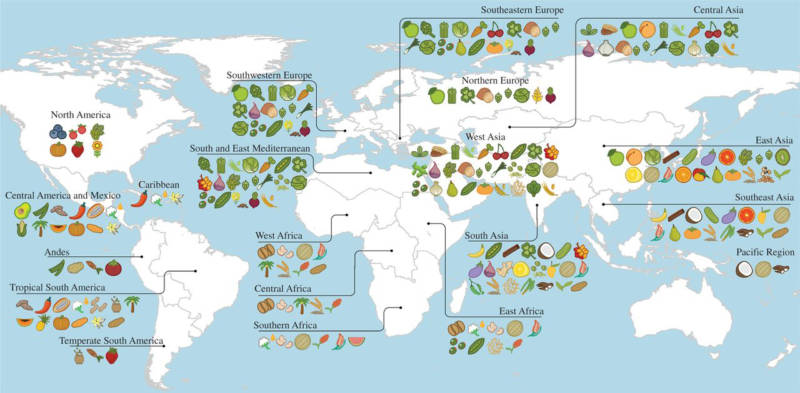
"caption": "Primary regions of diversity of major agricultural crops worldwide.",
"description": "Primary regions of diversity of major agricultural crops worldwide.",
"title": "Primary regions of diversity of major agricultural crops worldwide.",
"credit": "The Royal Society",
"status": "inherit",
"isLoading": false,
"fetchFailed": false
},
"bayareabites_109987": {
"type": "attachments",
"id": "bayareabites_109987",
"meta": {
"index": "attachments_1716263798",
"site": "bayareabites",
"id": "109987",
"found": true
},
"parent": 109984,
"imgSizes": {
"thumbnail": {
"file": "https://ww2.kqed.org/app/uploads/sites/24/2016/06/communitygrains-400x296.jpg",
"width": 400,
"mimeType": "image/jpeg",
"height": 296
},
"post-thumbnail": {
"file": "https://ww2.kqed.org/app/uploads/sites/24/2016/06/communitygrains-672x372.jpg",
"width": 672,
"mimeType": "image/jpeg",
"height": 372
},
"kqedFullSize": {
"file": "https://ww2.kqed.org/app/uploads/sites/24/2016/06/communitygrains.jpg",
"width": 703,
"height": 520
},
"cat_post_thumb_sizecategory-posts-2": {
"file": "https://ww2.kqed.org/app/uploads/sites/24/2016/06/communitygrains-150x150.jpg",
"width": 150,
"mimeType": "image/jpeg",
"height": 150
},
"guest-author-50": {
"file": "https://ww2.kqed.org/app/uploads/sites/24/2016/06/communitygrains-50x50.jpg",
"width": 50,
"mimeType": "image/jpeg",
"height": 50
},
"guest-author-96": {
"file": "https://ww2.kqed.org/app/uploads/sites/24/2016/06/communitygrains-96x96.jpg",
"width": 96,
"mimeType": "image/jpeg",
"height": 96
},
"guest-author-64": {
"file": "https://ww2.kqed.org/app/uploads/sites/24/2016/06/communitygrains-64x64.jpg",
"width": 64,
"mimeType": "image/jpeg",
"height": 64
},
"detail": {
"file": "https://ww2.kqed.org/app/uploads/sites/24/2016/06/communitygrains-150x150.jpg",
"width": 150,
"mimeType": "image/jpeg",
"height": 150
},
"guest-author-32": {
"file": "https://ww2.kqed.org/app/uploads/sites/24/2016/06/communitygrains-32x32.jpg",
"width": 32,
"mimeType": "image/jpeg",
"height": 32
},
"guest-author-128": {
"file": "https://ww2.kqed.org/app/uploads/sites/24/2016/06/communitygrains-128x128.jpg",
"width": 128,
"mimeType": "image/jpeg",
"height": 128
}
},
"publishDate": 1465509951,
"modified": 1465511806,
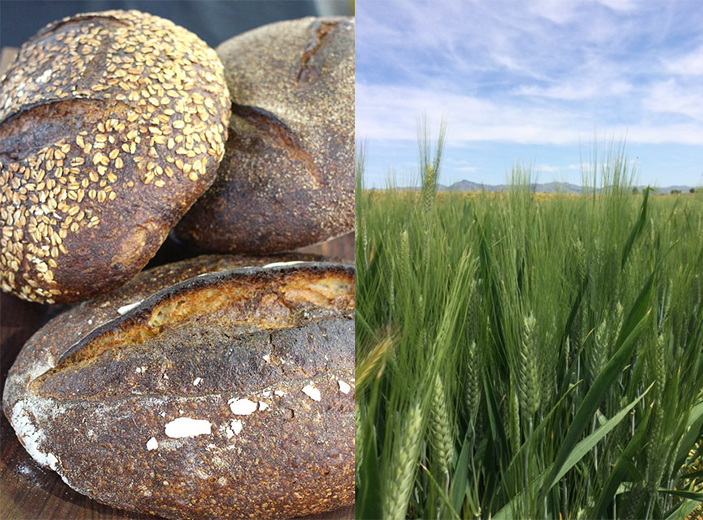
"caption": "Courtesy of Community Grains",
"description": null,
"title": "communitygrains",
"credit": "Courtesy of Community Grains",
"status": "inherit",
"isLoading": false,
"fetchFailed": false
},
"bayareabites_109846": {
"type": "attachments",
"id": "bayareabites_109846",
"meta": {
"index": "attachments_1716263798",
"site": "bayareabites",
"id": "109846",
"found": true
},
"parent": 109845,
"imgSizes": {
"twentyfourteen-full-width": {
"file": "https://ww2.kqed.org/app/uploads/sites/24/2016/06/tomatoes-4_enl-6d5d3090a36d1a26a1ccbffcf31ba0020102315e-1038x576.jpg",
"width": 1038,
"mimeType": "image/jpeg",
"height": 576
},
"thumbnail": {
"file": "https://ww2.kqed.org/app/uploads/sites/24/2016/06/tomatoes-4_enl-6d5d3090a36d1a26a1ccbffcf31ba0020102315e-400x266.jpg",
"width": 400,
"mimeType": "image/jpeg",
"height": 266
},
"fd-sm": {
"file": "https://ww2.kqed.org/app/uploads/sites/24/2016/06/tomatoes-4_enl-6d5d3090a36d1a26a1ccbffcf31ba0020102315e-960x639.jpg",
"width": 960,
"mimeType": "image/jpeg",
"height": 639
},
"post-thumbnail": {
"file": "https://ww2.kqed.org/app/uploads/sites/24/2016/06/tomatoes-4_enl-6d5d3090a36d1a26a1ccbffcf31ba0020102315e-672x372.jpg",
"width": 672,
"mimeType": "image/jpeg",
"height": 372
},
"kqedFullSize": {
"file": "https://ww2.kqed.org/app/uploads/sites/24/2016/06/tomatoes-4_enl-6d5d3090a36d1a26a1ccbffcf31ba0020102315e.jpg",
"width": 2000,
"height": 1332
},
"large": {
"file": "https://ww2.kqed.org/app/uploads/sites/24/2016/06/tomatoes-4_enl-6d5d3090a36d1a26a1ccbffcf31ba0020102315e-1440x959.jpg",
"width": 1440,
"mimeType": "image/jpeg",
"height": 959
},
"guest-author-50": {
"file": "https://ww2.kqed.org/app/uploads/sites/24/2016/06/tomatoes-4_enl-6d5d3090a36d1a26a1ccbffcf31ba0020102315e-50x50.jpg",
"width": 50,
"mimeType": "image/jpeg",
"height": 50
},
"guest-author-96": {
"file": "https://ww2.kqed.org/app/uploads/sites/24/2016/06/tomatoes-4_enl-6d5d3090a36d1a26a1ccbffcf31ba0020102315e-96x96.jpg",
"width": 96,
"mimeType": "image/jpeg",
"height": 96
},
"medium": {
"file": "https://ww2.kqed.org/app/uploads/sites/24/2016/06/tomatoes-4_enl-6d5d3090a36d1a26a1ccbffcf31ba0020102315e-800x533.jpg",
"width": 800,
"mimeType": "image/jpeg",
"height": 533
},
"guest-author-64": {
"file": "https://ww2.kqed.org/app/uploads/sites/24/2016/06/tomatoes-4_enl-6d5d3090a36d1a26a1ccbffcf31ba0020102315e-64x64.jpg",
"width": 64,
"mimeType": "image/jpeg",
"height": 64
},
"guest-author-32": {
"file": "https://ww2.kqed.org/app/uploads/sites/24/2016/06/tomatoes-4_enl-6d5d3090a36d1a26a1ccbffcf31ba0020102315e-32x32.jpg",
"width": 32,
"mimeType": "image/jpeg",
"height": 32
},
"cat_post_thumb_sizecategory-posts-2": {
"file": "https://ww2.kqed.org/app/uploads/sites/24/2016/06/tomatoes-4_enl-6d5d3090a36d1a26a1ccbffcf31ba0020102315e-150x150.jpg",
"width": 150,
"mimeType": "image/jpeg",
"height": 150
},
"fd-lrg": {
"file": "https://ww2.kqed.org/app/uploads/sites/24/2016/06/tomatoes-4_enl-6d5d3090a36d1a26a1ccbffcf31ba0020102315e-1920x1279.jpg",
"width": 1920,
"mimeType": "image/jpeg",
"height": 1279
},
"fd-med": {
"file": "https://ww2.kqed.org/app/uploads/sites/24/2016/06/tomatoes-4_enl-6d5d3090a36d1a26a1ccbffcf31ba0020102315e-1180x786.jpg",
"width": 1180,
"mimeType": "image/jpeg",
"height": 786
},
"detail": {
"file": "https://ww2.kqed.org/app/uploads/sites/24/2016/06/tomatoes-4_enl-6d5d3090a36d1a26a1ccbffcf31ba0020102315e-150x150.jpg",
"width": 150,
"mimeType": "image/jpeg",
"height": 150
},
"medium_large": {
"file": "https://ww2.kqed.org/app/uploads/sites/24/2016/06/tomatoes-4_enl-6d5d3090a36d1a26a1ccbffcf31ba0020102315e-768x511.jpg",
"width": 768,
"mimeType": "image/jpeg",
"height": 511
},
"guest-author-128": {
"file": "https://ww2.kqed.org/app/uploads/sites/24/2016/06/tomatoes-4_enl-6d5d3090a36d1a26a1ccbffcf31ba0020102315e-128x128.jpg",
"width": 128,
"mimeType": "image/jpeg",
"height": 128
}
},
"publishDate": 1464983660,
"modified": 1464984872,
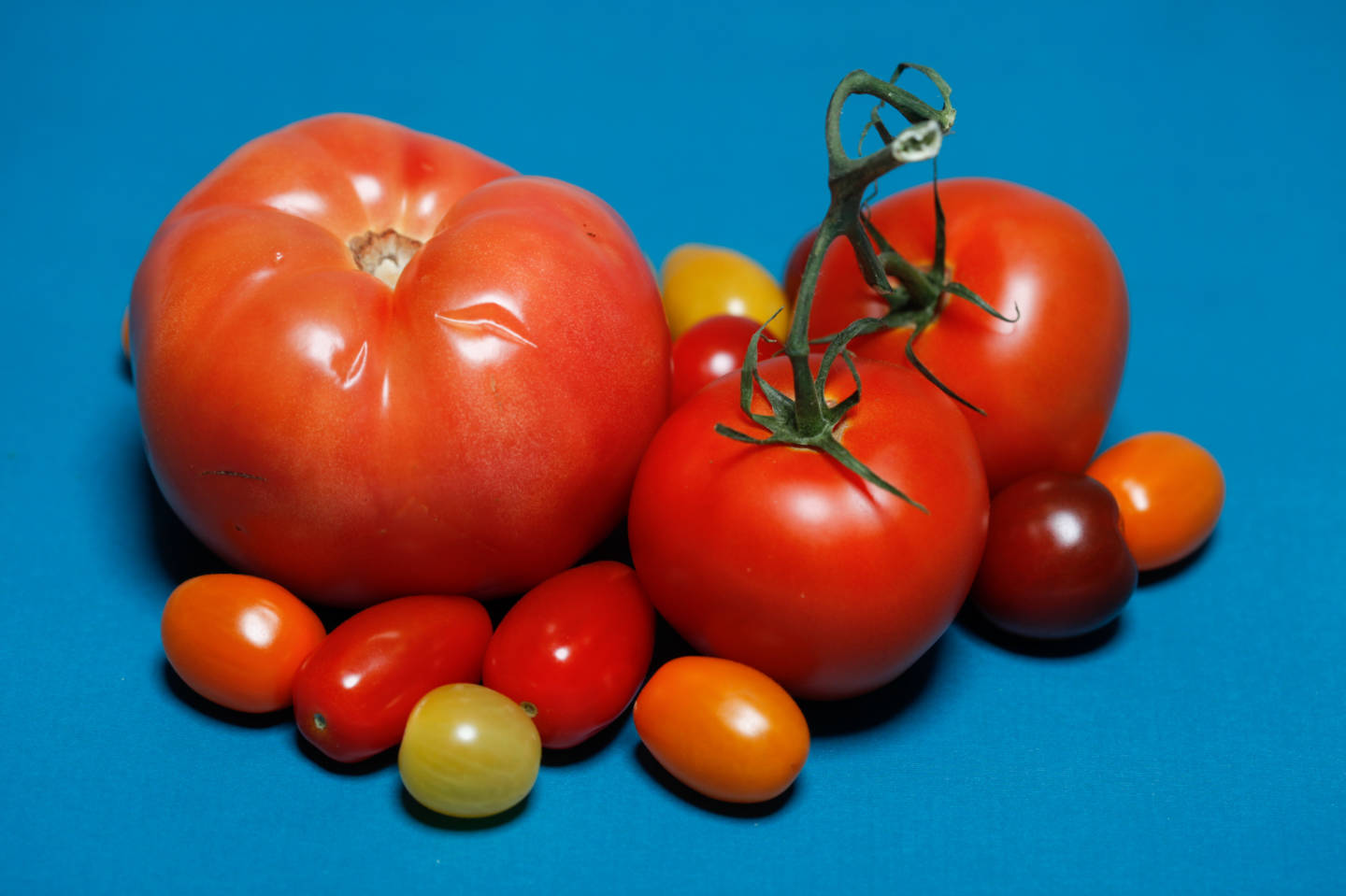
"caption": "Tomatoes from Canada, Mexico and Florida",
"description": "Tomatoes from Canada, Mexico and Florida",
"title": "Tomatoes from Canada, Mexico and Florida",
"credit": "Morgan McCloy/NPR",
"status": "inherit",
"isLoading": false,
"fetchFailed": false
},
"bayareabites_109791": {
"type": "attachments",
"id": "bayareabites_109791",
"meta": {
"index": "attachments_1716263798",
"site": "bayareabites",
"id": "109791",
"found": true
},
"parent": 109789,
"imgSizes": {
"thumbnail": {
"file": "https://ww2.kqed.org/app/uploads/sites/24/2016/05/SamEmilioGFMercantile-680x449-400x264.jpg",
"width": 400,
"mimeType": "image/jpeg",
"height": 264
},
"post-thumbnail": {
"file": "https://ww2.kqed.org/app/uploads/sites/24/2016/05/SamEmilioGFMercantile-680x449-672x372.jpg",
"width": 672,
"mimeType": "image/jpeg",
"height": 372
},
"kqedFullSize": {
"file": "https://ww2.kqed.org/app/uploads/sites/24/2016/05/SamEmilioGFMercantile-680x449.jpg",
"width": 680,
"height": 449
},
"cat_post_thumb_sizecategory-posts-2": {
"file": "https://ww2.kqed.org/app/uploads/sites/24/2016/05/SamEmilioGFMercantile-680x449-150x150.jpg",
"width": 150,
"mimeType": "image/jpeg",
"height": 150
},
"guest-author-50": {
"file": "https://ww2.kqed.org/app/uploads/sites/24/2016/05/SamEmilioGFMercantile-680x449-50x50.jpg",
"width": 50,
"mimeType": "image/jpeg",
"height": 50
},
"guest-author-96": {
"file": "https://ww2.kqed.org/app/uploads/sites/24/2016/05/SamEmilioGFMercantile-680x449-96x96.jpg",
"width": 96,
"mimeType": "image/jpeg",
"height": 96
},
"guest-author-64": {
"file": "https://ww2.kqed.org/app/uploads/sites/24/2016/05/SamEmilioGFMercantile-680x449-64x64.jpg",
"width": 64,
"mimeType": "image/jpeg",
"height": 64
},
"detail": {
"file": "https://ww2.kqed.org/app/uploads/sites/24/2016/05/SamEmilioGFMercantile-680x449-150x150.jpg",
"width": 150,
"mimeType": "image/jpeg",
"height": 150
},
"guest-author-32": {
"file": "https://ww2.kqed.org/app/uploads/sites/24/2016/05/SamEmilioGFMercantile-680x449-32x32.jpg",
"width": 32,
"mimeType": "image/jpeg",
"height": 32
},
"guest-author-128": {
"file": "https://ww2.kqed.org/app/uploads/sites/24/2016/05/SamEmilioGFMercantile-680x449-128x128.jpg",
"width": 128,
"mimeType": "image/jpeg",
"height": 128
}
},
"publishDate": 1464739921,
"modified": 1464740068,
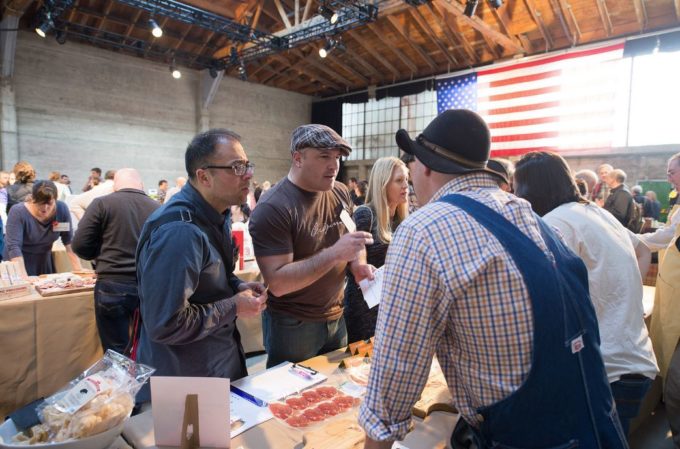
"caption": "Sam Mogannam, founder of San Francisco’s Bi-Rite (far left)",
"description": null,
"title": "SamEmilioGFMercantile-680x449",
"credit": "Gamma 9",
"status": "inherit",
"isLoading": false,
"fetchFailed": false
},
"bayareabites_109551": {
"type": "attachments",
"id": "bayareabites_109551",
"meta": {
"index": "attachments_1716263798",
"site": "bayareabites",
"id": "109551",
"found": true
},
"parent": 109550,
"imgSizes": {
"twentyfourteen-full-width": {
"file": "https://ww2.kqed.org/app/uploads/sites/24/2016/05/ap_16140267545475_wide-b3dea204940f205ae259d9ac602345b201fbb026-1038x576.jpg",
"width": 1038,
"mimeType": "image/jpeg",
"height": 576
},
"thumbnail": {
"file": "https://ww2.kqed.org/app/uploads/sites/24/2016/05/ap_16140267545475_wide-b3dea204940f205ae259d9ac602345b201fbb026-400x225.jpg",
"width": 400,
"mimeType": "image/jpeg",
"height": 225
},
"fd-sm": {
"file": "https://ww2.kqed.org/app/uploads/sites/24/2016/05/ap_16140267545475_wide-b3dea204940f205ae259d9ac602345b201fbb026-960x540.jpg",
"width": 960,
"mimeType": "image/jpeg",
"height": 540
},
"post-thumbnail": {
"file": "https://ww2.kqed.org/app/uploads/sites/24/2016/05/ap_16140267545475_wide-b3dea204940f205ae259d9ac602345b201fbb026-672x372.jpg",
"width": 672,
"mimeType": "image/jpeg",
"height": 372
},
"kqedFullSize": {
"file": "https://ww2.kqed.org/app/uploads/sites/24/2016/05/ap_16140267545475_wide-b3dea204940f205ae259d9ac602345b201fbb026.jpg",
"width": 2577,
"height": 1449
},
"large": {
"file": "https://ww2.kqed.org/app/uploads/sites/24/2016/05/ap_16140267545475_wide-b3dea204940f205ae259d9ac602345b201fbb026-1440x810.jpg",
"width": 1440,
"mimeType": "image/jpeg",
"height": 810
},
"guest-author-50": {
"file": "https://ww2.kqed.org/app/uploads/sites/24/2016/05/ap_16140267545475_wide-b3dea204940f205ae259d9ac602345b201fbb026-50x50.jpg",
"width": 50,
"mimeType": "image/jpeg",
"height": 50
},
"guest-author-96": {
"file": "https://ww2.kqed.org/app/uploads/sites/24/2016/05/ap_16140267545475_wide-b3dea204940f205ae259d9ac602345b201fbb026-96x96.jpg",
"width": 96,
"mimeType": "image/jpeg",
"height": 96
},
"medium": {
"file": "https://ww2.kqed.org/app/uploads/sites/24/2016/05/ap_16140267545475_wide-b3dea204940f205ae259d9ac602345b201fbb026-800x450.jpg",
"width": 800,
"mimeType": "image/jpeg",
"height": 450
},
"guest-author-64": {
"file": "https://ww2.kqed.org/app/uploads/sites/24/2016/05/ap_16140267545475_wide-b3dea204940f205ae259d9ac602345b201fbb026-64x64.jpg",
"width": 64,
"mimeType": "image/jpeg",
"height": 64
},
"guest-author-32": {
"file": "https://ww2.kqed.org/app/uploads/sites/24/2016/05/ap_16140267545475_wide-b3dea204940f205ae259d9ac602345b201fbb026-32x32.jpg",
"width": 32,
"mimeType": "image/jpeg",
"height": 32
},
"cat_post_thumb_sizecategory-posts-2": {
"file": "https://ww2.kqed.org/app/uploads/sites/24/2016/05/ap_16140267545475_wide-b3dea204940f205ae259d9ac602345b201fbb026-150x150.jpg",
"width": 150,
"mimeType": "image/jpeg",
"height": 150
},
"fd-lrg": {
"file": "https://ww2.kqed.org/app/uploads/sites/24/2016/05/ap_16140267545475_wide-b3dea204940f205ae259d9ac602345b201fbb026-1920x1080.jpg",
"width": 1920,
"mimeType": "image/jpeg",
"height": 1080
},
"fd-med": {
"file": "https://ww2.kqed.org/app/uploads/sites/24/2016/05/ap_16140267545475_wide-b3dea204940f205ae259d9ac602345b201fbb026-1180x663.jpg",
"width": 1180,
"mimeType": "image/jpeg",
"height": 663
},
"detail": {
"file": "https://ww2.kqed.org/app/uploads/sites/24/2016/05/ap_16140267545475_wide-b3dea204940f205ae259d9ac602345b201fbb026-150x150.jpg",
"width": 150,
"mimeType": "image/jpeg",
"height": 150
},
"medium_large": {
"file": "https://ww2.kqed.org/app/uploads/sites/24/2016/05/ap_16140267545475_wide-b3dea204940f205ae259d9ac602345b201fbb026-768x432.jpg",
"width": 768,
"mimeType": "image/jpeg",
"height": 432
},
"guest-author-128": {
"file": "https://ww2.kqed.org/app/uploads/sites/24/2016/05/ap_16140267545475_wide-b3dea204940f205ae259d9ac602345b201fbb026-128x128.jpg",
"width": 128,
"mimeType": "image/jpeg",
"height": 128
}
},
"publishDate": 1463699489,
"modified": 1463700063,
"caption": "The Monsanto logo is seen at the Farm Progress Show in Decatur, Ill., last year. German drug and chemicals company Bayer AG confirmed Thursday that it has entered talks to buy Monsanto.",
"description": "The Monsanto logo is seen at the Farm Progress Show in Decatur, Ill., last year. German drug and chemicals company Bayer AG confirmed Thursday that it has entered talks to buy Monsant",
"title": "The Monsanto logo is seen at the Farm Progress Show in Decatur, Ill., last year. German drug and chemicals company Bayer AG confirmed Thursday that it has entered talks to buy Monsanto.",
"credit": "Seth Perlman/AP",
"status": "inherit",
"isLoading": false,
"fetchFailed": false
},
"bayareabites_109533": {
"type": "attachments",
"id": "bayareabites_109533",
"meta": {
"index": "attachments_1716263798",
"site": "bayareabites",
"id": "109533",
"found": true
},
"parent": 109532,
"imgSizes": {
"twentyfourteen-full-width": {
"file": "https://ww2.kqed.org/app/uploads/sites/24/2016/05/willard_ms_cooks2_smaller-87177583de84ed64fa65f80759abda278e00ef48-1038x576.jpg",
"width": 1038,
"mimeType": "image/jpeg",
"height": 576
},
"thumbnail": {
"file": "https://ww2.kqed.org/app/uploads/sites/24/2016/05/willard_ms_cooks2_smaller-87177583de84ed64fa65f80759abda278e00ef48-400x300.jpg",
"width": 400,
"mimeType": "image/jpeg",
"height": 300
},
"fd-sm": {
"file": "https://ww2.kqed.org/app/uploads/sites/24/2016/05/willard_ms_cooks2_smaller-87177583de84ed64fa65f80759abda278e00ef48-960x720.jpg",
"width": 960,
"mimeType": "image/jpeg",
"height": 720
},
"post-thumbnail": {
"file": "https://ww2.kqed.org/app/uploads/sites/24/2016/05/willard_ms_cooks2_smaller-87177583de84ed64fa65f80759abda278e00ef48-672x372.jpg",
"width": 672,
"mimeType": "image/jpeg",
"height": 372
},
"kqedFullSize": {
"file": "https://ww2.kqed.org/app/uploads/sites/24/2016/05/willard_ms_cooks2_smaller-87177583de84ed64fa65f80759abda278e00ef48.jpg",
"width": 1998,
"height": 1499
},
"large": {
"file": "https://ww2.kqed.org/app/uploads/sites/24/2016/05/willard_ms_cooks2_smaller-87177583de84ed64fa65f80759abda278e00ef48-1440x1080.jpg",
"width": 1440,
"mimeType": "image/jpeg",
"height": 1080
},
"guest-author-50": {
"file": "https://ww2.kqed.org/app/uploads/sites/24/2016/05/willard_ms_cooks2_smaller-87177583de84ed64fa65f80759abda278e00ef48-50x50.jpg",
"width": 50,
"mimeType": "image/jpeg",
"height": 50
},
"guest-author-96": {
"file": "https://ww2.kqed.org/app/uploads/sites/24/2016/05/willard_ms_cooks2_smaller-87177583de84ed64fa65f80759abda278e00ef48-96x96.jpg",
"width": 96,
"mimeType": "image/jpeg",
"height": 96
},
"medium": {
"file": "https://ww2.kqed.org/app/uploads/sites/24/2016/05/willard_ms_cooks2_smaller-87177583de84ed64fa65f80759abda278e00ef48-800x600.jpg",
"width": 800,
"mimeType": "image/jpeg",
"height": 600
},
"guest-author-64": {
"file": "https://ww2.kqed.org/app/uploads/sites/24/2016/05/willard_ms_cooks2_smaller-87177583de84ed64fa65f80759abda278e00ef48-64x64.jpg",
"width": 64,
"mimeType": "image/jpeg",
"height": 64
},
"guest-author-32": {
"file": "https://ww2.kqed.org/app/uploads/sites/24/2016/05/willard_ms_cooks2_smaller-87177583de84ed64fa65f80759abda278e00ef48-32x32.jpg",
"width": 32,
"mimeType": "image/jpeg",
"height": 32
},
"cat_post_thumb_sizecategory-posts-2": {
"file": "https://ww2.kqed.org/app/uploads/sites/24/2016/05/willard_ms_cooks2_smaller-87177583de84ed64fa65f80759abda278e00ef48-150x150.jpg",
"width": 150,
"mimeType": "image/jpeg",
"height": 150
},
"fd-lrg": {
"file": "https://ww2.kqed.org/app/uploads/sites/24/2016/05/willard_ms_cooks2_smaller-87177583de84ed64fa65f80759abda278e00ef48-1920x1440.jpg",
"width": 1920,
"mimeType": "image/jpeg",
"height": 1440
},
"fd-med": {
"file": "https://ww2.kqed.org/app/uploads/sites/24/2016/05/willard_ms_cooks2_smaller-87177583de84ed64fa65f80759abda278e00ef48-1180x885.jpg",
"width": 1180,
"mimeType": "image/jpeg",
"height": 885
},
"detail": {
"file": "https://ww2.kqed.org/app/uploads/sites/24/2016/05/willard_ms_cooks2_smaller-87177583de84ed64fa65f80759abda278e00ef48-150x150.jpg",
"width": 150,
"mimeType": "image/jpeg",
"height": 150
},
"medium_large": {
"file": "https://ww2.kqed.org/app/uploads/sites/24/2016/05/willard_ms_cooks2_smaller-87177583de84ed64fa65f80759abda278e00ef48-768x576.jpg",
"width": 768,
"mimeType": "image/jpeg",
"height": 576
},
"guest-author-128": {
"file": "https://ww2.kqed.org/app/uploads/sites/24/2016/05/willard_ms_cooks2_smaller-87177583de84ed64fa65f80759abda278e00ef48-128x128.jpg",
"width": 128,
"mimeType": "image/jpeg",
"height": 128
}
},
"publishDate": 1463694355,
"modified": 1463695899,
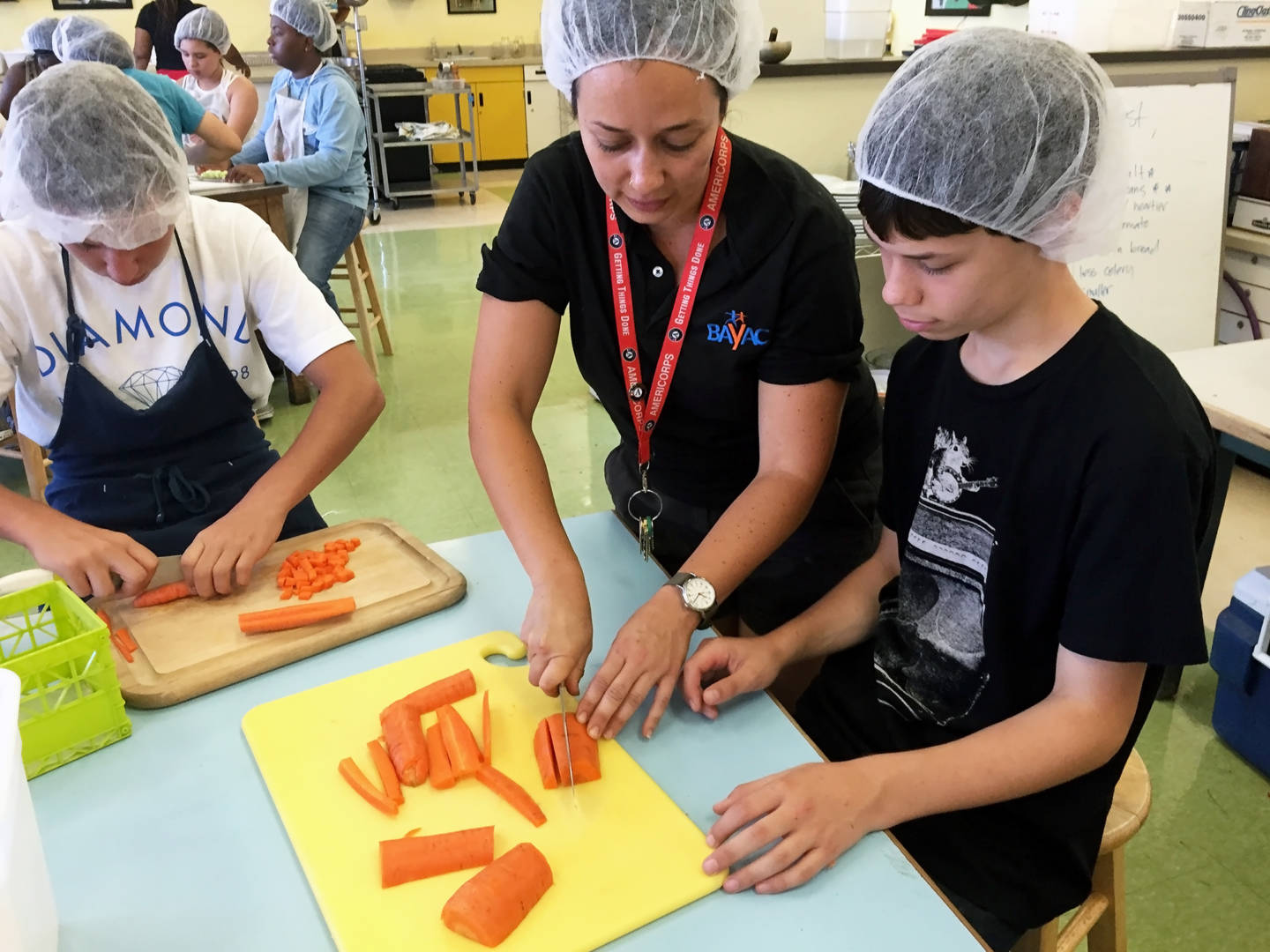
"caption": "Willard Middle School students chop carrots for a meal they will sell through Josephine.",
"description": "Willard Middle School students chop carrots for a meal they will sell through Josephine",
"title": "Willard Middle School students chop carrots for a meal they will sell through Josephine.",
"credit": "Teresa Chin/Youth Radio",
"status": "inherit",
"isLoading": false,
"fetchFailed": false
},
"bayareabites_109415": {
"type": "attachments",
"id": "bayareabites_109415",
"meta": {
"index": "attachments_1716263798",
"site": "bayareabites",
"id": "109415",
"found": true
},
"parent": 109414,
"imgSizes": {
"twentyfourteen-full-width": {
"file": "https://ww2.kqed.org/app/uploads/sites/24/2016/05/monsantocorn_enl-de25c3086f2b445847c7e86ca85cf0374f86aa7d-1038x576.jpg",
"width": 1038,
"mimeType": "image/jpeg",
"height": 576
},
"thumbnail": {
"file": "https://ww2.kqed.org/app/uploads/sites/24/2016/05/monsantocorn_enl-de25c3086f2b445847c7e86ca85cf0374f86aa7d-400x201.jpg",
"width": 400,
"mimeType": "image/jpeg",
"height": 201
},
"fd-sm": {
"file": "https://ww2.kqed.org/app/uploads/sites/24/2016/05/monsantocorn_enl-de25c3086f2b445847c7e86ca85cf0374f86aa7d-960x483.jpg",
"width": 960,
"mimeType": "image/jpeg",
"height": 483
},
"post-thumbnail": {
"file": "https://ww2.kqed.org/app/uploads/sites/24/2016/05/monsantocorn_enl-de25c3086f2b445847c7e86ca85cf0374f86aa7d-672x372.jpg",
"width": 672,
"mimeType": "image/jpeg",
"height": 372
},
"kqedFullSize": {
"file": "https://ww2.kqed.org/app/uploads/sites/24/2016/05/monsantocorn_enl-de25c3086f2b445847c7e86ca85cf0374f86aa7d.jpg",
"width": 1784,
"height": 897
},
"large": {
"file": "https://ww2.kqed.org/app/uploads/sites/24/2016/05/monsantocorn_enl-de25c3086f2b445847c7e86ca85cf0374f86aa7d-1440x724.jpg",
"width": 1440,
"mimeType": "image/jpeg",
"height": 724
},
"guest-author-50": {
"file": "https://ww2.kqed.org/app/uploads/sites/24/2016/05/monsantocorn_enl-de25c3086f2b445847c7e86ca85cf0374f86aa7d-50x50.jpg",
"width": 50,
"mimeType": "image/jpeg",
"height": 50
},
"guest-author-96": {
"file": "https://ww2.kqed.org/app/uploads/sites/24/2016/05/monsantocorn_enl-de25c3086f2b445847c7e86ca85cf0374f86aa7d-96x96.jpg",
"width": 96,
"mimeType": "image/jpeg",
"height": 96
},
"medium": {
"file": "https://ww2.kqed.org/app/uploads/sites/24/2016/05/monsantocorn_enl-de25c3086f2b445847c7e86ca85cf0374f86aa7d-800x402.jpg",
"width": 800,
"mimeType": "image/jpeg",
"height": 402
},
"guest-author-64": {
"file": "https://ww2.kqed.org/app/uploads/sites/24/2016/05/monsantocorn_enl-de25c3086f2b445847c7e86ca85cf0374f86aa7d-64x64.jpg",
"width": 64,
"mimeType": "image/jpeg",
"height": 64
},
"guest-author-32": {
"file": "https://ww2.kqed.org/app/uploads/sites/24/2016/05/monsantocorn_enl-de25c3086f2b445847c7e86ca85cf0374f86aa7d-32x32.jpg",
"width": 32,
"mimeType": "image/jpeg",
"height": 32
},
"cat_post_thumb_sizecategory-posts-2": {
"file": "https://ww2.kqed.org/app/uploads/sites/24/2016/05/monsantocorn_enl-de25c3086f2b445847c7e86ca85cf0374f86aa7d-150x150.jpg",
"width": 150,
"mimeType": "image/jpeg",
"height": 150
},
"fd-med": {
"file": "https://ww2.kqed.org/app/uploads/sites/24/2016/05/monsantocorn_enl-de25c3086f2b445847c7e86ca85cf0374f86aa7d-1180x593.jpg",
"width": 1180,
"mimeType": "image/jpeg",
"height": 593
},
"detail": {
"file": "https://ww2.kqed.org/app/uploads/sites/24/2016/05/monsantocorn_enl-de25c3086f2b445847c7e86ca85cf0374f86aa7d-150x150.jpg",
"width": 150,
"mimeType": "image/jpeg",
"height": 150
},
"medium_large": {
"file": "https://ww2.kqed.org/app/uploads/sites/24/2016/05/monsantocorn_enl-de25c3086f2b445847c7e86ca85cf0374f86aa7d-768x386.jpg",
"width": 768,
"mimeType": "image/jpeg",
"height": 386
},
"guest-author-128": {
"file": "https://ww2.kqed.org/app/uploads/sites/24/2016/05/monsantocorn_enl-de25c3086f2b445847c7e86ca85cf0374f86aa7d-128x128.jpg",
"width": 128,
"mimeType": "image/jpeg",
"height": 128
}
},
"publishDate": 1463544703,
"modified": 1463544902,
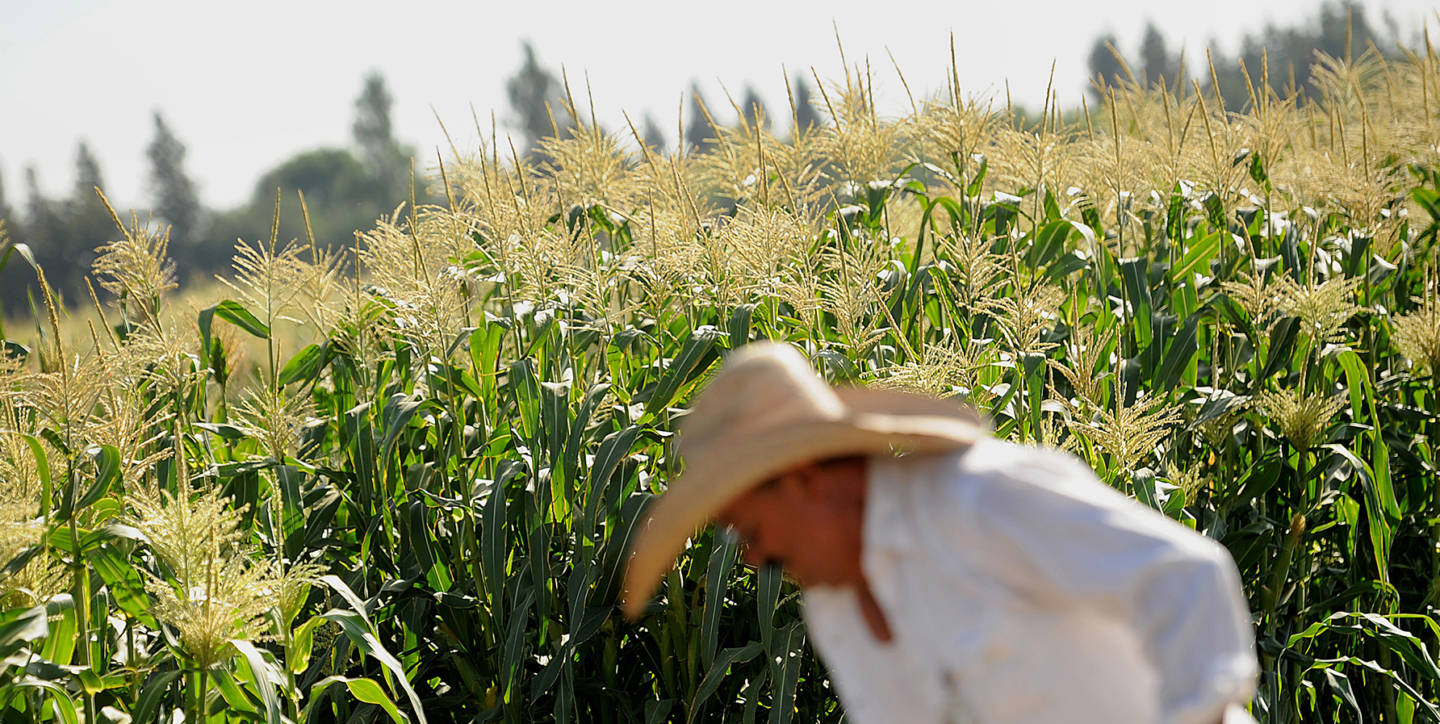
"caption": "Worker Javier Alcantar tends to corn crops at the Monsanto Co. test field in Woodland, Calif., in 2012.",
"description": "Worker Javier Alcantar tends to corn crops at the Monsanto Co. test field in Woodland, Calif., in 2012.",
"title": "Worker Javier Alcantar tends to corn crops at the Monsanto Co. test field in Woodland, Calif., in 2012.",
"credit": "Noah Berger/Bloomberg via Getty Images ",
"status": "inherit",
"isLoading": false,
"fetchFailed": false
},
"bayareabites_109377": {
"type": "attachments",
"id": "bayareabites_109377",
"meta": {
"index": "attachments_1716263798",
"site": "bayareabites",
"id": "109377",
"found": true
},
"parent": 109376,
"imgSizes": {
"twentyfourteen-full-width": {
"file": "https://ww2.kqed.org/app/uploads/sites/24/2016/05/ap_504898218860_custom-ced0dfce7064cfa5c21ef5493eb2df1a022bc6c0-1038x576.jpg",
"width": 1038,
"mimeType": "image/jpeg",
"height": 576
},
"thumbnail": {
"file": "https://ww2.kqed.org/app/uploads/sites/24/2016/05/ap_504898218860_custom-ced0dfce7064cfa5c21ef5493eb2df1a022bc6c0-400x243.jpg",
"width": 400,
"mimeType": "image/jpeg",
"height": 243
},
"fd-sm": {
"file": "https://ww2.kqed.org/app/uploads/sites/24/2016/05/ap_504898218860_custom-ced0dfce7064cfa5c21ef5493eb2df1a022bc6c0-960x584.jpg",
"width": 960,
"mimeType": "image/jpeg",
"height": 584
},
"post-thumbnail": {
"file": "https://ww2.kqed.org/app/uploads/sites/24/2016/05/ap_504898218860_custom-ced0dfce7064cfa5c21ef5493eb2df1a022bc6c0-672x372.jpg",
"width": 672,
"mimeType": "image/jpeg",
"height": 372
},
"kqedFullSize": {
"file": "https://ww2.kqed.org/app/uploads/sites/24/2016/05/ap_504898218860_custom-ced0dfce7064cfa5c21ef5493eb2df1a022bc6c0.jpg",
"width": 4814,
"height": 2928
},
"large": {
"file": "https://ww2.kqed.org/app/uploads/sites/24/2016/05/ap_504898218860_custom-ced0dfce7064cfa5c21ef5493eb2df1a022bc6c0-1440x876.jpg",
"width": 1440,
"mimeType": "image/jpeg",
"height": 876
},
"guest-author-96": {
"file": "https://ww2.kqed.org/app/uploads/sites/24/2016/05/ap_504898218860_custom-ced0dfce7064cfa5c21ef5493eb2df1a022bc6c0-96x96.jpg",
"width": 96,
"mimeType": "image/jpeg",
"height": 96
},
"medium": {
"file": "https://ww2.kqed.org/app/uploads/sites/24/2016/05/ap_504898218860_custom-ced0dfce7064cfa5c21ef5493eb2df1a022bc6c0-800x487.jpg",
"width": 800,
"mimeType": "image/jpeg",
"height": 487
},
"guest-author-64": {
"file": "https://ww2.kqed.org/app/uploads/sites/24/2016/05/ap_504898218860_custom-ced0dfce7064cfa5c21ef5493eb2df1a022bc6c0-64x64.jpg",
"width": 64,
"mimeType": "image/jpeg",
"height": 64
},
"guest-author-32": {
"file": "https://ww2.kqed.org/app/uploads/sites/24/2016/05/ap_504898218860_custom-ced0dfce7064cfa5c21ef5493eb2df1a022bc6c0-32x32.jpg",
"width": 32,
"mimeType": "image/jpeg",
"height": 32
},
"cat_post_thumb_sizecategory-posts-2": {
"file": "https://ww2.kqed.org/app/uploads/sites/24/2016/05/ap_504898218860_custom-ced0dfce7064cfa5c21ef5493eb2df1a022bc6c0-150x150.jpg",
"width": 150,
"mimeType": "image/jpeg",
"height": 150
},
"fd-lrg": {
"file": "https://ww2.kqed.org/app/uploads/sites/24/2016/05/ap_504898218860_custom-ced0dfce7064cfa5c21ef5493eb2df1a022bc6c0-1920x1168.jpg",
"width": 1920,
"mimeType": "image/jpeg",
"height": 1168
},
"fd-med": {
"file": "https://ww2.kqed.org/app/uploads/sites/24/2016/05/ap_504898218860_custom-ced0dfce7064cfa5c21ef5493eb2df1a022bc6c0-1180x718.jpg",
"width": 1180,
"mimeType": "image/jpeg",
"height": 718
},
"detail": {
"file": "https://ww2.kqed.org/app/uploads/sites/24/2016/05/ap_504898218860_custom-ced0dfce7064cfa5c21ef5493eb2df1a022bc6c0-150x150.jpg",
"width": 150,
"mimeType": "image/jpeg",
"height": 150
},
"medium_large": {
"file": "https://ww2.kqed.org/app/uploads/sites/24/2016/05/ap_504898218860_custom-ced0dfce7064cfa5c21ef5493eb2df1a022bc6c0-768x467.jpg",
"width": 768,
"mimeType": "image/jpeg",
"height": 467
},
"guest-author-128": {
"file": "https://ww2.kqed.org/app/uploads/sites/24/2016/05/ap_504898218860_custom-ced0dfce7064cfa5c21ef5493eb2df1a022bc6c0-128x128.jpg",
"width": 128,
"mimeType": "image/jpeg",
"height": 128
}
},
"publishDate": 1463377909,
"modified": 1463378075,
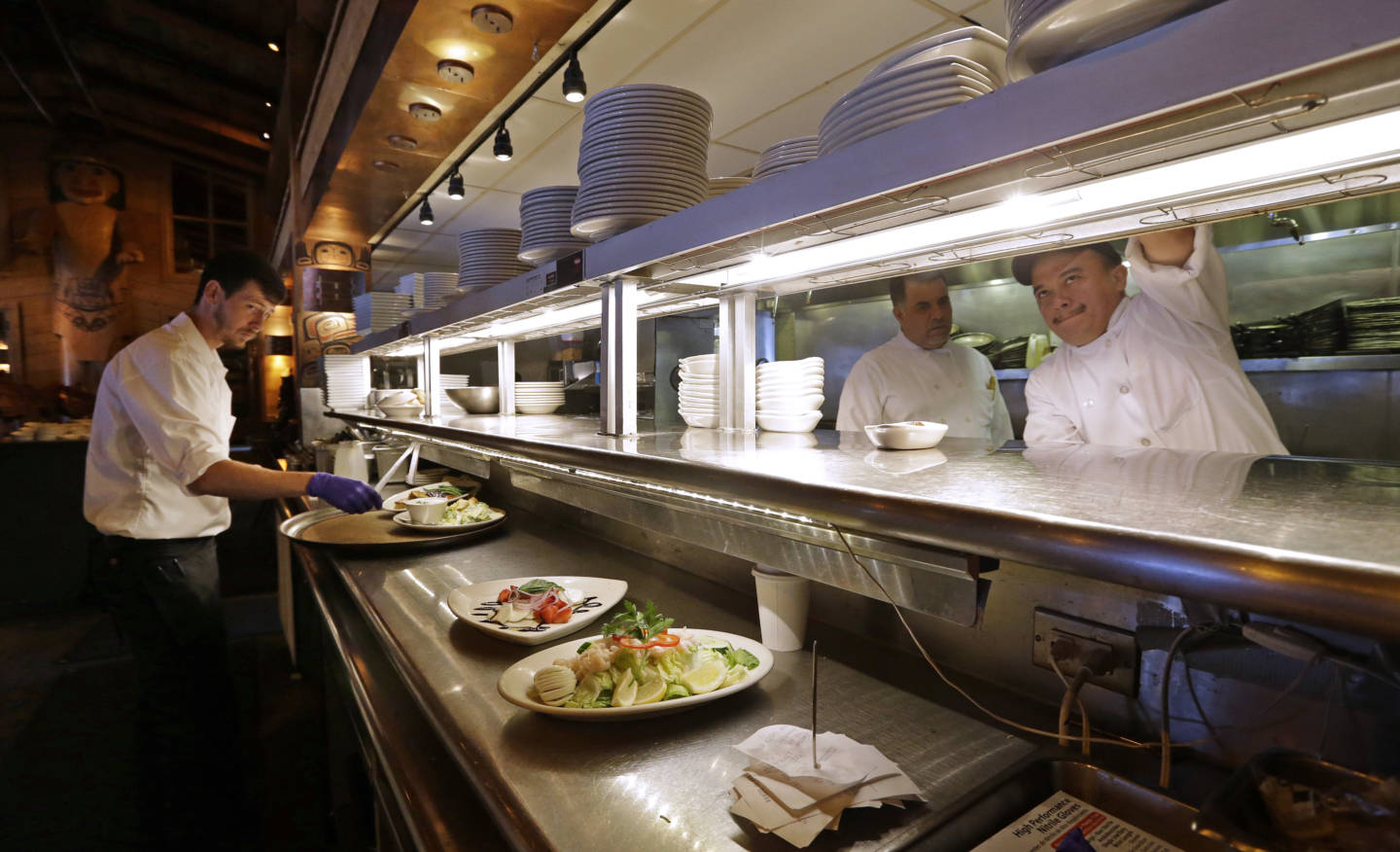
"caption": "After Seattle's new minimum wage law took effect last April, Ivar's Seafood Restaurants announced it would immediately increase its prices by about 21 percent, eliminate tipping and pay all its hourly workers a $15 per hour. Several other restaurants are adopting a no-tip policy to equalize the pay gap among employees, but many have gone back on that move.",
"description": "After Seattle's new minimum wage law took effect last April, Ivar’s Seafood Restaurants announced it would immediately increase its prices by about 21 percent, eliminate tipping and pay all its hourly workers a $15 per hour. Several other restaurants are adopting a no-tip policy to equalize the pay gap among employees, but many have gone back on that mov",
"title": "After Seattle's new minimum wage law took effect last April, Ivar's Seafood Restaurants announced it would immediately increase its prices by about 21 percent, eliminate tipping and pay all its hourly workers a $15 per hour. Several other restaurants are adopting a no-tip policy to equalize the pay gap among employees, but many have gone back on that move.",
"credit": "Elaine Thompson/AP ",
"status": "inherit",
"isLoading": false,
"fetchFailed": false
},
"bayareabites_108602": {
"type": "attachments",
"id": "bayareabites_108602",
"meta": {
"index": "attachments_1716263798",
"site": "bayareabites",
"id": "108602",
"found": true
},
"parent": 108599,
"imgSizes": {
"twentyfourteen-full-width": {
"file": "https://ww2.kqed.org/app/uploads/sites/24/2016/04/whitebuttonmushroom-900x576.jpg",
"width": 900,
"mimeType": "image/jpeg",
"height": 576
},
"thumbnail": {
"file": "https://ww2.kqed.org/app/uploads/sites/24/2016/04/whitebuttonmushroom-400x265.jpg",
"width": 400,
"mimeType": "image/jpeg",
"height": 265
},
"post-thumbnail": {
"file": "https://ww2.kqed.org/app/uploads/sites/24/2016/04/whitebuttonmushroom-672x372.jpg",
"width": 672,
"mimeType": "image/jpeg",
"height": 372
},
"kqedFullSize": {
"file": "https://ww2.kqed.org/app/uploads/sites/24/2016/04/whitebuttonmushroom.jpg",
"width": 900,
"height": 596
},
"cat_post_thumb_sizecategory-posts-2": {
"file": "https://ww2.kqed.org/app/uploads/sites/24/2016/04/whitebuttonmushroom-150x150.jpg",
"width": 150,
"mimeType": "image/jpeg",
"height": 150
},
"guest-author-96": {
"file": "https://ww2.kqed.org/app/uploads/sites/24/2016/04/whitebuttonmushroom-96x96.jpg",
"width": 96,
"mimeType": "image/jpeg",
"height": 96
},
"medium": {
"file": "https://ww2.kqed.org/app/uploads/sites/24/2016/04/whitebuttonmushroom-800x530.jpg",
"width": 800,
"mimeType": "image/jpeg",
"height": 530
},
"guest-author-64": {
"file": "https://ww2.kqed.org/app/uploads/sites/24/2016/04/whitebuttonmushroom-64x64.jpg",
"width": 64,
"mimeType": "image/jpeg",
"height": 64
},
"detail": {
"file": "https://ww2.kqed.org/app/uploads/sites/24/2016/04/whitebuttonmushroom-75x75.jpg",
"width": 75,
"mimeType": "image/jpeg",
"height": 75
},
"guest-author-32": {
"file": "https://ww2.kqed.org/app/uploads/sites/24/2016/04/whitebuttonmushroom-32x32.jpg",
"width": 32,
"mimeType": "image/jpeg",
"height": 32
},
"medium_large": {
"file": "https://ww2.kqed.org/app/uploads/sites/24/2016/04/whitebuttonmushroom-768x509.jpg",
"width": 768,
"mimeType": "image/jpeg",
"height": 509
},
"guest-author-128": {
"file": "https://ww2.kqed.org/app/uploads/sites/24/2016/04/whitebuttonmushroom-128x128.jpg",
"width": 128,
"mimeType": "image/jpeg",
"height": 128
}
},
"publishDate": 1460817671,
"modified": 1460817694,
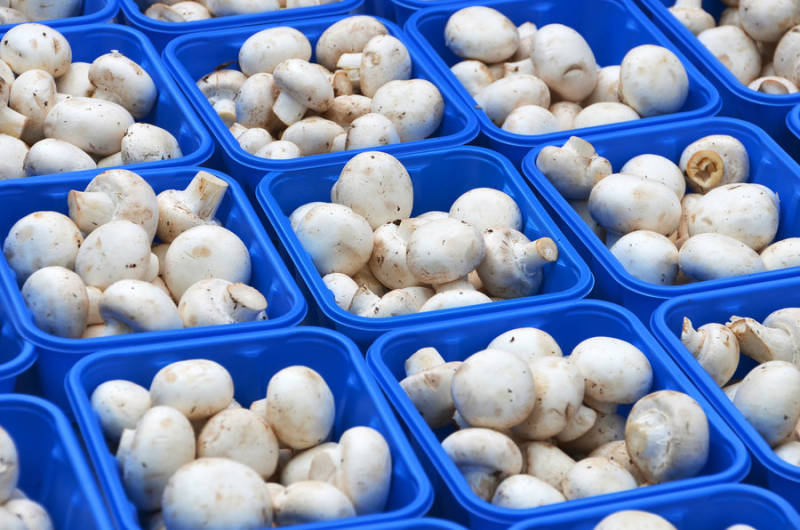
"caption": "Boxes of white button mushrooms. Scientists have used a popular gene editing tool called CRISPR/Cas9 to snip out a tiny piece of DNA from one particular gene in a white button mushroom. The resulting mushroom doesn't brown when cut. ",
"description": null,
"title": "whitebuttonmushroom",
"credit": "Adam Fagen/Flickr ",
"status": "inherit",
"isLoading": false,
"fetchFailed": false
},
"bayareabites_108087": {
"type": "attachments",
"id": "bayareabites_108087",
"meta": {
"index": "attachments_1716263798",
"site": "bayareabites",
"id": "108087",
"found": true
},
"parent": 108086,
"imgSizes": {
"twentyfourteen-full-width": {
"file": "https://ww2.kqed.org/app/uploads/sites/24/2016/03/campbellgmo_enl-11cc72f25452b887b2905d3ece22fd65688b1073-1038x576.jpe",
"width": 1038,
"mimeType": "image/jpeg",
"height": 576
},
"thumbnail": {
"file": "https://ww2.kqed.org/app/uploads/sites/24/2016/03/campbellgmo_enl-11cc72f25452b887b2905d3ece22fd65688b1073-400x266.jpe",
"width": 400,
"mimeType": "image/jpeg",
"height": 266
},
"fd-sm": {
"file": "https://ww2.kqed.org/app/uploads/sites/24/2016/03/campbellgmo_enl-11cc72f25452b887b2905d3ece22fd65688b1073-960x639.jpe",
"width": 960,
"mimeType": "image/jpeg",
"height": 639
},
"post-thumbnail": {
"file": "https://ww2.kqed.org/app/uploads/sites/24/2016/03/campbellgmo_enl-11cc72f25452b887b2905d3ece22fd65688b1073-672x372.jpe",
"width": 672,
"mimeType": "image/jpeg",
"height": 372
},
"kqedFullSize": {
"file": "https://ww2.kqed.org/app/uploads/sites/24/2016/03/campbellgmo_enl-11cc72f25452b887b2905d3ece22fd65688b1073.jpe",
"width": 2000,
"height": 1332
},
"large": {
"file": "https://ww2.kqed.org/app/uploads/sites/24/2016/03/campbellgmo_enl-11cc72f25452b887b2905d3ece22fd65688b1073-1440x959.jpe",
"width": 1440,
"mimeType": "image/jpeg",
"height": 959
},
"guest-author-96": {
"file": "https://ww2.kqed.org/app/uploads/sites/24/2016/03/campbellgmo_enl-11cc72f25452b887b2905d3ece22fd65688b1073-96x96.jpe",
"width": 96,
"mimeType": "image/jpeg",
"height": 96
},
"medium": {
"file": "https://ww2.kqed.org/app/uploads/sites/24/2016/03/campbellgmo_enl-11cc72f25452b887b2905d3ece22fd65688b1073-800x533.jpe",
"width": 800,
"mimeType": "image/jpeg",
"height": 533
},
"guest-author-64": {
"file": "https://ww2.kqed.org/app/uploads/sites/24/2016/03/campbellgmo_enl-11cc72f25452b887b2905d3ece22fd65688b1073-64x64.jpe",
"width": 64,
"mimeType": "image/jpeg",
"height": 64
},
"guest-author-32": {
"file": "https://ww2.kqed.org/app/uploads/sites/24/2016/03/campbellgmo_enl-11cc72f25452b887b2905d3ece22fd65688b1073-32x32.jpe",
"width": 32,
"mimeType": "image/jpeg",
"height": 32
},
"cat_post_thumb_sizecategory-posts-2": {
"file": "https://ww2.kqed.org/app/uploads/sites/24/2016/03/campbellgmo_enl-11cc72f25452b887b2905d3ece22fd65688b1073-150x150.jpe",
"width": 150,
"mimeType": "image/jpeg",
"height": 150
},
"fd-lrg": {
"file": "https://ww2.kqed.org/app/uploads/sites/24/2016/03/campbellgmo_enl-11cc72f25452b887b2905d3ece22fd65688b1073-1920x1279.jpe",
"width": 1920,
"mimeType": "image/jpeg",
"height": 1279
},
"fd-med": {
"file": "https://ww2.kqed.org/app/uploads/sites/24/2016/03/campbellgmo_enl-11cc72f25452b887b2905d3ece22fd65688b1073-1180x786.jpe",
"width": 1180,
"mimeType": "image/jpeg",
"height": 786
},
"detail": {
"file": "https://ww2.kqed.org/app/uploads/sites/24/2016/03/campbellgmo_enl-11cc72f25452b887b2905d3ece22fd65688b1073-75x75.jpe",
"width": 75,
"mimeType": "image/jpeg",
"height": 75
},
"medium_large": {
"file": "https://ww2.kqed.org/app/uploads/sites/24/2016/03/campbellgmo_enl-11cc72f25452b887b2905d3ece22fd65688b1073-768x511.jpe",
"width": 768,
"mimeType": "image/jpeg",
"height": 511
},
"guest-author-128": {
"file": "https://ww2.kqed.org/app/uploads/sites/24/2016/03/campbellgmo_enl-11cc72f25452b887b2905d3ece22fd65688b1073-128x128.jpe",
"width": 128,
"mimeType": "image/jpeg",
"height": 128
}
},
"publishDate": 1459187267,
"modified": 1459187467,
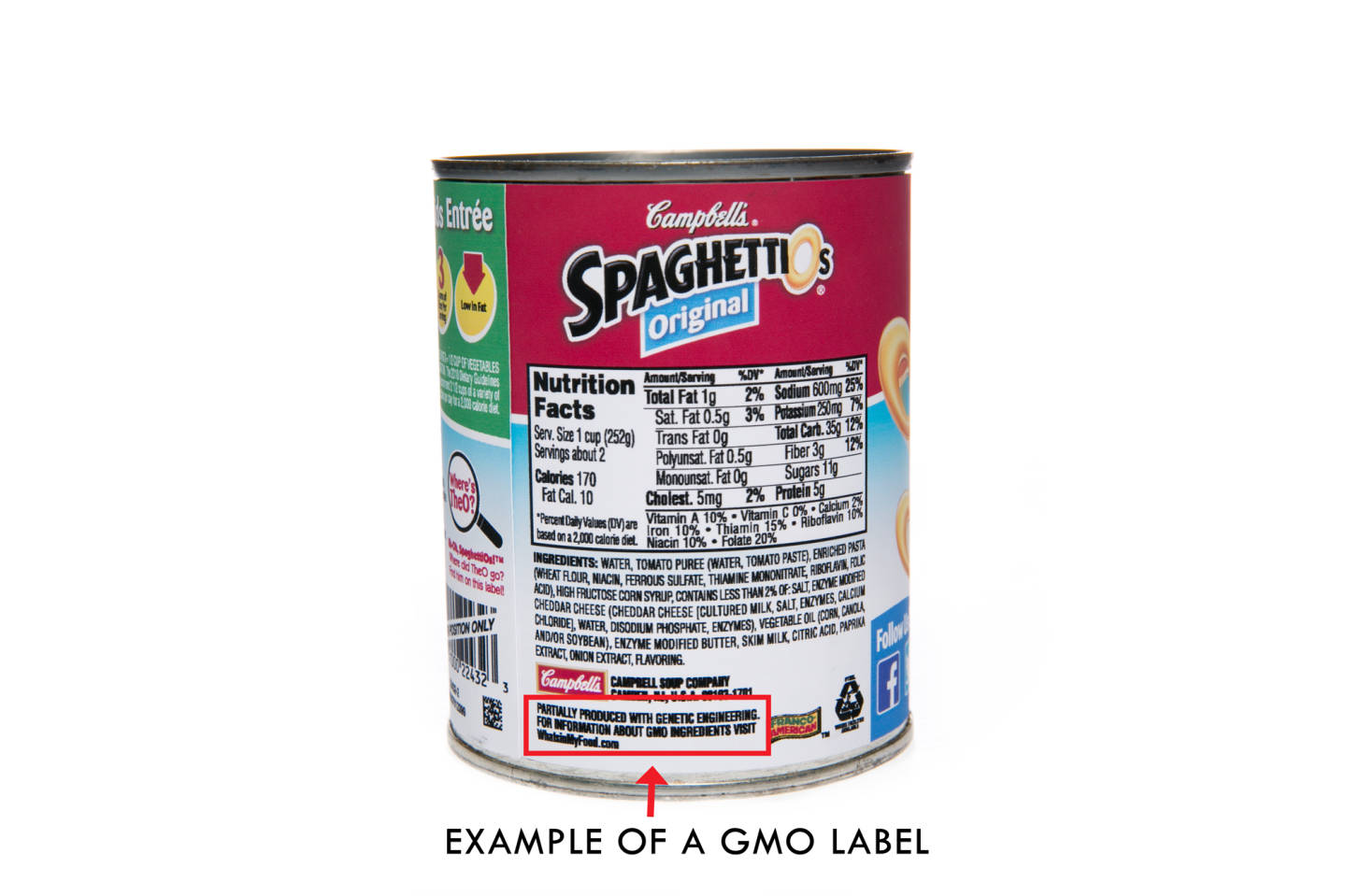
"caption": "A mockup of a possible GMO label on a can of Campbell's Spaghetti-Os, with these words: \"Partially produced with genetic engineering.\" Unless Congress or a federal court intervene, Vermont's new GMO labeling law will go into effect in July. So some companies are scrambling to comply.",
"description": "A mockup of a possible GMO label on a can of Campbell's Spaghetti-Os, with these words: \"Partially produced with genetic engineering.\" Unless Congress or a federal court intervene, Vermont's new GMO labeling law will go into effect in July. So some companies are scrambling to com",
"title": "A mockup of a possible GMO label on a can of Campbell's Spaghetti-Os, with these words: \"Partially produced with genetic engineering.\" Unless Congress or a federal court intervene, Vermont's new GMO labeling law will go into effect in July. So some companies are scrambling to comply.",
"credit": "Courtesy of Campbell Soup Company ",
"status": "inherit",
"isLoading": false,
"fetchFailed": false
},
"bayareabites_107822": {
"type": "attachments",
"id": "bayareabites_107822",
"meta": {
"index": "attachments_1716263798",
"site": "bayareabites",
"id": "107822",
"found": true
},
"parent": 107760,
"imgSizes": {
"twentyfourteen-full-width": {
"file": "https://ww2.kqed.org/app/uploads/sites/24/2016/03/IMG_1905-1920-1038x576.jpg",
"width": 1038,
"mimeType": "image/jpeg",
"height": 576
},
"thumbnail": {
"file": "https://ww2.kqed.org/app/uploads/sites/24/2016/03/IMG_1905-1920-400x300.jpg",
"width": 400,
"mimeType": "image/jpeg",
"height": 300
},
"fd-sm": {
"file": "https://ww2.kqed.org/app/uploads/sites/24/2016/03/IMG_1905-1920-960x720.jpg",
"width": 960,
"mimeType": "image/jpeg",
"height": 720
},
"post-thumbnail": {
"file": "https://ww2.kqed.org/app/uploads/sites/24/2016/03/IMG_1905-1920-672x372.jpg",
"width": 672,
"mimeType": "image/jpeg",
"height": 372
},
"kqedFullSize": {
"file": "https://ww2.kqed.org/app/uploads/sites/24/2016/03/IMG_1905-1920.jpg",
"width": 1920,
"height": 1440
},
"large": {
"file": "https://ww2.kqed.org/app/uploads/sites/24/2016/03/IMG_1905-1920-1440x1080.jpg",
"width": 1440,
"mimeType": "image/jpeg",
"height": 1080
},
"guest-author-96": {
"file": "https://ww2.kqed.org/app/uploads/sites/24/2016/03/IMG_1905-1920-96x96.jpg",
"width": 96,
"mimeType": "image/jpeg",
"height": 96
},
"medium": {
"file": "https://ww2.kqed.org/app/uploads/sites/24/2016/03/IMG_1905-1920-800x600.jpg",
"width": 800,
"mimeType": "image/jpeg",
"height": 600
},
"guest-author-64": {
"file": "https://ww2.kqed.org/app/uploads/sites/24/2016/03/IMG_1905-1920-64x64.jpg",
"width": 64,
"mimeType": "image/jpeg",
"height": 64
},
"guest-author-32": {
"file": "https://ww2.kqed.org/app/uploads/sites/24/2016/03/IMG_1905-1920-32x32.jpg",
"width": 32,
"mimeType": "image/jpeg",
"height": 32
},
"cat_post_thumb_sizecategory-posts-2": {
"file": "https://ww2.kqed.org/app/uploads/sites/24/2016/03/IMG_1905-1920-150x150.jpg",
"width": 150,
"mimeType": "image/jpeg",
"height": 150
},
"fd-lrg": {
"file": "https://ww2.kqed.org/app/uploads/sites/24/2016/03/IMG_1905-1920-1920x1440.jpg",
"width": 1920,
"mimeType": "image/jpeg",
"height": 1440
},
"fd-med": {
"file": "https://ww2.kqed.org/app/uploads/sites/24/2016/03/IMG_1905-1920-1180x885.jpg",
"width": 1180,
"mimeType": "image/jpeg",
"height": 885
},
"detail": {
"file": "https://ww2.kqed.org/app/uploads/sites/24/2016/03/IMG_1905-1920-75x75.jpg",
"width": 75,
"mimeType": "image/jpeg",
"height": 75
},
"medium_large": {
"file": "https://ww2.kqed.org/app/uploads/sites/24/2016/03/IMG_1905-1920-768x576.jpg",
"width": 768,
"mimeType": "image/jpeg",
"height": 576
},
"guest-author-128": {
"file": "https://ww2.kqed.org/app/uploads/sites/24/2016/03/IMG_1905-1920-128x128.jpg",
"width": 128,
"mimeType": "image/jpeg",
"height": 128
}
},
"publishDate": 1458373107,
"modified": 1458373372,
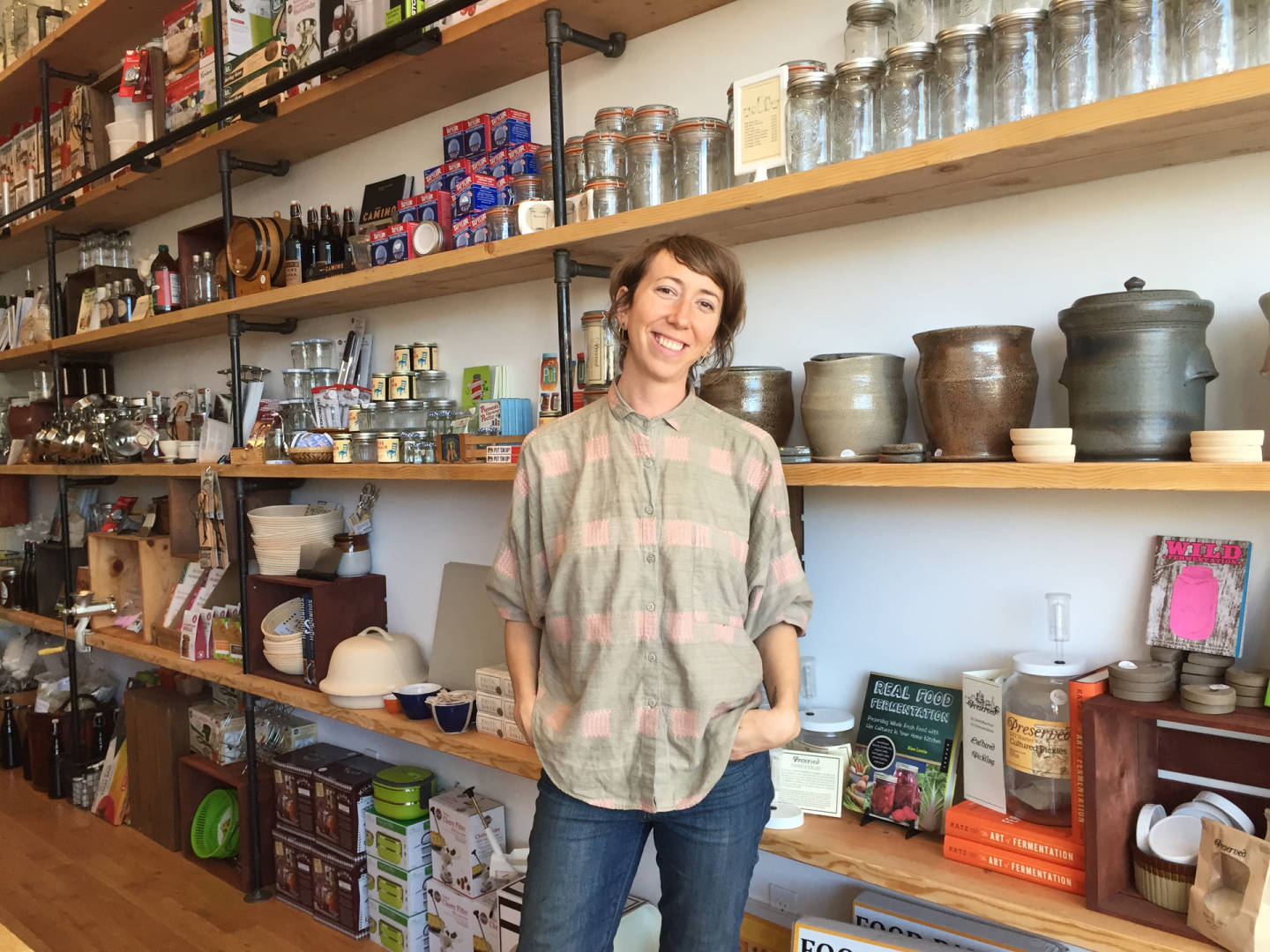
"caption": "Elizabeth Vecchiarelli has just moved to Temescal with a larger version of her popular store, Preserved.",
"description": null,
"title": "IMG_1905-1920",
"credit": "Alix Wall",
"status": "inherit",
"isLoading": false,
"fetchFailed": false
},
"bayareabites_107892": {
"type": "attachments",
"id": "bayareabites_107892",
"meta": {
"index": "attachments_1716263798",
"site": "bayareabites",
"id": "107892",
"found": true
},
"parent": 107891,
"imgSizes": {
"twentyfourteen-full-width": {
"file": "https://ww2.kqed.org/app/uploads/sites/24/2016/03/rickbayless_enl-38ac1f56c8d1b2e64fd112505e3195b67aadc914-1038x576.jpg",
"width": 1038,
"mimeType": "image/jpeg",
"height": 576
},
"thumbnail": {
"file": "https://ww2.kqed.org/app/uploads/sites/24/2016/03/rickbayless_enl-38ac1f56c8d1b2e64fd112505e3195b67aadc914-400x266.jpg",
"width": 400,
"mimeType": "image/jpeg",
"height": 266
},
"fd-sm": {
"file": "https://ww2.kqed.org/app/uploads/sites/24/2016/03/rickbayless_enl-38ac1f56c8d1b2e64fd112505e3195b67aadc914-960x639.jpg",
"width": 960,
"mimeType": "image/jpeg",
"height": 639
},
"post-thumbnail": {
"file": "https://ww2.kqed.org/app/uploads/sites/24/2016/03/rickbayless_enl-38ac1f56c8d1b2e64fd112505e3195b67aadc914-672x372.jpg",
"width": 672,
"mimeType": "image/jpeg",
"height": 372
},
"kqedFullSize": {
"file": "https://ww2.kqed.org/app/uploads/sites/24/2016/03/rickbayless_enl-38ac1f56c8d1b2e64fd112505e3195b67aadc914.jpg",
"width": 2000,
"height": 1332
},
"large": {
"file": "https://ww2.kqed.org/app/uploads/sites/24/2016/03/rickbayless_enl-38ac1f56c8d1b2e64fd112505e3195b67aadc914-1440x959.jpg",
"width": 1440,
"mimeType": "image/jpeg",
"height": 959
},
"guest-author-96": {
"file": "https://ww2.kqed.org/app/uploads/sites/24/2016/03/rickbayless_enl-38ac1f56c8d1b2e64fd112505e3195b67aadc914-96x96.jpg",
"width": 96,
"mimeType": "image/jpeg",
"height": 96
},
"medium": {
"file": "https://ww2.kqed.org/app/uploads/sites/24/2016/03/rickbayless_enl-38ac1f56c8d1b2e64fd112505e3195b67aadc914-800x533.jpg",
"width": 800,
"mimeType": "image/jpeg",
"height": 533
},
"guest-author-64": {
"file": "https://ww2.kqed.org/app/uploads/sites/24/2016/03/rickbayless_enl-38ac1f56c8d1b2e64fd112505e3195b67aadc914-64x64.jpg",
"width": 64,
"mimeType": "image/jpeg",
"height": 64
},
"guest-author-32": {
"file": "https://ww2.kqed.org/app/uploads/sites/24/2016/03/rickbayless_enl-38ac1f56c8d1b2e64fd112505e3195b67aadc914-32x32.jpg",
"width": 32,
"mimeType": "image/jpeg",
"height": 32
},
"cat_post_thumb_sizecategory-posts-2": {
"file": "https://ww2.kqed.org/app/uploads/sites/24/2016/03/rickbayless_enl-38ac1f56c8d1b2e64fd112505e3195b67aadc914-150x150.jpg",
"width": 150,
"mimeType": "image/jpeg",
"height": 150
},
"fd-lrg": {
"file": "https://ww2.kqed.org/app/uploads/sites/24/2016/03/rickbayless_enl-38ac1f56c8d1b2e64fd112505e3195b67aadc914-1920x1279.jpg",
"width": 1920,
"mimeType": "image/jpeg",
"height": 1279
},
"fd-med": {
"file": "https://ww2.kqed.org/app/uploads/sites/24/2016/03/rickbayless_enl-38ac1f56c8d1b2e64fd112505e3195b67aadc914-1180x786.jpg",
"width": 1180,
"mimeType": "image/jpeg",
"height": 786
},
"detail": {
"file": "https://ww2.kqed.org/app/uploads/sites/24/2016/03/rickbayless_enl-38ac1f56c8d1b2e64fd112505e3195b67aadc914-75x75.jpg",
"width": 75,
"mimeType": "image/jpeg",
"height": 75
},
"medium_large": {
"file": "https://ww2.kqed.org/app/uploads/sites/24/2016/03/rickbayless_enl-38ac1f56c8d1b2e64fd112505e3195b67aadc914-768x511.jpg",
"width": 768,
"mimeType": "image/jpeg",
"height": 511
},
"guest-author-128": {
"file": "https://ww2.kqed.org/app/uploads/sites/24/2016/03/rickbayless_enl-38ac1f56c8d1b2e64fd112505e3195b67aadc914-128x128.jpg",
"width": 128,
"mimeType": "image/jpeg",
"height": 128
}
},
"publishDate": 1458663274,
"modified": 1458663403,
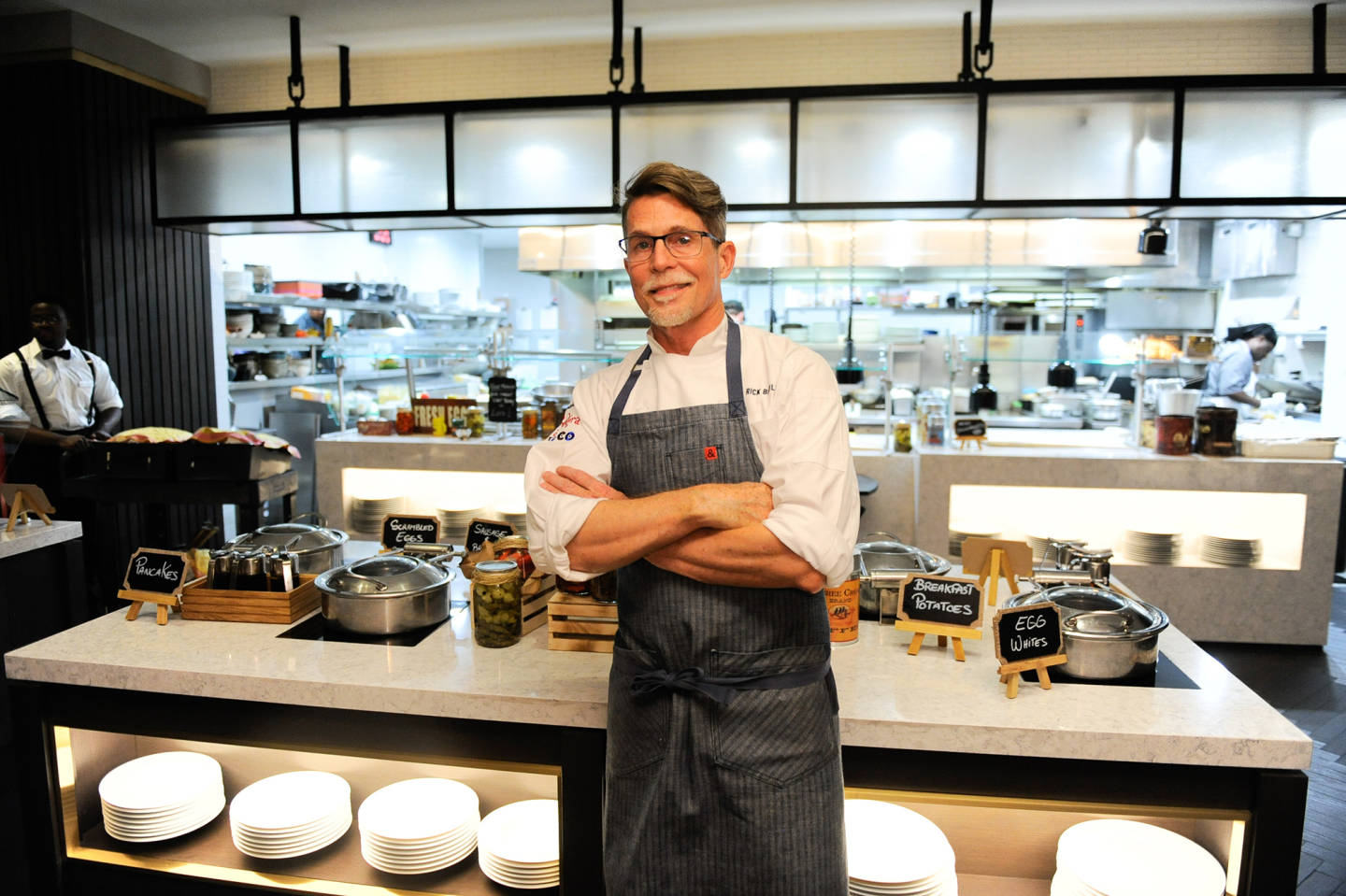
"caption": "Rick Bayless is a master of Mexican cuisine. He's also a white guy from Oklahoma. Over the years, that has made him the target of criticism. Who gets to be the ambassador of a cuisine?",
"description": "Rick Bayless is a master of Mexican cuisine. He's also a white guy from Oklahoma. Over the years, that has made him the target of criticism. Who gets to be the ambassador of a cuisine?",
"title": "Rick Bayless is a master of Mexican cuisine. He's also a white guy from Oklahoma. Over the years, that has made him the target of criticism. Who gets to be the ambassador of a cuisine?",
"credit": "Sergi Alexander/Getty Images ",
"status": "inherit",
"isLoading": false,
"fetchFailed": false
}
},
"audioPlayerReducer": {
"postId": "stream_live",
"isPaused": true,
"isPlaying": false,
"pfsActive": false,
"pledgeModalIsOpen": true,
"playerDrawerIsOpen": false,
"liveAudioPlayStartedAt": 0,
"liveAudioPlayContext": ""
},
"authorsReducer": {
"byline_bayareabites_110014": {
"type": "authors",
"id": "byline_bayareabites_110014",
"meta": {
"override": true
},
"slug": "byline_bayareabites_110014",
"name": "Jeremy Cherfas, \u003ca href=\"https://ww2.kqed.org/bayareabites/author/nprfood/\">NPR Food\u003c/a>",
"isLoading": false
},
"byline_bayareabites_109984": {
"type": "authors",
"id": "byline_bayareabites_109984",
"meta": {
"override": true
},
"slug": "byline_bayareabites_109984",
"name": " \u003ca href=\"http://civileats.com/author/kwong/\">Kristine Wong\u003c/a>, \u003ca href=\"https://ww2.kqed.org/bayareabites/author/civileat/\">Civil Eats\u003c/a>",
"isLoading": false
},
"byline_bayareabites_109845": {
"type": "authors",
"id": "byline_bayareabites_109845",
"meta": {
"override": true
},
"slug": "byline_bayareabites_109845",
"name": "Dan Charles, \u003ca href=\"https://ww2.kqed.org/bayareabites/author/nprfood/\">NPR Food\u003c/a>",
"isLoading": false
},
"byline_bayareabites_109789": {
"type": "authors",
"id": "byline_bayareabites_109789",
"meta": {
"override": true
},
"slug": "byline_bayareabites_109789",
"name": "\u003ca href=\"http://civileats.com/author/dreiss/\">Dawn Reiss\u003c/a>, \u003ca href=\"https://ww2.kqed.org/bayareabites/author/civileat/\">Civil Eats\u003c/a>",
"isLoading": false
},
"byline_bayareabites_109550": {
"type": "authors",
"id": "byline_bayareabites_109550",
"meta": {
"override": true
},
"slug": "byline_bayareabites_109550",
"name": "Dan Charles, NPR Food",
"isLoading": false
},
"byline_bayareabites_109532": {
"type": "authors",
"id": "byline_bayareabites_109532",
"meta": {
"override": true
},
"slug": "byline_bayareabites_109532",
"name": "Natalie Bettendorf, \u003ca href=\"https://youthradio.org/\">Youth Radio\u003c/a> at \u003ca href=\"https://ww2.kqed.org/bayareabites/author/nprfood/\">NPR Food\u003c/a>",
"isLoading": false
},
"byline_bayareabites_109414": {
"type": "authors",
"id": "byline_bayareabites_109414",
"meta": {
"override": true
},
"slug": "byline_bayareabites_109414",
"name": "Dan Charles, \u003ca href=\"https://ww2.kqed.org/bayareabites/author/nprfood/\">NPR Food\u003c/a>",
"isLoading": false
},
"byline_bayareabites_108599": {
"type": "authors",
"id": "byline_bayareabites_108599",
"meta": {
"override": true
},
"slug": "byline_bayareabites_108599",
"name": "Dan Charles, \u003ca href=\"https://ww2.kqed.org/bayareabites/author/nprfood/\">NPR Food\u003c/a>",
"isLoading": false
},
"byline_bayareabites_108086": {
"type": "authors",
"id": "byline_bayareabites_108086",
"meta": {
"override": true
},
"slug": "byline_bayareabites_108086",
"name": "Allison Aubrey, \u003ca href=\"https://ww2.kqed.org/bayareabites/author/nprfood/\">NPR Food\u003c/a>",
"isLoading": false
},
"byline_bayareabites_107891": {
"type": "authors",
"id": "byline_bayareabites_107891",
"meta": {
"override": true
},
"slug": "byline_bayareabites_107891",
"name": "\u003ca href=\"http://www.npr.org/people/177498105/kat-chow\">Kat Chow\u003c/a> and \u003ca href=\"http://www.npr.org/people/348777820/maria-godoy\">Maria Godoy\u003c/a>, \u003ca href=\"https://ww2.kqed.org/bayareabites/author/nprfood/\">NPR Food\u003c/a>",
"isLoading": false
},
"nprfood": {
"type": "authors",
"id": "5403",
"meta": {
"index": "authors_1716337520",
"id": "5403",
"found": true
},
"name": "NPR Food",
"firstName": "NPR Food",
"lastName": null,
"slug": "nprfood",
"email": "nprfood@kqed.org",
"display_author_email": false,
"staff_mastheads": [],
"title": null,
"bio": "Food and Health-related stories from NPR including NPR Radio; NPR's food blog, \"The Salt\"; NPR's Health News blog, \"Shots\"; NPR's Breaking News blog \"The Two-Way\"; NPR's global stories blog \"Goats and Soda,\" NPR's economy explainer \"Planet Money\"; food-related technology news from NPR's \"All Tech Considered\"; and food series \"Kitchen Window.\"",
"avatar": "https://secure.gravatar.com/avatar/c4b735bb26404fa18ce2447d32e64291?s=600&d=blank&r=g",
"twitter": "nprfood",
"facebook": null,
"instagram": null,
"linkedin": null,
"sites": [
{
"site": "bayareabites",
"roles": [
"contributor"
]
},
{
"site": "food",
"roles": [
"contributor"
]
}
],
"headData": {
"title": "NPR Food | KQED",
"description": null,
"ogImgSrc": "https://secure.gravatar.com/avatar/c4b735bb26404fa18ce2447d32e64291?s=600&d=blank&r=g",
"twImgSrc": "https://secure.gravatar.com/avatar/c4b735bb26404fa18ce2447d32e64291?s=600&d=blank&r=g"
},
"isLoading": false,
"link": "/author/nprfood"
},
"alexandrawall": {
"type": "authors",
"id": "5567",
"meta": {
"index": "authors_1716337520",
"id": "5567",
"found": true
},
"name": "Alix Wall",
"firstName": "Alix",
"lastName": "Wall",
"slug": "alexandrawall",
"email": "alixwall@sbcglobal.net",
"display_author_email": false,
"staff_mastheads": [],
"title": null,
"bio": "Alix Wall appeared in her hometown paper in Riverside, California as “Chef of the Week” when she was 15 years old, and in high school, she founded “The Bon Appetit Club.” After working as a journalist for many years, Alix became a certified natural foods chef from Bauman College in Berkeley. While she cooks part-time healthy, organic meals for busy families, she is also a contributing editor of j. weekly, the Bay Area’s Jewish newspaper, in which she has a monthly food column. Her food writing can also be found on Berkeleyside’s NOSH and in Edible East Bay. In addition to food, she loves writing about how couples met and fell in love, which she does for The San Francisco Chronicle’s Style section and j. weekly. In 2016, she founded The Illuminoshi: The Not-So-Secret Society of Bay Area Jewish Food Professionals. She is also writer/producer for a documentary-in-progress called \u003ca href=\"https://www.lonelychildmovie.com/\">The Lonely Child\u003c/a>. Follow Alix on Twitter \u003ca href=\"https://twitter.com/WallAlix\">@WallAlix\u003c/a>.",
"avatar": "https://secure.gravatar.com/avatar/421a27f26a185be932f8d567b499b1f1?s=600&d=blank&r=g",
"twitter": null,
"facebook": null,
"instagram": null,
"linkedin": null,
"sites": [
{
"site": "bayareabites",
"roles": [
"contributor"
]
},
{
"site": "food",
"roles": [
"contributor"
]
}
],
"headData": {
"title": "Alix Wall | KQED",
"description": null,
"ogImgSrc": "https://secure.gravatar.com/avatar/421a27f26a185be932f8d567b499b1f1?s=600&d=blank&r=g",
"twImgSrc": "https://secure.gravatar.com/avatar/421a27f26a185be932f8d567b499b1f1?s=600&d=blank&r=g"
},
"isLoading": false,
"link": "/author/alexandrawall"
}
},
"pagesReducer": {
"bayareabites_category_food-and-technology": {
"type": "terms",
"id": "bayareabites_4084",
"meta": {
"index": "terms_1716263798",
"site": "bayareabites",
"id": "4084",
"score": 14.405561
},
"featImg": null,
"name": "food trends and technology",
"description": null,
"taxonomy": "category",
"headData": {
"twImgId": null,
"twTitle": null,
"ogTitle": null,
"ogImgId": null,
"twDescription": null,
"description": null,
"title": "food trends and technology Archives | KQED Bay Area Bites",
"ogDescription": null
},
"ttid": 2573,
"slug": "food-and-technology",
"isLoading": false,
"title": "food trends and technology",
"pageMeta": {
"site": "bayareabites",
"WpPageTemplate": "page-topic-editorial",
"currentPage": 19
},
"blocks": [
{
"blockName": "kqed/post-list",
"attrs": {
"layout": "cardArticle2",
"query": "posts/bayareabites?category=food-and-technology",
"seeMore": false,
"paginated": true,
"page": 19
}
},
{
"blockName": "kqed/ad"
}
]
}
},
"pfsSessionReducer": {},
"postsReducer": {
"stream_live": {
"type": "live",
"id": "stream_live",
"audioUrl": "https://streams.kqed.org/kqedradio",
"title": "Live Stream",
"excerpt": "Live Stream information currently unavailable.",
"link": "/radio",
"featImg": "",
"label": {
"name": "KQED Live",
"link": "/"
}
},
"stream_kqedNewscast": {
"type": "posts",
"id": "stream_kqedNewscast",
"audioUrl": "https://www.kqed.org/.stream/anon/radio/RDnews/newscast.mp3?_=1",
"title": "KQED Newscast",
"featImg": "",
"label": {
"name": "88.5 FM",
"link": "/"
}
},
"bayareabites_110014": {
"type": "posts",
"id": "bayareabites_110014",
"meta": {
"index": "posts_1716263798",
"site": "bayareabites",
"id": "110014",
"score": null,
"sort": [
1465865777000
]
},
"parent": 0,
"labelTerm": {
"site": "bayareabites"
},
"blocks": [],
"publishDate": 1465865777,
"format": "aside",
"disqusTitle": "A Map Of Where Your Food Originated May Surprise You",
"title": "A Map Of Where Your Food Originated May Surprise You",
"headTitle": "Bay Area Bites | KQED Food",
"content": "\u003cfigure id=\"attachment_110016\" class=\"wp-caption aligncenter\" style=\"max-width: 1665px\">\u003ca href=\"http://ww2.kqed.org/bayareabites/wp-content/uploads/sites/24/2016/06/southasiaproduce_enl-1cd2d50de93b85cecf7961f0ea1398d68a3d1d45.jpg\">\u003cimg src=\"http://ww2.kqed.org/bayareabites/wp-content/uploads/sites/24/2016/06/southasiaproduce_enl-1cd2d50de93b85cecf7961f0ea1398d68a3d1d45.jpg\" alt=\"A new study reveals the full extent of globalization in our food supply. The researchers put together a series of interactives that visualize the results. Here's a screen grab, which shows crops that originate in South Asia.\" width=\"1665\" height=\"767\" class=\"size-full wp-image-110016\" srcset=\"https://ww2.kqed.org/app/uploads/sites/24/2016/06/southasiaproduce_enl-1cd2d50de93b85cecf7961f0ea1398d68a3d1d45.jpg 1665w, https://ww2.kqed.org/app/uploads/sites/24/2016/06/southasiaproduce_enl-1cd2d50de93b85cecf7961f0ea1398d68a3d1d45-400x184.jpg 400w, https://ww2.kqed.org/app/uploads/sites/24/2016/06/southasiaproduce_enl-1cd2d50de93b85cecf7961f0ea1398d68a3d1d45-800x369.jpg 800w, https://ww2.kqed.org/app/uploads/sites/24/2016/06/southasiaproduce_enl-1cd2d50de93b85cecf7961f0ea1398d68a3d1d45-768x354.jpg 768w, https://ww2.kqed.org/app/uploads/sites/24/2016/06/southasiaproduce_enl-1cd2d50de93b85cecf7961f0ea1398d68a3d1d45-1440x663.jpg 1440w, https://ww2.kqed.org/app/uploads/sites/24/2016/06/southasiaproduce_enl-1cd2d50de93b85cecf7961f0ea1398d68a3d1d45-1180x544.jpg 1180w, https://ww2.kqed.org/app/uploads/sites/24/2016/06/southasiaproduce_enl-1cd2d50de93b85cecf7961f0ea1398d68a3d1d45-960x442.jpg 960w\" sizes=\"(max-width: 1665px) 100vw, 1665px\">\u003c/a>\u003cfigcaption class=\"wp-caption-text\">A new study reveals the full extent of globalization in our food supply. The researchers put together a series of interactives that visualize the results. Here's a screen grab, which shows crops that originate in South Asia. \u003ccite>(Screenshot from CIAT)\u003c/cite>\u003c/figcaption>\u003c/figure>\n\u003cp>Some people may be dimly aware that Thailand's chilies and Italy's tomatoes — despite being central to their respective local cuisines – originated in South America. Now, for the first time, a new \u003ca href=\"http://rspb.royalsocietypublishing.org/content/283/1832/20160792\">study\u003c/a> reveals the full extent of globalization in our food supply. More than two-thirds of the crops that underpin national diets originally came from somewhere else — often far away. And that trend has accelerated over the past 50 years.\u003c/p>\n\u003cp>Colin Khoury, a plant scientist at the International Center for Tropical Agriculture (known by its Spanish acronym CIAT) and the U.S. Department of Agriculture, is the study's lead researcher. Khoury tells The Salt that \"the numbers affirm what we have long known — that our entire food system is completely global.\"\u003c/p>\n\u003cp>\u003ca href=\"http://www.npr.org/sections/thesalt/2014/03/03/285335070/in-the-new-globalized-diet-wheat-soy-and-palm-oil-rule\">Previous work\u003c/a> by the same authors had shown that national diets have adopted new crops and become more and more globally alike in recent decades. The new study shows that those crops are mainly foreign.\u003c/p>\n\u003cp>The idea that crop plants have centers of origin, where they were originally domesticated, goes back to the 1920s and the great Russian plant explorer Nikolai Vavilov. He reasoned that the region where a crop had been domesticated would be marked by the greatest diversity of that crop, because farmers there would have been selecting different types for the longest time. Diversity, along with the presence of that crop's wild relatives, marked the center of origin.\u003c/p>\n\u003cp>The Fertile Crescent, with its profusion of wild grasses related to wheat and barley, is the primary center of diversity for those cereals. Thai chilies come originally from Central America and tropical South America, while Italian tomatoes come from the Andes.\u003c/p>\n\u003cp>[ad fullwidth]\u003c/p>\n\u003cp>Khoury and his colleagues extended Vavilov's methods to look for the origins of 151 different crops across 23 geographical regions. They then examined national statistics for diet and food production in 177 countries, covering 98.5 percent of the world's population.\u003c/p>\n\u003cp>\"For each country, we could work out which crops contributed to calories, protein, fats and total weight of food — and whether they originated in that country's region or were foreign,\" Khoury says.\u003c/p>\n\u003cfigure id=\"attachment_110017\" class=\"wp-caption aligncenter\" style=\"max-width: 1280px\">\u003ca href=\"http://ww2.kqed.org/bayareabites/wp-content/uploads/sites/24/2016/06/f1.large_enl-126a11fa919aebf0d12f2bf7e7b0e80e2f5f6d61.jpg\">\u003cimg src=\"http://ww2.kqed.org/bayareabites/wp-content/uploads/sites/24/2016/06/f1.large_enl-126a11fa919aebf0d12f2bf7e7b0e80e2f5f6d61.jpg\" alt=\"The great Russian plant explorer Nikolai Vavilov reasoned that crops originated in the region of the world where they, and their wild relatives, show up in greatest diversity. This map plots the center of origin and primary region of diversity for 151 different crops. (Some crops, like wheat, have more than one primary region of diversity.)\" width=\"1280\" height=\"839\" class=\"size-full wp-image-110017\" srcset=\"https://ww2.kqed.org/app/uploads/sites/24/2016/06/f1.large_enl-126a11fa919aebf0d12f2bf7e7b0e80e2f5f6d61.jpg 1280w, https://ww2.kqed.org/app/uploads/sites/24/2016/06/f1.large_enl-126a11fa919aebf0d12f2bf7e7b0e80e2f5f6d61-400x262.jpg 400w, https://ww2.kqed.org/app/uploads/sites/24/2016/06/f1.large_enl-126a11fa919aebf0d12f2bf7e7b0e80e2f5f6d61-800x524.jpg 800w, https://ww2.kqed.org/app/uploads/sites/24/2016/06/f1.large_enl-126a11fa919aebf0d12f2bf7e7b0e80e2f5f6d61-768x503.jpg 768w, https://ww2.kqed.org/app/uploads/sites/24/2016/06/f1.large_enl-126a11fa919aebf0d12f2bf7e7b0e80e2f5f6d61-1180x773.jpg 1180w, https://ww2.kqed.org/app/uploads/sites/24/2016/06/f1.large_enl-126a11fa919aebf0d12f2bf7e7b0e80e2f5f6d61-960x629.jpg 960w\" sizes=\"(max-width: 1280px) 100vw, 1280px\">\u003c/a>\u003cfigcaption class=\"wp-caption-text\">The great Russian plant explorer Nikolai Vavilov reasoned that crops originated in the region of the world where they, and their wild relatives, show up in greatest diversity. This map plots the center of origin and primary region of diversity for 151 different crops. (Some crops, like wheat, have more than one primary region of diversity.) \u003ccite>(The Royal Society)\u003c/cite>\u003c/figcaption>\u003c/figure>\n\u003cp>Separately, the researchers looked at what farmers were growing in each country and whether those crops were foreign in origin.\u003c/p>\n\u003cp>Globally, foreign crops made up 69 percent of country food supplies and farm production.\u003c/p>\n\u003cp>\"Now we know just how much national diets and agricultural systems everywhere depend on crops that originated in other parts of the world,\" Khoury says.\u003c/p>\n\u003cp>In the United States, diet depends on crops from the Mediterranean and West Asia, like wheat, barley, chickpea, almonds and others. Meanwhile, the U.S. farm economy is centered on soybeans from East Asia and maize from Mexico and Central America, as well as wheat and other crops from the Mediterranean. The U.S. is itself the origin of sunflowers, which countries from Argentina to China grow and consume.\u003c/p>\n\u003cp>Paul Gepts, a plant breeder and professor at the University of California, Davis, who was not involved in the study, called the findings very important.\u003c/p>\n\u003cp>\"Professionals are aware of global interdependence, but this is not something most people have thought about,\" he says.\u003c/p>\n\u003cp>CIAT researchers have produced \u003ca href=\"http://blog.ciat.cgiar.org/origin-of-crops/\">an interactive graphic\u003c/a> that allows you to explore the results — Gepts says this could really help people understand where their food comes from. \"It shows up on the screen very nicely,\" he says.\u003c/p>\n\u003cfigure id=\"attachment_110018\" class=\"wp-caption alignright\" style=\"max-width: 419px\">\u003ca href=\"http://ww2.kqed.org/bayareabites/wp-content/uploads/sites/24/2016/06/tropicalsouthamerica_enl-2eaa86a0b8df2277245644a5927e27a108fa4678.jpg\">\u003cimg src=\"http://ww2.kqed.org/bayareabites/wp-content/uploads/sites/24/2016/06/tropicalsouthamerica_enl-2eaa86a0b8df2277245644a5927e27a108fa4678.jpg\" alt=\"This screenshot of an interactive graphic shows that, on average, crops that originated in tropical South America contribute 821.6 calories daily to West African diets.\" width=\"419\" height=\"532\" class=\"size-full wp-image-110018\" srcset=\"https://ww2.kqed.org/app/uploads/sites/24/2016/06/tropicalsouthamerica_enl-2eaa86a0b8df2277245644a5927e27a108fa4678.jpg 419w, https://ww2.kqed.org/app/uploads/sites/24/2016/06/tropicalsouthamerica_enl-2eaa86a0b8df2277245644a5927e27a108fa4678-400x508.jpg 400w\" sizes=\"(max-width: 419px) 100vw, 419px\">\u003c/a>\u003cfigcaption class=\"wp-caption-text\">This screenshot of an interactive graphic shows that, on average, crops that originated in tropical South America contribute 821.6 calories daily to West African diets. \u003ccite>(Screenshot from CIAT)\u003c/cite>\u003c/figcaption>\u003c/figure>\n\u003cp>Regions far from centers of agricultural biodiversity — such as North America, northern Europe and Australia — are most dependent on foreign crops. By the same token, countries in regions of diversity that are still growing and eating their traditional staples — for example, South Asia and West Africa — were least dependent on foreign crops. But even countries like Bangladesh and Niger depend on foreign crops for one-fifth of the food they eat and grow. Tomatoes, chilies and onions (from West and Central Asia), for example, are important in both countries.\u003c/p>\n\u003cp>Furthermore, over the past 50 years, the world's dietary dependence on foreign crops has increased from around 63 percent to the current 69 percent. Khoury says this was \"a bit of a surprise.\"\u003c/p>\n\u003cp>\"Cultures adopt foreign crops very quickly after coming into contact with them,\" he says, pointing out that potatoes were being grown in Europe just 16 years after being discovered in the Andes. \"We've been connected globally for ages, and yet there's still change going on.\"\u003c/p>\n\u003cp>Crops grown for fats and oils have seen the greatest change: Brazil now grows soybeans from East Asia, and Malaysia and Indonesia grow oil palm from West Africa.\u003c/p>\n\u003cp>Global interdependence also extends to the future of crops — for example, to combat the threats of climate change and new pests and diseases. The genes needed to face those challenges are most likely to be found in the primary regions of diversity, but will be needed wherever those crops are grown.\u003c/p>\n\u003cp>That is a crucial point for Cary Fowler, former executive secretary of the Global Crop Diversity Trust and an author of the paper. He says the study presents scientifically rigorous evidence for interdependence within the global food system.\u003c/p>\n\u003cp>\"That means we need to start behaving as if we are interdependent,\" Fowler said in an interview.\u003c/p>\n\u003cp>The International Treaty on Plant Genetic Resources for Food and Agriculture is supposed to ensure that countries can get hold of the plant diversity they need to develop new varieties so they can withstand future challenges. But most countries, Fowler says, are not providing the \"facilitated access\" promised by the treaty.\u003c/p>\n\u003cp>The problem is usually political, as countries ignore the shared access offered by the seed treaty (which about 120 countries have adopted) in an effort to keep any potential benefits to themselves.\u003c/p>\n\u003cp>For example, during the International Year of Quinoa in 2013, researchers \u003ca href=\"http://journal.frontiersin.org/article/10.3389/fpls.2016.00850/full\">attempted to compare\u003c/a> as many different varieties of the Andean grain as they could, to see which might be best in different environments. Of more than 3,000 different known varieties, the researchers could obtain only 21, and none of those came directly from genebanks in the countries of origin.\u003c/p>\n\u003cp>Other researchers who conducted a \u003ca href=\"http://link.springer.com/article/10.1007/s10722-013-0029-6\">deliberate test\u003c/a> of the treaty\u003cstrong> \u003c/strong>genteelly concluded that, \"after nearly 10 years, 'facilitated access' is not straightforward.\"\u003c/p>\n\u003cp>Fowler says that this kind of attitude undermines the good intentions expressed in the treaty: \"It's time for the International Treaty to be observed and enforced.\"\u003c/p>\n\u003chr>\n\u003cp>\u003cem>\u003ca href=\"http://www.jeremycherfas.net/about/\">Jeremy Cherfas\u003c/a> is a biologist and science journalist based in Rome.\u003c/em> \u003c/p>\n\u003cp>[ad floatright]\u003c/p>\n\u003cp> \u003cem>Copyright 2016 \u003ca href=\"http://www.npr.org/\" target=\"_blank\">NPR\u003c/a>.\u003c/em> \u003c/p>\n\n",
"disqusIdentifier": "110014 http://ww2.kqed.org/bayareabites/?p=110014",
"disqusUrl": "https://ww2.kqed.org/bayareabites/2016/06/13/a-map-of-where-your-food-originated-may-surprise-you/",
"stats": {
"hasVideo": false,
"hasChartOrMap": false,
"hasAudio": false,
"hasPolis": false,
"wordCount": 1217,
"hasGoogleForm": false,
"hasGallery": false,
"hasHearkenModule": false,
"iframeSrcs": [],
"paragraphCount": 30
},
"modified": 1465865777,
"excerpt": "A new study reveals the full extent of globalization in our food supply. More than two-thirds of the crops that underpin national diets originally came from somewhere else — often far away.",
"headData": {
"twImgId": "",
"twTitle": "",
"ogTitle": "",
"ogImgId": "",
"twDescription": "",
"description": "A new study reveals the full extent of globalization in our food supply. More than two-thirds of the crops that underpin national diets originally came from somewhere else — often far away.",
"title": "A Map Of Where Your Food Originated May Surprise You | KQED",
"ogDescription": "",
"schema": {
"@context": "https://schema.org",
"@type": "Article",
"headline": "A Map Of Where Your Food Originated May Surprise You",
"datePublished": "2016-06-13T17:56:17-07:00",
"dateModified": "2016-06-13T17:56:17-07:00",
"image": "https://cdn.kqed.org/wp-content/uploads/2020/02/KQED-OG-Image@1x.png"
}
},
"guestAuthors": [],
"slug": "a-map-of-where-your-food-originated-may-surprise-you",
"status": "publish",
"nprApiLink": "http://api.npr.org/query?id=481586649&apiKey=MDAxOTAwOTE4MDEyMTkxMDAzNjczZDljZA004",
"nprByline": "Jeremy Cherfas, \u003ca href=\"https://ww2.kqed.org/bayareabites/author/nprfood/\">NPR Food\u003c/a>",
"nprStoryDate": "Mon, 13 Jun 2016 14:25:00 -0400",
"nprLastModifiedDate": "Mon, 13 Jun 2016 15:18:20 -0400",
"nprHtmlLink": "http://www.npr.org/sections/thesalt/2016/06/13/481586649/a-map-of-where-your-food-originated-may-surprise-you?ft=nprml&f=481586649",
"nprImageAgency": "The Royal Society",
"nprStoryId": "481586649",
"nprRetrievedStory": "1",
"nprPubDate": "Mon, 13 Jun 2016 15:18:00 -0400",
"path": "/bayareabites/110014/a-map-of-where-your-food-originated-may-surprise-you",
"audioTrackLength": null,
"parsedContent": [
{
"type": "contentString",
"content": "\u003cdiv class=\"post-body\">\u003cp>\u003cfigure id=\"attachment_110016\" class=\"wp-caption aligncenter\" style=\"max-width: 1665px\">\u003ca href=\"http://ww2.kqed.org/bayareabites/wp-content/uploads/sites/24/2016/06/southasiaproduce_enl-1cd2d50de93b85cecf7961f0ea1398d68a3d1d45.jpg\">\u003cimg src=\"http://ww2.kqed.org/bayareabites/wp-content/uploads/sites/24/2016/06/southasiaproduce_enl-1cd2d50de93b85cecf7961f0ea1398d68a3d1d45.jpg\" alt=\"A new study reveals the full extent of globalization in our food supply. The researchers put together a series of interactives that visualize the results. Here's a screen grab, which shows crops that originate in South Asia.\" width=\"1665\" height=\"767\" class=\"size-full wp-image-110016\" srcset=\"https://ww2.kqed.org/app/uploads/sites/24/2016/06/southasiaproduce_enl-1cd2d50de93b85cecf7961f0ea1398d68a3d1d45.jpg 1665w, https://ww2.kqed.org/app/uploads/sites/24/2016/06/southasiaproduce_enl-1cd2d50de93b85cecf7961f0ea1398d68a3d1d45-400x184.jpg 400w, https://ww2.kqed.org/app/uploads/sites/24/2016/06/southasiaproduce_enl-1cd2d50de93b85cecf7961f0ea1398d68a3d1d45-800x369.jpg 800w, https://ww2.kqed.org/app/uploads/sites/24/2016/06/southasiaproduce_enl-1cd2d50de93b85cecf7961f0ea1398d68a3d1d45-768x354.jpg 768w, https://ww2.kqed.org/app/uploads/sites/24/2016/06/southasiaproduce_enl-1cd2d50de93b85cecf7961f0ea1398d68a3d1d45-1440x663.jpg 1440w, https://ww2.kqed.org/app/uploads/sites/24/2016/06/southasiaproduce_enl-1cd2d50de93b85cecf7961f0ea1398d68a3d1d45-1180x544.jpg 1180w, https://ww2.kqed.org/app/uploads/sites/24/2016/06/southasiaproduce_enl-1cd2d50de93b85cecf7961f0ea1398d68a3d1d45-960x442.jpg 960w\" sizes=\"(max-width: 1665px) 100vw, 1665px\">\u003c/a>\u003cfigcaption class=\"wp-caption-text\">A new study reveals the full extent of globalization in our food supply. The researchers put together a series of interactives that visualize the results. Here's a screen grab, which shows crops that originate in South Asia. \u003ccite>(Screenshot from CIAT)\u003c/cite>\u003c/figcaption>\u003c/figure>\n\u003cp>Some people may be dimly aware that Thailand's chilies and Italy's tomatoes — despite being central to their respective local cuisines – originated in South America. Now, for the first time, a new \u003ca href=\"http://rspb.royalsocietypublishing.org/content/283/1832/20160792\">study\u003c/a> reveals the full extent of globalization in our food supply. More than two-thirds of the crops that underpin national diets originally came from somewhere else — often far away. And that trend has accelerated over the past 50 years.\u003c/p>\n\u003cp>Colin Khoury, a plant scientist at the International Center for Tropical Agriculture (known by its Spanish acronym CIAT) and the U.S. Department of Agriculture, is the study's lead researcher. Khoury tells The Salt that \"the numbers affirm what we have long known — that our entire food system is completely global.\"\u003c/p>\n\u003cp>\u003ca href=\"http://www.npr.org/sections/thesalt/2014/03/03/285335070/in-the-new-globalized-diet-wheat-soy-and-palm-oil-rule\">Previous work\u003c/a> by the same authors had shown that national diets have adopted new crops and become more and more globally alike in recent decades. The new study shows that those crops are mainly foreign.\u003c/p>\n\u003cp>The idea that crop plants have centers of origin, where they were originally domesticated, goes back to the 1920s and the great Russian plant explorer Nikolai Vavilov. He reasoned that the region where a crop had been domesticated would be marked by the greatest diversity of that crop, because farmers there would have been selecting different types for the longest time. Diversity, along with the presence of that crop's wild relatives, marked the center of origin.\u003c/p>\n\u003cp>The Fertile Crescent, with its profusion of wild grasses related to wheat and barley, is the primary center of diversity for those cereals. Thai chilies come originally from Central America and tropical South America, while Italian tomatoes come from the Andes.\u003c/p>\n\u003cp>\u003c/p>\u003c/div>",
"attributes": {
"named": {},
"numeric": []
}
},
{
"type": "component",
"content": "",
"name": "ad",
"attributes": {
"named": {
"label": "fullwidth"
},
"numeric": [
"fullwidth"
]
}
},
{
"type": "contentString",
"content": "\u003cdiv class=\"post-body\">\u003cp>\u003c/p>\n\u003cp>Khoury and his colleagues extended Vavilov's methods to look for the origins of 151 different crops across 23 geographical regions. They then examined national statistics for diet and food production in 177 countries, covering 98.5 percent of the world's population.\u003c/p>\n\u003cp>\"For each country, we could work out which crops contributed to calories, protein, fats and total weight of food — and whether they originated in that country's region or were foreign,\" Khoury says.\u003c/p>\n\u003cfigure id=\"attachment_110017\" class=\"wp-caption aligncenter\" style=\"max-width: 1280px\">\u003ca href=\"http://ww2.kqed.org/bayareabites/wp-content/uploads/sites/24/2016/06/f1.large_enl-126a11fa919aebf0d12f2bf7e7b0e80e2f5f6d61.jpg\">\u003cimg src=\"http://ww2.kqed.org/bayareabites/wp-content/uploads/sites/24/2016/06/f1.large_enl-126a11fa919aebf0d12f2bf7e7b0e80e2f5f6d61.jpg\" alt=\"The great Russian plant explorer Nikolai Vavilov reasoned that crops originated in the region of the world where they, and their wild relatives, show up in greatest diversity. This map plots the center of origin and primary region of diversity for 151 different crops. (Some crops, like wheat, have more than one primary region of diversity.)\" width=\"1280\" height=\"839\" class=\"size-full wp-image-110017\" srcset=\"https://ww2.kqed.org/app/uploads/sites/24/2016/06/f1.large_enl-126a11fa919aebf0d12f2bf7e7b0e80e2f5f6d61.jpg 1280w, https://ww2.kqed.org/app/uploads/sites/24/2016/06/f1.large_enl-126a11fa919aebf0d12f2bf7e7b0e80e2f5f6d61-400x262.jpg 400w, https://ww2.kqed.org/app/uploads/sites/24/2016/06/f1.large_enl-126a11fa919aebf0d12f2bf7e7b0e80e2f5f6d61-800x524.jpg 800w, https://ww2.kqed.org/app/uploads/sites/24/2016/06/f1.large_enl-126a11fa919aebf0d12f2bf7e7b0e80e2f5f6d61-768x503.jpg 768w, https://ww2.kqed.org/app/uploads/sites/24/2016/06/f1.large_enl-126a11fa919aebf0d12f2bf7e7b0e80e2f5f6d61-1180x773.jpg 1180w, https://ww2.kqed.org/app/uploads/sites/24/2016/06/f1.large_enl-126a11fa919aebf0d12f2bf7e7b0e80e2f5f6d61-960x629.jpg 960w\" sizes=\"(max-width: 1280px) 100vw, 1280px\">\u003c/a>\u003cfigcaption class=\"wp-caption-text\">The great Russian plant explorer Nikolai Vavilov reasoned that crops originated in the region of the world where they, and their wild relatives, show up in greatest diversity. This map plots the center of origin and primary region of diversity for 151 different crops. (Some crops, like wheat, have more than one primary region of diversity.) \u003ccite>(The Royal Society)\u003c/cite>\u003c/figcaption>\u003c/figure>\n\u003cp>Separately, the researchers looked at what farmers were growing in each country and whether those crops were foreign in origin.\u003c/p>\n\u003cp>Globally, foreign crops made up 69 percent of country food supplies and farm production.\u003c/p>\n\u003cp>\"Now we know just how much national diets and agricultural systems everywhere depend on crops that originated in other parts of the world,\" Khoury says.\u003c/p>\n\u003cp>In the United States, diet depends on crops from the Mediterranean and West Asia, like wheat, barley, chickpea, almonds and others. Meanwhile, the U.S. farm economy is centered on soybeans from East Asia and maize from Mexico and Central America, as well as wheat and other crops from the Mediterranean. The U.S. is itself the origin of sunflowers, which countries from Argentina to China grow and consume.\u003c/p>\n\u003cp>Paul Gepts, a plant breeder and professor at the University of California, Davis, who was not involved in the study, called the findings very important.\u003c/p>\n\u003cp>\"Professionals are aware of global interdependence, but this is not something most people have thought about,\" he says.\u003c/p>\n\u003cp>CIAT researchers have produced \u003ca href=\"http://blog.ciat.cgiar.org/origin-of-crops/\">an interactive graphic\u003c/a> that allows you to explore the results — Gepts says this could really help people understand where their food comes from. \"It shows up on the screen very nicely,\" he says.\u003c/p>\n\u003cfigure id=\"attachment_110018\" class=\"wp-caption alignright\" style=\"max-width: 419px\">\u003ca href=\"http://ww2.kqed.org/bayareabites/wp-content/uploads/sites/24/2016/06/tropicalsouthamerica_enl-2eaa86a0b8df2277245644a5927e27a108fa4678.jpg\">\u003cimg src=\"http://ww2.kqed.org/bayareabites/wp-content/uploads/sites/24/2016/06/tropicalsouthamerica_enl-2eaa86a0b8df2277245644a5927e27a108fa4678.jpg\" alt=\"This screenshot of an interactive graphic shows that, on average, crops that originated in tropical South America contribute 821.6 calories daily to West African diets.\" width=\"419\" height=\"532\" class=\"size-full wp-image-110018\" srcset=\"https://ww2.kqed.org/app/uploads/sites/24/2016/06/tropicalsouthamerica_enl-2eaa86a0b8df2277245644a5927e27a108fa4678.jpg 419w, https://ww2.kqed.org/app/uploads/sites/24/2016/06/tropicalsouthamerica_enl-2eaa86a0b8df2277245644a5927e27a108fa4678-400x508.jpg 400w\" sizes=\"(max-width: 419px) 100vw, 419px\">\u003c/a>\u003cfigcaption class=\"wp-caption-text\">This screenshot of an interactive graphic shows that, on average, crops that originated in tropical South America contribute 821.6 calories daily to West African diets. \u003ccite>(Screenshot from CIAT)\u003c/cite>\u003c/figcaption>\u003c/figure>\n\u003cp>Regions far from centers of agricultural biodiversity — such as North America, northern Europe and Australia — are most dependent on foreign crops. By the same token, countries in regions of diversity that are still growing and eating their traditional staples — for example, South Asia and West Africa — were least dependent on foreign crops. But even countries like Bangladesh and Niger depend on foreign crops for one-fifth of the food they eat and grow. Tomatoes, chilies and onions (from West and Central Asia), for example, are important in both countries.\u003c/p>\n\u003cp>Furthermore, over the past 50 years, the world's dietary dependence on foreign crops has increased from around 63 percent to the current 69 percent. Khoury says this was \"a bit of a surprise.\"\u003c/p>\n\u003cp>\"Cultures adopt foreign crops very quickly after coming into contact with them,\" he says, pointing out that potatoes were being grown in Europe just 16 years after being discovered in the Andes. \"We've been connected globally for ages, and yet there's still change going on.\"\u003c/p>\n\u003cp>Crops grown for fats and oils have seen the greatest change: Brazil now grows soybeans from East Asia, and Malaysia and Indonesia grow oil palm from West Africa.\u003c/p>\n\u003cp>Global interdependence also extends to the future of crops — for example, to combat the threats of climate change and new pests and diseases. The genes needed to face those challenges are most likely to be found in the primary regions of diversity, but will be needed wherever those crops are grown.\u003c/p>\n\u003cp>That is a crucial point for Cary Fowler, former executive secretary of the Global Crop Diversity Trust and an author of the paper. He says the study presents scientifically rigorous evidence for interdependence within the global food system.\u003c/p>\n\u003cp>\"That means we need to start behaving as if we are interdependent,\" Fowler said in an interview.\u003c/p>\n\u003cp>The International Treaty on Plant Genetic Resources for Food and Agriculture is supposed to ensure that countries can get hold of the plant diversity they need to develop new varieties so they can withstand future challenges. But most countries, Fowler says, are not providing the \"facilitated access\" promised by the treaty.\u003c/p>\n\u003cp>The problem is usually political, as countries ignore the shared access offered by the seed treaty (which about 120 countries have adopted) in an effort to keep any potential benefits to themselves.\u003c/p>\n\u003cp>For example, during the International Year of Quinoa in 2013, researchers \u003ca href=\"http://journal.frontiersin.org/article/10.3389/fpls.2016.00850/full\">attempted to compare\u003c/a> as many different varieties of the Andean grain as they could, to see which might be best in different environments. Of more than 3,000 different known varieties, the researchers could obtain only 21, and none of those came directly from genebanks in the countries of origin.\u003c/p>\n\u003cp>Other researchers who conducted a \u003ca href=\"http://link.springer.com/article/10.1007/s10722-013-0029-6\">deliberate test\u003c/a> of the treaty\u003cstrong> \u003c/strong>genteelly concluded that, \"after nearly 10 years, 'facilitated access' is not straightforward.\"\u003c/p>\n\u003cp>Fowler says that this kind of attitude undermines the good intentions expressed in the treaty: \"It's time for the International Treaty to be observed and enforced.\"\u003c/p>\n\u003chr>\n\u003cp>\u003cem>\u003ca href=\"http://www.jeremycherfas.net/about/\">Jeremy Cherfas\u003c/a> is a biologist and science journalist based in Rome.\u003c/em> \u003c/p>\n\u003cp>\u003c/p>\u003c/div>",
"attributes": {
"named": {},
"numeric": []
}
},
{
"type": "component",
"content": "",
"name": "ad",
"attributes": {
"named": {
"label": "floatright"
},
"numeric": [
"floatright"
]
}
},
{
"type": "contentString",
"content": "\u003cdiv class=\"post-body\">\u003cp>\u003c/p>\n\u003cp> \u003cem>Copyright 2016 \u003ca href=\"http://www.npr.org/\" target=\"_blank\">NPR\u003c/a>.\u003c/em> \u003c/p>\n\n\u003c/div>\u003c/p>",
"attributes": {
"named": {},
"numeric": []
}
}
],
"link": "/bayareabites/110014/a-map-of-where-your-food-originated-may-surprise-you",
"authors": [
"byline_bayareabites_110014"
],
"categories": [
"bayareabites_2090",
"bayareabites_4084",
"bayareabites_358"
],
"tags": [
"bayareabites_13175",
"bayareabites_12882"
],
"featImg": "bayareabites_110015",
"label": "bayareabites"
},
"bayareabites_109984": {
"type": "posts",
"id": "bayareabites_109984",
"meta": {
"index": "posts_1716263798",
"site": "bayareabites",
"id": "109984",
"score": null,
"sort": [
1465511068000
]
},
"parent": 0,
"labelTerm": {
"site": "bayareabites"
},
"blocks": [],
"publishDate": 1465511068,
"format": "standard",
"disqusTitle": "A Local Grain Economy Comes to Life in California",
"title": "A Local Grain Economy Comes to Life in California",
"headTitle": "Bay Area Bites | KQED Food",
"content": "\u003cp>When it comes to buying a local loaf of bread, most food conscious consumers find that supporting a small neighborhood bakery fits the criteria just fine.\u003c/p>\n\u003cp>But for longtime restaurateur Bob Klein, the owner of \u003ca href=\"http://www.oliveto.com/\">Oliveto\u003c/a> in Oakland, California, that wasn’t enough. Klein, whose restaurant draws from Northern California’s bounty of vegetables, fish, and meat for its Italian-inspired meals, was troubled that he couldn’t find a local source of whole grain flour to make pasta.\u003c/p>\n\u003cp>“There’s no fully formed local grain economy in the U.S.,” Klein told Civil Eats after his company Community Grains hosted a \u003ca href=\"http://www.communitygrains.com/2016cgconference/\">conference\u003c/a> that brought together farmers, plant breeders, millers, bakers, and researchers. (The first conference \u003ca href=\"http://civileats.com/2014/03/19/what-if-everything-you-knew-about-grains-was-wrong/\">took place\u003c/a> in 2014). “It takes lots of land and capital to be economically viable.”\u003c/p>\n\u003cp>Now Klein and his organization are making strides towards putting in place the missing components needed to advance that vision. What’s behind his quest to get locally grown and milled whole grains into the mainstream? Better nutrition, greater consumer availability, and higher prices for grain farmers, Klein says.\u003c/p>\n\u003cp>Last fall, Community Grains completed a feasibility study (funded by the U.S. Department of Agriculture) showing that bakers were willing to pay over 25 percent more for their organic heirloom wheat flour (grown and milled in California) than the going market price for standard organic wheat.\u003c/p>\n\u003cp>[ad fullwidth]\u003c/p>\n\u003cp>Most of the so-called \u003ca href=\"http://www.grainstorm.com/pages/modern-wheat\">whole wheat bread\u003c/a> found in grocery stores and artisan bakeries today isn’t made with a very high percentage of whole grains, says Craig Ponsford, a champion artisan baker based in the Bay Area who transitioned to baking with 100 percent whole grains six years ago.\u003c/p>\n\u003cp>“That’s because the market is geared towards white flour,” he says. “It’s really difficult for the consumer to read ‘whole grain’ labels and understand [what they really mean].”\u003c/p>\n\u003cp>Because of the industrial food system’s appetite for white flour, grain processing facilities in America are almost exclusively comprised of machinery that strips down the whole grain to its starchy white endosperm as quickly as possible—which effectively gets rid of its more nutrient-dense bran and germ. (The air classifier mill that Community Grains uses at \u003ca href=\"http://www.baystatemilling.com/\">Bay State Milling\u003c/a> to grind its flour keeps the bran and germ intact).\u003c/p>\n\u003cp>This means that farmers have no incentive to grow higher quality wheat, such as organic or heirloom varieties, Klein says.\u003c/p>\n\u003cp>And what about the few who were doing just that? “The price [the wheat] commanded was 15 to 20 percent less than what the crop was worth,” Klein says. “It’s the disparity between the industrial model and what people value.”\u003c/p>\n\u003cp>Educating the public about the value of whole grains, Ponsford and Klein agree, is their biggest task in starting to shift the U.S. supply, infrastructure, and market demand needed for local, whole grain economies to thrive. There are a few exceptions, such as \u003ca href=\"http://camas.squarespace.com/\">Camas Country Mill\u003c/a> near Eugene, Oregon, which grows, mills, and sells whole grain; \u003ca href=\"http://www.farmergroundflour.com/\">Farmer Ground Flour\u003c/a>, located in upstate New York, a collaborative enterprise where the grain is grown, milled and \u003ca href=\"http://civileats.com/2014/06/25/bread-love-the-art-of-baking-with-local-flour/\">baked\u003c/a> for locals to enjoy; and \u003ca href=\"http://wildhivefarm.com/\">Wild Hive Farm Community Grain project\u003c/a>, which \u003ca href=\"http://civileats.com/2012/09/27/bring-back-local-grains-one-mans-quest-in-upstate-ny/\">operates a farm and mill\u003c/a> in New York’s Hudson River Valley.\u003c/p>\n\u003cp>So in 2009, Klein formed Community Grains with the intention to make that economy a reality. Since then the organization has been producing the grain for its “\u003ca href=\"http://www.communitygrains.com/the-fully-realized-dream-identity-preserved-wheat/\">identity preserved\u003c/a>” flours, polenta, and pastas. Each batch is branded with both the name of the grain (such as \u003ca href=\"http://shop.communitygrains.com/collections/all/products/identity-preserved-fettuccine-pasta\">Hard Amber Durum\u003c/a>) used entirely to make the pasta, as well as the farm that grew it, such as \u003ca href=\"http://fullbellyfarm.com/\">Full Belly Farm\u003c/a>). It’s available in Whole Foods Markets specialty grocers across the U.S.\u003c/p>\n\u003cp>Back then, when Community Grains first approached farmers \u003ca href=\"https://www.youtube.com/watch?v=bT0fG1Hi4p4\">Fritz Durst\u003c/a> (Tule Farms) and Full Belly Farm’s Paul Muller about growing whole grains for the identity preserved products, Klein says he had no problem getting them on board.\u003c/p>\n\u003cp>“[Farmers] know better than anyone how broken our commodity food system is,” Klein said. “So, I think we all started from the same place, and it had to be a completely alternative system to succeed.”\u003c/p>\n\u003cp>Other Northern California farms (including Healdsburg’s \u003ca href=\"https://fpfarm.com/\">Front Porch Farm\u003c/a> and \u003ca href=\"http://www.cokefarm.com/\">Coke Farms\u003c/a> in San Benito) grow for Community Grains as well.\u003c/p>\n\u003cp>But there was no large granary that could both clean and store their grain. And Klein soon discovered that this lack of infrastructure restricted the venture’s efficiency and profitability.\u003c/p>\n\u003cp>“Right now we have kernels of wheat that have been thoroughly cleaned and they’re sitting in a defunct winery facility,” he says. “But we’re concerned about bugs in the warm months, so are so moving it into a rented refrigerated storage facility. If we had our own [cleaning and storage facility], we wouldn’t have to pay for storing it, and moving it in and out.” But, he adds, that’s going to be an expensive addition.\u003c/p>\n\u003cp>To address this issue, Klein brought on Heather Crawford, a business-minded colleague with the background to determine just how Community Grains can build this infrastructure. The two have found that building a granary and getting it online in California could cost anywhere between $500,000 to $1 million. But with donations from a crowdfunding campaign, as well as help from several investors and banks, Klein says there’s a chance Community Grains could get the structure up and running by 2017.\u003c/p>\n\u003cp>And while Community Grains has yet to work out the exact details of the business model, Klein says that the goal is make sure it’s profitable and 50 percent owned by the grain farmers themselves.\u003c/p>\n\u003cp>In the meantime, Ponsford is continuing to experiment with these whole grains. For the last five years, he’s run \u003ca href=\"http://ponsfordsplace.com/Ponsfords_Place/Ponsfords_Place.html\">Ponsford’s Place\u003c/a>, his bakery in the North Bay, where he uses only uses 100 percent whole grains such as hard white whole wheat and spelt.\u003c/p>\n\u003cp>“I’m incredibly disciplined about not using white flour,” he said. “I’m trying to prove a point.”\u003c/p>\n\u003cp>On a recent Friday morning, his tiny (800 square foot) bakery was filled with customers buying bread and choosing from a display case full of fruit turnovers, cinnamon morning buns, cookies, and quiche.\u003c/p>\n\u003cp>But what the customers don’t see is the experimental side of the bakery, when Ponsford works during the wee hours of the night with whole grain flour dropped off by several of the same farmers that work with Community Grains as well as a few others. He tests them by making different types of dough and experiments with a variety of final products. “The whole point of this place is to develop skill sets around whole grains and find the best use of each grain,” he said. “Wheat is complicated.”\u003c/p>\n\u003cp>That’s in part because the type and quality of the soil impacts the quality of the wheat, which in turn can determine if it will be better suited to, say, a loaf of bread or a tortilla.\u003c/p>\n\u003cp>Ponsford says that he has also been putting pressure on other bakers to start using whole grains. And he thinks he’s having an impact.\u003c/p>\n\u003cp>“I see a slow shift happening,” he said. “Five years ago my peers weren’t interested. But now I’m seeing more and more bakers using whole grains all over the world.”\u003c/p>\n\u003cp>[ad floatright]\u003c/p>\n\u003cp>\u003cstrong>ABOUT THE WRITER\u003c/strong>\u003cbr>\nKristine Wong is a multimedia journalist who reports on energy, the environment, green tech, sustainable business, and food. Her work has been featured in a number of publications, including\u003cem>The Guardian\u003c/em> US/UK, The Huffington Post, \u003cem>Modern Farmer\u003c/em>, TakePart and \u003cem>Sierra Magazine\u003c/em>. Before becoming a journalist, she worked in community-based environmental and public health organizations for more than 10 years.\u003c/p>\n\n",
"disqusIdentifier": "109984 http://ww2.kqed.org/bayareabites/?p=109984",
"disqusUrl": "https://ww2.kqed.org/bayareabites/2016/06/09/a-local-grain-economy-comes-to-life-in-california/",
"stats": {
"hasVideo": false,
"hasChartOrMap": false,
"hasAudio": false,
"hasPolis": false,
"wordCount": 1363,
"hasGoogleForm": false,
"hasGallery": false,
"hasHearkenModule": false,
"iframeSrcs": [],
"paragraphCount": 29
},
"modified": 1465511808,
"excerpt": "Community Grains' effort to bring together farmers, plant breeders, millers, and bakers may finally be paying off.",
"headData": {
"twImgId": "",
"twTitle": "",
"ogTitle": "",
"ogImgId": "",
"twDescription": "",
"description": "Community Grains' effort to bring together farmers, plant breeders, millers, and bakers may finally be paying off.",
"title": "A Local Grain Economy Comes to Life in California | KQED",
"ogDescription": "",
"schema": {
"@context": "https://schema.org",
"@type": "Article",
"headline": "A Local Grain Economy Comes to Life in California",
"datePublished": "2016-06-09T15:24:28-07:00",
"dateModified": "2016-06-09T15:36:48-07:00",
"image": "https://cdn.kqed.org/wp-content/uploads/2020/02/KQED-OG-Image@1x.png"
}
},
"guestAuthors": [],
"slug": "a-local-grain-economy-comes-to-life-in-california",
"status": "publish",
"nprByline": " \u003ca href=\"http://civileats.com/author/kwong/\">Kristine Wong\u003c/a>, \u003ca href=\"https://ww2.kqed.org/bayareabites/author/civileat/\">Civil Eats\u003c/a>",
"path": "/bayareabites/109984/a-local-grain-economy-comes-to-life-in-california",
"audioTrackLength": null,
"parsedContent": [
{
"type": "contentString",
"content": "\u003cdiv class=\"post-body\">\u003cp>\u003cp>When it comes to buying a local loaf of bread, most food conscious consumers find that supporting a small neighborhood bakery fits the criteria just fine.\u003c/p>\n\u003cp>But for longtime restaurateur Bob Klein, the owner of \u003ca href=\"http://www.oliveto.com/\">Oliveto\u003c/a> in Oakland, California, that wasn’t enough. Klein, whose restaurant draws from Northern California’s bounty of vegetables, fish, and meat for its Italian-inspired meals, was troubled that he couldn’t find a local source of whole grain flour to make pasta.\u003c/p>\n\u003cp>“There’s no fully formed local grain economy in the U.S.,” Klein told Civil Eats after his company Community Grains hosted a \u003ca href=\"http://www.communitygrains.com/2016cgconference/\">conference\u003c/a> that brought together farmers, plant breeders, millers, bakers, and researchers. (The first conference \u003ca href=\"http://civileats.com/2014/03/19/what-if-everything-you-knew-about-grains-was-wrong/\">took place\u003c/a> in 2014). “It takes lots of land and capital to be economically viable.”\u003c/p>\n\u003cp>Now Klein and his organization are making strides towards putting in place the missing components needed to advance that vision. What’s behind his quest to get locally grown and milled whole grains into the mainstream? Better nutrition, greater consumer availability, and higher prices for grain farmers, Klein says.\u003c/p>\n\u003cp>Last fall, Community Grains completed a feasibility study (funded by the U.S. Department of Agriculture) showing that bakers were willing to pay over 25 percent more for their organic heirloom wheat flour (grown and milled in California) than the going market price for standard organic wheat.\u003c/p>\n\u003cp>\u003c/p>\u003c/div>",
"attributes": {
"named": {},
"numeric": []
}
},
{
"type": "component",
"content": "",
"name": "ad",
"attributes": {
"named": {
"label": "fullwidth"
},
"numeric": [
"fullwidth"
]
}
},
{
"type": "contentString",
"content": "\u003cdiv class=\"post-body\">\u003cp>\u003c/p>\n\u003cp>Most of the so-called \u003ca href=\"http://www.grainstorm.com/pages/modern-wheat\">whole wheat bread\u003c/a> found in grocery stores and artisan bakeries today isn’t made with a very high percentage of whole grains, says Craig Ponsford, a champion artisan baker based in the Bay Area who transitioned to baking with 100 percent whole grains six years ago.\u003c/p>\n\u003cp>“That’s because the market is geared towards white flour,” he says. “It’s really difficult for the consumer to read ‘whole grain’ labels and understand [what they really mean].”\u003c/p>\n\u003cp>Because of the industrial food system’s appetite for white flour, grain processing facilities in America are almost exclusively comprised of machinery that strips down the whole grain to its starchy white endosperm as quickly as possible—which effectively gets rid of its more nutrient-dense bran and germ. (The air classifier mill that Community Grains uses at \u003ca href=\"http://www.baystatemilling.com/\">Bay State Milling\u003c/a> to grind its flour keeps the bran and germ intact).\u003c/p>\n\u003cp>This means that farmers have no incentive to grow higher quality wheat, such as organic or heirloom varieties, Klein says.\u003c/p>\n\u003cp>And what about the few who were doing just that? “The price [the wheat] commanded was 15 to 20 percent less than what the crop was worth,” Klein says. “It’s the disparity between the industrial model and what people value.”\u003c/p>\n\u003cp>Educating the public about the value of whole grains, Ponsford and Klein agree, is their biggest task in starting to shift the U.S. supply, infrastructure, and market demand needed for local, whole grain economies to thrive. There are a few exceptions, such as \u003ca href=\"http://camas.squarespace.com/\">Camas Country Mill\u003c/a> near Eugene, Oregon, which grows, mills, and sells whole grain; \u003ca href=\"http://www.farmergroundflour.com/\">Farmer Ground Flour\u003c/a>, located in upstate New York, a collaborative enterprise where the grain is grown, milled and \u003ca href=\"http://civileats.com/2014/06/25/bread-love-the-art-of-baking-with-local-flour/\">baked\u003c/a> for locals to enjoy; and \u003ca href=\"http://wildhivefarm.com/\">Wild Hive Farm Community Grain project\u003c/a>, which \u003ca href=\"http://civileats.com/2012/09/27/bring-back-local-grains-one-mans-quest-in-upstate-ny/\">operates a farm and mill\u003c/a> in New York’s Hudson River Valley.\u003c/p>\n\u003cp>So in 2009, Klein formed Community Grains with the intention to make that economy a reality. Since then the organization has been producing the grain for its “\u003ca href=\"http://www.communitygrains.com/the-fully-realized-dream-identity-preserved-wheat/\">identity preserved\u003c/a>” flours, polenta, and pastas. Each batch is branded with both the name of the grain (such as \u003ca href=\"http://shop.communitygrains.com/collections/all/products/identity-preserved-fettuccine-pasta\">Hard Amber Durum\u003c/a>) used entirely to make the pasta, as well as the farm that grew it, such as \u003ca href=\"http://fullbellyfarm.com/\">Full Belly Farm\u003c/a>). It’s available in Whole Foods Markets specialty grocers across the U.S.\u003c/p>\n\u003cp>Back then, when Community Grains first approached farmers \u003ca href=\"https://www.youtube.com/watch?v=bT0fG1Hi4p4\">Fritz Durst\u003c/a> (Tule Farms) and Full Belly Farm’s Paul Muller about growing whole grains for the identity preserved products, Klein says he had no problem getting them on board.\u003c/p>\n\u003cp>“[Farmers] know better than anyone how broken our commodity food system is,” Klein said. “So, I think we all started from the same place, and it had to be a completely alternative system to succeed.”\u003c/p>\n\u003cp>Other Northern California farms (including Healdsburg’s \u003ca href=\"https://fpfarm.com/\">Front Porch Farm\u003c/a> and \u003ca href=\"http://www.cokefarm.com/\">Coke Farms\u003c/a> in San Benito) grow for Community Grains as well.\u003c/p>\n\u003cp>But there was no large granary that could both clean and store their grain. And Klein soon discovered that this lack of infrastructure restricted the venture’s efficiency and profitability.\u003c/p>\n\u003cp>“Right now we have kernels of wheat that have been thoroughly cleaned and they’re sitting in a defunct winery facility,” he says. “But we’re concerned about bugs in the warm months, so are so moving it into a rented refrigerated storage facility. If we had our own [cleaning and storage facility], we wouldn’t have to pay for storing it, and moving it in and out.” But, he adds, that’s going to be an expensive addition.\u003c/p>\n\u003cp>To address this issue, Klein brought on Heather Crawford, a business-minded colleague with the background to determine just how Community Grains can build this infrastructure. The two have found that building a granary and getting it online in California could cost anywhere between $500,000 to $1 million. But with donations from a crowdfunding campaign, as well as help from several investors and banks, Klein says there’s a chance Community Grains could get the structure up and running by 2017.\u003c/p>\n\u003cp>And while Community Grains has yet to work out the exact details of the business model, Klein says that the goal is make sure it’s profitable and 50 percent owned by the grain farmers themselves.\u003c/p>\n\u003cp>In the meantime, Ponsford is continuing to experiment with these whole grains. For the last five years, he’s run \u003ca href=\"http://ponsfordsplace.com/Ponsfords_Place/Ponsfords_Place.html\">Ponsford’s Place\u003c/a>, his bakery in the North Bay, where he uses only uses 100 percent whole grains such as hard white whole wheat and spelt.\u003c/p>\n\u003cp>“I’m incredibly disciplined about not using white flour,” he said. “I’m trying to prove a point.”\u003c/p>\n\u003cp>On a recent Friday morning, his tiny (800 square foot) bakery was filled with customers buying bread and choosing from a display case full of fruit turnovers, cinnamon morning buns, cookies, and quiche.\u003c/p>\n\u003cp>But what the customers don’t see is the experimental side of the bakery, when Ponsford works during the wee hours of the night with whole grain flour dropped off by several of the same farmers that work with Community Grains as well as a few others. He tests them by making different types of dough and experiments with a variety of final products. “The whole point of this place is to develop skill sets around whole grains and find the best use of each grain,” he said. “Wheat is complicated.”\u003c/p>\n\u003cp>That’s in part because the type and quality of the soil impacts the quality of the wheat, which in turn can determine if it will be better suited to, say, a loaf of bread or a tortilla.\u003c/p>\n\u003cp>Ponsford says that he has also been putting pressure on other bakers to start using whole grains. And he thinks he’s having an impact.\u003c/p>\n\u003cp>“I see a slow shift happening,” he said. “Five years ago my peers weren’t interested. But now I’m seeing more and more bakers using whole grains all over the world.”\u003c/p>\n\u003cp>\u003c/p>\u003c/div>",
"attributes": {
"named": {},
"numeric": []
}
},
{
"type": "component",
"content": "",
"name": "ad",
"attributes": {
"named": {
"label": "floatright"
},
"numeric": [
"floatright"
]
}
},
{
"type": "contentString",
"content": "\u003cdiv class=\"post-body\">\u003cp>\u003c/p>\n\u003cp>\u003cstrong>ABOUT THE WRITER\u003c/strong>\u003cbr>\nKristine Wong is a multimedia journalist who reports on energy, the environment, green tech, sustainable business, and food. Her work has been featured in a number of publications, including\u003cem>The Guardian\u003c/em> US/UK, The Huffington Post, \u003cem>Modern Farmer\u003c/em>, TakePart and \u003cem>Sierra Magazine\u003c/em>. Before becoming a journalist, she worked in community-based environmental and public health organizations for more than 10 years.\u003c/p>\n\n\u003c/div>\u003c/p>",
"attributes": {
"named": {},
"numeric": []
}
}
],
"link": "/bayareabites/109984/a-local-grain-economy-comes-to-life-in-california",
"authors": [
"byline_bayareabites_109984"
],
"categories": [
"bayareabites_1516",
"bayareabites_109",
"bayareabites_4084"
],
"tags": [
"bayareabites_10060",
"bayareabites_12961",
"bayareabites_2238"
],
"featImg": "bayareabites_109987",
"label": "bayareabites"
},
"bayareabites_109845": {
"type": "posts",
"id": "bayareabites_109845",
"meta": {
"index": "posts_1716263798",
"site": "bayareabites",
"id": "109845",
"score": null,
"sort": [
1464985403000
]
},
"parent": 0,
"labelTerm": {
"site": "bayareabites"
},
"blocks": [],
"publishDate": 1464985403,
"format": "standard",
"disqusTitle": "The Search For Tastier Supermarket Tomatoes: A Tale In 3 Acts",
"title": "The Search For Tastier Supermarket Tomatoes: A Tale In 3 Acts",
"headTitle": "Bay Area Bites | KQED Food",
"content": "\u003cp>\u003cstrong>Listen to the Story on Morning Edition:\u003c/strong>\u003cbr>\nhttp://pd.npr.org/anon.npr-mp3/npr/me/2016/06/20160603_me_the_search_for_tastier_supermarket_tomatoes_a_tale_in_three_acts.mp3\u003c/p>\n\u003cp>One of my fondest childhood memories is of eating tomatoes. We picked them in the garden and ate them in sandwiches, sitting on a picnic table under the trees outside our house. That juicy, acidic taste is forever lodged in the pleasure centers of my brain.\u003c/p>\n\u003cp>For anyone with similar memories, supermarket tomatoes are bound to disappoint. Indeed, the classic supermarket tomato — hard, tasteless, sometimes mealy — has inspired countless bitter complaints.\u003c/p>\n\u003cp>Take a closer look at the tomato display in your local grocery store, though, and you'll notice some big changes.\u003c/p>\n\u003cp>Here's how. It's a three-act drama.\u003c/p>\n\u003ch3>Act 1. The Florida tomato\u003c/h3>\n\u003cfigure id=\"attachment_109852\" class=\"wp-caption aligncenter\" style=\"max-width: 800px\">\u003cimg src=\"http://ww2.kqed.org/bayareabites/wp-content/uploads/sites/24/2016/06/tomatoes-florida.jpg\" alt=\"Florida tomato\" width=\"800\" height=\"532\" class=\"size-full wp-image-109852\" srcset=\"https://ww2.kqed.org/app/uploads/sites/24/2016/06/tomatoes-florida.jpg 800w, https://ww2.kqed.org/app/uploads/sites/24/2016/06/tomatoes-florida-400x266.jpg 400w, https://ww2.kqed.org/app/uploads/sites/24/2016/06/tomatoes-florida-768x511.jpg 768w\" sizes=\"(max-width: 800px) 100vw, 800px\">\u003cfigcaption class=\"wp-caption-text\">Florida tomato \u003ccite>(Morgan McCloy/NPR)\u003c/cite>\u003c/figcaption>\u003c/figure>\n\u003cp>For many years, until about 25 years ago, this was mainly what you'd find in the store during wintertime. So let's give this tomato its due: It is there in front of you, in the heart of winter, hundreds of miles from the field where it grew. Also, it's pretty cheap.\u003c/p>\n\u003cp>[ad fullwidth]\u003c/p>\n\u003cp>To accomplish that feat, this tomato has to be tough. In the field, it has to deal with wind, rain, insects and plant diseases. After picking, it has to survive sorting, packing, trucking, and the supermarket shelf. Consumers like tomatoes that are big. And growers, to stay in business, need to ship as many of the fruit as possible.\u003c/p>\n\u003cp>So tomato breeders have delivered exactly what the market demanded: a big, tough, high-yielding tomato. Taste hasn't had the same priority.\u003c/p>\n\u003cp>In addition, to make sure these tomatoes get to the store in presentable shape, they are picked while they are still green. The fruit turn red on their way to the consumer, and some tomato experts insist that they get just as ripe as they would have on the vine, but others admit that these tomatoes never will approach the taste and flavor of a tomato that's picked ripe.\u003c/p>\n\u003ch3>Act 2. The Mexican tomato\u003c/h3>\n\u003cfigure id=\"attachment_109853\" class=\"wp-caption aligncenter\" style=\"max-width: 800px\">\u003cimg src=\"http://ww2.kqed.org/bayareabites/wp-content/uploads/sites/24/2016/06/tomatoes-mexican.jpg\" alt=\"Mexican tomatoes\" width=\"800\" height=\"532\" class=\"size-full wp-image-109853\" srcset=\"https://ww2.kqed.org/app/uploads/sites/24/2016/06/tomatoes-mexican.jpg 800w, https://ww2.kqed.org/app/uploads/sites/24/2016/06/tomatoes-mexican-400x266.jpg 400w, https://ww2.kqed.org/app/uploads/sites/24/2016/06/tomatoes-mexican-768x511.jpg 768w\" sizes=\"(max-width: 800px) 100vw, 800px\">\u003cfigcaption class=\"wp-caption-text\">Mexican tomatoes \u003ccite>(Morgan McCloy/NPR)\u003c/cite>\u003c/figcaption>\u003c/figure>\n\u003cp>Over the past two decades, Mexico has turned into a tomato powerhouse. And it's brought a new production style to supermarket tomatoes.\u003c/p>\n\u003cp>Most Mexican tomatoes now grow inside simple plastic greenhouses called \u003ca href=\"http://gain.fas.usda.gov/Recent%20GAIN%20Publications/Greenhouse%20and%20Shade%20House%20Production%20to%20Continue%20Increasing_Mexico_Mexico_4-22-2010.pdf\">shade houses\u003c/a> that cover vast fields. The plants grow in the soil, but they are protected from the rain, wind and many of the insects that afflict field-grown tomatoes.\u003c/p>\n\u003cp>It gives these tomatoes two advantages. First, they can stay on the vine just a bit longer, allowing more natural ripening. Second, in contrast to the open-field farmers of Florida, shade-house tomato producers grow \"indeterminate\" tomato varieties. These plants produce fruit continuously for a longer period of time. According to \u003ca href=\"http://www.unitedgenetics.com/research/HeiseyRobert.htm\">Robert Heisey\u003c/a>, a tomato breeder at United Genetics in Hollister, Calif., fruit from such plants typically have higher levels of the soluble solids that provide much of a tomato's flavor.\u003c/p>\n\u003cp>On the other hand, these tomatoes still have to be big and tough. The typical Mexican tomato may taste a bit better than its Florida cousin, but probably not by much.\u003c/p>\n\u003ch3>Act 3. Greenhouse tomatoes\u003c/h3>\n\u003cfigure id=\"attachment_109851\" class=\"wp-caption aligncenter\" style=\"max-width: 800px\">\u003cimg src=\"http://ww2.kqed.org/bayareabites/wp-content/uploads/sites/24/2016/06/tomatoes-canadian.jpg\" alt=\"Canadian tomatoes grown in greenhouses\" width=\"800\" height=\"532\" class=\"size-full wp-image-109851\" srcset=\"https://ww2.kqed.org/app/uploads/sites/24/2016/06/tomatoes-canadian.jpg 800w, https://ww2.kqed.org/app/uploads/sites/24/2016/06/tomatoes-canadian-400x266.jpg 400w, https://ww2.kqed.org/app/uploads/sites/24/2016/06/tomatoes-canadian-768x511.jpg 768w\" sizes=\"(max-width: 800px) 100vw, 800px\">\u003cfigcaption class=\"wp-caption-text\">Canadian tomatoes grown in greenhouses \u003ccite>(Morgan McCloy/NPR)\u003c/cite>\u003c/figcaption>\u003c/figure>\n\u003cp>Meet the most pampered tomatoes on Earth. They grow in huge climate-controlled structures, often in Canada, sometimes in Mexico and only occasionally in the United States. (The U.S. has been a laggard in the greenhouse business, although that's starting to change.)\u003c/p>\n\u003cp>Companies in the Netherlands pioneered this technology and have exported it to the rest of the world. In greenhouses, tomato plants don't grow in soil at all, but rather in crushed stone or coconut husks. Nutrients and water arrive via plastic tubes. Sometimes, extra carbon dioxide is added to the air in these houses, to promote faster plant growth.\u003c/p>\n\u003cp>I visited a tomato-growing greenhouse recently that's operated by \u003ca href=\"http://www.sunsetgrown.com/about-us/\">Mastronardi Produce Sunset Grown\u003c/a>, a major tomato grower and distributor based in Kingston, Ontario. Before I got close to the tomato plants, I first had to put plastic booties on my shoes, wear a special lab coat and wash my hands. It was all intended to keep me from tracking in plant diseases.\u003c/p>\n\u003cp>This ultra-protected style of tomato production has opened the door to an entirely new family of tomato varieties.\u003c/p>\n\u003cp>Tomatoes-on-the-vine made their appearance some 20 years ago. More recently, there's been a proliferation of small tomatoes that come packaged in plastic containers. Supermarket shelves are now filled with cherry tomatoes, grape tomatoes, and tomatoes the size of golf balls. Almost all of them come from high-tech greenhouses.\u003c/p>\n\u003cp>And because these tomatoes are protected while they are growing, and handled more gently while they're packed and shipped, it means that — in theory, at least — these tomatoes can offer better flavor. They can be picked when ripe, and bred for flavor rather than for toughness.\u003c/p>\n\u003cp>That's the opportunity that Paul Mastronardi glimpsed when he joined the family business in the 1990s.\u003c/p>\n\u003cp>\"I went over to Holland and talked to a couple of the major seed companies, and said, 'Listen, I want to see everything that's in your kitchen,' \" he says. \" 'Forget about size. Let's just see everything you got. Let's start doing taste tests.' And that's when we found a variety called Campari, which became the first branded tomato.\"\u003c/p>\n\u003cp>Mastronardi says they're constantly looking for new varieties with superior flavor. In the company's administrative offices, there's a lineup of candidate tomatoes on display. Employees can stop by, sample them and rate each one.\u003c/p>\n\u003cp>The seeds for such new varieties may be the most expensive seeds in the world. According to sources in the industry, greenhouse operators are paying about a dollar per seed for Campari and similar tomatoes. Since tomato seeds are tiny, that translates to about $150,000 per pound of seed. (In case you're wondering: No, you can't retrieve seeds from a Campari tomato and sell them for this price. Campari tomatoes are genetic hybrids, so their seeds won't produce true Campari offspring.)\u003c/p>\n\u003cp>Even greenhouse producers, though, have to navigate the tension between taste and economic efficiency. Heisey, the tomato breeder, recently picked up some tomatoes in the store and measured their levels of soluble solids, an indicator of flavor. \"The greenhouse tomatoes were terrible,\" he says. He suspects that greenhouse operators, too, are emphasizing quantity of production over quality.\u003c/p>\n\u003cp>Nor are greenhouse varieties like Campari the only attempts to deliver a better-tasting supermarket tomato. Researchers at the University of Florida have also come come up with \u003ca href=\"http://research.ufl.edu/publications/exploremagazine/summer-2012/tasty-tomatoes.html\">new varieties\u003c/a> that promise superior taste, and they can be grown in open fields.\u003c/p>\n\u003cp>No matter what the variety, though, tomatoes have to get special treatment in order to deliver that great flavor. They have to be grown carefully, harvested when they're mature, and treated gently on the way to market. The result? They're also more expensive. When I visited a grocery store close to NPR recently, tomatoes from Florida and Mexico were selling for $2.50 a pound. A pound of Campari tomatoes cost $4.\u003c/p>\n\u003cp>[ad floatright]\u003c/p>\n\u003cp> \u003cem>Copyright 2016 \u003ca href=\"http://www.npr.org/\" target=\"_blank\">NPR\u003c/a>.\u003c/em> \u003c/p>\n\n",
"disqusIdentifier": "109845 http://ww2.kqed.org/bayareabites/?p=109845",
"disqusUrl": "https://ww2.kqed.org/bayareabites/2016/06/03/the-search-for-tastier-supermarket-tomatoes-a-tale-in-3-acts/",
"stats": {
"hasVideo": false,
"hasChartOrMap": false,
"hasAudio": false,
"hasPolis": false,
"wordCount": 1208,
"hasGoogleForm": false,
"hasGallery": false,
"hasHearkenModule": false,
"iframeSrcs": [],
"paragraphCount": 29
},
"modified": 1464985403,
"excerpt": "Supermarket tomatoes have a terrible reputation. But the industry is evolving. More than half of supermarket tomatoes now are grown in greenhouses or \"shade houses,\" and flavor is improving.",
"headData": {
"twImgId": "",
"twTitle": "",
"ogTitle": "",
"ogImgId": "",
"twDescription": "",
"description": "Supermarket tomatoes have a terrible reputation. But the industry is evolving. More than half of supermarket tomatoes now are grown in greenhouses or "shade houses," and flavor is improving.",
"title": "The Search For Tastier Supermarket Tomatoes: A Tale In 3 Acts | KQED",
"ogDescription": "",
"schema": {
"@context": "https://schema.org",
"@type": "Article",
"headline": "The Search For Tastier Supermarket Tomatoes: A Tale In 3 Acts",
"datePublished": "2016-06-03T13:23:23-07:00",
"dateModified": "2016-06-03T13:23:23-07:00",
"image": "https://cdn.kqed.org/wp-content/uploads/2020/02/KQED-OG-Image@1x.png"
}
},
"guestAuthors": [],
"slug": "the-search-for-tastier-supermarket-tomatoes-a-tale-in-3-acts",
"status": "publish",
"nprApiLink": "http://api.npr.org/query?id=479632322&apiKey=MDAxOTAwOTE4MDEyMTkxMDAzNjczZDljZA004",
"nprStoryDate": "Fri, 03 Jun 2016 04:58:00 -0400",
"nprLastModifiedDate": "Fri, 03 Jun 2016 12:52:18 -0400",
"nprHtmlLink": "http://www.npr.org/sections/thesalt/2016/06/03/479632322/the-search-for-tastier-supermarket-tomatoes-a-tale-in-three-acts?ft=nprml&f=479632322",
"nprAudio": "http://pd.npr.org/anon.npr-mp3/npr/me/2016/06/20160603_me_the_search_for_tastier_supermarket_tomatoes_a_tale_in_three_acts.mp3?orgId=1&topicId=1053&d=398&p=3&story=479632322&t=progseg&e=480551028&seg=3&ft=nprml&f=479632322",
"nprImageAgency": "NPR",
"nprAudioM3u": "http://api.npr.org/m3u/1480564752-fb3783.m3u?orgId=1&topicId=1053&d=398&p=3&story=479632322&t=progseg&e=480551028&seg=3&ft=nprml&f=479632322",
"nprStoryId": "479632322",
"nprByline": "Dan Charles, \u003ca href=\"https://ww2.kqed.org/bayareabites/author/nprfood/\">NPR Food\u003c/a>",
"nprImageCredit": "Morgan McCloy",
"nprRetrievedStory": "1",
"nprPubDate": "Fri, 03 Jun 2016 12:52:00 -0400",
"path": "/bayareabites/109845/the-search-for-tastier-supermarket-tomatoes-a-tale-in-3-acts",
"audioUrl": "http://pd.npr.org/anon.npr-mp3/npr/me/2016/06/20160603_me_the_search_for_tastier_supermarket_tomatoes_a_tale_in_three_acts.mp3",
"audioDuration": null,
"audioTrackLength": null,
"parsedContent": [
{
"type": "contentString",
"content": "\u003cdiv class=\"post-body\">\u003cp>\u003cp>\u003cstrong>Listen to the Story on Morning Edition:\u003c/strong>\u003cbr>\nhttp://pd.npr.org/anon.npr-mp3/npr/me/2016/06/20160603_me_the_search_for_tastier_supermarket_tomatoes_a_tale_in_three_acts.mp3\u003c/p>\n\u003cp>One of my fondest childhood memories is of eating tomatoes. We picked them in the garden and ate them in sandwiches, sitting on a picnic table under the trees outside our house. That juicy, acidic taste is forever lodged in the pleasure centers of my brain.\u003c/p>\n\u003cp>For anyone with similar memories, supermarket tomatoes are bound to disappoint. Indeed, the classic supermarket tomato — hard, tasteless, sometimes mealy — has inspired countless bitter complaints.\u003c/p>\n\u003cp>Take a closer look at the tomato display in your local grocery store, though, and you'll notice some big changes.\u003c/p>\n\u003cp>Here's how. It's a three-act drama.\u003c/p>\n\u003ch3>Act 1. The Florida tomato\u003c/h3>\n\u003cfigure id=\"attachment_109852\" class=\"wp-caption aligncenter\" style=\"max-width: 800px\">\u003cimg src=\"http://ww2.kqed.org/bayareabites/wp-content/uploads/sites/24/2016/06/tomatoes-florida.jpg\" alt=\"Florida tomato\" width=\"800\" height=\"532\" class=\"size-full wp-image-109852\" srcset=\"https://ww2.kqed.org/app/uploads/sites/24/2016/06/tomatoes-florida.jpg 800w, https://ww2.kqed.org/app/uploads/sites/24/2016/06/tomatoes-florida-400x266.jpg 400w, https://ww2.kqed.org/app/uploads/sites/24/2016/06/tomatoes-florida-768x511.jpg 768w\" sizes=\"(max-width: 800px) 100vw, 800px\">\u003cfigcaption class=\"wp-caption-text\">Florida tomato \u003ccite>(Morgan McCloy/NPR)\u003c/cite>\u003c/figcaption>\u003c/figure>\n\u003cp>For many years, until about 25 years ago, this was mainly what you'd find in the store during wintertime. So let's give this tomato its due: It is there in front of you, in the heart of winter, hundreds of miles from the field where it grew. Also, it's pretty cheap.\u003c/p>\n\u003cp>\u003c/p>\u003c/div>",
"attributes": {
"named": {},
"numeric": []
}
},
{
"type": "component",
"content": "",
"name": "ad",
"attributes": {
"named": {
"label": "fullwidth"
},
"numeric": [
"fullwidth"
]
}
},
{
"type": "contentString",
"content": "\u003cdiv class=\"post-body\">\u003cp>\u003c/p>\n\u003cp>To accomplish that feat, this tomato has to be tough. In the field, it has to deal with wind, rain, insects and plant diseases. After picking, it has to survive sorting, packing, trucking, and the supermarket shelf. Consumers like tomatoes that are big. And growers, to stay in business, need to ship as many of the fruit as possible.\u003c/p>\n\u003cp>So tomato breeders have delivered exactly what the market demanded: a big, tough, high-yielding tomato. Taste hasn't had the same priority.\u003c/p>\n\u003cp>In addition, to make sure these tomatoes get to the store in presentable shape, they are picked while they are still green. The fruit turn red on their way to the consumer, and some tomato experts insist that they get just as ripe as they would have on the vine, but others admit that these tomatoes never will approach the taste and flavor of a tomato that's picked ripe.\u003c/p>\n\u003ch3>Act 2. The Mexican tomato\u003c/h3>\n\u003cfigure id=\"attachment_109853\" class=\"wp-caption aligncenter\" style=\"max-width: 800px\">\u003cimg src=\"http://ww2.kqed.org/bayareabites/wp-content/uploads/sites/24/2016/06/tomatoes-mexican.jpg\" alt=\"Mexican tomatoes\" width=\"800\" height=\"532\" class=\"size-full wp-image-109853\" srcset=\"https://ww2.kqed.org/app/uploads/sites/24/2016/06/tomatoes-mexican.jpg 800w, https://ww2.kqed.org/app/uploads/sites/24/2016/06/tomatoes-mexican-400x266.jpg 400w, https://ww2.kqed.org/app/uploads/sites/24/2016/06/tomatoes-mexican-768x511.jpg 768w\" sizes=\"(max-width: 800px) 100vw, 800px\">\u003cfigcaption class=\"wp-caption-text\">Mexican tomatoes \u003ccite>(Morgan McCloy/NPR)\u003c/cite>\u003c/figcaption>\u003c/figure>\n\u003cp>Over the past two decades, Mexico has turned into a tomato powerhouse. And it's brought a new production style to supermarket tomatoes.\u003c/p>\n\u003cp>Most Mexican tomatoes now grow inside simple plastic greenhouses called \u003ca href=\"http://gain.fas.usda.gov/Recent%20GAIN%20Publications/Greenhouse%20and%20Shade%20House%20Production%20to%20Continue%20Increasing_Mexico_Mexico_4-22-2010.pdf\">shade houses\u003c/a> that cover vast fields. The plants grow in the soil, but they are protected from the rain, wind and many of the insects that afflict field-grown tomatoes.\u003c/p>\n\u003cp>It gives these tomatoes two advantages. First, they can stay on the vine just a bit longer, allowing more natural ripening. Second, in contrast to the open-field farmers of Florida, shade-house tomato producers grow \"indeterminate\" tomato varieties. These plants produce fruit continuously for a longer period of time. According to \u003ca href=\"http://www.unitedgenetics.com/research/HeiseyRobert.htm\">Robert Heisey\u003c/a>, a tomato breeder at United Genetics in Hollister, Calif., fruit from such plants typically have higher levels of the soluble solids that provide much of a tomato's flavor.\u003c/p>\n\u003cp>On the other hand, these tomatoes still have to be big and tough. The typical Mexican tomato may taste a bit better than its Florida cousin, but probably not by much.\u003c/p>\n\u003ch3>Act 3. Greenhouse tomatoes\u003c/h3>\n\u003cfigure id=\"attachment_109851\" class=\"wp-caption aligncenter\" style=\"max-width: 800px\">\u003cimg src=\"http://ww2.kqed.org/bayareabites/wp-content/uploads/sites/24/2016/06/tomatoes-canadian.jpg\" alt=\"Canadian tomatoes grown in greenhouses\" width=\"800\" height=\"532\" class=\"size-full wp-image-109851\" srcset=\"https://ww2.kqed.org/app/uploads/sites/24/2016/06/tomatoes-canadian.jpg 800w, https://ww2.kqed.org/app/uploads/sites/24/2016/06/tomatoes-canadian-400x266.jpg 400w, https://ww2.kqed.org/app/uploads/sites/24/2016/06/tomatoes-canadian-768x511.jpg 768w\" sizes=\"(max-width: 800px) 100vw, 800px\">\u003cfigcaption class=\"wp-caption-text\">Canadian tomatoes grown in greenhouses \u003ccite>(Morgan McCloy/NPR)\u003c/cite>\u003c/figcaption>\u003c/figure>\n\u003cp>Meet the most pampered tomatoes on Earth. They grow in huge climate-controlled structures, often in Canada, sometimes in Mexico and only occasionally in the United States. (The U.S. has been a laggard in the greenhouse business, although that's starting to change.)\u003c/p>\n\u003cp>Companies in the Netherlands pioneered this technology and have exported it to the rest of the world. In greenhouses, tomato plants don't grow in soil at all, but rather in crushed stone or coconut husks. Nutrients and water arrive via plastic tubes. Sometimes, extra carbon dioxide is added to the air in these houses, to promote faster plant growth.\u003c/p>\n\u003cp>I visited a tomato-growing greenhouse recently that's operated by \u003ca href=\"http://www.sunsetgrown.com/about-us/\">Mastronardi Produce Sunset Grown\u003c/a>, a major tomato grower and distributor based in Kingston, Ontario. Before I got close to the tomato plants, I first had to put plastic booties on my shoes, wear a special lab coat and wash my hands. It was all intended to keep me from tracking in plant diseases.\u003c/p>\n\u003cp>This ultra-protected style of tomato production has opened the door to an entirely new family of tomato varieties.\u003c/p>\n\u003cp>Tomatoes-on-the-vine made their appearance some 20 years ago. More recently, there's been a proliferation of small tomatoes that come packaged in plastic containers. Supermarket shelves are now filled with cherry tomatoes, grape tomatoes, and tomatoes the size of golf balls. Almost all of them come from high-tech greenhouses.\u003c/p>\n\u003cp>And because these tomatoes are protected while they are growing, and handled more gently while they're packed and shipped, it means that — in theory, at least — these tomatoes can offer better flavor. They can be picked when ripe, and bred for flavor rather than for toughness.\u003c/p>\n\u003cp>That's the opportunity that Paul Mastronardi glimpsed when he joined the family business in the 1990s.\u003c/p>\n\u003cp>\"I went over to Holland and talked to a couple of the major seed companies, and said, 'Listen, I want to see everything that's in your kitchen,' \" he says. \" 'Forget about size. Let's just see everything you got. Let's start doing taste tests.' And that's when we found a variety called Campari, which became the first branded tomato.\"\u003c/p>\n\u003cp>Mastronardi says they're constantly looking for new varieties with superior flavor. In the company's administrative offices, there's a lineup of candidate tomatoes on display. Employees can stop by, sample them and rate each one.\u003c/p>\n\u003cp>The seeds for such new varieties may be the most expensive seeds in the world. According to sources in the industry, greenhouse operators are paying about a dollar per seed for Campari and similar tomatoes. Since tomato seeds are tiny, that translates to about $150,000 per pound of seed. (In case you're wondering: No, you can't retrieve seeds from a Campari tomato and sell them for this price. Campari tomatoes are genetic hybrids, so their seeds won't produce true Campari offspring.)\u003c/p>\n\u003cp>Even greenhouse producers, though, have to navigate the tension between taste and economic efficiency. Heisey, the tomato breeder, recently picked up some tomatoes in the store and measured their levels of soluble solids, an indicator of flavor. \"The greenhouse tomatoes were terrible,\" he says. He suspects that greenhouse operators, too, are emphasizing quantity of production over quality.\u003c/p>\n\u003cp>Nor are greenhouse varieties like Campari the only attempts to deliver a better-tasting supermarket tomato. Researchers at the University of Florida have also come come up with \u003ca href=\"http://research.ufl.edu/publications/exploremagazine/summer-2012/tasty-tomatoes.html\">new varieties\u003c/a> that promise superior taste, and they can be grown in open fields.\u003c/p>\n\u003cp>No matter what the variety, though, tomatoes have to get special treatment in order to deliver that great flavor. They have to be grown carefully, harvested when they're mature, and treated gently on the way to market. The result? They're also more expensive. When I visited a grocery store close to NPR recently, tomatoes from Florida and Mexico were selling for $2.50 a pound. A pound of Campari tomatoes cost $4.\u003c/p>\n\u003cp>\u003c/p>\u003c/div>",
"attributes": {
"named": {},
"numeric": []
}
},
{
"type": "component",
"content": "",
"name": "ad",
"attributes": {
"named": {
"label": "floatright"
},
"numeric": [
"floatright"
]
}
},
{
"type": "contentString",
"content": "\u003cdiv class=\"post-body\">\u003cp>\u003c/p>\n\u003cp> \u003cem>Copyright 2016 \u003ca href=\"http://www.npr.org/\" target=\"_blank\">NPR\u003c/a>.\u003c/em> \u003c/p>\n\n\u003c/div>\u003c/p>",
"attributes": {
"named": {},
"numeric": []
}
}
],
"link": "/bayareabites/109845/the-search-for-tastier-supermarket-tomatoes-a-tale-in-3-acts",
"authors": [
"byline_bayareabites_109845"
],
"categories": [
"bayareabites_4084",
"bayareabites_1873"
],
"tags": [
"bayareabites_453"
],
"featImg": "bayareabites_109846",
"label": "bayareabites"
},
"bayareabites_109789": {
"type": "posts",
"id": "bayareabites_109789",
"meta": {
"index": "posts_1716263798",
"site": "bayareabites",
"id": "109789",
"score": null,
"sort": [
1464884523000
]
},
"parent": 0,
"labelTerm": {},
"blocks": [],
"publishDate": 1464884523,
"format": "standard",
"disqusTitle": "How Small Grocers are Banding Together to Change Food Retail For the Good",
"title": "How Small Grocers are Banding Together to Change Food Retail For the Good",
"headTitle": "Bay Area Bites | KQED Food",
"content": "\u003cp>At a time when the food retail business is \u003ca href=\"http://www.foodandwaterwatch.org/sites/default/files/consolidation_buyer_power_grocery_fs_dec_2010.pdf\">controlled by a handful a large chains\u003c/a>, independent grocers are few and far between. But that’s only part of what makes Sam Mogannam, founder of San Francisco’s Bi-Rite, a unicorn.\u003c/p>\n\u003cp>The restaurateur-turned-grocer sources local products grown and made by small producers and does about \u003ca href=\"http://www.forbes.com/companies/bi-rite-market/\">$44 million in revenue\u003c/a> out of two retail locations, catering operations, and a creamery (run with his wife Anne Walker) that serves ice cream and baked goods. Despite having more than 300 employees, Mogannam said he pays 100 percent of his staffers’ medical benefits—including part-timers who work 20 or more hours a week. He also offers a 401(k) program that he matches at 4 percent and profit-sharing that ranges from 2 to 6 percent, as well as a host of other benefits including feeding his staff every day and giving them 25 percent off all in-store purchases. Additionally, he hosts training workshops and community cooking classes at a nonprofit called \u003ca href=\"https://18reasons.org/\">18 Reasons\u003c/a>.\u003c/p>\n\u003cp>Still, he said the number one complaint Bi-Rite receives is about how expensive it is to shop there. “There’s always someone out there whose willing to sell it for less, and often times it makes us look like assholes,” Mogannam said. “It’s really hard.”\u003c/p>\n\u003cp>That’s the type of uphill climb many independent grocers face these days as they try to provide a livable wage and adequate benefits to employees while selling food made by small-scale farms and artisans. According to the U.S. Department of Agriculture, Americans now spend less of their budget, only 9.9 percent in 2013 compared to 17.5 percent in 1960, on food. As food has gotten cheaper, many independent grocers have found it difficult to compete.\u003c/p>\n\u003cp>That’s part of the reason Mogannam opted to make Bi-Rite a co-sponsor of \u003ca href=\"http://www.goodfoodawards.org/\">The Good Food Awards\u003c/a>, an annual event that champions producers who are creating and growing responsibly and sustainably made, artisan food and drinks, since its inception in 2010.\u003c/p>\n\u003cp>[ad fullwidth]\u003c/p>\n\u003cp>For several years, the company shared the sponsorship stage with Whole Foods and Williams-Sonoma. But, Mogannam said, “At one point I was getting sick of seeing these two corporate behemoths being the champion of the food movement.”\u003c/p>\n\u003cp>So he told Sarah Weiner, who co-founded and runs the awards via the \u003ca href=\"http://seedlingprojects.org/\">Seedling Projects\u003c/a>, that he thought stores like his and other independents needed to pool together as the presenting sponsor of the Good Food Awards. “Through the process of talking through it and testing the idea out with a few people, the idea of the collaborative was born,” Mogannam said.\u003c/p>\n\u003cp>\u003cimg src=\"http://ww2.kqed.org/bayareabites/wp-content/uploads/sites/24/2016/05/Screen-Shot-2016-05-25-at-6.19.39-PM-300x300.png\" alt=\"Screen-Shot-2016-05-25-at-6.19.39-PM-300x300\" width=\"300\" height=\"300\" class=\"alignright size-full wp-image-109792\" srcset=\"https://ww2.kqed.org/app/uploads/sites/24/2016/05/Screen-Shot-2016-05-25-at-6.19.39-PM-300x300.png 300w, https://ww2.kqed.org/app/uploads/sites/24/2016/05/Screen-Shot-2016-05-25-at-6.19.39-PM-300x300-150x150.png 150w, https://ww2.kqed.org/app/uploads/sites/24/2016/05/Screen-Shot-2016-05-25-at-6.19.39-PM-300x300-32x32.png 32w, https://ww2.kqed.org/app/uploads/sites/24/2016/05/Screen-Shot-2016-05-25-at-6.19.39-PM-300x300-50x50.png 50w, https://ww2.kqed.org/app/uploads/sites/24/2016/05/Screen-Shot-2016-05-25-at-6.19.39-PM-300x300-64x64.png 64w, https://ww2.kqed.org/app/uploads/sites/24/2016/05/Screen-Shot-2016-05-25-at-6.19.39-PM-300x300-96x96.png 96w, https://ww2.kqed.org/app/uploads/sites/24/2016/05/Screen-Shot-2016-05-25-at-6.19.39-PM-300x300-128x128.png 128w\" sizes=\"(max-width: 300px) 100vw, 300px\">\u003c/p>\n\u003cp>The initial idea was two-fold. They would create a network of independent retailers who could sponsor the Good Food Awards collectively as an entity. They would also help to grow the sale of organic and sustainable products by championing the producers and pushing sales in their stores.\u003c/p>\n\u003cp>That was September 2014, and Mogannam and Weiner rounded up 11 retailers to start the collaborative with a three-year vision to grow it to 25. “It was all on paper. It was nothing,” Mogannam recalled. “The founding members of the collaborative took this huge leap of faith. That put a lot of pressure on me to come up with something that was going to actually work and deliver on that promise.”\u003c/p>\n\u003cp>Later that year, Whole Foods coincidentally backed out of their sponsorship. “If we hadn’t pulled together the group, the funding for the Good Food Awards might not have happened,” said Mogannam, adding that the awards were being operated on a “shoestring budget” of $30,000 at that time. “Instead we were able to step in and bring in more money and more legitimacy because all of a sudden there was a natural presence of independents, a retail version of these producers.”\u003c/p>\n\u003cp>In January 2015, the retailers collaborative began and has continued financially backing the Good Food Awards, which had 1,927 entries from 48 states and the District of Columbia in 2016—its sixth year of honoring local and artisan producers.\u003c/p>\n\u003cp>The \u003ca href=\"http://www.goodfoodawards.org/sponsors/\">Good Food Retailers Collaborative\u003c/a> now includes 17 retailers from across the nation. Besides Bi-Rite and Canyon Market in San Francisco, the list includes: The \u003ca href=\"http://www.thebrooklynkitchen.com/\">Brooklyn Kitchen\u003c/a>, \u003ca href=\"http://www.greenegrape.com/\">The Greene Grape\u003c/a>, and \u003ca href=\"https://foragersmarket.com/\">Foragers Market\u003c/a> in New York City, \u003ca href=\"https://www.glensgardenmarket.com/\">Glen’s Garden Market\u003c/a> in Washington, D.C., \u003ca href=\"http://www.pastoralartisan.com/\">Pastoral Artisan Cheese Bread & Wine\u003c/a> in Chicago,\u003ca href=\"https://www.zingermans.com/\">Zingerman’s\u003c/a> in Ann Arbor, \u003ca href=\"http://markethallfoods.com/\">Market Hall Foods\u003c/a> in Oakland, and \u003ca href=\"http://healdsburgshed.com/\">SHED\u003c/a> in Healdsburg, California, among others.\u003c/p>\n\u003cp>The collaborative has the potential to highlight the many things that set this type of retailers apart. “I had no idea independent retailers worked differently with producers than bigger retailers,” said Weiner.\u003c/p>\n\u003cp>For example, independent retailers are often willing to take smaller profit margins with products from small producers like organic jam and GMO-free pasta than most larger retailers are. The ordering and processing system is also typically more streamlined and easier with an independent retailer. “A lot of producers need that kind of step in order to scale up and make it,” Weiner said. These things make independent grocers an ideal match for the kinds of foods that were being promoted by the awards.\u003c/p>\n\u003cp>\u003cstrong>Incubating a More Sustainable System\u003c/strong>\u003c/p>\n\u003cp>These days, there’s a lot of talk about tech incubators, but Mogannam believes that every good retailer can be an incubator too. When a grocer gives prime shelf space to new products made by sustainable makers, it helps increase sales to a producer who is creating non-GMO mayonnaise, organic shallot oil, or a mustard made with sustainably-sourced jalapeños and honey. In turn those producers are often supporting small, independent farmers for another year. “We are trying to drive business to the small retailers so we can continue to support these producers, so there’s more product and more land being farmed well,” Mogannam said.\u003c/p>\n\u003cp>\u003cimg src=\"http://ww2.kqed.org/bayareabites/wp-content/uploads/sites/24/2016/05/Screen-Shot-2016-05-25-at-6.20.28-PM-300x297.png\" alt=\"Screen-Shot-2016-05-25-at-6.20.28-PM-300x297\" width=\"300\" height=\"297\" class=\"alignright size-full wp-image-109793\" srcset=\"https://ww2.kqed.org/app/uploads/sites/24/2016/05/Screen-Shot-2016-05-25-at-6.20.28-PM-300x297.png 300w, https://ww2.kqed.org/app/uploads/sites/24/2016/05/Screen-Shot-2016-05-25-at-6.20.28-PM-300x297-150x150.png 150w, https://ww2.kqed.org/app/uploads/sites/24/2016/05/Screen-Shot-2016-05-25-at-6.20.28-PM-300x297-32x32.png 32w, https://ww2.kqed.org/app/uploads/sites/24/2016/05/Screen-Shot-2016-05-25-at-6.20.28-PM-300x297-50x50.png 50w, https://ww2.kqed.org/app/uploads/sites/24/2016/05/Screen-Shot-2016-05-25-at-6.20.28-PM-300x297-64x64.png 64w, https://ww2.kqed.org/app/uploads/sites/24/2016/05/Screen-Shot-2016-05-25-at-6.20.28-PM-300x297-96x96.png 96w, https://ww2.kqed.org/app/uploads/sites/24/2016/05/Screen-Shot-2016-05-25-at-6.20.28-PM-300x297-128x128.png 128w\" sizes=\"(max-width: 300px) 100vw, 300px\">\u003c/p>\n\u003cp>That’s exactly why lawyer-turned-grocer Danielle Vogel of \u003ca href=\"https://www.glensgardenmarket.com/\">Glen’s Garden Market\u003c/a> in Washington, D.C. says one of her company’s core values is growing small businesses along with their own. In the three years since they’ve opened, Vogel says, they’ve helped launch 56 food businesses on their shelves. “In our store we give prime slotting to brands we are trying to incubate and accelerate,” she said.\u003c/p>\n\u003cp>Employees are also encouraged to share the names of three businesses the market has launched during their daily pre-shift meetings that include a “daily recitation” of company values. “Much of our inventory walks through the doors in the arms of the person that made it,” she said.\u003c/p>\n\u003cp>But sometimes the small food producers they work with grow too fast and can’t keep up with the demand without an infusion of cash—a problem that is all too common for small businesses who struggle to get funding from banks. Instead Glen’s Garden Market will barter with a small producer, like \u003ca href=\"http://www.milkcultdc.com/\">Milk Cult\u003c/a>, which makes ice cream and ice cream sandwiches, by purchasing equipment so the company can scale up and repay the grocer with inventory of the same value.\u003c/p>\n\u003cp>“When you’re making the cookie, making the ice cream, and cutting these things by hand, you can’t make that many in an operation of two people,” said Vogel. “So we were consuming their entire production inventory every single week. But that doesn’t help them grow as a business.”\u003c/p>\n\u003cp>After Milk Cult identified an ice cream sandwich cutter they’d like to have made for them, Vogel says her company wrote an $8,000 check—the price of the machine—and Glen’s received ice cream sandwiches in return. This allowed Milk Cult to take on Whole Foods accounts, she says, “and now they are growing their business throughout the city, and that’s good for all of us.”\u003c/p>\n\u003cp>\u003cstrong>Small Giants\u003c/strong>\u003c/p>\n\u003cp>The Good Food Retailers Collaborative came together earlier this month for the \u003ca href=\"http://www.goodfoodawards.org/mercantile/2016-good-food-mercantile-chicago-retailers/\">Good Food Mercantile\u003c/a>—a retail event held in Chicago after this year’s awards, featuring 80 food crafters and a number of the area’s chefs and other food community members. The day after the event, 13 members of the collaborative and a few others huddled up in a four-story Airbnb rental in the city’s West Loop and discussed how they could collectively grow their independent businesses.\u003c/p>\n\u003cp>Positioned on pillows on the floor and sofas, retailers spent the day talking about rising minimum wage trends, GMO labeling (a shift they all support), attracting and retaining talent, and best business practices. “We don’t have the same problems,” said Richard Tarlov of \u003ca href=\"http://www.canyonmarket.com/\">Canyon Market\u003c/a>. But he added, “we certainly want to learn from each other and bounce ideas around. It’s like a brotherhood of really serious merchants.”\u003c/p>\n\u003cp>Danielle Vogel shared that Glen’s Garden Market has an “extensive training process” and couples that with a “robust and quirky set of benefits that are specifically tailored to Millennials.” The laundry list includes sponsoring a women’s racing cycling team and offering a CSA through the company to hourly staff. For $10 a week, staff can receive a two-person share of vegetables or add a pound of locally ranched meat for another $10. “For $20 a week, they are eating like kings, and they are really participating in the best of what we offer, which also makes them brand advocates,” she said.\u003c/p>\n\u003cp>The astronomical housing costs in markets like San Francisco and New York coupled with the business impact of raising the minimum wage have impacted many of the retailers’ ability to retain talent. Greg O’Neill, co-owner and COO of Chicago’s \u003ca href=\"http://www.pastoralartisan.com/\">Pastoral Enterprises\u003c/a>, says being a specialty store requires extra training, which translates into higher labor costs that can’t usually be passed on to consumers.\u003c/p>\n\u003cp>“It’s one of the biggest struggles; you have to make the numbers work,” said O’Neill, who suggests that stores his size give performance-based feedback more frequently and tie an increase in wages to training and knowledge milestones with a “passport approach” and various hurdles to jump along the way.\u003c/p>\n\u003cp>That’s why Hunter Hopcroft of \u003ca href=\"http://www.stockprovisions.com/\">JM Stock Provisions\u003c/a> in Richmond, Virginia, said Mogannam sets “the gold standard” by including five extra paid vacation days, career development classes, bonuses for referring new hires, and even personalized birthday cards to every employee.\u003c/p>\n\u003cp>In all these efforts, the collaborative of retailers is trying to compete against convention grocers, and it’s an uphill battle to remain profitable. But Mogannam thinks that small can be mighty, especially when small grocers band together.\u003c/p>\n\u003cp>“Is this about creating small giants,” Mogannam said. “Everybody who is in the collaborative is a small giant. We take care of our people, we take care of [those] we do business with, we take care of our community, and, in the process, take care of our resources.”\u003c/p>\n\u003cp>\u003cem>Photo credits, from top: Gamma 9, Samantha Putman, Kassie Borreson.\u003c/em>\u003c/p>\n\u003cp>[ad floatright]\u003c/p>\n\u003cp>\u003cstrong>About the Writer\u003c/strong>\u003cbr>\nDawn Reiss is an award-winning Chicago-based journalist and a member of the American Society of Journalists and Authors. Her work has appeared in a variety of publications including TIME, U.S. News & World Report, \u003ca href=\"http://time.com/\">Time.com\u003c/a>, USA Today, The Atlantic, Reuters, Travel + Leisure, Plate magazine and Chicago Tribune. Find her on Twitter @dawnreiss or\u003ca href=\"http://www.dawnreiss.com/\">www.dawnreiss.com\u003c/a>.\u003c/p>\n\n",
"disqusIdentifier": "109789 http://ww2.kqed.org/bayareabites/?p=109789",
"disqusUrl": "https://ww2.kqed.org/bayareabites/2016/06/02/how-small-grocers-are-banding-together-to-change-food-retail-for-the-good/",
"stats": {
"hasVideo": false,
"hasChartOrMap": false,
"hasAudio": false,
"hasPolis": false,
"wordCount": 2015,
"hasGoogleForm": false,
"hasGallery": false,
"hasHearkenModule": false,
"iframeSrcs": [],
"paragraphCount": 36
},
"modified": 1464884523,
"excerpt": "Cultivating an independent grocery space can be challenging, but a group of retailers are building a collaborative to change the conversation.",
"headData": {
"twImgId": "",
"twTitle": "",
"ogTitle": "",
"ogImgId": "",
"twDescription": "",
"description": "Cultivating an independent grocery space can be challenging, but a group of retailers are building a collaborative to change the conversation.",
"title": "How Small Grocers are Banding Together to Change Food Retail For the Good | KQED",
"ogDescription": "",
"schema": {
"@context": "https://schema.org",
"@type": "Article",
"headline": "How Small Grocers are Banding Together to Change Food Retail For the Good",
"datePublished": "2016-06-02T09:22:03-07:00",
"dateModified": "2016-06-02T09:22:03-07:00",
"image": "https://cdn.kqed.org/wp-content/uploads/2020/02/KQED-OG-Image@1x.png"
}
},
"guestAuthors": [],
"slug": "how-small-grocers-are-banding-together-to-change-food-retail-for-the-good",
"status": "publish",
"sourceUrl": "https://ww2.kqed.org/bayareabites/category/food-and-technology/",
"nprByline": "\u003ca href=\"http://civileats.com/author/dreiss/\">Dawn Reiss\u003c/a>, \u003ca href=\"https://ww2.kqed.org/bayareabites/author/civileat/\">Civil Eats\u003c/a>",
"source": "Food Trends",
"path": "/bayareabites/109789/how-small-grocers-are-banding-together-to-change-food-retail-for-the-good",
"audioTrackLength": null,
"parsedContent": [
{
"type": "contentString",
"content": "\u003cdiv class=\"post-body\">\u003cp>\u003cp>At a time when the food retail business is \u003ca href=\"http://www.foodandwaterwatch.org/sites/default/files/consolidation_buyer_power_grocery_fs_dec_2010.pdf\">controlled by a handful a large chains\u003c/a>, independent grocers are few and far between. But that’s only part of what makes Sam Mogannam, founder of San Francisco’s Bi-Rite, a unicorn.\u003c/p>\n\u003cp>The restaurateur-turned-grocer sources local products grown and made by small producers and does about \u003ca href=\"http://www.forbes.com/companies/bi-rite-market/\">$44 million in revenue\u003c/a> out of two retail locations, catering operations, and a creamery (run with his wife Anne Walker) that serves ice cream and baked goods. Despite having more than 300 employees, Mogannam said he pays 100 percent of his staffers’ medical benefits—including part-timers who work 20 or more hours a week. He also offers a 401(k) program that he matches at 4 percent and profit-sharing that ranges from 2 to 6 percent, as well as a host of other benefits including feeding his staff every day and giving them 25 percent off all in-store purchases. Additionally, he hosts training workshops and community cooking classes at a nonprofit called \u003ca href=\"https://18reasons.org/\">18 Reasons\u003c/a>.\u003c/p>\n\u003cp>Still, he said the number one complaint Bi-Rite receives is about how expensive it is to shop there. “There’s always someone out there whose willing to sell it for less, and often times it makes us look like assholes,” Mogannam said. “It’s really hard.”\u003c/p>\n\u003cp>That’s the type of uphill climb many independent grocers face these days as they try to provide a livable wage and adequate benefits to employees while selling food made by small-scale farms and artisans. According to the U.S. Department of Agriculture, Americans now spend less of their budget, only 9.9 percent in 2013 compared to 17.5 percent in 1960, on food. As food has gotten cheaper, many independent grocers have found it difficult to compete.\u003c/p>\n\u003cp>That’s part of the reason Mogannam opted to make Bi-Rite a co-sponsor of \u003ca href=\"http://www.goodfoodawards.org/\">The Good Food Awards\u003c/a>, an annual event that champions producers who are creating and growing responsibly and sustainably made, artisan food and drinks, since its inception in 2010.\u003c/p>\n\u003cp>\u003c/p>\u003c/div>",
"attributes": {
"named": {},
"numeric": []
}
},
{
"type": "component",
"content": "",
"name": "ad",
"attributes": {
"named": {
"label": "fullwidth"
},
"numeric": [
"fullwidth"
]
}
},
{
"type": "contentString",
"content": "\u003cdiv class=\"post-body\">\u003cp>\u003c/p>\n\u003cp>For several years, the company shared the sponsorship stage with Whole Foods and Williams-Sonoma. But, Mogannam said, “At one point I was getting sick of seeing these two corporate behemoths being the champion of the food movement.”\u003c/p>\n\u003cp>So he told Sarah Weiner, who co-founded and runs the awards via the \u003ca href=\"http://seedlingprojects.org/\">Seedling Projects\u003c/a>, that he thought stores like his and other independents needed to pool together as the presenting sponsor of the Good Food Awards. “Through the process of talking through it and testing the idea out with a few people, the idea of the collaborative was born,” Mogannam said.\u003c/p>\n\u003cp>\u003cimg src=\"http://ww2.kqed.org/bayareabites/wp-content/uploads/sites/24/2016/05/Screen-Shot-2016-05-25-at-6.19.39-PM-300x300.png\" alt=\"Screen-Shot-2016-05-25-at-6.19.39-PM-300x300\" width=\"300\" height=\"300\" class=\"alignright size-full wp-image-109792\" srcset=\"https://ww2.kqed.org/app/uploads/sites/24/2016/05/Screen-Shot-2016-05-25-at-6.19.39-PM-300x300.png 300w, https://ww2.kqed.org/app/uploads/sites/24/2016/05/Screen-Shot-2016-05-25-at-6.19.39-PM-300x300-150x150.png 150w, https://ww2.kqed.org/app/uploads/sites/24/2016/05/Screen-Shot-2016-05-25-at-6.19.39-PM-300x300-32x32.png 32w, https://ww2.kqed.org/app/uploads/sites/24/2016/05/Screen-Shot-2016-05-25-at-6.19.39-PM-300x300-50x50.png 50w, https://ww2.kqed.org/app/uploads/sites/24/2016/05/Screen-Shot-2016-05-25-at-6.19.39-PM-300x300-64x64.png 64w, https://ww2.kqed.org/app/uploads/sites/24/2016/05/Screen-Shot-2016-05-25-at-6.19.39-PM-300x300-96x96.png 96w, https://ww2.kqed.org/app/uploads/sites/24/2016/05/Screen-Shot-2016-05-25-at-6.19.39-PM-300x300-128x128.png 128w\" sizes=\"(max-width: 300px) 100vw, 300px\">\u003c/p>\n\u003cp>The initial idea was two-fold. They would create a network of independent retailers who could sponsor the Good Food Awards collectively as an entity. They would also help to grow the sale of organic and sustainable products by championing the producers and pushing sales in their stores.\u003c/p>\n\u003cp>That was September 2014, and Mogannam and Weiner rounded up 11 retailers to start the collaborative with a three-year vision to grow it to 25. “It was all on paper. It was nothing,” Mogannam recalled. “The founding members of the collaborative took this huge leap of faith. That put a lot of pressure on me to come up with something that was going to actually work and deliver on that promise.”\u003c/p>\n\u003cp>Later that year, Whole Foods coincidentally backed out of their sponsorship. “If we hadn’t pulled together the group, the funding for the Good Food Awards might not have happened,” said Mogannam, adding that the awards were being operated on a “shoestring budget” of $30,000 at that time. “Instead we were able to step in and bring in more money and more legitimacy because all of a sudden there was a natural presence of independents, a retail version of these producers.”\u003c/p>\n\u003cp>In January 2015, the retailers collaborative began and has continued financially backing the Good Food Awards, which had 1,927 entries from 48 states and the District of Columbia in 2016—its sixth year of honoring local and artisan producers.\u003c/p>\n\u003cp>The \u003ca href=\"http://www.goodfoodawards.org/sponsors/\">Good Food Retailers Collaborative\u003c/a> now includes 17 retailers from across the nation. Besides Bi-Rite and Canyon Market in San Francisco, the list includes: The \u003ca href=\"http://www.thebrooklynkitchen.com/\">Brooklyn Kitchen\u003c/a>, \u003ca href=\"http://www.greenegrape.com/\">The Greene Grape\u003c/a>, and \u003ca href=\"https://foragersmarket.com/\">Foragers Market\u003c/a> in New York City, \u003ca href=\"https://www.glensgardenmarket.com/\">Glen’s Garden Market\u003c/a> in Washington, D.C., \u003ca href=\"http://www.pastoralartisan.com/\">Pastoral Artisan Cheese Bread & Wine\u003c/a> in Chicago,\u003ca href=\"https://www.zingermans.com/\">Zingerman’s\u003c/a> in Ann Arbor, \u003ca href=\"http://markethallfoods.com/\">Market Hall Foods\u003c/a> in Oakland, and \u003ca href=\"http://healdsburgshed.com/\">SHED\u003c/a> in Healdsburg, California, among others.\u003c/p>\n\u003cp>The collaborative has the potential to highlight the many things that set this type of retailers apart. “I had no idea independent retailers worked differently with producers than bigger retailers,” said Weiner.\u003c/p>\n\u003cp>For example, independent retailers are often willing to take smaller profit margins with products from small producers like organic jam and GMO-free pasta than most larger retailers are. The ordering and processing system is also typically more streamlined and easier with an independent retailer. “A lot of producers need that kind of step in order to scale up and make it,” Weiner said. These things make independent grocers an ideal match for the kinds of foods that were being promoted by the awards.\u003c/p>\n\u003cp>\u003cstrong>Incubating a More Sustainable System\u003c/strong>\u003c/p>\n\u003cp>These days, there’s a lot of talk about tech incubators, but Mogannam believes that every good retailer can be an incubator too. When a grocer gives prime shelf space to new products made by sustainable makers, it helps increase sales to a producer who is creating non-GMO mayonnaise, organic shallot oil, or a mustard made with sustainably-sourced jalapeños and honey. In turn those producers are often supporting small, independent farmers for another year. “We are trying to drive business to the small retailers so we can continue to support these producers, so there’s more product and more land being farmed well,” Mogannam said.\u003c/p>\n\u003cp>\u003cimg src=\"http://ww2.kqed.org/bayareabites/wp-content/uploads/sites/24/2016/05/Screen-Shot-2016-05-25-at-6.20.28-PM-300x297.png\" alt=\"Screen-Shot-2016-05-25-at-6.20.28-PM-300x297\" width=\"300\" height=\"297\" class=\"alignright size-full wp-image-109793\" srcset=\"https://ww2.kqed.org/app/uploads/sites/24/2016/05/Screen-Shot-2016-05-25-at-6.20.28-PM-300x297.png 300w, https://ww2.kqed.org/app/uploads/sites/24/2016/05/Screen-Shot-2016-05-25-at-6.20.28-PM-300x297-150x150.png 150w, https://ww2.kqed.org/app/uploads/sites/24/2016/05/Screen-Shot-2016-05-25-at-6.20.28-PM-300x297-32x32.png 32w, https://ww2.kqed.org/app/uploads/sites/24/2016/05/Screen-Shot-2016-05-25-at-6.20.28-PM-300x297-50x50.png 50w, https://ww2.kqed.org/app/uploads/sites/24/2016/05/Screen-Shot-2016-05-25-at-6.20.28-PM-300x297-64x64.png 64w, https://ww2.kqed.org/app/uploads/sites/24/2016/05/Screen-Shot-2016-05-25-at-6.20.28-PM-300x297-96x96.png 96w, https://ww2.kqed.org/app/uploads/sites/24/2016/05/Screen-Shot-2016-05-25-at-6.20.28-PM-300x297-128x128.png 128w\" sizes=\"(max-width: 300px) 100vw, 300px\">\u003c/p>\n\u003cp>That’s exactly why lawyer-turned-grocer Danielle Vogel of \u003ca href=\"https://www.glensgardenmarket.com/\">Glen’s Garden Market\u003c/a> in Washington, D.C. says one of her company’s core values is growing small businesses along with their own. In the three years since they’ve opened, Vogel says, they’ve helped launch 56 food businesses on their shelves. “In our store we give prime slotting to brands we are trying to incubate and accelerate,” she said.\u003c/p>\n\u003cp>Employees are also encouraged to share the names of three businesses the market has launched during their daily pre-shift meetings that include a “daily recitation” of company values. “Much of our inventory walks through the doors in the arms of the person that made it,” she said.\u003c/p>\n\u003cp>But sometimes the small food producers they work with grow too fast and can’t keep up with the demand without an infusion of cash—a problem that is all too common for small businesses who struggle to get funding from banks. Instead Glen’s Garden Market will barter with a small producer, like \u003ca href=\"http://www.milkcultdc.com/\">Milk Cult\u003c/a>, which makes ice cream and ice cream sandwiches, by purchasing equipment so the company can scale up and repay the grocer with inventory of the same value.\u003c/p>\n\u003cp>“When you’re making the cookie, making the ice cream, and cutting these things by hand, you can’t make that many in an operation of two people,” said Vogel. “So we were consuming their entire production inventory every single week. But that doesn’t help them grow as a business.”\u003c/p>\n\u003cp>After Milk Cult identified an ice cream sandwich cutter they’d like to have made for them, Vogel says her company wrote an $8,000 check—the price of the machine—and Glen’s received ice cream sandwiches in return. This allowed Milk Cult to take on Whole Foods accounts, she says, “and now they are growing their business throughout the city, and that’s good for all of us.”\u003c/p>\n\u003cp>\u003cstrong>Small Giants\u003c/strong>\u003c/p>\n\u003cp>The Good Food Retailers Collaborative came together earlier this month for the \u003ca href=\"http://www.goodfoodawards.org/mercantile/2016-good-food-mercantile-chicago-retailers/\">Good Food Mercantile\u003c/a>—a retail event held in Chicago after this year’s awards, featuring 80 food crafters and a number of the area’s chefs and other food community members. The day after the event, 13 members of the collaborative and a few others huddled up in a four-story Airbnb rental in the city’s West Loop and discussed how they could collectively grow their independent businesses.\u003c/p>\n\u003cp>Positioned on pillows on the floor and sofas, retailers spent the day talking about rising minimum wage trends, GMO labeling (a shift they all support), attracting and retaining talent, and best business practices. “We don’t have the same problems,” said Richard Tarlov of \u003ca href=\"http://www.canyonmarket.com/\">Canyon Market\u003c/a>. But he added, “we certainly want to learn from each other and bounce ideas around. It’s like a brotherhood of really serious merchants.”\u003c/p>\n\u003cp>Danielle Vogel shared that Glen’s Garden Market has an “extensive training process” and couples that with a “robust and quirky set of benefits that are specifically tailored to Millennials.” The laundry list includes sponsoring a women’s racing cycling team and offering a CSA through the company to hourly staff. For $10 a week, staff can receive a two-person share of vegetables or add a pound of locally ranched meat for another $10. “For $20 a week, they are eating like kings, and they are really participating in the best of what we offer, which also makes them brand advocates,” she said.\u003c/p>\n\u003cp>The astronomical housing costs in markets like San Francisco and New York coupled with the business impact of raising the minimum wage have impacted many of the retailers’ ability to retain talent. Greg O’Neill, co-owner and COO of Chicago’s \u003ca href=\"http://www.pastoralartisan.com/\">Pastoral Enterprises\u003c/a>, says being a specialty store requires extra training, which translates into higher labor costs that can’t usually be passed on to consumers.\u003c/p>\n\u003cp>“It’s one of the biggest struggles; you have to make the numbers work,” said O’Neill, who suggests that stores his size give performance-based feedback more frequently and tie an increase in wages to training and knowledge milestones with a “passport approach” and various hurdles to jump along the way.\u003c/p>\n\u003cp>That’s why Hunter Hopcroft of \u003ca href=\"http://www.stockprovisions.com/\">JM Stock Provisions\u003c/a> in Richmond, Virginia, said Mogannam sets “the gold standard” by including five extra paid vacation days, career development classes, bonuses for referring new hires, and even personalized birthday cards to every employee.\u003c/p>\n\u003cp>In all these efforts, the collaborative of retailers is trying to compete against convention grocers, and it’s an uphill battle to remain profitable. But Mogannam thinks that small can be mighty, especially when small grocers band together.\u003c/p>\n\u003cp>“Is this about creating small giants,” Mogannam said. “Everybody who is in the collaborative is a small giant. We take care of our people, we take care of [those] we do business with, we take care of our community, and, in the process, take care of our resources.”\u003c/p>\n\u003cp>\u003cem>Photo credits, from top: Gamma 9, Samantha Putman, Kassie Borreson.\u003c/em>\u003c/p>\n\u003cp>\u003c/p>\u003c/div>",
"attributes": {
"named": {},
"numeric": []
}
},
{
"type": "component",
"content": "",
"name": "ad",
"attributes": {
"named": {
"label": "floatright"
},
"numeric": [
"floatright"
]
}
},
{
"type": "contentString",
"content": "\u003cdiv class=\"post-body\">\u003cp>\u003c/p>\n\u003cp>\u003cstrong>About the Writer\u003c/strong>\u003cbr>\nDawn Reiss is an award-winning Chicago-based journalist and a member of the American Society of Journalists and Authors. Her work has appeared in a variety of publications including TIME, U.S. News & World Report, \u003ca href=\"http://time.com/\">Time.com\u003c/a>, USA Today, The Atlantic, Reuters, Travel + Leisure, Plate magazine and Chicago Tribune. Find her on Twitter @dawnreiss or\u003ca href=\"http://www.dawnreiss.com/\">www.dawnreiss.com\u003c/a>.\u003c/p>\n\n\u003c/div>\u003c/p>",
"attributes": {
"named": {},
"numeric": []
}
}
],
"link": "/bayareabites/109789/how-small-grocers-are-banding-together-to-change-food-retail-for-the-good",
"authors": [
"byline_bayareabites_109789"
],
"categories": [
"bayareabites_1962",
"bayareabites_4084",
"bayareabites_1875",
"bayareabites_2035",
"bayareabites_60"
],
"tags": [
"bayareabites_2345",
"bayareabites_8828",
"bayareabites_9574",
"bayareabites_15488"
],
"featImg": "bayareabites_109791",
"label": "source_bayareabites_109789"
},
"bayareabites_109550": {
"type": "posts",
"id": "bayareabites_109550",
"meta": {
"index": "posts_1716263798",
"site": "bayareabites",
"id": "109550",
"score": null,
"sort": [
1463700185000
]
},
"parent": 0,
"labelTerm": {
"site": "bayareabites"
},
"blocks": [],
"publishDate": 1463700185,
"format": "standard",
"disqusTitle": "If Monsanto Disappears, Will It Matter?",
"title": "If Monsanto Disappears, Will It Matter?",
"headTitle": "Bay Area Bites | KQED Food",
"content": "\u003cp>Later this week, in hundreds of cities around the globe, from Ouagadougou, Burkino Faso, to Lancaster, Pa., protesters will \"\u003ca href=\"http://www.march-against-monsanto.com/may21/\">March Against Monsanto\u003c/a>.\" Will they still march if there's no Monsanto?\u003c/p>\n\u003cp>This company, which invented genetically engineered crops and turned itself into the world's biggest seller of seeds, has come to represent, in a shorthand way, lots of things that some people love to hate: genetically modified food; patents on seeds; lawsuits against farmers for saving and replanting those seeds; and corporate influence over government food policy.\u003c/p>\n\u003cp>Monsanto has swallowed many other companies — especially seed companies — over the years, which helped build its fearsome reputation.\u003c/p>\n\u003cp>Now, however, comes news that Monsanto might go from swallower to swallowee. Bayer, a German-based company that's probably best known as the inventor of aspirin, has \u003ca href=\"http://www.news.bayer.com/baynews/baynews.nsf/id/Bayer-Confirms-Preliminary-Discussion-Regarding-Acquisition-of-Monsanto\">offered\u003c/a> to buy Monsanto for $42 billion. Bayer is a much bigger company than Monsanto because it also owns large divisions that make pharmaceuticals and industrial chemicals.\u003c/p>\n\u003cp>The proposed deal faces big \u003ca href=\"http://www.bloomberg.com/news/articles/2016-05-19/bayer-s-pursuit-of-45-billion-monsanto-greeted-with-skepticism\">obstacles\u003c/a>. Bayer's stock dropped by 8 percent on the news. Shareholders evidently weren't happy about the idea of taking on a load of debt to finance the deal. Monsanto may also be unhappy. One analyst called Bayer's offer \"\u003ca href=\"http://www.fool.com/investing/general/2016/05/18/bayer-offered-40-billion-for-monsanto-why-investor.aspx\">insulting\u003c/a>\" and predicted that Monsanto's owners would demand a much higher price.\u003c/p>\n\u003cp>[ad fullwidth]\u003c/p>\n\u003cp>Still, it's interesting to contemplate the potential impact, if the deal went through. In raw business terms, it would continue a dramatic wave of \u003ca href=\"http://www.npr.org/sections/thesalt/2016/04/06/472960018/big-seed-consolidation-is-shrinking-the-industry-even-further\">consolidation\u003c/a> among the companies that sell seeds and pesticides to farmers. Two other such deals are currently in the works. DuPont is merging with Dow, and the China National Chemical Corporation is buying Syngenta, which is currently the world's biggest seller of agricultural chemicals.\u003c/p>\n\u003cp>Bayer is a much bigger player in the pesticide business, which has landed it in controversy of its own. It is the biggest seller of \u003ca href=\"http://www.npr.org/sections/thesalt/2013/03/27/175278607/are-agricultures-most-popular-insecticides-killing-our-bees\">neonicotinoid\u003c/a> insecticides, which are applied as seed treatments on corn and soybeans, and have been \u003ca href=\"http://www.pbs.org/newshour/bb/are-pesticides-to-blame-for-the-massive-bee-die-off/\">blamed\u003c/a> for harming bees.\u003c/p>\n\u003cp>But the most fascinating aspect of the deal might be its political and social impact. The name Monsanto would probably disappear. Suddenly, the leading seller of GMOs would be European, rather than American. Would that matter? It's hard to say, but it seems possible.\u003c/p>\n\u003cp>Years ago, when I was doing research for my book about the origins of GMOs, some Monsanto executives told me their theory for why so many Europeans opposed GMOs. The resistance to Monsanto's technology, they told me, was secretly supported by Europe's big pesticide companies, who felt threatened by biotechnology's potential to replace pesticides in agriculture.\u003c/p>\n\u003cp>\u003c/p>\n\u003cp>I never believed that theory. But there certainly was plenty of animosity, over the years, between Monsanto and its European competitors. It would be a striking twist of fate if Bayer, one of those European chemical giants, ended up buying Monsanto.\u003cbr>\n\u003cem>\u003cbr>\nCopyright 2016 \u003ca href=\"http://www.npr.org/\" target=\"_blank\">NPR\u003c/a>.\u003c/em> \u003c/p>\n\n",
"disqusIdentifier": "109550 http://ww2.kqed.org/bayareabites/?p=109550",
"disqusUrl": "https://ww2.kqed.org/bayareabites/2016/05/19/if-monsanto-disappears-will-it-matter/",
"stats": {
"hasVideo": false,
"hasChartOrMap": false,
"hasAudio": false,
"hasPolis": false,
"wordCount": 486,
"hasGoogleForm": false,
"hasGallery": false,
"hasHearkenModule": false,
"iframeSrcs": [],
"paragraphCount": 12
},
"modified": 1463700185,
"excerpt": "The German-based company Bayer wants to buy Monsanto. It would be the latest in a wave of consolidation among companies that sell seeds and pesticides to farmers.",
"headData": {
"twImgId": "",
"twTitle": "",
"ogTitle": "",
"ogImgId": "",
"twDescription": "",
"description": "The German-based company Bayer wants to buy Monsanto. It would be the latest in a wave of consolidation among companies that sell seeds and pesticides to farmers.",
"title": "If Monsanto Disappears, Will It Matter? | KQED",
"ogDescription": "",
"schema": {
"@context": "https://schema.org",
"@type": "Article",
"headline": "If Monsanto Disappears, Will It Matter?",
"datePublished": "2016-05-19T16:23:05-07:00",
"dateModified": "2016-05-19T16:23:05-07:00",
"image": "https://cdn.kqed.org/wp-content/uploads/2020/02/KQED-OG-Image@1x.png"
}
},
"guestAuthors": [],
"slug": "if-monsanto-disappears-will-it-matter",
"status": "publish",
"nprApiLink": "http://api.npr.org/query?id=478678011&apiKey=MDAxOTAwOTE4MDEyMTkxMDAzNjczZDljZA004",
"nprByline": "Dan Charles, NPR Food",
"nprStoryDate": "Thu, 19 May 2016 15:57:00 -0400",
"nprLastModifiedDate": "Thu, 19 May 2016 15:58:07 -0400",
"nprHtmlLink": "http://www.npr.org/sections/thesalt/2016/05/19/478678011/if-monsanto-disappears-will-it-matter?ft=nprml&f=478678011",
"nprImageAgency": "AP",
"nprImageCredit": "Seth Perlman",
"nprStoryId": "478678011",
"nprRetrievedStory": "1",
"nprPubDate": "Thu, 19 May 2016 15:58:00 -0400",
"path": "/bayareabites/109550/if-monsanto-disappears-will-it-matter",
"audioTrackLength": null,
"parsedContent": [
{
"type": "contentString",
"content": "\u003cdiv class=\"post-body\">\u003cp>\u003cp>Later this week, in hundreds of cities around the globe, from Ouagadougou, Burkino Faso, to Lancaster, Pa., protesters will \"\u003ca href=\"http://www.march-against-monsanto.com/may21/\">March Against Monsanto\u003c/a>.\" Will they still march if there's no Monsanto?\u003c/p>\n\u003cp>This company, which invented genetically engineered crops and turned itself into the world's biggest seller of seeds, has come to represent, in a shorthand way, lots of things that some people love to hate: genetically modified food; patents on seeds; lawsuits against farmers for saving and replanting those seeds; and corporate influence over government food policy.\u003c/p>\n\u003cp>Monsanto has swallowed many other companies — especially seed companies — over the years, which helped build its fearsome reputation.\u003c/p>\n\u003cp>Now, however, comes news that Monsanto might go from swallower to swallowee. Bayer, a German-based company that's probably best known as the inventor of aspirin, has \u003ca href=\"http://www.news.bayer.com/baynews/baynews.nsf/id/Bayer-Confirms-Preliminary-Discussion-Regarding-Acquisition-of-Monsanto\">offered\u003c/a> to buy Monsanto for $42 billion. Bayer is a much bigger company than Monsanto because it also owns large divisions that make pharmaceuticals and industrial chemicals.\u003c/p>\n\u003cp>The proposed deal faces big \u003ca href=\"http://www.bloomberg.com/news/articles/2016-05-19/bayer-s-pursuit-of-45-billion-monsanto-greeted-with-skepticism\">obstacles\u003c/a>. Bayer's stock dropped by 8 percent on the news. Shareholders evidently weren't happy about the idea of taking on a load of debt to finance the deal. Monsanto may also be unhappy. One analyst called Bayer's offer \"\u003ca href=\"http://www.fool.com/investing/general/2016/05/18/bayer-offered-40-billion-for-monsanto-why-investor.aspx\">insulting\u003c/a>\" and predicted that Monsanto's owners would demand a much higher price.\u003c/p>\n\u003cp>\u003c/p>\u003c/div>",
"attributes": {
"named": {},
"numeric": []
}
},
{
"type": "component",
"content": "",
"name": "ad",
"attributes": {
"named": {
"label": "fullwidth"
},
"numeric": [
"fullwidth"
]
}
},
{
"type": "contentString",
"content": "\u003cdiv class=\"post-body\">\u003cp>\u003c/p>\n\u003cp>Still, it's interesting to contemplate the potential impact, if the deal went through. In raw business terms, it would continue a dramatic wave of \u003ca href=\"http://www.npr.org/sections/thesalt/2016/04/06/472960018/big-seed-consolidation-is-shrinking-the-industry-even-further\">consolidation\u003c/a> among the companies that sell seeds and pesticides to farmers. Two other such deals are currently in the works. DuPont is merging with Dow, and the China National Chemical Corporation is buying Syngenta, which is currently the world's biggest seller of agricultural chemicals.\u003c/p>\n\u003cp>Bayer is a much bigger player in the pesticide business, which has landed it in controversy of its own. It is the biggest seller of \u003ca href=\"http://www.npr.org/sections/thesalt/2013/03/27/175278607/are-agricultures-most-popular-insecticides-killing-our-bees\">neonicotinoid\u003c/a> insecticides, which are applied as seed treatments on corn and soybeans, and have been \u003ca href=\"http://www.pbs.org/newshour/bb/are-pesticides-to-blame-for-the-massive-bee-die-off/\">blamed\u003c/a> for harming bees.\u003c/p>\n\u003cp>But the most fascinating aspect of the deal might be its political and social impact. The name Monsanto would probably disappear. Suddenly, the leading seller of GMOs would be European, rather than American. Would that matter? It's hard to say, but it seems possible.\u003c/p>\n\u003cp>Years ago, when I was doing research for my book about the origins of GMOs, some Monsanto executives told me their theory for why so many Europeans opposed GMOs. The resistance to Monsanto's technology, they told me, was secretly supported by Europe's big pesticide companies, who felt threatened by biotechnology's potential to replace pesticides in agriculture.\u003c/p>\n\u003cp>\u003c/p>\n\u003cp>I never believed that theory. But there certainly was plenty of animosity, over the years, between Monsanto and its European competitors. It would be a striking twist of fate if Bayer, one of those European chemical giants, ended up buying Monsanto.\u003cbr>\n\u003cem>\u003cbr>\nCopyright 2016 \u003ca href=\"http://www.npr.org/\" target=\"_blank\">NPR\u003c/a>.\u003c/em> \u003c/p>\n\n\u003c/div>\u003c/p>",
"attributes": {
"named": {},
"numeric": []
}
}
],
"link": "/bayareabites/109550/if-monsanto-disappears-will-it-matter",
"authors": [
"byline_bayareabites_109550"
],
"categories": [
"bayareabites_10028",
"bayareabites_4084",
"bayareabites_2035"
],
"tags": [
"bayareabites_15466",
"bayareabites_15467",
"bayareabites_10787",
"bayareabites_10773"
],
"featImg": "bayareabites_109551",
"label": "bayareabites"
},
"bayareabites_109532": {
"type": "posts",
"id": "bayareabites_109532",
"meta": {
"index": "posts_1716263798",
"site": "bayareabites",
"id": "109532",
"score": null,
"sort": [
1463696503000
]
},
"parent": 0,
"labelTerm": {
"site": "bayareabites"
},
"blocks": [],
"publishDate": 1463696503,
"format": "standard",
"disqusTitle": "Why One Startup Is Offering Meals Made By Home Cooks And Middle Schoolers",
"title": "Why One Startup Is Offering Meals Made By Home Cooks And Middle Schoolers",
"headTitle": "Bay Area Bites | KQED Food",
"content": "\u003cp>We're facing a kind of food revolution, and my generation is driving it.\u003c/p>\n\u003cp>Not so long ago, when fast food giants reigned supreme, takeout meant cheap, quick, greasy meals. But a recent \u003ca href=\"https://dl.dropboxusercontent.com/u/9995078/millennial_munching__english__a_generational_shift_reshaping_the_future_of_food..pdf\" target=\"_blank\">Goldman Sachs report\u003c/a> found that people under 35 are now demanding food that's fresh and healthy — as well as fast.\u003c/p>\n\u003cp>That's good news for food entrepreneurs like Charley Wang. \"We don't want something that everyone and anyone can have,\" Wang says. \"We want something that has soul, that has personalization to it.\"\u003c/p>\n\u003cp>Wang is co-founder of \u003ca href=\"http://josephine.com\" target=\"_blank\">Josephine\u003c/a>, an Oakland. Calif.-based startup that connects home chefs in the San Francisco Bay Area looking to break into the food marketplace with folks in their neighborhood who are hungry for a good meal.\u003c/p>\n\u003cp>Customers can go to Josephine's website, choose from an array of home-cooked options, pay online and pick up dinner within minutes of placing their order.\u003c/p>\n\u003cp>[ad fullwidth]\u003c/p>\n\u003cp>\"So it's convenient, says Renee McGhee, 60, who has sold her homemade comfort food on Josephine. \"It's like, here's a business in your hand, run with it!\"\u003c/p>\n\u003cp>The company takes 10 percent of cooks' revenue in exchange for access to the online ordering platform, community forum, and marketing materials. Mcghee's pantry is piled high with paper containers, plastic lids and to-go bags — all provided by Josephine.\u003c/p>\n\u003cfigure id=\"attachment_109538\" class=\"wp-caption alignright\" style=\"max-width: 400px\">\u003cimg src=\"http://ww2.kqed.org/bayareabites/wp-content/uploads/sites/24/2016/05/charley_wang2_smaller_custom-a28dfed36ae6c6a239f1586d981dbafd732bd344-s400-c85.jpg\" alt=\""We don't want something that everyone and anyone can have. We want something that has soul, that has personalization to it," said Charley Wang, cofounder of community food start-up Josephine.\" width=\"400\" height=\"266\" class=\"size-full wp-image-109538\">\u003cfigcaption class=\"wp-caption-text\">\"We don't want something that everyone and anyone can have. We want something that has soul, that has personalization to it,\" said Charley Wang, cofounder of community food start-up Josephine. \u003ccite>(Jenny Bolario/Youth Radio)\u003c/cite>\u003c/figcaption>\u003c/figure>\n\u003cp>Most of the cooks on Josephine, like McGhee, operate out of their home kitchens. But the company's most popular meals come from an unexpected place: a middle school campus.\u003c/p>\n\u003cp>Willard Middle School in Berkeley, Calif., is in its second year of partnering with Josephine to make and sell hundreds of meals every month — with some adult supervision. The student-run operation sells about 200 meals on one designated day each month — and in the week leading up to that day, you'll see teachers preparing giant piles of vegetables from the school garden to be chopped by 12- and 13-year-olds.\u003c/p>\n\u003cp>The \u003ca href=\"https://josephine.com/cooks/growingleaders\">partnership\u003c/a> is a win-win. Josephine gets the kind of community credibility consumers want, while the school gets a cool learning opportunity and a much-needed source of ongoing funding. The scheme has also taught Willard students a lot about the food business.\u003c/p>\n\u003cp>The first massive meal the students made for Josephine customers definitely didn't go as planned, recalls 13-year-old Willard student Fae Rauber. \"We had rice we were making, and it all didn't work,\" she says. The students weren't used to making rice on that scale, and discovered shortly before mealtime that the batch didn't cook properly, and was inedible. \"So we had to go and buy rice, like half an hour before people started coming.\"\u003c/p>\n\u003cp>But despite mishaps, last school year Josephine's partnership brought the school more than $30,000 in revenue and accounted for 25 percent of Josephine's new customers.\u003c/p>\n\u003cp>Like other companies that are part of the so-called \"sharing economy,\" Josephine's business model has put it at odds with industry regulators. Last month, the city of Berkeley's Environmental Health Division sent several Josephine cooks — including McGhee — cease and desist orders for selling meals from their homes without a permit.\u003c/p>\n\u003cp>\"The issue really is about food safety and being able to inspect how food is prepared,\" said Matthai Chakko, a spokesperson for the city of Berkeley. He says it's not safe to buy food made in home kitchens because they aren't inspected, and usually don't have the equipment you need to make food safely in mass quantities.\u003c/p>\n\u003cfigure id=\"attachment_109542\" class=\"wp-caption aligncenter\" style=\"max-width: 800px\">\u003cimg src=\"http://ww2.kqed.org/bayareabites/wp-content/uploads/sites/24/2016/05/willard_ms_garden_smaller_custom-a4f4189c72b144988203a3861a5f69cd672ed57a-s800-c85.jpg\" alt=\"Willard Middle School uses the produce from their school garden to create meals.\" width=\"800\" height=\"599\" class=\"size-full wp-image-109542\" srcset=\"https://ww2.kqed.org/app/uploads/sites/24/2016/05/willard_ms_garden_smaller_custom-a4f4189c72b144988203a3861a5f69cd672ed57a-s800-c85.jpg 800w, https://ww2.kqed.org/app/uploads/sites/24/2016/05/willard_ms_garden_smaller_custom-a4f4189c72b144988203a3861a5f69cd672ed57a-s800-c85-400x300.jpg 400w, https://ww2.kqed.org/app/uploads/sites/24/2016/05/willard_ms_garden_smaller_custom-a4f4189c72b144988203a3861a5f69cd672ed57a-s800-c85-768x575.jpg 768w\" sizes=\"(max-width: 800px) 100vw, 800px\">\u003cfigcaption class=\"wp-caption-text\">Willard Middle School uses the produce from their school garden to create meals. \u003ccite>(Teresa Chin/Youth Radio)\u003c/cite>\u003c/figcaption>\u003c/figure>\n\u003cp>Luckily, the kids at Willard Middle School have access to commercial-grade kitchens that have the necessary permits – so they're still in business. And the company says it's pushing to change California's law regarding who can make and sell food.\u003c/p>\n\u003cp>\"People were happy and pleased to come here and get their meals, and I think that's their right,\" McGhee says.\u003c/p>\n\u003cp>But actually delivering on what makes consumers happy is something the on-demand food industry is still figuring out. With pioneers like \u003ca href=\"http://techcrunch.com/2016/03/15/spoonrocket-shuts-down/\">SpoonRocket\u003c/a>, a start-up that made and delivered inexpensive meals in about 10 minutes, going out of business, and other companies trying to stir up more regular use of their services by discounting meals and charging \u003ca href=\"http://techcrunch.com/2016/04/19/munchery-launches-8-95-per-month-membership-plan/\" target=\"_blank\">monthly membership fees\u003c/a>, it seems that entrepreneurs are still working on getting the recipe right.\u003c/p>\n\u003chr>\n\u003cp>\u003cem>This story was produced by \u003c/em>\u003ca href=\"http://www.youthradio.org\" target=\"_blank\">\u003cem>Youth Radio \u003c/em>\u003c/a>\u003cem>as part of its series Fast Food Scramble with NPR's Sonari Glinton. Don't forget to check out the map of $5 meals sent in by listeners at YouthRadio.org\u003c/em> \u003c/p>\n\u003cp>\u003c/p>\n\u003cp>\u003cem>Copyright 2016 \u003ca href=\"https://youthradio.org/\" target=\"_blank\">Youth Radio\u003c/a>.\u003c/em> \u003c/p>\n\n",
"disqusIdentifier": "109532 http://ww2.kqed.org/bayareabites/?p=109532",
"disqusUrl": "https://ww2.kqed.org/bayareabites/2016/05/19/why-one-startup-is-offering-meals-made-by-home-cooks-and-middle-schoolers/",
"stats": {
"hasVideo": false,
"hasChartOrMap": false,
"hasAudio": false,
"hasPolis": false,
"wordCount": 835,
"hasGoogleForm": false,
"hasGallery": false,
"hasHearkenModule": false,
"iframeSrcs": [],
"paragraphCount": 21
},
"modified": 1463698258,
"excerpt": "Young people are looking for new takes on fast food. Enter Josephine, a company that connects home chefs in the San Francisco area with folks in their neighborhood who are hungry for a good meal.",
"headData": {
"twImgId": "",
"twTitle": "",
"ogTitle": "",
"ogImgId": "",
"twDescription": "",
"description": "Young people are looking for new takes on fast food. Enter Josephine, a company that connects home chefs in the San Francisco area with folks in their neighborhood who are hungry for a good meal.",
"title": "Why One Startup Is Offering Meals Made By Home Cooks And Middle Schoolers | KQED",
"ogDescription": "",
"schema": {
"@context": "https://schema.org",
"@type": "Article",
"headline": "Why One Startup Is Offering Meals Made By Home Cooks And Middle Schoolers",
"datePublished": "2016-05-19T15:21:43-07:00",
"dateModified": "2016-05-19T15:50:58-07:00",
"image": "https://cdn.kqed.org/wp-content/uploads/2020/02/KQED-OG-Image@1x.png"
}
},
"guestAuthors": [],
"slug": "why-one-startup-is-offering-meals-made-by-home-cooks-and-middle-schoolers",
"status": "publish",
"nprApiLink": "http://api.npr.org/query?id=476492503&apiKey=MDAxOTAwOTE4MDEyMTkxMDAzNjczZDljZA004",
"nprByline": "Natalie Bettendorf, \u003ca href=\"https://youthradio.org/\">Youth Radio\u003c/a> at \u003ca href=\"https://ww2.kqed.org/bayareabites/author/nprfood/\">NPR Food\u003c/a>",
"nprStoryDate": "Thu, 19 May 2016 17:11:00 -0400",
"nprLastModifiedDate": "Thu, 19 May 2016 17:23:31 -0400",
"nprHtmlLink": "http://www.npr.org/sections/thesalt/2016/05/19/476492503/why-one-startup-is-offering-meals-made-by-home-cooks-and-middle-schoolers?ft=nprml&f=476492503",
"nprImageAgency": "Teresa Chin/Youth Radio",
"nprStoryId": "476492503",
"nprRetrievedStory": "1",
"nprPubDate": "Thu, 19 May 2016 17:23:00 -0400",
"path": "/bayareabites/109532/why-one-startup-is-offering-meals-made-by-home-cooks-and-middle-schoolers",
"audioTrackLength": null,
"parsedContent": [
{
"type": "contentString",
"content": "\u003cdiv class=\"post-body\">\u003cp>\u003cp>We're facing a kind of food revolution, and my generation is driving it.\u003c/p>\n\u003cp>Not so long ago, when fast food giants reigned supreme, takeout meant cheap, quick, greasy meals. But a recent \u003ca href=\"https://dl.dropboxusercontent.com/u/9995078/millennial_munching__english__a_generational_shift_reshaping_the_future_of_food..pdf\" target=\"_blank\">Goldman Sachs report\u003c/a> found that people under 35 are now demanding food that's fresh and healthy — as well as fast.\u003c/p>\n\u003cp>That's good news for food entrepreneurs like Charley Wang. \"We don't want something that everyone and anyone can have,\" Wang says. \"We want something that has soul, that has personalization to it.\"\u003c/p>\n\u003cp>Wang is co-founder of \u003ca href=\"http://josephine.com\" target=\"_blank\">Josephine\u003c/a>, an Oakland. Calif.-based startup that connects home chefs in the San Francisco Bay Area looking to break into the food marketplace with folks in their neighborhood who are hungry for a good meal.\u003c/p>\n\u003cp>Customers can go to Josephine's website, choose from an array of home-cooked options, pay online and pick up dinner within minutes of placing their order.\u003c/p>\n\u003cp>\u003c/p>\u003c/div>",
"attributes": {
"named": {},
"numeric": []
}
},
{
"type": "component",
"content": "",
"name": "ad",
"attributes": {
"named": {
"label": "fullwidth"
},
"numeric": [
"fullwidth"
]
}
},
{
"type": "contentString",
"content": "\u003cdiv class=\"post-body\">\u003cp>\u003c/p>\n\u003cp>\"So it's convenient, says Renee McGhee, 60, who has sold her homemade comfort food on Josephine. \"It's like, here's a business in your hand, run with it!\"\u003c/p>\n\u003cp>The company takes 10 percent of cooks' revenue in exchange for access to the online ordering platform, community forum, and marketing materials. Mcghee's pantry is piled high with paper containers, plastic lids and to-go bags — all provided by Josephine.\u003c/p>\n\u003cfigure id=\"attachment_109538\" class=\"wp-caption alignright\" style=\"max-width: 400px\">\u003cimg src=\"http://ww2.kqed.org/bayareabites/wp-content/uploads/sites/24/2016/05/charley_wang2_smaller_custom-a28dfed36ae6c6a239f1586d981dbafd732bd344-s400-c85.jpg\" alt=\""We don't want something that everyone and anyone can have. We want something that has soul, that has personalization to it," said Charley Wang, cofounder of community food start-up Josephine.\" width=\"400\" height=\"266\" class=\"size-full wp-image-109538\">\u003cfigcaption class=\"wp-caption-text\">\"We don't want something that everyone and anyone can have. We want something that has soul, that has personalization to it,\" said Charley Wang, cofounder of community food start-up Josephine. \u003ccite>(Jenny Bolario/Youth Radio)\u003c/cite>\u003c/figcaption>\u003c/figure>\n\u003cp>Most of the cooks on Josephine, like McGhee, operate out of their home kitchens. But the company's most popular meals come from an unexpected place: a middle school campus.\u003c/p>\n\u003cp>Willard Middle School in Berkeley, Calif., is in its second year of partnering with Josephine to make and sell hundreds of meals every month — with some adult supervision. The student-run operation sells about 200 meals on one designated day each month — and in the week leading up to that day, you'll see teachers preparing giant piles of vegetables from the school garden to be chopped by 12- and 13-year-olds.\u003c/p>\n\u003cp>The \u003ca href=\"https://josephine.com/cooks/growingleaders\">partnership\u003c/a> is a win-win. Josephine gets the kind of community credibility consumers want, while the school gets a cool learning opportunity and a much-needed source of ongoing funding. The scheme has also taught Willard students a lot about the food business.\u003c/p>\n\u003cp>The first massive meal the students made for Josephine customers definitely didn't go as planned, recalls 13-year-old Willard student Fae Rauber. \"We had rice we were making, and it all didn't work,\" she says. The students weren't used to making rice on that scale, and discovered shortly before mealtime that the batch didn't cook properly, and was inedible. \"So we had to go and buy rice, like half an hour before people started coming.\"\u003c/p>\n\u003cp>But despite mishaps, last school year Josephine's partnership brought the school more than $30,000 in revenue and accounted for 25 percent of Josephine's new customers.\u003c/p>\n\u003cp>Like other companies that are part of the so-called \"sharing economy,\" Josephine's business model has put it at odds with industry regulators. Last month, the city of Berkeley's Environmental Health Division sent several Josephine cooks — including McGhee — cease and desist orders for selling meals from their homes without a permit.\u003c/p>\n\u003cp>\"The issue really is about food safety and being able to inspect how food is prepared,\" said Matthai Chakko, a spokesperson for the city of Berkeley. He says it's not safe to buy food made in home kitchens because they aren't inspected, and usually don't have the equipment you need to make food safely in mass quantities.\u003c/p>\n\u003cfigure id=\"attachment_109542\" class=\"wp-caption aligncenter\" style=\"max-width: 800px\">\u003cimg src=\"http://ww2.kqed.org/bayareabites/wp-content/uploads/sites/24/2016/05/willard_ms_garden_smaller_custom-a4f4189c72b144988203a3861a5f69cd672ed57a-s800-c85.jpg\" alt=\"Willard Middle School uses the produce from their school garden to create meals.\" width=\"800\" height=\"599\" class=\"size-full wp-image-109542\" srcset=\"https://ww2.kqed.org/app/uploads/sites/24/2016/05/willard_ms_garden_smaller_custom-a4f4189c72b144988203a3861a5f69cd672ed57a-s800-c85.jpg 800w, https://ww2.kqed.org/app/uploads/sites/24/2016/05/willard_ms_garden_smaller_custom-a4f4189c72b144988203a3861a5f69cd672ed57a-s800-c85-400x300.jpg 400w, https://ww2.kqed.org/app/uploads/sites/24/2016/05/willard_ms_garden_smaller_custom-a4f4189c72b144988203a3861a5f69cd672ed57a-s800-c85-768x575.jpg 768w\" sizes=\"(max-width: 800px) 100vw, 800px\">\u003cfigcaption class=\"wp-caption-text\">Willard Middle School uses the produce from their school garden to create meals. \u003ccite>(Teresa Chin/Youth Radio)\u003c/cite>\u003c/figcaption>\u003c/figure>\n\u003cp>Luckily, the kids at Willard Middle School have access to commercial-grade kitchens that have the necessary permits – so they're still in business. And the company says it's pushing to change California's law regarding who can make and sell food.\u003c/p>\n\u003cp>\"People were happy and pleased to come here and get their meals, and I think that's their right,\" McGhee says.\u003c/p>\n\u003cp>But actually delivering on what makes consumers happy is something the on-demand food industry is still figuring out. With pioneers like \u003ca href=\"http://techcrunch.com/2016/03/15/spoonrocket-shuts-down/\">SpoonRocket\u003c/a>, a start-up that made and delivered inexpensive meals in about 10 minutes, going out of business, and other companies trying to stir up more regular use of their services by discounting meals and charging \u003ca href=\"http://techcrunch.com/2016/04/19/munchery-launches-8-95-per-month-membership-plan/\" target=\"_blank\">monthly membership fees\u003c/a>, it seems that entrepreneurs are still working on getting the recipe right.\u003c/p>\n\u003chr>\n\u003cp>\u003cem>This story was produced by \u003c/em>\u003ca href=\"http://www.youthradio.org\" target=\"_blank\">\u003cem>Youth Radio \u003c/em>\u003c/a>\u003cem>as part of its series Fast Food Scramble with NPR's Sonari Glinton. Don't forget to check out the map of $5 meals sent in by listeners at YouthRadio.org\u003c/em> \u003c/p>\n\u003cp>\u003c/p>\n\u003cp>\u003cem>Copyright 2016 \u003ca href=\"https://youthradio.org/\" target=\"_blank\">Youth Radio\u003c/a>.\u003c/em> \u003c/p>\n\n\u003c/div>\u003c/p>",
"attributes": {
"named": {},
"numeric": []
}
}
],
"link": "/bayareabites/109532/why-one-startup-is-offering-meals-made-by-home-cooks-and-middle-schoolers",
"authors": [
"byline_bayareabites_109532"
],
"categories": [
"bayareabites_264",
"bayareabites_8770",
"bayareabites_10028",
"bayareabites_4084",
"bayareabites_366",
"bayareabites_2035"
],
"tags": [
"bayareabites_14381",
"bayareabites_248",
"bayareabites_14709",
"bayareabites_15465",
"bayareabites_15383",
"bayareabites_15464"
],
"featImg": "bayareabites_109533",
"label": "bayareabites"
},
"bayareabites_109414": {
"type": "posts",
"id": "bayareabites_109414",
"meta": {
"index": "posts_1716263798",
"site": "bayareabites",
"id": "109414",
"score": null,
"sort": [
1463544978000
]
},
"parent": 0,
"labelTerm": {
"site": "bayareabites"
},
"blocks": [],
"publishDate": 1463544978,
"format": "standard",
"disqusTitle": "GMOs Are Safe, But Don't Always Deliver On Promises, Top Scientists Say",
"title": "GMOs Are Safe, But Don't Always Deliver On Promises, Top Scientists Say",
"headTitle": "Bay Area Bites | KQED Food",
"content": "\u003cp>Listen to the Story on All Things Considered:\u003cbr>\nhttp://pd.npr.org/anon.npr-mp3/npr/atc/2016/05/20160517_atc_gmos_after_20_years.mp3\u003c/p>\n\u003cp>The National Academy of Sciences — probably the country's most prestigious scientific group — has reaffirmed its judgment that GMOs are safe to eat. But the group's new report struck a different tone from previous ones, with much more space devoted to concerns about genetically modified foods, including social and economic ones.\u003c/p>\n\u003cp>The report marks an anniversary. Twenty years ago, farmers started growing soybeans that had been genetically modified to tolerate the popular weedkiller known as Roundup and corn that contains a protein, extracted from bacteria, that kills some insect pests.\u003c/p>\n\u003cp>In the years since, arguments about these crops have grown so contentious that the National Academy can't be sure that people will believe whatever it has to say on the topic.\u003c/p>\n\u003cp>Even before this report came out, an anti-GMO group called Food & Water Watch attacked it. The group accused some members of the committee that prepared the report of receiving research funding from biotech companies, or having other ties to the industry.\u003c/p>\n\u003cp>[ad fullwidth]\u003c/p>\n\u003cp>\"The makeup of the panel is pretty clear. People are coming in with a perspective that is pro-genetically engineered crop,\" says \u003ca href=\"https://www.foodandwaterwatch.org/bio/patty-lovera\">Patty Lovera\u003c/a>, assistant director of Food & Water Watch.\u003c/p>\n\u003cp>The preemptive attack frustrates \u003ca href=\"https://www.cals.ncsu.edu/entomology/Gould\">Fred Gould\u003c/a>, the North Carolina State University scientist who chaired the committee. Gould has been known in the past as a GMO critic. He has pushed for restrictions on the planting of some GMO crops. \"I have not been a darling of the industry. As a matter of fact, they denied me seeds and plants to do my experiments,\" he says.\u003c/p>\n\u003cp>Gould says that over the two years that he and the other members of this committee worked on this report, they had one important rule: \"If you had an opinion, you had to back it up with data. If you didn't have the data, it didn't go into the report.\"\u003c/p>\n\u003cp>The report tries to answer a long list of questions about GMOs, involving nutrition, environmental effects, effects on the farm economy and monopoly control over seeds.\u003c/p>\n\u003cp>The most basic conclusion: There's no evidence that GMOs are risky to eat.\u003c/p>\n\u003cp>The committee also found that GMOs, as promised, have allowed farmers of some crops to spray less insecticide to protect their crops — although there's a risk that the GMO crops may not work as well in the future, because insects could develop resistance to them. Also, there's no evidence that GMOs have reduced the amount of wild plant and insect life on farms.\u003c/p>\n\u003cp>And the report found that some claims about the benefits of GMOs have been exaggerated.\u003c/p>\n\u003cp>For instance, the productivity of crops has been increasing for a century, and that didn't change when GMOs came along. \"The expectation from some of the [GMO] proponents was that we need genetic engineering to feed the world, and we're going to use genetic engineering to make that increase in yield go up faster. We saw no evidence of that,\" Gould says.\u003c/p>\n\u003cp>The report urges federal agencies to change the way they regulate GMOs. Up to now, companies have introduced just a small number of different kinds of genetically modified crops. That could change very soon, because there's new technology, called gene editing, that isn't exactly genetic engineering, but it's not traditional plant breeding, either.\u003c/p>\n\u003cp>The report urges regulators to look at all new crops, no matter how they're created, if they \"have novelty and the possibility of some kind of risk associated with them,\" Gould says.\u003c/p>\n\u003cp>Many scientists who got their first look at the report Tuesday praised it. Some called it the most comprehensive review of GMOs that anyone, so far, has carried out.\u003c/p>\n\u003cp>But longtime critics of GMOs were less impressed.\u003c/p>\n\u003cp>Patty Lovera, from Food & Water Watch, the group that attacked the National Academy's committee for being too closely linked to industry, took a quick look at the report and didn't see much that seemed new. \"It's not the final word\" on GMOs, she says.\u003c/p>\n\u003cp>The National Academy of Sciences is trying to make this report more easily accessible to the public. It has set up a website where people can read the report and also \u003ca href=\"http://nas-sites.org/ge-crops/2016/05/04/appendix-f/\">look up\u003c/a> the sections that address specific comments that were submitted by the public.\u003c/p>\n\u003cp>\u003c/p>\n\u003cp> \u003cem>Copyright 2016 \u003ca href=\"http://www.npr.org/\" target=\"_blank\">NPR\u003c/a>.\u003c/em> \u003c/p>\n\n",
"disqusIdentifier": "109414 http://ww2.kqed.org/bayareabites/?p=109414",
"disqusUrl": "https://ww2.kqed.org/bayareabites/2016/05/17/gmos-are-safe-but-dont-always-deliver-on-promises-top-scientists-say/",
"stats": {
"hasVideo": false,
"hasChartOrMap": false,
"hasAudio": false,
"hasPolis": false,
"wordCount": 746,
"hasGoogleForm": false,
"hasGallery": false,
"hasHearkenModule": false,
"iframeSrcs": [],
"paragraphCount": 22
},
"modified": 1463544978,
"excerpt": "A new report from the National Academy of Sciences knocked down some pro-GMO claims, such as that they've boosted crop yields, and urged federal agencies to change the way these foods are regulated.",
"headData": {
"twImgId": "",
"twTitle": "",
"ogTitle": "",
"ogImgId": "",
"twDescription": "",
"description": "A new report from the National Academy of Sciences knocked down some pro-GMO claims, such as that they've boosted crop yields, and urged federal agencies to change the way these foods are regulated.",
"title": "GMOs Are Safe, But Don't Always Deliver On Promises, Top Scientists Say | KQED",
"ogDescription": "",
"schema": {
"@context": "https://schema.org",
"@type": "Article",
"headline": "GMOs Are Safe, But Don't Always Deliver On Promises, Top Scientists Say",
"datePublished": "2016-05-17T21:16:18-07:00",
"dateModified": "2016-05-17T21:16:18-07:00",
"image": "https://cdn.kqed.org/wp-content/uploads/2020/02/KQED-OG-Image@1x.png"
}
},
"guestAuthors": [],
"slug": "gmos-are-safe-but-dont-always-deliver-on-promises-top-scientists-say",
"status": "publish",
"nprApiLink": "http://api.npr.org/query?id=478415310&apiKey=MDAxOTAwOTE4MDEyMTkxMDAzNjczZDljZA004",
"nprStoryDate": "Tue, 17 May 2016 16:57:00 -0400",
"nprLastModifiedDate": "Tue, 17 May 2016 18:43:06 -0400",
"nprHtmlLink": "http://www.npr.org/sections/thesalt/2016/05/17/478415310/top-scientists-say-gmos-are-safe-but-dont-always-deliver-on-promises?ft=nprml&f=478415310",
"nprAudio": "http://pd.npr.org/anon.npr-mp3/npr/atc/2016/05/20160517_atc_gmos_after_20_years.mp3?orgId=1&topicId=1007&d=216&p=2&story=478415310&t=progseg&e=478339923&seg=1&ft=nprml&f=478415310",
"nprImageAgency": "Bloomberg via Getty Images",
"nprAudioM3u": "http://api.npr.org/m3u/1478432474-4f1684.m3u?orgId=1&topicId=1007&d=216&p=2&story=478415310&t=progseg&e=478339923&seg=1&ft=nprml&f=478415310",
"nprStoryId": "478415310",
"nprByline": "Dan Charles, \u003ca href=\"https://ww2.kqed.org/bayareabites/author/nprfood/\">NPR Food\u003c/a>",
"nprImageCredit": "Noah Berger",
"nprRetrievedStory": "1",
"nprPubDate": "Tue, 17 May 2016 19:00:00 -0400",
"path": "/bayareabites/109414/gmos-are-safe-but-dont-always-deliver-on-promises-top-scientists-say",
"audioUrl": "http://pd.npr.org/anon.npr-mp3/npr/atc/2016/05/20160517_atc_gmos_after_20_years.mp3",
"audioDuration": null,
"audioTrackLength": null,
"parsedContent": [
{
"type": "contentString",
"content": "\u003cdiv class=\"post-body\">\u003cp>\u003cp>Listen to the Story on All Things Considered:\u003cbr>\nhttp://pd.npr.org/anon.npr-mp3/npr/atc/2016/05/20160517_atc_gmos_after_20_years.mp3\u003c/p>\n\u003cp>The National Academy of Sciences — probably the country's most prestigious scientific group — has reaffirmed its judgment that GMOs are safe to eat. But the group's new report struck a different tone from previous ones, with much more space devoted to concerns about genetically modified foods, including social and economic ones.\u003c/p>\n\u003cp>The report marks an anniversary. Twenty years ago, farmers started growing soybeans that had been genetically modified to tolerate the popular weedkiller known as Roundup and corn that contains a protein, extracted from bacteria, that kills some insect pests.\u003c/p>\n\u003cp>In the years since, arguments about these crops have grown so contentious that the National Academy can't be sure that people will believe whatever it has to say on the topic.\u003c/p>\n\u003cp>Even before this report came out, an anti-GMO group called Food & Water Watch attacked it. The group accused some members of the committee that prepared the report of receiving research funding from biotech companies, or having other ties to the industry.\u003c/p>\n\u003cp>\u003c/p>\u003c/div>",
"attributes": {
"named": {},
"numeric": []
}
},
{
"type": "component",
"content": "",
"name": "ad",
"attributes": {
"named": {
"label": "fullwidth"
},
"numeric": [
"fullwidth"
]
}
},
{
"type": "contentString",
"content": "\u003cdiv class=\"post-body\">\u003cp>\u003c/p>\n\u003cp>\"The makeup of the panel is pretty clear. People are coming in with a perspective that is pro-genetically engineered crop,\" says \u003ca href=\"https://www.foodandwaterwatch.org/bio/patty-lovera\">Patty Lovera\u003c/a>, assistant director of Food & Water Watch.\u003c/p>\n\u003cp>The preemptive attack frustrates \u003ca href=\"https://www.cals.ncsu.edu/entomology/Gould\">Fred Gould\u003c/a>, the North Carolina State University scientist who chaired the committee. Gould has been known in the past as a GMO critic. He has pushed for restrictions on the planting of some GMO crops. \"I have not been a darling of the industry. As a matter of fact, they denied me seeds and plants to do my experiments,\" he says.\u003c/p>\n\u003cp>Gould says that over the two years that he and the other members of this committee worked on this report, they had one important rule: \"If you had an opinion, you had to back it up with data. If you didn't have the data, it didn't go into the report.\"\u003c/p>\n\u003cp>The report tries to answer a long list of questions about GMOs, involving nutrition, environmental effects, effects on the farm economy and monopoly control over seeds.\u003c/p>\n\u003cp>The most basic conclusion: There's no evidence that GMOs are risky to eat.\u003c/p>\n\u003cp>The committee also found that GMOs, as promised, have allowed farmers of some crops to spray less insecticide to protect their crops — although there's a risk that the GMO crops may not work as well in the future, because insects could develop resistance to them. Also, there's no evidence that GMOs have reduced the amount of wild plant and insect life on farms.\u003c/p>\n\u003cp>And the report found that some claims about the benefits of GMOs have been exaggerated.\u003c/p>\n\u003cp>For instance, the productivity of crops has been increasing for a century, and that didn't change when GMOs came along. \"The expectation from some of the [GMO] proponents was that we need genetic engineering to feed the world, and we're going to use genetic engineering to make that increase in yield go up faster. We saw no evidence of that,\" Gould says.\u003c/p>\n\u003cp>The report urges federal agencies to change the way they regulate GMOs. Up to now, companies have introduced just a small number of different kinds of genetically modified crops. That could change very soon, because there's new technology, called gene editing, that isn't exactly genetic engineering, but it's not traditional plant breeding, either.\u003c/p>\n\u003cp>The report urges regulators to look at all new crops, no matter how they're created, if they \"have novelty and the possibility of some kind of risk associated with them,\" Gould says.\u003c/p>\n\u003cp>Many scientists who got their first look at the report Tuesday praised it. Some called it the most comprehensive review of GMOs that anyone, so far, has carried out.\u003c/p>\n\u003cp>But longtime critics of GMOs were less impressed.\u003c/p>\n\u003cp>Patty Lovera, from Food & Water Watch, the group that attacked the National Academy's committee for being too closely linked to industry, took a quick look at the report and didn't see much that seemed new. \"It's not the final word\" on GMOs, she says.\u003c/p>\n\u003cp>The National Academy of Sciences is trying to make this report more easily accessible to the public. It has set up a website where people can read the report and also \u003ca href=\"http://nas-sites.org/ge-crops/2016/05/04/appendix-f/\">look up\u003c/a> the sections that address specific comments that were submitted by the public.\u003c/p>\n\u003cp>\u003c/p>\n\u003cp> \u003cem>Copyright 2016 \u003ca href=\"http://www.npr.org/\" target=\"_blank\">NPR\u003c/a>.\u003c/em> \u003c/p>\n\n\u003c/div>\u003c/p>",
"attributes": {
"named": {},
"numeric": []
}
}
],
"link": "/bayareabites/109414/gmos-are-safe-but-dont-always-deliver-on-promises-top-scientists-say",
"authors": [
"byline_bayareabites_109414"
],
"categories": [
"bayareabites_10028",
"bayareabites_4084",
"bayareabites_1245",
"bayareabites_10916",
"bayareabites_34",
"bayareabites_358",
"bayareabites_60"
],
"tags": [
"bayareabites_15458",
"bayareabites_11354",
"bayareabites_10787",
"bayareabites_15457"
],
"featImg": "bayareabites_109415",
"label": "bayareabites"
},
"bayareabites_109376": {
"type": "posts",
"id": "bayareabites_109376",
"meta": {
"index": "posts_1716263798",
"site": "bayareabites",
"id": "109376",
"score": null,
"sort": [
1463378444000
]
},
"parent": 0,
"labelTerm": {
"site": "bayareabites"
},
"blocks": [],
"publishDate": 1463378444,
"format": "standard",
"disqusTitle": "Why Restaurants Are Ditching The Switch To No Tipping",
"title": "Why Restaurants Are Ditching The Switch To No Tipping",
"headTitle": "Bay Area Bites | KQED Food",
"content": "\u003cp>\u003cstrong>Listen to the Story on Weekend Edition Sunday:\u003c/strong>\u003cbr>\nhttp://pd.npr.org/anon.npr-mp3/npr/wesun/2016/05/20160515_wesun_why_restaurants_are_ditching_the_switch_to_no_tipping.mp3\u003c/p>\n\u003cp>In recent years, there's been a no-tipping movement within the restaurant industry.\u003c/p>\n\u003cp>The idea has been to rectify a basic pay unfairness to even out the pay between tipped and untipped employees. Dishwashers and cooks at the back of the house don't earn as much money as waiters because they don't get tips.\u003c/p>\n\u003cp>So, do away with tipping, raise menu prices a little bit, and pay everyone a higher wage.\u003c/p>\n\u003cp>But that experiment has failed at some restaurants. Joe's Crab Shack, the first large U.S. chain to implement a no-tip model, \u003ca href=\"http://money.cnn.com/2016/05/12/pf/joes-crab-shack-ends-no-tipping-policy/index.html?sr=twmoney051316joes-crab-shack-ends-no-tipping-policy0803AMVODtopLink&linkId=24464458\">announced this month\u003c/a> that it is moving away from the experiment, which only lasted three months.\u003c/p>\n\u003cp>[ad fullwidth]\u003c/p>\n\u003cp>Restaurant owner Thad Vogler also dropped tipping for a while, but found it was too difficult to maintain. He owns Trou Normand and Bar Agricole in San Francisco.\u003c/p>\n\u003cp>San Francisco's minimum wage law got Vogler to try it in the first place, he says.\u003c/p>\n\u003cp>\"There are a number of city mandates that are expensive, and the imminent $16 minimum wage is among those, so it's been very much on restaurant owners' minds how to compensate differently. So I'd been at a number of meetings with other restaurateurs in the city and there was a sort of sense that a number of us were going to make this shift, and I thought I would go first.\"\u003c/p>\n\u003cp>In our weekly series covering the middle class, \u003cem>Hanging On\u003c/em>, Vogler talks to NPR's Linda Wertheimer about why he returned to the traditional tipping model at his two restaurants, and what he might've done differently. Other San Francisco restaurants weren't making the switch, he says, but he still thinks non-gratuity policies are the future of the industry.\u003c/p>\n\u003cfigure id=\"attachment_109378\" class=\"wp-caption aligncenter\" style=\"max-width: 2997px\">\u003cimg src=\"http://ww2.kqed.org/bayareabites/wp-content/uploads/sites/24/2016/05/gettyimages-130539179_slide-b08d52104710184b240658b41e6696a370034a9b.jpg\" alt=\"Thad Vogler, at his restaurant Bar Agricole in 2011, says the no-tipping model didn't work out for his two San Francisco restaurants. Looking back, he would've hiked up his prices even more so the money flowed to the staff more evenly.\" width=\"2997\" height=\"1996\" class=\"size-full wp-image-109378\" srcset=\"https://ww2.kqed.org/app/uploads/sites/24/2016/05/gettyimages-130539179_slide-b08d52104710184b240658b41e6696a370034a9b.jpg 2997w, https://ww2.kqed.org/app/uploads/sites/24/2016/05/gettyimages-130539179_slide-b08d52104710184b240658b41e6696a370034a9b-400x266.jpg 400w, https://ww2.kqed.org/app/uploads/sites/24/2016/05/gettyimages-130539179_slide-b08d52104710184b240658b41e6696a370034a9b-800x533.jpg 800w, https://ww2.kqed.org/app/uploads/sites/24/2016/05/gettyimages-130539179_slide-b08d52104710184b240658b41e6696a370034a9b-768x511.jpg 768w, https://ww2.kqed.org/app/uploads/sites/24/2016/05/gettyimages-130539179_slide-b08d52104710184b240658b41e6696a370034a9b-1440x959.jpg 1440w, https://ww2.kqed.org/app/uploads/sites/24/2016/05/gettyimages-130539179_slide-b08d52104710184b240658b41e6696a370034a9b-1180x786.jpg 1180w, https://ww2.kqed.org/app/uploads/sites/24/2016/05/gettyimages-130539179_slide-b08d52104710184b240658b41e6696a370034a9b-960x639.jpg 960w\" sizes=\"(max-width: 2997px) 100vw, 2997px\">\u003cfigcaption class=\"wp-caption-text\">Thad Vogler, at his restaurant Bar Agricole in 2011, says the no-tipping model didn't work out for his two San Francisco restaurants. Looking back, he would've hiked up his prices even more so the money flowed to the staff more evenly. \u003ccite>(Noah Berger/Bloomberg via Getty Images )\u003c/cite>\u003c/figcaption>\u003c/figure>\n\u003ch3>Interview Highlights\u003c/h3>\n\u003cp>\u003cstrong>On how much the staff was making before eliminating tipping \u003c/strong>\u003c/p>\n\u003cp>I would say the kitchen staff was making between $13 and $20 and hour probably and the front of the house staff was making between $25 and $40 an hour.\u003c/p>\n\u003cp>\u003cstrong>On whether he gave raises to even out the back of the house versus front of the house income disparity\u003c/strong>\u003c/p>\n\u003cp>Yeah, very much so. I would describe it that the kitchen received raises, the senior staff in the front of the house, their income remained pretty similar, and then entry-level staff took a bit of a hit in the front of the house.\u003c/p>\n\u003cp>\u003cstrong>On what made him decide to switch back to tipping\u003c/strong>\u003c/p>\n\u003cp>Attrition. We were losing staff, servers mostly. Kitchen was of course happy and turnover was nonexistent. And senior staff in the front of the house was happy. We were continuing to hire young, new people, train them and then they'd get the set of skills necessary, and they would generally give notice and move to other restaurants in our community who were still on a traditional tip economy.\u003c/p>\n\u003cp>\u003cstrong>On how the staff has reacted to the switch back to tipping\u003c/strong>\u003c/p>\n\u003cp>Oh, they were delighted. Most of all, my management was very relieved. It had been a tremendous amount of work, and we all remain very much in favor of it, ideologically, and I like many think it may be the way things are going. It just started to feel like an ideologue, insisting on this way of doing it when others in our community that had said they would switch were not switching. So it really wasn't happening after a year the way we thought it might. Financially, we wanted to be more one of the pack, while innovating more with food and drink and service.\u003c/p>\n\u003cp>\u003cstrong>On what he think needs to happen in order for a restaurant to make a no-tip policy work\u003c/strong>\u003c/p>\n\u003cp>There was one primary mistake, which was thinking that somehow, I wanted the prices to be basically what people were paying previously, including tip. So we knew our tip percentage was around 21 percent, so we increased all of our prices by that and charged accordingly, and then we gave the kitchen raises. So there was a bit less for the front of the house, so that was really my mistake. I know that others that are making the switch now are raising their prices by more like 40 percent to be sure that that doesn't happen. \u003c/p>\n\u003cp>\u003c/p>\n\u003cp>\u003cem>Copyright 2016 \u003ca href=\"http://www.npr.org/\" target=\"_blank\">NPR\u003c/a>.\u003c/em> \u003c/p>\n\n",
"disqusIdentifier": "109376 http://ww2.kqed.org/bayareabites/?p=109376",
"disqusUrl": "https://ww2.kqed.org/bayareabites/2016/05/15/why-restaurants-are-ditching-the-switch-to-no-tipping/",
"stats": {
"hasVideo": false,
"hasChartOrMap": false,
"hasAudio": false,
"hasPolis": false,
"wordCount": 790,
"hasGoogleForm": false,
"hasGallery": false,
"hasHearkenModule": false,
"iframeSrcs": [],
"paragraphCount": 22
},
"modified": 1463378444,
"excerpt": "It's customer and staff complaints that did away with the model to start, but that's also what's bringing the tradition back to restaurants that've been experimenting with the policy to even out pay.",
"headData": {
"twImgId": "",
"twTitle": "",
"ogTitle": "",
"ogImgId": "",
"twDescription": "",
"description": "It's customer and staff complaints that did away with the model to start, but that's also what's bringing the tradition back to restaurants that've been experimenting with the policy to even out pay.",
"title": "Why Restaurants Are Ditching The Switch To No Tipping | KQED",
"ogDescription": "",
"schema": {
"@context": "https://schema.org",
"@type": "Article",
"headline": "Why Restaurants Are Ditching The Switch To No Tipping",
"datePublished": "2016-05-15T23:00:44-07:00",
"dateModified": "2016-05-15T23:00:44-07:00",
"image": "https://cdn.kqed.org/wp-content/uploads/2020/02/KQED-OG-Image@1x.png"
}
},
"guestAuthors": [],
"slug": "why-restaurants-are-ditching-the-switch-to-no-tipping",
"status": "publish",
"nprApiLink": "http://api.npr.org/query?id=478096516&apiKey=MDAxOTAwOTE4MDEyMTkxMDAzNjczZDljZA004",
"nprStoryDate": "Sun, 15 May 2016 07:48:00 -0400",
"nprLastModifiedDate": "Sun, 15 May 2016 10:33:01 -0400",
"nprHtmlLink": "http://www.npr.org/sections/thesalt/2016/05/15/478096516/why-restaurants-are-ditching-the-switch-to-no-tipping?ft=nprml&f=478096516",
"nprAudio": "http://pd.npr.org/anon.npr-mp3/npr/wesun/2016/05/20160515_wesun_why_restaurants_are_ditching_the_switch_to_no_tipping.mp3?orgId=1&topicId=1006&d=273&p=10&story=478096516&t=progseg&e=478114618&seg=4&ft=nprml&f=478096516",
"nprImageAgency": "AP",
"nprImageCredit": "Elaine Thompson",
"nprAudioM3u": "http://api.npr.org/m3u/1478114709-03d2ab.m3u?orgId=1&topicId=1006&d=273&p=10&story=478096516&t=progseg&e=478114618&seg=4&ft=nprml&f=478096516",
"nprStoryId": "478096516",
"nprRetrievedStory": "1",
"nprPubDate": "Sun, 15 May 2016 10:33:00 -0400",
"path": "/bayareabites/109376/why-restaurants-are-ditching-the-switch-to-no-tipping",
"audioUrl": "http://pd.npr.org/anon.npr-mp3/npr/wesun/2016/05/20160515_wesun_why_restaurants_are_ditching_the_switch_to_no_tipping.mp3",
"audioDuration": null,
"audioTrackLength": null,
"parsedContent": [
{
"type": "contentString",
"content": "\u003cdiv class=\"post-body\">\u003cp>\u003cp>\u003cstrong>Listen to the Story on Weekend Edition Sunday:\u003c/strong>\u003cbr>\nhttp://pd.npr.org/anon.npr-mp3/npr/wesun/2016/05/20160515_wesun_why_restaurants_are_ditching_the_switch_to_no_tipping.mp3\u003c/p>\n\u003cp>In recent years, there's been a no-tipping movement within the restaurant industry.\u003c/p>\n\u003cp>The idea has been to rectify a basic pay unfairness to even out the pay between tipped and untipped employees. Dishwashers and cooks at the back of the house don't earn as much money as waiters because they don't get tips.\u003c/p>\n\u003cp>So, do away with tipping, raise menu prices a little bit, and pay everyone a higher wage.\u003c/p>\n\u003cp>But that experiment has failed at some restaurants. Joe's Crab Shack, the first large U.S. chain to implement a no-tip model, \u003ca href=\"http://money.cnn.com/2016/05/12/pf/joes-crab-shack-ends-no-tipping-policy/index.html?sr=twmoney051316joes-crab-shack-ends-no-tipping-policy0803AMVODtopLink&linkId=24464458\">announced this month\u003c/a> that it is moving away from the experiment, which only lasted three months.\u003c/p>\n\u003cp>\u003c/p>\u003c/div>",
"attributes": {
"named": {},
"numeric": []
}
},
{
"type": "component",
"content": "",
"name": "ad",
"attributes": {
"named": {
"label": "fullwidth"
},
"numeric": [
"fullwidth"
]
}
},
{
"type": "contentString",
"content": "\u003cdiv class=\"post-body\">\u003cp>\u003c/p>\n\u003cp>Restaurant owner Thad Vogler also dropped tipping for a while, but found it was too difficult to maintain. He owns Trou Normand and Bar Agricole in San Francisco.\u003c/p>\n\u003cp>San Francisco's minimum wage law got Vogler to try it in the first place, he says.\u003c/p>\n\u003cp>\"There are a number of city mandates that are expensive, and the imminent $16 minimum wage is among those, so it's been very much on restaurant owners' minds how to compensate differently. So I'd been at a number of meetings with other restaurateurs in the city and there was a sort of sense that a number of us were going to make this shift, and I thought I would go first.\"\u003c/p>\n\u003cp>In our weekly series covering the middle class, \u003cem>Hanging On\u003c/em>, Vogler talks to NPR's Linda Wertheimer about why he returned to the traditional tipping model at his two restaurants, and what he might've done differently. Other San Francisco restaurants weren't making the switch, he says, but he still thinks non-gratuity policies are the future of the industry.\u003c/p>\n\u003cfigure id=\"attachment_109378\" class=\"wp-caption aligncenter\" style=\"max-width: 2997px\">\u003cimg src=\"http://ww2.kqed.org/bayareabites/wp-content/uploads/sites/24/2016/05/gettyimages-130539179_slide-b08d52104710184b240658b41e6696a370034a9b.jpg\" alt=\"Thad Vogler, at his restaurant Bar Agricole in 2011, says the no-tipping model didn't work out for his two San Francisco restaurants. Looking back, he would've hiked up his prices even more so the money flowed to the staff more evenly.\" width=\"2997\" height=\"1996\" class=\"size-full wp-image-109378\" srcset=\"https://ww2.kqed.org/app/uploads/sites/24/2016/05/gettyimages-130539179_slide-b08d52104710184b240658b41e6696a370034a9b.jpg 2997w, https://ww2.kqed.org/app/uploads/sites/24/2016/05/gettyimages-130539179_slide-b08d52104710184b240658b41e6696a370034a9b-400x266.jpg 400w, https://ww2.kqed.org/app/uploads/sites/24/2016/05/gettyimages-130539179_slide-b08d52104710184b240658b41e6696a370034a9b-800x533.jpg 800w, https://ww2.kqed.org/app/uploads/sites/24/2016/05/gettyimages-130539179_slide-b08d52104710184b240658b41e6696a370034a9b-768x511.jpg 768w, https://ww2.kqed.org/app/uploads/sites/24/2016/05/gettyimages-130539179_slide-b08d52104710184b240658b41e6696a370034a9b-1440x959.jpg 1440w, https://ww2.kqed.org/app/uploads/sites/24/2016/05/gettyimages-130539179_slide-b08d52104710184b240658b41e6696a370034a9b-1180x786.jpg 1180w, https://ww2.kqed.org/app/uploads/sites/24/2016/05/gettyimages-130539179_slide-b08d52104710184b240658b41e6696a370034a9b-960x639.jpg 960w\" sizes=\"(max-width: 2997px) 100vw, 2997px\">\u003cfigcaption class=\"wp-caption-text\">Thad Vogler, at his restaurant Bar Agricole in 2011, says the no-tipping model didn't work out for his two San Francisco restaurants. Looking back, he would've hiked up his prices even more so the money flowed to the staff more evenly. \u003ccite>(Noah Berger/Bloomberg via Getty Images )\u003c/cite>\u003c/figcaption>\u003c/figure>\n\u003ch3>Interview Highlights\u003c/h3>\n\u003cp>\u003cstrong>On how much the staff was making before eliminating tipping \u003c/strong>\u003c/p>\n\u003cp>I would say the kitchen staff was making between $13 and $20 and hour probably and the front of the house staff was making between $25 and $40 an hour.\u003c/p>\n\u003cp>\u003cstrong>On whether he gave raises to even out the back of the house versus front of the house income disparity\u003c/strong>\u003c/p>\n\u003cp>Yeah, very much so. I would describe it that the kitchen received raises, the senior staff in the front of the house, their income remained pretty similar, and then entry-level staff took a bit of a hit in the front of the house.\u003c/p>\n\u003cp>\u003cstrong>On what made him decide to switch back to tipping\u003c/strong>\u003c/p>\n\u003cp>Attrition. We were losing staff, servers mostly. Kitchen was of course happy and turnover was nonexistent. And senior staff in the front of the house was happy. We were continuing to hire young, new people, train them and then they'd get the set of skills necessary, and they would generally give notice and move to other restaurants in our community who were still on a traditional tip economy.\u003c/p>\n\u003cp>\u003cstrong>On how the staff has reacted to the switch back to tipping\u003c/strong>\u003c/p>\n\u003cp>Oh, they were delighted. Most of all, my management was very relieved. It had been a tremendous amount of work, and we all remain very much in favor of it, ideologically, and I like many think it may be the way things are going. It just started to feel like an ideologue, insisting on this way of doing it when others in our community that had said they would switch were not switching. So it really wasn't happening after a year the way we thought it might. Financially, we wanted to be more one of the pack, while innovating more with food and drink and service.\u003c/p>\n\u003cp>\u003cstrong>On what he think needs to happen in order for a restaurant to make a no-tip policy work\u003c/strong>\u003c/p>\n\u003cp>There was one primary mistake, which was thinking that somehow, I wanted the prices to be basically what people were paying previously, including tip. So we knew our tip percentage was around 21 percent, so we increased all of our prices by that and charged accordingly, and then we gave the kitchen raises. So there was a bit less for the front of the house, so that was really my mistake. I know that others that are making the switch now are raising their prices by more like 40 percent to be sure that that doesn't happen. \u003c/p>\n\u003cp>\u003c/p>\n\u003cp>\u003cem>Copyright 2016 \u003ca href=\"http://www.npr.org/\" target=\"_blank\">NPR\u003c/a>.\u003c/em> \u003c/p>\n\n\u003c/div>\u003c/p>",
"attributes": {
"named": {},
"numeric": []
}
}
],
"link": "/bayareabites/109376/why-restaurants-are-ditching-the-switch-to-no-tipping",
"authors": [
"5403"
],
"categories": [
"bayareabites_1962",
"bayareabites_4084",
"bayareabites_1146",
"bayareabites_1807"
],
"tags": [
"bayareabites_9022",
"bayareabites_15456",
"bayareabites_1147"
],
"featImg": "bayareabites_109377",
"label": "bayareabites"
},
"bayareabites_108599": {
"type": "posts",
"id": "bayareabites_108599",
"meta": {
"index": "posts_1716263798",
"site": "bayareabites",
"id": "108599",
"score": null,
"sort": [
1460817895000
]
},
"parent": 0,
"labelTerm": {
"site": "bayareabites"
},
"blocks": [],
"publishDate": 1460817895,
"format": "audio",
"disqusTitle": "Will Genetically 'Edited' Food Be Regulated? The Case Of The Mushroom",
"title": "Will Genetically 'Edited' Food Be Regulated? The Case Of The Mushroom",
"headTitle": "Bay Area Bites | KQED Food",
"content": "\u003cp>\u003cstrong>Listen to the Story on All Things Considered:\u003c/strong>\u003cbr>\nhttp://pd.npr.org/anon.npr-mp3/npr/atc/2016/04/20160415_atc_will_genetically_edited_food_be_regulated_the_case_of_the_mushroom_.mp3\u003c/p>\n\u003cp>If you snip a bit of DNA from a vegetable, but add no new genes, does that vegetable qualify as a genetically modified organism, or GMO?\u003c/p>\n\u003cp>It's a hot question for government regulators, and it's no longer theoretical. \u003ca href=\"http://plantpath.psu.edu/directory/yuy3\">Yinong Yang\u003c/a>, a researcher at Penn State University, used a popular gene editing tool called CRISPR/Cas9 to snip out a tiny piece of DNA from one particular gene in a white button mushroom. This disables the gene, which in turn reduces the mushroom's production of an enzyme called polyphenol oxidase. As a result, the mushroom doesn't turn brown so quickly.\u003c/p>\n\u003cp>This may sound familiar. Scientists have also created non-browning versions of \u003ca href=\"http://www.npr.org/sections/thesalt/2015/02/13/386029863/gmo-apples-get-the-nod-but-not-much-of-a-welcoming-party\">apples\u003c/a> and \u003ca href=\"http://www.npr.org/sections/thesalt/2015/01/13/376184710/gmo-potatoes-have-arrived-but-will-anyone-buy-them\">potatoes\u003c/a>. But those crops were considered GMOs, because scientists inserted new, slightly altered genes into those plants in order to \"silence\" the natural gene.\u003c/p>\n\u003cp>Last fall, Yang sent a letter to the U.S. Department of Agriculture, asking if his mushroom would be subject to regulation by the USDA. This week, the USDA sent its \u003ca href=\"https://www.aphis.usda.gov/biotechnology/downloads/reg_loi/15-321-01_air_response_signed.pdf\">answer\u003c/a>: No.\u003c/p>\n\u003cp>[ad fullwidth]\u003c/p>\n\u003cp>It's the first time the USDA has looked at a crop that has been edited using the CRISPR technique, and it's attracting a lot of attention, because it could be the first of many.\u003c/p>\n\u003cp>It does not mean, however, that the mushroom — or other foods — would necessarily avoid all government scrutiny. Companies that are bringing GMOs to market have, until now, submitted those products to the Food and Drug Administration for review.\u003c/p>\n\u003cp>\"Anything for food or feed consumption, usually the company submits the data to FDA for approval,\" says Yang. But he also notes that \"this process is voluntary, not mandatory.\"\u003c/p>\n\u003cp>Gregory Jaffe, biotechnology program coordinator at the \u003ca href=\"http://www.cspinet.org/index.html\">Center for Science in the Public Interest\u003c/a>, says the case of the mushroom illustrates the holes in the government's current regulatory process. \"The regulatory system is not science-based, but trigger-based,\" he says.\u003c/p>\n\u003cp>The USDA only regulates crops where there is a risk that the new variety could become a weed or a \"pest\" to other plants. \"You could have a situation where a crop may actually have some risk, but doesn't get regulated by USDA, and you could have things that don't have any risk, but which are regulated\" because they incorporate genes, for instance, from a plant virus.\u003c/p>\n\u003cp>The White House has announced a review of the entire regulatory framework for genetically modified crops. As part of that, the National Academy of Sciences is convening a \u003ca href=\"https://www8.nationalacademies.org/cp/meetingview.aspx?MeetingID=8568\">meeting\u003c/a> on April 18 to look at new biotechnologies and ways to regulate them.\u003c/p>\n\u003cp>\u003cstrong>UPDATE, April 15, 5 P.M.\u003c/strong>: Douglas Gurian-Sherman, with the Center for Food Safety, a nonprofit group that has campaigned against genetically engineered crops, says the lack of formal regulatory review of gene-edited crops is disturbing. For one thing, it makes it difficult to know exactly what's been done to the crop. \"The company can just keep its data to itself,\" he says.\u003c/p>\n\u003cp>Gene editing techniques such as CRISPR, he says, can create genetic alterations that are not fully predictable. \"Because of the newness of the technology, we think that it should be regulated as a technology,\" and all crops created by gene editing tools like CRISPR should require government approval. \u003c/p>\n\u003cp>\u003c/p>\n\u003cp>\u003cem>Copyright 2016 \u003ca href=\"http://www.npr.org/\" target=\"_blank\">NPR\u003c/a>.\u003c/em>\u003c/p>\n\n",
"disqusIdentifier": "108599 http://ww2.kqed.org/bayareabites/?p=108599",
"disqusUrl": "https://ww2.kqed.org/bayareabites/2016/04/16/will-genetically-edited-food-be-regulated-the-case-of-the-mushroom/",
"stats": {
"hasVideo": false,
"hasChartOrMap": false,
"hasAudio": false,
"hasPolis": false,
"wordCount": 572,
"hasGoogleForm": false,
"hasGallery": false,
"hasHearkenModule": false,
"iframeSrcs": [],
"paragraphCount": 16
},
"modified": 1461039676,
"excerpt": "The U.S. is trying to figure out whether, and how, to regulate crops that have had their genes \"edited.\" One example: a mushroom that doesn't brown when cut. It could be the first of many such crops.",
"headData": {
"twImgId": "",
"twTitle": "",
"ogTitle": "",
"ogImgId": "",
"twDescription": "",
"description": "The U.S. is trying to figure out whether, and how, to regulate crops that have had their genes "edited." One example: a mushroom that doesn't brown when cut. It could be the first of many such crops.",
"title": "Will Genetically 'Edited' Food Be Regulated? The Case Of The Mushroom | KQED",
"ogDescription": "",
"schema": {
"@context": "https://schema.org",
"@type": "Article",
"headline": "Will Genetically 'Edited' Food Be Regulated? The Case Of The Mushroom",
"datePublished": "2016-04-16T07:44:55-07:00",
"dateModified": "2016-04-18T21:21:16-07:00",
"image": "https://cdn.kqed.org/wp-content/uploads/2020/02/KQED-OG-Image@1x.png"
}
},
"guestAuthors": [],
"slug": "will-genetically-edited-food-be-regulated-the-case-of-the-mushroom",
"status": "publish",
"nprApiLink": "http://api.npr.org/query?id=474358416&apiKey=MDAxOTAwOTE4MDEyMTkxMDAzNjczZDljZA004",
"nprByline": "Dan Charles, \u003ca href=\"https://ww2.kqed.org/bayareabites/author/nprfood/\">NPR Food\u003c/a>",
"nprStoryDate": "Fri, 15 Apr 2016 12:41:00 -0400",
"nprLastModifiedDate": "Fri, 15 Apr 2016 19:22:06 -0400",
"nprHtmlLink": "http://www.npr.org/sections/thesalt/2016/04/15/474358416/will-genetically-edited-food-be-regulated-the-case-of-the-mushroom?ft=nprml&f=474358416",
"nprAudio": "http://pd.npr.org/anon.npr-mp3/npr/atc/2016/04/20160415_atc_will_genetically_edited_food_be_regulated_the_case_of_the_mushroom_.mp3?orgId=1&topicId=1053&d=141&p=2&story=474358416&t=progseg&e=474332338&seg=18&ft=nprml&f=474358416",
"nprAudioM3u": "http://api.npr.org/m3u/1474411622-bfadcb.m3u?orgId=1&topicId=1053&d=141&p=2&story=474358416&t=progseg&e=474332338&seg=18&ft=nprml&f=474358416",
"nprStoryId": "474358416",
"nprRetrievedStory": "1",
"nprPubDate": "Fri, 15 Apr 2016 19:22:00 -0400",
"path": "/bayareabites/108599/will-genetically-edited-food-be-regulated-the-case-of-the-mushroom",
"audioUrl": "http://pd.npr.org/anon.npr-mp3/npr/atc/2016/04/20160415_atc_will_genetically_edited_food_be_regulated_the_case_of_the_mushroom_.mp3",
"audioDuration": null,
"audioTrackLength": null,
"parsedContent": [
{
"type": "contentString",
"content": "\u003cdiv class=\"post-body\">\u003cp>\u003cp>\u003cstrong>Listen to the Story on All Things Considered:\u003c/strong>\u003cbr>\nhttp://pd.npr.org/anon.npr-mp3/npr/atc/2016/04/20160415_atc_will_genetically_edited_food_be_regulated_the_case_of_the_mushroom_.mp3\u003c/p>\n\u003cp>If you snip a bit of DNA from a vegetable, but add no new genes, does that vegetable qualify as a genetically modified organism, or GMO?\u003c/p>\n\u003cp>It's a hot question for government regulators, and it's no longer theoretical. \u003ca href=\"http://plantpath.psu.edu/directory/yuy3\">Yinong Yang\u003c/a>, a researcher at Penn State University, used a popular gene editing tool called CRISPR/Cas9 to snip out a tiny piece of DNA from one particular gene in a white button mushroom. This disables the gene, which in turn reduces the mushroom's production of an enzyme called polyphenol oxidase. As a result, the mushroom doesn't turn brown so quickly.\u003c/p>\n\u003cp>This may sound familiar. Scientists have also created non-browning versions of \u003ca href=\"http://www.npr.org/sections/thesalt/2015/02/13/386029863/gmo-apples-get-the-nod-but-not-much-of-a-welcoming-party\">apples\u003c/a> and \u003ca href=\"http://www.npr.org/sections/thesalt/2015/01/13/376184710/gmo-potatoes-have-arrived-but-will-anyone-buy-them\">potatoes\u003c/a>. But those crops were considered GMOs, because scientists inserted new, slightly altered genes into those plants in order to \"silence\" the natural gene.\u003c/p>\n\u003cp>Last fall, Yang sent a letter to the U.S. Department of Agriculture, asking if his mushroom would be subject to regulation by the USDA. This week, the USDA sent its \u003ca href=\"https://www.aphis.usda.gov/biotechnology/downloads/reg_loi/15-321-01_air_response_signed.pdf\">answer\u003c/a>: No.\u003c/p>\n\u003cp>\u003c/p>\u003c/div>",
"attributes": {
"named": {},
"numeric": []
}
},
{
"type": "component",
"content": "",
"name": "ad",
"attributes": {
"named": {
"label": "fullwidth"
},
"numeric": [
"fullwidth"
]
}
},
{
"type": "contentString",
"content": "\u003cdiv class=\"post-body\">\u003cp>\u003c/p>\n\u003cp>It's the first time the USDA has looked at a crop that has been edited using the CRISPR technique, and it's attracting a lot of attention, because it could be the first of many.\u003c/p>\n\u003cp>It does not mean, however, that the mushroom — or other foods — would necessarily avoid all government scrutiny. Companies that are bringing GMOs to market have, until now, submitted those products to the Food and Drug Administration for review.\u003c/p>\n\u003cp>\"Anything for food or feed consumption, usually the company submits the data to FDA for approval,\" says Yang. But he also notes that \"this process is voluntary, not mandatory.\"\u003c/p>\n\u003cp>Gregory Jaffe, biotechnology program coordinator at the \u003ca href=\"http://www.cspinet.org/index.html\">Center for Science in the Public Interest\u003c/a>, says the case of the mushroom illustrates the holes in the government's current regulatory process. \"The regulatory system is not science-based, but trigger-based,\" he says.\u003c/p>\n\u003cp>The USDA only regulates crops where there is a risk that the new variety could become a weed or a \"pest\" to other plants. \"You could have a situation where a crop may actually have some risk, but doesn't get regulated by USDA, and you could have things that don't have any risk, but which are regulated\" because they incorporate genes, for instance, from a plant virus.\u003c/p>\n\u003cp>The White House has announced a review of the entire regulatory framework for genetically modified crops. As part of that, the National Academy of Sciences is convening a \u003ca href=\"https://www8.nationalacademies.org/cp/meetingview.aspx?MeetingID=8568\">meeting\u003c/a> on April 18 to look at new biotechnologies and ways to regulate them.\u003c/p>\n\u003cp>\u003cstrong>UPDATE, April 15, 5 P.M.\u003c/strong>: Douglas Gurian-Sherman, with the Center for Food Safety, a nonprofit group that has campaigned against genetically engineered crops, says the lack of formal regulatory review of gene-edited crops is disturbing. For one thing, it makes it difficult to know exactly what's been done to the crop. \"The company can just keep its data to itself,\" he says.\u003c/p>\n\u003cp>Gene editing techniques such as CRISPR, he says, can create genetic alterations that are not fully predictable. \"Because of the newness of the technology, we think that it should be regulated as a technology,\" and all crops created by gene editing tools like CRISPR should require government approval. \u003c/p>\n\u003cp>\u003c/p>\n\u003cp>\u003cem>Copyright 2016 \u003ca href=\"http://www.npr.org/\" target=\"_blank\">NPR\u003c/a>.\u003c/em>\u003c/p>\n\n\u003c/div>\u003c/p>",
"attributes": {
"named": {},
"numeric": []
}
}
],
"link": "/bayareabites/108599/will-genetically-edited-food-be-regulated-the-case-of-the-mushroom",
"authors": [
"byline_bayareabites_108599"
],
"categories": [
"bayareabites_4084",
"bayareabites_2035"
],
"tags": [
"bayareabites_15412",
"bayareabites_15414",
"bayareabites_10787",
"bayareabites_538",
"bayareabites_15413"
],
"featImg": "bayareabites_108602",
"label": "bayareabites"
},
"bayareabites_108086": {
"type": "posts",
"id": "bayareabites_108086",
"meta": {
"index": "posts_1716263798",
"site": "bayareabites",
"id": "108086",
"score": null,
"sort": [
1459187713000
]
},
"parent": 0,
"labelTerm": {},
"blocks": [],
"publishDate": 1459187713,
"format": "audio",
"disqusTitle": "How Little Vermont Got Big Food Companies To Label GMOs",
"title": "How Little Vermont Got Big Food Companies To Label GMOs",
"headTitle": "Bay Area Bites | KQED Food",
"content": "\u003cp>\u003cstrong>Listen to the Story on Weekend Edition Sunday:\u003c/strong>\u003cbr>\nhttp://pd.npr.org/anon.npr-mp3/npr/wesun/2016/03/20160327_wesun_how_little_vermont_got_big_food_companies_to_label_gmos.mp3\u003c/p>\n\u003cp>You'll soon know whether many of the packaged foods you buy contain ingredients derived from genetically modified plants, such as soybeans and corn.\u003c/p>\n\u003cp>Over the past week or so, big companies including General Mills, Mars and Kellogg have \u003ca href=\"http://www.blog.generalmills.com/2016/03/we-need-a-national-solution-for-gmo-labeling/\">announced\u003c/a> plans to label such products – even though they still don't think it's a good idea.\u003c/p>\n\u003cp>The reason, in a word, is Vermont. The tiny state has boxed big food companies into a corner. Two years ago, the state passed legislation requiring mandatory labeling.\u003c/p>\n\u003cp>The Grocery Manufacturers Association has fought back against the law, both in court and in Congress, but so far it's been unsuccessful.\u003c/p>\n\u003cp>[ad fullwidth]\u003c/p>\n\u003cp>Last week, as \u003ca href=\"http://www.npr.org/sections/thesalt/2016/03/16/470677241/bill-that-would-block-states-from-mandating-gmo-labels-stalls-in-senate\">we reported\u003c/a>, Congress failed to pass an industry-supported measure that would have created a voluntary national standard for labeling — and also would have preempted Vermont's law. Which means for now, food industry giants still face a July 1 deadline to comply with the state's labeling mandate.\u003c/p>\n\u003cp>And since food companies can't create different packaging just for Vermont, it appears that the tiniest of states has created a labeling standard that will go into effect nationwide.\u003c/p>\n\u003cp>This \u003ca href=\"http://www.blog.generalmills.com/2016/03/we-need-a-national-solution-for-gmo-labeling/\">statement\u003c/a>, from General Mills' Jeff Harmening, sums it up:\u003c/p>\n\u003cp>\"Vermont state law requires us to start labeling certain grocery store food packages that contain GMO ingredients or face significant fines,\" Harmening wrote on the General Mills blogs.\u003c/p>\n\u003cp>\"We can't label our products for only one state without significantly driving up costs for our consumers and we simply will not do that,\" explains Harmening.\u003c/p>\n\u003cp>So, as a result: \"Consumers all over the U.S. will soon begin seeing words legislated by the state of Vermont on the labels of many of their favorite General Mills products,\" he concludes.\u003c/p>\n\u003cp>Chocolate giant Mars struck a similar tone in its \u003ca href=\"http://www.mars.com/global/press-center/gmo.aspx\">announcement\u003c/a>: \"To comply with [the Vermont] law, Mars is introducing clear, on-pack labeling on our products that contain GM ingredients nationwide,\" the company statement says.\u003c/p>\n\u003cp>The U.S. Food and Drug Administration does not require such labels because - as this \u003ca href=\"http://www.fda.gov/food/guidanceregulation/guidancedocumentsregulatoryinformation/ucm059098.htm\">guidance document\u003c/a> explains - the agency has determined that the nutritional quality and safety of GMO ingredients, such as corn starch or soybean oil, are no different from the same ingredients derived from conventional crops.\u003c/p>\n\u003cp>According to Mars, \"we firmly believe GM ingredients are safe.\" But consumer expectations are changing. \"We aim to deliver products that match the different tastes, preferences and perceptions of consumers,\" the Mars statement says.\u003c/p>\n\u003cp>According to a 2015 \u003ca href=\"http://www.pbs.org/newshour/rundown/poll-finds-americans-support-gmo-food-labeling/\">poll\u003c/a>, two-thirds of Americans support labeling of foods that contain genetically modified ingredients.\u003c/p>\n\u003cp>\"Consumers are pushing for more transparency,\" food industry analyst Jack Russo \u003ca href=\"http://www.npr.org/2016/03/16/470715871/senate-blocks-bill-to-create-voluntary-national-standards-for-labeling-gmos\">told us\u003c/a>. Earlier this year, the Campbell Soup Co. acknowledged this when it became the first major food company to \u003ca href=\"http://www.npr.org/sections/thesalt/2016/01/08/462422610/campbell-soup-switches-sides-in-the-gmo-labeling-fight\">switch its position\u003c/a> and come out in support of mandatory GMO labels.\u003c/p>\n\u003cp>The food industry overall is still hoping that the federal government will step in.\u003c/p>\n\u003cp>\"We continue to strongly urge Congress to pass a uniform, federal solution for the labeling of GMOs to avoid a confusing patchwork of state-by-state rules,\" wrote Paul Norman, president of Kellogg North America in an emailed statement.\u003c/p>\n\u003cp>But it's clear that companies can no longer wait for this federal action. \"The horse [is] out the barn,\" says attorney David Wallace, of the firm Herbert Smith Freehills, who specializes in food issues. Companies are already preparing new labels to begin hitting store shelves in a few weeks.\u003c/p>\n\u003cp>\"Companies had no choice. ... They've been making plans for this. They had to,\" explains Wallace.\u003c/p>\n\u003cp>As a result, both sides in the debate over GMO labeling now will learn the answer to a question that many have posed over the past 20 years: How will consumers react to a label that says \"produced with genetic engineering?\"\u003c/p>\n\u003cp>Food companies have argued that such a label will scare consumers away, because they'll see it – incorrectly – as a warning. If it has that effect, companies will react by removing genetically modified ingredients from their products. In fact, food companies see the labeling campaign as a veiled attempt to drive genetically engineered crops out of agriculture.\u003c/p>\n\u003cp>Privately, however, many companies are hoping that consumers will disregard those labels and continue to buy the same products as always. Consumers who are motivated to avoid GMOs may be doing that already, by buying organic or non-GMO products.\u003c/p>\n\u003cp>\u003c/p>\n\u003cp>If that's the case, those GMO labels will turn out to be just extra words on the package.\u003cbr>\n\u003cem>\u003cbr>\nCopyright 2016\u003ca href=\"http://www.npr.org/\" target=\"_blank\"> NPR\u003c/a>.\u003c/em>\u003c/p>\n\n",
"disqusIdentifier": "108086 http://ww2.kqed.org/bayareabites/?p=108086",
"disqusUrl": "https://ww2.kqed.org/bayareabites/2016/03/28/how-little-vermont-got-big-food-companies-to-label-gmos/",
"stats": {
"hasVideo": false,
"hasChartOrMap": false,
"hasAudio": false,
"hasPolis": false,
"wordCount": 774,
"hasGoogleForm": false,
"hasGallery": false,
"hasHearkenModule": false,
"iframeSrcs": [],
"paragraphCount": 26
},
"modified": 1459196557,
"excerpt": "In the coming weeks, major brands including General Mills, Kellogg and Mars will start labeling foods produced with genetic engineering. That's all because of a Vermont law set to take effect July 1.",
"headData": {
"twImgId": "",
"twTitle": "",
"ogTitle": "",
"ogImgId": "",
"twDescription": "",
"description": "In the coming weeks, major brands including General Mills, Kellogg and Mars will start labeling foods produced with genetic engineering. That's all because of a Vermont law set to take effect July 1.",
"title": "How Little Vermont Got Big Food Companies To Label GMOs | KQED",
"ogDescription": "",
"schema": {
"@context": "https://schema.org",
"@type": "Article",
"headline": "How Little Vermont Got Big Food Companies To Label GMOs",
"datePublished": "2016-03-28T10:55:13-07:00",
"dateModified": "2016-03-28T13:22:37-07:00",
"image": "https://cdn.kqed.org/wp-content/uploads/2020/02/KQED-OG-Image@1x.png"
}
},
"guestAuthors": [],
"slug": "how-little-vermont-got-big-food-companies-to-label-gmos",
"status": "publish",
"nprApiLink": "http://api.npr.org/query?id=471759643&apiKey=MDAxOTAwOTE4MDEyMTkxMDAzNjczZDljZA004",
"nprStoryDate": "Sun, 27 Mar 2016 08:07:00 -0400",
"nprLastModifiedDate": "Sun, 27 Mar 2016 08:35:54 -0400",
"nprHtmlLink": "http://www.npr.org/sections/thesalt/2016/03/27/471759643/how-little-vermont-got-big-food-companies-to-label-gmos?ft=nprml&f=471759643",
"nprAudio": "http://pd.npr.org/anon.npr-mp3/npr/wesun/2016/03/20160327_wesun_how_little_vermont_got_big_food_companies_to_label_gmos.mp3?orgId=1&topicId=1006&d=208&p=10&story=471759643&t=progseg&e=472035836&seg=3&ft=nprml&f=471759643",
"nprImageAgency": "Courtesy of Campbell Soup Company",
"source": "Politics, Activism & Food Safety",
"nprAudioM3u": "http://api.npr.org/m3u/1472035959-386aa6.m3u?orgId=1&topicId=1006&d=208&p=10&story=471759643&t=progseg&e=472035836&seg=3&ft=nprml&f=471759643",
"nprStoryId": "471759643",
"sourceUrl": "https://ww2.kqed.org/bayareabites/category/politics-activism-food-safety/",
"nprByline": "Allison Aubrey, \u003ca href=\"https://ww2.kqed.org/bayareabites/author/nprfood/\">NPR Food\u003c/a>",
"nprRetrievedStory": "1",
"nprPubDate": "Sun, 27 Mar 2016 08:35:00 -0400",
"path": "/bayareabites/108086/how-little-vermont-got-big-food-companies-to-label-gmos",
"audioUrl": "http://pd.npr.org/anon.npr-mp3/npr/wesun/2016/03/20160327_wesun_how_little_vermont_got_big_food_companies_to_label_gmos.mp3",
"audioDuration": null,
"audioTrackLength": null,
"parsedContent": [
{
"type": "contentString",
"content": "\u003cdiv class=\"post-body\">\u003cp>\u003cp>\u003cstrong>Listen to the Story on Weekend Edition Sunday:\u003c/strong>\u003cbr>\nhttp://pd.npr.org/anon.npr-mp3/npr/wesun/2016/03/20160327_wesun_how_little_vermont_got_big_food_companies_to_label_gmos.mp3\u003c/p>\n\u003cp>You'll soon know whether many of the packaged foods you buy contain ingredients derived from genetically modified plants, such as soybeans and corn.\u003c/p>\n\u003cp>Over the past week or so, big companies including General Mills, Mars and Kellogg have \u003ca href=\"http://www.blog.generalmills.com/2016/03/we-need-a-national-solution-for-gmo-labeling/\">announced\u003c/a> plans to label such products – even though they still don't think it's a good idea.\u003c/p>\n\u003cp>The reason, in a word, is Vermont. The tiny state has boxed big food companies into a corner. Two years ago, the state passed legislation requiring mandatory labeling.\u003c/p>\n\u003cp>The Grocery Manufacturers Association has fought back against the law, both in court and in Congress, but so far it's been unsuccessful.\u003c/p>\n\u003cp>\u003c/p>\u003c/div>",
"attributes": {
"named": {},
"numeric": []
}
},
{
"type": "component",
"content": "",
"name": "ad",
"attributes": {
"named": {
"label": "fullwidth"
},
"numeric": [
"fullwidth"
]
}
},
{
"type": "contentString",
"content": "\u003cdiv class=\"post-body\">\u003cp>\u003c/p>\n\u003cp>Last week, as \u003ca href=\"http://www.npr.org/sections/thesalt/2016/03/16/470677241/bill-that-would-block-states-from-mandating-gmo-labels-stalls-in-senate\">we reported\u003c/a>, Congress failed to pass an industry-supported measure that would have created a voluntary national standard for labeling — and also would have preempted Vermont's law. Which means for now, food industry giants still face a July 1 deadline to comply with the state's labeling mandate.\u003c/p>\n\u003cp>And since food companies can't create different packaging just for Vermont, it appears that the tiniest of states has created a labeling standard that will go into effect nationwide.\u003c/p>\n\u003cp>This \u003ca href=\"http://www.blog.generalmills.com/2016/03/we-need-a-national-solution-for-gmo-labeling/\">statement\u003c/a>, from General Mills' Jeff Harmening, sums it up:\u003c/p>\n\u003cp>\"Vermont state law requires us to start labeling certain grocery store food packages that contain GMO ingredients or face significant fines,\" Harmening wrote on the General Mills blogs.\u003c/p>\n\u003cp>\"We can't label our products for only one state without significantly driving up costs for our consumers and we simply will not do that,\" explains Harmening.\u003c/p>\n\u003cp>So, as a result: \"Consumers all over the U.S. will soon begin seeing words legislated by the state of Vermont on the labels of many of their favorite General Mills products,\" he concludes.\u003c/p>\n\u003cp>Chocolate giant Mars struck a similar tone in its \u003ca href=\"http://www.mars.com/global/press-center/gmo.aspx\">announcement\u003c/a>: \"To comply with [the Vermont] law, Mars is introducing clear, on-pack labeling on our products that contain GM ingredients nationwide,\" the company statement says.\u003c/p>\n\u003cp>The U.S. Food and Drug Administration does not require such labels because - as this \u003ca href=\"http://www.fda.gov/food/guidanceregulation/guidancedocumentsregulatoryinformation/ucm059098.htm\">guidance document\u003c/a> explains - the agency has determined that the nutritional quality and safety of GMO ingredients, such as corn starch or soybean oil, are no different from the same ingredients derived from conventional crops.\u003c/p>\n\u003cp>According to Mars, \"we firmly believe GM ingredients are safe.\" But consumer expectations are changing. \"We aim to deliver products that match the different tastes, preferences and perceptions of consumers,\" the Mars statement says.\u003c/p>\n\u003cp>According to a 2015 \u003ca href=\"http://www.pbs.org/newshour/rundown/poll-finds-americans-support-gmo-food-labeling/\">poll\u003c/a>, two-thirds of Americans support labeling of foods that contain genetically modified ingredients.\u003c/p>\n\u003cp>\"Consumers are pushing for more transparency,\" food industry analyst Jack Russo \u003ca href=\"http://www.npr.org/2016/03/16/470715871/senate-blocks-bill-to-create-voluntary-national-standards-for-labeling-gmos\">told us\u003c/a>. Earlier this year, the Campbell Soup Co. acknowledged this when it became the first major food company to \u003ca href=\"http://www.npr.org/sections/thesalt/2016/01/08/462422610/campbell-soup-switches-sides-in-the-gmo-labeling-fight\">switch its position\u003c/a> and come out in support of mandatory GMO labels.\u003c/p>\n\u003cp>The food industry overall is still hoping that the federal government will step in.\u003c/p>\n\u003cp>\"We continue to strongly urge Congress to pass a uniform, federal solution for the labeling of GMOs to avoid a confusing patchwork of state-by-state rules,\" wrote Paul Norman, president of Kellogg North America in an emailed statement.\u003c/p>\n\u003cp>But it's clear that companies can no longer wait for this federal action. \"The horse [is] out the barn,\" says attorney David Wallace, of the firm Herbert Smith Freehills, who specializes in food issues. Companies are already preparing new labels to begin hitting store shelves in a few weeks.\u003c/p>\n\u003cp>\"Companies had no choice. ... They've been making plans for this. They had to,\" explains Wallace.\u003c/p>\n\u003cp>As a result, both sides in the debate over GMO labeling now will learn the answer to a question that many have posed over the past 20 years: How will consumers react to a label that says \"produced with genetic engineering?\"\u003c/p>\n\u003cp>Food companies have argued that such a label will scare consumers away, because they'll see it – incorrectly – as a warning. If it has that effect, companies will react by removing genetically modified ingredients from their products. In fact, food companies see the labeling campaign as a veiled attempt to drive genetically engineered crops out of agriculture.\u003c/p>\n\u003cp>Privately, however, many companies are hoping that consumers will disregard those labels and continue to buy the same products as always. Consumers who are motivated to avoid GMOs may be doing that already, by buying organic or non-GMO products.\u003c/p>\n\u003cp>\u003c/p>\n\u003cp>If that's the case, those GMO labels will turn out to be just extra words on the package.\u003cbr>\n\u003cem>\u003cbr>\nCopyright 2016\u003ca href=\"http://www.npr.org/\" target=\"_blank\"> NPR\u003c/a>.\u003c/em>\u003c/p>\n\n\u003c/div>\u003c/p>",
"attributes": {
"named": {},
"numeric": []
}
}
],
"link": "/bayareabites/108086/how-little-vermont-got-big-food-companies-to-label-gmos",
"authors": [
"byline_bayareabites_108086"
],
"categories": [
"bayareabites_4084",
"bayareabites_1245",
"bayareabites_12555",
"bayareabites_2035",
"bayareabites_60"
],
"tags": [
"bayareabites_10802",
"bayareabites_11274",
"bayareabites_10787",
"bayareabites_11281",
"bayareabites_10774",
"bayareabites_12187",
"bayareabites_560"
],
"featImg": "bayareabites_108087",
"label": "source_bayareabites_108086"
},
"bayareabites_107760": {
"type": "posts",
"id": "bayareabites_107760",
"meta": {
"index": "posts_1716263798",
"site": "bayareabites",
"id": "107760",
"score": null,
"sort": [
1458696888000
]
},
"parent": 0,
"labelTerm": {},
"blocks": [],
"publishDate": 1458696888,
"format": "standard",
"disqusTitle": "First Peek: Oakland’s Newly-Expanded 'Preserved' Offers Everything for the DIY Set",
"title": "First Peek: Oakland’s Newly-Expanded 'Preserved' Offers Everything for the DIY Set",
"headTitle": "Bay Area Bites | KQED Food",
"content": "\u003cp>Elizabeth Vecchiarelli managed to do a lot with 100 square feet of space. For a year, she sold wares related to food preservation and DIY in a backyard shed called Preserved on Oakland’s Piedmont Avenue and taught classes on how to make your own sauerkraut, kimchi, vinegar and kombucha on a bench right outside. But after a year, she has moved into much grander digs in Temescal, on a popular stretch of Telegraph Avenue (her presence next to Bakesale Betty’s guarantees \u003cem>a lot\u003c/em> of foot traffic). The second iteration of her store, also called \u003ca href=\"http://www.preservedgoods.com\" target=\"_blank\">Preserved\u003c/a>, had its grand opening March 4.\u003c/p>\n\u003cp>“This is 500 square feet, but it feels way bigger than five times the size of the last one,” said Vecchiarelli.\u003c/p>\n\u003cp>While her shed was filled floor to ceiling, the store is as well, with a ladder needed to reach the highest shelves. Vecchiarelli is hoping to fill a niche that didn’t exist in the East Bay before Preserved.\u003c/p>\n\u003cp>When the fermentation enthusiast first moved here four years ago from Portland, she realized she couldn’t find one-stop shopping to buy all the supplies she might need for various food projects. While \u003ca href=\"http://biofueloasis.com\" target=\"_blank\">Biofuel Oasis\u003c/a> had some, their selection was small, and while \u003ca href=\"http://www.rainbow.coop\" target=\"_blank\">Rainbow Grocery\u003c/a> has an excellent kitchenware section, it required crossing the bridge.\u003c/p>\n\u003cp>Broken down by section, Preserved carries supplies for making your own: sauerkraut, kimchi and other fermented vegetables; jams, jellies and vinegars; sourdough and other breads; yogurt, cheese and butter; beer, cider and mead; kombucha, \u003ca href=\"https://en.wikipedia.org/wiki/Kefir\" target=\"_blank\">kefir\u003c/a> – both milk and water – bitters and tinctures; soap, salves, and then what Vecchiarelli calls “functional kitchen wares,” things like old school food mills, mortars and pestles, and many sizes of strainers.\u003c/p>\n\u003cfigure id=\"attachment_107819\" class=\"wp-caption aligncenter\" style=\"max-width: 1920px\">\u003cimg class=\"size-full wp-image-107819\" src=\"http://ww2.kqed.org/bayareabites/wp-content/uploads/sites/24/2016/03/IMG_1868-1920.jpg\" alt=\"Part of the bread section at Preserved.\" width=\"1920\" height=\"2560\" srcset=\"https://ww2.kqed.org/app/uploads/sites/24/2016/03/IMG_1868-1920.jpg 1920w, https://ww2.kqed.org/app/uploads/sites/24/2016/03/IMG_1868-1920-400x533.jpg 400w, https://ww2.kqed.org/app/uploads/sites/24/2016/03/IMG_1868-1920-800x1067.jpg 800w, https://ww2.kqed.org/app/uploads/sites/24/2016/03/IMG_1868-1920-768x1024.jpg 768w, https://ww2.kqed.org/app/uploads/sites/24/2016/03/IMG_1868-1920-1440x1920.jpg 1440w, https://ww2.kqed.org/app/uploads/sites/24/2016/03/IMG_1868-1920-1180x1573.jpg 1180w, https://ww2.kqed.org/app/uploads/sites/24/2016/03/IMG_1868-1920-960x1280.jpg 960w\" sizes=\"(max-width: 1920px) 100vw, 1920px\">\u003cfigcaption class=\"wp-caption-text\">Part of the bread section at Preserved. \u003ccite>(Alix Wall)\u003c/cite>\u003c/figcaption>\u003c/figure>\n\u003cp>“I’m trying to bring in things that are affordable, functional and economical,” she said.\u003c/p>\n\u003cp>[ad fullwidth]\u003c/p>\n\u003cp>Preserved sells fermentation crocks that span a range of prices, from handmade ceramic ones to those that are mass-produced; as well as a wide variety of mason jars.\u003c/p>\n\u003cp>Then there are the stranger things like a jerky gun (to make beef and other jerkies); a deluxe cherry pitter, which uses suction to excise the stone; and a non-electric dehydrator that hangs from a hook, allowing fruits and vegetables to air-dry.\u003c/p>\n\u003cp>Less affordable is the food section, as she carries things like \u003ca href=\"http://www.southrivermiso.com\" target=\"_blank\">South River\u003c/a> miso, which can cost up to four times as much as the brands of miso found at the market.\u003c/p>\n\u003cp>“The misos I carry are aged a minimum of one to two years,” she said. “They are traditionally fermented using old wooden barrels and are unpasteurized. Most miso you get from the grocery store has been fermenting only a couple of weeks. These are not only more healthful, but much more flavorful. The taste of these is unparalleled, and you use much less of it. Once you taste these, you won’t want anything else.”\u003c/p>\n\u003cfigure id=\"attachment_107821\" class=\"wp-caption aligncenter\" style=\"max-width: 1920px\">\u003cimg class=\"size-full wp-image-107821\" src=\"http://ww2.kqed.org/bayareabites/wp-content/uploads/sites/24/2016/03/IMG_1884-1920.jpg\" alt=\"The store is stocked floor to ceiling with items needed for DIY projects in the kitchen. \" width=\"1920\" height=\"1440\" srcset=\"https://ww2.kqed.org/app/uploads/sites/24/2016/03/IMG_1884-1920.jpg 1920w, https://ww2.kqed.org/app/uploads/sites/24/2016/03/IMG_1884-1920-400x300.jpg 400w, https://ww2.kqed.org/app/uploads/sites/24/2016/03/IMG_1884-1920-800x600.jpg 800w, https://ww2.kqed.org/app/uploads/sites/24/2016/03/IMG_1884-1920-768x576.jpg 768w, https://ww2.kqed.org/app/uploads/sites/24/2016/03/IMG_1884-1920-1440x1080.jpg 1440w, https://ww2.kqed.org/app/uploads/sites/24/2016/03/IMG_1884-1920-1180x885.jpg 1180w, https://ww2.kqed.org/app/uploads/sites/24/2016/03/IMG_1884-1920-960x720.jpg 960w\" sizes=\"(max-width: 1920px) 100vw, 1920px\">\u003cfigcaption class=\"wp-caption-text\">The store is stocked floor to ceiling with items needed for DIY projects in the kitchen. \u003ccite>(Alix Wall)\u003c/cite>\u003c/figcaption>\u003c/figure>\n\u003cp>She says the same about Red Boat fish sauce – she is very choosy about the products she features – and says it’s head and shoulders above most brands.\u003c/p>\n\u003cp>She also carries other Japanese products, like tamari and umeboshi plum vinegar, both of which are organic and made using traditional methods with no preservatives. She stocks many local producers, like jam from \u003ca href=\"http://bluechairfruit.com\" target=\"_blank\">Blue Chair Fruit\u003c/a>, shrubs from \u003ca href=\"http://innajam.com\" target=\"_blank\">Inna\u003c/a> and spices from \u003ca href=\"http://oaktownspiceshop.com\" target=\"_blank\">Oaktown Spice Shop\u003c/a> (she’s working on some custom blends with them, stay tuned). Refrigerated products include: cheeses from local producers like \u003ca href=\"http://sierranevadacheese.com\" target=\"_blank\">Sierra Nevada Cheese Company\u003c/a>, \u003ca href=\"http://www.bellwetherfarms.com\" target=\"_blank\">Bellwether Farms\u003c/a> and \u003ca href=\"http://gardenvarietycheese.com\" target=\"_blank\">Garden Variety\u003c/a>, a producer of sheeps’ milk products in Watsonville. Also stocked are the cultures to make a variety of cheeses at home. While in Portland Vecchiarelli worked at the award-winning \u003ca href=\"http://www.olympiaprovisions.com\" target=\"_blank\">Olympia Provisions\u003c/a>, so she carries a number of their salamis and other cured meats.\u003c/p>\n\u003cp>Raised in New Jersey, Vecchiarelli’s entrée into the food world, and specifically the area of fermentation, occurred when she moved to Philadelphia and worked at a wine, cheese and beer bar called \u003ca href=\"https://www.triaphilly.com\" target=\"_blank\">Tria\u003c/a>.\u003c/p>\n\u003cp>“Not only were we as a staff required to do weekly trainings on how different cheeses are made, but on the different styles of cheeses,” she said. “We had blind tastings, and we also had a little school there for customers to take classes, which I eventually got involved in.”\u003c/p>\n\u003cp>Later, Vecchiarelli got into farming, and with that came her introduction to Sandor Katz’s fermentation bible: \u003ca href=\"http://www.amazon.com/Wild-Fermentation-Flavor-Nutrition-Live-Culture/dp/1931498237/ref=sr_1_1?ie=UTF8&qid=1458237014&sr=8-1&keywords=wild+fermentation\" target=\"_blank\">“Wild Fermentation.”\u003c/a>\u003c/p>\n\u003cp>That book was completely eye-opening for Vecchiarelli, because while she had been already immersed in the world of wine, cheese and beer; she hadn’t considered that foods like yogurt, tempeh and sourdough were all fermented, too.\u003c/p>\n\u003cp>While Katz’s book led Vecchiarelli to begin experimenting with preserving her own vegetables, she found she wasn’t successful at it right off the bat. But the more she tinkered, the more delicious her ferments became. When she moved to Portland, she began offering classes to friends and then friends of friends.\u003c/p>\n\u003cfigure id=\"attachment_107820\" class=\"wp-caption aligncenter\" style=\"max-width: 1920px\">\u003cimg class=\"size-full wp-image-107820\" src=\"http://ww2.kqed.org/bayareabites/wp-content/uploads/sites/24/2016/03/IMG_1873-1920.jpg\" alt=\"The cheese and butter-making section features books from different authors on how to make them.\" width=\"1920\" height=\"1440\" srcset=\"https://ww2.kqed.org/app/uploads/sites/24/2016/03/IMG_1873-1920.jpg 1920w, https://ww2.kqed.org/app/uploads/sites/24/2016/03/IMG_1873-1920-400x300.jpg 400w, https://ww2.kqed.org/app/uploads/sites/24/2016/03/IMG_1873-1920-800x600.jpg 800w, https://ww2.kqed.org/app/uploads/sites/24/2016/03/IMG_1873-1920-768x576.jpg 768w, https://ww2.kqed.org/app/uploads/sites/24/2016/03/IMG_1873-1920-1440x1080.jpg 1440w, https://ww2.kqed.org/app/uploads/sites/24/2016/03/IMG_1873-1920-1180x885.jpg 1180w, https://ww2.kqed.org/app/uploads/sites/24/2016/03/IMG_1873-1920-960x720.jpg 960w\" sizes=\"(max-width: 1920px) 100vw, 1920px\">\u003cfigcaption class=\"wp-caption-text\">The cheese and butter-making section features books from different authors on how to make them. \u003ccite>(Alix Wall)\u003c/cite>\u003c/figcaption>\u003c/figure>\n\u003cp>“Classes are awesome because they’re community-based and give people a direct connection to ask questions. And people feel more comfortable in groups. I had a great experience and that really empowered me to teach,” she said.\u003c/p>\n\u003cp>When Vecchiarelli began reading up on the health effects of fermented products, she decided to become more educated in nutrition and moved to the East Bay to attend \u003ca href=\"http://www.baumancollege.org\" target=\"_blank\">Bauman College\u003c/a>. While studying nutrition, she worked in front of the house at the Oakland restaurant \u003ca href=\"http://www.caminorestaurant.com\" target=\"_blank\">Camino\u003c/a> for three years.\u003c/p>\n\u003cp>“They are on message with everything I believe in,” she said. “I familiarized myself with food culture in the Bay. While I had been immersed in the food world for over a decade, this was a great crash course into all the local farms. [Chef Russell Moore] also does a ton of fermentation and preserving, so even though I had quite the repertoire, he introduced me to new things. ‘You’re a fermenter, and you’re not making your own vinegar?’ he asked me.”\u003c/p>\n\u003cp>(Camino’s vinegar is one that is in stock as well).\u003c/p>\n\u003cp>Ultimately, Vecchiarelli is hoping to educate the masses about how to make all of these products, and sell the supplies to make them at an affordable price-point while she’s at it.\u003c/p>\n\u003cp>“A main mission is to make all of this approachable on an economic and educational level,” she said.\u003c/p>\n\u003cp>\u003ca href=\"http://www.preservedgoods.com/#!classroom/c1675\" target=\"_blank\">Classes\u003c/a> are offered twice weekly, both Thursday evenings and Saturday mornings, and whether you take a kombucha class or a kimchi and sauerkraut class, you can then buy whatever supplies you need to do-it-yourself at home. Vecchiarelli teaches many of the classes herself, but some are offered by other local experts-- Rachel Saunders of Blue Chair Fruit teaches the jam class, and Camino chef Danny Keiser teaches the sausage-making class.\u003c/p>\n\u003cp>While most supplies can be bought individually, Vecchiarelli makes her own starter kits as well, with more coming soon. She also writes her own recipe cards, which, she believes “make all of these things wholly approachable, so people think, ‘I really can go home and do this right now.’”\u003c/p>\n\u003cp>[ad floatright]\u003c/p>\n\u003cp>\u003ca href=\"http://www.preservedgoods.com\" target=\"_blank\">\u003cstrong>Preserved\u003c/strong>\u003c/a>\u003cbr>\n5032 Telegraph Avenue [\u003ca href=\"https://goo.gl/X0zfdO\" target=\"_blank\">Map\u003c/a>]\u003cbr>\nOakland, CA 94609\u003cbr>\nTel: (510) 922-8434\u003cbr>\nHours: Wed-Sun 12pm-7pm, Closed Mon-Tue\u003cbr>\nFacebook: \u003ca href=\"https://www.facebook.com/Preserved-555931467868433/\" target=\"_blank\">Preserved\u003c/a>\u003cbr>\nTwitter: \u003ca href=\"https://twitter.com/preservedgoods\" target=\"_blank\">@preservedgoods\u003c/a>\u003cbr>\nInstagram: \u003ca href=\"https://www.instagram.com/preservedgoods/\" target=\"_blank\">preservedgoods\u003c/a>\u003c/p>\n\n",
"disqusIdentifier": "107760 http://ww2.kqed.org/bayareabites/?p=107760",
"disqusUrl": "https://ww2.kqed.org/bayareabites/2016/03/22/first-look-oaklands-newly-expanded-preserved-offers-everything-for-the-diy-set/",
"stats": {
"hasVideo": false,
"hasChartOrMap": false,
"hasAudio": false,
"hasPolis": false,
"wordCount": 1305,
"hasGoogleForm": false,
"hasGallery": false,
"hasHearkenModule": false,
"iframeSrcs": [],
"paragraphCount": 28
},
"modified": 1459272429,
"excerpt": "Want to learn how to make your own cheese, kombucha, bitters, yogurt, sauerkraut, kimchi, kefir, sausage, pickles, vinegar, pickled fish or beer? Preserved in Oakland should be your first stop.",
"headData": {
"twImgId": "",
"twTitle": "",
"ogTitle": "",
"ogImgId": "",
"twDescription": "",
"description": "Want to learn how to make your own cheese, kombucha, bitters, yogurt, sauerkraut, kimchi, kefir, sausage, pickles, vinegar, pickled fish or beer? Preserved in Oakland should be your first stop.",
"title": "First Peek: Oakland’s Newly-Expanded 'Preserved' Offers Everything for the DIY Set | KQED",
"ogDescription": "",
"schema": {
"@context": "https://schema.org",
"@type": "Article",
"headline": "First Peek: Oakland’s Newly-Expanded 'Preserved' Offers Everything for the DIY Set",
"datePublished": "2016-03-22T18:34:48-07:00",
"dateModified": "2016-03-29T10:27:09-07:00",
"image": "https://cdn.kqed.org/wp-content/uploads/2020/02/KQED-OG-Image@1x.png"
}
},
"guestAuthors": [],
"slug": "first-look-oaklands-newly-expanded-preserved-offers-everything-for-the-diy-set",
"status": "publish",
"sourceUrl": "https://ww2.kqed.org/bayareabites/category/diy-and-urban-homesteading/",
"source": "DIY & urban homesteading",
"path": "/bayareabites/107760/first-look-oaklands-newly-expanded-preserved-offers-everything-for-the-diy-set",
"audioTrackLength": null,
"parsedContent": [
{
"type": "contentString",
"content": "\u003cdiv class=\"post-body\">\u003cp>\u003cp>Elizabeth Vecchiarelli managed to do a lot with 100 square feet of space. For a year, she sold wares related to food preservation and DIY in a backyard shed called Preserved on Oakland’s Piedmont Avenue and taught classes on how to make your own sauerkraut, kimchi, vinegar and kombucha on a bench right outside. But after a year, she has moved into much grander digs in Temescal, on a popular stretch of Telegraph Avenue (her presence next to Bakesale Betty’s guarantees \u003cem>a lot\u003c/em> of foot traffic). The second iteration of her store, also called \u003ca href=\"http://www.preservedgoods.com\" target=\"_blank\">Preserved\u003c/a>, had its grand opening March 4.\u003c/p>\n\u003cp>“This is 500 square feet, but it feels way bigger than five times the size of the last one,” said Vecchiarelli.\u003c/p>\n\u003cp>While her shed was filled floor to ceiling, the store is as well, with a ladder needed to reach the highest shelves. Vecchiarelli is hoping to fill a niche that didn’t exist in the East Bay before Preserved.\u003c/p>\n\u003cp>When the fermentation enthusiast first moved here four years ago from Portland, she realized she couldn’t find one-stop shopping to buy all the supplies she might need for various food projects. While \u003ca href=\"http://biofueloasis.com\" target=\"_blank\">Biofuel Oasis\u003c/a> had some, their selection was small, and while \u003ca href=\"http://www.rainbow.coop\" target=\"_blank\">Rainbow Grocery\u003c/a> has an excellent kitchenware section, it required crossing the bridge.\u003c/p>\n\u003cp>Broken down by section, Preserved carries supplies for making your own: sauerkraut, kimchi and other fermented vegetables; jams, jellies and vinegars; sourdough and other breads; yogurt, cheese and butter; beer, cider and mead; kombucha, \u003ca href=\"https://en.wikipedia.org/wiki/Kefir\" target=\"_blank\">kefir\u003c/a> – both milk and water – bitters and tinctures; soap, salves, and then what Vecchiarelli calls “functional kitchen wares,” things like old school food mills, mortars and pestles, and many sizes of strainers.\u003c/p>\n\u003cfigure id=\"attachment_107819\" class=\"wp-caption aligncenter\" style=\"max-width: 1920px\">\u003cimg class=\"size-full wp-image-107819\" src=\"http://ww2.kqed.org/bayareabites/wp-content/uploads/sites/24/2016/03/IMG_1868-1920.jpg\" alt=\"Part of the bread section at Preserved.\" width=\"1920\" height=\"2560\" srcset=\"https://ww2.kqed.org/app/uploads/sites/24/2016/03/IMG_1868-1920.jpg 1920w, https://ww2.kqed.org/app/uploads/sites/24/2016/03/IMG_1868-1920-400x533.jpg 400w, https://ww2.kqed.org/app/uploads/sites/24/2016/03/IMG_1868-1920-800x1067.jpg 800w, https://ww2.kqed.org/app/uploads/sites/24/2016/03/IMG_1868-1920-768x1024.jpg 768w, https://ww2.kqed.org/app/uploads/sites/24/2016/03/IMG_1868-1920-1440x1920.jpg 1440w, https://ww2.kqed.org/app/uploads/sites/24/2016/03/IMG_1868-1920-1180x1573.jpg 1180w, https://ww2.kqed.org/app/uploads/sites/24/2016/03/IMG_1868-1920-960x1280.jpg 960w\" sizes=\"(max-width: 1920px) 100vw, 1920px\">\u003cfigcaption class=\"wp-caption-text\">Part of the bread section at Preserved. \u003ccite>(Alix Wall)\u003c/cite>\u003c/figcaption>\u003c/figure>\n\u003cp>“I’m trying to bring in things that are affordable, functional and economical,” she said.\u003c/p>\n\u003cp>\u003c/p>\u003c/div>",
"attributes": {
"named": {},
"numeric": []
}
},
{
"type": "component",
"content": "",
"name": "ad",
"attributes": {
"named": {
"label": "fullwidth"
},
"numeric": [
"fullwidth"
]
}
},
{
"type": "contentString",
"content": "\u003cdiv class=\"post-body\">\u003cp>\u003c/p>\n\u003cp>Preserved sells fermentation crocks that span a range of prices, from handmade ceramic ones to those that are mass-produced; as well as a wide variety of mason jars.\u003c/p>\n\u003cp>Then there are the stranger things like a jerky gun (to make beef and other jerkies); a deluxe cherry pitter, which uses suction to excise the stone; and a non-electric dehydrator that hangs from a hook, allowing fruits and vegetables to air-dry.\u003c/p>\n\u003cp>Less affordable is the food section, as she carries things like \u003ca href=\"http://www.southrivermiso.com\" target=\"_blank\">South River\u003c/a> miso, which can cost up to four times as much as the brands of miso found at the market.\u003c/p>\n\u003cp>“The misos I carry are aged a minimum of one to two years,” she said. “They are traditionally fermented using old wooden barrels and are unpasteurized. Most miso you get from the grocery store has been fermenting only a couple of weeks. These are not only more healthful, but much more flavorful. The taste of these is unparalleled, and you use much less of it. Once you taste these, you won’t want anything else.”\u003c/p>\n\u003cfigure id=\"attachment_107821\" class=\"wp-caption aligncenter\" style=\"max-width: 1920px\">\u003cimg class=\"size-full wp-image-107821\" src=\"http://ww2.kqed.org/bayareabites/wp-content/uploads/sites/24/2016/03/IMG_1884-1920.jpg\" alt=\"The store is stocked floor to ceiling with items needed for DIY projects in the kitchen. \" width=\"1920\" height=\"1440\" srcset=\"https://ww2.kqed.org/app/uploads/sites/24/2016/03/IMG_1884-1920.jpg 1920w, https://ww2.kqed.org/app/uploads/sites/24/2016/03/IMG_1884-1920-400x300.jpg 400w, https://ww2.kqed.org/app/uploads/sites/24/2016/03/IMG_1884-1920-800x600.jpg 800w, https://ww2.kqed.org/app/uploads/sites/24/2016/03/IMG_1884-1920-768x576.jpg 768w, https://ww2.kqed.org/app/uploads/sites/24/2016/03/IMG_1884-1920-1440x1080.jpg 1440w, https://ww2.kqed.org/app/uploads/sites/24/2016/03/IMG_1884-1920-1180x885.jpg 1180w, https://ww2.kqed.org/app/uploads/sites/24/2016/03/IMG_1884-1920-960x720.jpg 960w\" sizes=\"(max-width: 1920px) 100vw, 1920px\">\u003cfigcaption class=\"wp-caption-text\">The store is stocked floor to ceiling with items needed for DIY projects in the kitchen. \u003ccite>(Alix Wall)\u003c/cite>\u003c/figcaption>\u003c/figure>\n\u003cp>She says the same about Red Boat fish sauce – she is very choosy about the products she features – and says it’s head and shoulders above most brands.\u003c/p>\n\u003cp>She also carries other Japanese products, like tamari and umeboshi plum vinegar, both of which are organic and made using traditional methods with no preservatives. She stocks many local producers, like jam from \u003ca href=\"http://bluechairfruit.com\" target=\"_blank\">Blue Chair Fruit\u003c/a>, shrubs from \u003ca href=\"http://innajam.com\" target=\"_blank\">Inna\u003c/a> and spices from \u003ca href=\"http://oaktownspiceshop.com\" target=\"_blank\">Oaktown Spice Shop\u003c/a> (she’s working on some custom blends with them, stay tuned). Refrigerated products include: cheeses from local producers like \u003ca href=\"http://sierranevadacheese.com\" target=\"_blank\">Sierra Nevada Cheese Company\u003c/a>, \u003ca href=\"http://www.bellwetherfarms.com\" target=\"_blank\">Bellwether Farms\u003c/a> and \u003ca href=\"http://gardenvarietycheese.com\" target=\"_blank\">Garden Variety\u003c/a>, a producer of sheeps’ milk products in Watsonville. Also stocked are the cultures to make a variety of cheeses at home. While in Portland Vecchiarelli worked at the award-winning \u003ca href=\"http://www.olympiaprovisions.com\" target=\"_blank\">Olympia Provisions\u003c/a>, so she carries a number of their salamis and other cured meats.\u003c/p>\n\u003cp>Raised in New Jersey, Vecchiarelli’s entrée into the food world, and specifically the area of fermentation, occurred when she moved to Philadelphia and worked at a wine, cheese and beer bar called \u003ca href=\"https://www.triaphilly.com\" target=\"_blank\">Tria\u003c/a>.\u003c/p>\n\u003cp>“Not only were we as a staff required to do weekly trainings on how different cheeses are made, but on the different styles of cheeses,” she said. “We had blind tastings, and we also had a little school there for customers to take classes, which I eventually got involved in.”\u003c/p>\n\u003cp>Later, Vecchiarelli got into farming, and with that came her introduction to Sandor Katz’s fermentation bible: \u003ca href=\"http://www.amazon.com/Wild-Fermentation-Flavor-Nutrition-Live-Culture/dp/1931498237/ref=sr_1_1?ie=UTF8&qid=1458237014&sr=8-1&keywords=wild+fermentation\" target=\"_blank\">“Wild Fermentation.”\u003c/a>\u003c/p>\n\u003cp>That book was completely eye-opening for Vecchiarelli, because while she had been already immersed in the world of wine, cheese and beer; she hadn’t considered that foods like yogurt, tempeh and sourdough were all fermented, too.\u003c/p>\n\u003cp>While Katz’s book led Vecchiarelli to begin experimenting with preserving her own vegetables, she found she wasn’t successful at it right off the bat. But the more she tinkered, the more delicious her ferments became. When she moved to Portland, she began offering classes to friends and then friends of friends.\u003c/p>\n\u003cfigure id=\"attachment_107820\" class=\"wp-caption aligncenter\" style=\"max-width: 1920px\">\u003cimg class=\"size-full wp-image-107820\" src=\"http://ww2.kqed.org/bayareabites/wp-content/uploads/sites/24/2016/03/IMG_1873-1920.jpg\" alt=\"The cheese and butter-making section features books from different authors on how to make them.\" width=\"1920\" height=\"1440\" srcset=\"https://ww2.kqed.org/app/uploads/sites/24/2016/03/IMG_1873-1920.jpg 1920w, https://ww2.kqed.org/app/uploads/sites/24/2016/03/IMG_1873-1920-400x300.jpg 400w, https://ww2.kqed.org/app/uploads/sites/24/2016/03/IMG_1873-1920-800x600.jpg 800w, https://ww2.kqed.org/app/uploads/sites/24/2016/03/IMG_1873-1920-768x576.jpg 768w, https://ww2.kqed.org/app/uploads/sites/24/2016/03/IMG_1873-1920-1440x1080.jpg 1440w, https://ww2.kqed.org/app/uploads/sites/24/2016/03/IMG_1873-1920-1180x885.jpg 1180w, https://ww2.kqed.org/app/uploads/sites/24/2016/03/IMG_1873-1920-960x720.jpg 960w\" sizes=\"(max-width: 1920px) 100vw, 1920px\">\u003cfigcaption class=\"wp-caption-text\">The cheese and butter-making section features books from different authors on how to make them. \u003ccite>(Alix Wall)\u003c/cite>\u003c/figcaption>\u003c/figure>\n\u003cp>“Classes are awesome because they’re community-based and give people a direct connection to ask questions. And people feel more comfortable in groups. I had a great experience and that really empowered me to teach,” she said.\u003c/p>\n\u003cp>When Vecchiarelli began reading up on the health effects of fermented products, she decided to become more educated in nutrition and moved to the East Bay to attend \u003ca href=\"http://www.baumancollege.org\" target=\"_blank\">Bauman College\u003c/a>. While studying nutrition, she worked in front of the house at the Oakland restaurant \u003ca href=\"http://www.caminorestaurant.com\" target=\"_blank\">Camino\u003c/a> for three years.\u003c/p>\n\u003cp>“They are on message with everything I believe in,” she said. “I familiarized myself with food culture in the Bay. While I had been immersed in the food world for over a decade, this was a great crash course into all the local farms. [Chef Russell Moore] also does a ton of fermentation and preserving, so even though I had quite the repertoire, he introduced me to new things. ‘You’re a fermenter, and you’re not making your own vinegar?’ he asked me.”\u003c/p>\n\u003cp>(Camino’s vinegar is one that is in stock as well).\u003c/p>\n\u003cp>Ultimately, Vecchiarelli is hoping to educate the masses about how to make all of these products, and sell the supplies to make them at an affordable price-point while she’s at it.\u003c/p>\n\u003cp>“A main mission is to make all of this approachable on an economic and educational level,” she said.\u003c/p>\n\u003cp>\u003ca href=\"http://www.preservedgoods.com/#!classroom/c1675\" target=\"_blank\">Classes\u003c/a> are offered twice weekly, both Thursday evenings and Saturday mornings, and whether you take a kombucha class or a kimchi and sauerkraut class, you can then buy whatever supplies you need to do-it-yourself at home. Vecchiarelli teaches many of the classes herself, but some are offered by other local experts-- Rachel Saunders of Blue Chair Fruit teaches the jam class, and Camino chef Danny Keiser teaches the sausage-making class.\u003c/p>\n\u003cp>While most supplies can be bought individually, Vecchiarelli makes her own starter kits as well, with more coming soon. She also writes her own recipe cards, which, she believes “make all of these things wholly approachable, so people think, ‘I really can go home and do this right now.’”\u003c/p>\n\u003cp>\u003c/p>\u003c/div>",
"attributes": {
"named": {},
"numeric": []
}
},
{
"type": "component",
"content": "",
"name": "ad",
"attributes": {
"named": {
"label": "floatright"
},
"numeric": [
"floatright"
]
}
},
{
"type": "contentString",
"content": "\u003cdiv class=\"post-body\">\u003cp>\u003c/p>\n\u003cp>\u003ca href=\"http://www.preservedgoods.com\" target=\"_blank\">\u003cstrong>Preserved\u003c/strong>\u003c/a>\u003cbr>\n5032 Telegraph Avenue [\u003ca href=\"https://goo.gl/X0zfdO\" target=\"_blank\">Map\u003c/a>]\u003cbr>\nOakland, CA 94609\u003cbr>\nTel: (510) 922-8434\u003cbr>\nHours: Wed-Sun 12pm-7pm, Closed Mon-Tue\u003cbr>\nFacebook: \u003ca href=\"https://www.facebook.com/Preserved-555931467868433/\" target=\"_blank\">Preserved\u003c/a>\u003cbr>\nTwitter: \u003ca href=\"https://twitter.com/preservedgoods\" target=\"_blank\">@preservedgoods\u003c/a>\u003cbr>\nInstagram: \u003ca href=\"https://www.instagram.com/preservedgoods/\" target=\"_blank\">preservedgoods\u003c/a>\u003c/p>\n\n\u003c/div>\u003c/p>",
"attributes": {
"named": {},
"numeric": []
}
}
],
"link": "/bayareabites/107760/first-look-oaklands-newly-expanded-preserved-offers-everything-for-the-diy-set",
"authors": [
"5567"
],
"categories": [
"bayareabites_109",
"bayareabites_2695",
"bayareabites_64",
"bayareabites_2638",
"bayareabites_8770",
"bayareabites_1962",
"bayareabites_4084",
"bayareabites_2554",
"bayareabites_1245",
"bayareabites_1875",
"bayareabites_366",
"bayareabites_60"
],
"tags": [
"bayareabites_344",
"bayareabites_987",
"bayareabites_15359",
"bayareabites_15358",
"bayareabites_8843"
],
"featImg": "bayareabites_107822",
"label": "source_bayareabites_107760"
},
"bayareabites_107891": {
"type": "posts",
"id": "bayareabites_107891",
"meta": {
"index": "posts_1716263798",
"site": "bayareabites",
"id": "107891",
"score": null,
"sort": [
1458664197000
]
},
"parent": 0,
"labelTerm": {
"site": "bayareabites"
},
"blocks": [],
"publishDate": 1458664197,
"format": "standard",
"disqusTitle": "When Chefs Become Famous Cooking Other Cultures' Food",
"title": "When Chefs Become Famous Cooking Other Cultures' Food",
"headTitle": "Bay Area Bites | KQED Food",
"content": "\u003cp>So you walk into the new Korean joint around the corner and discover that (gasp) the head chef is a white guy from Des Moines. What's your gut reaction? Do you want to walk out? Why?\u003c/p>\n\u003cp>The question of who gets to cook other people's food can be squishy — just like the question of who gets to tell other people's stories. (See: The whole controversy over the \u003ca href=\"http://www.theatlantic.com/notes/2016/03/the-appropriation-of-nina-simone/474186/\">casting of the new Nina Simone biopic\u003c/a>.)\u003c/p>\n\u003cp>For some non-white Americans, the idea of eating \"ethnic cuisine\" (and there's a whole other debate about that term) not cooked by someone of that ethnicity can feel like a form of cultural theft. Where does inspiration end? When is riffing off someone's cuisine an homage, and when does it feel like a form of co-opting? And then there's the question of money: If you're financially benefiting from selling the cuisine of others, is that always wrong?\u003c/p>\n\u003cp>Over at the \u003ca href=\"http://www.sporkful.com/\">Sporkful \u003c/a>from WNYC, Dan Pashman and his producer Anne Saini are exploring these questions in a series of thoughtful episodes.\u003c/p>\n\u003cp>The first one released poses these questions directly to a man who has often faced such accusations: Rick Bayless. (Just Google \"Rick Bayless\" and \"appropriation\" and you'll get plenty to feast on. Trust us.)\u003c/p>\n\u003cp>[ad fullwidth]\u003c/p>\n\u003cp>He's considered one of America's premier experts on Mexican food. So much so that, when then-Mexican President Felipe Calderon visited the White House in 2010, \u003ca href=\"http://www.nytimes.com/2010/05/12/dining/12dinner.html\">Bayless got tapped\u003c/a> to whip up the state dinner.\u003c/p>\n\u003cp>He's also a white guy from Oklahoma. And over the years, that has made Bayless the target of criticism. How does he feel about that? Pashman asked Bayless in this exchange — it's worth listening to (it starts around 22 minutes, 13 seconds in):\u003c/p>\n\u003cp>\u003ciframe frameborder=\"0\" src=\"https://www.wnyc.org/widgets/ondemand_player/sporkful/#file=/audio/json/585358/&share=1\" width=\"100%\" height=\"54\">\u003c/iframe>\u003c/p>\n\u003cblockquote>\n\u003cp>Pashman: \"There are also other Mexicans and Mexican-Americans who are like, 'Screw this guy Rick Bayless.' So how do you feel when you get that kind of reaction to your work?\"\u003c/p>\n\u003cp>Bayless: \"Well, usually people who have that opinion of me don't want to have a conversation. Those people that say it are usually very political, and they have a mouthpiece and they just go around saying it. And everybody thinks, 'Oh, lots of people must believe that.' And honestly, I don't think they do. I know that there have been a number of people out there that criticized me only — only — because of my race. Because I'm white, I can't do anything with Mexican food. But we have to stop and say, 'Oh wait, is that plain racism then?' \"\u003c/p>\n\u003c/blockquote>\n\u003cp>Bayless — who is bilingual and spent years traveling through Mexico, studying regional fare — says his devotion to Mexican cuisine runs deep. \"It doesn't come from a shallow understanding, it comes from a deep understanding. I've done everything I can to make it my own,\" Bayless says.\u003c/p>\n\u003cp>That argument holds sway with some of his defenders. (Including this really \u003ca href=\"http://groupthink.kinja.com/im-a-mexican-and-these-are-my-pet-peeves-1572171986\">enthusiastic one\u003c/a> on Kinja's commenting community: \"I'm betting dollars to donuts that Bayless has actually traveled far more extensively throughout Mexico, and speaks better f****** Spanish, than most of the bratty, 3rd, 4th, 5th generation Mexican-American hipsters who talk s*** about him.\")\u003c/p>\n\u003cp>But the question of who gets to be the ambassador of a cuisine comes up again and again. As Francis Lam \u003ca href=\"http://www.nytimes.com/2012/05/30/dining/masters-of-a-cuisine-by-calling-not-roots.html\">explored\u003c/a> in \u003cem>The New York Times\u003c/em> several years ago, there are reasons why chefs with no family roots in a cuisine might succeed in evangelizing that food when immigrants themselves struggle to do so.\u003c/p>\n\u003cp>\"An American-born chef is more likely than an immigrant to have the connections and the means to grab investors or news media attention — even more so if the chef came up through a prestigious restaurant or culinary school or is quick with a witty quote,\" Lam wrote. And, as outsiders, Lam adds, they may be freer to break from tradition and to subvert expectations than the immigrant chef.\u003c/p>\n\u003cp>Of course, American chefs with family ties to other countries are learning this trick as well. Take, for example, Filipino-American chef Dale Talde. Last year, the former \u003cem>Top Chef\u003c/em> contestant and New York restaurateur released a cookbook, \u003ca href=\"http://www.taldebrooklyn.com/cookbook/\">Asian-American\u003c/a>, featuring \"proudly inauthentic\" recipes like kung pao chicken wings and \"\u003ca href=\"http://luckypeach.com/how-to-make-hot-pockets/\">very warm hot pockets\u003c/a>.\"\u003c/p>\n\u003cp>And Deuki Hong, the rising star Korean-American chef, includes a recipe for \u003ca href=\"http://www.theepochtimes.com/n3/epochtaste/1986277-our-mildly-insane-kimchi-bokkeumbap-a-recipe-from-koreatown/\">kimchi fried rice\u003c/a> with bacon — \"quintessential America,\" as he calls it — in his \u003cem>New York Times\u003c/em> best-selling cookbook, \u003ca href=\"http://www.npr.org/sections/thesalt/2016/02/17/466577536/welcome-to-koreatown-a-cookbook-to-tempt-american-tastebuds\">Koreatown\u003c/a>, written with Matt Rodbard.\u003c/p>\n\u003cp>Then there's James Beard winner Jose Garces, an Ecuadorian-American chef. His restaurant empire includes an \u003ca href=\"http://dc.ruralsocietyrestaurant.com/menu\">Argentinian joint\u003c/a> in D.C. and an eatery in Philadelphia serving New American fare like burgers, duck fat fries and chicken and waffles (a dish with its own \u003ca href=\"http://www.npr.org/sections/thesalt/2013/02/14/172019116/fried-chicken-and-waffles-the-dish-the-south-denied-as-its-own\">loaded cultural history\u003c/a>.)\u003c/p>\n\u003cp>So, tell us. When do you think it's OK to cook other people's food? Does it matter to you, as you're sitting there in that new Korean joint, who's running the kitchen? What is lost, if anything, when you eat a cuisine without connecting to the culture behind it?\u003c/p>\n\u003cp>\u003cstrong>Share your thoughts in the comments below or shout out to us on Twitter @NPRFood and @NPRCodeSwitch.\u003c/strong>\u003c/p>\n\u003cp>\u003c/p>\n\u003cp> \u003cem>Copyright 2016 \u003ca href=\"http://www.npr.org/\" target=\"_blank\">NPR\u003c/a>.\u003c/em> \u003c/p>\n\n",
"disqusIdentifier": "107891 http://ww2.kqed.org/bayareabites/?p=107891",
"disqusUrl": "https://ww2.kqed.org/bayareabites/2016/03/22/when-chefs-become-famous-cooking-other-cultures-food/",
"stats": {
"hasVideo": false,
"hasChartOrMap": true,
"hasAudio": false,
"hasPolis": false,
"wordCount": 887,
"hasGoogleForm": false,
"hasGallery": false,
"hasHearkenModule": false,
"iframeSrcs": [
"https://www.wnyc.org/widgets/ondemand_player/sporkful/#file=/audio/json/585358/&share=1"
],
"paragraphCount": 22
},
"modified": 1458665174,
"excerpt": "Rick Bayless is a master of Mexican fare. He's also a white guy from Oklahoma. Over the years, that's made him the target of criticism. Who gets to be the ambassador of a cuisine?",
"headData": {
"twImgId": "",
"twTitle": "",
"ogTitle": "",
"ogImgId": "",
"twDescription": "",
"description": "Rick Bayless is a master of Mexican fare. He's also a white guy from Oklahoma. Over the years, that's made him the target of criticism. Who gets to be the ambassador of a cuisine?",
"title": "When Chefs Become Famous Cooking Other Cultures' Food | KQED",
"ogDescription": "",
"schema": {
"@context": "https://schema.org",
"@type": "Article",
"headline": "When Chefs Become Famous Cooking Other Cultures' Food",
"datePublished": "2016-03-22T09:29:57-07:00",
"dateModified": "2016-03-22T09:46:14-07:00",
"image": "https://cdn.kqed.org/wp-content/uploads/2020/02/KQED-OG-Image@1x.png"
}
},
"guestAuthors": [],
"slug": "when-chefs-become-famous-cooking-other-cultures-food",
"status": "publish",
"nprApiLink": "http://api.npr.org/query?id=471309991&apiKey=MDAxOTAwOTE4MDEyMTkxMDAzNjczZDljZA004",
"nprByline": "\u003ca href=\"http://www.npr.org/people/177498105/kat-chow\">Kat Chow\u003c/a> and \u003ca href=\"http://www.npr.org/people/348777820/maria-godoy\">Maria Godoy\u003c/a>, \u003ca href=\"https://ww2.kqed.org/bayareabites/author/nprfood/\">NPR Food\u003c/a>",
"nprStoryDate": "Tue, 22 Mar 2016 06:30:15 -0400",
"nprLastModifiedDate": "Tue, 22 Mar 2016 06:30:15 -0400",
"nprHtmlLink": "http://www.npr.org/sections/thesalt/2016/03/22/471309991/when-chefs-become-famous-cooking-other-cultures-food?ft=nprml&f=471309991",
"nprImageAgency": "Getty Images",
"nprImageCredit": "Sergi Alexander",
"nprStoryId": "471309991",
"nprRetrievedStory": "1",
"nprPubDate": "Tue, 22 Mar 2016 06:30:00 -0400",
"path": "/bayareabites/107891/when-chefs-become-famous-cooking-other-cultures-food",
"audioTrackLength": null,
"parsedContent": [
{
"type": "contentString",
"content": "\u003cdiv class=\"post-body\">\u003cp>\u003cp>So you walk into the new Korean joint around the corner and discover that (gasp) the head chef is a white guy from Des Moines. What's your gut reaction? Do you want to walk out? Why?\u003c/p>\n\u003cp>The question of who gets to cook other people's food can be squishy — just like the question of who gets to tell other people's stories. (See: The whole controversy over the \u003ca href=\"http://www.theatlantic.com/notes/2016/03/the-appropriation-of-nina-simone/474186/\">casting of the new Nina Simone biopic\u003c/a>.)\u003c/p>\n\u003cp>For some non-white Americans, the idea of eating \"ethnic cuisine\" (and there's a whole other debate about that term) not cooked by someone of that ethnicity can feel like a form of cultural theft. Where does inspiration end? When is riffing off someone's cuisine an homage, and when does it feel like a form of co-opting? And then there's the question of money: If you're financially benefiting from selling the cuisine of others, is that always wrong?\u003c/p>\n\u003cp>Over at the \u003ca href=\"http://www.sporkful.com/\">Sporkful \u003c/a>from WNYC, Dan Pashman and his producer Anne Saini are exploring these questions in a series of thoughtful episodes.\u003c/p>\n\u003cp>The first one released poses these questions directly to a man who has often faced such accusations: Rick Bayless. (Just Google \"Rick Bayless\" and \"appropriation\" and you'll get plenty to feast on. Trust us.)\u003c/p>\n\u003cp>\u003c/p>\u003c/div>",
"attributes": {
"named": {},
"numeric": []
}
},
{
"type": "component",
"content": "",
"name": "ad",
"attributes": {
"named": {
"label": "fullwidth"
},
"numeric": [
"fullwidth"
]
}
},
{
"type": "contentString",
"content": "\u003cdiv class=\"post-body\">\u003cp>\u003c/p>\n\u003cp>He's considered one of America's premier experts on Mexican food. So much so that, when then-Mexican President Felipe Calderon visited the White House in 2010, \u003ca href=\"http://www.nytimes.com/2010/05/12/dining/12dinner.html\">Bayless got tapped\u003c/a> to whip up the state dinner.\u003c/p>\n\u003cp>He's also a white guy from Oklahoma. And over the years, that has made Bayless the target of criticism. How does he feel about that? Pashman asked Bayless in this exchange — it's worth listening to (it starts around 22 minutes, 13 seconds in):\u003c/p>\n\u003cp>\u003ciframe frameborder=\"0\" src=\"https://www.wnyc.org/widgets/ondemand_player/sporkful/#file=/audio/json/585358/&share=1\" width=\"100%\" height=\"54\">\u003c/iframe>\u003c/p>\n\u003cblockquote>\n\u003cp>Pashman: \"There are also other Mexicans and Mexican-Americans who are like, 'Screw this guy Rick Bayless.' So how do you feel when you get that kind of reaction to your work?\"\u003c/p>\n\u003cp>Bayless: \"Well, usually people who have that opinion of me don't want to have a conversation. Those people that say it are usually very political, and they have a mouthpiece and they just go around saying it. And everybody thinks, 'Oh, lots of people must believe that.' And honestly, I don't think they do. I know that there have been a number of people out there that criticized me only — only — because of my race. Because I'm white, I can't do anything with Mexican food. But we have to stop and say, 'Oh wait, is that plain racism then?' \"\u003c/p>\n\u003c/blockquote>\n\u003cp>Bayless — who is bilingual and spent years traveling through Mexico, studying regional fare — says his devotion to Mexican cuisine runs deep. \"It doesn't come from a shallow understanding, it comes from a deep understanding. I've done everything I can to make it my own,\" Bayless says.\u003c/p>\n\u003cp>That argument holds sway with some of his defenders. (Including this really \u003ca href=\"http://groupthink.kinja.com/im-a-mexican-and-these-are-my-pet-peeves-1572171986\">enthusiastic one\u003c/a> on Kinja's commenting community: \"I'm betting dollars to donuts that Bayless has actually traveled far more extensively throughout Mexico, and speaks better f****** Spanish, than most of the bratty, 3rd, 4th, 5th generation Mexican-American hipsters who talk s*** about him.\")\u003c/p>\n\u003cp>But the question of who gets to be the ambassador of a cuisine comes up again and again. As Francis Lam \u003ca href=\"http://www.nytimes.com/2012/05/30/dining/masters-of-a-cuisine-by-calling-not-roots.html\">explored\u003c/a> in \u003cem>The New York Times\u003c/em> several years ago, there are reasons why chefs with no family roots in a cuisine might succeed in evangelizing that food when immigrants themselves struggle to do so.\u003c/p>\n\u003cp>\"An American-born chef is more likely than an immigrant to have the connections and the means to grab investors or news media attention — even more so if the chef came up through a prestigious restaurant or culinary school or is quick with a witty quote,\" Lam wrote. And, as outsiders, Lam adds, they may be freer to break from tradition and to subvert expectations than the immigrant chef.\u003c/p>\n\u003cp>Of course, American chefs with family ties to other countries are learning this trick as well. Take, for example, Filipino-American chef Dale Talde. Last year, the former \u003cem>Top Chef\u003c/em> contestant and New York restaurateur released a cookbook, \u003ca href=\"http://www.taldebrooklyn.com/cookbook/\">Asian-American\u003c/a>, featuring \"proudly inauthentic\" recipes like kung pao chicken wings and \"\u003ca href=\"http://luckypeach.com/how-to-make-hot-pockets/\">very warm hot pockets\u003c/a>.\"\u003c/p>\n\u003cp>And Deuki Hong, the rising star Korean-American chef, includes a recipe for \u003ca href=\"http://www.theepochtimes.com/n3/epochtaste/1986277-our-mildly-insane-kimchi-bokkeumbap-a-recipe-from-koreatown/\">kimchi fried rice\u003c/a> with bacon — \"quintessential America,\" as he calls it — in his \u003cem>New York Times\u003c/em> best-selling cookbook, \u003ca href=\"http://www.npr.org/sections/thesalt/2016/02/17/466577536/welcome-to-koreatown-a-cookbook-to-tempt-american-tastebuds\">Koreatown\u003c/a>, written with Matt Rodbard.\u003c/p>\n\u003cp>Then there's James Beard winner Jose Garces, an Ecuadorian-American chef. His restaurant empire includes an \u003ca href=\"http://dc.ruralsocietyrestaurant.com/menu\">Argentinian joint\u003c/a> in D.C. and an eatery in Philadelphia serving New American fare like burgers, duck fat fries and chicken and waffles (a dish with its own \u003ca href=\"http://www.npr.org/sections/thesalt/2013/02/14/172019116/fried-chicken-and-waffles-the-dish-the-south-denied-as-its-own\">loaded cultural history\u003c/a>.)\u003c/p>\n\u003cp>So, tell us. When do you think it's OK to cook other people's food? Does it matter to you, as you're sitting there in that new Korean joint, who's running the kitchen? What is lost, if anything, when you eat a cuisine without connecting to the culture behind it?\u003c/p>\n\u003cp>\u003cstrong>Share your thoughts in the comments below or shout out to us on Twitter @NPRFood and @NPRCodeSwitch.\u003c/strong>\u003c/p>\n\u003cp>\u003c/p>\n\u003cp> \u003cem>Copyright 2016 \u003ca href=\"http://www.npr.org/\" target=\"_blank\">NPR\u003c/a>.\u003c/em> \u003c/p>\n\n\u003c/div>\u003c/p>",
"attributes": {
"named": {},
"numeric": []
}
}
],
"link": "/bayareabites/107891/when-chefs-become-famous-cooking-other-cultures-food",
"authors": [
"byline_bayareabites_107891"
],
"categories": [
"bayareabites_4084",
"bayareabites_2035"
],
"tags": [
"bayareabites_15363",
"bayareabites_15365",
"bayareabites_15364",
"bayareabites_11875",
"bayareabites_4079"
],
"featImg": "bayareabites_107892",
"label": "bayareabites"
}
},
"podcastsReducer": {
"isFetching": false,
"fetchFailed": false,
"hasFetched": false,
"podcasts": {}
},
"radioProgramsReducer": {
"isFetching": false,
"fetchFailed": false,
"hasFetched": false,
"radioPrograms": {}
},
"radioSearchSegmentsReducer": {},
"programsReducer": {
"all-things-considered": {
"id": "all-things-considered",
"title": "All Things Considered",
"info": "Every weekday, \u003cem>All Things Considered\u003c/em> hosts Robert Siegel, Audie Cornish, Ari Shapiro, and Kelly McEvers present the program's trademark mix of news, interviews, commentaries, reviews, and offbeat features. Michel Martin hosts on the weekends.",
"airtime": "MON-FRI 1pm-2pm, 4:30pm-6:30pm\u003cbr />SAT-SUN 5pm-6pm",
"imageSrc": "https://cdn.kqed.org/wp-content/uploads/2024/04/All-Things-Considered-Podcast-Tile-360x360-1.jpg",
"officialWebsiteLink": "https://www.npr.org/programs/all-things-considered/",
"meta": {
"site": "news",
"source": "npr"
},
"link": "/radio/program/all-things-considered"
},
"american-suburb-podcast": {
"id": "american-suburb-podcast",
"title": "American Suburb: The Podcast",
"tagline": "The flip side of gentrification, told through one town",
"info": "Gentrification is changing cities across America, forcing people from neighborhoods they have long called home. Call them the displaced. Now those priced out of the Bay Area are looking for a better life in an unlikely place. American Suburb follows this migration to one California town along the Delta, 45 miles from San Francisco. But is this once sleepy suburb ready for them?",
"imageSrc": "https://cdn.kqed.org/wp-content/uploads/2024/04/American-Suburb-Podcast-Tile-703x703-1.jpg",
"officialWebsiteLink": "/news/series/american-suburb-podcast",
"meta": {
"site": "news",
"source": "kqed",
"order": 19
},
"link": "/news/series/american-suburb-podcast/",
"subscribe": {
"npr": "https://rpb3r.app.goo.gl/RBrW",
"apple": "https://itunes.apple.com/WebObjects/MZStore.woa/wa/viewPodcast?mt=2&id=1287748328",
"tuneIn": "https://tunein.com/radio/American-Suburb-p1086805/",
"rss": "https://ww2.kqed.org/news/series/american-suburb-podcast/feed/podcast",
"google": "https://podcasts.google.com/feed/aHR0cHM6Ly9mZWVkcy5tZWdhcGhvbmUuZm0vS1FJTkMzMDExODgxNjA5"
}
},
"baycurious": {
"id": "baycurious",
"title": "Bay Curious",
"tagline": "Exploring the Bay Area, one question at a time",
"info": "KQED’s new podcast, Bay Curious, gets to the bottom of the mysteries — both profound and peculiar — that give the Bay Area its unique identity. And we’ll do it with your help! You ask the questions. You decide what Bay Curious investigates. And you join us on the journey to find the answers.",
"imageSrc": "https://cdn.kqed.org/wp-content/uploads/2024/04/Bay-Curious-Podcast-Tile-703x703-1.jpg",
"imageAlt": "KQED Bay Curious",
"officialWebsiteLink": "/news/series/baycurious",
"meta": {
"site": "news",
"source": "kqed",
"order": 3
},
"link": "/podcasts/baycurious",
"subscribe": {
"apple": "https://podcasts.apple.com/us/podcast/bay-curious/id1172473406",
"npr": "https://www.npr.org/podcasts/500557090/bay-curious",
"rss": "https://ww2.kqed.org/news/category/bay-curious-podcast/feed/podcast",
"amazon": "https://music.amazon.com/podcasts/9a90d476-aa04-455d-9a4c-0871ed6216d4/bay-curious",
"stitcher": "https://www.stitcher.com/podcast/kqed/bay-curious",
"spotify": "https://open.spotify.com/show/6O76IdmhixfijmhTZLIJ8k"
}
},
"bbc-world-service": {
"id": "bbc-world-service",
"title": "BBC World Service",
"info": "The day's top stories from BBC News compiled twice daily in the week, once at weekends.",
"airtime": "MON-FRI 9pm-10pm, TUE-FRI 1am-2am",
"imageSrc": "https://cdn.kqed.org/wp-content/uploads/2024/04/BBC-World-Service-Podcast-Tile-360x360-1.jpg",
"officialWebsiteLink": "https://www.bbc.co.uk/sounds/play/live:bbc_world_service",
"meta": {
"site": "news",
"source": "BBC World Service"
},
"link": "/radio/program/bbc-world-service",
"subscribe": {
"apple": "https://itunes.apple.com/us/podcast/global-news-podcast/id135067274?mt=2",
"tuneIn": "https://tunein.com/radio/BBC-World-Service-p455581/",
"rss": "https://podcasts.files.bbci.co.uk/p02nq0gn.rss"
}
},
"californiareport": {
"id": "californiareport",
"title": "The California Report",
"tagline": "California, day by day",
"info": "KQED’s statewide radio news program providing daily coverage of issues, trends and public policy decisions.",
"imageSrc": "https://cdn.kqed.org/wp-content/uploads/2024/04/The-California-Report-Podcast-Tile-703x703-1.jpg",
"imageAlt": "KQED The California Report",
"officialWebsiteLink": "/californiareport",
"meta": {
"site": "news",
"source": "kqed",
"order": 8
},
"link": "/californiareport",
"subscribe": {
"apple": "https://podcasts.apple.com/us/podcast/kqeds-the-california-report/id79681292",
"amazon": "https://music.amazon.com/podcasts/26099305-72af-4542-9dde-ac1807fe36d5/kqed-s-the-california-report",
"npr": "https://www.npr.org/podcasts/432285393/the-california-report",
"stitcher": "https://www.stitcher.com/podcast/kqedfm-kqeds-the-california-report-podcast-8838",
"rss": "https://ww2.kqed.org/news/tag/tcram/feed/podcast"
}
},
"californiareportmagazine": {
"id": "californiareportmagazine",
"title": "The California Report Magazine",
"tagline": "Your state, your stories",
"info": "Every week, The California Report Magazine takes you on a road trip for the ears: to visit the places and meet the people who make California unique. The in-depth storytelling podcast from the California Report.",
"airtime": "FRI 4:30pm-5pm, 6:30pm-7pm, 11pm-11:30pm",
"imageSrc": "https://cdn.kqed.org/wp-content/uploads/2024/04/The-California-Report-Magazine-Podcast-Tile-703x703-1.jpg",
"imageAlt": "KQED The California Report Magazine",
"officialWebsiteLink": "/californiareportmagazine",
"meta": {
"site": "news",
"source": "kqed",
"order": 10
},
"link": "/californiareportmagazine",
"subscribe": {
"apple": "https://podcasts.apple.com/us/podcast/the-california-report-magazine/id1314750545",
"google": "https://podcasts.google.com/feed/aHR0cHM6Ly9mZWVkcy5tZWdhcGhvbmUuZm0vS1FJTkM3NjkwNjk1OTAz",
"npr": "https://www.npr.org/podcasts/564733126/the-california-report-magazine",
"stitcher": "https://www.stitcher.com/podcast/kqed/the-california-report-magazine",
"rss": "https://ww2.kqed.org/news/tag/tcrmag/feed/podcast"
}
},
"city-arts": {
"id": "city-arts",
"title": "City Arts & Lectures",
"info": "A one-hour radio program to hear celebrated writers, artists and thinkers address contemporary ideas and values, often discussing the creative process. Please note: tapes or transcripts are not available",
"imageSrc": "https://ww2.kqed.org/radio/wp-content/uploads/sites/50/2018/05/cityartsandlecture-300x300.jpg",
"officialWebsiteLink": "https://www.cityarts.net/",
"airtime": "SUN 1pm-2pm, TUE 10pm, WED 1am",
"meta": {
"site": "news",
"source": "City Arts & Lectures"
},
"link": "https://www.cityarts.net",
"subscribe": {
"tuneIn": "https://tunein.com/radio/City-Arts-and-Lectures-p692/",
"rss": "https://www.cityarts.net/feed/"
}
},
"closealltabs": {
"id": "closealltabs",
"title": "Close All Tabs",
"tagline": "Your irreverent guide to the trends redefining our world",
"info": "Close All Tabs breaks down how digital culture shapes our world through thoughtful insights and irreverent humor.",
"imageSrc": "https://cdn.kqed.org/wp-content/uploads/2025/02/CAT_2_Tile-scaled.jpg",
"imageAlt": "KQED Close All Tabs",
"officialWebsiteLink": "/podcasts/closealltabs",
"meta": {
"site": "news",
"source": "kqed",
"order": 1
},
"link": "/podcasts/closealltabs",
"subscribe": {
"apple": "https://podcasts.apple.com/us/podcast/close-all-tabs/id214663465",
"rss": "https://feeds.megaphone.fm/KQINC6993880386",
"amazon": "https://music.amazon.com/podcasts/92d9d4ac-67a3-4eed-b10a-fb45d45b1ef2/close-all-tabs",
"spotify": "https://open.spotify.com/show/6LAJFHnGK1pYXYzv6SIol6?si=deb0cae19813417c"
}
},
"code-switch-life-kit": {
"id": "code-switch-life-kit",
"title": "Code Switch / Life Kit",
"info": "\u003cem>Code Switch\u003c/em>, which listeners will hear in the first part of the hour, has fearless and much-needed conversations about race. Hosted by journalists of color, the show tackles the subject of race head-on, exploring how it impacts every part of society — from politics and pop culture to history, sports and more.\u003cbr />\u003cbr />\u003cem>Life Kit\u003c/em>, which will be in the second part of the hour, guides you through spaces and feelings no one prepares you for — from finances to mental health, from workplace microaggressions to imposter syndrome, from relationships to parenting. The show features experts with real world experience and shares their knowledge. Because everyone needs a little help being human.\u003cbr />\u003cbr />\u003ca href=\"https://www.npr.org/podcasts/510312/codeswitch\">\u003cem>Code Switch\u003c/em> offical site and podcast\u003c/a>\u003cbr />\u003ca href=\"https://www.npr.org/lifekit\">\u003cem>Life Kit\u003c/em> offical site and podcast\u003c/a>\u003cbr />",
"airtime": "SUN 9pm-10pm",
"imageSrc": "https://cdn.kqed.org/wp-content/uploads/2024/04/Code-Switch-Life-Kit-Podcast-Tile-360x360-1.jpg",
"meta": {
"site": "radio",
"source": "npr"
},
"link": "/radio/program/code-switch-life-kit",
"subscribe": {
"apple": "https://podcasts.apple.com/podcast/1112190608?mt=2&at=11l79Y&ct=nprdirectory",
"google": "https://podcasts.google.com/feed/aHR0cHM6Ly93d3cubnByLm9yZy9yc3MvcG9kY2FzdC5waHA_aWQ9NTEwMzEy",
"spotify": "https://open.spotify.com/show/3bExJ9JQpkwNhoHvaIIuyV",
"rss": "https://feeds.npr.org/510312/podcast.xml"
}
},
"commonwealth-club": {
"id": "commonwealth-club",
"title": "Commonwealth Club of California Podcast",
"info": "The Commonwealth Club of California is the nation's oldest and largest public affairs forum. As a non-partisan forum, The Club brings to the public airwaves diverse viewpoints on important topics. The Club's weekly radio broadcast - the oldest in the U.S., dating back to 1924 - is carried across the nation on public radio stations and is now podcasting. Our website archive features audio of our recent programs, as well as selected speeches from our long and distinguished history. This podcast feed is usually updated twice a week and is always un-edited.",
"airtime": "THU 10pm, FRI 1am",
"imageSrc": "https://cdn.kqed.org/wp-content/uploads/2024/04/Commonwealth-Club-Podcast-Tile-360x360-1.jpg",
"officialWebsiteLink": "https://www.commonwealthclub.org/podcasts",
"meta": {
"site": "news",
"source": "Commonwealth Club of California"
},
"link": "/radio/program/commonwealth-club",
"subscribe": {
"apple": "https://itunes.apple.com/us/podcast/commonwealth-club-of-california-podcast/id976334034?mt=2",
"google": "https://podcasts.google.com/feed/aHR0cDovL3d3dy5jb21tb253ZWFsdGhjbHViLm9yZy9hdWRpby9wb2RjYXN0L3dlZWtseS54bWw",
"tuneIn": "https://tunein.com/radio/Commonwealth-Club-of-California-p1060/"
}
},
"forum": {
"id": "forum",
"title": "Forum",
"tagline": "The conversation starts here",
"info": "KQED’s live call-in program discussing local, state, national and international issues, as well as in-depth interviews.",
"airtime": "MON-FRI 9am-11am, 10pm-11pm",
"imageSrc": "https://cdn.kqed.org/wp-content/uploads/2024/04/Forum-Podcast-Tile-703x703-1.jpg",
"imageAlt": "KQED Forum with Mina Kim and Alexis Madrigal",
"officialWebsiteLink": "/forum",
"meta": {
"site": "news",
"source": "kqed",
"order": 9
},
"link": "/forum",
"subscribe": {
"apple": "https://podcasts.apple.com/us/podcast/kqeds-forum/id73329719",
"google": "https://podcasts.google.com/feed/aHR0cHM6Ly9mZWVkcy5tZWdhcGhvbmUuZm0vS1FJTkM5NTU3MzgxNjMz",
"npr": "https://www.npr.org/podcasts/432307980/forum",
"stitcher": "https://www.stitcher.com/podcast/kqedfm-kqeds-forum-podcast",
"rss": "https://feeds.megaphone.fm/KQINC9557381633"
}
},
"freakonomics-radio": {
"id": "freakonomics-radio",
"title": "Freakonomics Radio",
"info": "Freakonomics Radio is a one-hour award-winning podcast and public-radio project hosted by Stephen Dubner, with co-author Steve Levitt as a regular guest. It is produced in partnership with WNYC.",
"imageSrc": "https://ww2.kqed.org/news/wp-content/uploads/sites/10/2018/05/freakonomicsRadio.png",
"officialWebsiteLink": "http://freakonomics.com/",
"airtime": "SUN 1am-2am, SAT 3pm-4pm",
"meta": {
"site": "radio",
"source": "WNYC"
},
"link": "/radio/program/freakonomics-radio",
"subscribe": {
"npr": "https://rpb3r.app.goo.gl/4s8b",
"apple": "https://itunes.apple.com/us/podcast/freakonomics-radio/id354668519",
"tuneIn": "https://tunein.com/podcasts/WNYC-Podcasts/Freakonomics-Radio-p272293/",
"rss": "https://feeds.feedburner.com/freakonomicsradio"
}
},
"fresh-air": {
"id": "fresh-air",
"title": "Fresh Air",
"info": "Hosted by Terry Gross, \u003cem>Fresh Air from WHYY\u003c/em> is the Peabody Award-winning weekday magazine of contemporary arts and issues. One of public radio's most popular programs, Fresh Air features intimate conversations with today's biggest luminaries.",
"airtime": "MON-FRI 7pm-8pm",
"imageSrc": "https://cdn.kqed.org/wp-content/uploads/2024/04/Fresh-Air-Podcast-Tile-360x360-1.jpg",
"officialWebsiteLink": "https://www.npr.org/programs/fresh-air/",
"meta": {
"site": "radio",
"source": "npr"
},
"link": "/radio/program/fresh-air",
"subscribe": {
"npr": "https://rpb3r.app.goo.gl/4s8b",
"apple": "https://itunes.apple.com/WebObjects/MZStore.woa/wa/viewPodcast?s=143441&mt=2&id=214089682&at=11l79Y&ct=nprdirectory",
"tuneIn": "https://tunein.com/radio/Fresh-Air-p17/",
"rss": "https://feeds.npr.org/381444908/podcast.xml"
}
},
"here-and-now": {
"id": "here-and-now",
"title": "Here & Now",
"info": "A live production of NPR and WBUR Boston, in collaboration with stations across the country, Here & Now reflects the fluid world of news as it's happening in the middle of the day, with timely, in-depth news, interviews and conversation. Hosted by Robin Young, Jeremy Hobson and Tonya Mosley.",
"airtime": "MON-THU 11am-12pm",
"imageSrc": "https://cdn.kqed.org/wp-content/uploads/2024/04/Here-And-Now-Podcast-Tile-360x360-1.jpg",
"officialWebsiteLink": "http://www.wbur.org/hereandnow",
"meta": {
"site": "news",
"source": "npr"
},
"link": "/radio/program/here-and-now",
"subsdcribe": {
"apple": "https://itunes.apple.com/WebObjects/MZStore.woa/wa/viewPodcast?mt=2&id=426698661",
"tuneIn": "https://tunein.com/radio/Here--Now-p211/",
"rss": "https://feeds.npr.org/510051/podcast.xml"
}
},
"hidden-brain": {
"id": "hidden-brain",
"title": "Hidden Brain",
"info": "Shankar Vedantam uses science and storytelling to reveal the unconscious patterns that drive human behavior, shape our choices and direct our relationships.",
"imageSrc": "https://ww2.kqed.org/radio/wp-content/uploads/sites/50/2018/05/hiddenbrain.jpg",
"officialWebsiteLink": "https://www.npr.org/series/423302056/hidden-brain",
"airtime": "SUN 7pm-8pm",
"meta": {
"site": "news",
"source": "NPR"
},
"link": "/radio/program/hidden-brain",
"subscribe": {
"apple": "https://itunes.apple.com/us/podcast/hidden-brain/id1028908750?mt=2",
"tuneIn": "https://tunein.com/podcasts/Science-Podcasts/Hidden-Brain-p787503/",
"rss": "https://feeds.npr.org/510308/podcast.xml"
}
},
"how-i-built-this": {
"id": "how-i-built-this",
"title": "How I Built This with Guy Raz",
"info": "Guy Raz dives into the stories behind some of the world's best known companies. How I Built This weaves a narrative journey about innovators, entrepreneurs and idealists—and the movements they built.",
"imageSrc": "https://ww2.kqed.org/news/wp-content/uploads/sites/10/2018/05/howIBuiltThis.png",
"officialWebsiteLink": "https://www.npr.org/podcasts/510313/how-i-built-this",
"airtime": "SUN 7:30pm-8pm",
"meta": {
"site": "news",
"source": "npr"
},
"link": "/radio/program/how-i-built-this",
"subscribe": {
"npr": "https://rpb3r.app.goo.gl/3zxy",
"apple": "https://itunes.apple.com/us/podcast/how-i-built-this-with-guy-raz/id1150510297?mt=2",
"tuneIn": "https://tunein.com/podcasts/Arts--Culture-Podcasts/How-I-Built-This-p910896/",
"rss": "https://feeds.npr.org/510313/podcast.xml"
}
},
"hyphenacion": {
"id": "hyphenacion",
"title": "Hyphenación",
"tagline": "Where conversation and cultura meet",
"info": "What kind of no sabo word is Hyphenación? For us, it’s about living within a hyphenation. Like being a third-gen Mexican-American from the Texas border now living that Bay Area Chicano life. Like Xorje! Each week we bring together a couple of hyphenated Latinos to talk all about personal life choices: family, careers, relationships, belonging … everything is on the table. ",
"imageSrc": "https://cdn.kqed.org/wp-content/uploads/2025/03/Hyphenacion_FinalAssets_PodcastTile.png",
"imageAlt": "KQED Hyphenación",
"officialWebsiteLink": "/podcasts/hyphenacion",
"meta": {
"site": "news",
"source": "kqed",
"order": 15
},
"link": "/podcasts/hyphenacion",
"subscribe": {
"apple": "https://podcasts.apple.com/us/podcast/hyphenaci%C3%B3n/id1191591838",
"spotify": "https://open.spotify.com/show/2p3Fifq96nw9BPcmFdIq0o?si=39209f7b25774f38",
"youtube": "https://www.youtube.com/c/kqedarts",
"amazon": "https://music.amazon.com/podcasts/6c3dd23c-93fb-4aab-97ba-1725fa6315f1/hyphenaci%C3%B3n",
"rss": "https://feeds.megaphone.fm/KQINC2275451163"
}
},
"jerrybrown": {
"id": "jerrybrown",
"title": "The Political Mind of Jerry Brown",
"tagline": "Lessons from a lifetime in politics",
"info": "The Political Mind of Jerry Brown brings listeners the wisdom of the former Governor, Mayor, and presidential candidate. Scott Shafer interviewed Brown for more than 40 hours, covering the former governor's life and half-century in the political game – and Brown has some lessons he'd like to share. ",
"imageSrc": "https://cdn.kqed.org/wp-content/uploads/2024/04/The-Political-Mind-of-Jerry-Brown-Podcast-Tile-703x703-1.jpg",
"imageAlt": "KQED The Political Mind of Jerry Brown",
"officialWebsiteLink": "/podcasts/jerrybrown",
"meta": {
"site": "news",
"source": "kqed",
"order": 18
},
"link": "/podcasts/jerrybrown",
"subscribe": {
"npr": "https://www.npr.org/podcasts/790253322/the-political-mind-of-jerry-brown",
"apple": "https://itunes.apple.com/us/podcast/id1492194549",
"rss": "https://ww2.kqed.org/news/series/jerrybrown/feed/podcast/",
"tuneIn": "http://tun.in/pjGcK",
"stitcher": "https://www.stitcher.com/podcast/kqed/the-political-mind-of-jerry-brown",
"spotify": "https://open.spotify.com/show/54C1dmuyFyKMFttY6X2j6r?si=K8SgRCoISNK6ZbjpXrX5-w",
"amazon": "https://music.amazon.com/podcasts/44420f75-3b0e-4301-ab3b-16da6b09e543/the-political-mind-of-jerry-brown"
}
},
"latino-usa": {
"id": "latino-usa",
"title": "Latino USA",
"airtime": "MON 1am-2am, SUN 6pm-7pm",
"info": "Latino USA, the radio journal of news and culture, is the only national, English-language radio program produced from a Latino perspective.",
"imageSrc": "https://ww2.kqed.org/radio/wp-content/uploads/sites/50/2018/04/latinoUsa.jpg",
"officialWebsiteLink": "http://latinousa.org/",
"meta": {
"site": "news",
"source": "npr"
},
"link": "/radio/program/latino-usa",
"subscribe": {
"npr": "https://rpb3r.app.goo.gl/xtTd",
"apple": "https://itunes.apple.com/WebObjects/MZStore.woa/wa/viewPodcast?s=143441&mt=2&id=79681317&at=11l79Y&ct=nprdirectory",
"tuneIn": "https://tunein.com/radio/Latino-USA-p621/",
"rss": "https://feeds.npr.org/510016/podcast.xml"
}
},
"marketplace": {
"id": "marketplace",
"title": "Marketplace",
"info": "Our flagship program, helmed by Kai Ryssdal, examines what the day in money delivered, through stories, conversations, newsworthy numbers and more. Updated Monday through Friday at about 3:30 p.m. PT.",
"airtime": "MON-FRI 4pm-4:30pm, MON-WED 6:30pm-7pm",
"imageSrc": "https://cdn.kqed.org/wp-content/uploads/2024/04/Marketplace-Podcast-Tile-360x360-1.jpg",
"officialWebsiteLink": "https://www.marketplace.org/",
"meta": {
"site": "news",
"source": "American Public Media"
},
"link": "/radio/program/marketplace",
"subscribe": {
"apple": "https://itunes.apple.com/WebObjects/MZStore.woa/wa/viewPodcast?s=143441&mt=2&id=201853034&at=11l79Y&ct=nprdirectory",
"tuneIn": "https://tunein.com/radio/APM-Marketplace-p88/",
"rss": "https://feeds.publicradio.org/public_feeds/marketplace-pm/rss/rss"
}
},
"masters-of-scale": {
"id": "masters-of-scale",
"title": "Masters of Scale",
"info": "Masters of Scale is an original podcast in which LinkedIn co-founder and Greylock Partner Reid Hoffman sets out to describe and prove theories that explain how great entrepreneurs take their companies from zero to a gazillion in ingenious fashion.",
"airtime": "Every other Wednesday June 12 through October 16 at 8pm (repeats Thursdays at 2am)",
"imageSrc": "https://cdn.kqed.org/wp-content/uploads/2024/04/Masters-of-Scale-Podcast-Tile-360x360-1.jpg",
"officialWebsiteLink": "https://mastersofscale.com/",
"meta": {
"site": "radio",
"source": "WaitWhat"
},
"link": "/radio/program/masters-of-scale",
"subscribe": {
"apple": "http://mastersofscale.app.link/",
"rss": "https://rss.art19.com/masters-of-scale"
}
},
"mindshift": {
"id": "mindshift",
"title": "MindShift",
"tagline": "A podcast about the future of learning and how we raise our kids",
"info": "The MindShift podcast explores the innovations in education that are shaping how kids learn. Hosts Ki Sung and Katrina Schwartz introduce listeners to educators, researchers, parents and students who are developing effective ways to improve how kids learn. We cover topics like how fed-up administrators are developing surprising tactics to deal with classroom disruptions; how listening to podcasts are helping kids develop reading skills; the consequences of overparenting; and why interdisciplinary learning can engage students on all ends of the traditional achievement spectrum. This podcast is part of the MindShift education site, a division of KQED News. KQED is an NPR/PBS member station based in San Francisco. You can also visit the MindShift website for episodes and supplemental blog posts or tweet us \u003ca href=\"https://twitter.com/MindShiftKQED\">@MindShiftKQED\u003c/a> or visit us at \u003ca href=\"/mindshift\">MindShift.KQED.org\u003c/a>",
"imageSrc": "https://cdn.kqed.org/wp-content/uploads/2024/04/Mindshift-Podcast-Tile-703x703-1.jpg",
"imageAlt": "KQED MindShift: How We Will Learn",
"officialWebsiteLink": "/mindshift/",
"meta": {
"site": "news",
"source": "kqed",
"order": 12
},
"link": "/podcasts/mindshift",
"subscribe": {
"apple": "https://podcasts.apple.com/us/podcast/mindshift-podcast/id1078765985",
"google": "https://podcasts.google.com/feed/aHR0cHM6Ly9mZWVkcy5tZWdhcGhvbmUuZm0vS1FJTkM1NzY0NjAwNDI5",
"npr": "https://www.npr.org/podcasts/464615685/mind-shift-podcast",
"stitcher": "https://www.stitcher.com/podcast/kqed/stories-teachers-share",
"spotify": "https://open.spotify.com/show/0MxSpNYZKNprFLCl7eEtyx"
}
},
"morning-edition": {
"id": "morning-edition",
"title": "Morning Edition",
"info": "\u003cem>Morning Edition\u003c/em> takes listeners around the country and the world with multi-faceted stories and commentaries every weekday. Hosts Steve Inskeep, David Greene and Rachel Martin bring you the latest breaking news and features to prepare you for the day.",
"airtime": "MON-FRI 3am-9am",
"imageSrc": "https://cdn.kqed.org/wp-content/uploads/2024/04/Morning-Edition-Podcast-Tile-360x360-1.jpg",
"officialWebsiteLink": "https://www.npr.org/programs/morning-edition/",
"meta": {
"site": "news",
"source": "npr"
},
"link": "/radio/program/morning-edition"
},
"onourwatch": {
"id": "onourwatch",
"title": "On Our Watch",
"tagline": "Deeply-reported investigative journalism",
"info": "For decades, the process for how police police themselves has been inconsistent – if not opaque. In some states, like California, these proceedings were completely hidden. After a new police transparency law unsealed scores of internal affairs files, our reporters set out to examine these cases and the shadow world of police discipline. On Our Watch brings listeners into the rooms where officers are questioned and witnesses are interrogated to find out who this system is really protecting. Is it the officers, or the public they've sworn to serve?",
"imageSrc": "https://cdn.kqed.org/wp-content/uploads/2024/04/On-Our-Watch-Podcast-Tile-703x703-1.jpg",
"imageAlt": "On Our Watch from NPR and KQED",
"officialWebsiteLink": "/podcasts/onourwatch",
"meta": {
"site": "news",
"source": "kqed",
"order": 11
},
"link": "/podcasts/onourwatch",
"subscribe": {
"apple": "https://podcasts.apple.com/podcast/id1567098962",
"google": "https://podcasts.google.com/feed/aHR0cHM6Ly9mZWVkcy5ucHIub3JnLzUxMDM2MC9wb2RjYXN0LnhtbD9zYz1nb29nbGVwb2RjYXN0cw",
"npr": "https://rpb3r.app.goo.gl/onourwatch",
"spotify": "https://open.spotify.com/show/0OLWoyizopu6tY1XiuX70x",
"tuneIn": "https://tunein.com/radio/On-Our-Watch-p1436229/",
"stitcher": "https://www.stitcher.com/show/on-our-watch",
"rss": "https://feeds.npr.org/510360/podcast.xml"
}
},
"on-the-media": {
"id": "on-the-media",
"title": "On The Media",
"info": "Our weekly podcast explores how the media 'sausage' is made, casts an incisive eye on fluctuations in the marketplace of ideas, and examines threats to the freedom of information and expression in America and abroad. For one hour a week, the show tries to lift the veil from the process of \"making media,\" especially news media, because it's through that lens that we see the world and the world sees us",
"airtime": "SUN 2pm-3pm, MON 12am-1am",
"imageSrc": "https://ww2.kqed.org/radio/wp-content/uploads/sites/50/2018/04/onTheMedia.png",
"officialWebsiteLink": "https://www.wnycstudios.org/shows/otm",
"meta": {
"site": "news",
"source": "wnyc"
},
"link": "/radio/program/on-the-media",
"subscribe": {
"apple": "https://itunes.apple.com/us/podcast/on-the-media/id73330715?mt=2",
"tuneIn": "https://tunein.com/radio/On-the-Media-p69/",
"rss": "http://feeds.wnyc.org/onthemedia"
}
},
"pbs-newshour": {
"id": "pbs-newshour",
"title": "PBS NewsHour",
"info": "Analysis, background reports and updates from the PBS NewsHour putting today's news in context.",
"airtime": "MON-FRI 3pm-4pm",
"imageSrc": "https://cdn.kqed.org/wp-content/uploads/2024/04/PBS-News-Hour-Podcast-Tile-360x360-1.jpg",
"officialWebsiteLink": "https://www.pbs.org/newshour/",
"meta": {
"site": "news",
"source": "pbs"
},
"link": "/radio/program/pbs-newshour",
"subscribe": {
"apple": "https://itunes.apple.com/us/podcast/pbs-newshour-full-show/id394432287?mt=2",
"tuneIn": "https://tunein.com/radio/PBS-NewsHour---Full-Show-p425698/",
"rss": "https://www.pbs.org/newshour/feeds/rss/podcasts/show"
}
},
"perspectives": {
"id": "perspectives",
"title": "Perspectives",
"tagline": "KQED's series of daily listener commentaries since 1991",
"info": "KQED's series of daily listener commentaries since 1991.",
"imageSrc": "https://cdn.kqed.org/wp-content/uploads/2025/01/Perspectives_Tile_Final.jpg",
"imageAlt": "KQED Perspectives",
"officialWebsiteLink": "/perspectives/",
"meta": {
"site": "radio",
"source": "kqed",
"order": 14
},
"link": "/perspectives",
"subscribe": {
"apple": "https://podcasts.apple.com/us/podcast/id73801135",
"npr": "https://www.npr.org/podcasts/432309616/perspectives",
"rss": "https://ww2.kqed.org/perspectives/category/perspectives/feed/",
"google": "https://podcasts.google.com/feed/aHR0cHM6Ly93dzIua3FlZC5vcmcvcGVyc3BlY3RpdmVzL2NhdGVnb3J5L3BlcnNwZWN0aXZlcy9mZWVkLw"
}
},
"planet-money": {
"id": "planet-money",
"title": "Planet Money",
"info": "The economy explained. Imagine you could call up a friend and say, Meet me at the bar and tell me what's going on with the economy. Now imagine that's actually a fun evening.",
"airtime": "SUN 3pm-4pm",
"imageSrc": "https://ww2.kqed.org/radio/wp-content/uploads/sites/50/2018/04/planetmoney.jpg",
"officialWebsiteLink": "https://www.npr.org/sections/money/",
"meta": {
"site": "news",
"source": "npr"
},
"link": "/radio/program/planet-money",
"subscribe": {
"npr": "https://rpb3r.app.goo.gl/M4f5",
"apple": "https://itunes.apple.com/us/podcast/planet-money/id290783428?mt=2",
"tuneIn": "https://tunein.com/podcasts/Business--Economics-Podcasts/Planet-Money-p164680/",
"rss": "https://feeds.npr.org/510289/podcast.xml"
}
},
"politicalbreakdown": {
"id": "politicalbreakdown",
"title": "Political Breakdown",
"tagline": "Politics from a personal perspective",
"info": "Political Breakdown is a new series that explores the political intersection of California and the nation. Each week hosts Scott Shafer and Marisa Lagos are joined with a new special guest to unpack politics -- with personality — and offer an insider’s glimpse at how politics happens.",
"airtime": "THU 6:30pm-7pm",
"imageSrc": "https://cdn.kqed.org/wp-content/uploads/2024/04/Political-Breakdown-2024-Podcast-Tile-703x703-1.jpg",
"imageAlt": "KQED Political Breakdown",
"officialWebsiteLink": "/podcasts/politicalbreakdown",
"meta": {
"site": "radio",
"source": "kqed",
"order": 5
},
"link": "/podcasts/politicalbreakdown",
"subscribe": {
"apple": "https://podcasts.apple.com/us/podcast/political-breakdown/id1327641087",
"amazon": "https://music.amazon.com/podcasts/e0c2d153-ad36-4c8d-901d-f1da6a724824/political-breakdown",
"npr": "https://www.npr.org/podcasts/572155894/political-breakdown",
"stitcher": "https://www.stitcher.com/podcast/kqed/political-breakdown",
"spotify": "https://open.spotify.com/show/07RVyIjIdk2WDuVehvBMoN",
"rss": "https://ww2.kqed.org/news/tag/political-breakdown/feed/podcast"
}
},
"possible": {
"id": "possible",
"title": "Possible",
"info": "Possible is hosted by entrepreneur Reid Hoffman and writer Aria Finger. Together in Possible, Hoffman and Finger lead enlightening discussions about building a brighter collective future. The show features interviews with visionary guests like Trevor Noah, Sam Altman and Janette Sadik-Khan. Possible paints an optimistic portrait of the world we can create through science, policy, business, art and our shared humanity. It asks: What if everything goes right for once? How can we get there? Each episode also includes a short fiction story generated by advanced AI GPT-4, serving as a thought-provoking springboard to speculate how humanity could leverage technology for good.",
"airtime": "SUN 2pm",
"imageSrc": "https://cdn.kqed.org/wp-content/uploads/2024/04/Possible-Podcast-Tile-360x360-1.jpg",
"officialWebsiteLink": "https://www.possible.fm/",
"meta": {
"site": "news",
"source": "Possible"
},
"link": "/radio/program/possible",
"subscribe": {
"apple": "https://podcasts.apple.com/us/podcast/possible/id1677184070",
"spotify": "https://open.spotify.com/show/730YpdUSNlMyPQwNnyjp4k"
}
},
"pri-the-world": {
"id": "pri-the-world",
"title": "PRI's The World: Latest Edition",
"info": "Each weekday, host Marco Werman and his team of producers bring you the world's most interesting stories in an hour of radio that reminds us just how small our planet really is.",
"airtime": "MON-FRI 2pm-3pm",
"imageSrc": "https://cdn.kqed.org/wp-content/uploads/2024/04/The-World-Podcast-Tile-360x360-1.jpg",
"officialWebsiteLink": "https://www.pri.org/programs/the-world",
"meta": {
"site": "news",
"source": "PRI"
},
"link": "/radio/program/pri-the-world",
"subscribe": {
"apple": "https://itunes.apple.com/us/podcast/pris-the-world-latest-edition/id278196007?mt=2",
"tuneIn": "https://tunein.com/podcasts/News--Politics-Podcasts/PRIs-The-World-p24/",
"rss": "http://feeds.feedburner.com/pri/theworld"
}
},
"radiolab": {
"id": "radiolab",
"title": "Radiolab",
"info": "A two-time Peabody Award-winner, Radiolab is an investigation told through sounds and stories, and centered around one big idea. In the Radiolab world, information sounds like music and science and culture collide. Hosted by Jad Abumrad and Robert Krulwich, the show is designed for listeners who demand skepticism, but appreciate wonder. WNYC Studios is the producer of other leading podcasts including Freakonomics Radio, Death, Sex & Money, On the Media and many more.",
"airtime": "SUN 12am-1am, SAT 2pm-3pm",
"imageSrc": "https://ww2.kqed.org/radio/wp-content/uploads/sites/50/2018/04/radiolab1400.png",
"officialWebsiteLink": "https://www.wnycstudios.org/shows/radiolab/",
"meta": {
"site": "science",
"source": "WNYC"
},
"link": "/radio/program/radiolab",
"subscribe": {
"apple": "https://itunes.apple.com/us/podcast/radiolab/id152249110?mt=2",
"tuneIn": "https://tunein.com/radio/RadioLab-p68032/",
"rss": "https://feeds.wnyc.org/radiolab"
}
},
"reveal": {
"id": "reveal",
"title": "Reveal",
"info": "Created by The Center for Investigative Reporting and PRX, Reveal is public radios first one-hour weekly radio show and podcast dedicated to investigative reporting. Credible, fact based and without a partisan agenda, Reveal combines the power and artistry of driveway moment storytelling with data-rich reporting on critically important issues. The result is stories that inform and inspire, arming our listeners with information to right injustices, hold the powerful accountable and improve lives.Reveal is hosted by Al Letson and showcases the award-winning work of CIR and newsrooms large and small across the nation. In a radio and podcast market crowded with choices, Reveal focuses on important and often surprising stories that illuminate the world for our listeners.",
"airtime": "SAT 4pm-5pm",
"imageSrc": "https://ww2.kqed.org/radio/wp-content/uploads/sites/50/2018/04/reveal300px.png",
"officialWebsiteLink": "https://www.revealnews.org/episodes/",
"meta": {
"site": "news",
"source": "npr"
},
"link": "/radio/program/reveal",
"subscribe": {
"apple": "https://itunes.apple.com/us/podcast/reveal/id886009669",
"tuneIn": "https://tunein.com/radio/Reveal-p679597/",
"rss": "http://feeds.revealradio.org/revealpodcast"
}
},
"rightnowish": {
"id": "rightnowish",
"title": "Rightnowish",
"tagline": "Art is where you find it",
"info": "Rightnowish digs into life in the Bay Area right now… ish. Journalist Pendarvis Harshaw takes us to galleries painted on the sides of liquor stores in West Oakland. We'll dance in warehouses in the Bayview, make smoothies with kids in South Berkeley, and listen to classical music in a 1984 Cutlass Supreme in Richmond. Every week, Pen talks to movers and shakers about how the Bay Area shapes what they create, and how they shape the place we call home.",
"imageSrc": "https://cdn.kqed.org/wp-content/uploads/2024/04/Rightnowish-Podcast-Tile-500x500-1.jpg",
"imageAlt": "KQED Rightnowish with Pendarvis Harshaw",
"officialWebsiteLink": "/podcasts/rightnowish",
"meta": {
"site": "arts",
"source": "kqed",
"order": 16
},
"link": "/podcasts/rightnowish",
"subscribe": {
"npr": "https://www.npr.org/podcasts/721590300/rightnowish",
"rss": "https://ww2.kqed.org/arts/programs/rightnowish/feed/podcast",
"apple": "https://podcasts.apple.com/us/podcast/rightnowish/id1482187648",
"stitcher": "https://www.stitcher.com/podcast/kqed/rightnowish",
"google": "https://podcasts.google.com/feed/aHR0cHM6Ly9mZWVkcy5tZWdhcGhvbmUuZm0vS1FJTkMxMjU5MTY3NDc4",
"spotify": "https://open.spotify.com/show/7kEJuafTzTVan7B78ttz1I"
}
},
"science-friday": {
"id": "science-friday",
"title": "Science Friday",
"info": "Science Friday is a weekly science talk show, broadcast live over public radio stations nationwide. Each week, the show focuses on science topics that are in the news and tries to bring an educated, balanced discussion to bear on the scientific issues at hand. Panels of expert guests join host Ira Flatow, a veteran science journalist, to discuss science and to take questions from listeners during the call-in portion of the program.",
"airtime": "FRI 11am-1pm",
"imageSrc": "https://cdn.kqed.org/wp-content/uploads/2024/04/Science-Friday-Podcast-Tile-360x360-1.jpg",
"officialWebsiteLink": "https://www.wnycstudios.org/shows/science-friday",
"meta": {
"site": "news",
"source": "npr"
},
"link": "/radio/program/science-friday",
"subscribe": {
"apple": "https://itunes.apple.com/WebObjects/MZStore.woa/wa/viewPodcast?s=143441&mt=2&id=73329284&at=11l79Y&ct=nprdirectory",
"tuneIn": "https://tunein.com/radio/Science-Friday-p394/",
"rss": "http://feeds.wnyc.org/science-friday"
}
},
"snap-judgment": {
"id": "snap-judgment",
"title": "Snap Judgment",
"tagline": "Real stories with killer beats",
"info": "The Snap Judgment radio show and podcast mixes real stories with killer beats to produce cinematic, dramatic radio. Snap's musical brand of storytelling dares listeners to see the world through the eyes of another. This is storytelling... with a BEAT!! Snap first aired on public radio stations nationwide in July 2010. Today, Snap Judgment airs on over 450 public radio stations and is brought to the airwaves by KQED & PRX.",
"airtime": "SAT 1pm-2pm, 9pm-10pm",
"imageSrc": "https://cdn.kqed.org/wp-content/uploads/2024/05/Snap-Judgment-Podcast-Tile-703x703-1.jpg",
"imageAlt": "KQED Snap Judgment",
"officialWebsiteLink": "https://snapjudgment.org",
"meta": {
"site": "arts",
"source": "kqed",
"order": 4
},
"link": "https://snapjudgment.org",
"subscribe": {
"apple": "https://podcasts.apple.com/us/podcast/snap-judgment/id283657561",
"npr": "https://www.npr.org/podcasts/449018144/snap-judgment",
"stitcher": "https://www.pandora.com/podcast/snap-judgment/PC:241?source=stitcher-sunset",
"spotify": "https://open.spotify.com/show/3Cct7ZWmxHNAtLgBTqjC5v",
"rss": "https://snap.feed.snapjudgment.org/"
}
},
"soldout": {
"id": "soldout",
"title": "SOLD OUT: Rethinking Housing in America",
"tagline": "A new future for housing",
"info": "Sold Out: Rethinking Housing in America",
"imageSrc": "https://cdn.kqed.org/wp-content/uploads/2024/04/Sold-Out-Podcast-Tile-703x703-1.jpg",
"imageAlt": "KQED Sold Out: Rethinking Housing in America",
"officialWebsiteLink": "/podcasts/soldout",
"meta": {
"site": "news",
"source": "kqed",
"order": 13
},
"link": "/podcasts/soldout",
"subscribe": {
"npr": "https://www.npr.org/podcasts/911586047/s-o-l-d-o-u-t-a-new-future-for-housing",
"apple": "https://podcasts.apple.com/us/podcast/introducing-sold-out-rethinking-housing-in-america/id1531354937",
"rss": "https://feeds.megaphone.fm/soldout",
"spotify": "https://open.spotify.com/show/38dTBSk2ISFoPiyYNoKn1X",
"stitcher": "https://www.stitcher.com/podcast/kqed/sold-out-rethinking-housing-in-america",
"tunein": "https://tunein.com/radio/SOLD-OUT-Rethinking-Housing-in-America-p1365871/"
}
},
"spooked": {
"id": "spooked",
"title": "Spooked",
"tagline": "True-life supernatural stories",
"info": "",
"imageSrc": "https://cdn.kqed.org/wp-content/uploads/2024/10/Spooked-Podcast-Tile-703x703-1.jpg",
"imageAlt": "KQED Spooked",
"officialWebsiteLink": "https://spookedpodcast.org/",
"meta": {
"site": "news",
"source": "kqed",
"order": 7
},
"link": "https://spookedpodcast.org/",
"subscribe": {
"apple": "https://podcasts.apple.com/us/podcast/spooked/id1279361017",
"npr": "https://www.npr.org/podcasts/549547848/snap-judgment-presents-spooked",
"spotify": "https://open.spotify.com/show/76571Rfl3m7PLJQZKQIGCT",
"rss": "https://feeds.simplecast.com/TBotaapn"
}
},
"tech-nation": {
"id": "tech-nation",
"title": "Tech Nation Radio Podcast",
"info": "Tech Nation is a weekly public radio program, hosted by Dr. Moira Gunn. Founded in 1993, it has grown from a simple interview show to a multi-faceted production, featuring conversations with noted technology and science leaders, and a weekly science and technology-related commentary.",
"airtime": "FRI 10pm",
"imageSrc": "https://cdn.kqed.org/wp-content/uploads/2024/04/Tech-Nation-Radio-Podcast-Tile-360x360-1.jpg",
"officialWebsiteLink": "http://technation.podomatic.com/",
"meta": {
"site": "science",
"source": "Tech Nation Media"
},
"link": "/radio/program/tech-nation",
"subscribe": {
"rss": "https://technation.podomatic.com/rss2.xml"
}
},
"ted-radio-hour": {
"id": "ted-radio-hour",
"title": "TED Radio Hour",
"info": "The TED Radio Hour is a journey through fascinating ideas, astonishing inventions, fresh approaches to old problems, and new ways to think and create.",
"airtime": "SUN 3pm-4pm, SAT 10pm-11pm",
"imageSrc": "https://ww2.kqed.org/radio/wp-content/uploads/sites/50/2018/04/tedRadioHour.jpg",
"officialWebsiteLink": "https://www.npr.org/programs/ted-radio-hour/?showDate=2018-06-22",
"meta": {
"site": "news",
"source": "npr"
},
"link": "/radio/program/ted-radio-hour",
"subscribe": {
"npr": "https://rpb3r.app.goo.gl/8vsS",
"apple": "https://itunes.apple.com/WebObjects/MZStore.woa/wa/viewPodcast?s=143441&mt=2&id=523121474&at=11l79Y&ct=nprdirectory",
"tuneIn": "https://tunein.com/radio/TED-Radio-Hour-p418021/",
"rss": "https://feeds.npr.org/510298/podcast.xml"
}
},
"thebay": {
"id": "thebay",
"title": "The Bay",
"tagline": "Local news to keep you rooted",
"info": "Host Devin Katayama walks you through the biggest story of the day with reporters and newsmakers.",
"imageSrc": "https://cdn.kqed.org/wp-content/uploads/2024/04/The-Bay-Podcast-Tile-703x703-1.jpg",
"imageAlt": "KQED The Bay",
"officialWebsiteLink": "/podcasts/thebay",
"meta": {
"site": "radio",
"source": "kqed",
"order": 2
},
"link": "/podcasts/thebay",
"subscribe": {
"apple": "https://podcasts.apple.com/us/podcast/the-bay/id1350043452",
"amazon": "https://music.amazon.com/podcasts/d800ea4c-7a2c-42f2-b861-edaf78a5db0b/the-bay",
"npr": "https://www.npr.org/podcasts/586725995/the-bay",
"stitcher": "https://www.stitcher.com/podcast/kqed/the-bay",
"spotify": "https://open.spotify.com/show/4BIKBKIujizLHlIlBNaAqQ",
"rss": "https://feeds.megaphone.fm/KQINC8259786327"
}
},
"thelatest": {
"id": "thelatest",
"title": "The Latest",
"tagline": "Trusted local news in real time",
"info": "",
"imageSrc": "https://cdn.kqed.org/wp-content/uploads/2025/05/The-Latest-2025-Podcast-Tile-703x703-1.jpg",
"imageAlt": "KQED The Latest",
"officialWebsiteLink": "/thelatest",
"meta": {
"site": "news",
"source": "kqed",
"order": 6
},
"link": "/thelatest",
"subscribe": {
"apple": "https://podcasts.apple.com/us/podcast/the-latest-from-kqed/id1197721799",
"npr": "https://www.npr.org/podcasts/1257949365/the-latest-from-k-q-e-d",
"spotify": "https://open.spotify.com/show/5KIIXMgM9GTi5AepwOYvIZ?si=bd3053fec7244dba",
"rss": "https://feeds.megaphone.fm/KQINC9137121918"
}
},
"theleap": {
"id": "theleap",
"title": "The Leap",
"tagline": "What if you closed your eyes, and jumped?",
"info": "Stories about people making dramatic, risky changes, told by award-winning public radio reporter Judy Campbell.",
"imageSrc": "https://cdn.kqed.org/wp-content/uploads/2024/04/The-Leap-Podcast-Tile-703x703-1.jpg",
"imageAlt": "KQED The Leap",
"officialWebsiteLink": "/podcasts/theleap",
"meta": {
"site": "news",
"source": "kqed",
"order": 17
},
"link": "/podcasts/theleap",
"subscribe": {
"apple": "https://podcasts.apple.com/us/podcast/the-leap/id1046668171",
"npr": "https://www.npr.org/podcasts/447248267/the-leap",
"stitcher": "https://www.stitcher.com/podcast/kqed/the-leap",
"spotify": "https://open.spotify.com/show/3sSlVHHzU0ytLwuGs1SD1U",
"rss": "https://ww2.kqed.org/news/programs/the-leap/feed/podcast"
}
},
"the-moth-radio-hour": {
"id": "the-moth-radio-hour",
"title": "The Moth Radio Hour",
"info": "Since its launch in 1997, The Moth has presented thousands of true stories, told live and without notes, to standing-room-only crowds worldwide. Moth storytellers stand alone, under a spotlight, with only a microphone and a roomful of strangers. The storyteller and the audience embark on a high-wire act of shared experience which is both terrifying and exhilarating. Since 2008, The Moth podcast has featured many of our favorite stories told live on Moth stages around the country. For information on all of our programs and live events, visit themoth.org.",
"airtime": "SAT 8pm-9pm and SUN 11am-12pm",
"imageSrc": "https://ww2.kqed.org/radio/wp-content/uploads/sites/50/2018/04/theMoth.jpg",
"officialWebsiteLink": "https://themoth.org/",
"meta": {
"site": "arts",
"source": "prx"
},
"link": "/radio/program/the-moth-radio-hour",
"subscribe": {
"apple": "https://itunes.apple.com/us/podcast/the-moth-podcast/id275699983?mt=2",
"tuneIn": "https://tunein.com/radio/The-Moth-p273888/",
"rss": "http://feeds.themoth.org/themothpodcast"
}
},
"the-new-yorker-radio-hour": {
"id": "the-new-yorker-radio-hour",
"title": "The New Yorker Radio Hour",
"info": "The New Yorker Radio Hour is a weekly program presented by the magazine's editor, David Remnick, and produced by WNYC Studios and The New Yorker. Each episode features a diverse mix of interviews, profiles, storytelling, and an occasional burst of humor inspired by the magazine, and shaped by its writers, artists, and editors. This isn't a radio version of a magazine, but something all its own, reflecting the rich possibilities of audio storytelling and conversation. Theme music for the show was composed and performed by Merrill Garbus of tUnE-YArDs.",
"airtime": "SAT 10am-11am",
"imageSrc": "https://cdn.kqed.org/wp-content/uploads/2024/04/The-New-Yorker-Podcast-Tile-360x360-1.jpg",
"officialWebsiteLink": "https://www.wnycstudios.org/shows/tnyradiohour",
"meta": {
"site": "arts",
"source": "WNYC"
},
"link": "/radio/program/the-new-yorker-radio-hour",
"subscribe": {
"apple": "https://itunes.apple.com/us/podcast/id1050430296",
"tuneIn": "https://tunein.com/podcasts/WNYC-Podcasts/New-Yorker-Radio-Hour-p803804/",
"rss": "https://feeds.feedburner.com/newyorkerradiohour"
}
},
"the-sam-sanders-show": {
"id": "the-sam-sanders-show",
"title": "The Sam Sanders Show",
"info": "One of public radio's most dynamic voices, Sam Sanders helped launch The NPR Politics Podcast and hosted NPR's hit show It's Been A Minute. Now, the award-winning host returns with something brand new, The Sam Sanders Show. Every week, Sam Sanders and friends dig into the culture that shapes our lives: what's driving the biggest trends, how artists really think, and even the memes you can't stop scrolling past. Sam is beloved for his way of unpacking the world and bringing you up close to fresh currents and engaging conversations. The Sam Sanders Show is smart, funny and always a good time.",
"airtime": "FRI 12-1pm AND SAT 11am-12pm",
"imageSrc": "https://cdn.kqed.org/wp-content/uploads/2025/11/The-Sam-Sanders-Show-Podcast-Tile-400x400-1.jpg",
"officialWebsiteLink": "https://www.kcrw.com/shows/the-sam-sanders-show/latest",
"meta": {
"site": "arts",
"source": "KCRW"
},
"link": "https://www.kcrw.com/shows/the-sam-sanders-show/latest",
"subscribe": {
"rss": "https://feed.cdnstream1.com/zjb/feed/download/ac/28/59/ac28594c-e1d0-4231-8728-61865cdc80e8.xml"
}
},
"the-splendid-table": {
"id": "the-splendid-table",
"title": "The Splendid Table",
"info": "\u003cem>The Splendid Table\u003c/em> hosts our nation's conversations about cooking, sustainability and food culture.",
"imageSrc": "https://cdn.kqed.org/wp-content/uploads/2024/04/The-Splendid-Table-Podcast-Tile-360x360-1.jpg",
"officialWebsiteLink": "https://www.splendidtable.org/",
"airtime": "SUN 10-11 pm",
"meta": {
"site": "radio",
"source": "npr"
},
"link": "/radio/program/the-splendid-table"
},
"this-american-life": {
"id": "this-american-life",
"title": "This American Life",
"info": "This American Life is a weekly public radio show, heard by 2.2 million people on more than 500 stations. Another 2.5 million people download the weekly podcast. It is hosted by Ira Glass, produced in collaboration with Chicago Public Media, delivered to stations by PRX The Public Radio Exchange, and has won all of the major broadcasting awards.",
"airtime": "SAT 12pm-1pm, 7pm-8pm",
"imageSrc": "https://ww2.kqed.org/radio/wp-content/uploads/sites/50/2018/04/thisAmericanLife.png",
"officialWebsiteLink": "https://www.thisamericanlife.org/",
"meta": {
"site": "news",
"source": "wbez"
},
"link": "/radio/program/this-american-life",
"subscribe": {
"apple": "https://itunes.apple.com/WebObjects/MZStore.woa/wa/viewPodcast?s=143441&mt=2&id=201671138&at=11l79Y&ct=nprdirectory",
"rss": "https://www.thisamericanlife.org/podcast/rss.xml"
}
},
"tinydeskradio": {
"id": "tinydeskradio",
"title": "Tiny Desk Radio",
"info": "We're bringing the best of Tiny Desk to the airwaves, only on public radio.",
"airtime": "SUN 8pm and SAT 9pm",
"imageSrc": "https://cdn.kqed.org/wp-content/uploads/2025/04/300x300-For-Member-Station-Logo-Tiny-Desk-Radio-@2x.png",
"officialWebsiteLink": "https://www.npr.org/series/g-s1-52030/tiny-desk-radio",
"meta": {
"site": "news",
"source": "npr"
},
"link": "/radio/program/tinydeskradio",
"subscribe": {
"rss": "https://feeds.npr.org/g-s1-52030/rss.xml"
}
},
"wait-wait-dont-tell-me": {
"id": "wait-wait-dont-tell-me",
"title": "Wait Wait... Don't Tell Me!",
"info": "Peter Sagal and Bill Kurtis host the weekly NPR News quiz show alongside some of the best and brightest news and entertainment personalities.",
"airtime": "SUN 10am-11am, SAT 11am-12pm, SAT 6pm-7pm",
"imageSrc": "https://cdn.kqed.org/wp-content/uploads/2024/04/Wait-Wait-Podcast-Tile-300x300-1.jpg",
"officialWebsiteLink": "https://www.npr.org/programs/wait-wait-dont-tell-me/",
"meta": {
"site": "news",
"source": "npr"
},
"link": "/radio/program/wait-wait-dont-tell-me",
"subscribe": {
"npr": "https://rpb3r.app.goo.gl/Xogv",
"apple": "https://itunes.apple.com/WebObjects/MZStore.woa/wa/viewPodcast?s=143441&mt=2&id=121493804&at=11l79Y&ct=nprdirectory",
"tuneIn": "https://tunein.com/radio/Wait-Wait-Dont-Tell-Me-p46/",
"rss": "https://feeds.npr.org/344098539/podcast.xml"
}
},
"weekend-edition-saturday": {
"id": "weekend-edition-saturday",
"title": "Weekend Edition Saturday",
"info": "Weekend Edition Saturday wraps up the week's news and offers a mix of analysis and features on a wide range of topics, including arts, sports, entertainment, and human interest stories. The two-hour program is hosted by NPR's Peabody Award-winning Scott Simon.",
"airtime": "SAT 5am-10am",
"imageSrc": "https://cdn.kqed.org/wp-content/uploads/2024/04/Weekend-Edition-Podcast-Tile-360x360-1.jpg",
"officialWebsiteLink": "https://www.npr.org/programs/weekend-edition-saturday/",
"meta": {
"site": "news",
"source": "npr"
},
"link": "/radio/program/weekend-edition-saturday"
},
"weekend-edition-sunday": {
"id": "weekend-edition-sunday",
"title": "Weekend Edition Sunday",
"info": "Weekend Edition Sunday features interviews with newsmakers, artists, scientists, politicians, musicians, writers, theologians and historians. The program has covered news events from Nelson Mandela's 1990 release from a South African prison to the capture of Saddam Hussein.",
"airtime": "SUN 5am-10am",
"imageSrc": "https://cdn.kqed.org/wp-content/uploads/2024/04/Weekend-Edition-Podcast-Tile-360x360-1.jpg",
"officialWebsiteLink": "https://www.npr.org/programs/weekend-edition-sunday/",
"meta": {
"site": "news",
"source": "npr"
},
"link": "/radio/program/weekend-edition-sunday"
}
},
"racesReducer": {},
"racesGenElectionReducer": {},
"racesGenElection2026Reducer": {},
"radioSchedulesReducer": {},
"listsReducer": {
"posts/bayareabites?category=food-and-technology": {
"isFetching": false,
"latestQuery": {
"from": 216,
"size": 12
},
"vitalsOnly": false,
"totalRequested": 12,
"isLoading": false,
"isLoadingMore": true,
"total": {
"value": 743,
"relation": "eq"
},
"items": [
"bayareabites_110014",
"bayareabites_109984",
"bayareabites_109845",
"bayareabites_109789",
"bayareabites_109550",
"bayareabites_109532",
"bayareabites_109414",
"bayareabites_109376",
"bayareabites_108599",
"bayareabites_108086",
"bayareabites_107760",
"bayareabites_107891"
],
"complete": true
}
},
"recallGuideReducer": {
"intros": {},
"policy": {},
"candidates": {}
},
"savedArticleReducer": {
"articles": [],
"status": {}
},
"newslettersReducer": {
"isFetching": false,
"fetchFailed": false,
"hasFetched": false,
"newsletters": {},
"isSubscribing": false,
"isUnsubscribing": false,
"subscribedNewsletters": {}
},
"termsReducer": {
"about": {
"name": "About",
"type": "terms",
"id": "about",
"slug": "about",
"link": "/about",
"taxonomy": "site"
},
"arts": {
"name": "Arts & Culture",
"grouping": [
"arts",
"pop",
"trulyca"
],
"description": "KQED Arts provides daily in-depth coverage of the Bay Area's music, art, film, performing arts, literature and arts news, as well as cultural commentary and criticism.",
"type": "terms",
"id": "arts",
"slug": "arts",
"link": "/arts",
"taxonomy": "site"
},
"artschool": {
"name": "Art School",
"parent": "arts",
"type": "terms",
"id": "artschool",
"slug": "artschool",
"link": "/artschool",
"taxonomy": "site"
},
"bayareabites": {
"name": "KQED food",
"grouping": [
"food",
"bayareabites",
"checkplease"
],
"parent": "food",
"type": "terms",
"id": "bayareabites",
"slug": "bayareabites",
"link": "/food",
"taxonomy": "site"
},
"bayareahiphop": {
"name": "Bay Area Hiphop",
"type": "terms",
"id": "bayareahiphop",
"slug": "bayareahiphop",
"link": "/bayareahiphop",
"taxonomy": "site"
},
"campaign21": {
"name": "Campaign 21",
"type": "terms",
"id": "campaign21",
"slug": "campaign21",
"link": "/campaign21",
"taxonomy": "site"
},
"careers": {
"name": "Careers",
"type": "terms",
"id": "careers",
"slug": "careers",
"link": "/careers",
"taxonomy": "site"
},
"checkplease": {
"name": "KQED food",
"grouping": [
"food",
"bayareabites",
"checkplease"
],
"parent": "food",
"type": "terms",
"id": "checkplease",
"slug": "checkplease",
"link": "/food",
"taxonomy": "site"
},
"education": {
"name": "Education",
"grouping": [
"education"
],
"type": "terms",
"id": "education",
"slug": "education",
"link": "/education",
"taxonomy": "site"
},
"elections": {
"name": "Elections",
"type": "terms",
"id": "elections",
"slug": "elections",
"link": "/elections",
"taxonomy": "site"
},
"events": {
"name": "Events",
"type": "terms",
"id": "events",
"slug": "events",
"link": "/events",
"taxonomy": "site"
},
"event": {
"name": "Event",
"alias": "events",
"type": "terms",
"id": "event",
"slug": "event",
"link": "/event",
"taxonomy": "site"
},
"filmschoolshorts": {
"name": "Film School Shorts",
"type": "terms",
"id": "filmschoolshorts",
"slug": "filmschoolshorts",
"link": "/filmschoolshorts",
"taxonomy": "site"
},
"food": {
"name": "KQED food",
"grouping": [
"food",
"bayareabites",
"checkplease"
],
"type": "terms",
"id": "food",
"slug": "food",
"link": "/food",
"taxonomy": "site"
},
"forum": {
"name": "Forum",
"relatedContentQuery": "posts/forum?",
"parent": "news",
"type": "terms",
"id": "forum",
"slug": "forum",
"link": "/forum",
"taxonomy": "site"
},
"futureofyou": {
"name": "Future of You",
"grouping": [
"science",
"futureofyou"
],
"parent": "science",
"type": "terms",
"id": "futureofyou",
"slug": "futureofyou",
"link": "/futureofyou",
"taxonomy": "site"
},
"jpepinheart": {
"name": "KQED food",
"relatedContentQuery": "posts/food,bayareabites,checkplease",
"parent": "food",
"type": "terms",
"id": "jpepinheart",
"slug": "jpepinheart",
"link": "/food",
"taxonomy": "site"
},
"liveblog": {
"name": "Live Blog",
"type": "terms",
"id": "liveblog",
"slug": "liveblog",
"link": "/liveblog",
"taxonomy": "site"
},
"livetv": {
"name": "Live TV",
"parent": "tv",
"type": "terms",
"id": "livetv",
"slug": "livetv",
"link": "/livetv",
"taxonomy": "site"
},
"lowdown": {
"name": "The Lowdown",
"relatedContentQuery": "posts/lowdown?",
"parent": "news",
"type": "terms",
"id": "lowdown",
"slug": "lowdown",
"link": "/lowdown",
"taxonomy": "site"
},
"mindshift": {
"name": "Mindshift",
"parent": "news",
"description": "MindShift explores the future of education by highlighting the innovative – and sometimes counterintuitive – ways educators and parents are helping all children succeed.",
"type": "terms",
"id": "mindshift",
"slug": "mindshift",
"link": "/mindshift",
"taxonomy": "site"
},
"news": {
"name": "News",
"grouping": [
"news",
"forum"
],
"type": "terms",
"id": "news",
"slug": "news",
"link": "/news",
"taxonomy": "site"
},
"newsletters": {
"name": "newsletters",
"type": "terms",
"id": "newsletters",
"slug": "newsletters",
"link": "/newsletters",
"taxonomy": "site"
},
"perspectives": {
"name": "Perspectives",
"parent": "radio",
"type": "terms",
"id": "perspectives",
"slug": "perspectives",
"link": "/perspectives",
"taxonomy": "site"
},
"podcasts": {
"name": "Podcasts",
"type": "terms",
"id": "podcasts",
"slug": "podcasts",
"link": "/podcasts",
"taxonomy": "site"
},
"pop": {
"name": "Pop",
"parent": "arts",
"type": "terms",
"id": "pop",
"slug": "pop",
"link": "/pop",
"taxonomy": "site"
},
"pressroom": {
"name": "Pressroom",
"type": "terms",
"id": "pressroom",
"slug": "pressroom",
"link": "/pressroom",
"taxonomy": "site"
},
"quest": {
"name": "Quest",
"parent": "science",
"type": "terms",
"id": "quest",
"slug": "quest",
"link": "/quest",
"taxonomy": "site"
},
"radio": {
"name": "Radio",
"grouping": [
"forum",
"perspectives"
],
"description": "Listen to KQED Public Radio – home of Forum and The California Report – on 88.5 FM in San Francisco, 89.3 FM in Sacramento, 88.3 FM in Santa Rosa and 88.1 FM in Martinez.",
"type": "terms",
"id": "radio",
"slug": "radio",
"link": "/radio",
"taxonomy": "site"
},
"root": {
"name": "KQED",
"image": "https://ww2.kqed.org/app/uploads/2020/02/KQED-OG-Image@1x.png",
"imageWidth": 1200,
"imageHeight": 630,
"headData": {
"title": "KQED | News, Radio, Podcasts, TV | Public Media for Northern California",
"description": "KQED provides public radio, television, and independent reporting on issues that matter to the Bay Area. We’re the NPR and PBS member station for Northern California."
},
"type": "terms",
"id": "root",
"slug": "root",
"link": "/root",
"taxonomy": "site"
},
"science": {
"name": "Science",
"grouping": [
"science",
"futureofyou"
],
"description": "KQED Science brings you award-winning science and environment coverage from the Bay Area and beyond.",
"type": "terms",
"id": "science",
"slug": "science",
"link": "/science",
"taxonomy": "site"
},
"stateofhealth": {
"name": "State of Health",
"parent": "science",
"type": "terms",
"id": "stateofhealth",
"slug": "stateofhealth",
"link": "/stateofhealth",
"taxonomy": "site"
},
"support": {
"name": "Support",
"type": "terms",
"id": "support",
"slug": "support",
"link": "/support",
"taxonomy": "site"
},
"thedolist": {
"name": "The Do List",
"parent": "arts",
"type": "terms",
"id": "thedolist",
"slug": "thedolist",
"link": "/thedolist",
"taxonomy": "site"
},
"trulyca": {
"name": "Truly CA",
"grouping": [
"arts",
"pop",
"trulyca"
],
"parent": "arts",
"type": "terms",
"id": "trulyca",
"slug": "trulyca",
"link": "/trulyca",
"taxonomy": "site"
},
"tv": {
"name": "TV",
"type": "terms",
"id": "tv",
"slug": "tv",
"link": "/tv",
"taxonomy": "site"
},
"voterguide": {
"name": "Voter Guide",
"parent": "elections",
"alias": "elections",
"type": "terms",
"id": "voterguide",
"slug": "voterguide",
"link": "/voterguide",
"taxonomy": "site"
},
"guiaelectoral": {
"name": "Guia Electoral",
"parent": "elections",
"alias": "elections",
"type": "terms",
"id": "guiaelectoral",
"slug": "guiaelectoral",
"link": "/guiaelectoral",
"taxonomy": "site"
},
"bayareabites_category_food-and-technology": {
"isLoading": true
},
"bayareabites_4084": {
"type": "terms",
"id": "bayareabites_4084",
"meta": {
"index": "terms_1716263798",
"site": "bayareabites",
"id": "4084",
"found": true
},
"relationships": {},
"featImg": null,
"name": "food trends and technology",
"description": null,
"taxonomy": "category",
"headData": {
"twImgId": null,
"twTitle": null,
"ogTitle": null,
"ogImgId": null,
"twDescription": null,
"description": null,
"title": "food trends and technology Archives | KQED Bay Area Bites",
"ogDescription": null
},
"ttid": 2573,
"slug": "food-and-technology",
"isLoading": false,
"link": "/bayareabites/category/food-and-technology"
},
"source_bayareabites_109789": {
"type": "terms",
"id": "source_bayareabites_109789",
"meta": {
"override": true
},
"name": "Food Trends",
"link": "https://ww2.kqed.org/bayareabites/category/food-and-technology/",
"isLoading": false
},
"source_bayareabites_108086": {
"type": "terms",
"id": "source_bayareabites_108086",
"meta": {
"override": true
},
"name": "Politics, Activism & Food Safety",
"link": "https://ww2.kqed.org/bayareabites/category/politics-activism-food-safety/",
"isLoading": false
},
"source_bayareabites_107760": {
"type": "terms",
"id": "source_bayareabites_107760",
"meta": {
"override": true
},
"name": "DIY & urban homesteading",
"link": "https://ww2.kqed.org/bayareabites/category/diy-and-urban-homesteading/",
"isLoading": false
},
"bayareabites_2090": {
"type": "terms",
"id": "bayareabites_2090",
"meta": {
"index": "terms_1716263798",
"site": "bayareabites",
"id": "2090",
"found": true
},
"relationships": {},
"featImg": null,
"name": "food history and celebrities",
"description": null,
"taxonomy": "category",
"headData": {
"twImgId": null,
"twTitle": null,
"ogTitle": null,
"ogImgId": null,
"twDescription": null,
"description": null,
"title": "food history and celebrities Archives | KQED Bay Area Bites",
"ogDescription": null
},
"ttid": 1561,
"slug": "food-history-and-celebrities",
"isLoading": false,
"link": "/bayareabites/category/food-history-and-celebrities"
},
"bayareabites_358": {
"type": "terms",
"id": "bayareabites_358",
"meta": {
"index": "terms_1716263798",
"site": "bayareabites",
"id": "358",
"found": true
},
"relationships": {},
"featImg": null,
"name": "science",
"description": null,
"taxonomy": "category",
"headData": {
"twImgId": null,
"twTitle": null,
"ogTitle": null,
"ogImgId": null,
"twDescription": null,
"description": null,
"title": "science Archives | KQED Bay Area Bites",
"ogDescription": null
},
"ttid": 7943,
"slug": "science",
"isLoading": false,
"link": "/bayareabites/category/science"
},
"bayareabites_13175": {
"type": "terms",
"id": "bayareabites_13175",
"meta": {
"index": "terms_1716263798",
"site": "bayareabites",
"id": "13175",
"found": true
},
"relationships": {},
"featImg": null,
"name": "food supply",
"description": null,
"taxonomy": "tag",
"headData": {
"twImgId": null,
"twTitle": null,
"ogTitle": null,
"ogImgId": null,
"twDescription": null,
"description": null,
"title": "food supply Archives | KQED Bay Area Bites",
"ogDescription": null
},
"ttid": 7641,
"slug": "food-supply",
"isLoading": false,
"link": "/bayareabites/tag/food-supply"
},
"bayareabites_12882": {
"type": "terms",
"id": "bayareabites_12882",
"meta": {
"index": "terms_1716263798",
"site": "bayareabites",
"id": "12882",
"found": true
},
"relationships": {},
"featImg": null,
"name": "globalization",
"description": null,
"taxonomy": "tag",
"headData": {
"twImgId": null,
"twTitle": null,
"ogTitle": null,
"ogImgId": null,
"twDescription": null,
"description": null,
"title": "globalization Archives | KQED Bay Area Bites",
"ogDescription": null
},
"ttid": 7345,
"slug": "globalization",
"isLoading": false,
"link": "/bayareabites/tag/globalization"
},
"bayareabites_1516": {
"type": "terms",
"id": "bayareabites_1516",
"meta": {
"index": "terms_1716263798",
"site": "bayareabites",
"id": "1516",
"found": true
},
"relationships": {},
"featImg": null,
"name": "baking and bakeries",
"description": null,
"taxonomy": "category",
"headData": {
"twImgId": null,
"twTitle": null,
"ogTitle": null,
"ogImgId": null,
"twDescription": null,
"description": null,
"title": "baking and bakeries Archives | KQED Bay Area Bites",
"ogDescription": null
},
"ttid": 1253,
"slug": "baking-and-bakeries",
"isLoading": false,
"link": "/bayareabites/category/baking-and-bakeries"
},
"bayareabites_109": {
"type": "terms",
"id": "bayareabites_109",
"meta": {
"index": "terms_1716263798",
"site": "bayareabites",
"id": "109",
"found": true
},
"relationships": {},
"featImg": null,
"name": "bay area",
"description": null,
"taxonomy": "category",
"headData": {
"twImgId": null,
"twTitle": null,
"ogTitle": null,
"ogImgId": null,
"twDescription": null,
"description": null,
"title": "bay area Archives | KQED Bay Area Bites",
"ogDescription": null
},
"ttid": 73,
"slug": "bay-area",
"isLoading": false,
"link": "/bayareabites/category/bay-area"
},
"bayareabites_10060": {
"type": "terms",
"id": "bayareabites_10060",
"meta": {
"index": "terms_1716263798",
"site": "bayareabites",
"id": "10060",
"found": true
},
"relationships": {},
"featImg": null,
"name": "community grains",
"description": null,
"taxonomy": "tag",
"headData": {
"twImgId": null,
"twTitle": null,
"ogTitle": null,
"ogImgId": null,
"twDescription": null,
"description": null,
"title": "community grains Archives | KQED Bay Area Bites",
"ogDescription": null
},
"ttid": 4514,
"slug": "community-grains",
"isLoading": false,
"link": "/bayareabites/tag/community-grains"
},
"bayareabites_12961": {
"type": "terms",
"id": "bayareabites_12961",
"meta": {
"index": "terms_1716263798",
"site": "bayareabites",
"id": "12961",
"found": true
},
"relationships": {},
"featImg": null,
"name": "full belly farm",
"description": null,
"taxonomy": "tag",
"headData": {
"twImgId": null,
"twTitle": null,
"ogTitle": null,
"ogImgId": null,
"twDescription": null,
"description": null,
"title": "full belly farm Archives | KQED Bay Area Bites",
"ogDescription": null
},
"ttid": 7424,
"slug": "full-belly-farm",
"isLoading": false,
"link": "/bayareabites/tag/full-belly-farm"
},
"bayareabites_2238": {
"type": "terms",
"id": "bayareabites_2238",
"meta": {
"index": "terms_1716263798",
"site": "bayareabites",
"id": "2238",
"found": true
},
"relationships": {},
"featImg": null,
"name": "oliveto",
"description": null,
"taxonomy": "tag",
"headData": {
"twImgId": null,
"twTitle": null,
"ogTitle": null,
"ogImgId": null,
"twDescription": null,
"description": null,
"title": "oliveto Archives | KQED Bay Area Bites",
"ogDescription": null
},
"ttid": 1666,
"slug": "oliveto",
"isLoading": false,
"link": "/bayareabites/tag/oliveto"
},
"bayareabites_1873": {
"type": "terms",
"id": "bayareabites_1873",
"meta": {
"index": "terms_1716263798",
"site": "bayareabites",
"id": "1873",
"found": true
},
"relationships": {},
"featImg": null,
"name": "vegetarian and vegan",
"description": null,
"taxonomy": "category",
"headData": {
"twImgId": null,
"twTitle": null,
"ogTitle": null,
"ogImgId": null,
"twDescription": null,
"description": null,
"title": "vegetarian and vegan Archives | KQED Bay Area Bites",
"ogDescription": null
},
"ttid": 1451,
"slug": "vegetarian-and-vegan",
"isLoading": false,
"link": "/bayareabites/category/vegetarian-and-vegan"
},
"bayareabites_453": {
"type": "terms",
"id": "bayareabites_453",
"meta": {
"index": "terms_1716263798",
"site": "bayareabites",
"id": "453",
"found": true
},
"relationships": {},
"featImg": null,
"name": "tomatoes",
"description": null,
"taxonomy": "tag",
"headData": {
"twImgId": null,
"twTitle": null,
"ogTitle": null,
"ogImgId": null,
"twDescription": null,
"description": null,
"title": "tomatoes Archives | KQED Bay Area Bites",
"ogDescription": null
},
"ttid": 418,
"slug": "tomatoes",
"isLoading": false,
"link": "/bayareabites/tag/tomatoes"
},
"bayareabites_1962": {
"type": "terms",
"id": "bayareabites_1962",
"meta": {
"index": "terms_1716263798",
"site": "bayareabites",
"id": "1962",
"found": true
},
"relationships": {},
"featImg": null,
"name": "economy and food costs",
"description": null,
"taxonomy": "category",
"headData": {
"twImgId": null,
"twTitle": null,
"ogTitle": null,
"ogImgId": null,
"twDescription": null,
"description": null,
"title": "economy and food costs Archives | KQED Bay Area Bites",
"ogDescription": null
},
"ttid": 1488,
"slug": "economy-and-food-costs",
"isLoading": false,
"link": "/bayareabites/category/economy-and-food-costs"
},
"bayareabites_1875": {
"type": "terms",
"id": "bayareabites_1875",
"meta": {
"index": "terms_1716263798",
"site": "bayareabites",
"id": "1875",
"found": true
},
"relationships": {},
"featImg": null,
"name": "local food businesses",
"description": null,
"taxonomy": "category",
"headData": {
"twImgId": null,
"twTitle": null,
"ogTitle": null,
"ogImgId": null,
"twDescription": null,
"description": null,
"title": "local food businesses Archives | KQED Bay Area Bites",
"ogDescription": null
},
"ttid": 1453,
"slug": "local-food-businesses",
"isLoading": false,
"link": "/bayareabites/category/local-food-businesses"
},
"bayareabites_2035": {
"type": "terms",
"id": "bayareabites_2035",
"meta": {
"index": "terms_1716263798",
"site": "bayareabites",
"id": "2035",
"found": true
},
"relationships": {},
"featImg": null,
"name": "politics, activism, food safety",
"description": null,
"taxonomy": "category",
"headData": {
"twImgId": null,
"twTitle": null,
"ogTitle": null,
"ogImgId": null,
"twDescription": null,
"description": null,
"title": "politics, activism, food safety Archives | KQED Bay Area Bites",
"ogDescription": null
},
"ttid": 943,
"slug": "politics-activism-food-safety",
"isLoading": false,
"link": "/bayareabites/category/politics-activism-food-safety"
},
"bayareabites_60": {
"type": "terms",
"id": "bayareabites_60",
"meta": {
"index": "terms_1716263798",
"site": "bayareabites",
"id": "60",
"found": true
},
"relationships": {},
"featImg": null,
"name": "sustainability, environment, climate change",
"description": null,
"taxonomy": "category",
"headData": {
"twImgId": null,
"twTitle": null,
"ogTitle": null,
"ogImgId": null,
"twDescription": null,
"description": null,
"title": "sustainability, environment, climate change Archives | KQED Bay Area Bites",
"ogDescription": null
},
"ttid": 23,
"slug": "sustainability",
"isLoading": false,
"link": "/bayareabites/category/sustainability"
},
"bayareabites_2345": {
"type": "terms",
"id": "bayareabites_2345",
"meta": {
"index": "terms_1716263798",
"site": "bayareabites",
"id": "2345",
"found": true
},
"relationships": {},
"featImg": null,
"name": "Bi Rite",
"description": null,
"taxonomy": "tag",
"headData": {
"twImgId": null,
"twTitle": null,
"ogTitle": null,
"ogImgId": null,
"twDescription": null,
"description": null,
"title": "Bi Rite Archives | KQED Bay Area Bites",
"ogDescription": null
},
"ttid": 1742,
"slug": "bi-rite",
"isLoading": false,
"link": "/bayareabites/tag/bi-rite"
},
"bayareabites_8828": {
"type": "terms",
"id": "bayareabites_8828",
"meta": {
"index": "terms_1716263798",
"site": "bayareabites",
"id": "8828",
"found": true
},
"relationships": {},
"featImg": null,
"name": "Good Food Awards",
"description": null,
"taxonomy": "tag",
"headData": {
"twImgId": null,
"twTitle": null,
"ogTitle": null,
"ogImgId": null,
"twDescription": null,
"description": null,
"title": "Good Food Awards Archives | KQED Bay Area Bites",
"ogDescription": null
},
"ttid": 3281,
"slug": "good-food-awards",
"isLoading": false,
"link": "/bayareabites/tag/good-food-awards"
},
"bayareabites_9574": {
"type": "terms",
"id": "bayareabites_9574",
"meta": {
"index": "terms_1716263798",
"site": "bayareabites",
"id": "9574",
"found": true
},
"relationships": {},
"featImg": null,
"name": "Sam Mogannam",
"description": null,
"taxonomy": "tag",
"headData": {
"twImgId": null,
"twTitle": null,
"ogTitle": null,
"ogImgId": null,
"twDescription": null,
"description": null,
"title": "Sam Mogannam Archives | KQED Bay Area Bites",
"ogDescription": null
},
"ttid": 4028,
"slug": "sam-mogannam",
"isLoading": false,
"link": "/bayareabites/tag/sam-mogannam"
},
"bayareabites_15488": {
"type": "terms",
"id": "bayareabites_15488",
"meta": {
"index": "terms_1716263798",
"site": "bayareabites",
"id": "15488",
"found": true
},
"relationships": {},
"featImg": null,
"name": "The Good Food Retailers Collaborative",
"description": null,
"taxonomy": "tag",
"headData": {
"twImgId": null,
"twTitle": null,
"ogTitle": null,
"ogImgId": null,
"twDescription": null,
"description": null,
"title": "The Good Food Retailers Collaborative Archives | KQED Bay Area Bites",
"ogDescription": null
},
"ttid": 99818,
"slug": "the-good-food-retailers-collaborative",
"isLoading": false,
"link": "/bayareabites/tag/the-good-food-retailers-collaborative"
},
"bayareabites_10028": {
"type": "terms",
"id": "bayareabites_10028",
"meta": {
"index": "terms_1716263798",
"site": "bayareabites",
"id": "10028",
"found": true
},
"relationships": {},
"featImg": null,
"name": "food news",
"description": null,
"taxonomy": "category",
"headData": {
"twImgId": null,
"twTitle": null,
"ogTitle": null,
"ogImgId": null,
"twDescription": null,
"description": null,
"title": "food news Archives | KQED Bay Area Bites",
"ogDescription": null
},
"ttid": 8301,
"slug": "food-news",
"isLoading": false,
"link": "/bayareabites/category/food-news"
},
"bayareabites_15466": {
"type": "terms",
"id": "bayareabites_15466",
"meta": {
"index": "terms_1716263798",
"site": "bayareabites",
"id": "15466",
"found": true
},
"relationships": {},
"featImg": null,
"name": "bayer",
"description": null,
"taxonomy": "tag",
"headData": {
"twImgId": null,
"twTitle": null,
"ogTitle": null,
"ogImgId": null,
"twDescription": null,
"description": null,
"title": "bayer Archives | KQED Bay Area Bites",
"ogDescription": null
},
"ttid": 99796,
"slug": "bayer",
"isLoading": false,
"link": "/bayareabites/tag/bayer"
},
"bayareabites_15467": {
"type": "terms",
"id": "bayareabites_15467",
"meta": {
"index": "terms_1716263798",
"site": "bayareabites",
"id": "15467",
"found": true
},
"relationships": {},
"featImg": null,
"name": "Dow",
"description": null,
"taxonomy": "tag",
"headData": {
"twImgId": null,
"twTitle": null,
"ogTitle": null,
"ogImgId": null,
"twDescription": null,
"description": null,
"title": "Dow Archives | KQED Bay Area Bites",
"ogDescription": null
},
"ttid": 99797,
"slug": "dow",
"isLoading": false,
"link": "/bayareabites/tag/dow"
},
"bayareabites_10787": {
"type": "terms",
"id": "bayareabites_10787",
"meta": {
"index": "terms_1716263798",
"site": "bayareabites",
"id": "10787",
"found": true
},
"relationships": {},
"featImg": null,
"name": "GMOs",
"description": null,
"taxonomy": "tag",
"headData": {
"twImgId": null,
"twTitle": null,
"ogTitle": null,
"ogImgId": null,
"twDescription": null,
"description": null,
"title": "GMOs Archives | KQED Bay Area Bites",
"ogDescription": null
},
"ttid": 5241,
"slug": "gmos",
"isLoading": false,
"link": "/bayareabites/tag/gmos"
},
"bayareabites_10773": {
"type": "terms",
"id": "bayareabites_10773",
"meta": {
"index": "terms_1716263798",
"site": "bayareabites",
"id": "10773",
"found": true
},
"relationships": {},
"featImg": null,
"name": "Monsanto",
"description": null,
"taxonomy": "tag",
"headData": {
"twImgId": null,
"twTitle": null,
"ogTitle": null,
"ogImgId": null,
"twDescription": null,
"description": null,
"title": "Monsanto Archives | KQED Bay Area Bites",
"ogDescription": null
},
"ttid": 5227,
"slug": "monsanto",
"isLoading": false,
"link": "/bayareabites/tag/monsanto"
},
"bayareabites_264": {
"type": "terms",
"id": "bayareabites_264",
"meta": {
"index": "terms_1716263798",
"site": "bayareabites",
"id": "264",
"found": true
},
"relationships": {},
"featImg": null,
"name": "berkeley",
"description": null,
"taxonomy": "category",
"headData": {
"twImgId": null,
"twTitle": null,
"ogTitle": null,
"ogImgId": null,
"twDescription": null,
"description": null,
"title": "berkeley Archives | KQED Bay Area Bites",
"ogDescription": null
},
"ttid": 7636,
"slug": "berkeley",
"isLoading": false,
"link": "/bayareabites/category/berkeley"
},
"bayareabites_8770": {
"type": "terms",
"id": "bayareabites_8770",
"meta": {
"index": "terms_1716263798",
"site": "bayareabites",
"id": "8770",
"found": true
},
"relationships": {},
"featImg": null,
"name": "east bay",
"description": null,
"taxonomy": "category",
"headData": {
"twImgId": null,
"twTitle": null,
"ogTitle": null,
"ogImgId": null,
"twDescription": null,
"description": null,
"title": "east bay Archives | KQED Bay Area Bites",
"ogDescription": null
},
"ttid": 7634,
"slug": "east-bay",
"isLoading": false,
"link": "/bayareabites/category/east-bay"
},
"bayareabites_366": {
"type": "terms",
"id": "bayareabites_366",
"meta": {
"index": "terms_1716263798",
"site": "bayareabites",
"id": "366",
"found": true
},
"relationships": {},
"featImg": null,
"name": "oakland",
"description": null,
"taxonomy": "category",
"headData": {
"twImgId": null,
"twTitle": null,
"ogTitle": null,
"ogImgId": null,
"twDescription": null,
"description": null,
"title": "oakland Archives | KQED Bay Area Bites",
"ogDescription": null
},
"ttid": 7635,
"slug": "oakland",
"isLoading": false,
"link": "/bayareabites/category/oakland"
},
"bayareabites_14381": {
"type": "terms",
"id": "bayareabites_14381",
"meta": {
"index": "terms_1716263798",
"site": "bayareabites",
"id": "14381",
"found": true
},
"relationships": {},
"featImg": null,
"name": "food delivery",
"description": null,
"taxonomy": "tag",
"headData": {
"twImgId": null,
"twTitle": null,
"ogTitle": null,
"ogImgId": null,
"twDescription": null,
"description": null,
"title": "food delivery Archives | KQED Bay Area Bites",
"ogDescription": null
},
"ttid": 98757,
"slug": "food-delivery",
"isLoading": false,
"link": "/bayareabites/tag/food-delivery"
},
"bayareabites_248": {
"type": "terms",
"id": "bayareabites_248",
"meta": {
"index": "terms_1716263798",
"site": "bayareabites",
"id": "248",
"found": true
},
"relationships": {},
"featImg": null,
"name": "hunger",
"description": null,
"taxonomy": "tag",
"headData": {
"twImgId": null,
"twTitle": null,
"ogTitle": null,
"ogImgId": null,
"twDescription": null,
"description": null,
"title": "hunger Archives | KQED Bay Area Bites",
"ogDescription": null
},
"ttid": 213,
"slug": "hunger",
"isLoading": false,
"link": "/bayareabites/tag/hunger"
},
"bayareabites_14709": {
"type": "terms",
"id": "bayareabites_14709",
"meta": {
"index": "terms_1716263798",
"site": "bayareabites",
"id": "14709",
"found": true
},
"relationships": {},
"featImg": null,
"name": "Josephine",
"description": null,
"taxonomy": "tag",
"headData": {
"twImgId": null,
"twTitle": null,
"ogTitle": null,
"ogImgId": null,
"twDescription": null,
"description": null,
"title": "Josephine Archives | KQED Bay Area Bites",
"ogDescription": null
},
"ttid": 99085,
"slug": "josephine",
"isLoading": false,
"link": "/bayareabites/tag/josephine"
},
"bayareabites_15465": {
"type": "terms",
"id": "bayareabites_15465",
"meta": {
"index": "terms_1716263798",
"site": "bayareabites",
"id": "15465",
"found": true
},
"relationships": {},
"featImg": null,
"name": "SpoonRocket",
"description": null,
"taxonomy": "tag",
"headData": {
"twImgId": null,
"twTitle": null,
"ogTitle": null,
"ogImgId": null,
"twDescription": null,
"description": null,
"title": "SpoonRocket Archives | KQED Bay Area Bites",
"ogDescription": null
},
"ttid": 99795,
"slug": "spoonrocket",
"isLoading": false,
"link": "/bayareabites/tag/spoonrocket"
},
"bayareabites_15383": {
"type": "terms",
"id": "bayareabites_15383",
"meta": {
"index": "terms_1716263798",
"site": "bayareabites",
"id": "15383",
"found": true
},
"relationships": {},
"featImg": null,
"name": "youth",
"description": null,
"taxonomy": "tag",
"headData": {
"twImgId": null,
"twTitle": null,
"ogTitle": null,
"ogImgId": null,
"twDescription": null,
"description": null,
"title": "youth Archives | KQED Bay Area Bites",
"ogDescription": null
},
"ttid": 99713,
"slug": "youth",
"isLoading": false,
"link": "/bayareabites/tag/youth"
},
"bayareabites_15464": {
"type": "terms",
"id": "bayareabites_15464",
"meta": {
"index": "terms_1716263798",
"site": "bayareabites",
"id": "15464",
"found": true
},
"relationships": {},
"featImg": null,
"name": "youth radio",
"description": null,
"taxonomy": "tag",
"headData": {
"twImgId": null,
"twTitle": null,
"ogTitle": null,
"ogImgId": null,
"twDescription": null,
"description": null,
"title": "youth radio Archives | KQED Bay Area Bites",
"ogDescription": null
},
"ttid": 99794,
"slug": "youth-radio",
"isLoading": false,
"link": "/bayareabites/tag/youth-radio"
},
"bayareabites_1245": {
"type": "terms",
"id": "bayareabites_1245",
"meta": {
"index": "terms_1716263798",
"site": "bayareabites",
"id": "1245",
"found": true
},
"relationships": {},
"featImg": null,
"name": "health and nutrition",
"description": null,
"taxonomy": "category",
"headData": {
"twImgId": null,
"twTitle": null,
"ogTitle": null,
"ogImgId": null,
"twDescription": null,
"description": null,
"title": "health and nutrition Archives | KQED Bay Area Bites",
"ogDescription": null
},
"ttid": 1078,
"slug": "health-and-nutrition",
"isLoading": false,
"link": "/bayareabites/category/health-and-nutrition"
},
"bayareabites_10916": {
"type": "terms",
"id": "bayareabites_10916",
"meta": {
"index": "terms_1716263798",
"site": "bayareabites",
"id": "10916",
"found": true
},
"relationships": {},
"featImg": null,
"name": "NPR food",
"description": null,
"taxonomy": "category",
"headData": {
"twImgId": null,
"twTitle": null,
"ogTitle": null,
"ogImgId": null,
"twDescription": null,
"description": null,
"title": "NPR food Archives | KQED Bay Area Bites",
"ogDescription": null
},
"ttid": 5375,
"slug": "npr-food",
"isLoading": false,
"link": "/bayareabites/category/npr-food"
},
"bayareabites_34": {
"type": "terms",
"id": "bayareabites_34",
"meta": {
"index": "terms_1716263798",
"site": "bayareabites",
"id": "34",
"found": true
},
"relationships": {},
"featImg": null,
"name": "radio",
"description": null,
"taxonomy": "category",
"headData": {
"twImgId": null,
"twTitle": null,
"ogTitle": null,
"ogImgId": null,
"twDescription": null,
"description": null,
"title": "radio Archives | KQED Bay Area Bites",
"ogDescription": null
},
"ttid": 1158,
"slug": "radio",
"isLoading": false,
"link": "/bayareabites/category/radio"
},
"bayareabites_15458": {
"type": "terms",
"id": "bayareabites_15458",
"meta": {
"index": "terms_1716263798",
"site": "bayareabites",
"id": "15458",
"found": true
},
"relationships": {},
"featImg": null,
"name": "G.E. Food",
"description": null,
"taxonomy": "tag",
"headData": {
"twImgId": null,
"twTitle": null,
"ogTitle": null,
"ogImgId": null,
"twDescription": null,
"description": null,
"title": "G.E. Food Archives | KQED Bay Area Bites",
"ogDescription": null
},
"ttid": 99788,
"slug": "g-e-food",
"isLoading": false,
"link": "/bayareabites/tag/g-e-food"
},
"bayareabites_11354": {
"type": "terms",
"id": "bayareabites_11354",
"meta": {
"index": "terms_1716263798",
"site": "bayareabites",
"id": "11354",
"found": true
},
"relationships": {},
"featImg": null,
"name": "genetically engineered",
"description": null,
"taxonomy": "tag",
"headData": {
"twImgId": null,
"twTitle": null,
"ogTitle": null,
"ogImgId": null,
"twDescription": null,
"description": null,
"title": "genetically engineered Archives | KQED Bay Area Bites",
"ogDescription": null
},
"ttid": 5813,
"slug": "genetically-engineered",
"isLoading": false,
"link": "/bayareabites/tag/genetically-engineered"
},
"bayareabites_15457": {
"type": "terms",
"id": "bayareabites_15457",
"meta": {
"index": "terms_1716263798",
"site": "bayareabites",
"id": "15457",
"found": true
},
"relationships": {},
"featImg": null,
"name": "The National Academy of Sciences",
"description": null,
"taxonomy": "tag",
"headData": {
"twImgId": null,
"twTitle": null,
"ogTitle": null,
"ogImgId": null,
"twDescription": null,
"description": null,
"title": "The National Academy of Sciences Archives | KQED Bay Area Bites",
"ogDescription": null
},
"ttid": 99787,
"slug": "the-national-academy-of-sciences",
"isLoading": false,
"link": "/bayareabites/tag/the-national-academy-of-sciences"
},
"bayareabites_1146": {
"type": "terms",
"id": "bayareabites_1146",
"meta": {
"index": "terms_1716263798",
"site": "bayareabites",
"id": "1146",
"found": true
},
"relationships": {},
"featImg": null,
"name": "hospitality",
"description": null,
"taxonomy": "category",
"headData": {
"twImgId": null,
"twTitle": null,
"ogTitle": null,
"ogImgId": null,
"twDescription": null,
"description": null,
"title": "hospitality Archives | KQED Bay Area Bites",
"ogDescription": null
},
"ttid": 1460,
"slug": "hospitality",
"isLoading": false,
"link": "/bayareabites/category/hospitality"
},
"bayareabites_1807": {
"type": "terms",
"id": "bayareabites_1807",
"meta": {
"index": "terms_1716263798",
"site": "bayareabites",
"id": "1807",
"found": true
},
"relationships": {},
"featImg": null,
"name": "restaurants, bars, cafes, pop-ups",
"description": null,
"taxonomy": "category",
"headData": {
"twImgId": null,
"twTitle": null,
"ogTitle": null,
"ogImgId": null,
"twDescription": null,
"description": null,
"title": "restaurants, bars, cafes, pop-ups Archives | KQED Bay Area Bites",
"ogDescription": null
},
"ttid": 56,
"slug": "restaurants-and-bars",
"isLoading": false,
"link": "/bayareabites/category/restaurants-and-bars"
},
"bayareabites_9022": {
"type": "terms",
"id": "bayareabites_9022",
"meta": {
"index": "terms_1716263798",
"site": "bayareabites",
"id": "9022",
"found": true
},
"relationships": {},
"featImg": null,
"name": "Bar Agricole",
"description": null,
"taxonomy": "tag",
"headData": {
"twImgId": null,
"twTitle": null,
"ogTitle": null,
"ogImgId": null,
"twDescription": null,
"description": null,
"title": "Bar Agricole Archives | KQED Bay Area Bites",
"ogDescription": null
},
"ttid": 3475,
"slug": "bar-agricole",
"isLoading": false,
"link": "/bayareabites/tag/bar-agricole"
},
"bayareabites_15456": {
"type": "terms",
"id": "bayareabites_15456",
"meta": {
"index": "terms_1716263798",
"site": "bayareabites",
"id": "15456",
"found": true
},
"relationships": {},
"featImg": null,
"name": "no-tipping",
"description": null,
"taxonomy": "tag",
"headData": {
"twImgId": null,
"twTitle": null,
"ogTitle": null,
"ogImgId": null,
"twDescription": null,
"description": null,
"title": "no-tipping Archives | KQED Bay Area Bites",
"ogDescription": null
},
"ttid": 99786,
"slug": "no-tipping",
"isLoading": false,
"link": "/bayareabites/tag/no-tipping"
},
"bayareabites_1147": {
"type": "terms",
"id": "bayareabites_1147",
"meta": {
"index": "terms_1716263798",
"site": "bayareabites",
"id": "1147",
"found": true
},
"relationships": {},
"featImg": null,
"name": "tipping",
"description": null,
"taxonomy": "tag",
"headData": {
"twImgId": null,
"twTitle": null,
"ogTitle": null,
"ogImgId": null,
"twDescription": null,
"description": null,
"title": "tipping Archives | KQED Bay Area Bites",
"ogDescription": null
},
"ttid": 1018,
"slug": "tipping",
"isLoading": false,
"link": "/bayareabites/tag/tipping"
},
"bayareabites_15412": {
"type": "terms",
"id": "bayareabites_15412",
"meta": {
"index": "terms_1716263798",
"site": "bayareabites",
"id": "15412",
"found": true
},
"relationships": {},
"featImg": null,
"name": "CRISPR",
"description": null,
"taxonomy": "tag",
"headData": {
"twImgId": null,
"twTitle": null,
"ogTitle": null,
"ogImgId": null,
"twDescription": null,
"description": null,
"title": "CRISPR Archives | KQED Bay Area Bites",
"ogDescription": null
},
"ttid": 99742,
"slug": "crispr",
"isLoading": false,
"link": "/bayareabites/tag/crispr"
},
"bayareabites_15414": {
"type": "terms",
"id": "bayareabites_15414",
"meta": {
"index": "terms_1716263798",
"site": "bayareabites",
"id": "15414",
"found": true
},
"relationships": {},
"featImg": null,
"name": "genetically edited",
"description": null,
"taxonomy": "tag",
"headData": {
"twImgId": null,
"twTitle": null,
"ogTitle": null,
"ogImgId": null,
"twDescription": null,
"description": null,
"title": "genetically edited Archives | KQED Bay Area Bites",
"ogDescription": null
},
"ttid": 99744,
"slug": "genetically-edited",
"isLoading": false,
"link": "/bayareabites/tag/genetically-edited"
},
"bayareabites_538": {
"type": "terms",
"id": "bayareabites_538",
"meta": {
"index": "terms_1716263798",
"site": "bayareabites",
"id": "538",
"found": true
},
"relationships": {},
"featImg": null,
"name": "mushrooms",
"description": null,
"taxonomy": "tag",
"headData": {
"twImgId": null,
"twTitle": null,
"ogTitle": null,
"ogImgId": null,
"twDescription": null,
"description": null,
"title": "mushrooms Archives | KQED Bay Area Bites",
"ogDescription": null
},
"ttid": 503,
"slug": "mushrooms",
"isLoading": false,
"link": "/bayareabites/tag/mushrooms"
},
"bayareabites_15413": {
"type": "terms",
"id": "bayareabites_15413",
"meta": {
"index": "terms_1716263798",
"site": "bayareabites",
"id": "15413",
"found": true
},
"relationships": {},
"featImg": null,
"name": "polyphenol oxidase",
"description": null,
"taxonomy": "tag",
"headData": {
"twImgId": null,
"twTitle": null,
"ogTitle": null,
"ogImgId": null,
"twDescription": null,
"description": null,
"title": "polyphenol oxidase Archives | KQED Bay Area Bites",
"ogDescription": null
},
"ttid": 99743,
"slug": "polyphenol-oxidase",
"isLoading": false,
"link": "/bayareabites/tag/polyphenol-oxidase"
},
"bayareabites_12555": {
"type": "terms",
"id": "bayareabites_12555",
"meta": {
"index": "terms_1716263798",
"site": "bayareabites",
"id": "12555",
"found": true
},
"relationships": {},
"featImg": null,
"name": "marketing, advertising & labeling",
"description": null,
"taxonomy": "category",
"headData": {
"twImgId": null,
"twTitle": null,
"ogTitle": null,
"ogImgId": null,
"twDescription": null,
"description": null,
"title": "marketing, advertising & labeling Archives | KQED Bay Area Bites",
"ogDescription": null
},
"ttid": 7018,
"slug": "marketing-and-advertising",
"isLoading": false,
"link": "/bayareabites/category/marketing-and-advertising"
},
"bayareabites_10802": {
"type": "terms",
"id": "bayareabites_10802",
"meta": {
"index": "terms_1716263798",
"site": "bayareabites",
"id": "10802",
"found": true
},
"relationships": {},
"featImg": null,
"name": "Food Labeling",
"description": null,
"taxonomy": "tag",
"headData": {
"twImgId": null,
"twTitle": null,
"ogTitle": null,
"ogImgId": null,
"twDescription": null,
"description": null,
"title": "Food Labeling Archives | KQED Bay Area Bites",
"ogDescription": null
},
"ttid": 5256,
"slug": "food-labeling",
"isLoading": false,
"link": "/bayareabites/tag/food-labeling"
},
"bayareabites_11274": {
"type": "terms",
"id": "bayareabites_11274",
"meta": {
"index": "terms_1716263798",
"site": "bayareabites",
"id": "11274",
"found": true
},
"relationships": {},
"featImg": null,
"name": "general mills",
"description": null,
"taxonomy": "tag",
"headData": {
"twImgId": null,
"twTitle": null,
"ogTitle": null,
"ogImgId": null,
"twDescription": null,
"description": null,
"title": "general mills Archives | KQED Bay Area Bites",
"ogDescription": null
},
"ttid": 5733,
"slug": "general-mills",
"isLoading": false,
"link": "/bayareabites/tag/general-mills"
},
"bayareabites_11281": {
"type": "terms",
"id": "bayareabites_11281",
"meta": {
"index": "terms_1716263798",
"site": "bayareabites",
"id": "11281",
"found": true
},
"relationships": {},
"featImg": null,
"name": "Kellogg",
"description": null,
"taxonomy": "tag",
"headData": {
"twImgId": null,
"twTitle": null,
"ogTitle": null,
"ogImgId": null,
"twDescription": null,
"description": null,
"title": "Kellogg Archives | KQED Bay Area Bites",
"ogDescription": null
},
"ttid": 5740,
"slug": "kellogg",
"isLoading": false,
"link": "/bayareabites/tag/kellogg"
},
"bayareabites_10774": {
"type": "terms",
"id": "bayareabites_10774",
"meta": {
"index": "terms_1716263798",
"site": "bayareabites",
"id": "10774",
"found": true
},
"relationships": {},
"featImg": null,
"name": "labeling",
"description": null,
"taxonomy": "tag",
"headData": {
"twImgId": null,
"twTitle": null,
"ogTitle": null,
"ogImgId": null,
"twDescription": null,
"description": null,
"title": "labeling Archives | KQED Bay Area Bites",
"ogDescription": null
},
"ttid": 5228,
"slug": "labeling",
"isLoading": false,
"link": "/bayareabites/tag/labeling"
},
"bayareabites_12187": {
"type": "terms",
"id": "bayareabites_12187",
"meta": {
"index": "terms_1716263798",
"site": "bayareabites",
"id": "12187",
"found": true
},
"relationships": {},
"featImg": null,
"name": "Mars",
"description": null,
"taxonomy": "tag",
"headData": {
"twImgId": null,
"twTitle": null,
"ogTitle": null,
"ogImgId": null,
"twDescription": null,
"description": null,
"title": "Mars Archives | KQED Bay Area Bites",
"ogDescription": null
},
"ttid": 6649,
"slug": "mars",
"isLoading": false,
"link": "/bayareabites/tag/mars"
},
"bayareabites_560": {
"type": "terms",
"id": "bayareabites_560",
"meta": {
"index": "terms_1716263798",
"site": "bayareabites",
"id": "560",
"found": true
},
"relationships": {},
"featImg": null,
"name": "vermont",
"description": null,
"taxonomy": "tag",
"headData": {
"twImgId": null,
"twTitle": null,
"ogTitle": null,
"ogImgId": null,
"twDescription": null,
"description": null,
"title": "vermont Archives | KQED Bay Area Bites",
"ogDescription": null
},
"ttid": 525,
"slug": "vermont",
"isLoading": false,
"link": "/bayareabites/tag/vermont"
},
"bayareabites_2695": {
"type": "terms",
"id": "bayareabites_2695",
"meta": {
"index": "terms_1716263798",
"site": "bayareabites",
"id": "2695",
"found": true
},
"relationships": {},
"featImg": null,
"name": "cooking techniques and tips",
"description": null,
"taxonomy": "category",
"headData": {
"twImgId": null,
"twTitle": null,
"ogTitle": null,
"ogImgId": null,
"twDescription": null,
"description": null,
"title": "cooking techniques and tips Archives | KQED Bay Area Bites",
"ogDescription": null
},
"ttid": 1905,
"slug": "cooking-techniques-and-tips",
"isLoading": false,
"link": "/bayareabites/category/cooking-techniques-and-tips"
},
"bayareabites_64": {
"type": "terms",
"id": "bayareabites_64",
"meta": {
"index": "terms_1716263798",
"site": "bayareabites",
"id": "64",
"found": true
},
"relationships": {},
"featImg": null,
"name": "culinary education and classes",
"description": null,
"taxonomy": "category",
"headData": {
"twImgId": null,
"twTitle": null,
"ogTitle": null,
"ogImgId": null,
"twDescription": null,
"description": null,
"title": "culinary education and classes Archives | KQED Bay Area Bites",
"ogDescription": null
},
"ttid": 28,
"slug": "culinary-education",
"isLoading": false,
"link": "/bayareabites/category/culinary-education"
},
"bayareabites_2638": {
"type": "terms",
"id": "bayareabites_2638",
"meta": {
"index": "terms_1716263798",
"site": "bayareabites",
"id": "2638",
"found": true
},
"relationships": {},
"featImg": null,
"name": "DIY, foraging, urban homesteading",
"description": null,
"taxonomy": "category",
"headData": {
"twImgId": null,
"twTitle": null,
"ogTitle": null,
"ogImgId": null,
"twDescription": null,
"description": null,
"title": "DIY, foraging, urban homesteading Archives | KQED Bay Area Bites",
"ogDescription": null
},
"ttid": 1880,
"slug": "diy-and-urban-homesteading",
"isLoading": false,
"link": "/bayareabites/category/diy-and-urban-homesteading"
},
"bayareabites_2554": {
"type": "terms",
"id": "bayareabites_2554",
"meta": {
"index": "terms_1716263798",
"site": "bayareabites",
"id": "2554",
"found": true
},
"relationships": {},
"featImg": null,
"name": "gardening and urban farming",
"description": null,
"taxonomy": "category",
"headData": {
"twImgId": null,
"twTitle": null,
"ogTitle": null,
"ogImgId": null,
"twDescription": null,
"description": null,
"title": "gardening and urban farming Archives | KQED Bay Area Bites",
"ogDescription": null
},
"ttid": 1016,
"slug": "gardening-and-urban-farming",
"isLoading": false,
"link": "/bayareabites/category/gardening-and-urban-farming"
},
"bayareabites_344": {
"type": "terms",
"id": "bayareabites_344",
"meta": {
"index": "terms_1716263798",
"site": "bayareabites",
"id": "344",
"found": true
},
"relationships": {},
"featImg": null,
"name": "canning",
"description": null,
"taxonomy": "tag",
"headData": {
"twImgId": null,
"twTitle": null,
"ogTitle": null,
"ogImgId": null,
"twDescription": null,
"description": null,
"title": "canning Archives | KQED Bay Area Bites",
"ogDescription": null
},
"ttid": 309,
"slug": "canning",
"isLoading": false,
"link": "/bayareabites/tag/canning"
},
"bayareabites_987": {
"type": "terms",
"id": "bayareabites_987",
"meta": {
"index": "terms_1716263798",
"site": "bayareabites",
"id": "987",
"found": true
},
"relationships": {},
"featImg": null,
"name": "DIY",
"description": null,
"taxonomy": "tag",
"headData": {
"twImgId": null,
"twTitle": null,
"ogTitle": null,
"ogImgId": null,
"twDescription": null,
"description": null,
"title": "DIY Archives | KQED Bay Area Bites",
"ogDescription": null
},
"ttid": 898,
"slug": "diy",
"isLoading": false,
"link": "/bayareabites/tag/diy"
},
"bayareabites_15359": {
"type": "terms",
"id": "bayareabites_15359",
"meta": {
"index": "terms_1716263798",
"site": "bayareabites",
"id": "15359",
"found": true
},
"relationships": {},
"featImg": null,
"name": "Elizabeth Vecchiarelli",
"description": null,
"taxonomy": "tag",
"headData": {
"twImgId": null,
"twTitle": null,
"ogTitle": null,
"ogImgId": null,
"twDescription": null,
"description": null,
"title": "Elizabeth Vecchiarelli Archives | KQED Bay Area Bites",
"ogDescription": null
},
"ttid": 99689,
"slug": "elizabeth-vecchiarelli",
"isLoading": false,
"link": "/bayareabites/tag/elizabeth-vecchiarelli"
},
"bayareabites_15358": {
"type": "terms",
"id": "bayareabites_15358",
"meta": {
"index": "terms_1716263798",
"site": "bayareabites",
"id": "15358",
"found": true
},
"relationships": {},
"featImg": null,
"name": "Preserved",
"description": null,
"taxonomy": "tag",
"headData": {
"twImgId": null,
"twTitle": null,
"ogTitle": null,
"ogImgId": null,
"twDescription": null,
"description": null,
"title": "Preserved Archives | KQED Bay Area Bites",
"ogDescription": null
},
"ttid": 99688,
"slug": "preserved",
"isLoading": false,
"link": "/bayareabites/tag/preserved"
},
"bayareabites_8843": {
"type": "terms",
"id": "bayareabites_8843",
"meta": {
"index": "terms_1716263798",
"site": "bayareabites",
"id": "8843",
"found": true
},
"relationships": {},
"featImg": null,
"name": "temescal",
"description": null,
"taxonomy": "tag",
"headData": {
"twImgId": null,
"twTitle": null,
"ogTitle": null,
"ogImgId": null,
"twDescription": null,
"description": null,
"title": "temescal Archives | KQED Bay Area Bites",
"ogDescription": null
},
"ttid": 3296,
"slug": "temescal",
"isLoading": false,
"link": "/bayareabites/tag/temescal"
},
"bayareabites_15363": {
"type": "terms",
"id": "bayareabites_15363",
"meta": {
"index": "terms_1716263798",
"site": "bayareabites",
"id": "15363",
"found": true
},
"relationships": {},
"featImg": null,
"name": "appropriation",
"description": null,
"taxonomy": "tag",
"headData": {
"twImgId": null,
"twTitle": null,
"ogTitle": null,
"ogImgId": null,
"twDescription": null,
"description": null,
"title": "appropriation Archives | KQED Bay Area Bites",
"ogDescription": null
},
"ttid": 99693,
"slug": "appropriation",
"isLoading": false,
"link": "/bayareabites/tag/appropriation"
},
"bayareabites_15365": {
"type": "terms",
"id": "bayareabites_15365",
"meta": {
"index": "terms_1716263798",
"site": "bayareabites",
"id": "15365",
"found": true
},
"relationships": {},
"featImg": null,
"name": "cultural appropriation",
"description": null,
"taxonomy": "tag",
"headData": {
"twImgId": null,
"twTitle": null,
"ogTitle": null,
"ogImgId": null,
"twDescription": null,
"description": null,
"title": "cultural appropriation Archives | KQED Bay Area Bites",
"ogDescription": null
},
"ttid": 99695,
"slug": "cultural-appropriation",
"isLoading": false,
"link": "/bayareabites/tag/cultural-appropriation"
},
"bayareabites_15364": {
"type": "terms",
"id": "bayareabites_15364",
"meta": {
"index": "terms_1716263798",
"site": "bayareabites",
"id": "15364",
"found": true
},
"relationships": {},
"featImg": null,
"name": "ethnic cuisine",
"description": null,
"taxonomy": "tag",
"headData": {
"twImgId": null,
"twTitle": null,
"ogTitle": null,
"ogImgId": null,
"twDescription": null,
"description": null,
"title": "ethnic cuisine Archives | KQED Bay Area Bites",
"ogDescription": null
},
"ttid": 99694,
"slug": "ethnic-cuisine",
"isLoading": false,
"link": "/bayareabites/tag/ethnic-cuisine"
},
"bayareabites_11875": {
"type": "terms",
"id": "bayareabites_11875",
"meta": {
"index": "terms_1716263798",
"site": "bayareabites",
"id": "11875",
"found": true
},
"relationships": {},
"featImg": null,
"name": "racism",
"description": null,
"taxonomy": "tag",
"headData": {
"twImgId": null,
"twTitle": null,
"ogTitle": null,
"ogImgId": null,
"twDescription": null,
"description": null,
"title": "racism Archives | KQED Bay Area Bites",
"ogDescription": null
},
"ttid": 6337,
"slug": "racism",
"isLoading": false,
"link": "/bayareabites/tag/racism"
},
"bayareabites_4079": {
"type": "terms",
"id": "bayareabites_4079",
"meta": {
"index": "terms_1716263798",
"site": "bayareabites",
"id": "4079",
"found": true
},
"relationships": {},
"featImg": null,
"name": "rick bayless",
"description": null,
"taxonomy": "tag",
"headData": {
"twImgId": null,
"twTitle": null,
"ogTitle": null,
"ogImgId": null,
"twDescription": null,
"description": null,
"title": "rick bayless Archives | KQED Bay Area Bites",
"ogDescription": null
},
"ttid": 2569,
"slug": "rick-bayless",
"isLoading": false,
"link": "/bayareabites/tag/rick-bayless"
}
},
"userPermissionsReducer": {
"wpLoggedIn": false
},
"eventsReducer": {},
"fssReducer": {},
"tvDailyScheduleReducer": {},
"tvWeeklyScheduleReducer": {},
"tvPrimetimeScheduleReducer": {},
"tvMonthlyScheduleReducer": {},
"userAccountReducer": {
"user": {
"email": null,
"emailStatus": "EMAIL_UNVALIDATED",
"loggedStatus": "LOGGED_OUT",
"loggingChecked": false,
"articles": [],
"firstName": null,
"lastName": null,
"phoneNumber": null,
"fetchingMembership": false,
"membershipError": false,
"memberships": [
{
"id": null,
"startDate": null,
"firstName": null,
"lastName": null,
"familyNumber": null,
"memberNumber": null,
"memberSince": null,
"expirationDate": null,
"pfsEligible": false,
"isSustaining": false,
"membershipLevel": "Prospect",
"membershipStatus": "Non Member",
"lastGiftDate": null,
"renewalDate": null,
"lastDonationAmount": null
}
]
},
"authModal": {
"isOpen": false,
"view": "LANDING_VIEW"
},
"error": null
},
"youthMediaReducer": {},
"checkPleaseReducer": {
"filterData": {
"region": {
"key": "Restaurant Region",
"filters": [
"Any Region"
]
},
"cuisine": {
"key": "Restaurant Cuisine",
"filters": [
"Any Cuisine"
]
}
},
"restaurantDataById": {},
"restaurantIdsSorted": [],
"error": null
},
"userAgentReducer": {
"userAgent": "Mozilla/5.0 AppleWebKit/537.36 (KHTML, like Gecko; compatible; ClaudeBot/1.0; +claudebot@anthropic.com)",
"isBot": true
},
"requestOutcomesReducer": {
"notFound": []
}
}