window.__IS_SSR__=true
window.__INITIAL_STATE__={
"attachmentsReducer": {
"audio_0": {
"type": "attachments",
"id": "audio_0",
"imgSizes": {
"kqedFullSize": {
"file": "https://ww2.kqed.org/news/wp-content/themes/KQED-unified/img/audio_bgs/background0.jpg"
}
}
},
"audio_1": {
"type": "attachments",
"id": "audio_1",
"imgSizes": {
"kqedFullSize": {
"file": "https://ww2.kqed.org/news/wp-content/themes/KQED-unified/img/audio_bgs/background1.jpg"
}
}
},
"audio_2": {
"type": "attachments",
"id": "audio_2",
"imgSizes": {
"kqedFullSize": {
"file": "https://ww2.kqed.org/news/wp-content/themes/KQED-unified/img/audio_bgs/background2.jpg"
}
}
},
"audio_3": {
"type": "attachments",
"id": "audio_3",
"imgSizes": {
"kqedFullSize": {
"file": "https://ww2.kqed.org/news/wp-content/themes/KQED-unified/img/audio_bgs/background3.jpg"
}
}
},
"audio_4": {
"type": "attachments",
"id": "audio_4",
"imgSizes": {
"kqedFullSize": {
"file": "https://ww2.kqed.org/news/wp-content/themes/KQED-unified/img/audio_bgs/background4.jpg"
}
}
},
"placeholder": {
"type": "attachments",
"id": "placeholder",
"imgSizes": {
"thumbnail": {
"file": "https://cdn.kqed.org/wp-content/uploads/2024/12/KQED-Default-Image-816638274-2000x1333-1-160x107.jpg",
"width": 160,
"height": 107,
"mimeType": "image/jpeg"
},
"medium": {
"file": "https://cdn.kqed.org/wp-content/uploads/2024/12/KQED-Default-Image-816638274-2000x1333-1-800x533.jpg",
"width": 800,
"height": 533,
"mimeType": "image/jpeg"
},
"medium_large": {
"file": "https://cdn.kqed.org/wp-content/uploads/2024/12/KQED-Default-Image-816638274-2000x1333-1-768x512.jpg",
"width": 768,
"height": 512,
"mimeType": "image/jpeg"
},
"large": {
"file": "https://cdn.kqed.org/wp-content/uploads/2024/12/KQED-Default-Image-816638274-2000x1333-1-1020x680.jpg",
"width": 1020,
"height": 680,
"mimeType": "image/jpeg"
},
"1536x1536": {
"file": "https://cdn.kqed.org/wp-content/uploads/2024/12/KQED-Default-Image-816638274-2000x1333-1-1536x1024.jpg",
"width": 1536,
"height": 1024,
"mimeType": "image/jpeg"
},
"fd-lrg": {
"file": "https://cdn.kqed.org/wp-content/uploads/2024/12/KQED-Default-Image-816638274-2000x1333-1-1536x1024.jpg",
"width": 1536,
"height": 1024,
"mimeType": "image/jpeg"
},
"fd-med": {
"file": "https://cdn.kqed.org/wp-content/uploads/2024/12/KQED-Default-Image-816638274-2000x1333-1-1020x680.jpg",
"width": 1020,
"height": 680,
"mimeType": "image/jpeg"
},
"fd-sm": {
"file": "https://cdn.kqed.org/wp-content/uploads/2024/12/KQED-Default-Image-816638274-2000x1333-1-800x533.jpg",
"width": 800,
"height": 533,
"mimeType": "image/jpeg"
},
"post-thumbnail": {
"file": "https://cdn.kqed.org/wp-content/uploads/2024/12/KQED-Default-Image-816638274-2000x1333-1-672x372.jpg",
"width": 672,
"height": 372,
"mimeType": "image/jpeg"
},
"twentyfourteen-full-width": {
"file": "https://cdn.kqed.org/wp-content/uploads/2024/12/KQED-Default-Image-816638274-2000x1333-1-1038x576.jpg",
"width": 1038,
"height": 576,
"mimeType": "image/jpeg"
},
"xxsmall": {
"file": "https://cdn.kqed.org/wp-content/uploads/2024/12/KQED-Default-Image-816638274-2000x1333-1-160x107.jpg",
"width": 160,
"height": 107,
"mimeType": "image/jpeg"
},
"xsmall": {
"file": "https://cdn.kqed.org/wp-content/uploads/2024/12/KQED-Default-Image-816638274-2000x1333-1-672x372.jpg",
"width": 672,
"height": 372,
"mimeType": "image/jpeg"
},
"small": {
"file": "https://cdn.kqed.org/wp-content/uploads/2024/12/KQED-Default-Image-816638274-2000x1333-1-672x372.jpg",
"width": 672,
"height": 372,
"mimeType": "image/jpeg"
},
"xlarge": {
"file": "https://cdn.kqed.org/wp-content/uploads/2024/12/KQED-Default-Image-816638274-2000x1333-1-1020x680.jpg",
"width": 1020,
"height": 680,
"mimeType": "image/jpeg"
},
"full-width": {
"file": "https://cdn.kqed.org/wp-content/uploads/2024/12/KQED-Default-Image-816638274-2000x1333-1-1920x1280.jpg",
"width": 1920,
"height": 1280,
"mimeType": "image/jpeg"
},
"guest-author-32": {
"file": "https://cdn.kqed.org/wp-content/uploads/2025/01/KQED-Default-Image-816638274-1333x1333-1-160x160.jpg",
"width": 32,
"height": 32,
"mimeType": "image/jpeg"
},
"guest-author-50": {
"file": "https://cdn.kqed.org/wp-content/uploads/2025/01/KQED-Default-Image-816638274-1333x1333-1-160x160.jpg",
"width": 50,
"height": 50,
"mimeType": "image/jpeg"
},
"guest-author-64": {
"file": "https://cdn.kqed.org/wp-content/uploads/2025/01/KQED-Default-Image-816638274-1333x1333-1-160x160.jpg",
"width": 64,
"height": 64,
"mimeType": "image/jpeg"
},
"guest-author-96": {
"file": "https://cdn.kqed.org/wp-content/uploads/2025/01/KQED-Default-Image-816638274-1333x1333-1-160x160.jpg",
"width": 96,
"height": 96,
"mimeType": "image/jpeg"
},
"guest-author-128": {
"file": "https://cdn.kqed.org/wp-content/uploads/2025/01/KQED-Default-Image-816638274-1333x1333-1-160x160.jpg",
"width": 128,
"height": 128,
"mimeType": "image/jpeg"
},
"detail": {
"file": "https://cdn.kqed.org/wp-content/uploads/2025/01/KQED-Default-Image-816638274-1333x1333-1-160x160.jpg",
"width": 160,
"height": 160,
"mimeType": "image/jpeg"
},
"kqedFullSize": {
"file": "https://cdn.kqed.org/wp-content/uploads/2024/12/KQED-Default-Image-816638274-2000x1333-1.jpg",
"width": 2000,
"height": 1333
}
}
},
"bayareabites_112586": {
"type": "attachments",
"id": "bayareabites_112586",
"meta": {
"index": "attachments_1716263798",
"site": "bayareabites",
"id": "112586",
"found": true
},
"parent": 112585,
"imgSizes": {
"twentyfourteen-full-width": {
"file": "https://ww2.kqed.org/app/uploads/sites/24/2016/10/world-diet-1_enl-85c961d9e0823b516fb00990aef6a40f77eeb373-1038x576.jpg",
"width": 1038,
"mimeType": "image/jpeg",
"height": 576
},
"thumbnail": {
"file": "https://ww2.kqed.org/app/uploads/sites/24/2016/10/world-diet-1_enl-85c961d9e0823b516fb00990aef6a40f77eeb373-400x274.jpg",
"width": 400,
"mimeType": "image/jpeg",
"height": 274
},
"fd-sm": {
"file": "https://ww2.kqed.org/app/uploads/sites/24/2016/10/world-diet-1_enl-85c961d9e0823b516fb00990aef6a40f77eeb373-960x657.jpg",
"width": 960,
"mimeType": "image/jpeg",
"height": 657
},
"post-thumbnail": {
"file": "https://ww2.kqed.org/app/uploads/sites/24/2016/10/world-diet-1_enl-85c961d9e0823b516fb00990aef6a40f77eeb373-672x372.jpg",
"width": 672,
"mimeType": "image/jpeg",
"height": 372
},
"kqedFullSize": {
"file": "https://ww2.kqed.org/app/uploads/sites/24/2016/10/world-diet-1_enl-85c961d9e0823b516fb00990aef6a40f77eeb373.jpg",
"width": 1993,
"height": 1363
},
"large": {
"file": "https://ww2.kqed.org/app/uploads/sites/24/2016/10/world-diet-1_enl-85c961d9e0823b516fb00990aef6a40f77eeb373-1440x985.jpg",
"width": 1440,
"mimeType": "image/jpeg",
"height": 985
},
"guest-author-50": {
"file": "https://ww2.kqed.org/app/uploads/sites/24/2016/10/world-diet-1_enl-85c961d9e0823b516fb00990aef6a40f77eeb373-50x50.jpg",
"width": 50,
"mimeType": "image/jpeg",
"height": 50
},
"guest-author-96": {
"file": "https://ww2.kqed.org/app/uploads/sites/24/2016/10/world-diet-1_enl-85c961d9e0823b516fb00990aef6a40f77eeb373-96x96.jpg",
"width": 96,
"mimeType": "image/jpeg",
"height": 96
},
"medium": {
"file": "https://ww2.kqed.org/app/uploads/sites/24/2016/10/world-diet-1_enl-85c961d9e0823b516fb00990aef6a40f77eeb373-800x547.jpg",
"width": 800,
"mimeType": "image/jpeg",
"height": 547
},
"guest-author-64": {
"file": "https://ww2.kqed.org/app/uploads/sites/24/2016/10/world-diet-1_enl-85c961d9e0823b516fb00990aef6a40f77eeb373-64x64.jpg",
"width": 64,
"mimeType": "image/jpeg",
"height": 64
},
"guest-author-32": {
"file": "https://ww2.kqed.org/app/uploads/sites/24/2016/10/world-diet-1_enl-85c961d9e0823b516fb00990aef6a40f77eeb373-32x32.jpg",
"width": 32,
"mimeType": "image/jpeg",
"height": 32
},
"cat_post_thumb_sizecategory-posts-2": {
"file": "https://ww2.kqed.org/app/uploads/sites/24/2016/10/world-diet-1_enl-85c961d9e0823b516fb00990aef6a40f77eeb373-150x150.jpg",
"width": 150,
"mimeType": "image/jpeg",
"height": 150
},
"fd-lrg": {
"file": "https://ww2.kqed.org/app/uploads/sites/24/2016/10/world-diet-1_enl-85c961d9e0823b516fb00990aef6a40f77eeb373-1920x1313.jpg",
"width": 1920,
"mimeType": "image/jpeg",
"height": 1313
},
"fd-med": {
"file": "https://ww2.kqed.org/app/uploads/sites/24/2016/10/world-diet-1_enl-85c961d9e0823b516fb00990aef6a40f77eeb373-1180x807.jpg",
"width": 1180,
"mimeType": "image/jpeg",
"height": 807
},
"detail": {
"file": "https://ww2.kqed.org/app/uploads/sites/24/2016/10/world-diet-1_enl-85c961d9e0823b516fb00990aef6a40f77eeb373-150x150.jpg",
"width": 150,
"mimeType": "image/jpeg",
"height": 150
},
"medium_large": {
"file": "https://ww2.kqed.org/app/uploads/sites/24/2016/10/world-diet-1_enl-85c961d9e0823b516fb00990aef6a40f77eeb373-768x525.jpg",
"width": 768,
"mimeType": "image/jpeg",
"height": 525
},
"guest-author-128": {
"file": "https://ww2.kqed.org/app/uploads/sites/24/2016/10/world-diet-1_enl-85c961d9e0823b516fb00990aef6a40f77eeb373-128x128.jpg",
"width": 128,
"mimeType": "image/jpeg",
"height": 128
}
},
"publishDate": 1475964914,
"modified": 1475965467,
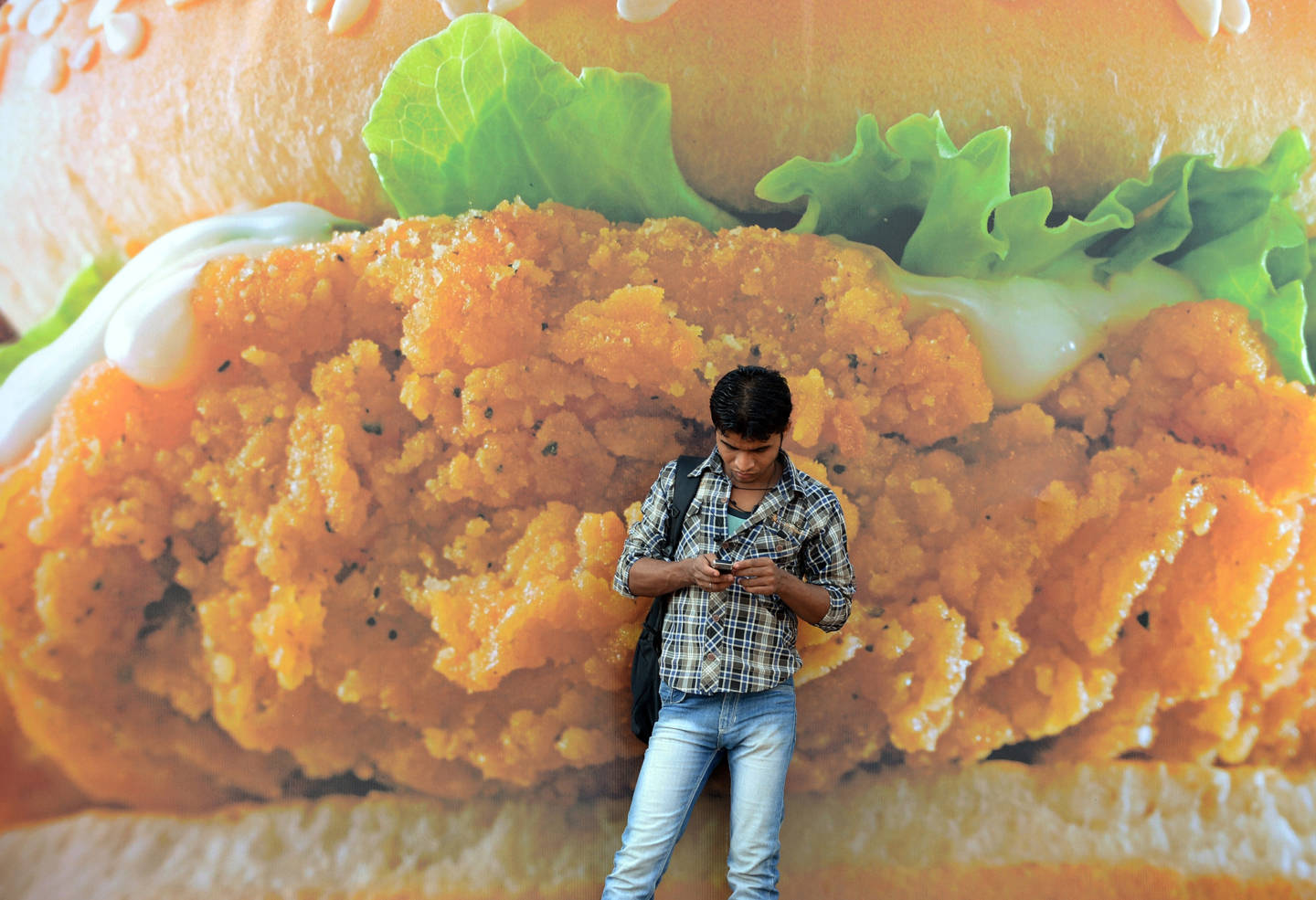
"caption": "An Indian pedestrian checks his mobile phone in front of an advertisement for a burger of a fast-food giant in Mumbai, India. Fast food and highly processed foods and sodas are increasingly becoming more popular around the world, one of the main reasons for increasing rates of overweight and obesity.",
"description": "An Indian pedestrian checks his mobile phone in front of an advertisement for a burger of a fast-food giant in Mumbai, India. Fast food and highly processed foods and sodas are increasingly becoming more popular around the world, one of the main reasons for increasing rates of overweight and obesity.",
"title": "An Indian pedestrian checks his mobile phone in front of an advertisement for a burger of a fast-food giant in Mumbai, India. Fast food and highly processed foods and sodas are increasingly becoming more popular around the world, one of the main reasons for increasing rates of overweight and obesity.",
"credit": "Indranil Mukherjee/AFP/Getty Images",
"status": "inherit",
"isLoading": false,
"fetchFailed": false
},
"bayareabites_112549": {
"type": "attachments",
"id": "bayareabites_112549",
"meta": {
"index": "attachments_1716263798",
"site": "bayareabites",
"id": "112549",
"found": true
},
"parent": 112548,
"imgSizes": {
"twentyfourteen-full-width": {
"file": "https://ww2.kqed.org/app/uploads/sites/24/2016/10/ap_156133386221_wide-b77d2bed9dc57b6529b0ed178b4ba01ed129932f-1038x576.jpg",
"width": 1038,
"mimeType": "image/jpeg",
"height": 576
},
"thumbnail": {
"file": "https://ww2.kqed.org/app/uploads/sites/24/2016/10/ap_156133386221_wide-b77d2bed9dc57b6529b0ed178b4ba01ed129932f-400x225.jpg",
"width": 400,
"mimeType": "image/jpeg",
"height": 225
},
"fd-sm": {
"file": "https://ww2.kqed.org/app/uploads/sites/24/2016/10/ap_156133386221_wide-b77d2bed9dc57b6529b0ed178b4ba01ed129932f-960x540.jpg",
"width": 960,
"mimeType": "image/jpeg",
"height": 540
},
"post-thumbnail": {
"file": "https://ww2.kqed.org/app/uploads/sites/24/2016/10/ap_156133386221_wide-b77d2bed9dc57b6529b0ed178b4ba01ed129932f-672x372.jpg",
"width": 672,
"mimeType": "image/jpeg",
"height": 372
},
"kqedFullSize": {
"file": "https://ww2.kqed.org/app/uploads/sites/24/2016/10/ap_156133386221_wide-b77d2bed9dc57b6529b0ed178b4ba01ed129932f.jpg",
"width": 3549,
"height": 1996
},
"large": {
"file": "https://ww2.kqed.org/app/uploads/sites/24/2016/10/ap_156133386221_wide-b77d2bed9dc57b6529b0ed178b4ba01ed129932f-1440x810.jpg",
"width": 1440,
"mimeType": "image/jpeg",
"height": 810
},
"guest-author-50": {
"file": "https://ww2.kqed.org/app/uploads/sites/24/2016/10/ap_156133386221_wide-b77d2bed9dc57b6529b0ed178b4ba01ed129932f-50x50.jpg",
"width": 50,
"mimeType": "image/jpeg",
"height": 50
},
"guest-author-96": {
"file": "https://ww2.kqed.org/app/uploads/sites/24/2016/10/ap_156133386221_wide-b77d2bed9dc57b6529b0ed178b4ba01ed129932f-96x96.jpg",
"width": 96,
"mimeType": "image/jpeg",
"height": 96
},
"medium": {
"file": "https://ww2.kqed.org/app/uploads/sites/24/2016/10/ap_156133386221_wide-b77d2bed9dc57b6529b0ed178b4ba01ed129932f-800x450.jpg",
"width": 800,
"mimeType": "image/jpeg",
"height": 450
},
"guest-author-64": {
"file": "https://ww2.kqed.org/app/uploads/sites/24/2016/10/ap_156133386221_wide-b77d2bed9dc57b6529b0ed178b4ba01ed129932f-64x64.jpg",
"width": 64,
"mimeType": "image/jpeg",
"height": 64
},
"guest-author-32": {
"file": "https://ww2.kqed.org/app/uploads/sites/24/2016/10/ap_156133386221_wide-b77d2bed9dc57b6529b0ed178b4ba01ed129932f-32x32.jpg",
"width": 32,
"mimeType": "image/jpeg",
"height": 32
},
"cat_post_thumb_sizecategory-posts-2": {
"file": "https://ww2.kqed.org/app/uploads/sites/24/2016/10/ap_156133386221_wide-b77d2bed9dc57b6529b0ed178b4ba01ed129932f-150x150.jpg",
"width": 150,
"mimeType": "image/jpeg",
"height": 150
},
"fd-lrg": {
"file": "https://ww2.kqed.org/app/uploads/sites/24/2016/10/ap_156133386221_wide-b77d2bed9dc57b6529b0ed178b4ba01ed129932f-1920x1080.jpg",
"width": 1920,
"mimeType": "image/jpeg",
"height": 1080
},
"fd-med": {
"file": "https://ww2.kqed.org/app/uploads/sites/24/2016/10/ap_156133386221_wide-b77d2bed9dc57b6529b0ed178b4ba01ed129932f-1180x664.jpg",
"width": 1180,
"mimeType": "image/jpeg",
"height": 664
},
"detail": {
"file": "https://ww2.kqed.org/app/uploads/sites/24/2016/10/ap_156133386221_wide-b77d2bed9dc57b6529b0ed178b4ba01ed129932f-150x150.jpg",
"width": 150,
"mimeType": "image/jpeg",
"height": 150
},
"medium_large": {
"file": "https://ww2.kqed.org/app/uploads/sites/24/2016/10/ap_156133386221_wide-b77d2bed9dc57b6529b0ed178b4ba01ed129932f-768x432.jpg",
"width": 768,
"mimeType": "image/jpeg",
"height": 432
},
"guest-author-128": {
"file": "https://ww2.kqed.org/app/uploads/sites/24/2016/10/ap_156133386221_wide-b77d2bed9dc57b6529b0ed178b4ba01ed129932f-128x128.jpg",
"width": 128,
"mimeType": "image/jpeg",
"height": 128
}
},
"publishDate": 1475701244,
"modified": 1475709165,
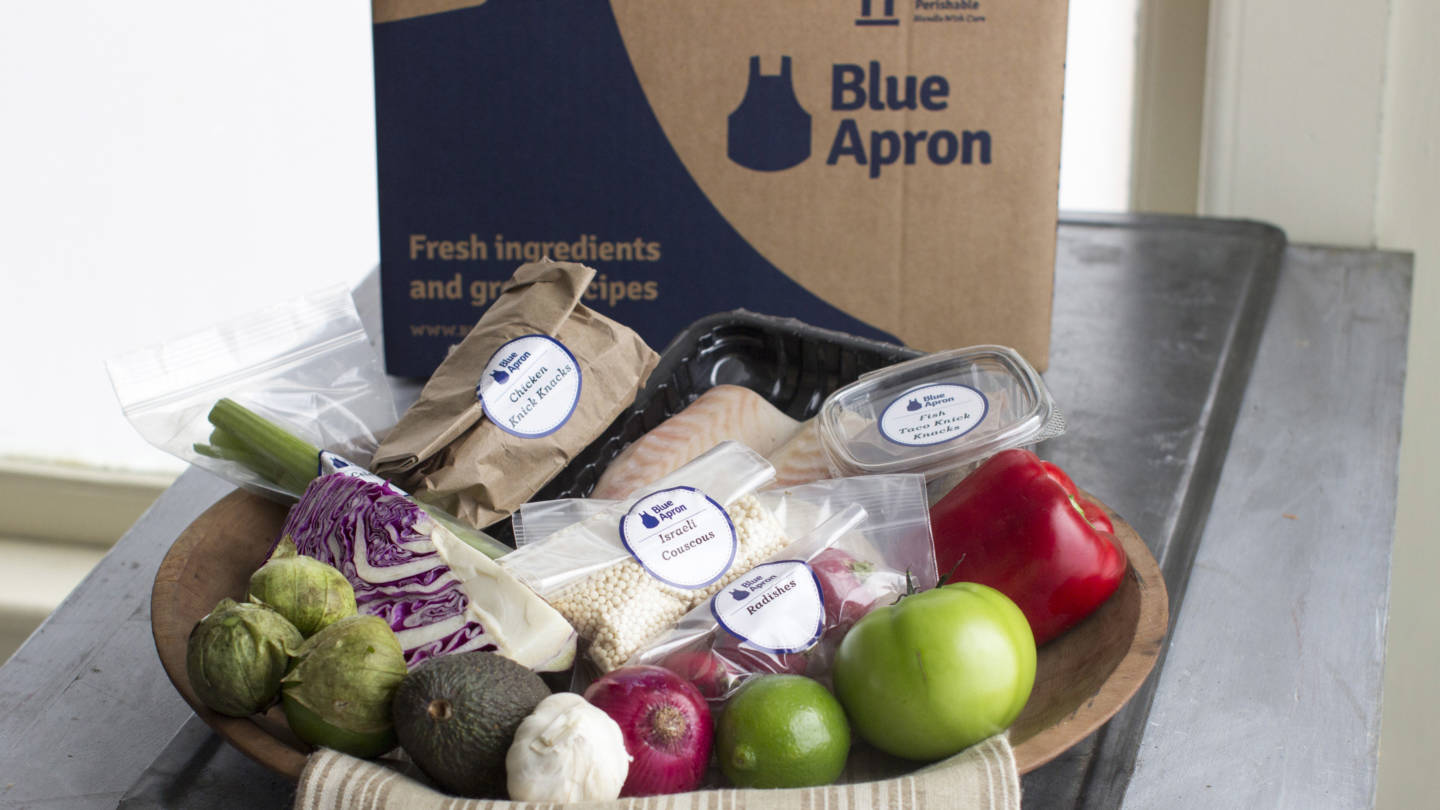
"caption": "A home-delivered meal kit from Blue Apron.",
"description": "A home-delivered meal kit from Blue Apron",
"title": "A home-delivered meal kit from Blue Apron.",
"credit": "Matthew Mead/AP",
"status": "inherit",
"isLoading": false,
"fetchFailed": false
},
"bayareabites_112543": {
"type": "attachments",
"id": "bayareabites_112543",
"meta": {
"index": "attachments_1716263798",
"site": "bayareabites",
"id": "112543",
"found": true
},
"parent": 112539,
"imgSizes": {
"twentyfourteen-full-width": {
"file": "https://ww2.kqed.org/app/uploads/sites/24/2016/10/gettyimages-518990304-70-498b0d4ff21b99d91a5c79457b2488b5be3ca46a-s1600-c85-1038x576.jpg",
"width": 1038,
"mimeType": "image/jpeg",
"height": 576
},
"thumbnail": {
"file": "https://ww2.kqed.org/app/uploads/sites/24/2016/10/gettyimages-518990304-70-498b0d4ff21b99d91a5c79457b2488b5be3ca46a-s1600-c85-400x300.jpg",
"width": 400,
"mimeType": "image/jpeg",
"height": 300
},
"fd-sm": {
"file": "https://ww2.kqed.org/app/uploads/sites/24/2016/10/gettyimages-518990304-70-498b0d4ff21b99d91a5c79457b2488b5be3ca46a-s1600-c85-960x720.jpg",
"width": 960,
"mimeType": "image/jpeg",
"height": 720
},
"post-thumbnail": {
"file": "https://ww2.kqed.org/app/uploads/sites/24/2016/10/gettyimages-518990304-70-498b0d4ff21b99d91a5c79457b2488b5be3ca46a-s1600-c85-672x372.jpg",
"width": 672,
"mimeType": "image/jpeg",
"height": 372
},
"kqedFullSize": {
"file": "https://ww2.kqed.org/app/uploads/sites/24/2016/10/gettyimages-518990304-70-498b0d4ff21b99d91a5c79457b2488b5be3ca46a-s1600-c85.jpg",
"width": 1600,
"height": 1200
},
"large": {
"file": "https://ww2.kqed.org/app/uploads/sites/24/2016/10/gettyimages-518990304-70-498b0d4ff21b99d91a5c79457b2488b5be3ca46a-s1600-c85-1440x1080.jpg",
"width": 1440,
"mimeType": "image/jpeg",
"height": 1080
},
"guest-author-50": {
"file": "https://ww2.kqed.org/app/uploads/sites/24/2016/10/gettyimages-518990304-70-498b0d4ff21b99d91a5c79457b2488b5be3ca46a-s1600-c85-50x50.jpg",
"width": 50,
"mimeType": "image/jpeg",
"height": 50
},
"guest-author-96": {
"file": "https://ww2.kqed.org/app/uploads/sites/24/2016/10/gettyimages-518990304-70-498b0d4ff21b99d91a5c79457b2488b5be3ca46a-s1600-c85-96x96.jpg",
"width": 96,
"mimeType": "image/jpeg",
"height": 96
},
"medium": {
"file": "https://ww2.kqed.org/app/uploads/sites/24/2016/10/gettyimages-518990304-70-498b0d4ff21b99d91a5c79457b2488b5be3ca46a-s1600-c85-800x600.jpg",
"width": 800,
"mimeType": "image/jpeg",
"height": 600
},
"guest-author-64": {
"file": "https://ww2.kqed.org/app/uploads/sites/24/2016/10/gettyimages-518990304-70-498b0d4ff21b99d91a5c79457b2488b5be3ca46a-s1600-c85-64x64.jpg",
"width": 64,
"mimeType": "image/jpeg",
"height": 64
},
"guest-author-32": {
"file": "https://ww2.kqed.org/app/uploads/sites/24/2016/10/gettyimages-518990304-70-498b0d4ff21b99d91a5c79457b2488b5be3ca46a-s1600-c85-32x32.jpg",
"width": 32,
"mimeType": "image/jpeg",
"height": 32
},
"cat_post_thumb_sizecategory-posts-2": {
"file": "https://ww2.kqed.org/app/uploads/sites/24/2016/10/gettyimages-518990304-70-498b0d4ff21b99d91a5c79457b2488b5be3ca46a-s1600-c85-150x150.jpg",
"width": 150,
"mimeType": "image/jpeg",
"height": 150
},
"fd-med": {
"file": "https://ww2.kqed.org/app/uploads/sites/24/2016/10/gettyimages-518990304-70-498b0d4ff21b99d91a5c79457b2488b5be3ca46a-s1600-c85-1180x885.jpg",
"width": 1180,
"mimeType": "image/jpeg",
"height": 885
},
"detail": {
"file": "https://ww2.kqed.org/app/uploads/sites/24/2016/10/gettyimages-518990304-70-498b0d4ff21b99d91a5c79457b2488b5be3ca46a-s1600-c85-150x150.jpg",
"width": 150,
"mimeType": "image/jpeg",
"height": 150
},
"medium_large": {
"file": "https://ww2.kqed.org/app/uploads/sites/24/2016/10/gettyimages-518990304-70-498b0d4ff21b99d91a5c79457b2488b5be3ca46a-s1600-c85-768x576.jpg",
"width": 768,
"mimeType": "image/jpeg",
"height": 576
},
"guest-author-128": {
"file": "https://ww2.kqed.org/app/uploads/sites/24/2016/10/gettyimages-518990304-70-498b0d4ff21b99d91a5c79457b2488b5be3ca46a-s1600-c85-128x128.jpg",
"width": 128,
"mimeType": "image/jpeg",
"height": 128
}
},
"publishDate": 1475685019,
"modified": 1475685057,
"caption": "Marionberry fruit photographed at the National Centre for Organic Gardening, which has been the headquarters of the Henry Doubleday Research Association since the early 1980s.",
"description": "Marionberry fruit photographed at the National Centre for Organic Gardening, which has been the headquarters of the Henry Doubleday Research Association since the early 1980s.",
"title": "Marionberry fruit photographed at the National Centre for Organic Gardening, which has been the headquarters of the Henry Doubleday Research Association since the early 1980s.",
"credit": "Michael Boys/Corbis/VCG/Getty Images",
"status": "inherit",
"isLoading": false,
"fetchFailed": false
},
"bayareabites_112486": {
"type": "attachments",
"id": "bayareabites_112486",
"meta": {
"index": "attachments_1716263798",
"site": "bayareabites",
"id": "112486",
"found": true
},
"parent": 112485,
"imgSizes": {
"twentyfourteen-full-width": {
"file": "https://ww2.kqed.org/app/uploads/sites/24/2016/10/kindbars-1_custom-4467efbe9ff31031063790cedaecde3c4eeb10d7-1038x576.jpg",
"width": 1038,
"mimeType": "image/jpeg",
"height": 576
},
"thumbnail": {
"file": "https://ww2.kqed.org/app/uploads/sites/24/2016/10/kindbars-1_custom-4467efbe9ff31031063790cedaecde3c4eeb10d7-400x268.jpg",
"width": 400,
"mimeType": "image/jpeg",
"height": 268
},
"fd-sm": {
"file": "https://ww2.kqed.org/app/uploads/sites/24/2016/10/kindbars-1_custom-4467efbe9ff31031063790cedaecde3c4eeb10d7-960x644.jpg",
"width": 960,
"mimeType": "image/jpeg",
"height": 644
},
"post-thumbnail": {
"file": "https://ww2.kqed.org/app/uploads/sites/24/2016/10/kindbars-1_custom-4467efbe9ff31031063790cedaecde3c4eeb10d7-672x372.jpg",
"width": 672,
"mimeType": "image/jpeg",
"height": 372
},
"kqedFullSize": {
"file": "https://ww2.kqed.org/app/uploads/sites/24/2016/10/kindbars-1_custom-4467efbe9ff31031063790cedaecde3c4eeb10d7.jpg",
"width": 2980,
"height": 1998
},
"large": {
"file": "https://ww2.kqed.org/app/uploads/sites/24/2016/10/kindbars-1_custom-4467efbe9ff31031063790cedaecde3c4eeb10d7-1440x965.jpg",
"width": 1440,
"mimeType": "image/jpeg",
"height": 965
},
"guest-author-50": {
"file": "https://ww2.kqed.org/app/uploads/sites/24/2016/10/kindbars-1_custom-4467efbe9ff31031063790cedaecde3c4eeb10d7-50x50.jpg",
"width": 50,
"mimeType": "image/jpeg",
"height": 50
},
"guest-author-96": {
"file": "https://ww2.kqed.org/app/uploads/sites/24/2016/10/kindbars-1_custom-4467efbe9ff31031063790cedaecde3c4eeb10d7-96x96.jpg",
"width": 96,
"mimeType": "image/jpeg",
"height": 96
},
"medium": {
"file": "https://ww2.kqed.org/app/uploads/sites/24/2016/10/kindbars-1_custom-4467efbe9ff31031063790cedaecde3c4eeb10d7-800x536.jpg",
"width": 800,
"mimeType": "image/jpeg",
"height": 536
},
"guest-author-64": {
"file": "https://ww2.kqed.org/app/uploads/sites/24/2016/10/kindbars-1_custom-4467efbe9ff31031063790cedaecde3c4eeb10d7-64x64.jpg",
"width": 64,
"mimeType": "image/jpeg",
"height": 64
},
"guest-author-32": {
"file": "https://ww2.kqed.org/app/uploads/sites/24/2016/10/kindbars-1_custom-4467efbe9ff31031063790cedaecde3c4eeb10d7-32x32.jpg",
"width": 32,
"mimeType": "image/jpeg",
"height": 32
},
"cat_post_thumb_sizecategory-posts-2": {
"file": "https://ww2.kqed.org/app/uploads/sites/24/2016/10/kindbars-1_custom-4467efbe9ff31031063790cedaecde3c4eeb10d7-150x150.jpg",
"width": 150,
"mimeType": "image/jpeg",
"height": 150
},
"fd-lrg": {
"file": "https://ww2.kqed.org/app/uploads/sites/24/2016/10/kindbars-1_custom-4467efbe9ff31031063790cedaecde3c4eeb10d7-1920x1287.jpg",
"width": 1920,
"mimeType": "image/jpeg",
"height": 1287
},
"fd-med": {
"file": "https://ww2.kqed.org/app/uploads/sites/24/2016/10/kindbars-1_custom-4467efbe9ff31031063790cedaecde3c4eeb10d7-1180x791.jpg",
"width": 1180,
"mimeType": "image/jpeg",
"height": 791
},
"detail": {
"file": "https://ww2.kqed.org/app/uploads/sites/24/2016/10/kindbars-1_custom-4467efbe9ff31031063790cedaecde3c4eeb10d7-150x150.jpg",
"width": 150,
"mimeType": "image/jpeg",
"height": 150
},
"medium_large": {
"file": "https://ww2.kqed.org/app/uploads/sites/24/2016/10/kindbars-1_custom-4467efbe9ff31031063790cedaecde3c4eeb10d7-768x515.jpg",
"width": 768,
"mimeType": "image/jpeg",
"height": 515
},
"guest-author-128": {
"file": "https://ww2.kqed.org/app/uploads/sites/24/2016/10/kindbars-1_custom-4467efbe9ff31031063790cedaecde3c4eeb10d7-128x128.jpg",
"width": 128,
"mimeType": "image/jpeg",
"height": 128
}
},
"publishDate": 1475510388,
"modified": 1475510892,
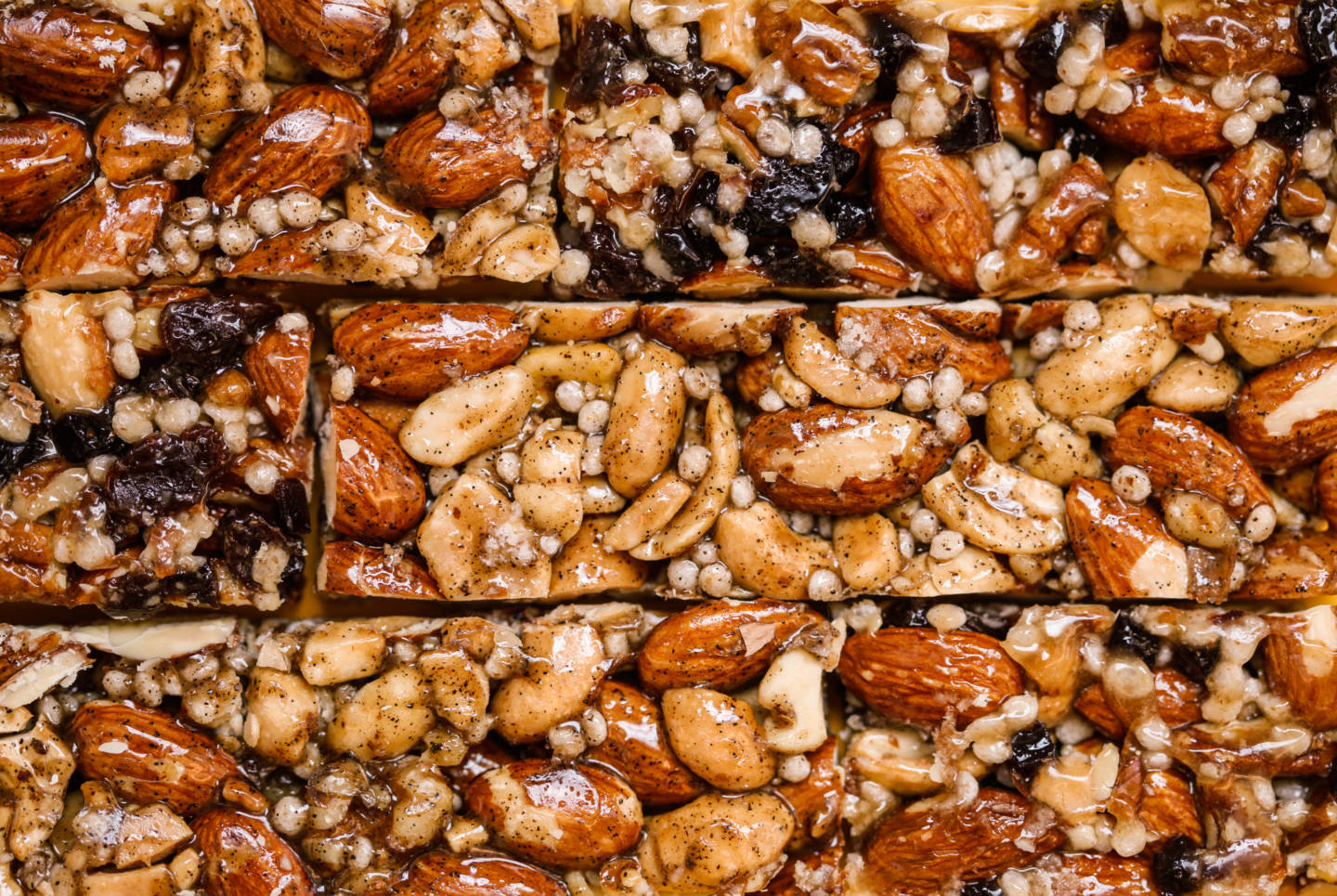
"caption": "Last year, the Food and Drug Administration told the maker of Kind bars that some of its nut-filled snacks couldn't be labeled as \"healthy.\" Now the agency is rethinking what healthy means, amid evolving science on fat and sugar.",
"description": "Last year, the Food and Drug Administration told the maker of Kind bars that some of its nut-filled snacks couldn't be labeled as \"healthy.\" Now the agency is rethinking what healthy means, amid evolving science on fat and sugar.",
"title": "Last year, the Food and Drug Administration told the maker of Kind bars that some of its nut-filled snacks couldn't be labeled as \"healthy.\" Now the agency is rethinking what healthy means, amid evolving science on fat and sugar.",
"credit": "Ryan Kellman/NPR",
"status": "inherit",
"isLoading": false,
"fetchFailed": false
},
"bayareabites_112435": {
"type": "attachments",
"id": "bayareabites_112435",
"meta": {
"index": "attachments_1716263798",
"site": "bayareabites",
"id": "112435",
"found": true
},
"parent": 112434,
"imgSizes": {
"twentyfourteen-full-width": {
"file": "https://ww2.kqed.org/app/uploads/sites/24/2016/09/zumepizza_oven1_wide-190133c0ed57edf3449a0cbbe99b5a9c8f1386be-1038x576.jpg",
"width": 1038,
"mimeType": "image/jpeg",
"height": 576
},
"thumbnail": {
"file": "https://ww2.kqed.org/app/uploads/sites/24/2016/09/zumepizza_oven1_wide-190133c0ed57edf3449a0cbbe99b5a9c8f1386be-400x225.jpg",
"width": 400,
"mimeType": "image/jpeg",
"height": 225
},
"fd-sm": {
"file": "https://ww2.kqed.org/app/uploads/sites/24/2016/09/zumepizza_oven1_wide-190133c0ed57edf3449a0cbbe99b5a9c8f1386be-960x540.jpg",
"width": 960,
"mimeType": "image/jpeg",
"height": 540
},
"post-thumbnail": {
"file": "https://ww2.kqed.org/app/uploads/sites/24/2016/09/zumepizza_oven1_wide-190133c0ed57edf3449a0cbbe99b5a9c8f1386be-672x372.jpg",
"width": 672,
"mimeType": "image/jpeg",
"height": 372
},
"kqedFullSize": {
"file": "https://ww2.kqed.org/app/uploads/sites/24/2016/09/zumepizza_oven1_wide-190133c0ed57edf3449a0cbbe99b5a9c8f1386be.jpg",
"width": 2527,
"height": 1421
},
"large": {
"file": "https://ww2.kqed.org/app/uploads/sites/24/2016/09/zumepizza_oven1_wide-190133c0ed57edf3449a0cbbe99b5a9c8f1386be-1440x810.jpg",
"width": 1440,
"mimeType": "image/jpeg",
"height": 810
},
"guest-author-50": {
"file": "https://ww2.kqed.org/app/uploads/sites/24/2016/09/zumepizza_oven1_wide-190133c0ed57edf3449a0cbbe99b5a9c8f1386be-50x50.jpg",
"width": 50,
"mimeType": "image/jpeg",
"height": 50
},
"guest-author-96": {
"file": "https://ww2.kqed.org/app/uploads/sites/24/2016/09/zumepizza_oven1_wide-190133c0ed57edf3449a0cbbe99b5a9c8f1386be-96x96.jpg",
"width": 96,
"mimeType": "image/jpeg",
"height": 96
},
"medium": {
"file": "https://ww2.kqed.org/app/uploads/sites/24/2016/09/zumepizza_oven1_wide-190133c0ed57edf3449a0cbbe99b5a9c8f1386be-800x450.jpg",
"width": 800,
"mimeType": "image/jpeg",
"height": 450
},
"guest-author-64": {
"file": "https://ww2.kqed.org/app/uploads/sites/24/2016/09/zumepizza_oven1_wide-190133c0ed57edf3449a0cbbe99b5a9c8f1386be-64x64.jpg",
"width": 64,
"mimeType": "image/jpeg",
"height": 64
},
"guest-author-32": {
"file": "https://ww2.kqed.org/app/uploads/sites/24/2016/09/zumepizza_oven1_wide-190133c0ed57edf3449a0cbbe99b5a9c8f1386be-32x32.jpg",
"width": 32,
"mimeType": "image/jpeg",
"height": 32
},
"cat_post_thumb_sizecategory-posts-2": {
"file": "https://ww2.kqed.org/app/uploads/sites/24/2016/09/zumepizza_oven1_wide-190133c0ed57edf3449a0cbbe99b5a9c8f1386be-150x150.jpg",
"width": 150,
"mimeType": "image/jpeg",
"height": 150
},
"fd-lrg": {
"file": "https://ww2.kqed.org/app/uploads/sites/24/2016/09/zumepizza_oven1_wide-190133c0ed57edf3449a0cbbe99b5a9c8f1386be-1920x1080.jpg",
"width": 1920,
"mimeType": "image/jpeg",
"height": 1080
},
"fd-med": {
"file": "https://ww2.kqed.org/app/uploads/sites/24/2016/09/zumepizza_oven1_wide-190133c0ed57edf3449a0cbbe99b5a9c8f1386be-1180x664.jpg",
"width": 1180,
"mimeType": "image/jpeg",
"height": 664
},
"detail": {
"file": "https://ww2.kqed.org/app/uploads/sites/24/2016/09/zumepizza_oven1_wide-190133c0ed57edf3449a0cbbe99b5a9c8f1386be-150x150.jpg",
"width": 150,
"mimeType": "image/jpeg",
"height": 150
},
"medium_large": {
"file": "https://ww2.kqed.org/app/uploads/sites/24/2016/09/zumepizza_oven1_wide-190133c0ed57edf3449a0cbbe99b5a9c8f1386be-768x432.jpg",
"width": 768,
"mimeType": "image/jpeg",
"height": 432
},
"guest-author-128": {
"file": "https://ww2.kqed.org/app/uploads/sites/24/2016/09/zumepizza_oven1_wide-190133c0ed57edf3449a0cbbe99b5a9c8f1386be-128x128.jpg",
"width": 128,
"mimeType": "image/jpeg",
"height": 128
}
},
"publishDate": 1475179162,
"modified": 1475179343,
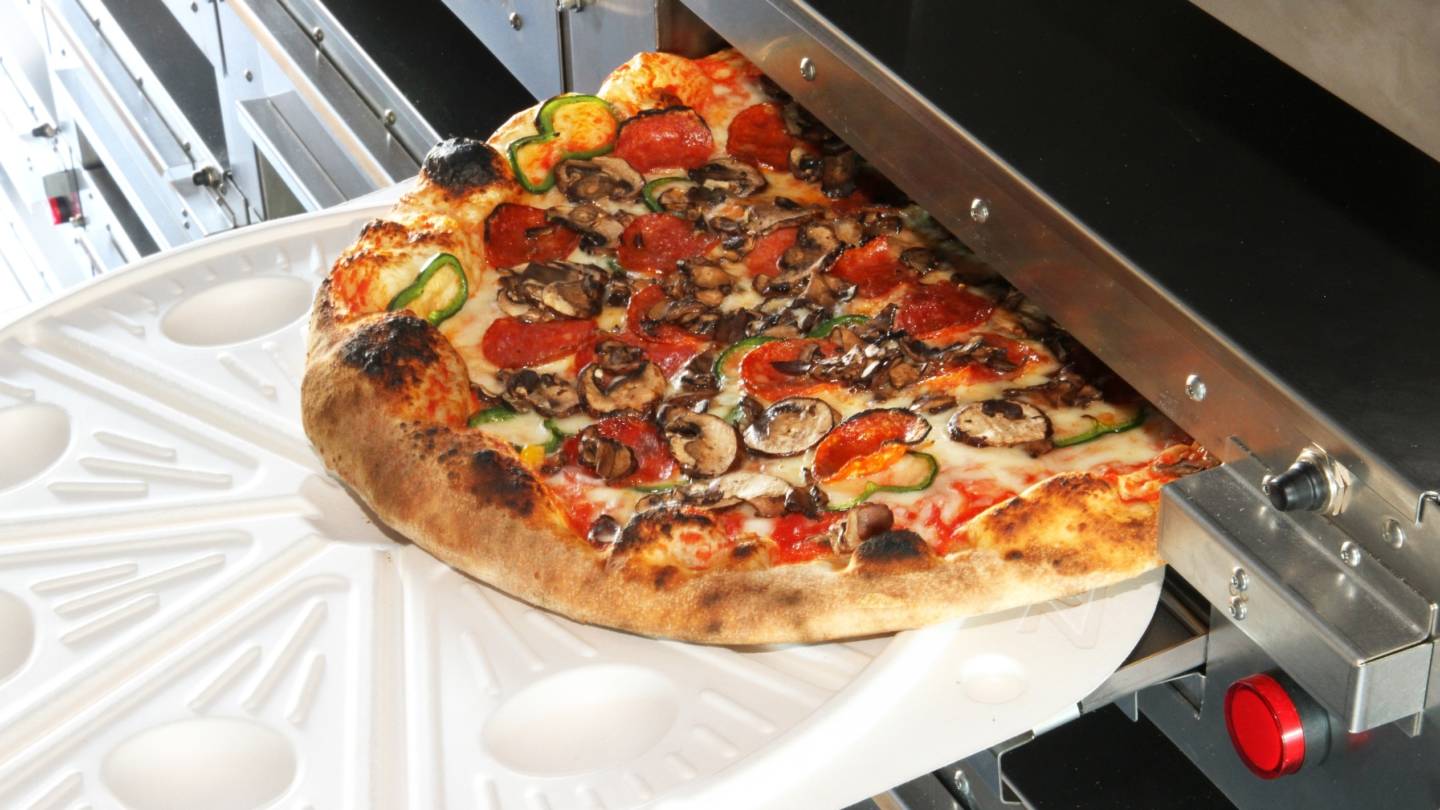
"caption": "Mobile ovens inside the delivery truck cook the pie right before it reaches its destination.",
"description": "Mobile ovens inside the delivery truck cook the pie right before it reaches its destination.",
"title": "Mobile ovens inside the delivery truck cook the pie right before it reaches its destination.",
"credit": "Zume Pizza",
"status": "inherit",
"isLoading": false,
"fetchFailed": false
},
"bayareabites_112421": {
"type": "attachments",
"id": "bayareabites_112421",
"meta": {
"index": "attachments_1716263798",
"site": "bayareabites",
"id": "112421",
"found": true
},
"parent": 112409,
"imgSizes": {
"twentyfourteen-full-width": {
"file": "https://ww2.kqed.org/app/uploads/sites/24/2016/09/dsc07719edit2_custom-aa8b74a9e0243f6b38ee28918fd001b9e0dd571b-s1600-c85-1038x576.jpg",
"width": 1038,
"mimeType": "image/jpeg",
"height": 576
},
"thumbnail": {
"file": "https://ww2.kqed.org/app/uploads/sites/24/2016/09/dsc07719edit2_custom-aa8b74a9e0243f6b38ee28918fd001b9e0dd571b-s1600-c85-400x415.jpg",
"width": 400,
"mimeType": "image/jpeg",
"height": 415
},
"fd-sm": {
"file": "https://ww2.kqed.org/app/uploads/sites/24/2016/09/dsc07719edit2_custom-aa8b74a9e0243f6b38ee28918fd001b9e0dd571b-s1600-c85-960x996.jpg",
"width": 960,
"mimeType": "image/jpeg",
"height": 996
},
"post-thumbnail": {
"file": "https://ww2.kqed.org/app/uploads/sites/24/2016/09/dsc07719edit2_custom-aa8b74a9e0243f6b38ee28918fd001b9e0dd571b-s1600-c85-672x372.jpg",
"width": 672,
"mimeType": "image/jpeg",
"height": 372
},
"kqedFullSize": {
"file": "https://ww2.kqed.org/app/uploads/sites/24/2016/09/dsc07719edit2_custom-aa8b74a9e0243f6b38ee28918fd001b9e0dd571b-s1600-c85.jpg",
"width": 1600,
"height": 1660
},
"large": {
"file": "https://ww2.kqed.org/app/uploads/sites/24/2016/09/dsc07719edit2_custom-aa8b74a9e0243f6b38ee28918fd001b9e0dd571b-s1600-c85-1440x1494.jpg",
"width": 1440,
"mimeType": "image/jpeg",
"height": 1494
},
"guest-author-50": {
"file": "https://ww2.kqed.org/app/uploads/sites/24/2016/09/dsc07719edit2_custom-aa8b74a9e0243f6b38ee28918fd001b9e0dd571b-s1600-c85-50x50.jpg",
"width": 50,
"mimeType": "image/jpeg",
"height": 50
},
"guest-author-96": {
"file": "https://ww2.kqed.org/app/uploads/sites/24/2016/09/dsc07719edit2_custom-aa8b74a9e0243f6b38ee28918fd001b9e0dd571b-s1600-c85-96x96.jpg",
"width": 96,
"mimeType": "image/jpeg",
"height": 96
},
"medium": {
"file": "https://ww2.kqed.org/app/uploads/sites/24/2016/09/dsc07719edit2_custom-aa8b74a9e0243f6b38ee28918fd001b9e0dd571b-s1600-c85-800x830.jpg",
"width": 800,
"mimeType": "image/jpeg",
"height": 830
},
"guest-author-64": {
"file": "https://ww2.kqed.org/app/uploads/sites/24/2016/09/dsc07719edit2_custom-aa8b74a9e0243f6b38ee28918fd001b9e0dd571b-s1600-c85-64x64.jpg",
"width": 64,
"mimeType": "image/jpeg",
"height": 64
},
"guest-author-32": {
"file": "https://ww2.kqed.org/app/uploads/sites/24/2016/09/dsc07719edit2_custom-aa8b74a9e0243f6b38ee28918fd001b9e0dd571b-s1600-c85-32x32.jpg",
"width": 32,
"mimeType": "image/jpeg",
"height": 32
},
"cat_post_thumb_sizecategory-posts-2": {
"file": "https://ww2.kqed.org/app/uploads/sites/24/2016/09/dsc07719edit2_custom-aa8b74a9e0243f6b38ee28918fd001b9e0dd571b-s1600-c85-150x150.jpg",
"width": 150,
"mimeType": "image/jpeg",
"height": 150
},
"fd-med": {
"file": "https://ww2.kqed.org/app/uploads/sites/24/2016/09/dsc07719edit2_custom-aa8b74a9e0243f6b38ee28918fd001b9e0dd571b-s1600-c85-1180x1224.jpg",
"width": 1180,
"mimeType": "image/jpeg",
"height": 1224
},
"detail": {
"file": "https://ww2.kqed.org/app/uploads/sites/24/2016/09/dsc07719edit2_custom-aa8b74a9e0243f6b38ee28918fd001b9e0dd571b-s1600-c85-150x150.jpg",
"width": 150,
"mimeType": "image/jpeg",
"height": 150
},
"medium_large": {
"file": "https://ww2.kqed.org/app/uploads/sites/24/2016/09/dsc07719edit2_custom-aa8b74a9e0243f6b38ee28918fd001b9e0dd571b-s1600-c85-768x797.jpg",
"width": 768,
"mimeType": "image/jpeg",
"height": 797
},
"guest-author-128": {
"file": "https://ww2.kqed.org/app/uploads/sites/24/2016/09/dsc07719edit2_custom-aa8b74a9e0243f6b38ee28918fd001b9e0dd571b-s1600-c85-128x128.jpg",
"width": 128,
"mimeType": "image/jpeg",
"height": 128
}
},
"publishDate": 1475166729,
"modified": 1475166814,
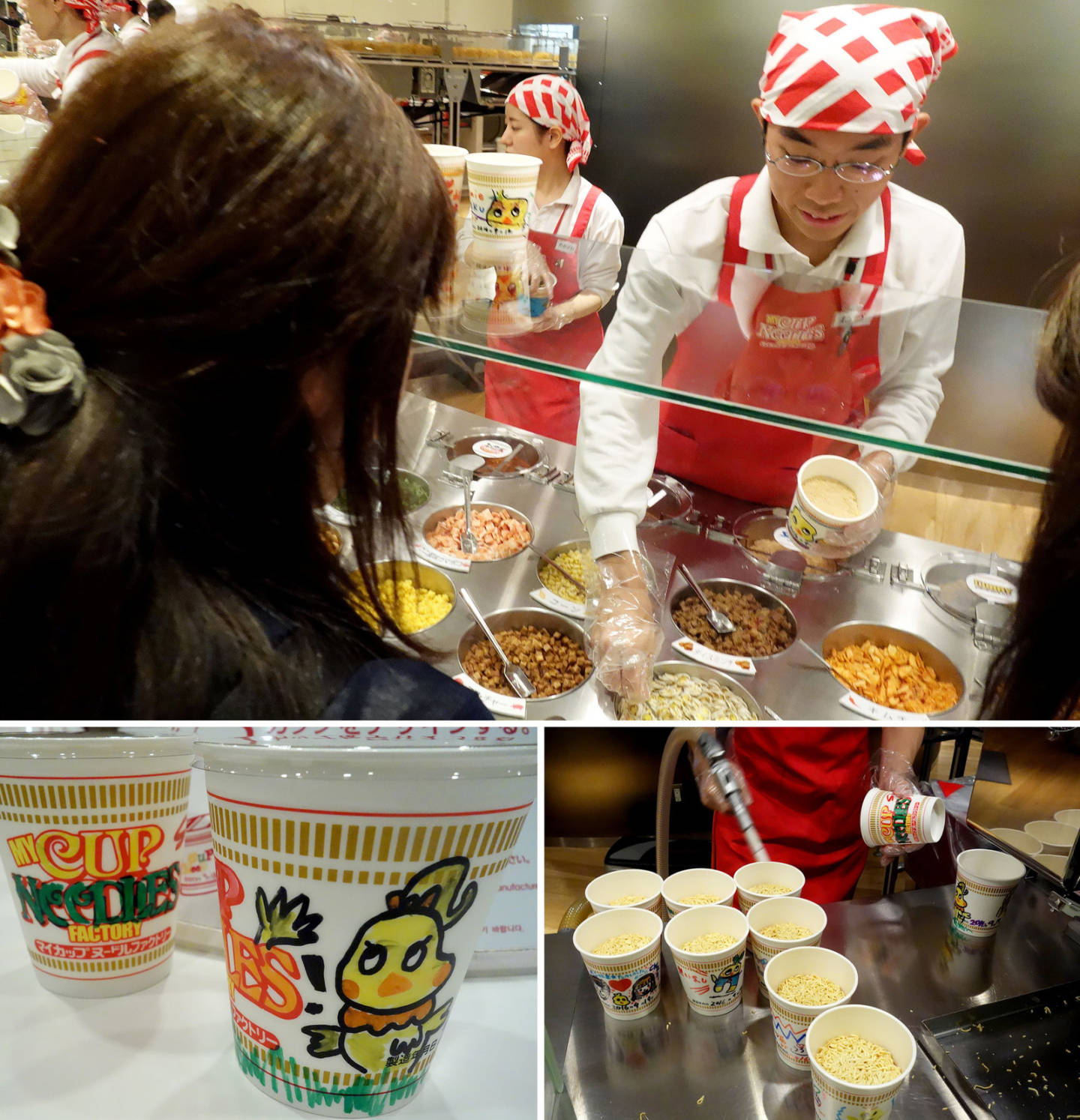
"caption": "Ramen devotees create their own Cup Noodles concoctions.",
"description": null,
"title": "dsc07719edit2_custom-aa8b74a9e0243f6b38ee28918fd001b9e0dd571b-s1600-c85",
"credit": "Elise Hu/NPR",
"status": "inherit",
"isLoading": false,
"fetchFailed": false
},
"bayareabites_112200": {
"type": "attachments",
"id": "bayareabites_112200",
"meta": {
"index": "attachments_1716263798",
"site": "bayareabites",
"id": "112200",
"found": true
},
"parent": 112197,
"imgSizes": {
"twentyfourteen-full-width": {
"file": "https://ww2.kqed.org/app/uploads/sites/24/2016/09/francesmoorelappe_custom-26643367f2ff952a0c18bd5ea1895a083147b6ad-s1600-c85-1038x576.jpg",
"width": 1038,
"mimeType": "image/jpeg",
"height": 576
},
"thumbnail": {
"file": "https://ww2.kqed.org/app/uploads/sites/24/2016/09/francesmoorelappe_custom-26643367f2ff952a0c18bd5ea1895a083147b6ad-s1600-c85-400x266.jpg",
"width": 400,
"mimeType": "image/jpeg",
"height": 266
},
"fd-sm": {
"file": "https://ww2.kqed.org/app/uploads/sites/24/2016/09/francesmoorelappe_custom-26643367f2ff952a0c18bd5ea1895a083147b6ad-s1600-c85-960x639.jpg",
"width": 960,
"mimeType": "image/jpeg",
"height": 639
},
"post-thumbnail": {
"file": "https://ww2.kqed.org/app/uploads/sites/24/2016/09/francesmoorelappe_custom-26643367f2ff952a0c18bd5ea1895a083147b6ad-s1600-c85-672x372.jpg",
"width": 672,
"mimeType": "image/jpeg",
"height": 372
},
"kqedFullSize": {
"file": "https://ww2.kqed.org/app/uploads/sites/24/2016/09/francesmoorelappe_custom-26643367f2ff952a0c18bd5ea1895a083147b6ad-s1600-c85.jpg",
"width": 1600,
"height": 1065
},
"large": {
"file": "https://ww2.kqed.org/app/uploads/sites/24/2016/09/francesmoorelappe_custom-26643367f2ff952a0c18bd5ea1895a083147b6ad-s1600-c85-1440x959.jpg",
"width": 1440,
"mimeType": "image/jpeg",
"height": 959
},
"guest-author-50": {
"file": "https://ww2.kqed.org/app/uploads/sites/24/2016/09/francesmoorelappe_custom-26643367f2ff952a0c18bd5ea1895a083147b6ad-s1600-c85-50x50.jpg",
"width": 50,
"mimeType": "image/jpeg",
"height": 50
},
"guest-author-96": {
"file": "https://ww2.kqed.org/app/uploads/sites/24/2016/09/francesmoorelappe_custom-26643367f2ff952a0c18bd5ea1895a083147b6ad-s1600-c85-96x96.jpg",
"width": 96,
"mimeType": "image/jpeg",
"height": 96
},
"medium": {
"file": "https://ww2.kqed.org/app/uploads/sites/24/2016/09/francesmoorelappe_custom-26643367f2ff952a0c18bd5ea1895a083147b6ad-s1600-c85-800x533.jpg",
"width": 800,
"mimeType": "image/jpeg",
"height": 533
},
"guest-author-64": {
"file": "https://ww2.kqed.org/app/uploads/sites/24/2016/09/francesmoorelappe_custom-26643367f2ff952a0c18bd5ea1895a083147b6ad-s1600-c85-64x64.jpg",
"width": 64,
"mimeType": "image/jpeg",
"height": 64
},
"guest-author-32": {
"file": "https://ww2.kqed.org/app/uploads/sites/24/2016/09/francesmoorelappe_custom-26643367f2ff952a0c18bd5ea1895a083147b6ad-s1600-c85-32x32.jpg",
"width": 32,
"mimeType": "image/jpeg",
"height": 32
},
"cat_post_thumb_sizecategory-posts-2": {
"file": "https://ww2.kqed.org/app/uploads/sites/24/2016/09/francesmoorelappe_custom-26643367f2ff952a0c18bd5ea1895a083147b6ad-s1600-c85-150x150.jpg",
"width": 150,
"mimeType": "image/jpeg",
"height": 150
},
"fd-med": {
"file": "https://ww2.kqed.org/app/uploads/sites/24/2016/09/francesmoorelappe_custom-26643367f2ff952a0c18bd5ea1895a083147b6ad-s1600-c85-1180x785.jpg",
"width": 1180,
"mimeType": "image/jpeg",
"height": 785
},
"detail": {
"file": "https://ww2.kqed.org/app/uploads/sites/24/2016/09/francesmoorelappe_custom-26643367f2ff952a0c18bd5ea1895a083147b6ad-s1600-c85-150x150.jpg",
"width": 150,
"mimeType": "image/jpeg",
"height": 150
},
"medium_large": {
"file": "https://ww2.kqed.org/app/uploads/sites/24/2016/09/francesmoorelappe_custom-26643367f2ff952a0c18bd5ea1895a083147b6ad-s1600-c85-768x511.jpg",
"width": 768,
"mimeType": "image/jpeg",
"height": 511
},
"guest-author-128": {
"file": "https://ww2.kqed.org/app/uploads/sites/24/2016/09/francesmoorelappe_custom-26643367f2ff952a0c18bd5ea1895a083147b6ad-s1600-c85-128x128.jpg",
"width": 128,
"mimeType": "image/jpeg",
"height": 128
}
},
"publishDate": 1474646479,
"modified": 1474646517,
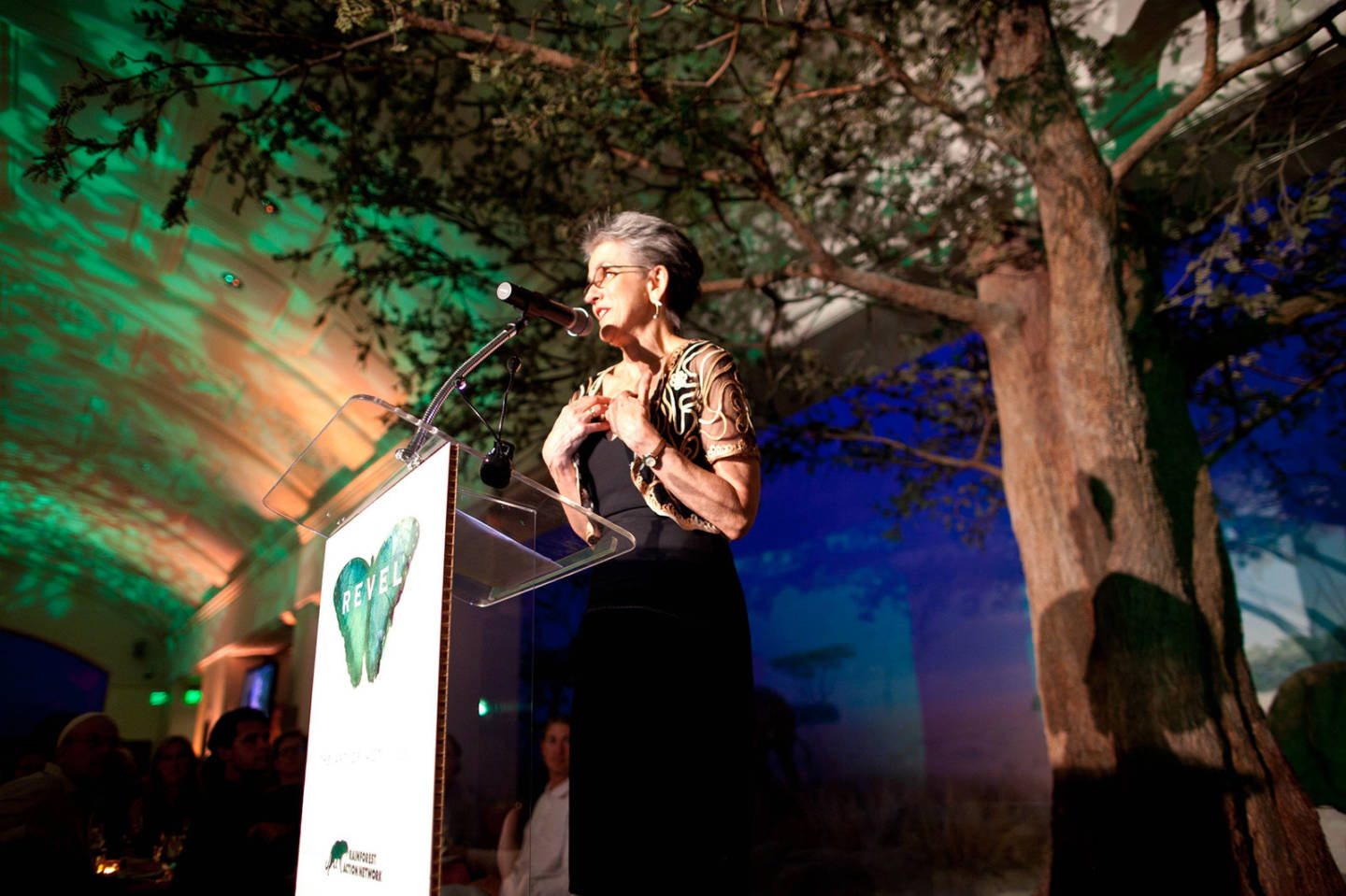
"caption": "Frances Moore Lappe speaks at a Rainforest Action Network event. When she wrote the best-selling Diet For A Small Planet back in 1971, she helped start a conversation about the social and environmental impacts of the foods we choose.",
"description": "Frances Moore Lappe speaks at a Rainforest Action Network event. When she wrote the best-selling Diet For A Small Planet back in 1971, she helped start a conversation about the social and environmental impacts of the foods we choose.",
"title": "francesmoorelappe_custom-26643367f2ff952a0c18bd5ea1895a083147b6ad-s1600-c85",
"credit": "Rainforest Action Network/Flickr",
"status": "inherit",
"isLoading": false,
"fetchFailed": false
},
"bayareabites_112076": {
"type": "attachments",
"id": "bayareabites_112076",
"meta": {
"index": "attachments_1716263798",
"site": "bayareabites",
"id": "112076",
"found": true
},
"parent": 112075,
"imgSizes": {
"twentyfourteen-full-width": {
"file": "https://ww2.kqed.org/app/uploads/sites/24/2016/09/sitwithus_enl-12238f9746f6c036970e17de33bf4113710d1c4b-1038x576.jpg",
"width": 1038,
"mimeType": "image/jpeg",
"height": 576
},
"thumbnail": {
"file": "https://ww2.kqed.org/app/uploads/sites/24/2016/09/sitwithus_enl-12238f9746f6c036970e17de33bf4113710d1c4b-400x266.jpg",
"width": 400,
"mimeType": "image/jpeg",
"height": 266
},
"fd-sm": {
"file": "https://ww2.kqed.org/app/uploads/sites/24/2016/09/sitwithus_enl-12238f9746f6c036970e17de33bf4113710d1c4b-960x639.jpg",
"width": 960,
"mimeType": "image/jpeg",
"height": 639
},
"post-thumbnail": {
"file": "https://ww2.kqed.org/app/uploads/sites/24/2016/09/sitwithus_enl-12238f9746f6c036970e17de33bf4113710d1c4b-672x372.jpg",
"width": 672,
"mimeType": "image/jpeg",
"height": 372
},
"kqedFullSize": {
"file": "https://ww2.kqed.org/app/uploads/sites/24/2016/09/sitwithus_enl-12238f9746f6c036970e17de33bf4113710d1c4b.jpg",
"width": 2000,
"height": 1331
},
"large": {
"file": "https://ww2.kqed.org/app/uploads/sites/24/2016/09/sitwithus_enl-12238f9746f6c036970e17de33bf4113710d1c4b-1440x958.jpg",
"width": 1440,
"mimeType": "image/jpeg",
"height": 958
},
"guest-author-50": {
"file": "https://ww2.kqed.org/app/uploads/sites/24/2016/09/sitwithus_enl-12238f9746f6c036970e17de33bf4113710d1c4b-50x50.jpg",
"width": 50,
"mimeType": "image/jpeg",
"height": 50
},
"guest-author-96": {
"file": "https://ww2.kqed.org/app/uploads/sites/24/2016/09/sitwithus_enl-12238f9746f6c036970e17de33bf4113710d1c4b-96x96.jpg",
"width": 96,
"mimeType": "image/jpeg",
"height": 96
},
"medium": {
"file": "https://ww2.kqed.org/app/uploads/sites/24/2016/09/sitwithus_enl-12238f9746f6c036970e17de33bf4113710d1c4b-800x532.jpg",
"width": 800,
"mimeType": "image/jpeg",
"height": 532
},
"guest-author-64": {
"file": "https://ww2.kqed.org/app/uploads/sites/24/2016/09/sitwithus_enl-12238f9746f6c036970e17de33bf4113710d1c4b-64x64.jpg",
"width": 64,
"mimeType": "image/jpeg",
"height": 64
},
"guest-author-32": {
"file": "https://ww2.kqed.org/app/uploads/sites/24/2016/09/sitwithus_enl-12238f9746f6c036970e17de33bf4113710d1c4b-32x32.jpg",
"width": 32,
"mimeType": "image/jpeg",
"height": 32
},
"cat_post_thumb_sizecategory-posts-2": {
"file": "https://ww2.kqed.org/app/uploads/sites/24/2016/09/sitwithus_enl-12238f9746f6c036970e17de33bf4113710d1c4b-150x150.jpg",
"width": 150,
"mimeType": "image/jpeg",
"height": 150
},
"fd-lrg": {
"file": "https://ww2.kqed.org/app/uploads/sites/24/2016/09/sitwithus_enl-12238f9746f6c036970e17de33bf4113710d1c4b-1920x1278.jpg",
"width": 1920,
"mimeType": "image/jpeg",
"height": 1278
},
"fd-med": {
"file": "https://ww2.kqed.org/app/uploads/sites/24/2016/09/sitwithus_enl-12238f9746f6c036970e17de33bf4113710d1c4b-1180x785.jpg",
"width": 1180,
"mimeType": "image/jpeg",
"height": 785
},
"detail": {
"file": "https://ww2.kqed.org/app/uploads/sites/24/2016/09/sitwithus_enl-12238f9746f6c036970e17de33bf4113710d1c4b-150x150.jpg",
"width": 150,
"mimeType": "image/jpeg",
"height": 150
},
"medium_large": {
"file": "https://ww2.kqed.org/app/uploads/sites/24/2016/09/sitwithus_enl-12238f9746f6c036970e17de33bf4113710d1c4b-768x511.jpg",
"width": 768,
"mimeType": "image/jpeg",
"height": 511
},
"guest-author-128": {
"file": "https://ww2.kqed.org/app/uploads/sites/24/2016/09/sitwithus_enl-12238f9746f6c036970e17de33bf4113710d1c4b-128x128.jpg",
"width": 128,
"mimeType": "image/jpeg",
"height": 128
}
},
"publishDate": 1473973352,
"modified": 1473973516,
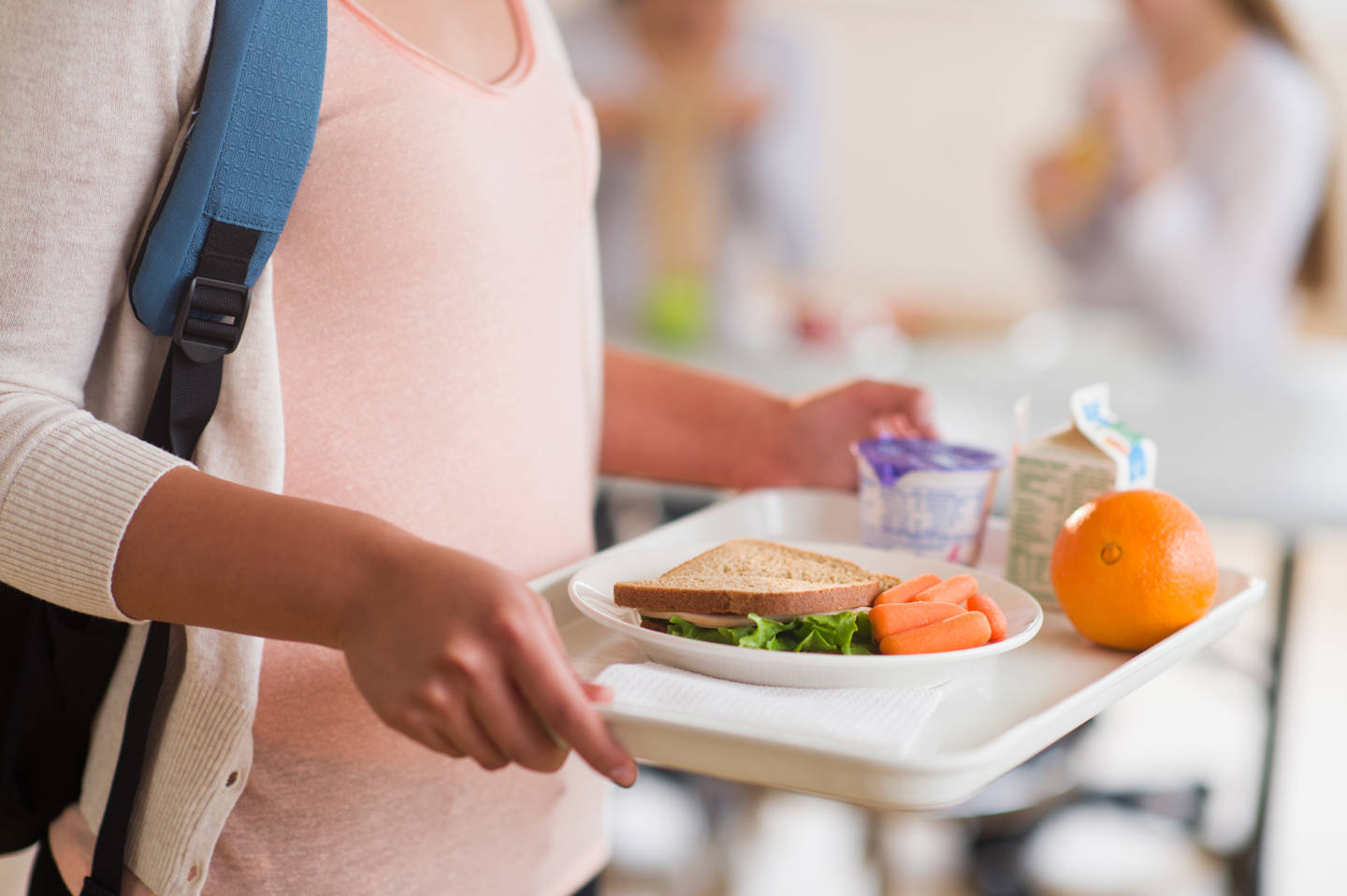
"caption": "School lunch can be intensely lonely when you don't have anyone to sit with. A new app aims to help change that.",
"description": "School lunch can be intensely lonely when you don't have anyone to sit with. A new app aims to help change that.",
"title": "School lunch can be intensely lonely when you don't have anyone to sit with. A new app aims to help change that.",
"credit": " Tetra Images/Getty Images",
"status": "inherit",
"isLoading": false,
"fetchFailed": false
},
"bayareabites_112071": {
"type": "attachments",
"id": "bayareabites_112071",
"meta": {
"index": "attachments_1716263798",
"site": "bayareabites",
"id": "112071",
"found": true
},
"parent": 112066,
"imgSizes": {
"thumbnail": {
"file": "https://ww2.kqed.org/app/uploads/sites/24/2016/09/IF-Burger-e1473381746973-400x243.jpg",
"width": 400,
"mimeType": "image/jpeg",
"height": 243
},
"post-thumbnail": {
"file": "https://ww2.kqed.org/app/uploads/sites/24/2016/09/IF-Burger-e1473381746973-672x372.jpg",
"width": 672,
"mimeType": "image/jpeg",
"height": 372
},
"kqedFullSize": {
"file": "https://ww2.kqed.org/app/uploads/sites/24/2016/09/IF-Burger-e1473381746973.jpg",
"width": 935,
"height": 567
},
"cat_post_thumb_sizecategory-posts-2": {
"file": "https://ww2.kqed.org/app/uploads/sites/24/2016/09/IF-Burger-e1473381746973-150x150.jpg",
"width": 150,
"mimeType": "image/jpeg",
"height": 150
},
"guest-author-50": {
"file": "https://ww2.kqed.org/app/uploads/sites/24/2016/09/IF-Burger-e1473381746973-50x50.jpg",
"width": 50,
"mimeType": "image/jpeg",
"height": 50
},
"guest-author-96": {
"file": "https://ww2.kqed.org/app/uploads/sites/24/2016/09/IF-Burger-e1473381746973-96x96.jpg",
"width": 96,
"mimeType": "image/jpeg",
"height": 96
},
"medium": {
"file": "https://ww2.kqed.org/app/uploads/sites/24/2016/09/IF-Burger-e1473381746973-800x485.jpg",
"width": 800,
"mimeType": "image/jpeg",
"height": 485
},
"guest-author-64": {
"file": "https://ww2.kqed.org/app/uploads/sites/24/2016/09/IF-Burger-e1473381746973-64x64.jpg",
"width": 64,
"mimeType": "image/jpeg",
"height": 64
},
"detail": {
"file": "https://ww2.kqed.org/app/uploads/sites/24/2016/09/IF-Burger-e1473381746973-150x150.jpg",
"width": 150,
"mimeType": "image/jpeg",
"height": 150
},
"guest-author-32": {
"file": "https://ww2.kqed.org/app/uploads/sites/24/2016/09/IF-Burger-e1473381746973-32x32.jpg",
"width": 32,
"mimeType": "image/jpeg",
"height": 32
},
"medium_large": {
"file": "https://ww2.kqed.org/app/uploads/sites/24/2016/09/IF-Burger-e1473381746973-768x466.jpg",
"width": 768,
"mimeType": "image/jpeg",
"height": 466
},
"guest-author-128": {
"file": "https://ww2.kqed.org/app/uploads/sites/24/2016/09/IF-Burger-e1473381746973-128x128.jpg",
"width": 128,
"mimeType": "image/jpeg",
"height": 128
}
},
"publishDate": 1473961190,
"modified": 1473961213,
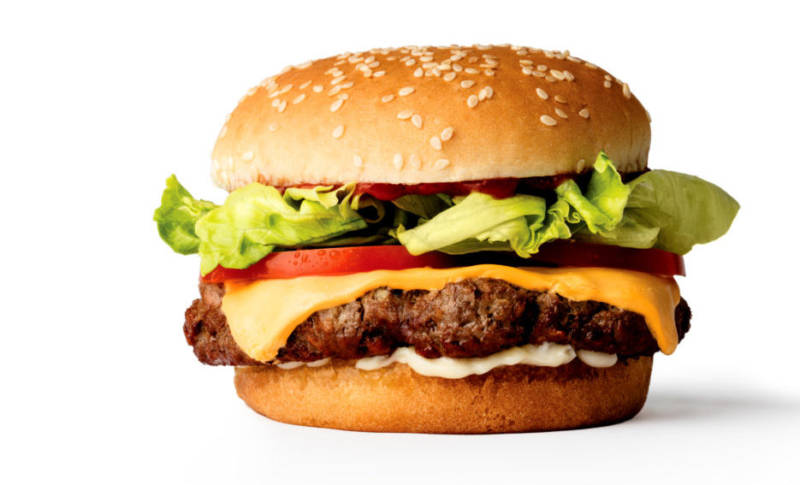
"caption": "A burger from Impossible Foods.",
"description": null,
"title": "IF-Burger-e1473381746973",
"credit": null,
"status": "inherit",
"isLoading": false,
"fetchFailed": false
},
"bayareabites_112023": {
"type": "attachments",
"id": "bayareabites_112023",
"meta": {
"index": "attachments_1716263798",
"site": "bayareabites",
"id": "112023",
"found": true
},
"parent": 112022,
"imgSizes": {
"twentyfourteen-full-width": {
"file": "https://ww2.kqed.org/app/uploads/sites/24/2016/09/archipelago_enl-24b5f448a34feadef782aedfd0e6e525500542b2-1-1038x576.jpg",
"width": 1038,
"mimeType": "image/jpeg",
"height": 576
},
"thumbnail": {
"file": "https://ww2.kqed.org/app/uploads/sites/24/2016/09/archipelago_enl-24b5f448a34feadef782aedfd0e6e525500542b2-1-400x266.jpg",
"width": 400,
"mimeType": "image/jpeg",
"height": 266
},
"fd-sm": {
"file": "https://ww2.kqed.org/app/uploads/sites/24/2016/09/archipelago_enl-24b5f448a34feadef782aedfd0e6e525500542b2-1-960x639.jpg",
"width": 960,
"mimeType": "image/jpeg",
"height": 639
},
"post-thumbnail": {
"file": "https://ww2.kqed.org/app/uploads/sites/24/2016/09/archipelago_enl-24b5f448a34feadef782aedfd0e6e525500542b2-1-672x372.jpg",
"width": 672,
"mimeType": "image/jpeg",
"height": 372
},
"kqedFullSize": {
"file": "https://ww2.kqed.org/app/uploads/sites/24/2016/09/archipelago_enl-24b5f448a34feadef782aedfd0e6e525500542b2-1.jpg",
"width": 2000,
"height": 1332
},
"large": {
"file": "https://ww2.kqed.org/app/uploads/sites/24/2016/09/archipelago_enl-24b5f448a34feadef782aedfd0e6e525500542b2-1-1440x959.jpg",
"width": 1440,
"mimeType": "image/jpeg",
"height": 959
},
"guest-author-50": {
"file": "https://ww2.kqed.org/app/uploads/sites/24/2016/09/archipelago_enl-24b5f448a34feadef782aedfd0e6e525500542b2-1-50x50.jpg",
"width": 50,
"mimeType": "image/jpeg",
"height": 50
},
"guest-author-96": {
"file": "https://ww2.kqed.org/app/uploads/sites/24/2016/09/archipelago_enl-24b5f448a34feadef782aedfd0e6e525500542b2-1-96x96.jpg",
"width": 96,
"mimeType": "image/jpeg",
"height": 96
},
"medium": {
"file": "https://ww2.kqed.org/app/uploads/sites/24/2016/09/archipelago_enl-24b5f448a34feadef782aedfd0e6e525500542b2-1-800x533.jpg",
"width": 800,
"mimeType": "image/jpeg",
"height": 533
},
"guest-author-64": {
"file": "https://ww2.kqed.org/app/uploads/sites/24/2016/09/archipelago_enl-24b5f448a34feadef782aedfd0e6e525500542b2-1-64x64.jpg",
"width": 64,
"mimeType": "image/jpeg",
"height": 64
},
"guest-author-32": {
"file": "https://ww2.kqed.org/app/uploads/sites/24/2016/09/archipelago_enl-24b5f448a34feadef782aedfd0e6e525500542b2-1-32x32.jpg",
"width": 32,
"mimeType": "image/jpeg",
"height": 32
},
"cat_post_thumb_sizecategory-posts-2": {
"file": "https://ww2.kqed.org/app/uploads/sites/24/2016/09/archipelago_enl-24b5f448a34feadef782aedfd0e6e525500542b2-1-150x150.jpg",
"width": 150,
"mimeType": "image/jpeg",
"height": 150
},
"fd-lrg": {
"file": "https://ww2.kqed.org/app/uploads/sites/24/2016/09/archipelago_enl-24b5f448a34feadef782aedfd0e6e525500542b2-1-1920x1279.jpg",
"width": 1920,
"mimeType": "image/jpeg",
"height": 1279
},
"fd-med": {
"file": "https://ww2.kqed.org/app/uploads/sites/24/2016/09/archipelago_enl-24b5f448a34feadef782aedfd0e6e525500542b2-1-1180x786.jpg",
"width": 1180,
"mimeType": "image/jpeg",
"height": 786
},
"detail": {
"file": "https://ww2.kqed.org/app/uploads/sites/24/2016/09/archipelago_enl-24b5f448a34feadef782aedfd0e6e525500542b2-1-150x150.jpg",
"width": 150,
"mimeType": "image/jpeg",
"height": 150
},
"medium_large": {
"file": "https://ww2.kqed.org/app/uploads/sites/24/2016/09/archipelago_enl-24b5f448a34feadef782aedfd0e6e525500542b2-1-768x511.jpg",
"width": 768,
"mimeType": "image/jpeg",
"height": 511
},
"guest-author-128": {
"file": "https://ww2.kqed.org/app/uploads/sites/24/2016/09/archipelago_enl-24b5f448a34feadef782aedfd0e6e525500542b2-1-128x128.jpg",
"width": 128,
"mimeType": "image/jpeg",
"height": 128
}
},
"publishDate": 1473459468,
"modified": 1473459763,
"caption": "Archipelago, in Washington, D.C., is among a wave of new tiki bars across the country. But how do South Pacific islanders feel about tiki kitsch?",
"description": "Archipelago, in Washington, D.C., is among a wave of new tiki bars across the country. But how do South Pacific islanders feel about tiki kitsch?",
"title": "Archipelago, in Washington, D.C., is among a wave of new tiki bars across the country. But how do South Pacific islanders feel about tiki kitsch?",
"credit": "Frank N. Carlson/Courtesy of Archipelago",
"status": "inherit",
"isLoading": false,
"fetchFailed": false
},
"bayareabites_111825": {
"type": "attachments",
"id": "bayareabites_111825",
"meta": {
"index": "attachments_1716263798",
"site": "bayareabites",
"id": "111825",
"found": true
},
"parent": 111823,
"imgSizes": {
"thumbnail": {
"file": "https://ww2.kqed.org/app/uploads/sites/24/2016/08/coops-680x449-400x264.jpg",
"width": 400,
"mimeType": "image/jpeg",
"height": 264
},
"post-thumbnail": {
"file": "https://ww2.kqed.org/app/uploads/sites/24/2016/08/coops-680x449-672x372.jpg",
"width": 672,
"mimeType": "image/jpeg",
"height": 372
},
"kqedFullSize": {
"file": "https://ww2.kqed.org/app/uploads/sites/24/2016/08/coops-680x449.jpg",
"width": 680,
"height": 449
},
"cat_post_thumb_sizecategory-posts-2": {
"file": "https://ww2.kqed.org/app/uploads/sites/24/2016/08/coops-680x449-150x150.jpg",
"width": 150,
"mimeType": "image/jpeg",
"height": 150
},
"guest-author-50": {
"file": "https://ww2.kqed.org/app/uploads/sites/24/2016/08/coops-680x449-50x50.jpg",
"width": 50,
"mimeType": "image/jpeg",
"height": 50
},
"guest-author-96": {
"file": "https://ww2.kqed.org/app/uploads/sites/24/2016/08/coops-680x449-96x96.jpg",
"width": 96,
"mimeType": "image/jpeg",
"height": 96
},
"guest-author-64": {
"file": "https://ww2.kqed.org/app/uploads/sites/24/2016/08/coops-680x449-64x64.jpg",
"width": 64,
"mimeType": "image/jpeg",
"height": 64
},
"detail": {
"file": "https://ww2.kqed.org/app/uploads/sites/24/2016/08/coops-680x449-150x150.jpg",
"width": 150,
"mimeType": "image/jpeg",
"height": 150
},
"guest-author-32": {
"file": "https://ww2.kqed.org/app/uploads/sites/24/2016/08/coops-680x449-32x32.jpg",
"width": 32,
"mimeType": "image/jpeg",
"height": 32
},
"guest-author-128": {
"file": "https://ww2.kqed.org/app/uploads/sites/24/2016/08/coops-680x449-128x128.jpg",
"width": 128,
"mimeType": "image/jpeg",
"height": 128
}
},
"publishDate": 1472688035,
"modified": 1472688035,
"caption": null,
"description": null,
"title": "coops-680x449",
"credit": null,
"status": "inherit",
"isLoading": false,
"fetchFailed": false
},
"bayareabites_111836": {
"type": "attachments",
"id": "bayareabites_111836",
"meta": {
"index": "attachments_1716263798",
"site": "bayareabites",
"id": "111836",
"found": true
},
"parent": 111835,
"imgSizes": {
"twentyfourteen-full-width": {
"file": "https://ww2.kqed.org/app/uploads/sites/24/2016/09/everytableexterior_enl-6e6465074f251ef9dc92cb8365b3e75cb7ee8021-1038x576.jpg",
"width": 1038,
"mimeType": "image/jpeg",
"height": 576
},
"thumbnail": {
"file": "https://ww2.kqed.org/app/uploads/sites/24/2016/09/everytableexterior_enl-6e6465074f251ef9dc92cb8365b3e75cb7ee8021-400x266.jpg",
"width": 400,
"mimeType": "image/jpeg",
"height": 266
},
"fd-sm": {
"file": "https://ww2.kqed.org/app/uploads/sites/24/2016/09/everytableexterior_enl-6e6465074f251ef9dc92cb8365b3e75cb7ee8021-960x639.jpg",
"width": 960,
"mimeType": "image/jpeg",
"height": 639
},
"post-thumbnail": {
"file": "https://ww2.kqed.org/app/uploads/sites/24/2016/09/everytableexterior_enl-6e6465074f251ef9dc92cb8365b3e75cb7ee8021-672x372.jpg",
"width": 672,
"mimeType": "image/jpeg",
"height": 372
},
"kqedFullSize": {
"file": "https://ww2.kqed.org/app/uploads/sites/24/2016/09/everytableexterior_enl-6e6465074f251ef9dc92cb8365b3e75cb7ee8021.jpg",
"width": 2000,
"height": 1332
},
"large": {
"file": "https://ww2.kqed.org/app/uploads/sites/24/2016/09/everytableexterior_enl-6e6465074f251ef9dc92cb8365b3e75cb7ee8021-1440x959.jpg",
"width": 1440,
"mimeType": "image/jpeg",
"height": 959
},
"guest-author-50": {
"file": "https://ww2.kqed.org/app/uploads/sites/24/2016/09/everytableexterior_enl-6e6465074f251ef9dc92cb8365b3e75cb7ee8021-50x50.jpg",
"width": 50,
"mimeType": "image/jpeg",
"height": 50
},
"guest-author-96": {
"file": "https://ww2.kqed.org/app/uploads/sites/24/2016/09/everytableexterior_enl-6e6465074f251ef9dc92cb8365b3e75cb7ee8021-96x96.jpg",
"width": 96,
"mimeType": "image/jpeg",
"height": 96
},
"medium": {
"file": "https://ww2.kqed.org/app/uploads/sites/24/2016/09/everytableexterior_enl-6e6465074f251ef9dc92cb8365b3e75cb7ee8021-800x533.jpg",
"width": 800,
"mimeType": "image/jpeg",
"height": 533
},
"guest-author-64": {
"file": "https://ww2.kqed.org/app/uploads/sites/24/2016/09/everytableexterior_enl-6e6465074f251ef9dc92cb8365b3e75cb7ee8021-64x64.jpg",
"width": 64,
"mimeType": "image/jpeg",
"height": 64
},
"guest-author-32": {
"file": "https://ww2.kqed.org/app/uploads/sites/24/2016/09/everytableexterior_enl-6e6465074f251ef9dc92cb8365b3e75cb7ee8021-32x32.jpg",
"width": 32,
"mimeType": "image/jpeg",
"height": 32
},
"cat_post_thumb_sizecategory-posts-2": {
"file": "https://ww2.kqed.org/app/uploads/sites/24/2016/09/everytableexterior_enl-6e6465074f251ef9dc92cb8365b3e75cb7ee8021-150x150.jpg",
"width": 150,
"mimeType": "image/jpeg",
"height": 150
},
"fd-lrg": {
"file": "https://ww2.kqed.org/app/uploads/sites/24/2016/09/everytableexterior_enl-6e6465074f251ef9dc92cb8365b3e75cb7ee8021-1920x1279.jpg",
"width": 1920,
"mimeType": "image/jpeg",
"height": 1279
},
"fd-med": {
"file": "https://ww2.kqed.org/app/uploads/sites/24/2016/09/everytableexterior_enl-6e6465074f251ef9dc92cb8365b3e75cb7ee8021-1180x786.jpg",
"width": 1180,
"mimeType": "image/jpeg",
"height": 786
},
"detail": {
"file": "https://ww2.kqed.org/app/uploads/sites/24/2016/09/everytableexterior_enl-6e6465074f251ef9dc92cb8365b3e75cb7ee8021-150x150.jpg",
"width": 150,
"mimeType": "image/jpeg",
"height": 150
},
"medium_large": {
"file": "https://ww2.kqed.org/app/uploads/sites/24/2016/09/everytableexterior_enl-6e6465074f251ef9dc92cb8365b3e75cb7ee8021-768x511.jpg",
"width": 768,
"mimeType": "image/jpeg",
"height": 511
},
"guest-author-128": {
"file": "https://ww2.kqed.org/app/uploads/sites/24/2016/09/everytableexterior_enl-6e6465074f251ef9dc92cb8365b3e75cb7ee8021-128x128.jpg",
"width": 128,
"mimeType": "image/jpeg",
"height": 128
}
},
"publishDate": 1472842730,
"modified": 1473207748,
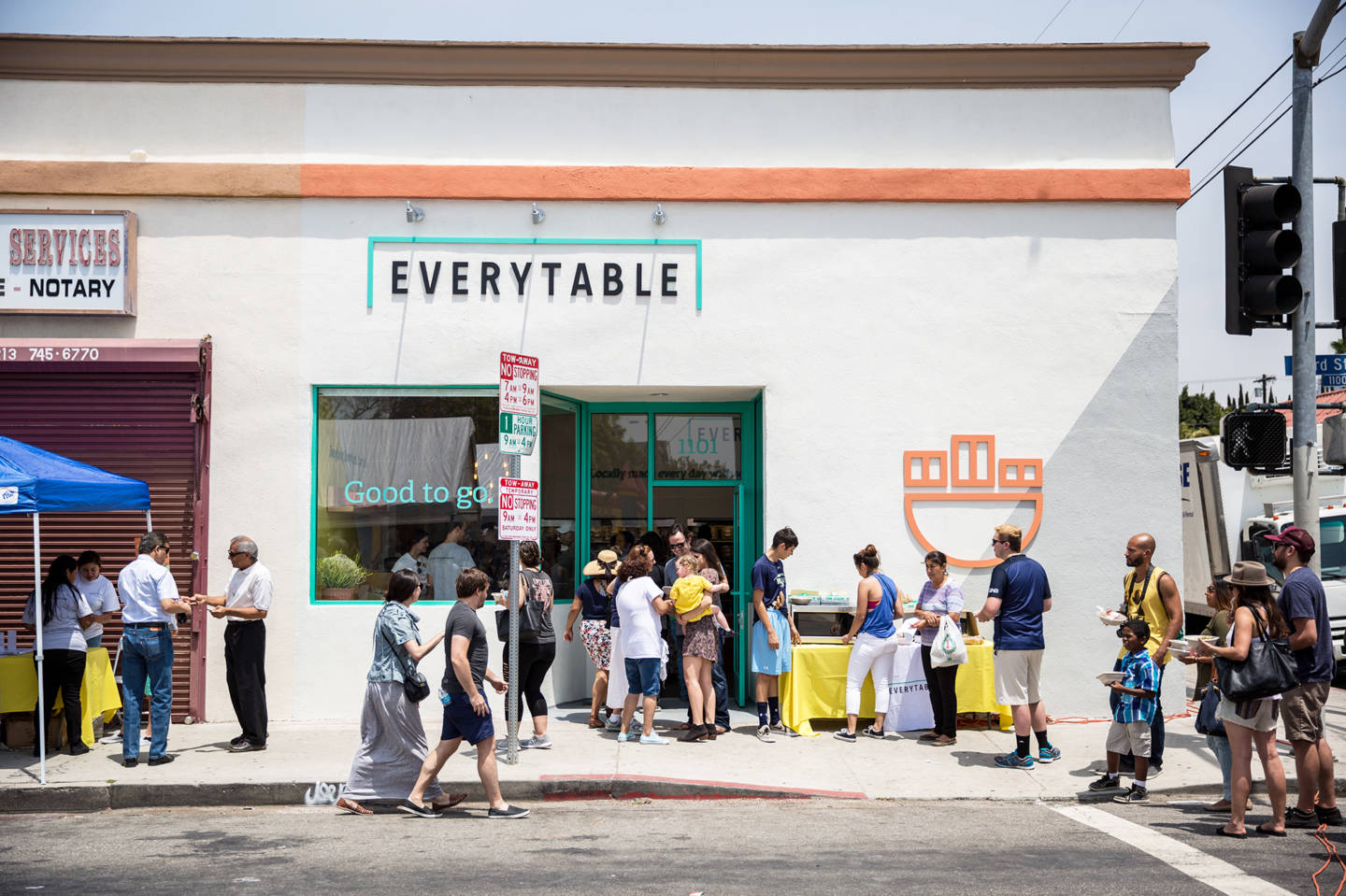
"caption": "Everytable opened its first location, in South Los Angeles, on July 30.",
"description": "Everytable opened its first location, in South Los Angeles, on July 30",
"title": "Everytable opened its first location, in South Los Angeles, on July 30.",
"credit": " Courtesy of Everytable",
"status": "inherit",
"isLoading": false,
"fetchFailed": false
}
},
"audioPlayerReducer": {
"postId": "stream_live",
"isPaused": true,
"isPlaying": false,
"pfsActive": false,
"pledgeModalIsOpen": true,
"playerDrawerIsOpen": false,
"liveAudioPlayStartedAt": 0,
"liveAudioPlayContext": ""
},
"authorsReducer": {
"byline_bayareabites_112585": {
"type": "authors",
"id": "byline_bayareabites_112585",
"meta": {
"override": true
},
"slug": "byline_bayareabites_112585",
"name": "Rhitu Chatterjee, \u003ca href=\"https://ww2.kqed.org/bayareabites/author/nprfood/\">NPR Food\u003c/a>",
"isLoading": false
},
"byline_bayareabites_112539": {
"type": "authors",
"id": "byline_bayareabites_112539",
"meta": {
"override": true
},
"slug": "byline_bayareabites_112539",
"name": "Tove Danovich, \u003ca href=\"https://ww2.kqed.org/bayareabites/author/nprfood/\">NPR Food\u003c/a>",
"isLoading": false
},
"byline_bayareabites_112485": {
"type": "authors",
"id": "byline_bayareabites_112485",
"meta": {
"override": true
},
"slug": "byline_bayareabites_112485",
"name": "Allison Aubrey, NPR Food",
"isLoading": false
},
"byline_bayareabites_112434": {
"type": "authors",
"id": "byline_bayareabites_112434",
"meta": {
"override": true
},
"slug": "byline_bayareabites_112434",
"name": "Aarti Shahani, NPR Food",
"isLoading": false
},
"byline_bayareabites_112409": {
"type": "authors",
"id": "byline_bayareabites_112409",
"meta": {
"override": true
},
"slug": "byline_bayareabites_112409",
"name": "Elise Hu, NPR Food",
"isLoading": false
},
"byline_bayareabites_112197": {
"type": "authors",
"id": "byline_bayareabites_112197",
"meta": {
"override": true
},
"slug": "byline_bayareabites_112197",
"name": "Allison Aubrey, NPR Food",
"isLoading": false
},
"byline_bayareabites_112066": {
"type": "authors",
"id": "byline_bayareabites_112066",
"meta": {
"override": true
},
"slug": "byline_bayareabites_112066",
"name": "\u003ca href=\"http://civileats.com/author/tgreenaway/\">Twilight Greenaway\u003c/a>, \u003ca href=\"https://ww2.kqed.org/bayareabites/author/civileat/\">Civil Eats\u003c/a>",
"isLoading": false
},
"byline_bayareabites_112022": {
"type": "authors",
"id": "byline_bayareabites_112022",
"meta": {
"override": true
},
"slug": "byline_bayareabites_112022",
"name": "Maanvi Singh, NPR Food",
"isLoading": false
},
"byline_bayareabites_111823": {
"type": "authors",
"id": "byline_bayareabites_111823",
"meta": {
"override": true
},
"slug": "byline_bayareabites_111823",
"name": "Kathleen Bauer, \u003ca href=\"https://ww2.kqed.org/bayareabites/author/civileat/\">Civil Eats\u003c/a>",
"isLoading": false
},
"nprfood": {
"type": "authors",
"id": "5403",
"meta": {
"index": "authors_1716337520",
"id": "5403",
"found": true
},
"name": "NPR Food",
"firstName": "NPR Food",
"lastName": null,
"slug": "nprfood",
"email": "nprfood@kqed.org",
"display_author_email": false,
"staff_mastheads": [],
"title": null,
"bio": "Food and Health-related stories from NPR including NPR Radio; NPR's food blog, \"The Salt\"; NPR's Health News blog, \"Shots\"; NPR's Breaking News blog \"The Two-Way\"; NPR's global stories blog \"Goats and Soda,\" NPR's economy explainer \"Planet Money\"; food-related technology news from NPR's \"All Tech Considered\"; and food series \"Kitchen Window.\"",
"avatar": "https://secure.gravatar.com/avatar/c4b735bb26404fa18ce2447d32e64291?s=600&d=blank&r=g",
"twitter": "nprfood",
"facebook": null,
"instagram": null,
"linkedin": null,
"sites": [
{
"site": "bayareabites",
"roles": [
"contributor"
]
},
{
"site": "food",
"roles": [
"contributor"
]
}
],
"headData": {
"title": "NPR Food | KQED",
"description": null,
"ogImgSrc": "https://secure.gravatar.com/avatar/c4b735bb26404fa18ce2447d32e64291?s=600&d=blank&r=g",
"twImgSrc": "https://secure.gravatar.com/avatar/c4b735bb26404fa18ce2447d32e64291?s=600&d=blank&r=g"
},
"isLoading": false,
"link": "/author/nprfood"
}
},
"pagesReducer": {
"bayareabites_category_food-and-technology": {
"type": "terms",
"id": "bayareabites_4084",
"meta": {
"index": "terms_1716263798",
"site": "bayareabites",
"id": "4084",
"score": 14.405603
},
"featImg": null,
"name": "food trends and technology",
"description": null,
"taxonomy": "category",
"headData": {
"twImgId": null,
"twTitle": null,
"ogTitle": null,
"ogImgId": null,
"twDescription": null,
"description": null,
"title": "food trends and technology Archives | KQED Bay Area Bites",
"ogDescription": null
},
"ttid": 2573,
"slug": "food-and-technology",
"isLoading": false,
"title": "food trends and technology",
"pageMeta": {
"site": "bayareabites",
"WpPageTemplate": "page-topic-editorial",
"currentPage": 17
},
"blocks": [
{
"blockName": "kqed/post-list",
"attrs": {
"layout": "cardArticle2",
"query": "posts/bayareabites?category=food-and-technology",
"seeMore": false,
"paginated": true,
"page": 17
}
},
{
"blockName": "kqed/ad"
}
]
}
},
"pfsSessionReducer": {},
"postsReducer": {
"stream_live": {
"type": "live",
"id": "stream_live",
"audioUrl": "https://streams.kqed.org/kqedradio",
"title": "Live Stream",
"excerpt": "Live Stream information currently unavailable.",
"link": "/radio",
"featImg": "",
"label": {
"name": "KQED Live",
"link": "/"
}
},
"stream_kqedNewscast": {
"type": "posts",
"id": "stream_kqedNewscast",
"audioUrl": "https://www.kqed.org/.stream/anon/radio/RDnews/newscast.mp3?_=1",
"title": "KQED Newscast",
"featImg": "",
"label": {
"name": "88.5 FM",
"link": "/"
}
},
"bayareabites_112585": {
"type": "posts",
"id": "bayareabites_112585",
"meta": {
"index": "posts_1716263798",
"site": "bayareabites",
"id": "112585",
"score": null,
"sort": [
1475965376000
]
},
"parent": 0,
"labelTerm": {},
"blocks": [],
"publishDate": 1475965376,
"format": "standard",
"disqusTitle": "Across The Globe, Our Diets Are Making Us Sicker, Report Finds",
"title": "Across The Globe, Our Diets Are Making Us Sicker, Report Finds",
"headTitle": "Bay Area Bites | KQED Food",
"content": "\u003cp>Diet and nutrition are now the biggest risk factors for people's health across the globe, even in poorer countries. That's according to a recent \u003ca href=\"http://www.glopan.org/foresight\">report\u003c/a> published by the \u003ca href=\"http://www.glopan.org/about\">Global Panel on Agriculture and Food Systems Nutrition\u003c/a>, an independent group of experts on nutrition and health.\u003c/p>\n\u003cp>\"If you look at all the diet-related risk factors for health, they outweigh the burden of all of the other risk factors combined,\" says \u003ca href=\"http://www.ifpri.org/profile/lawrence-haddad\">Lawrence Haddad\u003c/a>, an author on the report and formerly, a senior fellow with the International Food Policy Research Institute. The other risk factors include unsafe sex, alcohol, drug and tobacco use.\u003c/p>\n\u003cp>The report, which uses some recent data on what people around the world are eating, offers some good news, too. We have fewer hungry people in the world now than a couple of decades ago – only one in 10 people, as opposed to about one in five in 1990. And the number of stunted (a sign of chronic malnutrition) children has decreased from 39.6 percent to 23.8 percent. That means fewer people suffering and dying from insufficient food. This has been possible because of targeted projects to tackle hunger, as well as overall reductions in poverty, better education, improved health care and sanitation.\u003c/p>\n\u003cp>As poorer countries have developed over the past couple of decades, many aspects of life in those countries have gotten better, says Haddad, who is now the executive director of the \u003ca href=\"http://www.gainhealth.org/\">Global Alliance for Improved Nutrition\u003c/a>, a non-governmental organization. \"More kids go to school, more clean water and sanitation,\" he says. But diet doesn't necessarily get better with higher incomes. Yes, people eat more healthy foods when they earn more money – for example, milk, fruits and seafood. But their consumption of unhealthy foods – processed foods and sugary drinks – increases much more with rising incomes, according to the report. \"These kinds of things, they have very high concentrations of calories,\" says Haddad.\u003c/p>\n\u003cp>In fact, the sale of processed foods is growing at the fastest rate in developing countries, the report finds. \"Income is sort of a double-edged sword. It allows us to buy healthy stuff and also unhealthy stuff,\" says Haddad.\u003c/p>\n\u003cp>[ad fullwidth]\u003c/p>\n\u003cp>As a result, the planet is seeing a rapid rise in rates of overweight and obesity. If current trends continue, we may have as many as 3.28 billion overweight and obese people by 2030 (up from 1.33 billion in 2005), the vast majority of them in low- and middle-income countries. For example, in China, \"the combined rate of overweight and obese adults is projected to rise to over 50 percent by 2030,\" the report notes.\u003c/p>\n\u003cp>What follows is a concomitant rise in the rates of diet-related health problems. For example, in Nigeria, the number of adults with diabetes is projected to double between 2011 and 2030, from 3.1 million to 6.1 million. Countries like Nigeria are simultaneously facing the burden of hunger, malnutrition, infectious disease, as well as these diet-related, non-communicable diseases that are expensive to treat. The report estimates an annual loss of 10 percent of global GDP from diet-related illnesses. \"Wake up, world!\" says Haddad. \"Our diet is not killing us, but it's making us sick.\"\u003c/p>\n\u003cp>The report blames these trends on changing food environments in most countries. Healthy foods are becoming increasingly expensive the world over, while unhealthy food is becoming cheaper and easier to buy. \"The price of fruits and vegetables is going up and up,\" he says. \"The price of processed foods is going down and down.\" In other words, it is becoming easier and more economical to buy unhealthy foods.\u003c/p>\n\u003cfigure id=\"attachment_112587\" class=\"wp-caption aligncenter\" style=\"max-width: 2000px\">\u003cimg src=\"http://ww2.kqed.org/bayareabites/wp-content/uploads/sites/24/2016/10/world-diet-3_enl-36c8bc254b44e1bb0fab6826160837745dc79b4e.jpg\" alt=\"Pedestrians visit fast-food restaurants in Mumbai, India. Rapid urbanization in many developing countries is driving the demand for fast foods and highly processed, packaged foods.\" width=\"2000\" height=\"1283\" class=\"size-full wp-image-112587\" srcset=\"https://ww2.kqed.org/app/uploads/sites/24/2016/10/world-diet-3_enl-36c8bc254b44e1bb0fab6826160837745dc79b4e.jpg 2000w, https://ww2.kqed.org/app/uploads/sites/24/2016/10/world-diet-3_enl-36c8bc254b44e1bb0fab6826160837745dc79b4e-400x257.jpg 400w, https://ww2.kqed.org/app/uploads/sites/24/2016/10/world-diet-3_enl-36c8bc254b44e1bb0fab6826160837745dc79b4e-800x513.jpg 800w, https://ww2.kqed.org/app/uploads/sites/24/2016/10/world-diet-3_enl-36c8bc254b44e1bb0fab6826160837745dc79b4e-768x493.jpg 768w, https://ww2.kqed.org/app/uploads/sites/24/2016/10/world-diet-3_enl-36c8bc254b44e1bb0fab6826160837745dc79b4e-1440x924.jpg 1440w, https://ww2.kqed.org/app/uploads/sites/24/2016/10/world-diet-3_enl-36c8bc254b44e1bb0fab6826160837745dc79b4e-1180x757.jpg 1180w, https://ww2.kqed.org/app/uploads/sites/24/2016/10/world-diet-3_enl-36c8bc254b44e1bb0fab6826160837745dc79b4e-960x616.jpg 960w\" sizes=\"(max-width: 2000px) 100vw, 2000px\">\u003cfigcaption class=\"wp-caption-text\">Pedestrians visit fast-food restaurants in Mumbai, India. Rapid urbanization in many developing countries is driving the demand for fast foods and highly processed, packaged foods. \u003ccite>(Aniruddha Chowhdury/Mint/Hindustan Times via Getty Images)\u003c/cite>\u003c/figcaption>\u003c/figure>\n\u003cp>These changes are happening even in remote and poor corners of the globe, says \u003ca href=\"http://www.bioethicsinstitute.org/people/jessica-fanzo\">Jessica Fanzo\u003c/a>, a nutrition and diet expert at Johns Hopkins University, who wasn't involved in the report. On a recent trip to Kenya, Fanzo visited a remote place in the northeastern part of the country called Gotu, where food and water are scarce. Local communities are mostly pastoralists who rely on food being shipped in on bad roads from a nearby town called Isiolo. Pulses, fruits and vegetables are difficult to find, says Fanzo, but \"you can get soda there.\" \"It's warm soda, but it's soda!\"\u003c/p>\n\u003cp>Globalization has changed food environments in most countries, according to the report, allowing many multinational food companies selling processed foods to enter developing country markets. And rapid urbanization is also playing a role.\u003c/p>\n\u003cp>On the one hand, farmers in many countries are giving up farming and moving to cities. \"Who's going to feed us, and feed us well?\" says Fanzo.\u003c/p>\n\u003cp>On the other hand, people moving to cities are increasingly turning to street food or processed food, because they don't have time and they want to save money. \"If you're a person holding down two or three jobs and you don't take a lot of time, it makes sense,\" says Fanzo. And that's where food industries are stepping in and catering to the three things that consumers look for – \"taste, price and convenience,\" she says. \"They try to satisfy those primary reasons for choice.\"\u003c/p>\n\u003cp>\"One of the problems is that there are lots of solutions, but they are not being enacted,\" Haddad says. Most developing countries are still dealing with basic challenges like water and sanitation, he adds. \"Maybe there's a lack of realization of the magnitude of the problem or lack of appreciation that you can do something about it.\"\u003c/p>\n\u003cp>That's where the new report can help, he says, because it offers concrete solutions to make it easier for people to buy healthy food. For example, countries should invest more money into research on and development of crops like pulses, vegetables and fruits (instead of all the funding that goes into growing stapes like rice, wheat and corn). \"Vegetable consumption has been flat for the past 20 years,\" notes Haddad. \"Pulse consumption has been flat.\" That's because the prices of vegetables and pulses have gone up in recent years. More funds and subsidies on these crops would help lower prices, and encourage people to eat more of these healthy foods, he says.\u003c/p>\n\u003cfigure id=\"attachment_112588\" class=\"wp-caption aligncenter\" style=\"max-width: 2000px\">\u003cimg src=\"http://ww2.kqed.org/bayareabites/wp-content/uploads/sites/24/2016/10/world-diet-2_enl-a7a92700b6ac958eddf5c70cf98ef427a5c94bbf.jpg\" alt=\"A man works in a hydroponic tomato farm in Bingerville, Côte d'Ivoire. According to a new report, governments should help make fruits and vegetables more affordable, so people are more likely to eat them.\" width=\"2000\" height=\"1335\" class=\"size-full wp-image-112588\" srcset=\"https://ww2.kqed.org/app/uploads/sites/24/2016/10/world-diet-2_enl-a7a92700b6ac958eddf5c70cf98ef427a5c94bbf.jpg 2000w, https://ww2.kqed.org/app/uploads/sites/24/2016/10/world-diet-2_enl-a7a92700b6ac958eddf5c70cf98ef427a5c94bbf-400x267.jpg 400w, https://ww2.kqed.org/app/uploads/sites/24/2016/10/world-diet-2_enl-a7a92700b6ac958eddf5c70cf98ef427a5c94bbf-800x534.jpg 800w, https://ww2.kqed.org/app/uploads/sites/24/2016/10/world-diet-2_enl-a7a92700b6ac958eddf5c70cf98ef427a5c94bbf-768x513.jpg 768w, https://ww2.kqed.org/app/uploads/sites/24/2016/10/world-diet-2_enl-a7a92700b6ac958eddf5c70cf98ef427a5c94bbf-1440x961.jpg 1440w, https://ww2.kqed.org/app/uploads/sites/24/2016/10/world-diet-2_enl-a7a92700b6ac958eddf5c70cf98ef427a5c94bbf-1180x788.jpg 1180w, https://ww2.kqed.org/app/uploads/sites/24/2016/10/world-diet-2_enl-a7a92700b6ac958eddf5c70cf98ef427a5c94bbf-960x641.jpg 960w\" sizes=\"(max-width: 2000px) 100vw, 2000px\">\u003cfigcaption class=\"wp-caption-text\">A man works in a hydroponic tomato farm in Bingerville, Côte d'Ivoire. According to a new report, governments should help make fruits and vegetables more affordable, so people are more likely to eat them. \u003ccite>(Sia Kambou/AFP/Getty Images)\u003c/cite>\u003c/figcaption>\u003c/figure>\n\u003cp>The burden of solving the planet's diet problems doesn't just fall on the shoulders of consumers, says Fanzo. \"It's also on governments.\" And governments will benefit from the solutions offered by the new report, she says. But \"we'll need lots of different solutions contextualized at the local level,\" she cautions. That's because every place has its food traditions, and while there are similarities, there are also differences between the drivers of bad diet in parts of the world. \"It's a complex problem,\" she says. \"And it's not a quick fix.\" \u003c/p>\n\u003cp>[ad floatright]\u003c/p>\n\u003cp>\u003cem>Copyright 2016 \u003ca href=\"http://www.npr.org/\" target=\"_blank\">NPR\u003c/a>.\u003c/em>\u003c/p>\n\n",
"disqusIdentifier": "112585 http://ww2.kqed.org/bayareabites/?p=112585",
"disqusUrl": "https://ww2.kqed.org/bayareabites/2016/10/08/across-the-globe-our-diets-are-making-us-sicker-report-finds/",
"stats": {
"hasVideo": false,
"hasChartOrMap": false,
"hasAudio": false,
"hasPolis": false,
"wordCount": 1216,
"hasGoogleForm": false,
"hasGallery": false,
"hasHearkenModule": false,
"iframeSrcs": [],
"paragraphCount": 18
},
"modified": 1475965472,
"excerpt": "The good news: fewer hungry people around the world. The bad news: Increased consumption of processed foods is pushing up global rates of overweight and obesity.",
"headData": {
"twImgId": "",
"twTitle": "",
"ogTitle": "",
"ogImgId": "",
"twDescription": "",
"description": "The good news: fewer hungry people around the world. The bad news: Increased consumption of processed foods is pushing up global rates of overweight and obesity.",
"title": "Across The Globe, Our Diets Are Making Us Sicker, Report Finds | KQED",
"ogDescription": "",
"schema": {
"@context": "https://schema.org",
"@type": "Article",
"headline": "Across The Globe, Our Diets Are Making Us Sicker, Report Finds",
"datePublished": "2016-10-08T15:22:56-07:00",
"dateModified": "2016-10-08T15:24:32-07:00",
"image": "https://cdn.kqed.org/wp-content/uploads/2020/02/KQED-OG-Image@1x.png"
}
},
"guestAuthors": [],
"slug": "across-the-globe-our-diets-are-making-us-sicker-report-finds",
"status": "publish",
"sourceUrl": "https://ww2.kqed.org/bayareabites/category/health-and-nutrition/",
"nprApiLink": "http://api.npr.org/query?id=497042318&apiKey=MDAxOTAwOTE4MDEyMTkxMDAzNjczZDljZA004",
"nprByline": "Rhitu Chatterjee, \u003ca href=\"https://ww2.kqed.org/bayareabites/author/nprfood/\">NPR Food\u003c/a>",
"nprStoryDate": "Sat, 08 Oct 2016 07:00:03 -0400",
"nprLastModifiedDate": "Sat, 08 Oct 2016 07:00:03 -0400",
"nprHtmlLink": "http://www.npr.org/sections/thesalt/2016/10/08/497042318/diet-and-nutrition-are-now-the-world-s-biggest-health-risks-report-finds?ft=nprml&f=497042318",
"nprImageAgency": "AFP/Getty Images",
"nprImageCredit": "Indranil Mukherjee",
"source": "Health and Nutrition",
"nprStoryId": "497042318",
"nprRetrievedStory": "1",
"nprPubDate": "Sat, 08 Oct 2016 07:00:00 -0400",
"path": "/bayareabites/112585/across-the-globe-our-diets-are-making-us-sicker-report-finds",
"audioTrackLength": null,
"parsedContent": [
{
"type": "contentString",
"content": "\u003cdiv class=\"post-body\">\u003cp>\u003cp>Diet and nutrition are now the biggest risk factors for people's health across the globe, even in poorer countries. That's according to a recent \u003ca href=\"http://www.glopan.org/foresight\">report\u003c/a> published by the \u003ca href=\"http://www.glopan.org/about\">Global Panel on Agriculture and Food Systems Nutrition\u003c/a>, an independent group of experts on nutrition and health.\u003c/p>\n\u003cp>\"If you look at all the diet-related risk factors for health, they outweigh the burden of all of the other risk factors combined,\" says \u003ca href=\"http://www.ifpri.org/profile/lawrence-haddad\">Lawrence Haddad\u003c/a>, an author on the report and formerly, a senior fellow with the International Food Policy Research Institute. The other risk factors include unsafe sex, alcohol, drug and tobacco use.\u003c/p>\n\u003cp>The report, which uses some recent data on what people around the world are eating, offers some good news, too. We have fewer hungry people in the world now than a couple of decades ago – only one in 10 people, as opposed to about one in five in 1990. And the number of stunted (a sign of chronic malnutrition) children has decreased from 39.6 percent to 23.8 percent. That means fewer people suffering and dying from insufficient food. This has been possible because of targeted projects to tackle hunger, as well as overall reductions in poverty, better education, improved health care and sanitation.\u003c/p>\n\u003cp>As poorer countries have developed over the past couple of decades, many aspects of life in those countries have gotten better, says Haddad, who is now the executive director of the \u003ca href=\"http://www.gainhealth.org/\">Global Alliance for Improved Nutrition\u003c/a>, a non-governmental organization. \"More kids go to school, more clean water and sanitation,\" he says. But diet doesn't necessarily get better with higher incomes. Yes, people eat more healthy foods when they earn more money – for example, milk, fruits and seafood. But their consumption of unhealthy foods – processed foods and sugary drinks – increases much more with rising incomes, according to the report. \"These kinds of things, they have very high concentrations of calories,\" says Haddad.\u003c/p>\n\u003cp>In fact, the sale of processed foods is growing at the fastest rate in developing countries, the report finds. \"Income is sort of a double-edged sword. It allows us to buy healthy stuff and also unhealthy stuff,\" says Haddad.\u003c/p>\n\u003cp>\u003c/p>\u003c/div>",
"attributes": {
"named": {},
"numeric": []
}
},
{
"type": "component",
"content": "",
"name": "ad",
"attributes": {
"named": {
"label": "fullwidth"
},
"numeric": [
"fullwidth"
]
}
},
{
"type": "contentString",
"content": "\u003cdiv class=\"post-body\">\u003cp>\u003c/p>\n\u003cp>As a result, the planet is seeing a rapid rise in rates of overweight and obesity. If current trends continue, we may have as many as 3.28 billion overweight and obese people by 2030 (up from 1.33 billion in 2005), the vast majority of them in low- and middle-income countries. For example, in China, \"the combined rate of overweight and obese adults is projected to rise to over 50 percent by 2030,\" the report notes.\u003c/p>\n\u003cp>What follows is a concomitant rise in the rates of diet-related health problems. For example, in Nigeria, the number of adults with diabetes is projected to double between 2011 and 2030, from 3.1 million to 6.1 million. Countries like Nigeria are simultaneously facing the burden of hunger, malnutrition, infectious disease, as well as these diet-related, non-communicable diseases that are expensive to treat. The report estimates an annual loss of 10 percent of global GDP from diet-related illnesses. \"Wake up, world!\" says Haddad. \"Our diet is not killing us, but it's making us sick.\"\u003c/p>\n\u003cp>The report blames these trends on changing food environments in most countries. Healthy foods are becoming increasingly expensive the world over, while unhealthy food is becoming cheaper and easier to buy. \"The price of fruits and vegetables is going up and up,\" he says. \"The price of processed foods is going down and down.\" In other words, it is becoming easier and more economical to buy unhealthy foods.\u003c/p>\n\u003cfigure id=\"attachment_112587\" class=\"wp-caption aligncenter\" style=\"max-width: 2000px\">\u003cimg src=\"http://ww2.kqed.org/bayareabites/wp-content/uploads/sites/24/2016/10/world-diet-3_enl-36c8bc254b44e1bb0fab6826160837745dc79b4e.jpg\" alt=\"Pedestrians visit fast-food restaurants in Mumbai, India. Rapid urbanization in many developing countries is driving the demand for fast foods and highly processed, packaged foods.\" width=\"2000\" height=\"1283\" class=\"size-full wp-image-112587\" srcset=\"https://ww2.kqed.org/app/uploads/sites/24/2016/10/world-diet-3_enl-36c8bc254b44e1bb0fab6826160837745dc79b4e.jpg 2000w, https://ww2.kqed.org/app/uploads/sites/24/2016/10/world-diet-3_enl-36c8bc254b44e1bb0fab6826160837745dc79b4e-400x257.jpg 400w, https://ww2.kqed.org/app/uploads/sites/24/2016/10/world-diet-3_enl-36c8bc254b44e1bb0fab6826160837745dc79b4e-800x513.jpg 800w, https://ww2.kqed.org/app/uploads/sites/24/2016/10/world-diet-3_enl-36c8bc254b44e1bb0fab6826160837745dc79b4e-768x493.jpg 768w, https://ww2.kqed.org/app/uploads/sites/24/2016/10/world-diet-3_enl-36c8bc254b44e1bb0fab6826160837745dc79b4e-1440x924.jpg 1440w, https://ww2.kqed.org/app/uploads/sites/24/2016/10/world-diet-3_enl-36c8bc254b44e1bb0fab6826160837745dc79b4e-1180x757.jpg 1180w, https://ww2.kqed.org/app/uploads/sites/24/2016/10/world-diet-3_enl-36c8bc254b44e1bb0fab6826160837745dc79b4e-960x616.jpg 960w\" sizes=\"(max-width: 2000px) 100vw, 2000px\">\u003cfigcaption class=\"wp-caption-text\">Pedestrians visit fast-food restaurants in Mumbai, India. Rapid urbanization in many developing countries is driving the demand for fast foods and highly processed, packaged foods. \u003ccite>(Aniruddha Chowhdury/Mint/Hindustan Times via Getty Images)\u003c/cite>\u003c/figcaption>\u003c/figure>\n\u003cp>These changes are happening even in remote and poor corners of the globe, says \u003ca href=\"http://www.bioethicsinstitute.org/people/jessica-fanzo\">Jessica Fanzo\u003c/a>, a nutrition and diet expert at Johns Hopkins University, who wasn't involved in the report. On a recent trip to Kenya, Fanzo visited a remote place in the northeastern part of the country called Gotu, where food and water are scarce. Local communities are mostly pastoralists who rely on food being shipped in on bad roads from a nearby town called Isiolo. Pulses, fruits and vegetables are difficult to find, says Fanzo, but \"you can get soda there.\" \"It's warm soda, but it's soda!\"\u003c/p>\n\u003cp>Globalization has changed food environments in most countries, according to the report, allowing many multinational food companies selling processed foods to enter developing country markets. And rapid urbanization is also playing a role.\u003c/p>\n\u003cp>On the one hand, farmers in many countries are giving up farming and moving to cities. \"Who's going to feed us, and feed us well?\" says Fanzo.\u003c/p>\n\u003cp>On the other hand, people moving to cities are increasingly turning to street food or processed food, because they don't have time and they want to save money. \"If you're a person holding down two or three jobs and you don't take a lot of time, it makes sense,\" says Fanzo. And that's where food industries are stepping in and catering to the three things that consumers look for – \"taste, price and convenience,\" she says. \"They try to satisfy those primary reasons for choice.\"\u003c/p>\n\u003cp>\"One of the problems is that there are lots of solutions, but they are not being enacted,\" Haddad says. Most developing countries are still dealing with basic challenges like water and sanitation, he adds. \"Maybe there's a lack of realization of the magnitude of the problem or lack of appreciation that you can do something about it.\"\u003c/p>\n\u003cp>That's where the new report can help, he says, because it offers concrete solutions to make it easier for people to buy healthy food. For example, countries should invest more money into research on and development of crops like pulses, vegetables and fruits (instead of all the funding that goes into growing stapes like rice, wheat and corn). \"Vegetable consumption has been flat for the past 20 years,\" notes Haddad. \"Pulse consumption has been flat.\" That's because the prices of vegetables and pulses have gone up in recent years. More funds and subsidies on these crops would help lower prices, and encourage people to eat more of these healthy foods, he says.\u003c/p>\n\u003cfigure id=\"attachment_112588\" class=\"wp-caption aligncenter\" style=\"max-width: 2000px\">\u003cimg src=\"http://ww2.kqed.org/bayareabites/wp-content/uploads/sites/24/2016/10/world-diet-2_enl-a7a92700b6ac958eddf5c70cf98ef427a5c94bbf.jpg\" alt=\"A man works in a hydroponic tomato farm in Bingerville, Côte d'Ivoire. According to a new report, governments should help make fruits and vegetables more affordable, so people are more likely to eat them.\" width=\"2000\" height=\"1335\" class=\"size-full wp-image-112588\" srcset=\"https://ww2.kqed.org/app/uploads/sites/24/2016/10/world-diet-2_enl-a7a92700b6ac958eddf5c70cf98ef427a5c94bbf.jpg 2000w, https://ww2.kqed.org/app/uploads/sites/24/2016/10/world-diet-2_enl-a7a92700b6ac958eddf5c70cf98ef427a5c94bbf-400x267.jpg 400w, https://ww2.kqed.org/app/uploads/sites/24/2016/10/world-diet-2_enl-a7a92700b6ac958eddf5c70cf98ef427a5c94bbf-800x534.jpg 800w, https://ww2.kqed.org/app/uploads/sites/24/2016/10/world-diet-2_enl-a7a92700b6ac958eddf5c70cf98ef427a5c94bbf-768x513.jpg 768w, https://ww2.kqed.org/app/uploads/sites/24/2016/10/world-diet-2_enl-a7a92700b6ac958eddf5c70cf98ef427a5c94bbf-1440x961.jpg 1440w, https://ww2.kqed.org/app/uploads/sites/24/2016/10/world-diet-2_enl-a7a92700b6ac958eddf5c70cf98ef427a5c94bbf-1180x788.jpg 1180w, https://ww2.kqed.org/app/uploads/sites/24/2016/10/world-diet-2_enl-a7a92700b6ac958eddf5c70cf98ef427a5c94bbf-960x641.jpg 960w\" sizes=\"(max-width: 2000px) 100vw, 2000px\">\u003cfigcaption class=\"wp-caption-text\">A man works in a hydroponic tomato farm in Bingerville, Côte d'Ivoire. According to a new report, governments should help make fruits and vegetables more affordable, so people are more likely to eat them. \u003ccite>(Sia Kambou/AFP/Getty Images)\u003c/cite>\u003c/figcaption>\u003c/figure>\n\u003cp>The burden of solving the planet's diet problems doesn't just fall on the shoulders of consumers, says Fanzo. \"It's also on governments.\" And governments will benefit from the solutions offered by the new report, she says. But \"we'll need lots of different solutions contextualized at the local level,\" she cautions. That's because every place has its food traditions, and while there are similarities, there are also differences between the drivers of bad diet in parts of the world. \"It's a complex problem,\" she says. \"And it's not a quick fix.\" \u003c/p>\n\u003cp>\u003c/p>\u003c/div>",
"attributes": {
"named": {},
"numeric": []
}
},
{
"type": "component",
"content": "",
"name": "ad",
"attributes": {
"named": {
"label": "floatright"
},
"numeric": [
"floatright"
]
}
},
{
"type": "contentString",
"content": "\u003cdiv class=\"post-body\">\u003cp>\u003c/p>\n\u003cp>\u003cem>Copyright 2016 \u003ca href=\"http://www.npr.org/\" target=\"_blank\">NPR\u003c/a>.\u003c/em>\u003c/p>\n\n\u003c/div>\u003c/p>",
"attributes": {
"named": {},
"numeric": []
}
}
],
"link": "/bayareabites/112585/across-the-globe-our-diets-are-making-us-sicker-report-finds",
"authors": [
"byline_bayareabites_112585"
],
"categories": [
"bayareabites_10028",
"bayareabites_4084",
"bayareabites_1245",
"bayareabites_181"
],
"tags": [
"bayareabites_12330",
"bayareabites_1435",
"bayareabites_1004"
],
"featImg": "bayareabites_112586",
"label": "source_bayareabites_112585"
},
"bayareabites_112548": {
"type": "posts",
"id": "bayareabites_112548",
"meta": {
"index": "posts_1716263798",
"site": "bayareabites",
"id": "112548",
"score": null,
"sort": [
1475709608000
]
},
"parent": 0,
"labelTerm": {
"site": "bayareabites"
},
"blocks": [],
"publishDate": 1475709608,
"format": "standard",
"disqusTitle": "Meal Kits And Chaos: Report Reveals Unsavory Side Of Blue Apron Warehouse",
"title": "Meal Kits And Chaos: Report Reveals Unsavory Side Of Blue Apron Warehouse",
"headTitle": "Bay Area Bites | KQED Food",
"content": "\u003cp>\u003ciframe src=\"https://www.npr.org/player/embed/496758732/496761546\" width=\"100%\" height=\"290\" frameborder=\"0\" scrolling=\"no\" title=\"NPR embedded audio player\">\u003c/iframe>\u003cbr>\nThe idea behind the company Blue Apron is simple: Each week, it sends customers a box with recipe cards and fresh ingredients to make a handful of meals, each of them in just under 35 minutes.\u003c/p>\n\u003cp>The company has grown quickly since its founding in 2012: It delivers around 8 million meals per month.\u003c/p>\n\u003cp>Now, BuzzFeed reporter Caroline O'Donovan \u003ca href=\"https://www.buzzfeed.com/carolineodonovan/the-not-so-wholesome-reality-behind-the-making-of-your-meal\">has uncovered \u003c/a>some disturbing details about the company — reports of violence and code violations at one of its main packing facilities, in Richmond, Calif. (Note: Blue Apron is an NPR sponsor.)\u003c/p>\n\u003cp>O'Donovan spoke with NPR's Kelly McEvers about her investigation. A transcript of their conversation follows, edited for clarity and brevity.\u003c/p>\n\u003cp>\u003cstrong>McEvers: You talked to 14 former employees of Blue Apron. Many of them worked in the Richmond facility where the meals are packed and then shipped. How did they describe working conditions there?\u003c/strong>\u003c/p>\n\u003cp>[ad fullwidth]\u003c/p>\n\u003cp>O'Donovan: At least one person said it was the worst job she ever had. Other people said it wasn't so bad — I think a lot of them were happy to have a job. A lot of them said it was cold, which is pretty typical for a refrigerated warehouse where food is being processed.\u003c/p>\n\u003cp>The thing that caught my attention initially was references to violence amongst the staff members, visits from the police at this particular facility, bomb threats being called in and the facility being evacuated, people threatening to bring guns to work. There was also an incident in which a worker was groped by another worker and that individual was fired and then he reacted by threatening the person that had fired him — which I thought sounded unusual and was something I wanted to learn more about.\u003c/p>\n\u003cp>\u003cstrong>So you talked to police officers in the city of Richmond to confirm some of these accounts. What did they tell you?\u003c/strong>\u003c/p>\n\u003cp>I started out by looking at police reports and found that, since the facility opened, the police had been called to the Richmond facility seven times because of assault, three times because of bomb threats, twice because of weapons. After [that], I reached out to police and talked with officers who had visited the facility to discuss the frequency of calls being made to Richmond police and the conversations they'd had with Blue Apron security and managers about how to make that facility safer.\u003c/p>\n\u003cp>\u003cstrong>What did they tell you?\u003c/strong>\u003c/p>\n\u003cp>They told me they'd had suggestions for Blue Apron in terms of what could be done at that facility to make things a little bit more secure. So eventually Blue Apron did install metal detectors, install a surveillance system in their parking lot, get a gate where you have to use a badge to come into the facility. They traded out their security contractor for another company that had more people on the ground that could actually patrol the parking lot — things like that.\u003c/p>\n\u003cp>\u003cstrong>Why so much violence at the warehouse?\u003c/strong>\u003c/p>\n\u003cp>Between August 2013 — when it opened — and now, this facility has grown to be one of the largest employers in the city of Richmond. The city has historically had problems with crime and gang violence. To some of the police officers I spoke with, a facility that's grown that quickly — some of that violence was not surprising to them. In conversations with managers who had overseen hiring the first couple of years at this facility, they said that because of the general chaos and the speed of growth, they didn't always have the opportunity to interview candidates for jobs as stringently as they would have liked.\u003c/p>\n\u003cp>In addition — Blue Apron has said this in statements — in order to hire as many people as they needed to accommodate that growth, the company worked with a number of staffing agencies through which they hired temps. And Blue Apron allowed those staffing agencies to do their own vetting and oversee background checks. Blue Apron has said that caused some of the problems with employees and that they terminated the relationships with those staffing agencies as soon as possible.\u003c/p>\n\u003cp>\u003cstrong>You cover a lot of startups for BuzzFeed. Is this common — that a company would be hiring people in such a rapid way, and because of that, there are problems?\u003c/strong>\u003c/p>\n\u003cp>In tech, in startups in Silicon Valley — in this world, rapid growth is what you want to see. What makes Blue Apron slightly different is that it's not just about hiring engineers or scaling the number of people using your software quickly. You're talking about growing the number of warehouse workers you employ, growing a manufacturing facility at that speed. You're also growing your food-product sourcing network at that speed, which means working with farmers. This is a perishable product. So there are a lot of layers of complexity that make a company like Blue Apron different from some other startups. What makes them the same, of course, is that Blue Apron, like a lot of those companies, is venture-backed. \u003c/p>\n\u003cp>\u003c/p>\n\u003cp>\u003cem>Copyright 2016 \u003ca href=\"http://www.npr.org/\" target=\"_blank\">NPR\u003c/a>.\u003c/em> \u003c/p>\n\n",
"disqusIdentifier": "112548 http://ww2.kqed.org/bayareabites/?p=112548",
"disqusUrl": "https://ww2.kqed.org/bayareabites/2016/10/05/meal-kits-and-chaos-report-reveals-unsavory-side-of-blue-apron-warehouse/",
"stats": {
"hasVideo": false,
"hasChartOrMap": true,
"hasAudio": false,
"hasPolis": false,
"wordCount": 849,
"hasGoogleForm": false,
"hasGallery": false,
"hasHearkenModule": false,
"iframeSrcs": [
"https://www.npr.org/player/embed/496758732/496761546"
],
"paragraphCount": 19
},
"modified": 1475709608,
"excerpt": "A recent BuzzFeed investigation found Blue Apron had poor, at times violent working conditions for employees at its packing facility in Richmond, Calif.",
"headData": {
"twImgId": "",
"twTitle": "",
"ogTitle": "",
"ogImgId": "",
"twDescription": "",
"description": "A recent BuzzFeed investigation found Blue Apron had poor, at times violent working conditions for employees at its packing facility in Richmond, Calif.",
"title": "Meal Kits And Chaos: Report Reveals Unsavory Side Of Blue Apron Warehouse | KQED",
"ogDescription": "",
"schema": {
"@context": "https://schema.org",
"@type": "Article",
"headline": "Meal Kits And Chaos: Report Reveals Unsavory Side Of Blue Apron Warehouse",
"datePublished": "2016-10-05T16:20:08-07:00",
"dateModified": "2016-10-05T16:20:08-07:00",
"image": "https://cdn.kqed.org/wp-content/uploads/2020/02/KQED-OG-Image@1x.png"
}
},
"guestAuthors": [],
"slug": "meal-kits-and-chaos-report-reveals-unsavory-side-of-blue-apron-warehouse",
"status": "publish",
"nprApiLink": "http://api.npr.org/query?id=496758732&apiKey=MDAxOTAwOTE4MDEyMTkxMDAzNjczZDljZA004",
"nprStoryDate": "Wed, 05 Oct 2016 16:37:00 -0400",
"nprLastModifiedDate": "Wed, 05 Oct 2016 17:31:07 -0400",
"nprHtmlLink": "http://www.npr.org/sections/thesalt/2016/10/05/496758732/meal-kits-and-chaos-report-reveals-unsavory-side-of-blue-apron-warehouse?ft=nprml&f=496758732",
"nprAudio": "https://ondemand.npr.org/anon.npr-mp3/npr/atc/2016/10/20161005_atc_buzzfeed_report_reveals_safety_violations_at_blue_apron_facility.mp3?orgId=1&topicId=1006&d=242&p=2&story=496758732&t=progseg&e=496706075&seg=12&ft=nprml&f=496758732",
"nprImageAgency": "AP",
"nprImageCredit": "Matthew Mead",
"nprAudioM3u": "http://api.npr.org/m3u/1496761546-773898.m3u?orgId=1&topicId=1006&d=242&p=2&story=496758732&t=progseg&e=496706075&seg=12&ft=nprml&f=496758732",
"nprStoryId": "496758732",
"nprRetrievedStory": "1",
"nprPubDate": "Wed, 05 Oct 2016 18:12:00 -0400",
"path": "/bayareabites/112548/meal-kits-and-chaos-report-reveals-unsavory-side-of-blue-apron-warehouse",
"audioUrl": "https://ondemand.npr.org/anon.npr-mp3/npr/atc/2016/10/20161005_atc_buzzfeed_report_reveals_safety_violations_at_blue_apron_facility.mp3?orgId=1&topicId=1006&d=242&p=2&story=496758732&t=progseg&e=496706075&seg=12&ft=nprml&f=496758732",
"audioTrackLength": null,
"parsedContent": [
{
"type": "contentString",
"content": "\u003cdiv class=\"post-body\">\u003cp>\u003cp>\u003ciframe src=\"https://www.npr.org/player/embed/496758732/496761546\" width=\"100%\" height=\"290\" frameborder=\"0\" scrolling=\"no\" title=\"NPR embedded audio player\">\u003c/iframe>\u003cbr>\nThe idea behind the company Blue Apron is simple: Each week, it sends customers a box with recipe cards and fresh ingredients to make a handful of meals, each of them in just under 35 minutes.\u003c/p>\n\u003cp>The company has grown quickly since its founding in 2012: It delivers around 8 million meals per month.\u003c/p>\n\u003cp>Now, BuzzFeed reporter Caroline O'Donovan \u003ca href=\"https://www.buzzfeed.com/carolineodonovan/the-not-so-wholesome-reality-behind-the-making-of-your-meal\">has uncovered \u003c/a>some disturbing details about the company — reports of violence and code violations at one of its main packing facilities, in Richmond, Calif. (Note: Blue Apron is an NPR sponsor.)\u003c/p>\n\u003cp>O'Donovan spoke with NPR's Kelly McEvers about her investigation. A transcript of their conversation follows, edited for clarity and brevity.\u003c/p>\n\u003cp>\u003cstrong>McEvers: You talked to 14 former employees of Blue Apron. Many of them worked in the Richmond facility where the meals are packed and then shipped. How did they describe working conditions there?\u003c/strong>\u003c/p>\n\u003cp>\u003c/p>\u003c/div>",
"attributes": {
"named": {},
"numeric": []
}
},
{
"type": "component",
"content": "",
"name": "ad",
"attributes": {
"named": {
"label": "fullwidth"
},
"numeric": [
"fullwidth"
]
}
},
{
"type": "contentString",
"content": "\u003cdiv class=\"post-body\">\u003cp>\u003c/p>\n\u003cp>O'Donovan: At least one person said it was the worst job she ever had. Other people said it wasn't so bad — I think a lot of them were happy to have a job. A lot of them said it was cold, which is pretty typical for a refrigerated warehouse where food is being processed.\u003c/p>\n\u003cp>The thing that caught my attention initially was references to violence amongst the staff members, visits from the police at this particular facility, bomb threats being called in and the facility being evacuated, people threatening to bring guns to work. There was also an incident in which a worker was groped by another worker and that individual was fired and then he reacted by threatening the person that had fired him — which I thought sounded unusual and was something I wanted to learn more about.\u003c/p>\n\u003cp>\u003cstrong>So you talked to police officers in the city of Richmond to confirm some of these accounts. What did they tell you?\u003c/strong>\u003c/p>\n\u003cp>I started out by looking at police reports and found that, since the facility opened, the police had been called to the Richmond facility seven times because of assault, three times because of bomb threats, twice because of weapons. After [that], I reached out to police and talked with officers who had visited the facility to discuss the frequency of calls being made to Richmond police and the conversations they'd had with Blue Apron security and managers about how to make that facility safer.\u003c/p>\n\u003cp>\u003cstrong>What did they tell you?\u003c/strong>\u003c/p>\n\u003cp>They told me they'd had suggestions for Blue Apron in terms of what could be done at that facility to make things a little bit more secure. So eventually Blue Apron did install metal detectors, install a surveillance system in their parking lot, get a gate where you have to use a badge to come into the facility. They traded out their security contractor for another company that had more people on the ground that could actually patrol the parking lot — things like that.\u003c/p>\n\u003cp>\u003cstrong>Why so much violence at the warehouse?\u003c/strong>\u003c/p>\n\u003cp>Between August 2013 — when it opened — and now, this facility has grown to be one of the largest employers in the city of Richmond. The city has historically had problems with crime and gang violence. To some of the police officers I spoke with, a facility that's grown that quickly — some of that violence was not surprising to them. In conversations with managers who had overseen hiring the first couple of years at this facility, they said that because of the general chaos and the speed of growth, they didn't always have the opportunity to interview candidates for jobs as stringently as they would have liked.\u003c/p>\n\u003cp>In addition — Blue Apron has said this in statements — in order to hire as many people as they needed to accommodate that growth, the company worked with a number of staffing agencies through which they hired temps. And Blue Apron allowed those staffing agencies to do their own vetting and oversee background checks. Blue Apron has said that caused some of the problems with employees and that they terminated the relationships with those staffing agencies as soon as possible.\u003c/p>\n\u003cp>\u003cstrong>You cover a lot of startups for BuzzFeed. Is this common — that a company would be hiring people in such a rapid way, and because of that, there are problems?\u003c/strong>\u003c/p>\n\u003cp>In tech, in startups in Silicon Valley — in this world, rapid growth is what you want to see. What makes Blue Apron slightly different is that it's not just about hiring engineers or scaling the number of people using your software quickly. You're talking about growing the number of warehouse workers you employ, growing a manufacturing facility at that speed. You're also growing your food-product sourcing network at that speed, which means working with farmers. This is a perishable product. So there are a lot of layers of complexity that make a company like Blue Apron different from some other startups. What makes them the same, of course, is that Blue Apron, like a lot of those companies, is venture-backed. \u003c/p>\n\u003cp>\u003c/p>\n\u003cp>\u003cem>Copyright 2016 \u003ca href=\"http://www.npr.org/\" target=\"_blank\">NPR\u003c/a>.\u003c/em> \u003c/p>\n\n\u003c/div>\u003c/p>",
"attributes": {
"named": {},
"numeric": []
}
}
],
"link": "/bayareabites/112548/meal-kits-and-chaos-report-reveals-unsavory-side-of-blue-apron-warehouse",
"authors": [
"5403"
],
"categories": [
"bayareabites_109",
"bayareabites_10028",
"bayareabites_4084",
"bayareabites_1875",
"bayareabites_2035"
],
"tags": [
"bayareabites_15637",
"bayareabites_15638",
"bayareabites_2258",
"bayareabites_11030",
"bayareabites_15266"
],
"featImg": "bayareabites_112549",
"label": "bayareabites"
},
"bayareabites_112539": {
"type": "posts",
"id": "bayareabites_112539",
"meta": {
"index": "posts_1716263798",
"site": "bayareabites",
"id": "112539",
"score": null,
"sort": [
1475688644000
]
},
"parent": 0,
"labelTerm": {
"site": "bayareabites"
},
"blocks": [],
"publishDate": 1475688644,
"format": "standard",
"disqusTitle": "What's Behind Oregon's Marionberry Mania?",
"title": "What's Behind Oregon's Marionberry Mania?",
"headTitle": "Bay Area Bites | KQED Food",
"content": "\u003cp>Blackberries grow so voraciously in the Pacific Northwest that it's not rare to stumble across rural barns or abandoned homes that have been completely consumed by the thorny vine. Let them grow too close to a window, and they'll break the glass. They're common — easy to forage and hard to get too excited about. At least compared to the marionberry, a type of blackberry that has become an Oregon obsession.\u003c/p>\n\u003cp>One of the reasons the marionberry is so beloved is because it is entirely a product of Oregon. It's \"born and raised\" in state, so to speak.\u003c/p>\n\u003cp>The marionberry, a cross between Chehalem and Olallie blackberries, was bred at Oregon State University as part of a berry-developing partnership with the U.S. Department of Agriculture that dates back to the early 1900s. It's named for Marion County in the Willamette Valley, where most of the field trials took place (not for former D.C. Mayor \u003ca href=\"https://www.washingtonpost.com/local/obituaries/marion-barry-dies-4-term-dc-mayor-the-most-powerful-local-politician-of-his-generation/2014/11/23/331ad222-c5da-11df-94e1-c5afa35a9e59_story.html\">Marion Barry\u003c/a>).\u003c/p>\n\u003cp>When the berry was introduced in the 1950s, it was widely hailed as the most delicious blackberry commercial cultivar around. Even today, people rave over its tart-yet-sweet flavor — think of a cross between raspberries and blackberries. (Though there is some raspberry in its DNA, the red fruits are more like a genetic great-great grandparent to the marionberry.)\u003c/p>\n\u003cp>\"It's a mythology here,\" says OSU research geneticist \u003ca href=\"http://horticulture.oregonstate.edu/content/chad-e-finn\">Chad Finn\u003c/a>. Marionberries were \"pretty special even before the [berry] industry started to promote marions.\"\u003c/p>\n\u003cp>[ad fullwidth]\u003c/p>\n\u003cp>In 2009 the state proposed making it the official state berry but withdrew legislation after a Kotata blackberry farmer objected.\u003c/p>\n\u003cp>Marionberries have done just fine without an official status. Each year during their short July fresh season, the berries are gobbled up by residents.\u003c/p>\n\u003cp>Within the state you can find marionberry pie, ice cream, liquor, beer, jams ... anything you can put a berry in. Oregon grows 28 to 33 million pounds a year, most of it devoured before the rest of the country ever gets a taste.\u003c/p>\n\u003cp>\"If you go to Provo, Utah, you probably won't find frozen marionberries, but you will if you go to any grocery store, even Safeway, here in Oregon,\" says \u003ca href=\"http://www.oregonrediviva.com/Oregon_Rediviva/Welcome.html\">Richard Engeman\u003c/a>, a regional historian.\u003c/p>\n\u003cp>\"Marion is too soft to ship anywhere fresh,\" says Finn, adding that even getting it to the farmers market in saleable condition is a challenge. \"I'm sure most of the fresh fruit is consumed locally, and I'm sure because of it, there's a local love for it,\" he explains.\u003c/p>\n\u003cp>Portland, Ore., has an thriving makers culture, which extends to food and drink in particular. It's not surprising that the love for local products would encompass local ingredients as well, which is why you can find marion blackberry liqueur from Clear Creek distillery, vodka from Wild Roots, and a whiskey from Eastside Distilling.\u003c/p>\n\u003cp>Rogue Ales has made a marionberry braggot-style beer for the last three years, sourcing the berries from its own farm. President Brett Joyce explains that while the beer is one of the brewer's\u003cstrong> \u003c/strong>most complicated — there are a whopping 17 different ingredients used to flavor and make it — the marionberry shines through both in the flavor and the packaging. In fact, the brown glass used to bottle the beer is painted purple.\u003c/p>\n\u003cp>Yet Engeman proposes another reason for the marionberry's success in Oregon, and it's not just the popularity of eating local.\u003c/p>\n\u003cp>\"We don't have that kind of regional cuisine you can see in parts of the Deep South or the Midwest, where you can even find sub-sub regional styles,\" he says. \"What we do have is distinctive ingredients.\"\u003c/p>\n\u003cp>There's nothing like the fiercely Southern pecan pie in the Pacific Northwest, \"but you take a peach cobbler and put marionberries in it,\" he says, \"and you have something that resembles a specialty.\" \u003c/p>\n\u003cp>\u003c/p>\n\u003cp>\u003cem>Copyright 2016 \u003ca href=\"http://www.npr.org/\" target=\"_blank\">NPR\u003c/a>.\u003c/em> \u003c/p>\n\n",
"disqusIdentifier": "112539 http://ww2.kqed.org/bayareabites/?p=112539",
"disqusUrl": "https://ww2.kqed.org/bayareabites/2016/10/05/whats-behind-oregons-marionberry-mania/",
"stats": {
"hasVideo": false,
"hasChartOrMap": false,
"hasAudio": false,
"hasPolis": false,
"wordCount": 652,
"hasGoogleForm": false,
"hasGallery": false,
"hasHearkenModule": false,
"iframeSrcs": [],
"paragraphCount": 18
},
"modified": 1475688644,
"excerpt": "Oregon grows up to 33 million pounds a year of this blackberry. But most are gobbled up locally — in everything from ice cream to beers to jams — before the rest of the country ever gets a taste.",
"headData": {
"twImgId": "",
"twTitle": "",
"ogTitle": "",
"ogImgId": "",
"twDescription": "",
"description": "Oregon grows up to 33 million pounds a year of this blackberry. But most are gobbled up locally — in everything from ice cream to beers to jams — before the rest of the country ever gets a taste.",
"title": "What's Behind Oregon's Marionberry Mania? | KQED",
"ogDescription": "",
"schema": {
"@context": "https://schema.org",
"@type": "Article",
"headline": "What's Behind Oregon's Marionberry Mania?",
"datePublished": "2016-10-05T10:30:44-07:00",
"dateModified": "2016-10-05T10:30:44-07:00",
"image": "https://cdn.kqed.org/wp-content/uploads/2020/02/KQED-OG-Image@1x.png"
}
},
"guestAuthors": [],
"slug": "whats-behind-oregons-marionberry-mania",
"status": "publish",
"nprApiLink": "http://api.npr.org/query?id=496462024&apiKey=MDAxOTAwOTE4MDEyMTkxMDAzNjczZDljZA004",
"nprByline": "Tove Danovich, \u003ca href=\"https://ww2.kqed.org/bayareabites/author/nprfood/\">NPR Food\u003c/a>",
"nprStoryDate": "Wed, 05 Oct 2016 07:00:01 -0400",
"nprLastModifiedDate": "Wed, 05 Oct 2016 07:00:01 -0400",
"nprHtmlLink": "http://www.npr.org/sections/thesalt/2016/10/05/496462024/what-s-behind-oregon-s-marionberry-mania?ft=nprml&f=496462024",
"nprStoryId": "496462024",
"nprRetrievedStory": "1",
"nprPubDate": "Wed, 05 Oct 2016 07:00:00 -0400",
"path": "/bayareabites/112539/whats-behind-oregons-marionberry-mania",
"audioTrackLength": null,
"parsedContent": [
{
"type": "contentString",
"content": "\u003cdiv class=\"post-body\">\u003cp>\u003cp>Blackberries grow so voraciously in the Pacific Northwest that it's not rare to stumble across rural barns or abandoned homes that have been completely consumed by the thorny vine. Let them grow too close to a window, and they'll break the glass. They're common — easy to forage and hard to get too excited about. At least compared to the marionberry, a type of blackberry that has become an Oregon obsession.\u003c/p>\n\u003cp>One of the reasons the marionberry is so beloved is because it is entirely a product of Oregon. It's \"born and raised\" in state, so to speak.\u003c/p>\n\u003cp>The marionberry, a cross between Chehalem and Olallie blackberries, was bred at Oregon State University as part of a berry-developing partnership with the U.S. Department of Agriculture that dates back to the early 1900s. It's named for Marion County in the Willamette Valley, where most of the field trials took place (not for former D.C. Mayor \u003ca href=\"https://www.washingtonpost.com/local/obituaries/marion-barry-dies-4-term-dc-mayor-the-most-powerful-local-politician-of-his-generation/2014/11/23/331ad222-c5da-11df-94e1-c5afa35a9e59_story.html\">Marion Barry\u003c/a>).\u003c/p>\n\u003cp>When the berry was introduced in the 1950s, it was widely hailed as the most delicious blackberry commercial cultivar around. Even today, people rave over its tart-yet-sweet flavor — think of a cross between raspberries and blackberries. (Though there is some raspberry in its DNA, the red fruits are more like a genetic great-great grandparent to the marionberry.)\u003c/p>\n\u003cp>\"It's a mythology here,\" says OSU research geneticist \u003ca href=\"http://horticulture.oregonstate.edu/content/chad-e-finn\">Chad Finn\u003c/a>. Marionberries were \"pretty special even before the [berry] industry started to promote marions.\"\u003c/p>\n\u003cp>\u003c/p>\u003c/div>",
"attributes": {
"named": {},
"numeric": []
}
},
{
"type": "component",
"content": "",
"name": "ad",
"attributes": {
"named": {
"label": "fullwidth"
},
"numeric": [
"fullwidth"
]
}
},
{
"type": "contentString",
"content": "\u003cdiv class=\"post-body\">\u003cp>\u003c/p>\n\u003cp>In 2009 the state proposed making it the official state berry but withdrew legislation after a Kotata blackberry farmer objected.\u003c/p>\n\u003cp>Marionberries have done just fine without an official status. Each year during their short July fresh season, the berries are gobbled up by residents.\u003c/p>\n\u003cp>Within the state you can find marionberry pie, ice cream, liquor, beer, jams ... anything you can put a berry in. Oregon grows 28 to 33 million pounds a year, most of it devoured before the rest of the country ever gets a taste.\u003c/p>\n\u003cp>\"If you go to Provo, Utah, you probably won't find frozen marionberries, but you will if you go to any grocery store, even Safeway, here in Oregon,\" says \u003ca href=\"http://www.oregonrediviva.com/Oregon_Rediviva/Welcome.html\">Richard Engeman\u003c/a>, a regional historian.\u003c/p>\n\u003cp>\"Marion is too soft to ship anywhere fresh,\" says Finn, adding that even getting it to the farmers market in saleable condition is a challenge. \"I'm sure most of the fresh fruit is consumed locally, and I'm sure because of it, there's a local love for it,\" he explains.\u003c/p>\n\u003cp>Portland, Ore., has an thriving makers culture, which extends to food and drink in particular. It's not surprising that the love for local products would encompass local ingredients as well, which is why you can find marion blackberry liqueur from Clear Creek distillery, vodka from Wild Roots, and a whiskey from Eastside Distilling.\u003c/p>\n\u003cp>Rogue Ales has made a marionberry braggot-style beer for the last three years, sourcing the berries from its own farm. President Brett Joyce explains that while the beer is one of the brewer's\u003cstrong> \u003c/strong>most complicated — there are a whopping 17 different ingredients used to flavor and make it — the marionberry shines through both in the flavor and the packaging. In fact, the brown glass used to bottle the beer is painted purple.\u003c/p>\n\u003cp>Yet Engeman proposes another reason for the marionberry's success in Oregon, and it's not just the popularity of eating local.\u003c/p>\n\u003cp>\"We don't have that kind of regional cuisine you can see in parts of the Deep South or the Midwest, where you can even find sub-sub regional styles,\" he says. \"What we do have is distinctive ingredients.\"\u003c/p>\n\u003cp>There's nothing like the fiercely Southern pecan pie in the Pacific Northwest, \"but you take a peach cobbler and put marionberries in it,\" he says, \"and you have something that resembles a specialty.\" \u003c/p>\n\u003cp>\u003c/p>\n\u003cp>\u003cem>Copyright 2016 \u003ca href=\"http://www.npr.org/\" target=\"_blank\">NPR\u003c/a>.\u003c/em> \u003c/p>\n\n\u003c/div>\u003c/p>",
"attributes": {
"named": {},
"numeric": []
}
}
],
"link": "/bayareabites/112539/whats-behind-oregons-marionberry-mania",
"authors": [
"byline_bayareabites_112539"
],
"categories": [
"bayareabites_2090",
"bayareabites_4084"
],
"featImg": "bayareabites_112543",
"label": "bayareabites"
},
"bayareabites_112485": {
"type": "posts",
"id": "bayareabites_112485",
"meta": {
"index": "posts_1716263798",
"site": "bayareabites",
"id": "112485",
"score": null,
"sort": [
1475510962000
]
},
"parent": 0,
"labelTerm": {
"site": "bayareabites"
},
"blocks": [],
"publishDate": 1475510962,
"format": "standard",
"disqusTitle": "FDA Is Redefining The Term 'Healthy' On Food Labels",
"title": "FDA Is Redefining The Term 'Healthy' On Food Labels",
"headTitle": "Bay Area Bites | KQED Food",
"content": "\u003cp>\u003cstrong>Listen to the story on Morning Edition:\u003c/strong>\u003cbr>\nhttps://ondemand.npr.org/anon.npr-mp3/npr/me/2016/10/20161003_me_fda_is_redefining_the_term_healthy_on_food_labels.mp3\u003c/p>\n\u003cp>So, you're looking for a quick grab-and-go snack, and there's a row of energy bars at the checkout counter. Are they a healthy option?\u003c/p>\n\u003cp>The maker of Kind bars thinks so. The company has used the phrase \"healthy and tasty\" on some of its products that contain lots of nuts. But, here's the issue: The bars contained too much fat to meet the Food and Drug Administration's strict low-fat definition of healthy. So, as we \u003ca href=\"http://www.npr.org/sections/thesalt/2016/05/10/477514200/why-the-fda-is-reevaluating-the-nutty-definition-of-healthy-food\">reported last May\u003c/a>, the company helped launch a petition to challenge the status quo.\u003c/p>\n\u003cp>Now the FDA has \u003ca href=\"http://www.fda.gov/Food/GuidanceRegulation/GuidanceDocumentsRegulatoryInformation/LabelingNutrition/ucm520695.htm\">begun the process of redefining the term\u003c/a> \"healthy\" on food labels. Policymakers are looking for input from food makers, health experts and the public. You can weigh in with your ideas about what factors and criteria should be used for the new definition. (\u003ca href=\"http://www.regulations.gov/\">Submit \u003c/a>electronic comments directly to the FDA).\u003c/p>\n\u003cp>\"As our understanding about nutrition has evolved, we need to make sure the definition for the 'healthy' labeling claim stays up to date,\" writes Douglas Balentine, who directs the Office of Nutrition and Food Labeling at the FDA's Center for Food Safety and Applied Nutrition.\u003c/p>\n\u003cp>[ad fullwidth]\u003c/p>\n\u003cp>So, how has nutrition science — and the thinking about what's healthful — evolved?\u003c/p>\n\u003cp>Let's start with fat. The \u003ca href=\"http://www.npr.org/sections/thesalt/2014/03/28/295332576/why-we-got-fatter-during-the-fat-free-food-boom\">fat-free era\u003c/a> has come and gone. \"The most recent public health recommendations now focus on type of fat, rather than amount of fat,\" Balentine writes in a blog post for the FDA.\u003c/p>\n\u003cp>For instance, the type of fats found in \u003ca href=\"http://www.npr.org/sections/thesalt/2015/01/07/375653050/take-a-swipe-at-bad-cholesterol-eat-an-avocado-a-day\">avocados \u003c/a>and \u003ca href=\"http://www.npr.org/templates/transcript/transcript.php?storyId=246549388\">nuts \u003c/a>are considered healthful fats. We're encouraged to eat more plant-based fats and omega-3s from fatty fish, whereas the U.S. Dietary Guidelines\u003ca href=\"https://health.gov/dietaryguidelines/2015/guidelines/chapter-1/key-recommendations/\"> recommend\u003c/a> limiting saturated fats — the type of fat found in meat and other animal products — to less than 10 percent of your total daily calorie intake.\u003c/p>\n\u003cp>The modernized definition of \"healthy\" will also likely address sugar content. The FDA is taking into account all of the newer evidence \u003ca href=\"http://www.npr.org/sections/thesalt/2014/02/03/271130613/sweet-tooth-gone-bad-why-22-teaspoons-of-sugar-per-day-is-deadly\">linking\u003c/a> excessive sugar intake to heart disease and obesity.\u003c/p>\n\u003cp>\"Our thinking about sugars has changed,\" Balentine told us, \"so I would think the amount of sugar in products is something we [will] take into account.\"\u003c/p>\n\u003cp>In an ideal world, people wouldn't need labels to signal which food choices are healthful. As nutrition guru \u003ca href=\"http://steinhardt.nyu.edu/faculty/Marion_Nestle\">Marion Nestle\u003c/a> of New York University, tells us, \"if people want to eat healthfully, we know how to do that. That's eating lots of fruits, vegetables and whole grains.\" And she says we should eat packaged and processed foods in much smaller amounts.\u003c/p>\n\u003cp>\"I don't think we should have health claims [on food packages] at all,\" Nestle tells us. \"They're inherently misleading,\" because food companies use them as a marketing tool.\u003c/p>\n\u003cp>But the FDA's Douglas Balentine pushes back, pointing out that Americans are looking for information on food packages to help them make better decisions.\u003c/p>\n\u003cp>\"The typical consumer makes a purchase decision in three to five seconds. They don't have a lot of time,\" Balentine says. So, he says, an up-to-date \"healthy\" label will give people a quick way to identify better-for-you options. \"We want to give consumers the best tools and information about the foods they choose.\"\u003c/p>\n\u003cp>\u003c/p>\n\u003cp>\u003cem>Copyright 2016 \u003ca href=\"http://www.npr.org/\" target=\"_blank\">NPR\u003c/a>.\u003c/em> \u003c/p>\n\n",
"disqusIdentifier": "112485 http://ww2.kqed.org/bayareabites/?p=112485",
"disqusUrl": "https://ww2.kqed.org/bayareabites/2016/10/03/fda-is-redefining-the-term-healthy-on-food-labels/",
"stats": {
"hasVideo": false,
"hasChartOrMap": false,
"hasAudio": false,
"hasPolis": false,
"wordCount": 572,
"hasGoogleForm": false,
"hasGallery": false,
"hasHearkenModule": false,
"iframeSrcs": [],
"paragraphCount": 17
},
"modified": 1546456008,
"excerpt": "Last year, the FDA told the maker of Kind bars some of its nut-filled snacks couldn't be labeled as \"healthy.\" Now the agency is rethinking what healthy means, amid evolving science on fat and sugar.",
"headData": {
"twImgId": "",
"twTitle": "",
"ogTitle": "",
"ogImgId": "",
"twDescription": "",
"description": "Last year, the FDA told the maker of Kind bars some of its nut-filled snacks couldn't be labeled as "healthy." Now the agency is rethinking what healthy means, amid evolving science on fat and sugar.",
"title": "FDA Is Redefining The Term 'Healthy' On Food Labels | KQED",
"ogDescription": "",
"schema": {
"@context": "https://schema.org",
"@type": "Article",
"headline": "FDA Is Redefining The Term 'Healthy' On Food Labels",
"datePublished": "2016-10-03T09:09:22-07:00",
"dateModified": "2019-01-02T11:06:48-08:00",
"image": "https://cdn.kqed.org/wp-content/uploads/2020/02/KQED-OG-Image@1x.png"
}
},
"guestAuthors": [],
"slug": "fda-is-redefining-the-term-healthy-on-food-labels",
"status": "publish",
"nprApiLink": "http://api.npr.org/query?id=496064796&apiKey=MDAxOTAwOTE4MDEyMTkxMDAzNjczZDljZA004",
"nprStoryDate": "Mon, 03 Oct 2016 05:11:00 -0400",
"nprLastModifiedDate": "Mon, 03 Oct 2016 08:42:43 -0400",
"nprHtmlLink": "http://www.npr.org/sections/thesalt/2016/10/03/496064796/fda-is-redefining-the-term-healthy-on-food-labels?ft=nprml&f=496064796",
"nprAudio": "https://ondemand.npr.org/anon.npr-mp3/npr/me/2016/10/20161003_me_fda_is_redefining_the_term_healthy_on_food_labels.mp3?orgId=1&topicId=1134&d=161&p=3&story=496064796&t=progseg&e=496362216&seg=14&ft=nprml&f=496064796",
"nprImageAgency": "NPR",
"nprAudioM3u": "http://api.npr.org/m3u/1496362318-b8d5bc.m3u?orgId=1&topicId=1134&d=161&p=3&story=496064796&t=progseg&e=496362216&seg=14&ft=nprml&f=496064796",
"nprStoryId": "496064796",
"nprByline": "Allison Aubrey, NPR Food",
"audioTrackLength": 162,
"nprImageCredit": "Ryan Kellman",
"nprRetrievedStory": "1",
"nprPubDate": "Mon, 03 Oct 2016 08:42:00 -0400",
"path": "/bayareabites/112485/fda-is-redefining-the-term-healthy-on-food-labels",
"audioUrl": "https://ondemand.npr.org/anon.npr-mp3/npr/me/2016/10/20161003_me_fda_is_redefining_the_term_healthy_on_food_labels.mp3?orgId=1&topicId=1134&d=161&p=3&story=496064796&t=progseg&e=496362216&seg=14&ft=nprml&f=496064796",
"parsedContent": [
{
"type": "contentString",
"content": "\u003cdiv class=\"post-body\">\u003cp>\u003cp>\u003cstrong>Listen to the story on Morning Edition:\u003c/strong>\u003cbr>\n\u003c/p>\u003c/div>",
"attributes": {
"named": {},
"numeric": []
}
},
{
"type": "component",
"content": "",
"name": "nprOneAudioLink",
"attributes": {
"named": {
"src": "https://ondemand.npr.org/anon.npr-mp3/npr/me/2016/10/20161003_me_fda_is_redefining_the_term_healthy_on_food_labels.mp3"
},
"numeric": []
}
},
{
"type": "contentString",
"content": "\u003cdiv class=\"post-body\">\u003cp>\u003c/p>\n\u003cp>So, you're looking for a quick grab-and-go snack, and there's a row of energy bars at the checkout counter. Are they a healthy option?\u003c/p>\n\u003cp>The maker of Kind bars thinks so. The company has used the phrase \"healthy and tasty\" on some of its products that contain lots of nuts. But, here's the issue: The bars contained too much fat to meet the Food and Drug Administration's strict low-fat definition of healthy. So, as we \u003ca href=\"http://www.npr.org/sections/thesalt/2016/05/10/477514200/why-the-fda-is-reevaluating-the-nutty-definition-of-healthy-food\">reported last May\u003c/a>, the company helped launch a petition to challenge the status quo.\u003c/p>\n\u003cp>Now the FDA has \u003ca href=\"http://www.fda.gov/Food/GuidanceRegulation/GuidanceDocumentsRegulatoryInformation/LabelingNutrition/ucm520695.htm\">begun the process of redefining the term\u003c/a> \"healthy\" on food labels. Policymakers are looking for input from food makers, health experts and the public. You can weigh in with your ideas about what factors and criteria should be used for the new definition. (\u003ca href=\"http://www.regulations.gov/\">Submit \u003c/a>electronic comments directly to the FDA).\u003c/p>\n\u003cp>\"As our understanding about nutrition has evolved, we need to make sure the definition for the 'healthy' labeling claim stays up to date,\" writes Douglas Balentine, who directs the Office of Nutrition and Food Labeling at the FDA's Center for Food Safety and Applied Nutrition.\u003c/p>\n\u003cp>\u003c/p>\u003c/div>",
"attributes": {
"named": {},
"numeric": []
}
},
{
"type": "component",
"content": "",
"name": "ad",
"attributes": {
"named": {
"label": "fullwidth"
},
"numeric": [
"fullwidth"
]
}
},
{
"type": "contentString",
"content": "\u003cdiv class=\"post-body\">\u003cp>\u003c/p>\n\u003cp>So, how has nutrition science — and the thinking about what's healthful — evolved?\u003c/p>\n\u003cp>Let's start with fat. The \u003ca href=\"http://www.npr.org/sections/thesalt/2014/03/28/295332576/why-we-got-fatter-during-the-fat-free-food-boom\">fat-free era\u003c/a> has come and gone. \"The most recent public health recommendations now focus on type of fat, rather than amount of fat,\" Balentine writes in a blog post for the FDA.\u003c/p>\n\u003cp>For instance, the type of fats found in \u003ca href=\"http://www.npr.org/sections/thesalt/2015/01/07/375653050/take-a-swipe-at-bad-cholesterol-eat-an-avocado-a-day\">avocados \u003c/a>and \u003ca href=\"http://www.npr.org/templates/transcript/transcript.php?storyId=246549388\">nuts \u003c/a>are considered healthful fats. We're encouraged to eat more plant-based fats and omega-3s from fatty fish, whereas the U.S. Dietary Guidelines\u003ca href=\"https://health.gov/dietaryguidelines/2015/guidelines/chapter-1/key-recommendations/\"> recommend\u003c/a> limiting saturated fats — the type of fat found in meat and other animal products — to less than 10 percent of your total daily calorie intake.\u003c/p>\n\u003cp>The modernized definition of \"healthy\" will also likely address sugar content. The FDA is taking into account all of the newer evidence \u003ca href=\"http://www.npr.org/sections/thesalt/2014/02/03/271130613/sweet-tooth-gone-bad-why-22-teaspoons-of-sugar-per-day-is-deadly\">linking\u003c/a> excessive sugar intake to heart disease and obesity.\u003c/p>\n\u003cp>\"Our thinking about sugars has changed,\" Balentine told us, \"so I would think the amount of sugar in products is something we [will] take into account.\"\u003c/p>\n\u003cp>In an ideal world, people wouldn't need labels to signal which food choices are healthful. As nutrition guru \u003ca href=\"http://steinhardt.nyu.edu/faculty/Marion_Nestle\">Marion Nestle\u003c/a> of New York University, tells us, \"if people want to eat healthfully, we know how to do that. That's eating lots of fruits, vegetables and whole grains.\" And she says we should eat packaged and processed foods in much smaller amounts.\u003c/p>\n\u003cp>\"I don't think we should have health claims [on food packages] at all,\" Nestle tells us. \"They're inherently misleading,\" because food companies use them as a marketing tool.\u003c/p>\n\u003cp>But the FDA's Douglas Balentine pushes back, pointing out that Americans are looking for information on food packages to help them make better decisions.\u003c/p>\n\u003cp>\"The typical consumer makes a purchase decision in three to five seconds. They don't have a lot of time,\" Balentine says. So, he says, an up-to-date \"healthy\" label will give people a quick way to identify better-for-you options. \"We want to give consumers the best tools and information about the foods they choose.\"\u003c/p>\n\u003cp>\u003c/p>\n\u003cp>\u003cem>Copyright 2016 \u003ca href=\"http://www.npr.org/\" target=\"_blank\">NPR\u003c/a>.\u003c/em> \u003c/p>\n\n\u003c/div>\u003c/p>",
"attributes": {
"named": {},
"numeric": []
}
}
],
"link": "/bayareabites/112485/fda-is-redefining-the-term-healthy-on-food-labels",
"authors": [
"byline_bayareabites_112485"
],
"categories": [
"bayareabites_10028",
"bayareabites_4084",
"bayareabites_1245",
"bayareabites_12555"
],
"tags": [
"bayareabites_2608",
"bayareabites_310",
"bayareabites_10774"
],
"featImg": "bayareabites_112486",
"label": "bayareabites"
},
"bayareabites_112434": {
"type": "posts",
"id": "bayareabites_112434",
"meta": {
"index": "posts_1716263798",
"site": "bayareabites",
"id": "112434",
"score": null,
"sort": [
1475179456000
]
},
"parent": 0,
"labelTerm": {},
"blocks": [],
"publishDate": 1475179456,
"format": "standard",
"disqusTitle": "Our Robot Overlords Are Now Delivering Pizza, And Cooking It On The Go",
"title": "Our Robot Overlords Are Now Delivering Pizza, And Cooking It On The Go",
"headTitle": "Bay Area Bites | KQED Food",
"content": "\u003cp>In Mountain View, Calif., a couple of miles down the road from Google, there's a new pizza shop. Only instead of a dozen blue-collar workers pouring marinara sauce, \u003ca href=\"https://zumepizza.com/#/\" target=\"_blank\">Zume Pizza\u003c/a> has – you guessed it! – robots and algorithms running the show.\u003c/p>\n\u003cp>Their job is to solve a familiar problem: It's game night. You order pizza for you and your buddies. It arrives later than you'd hoped, \u003cem>aaaand\u003c/em> it's cold.\u003c/p>\n\u003cp>\"Pizza is not meant to sit in a cardboard box, ever,\" Zume co-founder Julia Collins says. \"The best pizza you ever had came right out of the oven.\"\u003c/p>\n\u003cp>This is the great paradox: Pizza is a delivery food that doesn't taste as good delivered, when it's room temperature and soggy.\u003c/p>\n\u003cp>Collins and I are standing inside Zume's solution: a delivery truck which looks standard – like something from FedEx or UPS – only it has 56 mini-ovens. They're neatly stacked into two racks on wheels.\u003c/p>\n\u003cp>[ad fullwidth]\u003c/p>\n\u003cp>Here's how it works. A customer places an order on the \u003ca href=\"https://zumepizza.com/\">app\u003c/a>. Inside the Zume factory, a team of mostly robots assemble the 14-inch pies, which get loaded par-baked – or partially baked – each into its own oven.\u003c/p>\n\u003cp>Whether the truck has five pies or 56, it needs just one human worker — to drive, slice and deliver to your doorstep.\u003c/p>\n\u003cp>\"She doesn't have to think about when to turn the ovens on, whether to turn the ovens off,\" Collins says. \"She doesn't have to think about what route to take or [whom] to go to first. All of that is driven off of our algorithm.\"\u003c/p>\n\u003cfigure id=\"attachment_112436\" class=\"wp-caption alignright\" style=\"max-width: 400px\">\u003cimg src=\"http://ww2.kqed.org/bayareabites/wp-content/uploads/sites/24/2016/09/zumepizza_truckovens-86e5c4dd385fddd2a13135551f82cfc46b352d5a-400x300.jpg\" alt=\"The racks lock into place so the ovens stay still while the delivery truck is driving.\" width=\"400\" height=\"300\" class=\"size-thumbnail wp-image-112436\" srcset=\"https://ww2.kqed.org/app/uploads/sites/24/2016/09/zumepizza_truckovens-86e5c4dd385fddd2a13135551f82cfc46b352d5a-400x300.jpg 400w, https://ww2.kqed.org/app/uploads/sites/24/2016/09/zumepizza_truckovens-86e5c4dd385fddd2a13135551f82cfc46b352d5a-800x600.jpg 800w, https://ww2.kqed.org/app/uploads/sites/24/2016/09/zumepizza_truckovens-86e5c4dd385fddd2a13135551f82cfc46b352d5a-768x576.jpg 768w, https://ww2.kqed.org/app/uploads/sites/24/2016/09/zumepizza_truckovens-86e5c4dd385fddd2a13135551f82cfc46b352d5a-1440x1080.jpg 1440w, https://ww2.kqed.org/app/uploads/sites/24/2016/09/zumepizza_truckovens-86e5c4dd385fddd2a13135551f82cfc46b352d5a-1180x885.jpg 1180w, https://ww2.kqed.org/app/uploads/sites/24/2016/09/zumepizza_truckovens-86e5c4dd385fddd2a13135551f82cfc46b352d5a-960x720.jpg 960w\" sizes=\"(max-width: 400px) 100vw, 400px\">\u003cfigcaption class=\"wp-caption-text\">The racks lock into place so the ovens stay still while the delivery truck is driving. \u003ccite>(Zume Pizza)\u003c/cite>\u003c/figcaption>\u003c/figure>\n\u003cp>Four minutes before the truck is scheduled to arrive at a doorstep, the algorithm starts the oven (or ovens) to finish cooking that order. Each pie is then ejected into a special pizza pod, which is \u003cem>not \u003c/em>cardboard. It's a sugarcane fiber, kind of like high-performance Gore-Tex, only for pizza. \"We're hacking every part of the process,\" she says.\u003c/p>\n\u003cp>The driver then parks, cuts the pies with a special blade and delivers it piping hot.\u003c/p>\n\u003cp>\u003cstrong> \u003c/strong>Pizza is a $\u003ca href=\"http://www.pmq.com/December-2015/The-2016-Pizza-Power-Report-A-state-of-the-industry-analysis/\">38 billion\u003c/a> industry in the U.S., according to the research firm CHD Expert, and many companies are trying to disrupt it. Another startup is making a delivery box that \u003ca href=\"http://www.theverge.com/2016/4/14/11429506/pizza-box-weed-pipe-marijuana\">doubles as a pipe\u003c/a>, for weed lovers everywhere. Domino's Pizza has equipped cars with ovens, to keep pies warm, and now the company is experimenting with a \u003ca href=\"http://www.businessinsider.com/dominos-pizza-self-driving-pizza-robot-delivery-car-2016-9\">self-driving car\u003c/a> (in New Zealand).\u003c/p>\n\u003cp>Zume is tackling the supply-demand mismatch. When you call a mom and pop store and they say \"we're backed up — it'll take an hour,\" you\u003cstrong> \u003c/strong>hang up and they lose your business. Because Zume is run mostly by robots, it doesn't have that problem. Off-peak or during crazy, crazy peak times, those bots are there.\u003c/p>\n\u003cp>\"No other pizza operator can actually dynamically adjust their delivery fleet to accommodate that level of demand,\" Collins says.\u003c/p>\n\u003cp>As of this week, Zume is beginning to use its patented trucks to deliver to real customers in Mountain View. County regulators in Santa Clara gave the OK after the startup explained why it didn't need three sinks and a service window (like other food trucks have).\u003c/p>\n\u003cp>The money Zume makes and saves through automation, it spends, Collins says, on locally sourced ingredients.\u003c/p>\n\u003cp>The menu changes seasonally. One pie has poblano peppers and crimini mushrooms. Another is chicken enchilada-style.\u003c/p>\n\u003cp>Collins goes through a dozen or so options and then she surprises me, by assuming what I want. Correctly.\u003c/p>\n\u003cp>\"Let's order your sweet corn pizza,\" she says.\u003c/p>\n\u003cp>I point out that I didn't tell her I wanted that, to which she laughs: \"Well, I can't give myself too much credit. I think your eyes did widen\" as she had read off the different menu options to me.\u003c/p>\n\u003cp>The sweet corn is so sweet, and enhanced by the lime zest. While I don't love the crust – it's fine, but not Brooklyn-brick-oven fine – I seem to be inhaling: three slices in five minutes. \u003c/p>\n\u003cp>\u003c/p>\n\u003cp> \u003cem>Copyright 2016 \u003ca href=\"http://www.npr.org/\" target=\"_blank\">NPR\u003c/a>.\u003c/em>\u003c/p>\n\n",
"disqusIdentifier": "112434 http://ww2.kqed.org/bayareabites/?p=112434",
"disqusUrl": "https://ww2.kqed.org/bayareabites/2016/09/29/our-robot-overlords-are-now-delivering-pizza-and-cooking-it-on-the-go/",
"stats": {
"hasVideo": false,
"hasChartOrMap": false,
"hasAudio": false,
"hasPolis": false,
"wordCount": 718,
"hasGoogleForm": false,
"hasGallery": false,
"hasHearkenModule": false,
"iframeSrcs": [],
"paragraphCount": 23
},
"modified": 1475180006,
"excerpt": "A Silicon Valley start-up wants to use technology to solve the pizza paradox. It's a food that's meant to be delivered, but never tastes quite as good upon arrival.",
"headData": {
"twImgId": "",
"twTitle": "",
"ogTitle": "",
"ogImgId": "",
"twDescription": "",
"description": "A Silicon Valley start-up wants to use technology to solve the pizza paradox. It's a food that's meant to be delivered, but never tastes quite as good upon arrival.",
"title": "Our Robot Overlords Are Now Delivering Pizza, And Cooking It On The Go | KQED",
"ogDescription": "",
"schema": {
"@context": "https://schema.org",
"@type": "Article",
"headline": "Our Robot Overlords Are Now Delivering Pizza, And Cooking It On The Go",
"datePublished": "2016-09-29T13:04:16-07:00",
"dateModified": "2016-09-29T13:13:26-07:00",
"image": "https://cdn.kqed.org/wp-content/uploads/2020/02/KQED-OG-Image@1x.png"
}
},
"guestAuthors": [],
"slug": "our-robot-overlords-are-now-delivering-pizza-and-cooking-it-on-the-go",
"status": "publish",
"sourceUrl": "https://ww2.kqed.org/bayareabites/category/food-and-technology/",
"nprApiLink": "http://api.npr.org/query?id=495925058&apiKey=MDAxOTAwOTE4MDEyMTkxMDAzNjczZDljZA004",
"nprByline": "Aarti Shahani, NPR Food",
"nprStoryDate": "Thu, 29 Sep 2016 14:23:00 -0400",
"nprLastModifiedDate": "Thu, 29 Sep 2016 14:30:58 -0400",
"nprHtmlLink": "http://www.npr.org/sections/thesalt/2016/09/29/495925058/our-robot-overlords-are-now-delivering-pizza-and-cooking-it-on-the-go?ft=nprml&f=495925058",
"nprImageAgency": "Zume Pizza",
"source": "Food Trends & Technology",
"nprStoryId": "495925058",
"nprRetrievedStory": "1",
"nprPubDate": "Thu, 29 Sep 2016 14:30:00 -0400",
"path": "/bayareabites/112434/our-robot-overlords-are-now-delivering-pizza-and-cooking-it-on-the-go",
"audioTrackLength": null,
"parsedContent": [
{
"type": "contentString",
"content": "\u003cdiv class=\"post-body\">\u003cp>\u003cp>In Mountain View, Calif., a couple of miles down the road from Google, there's a new pizza shop. Only instead of a dozen blue-collar workers pouring marinara sauce, \u003ca href=\"https://zumepizza.com/#/\" target=\"_blank\">Zume Pizza\u003c/a> has – you guessed it! – robots and algorithms running the show.\u003c/p>\n\u003cp>Their job is to solve a familiar problem: It's game night. You order pizza for you and your buddies. It arrives later than you'd hoped, \u003cem>aaaand\u003c/em> it's cold.\u003c/p>\n\u003cp>\"Pizza is not meant to sit in a cardboard box, ever,\" Zume co-founder Julia Collins says. \"The best pizza you ever had came right out of the oven.\"\u003c/p>\n\u003cp>This is the great paradox: Pizza is a delivery food that doesn't taste as good delivered, when it's room temperature and soggy.\u003c/p>\n\u003cp>Collins and I are standing inside Zume's solution: a delivery truck which looks standard – like something from FedEx or UPS – only it has 56 mini-ovens. They're neatly stacked into two racks on wheels.\u003c/p>\n\u003cp>\u003c/p>\u003c/div>",
"attributes": {
"named": {},
"numeric": []
}
},
{
"type": "component",
"content": "",
"name": "ad",
"attributes": {
"named": {
"label": "fullwidth"
},
"numeric": [
"fullwidth"
]
}
},
{
"type": "contentString",
"content": "\u003cdiv class=\"post-body\">\u003cp>\u003c/p>\n\u003cp>Here's how it works. A customer places an order on the \u003ca href=\"https://zumepizza.com/\">app\u003c/a>. Inside the Zume factory, a team of mostly robots assemble the 14-inch pies, which get loaded par-baked – or partially baked – each into its own oven.\u003c/p>\n\u003cp>Whether the truck has five pies or 56, it needs just one human worker — to drive, slice and deliver to your doorstep.\u003c/p>\n\u003cp>\"She doesn't have to think about when to turn the ovens on, whether to turn the ovens off,\" Collins says. \"She doesn't have to think about what route to take or [whom] to go to first. All of that is driven off of our algorithm.\"\u003c/p>\n\u003cfigure id=\"attachment_112436\" class=\"wp-caption alignright\" style=\"max-width: 400px\">\u003cimg src=\"http://ww2.kqed.org/bayareabites/wp-content/uploads/sites/24/2016/09/zumepizza_truckovens-86e5c4dd385fddd2a13135551f82cfc46b352d5a-400x300.jpg\" alt=\"The racks lock into place so the ovens stay still while the delivery truck is driving.\" width=\"400\" height=\"300\" class=\"size-thumbnail wp-image-112436\" srcset=\"https://ww2.kqed.org/app/uploads/sites/24/2016/09/zumepizza_truckovens-86e5c4dd385fddd2a13135551f82cfc46b352d5a-400x300.jpg 400w, https://ww2.kqed.org/app/uploads/sites/24/2016/09/zumepizza_truckovens-86e5c4dd385fddd2a13135551f82cfc46b352d5a-800x600.jpg 800w, https://ww2.kqed.org/app/uploads/sites/24/2016/09/zumepizza_truckovens-86e5c4dd385fddd2a13135551f82cfc46b352d5a-768x576.jpg 768w, https://ww2.kqed.org/app/uploads/sites/24/2016/09/zumepizza_truckovens-86e5c4dd385fddd2a13135551f82cfc46b352d5a-1440x1080.jpg 1440w, https://ww2.kqed.org/app/uploads/sites/24/2016/09/zumepizza_truckovens-86e5c4dd385fddd2a13135551f82cfc46b352d5a-1180x885.jpg 1180w, https://ww2.kqed.org/app/uploads/sites/24/2016/09/zumepizza_truckovens-86e5c4dd385fddd2a13135551f82cfc46b352d5a-960x720.jpg 960w\" sizes=\"(max-width: 400px) 100vw, 400px\">\u003cfigcaption class=\"wp-caption-text\">The racks lock into place so the ovens stay still while the delivery truck is driving. \u003ccite>(Zume Pizza)\u003c/cite>\u003c/figcaption>\u003c/figure>\n\u003cp>Four minutes before the truck is scheduled to arrive at a doorstep, the algorithm starts the oven (or ovens) to finish cooking that order. Each pie is then ejected into a special pizza pod, which is \u003cem>not \u003c/em>cardboard. It's a sugarcane fiber, kind of like high-performance Gore-Tex, only for pizza. \"We're hacking every part of the process,\" she says.\u003c/p>\n\u003cp>The driver then parks, cuts the pies with a special blade and delivers it piping hot.\u003c/p>\n\u003cp>\u003cstrong> \u003c/strong>Pizza is a $\u003ca href=\"http://www.pmq.com/December-2015/The-2016-Pizza-Power-Report-A-state-of-the-industry-analysis/\">38 billion\u003c/a> industry in the U.S., according to the research firm CHD Expert, and many companies are trying to disrupt it. Another startup is making a delivery box that \u003ca href=\"http://www.theverge.com/2016/4/14/11429506/pizza-box-weed-pipe-marijuana\">doubles as a pipe\u003c/a>, for weed lovers everywhere. Domino's Pizza has equipped cars with ovens, to keep pies warm, and now the company is experimenting with a \u003ca href=\"http://www.businessinsider.com/dominos-pizza-self-driving-pizza-robot-delivery-car-2016-9\">self-driving car\u003c/a> (in New Zealand).\u003c/p>\n\u003cp>Zume is tackling the supply-demand mismatch. When you call a mom and pop store and they say \"we're backed up — it'll take an hour,\" you\u003cstrong> \u003c/strong>hang up and they lose your business. Because Zume is run mostly by robots, it doesn't have that problem. Off-peak or during crazy, crazy peak times, those bots are there.\u003c/p>\n\u003cp>\"No other pizza operator can actually dynamically adjust their delivery fleet to accommodate that level of demand,\" Collins says.\u003c/p>\n\u003cp>As of this week, Zume is beginning to use its patented trucks to deliver to real customers in Mountain View. County regulators in Santa Clara gave the OK after the startup explained why it didn't need three sinks and a service window (like other food trucks have).\u003c/p>\n\u003cp>The money Zume makes and saves through automation, it spends, Collins says, on locally sourced ingredients.\u003c/p>\n\u003cp>The menu changes seasonally. One pie has poblano peppers and crimini mushrooms. Another is chicken enchilada-style.\u003c/p>\n\u003cp>Collins goes through a dozen or so options and then she surprises me, by assuming what I want. Correctly.\u003c/p>\n\u003cp>\"Let's order your sweet corn pizza,\" she says.\u003c/p>\n\u003cp>I point out that I didn't tell her I wanted that, to which she laughs: \"Well, I can't give myself too much credit. I think your eyes did widen\" as she had read off the different menu options to me.\u003c/p>\n\u003cp>The sweet corn is so sweet, and enhanced by the lime zest. While I don't love the crust – it's fine, but not Brooklyn-brick-oven fine – I seem to be inhaling: three slices in five minutes. \u003c/p>\n\u003cp>\u003c/p>\n\u003cp> \u003cem>Copyright 2016 \u003ca href=\"http://www.npr.org/\" target=\"_blank\">NPR\u003c/a>.\u003c/em>\u003c/p>\n\n\u003c/div>\u003c/p>",
"attributes": {
"named": {},
"numeric": []
}
}
],
"link": "/bayareabites/112434/our-robot-overlords-are-now-delivering-pizza-and-cooking-it-on-the-go",
"authors": [
"byline_bayareabites_112434"
],
"categories": [
"bayareabites_10028",
"bayareabites_4084",
"bayareabites_358"
],
"tags": [
"bayareabites_2258",
"bayareabites_443",
"bayareabites_12822",
"bayareabites_15627"
],
"featImg": "bayareabites_112435",
"label": "source_bayareabites_112434"
},
"bayareabites_112409": {
"type": "posts",
"id": "bayareabites_112409",
"meta": {
"index": "posts_1716263798",
"site": "bayareabites",
"id": "112409",
"score": null,
"sort": [
1475167445000
]
},
"parent": 0,
"labelTerm": {
"site": "bayareabites"
},
"blocks": [],
"publishDate": 1475167445,
"format": "standard",
"disqusTitle": "'Cup Noodles' Turns 45: A Closer Look At The Revolutionary Ramen Creation",
"title": "'Cup Noodles' Turns 45: A Closer Look At The Revolutionary Ramen Creation",
"headTitle": "Bay Area Bites | KQED Food",
"content": "\u003cp>\u003cstrong>Listen to the story on Morning Edition:\u003c/strong>\u003cbr>\nhttps://ondemand.npr.org/anon.npr-mp3/npr/me/2016/09/20160929_me_cup_noodles_turns_45_a_closer_look_at_the_revolutionary_ramen_creation.mp3\u003c/p>\n\u003cp>Cup Noodles, the dorm-room staple that cooks in three minutes, turns 45 this month. There's no better place to celebrate than its very own \u003ca href=\"http://www.cupnoodles-museum.jp/english/\">museum\u003c/a> in Yokohama, Japan.\u003c/p>\n\u003cp>\"This is the museum that really honors the creator of instant ramen and Cup Noodles,\" says museum manager Yuya Ichikawa, who leads me on a tour.\u003c/p>\n\u003cp>Here you'll find a floor-to-ceiling display of every flavor of instant ramen put out since the mid-20th century; a kitchen to prepare fresh ramen noodles; a sprawling assembly line — reservations required — to create your own Cup Noodles concoction to take home.\u003c/p>\n\u003cfigure id=\"attachment_112424\" class=\"wp-caption aligncenter\" style=\"max-width: 1600px\">\u003cimg src=\"http://ww2.kqed.org/bayareabites/wp-content/uploads/sites/24/2016/09/dsc07701edit_custom-0bc1fa66f0ccb2a016488c1a785fd27818aef1a7-s1600-c85.jpg\" alt=\"Visitors view a display of Cup Noodles packages from around the world.\" width=\"1600\" height=\"1067\" class=\"size-full wp-image-112424\" srcset=\"https://ww2.kqed.org/app/uploads/sites/24/2016/09/dsc07701edit_custom-0bc1fa66f0ccb2a016488c1a785fd27818aef1a7-s1600-c85.jpg 1600w, https://ww2.kqed.org/app/uploads/sites/24/2016/09/dsc07701edit_custom-0bc1fa66f0ccb2a016488c1a785fd27818aef1a7-s1600-c85-400x267.jpg 400w, https://ww2.kqed.org/app/uploads/sites/24/2016/09/dsc07701edit_custom-0bc1fa66f0ccb2a016488c1a785fd27818aef1a7-s1600-c85-800x534.jpg 800w, https://ww2.kqed.org/app/uploads/sites/24/2016/09/dsc07701edit_custom-0bc1fa66f0ccb2a016488c1a785fd27818aef1a7-s1600-c85-768x512.jpg 768w, https://ww2.kqed.org/app/uploads/sites/24/2016/09/dsc07701edit_custom-0bc1fa66f0ccb2a016488c1a785fd27818aef1a7-s1600-c85-1440x960.jpg 1440w, https://ww2.kqed.org/app/uploads/sites/24/2016/09/dsc07701edit_custom-0bc1fa66f0ccb2a016488c1a785fd27818aef1a7-s1600-c85-1180x787.jpg 1180w, https://ww2.kqed.org/app/uploads/sites/24/2016/09/dsc07701edit_custom-0bc1fa66f0ccb2a016488c1a785fd27818aef1a7-s1600-c85-960x640.jpg 960w\" sizes=\"(max-width: 1600px) 100vw, 1600px\">\u003cfigcaption class=\"wp-caption-text\">Visitors view a display of Cup Noodles packages from around the world. \u003ccite>(Elise Hu/NPR)\u003c/cite>\u003c/figcaption>\u003c/figure>\n\u003cp>And, of course, the place is filled with tributes to the Cup Noodles creator — a man named Momofuku Ando.\u003c/p>\n\u003cp>[ad fullwidth]\u003c/p>\n\u003cp>Ando first came up with instant ramen noodles while working in a backyard shed in 1958. Before then, ramen noodles couldn't be stored or cooked quickly — only bought fresh and served after a long boil. Ando devoted himself to figuring out how to take cooked noodles and dry them out to preserve them so they could cook almost instantly, on demand.\u003c/p>\n\u003cfigure id=\"attachment_112423\" class=\"wp-caption aligncenter\" style=\"max-width: 1600px\">\u003cimg src=\"http://ww2.kqed.org/bayareabites/wp-content/uploads/sites/24/2016/09/dsc07709edit_custom-b59d848db41507b7625a38eafcb34564df46affb-s1600-c85.jpg\" alt=\"Visitors make their own noodles in the museum's working kitchen.\" width=\"1600\" height=\"1065\" class=\"size-full wp-image-112423\" srcset=\"https://ww2.kqed.org/app/uploads/sites/24/2016/09/dsc07709edit_custom-b59d848db41507b7625a38eafcb34564df46affb-s1600-c85.jpg 1600w, https://ww2.kqed.org/app/uploads/sites/24/2016/09/dsc07709edit_custom-b59d848db41507b7625a38eafcb34564df46affb-s1600-c85-400x266.jpg 400w, https://ww2.kqed.org/app/uploads/sites/24/2016/09/dsc07709edit_custom-b59d848db41507b7625a38eafcb34564df46affb-s1600-c85-800x533.jpg 800w, https://ww2.kqed.org/app/uploads/sites/24/2016/09/dsc07709edit_custom-b59d848db41507b7625a38eafcb34564df46affb-s1600-c85-768x511.jpg 768w, https://ww2.kqed.org/app/uploads/sites/24/2016/09/dsc07709edit_custom-b59d848db41507b7625a38eafcb34564df46affb-s1600-c85-1440x959.jpg 1440w, https://ww2.kqed.org/app/uploads/sites/24/2016/09/dsc07709edit_custom-b59d848db41507b7625a38eafcb34564df46affb-s1600-c85-1180x785.jpg 1180w, https://ww2.kqed.org/app/uploads/sites/24/2016/09/dsc07709edit_custom-b59d848db41507b7625a38eafcb34564df46affb-s1600-c85-960x639.jpg 960w\" sizes=\"(max-width: 1600px) 100vw, 1600px\">\u003cfigcaption class=\"wp-caption-text\">Visitors make their own noodles in the museum's working kitchen. \u003ccite>(Elise Hu/NPR)\u003c/cite>\u003c/figcaption>\u003c/figure>\n\u003cp>\"He tried many many methods of drying the ramen, but he could never find anything that worked perfectly well. And then one day he was watching his wife make tempura [battered deep-fried food] and he realized, this is how it can be done,\" Ichikawa explains.\u003c/p>\n\u003cp>Ando's first innovation: To make noodles \"instant,\" they are lightly fried in oil for a few seconds, then dried and packaged.\u003c/p>\n\u003cfigure id=\"attachment_112426\" class=\"wp-caption alignright\" style=\"max-width: 400px\">\u003cimg src=\"http://ww2.kqed.org/bayareabites/wp-content/uploads/sites/24/2016/09/gettyimages-487753176_custom-34ea006154fd119858619d4523104839c7566e2f-s1200-400x271.jpg\" alt='Cup Noodles — sold in Japan as Cup Noodle (no \"s\").' width=\"400\" height=\"271\" class=\"size-thumbnail wp-image-112426\" srcset=\"https://ww2.kqed.org/app/uploads/sites/24/2016/09/gettyimages-487753176_custom-34ea006154fd119858619d4523104839c7566e2f-s1200-400x271.jpg 400w, https://ww2.kqed.org/app/uploads/sites/24/2016/09/gettyimages-487753176_custom-34ea006154fd119858619d4523104839c7566e2f-s1200-800x543.jpg 800w, https://ww2.kqed.org/app/uploads/sites/24/2016/09/gettyimages-487753176_custom-34ea006154fd119858619d4523104839c7566e2f-s1200-768x521.jpg 768w, https://ww2.kqed.org/app/uploads/sites/24/2016/09/gettyimages-487753176_custom-34ea006154fd119858619d4523104839c7566e2f-s1200-1180x800.jpg 1180w, https://ww2.kqed.org/app/uploads/sites/24/2016/09/gettyimages-487753176_custom-34ea006154fd119858619d4523104839c7566e2f-s1200-960x651.jpg 960w, https://ww2.kqed.org/app/uploads/sites/24/2016/09/gettyimages-487753176_custom-34ea006154fd119858619d4523104839c7566e2f-s1200.jpg 1200w\" sizes=\"(max-width: 400px) 100vw, 400px\">\u003cfigcaption class=\"wp-caption-text\">Cup Noodles -- sold in Japan as Cup Noodle (no \"s\"). \u003ccite>(Chris McGrath/Getty Images)\u003c/cite>\u003c/figcaption>\u003c/figure>\n\u003cp>But ramen really took off with another of Ando's simple but brilliant ideas: selling dried instant noodles in a cup, so you wouldn't have to find a vessel to cook or eat them in.\u003c/p>\n\u003cp>A trip to the United States in the 1960s inspired Ando's cup creation, when he watched people break up his original rectangular blocks of instant ramen to fit into cups for consumption.\u003c/p>\n\u003cp>Voilà! Cup Noodles was born. And released 45 years ago, in September 1971.\u003c/p>\n\u003cp>Ando's creation has remained hugely popular. The World Instant Noodles Association counts\u003ca href=\"http://instantnoodles.org/en/noodles/market.html\"> 97 billion packages of instant ramen sold globally\u003c/a> in 2015. And Cup Noodles is now available in more than 80 countries.\u003c/p>\n\u003cfigure id=\"attachment_112425\" class=\"wp-caption aligncenter\" style=\"max-width: 1600px\">\u003cimg src=\"http://ww2.kqed.org/bayareabites/wp-content/uploads/sites/24/2016/09/dsc07708edit_custom-94c9e767a9820f7ee2db95aedd3f3ea45911e012-s1600-c85.jpg\" alt=\"Crowds fill the Cup Noodles Museum in Yokohama, Japan, to decorate their own branded cups before creating personal noodle flavor blends.\" width=\"1600\" height=\"1065\" class=\"size-full wp-image-112425\" srcset=\"https://ww2.kqed.org/app/uploads/sites/24/2016/09/dsc07708edit_custom-94c9e767a9820f7ee2db95aedd3f3ea45911e012-s1600-c85.jpg 1600w, https://ww2.kqed.org/app/uploads/sites/24/2016/09/dsc07708edit_custom-94c9e767a9820f7ee2db95aedd3f3ea45911e012-s1600-c85-400x266.jpg 400w, https://ww2.kqed.org/app/uploads/sites/24/2016/09/dsc07708edit_custom-94c9e767a9820f7ee2db95aedd3f3ea45911e012-s1600-c85-800x533.jpg 800w, https://ww2.kqed.org/app/uploads/sites/24/2016/09/dsc07708edit_custom-94c9e767a9820f7ee2db95aedd3f3ea45911e012-s1600-c85-768x511.jpg 768w, https://ww2.kqed.org/app/uploads/sites/24/2016/09/dsc07708edit_custom-94c9e767a9820f7ee2db95aedd3f3ea45911e012-s1600-c85-1440x959.jpg 1440w, https://ww2.kqed.org/app/uploads/sites/24/2016/09/dsc07708edit_custom-94c9e767a9820f7ee2db95aedd3f3ea45911e012-s1600-c85-1180x785.jpg 1180w, https://ww2.kqed.org/app/uploads/sites/24/2016/09/dsc07708edit_custom-94c9e767a9820f7ee2db95aedd3f3ea45911e012-s1600-c85-960x639.jpg 960w\" sizes=\"(max-width: 1600px) 100vw, 1600px\">\u003cfigcaption class=\"wp-caption-text\">Crowds fill the Cup Noodles Museum in Yokohama, Japan, to decorate their own branded cups before creating personal noodle flavor blends. \u003ccite>(Elise Hu/NPR)\u003c/cite>\u003c/figcaption>\u003c/figure>\n\u003cp>The Cup Noodles Museum has a million visitors a year and is so packed, it's hard to turn around without colliding into a devotee.\u003c/p>\n\u003cp>\"We're university students, so quite devoted,\" says Canadian tourist Kayla Whitehead, visiting with a college friend. \"I don't really get too creative. Just the sauce packet and the water, it's all I do. All about ease of use.\"\u003c/p>\n\u003cp>To serve its global customers, Nissin makes culturally specific adaptations, like different flavors for different national palates. Even the length of noodle changes.\u003c/p>\n\u003cp>An example: In Asia,\u003ca href=\"http://www.npr.org/sections/thesalt/2015/03/24/392430233/koreans-have-an-insatiable-appetite-for-watching-strangers-binge-eat\"> loudly slurping your noodles\u003c/a> is considered a compliment to the chef. Not so much in the U.S.\u003c/p>\n\u003cp>\"Americans don't like to slurp their noodles. So they make the length of the noodles for the American version smaller so they don't have to suck it up,\" says Ichikawa.\u003c/p>\n\u003cfigure id=\"attachment_112410\" class=\"wp-caption aligncenter\" style=\"max-width: 2625px\">\u003cimg src=\"http://ww2.kqed.org/bayareabites/wp-content/uploads/sites/24/2016/09/dsc07694edit_custom-c1efa933c296f875ca97adf07a74867cbb8b6f7c-2.jpg\" alt=\"Customers crowd the museum gift shop.\" width=\"2625\" height=\"1748\" class=\"size-full wp-image-112410\" srcset=\"https://ww2.kqed.org/app/uploads/sites/24/2016/09/dsc07694edit_custom-c1efa933c296f875ca97adf07a74867cbb8b6f7c-2.jpg 2625w, https://ww2.kqed.org/app/uploads/sites/24/2016/09/dsc07694edit_custom-c1efa933c296f875ca97adf07a74867cbb8b6f7c-2-400x266.jpg 400w, https://ww2.kqed.org/app/uploads/sites/24/2016/09/dsc07694edit_custom-c1efa933c296f875ca97adf07a74867cbb8b6f7c-2-800x533.jpg 800w, https://ww2.kqed.org/app/uploads/sites/24/2016/09/dsc07694edit_custom-c1efa933c296f875ca97adf07a74867cbb8b6f7c-2-768x511.jpg 768w, https://ww2.kqed.org/app/uploads/sites/24/2016/09/dsc07694edit_custom-c1efa933c296f875ca97adf07a74867cbb8b6f7c-2-1440x959.jpg 1440w, https://ww2.kqed.org/app/uploads/sites/24/2016/09/dsc07694edit_custom-c1efa933c296f875ca97adf07a74867cbb8b6f7c-2-1180x786.jpg 1180w, https://ww2.kqed.org/app/uploads/sites/24/2016/09/dsc07694edit_custom-c1efa933c296f875ca97adf07a74867cbb8b6f7c-2-960x639.jpg 960w\" sizes=\"(max-width: 2625px) 100vw, 2625px\">\u003cfigcaption class=\"wp-caption-text\">Customers crowd the museum gift shop. \u003ccite>(Elise Hu/NPR)\u003c/cite>\u003c/figcaption>\u003c/figure>\n\u003cp>Cup Noodles' popularity is not in question. But sodium-loaded and lightly fried, this stuff isn't exactly the healthiest. Even the Cup Noodles Museum manager recommends more balance in your diet. But he did mention a little trivia.\u003c/p>\n\u003cp>\"The founder of our company, he ate chicken ramen every day of his life,\" Ichikawa said.\u003c/p>\n\u003cp>On that Cup Noodles-a-day diet, Momofuku Ando lived to be 96.\u003c/p>\n\u003chr>\n\u003cp>\u003cem>Jake Adelstein contributed to this story.\u003c/em> \u003c/p>\n\u003cp>\u003c/p>\n\u003cp>\u003cem>Copyright 2016 \u003ca href=\"http://www.npr.org/\" target=\"_blank\">NPR\u003c/a>.\u003c/em> \u003c/p>\n\n",
"disqusIdentifier": "112409 http://ww2.kqed.org/bayareabites/?p=112409",
"disqusUrl": "https://ww2.kqed.org/bayareabites/2016/09/29/cup-noodles-turns-45-a-closer-look-at-the-revolutionary-ramen-creation/",
"stats": {
"hasVideo": false,
"hasChartOrMap": false,
"hasAudio": false,
"hasPolis": false,
"wordCount": 689,
"hasGoogleForm": false,
"hasGallery": false,
"hasHearkenModule": false,
"iframeSrcs": [],
"paragraphCount": 24
},
"modified": 1475167445,
"excerpt": "Today instant ramen is consumed in at least 80 countries — with culturally specific adaptations. The U.S., for instance, gets shorter noodles, because Americans don't slurp them up like the Japanese.",
"headData": {
"twImgId": "",
"twTitle": "",
"ogTitle": "",
"ogImgId": "",
"twDescription": "",
"description": "Today instant ramen is consumed in at least 80 countries — with culturally specific adaptations. The U.S., for instance, gets shorter noodles, because Americans don't slurp them up like the Japanese.",
"title": "'Cup Noodles' Turns 45: A Closer Look At The Revolutionary Ramen Creation | KQED",
"ogDescription": "",
"schema": {
"@context": "https://schema.org",
"@type": "Article",
"headline": "'Cup Noodles' Turns 45: A Closer Look At The Revolutionary Ramen Creation",
"datePublished": "2016-09-29T09:44:05-07:00",
"dateModified": "2016-09-29T09:44:05-07:00",
"image": "https://cdn.kqed.org/wp-content/uploads/2020/02/KQED-OG-Image@1x.png"
}
},
"guestAuthors": [],
"slug": "cup-noodles-turns-45-a-closer-look-at-the-revolutionary-ramen-creation",
"status": "publish",
"nprApiLink": "http://api.npr.org/query?id=495807462&apiKey=MDAxOTAwOTE4MDEyMTkxMDAzNjczZDljZA004",
"nprByline": "Elise Hu, NPR Food",
"nprStoryDate": "Thu, 29 Sep 2016 04:48:00 -0400",
"nprLastModifiedDate": "Thu, 29 Sep 2016 11:46:15 -0400",
"nprHtmlLink": "http://www.npr.org/sections/thesalt/2016/09/29/495807462/cup-noodles-turns-45-a-closer-look-at-the-revolutionary-ramen-creation?ft=nprml&f=495807462",
"nprAudio": "https://ondemand.npr.org/anon.npr-mp3/npr/me/2016/09/20160929_me_cup_noodles_turns_45_a_closer_look_at_the_revolutionary_ramen_creation.mp3?orgId=1&topicId=1053&d=223&p=3&story=495807462&t=progseg&e=495882392&seg=17&ft=nprml&f=495807462",
"nprImageAgency": "NPR",
"nprImageCredit": "Elise Hu",
"nprAudioM3u": "http://api.npr.org/m3u/1495882795-fe1f13.m3u?orgId=1&topicId=1053&d=223&p=3&story=495807462&t=progseg&e=495882392&seg=17&ft=nprml&f=495807462",
"nprStoryId": "495807462",
"nprRetrievedStory": "1",
"nprPubDate": "Thu, 29 Sep 2016 11:46:00 -0400",
"path": "/bayareabites/112409/cup-noodles-turns-45-a-closer-look-at-the-revolutionary-ramen-creation",
"audioUrl": "https://ondemand.npr.org/anon.npr-mp3/npr/me/2016/09/20160929_me_cup_noodles_turns_45_a_closer_look_at_the_revolutionary_ramen_creation.mp3?orgId=1&topicId=1053&d=223&p=3&story=495807462&t=progseg&e=495882392&seg=17&ft=nprml&f=495807462",
"audioTrackLength": null,
"parsedContent": [
{
"type": "contentString",
"content": "\u003cdiv class=\"post-body\">\u003cp>\u003cp>\u003cstrong>Listen to the story on Morning Edition:\u003c/strong>\u003cbr>\n\u003c/p>\u003c/div>",
"attributes": {
"named": {},
"numeric": []
}
},
{
"type": "component",
"content": "",
"name": "nprOneAudioLink",
"attributes": {
"named": {
"src": "https://ondemand.npr.org/anon.npr-mp3/npr/me/2016/09/20160929_me_cup_noodles_turns_45_a_closer_look_at_the_revolutionary_ramen_creation.mp3"
},
"numeric": []
}
},
{
"type": "contentString",
"content": "\u003cdiv class=\"post-body\">\u003cp>\u003c/p>\n\u003cp>Cup Noodles, the dorm-room staple that cooks in three minutes, turns 45 this month. There's no better place to celebrate than its very own \u003ca href=\"http://www.cupnoodles-museum.jp/english/\">museum\u003c/a> in Yokohama, Japan.\u003c/p>\n\u003cp>\"This is the museum that really honors the creator of instant ramen and Cup Noodles,\" says museum manager Yuya Ichikawa, who leads me on a tour.\u003c/p>\n\u003cp>Here you'll find a floor-to-ceiling display of every flavor of instant ramen put out since the mid-20th century; a kitchen to prepare fresh ramen noodles; a sprawling assembly line — reservations required — to create your own Cup Noodles concoction to take home.\u003c/p>\n\u003cfigure id=\"attachment_112424\" class=\"wp-caption aligncenter\" style=\"max-width: 1600px\">\u003cimg src=\"http://ww2.kqed.org/bayareabites/wp-content/uploads/sites/24/2016/09/dsc07701edit_custom-0bc1fa66f0ccb2a016488c1a785fd27818aef1a7-s1600-c85.jpg\" alt=\"Visitors view a display of Cup Noodles packages from around the world.\" width=\"1600\" height=\"1067\" class=\"size-full wp-image-112424\" srcset=\"https://ww2.kqed.org/app/uploads/sites/24/2016/09/dsc07701edit_custom-0bc1fa66f0ccb2a016488c1a785fd27818aef1a7-s1600-c85.jpg 1600w, https://ww2.kqed.org/app/uploads/sites/24/2016/09/dsc07701edit_custom-0bc1fa66f0ccb2a016488c1a785fd27818aef1a7-s1600-c85-400x267.jpg 400w, https://ww2.kqed.org/app/uploads/sites/24/2016/09/dsc07701edit_custom-0bc1fa66f0ccb2a016488c1a785fd27818aef1a7-s1600-c85-800x534.jpg 800w, https://ww2.kqed.org/app/uploads/sites/24/2016/09/dsc07701edit_custom-0bc1fa66f0ccb2a016488c1a785fd27818aef1a7-s1600-c85-768x512.jpg 768w, https://ww2.kqed.org/app/uploads/sites/24/2016/09/dsc07701edit_custom-0bc1fa66f0ccb2a016488c1a785fd27818aef1a7-s1600-c85-1440x960.jpg 1440w, https://ww2.kqed.org/app/uploads/sites/24/2016/09/dsc07701edit_custom-0bc1fa66f0ccb2a016488c1a785fd27818aef1a7-s1600-c85-1180x787.jpg 1180w, https://ww2.kqed.org/app/uploads/sites/24/2016/09/dsc07701edit_custom-0bc1fa66f0ccb2a016488c1a785fd27818aef1a7-s1600-c85-960x640.jpg 960w\" sizes=\"(max-width: 1600px) 100vw, 1600px\">\u003cfigcaption class=\"wp-caption-text\">Visitors view a display of Cup Noodles packages from around the world. \u003ccite>(Elise Hu/NPR)\u003c/cite>\u003c/figcaption>\u003c/figure>\n\u003cp>And, of course, the place is filled with tributes to the Cup Noodles creator — a man named Momofuku Ando.\u003c/p>\n\u003cp>\u003c/p>\u003c/div>",
"attributes": {
"named": {},
"numeric": []
}
},
{
"type": "component",
"content": "",
"name": "ad",
"attributes": {
"named": {
"label": "fullwidth"
},
"numeric": [
"fullwidth"
]
}
},
{
"type": "contentString",
"content": "\u003cdiv class=\"post-body\">\u003cp>\u003c/p>\n\u003cp>Ando first came up with instant ramen noodles while working in a backyard shed in 1958. Before then, ramen noodles couldn't be stored or cooked quickly — only bought fresh and served after a long boil. Ando devoted himself to figuring out how to take cooked noodles and dry them out to preserve them so they could cook almost instantly, on demand.\u003c/p>\n\u003cfigure id=\"attachment_112423\" class=\"wp-caption aligncenter\" style=\"max-width: 1600px\">\u003cimg src=\"http://ww2.kqed.org/bayareabites/wp-content/uploads/sites/24/2016/09/dsc07709edit_custom-b59d848db41507b7625a38eafcb34564df46affb-s1600-c85.jpg\" alt=\"Visitors make their own noodles in the museum's working kitchen.\" width=\"1600\" height=\"1065\" class=\"size-full wp-image-112423\" srcset=\"https://ww2.kqed.org/app/uploads/sites/24/2016/09/dsc07709edit_custom-b59d848db41507b7625a38eafcb34564df46affb-s1600-c85.jpg 1600w, https://ww2.kqed.org/app/uploads/sites/24/2016/09/dsc07709edit_custom-b59d848db41507b7625a38eafcb34564df46affb-s1600-c85-400x266.jpg 400w, https://ww2.kqed.org/app/uploads/sites/24/2016/09/dsc07709edit_custom-b59d848db41507b7625a38eafcb34564df46affb-s1600-c85-800x533.jpg 800w, https://ww2.kqed.org/app/uploads/sites/24/2016/09/dsc07709edit_custom-b59d848db41507b7625a38eafcb34564df46affb-s1600-c85-768x511.jpg 768w, https://ww2.kqed.org/app/uploads/sites/24/2016/09/dsc07709edit_custom-b59d848db41507b7625a38eafcb34564df46affb-s1600-c85-1440x959.jpg 1440w, https://ww2.kqed.org/app/uploads/sites/24/2016/09/dsc07709edit_custom-b59d848db41507b7625a38eafcb34564df46affb-s1600-c85-1180x785.jpg 1180w, https://ww2.kqed.org/app/uploads/sites/24/2016/09/dsc07709edit_custom-b59d848db41507b7625a38eafcb34564df46affb-s1600-c85-960x639.jpg 960w\" sizes=\"(max-width: 1600px) 100vw, 1600px\">\u003cfigcaption class=\"wp-caption-text\">Visitors make their own noodles in the museum's working kitchen. \u003ccite>(Elise Hu/NPR)\u003c/cite>\u003c/figcaption>\u003c/figure>\n\u003cp>\"He tried many many methods of drying the ramen, but he could never find anything that worked perfectly well. And then one day he was watching his wife make tempura [battered deep-fried food] and he realized, this is how it can be done,\" Ichikawa explains.\u003c/p>\n\u003cp>Ando's first innovation: To make noodles \"instant,\" they are lightly fried in oil for a few seconds, then dried and packaged.\u003c/p>\n\u003cfigure id=\"attachment_112426\" class=\"wp-caption alignright\" style=\"max-width: 400px\">\u003cimg src=\"http://ww2.kqed.org/bayareabites/wp-content/uploads/sites/24/2016/09/gettyimages-487753176_custom-34ea006154fd119858619d4523104839c7566e2f-s1200-400x271.jpg\" alt='Cup Noodles — sold in Japan as Cup Noodle (no \"s\").' width=\"400\" height=\"271\" class=\"size-thumbnail wp-image-112426\" srcset=\"https://ww2.kqed.org/app/uploads/sites/24/2016/09/gettyimages-487753176_custom-34ea006154fd119858619d4523104839c7566e2f-s1200-400x271.jpg 400w, https://ww2.kqed.org/app/uploads/sites/24/2016/09/gettyimages-487753176_custom-34ea006154fd119858619d4523104839c7566e2f-s1200-800x543.jpg 800w, https://ww2.kqed.org/app/uploads/sites/24/2016/09/gettyimages-487753176_custom-34ea006154fd119858619d4523104839c7566e2f-s1200-768x521.jpg 768w, https://ww2.kqed.org/app/uploads/sites/24/2016/09/gettyimages-487753176_custom-34ea006154fd119858619d4523104839c7566e2f-s1200-1180x800.jpg 1180w, https://ww2.kqed.org/app/uploads/sites/24/2016/09/gettyimages-487753176_custom-34ea006154fd119858619d4523104839c7566e2f-s1200-960x651.jpg 960w, https://ww2.kqed.org/app/uploads/sites/24/2016/09/gettyimages-487753176_custom-34ea006154fd119858619d4523104839c7566e2f-s1200.jpg 1200w\" sizes=\"(max-width: 400px) 100vw, 400px\">\u003cfigcaption class=\"wp-caption-text\">Cup Noodles -- sold in Japan as Cup Noodle (no \"s\"). \u003ccite>(Chris McGrath/Getty Images)\u003c/cite>\u003c/figcaption>\u003c/figure>\n\u003cp>But ramen really took off with another of Ando's simple but brilliant ideas: selling dried instant noodles in a cup, so you wouldn't have to find a vessel to cook or eat them in.\u003c/p>\n\u003cp>A trip to the United States in the 1960s inspired Ando's cup creation, when he watched people break up his original rectangular blocks of instant ramen to fit into cups for consumption.\u003c/p>\n\u003cp>Voilà! Cup Noodles was born. And released 45 years ago, in September 1971.\u003c/p>\n\u003cp>Ando's creation has remained hugely popular. The World Instant Noodles Association counts\u003ca href=\"http://instantnoodles.org/en/noodles/market.html\"> 97 billion packages of instant ramen sold globally\u003c/a> in 2015. And Cup Noodles is now available in more than 80 countries.\u003c/p>\n\u003cfigure id=\"attachment_112425\" class=\"wp-caption aligncenter\" style=\"max-width: 1600px\">\u003cimg src=\"http://ww2.kqed.org/bayareabites/wp-content/uploads/sites/24/2016/09/dsc07708edit_custom-94c9e767a9820f7ee2db95aedd3f3ea45911e012-s1600-c85.jpg\" alt=\"Crowds fill the Cup Noodles Museum in Yokohama, Japan, to decorate their own branded cups before creating personal noodle flavor blends.\" width=\"1600\" height=\"1065\" class=\"size-full wp-image-112425\" srcset=\"https://ww2.kqed.org/app/uploads/sites/24/2016/09/dsc07708edit_custom-94c9e767a9820f7ee2db95aedd3f3ea45911e012-s1600-c85.jpg 1600w, https://ww2.kqed.org/app/uploads/sites/24/2016/09/dsc07708edit_custom-94c9e767a9820f7ee2db95aedd3f3ea45911e012-s1600-c85-400x266.jpg 400w, https://ww2.kqed.org/app/uploads/sites/24/2016/09/dsc07708edit_custom-94c9e767a9820f7ee2db95aedd3f3ea45911e012-s1600-c85-800x533.jpg 800w, https://ww2.kqed.org/app/uploads/sites/24/2016/09/dsc07708edit_custom-94c9e767a9820f7ee2db95aedd3f3ea45911e012-s1600-c85-768x511.jpg 768w, https://ww2.kqed.org/app/uploads/sites/24/2016/09/dsc07708edit_custom-94c9e767a9820f7ee2db95aedd3f3ea45911e012-s1600-c85-1440x959.jpg 1440w, https://ww2.kqed.org/app/uploads/sites/24/2016/09/dsc07708edit_custom-94c9e767a9820f7ee2db95aedd3f3ea45911e012-s1600-c85-1180x785.jpg 1180w, https://ww2.kqed.org/app/uploads/sites/24/2016/09/dsc07708edit_custom-94c9e767a9820f7ee2db95aedd3f3ea45911e012-s1600-c85-960x639.jpg 960w\" sizes=\"(max-width: 1600px) 100vw, 1600px\">\u003cfigcaption class=\"wp-caption-text\">Crowds fill the Cup Noodles Museum in Yokohama, Japan, to decorate their own branded cups before creating personal noodle flavor blends. \u003ccite>(Elise Hu/NPR)\u003c/cite>\u003c/figcaption>\u003c/figure>\n\u003cp>The Cup Noodles Museum has a million visitors a year and is so packed, it's hard to turn around without colliding into a devotee.\u003c/p>\n\u003cp>\"We're university students, so quite devoted,\" says Canadian tourist Kayla Whitehead, visiting with a college friend. \"I don't really get too creative. Just the sauce packet and the water, it's all I do. All about ease of use.\"\u003c/p>\n\u003cp>To serve its global customers, Nissin makes culturally specific adaptations, like different flavors for different national palates. Even the length of noodle changes.\u003c/p>\n\u003cp>An example: In Asia,\u003ca href=\"http://www.npr.org/sections/thesalt/2015/03/24/392430233/koreans-have-an-insatiable-appetite-for-watching-strangers-binge-eat\"> loudly slurping your noodles\u003c/a> is considered a compliment to the chef. Not so much in the U.S.\u003c/p>\n\u003cp>\"Americans don't like to slurp their noodles. So they make the length of the noodles for the American version smaller so they don't have to suck it up,\" says Ichikawa.\u003c/p>\n\u003cfigure id=\"attachment_112410\" class=\"wp-caption aligncenter\" style=\"max-width: 2625px\">\u003cimg src=\"http://ww2.kqed.org/bayareabites/wp-content/uploads/sites/24/2016/09/dsc07694edit_custom-c1efa933c296f875ca97adf07a74867cbb8b6f7c-2.jpg\" alt=\"Customers crowd the museum gift shop.\" width=\"2625\" height=\"1748\" class=\"size-full wp-image-112410\" srcset=\"https://ww2.kqed.org/app/uploads/sites/24/2016/09/dsc07694edit_custom-c1efa933c296f875ca97adf07a74867cbb8b6f7c-2.jpg 2625w, https://ww2.kqed.org/app/uploads/sites/24/2016/09/dsc07694edit_custom-c1efa933c296f875ca97adf07a74867cbb8b6f7c-2-400x266.jpg 400w, https://ww2.kqed.org/app/uploads/sites/24/2016/09/dsc07694edit_custom-c1efa933c296f875ca97adf07a74867cbb8b6f7c-2-800x533.jpg 800w, https://ww2.kqed.org/app/uploads/sites/24/2016/09/dsc07694edit_custom-c1efa933c296f875ca97adf07a74867cbb8b6f7c-2-768x511.jpg 768w, https://ww2.kqed.org/app/uploads/sites/24/2016/09/dsc07694edit_custom-c1efa933c296f875ca97adf07a74867cbb8b6f7c-2-1440x959.jpg 1440w, https://ww2.kqed.org/app/uploads/sites/24/2016/09/dsc07694edit_custom-c1efa933c296f875ca97adf07a74867cbb8b6f7c-2-1180x786.jpg 1180w, https://ww2.kqed.org/app/uploads/sites/24/2016/09/dsc07694edit_custom-c1efa933c296f875ca97adf07a74867cbb8b6f7c-2-960x639.jpg 960w\" sizes=\"(max-width: 2625px) 100vw, 2625px\">\u003cfigcaption class=\"wp-caption-text\">Customers crowd the museum gift shop. \u003ccite>(Elise Hu/NPR)\u003c/cite>\u003c/figcaption>\u003c/figure>\n\u003cp>Cup Noodles' popularity is not in question. But sodium-loaded and lightly fried, this stuff isn't exactly the healthiest. Even the Cup Noodles Museum manager recommends more balance in your diet. But he did mention a little trivia.\u003c/p>\n\u003cp>\"The founder of our company, he ate chicken ramen every day of his life,\" Ichikawa said.\u003c/p>\n\u003cp>On that Cup Noodles-a-day diet, Momofuku Ando lived to be 96.\u003c/p>\n\u003chr>\n\u003cp>\u003cem>Jake Adelstein contributed to this story.\u003c/em> \u003c/p>\n\u003cp>\u003c/p>\n\u003cp>\u003cem>Copyright 2016 \u003ca href=\"http://www.npr.org/\" target=\"_blank\">NPR\u003c/a>.\u003c/em> \u003c/p>\n\n\u003c/div>\u003c/p>",
"attributes": {
"named": {},
"numeric": []
}
}
],
"link": "/bayareabites/112409/cup-noodles-turns-45-a-closer-look-at-the-revolutionary-ramen-creation",
"authors": [
"byline_bayareabites_112409"
],
"categories": [
"bayareabites_2090",
"bayareabites_4084"
],
"tags": [
"bayareabites_15626",
"bayareabites_989",
"bayareabites_4042"
],
"featImg": "bayareabites_112421",
"label": "bayareabites"
},
"bayareabites_112197": {
"type": "posts",
"id": "bayareabites_112197",
"meta": {
"index": "posts_1716263798",
"site": "bayareabites",
"id": "112197",
"score": null,
"sort": [
1474646705000
]
},
"parent": 0,
"labelTerm": {},
"blocks": [],
"publishDate": 1474646705,
"format": "audio",
"disqusTitle": "If You Think Eating Is A Political Act, Say Thanks To Frances Moore Lappe",
"title": "If You Think Eating Is A Political Act, Say Thanks To Frances Moore Lappe",
"headTitle": "Bay Area Bites | KQED Food",
"content": "\u003cp>\u003cstrong>Listen to the story on Morning Edition:\u003c/strong>\u003cbr>\nhttps://ondemand.npr.org/anon.npr-mp3/npr/me/2016/09/20160922_me_anna_lappe_food_movement.mp3\u003c/p>\n\u003cp>When Frances Moore Lappe wrote the best-selling \u003cem>Diet For A Small Planet\u003c/em> back in 1971, she helped start a conversation about the social and environmental impacts of the foods we choose.\u003c/p>\n\u003cp>And, back then, what she had to say was revolutionary. Her idea that a plant-centered diet could be better for the planet — and our health — than a meat-centered diet was considered radical. \"It was heresy,\" Lappe told me during a recent interview.\u003c/p>\n\u003cp>So, what inspired her thinking? Well, let's go back in time a moment. When Americans turned on the evening news in the 1970s, they couldn't escape images of famine.\u003c/p>\n\u003cp>At the time, some experts were predicting a doomsday scenario. The argument was this: As the population grew, food shortages would worsen.\u003c/p>\n\u003cp>[ad fullwidth]\u003c/p>\n\u003cp>Back in 1982, Lappe described her thinking during an interview on NPR's \u003cem>All Things Considered\u003c/em>. \"When I first start looking at these issues, I was very much influenced by the ecology movement ... and metaphors that were telling us that we'd actually reached the Earth's limits to feed people,\" she said.\u003c/p>\n\u003cp>But Lappe argued it didn't need to be this way. She pointed out that there were more than enough calories being produced to feed the world. It's just that much of the grain being grown wasn't used to feed people.\u003c/p>\n\u003cp>\"One of the reasons for world hunger was the American demand for meat, which meant that much of the world's grain was going to feed cattle rather than people.\" This was how NPR's \u003cem>All Things Considered\u003c/em> host Noah Adams described Lappe's argument in the 1982 piece.\u003c/p>\n\u003cp>And as Lappe went on to tell Adams: \"So my message was, look, in fact we have this tremendous abundance\" of food grown. But \"it's the economic and political structures [that] determine whether or not that production is actually meeting the needs of human beings.\"\u003c/p>\n\u003cp>Now, remember, back in the 1970s, meat was at the center of Americans' plates. A steak dinner was a symbol of security and prosperity. Nobody was snacking on edamame, and kale was not yet celebrated.\u003c/p>\n\u003cp>So, when Lappe began promoting a diet rich in vegetables, beans and grains, people were dismayed. \"It was shocking,\" Lappe says, \"especially coming from a girl who grew up in cow town, Fort Worth, Texas.\"\u003c/p>\n\u003cp>\u003cem>Diet For A Small Planet\u003c/em> is filled with vegetarian recipes. Leafing through, I spot one for a spinach lasagna, soy burgers, vegetable enchiladas — nothing that seems too unfamiliar, and definitely not radical, today.\u003c/p>\n\u003cp>But back then, \"people told me their parents said they would die of malnutrition if they followed the advice I was giving in the book,\" Lappe recalls with a laugh.\u003c/p>\n\u003cp>Today, lots of us have have heard the arguments about the environmental impacts of meat production. As we've \u003ca href=\"http://www.npr.org/sections/thesalt/2012/06/27/155527365/visualizing-a-nation-of-meat-eaters\">reported\u003c/a>, recent studies estimate that it can take 6 pounds of grain and about 50 gallons of water to produce the meat for one hamburger.\u003c/p>\n\u003cp>And, today, we're also bombarded with \u003ca href=\"http://www.npr.org/sections/thesalt/2016/02/26/465431695/eat-less-meat-were-told-but-americans-habits-are-slow-to-change\">messages to eat less red meat\u003c/a>, from the \u003ca href=\"http://www.npr.org/templates/story/story.php?storyId=129025298\">Meatless Monday \u003c/a>campaign to the World Health Organization's proclamation that excessive red meat consumption is linked to cancer.\u003c/p>\n\u003cp>But back then, people hadn't begun to connect these dots.\u003c/p>\n\u003cp>So Lappe used the shock and dismay over her veggie recipes to her advantage. With the buzz her book created, she was invited on to talk shows. The shows all wanted to talk recipes and cooking. But she had a bigger message to deliver.\u003c/p>\n\u003cp>\"I remember when I finally made it on to the [NBC] \u003cem>Today\u003c/em> show, [host] Brian Gumbel asked me, 'Ms. Lappe, What did you have for breakfast?' And I went from that question to [explain] the political and economic roots of world hunger.\"\u003c/p>\n\u003cp> Lappe has never given up on this work. She's gone on to write many more books, including \u003cem>Food First: Beyond The Myth Of Scarcity\u003c/em>. And, along with her daughter, Anna Lappe, in 2003 she published \u003cem>Hope's Edge\u003c/em>, which picked up where \u003cem>Diet For A Small Planet\u003c/em> left off.\u003c/p>\n\u003cp>Anna Lappe has followed in her mother's footsteps. When I interviewed them together for this story, the mother-daughter duo could almost finish each other's sentences — even though they sat thousands of miles apart. (Frances was in a studio in Boston, Anna in the Oakland, Calif. area, where she now lives.) They're separated by coasts, but seem very much in sync.\u003c/p>\n\u003cp>Anna is advocating on a range of issues in the food system. She's written a book,\u003cem> Diet For A Hot Planet\u003c/em>, on how agriculture and our food choices influence greenhouse gas emissions and climate change. She's also \u003ca href=\"http://tedxtalks.ted.com/video/Marketing-Food-to-Children-Anna\">weighed in\u003c/a> on the way snacks and sugary drinks are marketed to children.\u003c/p>\n\u003cp>Now, among other projects, she has developed an initiative called \u003ca href=\"http://www.voicesofthefoodchain.com/\">Voices of the Food Chain\u003c/a>, aimed at helping share the stories of people who work in the food system. She is also working with groups across the country on the \u003ca href=\"http://www.goodfoodcities.org\" target=\"_blank\" data-saferedirecturl=\"https://www.google.com/url?hl=en&q=http://www.goodfoodcities.org&source=gmail&ust=1474671212007000&usg=AFQjCNHZ15kvoiwUXdIS6VuqA2983zxi-g\">Good Food Purchasing Program\u003c/a>; the goal is to \"promote the power of using our public food dollars to create a food system that aligns with the values of fairness to workers, animal welfare, nutrition and health, local economies and environmental sustainability.\"\u003c/p>\n\u003cp>Anna says there's still a lot of work to do to promote food choices that are healthy for people and the planet. But she told me she's encouraged. \"I think there's been enormous change ... over the last 45 years,\" she says. She points to the growth of farmers markets, farm-to-school programs, greater access to healthful food in schools and the growth of community-supported agriculture, or CSA, initiatives.\u003c/p>\n\u003cp>She says one particularly sweet moment for her came last year. Jim Cramer, the popular CNBC host of \u003cem>Mad Money,\u003c/em> did a whole segment on \"\u003ca href=\"http://www.cnbc.com/2015/03/30/organic-cropland-for-cash-yes-please.html\">organic cropland for cash\u003c/a>.\" The piece pointed out that sustainably farmed organic fruits and vegetables are becoming more mainstream. And big investors, such as\u003ca href=\"http://www.farmlandlp.com/\"> Farmland LP\u003c/a>, are converting conventional farmland into organic farmland.\u003c/p>\n\u003cp>\"Most people will tell you organic food is for rich people, that it can't feed the world. Well, guess what? None of that is true!\" Cramer intoned in his shock jock style.\u003c/p>\n\u003cp>Frances and Anna were both tickled by this. \"When Jim Cramer is starting to sound like Frances Moore Lappe, I think we can say some progress has been made,\" Anna told me. \"I love it,\" Frances chimed in.\u003c/p>\n\u003cp>Frances, now 72, says she is still optimistic. She acknowledges there's still hunger and malnutrition around the globe. But she tweeted out a quote from I.F. Stone earlier this week that read:\u003c/p>\n\u003cp>\"If you expect to see the final results of your work, you simply have not asked a big enough question.\"\u003c/p>\n\u003cp>[ad floatright]\u003c/p>\n\u003cp>\u003cem>Copyright 2016 \u003ca href=\"http://www.npr.org/\" target=\"_blank\">NPR\u003c/a>.\u003c/em> \u003c/p>\n\n",
"disqusIdentifier": "112197 http://ww2.kqed.org/bayareabites/?p=112197",
"disqusUrl": "https://ww2.kqed.org/bayareabites/2016/09/23/if-you-think-eating-is-a-political-act-say-thanks-to-frances-moore-lappe/",
"stats": {
"hasVideo": false,
"hasChartOrMap": false,
"hasAudio": false,
"hasPolis": false,
"wordCount": 1162,
"hasGoogleForm": false,
"hasGallery": false,
"hasHearkenModule": false,
"iframeSrcs": [],
"paragraphCount": 31
},
"modified": 1474647100,
"excerpt": "When Frances Moore Lappe wrote the best-selling \u003cem>Diet For A Small Planet\u003c/em> back in 1971, she helped start a conversation about the social and environmental impacts of the foods we choose.",
"headData": {
"twImgId": "",
"twTitle": "",
"ogTitle": "",
"ogImgId": "",
"twDescription": "",
"description": "When Frances Moore Lappe wrote the best-selling Diet For A Small Planet back in 1971, she helped start a conversation about the social and environmental impacts of the foods we choose.",
"title": "If You Think Eating Is A Political Act, Say Thanks To Frances Moore Lappe | KQED",
"ogDescription": "",
"schema": {
"@context": "https://schema.org",
"@type": "Article",
"headline": "If You Think Eating Is A Political Act, Say Thanks To Frances Moore Lappe",
"datePublished": "2016-09-23T09:05:05-07:00",
"dateModified": "2016-09-23T09:11:40-07:00",
"image": "https://cdn.kqed.org/wp-content/uploads/2020/02/KQED-OG-Image@1x.png"
}
},
"guestAuthors": [],
"slug": "if-you-think-eating-is-a-political-act-say-thanks-to-frances-moore-lappe",
"status": "publish",
"sourceUrl": "https://ww2.kqed.org/bayareabites/category/politics-activism-food-safety/",
"nprApiLink": "http://api.npr.org/query?id=494984095&apiKey=MDAxOTAwOTE4MDEyMTkxMDAzNjczZDljZA004",
"nprByline": "Allison Aubrey, NPR Food",
"nprStoryDate": "Thu, 22 Sep 2016 05:07:00 -0400",
"nprLastModifiedDate": "Fri, 23 Sep 2016 11:53:57 -0400",
"nprHtmlLink": "http://www.npr.org/sections/thesalt/2016/09/22/494984095/70s-food-movement-promoted-benefits-of-plant-based-diet?ft=nprml&f=494984095",
"nprAudio": "https://ondemand.npr.org/anon.npr-mp3/npr/me/2016/09/20160922_me_anna_lappe_food_movement.mp3?orgId=1&topicId=1053&aggIds=493136170&d=397&p=3&story=494984095&t=progseg&e=494976503&seg=9&ft=nprml&f=494984095",
"source": "Politics, Activism, Food Safety",
"nprAudioM3u": "http://api.npr.org/m3u/1494984096-5e973e.m3u?orgId=1&topicId=1053&aggIds=493136170&d=397&p=3&story=494984095&t=progseg&e=494976503&seg=9&ft=nprml&f=494984095",
"nprStoryId": "494984095",
"nprRetrievedStory": "1",
"nprPubDate": "Fri, 23 Sep 2016 11:53:00 -0400",
"path": "/bayareabites/112197/if-you-think-eating-is-a-political-act-say-thanks-to-frances-moore-lappe",
"audioUrl": "https://ondemand.npr.org/anon.npr-mp3/npr/me/2016/09/20160922_me_anna_lappe_food_movement.mp3?orgId=1&topicId=1053&aggIds=493136170&d=397&p=3&story=494984095&t=progseg&e=494976503&seg=9&ft=nprml&f=494984095",
"audioTrackLength": null,
"parsedContent": [
{
"type": "contentString",
"content": "\u003cdiv class=\"post-body\">\u003cp>\u003cp>\u003cstrong>Listen to the story on Morning Edition:\u003c/strong>\u003cbr>\n\u003c/p>\u003c/div>",
"attributes": {
"named": {},
"numeric": []
}
},
{
"type": "component",
"content": "",
"name": "nprOneAudioLink",
"attributes": {
"named": {
"src": "https://ondemand.npr.org/anon.npr-mp3/npr/me/2016/09/20160922_me_anna_lappe_food_movement.mp3"
},
"numeric": []
}
},
{
"type": "contentString",
"content": "\u003cdiv class=\"post-body\">\u003cp>\u003c/p>\n\u003cp>When Frances Moore Lappe wrote the best-selling \u003cem>Diet For A Small Planet\u003c/em> back in 1971, she helped start a conversation about the social and environmental impacts of the foods we choose.\u003c/p>\n\u003cp>And, back then, what she had to say was revolutionary. Her idea that a plant-centered diet could be better for the planet — and our health — than a meat-centered diet was considered radical. \"It was heresy,\" Lappe told me during a recent interview.\u003c/p>\n\u003cp>So, what inspired her thinking? Well, let's go back in time a moment. When Americans turned on the evening news in the 1970s, they couldn't escape images of famine.\u003c/p>\n\u003cp>At the time, some experts were predicting a doomsday scenario. The argument was this: As the population grew, food shortages would worsen.\u003c/p>\n\u003cp>\u003c/p>\u003c/div>",
"attributes": {
"named": {},
"numeric": []
}
},
{
"type": "component",
"content": "",
"name": "ad",
"attributes": {
"named": {
"label": "fullwidth"
},
"numeric": [
"fullwidth"
]
}
},
{
"type": "contentString",
"content": "\u003cdiv class=\"post-body\">\u003cp>\u003c/p>\n\u003cp>Back in 1982, Lappe described her thinking during an interview on NPR's \u003cem>All Things Considered\u003c/em>. \"When I first start looking at these issues, I was very much influenced by the ecology movement ... and metaphors that were telling us that we'd actually reached the Earth's limits to feed people,\" she said.\u003c/p>\n\u003cp>But Lappe argued it didn't need to be this way. She pointed out that there were more than enough calories being produced to feed the world. It's just that much of the grain being grown wasn't used to feed people.\u003c/p>\n\u003cp>\"One of the reasons for world hunger was the American demand for meat, which meant that much of the world's grain was going to feed cattle rather than people.\" This was how NPR's \u003cem>All Things Considered\u003c/em> host Noah Adams described Lappe's argument in the 1982 piece.\u003c/p>\n\u003cp>And as Lappe went on to tell Adams: \"So my message was, look, in fact we have this tremendous abundance\" of food grown. But \"it's the economic and political structures [that] determine whether or not that production is actually meeting the needs of human beings.\"\u003c/p>\n\u003cp>Now, remember, back in the 1970s, meat was at the center of Americans' plates. A steak dinner was a symbol of security and prosperity. Nobody was snacking on edamame, and kale was not yet celebrated.\u003c/p>\n\u003cp>So, when Lappe began promoting a diet rich in vegetables, beans and grains, people were dismayed. \"It was shocking,\" Lappe says, \"especially coming from a girl who grew up in cow town, Fort Worth, Texas.\"\u003c/p>\n\u003cp>\u003cem>Diet For A Small Planet\u003c/em> is filled with vegetarian recipes. Leafing through, I spot one for a spinach lasagna, soy burgers, vegetable enchiladas — nothing that seems too unfamiliar, and definitely not radical, today.\u003c/p>\n\u003cp>But back then, \"people told me their parents said they would die of malnutrition if they followed the advice I was giving in the book,\" Lappe recalls with a laugh.\u003c/p>\n\u003cp>Today, lots of us have have heard the arguments about the environmental impacts of meat production. As we've \u003ca href=\"http://www.npr.org/sections/thesalt/2012/06/27/155527365/visualizing-a-nation-of-meat-eaters\">reported\u003c/a>, recent studies estimate that it can take 6 pounds of grain and about 50 gallons of water to produce the meat for one hamburger.\u003c/p>\n\u003cp>And, today, we're also bombarded with \u003ca href=\"http://www.npr.org/sections/thesalt/2016/02/26/465431695/eat-less-meat-were-told-but-americans-habits-are-slow-to-change\">messages to eat less red meat\u003c/a>, from the \u003ca href=\"http://www.npr.org/templates/story/story.php?storyId=129025298\">Meatless Monday \u003c/a>campaign to the World Health Organization's proclamation that excessive red meat consumption is linked to cancer.\u003c/p>\n\u003cp>But back then, people hadn't begun to connect these dots.\u003c/p>\n\u003cp>So Lappe used the shock and dismay over her veggie recipes to her advantage. With the buzz her book created, she was invited on to talk shows. The shows all wanted to talk recipes and cooking. But she had a bigger message to deliver.\u003c/p>\n\u003cp>\"I remember when I finally made it on to the [NBC] \u003cem>Today\u003c/em> show, [host] Brian Gumbel asked me, 'Ms. Lappe, What did you have for breakfast?' And I went from that question to [explain] the political and economic roots of world hunger.\"\u003c/p>\n\u003cp> Lappe has never given up on this work. She's gone on to write many more books, including \u003cem>Food First: Beyond The Myth Of Scarcity\u003c/em>. And, along with her daughter, Anna Lappe, in 2003 she published \u003cem>Hope's Edge\u003c/em>, which picked up where \u003cem>Diet For A Small Planet\u003c/em> left off.\u003c/p>\n\u003cp>Anna Lappe has followed in her mother's footsteps. When I interviewed them together for this story, the mother-daughter duo could almost finish each other's sentences — even though they sat thousands of miles apart. (Frances was in a studio in Boston, Anna in the Oakland, Calif. area, where she now lives.) They're separated by coasts, but seem very much in sync.\u003c/p>\n\u003cp>Anna is advocating on a range of issues in the food system. She's written a book,\u003cem> Diet For A Hot Planet\u003c/em>, on how agriculture and our food choices influence greenhouse gas emissions and climate change. She's also \u003ca href=\"http://tedxtalks.ted.com/video/Marketing-Food-to-Children-Anna\">weighed in\u003c/a> on the way snacks and sugary drinks are marketed to children.\u003c/p>\n\u003cp>Now, among other projects, she has developed an initiative called \u003ca href=\"http://www.voicesofthefoodchain.com/\">Voices of the Food Chain\u003c/a>, aimed at helping share the stories of people who work in the food system. She is also working with groups across the country on the \u003ca href=\"http://www.goodfoodcities.org\" target=\"_blank\" data-saferedirecturl=\"https://www.google.com/url?hl=en&q=http://www.goodfoodcities.org&source=gmail&ust=1474671212007000&usg=AFQjCNHZ15kvoiwUXdIS6VuqA2983zxi-g\">Good Food Purchasing Program\u003c/a>; the goal is to \"promote the power of using our public food dollars to create a food system that aligns with the values of fairness to workers, animal welfare, nutrition and health, local economies and environmental sustainability.\"\u003c/p>\n\u003cp>Anna says there's still a lot of work to do to promote food choices that are healthy for people and the planet. But she told me she's encouraged. \"I think there's been enormous change ... over the last 45 years,\" she says. She points to the growth of farmers markets, farm-to-school programs, greater access to healthful food in schools and the growth of community-supported agriculture, or CSA, initiatives.\u003c/p>\n\u003cp>She says one particularly sweet moment for her came last year. Jim Cramer, the popular CNBC host of \u003cem>Mad Money,\u003c/em> did a whole segment on \"\u003ca href=\"http://www.cnbc.com/2015/03/30/organic-cropland-for-cash-yes-please.html\">organic cropland for cash\u003c/a>.\" The piece pointed out that sustainably farmed organic fruits and vegetables are becoming more mainstream. And big investors, such as\u003ca href=\"http://www.farmlandlp.com/\"> Farmland LP\u003c/a>, are converting conventional farmland into organic farmland.\u003c/p>\n\u003cp>\"Most people will tell you organic food is for rich people, that it can't feed the world. Well, guess what? None of that is true!\" Cramer intoned in his shock jock style.\u003c/p>\n\u003cp>Frances and Anna were both tickled by this. \"When Jim Cramer is starting to sound like Frances Moore Lappe, I think we can say some progress has been made,\" Anna told me. \"I love it,\" Frances chimed in.\u003c/p>\n\u003cp>Frances, now 72, says she is still optimistic. She acknowledges there's still hunger and malnutrition around the globe. But she tweeted out a quote from I.F. Stone earlier this week that read:\u003c/p>\n\u003cp>\"If you expect to see the final results of your work, you simply have not asked a big enough question.\"\u003c/p>\n\u003cp>\u003c/p>\u003c/div>",
"attributes": {
"named": {},
"numeric": []
}
},
{
"type": "component",
"content": "",
"name": "ad",
"attributes": {
"named": {
"label": "floatright"
},
"numeric": [
"floatright"
]
}
},
{
"type": "contentString",
"content": "\u003cdiv class=\"post-body\">\u003cp>\u003c/p>\n\u003cp>\u003cem>Copyright 2016 \u003ca href=\"http://www.npr.org/\" target=\"_blank\">NPR\u003c/a>.\u003c/em> \u003c/p>\n\n\u003c/div>\u003c/p>",
"attributes": {
"named": {},
"numeric": []
}
}
],
"link": "/bayareabites/112197/if-you-think-eating-is-a-political-act-say-thanks-to-frances-moore-lappe",
"authors": [
"byline_bayareabites_112197"
],
"categories": [
"bayareabites_2254",
"bayareabites_588",
"bayareabites_11028",
"bayareabites_2090",
"bayareabites_4084",
"bayareabites_1245",
"bayareabites_2035",
"bayareabites_60",
"bayareabites_1873"
],
"tags": [
"bayareabites_3899",
"bayareabites_15624"
],
"featImg": "bayareabites_112200",
"label": "source_bayareabites_112197"
},
"bayareabites_112075": {
"type": "posts",
"id": "bayareabites_112075",
"meta": {
"index": "posts_1716263798",
"site": "bayareabites",
"id": "112075",
"score": null,
"sort": [
1473973722000
]
},
"parent": 0,
"labelTerm": {},
"blocks": [],
"publishDate": 1473973722,
"format": "audio",
"disqusTitle": "Teen Creates App So Bullied Kids Never Have To Eat Alone",
"title": "Teen Creates App So Bullied Kids Never Have To Eat Alone",
"headTitle": "Bay Area Bites | KQED Food",
"content": "\u003cp>\u003cstrong>Listen to the story on All Things Considered:\u003c/strong>\u003cbr>\nhttps://ondemand.npr.org/anon.npr-mp3/npr/atc/2016/09/20160909_atc_teen_creates_sit_with_us_app_for_bullied_kids.mp3\u003c/p>\n\u003cp>You're at a cafeteria, you've got your lunch ... and then you just don't know where to sit. You don't want to sit alone, but you also don't know who would be friendly and let you sit with them. Sixteen-year-old Natalie Hampton has been there. She's an 11th-grader from Sherman Oaks, Calif., and the creator of a new app called Sit With Us.\u003c/p>\n\u003cfigure id=\"attachment_112077\" class=\"wp-caption alignright\" style=\"max-width: 400px\">\u003cimg src=\"http://ww2.kqed.org/bayareabites/wp-content/uploads/sites/24/2016/09/nataliehampton_enl-e678daa650f19402baa94cf1f9841351dfad512c-400x584.jpg\" alt=\"Natalie Hampton shows off the Sit With Us app.\" width=\"400\" height=\"584\" class=\"size-thumbnail wp-image-112077\" srcset=\"https://ww2.kqed.org/app/uploads/sites/24/2016/09/nataliehampton_enl-e678daa650f19402baa94cf1f9841351dfad512c-400x584.jpg 400w, https://ww2.kqed.org/app/uploads/sites/24/2016/09/nataliehampton_enl-e678daa650f19402baa94cf1f9841351dfad512c-800x1168.jpg 800w, https://ww2.kqed.org/app/uploads/sites/24/2016/09/nataliehampton_enl-e678daa650f19402baa94cf1f9841351dfad512c-768x1121.jpg 768w, https://ww2.kqed.org/app/uploads/sites/24/2016/09/nataliehampton_enl-e678daa650f19402baa94cf1f9841351dfad512c-1180x1723.jpg 1180w, https://ww2.kqed.org/app/uploads/sites/24/2016/09/nataliehampton_enl-e678daa650f19402baa94cf1f9841351dfad512c-960x1401.jpg 960w, https://ww2.kqed.org/app/uploads/sites/24/2016/09/nataliehampton_enl-e678daa650f19402baa94cf1f9841351dfad512c.jpg 1233w\" sizes=\"(max-width: 400px) 100vw, 400px\">\u003cfigcaption class=\"wp-caption-text\">Natalie Hampton shows off the Sit With Us app. \u003ccite>(Courtesy of Carolyn Hampton)\u003c/cite>\u003c/figcaption>\u003c/figure>\n\u003cp>Hampton spoke about the app with \u003cem>All Things Considered\u003c/em> Host Audie Cornish. A transcript of their conversation follows, edited for clarity.\u003c/p>\n\u003cp>\u003cstrong>This is a great idea, but I understand it kind of comes from a sad place, right? I mean, essentially because you had a pretty lonely experience at lunchtime.\u003c/strong>\u003c/p>\n\u003cp>Yeah, I did. At my old school, I was completely ostracized by all of my classmates, and so I had to eat lunch alone every day. When you walk into the lunchroom and you see all the tables of everyone sitting there and you know that going up to them would only end in rejection, you feel extremely alone and extremely isolated, and your stomach drops. And you are searching for a place to eat, but you know that if you sit by yourself, there'll be so much embarrassment that comes with it because people will know and they'll see you as the girl who has nowhere to sit. So there's so many awful feelings that come along with it.\u003c/p>\n\u003cp>[ad fullwidth]\u003c/p>\n\u003cp>\u003cstrong>You eventually changed schools, and you did make friends in this new school. But it sounds like you couldn't shake that feeling, right, that experience.\u003c/strong>\u003c/p>\n\u003cp>Well, I felt that if I was thriving in a new school but didn't do anything about the people who feel like this every single day, then I'm just as bad as the people who watched me eat alone. I felt like, with my story, it was my job to stand up and do something about all the kids who feel like this every day. And I wanted to create something that would address bullying, but in a positive way.\u003c/p>\n\u003cp>\u003cstrong>So you get this idea for an app, and how did you want it to work?\u003c/strong>\u003c/p>\n\u003cp>The way that it works is it's a free lunch-planning app where kids can find lunch tables if they feel like they have nowhere to go. Pretty much, kids can sign up as ambassadors for a Sit With Us club and agree to post open lunches so that anyone who has the app and has nowhere to go can find a table and, hopefully, make some new friends.\u003c/p>\n\u003cp>\u003cstrong>Now, it seems like the kind of kid who would do that would be the kind of person you could walk up to and say, \"Hey, can I sit with you?\" So why have an app? Why not the low-tech version, which is just ask to sit down?\u003c/strong>\u003c/p>\n\u003cp>Because the way it was at my old school, I tried many times to reach out to someone, but I was rejected many times. And you feel like you're labeling yourself as an outcast when you ask to join a table with someone you don't know. This way, it's very private. It's through the phone. No one else has to know. And you know that you're not going to be rejected once you get to the table.\u003c/p>\n\u003cp>\u003cstrong>So your app launched [last] week. Have you had a chance to see the app in action just yet?\u003c/strong>\u003c/p>\n\u003cp>So far, the results have been very, very positive. I had my first club meeting the other day, and everyone was very excited. And people are already posting open lunches at my school. So I'm very excited that things are already kicking off with a great start. \u003c/p>\n\u003cp>\u003c/p>\n\u003cp> \u003cem>Copyright 2016 \u003ca href=\"http://www.npr.org/\" target=\"_blank\">NPR\u003c/a>.\u003c/em> \u003c/p>\n\n",
"disqusIdentifier": "112075 http://ww2.kqed.org/bayareabites/?p=112075",
"disqusUrl": "https://ww2.kqed.org/bayareabites/2016/09/15/teen-creates-app-so-bullied-kids-never-have-to-eat-alone/",
"stats": {
"hasVideo": false,
"hasChartOrMap": false,
"hasAudio": false,
"hasPolis": false,
"wordCount": 675,
"hasGoogleForm": false,
"hasGallery": false,
"hasHearkenModule": false,
"iframeSrcs": [],
"paragraphCount": 16
},
"modified": 1473973722,
"excerpt": "Natalie Hampton knows what it's like to have no one to sit with during school lunch. So she created Sit With Us, an app that helps kids find friendly harbors in the crowd.",
"headData": {
"twImgId": "",
"twTitle": "",
"ogTitle": "",
"ogImgId": "",
"twDescription": "",
"description": "Natalie Hampton knows what it's like to have no one to sit with during school lunch. So she created Sit With Us, an app that helps kids find friendly harbors in the crowd.",
"title": "Teen Creates App So Bullied Kids Never Have To Eat Alone | KQED",
"ogDescription": "",
"schema": {
"@context": "https://schema.org",
"@type": "Article",
"headline": "Teen Creates App So Bullied Kids Never Have To Eat Alone",
"datePublished": "2016-09-15T14:08:42-07:00",
"dateModified": "2016-09-15T14:08:42-07:00",
"image": "https://cdn.kqed.org/wp-content/uploads/2020/02/KQED-OG-Image@1x.png"
}
},
"guestAuthors": [],
"slug": "teen-creates-app-so-bullied-kids-never-have-to-eat-alone",
"status": "publish",
"nprApiLink": "http://api.npr.org/query?id=494074992&apiKey=MDAxOTAwOTE4MDEyMTkxMDAzNjczZDljZA004",
"nprStoryDate": "Thu, 15 Sep 2016 13:21:00 -0400",
"nprLastModifiedDate": "Thu, 15 Sep 2016 16:45:13 -0400",
"nprHtmlLink": "http://www.npr.org/sections/thesalt/2016/09/15/494074992/teen-creates-app-so-bullied-kids-never-have-to-eat-alone?ft=nprml&f=494074992",
"nprAudio": "https://ondemand.npr.org/anon.npr-mp3/npr/atc/2016/09/20160909_atc_teen_creates_sit_with_us_app_for_bullied_kids.mp3?orgId=1&topicId=1030&d=194&story=494074992&ft=nprml&f=494074992",
"nprImageAgency": "Getty Images",
"source": "Food Trends and Technology",
"nprAudioM3u": "http://api.npr.org/m3u/1494106132-2b2f4d.m3u?orgId=1&topicId=1030&d=194&story=494074992&ft=nprml&f=494074992",
"nprStoryId": "494074992",
"sourceUrl": "https://ww2.kqed.org/bayareabites/category/food-and-technology/",
"nprImageCredit": "Tetra Images",
"nprRetrievedStory": "1",
"nprPubDate": "Thu, 15 Sep 2016 16:45:00 -0400",
"path": "/bayareabites/112075/teen-creates-app-so-bullied-kids-never-have-to-eat-alone",
"audioUrl": "https://ondemand.npr.org/anon.npr-mp3/npr/atc/2016/09/20160909_atc_teen_creates_sit_with_us_app_for_bullied_kids.mp3?orgId=1&topicId=1030&d=194&story=494074992&ft=nprml&f=494074992",
"audioTrackLength": null,
"parsedContent": [
{
"type": "contentString",
"content": "\u003cdiv class=\"post-body\">\u003cp>\u003cp>\u003cstrong>Listen to the story on All Things Considered:\u003c/strong>\u003cbr>\n\u003c/p>\u003c/div>",
"attributes": {
"named": {},
"numeric": []
}
},
{
"type": "component",
"content": "",
"name": "nprOneAudioLink",
"attributes": {
"named": {
"src": "https://ondemand.npr.org/anon.npr-mp3/npr/atc/2016/09/20160909_atc_teen_creates_sit_with_us_app_for_bullied_kids.mp3"
},
"numeric": []
}
},
{
"type": "contentString",
"content": "\u003cdiv class=\"post-body\">\u003cp>\u003c/p>\n\u003cp>You're at a cafeteria, you've got your lunch ... and then you just don't know where to sit. You don't want to sit alone, but you also don't know who would be friendly and let you sit with them. Sixteen-year-old Natalie Hampton has been there. She's an 11th-grader from Sherman Oaks, Calif., and the creator of a new app called Sit With Us.\u003c/p>\n\u003cfigure id=\"attachment_112077\" class=\"wp-caption alignright\" style=\"max-width: 400px\">\u003cimg src=\"http://ww2.kqed.org/bayareabites/wp-content/uploads/sites/24/2016/09/nataliehampton_enl-e678daa650f19402baa94cf1f9841351dfad512c-400x584.jpg\" alt=\"Natalie Hampton shows off the Sit With Us app.\" width=\"400\" height=\"584\" class=\"size-thumbnail wp-image-112077\" srcset=\"https://ww2.kqed.org/app/uploads/sites/24/2016/09/nataliehampton_enl-e678daa650f19402baa94cf1f9841351dfad512c-400x584.jpg 400w, https://ww2.kqed.org/app/uploads/sites/24/2016/09/nataliehampton_enl-e678daa650f19402baa94cf1f9841351dfad512c-800x1168.jpg 800w, https://ww2.kqed.org/app/uploads/sites/24/2016/09/nataliehampton_enl-e678daa650f19402baa94cf1f9841351dfad512c-768x1121.jpg 768w, https://ww2.kqed.org/app/uploads/sites/24/2016/09/nataliehampton_enl-e678daa650f19402baa94cf1f9841351dfad512c-1180x1723.jpg 1180w, https://ww2.kqed.org/app/uploads/sites/24/2016/09/nataliehampton_enl-e678daa650f19402baa94cf1f9841351dfad512c-960x1401.jpg 960w, https://ww2.kqed.org/app/uploads/sites/24/2016/09/nataliehampton_enl-e678daa650f19402baa94cf1f9841351dfad512c.jpg 1233w\" sizes=\"(max-width: 400px) 100vw, 400px\">\u003cfigcaption class=\"wp-caption-text\">Natalie Hampton shows off the Sit With Us app. \u003ccite>(Courtesy of Carolyn Hampton)\u003c/cite>\u003c/figcaption>\u003c/figure>\n\u003cp>Hampton spoke about the app with \u003cem>All Things Considered\u003c/em> Host Audie Cornish. A transcript of their conversation follows, edited for clarity.\u003c/p>\n\u003cp>\u003cstrong>This is a great idea, but I understand it kind of comes from a sad place, right? I mean, essentially because you had a pretty lonely experience at lunchtime.\u003c/strong>\u003c/p>\n\u003cp>Yeah, I did. At my old school, I was completely ostracized by all of my classmates, and so I had to eat lunch alone every day. When you walk into the lunchroom and you see all the tables of everyone sitting there and you know that going up to them would only end in rejection, you feel extremely alone and extremely isolated, and your stomach drops. And you are searching for a place to eat, but you know that if you sit by yourself, there'll be so much embarrassment that comes with it because people will know and they'll see you as the girl who has nowhere to sit. So there's so many awful feelings that come along with it.\u003c/p>\n\u003cp>\u003c/p>\u003c/div>",
"attributes": {
"named": {},
"numeric": []
}
},
{
"type": "component",
"content": "",
"name": "ad",
"attributes": {
"named": {
"label": "fullwidth"
},
"numeric": [
"fullwidth"
]
}
},
{
"type": "contentString",
"content": "\u003cdiv class=\"post-body\">\u003cp>\u003c/p>\n\u003cp>\u003cstrong>You eventually changed schools, and you did make friends in this new school. But it sounds like you couldn't shake that feeling, right, that experience.\u003c/strong>\u003c/p>\n\u003cp>Well, I felt that if I was thriving in a new school but didn't do anything about the people who feel like this every single day, then I'm just as bad as the people who watched me eat alone. I felt like, with my story, it was my job to stand up and do something about all the kids who feel like this every day. And I wanted to create something that would address bullying, but in a positive way.\u003c/p>\n\u003cp>\u003cstrong>So you get this idea for an app, and how did you want it to work?\u003c/strong>\u003c/p>\n\u003cp>The way that it works is it's a free lunch-planning app where kids can find lunch tables if they feel like they have nowhere to go. Pretty much, kids can sign up as ambassadors for a Sit With Us club and agree to post open lunches so that anyone who has the app and has nowhere to go can find a table and, hopefully, make some new friends.\u003c/p>\n\u003cp>\u003cstrong>Now, it seems like the kind of kid who would do that would be the kind of person you could walk up to and say, \"Hey, can I sit with you?\" So why have an app? Why not the low-tech version, which is just ask to sit down?\u003c/strong>\u003c/p>\n\u003cp>Because the way it was at my old school, I tried many times to reach out to someone, but I was rejected many times. And you feel like you're labeling yourself as an outcast when you ask to join a table with someone you don't know. This way, it's very private. It's through the phone. No one else has to know. And you know that you're not going to be rejected once you get to the table.\u003c/p>\n\u003cp>\u003cstrong>So your app launched [last] week. Have you had a chance to see the app in action just yet?\u003c/strong>\u003c/p>\n\u003cp>So far, the results have been very, very positive. I had my first club meeting the other day, and everyone was very excited. And people are already posting open lunches at my school. So I'm very excited that things are already kicking off with a great start. \u003c/p>\n\u003cp>\u003c/p>\n\u003cp> \u003cem>Copyright 2016 \u003ca href=\"http://www.npr.org/\" target=\"_blank\">NPR\u003c/a>.\u003c/em> \u003c/p>\n\n\u003c/div>\u003c/p>",
"attributes": {
"named": {},
"numeric": []
}
}
],
"link": "/bayareabites/112075/teen-creates-app-so-bullied-kids-never-have-to-eat-alone",
"authors": [
"5403"
],
"categories": [
"bayareabites_11028",
"bayareabites_10028",
"bayareabites_4084",
"bayareabites_1246",
"bayareabites_2035",
"bayareabites_358"
],
"tags": [
"bayareabites_12108",
"bayareabites_15612",
"bayareabites_450",
"bayareabites_15613"
],
"featImg": "bayareabites_112076",
"label": "source_bayareabites_112075"
},
"bayareabites_112066": {
"type": "posts",
"id": "bayareabites_112066",
"meta": {
"index": "posts_1716263798",
"site": "bayareabites",
"id": "112066",
"score": null,
"sort": [
1473961604000
]
},
"parent": 0,
"labelTerm": {},
"blocks": [],
"publishDate": 1473961604,
"format": "standard",
"disqusTitle": "Digested: The Clean and Dirty of Lab-Grown Meat",
"title": "Digested: The Clean and Dirty of Lab-Grown Meat",
"headTitle": "Bay Area Bites | KQED Food",
"content": "\u003cp>Who doesn’t want the food they eat to be clean? That may have been what the people behind the \u003ca href=\"http://www.gfi.org/\">Good Food Institute\u003c/a> (GFI) were thinking earlier this week when they announced their intention to \u003ca href=\"http://qz.com/712871/the-lab-grown-food-industry-is-now-lobbying-in-washington/\">rebrand lab-grown meat\u003c/a> as “clean meat.” According to the new nonprofit group, which represents the companies behind “cultured” animal products such as beef from \u003ca href=\"http://www.memphismeats.com/\">Memphis Meats\u003c/a>, milk from \u003ca href=\"http://www.perfectdayfoods.com/\">Perfect Day\u003c/a>, and other high-tech and plant-based meat alternatives, the term is intended to evoke “clean energy.”\u003c/p>\n\u003cp>On the group’s \u003ca href=\"http://www.gfi.org/clean-meat-the-clean-energy-of-food\">blog\u003c/a>, Bruce Friedrich, GFI’s executive director and founding partner of \u003ca href=\"http://www.newcropcapital.com/\">New Crop Capital\u003c/a>, wrote:\u003c/p>\n\u003cblockquote>\u003cp>First, “clean meat is a more accurate way of describing real meat grown without animal slaughter. Second, “clean meat” is similar to “clean energy” in that it immediately communicates important aspects of the technology—both the environmental benefits and the decrease in food-borne pathogens and drug residues.\u003c/p>\u003c/blockquote>\n\u003cp>Friedrich’s language immediately problematizes the modern agriculture industry—a great deal of which is \u003ca href=\"http://civileats.com/2016/09/06/big-trouble-with-big-chicken/\">inarguably\u003c/a> \u003ca href=\"http://civileats.com/2016/06/28/north-carolinas-cafos-produce-15000-olympic-size-pools-worth-of-waste/\">flawed\u003c/a>. Alternative proteins could make up \u003ca href=\"http://civileats.com/2015/04/28/alternative-protein-could-make-up-one-third-of-the-market-by-2050/\">one-third of the market by 2050\u003c/a> and the drive to use fewer resources in the food system is important. But will calling this meat “clean” convince consumers? Or will it just make muddier an already-muddy pool of consumer messaging?\u003c/p>\n\u003cp>In addition to the clean energy comparison, the term also appears to be playing off the idea of “clean eating,” which magazines like \u003ca href=\"http://www.fitnessmagazine.com/weight-loss/plans/diets/clean-eating/\">\u003cem>Fitness\u003c/em>\u003c/a>\u003cem>, \u003c/em>\u003ca href=\"http://www.eatingwell.com/nutrition_health/nutrition_news_information/10_ways_to_eat_clean\">\u003cem>Eating Well\u003c/em>\u003c/a>\u003cem>, \u003c/em>and \u003ca href=\"http://www.cookinglight.com/eating-smart/smart-choices/clean-eating\">\u003cem>Cooking Light\u003c/em>\u003c/a> define as holistic approach to eating whole, unprocessed foods like fruits, vegetables, whole grains, and lean protein.\u003c/p>\n\u003cp>And while some “clean food” advocates point to the importance of certified organic and antibiotic-free production practices, the lifestyle choice appears, by and large, to be aimed more at people focused on losing weight and achieving optimal fitness than on changing the food system. But that might be part of the appeal.\u003c/p>\n\u003cp>[ad fullwidth]\u003c/p>\n\u003cp>At its most simple, “clean eating” is a vague and highly subjective effort to mainstream—or sanitize—the type of diet that health and environmentally-conscious people have followed for, well, forever. It’s genius, really. You take foods once considered fringe or “crunchy,” wave a magic branding wand over them and—poof!—they’re Gwyneth Paltrow and Jessica Alba-approved. Not to mention that clean is a close cousin of tidy—a quality that we have been told can \u003ca href=\"http://www.wsj.com/articles/marie-kondo-and-the-tidying-up-trend-1424970535\">bring magic\u003c/a> to our lives.\u003c/p>\n\u003cp>In this sense, the move by GFI makes a lot of sense. But it’s not without its critics. As Nicolette Hahn Niman, a rancher and the author of \u003cem>\u003ca href=\"http://civileats.com/2014/12/01/nicolette-niman-our-beef-shouldnt-be-with-cows/\">Defending Beef\u003c/a>\u003c/em>\u003cem>,\u003c/em> sees it, the clean-dirty dichotomy doesn’t work when you’re talking about where our food comes from.\u003c/p>\n\u003cp>“If you spend even a few hours on a farm, you quickly see that it’s a beautifully messy enterprise that is all about soil—AKA dirt,” Niman wrote in a recent email. “In fact, the best farms are those that mimic nature’s intense complexity. Applying that term [clean] to lab-generated food might actually make more sense, since it comes from a (theoretically, at least) more sterile environment. But that certainly does not suggest to me that it’s healthier or better for the environment.”\u003c/p>\n\u003cp>Emily Moose, Director of Outreach for \u003ca href=\"http://agreenerworld.org/about/\">A Greener World\u003c/a>, a nonprofit that works with farms and ranches and oversees several humane meat labels including Animal Welfare Approved, begs to differ with GFI’s characterization of all meat as “dirty.”\u003c/p>\n\u003cp>“There are a lot of unknowns about laboratory-grown meat substitutes, from both a sustainability and food safety perspective,” she said. “We don’t know how much energy it will require, and how scalable—or not—it may be. While scientists beta test this new technology, proven solutions are already right in front of us: high-welfare, certified sustainable meat, dairy, and eggs are being produced every day by farmers and ranchers across the continent.”\u003c/p>\n\u003cp>Echoing Niman, Moose pointed to what she sees as the benefits of meat production done right: “Environmental regeneration, climate change mitigation, and strong rural communities. Taking food production off of the farm rejects farmers and ranchers right when we need them the most.”\u003c/p>\n\u003cp>She added that while lab-grown meat makes a lot of promises, “there’s a very real possibility that it will only benefit the patent-holder—as we have seen with GMO technology.”\u003c/p>\n\u003cp>Andy Bellatti, a dietician who often focuses on plant-based foods (and an occasional \u003ca href=\"http://civileats.com/author/abellatti/\">Civil Eats contributor\u003c/a>), feels that that lab-grown meat has a place on the growing list of options for consumers looking to eat fewer animal products. But, he added, branding and language is only one factor when it comes to turning the tide of consumer behavior. “If the idea is to get people to replace animal-based products with these—the top two factors should be affordability and taste,” he said.\u003c/p>\n\u003cp>Bellatti is also not convinced that high-tech meat alternatives deserve quite as much press as they’re getting. “Within the plant-based market there’s room for everybody—but it’s very easy when looking at the media to think that the only companies that matter are the ones that are based in a lab,” he said. “I’m not saying there’s anything wrong with [lab-based products], but I think we need to acknowledge the other companies as well—whether that’s legacy meat alternative companies or brand new companies,” which are making interesting foods with novel combinations of beans, whole grains, and vegetables outside of labs.\u003c/p>\n\u003cp>The latter are important, he added, because “When you look at the average American diet, a lot of the nutrients people fall short on—fiber, magnesium, potassium—are plentiful in plant-based foods. I know that’s not necessarily the aim of these [clean meat] companies, but from a public health perspective, we need to keep that in mind.”\u003c/p>\n\u003cp>It’s tempting to hold out for solutions to all the food system problems at once, but there’s still no silver bullet. And polarizing the debate around the value of animal agriculture may ultimately add more heat than light. Technology can play a role in bettering the food system, but it’s only one piece of a complex and challenging puzzle that will require a wide range of—squeaky clean and down and dirty—solutions.\u003c/p>\n\u003cp>[ad floatright]\u003c/p>\n\u003cp>\u003cstrong>ABOUT THE WRITER\u003c/strong>\u003cbr>\nTwilight Greenaway is the Managing Editor of Civil Eats. Her articles about food and farming have appeared in The New York Times, NPR.org, The Guardian, TakePart, Modern Farmer, Gastronomica and on Grist, where she served as the food editor from 2011-2012. See more at \u003ca href=\"http://www.twilightgreenaway.com/\">TwilightGreenaway.com\u003c/a>.\u003c/p>\n\n",
"disqusIdentifier": "112066 http://ww2.kqed.org/bayareabites/?p=112066",
"disqusUrl": "https://ww2.kqed.org/bayareabites/2016/09/15/digested-the-clean-and-dirty-of-lab-grown-meat/",
"stats": {
"hasVideo": false,
"hasChartOrMap": false,
"hasAudio": false,
"hasPolis": false,
"wordCount": 1223,
"hasGoogleForm": false,
"hasGallery": false,
"hasHearkenModule": false,
"iframeSrcs": [],
"paragraphCount": 20
},
"modified": 1473961696,
"excerpt": "A new branding campaign by the lab-grown meat industry to call its products “clean meat” raises some big questions.",
"headData": {
"twImgId": "",
"twTitle": "",
"ogTitle": "",
"ogImgId": "",
"twDescription": "",
"description": "A new branding campaign by the lab-grown meat industry to call its products “clean meat” raises some big questions.",
"title": "Digested: The Clean and Dirty of Lab-Grown Meat | KQED",
"ogDescription": "",
"schema": {
"@context": "https://schema.org",
"@type": "Article",
"headline": "Digested: The Clean and Dirty of Lab-Grown Meat",
"datePublished": "2016-09-15T10:46:44-07:00",
"dateModified": "2016-09-15T10:48:16-07:00",
"image": "https://cdn.kqed.org/wp-content/uploads/2020/02/KQED-OG-Image@1x.png"
}
},
"guestAuthors": [],
"slug": "digested-the-clean-and-dirty-of-lab-grown-meat",
"status": "publish",
"sourceUrl": "https://ww2.kqed.org/bayareabites/category/food-and-technology/",
"nprByline": "\u003ca href=\"http://civileats.com/author/tgreenaway/\">Twilight Greenaway\u003c/a>, \u003ca href=\"https://ww2.kqed.org/bayareabites/author/civileat/\">Civil Eats\u003c/a>",
"source": "Food Trends and Technology",
"path": "/bayareabites/112066/digested-the-clean-and-dirty-of-lab-grown-meat",
"audioTrackLength": null,
"parsedContent": [
{
"type": "contentString",
"content": "\u003cdiv class=\"post-body\">\u003cp>\u003cp>Who doesn’t want the food they eat to be clean? That may have been what the people behind the \u003ca href=\"http://www.gfi.org/\">Good Food Institute\u003c/a> (GFI) were thinking earlier this week when they announced their intention to \u003ca href=\"http://qz.com/712871/the-lab-grown-food-industry-is-now-lobbying-in-washington/\">rebrand lab-grown meat\u003c/a> as “clean meat.” According to the new nonprofit group, which represents the companies behind “cultured” animal products such as beef from \u003ca href=\"http://www.memphismeats.com/\">Memphis Meats\u003c/a>, milk from \u003ca href=\"http://www.perfectdayfoods.com/\">Perfect Day\u003c/a>, and other high-tech and plant-based meat alternatives, the term is intended to evoke “clean energy.”\u003c/p>\n\u003cp>On the group’s \u003ca href=\"http://www.gfi.org/clean-meat-the-clean-energy-of-food\">blog\u003c/a>, Bruce Friedrich, GFI’s executive director and founding partner of \u003ca href=\"http://www.newcropcapital.com/\">New Crop Capital\u003c/a>, wrote:\u003c/p>\n\u003cblockquote>\u003cp>First, “clean meat is a more accurate way of describing real meat grown without animal slaughter. Second, “clean meat” is similar to “clean energy” in that it immediately communicates important aspects of the technology—both the environmental benefits and the decrease in food-borne pathogens and drug residues.\u003c/p>\u003c/blockquote>\n\u003cp>Friedrich’s language immediately problematizes the modern agriculture industry—a great deal of which is \u003ca href=\"http://civileats.com/2016/09/06/big-trouble-with-big-chicken/\">inarguably\u003c/a> \u003ca href=\"http://civileats.com/2016/06/28/north-carolinas-cafos-produce-15000-olympic-size-pools-worth-of-waste/\">flawed\u003c/a>. Alternative proteins could make up \u003ca href=\"http://civileats.com/2015/04/28/alternative-protein-could-make-up-one-third-of-the-market-by-2050/\">one-third of the market by 2050\u003c/a> and the drive to use fewer resources in the food system is important. But will calling this meat “clean” convince consumers? Or will it just make muddier an already-muddy pool of consumer messaging?\u003c/p>\n\u003cp>In addition to the clean energy comparison, the term also appears to be playing off the idea of “clean eating,” which magazines like \u003ca href=\"http://www.fitnessmagazine.com/weight-loss/plans/diets/clean-eating/\">\u003cem>Fitness\u003c/em>\u003c/a>\u003cem>, \u003c/em>\u003ca href=\"http://www.eatingwell.com/nutrition_health/nutrition_news_information/10_ways_to_eat_clean\">\u003cem>Eating Well\u003c/em>\u003c/a>\u003cem>, \u003c/em>and \u003ca href=\"http://www.cookinglight.com/eating-smart/smart-choices/clean-eating\">\u003cem>Cooking Light\u003c/em>\u003c/a> define as holistic approach to eating whole, unprocessed foods like fruits, vegetables, whole grains, and lean protein.\u003c/p>\n\u003cp>And while some “clean food” advocates point to the importance of certified organic and antibiotic-free production practices, the lifestyle choice appears, by and large, to be aimed more at people focused on losing weight and achieving optimal fitness than on changing the food system. But that might be part of the appeal.\u003c/p>\n\u003cp>\u003c/p>\u003c/div>",
"attributes": {
"named": {},
"numeric": []
}
},
{
"type": "component",
"content": "",
"name": "ad",
"attributes": {
"named": {
"label": "fullwidth"
},
"numeric": [
"fullwidth"
]
}
},
{
"type": "contentString",
"content": "\u003cdiv class=\"post-body\">\u003cp>\u003c/p>\n\u003cp>At its most simple, “clean eating” is a vague and highly subjective effort to mainstream—or sanitize—the type of diet that health and environmentally-conscious people have followed for, well, forever. It’s genius, really. You take foods once considered fringe or “crunchy,” wave a magic branding wand over them and—poof!—they’re Gwyneth Paltrow and Jessica Alba-approved. Not to mention that clean is a close cousin of tidy—a quality that we have been told can \u003ca href=\"http://www.wsj.com/articles/marie-kondo-and-the-tidying-up-trend-1424970535\">bring magic\u003c/a> to our lives.\u003c/p>\n\u003cp>In this sense, the move by GFI makes a lot of sense. But it’s not without its critics. As Nicolette Hahn Niman, a rancher and the author of \u003cem>\u003ca href=\"http://civileats.com/2014/12/01/nicolette-niman-our-beef-shouldnt-be-with-cows/\">Defending Beef\u003c/a>\u003c/em>\u003cem>,\u003c/em> sees it, the clean-dirty dichotomy doesn’t work when you’re talking about where our food comes from.\u003c/p>\n\u003cp>“If you spend even a few hours on a farm, you quickly see that it’s a beautifully messy enterprise that is all about soil—AKA dirt,” Niman wrote in a recent email. “In fact, the best farms are those that mimic nature’s intense complexity. Applying that term [clean] to lab-generated food might actually make more sense, since it comes from a (theoretically, at least) more sterile environment. But that certainly does not suggest to me that it’s healthier or better for the environment.”\u003c/p>\n\u003cp>Emily Moose, Director of Outreach for \u003ca href=\"http://agreenerworld.org/about/\">A Greener World\u003c/a>, a nonprofit that works with farms and ranches and oversees several humane meat labels including Animal Welfare Approved, begs to differ with GFI’s characterization of all meat as “dirty.”\u003c/p>\n\u003cp>“There are a lot of unknowns about laboratory-grown meat substitutes, from both a sustainability and food safety perspective,” she said. “We don’t know how much energy it will require, and how scalable—or not—it may be. While scientists beta test this new technology, proven solutions are already right in front of us: high-welfare, certified sustainable meat, dairy, and eggs are being produced every day by farmers and ranchers across the continent.”\u003c/p>\n\u003cp>Echoing Niman, Moose pointed to what she sees as the benefits of meat production done right: “Environmental regeneration, climate change mitigation, and strong rural communities. Taking food production off of the farm rejects farmers and ranchers right when we need them the most.”\u003c/p>\n\u003cp>She added that while lab-grown meat makes a lot of promises, “there’s a very real possibility that it will only benefit the patent-holder—as we have seen with GMO technology.”\u003c/p>\n\u003cp>Andy Bellatti, a dietician who often focuses on plant-based foods (and an occasional \u003ca href=\"http://civileats.com/author/abellatti/\">Civil Eats contributor\u003c/a>), feels that that lab-grown meat has a place on the growing list of options for consumers looking to eat fewer animal products. But, he added, branding and language is only one factor when it comes to turning the tide of consumer behavior. “If the idea is to get people to replace animal-based products with these—the top two factors should be affordability and taste,” he said.\u003c/p>\n\u003cp>Bellatti is also not convinced that high-tech meat alternatives deserve quite as much press as they’re getting. “Within the plant-based market there’s room for everybody—but it’s very easy when looking at the media to think that the only companies that matter are the ones that are based in a lab,” he said. “I’m not saying there’s anything wrong with [lab-based products], but I think we need to acknowledge the other companies as well—whether that’s legacy meat alternative companies or brand new companies,” which are making interesting foods with novel combinations of beans, whole grains, and vegetables outside of labs.\u003c/p>\n\u003cp>The latter are important, he added, because “When you look at the average American diet, a lot of the nutrients people fall short on—fiber, magnesium, potassium—are plentiful in plant-based foods. I know that’s not necessarily the aim of these [clean meat] companies, but from a public health perspective, we need to keep that in mind.”\u003c/p>\n\u003cp>It’s tempting to hold out for solutions to all the food system problems at once, but there’s still no silver bullet. And polarizing the debate around the value of animal agriculture may ultimately add more heat than light. Technology can play a role in bettering the food system, but it’s only one piece of a complex and challenging puzzle that will require a wide range of—squeaky clean and down and dirty—solutions.\u003c/p>\n\u003cp>\u003c/p>\u003c/div>",
"attributes": {
"named": {},
"numeric": []
}
},
{
"type": "component",
"content": "",
"name": "ad",
"attributes": {
"named": {
"label": "floatright"
},
"numeric": [
"floatright"
]
}
},
{
"type": "contentString",
"content": "\u003cdiv class=\"post-body\">\u003cp>\u003c/p>\n\u003cp>\u003cstrong>ABOUT THE WRITER\u003c/strong>\u003cbr>\nTwilight Greenaway is the Managing Editor of Civil Eats. Her articles about food and farming have appeared in The New York Times, NPR.org, The Guardian, TakePart, Modern Farmer, Gastronomica and on Grist, where she served as the food editor from 2011-2012. See more at \u003ca href=\"http://www.twilightgreenaway.com/\">TwilightGreenaway.com\u003c/a>.\u003c/p>\n\n\u003c/div>\u003c/p>",
"attributes": {
"named": {},
"numeric": []
}
}
],
"link": "/bayareabites/112066/digested-the-clean-and-dirty-of-lab-grown-meat",
"authors": [
"byline_bayareabites_112066"
],
"categories": [
"bayareabites_4084",
"bayareabites_358"
],
"tags": [
"bayareabites_15611",
"bayareabites_15610",
"bayareabites_243",
"bayareabites_14617"
],
"featImg": "bayareabites_112071",
"label": "source_bayareabites_112066"
},
"bayareabites_112022": {
"type": "posts",
"id": "bayareabites_112022",
"meta": {
"index": "posts_1716263798",
"site": "bayareabites",
"id": "112022",
"score": null,
"sort": [
1473460017000
]
},
"parent": 0,
"labelTerm": {
"site": "bayareabites"
},
"blocks": [],
"publishDate": 1473460017,
"format": "standard",
"disqusTitle": "Let's Talk Tiki Bars: Harmless Fun Or Exploitation?",
"title": "Let's Talk Tiki Bars: Harmless Fun Or Exploitation?",
"headTitle": "Bay Area Bites | KQED Food",
"content": "\u003cp>\u003cstrong>Listen to the story on All Things Considered:\u003c/strong>\u003cbr>\nhttps://ondemand.npr.org/anon.npr-mp3/npr/atc/2016/09/20160907_atc_lets_talk_tiki_bars_harmless_fun_or_exploitation.mp3\u003c/p>\n\u003cp>Say you want to escape the doldrums of daily life — but you can't quite afford a trip to Hawaii. Why not to head to your local tiki bar for a sample of the South Seas?\u003c/p>\n\u003cp>These faux-Polynesian, palm-thatched rum palaces that were all the rage in the 1960s are now making a comeback. Leading this nouveau-tiki movement are \u003ca href=\"http://www.lostlaketiki.com/\">Lost Lake\u003c/a> and \u003ca href=\"http://threedotschicago.com/\">Three Dots and a Dash in Chicago\u003c/a>, \u003ca href=\"http://leilowhtx.com/\">Lei Low\u003c/a> in Houston and \u003ca href=\"http://beachbumberry.com/latitude29.html\">Latitude 29\u003c/a> in New Orleans.\u003c/p>\n\u003cp>The newest, hippest island-themed establishment in Washington, D.C., is called Archipelago — and it's tiki-kitsch to the max. There are glass fishing floats hanging from the ceiling. A lamp in the corner is shaped like a sexy hula dancer. And by the bar they've got a shrine dedicated to our favorite Hawaii-based TV private investigator, the '80s-tastic \u003ca href=\"http://www.imdb.com/title/tt0080240/mediaviewer/rm3084765440\">Tom Selleck\u003c/a>.\u003c/p>\n\u003cp>When I meet friends — husband-and-wife duo Eden and Angelo Villagomez — for happy hour here, our first drink is a communal one. It's served in a giant, hollowed-out pineapple and garnished with a flaming lime. The concoction inside is mostly rum, with a bit of fruit on top.\u003c/p>\n\u003cp>[ad fullwidth]\u003c/p>\n\u003cp>\"Can we please put that fire out?\" says Eden, looking skeptically at the drink. She and her husband are both from the western Pacific island of Saipan, and they tell me that bars in their hometown would never serve anything like this. But Angelo savors what our bartender calls the Pineapple of Hospitality. \"This is potent,\" he informs us, as he slurps with verve, through his neon orange Krazy straw (being careful to avoid the flame). \"I'm feeling that hospitality.\"\u003c/p>\n\u003cp>So how did we end up at this boozy, tropical oasis in the middle of buttoned-up Washington, D.C.? To answer that question, we've got to look back about 80 years, says \u003ca href=\"http://www.pacific.edu/Academics/Schools-and-Colleges/College-of-the-Pacific/Academics/Departments-and-Programs/History/Our-Faculty/Directory/Ken-Albala.html\">Ken Albala\u003c/a>, a professor of food history at the University of the Pacific in San Francisco.\u003c/p>\n\u003cfigure id=\"attachment_112024\" class=\"wp-caption aligncenter\" style=\"max-width: 568px\">\u003cimg src=\"http://ww2.kqed.org/bayareabites/wp-content/uploads/sites/24/2016/09/beachcombermenu_enl-ea0e27f4cf1ffd12e3f0047312ffc7755a226621.jpg\" alt=\"The menu at Don the Beachcomber from 1943. The restaurant opened in 1934 in LA, kicking off the tiki bar craze. The menu was loosely inspired by the tropical flavors that owner Donn Beach encountered during his travels in the South Pacific.\" width=\"568\" height=\"667\" class=\"size-full wp-image-112024\" srcset=\"https://ww2.kqed.org/app/uploads/sites/24/2016/09/beachcombermenu_enl-ea0e27f4cf1ffd12e3f0047312ffc7755a226621.jpg 568w, https://ww2.kqed.org/app/uploads/sites/24/2016/09/beachcombermenu_enl-ea0e27f4cf1ffd12e3f0047312ffc7755a226621-400x470.jpg 400w\" sizes=\"(max-width: 568px) 100vw, 568px\">\u003cfigcaption class=\"wp-caption-text\">The menu at Don the Beachcomber from 1943. The restaurant opened in 1934 in LA, kicking off the tiki bar craze. The menu was loosely inspired by the tropical flavors that owner Donn Beach encountered during his travels in the South Pacific. \u003ccite>(California Historical Society/Flickr)\u003c/cite>\u003c/figcaption>\u003c/figure>\n\u003cp>The first tiki bar, called Don the Beachcomber, opened in 1934 in Los Angeles ̶ and it's \u003ca href=\"http://www.donthebeachcomber.com/\">still operating\u003c/a>. It was the brainchild of New Orleans native Ernest Raymond Beaumont Gantt, who traveled the world and explored the Caribbean and the South Pacific, before settling in LA, changing his name to Donn Beach and setting up his namesake restaurant and cocktail lounge. The menu was loosely inspired by the tropical flavors he encountered during his travels.\u003c/p>\n\u003cp>But the tiki trend didn't really take off until World War II, Albala says, when young men deployed to the war's Pacific theater were exposed for the first time to the South Pacific ̶ to Tonga and Fiji and Hawaii. They developed a taste for the tropical, which they passed on to the rest of the nation.\u003c/p>\n\u003cp>\"It was a weird moment in history, when the whole country became fascinated with the South Pacific,\" Albala says, \"just because it was unknown and exotic.\" Rogers and Hammerstein even came out with a \u003ca href=\"http://www.rnh.com/show/97/South-Pacific\">fun musical\u003c/a>. \"Tiki bars and restaurants became wildly popular, Albala says, though they \"made no pretense to being authentically Polynesian.\"\u003c/p>\n\u003cp>\"The menus tended to feature this mish-mosh of pan-Asian fusion dishes,\" Albala says. Many tiki bars, oddly enough, served Chinese food, mostly because back in the '50s, Americans probably didn't know or care much for authentically Polynesian foods, he says. Chinese food was familiar, but still a bit exotic, \"so they must have just decided, 'Well, that's close enough.'\"\u003c/p>\n\u003cp>And although tiki cocktails often feature tropical fruits and flavors, they're entirely American inventions, Albala says. Trader Vic's in Oakland, Calif., \u003ca href=\"http://tradervics.com/the-history-of-trader-vics/\">claims credit \u003c/a>for inventing the now-famous Mai Tai.\u003c/p>\n\u003cfigure id=\"attachment_112025\" class=\"wp-caption aligncenter\" style=\"max-width: 1296px\">\u003cimg src=\"http://ww2.kqed.org/bayareabites/wp-content/uploads/sites/24/2016/09/tradervics_enl-4b504b4f3fc1ce09f19a5ead9d97e3d0efa1a480.jpg\" alt=\"A menu for Trader Vic's from 1939. The lounge claims credit for having invented the well-known island-themed drink Mai Tai.\" width=\"1296\" height=\"2000\" class=\"size-full wp-image-112025\" srcset=\"https://ww2.kqed.org/app/uploads/sites/24/2016/09/tradervics_enl-4b504b4f3fc1ce09f19a5ead9d97e3d0efa1a480.jpg 1296w, https://ww2.kqed.org/app/uploads/sites/24/2016/09/tradervics_enl-4b504b4f3fc1ce09f19a5ead9d97e3d0efa1a480-400x617.jpg 400w, https://ww2.kqed.org/app/uploads/sites/24/2016/09/tradervics_enl-4b504b4f3fc1ce09f19a5ead9d97e3d0efa1a480-800x1235.jpg 800w, https://ww2.kqed.org/app/uploads/sites/24/2016/09/tradervics_enl-4b504b4f3fc1ce09f19a5ead9d97e3d0efa1a480-768x1185.jpg 768w, https://ww2.kqed.org/app/uploads/sites/24/2016/09/tradervics_enl-4b504b4f3fc1ce09f19a5ead9d97e3d0efa1a480-1180x1821.jpg 1180w, https://ww2.kqed.org/app/uploads/sites/24/2016/09/tradervics_enl-4b504b4f3fc1ce09f19a5ead9d97e3d0efa1a480-960x1481.jpg 960w\" sizes=\"(max-width: 1296px) 100vw, 1296px\">\u003cfigcaption class=\"wp-caption-text\">A menu for Trader Vic's from 1939. The lounge claims credit for having invented the well-known island-themed drink Mai Tai. \u003ccite>( Jim Heimann Collection/Getty Images)\u003c/cite>\u003c/figcaption>\u003c/figure>\n\u003cp>Of course, tiki decor draws from Pacific cultures. Tiki, after all, is a Maori word for a type of stone or wooden carving found throughout the islands. But the tiki bar \"is just taking all those cultures and putting them all in a blender and blending it all together to create this Isle of Tiki, which is this mythical place where tiki bars come from,\" says \u003ca href=\"https://twitter.com/kalewa\">Kalewa Correa\u003c/a>, a curator at the Smithsonian's Asian Pacific Islander Center.\u003c/p>\n\u003cp>The man working the real blender at Archipelago, owner Owen Thomson, concurs. Tiki bars, he says, have always been \"three steps removed from anything actually Polynesian.\" At his modern tiki bar, he says, \"it's more about re-creating a piece of Americana, of that 1950s, 1960s style.\"\u003c/p>\n\u003cp>And, it's about re-creating \"that whole ethos of escapism,\" Thomson says. \"One of the reasons you're seeing tiki bars pop up all over America again is because ... all of us [are] staring at our phones all day, wrapped up in whatever stressful thing.\" The tiki bar gives us a reason to sort of step out of your daily life, he adds. \"There's island music and big fruity rum drinks, thatch and bamboo everywhere and you just kind of like, let it all go for a bit.\"\u003c/p>\n\u003cp>Letting it go — that's something Type-A D.C. folks like me should probably do more often. But here's the thing: I'm drinking a piña colada out of a ceramic mug that's shaped like what's actually an important cultural symbol for the Hawaiians and the Maori and the Samoans. And that's something I should probably pause and consider for a minute, says Correa from the Smithsonian.\u003c/p>\n\u003cp>\"What you're looking at — the carvings are either representations of gods, or they're representations of ancestors,\" he says. \"So if we were to put that into a context that Americans would understand, it would be like going into a Christian-themed bar\" with drinks served in glasses shaped like the Virgin Mary.\u003c/p>\n\u003cp>Pacific Islanders have, for the most part, ignored this whole trend, Correa says. \"But seeing your ancient gods or your ancestors in a bar somewhere far from where you are — I think that can be hard.\"\u003c/p>\n\u003cp>Seeing his Hawaiian culture commodified and turned into kitsch can feel invalidating, he adds. \"Really at the root of it, it's exploitation,\" he says. \"It's ignoring the real lives, the real culture and the real problems that we do face.\"\u003c/p>\n\u003cp>Tiki bars can also feed into the idea that the islands are just a place to vacation or escape, he says, when in fact, Pacific islanders have real concerns — like climate change threatening their homeland, and their traditional ways of living.\u003c/p>\n\u003cp>Back at the bar, my companion Angelo Villagomez agrees, but up to a point. \"We're seen as a place that's just a tourist destination,\" he says. \"It's only a place that you go to to have fun.\" That doesn't sit well with many islanders, who think of themselves as earnest, hard workers, he says.\u003c/p>\n\u003cp>But he can understand why tourists become so enamored with the islands that they try to re-create the experience at tiki bars and restaurants. \"There is something special about Pacific communities,\" he explains. \"When people visit they do feel welcome, they do feel like they're part of the community.\" The \"Aloha spirit,\" as they call it in Hawaii, is infectious. \"I think bars like the one we're at,\" he says, \"are sort of an attempt by people in the mainland to re-create some of that spirit. And maybe they're kind of re-creating it completely incorrectly. But I do think it comes from a good place.\"\u003c/p>\n\u003cp>Besides, he adds, he's really into his Pineapple of Hospitality. \"I mean, I'm having fun; I've got good food, good rum\" — not to mention a Krazy straw.\u003c/p>\n\u003cp>\"The way we look in the popular culture is more an issue of identity,\" he starts to say before taking a swig of cocktail. But he loses his train of thought. \"Man, this rum is good,\" he says, laughing. \"What was your question again? Because I think rum is the answer.\" \u003c/p>\n\u003cp>[ad floatright]\u003c/p>\n\u003cp> \u003cem>Copyright 2016 \u003ca href=\"http://www.npr.org/\" target=\"_blank\">NPR\u003c/a>.\u003c/em> \u003c/p>\n\n",
"disqusIdentifier": "112022 http://ww2.kqed.org/bayareabites/?p=112022",
"disqusUrl": "https://ww2.kqed.org/bayareabites/2016/09/09/lets-talk-tiki-bars-harmless-fun-or-exploitation/",
"stats": {
"hasVideo": false,
"hasChartOrMap": false,
"hasAudio": false,
"hasPolis": false,
"wordCount": 1438,
"hasGoogleForm": false,
"hasGallery": false,
"hasHearkenModule": false,
"iframeSrcs": [],
"paragraphCount": 27
},
"modified": 1473460017,
"excerpt": "These faux-Polynesian bars first became popular in the 1960s. Now, they're making a comeback. But some Pacific Islanders say there is a darker side to these downtown slices of paradise.",
"headData": {
"twImgId": "",
"twTitle": "",
"ogTitle": "",
"ogImgId": "",
"twDescription": "",
"description": "These faux-Polynesian bars first became popular in the 1960s. Now, they're making a comeback. But some Pacific Islanders say there is a darker side to these downtown slices of paradise.",
"title": "Let's Talk Tiki Bars: Harmless Fun Or Exploitation? | KQED",
"ogDescription": "",
"schema": {
"@context": "https://schema.org",
"@type": "Article",
"headline": "Let's Talk Tiki Bars: Harmless Fun Or Exploitation?",
"datePublished": "2016-09-09T15:26:57-07:00",
"dateModified": "2016-09-09T15:26:57-07:00",
"image": "https://cdn.kqed.org/wp-content/uploads/2020/02/KQED-OG-Image@1x.png"
}
},
"guestAuthors": [],
"slug": "lets-talk-tiki-bars-harmless-fun-or-exploitation",
"status": "publish",
"nprApiLink": "http://api.npr.org/query?id=492974870&apiKey=MDAxOTAwOTE4MDEyMTkxMDAzNjczZDljZA004",
"nprByline": "Maanvi Singh, NPR Food",
"nprStoryDate": "Wed, 07 Sep 2016 15:32:00 -0400",
"nprLastModifiedDate": "Thu, 08 Sep 2016 13:46:19 -0400",
"nprHtmlLink": "http://www.npr.org/sections/thesalt/2016/09/07/492974870/lets-talk-tiki-bars-harmless-fun-or-exploitation?ft=nprml&f=492974870",
"nprAudio": "https://ondemand.npr.org/anon.npr-mp3/npr/atc/2016/09/20160907_atc_lets_talk_tiki_bars_harmless_fun_or_exploitation.mp3?orgId=1&topicId=1053&d=257&p=2&story=492974870&t=progseg&e=492931559&seg=15&ft=nprml&f=492974870",
"nprImageAgency": "Courtesy of Archipelago",
"nprImageCredit": "Frank N. Carlson",
"nprAudioM3u": "http://api.npr.org/m3u/1493034458-595e8f.m3u?orgId=1&topicId=1053&d=257&p=2&story=492974870&t=progseg&e=492931559&seg=15&ft=nprml&f=492974870",
"nprStoryId": "492974870",
"nprRetrievedStory": "1",
"nprPubDate": "Thu, 08 Sep 2016 13:46:00 -0400",
"path": "/bayareabites/112022/lets-talk-tiki-bars-harmless-fun-or-exploitation",
"audioUrl": "https://ondemand.npr.org/anon.npr-mp3/npr/atc/2016/09/20160907_atc_lets_talk_tiki_bars_harmless_fun_or_exploitation.mp3?orgId=1&topicId=1053&d=257&p=2&story=492974870&t=progseg&e=492931559&seg=15&ft=nprml&f=492974870",
"audioTrackLength": null,
"parsedContent": [
{
"type": "contentString",
"content": "\u003cdiv class=\"post-body\">\u003cp>\u003cp>\u003cstrong>Listen to the story on All Things Considered:\u003c/strong>\u003cbr>\n\u003c/p>\u003c/div>",
"attributes": {
"named": {},
"numeric": []
}
},
{
"type": "component",
"content": "",
"name": "nprOneAudioLink",
"attributes": {
"named": {
"src": "https://ondemand.npr.org/anon.npr-mp3/npr/atc/2016/09/20160907_atc_lets_talk_tiki_bars_harmless_fun_or_exploitation.mp3"
},
"numeric": []
}
},
{
"type": "contentString",
"content": "\u003cdiv class=\"post-body\">\u003cp>\u003c/p>\n\u003cp>Say you want to escape the doldrums of daily life — but you can't quite afford a trip to Hawaii. Why not to head to your local tiki bar for a sample of the South Seas?\u003c/p>\n\u003cp>These faux-Polynesian, palm-thatched rum palaces that were all the rage in the 1960s are now making a comeback. Leading this nouveau-tiki movement are \u003ca href=\"http://www.lostlaketiki.com/\">Lost Lake\u003c/a> and \u003ca href=\"http://threedotschicago.com/\">Three Dots and a Dash in Chicago\u003c/a>, \u003ca href=\"http://leilowhtx.com/\">Lei Low\u003c/a> in Houston and \u003ca href=\"http://beachbumberry.com/latitude29.html\">Latitude 29\u003c/a> in New Orleans.\u003c/p>\n\u003cp>The newest, hippest island-themed establishment in Washington, D.C., is called Archipelago — and it's tiki-kitsch to the max. There are glass fishing floats hanging from the ceiling. A lamp in the corner is shaped like a sexy hula dancer. And by the bar they've got a shrine dedicated to our favorite Hawaii-based TV private investigator, the '80s-tastic \u003ca href=\"http://www.imdb.com/title/tt0080240/mediaviewer/rm3084765440\">Tom Selleck\u003c/a>.\u003c/p>\n\u003cp>When I meet friends — husband-and-wife duo Eden and Angelo Villagomez — for happy hour here, our first drink is a communal one. It's served in a giant, hollowed-out pineapple and garnished with a flaming lime. The concoction inside is mostly rum, with a bit of fruit on top.\u003c/p>\n\u003cp>\u003c/p>\u003c/div>",
"attributes": {
"named": {},
"numeric": []
}
},
{
"type": "component",
"content": "",
"name": "ad",
"attributes": {
"named": {
"label": "fullwidth"
},
"numeric": [
"fullwidth"
]
}
},
{
"type": "contentString",
"content": "\u003cdiv class=\"post-body\">\u003cp>\u003c/p>\n\u003cp>\"Can we please put that fire out?\" says Eden, looking skeptically at the drink. She and her husband are both from the western Pacific island of Saipan, and they tell me that bars in their hometown would never serve anything like this. But Angelo savors what our bartender calls the Pineapple of Hospitality. \"This is potent,\" he informs us, as he slurps with verve, through his neon orange Krazy straw (being careful to avoid the flame). \"I'm feeling that hospitality.\"\u003c/p>\n\u003cp>So how did we end up at this boozy, tropical oasis in the middle of buttoned-up Washington, D.C.? To answer that question, we've got to look back about 80 years, says \u003ca href=\"http://www.pacific.edu/Academics/Schools-and-Colleges/College-of-the-Pacific/Academics/Departments-and-Programs/History/Our-Faculty/Directory/Ken-Albala.html\">Ken Albala\u003c/a>, a professor of food history at the University of the Pacific in San Francisco.\u003c/p>\n\u003cfigure id=\"attachment_112024\" class=\"wp-caption aligncenter\" style=\"max-width: 568px\">\u003cimg src=\"http://ww2.kqed.org/bayareabites/wp-content/uploads/sites/24/2016/09/beachcombermenu_enl-ea0e27f4cf1ffd12e3f0047312ffc7755a226621.jpg\" alt=\"The menu at Don the Beachcomber from 1943. The restaurant opened in 1934 in LA, kicking off the tiki bar craze. The menu was loosely inspired by the tropical flavors that owner Donn Beach encountered during his travels in the South Pacific.\" width=\"568\" height=\"667\" class=\"size-full wp-image-112024\" srcset=\"https://ww2.kqed.org/app/uploads/sites/24/2016/09/beachcombermenu_enl-ea0e27f4cf1ffd12e3f0047312ffc7755a226621.jpg 568w, https://ww2.kqed.org/app/uploads/sites/24/2016/09/beachcombermenu_enl-ea0e27f4cf1ffd12e3f0047312ffc7755a226621-400x470.jpg 400w\" sizes=\"(max-width: 568px) 100vw, 568px\">\u003cfigcaption class=\"wp-caption-text\">The menu at Don the Beachcomber from 1943. The restaurant opened in 1934 in LA, kicking off the tiki bar craze. The menu was loosely inspired by the tropical flavors that owner Donn Beach encountered during his travels in the South Pacific. \u003ccite>(California Historical Society/Flickr)\u003c/cite>\u003c/figcaption>\u003c/figure>\n\u003cp>The first tiki bar, called Don the Beachcomber, opened in 1934 in Los Angeles ̶ and it's \u003ca href=\"http://www.donthebeachcomber.com/\">still operating\u003c/a>. It was the brainchild of New Orleans native Ernest Raymond Beaumont Gantt, who traveled the world and explored the Caribbean and the South Pacific, before settling in LA, changing his name to Donn Beach and setting up his namesake restaurant and cocktail lounge. The menu was loosely inspired by the tropical flavors he encountered during his travels.\u003c/p>\n\u003cp>But the tiki trend didn't really take off until World War II, Albala says, when young men deployed to the war's Pacific theater were exposed for the first time to the South Pacific ̶ to Tonga and Fiji and Hawaii. They developed a taste for the tropical, which they passed on to the rest of the nation.\u003c/p>\n\u003cp>\"It was a weird moment in history, when the whole country became fascinated with the South Pacific,\" Albala says, \"just because it was unknown and exotic.\" Rogers and Hammerstein even came out with a \u003ca href=\"http://www.rnh.com/show/97/South-Pacific\">fun musical\u003c/a>. \"Tiki bars and restaurants became wildly popular, Albala says, though they \"made no pretense to being authentically Polynesian.\"\u003c/p>\n\u003cp>\"The menus tended to feature this mish-mosh of pan-Asian fusion dishes,\" Albala says. Many tiki bars, oddly enough, served Chinese food, mostly because back in the '50s, Americans probably didn't know or care much for authentically Polynesian foods, he says. Chinese food was familiar, but still a bit exotic, \"so they must have just decided, 'Well, that's close enough.'\"\u003c/p>\n\u003cp>And although tiki cocktails often feature tropical fruits and flavors, they're entirely American inventions, Albala says. Trader Vic's in Oakland, Calif., \u003ca href=\"http://tradervics.com/the-history-of-trader-vics/\">claims credit \u003c/a>for inventing the now-famous Mai Tai.\u003c/p>\n\u003cfigure id=\"attachment_112025\" class=\"wp-caption aligncenter\" style=\"max-width: 1296px\">\u003cimg src=\"http://ww2.kqed.org/bayareabites/wp-content/uploads/sites/24/2016/09/tradervics_enl-4b504b4f3fc1ce09f19a5ead9d97e3d0efa1a480.jpg\" alt=\"A menu for Trader Vic's from 1939. The lounge claims credit for having invented the well-known island-themed drink Mai Tai.\" width=\"1296\" height=\"2000\" class=\"size-full wp-image-112025\" srcset=\"https://ww2.kqed.org/app/uploads/sites/24/2016/09/tradervics_enl-4b504b4f3fc1ce09f19a5ead9d97e3d0efa1a480.jpg 1296w, https://ww2.kqed.org/app/uploads/sites/24/2016/09/tradervics_enl-4b504b4f3fc1ce09f19a5ead9d97e3d0efa1a480-400x617.jpg 400w, https://ww2.kqed.org/app/uploads/sites/24/2016/09/tradervics_enl-4b504b4f3fc1ce09f19a5ead9d97e3d0efa1a480-800x1235.jpg 800w, https://ww2.kqed.org/app/uploads/sites/24/2016/09/tradervics_enl-4b504b4f3fc1ce09f19a5ead9d97e3d0efa1a480-768x1185.jpg 768w, https://ww2.kqed.org/app/uploads/sites/24/2016/09/tradervics_enl-4b504b4f3fc1ce09f19a5ead9d97e3d0efa1a480-1180x1821.jpg 1180w, https://ww2.kqed.org/app/uploads/sites/24/2016/09/tradervics_enl-4b504b4f3fc1ce09f19a5ead9d97e3d0efa1a480-960x1481.jpg 960w\" sizes=\"(max-width: 1296px) 100vw, 1296px\">\u003cfigcaption class=\"wp-caption-text\">A menu for Trader Vic's from 1939. The lounge claims credit for having invented the well-known island-themed drink Mai Tai. \u003ccite>( Jim Heimann Collection/Getty Images)\u003c/cite>\u003c/figcaption>\u003c/figure>\n\u003cp>Of course, tiki decor draws from Pacific cultures. Tiki, after all, is a Maori word for a type of stone or wooden carving found throughout the islands. But the tiki bar \"is just taking all those cultures and putting them all in a blender and blending it all together to create this Isle of Tiki, which is this mythical place where tiki bars come from,\" says \u003ca href=\"https://twitter.com/kalewa\">Kalewa Correa\u003c/a>, a curator at the Smithsonian's Asian Pacific Islander Center.\u003c/p>\n\u003cp>The man working the real blender at Archipelago, owner Owen Thomson, concurs. Tiki bars, he says, have always been \"three steps removed from anything actually Polynesian.\" At his modern tiki bar, he says, \"it's more about re-creating a piece of Americana, of that 1950s, 1960s style.\"\u003c/p>\n\u003cp>And, it's about re-creating \"that whole ethos of escapism,\" Thomson says. \"One of the reasons you're seeing tiki bars pop up all over America again is because ... all of us [are] staring at our phones all day, wrapped up in whatever stressful thing.\" The tiki bar gives us a reason to sort of step out of your daily life, he adds. \"There's island music and big fruity rum drinks, thatch and bamboo everywhere and you just kind of like, let it all go for a bit.\"\u003c/p>\n\u003cp>Letting it go — that's something Type-A D.C. folks like me should probably do more often. But here's the thing: I'm drinking a piña colada out of a ceramic mug that's shaped like what's actually an important cultural symbol for the Hawaiians and the Maori and the Samoans. And that's something I should probably pause and consider for a minute, says Correa from the Smithsonian.\u003c/p>\n\u003cp>\"What you're looking at — the carvings are either representations of gods, or they're representations of ancestors,\" he says. \"So if we were to put that into a context that Americans would understand, it would be like going into a Christian-themed bar\" with drinks served in glasses shaped like the Virgin Mary.\u003c/p>\n\u003cp>Pacific Islanders have, for the most part, ignored this whole trend, Correa says. \"But seeing your ancient gods or your ancestors in a bar somewhere far from where you are — I think that can be hard.\"\u003c/p>\n\u003cp>Seeing his Hawaiian culture commodified and turned into kitsch can feel invalidating, he adds. \"Really at the root of it, it's exploitation,\" he says. \"It's ignoring the real lives, the real culture and the real problems that we do face.\"\u003c/p>\n\u003cp>Tiki bars can also feed into the idea that the islands are just a place to vacation or escape, he says, when in fact, Pacific islanders have real concerns — like climate change threatening their homeland, and their traditional ways of living.\u003c/p>\n\u003cp>Back at the bar, my companion Angelo Villagomez agrees, but up to a point. \"We're seen as a place that's just a tourist destination,\" he says. \"It's only a place that you go to to have fun.\" That doesn't sit well with many islanders, who think of themselves as earnest, hard workers, he says.\u003c/p>\n\u003cp>But he can understand why tourists become so enamored with the islands that they try to re-create the experience at tiki bars and restaurants. \"There is something special about Pacific communities,\" he explains. \"When people visit they do feel welcome, they do feel like they're part of the community.\" The \"Aloha spirit,\" as they call it in Hawaii, is infectious. \"I think bars like the one we're at,\" he says, \"are sort of an attempt by people in the mainland to re-create some of that spirit. And maybe they're kind of re-creating it completely incorrectly. But I do think it comes from a good place.\"\u003c/p>\n\u003cp>Besides, he adds, he's really into his Pineapple of Hospitality. \"I mean, I'm having fun; I've got good food, good rum\" — not to mention a Krazy straw.\u003c/p>\n\u003cp>\"The way we look in the popular culture is more an issue of identity,\" he starts to say before taking a swig of cocktail. But he loses his train of thought. \"Man, this rum is good,\" he says, laughing. \"What was your question again? Because I think rum is the answer.\" \u003c/p>\n\u003cp>\u003c/p>\u003c/div>",
"attributes": {
"named": {},
"numeric": []
}
},
{
"type": "component",
"content": "",
"name": "ad",
"attributes": {
"named": {
"label": "floatright"
},
"numeric": [
"floatright"
]
}
},
{
"type": "contentString",
"content": "\u003cdiv class=\"post-body\">\u003cp>\u003c/p>\n\u003cp> \u003cem>Copyright 2016 \u003ca href=\"http://www.npr.org/\" target=\"_blank\">NPR\u003c/a>.\u003c/em> \u003c/p>\n\n\u003c/div>\u003c/p>",
"attributes": {
"named": {},
"numeric": []
}
}
],
"link": "/bayareabites/112022/lets-talk-tiki-bars-harmless-fun-or-exploitation",
"authors": [
"byline_bayareabites_112022"
],
"categories": [
"bayareabites_11028",
"bayareabites_4084",
"bayareabites_2035",
"bayareabites_1807"
],
"tags": [
"bayareabites_15363",
"bayareabites_15365",
"bayareabites_15607",
"bayareabites_15606"
],
"featImg": "bayareabites_112023",
"label": "bayareabites"
},
"bayareabites_111823": {
"type": "posts",
"id": "bayareabites_111823",
"meta": {
"index": "posts_1716263798",
"site": "bayareabites",
"id": "111823",
"score": null,
"sort": [
1473268613000
]
},
"parent": 0,
"labelTerm": {
"site": "bayareabites"
},
"blocks": [],
"publishDate": 1473268613,
"format": "standard",
"disqusTitle": "Can Online Sales Bring Food Co-ops into the Modern Age?",
"title": "Can Online Sales Bring Food Co-ops into the Modern Age?",
"headTitle": "Bay Area Bites | KQED Food",
"content": "\u003cp>If the mention of a cooperative grocery store conjures images of barefoot hippies pawing through bins of nuts and grains like squirrels, then we have news for you. Many of today’s co-ops have modernized their business plans to reach a wider audience. This fact is especially evident in the way many co-op groceries, like national supermarket chains, are on their way to offering online ordering, with delivery in one to two hours.\u003c/p>\n\u003cp>The reason that many brick-and mortar grocery stores are jumping on the online grocery bandwagon is simple—for many people, shopping online is more convenient.\u003cspan id=\"more-25252\">\u003c/span>\u003c/p>\n\u003cp>Due to the emergence of delivery services like Instacart and Amazon Fresh, the technology which has made it possible for the chains to get online has also made it easy for co-ops, many of which have only one or two stores. Customers simply go to the store’s website, log into the online ordering section and start shopping.\u003c/p>\n\u003cp>Instacart currently has 100 retailers nationwide, including several co-ops such as Rainbow Grocery in the Bay Area, Good Grocer in Minneapolis, Central Co-op and Puget Consumers Co-op (PCC) in Seattle, and Harvest Coop in Boston. Andrew Nodes, head of retail accounts at Instacart, says that co-ops particularly benefit from online ordering and delivery services because it allows them to expand beyond their neighborhood membership base by giving them access to new customers.\u003c/p>\n\u003cp>“[Co-ops] also sell hyper-local and perishable items that don’t have the exposure that national brands backed by multibillion dollar corporations do,” he says. “Instacart is a way for them to increase customer exposure to those items.”\u003c/p>\n\u003cp>[ad fullwidth]\u003c/p>\n\u003cp>According to Brie Hilliard, marketing director of \u003ca href=\"http://foodfront.coop/\">Food Front Cooperative Grocery\u003c/a> in Portland, Oregon, the co-op decided to go forward with an online system two years ago, but put it on the back burner until it had a point-of-sale (POS) system in place. This year, they’ve begun offering sales through Instacart and so far around 130 customers have taken advantage of the service.\u003c/p>\n\u003cp>The timing was fortuitous, as it coincided with the opening of a popular 17-store grocery chain, New Seasons Market, just a few blocks from the co-op’s flagship location. With online ordering, Hilliard said, Food Front is now able to fill orders from its two locations for most of Portland’s neighborhoods in one to two hours.\u003c/p>\n\u003cp>\u003cstrong>A Brief Food Co-op Backgrounder\u003c/strong>\u003c/p>\n\u003cp>Historically, co-ops were formed when a group of people pooled resources in order to meet needs they had in common, whether those were economic, social, or cultural. In 1844 a group of artisans in Rochedale, England, adopted a set of eight principles that formed the foundation on which all modern cooperatives operate. Put simply, these principles defined a cooperative as a jointly-owned and democratically controlled enterprise.\u003c/p>\n\u003cp>In most co-ops, membership entitles the “member-owner” (as they’re referred to) to one share of the business and one vote in board elections and general decisions about the business. The investment in a membership acts as equity to keep the co-op healthy and growing. Most also offer some kind of patronage refund, with additional discounts available depending on the way the co-op is structured.\u003c/p>\n\u003cp>Both Food Front and \u003ca href=\"https://wheatsville.coop/\">Wheatsville Food Co-op\u003c/a> in Austin, Texas, offer the online service to everyone in the community, not just their member-owners.\u003c/p>\n\u003cp>“We use our online storefront just as we do our brick and mortar [store],” says Raquel Dadomo, brand manager for Wheatsville. While member-owners get a discount when they join the co-op, she says, “Everyone is welcome to shop at the same prices you’ll find in the store. We want people in other cities to be able to buy food gifts for their local friends, for businesses to restock their office kitchen, and for all shoppers to get their favorite locally made items.”\u003c/p>\n\u003cp>Eamon Molloy, Food Front’s general manager, says one goal is to expose a broader spectrum of people to the high quality products that the co-op offers and, as a result, gain new member-owners, who receive a discount in exchange for their membership, but with the addition of online ordering and home delivery, it no longer matters if people live near the store, which in the past has been a limiting factor for cooperatives.\u003c/p>\n\u003cp>Now, member-owners simply enter a 12-digit number through Instacart to receive their discount when shopping online.\u003c/p>\n\u003cp>\u003cstrong>Will Online Orders be a Game-Changer for Co-ops?\u003c/strong>\u003c/p>\n\u003cp>C.E. Pugh, the chief operating officer for \u003ca href=\"https://www.ncg.coop/\">National Co-op Grocers\u003c/a> (NCG), a business services cooperative for retail food co-ops, said that about 10 percent of its 150 members are currently experimenting with online ordering and delivery. While hedging on calling online ordering a game-changer for co-ops, Pugh said, “Every little bit—a three to four-percent boost in sales—helps.”\u003c/p>\n\u003cp>Both Wheatsville and Food Front have found Instacart’s system works well for them and their customers. It helps that the company provides trained “pickers” in each store who collect the orders, then hand them off to drivers. And if the number of orders is too much for the pickers, the co-ops can always fill in with their own employees.\u003c/p>\n\u003cp>Dadomo said that getting started on Instacart was the biggest challenge but now that everything’s set up, it’s fairly easy to manage.\u003c/p>\n\u003cp>As for Food Front, in the first two weeks, without any big announcement or press releases, orders were coming in from as far away as Sellwood on the city’s southern border and St. Johns in the north—a promising start. “We’re really excited to offer this service,” said Molloy.\u003c/p>\n\u003cp>Apparently shoppers are jazzed, too. One happy customer summed it up this way when she placed her order: “This is a gift to my daughter. Thank you for making it possible for a mother living in Germany to send a hug.”\u003c/p>\n\u003cp>[ad floatright]\u003c/p>\n\u003cp>\u003cstrong>ABOUT THE WRITER\u003c/strong>\u003cbr>\nKathleen Bauer is a freelance writer in Portland, Oregon, focusing on agriculture and field-to-plate issues. Her blog, \u003ca href=\"http://www.goodstuffnw.com/\">Good Stuff NW\u003c/a>, celebrating its tenth anniversary this year, is about her journey to connect the dots between what happening in the field and what she’s putting on her table.\u003c/p>\n\n",
"disqusIdentifier": "111823 http://ww2.kqed.org/bayareabites/?p=111823",
"disqusUrl": "https://ww2.kqed.org/bayareabites/2016/09/07/can-online-sales-bring-food-co-ops-into-the-modern-age/",
"stats": {
"hasVideo": false,
"hasChartOrMap": false,
"hasAudio": false,
"hasPolis": false,
"wordCount": 1094,
"hasGoogleForm": false,
"hasGallery": false,
"hasHearkenModule": false,
"iframeSrcs": [],
"paragraphCount": 23
},
"modified": 1473268613,
"excerpt": "New technology is allowing once-fringe natural food co-ops to reach a new audience.",
"headData": {
"twImgId": "",
"twTitle": "",
"ogTitle": "",
"ogImgId": "",
"twDescription": "",
"description": "New technology is allowing once-fringe natural food co-ops to reach a new audience.",
"title": "Can Online Sales Bring Food Co-ops into the Modern Age? | KQED",
"ogDescription": "",
"schema": {
"@context": "https://schema.org",
"@type": "Article",
"headline": "Can Online Sales Bring Food Co-ops into the Modern Age?",
"datePublished": "2016-09-07T10:16:53-07:00",
"dateModified": "2016-09-07T10:16:53-07:00",
"image": "https://cdn.kqed.org/wp-content/uploads/2020/02/KQED-OG-Image@1x.png"
}
},
"guestAuthors": [],
"slug": "can-online-sales-bring-food-co-ops-into-the-modern-age",
"status": "publish",
"nprByline": "Kathleen Bauer, \u003ca href=\"https://ww2.kqed.org/bayareabites/author/civileat/\">Civil Eats\u003c/a>",
"path": "/bayareabites/111823/can-online-sales-bring-food-co-ops-into-the-modern-age",
"audioTrackLength": null,
"parsedContent": [
{
"type": "contentString",
"content": "\u003cdiv class=\"post-body\">\u003cp>\u003cp>If the mention of a cooperative grocery store conjures images of barefoot hippies pawing through bins of nuts and grains like squirrels, then we have news for you. Many of today’s co-ops have modernized their business plans to reach a wider audience. This fact is especially evident in the way many co-op groceries, like national supermarket chains, are on their way to offering online ordering, with delivery in one to two hours.\u003c/p>\n\u003cp>The reason that many brick-and mortar grocery stores are jumping on the online grocery bandwagon is simple—for many people, shopping online is more convenient.\u003cspan id=\"more-25252\">\u003c/span>\u003c/p>\n\u003cp>Due to the emergence of delivery services like Instacart and Amazon Fresh, the technology which has made it possible for the chains to get online has also made it easy for co-ops, many of which have only one or two stores. Customers simply go to the store’s website, log into the online ordering section and start shopping.\u003c/p>\n\u003cp>Instacart currently has 100 retailers nationwide, including several co-ops such as Rainbow Grocery in the Bay Area, Good Grocer in Minneapolis, Central Co-op and Puget Consumers Co-op (PCC) in Seattle, and Harvest Coop in Boston. Andrew Nodes, head of retail accounts at Instacart, says that co-ops particularly benefit from online ordering and delivery services because it allows them to expand beyond their neighborhood membership base by giving them access to new customers.\u003c/p>\n\u003cp>“[Co-ops] also sell hyper-local and perishable items that don’t have the exposure that national brands backed by multibillion dollar corporations do,” he says. “Instacart is a way for them to increase customer exposure to those items.”\u003c/p>\n\u003cp>\u003c/p>\u003c/div>",
"attributes": {
"named": {},
"numeric": []
}
},
{
"type": "component",
"content": "",
"name": "ad",
"attributes": {
"named": {
"label": "fullwidth"
},
"numeric": [
"fullwidth"
]
}
},
{
"type": "contentString",
"content": "\u003cdiv class=\"post-body\">\u003cp>\u003c/p>\n\u003cp>According to Brie Hilliard, marketing director of \u003ca href=\"http://foodfront.coop/\">Food Front Cooperative Grocery\u003c/a> in Portland, Oregon, the co-op decided to go forward with an online system two years ago, but put it on the back burner until it had a point-of-sale (POS) system in place. This year, they’ve begun offering sales through Instacart and so far around 130 customers have taken advantage of the service.\u003c/p>\n\u003cp>The timing was fortuitous, as it coincided with the opening of a popular 17-store grocery chain, New Seasons Market, just a few blocks from the co-op’s flagship location. With online ordering, Hilliard said, Food Front is now able to fill orders from its two locations for most of Portland’s neighborhoods in one to two hours.\u003c/p>\n\u003cp>\u003cstrong>A Brief Food Co-op Backgrounder\u003c/strong>\u003c/p>\n\u003cp>Historically, co-ops were formed when a group of people pooled resources in order to meet needs they had in common, whether those were economic, social, or cultural. In 1844 a group of artisans in Rochedale, England, adopted a set of eight principles that formed the foundation on which all modern cooperatives operate. Put simply, these principles defined a cooperative as a jointly-owned and democratically controlled enterprise.\u003c/p>\n\u003cp>In most co-ops, membership entitles the “member-owner” (as they’re referred to) to one share of the business and one vote in board elections and general decisions about the business. The investment in a membership acts as equity to keep the co-op healthy and growing. Most also offer some kind of patronage refund, with additional discounts available depending on the way the co-op is structured.\u003c/p>\n\u003cp>Both Food Front and \u003ca href=\"https://wheatsville.coop/\">Wheatsville Food Co-op\u003c/a> in Austin, Texas, offer the online service to everyone in the community, not just their member-owners.\u003c/p>\n\u003cp>“We use our online storefront just as we do our brick and mortar [store],” says Raquel Dadomo, brand manager for Wheatsville. While member-owners get a discount when they join the co-op, she says, “Everyone is welcome to shop at the same prices you’ll find in the store. We want people in other cities to be able to buy food gifts for their local friends, for businesses to restock their office kitchen, and for all shoppers to get their favorite locally made items.”\u003c/p>\n\u003cp>Eamon Molloy, Food Front’s general manager, says one goal is to expose a broader spectrum of people to the high quality products that the co-op offers and, as a result, gain new member-owners, who receive a discount in exchange for their membership, but with the addition of online ordering and home delivery, it no longer matters if people live near the store, which in the past has been a limiting factor for cooperatives.\u003c/p>\n\u003cp>Now, member-owners simply enter a 12-digit number through Instacart to receive their discount when shopping online.\u003c/p>\n\u003cp>\u003cstrong>Will Online Orders be a Game-Changer for Co-ops?\u003c/strong>\u003c/p>\n\u003cp>C.E. Pugh, the chief operating officer for \u003ca href=\"https://www.ncg.coop/\">National Co-op Grocers\u003c/a> (NCG), a business services cooperative for retail food co-ops, said that about 10 percent of its 150 members are currently experimenting with online ordering and delivery. While hedging on calling online ordering a game-changer for co-ops, Pugh said, “Every little bit—a three to four-percent boost in sales—helps.”\u003c/p>\n\u003cp>Both Wheatsville and Food Front have found Instacart’s system works well for them and their customers. It helps that the company provides trained “pickers” in each store who collect the orders, then hand them off to drivers. And if the number of orders is too much for the pickers, the co-ops can always fill in with their own employees.\u003c/p>\n\u003cp>Dadomo said that getting started on Instacart was the biggest challenge but now that everything’s set up, it’s fairly easy to manage.\u003c/p>\n\u003cp>As for Food Front, in the first two weeks, without any big announcement or press releases, orders were coming in from as far away as Sellwood on the city’s southern border and St. Johns in the north—a promising start. “We’re really excited to offer this service,” said Molloy.\u003c/p>\n\u003cp>Apparently shoppers are jazzed, too. One happy customer summed it up this way when she placed her order: “This is a gift to my daughter. Thank you for making it possible for a mother living in Germany to send a hug.”\u003c/p>\n\u003cp>\u003c/p>\u003c/div>",
"attributes": {
"named": {},
"numeric": []
}
},
{
"type": "component",
"content": "",
"name": "ad",
"attributes": {
"named": {
"label": "floatright"
},
"numeric": [
"floatright"
]
}
},
{
"type": "contentString",
"content": "\u003cdiv class=\"post-body\">\u003cp>\u003c/p>\n\u003cp>\u003cstrong>ABOUT THE WRITER\u003c/strong>\u003cbr>\nKathleen Bauer is a freelance writer in Portland, Oregon, focusing on agriculture and field-to-plate issues. Her blog, \u003ca href=\"http://www.goodstuffnw.com/\">Good Stuff NW\u003c/a>, celebrating its tenth anniversary this year, is about her journey to connect the dots between what happening in the field and what she’s putting on her table.\u003c/p>\n\n\u003c/div>\u003c/p>",
"attributes": {
"named": {},
"numeric": []
}
}
],
"link": "/bayareabites/111823/can-online-sales-bring-food-co-ops-into-the-modern-age",
"authors": [
"byline_bayareabites_111823"
],
"categories": [
"bayareabites_4084"
],
"tags": [
"bayareabites_15587"
],
"featImg": "bayareabites_111825",
"label": "bayareabites"
},
"bayareabites_111835": {
"type": "posts",
"id": "bayareabites_111835",
"meta": {
"index": "posts_1716263798",
"site": "bayareabites",
"id": "111835",
"score": null,
"sort": [
1473207958000
]
},
"parent": 0,
"labelTerm": {
"site": "bayareabites"
},
"blocks": [],
"publishDate": 1473207958,
"format": "audio",
"disqusTitle": "One Restaurant's Recipe For Social Good: Same Meals, Different Prices",
"title": "One Restaurant's Recipe For Social Good: Same Meals, Different Prices",
"headTitle": "Bay Area Bites | KQED Food",
"content": "\u003cp>\u003ciframe width=\"100%\" height=\"290\" src=\"https://www.npr.org/player/embed/492240882/492284239\" frameborder=\"0\">\u003c/iframe>\u003c/p>\n\u003cp>A restaurant chain that charges twice as much for a meal in one location as it does in another? You would think that's a recipe for angry customers.\u003c/p>\n\u003cp>But \u003ca href=\"http://www.everytable.com/\">Everytable\u003c/a> in Los Angeles is betting that this will prove a successful business model, while also serving up a hefty side of social mission.\u003c/p>\n\u003cp>Here's the concept behind the new chain: Customers walk in and grab a to-go container of pre-made, healthful meals prepared by chefs who've previously worked in some of the finest restaurants in LA and New York. They can heat up the meals in microwaves at the restaurant, or take them home. And everything is priced affordably — though the price changes, depending on the neighborhood. The goal is to make nutritious food more available to everyone.\u003c/p>\n\u003cp>The first location opened this summer in South Los Angeles, a low-income area. The next one will soon open in a well-off neighborhood of downtown LA, and there are plans for outlets in other parts of the city. Each location will have the same exact menus and decor, but with different price plans.\u003c/p>\n\u003cp>[ad fullwidth]\u003c/p>\n\u003cp>Founders Sam Polk and David Foster spoke with Robin Young of \u003cem>Here & Now\u003c/em> at NPR West in Culver City, Calif. Highlights from their conversation follow, edited for length and clarity.\u003c/p>\n\u003chr>\n\u003ch3>Interview Highlights\u003c/h3>\n\u003cp>\u003cstrong>On using their Wall Street experience\u003c/strong>\u003c/p>\n\u003cfigure id=\"attachment_111838\" class=\"wp-caption aligncenter\" style=\"max-width: 2000px\">\u003cimg src=\"http://ww2.kqed.org/bayareabites/wp-content/uploads/sites/24/2016/09/california-cobb-salad_everytable_enl-000257b7074744b02f9e538996d92245245e55bf.jpg\" alt=\"Everytable's California Cobb salad dish\" width=\"2000\" height=\"1332\" class=\"size-full wp-image-111838\" srcset=\"https://ww2.kqed.org/app/uploads/sites/24/2016/09/california-cobb-salad_everytable_enl-000257b7074744b02f9e538996d92245245e55bf.jpg 2000w, https://ww2.kqed.org/app/uploads/sites/24/2016/09/california-cobb-salad_everytable_enl-000257b7074744b02f9e538996d92245245e55bf-400x266.jpg 400w, https://ww2.kqed.org/app/uploads/sites/24/2016/09/california-cobb-salad_everytable_enl-000257b7074744b02f9e538996d92245245e55bf-800x533.jpg 800w, https://ww2.kqed.org/app/uploads/sites/24/2016/09/california-cobb-salad_everytable_enl-000257b7074744b02f9e538996d92245245e55bf-768x511.jpg 768w, https://ww2.kqed.org/app/uploads/sites/24/2016/09/california-cobb-salad_everytable_enl-000257b7074744b02f9e538996d92245245e55bf-1440x959.jpg 1440w, https://ww2.kqed.org/app/uploads/sites/24/2016/09/california-cobb-salad_everytable_enl-000257b7074744b02f9e538996d92245245e55bf-1180x786.jpg 1180w, https://ww2.kqed.org/app/uploads/sites/24/2016/09/california-cobb-salad_everytable_enl-000257b7074744b02f9e538996d92245245e55bf-960x639.jpg 960w\" sizes=\"(max-width: 2000px) 100vw, 2000px\">\u003cfigcaption class=\"wp-caption-text\">Everytable's California Cobb salad dish \u003ccite>(Courtesy of Everytable)\u003c/cite>\u003c/figcaption>\u003c/figure>\n\u003cp>\u003cstrong>Sam:\u003c/strong> In 2013, I founded a nonprofit called Groceryships, which works at the intersection of poverty and food-related health issues like obesity and diabetes. Groceryships is in South Los Angeles, where per capita income is $13K a year. It helps parents who live in food deserts — places where there's very little fresh food and tons of fast food. It helps parents get healthy through a program that includes nutrition education, healthy cooking schools, fresh produce and emotional support groups. We kept hearing from a lot of the parents we were working with. Things like, \"I need to get food on the go, and I don't have a lot of money. So I go to McDonald's.\"\u003c/p>\n\u003cp>I'm a former hedge fund trader, and David's a former private equity guy, and we basically took out our pencils and tried to figure out a concept for a business that would make healthy food that would be affordable for the families in the neighborhoods that Groceryships was serving.\u003c/p>\n\u003cp>\u003cstrong>On the difference between the two restaurant locations\u003c/strong>\u003c/p>\n\u003cp>\u003cstrong>David:\u003c/strong> At the location in South LA, we offer meals on average for under $4. We've got a variety of items like kale Caesar salad and a California Cobb salad, as well as some warm items like puebla chicken tinga and Jamaican jerk chicken. We offer some kids meals that sell for $2.95. The model for that store is to try to be priced affordably for the local community, but also priced competitively with what else is there — like fast food. ... The second location is opening up downtown, which is about 2 miles from the first one, but the demographics are quite different there. It's more of a professional crowd. That location is going to be offering the same meals, but for about $7.95 on average. We think that's priced really competitively with what's downtown, like Whole Foods and Sweet Green and Tender Greens. Those are great, healthy and fast options that typically cost about $10 to $12. So we think that even though it's twice the price [as the same meal you can buy at the South LA store] only a couple of miles away, it's still offering great relative value.\u003c/p>\n\u003cfigure id=\"attachment_111836\" class=\"wp-caption aligncenter\" style=\"max-width: 2000px\">\u003cimg src=\"http://ww2.kqed.org/bayareabites/wp-content/uploads/sites/24/2016/09/everytableexterior_enl-6e6465074f251ef9dc92cb8365b3e75cb7ee8021.jpg\" alt=\"Everytable opened its first location, in South Los Angeles, on July 30.\" width=\"2000\" height=\"1332\" class=\"size-full wp-image-111836\" srcset=\"https://ww2.kqed.org/app/uploads/sites/24/2016/09/everytableexterior_enl-6e6465074f251ef9dc92cb8365b3e75cb7ee8021.jpg 2000w, https://ww2.kqed.org/app/uploads/sites/24/2016/09/everytableexterior_enl-6e6465074f251ef9dc92cb8365b3e75cb7ee8021-400x266.jpg 400w, https://ww2.kqed.org/app/uploads/sites/24/2016/09/everytableexterior_enl-6e6465074f251ef9dc92cb8365b3e75cb7ee8021-800x533.jpg 800w, https://ww2.kqed.org/app/uploads/sites/24/2016/09/everytableexterior_enl-6e6465074f251ef9dc92cb8365b3e75cb7ee8021-768x511.jpg 768w, https://ww2.kqed.org/app/uploads/sites/24/2016/09/everytableexterior_enl-6e6465074f251ef9dc92cb8365b3e75cb7ee8021-1440x959.jpg 1440w, https://ww2.kqed.org/app/uploads/sites/24/2016/09/everytableexterior_enl-6e6465074f251ef9dc92cb8365b3e75cb7ee8021-1180x786.jpg 1180w, https://ww2.kqed.org/app/uploads/sites/24/2016/09/everytableexterior_enl-6e6465074f251ef9dc92cb8365b3e75cb7ee8021-960x639.jpg 960w\" sizes=\"(max-width: 2000px) 100vw, 2000px\">\u003cfigcaption class=\"wp-caption-text\">Everytable opened its first location, in South Los Angeles, on July 30. \u003ccite>( Courtesy of Everytable)\u003c/cite>\u003c/figcaption>\u003c/figure>\n\u003cp>\u003cstrong>On the relationship between the two restaurants\u003c/strong>\u003c/p>\n\u003cp>\u003cstrong>David:\u003c/strong> Each store is designed to be individually profitable. At $4 per meal in South LA, we're not making much money from each meal sold. But if we get enough people to come out — and we're already seeing great traction — it will actually be profitable. The location downtown will also be profitable. So together they're part of this company that's working to improve access. The higher-priced location will help fund the growth of new locations in both markets.\u003c/p>\n\u003cp>\u003cstrong>On having one central kitchen\u003c/strong>\u003c/p>\n\u003cfigure id=\"attachment_111839\" class=\"wp-caption aligncenter\" style=\"max-width: 2000px\">\u003cimg src=\"http://ww2.kqed.org/bayareabites/wp-content/uploads/sites/24/2016/09/enl-e0eb67516912c1eb1bc80d5a22642ee4ffeb6d41.jpg\" alt=\"Everytable's meals are prepared in a central kitchen, then packaged in to-go containers. Customers can heat them and eat them at the restaurant or take them home for later.\" width=\"2000\" height=\"1332\" class=\"size-full wp-image-111839\" srcset=\"https://ww2.kqed.org/app/uploads/sites/24/2016/09/enl-e0eb67516912c1eb1bc80d5a22642ee4ffeb6d41.jpg 2000w, https://ww2.kqed.org/app/uploads/sites/24/2016/09/enl-e0eb67516912c1eb1bc80d5a22642ee4ffeb6d41-400x266.jpg 400w, https://ww2.kqed.org/app/uploads/sites/24/2016/09/enl-e0eb67516912c1eb1bc80d5a22642ee4ffeb6d41-800x533.jpg 800w, https://ww2.kqed.org/app/uploads/sites/24/2016/09/enl-e0eb67516912c1eb1bc80d5a22642ee4ffeb6d41-768x511.jpg 768w, https://ww2.kqed.org/app/uploads/sites/24/2016/09/enl-e0eb67516912c1eb1bc80d5a22642ee4ffeb6d41-1440x959.jpg 1440w, https://ww2.kqed.org/app/uploads/sites/24/2016/09/enl-e0eb67516912c1eb1bc80d5a22642ee4ffeb6d41-1180x786.jpg 1180w, https://ww2.kqed.org/app/uploads/sites/24/2016/09/enl-e0eb67516912c1eb1bc80d5a22642ee4ffeb6d41-960x639.jpg 960w\" sizes=\"(max-width: 2000px) 100vw, 2000px\">\u003cfigcaption class=\"wp-caption-text\">Everytable's meals are prepared in a central kitchen, then packaged in to-go containers. Customers can heat them and eat them at the restaurant or take them home for later. \u003ccite>(Courtesy of Everytable)\u003c/cite>\u003c/figcaption>\u003c/figure>\n\u003cp>\u003cstrong>Sam:\u003c/strong> The central kitchen produces a large amount of healthy food. We have two chefs: One is the former head chef of Le Cirque, one of the greatest restaurants in the country. The other was the head chef of a Culver City restaurant called A-Frame that was super hot and super local. They're creating these meals like the Jamaican jerk chicken and blackened fish that are ... mind blowing, and then at the commissary packaging them in grab-and-go containers. And that's a really simple but key economic insight. A standard restaurant is 2,500 square feet, has 10 to 15 employees and a fully built-out kitchen. Because of all those additional costs, they can't sell healthy food at a low price. But we open stores that are 500 to 750 square feet, and we don't need a commercial kitchen because all the food is already in containers. Because of that, we only need two employees in the store. So all of those savings are passed on to customers, who have these delicious, healthy meals that you can get faster than walking into a fast food place.\u003c/p>\n\u003cp>\u003cstrong>On changing attitudes about fast food\u003c/strong>\u003c/p>\n\u003cp>\u003cstrong>Sam:\u003c/strong> We actually think there's something of a misconception around this issue, which is that people in South LA have access to fast food largely because it's the only affordable solution. We know from our work with Groceryships, and now with the incredible sales that we've seen in the first month of Everytable, that there is high demand for healthy, nutritious food within the South Central community.\u003c/p>\n\u003cp>What people think of as healthy food is actually what people just called food 50 years ago. And by that I mean cultural traditions of incredible cuisine that have existed for centuries. And we're bringing those back. We're going to the communities that we're trying to serve and asking, \"What are the meals in your culinary tradition that you love, but you don't see offered for a good price in a convenient manner right now?\" And then we're creating those meals and selling them at a really attractive price. \u003cem>[Interviewer's note: Of course, there are small pockets of great little joints all over South LA that are making great food, but not enough right now to compete with fast food.]\u003c/em>\u003c/p>\n\u003cp>\u003cem>This interview aired on \u003c/em>Here & Now\u003cem>, a public radio show from NPR and WBUR in Boston. \u003c/em> \u003c/p>\n\u003cp>[ad floatright]\u003c/p>\n\u003cp>\u003cem>Copyright 2016 \u003ca href=\"http://www.npr.org/\" target=\"_blank\">NPR\u003c/a>.\u003c/em>\u003c/p>\n\n",
"disqusIdentifier": "111835 http://ww2.kqed.org/bayareabites/?p=111835",
"disqusUrl": "https://ww2.kqed.org/bayareabites/2016/09/06/one-restaurants-recipe-for-social-good-same-meals-different-prices/",
"stats": {
"hasVideo": false,
"hasChartOrMap": true,
"hasAudio": false,
"hasPolis": false,
"wordCount": 1182,
"hasGoogleForm": false,
"hasGallery": false,
"hasHearkenModule": false,
"iframeSrcs": [
"https://www.npr.org/player/embed/492240882/492284239"
],
"paragraphCount": 22
},
"modified": 1473207958,
"excerpt": "The founders of Everytable in LA have created identical grab-and-go restaurants full of healthful food options, but with different pricing structures depending on the communities they serve.",
"headData": {
"twImgId": "",
"twTitle": "",
"ogTitle": "",
"ogImgId": "",
"twDescription": "",
"description": "The founders of Everytable in LA have created identical grab-and-go restaurants full of healthful food options, but with different pricing structures depending on the communities they serve.",
"title": "One Restaurant's Recipe For Social Good: Same Meals, Different Prices | KQED",
"ogDescription": "",
"schema": {
"@context": "https://schema.org",
"@type": "Article",
"headline": "One Restaurant's Recipe For Social Good: Same Meals, Different Prices",
"datePublished": "2016-09-06T17:25:58-07:00",
"dateModified": "2016-09-06T17:25:58-07:00",
"image": "https://cdn.kqed.org/wp-content/uploads/2020/02/KQED-OG-Image@1x.png"
}
},
"guestAuthors": [],
"slug": "one-restaurants-recipe-for-social-good-same-meals-different-prices",
"status": "publish",
"nprApiLink": "http://api.npr.org/query?id=492240882&apiKey=MDAxOTAwOTE4MDEyMTkxMDAzNjczZDljZA004",
"nprStoryDate": "Fri, 02 Sep 2016 07:00:00 -0400",
"nprLastModifiedDate": "Mon, 05 Sep 2016 11:08:17 -0400",
"nprHtmlLink": "http://www.npr.org/sections/thesalt/2016/09/02/492240882/one-restaurants-recipe-for-social-good-same-meals-different-prices?ft=nprml&f=492240882",
"nprImageAgency": "Courtesy of Everytable",
"nprStoryId": "492240882",
"nprRetrievedStory": "1",
"nprPubDate": "Mon, 05 Sep 2016 11:08:00 -0400",
"path": "/bayareabites/111835/one-restaurants-recipe-for-social-good-same-meals-different-prices",
"audioTrackLength": null,
"parsedContent": [
{
"type": "contentString",
"content": "\u003cdiv class=\"post-body\">\u003cp>\u003cp>\u003ciframe width=\"100%\" height=\"290\" src=\"https://www.npr.org/player/embed/492240882/492284239\" frameborder=\"0\">\u003c/iframe>\u003c/p>\n\u003cp>A restaurant chain that charges twice as much for a meal in one location as it does in another? You would think that's a recipe for angry customers.\u003c/p>\n\u003cp>But \u003ca href=\"http://www.everytable.com/\">Everytable\u003c/a> in Los Angeles is betting that this will prove a successful business model, while also serving up a hefty side of social mission.\u003c/p>\n\u003cp>Here's the concept behind the new chain: Customers walk in and grab a to-go container of pre-made, healthful meals prepared by chefs who've previously worked in some of the finest restaurants in LA and New York. They can heat up the meals in microwaves at the restaurant, or take them home. And everything is priced affordably — though the price changes, depending on the neighborhood. The goal is to make nutritious food more available to everyone.\u003c/p>\n\u003cp>The first location opened this summer in South Los Angeles, a low-income area. The next one will soon open in a well-off neighborhood of downtown LA, and there are plans for outlets in other parts of the city. Each location will have the same exact menus and decor, but with different price plans.\u003c/p>\n\u003cp>\u003c/p>\u003c/div>",
"attributes": {
"named": {},
"numeric": []
}
},
{
"type": "component",
"content": "",
"name": "ad",
"attributes": {
"named": {
"label": "fullwidth"
},
"numeric": [
"fullwidth"
]
}
},
{
"type": "contentString",
"content": "\u003cdiv class=\"post-body\">\u003cp>\u003c/p>\n\u003cp>Founders Sam Polk and David Foster spoke with Robin Young of \u003cem>Here & Now\u003c/em> at NPR West in Culver City, Calif. Highlights from their conversation follow, edited for length and clarity.\u003c/p>\n\u003chr>\n\u003ch3>Interview Highlights\u003c/h3>\n\u003cp>\u003cstrong>On using their Wall Street experience\u003c/strong>\u003c/p>\n\u003cfigure id=\"attachment_111838\" class=\"wp-caption aligncenter\" style=\"max-width: 2000px\">\u003cimg src=\"http://ww2.kqed.org/bayareabites/wp-content/uploads/sites/24/2016/09/california-cobb-salad_everytable_enl-000257b7074744b02f9e538996d92245245e55bf.jpg\" alt=\"Everytable's California Cobb salad dish\" width=\"2000\" height=\"1332\" class=\"size-full wp-image-111838\" srcset=\"https://ww2.kqed.org/app/uploads/sites/24/2016/09/california-cobb-salad_everytable_enl-000257b7074744b02f9e538996d92245245e55bf.jpg 2000w, https://ww2.kqed.org/app/uploads/sites/24/2016/09/california-cobb-salad_everytable_enl-000257b7074744b02f9e538996d92245245e55bf-400x266.jpg 400w, https://ww2.kqed.org/app/uploads/sites/24/2016/09/california-cobb-salad_everytable_enl-000257b7074744b02f9e538996d92245245e55bf-800x533.jpg 800w, https://ww2.kqed.org/app/uploads/sites/24/2016/09/california-cobb-salad_everytable_enl-000257b7074744b02f9e538996d92245245e55bf-768x511.jpg 768w, https://ww2.kqed.org/app/uploads/sites/24/2016/09/california-cobb-salad_everytable_enl-000257b7074744b02f9e538996d92245245e55bf-1440x959.jpg 1440w, https://ww2.kqed.org/app/uploads/sites/24/2016/09/california-cobb-salad_everytable_enl-000257b7074744b02f9e538996d92245245e55bf-1180x786.jpg 1180w, https://ww2.kqed.org/app/uploads/sites/24/2016/09/california-cobb-salad_everytable_enl-000257b7074744b02f9e538996d92245245e55bf-960x639.jpg 960w\" sizes=\"(max-width: 2000px) 100vw, 2000px\">\u003cfigcaption class=\"wp-caption-text\">Everytable's California Cobb salad dish \u003ccite>(Courtesy of Everytable)\u003c/cite>\u003c/figcaption>\u003c/figure>\n\u003cp>\u003cstrong>Sam:\u003c/strong> In 2013, I founded a nonprofit called Groceryships, which works at the intersection of poverty and food-related health issues like obesity and diabetes. Groceryships is in South Los Angeles, where per capita income is $13K a year. It helps parents who live in food deserts — places where there's very little fresh food and tons of fast food. It helps parents get healthy through a program that includes nutrition education, healthy cooking schools, fresh produce and emotional support groups. We kept hearing from a lot of the parents we were working with. Things like, \"I need to get food on the go, and I don't have a lot of money. So I go to McDonald's.\"\u003c/p>\n\u003cp>I'm a former hedge fund trader, and David's a former private equity guy, and we basically took out our pencils and tried to figure out a concept for a business that would make healthy food that would be affordable for the families in the neighborhoods that Groceryships was serving.\u003c/p>\n\u003cp>\u003cstrong>On the difference between the two restaurant locations\u003c/strong>\u003c/p>\n\u003cp>\u003cstrong>David:\u003c/strong> At the location in South LA, we offer meals on average for under $4. We've got a variety of items like kale Caesar salad and a California Cobb salad, as well as some warm items like puebla chicken tinga and Jamaican jerk chicken. We offer some kids meals that sell for $2.95. The model for that store is to try to be priced affordably for the local community, but also priced competitively with what else is there — like fast food. ... The second location is opening up downtown, which is about 2 miles from the first one, but the demographics are quite different there. It's more of a professional crowd. That location is going to be offering the same meals, but for about $7.95 on average. We think that's priced really competitively with what's downtown, like Whole Foods and Sweet Green and Tender Greens. Those are great, healthy and fast options that typically cost about $10 to $12. So we think that even though it's twice the price [as the same meal you can buy at the South LA store] only a couple of miles away, it's still offering great relative value.\u003c/p>\n\u003cfigure id=\"attachment_111836\" class=\"wp-caption aligncenter\" style=\"max-width: 2000px\">\u003cimg src=\"http://ww2.kqed.org/bayareabites/wp-content/uploads/sites/24/2016/09/everytableexterior_enl-6e6465074f251ef9dc92cb8365b3e75cb7ee8021.jpg\" alt=\"Everytable opened its first location, in South Los Angeles, on July 30.\" width=\"2000\" height=\"1332\" class=\"size-full wp-image-111836\" srcset=\"https://ww2.kqed.org/app/uploads/sites/24/2016/09/everytableexterior_enl-6e6465074f251ef9dc92cb8365b3e75cb7ee8021.jpg 2000w, https://ww2.kqed.org/app/uploads/sites/24/2016/09/everytableexterior_enl-6e6465074f251ef9dc92cb8365b3e75cb7ee8021-400x266.jpg 400w, https://ww2.kqed.org/app/uploads/sites/24/2016/09/everytableexterior_enl-6e6465074f251ef9dc92cb8365b3e75cb7ee8021-800x533.jpg 800w, https://ww2.kqed.org/app/uploads/sites/24/2016/09/everytableexterior_enl-6e6465074f251ef9dc92cb8365b3e75cb7ee8021-768x511.jpg 768w, https://ww2.kqed.org/app/uploads/sites/24/2016/09/everytableexterior_enl-6e6465074f251ef9dc92cb8365b3e75cb7ee8021-1440x959.jpg 1440w, https://ww2.kqed.org/app/uploads/sites/24/2016/09/everytableexterior_enl-6e6465074f251ef9dc92cb8365b3e75cb7ee8021-1180x786.jpg 1180w, https://ww2.kqed.org/app/uploads/sites/24/2016/09/everytableexterior_enl-6e6465074f251ef9dc92cb8365b3e75cb7ee8021-960x639.jpg 960w\" sizes=\"(max-width: 2000px) 100vw, 2000px\">\u003cfigcaption class=\"wp-caption-text\">Everytable opened its first location, in South Los Angeles, on July 30. \u003ccite>( Courtesy of Everytable)\u003c/cite>\u003c/figcaption>\u003c/figure>\n\u003cp>\u003cstrong>On the relationship between the two restaurants\u003c/strong>\u003c/p>\n\u003cp>\u003cstrong>David:\u003c/strong> Each store is designed to be individually profitable. At $4 per meal in South LA, we're not making much money from each meal sold. But if we get enough people to come out — and we're already seeing great traction — it will actually be profitable. The location downtown will also be profitable. So together they're part of this company that's working to improve access. The higher-priced location will help fund the growth of new locations in both markets.\u003c/p>\n\u003cp>\u003cstrong>On having one central kitchen\u003c/strong>\u003c/p>\n\u003cfigure id=\"attachment_111839\" class=\"wp-caption aligncenter\" style=\"max-width: 2000px\">\u003cimg src=\"http://ww2.kqed.org/bayareabites/wp-content/uploads/sites/24/2016/09/enl-e0eb67516912c1eb1bc80d5a22642ee4ffeb6d41.jpg\" alt=\"Everytable's meals are prepared in a central kitchen, then packaged in to-go containers. Customers can heat them and eat them at the restaurant or take them home for later.\" width=\"2000\" height=\"1332\" class=\"size-full wp-image-111839\" srcset=\"https://ww2.kqed.org/app/uploads/sites/24/2016/09/enl-e0eb67516912c1eb1bc80d5a22642ee4ffeb6d41.jpg 2000w, https://ww2.kqed.org/app/uploads/sites/24/2016/09/enl-e0eb67516912c1eb1bc80d5a22642ee4ffeb6d41-400x266.jpg 400w, https://ww2.kqed.org/app/uploads/sites/24/2016/09/enl-e0eb67516912c1eb1bc80d5a22642ee4ffeb6d41-800x533.jpg 800w, https://ww2.kqed.org/app/uploads/sites/24/2016/09/enl-e0eb67516912c1eb1bc80d5a22642ee4ffeb6d41-768x511.jpg 768w, https://ww2.kqed.org/app/uploads/sites/24/2016/09/enl-e0eb67516912c1eb1bc80d5a22642ee4ffeb6d41-1440x959.jpg 1440w, https://ww2.kqed.org/app/uploads/sites/24/2016/09/enl-e0eb67516912c1eb1bc80d5a22642ee4ffeb6d41-1180x786.jpg 1180w, https://ww2.kqed.org/app/uploads/sites/24/2016/09/enl-e0eb67516912c1eb1bc80d5a22642ee4ffeb6d41-960x639.jpg 960w\" sizes=\"(max-width: 2000px) 100vw, 2000px\">\u003cfigcaption class=\"wp-caption-text\">Everytable's meals are prepared in a central kitchen, then packaged in to-go containers. Customers can heat them and eat them at the restaurant or take them home for later. \u003ccite>(Courtesy of Everytable)\u003c/cite>\u003c/figcaption>\u003c/figure>\n\u003cp>\u003cstrong>Sam:\u003c/strong> The central kitchen produces a large amount of healthy food. We have two chefs: One is the former head chef of Le Cirque, one of the greatest restaurants in the country. The other was the head chef of a Culver City restaurant called A-Frame that was super hot and super local. They're creating these meals like the Jamaican jerk chicken and blackened fish that are ... mind blowing, and then at the commissary packaging them in grab-and-go containers. And that's a really simple but key economic insight. A standard restaurant is 2,500 square feet, has 10 to 15 employees and a fully built-out kitchen. Because of all those additional costs, they can't sell healthy food at a low price. But we open stores that are 500 to 750 square feet, and we don't need a commercial kitchen because all the food is already in containers. Because of that, we only need two employees in the store. So all of those savings are passed on to customers, who have these delicious, healthy meals that you can get faster than walking into a fast food place.\u003c/p>\n\u003cp>\u003cstrong>On changing attitudes about fast food\u003c/strong>\u003c/p>\n\u003cp>\u003cstrong>Sam:\u003c/strong> We actually think there's something of a misconception around this issue, which is that people in South LA have access to fast food largely because it's the only affordable solution. We know from our work with Groceryships, and now with the incredible sales that we've seen in the first month of Everytable, that there is high demand for healthy, nutritious food within the South Central community.\u003c/p>\n\u003cp>What people think of as healthy food is actually what people just called food 50 years ago. And by that I mean cultural traditions of incredible cuisine that have existed for centuries. And we're bringing those back. We're going to the communities that we're trying to serve and asking, \"What are the meals in your culinary tradition that you love, but you don't see offered for a good price in a convenient manner right now?\" And then we're creating those meals and selling them at a really attractive price. \u003cem>[Interviewer's note: Of course, there are small pockets of great little joints all over South LA that are making great food, but not enough right now to compete with fast food.]\u003c/em>\u003c/p>\n\u003cp>\u003cem>This interview aired on \u003c/em>Here & Now\u003cem>, a public radio show from NPR and WBUR in Boston. \u003c/em> \u003c/p>\n\u003cp>\u003c/p>\u003c/div>",
"attributes": {
"named": {},
"numeric": []
}
},
{
"type": "component",
"content": "",
"name": "ad",
"attributes": {
"named": {
"label": "floatright"
},
"numeric": [
"floatright"
]
}
},
{
"type": "contentString",
"content": "\u003cdiv class=\"post-body\">\u003cp>\u003c/p>\n\u003cp>\u003cem>Copyright 2016 \u003ca href=\"http://www.npr.org/\" target=\"_blank\">NPR\u003c/a>.\u003c/em>\u003c/p>\n\n\u003c/div>\u003c/p>",
"attributes": {
"named": {},
"numeric": []
}
}
],
"link": "/bayareabites/111835/one-restaurants-recipe-for-social-good-same-meals-different-prices",
"authors": [
"5403"
],
"categories": [
"bayareabites_4084",
"bayareabites_181"
],
"tags": [
"bayareabites_15591",
"bayareabites_1435",
"bayareabites_9531"
],
"featImg": "bayareabites_111836",
"label": "bayareabites"
}
},
"podcastsReducer": {
"isFetching": false,
"fetchFailed": false,
"hasFetched": false,
"podcasts": {}
},
"radioProgramsReducer": {
"isFetching": false,
"fetchFailed": false,
"hasFetched": false,
"radioPrograms": {}
},
"radioSearchSegmentsReducer": {},
"programsReducer": {
"all-things-considered": {
"id": "all-things-considered",
"title": "All Things Considered",
"info": "Every weekday, \u003cem>All Things Considered\u003c/em> hosts Robert Siegel, Audie Cornish, Ari Shapiro, and Kelly McEvers present the program's trademark mix of news, interviews, commentaries, reviews, and offbeat features. Michel Martin hosts on the weekends.",
"airtime": "MON-FRI 1pm-2pm, 4:30pm-6:30pm\u003cbr />SAT-SUN 5pm-6pm",
"imageSrc": "https://cdn.kqed.org/wp-content/uploads/2024/04/All-Things-Considered-Podcast-Tile-360x360-1.jpg",
"officialWebsiteLink": "https://www.npr.org/programs/all-things-considered/",
"meta": {
"site": "news",
"source": "npr"
},
"link": "/radio/program/all-things-considered"
},
"american-suburb-podcast": {
"id": "american-suburb-podcast",
"title": "American Suburb: The Podcast",
"tagline": "The flip side of gentrification, told through one town",
"info": "Gentrification is changing cities across America, forcing people from neighborhoods they have long called home. Call them the displaced. Now those priced out of the Bay Area are looking for a better life in an unlikely place. American Suburb follows this migration to one California town along the Delta, 45 miles from San Francisco. But is this once sleepy suburb ready for them?",
"imageSrc": "https://cdn.kqed.org/wp-content/uploads/2024/04/American-Suburb-Podcast-Tile-703x703-1.jpg",
"officialWebsiteLink": "/news/series/american-suburb-podcast",
"meta": {
"site": "news",
"source": "kqed",
"order": 19
},
"link": "/news/series/american-suburb-podcast/",
"subscribe": {
"npr": "https://rpb3r.app.goo.gl/RBrW",
"apple": "https://itunes.apple.com/WebObjects/MZStore.woa/wa/viewPodcast?mt=2&id=1287748328",
"tuneIn": "https://tunein.com/radio/American-Suburb-p1086805/",
"rss": "https://ww2.kqed.org/news/series/american-suburb-podcast/feed/podcast",
"google": "https://podcasts.google.com/feed/aHR0cHM6Ly9mZWVkcy5tZWdhcGhvbmUuZm0vS1FJTkMzMDExODgxNjA5"
}
},
"baycurious": {
"id": "baycurious",
"title": "Bay Curious",
"tagline": "Exploring the Bay Area, one question at a time",
"info": "KQED’s new podcast, Bay Curious, gets to the bottom of the mysteries — both profound and peculiar — that give the Bay Area its unique identity. And we’ll do it with your help! You ask the questions. You decide what Bay Curious investigates. And you join us on the journey to find the answers.",
"imageSrc": "https://cdn.kqed.org/wp-content/uploads/2024/04/Bay-Curious-Podcast-Tile-703x703-1.jpg",
"imageAlt": "KQED Bay Curious",
"officialWebsiteLink": "/news/series/baycurious",
"meta": {
"site": "news",
"source": "kqed",
"order": 3
},
"link": "/podcasts/baycurious",
"subscribe": {
"apple": "https://podcasts.apple.com/us/podcast/bay-curious/id1172473406",
"npr": "https://www.npr.org/podcasts/500557090/bay-curious",
"rss": "https://ww2.kqed.org/news/category/bay-curious-podcast/feed/podcast",
"amazon": "https://music.amazon.com/podcasts/9a90d476-aa04-455d-9a4c-0871ed6216d4/bay-curious",
"stitcher": "https://www.stitcher.com/podcast/kqed/bay-curious",
"spotify": "https://open.spotify.com/show/6O76IdmhixfijmhTZLIJ8k"
}
},
"bbc-world-service": {
"id": "bbc-world-service",
"title": "BBC World Service",
"info": "The day's top stories from BBC News compiled twice daily in the week, once at weekends.",
"airtime": "MON-FRI 9pm-10pm, TUE-FRI 1am-2am",
"imageSrc": "https://cdn.kqed.org/wp-content/uploads/2024/04/BBC-World-Service-Podcast-Tile-360x360-1.jpg",
"officialWebsiteLink": "https://www.bbc.co.uk/sounds/play/live:bbc_world_service",
"meta": {
"site": "news",
"source": "BBC World Service"
},
"link": "/radio/program/bbc-world-service",
"subscribe": {
"apple": "https://itunes.apple.com/us/podcast/global-news-podcast/id135067274?mt=2",
"tuneIn": "https://tunein.com/radio/BBC-World-Service-p455581/",
"rss": "https://podcasts.files.bbci.co.uk/p02nq0gn.rss"
}
},
"californiareport": {
"id": "californiareport",
"title": "The California Report",
"tagline": "California, day by day",
"info": "KQED’s statewide radio news program providing daily coverage of issues, trends and public policy decisions.",
"imageSrc": "https://cdn.kqed.org/wp-content/uploads/2024/04/The-California-Report-Podcast-Tile-703x703-1.jpg",
"imageAlt": "KQED The California Report",
"officialWebsiteLink": "/californiareport",
"meta": {
"site": "news",
"source": "kqed",
"order": 8
},
"link": "/californiareport",
"subscribe": {
"apple": "https://podcasts.apple.com/us/podcast/kqeds-the-california-report/id79681292",
"amazon": "https://music.amazon.com/podcasts/26099305-72af-4542-9dde-ac1807fe36d5/kqed-s-the-california-report",
"npr": "https://www.npr.org/podcasts/432285393/the-california-report",
"stitcher": "https://www.stitcher.com/podcast/kqedfm-kqeds-the-california-report-podcast-8838",
"rss": "https://ww2.kqed.org/news/tag/tcram/feed/podcast"
}
},
"californiareportmagazine": {
"id": "californiareportmagazine",
"title": "The California Report Magazine",
"tagline": "Your state, your stories",
"info": "Every week, The California Report Magazine takes you on a road trip for the ears: to visit the places and meet the people who make California unique. The in-depth storytelling podcast from the California Report.",
"airtime": "FRI 4:30pm-5pm, 6:30pm-7pm, 11pm-11:30pm",
"imageSrc": "https://cdn.kqed.org/wp-content/uploads/2024/04/The-California-Report-Magazine-Podcast-Tile-703x703-1.jpg",
"imageAlt": "KQED The California Report Magazine",
"officialWebsiteLink": "/californiareportmagazine",
"meta": {
"site": "news",
"source": "kqed",
"order": 10
},
"link": "/californiareportmagazine",
"subscribe": {
"apple": "https://podcasts.apple.com/us/podcast/the-california-report-magazine/id1314750545",
"google": "https://podcasts.google.com/feed/aHR0cHM6Ly9mZWVkcy5tZWdhcGhvbmUuZm0vS1FJTkM3NjkwNjk1OTAz",
"npr": "https://www.npr.org/podcasts/564733126/the-california-report-magazine",
"stitcher": "https://www.stitcher.com/podcast/kqed/the-california-report-magazine",
"rss": "https://ww2.kqed.org/news/tag/tcrmag/feed/podcast"
}
},
"city-arts": {
"id": "city-arts",
"title": "City Arts & Lectures",
"info": "A one-hour radio program to hear celebrated writers, artists and thinkers address contemporary ideas and values, often discussing the creative process. Please note: tapes or transcripts are not available",
"imageSrc": "https://ww2.kqed.org/radio/wp-content/uploads/sites/50/2018/05/cityartsandlecture-300x300.jpg",
"officialWebsiteLink": "https://www.cityarts.net/",
"airtime": "SUN 1pm-2pm, TUE 10pm, WED 1am",
"meta": {
"site": "news",
"source": "City Arts & Lectures"
},
"link": "https://www.cityarts.net",
"subscribe": {
"tuneIn": "https://tunein.com/radio/City-Arts-and-Lectures-p692/",
"rss": "https://www.cityarts.net/feed/"
}
},
"closealltabs": {
"id": "closealltabs",
"title": "Close All Tabs",
"tagline": "Your irreverent guide to the trends redefining our world",
"info": "Close All Tabs breaks down how digital culture shapes our world through thoughtful insights and irreverent humor.",
"imageSrc": "https://cdn.kqed.org/wp-content/uploads/2025/02/CAT_2_Tile-scaled.jpg",
"imageAlt": "KQED Close All Tabs",
"officialWebsiteLink": "/podcasts/closealltabs",
"meta": {
"site": "news",
"source": "kqed",
"order": 1
},
"link": "/podcasts/closealltabs",
"subscribe": {
"apple": "https://podcasts.apple.com/us/podcast/close-all-tabs/id214663465",
"rss": "https://feeds.megaphone.fm/KQINC6993880386",
"amazon": "https://music.amazon.com/podcasts/92d9d4ac-67a3-4eed-b10a-fb45d45b1ef2/close-all-tabs",
"spotify": "https://open.spotify.com/show/6LAJFHnGK1pYXYzv6SIol6?si=deb0cae19813417c"
}
},
"code-switch-life-kit": {
"id": "code-switch-life-kit",
"title": "Code Switch / Life Kit",
"info": "\u003cem>Code Switch\u003c/em>, which listeners will hear in the first part of the hour, has fearless and much-needed conversations about race. Hosted by journalists of color, the show tackles the subject of race head-on, exploring how it impacts every part of society — from politics and pop culture to history, sports and more.\u003cbr />\u003cbr />\u003cem>Life Kit\u003c/em>, which will be in the second part of the hour, guides you through spaces and feelings no one prepares you for — from finances to mental health, from workplace microaggressions to imposter syndrome, from relationships to parenting. The show features experts with real world experience and shares their knowledge. Because everyone needs a little help being human.\u003cbr />\u003cbr />\u003ca href=\"https://www.npr.org/podcasts/510312/codeswitch\">\u003cem>Code Switch\u003c/em> offical site and podcast\u003c/a>\u003cbr />\u003ca href=\"https://www.npr.org/lifekit\">\u003cem>Life Kit\u003c/em> offical site and podcast\u003c/a>\u003cbr />",
"airtime": "SUN 9pm-10pm",
"imageSrc": "https://cdn.kqed.org/wp-content/uploads/2024/04/Code-Switch-Life-Kit-Podcast-Tile-360x360-1.jpg",
"meta": {
"site": "radio",
"source": "npr"
},
"link": "/radio/program/code-switch-life-kit",
"subscribe": {
"apple": "https://podcasts.apple.com/podcast/1112190608?mt=2&at=11l79Y&ct=nprdirectory",
"google": "https://podcasts.google.com/feed/aHR0cHM6Ly93d3cubnByLm9yZy9yc3MvcG9kY2FzdC5waHA_aWQ9NTEwMzEy",
"spotify": "https://open.spotify.com/show/3bExJ9JQpkwNhoHvaIIuyV",
"rss": "https://feeds.npr.org/510312/podcast.xml"
}
},
"commonwealth-club": {
"id": "commonwealth-club",
"title": "Commonwealth Club of California Podcast",
"info": "The Commonwealth Club of California is the nation's oldest and largest public affairs forum. As a non-partisan forum, The Club brings to the public airwaves diverse viewpoints on important topics. The Club's weekly radio broadcast - the oldest in the U.S., dating back to 1924 - is carried across the nation on public radio stations and is now podcasting. Our website archive features audio of our recent programs, as well as selected speeches from our long and distinguished history. This podcast feed is usually updated twice a week and is always un-edited.",
"airtime": "THU 10pm, FRI 1am",
"imageSrc": "https://cdn.kqed.org/wp-content/uploads/2024/04/Commonwealth-Club-Podcast-Tile-360x360-1.jpg",
"officialWebsiteLink": "https://www.commonwealthclub.org/podcasts",
"meta": {
"site": "news",
"source": "Commonwealth Club of California"
},
"link": "/radio/program/commonwealth-club",
"subscribe": {
"apple": "https://itunes.apple.com/us/podcast/commonwealth-club-of-california-podcast/id976334034?mt=2",
"google": "https://podcasts.google.com/feed/aHR0cDovL3d3dy5jb21tb253ZWFsdGhjbHViLm9yZy9hdWRpby9wb2RjYXN0L3dlZWtseS54bWw",
"tuneIn": "https://tunein.com/radio/Commonwealth-Club-of-California-p1060/"
}
},
"forum": {
"id": "forum",
"title": "Forum",
"tagline": "The conversation starts here",
"info": "KQED’s live call-in program discussing local, state, national and international issues, as well as in-depth interviews.",
"airtime": "MON-FRI 9am-11am, 10pm-11pm",
"imageSrc": "https://cdn.kqed.org/wp-content/uploads/2024/04/Forum-Podcast-Tile-703x703-1.jpg",
"imageAlt": "KQED Forum with Mina Kim and Alexis Madrigal",
"officialWebsiteLink": "/forum",
"meta": {
"site": "news",
"source": "kqed",
"order": 9
},
"link": "/forum",
"subscribe": {
"apple": "https://podcasts.apple.com/us/podcast/kqeds-forum/id73329719",
"google": "https://podcasts.google.com/feed/aHR0cHM6Ly9mZWVkcy5tZWdhcGhvbmUuZm0vS1FJTkM5NTU3MzgxNjMz",
"npr": "https://www.npr.org/podcasts/432307980/forum",
"stitcher": "https://www.stitcher.com/podcast/kqedfm-kqeds-forum-podcast",
"rss": "https://feeds.megaphone.fm/KQINC9557381633"
}
},
"freakonomics-radio": {
"id": "freakonomics-radio",
"title": "Freakonomics Radio",
"info": "Freakonomics Radio is a one-hour award-winning podcast and public-radio project hosted by Stephen Dubner, with co-author Steve Levitt as a regular guest. It is produced in partnership with WNYC.",
"imageSrc": "https://ww2.kqed.org/news/wp-content/uploads/sites/10/2018/05/freakonomicsRadio.png",
"officialWebsiteLink": "http://freakonomics.com/",
"airtime": "SUN 1am-2am, SAT 3pm-4pm",
"meta": {
"site": "radio",
"source": "WNYC"
},
"link": "/radio/program/freakonomics-radio",
"subscribe": {
"npr": "https://rpb3r.app.goo.gl/4s8b",
"apple": "https://itunes.apple.com/us/podcast/freakonomics-radio/id354668519",
"tuneIn": "https://tunein.com/podcasts/WNYC-Podcasts/Freakonomics-Radio-p272293/",
"rss": "https://feeds.feedburner.com/freakonomicsradio"
}
},
"fresh-air": {
"id": "fresh-air",
"title": "Fresh Air",
"info": "Hosted by Terry Gross, \u003cem>Fresh Air from WHYY\u003c/em> is the Peabody Award-winning weekday magazine of contemporary arts and issues. One of public radio's most popular programs, Fresh Air features intimate conversations with today's biggest luminaries.",
"airtime": "MON-FRI 7pm-8pm",
"imageSrc": "https://cdn.kqed.org/wp-content/uploads/2024/04/Fresh-Air-Podcast-Tile-360x360-1.jpg",
"officialWebsiteLink": "https://www.npr.org/programs/fresh-air/",
"meta": {
"site": "radio",
"source": "npr"
},
"link": "/radio/program/fresh-air",
"subscribe": {
"npr": "https://rpb3r.app.goo.gl/4s8b",
"apple": "https://itunes.apple.com/WebObjects/MZStore.woa/wa/viewPodcast?s=143441&mt=2&id=214089682&at=11l79Y&ct=nprdirectory",
"tuneIn": "https://tunein.com/radio/Fresh-Air-p17/",
"rss": "https://feeds.npr.org/381444908/podcast.xml"
}
},
"here-and-now": {
"id": "here-and-now",
"title": "Here & Now",
"info": "A live production of NPR and WBUR Boston, in collaboration with stations across the country, Here & Now reflects the fluid world of news as it's happening in the middle of the day, with timely, in-depth news, interviews and conversation. Hosted by Robin Young, Jeremy Hobson and Tonya Mosley.",
"airtime": "MON-THU 11am-12pm",
"imageSrc": "https://cdn.kqed.org/wp-content/uploads/2024/04/Here-And-Now-Podcast-Tile-360x360-1.jpg",
"officialWebsiteLink": "http://www.wbur.org/hereandnow",
"meta": {
"site": "news",
"source": "npr"
},
"link": "/radio/program/here-and-now",
"subsdcribe": {
"apple": "https://itunes.apple.com/WebObjects/MZStore.woa/wa/viewPodcast?mt=2&id=426698661",
"tuneIn": "https://tunein.com/radio/Here--Now-p211/",
"rss": "https://feeds.npr.org/510051/podcast.xml"
}
},
"hidden-brain": {
"id": "hidden-brain",
"title": "Hidden Brain",
"info": "Shankar Vedantam uses science and storytelling to reveal the unconscious patterns that drive human behavior, shape our choices and direct our relationships.",
"imageSrc": "https://ww2.kqed.org/radio/wp-content/uploads/sites/50/2018/05/hiddenbrain.jpg",
"officialWebsiteLink": "https://www.npr.org/series/423302056/hidden-brain",
"airtime": "SUN 7pm-8pm",
"meta": {
"site": "news",
"source": "NPR"
},
"link": "/radio/program/hidden-brain",
"subscribe": {
"apple": "https://itunes.apple.com/us/podcast/hidden-brain/id1028908750?mt=2",
"tuneIn": "https://tunein.com/podcasts/Science-Podcasts/Hidden-Brain-p787503/",
"rss": "https://feeds.npr.org/510308/podcast.xml"
}
},
"how-i-built-this": {
"id": "how-i-built-this",
"title": "How I Built This with Guy Raz",
"info": "Guy Raz dives into the stories behind some of the world's best known companies. How I Built This weaves a narrative journey about innovators, entrepreneurs and idealists—and the movements they built.",
"imageSrc": "https://ww2.kqed.org/news/wp-content/uploads/sites/10/2018/05/howIBuiltThis.png",
"officialWebsiteLink": "https://www.npr.org/podcasts/510313/how-i-built-this",
"airtime": "SUN 7:30pm-8pm",
"meta": {
"site": "news",
"source": "npr"
},
"link": "/radio/program/how-i-built-this",
"subscribe": {
"npr": "https://rpb3r.app.goo.gl/3zxy",
"apple": "https://itunes.apple.com/us/podcast/how-i-built-this-with-guy-raz/id1150510297?mt=2",
"tuneIn": "https://tunein.com/podcasts/Arts--Culture-Podcasts/How-I-Built-This-p910896/",
"rss": "https://feeds.npr.org/510313/podcast.xml"
}
},
"hyphenacion": {
"id": "hyphenacion",
"title": "Hyphenación",
"tagline": "Where conversation and cultura meet",
"info": "What kind of no sabo word is Hyphenación? For us, it’s about living within a hyphenation. Like being a third-gen Mexican-American from the Texas border now living that Bay Area Chicano life. Like Xorje! Each week we bring together a couple of hyphenated Latinos to talk all about personal life choices: family, careers, relationships, belonging … everything is on the table. ",
"imageSrc": "https://cdn.kqed.org/wp-content/uploads/2025/03/Hyphenacion_FinalAssets_PodcastTile.png",
"imageAlt": "KQED Hyphenación",
"officialWebsiteLink": "/podcasts/hyphenacion",
"meta": {
"site": "news",
"source": "kqed",
"order": 15
},
"link": "/podcasts/hyphenacion",
"subscribe": {
"apple": "https://podcasts.apple.com/us/podcast/hyphenaci%C3%B3n/id1191591838",
"spotify": "https://open.spotify.com/show/2p3Fifq96nw9BPcmFdIq0o?si=39209f7b25774f38",
"youtube": "https://www.youtube.com/c/kqedarts",
"amazon": "https://music.amazon.com/podcasts/6c3dd23c-93fb-4aab-97ba-1725fa6315f1/hyphenaci%C3%B3n",
"rss": "https://feeds.megaphone.fm/KQINC2275451163"
}
},
"jerrybrown": {
"id": "jerrybrown",
"title": "The Political Mind of Jerry Brown",
"tagline": "Lessons from a lifetime in politics",
"info": "The Political Mind of Jerry Brown brings listeners the wisdom of the former Governor, Mayor, and presidential candidate. Scott Shafer interviewed Brown for more than 40 hours, covering the former governor's life and half-century in the political game – and Brown has some lessons he'd like to share. ",
"imageSrc": "https://cdn.kqed.org/wp-content/uploads/2024/04/The-Political-Mind-of-Jerry-Brown-Podcast-Tile-703x703-1.jpg",
"imageAlt": "KQED The Political Mind of Jerry Brown",
"officialWebsiteLink": "/podcasts/jerrybrown",
"meta": {
"site": "news",
"source": "kqed",
"order": 18
},
"link": "/podcasts/jerrybrown",
"subscribe": {
"npr": "https://www.npr.org/podcasts/790253322/the-political-mind-of-jerry-brown",
"apple": "https://itunes.apple.com/us/podcast/id1492194549",
"rss": "https://ww2.kqed.org/news/series/jerrybrown/feed/podcast/",
"tuneIn": "http://tun.in/pjGcK",
"stitcher": "https://www.stitcher.com/podcast/kqed/the-political-mind-of-jerry-brown",
"spotify": "https://open.spotify.com/show/54C1dmuyFyKMFttY6X2j6r?si=K8SgRCoISNK6ZbjpXrX5-w",
"amazon": "https://music.amazon.com/podcasts/44420f75-3b0e-4301-ab3b-16da6b09e543/the-political-mind-of-jerry-brown"
}
},
"latino-usa": {
"id": "latino-usa",
"title": "Latino USA",
"airtime": "MON 1am-2am, SUN 6pm-7pm",
"info": "Latino USA, the radio journal of news and culture, is the only national, English-language radio program produced from a Latino perspective.",
"imageSrc": "https://ww2.kqed.org/radio/wp-content/uploads/sites/50/2018/04/latinoUsa.jpg",
"officialWebsiteLink": "http://latinousa.org/",
"meta": {
"site": "news",
"source": "npr"
},
"link": "/radio/program/latino-usa",
"subscribe": {
"npr": "https://rpb3r.app.goo.gl/xtTd",
"apple": "https://itunes.apple.com/WebObjects/MZStore.woa/wa/viewPodcast?s=143441&mt=2&id=79681317&at=11l79Y&ct=nprdirectory",
"tuneIn": "https://tunein.com/radio/Latino-USA-p621/",
"rss": "https://feeds.npr.org/510016/podcast.xml"
}
},
"marketplace": {
"id": "marketplace",
"title": "Marketplace",
"info": "Our flagship program, helmed by Kai Ryssdal, examines what the day in money delivered, through stories, conversations, newsworthy numbers and more. Updated Monday through Friday at about 3:30 p.m. PT.",
"airtime": "MON-FRI 4pm-4:30pm, MON-WED 6:30pm-7pm",
"imageSrc": "https://cdn.kqed.org/wp-content/uploads/2024/04/Marketplace-Podcast-Tile-360x360-1.jpg",
"officialWebsiteLink": "https://www.marketplace.org/",
"meta": {
"site": "news",
"source": "American Public Media"
},
"link": "/radio/program/marketplace",
"subscribe": {
"apple": "https://itunes.apple.com/WebObjects/MZStore.woa/wa/viewPodcast?s=143441&mt=2&id=201853034&at=11l79Y&ct=nprdirectory",
"tuneIn": "https://tunein.com/radio/APM-Marketplace-p88/",
"rss": "https://feeds.publicradio.org/public_feeds/marketplace-pm/rss/rss"
}
},
"masters-of-scale": {
"id": "masters-of-scale",
"title": "Masters of Scale",
"info": "Masters of Scale is an original podcast in which LinkedIn co-founder and Greylock Partner Reid Hoffman sets out to describe and prove theories that explain how great entrepreneurs take their companies from zero to a gazillion in ingenious fashion.",
"airtime": "Every other Wednesday June 12 through October 16 at 8pm (repeats Thursdays at 2am)",
"imageSrc": "https://cdn.kqed.org/wp-content/uploads/2024/04/Masters-of-Scale-Podcast-Tile-360x360-1.jpg",
"officialWebsiteLink": "https://mastersofscale.com/",
"meta": {
"site": "radio",
"source": "WaitWhat"
},
"link": "/radio/program/masters-of-scale",
"subscribe": {
"apple": "http://mastersofscale.app.link/",
"rss": "https://rss.art19.com/masters-of-scale"
}
},
"mindshift": {
"id": "mindshift",
"title": "MindShift",
"tagline": "A podcast about the future of learning and how we raise our kids",
"info": "The MindShift podcast explores the innovations in education that are shaping how kids learn. Hosts Ki Sung and Katrina Schwartz introduce listeners to educators, researchers, parents and students who are developing effective ways to improve how kids learn. We cover topics like how fed-up administrators are developing surprising tactics to deal with classroom disruptions; how listening to podcasts are helping kids develop reading skills; the consequences of overparenting; and why interdisciplinary learning can engage students on all ends of the traditional achievement spectrum. This podcast is part of the MindShift education site, a division of KQED News. KQED is an NPR/PBS member station based in San Francisco. You can also visit the MindShift website for episodes and supplemental blog posts or tweet us \u003ca href=\"https://twitter.com/MindShiftKQED\">@MindShiftKQED\u003c/a> or visit us at \u003ca href=\"/mindshift\">MindShift.KQED.org\u003c/a>",
"imageSrc": "https://cdn.kqed.org/wp-content/uploads/2024/04/Mindshift-Podcast-Tile-703x703-1.jpg",
"imageAlt": "KQED MindShift: How We Will Learn",
"officialWebsiteLink": "/mindshift/",
"meta": {
"site": "news",
"source": "kqed",
"order": 12
},
"link": "/podcasts/mindshift",
"subscribe": {
"apple": "https://podcasts.apple.com/us/podcast/mindshift-podcast/id1078765985",
"google": "https://podcasts.google.com/feed/aHR0cHM6Ly9mZWVkcy5tZWdhcGhvbmUuZm0vS1FJTkM1NzY0NjAwNDI5",
"npr": "https://www.npr.org/podcasts/464615685/mind-shift-podcast",
"stitcher": "https://www.stitcher.com/podcast/kqed/stories-teachers-share",
"spotify": "https://open.spotify.com/show/0MxSpNYZKNprFLCl7eEtyx"
}
},
"morning-edition": {
"id": "morning-edition",
"title": "Morning Edition",
"info": "\u003cem>Morning Edition\u003c/em> takes listeners around the country and the world with multi-faceted stories and commentaries every weekday. Hosts Steve Inskeep, David Greene and Rachel Martin bring you the latest breaking news and features to prepare you for the day.",
"airtime": "MON-FRI 3am-9am",
"imageSrc": "https://cdn.kqed.org/wp-content/uploads/2024/04/Morning-Edition-Podcast-Tile-360x360-1.jpg",
"officialWebsiteLink": "https://www.npr.org/programs/morning-edition/",
"meta": {
"site": "news",
"source": "npr"
},
"link": "/radio/program/morning-edition"
},
"onourwatch": {
"id": "onourwatch",
"title": "On Our Watch",
"tagline": "Deeply-reported investigative journalism",
"info": "For decades, the process for how police police themselves has been inconsistent – if not opaque. In some states, like California, these proceedings were completely hidden. After a new police transparency law unsealed scores of internal affairs files, our reporters set out to examine these cases and the shadow world of police discipline. On Our Watch brings listeners into the rooms where officers are questioned and witnesses are interrogated to find out who this system is really protecting. Is it the officers, or the public they've sworn to serve?",
"imageSrc": "https://cdn.kqed.org/wp-content/uploads/2024/04/On-Our-Watch-Podcast-Tile-703x703-1.jpg",
"imageAlt": "On Our Watch from NPR and KQED",
"officialWebsiteLink": "/podcasts/onourwatch",
"meta": {
"site": "news",
"source": "kqed",
"order": 11
},
"link": "/podcasts/onourwatch",
"subscribe": {
"apple": "https://podcasts.apple.com/podcast/id1567098962",
"google": "https://podcasts.google.com/feed/aHR0cHM6Ly9mZWVkcy5ucHIub3JnLzUxMDM2MC9wb2RjYXN0LnhtbD9zYz1nb29nbGVwb2RjYXN0cw",
"npr": "https://rpb3r.app.goo.gl/onourwatch",
"spotify": "https://open.spotify.com/show/0OLWoyizopu6tY1XiuX70x",
"tuneIn": "https://tunein.com/radio/On-Our-Watch-p1436229/",
"stitcher": "https://www.stitcher.com/show/on-our-watch",
"rss": "https://feeds.npr.org/510360/podcast.xml"
}
},
"on-the-media": {
"id": "on-the-media",
"title": "On The Media",
"info": "Our weekly podcast explores how the media 'sausage' is made, casts an incisive eye on fluctuations in the marketplace of ideas, and examines threats to the freedom of information and expression in America and abroad. For one hour a week, the show tries to lift the veil from the process of \"making media,\" especially news media, because it's through that lens that we see the world and the world sees us",
"airtime": "SUN 2pm-3pm, MON 12am-1am",
"imageSrc": "https://ww2.kqed.org/radio/wp-content/uploads/sites/50/2018/04/onTheMedia.png",
"officialWebsiteLink": "https://www.wnycstudios.org/shows/otm",
"meta": {
"site": "news",
"source": "wnyc"
},
"link": "/radio/program/on-the-media",
"subscribe": {
"apple": "https://itunes.apple.com/us/podcast/on-the-media/id73330715?mt=2",
"tuneIn": "https://tunein.com/radio/On-the-Media-p69/",
"rss": "http://feeds.wnyc.org/onthemedia"
}
},
"pbs-newshour": {
"id": "pbs-newshour",
"title": "PBS NewsHour",
"info": "Analysis, background reports and updates from the PBS NewsHour putting today's news in context.",
"airtime": "MON-FRI 3pm-4pm",
"imageSrc": "https://cdn.kqed.org/wp-content/uploads/2024/04/PBS-News-Hour-Podcast-Tile-360x360-1.jpg",
"officialWebsiteLink": "https://www.pbs.org/newshour/",
"meta": {
"site": "news",
"source": "pbs"
},
"link": "/radio/program/pbs-newshour",
"subscribe": {
"apple": "https://itunes.apple.com/us/podcast/pbs-newshour-full-show/id394432287?mt=2",
"tuneIn": "https://tunein.com/radio/PBS-NewsHour---Full-Show-p425698/",
"rss": "https://www.pbs.org/newshour/feeds/rss/podcasts/show"
}
},
"perspectives": {
"id": "perspectives",
"title": "Perspectives",
"tagline": "KQED's series of daily listener commentaries since 1991",
"info": "KQED's series of daily listener commentaries since 1991.",
"imageSrc": "https://cdn.kqed.org/wp-content/uploads/2025/01/Perspectives_Tile_Final.jpg",
"imageAlt": "KQED Perspectives",
"officialWebsiteLink": "/perspectives/",
"meta": {
"site": "radio",
"source": "kqed",
"order": 14
},
"link": "/perspectives",
"subscribe": {
"apple": "https://podcasts.apple.com/us/podcast/id73801135",
"npr": "https://www.npr.org/podcasts/432309616/perspectives",
"rss": "https://ww2.kqed.org/perspectives/category/perspectives/feed/",
"google": "https://podcasts.google.com/feed/aHR0cHM6Ly93dzIua3FlZC5vcmcvcGVyc3BlY3RpdmVzL2NhdGVnb3J5L3BlcnNwZWN0aXZlcy9mZWVkLw"
}
},
"planet-money": {
"id": "planet-money",
"title": "Planet Money",
"info": "The economy explained. Imagine you could call up a friend and say, Meet me at the bar and tell me what's going on with the economy. Now imagine that's actually a fun evening.",
"airtime": "SUN 3pm-4pm",
"imageSrc": "https://ww2.kqed.org/radio/wp-content/uploads/sites/50/2018/04/planetmoney.jpg",
"officialWebsiteLink": "https://www.npr.org/sections/money/",
"meta": {
"site": "news",
"source": "npr"
},
"link": "/radio/program/planet-money",
"subscribe": {
"npr": "https://rpb3r.app.goo.gl/M4f5",
"apple": "https://itunes.apple.com/us/podcast/planet-money/id290783428?mt=2",
"tuneIn": "https://tunein.com/podcasts/Business--Economics-Podcasts/Planet-Money-p164680/",
"rss": "https://feeds.npr.org/510289/podcast.xml"
}
},
"politicalbreakdown": {
"id": "politicalbreakdown",
"title": "Political Breakdown",
"tagline": "Politics from a personal perspective",
"info": "Political Breakdown is a new series that explores the political intersection of California and the nation. Each week hosts Scott Shafer and Marisa Lagos are joined with a new special guest to unpack politics -- with personality — and offer an insider’s glimpse at how politics happens.",
"airtime": "THU 6:30pm-7pm",
"imageSrc": "https://cdn.kqed.org/wp-content/uploads/2024/04/Political-Breakdown-2024-Podcast-Tile-703x703-1.jpg",
"imageAlt": "KQED Political Breakdown",
"officialWebsiteLink": "/podcasts/politicalbreakdown",
"meta": {
"site": "radio",
"source": "kqed",
"order": 5
},
"link": "/podcasts/politicalbreakdown",
"subscribe": {
"apple": "https://podcasts.apple.com/us/podcast/political-breakdown/id1327641087",
"amazon": "https://music.amazon.com/podcasts/e0c2d153-ad36-4c8d-901d-f1da6a724824/political-breakdown",
"npr": "https://www.npr.org/podcasts/572155894/political-breakdown",
"stitcher": "https://www.stitcher.com/podcast/kqed/political-breakdown",
"spotify": "https://open.spotify.com/show/07RVyIjIdk2WDuVehvBMoN",
"rss": "https://ww2.kqed.org/news/tag/political-breakdown/feed/podcast"
}
},
"possible": {
"id": "possible",
"title": "Possible",
"info": "Possible is hosted by entrepreneur Reid Hoffman and writer Aria Finger. Together in Possible, Hoffman and Finger lead enlightening discussions about building a brighter collective future. The show features interviews with visionary guests like Trevor Noah, Sam Altman and Janette Sadik-Khan. Possible paints an optimistic portrait of the world we can create through science, policy, business, art and our shared humanity. It asks: What if everything goes right for once? How can we get there? Each episode also includes a short fiction story generated by advanced AI GPT-4, serving as a thought-provoking springboard to speculate how humanity could leverage technology for good.",
"airtime": "SUN 2pm",
"imageSrc": "https://cdn.kqed.org/wp-content/uploads/2024/04/Possible-Podcast-Tile-360x360-1.jpg",
"officialWebsiteLink": "https://www.possible.fm/",
"meta": {
"site": "news",
"source": "Possible"
},
"link": "/radio/program/possible",
"subscribe": {
"apple": "https://podcasts.apple.com/us/podcast/possible/id1677184070",
"spotify": "https://open.spotify.com/show/730YpdUSNlMyPQwNnyjp4k"
}
},
"pri-the-world": {
"id": "pri-the-world",
"title": "PRI's The World: Latest Edition",
"info": "Each weekday, host Marco Werman and his team of producers bring you the world's most interesting stories in an hour of radio that reminds us just how small our planet really is.",
"airtime": "MON-FRI 2pm-3pm",
"imageSrc": "https://cdn.kqed.org/wp-content/uploads/2024/04/The-World-Podcast-Tile-360x360-1.jpg",
"officialWebsiteLink": "https://www.pri.org/programs/the-world",
"meta": {
"site": "news",
"source": "PRI"
},
"link": "/radio/program/pri-the-world",
"subscribe": {
"apple": "https://itunes.apple.com/us/podcast/pris-the-world-latest-edition/id278196007?mt=2",
"tuneIn": "https://tunein.com/podcasts/News--Politics-Podcasts/PRIs-The-World-p24/",
"rss": "http://feeds.feedburner.com/pri/theworld"
}
},
"radiolab": {
"id": "radiolab",
"title": "Radiolab",
"info": "A two-time Peabody Award-winner, Radiolab is an investigation told through sounds and stories, and centered around one big idea. In the Radiolab world, information sounds like music and science and culture collide. Hosted by Jad Abumrad and Robert Krulwich, the show is designed for listeners who demand skepticism, but appreciate wonder. WNYC Studios is the producer of other leading podcasts including Freakonomics Radio, Death, Sex & Money, On the Media and many more.",
"airtime": "SUN 12am-1am, SAT 2pm-3pm",
"imageSrc": "https://ww2.kqed.org/radio/wp-content/uploads/sites/50/2018/04/radiolab1400.png",
"officialWebsiteLink": "https://www.wnycstudios.org/shows/radiolab/",
"meta": {
"site": "science",
"source": "WNYC"
},
"link": "/radio/program/radiolab",
"subscribe": {
"apple": "https://itunes.apple.com/us/podcast/radiolab/id152249110?mt=2",
"tuneIn": "https://tunein.com/radio/RadioLab-p68032/",
"rss": "https://feeds.wnyc.org/radiolab"
}
},
"reveal": {
"id": "reveal",
"title": "Reveal",
"info": "Created by The Center for Investigative Reporting and PRX, Reveal is public radios first one-hour weekly radio show and podcast dedicated to investigative reporting. Credible, fact based and without a partisan agenda, Reveal combines the power and artistry of driveway moment storytelling with data-rich reporting on critically important issues. The result is stories that inform and inspire, arming our listeners with information to right injustices, hold the powerful accountable and improve lives.Reveal is hosted by Al Letson and showcases the award-winning work of CIR and newsrooms large and small across the nation. In a radio and podcast market crowded with choices, Reveal focuses on important and often surprising stories that illuminate the world for our listeners.",
"airtime": "SAT 4pm-5pm",
"imageSrc": "https://ww2.kqed.org/radio/wp-content/uploads/sites/50/2018/04/reveal300px.png",
"officialWebsiteLink": "https://www.revealnews.org/episodes/",
"meta": {
"site": "news",
"source": "npr"
},
"link": "/radio/program/reveal",
"subscribe": {
"apple": "https://itunes.apple.com/us/podcast/reveal/id886009669",
"tuneIn": "https://tunein.com/radio/Reveal-p679597/",
"rss": "http://feeds.revealradio.org/revealpodcast"
}
},
"rightnowish": {
"id": "rightnowish",
"title": "Rightnowish",
"tagline": "Art is where you find it",
"info": "Rightnowish digs into life in the Bay Area right now… ish. Journalist Pendarvis Harshaw takes us to galleries painted on the sides of liquor stores in West Oakland. We'll dance in warehouses in the Bayview, make smoothies with kids in South Berkeley, and listen to classical music in a 1984 Cutlass Supreme in Richmond. Every week, Pen talks to movers and shakers about how the Bay Area shapes what they create, and how they shape the place we call home.",
"imageSrc": "https://cdn.kqed.org/wp-content/uploads/2024/04/Rightnowish-Podcast-Tile-500x500-1.jpg",
"imageAlt": "KQED Rightnowish with Pendarvis Harshaw",
"officialWebsiteLink": "/podcasts/rightnowish",
"meta": {
"site": "arts",
"source": "kqed",
"order": 16
},
"link": "/podcasts/rightnowish",
"subscribe": {
"npr": "https://www.npr.org/podcasts/721590300/rightnowish",
"rss": "https://ww2.kqed.org/arts/programs/rightnowish/feed/podcast",
"apple": "https://podcasts.apple.com/us/podcast/rightnowish/id1482187648",
"stitcher": "https://www.stitcher.com/podcast/kqed/rightnowish",
"google": "https://podcasts.google.com/feed/aHR0cHM6Ly9mZWVkcy5tZWdhcGhvbmUuZm0vS1FJTkMxMjU5MTY3NDc4",
"spotify": "https://open.spotify.com/show/7kEJuafTzTVan7B78ttz1I"
}
},
"science-friday": {
"id": "science-friday",
"title": "Science Friday",
"info": "Science Friday is a weekly science talk show, broadcast live over public radio stations nationwide. Each week, the show focuses on science topics that are in the news and tries to bring an educated, balanced discussion to bear on the scientific issues at hand. Panels of expert guests join host Ira Flatow, a veteran science journalist, to discuss science and to take questions from listeners during the call-in portion of the program.",
"airtime": "FRI 11am-1pm",
"imageSrc": "https://cdn.kqed.org/wp-content/uploads/2024/04/Science-Friday-Podcast-Tile-360x360-1.jpg",
"officialWebsiteLink": "https://www.wnycstudios.org/shows/science-friday",
"meta": {
"site": "news",
"source": "npr"
},
"link": "/radio/program/science-friday",
"subscribe": {
"apple": "https://itunes.apple.com/WebObjects/MZStore.woa/wa/viewPodcast?s=143441&mt=2&id=73329284&at=11l79Y&ct=nprdirectory",
"tuneIn": "https://tunein.com/radio/Science-Friday-p394/",
"rss": "http://feeds.wnyc.org/science-friday"
}
},
"snap-judgment": {
"id": "snap-judgment",
"title": "Snap Judgment",
"tagline": "Real stories with killer beats",
"info": "The Snap Judgment radio show and podcast mixes real stories with killer beats to produce cinematic, dramatic radio. Snap's musical brand of storytelling dares listeners to see the world through the eyes of another. This is storytelling... with a BEAT!! Snap first aired on public radio stations nationwide in July 2010. Today, Snap Judgment airs on over 450 public radio stations and is brought to the airwaves by KQED & PRX.",
"airtime": "SAT 1pm-2pm, 9pm-10pm",
"imageSrc": "https://cdn.kqed.org/wp-content/uploads/2024/05/Snap-Judgment-Podcast-Tile-703x703-1.jpg",
"imageAlt": "KQED Snap Judgment",
"officialWebsiteLink": "https://snapjudgment.org",
"meta": {
"site": "arts",
"source": "kqed",
"order": 4
},
"link": "https://snapjudgment.org",
"subscribe": {
"apple": "https://podcasts.apple.com/us/podcast/snap-judgment/id283657561",
"npr": "https://www.npr.org/podcasts/449018144/snap-judgment",
"stitcher": "https://www.pandora.com/podcast/snap-judgment/PC:241?source=stitcher-sunset",
"spotify": "https://open.spotify.com/show/3Cct7ZWmxHNAtLgBTqjC5v",
"rss": "https://snap.feed.snapjudgment.org/"
}
},
"soldout": {
"id": "soldout",
"title": "SOLD OUT: Rethinking Housing in America",
"tagline": "A new future for housing",
"info": "Sold Out: Rethinking Housing in America",
"imageSrc": "https://cdn.kqed.org/wp-content/uploads/2024/04/Sold-Out-Podcast-Tile-703x703-1.jpg",
"imageAlt": "KQED Sold Out: Rethinking Housing in America",
"officialWebsiteLink": "/podcasts/soldout",
"meta": {
"site": "news",
"source": "kqed",
"order": 13
},
"link": "/podcasts/soldout",
"subscribe": {
"npr": "https://www.npr.org/podcasts/911586047/s-o-l-d-o-u-t-a-new-future-for-housing",
"apple": "https://podcasts.apple.com/us/podcast/introducing-sold-out-rethinking-housing-in-america/id1531354937",
"rss": "https://feeds.megaphone.fm/soldout",
"spotify": "https://open.spotify.com/show/38dTBSk2ISFoPiyYNoKn1X",
"stitcher": "https://www.stitcher.com/podcast/kqed/sold-out-rethinking-housing-in-america",
"tunein": "https://tunein.com/radio/SOLD-OUT-Rethinking-Housing-in-America-p1365871/"
}
},
"spooked": {
"id": "spooked",
"title": "Spooked",
"tagline": "True-life supernatural stories",
"info": "",
"imageSrc": "https://cdn.kqed.org/wp-content/uploads/2024/10/Spooked-Podcast-Tile-703x703-1.jpg",
"imageAlt": "KQED Spooked",
"officialWebsiteLink": "https://spookedpodcast.org/",
"meta": {
"site": "news",
"source": "kqed",
"order": 7
},
"link": "https://spookedpodcast.org/",
"subscribe": {
"apple": "https://podcasts.apple.com/us/podcast/spooked/id1279361017",
"npr": "https://www.npr.org/podcasts/549547848/snap-judgment-presents-spooked",
"spotify": "https://open.spotify.com/show/76571Rfl3m7PLJQZKQIGCT",
"rss": "https://feeds.simplecast.com/TBotaapn"
}
},
"tech-nation": {
"id": "tech-nation",
"title": "Tech Nation Radio Podcast",
"info": "Tech Nation is a weekly public radio program, hosted by Dr. Moira Gunn. Founded in 1993, it has grown from a simple interview show to a multi-faceted production, featuring conversations with noted technology and science leaders, and a weekly science and technology-related commentary.",
"airtime": "FRI 10pm",
"imageSrc": "https://cdn.kqed.org/wp-content/uploads/2024/04/Tech-Nation-Radio-Podcast-Tile-360x360-1.jpg",
"officialWebsiteLink": "http://technation.podomatic.com/",
"meta": {
"site": "science",
"source": "Tech Nation Media"
},
"link": "/radio/program/tech-nation",
"subscribe": {
"rss": "https://technation.podomatic.com/rss2.xml"
}
},
"ted-radio-hour": {
"id": "ted-radio-hour",
"title": "TED Radio Hour",
"info": "The TED Radio Hour is a journey through fascinating ideas, astonishing inventions, fresh approaches to old problems, and new ways to think and create.",
"airtime": "SUN 3pm-4pm, SAT 10pm-11pm",
"imageSrc": "https://ww2.kqed.org/radio/wp-content/uploads/sites/50/2018/04/tedRadioHour.jpg",
"officialWebsiteLink": "https://www.npr.org/programs/ted-radio-hour/?showDate=2018-06-22",
"meta": {
"site": "news",
"source": "npr"
},
"link": "/radio/program/ted-radio-hour",
"subscribe": {
"npr": "https://rpb3r.app.goo.gl/8vsS",
"apple": "https://itunes.apple.com/WebObjects/MZStore.woa/wa/viewPodcast?s=143441&mt=2&id=523121474&at=11l79Y&ct=nprdirectory",
"tuneIn": "https://tunein.com/radio/TED-Radio-Hour-p418021/",
"rss": "https://feeds.npr.org/510298/podcast.xml"
}
},
"thebay": {
"id": "thebay",
"title": "The Bay",
"tagline": "Local news to keep you rooted",
"info": "Host Devin Katayama walks you through the biggest story of the day with reporters and newsmakers.",
"imageSrc": "https://cdn.kqed.org/wp-content/uploads/2024/04/The-Bay-Podcast-Tile-703x703-1.jpg",
"imageAlt": "KQED The Bay",
"officialWebsiteLink": "/podcasts/thebay",
"meta": {
"site": "radio",
"source": "kqed",
"order": 2
},
"link": "/podcasts/thebay",
"subscribe": {
"apple": "https://podcasts.apple.com/us/podcast/the-bay/id1350043452",
"amazon": "https://music.amazon.com/podcasts/d800ea4c-7a2c-42f2-b861-edaf78a5db0b/the-bay",
"npr": "https://www.npr.org/podcasts/586725995/the-bay",
"stitcher": "https://www.stitcher.com/podcast/kqed/the-bay",
"spotify": "https://open.spotify.com/show/4BIKBKIujizLHlIlBNaAqQ",
"rss": "https://feeds.megaphone.fm/KQINC8259786327"
}
},
"thelatest": {
"id": "thelatest",
"title": "The Latest",
"tagline": "Trusted local news in real time",
"info": "",
"imageSrc": "https://cdn.kqed.org/wp-content/uploads/2025/05/The-Latest-2025-Podcast-Tile-703x703-1.jpg",
"imageAlt": "KQED The Latest",
"officialWebsiteLink": "/thelatest",
"meta": {
"site": "news",
"source": "kqed",
"order": 6
},
"link": "/thelatest",
"subscribe": {
"apple": "https://podcasts.apple.com/us/podcast/the-latest-from-kqed/id1197721799",
"npr": "https://www.npr.org/podcasts/1257949365/the-latest-from-k-q-e-d",
"spotify": "https://open.spotify.com/show/5KIIXMgM9GTi5AepwOYvIZ?si=bd3053fec7244dba",
"rss": "https://feeds.megaphone.fm/KQINC9137121918"
}
},
"theleap": {
"id": "theleap",
"title": "The Leap",
"tagline": "What if you closed your eyes, and jumped?",
"info": "Stories about people making dramatic, risky changes, told by award-winning public radio reporter Judy Campbell.",
"imageSrc": "https://cdn.kqed.org/wp-content/uploads/2024/04/The-Leap-Podcast-Tile-703x703-1.jpg",
"imageAlt": "KQED The Leap",
"officialWebsiteLink": "/podcasts/theleap",
"meta": {
"site": "news",
"source": "kqed",
"order": 17
},
"link": "/podcasts/theleap",
"subscribe": {
"apple": "https://podcasts.apple.com/us/podcast/the-leap/id1046668171",
"npr": "https://www.npr.org/podcasts/447248267/the-leap",
"stitcher": "https://www.stitcher.com/podcast/kqed/the-leap",
"spotify": "https://open.spotify.com/show/3sSlVHHzU0ytLwuGs1SD1U",
"rss": "https://ww2.kqed.org/news/programs/the-leap/feed/podcast"
}
},
"the-moth-radio-hour": {
"id": "the-moth-radio-hour",
"title": "The Moth Radio Hour",
"info": "Since its launch in 1997, The Moth has presented thousands of true stories, told live and without notes, to standing-room-only crowds worldwide. Moth storytellers stand alone, under a spotlight, with only a microphone and a roomful of strangers. The storyteller and the audience embark on a high-wire act of shared experience which is both terrifying and exhilarating. Since 2008, The Moth podcast has featured many of our favorite stories told live on Moth stages around the country. For information on all of our programs and live events, visit themoth.org.",
"airtime": "SAT 8pm-9pm and SUN 11am-12pm",
"imageSrc": "https://ww2.kqed.org/radio/wp-content/uploads/sites/50/2018/04/theMoth.jpg",
"officialWebsiteLink": "https://themoth.org/",
"meta": {
"site": "arts",
"source": "prx"
},
"link": "/radio/program/the-moth-radio-hour",
"subscribe": {
"apple": "https://itunes.apple.com/us/podcast/the-moth-podcast/id275699983?mt=2",
"tuneIn": "https://tunein.com/radio/The-Moth-p273888/",
"rss": "http://feeds.themoth.org/themothpodcast"
}
},
"the-new-yorker-radio-hour": {
"id": "the-new-yorker-radio-hour",
"title": "The New Yorker Radio Hour",
"info": "The New Yorker Radio Hour is a weekly program presented by the magazine's editor, David Remnick, and produced by WNYC Studios and The New Yorker. Each episode features a diverse mix of interviews, profiles, storytelling, and an occasional burst of humor inspired by the magazine, and shaped by its writers, artists, and editors. This isn't a radio version of a magazine, but something all its own, reflecting the rich possibilities of audio storytelling and conversation. Theme music for the show was composed and performed by Merrill Garbus of tUnE-YArDs.",
"airtime": "SAT 10am-11am",
"imageSrc": "https://cdn.kqed.org/wp-content/uploads/2024/04/The-New-Yorker-Podcast-Tile-360x360-1.jpg",
"officialWebsiteLink": "https://www.wnycstudios.org/shows/tnyradiohour",
"meta": {
"site": "arts",
"source": "WNYC"
},
"link": "/radio/program/the-new-yorker-radio-hour",
"subscribe": {
"apple": "https://itunes.apple.com/us/podcast/id1050430296",
"tuneIn": "https://tunein.com/podcasts/WNYC-Podcasts/New-Yorker-Radio-Hour-p803804/",
"rss": "https://feeds.feedburner.com/newyorkerradiohour"
}
},
"the-sam-sanders-show": {
"id": "the-sam-sanders-show",
"title": "The Sam Sanders Show",
"info": "One of public radio's most dynamic voices, Sam Sanders helped launch The NPR Politics Podcast and hosted NPR's hit show It's Been A Minute. Now, the award-winning host returns with something brand new, The Sam Sanders Show. Every week, Sam Sanders and friends dig into the culture that shapes our lives: what's driving the biggest trends, how artists really think, and even the memes you can't stop scrolling past. Sam is beloved for his way of unpacking the world and bringing you up close to fresh currents and engaging conversations. The Sam Sanders Show is smart, funny and always a good time.",
"airtime": "FRI 12-1pm AND SAT 11am-12pm",
"imageSrc": "https://cdn.kqed.org/wp-content/uploads/2025/11/The-Sam-Sanders-Show-Podcast-Tile-400x400-1.jpg",
"officialWebsiteLink": "https://www.kcrw.com/shows/the-sam-sanders-show/latest",
"meta": {
"site": "arts",
"source": "KCRW"
},
"link": "https://www.kcrw.com/shows/the-sam-sanders-show/latest",
"subscribe": {
"rss": "https://feed.cdnstream1.com/zjb/feed/download/ac/28/59/ac28594c-e1d0-4231-8728-61865cdc80e8.xml"
}
},
"the-splendid-table": {
"id": "the-splendid-table",
"title": "The Splendid Table",
"info": "\u003cem>The Splendid Table\u003c/em> hosts our nation's conversations about cooking, sustainability and food culture.",
"imageSrc": "https://cdn.kqed.org/wp-content/uploads/2024/04/The-Splendid-Table-Podcast-Tile-360x360-1.jpg",
"officialWebsiteLink": "https://www.splendidtable.org/",
"airtime": "SUN 10-11 pm",
"meta": {
"site": "radio",
"source": "npr"
},
"link": "/radio/program/the-splendid-table"
},
"this-american-life": {
"id": "this-american-life",
"title": "This American Life",
"info": "This American Life is a weekly public radio show, heard by 2.2 million people on more than 500 stations. Another 2.5 million people download the weekly podcast. It is hosted by Ira Glass, produced in collaboration with Chicago Public Media, delivered to stations by PRX The Public Radio Exchange, and has won all of the major broadcasting awards.",
"airtime": "SAT 12pm-1pm, 7pm-8pm",
"imageSrc": "https://ww2.kqed.org/radio/wp-content/uploads/sites/50/2018/04/thisAmericanLife.png",
"officialWebsiteLink": "https://www.thisamericanlife.org/",
"meta": {
"site": "news",
"source": "wbez"
},
"link": "/radio/program/this-american-life",
"subscribe": {
"apple": "https://itunes.apple.com/WebObjects/MZStore.woa/wa/viewPodcast?s=143441&mt=2&id=201671138&at=11l79Y&ct=nprdirectory",
"rss": "https://www.thisamericanlife.org/podcast/rss.xml"
}
},
"tinydeskradio": {
"id": "tinydeskradio",
"title": "Tiny Desk Radio",
"info": "We're bringing the best of Tiny Desk to the airwaves, only on public radio.",
"airtime": "SUN 8pm and SAT 9pm",
"imageSrc": "https://cdn.kqed.org/wp-content/uploads/2025/04/300x300-For-Member-Station-Logo-Tiny-Desk-Radio-@2x.png",
"officialWebsiteLink": "https://www.npr.org/series/g-s1-52030/tiny-desk-radio",
"meta": {
"site": "news",
"source": "npr"
},
"link": "/radio/program/tinydeskradio",
"subscribe": {
"rss": "https://feeds.npr.org/g-s1-52030/rss.xml"
}
},
"wait-wait-dont-tell-me": {
"id": "wait-wait-dont-tell-me",
"title": "Wait Wait... Don't Tell Me!",
"info": "Peter Sagal and Bill Kurtis host the weekly NPR News quiz show alongside some of the best and brightest news and entertainment personalities.",
"airtime": "SUN 10am-11am, SAT 11am-12pm, SAT 6pm-7pm",
"imageSrc": "https://cdn.kqed.org/wp-content/uploads/2024/04/Wait-Wait-Podcast-Tile-300x300-1.jpg",
"officialWebsiteLink": "https://www.npr.org/programs/wait-wait-dont-tell-me/",
"meta": {
"site": "news",
"source": "npr"
},
"link": "/radio/program/wait-wait-dont-tell-me",
"subscribe": {
"npr": "https://rpb3r.app.goo.gl/Xogv",
"apple": "https://itunes.apple.com/WebObjects/MZStore.woa/wa/viewPodcast?s=143441&mt=2&id=121493804&at=11l79Y&ct=nprdirectory",
"tuneIn": "https://tunein.com/radio/Wait-Wait-Dont-Tell-Me-p46/",
"rss": "https://feeds.npr.org/344098539/podcast.xml"
}
},
"weekend-edition-saturday": {
"id": "weekend-edition-saturday",
"title": "Weekend Edition Saturday",
"info": "Weekend Edition Saturday wraps up the week's news and offers a mix of analysis and features on a wide range of topics, including arts, sports, entertainment, and human interest stories. The two-hour program is hosted by NPR's Peabody Award-winning Scott Simon.",
"airtime": "SAT 5am-10am",
"imageSrc": "https://cdn.kqed.org/wp-content/uploads/2024/04/Weekend-Edition-Podcast-Tile-360x360-1.jpg",
"officialWebsiteLink": "https://www.npr.org/programs/weekend-edition-saturday/",
"meta": {
"site": "news",
"source": "npr"
},
"link": "/radio/program/weekend-edition-saturday"
},
"weekend-edition-sunday": {
"id": "weekend-edition-sunday",
"title": "Weekend Edition Sunday",
"info": "Weekend Edition Sunday features interviews with newsmakers, artists, scientists, politicians, musicians, writers, theologians and historians. The program has covered news events from Nelson Mandela's 1990 release from a South African prison to the capture of Saddam Hussein.",
"airtime": "SUN 5am-10am",
"imageSrc": "https://cdn.kqed.org/wp-content/uploads/2024/04/Weekend-Edition-Podcast-Tile-360x360-1.jpg",
"officialWebsiteLink": "https://www.npr.org/programs/weekend-edition-sunday/",
"meta": {
"site": "news",
"source": "npr"
},
"link": "/radio/program/weekend-edition-sunday"
}
},
"racesReducer": {},
"racesGenElectionReducer": {},
"racesGenElection2026Reducer": {},
"radioSchedulesReducer": {},
"listsReducer": {
"posts/bayareabites?category=food-and-technology": {
"isFetching": false,
"latestQuery": {
"from": 192,
"size": 12
},
"vitalsOnly": false,
"totalRequested": 12,
"isLoading": false,
"isLoadingMore": true,
"total": {
"value": 743,
"relation": "eq"
},
"items": [
"bayareabites_112585",
"bayareabites_112548",
"bayareabites_112539",
"bayareabites_112485",
"bayareabites_112434",
"bayareabites_112409",
"bayareabites_112197",
"bayareabites_112075",
"bayareabites_112066",
"bayareabites_112022",
"bayareabites_111823",
"bayareabites_111835"
],
"complete": true
}
},
"recallGuideReducer": {
"intros": {},
"policy": {},
"candidates": {}
},
"savedArticleReducer": {
"articles": [],
"status": {}
},
"newslettersReducer": {
"isFetching": false,
"fetchFailed": false,
"hasFetched": false,
"newsletters": {},
"isSubscribing": false,
"isUnsubscribing": false,
"subscribedNewsletters": {}
},
"termsReducer": {
"about": {
"name": "About",
"type": "terms",
"id": "about",
"slug": "about",
"link": "/about",
"taxonomy": "site"
},
"arts": {
"name": "Arts & Culture",
"grouping": [
"arts",
"pop",
"trulyca"
],
"description": "KQED Arts provides daily in-depth coverage of the Bay Area's music, art, film, performing arts, literature and arts news, as well as cultural commentary and criticism.",
"type": "terms",
"id": "arts",
"slug": "arts",
"link": "/arts",
"taxonomy": "site"
},
"artschool": {
"name": "Art School",
"parent": "arts",
"type": "terms",
"id": "artschool",
"slug": "artschool",
"link": "/artschool",
"taxonomy": "site"
},
"bayareabites": {
"name": "KQED food",
"grouping": [
"food",
"bayareabites",
"checkplease"
],
"parent": "food",
"type": "terms",
"id": "bayareabites",
"slug": "bayareabites",
"link": "/food",
"taxonomy": "site"
},
"bayareahiphop": {
"name": "Bay Area Hiphop",
"type": "terms",
"id": "bayareahiphop",
"slug": "bayareahiphop",
"link": "/bayareahiphop",
"taxonomy": "site"
},
"campaign21": {
"name": "Campaign 21",
"type": "terms",
"id": "campaign21",
"slug": "campaign21",
"link": "/campaign21",
"taxonomy": "site"
},
"careers": {
"name": "Careers",
"type": "terms",
"id": "careers",
"slug": "careers",
"link": "/careers",
"taxonomy": "site"
},
"checkplease": {
"name": "KQED food",
"grouping": [
"food",
"bayareabites",
"checkplease"
],
"parent": "food",
"type": "terms",
"id": "checkplease",
"slug": "checkplease",
"link": "/food",
"taxonomy": "site"
},
"education": {
"name": "Education",
"grouping": [
"education"
],
"type": "terms",
"id": "education",
"slug": "education",
"link": "/education",
"taxonomy": "site"
},
"elections": {
"name": "Elections",
"type": "terms",
"id": "elections",
"slug": "elections",
"link": "/elections",
"taxonomy": "site"
},
"events": {
"name": "Events",
"type": "terms",
"id": "events",
"slug": "events",
"link": "/events",
"taxonomy": "site"
},
"event": {
"name": "Event",
"alias": "events",
"type": "terms",
"id": "event",
"slug": "event",
"link": "/event",
"taxonomy": "site"
},
"filmschoolshorts": {
"name": "Film School Shorts",
"type": "terms",
"id": "filmschoolshorts",
"slug": "filmschoolshorts",
"link": "/filmschoolshorts",
"taxonomy": "site"
},
"food": {
"name": "KQED food",
"grouping": [
"food",
"bayareabites",
"checkplease"
],
"type": "terms",
"id": "food",
"slug": "food",
"link": "/food",
"taxonomy": "site"
},
"forum": {
"name": "Forum",
"relatedContentQuery": "posts/forum?",
"parent": "news",
"type": "terms",
"id": "forum",
"slug": "forum",
"link": "/forum",
"taxonomy": "site"
},
"futureofyou": {
"name": "Future of You",
"grouping": [
"science",
"futureofyou"
],
"parent": "science",
"type": "terms",
"id": "futureofyou",
"slug": "futureofyou",
"link": "/futureofyou",
"taxonomy": "site"
},
"jpepinheart": {
"name": "KQED food",
"relatedContentQuery": "posts/food,bayareabites,checkplease",
"parent": "food",
"type": "terms",
"id": "jpepinheart",
"slug": "jpepinheart",
"link": "/food",
"taxonomy": "site"
},
"liveblog": {
"name": "Live Blog",
"type": "terms",
"id": "liveblog",
"slug": "liveblog",
"link": "/liveblog",
"taxonomy": "site"
},
"livetv": {
"name": "Live TV",
"parent": "tv",
"type": "terms",
"id": "livetv",
"slug": "livetv",
"link": "/livetv",
"taxonomy": "site"
},
"lowdown": {
"name": "The Lowdown",
"relatedContentQuery": "posts/lowdown?",
"parent": "news",
"type": "terms",
"id": "lowdown",
"slug": "lowdown",
"link": "/lowdown",
"taxonomy": "site"
},
"mindshift": {
"name": "Mindshift",
"parent": "news",
"description": "MindShift explores the future of education by highlighting the innovative – and sometimes counterintuitive – ways educators and parents are helping all children succeed.",
"type": "terms",
"id": "mindshift",
"slug": "mindshift",
"link": "/mindshift",
"taxonomy": "site"
},
"news": {
"name": "News",
"grouping": [
"news",
"forum"
],
"type": "terms",
"id": "news",
"slug": "news",
"link": "/news",
"taxonomy": "site"
},
"newsletters": {
"name": "newsletters",
"type": "terms",
"id": "newsletters",
"slug": "newsletters",
"link": "/newsletters",
"taxonomy": "site"
},
"perspectives": {
"name": "Perspectives",
"parent": "radio",
"type": "terms",
"id": "perspectives",
"slug": "perspectives",
"link": "/perspectives",
"taxonomy": "site"
},
"podcasts": {
"name": "Podcasts",
"type": "terms",
"id": "podcasts",
"slug": "podcasts",
"link": "/podcasts",
"taxonomy": "site"
},
"pop": {
"name": "Pop",
"parent": "arts",
"type": "terms",
"id": "pop",
"slug": "pop",
"link": "/pop",
"taxonomy": "site"
},
"pressroom": {
"name": "Pressroom",
"type": "terms",
"id": "pressroom",
"slug": "pressroom",
"link": "/pressroom",
"taxonomy": "site"
},
"quest": {
"name": "Quest",
"parent": "science",
"type": "terms",
"id": "quest",
"slug": "quest",
"link": "/quest",
"taxonomy": "site"
},
"radio": {
"name": "Radio",
"grouping": [
"forum",
"perspectives"
],
"description": "Listen to KQED Public Radio – home of Forum and The California Report – on 88.5 FM in San Francisco, 89.3 FM in Sacramento, 88.3 FM in Santa Rosa and 88.1 FM in Martinez.",
"type": "terms",
"id": "radio",
"slug": "radio",
"link": "/radio",
"taxonomy": "site"
},
"root": {
"name": "KQED",
"image": "https://ww2.kqed.org/app/uploads/2020/02/KQED-OG-Image@1x.png",
"imageWidth": 1200,
"imageHeight": 630,
"headData": {
"title": "KQED | News, Radio, Podcasts, TV | Public Media for Northern California",
"description": "KQED provides public radio, television, and independent reporting on issues that matter to the Bay Area. We’re the NPR and PBS member station for Northern California."
},
"type": "terms",
"id": "root",
"slug": "root",
"link": "/root",
"taxonomy": "site"
},
"science": {
"name": "Science",
"grouping": [
"science",
"futureofyou"
],
"description": "KQED Science brings you award-winning science and environment coverage from the Bay Area and beyond.",
"type": "terms",
"id": "science",
"slug": "science",
"link": "/science",
"taxonomy": "site"
},
"stateofhealth": {
"name": "State of Health",
"parent": "science",
"type": "terms",
"id": "stateofhealth",
"slug": "stateofhealth",
"link": "/stateofhealth",
"taxonomy": "site"
},
"support": {
"name": "Support",
"type": "terms",
"id": "support",
"slug": "support",
"link": "/support",
"taxonomy": "site"
},
"thedolist": {
"name": "The Do List",
"parent": "arts",
"type": "terms",
"id": "thedolist",
"slug": "thedolist",
"link": "/thedolist",
"taxonomy": "site"
},
"trulyca": {
"name": "Truly CA",
"grouping": [
"arts",
"pop",
"trulyca"
],
"parent": "arts",
"type": "terms",
"id": "trulyca",
"slug": "trulyca",
"link": "/trulyca",
"taxonomy": "site"
},
"tv": {
"name": "TV",
"type": "terms",
"id": "tv",
"slug": "tv",
"link": "/tv",
"taxonomy": "site"
},
"voterguide": {
"name": "Voter Guide",
"parent": "elections",
"alias": "elections",
"type": "terms",
"id": "voterguide",
"slug": "voterguide",
"link": "/voterguide",
"taxonomy": "site"
},
"guiaelectoral": {
"name": "Guia Electoral",
"parent": "elections",
"alias": "elections",
"type": "terms",
"id": "guiaelectoral",
"slug": "guiaelectoral",
"link": "/guiaelectoral",
"taxonomy": "site"
},
"bayareabites_category_food-and-technology": {
"isLoading": true
},
"bayareabites_4084": {
"type": "terms",
"id": "bayareabites_4084",
"meta": {
"index": "terms_1716263798",
"site": "bayareabites",
"id": "4084",
"found": true
},
"relationships": {},
"featImg": null,
"name": "food trends and technology",
"description": null,
"taxonomy": "category",
"headData": {
"twImgId": null,
"twTitle": null,
"ogTitle": null,
"ogImgId": null,
"twDescription": null,
"description": null,
"title": "food trends and technology Archives | KQED Bay Area Bites",
"ogDescription": null
},
"ttid": 2573,
"slug": "food-and-technology",
"isLoading": false,
"link": "/bayareabites/category/food-and-technology"
},
"source_bayareabites_112585": {
"type": "terms",
"id": "source_bayareabites_112585",
"meta": {
"override": true
},
"name": "Health and Nutrition",
"link": "https://ww2.kqed.org/bayareabites/category/health-and-nutrition/",
"isLoading": false
},
"source_bayareabites_112434": {
"type": "terms",
"id": "source_bayareabites_112434",
"meta": {
"override": true
},
"name": "Food Trends & Technology",
"link": "https://ww2.kqed.org/bayareabites/category/food-and-technology/",
"isLoading": false
},
"source_bayareabites_112197": {
"type": "terms",
"id": "source_bayareabites_112197",
"meta": {
"override": true
},
"name": "Politics, Activism, Food Safety",
"link": "https://ww2.kqed.org/bayareabites/category/politics-activism-food-safety/",
"isLoading": false
},
"source_bayareabites_112075": {
"type": "terms",
"id": "source_bayareabites_112075",
"meta": {
"override": true
},
"name": "Food Trends and Technology",
"link": "https://ww2.kqed.org/bayareabites/category/food-and-technology/",
"isLoading": false
},
"source_bayareabites_112066": {
"type": "terms",
"id": "source_bayareabites_112066",
"meta": {
"override": true
},
"name": "Food Trends and Technology",
"link": "https://ww2.kqed.org/bayareabites/category/food-and-technology/",
"isLoading": false
},
"bayareabites_10028": {
"type": "terms",
"id": "bayareabites_10028",
"meta": {
"index": "terms_1716263798",
"site": "bayareabites",
"id": "10028",
"found": true
},
"relationships": {},
"featImg": null,
"name": "food news",
"description": null,
"taxonomy": "category",
"headData": {
"twImgId": null,
"twTitle": null,
"ogTitle": null,
"ogImgId": null,
"twDescription": null,
"description": null,
"title": "food news Archives | KQED Bay Area Bites",
"ogDescription": null
},
"ttid": 8301,
"slug": "food-news",
"isLoading": false,
"link": "/bayareabites/category/food-news"
},
"bayareabites_1245": {
"type": "terms",
"id": "bayareabites_1245",
"meta": {
"index": "terms_1716263798",
"site": "bayareabites",
"id": "1245",
"found": true
},
"relationships": {},
"featImg": null,
"name": "health and nutrition",
"description": null,
"taxonomy": "category",
"headData": {
"twImgId": null,
"twTitle": null,
"ogTitle": null,
"ogImgId": null,
"twDescription": null,
"description": null,
"title": "health and nutrition Archives | KQED Bay Area Bites",
"ogDescription": null
},
"ttid": 1078,
"slug": "health-and-nutrition",
"isLoading": false,
"link": "/bayareabites/category/health-and-nutrition"
},
"bayareabites_181": {
"type": "terms",
"id": "bayareabites_181",
"meta": {
"index": "terms_1716263798",
"site": "bayareabites",
"id": "181",
"found": true
},
"relationships": {},
"featImg": null,
"name": "street food and fast food",
"description": null,
"taxonomy": "category",
"headData": {
"twImgId": null,
"twTitle": null,
"ogTitle": null,
"ogImgId": null,
"twDescription": null,
"description": null,
"title": "street food and fast food Archives | KQED Bay Area Bites",
"ogDescription": null
},
"ttid": 1872,
"slug": "street-food",
"isLoading": false,
"link": "/bayareabites/category/street-food"
},
"bayareabites_12330": {
"type": "terms",
"id": "bayareabites_12330",
"meta": {
"index": "terms_1716263798",
"site": "bayareabites",
"id": "12330",
"found": true
},
"relationships": {},
"featImg": null,
"name": "diets",
"description": null,
"taxonomy": "tag",
"headData": {
"twImgId": null,
"twTitle": null,
"ogTitle": null,
"ogImgId": null,
"twDescription": null,
"description": null,
"title": "diets Archives | KQED Bay Area Bites",
"ogDescription": null
},
"ttid": 6792,
"slug": "diets",
"isLoading": false,
"link": "/bayareabites/tag/diets"
},
"bayareabites_1435": {
"type": "terms",
"id": "bayareabites_1435",
"meta": {
"index": "terms_1716263798",
"site": "bayareabites",
"id": "1435",
"found": true
},
"relationships": {},
"featImg": null,
"name": "fast food",
"description": null,
"taxonomy": "tag",
"headData": {
"twImgId": null,
"twTitle": null,
"ogTitle": null,
"ogImgId": null,
"twDescription": null,
"description": null,
"title": "fast food Archives | KQED Bay Area Bites",
"ogDescription": null
},
"ttid": 1223,
"slug": "fast-food",
"isLoading": false,
"link": "/bayareabites/tag/fast-food"
},
"bayareabites_1004": {
"type": "terms",
"id": "bayareabites_1004",
"meta": {
"index": "terms_1716263798",
"site": "bayareabites",
"id": "1004",
"found": true
},
"relationships": {},
"featImg": null,
"name": "processed food",
"description": null,
"taxonomy": "tag",
"headData": {
"twImgId": null,
"twTitle": null,
"ogTitle": null,
"ogImgId": null,
"twDescription": null,
"description": null,
"title": "processed food Archives | KQED Bay Area Bites",
"ogDescription": null
},
"ttid": 915,
"slug": "processed-food",
"isLoading": false,
"link": "/bayareabites/tag/processed-food"
},
"bayareabites_109": {
"type": "terms",
"id": "bayareabites_109",
"meta": {
"index": "terms_1716263798",
"site": "bayareabites",
"id": "109",
"found": true
},
"relationships": {},
"featImg": null,
"name": "bay area",
"description": null,
"taxonomy": "category",
"headData": {
"twImgId": null,
"twTitle": null,
"ogTitle": null,
"ogImgId": null,
"twDescription": null,
"description": null,
"title": "bay area Archives | KQED Bay Area Bites",
"ogDescription": null
},
"ttid": 73,
"slug": "bay-area",
"isLoading": false,
"link": "/bayareabites/category/bay-area"
},
"bayareabites_1875": {
"type": "terms",
"id": "bayareabites_1875",
"meta": {
"index": "terms_1716263798",
"site": "bayareabites",
"id": "1875",
"found": true
},
"relationships": {},
"featImg": null,
"name": "local food businesses",
"description": null,
"taxonomy": "category",
"headData": {
"twImgId": null,
"twTitle": null,
"ogTitle": null,
"ogImgId": null,
"twDescription": null,
"description": null,
"title": "local food businesses Archives | KQED Bay Area Bites",
"ogDescription": null
},
"ttid": 1453,
"slug": "local-food-businesses",
"isLoading": false,
"link": "/bayareabites/category/local-food-businesses"
},
"bayareabites_2035": {
"type": "terms",
"id": "bayareabites_2035",
"meta": {
"index": "terms_1716263798",
"site": "bayareabites",
"id": "2035",
"found": true
},
"relationships": {},
"featImg": null,
"name": "politics, activism, food safety",
"description": null,
"taxonomy": "category",
"headData": {
"twImgId": null,
"twTitle": null,
"ogTitle": null,
"ogImgId": null,
"twDescription": null,
"description": null,
"title": "politics, activism, food safety Archives | KQED Bay Area Bites",
"ogDescription": null
},
"ttid": 943,
"slug": "politics-activism-food-safety",
"isLoading": false,
"link": "/bayareabites/category/politics-activism-food-safety"
},
"bayareabites_15637": {
"type": "terms",
"id": "bayareabites_15637",
"meta": {
"index": "terms_1716263798",
"site": "bayareabites",
"id": "15637",
"found": true
},
"relationships": {},
"featImg": null,
"name": "Blue Apron",
"description": null,
"taxonomy": "tag",
"headData": {
"twImgId": null,
"twTitle": null,
"ogTitle": null,
"ogImgId": null,
"twDescription": null,
"description": null,
"title": "Blue Apron Archives | KQED Bay Area Bites",
"ogDescription": null
},
"ttid": 99967,
"slug": "blue-apron",
"isLoading": false,
"link": "/bayareabites/tag/blue-apron"
},
"bayareabites_15638": {
"type": "terms",
"id": "bayareabites_15638",
"meta": {
"index": "terms_1716263798",
"site": "bayareabites",
"id": "15638",
"found": true
},
"relationships": {},
"featImg": null,
"name": "BuzzFeed",
"description": null,
"taxonomy": "tag",
"headData": {
"twImgId": null,
"twTitle": null,
"ogTitle": null,
"ogImgId": null,
"twDescription": null,
"description": null,
"title": "BuzzFeed Archives | KQED Bay Area Bites",
"ogDescription": null
},
"ttid": 99968,
"slug": "buzzfeed",
"isLoading": false,
"link": "/bayareabites/tag/buzzfeed"
},
"bayareabites_2258": {
"type": "terms",
"id": "bayareabites_2258",
"meta": {
"index": "terms_1716263798",
"site": "bayareabites",
"id": "2258",
"found": true
},
"relationships": {},
"featImg": null,
"name": "delivery",
"description": null,
"taxonomy": "tag",
"headData": {
"twImgId": null,
"twTitle": null,
"ogTitle": null,
"ogImgId": null,
"twDescription": null,
"description": null,
"title": "delivery Archives | KQED Bay Area Bites",
"ogDescription": null
},
"ttid": 1681,
"slug": "delivery",
"isLoading": false,
"link": "/bayareabites/tag/delivery"
},
"bayareabites_11030": {
"type": "terms",
"id": "bayareabites_11030",
"meta": {
"index": "terms_1716263798",
"site": "bayareabites",
"id": "11030",
"found": true
},
"relationships": {},
"featImg": null,
"name": "meal kits",
"description": null,
"taxonomy": "tag",
"headData": {
"twImgId": null,
"twTitle": null,
"ogTitle": null,
"ogImgId": null,
"twDescription": null,
"description": null,
"title": "meal kits Archives | KQED Bay Area Bites",
"ogDescription": null
},
"ttid": 5489,
"slug": "meal-kits",
"isLoading": false,
"link": "/bayareabites/tag/meal-kits"
},
"bayareabites_15266": {
"type": "terms",
"id": "bayareabites_15266",
"meta": {
"index": "terms_1716263798",
"site": "bayareabites",
"id": "15266",
"found": true
},
"relationships": {},
"featImg": null,
"name": "workers rights",
"description": null,
"taxonomy": "tag",
"headData": {
"twImgId": null,
"twTitle": null,
"ogTitle": null,
"ogImgId": null,
"twDescription": null,
"description": null,
"title": "workers rights Archives | KQED Bay Area Bites",
"ogDescription": null
},
"ttid": 99596,
"slug": "workers-rights",
"isLoading": false,
"link": "/bayareabites/tag/workers-rights"
},
"bayareabites_2090": {
"type": "terms",
"id": "bayareabites_2090",
"meta": {
"index": "terms_1716263798",
"site": "bayareabites",
"id": "2090",
"found": true
},
"relationships": {},
"featImg": null,
"name": "food history and celebrities",
"description": null,
"taxonomy": "category",
"headData": {
"twImgId": null,
"twTitle": null,
"ogTitle": null,
"ogImgId": null,
"twDescription": null,
"description": null,
"title": "food history and celebrities Archives | KQED Bay Area Bites",
"ogDescription": null
},
"ttid": 1561,
"slug": "food-history-and-celebrities",
"isLoading": false,
"link": "/bayareabites/category/food-history-and-celebrities"
},
"bayareabites_12555": {
"type": "terms",
"id": "bayareabites_12555",
"meta": {
"index": "terms_1716263798",
"site": "bayareabites",
"id": "12555",
"found": true
},
"relationships": {},
"featImg": null,
"name": "marketing, advertising & labeling",
"description": null,
"taxonomy": "category",
"headData": {
"twImgId": null,
"twTitle": null,
"ogTitle": null,
"ogImgId": null,
"twDescription": null,
"description": null,
"title": "marketing, advertising & labeling Archives | KQED Bay Area Bites",
"ogDescription": null
},
"ttid": 7018,
"slug": "marketing-and-advertising",
"isLoading": false,
"link": "/bayareabites/category/marketing-and-advertising"
},
"bayareabites_2608": {
"type": "terms",
"id": "bayareabites_2608",
"meta": {
"index": "terms_1716263798",
"site": "bayareabites",
"id": "2608",
"found": true
},
"relationships": {},
"featImg": null,
"name": "FDA",
"description": null,
"taxonomy": "tag",
"headData": {
"twImgId": null,
"twTitle": null,
"ogTitle": null,
"ogImgId": null,
"twDescription": null,
"description": null,
"title": "FDA Archives | KQED Bay Area Bites",
"ogDescription": null
},
"ttid": 1862,
"slug": "fda",
"isLoading": false,
"link": "/bayareabites/tag/fda"
},
"bayareabites_310": {
"type": "terms",
"id": "bayareabites_310",
"meta": {
"index": "terms_1716263798",
"site": "bayareabites",
"id": "310",
"found": true
},
"relationships": {},
"featImg": null,
"name": "healthy eating",
"description": null,
"taxonomy": "tag",
"headData": {
"twImgId": null,
"twTitle": null,
"ogTitle": null,
"ogImgId": null,
"twDescription": null,
"description": null,
"title": "healthy eating Archives | KQED Bay Area Bites",
"ogDescription": null
},
"ttid": 275,
"slug": "healthy-eating",
"isLoading": false,
"link": "/bayareabites/tag/healthy-eating"
},
"bayareabites_10774": {
"type": "terms",
"id": "bayareabites_10774",
"meta": {
"index": "terms_1716263798",
"site": "bayareabites",
"id": "10774",
"found": true
},
"relationships": {},
"featImg": null,
"name": "labeling",
"description": null,
"taxonomy": "tag",
"headData": {
"twImgId": null,
"twTitle": null,
"ogTitle": null,
"ogImgId": null,
"twDescription": null,
"description": null,
"title": "labeling Archives | KQED Bay Area Bites",
"ogDescription": null
},
"ttid": 5228,
"slug": "labeling",
"isLoading": false,
"link": "/bayareabites/tag/labeling"
},
"bayareabites_358": {
"type": "terms",
"id": "bayareabites_358",
"meta": {
"index": "terms_1716263798",
"site": "bayareabites",
"id": "358",
"found": true
},
"relationships": {},
"featImg": null,
"name": "science",
"description": null,
"taxonomy": "category",
"headData": {
"twImgId": null,
"twTitle": null,
"ogTitle": null,
"ogImgId": null,
"twDescription": null,
"description": null,
"title": "science Archives | KQED Bay Area Bites",
"ogDescription": null
},
"ttid": 7943,
"slug": "science",
"isLoading": false,
"link": "/bayareabites/category/science"
},
"bayareabites_443": {
"type": "terms",
"id": "bayareabites_443",
"meta": {
"index": "terms_1716263798",
"site": "bayareabites",
"id": "443",
"found": true
},
"relationships": {},
"featImg": null,
"name": "pizza",
"description": null,
"taxonomy": "tag",
"headData": {
"twImgId": null,
"twTitle": null,
"ogTitle": null,
"ogImgId": null,
"twDescription": null,
"description": null,
"title": "pizza Archives | KQED Bay Area Bites",
"ogDescription": null
},
"ttid": 408,
"slug": "pizza",
"isLoading": false,
"link": "/bayareabites/tag/pizza"
},
"bayareabites_12822": {
"type": "terms",
"id": "bayareabites_12822",
"meta": {
"index": "terms_1716263798",
"site": "bayareabites",
"id": "12822",
"found": true
},
"relationships": {},
"featImg": null,
"name": "silicon valley",
"description": null,
"taxonomy": "tag",
"headData": {
"twImgId": null,
"twTitle": null,
"ogTitle": null,
"ogImgId": null,
"twDescription": null,
"description": null,
"title": "silicon valley Archives | KQED Bay Area Bites",
"ogDescription": null
},
"ttid": 7285,
"slug": "silicon-valley",
"isLoading": false,
"link": "/bayareabites/tag/silicon-valley"
},
"bayareabites_15627": {
"type": "terms",
"id": "bayareabites_15627",
"meta": {
"index": "terms_1716263798",
"site": "bayareabites",
"id": "15627",
"found": true
},
"relationships": {},
"featImg": null,
"name": "Zume Pizza",
"description": null,
"taxonomy": "tag",
"headData": {
"twImgId": null,
"twTitle": null,
"ogTitle": null,
"ogImgId": null,
"twDescription": null,
"description": null,
"title": "Zume Pizza Archives | KQED Bay Area Bites",
"ogDescription": null
},
"ttid": 99957,
"slug": "zume-pizza",
"isLoading": false,
"link": "/bayareabites/tag/zume-pizza"
},
"bayareabites_15626": {
"type": "terms",
"id": "bayareabites_15626",
"meta": {
"index": "terms_1716263798",
"site": "bayareabites",
"id": "15626",
"found": true
},
"relationships": {},
"featImg": null,
"name": "Cup Noodles",
"description": null,
"taxonomy": "tag",
"headData": {
"twImgId": null,
"twTitle": null,
"ogTitle": null,
"ogImgId": null,
"twDescription": null,
"description": null,
"title": "Cup Noodles Archives | KQED Bay Area Bites",
"ogDescription": null
},
"ttid": 99956,
"slug": "cup-noodles",
"isLoading": false,
"link": "/bayareabites/tag/cup-noodles"
},
"bayareabites_989": {
"type": "terms",
"id": "bayareabites_989",
"meta": {
"index": "terms_1716263798",
"site": "bayareabites",
"id": "989",
"found": true
},
"relationships": {},
"featImg": null,
"name": "japan",
"description": null,
"taxonomy": "tag",
"headData": {
"twImgId": null,
"twTitle": null,
"ogTitle": null,
"ogImgId": null,
"twDescription": null,
"description": null,
"title": "japan Archives | KQED Bay Area Bites",
"ogDescription": null
},
"ttid": 900,
"slug": "japan",
"isLoading": false,
"link": "/bayareabites/tag/japan"
},
"bayareabites_4042": {
"type": "terms",
"id": "bayareabites_4042",
"meta": {
"index": "terms_1716263798",
"site": "bayareabites",
"id": "4042",
"found": true
},
"relationships": {},
"featImg": null,
"name": "ramen",
"description": null,
"taxonomy": "tag",
"headData": {
"twImgId": null,
"twTitle": null,
"ogTitle": null,
"ogImgId": null,
"twDescription": null,
"description": null,
"title": "ramen Archives | KQED Bay Area Bites",
"ogDescription": null
},
"ttid": 2547,
"slug": "ramen",
"isLoading": false,
"link": "/bayareabites/tag/ramen"
},
"bayareabites_2254": {
"type": "terms",
"id": "bayareabites_2254",
"meta": {
"index": "terms_1716263798",
"site": "bayareabites",
"id": "2254",
"found": true
},
"relationships": {},
"featImg": null,
"name": "books, magazines, newspapers",
"description": null,
"taxonomy": "category",
"headData": {
"twImgId": null,
"twTitle": null,
"ogTitle": null,
"ogImgId": null,
"twDescription": null,
"description": null,
"title": "books, magazines, newspapers Archives | KQED Bay Area Bites",
"ogDescription": null
},
"ttid": 11,
"slug": "books-and-magazines",
"isLoading": false,
"link": "/bayareabites/category/books-and-magazines"
},
"bayareabites_588": {
"type": "terms",
"id": "bayareabites_588",
"meta": {
"index": "terms_1716263798",
"site": "bayareabites",
"id": "588",
"found": true
},
"relationships": {},
"featImg": null,
"name": "cookbooks",
"description": null,
"taxonomy": "category",
"headData": {
"twImgId": null,
"twTitle": null,
"ogTitle": null,
"ogImgId": null,
"twDescription": null,
"description": null,
"title": "cookbooks Archives | KQED Bay Area Bites",
"ogDescription": null
},
"ttid": 76,
"slug": "cookbooks",
"isLoading": false,
"link": "/bayareabites/category/cookbooks"
},
"bayareabites_11028": {
"type": "terms",
"id": "bayareabites_11028",
"meta": {
"index": "terms_1716263798",
"site": "bayareabites",
"id": "11028",
"found": true
},
"relationships": {},
"featImg": null,
"name": "food art",
"description": null,
"taxonomy": "category",
"headData": {
"twImgId": null,
"twTitle": null,
"ogTitle": null,
"ogImgId": null,
"twDescription": null,
"description": null,
"title": "food art Archives | KQED Bay Area Bites",
"ogDescription": null
},
"ttid": 7736,
"slug": "food-art",
"isLoading": false,
"link": "/bayareabites/category/food-art"
},
"bayareabites_60": {
"type": "terms",
"id": "bayareabites_60",
"meta": {
"index": "terms_1716263798",
"site": "bayareabites",
"id": "60",
"found": true
},
"relationships": {},
"featImg": null,
"name": "sustainability, environment, climate change",
"description": null,
"taxonomy": "category",
"headData": {
"twImgId": null,
"twTitle": null,
"ogTitle": null,
"ogImgId": null,
"twDescription": null,
"description": null,
"title": "sustainability, environment, climate change Archives | KQED Bay Area Bites",
"ogDescription": null
},
"ttid": 23,
"slug": "sustainability",
"isLoading": false,
"link": "/bayareabites/category/sustainability"
},
"bayareabites_1873": {
"type": "terms",
"id": "bayareabites_1873",
"meta": {
"index": "terms_1716263798",
"site": "bayareabites",
"id": "1873",
"found": true
},
"relationships": {},
"featImg": null,
"name": "vegetarian and vegan",
"description": null,
"taxonomy": "category",
"headData": {
"twImgId": null,
"twTitle": null,
"ogTitle": null,
"ogImgId": null,
"twDescription": null,
"description": null,
"title": "vegetarian and vegan Archives | KQED Bay Area Bites",
"ogDescription": null
},
"ttid": 1451,
"slug": "vegetarian-and-vegan",
"isLoading": false,
"link": "/bayareabites/category/vegetarian-and-vegan"
},
"bayareabites_3899": {
"type": "terms",
"id": "bayareabites_3899",
"meta": {
"index": "terms_1716263798",
"site": "bayareabites",
"id": "3899",
"found": true
},
"relationships": {},
"featImg": null,
"name": "diet for a small planet",
"description": null,
"taxonomy": "tag",
"headData": {
"twImgId": null,
"twTitle": null,
"ogTitle": null,
"ogImgId": null,
"twDescription": null,
"description": null,
"title": "diet for a small planet Archives | KQED Bay Area Bites",
"ogDescription": null
},
"ttid": 2489,
"slug": "diet-for-a-small-planet",
"isLoading": false,
"link": "/bayareabites/tag/diet-for-a-small-planet"
},
"bayareabites_15624": {
"type": "terms",
"id": "bayareabites_15624",
"meta": {
"index": "terms_1716263798",
"site": "bayareabites",
"id": "15624",
"found": true
},
"relationships": {},
"featImg": null,
"name": "Frances Moore Lappe",
"description": null,
"taxonomy": "tag",
"headData": {
"twImgId": null,
"twTitle": null,
"ogTitle": null,
"ogImgId": null,
"twDescription": null,
"description": null,
"title": "Frances Moore Lappe Archives | KQED Bay Area Bites",
"ogDescription": null
},
"ttid": 99954,
"slug": "frances-moore-lappe",
"isLoading": false,
"link": "/bayareabites/tag/frances-moore-lappe"
},
"bayareabites_1246": {
"type": "terms",
"id": "bayareabites_1246",
"meta": {
"index": "terms_1716263798",
"site": "bayareabites",
"id": "1246",
"found": true
},
"relationships": {},
"featImg": null,
"name": "kids and family",
"description": null,
"taxonomy": "category",
"headData": {
"twImgId": null,
"twTitle": null,
"ogTitle": null,
"ogImgId": null,
"twDescription": null,
"description": null,
"title": "kids and family Archives | KQED Bay Area Bites",
"ogDescription": null
},
"ttid": 1085,
"slug": "kids-and-family",
"isLoading": false,
"link": "/bayareabites/category/kids-and-family"
},
"bayareabites_12108": {
"type": "terms",
"id": "bayareabites_12108",
"meta": {
"index": "terms_1716263798",
"site": "bayareabites",
"id": "12108",
"found": true
},
"relationships": {},
"featImg": null,
"name": "app",
"description": null,
"taxonomy": "tag",
"headData": {
"twImgId": null,
"twTitle": null,
"ogTitle": null,
"ogImgId": null,
"twDescription": null,
"description": null,
"title": "app Archives | KQED Bay Area Bites",
"ogDescription": null
},
"ttid": 6570,
"slug": "app",
"isLoading": false,
"link": "/bayareabites/tag/app"
},
"bayareabites_15612": {
"type": "terms",
"id": "bayareabites_15612",
"meta": {
"index": "terms_1716263798",
"site": "bayareabites",
"id": "15612",
"found": true
},
"relationships": {},
"featImg": null,
"name": "bullying",
"description": null,
"taxonomy": "tag",
"headData": {
"twImgId": null,
"twTitle": null,
"ogTitle": null,
"ogImgId": null,
"twDescription": null,
"description": null,
"title": "bullying Archives | KQED Bay Area Bites",
"ogDescription": null
},
"ttid": 99942,
"slug": "bullying",
"isLoading": false,
"link": "/bayareabites/tag/bullying"
},
"bayareabites_450": {
"type": "terms",
"id": "bayareabites_450",
"meta": {
"index": "terms_1716263798",
"site": "bayareabites",
"id": "450",
"found": true
},
"relationships": {},
"featImg": null,
"name": "school lunch",
"description": null,
"taxonomy": "tag",
"headData": {
"twImgId": null,
"twTitle": null,
"ogTitle": null,
"ogImgId": null,
"twDescription": null,
"description": null,
"title": "school lunch Archives | KQED Bay Area Bites",
"ogDescription": null
},
"ttid": 415,
"slug": "school-lunch",
"isLoading": false,
"link": "/bayareabites/tag/school-lunch"
},
"bayareabites_15613": {
"type": "terms",
"id": "bayareabites_15613",
"meta": {
"index": "terms_1716263798",
"site": "bayareabites",
"id": "15613",
"found": true
},
"relationships": {},
"featImg": null,
"name": "Sit With Us",
"description": null,
"taxonomy": "tag",
"headData": {
"twImgId": null,
"twTitle": null,
"ogTitle": null,
"ogImgId": null,
"twDescription": null,
"description": null,
"title": "Sit With Us Archives | KQED Bay Area Bites",
"ogDescription": null
},
"ttid": 99943,
"slug": "sit-with-us",
"isLoading": false,
"link": "/bayareabites/tag/sit-with-us"
},
"bayareabites_15611": {
"type": "terms",
"id": "bayareabites_15611",
"meta": {
"index": "terms_1716263798",
"site": "bayareabites",
"id": "15611",
"found": true
},
"relationships": {},
"featImg": null,
"name": "clean meat",
"description": null,
"taxonomy": "tag",
"headData": {
"twImgId": null,
"twTitle": null,
"ogTitle": null,
"ogImgId": null,
"twDescription": null,
"description": null,
"title": "clean meat Archives | KQED Bay Area Bites",
"ogDescription": null
},
"ttid": 99941,
"slug": "clean-meat",
"isLoading": false,
"link": "/bayareabites/tag/clean-meat"
},
"bayareabites_15610": {
"type": "terms",
"id": "bayareabites_15610",
"meta": {
"index": "terms_1716263798",
"site": "bayareabites",
"id": "15610",
"found": true
},
"relationships": {},
"featImg": null,
"name": "lab-grown meat",
"description": null,
"taxonomy": "tag",
"headData": {
"twImgId": null,
"twTitle": null,
"ogTitle": null,
"ogImgId": null,
"twDescription": null,
"description": null,
"title": "lab-grown meat Archives | KQED Bay Area Bites",
"ogDescription": null
},
"ttid": 99940,
"slug": "lab-grown-meat",
"isLoading": false,
"link": "/bayareabites/tag/lab-grown-meat"
},
"bayareabites_243": {
"type": "terms",
"id": "bayareabites_243",
"meta": {
"index": "terms_1716263798",
"site": "bayareabites",
"id": "243",
"found": true
},
"relationships": {},
"featImg": null,
"name": "meat",
"description": null,
"taxonomy": "tag",
"headData": {
"twImgId": null,
"twTitle": null,
"ogTitle": null,
"ogImgId": null,
"twDescription": null,
"description": null,
"title": "meat Archives | KQED Bay Area Bites",
"ogDescription": null
},
"ttid": 208,
"slug": "meat",
"isLoading": false,
"link": "/bayareabites/tag/meat"
},
"bayareabites_14617": {
"type": "terms",
"id": "bayareabites_14617",
"meta": {
"index": "terms_1716263798",
"site": "bayareabites",
"id": "14617",
"found": true
},
"relationships": {},
"featImg": null,
"name": "plant-based food",
"description": null,
"taxonomy": "tag",
"headData": {
"twImgId": null,
"twTitle": null,
"ogTitle": null,
"ogImgId": null,
"twDescription": null,
"description": null,
"title": "plant-based food Archives | KQED Bay Area Bites",
"ogDescription": null
},
"ttid": 98993,
"slug": "plant-based-food",
"isLoading": false,
"link": "/bayareabites/tag/plant-based-food"
},
"bayareabites_1807": {
"type": "terms",
"id": "bayareabites_1807",
"meta": {
"index": "terms_1716263798",
"site": "bayareabites",
"id": "1807",
"found": true
},
"relationships": {},
"featImg": null,
"name": "restaurants, bars, cafes, pop-ups",
"description": null,
"taxonomy": "category",
"headData": {
"twImgId": null,
"twTitle": null,
"ogTitle": null,
"ogImgId": null,
"twDescription": null,
"description": null,
"title": "restaurants, bars, cafes, pop-ups Archives | KQED Bay Area Bites",
"ogDescription": null
},
"ttid": 56,
"slug": "restaurants-and-bars",
"isLoading": false,
"link": "/bayareabites/category/restaurants-and-bars"
},
"bayareabites_15363": {
"type": "terms",
"id": "bayareabites_15363",
"meta": {
"index": "terms_1716263798",
"site": "bayareabites",
"id": "15363",
"found": true
},
"relationships": {},
"featImg": null,
"name": "appropriation",
"description": null,
"taxonomy": "tag",
"headData": {
"twImgId": null,
"twTitle": null,
"ogTitle": null,
"ogImgId": null,
"twDescription": null,
"description": null,
"title": "appropriation Archives | KQED Bay Area Bites",
"ogDescription": null
},
"ttid": 99693,
"slug": "appropriation",
"isLoading": false,
"link": "/bayareabites/tag/appropriation"
},
"bayareabites_15365": {
"type": "terms",
"id": "bayareabites_15365",
"meta": {
"index": "terms_1716263798",
"site": "bayareabites",
"id": "15365",
"found": true
},
"relationships": {},
"featImg": null,
"name": "cultural appropriation",
"description": null,
"taxonomy": "tag",
"headData": {
"twImgId": null,
"twTitle": null,
"ogTitle": null,
"ogImgId": null,
"twDescription": null,
"description": null,
"title": "cultural appropriation Archives | KQED Bay Area Bites",
"ogDescription": null
},
"ttid": 99695,
"slug": "cultural-appropriation",
"isLoading": false,
"link": "/bayareabites/tag/cultural-appropriation"
},
"bayareabites_15607": {
"type": "terms",
"id": "bayareabites_15607",
"meta": {
"index": "terms_1716263798",
"site": "bayareabites",
"id": "15607",
"found": true
},
"relationships": {},
"featImg": null,
"name": "faux-Polynesian",
"description": null,
"taxonomy": "tag",
"headData": {
"twImgId": null,
"twTitle": null,
"ogTitle": null,
"ogImgId": null,
"twDescription": null,
"description": null,
"title": "faux-Polynesian Archives | KQED Bay Area Bites",
"ogDescription": null
},
"ttid": 99937,
"slug": "faux-polynesian",
"isLoading": false,
"link": "/bayareabites/tag/faux-polynesian"
},
"bayareabites_15606": {
"type": "terms",
"id": "bayareabites_15606",
"meta": {
"index": "terms_1716263798",
"site": "bayareabites",
"id": "15606",
"found": true
},
"relationships": {},
"featImg": null,
"name": "tiki bars",
"description": null,
"taxonomy": "tag",
"headData": {
"twImgId": null,
"twTitle": null,
"ogTitle": null,
"ogImgId": null,
"twDescription": null,
"description": null,
"title": "tiki bars Archives | KQED Bay Area Bites",
"ogDescription": null
},
"ttid": 99936,
"slug": "tiki-bars",
"isLoading": false,
"link": "/bayareabites/tag/tiki-bars"
},
"bayareabites_15587": {
"type": "terms",
"id": "bayareabites_15587",
"meta": {
"index": "terms_1716263798",
"site": "bayareabites",
"id": "15587",
"found": true
},
"relationships": {},
"featImg": null,
"name": "co-ops",
"description": null,
"taxonomy": "tag",
"headData": {
"twImgId": null,
"twTitle": null,
"ogTitle": null,
"ogImgId": null,
"twDescription": null,
"description": null,
"title": "co-ops Archives | KQED Bay Area Bites",
"ogDescription": null
},
"ttid": 99917,
"slug": "co-ops",
"isLoading": false,
"link": "/bayareabites/tag/co-ops"
},
"bayareabites_15591": {
"type": "terms",
"id": "bayareabites_15591",
"meta": {
"index": "terms_1716263798",
"site": "bayareabites",
"id": "15591",
"found": true
},
"relationships": {},
"featImg": null,
"name": "Everytable",
"description": null,
"taxonomy": "tag",
"headData": {
"twImgId": null,
"twTitle": null,
"ogTitle": null,
"ogImgId": null,
"twDescription": null,
"description": null,
"title": "Everytable Archives | KQED Bay Area Bites",
"ogDescription": null
},
"ttid": 99921,
"slug": "everytable",
"isLoading": false,
"link": "/bayareabites/tag/everytable"
},
"bayareabites_9531": {
"type": "terms",
"id": "bayareabites_9531",
"meta": {
"index": "terms_1716263798",
"site": "bayareabites",
"id": "9531",
"found": true
},
"relationships": {},
"featImg": null,
"name": "food deserts",
"description": null,
"taxonomy": "tag",
"headData": {
"twImgId": null,
"twTitle": null,
"ogTitle": null,
"ogImgId": null,
"twDescription": null,
"description": null,
"title": "food deserts Archives | KQED Bay Area Bites",
"ogDescription": null
},
"ttid": 3985,
"slug": "food-deserts",
"isLoading": false,
"link": "/bayareabites/tag/food-deserts"
}
},
"userPermissionsReducer": {
"wpLoggedIn": false
},
"eventsReducer": {},
"fssReducer": {},
"tvDailyScheduleReducer": {},
"tvWeeklyScheduleReducer": {},
"tvPrimetimeScheduleReducer": {},
"tvMonthlyScheduleReducer": {},
"userAccountReducer": {
"user": {
"email": null,
"emailStatus": "EMAIL_UNVALIDATED",
"loggedStatus": "LOGGED_OUT",
"loggingChecked": false,
"articles": [],
"firstName": null,
"lastName": null,
"phoneNumber": null,
"fetchingMembership": false,
"membershipError": false,
"memberships": [
{
"id": null,
"startDate": null,
"firstName": null,
"lastName": null,
"familyNumber": null,
"memberNumber": null,
"memberSince": null,
"expirationDate": null,
"pfsEligible": false,
"isSustaining": false,
"membershipLevel": "Prospect",
"membershipStatus": "Non Member",
"lastGiftDate": null,
"renewalDate": null,
"lastDonationAmount": null
}
]
},
"authModal": {
"isOpen": false,
"view": "LANDING_VIEW"
},
"error": null
},
"youthMediaReducer": {},
"checkPleaseReducer": {
"filterData": {
"region": {
"key": "Restaurant Region",
"filters": [
"Any Region"
]
},
"cuisine": {
"key": "Restaurant Cuisine",
"filters": [
"Any Cuisine"
]
}
},
"restaurantDataById": {},
"restaurantIdsSorted": [],
"error": null
},
"userAgentReducer": {
"userAgent": "Mozilla/5.0 AppleWebKit/537.36 (KHTML, like Gecko; compatible; ClaudeBot/1.0; +claudebot@anthropic.com)",
"isBot": true
},
"requestOutcomesReducer": {
"notFound": []
}
}