window.__IS_SSR__=true
window.__INITIAL_STATE__={
"attachmentsReducer": {
"audio_0": {
"type": "attachments",
"id": "audio_0",
"imgSizes": {
"kqedFullSize": {
"file": "https://ww2.kqed.org/news/wp-content/themes/KQED-unified/img/audio_bgs/background0.jpg"
}
}
},
"audio_1": {
"type": "attachments",
"id": "audio_1",
"imgSizes": {
"kqedFullSize": {
"file": "https://ww2.kqed.org/news/wp-content/themes/KQED-unified/img/audio_bgs/background1.jpg"
}
}
},
"audio_2": {
"type": "attachments",
"id": "audio_2",
"imgSizes": {
"kqedFullSize": {
"file": "https://ww2.kqed.org/news/wp-content/themes/KQED-unified/img/audio_bgs/background2.jpg"
}
}
},
"audio_3": {
"type": "attachments",
"id": "audio_3",
"imgSizes": {
"kqedFullSize": {
"file": "https://ww2.kqed.org/news/wp-content/themes/KQED-unified/img/audio_bgs/background3.jpg"
}
}
},
"audio_4": {
"type": "attachments",
"id": "audio_4",
"imgSizes": {
"kqedFullSize": {
"file": "https://ww2.kqed.org/news/wp-content/themes/KQED-unified/img/audio_bgs/background4.jpg"
}
}
},
"placeholder": {
"type": "attachments",
"id": "placeholder",
"imgSizes": {
"thumbnail": {
"file": "https://cdn.kqed.org/wp-content/uploads/2024/12/KQED-Default-Image-816638274-2000x1333-1-160x107.jpg",
"width": 160,
"height": 107,
"mimeType": "image/jpeg"
},
"medium": {
"file": "https://cdn.kqed.org/wp-content/uploads/2024/12/KQED-Default-Image-816638274-2000x1333-1-800x533.jpg",
"width": 800,
"height": 533,
"mimeType": "image/jpeg"
},
"medium_large": {
"file": "https://cdn.kqed.org/wp-content/uploads/2024/12/KQED-Default-Image-816638274-2000x1333-1-768x512.jpg",
"width": 768,
"height": 512,
"mimeType": "image/jpeg"
},
"large": {
"file": "https://cdn.kqed.org/wp-content/uploads/2024/12/KQED-Default-Image-816638274-2000x1333-1-1020x680.jpg",
"width": 1020,
"height": 680,
"mimeType": "image/jpeg"
},
"1536x1536": {
"file": "https://cdn.kqed.org/wp-content/uploads/2024/12/KQED-Default-Image-816638274-2000x1333-1-1536x1024.jpg",
"width": 1536,
"height": 1024,
"mimeType": "image/jpeg"
},
"fd-lrg": {
"file": "https://cdn.kqed.org/wp-content/uploads/2024/12/KQED-Default-Image-816638274-2000x1333-1-1536x1024.jpg",
"width": 1536,
"height": 1024,
"mimeType": "image/jpeg"
},
"fd-med": {
"file": "https://cdn.kqed.org/wp-content/uploads/2024/12/KQED-Default-Image-816638274-2000x1333-1-1020x680.jpg",
"width": 1020,
"height": 680,
"mimeType": "image/jpeg"
},
"fd-sm": {
"file": "https://cdn.kqed.org/wp-content/uploads/2024/12/KQED-Default-Image-816638274-2000x1333-1-800x533.jpg",
"width": 800,
"height": 533,
"mimeType": "image/jpeg"
},
"post-thumbnail": {
"file": "https://cdn.kqed.org/wp-content/uploads/2024/12/KQED-Default-Image-816638274-2000x1333-1-672x372.jpg",
"width": 672,
"height": 372,
"mimeType": "image/jpeg"
},
"twentyfourteen-full-width": {
"file": "https://cdn.kqed.org/wp-content/uploads/2024/12/KQED-Default-Image-816638274-2000x1333-1-1038x576.jpg",
"width": 1038,
"height": 576,
"mimeType": "image/jpeg"
},
"xxsmall": {
"file": "https://cdn.kqed.org/wp-content/uploads/2024/12/KQED-Default-Image-816638274-2000x1333-1-160x107.jpg",
"width": 160,
"height": 107,
"mimeType": "image/jpeg"
},
"xsmall": {
"file": "https://cdn.kqed.org/wp-content/uploads/2024/12/KQED-Default-Image-816638274-2000x1333-1-672x372.jpg",
"width": 672,
"height": 372,
"mimeType": "image/jpeg"
},
"small": {
"file": "https://cdn.kqed.org/wp-content/uploads/2024/12/KQED-Default-Image-816638274-2000x1333-1-672x372.jpg",
"width": 672,
"height": 372,
"mimeType": "image/jpeg"
},
"xlarge": {
"file": "https://cdn.kqed.org/wp-content/uploads/2024/12/KQED-Default-Image-816638274-2000x1333-1-1020x680.jpg",
"width": 1020,
"height": 680,
"mimeType": "image/jpeg"
},
"full-width": {
"file": "https://cdn.kqed.org/wp-content/uploads/2024/12/KQED-Default-Image-816638274-2000x1333-1-1920x1280.jpg",
"width": 1920,
"height": 1280,
"mimeType": "image/jpeg"
},
"guest-author-32": {
"file": "https://cdn.kqed.org/wp-content/uploads/2025/01/KQED-Default-Image-816638274-1333x1333-1-160x160.jpg",
"width": 32,
"height": 32,
"mimeType": "image/jpeg"
},
"guest-author-50": {
"file": "https://cdn.kqed.org/wp-content/uploads/2025/01/KQED-Default-Image-816638274-1333x1333-1-160x160.jpg",
"width": 50,
"height": 50,
"mimeType": "image/jpeg"
},
"guest-author-64": {
"file": "https://cdn.kqed.org/wp-content/uploads/2025/01/KQED-Default-Image-816638274-1333x1333-1-160x160.jpg",
"width": 64,
"height": 64,
"mimeType": "image/jpeg"
},
"guest-author-96": {
"file": "https://cdn.kqed.org/wp-content/uploads/2025/01/KQED-Default-Image-816638274-1333x1333-1-160x160.jpg",
"width": 96,
"height": 96,
"mimeType": "image/jpeg"
},
"guest-author-128": {
"file": "https://cdn.kqed.org/wp-content/uploads/2025/01/KQED-Default-Image-816638274-1333x1333-1-160x160.jpg",
"width": 128,
"height": 128,
"mimeType": "image/jpeg"
},
"detail": {
"file": "https://cdn.kqed.org/wp-content/uploads/2025/01/KQED-Default-Image-816638274-1333x1333-1-160x160.jpg",
"width": 160,
"height": 160,
"mimeType": "image/jpeg"
},
"kqedFullSize": {
"file": "https://cdn.kqed.org/wp-content/uploads/2024/12/KQED-Default-Image-816638274-2000x1333-1.jpg",
"width": 2000,
"height": 1333
}
}
},
"bayareabites_120087": {
"type": "attachments",
"id": "bayareabites_120087",
"meta": {
"index": "attachments_1716263798",
"site": "bayareabites",
"id": "120087",
"found": true
},
"parent": 120082,
"imgSizes": {
"small": {
"file": "https://ww2.kqed.org/app/uploads/sites/24/2017/08/bm1-520x675.jpg",
"width": 520,
"mimeType": "image/jpeg",
"height": 675
},
"twentyfourteen-full-width": {
"file": "https://ww2.kqed.org/app/uploads/sites/24/2017/08/bm1-1038x576.jpg",
"width": 1038,
"mimeType": "image/jpeg",
"height": 576
},
"thumbnail": {
"file": "https://ww2.kqed.org/app/uploads/sites/24/2017/08/bm1-160x208.jpg",
"width": 160,
"mimeType": "image/jpeg",
"height": 208
},
"fd-sm": {
"file": "https://ww2.kqed.org/app/uploads/sites/24/2017/08/bm1-960x1246.jpg",
"width": 960,
"mimeType": "image/jpeg",
"height": 1246
},
"post-thumbnail": {
"file": "https://ww2.kqed.org/app/uploads/sites/24/2017/08/bm1-672x372.jpg",
"width": 672,
"mimeType": "image/jpeg",
"height": 372
},
"xsmall": {
"file": "https://ww2.kqed.org/app/uploads/sites/24/2017/08/bm1-375x487.jpg",
"width": 375,
"mimeType": "image/jpeg",
"height": 487
},
"kqedFullSize": {
"file": "https://ww2.kqed.org/app/uploads/sites/24/2017/08/bm1.jpg",
"width": 1516,
"height": 1968
},
"large": {
"file": "https://ww2.kqed.org/app/uploads/sites/24/2017/08/bm1-1020x1324.jpg",
"width": 1020,
"mimeType": "image/jpeg",
"height": 1324
},
"xlarge": {
"file": "https://ww2.kqed.org/app/uploads/sites/24/2017/08/bm1-1180x1532.jpg",
"width": 1180,
"mimeType": "image/jpeg",
"height": 1532
},
"guest-author-50": {
"file": "https://ww2.kqed.org/app/uploads/sites/24/2017/08/bm1-50x50.jpg",
"width": 50,
"mimeType": "image/jpeg",
"height": 50
},
"guest-author-96": {
"file": "https://ww2.kqed.org/app/uploads/sites/24/2017/08/bm1-96x96.jpg",
"width": 96,
"mimeType": "image/jpeg",
"height": 96
},
"medium": {
"file": "https://ww2.kqed.org/app/uploads/sites/24/2017/08/bm1-800x1039.jpg",
"width": 800,
"mimeType": "image/jpeg",
"height": 1039
},
"guest-author-64": {
"file": "https://ww2.kqed.org/app/uploads/sites/24/2017/08/bm1-64x64.jpg",
"width": 64,
"mimeType": "image/jpeg",
"height": 64
},
"guest-author-32": {
"file": "https://ww2.kqed.org/app/uploads/sites/24/2017/08/bm1-32x32.jpg",
"width": 32,
"mimeType": "image/jpeg",
"height": 32
},
"fd-med": {
"file": "https://ww2.kqed.org/app/uploads/sites/24/2017/08/bm1-1180x1532.jpg",
"width": 1180,
"mimeType": "image/jpeg",
"height": 1532
},
"detail": {
"file": "https://ww2.kqed.org/app/uploads/sites/24/2017/08/bm1-150x150.jpg",
"width": 150,
"mimeType": "image/jpeg",
"height": 150
},
"medium_large": {
"file": "https://ww2.kqed.org/app/uploads/sites/24/2017/08/bm1-768x997.jpg",
"width": 768,
"mimeType": "image/jpeg",
"height": 997
},
"guest-author-128": {
"file": "https://ww2.kqed.org/app/uploads/sites/24/2017/08/bm1-128x128.jpg",
"width": 128,
"mimeType": "image/jpeg",
"height": 128
},
"xxsmall": {
"file": "https://ww2.kqed.org/app/uploads/sites/24/2017/08/bm1-240x312.jpg",
"width": 240,
"mimeType": "image/jpeg",
"height": 312
}
},
"publishDate": 1503368520,
"modified": 1503368652,
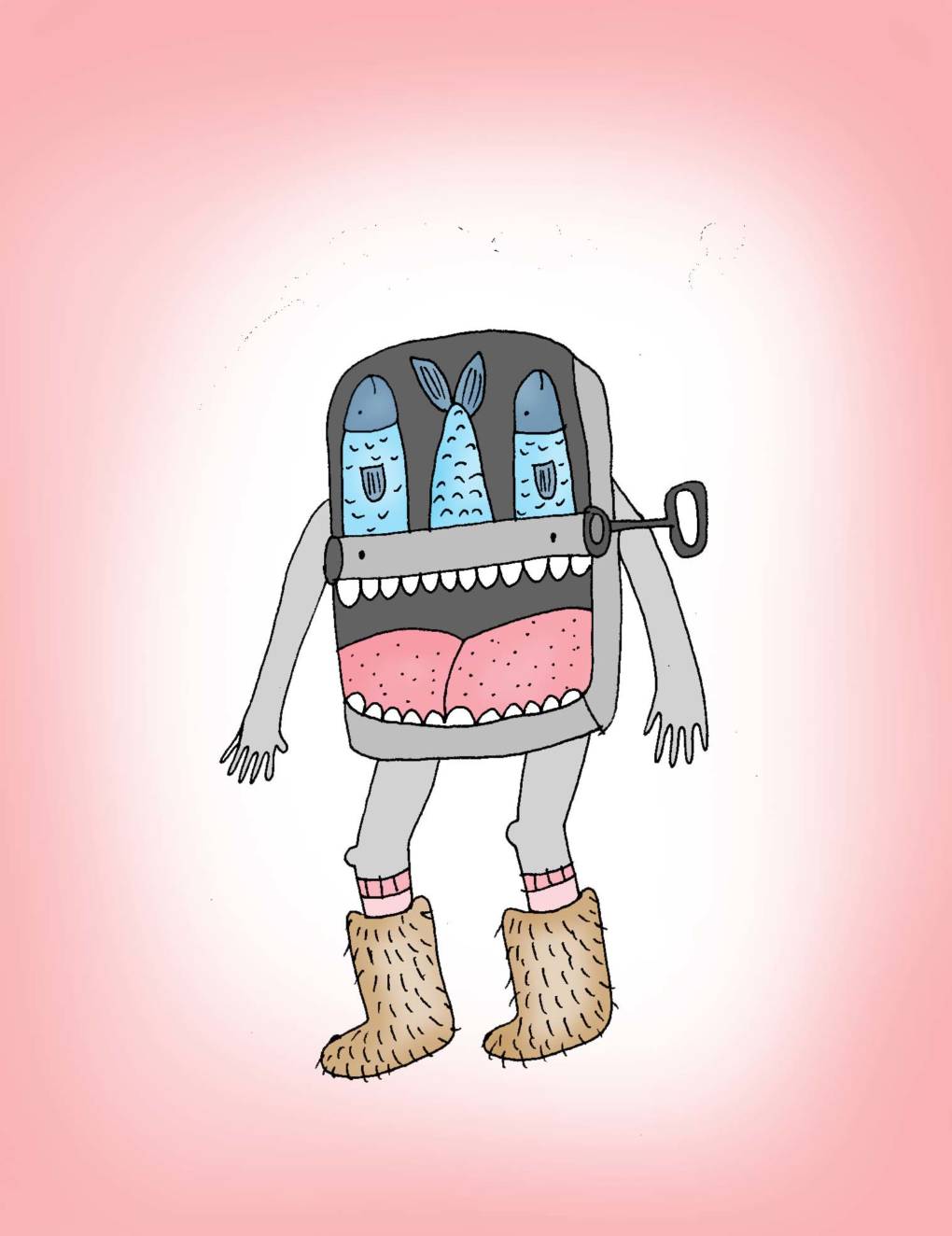
"caption": "Sardines are a playa powder food",
"description": null,
"title": "bm#1",
"credit": "Lila Volkas",
"status": "inherit",
"isLoading": false,
"fetchFailed": false
},
"bayareabites_119927": {
"type": "attachments",
"id": "bayareabites_119927",
"meta": {
"index": "attachments_1716263798",
"site": "bayareabites",
"id": "119927",
"found": true
},
"parent": 119926,
"imgSizes": {
"small": {
"file": "https://ww2.kqed.org/app/uploads/sites/24/2017/08/asmr-final-r2_custom-f6fd9acdaab0adb14b0c57bcde9a3b79db7af54d-520x292.jpg",
"width": 520,
"mimeType": "image/jpeg",
"height": 292
},
"twentyfourteen-full-width": {
"file": "https://ww2.kqed.org/app/uploads/sites/24/2017/08/asmr-final-r2_custom-f6fd9acdaab0adb14b0c57bcde9a3b79db7af54d-1038x576.jpg",
"width": 1038,
"mimeType": "image/jpeg",
"height": 576
},
"thumbnail": {
"file": "https://ww2.kqed.org/app/uploads/sites/24/2017/08/asmr-final-r2_custom-f6fd9acdaab0adb14b0c57bcde9a3b79db7af54d-160x90.jpg",
"width": 160,
"mimeType": "image/jpeg",
"height": 90
},
"fd-sm": {
"file": "https://ww2.kqed.org/app/uploads/sites/24/2017/08/asmr-final-r2_custom-f6fd9acdaab0adb14b0c57bcde9a3b79db7af54d-960x539.jpg",
"width": 960,
"mimeType": "image/jpeg",
"height": 539
},
"post-thumbnail": {
"file": "https://ww2.kqed.org/app/uploads/sites/24/2017/08/asmr-final-r2_custom-f6fd9acdaab0adb14b0c57bcde9a3b79db7af54d-672x372.jpg",
"width": 672,
"mimeType": "image/jpeg",
"height": 372
},
"xsmall": {
"file": "https://ww2.kqed.org/app/uploads/sites/24/2017/08/asmr-final-r2_custom-f6fd9acdaab0adb14b0c57bcde9a3b79db7af54d-375x211.jpg",
"width": 375,
"mimeType": "image/jpeg",
"height": 211
},
"kqedFullSize": {
"file": "https://ww2.kqed.org/app/uploads/sites/24/2017/08/asmr-final-r2_custom-f6fd9acdaab0adb14b0c57bcde9a3b79db7af54d.jpg",
"width": 2000,
"height": 1123
},
"large": {
"file": "https://ww2.kqed.org/app/uploads/sites/24/2017/08/asmr-final-r2_custom-f6fd9acdaab0adb14b0c57bcde9a3b79db7af54d-1020x573.jpg",
"width": 1020,
"mimeType": "image/jpeg",
"height": 573
},
"xlarge": {
"file": "https://ww2.kqed.org/app/uploads/sites/24/2017/08/asmr-final-r2_custom-f6fd9acdaab0adb14b0c57bcde9a3b79db7af54d-1180x663.jpg",
"width": 1180,
"mimeType": "image/jpeg",
"height": 663
},
"guest-author-50": {
"file": "https://ww2.kqed.org/app/uploads/sites/24/2017/08/asmr-final-r2_custom-f6fd9acdaab0adb14b0c57bcde9a3b79db7af54d-50x50.jpg",
"width": 50,
"mimeType": "image/jpeg",
"height": 50
},
"guest-author-96": {
"file": "https://ww2.kqed.org/app/uploads/sites/24/2017/08/asmr-final-r2_custom-f6fd9acdaab0adb14b0c57bcde9a3b79db7af54d-96x96.jpg",
"width": 96,
"mimeType": "image/jpeg",
"height": 96
},
"medium": {
"file": "https://ww2.kqed.org/app/uploads/sites/24/2017/08/asmr-final-r2_custom-f6fd9acdaab0adb14b0c57bcde9a3b79db7af54d-800x449.jpg",
"width": 800,
"mimeType": "image/jpeg",
"height": 449
},
"guest-author-64": {
"file": "https://ww2.kqed.org/app/uploads/sites/24/2017/08/asmr-final-r2_custom-f6fd9acdaab0adb14b0c57bcde9a3b79db7af54d-64x64.jpg",
"width": 64,
"mimeType": "image/jpeg",
"height": 64
},
"guest-author-32": {
"file": "https://ww2.kqed.org/app/uploads/sites/24/2017/08/asmr-final-r2_custom-f6fd9acdaab0adb14b0c57bcde9a3b79db7af54d-32x32.jpg",
"width": 32,
"mimeType": "image/jpeg",
"height": 32
},
"fd-lrg": {
"file": "https://ww2.kqed.org/app/uploads/sites/24/2017/08/asmr-final-r2_custom-f6fd9acdaab0adb14b0c57bcde9a3b79db7af54d-1920x1078.jpg",
"width": 1920,
"mimeType": "image/jpeg",
"height": 1078
},
"fd-med": {
"file": "https://ww2.kqed.org/app/uploads/sites/24/2017/08/asmr-final-r2_custom-f6fd9acdaab0adb14b0c57bcde9a3b79db7af54d-1180x663.jpg",
"width": 1180,
"mimeType": "image/jpeg",
"height": 663
},
"full-width": {
"file": "https://ww2.kqed.org/app/uploads/sites/24/2017/08/asmr-final-r2_custom-f6fd9acdaab0adb14b0c57bcde9a3b79db7af54d-1920x1078.jpg",
"width": 1920,
"mimeType": "image/jpeg",
"height": 1078
},
"detail": {
"file": "https://ww2.kqed.org/app/uploads/sites/24/2017/08/asmr-final-r2_custom-f6fd9acdaab0adb14b0c57bcde9a3b79db7af54d-150x150.jpg",
"width": 150,
"mimeType": "image/jpeg",
"height": 150
},
"medium_large": {
"file": "https://ww2.kqed.org/app/uploads/sites/24/2017/08/asmr-final-r2_custom-f6fd9acdaab0adb14b0c57bcde9a3b79db7af54d-768x431.jpg",
"width": 768,
"mimeType": "image/jpeg",
"height": 431
},
"guest-author-128": {
"file": "https://ww2.kqed.org/app/uploads/sites/24/2017/08/asmr-final-r2_custom-f6fd9acdaab0adb14b0c57bcde9a3b79db7af54d-128x128.jpg",
"width": 128,
"mimeType": "image/jpeg",
"height": 128
},
"xxsmall": {
"file": "https://ww2.kqed.org/app/uploads/sites/24/2017/08/asmr-final-r2_custom-f6fd9acdaab0adb14b0c57bcde9a3b79db7af54d-240x135.jpg",
"width": 240,
"mimeType": "image/jpeg",
"height": 135
}
},
"publishDate": 1502901554,
"modified": 1502901603,
"caption": "A growing number of food videos aim to trigger ASMR — Autonomous Sensory Meridian Response, or pleasing sensations in the brains of some viewers — by focusing on sounds like chopping and stirring.",
"description": "A growing number of food videos aim to trigger ASMR — Autonomous Sensory Meridian Response, or pleasing sensations in the brains of some viewers — by focusing on sounds like chopping and stirr",
"title": "A growing number of food videos aim to trigger ASMR — Autonomous Sensory Meridian Response, or pleasing sensations in the brains of some viewers — by focusing on sounds like chopping and stirring.",
"credit": "Christina Lee for NPR",
"status": "inherit",
"isLoading": false,
"fetchFailed": false
},
"bayareabites_119892": {
"type": "attachments",
"id": "bayareabites_119892",
"meta": {
"index": "attachments_1716263798",
"site": "bayareabites",
"id": "119892",
"found": true
},
"parent": 119891,
"imgSizes": {
"small": {
"file": "https://ww2.kqed.org/app/uploads/sites/24/2017/08/nets-1_wide-01c3b5ebd0d717bd50433e402fd75dc5e35d6f44-520x293.jpg",
"width": 520,
"mimeType": "image/jpeg",
"height": 293
},
"twentyfourteen-full-width": {
"file": "https://ww2.kqed.org/app/uploads/sites/24/2017/08/nets-1_wide-01c3b5ebd0d717bd50433e402fd75dc5e35d6f44-1038x576.jpg",
"width": 1038,
"mimeType": "image/jpeg",
"height": 576
},
"thumbnail": {
"file": "https://ww2.kqed.org/app/uploads/sites/24/2017/08/nets-1_wide-01c3b5ebd0d717bd50433e402fd75dc5e35d6f44-160x90.jpg",
"width": 160,
"mimeType": "image/jpeg",
"height": 90
},
"fd-sm": {
"file": "https://ww2.kqed.org/app/uploads/sites/24/2017/08/nets-1_wide-01c3b5ebd0d717bd50433e402fd75dc5e35d6f44-960x540.jpg",
"width": 960,
"mimeType": "image/jpeg",
"height": 540
},
"post-thumbnail": {
"file": "https://ww2.kqed.org/app/uploads/sites/24/2017/08/nets-1_wide-01c3b5ebd0d717bd50433e402fd75dc5e35d6f44-672x372.jpg",
"width": 672,
"mimeType": "image/jpeg",
"height": 372
},
"xsmall": {
"file": "https://ww2.kqed.org/app/uploads/sites/24/2017/08/nets-1_wide-01c3b5ebd0d717bd50433e402fd75dc5e35d6f44-375x211.jpg",
"width": 375,
"mimeType": "image/jpeg",
"height": 211
},
"kqedFullSize": {
"file": "https://ww2.kqed.org/app/uploads/sites/24/2017/08/nets-1_wide-01c3b5ebd0d717bd50433e402fd75dc5e35d6f44.jpg",
"width": 2000,
"height": 1125
},
"large": {
"file": "https://ww2.kqed.org/app/uploads/sites/24/2017/08/nets-1_wide-01c3b5ebd0d717bd50433e402fd75dc5e35d6f44-1020x574.jpg",
"width": 1020,
"mimeType": "image/jpeg",
"height": 574
},
"xlarge": {
"file": "https://ww2.kqed.org/app/uploads/sites/24/2017/08/nets-1_wide-01c3b5ebd0d717bd50433e402fd75dc5e35d6f44-1180x664.jpg",
"width": 1180,
"mimeType": "image/jpeg",
"height": 664
},
"guest-author-50": {
"file": "https://ww2.kqed.org/app/uploads/sites/24/2017/08/nets-1_wide-01c3b5ebd0d717bd50433e402fd75dc5e35d6f44-50x50.jpg",
"width": 50,
"mimeType": "image/jpeg",
"height": 50
},
"guest-author-96": {
"file": "https://ww2.kqed.org/app/uploads/sites/24/2017/08/nets-1_wide-01c3b5ebd0d717bd50433e402fd75dc5e35d6f44-96x96.jpg",
"width": 96,
"mimeType": "image/jpeg",
"height": 96
},
"medium": {
"file": "https://ww2.kqed.org/app/uploads/sites/24/2017/08/nets-1_wide-01c3b5ebd0d717bd50433e402fd75dc5e35d6f44-800x450.jpg",
"width": 800,
"mimeType": "image/jpeg",
"height": 450
},
"guest-author-64": {
"file": "https://ww2.kqed.org/app/uploads/sites/24/2017/08/nets-1_wide-01c3b5ebd0d717bd50433e402fd75dc5e35d6f44-64x64.jpg",
"width": 64,
"mimeType": "image/jpeg",
"height": 64
},
"guest-author-32": {
"file": "https://ww2.kqed.org/app/uploads/sites/24/2017/08/nets-1_wide-01c3b5ebd0d717bd50433e402fd75dc5e35d6f44-32x32.jpg",
"width": 32,
"mimeType": "image/jpeg",
"height": 32
},
"fd-lrg": {
"file": "https://ww2.kqed.org/app/uploads/sites/24/2017/08/nets-1_wide-01c3b5ebd0d717bd50433e402fd75dc5e35d6f44-1920x1080.jpg",
"width": 1920,
"mimeType": "image/jpeg",
"height": 1080
},
"fd-med": {
"file": "https://ww2.kqed.org/app/uploads/sites/24/2017/08/nets-1_wide-01c3b5ebd0d717bd50433e402fd75dc5e35d6f44-1180x664.jpg",
"width": 1180,
"mimeType": "image/jpeg",
"height": 664
},
"full-width": {
"file": "https://ww2.kqed.org/app/uploads/sites/24/2017/08/nets-1_wide-01c3b5ebd0d717bd50433e402fd75dc5e35d6f44-1920x1080.jpg",
"width": 1920,
"mimeType": "image/jpeg",
"height": 1080
},
"detail": {
"file": "https://ww2.kqed.org/app/uploads/sites/24/2017/08/nets-1_wide-01c3b5ebd0d717bd50433e402fd75dc5e35d6f44-150x150.jpg",
"width": 150,
"mimeType": "image/jpeg",
"height": 150
},
"medium_large": {
"file": "https://ww2.kqed.org/app/uploads/sites/24/2017/08/nets-1_wide-01c3b5ebd0d717bd50433e402fd75dc5e35d6f44-768x432.jpg",
"width": 768,
"mimeType": "image/jpeg",
"height": 432
},
"guest-author-128": {
"file": "https://ww2.kqed.org/app/uploads/sites/24/2017/08/nets-1_wide-01c3b5ebd0d717bd50433e402fd75dc5e35d6f44-128x128.jpg",
"width": 128,
"mimeType": "image/jpeg",
"height": 128
},
"xxsmall": {
"file": "https://ww2.kqed.org/app/uploads/sites/24/2017/08/nets-1_wide-01c3b5ebd0d717bd50433e402fd75dc5e35d6f44-240x135.jpg",
"width": 240,
"mimeType": "image/jpeg",
"height": 135
}
},
"publishDate": 1502828418,
"modified": 1502830856,
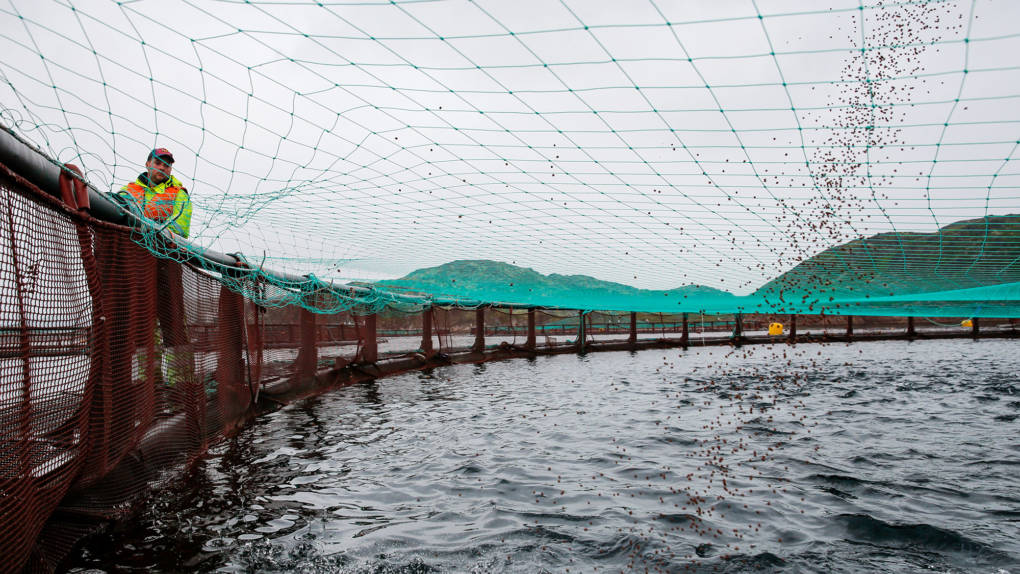
"caption": "A Russian fish farming operation in Ura Bay in the Barents Sea.",
"description": "A Russian fish farming operation in Ura Bay in the Barents Sea.",
"title": "A Russian fish farming operation in Ura Bay in the Barents Sea.",
"credit": "Maxim Zmeyev/AFP/Getty Images",
"status": "inherit",
"isLoading": false,
"fetchFailed": false
},
"bayareabites_119573": {
"type": "attachments",
"id": "bayareabites_119573",
"meta": {
"index": "attachments_1716263798",
"site": "bayareabites",
"id": "119573",
"found": true
},
"parent": 119570,
"imgSizes": {
"small": {
"file": "https://ww2.kqed.org/app/uploads/sites/24/2017/08/GettyImages-148737600-520x337.jpg",
"width": 520,
"mimeType": "image/jpeg",
"height": 337
},
"twentyfourteen-full-width": {
"file": "https://ww2.kqed.org/app/uploads/sites/24/2017/08/GettyImages-148737600-1038x576.jpg",
"width": 1038,
"mimeType": "image/jpeg",
"height": 576
},
"thumbnail": {
"file": "https://ww2.kqed.org/app/uploads/sites/24/2017/08/GettyImages-148737600-160x104.jpg",
"width": 160,
"mimeType": "image/jpeg",
"height": 104
},
"fd-sm": {
"file": "https://ww2.kqed.org/app/uploads/sites/24/2017/08/GettyImages-148737600-960x621.jpg",
"width": 960,
"mimeType": "image/jpeg",
"height": 621
},
"post-thumbnail": {
"file": "https://ww2.kqed.org/app/uploads/sites/24/2017/08/GettyImages-148737600-672x372.jpg",
"width": 672,
"mimeType": "image/jpeg",
"height": 372
},
"xsmall": {
"file": "https://ww2.kqed.org/app/uploads/sites/24/2017/08/GettyImages-148737600-375x243.jpg",
"width": 375,
"mimeType": "image/jpeg",
"height": 243
},
"kqedFullSize": {
"file": "https://ww2.kqed.org/app/uploads/sites/24/2017/08/GettyImages-148737600-e1501709870484.jpg",
"width": 1920,
"height": 1243
},
"large": {
"file": "https://ww2.kqed.org/app/uploads/sites/24/2017/08/GettyImages-148737600-1020x660.jpg",
"width": 1020,
"mimeType": "image/jpeg",
"height": 660
},
"xlarge": {
"file": "https://ww2.kqed.org/app/uploads/sites/24/2017/08/GettyImages-148737600-1180x764.jpg",
"width": 1180,
"mimeType": "image/jpeg",
"height": 764
},
"guest-author-50": {
"file": "https://ww2.kqed.org/app/uploads/sites/24/2017/08/GettyImages-148737600-50x50.jpg",
"width": 50,
"mimeType": "image/jpeg",
"height": 50
},
"guest-author-96": {
"file": "https://ww2.kqed.org/app/uploads/sites/24/2017/08/GettyImages-148737600-96x96.jpg",
"width": 96,
"mimeType": "image/jpeg",
"height": 96
},
"medium": {
"file": "https://ww2.kqed.org/app/uploads/sites/24/2017/08/GettyImages-148737600-800x518.jpg",
"width": 800,
"mimeType": "image/jpeg",
"height": 518
},
"guest-author-64": {
"file": "https://ww2.kqed.org/app/uploads/sites/24/2017/08/GettyImages-148737600-64x64.jpg",
"width": 64,
"mimeType": "image/jpeg",
"height": 64
},
"guest-author-32": {
"file": "https://ww2.kqed.org/app/uploads/sites/24/2017/08/GettyImages-148737600-32x32.jpg",
"width": 32,
"mimeType": "image/jpeg",
"height": 32
},
"fd-lrg": {
"file": "https://ww2.kqed.org/app/uploads/sites/24/2017/08/GettyImages-148737600-1920x1243.jpg",
"width": 1920,
"mimeType": "image/jpeg",
"height": 1243
},
"fd-med": {
"file": "https://ww2.kqed.org/app/uploads/sites/24/2017/08/GettyImages-148737600-1180x764.jpg",
"width": 1180,
"mimeType": "image/jpeg",
"height": 764
},
"full-width": {
"file": "https://ww2.kqed.org/app/uploads/sites/24/2017/08/GettyImages-148737600-1920x1243.jpg",
"width": 1920,
"mimeType": "image/jpeg",
"height": 1243
},
"detail": {
"file": "https://ww2.kqed.org/app/uploads/sites/24/2017/08/GettyImages-148737600-150x150.jpg",
"width": 150,
"mimeType": "image/jpeg",
"height": 150
},
"medium_large": {
"file": "https://ww2.kqed.org/app/uploads/sites/24/2017/08/GettyImages-148737600-768x497.jpg",
"width": 768,
"mimeType": "image/jpeg",
"height": 497
},
"guest-author-128": {
"file": "https://ww2.kqed.org/app/uploads/sites/24/2017/08/GettyImages-148737600-128x128.jpg",
"width": 128,
"mimeType": "image/jpeg",
"height": 128
},
"xxsmall": {
"file": "https://ww2.kqed.org/app/uploads/sites/24/2017/08/GettyImages-148737600-240x155.jpg",
"width": 240,
"mimeType": "image/jpeg",
"height": 155
}
},
"publishDate": 1501709693,
"modified": 1501709939,
"caption": "You already know what all of your friends are eating, so you might as well know how to make it, too.",
"description": null,
"title": "FRANCE-INTERNET-FOOD",
"credit": "Ana Arevalo/AFP/GettyImages",
"status": "inherit",
"isLoading": false,
"fetchFailed": false
},
"bayareabites_119514": {
"type": "attachments",
"id": "bayareabites_119514",
"meta": {
"index": "attachments_1716263798",
"site": "bayareabites",
"id": "119514",
"found": true
},
"parent": 119510,
"imgSizes": {
"small": {
"file": "https://ww2.kqed.org/app/uploads/sites/24/2017/07/fried-paneer-new-520x344.jpg",
"width": 520,
"mimeType": "image/jpeg",
"height": 344
},
"twentyfourteen-full-width": {
"file": "https://ww2.kqed.org/app/uploads/sites/24/2017/07/fried-paneer-new-1038x576.jpg",
"width": 1038,
"mimeType": "image/jpeg",
"height": 576
},
"thumbnail": {
"file": "https://ww2.kqed.org/app/uploads/sites/24/2017/07/fried-paneer-new-160x106.jpg",
"width": 160,
"mimeType": "image/jpeg",
"height": 106
},
"fd-sm": {
"file": "https://ww2.kqed.org/app/uploads/sites/24/2017/07/fried-paneer-new-960x636.jpg",
"width": 960,
"mimeType": "image/jpeg",
"height": 636
},
"post-thumbnail": {
"file": "https://ww2.kqed.org/app/uploads/sites/24/2017/07/fried-paneer-new-672x372.jpg",
"width": 672,
"mimeType": "image/jpeg",
"height": 372
},
"xsmall": {
"file": "https://ww2.kqed.org/app/uploads/sites/24/2017/07/fried-paneer-new-375x248.jpg",
"width": 375,
"mimeType": "image/jpeg",
"height": 248
},
"kqedFullSize": {
"file": "https://ww2.kqed.org/app/uploads/sites/24/2017/07/fried-paneer-new.jpg",
"width": 1920,
"height": 1271
},
"large": {
"file": "https://ww2.kqed.org/app/uploads/sites/24/2017/07/fried-paneer-new-1020x675.jpg",
"width": 1020,
"mimeType": "image/jpeg",
"height": 675
},
"xlarge": {
"file": "https://ww2.kqed.org/app/uploads/sites/24/2017/07/fried-paneer-new-1180x781.jpg",
"width": 1180,
"mimeType": "image/jpeg",
"height": 781
},
"guest-author-50": {
"file": "https://ww2.kqed.org/app/uploads/sites/24/2017/07/fried-paneer-new-50x50.jpg",
"width": 50,
"mimeType": "image/jpeg",
"height": 50
},
"guest-author-96": {
"file": "https://ww2.kqed.org/app/uploads/sites/24/2017/07/fried-paneer-new-96x96.jpg",
"width": 96,
"mimeType": "image/jpeg",
"height": 96
},
"medium": {
"file": "https://ww2.kqed.org/app/uploads/sites/24/2017/07/fried-paneer-new-800x530.jpg",
"width": 800,
"mimeType": "image/jpeg",
"height": 530
},
"guest-author-64": {
"file": "https://ww2.kqed.org/app/uploads/sites/24/2017/07/fried-paneer-new-64x64.jpg",
"width": 64,
"mimeType": "image/jpeg",
"height": 64
},
"guest-author-32": {
"file": "https://ww2.kqed.org/app/uploads/sites/24/2017/07/fried-paneer-new-32x32.jpg",
"width": 32,
"mimeType": "image/jpeg",
"height": 32
},
"fd-lrg": {
"file": "https://ww2.kqed.org/app/uploads/sites/24/2017/07/fried-paneer-new-1920x1271.jpg",
"width": 1920,
"mimeType": "image/jpeg",
"height": 1271
},
"fd-med": {
"file": "https://ww2.kqed.org/app/uploads/sites/24/2017/07/fried-paneer-new-1180x781.jpg",
"width": 1180,
"mimeType": "image/jpeg",
"height": 781
},
"full-width": {
"file": "https://ww2.kqed.org/app/uploads/sites/24/2017/07/fried-paneer-new-1920x1271.jpg",
"width": 1920,
"mimeType": "image/jpeg",
"height": 1271
},
"detail": {
"file": "https://ww2.kqed.org/app/uploads/sites/24/2017/07/fried-paneer-new-150x150.jpg",
"width": 150,
"mimeType": "image/jpeg",
"height": 150
},
"medium_large": {
"file": "https://ww2.kqed.org/app/uploads/sites/24/2017/07/fried-paneer-new-768x508.jpg",
"width": 768,
"mimeType": "image/jpeg",
"height": 508
},
"guest-author-128": {
"file": "https://ww2.kqed.org/app/uploads/sites/24/2017/07/fried-paneer-new-128x128.jpg",
"width": 128,
"mimeType": "image/jpeg",
"height": 128
},
"xxsmall": {
"file": "https://ww2.kqed.org/app/uploads/sites/24/2017/07/fried-paneer-new-240x159.jpg",
"width": 240,
"mimeType": "image/jpeg",
"height": 159
}
},
"publishDate": 1501542907,
"modified": 1501543079,
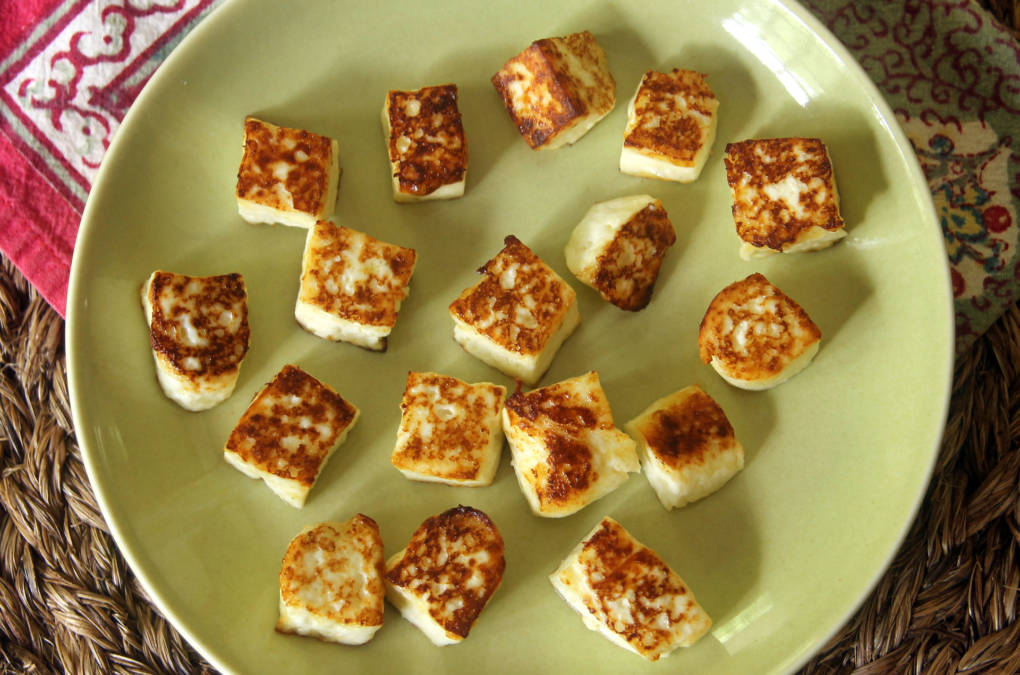
"caption": "Homemade paneer, seared in olive oil.",
"description": "Homemade paneer, seared in olive oil.",
"title": "fried-paneer-new",
"credit": "Kate Williams",
"status": "inherit",
"isLoading": false,
"fetchFailed": false
},
"bayareabites_119314": {
"type": "attachments",
"id": "bayareabites_119314",
"meta": {
"index": "attachments_1716263798",
"site": "bayareabites",
"id": "119314",
"found": true
},
"parent": 119279,
"imgSizes": {
"small": {
"file": "https://ww2.kqed.org/app/uploads/sites/24/2017/07/LF1-520x520.jpg",
"width": 520,
"mimeType": "image/jpeg",
"height": 520
},
"twentyfourteen-full-width": {
"file": "https://ww2.kqed.org/app/uploads/sites/24/2017/07/LF1-1038x576.jpg",
"width": 1038,
"mimeType": "image/jpeg",
"height": 576
},
"thumbnail": {
"file": "https://ww2.kqed.org/app/uploads/sites/24/2017/07/LF1-160x160.jpg",
"width": 160,
"mimeType": "image/jpeg",
"height": 160
},
"fd-sm": {
"file": "https://ww2.kqed.org/app/uploads/sites/24/2017/07/LF1-960x960.jpg",
"width": 960,
"mimeType": "image/jpeg",
"height": 960
},
"post-thumbnail": {
"file": "https://ww2.kqed.org/app/uploads/sites/24/2017/07/LF1-672x372.jpg",
"width": 672,
"mimeType": "image/jpeg",
"height": 372
},
"xsmall": {
"file": "https://ww2.kqed.org/app/uploads/sites/24/2017/07/LF1-375x375.jpg",
"width": 375,
"mimeType": "image/jpeg",
"height": 375
},
"kqedFullSize": {
"file": "https://ww2.kqed.org/app/uploads/sites/24/2017/07/LF1.jpg",
"width": 1080,
"height": 1080
},
"large": {
"file": "https://ww2.kqed.org/app/uploads/sites/24/2017/07/LF1-1020x1020.jpg",
"width": 1020,
"mimeType": "image/jpeg",
"height": 1020
},
"guest-author-50": {
"file": "https://ww2.kqed.org/app/uploads/sites/24/2017/07/LF1-50x50.jpg",
"width": 50,
"mimeType": "image/jpeg",
"height": 50
},
"guest-author-96": {
"file": "https://ww2.kqed.org/app/uploads/sites/24/2017/07/LF1-96x96.jpg",
"width": 96,
"mimeType": "image/jpeg",
"height": 96
},
"medium": {
"file": "https://ww2.kqed.org/app/uploads/sites/24/2017/07/LF1-800x800.jpg",
"width": 800,
"mimeType": "image/jpeg",
"height": 800
},
"guest-author-64": {
"file": "https://ww2.kqed.org/app/uploads/sites/24/2017/07/LF1-64x64.jpg",
"width": 64,
"mimeType": "image/jpeg",
"height": 64
},
"guest-author-32": {
"file": "https://ww2.kqed.org/app/uploads/sites/24/2017/07/LF1-32x32.jpg",
"width": 32,
"mimeType": "image/jpeg",
"height": 32
},
"detail": {
"file": "https://ww2.kqed.org/app/uploads/sites/24/2017/07/LF1-150x150.jpg",
"width": 150,
"mimeType": "image/jpeg",
"height": 150
},
"medium_large": {
"file": "https://ww2.kqed.org/app/uploads/sites/24/2017/07/LF1-768x768.jpg",
"width": 768,
"mimeType": "image/jpeg",
"height": 768
},
"guest-author-128": {
"file": "https://ww2.kqed.org/app/uploads/sites/24/2017/07/LF1-128x128.jpg",
"width": 128,
"mimeType": "image/jpeg",
"height": 128
},
"xxsmall": {
"file": "https://ww2.kqed.org/app/uploads/sites/24/2017/07/LF1-240x240.jpg",
"width": 240,
"mimeType": "image/jpeg",
"height": 240
}
},
"publishDate": 1500679121,
"modified": 1500941455,
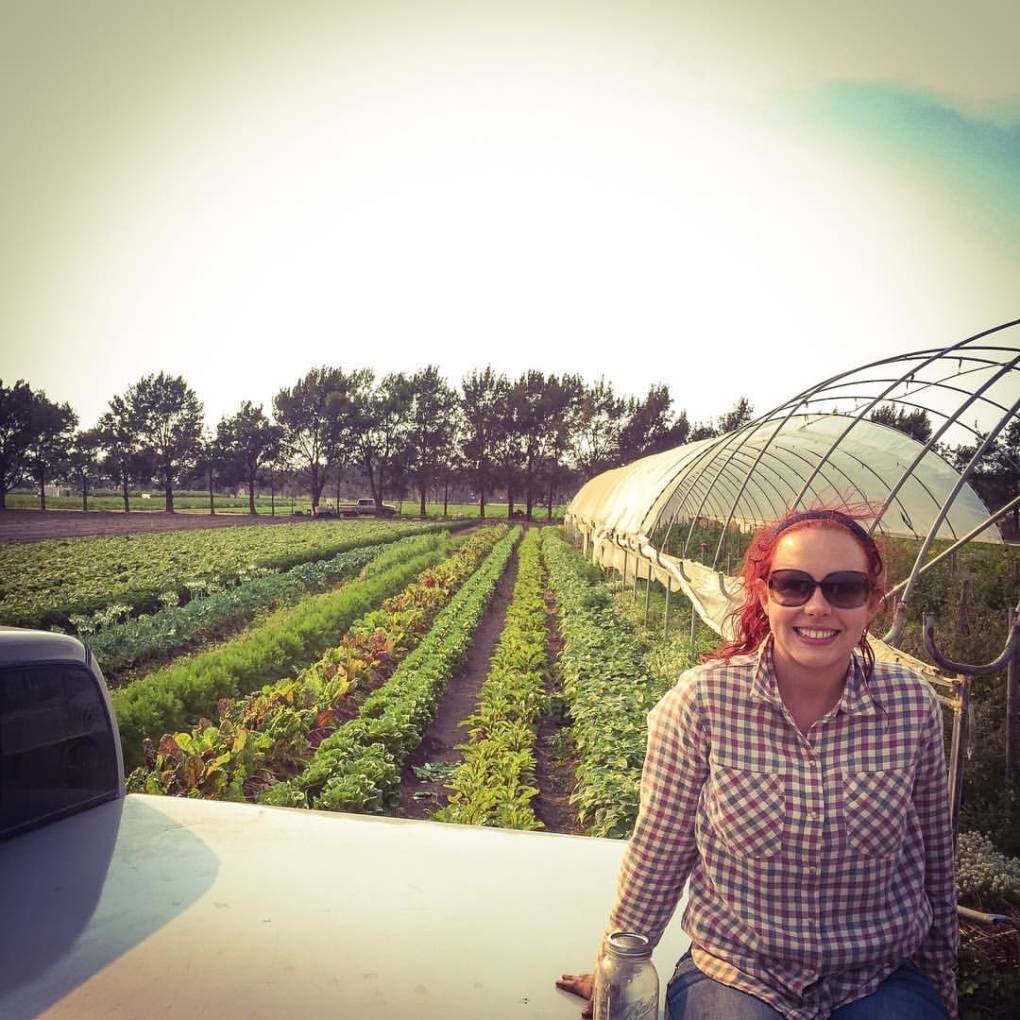
"caption": "Brittany Loisel is shown at Lazy Millennial Farms in Salinas.",
"description": "Brittany Loisel is shown at Lazy Millennial Farms in Salinas.",
"title": "LF1",
"credit": "Lazy Millennial Farms",
"status": "inherit",
"isLoading": false,
"fetchFailed": false
},
"bayareabites_119324": {
"type": "attachments",
"id": "bayareabites_119324",
"meta": {
"index": "attachments_1716263798",
"site": "bayareabites",
"id": "119324",
"found": true
},
"parent": 119320,
"imgSizes": {
"small": {
"file": "https://ww2.kqed.org/app/uploads/sites/24/2017/07/170717-san-jose-top1-520x347.jpg",
"width": 520,
"mimeType": "image/jpeg",
"height": 347
},
"twentyfourteen-full-width": {
"file": "https://ww2.kqed.org/app/uploads/sites/24/2017/07/170717-san-jose-top1-1038x576.jpg",
"width": 1038,
"mimeType": "image/jpeg",
"height": 576
},
"thumbnail": {
"file": "https://ww2.kqed.org/app/uploads/sites/24/2017/07/170717-san-jose-top1-160x107.jpg",
"width": 160,
"mimeType": "image/jpeg",
"height": 107
},
"fd-sm": {
"file": "https://ww2.kqed.org/app/uploads/sites/24/2017/07/170717-san-jose-top1-960x640.jpg",
"width": 960,
"mimeType": "image/jpeg",
"height": 640
},
"post-thumbnail": {
"file": "https://ww2.kqed.org/app/uploads/sites/24/2017/07/170717-san-jose-top1-672x372.jpg",
"width": 672,
"mimeType": "image/jpeg",
"height": 372
},
"xsmall": {
"file": "https://ww2.kqed.org/app/uploads/sites/24/2017/07/170717-san-jose-top1-375x250.jpg",
"width": 375,
"mimeType": "image/jpeg",
"height": 250
},
"kqedFullSize": {
"file": "https://ww2.kqed.org/app/uploads/sites/24/2017/07/170717-san-jose-top1.jpg",
"width": 1200,
"height": 800
},
"large": {
"file": "https://ww2.kqed.org/app/uploads/sites/24/2017/07/170717-san-jose-top1-1020x680.jpg",
"width": 1020,
"mimeType": "image/jpeg",
"height": 680
},
"xlarge": {
"file": "https://ww2.kqed.org/app/uploads/sites/24/2017/07/170717-san-jose-top1-1180x787.jpg",
"width": 1180,
"mimeType": "image/jpeg",
"height": 787
},
"guest-author-50": {
"file": "https://ww2.kqed.org/app/uploads/sites/24/2017/07/170717-san-jose-top1-50x50.jpg",
"width": 50,
"mimeType": "image/jpeg",
"height": 50
},
"guest-author-96": {
"file": "https://ww2.kqed.org/app/uploads/sites/24/2017/07/170717-san-jose-top1-96x96.jpg",
"width": 96,
"mimeType": "image/jpeg",
"height": 96
},
"medium": {
"file": "https://ww2.kqed.org/app/uploads/sites/24/2017/07/170717-san-jose-top1-800x533.jpg",
"width": 800,
"mimeType": "image/jpeg",
"height": 533
},
"guest-author-64": {
"file": "https://ww2.kqed.org/app/uploads/sites/24/2017/07/170717-san-jose-top1-64x64.jpg",
"width": 64,
"mimeType": "image/jpeg",
"height": 64
},
"guest-author-32": {
"file": "https://ww2.kqed.org/app/uploads/sites/24/2017/07/170717-san-jose-top1-32x32.jpg",
"width": 32,
"mimeType": "image/jpeg",
"height": 32
},
"fd-med": {
"file": "https://ww2.kqed.org/app/uploads/sites/24/2017/07/170717-san-jose-top1-1180x787.jpg",
"width": 1180,
"mimeType": "image/jpeg",
"height": 787
},
"detail": {
"file": "https://ww2.kqed.org/app/uploads/sites/24/2017/07/170717-san-jose-top1-150x150.jpg",
"width": 150,
"mimeType": "image/jpeg",
"height": 150
},
"medium_large": {
"file": "https://ww2.kqed.org/app/uploads/sites/24/2017/07/170717-san-jose-top1-768x512.jpg",
"width": 768,
"mimeType": "image/jpeg",
"height": 512
},
"guest-author-128": {
"file": "https://ww2.kqed.org/app/uploads/sites/24/2017/07/170717-san-jose-top1-128x128.jpg",
"width": 128,
"mimeType": "image/jpeg",
"height": 128
},
"xxsmall": {
"file": "https://ww2.kqed.org/app/uploads/sites/24/2017/07/170717-san-jose-top1-240x160.jpg",
"width": 240,
"mimeType": "image/jpeg",
"height": 160
}
},
"publishDate": 1500681216,
"modified": 1500681314,
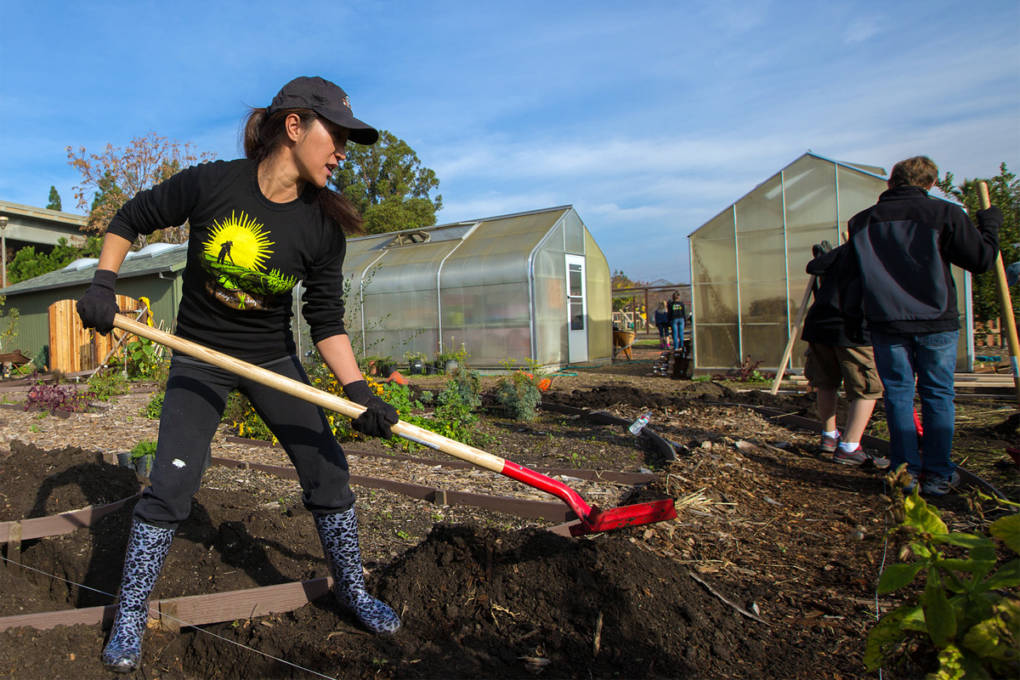
"caption": "NVIDIA employee working at Veggielution in San Jose. ",
"description": "NVIDIA employee working at Veggielution in San Jose. ",
"title": "170717-san-jose-top1",
"credit": "CC-licensed by \u003ca href=\"https://www.flickr.com/photos/nvidia/8265501188/\">NVIDIA\u003c/a>",
"status": "inherit",
"isLoading": false,
"fetchFailed": false
},
"bayareabites_119294": {
"type": "attachments",
"id": "bayareabites_119294",
"meta": {
"index": "attachments_1716263798",
"site": "bayareabites",
"id": "119294",
"found": true
},
"parent": 119292,
"imgSizes": {
"small": {
"file": "https://ww2.kqed.org/app/uploads/sites/24/2017/07/img_5611_custom-a9bfd12199bf5fc1cb85993884f2fe1a61d2efbe-520x346.jpg",
"width": 520,
"mimeType": "image/jpeg",
"height": 346
},
"twentyfourteen-full-width": {
"file": "https://ww2.kqed.org/app/uploads/sites/24/2017/07/img_5611_custom-a9bfd12199bf5fc1cb85993884f2fe1a61d2efbe-1038x576.jpg",
"width": 1038,
"mimeType": "image/jpeg",
"height": 576
},
"thumbnail": {
"file": "https://ww2.kqed.org/app/uploads/sites/24/2017/07/img_5611_custom-a9bfd12199bf5fc1cb85993884f2fe1a61d2efbe-160x107.jpg",
"width": 160,
"mimeType": "image/jpeg",
"height": 107
},
"fd-sm": {
"file": "https://ww2.kqed.org/app/uploads/sites/24/2017/07/img_5611_custom-a9bfd12199bf5fc1cb85993884f2fe1a61d2efbe-960x639.jpg",
"width": 960,
"mimeType": "image/jpeg",
"height": 639
},
"post-thumbnail": {
"file": "https://ww2.kqed.org/app/uploads/sites/24/2017/07/img_5611_custom-a9bfd12199bf5fc1cb85993884f2fe1a61d2efbe-672x372.jpg",
"width": 672,
"mimeType": "image/jpeg",
"height": 372
},
"xsmall": {
"file": "https://ww2.kqed.org/app/uploads/sites/24/2017/07/img_5611_custom-a9bfd12199bf5fc1cb85993884f2fe1a61d2efbe-375x250.jpg",
"width": 375,
"mimeType": "image/jpeg",
"height": 250
},
"kqedFullSize": {
"file": "https://ww2.kqed.org/app/uploads/sites/24/2017/07/img_5611_custom-a9bfd12199bf5fc1cb85993884f2fe1a61d2efbe.jpg",
"width": 2000,
"height": 1332
},
"large": {
"file": "https://ww2.kqed.org/app/uploads/sites/24/2017/07/img_5611_custom-a9bfd12199bf5fc1cb85993884f2fe1a61d2efbe-1020x679.jpg",
"width": 1020,
"mimeType": "image/jpeg",
"height": 679
},
"xlarge": {
"file": "https://ww2.kqed.org/app/uploads/sites/24/2017/07/img_5611_custom-a9bfd12199bf5fc1cb85993884f2fe1a61d2efbe-1180x786.jpg",
"width": 1180,
"mimeType": "image/jpeg",
"height": 786
},
"guest-author-50": {
"file": "https://ww2.kqed.org/app/uploads/sites/24/2017/07/img_5611_custom-a9bfd12199bf5fc1cb85993884f2fe1a61d2efbe-50x50.jpg",
"width": 50,
"mimeType": "image/jpeg",
"height": 50
},
"guest-author-96": {
"file": "https://ww2.kqed.org/app/uploads/sites/24/2017/07/img_5611_custom-a9bfd12199bf5fc1cb85993884f2fe1a61d2efbe-96x96.jpg",
"width": 96,
"mimeType": "image/jpeg",
"height": 96
},
"medium": {
"file": "https://ww2.kqed.org/app/uploads/sites/24/2017/07/img_5611_custom-a9bfd12199bf5fc1cb85993884f2fe1a61d2efbe-800x533.jpg",
"width": 800,
"mimeType": "image/jpeg",
"height": 533
},
"guest-author-64": {
"file": "https://ww2.kqed.org/app/uploads/sites/24/2017/07/img_5611_custom-a9bfd12199bf5fc1cb85993884f2fe1a61d2efbe-64x64.jpg",
"width": 64,
"mimeType": "image/jpeg",
"height": 64
},
"guest-author-32": {
"file": "https://ww2.kqed.org/app/uploads/sites/24/2017/07/img_5611_custom-a9bfd12199bf5fc1cb85993884f2fe1a61d2efbe-32x32.jpg",
"width": 32,
"mimeType": "image/jpeg",
"height": 32
},
"fd-lrg": {
"file": "https://ww2.kqed.org/app/uploads/sites/24/2017/07/img_5611_custom-a9bfd12199bf5fc1cb85993884f2fe1a61d2efbe-1920x1279.jpg",
"width": 1920,
"mimeType": "image/jpeg",
"height": 1279
},
"fd-med": {
"file": "https://ww2.kqed.org/app/uploads/sites/24/2017/07/img_5611_custom-a9bfd12199bf5fc1cb85993884f2fe1a61d2efbe-1180x786.jpg",
"width": 1180,
"mimeType": "image/jpeg",
"height": 786
},
"full-width": {
"file": "https://ww2.kqed.org/app/uploads/sites/24/2017/07/img_5611_custom-a9bfd12199bf5fc1cb85993884f2fe1a61d2efbe-1920x1279.jpg",
"width": 1920,
"mimeType": "image/jpeg",
"height": 1279
},
"detail": {
"file": "https://ww2.kqed.org/app/uploads/sites/24/2017/07/img_5611_custom-a9bfd12199bf5fc1cb85993884f2fe1a61d2efbe-150x150.jpg",
"width": 150,
"mimeType": "image/jpeg",
"height": 150
},
"medium_large": {
"file": "https://ww2.kqed.org/app/uploads/sites/24/2017/07/img_5611_custom-a9bfd12199bf5fc1cb85993884f2fe1a61d2efbe-768x511.jpg",
"width": 768,
"mimeType": "image/jpeg",
"height": 511
},
"guest-author-128": {
"file": "https://ww2.kqed.org/app/uploads/sites/24/2017/07/img_5611_custom-a9bfd12199bf5fc1cb85993884f2fe1a61d2efbe-128x128.jpg",
"width": 128,
"mimeType": "image/jpeg",
"height": 128
},
"xxsmall": {
"file": "https://ww2.kqed.org/app/uploads/sites/24/2017/07/img_5611_custom-a9bfd12199bf5fc1cb85993884f2fe1a61d2efbe-240x160.jpg",
"width": 240,
"mimeType": "image/jpeg",
"height": 160
}
},
"publishDate": 1500666724,
"modified": 1500677219,
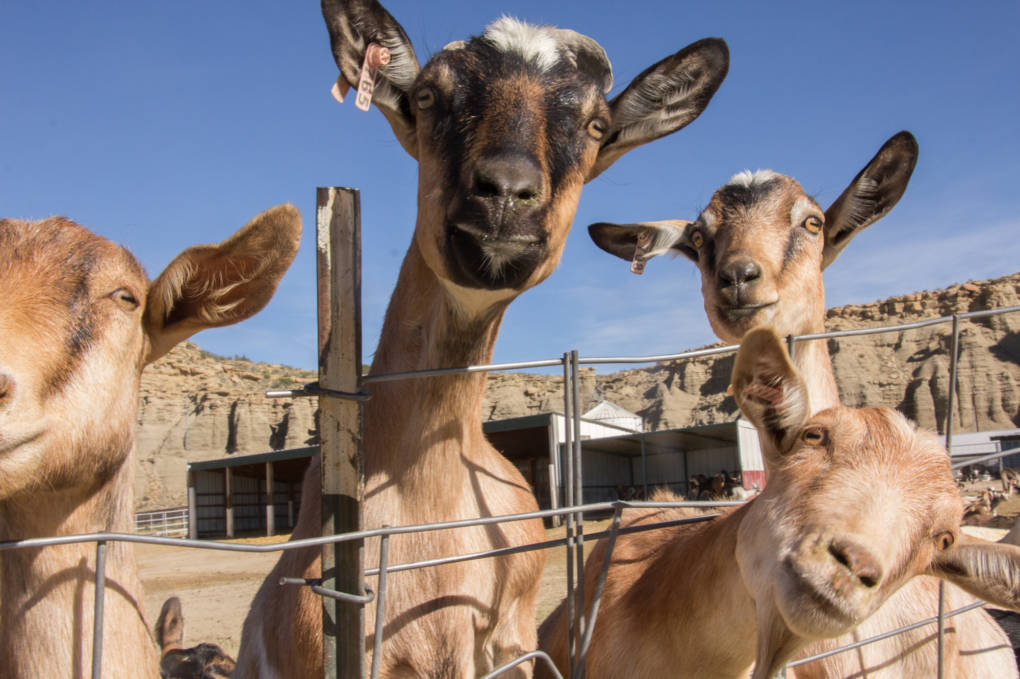
"caption": "\"The goats are kind of cool,\" says former inmate Chad Redding. \"The females are like dogs — they just want your attention.\"",
"description": "\"The goats are kind of cool,\" says former inmate Chad Redding. \"The females are like dogs — they just want your attention",
"title": "\"The goats are kind of cool,\" says former inmate Chad Redding. \"The females are like dogs — they just want your attention.\"",
"credit": "Dan Charles/NPR",
"status": "inherit",
"isLoading": false,
"fetchFailed": false
},
"bayareabites_119236": {
"type": "attachments",
"id": "bayareabites_119236",
"meta": {
"index": "attachments_1716263798",
"site": "bayareabites",
"id": "119236",
"found": true
},
"parent": 119231,
"imgSizes": {
"small": {
"file": "https://ww2.kqed.org/app/uploads/sites/24/2017/07/170712-gleaning-top-520x347.jpg",
"width": 520,
"mimeType": "image/jpeg",
"height": 347
},
"twentyfourteen-full-width": {
"file": "https://ww2.kqed.org/app/uploads/sites/24/2017/07/170712-gleaning-top-1038x576.jpg",
"width": 1038,
"mimeType": "image/jpeg",
"height": 576
},
"thumbnail": {
"file": "https://ww2.kqed.org/app/uploads/sites/24/2017/07/170712-gleaning-top-160x107.jpg",
"width": 160,
"mimeType": "image/jpeg",
"height": 107
},
"fd-sm": {
"file": "https://ww2.kqed.org/app/uploads/sites/24/2017/07/170712-gleaning-top-960x640.jpg",
"width": 960,
"mimeType": "image/jpeg",
"height": 640
},
"post-thumbnail": {
"file": "https://ww2.kqed.org/app/uploads/sites/24/2017/07/170712-gleaning-top-672x372.jpg",
"width": 672,
"mimeType": "image/jpeg",
"height": 372
},
"xsmall": {
"file": "https://ww2.kqed.org/app/uploads/sites/24/2017/07/170712-gleaning-top-375x250.jpg",
"width": 375,
"mimeType": "image/jpeg",
"height": 250
},
"kqedFullSize": {
"file": "https://ww2.kqed.org/app/uploads/sites/24/2017/07/170712-gleaning-top.jpg",
"width": 1200,
"height": 800
},
"large": {
"file": "https://ww2.kqed.org/app/uploads/sites/24/2017/07/170712-gleaning-top-1020x680.jpg",
"width": 1020,
"mimeType": "image/jpeg",
"height": 680
},
"xlarge": {
"file": "https://ww2.kqed.org/app/uploads/sites/24/2017/07/170712-gleaning-top-1180x787.jpg",
"width": 1180,
"mimeType": "image/jpeg",
"height": 787
},
"guest-author-50": {
"file": "https://ww2.kqed.org/app/uploads/sites/24/2017/07/170712-gleaning-top-50x50.jpg",
"width": 50,
"mimeType": "image/jpeg",
"height": 50
},
"guest-author-96": {
"file": "https://ww2.kqed.org/app/uploads/sites/24/2017/07/170712-gleaning-top-96x96.jpg",
"width": 96,
"mimeType": "image/jpeg",
"height": 96
},
"medium": {
"file": "https://ww2.kqed.org/app/uploads/sites/24/2017/07/170712-gleaning-top-800x533.jpg",
"width": 800,
"mimeType": "image/jpeg",
"height": 533
},
"guest-author-64": {
"file": "https://ww2.kqed.org/app/uploads/sites/24/2017/07/170712-gleaning-top-64x64.jpg",
"width": 64,
"mimeType": "image/jpeg",
"height": 64
},
"guest-author-32": {
"file": "https://ww2.kqed.org/app/uploads/sites/24/2017/07/170712-gleaning-top-32x32.jpg",
"width": 32,
"mimeType": "image/jpeg",
"height": 32
},
"fd-med": {
"file": "https://ww2.kqed.org/app/uploads/sites/24/2017/07/170712-gleaning-top-1180x787.jpg",
"width": 1180,
"mimeType": "image/jpeg",
"height": 787
},
"detail": {
"file": "https://ww2.kqed.org/app/uploads/sites/24/2017/07/170712-gleaning-top-150x150.jpg",
"width": 150,
"mimeType": "image/jpeg",
"height": 150
},
"medium_large": {
"file": "https://ww2.kqed.org/app/uploads/sites/24/2017/07/170712-gleaning-top-768x512.jpg",
"width": 768,
"mimeType": "image/jpeg",
"height": 512
},
"guest-author-128": {
"file": "https://ww2.kqed.org/app/uploads/sites/24/2017/07/170712-gleaning-top-128x128.jpg",
"width": 128,
"mimeType": "image/jpeg",
"height": 128
},
"xxsmall": {
"file": "https://ww2.kqed.org/app/uploads/sites/24/2017/07/170712-gleaning-top-240x160.jpg",
"width": 240,
"mimeType": "image/jpeg",
"height": 160
}
},
"publishDate": 1500322781,
"modified": 1500322844,
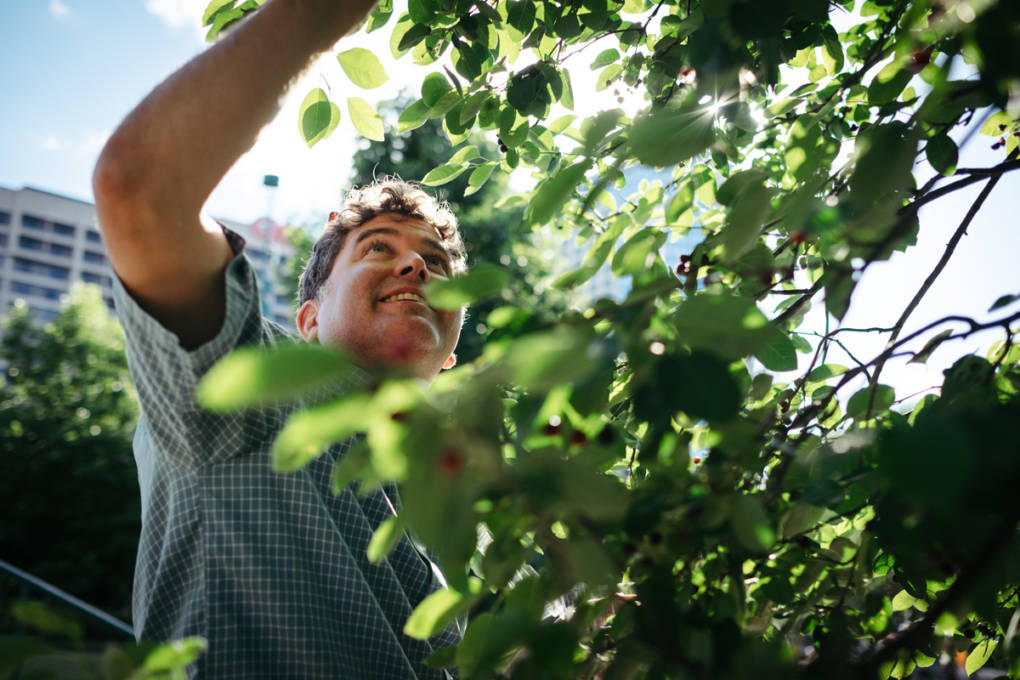
"caption": "Urban gleaning",
"description": null,
"title": "170712-gleaning-top",
"credit": "\u003ca href=\"http://www.dessalohrey.com/\">Dessa Lohrey\u003c/a>",
"status": "inherit",
"isLoading": false,
"fetchFailed": false
},
"bayareabites_118984": {
"type": "attachments",
"id": "bayareabites_118984",
"meta": {
"index": "attachments_1716263798",
"site": "bayareabites",
"id": "118984",
"found": true
},
"parent": 118983,
"imgSizes": {
"small": {
"file": "https://ww2.kqed.org/app/uploads/sites/24/2017/07/img_7568_custom-c3de9d59e9c34f653c6e10b891d9c324183160c0-520x346.jpg",
"width": 520,
"mimeType": "image/jpeg",
"height": 346
},
"twentyfourteen-full-width": {
"file": "https://ww2.kqed.org/app/uploads/sites/24/2017/07/img_7568_custom-c3de9d59e9c34f653c6e10b891d9c324183160c0-1038x576.jpg",
"width": 1038,
"mimeType": "image/jpeg",
"height": 576
},
"thumbnail": {
"file": "https://ww2.kqed.org/app/uploads/sites/24/2017/07/img_7568_custom-c3de9d59e9c34f653c6e10b891d9c324183160c0-160x107.jpg",
"width": 160,
"mimeType": "image/jpeg",
"height": 107
},
"fd-sm": {
"file": "https://ww2.kqed.org/app/uploads/sites/24/2017/07/img_7568_custom-c3de9d59e9c34f653c6e10b891d9c324183160c0-960x639.jpg",
"width": 960,
"mimeType": "image/jpeg",
"height": 639
},
"post-thumbnail": {
"file": "https://ww2.kqed.org/app/uploads/sites/24/2017/07/img_7568_custom-c3de9d59e9c34f653c6e10b891d9c324183160c0-672x372.jpg",
"width": 672,
"mimeType": "image/jpeg",
"height": 372
},
"xsmall": {
"file": "https://ww2.kqed.org/app/uploads/sites/24/2017/07/img_7568_custom-c3de9d59e9c34f653c6e10b891d9c324183160c0-375x250.jpg",
"width": 375,
"mimeType": "image/jpeg",
"height": 250
},
"kqedFullSize": {
"file": "https://ww2.kqed.org/app/uploads/sites/24/2017/07/img_7568_custom-c3de9d59e9c34f653c6e10b891d9c324183160c0.jpg",
"width": 2000,
"height": 1332
},
"large": {
"file": "https://ww2.kqed.org/app/uploads/sites/24/2017/07/img_7568_custom-c3de9d59e9c34f653c6e10b891d9c324183160c0-1020x679.jpg",
"width": 1020,
"mimeType": "image/jpeg",
"height": 679
},
"xlarge": {
"file": "https://ww2.kqed.org/app/uploads/sites/24/2017/07/img_7568_custom-c3de9d59e9c34f653c6e10b891d9c324183160c0-1180x786.jpg",
"width": 1180,
"mimeType": "image/jpeg",
"height": 786
},
"guest-author-50": {
"file": "https://ww2.kqed.org/app/uploads/sites/24/2017/07/img_7568_custom-c3de9d59e9c34f653c6e10b891d9c324183160c0-50x50.jpg",
"width": 50,
"mimeType": "image/jpeg",
"height": 50
},
"guest-author-96": {
"file": "https://ww2.kqed.org/app/uploads/sites/24/2017/07/img_7568_custom-c3de9d59e9c34f653c6e10b891d9c324183160c0-96x96.jpg",
"width": 96,
"mimeType": "image/jpeg",
"height": 96
},
"medium": {
"file": "https://ww2.kqed.org/app/uploads/sites/24/2017/07/img_7568_custom-c3de9d59e9c34f653c6e10b891d9c324183160c0-800x533.jpg",
"width": 800,
"mimeType": "image/jpeg",
"height": 533
},
"guest-author-64": {
"file": "https://ww2.kqed.org/app/uploads/sites/24/2017/07/img_7568_custom-c3de9d59e9c34f653c6e10b891d9c324183160c0-64x64.jpg",
"width": 64,
"mimeType": "image/jpeg",
"height": 64
},
"guest-author-32": {
"file": "https://ww2.kqed.org/app/uploads/sites/24/2017/07/img_7568_custom-c3de9d59e9c34f653c6e10b891d9c324183160c0-32x32.jpg",
"width": 32,
"mimeType": "image/jpeg",
"height": 32
},
"fd-lrg": {
"file": "https://ww2.kqed.org/app/uploads/sites/24/2017/07/img_7568_custom-c3de9d59e9c34f653c6e10b891d9c324183160c0-1920x1279.jpg",
"width": 1920,
"mimeType": "image/jpeg",
"height": 1279
},
"fd-med": {
"file": "https://ww2.kqed.org/app/uploads/sites/24/2017/07/img_7568_custom-c3de9d59e9c34f653c6e10b891d9c324183160c0-1180x786.jpg",
"width": 1180,
"mimeType": "image/jpeg",
"height": 786
},
"full-width": {
"file": "https://ww2.kqed.org/app/uploads/sites/24/2017/07/img_7568_custom-c3de9d59e9c34f653c6e10b891d9c324183160c0-1920x1279.jpg",
"width": 1920,
"mimeType": "image/jpeg",
"height": 1279
},
"detail": {
"file": "https://ww2.kqed.org/app/uploads/sites/24/2017/07/img_7568_custom-c3de9d59e9c34f653c6e10b891d9c324183160c0-150x150.jpg",
"width": 150,
"mimeType": "image/jpeg",
"height": 150
},
"medium_large": {
"file": "https://ww2.kqed.org/app/uploads/sites/24/2017/07/img_7568_custom-c3de9d59e9c34f653c6e10b891d9c324183160c0-768x511.jpg",
"width": 768,
"mimeType": "image/jpeg",
"height": 511
},
"guest-author-128": {
"file": "https://ww2.kqed.org/app/uploads/sites/24/2017/07/img_7568_custom-c3de9d59e9c34f653c6e10b891d9c324183160c0-128x128.jpg",
"width": 128,
"mimeType": "image/jpeg",
"height": 128
},
"xxsmall": {
"file": "https://ww2.kqed.org/app/uploads/sites/24/2017/07/img_7568_custom-c3de9d59e9c34f653c6e10b891d9c324183160c0-240x160.jpg",
"width": 240,
"mimeType": "image/jpeg",
"height": 160
}
},
"publishDate": 1499712206,
"modified": 1499712516,
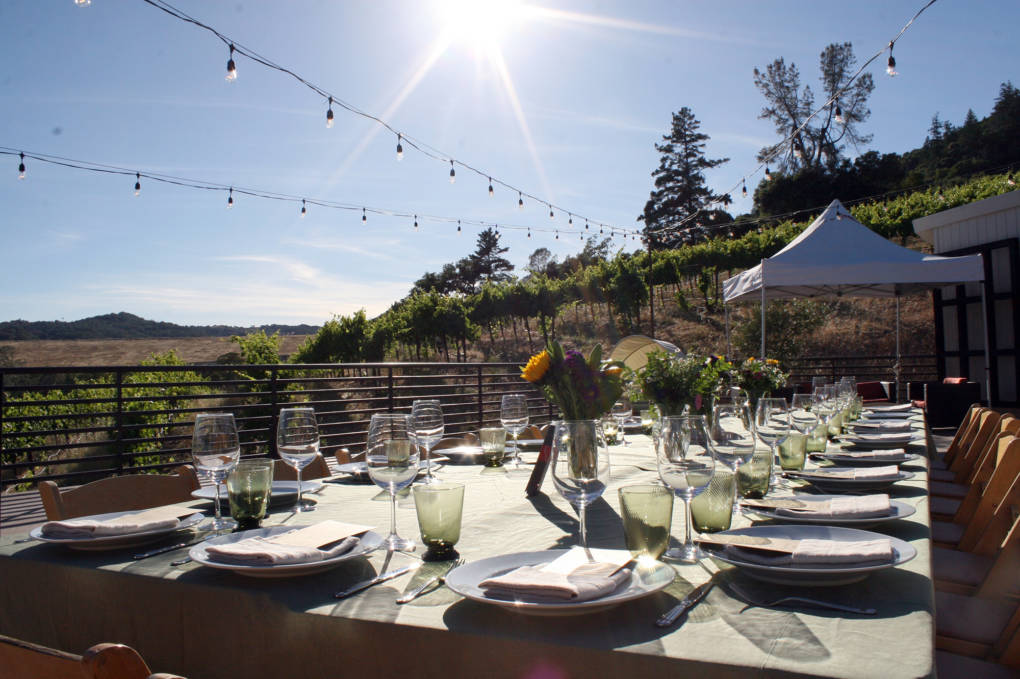
"caption": "Proponents of the emerging pot-for-pleasure industry want to grab a share of the nearly $2 billion tourism business in Sonoma County with events like dinners that incorporate marijuana.",
"description": "Proponents of the emerging pot-for-pleasure industry want to grab a share of the nearly $2 billion tourism business in Sonoma County with events like dinners that incorporate marijuana.",
"title": "Proponents of the emerging pot-for-pleasure industry want to grab a share of the nearly $2 billion tourism business in Sonoma County with events like dinners that incorporate marijuana.",
"credit": "Courtesy of Sonoma Cannabis Company/Kristen Jeanne",
"status": "inherit",
"isLoading": false,
"fetchFailed": false
},
"bayareabites_118933": {
"type": "attachments",
"id": "bayareabites_118933",
"meta": {
"index": "attachments_1716263798",
"site": "bayareabites",
"id": "118933",
"found": true
},
"parent": 118929,
"imgSizes": {
"small": {
"file": "https://ww2.kqed.org/app/uploads/sites/24/2017/07/170707-mushrooms-top-520x347.jpg",
"width": 520,
"mimeType": "image/jpeg",
"height": 347
},
"twentyfourteen-full-width": {
"file": "https://ww2.kqed.org/app/uploads/sites/24/2017/07/170707-mushrooms-top-1038x576.jpg",
"width": 1038,
"mimeType": "image/jpeg",
"height": 576
},
"thumbnail": {
"file": "https://ww2.kqed.org/app/uploads/sites/24/2017/07/170707-mushrooms-top-160x107.jpg",
"width": 160,
"mimeType": "image/jpeg",
"height": 107
},
"fd-sm": {
"file": "https://ww2.kqed.org/app/uploads/sites/24/2017/07/170707-mushrooms-top-960x640.jpg",
"width": 960,
"mimeType": "image/jpeg",
"height": 640
},
"post-thumbnail": {
"file": "https://ww2.kqed.org/app/uploads/sites/24/2017/07/170707-mushrooms-top-672x372.jpg",
"width": 672,
"mimeType": "image/jpeg",
"height": 372
},
"xsmall": {
"file": "https://ww2.kqed.org/app/uploads/sites/24/2017/07/170707-mushrooms-top-375x250.jpg",
"width": 375,
"mimeType": "image/jpeg",
"height": 250
},
"kqedFullSize": {
"file": "https://ww2.kqed.org/app/uploads/sites/24/2017/07/170707-mushrooms-top.jpg",
"width": 1200,
"height": 800
},
"large": {
"file": "https://ww2.kqed.org/app/uploads/sites/24/2017/07/170707-mushrooms-top-1020x680.jpg",
"width": 1020,
"mimeType": "image/jpeg",
"height": 680
},
"xlarge": {
"file": "https://ww2.kqed.org/app/uploads/sites/24/2017/07/170707-mushrooms-top-1180x787.jpg",
"width": 1180,
"mimeType": "image/jpeg",
"height": 787
},
"guest-author-50": {
"file": "https://ww2.kqed.org/app/uploads/sites/24/2017/07/170707-mushrooms-top-50x50.jpg",
"width": 50,
"mimeType": "image/jpeg",
"height": 50
},
"guest-author-96": {
"file": "https://ww2.kqed.org/app/uploads/sites/24/2017/07/170707-mushrooms-top-96x96.jpg",
"width": 96,
"mimeType": "image/jpeg",
"height": 96
},
"medium": {
"file": "https://ww2.kqed.org/app/uploads/sites/24/2017/07/170707-mushrooms-top-800x533.jpg",
"width": 800,
"mimeType": "image/jpeg",
"height": 533
},
"guest-author-64": {
"file": "https://ww2.kqed.org/app/uploads/sites/24/2017/07/170707-mushrooms-top-64x64.jpg",
"width": 64,
"mimeType": "image/jpeg",
"height": 64
},
"guest-author-32": {
"file": "https://ww2.kqed.org/app/uploads/sites/24/2017/07/170707-mushrooms-top-32x32.jpg",
"width": 32,
"mimeType": "image/jpeg",
"height": 32
},
"fd-med": {
"file": "https://ww2.kqed.org/app/uploads/sites/24/2017/07/170707-mushrooms-top-1180x787.jpg",
"width": 1180,
"mimeType": "image/jpeg",
"height": 787
},
"detail": {
"file": "https://ww2.kqed.org/app/uploads/sites/24/2017/07/170707-mushrooms-top-150x150.jpg",
"width": 150,
"mimeType": "image/jpeg",
"height": 150
},
"medium_large": {
"file": "https://ww2.kqed.org/app/uploads/sites/24/2017/07/170707-mushrooms-top-768x512.jpg",
"width": 768,
"mimeType": "image/jpeg",
"height": 512
},
"guest-author-128": {
"file": "https://ww2.kqed.org/app/uploads/sites/24/2017/07/170707-mushrooms-top-128x128.jpg",
"width": 128,
"mimeType": "image/jpeg",
"height": 128
},
"xxsmall": {
"file": "https://ww2.kqed.org/app/uploads/sites/24/2017/07/170707-mushrooms-top-240x160.jpg",
"width": 240,
"mimeType": "image/jpeg",
"height": 160
}
},
"publishDate": 1499465566,
"modified": 1499465582,
"caption": null,
"description": null,
"title": "170707-mushrooms-top",
"credit": null,
"status": "inherit",
"isLoading": false,
"fetchFailed": false
},
"bayareabites_118946": {
"type": "attachments",
"id": "bayareabites_118946",
"meta": {
"index": "attachments_1716263798",
"site": "bayareabites",
"id": "118946",
"found": true
},
"parent": 118938,
"imgSizes": {
"small": {
"file": "https://ww2.kqed.org/app/uploads/sites/24/2017/07/final-evoo-3-new-520x329.jpg",
"width": 520,
"mimeType": "image/jpeg",
"height": 329
},
"twentyfourteen-full-width": {
"file": "https://ww2.kqed.org/app/uploads/sites/24/2017/07/final-evoo-3-new-1038x576.jpg",
"width": 1038,
"mimeType": "image/jpeg",
"height": 576
},
"thumbnail": {
"file": "https://ww2.kqed.org/app/uploads/sites/24/2017/07/final-evoo-3-new-160x101.jpg",
"width": 160,
"mimeType": "image/jpeg",
"height": 101
},
"fd-sm": {
"file": "https://ww2.kqed.org/app/uploads/sites/24/2017/07/final-evoo-3-new-960x607.jpg",
"width": 960,
"mimeType": "image/jpeg",
"height": 607
},
"post-thumbnail": {
"file": "https://ww2.kqed.org/app/uploads/sites/24/2017/07/final-evoo-3-new-672x372.jpg",
"width": 672,
"mimeType": "image/jpeg",
"height": 372
},
"xsmall": {
"file": "https://ww2.kqed.org/app/uploads/sites/24/2017/07/final-evoo-3-new-375x237.jpg",
"width": 375,
"mimeType": "image/jpeg",
"height": 237
},
"kqedFullSize": {
"file": "https://ww2.kqed.org/app/uploads/sites/24/2017/07/final-evoo-3-new.jpg",
"width": 1920,
"height": 1214
},
"large": {
"file": "https://ww2.kqed.org/app/uploads/sites/24/2017/07/final-evoo-3-new-1020x645.jpg",
"width": 1020,
"mimeType": "image/jpeg",
"height": 645
},
"xlarge": {
"file": "https://ww2.kqed.org/app/uploads/sites/24/2017/07/final-evoo-3-new-1180x746.jpg",
"width": 1180,
"mimeType": "image/jpeg",
"height": 746
},
"guest-author-50": {
"file": "https://ww2.kqed.org/app/uploads/sites/24/2017/07/final-evoo-3-new-50x50.jpg",
"width": 50,
"mimeType": "image/jpeg",
"height": 50
},
"guest-author-96": {
"file": "https://ww2.kqed.org/app/uploads/sites/24/2017/07/final-evoo-3-new-96x96.jpg",
"width": 96,
"mimeType": "image/jpeg",
"height": 96
},
"medium": {
"file": "https://ww2.kqed.org/app/uploads/sites/24/2017/07/final-evoo-3-new-800x506.jpg",
"width": 800,
"mimeType": "image/jpeg",
"height": 506
},
"guest-author-64": {
"file": "https://ww2.kqed.org/app/uploads/sites/24/2017/07/final-evoo-3-new-64x64.jpg",
"width": 64,
"mimeType": "image/jpeg",
"height": 64
},
"guest-author-32": {
"file": "https://ww2.kqed.org/app/uploads/sites/24/2017/07/final-evoo-3-new-32x32.jpg",
"width": 32,
"mimeType": "image/jpeg",
"height": 32
},
"fd-lrg": {
"file": "https://ww2.kqed.org/app/uploads/sites/24/2017/07/final-evoo-3-new-1920x1214.jpg",
"width": 1920,
"mimeType": "image/jpeg",
"height": 1214
},
"fd-med": {
"file": "https://ww2.kqed.org/app/uploads/sites/24/2017/07/final-evoo-3-new-1180x746.jpg",
"width": 1180,
"mimeType": "image/jpeg",
"height": 746
},
"full-width": {
"file": "https://ww2.kqed.org/app/uploads/sites/24/2017/07/final-evoo-3-new-1920x1214.jpg",
"width": 1920,
"mimeType": "image/jpeg",
"height": 1214
},
"detail": {
"file": "https://ww2.kqed.org/app/uploads/sites/24/2017/07/final-evoo-3-new-150x150.jpg",
"width": 150,
"mimeType": "image/jpeg",
"height": 150
},
"medium_large": {
"file": "https://ww2.kqed.org/app/uploads/sites/24/2017/07/final-evoo-3-new-768x486.jpg",
"width": 768,
"mimeType": "image/jpeg",
"height": 486
},
"guest-author-128": {
"file": "https://ww2.kqed.org/app/uploads/sites/24/2017/07/final-evoo-3-new-128x128.jpg",
"width": 128,
"mimeType": "image/jpeg",
"height": 128
},
"xxsmall": {
"file": "https://ww2.kqed.org/app/uploads/sites/24/2017/07/final-evoo-3-new-240x152.jpg",
"width": 240,
"mimeType": "image/jpeg",
"height": 152
}
},
"publishDate": 1499467133,
"modified": 1499467918,
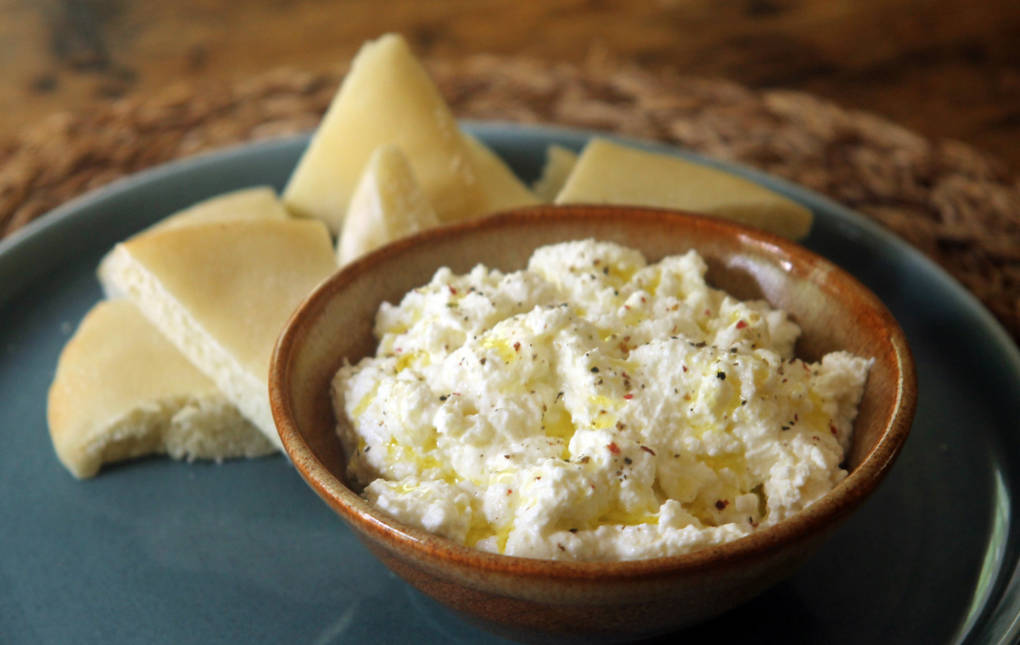
"caption": "Homemade ricotta cheese with olive oil and pepper.",
"description": null,
"title": "Homemade ricotta cheese with olive oil and pepper.",
"credit": "Kate Williams",
"status": "inherit",
"isLoading": false,
"fetchFailed": false
}
},
"audioPlayerReducer": {
"postId": "stream_live",
"isPaused": true,
"isPlaying": false,
"pfsActive": false,
"pledgeModalIsOpen": true,
"playerDrawerIsOpen": false,
"liveAudioPlayStartedAt": 0,
"liveAudioPlayContext": ""
},
"authorsReducer": {
"byline_bayareabites_119926": {
"type": "authors",
"id": "byline_bayareabites_119926",
"meta": {
"override": true
},
"slug": "byline_bayareabites_119926",
"name": "Clare Leschin-Hoar, \u003ca href=\"https://ww2.kqed.org/bayareabites/author/nprfood/\">NPR Food\u003c/a>",
"isLoading": false
},
"byline_bayareabites_119891": {
"type": "authors",
"id": "byline_bayareabites_119891",
"meta": {
"override": true
},
"slug": "byline_bayareabites_119891",
"name": "Alastair Bland, \u003ca href=\"https://ww2.kqed.org/bayareabites/author/nprfood/\">NPR Food\u003c/a>",
"isLoading": false
},
"byline_bayareabites_119570": {
"type": "authors",
"id": "byline_bayareabites_119570",
"meta": {
"override": true
},
"slug": "byline_bayareabites_119570",
"name": "Laurel Dalrymple, NPR Food",
"isLoading": false
},
"byline_bayareabites_119320": {
"type": "authors",
"id": "byline_bayareabites_119320",
"meta": {
"override": true
},
"slug": "byline_bayareabites_119320",
"name": "\u003ca href=\"http://civileats.com/author/tori-truscheit/\">Tori Truscheit,\u003c/a> \u003ca href=\"https://ww2.kqed.org/bayareabites/author/civileat/\">Civil Eats\u003c/a>",
"isLoading": false
},
"byline_bayareabites_119292": {
"type": "authors",
"id": "byline_bayareabites_119292",
"meta": {
"override": true
},
"slug": "byline_bayareabites_119292",
"name": "Dan Charles, NPR Food",
"isLoading": false
},
"byline_bayareabites_119231": {
"type": "authors",
"id": "byline_bayareabites_119231",
"meta": {
"override": true
},
"slug": "byline_bayareabites_119231",
"name": " \u003ca href=\"http://civileats.com/author/jfigueiredo/\">Jordan Figueiredo,\u003c/a> \u003ca href=\"https://ww2.kqed.org/bayareabites/author/civileat/\">Civil Eats\u003c/a> ",
"isLoading": false
},
"byline_bayareabites_118983": {
"type": "authors",
"id": "byline_bayareabites_118983",
"meta": {
"override": true
},
"slug": "byline_bayareabites_118983",
"name": "John Burnett, NPR Food",
"isLoading": false
},
"byline_bayareabites_118929": {
"type": "authors",
"id": "byline_bayareabites_118929",
"meta": {
"override": true
},
"slug": "byline_bayareabites_118929",
"name": "\u003ca href=\"http://civileats.com/author/pmccoy/\">Peter McCoy\u003c/a>, \u003ca href=\"https://ww2.kqed.org/bayareabites/author/civileat/\">Civil Eats\u003c/a> ",
"isLoading": false
},
"lilavolkas": {
"type": "authors",
"id": "5404",
"meta": {
"index": "authors_1716337520",
"id": "5404",
"found": true
},
"name": "Lila Volkas",
"firstName": "Lila",
"lastName": "Volkas",
"slug": "lilavolkas",
"email": "lilavolkas@gmail.com",
"display_author_email": false,
"staff_mastheads": [],
"title": null,
"bio": "Lila Volkas is a Berkeley based Holistic Nutritionist, food writer and illustrator. She received her Nutritional Consulting Certification from Bauman College and offers clients individualized nutritional support. As an illustrator she creates hand drawn and digitally colored illustrations that whimsically capture the essence of her subjects and are easily digested by readers. Much of her inspiration comes from her undeniable love for vegetables, as well her knack for anthropomorphizing what's on her plate. Lila has had several pieces published in KQED’s Bay Area Bites as well as in Edible East Bay Magazine. For more of a taste of Lila's offering, check out her website \u003ca href=\"http://www.lilavolkas.com/\">lilavolkas.com\u003c/a>",
"avatar": "https://secure.gravatar.com/avatar/e520743544a0600729bc45ff3ab43206?s=600&d=blank&r=g",
"twitter": null,
"facebook": null,
"instagram": null,
"linkedin": null,
"sites": [
{
"site": "bayareabites",
"roles": [
"contributor"
]
},
{
"site": "food",
"roles": [
"contributor"
]
}
],
"headData": {
"title": "Lila Volkas | KQED",
"description": null,
"ogImgSrc": "https://secure.gravatar.com/avatar/e520743544a0600729bc45ff3ab43206?s=600&d=blank&r=g",
"twImgSrc": "https://secure.gravatar.com/avatar/e520743544a0600729bc45ff3ab43206?s=600&d=blank&r=g"
},
"isLoading": false,
"link": "/author/lilavolkas"
},
"katewilliams": {
"type": "authors",
"id": "5485",
"meta": {
"index": "authors_1716337520",
"id": "5485",
"found": true
},
"name": "Kate Williams",
"firstName": "Kate",
"lastName": "Williams",
"slug": "katewilliams",
"email": "williaka@gmail.com",
"display_author_email": false,
"staff_mastheads": [],
"title": null,
"bio": "Kate Williams grew up outside of Atlanta, where twenty-pound baskets of peaches were an end-of-summer tradition. After spending time in Boston developing recipes for America's Test Kitchen and pretending to be a New Englander, she moved to sunny Berkeley. Here she works as a personal chef and food writer, covering topics ranging from taco trucks to modernist cookbooks. In addition to KQED's Bay Area Bites, Kate's work appears on Serious Eats, Berkeleyside NOSH, The Oxford American, America's Test Kitchen cookbooks, and Food52.",
"avatar": "https://secure.gravatar.com/avatar/25623fe56e181fe8b6ee92fd0ea077de?s=600&d=blank&r=g",
"twitter": "KateHWilliams",
"facebook": null,
"instagram": null,
"linkedin": null,
"sites": [
{
"site": "bayareabites",
"roles": [
"contributor"
]
},
{
"site": "food",
"roles": [
"contributor"
]
}
],
"headData": {
"title": "Kate Williams | KQED",
"description": null,
"ogImgSrc": "https://secure.gravatar.com/avatar/25623fe56e181fe8b6ee92fd0ea077de?s=600&d=blank&r=g",
"twImgSrc": "https://secure.gravatar.com/avatar/25623fe56e181fe8b6ee92fd0ea077de?s=600&d=blank&r=g"
},
"isLoading": false,
"link": "/author/katewilliams"
},
"alexandrawall": {
"type": "authors",
"id": "5567",
"meta": {
"index": "authors_1716337520",
"id": "5567",
"found": true
},
"name": "Alix Wall",
"firstName": "Alix",
"lastName": "Wall",
"slug": "alexandrawall",
"email": "alixwall@sbcglobal.net",
"display_author_email": false,
"staff_mastheads": [],
"title": null,
"bio": "Alix Wall appeared in her hometown paper in Riverside, California as “Chef of the Week” when she was 15 years old, and in high school, she founded “The Bon Appetit Club.” After working as a journalist for many years, Alix became a certified natural foods chef from Bauman College in Berkeley. While she cooks part-time healthy, organic meals for busy families, she is also a contributing editor of j. weekly, the Bay Area’s Jewish newspaper, in which she has a monthly food column. Her food writing can also be found on Berkeleyside’s NOSH and in Edible East Bay. In addition to food, she loves writing about how couples met and fell in love, which she does for The San Francisco Chronicle’s Style section and j. weekly. In 2016, she founded The Illuminoshi: The Not-So-Secret Society of Bay Area Jewish Food Professionals. She is also writer/producer for a documentary-in-progress called \u003ca href=\"https://www.lonelychildmovie.com/\">The Lonely Child\u003c/a>. Follow Alix on Twitter \u003ca href=\"https://twitter.com/WallAlix\">@WallAlix\u003c/a>.",
"avatar": "https://secure.gravatar.com/avatar/421a27f26a185be932f8d567b499b1f1?s=600&d=blank&r=g",
"twitter": null,
"facebook": null,
"instagram": null,
"linkedin": null,
"sites": [
{
"site": "bayareabites",
"roles": [
"contributor"
]
},
{
"site": "food",
"roles": [
"contributor"
]
}
],
"headData": {
"title": "Alix Wall | KQED",
"description": null,
"ogImgSrc": "https://secure.gravatar.com/avatar/421a27f26a185be932f8d567b499b1f1?s=600&d=blank&r=g",
"twImgSrc": "https://secure.gravatar.com/avatar/421a27f26a185be932f8d567b499b1f1?s=600&d=blank&r=g"
},
"isLoading": false,
"link": "/author/alexandrawall"
}
},
"pagesReducer": {
"bayareabites_category_food-and-technology": {
"type": "terms",
"id": "bayareabites_4084",
"meta": {
"index": "terms_1716263798",
"site": "bayareabites",
"id": "4084",
"score": 14.405394
},
"featImg": null,
"name": "food trends and technology",
"description": null,
"taxonomy": "category",
"headData": {
"twImgId": null,
"twTitle": null,
"ogTitle": null,
"ogImgId": null,
"twDescription": null,
"description": null,
"title": "food trends and technology Archives | KQED Bay Area Bites",
"ogDescription": null
},
"ttid": 2573,
"slug": "food-and-technology",
"isLoading": false,
"title": "food trends and technology",
"pageMeta": {
"site": "bayareabites",
"WpPageTemplate": "page-topic-editorial",
"currentPage": 11
},
"blocks": [
{
"blockName": "kqed/post-list",
"attrs": {
"layout": "cardArticle2",
"query": "posts/bayareabites?category=food-and-technology",
"seeMore": false,
"paginated": true,
"page": 11
}
},
{
"blockName": "kqed/ad"
}
]
}
},
"pfsSessionReducer": {},
"postsReducer": {
"stream_live": {
"type": "live",
"id": "stream_live",
"audioUrl": "https://streams.kqed.org/kqedradio",
"title": "Live Stream",
"excerpt": "Live Stream information currently unavailable.",
"link": "/radio",
"featImg": "",
"label": {
"name": "KQED Live",
"link": "/"
}
},
"stream_kqedNewscast": {
"type": "posts",
"id": "stream_kqedNewscast",
"audioUrl": "https://www.kqed.org/.stream/anon/radio/RDnews/newscast.mp3?_=1",
"title": "KQED Newscast",
"featImg": "",
"label": {
"name": "88.5 FM",
"link": "/"
}
},
"bayareabites_120082": {
"type": "posts",
"id": "bayareabites_120082",
"meta": {
"index": "posts_1716263798",
"site": "bayareabites",
"id": "120082",
"score": null,
"sort": [
1503416617000
]
},
"parent": 0,
"labelTerm": {},
"blocks": [],
"publishDate": 1503416617,
"format": "standard",
"disqusTitle": "Burning Man Food Tips: Nutritious Snacks for the Playa",
"title": "Burning Man Food Tips: Nutritious Snacks for the Playa",
"headTitle": "Bay Area Bites | KQED Food",
"content": "\u003cp>I curiously open the lid of my blender and peer inside as a plume of green dust suddenly floats into my face and fills my nostrils, leading to an uncontrollable coughing fit. Dang! The dehydrated kale, chard and nettle leaf I made into a powder is meant to enter my mouth, not my nose, so I hurriedly replace the lid to save these valuable nutrients for the desert.\u003c/p>\n\u003cp>I have been cooking up some new culinary creations as I prepare for my fourth year attending \u003ca href=\"https://burningman.org/\">Burning Man\u003c/a>, the annual weeklong art festival in Black Rock Desert, Nevada. I am taking my pre-playa preparation to a whole new level, inspired by what I am learning at \u003ca href=\"https://www.baumancollege.org/programs/?gclid=EAIaIQobChMI1_f19-Lp1QIVBJR-Ch119AvFEAAYASAAEgJSPPD_BwE\">Bauman College\u003c/a> in Berkeley as I near the end of my studies to become a Holistic Nutritionist. In the last year I have also embarked on a journey to address some of my own chronic health issues and have found immense healing from eating in an intentional way and uncovering my triggering allergenic foods. There is no way I am going to let my new diet put a damper on my burn, so I have been spending extra time in the kitchen doing more holistic food preparation. (And I love a good food challenge, so bring it on.)\u003c/p>\n\u003cp>My sustenance in past years at Burning Man, like many people, has centered on peanut butter, trail mix and granola bars, which just won't fly anymore. I will be toting more greens, quality fat and protein and nutrient density in my 2010 Toyota Prius to this year’s burn.\u003c/p>\n\u003cp>\u003cstrong>I offer the following food tips and recipes\u003c/strong>, hoping others can benefit from my (slightly over the top) enthusiasm about healthy food and enjoy a more nutritious burn.\u003c/p>\n\u003cfigure id=\"attachment_120086\" class=\"wp-caption aligncenter\" style=\"max-width: 2360px\">\u003cimg src=\"https://ww2.kqed.org/bayareabites/wp-content/uploads/sites/24/2017/08/bm2-1.jpg\" alt=\"Nutritious snacks for Burning Man\" width=\"2360\" height=\"1529\" class=\"size-full wp-image-120086\" srcset=\"https://ww2.kqed.org/app/uploads/sites/24/2017/08/bm2-1.jpg 2360w, https://ww2.kqed.org/app/uploads/sites/24/2017/08/bm2-1-160x104.jpg 160w, https://ww2.kqed.org/app/uploads/sites/24/2017/08/bm2-1-800x518.jpg 800w, https://ww2.kqed.org/app/uploads/sites/24/2017/08/bm2-1-768x498.jpg 768w, https://ww2.kqed.org/app/uploads/sites/24/2017/08/bm2-1-1020x661.jpg 1020w, https://ww2.kqed.org/app/uploads/sites/24/2017/08/bm2-1-1180x765.jpg 1180w, https://ww2.kqed.org/app/uploads/sites/24/2017/08/bm2-1-960x622.jpg 960w, https://ww2.kqed.org/app/uploads/sites/24/2017/08/bm2-1-240x155.jpg 240w, https://ww2.kqed.org/app/uploads/sites/24/2017/08/bm2-1-375x243.jpg 375w, https://ww2.kqed.org/app/uploads/sites/24/2017/08/bm2-1-520x337.jpg 520w\" sizes=\"(max-width: 2360px) 100vw, 2360px\">\u003cfigcaption class=\"wp-caption-text\">Nutritious snacks for Burning Man \u003ccite>(Lila Volkas)\u003c/cite>\u003c/figcaption>\u003c/figure>\n\u003ch2>Seaweed\u003c/h2>\n\u003cp>Seaweed is cooling to the body, so it’s perfect for the hot desert climate. Eating seaweed is a great way to boost your nutrition at Burning Man since small servings can pack a nutritious punch.\u003c/p>\n\u003cp>[ad fullwidth]\u003c/p>\n\u003cp>It is likely you will find yourself dripping in sweat at a disco daytime dance party, so seaweed can help you replenish the minerals that were lost in perspiration. Sea vegetables happen to be high in minerals like magnesium, potassium, calcium, manganese, B vitamins and folate.\u003c/p>\n\u003cp>\u003cstrong>How to eat em’:\u003c/strong>\u003cbr>\nBring sheets of \u003ca href=\"https://en.wikipedia.org/wiki/Nori\">nori\u003c/a> seaweed and use them like tortillas for wraps. Sprinkle some salt and olive oil on cut up nori sheets as a “chip” alternative.\u003c/p>\n\u003cp>Get some \u003ca href=\"https://en.wikipedia.org/wiki/Palmaria_palmata\">dulse\u003c/a> flakes and sprinkle them on all your meals. Try adding \u003ca href=\"https://en.wikipedia.org/wiki/Chlorella\">chlorella\u003c/a> or \u003ca href=\"https://en.wikipedia.org/wiki/Spirulina_(dietary_supplement)\">spirulina\u003c/a> powder and some lemon juice to your coconut water for a nutrient dense refreshing beverage.\u003c/p>\n\u003ch2>Sardines\u003c/h2>\n\u003cp>Sardines are a playa power food. These fish are high in Omega-3 essential fatty acids which can help support the nervous system, brain function and mood. Sardines can also help reduce inflammation and nourish dry desert eyes and skin.\u003c/p>\n\u003cp>\u003cstrong>How to eat em’:\u003c/strong>\u003cbr>\nTake 1 can of sardines, 1/2 avocado, 1/2 tsp lemon juice and some salt and pepper and mash them all together. Enjoy with some greens in nori wrap, tortilla or on a cracker.\u003c/p>\n\u003ch2>Chia Seeds\u003c/h2>\n\u003cp>These small seeds expand in liquid and are another excellent source of plant-based Omega-3 essential fatty acids. Chia seeds are also chock full of fabulous fiber which helps keep your stools healthy and regular. Making sure you are supporting your elimination pathways at Burning Man is super important! (especially when you may be putting some not-so-super-substances in your body) Get that sh*t outta there with some fiber and hydration.\u003c/p>\n\u003cp>\u003cstrong>How to eat em’:\u003c/strong>\u003cbr>\nAdd a teaspoon of chia seeds to your coconut water, wait 15 minutes for them to expand and enjoy a hydrating beverage.\u003c/p>\n\u003cp>Make an easy chia pudding in a jar by combining a 1/4 cup chia seeds, 1 cup nut milk, 1/4 tsp cinnamon, 1 tbsp maple syrup and a splash of vanilla. Shake the jar vigorously and store in your cooler overnight for a delicious easy breakfast in the morning.\u003c/p>\n\u003ch2>DIY Electrolyte Beverage\u003c/h2>\n\u003cp>Your body has enough to worry about in the desert without dealing with the artificial dyes and fructose syrup in Gatorade. Make your own healthy electrolyte beverage to replenish those lost minerals.\u003c/p>\n\u003cp>\u003cstrong>How to make it:\u003c/strong>\u003cbr>\n1 quart of water, 1/4 tsp Himalayan salt, 1 tbsp maple syrup and juice from 1/2 a lemon. You can also try making it with herbal tea.\u003c/p>\n\u003ch3>Other Foods that Take a Little Bit More Pre-Playa Effort\u003c/h3>\n\u003ch2>DIY Green Powder\u003c/h2>\n\u003cp>Leafy greens are the holy grail of nutrition. We may be sick of hearing about the mega-hyped vegetable of the millennia, kale. But the rumors are true, this cruciferous queen is rich in vitamin K, A and C and will deeply nourish your cells to get you ready for more dancing. Making your own green powder is not only cheaper, but a great way to avoid ingredients that you may be sensitive to.\u003c/p>\n\u003cp>\u003cstrong>How to make it in a dehydrator:\u003c/strong>\u003cbr>\nDehydrate your choice of leafy greens such as chard, kale, collards and beet greens, for 10 hours at 125F or until they are crispy. I also like to include a 1/4 cup of dried nettles for their mineral boost. Pack the dried greens in your high speed blender (in a \u003ca href=\"https://www.vitamix.com/us/en_us/?cid=07-0063&coupon=07-0063&gclid=EAIaIQobChMIyq6hkObp1QIVWZ7ACh1N5QDDEAAYASAAEgKrDPD_BwE&gclsrc=aw.ds\">Vitamix\u003c/a>, if you have it) and blend on high for 3 minutes until it becomes powder. If the powder is still a bit chunky, transfer contents to a coffee grinder and blend until it reaches your desired texture.\u003c/p>\n\u003cp>\u003cstrong>How to eat it:\u003c/strong>\u003cbr>\nSprinkle 1 tsp-2 tbsp on any dish you eat on the playa from cup of noodles, to lentils. Mix a teaspoon in with your can of coconut water and lemon. (Note: this does taste quite green.)\u003c/p>\n\u003ch2>DIY Dehydrated Jerky\u003c/h2>\n\u003cp>I always make my own jerky because I can’t eat black pepper (I know, right, how do I eat anything ever?!) which is found in most jerkies (and basically everything else). Jerky using organic and pasture-raised meat is a great on-the-go protein to fuel you biking into the dawn. This is a link to a more elaborate \u003ca href=\"http://www.backcountrypaleo.com/gobble-up-some-turkey-jerky/\">recipe\u003c/a>.\u003c/p>\n\u003ch2>Raw Balls\u003c/h2>\n\u003cp>A blend of dried fruit and nuts or seeds of some kind is my alternative to a granola bar or dessert. I like this \u003ca href=\"http://www.leefromamerica.com/blog/2017/3/14/coconut-fat-balls\">recipe\u003c/a> using nuts and seeds or if you are nut/seed free (like me!) see recipe below:\u003c/p>\n\u003cp>\u003cem>Yield: 20, 1 inch balls\u003c/em>\u003c/p>\n\u003cul>\n\u003cstrong>Ingredients:\u003c/strong>\n\u003cli>1 cup \u003ca href=\"https://www.glutenfreeliving.com/blog/what-is-tigernut-flour/\">tigernut flour\u003c/a>\u003c/li>\n\u003cli>6 pitted dates\u003c/li>\n\u003cli>2 tsp lime zest\u003c/li>\n\u003cli>2 tbsp lime juice\u003c/li>\n\u003cli>1/4 cup melted coconut oil\u003c/li>\n\u003cli>1/4 tsp salt\u003c/li>\n\u003cli>1/4 tsp cinnamon\u003c/li>\n\u003cli>1/2 tsp vanilla extract\u003c/li>\n\u003c/ul>\n\u003cp>\u003cstrong>Instructions:\u003c/strong>\u003cbr>\nCombine all ingredients in a food processor and blend until dough forms. Roll into small balls and store in a container.\u003c/p>\n\u003cul>\n\u003ch3>My favorite East Bay grocery stores to get my playa ingredients:\u003c/h3>\n\u003cli>\u003ca href=\"http://www.berkeleybowl.com/\">Berkeley Bowl\u003c/a>\u003c/li>\n\u003cli>\u003ca href=\"http://www.montereymarket.com/index.htm\">Monterey Market\u003c/a>\u003c/li>\n\u003cli>\u003ca href=\"http://naturalgrocery.com/\">Berkeley or El Cerrito Natural Foods\u003c/a>\u003c/li>\n\u003cli>\u003ca href=\"http://www.tokyofish.net/\">Tokyo Fish Market\u003c/a> (for their 50 pack of organic nori!)\u003c/li>\n\u003c/ul>\n\u003cp>[ad floatright]\u003c/p>\n\u003cp>\u003cstrong>Disclaimer:\u003c/strong>\u003cbr>\n\u003cem>I hope you have a fabulous Burn and practice some magical self-care and nourishment. The information above should not be used to diagnose, treat, prevent or cure any disease or condition. All presented information is based on my opinion.\u003c/em>\u003c/p>\n\u003cul>\n\u003cstrong>Sources:\u003c/strong>\n\u003cli>\u003ca href=\"https://www.amazon.com/Prescription-Nutritional-Healing-Fifth-Supplements/dp/1583334009\">Prescription for Nutritional Healing\u003c/a> by Phyllis A Balch\u003c/li>\n\u003cli>\u003ca href=\"https://www.amazon.com/Encyclopedia-Healing-Foods-Michael-Murray/dp/074348052X\">The Encyclopedia of Healing Foods\u003c/a> by Michael Murray\u003c/li>\n\u003c/ul>\n\n",
"disqusIdentifier": "120082 https://ww2.kqed.org/bayareabites/?p=120082",
"disqusUrl": "https://ww2.kqed.org/bayareabites/2017/08/22/burning-man-food-tips-nutritious-snacks-for-the-playa/",
"stats": {
"hasVideo": false,
"hasChartOrMap": false,
"hasAudio": false,
"hasPolis": false,
"wordCount": 1244,
"hasGoogleForm": false,
"hasGallery": false,
"hasHearkenModule": false,
"iframeSrcs": [],
"paragraphCount": 25
},
"modified": 1503514182,
"excerpt": "Headed to Burning Man? Here are some healthy food tips and recipes to nourish your body for a fabulous time on the playa.",
"headData": {
"twImgId": "",
"twTitle": "",
"ogTitle": "",
"ogImgId": "",
"twDescription": "",
"description": "Headed to Burning Man? Here are some healthy food tips and recipes to nourish your body for a fabulous time on the playa.",
"title": "Burning Man Food Tips: Nutritious Snacks for the Playa | KQED",
"ogDescription": "",
"schema": {
"@context": "https://schema.org",
"@type": "Article",
"headline": "Burning Man Food Tips: Nutritious Snacks for the Playa",
"datePublished": "2017-08-22T08:43:37-07:00",
"dateModified": "2017-08-23T11:49:42-07:00",
"image": "https://cdn.kqed.org/wp-content/uploads/2020/02/KQED-OG-Image@1x.png"
}
},
"guestAuthors": [],
"slug": "burning-man-food-tips-nutritious-snacks-for-the-playa",
"status": "publish",
"sourceUrl": "https://ww2.kqed.org/bayareabites/category/recipes/healthy-recipes/",
"source": "Healthy Recipes and Guides",
"path": "/bayareabites/120082/burning-man-food-tips-nutritious-snacks-for-the-playa",
"audioTrackLength": null,
"parsedContent": [
{
"type": "contentString",
"content": "\u003cdiv class=\"post-body\">\u003cp>\u003cp>I curiously open the lid of my blender and peer inside as a plume of green dust suddenly floats into my face and fills my nostrils, leading to an uncontrollable coughing fit. Dang! The dehydrated kale, chard and nettle leaf I made into a powder is meant to enter my mouth, not my nose, so I hurriedly replace the lid to save these valuable nutrients for the desert.\u003c/p>\n\u003cp>I have been cooking up some new culinary creations as I prepare for my fourth year attending \u003ca href=\"https://burningman.org/\">Burning Man\u003c/a>, the annual weeklong art festival in Black Rock Desert, Nevada. I am taking my pre-playa preparation to a whole new level, inspired by what I am learning at \u003ca href=\"https://www.baumancollege.org/programs/?gclid=EAIaIQobChMI1_f19-Lp1QIVBJR-Ch119AvFEAAYASAAEgJSPPD_BwE\">Bauman College\u003c/a> in Berkeley as I near the end of my studies to become a Holistic Nutritionist. In the last year I have also embarked on a journey to address some of my own chronic health issues and have found immense healing from eating in an intentional way and uncovering my triggering allergenic foods. There is no way I am going to let my new diet put a damper on my burn, so I have been spending extra time in the kitchen doing more holistic food preparation. (And I love a good food challenge, so bring it on.)\u003c/p>\n\u003cp>My sustenance in past years at Burning Man, like many people, has centered on peanut butter, trail mix and granola bars, which just won't fly anymore. I will be toting more greens, quality fat and protein and nutrient density in my 2010 Toyota Prius to this year’s burn.\u003c/p>\n\u003cp>\u003cstrong>I offer the following food tips and recipes\u003c/strong>, hoping others can benefit from my (slightly over the top) enthusiasm about healthy food and enjoy a more nutritious burn.\u003c/p>\n\u003cfigure id=\"attachment_120086\" class=\"wp-caption aligncenter\" style=\"max-width: 2360px\">\u003cimg src=\"https://ww2.kqed.org/bayareabites/wp-content/uploads/sites/24/2017/08/bm2-1.jpg\" alt=\"Nutritious snacks for Burning Man\" width=\"2360\" height=\"1529\" class=\"size-full wp-image-120086\" srcset=\"https://ww2.kqed.org/app/uploads/sites/24/2017/08/bm2-1.jpg 2360w, https://ww2.kqed.org/app/uploads/sites/24/2017/08/bm2-1-160x104.jpg 160w, https://ww2.kqed.org/app/uploads/sites/24/2017/08/bm2-1-800x518.jpg 800w, https://ww2.kqed.org/app/uploads/sites/24/2017/08/bm2-1-768x498.jpg 768w, https://ww2.kqed.org/app/uploads/sites/24/2017/08/bm2-1-1020x661.jpg 1020w, https://ww2.kqed.org/app/uploads/sites/24/2017/08/bm2-1-1180x765.jpg 1180w, https://ww2.kqed.org/app/uploads/sites/24/2017/08/bm2-1-960x622.jpg 960w, https://ww2.kqed.org/app/uploads/sites/24/2017/08/bm2-1-240x155.jpg 240w, https://ww2.kqed.org/app/uploads/sites/24/2017/08/bm2-1-375x243.jpg 375w, https://ww2.kqed.org/app/uploads/sites/24/2017/08/bm2-1-520x337.jpg 520w\" sizes=\"(max-width: 2360px) 100vw, 2360px\">\u003cfigcaption class=\"wp-caption-text\">Nutritious snacks for Burning Man \u003ccite>(Lila Volkas)\u003c/cite>\u003c/figcaption>\u003c/figure>\n\u003ch2>Seaweed\u003c/h2>\n\u003cp>Seaweed is cooling to the body, so it’s perfect for the hot desert climate. Eating seaweed is a great way to boost your nutrition at Burning Man since small servings can pack a nutritious punch.\u003c/p>\n\u003cp>\u003c/p>\u003c/div>",
"attributes": {
"named": {},
"numeric": []
}
},
{
"type": "component",
"content": "",
"name": "ad",
"attributes": {
"named": {
"label": "fullwidth"
},
"numeric": [
"fullwidth"
]
}
},
{
"type": "contentString",
"content": "\u003cdiv class=\"post-body\">\u003cp>\u003c/p>\n\u003cp>It is likely you will find yourself dripping in sweat at a disco daytime dance party, so seaweed can help you replenish the minerals that were lost in perspiration. Sea vegetables happen to be high in minerals like magnesium, potassium, calcium, manganese, B vitamins and folate.\u003c/p>\n\u003cp>\u003cstrong>How to eat em’:\u003c/strong>\u003cbr>\nBring sheets of \u003ca href=\"https://en.wikipedia.org/wiki/Nori\">nori\u003c/a> seaweed and use them like tortillas for wraps. Sprinkle some salt and olive oil on cut up nori sheets as a “chip” alternative.\u003c/p>\n\u003cp>Get some \u003ca href=\"https://en.wikipedia.org/wiki/Palmaria_palmata\">dulse\u003c/a> flakes and sprinkle them on all your meals. Try adding \u003ca href=\"https://en.wikipedia.org/wiki/Chlorella\">chlorella\u003c/a> or \u003ca href=\"https://en.wikipedia.org/wiki/Spirulina_(dietary_supplement)\">spirulina\u003c/a> powder and some lemon juice to your coconut water for a nutrient dense refreshing beverage.\u003c/p>\n\u003ch2>Sardines\u003c/h2>\n\u003cp>Sardines are a playa power food. These fish are high in Omega-3 essential fatty acids which can help support the nervous system, brain function and mood. Sardines can also help reduce inflammation and nourish dry desert eyes and skin.\u003c/p>\n\u003cp>\u003cstrong>How to eat em’:\u003c/strong>\u003cbr>\nTake 1 can of sardines, 1/2 avocado, 1/2 tsp lemon juice and some salt and pepper and mash them all together. Enjoy with some greens in nori wrap, tortilla or on a cracker.\u003c/p>\n\u003ch2>Chia Seeds\u003c/h2>\n\u003cp>These small seeds expand in liquid and are another excellent source of plant-based Omega-3 essential fatty acids. Chia seeds are also chock full of fabulous fiber which helps keep your stools healthy and regular. Making sure you are supporting your elimination pathways at Burning Man is super important! (especially when you may be putting some not-so-super-substances in your body) Get that sh*t outta there with some fiber and hydration.\u003c/p>\n\u003cp>\u003cstrong>How to eat em’:\u003c/strong>\u003cbr>\nAdd a teaspoon of chia seeds to your coconut water, wait 15 minutes for them to expand and enjoy a hydrating beverage.\u003c/p>\n\u003cp>Make an easy chia pudding in a jar by combining a 1/4 cup chia seeds, 1 cup nut milk, 1/4 tsp cinnamon, 1 tbsp maple syrup and a splash of vanilla. Shake the jar vigorously and store in your cooler overnight for a delicious easy breakfast in the morning.\u003c/p>\n\u003ch2>DIY Electrolyte Beverage\u003c/h2>\n\u003cp>Your body has enough to worry about in the desert without dealing with the artificial dyes and fructose syrup in Gatorade. Make your own healthy electrolyte beverage to replenish those lost minerals.\u003c/p>\n\u003cp>\u003cstrong>How to make it:\u003c/strong>\u003cbr>\n1 quart of water, 1/4 tsp Himalayan salt, 1 tbsp maple syrup and juice from 1/2 a lemon. You can also try making it with herbal tea.\u003c/p>\n\u003ch3>Other Foods that Take a Little Bit More Pre-Playa Effort\u003c/h3>\n\u003ch2>DIY Green Powder\u003c/h2>\n\u003cp>Leafy greens are the holy grail of nutrition. We may be sick of hearing about the mega-hyped vegetable of the millennia, kale. But the rumors are true, this cruciferous queen is rich in vitamin K, A and C and will deeply nourish your cells to get you ready for more dancing. Making your own green powder is not only cheaper, but a great way to avoid ingredients that you may be sensitive to.\u003c/p>\n\u003cp>\u003cstrong>How to make it in a dehydrator:\u003c/strong>\u003cbr>\nDehydrate your choice of leafy greens such as chard, kale, collards and beet greens, for 10 hours at 125F or until they are crispy. I also like to include a 1/4 cup of dried nettles for their mineral boost. Pack the dried greens in your high speed blender (in a \u003ca href=\"https://www.vitamix.com/us/en_us/?cid=07-0063&coupon=07-0063&gclid=EAIaIQobChMIyq6hkObp1QIVWZ7ACh1N5QDDEAAYASAAEgKrDPD_BwE&gclsrc=aw.ds\">Vitamix\u003c/a>, if you have it) and blend on high for 3 minutes until it becomes powder. If the powder is still a bit chunky, transfer contents to a coffee grinder and blend until it reaches your desired texture.\u003c/p>\n\u003cp>\u003cstrong>How to eat it:\u003c/strong>\u003cbr>\nSprinkle 1 tsp-2 tbsp on any dish you eat on the playa from cup of noodles, to lentils. Mix a teaspoon in with your can of coconut water and lemon. (Note: this does taste quite green.)\u003c/p>\n\u003ch2>DIY Dehydrated Jerky\u003c/h2>\n\u003cp>I always make my own jerky because I can’t eat black pepper (I know, right, how do I eat anything ever?!) which is found in most jerkies (and basically everything else). Jerky using organic and pasture-raised meat is a great on-the-go protein to fuel you biking into the dawn. This is a link to a more elaborate \u003ca href=\"http://www.backcountrypaleo.com/gobble-up-some-turkey-jerky/\">recipe\u003c/a>.\u003c/p>\n\u003ch2>Raw Balls\u003c/h2>\n\u003cp>A blend of dried fruit and nuts or seeds of some kind is my alternative to a granola bar or dessert. I like this \u003ca href=\"http://www.leefromamerica.com/blog/2017/3/14/coconut-fat-balls\">recipe\u003c/a> using nuts and seeds or if you are nut/seed free (like me!) see recipe below:\u003c/p>\n\u003cp>\u003cem>Yield: 20, 1 inch balls\u003c/em>\u003c/p>\n\u003cul>\n\u003cstrong>Ingredients:\u003c/strong>\n\u003cli>1 cup \u003ca href=\"https://www.glutenfreeliving.com/blog/what-is-tigernut-flour/\">tigernut flour\u003c/a>\u003c/li>\n\u003cli>6 pitted dates\u003c/li>\n\u003cli>2 tsp lime zest\u003c/li>\n\u003cli>2 tbsp lime juice\u003c/li>\n\u003cli>1/4 cup melted coconut oil\u003c/li>\n\u003cli>1/4 tsp salt\u003c/li>\n\u003cli>1/4 tsp cinnamon\u003c/li>\n\u003cli>1/2 tsp vanilla extract\u003c/li>\n\u003c/ul>\n\u003cp>\u003cstrong>Instructions:\u003c/strong>\u003cbr>\nCombine all ingredients in a food processor and blend until dough forms. Roll into small balls and store in a container.\u003c/p>\n\u003cul>\n\u003ch3>My favorite East Bay grocery stores to get my playa ingredients:\u003c/h3>\n\u003cli>\u003ca href=\"http://www.berkeleybowl.com/\">Berkeley Bowl\u003c/a>\u003c/li>\n\u003cli>\u003ca href=\"http://www.montereymarket.com/index.htm\">Monterey Market\u003c/a>\u003c/li>\n\u003cli>\u003ca href=\"http://naturalgrocery.com/\">Berkeley or El Cerrito Natural Foods\u003c/a>\u003c/li>\n\u003cli>\u003ca href=\"http://www.tokyofish.net/\">Tokyo Fish Market\u003c/a> (for their 50 pack of organic nori!)\u003c/li>\n\u003c/ul>\n\u003cp>\u003c/p>\u003c/div>",
"attributes": {
"named": {},
"numeric": []
}
},
{
"type": "component",
"content": "",
"name": "ad",
"attributes": {
"named": {
"label": "floatright"
},
"numeric": [
"floatright"
]
}
},
{
"type": "contentString",
"content": "\u003cdiv class=\"post-body\">\u003cp>\u003c/p>\n\u003cp>\u003cstrong>Disclaimer:\u003c/strong>\u003cbr>\n\u003cem>I hope you have a fabulous Burn and practice some magical self-care and nourishment. The information above should not be used to diagnose, treat, prevent or cure any disease or condition. All presented information is based on my opinion.\u003c/em>\u003c/p>\n\u003cul>\n\u003cstrong>Sources:\u003c/strong>\n\u003cli>\u003ca href=\"https://www.amazon.com/Prescription-Nutritional-Healing-Fifth-Supplements/dp/1583334009\">Prescription for Nutritional Healing\u003c/a> by Phyllis A Balch\u003c/li>\n\u003cli>\u003ca href=\"https://www.amazon.com/Encyclopedia-Healing-Foods-Michael-Murray/dp/074348052X\">The Encyclopedia of Healing Foods\u003c/a> by Michael Murray\u003c/li>\n\u003c/ul>\n\n\u003c/div>\u003c/p>",
"attributes": {
"named": {},
"numeric": []
}
}
],
"link": "/bayareabites/120082/burning-man-food-tips-nutritious-snacks-for-the-playa",
"authors": [
"5404"
],
"categories": [
"bayareabites_2638",
"bayareabites_50",
"bayareabites_11028",
"bayareabites_4084",
"bayareabites_13746",
"bayareabites_1245",
"bayareabites_12869",
"bayareabites_12",
"bayareabites_14362"
],
"tags": [
"bayareabites_9630",
"bayareabites_527",
"bayareabites_8840",
"bayareabites_15951"
],
"featImg": "bayareabites_120087",
"label": "source_bayareabites_120082"
},
"bayareabites_119926": {
"type": "posts",
"id": "bayareabites_119926",
"meta": {
"index": "posts_1716263798",
"site": "bayareabites",
"id": "119926",
"score": null,
"sort": [
1502901955000
]
},
"parent": 0,
"labelTerm": {},
"blocks": [],
"publishDate": 1502901955,
"format": "standard",
"disqusTitle": "Shh! These Quiet ASMR Food Videos Will Get Your Senses Tingling",
"title": "Shh! These Quiet ASMR Food Videos Will Get Your Senses Tingling",
"headTitle": "Bay Area Bites | KQED Food",
"content": "\u003cp>Shhhhh! Come closer. A little bit closer. There you go. That's better. There's a growing food trend we want to tell you about, but it's being done in hushed whispers by video bloggers known as ASMRists.\u003c/p>\n\u003cp>Look away, folks with \u003ca href=\"http://www.npr.org/2017/02/05/513532460/going-crazy-from-annoying-sounds-is-an-actual-medical-condition\">misophonia\u003c/a>. These aren't your mama's cooking videos intended to teach you a new recipe. Instead, these are meant for viewers who experience ASMR, which stands for Autonomous Sensory Meridian Response. They're videos created to trigger pleasing tingling sensations in the brains of some viewers by focusing on specific sounds like crinkling, chopping, sautéing and stirring. Intense eating sounds like slurping, swallowing, chewing or crunching do the trick for others.\u003c/p>\n\u003cp>And they're taking off — drawing millions of fans (and now corporate attention) to ASMR-tagged content on places like YouTube and SnapChat.\u003c/p>\n\u003cp>The trend is making stars out of vloggers like Taylor, a 20-year-old Florida resident with a soft giggle who goes by the moniker ASMR Darling. (She asked us to withhold her last name because of safety concerns.)\u003c/p>\n\u003cp>She made a \u003ca href=\"https://www.youtube.com/watch?v=a8udFXUGvOs\">21-minute video\u003c/a> of herself whisper-chatting viewers while slurping an icy Dr. Pepper (her \"favorite\"), tapping her fingernails across the top of a box of Chick-fil-A boneless chick-n-minis (another \"favorite\") and performing a muffled show-and-tell with a side of hash browns (\"the best!,\" she tells her viewers.) Her ultra-quiet video drew more than 1.5 million views.\u003c/p>\n\u003cp>[ad fullwidth]\u003c/p>\n\u003cp>https://youtu.be/a8udFXUGvOs\u003c/p>\n\u003cp>ASMR Darling's videos aren't limited to eating Chick-fil-A. In another, she role plays making breakfast \"just for you.\" Others focus on makeup, cleaning her room or \u003cem>Game of Thrones \u003c/em>\u003ca href=\"https://www.youtube.com/watch?v=7Pk8oYEvJFA\">role play\u003c/a>. Chick-fil-A, however, is reserved for celebrations.\u003c/p>\n\u003cp>\"People want another Chick-fil-A video, but I'm holding off until I hit another milestone on my channel,\" Taylor says. \"If I hit a million subscribers, I'll probably do another.\"\u003c/p>\n\u003cp>Think of a food genre and it probably has ASMR videos: \u003ca href=\"https://www.youtube.com/watch?v=wyyBOBeMQn8\">recipe reading\u003c/a>,\u003ca href=\"https://www.youtube.com/watch?v=Z1n5T3lVjqw\"> extreme crunching\u003c/a>,\u003ca href=\"https://www.youtube.com/watch?v=6Yc189eifJY\"> vegan cuisine\u003c/a>, and an ASMR spin on the Korean phenomenon known as \u003ca href=\"http://www.npr.org/sections/thesalt/2015/03/24/392430233/koreans-have-an-insatiable-appetite-for-watching-strangers-binge-eat\">mukbang\u003c/a> — in this case, the vlogger quietly chats while eating surprisingly large quantities of food. Still \u003ca href=\"http://www.npr.org/sections/thesalt/2016/02/03/465340962/food-surgeon-dissects-candy-and-fruit-with-weirdly-hypnotic-flair\">others focus\u003c/a> on carefully taking food apart for the camera. A Houston-based woman known as ASMRTheChew produces videos of herself snacking on candied apples, chewing gum, cracking crabs, nibbling cookies and more. But it's her \u003ca href=\"https://www.youtube.com/watch?v=l6nc-CEuwVQ\">pickle-eating\u003c/a> videos that have gone viral, grabbing more than 4.6 million views combined and \u003ca href=\"https://twitter.com/search?vertical=default&q=pickle%20lady&src=typd\">prompting a wave of strong feelings\u003c/a> across social media.\u003c/p>\n\u003cp>Stephen Smith, an associate professor of psychology at the University of Winnipeg, says reports of ASMR experiences first started appearing in 2010 on\u003ca href=\"https://www.youtube.com/results?search_query=asmr+\"> YouTube\u003c/a> and \u003ca href=\"https://www.reddit.com/r/asmr/\">Reddit\u003c/a>. But he says only a handful of scientific studies have been done on ASMR.\u003c/p>\n\u003cp>\"One of the reasons is that it's the type of experience that's difficult to explain,\" says Smith. \"From a scientific perspective, what's limiting study is that the name itself sounds unscientific. Scientists who are risk-averse don't want to study something that sounds new-agey.\"\u003c/p>\n\u003cp>He says ASMR is not recognized as a response or a mental disorder, but it's considered a perceptual sensory phenomenon — an experience some people have, similar to \u003ca href=\"http://www.npr.org/sections/thesalt/2013/03/12/174132392/synesthetes-really-can-taste-the-rainbow\">synesthesia\u003c/a>, \"except the tingles are associated with a feeling of relaxation.\"\u003c/p>\n\u003cp>Smith's own study, \u003ca href=\"https://www.ncbi.nlm.nih.gov/pubmed/28280478\">published in February\u003c/a> in the journal \u003cem>Frontiers in Psychology,\u003c/em> looked at the personality traits of people who experience ASMR. As part of that, he found that whispering, tapping and scratching sounds (used frequently in ASMR food videos) ranked high among ASMR triggers for those tuning in.\u003c/p>\n\u003cp>But exactly how much of the general population actually experiences ASMR is unclear.\u003c/p>\n\u003cp>There are currently over 134,000 subscribers to the \u003ca href=\"http://reddit.com/r/ASMR\">Reddit ASMR\u003c/a> group, says Smith. \"So it must be relatively common.\"\u003c/p>\n\u003cp>Food-focused ASMR content has caught the attention of companies like \u003ca href=\"https://www.youtube.com/watch?v=LuuSGq3o1uI\">KFC\u003c/a>, \u003ca href=\"https://www.youtube.com/watch?v=LU8zTccNzjc\">Pepsi\u003c/a> and Tastemade, which have created their own brief ASMR-style videos. Gibi, a vlogger who goes by the name GibiASMR, has done sponsored videos for \u003ca href=\"https://www.youtube.com/watch?v=-EartMI0bQY\">Blue Apron\u003c/a> and \u003ca href=\"https://www.youtube.com/watch?v=2uiuPMbhllw\">Thrive Market\u003c/a>. She says she's better known for her role-playing and cosplay videos than her food-focused ones. But she's amassed more than 407,000 subscribers in the last year and now makes ASMR videos as her full-time career. (Like Taylor, Gibi asked us to withhold her surname and location over safety concerns — she's had to involve police in multiple stalking cases and says she frequently receives unsavory messages.)\u003c/p>\n\u003cp>\"Cooking videos make for some really good sounds. You have bubbling, cutting, washing — all the good stuff,\" she says.\u003cstrong> \u003c/strong>\u003c/p>\n\u003cp>Since August 2016, Blue Apron also has been working with a handful of other well-known ASMR vloggers like \u003ca href=\"https://www.youtube.com/watch?v=H5jvMvMM1nA\">Gentle Whispering ASMR\u003c/a>, \u003ca href=\"https://www.youtube.com/watch?v=Qcoi0YqDAKM\">Tony Bomboni ASMR\u003c/a> and \u003ca href=\"https://www.youtube.com/watch?v=ABYdoRnp5Do\">Fairy Char ASMR\u003c/a> to produce videos packed with ear-to-ear cardboard tapping, package crinkling, slicing and plenty of pan sizzles. Combined, these vloggers' YouTube channels have just under 2 million subscribers.\u003c/p>\n\u003cp>\"We thought our product would be perfect for a video because the sounds of cooking with Blue Apron are so unique — the crinkling of our packaging, chopping of a knife on a cutting board, salmon sizzling on a pan, peeling carrots, etc.,\" says Allie Evarts, a spokesperson for Blue Apron.\u003c/p>\n\u003cp>Jay Holzer, global head of development and production for Tastemade, a digital food and lifestyle network, says the viewers who gravitate to ASMR videos \"almost have a chemical reaction to it.\"\u003c/p>\n\u003cp>\"It's bigger now than it ever has been — especially when you see companies like Blue Apron get into sponsoring it — that's never happened before,\" Holzer says. \"The people who are into it are addicted to it, almost in a weird way. Whether it grows 10 times over the next few years, who knows?\"\u003c/p>\n\u003cp>Tastemade's ASMR \u003ca href=\"https://www.facebook.com/tastemade/videos/1023851861035314/\">salmon carpaccio video\u003c/a> — a minute and a half of sound-pleasing slicing, chopping, stirring and grinding, accompanied by mouth-watering close-up camera shots — has scored 4.4 million views since it was posted on Facebook in March 2016.\u003c/p>\n\u003cp>\"That wasn't our first, but it's our biggest hit,\" says Holzer. \"I'd say we've probably done 50 of them. A lot will run on SnapChat first. If they're successful there, we'll put them on other platforms.\"\u003c/p>\n\u003cp>While scientific studies lag behind the ASMR phenomena, Smith says he doesn't think the videos present any dangers to viewers who are able to experience the sensations they spark. And in fact, he says the videos can be used in helpful ways.\u003c/p>\n\u003cp>\"Some [people who experience ASMR] use it to help them relax. It's like meditation for them. They watch the video and go into a meditative state, which is associated with health benefits,\" says Smith.\u003c/p>\n\u003cp>But what's clear is that the genre isn't for everyone.\u003c/p>\n\u003cp>\"When you post an ASMR video, there's no neutral reaction to it,\" says Holzer. \"You either think it's the greatest thing ever, or are offended by the sounds.\"\u003c/p>\n\u003chr>\n\u003cp>\u003ca href=\"http://www.leschin-hoar.com/\">\u003cem>Clare Leschin-Hoar\u003c/em>\u003c/a>\u003cem> is a journalist based in San Diego who covers food policy and sustainability issues.\u003c/em>\u003c/p>\n\u003cp>[ad floatright]\u003c/p>\n\u003cp> \u003cem>Copyright 2017 \u003ca href=\"http://www.npr.org/\">NPR\u003c/a>.\u003c/em> \u003c/p>\n\n",
"disqusIdentifier": "119926 https://ww2.kqed.org/bayareabites/?p=119926",
"disqusUrl": "https://ww2.kqed.org/bayareabites/2017/08/16/shh-these-quiet-asmr-food-videos-will-get-your-senses-tingling/",
"stats": {
"hasVideo": false,
"hasChartOrMap": false,
"hasAudio": false,
"hasPolis": false,
"wordCount": 1209,
"hasGoogleForm": false,
"hasGallery": false,
"hasHearkenModule": false,
"iframeSrcs": [],
"paragraphCount": 30
},
"modified": 1502902098,
"excerpt": "A growing number of food videos aim to trigger ASMR — Autonomous Sensory Meridian Response, or pleasing sensations in the brains of some viewers — by focusing on sounds like chopping and stirring.",
"headData": {
"twImgId": "",
"twTitle": "",
"ogTitle": "",
"ogImgId": "",
"twDescription": "",
"description": "A growing number of food videos aim to trigger ASMR — Autonomous Sensory Meridian Response, or pleasing sensations in the brains of some viewers — by focusing on sounds like chopping and stirring.",
"title": "Shh! These Quiet ASMR Food Videos Will Get Your Senses Tingling | KQED",
"ogDescription": "",
"schema": {
"@context": "https://schema.org",
"@type": "Article",
"headline": "Shh! These Quiet ASMR Food Videos Will Get Your Senses Tingling",
"datePublished": "2017-08-16T09:45:55-07:00",
"dateModified": "2017-08-16T09:48:18-07:00",
"image": "https://cdn.kqed.org/wp-content/uploads/2020/02/KQED-OG-Image@1x.png"
}
},
"guestAuthors": [],
"slug": "shh-these-quiet-asmr-food-videos-will-get-your-senses-tingling",
"status": "publish",
"sourceUrl": "https://ww2.kqed.org/bayareabites/category/food-and-technology/",
"nprApiLink": "http://api.npr.org/query?id=542903392&apiKey=MDAxOTAwOTE4MDEyMTkxMDAzNjczZDljZA004",
"nprByline": "Clare Leschin-Hoar, \u003ca href=\"https://ww2.kqed.org/bayareabites/author/nprfood/\">NPR Food\u003c/a>",
"nprStoryDate": "Wed, 16 Aug 2017 07:00:00 -0400",
"nprLastModifiedDate": "Wed, 16 Aug 2017 09:18:09 -0400",
"nprHtmlLink": "http://www.npr.org/2017/08/16/542903392/shh-these-quiet-food-videos-will-get-your-senses-tingling?ft=nprml&f=542903392",
"nprImageAgency": "Christina Lee for NPR",
"source": "Food Trends And Technology",
"nprStoryId": "542903392",
"nprRetrievedStory": "1",
"nprPubDate": "Wed, 16 Aug 2017 09:18:00 -0400",
"path": "/bayareabites/119926/shh-these-quiet-asmr-food-videos-will-get-your-senses-tingling",
"audioTrackLength": null,
"parsedContent": [
{
"type": "contentString",
"content": "\u003cdiv class=\"post-body\">\u003cp>\u003cp>Shhhhh! Come closer. A little bit closer. There you go. That's better. There's a growing food trend we want to tell you about, but it's being done in hushed whispers by video bloggers known as ASMRists.\u003c/p>\n\u003cp>Look away, folks with \u003ca href=\"http://www.npr.org/2017/02/05/513532460/going-crazy-from-annoying-sounds-is-an-actual-medical-condition\">misophonia\u003c/a>. These aren't your mama's cooking videos intended to teach you a new recipe. Instead, these are meant for viewers who experience ASMR, which stands for Autonomous Sensory Meridian Response. They're videos created to trigger pleasing tingling sensations in the brains of some viewers by focusing on specific sounds like crinkling, chopping, sautéing and stirring. Intense eating sounds like slurping, swallowing, chewing or crunching do the trick for others.\u003c/p>\n\u003cp>And they're taking off — drawing millions of fans (and now corporate attention) to ASMR-tagged content on places like YouTube and SnapChat.\u003c/p>\n\u003cp>The trend is making stars out of vloggers like Taylor, a 20-year-old Florida resident with a soft giggle who goes by the moniker ASMR Darling. (She asked us to withhold her last name because of safety concerns.)\u003c/p>\n\u003cp>She made a \u003ca href=\"https://www.youtube.com/watch?v=a8udFXUGvOs\">21-minute video\u003c/a> of herself whisper-chatting viewers while slurping an icy Dr. Pepper (her \"favorite\"), tapping her fingernails across the top of a box of Chick-fil-A boneless chick-n-minis (another \"favorite\") and performing a muffled show-and-tell with a side of hash browns (\"the best!,\" she tells her viewers.) Her ultra-quiet video drew more than 1.5 million views.\u003c/p>\n\u003cp>\u003c/p>\u003c/div>",
"attributes": {
"named": {},
"numeric": []
}
},
{
"type": "component",
"content": "",
"name": "ad",
"attributes": {
"named": {
"label": "fullwidth"
},
"numeric": [
"fullwidth"
]
}
},
{
"type": "contentString",
"content": "\u003cdiv class=\"post-body\">\u003cp>\u003c/p>\u003c/p>\u003cp>\u003cspan class='utils-parseShortcode-shortcodes-__youtubeShortcode__embedYoutube'>\n \u003cspan class='utils-parseShortcode-shortcodes-__youtubeShortcode__embedYoutubeInside'>\n \u003ciframe\n loading='lazy'\n class='utils-parseShortcode-shortcodes-__youtubeShortcode__youtubePlayer'\n type='text/html'\n src='//www.youtube.com/embed/a8udFXUGvOs'\n title='//www.youtube.com/embed/a8udFXUGvOs'\n allowfullscreen='true'\n style='border:0;'>\u003c/iframe>\n \u003c/span>\n \u003c/span>\u003c/p>\u003cp>\u003cp>ASMR Darling's videos aren't limited to eating Chick-fil-A. In another, she role plays making breakfast \"just for you.\" Others focus on makeup, cleaning her room or \u003cem>Game of Thrones \u003c/em>\u003ca href=\"https://www.youtube.com/watch?v=7Pk8oYEvJFA\">role play\u003c/a>. Chick-fil-A, however, is reserved for celebrations.\u003c/p>\n\u003cp>\"People want another Chick-fil-A video, but I'm holding off until I hit another milestone on my channel,\" Taylor says. \"If I hit a million subscribers, I'll probably do another.\"\u003c/p>\n\u003cp>Think of a food genre and it probably has ASMR videos: \u003ca href=\"https://www.youtube.com/watch?v=wyyBOBeMQn8\">recipe reading\u003c/a>,\u003ca href=\"https://www.youtube.com/watch?v=Z1n5T3lVjqw\"> extreme crunching\u003c/a>,\u003ca href=\"https://www.youtube.com/watch?v=6Yc189eifJY\"> vegan cuisine\u003c/a>, and an ASMR spin on the Korean phenomenon known as \u003ca href=\"http://www.npr.org/sections/thesalt/2015/03/24/392430233/koreans-have-an-insatiable-appetite-for-watching-strangers-binge-eat\">mukbang\u003c/a> — in this case, the vlogger quietly chats while eating surprisingly large quantities of food. Still \u003ca href=\"http://www.npr.org/sections/thesalt/2016/02/03/465340962/food-surgeon-dissects-candy-and-fruit-with-weirdly-hypnotic-flair\">others focus\u003c/a> on carefully taking food apart for the camera. A Houston-based woman known as ASMRTheChew produces videos of herself snacking on candied apples, chewing gum, cracking crabs, nibbling cookies and more. But it's her \u003ca href=\"https://www.youtube.com/watch?v=l6nc-CEuwVQ\">pickle-eating\u003c/a> videos that have gone viral, grabbing more than 4.6 million views combined and \u003ca href=\"https://twitter.com/search?vertical=default&q=pickle%20lady&src=typd\">prompting a wave of strong feelings\u003c/a> across social media.\u003c/p>\n\u003cp>Stephen Smith, an associate professor of psychology at the University of Winnipeg, says reports of ASMR experiences first started appearing in 2010 on\u003ca href=\"https://www.youtube.com/results?search_query=asmr+\"> YouTube\u003c/a> and \u003ca href=\"https://www.reddit.com/r/asmr/\">Reddit\u003c/a>. But he says only a handful of scientific studies have been done on ASMR.\u003c/p>\n\u003cp>\"One of the reasons is that it's the type of experience that's difficult to explain,\" says Smith. \"From a scientific perspective, what's limiting study is that the name itself sounds unscientific. Scientists who are risk-averse don't want to study something that sounds new-agey.\"\u003c/p>\n\u003cp>He says ASMR is not recognized as a response or a mental disorder, but it's considered a perceptual sensory phenomenon — an experience some people have, similar to \u003ca href=\"http://www.npr.org/sections/thesalt/2013/03/12/174132392/synesthetes-really-can-taste-the-rainbow\">synesthesia\u003c/a>, \"except the tingles are associated with a feeling of relaxation.\"\u003c/p>\n\u003cp>Smith's own study, \u003ca href=\"https://www.ncbi.nlm.nih.gov/pubmed/28280478\">published in February\u003c/a> in the journal \u003cem>Frontiers in Psychology,\u003c/em> looked at the personality traits of people who experience ASMR. As part of that, he found that whispering, tapping and scratching sounds (used frequently in ASMR food videos) ranked high among ASMR triggers for those tuning in.\u003c/p>\n\u003cp>But exactly how much of the general population actually experiences ASMR is unclear.\u003c/p>\n\u003cp>There are currently over 134,000 subscribers to the \u003ca href=\"http://reddit.com/r/ASMR\">Reddit ASMR\u003c/a> group, says Smith. \"So it must be relatively common.\"\u003c/p>\n\u003cp>Food-focused ASMR content has caught the attention of companies like \u003ca href=\"https://www.youtube.com/watch?v=LuuSGq3o1uI\">KFC\u003c/a>, \u003ca href=\"https://www.youtube.com/watch?v=LU8zTccNzjc\">Pepsi\u003c/a> and Tastemade, which have created their own brief ASMR-style videos. Gibi, a vlogger who goes by the name GibiASMR, has done sponsored videos for \u003ca href=\"https://www.youtube.com/watch?v=-EartMI0bQY\">Blue Apron\u003c/a> and \u003ca href=\"https://www.youtube.com/watch?v=2uiuPMbhllw\">Thrive Market\u003c/a>. She says she's better known for her role-playing and cosplay videos than her food-focused ones. But she's amassed more than 407,000 subscribers in the last year and now makes ASMR videos as her full-time career. (Like Taylor, Gibi asked us to withhold her surname and location over safety concerns — she's had to involve police in multiple stalking cases and says she frequently receives unsavory messages.)\u003c/p>\n\u003cp>\"Cooking videos make for some really good sounds. You have bubbling, cutting, washing — all the good stuff,\" she says.\u003cstrong> \u003c/strong>\u003c/p>\n\u003cp>Since August 2016, Blue Apron also has been working with a handful of other well-known ASMR vloggers like \u003ca href=\"https://www.youtube.com/watch?v=H5jvMvMM1nA\">Gentle Whispering ASMR\u003c/a>, \u003ca href=\"https://www.youtube.com/watch?v=Qcoi0YqDAKM\">Tony Bomboni ASMR\u003c/a> and \u003ca href=\"https://www.youtube.com/watch?v=ABYdoRnp5Do\">Fairy Char ASMR\u003c/a> to produce videos packed with ear-to-ear cardboard tapping, package crinkling, slicing and plenty of pan sizzles. Combined, these vloggers' YouTube channels have just under 2 million subscribers.\u003c/p>\n\u003cp>\"We thought our product would be perfect for a video because the sounds of cooking with Blue Apron are so unique — the crinkling of our packaging, chopping of a knife on a cutting board, salmon sizzling on a pan, peeling carrots, etc.,\" says Allie Evarts, a spokesperson for Blue Apron.\u003c/p>\n\u003cp>Jay Holzer, global head of development and production for Tastemade, a digital food and lifestyle network, says the viewers who gravitate to ASMR videos \"almost have a chemical reaction to it.\"\u003c/p>\n\u003cp>\"It's bigger now than it ever has been — especially when you see companies like Blue Apron get into sponsoring it — that's never happened before,\" Holzer says. \"The people who are into it are addicted to it, almost in a weird way. Whether it grows 10 times over the next few years, who knows?\"\u003c/p>\n\u003cp>Tastemade's ASMR \u003ca href=\"https://www.facebook.com/tastemade/videos/1023851861035314/\">salmon carpaccio video\u003c/a> — a minute and a half of sound-pleasing slicing, chopping, stirring and grinding, accompanied by mouth-watering close-up camera shots — has scored 4.4 million views since it was posted on Facebook in March 2016.\u003c/p>\n\u003cp>\"That wasn't our first, but it's our biggest hit,\" says Holzer. \"I'd say we've probably done 50 of them. A lot will run on SnapChat first. If they're successful there, we'll put them on other platforms.\"\u003c/p>\n\u003cp>While scientific studies lag behind the ASMR phenomena, Smith says he doesn't think the videos present any dangers to viewers who are able to experience the sensations they spark. And in fact, he says the videos can be used in helpful ways.\u003c/p>\n\u003cp>\"Some [people who experience ASMR] use it to help them relax. It's like meditation for them. They watch the video and go into a meditative state, which is associated with health benefits,\" says Smith.\u003c/p>\n\u003cp>But what's clear is that the genre isn't for everyone.\u003c/p>\n\u003cp>\"When you post an ASMR video, there's no neutral reaction to it,\" says Holzer. \"You either think it's the greatest thing ever, or are offended by the sounds.\"\u003c/p>\n\u003chr>\n\u003cp>\u003ca href=\"http://www.leschin-hoar.com/\">\u003cem>Clare Leschin-Hoar\u003c/em>\u003c/a>\u003cem> is a journalist based in San Diego who covers food policy and sustainability issues.\u003c/em>\u003c/p>\n\u003cp>\u003c/p>\u003c/div>",
"attributes": {
"named": {},
"numeric": []
}
},
{
"type": "component",
"content": "",
"name": "ad",
"attributes": {
"named": {
"label": "floatright"
},
"numeric": [
"floatright"
]
}
},
{
"type": "contentString",
"content": "\u003cdiv class=\"post-body\">\u003cp>\u003c/p>\n\u003cp> \u003cem>Copyright 2017 \u003ca href=\"http://www.npr.org/\">NPR\u003c/a>.\u003c/em> \u003c/p>\n\n\u003c/div>\u003c/p>",
"attributes": {
"named": {},
"numeric": []
}
}
],
"link": "/bayareabites/119926/shh-these-quiet-asmr-food-videos-will-get-your-senses-tingling",
"authors": [
"byline_bayareabites_119926"
],
"categories": [
"bayareabites_11028",
"bayareabites_10028",
"bayareabites_4084",
"bayareabites_358"
],
"tags": [
"bayareabites_15941"
],
"featImg": "bayareabites_119927",
"label": "source_bayareabites_119926"
},
"bayareabites_119891": {
"type": "posts",
"id": "bayareabites_119891",
"meta": {
"index": "posts_1716263798",
"site": "bayareabites",
"id": "119891",
"score": null,
"sort": [
1502831112000
]
},
"parent": 0,
"labelTerm": {
"site": "bayareabites"
},
"blocks": [],
"publishDate": 1502831112,
"format": "standard",
"disqusTitle": "Can We Feed The World With Farmed Fish?",
"title": "Can We Feed The World With Farmed Fish?",
"headTitle": "Bay Area Bites | KQED Food",
"content": "\u003cp>For years, scientists and activists have sounded the alarm that humans' appetite for seafood is outpacing what fishermen can sustainably catch.\u003c/p>\n\u003cp>But new research suggests there is space on the open ocean for farming essentially all the seafood humans can eat. A team of scientists led by Rebecca Gentry, of the University of California, Santa Barbara, found that widescale aquaculture utilizing much of the ocean's coastal waters could outproduce the global demand for seafood by a staggering 100 times.\u003c/p>\n\u003cp>Their \u003ca href=\"http://dx.doi.org/10.1038/s41559-017-0257-9\">paper,\u003c/a> published Monday in the journal \u003cem>Nature Ecology & Evolution\u003c/em>, could have significant implications for a planet whose human population is projected to reach 10 billion by 2050. Nearly every coastal country has the potential to meet its own domestic demand for seafood, \"typically using only a minute fraction of its ocean territory,\" write the authors.\u003c/p>\n\u003cp>In their research, the scientists analyzed the potential of virtually every square mile of the ocean's surface for producing 120 different species of fish and 60 species of bivalves – that is, mussels, clams, oysters and scallops. They immediately eliminated ocean waters deeper than about 650 feet, since ocean aquaculture generally requires anchoring floating pens and cages to the seafloor. They sought out areas rich in dissolved oxygen and phytoplankton – essential for bivalves, which filter microscopic food from the water.\u003c/p>\n\u003cp>The researchers also excluded marine protected areas and regions where floating pens and cages might block shipping lanes and port entries or interfere with oil extraction.\u003c/p>\n\u003cp>[ad fullwidth]\u003c/p>\n\u003cp>They calculated that marine aquaculture could produce 16.5 billion tons of fish per year, or about 4,000 pounds per person.\u003c/p>\n\u003cp>\"And we were being very, very conservative in our calculations,\" says co-author Halley Froehlich, a postdoctoral researcher at UC Santa Barbara.\u003c/p>\n\u003cp>Froehlich says it's not likely that aquaculture will be practiced in every feasible location. \"And we certainly would never need so much production,\" she says. \"That number was really an overestimate to show what the potential is.\"\u003c/p>\n\u003cp>Still, even with a downsized calculation using a much more realistic fraction of the ocean's surface, the numbers are impressive: The scientists' math shows that an area of water about the size of Lake Michigan – roughly 1/67th of a percent of the ocean's surface – could produce about 110 million tons of fish and shellfish per year. That's about the amount of seafood caught annually by commercial fishermen, and about five times the globe's current aquaculture production, Froehlich says.\u003c/p>\n\u003cp>While the production potential of aquaculture is clearly massive, such volumes of fish and shellfish could not be grown without costs. Aquaculture can offer environmental benefits – but only under certain circumstances, and there are many ways in which aquaculture can go wrong.\u003c/p>\n\u003cp>Salmon farming in British Columbia has been associated with declines in certain streams' runs of wild salmon, since a parasite called the sea louse that sometimes thrives amid densely raised farmed fish can attack wild fish. (The issue is a contentious one, and scientists, activists and fish farming lobbyists still disagree over how directly salmon farms have impacted wild salmon.)\u003c/p>\n\u003cp>Many aquaculture operations also rely on wild-caught fish as feed. This has driven overfishing in some places, like Peru, whose anchovy population has been. Shrimp farming operations in Southeast Asia have become notorious for destroying mangrove thickets and pouring harmful effluent into estuaries.\u003c/p>\n\u003cp>\"So, we know and we've seen how aquaculture can be done incorrectly, and we're looking at the potential for improvements,\" Froehlich says.\u003c/p>\n\u003cp>Max Troell, a scientist at the Stockholm Resilience Centre, co-authored an essay published in the same issue of \u003cem>Nature Ecology & Evolution\u003c/em> that analyzes Gentry's and Froehlich's findings.\u003c/p>\n\u003cp>\"The work of Gentry and colleagues shows that space is currently not a limiting factor for the expansion of oceanic aquaculture,\" Troell writes\u003cstrong>.\u003c/strong>\u003c/p>\n\u003cp>But there are other constraints. Growing fish means feeding them, and this, Troell tells The Salt in an email, requires either catching wild fish or growing high-protein vegetable crops on land. Since these are products already consumed by people, Troell notes in his commentary piece, \"reducing competition with human food resources will be key for sustainability.\"\u003c/p>\n\u003cp>In \u003ca href=\"http://www.pnas.org/content/111/37/13257.full.pdf\">a 2014 paper\u003c/a> in the \u003cem>Proceedings of the National Academy of Sciences\u003c/em>, Troell and several co-authors assessed aquaculture's potential to improve the resilience of the planet's food systems. In that paper they asked, \"[D]oes continued growth in aquaculture enhance or undermine the potential of the global food system\" to feed humanity?\u003c/p>\n\u003cp>The jury remains out on that question.\u003c/p>\n\u003cp>In an email interview, Troell tells The Salt that, if aquaculture production of fish is scaled up dramatically, \"[t]he link to terrestrial feed sources will increase,\" and so will environmental impacts.\u003c/p>\n\u003cp>\"For filter feeders like mussels, the story is different,\" he says.\u003c/p>\n\u003cp>Unlike fish, they don't need to be fed, since they filter naturally occurring nutrients and organic matter from the water.\u003c/p>\n\u003cp>This, says Troell, makes them \"very beneficial species to scale up\" in aquaculture.\u003c/p>\n\u003cp>Growing them could even be good for the environment. Froehlich tells The Salt that dense flotillas of shellfish pens could actually mitigate some types of pollution. For instance, such pens could be useful at river mouths, where nutrients from inland farmlands can cause algae blooms that, in turn, deplete the water's oxygen and create so-called \"dead zones\" – like \u003ca href=\"http://www.npr.org/sections/thesalt/2017/08/03/541222717/the-gulf-of-mexicos-dead-zone-is-the-biggest-ever-seen\">the massive one that develops every summer\u003c/a> in the Gulf of Mexico, thanks to polluted Mississippi River discharge.\u003c/p>\n\u003cp>Froehlich is continuing to study aquaculture's potential to sustainably feed the world, with some focus on different types of feed and how efficiently farmland can be used to help produce fish and shellfish. She notes that \"fish are extremely efficient at converting feed material into body mass,\" and that some species can turn food into fat, bone, muscle and other tissue at a conversion ratio of nearly one to one. \"That's a pound of feed in, and a pound of fish out,\" she notes.\u003c/p>\n\u003cp>Froehlich believes seafood consumption will eventually replace a considerable amount of land-based meat production, and she hopes to quantify the extent to which this could alleviate agricultural pressures on land and water resources.\u003c/p>\n\u003cp>\"There's a discussion and a movement of people switching to pescatarian diets,\" she says. \"So, we want to know, what will that translate into?\"\u003c/p>\n\u003chr>\n\u003cp>\u003cem>Alastair Bland is a freelance writer based in San Francisco who covers food, agriculture and the environment.\u003c/em>\u003c/p>\n\u003cp>[ad floatright]\u003c/p>\n\u003cp> \u003cem>Copyright 2017 \u003ca href=\"http://www.npr.org/\">NPR\u003c/a>.\u003c/em> \u003c/p>\n\n",
"disqusIdentifier": "119891 https://ww2.kqed.org/bayareabites/?p=119891",
"disqusUrl": "https://ww2.kqed.org/bayareabites/2017/08/15/can-we-feed-the-world-with-farmed-fish/",
"stats": {
"hasVideo": false,
"hasChartOrMap": false,
"hasAudio": false,
"hasPolis": false,
"wordCount": 1082,
"hasGoogleForm": false,
"hasGallery": false,
"hasHearkenModule": false,
"iframeSrcs": [],
"paragraphCount": 30
},
"modified": 1502831112,
"excerpt": "New research suggests there is space on the open ocean to farm essentially all the seafood humans can eat — and then some. But such volumes of fish and shellfish could not be grown without costs.",
"headData": {
"twImgId": "",
"twTitle": "",
"ogTitle": "",
"ogImgId": "",
"twDescription": "",
"description": "New research suggests there is space on the open ocean to farm essentially all the seafood humans can eat — and then some. But such volumes of fish and shellfish could not be grown without costs.",
"title": "Can We Feed The World With Farmed Fish? | KQED",
"ogDescription": "",
"schema": {
"@context": "https://schema.org",
"@type": "Article",
"headline": "Can We Feed The World With Farmed Fish?",
"datePublished": "2017-08-15T14:05:12-07:00",
"dateModified": "2017-08-15T14:05:12-07:00",
"image": "https://cdn.kqed.org/wp-content/uploads/2020/02/KQED-OG-Image@1x.png"
}
},
"guestAuthors": [],
"slug": "can-we-feed-the-world-with-farmed-fish",
"status": "publish",
"nprApiLink": "http://api.npr.org/query?id=543675398&apiKey=MDAxOTAwOTE4MDEyMTkxMDAzNjczZDljZA004",
"nprByline": "Alastair Bland, \u003ca href=\"https://ww2.kqed.org/bayareabites/author/nprfood/\">NPR Food\u003c/a>",
"nprStoryDate": "Tue, 15 Aug 2017 15:01:00 -0400",
"nprLastModifiedDate": "Tue, 15 Aug 2017 15:23:21 -0400",
"nprHtmlLink": "http://www.npr.org/2017/08/15/543675398/can-we-feed-the-world-with-farmed-fish?ft=nprml&f=543675398",
"nprImageAgency": "AFP/Getty Images",
"nprImageCredit": "Maxim Zmeyev",
"nprStoryId": "543675398",
"nprRetrievedStory": "1",
"nprPubDate": "Tue, 15 Aug 2017 15:23:00 -0400",
"path": "/bayareabites/119891/can-we-feed-the-world-with-farmed-fish",
"audioTrackLength": null,
"parsedContent": [
{
"type": "contentString",
"content": "\u003cdiv class=\"post-body\">\u003cp>\u003cp>For years, scientists and activists have sounded the alarm that humans' appetite for seafood is outpacing what fishermen can sustainably catch.\u003c/p>\n\u003cp>But new research suggests there is space on the open ocean for farming essentially all the seafood humans can eat. A team of scientists led by Rebecca Gentry, of the University of California, Santa Barbara, found that widescale aquaculture utilizing much of the ocean's coastal waters could outproduce the global demand for seafood by a staggering 100 times.\u003c/p>\n\u003cp>Their \u003ca href=\"http://dx.doi.org/10.1038/s41559-017-0257-9\">paper,\u003c/a> published Monday in the journal \u003cem>Nature Ecology & Evolution\u003c/em>, could have significant implications for a planet whose human population is projected to reach 10 billion by 2050. Nearly every coastal country has the potential to meet its own domestic demand for seafood, \"typically using only a minute fraction of its ocean territory,\" write the authors.\u003c/p>\n\u003cp>In their research, the scientists analyzed the potential of virtually every square mile of the ocean's surface for producing 120 different species of fish and 60 species of bivalves – that is, mussels, clams, oysters and scallops. They immediately eliminated ocean waters deeper than about 650 feet, since ocean aquaculture generally requires anchoring floating pens and cages to the seafloor. They sought out areas rich in dissolved oxygen and phytoplankton – essential for bivalves, which filter microscopic food from the water.\u003c/p>\n\u003cp>The researchers also excluded marine protected areas and regions where floating pens and cages might block shipping lanes and port entries or interfere with oil extraction.\u003c/p>\n\u003cp>\u003c/p>\u003c/div>",
"attributes": {
"named": {},
"numeric": []
}
},
{
"type": "component",
"content": "",
"name": "ad",
"attributes": {
"named": {
"label": "fullwidth"
},
"numeric": [
"fullwidth"
]
}
},
{
"type": "contentString",
"content": "\u003cdiv class=\"post-body\">\u003cp>\u003c/p>\n\u003cp>They calculated that marine aquaculture could produce 16.5 billion tons of fish per year, or about 4,000 pounds per person.\u003c/p>\n\u003cp>\"And we were being very, very conservative in our calculations,\" says co-author Halley Froehlich, a postdoctoral researcher at UC Santa Barbara.\u003c/p>\n\u003cp>Froehlich says it's not likely that aquaculture will be practiced in every feasible location. \"And we certainly would never need so much production,\" she says. \"That number was really an overestimate to show what the potential is.\"\u003c/p>\n\u003cp>Still, even with a downsized calculation using a much more realistic fraction of the ocean's surface, the numbers are impressive: The scientists' math shows that an area of water about the size of Lake Michigan – roughly 1/67th of a percent of the ocean's surface – could produce about 110 million tons of fish and shellfish per year. That's about the amount of seafood caught annually by commercial fishermen, and about five times the globe's current aquaculture production, Froehlich says.\u003c/p>\n\u003cp>While the production potential of aquaculture is clearly massive, such volumes of fish and shellfish could not be grown without costs. Aquaculture can offer environmental benefits – but only under certain circumstances, and there are many ways in which aquaculture can go wrong.\u003c/p>\n\u003cp>Salmon farming in British Columbia has been associated with declines in certain streams' runs of wild salmon, since a parasite called the sea louse that sometimes thrives amid densely raised farmed fish can attack wild fish. (The issue is a contentious one, and scientists, activists and fish farming lobbyists still disagree over how directly salmon farms have impacted wild salmon.)\u003c/p>\n\u003cp>Many aquaculture operations also rely on wild-caught fish as feed. This has driven overfishing in some places, like Peru, whose anchovy population has been. Shrimp farming operations in Southeast Asia have become notorious for destroying mangrove thickets and pouring harmful effluent into estuaries.\u003c/p>\n\u003cp>\"So, we know and we've seen how aquaculture can be done incorrectly, and we're looking at the potential for improvements,\" Froehlich says.\u003c/p>\n\u003cp>Max Troell, a scientist at the Stockholm Resilience Centre, co-authored an essay published in the same issue of \u003cem>Nature Ecology & Evolution\u003c/em> that analyzes Gentry's and Froehlich's findings.\u003c/p>\n\u003cp>\"The work of Gentry and colleagues shows that space is currently not a limiting factor for the expansion of oceanic aquaculture,\" Troell writes\u003cstrong>.\u003c/strong>\u003c/p>\n\u003cp>But there are other constraints. Growing fish means feeding them, and this, Troell tells The Salt in an email, requires either catching wild fish or growing high-protein vegetable crops on land. Since these are products already consumed by people, Troell notes in his commentary piece, \"reducing competition with human food resources will be key for sustainability.\"\u003c/p>\n\u003cp>In \u003ca href=\"http://www.pnas.org/content/111/37/13257.full.pdf\">a 2014 paper\u003c/a> in the \u003cem>Proceedings of the National Academy of Sciences\u003c/em>, Troell and several co-authors assessed aquaculture's potential to improve the resilience of the planet's food systems. In that paper they asked, \"[D]oes continued growth in aquaculture enhance or undermine the potential of the global food system\" to feed humanity?\u003c/p>\n\u003cp>The jury remains out on that question.\u003c/p>\n\u003cp>In an email interview, Troell tells The Salt that, if aquaculture production of fish is scaled up dramatically, \"[t]he link to terrestrial feed sources will increase,\" and so will environmental impacts.\u003c/p>\n\u003cp>\"For filter feeders like mussels, the story is different,\" he says.\u003c/p>\n\u003cp>Unlike fish, they don't need to be fed, since they filter naturally occurring nutrients and organic matter from the water.\u003c/p>\n\u003cp>This, says Troell, makes them \"very beneficial species to scale up\" in aquaculture.\u003c/p>\n\u003cp>Growing them could even be good for the environment. Froehlich tells The Salt that dense flotillas of shellfish pens could actually mitigate some types of pollution. For instance, such pens could be useful at river mouths, where nutrients from inland farmlands can cause algae blooms that, in turn, deplete the water's oxygen and create so-called \"dead zones\" – like \u003ca href=\"http://www.npr.org/sections/thesalt/2017/08/03/541222717/the-gulf-of-mexicos-dead-zone-is-the-biggest-ever-seen\">the massive one that develops every summer\u003c/a> in the Gulf of Mexico, thanks to polluted Mississippi River discharge.\u003c/p>\n\u003cp>Froehlich is continuing to study aquaculture's potential to sustainably feed the world, with some focus on different types of feed and how efficiently farmland can be used to help produce fish and shellfish. She notes that \"fish are extremely efficient at converting feed material into body mass,\" and that some species can turn food into fat, bone, muscle and other tissue at a conversion ratio of nearly one to one. \"That's a pound of feed in, and a pound of fish out,\" she notes.\u003c/p>\n\u003cp>Froehlich believes seafood consumption will eventually replace a considerable amount of land-based meat production, and she hopes to quantify the extent to which this could alleviate agricultural pressures on land and water resources.\u003c/p>\n\u003cp>\"There's a discussion and a movement of people switching to pescatarian diets,\" she says. \"So, we want to know, what will that translate into?\"\u003c/p>\n\u003chr>\n\u003cp>\u003cem>Alastair Bland is a freelance writer based in San Francisco who covers food, agriculture and the environment.\u003c/em>\u003c/p>\n\u003cp>\u003c/p>\u003c/div>",
"attributes": {
"named": {},
"numeric": []
}
},
{
"type": "component",
"content": "",
"name": "ad",
"attributes": {
"named": {
"label": "floatright"
},
"numeric": [
"floatright"
]
}
},
{
"type": "contentString",
"content": "\u003cdiv class=\"post-body\">\u003cp>\u003c/p>\n\u003cp> \u003cem>Copyright 2017 \u003ca href=\"http://www.npr.org/\">NPR\u003c/a>.\u003c/em> \u003c/p>\n\n\u003c/div>\u003c/p>",
"attributes": {
"named": {},
"numeric": []
}
}
],
"link": "/bayareabites/119891/can-we-feed-the-world-with-farmed-fish",
"authors": [
"byline_bayareabites_119891"
],
"categories": [
"bayareabites_10028",
"bayareabites_4084",
"bayareabites_358",
"bayareabites_60"
],
"tags": [
"bayareabites_9549",
"bayareabites_12718"
],
"featImg": "bayareabites_119892",
"label": "bayareabites"
},
"bayareabites_119570": {
"type": "posts",
"id": "bayareabites_119570",
"meta": {
"index": "posts_1716263798",
"site": "bayareabites",
"id": "119570",
"score": null,
"sort": [
1501710476000
]
},
"parent": 0,
"labelTerm": {},
"blocks": [],
"publishDate": 1501710476,
"format": "standard",
"disqusTitle": "Oh, Snap! Scientists Are Turning People's Food Photos Into Recipes",
"title": "Oh, Snap! Scientists Are Turning People's Food Photos Into Recipes",
"headTitle": "Bay Area Bites | KQED Food",
"content": "\u003cp>When someone posts a photo of food on social media, do you get cranky? Is it because you just don't care what other people are eating? Or is it because they're enjoying an herb-and-garlic crusted halibut at a seaside restaurant while you sit at your computer with a slice of two-day-old pizza?\u003c/p>\n\u003cp>Maybe you'd like to have what they're having, but don't know how to make it. If only there were a way to get their recipe without commenting on the photo.\u003c/p>\n\u003cp>Researchers at the Massachusetts Institute of Technology's \u003ca href=\"https://www.csail.mit.edu/\">Computer Science and Artificial Intelligence Laboratory\u003c/a> (CSAIL) would like that for you, too. That's why they're creating an artificial neural network — a computer system modeled after the human brain — to examine those photos and break them down into recipes.\u003c/p>\n\u003cp>The growth of the Internet has supported the ability to collect and publish several large-scale datasets, allowing for great advances in the field of artificial intelligence (AI), says Javier Marin, a postdoctoral research associate at CSAIL and co-author of \u003ca href=\"http://im2recipe.csail.mit.edu/im2recipe.pdf\">a paper\u003c/a> published this July at the Conference on Computer Vision and Pattern Recognition in Honolulu.\u003c/p>\n\u003cp>\"However, when it comes to food, there was not any large-scale dataset available in the research community until now,\" Marin says. \"There was a clear need to better understand people's eating habits and dietary preferences.\"\u003c/p>\n\u003cp>[ad fullwidth]\u003c/p>\n\u003cp>To do this, researchers have been feeding the computer pairs of photos and their corresponding recipes — about 800,000 of them. The AI network, called Recipe 1M, chews on all of that for a while, learning patterns and connections between the ingredients in the recipes and the photos of food.\u003c/p>\n\u003cp>\"What we've developed is a novel machine learning model that powers an app. The \u003ca href=\"http://tuesday.csail.mit.edu:4242/\">demo\u003c/a> that you see is just a pretty interface to that model,\" says Nicholas Hynes, an MIT graduate student at CSAIL who also co-authored the paper.\u003c/p>\n\u003cp>You, too, can try out this interface, called \u003ca href=\"http://tuesday.csail.mit.edu:4242/\">Pic2Recipe\u003c/a>. To use it, just upload your food photo. The computer will analyze it and retrieve a recipe from a collection of test recipes that best matches your image.\u003c/p>\n\u003cp>It usually works pretty well, although it can miss an ingredient or two sometimes. Take for example, this \u003ca href=\"https://www.youtube.com/watch?v=qp5yOfcBXq0\">video\u003c/a>, in which the MIT team uploads a photo of sugar cookies.\u003c/p>\n\u003cp>https://youtu.be/qp5yOfcBXq0\u003c/p>\n\u003cp>\"The app took the image, figured out what was in it and how it was prepared, and gave us the recipe that it thinks was most likely to have produced the image,\" says Hynes.\u003c/p>\n\u003cp>Pic2Recipe did correctly identify eight out of the 11 ingredients. And it did accurately find a recipe for sugar cookies. Alas, it missed the icing.\u003c/p>\n\u003cp>But the program doesn't need to visually recognize every ingredient in the photo to find an accurate recipe.\u003c/p>\n\u003cp>\"Just like a human, it can infer the presence of invisible, homogenized or obscured ingredients using context. For instance, if I see a green colored soup, it probably contains peas — and most definitely salt!\" says Hynes. \"When the model finds the best match, it's really taking a holistic view of the entire image or the entire recipe. That's part of why the model is interesting: It learns a lot about recipes in a very unstructured way.\"\u003c/p>\n\u003cp>But as with every new technology, there are some kinks to work out.\u003c/p>\n\u003cp>The current model sometimes has trouble making fine distinctions between similar recipes, Hynes says. \"For instance, it may detect a ham sandwich as pastrami or not recognize that brioche contains milk and egg. We're still actively improving the vision portion of the model.\"\u003c/p>\n\u003cp>Another issue, Hynes says, is that the current model has no explicit knowledge of basic concepts like flavor and texture. \"Without this, it might replace one ingredient with another because they're used in similar contexts, but, doing so would significantly alter this dish,\" Hynes says. \"For example, there are two very similar Korean fermented ingredients called \u003cem>gochujang\u003c/em> and \u003cem>doenjang\u003c/em>, but the former is spicy and sweet while the latter is savory and salty.\" \u003cstrong>\u003c/strong>\u003c/p>\n\u003cp>There are other refinements to be made, such as how to recognize an ingredient as diced, chopped or sliced. Or how to tell the difference between different types of mushrooms or tomatoes.\u003c/p>\n\u003cp>And when a reporter at \u003ca href=\"https://www.theverge.com/tldr/2017/7/20/16005826/mit-csail-recipes-ai-neural-network-algorithm\">The Verge\u003c/a> tried the demo, photos of ramen and potato chips turned up no matches. How could the program miss such basics?\u003c/p>\n\u003cp>\"This is simply explained by not having recipes for those foods in the dataset,\" Hynes says. \"For things like ramen and potato chips, people generally don't post recipes for things that come out of a bag.\"\u003c/p>\n\u003cp>In the future, the MIT researchers want to do more than just let you have what they're having. They are seeking insight into health and eating habits.\u003c/p>\n\u003cp>\"Determining the ingredients — and therefore how healthy they are — of images posted in a specific region, we could see how health habits change through time,\" says Marin.\u003c/p>\n\u003cp>Hynes would like to take the technology a step farther and is working on a way to automatically link from an image or ingredient list to nutrition information.\u003c/p>\n\u003cp>\"Using it to improve peoples' health is definitely big; when I go to community/potluck dinners, it always astonishes me how people don't pay attention to preparation and how it relates to plausible serving sizes,\" he says.\u003c/p>\n\u003cp>Hynes also can see how aspiring cooks might appreciate a system that takes a restaurant item and tells them how to make it. \"Even everyday people with dietary restrictions — gluten free, vegan, sparse pantry — would appreciate a tool that could minimally modify a complicated dish like Beef Wellington so that it fits the constraints.\"\u003c/p>\n\u003cp>And why stop there? These are MIT scientists, after all, collaborating with researchers from the \u003ca href=\"http://www.qcri.org.qa/\">Qatar Computing Research Institute\u003c/a> and the \u003ca href=\"http://www.upc.edu/\">Polytechnic University of Catalonia\u003c/a> in Spain.\u003c/p>\n\u003cp>\"In the far future, one might envision a robo-chef that fully understands food and does the cooking for you!\" Hynes says. \u003c/p>\n\u003cp>\u003c/p>\n\u003cp>\u003cem>Copyright 2017 \u003ca href=\"http://www.npr.org/\">NPR\u003c/a>.\u003c/em>\u003c/p>\n\n",
"disqusIdentifier": "119570 https://ww2.kqed.org/bayareabites/?p=119570",
"disqusUrl": "https://ww2.kqed.org/bayareabites/2017/08/02/oh-snap-scientists-are-turning-peoples-food-photos-into-recipes/",
"stats": {
"hasVideo": false,
"hasChartOrMap": false,
"hasAudio": false,
"hasPolis": false,
"wordCount": 1017,
"hasGoogleForm": false,
"hasGallery": false,
"hasHearkenModule": false,
"iframeSrcs": [],
"paragraphCount": 29
},
"modified": 1501710476,
"excerpt": "Researchers have created an artificial neural network that analyzes an image of a dish and tells you how to make it. Still in the early stages, the technology might help improve our dietary health.",
"headData": {
"twImgId": "",
"twTitle": "",
"ogTitle": "",
"ogImgId": "",
"twDescription": "",
"description": "Researchers have created an artificial neural network that analyzes an image of a dish and tells you how to make it. Still in the early stages, the technology might help improve our dietary health.",
"title": "Oh, Snap! Scientists Are Turning People's Food Photos Into Recipes | KQED",
"ogDescription": "",
"schema": {
"@context": "https://schema.org",
"@type": "Article",
"headline": "Oh, Snap! Scientists Are Turning People's Food Photos Into Recipes",
"datePublished": "2017-08-02T14:47:56-07:00",
"dateModified": "2017-08-02T14:47:56-07:00",
"image": "https://cdn.kqed.org/wp-content/uploads/2020/02/KQED-OG-Image@1x.png"
}
},
"guestAuthors": [],
"slug": "oh-snap-scientists-are-turning-peoples-food-photos-into-recipes",
"status": "publish",
"sourceUrl": "https://ww2.kqed.org/bayareabites/category/food-and-technology/",
"nprApiLink": "http://api.npr.org/query?id=540022733&apiKey=MDAxOTAwOTE4MDEyMTkxMDAzNjczZDljZA004",
"nprByline": "Laurel Dalrymple, NPR Food",
"nprStoryDate": "Wed, 02 Aug 2017 12:13:00 -0400",
"nprLastModifiedDate": "Wed, 02 Aug 2017 12:13:56 -0400",
"nprHtmlLink": "http://www.npr.org/sections/thesalt/2017/08/02/540022733/oh-snap-scientists-are-turning-peoples-food-photos-into-recipes?ft=nprml&f=540022733",
"nprImageAgency": "Getty Images",
"nprImageCredit": "Carlina Teteris",
"source": "Food Trends and Technology",
"nprStoryId": "540022733",
"nprRetrievedStory": "1",
"nprPubDate": "Wed, 02 Aug 2017 12:13:00 -0400",
"path": "/bayareabites/119570/oh-snap-scientists-are-turning-peoples-food-photos-into-recipes",
"audioTrackLength": null,
"parsedContent": [
{
"type": "contentString",
"content": "\u003cdiv class=\"post-body\">\u003cp>\u003cp>When someone posts a photo of food on social media, do you get cranky? Is it because you just don't care what other people are eating? Or is it because they're enjoying an herb-and-garlic crusted halibut at a seaside restaurant while you sit at your computer with a slice of two-day-old pizza?\u003c/p>\n\u003cp>Maybe you'd like to have what they're having, but don't know how to make it. If only there were a way to get their recipe without commenting on the photo.\u003c/p>\n\u003cp>Researchers at the Massachusetts Institute of Technology's \u003ca href=\"https://www.csail.mit.edu/\">Computer Science and Artificial Intelligence Laboratory\u003c/a> (CSAIL) would like that for you, too. That's why they're creating an artificial neural network — a computer system modeled after the human brain — to examine those photos and break them down into recipes.\u003c/p>\n\u003cp>The growth of the Internet has supported the ability to collect and publish several large-scale datasets, allowing for great advances in the field of artificial intelligence (AI), says Javier Marin, a postdoctoral research associate at CSAIL and co-author of \u003ca href=\"http://im2recipe.csail.mit.edu/im2recipe.pdf\">a paper\u003c/a> published this July at the Conference on Computer Vision and Pattern Recognition in Honolulu.\u003c/p>\n\u003cp>\"However, when it comes to food, there was not any large-scale dataset available in the research community until now,\" Marin says. \"There was a clear need to better understand people's eating habits and dietary preferences.\"\u003c/p>\n\u003cp>\u003c/p>\u003c/div>",
"attributes": {
"named": {},
"numeric": []
}
},
{
"type": "component",
"content": "",
"name": "ad",
"attributes": {
"named": {
"label": "fullwidth"
},
"numeric": [
"fullwidth"
]
}
},
{
"type": "contentString",
"content": "\u003cdiv class=\"post-body\">\u003cp>\u003c/p>\n\u003cp>To do this, researchers have been feeding the computer pairs of photos and their corresponding recipes — about 800,000 of them. The AI network, called Recipe 1M, chews on all of that for a while, learning patterns and connections between the ingredients in the recipes and the photos of food.\u003c/p>\n\u003cp>\"What we've developed is a novel machine learning model that powers an app. The \u003ca href=\"http://tuesday.csail.mit.edu:4242/\">demo\u003c/a> that you see is just a pretty interface to that model,\" says Nicholas Hynes, an MIT graduate student at CSAIL who also co-authored the paper.\u003c/p>\n\u003cp>You, too, can try out this interface, called \u003ca href=\"http://tuesday.csail.mit.edu:4242/\">Pic2Recipe\u003c/a>. To use it, just upload your food photo. The computer will analyze it and retrieve a recipe from a collection of test recipes that best matches your image.\u003c/p>\n\u003cp>It usually works pretty well, although it can miss an ingredient or two sometimes. Take for example, this \u003ca href=\"https://www.youtube.com/watch?v=qp5yOfcBXq0\">video\u003c/a>, in which the MIT team uploads a photo of sugar cookies.\u003c/p>\u003c/p>\u003cp>\u003cspan class='utils-parseShortcode-shortcodes-__youtubeShortcode__embedYoutube'>\n \u003cspan class='utils-parseShortcode-shortcodes-__youtubeShortcode__embedYoutubeInside'>\n \u003ciframe\n loading='lazy'\n class='utils-parseShortcode-shortcodes-__youtubeShortcode__youtubePlayer'\n type='text/html'\n src='//www.youtube.com/embed/qp5yOfcBXq0'\n title='//www.youtube.com/embed/qp5yOfcBXq0'\n allowfullscreen='true'\n style='border:0;'>\u003c/iframe>\n \u003c/span>\n \u003c/span>\u003c/p>\u003cp>\u003cp>\"The app took the image, figured out what was in it and how it was prepared, and gave us the recipe that it thinks was most likely to have produced the image,\" says Hynes.\u003c/p>\n\u003cp>Pic2Recipe did correctly identify eight out of the 11 ingredients. And it did accurately find a recipe for sugar cookies. Alas, it missed the icing.\u003c/p>\n\u003cp>But the program doesn't need to visually recognize every ingredient in the photo to find an accurate recipe.\u003c/p>\n\u003cp>\"Just like a human, it can infer the presence of invisible, homogenized or obscured ingredients using context. For instance, if I see a green colored soup, it probably contains peas — and most definitely salt!\" says Hynes. \"When the model finds the best match, it's really taking a holistic view of the entire image or the entire recipe. That's part of why the model is interesting: It learns a lot about recipes in a very unstructured way.\"\u003c/p>\n\u003cp>But as with every new technology, there are some kinks to work out.\u003c/p>\n\u003cp>The current model sometimes has trouble making fine distinctions between similar recipes, Hynes says. \"For instance, it may detect a ham sandwich as pastrami or not recognize that brioche contains milk and egg. We're still actively improving the vision portion of the model.\"\u003c/p>\n\u003cp>Another issue, Hynes says, is that the current model has no explicit knowledge of basic concepts like flavor and texture. \"Without this, it might replace one ingredient with another because they're used in similar contexts, but, doing so would significantly alter this dish,\" Hynes says. \"For example, there are two very similar Korean fermented ingredients called \u003cem>gochujang\u003c/em> and \u003cem>doenjang\u003c/em>, but the former is spicy and sweet while the latter is savory and salty.\" \u003cstrong>\u003c/strong>\u003c/p>\n\u003cp>There are other refinements to be made, such as how to recognize an ingredient as diced, chopped or sliced. Or how to tell the difference between different types of mushrooms or tomatoes.\u003c/p>\n\u003cp>And when a reporter at \u003ca href=\"https://www.theverge.com/tldr/2017/7/20/16005826/mit-csail-recipes-ai-neural-network-algorithm\">The Verge\u003c/a> tried the demo, photos of ramen and potato chips turned up no matches. How could the program miss such basics?\u003c/p>\n\u003cp>\"This is simply explained by not having recipes for those foods in the dataset,\" Hynes says. \"For things like ramen and potato chips, people generally don't post recipes for things that come out of a bag.\"\u003c/p>\n\u003cp>In the future, the MIT researchers want to do more than just let you have what they're having. They are seeking insight into health and eating habits.\u003c/p>\n\u003cp>\"Determining the ingredients — and therefore how healthy they are — of images posted in a specific region, we could see how health habits change through time,\" says Marin.\u003c/p>\n\u003cp>Hynes would like to take the technology a step farther and is working on a way to automatically link from an image or ingredient list to nutrition information.\u003c/p>\n\u003cp>\"Using it to improve peoples' health is definitely big; when I go to community/potluck dinners, it always astonishes me how people don't pay attention to preparation and how it relates to plausible serving sizes,\" he says.\u003c/p>\n\u003cp>Hynes also can see how aspiring cooks might appreciate a system that takes a restaurant item and tells them how to make it. \"Even everyday people with dietary restrictions — gluten free, vegan, sparse pantry — would appreciate a tool that could minimally modify a complicated dish like Beef Wellington so that it fits the constraints.\"\u003c/p>\n\u003cp>And why stop there? These are MIT scientists, after all, collaborating with researchers from the \u003ca href=\"http://www.qcri.org.qa/\">Qatar Computing Research Institute\u003c/a> and the \u003ca href=\"http://www.upc.edu/\">Polytechnic University of Catalonia\u003c/a> in Spain.\u003c/p>\n\u003cp>\"In the far future, one might envision a robo-chef that fully understands food and does the cooking for you!\" Hynes says. \u003c/p>\n\u003cp>\u003c/p>\n\u003cp>\u003cem>Copyright 2017 \u003ca href=\"http://www.npr.org/\">NPR\u003c/a>.\u003c/em>\u003c/p>\n\n\u003c/div>\u003c/p>",
"attributes": {
"named": {},
"numeric": []
}
}
],
"link": "/bayareabites/119570/oh-snap-scientists-are-turning-peoples-food-photos-into-recipes",
"authors": [
"byline_bayareabites_119570"
],
"categories": [
"bayareabites_11028",
"bayareabites_1865",
"bayareabites_10028",
"bayareabites_4084",
"bayareabites_358"
],
"tags": [
"bayareabites_15929",
"bayareabites_522",
"bayareabites_15930",
"bayareabites_15931"
],
"featImg": "bayareabites_119573",
"label": "source_bayareabites_119570"
},
"bayareabites_119510": {
"type": "posts",
"id": "bayareabites_119510",
"meta": {
"index": "posts_1716263798",
"site": "bayareabites",
"id": "119510",
"score": null,
"sort": [
1501602499000
]
},
"parent": 0,
"labelTerm": {},
"blocks": [],
"publishDate": 1501602499,
"format": "image",
"disqusTitle": "If You Can Make Ricotta, You Can Make Paneer, Its Sear-able Cousin",
"title": "If You Can Make Ricotta, You Can Make Paneer, Its Sear-able Cousin",
"headTitle": "Bay Area Bites | KQED Food",
"content": "\u003cp>I’m going to let you in on a little secret: paneer, that delicious squeaky cheese found in saag paneer and many other Indian and South Asian dishes, can be made in almost the exact same way in which we make ricotta. Yes, somehow, through the magic of heavy pressure, crumbly, tender ricotta can transform into a non-melting, sear-able version of itself. And while paneer is, of course, a wonderful thing to make should you want to delve into more complicated Indian cooking, it is also quite tasty eaten on its own, browned up in a skillet.\u003c/p>\n\u003cp>The first steps are exactly like \u003ca href=\"https://ww2.kqed.org/bayareabites/2017/07/08/diy-cheese-recipe-learn-how-easy-it-is-to-make-a-batch-of-homemade-ricotta/\">making ricotta cheese\u003c/a>. You’ll combine milk, buttermilk and salt in a heavy pot and heat it until the curds begin to separate from the whey. Let it incubate for half an hour before gently scooping the curds into a lined colander.\u003c/p>\n\u003cfigure id=\"attachment_119512\" class=\"wp-caption aligncenter\" style=\"max-width: 1920px\">\u003cimg src=\"https://ww2.kqed.org/bayareabites/wp-content/uploads/sites/24/2017/07/draining-curds-new.jpg\" alt=\"Let the curds drain undisturbed for 10 minutes.\" width=\"1920\" height=\"1280\" class=\"size-full wp-image-119512\" srcset=\"https://ww2.kqed.org/app/uploads/sites/24/2017/07/draining-curds-new.jpg 1920w, https://ww2.kqed.org/app/uploads/sites/24/2017/07/draining-curds-new-160x107.jpg 160w, https://ww2.kqed.org/app/uploads/sites/24/2017/07/draining-curds-new-800x533.jpg 800w, https://ww2.kqed.org/app/uploads/sites/24/2017/07/draining-curds-new-768x512.jpg 768w, https://ww2.kqed.org/app/uploads/sites/24/2017/07/draining-curds-new-1020x680.jpg 1020w, https://ww2.kqed.org/app/uploads/sites/24/2017/07/draining-curds-new-1180x787.jpg 1180w, https://ww2.kqed.org/app/uploads/sites/24/2017/07/draining-curds-new-960x640.jpg 960w, https://ww2.kqed.org/app/uploads/sites/24/2017/07/draining-curds-new-240x160.jpg 240w, https://ww2.kqed.org/app/uploads/sites/24/2017/07/draining-curds-new-375x250.jpg 375w, https://ww2.kqed.org/app/uploads/sites/24/2017/07/draining-curds-new-520x347.jpg 520w\" sizes=\"(max-width: 1920px) 100vw, 1920px\">\u003cfigcaption class=\"wp-caption-text\">Let the curds drain undisturbed for 10 minutes. \u003ccite>(Kate Williams)\u003c/cite>\u003c/figcaption>\u003c/figure>\n\u003cfigure id=\"attachment_1298402\" class=\"wp-caption aligncenter\" style=\"max-width: 1920px\">\u003cimg src=\"https://ww2.kqed.org/food/wp-content/uploads/sites/41/2017/07/squeezing-curds-2-new.jpg\" alt=\"Bring the ends of the towel together and squeeze out as much whey as possible.\" width=\"1920\" height=\"1280\" class=\"size-full wp-image-1298402\">\u003cfigcaption class=\"wp-caption-text\">Bring the ends of the towel together and squeeze out as much whey as possible.\u003c/figcaption>\u003c/figure>\n\u003cp>Now it’s time to get your hands (a little) dirty. Once the curds have drained for about 10 minutes, bring the sides of the towel together to form a sack. Twist and squeeze and twist and squeeze until you’ve gotten as much of the whey out of the curds as possible. You’ll likely want to scrunch and wiggle the curds around a few times to get to any pockets of hidden whey inside.\u003c/p>\n\u003cfigure id=\"attachment_1298401\" class=\"wp-caption aligncenter\" style=\"max-width: 1920px\">\u003cimg src=\"https://ww2.kqed.org/food/wp-content/uploads/sites/41/2017/07/sack-on-plate-new.jpg\" alt=\"Bring the twisted ends of the towel to one side of the cheese sack.\" width=\"1920\" height=\"1280\" class=\"size-full wp-image-1298401\">\u003cfigcaption class=\"wp-caption-text\">Bring the twisted ends of the towel to one side of the cheese sack.\u003c/figcaption>\u003c/figure>\n\u003cp>Next, give the sack a really good twist to make sure the curds are in a taut ball. Place the ball of curds, still in the towel, on a large plate. Bring the twisted tail of towel to the side of the ball (see picture above) and then place a second plate on top. \u003c/p>\n\u003cfigure id=\"attachment_1298400\" class=\"wp-caption aligncenter\" style=\"max-width: 1920px\">\u003cimg src=\"https://ww2.kqed.org/food/wp-content/uploads/sites/41/2017/07/pressing-cheese-2-new.jpg\" alt=\"Use a heavy pot, like a Dutch oven to press the cheese into a thick pancake.\" width=\"1920\" height=\"1209\" class=\"size-full wp-image-1298400\">\u003cfigcaption class=\"wp-caption-text\">Use a heavy pot, like a Dutch oven to press the cheese into a thick pancake.\u003c/figcaption>\u003c/figure>\n\u003cp>To weigh down the cheese, grab your Dutch oven (rinse it out first!) and place it on top of the second plate. It should significantly smush down the cheese ball into a thick pancake. If necessary, wiggle the Dutch oven around so that it lays as flat as possible on top of the cheese. Now let the whole thing just sit there for about an hour.\u003c/p>\n\u003cp>[ad fullwidth]\u003c/p>\n\u003cp>The goal of all of this pressing is a super firm, springy cheese. You’ll know it when you poke it. If, at the end of the hour, you find that the cheese is still soft in places, let it rest under the weights for another 15 to 30 minutes.\u003c/p>\n\u003cfigure id=\"attachment_1298399\" class=\"wp-caption aligncenter\" style=\"max-width: 1920px\">\u003cimg src=\"https://ww2.kqed.org/food/wp-content/uploads/sites/41/2017/07/pressed-cheese-uncut-new.jpg\" alt=\"Once the cheese has been pressed for about an hour, it should turn into a firm, flat disc. It’s okay if it is misshapen.\" width=\"1920\" height=\"1353\" class=\"size-full wp-image-1298399\">\u003cfigcaption class=\"wp-caption-text\">Once the cheese has been pressed for about an hour, it should turn into a firm, flat disc. It’s okay if it is misshapen.\u003c/figcaption>\u003c/figure>\n\u003cp>Finally, unwrap the cheese and, if you’re planning to eat it right away, you can cut it into cubes or triangles or any shape you’d like. Don’t fret if your cheese isn’t perfectly round or has weird indentations. You can cut those off (if you’re worried about it) or just let it be imperfectly shaped. Your paneer will still be great to eat, I promise.\u003c/p>\n\u003cp>If you want to save the paneer for future use, wrap the whole round in plastic. But don’t let it chill too long — this cheese is at its best when freshly made. At the maximum, you can refrigerate it for three days.\u003c/p>\n\u003cp>My favorite way to eat paneer is to sear it in olive oil (or butter) just until both sides turn a deep golden brown. Eaten warm, there’s really nothing better.\u003c/p>\n\u003cfigure id=\"attachment_1298397\" class=\"wp-caption aligncenter\" style=\"max-width: 1920px\">\u003cimg src=\"https://ww2.kqed.org/food/wp-content/uploads/sites/41/2017/07/fried-paneer-7-new.jpg\" alt=\"Homemade paneer.\" width=\"1920\" height=\"1408\" class=\"size-full wp-image-1298397\">\u003cfigcaption class=\"wp-caption-text\">Homemade paneer.\u003c/figcaption>\u003c/figure>\n\u003ch2>Recipe: Homemade Paneer\u003c/h2>\n\u003cp>\u003cem>Makes about 8 ounces\u003c/em>\u003c/p>\n\u003cp>[ad floatright]\u003c/p>\n\u003cp>\u003cstrong>Notes:\u003c/strong> For the best results, choose a milk that hasn’t been ultra-high-temperature pasteurized (labeled UHT). Many organic milks are UHT, so you may need to look for a non-organic option. You will end up with a lot of extra protein-packed whey; save it and use it instead of water when baking bread, incorporate it into smoothies, or just drink it! \u003c/p>\n\u003cul>\n\u003cstrong>Ingredients:\u003c/strong>\n\u003cli>8 cups whole milk, preferably batch pasteurized and non-homogenized\u003c/li>\n\u003cli>1 ½ cups buttermilk\u003c/li>\n\u003cli>1 teaspoon kosher salt\u003c/li>\n\u003c/ul>\n\u003col>\n\u003cstrong>Instructions:\u003c/strong>\n\u003cli>Combine the milk, buttermilk, and salt in a Dutch oven or other large, heavy pot with a lid. Bring the milk mixture to a simmer over medium heat.\u003c/li>\n\u003cli>When the milk mixture begins to simmer, you should start to see small curds forming throughout. Once this happens, give the milk mixture one big stir and then reduce the heat as low as it will go. Continue to cook the milk mixture for 2 minutes.\u003c/li>\n\u003cli>Remove the pot from the heat, cover, and let the milk mixture sit for 30 minutes.\u003c/li>\n\u003cli>Meanwhile, place a colander in a large bowl and line the colander with a thin kitchen towel or a triple layer of cheesecloth, leaving at least 6 inches of the towel dangling over the sides.\u003c/li>\n\u003cli>After 30 minutes, remove the lid. You should see a thick raft of curds floating on top of translucent, yellow whey. (The whey here will not be as clear as when making cheeses using cultures and rennet.) Using a slotted spoon, gently scoop up the curds and transfer them to the prepared colander. Try to keep the curds in as large of pieces as possible.\u003c/li>\n\u003cli>(Do not dump the entire pot of curds and whey into the colander, as it will break up the curds and will clog them with excess whey.)\u003c/li>\n\u003cli>Rinse out the Dutch oven.\u003c/li>\n\u003cli>Let the cheese drain undisturbed for 10 minutes. Bring the edges of the towel together to form a sack and twist to squeeze out more of the whey. Try to get out as much of the whey as possible. While keeping the sack taught, sandwich it between two large plates, pulling the twisted portion of the towel to the side. Place the plates on a rimmed baking sheet and then set the now-rinsed Dutch oven on top. Wiggle the Dutch oven around so that it is resting evenly on top of the cheese.\u003c/li>\n\u003cli>Press the cheese until it is very firm to the touch, about 1 hour. Remove the towel.\u003c/li>\n\u003cli>If you’re eating the cheese right away, you can go ahead and cut it up into small cubes (or whatever size you’d like). If you’re storing the cheese for later use, wrap it tightly in plastic wrap and store in the refrigerator for up to three days.\u003c/li>\n\u003cli>To fry the paneer, heat 1 tablespoon of olive oil or butter in a non-stick skillet over medium heat. Add the cubed paneer and cook until browned on the bottom, 30 seconds to 1 minute. Flip and cook on the opposite side until browned, about 30 more seconds. Transfer to a plate and dig in!\u003c/li>\n\u003c/ol>\n\n",
"disqusIdentifier": "119510 https://ww2.kqed.org/bayareabites/?p=119510",
"disqusUrl": "https://ww2.kqed.org/bayareabites/2017/08/01/if-you-can-make-ricotta-you-can-make-paneer-its-sear-able-cousin/",
"stats": {
"hasVideo": false,
"hasChartOrMap": false,
"hasAudio": false,
"hasPolis": false,
"wordCount": 1173,
"hasGoogleForm": false,
"hasGallery": false,
"hasHearkenModule": false,
"iframeSrcs": [],
"paragraphCount": 13
},
"modified": 1501716426,
"excerpt": "Up your homemade cheese game with very little effort by making paneer cheese. Kate Williams will show you how.",
"headData": {
"twImgId": "",
"twTitle": "",
"ogTitle": "",
"ogImgId": "",
"twDescription": "",
"description": "Up your homemade cheese game with very little effort by making paneer cheese. Kate Williams will show you how.",
"title": "If You Can Make Ricotta, You Can Make Paneer, Its Sear-able Cousin | KQED",
"ogDescription": "",
"schema": {
"@context": "https://schema.org",
"@type": "Article",
"headline": "If You Can Make Ricotta, You Can Make Paneer, Its Sear-able Cousin",
"datePublished": "2017-08-01T08:48:19-07:00",
"dateModified": "2017-08-02T16:27:06-07:00",
"image": "https://cdn.kqed.org/wp-content/uploads/2020/02/KQED-OG-Image@1x.png"
}
},
"guestAuthors": [],
"slug": "if-you-can-make-ricotta-you-can-make-paneer-its-sear-able-cousin",
"status": "publish",
"sourceUrl": "https://ww2.kqed.org/bayareabites/category/diy-and-urban-homesteading/",
"source": "DIY, Foraging, Urban Homesteading",
"path": "/bayareabites/119510/if-you-can-make-ricotta-you-can-make-paneer-its-sear-able-cousin",
"audioTrackLength": null,
"parsedContent": [
{
"type": "contentString",
"content": "\u003cdiv class=\"post-body\">\u003cp>\u003cp>I’m going to let you in on a little secret: paneer, that delicious squeaky cheese found in saag paneer and many other Indian and South Asian dishes, can be made in almost the exact same way in which we make ricotta. Yes, somehow, through the magic of heavy pressure, crumbly, tender ricotta can transform into a non-melting, sear-able version of itself. And while paneer is, of course, a wonderful thing to make should you want to delve into more complicated Indian cooking, it is also quite tasty eaten on its own, browned up in a skillet.\u003c/p>\n\u003cp>The first steps are exactly like \u003ca href=\"https://ww2.kqed.org/bayareabites/2017/07/08/diy-cheese-recipe-learn-how-easy-it-is-to-make-a-batch-of-homemade-ricotta/\">making ricotta cheese\u003c/a>. You’ll combine milk, buttermilk and salt in a heavy pot and heat it until the curds begin to separate from the whey. Let it incubate for half an hour before gently scooping the curds into a lined colander.\u003c/p>\n\u003cfigure id=\"attachment_119512\" class=\"wp-caption aligncenter\" style=\"max-width: 1920px\">\u003cimg src=\"https://ww2.kqed.org/bayareabites/wp-content/uploads/sites/24/2017/07/draining-curds-new.jpg\" alt=\"Let the curds drain undisturbed for 10 minutes.\" width=\"1920\" height=\"1280\" class=\"size-full wp-image-119512\" srcset=\"https://ww2.kqed.org/app/uploads/sites/24/2017/07/draining-curds-new.jpg 1920w, https://ww2.kqed.org/app/uploads/sites/24/2017/07/draining-curds-new-160x107.jpg 160w, https://ww2.kqed.org/app/uploads/sites/24/2017/07/draining-curds-new-800x533.jpg 800w, https://ww2.kqed.org/app/uploads/sites/24/2017/07/draining-curds-new-768x512.jpg 768w, https://ww2.kqed.org/app/uploads/sites/24/2017/07/draining-curds-new-1020x680.jpg 1020w, https://ww2.kqed.org/app/uploads/sites/24/2017/07/draining-curds-new-1180x787.jpg 1180w, https://ww2.kqed.org/app/uploads/sites/24/2017/07/draining-curds-new-960x640.jpg 960w, https://ww2.kqed.org/app/uploads/sites/24/2017/07/draining-curds-new-240x160.jpg 240w, https://ww2.kqed.org/app/uploads/sites/24/2017/07/draining-curds-new-375x250.jpg 375w, https://ww2.kqed.org/app/uploads/sites/24/2017/07/draining-curds-new-520x347.jpg 520w\" sizes=\"(max-width: 1920px) 100vw, 1920px\">\u003cfigcaption class=\"wp-caption-text\">Let the curds drain undisturbed for 10 minutes. \u003ccite>(Kate Williams)\u003c/cite>\u003c/figcaption>\u003c/figure>\n\u003cfigure id=\"attachment_1298402\" class=\"wp-caption aligncenter\" style=\"max-width: 1920px\">\u003cimg src=\"https://ww2.kqed.org/food/wp-content/uploads/sites/41/2017/07/squeezing-curds-2-new.jpg\" alt=\"Bring the ends of the towel together and squeeze out as much whey as possible.\" width=\"1920\" height=\"1280\" class=\"size-full wp-image-1298402\">\u003cfigcaption class=\"wp-caption-text\">Bring the ends of the towel together and squeeze out as much whey as possible.\u003c/figcaption>\u003c/figure>\n\u003cp>Now it’s time to get your hands (a little) dirty. Once the curds have drained for about 10 minutes, bring the sides of the towel together to form a sack. Twist and squeeze and twist and squeeze until you’ve gotten as much of the whey out of the curds as possible. You’ll likely want to scrunch and wiggle the curds around a few times to get to any pockets of hidden whey inside.\u003c/p>\n\u003cfigure id=\"attachment_1298401\" class=\"wp-caption aligncenter\" style=\"max-width: 1920px\">\u003cimg src=\"https://ww2.kqed.org/food/wp-content/uploads/sites/41/2017/07/sack-on-plate-new.jpg\" alt=\"Bring the twisted ends of the towel to one side of the cheese sack.\" width=\"1920\" height=\"1280\" class=\"size-full wp-image-1298401\">\u003cfigcaption class=\"wp-caption-text\">Bring the twisted ends of the towel to one side of the cheese sack.\u003c/figcaption>\u003c/figure>\n\u003cp>Next, give the sack a really good twist to make sure the curds are in a taut ball. Place the ball of curds, still in the towel, on a large plate. Bring the twisted tail of towel to the side of the ball (see picture above) and then place a second plate on top. \u003c/p>\n\u003cfigure id=\"attachment_1298400\" class=\"wp-caption aligncenter\" style=\"max-width: 1920px\">\u003cimg src=\"https://ww2.kqed.org/food/wp-content/uploads/sites/41/2017/07/pressing-cheese-2-new.jpg\" alt=\"Use a heavy pot, like a Dutch oven to press the cheese into a thick pancake.\" width=\"1920\" height=\"1209\" class=\"size-full wp-image-1298400\">\u003cfigcaption class=\"wp-caption-text\">Use a heavy pot, like a Dutch oven to press the cheese into a thick pancake.\u003c/figcaption>\u003c/figure>\n\u003cp>To weigh down the cheese, grab your Dutch oven (rinse it out first!) and place it on top of the second plate. It should significantly smush down the cheese ball into a thick pancake. If necessary, wiggle the Dutch oven around so that it lays as flat as possible on top of the cheese. Now let the whole thing just sit there for about an hour.\u003c/p>\n\u003cp>\u003c/p>\u003c/div>",
"attributes": {
"named": {},
"numeric": []
}
},
{
"type": "component",
"content": "",
"name": "ad",
"attributes": {
"named": {
"label": "fullwidth"
},
"numeric": [
"fullwidth"
]
}
},
{
"type": "contentString",
"content": "\u003cdiv class=\"post-body\">\u003cp>\u003c/p>\n\u003cp>The goal of all of this pressing is a super firm, springy cheese. You’ll know it when you poke it. If, at the end of the hour, you find that the cheese is still soft in places, let it rest under the weights for another 15 to 30 minutes.\u003c/p>\n\u003cfigure id=\"attachment_1298399\" class=\"wp-caption aligncenter\" style=\"max-width: 1920px\">\u003cimg src=\"https://ww2.kqed.org/food/wp-content/uploads/sites/41/2017/07/pressed-cheese-uncut-new.jpg\" alt=\"Once the cheese has been pressed for about an hour, it should turn into a firm, flat disc. It’s okay if it is misshapen.\" width=\"1920\" height=\"1353\" class=\"size-full wp-image-1298399\">\u003cfigcaption class=\"wp-caption-text\">Once the cheese has been pressed for about an hour, it should turn into a firm, flat disc. It’s okay if it is misshapen.\u003c/figcaption>\u003c/figure>\n\u003cp>Finally, unwrap the cheese and, if you’re planning to eat it right away, you can cut it into cubes or triangles or any shape you’d like. Don’t fret if your cheese isn’t perfectly round or has weird indentations. You can cut those off (if you’re worried about it) or just let it be imperfectly shaped. Your paneer will still be great to eat, I promise.\u003c/p>\n\u003cp>If you want to save the paneer for future use, wrap the whole round in plastic. But don’t let it chill too long — this cheese is at its best when freshly made. At the maximum, you can refrigerate it for three days.\u003c/p>\n\u003cp>My favorite way to eat paneer is to sear it in olive oil (or butter) just until both sides turn a deep golden brown. Eaten warm, there’s really nothing better.\u003c/p>\n\u003cfigure id=\"attachment_1298397\" class=\"wp-caption aligncenter\" style=\"max-width: 1920px\">\u003cimg src=\"https://ww2.kqed.org/food/wp-content/uploads/sites/41/2017/07/fried-paneer-7-new.jpg\" alt=\"Homemade paneer.\" width=\"1920\" height=\"1408\" class=\"size-full wp-image-1298397\">\u003cfigcaption class=\"wp-caption-text\">Homemade paneer.\u003c/figcaption>\u003c/figure>\n\u003ch2>Recipe: Homemade Paneer\u003c/h2>\n\u003cp>\u003cem>Makes about 8 ounces\u003c/em>\u003c/p>\n\u003cp>\u003c/p>\u003c/div>",
"attributes": {
"named": {},
"numeric": []
}
},
{
"type": "component",
"content": "",
"name": "ad",
"attributes": {
"named": {
"label": "floatright"
},
"numeric": [
"floatright"
]
}
},
{
"type": "contentString",
"content": "\u003cdiv class=\"post-body\">\u003cp>\u003c/p>\n\u003cp>\u003cstrong>Notes:\u003c/strong> For the best results, choose a milk that hasn’t been ultra-high-temperature pasteurized (labeled UHT). Many organic milks are UHT, so you may need to look for a non-organic option. You will end up with a lot of extra protein-packed whey; save it and use it instead of water when baking bread, incorporate it into smoothies, or just drink it! \u003c/p>\n\u003cul>\n\u003cstrong>Ingredients:\u003c/strong>\n\u003cli>8 cups whole milk, preferably batch pasteurized and non-homogenized\u003c/li>\n\u003cli>1 ½ cups buttermilk\u003c/li>\n\u003cli>1 teaspoon kosher salt\u003c/li>\n\u003c/ul>\n\u003col>\n\u003cstrong>Instructions:\u003c/strong>\n\u003cli>Combine the milk, buttermilk, and salt in a Dutch oven or other large, heavy pot with a lid. Bring the milk mixture to a simmer over medium heat.\u003c/li>\n\u003cli>When the milk mixture begins to simmer, you should start to see small curds forming throughout. Once this happens, give the milk mixture one big stir and then reduce the heat as low as it will go. Continue to cook the milk mixture for 2 minutes.\u003c/li>\n\u003cli>Remove the pot from the heat, cover, and let the milk mixture sit for 30 minutes.\u003c/li>\n\u003cli>Meanwhile, place a colander in a large bowl and line the colander with a thin kitchen towel or a triple layer of cheesecloth, leaving at least 6 inches of the towel dangling over the sides.\u003c/li>\n\u003cli>After 30 minutes, remove the lid. You should see a thick raft of curds floating on top of translucent, yellow whey. (The whey here will not be as clear as when making cheeses using cultures and rennet.) Using a slotted spoon, gently scoop up the curds and transfer them to the prepared colander. Try to keep the curds in as large of pieces as possible.\u003c/li>\n\u003cli>(Do not dump the entire pot of curds and whey into the colander, as it will break up the curds and will clog them with excess whey.)\u003c/li>\n\u003cli>Rinse out the Dutch oven.\u003c/li>\n\u003cli>Let the cheese drain undisturbed for 10 minutes. Bring the edges of the towel together to form a sack and twist to squeeze out more of the whey. Try to get out as much of the whey as possible. While keeping the sack taught, sandwich it between two large plates, pulling the twisted portion of the towel to the side. Place the plates on a rimmed baking sheet and then set the now-rinsed Dutch oven on top. Wiggle the Dutch oven around so that it is resting evenly on top of the cheese.\u003c/li>\n\u003cli>Press the cheese until it is very firm to the touch, about 1 hour. Remove the towel.\u003c/li>\n\u003cli>If you’re eating the cheese right away, you can go ahead and cut it up into small cubes (or whatever size you’d like). If you’re storing the cheese for later use, wrap it tightly in plastic wrap and store in the refrigerator for up to three days.\u003c/li>\n\u003cli>To fry the paneer, heat 1 tablespoon of olive oil or butter in a non-stick skillet over medium heat. Add the cubed paneer and cook until browned on the bottom, 30 seconds to 1 minute. Flip and cook on the opposite side until browned, about 30 more seconds. Transfer to a plate and dig in!\u003c/li>\n\u003c/ol>\n\n\u003c/div>\u003c/p>",
"attributes": {
"named": {},
"numeric": []
}
}
],
"link": "/bayareabites/119510/if-you-can-make-ricotta-you-can-make-paneer-its-sear-able-cousin",
"authors": [
"5485"
],
"categories": [
"bayareabites_188",
"bayareabites_2638",
"bayareabites_11028",
"bayareabites_4084",
"bayareabites_12",
"bayareabites_1873"
],
"tags": [
"bayareabites_324",
"bayareabites_15928",
"bayareabites_1893"
],
"featImg": "bayareabites_119514",
"label": "source_bayareabites_119510"
},
"bayareabites_119279": {
"type": "posts",
"id": "bayareabites_119279",
"meta": {
"index": "posts_1716263798",
"site": "bayareabites",
"id": "119279",
"score": null,
"sort": [
1500998142000
]
},
"parent": 0,
"labelTerm": {
"site": "bayareabites"
},
"blocks": [],
"publishDate": 1500998142,
"format": "standard",
"disqusTitle": "Could Vegan Farming Be The Newest Trend? These Salinas Farmers Hope So",
"title": "Could Vegan Farming Be The Newest Trend? These Salinas Farmers Hope So",
"headTitle": "Bay Area Bites | KQED Food",
"content": "\u003cp>It’s a crowded CSA market in the Bay Area, with mainstays like \u003ca href=\"http://fullbellyfarm.com\">Full Belly Farm\u003c/a> and \u003ca href=\"http://www.eatwell.com\">Eatwell Farm\u003c/a> feeding hundreds of members weekly with their boxes of local, seasonal and organic produce.\u003c/p>\n\u003cp>But there’s a new contender looking for members, offering something unique, something more than just its cheeky name: \u003ca href=\"http://www.lazymillennialfarms.com\">Lazy Millennial Farms\u003c/a>. The founders of the Salinas-based farm believe it is the only farm in the Bay Area that’s growing crops veganically. That means no animal fertilizers, fish emulsions, blood or bone meal (dried animal bones and blood that is processed from the remains at slaughterhouses) that are relied upon so heavily in organic farming.\u003c/p>\n\u003cp>Matthew and Brittany Loisel started their farm because they felt that the little steps many eco-conscious people take, like recycling, just wasn’t going to have enough impact.\u003c/p>\n\u003cp>While Matthew had grown up gardening, starting their own farm seemed like the next logical step, especially since the couple – who met in college – were both dissatisfied with their corporate jobs.\u003c/p>\n\u003cp>As for the farm’s tongue-in-cheek name, the inspiration struck when Matthew was listening to a Ted Talk about branding and millennials.\u003c/p>\n\u003cp>[ad fullwidth]\u003c/p>\n\u003cp>Speaking for them both, he said “we had these corporate jobs that we hated, and what’s more millennial than tossing that out and starting a veganic farm of all things? Here we are knocked for being lazy, so I thought ‘You watch me start this farm.’”\u003c/p>\n\u003cfigure id=\"attachment_119315\" class=\"wp-caption aligncenter\" style=\"max-width: 1080px\">\u003cimg src=\"https://ww2.kqed.org/bayareabites/wp-content/uploads/sites/24/2017/07/LF2.jpg\" alt=\"Matthew Loisel hoists some harvested produce at Lazy Millennial Farms.\" width=\"1080\" height=\"1080\" class=\"size-full wp-image-119315\" srcset=\"https://ww2.kqed.org/app/uploads/sites/24/2017/07/LF2.jpg 1080w, https://ww2.kqed.org/app/uploads/sites/24/2017/07/LF2-160x160.jpg 160w, https://ww2.kqed.org/app/uploads/sites/24/2017/07/LF2-800x800.jpg 800w, https://ww2.kqed.org/app/uploads/sites/24/2017/07/LF2-768x768.jpg 768w, https://ww2.kqed.org/app/uploads/sites/24/2017/07/LF2-1020x1020.jpg 1020w, https://ww2.kqed.org/app/uploads/sites/24/2017/07/LF2-960x960.jpg 960w, https://ww2.kqed.org/app/uploads/sites/24/2017/07/LF2-240x240.jpg 240w, https://ww2.kqed.org/app/uploads/sites/24/2017/07/LF2-375x375.jpg 375w, https://ww2.kqed.org/app/uploads/sites/24/2017/07/LF2-520x520.jpg 520w, https://ww2.kqed.org/app/uploads/sites/24/2017/07/LF2-32x32.jpg 32w, https://ww2.kqed.org/app/uploads/sites/24/2017/07/LF2-50x50.jpg 50w, https://ww2.kqed.org/app/uploads/sites/24/2017/07/LF2-64x64.jpg 64w, https://ww2.kqed.org/app/uploads/sites/24/2017/07/LF2-96x96.jpg 96w, https://ww2.kqed.org/app/uploads/sites/24/2017/07/LF2-128x128.jpg 128w, https://ww2.kqed.org/app/uploads/sites/24/2017/07/LF2-150x150.jpg 150w\" sizes=\"(max-width: 1080px) 100vw, 1080px\">\u003cfigcaption class=\"wp-caption-text\">Matthew Loisel hoists some harvested produce at Lazy Millennial Farms. \u003ccite>(Lazy Millennial Farms)\u003c/cite>\u003c/figcaption>\u003c/figure>\n\u003cp>At the same time, they had been tearing through a number of documentaries critical of the food system like “\u003ca href=\"http://www.imdb.com/title/tt2381335/?ref_=nv_sr_1\">Fed Up\u003c/a>” (about the sugar industry) and “\u003ca href=\"http://www.imdb.com/title/tt3302820/?ref_=nv_sr_1\">Cowspiracy: The Sustainability Secret\u003c/a>” about the environmental impact of raising cattle for beef.\u003c/p>\n\u003cp>Already vegetarians, they began to wonder what more they could do.\u003c/p>\n\u003cp>“I was the kind of vegetarian that hated vegans,” said Matthew. “I said many times ‘I will never be vegan’ among other pejorative statements about vegans. But halfway through “Cowspiracy,” I was sure I was going to have to go vegan for environmental reasons.”\u003c/p>\n\u003cp>But once they started learning about agriculture, they were struck by the paradox that to successfully grow vegetables, so many animal byproducts are used.\u003c/p>\n\u003cp>Using the fertilizer from the horses in nearby Watsonville at first was a foregone conclusion, but as they went vegan, they began to wonder if it there were other alternatives.\u003c/p>\n\u003cp>“I had to figure out would veganic agriculture even work?” said Matthew. “I didn’t know it was a thing.”\u003c/p>\n\u003cfigure id=\"attachment_119316\" class=\"wp-caption aligncenter\" style=\"max-width: 1080px\">\u003cimg src=\"https://ww2.kqed.org/bayareabites/wp-content/uploads/sites/24/2017/07/LF3.jpg\" alt=\"Crops growing at Lazy Millennial Farms.\" width=\"1080\" height=\"1080\" class=\"size-full wp-image-119316\" srcset=\"https://ww2.kqed.org/app/uploads/sites/24/2017/07/LF3.jpg 1080w, https://ww2.kqed.org/app/uploads/sites/24/2017/07/LF3-160x160.jpg 160w, https://ww2.kqed.org/app/uploads/sites/24/2017/07/LF3-800x800.jpg 800w, https://ww2.kqed.org/app/uploads/sites/24/2017/07/LF3-768x768.jpg 768w, https://ww2.kqed.org/app/uploads/sites/24/2017/07/LF3-1020x1020.jpg 1020w, https://ww2.kqed.org/app/uploads/sites/24/2017/07/LF3-960x960.jpg 960w, https://ww2.kqed.org/app/uploads/sites/24/2017/07/LF3-240x240.jpg 240w, https://ww2.kqed.org/app/uploads/sites/24/2017/07/LF3-375x375.jpg 375w, https://ww2.kqed.org/app/uploads/sites/24/2017/07/LF3-520x520.jpg 520w, https://ww2.kqed.org/app/uploads/sites/24/2017/07/LF3-32x32.jpg 32w, https://ww2.kqed.org/app/uploads/sites/24/2017/07/LF3-50x50.jpg 50w, https://ww2.kqed.org/app/uploads/sites/24/2017/07/LF3-64x64.jpg 64w, https://ww2.kqed.org/app/uploads/sites/24/2017/07/LF3-96x96.jpg 96w, https://ww2.kqed.org/app/uploads/sites/24/2017/07/LF3-128x128.jpg 128w, https://ww2.kqed.org/app/uploads/sites/24/2017/07/LF3-150x150.jpg 150w\" sizes=\"(max-width: 1080px) 100vw, 1080px\">\u003cfigcaption class=\"wp-caption-text\">Crops growing at Lazy Millennial Farms. \u003ccite>(Lazy Millennial Farms)\u003c/cite>\u003c/figcaption>\u003c/figure>\n\u003cp>The couple started their farm through a program called the \u003ca href=\"http://www.albafarmers.org\">Agricultural Land-Based Training Association, or ALBA\u003c/a>. It’s a farming incubator, that trains people with little to no farming experience in a 10-month program the basics of how to farm.\u003c/p>\n\u003cp>After that, some of the students are selected to farm on its property, where they are subsidized.\u003c/p>\n\u003cp>The goal is that after several years, participants will be able to go out and start their own farms. The Loisels began on half an acre there, and now are farming two and a half acres.\u003c/p>\n\u003cp>Once they began to consider not using animal byproducts, “I was in a panic as I hadn’t heard of veganics, and my initial concern was that soil microbes would suffer without organic matter to feed them,” said Matthew.\u003c/p>\n\u003cp>So he did what he’s done often in his life, he said; he asked someone more knowledgeable than himself on the subject.\u003c/p>\n\u003cp>Matthew reached out to an expert who had spoken to their class.\u003c/p>\n\u003cp>“His answer was that soil microbes are much more resilient than you give them credit for,” he said.\u003c/p>\n\u003cp>While the veganic movement is so small most haven’t heard of it, it is growing, said \u003ca href=\"http://bellarmine.lmu.edu/environmentalstudies/faculty/?expert=mona.seymour\">Mona Seymour,\u003c/a> Associate Professor of Urban Studies and Director of Environmental Studies at Loyola Marymount University in Los Angeles.\u003c/p>\n\u003cp>Seymour said she believes there are about 50 farms in the United States doing so, but because there’s no official body, it’s very hard to track.\u003c/p>\n\u003cp>Seymour said there are probably even more, but that not every grower identifies with the term because they don’t think it’s commercially marketable, or they don’t want to be affiliated with something that their customers may see as alienating and extreme.\u003c/p>\n\u003cp>According to Seymour’s research, veganic gardening is much more popular than veganic farming, with “a lot of regional and national Facebook groups in existence around the world,” she said. “Some have hundreds of members, some in the thousands, so I think people doing this at community gardens or in their backyards or on their balconies is much stronger than the commercial aspect of it.”\u003c/p>\n\u003cfigure id=\"attachment_119318\" class=\"wp-caption aligncenter\" style=\"max-width: 1080px\">\u003cimg src=\"https://ww2.kqed.org/bayareabites/wp-content/uploads/sites/24/2017/07/LF5.jpg\" alt=\"Basil growing at Lazy Millennial Farms will no doubt be used for making vegan pesto.\" width=\"1080\" height=\"1080\" class=\"size-full wp-image-119318\" srcset=\"https://ww2.kqed.org/app/uploads/sites/24/2017/07/LF5.jpg 1080w, https://ww2.kqed.org/app/uploads/sites/24/2017/07/LF5-160x160.jpg 160w, https://ww2.kqed.org/app/uploads/sites/24/2017/07/LF5-800x800.jpg 800w, https://ww2.kqed.org/app/uploads/sites/24/2017/07/LF5-768x768.jpg 768w, https://ww2.kqed.org/app/uploads/sites/24/2017/07/LF5-1020x1020.jpg 1020w, https://ww2.kqed.org/app/uploads/sites/24/2017/07/LF5-960x960.jpg 960w, https://ww2.kqed.org/app/uploads/sites/24/2017/07/LF5-240x240.jpg 240w, https://ww2.kqed.org/app/uploads/sites/24/2017/07/LF5-375x375.jpg 375w, https://ww2.kqed.org/app/uploads/sites/24/2017/07/LF5-520x520.jpg 520w, https://ww2.kqed.org/app/uploads/sites/24/2017/07/LF5-32x32.jpg 32w, https://ww2.kqed.org/app/uploads/sites/24/2017/07/LF5-50x50.jpg 50w, https://ww2.kqed.org/app/uploads/sites/24/2017/07/LF5-64x64.jpg 64w, https://ww2.kqed.org/app/uploads/sites/24/2017/07/LF5-96x96.jpg 96w, https://ww2.kqed.org/app/uploads/sites/24/2017/07/LF5-128x128.jpg 128w, https://ww2.kqed.org/app/uploads/sites/24/2017/07/LF5-150x150.jpg 150w\" sizes=\"(max-width: 1080px) 100vw, 1080px\">\u003cfigcaption class=\"wp-caption-text\">Basil growing at Lazy Millennial Farms will no doubt be used for making vegan pesto. \u003ccite>(Lazy Millennial Farms)\u003c/cite>\u003c/figcaption>\u003c/figure>\n\u003cp>In the United Kingdom, there is the \u003ca href=\"http://veganorganic.net\">Vegan Organic Network\u003c/a>, which has created the standards that the Loisels follow, otherwise known as “stockfree.” The organization’s web site says “Most vegetables are grown with slaughterhouse by-products.”\u003c/p>\n\u003cp>The Lazy Millennials CSA is different than most – and in fact, doesn’t really subscribe to the CSA model at all – in that one doesn’t pay in advance for weeks or months at a time.\u003c/p>\n\u003cp>“We didn’t want it to be cost prohibitive because lots of people can’t afford to buy food every week,” said Matthew. “We set it up so you can buy week to week.”\u003c/p>\n\u003cp>The most deliveries they’ve done in one week so far is 40, but many more households buy from them, he said.\u003c/p>\n\u003cp>They deliver \u003ca href=\"http://www.lazymillennialfarms.com/drop-locations.html\">throughout the Bay Area\u003c/a>.\u003c/p>\n\u003cfigure id=\"attachment_119317\" class=\"wp-caption aligncenter\" style=\"max-width: 1080px\">\u003cimg src=\"https://ww2.kqed.org/bayareabites/wp-content/uploads/sites/24/2017/07/LF4-e1500679235639.jpg\" alt=\"Tomatoes grown at Lazy Millennial Farms.\" width=\"1080\" height=\"1080\" class=\"size-full wp-image-119317\" srcset=\"https://ww2.kqed.org/app/uploads/sites/24/2017/07/LF4-e1500679235639.jpg 1080w, https://ww2.kqed.org/app/uploads/sites/24/2017/07/LF4-e1500679235639-160x160.jpg 160w, https://ww2.kqed.org/app/uploads/sites/24/2017/07/LF4-e1500679235639-800x800.jpg 800w, https://ww2.kqed.org/app/uploads/sites/24/2017/07/LF4-e1500679235639-768x768.jpg 768w, https://ww2.kqed.org/app/uploads/sites/24/2017/07/LF4-e1500679235639-1020x1020.jpg 1020w, https://ww2.kqed.org/app/uploads/sites/24/2017/07/LF4-e1500679235639-960x960.jpg 960w, https://ww2.kqed.org/app/uploads/sites/24/2017/07/LF4-e1500679235639-240x240.jpg 240w, https://ww2.kqed.org/app/uploads/sites/24/2017/07/LF4-e1500679235639-375x375.jpg 375w, https://ww2.kqed.org/app/uploads/sites/24/2017/07/LF4-e1500679235639-520x520.jpg 520w, https://ww2.kqed.org/app/uploads/sites/24/2017/07/LF4-e1500679235639-32x32.jpg 32w, https://ww2.kqed.org/app/uploads/sites/24/2017/07/LF4-e1500679235639-50x50.jpg 50w, https://ww2.kqed.org/app/uploads/sites/24/2017/07/LF4-e1500679235639-64x64.jpg 64w, https://ww2.kqed.org/app/uploads/sites/24/2017/07/LF4-e1500679235639-96x96.jpg 96w, https://ww2.kqed.org/app/uploads/sites/24/2017/07/LF4-e1500679235639-128x128.jpg 128w, https://ww2.kqed.org/app/uploads/sites/24/2017/07/LF4-e1500679235639-150x150.jpg 150w\" sizes=\"(max-width: 1080px) 100vw, 1080px\">\u003cfigcaption class=\"wp-caption-text\">Tomatoes grown at Lazy Millennial Farms. \u003ccite>(Lazy Millennial Farms)\u003c/cite>\u003c/figcaption>\u003c/figure>\n\u003cp>Matthew believes that most of their customers are also vegan and that most vegans don’t know that this is an option. He admitted that had he not become a farmer, he never would have thought about it, either.\u003c/p>\n\u003cp>But as a result, Matthew has fielded many requests from various organizations that want to learn more.\u003c/p>\n\u003cp>[ad floatright]\u003c/p>\n\u003cp>“People have so many questions because nobody’s heard about it,” he said.\u003c/p>\n\n",
"disqusIdentifier": "119279 https://ww2.kqed.org/bayareabites/?p=119279",
"disqusUrl": "https://ww2.kqed.org/bayareabites/2017/07/25/could-vegan-farming-be-the-newest-trend-these-salinas-farmers-hope-so/",
"stats": {
"hasVideo": false,
"hasChartOrMap": false,
"hasAudio": false,
"hasPolis": false,
"wordCount": 1093,
"hasGoogleForm": false,
"hasGallery": false,
"hasHearkenModule": false,
"iframeSrcs": [],
"paragraphCount": 33
},
"modified": 1504359982,
"excerpt": "Most farming relies on multiple animal byproducts -- from fertilizer to bone and blood meal to fish emulsions -- to grow vegetables. Could \"veganic\" farming be the next trend? The couple behind \"Lazy Millennial Farms\" hope so. ",
"headData": {
"twImgId": "",
"twTitle": "",
"ogTitle": "",
"ogImgId": "",
"twDescription": "",
"description": "Most farming relies on multiple animal byproducts -- from fertilizer to bone and blood meal to fish emulsions -- to grow vegetables. Could "veganic" farming be the next trend? The couple behind "Lazy Millennial Farms" hope so. ",
"title": "Could Vegan Farming Be The Newest Trend? These Salinas Farmers Hope So | KQED",
"ogDescription": "",
"schema": {
"@context": "https://schema.org",
"@type": "Article",
"headline": "Could Vegan Farming Be The Newest Trend? These Salinas Farmers Hope So",
"datePublished": "2017-07-25T08:55:42-07:00",
"dateModified": "2017-09-02T06:46:22-07:00",
"image": "https://cdn.kqed.org/wp-content/uploads/2020/02/KQED-OG-Image@1x.png"
}
},
"guestAuthors": [],
"slug": "could-vegan-farming-be-the-newest-trend-these-salinas-farmers-hope-so",
"status": "publish",
"path": "/bayareabites/119279/could-vegan-farming-be-the-newest-trend-these-salinas-farmers-hope-so",
"audioTrackLength": null,
"parsedContent": [
{
"type": "contentString",
"content": "\u003cdiv class=\"post-body\">\u003cp>\u003cp>It’s a crowded CSA market in the Bay Area, with mainstays like \u003ca href=\"http://fullbellyfarm.com\">Full Belly Farm\u003c/a> and \u003ca href=\"http://www.eatwell.com\">Eatwell Farm\u003c/a> feeding hundreds of members weekly with their boxes of local, seasonal and organic produce.\u003c/p>\n\u003cp>But there’s a new contender looking for members, offering something unique, something more than just its cheeky name: \u003ca href=\"http://www.lazymillennialfarms.com\">Lazy Millennial Farms\u003c/a>. The founders of the Salinas-based farm believe it is the only farm in the Bay Area that’s growing crops veganically. That means no animal fertilizers, fish emulsions, blood or bone meal (dried animal bones and blood that is processed from the remains at slaughterhouses) that are relied upon so heavily in organic farming.\u003c/p>\n\u003cp>Matthew and Brittany Loisel started their farm because they felt that the little steps many eco-conscious people take, like recycling, just wasn’t going to have enough impact.\u003c/p>\n\u003cp>While Matthew had grown up gardening, starting their own farm seemed like the next logical step, especially since the couple – who met in college – were both dissatisfied with their corporate jobs.\u003c/p>\n\u003cp>As for the farm’s tongue-in-cheek name, the inspiration struck when Matthew was listening to a Ted Talk about branding and millennials.\u003c/p>\n\u003cp>\u003c/p>\u003c/div>",
"attributes": {
"named": {},
"numeric": []
}
},
{
"type": "component",
"content": "",
"name": "ad",
"attributes": {
"named": {
"label": "fullwidth"
},
"numeric": [
"fullwidth"
]
}
},
{
"type": "contentString",
"content": "\u003cdiv class=\"post-body\">\u003cp>\u003c/p>\n\u003cp>Speaking for them both, he said “we had these corporate jobs that we hated, and what’s more millennial than tossing that out and starting a veganic farm of all things? Here we are knocked for being lazy, so I thought ‘You watch me start this farm.’”\u003c/p>\n\u003cfigure id=\"attachment_119315\" class=\"wp-caption aligncenter\" style=\"max-width: 1080px\">\u003cimg src=\"https://ww2.kqed.org/bayareabites/wp-content/uploads/sites/24/2017/07/LF2.jpg\" alt=\"Matthew Loisel hoists some harvested produce at Lazy Millennial Farms.\" width=\"1080\" height=\"1080\" class=\"size-full wp-image-119315\" srcset=\"https://ww2.kqed.org/app/uploads/sites/24/2017/07/LF2.jpg 1080w, https://ww2.kqed.org/app/uploads/sites/24/2017/07/LF2-160x160.jpg 160w, https://ww2.kqed.org/app/uploads/sites/24/2017/07/LF2-800x800.jpg 800w, https://ww2.kqed.org/app/uploads/sites/24/2017/07/LF2-768x768.jpg 768w, https://ww2.kqed.org/app/uploads/sites/24/2017/07/LF2-1020x1020.jpg 1020w, https://ww2.kqed.org/app/uploads/sites/24/2017/07/LF2-960x960.jpg 960w, https://ww2.kqed.org/app/uploads/sites/24/2017/07/LF2-240x240.jpg 240w, https://ww2.kqed.org/app/uploads/sites/24/2017/07/LF2-375x375.jpg 375w, https://ww2.kqed.org/app/uploads/sites/24/2017/07/LF2-520x520.jpg 520w, https://ww2.kqed.org/app/uploads/sites/24/2017/07/LF2-32x32.jpg 32w, https://ww2.kqed.org/app/uploads/sites/24/2017/07/LF2-50x50.jpg 50w, https://ww2.kqed.org/app/uploads/sites/24/2017/07/LF2-64x64.jpg 64w, https://ww2.kqed.org/app/uploads/sites/24/2017/07/LF2-96x96.jpg 96w, https://ww2.kqed.org/app/uploads/sites/24/2017/07/LF2-128x128.jpg 128w, https://ww2.kqed.org/app/uploads/sites/24/2017/07/LF2-150x150.jpg 150w\" sizes=\"(max-width: 1080px) 100vw, 1080px\">\u003cfigcaption class=\"wp-caption-text\">Matthew Loisel hoists some harvested produce at Lazy Millennial Farms. \u003ccite>(Lazy Millennial Farms)\u003c/cite>\u003c/figcaption>\u003c/figure>\n\u003cp>At the same time, they had been tearing through a number of documentaries critical of the food system like “\u003ca href=\"http://www.imdb.com/title/tt2381335/?ref_=nv_sr_1\">Fed Up\u003c/a>” (about the sugar industry) and “\u003ca href=\"http://www.imdb.com/title/tt3302820/?ref_=nv_sr_1\">Cowspiracy: The Sustainability Secret\u003c/a>” about the environmental impact of raising cattle for beef.\u003c/p>\n\u003cp>Already vegetarians, they began to wonder what more they could do.\u003c/p>\n\u003cp>“I was the kind of vegetarian that hated vegans,” said Matthew. “I said many times ‘I will never be vegan’ among other pejorative statements about vegans. But halfway through “Cowspiracy,” I was sure I was going to have to go vegan for environmental reasons.”\u003c/p>\n\u003cp>But once they started learning about agriculture, they were struck by the paradox that to successfully grow vegetables, so many animal byproducts are used.\u003c/p>\n\u003cp>Using the fertilizer from the horses in nearby Watsonville at first was a foregone conclusion, but as they went vegan, they began to wonder if it there were other alternatives.\u003c/p>\n\u003cp>“I had to figure out would veganic agriculture even work?” said Matthew. “I didn’t know it was a thing.”\u003c/p>\n\u003cfigure id=\"attachment_119316\" class=\"wp-caption aligncenter\" style=\"max-width: 1080px\">\u003cimg src=\"https://ww2.kqed.org/bayareabites/wp-content/uploads/sites/24/2017/07/LF3.jpg\" alt=\"Crops growing at Lazy Millennial Farms.\" width=\"1080\" height=\"1080\" class=\"size-full wp-image-119316\" srcset=\"https://ww2.kqed.org/app/uploads/sites/24/2017/07/LF3.jpg 1080w, https://ww2.kqed.org/app/uploads/sites/24/2017/07/LF3-160x160.jpg 160w, https://ww2.kqed.org/app/uploads/sites/24/2017/07/LF3-800x800.jpg 800w, https://ww2.kqed.org/app/uploads/sites/24/2017/07/LF3-768x768.jpg 768w, https://ww2.kqed.org/app/uploads/sites/24/2017/07/LF3-1020x1020.jpg 1020w, https://ww2.kqed.org/app/uploads/sites/24/2017/07/LF3-960x960.jpg 960w, https://ww2.kqed.org/app/uploads/sites/24/2017/07/LF3-240x240.jpg 240w, https://ww2.kqed.org/app/uploads/sites/24/2017/07/LF3-375x375.jpg 375w, https://ww2.kqed.org/app/uploads/sites/24/2017/07/LF3-520x520.jpg 520w, https://ww2.kqed.org/app/uploads/sites/24/2017/07/LF3-32x32.jpg 32w, https://ww2.kqed.org/app/uploads/sites/24/2017/07/LF3-50x50.jpg 50w, https://ww2.kqed.org/app/uploads/sites/24/2017/07/LF3-64x64.jpg 64w, https://ww2.kqed.org/app/uploads/sites/24/2017/07/LF3-96x96.jpg 96w, https://ww2.kqed.org/app/uploads/sites/24/2017/07/LF3-128x128.jpg 128w, https://ww2.kqed.org/app/uploads/sites/24/2017/07/LF3-150x150.jpg 150w\" sizes=\"(max-width: 1080px) 100vw, 1080px\">\u003cfigcaption class=\"wp-caption-text\">Crops growing at Lazy Millennial Farms. \u003ccite>(Lazy Millennial Farms)\u003c/cite>\u003c/figcaption>\u003c/figure>\n\u003cp>The couple started their farm through a program called the \u003ca href=\"http://www.albafarmers.org\">Agricultural Land-Based Training Association, or ALBA\u003c/a>. It’s a farming incubator, that trains people with little to no farming experience in a 10-month program the basics of how to farm.\u003c/p>\n\u003cp>After that, some of the students are selected to farm on its property, where they are subsidized.\u003c/p>\n\u003cp>The goal is that after several years, participants will be able to go out and start their own farms. The Loisels began on half an acre there, and now are farming two and a half acres.\u003c/p>\n\u003cp>Once they began to consider not using animal byproducts, “I was in a panic as I hadn’t heard of veganics, and my initial concern was that soil microbes would suffer without organic matter to feed them,” said Matthew.\u003c/p>\n\u003cp>So he did what he’s done often in his life, he said; he asked someone more knowledgeable than himself on the subject.\u003c/p>\n\u003cp>Matthew reached out to an expert who had spoken to their class.\u003c/p>\n\u003cp>“His answer was that soil microbes are much more resilient than you give them credit for,” he said.\u003c/p>\n\u003cp>While the veganic movement is so small most haven’t heard of it, it is growing, said \u003ca href=\"http://bellarmine.lmu.edu/environmentalstudies/faculty/?expert=mona.seymour\">Mona Seymour,\u003c/a> Associate Professor of Urban Studies and Director of Environmental Studies at Loyola Marymount University in Los Angeles.\u003c/p>\n\u003cp>Seymour said she believes there are about 50 farms in the United States doing so, but because there’s no official body, it’s very hard to track.\u003c/p>\n\u003cp>Seymour said there are probably even more, but that not every grower identifies with the term because they don’t think it’s commercially marketable, or they don’t want to be affiliated with something that their customers may see as alienating and extreme.\u003c/p>\n\u003cp>According to Seymour’s research, veganic gardening is much more popular than veganic farming, with “a lot of regional and national Facebook groups in existence around the world,” she said. “Some have hundreds of members, some in the thousands, so I think people doing this at community gardens or in their backyards or on their balconies is much stronger than the commercial aspect of it.”\u003c/p>\n\u003cfigure id=\"attachment_119318\" class=\"wp-caption aligncenter\" style=\"max-width: 1080px\">\u003cimg src=\"https://ww2.kqed.org/bayareabites/wp-content/uploads/sites/24/2017/07/LF5.jpg\" alt=\"Basil growing at Lazy Millennial Farms will no doubt be used for making vegan pesto.\" width=\"1080\" height=\"1080\" class=\"size-full wp-image-119318\" srcset=\"https://ww2.kqed.org/app/uploads/sites/24/2017/07/LF5.jpg 1080w, https://ww2.kqed.org/app/uploads/sites/24/2017/07/LF5-160x160.jpg 160w, https://ww2.kqed.org/app/uploads/sites/24/2017/07/LF5-800x800.jpg 800w, https://ww2.kqed.org/app/uploads/sites/24/2017/07/LF5-768x768.jpg 768w, https://ww2.kqed.org/app/uploads/sites/24/2017/07/LF5-1020x1020.jpg 1020w, https://ww2.kqed.org/app/uploads/sites/24/2017/07/LF5-960x960.jpg 960w, https://ww2.kqed.org/app/uploads/sites/24/2017/07/LF5-240x240.jpg 240w, https://ww2.kqed.org/app/uploads/sites/24/2017/07/LF5-375x375.jpg 375w, https://ww2.kqed.org/app/uploads/sites/24/2017/07/LF5-520x520.jpg 520w, https://ww2.kqed.org/app/uploads/sites/24/2017/07/LF5-32x32.jpg 32w, https://ww2.kqed.org/app/uploads/sites/24/2017/07/LF5-50x50.jpg 50w, https://ww2.kqed.org/app/uploads/sites/24/2017/07/LF5-64x64.jpg 64w, https://ww2.kqed.org/app/uploads/sites/24/2017/07/LF5-96x96.jpg 96w, https://ww2.kqed.org/app/uploads/sites/24/2017/07/LF5-128x128.jpg 128w, https://ww2.kqed.org/app/uploads/sites/24/2017/07/LF5-150x150.jpg 150w\" sizes=\"(max-width: 1080px) 100vw, 1080px\">\u003cfigcaption class=\"wp-caption-text\">Basil growing at Lazy Millennial Farms will no doubt be used for making vegan pesto. \u003ccite>(Lazy Millennial Farms)\u003c/cite>\u003c/figcaption>\u003c/figure>\n\u003cp>In the United Kingdom, there is the \u003ca href=\"http://veganorganic.net\">Vegan Organic Network\u003c/a>, which has created the standards that the Loisels follow, otherwise known as “stockfree.” The organization’s web site says “Most vegetables are grown with slaughterhouse by-products.”\u003c/p>\n\u003cp>The Lazy Millennials CSA is different than most – and in fact, doesn’t really subscribe to the CSA model at all – in that one doesn’t pay in advance for weeks or months at a time.\u003c/p>\n\u003cp>“We didn’t want it to be cost prohibitive because lots of people can’t afford to buy food every week,” said Matthew. “We set it up so you can buy week to week.”\u003c/p>\n\u003cp>The most deliveries they’ve done in one week so far is 40, but many more households buy from them, he said.\u003c/p>\n\u003cp>They deliver \u003ca href=\"http://www.lazymillennialfarms.com/drop-locations.html\">throughout the Bay Area\u003c/a>.\u003c/p>\n\u003cfigure id=\"attachment_119317\" class=\"wp-caption aligncenter\" style=\"max-width: 1080px\">\u003cimg src=\"https://ww2.kqed.org/bayareabites/wp-content/uploads/sites/24/2017/07/LF4-e1500679235639.jpg\" alt=\"Tomatoes grown at Lazy Millennial Farms.\" width=\"1080\" height=\"1080\" class=\"size-full wp-image-119317\" srcset=\"https://ww2.kqed.org/app/uploads/sites/24/2017/07/LF4-e1500679235639.jpg 1080w, https://ww2.kqed.org/app/uploads/sites/24/2017/07/LF4-e1500679235639-160x160.jpg 160w, https://ww2.kqed.org/app/uploads/sites/24/2017/07/LF4-e1500679235639-800x800.jpg 800w, https://ww2.kqed.org/app/uploads/sites/24/2017/07/LF4-e1500679235639-768x768.jpg 768w, https://ww2.kqed.org/app/uploads/sites/24/2017/07/LF4-e1500679235639-1020x1020.jpg 1020w, https://ww2.kqed.org/app/uploads/sites/24/2017/07/LF4-e1500679235639-960x960.jpg 960w, https://ww2.kqed.org/app/uploads/sites/24/2017/07/LF4-e1500679235639-240x240.jpg 240w, https://ww2.kqed.org/app/uploads/sites/24/2017/07/LF4-e1500679235639-375x375.jpg 375w, https://ww2.kqed.org/app/uploads/sites/24/2017/07/LF4-e1500679235639-520x520.jpg 520w, https://ww2.kqed.org/app/uploads/sites/24/2017/07/LF4-e1500679235639-32x32.jpg 32w, https://ww2.kqed.org/app/uploads/sites/24/2017/07/LF4-e1500679235639-50x50.jpg 50w, https://ww2.kqed.org/app/uploads/sites/24/2017/07/LF4-e1500679235639-64x64.jpg 64w, https://ww2.kqed.org/app/uploads/sites/24/2017/07/LF4-e1500679235639-96x96.jpg 96w, https://ww2.kqed.org/app/uploads/sites/24/2017/07/LF4-e1500679235639-128x128.jpg 128w, https://ww2.kqed.org/app/uploads/sites/24/2017/07/LF4-e1500679235639-150x150.jpg 150w\" sizes=\"(max-width: 1080px) 100vw, 1080px\">\u003cfigcaption class=\"wp-caption-text\">Tomatoes grown at Lazy Millennial Farms. \u003ccite>(Lazy Millennial Farms)\u003c/cite>\u003c/figcaption>\u003c/figure>\n\u003cp>Matthew believes that most of their customers are also vegan and that most vegans don’t know that this is an option. He admitted that had he not become a farmer, he never would have thought about it, either.\u003c/p>\n\u003cp>But as a result, Matthew has fielded many requests from various organizations that want to learn more.\u003c/p>\n\u003cp>\u003c/p>\u003c/div>",
"attributes": {
"named": {},
"numeric": []
}
},
{
"type": "component",
"content": "",
"name": "ad",
"attributes": {
"named": {
"label": "floatright"
},
"numeric": [
"floatright"
]
}
},
{
"type": "contentString",
"content": "\u003cdiv class=\"post-body\">\u003cp>\u003c/p>\n\u003cp>“People have so many questions because nobody’s heard about it,” he said.\u003c/p>\n\n\u003c/div>\u003c/p>",
"attributes": {
"named": {},
"numeric": []
}
}
],
"link": "/bayareabites/119279/could-vegan-farming-be-the-newest-trend-these-salinas-farmers-hope-so",
"authors": [
"5567"
],
"categories": [
"bayareabites_1874",
"bayareabites_11028",
"bayareabites_10028",
"bayareabites_4084",
"bayareabites_2554",
"bayareabites_358",
"bayareabites_1873"
],
"tags": [
"bayareabites_368",
"bayareabites_15919",
"bayareabites_1871",
"bayareabites_15920",
"bayareabites_15924"
],
"featImg": "bayareabites_119314",
"label": "bayareabites"
},
"bayareabites_119320": {
"type": "posts",
"id": "bayareabites_119320",
"meta": {
"index": "posts_1716263798",
"site": "bayareabites",
"id": "119320",
"score": null,
"sort": [
1500681649000
]
},
"parent": 0,
"labelTerm": {},
"blocks": [],
"publishDate": 1500681649,
"format": "standard",
"disqusTitle": "Can San Jose Revitalize Local Food and Farms in Silicon Valley?",
"title": "Can San Jose Revitalize Local Food and Farms in Silicon Valley?",
"headTitle": "Bay Area Bites | KQED Food",
"content": "\u003cp>\u003cem>Amidst scarce housing and vanishing farmland, a new report charts a course for better co-existence for tech and ag by 2040.\u003c/em>\u003c/p>\n\u003cp>San Jose, California is a sprawling city of contradictions. Once a bedroom suburb for San Francisco commuters, in recent years it has exploded to a city of more than a million people. Now San Jose serves as a home to both wealthy tech workers and working-class families sardined into whatever apartments they can find and afford. Its climate was perfect for apricot, cherry, and plum orchards and the canning factories that employed thousands of residents in the first half of the 20th Century, but those have long since been replaced with tech campuses.\u003c/p>\n\u003cp>With the idea that building up a local food system in San Jose would improve the city’s economy, community healthy, livability, and environment, the nonprofit Sustainable Agriculture Education (SAGE) recently hosted a kickoff event for \u003ca href=\"http://www.sagecenter.org/wp-content/uploads/2016/11/San-Jose-Food-Works_Low-res_11.22.16.pdf\">a report\u003c/a> that details the state of the San Jose food system and offer solutions to create a thriving local food system.\u003c/p>\n\u003cp>The Food Works report analyzes how food production, processing, distribution, and restaurants fit into San Jose’s vision of itself for 2040 and the economic impact of food businesses on the city economy. It offers a blueprint for San Jose’s food entrepreneurs, farmers, and eaters, recommending 31 action items‚ including assessing food businesses’ labor needs, studying the feasibility of a wholesale food market, planning for food retail in “urban village” housing developments, and establishing a Food Policy Council.\u003c/p>\n\u003cp>\u003ca href=\"http://www.sagecenter.org/wp-content/uploads/2016/11/San-Jose-Food-Works_Low-res_11.22.16.pdf\">\u003cimg src=\"https://ww2.kqed.org/bayareabites/wp-content/uploads/sites/24/2017/07/170717-san-jose-report-cover.jpg\" alt=\"Food Works\" width=\"700\" height=\"906\" class=\"aligncenter size-full wp-image-119323\" srcset=\"https://ww2.kqed.org/app/uploads/sites/24/2017/07/170717-san-jose-report-cover.jpg 700w, https://ww2.kqed.org/app/uploads/sites/24/2017/07/170717-san-jose-report-cover-160x207.jpg 160w, https://ww2.kqed.org/app/uploads/sites/24/2017/07/170717-san-jose-report-cover-240x311.jpg 240w, https://ww2.kqed.org/app/uploads/sites/24/2017/07/170717-san-jose-report-cover-375x485.jpg 375w, https://ww2.kqed.org/app/uploads/sites/24/2017/07/170717-san-jose-report-cover-520x673.jpg 520w\" sizes=\"(max-width: 700px) 100vw, 700px\">\u003c/a>\u003c/p>\n\u003cp>[ad fullwidth]\u003c/p>\n\u003cp>Panelists at the kickoff event described how the city is working to make food an important part of its plans for the future, even though historically San Jose has not been a food destination like San Francisco.\u003c/p>\n\u003cp>Sibella Kraus, SAGE’s executive director and the founder of the San Francisco Ferry Plaza Farmers Market, noted that her work in San Jose has recently been met with the response: “Is there anything there?”\u003c/p>\n\u003cp>One reason for that reputation could be that food has not yet been a major force in city planning. “It’s not typically on the list of what you think of as the sectors driving the Silicon Valley area,” said Kim Walesh, a deputy city manager and San Jose’s director of economic development.\u003c/p>\n\u003cp>However, plans for a new food hub at\u003ca href=\"http://veggielution.org/\">Veggielution\u003c/a>, an urban farm on the east side, and the passage last year of \u003ca href=\"http://www.sanjoseca.gov/index.aspx?NID=5320\">Urban Agriculture Incentive Zones\u003c/a>, which give tax breaks to property owners who allow community gardening on their land, could indicate a shift in San Jose’s approach.\u003c/p>\n\u003cp>\u003cstrong>Can Food Systems Withstand Development Pressures?\u003c/strong>\u003c/p>\n\u003cp>In the ultra-hot Silicon Valley real estate market, fights over land use have been ugly. County Supervisor Ken Yeager described the industrial “assault” on farmland in the north Coyote Valley in far southern San Jose. The area, zoned for industrial use despite its potential for food production, is a target for tech data centers and warehouses, which would require paving over prime farmland. The SAGE Food Works report recommends that city leaders “re-evaluate” that zoning to create a permanent “urban-edge food belt” to make better use of the excellent soil and climate in that area, which is also home to 45 percent of the water supply for Silicon Valley.\u003c/p>\n\u003cp>Protecting Coyote Valley farmland against industrial growth could also protect against some of the effects of climate change, reducing the downstream flood risk and disasters like \u003ca href=\"http://www.sanjoseinside.com/2017/03/01/floodgate-new-details-on-how-the-water-district-city-officials-failed-the-residents-of-san-jose/\">the February flood\u003c/a> that forced the evacuation of 14,000 San Jose residents. “Food systems may be the connective tissue to save this last-chance landscape,” said Andrea Mackenzie, general manager of the \u003ca href=\"http://www.openspaceauthority.org/\">Santa Clara Valley Open Space Authority\u003c/a>.\u003c/p>\n\u003cp>Silicon Valley’s difficulty in preserving its foodshed “is what separates us from Santa Cruz,” said Yeager. In that hippie-filled, oceanfront neighboring city, restaurant menus are full of the names of farms from nearby Watsonville and the Santa Cruz mountains.\u003c/p>\n\u003cp>But farmland closer to San Jose, once bountiful, is now a target for industrial growth from the tech industry. The Open Space Authority recently proposed \u003ca href=\"http://www.mercurynews.com/2017/06/15/new-80-million-plan-to-preserve-san-joses-coyote-valley/\">raising $80 million to protect\u003c/a> the north Coyote Valley from development, showing how seriously they plan to fight tech companies that want to build in the food-growing belt.\u003c/p>\n\u003cp>Silicon Valley chefs often struggle to find local fruits and vegetables for several reasons. They are a little further removed from small and organic farm hot spots like Marin and the Capay Valley northwest of Sacramento. Even the nearby farm communities of the South Coast, just over the mountains to the west of San Jose, suffer from \u003ca href=\"https://www.theatlantic.com/business/archive/2017/06/silicon-valley-pescadero/531423/\">a lack of basic infrastructure\u003c/a> even as the cost of living climbs higher from the encroaching tech industry.\u003c/p>\n\u003cp>What’s more, the culture in San Jose has also been a little slower to prioritize farm-to-table sourcing than the rest of the Bay Area. Chef Jessica Carreira of Adega—the first \u003ca href=\"http://www.mercurynews.com/2016/10/25/michelin-adega-earns-star-for-portuguese-cuisine-san-jose/\">Michelin-starred restaurant\u003c/a> in San Jose—said that her top priority, apart from keeping her employees and customers happy, is “more diversity of products.”\u003c/p>\n\u003cp>Finding that diversity might continue to be difficult as the city struggles to build demand and supply at the same time. Last year, the fledgling farmers’ market that opened up 30 blocks south of Adega shut down because efforts to build it up weren’t “translating into sustainable business opportunities for farmers,” according to an email from \u003ca href=\"http://www.pcfma.org/\">the Pacific Coast Farmers Market Association\u003c/a>. The nearest farmers’ market to the now-closed East Santa Clara Street Farmers’ Market is Le Marché at Santana Row, an upscale outdoor mall on the west side of town, which is operated by \u003ca href=\"http://www.cafarmersmkts.com/santanarow-farmers-market\" target=\"_blank\" rel=\"noopener noreferrer\" data-saferedirecturl=\"https://www.google.com/url?hl=en&q=http://www.cafarmersmkts.com/santanarow-farmers-market&source=gmail&ust=1500495954598000&usg=AFQjCNGsq26sM-YmWLRVJVj_YgBabdP5sA\">the California Farmers’ Markets Association\u003c/a>, and is ostensibly aimed at higher-end shoppers.\u003c/p>\n\u003cp>The South Bay is about to lose another pillar of urban farming: Sunnyvale-based Full Circle Farm recently announced that \u003ca href=\"http://www.mercurynews.com/2017/05/05/full-circle-farm-to-cease-operation-in-august/\">it will shut down\u003c/a> at the end of July after a decade, due in part to problems supporting its labor force. “We couldn’t have interns live on the farm; we had to pay Silicon Valley rent,” garden manager Dan Hafeman told \u003cem>The Mercury News\u003c/em> in May.\u003c/p>\n\u003cp>\u003cstrong>High Cost of Living Also Hurts Food Workers\u003c/strong>\u003c/p>\n\u003cp>Until last month, San Jose, which outranked San Francisco and Oakland as the country’s \u003ca href=\"http://www.mercurynews.com/2017/04/13/sjm-shortage-0414/\">most competitive housing market\u003c/a> in April, was the only Bay Area city in which landlords could evict tenants without a reason. “People have to make dreadful choices to live here,” said Jacky Morales-Ferrand, housing director for the city of San Jose. “How could we do more in this area to help people survive?”\u003c/p>\n\u003cp>Skyrocketing rent has affected the food industry all over the Bay Area; as is the case in \u003ca href=\"http://ediblesanfrancisco.ediblecommunities.com/wanted-san-francisco-cooks\">San Francisco\u003c/a>, the people who make food in San Jose can’t afford to live there. In 2016, \u003cem>The New York Times\u003c/em> found that \u003ca href=\"https://www.nytimes.com/2016/09/19/technology/how-tech-companies-disrupted-silicon-valleys-restaurant-scene.html?_r=1\">tech boom housing prices\u003c/a> had driven away the area’s supply of restaurant workers, and multiple panelists at the Food Works event cited labor as a barrier to their businesses’ success.\u003c/p>\n\u003cp>Dan Bassian from San Jose-based meat wholesalers \u003ca href=\"http://bassianfarms.com/\">Bassian Farms\u003c/a> told attendees that what keeps him up at night is “finding enough good, able-bodied employees.” He added that some Bassian Farms workers commute two hours each way from cheaper housing in the Central Valley.\u003c/p>\n\u003cp>The Food Works report cited 40,000 jobs that create $2.8 billion for San Jose each year, but those jobs pay low wages. A line cook could expect to make $31,000 a year in 2013, according to the report, while bakers averaged $26,600, and even head chefs—at the top of the ladder—were paid only $45,000 on average. And since most San Jose families earning less than $50,000 a year \u003ca href=\"http://www.sanjoseinside.com/2017/04/17/san-jose-to-hold-historic-vote-on-tenant-protections-evictions/\">spend more than half their income\u003c/a> on rent, food service workers are likely to feel the burden.\u003c/p>\n\u003cp>But food entrepreneurship could be a way to bolster food access; a weekend food cart, for example, could help a low-income family pay the rent. \u003ca href=\"http://veggielution.org/eastside-grange/\">Veggielution’s Eastside Grange,\u003c/a> envisioned as a place for community building, technical assistance, and workshops for small food businesses, aims to support that type of income patching and build on many East Side residents’ “extremely deep connection to agriculture and culinary traditions,” said Cayce Hill, executive director at Veggielution.\u003c/p>\n\u003cp>The city is also piloting a sped-up permitting program for new restaurants, which aims to decrease the lag time between renting restaurant space and opening to the public. The streamlined process, similar to the city’s 15-year-old expedited program for tech companies, would mean that restaurants could get all their permits in one 90-minute meeting.\u003c/p>\n\u003cp>Keeping food businesses open will likely still be a challenge in San Jose. “I’ve watched over the last 15 years, family businesses get bought up or leave the area,” said Lee Bassian, president of Bassian Farms, who wants to keep the family’s farm in San Jose, where it’s been since the 1960s. But, he adds, “the math is getting harder.”\u003c/p>\n\u003cp>With San Jose’s population expected to rise 50 percent in the next 25 years, to 1.5 million, the SAGE report encourages the city to incorporate food into its vision for 2040. “We have a moment in time now and the leadership to look at this differently,” said the Open Space Authority’s Mackenzie.\u003c/p>\n\u003cp>[ad floatright]\u003c/p>\n\u003cp>Now there’s a roadmap for city leaders to do just that.\u003c/p>\n\n",
"disqusIdentifier": "119320 https://ww2.kqed.org/bayareabites/?p=119320",
"disqusUrl": "https://ww2.kqed.org/bayareabites/2017/07/21/can-san-jose-revitalize-local-food-and-farms-in-silicon-valley/",
"stats": {
"hasVideo": false,
"hasChartOrMap": false,
"hasAudio": false,
"hasPolis": false,
"wordCount": 1641,
"hasGoogleForm": false,
"hasGallery": false,
"hasHearkenModule": false,
"iframeSrcs": [],
"paragraphCount": 30
},
"modified": 1504360011,
"excerpt": "Amidst scarce housing and vanishing farmland, a new report charts a course for better co-existence for tech and ag by 2040.",
"headData": {
"twImgId": "",
"twTitle": "",
"ogTitle": "",
"ogImgId": "",
"twDescription": "",
"description": "Amidst scarce housing and vanishing farmland, a new report charts a course for better co-existence for tech and ag by 2040.",
"title": "Can San Jose Revitalize Local Food and Farms in Silicon Valley? | KQED",
"ogDescription": "",
"schema": {
"@context": "https://schema.org",
"@type": "Article",
"headline": "Can San Jose Revitalize Local Food and Farms in Silicon Valley?",
"datePublished": "2017-07-21T17:00:49-07:00",
"dateModified": "2017-09-02T06:46:51-07:00",
"image": "https://cdn.kqed.org/wp-content/uploads/2020/02/KQED-OG-Image@1x.png"
}
},
"guestAuthors": [],
"slug": "can-san-jose-revitalize-local-food-and-farms-in-silicon-valley",
"status": "publish",
"sourceUrl": "https://ww2.kqed.org/bayareabites/category/food-and-technology/",
"nprByline": "\u003ca href=\"http://civileats.com/author/tori-truscheit/\">Tori Truscheit,\u003c/a> \u003ca href=\"https://ww2.kqed.org/bayareabites/author/civileat/\">Civil Eats\u003c/a>",
"source": "Food Trends and Technology",
"path": "/bayareabites/119320/can-san-jose-revitalize-local-food-and-farms-in-silicon-valley",
"audioTrackLength": null,
"parsedContent": [
{
"type": "contentString",
"content": "\u003cdiv class=\"post-body\">\u003cp>\u003cp>\u003cem>Amidst scarce housing and vanishing farmland, a new report charts a course for better co-existence for tech and ag by 2040.\u003c/em>\u003c/p>\n\u003cp>San Jose, California is a sprawling city of contradictions. Once a bedroom suburb for San Francisco commuters, in recent years it has exploded to a city of more than a million people. Now San Jose serves as a home to both wealthy tech workers and working-class families sardined into whatever apartments they can find and afford. Its climate was perfect for apricot, cherry, and plum orchards and the canning factories that employed thousands of residents in the first half of the 20th Century, but those have long since been replaced with tech campuses.\u003c/p>\n\u003cp>With the idea that building up a local food system in San Jose would improve the city’s economy, community healthy, livability, and environment, the nonprofit Sustainable Agriculture Education (SAGE) recently hosted a kickoff event for \u003ca href=\"http://www.sagecenter.org/wp-content/uploads/2016/11/San-Jose-Food-Works_Low-res_11.22.16.pdf\">a report\u003c/a> that details the state of the San Jose food system and offer solutions to create a thriving local food system.\u003c/p>\n\u003cp>The Food Works report analyzes how food production, processing, distribution, and restaurants fit into San Jose’s vision of itself for 2040 and the economic impact of food businesses on the city economy. It offers a blueprint for San Jose’s food entrepreneurs, farmers, and eaters, recommending 31 action items‚ including assessing food businesses’ labor needs, studying the feasibility of a wholesale food market, planning for food retail in “urban village” housing developments, and establishing a Food Policy Council.\u003c/p>\n\u003cp>\u003ca href=\"http://www.sagecenter.org/wp-content/uploads/2016/11/San-Jose-Food-Works_Low-res_11.22.16.pdf\">\u003cimg src=\"https://ww2.kqed.org/bayareabites/wp-content/uploads/sites/24/2017/07/170717-san-jose-report-cover.jpg\" alt=\"Food Works\" width=\"700\" height=\"906\" class=\"aligncenter size-full wp-image-119323\" srcset=\"https://ww2.kqed.org/app/uploads/sites/24/2017/07/170717-san-jose-report-cover.jpg 700w, https://ww2.kqed.org/app/uploads/sites/24/2017/07/170717-san-jose-report-cover-160x207.jpg 160w, https://ww2.kqed.org/app/uploads/sites/24/2017/07/170717-san-jose-report-cover-240x311.jpg 240w, https://ww2.kqed.org/app/uploads/sites/24/2017/07/170717-san-jose-report-cover-375x485.jpg 375w, https://ww2.kqed.org/app/uploads/sites/24/2017/07/170717-san-jose-report-cover-520x673.jpg 520w\" sizes=\"(max-width: 700px) 100vw, 700px\">\u003c/a>\u003c/p>\n\u003cp>\u003c/p>\u003c/div>",
"attributes": {
"named": {},
"numeric": []
}
},
{
"type": "component",
"content": "",
"name": "ad",
"attributes": {
"named": {
"label": "fullwidth"
},
"numeric": [
"fullwidth"
]
}
},
{
"type": "contentString",
"content": "\u003cdiv class=\"post-body\">\u003cp>\u003c/p>\n\u003cp>Panelists at the kickoff event described how the city is working to make food an important part of its plans for the future, even though historically San Jose has not been a food destination like San Francisco.\u003c/p>\n\u003cp>Sibella Kraus, SAGE’s executive director and the founder of the San Francisco Ferry Plaza Farmers Market, noted that her work in San Jose has recently been met with the response: “Is there anything there?”\u003c/p>\n\u003cp>One reason for that reputation could be that food has not yet been a major force in city planning. “It’s not typically on the list of what you think of as the sectors driving the Silicon Valley area,” said Kim Walesh, a deputy city manager and San Jose’s director of economic development.\u003c/p>\n\u003cp>However, plans for a new food hub at\u003ca href=\"http://veggielution.org/\">Veggielution\u003c/a>, an urban farm on the east side, and the passage last year of \u003ca href=\"http://www.sanjoseca.gov/index.aspx?NID=5320\">Urban Agriculture Incentive Zones\u003c/a>, which give tax breaks to property owners who allow community gardening on their land, could indicate a shift in San Jose’s approach.\u003c/p>\n\u003cp>\u003cstrong>Can Food Systems Withstand Development Pressures?\u003c/strong>\u003c/p>\n\u003cp>In the ultra-hot Silicon Valley real estate market, fights over land use have been ugly. County Supervisor Ken Yeager described the industrial “assault” on farmland in the north Coyote Valley in far southern San Jose. The area, zoned for industrial use despite its potential for food production, is a target for tech data centers and warehouses, which would require paving over prime farmland. The SAGE Food Works report recommends that city leaders “re-evaluate” that zoning to create a permanent “urban-edge food belt” to make better use of the excellent soil and climate in that area, which is also home to 45 percent of the water supply for Silicon Valley.\u003c/p>\n\u003cp>Protecting Coyote Valley farmland against industrial growth could also protect against some of the effects of climate change, reducing the downstream flood risk and disasters like \u003ca href=\"http://www.sanjoseinside.com/2017/03/01/floodgate-new-details-on-how-the-water-district-city-officials-failed-the-residents-of-san-jose/\">the February flood\u003c/a> that forced the evacuation of 14,000 San Jose residents. “Food systems may be the connective tissue to save this last-chance landscape,” said Andrea Mackenzie, general manager of the \u003ca href=\"http://www.openspaceauthority.org/\">Santa Clara Valley Open Space Authority\u003c/a>.\u003c/p>\n\u003cp>Silicon Valley’s difficulty in preserving its foodshed “is what separates us from Santa Cruz,” said Yeager. In that hippie-filled, oceanfront neighboring city, restaurant menus are full of the names of farms from nearby Watsonville and the Santa Cruz mountains.\u003c/p>\n\u003cp>But farmland closer to San Jose, once bountiful, is now a target for industrial growth from the tech industry. The Open Space Authority recently proposed \u003ca href=\"http://www.mercurynews.com/2017/06/15/new-80-million-plan-to-preserve-san-joses-coyote-valley/\">raising $80 million to protect\u003c/a> the north Coyote Valley from development, showing how seriously they plan to fight tech companies that want to build in the food-growing belt.\u003c/p>\n\u003cp>Silicon Valley chefs often struggle to find local fruits and vegetables for several reasons. They are a little further removed from small and organic farm hot spots like Marin and the Capay Valley northwest of Sacramento. Even the nearby farm communities of the South Coast, just over the mountains to the west of San Jose, suffer from \u003ca href=\"https://www.theatlantic.com/business/archive/2017/06/silicon-valley-pescadero/531423/\">a lack of basic infrastructure\u003c/a> even as the cost of living climbs higher from the encroaching tech industry.\u003c/p>\n\u003cp>What’s more, the culture in San Jose has also been a little slower to prioritize farm-to-table sourcing than the rest of the Bay Area. Chef Jessica Carreira of Adega—the first \u003ca href=\"http://www.mercurynews.com/2016/10/25/michelin-adega-earns-star-for-portuguese-cuisine-san-jose/\">Michelin-starred restaurant\u003c/a> in San Jose—said that her top priority, apart from keeping her employees and customers happy, is “more diversity of products.”\u003c/p>\n\u003cp>Finding that diversity might continue to be difficult as the city struggles to build demand and supply at the same time. Last year, the fledgling farmers’ market that opened up 30 blocks south of Adega shut down because efforts to build it up weren’t “translating into sustainable business opportunities for farmers,” according to an email from \u003ca href=\"http://www.pcfma.org/\">the Pacific Coast Farmers Market Association\u003c/a>. The nearest farmers’ market to the now-closed East Santa Clara Street Farmers’ Market is Le Marché at Santana Row, an upscale outdoor mall on the west side of town, which is operated by \u003ca href=\"http://www.cafarmersmkts.com/santanarow-farmers-market\" target=\"_blank\" rel=\"noopener noreferrer\" data-saferedirecturl=\"https://www.google.com/url?hl=en&q=http://www.cafarmersmkts.com/santanarow-farmers-market&source=gmail&ust=1500495954598000&usg=AFQjCNGsq26sM-YmWLRVJVj_YgBabdP5sA\">the California Farmers’ Markets Association\u003c/a>, and is ostensibly aimed at higher-end shoppers.\u003c/p>\n\u003cp>The South Bay is about to lose another pillar of urban farming: Sunnyvale-based Full Circle Farm recently announced that \u003ca href=\"http://www.mercurynews.com/2017/05/05/full-circle-farm-to-cease-operation-in-august/\">it will shut down\u003c/a> at the end of July after a decade, due in part to problems supporting its labor force. “We couldn’t have interns live on the farm; we had to pay Silicon Valley rent,” garden manager Dan Hafeman told \u003cem>The Mercury News\u003c/em> in May.\u003c/p>\n\u003cp>\u003cstrong>High Cost of Living Also Hurts Food Workers\u003c/strong>\u003c/p>\n\u003cp>Until last month, San Jose, which outranked San Francisco and Oakland as the country’s \u003ca href=\"http://www.mercurynews.com/2017/04/13/sjm-shortage-0414/\">most competitive housing market\u003c/a> in April, was the only Bay Area city in which landlords could evict tenants without a reason. “People have to make dreadful choices to live here,” said Jacky Morales-Ferrand, housing director for the city of San Jose. “How could we do more in this area to help people survive?”\u003c/p>\n\u003cp>Skyrocketing rent has affected the food industry all over the Bay Area; as is the case in \u003ca href=\"http://ediblesanfrancisco.ediblecommunities.com/wanted-san-francisco-cooks\">San Francisco\u003c/a>, the people who make food in San Jose can’t afford to live there. In 2016, \u003cem>The New York Times\u003c/em> found that \u003ca href=\"https://www.nytimes.com/2016/09/19/technology/how-tech-companies-disrupted-silicon-valleys-restaurant-scene.html?_r=1\">tech boom housing prices\u003c/a> had driven away the area’s supply of restaurant workers, and multiple panelists at the Food Works event cited labor as a barrier to their businesses’ success.\u003c/p>\n\u003cp>Dan Bassian from San Jose-based meat wholesalers \u003ca href=\"http://bassianfarms.com/\">Bassian Farms\u003c/a> told attendees that what keeps him up at night is “finding enough good, able-bodied employees.” He added that some Bassian Farms workers commute two hours each way from cheaper housing in the Central Valley.\u003c/p>\n\u003cp>The Food Works report cited 40,000 jobs that create $2.8 billion for San Jose each year, but those jobs pay low wages. A line cook could expect to make $31,000 a year in 2013, according to the report, while bakers averaged $26,600, and even head chefs—at the top of the ladder—were paid only $45,000 on average. And since most San Jose families earning less than $50,000 a year \u003ca href=\"http://www.sanjoseinside.com/2017/04/17/san-jose-to-hold-historic-vote-on-tenant-protections-evictions/\">spend more than half their income\u003c/a> on rent, food service workers are likely to feel the burden.\u003c/p>\n\u003cp>But food entrepreneurship could be a way to bolster food access; a weekend food cart, for example, could help a low-income family pay the rent. \u003ca href=\"http://veggielution.org/eastside-grange/\">Veggielution’s Eastside Grange,\u003c/a> envisioned as a place for community building, technical assistance, and workshops for small food businesses, aims to support that type of income patching and build on many East Side residents’ “extremely deep connection to agriculture and culinary traditions,” said Cayce Hill, executive director at Veggielution.\u003c/p>\n\u003cp>The city is also piloting a sped-up permitting program for new restaurants, which aims to decrease the lag time between renting restaurant space and opening to the public. The streamlined process, similar to the city’s 15-year-old expedited program for tech companies, would mean that restaurants could get all their permits in one 90-minute meeting.\u003c/p>\n\u003cp>Keeping food businesses open will likely still be a challenge in San Jose. “I’ve watched over the last 15 years, family businesses get bought up or leave the area,” said Lee Bassian, president of Bassian Farms, who wants to keep the family’s farm in San Jose, where it’s been since the 1960s. But, he adds, “the math is getting harder.”\u003c/p>\n\u003cp>With San Jose’s population expected to rise 50 percent in the next 25 years, to 1.5 million, the SAGE report encourages the city to incorporate food into its vision for 2040. “We have a moment in time now and the leadership to look at this differently,” said the Open Space Authority’s Mackenzie.\u003c/p>\n\u003cp>\u003c/p>\u003c/div>",
"attributes": {
"named": {},
"numeric": []
}
},
{
"type": "component",
"content": "",
"name": "ad",
"attributes": {
"named": {
"label": "floatright"
},
"numeric": [
"floatright"
]
}
},
{
"type": "contentString",
"content": "\u003cdiv class=\"post-body\">\u003cp>\u003c/p>\n\u003cp>Now there’s a roadmap for city leaders to do just that.\u003c/p>\n\n\u003c/div>\u003c/p>",
"attributes": {
"named": {},
"numeric": []
}
}
],
"link": "/bayareabites/119320/can-san-jose-revitalize-local-food-and-farms-in-silicon-valley",
"authors": [
"byline_bayareabites_119320"
],
"categories": [
"bayareabites_1874",
"bayareabites_11028",
"bayareabites_10028",
"bayareabites_4084",
"bayareabites_265",
"bayareabites_358",
"bayareabites_91"
],
"tags": [
"bayareabites_12822"
],
"featImg": "bayareabites_119324",
"label": "source_bayareabites_119320"
},
"bayareabites_119292": {
"type": "posts",
"id": "bayareabites_119292",
"meta": {
"index": "posts_1716263798",
"site": "bayareabites",
"id": "119292",
"score": null,
"sort": [
1500678253000
]
},
"parent": 0,
"labelTerm": {},
"blocks": [],
"publishDate": 1500678253,
"format": "audio",
"disqusTitle": "What's It Really Like To Work In A Prison Goat Milk Farm? We Asked Inmates",
"title": "What's It Really Like To Work In A Prison Goat Milk Farm? We Asked Inmates",
"headTitle": "Bay Area Bites | KQED Food",
"content": "\u003cp>\u003cstrong>Listen to the story on All Things Considered:\u003c/strong>\u003cbr>\nhttps://ondemand.npr.org/anon.npr-mp3/npr/atc/2017/07/20170720_atc_whats_it_really_like_to_work_in_a_prison_goat_milk_farm_we_asked_inmates.mp3\u003c/p>\n\u003cp>Jim Schott had one goal when he abandoned academic life to start the company called \u003ca href=\"http://www.haystackgoatcheese.com/\">Haystack Mountain\u003c/a>: He wanted to make some of the finest goat cheese in the country. With cheese in hand, he visited supermarkets, trying to persuade them to sell his product. Some didn't take him seriously. But Whole Foods did.\u003c/p>\n\u003cp>\"From the very beginning, they wanted to taste it,\" Schott recalls. \"And they wanted to know the story. They wanted to know where the cheese came from; who was making it; where it was made.\"\u003c/p>\n\u003cp>Jim Schott had a great story to tell. He'd walked away from a university job, mid-career, to raise goats on five acres of land.\u003c/p>\n\u003cp>\"I didn't want a compartmentalized life,\" he says. \"I wanted a life where the work that I did, the people I saw, the family I had, that it was all of one piece, and that it was connected to the earth, and to ....\" He pauses. \"To \u003cem>real \u003c/em>things.\"\u003c/p>\n\u003cp>[ad fullwidth]\u003c/p>\n\u003cp>Whole Foods loved his cheese. His company grew. It also changed. Ten years ago, Haystack Mountain started buying milk from a farm in a prison. Schott doesn't recall telling Whole Foods or his other customers about that change in the Haystack Mountain story. In any case, Schott felt that it was a good thing — \"a model of good prison management.\"\u003c/p>\n\u003cfigure id=\"attachment_119304\" class=\"wp-caption aligncenter\" style=\"max-width: 1300px\">\u003cimg src=\"https://ww2.kqed.org/bayareabites/wp-content/uploads/sites/24/2017/07/cheese1_custom-a05d718b5083631eaed27a0a67e320c4429c67cf-s1300-c85.jpg\" alt=\"Some of the cheeses that Haystack Mountain makes at its facilities in Longmont, Colo.\" width=\"1300\" height=\"454\" class=\"size-full wp-image-119304\" srcset=\"https://ww2.kqed.org/app/uploads/sites/24/2017/07/cheese1_custom-a05d718b5083631eaed27a0a67e320c4429c67cf-s1300-c85.jpg 1300w, https://ww2.kqed.org/app/uploads/sites/24/2017/07/cheese1_custom-a05d718b5083631eaed27a0a67e320c4429c67cf-s1300-c85-160x56.jpg 160w, https://ww2.kqed.org/app/uploads/sites/24/2017/07/cheese1_custom-a05d718b5083631eaed27a0a67e320c4429c67cf-s1300-c85-800x279.jpg 800w, https://ww2.kqed.org/app/uploads/sites/24/2017/07/cheese1_custom-a05d718b5083631eaed27a0a67e320c4429c67cf-s1300-c85-768x268.jpg 768w, https://ww2.kqed.org/app/uploads/sites/24/2017/07/cheese1_custom-a05d718b5083631eaed27a0a67e320c4429c67cf-s1300-c85-1020x356.jpg 1020w, https://ww2.kqed.org/app/uploads/sites/24/2017/07/cheese1_custom-a05d718b5083631eaed27a0a67e320c4429c67cf-s1300-c85-1180x412.jpg 1180w, https://ww2.kqed.org/app/uploads/sites/24/2017/07/cheese1_custom-a05d718b5083631eaed27a0a67e320c4429c67cf-s1300-c85-960x335.jpg 960w, https://ww2.kqed.org/app/uploads/sites/24/2017/07/cheese1_custom-a05d718b5083631eaed27a0a67e320c4429c67cf-s1300-c85-240x84.jpg 240w, https://ww2.kqed.org/app/uploads/sites/24/2017/07/cheese1_custom-a05d718b5083631eaed27a0a67e320c4429c67cf-s1300-c85-375x131.jpg 375w, https://ww2.kqed.org/app/uploads/sites/24/2017/07/cheese1_custom-a05d718b5083631eaed27a0a67e320c4429c67cf-s1300-c85-520x182.jpg 520w\" sizes=\"(max-width: 1300px) 100vw, 1300px\">\u003cfigcaption class=\"wp-caption-text\">Some of the cheeses that Haystack Mountain makes at its facilities in Longmont, Colo. \u003ccite>(Dan Charles/NPR)\u003c/cite>\u003c/figcaption>\u003c/figure>\n\u003cp>Then, in 2015, a prison reform activist named Michael Allen sent a letter to John Mackey, the CEO of Whole Foods. Allen demanded that Whole Foods stop selling Haystack Mountain's cheese because it was made, in part, using the labor of prisoners earning pennies per hour.\u003c/p>\n\u003cp>The way Allen sees it, Haystack was \"taking advantage of helpless, powerless individuals. They're fair game for corporations to make money off of. And I just told [Mackey] that we wanted him to get out of that business.\"\u003c/p>\n\u003cp>Many things besides cheese are made in prisons. Across the country, tens of thousands of inmates work for businesses that have set up operations inside prison walls. They make flags and furniture. Most of the time, they attract little attention.\u003c/p>\n\u003cp>People may feel differently about something they eat, though, especially a boutique food like goat cheese. To Allen's amazement and delight, Whole Food caved to his demands.\u003c/p>\n\u003cp>In a statement, the company said that some of its customers weren't comfortable with products made by prisoners, so it would no longer sell them.\u003c/p>\n\u003cp>The inmates are still milking those goats, though. I was curious about this farm, and set up a visit.\u003c/p>\n\u003cp>The goat dairy sits inside a vast complex of incarceration, with several different prisons, near Cañon City, Colo. But the farm itself is a five-minute drive from the buildings where inmates live. In fact, when you're there, you can almost forget you're in a prison. The goats, in their pens, look out over irrigated corn fields, the Arkansas River in the distance, and barren hillsides on the other side. To be perfectly honest, it's beautiful.\u003c/p>\n\u003cfigure id=\"attachment_119296\" class=\"wp-caption aligncenter\" style=\"max-width: 1868px\">\u003cimg src=\"https://ww2.kqed.org/bayareabites/wp-content/uploads/sites/24/2017/07/img_5649-288a949ff885a7d70acff9052e6b0ae3601f7b74.jpg\" alt=\"The goat dairy at Skyline Correctional Center is set on a hill overlooking the Arkansas River.\" width=\"1868\" height=\"1401\" class=\"size-full wp-image-119296\" srcset=\"https://ww2.kqed.org/app/uploads/sites/24/2017/07/img_5649-288a949ff885a7d70acff9052e6b0ae3601f7b74.jpg 1868w, https://ww2.kqed.org/app/uploads/sites/24/2017/07/img_5649-288a949ff885a7d70acff9052e6b0ae3601f7b74-160x120.jpg 160w, https://ww2.kqed.org/app/uploads/sites/24/2017/07/img_5649-288a949ff885a7d70acff9052e6b0ae3601f7b74-800x600.jpg 800w, https://ww2.kqed.org/app/uploads/sites/24/2017/07/img_5649-288a949ff885a7d70acff9052e6b0ae3601f7b74-768x576.jpg 768w, https://ww2.kqed.org/app/uploads/sites/24/2017/07/img_5649-288a949ff885a7d70acff9052e6b0ae3601f7b74-1020x765.jpg 1020w, https://ww2.kqed.org/app/uploads/sites/24/2017/07/img_5649-288a949ff885a7d70acff9052e6b0ae3601f7b74-1180x885.jpg 1180w, https://ww2.kqed.org/app/uploads/sites/24/2017/07/img_5649-288a949ff885a7d70acff9052e6b0ae3601f7b74-960x720.jpg 960w, https://ww2.kqed.org/app/uploads/sites/24/2017/07/img_5649-288a949ff885a7d70acff9052e6b0ae3601f7b74-240x180.jpg 240w, https://ww2.kqed.org/app/uploads/sites/24/2017/07/img_5649-288a949ff885a7d70acff9052e6b0ae3601f7b74-375x281.jpg 375w, https://ww2.kqed.org/app/uploads/sites/24/2017/07/img_5649-288a949ff885a7d70acff9052e6b0ae3601f7b74-520x390.jpg 520w\" sizes=\"(max-width: 1868px) 100vw, 1868px\">\u003cfigcaption class=\"wp-caption-text\">The goat dairy at Skyline Correctional Center is set on a hill overlooking the Arkansas River. \u003ccite>(Dan Charles/NPR)\u003c/cite>\u003c/figcaption>\u003c/figure>\n\u003cp>Joey Grisenti runs this farm. He works for Colorado Correctional Industries — a state agency that operates businesses inside Colorado's prisons. Those businesses are supposed to make money to help fund the prison system and also provide work opportunities for prisoners.\u003c/p>\n\u003cp>\"Right now, we're milking about 1,140 [goats], twice a day,\" Grisenti says. \"Our total herd is about 2,500. They're pretty pampered. A lot of them have names, and if you call them, they'll come running to you.\"\u003c/p>\n\u003cp>Most of the inmates here are near the end of their sentences. They're in a minimum-security facility called Skyline Correctional Center. But it's still a prison.\u003c/p>\n\u003cfigure id=\"attachment_119307\" class=\"wp-caption aligncenter\" style=\"max-width: 1300px\">\u003cimg src=\"https://ww2.kqed.org/bayareabites/wp-content/uploads/sites/24/2017/07/babygoat_custom-565794e5e0a67d654fc25d7919c9cac7bf0b101e-s1300-c85.jpg\" alt=\"Carl Rodwell, an inmate at Skyline Correctional Center, holds a baby goat as Logan Otis looks on.\" width=\"1300\" height=\"454\" class=\"size-full wp-image-119307\" srcset=\"https://ww2.kqed.org/app/uploads/sites/24/2017/07/babygoat_custom-565794e5e0a67d654fc25d7919c9cac7bf0b101e-s1300-c85.jpg 1300w, https://ww2.kqed.org/app/uploads/sites/24/2017/07/babygoat_custom-565794e5e0a67d654fc25d7919c9cac7bf0b101e-s1300-c85-160x56.jpg 160w, https://ww2.kqed.org/app/uploads/sites/24/2017/07/babygoat_custom-565794e5e0a67d654fc25d7919c9cac7bf0b101e-s1300-c85-800x279.jpg 800w, https://ww2.kqed.org/app/uploads/sites/24/2017/07/babygoat_custom-565794e5e0a67d654fc25d7919c9cac7bf0b101e-s1300-c85-768x268.jpg 768w, https://ww2.kqed.org/app/uploads/sites/24/2017/07/babygoat_custom-565794e5e0a67d654fc25d7919c9cac7bf0b101e-s1300-c85-1020x356.jpg 1020w, https://ww2.kqed.org/app/uploads/sites/24/2017/07/babygoat_custom-565794e5e0a67d654fc25d7919c9cac7bf0b101e-s1300-c85-1180x412.jpg 1180w, https://ww2.kqed.org/app/uploads/sites/24/2017/07/babygoat_custom-565794e5e0a67d654fc25d7919c9cac7bf0b101e-s1300-c85-960x335.jpg 960w, https://ww2.kqed.org/app/uploads/sites/24/2017/07/babygoat_custom-565794e5e0a67d654fc25d7919c9cac7bf0b101e-s1300-c85-240x84.jpg 240w, https://ww2.kqed.org/app/uploads/sites/24/2017/07/babygoat_custom-565794e5e0a67d654fc25d7919c9cac7bf0b101e-s1300-c85-375x131.jpg 375w, https://ww2.kqed.org/app/uploads/sites/24/2017/07/babygoat_custom-565794e5e0a67d654fc25d7919c9cac7bf0b101e-s1300-c85-520x182.jpg 520w\" sizes=\"(max-width: 1300px) 100vw, 1300px\">\u003cfigcaption class=\"wp-caption-text\">Carl Rodwell, an inmate at Skyline Correctional Center, holds a baby goat as Logan Otis looks on. \u003ccite>(Dan Charles/NPR)\u003c/cite>\u003c/figcaption>\u003c/figure>\n\u003cp>Workers on this farm get strip-searched. If they're caught with drugs or tobacco, or get in fights, they could lose this job and be sent to a higher-security facility with a lot less freedom.\u003c/p>\n\u003cp>And then there's the pay. It varies, depending on the job, but most inmates on the farm earn a few dollars a day. That's better than most prison jobs, which typically pay less than a dollar a day, but still, it's cut-rate labor.\u003c/p>\n\u003cp>And that's a big reason why the farm is here.\u003c/p>\n\u003cp>In the years after Haystack Mountain started making cheese, one of the company's biggest problems was finding a reliable source of goat milk. Jim Schott's small farm couldn't produce enough on its own, and every outside supplier eventually went out of business.\u003c/p>\n\u003cp>In 2007, the company reached a crisis. Another supplier had decided to shut down his goat dairy, and Haystack had no other options. \"A couple of weeks, and we weren't going to be able to supply our customers with cheese,\" says Chuck Hellmer, who by that time had replaced Schott as Haystack's CEO.\u003c/p>\n\u003cp>At the moment, Hellmer got a call from one of the top managers at Colorado Correctional Industries. He'd heard about Haystack's problem, and proposed a solution. CCI was ready to set up a goat dairy inside the Cañon City prison.\u003c/p>\n\u003cp>\"Nobody wants to have a big goat dairy, so we did it,\" Joey Grisenti says. This farm, with its guaranteed supply of low-cost workers, can survive when other farms cannot. \"A lot of people just can't afford to have the manpower that we have here,\" he says.\u003c/p>\n\u003cp>Of course, that cheap manpower is exactly what made the shoppers at Whole Foods uncomfortable.\u003c/p>\n\u003cfigure id=\"attachment_119293\" class=\"wp-caption aligncenter\" style=\"max-width: 1775px\">\u003cimg src=\"https://ww2.kqed.org/bayareabites/wp-content/uploads/sites/24/2017/07/img_5581_11-393734d04559e30298e698bc225e3d7e32dc62b9.jpg\" alt=\"Jeremiah Pate has been in prison for the past eight years. He's hoping to get out on parole this year.\" width=\"1775\" height=\"1331\" class=\"size-full wp-image-119293\" srcset=\"https://ww2.kqed.org/app/uploads/sites/24/2017/07/img_5581_11-393734d04559e30298e698bc225e3d7e32dc62b9.jpg 1775w, https://ww2.kqed.org/app/uploads/sites/24/2017/07/img_5581_11-393734d04559e30298e698bc225e3d7e32dc62b9-160x120.jpg 160w, https://ww2.kqed.org/app/uploads/sites/24/2017/07/img_5581_11-393734d04559e30298e698bc225e3d7e32dc62b9-800x600.jpg 800w, https://ww2.kqed.org/app/uploads/sites/24/2017/07/img_5581_11-393734d04559e30298e698bc225e3d7e32dc62b9-768x576.jpg 768w, https://ww2.kqed.org/app/uploads/sites/24/2017/07/img_5581_11-393734d04559e30298e698bc225e3d7e32dc62b9-1020x765.jpg 1020w, https://ww2.kqed.org/app/uploads/sites/24/2017/07/img_5581_11-393734d04559e30298e698bc225e3d7e32dc62b9-1180x885.jpg 1180w, https://ww2.kqed.org/app/uploads/sites/24/2017/07/img_5581_11-393734d04559e30298e698bc225e3d7e32dc62b9-960x720.jpg 960w, https://ww2.kqed.org/app/uploads/sites/24/2017/07/img_5581_11-393734d04559e30298e698bc225e3d7e32dc62b9-240x180.jpg 240w, https://ww2.kqed.org/app/uploads/sites/24/2017/07/img_5581_11-393734d04559e30298e698bc225e3d7e32dc62b9-375x281.jpg 375w, https://ww2.kqed.org/app/uploads/sites/24/2017/07/img_5581_11-393734d04559e30298e698bc225e3d7e32dc62b9-520x390.jpg 520w\" sizes=\"(max-width: 1775px) 100vw, 1775px\">\u003cfigcaption class=\"wp-caption-text\">Jeremiah Pate has been in prison for the past eight years. He's hoping to get out on parole this year. \u003ccite>(Dan Charles/NPR)\u003c/cite>\u003c/figcaption>\u003c/figure>\n\u003cp>But what do the workers themselves think?\u003c/p>\n\u003cp>I find Jeremiah Pate in the milking barn, attaching milking machines to the goats' udders.\u003c/p>\n\u003cp>\"This job, how do you feel about it?\" I ask him. \"A bad thing? Good thing?\"\u003c/p>\n\u003cp>\"It's a great thing,\" Pate tells me. \"It beats the alternative. Rather than sitting in your tiny little cell, you get to come out here.\"\u003c/p>\n\u003cp>Every man I meet echoes that thought. They aren't thinking about what was fair on the outside. They were just thinking about their options in prison, and in that perspective, the farm looked pretty good.\u003c/p>\n\u003cp>Several of them told me that it's nice just being around the animals. Jason Rowell, who is most of the way through a 24-year sentence, says the goats can sense when you're feeling down. \"Like the other day I hit my head in pen 16, and I had a goat come over, and she stuck her head underneath my chin and picked my head up. She was like, 'Are you all right?'\" he says.\u003c/p>\n\u003cp>I wasn't sure if I was getting the whole story from these inmates. In their position, criticism of the prison would do them no good.\u003c/p>\n\u003cp>So I tracked down two men on the outside who'd previously been in this prison, and worked on this farm. And they told me pretty much the same thing.\u003c/p>\n\u003cfigure id=\"attachment_119308\" class=\"wp-caption aligncenter\" style=\"max-width: 1300px\">\u003cimg src=\"https://ww2.kqed.org/bayareabites/wp-content/uploads/sites/24/2017/07/duwane-engler_custom-84ae23e7e2cbaa852f289939d4dfea0f545a509a-s1300-c85.jpg\" alt=\"Former Skyline inmate Duwane Engler and his daughter Arianna now raise goats at their home in Pueblo, Colo.\" width=\"1300\" height=\"454\" class=\"size-full wp-image-119308\" srcset=\"https://ww2.kqed.org/app/uploads/sites/24/2017/07/duwane-engler_custom-84ae23e7e2cbaa852f289939d4dfea0f545a509a-s1300-c85.jpg 1300w, https://ww2.kqed.org/app/uploads/sites/24/2017/07/duwane-engler_custom-84ae23e7e2cbaa852f289939d4dfea0f545a509a-s1300-c85-160x56.jpg 160w, https://ww2.kqed.org/app/uploads/sites/24/2017/07/duwane-engler_custom-84ae23e7e2cbaa852f289939d4dfea0f545a509a-s1300-c85-800x279.jpg 800w, https://ww2.kqed.org/app/uploads/sites/24/2017/07/duwane-engler_custom-84ae23e7e2cbaa852f289939d4dfea0f545a509a-s1300-c85-768x268.jpg 768w, https://ww2.kqed.org/app/uploads/sites/24/2017/07/duwane-engler_custom-84ae23e7e2cbaa852f289939d4dfea0f545a509a-s1300-c85-1020x356.jpg 1020w, https://ww2.kqed.org/app/uploads/sites/24/2017/07/duwane-engler_custom-84ae23e7e2cbaa852f289939d4dfea0f545a509a-s1300-c85-1180x412.jpg 1180w, https://ww2.kqed.org/app/uploads/sites/24/2017/07/duwane-engler_custom-84ae23e7e2cbaa852f289939d4dfea0f545a509a-s1300-c85-960x335.jpg 960w, https://ww2.kqed.org/app/uploads/sites/24/2017/07/duwane-engler_custom-84ae23e7e2cbaa852f289939d4dfea0f545a509a-s1300-c85-240x84.jpg 240w, https://ww2.kqed.org/app/uploads/sites/24/2017/07/duwane-engler_custom-84ae23e7e2cbaa852f289939d4dfea0f545a509a-s1300-c85-375x131.jpg 375w, https://ww2.kqed.org/app/uploads/sites/24/2017/07/duwane-engler_custom-84ae23e7e2cbaa852f289939d4dfea0f545a509a-s1300-c85-520x182.jpg 520w\" sizes=\"(max-width: 1300px) 100vw, 1300px\">\u003cfigcaption class=\"wp-caption-text\">Former Skyline inmate Duwane Engler and his daughter Arianna now raise goats at their home in Pueblo, Colo. \u003ccite>(Dan Charles/NPR)\u003c/cite>\u003c/figcaption>\u003c/figure>\n\u003cp>\"I think it's a good thing, all in all,\" says Duwane Engler. Engler spent four months at Skyline, five years ago. Today, he lives in Pueblo, Colo., with his wife and two young daughters. Interestingly, they have a small herd of about a dozen goats living in the back yard. It grew out of a 4-H project, Engler explains.\u003c/p>\n\u003cp>\"Part of the deal, when you're in prison, you have to work anyway,\" Engler explains. \"If you're in a maximum facility, you're going to do work, you're never going to leave the facility, and you're scrubbing walls with a toothbrush, basically. These guys actually get out, they have a purpose, and they make more than 60 cents a day.\"\u003c/p>\n\u003cp>Chad Redding, who just got out of Skyline a few months ago, was slightly more cynical about the experience. \"I think it's all right. I don't know if I'd protest it. It's no different than having some Chinese shoe shop make your Nikes for, like, a dollar. You're still going to buy them at Macy's. I mean, it's the same thing.\"\u003c/p>\n\u003cp>Redding shrugs his shoulders as if to say, yeah, prison's not pretty. But the world's not pretty.\u003c/p>\n\u003cp>Michael Allen, the activist who got Whole Foods to stop selling Haystack Mountain's goat cheese, says he understands why prisoners like having those jobs. But he'll keep fighting against prison labor until the workers get paid better.\u003c/p>\n\u003cp>As for Haystack Mountain, it's still in business. In fact, it's growing, still making top-quality chevre and a \u003ca href=\"http://www.haystackgoatcheese.com/cheeses/\">variety\u003c/a> of other cheeses by hand, just as Jim Schott dreamed he'd do almost three decades ago. And several times a week, the company sends an aging tank truck to Cañon City, three hours away, to pick up a load of goat's milk at the prison. \u003c/p>\n\u003cp>[ad floatright]\u003c/p>\n\u003cp>\u003cem>Copyright 2017 \u003ca href=\"http://www.npr.org/\">NPR\u003c/a>.\u003c/em>\u003c/p>\n\n",
"disqusIdentifier": "119292 https://ww2.kqed.org/bayareabites/?p=119292",
"disqusUrl": "https://ww2.kqed.org/bayareabites/2017/07/21/whats-it-really-like-to-work-in-a-prison-goat-milk-farm-we-asked-inmates/",
"stats": {
"hasVideo": false,
"hasChartOrMap": false,
"hasAudio": false,
"hasPolis": false,
"wordCount": 1607,
"hasGoogleForm": false,
"hasGallery": false,
"hasHearkenModule": false,
"iframeSrcs": [],
"paragraphCount": 41
},
"modified": 1500687256,
"excerpt": "Whole Foods has been forced to stop selling goat cheese made from milk that came from a prison farm, where inmates work for less than a dollar an hour. Yet the inmates themselves aren't complaining.",
"headData": {
"twImgId": "",
"twTitle": "",
"ogTitle": "",
"ogImgId": "",
"twDescription": "",
"description": "Whole Foods has been forced to stop selling goat cheese made from milk that came from a prison farm, where inmates work for less than a dollar an hour. Yet the inmates themselves aren't complaining.",
"title": "What's It Really Like To Work In A Prison Goat Milk Farm? We Asked Inmates | KQED",
"ogDescription": "",
"schema": {
"@context": "https://schema.org",
"@type": "Article",
"headline": "What's It Really Like To Work In A Prison Goat Milk Farm? We Asked Inmates",
"datePublished": "2017-07-21T16:04:13-07:00",
"dateModified": "2017-07-21T18:34:16-07:00",
"image": "https://cdn.kqed.org/wp-content/uploads/2020/02/KQED-OG-Image@1x.png"
}
},
"guestAuthors": [],
"slug": "whats-it-really-like-to-work-in-a-prison-goat-milk-farm-we-asked-inmates",
"status": "publish",
"nprApiLink": "http://api.npr.org/query?id=538062911&apiKey=MDAxOTAwOTE4MDEyMTkxMDAzNjczZDljZA004",
"nprStoryDate": "Thu, 20 Jul 2017 15:31:00 -0400",
"nprLastModifiedDate": "Thu, 20 Jul 2017 20:02:58 -0400",
"nprHtmlLink": "http://www.npr.org/sections/thesalt/2017/07/20/538062911/whats-it-really-like-to-work-in-a-prison-goat-milk-farm-we-asked-inmates?ft=nprml&f=538062911",
"nprAudio": "https://ondemand.npr.org/anon.npr-mp3/npr/atc/2017/07/20170720_atc_whats_it_really_like_to_work_in_a_prison_goat_milk_farm_we_asked_inmates.mp3?orgId=1&topicId=1053&d=361&p=2&story=538062911&t=progseg&e=538256344&seg=7&ft=nprml&f=538062911",
"nprImageAgency": "Dan Charles/NPR",
"source": "Politics, Activism, Food Safety",
"nprAudioM3u": "http://api.npr.org/m3u/1538370733-2c72e2.m3u?orgId=1&topicId=1053&d=361&p=2&story=538062911&t=progseg&e=538256344&seg=7&ft=nprml&f=538062911",
"nprStoryId": "538062911",
"sourceUrl": "https://ww2.kqed.org/bayareabites/category/politics-activism-food-safety/",
"nprByline": "Dan Charles, NPR Food",
"nprRetrievedStory": "1",
"nprPubDate": "Thu, 20 Jul 2017 17:00:00 -0400",
"path": "/bayareabites/119292/whats-it-really-like-to-work-in-a-prison-goat-milk-farm-we-asked-inmates",
"audioUrl": "https://ondemand.npr.org/anon.npr-mp3/npr/atc/2017/07/20170720_atc_whats_it_really_like_to_work_in_a_prison_goat_milk_farm_we_asked_inmates.mp3?orgId=1&topicId=1053&d=361&p=2&story=538062911&t=progseg&e=538256344&seg=7&ft=nprml&f=538062911",
"audioTrackLength": null,
"parsedContent": [
{
"type": "contentString",
"content": "\u003cdiv class=\"post-body\">\u003cp>\u003cp>\u003cstrong>Listen to the story on All Things Considered:\u003c/strong>\u003cbr>\n\u003c/p>\u003c/div>",
"attributes": {
"named": {},
"numeric": []
}
},
{
"type": "component",
"content": "",
"name": "nprOneAudioLink",
"attributes": {
"named": {
"src": "https://ondemand.npr.org/anon.npr-mp3/npr/atc/2017/07/20170720_atc_whats_it_really_like_to_work_in_a_prison_goat_milk_farm_we_asked_inmates.mp3"
},
"numeric": []
}
},
{
"type": "contentString",
"content": "\u003cdiv class=\"post-body\">\u003cp>\u003c/p>\n\u003cp>Jim Schott had one goal when he abandoned academic life to start the company called \u003ca href=\"http://www.haystackgoatcheese.com/\">Haystack Mountain\u003c/a>: He wanted to make some of the finest goat cheese in the country. With cheese in hand, he visited supermarkets, trying to persuade them to sell his product. Some didn't take him seriously. But Whole Foods did.\u003c/p>\n\u003cp>\"From the very beginning, they wanted to taste it,\" Schott recalls. \"And they wanted to know the story. They wanted to know where the cheese came from; who was making it; where it was made.\"\u003c/p>\n\u003cp>Jim Schott had a great story to tell. He'd walked away from a university job, mid-career, to raise goats on five acres of land.\u003c/p>\n\u003cp>\"I didn't want a compartmentalized life,\" he says. \"I wanted a life where the work that I did, the people I saw, the family I had, that it was all of one piece, and that it was connected to the earth, and to ....\" He pauses. \"To \u003cem>real \u003c/em>things.\"\u003c/p>\n\u003cp>\u003c/p>\u003c/div>",
"attributes": {
"named": {},
"numeric": []
}
},
{
"type": "component",
"content": "",
"name": "ad",
"attributes": {
"named": {
"label": "fullwidth"
},
"numeric": [
"fullwidth"
]
}
},
{
"type": "contentString",
"content": "\u003cdiv class=\"post-body\">\u003cp>\u003c/p>\n\u003cp>Whole Foods loved his cheese. His company grew. It also changed. Ten years ago, Haystack Mountain started buying milk from a farm in a prison. Schott doesn't recall telling Whole Foods or his other customers about that change in the Haystack Mountain story. In any case, Schott felt that it was a good thing — \"a model of good prison management.\"\u003c/p>\n\u003cfigure id=\"attachment_119304\" class=\"wp-caption aligncenter\" style=\"max-width: 1300px\">\u003cimg src=\"https://ww2.kqed.org/bayareabites/wp-content/uploads/sites/24/2017/07/cheese1_custom-a05d718b5083631eaed27a0a67e320c4429c67cf-s1300-c85.jpg\" alt=\"Some of the cheeses that Haystack Mountain makes at its facilities in Longmont, Colo.\" width=\"1300\" height=\"454\" class=\"size-full wp-image-119304\" srcset=\"https://ww2.kqed.org/app/uploads/sites/24/2017/07/cheese1_custom-a05d718b5083631eaed27a0a67e320c4429c67cf-s1300-c85.jpg 1300w, https://ww2.kqed.org/app/uploads/sites/24/2017/07/cheese1_custom-a05d718b5083631eaed27a0a67e320c4429c67cf-s1300-c85-160x56.jpg 160w, https://ww2.kqed.org/app/uploads/sites/24/2017/07/cheese1_custom-a05d718b5083631eaed27a0a67e320c4429c67cf-s1300-c85-800x279.jpg 800w, https://ww2.kqed.org/app/uploads/sites/24/2017/07/cheese1_custom-a05d718b5083631eaed27a0a67e320c4429c67cf-s1300-c85-768x268.jpg 768w, https://ww2.kqed.org/app/uploads/sites/24/2017/07/cheese1_custom-a05d718b5083631eaed27a0a67e320c4429c67cf-s1300-c85-1020x356.jpg 1020w, https://ww2.kqed.org/app/uploads/sites/24/2017/07/cheese1_custom-a05d718b5083631eaed27a0a67e320c4429c67cf-s1300-c85-1180x412.jpg 1180w, https://ww2.kqed.org/app/uploads/sites/24/2017/07/cheese1_custom-a05d718b5083631eaed27a0a67e320c4429c67cf-s1300-c85-960x335.jpg 960w, https://ww2.kqed.org/app/uploads/sites/24/2017/07/cheese1_custom-a05d718b5083631eaed27a0a67e320c4429c67cf-s1300-c85-240x84.jpg 240w, https://ww2.kqed.org/app/uploads/sites/24/2017/07/cheese1_custom-a05d718b5083631eaed27a0a67e320c4429c67cf-s1300-c85-375x131.jpg 375w, https://ww2.kqed.org/app/uploads/sites/24/2017/07/cheese1_custom-a05d718b5083631eaed27a0a67e320c4429c67cf-s1300-c85-520x182.jpg 520w\" sizes=\"(max-width: 1300px) 100vw, 1300px\">\u003cfigcaption class=\"wp-caption-text\">Some of the cheeses that Haystack Mountain makes at its facilities in Longmont, Colo. \u003ccite>(Dan Charles/NPR)\u003c/cite>\u003c/figcaption>\u003c/figure>\n\u003cp>Then, in 2015, a prison reform activist named Michael Allen sent a letter to John Mackey, the CEO of Whole Foods. Allen demanded that Whole Foods stop selling Haystack Mountain's cheese because it was made, in part, using the labor of prisoners earning pennies per hour.\u003c/p>\n\u003cp>The way Allen sees it, Haystack was \"taking advantage of helpless, powerless individuals. They're fair game for corporations to make money off of. And I just told [Mackey] that we wanted him to get out of that business.\"\u003c/p>\n\u003cp>Many things besides cheese are made in prisons. Across the country, tens of thousands of inmates work for businesses that have set up operations inside prison walls. They make flags and furniture. Most of the time, they attract little attention.\u003c/p>\n\u003cp>People may feel differently about something they eat, though, especially a boutique food like goat cheese. To Allen's amazement and delight, Whole Food caved to his demands.\u003c/p>\n\u003cp>In a statement, the company said that some of its customers weren't comfortable with products made by prisoners, so it would no longer sell them.\u003c/p>\n\u003cp>The inmates are still milking those goats, though. I was curious about this farm, and set up a visit.\u003c/p>\n\u003cp>The goat dairy sits inside a vast complex of incarceration, with several different prisons, near Cañon City, Colo. But the farm itself is a five-minute drive from the buildings where inmates live. In fact, when you're there, you can almost forget you're in a prison. The goats, in their pens, look out over irrigated corn fields, the Arkansas River in the distance, and barren hillsides on the other side. To be perfectly honest, it's beautiful.\u003c/p>\n\u003cfigure id=\"attachment_119296\" class=\"wp-caption aligncenter\" style=\"max-width: 1868px\">\u003cimg src=\"https://ww2.kqed.org/bayareabites/wp-content/uploads/sites/24/2017/07/img_5649-288a949ff885a7d70acff9052e6b0ae3601f7b74.jpg\" alt=\"The goat dairy at Skyline Correctional Center is set on a hill overlooking the Arkansas River.\" width=\"1868\" height=\"1401\" class=\"size-full wp-image-119296\" srcset=\"https://ww2.kqed.org/app/uploads/sites/24/2017/07/img_5649-288a949ff885a7d70acff9052e6b0ae3601f7b74.jpg 1868w, https://ww2.kqed.org/app/uploads/sites/24/2017/07/img_5649-288a949ff885a7d70acff9052e6b0ae3601f7b74-160x120.jpg 160w, https://ww2.kqed.org/app/uploads/sites/24/2017/07/img_5649-288a949ff885a7d70acff9052e6b0ae3601f7b74-800x600.jpg 800w, https://ww2.kqed.org/app/uploads/sites/24/2017/07/img_5649-288a949ff885a7d70acff9052e6b0ae3601f7b74-768x576.jpg 768w, https://ww2.kqed.org/app/uploads/sites/24/2017/07/img_5649-288a949ff885a7d70acff9052e6b0ae3601f7b74-1020x765.jpg 1020w, https://ww2.kqed.org/app/uploads/sites/24/2017/07/img_5649-288a949ff885a7d70acff9052e6b0ae3601f7b74-1180x885.jpg 1180w, https://ww2.kqed.org/app/uploads/sites/24/2017/07/img_5649-288a949ff885a7d70acff9052e6b0ae3601f7b74-960x720.jpg 960w, https://ww2.kqed.org/app/uploads/sites/24/2017/07/img_5649-288a949ff885a7d70acff9052e6b0ae3601f7b74-240x180.jpg 240w, https://ww2.kqed.org/app/uploads/sites/24/2017/07/img_5649-288a949ff885a7d70acff9052e6b0ae3601f7b74-375x281.jpg 375w, https://ww2.kqed.org/app/uploads/sites/24/2017/07/img_5649-288a949ff885a7d70acff9052e6b0ae3601f7b74-520x390.jpg 520w\" sizes=\"(max-width: 1868px) 100vw, 1868px\">\u003cfigcaption class=\"wp-caption-text\">The goat dairy at Skyline Correctional Center is set on a hill overlooking the Arkansas River. \u003ccite>(Dan Charles/NPR)\u003c/cite>\u003c/figcaption>\u003c/figure>\n\u003cp>Joey Grisenti runs this farm. He works for Colorado Correctional Industries — a state agency that operates businesses inside Colorado's prisons. Those businesses are supposed to make money to help fund the prison system and also provide work opportunities for prisoners.\u003c/p>\n\u003cp>\"Right now, we're milking about 1,140 [goats], twice a day,\" Grisenti says. \"Our total herd is about 2,500. They're pretty pampered. A lot of them have names, and if you call them, they'll come running to you.\"\u003c/p>\n\u003cp>Most of the inmates here are near the end of their sentences. They're in a minimum-security facility called Skyline Correctional Center. But it's still a prison.\u003c/p>\n\u003cfigure id=\"attachment_119307\" class=\"wp-caption aligncenter\" style=\"max-width: 1300px\">\u003cimg src=\"https://ww2.kqed.org/bayareabites/wp-content/uploads/sites/24/2017/07/babygoat_custom-565794e5e0a67d654fc25d7919c9cac7bf0b101e-s1300-c85.jpg\" alt=\"Carl Rodwell, an inmate at Skyline Correctional Center, holds a baby goat as Logan Otis looks on.\" width=\"1300\" height=\"454\" class=\"size-full wp-image-119307\" srcset=\"https://ww2.kqed.org/app/uploads/sites/24/2017/07/babygoat_custom-565794e5e0a67d654fc25d7919c9cac7bf0b101e-s1300-c85.jpg 1300w, https://ww2.kqed.org/app/uploads/sites/24/2017/07/babygoat_custom-565794e5e0a67d654fc25d7919c9cac7bf0b101e-s1300-c85-160x56.jpg 160w, https://ww2.kqed.org/app/uploads/sites/24/2017/07/babygoat_custom-565794e5e0a67d654fc25d7919c9cac7bf0b101e-s1300-c85-800x279.jpg 800w, https://ww2.kqed.org/app/uploads/sites/24/2017/07/babygoat_custom-565794e5e0a67d654fc25d7919c9cac7bf0b101e-s1300-c85-768x268.jpg 768w, https://ww2.kqed.org/app/uploads/sites/24/2017/07/babygoat_custom-565794e5e0a67d654fc25d7919c9cac7bf0b101e-s1300-c85-1020x356.jpg 1020w, https://ww2.kqed.org/app/uploads/sites/24/2017/07/babygoat_custom-565794e5e0a67d654fc25d7919c9cac7bf0b101e-s1300-c85-1180x412.jpg 1180w, https://ww2.kqed.org/app/uploads/sites/24/2017/07/babygoat_custom-565794e5e0a67d654fc25d7919c9cac7bf0b101e-s1300-c85-960x335.jpg 960w, https://ww2.kqed.org/app/uploads/sites/24/2017/07/babygoat_custom-565794e5e0a67d654fc25d7919c9cac7bf0b101e-s1300-c85-240x84.jpg 240w, https://ww2.kqed.org/app/uploads/sites/24/2017/07/babygoat_custom-565794e5e0a67d654fc25d7919c9cac7bf0b101e-s1300-c85-375x131.jpg 375w, https://ww2.kqed.org/app/uploads/sites/24/2017/07/babygoat_custom-565794e5e0a67d654fc25d7919c9cac7bf0b101e-s1300-c85-520x182.jpg 520w\" sizes=\"(max-width: 1300px) 100vw, 1300px\">\u003cfigcaption class=\"wp-caption-text\">Carl Rodwell, an inmate at Skyline Correctional Center, holds a baby goat as Logan Otis looks on. \u003ccite>(Dan Charles/NPR)\u003c/cite>\u003c/figcaption>\u003c/figure>\n\u003cp>Workers on this farm get strip-searched. If they're caught with drugs or tobacco, or get in fights, they could lose this job and be sent to a higher-security facility with a lot less freedom.\u003c/p>\n\u003cp>And then there's the pay. It varies, depending on the job, but most inmates on the farm earn a few dollars a day. That's better than most prison jobs, which typically pay less than a dollar a day, but still, it's cut-rate labor.\u003c/p>\n\u003cp>And that's a big reason why the farm is here.\u003c/p>\n\u003cp>In the years after Haystack Mountain started making cheese, one of the company's biggest problems was finding a reliable source of goat milk. Jim Schott's small farm couldn't produce enough on its own, and every outside supplier eventually went out of business.\u003c/p>\n\u003cp>In 2007, the company reached a crisis. Another supplier had decided to shut down his goat dairy, and Haystack had no other options. \"A couple of weeks, and we weren't going to be able to supply our customers with cheese,\" says Chuck Hellmer, who by that time had replaced Schott as Haystack's CEO.\u003c/p>\n\u003cp>At the moment, Hellmer got a call from one of the top managers at Colorado Correctional Industries. He'd heard about Haystack's problem, and proposed a solution. CCI was ready to set up a goat dairy inside the Cañon City prison.\u003c/p>\n\u003cp>\"Nobody wants to have a big goat dairy, so we did it,\" Joey Grisenti says. This farm, with its guaranteed supply of low-cost workers, can survive when other farms cannot. \"A lot of people just can't afford to have the manpower that we have here,\" he says.\u003c/p>\n\u003cp>Of course, that cheap manpower is exactly what made the shoppers at Whole Foods uncomfortable.\u003c/p>\n\u003cfigure id=\"attachment_119293\" class=\"wp-caption aligncenter\" style=\"max-width: 1775px\">\u003cimg src=\"https://ww2.kqed.org/bayareabites/wp-content/uploads/sites/24/2017/07/img_5581_11-393734d04559e30298e698bc225e3d7e32dc62b9.jpg\" alt=\"Jeremiah Pate has been in prison for the past eight years. He's hoping to get out on parole this year.\" width=\"1775\" height=\"1331\" class=\"size-full wp-image-119293\" srcset=\"https://ww2.kqed.org/app/uploads/sites/24/2017/07/img_5581_11-393734d04559e30298e698bc225e3d7e32dc62b9.jpg 1775w, https://ww2.kqed.org/app/uploads/sites/24/2017/07/img_5581_11-393734d04559e30298e698bc225e3d7e32dc62b9-160x120.jpg 160w, https://ww2.kqed.org/app/uploads/sites/24/2017/07/img_5581_11-393734d04559e30298e698bc225e3d7e32dc62b9-800x600.jpg 800w, https://ww2.kqed.org/app/uploads/sites/24/2017/07/img_5581_11-393734d04559e30298e698bc225e3d7e32dc62b9-768x576.jpg 768w, https://ww2.kqed.org/app/uploads/sites/24/2017/07/img_5581_11-393734d04559e30298e698bc225e3d7e32dc62b9-1020x765.jpg 1020w, https://ww2.kqed.org/app/uploads/sites/24/2017/07/img_5581_11-393734d04559e30298e698bc225e3d7e32dc62b9-1180x885.jpg 1180w, https://ww2.kqed.org/app/uploads/sites/24/2017/07/img_5581_11-393734d04559e30298e698bc225e3d7e32dc62b9-960x720.jpg 960w, https://ww2.kqed.org/app/uploads/sites/24/2017/07/img_5581_11-393734d04559e30298e698bc225e3d7e32dc62b9-240x180.jpg 240w, https://ww2.kqed.org/app/uploads/sites/24/2017/07/img_5581_11-393734d04559e30298e698bc225e3d7e32dc62b9-375x281.jpg 375w, https://ww2.kqed.org/app/uploads/sites/24/2017/07/img_5581_11-393734d04559e30298e698bc225e3d7e32dc62b9-520x390.jpg 520w\" sizes=\"(max-width: 1775px) 100vw, 1775px\">\u003cfigcaption class=\"wp-caption-text\">Jeremiah Pate has been in prison for the past eight years. He's hoping to get out on parole this year. \u003ccite>(Dan Charles/NPR)\u003c/cite>\u003c/figcaption>\u003c/figure>\n\u003cp>But what do the workers themselves think?\u003c/p>\n\u003cp>I find Jeremiah Pate in the milking barn, attaching milking machines to the goats' udders.\u003c/p>\n\u003cp>\"This job, how do you feel about it?\" I ask him. \"A bad thing? Good thing?\"\u003c/p>\n\u003cp>\"It's a great thing,\" Pate tells me. \"It beats the alternative. Rather than sitting in your tiny little cell, you get to come out here.\"\u003c/p>\n\u003cp>Every man I meet echoes that thought. They aren't thinking about what was fair on the outside. They were just thinking about their options in prison, and in that perspective, the farm looked pretty good.\u003c/p>\n\u003cp>Several of them told me that it's nice just being around the animals. Jason Rowell, who is most of the way through a 24-year sentence, says the goats can sense when you're feeling down. \"Like the other day I hit my head in pen 16, and I had a goat come over, and she stuck her head underneath my chin and picked my head up. She was like, 'Are you all right?'\" he says.\u003c/p>\n\u003cp>I wasn't sure if I was getting the whole story from these inmates. In their position, criticism of the prison would do them no good.\u003c/p>\n\u003cp>So I tracked down two men on the outside who'd previously been in this prison, and worked on this farm. And they told me pretty much the same thing.\u003c/p>\n\u003cfigure id=\"attachment_119308\" class=\"wp-caption aligncenter\" style=\"max-width: 1300px\">\u003cimg src=\"https://ww2.kqed.org/bayareabites/wp-content/uploads/sites/24/2017/07/duwane-engler_custom-84ae23e7e2cbaa852f289939d4dfea0f545a509a-s1300-c85.jpg\" alt=\"Former Skyline inmate Duwane Engler and his daughter Arianna now raise goats at their home in Pueblo, Colo.\" width=\"1300\" height=\"454\" class=\"size-full wp-image-119308\" srcset=\"https://ww2.kqed.org/app/uploads/sites/24/2017/07/duwane-engler_custom-84ae23e7e2cbaa852f289939d4dfea0f545a509a-s1300-c85.jpg 1300w, https://ww2.kqed.org/app/uploads/sites/24/2017/07/duwane-engler_custom-84ae23e7e2cbaa852f289939d4dfea0f545a509a-s1300-c85-160x56.jpg 160w, https://ww2.kqed.org/app/uploads/sites/24/2017/07/duwane-engler_custom-84ae23e7e2cbaa852f289939d4dfea0f545a509a-s1300-c85-800x279.jpg 800w, https://ww2.kqed.org/app/uploads/sites/24/2017/07/duwane-engler_custom-84ae23e7e2cbaa852f289939d4dfea0f545a509a-s1300-c85-768x268.jpg 768w, https://ww2.kqed.org/app/uploads/sites/24/2017/07/duwane-engler_custom-84ae23e7e2cbaa852f289939d4dfea0f545a509a-s1300-c85-1020x356.jpg 1020w, https://ww2.kqed.org/app/uploads/sites/24/2017/07/duwane-engler_custom-84ae23e7e2cbaa852f289939d4dfea0f545a509a-s1300-c85-1180x412.jpg 1180w, https://ww2.kqed.org/app/uploads/sites/24/2017/07/duwane-engler_custom-84ae23e7e2cbaa852f289939d4dfea0f545a509a-s1300-c85-960x335.jpg 960w, https://ww2.kqed.org/app/uploads/sites/24/2017/07/duwane-engler_custom-84ae23e7e2cbaa852f289939d4dfea0f545a509a-s1300-c85-240x84.jpg 240w, https://ww2.kqed.org/app/uploads/sites/24/2017/07/duwane-engler_custom-84ae23e7e2cbaa852f289939d4dfea0f545a509a-s1300-c85-375x131.jpg 375w, https://ww2.kqed.org/app/uploads/sites/24/2017/07/duwane-engler_custom-84ae23e7e2cbaa852f289939d4dfea0f545a509a-s1300-c85-520x182.jpg 520w\" sizes=\"(max-width: 1300px) 100vw, 1300px\">\u003cfigcaption class=\"wp-caption-text\">Former Skyline inmate Duwane Engler and his daughter Arianna now raise goats at their home in Pueblo, Colo. \u003ccite>(Dan Charles/NPR)\u003c/cite>\u003c/figcaption>\u003c/figure>\n\u003cp>\"I think it's a good thing, all in all,\" says Duwane Engler. Engler spent four months at Skyline, five years ago. Today, he lives in Pueblo, Colo., with his wife and two young daughters. Interestingly, they have a small herd of about a dozen goats living in the back yard. It grew out of a 4-H project, Engler explains.\u003c/p>\n\u003cp>\"Part of the deal, when you're in prison, you have to work anyway,\" Engler explains. \"If you're in a maximum facility, you're going to do work, you're never going to leave the facility, and you're scrubbing walls with a toothbrush, basically. These guys actually get out, they have a purpose, and they make more than 60 cents a day.\"\u003c/p>\n\u003cp>Chad Redding, who just got out of Skyline a few months ago, was slightly more cynical about the experience. \"I think it's all right. I don't know if I'd protest it. It's no different than having some Chinese shoe shop make your Nikes for, like, a dollar. You're still going to buy them at Macy's. I mean, it's the same thing.\"\u003c/p>\n\u003cp>Redding shrugs his shoulders as if to say, yeah, prison's not pretty. But the world's not pretty.\u003c/p>\n\u003cp>Michael Allen, the activist who got Whole Foods to stop selling Haystack Mountain's goat cheese, says he understands why prisoners like having those jobs. But he'll keep fighting against prison labor until the workers get paid better.\u003c/p>\n\u003cp>As for Haystack Mountain, it's still in business. In fact, it's growing, still making top-quality chevre and a \u003ca href=\"http://www.haystackgoatcheese.com/cheeses/\">variety\u003c/a> of other cheeses by hand, just as Jim Schott dreamed he'd do almost three decades ago. And several times a week, the company sends an aging tank truck to Cañon City, three hours away, to pick up a load of goat's milk at the prison. \u003c/p>\n\u003cp>\u003c/p>\u003c/div>",
"attributes": {
"named": {},
"numeric": []
}
},
{
"type": "component",
"content": "",
"name": "ad",
"attributes": {
"named": {
"label": "floatright"
},
"numeric": [
"floatright"
]
}
},
{
"type": "contentString",
"content": "\u003cdiv class=\"post-body\">\u003cp>\u003c/p>\n\u003cp>\u003cem>Copyright 2017 \u003ca href=\"http://www.npr.org/\">NPR\u003c/a>.\u003c/em>\u003c/p>\n\n\u003c/div>\u003c/p>",
"attributes": {
"named": {},
"numeric": []
}
}
],
"link": "/bayareabites/119292/whats-it-really-like-to-work-in-a-prison-goat-milk-farm-we-asked-inmates",
"authors": [
"byline_bayareabites_119292"
],
"categories": [
"bayareabites_1874",
"bayareabites_11028",
"bayareabites_10028",
"bayareabites_4084",
"bayareabites_2035",
"bayareabites_358"
],
"tags": [
"bayareabites_712",
"bayareabites_15917",
"bayareabites_15918",
"bayareabites_3063"
],
"featImg": "bayareabites_119294",
"label": "source_bayareabites_119292"
},
"bayareabites_119231": {
"type": "posts",
"id": "bayareabites_119231",
"meta": {
"index": "posts_1716263798",
"site": "bayareabites",
"id": "119231",
"score": null,
"sort": [
1500328272000
]
},
"parent": 0,
"labelTerm": {
"site": "bayareabites"
},
"blocks": [],
"publishDate": 1500328272,
"format": "standard",
"disqusTitle": "Urban Gleaning Grows Up",
"title": "Urban Gleaning Grows Up",
"headTitle": "Bay Area Bites | KQED Food",
"content": "\u003cp>\u003cem>From branch-sensing technology and drones to supporting refugees, the urban gleaning movement is ripe with innovation.\u003c/em>\u003c/p>\n\u003cp>America’s 42 million home and community gardeners grow an estimated \u003ca href=\"http://www.ampleharvest.org/study\">11 billion\u003c/a> pounds more food than they can use. Meanwhile, \u003ca href=\"http://www.npr.org/sections/thesalt/2015/09/19/441494432/the-u-s-doesnt-have-enough-of-the-vegetables-were-supposed-to-eat\">87 percent of Americans\u003c/a> are not eating enough fruits and vegetables.\u003c/p>\n\u003cp>The good news is the movement of people who harvest that excess home-grown food, known as urban gleaning, has matured over the past decade or so from a weekend hobby for locavores to a growing sector of the food economy. In recent years, dozens of private and public groups around the U.S. have gotten organized around getting this extra food onto people’s tables.\u003c/p>\n\u003cp>At the recent \u003ca href=\"https://www.thegreenurbanlunchbox.com/symposium\">Gleaning Symposium\u003c/a>, hosted by \u003ca href=\"https://www.thegreenurbanlunchbox.com/\">the Green Urban Lunchbox\u003c/a> in April in Salt Lake City, today’s urban gleaning renaissance was on full display. More than 10 organizations from places as far flung as Atlanta, Philadelphia, and Tucson spent two days sharing information, strategy, and stories about building the urban gleaning movement around the U.S.\u003c/p>\n\u003cp>Among the participants were volunteer computer scientists from Boulder, Colorado, who have created \u003ca href=\"http://www.fallingfruit.org/\">an online map\u003c/a> that’s logged 1.2 million of the world’s edible (and gleanable) plants; a couple of guys from Atlanta who turned their old-fashioned \u003ca href=\"https://www.concrete-jungle.org/about-us/\">southern music jamboree cider fest\u003c/a> into a gleaning organization; and a \u003ca href=\"https://www.thegreenurbanlunchbox.com/\">Salt Lake City organization\u003c/a> that transformed a 35-foot school bus into an educational greenhouse and gleaning organization. It was clear from these innovations and more that gleaning organizations have come a long way in recent years.\u003c/p>\n\u003cp>[ad fullwidth]\u003c/p>\n\u003cp>\u003cstrong>Taking Care of Trees, People, and More\u003c/strong>\u003c/p>\n\u003cp>We’ve \u003ca href=\"http://www.seriouseats.com/2009/07/urban-harvesting-how-to-get-free-fruit-can-i-pick-the-fruit-off-my-neighbors-tree.html\">long known\u003c/a> that eaters benefit from urban gleaning, but it’s becoming increasingly clear that tree-owners do, too. “Before we can finish our pitch, [fruit tree owners] are already like, ‘just take it, take [the fruit] away,’” said Craig Durkin, co-founder and board member of Atlanta’s \u003ca href=\"https://www.concrete-jungle.org/\">Concrete Jungle\u003c/a>. “They are tired of the rotting fruit and flies that often arrive when a tree produces way more than they can handle.”\u003c/p>\n\u003cfigure id=\"attachment_119235\" class=\"wp-caption aligncenter\" style=\"max-width: 700px\">\u003cimg src=\"https://ww2.kqed.org/bayareabites/wp-content/uploads/sites/24/2017/07/170712-gleaning-2-700x467.jpg\" alt=\"Urban gleaning\" width=\"700\" height=\"467\" class=\"size-full wp-image-119235\" srcset=\"https://ww2.kqed.org/app/uploads/sites/24/2017/07/170712-gleaning-2-700x467.jpg 700w, https://ww2.kqed.org/app/uploads/sites/24/2017/07/170712-gleaning-2-700x467-160x107.jpg 160w, https://ww2.kqed.org/app/uploads/sites/24/2017/07/170712-gleaning-2-700x467-240x160.jpg 240w, https://ww2.kqed.org/app/uploads/sites/24/2017/07/170712-gleaning-2-700x467-375x250.jpg 375w, https://ww2.kqed.org/app/uploads/sites/24/2017/07/170712-gleaning-2-700x467-520x347.jpg 520w\" sizes=\"(max-width: 700px) 100vw, 700px\">\u003cfigcaption class=\"wp-caption-text\">Urban gleaning \u003ccite>(\u003ca href=\"http://www.dessalohrey.com/\">Dessa Lohrey\u003c/a>)\u003c/cite>\u003c/figcaption>\u003c/figure>\n\u003cp>There is a similar story being told in Utah. “A lot of homes in Salt Lake City sit on quarter-acre lots and the city was built around this idea that you would grow your own food,” said Shawn Peterson, founder and executive director of the Green Urban Lunchbox.\u003c/p>\n\u003cp>Peterson finds that many Salt Lake City homeowners can’t pay for the services to maintain their trees. So, in addition to gleaning, his organization also offers pruning, pest control, and fertilization services for fruit trees after the harvest season is over. The group has serviced and gleaned fruit from 2,500 trees over the last few years, but Peterson estimates there are 47,000 more out there.\u003c/p>\n\u003cp>Some urban gleaning organizations, like Tucson’s \u003ca href=\"http://www.iskashitaa.org/\">Iskashitaa\u003c/a>, go beyond fruit trees and provide other services to the community. Iskashitaa, named after the Ubuntu word for working cooperatively, helps the area’s refugee population from Africa, Asia, and the Middle East. In addition to connecting refugees through gleaning, Iskashitaa teaches English literacy and offers other community resources. As Iskashitaa founder and executive director Barbara Eiswerth explained, their participants may be isolated in other arenas, “but food is the common denominator—it brings us together, it empowers them.”\u003c/p>\n\u003cp>\u003cstrong>Stepping Up Gleaning Technology\u003c/strong>\u003c/p>\n\u003cp>Technology is increasingly connecting urban gleaning organizations to their communities in diverse ways. For example, Salesforce supports nonprofits in tracking volunteer statistics, pounds gleaned, donor contact information, and more, free of charge, making it much easier to run an organized gleaning operation than ever before.\u003c/p>\n\u003cp>Concrete Jungle’s Durkin partnered with Georgia Tech University to create tree-tracking software called \u003ca href=\"https://www.concrete-jungle.org/food-map/\">FoodParent\u003c/a>, which they offer for free to the community. The FoodParent maps also keep track of the seasons in which trees in the 500-square mile Atlanta area are ripe and ready to glean.\u003c/p>\n\u003cp>Durkin has also tested tree-surveying drones, “branch bending” sensors that can tell when trees are heavy with ripe fruit, and a branch-affixed device that photographs the trees (and fruit) and tweets out the pictures.\u003c/p>\n\u003cp>While technology can play a great role in advancing urban gleaning, several users did share some warnings at this spring’s Symposium. For instance, while open-source mapping has worked well for\u003ca href=\"http://fallingfruit.org/\">Falling Fruit\u003c/a>, the worldwide, online, open-source map of our edible urban landscapes, it did not provide the same result for \u003ca href=\"https://www.phillyorchards.org/\">the Philly Orchards Project\u003c/a>: When a selfish forager decided he wanted all Philly’s fruit to himself, he deleted their entire map! Ethan Welty, co-founder of Falling Fruit, also cautioned against using Google Maps for everything, as the technology makes it “so easy to move data that there are a lot of messed-up maps out there.”\u003c/p>\n\u003cp>\u003cstrong>Re-Connecting to Real Food\u003c/strong>\u003c/p>\n\u003cp>In a world over-saturated with processed food, the Jamie Oliver quote, “Real food doesn’t \u003cem>have\u003c/em> ingredients, real food \u003cem>is\u003c/em> ingredients,” hits the right mark. For this reason, empowering under-resourced (and unaware) folks to pick their own food—rather than requiring a team of volunteer gleaners—is a big part of the equation. Because much of that soon-to-be-wasted fruit grows in others’ yards, questions about \u003ca href=\"http://www.berkeleyside.com/2016/06/15/a-guide-to-urban-fruit-foraging-in-the-east-bay/\" target=\"_blank\" rel=\"noopener noreferrer\" data-saferedirecturl=\"https://www.google.com/url?hl=en&q=http://www.berkeleyside.com/2016/06/15/a-guide-to-urban-fruit-foraging-in-the-east-bay/&source=gmail&ust=1499955898015000&usg=AFQjCNGtfvDVYx09Y32P2z33yZXWQZOS-Q\">how to glean\u003c/a> without \u003ca href=\"http://communitylaw.org/urbanagriculturelawproject/urban-fruit-gleaning-trespass/\" target=\"_blank\" rel=\"noopener noreferrer\" data-saferedirecturl=\"https://www.google.com/url?hl=en&q=http://communitylaw.org/urbanagriculturelawproject/urban-fruit-gleaning-trespass/&source=gmail&ust=1499955898015000&usg=AFQjCNHX0SzmDrKwOA918YIGFu0_Z1EA9g\">trespassing\u003c/a> are \u003ca href=\"http://civileats.com/2009/10/23/why-we-harvest-an-urban-fruit-gleaning-manifesto/\" target=\"_blank\" rel=\"noopener noreferrer\" data-saferedirecturl=\"https://www.google.com/url?hl=en&q=http://civileats.com/2009/10/23/why-we-harvest-an-urban-fruit-gleaning-manifesto/&source=gmail&ust=1499955898015000&usg=AFQjCNE8iMZoOjXVk_FP4OPmfIlfCd-yHw\">regular aspect\u003c/a> of the movement.\u003c/p>\n\u003cp>“More than 50 percent of the population is living in urban areas—how can they play a role in how we feed ourselves?” Welty said. “[With gleaning] people can stay connected to where their food comes from.”\u003c/p>\n\u003cp>Robyn Mello, orchard director of the Philly Orchards Project, echoed that sentiment. “People just haven’t been told they can harvest these trees that are everywhere,” she said. With 1,100 trees planted over the last 10 years in 57 community public spaces, Philly Orchards bridges that gap, re-connecting the community to food growing all around them.\u003c/p>\n\u003cp>\u003c/p>\n\u003cp>“My vision is that somewhere in the future we are no longer necessary—and we get people harvesting all these trees on their own,” Mello said.\u003c/p>\n\n",
"disqusIdentifier": "119231 https://ww2.kqed.org/bayareabites/?p=119231",
"disqusUrl": "https://ww2.kqed.org/bayareabites/2017/07/17/urban-gleaning-grows-up/",
"stats": {
"hasVideo": false,
"hasChartOrMap": false,
"hasAudio": false,
"hasPolis": false,
"wordCount": 1051,
"hasGoogleForm": false,
"hasGallery": false,
"hasHearkenModule": false,
"iframeSrcs": [],
"paragraphCount": 22
},
"modified": 1500329007,
"excerpt": "From branch-sensing technology and drones to supporting refugees, the urban gleaning movement is ripe with innovation.",
"headData": {
"twImgId": "",
"twTitle": "",
"ogTitle": "",
"ogImgId": "",
"twDescription": "",
"description": "From branch-sensing technology and drones to supporting refugees, the urban gleaning movement is ripe with innovation.",
"title": "Urban Gleaning Grows Up | KQED",
"ogDescription": "",
"schema": {
"@context": "https://schema.org",
"@type": "Article",
"headline": "Urban Gleaning Grows Up",
"datePublished": "2017-07-17T14:51:12-07:00",
"dateModified": "2017-07-17T15:03:27-07:00",
"image": "https://cdn.kqed.org/wp-content/uploads/2020/02/KQED-OG-Image@1x.png"
}
},
"guestAuthors": [],
"slug": "urban-gleaning-grows-up",
"status": "publish",
"nprByline": " \u003ca href=\"http://civileats.com/author/jfigueiredo/\">Jordan Figueiredo,\u003c/a> \u003ca href=\"https://ww2.kqed.org/bayareabites/author/civileat/\">Civil Eats\u003c/a> ",
"path": "/bayareabites/119231/urban-gleaning-grows-up",
"audioTrackLength": null,
"parsedContent": [
{
"type": "contentString",
"content": "\u003cdiv class=\"post-body\">\u003cp>\u003cp>\u003cem>From branch-sensing technology and drones to supporting refugees, the urban gleaning movement is ripe with innovation.\u003c/em>\u003c/p>\n\u003cp>America’s 42 million home and community gardeners grow an estimated \u003ca href=\"http://www.ampleharvest.org/study\">11 billion\u003c/a> pounds more food than they can use. Meanwhile, \u003ca href=\"http://www.npr.org/sections/thesalt/2015/09/19/441494432/the-u-s-doesnt-have-enough-of-the-vegetables-were-supposed-to-eat\">87 percent of Americans\u003c/a> are not eating enough fruits and vegetables.\u003c/p>\n\u003cp>The good news is the movement of people who harvest that excess home-grown food, known as urban gleaning, has matured over the past decade or so from a weekend hobby for locavores to a growing sector of the food economy. In recent years, dozens of private and public groups around the U.S. have gotten organized around getting this extra food onto people’s tables.\u003c/p>\n\u003cp>At the recent \u003ca href=\"https://www.thegreenurbanlunchbox.com/symposium\">Gleaning Symposium\u003c/a>, hosted by \u003ca href=\"https://www.thegreenurbanlunchbox.com/\">the Green Urban Lunchbox\u003c/a> in April in Salt Lake City, today’s urban gleaning renaissance was on full display. More than 10 organizations from places as far flung as Atlanta, Philadelphia, and Tucson spent two days sharing information, strategy, and stories about building the urban gleaning movement around the U.S.\u003c/p>\n\u003cp>Among the participants were volunteer computer scientists from Boulder, Colorado, who have created \u003ca href=\"http://www.fallingfruit.org/\">an online map\u003c/a> that’s logged 1.2 million of the world’s edible (and gleanable) plants; a couple of guys from Atlanta who turned their old-fashioned \u003ca href=\"https://www.concrete-jungle.org/about-us/\">southern music jamboree cider fest\u003c/a> into a gleaning organization; and a \u003ca href=\"https://www.thegreenurbanlunchbox.com/\">Salt Lake City organization\u003c/a> that transformed a 35-foot school bus into an educational greenhouse and gleaning organization. It was clear from these innovations and more that gleaning organizations have come a long way in recent years.\u003c/p>\n\u003cp>\u003c/p>\u003c/div>",
"attributes": {
"named": {},
"numeric": []
}
},
{
"type": "component",
"content": "",
"name": "ad",
"attributes": {
"named": {
"label": "fullwidth"
},
"numeric": [
"fullwidth"
]
}
},
{
"type": "contentString",
"content": "\u003cdiv class=\"post-body\">\u003cp>\u003c/p>\n\u003cp>\u003cstrong>Taking Care of Trees, People, and More\u003c/strong>\u003c/p>\n\u003cp>We’ve \u003ca href=\"http://www.seriouseats.com/2009/07/urban-harvesting-how-to-get-free-fruit-can-i-pick-the-fruit-off-my-neighbors-tree.html\">long known\u003c/a> that eaters benefit from urban gleaning, but it’s becoming increasingly clear that tree-owners do, too. “Before we can finish our pitch, [fruit tree owners] are already like, ‘just take it, take [the fruit] away,’” said Craig Durkin, co-founder and board member of Atlanta’s \u003ca href=\"https://www.concrete-jungle.org/\">Concrete Jungle\u003c/a>. “They are tired of the rotting fruit and flies that often arrive when a tree produces way more than they can handle.”\u003c/p>\n\u003cfigure id=\"attachment_119235\" class=\"wp-caption aligncenter\" style=\"max-width: 700px\">\u003cimg src=\"https://ww2.kqed.org/bayareabites/wp-content/uploads/sites/24/2017/07/170712-gleaning-2-700x467.jpg\" alt=\"Urban gleaning\" width=\"700\" height=\"467\" class=\"size-full wp-image-119235\" srcset=\"https://ww2.kqed.org/app/uploads/sites/24/2017/07/170712-gleaning-2-700x467.jpg 700w, https://ww2.kqed.org/app/uploads/sites/24/2017/07/170712-gleaning-2-700x467-160x107.jpg 160w, https://ww2.kqed.org/app/uploads/sites/24/2017/07/170712-gleaning-2-700x467-240x160.jpg 240w, https://ww2.kqed.org/app/uploads/sites/24/2017/07/170712-gleaning-2-700x467-375x250.jpg 375w, https://ww2.kqed.org/app/uploads/sites/24/2017/07/170712-gleaning-2-700x467-520x347.jpg 520w\" sizes=\"(max-width: 700px) 100vw, 700px\">\u003cfigcaption class=\"wp-caption-text\">Urban gleaning \u003ccite>(\u003ca href=\"http://www.dessalohrey.com/\">Dessa Lohrey\u003c/a>)\u003c/cite>\u003c/figcaption>\u003c/figure>\n\u003cp>There is a similar story being told in Utah. “A lot of homes in Salt Lake City sit on quarter-acre lots and the city was built around this idea that you would grow your own food,” said Shawn Peterson, founder and executive director of the Green Urban Lunchbox.\u003c/p>\n\u003cp>Peterson finds that many Salt Lake City homeowners can’t pay for the services to maintain their trees. So, in addition to gleaning, his organization also offers pruning, pest control, and fertilization services for fruit trees after the harvest season is over. The group has serviced and gleaned fruit from 2,500 trees over the last few years, but Peterson estimates there are 47,000 more out there.\u003c/p>\n\u003cp>Some urban gleaning organizations, like Tucson’s \u003ca href=\"http://www.iskashitaa.org/\">Iskashitaa\u003c/a>, go beyond fruit trees and provide other services to the community. Iskashitaa, named after the Ubuntu word for working cooperatively, helps the area’s refugee population from Africa, Asia, and the Middle East. In addition to connecting refugees through gleaning, Iskashitaa teaches English literacy and offers other community resources. As Iskashitaa founder and executive director Barbara Eiswerth explained, their participants may be isolated in other arenas, “but food is the common denominator—it brings us together, it empowers them.”\u003c/p>\n\u003cp>\u003cstrong>Stepping Up Gleaning Technology\u003c/strong>\u003c/p>\n\u003cp>Technology is increasingly connecting urban gleaning organizations to their communities in diverse ways. For example, Salesforce supports nonprofits in tracking volunteer statistics, pounds gleaned, donor contact information, and more, free of charge, making it much easier to run an organized gleaning operation than ever before.\u003c/p>\n\u003cp>Concrete Jungle’s Durkin partnered with Georgia Tech University to create tree-tracking software called \u003ca href=\"https://www.concrete-jungle.org/food-map/\">FoodParent\u003c/a>, which they offer for free to the community. The FoodParent maps also keep track of the seasons in which trees in the 500-square mile Atlanta area are ripe and ready to glean.\u003c/p>\n\u003cp>Durkin has also tested tree-surveying drones, “branch bending” sensors that can tell when trees are heavy with ripe fruit, and a branch-affixed device that photographs the trees (and fruit) and tweets out the pictures.\u003c/p>\n\u003cp>While technology can play a great role in advancing urban gleaning, several users did share some warnings at this spring’s Symposium. For instance, while open-source mapping has worked well for\u003ca href=\"http://fallingfruit.org/\">Falling Fruit\u003c/a>, the worldwide, online, open-source map of our edible urban landscapes, it did not provide the same result for \u003ca href=\"https://www.phillyorchards.org/\">the Philly Orchards Project\u003c/a>: When a selfish forager decided he wanted all Philly’s fruit to himself, he deleted their entire map! Ethan Welty, co-founder of Falling Fruit, also cautioned against using Google Maps for everything, as the technology makes it “so easy to move data that there are a lot of messed-up maps out there.”\u003c/p>\n\u003cp>\u003cstrong>Re-Connecting to Real Food\u003c/strong>\u003c/p>\n\u003cp>In a world over-saturated with processed food, the Jamie Oliver quote, “Real food doesn’t \u003cem>have\u003c/em> ingredients, real food \u003cem>is\u003c/em> ingredients,” hits the right mark. For this reason, empowering under-resourced (and unaware) folks to pick their own food—rather than requiring a team of volunteer gleaners—is a big part of the equation. Because much of that soon-to-be-wasted fruit grows in others’ yards, questions about \u003ca href=\"http://www.berkeleyside.com/2016/06/15/a-guide-to-urban-fruit-foraging-in-the-east-bay/\" target=\"_blank\" rel=\"noopener noreferrer\" data-saferedirecturl=\"https://www.google.com/url?hl=en&q=http://www.berkeleyside.com/2016/06/15/a-guide-to-urban-fruit-foraging-in-the-east-bay/&source=gmail&ust=1499955898015000&usg=AFQjCNGtfvDVYx09Y32P2z33yZXWQZOS-Q\">how to glean\u003c/a> without \u003ca href=\"http://communitylaw.org/urbanagriculturelawproject/urban-fruit-gleaning-trespass/\" target=\"_blank\" rel=\"noopener noreferrer\" data-saferedirecturl=\"https://www.google.com/url?hl=en&q=http://communitylaw.org/urbanagriculturelawproject/urban-fruit-gleaning-trespass/&source=gmail&ust=1499955898015000&usg=AFQjCNHX0SzmDrKwOA918YIGFu0_Z1EA9g\">trespassing\u003c/a> are \u003ca href=\"http://civileats.com/2009/10/23/why-we-harvest-an-urban-fruit-gleaning-manifesto/\" target=\"_blank\" rel=\"noopener noreferrer\" data-saferedirecturl=\"https://www.google.com/url?hl=en&q=http://civileats.com/2009/10/23/why-we-harvest-an-urban-fruit-gleaning-manifesto/&source=gmail&ust=1499955898015000&usg=AFQjCNE8iMZoOjXVk_FP4OPmfIlfCd-yHw\">regular aspect\u003c/a> of the movement.\u003c/p>\n\u003cp>“More than 50 percent of the population is living in urban areas—how can they play a role in how we feed ourselves?” Welty said. “[With gleaning] people can stay connected to where their food comes from.”\u003c/p>\n\u003cp>Robyn Mello, orchard director of the Philly Orchards Project, echoed that sentiment. “People just haven’t been told they can harvest these trees that are everywhere,” she said. With 1,100 trees planted over the last 10 years in 57 community public spaces, Philly Orchards bridges that gap, re-connecting the community to food growing all around them.\u003c/p>\n\u003cp>\u003c/p>\n\u003cp>“My vision is that somewhere in the future we are no longer necessary—and we get people harvesting all these trees on their own,” Mello said.\u003c/p>\n\n\u003c/div>\u003c/p>",
"attributes": {
"named": {},
"numeric": []
}
}
],
"link": "/bayareabites/119231/urban-gleaning-grows-up",
"authors": [
"byline_bayareabites_119231"
],
"categories": [
"bayareabites_2638",
"bayareabites_11028",
"bayareabites_4084",
"bayareabites_2035",
"bayareabites_358",
"bayareabites_60"
],
"tags": [
"bayareabites_8572"
],
"featImg": "bayareabites_119236",
"label": "bayareabites"
},
"bayareabites_118983": {
"type": "posts",
"id": "bayareabites_118983",
"meta": {
"index": "posts_1716263798",
"site": "bayareabites",
"id": "118983",
"score": null,
"sort": [
1499712907000
]
},
"parent": 0,
"labelTerm": {},
"blocks": [],
"publishDate": 1499712907,
"format": "standard",
"disqusTitle": "Pairing Wine And Weed: Is It A California Dream Or Nightmare?",
"title": "Pairing Wine And Weed: Is It A California Dream Or Nightmare?",
"headTitle": "Bay Area Bites | KQED Food",
"content": "\u003cp>In the epicurean world, Northern California is famous for two intoxicants — wine and weed. With recreational marijuana about to be legal in the Golden State, some cannabis entrepreneurs are looking to the wine industry as a model.\u003c/p>\n\u003cp>On the elegant terrace of a winery overlooking the vineyard-covered hills of Sonoma County, north of San Francisco, a dozen invited guests are sipping pinot noir, nibbling hors d'oeuvres and taking hits off a water pipe.\u003c/p>\n\u003cp>They have come for a farm-to-table meal of kale salad, roasted vegetables and grilled flatiron steak paired with wine and certain types of marijuana.\u003c/p>\n\u003cp>\"What we've found so far is that sativas go well with whites, indicas go well with reds,\" says Sam Edwards, president of the \u003ca href=\"http://sonomacannabisco.com/\">Sonoma Cannabis Company\u003c/a>.\u003c/p>\n\u003cp>He's part of the emerging pot-for-pleasure industry that seeks to grab a share of the nearly $2 billion tourism business in Sonoma Valley with events like this.\u003c/p>\n\u003cp>[ad fullwidth]\u003c/p>\n\u003cp>\"What we're beginning is melding cannabis with wine and food in a curated meal that offers the best of all worlds,\" says Edwards.\u003c/p>\n\u003cfigure id=\"attachment_118985\" class=\"wp-caption aligncenter\" style=\"max-width: 1993px\">\u003cimg src=\"https://ww2.kqed.org/bayareabites/wp-content/uploads/sites/24/2017/07/img_7675_custom-6f11f3fae9429034dcfea14316cf44dba9a675c3.jpg\" alt=\"Cannabis entrepreneurs are pairing food and marijuana to create dining experiences much like the ones found at Northern California wineries.\" width=\"1993\" height=\"1325\" class=\"size-full wp-image-118985\" srcset=\"https://ww2.kqed.org/app/uploads/sites/24/2017/07/img_7675_custom-6f11f3fae9429034dcfea14316cf44dba9a675c3.jpg 1993w, https://ww2.kqed.org/app/uploads/sites/24/2017/07/img_7675_custom-6f11f3fae9429034dcfea14316cf44dba9a675c3-160x106.jpg 160w, https://ww2.kqed.org/app/uploads/sites/24/2017/07/img_7675_custom-6f11f3fae9429034dcfea14316cf44dba9a675c3-800x532.jpg 800w, https://ww2.kqed.org/app/uploads/sites/24/2017/07/img_7675_custom-6f11f3fae9429034dcfea14316cf44dba9a675c3-768x511.jpg 768w, https://ww2.kqed.org/app/uploads/sites/24/2017/07/img_7675_custom-6f11f3fae9429034dcfea14316cf44dba9a675c3-1020x678.jpg 1020w, https://ww2.kqed.org/app/uploads/sites/24/2017/07/img_7675_custom-6f11f3fae9429034dcfea14316cf44dba9a675c3-1180x784.jpg 1180w, https://ww2.kqed.org/app/uploads/sites/24/2017/07/img_7675_custom-6f11f3fae9429034dcfea14316cf44dba9a675c3-960x638.jpg 960w, https://ww2.kqed.org/app/uploads/sites/24/2017/07/img_7675_custom-6f11f3fae9429034dcfea14316cf44dba9a675c3-240x160.jpg 240w, https://ww2.kqed.org/app/uploads/sites/24/2017/07/img_7675_custom-6f11f3fae9429034dcfea14316cf44dba9a675c3-375x249.jpg 375w, https://ww2.kqed.org/app/uploads/sites/24/2017/07/img_7675_custom-6f11f3fae9429034dcfea14316cf44dba9a675c3-520x346.jpg 520w\" sizes=\"(max-width: 1993px) 100vw, 1993px\">\u003cfigcaption class=\"wp-caption-text\">Cannabis entrepreneurs are pairing food and marijuana to create dining experiences much like the ones found at Northern California wineries. \u003ccite>(Courtesy of Sonoma Cannabis Company/ Kristen Jeanne)\u003c/cite>\u003c/figcaption>\u003c/figure>\n\u003cp>Recreational marijuana \u003ca href=\"http://www.governing.com/gov-data/state-marijuana-laws-map-medical-recreational.html\">is now legal\u003c/a> in eight states and the District of Colombia.\u003c/p>\n\u003cp>But the prize is California, where American cannabis has the deepest historical, cultural and agronomic roots. California was the first state to legalize medical marijuana 21 years ago; in November, voters gave the green light to cannabis for fun.\u003c/p>\n\u003cp>Northern California's legendary \u003ca href=\"http://hightimes.com/culture/10-shots-of-harvest-season-in-the-emerald-triangle/\">Emerald Triangle\u003c/a> of Humboldt, Mendocino and Trinity counties produces some of the world's most sought-after pot.\u003c/p>\n\u003cp>As it happens, just south of the Triangle lie the state's famed wine-growing counties of Sonoma and Napa.\u003c/p>\n\u003cp>\"I think that the wine industry is going to really want to be part of the cannabis industry, because I feel like there's probably a secure future in that,\" says Domi Heckei, a 32-year-old special education teacher who attended the wine-and-weed dinner.\u003c/p>\n\u003cp>While cannabis people are excited to co-market with wine, wine people are taking a wait-and-see approach. Few of the wine trade associations contacted for this story wanted to comment on the coming of cannabis. One longtime Sonoma winemaker acknowledged \"a certain level of apprehension\" among his peers.\u003c/p>\n\u003cp>Erin Gore markets cannabis-infused confections for women, under the name \u003ca href=\"http://www.thegardensociety.com/ourproducts/\">\u003cem>Garden\u003c/em> \u003cem>Society\u003c/em>\u003c/a>. She married into a family of grape growers, and this is \u003cem>her\u003c/em> take on why those in Sonoma County may be apprehensive:\u003c/p>\n\u003cp>\"Going down (U.S. Highway) 101 are ... all the vineyards going to get ripped out and it's only going to be pot? How bad is it going to smell? A big thing is, everyone's going to get robbed. A lot of people are worried about marijuana-stoned driving.\"\u003c/p>\n\u003cp>In fact, Sonoma is already struggling to accommodate its 469 wineries. Though wine tourism is the lifeblood of the economy, residents complain about the endless special events at wineries, the congested roads and tipsy drivers. Adding cannabis to the mix just heightens those concerns.\u003c/p>\n\u003cp>\"We have some challenges, some cumulative impacts from wineries and tasting rooms,\" says First District County Supervisor Susan Gorin. \"And now here comes cannabis.\"\u003c/p>\n\u003cp>Oregon, where recreational pot has been legal for two years, has had some cross-pollination between wine and cannabis, but the big experiment is here on the north coast of California.\u003c/p>\n\u003cp>Sonoma County expects so many applications for cannabis land-use permits that it has hired 14 additional regulators. There are \u003ca href=\"http://sonomacounty.ca.gov/Cannabis-Program/\">rules\u003c/a> for groundwater management, mandatory use of renewable energy, setbacks from highways and schools, and requirements for elaborate security plans.\u003c/p>\n\u003cp>\"Without a shadow of a doubt, cannabis is going to be the most difficult crop to grow in Sonoma County,\" says Fifth District County Supervisor Lynda Hopkins.\u003c/p>\n\u003cp>The vineyards own all the good land, and no one knows if they'll want to expand into cannabis cultivation, as a handful have done in Oregon.\u003c/p>\n\u003cp>Tom Rodrigues, who owns \u003ca href=\"http://www.maplecreekwine.com/opencart/\">Maple Creek Winery\u003c/a> in the hills of neighboring Mendocino County, is bullish on the regulated commercial cannabis market. Rodrigues sits on two advisory boards — one for cannabis, one for wine.\u003c/p>\n\u003cfigure id=\"attachment_118986\" class=\"wp-caption aligncenter\" style=\"max-width: 2000px\">\u003cimg src=\"https://ww2.kqed.org/bayareabites/wp-content/uploads/sites/24/2017/07/tom_custom-2c6e5c9c9e936e88bca758ba611de38f2c0cb800.jpg\" alt=\"Tom Rodrigues, owner of Maple Creek Winery in Mendocino County, thinks wine and weed will make a good marriage. He says visitors to his tasting room are starting to ask where they can get some cannabis.\" width=\"2000\" height=\"1499\" class=\"size-full wp-image-118986\" srcset=\"https://ww2.kqed.org/app/uploads/sites/24/2017/07/tom_custom-2c6e5c9c9e936e88bca758ba611de38f2c0cb800.jpg 2000w, https://ww2.kqed.org/app/uploads/sites/24/2017/07/tom_custom-2c6e5c9c9e936e88bca758ba611de38f2c0cb800-160x120.jpg 160w, https://ww2.kqed.org/app/uploads/sites/24/2017/07/tom_custom-2c6e5c9c9e936e88bca758ba611de38f2c0cb800-800x600.jpg 800w, https://ww2.kqed.org/app/uploads/sites/24/2017/07/tom_custom-2c6e5c9c9e936e88bca758ba611de38f2c0cb800-768x576.jpg 768w, https://ww2.kqed.org/app/uploads/sites/24/2017/07/tom_custom-2c6e5c9c9e936e88bca758ba611de38f2c0cb800-1020x764.jpg 1020w, https://ww2.kqed.org/app/uploads/sites/24/2017/07/tom_custom-2c6e5c9c9e936e88bca758ba611de38f2c0cb800-1180x884.jpg 1180w, https://ww2.kqed.org/app/uploads/sites/24/2017/07/tom_custom-2c6e5c9c9e936e88bca758ba611de38f2c0cb800-960x720.jpg 960w, https://ww2.kqed.org/app/uploads/sites/24/2017/07/tom_custom-2c6e5c9c9e936e88bca758ba611de38f2c0cb800-240x180.jpg 240w, https://ww2.kqed.org/app/uploads/sites/24/2017/07/tom_custom-2c6e5c9c9e936e88bca758ba611de38f2c0cb800-375x281.jpg 375w, https://ww2.kqed.org/app/uploads/sites/24/2017/07/tom_custom-2c6e5c9c9e936e88bca758ba611de38f2c0cb800-520x390.jpg 520w\" sizes=\"(max-width: 2000px) 100vw, 2000px\">\u003cfigcaption class=\"wp-caption-text\">Tom Rodrigues, owner of Maple Creek Winery in Mendocino County, thinks wine and weed will make a good marriage. He says visitors to his tasting room are starting to ask where they can get some cannabis. \u003ccite>(John Burnett/NPR)\u003c/cite>\u003c/figcaption>\u003c/figure>\n\u003cp>He says he grows pot for personal use, but has no plans to slap the Maple Creek label on the green, resinous buds.\u003c/p>\n\u003cp>\"My first passion is the wine,\" he says. \"If the laws were different I could grow (cannabis) because I have 164 acres here. But I would have to move my tasting room off the property, because the law is that you cannot be selling alcohol and growing cannabis on the same property.\"\u003c/p>\n\u003cp>In terms of the market, Rodrigues thinks fine wine drinkers are a natural clientele for Emerald Triangle cannabis.\u003c/p>\n\u003cp>\"I speak to people every day here in the tasting room and people want to know about it. It's no longer hush-hush. 'I'm from Iowa, I've heard Mendocino County has great cannabis. Where can I get some?' \" Rodrigues says.\u003c/p>\n\u003cp>They'll have to wait until Jan. 1. That's when retail recreational marijuana opens for business in California.\u003c/p>\n\u003cfigure id=\"attachment_118992\" class=\"wp-caption alignright\" style=\"max-width: 400px\">\u003cimg src=\"https://ww2.kqed.org/bayareabites/wp-content/uploads/sites/24/2017/07/img_3552_custom-8a299db6660ab4f2c849c042e138bbf39797cfdb-s400-c85.jpg\" alt=\"At a wine and weed dinner held at a Northern California winery, the offerings on an hors d'oeuvres table include cannabis lemonade.\" width=\"400\" height=\"533\" class=\"size-full wp-image-118992\" srcset=\"https://ww2.kqed.org/app/uploads/sites/24/2017/07/img_3552_custom-8a299db6660ab4f2c849c042e138bbf39797cfdb-s400-c85.jpg 400w, https://ww2.kqed.org/app/uploads/sites/24/2017/07/img_3552_custom-8a299db6660ab4f2c849c042e138bbf39797cfdb-s400-c85-160x213.jpg 160w, https://ww2.kqed.org/app/uploads/sites/24/2017/07/img_3552_custom-8a299db6660ab4f2c849c042e138bbf39797cfdb-s400-c85-240x320.jpg 240w, https://ww2.kqed.org/app/uploads/sites/24/2017/07/img_3552_custom-8a299db6660ab4f2c849c042e138bbf39797cfdb-s400-c85-375x500.jpg 375w\" sizes=\"(max-width: 400px) 100vw, 400px\">\u003cfigcaption class=\"wp-caption-text\">At a wine and weed dinner held at a Northern California winery, the offerings on an hors d'oeuvres table include cannabis lemonade. \u003ccite>(John Burnett/NPR)\u003c/cite>\u003c/figcaption>\u003c/figure>\n\u003cp>A preview was available at the recent \u003ca href=\"http://www.cannabisbusinesssummit.com/oakland-2017/\">Cannabis Business Summit & Expo\u003c/a> down the highway in Oakland. Vendors were there hawking the latest in cannabis farm security, insurance, fertilizers, grow lights, potting soils and consumables. \u003cem> \u003c/em>\u003c/p>\n\u003cp>Humberto Torres is the COO of \u003ca href=\"https://www.cannabisreports.com/producer-reports/gfarma-labs\">GFarma Labs\u003c/a>, a company that infuses chocolates and lemonades, as well as sells marijuana bud.\u003c/p>\n\u003cp>In Sonoma County, the talk is all about the marriage of wine and cannabis, but at the trade show, Torres sees alcohol as the competition. \"Instead of coming home and pouring myself a glass of chardonnay,\" he says, \"I'd make a (cannabis) tea, 2 ½ milligrams, and take that and try to take the edge off.\"\u003c/p>\n\u003cp>The two industries will come together next month for the first time at the \u003ca href=\"http://wine-weed.com/\">Wine & Weed Symposium\u003c/a> in the city of Santa Rosa to explore cooperation and competition.\u003c/p>\n\u003cp>What will north coast tourists be looking for: a wine with notes of berry, leather, and a hint of quince or\u003cem> \u003c/em>a joint that delivers a calming body buzz with a cerebral creative boost — or \u003cem>both\u003c/em>? \u003c/p>\n\u003cp>[ad floatright]\u003c/p>\n\u003cp> \u003cem>Copyright 2017 \u003ca href=\"http://www.npr.org/\">NPR\u003c/a>.\u003c/em> \u003c/p>\n\n",
"disqusIdentifier": "118983 https://ww2.kqed.org/bayareabites/?p=118983",
"disqusUrl": "https://ww2.kqed.org/bayareabites/2017/07/10/pairing-wine-and-weed-is-it-a-california-dream-or-nightmare/",
"stats": {
"hasVideo": false,
"hasChartOrMap": false,
"hasAudio": false,
"hasPolis": false,
"wordCount": 1120,
"hasGoogleForm": false,
"hasGallery": false,
"hasHearkenModule": false,
"iframeSrcs": [],
"paragraphCount": 34
},
"modified": 1499713007,
"excerpt": "Cannabis entrepreneurs hope to capitalize on the state's wine tourism industry by melding marijuana with meals and snagging some fertile land. But many winemakers are taking a wait-and-see approach.",
"headData": {
"twImgId": "",
"twTitle": "",
"ogTitle": "",
"ogImgId": "",
"twDescription": "",
"description": "Cannabis entrepreneurs hope to capitalize on the state's wine tourism industry by melding marijuana with meals and snagging some fertile land. But many winemakers are taking a wait-and-see approach.",
"title": "Pairing Wine And Weed: Is It A California Dream Or Nightmare? | KQED",
"ogDescription": "",
"schema": {
"@context": "https://schema.org",
"@type": "Article",
"headline": "Pairing Wine And Weed: Is It A California Dream Or Nightmare?",
"datePublished": "2017-07-10T11:55:07-07:00",
"dateModified": "2017-07-10T11:56:47-07:00",
"image": "https://cdn.kqed.org/wp-content/uploads/2020/02/KQED-OG-Image@1x.png"
}
},
"guestAuthors": [],
"slug": "pairing-wine-and-weed-is-it-a-california-dream-or-nightmare",
"status": "publish",
"sourceUrl": "https://ww2.kqed.org/bayareabites/category/cannabis-marijuana/",
"nprApiLink": "http://api.npr.org/query?id=535822257&apiKey=MDAxOTAwOTE4MDEyMTkxMDAzNjczZDljZA004",
"nprByline": "John Burnett, NPR Food",
"nprStoryDate": "Mon, 10 Jul 2017 12:44:00 -0400",
"nprLastModifiedDate": "Mon, 10 Jul 2017 12:44:59 -0400",
"nprHtmlLink": "http://www.npr.org/sections/thesalt/2017/07/10/535822257/pairing-wine-and-weed-is-it-a-california-dream-or-nightmare?ft=nprml&f=535822257",
"nprImageAgency": "Courtesy of Sonoma Cannabis Company/Kristen Jeanne",
"source": "Cannabis, Marijuana",
"nprStoryId": "535822257",
"nprRetrievedStory": "1",
"nprPubDate": "Mon, 10 Jul 2017 12:44:00 -0400",
"path": "/bayareabites/118983/pairing-wine-and-weed-is-it-a-california-dream-or-nightmare",
"audioTrackLength": null,
"parsedContent": [
{
"type": "contentString",
"content": "\u003cdiv class=\"post-body\">\u003cp>\u003cp>In the epicurean world, Northern California is famous for two intoxicants — wine and weed. With recreational marijuana about to be legal in the Golden State, some cannabis entrepreneurs are looking to the wine industry as a model.\u003c/p>\n\u003cp>On the elegant terrace of a winery overlooking the vineyard-covered hills of Sonoma County, north of San Francisco, a dozen invited guests are sipping pinot noir, nibbling hors d'oeuvres and taking hits off a water pipe.\u003c/p>\n\u003cp>They have come for a farm-to-table meal of kale salad, roasted vegetables and grilled flatiron steak paired with wine and certain types of marijuana.\u003c/p>\n\u003cp>\"What we've found so far is that sativas go well with whites, indicas go well with reds,\" says Sam Edwards, president of the \u003ca href=\"http://sonomacannabisco.com/\">Sonoma Cannabis Company\u003c/a>.\u003c/p>\n\u003cp>He's part of the emerging pot-for-pleasure industry that seeks to grab a share of the nearly $2 billion tourism business in Sonoma Valley with events like this.\u003c/p>\n\u003cp>\u003c/p>\u003c/div>",
"attributes": {
"named": {},
"numeric": []
}
},
{
"type": "component",
"content": "",
"name": "ad",
"attributes": {
"named": {
"label": "fullwidth"
},
"numeric": [
"fullwidth"
]
}
},
{
"type": "contentString",
"content": "\u003cdiv class=\"post-body\">\u003cp>\u003c/p>\n\u003cp>\"What we're beginning is melding cannabis with wine and food in a curated meal that offers the best of all worlds,\" says Edwards.\u003c/p>\n\u003cfigure id=\"attachment_118985\" class=\"wp-caption aligncenter\" style=\"max-width: 1993px\">\u003cimg src=\"https://ww2.kqed.org/bayareabites/wp-content/uploads/sites/24/2017/07/img_7675_custom-6f11f3fae9429034dcfea14316cf44dba9a675c3.jpg\" alt=\"Cannabis entrepreneurs are pairing food and marijuana to create dining experiences much like the ones found at Northern California wineries.\" width=\"1993\" height=\"1325\" class=\"size-full wp-image-118985\" srcset=\"https://ww2.kqed.org/app/uploads/sites/24/2017/07/img_7675_custom-6f11f3fae9429034dcfea14316cf44dba9a675c3.jpg 1993w, https://ww2.kqed.org/app/uploads/sites/24/2017/07/img_7675_custom-6f11f3fae9429034dcfea14316cf44dba9a675c3-160x106.jpg 160w, https://ww2.kqed.org/app/uploads/sites/24/2017/07/img_7675_custom-6f11f3fae9429034dcfea14316cf44dba9a675c3-800x532.jpg 800w, https://ww2.kqed.org/app/uploads/sites/24/2017/07/img_7675_custom-6f11f3fae9429034dcfea14316cf44dba9a675c3-768x511.jpg 768w, https://ww2.kqed.org/app/uploads/sites/24/2017/07/img_7675_custom-6f11f3fae9429034dcfea14316cf44dba9a675c3-1020x678.jpg 1020w, https://ww2.kqed.org/app/uploads/sites/24/2017/07/img_7675_custom-6f11f3fae9429034dcfea14316cf44dba9a675c3-1180x784.jpg 1180w, https://ww2.kqed.org/app/uploads/sites/24/2017/07/img_7675_custom-6f11f3fae9429034dcfea14316cf44dba9a675c3-960x638.jpg 960w, https://ww2.kqed.org/app/uploads/sites/24/2017/07/img_7675_custom-6f11f3fae9429034dcfea14316cf44dba9a675c3-240x160.jpg 240w, https://ww2.kqed.org/app/uploads/sites/24/2017/07/img_7675_custom-6f11f3fae9429034dcfea14316cf44dba9a675c3-375x249.jpg 375w, https://ww2.kqed.org/app/uploads/sites/24/2017/07/img_7675_custom-6f11f3fae9429034dcfea14316cf44dba9a675c3-520x346.jpg 520w\" sizes=\"(max-width: 1993px) 100vw, 1993px\">\u003cfigcaption class=\"wp-caption-text\">Cannabis entrepreneurs are pairing food and marijuana to create dining experiences much like the ones found at Northern California wineries. \u003ccite>(Courtesy of Sonoma Cannabis Company/ Kristen Jeanne)\u003c/cite>\u003c/figcaption>\u003c/figure>\n\u003cp>Recreational marijuana \u003ca href=\"http://www.governing.com/gov-data/state-marijuana-laws-map-medical-recreational.html\">is now legal\u003c/a> in eight states and the District of Colombia.\u003c/p>\n\u003cp>But the prize is California, where American cannabis has the deepest historical, cultural and agronomic roots. California was the first state to legalize medical marijuana 21 years ago; in November, voters gave the green light to cannabis for fun.\u003c/p>\n\u003cp>Northern California's legendary \u003ca href=\"http://hightimes.com/culture/10-shots-of-harvest-season-in-the-emerald-triangle/\">Emerald Triangle\u003c/a> of Humboldt, Mendocino and Trinity counties produces some of the world's most sought-after pot.\u003c/p>\n\u003cp>As it happens, just south of the Triangle lie the state's famed wine-growing counties of Sonoma and Napa.\u003c/p>\n\u003cp>\"I think that the wine industry is going to really want to be part of the cannabis industry, because I feel like there's probably a secure future in that,\" says Domi Heckei, a 32-year-old special education teacher who attended the wine-and-weed dinner.\u003c/p>\n\u003cp>While cannabis people are excited to co-market with wine, wine people are taking a wait-and-see approach. Few of the wine trade associations contacted for this story wanted to comment on the coming of cannabis. One longtime Sonoma winemaker acknowledged \"a certain level of apprehension\" among his peers.\u003c/p>\n\u003cp>Erin Gore markets cannabis-infused confections for women, under the name \u003ca href=\"http://www.thegardensociety.com/ourproducts/\">\u003cem>Garden\u003c/em> \u003cem>Society\u003c/em>\u003c/a>. She married into a family of grape growers, and this is \u003cem>her\u003c/em> take on why those in Sonoma County may be apprehensive:\u003c/p>\n\u003cp>\"Going down (U.S. Highway) 101 are ... all the vineyards going to get ripped out and it's only going to be pot? How bad is it going to smell? A big thing is, everyone's going to get robbed. A lot of people are worried about marijuana-stoned driving.\"\u003c/p>\n\u003cp>In fact, Sonoma is already struggling to accommodate its 469 wineries. Though wine tourism is the lifeblood of the economy, residents complain about the endless special events at wineries, the congested roads and tipsy drivers. Adding cannabis to the mix just heightens those concerns.\u003c/p>\n\u003cp>\"We have some challenges, some cumulative impacts from wineries and tasting rooms,\" says First District County Supervisor Susan Gorin. \"And now here comes cannabis.\"\u003c/p>\n\u003cp>Oregon, where recreational pot has been legal for two years, has had some cross-pollination between wine and cannabis, but the big experiment is here on the north coast of California.\u003c/p>\n\u003cp>Sonoma County expects so many applications for cannabis land-use permits that it has hired 14 additional regulators. There are \u003ca href=\"http://sonomacounty.ca.gov/Cannabis-Program/\">rules\u003c/a> for groundwater management, mandatory use of renewable energy, setbacks from highways and schools, and requirements for elaborate security plans.\u003c/p>\n\u003cp>\"Without a shadow of a doubt, cannabis is going to be the most difficult crop to grow in Sonoma County,\" says Fifth District County Supervisor Lynda Hopkins.\u003c/p>\n\u003cp>The vineyards own all the good land, and no one knows if they'll want to expand into cannabis cultivation, as a handful have done in Oregon.\u003c/p>\n\u003cp>Tom Rodrigues, who owns \u003ca href=\"http://www.maplecreekwine.com/opencart/\">Maple Creek Winery\u003c/a> in the hills of neighboring Mendocino County, is bullish on the regulated commercial cannabis market. Rodrigues sits on two advisory boards — one for cannabis, one for wine.\u003c/p>\n\u003cfigure id=\"attachment_118986\" class=\"wp-caption aligncenter\" style=\"max-width: 2000px\">\u003cimg src=\"https://ww2.kqed.org/bayareabites/wp-content/uploads/sites/24/2017/07/tom_custom-2c6e5c9c9e936e88bca758ba611de38f2c0cb800.jpg\" alt=\"Tom Rodrigues, owner of Maple Creek Winery in Mendocino County, thinks wine and weed will make a good marriage. He says visitors to his tasting room are starting to ask where they can get some cannabis.\" width=\"2000\" height=\"1499\" class=\"size-full wp-image-118986\" srcset=\"https://ww2.kqed.org/app/uploads/sites/24/2017/07/tom_custom-2c6e5c9c9e936e88bca758ba611de38f2c0cb800.jpg 2000w, https://ww2.kqed.org/app/uploads/sites/24/2017/07/tom_custom-2c6e5c9c9e936e88bca758ba611de38f2c0cb800-160x120.jpg 160w, https://ww2.kqed.org/app/uploads/sites/24/2017/07/tom_custom-2c6e5c9c9e936e88bca758ba611de38f2c0cb800-800x600.jpg 800w, https://ww2.kqed.org/app/uploads/sites/24/2017/07/tom_custom-2c6e5c9c9e936e88bca758ba611de38f2c0cb800-768x576.jpg 768w, https://ww2.kqed.org/app/uploads/sites/24/2017/07/tom_custom-2c6e5c9c9e936e88bca758ba611de38f2c0cb800-1020x764.jpg 1020w, https://ww2.kqed.org/app/uploads/sites/24/2017/07/tom_custom-2c6e5c9c9e936e88bca758ba611de38f2c0cb800-1180x884.jpg 1180w, https://ww2.kqed.org/app/uploads/sites/24/2017/07/tom_custom-2c6e5c9c9e936e88bca758ba611de38f2c0cb800-960x720.jpg 960w, https://ww2.kqed.org/app/uploads/sites/24/2017/07/tom_custom-2c6e5c9c9e936e88bca758ba611de38f2c0cb800-240x180.jpg 240w, https://ww2.kqed.org/app/uploads/sites/24/2017/07/tom_custom-2c6e5c9c9e936e88bca758ba611de38f2c0cb800-375x281.jpg 375w, https://ww2.kqed.org/app/uploads/sites/24/2017/07/tom_custom-2c6e5c9c9e936e88bca758ba611de38f2c0cb800-520x390.jpg 520w\" sizes=\"(max-width: 2000px) 100vw, 2000px\">\u003cfigcaption class=\"wp-caption-text\">Tom Rodrigues, owner of Maple Creek Winery in Mendocino County, thinks wine and weed will make a good marriage. He says visitors to his tasting room are starting to ask where they can get some cannabis. \u003ccite>(John Burnett/NPR)\u003c/cite>\u003c/figcaption>\u003c/figure>\n\u003cp>He says he grows pot for personal use, but has no plans to slap the Maple Creek label on the green, resinous buds.\u003c/p>\n\u003cp>\"My first passion is the wine,\" he says. \"If the laws were different I could grow (cannabis) because I have 164 acres here. But I would have to move my tasting room off the property, because the law is that you cannot be selling alcohol and growing cannabis on the same property.\"\u003c/p>\n\u003cp>In terms of the market, Rodrigues thinks fine wine drinkers are a natural clientele for Emerald Triangle cannabis.\u003c/p>\n\u003cp>\"I speak to people every day here in the tasting room and people want to know about it. It's no longer hush-hush. 'I'm from Iowa, I've heard Mendocino County has great cannabis. Where can I get some?' \" Rodrigues says.\u003c/p>\n\u003cp>They'll have to wait until Jan. 1. That's when retail recreational marijuana opens for business in California.\u003c/p>\n\u003cfigure id=\"attachment_118992\" class=\"wp-caption alignright\" style=\"max-width: 400px\">\u003cimg src=\"https://ww2.kqed.org/bayareabites/wp-content/uploads/sites/24/2017/07/img_3552_custom-8a299db6660ab4f2c849c042e138bbf39797cfdb-s400-c85.jpg\" alt=\"At a wine and weed dinner held at a Northern California winery, the offerings on an hors d'oeuvres table include cannabis lemonade.\" width=\"400\" height=\"533\" class=\"size-full wp-image-118992\" srcset=\"https://ww2.kqed.org/app/uploads/sites/24/2017/07/img_3552_custom-8a299db6660ab4f2c849c042e138bbf39797cfdb-s400-c85.jpg 400w, https://ww2.kqed.org/app/uploads/sites/24/2017/07/img_3552_custom-8a299db6660ab4f2c849c042e138bbf39797cfdb-s400-c85-160x213.jpg 160w, https://ww2.kqed.org/app/uploads/sites/24/2017/07/img_3552_custom-8a299db6660ab4f2c849c042e138bbf39797cfdb-s400-c85-240x320.jpg 240w, https://ww2.kqed.org/app/uploads/sites/24/2017/07/img_3552_custom-8a299db6660ab4f2c849c042e138bbf39797cfdb-s400-c85-375x500.jpg 375w\" sizes=\"(max-width: 400px) 100vw, 400px\">\u003cfigcaption class=\"wp-caption-text\">At a wine and weed dinner held at a Northern California winery, the offerings on an hors d'oeuvres table include cannabis lemonade. \u003ccite>(John Burnett/NPR)\u003c/cite>\u003c/figcaption>\u003c/figure>\n\u003cp>A preview was available at the recent \u003ca href=\"http://www.cannabisbusinesssummit.com/oakland-2017/\">Cannabis Business Summit & Expo\u003c/a> down the highway in Oakland. Vendors were there hawking the latest in cannabis farm security, insurance, fertilizers, grow lights, potting soils and consumables. \u003cem> \u003c/em>\u003c/p>\n\u003cp>Humberto Torres is the COO of \u003ca href=\"https://www.cannabisreports.com/producer-reports/gfarma-labs\">GFarma Labs\u003c/a>, a company that infuses chocolates and lemonades, as well as sells marijuana bud.\u003c/p>\n\u003cp>In Sonoma County, the talk is all about the marriage of wine and cannabis, but at the trade show, Torres sees alcohol as the competition. \"Instead of coming home and pouring myself a glass of chardonnay,\" he says, \"I'd make a (cannabis) tea, 2 ½ milligrams, and take that and try to take the edge off.\"\u003c/p>\n\u003cp>The two industries will come together next month for the first time at the \u003ca href=\"http://wine-weed.com/\">Wine & Weed Symposium\u003c/a> in the city of Santa Rosa to explore cooperation and competition.\u003c/p>\n\u003cp>What will north coast tourists be looking for: a wine with notes of berry, leather, and a hint of quince or\u003cem> \u003c/em>a joint that delivers a calming body buzz with a cerebral creative boost — or \u003cem>both\u003c/em>? \u003c/p>\n\u003cp>\u003c/p>\u003c/div>",
"attributes": {
"named": {},
"numeric": []
}
},
{
"type": "component",
"content": "",
"name": "ad",
"attributes": {
"named": {
"label": "floatright"
},
"numeric": [
"floatright"
]
}
},
{
"type": "contentString",
"content": "\u003cdiv class=\"post-body\">\u003cp>\u003c/p>\n\u003cp> \u003cem>Copyright 2017 \u003ca href=\"http://www.npr.org/\">NPR\u003c/a>.\u003c/em> \u003c/p>\n\n\u003c/div>\u003c/p>",
"attributes": {
"named": {},
"numeric": []
}
}
],
"link": "/bayareabites/118983/pairing-wine-and-weed-is-it-a-california-dream-or-nightmare",
"authors": [
"byline_bayareabites_118983"
],
"categories": [
"bayareabites_13306",
"bayareabites_15908",
"bayareabites_11028",
"bayareabites_10028",
"bayareabites_4084",
"bayareabites_358",
"bayareabites_119"
],
"tags": [
"bayareabites_14076",
"bayareabites_11746",
"bayareabites_12897",
"bayareabites_12754"
],
"featImg": "bayareabites_118984",
"label": "source_bayareabites_118983"
},
"bayareabites_118929": {
"type": "posts",
"id": "bayareabites_118929",
"meta": {
"index": "posts_1716263798",
"site": "bayareabites",
"id": "118929",
"score": null,
"sort": [
1499611675000
]
},
"parent": 0,
"labelTerm": {},
"blocks": [],
"publishDate": 1499611675,
"format": "standard",
"disqusTitle": "6 Reasons More Farms Should Grow Mushrooms",
"title": "6 Reasons More Farms Should Grow Mushrooms",
"headTitle": "Bay Area Bites | KQED Food",
"content": "\u003cp>\u003cem>From reducing waste to amending soil, fungi might be a farmer’s new best friend.\u003c/em>\u003c/p>\n\u003cp>It’s a lot easier to grow mushrooms today than it ever has been. For decades, most of the mushrooms we ate came from giant farms using lab-based cultivation practices that required expensive equipment and demanding degrees of precision. In recent years, however, small farmers and home growers have had access to more accessible and efficient practices—and they’re helping to spread those practices by \u003ca href=\"https://mycotopia.net/forum/180-fungi-all-edible-medicinal-and-other-fungi/\">sharing them online\u003c/a>.\u003c/p>\n\u003cp>But what most people don’t know is that mushrooms are more than a popular food. They can also be grown in ways that improve the overall health and efficiency of plant and animal systems. Here are six ways in which mushrooms are more than just a superfood.\u003c/p>\n\u003cp>\u003cstrong>1. Creating Food from Waste\u003c/strong>\u003c/p>\n\u003cp>Most farms produce tons of agricultural waste that is often burned or composted. But as nature’s great recyclers, fungi are able to break down nearly any carbon-based material, from woody trees to \u003ca href=\"https://link.springer.com/article/10.1186/s13568-014-0029-8\">industrial pollutants\u003c/a>. Multiple commercial mushroom species \u003ca href=\"https://books.google.com/books?hl=en&lr=&id=GdVHViGBqogC&oi=fnd&pg=PA3&dq=mushroom+200+agricultural+wastes&ots=N4Ba6KILjz&sig=pg24G7R9HJCGvJm_z0MfTga6s3Y#v=onepage&q=mushroom%20200%20agricultural%20wastes&f=false\">have been shown to grow\u003c/a> on over 200 agricultural residues, including corncobs, bamboo shoots, potato leaves, soybean hulls, and peanut shells. Rather than placing all the value on the seed or fruit of a given crop, farmers could start to see that the other 80 to 90 percent of the plant as food for another crop entirely: edible and medicinal mushrooms.\u003c/p>\n\u003cp>[ad fullwidth]\u003c/p>\n\u003cp>\u003cstrong>2. Filling the Downtime\u003c/strong>\u003c/p>\n\u003cp>Though mushrooms can be grown year-round, it’s especially ideal to grow them during the winter months when other local foods are only minimally available in most of the U.S. Not only is this a time when farmers are looking for a bump in revenue, it’s also perfect for growing mushrooms, as the cooler temperatures and higher humidity levels are ideal growing conditions. Their growing cycles take 1 to 3 months, depending on the species, allowing farmers to time their mushroom crops around their harvest season. Mushrooms can be also be grown indoors with minimum infrastructural investment during the summer months between planting and harvesting vegetable crops.\u003c/p>\n\u003cp>\u003cstrong>3. Provide Missing Nutrients\u003c/strong>\u003c/p>\n\u003cp>Cultivated varieties such as Shiitake and oyster mushrooms provide \u003ca href=\"http://www.tandfonline.com/doi/abs/10.1080/10408398809527480\">many nutrients\u003c/a> that \u003ca href=\"http://www.jfoodprotection.org/doi/abs/10.4315/0362-028X-53.10.883?code=fopr-site\">other \u003c/a>vegetables are low in or lack entirely. Most mushrooms species are high in various B vitamins, while others contain an abundance of vitamin C. All mushrooms have \u003ca href=\"https://en.wikipedia.org/wiki/Ergosterol#As_a_vitamin_D2_precursor\">ergosterol\u003c/a>—a compound called a vitamin D precursor—in their cell walls. When fresh or dried mushrooms are placed in direct sunlight, this compound naturally converts to vitamin D, often to significant levels within just a few hours.\u003c/p>\n\u003cp>Mushrooms are also an excellent source of macronutrients like calcium, magnesium, sodium, potassium, and phosphorus, as well as the microelements copper, iron, selenium, manganese, and zinc. Unlike many health supplements, the minerals in mushrooms are often found in an ionic form that is easy for the body to assimilate. Mushrooms are also one of the few organic sources of germanium and selenium, elements that have been \u003ca href=\"http://www.sciencedirect.com/science/article/pii/S0140673600024909\">shown to\u003c/a> \u003ca href=\"http://cebp.aacrjournals.org/content/19/9/2407\">increase resistance\u003c/a> to diseases and combat harmful free radicals. When fresh, mushrooms contain around 3.5 to 4 percent protein and around 19 to 35 percent when dried. Many mushrooms contain all of the essential amino acids, with some species being among the highest natural sources of lysine.\u003c/p>\n\u003cp>Beyond their nutritional value, mushrooms are also highly regarded for their medicinal value. Cultivated mushrooms such as \u003ca href=\"http://onlinelibrary.wiley.com/doi/10.1002/(SICI)1097-0215(19970317)70:6%3C699::AID-IJC12%3E3.0.CO;2-5/full\">Reishi\u003c/a> and \u003ca href=\"http://europepmc.org/abstract/med/1718146\">Turkey Tail\u003c/a> have also been found to stimulate and support immune function.\u003c/p>\n\u003cp>\u003cstrong>4. Improving Animal Feed\u003c/strong>\u003c/p>\n\u003cp>Once mushrooms have been harvested, the protein- and vitamin-rich fermented agricultural waste they grew on can be fed to ruminants and other farm animals. Many \u003ca href=\"http://www.sciencedirect.com/science/article/pii/S0044848611003759\">studies\u003c/a> have shown that \u003ca href=\"https://academic.oup.com/ps/article/89/2/303/1548160/Performance-and-antioxidant-status-of-broiler\">chickens\u003c/a>, \u003ca href=\"http://onlinelibrary.wiley.com/doi/10.1046/j.1365-2095.2002.00215.x/full\">fish\u003c/a>, lambs, cattle, and other farm animals all benefit from eating mushrooms and their mycelium. Researchers found that these animals showed significant improvements in overall health, digestion, and disease resistance. When medicinal \u003cem>Cordyceps\u003c/em> mushrooms are fed to chickens, some of the medicinal compounds in the mushroom can also pass \u003ca href=\"https://wildsingaporenews.blogspot.com/2008/02/singapore-designer-eggs-with-cordyceps.html#.WVF5sBPyvq1\">into the animal’s eggs\u003c/a>, suggesting the future production of many novel medicinal mushroom-egg-based products.\u003c/p>\n\u003cp>\u003cstrong>5. Building Soil\u003c/strong>\u003c/p>\n\u003cp>Another use for cultivation leftovers is as a soil amendment. Some nurseries sell commercial \u003ca href=\"http://www.mushroomcompost.org/\">mushroom compost\u003c/a>, which is nothing more than the residues of the Portobello mushroom industry. The homemade version offers the same benefits, such as increased water holding capacity and nutrient availability. Most mushroom growers don’t use this “waste.” So even if you don’t grow mushrooms, you might be able to get some of these leftovers (known in the trade as “spent spawn”) for free.\u003c/p>\n\u003cp>\u003cstrong>6. Supporting Crops and Cutting Fertilizer\u003c/strong>\u003c/p>\n\u003cp>Lastly, mycorrhizal fungi can \u003ca href=\"http://www.sciencedirect.com/science/article/pii/S0167880905004457\">significantly improve\u003c/a> the nutritional quality and overall health of crops. These important fungi connect with the roots of 90 to 95 percent of plants in the world, where they help acquire nutrients the plant roots cannot. This is most notable with phosphorus, which these fungi can make soluble (usable) from clays and rocks or through the digestion of organic matter. As a result, farmers can use significantly less fertilizer and produce the same quantity of food.\u003c/p>\n\u003cp>\u003c/p>\n\u003cp>These are just a few examples of the many ways fungi can be integrated into modern and future food systems. We have already seen mushroom-growing play a role in creating high-quality foods, healthy soils, and new industries—what else will the mycocultural revolution bring?\u003c/p>\n\n",
"disqusIdentifier": "118929 https://ww2.kqed.org/bayareabites/?p=118929",
"disqusUrl": "https://ww2.kqed.org/bayareabites/2017/07/09/6-reasons-more-farms-should-grow-mushrooms/",
"stats": {
"hasVideo": false,
"hasChartOrMap": false,
"hasAudio": false,
"hasPolis": false,
"wordCount": 920,
"hasGoogleForm": false,
"hasGallery": false,
"hasHearkenModule": false,
"iframeSrcs": [],
"paragraphCount": 20
},
"modified": 1499611675,
"excerpt": "From reducing waste to amending soil, fungi might be a farmer’s new best friend.",
"headData": {
"twImgId": "",
"twTitle": "",
"ogTitle": "",
"ogImgId": "",
"twDescription": "",
"description": "From reducing waste to amending soil, fungi might be a farmer’s new best friend.",
"title": "6 Reasons More Farms Should Grow Mushrooms | KQED",
"ogDescription": "",
"schema": {
"@context": "https://schema.org",
"@type": "Article",
"headline": "6 Reasons More Farms Should Grow Mushrooms",
"datePublished": "2017-07-09T07:47:55-07:00",
"dateModified": "2017-07-09T07:47:55-07:00",
"image": "https://cdn.kqed.org/wp-content/uploads/2020/02/KQED-OG-Image@1x.png"
}
},
"guestAuthors": [],
"slug": "6-reasons-more-farms-should-grow-mushrooms",
"status": "publish",
"sourceUrl": "https://ww2.kqed.org/bayareabites/category/sustainability/",
"nprByline": "\u003ca href=\"http://civileats.com/author/pmccoy/\">Peter McCoy\u003c/a>, \u003ca href=\"https://ww2.kqed.org/bayareabites/author/civileat/\">Civil Eats\u003c/a> ",
"source": "Sustainability, Environment, Climate Change",
"path": "/bayareabites/118929/6-reasons-more-farms-should-grow-mushrooms",
"audioTrackLength": null,
"parsedContent": [
{
"type": "contentString",
"content": "\u003cdiv class=\"post-body\">\u003cp>\u003cp>\u003cem>From reducing waste to amending soil, fungi might be a farmer’s new best friend.\u003c/em>\u003c/p>\n\u003cp>It’s a lot easier to grow mushrooms today than it ever has been. For decades, most of the mushrooms we ate came from giant farms using lab-based cultivation practices that required expensive equipment and demanding degrees of precision. In recent years, however, small farmers and home growers have had access to more accessible and efficient practices—and they’re helping to spread those practices by \u003ca href=\"https://mycotopia.net/forum/180-fungi-all-edible-medicinal-and-other-fungi/\">sharing them online\u003c/a>.\u003c/p>\n\u003cp>But what most people don’t know is that mushrooms are more than a popular food. They can also be grown in ways that improve the overall health and efficiency of plant and animal systems. Here are six ways in which mushrooms are more than just a superfood.\u003c/p>\n\u003cp>\u003cstrong>1. Creating Food from Waste\u003c/strong>\u003c/p>\n\u003cp>Most farms produce tons of agricultural waste that is often burned or composted. But as nature’s great recyclers, fungi are able to break down nearly any carbon-based material, from woody trees to \u003ca href=\"https://link.springer.com/article/10.1186/s13568-014-0029-8\">industrial pollutants\u003c/a>. Multiple commercial mushroom species \u003ca href=\"https://books.google.com/books?hl=en&lr=&id=GdVHViGBqogC&oi=fnd&pg=PA3&dq=mushroom+200+agricultural+wastes&ots=N4Ba6KILjz&sig=pg24G7R9HJCGvJm_z0MfTga6s3Y#v=onepage&q=mushroom%20200%20agricultural%20wastes&f=false\">have been shown to grow\u003c/a> on over 200 agricultural residues, including corncobs, bamboo shoots, potato leaves, soybean hulls, and peanut shells. Rather than placing all the value on the seed or fruit of a given crop, farmers could start to see that the other 80 to 90 percent of the plant as food for another crop entirely: edible and medicinal mushrooms.\u003c/p>\n\u003cp>\u003c/p>\u003c/div>",
"attributes": {
"named": {},
"numeric": []
}
},
{
"type": "component",
"content": "",
"name": "ad",
"attributes": {
"named": {
"label": "fullwidth"
},
"numeric": [
"fullwidth"
]
}
},
{
"type": "contentString",
"content": "\u003cdiv class=\"post-body\">\u003cp>\u003c/p>\n\u003cp>\u003cstrong>2. Filling the Downtime\u003c/strong>\u003c/p>\n\u003cp>Though mushrooms can be grown year-round, it’s especially ideal to grow them during the winter months when other local foods are only minimally available in most of the U.S. Not only is this a time when farmers are looking for a bump in revenue, it’s also perfect for growing mushrooms, as the cooler temperatures and higher humidity levels are ideal growing conditions. Their growing cycles take 1 to 3 months, depending on the species, allowing farmers to time their mushroom crops around their harvest season. Mushrooms can be also be grown indoors with minimum infrastructural investment during the summer months between planting and harvesting vegetable crops.\u003c/p>\n\u003cp>\u003cstrong>3. Provide Missing Nutrients\u003c/strong>\u003c/p>\n\u003cp>Cultivated varieties such as Shiitake and oyster mushrooms provide \u003ca href=\"http://www.tandfonline.com/doi/abs/10.1080/10408398809527480\">many nutrients\u003c/a> that \u003ca href=\"http://www.jfoodprotection.org/doi/abs/10.4315/0362-028X-53.10.883?code=fopr-site\">other \u003c/a>vegetables are low in or lack entirely. Most mushrooms species are high in various B vitamins, while others contain an abundance of vitamin C. All mushrooms have \u003ca href=\"https://en.wikipedia.org/wiki/Ergosterol#As_a_vitamin_D2_precursor\">ergosterol\u003c/a>—a compound called a vitamin D precursor—in their cell walls. When fresh or dried mushrooms are placed in direct sunlight, this compound naturally converts to vitamin D, often to significant levels within just a few hours.\u003c/p>\n\u003cp>Mushrooms are also an excellent source of macronutrients like calcium, magnesium, sodium, potassium, and phosphorus, as well as the microelements copper, iron, selenium, manganese, and zinc. Unlike many health supplements, the minerals in mushrooms are often found in an ionic form that is easy for the body to assimilate. Mushrooms are also one of the few organic sources of germanium and selenium, elements that have been \u003ca href=\"http://www.sciencedirect.com/science/article/pii/S0140673600024909\">shown to\u003c/a> \u003ca href=\"http://cebp.aacrjournals.org/content/19/9/2407\">increase resistance\u003c/a> to diseases and combat harmful free radicals. When fresh, mushrooms contain around 3.5 to 4 percent protein and around 19 to 35 percent when dried. Many mushrooms contain all of the essential amino acids, with some species being among the highest natural sources of lysine.\u003c/p>\n\u003cp>Beyond their nutritional value, mushrooms are also highly regarded for their medicinal value. Cultivated mushrooms such as \u003ca href=\"http://onlinelibrary.wiley.com/doi/10.1002/(SICI)1097-0215(19970317)70:6%3C699::AID-IJC12%3E3.0.CO;2-5/full\">Reishi\u003c/a> and \u003ca href=\"http://europepmc.org/abstract/med/1718146\">Turkey Tail\u003c/a> have also been found to stimulate and support immune function.\u003c/p>\n\u003cp>\u003cstrong>4. Improving Animal Feed\u003c/strong>\u003c/p>\n\u003cp>Once mushrooms have been harvested, the protein- and vitamin-rich fermented agricultural waste they grew on can be fed to ruminants and other farm animals. Many \u003ca href=\"http://www.sciencedirect.com/science/article/pii/S0044848611003759\">studies\u003c/a> have shown that \u003ca href=\"https://academic.oup.com/ps/article/89/2/303/1548160/Performance-and-antioxidant-status-of-broiler\">chickens\u003c/a>, \u003ca href=\"http://onlinelibrary.wiley.com/doi/10.1046/j.1365-2095.2002.00215.x/full\">fish\u003c/a>, lambs, cattle, and other farm animals all benefit from eating mushrooms and their mycelium. Researchers found that these animals showed significant improvements in overall health, digestion, and disease resistance. When medicinal \u003cem>Cordyceps\u003c/em> mushrooms are fed to chickens, some of the medicinal compounds in the mushroom can also pass \u003ca href=\"https://wildsingaporenews.blogspot.com/2008/02/singapore-designer-eggs-with-cordyceps.html#.WVF5sBPyvq1\">into the animal’s eggs\u003c/a>, suggesting the future production of many novel medicinal mushroom-egg-based products.\u003c/p>\n\u003cp>\u003cstrong>5. Building Soil\u003c/strong>\u003c/p>\n\u003cp>Another use for cultivation leftovers is as a soil amendment. Some nurseries sell commercial \u003ca href=\"http://www.mushroomcompost.org/\">mushroom compost\u003c/a>, which is nothing more than the residues of the Portobello mushroom industry. The homemade version offers the same benefits, such as increased water holding capacity and nutrient availability. Most mushroom growers don’t use this “waste.” So even if you don’t grow mushrooms, you might be able to get some of these leftovers (known in the trade as “spent spawn”) for free.\u003c/p>\n\u003cp>\u003cstrong>6. Supporting Crops and Cutting Fertilizer\u003c/strong>\u003c/p>\n\u003cp>Lastly, mycorrhizal fungi can \u003ca href=\"http://www.sciencedirect.com/science/article/pii/S0167880905004457\">significantly improve\u003c/a> the nutritional quality and overall health of crops. These important fungi connect with the roots of 90 to 95 percent of plants in the world, where they help acquire nutrients the plant roots cannot. This is most notable with phosphorus, which these fungi can make soluble (usable) from clays and rocks or through the digestion of organic matter. As a result, farmers can use significantly less fertilizer and produce the same quantity of food.\u003c/p>\n\u003cp>\u003c/p>\n\u003cp>These are just a few examples of the many ways fungi can be integrated into modern and future food systems. We have already seen mushroom-growing play a role in creating high-quality foods, healthy soils, and new industries—what else will the mycocultural revolution bring?\u003c/p>\n\n\u003c/div>\u003c/p>",
"attributes": {
"named": {},
"numeric": []
}
}
],
"link": "/bayareabites/118929/6-reasons-more-farms-should-grow-mushrooms",
"authors": [
"byline_bayareabites_118929"
],
"categories": [
"bayareabites_2638",
"bayareabites_1874",
"bayareabites_11028",
"bayareabites_4084",
"bayareabites_358",
"bayareabites_60",
"bayareabites_1873"
],
"tags": [
"bayareabites_12746",
"bayareabites_538"
],
"featImg": "bayareabites_118933",
"label": "source_bayareabites_118929"
},
"bayareabites_118938": {
"type": "posts",
"id": "bayareabites_118938",
"meta": {
"index": "posts_1716263798",
"site": "bayareabites",
"id": "118938",
"score": null,
"sort": [
1499534056000
]
},
"parent": 0,
"labelTerm": {},
"blocks": [],
"publishDate": 1499534056,
"format": "standard",
"disqusTitle": "DIY Cheese Recipe: Learn How Easy It Is To Make A Batch Of Homemade Ricotta",
"title": "DIY Cheese Recipe: Learn How Easy It Is To Make A Batch Of Homemade Ricotta",
"headTitle": "Bay Area Bites | KQED Food",
"content": "\u003cp>Making homemade cheese sounds like an intimidating prospect. And yes, many cheeses do require quite a bit of work, time, and practice to get it right. Ricotta is not that kind of cheese. Homemade ricotta doesn’t take much more time than an hour and doesn’t require any special ingredients or equipment. It is the perfect gateway cheese.\u003c/p>\n\u003cp>All you need is a half gallon of milk, an acid, and a good dash of salt. That’s it.\u003c/p>\n\u003cp>I’ve experimented with various techniques and ingredients over the years and have finally landed on my favorite method — it’s a twist on a style popularized by the website \u003ca href=\"https://food52.com/\">Food52\u003c/a> that uses buttermilk to curdle the milk, lightened up and streamlined. This method is a departure from most recipes, which call for stirring in lemon juice or vinegar into hot milk. The lemon juice method absolutely works, but I’ve found that I much prefer the subtle acidity and larger, fluffier curds the result from buttermilk. \u003c/p>\n\u003cp>\u003cstrong>Here’s how to make it happen, this afternoon:\u003c/strong>\u003c/p>\n\u003cfigure id=\"attachment_118948\" class=\"wp-caption aligncenter\" style=\"max-width: 1920px\">\u003cimg src=\"https://ww2.kqed.org/bayareabites/wp-content/uploads/sites/24/2017/07/milk-1-new.jpg\" alt=\"Look for milk that has been “batch-pasteurized” for best results.\" width=\"1920\" height=\"2189\" class=\"size-full wp-image-118948\" srcset=\"https://ww2.kqed.org/app/uploads/sites/24/2017/07/milk-1-new.jpg 1920w, https://ww2.kqed.org/app/uploads/sites/24/2017/07/milk-1-new-160x182.jpg 160w, https://ww2.kqed.org/app/uploads/sites/24/2017/07/milk-1-new-800x912.jpg 800w, https://ww2.kqed.org/app/uploads/sites/24/2017/07/milk-1-new-768x876.jpg 768w, https://ww2.kqed.org/app/uploads/sites/24/2017/07/milk-1-new-1020x1163.jpg 1020w, https://ww2.kqed.org/app/uploads/sites/24/2017/07/milk-1-new-1180x1345.jpg 1180w, https://ww2.kqed.org/app/uploads/sites/24/2017/07/milk-1-new-960x1095.jpg 960w, https://ww2.kqed.org/app/uploads/sites/24/2017/07/milk-1-new-240x274.jpg 240w, https://ww2.kqed.org/app/uploads/sites/24/2017/07/milk-1-new-375x428.jpg 375w, https://ww2.kqed.org/app/uploads/sites/24/2017/07/milk-1-new-520x593.jpg 520w\" sizes=\"(max-width: 1920px) 100vw, 1920px\">\u003cfigcaption class=\"wp-caption-text\">Look for milk that has been “batch-pasteurized” for best results. \u003ccite>(Kate Williams)\u003c/cite>\u003c/figcaption>\u003c/figure>\n\u003cp>In a large pot, combine whole milk, buttermilk and salt. Look out for the pasteurization style used by the milk producer. It will be written out on the carton. You want milk that has simply been “pasteurized” or, better, “batch-pasteurized.” Many organic milks are “ultra-high-temperature pasteurized,” which means they are heated to a very high temperature for a short period of time. This process kills off basically every possible bacteria in the milk and makes it stubborn, at least as cheesemaking is concerned. Pasteurized and batch-pasteurized milks have been heated to lower temperatures for longer periods of time, and they generally work better as cheesemaking milks. Raw milk is also a great choice if you have access to it.\u003c/p>\n\u003cp>[ad fullwidth]\u003c/p>\n\u003cp>Bring the milk mixture to a low simmer. As it heats, you’ll notice that very small curds will begin to form in the milk. Once this happens, give the mixture a big stir to encourage curdling, reduce the heat to low and cook for a couple of minutes. \u003c/p>\n\u003cp>Next, remove the pot from the heat, but keep the milk warm and happy by covering the pot with its lid. Let the milk incubate and continue to curdle, covered, for 30 minutes. This long, slow, warm curdling time will encourage larger curd formation and a nicer final ricotta.\u003c/p>\n\u003cfigure id=\"attachment_118950\" class=\"wp-caption aligncenter\" style=\"max-width: 1920px\">\u003cimg src=\"https://ww2.kqed.org/bayareabites/wp-content/uploads/sites/24/2017/07/separated-curds-buttermilk-2-new.jpg\" alt=\"After a 30 minute incubation time, curds will form in a thick raft on top of slightly milky whey.\" width=\"1920\" height=\"1280\" class=\"size-full wp-image-118950\" srcset=\"https://ww2.kqed.org/app/uploads/sites/24/2017/07/separated-curds-buttermilk-2-new.jpg 1920w, https://ww2.kqed.org/app/uploads/sites/24/2017/07/separated-curds-buttermilk-2-new-160x107.jpg 160w, https://ww2.kqed.org/app/uploads/sites/24/2017/07/separated-curds-buttermilk-2-new-800x533.jpg 800w, https://ww2.kqed.org/app/uploads/sites/24/2017/07/separated-curds-buttermilk-2-new-768x512.jpg 768w, https://ww2.kqed.org/app/uploads/sites/24/2017/07/separated-curds-buttermilk-2-new-1020x680.jpg 1020w, https://ww2.kqed.org/app/uploads/sites/24/2017/07/separated-curds-buttermilk-2-new-1180x787.jpg 1180w, https://ww2.kqed.org/app/uploads/sites/24/2017/07/separated-curds-buttermilk-2-new-960x640.jpg 960w, https://ww2.kqed.org/app/uploads/sites/24/2017/07/separated-curds-buttermilk-2-new-240x160.jpg 240w, https://ww2.kqed.org/app/uploads/sites/24/2017/07/separated-curds-buttermilk-2-new-375x250.jpg 375w, https://ww2.kqed.org/app/uploads/sites/24/2017/07/separated-curds-buttermilk-2-new-520x347.jpg 520w\" sizes=\"(max-width: 1920px) 100vw, 1920px\">\u003cfigcaption class=\"wp-caption-text\">After a 30 minute incubation time, curds will form in a thick raft on top of slightly milky whey. \u003ccite>(Kate Williams)\u003c/cite>\u003c/figcaption>\u003c/figure>\n\u003cp>After 30 minutes, there should be a large raft of curds floating on top of the whey. Unlike when making cheeses with rennet, the whey won’t be entirely clear; this is okay. Scoop those curds out of the pot using a slotted spoon and place them in a colander lined with a triple layer of cheesecloth. Don’t get lazy and dump the whole pot through the colander. You want to treat the curds gently to keep them intact, light, and fluffy. \u003c/p>\n\u003cfigure id=\"attachment_118949\" class=\"wp-caption aligncenter\" style=\"max-width: 1920px\">\u003cimg src=\"https://ww2.kqed.org/bayareabites/wp-content/uploads/sites/24/2017/07/scooping-curds-2-new.jpg\" alt=\"Scoop out the curds using a slotted spoon and let them drain in cheesecloth-lined strainer.\" width=\"1920\" height=\"1280\" class=\"size-full wp-image-118949\" srcset=\"https://ww2.kqed.org/app/uploads/sites/24/2017/07/scooping-curds-2-new.jpg 1920w, https://ww2.kqed.org/app/uploads/sites/24/2017/07/scooping-curds-2-new-160x107.jpg 160w, https://ww2.kqed.org/app/uploads/sites/24/2017/07/scooping-curds-2-new-800x533.jpg 800w, https://ww2.kqed.org/app/uploads/sites/24/2017/07/scooping-curds-2-new-768x512.jpg 768w, https://ww2.kqed.org/app/uploads/sites/24/2017/07/scooping-curds-2-new-1020x680.jpg 1020w, https://ww2.kqed.org/app/uploads/sites/24/2017/07/scooping-curds-2-new-1180x787.jpg 1180w, https://ww2.kqed.org/app/uploads/sites/24/2017/07/scooping-curds-2-new-960x640.jpg 960w, https://ww2.kqed.org/app/uploads/sites/24/2017/07/scooping-curds-2-new-240x160.jpg 240w, https://ww2.kqed.org/app/uploads/sites/24/2017/07/scooping-curds-2-new-375x250.jpg 375w, https://ww2.kqed.org/app/uploads/sites/24/2017/07/scooping-curds-2-new-520x347.jpg 520w\" sizes=\"(max-width: 1920px) 100vw, 1920px\">\u003cfigcaption class=\"wp-caption-text\">Scoop out the curds using a slotted spoon and let them drain in cheesecloth-lined strainer. \u003ccite>(Kate Williams)\u003c/cite>\u003c/figcaption>\u003c/figure>\n\u003cp>Let the curds drain for anywhere from 10 minutes (for a soft, spreadable ricotta) to an hour (for a firm ricotta to use for cooking). If you’re unsure what you’re looking for, just taste the ricotta every 10 minutes or so and remove it from the colander when it tastes good to you. There’s no right or wrong answer here!\u003c/p>\n\u003cp>Once the ricotta is how you like it, scoop it out into a bowl or storage container. If you’d like a little extra richness, you can stir in some heavy cream at this point. Many recipes call for adding cream at the very beginning of cooking; however, I find that you get the most bang for your buck, cream-wise, by stirring it in at the end. \u003c/p>\n\u003cp>That’s it! Your ricotta is ready to use. I like to serve it in a bowl, drizzled with olive oil and sprinkled with freshly ground pepper, but it is also great stuffed into pasta shells or spread on crostini. Whatever you do, eat it right away!\u003c/p>\n\u003cfigure id=\"attachment_118947\" class=\"wp-caption aligncenter\" style=\"max-width: 1920px\">\u003cimg src=\"https://ww2.kqed.org/bayareabites/wp-content/uploads/sites/24/2017/07/final-no-evoo-new.jpg\" alt=\"Homemade ricotta cheese.\" width=\"1920\" height=\"1357\" class=\"size-full wp-image-118947\" srcset=\"https://ww2.kqed.org/app/uploads/sites/24/2017/07/final-no-evoo-new.jpg 1920w, https://ww2.kqed.org/app/uploads/sites/24/2017/07/final-no-evoo-new-160x113.jpg 160w, https://ww2.kqed.org/app/uploads/sites/24/2017/07/final-no-evoo-new-800x565.jpg 800w, https://ww2.kqed.org/app/uploads/sites/24/2017/07/final-no-evoo-new-768x543.jpg 768w, https://ww2.kqed.org/app/uploads/sites/24/2017/07/final-no-evoo-new-1020x721.jpg 1020w, https://ww2.kqed.org/app/uploads/sites/24/2017/07/final-no-evoo-new-1180x834.jpg 1180w, https://ww2.kqed.org/app/uploads/sites/24/2017/07/final-no-evoo-new-960x679.jpg 960w, https://ww2.kqed.org/app/uploads/sites/24/2017/07/final-no-evoo-new-240x170.jpg 240w, https://ww2.kqed.org/app/uploads/sites/24/2017/07/final-no-evoo-new-375x265.jpg 375w, https://ww2.kqed.org/app/uploads/sites/24/2017/07/final-no-evoo-new-520x368.jpg 520w\" sizes=\"(max-width: 1920px) 100vw, 1920px\">\u003cfigcaption class=\"wp-caption-text\">Homemade ricotta cheese. \u003ccite>(Kate Williams)\u003c/cite>\u003c/figcaption>\u003c/figure>\n\u003ch2>Recipe: Homemade Ricotta Cheese\u003c/h2>\n\u003cp>\u003cem>Makes about 2 cups\u003c/em>\u003c/p>\n\u003cp>[ad floatright]\u003c/p>\n\u003cp>\u003cstrong>Notes:\u003c/strong> For the best results, choose a milk that hasn’t been ultra-high-temperature pasteurized (labeled UHT). Many organic milks are UHT, so you may need to look for a non-organic option. \u003c/p>\n\u003cul>\n\u003cstrong>Ingredients:\u003c/strong>\n\u003cli>8 cups whole milk, preferably batch pasteurized and non-homogenized\u003c/li>\n\u003cli>1 ½ cups buttermilk\u003c/li>\n\u003cli>1 teaspoon kosher salt\u003c/li>\n\u003cli>A few tablespoons of heavy cream (optional)\u003c/li>\n\u003c/ul>\n\u003col>\n\u003cstrong>Instructions:\u003c/strong>\n\u003cli>Combine the milk, buttermilk, and salt in a Dutch oven or other large, heavy pot with a lid. Bring the milk mixture to a simmer over medium heat.\u003c/li>\n\u003cli>When the milk mixture begins to simmer, you should start to see small curds forming throughout. Once this happens, give the milk mixture one big stir and then reduce the heat as low as it will go. Continue to cook the milk mixture for 2 minutes.\u003c/li>\n\u003cli>Remove the pot from the heat, cover, and let the milk mixture sit for 30 minutes.\u003c/li>\n\u003cli>Meanwhile, place a colander in a large bowl and line the colander with a triple layer of cheesecloth.\u003c/li>\n\u003cli>After 30 minutes, remove the lid. You should see a thick raft of curds floating on top of translucent, yellow whey. (The whey here will not be as clear as when making cheeses using cultures and rennet.) Using a slotted spoon, gently scoop up the curds and transfer them to the prepared colander. Try to keep the curds in as large of pieces as possible.\u003c/li>\n\u003cli>(Do not dump the entire pot of curds and whey into the colander, as it will break up the curds and will clog them with excess whey.)\u003c/li>\n\u003cli>Let the ricotta drain for at least 10 minutes, or up to 1 hour. The final draining time depends entirely on your taste and how you will be using the ricotta. If you’re using the ricotta as a spread or a dip, 10 to 20 minutes of draining should be plenty. If you’re using the ricotta for cooking, such as stuffed pasta shells or lasagna, you will want to drain the cheese until it is quite dry, around 1 hour.\u003c/li>\n\u003cli>If you’d like a little extra richness in your ricotta, stir in a tablespoon or two of heavy cream to the drained cheese.\u003c/li>\n\u003cli>Eat plain, drizzled with olive oil and cracked pepper, or in any other way you love to eat fresh, creamy cheese.\u003c/li>\n\u003c/ol>\n\n",
"disqusIdentifier": "118938 https://ww2.kqed.org/bayareabites/?p=118938",
"disqusUrl": "https://ww2.kqed.org/bayareabites/2017/07/08/diy-cheese-recipe-learn-how-easy-it-is-to-make-a-batch-of-homemade-ricotta/",
"stats": {
"hasVideo": false,
"hasChartOrMap": false,
"hasAudio": false,
"hasPolis": false,
"wordCount": 1142,
"hasGoogleForm": false,
"hasGallery": false,
"hasHearkenModule": false,
"iframeSrcs": [],
"paragraphCount": 15
},
"modified": 1499790480,
"excerpt": "Making homemade cheese sounds like an intimidating prospect. And yes, many cheeses do require quite a bit of work, time, and practice to get right. Ricotta is not that kind of cheese.",
"headData": {
"twImgId": "",
"twTitle": "",
"ogTitle": "",
"ogImgId": "",
"twDescription": "",
"description": "Making homemade cheese sounds like an intimidating prospect. And yes, many cheeses do require quite a bit of work, time, and practice to get right. Ricotta is not that kind of cheese.",
"title": "DIY Cheese Recipe: Learn How Easy It Is To Make A Batch Of Homemade Ricotta | KQED",
"ogDescription": "",
"schema": {
"@context": "https://schema.org",
"@type": "Article",
"headline": "DIY Cheese Recipe: Learn How Easy It Is To Make A Batch Of Homemade Ricotta",
"datePublished": "2017-07-08T10:14:16-07:00",
"dateModified": "2017-07-11T09:28:00-07:00",
"image": "https://cdn.kqed.org/wp-content/uploads/2020/02/KQED-OG-Image@1x.png"
}
},
"guestAuthors": [],
"slug": "diy-cheese-recipe-learn-how-easy-it-is-to-make-a-batch-of-homemade-ricotta",
"status": "publish",
"sourceUrl": "https://ww2.kqed.org/bayareabites/category/diy-and-urban-homesteading/",
"source": "DIY, Foraging, Urban Homesteading",
"path": "/bayareabites/118938/diy-cheese-recipe-learn-how-easy-it-is-to-make-a-batch-of-homemade-ricotta",
"audioTrackLength": null,
"parsedContent": [
{
"type": "contentString",
"content": "\u003cdiv class=\"post-body\">\u003cp>\u003cp>Making homemade cheese sounds like an intimidating prospect. And yes, many cheeses do require quite a bit of work, time, and practice to get it right. Ricotta is not that kind of cheese. Homemade ricotta doesn’t take much more time than an hour and doesn’t require any special ingredients or equipment. It is the perfect gateway cheese.\u003c/p>\n\u003cp>All you need is a half gallon of milk, an acid, and a good dash of salt. That’s it.\u003c/p>\n\u003cp>I’ve experimented with various techniques and ingredients over the years and have finally landed on my favorite method — it’s a twist on a style popularized by the website \u003ca href=\"https://food52.com/\">Food52\u003c/a> that uses buttermilk to curdle the milk, lightened up and streamlined. This method is a departure from most recipes, which call for stirring in lemon juice or vinegar into hot milk. The lemon juice method absolutely works, but I’ve found that I much prefer the subtle acidity and larger, fluffier curds the result from buttermilk. \u003c/p>\n\u003cp>\u003cstrong>Here’s how to make it happen, this afternoon:\u003c/strong>\u003c/p>\n\u003cfigure id=\"attachment_118948\" class=\"wp-caption aligncenter\" style=\"max-width: 1920px\">\u003cimg src=\"https://ww2.kqed.org/bayareabites/wp-content/uploads/sites/24/2017/07/milk-1-new.jpg\" alt=\"Look for milk that has been “batch-pasteurized” for best results.\" width=\"1920\" height=\"2189\" class=\"size-full wp-image-118948\" srcset=\"https://ww2.kqed.org/app/uploads/sites/24/2017/07/milk-1-new.jpg 1920w, https://ww2.kqed.org/app/uploads/sites/24/2017/07/milk-1-new-160x182.jpg 160w, https://ww2.kqed.org/app/uploads/sites/24/2017/07/milk-1-new-800x912.jpg 800w, https://ww2.kqed.org/app/uploads/sites/24/2017/07/milk-1-new-768x876.jpg 768w, https://ww2.kqed.org/app/uploads/sites/24/2017/07/milk-1-new-1020x1163.jpg 1020w, https://ww2.kqed.org/app/uploads/sites/24/2017/07/milk-1-new-1180x1345.jpg 1180w, https://ww2.kqed.org/app/uploads/sites/24/2017/07/milk-1-new-960x1095.jpg 960w, https://ww2.kqed.org/app/uploads/sites/24/2017/07/milk-1-new-240x274.jpg 240w, https://ww2.kqed.org/app/uploads/sites/24/2017/07/milk-1-new-375x428.jpg 375w, https://ww2.kqed.org/app/uploads/sites/24/2017/07/milk-1-new-520x593.jpg 520w\" sizes=\"(max-width: 1920px) 100vw, 1920px\">\u003cfigcaption class=\"wp-caption-text\">Look for milk that has been “batch-pasteurized” for best results. \u003ccite>(Kate Williams)\u003c/cite>\u003c/figcaption>\u003c/figure>\n\u003cp>In a large pot, combine whole milk, buttermilk and salt. Look out for the pasteurization style used by the milk producer. It will be written out on the carton. You want milk that has simply been “pasteurized” or, better, “batch-pasteurized.” Many organic milks are “ultra-high-temperature pasteurized,” which means they are heated to a very high temperature for a short period of time. This process kills off basically every possible bacteria in the milk and makes it stubborn, at least as cheesemaking is concerned. Pasteurized and batch-pasteurized milks have been heated to lower temperatures for longer periods of time, and they generally work better as cheesemaking milks. Raw milk is also a great choice if you have access to it.\u003c/p>\n\u003cp>\u003c/p>\u003c/div>",
"attributes": {
"named": {},
"numeric": []
}
},
{
"type": "component",
"content": "",
"name": "ad",
"attributes": {
"named": {
"label": "fullwidth"
},
"numeric": [
"fullwidth"
]
}
},
{
"type": "contentString",
"content": "\u003cdiv class=\"post-body\">\u003cp>\u003c/p>\n\u003cp>Bring the milk mixture to a low simmer. As it heats, you’ll notice that very small curds will begin to form in the milk. Once this happens, give the mixture a big stir to encourage curdling, reduce the heat to low and cook for a couple of minutes. \u003c/p>\n\u003cp>Next, remove the pot from the heat, but keep the milk warm and happy by covering the pot with its lid. Let the milk incubate and continue to curdle, covered, for 30 minutes. This long, slow, warm curdling time will encourage larger curd formation and a nicer final ricotta.\u003c/p>\n\u003cfigure id=\"attachment_118950\" class=\"wp-caption aligncenter\" style=\"max-width: 1920px\">\u003cimg src=\"https://ww2.kqed.org/bayareabites/wp-content/uploads/sites/24/2017/07/separated-curds-buttermilk-2-new.jpg\" alt=\"After a 30 minute incubation time, curds will form in a thick raft on top of slightly milky whey.\" width=\"1920\" height=\"1280\" class=\"size-full wp-image-118950\" srcset=\"https://ww2.kqed.org/app/uploads/sites/24/2017/07/separated-curds-buttermilk-2-new.jpg 1920w, https://ww2.kqed.org/app/uploads/sites/24/2017/07/separated-curds-buttermilk-2-new-160x107.jpg 160w, https://ww2.kqed.org/app/uploads/sites/24/2017/07/separated-curds-buttermilk-2-new-800x533.jpg 800w, https://ww2.kqed.org/app/uploads/sites/24/2017/07/separated-curds-buttermilk-2-new-768x512.jpg 768w, https://ww2.kqed.org/app/uploads/sites/24/2017/07/separated-curds-buttermilk-2-new-1020x680.jpg 1020w, https://ww2.kqed.org/app/uploads/sites/24/2017/07/separated-curds-buttermilk-2-new-1180x787.jpg 1180w, https://ww2.kqed.org/app/uploads/sites/24/2017/07/separated-curds-buttermilk-2-new-960x640.jpg 960w, https://ww2.kqed.org/app/uploads/sites/24/2017/07/separated-curds-buttermilk-2-new-240x160.jpg 240w, https://ww2.kqed.org/app/uploads/sites/24/2017/07/separated-curds-buttermilk-2-new-375x250.jpg 375w, https://ww2.kqed.org/app/uploads/sites/24/2017/07/separated-curds-buttermilk-2-new-520x347.jpg 520w\" sizes=\"(max-width: 1920px) 100vw, 1920px\">\u003cfigcaption class=\"wp-caption-text\">After a 30 minute incubation time, curds will form in a thick raft on top of slightly milky whey. \u003ccite>(Kate Williams)\u003c/cite>\u003c/figcaption>\u003c/figure>\n\u003cp>After 30 minutes, there should be a large raft of curds floating on top of the whey. Unlike when making cheeses with rennet, the whey won’t be entirely clear; this is okay. Scoop those curds out of the pot using a slotted spoon and place them in a colander lined with a triple layer of cheesecloth. Don’t get lazy and dump the whole pot through the colander. You want to treat the curds gently to keep them intact, light, and fluffy. \u003c/p>\n\u003cfigure id=\"attachment_118949\" class=\"wp-caption aligncenter\" style=\"max-width: 1920px\">\u003cimg src=\"https://ww2.kqed.org/bayareabites/wp-content/uploads/sites/24/2017/07/scooping-curds-2-new.jpg\" alt=\"Scoop out the curds using a slotted spoon and let them drain in cheesecloth-lined strainer.\" width=\"1920\" height=\"1280\" class=\"size-full wp-image-118949\" srcset=\"https://ww2.kqed.org/app/uploads/sites/24/2017/07/scooping-curds-2-new.jpg 1920w, https://ww2.kqed.org/app/uploads/sites/24/2017/07/scooping-curds-2-new-160x107.jpg 160w, https://ww2.kqed.org/app/uploads/sites/24/2017/07/scooping-curds-2-new-800x533.jpg 800w, https://ww2.kqed.org/app/uploads/sites/24/2017/07/scooping-curds-2-new-768x512.jpg 768w, https://ww2.kqed.org/app/uploads/sites/24/2017/07/scooping-curds-2-new-1020x680.jpg 1020w, https://ww2.kqed.org/app/uploads/sites/24/2017/07/scooping-curds-2-new-1180x787.jpg 1180w, https://ww2.kqed.org/app/uploads/sites/24/2017/07/scooping-curds-2-new-960x640.jpg 960w, https://ww2.kqed.org/app/uploads/sites/24/2017/07/scooping-curds-2-new-240x160.jpg 240w, https://ww2.kqed.org/app/uploads/sites/24/2017/07/scooping-curds-2-new-375x250.jpg 375w, https://ww2.kqed.org/app/uploads/sites/24/2017/07/scooping-curds-2-new-520x347.jpg 520w\" sizes=\"(max-width: 1920px) 100vw, 1920px\">\u003cfigcaption class=\"wp-caption-text\">Scoop out the curds using a slotted spoon and let them drain in cheesecloth-lined strainer. \u003ccite>(Kate Williams)\u003c/cite>\u003c/figcaption>\u003c/figure>\n\u003cp>Let the curds drain for anywhere from 10 minutes (for a soft, spreadable ricotta) to an hour (for a firm ricotta to use for cooking). If you’re unsure what you’re looking for, just taste the ricotta every 10 minutes or so and remove it from the colander when it tastes good to you. There’s no right or wrong answer here!\u003c/p>\n\u003cp>Once the ricotta is how you like it, scoop it out into a bowl or storage container. If you’d like a little extra richness, you can stir in some heavy cream at this point. Many recipes call for adding cream at the very beginning of cooking; however, I find that you get the most bang for your buck, cream-wise, by stirring it in at the end. \u003c/p>\n\u003cp>That’s it! Your ricotta is ready to use. I like to serve it in a bowl, drizzled with olive oil and sprinkled with freshly ground pepper, but it is also great stuffed into pasta shells or spread on crostini. Whatever you do, eat it right away!\u003c/p>\n\u003cfigure id=\"attachment_118947\" class=\"wp-caption aligncenter\" style=\"max-width: 1920px\">\u003cimg src=\"https://ww2.kqed.org/bayareabites/wp-content/uploads/sites/24/2017/07/final-no-evoo-new.jpg\" alt=\"Homemade ricotta cheese.\" width=\"1920\" height=\"1357\" class=\"size-full wp-image-118947\" srcset=\"https://ww2.kqed.org/app/uploads/sites/24/2017/07/final-no-evoo-new.jpg 1920w, https://ww2.kqed.org/app/uploads/sites/24/2017/07/final-no-evoo-new-160x113.jpg 160w, https://ww2.kqed.org/app/uploads/sites/24/2017/07/final-no-evoo-new-800x565.jpg 800w, https://ww2.kqed.org/app/uploads/sites/24/2017/07/final-no-evoo-new-768x543.jpg 768w, https://ww2.kqed.org/app/uploads/sites/24/2017/07/final-no-evoo-new-1020x721.jpg 1020w, https://ww2.kqed.org/app/uploads/sites/24/2017/07/final-no-evoo-new-1180x834.jpg 1180w, https://ww2.kqed.org/app/uploads/sites/24/2017/07/final-no-evoo-new-960x679.jpg 960w, https://ww2.kqed.org/app/uploads/sites/24/2017/07/final-no-evoo-new-240x170.jpg 240w, https://ww2.kqed.org/app/uploads/sites/24/2017/07/final-no-evoo-new-375x265.jpg 375w, https://ww2.kqed.org/app/uploads/sites/24/2017/07/final-no-evoo-new-520x368.jpg 520w\" sizes=\"(max-width: 1920px) 100vw, 1920px\">\u003cfigcaption class=\"wp-caption-text\">Homemade ricotta cheese. \u003ccite>(Kate Williams)\u003c/cite>\u003c/figcaption>\u003c/figure>\n\u003ch2>Recipe: Homemade Ricotta Cheese\u003c/h2>\n\u003cp>\u003cem>Makes about 2 cups\u003c/em>\u003c/p>\n\u003cp>\u003c/p>\u003c/div>",
"attributes": {
"named": {},
"numeric": []
}
},
{
"type": "component",
"content": "",
"name": "ad",
"attributes": {
"named": {
"label": "floatright"
},
"numeric": [
"floatright"
]
}
},
{
"type": "contentString",
"content": "\u003cdiv class=\"post-body\">\u003cp>\u003c/p>\n\u003cp>\u003cstrong>Notes:\u003c/strong> For the best results, choose a milk that hasn’t been ultra-high-temperature pasteurized (labeled UHT). Many organic milks are UHT, so you may need to look for a non-organic option. \u003c/p>\n\u003cul>\n\u003cstrong>Ingredients:\u003c/strong>\n\u003cli>8 cups whole milk, preferably batch pasteurized and non-homogenized\u003c/li>\n\u003cli>1 ½ cups buttermilk\u003c/li>\n\u003cli>1 teaspoon kosher salt\u003c/li>\n\u003cli>A few tablespoons of heavy cream (optional)\u003c/li>\n\u003c/ul>\n\u003col>\n\u003cstrong>Instructions:\u003c/strong>\n\u003cli>Combine the milk, buttermilk, and salt in a Dutch oven or other large, heavy pot with a lid. Bring the milk mixture to a simmer over medium heat.\u003c/li>\n\u003cli>When the milk mixture begins to simmer, you should start to see small curds forming throughout. Once this happens, give the milk mixture one big stir and then reduce the heat as low as it will go. Continue to cook the milk mixture for 2 minutes.\u003c/li>\n\u003cli>Remove the pot from the heat, cover, and let the milk mixture sit for 30 minutes.\u003c/li>\n\u003cli>Meanwhile, place a colander in a large bowl and line the colander with a triple layer of cheesecloth.\u003c/li>\n\u003cli>After 30 minutes, remove the lid. You should see a thick raft of curds floating on top of translucent, yellow whey. (The whey here will not be as clear as when making cheeses using cultures and rennet.) Using a slotted spoon, gently scoop up the curds and transfer them to the prepared colander. Try to keep the curds in as large of pieces as possible.\u003c/li>\n\u003cli>(Do not dump the entire pot of curds and whey into the colander, as it will break up the curds and will clog them with excess whey.)\u003c/li>\n\u003cli>Let the ricotta drain for at least 10 minutes, or up to 1 hour. The final draining time depends entirely on your taste and how you will be using the ricotta. If you’re using the ricotta as a spread or a dip, 10 to 20 minutes of draining should be plenty. If you’re using the ricotta for cooking, such as stuffed pasta shells or lasagna, you will want to drain the cheese until it is quite dry, around 1 hour.\u003c/li>\n\u003cli>If you’d like a little extra richness in your ricotta, stir in a tablespoon or two of heavy cream to the drained cheese.\u003c/li>\n\u003cli>Eat plain, drizzled with olive oil and cracked pepper, or in any other way you love to eat fresh, creamy cheese.\u003c/li>\n\u003c/ol>\n\n\u003c/div>\u003c/p>",
"attributes": {
"named": {},
"numeric": []
}
}
],
"link": "/bayareabites/118938/diy-cheese-recipe-learn-how-easy-it-is-to-make-a-batch-of-homemade-ricotta",
"authors": [
"5485"
],
"categories": [
"bayareabites_188",
"bayareabites_2695",
"bayareabites_2638",
"bayareabites_11028",
"bayareabites_4084",
"bayareabites_1245",
"bayareabites_12869",
"bayareabites_12",
"bayareabites_358",
"bayareabites_14362"
],
"tags": [
"bayareabites_1893",
"bayareabites_15446"
],
"featImg": "bayareabites_118946",
"label": "source_bayareabites_118938"
}
},
"podcastsReducer": {
"isFetching": false,
"fetchFailed": false,
"hasFetched": false,
"podcasts": {}
},
"radioProgramsReducer": {
"isFetching": false,
"fetchFailed": false,
"hasFetched": false,
"radioPrograms": {}
},
"radioSearchSegmentsReducer": {},
"programsReducer": {
"all-things-considered": {
"id": "all-things-considered",
"title": "All Things Considered",
"info": "Every weekday, \u003cem>All Things Considered\u003c/em> hosts Robert Siegel, Audie Cornish, Ari Shapiro, and Kelly McEvers present the program's trademark mix of news, interviews, commentaries, reviews, and offbeat features. Michel Martin hosts on the weekends.",
"airtime": "MON-FRI 1pm-2pm, 4:30pm-6:30pm\u003cbr />SAT-SUN 5pm-6pm",
"imageSrc": "https://cdn.kqed.org/wp-content/uploads/2024/04/All-Things-Considered-Podcast-Tile-360x360-1.jpg",
"officialWebsiteLink": "https://www.npr.org/programs/all-things-considered/",
"meta": {
"site": "news",
"source": "npr"
},
"link": "/radio/program/all-things-considered"
},
"american-suburb-podcast": {
"id": "american-suburb-podcast",
"title": "American Suburb: The Podcast",
"tagline": "The flip side of gentrification, told through one town",
"info": "Gentrification is changing cities across America, forcing people from neighborhoods they have long called home. Call them the displaced. Now those priced out of the Bay Area are looking for a better life in an unlikely place. American Suburb follows this migration to one California town along the Delta, 45 miles from San Francisco. But is this once sleepy suburb ready for them?",
"imageSrc": "https://cdn.kqed.org/wp-content/uploads/2024/04/American-Suburb-Podcast-Tile-703x703-1.jpg",
"officialWebsiteLink": "/news/series/american-suburb-podcast",
"meta": {
"site": "news",
"source": "kqed",
"order": 19
},
"link": "/news/series/american-suburb-podcast/",
"subscribe": {
"npr": "https://rpb3r.app.goo.gl/RBrW",
"apple": "https://itunes.apple.com/WebObjects/MZStore.woa/wa/viewPodcast?mt=2&id=1287748328",
"tuneIn": "https://tunein.com/radio/American-Suburb-p1086805/",
"rss": "https://ww2.kqed.org/news/series/american-suburb-podcast/feed/podcast",
"google": "https://podcasts.google.com/feed/aHR0cHM6Ly9mZWVkcy5tZWdhcGhvbmUuZm0vS1FJTkMzMDExODgxNjA5"
}
},
"baycurious": {
"id": "baycurious",
"title": "Bay Curious",
"tagline": "Exploring the Bay Area, one question at a time",
"info": "KQED’s new podcast, Bay Curious, gets to the bottom of the mysteries — both profound and peculiar — that give the Bay Area its unique identity. And we’ll do it with your help! You ask the questions. You decide what Bay Curious investigates. And you join us on the journey to find the answers.",
"imageSrc": "https://cdn.kqed.org/wp-content/uploads/2024/04/Bay-Curious-Podcast-Tile-703x703-1.jpg",
"imageAlt": "KQED Bay Curious",
"officialWebsiteLink": "/news/series/baycurious",
"meta": {
"site": "news",
"source": "kqed",
"order": 3
},
"link": "/podcasts/baycurious",
"subscribe": {
"apple": "https://podcasts.apple.com/us/podcast/bay-curious/id1172473406",
"npr": "https://www.npr.org/podcasts/500557090/bay-curious",
"rss": "https://ww2.kqed.org/news/category/bay-curious-podcast/feed/podcast",
"amazon": "https://music.amazon.com/podcasts/9a90d476-aa04-455d-9a4c-0871ed6216d4/bay-curious",
"stitcher": "https://www.stitcher.com/podcast/kqed/bay-curious",
"spotify": "https://open.spotify.com/show/6O76IdmhixfijmhTZLIJ8k"
}
},
"bbc-world-service": {
"id": "bbc-world-service",
"title": "BBC World Service",
"info": "The day's top stories from BBC News compiled twice daily in the week, once at weekends.",
"airtime": "MON-FRI 9pm-10pm, TUE-FRI 1am-2am",
"imageSrc": "https://cdn.kqed.org/wp-content/uploads/2024/04/BBC-World-Service-Podcast-Tile-360x360-1.jpg",
"officialWebsiteLink": "https://www.bbc.co.uk/sounds/play/live:bbc_world_service",
"meta": {
"site": "news",
"source": "BBC World Service"
},
"link": "/radio/program/bbc-world-service",
"subscribe": {
"apple": "https://itunes.apple.com/us/podcast/global-news-podcast/id135067274?mt=2",
"tuneIn": "https://tunein.com/radio/BBC-World-Service-p455581/",
"rss": "https://podcasts.files.bbci.co.uk/p02nq0gn.rss"
}
},
"californiareport": {
"id": "californiareport",
"title": "The California Report",
"tagline": "California, day by day",
"info": "KQED’s statewide radio news program providing daily coverage of issues, trends and public policy decisions.",
"imageSrc": "https://cdn.kqed.org/wp-content/uploads/2024/04/The-California-Report-Podcast-Tile-703x703-1.jpg",
"imageAlt": "KQED The California Report",
"officialWebsiteLink": "/californiareport",
"meta": {
"site": "news",
"source": "kqed",
"order": 8
},
"link": "/californiareport",
"subscribe": {
"apple": "https://podcasts.apple.com/us/podcast/kqeds-the-california-report/id79681292",
"amazon": "https://music.amazon.com/podcasts/26099305-72af-4542-9dde-ac1807fe36d5/kqed-s-the-california-report",
"npr": "https://www.npr.org/podcasts/432285393/the-california-report",
"stitcher": "https://www.stitcher.com/podcast/kqedfm-kqeds-the-california-report-podcast-8838",
"rss": "https://ww2.kqed.org/news/tag/tcram/feed/podcast"
}
},
"californiareportmagazine": {
"id": "californiareportmagazine",
"title": "The California Report Magazine",
"tagline": "Your state, your stories",
"info": "Every week, The California Report Magazine takes you on a road trip for the ears: to visit the places and meet the people who make California unique. The in-depth storytelling podcast from the California Report.",
"airtime": "FRI 4:30pm-5pm, 6:30pm-7pm, 11pm-11:30pm",
"imageSrc": "https://cdn.kqed.org/wp-content/uploads/2024/04/The-California-Report-Magazine-Podcast-Tile-703x703-1.jpg",
"imageAlt": "KQED The California Report Magazine",
"officialWebsiteLink": "/californiareportmagazine",
"meta": {
"site": "news",
"source": "kqed",
"order": 10
},
"link": "/californiareportmagazine",
"subscribe": {
"apple": "https://podcasts.apple.com/us/podcast/the-california-report-magazine/id1314750545",
"google": "https://podcasts.google.com/feed/aHR0cHM6Ly9mZWVkcy5tZWdhcGhvbmUuZm0vS1FJTkM3NjkwNjk1OTAz",
"npr": "https://www.npr.org/podcasts/564733126/the-california-report-magazine",
"stitcher": "https://www.stitcher.com/podcast/kqed/the-california-report-magazine",
"rss": "https://ww2.kqed.org/news/tag/tcrmag/feed/podcast"
}
},
"city-arts": {
"id": "city-arts",
"title": "City Arts & Lectures",
"info": "A one-hour radio program to hear celebrated writers, artists and thinkers address contemporary ideas and values, often discussing the creative process. Please note: tapes or transcripts are not available",
"imageSrc": "https://ww2.kqed.org/radio/wp-content/uploads/sites/50/2018/05/cityartsandlecture-300x300.jpg",
"officialWebsiteLink": "https://www.cityarts.net/",
"airtime": "SUN 1pm-2pm, TUE 10pm, WED 1am",
"meta": {
"site": "news",
"source": "City Arts & Lectures"
},
"link": "https://www.cityarts.net",
"subscribe": {
"tuneIn": "https://tunein.com/radio/City-Arts-and-Lectures-p692/",
"rss": "https://www.cityarts.net/feed/"
}
},
"closealltabs": {
"id": "closealltabs",
"title": "Close All Tabs",
"tagline": "Your irreverent guide to the trends redefining our world",
"info": "Close All Tabs breaks down how digital culture shapes our world through thoughtful insights and irreverent humor.",
"imageSrc": "https://cdn.kqed.org/wp-content/uploads/2025/02/CAT_2_Tile-scaled.jpg",
"imageAlt": "KQED Close All Tabs",
"officialWebsiteLink": "/podcasts/closealltabs",
"meta": {
"site": "news",
"source": "kqed",
"order": 1
},
"link": "/podcasts/closealltabs",
"subscribe": {
"apple": "https://podcasts.apple.com/us/podcast/close-all-tabs/id214663465",
"rss": "https://feeds.megaphone.fm/KQINC6993880386",
"amazon": "https://music.amazon.com/podcasts/92d9d4ac-67a3-4eed-b10a-fb45d45b1ef2/close-all-tabs",
"spotify": "https://open.spotify.com/show/6LAJFHnGK1pYXYzv6SIol6?si=deb0cae19813417c"
}
},
"code-switch-life-kit": {
"id": "code-switch-life-kit",
"title": "Code Switch / Life Kit",
"info": "\u003cem>Code Switch\u003c/em>, which listeners will hear in the first part of the hour, has fearless and much-needed conversations about race. Hosted by journalists of color, the show tackles the subject of race head-on, exploring how it impacts every part of society — from politics and pop culture to history, sports and more.\u003cbr />\u003cbr />\u003cem>Life Kit\u003c/em>, which will be in the second part of the hour, guides you through spaces and feelings no one prepares you for — from finances to mental health, from workplace microaggressions to imposter syndrome, from relationships to parenting. The show features experts with real world experience and shares their knowledge. Because everyone needs a little help being human.\u003cbr />\u003cbr />\u003ca href=\"https://www.npr.org/podcasts/510312/codeswitch\">\u003cem>Code Switch\u003c/em> offical site and podcast\u003c/a>\u003cbr />\u003ca href=\"https://www.npr.org/lifekit\">\u003cem>Life Kit\u003c/em> offical site and podcast\u003c/a>\u003cbr />",
"airtime": "SUN 9pm-10pm",
"imageSrc": "https://cdn.kqed.org/wp-content/uploads/2024/04/Code-Switch-Life-Kit-Podcast-Tile-360x360-1.jpg",
"meta": {
"site": "radio",
"source": "npr"
},
"link": "/radio/program/code-switch-life-kit",
"subscribe": {
"apple": "https://podcasts.apple.com/podcast/1112190608?mt=2&at=11l79Y&ct=nprdirectory",
"google": "https://podcasts.google.com/feed/aHR0cHM6Ly93d3cubnByLm9yZy9yc3MvcG9kY2FzdC5waHA_aWQ9NTEwMzEy",
"spotify": "https://open.spotify.com/show/3bExJ9JQpkwNhoHvaIIuyV",
"rss": "https://feeds.npr.org/510312/podcast.xml"
}
},
"commonwealth-club": {
"id": "commonwealth-club",
"title": "Commonwealth Club of California Podcast",
"info": "The Commonwealth Club of California is the nation's oldest and largest public affairs forum. As a non-partisan forum, The Club brings to the public airwaves diverse viewpoints on important topics. The Club's weekly radio broadcast - the oldest in the U.S., dating back to 1924 - is carried across the nation on public radio stations and is now podcasting. Our website archive features audio of our recent programs, as well as selected speeches from our long and distinguished history. This podcast feed is usually updated twice a week and is always un-edited.",
"airtime": "THU 10pm, FRI 1am",
"imageSrc": "https://cdn.kqed.org/wp-content/uploads/2024/04/Commonwealth-Club-Podcast-Tile-360x360-1.jpg",
"officialWebsiteLink": "https://www.commonwealthclub.org/podcasts",
"meta": {
"site": "news",
"source": "Commonwealth Club of California"
},
"link": "/radio/program/commonwealth-club",
"subscribe": {
"apple": "https://itunes.apple.com/us/podcast/commonwealth-club-of-california-podcast/id976334034?mt=2",
"google": "https://podcasts.google.com/feed/aHR0cDovL3d3dy5jb21tb253ZWFsdGhjbHViLm9yZy9hdWRpby9wb2RjYXN0L3dlZWtseS54bWw",
"tuneIn": "https://tunein.com/radio/Commonwealth-Club-of-California-p1060/"
}
},
"forum": {
"id": "forum",
"title": "Forum",
"tagline": "The conversation starts here",
"info": "KQED’s live call-in program discussing local, state, national and international issues, as well as in-depth interviews.",
"airtime": "MON-FRI 9am-11am, 10pm-11pm",
"imageSrc": "https://cdn.kqed.org/wp-content/uploads/2024/04/Forum-Podcast-Tile-703x703-1.jpg",
"imageAlt": "KQED Forum with Mina Kim and Alexis Madrigal",
"officialWebsiteLink": "/forum",
"meta": {
"site": "news",
"source": "kqed",
"order": 9
},
"link": "/forum",
"subscribe": {
"apple": "https://podcasts.apple.com/us/podcast/kqeds-forum/id73329719",
"google": "https://podcasts.google.com/feed/aHR0cHM6Ly9mZWVkcy5tZWdhcGhvbmUuZm0vS1FJTkM5NTU3MzgxNjMz",
"npr": "https://www.npr.org/podcasts/432307980/forum",
"stitcher": "https://www.stitcher.com/podcast/kqedfm-kqeds-forum-podcast",
"rss": "https://feeds.megaphone.fm/KQINC9557381633"
}
},
"freakonomics-radio": {
"id": "freakonomics-radio",
"title": "Freakonomics Radio",
"info": "Freakonomics Radio is a one-hour award-winning podcast and public-radio project hosted by Stephen Dubner, with co-author Steve Levitt as a regular guest. It is produced in partnership with WNYC.",
"imageSrc": "https://ww2.kqed.org/news/wp-content/uploads/sites/10/2018/05/freakonomicsRadio.png",
"officialWebsiteLink": "http://freakonomics.com/",
"airtime": "SUN 1am-2am, SAT 3pm-4pm",
"meta": {
"site": "radio",
"source": "WNYC"
},
"link": "/radio/program/freakonomics-radio",
"subscribe": {
"npr": "https://rpb3r.app.goo.gl/4s8b",
"apple": "https://itunes.apple.com/us/podcast/freakonomics-radio/id354668519",
"tuneIn": "https://tunein.com/podcasts/WNYC-Podcasts/Freakonomics-Radio-p272293/",
"rss": "https://feeds.feedburner.com/freakonomicsradio"
}
},
"fresh-air": {
"id": "fresh-air",
"title": "Fresh Air",
"info": "Hosted by Terry Gross, \u003cem>Fresh Air from WHYY\u003c/em> is the Peabody Award-winning weekday magazine of contemporary arts and issues. One of public radio's most popular programs, Fresh Air features intimate conversations with today's biggest luminaries.",
"airtime": "MON-FRI 7pm-8pm",
"imageSrc": "https://cdn.kqed.org/wp-content/uploads/2024/04/Fresh-Air-Podcast-Tile-360x360-1.jpg",
"officialWebsiteLink": "https://www.npr.org/programs/fresh-air/",
"meta": {
"site": "radio",
"source": "npr"
},
"link": "/radio/program/fresh-air",
"subscribe": {
"npr": "https://rpb3r.app.goo.gl/4s8b",
"apple": "https://itunes.apple.com/WebObjects/MZStore.woa/wa/viewPodcast?s=143441&mt=2&id=214089682&at=11l79Y&ct=nprdirectory",
"tuneIn": "https://tunein.com/radio/Fresh-Air-p17/",
"rss": "https://feeds.npr.org/381444908/podcast.xml"
}
},
"here-and-now": {
"id": "here-and-now",
"title": "Here & Now",
"info": "A live production of NPR and WBUR Boston, in collaboration with stations across the country, Here & Now reflects the fluid world of news as it's happening in the middle of the day, with timely, in-depth news, interviews and conversation. Hosted by Robin Young, Jeremy Hobson and Tonya Mosley.",
"airtime": "MON-THU 11am-12pm",
"imageSrc": "https://cdn.kqed.org/wp-content/uploads/2024/04/Here-And-Now-Podcast-Tile-360x360-1.jpg",
"officialWebsiteLink": "http://www.wbur.org/hereandnow",
"meta": {
"site": "news",
"source": "npr"
},
"link": "/radio/program/here-and-now",
"subsdcribe": {
"apple": "https://itunes.apple.com/WebObjects/MZStore.woa/wa/viewPodcast?mt=2&id=426698661",
"tuneIn": "https://tunein.com/radio/Here--Now-p211/",
"rss": "https://feeds.npr.org/510051/podcast.xml"
}
},
"hidden-brain": {
"id": "hidden-brain",
"title": "Hidden Brain",
"info": "Shankar Vedantam uses science and storytelling to reveal the unconscious patterns that drive human behavior, shape our choices and direct our relationships.",
"imageSrc": "https://ww2.kqed.org/radio/wp-content/uploads/sites/50/2018/05/hiddenbrain.jpg",
"officialWebsiteLink": "https://www.npr.org/series/423302056/hidden-brain",
"airtime": "SUN 7pm-8pm",
"meta": {
"site": "news",
"source": "NPR"
},
"link": "/radio/program/hidden-brain",
"subscribe": {
"apple": "https://itunes.apple.com/us/podcast/hidden-brain/id1028908750?mt=2",
"tuneIn": "https://tunein.com/podcasts/Science-Podcasts/Hidden-Brain-p787503/",
"rss": "https://feeds.npr.org/510308/podcast.xml"
}
},
"how-i-built-this": {
"id": "how-i-built-this",
"title": "How I Built This with Guy Raz",
"info": "Guy Raz dives into the stories behind some of the world's best known companies. How I Built This weaves a narrative journey about innovators, entrepreneurs and idealists—and the movements they built.",
"imageSrc": "https://ww2.kqed.org/news/wp-content/uploads/sites/10/2018/05/howIBuiltThis.png",
"officialWebsiteLink": "https://www.npr.org/podcasts/510313/how-i-built-this",
"airtime": "SUN 7:30pm-8pm",
"meta": {
"site": "news",
"source": "npr"
},
"link": "/radio/program/how-i-built-this",
"subscribe": {
"npr": "https://rpb3r.app.goo.gl/3zxy",
"apple": "https://itunes.apple.com/us/podcast/how-i-built-this-with-guy-raz/id1150510297?mt=2",
"tuneIn": "https://tunein.com/podcasts/Arts--Culture-Podcasts/How-I-Built-This-p910896/",
"rss": "https://feeds.npr.org/510313/podcast.xml"
}
},
"hyphenacion": {
"id": "hyphenacion",
"title": "Hyphenación",
"tagline": "Where conversation and cultura meet",
"info": "What kind of no sabo word is Hyphenación? For us, it’s about living within a hyphenation. Like being a third-gen Mexican-American from the Texas border now living that Bay Area Chicano life. Like Xorje! Each week we bring together a couple of hyphenated Latinos to talk all about personal life choices: family, careers, relationships, belonging … everything is on the table. ",
"imageSrc": "https://cdn.kqed.org/wp-content/uploads/2025/03/Hyphenacion_FinalAssets_PodcastTile.png",
"imageAlt": "KQED Hyphenación",
"officialWebsiteLink": "/podcasts/hyphenacion",
"meta": {
"site": "news",
"source": "kqed",
"order": 15
},
"link": "/podcasts/hyphenacion",
"subscribe": {
"apple": "https://podcasts.apple.com/us/podcast/hyphenaci%C3%B3n/id1191591838",
"spotify": "https://open.spotify.com/show/2p3Fifq96nw9BPcmFdIq0o?si=39209f7b25774f38",
"youtube": "https://www.youtube.com/c/kqedarts",
"amazon": "https://music.amazon.com/podcasts/6c3dd23c-93fb-4aab-97ba-1725fa6315f1/hyphenaci%C3%B3n",
"rss": "https://feeds.megaphone.fm/KQINC2275451163"
}
},
"jerrybrown": {
"id": "jerrybrown",
"title": "The Political Mind of Jerry Brown",
"tagline": "Lessons from a lifetime in politics",
"info": "The Political Mind of Jerry Brown brings listeners the wisdom of the former Governor, Mayor, and presidential candidate. Scott Shafer interviewed Brown for more than 40 hours, covering the former governor's life and half-century in the political game – and Brown has some lessons he'd like to share. ",
"imageSrc": "https://cdn.kqed.org/wp-content/uploads/2024/04/The-Political-Mind-of-Jerry-Brown-Podcast-Tile-703x703-1.jpg",
"imageAlt": "KQED The Political Mind of Jerry Brown",
"officialWebsiteLink": "/podcasts/jerrybrown",
"meta": {
"site": "news",
"source": "kqed",
"order": 18
},
"link": "/podcasts/jerrybrown",
"subscribe": {
"npr": "https://www.npr.org/podcasts/790253322/the-political-mind-of-jerry-brown",
"apple": "https://itunes.apple.com/us/podcast/id1492194549",
"rss": "https://ww2.kqed.org/news/series/jerrybrown/feed/podcast/",
"tuneIn": "http://tun.in/pjGcK",
"stitcher": "https://www.stitcher.com/podcast/kqed/the-political-mind-of-jerry-brown",
"spotify": "https://open.spotify.com/show/54C1dmuyFyKMFttY6X2j6r?si=K8SgRCoISNK6ZbjpXrX5-w",
"amazon": "https://music.amazon.com/podcasts/44420f75-3b0e-4301-ab3b-16da6b09e543/the-political-mind-of-jerry-brown"
}
},
"latino-usa": {
"id": "latino-usa",
"title": "Latino USA",
"airtime": "MON 1am-2am, SUN 6pm-7pm",
"info": "Latino USA, the radio journal of news and culture, is the only national, English-language radio program produced from a Latino perspective.",
"imageSrc": "https://ww2.kqed.org/radio/wp-content/uploads/sites/50/2018/04/latinoUsa.jpg",
"officialWebsiteLink": "http://latinousa.org/",
"meta": {
"site": "news",
"source": "npr"
},
"link": "/radio/program/latino-usa",
"subscribe": {
"npr": "https://rpb3r.app.goo.gl/xtTd",
"apple": "https://itunes.apple.com/WebObjects/MZStore.woa/wa/viewPodcast?s=143441&mt=2&id=79681317&at=11l79Y&ct=nprdirectory",
"tuneIn": "https://tunein.com/radio/Latino-USA-p621/",
"rss": "https://feeds.npr.org/510016/podcast.xml"
}
},
"marketplace": {
"id": "marketplace",
"title": "Marketplace",
"info": "Our flagship program, helmed by Kai Ryssdal, examines what the day in money delivered, through stories, conversations, newsworthy numbers and more. Updated Monday through Friday at about 3:30 p.m. PT.",
"airtime": "MON-FRI 4pm-4:30pm, MON-WED 6:30pm-7pm",
"imageSrc": "https://cdn.kqed.org/wp-content/uploads/2024/04/Marketplace-Podcast-Tile-360x360-1.jpg",
"officialWebsiteLink": "https://www.marketplace.org/",
"meta": {
"site": "news",
"source": "American Public Media"
},
"link": "/radio/program/marketplace",
"subscribe": {
"apple": "https://itunes.apple.com/WebObjects/MZStore.woa/wa/viewPodcast?s=143441&mt=2&id=201853034&at=11l79Y&ct=nprdirectory",
"tuneIn": "https://tunein.com/radio/APM-Marketplace-p88/",
"rss": "https://feeds.publicradio.org/public_feeds/marketplace-pm/rss/rss"
}
},
"masters-of-scale": {
"id": "masters-of-scale",
"title": "Masters of Scale",
"info": "Masters of Scale is an original podcast in which LinkedIn co-founder and Greylock Partner Reid Hoffman sets out to describe and prove theories that explain how great entrepreneurs take their companies from zero to a gazillion in ingenious fashion.",
"airtime": "Every other Wednesday June 12 through October 16 at 8pm (repeats Thursdays at 2am)",
"imageSrc": "https://cdn.kqed.org/wp-content/uploads/2024/04/Masters-of-Scale-Podcast-Tile-360x360-1.jpg",
"officialWebsiteLink": "https://mastersofscale.com/",
"meta": {
"site": "radio",
"source": "WaitWhat"
},
"link": "/radio/program/masters-of-scale",
"subscribe": {
"apple": "http://mastersofscale.app.link/",
"rss": "https://rss.art19.com/masters-of-scale"
}
},
"mindshift": {
"id": "mindshift",
"title": "MindShift",
"tagline": "A podcast about the future of learning and how we raise our kids",
"info": "The MindShift podcast explores the innovations in education that are shaping how kids learn. Hosts Ki Sung and Katrina Schwartz introduce listeners to educators, researchers, parents and students who are developing effective ways to improve how kids learn. We cover topics like how fed-up administrators are developing surprising tactics to deal with classroom disruptions; how listening to podcasts are helping kids develop reading skills; the consequences of overparenting; and why interdisciplinary learning can engage students on all ends of the traditional achievement spectrum. This podcast is part of the MindShift education site, a division of KQED News. KQED is an NPR/PBS member station based in San Francisco. You can also visit the MindShift website for episodes and supplemental blog posts or tweet us \u003ca href=\"https://twitter.com/MindShiftKQED\">@MindShiftKQED\u003c/a> or visit us at \u003ca href=\"/mindshift\">MindShift.KQED.org\u003c/a>",
"imageSrc": "https://cdn.kqed.org/wp-content/uploads/2024/04/Mindshift-Podcast-Tile-703x703-1.jpg",
"imageAlt": "KQED MindShift: How We Will Learn",
"officialWebsiteLink": "/mindshift/",
"meta": {
"site": "news",
"source": "kqed",
"order": 12
},
"link": "/podcasts/mindshift",
"subscribe": {
"apple": "https://podcasts.apple.com/us/podcast/mindshift-podcast/id1078765985",
"google": "https://podcasts.google.com/feed/aHR0cHM6Ly9mZWVkcy5tZWdhcGhvbmUuZm0vS1FJTkM1NzY0NjAwNDI5",
"npr": "https://www.npr.org/podcasts/464615685/mind-shift-podcast",
"stitcher": "https://www.stitcher.com/podcast/kqed/stories-teachers-share",
"spotify": "https://open.spotify.com/show/0MxSpNYZKNprFLCl7eEtyx"
}
},
"morning-edition": {
"id": "morning-edition",
"title": "Morning Edition",
"info": "\u003cem>Morning Edition\u003c/em> takes listeners around the country and the world with multi-faceted stories and commentaries every weekday. Hosts Steve Inskeep, David Greene and Rachel Martin bring you the latest breaking news and features to prepare you for the day.",
"airtime": "MON-FRI 3am-9am",
"imageSrc": "https://cdn.kqed.org/wp-content/uploads/2024/04/Morning-Edition-Podcast-Tile-360x360-1.jpg",
"officialWebsiteLink": "https://www.npr.org/programs/morning-edition/",
"meta": {
"site": "news",
"source": "npr"
},
"link": "/radio/program/morning-edition"
},
"onourwatch": {
"id": "onourwatch",
"title": "On Our Watch",
"tagline": "Deeply-reported investigative journalism",
"info": "For decades, the process for how police police themselves has been inconsistent – if not opaque. In some states, like California, these proceedings were completely hidden. After a new police transparency law unsealed scores of internal affairs files, our reporters set out to examine these cases and the shadow world of police discipline. On Our Watch brings listeners into the rooms where officers are questioned and witnesses are interrogated to find out who this system is really protecting. Is it the officers, or the public they've sworn to serve?",
"imageSrc": "https://cdn.kqed.org/wp-content/uploads/2024/04/On-Our-Watch-Podcast-Tile-703x703-1.jpg",
"imageAlt": "On Our Watch from NPR and KQED",
"officialWebsiteLink": "/podcasts/onourwatch",
"meta": {
"site": "news",
"source": "kqed",
"order": 11
},
"link": "/podcasts/onourwatch",
"subscribe": {
"apple": "https://podcasts.apple.com/podcast/id1567098962",
"google": "https://podcasts.google.com/feed/aHR0cHM6Ly9mZWVkcy5ucHIub3JnLzUxMDM2MC9wb2RjYXN0LnhtbD9zYz1nb29nbGVwb2RjYXN0cw",
"npr": "https://rpb3r.app.goo.gl/onourwatch",
"spotify": "https://open.spotify.com/show/0OLWoyizopu6tY1XiuX70x",
"tuneIn": "https://tunein.com/radio/On-Our-Watch-p1436229/",
"stitcher": "https://www.stitcher.com/show/on-our-watch",
"rss": "https://feeds.npr.org/510360/podcast.xml"
}
},
"on-the-media": {
"id": "on-the-media",
"title": "On The Media",
"info": "Our weekly podcast explores how the media 'sausage' is made, casts an incisive eye on fluctuations in the marketplace of ideas, and examines threats to the freedom of information and expression in America and abroad. For one hour a week, the show tries to lift the veil from the process of \"making media,\" especially news media, because it's through that lens that we see the world and the world sees us",
"airtime": "SUN 2pm-3pm, MON 12am-1am",
"imageSrc": "https://ww2.kqed.org/radio/wp-content/uploads/sites/50/2018/04/onTheMedia.png",
"officialWebsiteLink": "https://www.wnycstudios.org/shows/otm",
"meta": {
"site": "news",
"source": "wnyc"
},
"link": "/radio/program/on-the-media",
"subscribe": {
"apple": "https://itunes.apple.com/us/podcast/on-the-media/id73330715?mt=2",
"tuneIn": "https://tunein.com/radio/On-the-Media-p69/",
"rss": "http://feeds.wnyc.org/onthemedia"
}
},
"pbs-newshour": {
"id": "pbs-newshour",
"title": "PBS NewsHour",
"info": "Analysis, background reports and updates from the PBS NewsHour putting today's news in context.",
"airtime": "MON-FRI 3pm-4pm",
"imageSrc": "https://cdn.kqed.org/wp-content/uploads/2024/04/PBS-News-Hour-Podcast-Tile-360x360-1.jpg",
"officialWebsiteLink": "https://www.pbs.org/newshour/",
"meta": {
"site": "news",
"source": "pbs"
},
"link": "/radio/program/pbs-newshour",
"subscribe": {
"apple": "https://itunes.apple.com/us/podcast/pbs-newshour-full-show/id394432287?mt=2",
"tuneIn": "https://tunein.com/radio/PBS-NewsHour---Full-Show-p425698/",
"rss": "https://www.pbs.org/newshour/feeds/rss/podcasts/show"
}
},
"perspectives": {
"id": "perspectives",
"title": "Perspectives",
"tagline": "KQED's series of daily listener commentaries since 1991",
"info": "KQED's series of daily listener commentaries since 1991.",
"imageSrc": "https://cdn.kqed.org/wp-content/uploads/2025/01/Perspectives_Tile_Final.jpg",
"imageAlt": "KQED Perspectives",
"officialWebsiteLink": "/perspectives/",
"meta": {
"site": "radio",
"source": "kqed",
"order": 14
},
"link": "/perspectives",
"subscribe": {
"apple": "https://podcasts.apple.com/us/podcast/id73801135",
"npr": "https://www.npr.org/podcasts/432309616/perspectives",
"rss": "https://ww2.kqed.org/perspectives/category/perspectives/feed/",
"google": "https://podcasts.google.com/feed/aHR0cHM6Ly93dzIua3FlZC5vcmcvcGVyc3BlY3RpdmVzL2NhdGVnb3J5L3BlcnNwZWN0aXZlcy9mZWVkLw"
}
},
"planet-money": {
"id": "planet-money",
"title": "Planet Money",
"info": "The economy explained. Imagine you could call up a friend and say, Meet me at the bar and tell me what's going on with the economy. Now imagine that's actually a fun evening.",
"airtime": "SUN 3pm-4pm",
"imageSrc": "https://ww2.kqed.org/radio/wp-content/uploads/sites/50/2018/04/planetmoney.jpg",
"officialWebsiteLink": "https://www.npr.org/sections/money/",
"meta": {
"site": "news",
"source": "npr"
},
"link": "/radio/program/planet-money",
"subscribe": {
"npr": "https://rpb3r.app.goo.gl/M4f5",
"apple": "https://itunes.apple.com/us/podcast/planet-money/id290783428?mt=2",
"tuneIn": "https://tunein.com/podcasts/Business--Economics-Podcasts/Planet-Money-p164680/",
"rss": "https://feeds.npr.org/510289/podcast.xml"
}
},
"politicalbreakdown": {
"id": "politicalbreakdown",
"title": "Political Breakdown",
"tagline": "Politics from a personal perspective",
"info": "Political Breakdown is a new series that explores the political intersection of California and the nation. Each week hosts Scott Shafer and Marisa Lagos are joined with a new special guest to unpack politics -- with personality — and offer an insider’s glimpse at how politics happens.",
"airtime": "THU 6:30pm-7pm",
"imageSrc": "https://cdn.kqed.org/wp-content/uploads/2024/04/Political-Breakdown-2024-Podcast-Tile-703x703-1.jpg",
"imageAlt": "KQED Political Breakdown",
"officialWebsiteLink": "/podcasts/politicalbreakdown",
"meta": {
"site": "radio",
"source": "kqed",
"order": 5
},
"link": "/podcasts/politicalbreakdown",
"subscribe": {
"apple": "https://podcasts.apple.com/us/podcast/political-breakdown/id1327641087",
"amazon": "https://music.amazon.com/podcasts/e0c2d153-ad36-4c8d-901d-f1da6a724824/political-breakdown",
"npr": "https://www.npr.org/podcasts/572155894/political-breakdown",
"stitcher": "https://www.stitcher.com/podcast/kqed/political-breakdown",
"spotify": "https://open.spotify.com/show/07RVyIjIdk2WDuVehvBMoN",
"rss": "https://ww2.kqed.org/news/tag/political-breakdown/feed/podcast"
}
},
"possible": {
"id": "possible",
"title": "Possible",
"info": "Possible is hosted by entrepreneur Reid Hoffman and writer Aria Finger. Together in Possible, Hoffman and Finger lead enlightening discussions about building a brighter collective future. The show features interviews with visionary guests like Trevor Noah, Sam Altman and Janette Sadik-Khan. Possible paints an optimistic portrait of the world we can create through science, policy, business, art and our shared humanity. It asks: What if everything goes right for once? How can we get there? Each episode also includes a short fiction story generated by advanced AI GPT-4, serving as a thought-provoking springboard to speculate how humanity could leverage technology for good.",
"airtime": "SUN 2pm",
"imageSrc": "https://cdn.kqed.org/wp-content/uploads/2024/04/Possible-Podcast-Tile-360x360-1.jpg",
"officialWebsiteLink": "https://www.possible.fm/",
"meta": {
"site": "news",
"source": "Possible"
},
"link": "/radio/program/possible",
"subscribe": {
"apple": "https://podcasts.apple.com/us/podcast/possible/id1677184070",
"spotify": "https://open.spotify.com/show/730YpdUSNlMyPQwNnyjp4k"
}
},
"pri-the-world": {
"id": "pri-the-world",
"title": "PRI's The World: Latest Edition",
"info": "Each weekday, host Marco Werman and his team of producers bring you the world's most interesting stories in an hour of radio that reminds us just how small our planet really is.",
"airtime": "MON-FRI 2pm-3pm",
"imageSrc": "https://cdn.kqed.org/wp-content/uploads/2024/04/The-World-Podcast-Tile-360x360-1.jpg",
"officialWebsiteLink": "https://www.pri.org/programs/the-world",
"meta": {
"site": "news",
"source": "PRI"
},
"link": "/radio/program/pri-the-world",
"subscribe": {
"apple": "https://itunes.apple.com/us/podcast/pris-the-world-latest-edition/id278196007?mt=2",
"tuneIn": "https://tunein.com/podcasts/News--Politics-Podcasts/PRIs-The-World-p24/",
"rss": "http://feeds.feedburner.com/pri/theworld"
}
},
"radiolab": {
"id": "radiolab",
"title": "Radiolab",
"info": "A two-time Peabody Award-winner, Radiolab is an investigation told through sounds and stories, and centered around one big idea. In the Radiolab world, information sounds like music and science and culture collide. Hosted by Jad Abumrad and Robert Krulwich, the show is designed for listeners who demand skepticism, but appreciate wonder. WNYC Studios is the producer of other leading podcasts including Freakonomics Radio, Death, Sex & Money, On the Media and many more.",
"airtime": "SUN 12am-1am, SAT 2pm-3pm",
"imageSrc": "https://ww2.kqed.org/radio/wp-content/uploads/sites/50/2018/04/radiolab1400.png",
"officialWebsiteLink": "https://www.wnycstudios.org/shows/radiolab/",
"meta": {
"site": "science",
"source": "WNYC"
},
"link": "/radio/program/radiolab",
"subscribe": {
"apple": "https://itunes.apple.com/us/podcast/radiolab/id152249110?mt=2",
"tuneIn": "https://tunein.com/radio/RadioLab-p68032/",
"rss": "https://feeds.wnyc.org/radiolab"
}
},
"reveal": {
"id": "reveal",
"title": "Reveal",
"info": "Created by The Center for Investigative Reporting and PRX, Reveal is public radios first one-hour weekly radio show and podcast dedicated to investigative reporting. Credible, fact based and without a partisan agenda, Reveal combines the power and artistry of driveway moment storytelling with data-rich reporting on critically important issues. The result is stories that inform and inspire, arming our listeners with information to right injustices, hold the powerful accountable and improve lives.Reveal is hosted by Al Letson and showcases the award-winning work of CIR and newsrooms large and small across the nation. In a radio and podcast market crowded with choices, Reveal focuses on important and often surprising stories that illuminate the world for our listeners.",
"airtime": "SAT 4pm-5pm",
"imageSrc": "https://ww2.kqed.org/radio/wp-content/uploads/sites/50/2018/04/reveal300px.png",
"officialWebsiteLink": "https://www.revealnews.org/episodes/",
"meta": {
"site": "news",
"source": "npr"
},
"link": "/radio/program/reveal",
"subscribe": {
"apple": "https://itunes.apple.com/us/podcast/reveal/id886009669",
"tuneIn": "https://tunein.com/radio/Reveal-p679597/",
"rss": "http://feeds.revealradio.org/revealpodcast"
}
},
"rightnowish": {
"id": "rightnowish",
"title": "Rightnowish",
"tagline": "Art is where you find it",
"info": "Rightnowish digs into life in the Bay Area right now… ish. Journalist Pendarvis Harshaw takes us to galleries painted on the sides of liquor stores in West Oakland. We'll dance in warehouses in the Bayview, make smoothies with kids in South Berkeley, and listen to classical music in a 1984 Cutlass Supreme in Richmond. Every week, Pen talks to movers and shakers about how the Bay Area shapes what they create, and how they shape the place we call home.",
"imageSrc": "https://cdn.kqed.org/wp-content/uploads/2024/04/Rightnowish-Podcast-Tile-500x500-1.jpg",
"imageAlt": "KQED Rightnowish with Pendarvis Harshaw",
"officialWebsiteLink": "/podcasts/rightnowish",
"meta": {
"site": "arts",
"source": "kqed",
"order": 16
},
"link": "/podcasts/rightnowish",
"subscribe": {
"npr": "https://www.npr.org/podcasts/721590300/rightnowish",
"rss": "https://ww2.kqed.org/arts/programs/rightnowish/feed/podcast",
"apple": "https://podcasts.apple.com/us/podcast/rightnowish/id1482187648",
"stitcher": "https://www.stitcher.com/podcast/kqed/rightnowish",
"google": "https://podcasts.google.com/feed/aHR0cHM6Ly9mZWVkcy5tZWdhcGhvbmUuZm0vS1FJTkMxMjU5MTY3NDc4",
"spotify": "https://open.spotify.com/show/7kEJuafTzTVan7B78ttz1I"
}
},
"science-friday": {
"id": "science-friday",
"title": "Science Friday",
"info": "Science Friday is a weekly science talk show, broadcast live over public radio stations nationwide. Each week, the show focuses on science topics that are in the news and tries to bring an educated, balanced discussion to bear on the scientific issues at hand. Panels of expert guests join host Ira Flatow, a veteran science journalist, to discuss science and to take questions from listeners during the call-in portion of the program.",
"airtime": "FRI 11am-1pm",
"imageSrc": "https://cdn.kqed.org/wp-content/uploads/2024/04/Science-Friday-Podcast-Tile-360x360-1.jpg",
"officialWebsiteLink": "https://www.wnycstudios.org/shows/science-friday",
"meta": {
"site": "news",
"source": "npr"
},
"link": "/radio/program/science-friday",
"subscribe": {
"apple": "https://itunes.apple.com/WebObjects/MZStore.woa/wa/viewPodcast?s=143441&mt=2&id=73329284&at=11l79Y&ct=nprdirectory",
"tuneIn": "https://tunein.com/radio/Science-Friday-p394/",
"rss": "http://feeds.wnyc.org/science-friday"
}
},
"snap-judgment": {
"id": "snap-judgment",
"title": "Snap Judgment",
"tagline": "Real stories with killer beats",
"info": "The Snap Judgment radio show and podcast mixes real stories with killer beats to produce cinematic, dramatic radio. Snap's musical brand of storytelling dares listeners to see the world through the eyes of another. This is storytelling... with a BEAT!! Snap first aired on public radio stations nationwide in July 2010. Today, Snap Judgment airs on over 450 public radio stations and is brought to the airwaves by KQED & PRX.",
"airtime": "SAT 1pm-2pm, 9pm-10pm",
"imageSrc": "https://cdn.kqed.org/wp-content/uploads/2024/05/Snap-Judgment-Podcast-Tile-703x703-1.jpg",
"imageAlt": "KQED Snap Judgment",
"officialWebsiteLink": "https://snapjudgment.org",
"meta": {
"site": "arts",
"source": "kqed",
"order": 4
},
"link": "https://snapjudgment.org",
"subscribe": {
"apple": "https://podcasts.apple.com/us/podcast/snap-judgment/id283657561",
"npr": "https://www.npr.org/podcasts/449018144/snap-judgment",
"stitcher": "https://www.pandora.com/podcast/snap-judgment/PC:241?source=stitcher-sunset",
"spotify": "https://open.spotify.com/show/3Cct7ZWmxHNAtLgBTqjC5v",
"rss": "https://snap.feed.snapjudgment.org/"
}
},
"soldout": {
"id": "soldout",
"title": "SOLD OUT: Rethinking Housing in America",
"tagline": "A new future for housing",
"info": "Sold Out: Rethinking Housing in America",
"imageSrc": "https://cdn.kqed.org/wp-content/uploads/2024/04/Sold-Out-Podcast-Tile-703x703-1.jpg",
"imageAlt": "KQED Sold Out: Rethinking Housing in America",
"officialWebsiteLink": "/podcasts/soldout",
"meta": {
"site": "news",
"source": "kqed",
"order": 13
},
"link": "/podcasts/soldout",
"subscribe": {
"npr": "https://www.npr.org/podcasts/911586047/s-o-l-d-o-u-t-a-new-future-for-housing",
"apple": "https://podcasts.apple.com/us/podcast/introducing-sold-out-rethinking-housing-in-america/id1531354937",
"rss": "https://feeds.megaphone.fm/soldout",
"spotify": "https://open.spotify.com/show/38dTBSk2ISFoPiyYNoKn1X",
"stitcher": "https://www.stitcher.com/podcast/kqed/sold-out-rethinking-housing-in-america",
"tunein": "https://tunein.com/radio/SOLD-OUT-Rethinking-Housing-in-America-p1365871/"
}
},
"spooked": {
"id": "spooked",
"title": "Spooked",
"tagline": "True-life supernatural stories",
"info": "",
"imageSrc": "https://cdn.kqed.org/wp-content/uploads/2024/10/Spooked-Podcast-Tile-703x703-1.jpg",
"imageAlt": "KQED Spooked",
"officialWebsiteLink": "https://spookedpodcast.org/",
"meta": {
"site": "news",
"source": "kqed",
"order": 7
},
"link": "https://spookedpodcast.org/",
"subscribe": {
"apple": "https://podcasts.apple.com/us/podcast/spooked/id1279361017",
"npr": "https://www.npr.org/podcasts/549547848/snap-judgment-presents-spooked",
"spotify": "https://open.spotify.com/show/76571Rfl3m7PLJQZKQIGCT",
"rss": "https://feeds.simplecast.com/TBotaapn"
}
},
"tech-nation": {
"id": "tech-nation",
"title": "Tech Nation Radio Podcast",
"info": "Tech Nation is a weekly public radio program, hosted by Dr. Moira Gunn. Founded in 1993, it has grown from a simple interview show to a multi-faceted production, featuring conversations with noted technology and science leaders, and a weekly science and technology-related commentary.",
"airtime": "FRI 10pm",
"imageSrc": "https://cdn.kqed.org/wp-content/uploads/2024/04/Tech-Nation-Radio-Podcast-Tile-360x360-1.jpg",
"officialWebsiteLink": "http://technation.podomatic.com/",
"meta": {
"site": "science",
"source": "Tech Nation Media"
},
"link": "/radio/program/tech-nation",
"subscribe": {
"rss": "https://technation.podomatic.com/rss2.xml"
}
},
"ted-radio-hour": {
"id": "ted-radio-hour",
"title": "TED Radio Hour",
"info": "The TED Radio Hour is a journey through fascinating ideas, astonishing inventions, fresh approaches to old problems, and new ways to think and create.",
"airtime": "SUN 3pm-4pm, SAT 10pm-11pm",
"imageSrc": "https://ww2.kqed.org/radio/wp-content/uploads/sites/50/2018/04/tedRadioHour.jpg",
"officialWebsiteLink": "https://www.npr.org/programs/ted-radio-hour/?showDate=2018-06-22",
"meta": {
"site": "news",
"source": "npr"
},
"link": "/radio/program/ted-radio-hour",
"subscribe": {
"npr": "https://rpb3r.app.goo.gl/8vsS",
"apple": "https://itunes.apple.com/WebObjects/MZStore.woa/wa/viewPodcast?s=143441&mt=2&id=523121474&at=11l79Y&ct=nprdirectory",
"tuneIn": "https://tunein.com/radio/TED-Radio-Hour-p418021/",
"rss": "https://feeds.npr.org/510298/podcast.xml"
}
},
"thebay": {
"id": "thebay",
"title": "The Bay",
"tagline": "Local news to keep you rooted",
"info": "Host Devin Katayama walks you through the biggest story of the day with reporters and newsmakers.",
"imageSrc": "https://cdn.kqed.org/wp-content/uploads/2024/04/The-Bay-Podcast-Tile-703x703-1.jpg",
"imageAlt": "KQED The Bay",
"officialWebsiteLink": "/podcasts/thebay",
"meta": {
"site": "radio",
"source": "kqed",
"order": 2
},
"link": "/podcasts/thebay",
"subscribe": {
"apple": "https://podcasts.apple.com/us/podcast/the-bay/id1350043452",
"amazon": "https://music.amazon.com/podcasts/d800ea4c-7a2c-42f2-b861-edaf78a5db0b/the-bay",
"npr": "https://www.npr.org/podcasts/586725995/the-bay",
"stitcher": "https://www.stitcher.com/podcast/kqed/the-bay",
"spotify": "https://open.spotify.com/show/4BIKBKIujizLHlIlBNaAqQ",
"rss": "https://feeds.megaphone.fm/KQINC8259786327"
}
},
"thelatest": {
"id": "thelatest",
"title": "The Latest",
"tagline": "Trusted local news in real time",
"info": "",
"imageSrc": "https://cdn.kqed.org/wp-content/uploads/2025/05/The-Latest-2025-Podcast-Tile-703x703-1.jpg",
"imageAlt": "KQED The Latest",
"officialWebsiteLink": "/thelatest",
"meta": {
"site": "news",
"source": "kqed",
"order": 6
},
"link": "/thelatest",
"subscribe": {
"apple": "https://podcasts.apple.com/us/podcast/the-latest-from-kqed/id1197721799",
"npr": "https://www.npr.org/podcasts/1257949365/the-latest-from-k-q-e-d",
"spotify": "https://open.spotify.com/show/5KIIXMgM9GTi5AepwOYvIZ?si=bd3053fec7244dba",
"rss": "https://feeds.megaphone.fm/KQINC9137121918"
}
},
"theleap": {
"id": "theleap",
"title": "The Leap",
"tagline": "What if you closed your eyes, and jumped?",
"info": "Stories about people making dramatic, risky changes, told by award-winning public radio reporter Judy Campbell.",
"imageSrc": "https://cdn.kqed.org/wp-content/uploads/2024/04/The-Leap-Podcast-Tile-703x703-1.jpg",
"imageAlt": "KQED The Leap",
"officialWebsiteLink": "/podcasts/theleap",
"meta": {
"site": "news",
"source": "kqed",
"order": 17
},
"link": "/podcasts/theleap",
"subscribe": {
"apple": "https://podcasts.apple.com/us/podcast/the-leap/id1046668171",
"npr": "https://www.npr.org/podcasts/447248267/the-leap",
"stitcher": "https://www.stitcher.com/podcast/kqed/the-leap",
"spotify": "https://open.spotify.com/show/3sSlVHHzU0ytLwuGs1SD1U",
"rss": "https://ww2.kqed.org/news/programs/the-leap/feed/podcast"
}
},
"the-moth-radio-hour": {
"id": "the-moth-radio-hour",
"title": "The Moth Radio Hour",
"info": "Since its launch in 1997, The Moth has presented thousands of true stories, told live and without notes, to standing-room-only crowds worldwide. Moth storytellers stand alone, under a spotlight, with only a microphone and a roomful of strangers. The storyteller and the audience embark on a high-wire act of shared experience which is both terrifying and exhilarating. Since 2008, The Moth podcast has featured many of our favorite stories told live on Moth stages around the country. For information on all of our programs and live events, visit themoth.org.",
"airtime": "SAT 8pm-9pm and SUN 11am-12pm",
"imageSrc": "https://ww2.kqed.org/radio/wp-content/uploads/sites/50/2018/04/theMoth.jpg",
"officialWebsiteLink": "https://themoth.org/",
"meta": {
"site": "arts",
"source": "prx"
},
"link": "/radio/program/the-moth-radio-hour",
"subscribe": {
"apple": "https://itunes.apple.com/us/podcast/the-moth-podcast/id275699983?mt=2",
"tuneIn": "https://tunein.com/radio/The-Moth-p273888/",
"rss": "http://feeds.themoth.org/themothpodcast"
}
},
"the-new-yorker-radio-hour": {
"id": "the-new-yorker-radio-hour",
"title": "The New Yorker Radio Hour",
"info": "The New Yorker Radio Hour is a weekly program presented by the magazine's editor, David Remnick, and produced by WNYC Studios and The New Yorker. Each episode features a diverse mix of interviews, profiles, storytelling, and an occasional burst of humor inspired by the magazine, and shaped by its writers, artists, and editors. This isn't a radio version of a magazine, but something all its own, reflecting the rich possibilities of audio storytelling and conversation. Theme music for the show was composed and performed by Merrill Garbus of tUnE-YArDs.",
"airtime": "SAT 10am-11am",
"imageSrc": "https://cdn.kqed.org/wp-content/uploads/2024/04/The-New-Yorker-Podcast-Tile-360x360-1.jpg",
"officialWebsiteLink": "https://www.wnycstudios.org/shows/tnyradiohour",
"meta": {
"site": "arts",
"source": "WNYC"
},
"link": "/radio/program/the-new-yorker-radio-hour",
"subscribe": {
"apple": "https://itunes.apple.com/us/podcast/id1050430296",
"tuneIn": "https://tunein.com/podcasts/WNYC-Podcasts/New-Yorker-Radio-Hour-p803804/",
"rss": "https://feeds.feedburner.com/newyorkerradiohour"
}
},
"the-sam-sanders-show": {
"id": "the-sam-sanders-show",
"title": "The Sam Sanders Show",
"info": "One of public radio's most dynamic voices, Sam Sanders helped launch The NPR Politics Podcast and hosted NPR's hit show It's Been A Minute. Now, the award-winning host returns with something brand new, The Sam Sanders Show. Every week, Sam Sanders and friends dig into the culture that shapes our lives: what's driving the biggest trends, how artists really think, and even the memes you can't stop scrolling past. Sam is beloved for his way of unpacking the world and bringing you up close to fresh currents and engaging conversations. The Sam Sanders Show is smart, funny and always a good time.",
"airtime": "FRI 12-1pm AND SAT 11am-12pm",
"imageSrc": "https://cdn.kqed.org/wp-content/uploads/2025/11/The-Sam-Sanders-Show-Podcast-Tile-400x400-1.jpg",
"officialWebsiteLink": "https://www.kcrw.com/shows/the-sam-sanders-show/latest",
"meta": {
"site": "arts",
"source": "KCRW"
},
"link": "https://www.kcrw.com/shows/the-sam-sanders-show/latest",
"subscribe": {
"rss": "https://feed.cdnstream1.com/zjb/feed/download/ac/28/59/ac28594c-e1d0-4231-8728-61865cdc80e8.xml"
}
},
"the-splendid-table": {
"id": "the-splendid-table",
"title": "The Splendid Table",
"info": "\u003cem>The Splendid Table\u003c/em> hosts our nation's conversations about cooking, sustainability and food culture.",
"imageSrc": "https://cdn.kqed.org/wp-content/uploads/2024/04/The-Splendid-Table-Podcast-Tile-360x360-1.jpg",
"officialWebsiteLink": "https://www.splendidtable.org/",
"airtime": "SUN 10-11 pm",
"meta": {
"site": "radio",
"source": "npr"
},
"link": "/radio/program/the-splendid-table"
},
"this-american-life": {
"id": "this-american-life",
"title": "This American Life",
"info": "This American Life is a weekly public radio show, heard by 2.2 million people on more than 500 stations. Another 2.5 million people download the weekly podcast. It is hosted by Ira Glass, produced in collaboration with Chicago Public Media, delivered to stations by PRX The Public Radio Exchange, and has won all of the major broadcasting awards.",
"airtime": "SAT 12pm-1pm, 7pm-8pm",
"imageSrc": "https://ww2.kqed.org/radio/wp-content/uploads/sites/50/2018/04/thisAmericanLife.png",
"officialWebsiteLink": "https://www.thisamericanlife.org/",
"meta": {
"site": "news",
"source": "wbez"
},
"link": "/radio/program/this-american-life",
"subscribe": {
"apple": "https://itunes.apple.com/WebObjects/MZStore.woa/wa/viewPodcast?s=143441&mt=2&id=201671138&at=11l79Y&ct=nprdirectory",
"rss": "https://www.thisamericanlife.org/podcast/rss.xml"
}
},
"tinydeskradio": {
"id": "tinydeskradio",
"title": "Tiny Desk Radio",
"info": "We're bringing the best of Tiny Desk to the airwaves, only on public radio.",
"airtime": "SUN 8pm and SAT 9pm",
"imageSrc": "https://cdn.kqed.org/wp-content/uploads/2025/04/300x300-For-Member-Station-Logo-Tiny-Desk-Radio-@2x.png",
"officialWebsiteLink": "https://www.npr.org/series/g-s1-52030/tiny-desk-radio",
"meta": {
"site": "news",
"source": "npr"
},
"link": "/radio/program/tinydeskradio",
"subscribe": {
"rss": "https://feeds.npr.org/g-s1-52030/rss.xml"
}
},
"wait-wait-dont-tell-me": {
"id": "wait-wait-dont-tell-me",
"title": "Wait Wait... Don't Tell Me!",
"info": "Peter Sagal and Bill Kurtis host the weekly NPR News quiz show alongside some of the best and brightest news and entertainment personalities.",
"airtime": "SUN 10am-11am, SAT 11am-12pm, SAT 6pm-7pm",
"imageSrc": "https://cdn.kqed.org/wp-content/uploads/2024/04/Wait-Wait-Podcast-Tile-300x300-1.jpg",
"officialWebsiteLink": "https://www.npr.org/programs/wait-wait-dont-tell-me/",
"meta": {
"site": "news",
"source": "npr"
},
"link": "/radio/program/wait-wait-dont-tell-me",
"subscribe": {
"npr": "https://rpb3r.app.goo.gl/Xogv",
"apple": "https://itunes.apple.com/WebObjects/MZStore.woa/wa/viewPodcast?s=143441&mt=2&id=121493804&at=11l79Y&ct=nprdirectory",
"tuneIn": "https://tunein.com/radio/Wait-Wait-Dont-Tell-Me-p46/",
"rss": "https://feeds.npr.org/344098539/podcast.xml"
}
},
"weekend-edition-saturday": {
"id": "weekend-edition-saturday",
"title": "Weekend Edition Saturday",
"info": "Weekend Edition Saturday wraps up the week's news and offers a mix of analysis and features on a wide range of topics, including arts, sports, entertainment, and human interest stories. The two-hour program is hosted by NPR's Peabody Award-winning Scott Simon.",
"airtime": "SAT 5am-10am",
"imageSrc": "https://cdn.kqed.org/wp-content/uploads/2024/04/Weekend-Edition-Podcast-Tile-360x360-1.jpg",
"officialWebsiteLink": "https://www.npr.org/programs/weekend-edition-saturday/",
"meta": {
"site": "news",
"source": "npr"
},
"link": "/radio/program/weekend-edition-saturday"
},
"weekend-edition-sunday": {
"id": "weekend-edition-sunday",
"title": "Weekend Edition Sunday",
"info": "Weekend Edition Sunday features interviews with newsmakers, artists, scientists, politicians, musicians, writers, theologians and historians. The program has covered news events from Nelson Mandela's 1990 release from a South African prison to the capture of Saddam Hussein.",
"airtime": "SUN 5am-10am",
"imageSrc": "https://cdn.kqed.org/wp-content/uploads/2024/04/Weekend-Edition-Podcast-Tile-360x360-1.jpg",
"officialWebsiteLink": "https://www.npr.org/programs/weekend-edition-sunday/",
"meta": {
"site": "news",
"source": "npr"
},
"link": "/radio/program/weekend-edition-sunday"
}
},
"racesReducer": {},
"racesGenElectionReducer": {},
"racesGenElection2026Reducer": {},
"radioSchedulesReducer": {},
"listsReducer": {
"posts/bayareabites?category=food-and-technology": {
"isFetching": false,
"latestQuery": {
"from": 120,
"size": 12
},
"vitalsOnly": false,
"totalRequested": 12,
"isLoading": false,
"isLoadingMore": true,
"total": {
"value": 743,
"relation": "eq"
},
"items": [
"bayareabites_120082",
"bayareabites_119926",
"bayareabites_119891",
"bayareabites_119570",
"bayareabites_119510",
"bayareabites_119279",
"bayareabites_119320",
"bayareabites_119292",
"bayareabites_119231",
"bayareabites_118983",
"bayareabites_118929",
"bayareabites_118938"
],
"complete": true
}
},
"recallGuideReducer": {
"intros": {},
"policy": {},
"candidates": {}
},
"savedArticleReducer": {
"articles": [],
"status": {}
},
"newslettersReducer": {
"isFetching": false,
"fetchFailed": false,
"hasFetched": false,
"newsletters": {},
"isSubscribing": false,
"isUnsubscribing": false,
"subscribedNewsletters": {}
},
"termsReducer": {
"about": {
"name": "About",
"type": "terms",
"id": "about",
"slug": "about",
"link": "/about",
"taxonomy": "site"
},
"arts": {
"name": "Arts & Culture",
"grouping": [
"arts",
"pop",
"trulyca"
],
"description": "KQED Arts provides daily in-depth coverage of the Bay Area's music, art, film, performing arts, literature and arts news, as well as cultural commentary and criticism.",
"type": "terms",
"id": "arts",
"slug": "arts",
"link": "/arts",
"taxonomy": "site"
},
"artschool": {
"name": "Art School",
"parent": "arts",
"type": "terms",
"id": "artschool",
"slug": "artschool",
"link": "/artschool",
"taxonomy": "site"
},
"bayareabites": {
"name": "KQED food",
"grouping": [
"food",
"bayareabites",
"checkplease"
],
"parent": "food",
"type": "terms",
"id": "bayareabites",
"slug": "bayareabites",
"link": "/food",
"taxonomy": "site"
},
"bayareahiphop": {
"name": "Bay Area Hiphop",
"type": "terms",
"id": "bayareahiphop",
"slug": "bayareahiphop",
"link": "/bayareahiphop",
"taxonomy": "site"
},
"campaign21": {
"name": "Campaign 21",
"type": "terms",
"id": "campaign21",
"slug": "campaign21",
"link": "/campaign21",
"taxonomy": "site"
},
"careers": {
"name": "Careers",
"type": "terms",
"id": "careers",
"slug": "careers",
"link": "/careers",
"taxonomy": "site"
},
"checkplease": {
"name": "KQED food",
"grouping": [
"food",
"bayareabites",
"checkplease"
],
"parent": "food",
"type": "terms",
"id": "checkplease",
"slug": "checkplease",
"link": "/food",
"taxonomy": "site"
},
"education": {
"name": "Education",
"grouping": [
"education"
],
"type": "terms",
"id": "education",
"slug": "education",
"link": "/education",
"taxonomy": "site"
},
"elections": {
"name": "Elections",
"type": "terms",
"id": "elections",
"slug": "elections",
"link": "/elections",
"taxonomy": "site"
},
"events": {
"name": "Events",
"type": "terms",
"id": "events",
"slug": "events",
"link": "/events",
"taxonomy": "site"
},
"event": {
"name": "Event",
"alias": "events",
"type": "terms",
"id": "event",
"slug": "event",
"link": "/event",
"taxonomy": "site"
},
"filmschoolshorts": {
"name": "Film School Shorts",
"type": "terms",
"id": "filmschoolshorts",
"slug": "filmschoolshorts",
"link": "/filmschoolshorts",
"taxonomy": "site"
},
"food": {
"name": "KQED food",
"grouping": [
"food",
"bayareabites",
"checkplease"
],
"type": "terms",
"id": "food",
"slug": "food",
"link": "/food",
"taxonomy": "site"
},
"forum": {
"name": "Forum",
"relatedContentQuery": "posts/forum?",
"parent": "news",
"type": "terms",
"id": "forum",
"slug": "forum",
"link": "/forum",
"taxonomy": "site"
},
"futureofyou": {
"name": "Future of You",
"grouping": [
"science",
"futureofyou"
],
"parent": "science",
"type": "terms",
"id": "futureofyou",
"slug": "futureofyou",
"link": "/futureofyou",
"taxonomy": "site"
},
"jpepinheart": {
"name": "KQED food",
"relatedContentQuery": "posts/food,bayareabites,checkplease",
"parent": "food",
"type": "terms",
"id": "jpepinheart",
"slug": "jpepinheart",
"link": "/food",
"taxonomy": "site"
},
"liveblog": {
"name": "Live Blog",
"type": "terms",
"id": "liveblog",
"slug": "liveblog",
"link": "/liveblog",
"taxonomy": "site"
},
"livetv": {
"name": "Live TV",
"parent": "tv",
"type": "terms",
"id": "livetv",
"slug": "livetv",
"link": "/livetv",
"taxonomy": "site"
},
"lowdown": {
"name": "The Lowdown",
"relatedContentQuery": "posts/lowdown?",
"parent": "news",
"type": "terms",
"id": "lowdown",
"slug": "lowdown",
"link": "/lowdown",
"taxonomy": "site"
},
"mindshift": {
"name": "Mindshift",
"parent": "news",
"description": "MindShift explores the future of education by highlighting the innovative – and sometimes counterintuitive – ways educators and parents are helping all children succeed.",
"type": "terms",
"id": "mindshift",
"slug": "mindshift",
"link": "/mindshift",
"taxonomy": "site"
},
"news": {
"name": "News",
"grouping": [
"news",
"forum"
],
"type": "terms",
"id": "news",
"slug": "news",
"link": "/news",
"taxonomy": "site"
},
"newsletters": {
"name": "newsletters",
"type": "terms",
"id": "newsletters",
"slug": "newsletters",
"link": "/newsletters",
"taxonomy": "site"
},
"perspectives": {
"name": "Perspectives",
"parent": "radio",
"type": "terms",
"id": "perspectives",
"slug": "perspectives",
"link": "/perspectives",
"taxonomy": "site"
},
"podcasts": {
"name": "Podcasts",
"type": "terms",
"id": "podcasts",
"slug": "podcasts",
"link": "/podcasts",
"taxonomy": "site"
},
"pop": {
"name": "Pop",
"parent": "arts",
"type": "terms",
"id": "pop",
"slug": "pop",
"link": "/pop",
"taxonomy": "site"
},
"pressroom": {
"name": "Pressroom",
"type": "terms",
"id": "pressroom",
"slug": "pressroom",
"link": "/pressroom",
"taxonomy": "site"
},
"quest": {
"name": "Quest",
"parent": "science",
"type": "terms",
"id": "quest",
"slug": "quest",
"link": "/quest",
"taxonomy": "site"
},
"radio": {
"name": "Radio",
"grouping": [
"forum",
"perspectives"
],
"description": "Listen to KQED Public Radio – home of Forum and The California Report – on 88.5 FM in San Francisco, 89.3 FM in Sacramento, 88.3 FM in Santa Rosa and 88.1 FM in Martinez.",
"type": "terms",
"id": "radio",
"slug": "radio",
"link": "/radio",
"taxonomy": "site"
},
"root": {
"name": "KQED",
"image": "https://ww2.kqed.org/app/uploads/2020/02/KQED-OG-Image@1x.png",
"imageWidth": 1200,
"imageHeight": 630,
"headData": {
"title": "KQED | News, Radio, Podcasts, TV | Public Media for Northern California",
"description": "KQED provides public radio, television, and independent reporting on issues that matter to the Bay Area. We’re the NPR and PBS member station for Northern California."
},
"type": "terms",
"id": "root",
"slug": "root",
"link": "/root",
"taxonomy": "site"
},
"science": {
"name": "Science",
"grouping": [
"science",
"futureofyou"
],
"description": "KQED Science brings you award-winning science and environment coverage from the Bay Area and beyond.",
"type": "terms",
"id": "science",
"slug": "science",
"link": "/science",
"taxonomy": "site"
},
"stateofhealth": {
"name": "State of Health",
"parent": "science",
"type": "terms",
"id": "stateofhealth",
"slug": "stateofhealth",
"link": "/stateofhealth",
"taxonomy": "site"
},
"support": {
"name": "Support",
"type": "terms",
"id": "support",
"slug": "support",
"link": "/support",
"taxonomy": "site"
},
"thedolist": {
"name": "The Do List",
"parent": "arts",
"type": "terms",
"id": "thedolist",
"slug": "thedolist",
"link": "/thedolist",
"taxonomy": "site"
},
"trulyca": {
"name": "Truly CA",
"grouping": [
"arts",
"pop",
"trulyca"
],
"parent": "arts",
"type": "terms",
"id": "trulyca",
"slug": "trulyca",
"link": "/trulyca",
"taxonomy": "site"
},
"tv": {
"name": "TV",
"type": "terms",
"id": "tv",
"slug": "tv",
"link": "/tv",
"taxonomy": "site"
},
"voterguide": {
"name": "Voter Guide",
"parent": "elections",
"alias": "elections",
"type": "terms",
"id": "voterguide",
"slug": "voterguide",
"link": "/voterguide",
"taxonomy": "site"
},
"guiaelectoral": {
"name": "Guia Electoral",
"parent": "elections",
"alias": "elections",
"type": "terms",
"id": "guiaelectoral",
"slug": "guiaelectoral",
"link": "/guiaelectoral",
"taxonomy": "site"
},
"bayareabites_category_food-and-technology": {
"isLoading": true
},
"bayareabites_4084": {
"type": "terms",
"id": "bayareabites_4084",
"meta": {
"index": "terms_1716263798",
"site": "bayareabites",
"id": "4084",
"found": true
},
"relationships": {},
"featImg": null,
"name": "food trends and technology",
"description": null,
"taxonomy": "category",
"headData": {
"twImgId": null,
"twTitle": null,
"ogTitle": null,
"ogImgId": null,
"twDescription": null,
"description": null,
"title": "food trends and technology Archives | KQED Bay Area Bites",
"ogDescription": null
},
"ttid": 2573,
"slug": "food-and-technology",
"isLoading": false,
"link": "/bayareabites/category/food-and-technology"
},
"source_bayareabites_120082": {
"type": "terms",
"id": "source_bayareabites_120082",
"meta": {
"override": true
},
"name": "Healthy Recipes and Guides",
"link": "https://ww2.kqed.org/bayareabites/category/recipes/healthy-recipes/",
"isLoading": false
},
"source_bayareabites_119926": {
"type": "terms",
"id": "source_bayareabites_119926",
"meta": {
"override": true
},
"name": "Food Trends And Technology",
"link": "https://ww2.kqed.org/bayareabites/category/food-and-technology/",
"isLoading": false
},
"source_bayareabites_119570": {
"type": "terms",
"id": "source_bayareabites_119570",
"meta": {
"override": true
},
"name": "Food Trends and Technology",
"link": "https://ww2.kqed.org/bayareabites/category/food-and-technology/",
"isLoading": false
},
"source_bayareabites_119510": {
"type": "terms",
"id": "source_bayareabites_119510",
"meta": {
"override": true
},
"name": "DIY, Foraging, Urban Homesteading",
"link": "https://ww2.kqed.org/bayareabites/category/diy-and-urban-homesteading/",
"isLoading": false
},
"source_bayareabites_119320": {
"type": "terms",
"id": "source_bayareabites_119320",
"meta": {
"override": true
},
"name": "Food Trends and Technology",
"link": "https://ww2.kqed.org/bayareabites/category/food-and-technology/",
"isLoading": false
},
"source_bayareabites_119292": {
"type": "terms",
"id": "source_bayareabites_119292",
"meta": {
"override": true
},
"name": "Politics, Activism, Food Safety",
"link": "https://ww2.kqed.org/bayareabites/category/politics-activism-food-safety/",
"isLoading": false
},
"source_bayareabites_118983": {
"type": "terms",
"id": "source_bayareabites_118983",
"meta": {
"override": true
},
"name": "Cannabis, Marijuana",
"link": "https://ww2.kqed.org/bayareabites/category/cannabis-marijuana/",
"isLoading": false
},
"source_bayareabites_118929": {
"type": "terms",
"id": "source_bayareabites_118929",
"meta": {
"override": true
},
"name": "Sustainability, Environment, Climate Change",
"link": "https://ww2.kqed.org/bayareabites/category/sustainability/",
"isLoading": false
},
"source_bayareabites_118938": {
"type": "terms",
"id": "source_bayareabites_118938",
"meta": {
"override": true
},
"name": "DIY, Foraging, Urban Homesteading",
"link": "https://ww2.kqed.org/bayareabites/category/diy-and-urban-homesteading/",
"isLoading": false
},
"bayareabites_2638": {
"type": "terms",
"id": "bayareabites_2638",
"meta": {
"index": "terms_1716263798",
"site": "bayareabites",
"id": "2638",
"found": true
},
"relationships": {},
"featImg": null,
"name": "DIY, foraging, urban homesteading",
"description": null,
"taxonomy": "category",
"headData": {
"twImgId": null,
"twTitle": null,
"ogTitle": null,
"ogImgId": null,
"twDescription": null,
"description": null,
"title": "DIY, foraging, urban homesteading Archives | KQED Bay Area Bites",
"ogDescription": null
},
"ttid": 1880,
"slug": "diy-and-urban-homesteading",
"isLoading": false,
"link": "/bayareabites/category/diy-and-urban-homesteading"
},
"bayareabites_50": {
"type": "terms",
"id": "bayareabites_50",
"meta": {
"index": "terms_1716263798",
"site": "bayareabites",
"id": "50",
"found": true
},
"relationships": {},
"featImg": null,
"name": "events",
"description": null,
"taxonomy": "category",
"headData": {
"twImgId": null,
"twTitle": null,
"ogTitle": null,
"ogImgId": null,
"twDescription": null,
"description": null,
"title": "events Archives | KQED Bay Area Bites",
"ogDescription": null
},
"ttid": 750,
"slug": "events",
"isLoading": false,
"link": "/bayareabites/category/events"
},
"bayareabites_11028": {
"type": "terms",
"id": "bayareabites_11028",
"meta": {
"index": "terms_1716263798",
"site": "bayareabites",
"id": "11028",
"found": true
},
"relationships": {},
"featImg": null,
"name": "food art",
"description": null,
"taxonomy": "category",
"headData": {
"twImgId": null,
"twTitle": null,
"ogTitle": null,
"ogImgId": null,
"twDescription": null,
"description": null,
"title": "food art Archives | KQED Bay Area Bites",
"ogDescription": null
},
"ttid": 7736,
"slug": "food-art",
"isLoading": false,
"link": "/bayareabites/category/food-art"
},
"bayareabites_13746": {
"type": "terms",
"id": "bayareabites_13746",
"meta": {
"index": "terms_1716263798",
"site": "bayareabites",
"id": "13746",
"found": true
},
"relationships": {},
"featImg": null,
"name": "guides",
"description": null,
"taxonomy": "category",
"headData": {
"twImgId": null,
"twTitle": null,
"ogTitle": null,
"ogImgId": null,
"twDescription": null,
"description": null,
"title": "guides Archives | KQED Bay Area Bites",
"ogDescription": null
},
"ttid": 8219,
"slug": "guides-2",
"isLoading": false,
"link": "/bayareabites/category/guides-2"
},
"bayareabites_1245": {
"type": "terms",
"id": "bayareabites_1245",
"meta": {
"index": "terms_1716263798",
"site": "bayareabites",
"id": "1245",
"found": true
},
"relationships": {},
"featImg": null,
"name": "health and nutrition",
"description": null,
"taxonomy": "category",
"headData": {
"twImgId": null,
"twTitle": null,
"ogTitle": null,
"ogImgId": null,
"twDescription": null,
"description": null,
"title": "health and nutrition Archives | KQED Bay Area Bites",
"ogDescription": null
},
"ttid": 1078,
"slug": "health-and-nutrition",
"isLoading": false,
"link": "/bayareabites/category/health-and-nutrition"
},
"bayareabites_12869": {
"type": "terms",
"id": "bayareabites_12869",
"meta": {
"index": "terms_1716263798",
"site": "bayareabites",
"id": "12869",
"found": true
},
"relationships": {},
"featImg": null,
"name": "healthy recipes and guides",
"description": null,
"taxonomy": "category",
"headData": {
"twImgId": null,
"twTitle": null,
"ogTitle": null,
"ogImgId": null,
"twDescription": null,
"description": null,
"title": "healthy recipes and guides Archives | KQED Bay Area Bites",
"ogDescription": null
},
"ttid": 7332,
"slug": "healthy-recipes",
"isLoading": false,
"link": "/bayareabites/category/healthy-recipes"
},
"bayareabites_12": {
"type": "terms",
"id": "bayareabites_12",
"meta": {
"index": "terms_1716263798",
"site": "bayareabites",
"id": "12",
"found": true
},
"relationships": {},
"featImg": null,
"name": "recipes",
"description": null,
"taxonomy": "category",
"headData": {
"twImgId": null,
"twTitle": null,
"ogTitle": null,
"ogImgId": null,
"twDescription": null,
"description": null,
"title": "recipes Archives | KQED Bay Area Bites",
"ogDescription": null
},
"ttid": 10,
"slug": "recipes",
"isLoading": false,
"link": "/bayareabites/category/recipes"
},
"bayareabites_14362": {
"type": "terms",
"id": "bayareabites_14362",
"meta": {
"index": "terms_1716263798",
"site": "bayareabites",
"id": "14362",
"found": true
},
"relationships": {},
"featImg": null,
"name": "seasonal recipes",
"description": null,
"taxonomy": "category",
"headData": {
"twImgId": null,
"twTitle": null,
"ogTitle": null,
"ogImgId": null,
"twDescription": null,
"description": null,
"title": "seasonal recipes Archives | KQED Bay Area Bites",
"ogDescription": null
},
"ttid": 98738,
"slug": "seasonal-recipes",
"isLoading": false,
"link": "/bayareabites/category/seasonal-recipes"
},
"bayareabites_9630": {
"type": "terms",
"id": "bayareabites_9630",
"meta": {
"index": "terms_1716263798",
"site": "bayareabites",
"id": "9630",
"found": true
},
"relationships": {},
"featImg": null,
"name": "Burning Man",
"description": null,
"taxonomy": "tag",
"headData": {
"twImgId": null,
"twTitle": null,
"ogTitle": null,
"ogImgId": null,
"twDescription": null,
"description": null,
"title": "Burning Man Archives | KQED Bay Area Bites",
"ogDescription": null
},
"ttid": 4084,
"slug": "burning-man",
"isLoading": false,
"link": "/bayareabites/tag/burning-man"
},
"bayareabites_527": {
"type": "terms",
"id": "bayareabites_527",
"meta": {
"index": "terms_1716263798",
"site": "bayareabites",
"id": "527",
"found": true
},
"relationships": {},
"featImg": null,
"name": "sardines",
"description": null,
"taxonomy": "tag",
"headData": {
"twImgId": null,
"twTitle": null,
"ogTitle": null,
"ogImgId": null,
"twDescription": null,
"description": null,
"title": "sardines Archives | KQED Bay Area Bites",
"ogDescription": null
},
"ttid": 492,
"slug": "sardines",
"isLoading": false,
"link": "/bayareabites/tag/sardines"
},
"bayareabites_8840": {
"type": "terms",
"id": "bayareabites_8840",
"meta": {
"index": "terms_1716263798",
"site": "bayareabites",
"id": "8840",
"found": true
},
"relationships": {},
"featImg": null,
"name": "seaweed",
"description": null,
"taxonomy": "tag",
"headData": {
"twImgId": null,
"twTitle": null,
"ogTitle": null,
"ogImgId": null,
"twDescription": null,
"description": null,
"title": "seaweed Archives | KQED Bay Area Bites",
"ogDescription": null
},
"ttid": 3293,
"slug": "seaweed",
"isLoading": false,
"link": "/bayareabites/tag/seaweed"
},
"bayareabites_15951": {
"type": "terms",
"id": "bayareabites_15951",
"meta": {
"index": "terms_1716263798",
"site": "bayareabites",
"id": "15951",
"found": true
},
"relationships": {},
"featImg": null,
"name": "the playa",
"description": null,
"taxonomy": "tag",
"headData": {
"twImgId": null,
"twTitle": null,
"ogTitle": null,
"ogImgId": null,
"twDescription": null,
"description": null,
"title": "the playa Archives | KQED Bay Area Bites",
"ogDescription": null
},
"ttid": 100281,
"slug": "the-playa",
"isLoading": false,
"link": "/bayareabites/tag/the-playa"
},
"bayareabites_10028": {
"type": "terms",
"id": "bayareabites_10028",
"meta": {
"index": "terms_1716263798",
"site": "bayareabites",
"id": "10028",
"found": true
},
"relationships": {},
"featImg": null,
"name": "food news",
"description": null,
"taxonomy": "category",
"headData": {
"twImgId": null,
"twTitle": null,
"ogTitle": null,
"ogImgId": null,
"twDescription": null,
"description": null,
"title": "food news Archives | KQED Bay Area Bites",
"ogDescription": null
},
"ttid": 8301,
"slug": "food-news",
"isLoading": false,
"link": "/bayareabites/category/food-news"
},
"bayareabites_358": {
"type": "terms",
"id": "bayareabites_358",
"meta": {
"index": "terms_1716263798",
"site": "bayareabites",
"id": "358",
"found": true
},
"relationships": {},
"featImg": null,
"name": "science",
"description": null,
"taxonomy": "category",
"headData": {
"twImgId": null,
"twTitle": null,
"ogTitle": null,
"ogImgId": null,
"twDescription": null,
"description": null,
"title": "science Archives | KQED Bay Area Bites",
"ogDescription": null
},
"ttid": 7943,
"slug": "science",
"isLoading": false,
"link": "/bayareabites/category/science"
},
"bayareabites_15941": {
"type": "terms",
"id": "bayareabites_15941",
"meta": {
"index": "terms_1716263798",
"site": "bayareabites",
"id": "15941",
"found": true
},
"relationships": {},
"featImg": null,
"name": "ASMR",
"description": null,
"taxonomy": "tag",
"headData": {
"twImgId": null,
"twTitle": null,
"ogTitle": null,
"ogImgId": null,
"twDescription": null,
"description": null,
"title": "ASMR Archives | KQED Bay Area Bites",
"ogDescription": null
},
"ttid": 100271,
"slug": "asmr",
"isLoading": false,
"link": "/bayareabites/tag/asmr"
},
"bayareabites_60": {
"type": "terms",
"id": "bayareabites_60",
"meta": {
"index": "terms_1716263798",
"site": "bayareabites",
"id": "60",
"found": true
},
"relationships": {},
"featImg": null,
"name": "sustainability, environment, climate change",
"description": null,
"taxonomy": "category",
"headData": {
"twImgId": null,
"twTitle": null,
"ogTitle": null,
"ogImgId": null,
"twDescription": null,
"description": null,
"title": "sustainability, environment, climate change Archives | KQED Bay Area Bites",
"ogDescription": null
},
"ttid": 23,
"slug": "sustainability",
"isLoading": false,
"link": "/bayareabites/category/sustainability"
},
"bayareabites_9549": {
"type": "terms",
"id": "bayareabites_9549",
"meta": {
"index": "terms_1716263798",
"site": "bayareabites",
"id": "9549",
"found": true
},
"relationships": {},
"featImg": null,
"name": "aquaculture",
"description": null,
"taxonomy": "tag",
"headData": {
"twImgId": null,
"twTitle": null,
"ogTitle": null,
"ogImgId": null,
"twDescription": null,
"description": null,
"title": "aquaculture Archives | KQED Bay Area Bites",
"ogDescription": null
},
"ttid": 4003,
"slug": "aquaculture",
"isLoading": false,
"link": "/bayareabites/tag/aquaculture"
},
"bayareabites_12718": {
"type": "terms",
"id": "bayareabites_12718",
"meta": {
"index": "terms_1716263798",
"site": "bayareabites",
"id": "12718",
"found": true
},
"relationships": {},
"featImg": null,
"name": "farmed fish",
"description": null,
"taxonomy": "tag",
"headData": {
"twImgId": null,
"twTitle": null,
"ogTitle": null,
"ogImgId": null,
"twDescription": null,
"description": null,
"title": "farmed fish Archives | KQED Bay Area Bites",
"ogDescription": null
},
"ttid": 7181,
"slug": "farmed-fish",
"isLoading": false,
"link": "/bayareabites/tag/farmed-fish"
},
"bayareabites_1865": {
"type": "terms",
"id": "bayareabites_1865",
"meta": {
"index": "terms_1716263798",
"site": "bayareabites",
"id": "1865",
"found": true
},
"relationships": {},
"featImg": null,
"name": "food bloggers and social media",
"description": null,
"taxonomy": "category",
"headData": {
"twImgId": null,
"twTitle": null,
"ogTitle": null,
"ogImgId": null,
"twDescription": null,
"description": null,
"title": "food bloggers and social media Archives | KQED Bay Area Bites",
"ogDescription": null
},
"ttid": 1240,
"slug": "food-bloggers-and-social-media",
"isLoading": false,
"link": "/bayareabites/category/food-bloggers-and-social-media"
},
"bayareabites_15929": {
"type": "terms",
"id": "bayareabites_15929",
"meta": {
"index": "terms_1716263798",
"site": "bayareabites",
"id": "15929",
"found": true
},
"relationships": {},
"featImg": null,
"name": "artificial intelligence",
"description": null,
"taxonomy": "tag",
"headData": {
"twImgId": null,
"twTitle": null,
"ogTitle": null,
"ogImgId": null,
"twDescription": null,
"description": null,
"title": "artificial intelligence Archives | KQED Bay Area Bites",
"ogDescription": null
},
"ttid": 100259,
"slug": "artificial-intelligence",
"isLoading": false,
"link": "/bayareabites/tag/artificial-intelligence"
},
"bayareabites_522": {
"type": "terms",
"id": "bayareabites_522",
"meta": {
"index": "terms_1716263798",
"site": "bayareabites",
"id": "522",
"found": true
},
"relationships": {},
"featImg": null,
"name": "photography",
"description": null,
"taxonomy": "tag",
"headData": {
"twImgId": null,
"twTitle": null,
"ogTitle": null,
"ogImgId": null,
"twDescription": null,
"description": null,
"title": "photography Archives | KQED Bay Area Bites",
"ogDescription": null
},
"ttid": 487,
"slug": "photography",
"isLoading": false,
"link": "/bayareabites/tag/photography"
},
"bayareabites_15930": {
"type": "terms",
"id": "bayareabites_15930",
"meta": {
"index": "terms_1716263798",
"site": "bayareabites",
"id": "15930",
"found": true
},
"relationships": {},
"featImg": null,
"name": "Recipe 1M",
"description": null,
"taxonomy": "tag",
"headData": {
"twImgId": null,
"twTitle": null,
"ogTitle": null,
"ogImgId": null,
"twDescription": null,
"description": null,
"title": "Recipe 1M Archives | KQED Bay Area Bites",
"ogDescription": null
},
"ttid": 100260,
"slug": "recipe-1m",
"isLoading": false,
"link": "/bayareabites/tag/recipe-1m"
},
"bayareabites_15931": {
"type": "terms",
"id": "bayareabites_15931",
"meta": {
"index": "terms_1716263798",
"site": "bayareabites",
"id": "15931",
"found": true
},
"relationships": {},
"featImg": null,
"name": "robo-chef",
"description": null,
"taxonomy": "tag",
"headData": {
"twImgId": null,
"twTitle": null,
"ogTitle": null,
"ogImgId": null,
"twDescription": null,
"description": null,
"title": "robo-chef Archives | KQED Bay Area Bites",
"ogDescription": null
},
"ttid": 100261,
"slug": "robo-chef",
"isLoading": false,
"link": "/bayareabites/tag/robo-chef"
},
"bayareabites_188": {
"type": "terms",
"id": "bayareabites_188",
"meta": {
"index": "terms_1716263798",
"site": "bayareabites",
"id": "188",
"found": true
},
"relationships": {},
"featImg": null,
"name": "cheese",
"description": null,
"taxonomy": "category",
"headData": {
"twImgId": null,
"twTitle": null,
"ogTitle": null,
"ogImgId": null,
"twDescription": null,
"description": null,
"title": "cheese Archives | KQED Bay Area Bites",
"ogDescription": null
},
"ttid": 5989,
"slug": "cheese",
"isLoading": false,
"link": "/bayareabites/category/cheese"
},
"bayareabites_1873": {
"type": "terms",
"id": "bayareabites_1873",
"meta": {
"index": "terms_1716263798",
"site": "bayareabites",
"id": "1873",
"found": true
},
"relationships": {},
"featImg": null,
"name": "vegetarian and vegan",
"description": null,
"taxonomy": "category",
"headData": {
"twImgId": null,
"twTitle": null,
"ogTitle": null,
"ogImgId": null,
"twDescription": null,
"description": null,
"title": "vegetarian and vegan Archives | KQED Bay Area Bites",
"ogDescription": null
},
"ttid": 1451,
"slug": "vegetarian-and-vegan",
"isLoading": false,
"link": "/bayareabites/category/vegetarian-and-vegan"
},
"bayareabites_324": {
"type": "terms",
"id": "bayareabites_324",
"meta": {
"index": "terms_1716263798",
"site": "bayareabites",
"id": "324",
"found": true
},
"relationships": {},
"featImg": null,
"name": "indian food",
"description": null,
"taxonomy": "tag",
"headData": {
"twImgId": null,
"twTitle": null,
"ogTitle": null,
"ogImgId": null,
"twDescription": null,
"description": null,
"title": "indian food Archives | KQED Bay Area Bites",
"ogDescription": null
},
"ttid": 289,
"slug": "indian-food",
"isLoading": false,
"link": "/bayareabites/tag/indian-food"
},
"bayareabites_15928": {
"type": "terms",
"id": "bayareabites_15928",
"meta": {
"index": "terms_1716263798",
"site": "bayareabites",
"id": "15928",
"found": true
},
"relationships": {},
"featImg": null,
"name": "paneer",
"description": null,
"taxonomy": "tag",
"headData": {
"twImgId": null,
"twTitle": null,
"ogTitle": null,
"ogImgId": null,
"twDescription": null,
"description": null,
"title": "paneer Archives | KQED Bay Area Bites",
"ogDescription": null
},
"ttid": 100258,
"slug": "paneer",
"isLoading": false,
"link": "/bayareabites/tag/paneer"
},
"bayareabites_1893": {
"type": "terms",
"id": "bayareabites_1893",
"meta": {
"index": "terms_1716263798",
"site": "bayareabites",
"id": "1893",
"found": true
},
"relationships": {},
"featImg": null,
"name": "ricotta",
"description": null,
"taxonomy": "tag",
"headData": {
"twImgId": null,
"twTitle": null,
"ogTitle": null,
"ogImgId": null,
"twDescription": null,
"description": null,
"title": "ricotta Archives | KQED Bay Area Bites",
"ogDescription": null
},
"ttid": 1459,
"slug": "ricotta",
"isLoading": false,
"link": "/bayareabites/tag/ricotta"
},
"bayareabites_1874": {
"type": "terms",
"id": "bayareabites_1874",
"meta": {
"index": "terms_1716263798",
"site": "bayareabites",
"id": "1874",
"found": true
},
"relationships": {},
"featImg": null,
"name": "farmers and farms",
"description": null,
"taxonomy": "category",
"headData": {
"twImgId": null,
"twTitle": null,
"ogTitle": null,
"ogImgId": null,
"twDescription": null,
"description": null,
"title": "farmers and farms Archives | KQED Bay Area Bites",
"ogDescription": null
},
"ttid": 1452,
"slug": "farmers-farmers-markets",
"isLoading": false,
"link": "/bayareabites/category/farmers-farmers-markets"
},
"bayareabites_2554": {
"type": "terms",
"id": "bayareabites_2554",
"meta": {
"index": "terms_1716263798",
"site": "bayareabites",
"id": "2554",
"found": true
},
"relationships": {},
"featImg": null,
"name": "gardening and urban farming",
"description": null,
"taxonomy": "category",
"headData": {
"twImgId": null,
"twTitle": null,
"ogTitle": null,
"ogImgId": null,
"twDescription": null,
"description": null,
"title": "gardening and urban farming Archives | KQED Bay Area Bites",
"ogDescription": null
},
"ttid": 1016,
"slug": "gardening-and-urban-farming",
"isLoading": false,
"link": "/bayareabites/category/gardening-and-urban-farming"
},
"bayareabites_368": {
"type": "terms",
"id": "bayareabites_368",
"meta": {
"index": "terms_1716263798",
"site": "bayareabites",
"id": "368",
"found": true
},
"relationships": {},
"featImg": null,
"name": "csa",
"description": null,
"taxonomy": "tag",
"headData": {
"twImgId": null,
"twTitle": null,
"ogTitle": null,
"ogImgId": null,
"twDescription": null,
"description": null,
"title": "csa Archives | KQED Bay Area Bites",
"ogDescription": null
},
"ttid": 333,
"slug": "csa",
"isLoading": false,
"link": "/bayareabites/tag/csa"
},
"bayareabites_15919": {
"type": "terms",
"id": "bayareabites_15919",
"meta": {
"index": "terms_1716263798",
"site": "bayareabites",
"id": "15919",
"found": true
},
"relationships": {},
"featImg": null,
"name": "Lazy Millennial Farms",
"description": null,
"taxonomy": "tag",
"headData": {
"twImgId": null,
"twTitle": null,
"ogTitle": null,
"ogImgId": null,
"twDescription": null,
"description": null,
"title": "Lazy Millennial Farms Archives | KQED Bay Area Bites",
"ogDescription": null
},
"ttid": 100249,
"slug": "lazy-millennial-farms",
"isLoading": false,
"link": "/bayareabites/tag/lazy-millennial-farms"
},
"bayareabites_1871": {
"type": "terms",
"id": "bayareabites_1871",
"meta": {
"index": "terms_1716263798",
"site": "bayareabites",
"id": "1871",
"found": true
},
"relationships": {},
"featImg": null,
"name": "vegan",
"description": null,
"taxonomy": "tag",
"headData": {
"twImgId": null,
"twTitle": null,
"ogTitle": null,
"ogImgId": null,
"twDescription": null,
"description": null,
"title": "vegan Archives | KQED Bay Area Bites",
"ogDescription": null
},
"ttid": 1450,
"slug": "vegan",
"isLoading": false,
"link": "/bayareabites/tag/vegan"
},
"bayareabites_15920": {
"type": "terms",
"id": "bayareabites_15920",
"meta": {
"index": "terms_1716263798",
"site": "bayareabites",
"id": "15920",
"found": true
},
"relationships": {},
"featImg": null,
"name": "Vegan Organic Network",
"description": null,
"taxonomy": "tag",
"headData": {
"twImgId": null,
"twTitle": null,
"ogTitle": null,
"ogImgId": null,
"twDescription": null,
"description": null,
"title": "Vegan Organic Network Archives | KQED Bay Area Bites",
"ogDescription": null
},
"ttid": 100250,
"slug": "vegan-organic-network",
"isLoading": false,
"link": "/bayareabites/tag/vegan-organic-network"
},
"bayareabites_15924": {
"type": "terms",
"id": "bayareabites_15924",
"meta": {
"index": "terms_1716263798",
"site": "bayareabites",
"id": "15924",
"found": true
},
"relationships": {},
"featImg": null,
"name": "veganic farming",
"description": null,
"taxonomy": "tag",
"headData": {
"twImgId": null,
"twTitle": null,
"ogTitle": null,
"ogImgId": null,
"twDescription": null,
"description": null,
"title": "veganic farming Archives | KQED Bay Area Bites",
"ogDescription": null
},
"ttid": 100254,
"slug": "veganic-farming",
"isLoading": false,
"link": "/bayareabites/tag/veganic-farming"
},
"bayareabites_265": {
"type": "terms",
"id": "bayareabites_265",
"meta": {
"index": "terms_1716263798",
"site": "bayareabites",
"id": "265",
"found": true
},
"relationships": {},
"featImg": null,
"name": "san jose",
"description": null,
"taxonomy": "category",
"headData": {
"twImgId": null,
"twTitle": null,
"ogTitle": null,
"ogImgId": null,
"twDescription": null,
"description": null,
"title": "san jose Archives | KQED Bay Area Bites",
"ogDescription": null
},
"ttid": 8158,
"slug": "san-jose",
"isLoading": false,
"link": "/bayareabites/category/san-jose"
},
"bayareabites_91": {
"type": "terms",
"id": "bayareabites_91",
"meta": {
"index": "terms_1716263798",
"site": "bayareabites",
"id": "91",
"found": true
},
"relationships": {},
"featImg": null,
"name": "south bay",
"description": null,
"taxonomy": "category",
"headData": {
"twImgId": null,
"twTitle": null,
"ogTitle": null,
"ogImgId": null,
"twDescription": null,
"description": null,
"title": "south bay Archives | KQED Bay Area Bites",
"ogDescription": null
},
"ttid": 8157,
"slug": "south-bay",
"isLoading": false,
"link": "/bayareabites/category/south-bay"
},
"bayareabites_12822": {
"type": "terms",
"id": "bayareabites_12822",
"meta": {
"index": "terms_1716263798",
"site": "bayareabites",
"id": "12822",
"found": true
},
"relationships": {},
"featImg": null,
"name": "silicon valley",
"description": null,
"taxonomy": "tag",
"headData": {
"twImgId": null,
"twTitle": null,
"ogTitle": null,
"ogImgId": null,
"twDescription": null,
"description": null,
"title": "silicon valley Archives | KQED Bay Area Bites",
"ogDescription": null
},
"ttid": 7285,
"slug": "silicon-valley",
"isLoading": false,
"link": "/bayareabites/tag/silicon-valley"
},
"bayareabites_2035": {
"type": "terms",
"id": "bayareabites_2035",
"meta": {
"index": "terms_1716263798",
"site": "bayareabites",
"id": "2035",
"found": true
},
"relationships": {},
"featImg": null,
"name": "politics, activism, food safety",
"description": null,
"taxonomy": "category",
"headData": {
"twImgId": null,
"twTitle": null,
"ogTitle": null,
"ogImgId": null,
"twDescription": null,
"description": null,
"title": "politics, activism, food safety Archives | KQED Bay Area Bites",
"ogDescription": null
},
"ttid": 943,
"slug": "politics-activism-food-safety",
"isLoading": false,
"link": "/bayareabites/category/politics-activism-food-safety"
},
"bayareabites_712": {
"type": "terms",
"id": "bayareabites_712",
"meta": {
"index": "terms_1716263798",
"site": "bayareabites",
"id": "712",
"found": true
},
"relationships": {},
"featImg": null,
"name": "goat cheese",
"description": null,
"taxonomy": "tag",
"headData": {
"twImgId": null,
"twTitle": null,
"ogTitle": null,
"ogImgId": null,
"twDescription": null,
"description": null,
"title": "goat cheese Archives | KQED Bay Area Bites",
"ogDescription": null
},
"ttid": 677,
"slug": "goat-cheese",
"isLoading": false,
"link": "/bayareabites/tag/goat-cheese"
},
"bayareabites_15917": {
"type": "terms",
"id": "bayareabites_15917",
"meta": {
"index": "terms_1716263798",
"site": "bayareabites",
"id": "15917",
"found": true
},
"relationships": {},
"featImg": null,
"name": "goat milk",
"description": null,
"taxonomy": "tag",
"headData": {
"twImgId": null,
"twTitle": null,
"ogTitle": null,
"ogImgId": null,
"twDescription": null,
"description": null,
"title": "goat milk Archives | KQED Bay Area Bites",
"ogDescription": null
},
"ttid": 100247,
"slug": "goat-milk",
"isLoading": false,
"link": "/bayareabites/tag/goat-milk"
},
"bayareabites_15918": {
"type": "terms",
"id": "bayareabites_15918",
"meta": {
"index": "terms_1716263798",
"site": "bayareabites",
"id": "15918",
"found": true
},
"relationships": {},
"featImg": null,
"name": "prison farm",
"description": null,
"taxonomy": "tag",
"headData": {
"twImgId": null,
"twTitle": null,
"ogTitle": null,
"ogImgId": null,
"twDescription": null,
"description": null,
"title": "prison farm Archives | KQED Bay Area Bites",
"ogDescription": null
},
"ttid": 100248,
"slug": "prison-farm",
"isLoading": false,
"link": "/bayareabites/tag/prison-farm"
},
"bayareabites_3063": {
"type": "terms",
"id": "bayareabites_3063",
"meta": {
"index": "terms_1716263798",
"site": "bayareabites",
"id": "3063",
"found": true
},
"relationships": {},
"featImg": null,
"name": "Whole Foods",
"description": null,
"taxonomy": "tag",
"headData": {
"twImgId": null,
"twTitle": null,
"ogTitle": null,
"ogImgId": null,
"twDescription": null,
"description": null,
"title": "Whole Foods Archives | KQED Bay Area Bites",
"ogDescription": null
},
"ttid": 2130,
"slug": "whole-foods",
"isLoading": false,
"link": "/bayareabites/tag/whole-foods"
},
"bayareabites_8572": {
"type": "terms",
"id": "bayareabites_8572",
"meta": {
"index": "terms_1716263798",
"site": "bayareabites",
"id": "8572",
"found": true
},
"relationships": {},
"featImg": null,
"name": "gleaning",
"description": null,
"taxonomy": "tag",
"headData": {
"twImgId": null,
"twTitle": null,
"ogTitle": null,
"ogImgId": null,
"twDescription": null,
"description": null,
"title": "gleaning Archives | KQED Bay Area Bites",
"ogDescription": null
},
"ttid": 3025,
"slug": "gleaning",
"isLoading": false,
"link": "/bayareabites/tag/gleaning"
},
"bayareabites_13306": {
"type": "terms",
"id": "bayareabites_13306",
"meta": {
"index": "terms_1716263798",
"site": "bayareabites",
"id": "13306",
"found": true
},
"relationships": {},
"featImg": null,
"name": "beverages",
"description": null,
"taxonomy": "category",
"headData": {
"twImgId": null,
"twTitle": null,
"ogTitle": null,
"ogImgId": null,
"twDescription": null,
"description": null,
"title": "beverages Archives | KQED Bay Area Bites",
"ogDescription": null
},
"ttid": 7773,
"slug": "beverages",
"isLoading": false,
"link": "/bayareabites/category/beverages"
},
"bayareabites_15908": {
"type": "terms",
"id": "bayareabites_15908",
"meta": {
"index": "terms_1716263798",
"site": "bayareabites",
"id": "15908",
"found": true
},
"relationships": {},
"featImg": null,
"name": "cannabis, marijuana",
"description": null,
"taxonomy": "category",
"headData": {
"twImgId": null,
"twTitle": null,
"ogTitle": null,
"ogImgId": null,
"twDescription": null,
"description": null,
"title": "cannabis, marijuana Archives | KQED Bay Area Bites",
"ogDescription": null
},
"ttid": 100238,
"slug": "cannabis-marijuana",
"isLoading": false,
"link": "/bayareabites/category/cannabis-marijuana"
},
"bayareabites_119": {
"type": "terms",
"id": "bayareabites_119",
"meta": {
"index": "terms_1716263798",
"site": "bayareabites",
"id": "119",
"found": true
},
"relationships": {},
"featImg": null,
"name": "wine",
"description": null,
"taxonomy": "category",
"headData": {
"twImgId": null,
"twTitle": null,
"ogTitle": null,
"ogImgId": null,
"twDescription": null,
"description": null,
"title": "wine Archives | KQED Bay Area Bites",
"ogDescription": null
},
"ttid": 83,
"slug": "wine",
"isLoading": false,
"link": "/bayareabites/category/wine"
},
"bayareabites_14076": {
"type": "terms",
"id": "bayareabites_14076",
"meta": {
"index": "terms_1716263798",
"site": "bayareabites",
"id": "14076",
"found": true
},
"relationships": {},
"featImg": null,
"name": "cannabis",
"description": null,
"taxonomy": "tag",
"headData": {
"twImgId": null,
"twTitle": null,
"ogTitle": null,
"ogImgId": null,
"twDescription": null,
"description": null,
"title": "cannabis Archives | KQED Bay Area Bites",
"ogDescription": null
},
"ttid": 8551,
"slug": "cannabis",
"isLoading": false,
"link": "/bayareabites/tag/cannabis"
},
"bayareabites_11746": {
"type": "terms",
"id": "bayareabites_11746",
"meta": {
"index": "terms_1716263798",
"site": "bayareabites",
"id": "11746",
"found": true
},
"relationships": {},
"featImg": null,
"name": "marijuana",
"description": null,
"taxonomy": "tag",
"headData": {
"twImgId": null,
"twTitle": null,
"ogTitle": null,
"ogImgId": null,
"twDescription": null,
"description": null,
"title": "marijuana Archives | KQED Bay Area Bites",
"ogDescription": null
},
"ttid": 6208,
"slug": "marijuana",
"isLoading": false,
"link": "/bayareabites/tag/marijuana"
},
"bayareabites_12897": {
"type": "terms",
"id": "bayareabites_12897",
"meta": {
"index": "terms_1716263798",
"site": "bayareabites",
"id": "12897",
"found": true
},
"relationships": {},
"featImg": null,
"name": "marijuana edibles",
"description": null,
"taxonomy": "tag",
"headData": {
"twImgId": null,
"twTitle": null,
"ogTitle": null,
"ogImgId": null,
"twDescription": null,
"description": null,
"title": "marijuana edibles Archives | KQED Bay Area Bites",
"ogDescription": null
},
"ttid": 7360,
"slug": "marijuana-edibles",
"isLoading": false,
"link": "/bayareabites/tag/marijuana-edibles"
},
"bayareabites_12754": {
"type": "terms",
"id": "bayareabites_12754",
"meta": {
"index": "terms_1716263798",
"site": "bayareabites",
"id": "12754",
"found": true
},
"relationships": {},
"featImg": null,
"name": "medical marijuana",
"description": null,
"taxonomy": "tag",
"headData": {
"twImgId": null,
"twTitle": null,
"ogTitle": null,
"ogImgId": null,
"twDescription": null,
"description": null,
"title": "medical marijuana Archives | KQED Bay Area Bites",
"ogDescription": null
},
"ttid": 7217,
"slug": "medical-marijuana",
"isLoading": false,
"link": "/bayareabites/tag/medical-marijuana"
},
"bayareabites_12746": {
"type": "terms",
"id": "bayareabites_12746",
"meta": {
"index": "terms_1716263798",
"site": "bayareabites",
"id": "12746",
"found": true
},
"relationships": {},
"featImg": null,
"name": "fungi",
"description": null,
"taxonomy": "tag",
"headData": {
"twImgId": null,
"twTitle": null,
"ogTitle": null,
"ogImgId": null,
"twDescription": null,
"description": null,
"title": "fungi Archives | KQED Bay Area Bites",
"ogDescription": null
},
"ttid": 7209,
"slug": "fungi",
"isLoading": false,
"link": "/bayareabites/tag/fungi"
},
"bayareabites_538": {
"type": "terms",
"id": "bayareabites_538",
"meta": {
"index": "terms_1716263798",
"site": "bayareabites",
"id": "538",
"found": true
},
"relationships": {},
"featImg": null,
"name": "mushrooms",
"description": null,
"taxonomy": "tag",
"headData": {
"twImgId": null,
"twTitle": null,
"ogTitle": null,
"ogImgId": null,
"twDescription": null,
"description": null,
"title": "mushrooms Archives | KQED Bay Area Bites",
"ogDescription": null
},
"ttid": 503,
"slug": "mushrooms",
"isLoading": false,
"link": "/bayareabites/tag/mushrooms"
},
"bayareabites_2695": {
"type": "terms",
"id": "bayareabites_2695",
"meta": {
"index": "terms_1716263798",
"site": "bayareabites",
"id": "2695",
"found": true
},
"relationships": {},
"featImg": null,
"name": "cooking techniques and tips",
"description": null,
"taxonomy": "category",
"headData": {
"twImgId": null,
"twTitle": null,
"ogTitle": null,
"ogImgId": null,
"twDescription": null,
"description": null,
"title": "cooking techniques and tips Archives | KQED Bay Area Bites",
"ogDescription": null
},
"ttid": 1905,
"slug": "cooking-techniques-and-tips",
"isLoading": false,
"link": "/bayareabites/category/cooking-techniques-and-tips"
},
"bayareabites_15446": {
"type": "terms",
"id": "bayareabites_15446",
"meta": {
"index": "terms_1716263798",
"site": "bayareabites",
"id": "15446",
"found": true
},
"relationships": {},
"featImg": null,
"name": "ricotta cheese",
"description": null,
"taxonomy": "tag",
"headData": {
"twImgId": null,
"twTitle": null,
"ogTitle": null,
"ogImgId": null,
"twDescription": null,
"description": null,
"title": "ricotta cheese Archives | KQED Bay Area Bites",
"ogDescription": null
},
"ttid": 99776,
"slug": "ricotta-cheese",
"isLoading": false,
"link": "/bayareabites/tag/ricotta-cheese"
}
},
"userPermissionsReducer": {
"wpLoggedIn": false
},
"eventsReducer": {},
"fssReducer": {},
"tvDailyScheduleReducer": {},
"tvWeeklyScheduleReducer": {},
"tvPrimetimeScheduleReducer": {},
"tvMonthlyScheduleReducer": {},
"userAccountReducer": {
"user": {
"email": null,
"emailStatus": "EMAIL_UNVALIDATED",
"loggedStatus": "LOGGED_OUT",
"loggingChecked": false,
"articles": [],
"firstName": null,
"lastName": null,
"phoneNumber": null,
"fetchingMembership": false,
"membershipError": false,
"memberships": [
{
"id": null,
"startDate": null,
"firstName": null,
"lastName": null,
"familyNumber": null,
"memberNumber": null,
"memberSince": null,
"expirationDate": null,
"pfsEligible": false,
"isSustaining": false,
"membershipLevel": "Prospect",
"membershipStatus": "Non Member",
"lastGiftDate": null,
"renewalDate": null,
"lastDonationAmount": null
}
]
},
"authModal": {
"isOpen": false,
"view": "LANDING_VIEW"
},
"error": null
},
"youthMediaReducer": {},
"checkPleaseReducer": {
"filterData": {
"region": {
"key": "Restaurant Region",
"filters": [
"Any Region"
]
},
"cuisine": {
"key": "Restaurant Cuisine",
"filters": [
"Any Cuisine"
]
}
},
"restaurantDataById": {},
"restaurantIdsSorted": [],
"error": null
},
"userAgentReducer": {
"userAgent": "Mozilla/5.0 AppleWebKit/537.36 (KHTML, like Gecko; compatible; ClaudeBot/1.0; +claudebot@anthropic.com)",
"isBot": true
},
"requestOutcomesReducer": {
"notFound": []
}
}