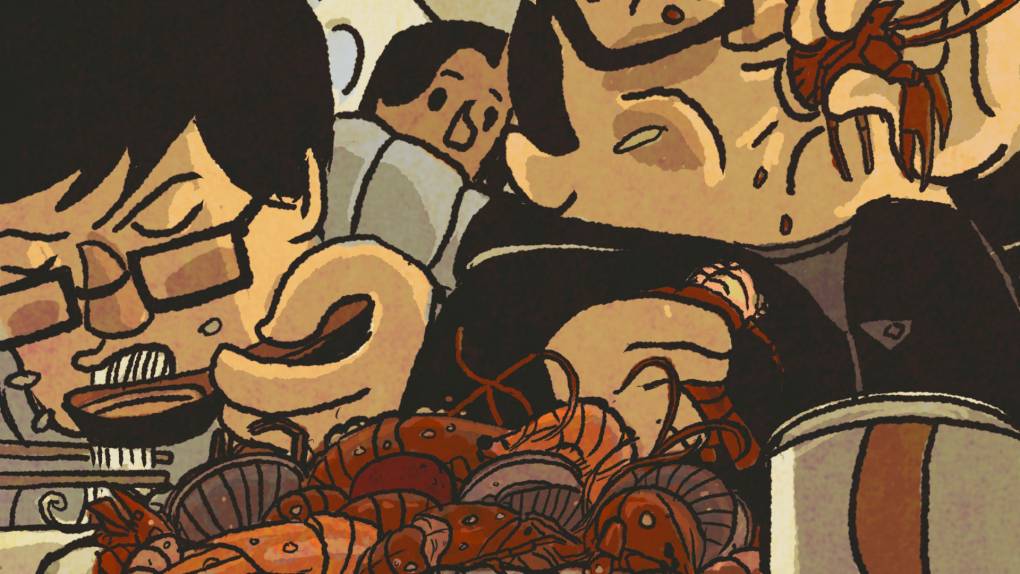
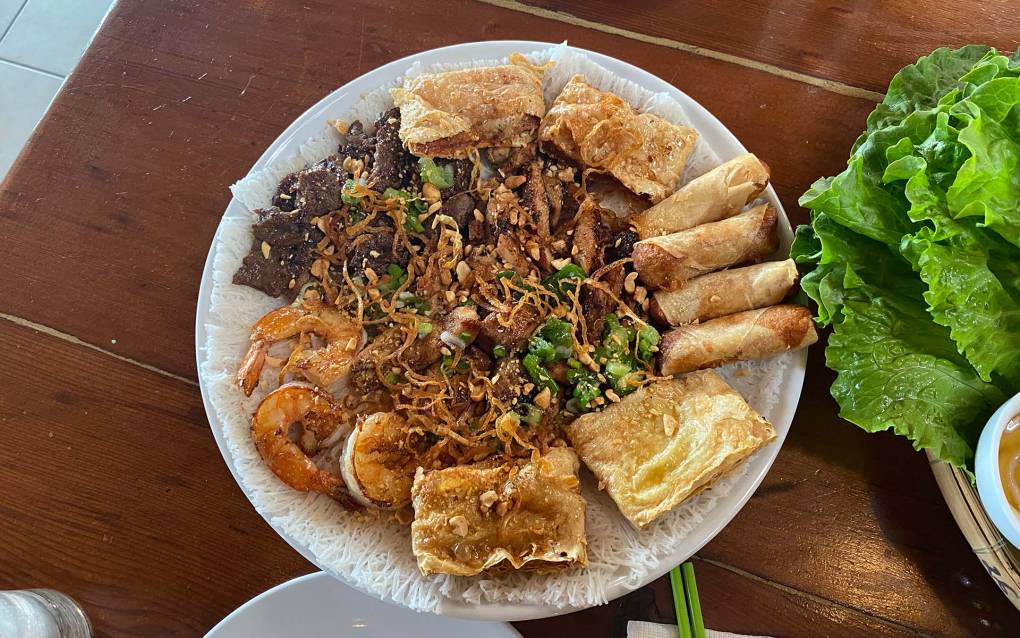
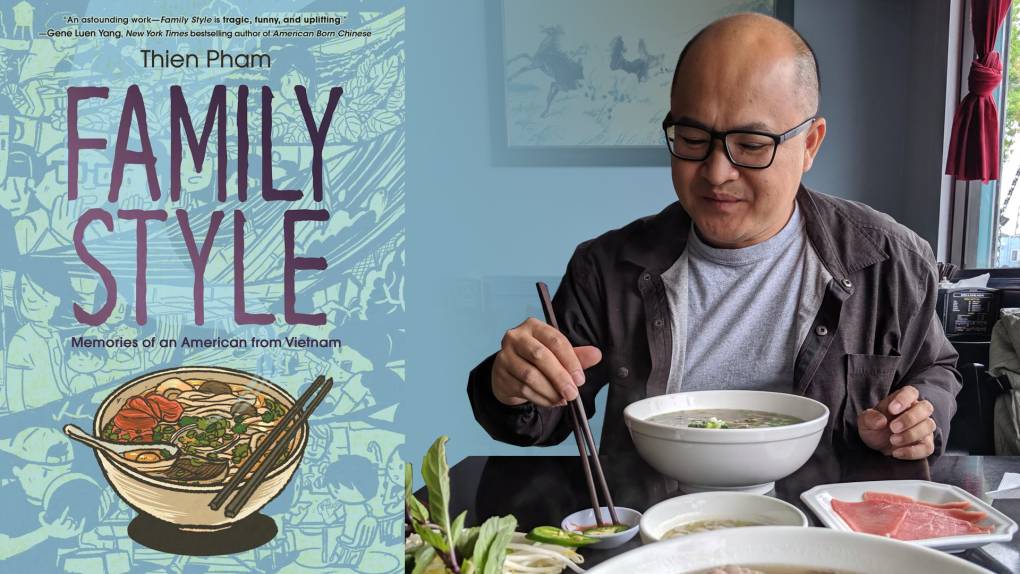
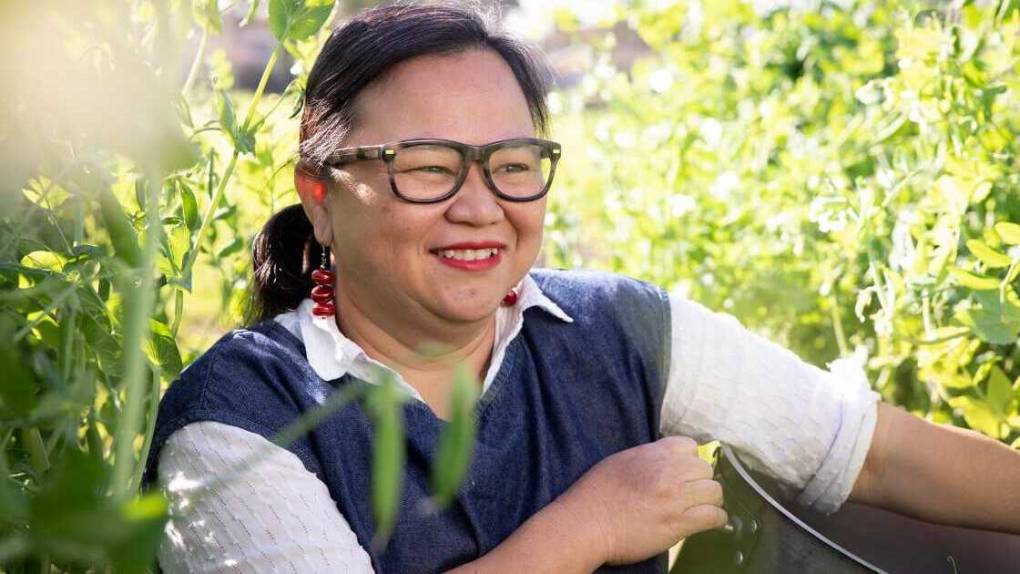
window.__IS_SSR__=true
window.__INITIAL_STATE__={
"attachmentsReducer": {
"audio_0": {
"type": "attachments",
"id": "audio_0",
"imgSizes": {
"kqedFullSize": {
"file": "https://ww2.kqed.org/news/wp-content/themes/KQED-unified/img/audio_bgs/background0.jpg"
}
}
},
"audio_1": {
"type": "attachments",
"id": "audio_1",
"imgSizes": {
"kqedFullSize": {
"file": "https://ww2.kqed.org/news/wp-content/themes/KQED-unified/img/audio_bgs/background1.jpg"
}
}
},
"audio_2": {
"type": "attachments",
"id": "audio_2",
"imgSizes": {
"kqedFullSize": {
"file": "https://ww2.kqed.org/news/wp-content/themes/KQED-unified/img/audio_bgs/background2.jpg"
}
}
},
"audio_3": {
"type": "attachments",
"id": "audio_3",
"imgSizes": {
"kqedFullSize": {
"file": "https://ww2.kqed.org/news/wp-content/themes/KQED-unified/img/audio_bgs/background3.jpg"
}
}
},
"audio_4": {
"type": "attachments",
"id": "audio_4",
"imgSizes": {
"kqedFullSize": {
"file": "https://ww2.kqed.org/news/wp-content/themes/KQED-unified/img/audio_bgs/background4.jpg"
}
}
},
"placeholder": {
"type": "attachments",
"id": "placeholder",
"imgSizes": {
"thumbnail": {
"file": "https://cdn.kqed.org/wp-content/uploads/2024/12/KQED-Default-Image-816638274-2000x1333-1-160x107.jpg",
"width": 160,
"height": 107,
"mimeType": "image/jpeg"
},
"medium": {
"file": "https://cdn.kqed.org/wp-content/uploads/2024/12/KQED-Default-Image-816638274-2000x1333-1-800x533.jpg",
"width": 800,
"height": 533,
"mimeType": "image/jpeg"
},
"medium_large": {
"file": "https://cdn.kqed.org/wp-content/uploads/2024/12/KQED-Default-Image-816638274-2000x1333-1-768x512.jpg",
"width": 768,
"height": 512,
"mimeType": "image/jpeg"
},
"large": {
"file": "https://cdn.kqed.org/wp-content/uploads/2024/12/KQED-Default-Image-816638274-2000x1333-1-1020x680.jpg",
"width": 1020,
"height": 680,
"mimeType": "image/jpeg"
},
"1536x1536": {
"file": "https://cdn.kqed.org/wp-content/uploads/2024/12/KQED-Default-Image-816638274-2000x1333-1-1536x1024.jpg",
"width": 1536,
"height": 1024,
"mimeType": "image/jpeg"
},
"fd-lrg": {
"file": "https://cdn.kqed.org/wp-content/uploads/2024/12/KQED-Default-Image-816638274-2000x1333-1-1536x1024.jpg",
"width": 1536,
"height": 1024,
"mimeType": "image/jpeg"
},
"fd-med": {
"file": "https://cdn.kqed.org/wp-content/uploads/2024/12/KQED-Default-Image-816638274-2000x1333-1-1020x680.jpg",
"width": 1020,
"height": 680,
"mimeType": "image/jpeg"
},
"fd-sm": {
"file": "https://cdn.kqed.org/wp-content/uploads/2024/12/KQED-Default-Image-816638274-2000x1333-1-800x533.jpg",
"width": 800,
"height": 533,
"mimeType": "image/jpeg"
},
"post-thumbnail": {
"file": "https://cdn.kqed.org/wp-content/uploads/2024/12/KQED-Default-Image-816638274-2000x1333-1-672x372.jpg",
"width": 672,
"height": 372,
"mimeType": "image/jpeg"
},
"twentyfourteen-full-width": {
"file": "https://cdn.kqed.org/wp-content/uploads/2024/12/KQED-Default-Image-816638274-2000x1333-1-1038x576.jpg",
"width": 1038,
"height": 576,
"mimeType": "image/jpeg"
},
"xxsmall": {
"file": "https://cdn.kqed.org/wp-content/uploads/2024/12/KQED-Default-Image-816638274-2000x1333-1-160x107.jpg",
"width": 160,
"height": 107,
"mimeType": "image/jpeg"
},
"xsmall": {
"file": "https://cdn.kqed.org/wp-content/uploads/2024/12/KQED-Default-Image-816638274-2000x1333-1-672x372.jpg",
"width": 672,
"height": 372,
"mimeType": "image/jpeg"
},
"small": {
"file": "https://cdn.kqed.org/wp-content/uploads/2024/12/KQED-Default-Image-816638274-2000x1333-1-672x372.jpg",
"width": 672,
"height": 372,
"mimeType": "image/jpeg"
},
"xlarge": {
"file": "https://cdn.kqed.org/wp-content/uploads/2024/12/KQED-Default-Image-816638274-2000x1333-1-1020x680.jpg",
"width": 1020,
"height": 680,
"mimeType": "image/jpeg"
},
"full-width": {
"file": "https://cdn.kqed.org/wp-content/uploads/2024/12/KQED-Default-Image-816638274-2000x1333-1-1920x1280.jpg",
"width": 1920,
"height": 1280,
"mimeType": "image/jpeg"
},
"guest-author-32": {
"file": "https://cdn.kqed.org/wp-content/uploads/2025/01/KQED-Default-Image-816638274-1333x1333-1-160x160.jpg",
"width": 32,
"height": 32,
"mimeType": "image/jpeg"
},
"guest-author-50": {
"file": "https://cdn.kqed.org/wp-content/uploads/2025/01/KQED-Default-Image-816638274-1333x1333-1-160x160.jpg",
"width": 50,
"height": 50,
"mimeType": "image/jpeg"
},
"guest-author-64": {
"file": "https://cdn.kqed.org/wp-content/uploads/2025/01/KQED-Default-Image-816638274-1333x1333-1-160x160.jpg",
"width": 64,
"height": 64,
"mimeType": "image/jpeg"
},
"guest-author-96": {
"file": "https://cdn.kqed.org/wp-content/uploads/2025/01/KQED-Default-Image-816638274-1333x1333-1-160x160.jpg",
"width": 96,
"height": 96,
"mimeType": "image/jpeg"
},
"guest-author-128": {
"file": "https://cdn.kqed.org/wp-content/uploads/2025/01/KQED-Default-Image-816638274-1333x1333-1-160x160.jpg",
"width": 128,
"height": 128,
"mimeType": "image/jpeg"
},
"detail": {
"file": "https://cdn.kqed.org/wp-content/uploads/2025/01/KQED-Default-Image-816638274-1333x1333-1-160x160.jpg",
"width": 160,
"height": 160,
"mimeType": "image/jpeg"
},
"kqedFullSize": {
"file": "https://cdn.kqed.org/wp-content/uploads/2024/12/KQED-Default-Image-816638274-2000x1333-1.jpg",
"width": 2000,
"height": 1333
}
}
},
"arts_13954987": {
"type": "attachments",
"id": "arts_13954987",
"meta": {
"index": "attachments_1716263798",
"site": "arts",
"id": "13954987",
"found": true
},
"parent": 13954983,
"imgSizes": {
"twentyfourteen-full-width": {
"file": "https://cdn.kqed.org/wp-content/uploads/sites/2/2024/03/Cajun-bistro-7-crop-1038x576.jpg",
"width": 1038,
"mimeType": "image/jpeg",
"height": 576
},
"thumbnail": {
"file": "https://cdn.kqed.org/wp-content/uploads/sites/2/2024/03/Cajun-bistro-7-crop-160x90.jpg",
"width": 160,
"mimeType": "image/jpeg",
"height": 90
},
"post-thumbnail": {
"file": "https://cdn.kqed.org/wp-content/uploads/sites/2/2024/03/Cajun-bistro-7-crop-672x372.jpg",
"width": 672,
"mimeType": "image/jpeg",
"height": 372
},
"kqedFullSize": {
"file": "https://cdn.kqed.org/wp-content/uploads/sites/2/2024/03/Cajun-bistro-7-crop.jpg",
"width": 1920,
"height": 1080
},
"large": {
"file": "https://cdn.kqed.org/wp-content/uploads/sites/2/2024/03/Cajun-bistro-7-crop-1020x574.jpg",
"width": 1020,
"mimeType": "image/jpeg",
"height": 574
},
"1536x1536": {
"file": "https://cdn.kqed.org/wp-content/uploads/sites/2/2024/03/Cajun-bistro-7-crop-1536x864.jpg",
"width": 1536,
"mimeType": "image/jpeg",
"height": 864
},
"medium": {
"file": "https://cdn.kqed.org/wp-content/uploads/sites/2/2024/03/Cajun-bistro-7-crop-800x450.jpg",
"width": 800,
"mimeType": "image/jpeg",
"height": 450
},
"medium_large": {
"file": "https://cdn.kqed.org/wp-content/uploads/sites/2/2024/03/Cajun-bistro-7-crop-768x432.jpg",
"width": 768,
"mimeType": "image/jpeg",
"height": 432
}
},
"publishDate": 1711665591,
"modified": 1711665690,
"caption": "By the end of our meal at Cajun Bistro 7, we'd left a pile of shrimp and crawfish carcasses in our wake. The Viet-Cajun spot in San Jose is open until 4 a.m. daily.",
"description": null,
"title": "Cajun bistro 7 crop",
"credit": "Thien Pham",
"status": "inherit",
"altTag": "Two men in glasses devouring their food ravenously. There's a big bowl of shrimp and crawfish in front of them.",
"isLoading": false,
"fetchFailed": false
},
"arts_13933769": {
"type": "attachments",
"id": "arts_13933769",
"meta": {
"index": "attachments_1716263798",
"site": "arts",
"id": "13933769",
"found": true
},
"parent": 13933745,
"imgSizes": {
"twentyfourteen-full-width": {
"file": "https://ww2.kqed.org/app/uploads/sites/2/2023/08/tigon-banh-hoi-crop_LT-1038x576.jpg",
"width": 1038,
"mimeType": "image/jpeg",
"height": 576
},
"thumbnail": {
"file": "https://ww2.kqed.org/app/uploads/sites/2/2023/08/tigon-banh-hoi-crop_LT-160x100.jpg",
"width": 160,
"mimeType": "image/jpeg",
"height": 100
},
"post-thumbnail": {
"file": "https://ww2.kqed.org/app/uploads/sites/2/2023/08/tigon-banh-hoi-crop_LT-672x372.jpg",
"width": 672,
"mimeType": "image/jpeg",
"height": 372
},
"kqedFullSize": {
"file": "https://ww2.kqed.org/app/uploads/sites/2/2023/08/tigon-banh-hoi-crop_LT.jpg",
"width": 1920,
"height": 1200
},
"large": {
"file": "https://ww2.kqed.org/app/uploads/sites/2/2023/08/tigon-banh-hoi-crop_LT-1020x638.jpg",
"width": 1020,
"mimeType": "image/jpeg",
"height": 638
},
"1536x1536": {
"file": "https://ww2.kqed.org/app/uploads/sites/2/2023/08/tigon-banh-hoi-crop_LT-1536x960.jpg",
"width": 1536,
"mimeType": "image/jpeg",
"height": 960
},
"medium": {
"file": "https://ww2.kqed.org/app/uploads/sites/2/2023/08/tigon-banh-hoi-crop_LT-800x500.jpg",
"width": 800,
"mimeType": "image/jpeg",
"height": 500
},
"medium_large": {
"file": "https://ww2.kqed.org/app/uploads/sites/2/2023/08/tigon-banh-hoi-crop_LT-768x480.jpg",
"width": 768,
"mimeType": "image/jpeg",
"height": 480
}
},
"publishDate": 1692836117,
"modified": 1692836307,
"caption": "Tigon's make-your-own-spring-roll spread makes for a fun and refreshing communal dining experience.",
"description": null,
"title": "tigon banh hoi-crop_LT",
"credit": "Luke Tsai/KQED",
"status": "inherit",
"altTag": "An abundant platter of fillings for make-your-own Vietnamese spring rolls, with shrimp, beef, fried egg rolls and more.",
"isLoading": false,
"fetchFailed": false
},
"arts_13930717": {
"type": "attachments",
"id": "arts_13930717",
"meta": {
"index": "attachments_1716263798",
"site": "arts",
"id": "13930717",
"found": true
},
"parent": 13930458,
"imgSizes": {
"twentyfourteen-full-width": {
"file": "https://ww2.kqed.org/app/uploads/sites/2/2023/06/Thien_COVER-1038x576.jpg",
"width": 1038,
"mimeType": "image/jpeg",
"height": 576
},
"thumbnail": {
"file": "https://ww2.kqed.org/app/uploads/sites/2/2023/06/Thien_COVER-160x90.jpg",
"width": 160,
"mimeType": "image/jpeg",
"height": 90
},
"post-thumbnail": {
"file": "https://ww2.kqed.org/app/uploads/sites/2/2023/06/Thien_COVER-672x372.jpg",
"width": 672,
"mimeType": "image/jpeg",
"height": 372
},
"kqedFullSize": {
"file": "https://ww2.kqed.org/app/uploads/sites/2/2023/06/Thien_COVER.jpg",
"width": 1920,
"height": 1080
},
"large": {
"file": "https://ww2.kqed.org/app/uploads/sites/2/2023/06/Thien_COVER-1020x574.jpg",
"width": 1020,
"mimeType": "image/jpeg",
"height": 574
},
"1536x1536": {
"file": "https://ww2.kqed.org/app/uploads/sites/2/2023/06/Thien_COVER-1536x864.jpg",
"width": 1536,
"mimeType": "image/jpeg",
"height": 864
},
"medium": {
"file": "https://ww2.kqed.org/app/uploads/sites/2/2023/06/Thien_COVER-800x450.jpg",
"width": 800,
"mimeType": "image/jpeg",
"height": 450
},
"medium_large": {
"file": "https://ww2.kqed.org/app/uploads/sites/2/2023/06/Thien_COVER-768x432.jpg",
"width": 768,
"mimeType": "image/jpeg",
"height": 432
}
},
"publishDate": 1687295507,
"modified": 1687295909,
"caption": "Thien Pham's new graphic novel, 'Family Style,' is a memoir of his family's immigration story. It documents their refugee journey from Vietnam to San Jose through the lens of eight different food memories.",
"description": null,
"title": "Thien_COVER",
"credit": "Courtesy of Macmillan Publishers; collage by Sarah Hotchkiss",
"status": "inherit",
"altTag": "Composite image with the cover of the graphic novel 'Family Style,' which has an illustration of a bowl of pho, on the left. On the right, a photograph of author Thien Pham, in glasses and a plaid shirt, holds chopsticks as he prepares to eat a bowl of pho.",
"isLoading": false,
"fetchFailed": false
},
"arts_13921335": {
"type": "attachments",
"id": "arts_13921335",
"meta": {
"index": "attachments_1716263798",
"site": "arts",
"id": "13921335",
"found": true
},
"parent": 13921333,
"imgSizes": {
"twentyfourteen-full-width": {
"file": "https://ww2.kqed.org/app/uploads/sites/2/2022/11/colonialism-is-terrible-rehearsal-1038x576.jpg",
"width": 1038,
"mimeType": "image/jpeg",
"height": 576
},
"thumbnail": {
"file": "https://ww2.kqed.org/app/uploads/sites/2/2022/11/colonialism-is-terrible-rehearsal-160x90.jpg",
"width": 160,
"mimeType": "image/jpeg",
"height": 90
},
"post-thumbnail": {
"file": "https://ww2.kqed.org/app/uploads/sites/2/2022/11/colonialism-is-terrible-rehearsal-672x372.jpg",
"width": 672,
"mimeType": "image/jpeg",
"height": 372
},
"kqedFullSize": {
"file": "https://ww2.kqed.org/app/uploads/sites/2/2022/11/colonialism-is-terrible-rehearsal-scaled.jpg",
"width": 2560,
"height": 1440
},
"2048x2048": {
"file": "https://ww2.kqed.org/app/uploads/sites/2/2022/11/colonialism-is-terrible-rehearsal-2048x1152.jpg",
"width": 2048,
"mimeType": "image/jpeg",
"height": 1152
},
"large": {
"file": "https://ww2.kqed.org/app/uploads/sites/2/2022/11/colonialism-is-terrible-rehearsal-1020x574.jpg",
"width": 1020,
"mimeType": "image/jpeg",
"height": 574
},
"1536x1536": {
"file": "https://ww2.kqed.org/app/uploads/sites/2/2022/11/colonialism-is-terrible-rehearsal-1536x864.jpg",
"width": 1536,
"mimeType": "image/jpeg",
"height": 864
},
"full-width": {
"file": "https://ww2.kqed.org/app/uploads/sites/2/2022/11/colonialism-is-terrible-rehearsal-1920x1080.jpg",
"width": 1920,
"mimeType": "image/jpeg",
"height": 1080
},
"medium": {
"file": "https://ww2.kqed.org/app/uploads/sites/2/2022/11/colonialism-is-terrible-rehearsal-800x450.jpg",
"width": 800,
"mimeType": "image/jpeg",
"height": 450
},
"medium_large": {
"file": "https://ww2.kqed.org/app/uploads/sites/2/2022/11/colonialism-is-terrible-rehearsal-768x432.jpg",
"width": 768,
"mimeType": "image/jpeg",
"height": 432
}
},
"publishDate": 1667588349,
"modified": 1667588566,
"caption": "Actors Nicole Tung, Elissa Beth Stebbins and Anthony Doan rehearse a scene in Dustin Chinn's new play, 'Colonialism Is Terrible, But Pho Is Delicious,' at the Aurora Theatre in Berkeley.",
"description": null,
"title": "colonialism is terrible - rehearsal",
"credit": "Courtesy of Dustin Chinn",
"status": "inherit",
"altTag": "Three actors in 19th century colonial costumes rehearse a scene in a play.",
"isLoading": false,
"fetchFailed": false
},
"arts_13908698": {
"type": "attachments",
"id": "arts_13908698",
"meta": {
"index": "attachments_1716263798",
"site": "arts",
"id": "13908698",
"found": true
},
"parent": 13908681,
"imgSizes": {
"twentyfourteen-full-width": {
"file": "https://ww2.kqed.org/app/uploads/sites/2/2022/01/het-say_portrait-1038x576.jpg",
"width": 1038,
"mimeType": "image/jpeg",
"height": 576
},
"thumbnail": {
"file": "https://ww2.kqed.org/app/uploads/sites/2/2022/01/het-say_portrait-160x90.jpg",
"width": 160,
"mimeType": "image/jpeg",
"height": 90
},
"post-thumbnail": {
"file": "https://ww2.kqed.org/app/uploads/sites/2/2022/01/het-say_portrait-672x372.jpg",
"width": 672,
"mimeType": "image/jpeg",
"height": 372
},
"kqedFullSize": {
"file": "https://ww2.kqed.org/app/uploads/sites/2/2022/01/het-say_portrait.jpg",
"width": 1500,
"height": 844
},
"large": {
"file": "https://ww2.kqed.org/app/uploads/sites/2/2022/01/het-say_portrait-1020x574.jpg",
"width": 1020,
"mimeType": "image/jpeg",
"height": 574
},
"medium": {
"file": "https://ww2.kqed.org/app/uploads/sites/2/2022/01/het-say_portrait-800x450.jpg",
"width": 800,
"mimeType": "image/jpeg",
"height": 450
},
"medium_large": {
"file": "https://ww2.kqed.org/app/uploads/sites/2/2022/01/het-say_portrait-768x432.jpg",
"width": 768,
"mimeType": "image/jpeg",
"height": 432
}
},
"publishDate": 1643398119,
"modified": 1643398380,
"caption": "Hết Sẩy Cali chefs Hieu (left) and DuyAn Le pose for a portrait wearing festive áo dài to ring in the Lunar New Year.",
"description": null,
"title": "het say_portrait",
"credit": "Hết Sẩy Cali",
"status": "inherit",
"altTag": "A man and woman pose for a portrait wearing colorful ao dai.",
"isLoading": false,
"fetchFailed": false
},
"arts_13906240": {
"type": "attachments",
"id": "arts_13906240",
"meta": {
"index": "attachments_1716263798",
"site": "arts",
"id": "13906240",
"found": true
},
"parent": 13906238,
"imgSizes": {
"twentyfourteen-full-width": {
"file": "https://ww2.kqed.org/app/uploads/sites/2/2021/11/dieptran1-1038x576.jpg",
"width": 1038,
"mimeType": "image/jpeg",
"height": 576
},
"thumbnail": {
"file": "https://ww2.kqed.org/app/uploads/sites/2/2021/11/dieptran1-160x90.jpg",
"width": 160,
"mimeType": "image/jpeg",
"height": 90
},
"post-thumbnail": {
"file": "https://ww2.kqed.org/app/uploads/sites/2/2021/11/dieptran1-672x372.jpg",
"width": 672,
"mimeType": "image/jpeg",
"height": 372
},
"kqedFullSize": {
"file": "https://ww2.kqed.org/app/uploads/sites/2/2021/11/dieptran1.jpg",
"width": 1120,
"height": 630
},
"large": {
"file": "https://ww2.kqed.org/app/uploads/sites/2/2021/11/dieptran1-1020x574.jpg",
"width": 1020,
"mimeType": "image/jpeg",
"height": 574
},
"medium": {
"file": "https://ww2.kqed.org/app/uploads/sites/2/2021/11/dieptran1-800x450.jpg",
"width": 800,
"mimeType": "image/jpeg",
"height": 450
},
"medium_large": {
"file": "https://ww2.kqed.org/app/uploads/sites/2/2021/11/dieptran1-768x432.jpg",
"width": 768,
"mimeType": "image/jpeg",
"height": 432
}
},
"publishDate": 1637173674,
"modified": 1637173749,
"caption": "Diep Tran.",
"description": "Diep Tran.",
"title": "dieptran(1)",
"credit": "Courtesy of Diep Tran",
"status": "inherit",
"altTag": "Diep Tran holds a pot in a farm's field.",
"isLoading": false,
"fetchFailed": false
},
"arts_13905356": {
"type": "attachments",
"id": "arts_13905356",
"meta": {
"index": "attachments_1716263798",
"site": "arts",
"id": "13905356",
"found": true
},
"parent": 13905293,
"imgSizes": {
"twentyfourteen-full-width": {
"file": "https://ww2.kqed.org/app/uploads/sites/2/2021/10/8-1038x576.jpg",
"width": 1038,
"mimeType": "image/jpeg",
"height": 576
},
"thumbnail": {
"file": "https://ww2.kqed.org/app/uploads/sites/2/2021/10/8-160x90.jpg",
"width": 160,
"mimeType": "image/jpeg",
"height": 90
},
"post-thumbnail": {
"file": "https://ww2.kqed.org/app/uploads/sites/2/2021/10/8-672x372.jpg",
"width": 672,
"mimeType": "image/jpeg",
"height": 372
},
"kqedFullSize": {
"file": "https://ww2.kqed.org/app/uploads/sites/2/2021/10/8.jpg",
"width": 1920,
"height": 1080
},
"large": {
"file": "https://ww2.kqed.org/app/uploads/sites/2/2021/10/8-1020x574.jpg",
"width": 1020,
"mimeType": "image/jpeg",
"height": 574
},
"1536x1536": {
"file": "https://ww2.kqed.org/app/uploads/sites/2/2021/10/8-1536x864.jpg",
"width": 1536,
"mimeType": "image/jpeg",
"height": 864
},
"medium": {
"file": "https://ww2.kqed.org/app/uploads/sites/2/2021/10/8-800x450.jpg",
"width": 800,
"mimeType": "image/jpeg",
"height": 450
},
"medium_large": {
"file": "https://ww2.kqed.org/app/uploads/sites/2/2021/10/8-768x432.jpg",
"width": 768,
"mimeType": "image/jpeg",
"height": 432
}
},
"publishDate": 1635407131,
"modified": 1635408877,
"caption": "(Photo by Beth LaBerge; design by Rebecca Kao)",
"description": null,
"title": "8",
"credit": null,
"status": "inherit",
"altTag": "A steamer tray full of freshly fried tofu, as part of a buffet-style display. Text on the left reads, \"San Jose: The Bay Area's Great Immigrant Food City.\"",
"isLoading": false,
"fetchFailed": false
},
"arts_13905357": {
"type": "attachments",
"id": "arts_13905357",
"meta": {
"index": "attachments_1716263798",
"site": "arts",
"id": "13905357",
"found": true
},
"parent": 13905293,
"imgSizes": {
"twentyfourteen-full-width": {
"file": "https://ww2.kqed.org/app/uploads/sites/2/2021/10/001_SanJose_DongPhuong_10072021-1038x576.jpg",
"width": 1038,
"mimeType": "image/jpeg",
"height": 576
},
"thumbnail": {
"file": "https://ww2.kqed.org/app/uploads/sites/2/2021/10/001_SanJose_DongPhuong_10072021-160x107.jpg",
"width": 160,
"mimeType": "image/jpeg",
"height": 107
},
"post-thumbnail": {
"file": "https://ww2.kqed.org/app/uploads/sites/2/2021/10/001_SanJose_DongPhuong_10072021-672x372.jpg",
"width": 672,
"mimeType": "image/jpeg",
"height": 372
},
"kqedFullSize": {
"file": "https://ww2.kqed.org/app/uploads/sites/2/2021/10/001_SanJose_DongPhuong_10072021-scaled.jpg",
"width": 2560,
"height": 1707
},
"2048x2048": {
"file": "https://ww2.kqed.org/app/uploads/sites/2/2021/10/001_SanJose_DongPhuong_10072021-2048x1365.jpg",
"width": 2048,
"mimeType": "image/jpeg",
"height": 1365
},
"large": {
"file": "https://ww2.kqed.org/app/uploads/sites/2/2021/10/001_SanJose_DongPhuong_10072021-1020x680.jpg",
"width": 1020,
"mimeType": "image/jpeg",
"height": 680
},
"1536x1536": {
"file": "https://ww2.kqed.org/app/uploads/sites/2/2021/10/001_SanJose_DongPhuong_10072021-1536x1024.jpg",
"width": 1536,
"mimeType": "image/jpeg",
"height": 1024
},
"full-width": {
"file": "https://ww2.kqed.org/app/uploads/sites/2/2021/10/001_SanJose_DongPhuong_10072021-1920x1280.jpg",
"width": 1920,
"mimeType": "image/jpeg",
"height": 1280
},
"medium": {
"file": "https://ww2.kqed.org/app/uploads/sites/2/2021/10/001_SanJose_DongPhuong_10072021-800x533.jpg",
"width": 800,
"mimeType": "image/jpeg",
"height": 533
},
"medium_large": {
"file": "https://ww2.kqed.org/app/uploads/sites/2/2021/10/001_SanJose_DongPhuong_10072021-768x512.jpg",
"width": 768,
"mimeType": "image/jpeg",
"height": 512
}
},
"publishDate": 1635408905,
"modified": 1635409057,
"caption": "Freshly fried tofu is one of the star attractions at Dong Phuong—one of San Jose's many Vietnamese tofu delis.",
"description": null,
"title": "001_SanJose_DongPhuong_10072021",
"credit": "Beth LaBerge/KQED",
"status": "inherit",
"altTag": "A steamer tray full of freshly fried tofu, as part of a buffet-style display.",
"isLoading": false,
"fetchFailed": false
},
"arts_13905154": {
"type": "attachments",
"id": "arts_13905154",
"meta": {
"index": "attachments_1716263798",
"site": "arts",
"id": "13905154",
"found": true
},
"parent": 13905153,
"imgSizes": {
"twentyfourteen-full-width": {
"file": "https://ww2.kqed.org/app/uploads/sites/2/2021/10/ThumbnailFeature-Image-San-Jose-Food-Project-3-1038x576.jpg",
"width": 1038,
"mimeType": "image/jpeg",
"height": 576
},
"thumbnail": {
"file": "https://ww2.kqed.org/app/uploads/sites/2/2021/10/ThumbnailFeature-Image-San-Jose-Food-Project-3-160x90.jpg",
"width": 160,
"mimeType": "image/jpeg",
"height": 90
},
"post-thumbnail": {
"file": "https://ww2.kqed.org/app/uploads/sites/2/2021/10/ThumbnailFeature-Image-San-Jose-Food-Project-3-672x372.jpg",
"width": 672,
"mimeType": "image/jpeg",
"height": 372
},
"kqedFullSize": {
"file": "https://ww2.kqed.org/app/uploads/sites/2/2021/10/ThumbnailFeature-Image-San-Jose-Food-Project-3.jpg",
"width": 1920,
"height": 1080
},
"large": {
"file": "https://ww2.kqed.org/app/uploads/sites/2/2021/10/ThumbnailFeature-Image-San-Jose-Food-Project-3-1020x574.jpg",
"width": 1020,
"mimeType": "image/jpeg",
"height": 574
},
"1536x1536": {
"file": "https://ww2.kqed.org/app/uploads/sites/2/2021/10/ThumbnailFeature-Image-San-Jose-Food-Project-3-1536x864.jpg",
"width": 1536,
"mimeType": "image/jpeg",
"height": 864
},
"medium": {
"file": "https://ww2.kqed.org/app/uploads/sites/2/2021/10/ThumbnailFeature-Image-San-Jose-Food-Project-3-800x450.jpg",
"width": 800,
"mimeType": "image/jpeg",
"height": 450
},
"medium_large": {
"file": "https://ww2.kqed.org/app/uploads/sites/2/2021/10/ThumbnailFeature-Image-San-Jose-Food-Project-3-768x432.jpg",
"width": 768,
"mimeType": "image/jpeg",
"height": 432
}
},
"publishDate": 1635188234,
"modified": 1635188326,
"caption": "(Illustration by Thien Pham; design by Rebecca Kao)",
"description": null,
"title": "{ThumbnailFeature Image} San Jose Food Project (3)",
"credit": null,
"status": "inherit",
"altTag": "An illustration of a Vietnamese takeout meal with fresh herbs and peanuts. To the left, the text reads, \"San Jose: The Bay Area's Great Immigrant Food City.\"",
"isLoading": false,
"fetchFailed": false
},
"arts_13905156": {
"type": "attachments",
"id": "arts_13905156",
"meta": {
"index": "attachments_1716263798",
"site": "arts",
"id": "13905156",
"found": true
},
"parent": 13905153,
"imgSizes": {
"twentyfourteen-full-width": {
"file": "https://ww2.kqed.org/app/uploads/sites/2/2021/10/Social_Media_Kitchen_PANEL-01-1038x576.jpg",
"width": 1038,
"mimeType": "image/jpeg",
"height": 576
},
"thumbnail": {
"file": "https://ww2.kqed.org/app/uploads/sites/2/2021/10/Social_Media_Kitchen_PANEL-01-160x133.jpg",
"width": 160,
"mimeType": "image/jpeg",
"height": 133
},
"post-thumbnail": {
"file": "https://ww2.kqed.org/app/uploads/sites/2/2021/10/Social_Media_Kitchen_PANEL-01-672x372.jpg",
"width": 672,
"mimeType": "image/jpeg",
"height": 372
},
"kqedFullSize": {
"file": "https://ww2.kqed.org/app/uploads/sites/2/2021/10/Social_Media_Kitchen_PANEL-01.jpg",
"width": 1800,
"height": 1500
},
"large": {
"file": "https://ww2.kqed.org/app/uploads/sites/2/2021/10/Social_Media_Kitchen_PANEL-01-1020x850.jpg",
"width": 1020,
"mimeType": "image/jpeg",
"height": 850
},
"1536x1536": {
"file": "https://ww2.kqed.org/app/uploads/sites/2/2021/10/Social_Media_Kitchen_PANEL-01-1536x1280.jpg",
"width": 1536,
"mimeType": "image/jpeg",
"height": 1280
},
"medium": {
"file": "https://ww2.kqed.org/app/uploads/sites/2/2021/10/Social_Media_Kitchen_PANEL-01-800x667.jpg",
"width": 800,
"mimeType": "image/jpeg",
"height": 667
},
"medium_large": {
"file": "https://ww2.kqed.org/app/uploads/sites/2/2021/10/Social_Media_Kitchen_PANEL-01-768x640.jpg",
"width": 768,
"mimeType": "image/jpeg",
"height": 640
}
},
"publishDate": 1635188821,
"modified": 1635190686,
"caption": null,
"description": null,
"title": "Social_Media_Kitchen_PANEL 01",
"credit": "Thien Pham",
"status": "inherit",
"altTag": "Comic title, \"Social Media Kitchen Confidential,\" is written as though it's part of a Facebook post, with an illustration of a bowl of soup noodles above.",
"isLoading": false,
"fetchFailed": false
},
"arts_13905013": {
"type": "attachments",
"id": "arts_13905013",
"meta": {
"index": "attachments_1716263798",
"site": "arts",
"id": "13905013",
"found": true
},
"parent": 13904913,
"imgSizes": {
"twentyfourteen-full-width": {
"file": "https://ww2.kqed.org/app/uploads/sites/2/2021/10/ThumbnailFeature-Image-San-Jose-Food-Project-1-1038x576.jpg",
"width": 1038,
"mimeType": "image/jpeg",
"height": 576
},
"thumbnail": {
"file": "https://ww2.kqed.org/app/uploads/sites/2/2021/10/ThumbnailFeature-Image-San-Jose-Food-Project-1-160x90.jpg",
"width": 160,
"mimeType": "image/jpeg",
"height": 90
},
"post-thumbnail": {
"file": "https://ww2.kqed.org/app/uploads/sites/2/2021/10/ThumbnailFeature-Image-San-Jose-Food-Project-1-672x372.jpg",
"width": 672,
"mimeType": "image/jpeg",
"height": 372
},
"kqedFullSize": {
"file": "https://ww2.kqed.org/app/uploads/sites/2/2021/10/ThumbnailFeature-Image-San-Jose-Food-Project-1.jpg",
"width": 1920,
"height": 1080
},
"large": {
"file": "https://ww2.kqed.org/app/uploads/sites/2/2021/10/ThumbnailFeature-Image-San-Jose-Food-Project-1-1020x574.jpg",
"width": 1020,
"mimeType": "image/jpeg",
"height": 574
},
"1536x1536": {
"file": "https://ww2.kqed.org/app/uploads/sites/2/2021/10/ThumbnailFeature-Image-San-Jose-Food-Project-1-1536x864.jpg",
"width": 1536,
"mimeType": "image/jpeg",
"height": 864
},
"medium": {
"file": "https://ww2.kqed.org/app/uploads/sites/2/2021/10/ThumbnailFeature-Image-San-Jose-Food-Project-1-800x450.jpg",
"width": 800,
"mimeType": "image/jpeg",
"height": 450
},
"medium_large": {
"file": "https://ww2.kqed.org/app/uploads/sites/2/2021/10/ThumbnailFeature-Image-San-Jose-Food-Project-1-768x432.jpg",
"width": 768,
"mimeType": "image/jpeg",
"height": 432
}
},
"publishDate": 1634849734,
"modified": 1634849808,
"caption": "(Photo by Andria Lo; design by Rebecca Kao)",
"description": null,
"title": "{ThumbnailFeature Image} San Jose Food Project (1)",
"credit": null,
"status": "inherit",
"altTag": "A durian, a pastry, and a green beverage on a countertop; the text to the side reads, \"San Jose: The Bay Area's Great Immigrant Food City.\"",
"isLoading": false,
"fetchFailed": false
},
"arts_13904916": {
"type": "attachments",
"id": "arts_13904916",
"meta": {
"index": "attachments_1716263798",
"site": "arts",
"id": "13904916",
"found": true
},
"parent": 13904913,
"imgSizes": {
"twentyfourteen-full-width": {
"file": "https://ww2.kqed.org/app/uploads/sites/2/2021/10/001_KQED100321_VietnameseSJDrinks_AndriaLo-1038x576.jpg",
"width": 1038,
"mimeType": "image/jpeg",
"height": 576
},
"thumbnail": {
"file": "https://ww2.kqed.org/app/uploads/sites/2/2021/10/001_KQED100321_VietnameseSJDrinks_AndriaLo-160x107.jpg",
"width": 160,
"mimeType": "image/jpeg",
"height": 107
},
"post-thumbnail": {
"file": "https://ww2.kqed.org/app/uploads/sites/2/2021/10/001_KQED100321_VietnameseSJDrinks_AndriaLo-672x372.jpg",
"width": 672,
"mimeType": "image/jpeg",
"height": 372
},
"kqedFullSize": {
"file": "https://ww2.kqed.org/app/uploads/sites/2/2021/10/001_KQED100321_VietnameseSJDrinks_AndriaLo.jpg",
"width": 2500,
"height": 1667
},
"2048x2048": {
"file": "https://ww2.kqed.org/app/uploads/sites/2/2021/10/001_KQED100321_VietnameseSJDrinks_AndriaLo-2048x1366.jpg",
"width": 2048,
"mimeType": "image/jpeg",
"height": 1366
},
"large": {
"file": "https://ww2.kqed.org/app/uploads/sites/2/2021/10/001_KQED100321_VietnameseSJDrinks_AndriaLo-1020x680.jpg",
"width": 1020,
"mimeType": "image/jpeg",
"height": 680
},
"1536x1536": {
"file": "https://ww2.kqed.org/app/uploads/sites/2/2021/10/001_KQED100321_VietnameseSJDrinks_AndriaLo-1536x1024.jpg",
"width": 1536,
"mimeType": "image/jpeg",
"height": 1024
},
"full-width": {
"file": "https://ww2.kqed.org/app/uploads/sites/2/2021/10/001_KQED100321_VietnameseSJDrinks_AndriaLo-1920x1280.jpg",
"width": 1920,
"mimeType": "image/jpeg",
"height": 1280
},
"medium": {
"file": "https://ww2.kqed.org/app/uploads/sites/2/2021/10/001_KQED100321_VietnameseSJDrinks_AndriaLo-800x533.jpg",
"width": 800,
"mimeType": "image/jpeg",
"height": 533
},
"medium_large": {
"file": "https://ww2.kqed.org/app/uploads/sites/2/2021/10/001_KQED100321_VietnameseSJDrinks_AndriaLo-768x512.jpg",
"width": 768,
"mimeType": "image/jpeg",
"height": 512
}
},
"publishDate": 1634771765,
"modified": 1634849912,
"caption": "Dzui's, in San Jose, is one of the few Bay Area shops that specializes in durian drinks.",
"description": null,
"title": "001_KQED100321_VietnameseSJDrinks_AndriaLo",
"credit": "Andria Lo",
"status": "inherit",
"altTag": "Two Vietnamese milk tea drinks, a pastry and a spiky green durian fruit spread out on a countertop.",
"isLoading": false,
"fetchFailed": false
},
"arts_13904839": {
"type": "attachments",
"id": "arts_13904839",
"meta": {
"index": "attachments_1716263798",
"site": "arts",
"id": "13904839",
"found": true
},
"parent": 13904835,
"imgSizes": {
"twentyfourteen-full-width": {
"file": "https://ww2.kqed.org/app/uploads/sites/2/2021/10/ThumbnailFeature-Image-San-Jose-Food-Project-1038x576.jpg",
"width": 1038,
"mimeType": "image/jpeg",
"height": 576
},
"thumbnail": {
"file": "https://ww2.kqed.org/app/uploads/sites/2/2021/10/ThumbnailFeature-Image-San-Jose-Food-Project-160x90.jpg",
"width": 160,
"mimeType": "image/jpeg",
"height": 90
},
"post-thumbnail": {
"file": "https://ww2.kqed.org/app/uploads/sites/2/2021/10/ThumbnailFeature-Image-San-Jose-Food-Project-672x372.jpg",
"width": 672,
"mimeType": "image/jpeg",
"height": 372
},
"kqedFullSize": {
"file": "https://ww2.kqed.org/app/uploads/sites/2/2021/10/ThumbnailFeature-Image-San-Jose-Food-Project.jpg",
"width": 1920,
"height": 1080
},
"large": {
"file": "https://ww2.kqed.org/app/uploads/sites/2/2021/10/ThumbnailFeature-Image-San-Jose-Food-Project-1020x574.jpg",
"width": 1020,
"mimeType": "image/jpeg",
"height": 574
},
"1536x1536": {
"file": "https://ww2.kqed.org/app/uploads/sites/2/2021/10/ThumbnailFeature-Image-San-Jose-Food-Project-1536x864.jpg",
"width": 1536,
"mimeType": "image/jpeg",
"height": 864
},
"medium": {
"file": "https://ww2.kqed.org/app/uploads/sites/2/2021/10/ThumbnailFeature-Image-San-Jose-Food-Project-800x450.jpg",
"width": 800,
"mimeType": "image/jpeg",
"height": 450
},
"medium_large": {
"file": "https://ww2.kqed.org/app/uploads/sites/2/2021/10/ThumbnailFeature-Image-San-Jose-Food-Project-768x432.jpg",
"width": 768,
"mimeType": "image/jpeg",
"height": 432
}
},
"publishDate": 1634678659,
"modified": 1634678815,
"caption": null,
"description": null,
"title": "{ThumbnailFeature Image} San Jose Food Project",
"credit": "Rebecca Kao",
"status": "inherit",
"altTag": "An illustration of various international foods such as pho and an Ethiopian veggie combo, with the following text overlaid: \"San Jose: The Bay Area's Great Immigrant Food City\"",
"isLoading": false,
"fetchFailed": false
},
"arts_13904840": {
"type": "attachments",
"id": "arts_13904840",
"meta": {
"index": "attachments_1716263798",
"site": "arts",
"id": "13904840",
"found": true
},
"parent": 13904835,
"imgSizes": {
"twentyfourteen-full-width": {
"file": "https://ww2.kqed.org/app/uploads/sites/2/2021/10/san-jose-illo_thien-pham-1038x576.jpg",
"width": 1038,
"mimeType": "image/jpeg",
"height": 576
},
"thumbnail": {
"file": "https://ww2.kqed.org/app/uploads/sites/2/2021/10/san-jose-illo_thien-pham-160x120.jpg",
"width": 160,
"mimeType": "image/jpeg",
"height": 120
},
"post-thumbnail": {
"file": "https://ww2.kqed.org/app/uploads/sites/2/2021/10/san-jose-illo_thien-pham-672x372.jpg",
"width": 672,
"mimeType": "image/jpeg",
"height": 372
},
"kqedFullSize": {
"file": "https://ww2.kqed.org/app/uploads/sites/2/2021/10/san-jose-illo_thien-pham-scaled.jpg",
"width": 2560,
"height": 1919
},
"2048x2048": {
"file": "https://ww2.kqed.org/app/uploads/sites/2/2021/10/san-jose-illo_thien-pham-2048x1535.jpg",
"width": 2048,
"mimeType": "image/jpeg",
"height": 1535
},
"large": {
"file": "https://ww2.kqed.org/app/uploads/sites/2/2021/10/san-jose-illo_thien-pham-1020x765.jpg",
"width": 1020,
"mimeType": "image/jpeg",
"height": 765
},
"1536x1536": {
"file": "https://ww2.kqed.org/app/uploads/sites/2/2021/10/san-jose-illo_thien-pham-1536x1151.jpg",
"width": 1536,
"mimeType": "image/jpeg",
"height": 1151
},
"full-width": {
"file": "https://ww2.kqed.org/app/uploads/sites/2/2021/10/san-jose-illo_thien-pham-1920x1439.jpg",
"width": 1920,
"mimeType": "image/jpeg",
"height": 1439
},
"medium": {
"file": "https://ww2.kqed.org/app/uploads/sites/2/2021/10/san-jose-illo_thien-pham-800x600.jpg",
"width": 800,
"mimeType": "image/jpeg",
"height": 600
},
"medium_large": {
"file": "https://ww2.kqed.org/app/uploads/sites/2/2021/10/san-jose-illo_thien-pham-768x576.jpg",
"width": 768,
"mimeType": "image/jpeg",
"height": 576
}
},
"publishDate": 1634679237,
"modified": 1634679456,
"caption": "\u003cem>(Illustration by Thien Pham)\u003c/em>",
"description": null,
"title": "san jose illo_thien pham",
"credit": null,
"status": "inherit",
"altTag": "An illustration of a spread of various international foods: a bowl of pho, a torta, an Ethiopian veggie combo plate, the cross section of a durian and so forth.",
"isLoading": false,
"fetchFailed": false
},
"arts_13900923": {
"type": "attachments",
"id": "arts_13900923",
"meta": {
"index": "attachments_1716263798",
"site": "arts",
"id": "13900923",
"found": true
},
"parent": 13900855,
"imgSizes": {
"twentyfourteen-full-width": {
"file": "https://ww2.kqed.org/app/uploads/sites/2/2021/08/007_Oakland_ChefSmellys_08072021_crop-1038x576.jpg",
"width": 1038,
"mimeType": "image/jpeg",
"height": 576
},
"thumbnail": {
"file": "https://ww2.kqed.org/app/uploads/sites/2/2021/08/007_Oakland_ChefSmellys_08072021_crop-160x100.jpg",
"width": 160,
"mimeType": "image/jpeg",
"height": 100
},
"post-thumbnail": {
"file": "https://ww2.kqed.org/app/uploads/sites/2/2021/08/007_Oakland_ChefSmellys_08072021_crop-672x372.jpg",
"width": 672,
"mimeType": "image/jpeg",
"height": 372
},
"kqedFullSize": {
"file": "https://ww2.kqed.org/app/uploads/sites/2/2021/08/007_Oakland_ChefSmellys_08072021_crop-scaled.jpg",
"width": 2560,
"height": 1600
},
"2048x2048": {
"file": "https://ww2.kqed.org/app/uploads/sites/2/2021/08/007_Oakland_ChefSmellys_08072021_crop-2048x1280.jpg",
"width": 2048,
"mimeType": "image/jpeg",
"height": 1280
},
"large": {
"file": "https://ww2.kqed.org/app/uploads/sites/2/2021/08/007_Oakland_ChefSmellys_08072021_crop-1020x638.jpg",
"width": 1020,
"mimeType": "image/jpeg",
"height": 638
},
"1536x1536": {
"file": "https://ww2.kqed.org/app/uploads/sites/2/2021/08/007_Oakland_ChefSmellys_08072021_crop-1536x960.jpg",
"width": 1536,
"mimeType": "image/jpeg",
"height": 960
},
"full-width": {
"file": "https://ww2.kqed.org/app/uploads/sites/2/2021/08/007_Oakland_ChefSmellys_08072021_crop-1920x1200.jpg",
"width": 1920,
"mimeType": "image/jpeg",
"height": 1200
},
"medium": {
"file": "https://ww2.kqed.org/app/uploads/sites/2/2021/08/007_Oakland_ChefSmellys_08072021_crop-800x500.jpg",
"width": 800,
"mimeType": "image/jpeg",
"height": 500
},
"medium_large": {
"file": "https://ww2.kqed.org/app/uploads/sites/2/2021/08/007_Oakland_ChefSmellys_08072021_crop-768x480.jpg",
"width": 768,
"mimeType": "image/jpeg",
"height": 480
}
},
"publishDate": 1628547525,
"modified": 1628611979,
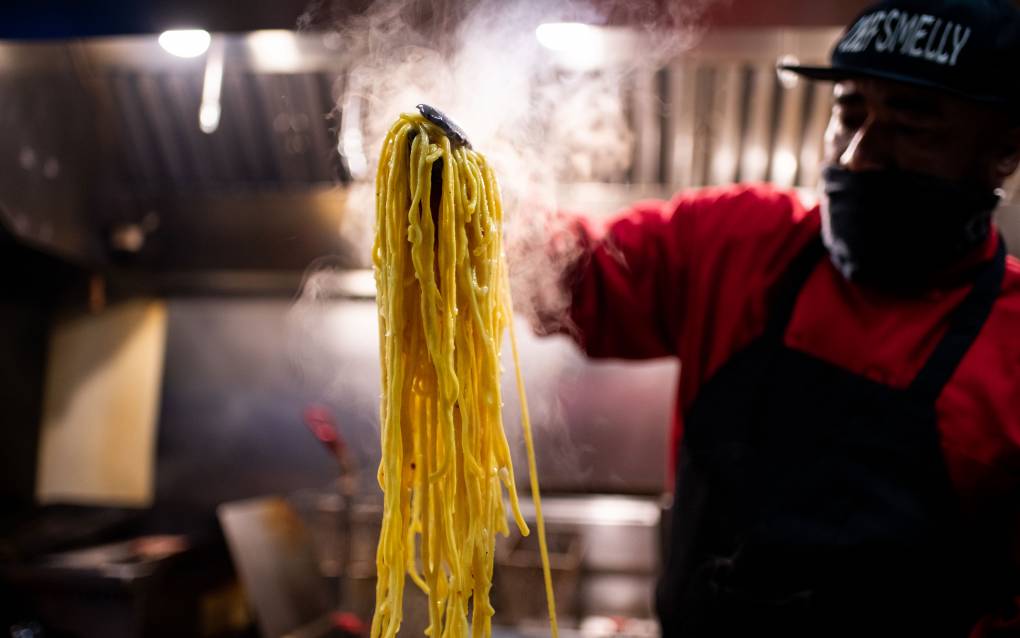
"caption": "Garlic noodles are one of the most popular dishes at the Chef Smelly's pop-up in Oakland. ",
"description": "Garlic noodles are one of the most popular dishes at the Chef Smelly's pop-up in Oakland.",
"title": "007_Oakland_ChefSmellys_08072021_crop",
"credit": "Beth LaBerge/KQED",
"status": "inherit",
"altTag": "A chef holding a large tangle of steaming garlic noodles with a pair of tongs.",
"isLoading": false,
"fetchFailed": false
}
},
"audioPlayerReducer": {
"postId": "stream_live",
"isPaused": true,
"isPlaying": false,
"pfsActive": false,
"pledgeModalIsOpen": true,
"playerDrawerIsOpen": false,
"liveAudioPlayStartedAt": 0,
"liveAudioPlayContext": ""
},
"authorsReducer": {
"byline_arts_13908681": {
"type": "authors",
"id": "byline_arts_13908681",
"meta": {
"override": true
},
"slug": "byline_arts_13908681",
"name": "Jacquelyn Tran",
"isLoading": false
},
"byline_arts_13904913": {
"type": "authors",
"id": "byline_arts_13904913",
"meta": {
"override": true
},
"slug": "byline_arts_13904913",
"name": "Jacquelyn Tran",
"isLoading": false
},
"ltsai": {
"type": "authors",
"id": "11743",
"meta": {
"index": "authors_1716337520",
"id": "11743",
"found": true
},
"name": "Luke Tsai",
"firstName": "Luke",
"lastName": "Tsai",
"slug": "ltsai",
"email": "ltsai@kqed.org",
"display_author_email": true,
"staff_mastheads": [
"arts"
],
"title": "Food Editor",
"bio": "Luke Tsai is KQED's food editor and resident stinky tofu connoisseur. Prior to KQED, he was an editor at Eater SF, \u003cem>San Francisco \u003c/em>magazine, and the \u003cem>East Bay Express\u003c/em>, and his work has also appeared in TASTE, the \u003cem>San Francisco Chronicle\u003c/em>, and the \u003cem>Best Food Writing\u003c/em> anthology. When he isn't writing or editing, you'll find him eating most everything he can get his hands on.",
"avatar": "https://secure.gravatar.com/avatar/1e59b45bf191526e7339d6ba46e33a57b2030d25c27660ecc64ea3cb863e34f7?s=600&d=blank&r=g",
"twitter": "theluketsai",
"bluesky": null,
"facebook": null,
"instagram": null,
"linkedin": null,
"sites": [
{
"site": "",
"roles": [
"editor"
]
},
{
"site": "arts",
"roles": [
"administrator"
]
},
{
"site": "news",
"roles": [
"editor",
"contributor"
]
},
{
"site": "bayareabites",
"roles": [
"editor"
]
},
{
"site": "food",
"roles": [
"editor"
]
}
],
"headData": {
"title": "Luke Tsai | KQED",
"description": "Food Editor",
"ogImgSrc": "https://secure.gravatar.com/avatar/1e59b45bf191526e7339d6ba46e33a57b2030d25c27660ecc64ea3cb863e34f7?s=600&d=blank&r=g",
"twImgSrc": "https://secure.gravatar.com/avatar/1e59b45bf191526e7339d6ba46e33a57b2030d25c27660ecc64ea3cb863e34f7?s=600&d=blank&r=g"
},
"isLoading": false,
"link": "/author/ltsai"
},
"achazaro": {
"type": "authors",
"id": "11748",
"meta": {
"index": "authors_1716337520",
"id": "11748",
"found": true
},
"name": "Alan Chazaro",
"firstName": "Alan",
"lastName": "Chazaro",
"slug": "achazaro",
"email": "agchazaro@gmail.com",
"display_author_email": true,
"staff_mastheads": [],
"title": "Food Writer and Reporter",
"bio": "Alan Chazaro is the author of \u003cem>This Is Not a Frank Ocean Cover Album\u003c/em> (Black Lawrence Press, 2019), \u003cem>Piñata Theory\u003c/em> (Black Lawrence Press, 2020), and \u003cem>Notes from the Eastern Span of the Bay Bridge\u003c/em> (Ghost City Press, 2021). He is a graduate of June Jordan’s Poetry for the People program at UC Berkeley and a former Lawrence Ferlinghetti Fellow at the University of San Francisco. He writes about sports, food, art, music, education, and culture while repping the Bay on \u003ca href=\"https://twitter.com/alan_chazaro\">Twitter\u003c/a> and \u003ca href=\"https://www.instagram.com/alan_chazaro/?hl=en\">Instagram\u003c/a> at @alan_chazaro.",
"avatar": "https://secure.gravatar.com/avatar/ea8b6dd970fc5c29e7a188e7d5861df7?s=600&d=blank&r=g",
"twitter": "alan_chazaro",
"facebook": null,
"instagram": null,
"linkedin": null,
"sites": [
{
"site": "arts",
"roles": [
"contributor"
]
},
{
"site": "news",
"roles": [
"editor"
]
}
],
"headData": {
"title": "Alan Chazaro | KQED",
"description": "Food Writer and Reporter",
"ogImgSrc": "https://secure.gravatar.com/avatar/ea8b6dd970fc5c29e7a188e7d5861df7?s=600&d=blank&r=g",
"twImgSrc": "https://secure.gravatar.com/avatar/ea8b6dd970fc5c29e7a188e7d5861df7?s=600&d=blank&r=g"
},
"isLoading": false,
"link": "/author/achazaro"
},
"tpham": {
"type": "authors",
"id": "11753",
"meta": {
"index": "authors_1716337520",
"id": "11753",
"found": true
},
"name": "Thien Pham",
"firstName": "Thien",
"lastName": "Pham",
"slug": "tpham",
"email": "thiendog@gmail.com",
"display_author_email": false,
"staff_mastheads": [],
"title": "KQED Contributor",
"bio": null,
"avatar": "https://secure.gravatar.com/avatar/a5b4729969ad46d88e7b9ec9dd4f3fa6af84dd0fa8fa91f01d8d9481694999bc?s=600&d=blank&r=g",
"twitter": null,
"bluesky": null,
"facebook": null,
"instagram": null,
"linkedin": null,
"sites": [
{
"site": "arts",
"roles": [
"contributor"
]
}
],
"headData": {
"title": "Thien Pham | KQED",
"description": "KQED Contributor",
"ogImgSrc": "https://secure.gravatar.com/avatar/a5b4729969ad46d88e7b9ec9dd4f3fa6af84dd0fa8fa91f01d8d9481694999bc?s=600&d=blank&r=g",
"twImgSrc": "https://secure.gravatar.com/avatar/a5b4729969ad46d88e7b9ec9dd4f3fa6af84dd0fa8fa91f01d8d9481694999bc?s=600&d=blank&r=g"
},
"isLoading": false,
"link": "/author/tpham"
},
"athapliyal": {
"type": "authors",
"id": "11766",
"meta": {
"index": "authors_1716337520",
"id": "11766",
"found": true
},
"name": "Adesh Thapliyal",
"firstName": "Adesh",
"lastName": "Thapliyal",
"slug": "athapliyal",
"email": "athapliyal@kqed.org",
"display_author_email": false,
"staff_mastheads": [],
"title": "KQED Contributor",
"bio": "Adesh Thapliyal is KQED Arts' Editorial Intern. Previously, he wrote for the experimental newsletter \u003cem>Tone Glow\u003c/em> and the pop music blog \u003cem>The Singles Jukebox\u003c/em>.",
"avatar": "https://secure.gravatar.com/avatar/25c945182616a5283c4f746e7017bca3?s=600&d=blank&r=g",
"twitter": null,
"facebook": null,
"instagram": null,
"linkedin": null,
"sites": [
{
"site": "arts",
"roles": [
"author"
]
}
],
"headData": {
"title": "Adesh Thapliyal | KQED",
"description": "KQED Contributor",
"ogImgSrc": "https://secure.gravatar.com/avatar/25c945182616a5283c4f746e7017bca3?s=600&d=blank&r=g",
"twImgSrc": "https://secure.gravatar.com/avatar/25c945182616a5283c4f746e7017bca3?s=600&d=blank&r=g"
},
"isLoading": false,
"link": "/author/athapliyal"
}
},
"pagesReducer": {
"arts_tag_vietnamese-food": {
"type": "terms",
"id": "arts_15126",
"meta": {
"index": "terms_1716263798",
"site": "arts",
"id": "15126",
"score": 9.55733
},
"featImg": null,
"name": "vietnamese food",
"description": null,
"taxonomy": "tag",
"headData": {
"twImgId": null,
"twTitle": null,
"ogTitle": null,
"ogImgId": null,
"twDescription": null,
"description": null,
"title": "vietnamese food Archives | KQED Arts",
"ogDescription": null
},
"ttid": 15138,
"slug": "vietnamese-food",
"isLoading": false,
"title": "vietnamese food",
"pageMeta": {
"site": "arts",
"WpPageTemplate": "page-topic-editorial",
"currentPage": 2
},
"blocks": [
{
"blockName": "kqed/post-list",
"attrs": {
"layout": "cardArticle2",
"query": "posts/arts?tag=vietnamese-food",
"seeMore": false,
"paginated": true,
"page": 2
}
},
{
"blockName": "kqed/ad"
}
]
}
},
"pfsSessionReducer": {},
"postsReducer": {
"stream_live": {
"type": "live",
"id": "stream_live",
"audioUrl": "https://streams.kqed.org/kqedradio",
"title": "Live Stream",
"excerpt": "Live Stream information currently unavailable.",
"link": "/radio",
"featImg": "",
"label": {
"name": "KQED Live",
"link": "/"
}
},
"stream_kqedNewscast": {
"type": "posts",
"id": "stream_kqedNewscast",
"audioUrl": "https://www.kqed.org/.stream/anon/radio/RDnews/newscast.mp3?_=1",
"title": "KQED Newscast",
"featImg": "",
"label": {
"name": "88.5 FM",
"link": "/"
}
},
"arts_13954983": {
"type": "posts",
"id": "arts_13954983",
"meta": {
"index": "posts_1716263798",
"site": "arts",
"id": "13954983",
"score": null,
"sort": [
1711666143000
]
},
"parent": 0,
"labelTerm": {},
"blocks": [],
"publishDate": 1711666143,
"format": "aside",
"title": "This Viet-Cajun Spot in San Jose Serves the Freshest Crawfish Boils Until 4 a.m.",
"headTitle": "This Viet-Cajun Spot in San Jose Serves the Freshest Crawfish Boils Until 4 a.m. | KQED",
"content": "\u003cfigure id=\"attachment_13954986\" class=\"wp-caption alignnone\" style=\"max-width: 1920px\">\u003cimg loading=\"lazy\" decoding=\"async\" class=\"size-full wp-image-13954986\" src=\"https://cdn.kqed.org/wp-content/uploads/sites/2/2024/03/Cajun-bistro-7.jpg\" alt=\"Two men in glasses devouring their food ravenously. There's a big bowl of shrimp and crawfish in front of them.\" width=\"1920\" height=\"1920\" srcset=\"https://cdn.kqed.org/wp-content/uploads/sites/2/2024/03/Cajun-bistro-7.jpg 1920w, https://cdn.kqed.org/wp-content/uploads/sites/2/2024/03/Cajun-bistro-7-800x800.jpg 800w, https://cdn.kqed.org/wp-content/uploads/sites/2/2024/03/Cajun-bistro-7-1020x1020.jpg 1020w, https://cdn.kqed.org/wp-content/uploads/sites/2/2024/03/Cajun-bistro-7-160x160.jpg 160w, https://cdn.kqed.org/wp-content/uploads/sites/2/2024/03/Cajun-bistro-7-768x768.jpg 768w, https://cdn.kqed.org/wp-content/uploads/sites/2/2024/03/Cajun-bistro-7-1536x1536.jpg 1536w\" sizes=\"(max-width: 1920px) 100vw, 1920px\">\u003cfigcaption class=\"wp-caption-text\">By the end of our meal at Cajun Bistro 7, we’d left a pile of shrimp and crawfish carcasses in our wake. The Viet-Cajun spot in San Jose is open until 4 a.m. daily. \u003ccite>(Thien Pham)\u003c/cite>\u003c/figcaption>\u003c/figure>\n\u003cp>\u003ca href=\"https://www.kqed.org/arts/tag/the-midnight-diners\">\u003ci>\u003cspan style=\"font-weight: 400\">The Midnight Diners\u003c/span>\u003c/i>\u003c/a>\u003ci>\u003cspan style=\"font-weight: 400\"> is a regular collaboration between KQED food editor Luke Tsai and artist Thien Pham. Follow them each week as they explore the hot pot restaurants, taco carts and 24-hour casino buffets that make up the Bay Area’s after-hours dining scene.\u003c/span>\u003c/i>\u003c/p>\n\u003cp>\u003cspan style=\"font-weight: 400\">The first thing you notice upon walking into San Jose’s \u003c/span>\u003ca href=\"https://www.instagram.com/cajunbistro/\">\u003cspan style=\"font-weight: 400\">Cajun Bistro 7\u003c/span>\u003c/a>\u003cspan style=\"font-weight: 400\"> is how barebones the setup is. Layers of disposable plastic tablecloth are stacked on every table, and there’s little decor to speak of beyond a potted bamboo plant and a few kitschy floral dinner plates mounted on the wall. \u003c/span>\u003c/p>\n\u003cp>\u003cspan style=\"font-weight: 400\">It’s a vibe I like to call “Asian Mom’s Basement,” and it happens to be the setting where I feel most comfortable — where a group of friends might spend several hours with a deck of cards and a spread of snacks, just shooting the shit. \u003c/span>\u003c/p>\n\u003cp>\u003cspan style=\"font-weight: 400\">In my experience, \u003c/span>\u003ca href=\"https://eastbayexpress.com/in-praise-of-late-night-ramen-2-1/\">\u003cspan style=\"font-weight: 400\">restaurants that look like this\u003c/span>\u003c/a>\u003cspan style=\"font-weight: 400\"> always serve amazing food, and Cajun Bistro 7 proved to be no exception. We trekked to this relatively low-profile strip mall shop because we heard it serves some of the best Viet-Cajun seafood boils in San Jose until 4 a.m. (!!!) every night. But if anything, that \u003c/span>\u003ci>\u003cspan style=\"font-weight: 400\">undersells \u003c/span>\u003c/i>\u003cspan style=\"font-weight: 400\">just how good the restaurant is. \u003c/span>\u003c/p>\n\u003cp>\u003cspan style=\"font-weight: 400\">At a little past 10 o’clock on a Friday night, the place was packed with Vietnamese American twentysomethings, and every table had ordered one of the big seafood boil combinations — three or four pounds of crawfish, clams, mussels and head-on shrimp served in a plastic bag full of bright red sauce. It’s the kind of restaurant where plastic gloves are provided (and highly recommended), and you still wind up with a huge pile of dirty napkins at the end of your meal.\u003c/span>\u003c/p>\n\u003cfigure id=\"attachment_13954990\" class=\"wp-caption alignnone\" style=\"max-width: 1920px\">\u003cimg loading=\"lazy\" decoding=\"async\" class=\"size-full wp-image-13954990\" src=\"https://cdn.kqed.org/wp-content/uploads/sites/2/2024/03/Cajun-bistro-7-2.jpg\" alt=\"The exterior of the Cajun Bistro 7 at night, when the restaurant is lit up as though glowing from within.\" width=\"1920\" height=\"1920\" srcset=\"https://cdn.kqed.org/wp-content/uploads/sites/2/2024/03/Cajun-bistro-7-2.jpg 1920w, https://cdn.kqed.org/wp-content/uploads/sites/2/2024/03/Cajun-bistro-7-2-800x800.jpg 800w, https://cdn.kqed.org/wp-content/uploads/sites/2/2024/03/Cajun-bistro-7-2-1020x1020.jpg 1020w, https://cdn.kqed.org/wp-content/uploads/sites/2/2024/03/Cajun-bistro-7-2-160x160.jpg 160w, https://cdn.kqed.org/wp-content/uploads/sites/2/2024/03/Cajun-bistro-7-2-768x768.jpg 768w, https://cdn.kqed.org/wp-content/uploads/sites/2/2024/03/Cajun-bistro-7-2-1536x1536.jpg 1536w\" sizes=\"(max-width: 1920px) 100vw, 1920px\">\u003cfigcaption class=\"wp-caption-text\">Don’t be deceived by the restaurant’s understated appearance. \u003ccite>(Thien Pham)\u003c/cite>\u003c/figcaption>\u003c/figure>\n\u003cp>\u003cspan style=\"font-weight: 400\">I will be honest: I’ve never been to Louisiana, and I’ve spent the bulk of my adult life telling people that I think crawfish are “OK” but, truthfully, a bit overrated. I realize now that I must have been eating a whole lot of frozen crawfish. The specimens at Cajun Bistro knocked my socks off — plump and meaty with firm, sweet flesh that was tastier than any lobster.\u003c/span>\u003c/p>\n\u003cp>[ad fullwidth]\u003c/p>\n\u003cp>\u003cspan style=\"font-weight: 400\">The other seafood was also excellent, especially the gigantic shrimp, whose heads we ripped off with our hands, sucking on the sweet, briny juices inside. What sets this seafood boil apart, too, is the sauce. We opted for the “Sweet California,” which the owner recommended. At first, I worried it would be too sweet and too far removed from the traditional Cajun style. But if anything, it grew on me with every bite — super-garlicky and buttery with slight sweetness balanced by a tingle of heat, and a creaminess that I found irresistible. The evidence? The pile of shrimp and crawfish carcasses we left in our wake.\u003c/span>\u003c/p>\n\u003cp>\u003cspan style=\"font-weight: 400\">This wasn’t just the best seafood boil I’ve had in San Jose. It might be the best one in the whole Bay Area.\u003c/span>\u003c/p>\n\u003cp>\u003cspan style=\"font-weight: 400\">\u003cspan style=\"color: #2b2b2b;font-weight: 400\">[aside postID='arts_13954597,arts_13954112,arts_13951914']\u003c/span>As if that that weren’t enough, Cajun Bistro also serves a full traditional Vietnamese menu, including one of the tastiest bowls of home-style bun rieu — the crab-infused tomato broth noodle soup — I’ve had in the Bay: a balanced, deeply flavorful broth, impeccably fresh herbs and a jolt of funky nuoc mam (fermented shrimp paste) to make you feel alive.\u003c/span>\u003c/p>\n\u003cp>\u003cspan style=\"font-weight: 400\">Right now is a good time to visit Cajun Bistro 7, as we’re nearing the peak of the Louisiana crawfish season (though the restaurant offers crawfish year-round, sourcing the little crustaceans from the Sacramento Delta during the fall and winter months). Maybe the most unbelievable thing about the restaurant, apart from the delicious food and friendly service, is — again — the fact that it’s open until 4 a.m. every single night. That decision, we were told, was born out of sheer practicality rather than some grand plan to dominate the South Bay’s \u003c/span>\u003ca href=\"https://www.kqed.org/arts/13954112/orale-taco-truck-san-jose-late-night-pancakes-midnight-diners\">\u003cspan style=\"font-weight: 400\">after-midnight food scene\u003c/span>\u003c/a>.\u003cspan style=\"font-weight: 400\"> Their live crawfish shipment comes in at 5 a.m. every morning, so they have to stay up that late anyway.\u003c/span>\u003c/p>\n\u003cp>\u003cspan style=\"font-weight: 400\">Though I must admit: The idea of eating a full-on seafood boil at 4 o’clock in the morning sounds like sheer lunacy, even to me. But if you’ve achieved that particular side quest, I’d love to meet you at Cajun Bistro someday for a pre-dawn meal. If only just to shake your hand.\u003c/span>\u003c/p>\n\u003cp>\u003cimg loading=\"lazy\" decoding=\"async\" class=\"alignnone size-full wp-image-12127869\" src=\"https://cdn.kqed.org/wp-content/uploads/sites/2/2016/09/Q.Logo_.Break_.jpg\" alt=\"\" width=\"800\" height=\"78\" srcset=\"https://cdn.kqed.org/wp-content/uploads/sites/2/2016/09/Q.Logo_.Break_.jpg 800w, https://cdn.kqed.org/wp-content/uploads/sites/2/2016/09/Q.Logo_.Break_-400x39.jpg 400w, https://cdn.kqed.org/wp-content/uploads/sites/2/2016/09/Q.Logo_.Break_-768x75.jpg 768w\" sizes=\"(max-width: 800px) 100vw, 800px\">\u003c/p>\n\u003cp>\u003c/p>\n\u003cp>\u003ca href=\"https://www.instagram.com/cajunbistro/\">\u003ci>\u003cspan style=\"font-weight: 400\">Cajun Bistro 7\u003c/span>\u003c/i>\u003c/a>\u003ci>\u003cspan style=\"font-weight: 400\"> is open from 11 a.m. to 4 a.m. daily at 3005 Silver Creek Rd. Ste. 116 in San Jose. \u003c/span>\u003c/i>\u003c/p>\n\n",
"stats": {
"hasVideo": false,
"hasChartOrMap": false,
"hasAudio": false,
"hasPolis": false,
"wordCount": 863,
"hasGoogleForm": false,
"hasGallery": false,
"hasHearkenModule": false,
"iframeSrcs": [],
"paragraphCount": 15
},
"modified": 1711667362,
"excerpt": "Cajun Bistro 7 is the very definition of a hidden gem.",
"headData": {
"twImgId": "arts_13954987",
"twTitle": "This Viet-Cajun Spot in San Jose Serves the Freshest Crawfish Boils Until 4 a.m.",
"socialTitle": "The Best Viet-Cajun Seafood Boil in San Jose Is Open Until 4 a.m. %%page%% %%sep%% KQED",
"ogTitle": "This Viet-Cajun Spot in San Jose Serves the Freshest Crawfish Boils Until 4 a.m.",
"ogImgId": "arts_13954987",
"twDescription": "",
"description": "Cajun Bistro 7 is the very definition of a hidden gem.",
"title": "The Best Viet-Cajun Seafood Boil in San Jose Is Open Until 4 a.m. | KQED",
"ogDescription": "",
"schema": {
"@context": "https://schema.org",
"@type": "Article",
"headline": "This Viet-Cajun Spot in San Jose Serves the Freshest Crawfish Boils Until 4 a.m.",
"datePublished": "2024-03-28T15:49:03-07:00",
"dateModified": "2024-03-28T16:09:22-07:00",
"image": "https://cdn.kqed.org/wp-content/uploads/2020/02/KQED-OG-Image@1x.png"
}
},
"guestAuthors": [],
"slug": "viet-cajun-seafood-crawfish-boil-san-jose-late-night",
"status": "publish",
"sourceUrl": "https://www.kqed.org/arts/tag/the-midnight-diners",
"excludeFromSiteSearch": "Include",
"sticky": false,
"source": "The Midnight Diners",
"articleAge": "0",
"path": "/arts/13954983/viet-cajun-seafood-crawfish-boil-san-jose-late-night",
"audioTrackLength": null,
"parsedContent": [
{
"type": "contentString",
"content": "\u003cdiv class=\"post-body\">\u003cp>\u003cfigure id=\"attachment_13954986\" class=\"wp-caption alignnone\" style=\"max-width: 1920px\">\u003cimg loading=\"lazy\" decoding=\"async\" class=\"size-full wp-image-13954986\" src=\"https://cdn.kqed.org/wp-content/uploads/sites/2/2024/03/Cajun-bistro-7.jpg\" alt=\"Two men in glasses devouring their food ravenously. There's a big bowl of shrimp and crawfish in front of them.\" width=\"1920\" height=\"1920\" srcset=\"https://cdn.kqed.org/wp-content/uploads/sites/2/2024/03/Cajun-bistro-7.jpg 1920w, https://cdn.kqed.org/wp-content/uploads/sites/2/2024/03/Cajun-bistro-7-800x800.jpg 800w, https://cdn.kqed.org/wp-content/uploads/sites/2/2024/03/Cajun-bistro-7-1020x1020.jpg 1020w, https://cdn.kqed.org/wp-content/uploads/sites/2/2024/03/Cajun-bistro-7-160x160.jpg 160w, https://cdn.kqed.org/wp-content/uploads/sites/2/2024/03/Cajun-bistro-7-768x768.jpg 768w, https://cdn.kqed.org/wp-content/uploads/sites/2/2024/03/Cajun-bistro-7-1536x1536.jpg 1536w\" sizes=\"(max-width: 1920px) 100vw, 1920px\">\u003cfigcaption class=\"wp-caption-text\">By the end of our meal at Cajun Bistro 7, we’d left a pile of shrimp and crawfish carcasses in our wake. The Viet-Cajun spot in San Jose is open until 4 a.m. daily. \u003ccite>(Thien Pham)\u003c/cite>\u003c/figcaption>\u003c/figure>\n\u003cp>\u003ca href=\"https://www.kqed.org/arts/tag/the-midnight-diners\">\u003ci>\u003cspan style=\"font-weight: 400\">The Midnight Diners\u003c/span>\u003c/i>\u003c/a>\u003ci>\u003cspan style=\"font-weight: 400\"> is a regular collaboration between KQED food editor Luke Tsai and artist Thien Pham. Follow them each week as they explore the hot pot restaurants, taco carts and 24-hour casino buffets that make up the Bay Area’s after-hours dining scene.\u003c/span>\u003c/i>\u003c/p>\n\u003cp>\u003cspan style=\"font-weight: 400\">The first thing you notice upon walking into San Jose’s \u003c/span>\u003ca href=\"https://www.instagram.com/cajunbistro/\">\u003cspan style=\"font-weight: 400\">Cajun Bistro 7\u003c/span>\u003c/a>\u003cspan style=\"font-weight: 400\"> is how barebones the setup is. Layers of disposable plastic tablecloth are stacked on every table, and there’s little decor to speak of beyond a potted bamboo plant and a few kitschy floral dinner plates mounted on the wall. \u003c/span>\u003c/p>\n\u003cp>\u003cspan style=\"font-weight: 400\">It’s a vibe I like to call “Asian Mom’s Basement,” and it happens to be the setting where I feel most comfortable — where a group of friends might spend several hours with a deck of cards and a spread of snacks, just shooting the shit. \u003c/span>\u003c/p>\n\u003cp>\u003cspan style=\"font-weight: 400\">In my experience, \u003c/span>\u003ca href=\"https://eastbayexpress.com/in-praise-of-late-night-ramen-2-1/\">\u003cspan style=\"font-weight: 400\">restaurants that look like this\u003c/span>\u003c/a>\u003cspan style=\"font-weight: 400\"> always serve amazing food, and Cajun Bistro 7 proved to be no exception. We trekked to this relatively low-profile strip mall shop because we heard it serves some of the best Viet-Cajun seafood boils in San Jose until 4 a.m. (!!!) every night. But if anything, that \u003c/span>\u003ci>\u003cspan style=\"font-weight: 400\">undersells \u003c/span>\u003c/i>\u003cspan style=\"font-weight: 400\">just how good the restaurant is. \u003c/span>\u003c/p>\n\u003cp>\u003cspan style=\"font-weight: 400\">At a little past 10 o’clock on a Friday night, the place was packed with Vietnamese American twentysomethings, and every table had ordered one of the big seafood boil combinations — three or four pounds of crawfish, clams, mussels and head-on shrimp served in a plastic bag full of bright red sauce. It’s the kind of restaurant where plastic gloves are provided (and highly recommended), and you still wind up with a huge pile of dirty napkins at the end of your meal.\u003c/span>\u003c/p>\n\u003cfigure id=\"attachment_13954990\" class=\"wp-caption alignnone\" style=\"max-width: 1920px\">\u003cimg loading=\"lazy\" decoding=\"async\" class=\"size-full wp-image-13954990\" src=\"https://cdn.kqed.org/wp-content/uploads/sites/2/2024/03/Cajun-bistro-7-2.jpg\" alt=\"The exterior of the Cajun Bistro 7 at night, when the restaurant is lit up as though glowing from within.\" width=\"1920\" height=\"1920\" srcset=\"https://cdn.kqed.org/wp-content/uploads/sites/2/2024/03/Cajun-bistro-7-2.jpg 1920w, https://cdn.kqed.org/wp-content/uploads/sites/2/2024/03/Cajun-bistro-7-2-800x800.jpg 800w, https://cdn.kqed.org/wp-content/uploads/sites/2/2024/03/Cajun-bistro-7-2-1020x1020.jpg 1020w, https://cdn.kqed.org/wp-content/uploads/sites/2/2024/03/Cajun-bistro-7-2-160x160.jpg 160w, https://cdn.kqed.org/wp-content/uploads/sites/2/2024/03/Cajun-bistro-7-2-768x768.jpg 768w, https://cdn.kqed.org/wp-content/uploads/sites/2/2024/03/Cajun-bistro-7-2-1536x1536.jpg 1536w\" sizes=\"(max-width: 1920px) 100vw, 1920px\">\u003cfigcaption class=\"wp-caption-text\">Don’t be deceived by the restaurant’s understated appearance. \u003ccite>(Thien Pham)\u003c/cite>\u003c/figcaption>\u003c/figure>\n\u003cp>\u003cspan style=\"font-weight: 400\">I will be honest: I’ve never been to Louisiana, and I’ve spent the bulk of my adult life telling people that I think crawfish are “OK” but, truthfully, a bit overrated. I realize now that I must have been eating a whole lot of frozen crawfish. The specimens at Cajun Bistro knocked my socks off — plump and meaty with firm, sweet flesh that was tastier than any lobster.\u003c/span>\u003c/p>\n\u003cp>\u003c/p>\u003c/div>",
"attributes": {
"named": {},
"numeric": []
}
},
{
"type": "component",
"content": "",
"name": "ad",
"attributes": {
"named": {
"label": "fullwidth"
},
"numeric": [
"fullwidth"
]
}
},
{
"type": "contentString",
"content": "\u003cdiv class=\"post-body\">\u003cp>\u003c/p>\n\u003cp>\u003cspan style=\"font-weight: 400\">The other seafood was also excellent, especially the gigantic shrimp, whose heads we ripped off with our hands, sucking on the sweet, briny juices inside. What sets this seafood boil apart, too, is the sauce. We opted for the “Sweet California,” which the owner recommended. At first, I worried it would be too sweet and too far removed from the traditional Cajun style. But if anything, it grew on me with every bite — super-garlicky and buttery with slight sweetness balanced by a tingle of heat, and a creaminess that I found irresistible. The evidence? The pile of shrimp and crawfish carcasses we left in our wake.\u003c/span>\u003c/p>\n\u003cp>\u003cspan style=\"font-weight: 400\">This wasn’t just the best seafood boil I’ve had in San Jose. It might be the best one in the whole Bay Area.\u003c/span>\u003c/p>\n\u003cp>\u003cspan style=\"font-weight: 400\">\u003cspan style=\"color: #2b2b2b;font-weight: 400\">\u003c/p>\u003c/div>",
"attributes": {
"named": {},
"numeric": []
}
},
{
"type": "component",
"content": "",
"name": "aside",
"attributes": {
"named": {
"postid": "arts_13954597,arts_13954112,arts_13951914",
"label": ""
},
"numeric": []
}
},
{
"type": "contentString",
"content": "\u003cdiv class=\"post-body\">\u003cp>\u003c/span>As if that that weren’t enough, Cajun Bistro also serves a full traditional Vietnamese menu, including one of the tastiest bowls of home-style bun rieu — the crab-infused tomato broth noodle soup — I’ve had in the Bay: a balanced, deeply flavorful broth, impeccably fresh herbs and a jolt of funky nuoc mam (fermented shrimp paste) to make you feel alive.\u003c/span>\u003c/p>\n\u003cp>\u003cspan style=\"font-weight: 400\">Right now is a good time to visit Cajun Bistro 7, as we’re nearing the peak of the Louisiana crawfish season (though the restaurant offers crawfish year-round, sourcing the little crustaceans from the Sacramento Delta during the fall and winter months). Maybe the most unbelievable thing about the restaurant, apart from the delicious food and friendly service, is — again — the fact that it’s open until 4 a.m. every single night. That decision, we were told, was born out of sheer practicality rather than some grand plan to dominate the South Bay’s \u003c/span>\u003ca href=\"https://www.kqed.org/arts/13954112/orale-taco-truck-san-jose-late-night-pancakes-midnight-diners\">\u003cspan style=\"font-weight: 400\">after-midnight food scene\u003c/span>\u003c/a>.\u003cspan style=\"font-weight: 400\"> Their live crawfish shipment comes in at 5 a.m. every morning, so they have to stay up that late anyway.\u003c/span>\u003c/p>\n\u003cp>\u003cspan style=\"font-weight: 400\">Though I must admit: The idea of eating a full-on seafood boil at 4 o’clock in the morning sounds like sheer lunacy, even to me. But if you’ve achieved that particular side quest, I’d love to meet you at Cajun Bistro someday for a pre-dawn meal. If only just to shake your hand.\u003c/span>\u003c/p>\n\u003cp>\u003cimg loading=\"lazy\" decoding=\"async\" class=\"alignnone size-full wp-image-12127869\" src=\"https://cdn.kqed.org/wp-content/uploads/sites/2/2016/09/Q.Logo_.Break_.jpg\" alt=\"\" width=\"800\" height=\"78\" srcset=\"https://cdn.kqed.org/wp-content/uploads/sites/2/2016/09/Q.Logo_.Break_.jpg 800w, https://cdn.kqed.org/wp-content/uploads/sites/2/2016/09/Q.Logo_.Break_-400x39.jpg 400w, https://cdn.kqed.org/wp-content/uploads/sites/2/2016/09/Q.Logo_.Break_-768x75.jpg 768w\" sizes=\"(max-width: 800px) 100vw, 800px\">\u003c/p>\n\u003cp>\u003c/p>\n\u003cp>\u003ca href=\"https://www.instagram.com/cajunbistro/\">\u003ci>\u003cspan style=\"font-weight: 400\">Cajun Bistro 7\u003c/span>\u003c/i>\u003c/a>\u003ci>\u003cspan style=\"font-weight: 400\"> is open from 11 a.m. to 4 a.m. daily at 3005 Silver Creek Rd. Ste. 116 in San Jose. \u003c/span>\u003c/i>\u003c/p>\n\n\u003c/div>\u003c/p>",
"attributes": {
"named": {},
"numeric": []
}
}
],
"link": "/arts/13954983/viet-cajun-seafood-crawfish-boil-san-jose-late-night",
"authors": [
"11743",
"11753"
],
"categories": [
"arts_1",
"arts_12276"
],
"tags": [
"arts_5620",
"arts_10278",
"arts_1297",
"arts_8805",
"arts_1084",
"arts_21928",
"arts_15126"
],
"featImg": "arts_13954987",
"label": "source_arts_13954983"
},
"arts_13933745": {
"type": "posts",
"id": "arts_13933745",
"meta": {
"index": "posts_1716263798",
"site": "arts",
"id": "13933745",
"score": null,
"sort": [
1692897902000
]
},
"parent": 0,
"labelTerm": {},
"blocks": [],
"publishDate": 1692897902,
"format": "standard",
"title": "A Bay Area Guide to Cold Dishes for Hot Weather",
"headTitle": "A Bay Area Guide to Cold Dishes for Hot Weather | KQED",
"content": "\u003cp>\u003cstrong>\u003cem>Find more of KQED’s picks for the \u003ca href=\"https://www.kqed.org/fallguide2023\">best fall 2023 events here\u003c/a>.\u003c/em>\u003c/strong>\u003c/p>\n\u003cp>Heading into fall, there are certain fundamental truths every Bay Arean knows: that summer here is (mostly) a lie. That September tomatoes are sacrosanct. And that the hottest damned day of the year often falls on some random weekday in October. This is the season of \u003ci>not\u003c/i> lighting our stoves, when mostly all we want to do is drink aguas frescas inside an air-conditioned room.\u003c/p>\n\u003cp>Thankfully, our local food scene is well prepared for this seasonal scorching. Here are 10 of my favorite dishes to beat the heat.\u003c/p>\n\u003cfigure id=\"attachment_13933770\" class=\"wp-caption alignnone\" style=\"max-width: 1920px\">\u003cimg loading=\"lazy\" decoding=\"async\" class=\"size-full wp-image-13933770\" src=\"https://ww2.kqed.org/app/uploads/sites/2/2023/08/soba-ichi-cold-soba_LT.jpg\" alt=\"A plate of cold soba with dipping sauce and a side of tempura.\" width=\"1920\" height=\"1440\" srcset=\"https://cdn.kqed.org/wp-content/uploads/sites/2/2023/08/soba-ichi-cold-soba_LT.jpg 1920w, https://cdn.kqed.org/wp-content/uploads/sites/2/2023/08/soba-ichi-cold-soba_LT-800x600.jpg 800w, https://cdn.kqed.org/wp-content/uploads/sites/2/2023/08/soba-ichi-cold-soba_LT-1020x765.jpg 1020w, https://cdn.kqed.org/wp-content/uploads/sites/2/2023/08/soba-ichi-cold-soba_LT-160x120.jpg 160w, https://cdn.kqed.org/wp-content/uploads/sites/2/2023/08/soba-ichi-cold-soba_LT-768x576.jpg 768w, https://cdn.kqed.org/wp-content/uploads/sites/2/2023/08/soba-ichi-cold-soba_LT-1536x1152.jpg 1536w\" sizes=\"(max-width: 1920px) 100vw, 1920px\">\u003cfigcaption class=\"wp-caption-text\">Slurping cold, slippery soba on a hot day is an A+ sensory experience. \u003ccite>(Luke Tsai/KQED)\u003c/cite>\u003c/figcaption>\u003c/figure>\n\u003ch2>Cold Soba at Soba Ichi\u003c/h2>\n\u003cp>\u003cem>2311A Magnolia St., Oakland\u003c/em>\u003c/p>\n\u003cp>Hot days were simply \u003ci>made \u003c/i>for cold noodles — or is it the other way around? Either way, it’s hard for me to separate the two, and the few times a year when Bay Area temperatures edge toward triple digits, I start thinking about heading to West Oakland’s \u003ca href=\"https://www.instagram.com/sobaichi_oakland/?hl=en\">Soba Ichi\u003c/a> for a plate of soba. The restaurant serves these traditional buckwheat noodles a number of ways, of course, but my favorite is when the noodles are served cold with a dashi-based dipping sauce. Slurping those cold, slippery noodles while the sweat drips down your face: That’s an A+ sensory experience right there. An ice-cold lemon chu-hi also doesn’t hurt.\u003c/p>\n\u003cfigure id=\"attachment_13933775\" class=\"wp-caption alignnone\" style=\"max-width: 1920px\">\u003cimg loading=\"lazy\" decoding=\"async\" class=\"size-full wp-image-13933775\" src=\"https://ww2.kqed.org/app/uploads/sites/2/2023/08/pucquio-cebiche_LT.jpg\" alt=\"An elegantly plated Peruvian cebiche: raw fish topped with a crinkled piece of fried trout skin, with trout roe and assorted seaweeds arranged on the plate.\" width=\"1920\" height=\"1440\" srcset=\"https://cdn.kqed.org/wp-content/uploads/sites/2/2023/08/pucquio-cebiche_LT.jpg 1920w, https://cdn.kqed.org/wp-content/uploads/sites/2/2023/08/pucquio-cebiche_LT-800x600.jpg 800w, https://cdn.kqed.org/wp-content/uploads/sites/2/2023/08/pucquio-cebiche_LT-1020x765.jpg 1020w, https://cdn.kqed.org/wp-content/uploads/sites/2/2023/08/pucquio-cebiche_LT-160x120.jpg 160w, https://cdn.kqed.org/wp-content/uploads/sites/2/2023/08/pucquio-cebiche_LT-768x576.jpg 768w, https://cdn.kqed.org/wp-content/uploads/sites/2/2023/08/pucquio-cebiche_LT-1536x1152.jpg 1536w\" sizes=\"(max-width: 1920px) 100vw, 1920px\">\u003cfigcaption class=\"wp-caption-text\">The trout cebiche is notable for its undercurrent of briny ocean umami. \u003ccite>(Luke Tsai/KQED)\u003c/cite>\u003c/figcaption>\u003c/figure>\n\u003ch2>Cebiche at Pucquio\u003c/h2>\n\u003cp>\u003cem>5337 College Ave., Oakland\u003c/em>\u003c/p>\n\u003cp>[ad fullwidth]\u003c/p>\n\u003cp>On a sweltering hot day, sometimes the only thing I want to eat is chilled seafood — say, a simple poke bowl or a classic, caper-studded “Sicilian sashimi” from Swan Oyster Depot (if I didn’t have to wait in line for two hours). For me, the apex of this genre can be found at \u003ca href=\"https://www.pucquio.com/\">Pucquio\u003c/a>, an often-slept-on Peruvian joint where every cebiche on the menu is a stone cold killer. You’ll want to get a couple of them to share: The classic cebiche de pescado (made with rockfish during my recent visit) is bright and bracing, super-charged with a zip of citrusy ají limo chile heat. My favorite, though, is the comparatively mellow trout cebiche, which comes topped with crispy trout skin, as well as marinated trout roe that adds an undercurrent of briny ocean umami. Eat with a spoon so you can get a bit of each component in every bite.\u003c/p>\n\u003cfigure id=\"attachment_13933777\" class=\"wp-caption alignnone\" style=\"max-width: 1920px\">\u003cimg loading=\"lazy\" decoding=\"async\" class=\"size-full wp-image-13933777\" src=\"https://ww2.kqed.org/app/uploads/sites/2/2023/08/tigon-banh-hoi-2_LT.jpg\" alt=\"A spread of Vietnamese spring roll fillings next to a plate covered with lettuce and herbs.\" width=\"1920\" height=\"1280\" srcset=\"https://cdn.kqed.org/wp-content/uploads/sites/2/2023/08/tigon-banh-hoi-2_LT.jpg 1920w, https://cdn.kqed.org/wp-content/uploads/sites/2/2023/08/tigon-banh-hoi-2_LT-800x533.jpg 800w, https://cdn.kqed.org/wp-content/uploads/sites/2/2023/08/tigon-banh-hoi-2_LT-1020x680.jpg 1020w, https://cdn.kqed.org/wp-content/uploads/sites/2/2023/08/tigon-banh-hoi-2_LT-160x107.jpg 160w, https://cdn.kqed.org/wp-content/uploads/sites/2/2023/08/tigon-banh-hoi-2_LT-768x512.jpg 768w, https://cdn.kqed.org/wp-content/uploads/sites/2/2023/08/tigon-banh-hoi-2_LT-1536x1024.jpg 1536w\" sizes=\"(max-width: 1920px) 100vw, 1920px\">\u003cfigcaption class=\"wp-caption-text\">Fresh herbs and vegetables keep Tigon’s bánh hỏi light and refreshing. \u003ccite>(Luke Tsai/KQED)\u003c/cite>\u003c/figcaption>\u003c/figure>\n\u003ch2>Bánh Hỏi Dặc Biệt at Tigon\u003c/h2>\n\u003cp>\u003cem>10086 San Pablo Ave., El Cerrito\u003c/em>\u003c/p>\n\u003cp>You might already know that fresh spring rolls are a Vietnamese hot-weather staple — something about the combination of pliable rice paper wrapping, crisp lettuce, fresh herbs and, often, cold meat or shrimp that makes for such a refreshing bite. The bánh hỏi đặc biệt platter at El Cerrito’s criminally underrated \u003ca href=\"https://eatattigon.com/\">Tigon\u003c/a> takes this general principle and kicks it up eight or nine notches. The base of the platter is the tidy little rice noodle bundles known as bánh hỏi, on top of which the chef has arranged a huge spread of beef, chicken, shrimp, crispy egg rolls and fried bean curd. You dip a round of rice paper in warm water; arrange your meats, noodles and fresh herbs and vegetables on top; and voilà — a make-your-own spring roll party that’s festive and communal, without anyone having to break a sweat. Note well: The $38.50 đặc biệt platter is probably enough food to feed a family of four, but there’s also an option to pick just one or two proteins if you come in a smaller group.\u003c/p>\n\u003cfigure id=\"attachment_13933772\" class=\"wp-caption alignnone\" style=\"max-width: 1920px\">\u003cimg loading=\"lazy\" decoding=\"async\" class=\"size-full wp-image-13933772\" src=\"https://ww2.kqed.org/app/uploads/sites/2/2023/08/fil-am-cuisine-skewers_LT.jpg\" alt=\"Hand holding a white plastic takeout container of saucy meat skewers arranged over a bed of white rice.\" width=\"1920\" height=\"1440\" srcset=\"https://cdn.kqed.org/wp-content/uploads/sites/2/2023/08/fil-am-cuisine-skewers_LT.jpg 1920w, https://cdn.kqed.org/wp-content/uploads/sites/2/2023/08/fil-am-cuisine-skewers_LT-800x600.jpg 800w, https://cdn.kqed.org/wp-content/uploads/sites/2/2023/08/fil-am-cuisine-skewers_LT-1020x765.jpg 1020w, https://cdn.kqed.org/wp-content/uploads/sites/2/2023/08/fil-am-cuisine-skewers_LT-160x120.jpg 160w, https://cdn.kqed.org/wp-content/uploads/sites/2/2023/08/fil-am-cuisine-skewers_LT-768x576.jpg 768w, https://cdn.kqed.org/wp-content/uploads/sites/2/2023/08/fil-am-cuisine-skewers_LT-1536x1152.jpg 1536w\" sizes=\"(max-width: 1920px) 100vw, 1920px\">\u003cfigcaption class=\"wp-caption-text\">Daly City’s Fil-Am Cuisine offers exquisite summer barbecue vibes all year round. \u003ccite>(Luke Tsai/KQED)\u003c/cite>\u003c/figcaption>\u003c/figure>\n\u003ch2>BBQ Skewers at Fil-Am Cuisine\u003c/h2>\n\u003cp>\u003cem>66 School St., Daly City\u003c/em>\u003c/p>\n\u003cp>Every time I step inside this Daly City meat stick institution, the smell of a \u003ca href=\"https://www.kqed.org/arts/13915306/bbq-in-the-bay-series-intro-multicultural-barbecue-bay-area\">summer barbecue\u003c/a> hits me like a tidal wave of nostalgia. Fil-Am Cuisine boasts the same kind of sweet, charred meat and friendly Asian aunties that I associate with family get-togethers from when I was a kid. Even the prices seem like they’ve been time-warped from the early ’90s. Connoisseurs of crispy, carbonized edges, this is your spot. And whether you walk away with a fistful of skewered chicken or pork (why not both?), you can’t go wrong. Cash only.\u003c/p>\n\u003cfigure id=\"attachment_13933771\" class=\"wp-caption alignnone\" style=\"max-width: 1920px\">\u003cimg loading=\"lazy\" decoding=\"async\" class=\"size-full wp-image-13933771\" src=\"https://ww2.kqed.org/app/uploads/sites/2/2023/08/messob-veggie-combo_LT.jpg\" alt=\"An Ethiopian veggie combo: six colorful spreads dolloped on an injera-lined metal plate.\" width=\"1920\" height=\"1440\" srcset=\"https://cdn.kqed.org/wp-content/uploads/sites/2/2023/08/messob-veggie-combo_LT.jpg 1920w, https://cdn.kqed.org/wp-content/uploads/sites/2/2023/08/messob-veggie-combo_LT-800x600.jpg 800w, https://cdn.kqed.org/wp-content/uploads/sites/2/2023/08/messob-veggie-combo_LT-1020x765.jpg 1020w, https://cdn.kqed.org/wp-content/uploads/sites/2/2023/08/messob-veggie-combo_LT-160x120.jpg 160w, https://cdn.kqed.org/wp-content/uploads/sites/2/2023/08/messob-veggie-combo_LT-768x576.jpg 768w, https://cdn.kqed.org/wp-content/uploads/sites/2/2023/08/messob-veggie-combo_LT-1536x1152.jpg 1536w\" sizes=\"(max-width: 1920px) 100vw, 1920px\">\u003cfigcaption class=\"wp-caption-text\">The cool, garlicky buticha — the scrambled egg–like dip in the front-left quadrant — is part of what makes Messob’s veggie combo one of the best around. \u003ccite>(Luke Tsai/KQED)\u003c/cite>\u003c/figcaption>\u003c/figure>\n\u003ch2>Buticha at Messob\u003c/h2>\n\u003cp>\u003cem>4301 Piedmont Ave., Oakland\u003c/em>\u003c/p>\n\u003cp>My friend and \u003ca href=\"https://www.kqed.org/author/rgebreyesus\">former KQED food writer\u003c/a> Ruth Gebreyesus first \u003ca href=\"https://eastbayexpress.com/the-curious-history-of-the-eritrean-and-ethiopian-veggie-combo-2-1/\">turned me on to\u003c/a> the buticha at \u003ca href=\"https://www.facebook.com/messobethiopianrestaurant/\">Messob\u003c/a>. This easy-to-miss slip of an Ethiopian restaurant serves what might be my favorite veggie combo in the Bay — especially the iteration that comes with a scoop of cool, refreshing buticha. At lesser restaurants, this cold chickpea flour dip often resembles an onion-y hummus, or a bland egg salad of sorts. Messob’s buticha is more flavorful by several orders of magnitude, with a texture akin to soft-scrambled eggs and a garlicky punch that had me dipping my injera back into it again and again.\u003c/p>\n\u003cp>https://www.instagram.com/p/CctQwzzPfZE/\u003c/p>\n\u003ch2>Some Like It Harra at Reem’s\u003c/h2>\n\u003cp>\u003cem>2901 Mission St., San Francisco\u003c/em>\u003c/p>\n\u003cp>There’s something uniquely pleasing about scooping up a cool dip or spread with a hunk of warm, fresh bread. In some ways, that’s the whole organizing principle around \u003ca href=\"https://www.reemscalifornia.com/\">Reem’s\u003c/a>, an Arab bakery where the hot pita alone is worth the trip to the Mission. One of my favorite ways to eat it is with \u003ca href=\"https://www.kcet.org/shows/the-migrant-kitchen/reem-assils-labneh\">labneh\u003c/a>, a strained yogurt dish that’s a classic hot-weather treat in much of the Arab world. For her “Some Like It Harra,” chef Reem Assil spices up the labneh with garlic chile morita oil, toasted sesame seeds and a jammy soft-boiled egg. Perfect for \u003ca href=\"https://www.instagram.com/p/CjHGICVJbv5/?hl=en\">pita dunking\u003c/a>. (\u003cem>Note: Reem’s Mission location is temporarily closed and is expected to reopen after Labor Day weekend. Its smaller kiosk in the Ferry Building remains open.\u003c/em>)\u003c/p>\n\u003cfigure id=\"attachment_13933779\" class=\"wp-caption alignnone\" style=\"max-width: 1920px\">\u003cimg loading=\"lazy\" decoding=\"async\" class=\"size-full wp-image-13933779\" src=\"https://ww2.kqed.org/app/uploads/sites/2/2023/08/mandalay-tea-leaf-salad_courtesyFB.jpg\" alt=\"A Burmese tea leaf salad, premixing, with piles of various seeds and nuts arranged on the plate.\" width=\"1920\" height=\"1914\" srcset=\"https://cdn.kqed.org/wp-content/uploads/sites/2/2023/08/mandalay-tea-leaf-salad_courtesyFB.jpg 1920w, https://cdn.kqed.org/wp-content/uploads/sites/2/2023/08/mandalay-tea-leaf-salad_courtesyFB-800x798.jpg 800w, https://cdn.kqed.org/wp-content/uploads/sites/2/2023/08/mandalay-tea-leaf-salad_courtesyFB-1020x1017.jpg 1020w, https://cdn.kqed.org/wp-content/uploads/sites/2/2023/08/mandalay-tea-leaf-salad_courtesyFB-160x160.jpg 160w, https://cdn.kqed.org/wp-content/uploads/sites/2/2023/08/mandalay-tea-leaf-salad_courtesyFB-768x766.jpg 768w, https://cdn.kqed.org/wp-content/uploads/sites/2/2023/08/mandalay-tea-leaf-salad_courtesyFB-1536x1531.jpg 1536w\" sizes=\"(max-width: 1920px) 100vw, 1920px\">\u003cfigcaption class=\"wp-caption-text\">Mandalay’s fermented tea leaf salad is probably the most flavorful version in San Francisco. \u003ccite>(Courtesy of Mandalay/Facebook)\u003c/cite>\u003c/figcaption>\u003c/figure>\n\u003ch2>Tea Leaf Salad at Mandalay\u003c/h2>\n\u003cp>\u003cem>4348 California St., San Francisco\u003c/em>\u003c/p>\n\u003cp>If you tell me it’s so hot that you just want to eat salad for dinner, I’ll take that to mean we should go out for Burmese food. After all, Burmese tea leaf salads are one of the jewels of the Bay Area’s immigrant food scene. My favorite is \u003ca href=\"https://www.mandalaysf.com/\">Mandalay’s\u003c/a> extra-pungent version, which isn’t cut with any lettuce — just cabbage, a huge dollop of fermented tea leaves, lime, shrimp powder and an assortment of nuts, seeds and other crunchy-toasty things. Forget your boring tossed salads: Here’s a salad that manages to be refreshing, nutritious \u003ci>and \u003c/i>righteously funky.\u003c/p>\n\u003cfigure id=\"attachment_13933773\" class=\"wp-caption alignnone\" style=\"max-width: 1920px\">\u003cimg loading=\"lazy\" decoding=\"async\" class=\"size-full wp-image-13933773\" src=\"https://ww2.kqed.org/app/uploads/sites/2/2023/08/shugetsu-tsukemen_LT.jpg\" alt=\"A bowl of cold ramen noodles topped with grilled pork belly and a halved soft-boiled egg, with dipping broth served in a separate small bowl on the side.\" width=\"1920\" height=\"1440\" srcset=\"https://cdn.kqed.org/wp-content/uploads/sites/2/2023/08/shugetsu-tsukemen_LT.jpg 1920w, https://cdn.kqed.org/wp-content/uploads/sites/2/2023/08/shugetsu-tsukemen_LT-800x600.jpg 800w, https://cdn.kqed.org/wp-content/uploads/sites/2/2023/08/shugetsu-tsukemen_LT-1020x765.jpg 1020w, https://cdn.kqed.org/wp-content/uploads/sites/2/2023/08/shugetsu-tsukemen_LT-160x120.jpg 160w, https://cdn.kqed.org/wp-content/uploads/sites/2/2023/08/shugetsu-tsukemen_LT-768x576.jpg 768w, https://cdn.kqed.org/wp-content/uploads/sites/2/2023/08/shugetsu-tsukemen_LT-1536x1152.jpg 1536w\" sizes=\"(max-width: 1920px) 100vw, 1920px\">\u003cfigcaption class=\"wp-caption-text\">For many ramen aficionados, tsukemen is the preferred choice for muggy days when you don’t want to drink a steaming-hot bowl of soup. \u003ccite>(Luke Tsai/KQED)\u003c/cite>\u003c/figcaption>\u003c/figure>\n\u003ch2>Tsukemen at Shugetsu\u003c/h2>\n\u003cp>\u003cem>2944 S. Norfolk St., San Mateo\u003c/em>\u003c/p>\n\u003cp>I don’t know if there’s such a thing as “too hot for ramen,” but if I’m sweating even \u003ci>before\u003c/i> I sit down at the noodle counter, I’ll look to see if the menu includes tsukemen, or dipping noodles. Just like the best tsukemen shops in Tokyo, \u003ca href=\"https://shugetsu-ca.com/\">Shugetsu\u003c/a> lets you have whatever size bowl of thick, house-made noodles you want (regular, large or XL) for the same price, with the option to request them cold, as is traditional — both for cooling-off purposes and so that the noodles maintain their springy texture. The idea with tsukemen is to dip the noodles into a super-concentrated broth, too salty and intense to drink on its own, coating each bite with the perfect amount of flavor and fat. This is where Shugetsu shines: The rich, tangy dipping broth, blasted with dried-scallop umami, is simply fantastic. Pro tip: When you’ve slurped up your last noodle, ask the server for the “soup-wari,” a kettle of plain chicken soup that they pour into your remaining dipping broth — diluting it just enough so you can drink it like a normal, if uncommonly tasty, soup.\u003c/p>\n\u003cfigure id=\"attachment_13933776\" class=\"wp-caption alignnone\" style=\"max-width: 1920px\">\u003cimg loading=\"lazy\" decoding=\"async\" class=\"size-full wp-image-13933776\" src=\"https://ww2.kqed.org/app/uploads/sites/2/2023/08/oks-deli-tuna-salad_LT.jpg\" alt=\"The cross section of a tuna salad sandwich made with thick slices of milkbread.\" width=\"1920\" height=\"1440\" srcset=\"https://cdn.kqed.org/wp-content/uploads/sites/2/2023/08/oks-deli-tuna-salad_LT.jpg 1920w, https://cdn.kqed.org/wp-content/uploads/sites/2/2023/08/oks-deli-tuna-salad_LT-800x600.jpg 800w, https://cdn.kqed.org/wp-content/uploads/sites/2/2023/08/oks-deli-tuna-salad_LT-1020x765.jpg 1020w, https://cdn.kqed.org/wp-content/uploads/sites/2/2023/08/oks-deli-tuna-salad_LT-160x120.jpg 160w, https://cdn.kqed.org/wp-content/uploads/sites/2/2023/08/oks-deli-tuna-salad_LT-768x576.jpg 768w, https://cdn.kqed.org/wp-content/uploads/sites/2/2023/08/oks-deli-tuna-salad_LT-1536x1152.jpg 1536w\" sizes=\"(max-width: 1920px) 100vw, 1920px\">\u003cfigcaption class=\"wp-caption-text\">The conbini-style tuna salad sandwich features Kewpie-style mayonnaise and thick, bouncy milkbread. \u003ccite>(Luke Tsai/KQED)\u003c/cite>\u003c/figcaption>\u003c/figure>\n\u003ch2>Konbini Tuna Salad Sandwich at Ok’s Deli\u003c/h2>\n\u003cp>\u003cem>3932 Telegraph Ave., Oakland\u003c/em>\u003c/p>\n\u003cp>Deli sandwich weather means a short break from our usual programming of cheesesteaks and hot pastrami: It’s cold cut weather. Egg salad weather. At Oakland’s newish \u003ca href=\"https://www.instagram.com/oksdeli/\">Ok’s Deli\u003c/a>, most of the sandwiches have some Asian American twist — and just about every one of them is a certified hit. Lately, I’ve been especially enamored with the deli’s take on a tuna salad sandwich, which takes all of the classic elements — line-caught tuna; pickles, onion and celery chopped super-fine; and lots and lots of mayo — and Asia-fies them ever so slightly through the lens of Japan’s incredible convenience store sandwiches. So, the house mayo is \u003ca href=\"https://thetakeout.com/my-chemical-dependence-on-japanese-kewpie-mayo-1798251538\">Kewpie\u003c/a>-adjacent. The bread is Ok’s delightfully bouncy house-made milk bread. And the sandwich, as a whole? Refreshing as a cool blast of convenience store AC.\u003c/p>\n\u003cfigure id=\"attachment_13933778\" class=\"wp-caption alignnone\" style=\"max-width: 1920px\">\u003cimg loading=\"lazy\" decoding=\"async\" class=\"size-full wp-image-13933778\" src=\"https://ww2.kqed.org/app/uploads/sites/2/2023/08/bn-chicken-samgyetang_lt.jpg\" alt=\"A steaming vessel of chicken ginseng soup with a whole cornish hen.\" width=\"1920\" height=\"1440\" srcset=\"https://cdn.kqed.org/wp-content/uploads/sites/2/2023/08/bn-chicken-samgyetang_lt.jpg 1920w, https://cdn.kqed.org/wp-content/uploads/sites/2/2023/08/bn-chicken-samgyetang_lt-800x600.jpg 800w, https://cdn.kqed.org/wp-content/uploads/sites/2/2023/08/bn-chicken-samgyetang_lt-1020x765.jpg 1020w, https://cdn.kqed.org/wp-content/uploads/sites/2/2023/08/bn-chicken-samgyetang_lt-160x120.jpg 160w, https://cdn.kqed.org/wp-content/uploads/sites/2/2023/08/bn-chicken-samgyetang_lt-768x576.jpg 768w, https://cdn.kqed.org/wp-content/uploads/sites/2/2023/08/bn-chicken-samgyetang_lt-1536x1152.jpg 1536w\" sizes=\"(max-width: 1920px) 100vw, 1920px\">\u003cfigcaption class=\"wp-caption-text\">‘Fight fire with fire’ with BN Chicken’s soul-replenishing samgyetang. \u003ccite>(Luke Tsai/KQED)\u003c/cite>\u003c/figcaption>\u003c/figure>\n\u003ch2>Samgyetang at BN Chicken\u003c/h2>\n\u003cp>\u003cem>2725 El Camino Real, Santa Clara\u003c/em>\u003c/p>\n\u003cp>[ad floatright]\u003c/p>\n\u003cp>For those who like to zig when everyone else is zagging, consider that in Korea, it’s customary to eat samgyetang — a bubbling-hot chicken and ginseng soup — on the very hottest days of the year. The idea is that causing yourself to sweat \u003ci>more\u003c/i> actually cools you down; meanwhile, the medicinal properties of the soup’s ginseng, garlic and dried jujubes help refill your stamina bar. It’s “\u003ca href=\"https://tastecooking.com/summer-koreans-fight-fire-fire/\">fighting fire with fire\u003c/a>,” as Koreans are fond of saying. And there’s no better place to do it than at Santa Clara’s \u003ca href=\"http://bnchicken.com/\">BN Chicken\u003c/a>, an entire restaurant dedicated to the steamy, soul-replenishing pleasures of samgyetang. The soup comes in a stone bowl, which keeps things boiling-hot for the duration of your meal. Rip into the whole Cornish hen to dig into the glutinous rice and aromatics stuffed inside, and dip chunks of the tender meat in salt as you go. And if the hot soup approach isn’t working for you? Not to worry: BN Chicken also serves a top-notch version of the bracingly vinegary, ice-cold noodle soup known as naengmyeon.\u003c/p>\n\n",
"stats": {
"hasVideo": false,
"hasChartOrMap": false,
"hasAudio": false,
"hasPolis": false,
"wordCount": 1910,
"hasGoogleForm": false,
"hasGallery": false,
"hasHearkenModule": false,
"iframeSrcs": [],
"paragraphCount": 25
},
"modified": 1705005108,
"excerpt": "What to eat this fall (when it’s actually hot).",
"headData": {
"twImgId": "",
"twTitle": "A Bay Area Guide to Cold Dishes for Hot Weather",
"socialTitle": "The Bay Area's Best Cold Dishes to Eat in Hot Weather %%page%% %%sep%% KQED",
"ogTitle": "A Bay Area Guide to Cold Dishes for Hot Weather",
"ogImgId": "",
"twDescription": "",
"description": "What to eat this fall (when it’s actually hot).",
"title": "The Bay Area's Best Cold Dishes to Eat in Hot Weather | KQED",
"ogDescription": "",
"schema": {
"@context": "https://schema.org",
"@type": "Article",
"headline": "A Bay Area Guide to Cold Dishes for Hot Weather",
"datePublished": "2023-08-24T10:25:02-07:00",
"dateModified": "2024-01-11T12:31:48-08:00",
"image": "https://cdn.kqed.org/wp-content/uploads/2020/02/KQED-OG-Image@1x.png"
}
},
"guestAuthors": [],
"slug": "cold-food-hot-weather-sf-bay-area-fall-2023",
"status": "publish",
"sourceUrl": "https://www.kqed.org/fallguide2023",
"templateType": "standard",
"excludeFromSiteSearch": "Include",
"featuredImageType": "standard",
"sticky": false,
"source": "Fall Guide 2023",
"articleAge": "0",
"path": "/arts/13933745/cold-food-hot-weather-sf-bay-area-fall-2023",
"audioTrackLength": null,
"parsedContent": [
{
"type": "contentString",
"content": "\u003cdiv class=\"post-body\">\u003cp>\u003cp>\u003cstrong>\u003cem>Find more of KQED’s picks for the \u003ca href=\"https://www.kqed.org/fallguide2023\">best fall 2023 events here\u003c/a>.\u003c/em>\u003c/strong>\u003c/p>\n\u003cp>Heading into fall, there are certain fundamental truths every Bay Arean knows: that summer here is (mostly) a lie. That September tomatoes are sacrosanct. And that the hottest damned day of the year often falls on some random weekday in October. This is the season of \u003ci>not\u003c/i> lighting our stoves, when mostly all we want to do is drink aguas frescas inside an air-conditioned room.\u003c/p>\n\u003cp>Thankfully, our local food scene is well prepared for this seasonal scorching. Here are 10 of my favorite dishes to beat the heat.\u003c/p>\n\u003cfigure id=\"attachment_13933770\" class=\"wp-caption alignnone\" style=\"max-width: 1920px\">\u003cimg loading=\"lazy\" decoding=\"async\" class=\"size-full wp-image-13933770\" src=\"https://ww2.kqed.org/app/uploads/sites/2/2023/08/soba-ichi-cold-soba_LT.jpg\" alt=\"A plate of cold soba with dipping sauce and a side of tempura.\" width=\"1920\" height=\"1440\" srcset=\"https://cdn.kqed.org/wp-content/uploads/sites/2/2023/08/soba-ichi-cold-soba_LT.jpg 1920w, https://cdn.kqed.org/wp-content/uploads/sites/2/2023/08/soba-ichi-cold-soba_LT-800x600.jpg 800w, https://cdn.kqed.org/wp-content/uploads/sites/2/2023/08/soba-ichi-cold-soba_LT-1020x765.jpg 1020w, https://cdn.kqed.org/wp-content/uploads/sites/2/2023/08/soba-ichi-cold-soba_LT-160x120.jpg 160w, https://cdn.kqed.org/wp-content/uploads/sites/2/2023/08/soba-ichi-cold-soba_LT-768x576.jpg 768w, https://cdn.kqed.org/wp-content/uploads/sites/2/2023/08/soba-ichi-cold-soba_LT-1536x1152.jpg 1536w\" sizes=\"(max-width: 1920px) 100vw, 1920px\">\u003cfigcaption class=\"wp-caption-text\">Slurping cold, slippery soba on a hot day is an A+ sensory experience. \u003ccite>(Luke Tsai/KQED)\u003c/cite>\u003c/figcaption>\u003c/figure>\n\u003ch2>Cold Soba at Soba Ichi\u003c/h2>\n\u003cp>\u003cem>2311A Magnolia St., Oakland\u003c/em>\u003c/p>\n\u003cp>Hot days were simply \u003ci>made \u003c/i>for cold noodles — or is it the other way around? Either way, it’s hard for me to separate the two, and the few times a year when Bay Area temperatures edge toward triple digits, I start thinking about heading to West Oakland’s \u003ca href=\"https://www.instagram.com/sobaichi_oakland/?hl=en\">Soba Ichi\u003c/a> for a plate of soba. The restaurant serves these traditional buckwheat noodles a number of ways, of course, but my favorite is when the noodles are served cold with a dashi-based dipping sauce. Slurping those cold, slippery noodles while the sweat drips down your face: That’s an A+ sensory experience right there. An ice-cold lemon chu-hi also doesn’t hurt.\u003c/p>\n\u003cfigure id=\"attachment_13933775\" class=\"wp-caption alignnone\" style=\"max-width: 1920px\">\u003cimg loading=\"lazy\" decoding=\"async\" class=\"size-full wp-image-13933775\" src=\"https://ww2.kqed.org/app/uploads/sites/2/2023/08/pucquio-cebiche_LT.jpg\" alt=\"An elegantly plated Peruvian cebiche: raw fish topped with a crinkled piece of fried trout skin, with trout roe and assorted seaweeds arranged on the plate.\" width=\"1920\" height=\"1440\" srcset=\"https://cdn.kqed.org/wp-content/uploads/sites/2/2023/08/pucquio-cebiche_LT.jpg 1920w, https://cdn.kqed.org/wp-content/uploads/sites/2/2023/08/pucquio-cebiche_LT-800x600.jpg 800w, https://cdn.kqed.org/wp-content/uploads/sites/2/2023/08/pucquio-cebiche_LT-1020x765.jpg 1020w, https://cdn.kqed.org/wp-content/uploads/sites/2/2023/08/pucquio-cebiche_LT-160x120.jpg 160w, https://cdn.kqed.org/wp-content/uploads/sites/2/2023/08/pucquio-cebiche_LT-768x576.jpg 768w, https://cdn.kqed.org/wp-content/uploads/sites/2/2023/08/pucquio-cebiche_LT-1536x1152.jpg 1536w\" sizes=\"(max-width: 1920px) 100vw, 1920px\">\u003cfigcaption class=\"wp-caption-text\">The trout cebiche is notable for its undercurrent of briny ocean umami. \u003ccite>(Luke Tsai/KQED)\u003c/cite>\u003c/figcaption>\u003c/figure>\n\u003ch2>Cebiche at Pucquio\u003c/h2>\n\u003cp>\u003cem>5337 College Ave., Oakland\u003c/em>\u003c/p>\n\u003cp>\u003c/p>\u003c/div>",
"attributes": {
"named": {},
"numeric": []
}
},
{
"type": "component",
"content": "",
"name": "ad",
"attributes": {
"named": {
"label": "fullwidth"
},
"numeric": [
"fullwidth"
]
}
},
{
"type": "contentString",
"content": "\u003cdiv class=\"post-body\">\u003cp>\u003c/p>\n\u003cp>On a sweltering hot day, sometimes the only thing I want to eat is chilled seafood — say, a simple poke bowl or a classic, caper-studded “Sicilian sashimi” from Swan Oyster Depot (if I didn’t have to wait in line for two hours). For me, the apex of this genre can be found at \u003ca href=\"https://www.pucquio.com/\">Pucquio\u003c/a>, an often-slept-on Peruvian joint where every cebiche on the menu is a stone cold killer. You’ll want to get a couple of them to share: The classic cebiche de pescado (made with rockfish during my recent visit) is bright and bracing, super-charged with a zip of citrusy ají limo chile heat. My favorite, though, is the comparatively mellow trout cebiche, which comes topped with crispy trout skin, as well as marinated trout roe that adds an undercurrent of briny ocean umami. Eat with a spoon so you can get a bit of each component in every bite.\u003c/p>\n\u003cfigure id=\"attachment_13933777\" class=\"wp-caption alignnone\" style=\"max-width: 1920px\">\u003cimg loading=\"lazy\" decoding=\"async\" class=\"size-full wp-image-13933777\" src=\"https://ww2.kqed.org/app/uploads/sites/2/2023/08/tigon-banh-hoi-2_LT.jpg\" alt=\"A spread of Vietnamese spring roll fillings next to a plate covered with lettuce and herbs.\" width=\"1920\" height=\"1280\" srcset=\"https://cdn.kqed.org/wp-content/uploads/sites/2/2023/08/tigon-banh-hoi-2_LT.jpg 1920w, https://cdn.kqed.org/wp-content/uploads/sites/2/2023/08/tigon-banh-hoi-2_LT-800x533.jpg 800w, https://cdn.kqed.org/wp-content/uploads/sites/2/2023/08/tigon-banh-hoi-2_LT-1020x680.jpg 1020w, https://cdn.kqed.org/wp-content/uploads/sites/2/2023/08/tigon-banh-hoi-2_LT-160x107.jpg 160w, https://cdn.kqed.org/wp-content/uploads/sites/2/2023/08/tigon-banh-hoi-2_LT-768x512.jpg 768w, https://cdn.kqed.org/wp-content/uploads/sites/2/2023/08/tigon-banh-hoi-2_LT-1536x1024.jpg 1536w\" sizes=\"(max-width: 1920px) 100vw, 1920px\">\u003cfigcaption class=\"wp-caption-text\">Fresh herbs and vegetables keep Tigon’s bánh hỏi light and refreshing. \u003ccite>(Luke Tsai/KQED)\u003c/cite>\u003c/figcaption>\u003c/figure>\n\u003ch2>Bánh Hỏi Dặc Biệt at Tigon\u003c/h2>\n\u003cp>\u003cem>10086 San Pablo Ave., El Cerrito\u003c/em>\u003c/p>\n\u003cp>You might already know that fresh spring rolls are a Vietnamese hot-weather staple — something about the combination of pliable rice paper wrapping, crisp lettuce, fresh herbs and, often, cold meat or shrimp that makes for such a refreshing bite. The bánh hỏi đặc biệt platter at El Cerrito’s criminally underrated \u003ca href=\"https://eatattigon.com/\">Tigon\u003c/a> takes this general principle and kicks it up eight or nine notches. The base of the platter is the tidy little rice noodle bundles known as bánh hỏi, on top of which the chef has arranged a huge spread of beef, chicken, shrimp, crispy egg rolls and fried bean curd. You dip a round of rice paper in warm water; arrange your meats, noodles and fresh herbs and vegetables on top; and voilà — a make-your-own spring roll party that’s festive and communal, without anyone having to break a sweat. Note well: The $38.50 đặc biệt platter is probably enough food to feed a family of four, but there’s also an option to pick just one or two proteins if you come in a smaller group.\u003c/p>\n\u003cfigure id=\"attachment_13933772\" class=\"wp-caption alignnone\" style=\"max-width: 1920px\">\u003cimg loading=\"lazy\" decoding=\"async\" class=\"size-full wp-image-13933772\" src=\"https://ww2.kqed.org/app/uploads/sites/2/2023/08/fil-am-cuisine-skewers_LT.jpg\" alt=\"Hand holding a white plastic takeout container of saucy meat skewers arranged over a bed of white rice.\" width=\"1920\" height=\"1440\" srcset=\"https://cdn.kqed.org/wp-content/uploads/sites/2/2023/08/fil-am-cuisine-skewers_LT.jpg 1920w, https://cdn.kqed.org/wp-content/uploads/sites/2/2023/08/fil-am-cuisine-skewers_LT-800x600.jpg 800w, https://cdn.kqed.org/wp-content/uploads/sites/2/2023/08/fil-am-cuisine-skewers_LT-1020x765.jpg 1020w, https://cdn.kqed.org/wp-content/uploads/sites/2/2023/08/fil-am-cuisine-skewers_LT-160x120.jpg 160w, https://cdn.kqed.org/wp-content/uploads/sites/2/2023/08/fil-am-cuisine-skewers_LT-768x576.jpg 768w, https://cdn.kqed.org/wp-content/uploads/sites/2/2023/08/fil-am-cuisine-skewers_LT-1536x1152.jpg 1536w\" sizes=\"(max-width: 1920px) 100vw, 1920px\">\u003cfigcaption class=\"wp-caption-text\">Daly City’s Fil-Am Cuisine offers exquisite summer barbecue vibes all year round. \u003ccite>(Luke Tsai/KQED)\u003c/cite>\u003c/figcaption>\u003c/figure>\n\u003ch2>BBQ Skewers at Fil-Am Cuisine\u003c/h2>\n\u003cp>\u003cem>66 School St., Daly City\u003c/em>\u003c/p>\n\u003cp>Every time I step inside this Daly City meat stick institution, the smell of a \u003ca href=\"https://www.kqed.org/arts/13915306/bbq-in-the-bay-series-intro-multicultural-barbecue-bay-area\">summer barbecue\u003c/a> hits me like a tidal wave of nostalgia. Fil-Am Cuisine boasts the same kind of sweet, charred meat and friendly Asian aunties that I associate with family get-togethers from when I was a kid. Even the prices seem like they’ve been time-warped from the early ’90s. Connoisseurs of crispy, carbonized edges, this is your spot. And whether you walk away with a fistful of skewered chicken or pork (why not both?), you can’t go wrong. Cash only.\u003c/p>\n\u003cfigure id=\"attachment_13933771\" class=\"wp-caption alignnone\" style=\"max-width: 1920px\">\u003cimg loading=\"lazy\" decoding=\"async\" class=\"size-full wp-image-13933771\" src=\"https://ww2.kqed.org/app/uploads/sites/2/2023/08/messob-veggie-combo_LT.jpg\" alt=\"An Ethiopian veggie combo: six colorful spreads dolloped on an injera-lined metal plate.\" width=\"1920\" height=\"1440\" srcset=\"https://cdn.kqed.org/wp-content/uploads/sites/2/2023/08/messob-veggie-combo_LT.jpg 1920w, https://cdn.kqed.org/wp-content/uploads/sites/2/2023/08/messob-veggie-combo_LT-800x600.jpg 800w, https://cdn.kqed.org/wp-content/uploads/sites/2/2023/08/messob-veggie-combo_LT-1020x765.jpg 1020w, https://cdn.kqed.org/wp-content/uploads/sites/2/2023/08/messob-veggie-combo_LT-160x120.jpg 160w, https://cdn.kqed.org/wp-content/uploads/sites/2/2023/08/messob-veggie-combo_LT-768x576.jpg 768w, https://cdn.kqed.org/wp-content/uploads/sites/2/2023/08/messob-veggie-combo_LT-1536x1152.jpg 1536w\" sizes=\"(max-width: 1920px) 100vw, 1920px\">\u003cfigcaption class=\"wp-caption-text\">The cool, garlicky buticha — the scrambled egg–like dip in the front-left quadrant — is part of what makes Messob’s veggie combo one of the best around. \u003ccite>(Luke Tsai/KQED)\u003c/cite>\u003c/figcaption>\u003c/figure>\n\u003ch2>Buticha at Messob\u003c/h2>\n\u003cp>\u003cem>4301 Piedmont Ave., Oakland\u003c/em>\u003c/p>\n\u003cp>My friend and \u003ca href=\"https://www.kqed.org/author/rgebreyesus\">former KQED food writer\u003c/a> Ruth Gebreyesus first \u003ca href=\"https://eastbayexpress.com/the-curious-history-of-the-eritrean-and-ethiopian-veggie-combo-2-1/\">turned me on to\u003c/a> the buticha at \u003ca href=\"https://www.facebook.com/messobethiopianrestaurant/\">Messob\u003c/a>. This easy-to-miss slip of an Ethiopian restaurant serves what might be my favorite veggie combo in the Bay — especially the iteration that comes with a scoop of cool, refreshing buticha. At lesser restaurants, this cold chickpea flour dip often resembles an onion-y hummus, or a bland egg salad of sorts. Messob’s buticha is more flavorful by several orders of magnitude, with a texture akin to soft-scrambled eggs and a garlicky punch that had me dipping my injera back into it again and again.\u003c/p>\u003c/p>\u003c/div>",
"attributes": {
"named": {},
"numeric": []
}
},
{
"type": "component",
"content": "",
"name": "instagramLink",
"attributes": {
"named": {
"instagramUrl": "https://www.instagram.com/p/CctQwzzPfZE/"
},
"numeric": []
}
},
{
"type": "contentString",
"content": "\u003cdiv class=\"post-body\">\u003cp>\u003ch2>Some Like It Harra at Reem’s\u003c/h2>\n\u003cp>\u003cem>2901 Mission St., San Francisco\u003c/em>\u003c/p>\n\u003cp>There’s something uniquely pleasing about scooping up a cool dip or spread with a hunk of warm, fresh bread. In some ways, that’s the whole organizing principle around \u003ca href=\"https://www.reemscalifornia.com/\">Reem’s\u003c/a>, an Arab bakery where the hot pita alone is worth the trip to the Mission. One of my favorite ways to eat it is with \u003ca href=\"https://www.kcet.org/shows/the-migrant-kitchen/reem-assils-labneh\">labneh\u003c/a>, a strained yogurt dish that’s a classic hot-weather treat in much of the Arab world. For her “Some Like It Harra,” chef Reem Assil spices up the labneh with garlic chile morita oil, toasted sesame seeds and a jammy soft-boiled egg. Perfect for \u003ca href=\"https://www.instagram.com/p/CjHGICVJbv5/?hl=en\">pita dunking\u003c/a>. (\u003cem>Note: Reem’s Mission location is temporarily closed and is expected to reopen after Labor Day weekend. Its smaller kiosk in the Ferry Building remains open.\u003c/em>)\u003c/p>\n\u003cfigure id=\"attachment_13933779\" class=\"wp-caption alignnone\" style=\"max-width: 1920px\">\u003cimg loading=\"lazy\" decoding=\"async\" class=\"size-full wp-image-13933779\" src=\"https://ww2.kqed.org/app/uploads/sites/2/2023/08/mandalay-tea-leaf-salad_courtesyFB.jpg\" alt=\"A Burmese tea leaf salad, premixing, with piles of various seeds and nuts arranged on the plate.\" width=\"1920\" height=\"1914\" srcset=\"https://cdn.kqed.org/wp-content/uploads/sites/2/2023/08/mandalay-tea-leaf-salad_courtesyFB.jpg 1920w, https://cdn.kqed.org/wp-content/uploads/sites/2/2023/08/mandalay-tea-leaf-salad_courtesyFB-800x798.jpg 800w, https://cdn.kqed.org/wp-content/uploads/sites/2/2023/08/mandalay-tea-leaf-salad_courtesyFB-1020x1017.jpg 1020w, https://cdn.kqed.org/wp-content/uploads/sites/2/2023/08/mandalay-tea-leaf-salad_courtesyFB-160x160.jpg 160w, https://cdn.kqed.org/wp-content/uploads/sites/2/2023/08/mandalay-tea-leaf-salad_courtesyFB-768x766.jpg 768w, https://cdn.kqed.org/wp-content/uploads/sites/2/2023/08/mandalay-tea-leaf-salad_courtesyFB-1536x1531.jpg 1536w\" sizes=\"(max-width: 1920px) 100vw, 1920px\">\u003cfigcaption class=\"wp-caption-text\">Mandalay’s fermented tea leaf salad is probably the most flavorful version in San Francisco. \u003ccite>(Courtesy of Mandalay/Facebook)\u003c/cite>\u003c/figcaption>\u003c/figure>\n\u003ch2>Tea Leaf Salad at Mandalay\u003c/h2>\n\u003cp>\u003cem>4348 California St., San Francisco\u003c/em>\u003c/p>\n\u003cp>If you tell me it’s so hot that you just want to eat salad for dinner, I’ll take that to mean we should go out for Burmese food. After all, Burmese tea leaf salads are one of the jewels of the Bay Area’s immigrant food scene. My favorite is \u003ca href=\"https://www.mandalaysf.com/\">Mandalay’s\u003c/a> extra-pungent version, which isn’t cut with any lettuce — just cabbage, a huge dollop of fermented tea leaves, lime, shrimp powder and an assortment of nuts, seeds and other crunchy-toasty things. Forget your boring tossed salads: Here’s a salad that manages to be refreshing, nutritious \u003ci>and \u003c/i>righteously funky.\u003c/p>\n\u003cfigure id=\"attachment_13933773\" class=\"wp-caption alignnone\" style=\"max-width: 1920px\">\u003cimg loading=\"lazy\" decoding=\"async\" class=\"size-full wp-image-13933773\" src=\"https://ww2.kqed.org/app/uploads/sites/2/2023/08/shugetsu-tsukemen_LT.jpg\" alt=\"A bowl of cold ramen noodles topped with grilled pork belly and a halved soft-boiled egg, with dipping broth served in a separate small bowl on the side.\" width=\"1920\" height=\"1440\" srcset=\"https://cdn.kqed.org/wp-content/uploads/sites/2/2023/08/shugetsu-tsukemen_LT.jpg 1920w, https://cdn.kqed.org/wp-content/uploads/sites/2/2023/08/shugetsu-tsukemen_LT-800x600.jpg 800w, https://cdn.kqed.org/wp-content/uploads/sites/2/2023/08/shugetsu-tsukemen_LT-1020x765.jpg 1020w, https://cdn.kqed.org/wp-content/uploads/sites/2/2023/08/shugetsu-tsukemen_LT-160x120.jpg 160w, https://cdn.kqed.org/wp-content/uploads/sites/2/2023/08/shugetsu-tsukemen_LT-768x576.jpg 768w, https://cdn.kqed.org/wp-content/uploads/sites/2/2023/08/shugetsu-tsukemen_LT-1536x1152.jpg 1536w\" sizes=\"(max-width: 1920px) 100vw, 1920px\">\u003cfigcaption class=\"wp-caption-text\">For many ramen aficionados, tsukemen is the preferred choice for muggy days when you don’t want to drink a steaming-hot bowl of soup. \u003ccite>(Luke Tsai/KQED)\u003c/cite>\u003c/figcaption>\u003c/figure>\n\u003ch2>Tsukemen at Shugetsu\u003c/h2>\n\u003cp>\u003cem>2944 S. Norfolk St., San Mateo\u003c/em>\u003c/p>\n\u003cp>I don’t know if there’s such a thing as “too hot for ramen,” but if I’m sweating even \u003ci>before\u003c/i> I sit down at the noodle counter, I’ll look to see if the menu includes tsukemen, or dipping noodles. Just like the best tsukemen shops in Tokyo, \u003ca href=\"https://shugetsu-ca.com/\">Shugetsu\u003c/a> lets you have whatever size bowl of thick, house-made noodles you want (regular, large or XL) for the same price, with the option to request them cold, as is traditional — both for cooling-off purposes and so that the noodles maintain their springy texture. The idea with tsukemen is to dip the noodles into a super-concentrated broth, too salty and intense to drink on its own, coating each bite with the perfect amount of flavor and fat. This is where Shugetsu shines: The rich, tangy dipping broth, blasted with dried-scallop umami, is simply fantastic. Pro tip: When you’ve slurped up your last noodle, ask the server for the “soup-wari,” a kettle of plain chicken soup that they pour into your remaining dipping broth — diluting it just enough so you can drink it like a normal, if uncommonly tasty, soup.\u003c/p>\n\u003cfigure id=\"attachment_13933776\" class=\"wp-caption alignnone\" style=\"max-width: 1920px\">\u003cimg loading=\"lazy\" decoding=\"async\" class=\"size-full wp-image-13933776\" src=\"https://ww2.kqed.org/app/uploads/sites/2/2023/08/oks-deli-tuna-salad_LT.jpg\" alt=\"The cross section of a tuna salad sandwich made with thick slices of milkbread.\" width=\"1920\" height=\"1440\" srcset=\"https://cdn.kqed.org/wp-content/uploads/sites/2/2023/08/oks-deli-tuna-salad_LT.jpg 1920w, https://cdn.kqed.org/wp-content/uploads/sites/2/2023/08/oks-deli-tuna-salad_LT-800x600.jpg 800w, https://cdn.kqed.org/wp-content/uploads/sites/2/2023/08/oks-deli-tuna-salad_LT-1020x765.jpg 1020w, https://cdn.kqed.org/wp-content/uploads/sites/2/2023/08/oks-deli-tuna-salad_LT-160x120.jpg 160w, https://cdn.kqed.org/wp-content/uploads/sites/2/2023/08/oks-deli-tuna-salad_LT-768x576.jpg 768w, https://cdn.kqed.org/wp-content/uploads/sites/2/2023/08/oks-deli-tuna-salad_LT-1536x1152.jpg 1536w\" sizes=\"(max-width: 1920px) 100vw, 1920px\">\u003cfigcaption class=\"wp-caption-text\">The conbini-style tuna salad sandwich features Kewpie-style mayonnaise and thick, bouncy milkbread. \u003ccite>(Luke Tsai/KQED)\u003c/cite>\u003c/figcaption>\u003c/figure>\n\u003ch2>Konbini Tuna Salad Sandwich at Ok’s Deli\u003c/h2>\n\u003cp>\u003cem>3932 Telegraph Ave., Oakland\u003c/em>\u003c/p>\n\u003cp>Deli sandwich weather means a short break from our usual programming of cheesesteaks and hot pastrami: It’s cold cut weather. Egg salad weather. At Oakland’s newish \u003ca href=\"https://www.instagram.com/oksdeli/\">Ok’s Deli\u003c/a>, most of the sandwiches have some Asian American twist — and just about every one of them is a certified hit. Lately, I’ve been especially enamored with the deli’s take on a tuna salad sandwich, which takes all of the classic elements — line-caught tuna; pickles, onion and celery chopped super-fine; and lots and lots of mayo — and Asia-fies them ever so slightly through the lens of Japan’s incredible convenience store sandwiches. So, the house mayo is \u003ca href=\"https://thetakeout.com/my-chemical-dependence-on-japanese-kewpie-mayo-1798251538\">Kewpie\u003c/a>-adjacent. The bread is Ok’s delightfully bouncy house-made milk bread. And the sandwich, as a whole? Refreshing as a cool blast of convenience store AC.\u003c/p>\n\u003cfigure id=\"attachment_13933778\" class=\"wp-caption alignnone\" style=\"max-width: 1920px\">\u003cimg loading=\"lazy\" decoding=\"async\" class=\"size-full wp-image-13933778\" src=\"https://ww2.kqed.org/app/uploads/sites/2/2023/08/bn-chicken-samgyetang_lt.jpg\" alt=\"A steaming vessel of chicken ginseng soup with a whole cornish hen.\" width=\"1920\" height=\"1440\" srcset=\"https://cdn.kqed.org/wp-content/uploads/sites/2/2023/08/bn-chicken-samgyetang_lt.jpg 1920w, https://cdn.kqed.org/wp-content/uploads/sites/2/2023/08/bn-chicken-samgyetang_lt-800x600.jpg 800w, https://cdn.kqed.org/wp-content/uploads/sites/2/2023/08/bn-chicken-samgyetang_lt-1020x765.jpg 1020w, https://cdn.kqed.org/wp-content/uploads/sites/2/2023/08/bn-chicken-samgyetang_lt-160x120.jpg 160w, https://cdn.kqed.org/wp-content/uploads/sites/2/2023/08/bn-chicken-samgyetang_lt-768x576.jpg 768w, https://cdn.kqed.org/wp-content/uploads/sites/2/2023/08/bn-chicken-samgyetang_lt-1536x1152.jpg 1536w\" sizes=\"(max-width: 1920px) 100vw, 1920px\">\u003cfigcaption class=\"wp-caption-text\">‘Fight fire with fire’ with BN Chicken’s soul-replenishing samgyetang. \u003ccite>(Luke Tsai/KQED)\u003c/cite>\u003c/figcaption>\u003c/figure>\n\u003ch2>Samgyetang at BN Chicken\u003c/h2>\n\u003cp>\u003cem>2725 El Camino Real, Santa Clara\u003c/em>\u003c/p>\n\u003cp>\u003c/p>\u003c/div>",
"attributes": {
"named": {},
"numeric": []
}
},
{
"type": "component",
"content": "",
"name": "ad",
"attributes": {
"named": {
"label": "floatright"
},
"numeric": [
"floatright"
]
}
},
{
"type": "contentString",
"content": "\u003cdiv class=\"post-body\">\u003cp>\u003c/p>\n\u003cp>For those who like to zig when everyone else is zagging, consider that in Korea, it’s customary to eat samgyetang — a bubbling-hot chicken and ginseng soup — on the very hottest days of the year. The idea is that causing yourself to sweat \u003ci>more\u003c/i> actually cools you down; meanwhile, the medicinal properties of the soup’s ginseng, garlic and dried jujubes help refill your stamina bar. It’s “\u003ca href=\"https://tastecooking.com/summer-koreans-fight-fire-fire/\">fighting fire with fire\u003c/a>,” as Koreans are fond of saying. And there’s no better place to do it than at Santa Clara’s \u003ca href=\"http://bnchicken.com/\">BN Chicken\u003c/a>, an entire restaurant dedicated to the steamy, soul-replenishing pleasures of samgyetang. The soup comes in a stone bowl, which keeps things boiling-hot for the duration of your meal. Rip into the whole Cornish hen to dig into the glutinous rice and aromatics stuffed inside, and dip chunks of the tender meat in salt as you go. And if the hot soup approach isn’t working for you? Not to worry: BN Chicken also serves a top-notch version of the bracingly vinegary, ice-cold noodle soup known as naengmyeon.\u003c/p>\n\n\u003c/div>\u003c/p>",
"attributes": {
"named": {},
"numeric": []
}
}
],
"link": "/arts/13933745/cold-food-hot-weather-sf-bay-area-fall-2023",
"authors": [
"11743"
],
"programs": [
"arts_140"
],
"categories": [
"arts_1",
"arts_12276"
],
"tags": [
"arts_2854",
"arts_19355",
"arts_21761",
"arts_21522",
"arts_10278",
"arts_14183",
"arts_1297",
"arts_21732",
"arts_1143",
"arts_1146",
"arts_585",
"arts_15126"
],
"featImg": "arts_13933769",
"label": "source_arts_13933745"
},
"arts_13930458": {
"type": "posts",
"id": "arts_13930458",
"meta": {
"index": "posts_1716263798",
"site": "arts",
"id": "13930458",
"score": null,
"sort": [
1687295942000
]
},
"guestAuthors": [],
"slug": "thien-pham-family-style-graphic-novel-food-memoir-vietnamese-refugee-san-jose-hella-hungry",
"title": "Thien Pham's Graphic Novel Is an Immigration Story Told Through Food",
"publishDate": 1687295942,
"format": "standard",
"headTitle": "Thien Pham’s Graphic Novel Is an Immigration Story Told Through Food | KQED",
"labelTerm": {},
"content": "\u003cp>\u003cstrong>\u003ci>¡Hella Hungry! is a column about Bay Area foodmakers, exploring the region’s culinary cultures through the mouth of a first-generation local.\u003c/i>\u003c/strong>\u003c/p>\n\u003cp>Nothing sustains a community more than food. It’s where all memories of home begin, and it’s how anyone who has ever been separated from their roots finds a way back — eventually.\u003c/p>\n\u003cp>For \u003ca href=\"https://www.instagram.com/thiendog/?hl=en\">Thien Pham\u003c/a>, an Oakland-based graphic novelist, \u003ca href=\"https://www.kqed.org/arts/13897498/mama-liu-lu-rou-fan-taiwanese-food-comic\">comics\u003c/a> \u003ca href=\"https://www.kqed.org/arts/13905153/underground-vietnamese-restaurants-social-media-san-jose\">artist\u003c/a> and high school educator, it took more than 40 years after fleeing his home country, Vietnam, to gather the right ingredients needed for his life’s work: \u003ci>Family Style\u003c/i>. Packed with life lessons about family, friendship, assimilation and \u003ca href=\"https://www.kqed.org/sanjosefood\">life in San Jose\u003c/a> as a refugee, the graphic novel also serves as a love letter to his most memorable meals, from Southeast Asia to Northern California.\u003c/p>\n\u003cp>Each chapter of the story presents a thematic dish that encapsulates Pham’s experience at the time, from the “Rice and Fish” he ate as a child refugee living on a boat to the luxurious “Steak and Potatoes” he enjoyed after first arriving to the United States — and many unexpected food combinations in between.\u003c/p>\n\u003cp>Though the book grapples with traumatic topics of forced migration and diasporic displacement, it’s largely centered on the joy of communal gathering, shared culinary knowledge and family-sustained recipes for dishes like his mother’s bánh cuốn.\u003c/p>\n\u003cp>[ad fullwidth]\u003c/p>\n\u003cp>\u003cimg loading=\"lazy\" decoding=\"async\" class=\"alignnone size-full wp-image-13930698\" src=\"https://ww2.kqed.org/app/uploads/sites/2/2023/06/family-style-thien-pham-pg058.jpg\" alt=\"Excerpted panels from a graphic novel: 1) Image of a thin rice crepe on a plate. Text reads, "Put the pork filling in the middle, then roll, fold the rice paper with the bamboo stick. 2) A woman reaches into a bowl, assembling the banch cuon. Text reads, "Top with the fried onions, garlic, and veggies." 3) She holds out a plate with the finished banh cuon. "Add fish sauce at the end. And that's it. Here, try it." 4) Another woman in a red blouse picks up a piece with chopsticks. 5) She eats it with her eyes closed in pleasure. "It tastes like home," she says. 6) The panel zooms out to show the two of them sitting in front of a small stall made up of various cooking implements. "So do you think you're ready to do this?" the woman who prepared the banh cuon asks.\" width=\"1920\" height=\"2326\" srcset=\"https://cdn.kqed.org/wp-content/uploads/sites/2/2023/06/family-style-thien-pham-pg058.jpg 1920w, https://cdn.kqed.org/wp-content/uploads/sites/2/2023/06/family-style-thien-pham-pg058-800x969.jpg 800w, https://cdn.kqed.org/wp-content/uploads/sites/2/2023/06/family-style-thien-pham-pg058-1020x1236.jpg 1020w, https://cdn.kqed.org/wp-content/uploads/sites/2/2023/06/family-style-thien-pham-pg058-160x194.jpg 160w, https://cdn.kqed.org/wp-content/uploads/sites/2/2023/06/family-style-thien-pham-pg058-768x930.jpg 768w, https://cdn.kqed.org/wp-content/uploads/sites/2/2023/06/family-style-thien-pham-pg058-1268x1536.jpg 1268w, https://cdn.kqed.org/wp-content/uploads/sites/2/2023/06/family-style-thien-pham-pg058-1691x2048.jpg 1691w\" sizes=\"(max-width: 1920px) 100vw, 1920px\">\u003c/p>\n\u003cp>There’s one poignant scene when Pham eats his first bag of potato chips with his family after they’ve worked as migrant field laborers picking strawberries. Later as an adult, he memorizes important dates in U.S. history in order to pass his citizenship test while eating lunch in the teacher’s lounge. Often, food is at the center of it all, helping to nourish Pham’s identity and feed his family’s aspirational immigrant dreams.\u003c/p>\n\u003cp>On the eve of his national book launch, I spoke with Pham about his memories of growing up in the Bay Area, his favorite San Jose restaurant and the beauty of being an immigrant.\u003c/p>\n\u003cp>\u003ci>This interview has been edited for length and clarity.\u003c/i>\u003c/p>\n\u003cp style=\"text-align: center\">********\u003c/p>\n\u003cp>\u003cb>Alan Chazaro: \u003c/b>\u003cb>\u003ci>Family Style \u003c/i>\u003c/b>\u003cb>is a graphic novel about food, family, diaspora, teenage angst, American assimilation and more. As a visual storyteller, where did you begin, and how long did it take to complete?\u003c/b>\u003c/p>\n\u003cp>\u003cb>Thien Pham: \u003c/b>I’ve wanted to tell this family story for a long time, but there were things preventing me from it in the past. I never had a tight enough connection with my parents to get the full story, my art style wasn’t where I wanted it to be and I didn’t have a fresh enough perspective. Coming to America as a Vietnamese immigrant has been told before. It’s a universal immigration story, and I didn’t know how to tell it at the level I thought it could be. I needed time to figure it all out.\u003c/p>\n\u003cp>During the pandemic, it just intersected for me in a weird way. I finally spent time with my parents and talked to them about it all, and we were all old enough to talk about the truth. I also felt at that point my art was at a level that could do the story justice. When I talked to my mom, I realized that what I told her was mostly food related. As soon as I got that last piece, I knew that was the angle for me to approach it: immigration told through food. It was the missing piece; it was already inside me.\u003c/p>\n\u003cp>After that, I just did it page by page. It was fast, in terms of drawing comics; it wasn’t agonizing or dragged out. It’s not often I get that. Maybe two or three times in my life I’ve had that feeling. That’s one of the reasons this book is so special to me. Who knows if I’ll ever have all that coming together so perfectly again? At the end of the book, there are strips of me talking to my parents and explaining how the book was created. I wanted to capture that in the book. It was magical.\u003c/p>\n\u003cp>\u003cimg loading=\"lazy\" decoding=\"async\" class=\"alignnone size-full wp-image-13930695\" src=\"https://ww2.kqed.org/app/uploads/sites/2/2023/06/family-style-thien-pham-pg006-1.jpg\" alt='Panels excerpted from a graphic novel: 1) A boat pulls up to a larger freighter ship. 2) A man on the boat says, \"They said they can take us as far as they can, and give us food and water for some money...\" 3) The Vietnamese refugees on the boat look stunned to receive this news. 4) They line up to receive food from a man in a baseball cap. 5) When she reaches the front of the line, one woman says, \"We have five people. Can we get some more?\" as he hands her a plate of squid and a slice of watermelon. 6) The woman and her two small children look overwhelmed as someone approaches offering two additional plates of squid and rice.' width=\"1920\" height=\"2315\" srcset=\"https://cdn.kqed.org/wp-content/uploads/sites/2/2023/06/family-style-thien-pham-pg006-1.jpg 1920w, https://cdn.kqed.org/wp-content/uploads/sites/2/2023/06/family-style-thien-pham-pg006-1-800x965.jpg 800w, https://cdn.kqed.org/wp-content/uploads/sites/2/2023/06/family-style-thien-pham-pg006-1-1020x1230.jpg 1020w, https://cdn.kqed.org/wp-content/uploads/sites/2/2023/06/family-style-thien-pham-pg006-1-160x193.jpg 160w, https://cdn.kqed.org/wp-content/uploads/sites/2/2023/06/family-style-thien-pham-pg006-1-768x926.jpg 768w, https://cdn.kqed.org/wp-content/uploads/sites/2/2023/06/family-style-thien-pham-pg006-1-1274x1536.jpg 1274w, https://cdn.kqed.org/wp-content/uploads/sites/2/2023/06/family-style-thien-pham-pg006-1-1699x2048.jpg 1699w\" sizes=\"(max-width: 1920px) 100vw, 1920px\">\u003c/p>\n\u003cp>\u003cb>Your first graphic novel, \u003c/b>\u003cb>\u003ci>Sumo\u003c/i>\u003c/b>\u003cb>, was published over a decade ago. When did you realize you were ready to illustrate and write \u003c/b>\u003cb>\u003ci>Family Style\u003c/i>\u003c/b>\u003cb>?\u003c/b>\u003c/p>\n\u003cp>Everybody has stories in them, but it’s about recognizing when it’s time to share it. That’s crucial. I didn’t have any idea about my next big graphic novel. I would start and stop with things and nothing really stuck. I can only create when I feel a major emotional pull to do it. But between those graphic novels I’ve been drawing. I did short stories, \u003ca href=\"https://eastbayexpress.com/comic-strip-i-like-eating-2-1/\">food magazines\u003c/a>. I was always honing my craft. Through these smaller projects I really found how to tell stories in my own voice. By the time the inspiration finally hit me, I was ready in terms of art and storytelling. I was at the point I could tell the story in the style I wanted.\u003c/p>\n\u003cp>\u003cb>The book includes references to recipes related to your family’s experiences. What have you realized about the connection between food and family?\u003c/b>\u003c/p>\n\u003cp>I always wanted to cook my mom’s food. I missed it. During the pandemic, you couldn’t just go to Vietnamese restaurants, so I started learning how to do it. Every day I tried to make something my mom made me when I was a kid. This is a very metaphoric thing in the book. I thought these simple meals she used to make were easy and took no time, and they were delicious. She made meals in 15 minutes for the family in between her work shifts. But when she described to me how they were made, I realized simple meals are very, very nuanced, and there are so many more things to it I never thought about.\u003c/p>\n\u003cp>For example, something I thought was just fish sauce also had sugar and coconut soda and star anise. When I ate it I never picked up on those things. I realized how it mirrored our trip to America. My mom just says, “Yeah, we were on a boat and got here, and it was this and that.” But when you sit with the details, it’s like the nuance of a recipe with so much more happening. That made me realize that my parents were constantly trying to protect us when we were kids by making it look easy. Whether it’s not telling us about their hardships or making light of the work they did to provide dinner, they were trying to shield us. [pullquote size=\"large\" align=\"right\" citation=\"Thien Pham\"]“Immigration and refugees are always portrayed as sad and struggling. But there is also joy, opportunity and having each other.”[/pullquote]\u003c/p>\n\u003cp>Now, at 48 years old, I realize what an amazing cook and person my mom was. I think I always took that for granted.\u003c/p>\n\u003cp>\u003cb>What were the challenges of writing and illustrating \u003c/b>\u003cb>\u003ci>Family Style\u003c/i>\u003c/b>\u003cb>, which invariably deals with intense immigrant hardships?\u003c/b>\u003c/p>\n\u003cp>My dad surprised me when I asked him about how he maintained his hope through hardships: He said it wasn’t hard. Looking back, he’ll now admit it was tough, but in the moment he said it was so much joy and fun, even in the refugee camps while living in shacks with nothing. Because at least you have friends and family, and everyone is there and making the best of it. He recalls the refugee camps as some of his best times. When he told me that, it made me realize how immigration and refugees are always portrayed as sad and struggling. But there is also joy, opportunity and having each other. I wanted to write a story full of that hope and joy.\u003c/p>\n\u003cp>If there was a challenge, it was to convey some of the challenges while keeping a tone of joy. I didn’t want it to be about only the hardships, but seeing the fortunate side of things.\u003c/p>\n\u003cp>\u003cimg loading=\"lazy\" decoding=\"async\" class=\"alignnone size-full wp-image-13930702\" src=\"https://ww2.kqed.org/app/uploads/sites/2/2023/06/family-style-thien-pham-pg121.jpg\" alt=\"Excerpted panels from a graphic novel: 1) Kids eating lunch at a table in the cafeteria. A smiling, gap-toothed boy says, "Hey Thien! How's your first day of school going?" 2) Thien, with a perplexed expression, responds, "Okay, but for some reason everyone's calling me 'Tin.' The gap-toothed boy responds, "Ha! That's your new name! At least it sorta sounds like your name. They call me 'Tony'!" 3) Thien examines a plastic-wrapped carton of food. "What's this?" 4) While chewing, gap-toothed boy responds, "It's called sals-buree steak. Try it. I think you'll like it!" 5) Thien warily peels back the plastic wrap. 6) As prepares to put a spork-ful in his mouth, he says, "You sure? It smells funny..." "Okay, here goes..."\" width=\"1920\" height=\"2307\" srcset=\"https://cdn.kqed.org/wp-content/uploads/sites/2/2023/06/family-style-thien-pham-pg121.jpg 1920w, https://cdn.kqed.org/wp-content/uploads/sites/2/2023/06/family-style-thien-pham-pg121-800x961.jpg 800w, https://cdn.kqed.org/wp-content/uploads/sites/2/2023/06/family-style-thien-pham-pg121-1020x1226.jpg 1020w, https://cdn.kqed.org/wp-content/uploads/sites/2/2023/06/family-style-thien-pham-pg121-160x192.jpg 160w, https://cdn.kqed.org/wp-content/uploads/sites/2/2023/06/family-style-thien-pham-pg121-768x923.jpg 768w, https://cdn.kqed.org/wp-content/uploads/sites/2/2023/06/family-style-thien-pham-pg121-1278x1536.jpg 1278w, https://cdn.kqed.org/wp-content/uploads/sites/2/2023/06/family-style-thien-pham-pg121-1704x2048.jpg 1704w\" sizes=\"(max-width: 1920px) 100vw, 1920px\">\u003c/p>\n\u003cp>\u003cb>Community is a major part of immigrant survival for any group. In your family’s case, you met Chu Nhan, a neighbor and social advocate, who helped you move into an apartment complex with other Viet families. I’m curious, what’s the Vietnamese community in the Bay Area currently like, and do these networks still exist for newcomers? So much has changed since your family’s arrival in 1980.\u003c/b>\u003c/p>\n\u003cp>For research, I went back to that exact apartment complex where we started. It’s still very much filled with immigrants. The immigrants aren’t only Vietnamese but Hispanic and Indian as well. So it’s more diverse, but it’s still there. It’s really great.\u003c/p>\n\u003cp>\u003cspan style=\"font-weight: 400\">[aside postID='arts_13905153,arts_13904835,arts_13926136']\u003c/span>That was one of the most defining moments of my childhood — to find a community of kids. When we first came here, we were latchkey kids in kindergarten and were home all the time. Our neighbors checked in on us, and our friends were all from around the street, and we just hung around until 9 at night when our parents finally came home from work.\u003c/p>\n\u003cp>In the Bay Area, I would say the South Bay is where most Vietnamese people live. But as I was writing this book and traveling around to promote it, I’m seeing Vietnamese immigrant populations all over the United States. I know of San Jose and Orange County, of course. But I recently discovered Houston has a huge population, and their food scene is amazing. Same with New Orleans. They brought Viet Cajun, which is one of my favorite things — those boils. There are pockets everywhere. I think that’s great. They all have their own flair and personality. California Vietnamese. Louisiana Vietnamese.\u003c/p>\n\u003cp>\u003cb>If you had to add a new chapter and dish to the book to reflect your current living situation, what would it be and why?\u003c/b>\u003c/p>\n\u003cp>I would definitely do a sushi chapter. I’m a huge sushi fan. Or tacos. I love tacos, too. The Jalisco Marisco truck in LA is one of my favorite things to eat. Or pasta. Spaghetti can be an amazing artisan experience.\u003c/p>\n\u003cp>\u003cb>As an immigrant living in the U.S., how have your experiences with food changed over time?\u003c/b>\u003c/p>\n\u003cp>I used to think Chili’s was high-end (laughs). I used to think that was making it in life. Then, when I first started dating my ex-wife, she took me to a Michelin-star restaurant in San Francisco. It blew my mind, and for so long I was looking for those beautifully refined restaurants. But I’ve journeyed back to my roots and discovered the nuance of phở or a birria taco. Those kinds of things.\u003c/p>\n\u003cp>\u003cb>You regularly contribute food-related comics to publications like \u003c/b>\u003ca href=\"https://www.kqed.org/author/tpham\">\u003cb>KQED\u003c/b>\u003c/a>\u003cb> and the \u003c/b>\u003ca href=\"https://eastbayexpress.com/author/thien-pham/\">\u003cb>\u003ci>East Bay Express\u003c/i>\u003c/b>\u003c/a>\u003cb>. You also grew up in \u003c/b>\u003ca href=\"https://www.kqed.org/arts/13904835/san-jose-immigrant-food\">\u003cb>San Jose’s diverse immigrant food communities\u003c/b>\u003c/a>\u003cb>. You’re a true OG foodie. Where do you go to eat when you’re in the mood for a soul-satisfying meal?\u003c/b>\u003c/p>\n\u003cp>I go to San Jose every Saturday. I have two nephews who have a single mother, and since the oldest has been in fourth grade, I come to see them for phở. We’ve gone to the same place for 20 years now: \u003ca href=\"https://www.instagram.com/dacphucsanjose/\">Dac Phuc\u003c/a>. One of the nephews just got married and the other just graduated from San Jose State and got a job. And the restaurant has always been there. I think it’s the best hands down. Yelp doesn’t always agree; it’s not the most fancy place (laughs). But for me and my family, there’s no better phở. It’s nostalgia. [pullquote size=\"large\" align=\"right\" citation=\"Thien Pham\"]“It’s hard to be an immigrant in America, but it’s also the best. We walk through two cultures at once. We’re raised to eat everything. Other people are missing out.”[/pullquote]\u003c/p>\n\u003cp>I just went on a trip to Detroit, and when I got home, all I wanted was Dac Phuc. I feel the most at home there. Whenever I miss those Saturdays, it knocks me off kilter. We still do it every weekend. I love San Jose.\u003c/p>\n\u003cp>\u003cb>It’s a marathon to finish any sustained creative process, so I’m sure you’re recharging your battery. But when the time arrives, what other projects or potential book ideas do you have?\u003c/b>\u003c/p>\n\u003cp>When I finished \u003ci>Family Style\u003c/i> I was thinking of how to follow it up. A really cool way felt like the opposite of what I did. This book is about me as a child immigrating from Vietnam to America, but I’ve been here for 40 years now and have never been back to Vietnam. People tell me I need to eat Vietnamese food in Vietnam. I’m told I haven’t had the real thing yet.\u003c/p>\n\u003cp>Recently, I had a life changing event when my grandma passed away. She took care of me the most in Vietnam. My relatives told me that her house, the same house where I grew up, is still there and owned by my family. I want to go back and discover the history that I don’t know about in Vietnam. I want to try the food I love at the source. It’s hard to be an immigrant in America, but it’s also the best. We walk through two cultures at once. We’re raised to eat everything. Other people are missing out.\u003c/p>\n\u003cp>\u003cimg loading=\"lazy\" decoding=\"async\" class=\"alignnone size-medium wp-image-12127869\" src=\"https://ww2.kqed.org/app/uploads/sites/2/2016/09/Q.Logo_.Break_-800x78.jpg\" alt=\"\" width=\"800\" height=\"78\" srcset=\"https://cdn.kqed.org/wp-content/uploads/sites/2/2016/09/Q.Logo_.Break_.jpg 800w, https://cdn.kqed.org/wp-content/uploads/sites/2/2016/09/Q.Logo_.Break_-400x39.jpg 400w, https://cdn.kqed.org/wp-content/uploads/sites/2/2016/09/Q.Logo_.Break_-768x75.jpg 768w\" sizes=\"(max-width: 800px) 100vw, 800px\">\u003c/p>\n\u003cp>\u003ca href=\"https://www.instagram.com/thiendog/?hl=en\">\u003ci>Thien Pham\u003c/i>\u003c/a>\u003ci> will be reading excerpts from \u003c/i>Family Style\u003ci> at \u003ca href=\"https://www.eventbrite.com/e/thien-pham-in-store-launch-for-his-new-ya-graphic-novel-family-style-tickets-546643624797\">Mrs. Dalloway’s\u003c/a> (2904 College Ave., Berkeley) on Tues., June 20 at 7 p.m. He will also appear at the \u003ca href=\"https://portal.cca.edu/events-calendar/thien-pham/\">California College of Arts\u003c/a> (1111 8th St., San Francisco) on Fri., July 14 and Hicklebee’s Bookstore (1378 Lincoln Ave., San Jose) on Sun., July 16. \u003c/i>\u003c/p>\n\u003cp>[ad floatright]\u003c/p>\n\u003cp>\u003ci>Pham is currently also doing a \u003ca href=\"https://www.eventbrite.com/e/cartoonists836m-exhibition-opening-tickets-612684324307\">four-month artist’s residency\u003c/a> and exhibition at 836M Gallery (836 Montgomery St., San Francisco), with a focus on the history of San Francisco’s neighborhoods.\u003c/i>\u003c/p>\n\n",
"blocks": [],
"excerpt": "'Family Style' documents the author's refugee journey from Vietnam to San Jose.",
"status": "publish",
"parent": 0,
"modified": 1729111914,
"stats": {
"hasAudio": false,
"hasVideo": false,
"hasChartOrMap": false,
"iframeSrcs": [],
"hasGoogleForm": false,
"hasGallery": false,
"hasHearkenModule": false,
"hasPolis": false,
"paragraphCount": 43,
"wordCount": 2441
},
"headData": {
"title": "Thien Pham's Graphic Novel 'Family Style' Tells His Immigration Story Through Food | KQED",
"description": "'Family Style' documents the author's refugee journey from Vietnam to San Jose.",
"ogTitle": "Thien Pham's Graphic Novel Is an Immigration Story Told Through Food",
"ogDescription": "",
"ogImgId": "",
"twTitle": "Thien Pham's Graphic Novel Is an Immigration Story Told Through Food",
"twDescription": "",
"twImgId": "",
"socialTitle": "Thien Pham's Graphic Novel 'Family Style' Tells His Immigration Story Through Food %%page%% %%sep%% KQED",
"schema": {
"@context": "https://schema.org",
"@type": "Article",
"headline": "Thien Pham's Graphic Novel Is an Immigration Story Told Through Food",
"datePublished": "2023-06-20T14:19:02-07:00",
"dateModified": "2024-10-16T13:51:54-07:00",
"image": "https://cdn.kqed.org/wp-content/uploads/2020/02/KQED-OG-Image@1x.png"
}
},
"source": "Food",
"sourceUrl": "https://www.kqed.org/food",
"sticky": false,
"excludeFromSiteSearch": "Include",
"articleAge": "0",
"path": "/arts/13930458/thien-pham-family-style-graphic-novel-food-memoir-vietnamese-refugee-san-jose-hella-hungry",
"audioTrackLength": null,
"parsedContent": [
{
"type": "contentString",
"content": "\u003cdiv class=\"post-body\">\u003cp>\u003cp>\u003cstrong>\u003ci>¡Hella Hungry! is a column about Bay Area foodmakers, exploring the region’s culinary cultures through the mouth of a first-generation local.\u003c/i>\u003c/strong>\u003c/p>\n\u003cp>Nothing sustains a community more than food. It’s where all memories of home begin, and it’s how anyone who has ever been separated from their roots finds a way back — eventually.\u003c/p>\n\u003cp>For \u003ca href=\"https://www.instagram.com/thiendog/?hl=en\">Thien Pham\u003c/a>, an Oakland-based graphic novelist, \u003ca href=\"https://www.kqed.org/arts/13897498/mama-liu-lu-rou-fan-taiwanese-food-comic\">comics\u003c/a> \u003ca href=\"https://www.kqed.org/arts/13905153/underground-vietnamese-restaurants-social-media-san-jose\">artist\u003c/a> and high school educator, it took more than 40 years after fleeing his home country, Vietnam, to gather the right ingredients needed for his life’s work: \u003ci>Family Style\u003c/i>. Packed with life lessons about family, friendship, assimilation and \u003ca href=\"https://www.kqed.org/sanjosefood\">life in San Jose\u003c/a> as a refugee, the graphic novel also serves as a love letter to his most memorable meals, from Southeast Asia to Northern California.\u003c/p>\n\u003cp>Each chapter of the story presents a thematic dish that encapsulates Pham’s experience at the time, from the “Rice and Fish” he ate as a child refugee living on a boat to the luxurious “Steak and Potatoes” he enjoyed after first arriving to the United States — and many unexpected food combinations in between.\u003c/p>\n\u003cp>Though the book grapples with traumatic topics of forced migration and diasporic displacement, it’s largely centered on the joy of communal gathering, shared culinary knowledge and family-sustained recipes for dishes like his mother’s bánh cuốn.\u003c/p>\n\u003cp>\u003c/p>\u003c/div>",
"attributes": {
"named": {},
"numeric": []
}
},
{
"type": "component",
"content": "",
"name": "ad",
"attributes": {
"named": {
"label": "fullwidth"
},
"numeric": [
"fullwidth"
]
}
},
{
"type": "contentString",
"content": "\u003cdiv class=\"post-body\">\u003cp>\u003c/p>\n\u003cp>\u003cimg loading=\"lazy\" decoding=\"async\" class=\"alignnone size-full wp-image-13930698\" src=\"https://ww2.kqed.org/app/uploads/sites/2/2023/06/family-style-thien-pham-pg058.jpg\" alt=\"Excerpted panels from a graphic novel: 1) Image of a thin rice crepe on a plate. Text reads, "Put the pork filling in the middle, then roll, fold the rice paper with the bamboo stick. 2) A woman reaches into a bowl, assembling the banch cuon. Text reads, "Top with the fried onions, garlic, and veggies." 3) She holds out a plate with the finished banh cuon. "Add fish sauce at the end. And that's it. Here, try it." 4) Another woman in a red blouse picks up a piece with chopsticks. 5) She eats it with her eyes closed in pleasure. "It tastes like home," she says. 6) The panel zooms out to show the two of them sitting in front of a small stall made up of various cooking implements. "So do you think you're ready to do this?" the woman who prepared the banh cuon asks.\" width=\"1920\" height=\"2326\" srcset=\"https://cdn.kqed.org/wp-content/uploads/sites/2/2023/06/family-style-thien-pham-pg058.jpg 1920w, https://cdn.kqed.org/wp-content/uploads/sites/2/2023/06/family-style-thien-pham-pg058-800x969.jpg 800w, https://cdn.kqed.org/wp-content/uploads/sites/2/2023/06/family-style-thien-pham-pg058-1020x1236.jpg 1020w, https://cdn.kqed.org/wp-content/uploads/sites/2/2023/06/family-style-thien-pham-pg058-160x194.jpg 160w, https://cdn.kqed.org/wp-content/uploads/sites/2/2023/06/family-style-thien-pham-pg058-768x930.jpg 768w, https://cdn.kqed.org/wp-content/uploads/sites/2/2023/06/family-style-thien-pham-pg058-1268x1536.jpg 1268w, https://cdn.kqed.org/wp-content/uploads/sites/2/2023/06/family-style-thien-pham-pg058-1691x2048.jpg 1691w\" sizes=\"(max-width: 1920px) 100vw, 1920px\">\u003c/p>\n\u003cp>There’s one poignant scene when Pham eats his first bag of potato chips with his family after they’ve worked as migrant field laborers picking strawberries. Later as an adult, he memorizes important dates in U.S. history in order to pass his citizenship test while eating lunch in the teacher’s lounge. Often, food is at the center of it all, helping to nourish Pham’s identity and feed his family’s aspirational immigrant dreams.\u003c/p>\n\u003cp>On the eve of his national book launch, I spoke with Pham about his memories of growing up in the Bay Area, his favorite San Jose restaurant and the beauty of being an immigrant.\u003c/p>\n\u003cp>\u003ci>This interview has been edited for length and clarity.\u003c/i>\u003c/p>\n\u003cp style=\"text-align: center\">********\u003c/p>\n\u003cp>\u003cb>Alan Chazaro: \u003c/b>\u003cb>\u003ci>Family Style \u003c/i>\u003c/b>\u003cb>is a graphic novel about food, family, diaspora, teenage angst, American assimilation and more. As a visual storyteller, where did you begin, and how long did it take to complete?\u003c/b>\u003c/p>\n\u003cp>\u003cb>Thien Pham: \u003c/b>I’ve wanted to tell this family story for a long time, but there were things preventing me from it in the past. I never had a tight enough connection with my parents to get the full story, my art style wasn’t where I wanted it to be and I didn’t have a fresh enough perspective. Coming to America as a Vietnamese immigrant has been told before. It’s a universal immigration story, and I didn’t know how to tell it at the level I thought it could be. I needed time to figure it all out.\u003c/p>\n\u003cp>During the pandemic, it just intersected for me in a weird way. I finally spent time with my parents and talked to them about it all, and we were all old enough to talk about the truth. I also felt at that point my art was at a level that could do the story justice. When I talked to my mom, I realized that what I told her was mostly food related. As soon as I got that last piece, I knew that was the angle for me to approach it: immigration told through food. It was the missing piece; it was already inside me.\u003c/p>\n\u003cp>After that, I just did it page by page. It was fast, in terms of drawing comics; it wasn’t agonizing or dragged out. It’s not often I get that. Maybe two or three times in my life I’ve had that feeling. That’s one of the reasons this book is so special to me. Who knows if I’ll ever have all that coming together so perfectly again? At the end of the book, there are strips of me talking to my parents and explaining how the book was created. I wanted to capture that in the book. It was magical.\u003c/p>\n\u003cp>\u003cimg loading=\"lazy\" decoding=\"async\" class=\"alignnone size-full wp-image-13930695\" src=\"https://ww2.kqed.org/app/uploads/sites/2/2023/06/family-style-thien-pham-pg006-1.jpg\" alt='Panels excerpted from a graphic novel: 1) A boat pulls up to a larger freighter ship. 2) A man on the boat says, \"They said they can take us as far as they can, and give us food and water for some money...\" 3) The Vietnamese refugees on the boat look stunned to receive this news. 4) They line up to receive food from a man in a baseball cap. 5) When she reaches the front of the line, one woman says, \"We have five people. Can we get some more?\" as he hands her a plate of squid and a slice of watermelon. 6) The woman and her two small children look overwhelmed as someone approaches offering two additional plates of squid and rice.' width=\"1920\" height=\"2315\" srcset=\"https://cdn.kqed.org/wp-content/uploads/sites/2/2023/06/family-style-thien-pham-pg006-1.jpg 1920w, https://cdn.kqed.org/wp-content/uploads/sites/2/2023/06/family-style-thien-pham-pg006-1-800x965.jpg 800w, https://cdn.kqed.org/wp-content/uploads/sites/2/2023/06/family-style-thien-pham-pg006-1-1020x1230.jpg 1020w, https://cdn.kqed.org/wp-content/uploads/sites/2/2023/06/family-style-thien-pham-pg006-1-160x193.jpg 160w, https://cdn.kqed.org/wp-content/uploads/sites/2/2023/06/family-style-thien-pham-pg006-1-768x926.jpg 768w, https://cdn.kqed.org/wp-content/uploads/sites/2/2023/06/family-style-thien-pham-pg006-1-1274x1536.jpg 1274w, https://cdn.kqed.org/wp-content/uploads/sites/2/2023/06/family-style-thien-pham-pg006-1-1699x2048.jpg 1699w\" sizes=\"(max-width: 1920px) 100vw, 1920px\">\u003c/p>\n\u003cp>\u003cb>Your first graphic novel, \u003c/b>\u003cb>\u003ci>Sumo\u003c/i>\u003c/b>\u003cb>, was published over a decade ago. When did you realize you were ready to illustrate and write \u003c/b>\u003cb>\u003ci>Family Style\u003c/i>\u003c/b>\u003cb>?\u003c/b>\u003c/p>\n\u003cp>Everybody has stories in them, but it’s about recognizing when it’s time to share it. That’s crucial. I didn’t have any idea about my next big graphic novel. I would start and stop with things and nothing really stuck. I can only create when I feel a major emotional pull to do it. But between those graphic novels I’ve been drawing. I did short stories, \u003ca href=\"https://eastbayexpress.com/comic-strip-i-like-eating-2-1/\">food magazines\u003c/a>. I was always honing my craft. Through these smaller projects I really found how to tell stories in my own voice. By the time the inspiration finally hit me, I was ready in terms of art and storytelling. I was at the point I could tell the story in the style I wanted.\u003c/p>\n\u003cp>\u003cb>The book includes references to recipes related to your family’s experiences. What have you realized about the connection between food and family?\u003c/b>\u003c/p>\n\u003cp>I always wanted to cook my mom’s food. I missed it. During the pandemic, you couldn’t just go to Vietnamese restaurants, so I started learning how to do it. Every day I tried to make something my mom made me when I was a kid. This is a very metaphoric thing in the book. I thought these simple meals she used to make were easy and took no time, and they were delicious. She made meals in 15 minutes for the family in between her work shifts. But when she described to me how they were made, I realized simple meals are very, very nuanced, and there are so many more things to it I never thought about.\u003c/p>\n\u003cp>For example, something I thought was just fish sauce also had sugar and coconut soda and star anise. When I ate it I never picked up on those things. I realized how it mirrored our trip to America. My mom just says, “Yeah, we were on a boat and got here, and it was this and that.” But when you sit with the details, it’s like the nuance of a recipe with so much more happening. That made me realize that my parents were constantly trying to protect us when we were kids by making it look easy. Whether it’s not telling us about their hardships or making light of the work they did to provide dinner, they were trying to shield us. \u003c/p>\u003c/div>",
"attributes": {
"named": {},
"numeric": []
}
},
{
"type": "component",
"content": "“Immigration and refugees are always portrayed as sad and struggling. But there is also joy, opportunity and having each other.”",
"name": "pullquote",
"attributes": {
"named": {
"size": "large",
"align": "right",
"citation": "Thien Pham",
"label": ""
},
"numeric": []
}
},
{
"type": "contentString",
"content": "\u003cdiv class=\"post-body\">\u003cp>\u003c/p>\n\u003cp>Now, at 48 years old, I realize what an amazing cook and person my mom was. I think I always took that for granted.\u003c/p>\n\u003cp>\u003cb>What were the challenges of writing and illustrating \u003c/b>\u003cb>\u003ci>Family Style\u003c/i>\u003c/b>\u003cb>, which invariably deals with intense immigrant hardships?\u003c/b>\u003c/p>\n\u003cp>My dad surprised me when I asked him about how he maintained his hope through hardships: He said it wasn’t hard. Looking back, he’ll now admit it was tough, but in the moment he said it was so much joy and fun, even in the refugee camps while living in shacks with nothing. Because at least you have friends and family, and everyone is there and making the best of it. He recalls the refugee camps as some of his best times. When he told me that, it made me realize how immigration and refugees are always portrayed as sad and struggling. But there is also joy, opportunity and having each other. I wanted to write a story full of that hope and joy.\u003c/p>\n\u003cp>If there was a challenge, it was to convey some of the challenges while keeping a tone of joy. I didn’t want it to be about only the hardships, but seeing the fortunate side of things.\u003c/p>\n\u003cp>\u003cimg loading=\"lazy\" decoding=\"async\" class=\"alignnone size-full wp-image-13930702\" src=\"https://ww2.kqed.org/app/uploads/sites/2/2023/06/family-style-thien-pham-pg121.jpg\" alt=\"Excerpted panels from a graphic novel: 1) Kids eating lunch at a table in the cafeteria. A smiling, gap-toothed boy says, "Hey Thien! How's your first day of school going?" 2) Thien, with a perplexed expression, responds, "Okay, but for some reason everyone's calling me 'Tin.' The gap-toothed boy responds, "Ha! That's your new name! At least it sorta sounds like your name. They call me 'Tony'!" 3) Thien examines a plastic-wrapped carton of food. "What's this?" 4) While chewing, gap-toothed boy responds, "It's called sals-buree steak. Try it. I think you'll like it!" 5) Thien warily peels back the plastic wrap. 6) As prepares to put a spork-ful in his mouth, he says, "You sure? It smells funny..." "Okay, here goes..."\" width=\"1920\" height=\"2307\" srcset=\"https://cdn.kqed.org/wp-content/uploads/sites/2/2023/06/family-style-thien-pham-pg121.jpg 1920w, https://cdn.kqed.org/wp-content/uploads/sites/2/2023/06/family-style-thien-pham-pg121-800x961.jpg 800w, https://cdn.kqed.org/wp-content/uploads/sites/2/2023/06/family-style-thien-pham-pg121-1020x1226.jpg 1020w, https://cdn.kqed.org/wp-content/uploads/sites/2/2023/06/family-style-thien-pham-pg121-160x192.jpg 160w, https://cdn.kqed.org/wp-content/uploads/sites/2/2023/06/family-style-thien-pham-pg121-768x923.jpg 768w, https://cdn.kqed.org/wp-content/uploads/sites/2/2023/06/family-style-thien-pham-pg121-1278x1536.jpg 1278w, https://cdn.kqed.org/wp-content/uploads/sites/2/2023/06/family-style-thien-pham-pg121-1704x2048.jpg 1704w\" sizes=\"(max-width: 1920px) 100vw, 1920px\">\u003c/p>\n\u003cp>\u003cb>Community is a major part of immigrant survival for any group. In your family’s case, you met Chu Nhan, a neighbor and social advocate, who helped you move into an apartment complex with other Viet families. I’m curious, what’s the Vietnamese community in the Bay Area currently like, and do these networks still exist for newcomers? So much has changed since your family’s arrival in 1980.\u003c/b>\u003c/p>\n\u003cp>For research, I went back to that exact apartment complex where we started. It’s still very much filled with immigrants. The immigrants aren’t only Vietnamese but Hispanic and Indian as well. So it’s more diverse, but it’s still there. It’s really great.\u003c/p>\n\u003cp>\u003cspan style=\"font-weight: 400\">\u003c/p>\u003c/div>",
"attributes": {
"named": {},
"numeric": []
}
},
{
"type": "component",
"content": "",
"name": "aside",
"attributes": {
"named": {
"postid": "arts_13905153,arts_13904835,arts_13926136",
"label": ""
},
"numeric": []
}
},
{
"type": "contentString",
"content": "\u003cdiv class=\"post-body\">\u003cp>\u003c/span>That was one of the most defining moments of my childhood — to find a community of kids. When we first came here, we were latchkey kids in kindergarten and were home all the time. Our neighbors checked in on us, and our friends were all from around the street, and we just hung around until 9 at night when our parents finally came home from work.\u003c/p>\n\u003cp>In the Bay Area, I would say the South Bay is where most Vietnamese people live. But as I was writing this book and traveling around to promote it, I’m seeing Vietnamese immigrant populations all over the United States. I know of San Jose and Orange County, of course. But I recently discovered Houston has a huge population, and their food scene is amazing. Same with New Orleans. They brought Viet Cajun, which is one of my favorite things — those boils. There are pockets everywhere. I think that’s great. They all have their own flair and personality. California Vietnamese. Louisiana Vietnamese.\u003c/p>\n\u003cp>\u003cb>If you had to add a new chapter and dish to the book to reflect your current living situation, what would it be and why?\u003c/b>\u003c/p>\n\u003cp>I would definitely do a sushi chapter. I’m a huge sushi fan. Or tacos. I love tacos, too. The Jalisco Marisco truck in LA is one of my favorite things to eat. Or pasta. Spaghetti can be an amazing artisan experience.\u003c/p>\n\u003cp>\u003cb>As an immigrant living in the U.S., how have your experiences with food changed over time?\u003c/b>\u003c/p>\n\u003cp>I used to think Chili’s was high-end (laughs). I used to think that was making it in life. Then, when I first started dating my ex-wife, she took me to a Michelin-star restaurant in San Francisco. It blew my mind, and for so long I was looking for those beautifully refined restaurants. But I’ve journeyed back to my roots and discovered the nuance of phở or a birria taco. Those kinds of things.\u003c/p>\n\u003cp>\u003cb>You regularly contribute food-related comics to publications like \u003c/b>\u003ca href=\"https://www.kqed.org/author/tpham\">\u003cb>KQED\u003c/b>\u003c/a>\u003cb> and the \u003c/b>\u003ca href=\"https://eastbayexpress.com/author/thien-pham/\">\u003cb>\u003ci>East Bay Express\u003c/i>\u003c/b>\u003c/a>\u003cb>. You also grew up in \u003c/b>\u003ca href=\"https://www.kqed.org/arts/13904835/san-jose-immigrant-food\">\u003cb>San Jose’s diverse immigrant food communities\u003c/b>\u003c/a>\u003cb>. You’re a true OG foodie. Where do you go to eat when you’re in the mood for a soul-satisfying meal?\u003c/b>\u003c/p>\n\u003cp>I go to San Jose every Saturday. I have two nephews who have a single mother, and since the oldest has been in fourth grade, I come to see them for phở. We’ve gone to the same place for 20 years now: \u003ca href=\"https://www.instagram.com/dacphucsanjose/\">Dac Phuc\u003c/a>. One of the nephews just got married and the other just graduated from San Jose State and got a job. And the restaurant has always been there. I think it’s the best hands down. Yelp doesn’t always agree; it’s not the most fancy place (laughs). But for me and my family, there’s no better phở. It’s nostalgia. \u003c/p>\u003c/div>",
"attributes": {
"named": {},
"numeric": []
}
},
{
"type": "component",
"content": "“It’s hard to be an immigrant in America, but it’s also the best. We walk through two cultures at once. We’re raised to eat everything. Other people are missing out.”",
"name": "pullquote",
"attributes": {
"named": {
"size": "large",
"align": "right",
"citation": "Thien Pham",
"label": ""
},
"numeric": []
}
},
{
"type": "contentString",
"content": "\u003cdiv class=\"post-body\">\u003cp>\u003c/p>\n\u003cp>I just went on a trip to Detroit, and when I got home, all I wanted was Dac Phuc. I feel the most at home there. Whenever I miss those Saturdays, it knocks me off kilter. We still do it every weekend. I love San Jose.\u003c/p>\n\u003cp>\u003cb>It’s a marathon to finish any sustained creative process, so I’m sure you’re recharging your battery. But when the time arrives, what other projects or potential book ideas do you have?\u003c/b>\u003c/p>\n\u003cp>When I finished \u003ci>Family Style\u003c/i> I was thinking of how to follow it up. A really cool way felt like the opposite of what I did. This book is about me as a child immigrating from Vietnam to America, but I’ve been here for 40 years now and have never been back to Vietnam. People tell me I need to eat Vietnamese food in Vietnam. I’m told I haven’t had the real thing yet.\u003c/p>\n\u003cp>Recently, I had a life changing event when my grandma passed away. She took care of me the most in Vietnam. My relatives told me that her house, the same house where I grew up, is still there and owned by my family. I want to go back and discover the history that I don’t know about in Vietnam. I want to try the food I love at the source. It’s hard to be an immigrant in America, but it’s also the best. We walk through two cultures at once. We’re raised to eat everything. Other people are missing out.\u003c/p>\n\u003cp>\u003cimg loading=\"lazy\" decoding=\"async\" class=\"alignnone size-medium wp-image-12127869\" src=\"https://ww2.kqed.org/app/uploads/sites/2/2016/09/Q.Logo_.Break_-800x78.jpg\" alt=\"\" width=\"800\" height=\"78\" srcset=\"https://cdn.kqed.org/wp-content/uploads/sites/2/2016/09/Q.Logo_.Break_.jpg 800w, https://cdn.kqed.org/wp-content/uploads/sites/2/2016/09/Q.Logo_.Break_-400x39.jpg 400w, https://cdn.kqed.org/wp-content/uploads/sites/2/2016/09/Q.Logo_.Break_-768x75.jpg 768w\" sizes=\"(max-width: 800px) 100vw, 800px\">\u003c/p>\n\u003cp>\u003ca href=\"https://www.instagram.com/thiendog/?hl=en\">\u003ci>Thien Pham\u003c/i>\u003c/a>\u003ci> will be reading excerpts from \u003c/i>Family Style\u003ci> at \u003ca href=\"https://www.eventbrite.com/e/thien-pham-in-store-launch-for-his-new-ya-graphic-novel-family-style-tickets-546643624797\">Mrs. Dalloway’s\u003c/a> (2904 College Ave., Berkeley) on Tues., June 20 at 7 p.m. He will also appear at the \u003ca href=\"https://portal.cca.edu/events-calendar/thien-pham/\">California College of Arts\u003c/a> (1111 8th St., San Francisco) on Fri., July 14 and Hicklebee’s Bookstore (1378 Lincoln Ave., San Jose) on Sun., July 16. \u003c/i>\u003c/p>\n\u003cp>\u003c/p>\u003c/div>",
"attributes": {
"named": {},
"numeric": []
}
},
{
"type": "component",
"content": "",
"name": "ad",
"attributes": {
"named": {
"label": "floatright"
},
"numeric": [
"floatright"
]
}
},
{
"type": "contentString",
"content": "\u003cdiv class=\"post-body\">\u003cp>\u003c/p>\n\u003cp>\u003ci>Pham is currently also doing a \u003ca href=\"https://www.eventbrite.com/e/cartoonists836m-exhibition-opening-tickets-612684324307\">four-month artist’s residency\u003c/a> and exhibition at 836M Gallery (836 Montgomery St., San Francisco), with a focus on the history of San Francisco’s neighborhoods.\u003c/i>\u003c/p>\n\n\u003c/div>\u003c/p>",
"attributes": {
"named": {},
"numeric": []
}
}
],
"link": "/arts/13930458/thien-pham-family-style-graphic-novel-food-memoir-vietnamese-refugee-san-jose-hella-hungry",
"authors": [
"11748"
],
"programs": [
"arts_140"
],
"series": [
"arts_22307"
],
"categories": [
"arts_1",
"arts_73",
"arts_12276",
"arts_22352"
],
"tags": [
"arts_10278",
"arts_10629",
"arts_17573",
"arts_1773",
"arts_9054",
"arts_1143",
"arts_19019",
"arts_1084",
"arts_585",
"arts_2473",
"arts_4385",
"arts_15126"
],
"featImg": "arts_13930717",
"label": "source_arts_13930458"
},
"arts_13921333": {
"type": "posts",
"id": "arts_13921333",
"meta": {
"index": "posts_1716263798",
"site": "arts",
"id": "13921333",
"score": null,
"sort": [
1667590468000
]
},
"parent": 0,
"labelTerm": {},
"blocks": [],
"publishDate": 1667590468,
"format": "standard",
"title": "‘Colonialism Is Terrible, But Pho Is Delicious’ Is a Play About Food and Ownership",
"headTitle": "‘Colonialism Is Terrible, But Pho Is Delicious’ Is a Play About Food and Ownership | KQED",
"content": "\u003cp>If you ask playwright Dustin Chinn for his Joker origin story, he might point to that time in 2016 when \u003ci>Bon Appétit \u003c/i>released a video entitled “\u003ca href=\"https://www.facebook.com/a11in/videos/10155292990304897/?t=0\">PSA: This Is How You Should Be Eating Pho\u003c/a>.”\u003c/p>\n\u003cp>You might remember the one — the white chef in a backwards baseball cap confidently dismissing anyone who adds hoisin or Sriracha to their pho broth while, in the \u003ci>very next breath\u003c/i>, explaining that he’ll squeeze as many limes into his broth as the restaurant is willing to give him (!!).\u003c/p>\n\u003cp>It was one of those classic internet moments: There was the swift backlash (much of it from Vietnamese Americans righteously peeved at some dude-bro telling them they’d been doing it wrong this whole time), the \u003ca href=\"https://www.cosmopolitan.com/food-cocktails/news/a63868/bon-appetit-pho-controversy/\">defensive non-apology\u003c/a> and, eventually, a \u003ca href=\"https://www.bonappetit.com/story/how-you-should-eating-pho\">lengthier \u003ci>mea culpa\u003c/i>\u003c/a>. For Chinn, who is Chinese American, the incident helped spark a years-long obsession with questions of appropriation, colonialism and cultural ownership in food. Eventually, it culminated in his latest play, \u003ca href=\"https://auroratheatre.org/Pho\">\u003ci>Colonialism Is Terrible, But Pho Is Delicious\u003c/i>\u003c/a>, which debuts this week at the \u003ca href=\"https://auroratheatre.org/\">Aurora Theatre Company\u003c/a> in Berkeley under the direction of Oanh Nguyen.\u003c/p>\n\u003cfigure id=\"attachment_13921339\" class=\"wp-caption alignright\" style=\"max-width: 240px\">\u003cimg loading=\"lazy\" decoding=\"async\" class=\"wp-image-13921339\" src=\"https://ww2.kqed.org/app/uploads/sites/2/2022/11/dustin-chinn-headshot-160x224.jpg\" alt=\"Headshot of an Asian man in a hoodie.\" width=\"240\" height=\"336\" srcset=\"https://cdn.kqed.org/wp-content/uploads/sites/2/2022/11/dustin-chinn-headshot-160x224.jpg 160w, https://cdn.kqed.org/wp-content/uploads/sites/2/2022/11/dustin-chinn-headshot-768x1075.jpg 768w, https://cdn.kqed.org/wp-content/uploads/sites/2/2022/11/dustin-chinn-headshot.jpg 800w\" sizes=\"(max-width: 240px) 100vw, 240px\">\u003cfigcaption class=\"wp-caption-text\">Playwright Dustin Chinn. \u003ccite>(Courtesy of the Aurora Theatre)\u003c/cite>\u003c/figcaption>\u003c/figure>\n\u003cp data-wp-editing=\"1\">“I think what struck me about [the video] was this particular brand of arrogance to suggest that there is a ‘right’ way [to eat pho]. And also for someone coming from the outsider perspective, who didn’t grow up in the tradition, to claim that they had ownership of it — wow, I don’t know where that comes from,” Chinn says. “Where do you cross the line to where you say, ‘I’ve got this. I’ve got this down’?”\u003c/p>\n\u003cp>The play is set up as a triptych, exploring the aforementioned themes of appropriation and ownership through scenes taken from three imagined moments in the history of pho. The first is a retelling of the dish’s creation story, which is at least partly apocryphal. Chinn’s version focuses on a French aristocrat living in Hanoi during the late 19th century, when the city was the colonial capital of French Indochina. He hires a Vietnamese cook, who has to learn how to prepare pot-au-feu, the French stew that some people believe is the dish that eventually evolved into Vietnamese pho (though this is \u003ca href=\"https://www.splendidtable.org/story/2017/03/06/evolution-of-pho-a-modern-dish-born-of-multicultural-traditions\">widely disputed\u003c/a>).\u003c/p>\n\u003cp>[ad fullwidth]\u003c/p>\n\u003cp>The second scene takes place in 1999 in Ho Chi Minh City, on the eve of President Bill Clinton’s visit — and right as Burger King was about to open the first American burger franchises in Vietnam. It focuses on two Americans visiting a pho cart, never having tried the dish before.\u003c/p>\n\u003cp>Finally, the last scene takes us to a Vietnamese restaurant in today’s rapidly gentrifying Brooklyn — a restaurant that, in a callback to the infamous \u003ci>Bon Appétit\u003c/i> video, refuses to provide any sauce to accompany its pho.\u003c/p>\n\u003cp>Each of the scenes deals with colonialism and the power dynamics that come into play when one culture adapts or borrows from another culture’s cuisine. Each explores questions of what kind of food is considered “fancy” and who profits — and how much they profit — off the sale and popularization of that food.\u003c/p>\n\u003cp>Chinn, for his part, doesn’t consider himself a “hardliner.” He doesn’t believe there should be any one-size-fits-all rule about who is “allowed” to cook certain types of food. He says he’s more interested in questions than in messages. That’s also why he says he wrote the play as a comedy rather than a straightforward drama.\u003c/p>\n\u003cp>[aside postID='arts_13905293,arts_13895488,arts_13914750']“I’m a Chinese American writing about Vietnamese themes,” Chinn says. “This play is not about what it means to be Vietnamese. This play is more about the gray areas within these discussions of authorship and cultural ownership.”\u003c/p>\n\u003cp>What he’s hoping is that the play will attract people who don’t typically go to the theater but who do feel invested in these kinds of issues around food culture. After all, he says, food is the one cultural topic that people get uniquely passionate about — to the point that there are some who consider it “hacky” when writers use food as a shorthand for culture.\u003c/p>\n\u003cp>For Chinn, however, it’s for good reason that food evokes those kinds of primal feelings in people. “It’s something you engage with every day, more than literature or even music. It encompasses things about family and daily needs,” Chinn says. “In lieu of religion, people get very religious about food.”\u003c/p>\n\u003cp>\u003cimg loading=\"lazy\" decoding=\"async\" class=\"aligncenter size-full wp-image-12904247\" src=\"https://ww2.kqed.org/app/uploads/sites/2/2017/03/Q.Logo_.Break_-400x39.jpg\" alt=\"\" width=\"400\" height=\"39\" srcset=\"https://cdn.kqed.org/wp-content/uploads/sites/2/2017/03/Q.Logo_.Break_-400x39.jpg 400w, https://cdn.kqed.org/wp-content/uploads/sites/2/2017/03/Q.Logo_.Break_-400x39-160x16.jpg 160w, https://cdn.kqed.org/wp-content/uploads/sites/2/2017/03/Q.Logo_.Break_-400x39-240x23.jpg 240w, https://cdn.kqed.org/wp-content/uploads/sites/2/2017/03/Q.Logo_.Break_-400x39-375x37.jpg 375w\" sizes=\"(max-width: 400px) 100vw, 400px\">\u003c/p>\n\u003cp>\u003c/p>\n\u003cp>Colonialism Is Terrible, But Pho Is Delicious\u003ci> is in previews until Nov. 10 at the Aurora Theatre Company (2081 Addison St., Berkeley). The official opening night is Thursday, Nov. 10 at 8 p.m., and the play runs until Dec. 4. You can \u003c/i>\u003ca href=\"https://tickets.auroratheatre.org/TheatreManager/1/online?event=0\">\u003ci>buy tickets online\u003c/i>\u003c/a>\u003ci>. \u003c/i>\u003c/p>\n\n",
"stats": {
"hasVideo": false,
"hasChartOrMap": false,
"hasAudio": false,
"hasPolis": false,
"wordCount": 853,
"hasGoogleForm": false,
"hasGallery": false,
"hasHearkenModule": false,
"iframeSrcs": [],
"paragraphCount": 15
},
"modified": 1705006181,
"excerpt": "Dustin Chinn’s new comedy at Berkeley’s Aurora Theatre was inspired by recent controversies around cultural appropriation.",
"headData": {
"twImgId": "",
"twTitle": "",
"ogTitle": "",
"ogImgId": "",
"twDescription": "",
"description": "Dustin Chinn’s new comedy at Berkeley’s Aurora Theatre was inspired by recent controversies around cultural appropriation.",
"title": "‘Colonialism Is Terrible, But Pho Is Delicious’ Is a Play About Food and Ownership | KQED",
"ogDescription": "",
"schema": {
"@context": "https://schema.org",
"@type": "Article",
"headline": "‘Colonialism Is Terrible, But Pho Is Delicious’ Is a Play About Food and Ownership",
"datePublished": "2022-11-04T12:34:28-07:00",
"dateModified": "2024-01-11T12:49:41-08:00",
"image": "https://cdn.kqed.org/wp-content/uploads/2020/02/KQED-OG-Image@1x.png"
}
},
"guestAuthors": [],
"slug": "colonialism-is-terrible-but-pho-is-delicious-is-a-play-about-food-and-ownership",
"status": "publish",
"sourceUrl": "https://www.kqed.org/food",
"excludeFromSiteSearch": "Include",
"sticky": false,
"source": "Food",
"path": "/arts/13921333/colonialism-is-terrible-but-pho-is-delicious-is-a-play-about-food-and-ownership",
"audioTrackLength": null,
"parsedContent": [
{
"type": "contentString",
"content": "\u003cdiv class=\"post-body\">\u003cp>\u003cp>If you ask playwright Dustin Chinn for his Joker origin story, he might point to that time in 2016 when \u003ci>Bon Appétit \u003c/i>released a video entitled “\u003ca href=\"https://www.facebook.com/a11in/videos/10155292990304897/?t=0\">PSA: This Is How You Should Be Eating Pho\u003c/a>.”\u003c/p>\n\u003cp>You might remember the one — the white chef in a backwards baseball cap confidently dismissing anyone who adds hoisin or Sriracha to their pho broth while, in the \u003ci>very next breath\u003c/i>, explaining that he’ll squeeze as many limes into his broth as the restaurant is willing to give him (!!).\u003c/p>\n\u003cp>It was one of those classic internet moments: There was the swift backlash (much of it from Vietnamese Americans righteously peeved at some dude-bro telling them they’d been doing it wrong this whole time), the \u003ca href=\"https://www.cosmopolitan.com/food-cocktails/news/a63868/bon-appetit-pho-controversy/\">defensive non-apology\u003c/a> and, eventually, a \u003ca href=\"https://www.bonappetit.com/story/how-you-should-eating-pho\">lengthier \u003ci>mea culpa\u003c/i>\u003c/a>. For Chinn, who is Chinese American, the incident helped spark a years-long obsession with questions of appropriation, colonialism and cultural ownership in food. Eventually, it culminated in his latest play, \u003ca href=\"https://auroratheatre.org/Pho\">\u003ci>Colonialism Is Terrible, But Pho Is Delicious\u003c/i>\u003c/a>, which debuts this week at the \u003ca href=\"https://auroratheatre.org/\">Aurora Theatre Company\u003c/a> in Berkeley under the direction of Oanh Nguyen.\u003c/p>\n\u003cfigure id=\"attachment_13921339\" class=\"wp-caption alignright\" style=\"max-width: 240px\">\u003cimg loading=\"lazy\" decoding=\"async\" class=\"wp-image-13921339\" src=\"https://ww2.kqed.org/app/uploads/sites/2/2022/11/dustin-chinn-headshot-160x224.jpg\" alt=\"Headshot of an Asian man in a hoodie.\" width=\"240\" height=\"336\" srcset=\"https://cdn.kqed.org/wp-content/uploads/sites/2/2022/11/dustin-chinn-headshot-160x224.jpg 160w, https://cdn.kqed.org/wp-content/uploads/sites/2/2022/11/dustin-chinn-headshot-768x1075.jpg 768w, https://cdn.kqed.org/wp-content/uploads/sites/2/2022/11/dustin-chinn-headshot.jpg 800w\" sizes=\"(max-width: 240px) 100vw, 240px\">\u003cfigcaption class=\"wp-caption-text\">Playwright Dustin Chinn. \u003ccite>(Courtesy of the Aurora Theatre)\u003c/cite>\u003c/figcaption>\u003c/figure>\n\u003cp data-wp-editing=\"1\">“I think what struck me about [the video] was this particular brand of arrogance to suggest that there is a ‘right’ way [to eat pho]. And also for someone coming from the outsider perspective, who didn’t grow up in the tradition, to claim that they had ownership of it — wow, I don’t know where that comes from,” Chinn says. “Where do you cross the line to where you say, ‘I’ve got this. I’ve got this down’?”\u003c/p>\n\u003cp>The play is set up as a triptych, exploring the aforementioned themes of appropriation and ownership through scenes taken from three imagined moments in the history of pho. The first is a retelling of the dish’s creation story, which is at least partly apocryphal. Chinn’s version focuses on a French aristocrat living in Hanoi during the late 19th century, when the city was the colonial capital of French Indochina. He hires a Vietnamese cook, who has to learn how to prepare pot-au-feu, the French stew that some people believe is the dish that eventually evolved into Vietnamese pho (though this is \u003ca href=\"https://www.splendidtable.org/story/2017/03/06/evolution-of-pho-a-modern-dish-born-of-multicultural-traditions\">widely disputed\u003c/a>).\u003c/p>\n\u003cp>\u003c/p>\u003c/div>",
"attributes": {
"named": {},
"numeric": []
}
},
{
"type": "component",
"content": "",
"name": "ad",
"attributes": {
"named": {
"label": "fullwidth"
},
"numeric": [
"fullwidth"
]
}
},
{
"type": "contentString",
"content": "\u003cdiv class=\"post-body\">\u003cp>\u003c/p>\n\u003cp>The second scene takes place in 1999 in Ho Chi Minh City, on the eve of President Bill Clinton’s visit — and right as Burger King was about to open the first American burger franchises in Vietnam. It focuses on two Americans visiting a pho cart, never having tried the dish before.\u003c/p>\n\u003cp>Finally, the last scene takes us to a Vietnamese restaurant in today’s rapidly gentrifying Brooklyn — a restaurant that, in a callback to the infamous \u003ci>Bon Appétit\u003c/i> video, refuses to provide any sauce to accompany its pho.\u003c/p>\n\u003cp>Each of the scenes deals with colonialism and the power dynamics that come into play when one culture adapts or borrows from another culture’s cuisine. Each explores questions of what kind of food is considered “fancy” and who profits — and how much they profit — off the sale and popularization of that food.\u003c/p>\n\u003cp>Chinn, for his part, doesn’t consider himself a “hardliner.” He doesn’t believe there should be any one-size-fits-all rule about who is “allowed” to cook certain types of food. He says he’s more interested in questions than in messages. That’s also why he says he wrote the play as a comedy rather than a straightforward drama.\u003c/p>\n\u003cp>\u003c/p>\u003c/div>",
"attributes": {
"named": {},
"numeric": []
}
},
{
"type": "component",
"content": "",
"name": "aside",
"attributes": {
"named": {
"postid": "arts_13905293,arts_13895488,arts_13914750",
"label": ""
},
"numeric": []
}
},
{
"type": "contentString",
"content": "\u003cdiv class=\"post-body\">\u003cp>“I’m a Chinese American writing about Vietnamese themes,” Chinn says. “This play is not about what it means to be Vietnamese. This play is more about the gray areas within these discussions of authorship and cultural ownership.”\u003c/p>\n\u003cp>What he’s hoping is that the play will attract people who don’t typically go to the theater but who do feel invested in these kinds of issues around food culture. After all, he says, food is the one cultural topic that people get uniquely passionate about — to the point that there are some who consider it “hacky” when writers use food as a shorthand for culture.\u003c/p>\n\u003cp>For Chinn, however, it’s for good reason that food evokes those kinds of primal feelings in people. “It’s something you engage with every day, more than literature or even music. It encompasses things about family and daily needs,” Chinn says. “In lieu of religion, people get very religious about food.”\u003c/p>\n\u003cp>\u003cimg loading=\"lazy\" decoding=\"async\" class=\"aligncenter size-full wp-image-12904247\" src=\"https://ww2.kqed.org/app/uploads/sites/2/2017/03/Q.Logo_.Break_-400x39.jpg\" alt=\"\" width=\"400\" height=\"39\" srcset=\"https://cdn.kqed.org/wp-content/uploads/sites/2/2017/03/Q.Logo_.Break_-400x39.jpg 400w, https://cdn.kqed.org/wp-content/uploads/sites/2/2017/03/Q.Logo_.Break_-400x39-160x16.jpg 160w, https://cdn.kqed.org/wp-content/uploads/sites/2/2017/03/Q.Logo_.Break_-400x39-240x23.jpg 240w, https://cdn.kqed.org/wp-content/uploads/sites/2/2017/03/Q.Logo_.Break_-400x39-375x37.jpg 375w\" sizes=\"(max-width: 400px) 100vw, 400px\">\u003c/p>\n\u003cp>\u003c/p>\n\u003cp>Colonialism Is Terrible, But Pho Is Delicious\u003ci> is in previews until Nov. 10 at the Aurora Theatre Company (2081 Addison St., Berkeley). The official opening night is Thursday, Nov. 10 at 8 p.m., and the play runs until Dec. 4. You can \u003c/i>\u003ca href=\"https://tickets.auroratheatre.org/TheatreManager/1/online?event=0\">\u003ci>buy tickets online\u003c/i>\u003c/a>\u003ci>. \u003c/i>\u003c/p>\n\n\u003c/div>\u003c/p>",
"attributes": {
"named": {},
"numeric": []
}
}
],
"link": "/arts/13921333/colonialism-is-terrible-but-pho-is-delicious-is-a-play-about-food-and-ownership",
"authors": [
"11743"
],
"programs": [
"arts_140"
],
"categories": [
"arts_1",
"arts_12276",
"arts_967"
],
"tags": [
"arts_1270",
"arts_10278",
"arts_19019",
"arts_3652",
"arts_1072",
"arts_585",
"arts_2473",
"arts_15126"
],
"featImg": "arts_13921335",
"label": "source_arts_13921333"
},
"arts_13908681": {
"type": "posts",
"id": "arts_13908681",
"meta": {
"index": "posts_1716263798",
"site": "arts",
"id": "13908681",
"score": null,
"sort": [
1643401372000
]
},
"parent": 0,
"labelTerm": {},
"blocks": [],
"publishDate": 1643401372,
"format": "standard",
"title": "Three New Ways to Celebrate Tết in the Bay Area",
"headTitle": "Three New Ways to Celebrate Tết in the Bay Area | KQED",
"content": "\u003cp>\u003cspan style=\"font-weight: 400\">[dropcap]D[/dropcap]eep clean your home, settle your debts, and get your haircut. Lunar New Year is just around the corner. In Vietnamese culture, the holiday is known as Tết, and this year it falls on Feb. 1. \u003c/span>\u003c/p>\n\u003cp>\u003cspan style=\"font-weight: 400\">Here in the Bay Area, Tết provides no shortage of opportunities to participate in tradition and culture, but the holiday and its seasonal eats aren’t prescribed or stagnant. Diasporic Vietnamese communities have always been proficient at recreating nostalgic homeland flavors with local ingredients—incorporating, for instance, Mexican jalapeno as garnish for what we know as American-style phở. \u003c/span>\u003c/p>\n\u003cp>\u003cspan style=\"font-weight: 400\">Now, nearly 50 years after the first wave of refugees arrived in the United States, Vietnamese Americans are still finding ways to augment the foods associated with Tết. In San Francisco, San Jose and beyond, young, 1.5- and second-generation Vietnamese chefs are using banana leaves instead of arrow leaves for rice cakes or lucky sticky rice dyed with red coloring in place of baby jackfruits. In doing so, pop-ups like Het Say Cali, Claws of Mantis and Bánh Chưng Collective pay homage to tradition while also helping to evolve Vietnamese American cuisine—and creating more inclusive, new communities along the way.\u003c/span>\u003c/p>\n\u003ch2>\u003cspan style=\"font-weight: 400\">Hết Sẩy Cali\u003c/span>\u003c/h2>\n\u003cp>\u003ca href=\"https://www.instagram.com/hetsay.cali/\">\u003cspan style=\"font-weight: 400\">Hết Sẩy Cali\u003c/span>\u003c/a>\u003cspan style=\"font-weight: 400\">, a colorful pop-up at the Rose Garden Farmers Market in San Jose, approaches Lunar New Year as just one part of its founders’ continued practice in honoring the craftsmanship of regional Vietnamese cuisine—always with plenty of verve and style. \u003c/span>\u003c/p>\n\u003cp>\u003cspan style=\"font-weight: 400\">Every Saturday, you’ll find the booth decorated in vibrant Vietnamese opera paraphernalia. Owners DuyAn and Hieu Le, who dress just as colorfully, became engaged after only three days of knowing one another. Their Tết offering is a continuation of their decade-long love story—one that includes a passion for DuyAn’s Miền Tây heritage, the Northern California landscape of Hieu’s upbringing and the couple’s desire to carry on the culinary legacy of Eastside San Jose.\u003c/span>\u003c/p>\n\u003cp>[ad fullwidth]\u003c/p>\n\u003cp>\u003cspan style=\"font-weight: 400\">For a brief while the couple traveled across the Bay Area, until they noticed an aging generation of Vietnamese cooks retiring in their old neighborhood. The slow but steady decline of legacy restaurants inspired the couple to hunker down in San Jose and focus on making their own contribution to the “ESSJ Vietnamese” food scene. \u003c/span>\u003c/p>\n\u003cfigure id=\"attachment_13908704\" class=\"wp-caption alignnone\" style=\"max-width: 2560px\">\u003cimg loading=\"lazy\" decoding=\"async\" class=\"size-full wp-image-13908704\" src=\"https://ww2.kqed.org/app/uploads/sites/2/2022/01/het-say_banh-tet-scaled.jpg\" alt=\"Overhead view of banh tet, a kind of savory rice cake served on top of a banana leaf.\" width=\"2560\" height=\"1920\" srcset=\"https://cdn.kqed.org/wp-content/uploads/sites/2/2022/01/het-say_banh-tet-scaled.jpg 2560w, https://cdn.kqed.org/wp-content/uploads/sites/2/2022/01/het-say_banh-tet-800x600.jpg 800w, https://cdn.kqed.org/wp-content/uploads/sites/2/2022/01/het-say_banh-tet-1020x765.jpg 1020w, https://cdn.kqed.org/wp-content/uploads/sites/2/2022/01/het-say_banh-tet-160x120.jpg 160w, https://cdn.kqed.org/wp-content/uploads/sites/2/2022/01/het-say_banh-tet-768x576.jpg 768w, https://cdn.kqed.org/wp-content/uploads/sites/2/2022/01/het-say_banh-tet-1536x1152.jpg 1536w, https://cdn.kqed.org/wp-content/uploads/sites/2/2022/01/het-say_banh-tet-2048x1536.jpg 2048w, https://cdn.kqed.org/wp-content/uploads/sites/2/2022/01/het-say_banh-tet-1920x1440.jpg 1920w\" sizes=\"(max-width: 2560px) 100vw, 2560px\">\u003cfigcaption class=\"wp-caption-text\">Hết Sẩy Cali’s main Tết offering this year is bánh tét thịt chiên, a kind of savory pan-fried rice cake. \u003ccite>(Hết Sẩy Cali)\u003c/cite>\u003c/figcaption>\u003c/figure>\n\u003cp>\u003cspan style=\"font-weight: 400\">At their Saturday, Jan. 29 farmers market pop-up, the duo will celebrate Tết by passing out lucky red envelopes to children and encouraging customers to dress in áo dài and áo bà ba. This holiday, they’re serving bánh tét thịt chiên, a pan-fried version of the southern Vietnamese steamed glutinous rice cake that’s most commonly filled with pork belly and mung beans. Even as Hết Sẩy references these familiar flavors, Hieu clarifies that he’s “not romanticizing the past either,” unlike older-generation cooks who tend to prefer the 1970s Saigon-centric style of Vietnamese food. \u003c/span>\u003c/p>\n\u003cfigure id=\"attachment_13908709\" class=\"wp-caption alignleft\" style=\"max-width: 1920px\">\u003cimg loading=\"lazy\" decoding=\"async\" class=\"size-full wp-image-13908709\" src=\"https://ww2.kqed.org/app/uploads/sites/2/2022/01/het-say_cookie-scaled.jpg\" alt=\"An oatmeal cooking on a plate, on top of a stack of books.\" width=\"1920\" height=\"2560\" srcset=\"https://cdn.kqed.org/wp-content/uploads/sites/2/2022/01/het-say_cookie-scaled.jpg 1920w, https://cdn.kqed.org/wp-content/uploads/sites/2/2022/01/het-say_cookie-800x1067.jpg 800w, https://cdn.kqed.org/wp-content/uploads/sites/2/2022/01/het-say_cookie-1020x1360.jpg 1020w, https://cdn.kqed.org/wp-content/uploads/sites/2/2022/01/het-say_cookie-160x213.jpg 160w, https://cdn.kqed.org/wp-content/uploads/sites/2/2022/01/het-say_cookie-768x1024.jpg 768w, https://cdn.kqed.org/wp-content/uploads/sites/2/2022/01/het-say_cookie-1152x1536.jpg 1152w, https://cdn.kqed.org/wp-content/uploads/sites/2/2022/01/het-say_cookie-1536x2048.jpg 1536w\" sizes=\"(max-width: 1920px) 100vw, 1920px\">\u003cfigcaption class=\"wp-caption-text\">An oatmeal cookie with hoshigaki and creme fraiche is one of Hết Sẩy’s not-so-traditional Lunar New Year items. \u003ccite>(Hết Sẩy Cali)\u003c/cite>\u003c/figcaption>\u003c/figure>\n\u003cp>\u003cspan style=\"font-weight: 400\">While the Les follow tradition—cooking glutinous rice for over 10 hours with banana leaves, coconut cream, black beans, mung bean puree and pork belly—they also incorporate a very Californian emphasis on artisan ingredients and processes. They source Koda farm glutinous rice for the cylindrical rice cake, and top the dish with pickled dried shrimp, muskmelons, Asian pear and housemade fermented shrimp-and-krill sa tế.\u003c/span> \u003cspan style=\"font-weight: 400\">On the weekend before the holiday, you’ll also be able to order a serving of thịt kho, Hết Sẩy’s homey version of the classic caramelized pork belly stew.\u003c/span>\u003c/p>\n\u003cp>\u003cspan style=\"font-weight: 400\">In addition to their entrees, a special selection of pantry items inspired by trips to Vietnam’s Miền Tây region are available for purchase. Bring home your own full-sized bánh tét or its vegan counterpart, bánh tét chuối sứ, which replaces the pork belly filling with a sweet Southeast Asian banana. To commemorate DuyAn’s hometown specialty, Hết Sẩy offers two types of Chinese sausage: Mekong lạp xưởng, which is air-dried using all-natural ingredients, and lạp xưởng hot vit, a version with salted duck egg. While their homemade tôm ớt sa tế—a funk-filled, umami-packed fermented chili oil made with wild shrimp brine—holds true to form, the real star is the vegan ớt sa tế chay, made with preserved lemons from a maker in DuyAn’s hometown. It brings a one-of-a-kind, pungent zest that can be served with rice and noodles, as a soup base or however you enjoy chili oils.\u003c/span>\u003c/p>\n\u003cp>\u003cspan style=\"font-weight: 400\">Busy that weekend and can’t make it to San Jose? Order a Lunar New Year meal kit for pick-up in the East Bay, Peninsula, SF and North Bay exclusive to the\u003c/span>\u003ca href=\"https://www.instagram.com/discoverpastel/\">\u003cspan style=\"font-weight: 400\"> Pastel delivery service\u003c/span>\u003c/a>\u003cspan style=\"font-weight: 400\">. The meal kit contains a flakey patê sô starter; thịt kho served atop bánh tét with pickles; and a fudgy style oatmeal cookie with hoshigaki, creme fraiche and other fixins.\u003c/span>\u003c/p>\n\u003ch2>\u003cspan style=\"font-weight: 400\">Claws of Mantis\u003c/span>\u003c/h2>\n\u003cp>\u003cspan style=\"font-weight: 400\">When asked to describe \u003c/span>\u003ca href=\"https://www.instagram.com/clawsofmantis/\">\u003cspan style=\"font-weight: 400\">Claws of Mantis’\u003c/span>\u003c/a>\u003cspan style=\"font-weight: 400\"> cooking style, chef Kevin Trang echoes the founders of Hết Sẩy Cali: “Eastside San Jose Vietnamese food.” The \u003c/span>\u003ca href=\"https://clawsofmantis.com/about\">\u003cspan style=\"font-weight: 400\">Michelin-experienced chefs\u003c/span>\u003c/a>\u003cspan style=\"font-weight: 400\"> behind the buzzy pop-up restaurant started out selling takeout dinner sets during the first summer of the pandemic, with a menu that interprets memories from Trang’s childhood in the Vietnamese enclave. The pop-up’s approach to Tết is similarly nostalgic.\u003c/span>\u003c/p>\n\u003cp>\u003cspan style=\"font-weight: 400\">For 2021’s Year of the Ox, which arrived just before vaccines were widely distributed in the U.S., the Claws crew wanted to provide a way for people to enjoy festivities at home in lieu of being able to host large gatherings. So, they created the \u003c/span>\u003ca href=\"https://www.instagram.com/p/CK1v1PjBuEm/\">\u003cspan style=\"font-weight: 400\">“Tết Power Pack,”\u003c/span>\u003c/a>\u003cspan style=\"font-weight: 400\"> a 10-item takeaway New Year’s spread for four. Trang made sure to include all of the important symbolic dishes—banh tét for gratitude to the ancestors, thịt kho for wealth and prosperity, xôi gấc for fortune and joy, mì xào for long life and chives for everlasting eternity. \u003c/span>\u003c/p>\n\u003cp>https://www.instagram.com/p/CLcatNxBkkU/\u003c/p>\n\u003cp>\u003cspan style=\"font-weight: 400\">“It was for Vietnamese people either missing their families for Tết,” Trang explains, “or people not necessarily knowing why we do the things we do.” \u003c/span>\u003c/p>\n\u003cp>\u003cspan style=\"font-weight: 400\">The set also included bầu cua tôm cá, a gambling game popular during the holiday (putting our red envelope money to work!), and variations on the game’s rules. Trang realized that each member of his crew grew up with their own way of playing the game: “Everyone had different rules. Sharing different traditions. Making it our way.” \u003c/span>\u003c/p>\n\u003cp>\u003cspan style=\"font-weight: 400\">This year’s Tết set ($125 for two people) is available for \u003ca href=\"https://www.instagram.com/p/CZcZBAqP7vy/?utm_medium=copy_link\">pickup on Sunday, Feb. 6\u003c/a>. It features bánh tét, crab garlic noodles and half a fish sauce–glazed chicken\u003c/span>\u003cspan style=\"font-weight: 400\">. \u003c/span>\u003c/p>\n\u003ch2>\u003cspan style=\"font-weight: 400\">Bánh Chưng Collective\u003c/span>\u003c/h2>\n\u003cp>\u003cspan style=\"font-weight: 400\">Whether you’ve stayed up late making pots of bánh chưng or this is the first time you’ve heard of it, \u003c/span>\u003ca href=\"https://www.banhchungcollective.com/\">\u003cspan style=\"font-weight: 400\">Bánh Chưng Collective\u003c/span>\u003c/a>\u003cspan style=\"font-weight: 400\"> welcomes you to their 10th annual workshop on Saturday, Jan. 29 via Zoom. \u003c/span>\u003c/p>\n\u003cp>\u003cspan style=\"font-weight: 400\">The workshops began as a way for Diep Tran, the community organizer-turned-restauranter and now R&D chef at \u003c/span>\u003ca href=\"https://redboatfishsauce.com/\">\u003cspan style=\"font-weight: 400\">Red Boat Fish Sauce\u003c/span>\u003c/a>\u003cspan style=\"font-weight: 400\">, to create her own New Year’s traditions. After coming out to her family, she didn’t feel as welcome at Tết gatherings. \u003c/span>\u003c/p>\n\u003cp>\u003cspan style=\"font-weight: 400\">“I really missed [making bánh chưng],” Tran explains, referring to bánh tét’s northern cousin, the only difference being the cakes’ square shape. “I couldn’t remember how to do it. So maybe, I thought, I could just make it for myself.” \u003c/span>\u003c/p>\n\u003cp>\u003cspan style=\"font-weight: 400\">Fortunately, she was far from alone. Many of her queer friends had similar experiences with their families—they, too, were “people that also feel like they had to mute themselves when they go to these functions.” Tran’s informal bánh chưng parties helped them build a new sense of community. Together, they formed the Bánh Chưng Collective.\u003c/span>\u003c/p>\n\u003cfigure id=\"attachment_13908707\" class=\"wp-caption alignnone\" style=\"max-width: 805px\">\u003cimg loading=\"lazy\" decoding=\"async\" class=\"size-full wp-image-13908707\" src=\"https://ww2.kqed.org/app/uploads/sites/2/2022/01/BanhChung.jpg\" alt=\"A spread of ingredients for making banh chung, a northern Vietnamese steamed rice cake.\" width=\"805\" height=\"574\" srcset=\"https://cdn.kqed.org/wp-content/uploads/sites/2/2022/01/BanhChung.jpg 805w, https://cdn.kqed.org/wp-content/uploads/sites/2/2022/01/BanhChung-800x570.jpg 800w, https://cdn.kqed.org/wp-content/uploads/sites/2/2022/01/BanhChung-160x114.jpg 160w, https://cdn.kqed.org/wp-content/uploads/sites/2/2022/01/BanhChung-768x548.jpg 768w\" sizes=\"(max-width: 805px) 100vw, 805px\">\u003cfigcaption class=\"wp-caption-text\">The Bánh Chưng Collective’s virtual workshop will teach participants to prepare bánh chưng—a kind of savory rice cake popular in northern Vietnamese—in the comfort of their own home. \u003ccite>(Bánh Chưng Collective)\u003c/cite>\u003c/figcaption>\u003c/figure>\n\u003cp>\u003cspan style=\"font-weight: 400\">After hosting a second private bánh chưng party in Los Angeles, where she’s based, Tran decided to open the third year’s edition to the public, attracting attendees across generations. When the pandemic forced the workshop online, Tran worried that the collective’s momentum would come to halt. Instead she found that the online format brought in more attendees than ever. This year, over 450 people, from the West Coast to the East, registered for the class. \u003c/span>\u003c/p>\n\u003cp>\u003cspan style=\"font-weight: 400\">Tran notes that it’s not merely a queer-friendly space, but instead a queer-centered one. She reflects on her own ostracization as a queer woman, and the ways that this collective has allowed her to reclaim her heritage, which she would like to extend to both LGBT and diasporic youth: “If you’re young [and] you don’t have a connection to culture, you’re not making a good bánh chưng. Somehow you think you’re not ‘Vietnamese enough.’ I always start the class telling people to let go of those expectations. We’re not here to perform ‘enough.’” \u003c/span>\u003c/p>\n\u003cp>\u003cspan style=\"font-weight: 400\">This year, Bay Area attendees who were lucky enough to order a bánh chưng kit before they sold out can pick them up from the San Francisco-based Vietnamese catering business \u003c/span>\u003ca href=\"https://www.noodlegirlrestaurant.com/\">\u003cspan style=\"font-weight: 400\">Noodle Girl\u003c/span>\u003c/a>\u003cspan style=\"font-weight: 400\">. Chef Hang Truong will include a Đà Lạt style papaya salad, the snack she spent all of her lucky money on as a child. Class begins with Tran demonstrating the overall process over Zoom, and then transitions to small breakout groups where attendees will learn more intimately with an instructor. Small groups will learn how to create banana leaf boxes, assemble the bánh chưng, and cook them on the stovetop or with a pressure cooker. \u003c/span>\u003c/p>\n\u003cp>\u003cspan style=\"font-weight: 400\">[pullquote size=\"large\" align=\"right\" citation=\"Diep Tran of the Bánh Chưng Collective\"]“You don’t have to worry about what other generations have done. Culture belongs to you. It belongs to every generation.”[/pullquote]Though the class features bánh chưng at its simplest, Tran encourages curiosity and creativity. In the last decade, the collective has experimented with sous vide bánh chưng, resulting in the “most béo (rich and fatty) bánh chưng ever” and even an Elvis bánh chưng, adding banana, bacon and maple syrup. She encourages students to make bánh chưng with butter, shallots, mushrooms, crab—whatever your heart desires: “We don’t care; we’re a bunch of queers!” \u003c/span>\u003c/p>\n\u003cp>\u003cspan style=\"font-weight: 400\">[aside postID='arts_13904913,arts_13908103,arts_13905293']At the end of the class, participants will have four delightful handmade cakes to eat and share with loved ones. Although kits are sold out, \u003c/span>\u003ca href=\"https://www.eventbrite.com/e/banh-chung-collective-2022-kit-with-zoom-class-tickets-235348923967\">\u003cspan style=\"font-weight: 400\">tickets are still available for the Zoom class\u003c/span>\u003c/a>\u003cspan style=\"font-weight: 400\"> for those who are willing to make a grocery store run for ingredients and supplies. A recording of the session will also be available for those who want to make bánh chưng at their leisure. \u003c/span>\u003c/p>\n\u003cp>\u003cspan style=\"font-weight: 400\">At the heart of these three next-generation Tết offerings is a focus on education and community-building. The chefs behind pop-ups like Hết Sẩy Cali and Claws of Mantis scoff at the notion that “tradition” is rigid and uncompromising. Instead, they celebrate the new year on their own terms by educating customers who haven’t had a chance to learn about their heritage with empathetic welcomes, starting with what’s on the plate.\u003c/span>\u003c/p>\n\u003cp>\u003cspan style=\"font-weight: 400\">“They get to engage in culture on their terms,” Bánh Chưng Collective’s Tran says of the Vietnamese Americans who attend her workshops. “You don’t have to worry about what other generations have done. Culture belongs to you. It belongs to every generation.”\u003c/span>\u003c/p>\n\u003cp>\u003cem>Update: This article has been updated to include details about Claws of Mantis’ \u003cspan style=\"font-weight: 400\">Tết set—a late addition on the part of the pop-up.\u003c/span>\u003c/em>\u003c/p>\n\u003cp>\u003cimg loading=\"lazy\" decoding=\"async\" class=\"aligncenter size-full wp-image-12904247\" src=\"https://ww2.kqed.org/app/uploads/sites/2/2017/03/Q.Logo_.Break_-400x39.jpg\" alt=\"\" width=\"400\" height=\"39\" srcset=\"https://cdn.kqed.org/wp-content/uploads/sites/2/2017/03/Q.Logo_.Break_-400x39.jpg 400w, https://cdn.kqed.org/wp-content/uploads/sites/2/2017/03/Q.Logo_.Break_-400x39-160x16.jpg 160w, https://cdn.kqed.org/wp-content/uploads/sites/2/2017/03/Q.Logo_.Break_-400x39-240x23.jpg 240w, https://cdn.kqed.org/wp-content/uploads/sites/2/2017/03/Q.Logo_.Break_-400x39-375x37.jpg 375w\" sizes=\"(max-width: 400px) 100vw, 400px\">\u003c/p>\n\u003cp>\u003cem>\u003cspan style=\"font-weight: 400\">\u003ca href=\"https://www.instagram.com/hetsay.cali/?hl=en\">Hết Sẩy Cali’s\u003c/a> Jan. 29 Lunar New Year event will take place at the\u003c/span>\u003ca href=\"https://www.hotplate.com/hetsay\">\u003cspan style=\"font-weight: 400\"> Rose Garden Farmers Market (577 Dana Ave., San Jose)\u003c/span>\u003c/a>\u003cspan style=\"font-weight: 400\">, or order the pop-up’s New Year’s take-home kit for 1/28 and 1/29 pick-up on \u003c/span>\u003ca href=\"https://www.discoverpastel.com/\">\u003cspan style=\"font-weight: 400\">Pastel\u003c/span>\u003c/a>\u003cspan style=\"font-weight: 400\">.\u003c/span>\u003c/em>\u003c/p>\n\u003cp>\u003cem>\u003cspan style=\"font-weight: 400\">\u003ca href=\"https://www.instagram.com/clawsofmantis/?hl=en\">Claws of Mantis’\u003c/a> take-home Tết kit is available for pickup on Sunday, Feb. 6 at Joint Venture Kitchen (167 11th St, San Francisco). Limited quantities are for pre-order on \u003c/span>\u003ca href=\"https://www.exploretock.com/clawsofmantissanfrancisco\">\u003cspan style=\"font-weight: 400\">Tock\u003c/span>\u003c/a>\u003cspan style=\"font-weight: 400\">.\u003c/span>\u003c/em>\u003c/p>\n\u003cp>[ad floatright]\u003c/p>\n\u003cp>\u003cem>\u003cspan style=\"font-weight: 400\">The \u003ca href=\"https://www.instagram.com/thebanhchungcollective/?hl=en\">Bánh Chưng Collective’s\u003c/a> virtual bánh chưng workshop will take place on Jan. 29, from 10 to 11:30am PT. The prepared kits are sold out, but tickets are still available via \u003c/span>\u003ca href=\"https://www.eventbrite.com/e/banh-chung-collective-2022-kit-with-zoom-class-tickets-235348923967\">\u003cspan style=\"font-weight: 400\">Eventbrite\u003c/span>\u003c/a>\u003cspan style=\"font-weight: 400\">.\u003c/span>\u003c/em>\u003c/p>\n\n",
"stats": {
"hasVideo": false,
"hasChartOrMap": false,
"hasAudio": false,
"hasPolis": false,
"wordCount": 2499,
"hasGoogleForm": false,
"hasGallery": false,
"hasHearkenModule": false,
"iframeSrcs": [],
"paragraphCount": 33
},
"modified": 1705007268,
"excerpt": "Vietnamese Americans in the diaspora are creating their own Lunar New Year food traditions.",
"headData": {
"twImgId": "",
"twTitle": "Three New Ways to Celebrate Tết in the Bay Area",
"socialTitle": "Celebrate Tết With Three Vietnamese Pop-Ups in the Bay Area %%page%% %%sep%% KQED",
"ogTitle": "Three New Ways to Celebrate Tết in the Bay Area",
"ogImgId": "",
"twDescription": "",
"description": "Vietnamese Americans in the diaspora are creating their own Lunar New Year food traditions.",
"title": "Celebrate Tết With Three Vietnamese Pop-Ups in the Bay Area | KQED",
"ogDescription": "",
"schema": {
"@context": "https://schema.org",
"@type": "Article",
"headline": "Three New Ways to Celebrate Tết in the Bay Area",
"datePublished": "2022-01-28T12:22:52-08:00",
"dateModified": "2024-01-11T13:07:48-08:00",
"image": "https://cdn.kqed.org/wp-content/uploads/2020/02/KQED-OG-Image@1x.png"
}
},
"guestAuthors": [],
"slug": "tet-vietnamese-lunar-new-year-bay-area-diaspora-new-traditions",
"status": "publish",
"sourceUrl": "/food/",
"templateType": "standard",
"nprByline": "Jacquelyn Tran",
"excludeFromSiteSearch": "Include",
"featuredImageType": "standard",
"sticky": false,
"source": "Food",
"showOnAuthorArchivePages": "No",
"path": "/arts/13908681/tet-vietnamese-lunar-new-year-bay-area-diaspora-new-traditions",
"audioTrackLength": null,
"parsedContent": [
{
"type": "contentString",
"content": "\u003cdiv class=\"post-body\">\u003cp>\u003cp>\u003cspan style=\"font-weight: 400\">\u003c/p>\u003cp>\u003cspan class=\"utils-parseShortcode-shortcodes-__dropcapShortcode__dropcap\">D\u003c/span>\u003c/p>\u003cp>eep clean your home, settle your debts, and get your haircut. Lunar New Year is just around the corner. In Vietnamese culture, the holiday is known as Tết, and this year it falls on Feb. 1. \u003c/span>\u003c/p>\n\u003cp>\u003cspan style=\"font-weight: 400\">Here in the Bay Area, Tết provides no shortage of opportunities to participate in tradition and culture, but the holiday and its seasonal eats aren’t prescribed or stagnant. Diasporic Vietnamese communities have always been proficient at recreating nostalgic homeland flavors with local ingredients—incorporating, for instance, Mexican jalapeno as garnish for what we know as American-style phở. \u003c/span>\u003c/p>\n\u003cp>\u003cspan style=\"font-weight: 400\">Now, nearly 50 years after the first wave of refugees arrived in the United States, Vietnamese Americans are still finding ways to augment the foods associated with Tết. In San Francisco, San Jose and beyond, young, 1.5- and second-generation Vietnamese chefs are using banana leaves instead of arrow leaves for rice cakes or lucky sticky rice dyed with red coloring in place of baby jackfruits. In doing so, pop-ups like Het Say Cali, Claws of Mantis and Bánh Chưng Collective pay homage to tradition while also helping to evolve Vietnamese American cuisine—and creating more inclusive, new communities along the way.\u003c/span>\u003c/p>\n\u003ch2>\u003cspan style=\"font-weight: 400\">Hết Sẩy Cali\u003c/span>\u003c/h2>\n\u003cp>\u003ca href=\"https://www.instagram.com/hetsay.cali/\">\u003cspan style=\"font-weight: 400\">Hết Sẩy Cali\u003c/span>\u003c/a>\u003cspan style=\"font-weight: 400\">, a colorful pop-up at the Rose Garden Farmers Market in San Jose, approaches Lunar New Year as just one part of its founders’ continued practice in honoring the craftsmanship of regional Vietnamese cuisine—always with plenty of verve and style. \u003c/span>\u003c/p>\n\u003cp>\u003cspan style=\"font-weight: 400\">Every Saturday, you’ll find the booth decorated in vibrant Vietnamese opera paraphernalia. Owners DuyAn and Hieu Le, who dress just as colorfully, became engaged after only three days of knowing one another. Their Tết offering is a continuation of their decade-long love story—one that includes a passion for DuyAn’s Miền Tây heritage, the Northern California landscape of Hieu’s upbringing and the couple’s desire to carry on the culinary legacy of Eastside San Jose.\u003c/span>\u003c/p>\n\u003cp>\u003c/p>\u003c/div>",
"attributes": {
"named": {},
"numeric": []
}
},
{
"type": "component",
"content": "",
"name": "ad",
"attributes": {
"named": {
"label": "fullwidth"
},
"numeric": [
"fullwidth"
]
}
},
{
"type": "contentString",
"content": "\u003cdiv class=\"post-body\">\u003cp>\u003c/p>\n\u003cp>\u003cspan style=\"font-weight: 400\">For a brief while the couple traveled across the Bay Area, until they noticed an aging generation of Vietnamese cooks retiring in their old neighborhood. The slow but steady decline of legacy restaurants inspired the couple to hunker down in San Jose and focus on making their own contribution to the “ESSJ Vietnamese” food scene. \u003c/span>\u003c/p>\n\u003cfigure id=\"attachment_13908704\" class=\"wp-caption alignnone\" style=\"max-width: 2560px\">\u003cimg loading=\"lazy\" decoding=\"async\" class=\"size-full wp-image-13908704\" src=\"https://ww2.kqed.org/app/uploads/sites/2/2022/01/het-say_banh-tet-scaled.jpg\" alt=\"Overhead view of banh tet, a kind of savory rice cake served on top of a banana leaf.\" width=\"2560\" height=\"1920\" srcset=\"https://cdn.kqed.org/wp-content/uploads/sites/2/2022/01/het-say_banh-tet-scaled.jpg 2560w, https://cdn.kqed.org/wp-content/uploads/sites/2/2022/01/het-say_banh-tet-800x600.jpg 800w, https://cdn.kqed.org/wp-content/uploads/sites/2/2022/01/het-say_banh-tet-1020x765.jpg 1020w, https://cdn.kqed.org/wp-content/uploads/sites/2/2022/01/het-say_banh-tet-160x120.jpg 160w, https://cdn.kqed.org/wp-content/uploads/sites/2/2022/01/het-say_banh-tet-768x576.jpg 768w, https://cdn.kqed.org/wp-content/uploads/sites/2/2022/01/het-say_banh-tet-1536x1152.jpg 1536w, https://cdn.kqed.org/wp-content/uploads/sites/2/2022/01/het-say_banh-tet-2048x1536.jpg 2048w, https://cdn.kqed.org/wp-content/uploads/sites/2/2022/01/het-say_banh-tet-1920x1440.jpg 1920w\" sizes=\"(max-width: 2560px) 100vw, 2560px\">\u003cfigcaption class=\"wp-caption-text\">Hết Sẩy Cali’s main Tết offering this year is bánh tét thịt chiên, a kind of savory pan-fried rice cake. \u003ccite>(Hết Sẩy Cali)\u003c/cite>\u003c/figcaption>\u003c/figure>\n\u003cp>\u003cspan style=\"font-weight: 400\">At their Saturday, Jan. 29 farmers market pop-up, the duo will celebrate Tết by passing out lucky red envelopes to children and encouraging customers to dress in áo dài and áo bà ba. This holiday, they’re serving bánh tét thịt chiên, a pan-fried version of the southern Vietnamese steamed glutinous rice cake that’s most commonly filled with pork belly and mung beans. Even as Hết Sẩy references these familiar flavors, Hieu clarifies that he’s “not romanticizing the past either,” unlike older-generation cooks who tend to prefer the 1970s Saigon-centric style of Vietnamese food. \u003c/span>\u003c/p>\n\u003cfigure id=\"attachment_13908709\" class=\"wp-caption alignleft\" style=\"max-width: 1920px\">\u003cimg loading=\"lazy\" decoding=\"async\" class=\"size-full wp-image-13908709\" src=\"https://ww2.kqed.org/app/uploads/sites/2/2022/01/het-say_cookie-scaled.jpg\" alt=\"An oatmeal cooking on a plate, on top of a stack of books.\" width=\"1920\" height=\"2560\" srcset=\"https://cdn.kqed.org/wp-content/uploads/sites/2/2022/01/het-say_cookie-scaled.jpg 1920w, https://cdn.kqed.org/wp-content/uploads/sites/2/2022/01/het-say_cookie-800x1067.jpg 800w, https://cdn.kqed.org/wp-content/uploads/sites/2/2022/01/het-say_cookie-1020x1360.jpg 1020w, https://cdn.kqed.org/wp-content/uploads/sites/2/2022/01/het-say_cookie-160x213.jpg 160w, https://cdn.kqed.org/wp-content/uploads/sites/2/2022/01/het-say_cookie-768x1024.jpg 768w, https://cdn.kqed.org/wp-content/uploads/sites/2/2022/01/het-say_cookie-1152x1536.jpg 1152w, https://cdn.kqed.org/wp-content/uploads/sites/2/2022/01/het-say_cookie-1536x2048.jpg 1536w\" sizes=\"(max-width: 1920px) 100vw, 1920px\">\u003cfigcaption class=\"wp-caption-text\">An oatmeal cookie with hoshigaki and creme fraiche is one of Hết Sẩy’s not-so-traditional Lunar New Year items. \u003ccite>(Hết Sẩy Cali)\u003c/cite>\u003c/figcaption>\u003c/figure>\n\u003cp>\u003cspan style=\"font-weight: 400\">While the Les follow tradition—cooking glutinous rice for over 10 hours with banana leaves, coconut cream, black beans, mung bean puree and pork belly—they also incorporate a very Californian emphasis on artisan ingredients and processes. They source Koda farm glutinous rice for the cylindrical rice cake, and top the dish with pickled dried shrimp, muskmelons, Asian pear and housemade fermented shrimp-and-krill sa tế.\u003c/span> \u003cspan style=\"font-weight: 400\">On the weekend before the holiday, you’ll also be able to order a serving of thịt kho, Hết Sẩy’s homey version of the classic caramelized pork belly stew.\u003c/span>\u003c/p>\n\u003cp>\u003cspan style=\"font-weight: 400\">In addition to their entrees, a special selection of pantry items inspired by trips to Vietnam’s Miền Tây region are available for purchase. Bring home your own full-sized bánh tét or its vegan counterpart, bánh tét chuối sứ, which replaces the pork belly filling with a sweet Southeast Asian banana. To commemorate DuyAn’s hometown specialty, Hết Sẩy offers two types of Chinese sausage: Mekong lạp xưởng, which is air-dried using all-natural ingredients, and lạp xưởng hot vit, a version with salted duck egg. While their homemade tôm ớt sa tế—a funk-filled, umami-packed fermented chili oil made with wild shrimp brine—holds true to form, the real star is the vegan ớt sa tế chay, made with preserved lemons from a maker in DuyAn’s hometown. It brings a one-of-a-kind, pungent zest that can be served with rice and noodles, as a soup base or however you enjoy chili oils.\u003c/span>\u003c/p>\n\u003cp>\u003cspan style=\"font-weight: 400\">Busy that weekend and can’t make it to San Jose? Order a Lunar New Year meal kit for pick-up in the East Bay, Peninsula, SF and North Bay exclusive to the\u003c/span>\u003ca href=\"https://www.instagram.com/discoverpastel/\">\u003cspan style=\"font-weight: 400\"> Pastel delivery service\u003c/span>\u003c/a>\u003cspan style=\"font-weight: 400\">. The meal kit contains a flakey patê sô starter; thịt kho served atop bánh tét with pickles; and a fudgy style oatmeal cookie with hoshigaki, creme fraiche and other fixins.\u003c/span>\u003c/p>\n\u003ch2>\u003cspan style=\"font-weight: 400\">Claws of Mantis\u003c/span>\u003c/h2>\n\u003cp>\u003cspan style=\"font-weight: 400\">When asked to describe \u003c/span>\u003ca href=\"https://www.instagram.com/clawsofmantis/\">\u003cspan style=\"font-weight: 400\">Claws of Mantis’\u003c/span>\u003c/a>\u003cspan style=\"font-weight: 400\"> cooking style, chef Kevin Trang echoes the founders of Hết Sẩy Cali: “Eastside San Jose Vietnamese food.” The \u003c/span>\u003ca href=\"https://clawsofmantis.com/about\">\u003cspan style=\"font-weight: 400\">Michelin-experienced chefs\u003c/span>\u003c/a>\u003cspan style=\"font-weight: 400\"> behind the buzzy pop-up restaurant started out selling takeout dinner sets during the first summer of the pandemic, with a menu that interprets memories from Trang’s childhood in the Vietnamese enclave. The pop-up’s approach to Tết is similarly nostalgic.\u003c/span>\u003c/p>\n\u003cp>\u003cspan style=\"font-weight: 400\">For 2021’s Year of the Ox, which arrived just before vaccines were widely distributed in the U.S., the Claws crew wanted to provide a way for people to enjoy festivities at home in lieu of being able to host large gatherings. So, they created the \u003c/span>\u003ca href=\"https://www.instagram.com/p/CK1v1PjBuEm/\">\u003cspan style=\"font-weight: 400\">“Tết Power Pack,”\u003c/span>\u003c/a>\u003cspan style=\"font-weight: 400\"> a 10-item takeaway New Year’s spread for four. Trang made sure to include all of the important symbolic dishes—banh tét for gratitude to the ancestors, thịt kho for wealth and prosperity, xôi gấc for fortune and joy, mì xào for long life and chives for everlasting eternity. \u003c/span>\u003c/p>\u003c/p>\u003c/div>",
"attributes": {
"named": {},
"numeric": []
}
},
{
"type": "component",
"content": "",
"name": "instagramLink",
"attributes": {
"named": {
"instagramUrl": "https://www.instagram.com/p/CLcatNxBkkU/"
},
"numeric": []
}
},
{
"type": "contentString",
"content": "\u003cdiv class=\"post-body\">\u003cp>\u003cp>\u003cspan style=\"font-weight: 400\">“It was for Vietnamese people either missing their families for Tết,” Trang explains, “or people not necessarily knowing why we do the things we do.” \u003c/span>\u003c/p>\n\u003cp>\u003cspan style=\"font-weight: 400\">The set also included bầu cua tôm cá, a gambling game popular during the holiday (putting our red envelope money to work!), and variations on the game’s rules. Trang realized that each member of his crew grew up with their own way of playing the game: “Everyone had different rules. Sharing different traditions. Making it our way.” \u003c/span>\u003c/p>\n\u003cp>\u003cspan style=\"font-weight: 400\">This year’s Tết set ($125 for two people) is available for \u003ca href=\"https://www.instagram.com/p/CZcZBAqP7vy/?utm_medium=copy_link\">pickup on Sunday, Feb. 6\u003c/a>. It features bánh tét, crab garlic noodles and half a fish sauce–glazed chicken\u003c/span>\u003cspan style=\"font-weight: 400\">. \u003c/span>\u003c/p>\n\u003ch2>\u003cspan style=\"font-weight: 400\">Bánh Chưng Collective\u003c/span>\u003c/h2>\n\u003cp>\u003cspan style=\"font-weight: 400\">Whether you’ve stayed up late making pots of bánh chưng or this is the first time you’ve heard of it, \u003c/span>\u003ca href=\"https://www.banhchungcollective.com/\">\u003cspan style=\"font-weight: 400\">Bánh Chưng Collective\u003c/span>\u003c/a>\u003cspan style=\"font-weight: 400\"> welcomes you to their 10th annual workshop on Saturday, Jan. 29 via Zoom. \u003c/span>\u003c/p>\n\u003cp>\u003cspan style=\"font-weight: 400\">The workshops began as a way for Diep Tran, the community organizer-turned-restauranter and now R&D chef at \u003c/span>\u003ca href=\"https://redboatfishsauce.com/\">\u003cspan style=\"font-weight: 400\">Red Boat Fish Sauce\u003c/span>\u003c/a>\u003cspan style=\"font-weight: 400\">, to create her own New Year’s traditions. After coming out to her family, she didn’t feel as welcome at Tết gatherings. \u003c/span>\u003c/p>\n\u003cp>\u003cspan style=\"font-weight: 400\">“I really missed [making bánh chưng],” Tran explains, referring to bánh tét’s northern cousin, the only difference being the cakes’ square shape. “I couldn’t remember how to do it. So maybe, I thought, I could just make it for myself.” \u003c/span>\u003c/p>\n\u003cp>\u003cspan style=\"font-weight: 400\">Fortunately, she was far from alone. Many of her queer friends had similar experiences with their families—they, too, were “people that also feel like they had to mute themselves when they go to these functions.” Tran’s informal bánh chưng parties helped them build a new sense of community. Together, they formed the Bánh Chưng Collective.\u003c/span>\u003c/p>\n\u003cfigure id=\"attachment_13908707\" class=\"wp-caption alignnone\" style=\"max-width: 805px\">\u003cimg loading=\"lazy\" decoding=\"async\" class=\"size-full wp-image-13908707\" src=\"https://ww2.kqed.org/app/uploads/sites/2/2022/01/BanhChung.jpg\" alt=\"A spread of ingredients for making banh chung, a northern Vietnamese steamed rice cake.\" width=\"805\" height=\"574\" srcset=\"https://cdn.kqed.org/wp-content/uploads/sites/2/2022/01/BanhChung.jpg 805w, https://cdn.kqed.org/wp-content/uploads/sites/2/2022/01/BanhChung-800x570.jpg 800w, https://cdn.kqed.org/wp-content/uploads/sites/2/2022/01/BanhChung-160x114.jpg 160w, https://cdn.kqed.org/wp-content/uploads/sites/2/2022/01/BanhChung-768x548.jpg 768w\" sizes=\"(max-width: 805px) 100vw, 805px\">\u003cfigcaption class=\"wp-caption-text\">The Bánh Chưng Collective’s virtual workshop will teach participants to prepare bánh chưng—a kind of savory rice cake popular in northern Vietnamese—in the comfort of their own home. \u003ccite>(Bánh Chưng Collective)\u003c/cite>\u003c/figcaption>\u003c/figure>\n\u003cp>\u003cspan style=\"font-weight: 400\">After hosting a second private bánh chưng party in Los Angeles, where she’s based, Tran decided to open the third year’s edition to the public, attracting attendees across generations. When the pandemic forced the workshop online, Tran worried that the collective’s momentum would come to halt. Instead she found that the online format brought in more attendees than ever. This year, over 450 people, from the West Coast to the East, registered for the class. \u003c/span>\u003c/p>\n\u003cp>\u003cspan style=\"font-weight: 400\">Tran notes that it’s not merely a queer-friendly space, but instead a queer-centered one. She reflects on her own ostracization as a queer woman, and the ways that this collective has allowed her to reclaim her heritage, which she would like to extend to both LGBT and diasporic youth: “If you’re young [and] you don’t have a connection to culture, you’re not making a good bánh chưng. Somehow you think you’re not ‘Vietnamese enough.’ I always start the class telling people to let go of those expectations. We’re not here to perform ‘enough.’” \u003c/span>\u003c/p>\n\u003cp>\u003cspan style=\"font-weight: 400\">This year, Bay Area attendees who were lucky enough to order a bánh chưng kit before they sold out can pick them up from the San Francisco-based Vietnamese catering business \u003c/span>\u003ca href=\"https://www.noodlegirlrestaurant.com/\">\u003cspan style=\"font-weight: 400\">Noodle Girl\u003c/span>\u003c/a>\u003cspan style=\"font-weight: 400\">. Chef Hang Truong will include a Đà Lạt style papaya salad, the snack she spent all of her lucky money on as a child. Class begins with Tran demonstrating the overall process over Zoom, and then transitions to small breakout groups where attendees will learn more intimately with an instructor. Small groups will learn how to create banana leaf boxes, assemble the bánh chưng, and cook them on the stovetop or with a pressure cooker. \u003c/span>\u003c/p>\n\u003cp>\u003cspan style=\"font-weight: 400\">\u003c/p>\u003c/div>",
"attributes": {
"named": {},
"numeric": []
}
},
{
"type": "component",
"content": "“You don’t have to worry about what other generations have done. Culture belongs to you. It belongs to every generation.”",
"name": "pullquote",
"attributes": {
"named": {
"size": "large",
"align": "right",
"citation": "Diep Tran of the Bánh Chưng Collective",
"label": ""
},
"numeric": []
}
},
{
"type": "contentString",
"content": "\u003cdiv class=\"post-body\">\u003cp>Though the class features bánh chưng at its simplest, Tran encourages curiosity and creativity. In the last decade, the collective has experimented with sous vide bánh chưng, resulting in the “most béo (rich and fatty) bánh chưng ever” and even an Elvis bánh chưng, adding banana, bacon and maple syrup. She encourages students to make bánh chưng with butter, shallots, mushrooms, crab—whatever your heart desires: “We don’t care; we’re a bunch of queers!” \u003c/span>\u003c/p>\n\u003cp>\u003cspan style=\"font-weight: 400\">\u003c/p>\u003c/div>",
"attributes": {
"named": {},
"numeric": []
}
},
{
"type": "component",
"content": "",
"name": "aside",
"attributes": {
"named": {
"postid": "arts_13904913,arts_13908103,arts_13905293",
"label": ""
},
"numeric": []
}
},
{
"type": "contentString",
"content": "\u003cdiv class=\"post-body\">\u003cp>At the end of the class, participants will have four delightful handmade cakes to eat and share with loved ones. Although kits are sold out, \u003c/span>\u003ca href=\"https://www.eventbrite.com/e/banh-chung-collective-2022-kit-with-zoom-class-tickets-235348923967\">\u003cspan style=\"font-weight: 400\">tickets are still available for the Zoom class\u003c/span>\u003c/a>\u003cspan style=\"font-weight: 400\"> for those who are willing to make a grocery store run for ingredients and supplies. A recording of the session will also be available for those who want to make bánh chưng at their leisure. \u003c/span>\u003c/p>\n\u003cp>\u003cspan style=\"font-weight: 400\">At the heart of these three next-generation Tết offerings is a focus on education and community-building. The chefs behind pop-ups like Hết Sẩy Cali and Claws of Mantis scoff at the notion that “tradition” is rigid and uncompromising. Instead, they celebrate the new year on their own terms by educating customers who haven’t had a chance to learn about their heritage with empathetic welcomes, starting with what’s on the plate.\u003c/span>\u003c/p>\n\u003cp>\u003cspan style=\"font-weight: 400\">“They get to engage in culture on their terms,” Bánh Chưng Collective’s Tran says of the Vietnamese Americans who attend her workshops. “You don’t have to worry about what other generations have done. Culture belongs to you. It belongs to every generation.”\u003c/span>\u003c/p>\n\u003cp>\u003cem>Update: This article has been updated to include details about Claws of Mantis’ \u003cspan style=\"font-weight: 400\">Tết set—a late addition on the part of the pop-up.\u003c/span>\u003c/em>\u003c/p>\n\u003cp>\u003cimg loading=\"lazy\" decoding=\"async\" class=\"aligncenter size-full wp-image-12904247\" src=\"https://ww2.kqed.org/app/uploads/sites/2/2017/03/Q.Logo_.Break_-400x39.jpg\" alt=\"\" width=\"400\" height=\"39\" srcset=\"https://cdn.kqed.org/wp-content/uploads/sites/2/2017/03/Q.Logo_.Break_-400x39.jpg 400w, https://cdn.kqed.org/wp-content/uploads/sites/2/2017/03/Q.Logo_.Break_-400x39-160x16.jpg 160w, https://cdn.kqed.org/wp-content/uploads/sites/2/2017/03/Q.Logo_.Break_-400x39-240x23.jpg 240w, https://cdn.kqed.org/wp-content/uploads/sites/2/2017/03/Q.Logo_.Break_-400x39-375x37.jpg 375w\" sizes=\"(max-width: 400px) 100vw, 400px\">\u003c/p>\n\u003cp>\u003cem>\u003cspan style=\"font-weight: 400\">\u003ca href=\"https://www.instagram.com/hetsay.cali/?hl=en\">Hết Sẩy Cali’s\u003c/a> Jan. 29 Lunar New Year event will take place at the\u003c/span>\u003ca href=\"https://www.hotplate.com/hetsay\">\u003cspan style=\"font-weight: 400\"> Rose Garden Farmers Market (577 Dana Ave., San Jose)\u003c/span>\u003c/a>\u003cspan style=\"font-weight: 400\">, or order the pop-up’s New Year’s take-home kit for 1/28 and 1/29 pick-up on \u003c/span>\u003ca href=\"https://www.discoverpastel.com/\">\u003cspan style=\"font-weight: 400\">Pastel\u003c/span>\u003c/a>\u003cspan style=\"font-weight: 400\">.\u003c/span>\u003c/em>\u003c/p>\n\u003cp>\u003cem>\u003cspan style=\"font-weight: 400\">\u003ca href=\"https://www.instagram.com/clawsofmantis/?hl=en\">Claws of Mantis’\u003c/a> take-home Tết kit is available for pickup on Sunday, Feb. 6 at Joint Venture Kitchen (167 11th St, San Francisco). Limited quantities are for pre-order on \u003c/span>\u003ca href=\"https://www.exploretock.com/clawsofmantissanfrancisco\">\u003cspan style=\"font-weight: 400\">Tock\u003c/span>\u003c/a>\u003cspan style=\"font-weight: 400\">.\u003c/span>\u003c/em>\u003c/p>\n\u003cp>\u003c/p>\u003c/div>",
"attributes": {
"named": {},
"numeric": []
}
},
{
"type": "component",
"content": "",
"name": "ad",
"attributes": {
"named": {
"label": "floatright"
},
"numeric": [
"floatright"
]
}
},
{
"type": "contentString",
"content": "\u003cdiv class=\"post-body\">\u003cp>\u003c/p>\n\u003cp>\u003cem>\u003cspan style=\"font-weight: 400\">The \u003ca href=\"https://www.instagram.com/thebanhchungcollective/?hl=en\">Bánh Chưng Collective’s\u003c/a> virtual bánh chưng workshop will take place on Jan. 29, from 10 to 11:30am PT. The prepared kits are sold out, but tickets are still available via \u003c/span>\u003ca href=\"https://www.eventbrite.com/e/banh-chung-collective-2022-kit-with-zoom-class-tickets-235348923967\">\u003cspan style=\"font-weight: 400\">Eventbrite\u003c/span>\u003c/a>\u003cspan style=\"font-weight: 400\">.\u003c/span>\u003c/em>\u003c/p>\n\n\u003c/div>\u003c/p>",
"attributes": {
"named": {},
"numeric": []
}
}
],
"link": "/arts/13908681/tet-vietnamese-lunar-new-year-bay-area-diaspora-new-traditions",
"authors": [
"byline_arts_13908681"
],
"categories": [
"arts_1",
"arts_12276"
],
"tags": [
"arts_10342",
"arts_10278",
"arts_13164",
"arts_14089",
"arts_1084",
"arts_15126"
],
"featImg": "arts_13908698",
"label": "source_arts_13908681"
},
"arts_13906238": {
"type": "posts",
"id": "arts_13906238",
"meta": {
"index": "posts_1716263798",
"site": "arts",
"id": "13906238",
"score": null,
"sort": [
1637251202000
]
},
"parent": 0,
"labelTerm": {},
"blocks": [],
"publishDate": 1637251202,
"format": "standard",
"title": "What Is Diaspora Cooking? Soleil Ho and Diep Tran Might Know the Answer.",
"headTitle": "What Is Diaspora Cooking? Soleil Ho and Diep Tran Might Know the Answer. | KQED",
"content": "\u003cp>“I can’t speak Vietnamese. I can’t fit into any off-the-rack ao dai. But at the very least I can taste for good flavor balance in any pho broth, or assemble a bite of banh xeo, lettuce and herbs without explanation,” \u003cem>SF Chronicle\u003c/em> food critic Soleil Ho writes in \u003ca href=\"https://tastecooking.com/vietnamese-food-america-frozen-1970s/\">an essay for \u003cem>Taste\u003c/em>\u003c/a>, doing the kind of identity triangulating familiar to any hyphenated American.\u003c/p>\n\u003cp>Her larger point, both in that essay and in her broader work, is that the cooking of American immigrant communities is more fraught with meaning than most people realize. They’re not just expressions of “grandma’s kitchen,” to put it in well-worn terms, but also expressions of in-group politics and allegiances, perhaps most dramatically represented by Vietnamese American cuisine’s fealty to the styles of the 1970s Saigon they fled.\u003c/p>\n\u003cp>“We’re only just beginning to complicate what it means to be an immigrant and what it means to engage in diaspora,” Ho says over the phone, choosing her words carefully.\u003c/p>\n\u003cp>On November 18, Ho will host a talk and cooking demonstration centered on just that issue, along with Diep Tran, the owner of LA’s Good Girl Dinette and co-author of the upcoming \u003cem>\u003ca href=\"https://redboatfishsauce.com/pages/red-boat-cookbook\">Red Boat Fish Sauce Cookbook\u003c/a>. \u003c/em>The talk is part of the \u003ca href=\"https://asianart.org/\">Asian Art Museum’s\u003c/a> “At The Table“ event series.\u003c/p>\n\u003cp>The stakes of the discussion are personal to Ho. As a queer Vietnamese American, she feels like her relationship to diasporic cooking is complicated.\u003c/p>\n\u003cp>[ad fullwidth]\u003c/p>\n\u003cp>\u003cspan style=\"font-weight: 400\">[aside postID='arts_13905293,arts_13906189']\u003c/span>“If you are different in some way, like in gender identity or your sexuality, and you’re also from a community of color that doesn’t really know how to handle that, it’s easy to distance yourself from that and find community elsewhere,“ she says. “So I wanted to make space to explore the idea that maybe you can be both [queer and Vietnamese]. Maybe there are people out there who understand. Let’s talk about what that community could look like and what we would eat together.”\u003c/p>\n\u003cp>The subject of the event was chosen by Ho, but Tran—who also identifies as queer—surprised Ho with her choice of chả trứng chiên, or pork and egg meatloaf, as the dish for the talk’s accompanying cooking demonstration.\u003c/p>\n\u003cp>“We in the food world are still kind of working through our idea of what queer food is and what constitutes queer food and queer cooking,” says Ho. “Often it is associated with splendor, spectacle, hedonism. So it’s a really interesting choice to do an egg meatloaf, which is a very home cooking dish … I think from a political standpoint it emphasizes the banality that is so often a part of queer life.”\u003c/p>\n\u003cp>\u003cimg loading=\"lazy\" decoding=\"async\" class=\"aligncenter size-full wp-image-12904247\" src=\"https://ww2.kqed.org/app/uploads/sites/2/2017/03/Q.Logo_.Break_-400x39.jpg\" alt=\"\" width=\"400\" height=\"39\" srcset=\"https://cdn.kqed.org/wp-content/uploads/sites/2/2017/03/Q.Logo_.Break_-400x39.jpg 400w, https://cdn.kqed.org/wp-content/uploads/sites/2/2017/03/Q.Logo_.Break_-400x39-160x16.jpg 160w, https://cdn.kqed.org/wp-content/uploads/sites/2/2017/03/Q.Logo_.Break_-400x39-240x23.jpg 240w, https://cdn.kqed.org/wp-content/uploads/sites/2/2017/03/Q.Logo_.Break_-400x39-375x37.jpg 375w\" sizes=\"(max-width: 400px) 100vw, 400px\">\u003c/p>\n\u003cp>\u003c/p>\n\u003cp>\u003cem>Soleil Ho and Diep Tran’s “At the Table” cooking demonstration and talk happens at the Asian Art Museum (200 Larkin St., San Francisco) on November 18. \u003ca href=\"https://calendar.asianart.org/event/at-the-table-with-sf-chronicles-soleil-ho-and-diep-tran/\">Details and ticket reservation information here\u003c/a>.\u003c/em>\u003c/p>\n\n",
"stats": {
"hasVideo": false,
"hasChartOrMap": false,
"hasAudio": false,
"hasPolis": false,
"wordCount": 533,
"hasGoogleForm": false,
"hasGallery": false,
"hasHearkenModule": false,
"iframeSrcs": [],
"paragraphCount": 12
},
"modified": 1705007474,
"excerpt": "Two queer Vietnamese chefs chat about what Vietnamese American cooking means to them at the Asian Art Museum. ",
"headData": {
"twImgId": "",
"twTitle": "What Is Diaspora Cooking? Soleil Ho and Diep Tran Might Know the Answer.",
"socialTitle": "Soleil Ho and Diep Tran Discuss Vietnamese Diasporic Cooking at the Asian Museum %%page%% %%sep%% KQED",
"ogTitle": "What Is Diaspora Cooking? Soleil Ho and Diep Tran Might Know the Answer.",
"ogImgId": "",
"twDescription": "",
"description": "Two queer Vietnamese chefs chat about what Vietnamese American cooking means to them at the Asian Art Museum. ",
"title": "Soleil Ho and Diep Tran Discuss Vietnamese Diasporic Cooking at the Asian Museum | KQED",
"ogDescription": "",
"schema": {
"@context": "https://schema.org",
"@type": "Article",
"headline": "What Is Diaspora Cooking? Soleil Ho and Diep Tran Might Know the Answer.",
"datePublished": "2021-11-18T08:00:02-08:00",
"dateModified": "2024-01-11T13:11:14-08:00",
"image": "https://cdn.kqed.org/wp-content/uploads/2020/02/KQED-OG-Image@1x.png"
}
},
"guestAuthors": [],
"slug": "soleil-ho-diep-tran-vietnamese-diaspora-cooking-asian-art-museum",
"status": "publish",
"sourceUrl": "/food/",
"excludeFromSiteSearch": "Include",
"sticky": false,
"source": "Food",
"path": "/arts/13906238/soleil-ho-diep-tran-vietnamese-diaspora-cooking-asian-art-museum",
"audioTrackLength": null,
"parsedContent": [
{
"type": "contentString",
"content": "\u003cdiv class=\"post-body\">\u003cp>\u003cp>“I can’t speak Vietnamese. I can’t fit into any off-the-rack ao dai. But at the very least I can taste for good flavor balance in any pho broth, or assemble a bite of banh xeo, lettuce and herbs without explanation,” \u003cem>SF Chronicle\u003c/em> food critic Soleil Ho writes in \u003ca href=\"https://tastecooking.com/vietnamese-food-america-frozen-1970s/\">an essay for \u003cem>Taste\u003c/em>\u003c/a>, doing the kind of identity triangulating familiar to any hyphenated American.\u003c/p>\n\u003cp>Her larger point, both in that essay and in her broader work, is that the cooking of American immigrant communities is more fraught with meaning than most people realize. They’re not just expressions of “grandma’s kitchen,” to put it in well-worn terms, but also expressions of in-group politics and allegiances, perhaps most dramatically represented by Vietnamese American cuisine’s fealty to the styles of the 1970s Saigon they fled.\u003c/p>\n\u003cp>“We’re only just beginning to complicate what it means to be an immigrant and what it means to engage in diaspora,” Ho says over the phone, choosing her words carefully.\u003c/p>\n\u003cp>On November 18, Ho will host a talk and cooking demonstration centered on just that issue, along with Diep Tran, the owner of LA’s Good Girl Dinette and co-author of the upcoming \u003cem>\u003ca href=\"https://redboatfishsauce.com/pages/red-boat-cookbook\">Red Boat Fish Sauce Cookbook\u003c/a>. \u003c/em>The talk is part of the \u003ca href=\"https://asianart.org/\">Asian Art Museum’s\u003c/a> “At The Table“ event series.\u003c/p>\n\u003cp>The stakes of the discussion are personal to Ho. As a queer Vietnamese American, she feels like her relationship to diasporic cooking is complicated.\u003c/p>\n\u003cp>\u003c/p>\u003c/div>",
"attributes": {
"named": {},
"numeric": []
}
},
{
"type": "component",
"content": "",
"name": "ad",
"attributes": {
"named": {
"label": "fullwidth"
},
"numeric": [
"fullwidth"
]
}
},
{
"type": "contentString",
"content": "\u003cdiv class=\"post-body\">\u003cp>\u003c/p>\n\u003cp>\u003cspan style=\"font-weight: 400\">\u003c/p>\u003c/div>",
"attributes": {
"named": {},
"numeric": []
}
},
{
"type": "component",
"content": "",
"name": "aside",
"attributes": {
"named": {
"postid": "arts_13905293,arts_13906189",
"label": ""
},
"numeric": []
}
},
{
"type": "contentString",
"content": "\u003cdiv class=\"post-body\">\u003cp>\u003c/span>“If you are different in some way, like in gender identity or your sexuality, and you’re also from a community of color that doesn’t really know how to handle that, it’s easy to distance yourself from that and find community elsewhere,“ she says. “So I wanted to make space to explore the idea that maybe you can be both [queer and Vietnamese]. Maybe there are people out there who understand. Let’s talk about what that community could look like and what we would eat together.”\u003c/p>\n\u003cp>The subject of the event was chosen by Ho, but Tran—who also identifies as queer—surprised Ho with her choice of chả trứng chiên, or pork and egg meatloaf, as the dish for the talk’s accompanying cooking demonstration.\u003c/p>\n\u003cp>“We in the food world are still kind of working through our idea of what queer food is and what constitutes queer food and queer cooking,” says Ho. “Often it is associated with splendor, spectacle, hedonism. So it’s a really interesting choice to do an egg meatloaf, which is a very home cooking dish … I think from a political standpoint it emphasizes the banality that is so often a part of queer life.”\u003c/p>\n\u003cp>\u003cimg loading=\"lazy\" decoding=\"async\" class=\"aligncenter size-full wp-image-12904247\" src=\"https://ww2.kqed.org/app/uploads/sites/2/2017/03/Q.Logo_.Break_-400x39.jpg\" alt=\"\" width=\"400\" height=\"39\" srcset=\"https://cdn.kqed.org/wp-content/uploads/sites/2/2017/03/Q.Logo_.Break_-400x39.jpg 400w, https://cdn.kqed.org/wp-content/uploads/sites/2/2017/03/Q.Logo_.Break_-400x39-160x16.jpg 160w, https://cdn.kqed.org/wp-content/uploads/sites/2/2017/03/Q.Logo_.Break_-400x39-240x23.jpg 240w, https://cdn.kqed.org/wp-content/uploads/sites/2/2017/03/Q.Logo_.Break_-400x39-375x37.jpg 375w\" sizes=\"(max-width: 400px) 100vw, 400px\">\u003c/p>\n\u003cp>\u003c/p>\n\u003cp>\u003cem>Soleil Ho and Diep Tran’s “At the Table” cooking demonstration and talk happens at the Asian Art Museum (200 Larkin St., San Francisco) on November 18. \u003ca href=\"https://calendar.asianart.org/event/at-the-table-with-sf-chronicles-soleil-ho-and-diep-tran/\">Details and ticket reservation information here\u003c/a>.\u003c/em>\u003c/p>\n\n\u003c/div>\u003c/p>",
"attributes": {
"named": {},
"numeric": []
}
}
],
"link": "/arts/13906238/soleil-ho-diep-tran-vietnamese-diaspora-cooking-asian-art-museum",
"authors": [
"11766"
],
"programs": [
"arts_140"
],
"categories": [
"arts_1",
"arts_12276"
],
"tags": [
"arts_2250",
"arts_585",
"arts_15126"
],
"featImg": "arts_13906240",
"label": "source_arts_13906238"
},
"arts_13905293": {
"type": "posts",
"id": "arts_13905293",
"meta": {
"index": "posts_1716263798",
"site": "arts",
"id": "13905293",
"score": null,
"sort": [
1635438603000
]
},
"parent": 0,
"labelTerm": {},
"blocks": [],
"publishDate": 1635438603,
"format": "aside",
"title": "How Vietnamese Americans Made San Jose America’s Tofu Capital",
"headTitle": "How Vietnamese Americans Made San Jose America’s Tofu Capital | KQED",
"content": "\u003cfigure id=\"attachment_13905357\" class=\"wp-caption alignnone\" style=\"max-width: 2560px\">\u003cimg loading=\"lazy\" decoding=\"async\" class=\"size-full wp-image-13905357\" src=\"https://ww2.kqed.org/app/uploads/sites/2/2021/10/001_SanJose_DongPhuong_10072021-scaled.jpg\" alt=\"A steamer tray full of freshly fried tofu, as part of a buffet-style display.\" width=\"2560\" height=\"1707\" srcset=\"https://cdn.kqed.org/wp-content/uploads/sites/2/2021/10/001_SanJose_DongPhuong_10072021-scaled.jpg 2560w, https://cdn.kqed.org/wp-content/uploads/sites/2/2021/10/001_SanJose_DongPhuong_10072021-800x533.jpg 800w, https://cdn.kqed.org/wp-content/uploads/sites/2/2021/10/001_SanJose_DongPhuong_10072021-1020x680.jpg 1020w, https://cdn.kqed.org/wp-content/uploads/sites/2/2021/10/001_SanJose_DongPhuong_10072021-160x107.jpg 160w, https://cdn.kqed.org/wp-content/uploads/sites/2/2021/10/001_SanJose_DongPhuong_10072021-768x512.jpg 768w, https://cdn.kqed.org/wp-content/uploads/sites/2/2021/10/001_SanJose_DongPhuong_10072021-1536x1024.jpg 1536w, https://cdn.kqed.org/wp-content/uploads/sites/2/2021/10/001_SanJose_DongPhuong_10072021-2048x1365.jpg 2048w, https://cdn.kqed.org/wp-content/uploads/sites/2/2021/10/001_SanJose_DongPhuong_10072021-1920x1280.jpg 1920w\" sizes=\"(max-width: 2560px) 100vw, 2560px\">\u003cfigcaption class=\"wp-caption-text\">Freshly fried tofu is one of the star attractions at Dong Phuong—one of San Jose’s many Vietnamese tofu delis. \u003ccite>(Beth LaBerge/KQED)\u003c/cite>\u003c/figcaption>\u003c/figure>\n\u003cp>\u003cem>\u003ci data-stringify-type=\"italic\">KQED’s \u003c/i>\u003c/em>San Jose: The Bay Area’s Great Immigrant Food City\u003cem>\u003ci data-stringify-type=\"italic\"> is a \u003ca href=\"https://www.kqed.org/sanjosefood\">series of stories\u003c/a> exploring San Jose’s wonderfully diverse immigrant food scene. A new installment will post each weekday from Oct. 20–29. \u003c/i>\u003c/em>\u003c/p>\n\u003cp>\u003cspan style=\"font-weight: 400\">[dropcap]S[/dropcap]an Jose is America’s tofu capital, and nowhere else comes close. Soy milk curds have been strained and pressed in the South Bay since the early 20th century, but it’s not San Jose’s long history with tofu that earns it the title: It’s the diversity, freshness and convenience of the tofu on offer throughout the area in restaurants, supermarkets and an uncommonly large number of dedicated tofu storefronts.\u003c/span>\u003c/p>\n\u003cp>\u003cspan style=\"font-weight: 400\">To put San Jose’s embarrassment of bean curd riches in perspective, San Francisco has only one dedicated tofu storefront to its name—Chinatown’s reliably inexpensive Wo Chong. Megacities like Los Angeles or New York might eke out a technical numerical victory, but San Jose comes out on top when calculating tofu wealth on a per capita basis: With its population of a little over one million, the city still manages to sustain a diverse and lucrative soybean scene that can go toe to toe with any place in America. By my count, San Jose is home to at least 10 outlets specializing in fresh tofu, catering to a dedicated clientele of workers looking for a hot snack, home cooks picking up tonight’s dinner and local restaurateurs stocking up on their supply. \u003c/span>\u003c/p>\n\u003cp>\u003cspan style=\"font-weight: 400\">The tofu in the Bay’s U-bend covers a wide swath of traditions and cultures: At US SoyPresso, Japanese-style tofu pudding is topped with soy milk and sweet beans. At Taiwanese Sogo Tofu, it is deep fried in “biandang” lunchbox-sized pieces. And at Vietnamese Thanh Son Tofu, it can be ordered tucked inside a banh mi. \u003c/span>\u003c/p>\n\u003cp>\u003cspan style=\"font-weight: 400\">Today, the dominant style of tofu in San Jose is Vietnamese, with a half-dozen strip-mall tofu delicatessens like Thanh Son clustered in a small stretch of San Jose’s heavily Vietnamese East Side, with additional outposts spread out across the city.\u003c/span>\u003c/p>\n\u003cp>[ad fullwidth]\u003c/p>\n\u003cp>\u003cimg loading=\"lazy\" decoding=\"async\" class=\"alignnone size-full wp-image-13905358\" src=\"https://ww2.kqed.org/app/uploads/sites/2/2021/10/011_SanJose_ThanhSonTofu_10072021-scaled.jpg\" alt=\"An employee helps a customer with their tofu order at Thanh Son Tofu.\" width=\"2560\" height=\"1707\" srcset=\"https://cdn.kqed.org/wp-content/uploads/sites/2/2021/10/011_SanJose_ThanhSonTofu_10072021-scaled.jpg 2560w, https://cdn.kqed.org/wp-content/uploads/sites/2/2021/10/011_SanJose_ThanhSonTofu_10072021-800x533.jpg 800w, https://cdn.kqed.org/wp-content/uploads/sites/2/2021/10/011_SanJose_ThanhSonTofu_10072021-1020x680.jpg 1020w, https://cdn.kqed.org/wp-content/uploads/sites/2/2021/10/011_SanJose_ThanhSonTofu_10072021-160x107.jpg 160w, https://cdn.kqed.org/wp-content/uploads/sites/2/2021/10/011_SanJose_ThanhSonTofu_10072021-768x512.jpg 768w, https://cdn.kqed.org/wp-content/uploads/sites/2/2021/10/011_SanJose_ThanhSonTofu_10072021-1536x1024.jpg 1536w, https://cdn.kqed.org/wp-content/uploads/sites/2/2021/10/011_SanJose_ThanhSonTofu_10072021-2048x1365.jpg 2048w, https://cdn.kqed.org/wp-content/uploads/sites/2/2021/10/011_SanJose_ThanhSonTofu_10072021-1920x1280.jpg 1920w\" sizes=\"(max-width: 2560px) 100vw, 2560px\">\u003c/p>\n\u003cp>\u003cspan style=\"font-weight: 400\">This wasn’t always the case, though. \u003c/span>\u003cspan style=\"font-weight: 400\">As documented in William Shurtleff and Akiko Aoyagi’s exhaustive \u003c/span>\u003ca href=\"https://www.soyinfocenter.com/books/163\">\u003cspan style=\"font-weight: 400\">history of tofu making, \u003c/span>\u003c/a>\u003cspan style=\"font-weight: 400\"> the first tofu shops in San Jose came with the earliest Japanese American immigrants, who settled in the Santa Clara Valley to work as farm laborers. \u003c/span>\u003cspan style=\"font-weight: 400\">Okumura Tofu-ya, founded in 1906, was the first recorded tofu business in the city. It was located on 6th Street, smack dab in the middle of Japantown, and the neighborhood would have at least one tofu maker or another for more than a hundred years until the last one \u003c/span>\u003ca href=\"https://www.mercurynews.com/2017/12/30/san-jose-tofu-japantowns-gem-closes-its-doors-after-71-years/\">\u003cspan style=\"font-weight: 400\">closed in 2017\u003c/span>\u003c/a>\u003cspan style=\"font-weight: 400\">. Tofu shops like Okumura spread wherever there were Japanese immigrants in the U.S.; by 1950, at least 425 Japanese tofu businesses had been established throughout the country.\u003c/span>\u003c/p>\n\u003cp>\u003cspan style=\"font-weight: 400\">[pullquote size=\"large\" align=\"right\"]“Megacities like Los Angeles or New York might eke out a technical numerical victory, but San Jose comes out on top when calculating tofu wealth on a per capita basis.”[/pullquote]The Japanese American community’s grip on tofu started loosening in the late 20th century as the population aged and shrunk relative to other Asian American groups. By then, the growth of tofu shops had slowed if not regressed; they had become redundant after the invention of packaged tofu in Los Angeles in the ‘50s, which enabled the ingredient to be sold in supermarkets instead of specialty stores. In some cities, these developments spelled the end of the tofu shop—but in San Jose, they would live on in the hands of a new population that arrived in the city after 1975 in large numbers: Vietnamese immigrants. \u003c/span>\u003c/p>\n\u003cp>\u003cspan style=\"font-weight: 400\">In the subsequent decades, Vietnamese Americans would create their own kind of tofu shop, one that sells bean curd alongside a wide variety of snacks and drinks in a deli-like format, and usher in a new tofu renaissance in the South Bay. Vietnamese tofu delis now make up the majority of tofu businesses in San Jose. But despite the delis’ omnipresence—it feels like no Vietnamese grocery store in San Jose is complete without a fresh tofu maker nearby—they rarely get the same level of mainstream recognition as other neighborhood institutions like pho restaurants and banh mi takeout joints. Nevertheless, they play just as essential a role in the community and are just as valuable a part of San Jose’s culinary landscape.\u003c/span>\u003c/p>\n\u003cfigure id=\"attachment_13905360\" class=\"wp-caption alignnone\" style=\"max-width: 2560px\">\u003cimg loading=\"lazy\" decoding=\"async\" class=\"size-full wp-image-13905360\" src=\"https://ww2.kqed.org/app/uploads/sites/2/2021/10/009_SanJose_ThanhSonTofu_10072021-scaled.jpg\" alt=\"An employee refills a metal display case with freshly fried tofu.\" width=\"2560\" height=\"1707\" srcset=\"https://cdn.kqed.org/wp-content/uploads/sites/2/2021/10/009_SanJose_ThanhSonTofu_10072021-scaled.jpg 2560w, https://cdn.kqed.org/wp-content/uploads/sites/2/2021/10/009_SanJose_ThanhSonTofu_10072021-800x533.jpg 800w, https://cdn.kqed.org/wp-content/uploads/sites/2/2021/10/009_SanJose_ThanhSonTofu_10072021-1020x680.jpg 1020w, https://cdn.kqed.org/wp-content/uploads/sites/2/2021/10/009_SanJose_ThanhSonTofu_10072021-160x107.jpg 160w, https://cdn.kqed.org/wp-content/uploads/sites/2/2021/10/009_SanJose_ThanhSonTofu_10072021-768x512.jpg 768w, https://cdn.kqed.org/wp-content/uploads/sites/2/2021/10/009_SanJose_ThanhSonTofu_10072021-1536x1024.jpg 1536w, https://cdn.kqed.org/wp-content/uploads/sites/2/2021/10/009_SanJose_ThanhSonTofu_10072021-2048x1365.jpg 2048w, https://cdn.kqed.org/wp-content/uploads/sites/2/2021/10/009_SanJose_ThanhSonTofu_10072021-1920x1280.jpg 1920w\" sizes=\"(max-width: 2560px) 100vw, 2560px\">\u003cfigcaption class=\"wp-caption-text\">An employee at Thanh Son refills the display case with freshly fried tofu. \u003ccite>(Beth LaBerge/KQED)\u003c/cite>\u003c/figcaption>\u003c/figure>\n\u003cp>For the loyal customers these delis serve, the prepackaged stuff sold in grocery stores is no substitute for what their local tofu store can offer. Andrea Nguyen, an authority on Vietnamese cooking and the author of \u003ca href=\"https://www.indiebound.org/book/9781607740254\">an entire book on tofu\u003c/a>, is a longtime customer of tofu delis. “Americans want tofu to be sturdy,” she says about Safeway refrigerator aisle tofu, “whereas the tofu that you buy at an Asian tofu shop, whether that’s Japanese, Chinese or Vietnamese, tends to be more tender because we love that tenderness. That tenderness means that the curds are not as compressed and they suck up flavor.“\u003c/p>\n\u003cp>\u003cspan style=\"font-weight: 400\">It’s a difference that customers can feel—literally. Nguyen claims it is a Vietnamese American habit to poke at the Saran-wrapped tofu on display to check for quality, “like you’re poking the belly of the Pillsbury Doughboy.” Good Vietnamese tofu should, like a soft cheese, threaten to fall apart into airy curls with the slightest pressure. \u003c/span>\u003c/p>\n\u003cp>\u003cspan style=\"font-weight: 400\">The texture is one that many Americans might not be familiar with, as Japanese and Chinese–style firm tofu dominates the grocery aisle. Aside from the creamy kind that’s only used for pudding, Vietnamese bean curd comes in one, ricotta-esque consistency. Vietnamese tofu makers play up this textural quality by using a different process than Japanese and Chinese artisans. Instead of using nigari or gypsum, they use the leftover “whey” from straining the last batch to thicken the soy milk into curds. While it cools, they leave it to set loosely in a bread pan-sized trough instead of, say, subjecting it to the \u003c/span>\u003ca href=\"https://issuu.com/hyphenmagazine/docs/issue21/28\">\u003cspan style=\"font-weight: 400\">wooden press\u003c/span>\u003c/a>\u003cspan style=\"font-weight: 400\"> of Japanese tofu making. \u003c/span>\u003c/p>\n\u003cp>\u003cspan style=\"font-weight: 400\">[pullquote size=\"large\" align=\"right\" citation=\"Andrea Nguyen\"]“Americans want tofu to be sturdy, whereas the tofu that you buy at an Asian tofu shop … tends to be more tender because we love that tenderness.”[/pullquote]This process produces a softer, wispier tofu than rival methods, highlighting the supple mouthfeel that makes the ingredient a desirable addition to Vietnamese soups, stir-fries and noodles. It also doesn’t turn tofu into anything resembling ersatz meat—intentionally so, because Vietnamese cuisine, like most Asian food cultures, doesn’t only treat tofu as a meat substitute. Sometimes tofu can be a velvety complement to the savoriness of meat. \u003c/span>\u003c/p>\n\u003cp>\u003cspan style=\"font-weight: 400\">But it’s not just the culinary superiority of the fresh stuff that draws Vietnamese Americans to their tofu delis, says Nguyen. “People like fresh tofu because it’s part of the food traditions. We’re a relatively new immigrant refugee community to America, and there has been so much foodcraft, transported and translated to American soil from Vietnam. We value freshness. We also value the community that forms around that freshness—you feel in touch with your people and your soul when you go to these delis.”\u003c/span>\u003c/p>\n\u003cfigure id=\"attachment_13905359\" class=\"wp-caption alignnone\" style=\"max-width: 2560px\">\u003cimg loading=\"lazy\" decoding=\"async\" class=\"size-full wp-image-13905359\" src=\"https://ww2.kqed.org/app/uploads/sites/2/2021/10/013_SanJose_ThanhSonTofu_10072021-scaled.jpg\" alt=\"Customers browse a Vietnamese deli's colorful display of snacks and tofu products.\" width=\"2560\" height=\"1708\" srcset=\"https://cdn.kqed.org/wp-content/uploads/sites/2/2021/10/013_SanJose_ThanhSonTofu_10072021-scaled.jpg 2560w, https://cdn.kqed.org/wp-content/uploads/sites/2/2021/10/013_SanJose_ThanhSonTofu_10072021-800x534.jpg 800w, https://cdn.kqed.org/wp-content/uploads/sites/2/2021/10/013_SanJose_ThanhSonTofu_10072021-1020x680.jpg 1020w, https://cdn.kqed.org/wp-content/uploads/sites/2/2021/10/013_SanJose_ThanhSonTofu_10072021-160x107.jpg 160w, https://cdn.kqed.org/wp-content/uploads/sites/2/2021/10/013_SanJose_ThanhSonTofu_10072021-768x512.jpg 768w, https://cdn.kqed.org/wp-content/uploads/sites/2/2021/10/013_SanJose_ThanhSonTofu_10072021-1536x1025.jpg 1536w, https://cdn.kqed.org/wp-content/uploads/sites/2/2021/10/013_SanJose_ThanhSonTofu_10072021-2048x1366.jpg 2048w, https://cdn.kqed.org/wp-content/uploads/sites/2/2021/10/013_SanJose_ThanhSonTofu_10072021-1920x1281.jpg 1920w\" sizes=\"(max-width: 2560px) 100vw, 2560px\">\u003cfigcaption class=\"wp-caption-text\">Thanh Son’s tables and counters are piled high with colorful packaged snacks. \u003ccite>(Beth LaBerge/KQED)\u003c/cite>\u003c/figcaption>\u003c/figure>\n\u003cp>\u003cspan style=\"font-weight: 400\">[dropcap]T[/dropcap]hanh Son Tofu, a prominent Vietnamese tofu deli located near Lee’s Supermarket on Senter Road, is a good example of how these stores can be an anchor for the community. The shop has been around for three decades now, according to Anh Nguyen, a member of the family who owns the store. The Thanh Son Nguyens were a traditional tofu making family in Vietnam until the Fall of Saigon, after which they fled their country. Reaching America without anything to their name, they resumed making and selling tofu to their new neighbors in Southern California’s Orange County through the ‘70s and ‘80s. Eventually, they saved enough capital to open their first storefront in Westminster’s Little Saigon in the ‘90s—and that operation was successful enough that a cousin who lived in San Jose wanted to open a Northern California location with the same name.\u003c/span>\u003c/p>\n\u003cp>\u003cspan style=\"font-weight: 400\">Today, Thanh Son is one of the busiest tofu delis in the neighborhood. The storefront, spacious and buzzing with commotion, sports stainless steel counters and see-through refrigerators packed with green-tinted pandan soy milk, golden fried tofu, yuba sheets rolled up in an imitation of chả lụa ham and soy pudding with bright noodles of fruit jelly. A long line of customers wraps around the counters. They point at their preferred soybean product behind the glass, the staff bags it up, and then they head to the register to pay and receive their gelatinous treats. \u003c/span>\u003c/p>\n\u003cp>\u003cspan style=\"font-weight: 400\">It’s no accident that Thanh Son does brisk business. Tofu this fresh doesn’t last more than a few days in a refrigerator, so customers need to come back regularly for their fix. That also means the store needs to refresh its stock regularly, so the staff makes most of its inventory from scratch every morning—all of which will be gone by the afternoon. \u003c/span>\u003c/p>\n\u003cp>\u003cspan style=\"font-weight: 400\">The store also sells a wide variety of packaged snacks and goodies like bánh bèo (shrimp-dusted rice cakes), nem chua (tangy rolls of raw fermented pork) and bánh bò nướng (pandan-flavored “honeycomb” cakes)—some made by Thanh Son staff, some sourced from smaller local producers, but all very addictive. These snacks are piled up on every available inch of counter and shelf space, giving the deli a lively, market hall feel. \u003c/span>\u003c/p>\n\u003cfigure id=\"attachment_13905361\" class=\"wp-caption alignnone\" style=\"max-width: 2560px\">\u003cimg loading=\"lazy\" decoding=\"async\" class=\"size-full wp-image-13905361\" src=\"https://ww2.kqed.org/app/uploads/sites/2/2021/10/001_SanJose_ThanhSonTofu_10072021-scaled.jpg\" alt=\"Packages of green and white sponge cake lined up on a tabletop.\" width=\"2560\" height=\"1707\" srcset=\"https://cdn.kqed.org/wp-content/uploads/sites/2/2021/10/001_SanJose_ThanhSonTofu_10072021-scaled.jpg 2560w, https://cdn.kqed.org/wp-content/uploads/sites/2/2021/10/001_SanJose_ThanhSonTofu_10072021-800x533.jpg 800w, https://cdn.kqed.org/wp-content/uploads/sites/2/2021/10/001_SanJose_ThanhSonTofu_10072021-1020x680.jpg 1020w, https://cdn.kqed.org/wp-content/uploads/sites/2/2021/10/001_SanJose_ThanhSonTofu_10072021-160x107.jpg 160w, https://cdn.kqed.org/wp-content/uploads/sites/2/2021/10/001_SanJose_ThanhSonTofu_10072021-768x512.jpg 768w, https://cdn.kqed.org/wp-content/uploads/sites/2/2021/10/001_SanJose_ThanhSonTofu_10072021-1536x1024.jpg 1536w, https://cdn.kqed.org/wp-content/uploads/sites/2/2021/10/001_SanJose_ThanhSonTofu_10072021-2048x1365.jpg 2048w, https://cdn.kqed.org/wp-content/uploads/sites/2/2021/10/001_SanJose_ThanhSonTofu_10072021-1920x1280.jpg 1920w\" sizes=\"(max-width: 2560px) 100vw, 2560px\">\u003cfigcaption class=\"wp-caption-text\">A display of bánh bò—a sweet, chewy Vietnamese sponge cake—at Thanh Son. \u003ccite>(Beth LaBerge/KQED)\u003c/cite>\u003c/figcaption>\u003c/figure>\n\u003cp>\u003cspan style=\"font-weight: 400\">It’s the kind of store that can be found all over Vietnamese American enclaves, from Houston to Los Angeles, but, crucially, not in Vietnam. These delis are uniquely a diaspora phenomenon. “When I have seen tofu vendors in Vietnam, they’re just selling tofu, sometimes soy milk, too. But the whole thing about these delis serving other dishes and having a menu, that’s the next level of Vietnamese American-ness,” says Andrea Nguyen, the cookbook author. The fusion of the Vietnamese tofu market stall with the German-Jewish-American delicatessen is an adaptation of one shopping culture to another, a synthesis encouraged along by the generous real estate of the California strip mall. \u003c/span>\u003c/p>\n\u003cp>\u003cspan style=\"font-weight: 400\">Thanh Son isn’t the only kind of Vietnamese tofu deli that’s out there. Some, like Binh Minh (1180 Tully Road) or \u003c/span>\u003ca href=\"https://www.kqed.org/arts/13904913/vietnamese-drinks-boba-che-guide-san-jose\">\u003cspan style=\"font-weight: 400\">Hung Vuong\u003c/span>\u003c/a>\u003cspan style=\"font-weight: 400\"> (1741 Berryessa Road), serve only vegetarian food, in accordance with a Buddhist monk’s diet. Not all Vietnamese Buddhists are vegetarian, but many do observe a vegetarian diet on occasion as an act of religious piety. These Buddhist delis have a slightly different format than their non-vegetarian peers, with a greater focus on hot prepared meals and, of course, the presence of lots of Buddhist tchotchkes on sale. \u003c/span>\u003c/p>\n\u003cfigure id=\"attachment_13905362\" class=\"wp-caption alignnone\" style=\"max-width: 2560px\">\u003cimg loading=\"lazy\" decoding=\"async\" class=\"size-full wp-image-13905362\" src=\"https://ww2.kqed.org/app/uploads/sites/2/2021/10/007_SanJose_DongPhuong_10072021-scaled.jpg\" alt=\"A Buddha statue is displayed prominently inside a Vietnamese deli.\" width=\"2560\" height=\"1707\" srcset=\"https://cdn.kqed.org/wp-content/uploads/sites/2/2021/10/007_SanJose_DongPhuong_10072021-scaled.jpg 2560w, https://cdn.kqed.org/wp-content/uploads/sites/2/2021/10/007_SanJose_DongPhuong_10072021-800x533.jpg 800w, https://cdn.kqed.org/wp-content/uploads/sites/2/2021/10/007_SanJose_DongPhuong_10072021-1020x680.jpg 1020w, https://cdn.kqed.org/wp-content/uploads/sites/2/2021/10/007_SanJose_DongPhuong_10072021-160x107.jpg 160w, https://cdn.kqed.org/wp-content/uploads/sites/2/2021/10/007_SanJose_DongPhuong_10072021-768x512.jpg 768w, https://cdn.kqed.org/wp-content/uploads/sites/2/2021/10/007_SanJose_DongPhuong_10072021-1536x1024.jpg 1536w, https://cdn.kqed.org/wp-content/uploads/sites/2/2021/10/007_SanJose_DongPhuong_10072021-2048x1365.jpg 2048w, https://cdn.kqed.org/wp-content/uploads/sites/2/2021/10/007_SanJose_DongPhuong_10072021-1920x1280.jpg 1920w\" sizes=\"(max-width: 2560px) 100vw, 2560px\">\u003cfigcaption class=\"wp-caption-text\">A Buddha statue is displayed prominently inside Dong Phuong’s McKee Road shopping center location. \u003ccite>(Beth LaBerge/KQED)\u003c/cite>\u003c/figcaption>\u003c/figure>\n\u003cp>\u003cspan style=\"font-weight: 400\">Dong Phuong Tofu is a longstanding example of this alternative format; it has stood across from Lion Market in the heart of San Jose’s Little Saigon for almost two decades. There are meditation CDs and Buddhist scripture posters for sale at the doorway, and a small selection of specialty groceries like vegetarian fish sauce and pork floss displayed on a wooden island in the middle of the store. At the front, hungry patrons dawdle trying to decide between the two dozen dishes in the hot food counter tubs as well as everything else on the large menu of made-to-order food tacked up on the wall. \u003c/span>\u003c/p>\n\u003cp>\u003cspan style=\"font-weight: 400\">The star attractions are the meatless stir-fries, rice noodles and other mealtime staples at the hot food counter. The staff at Dong Phuong make the tofu for these dishes on site, which gives its lemongrass tofu, for example, a springy chew that other restaurants can’t pull off. \u003c/span>\u003c/p>\n\u003cp>\u003cspan style=\"font-weight: 400\">[pullquote size=\"large\" align=\"right\"]“In a lopsided American food system that gives artisanal food to the rich and the processed scraps to the poor, fresh tofu is the rare luxury that remains stubbornly affordable.”[/pullquote]While some vegetarian diets, like those of brahminical Hindus or white American hippies, shy away from the close imitation of meat, East Asian vegetarianism doesn’t have such scruples. Some of the double-take-inducing dishes on display at the hot counter include seitan “fish” battered, deep fried and coated in a brown sauce, as well as a pork belly clay pot where the “belly” has convincing stripes of konjac jelly “fat.” Some of the seitan is made in the kitchen, but the most convincing meat substitutes are sourced from specialized Asian fake-meat producers, who have been operating on the continent long before the Impossible Burger was an idea in a Stanford biochemist’s head.\u003c/span>\u003c/p>\n\u003cp>\u003cspan style=\"font-weight: 400\">The quick service counter at delis such as Dong Phuong plug an important hole in the market, providing convenient and tasty meals at a price better than sit-down vegetarian places like Green Lotus, which is just across the street. Plus the quality of the food doesn’t suffer despite sitting out for most of the day: Tofu and seitan dishes only suck up more flavor during a long marination time. \u003c/span>\u003c/p>\n\u003cfigure id=\"attachment_13905363\" class=\"wp-caption alignnone\" style=\"max-width: 2560px\">\u003cimg loading=\"lazy\" decoding=\"async\" class=\"size-full wp-image-13905363\" src=\"https://ww2.kqed.org/app/uploads/sites/2/2021/10/013_SanJose_DongPhuong_10072021-scaled.jpg\" alt=\"Two customers browse the display of goods inside a Vietnamese deil.\" width=\"2560\" height=\"1707\" srcset=\"https://cdn.kqed.org/wp-content/uploads/sites/2/2021/10/013_SanJose_DongPhuong_10072021-scaled.jpg 2560w, https://cdn.kqed.org/wp-content/uploads/sites/2/2021/10/013_SanJose_DongPhuong_10072021-800x534.jpg 800w, https://cdn.kqed.org/wp-content/uploads/sites/2/2021/10/013_SanJose_DongPhuong_10072021-1020x680.jpg 1020w, https://cdn.kqed.org/wp-content/uploads/sites/2/2021/10/013_SanJose_DongPhuong_10072021-160x107.jpg 160w, https://cdn.kqed.org/wp-content/uploads/sites/2/2021/10/013_SanJose_DongPhuong_10072021-768x512.jpg 768w, https://cdn.kqed.org/wp-content/uploads/sites/2/2021/10/013_SanJose_DongPhuong_10072021-1536x1024.jpg 1536w, https://cdn.kqed.org/wp-content/uploads/sites/2/2021/10/013_SanJose_DongPhuong_10072021-2048x1366.jpg 2048w, https://cdn.kqed.org/wp-content/uploads/sites/2/2021/10/013_SanJose_DongPhuong_10072021-1920x1280.jpg 1920w\" sizes=\"(max-width: 2560px) 100vw, 2560px\">\u003cfigcaption class=\"wp-caption-text\">Customers browse a small display of grocery items at Dong Phuong. \u003ccite>(Beth LaBerge/KQED)\u003c/cite>\u003c/figcaption>\u003c/figure>\n\u003cp>\u003cspan style=\"font-weight: 400\">[dropcap]O[/dropcap]n a recent Saturday, I visited both Thanh Son and Dong Phuong to assemble a three-course, under $20, all-tofu lunch, with the former providing an appetizer (fried tofu) and dessert (ginger tofu pudding), and the latter providing the entree (lemongrass tofu with rice noodles). Afterwards, I sat on the lip of the Grand Century mall fountain, set out my assorted tofu, and thought about how lucky the neighborhood is to have this abundance. In a lopsided American food system that gives artisanal food to the rich and the processed scraps to the poor, fresh tofu is the rare luxury that remains stubbornly affordable, able to be enjoyed by all. \u003c/span>\u003c/p>\n\u003cp>\u003cspan style=\"font-weight: 400\">As I ate, I couldn’t stop thinking of the melancholy note on which my conversation with Nguyen ended: “I think that we take for granted what is available in these enclaves,” she mused. “Because I think, my God, how lucky are we to be in America and be standing here, waiting in line to buy this tofu that’s been freshly made. It’s not the same as going to buy it on a wet market in Vietnam, but gosh darn it, it’s a very similar experience. I think about the many depths of these experiences. And I said to myself: How fucking lucky am I? How long is that going to last?“\u003c/span>\u003c/p>\n\u003cp>\u003cspan style=\"font-weight: 400\">[aside postID='arts_13905153,arts_13904913,arts_13905230' label='More San Jose Food']Nguyen points out that young Vietnamese Americans usually aren’t the ones behind the register at these tofu shops, but an older generation of first wave immigrants. She’s worried that the graying of the community might spell an end for the tofu. There’s some precedent for this in San Jose: The last tofu maker in Japantown, San Jose Tofu Company, \u003c/span>\u003ca href=\"https://www.mercurynews.com/2017/12/30/san-jose-tofu-japantowns-gem-closes-its-doors-after-71-years/\">\u003cspan style=\"font-weight: 400\">closed\u003c/span>\u003c/a>\u003cspan style=\"font-weight: 400\"> three years ago after the retirement of its owners. \u003c/span>\u003c/p>\n\u003cp>\u003cspan style=\"font-weight: 400\">But perhaps tofu will survive in San Jose like it always has. Hodo Soy, the buzzy, high-end tofu factory now based in Oakland, got its start in the South Bay. The company is owned by Minh Tsai, whose parents would bring him to traditional tofu stands in Vietnam when he was a child. Tsai started making the product for his new brand at Sogo Tofu, San Jose’s only Taiwanese tofu makers, and his dense style of tofu still betrays a strong Chinese influence. And when it came time to introduce his line to a wider audience, he opted for Japanese terminology, like “yuba” for tofu skins. \u003c/span>\u003c/p>\n\u003cp>\u003cspan style=\"font-weight: 400\">Maybe the next generation of South Bay tofu entrepreneurs will be more like Tsai: multicultural in emphasis, reflecting the diverse history of tofu making in San Jose itself. Still, what’s lost \u003c/span>\u003ca href=\"https://www.bloomberg.com/news/articles/2018-08-23/the-california-startup-selling-america-on-tofu\">\u003cspan style=\"font-weight: 400\">in the hype\u003c/span>\u003c/a>\u003cspan style=\"font-weight: 400\"> is that companies like Hodo stand on the shoulders of the humble strip mall tofu shops, which have been making fresh bean curd with care and sophistication, and with little fanfare, long before mainstream America deemed the product worthy of fine-dining menus. Let’s keep their memory alive, too.\u003c/span>\u003c/p>\n\u003cp>\u003cem>Correction: This article originally stated that Minh Tsai’s father was a tofu maker. He was not.\u003c/em>\u003c/p>\n\u003cp>\u003cimg loading=\"lazy\" decoding=\"async\" class=\"aligncenter size-full wp-image-12904247\" src=\"https://ww2.kqed.org/app/uploads/sites/2/2017/03/Q.Logo_.Break_-400x39.jpg\" alt=\"\" width=\"400\" height=\"39\" srcset=\"https://cdn.kqed.org/wp-content/uploads/sites/2/2017/03/Q.Logo_.Break_-400x39.jpg 400w, https://cdn.kqed.org/wp-content/uploads/sites/2/2017/03/Q.Logo_.Break_-400x39-160x16.jpg 160w, https://cdn.kqed.org/wp-content/uploads/sites/2/2017/03/Q.Logo_.Break_-400x39-240x23.jpg 240w, https://cdn.kqed.org/wp-content/uploads/sites/2/2017/03/Q.Logo_.Break_-400x39-375x37.jpg 375w\" sizes=\"(max-width: 400px) 100vw, 400px\">\u003c/p>\n\u003cp>\u003cem>Adesh Thapliyal is KQED Arts’ Editorial Intern. Previously, he wrote for the experimental newsletter \u003c/em>Tone Glow\u003cem> and the pop music blog \u003c/em>The Singles Jukebox\u003cem>.\u003c/em>\u003c/p>\n\u003cp>[ad floatright]\u003c/p>\n\u003cp>\u003cem>Mai Ly and Truc Tran provided interpretation for this story.\u003c/em>\u003c/p>\n\n",
"stats": {
"hasVideo": false,
"hasChartOrMap": false,
"hasAudio": false,
"hasPolis": false,
"wordCount": 3004,
"hasGoogleForm": false,
"hasGallery": false,
"hasHearkenModule": false,
"iframeSrcs": [],
"paragraphCount": 35
},
"modified": 1705007552,
"excerpt": "The city's diverse landscape of fresh tofu shops can go toe to toe with any place in America.",
"headData": {
"twImgId": "arts_13905357",
"twTitle": "How Vietnamese Americans Made San Jose America’s Tofu Capital",
"socialTitle": "Vietnamese Tofu Shops Make San Jose America's Tofu Capital %%page%% %%sep%% KQED",
"ogTitle": "How Vietnamese Americans Made San Jose America’s Tofu Capital",
"ogImgId": "arts_13905357",
"twDescription": "",
"description": "The city's diverse landscape of fresh tofu shops can go toe to toe with any place in America.",
"title": "Vietnamese Tofu Shops Make San Jose America's Tofu Capital | KQED",
"ogDescription": "",
"schema": {
"@context": "https://schema.org",
"@type": "Article",
"headline": "How Vietnamese Americans Made San Jose America’s Tofu Capital",
"datePublished": "2021-10-28T09:30:03-07:00",
"dateModified": "2024-01-11T13:12:32-08:00",
"image": "https://cdn.kqed.org/wp-content/uploads/2020/02/KQED-OG-Image@1x.png"
}
},
"guestAuthors": [],
"slug": "vietnamese-tofu-capital-san-jose",
"status": "publish",
"sourceUrl": "/food/",
"templateType": "standard",
"excludeFromSiteSearch": "Include",
"featuredImageType": "standard",
"sticky": false,
"source": "Food",
"path": "/arts/13905293/vietnamese-tofu-capital-san-jose",
"audioTrackLength": null,
"parsedContent": [
{
"type": "contentString",
"content": "\u003cdiv class=\"post-body\">\u003cp>\u003cfigure id=\"attachment_13905357\" class=\"wp-caption alignnone\" style=\"max-width: 2560px\">\u003cimg loading=\"lazy\" decoding=\"async\" class=\"size-full wp-image-13905357\" src=\"https://ww2.kqed.org/app/uploads/sites/2/2021/10/001_SanJose_DongPhuong_10072021-scaled.jpg\" alt=\"A steamer tray full of freshly fried tofu, as part of a buffet-style display.\" width=\"2560\" height=\"1707\" srcset=\"https://cdn.kqed.org/wp-content/uploads/sites/2/2021/10/001_SanJose_DongPhuong_10072021-scaled.jpg 2560w, https://cdn.kqed.org/wp-content/uploads/sites/2/2021/10/001_SanJose_DongPhuong_10072021-800x533.jpg 800w, https://cdn.kqed.org/wp-content/uploads/sites/2/2021/10/001_SanJose_DongPhuong_10072021-1020x680.jpg 1020w, https://cdn.kqed.org/wp-content/uploads/sites/2/2021/10/001_SanJose_DongPhuong_10072021-160x107.jpg 160w, https://cdn.kqed.org/wp-content/uploads/sites/2/2021/10/001_SanJose_DongPhuong_10072021-768x512.jpg 768w, https://cdn.kqed.org/wp-content/uploads/sites/2/2021/10/001_SanJose_DongPhuong_10072021-1536x1024.jpg 1536w, https://cdn.kqed.org/wp-content/uploads/sites/2/2021/10/001_SanJose_DongPhuong_10072021-2048x1365.jpg 2048w, https://cdn.kqed.org/wp-content/uploads/sites/2/2021/10/001_SanJose_DongPhuong_10072021-1920x1280.jpg 1920w\" sizes=\"(max-width: 2560px) 100vw, 2560px\">\u003cfigcaption class=\"wp-caption-text\">Freshly fried tofu is one of the star attractions at Dong Phuong—one of San Jose’s many Vietnamese tofu delis. \u003ccite>(Beth LaBerge/KQED)\u003c/cite>\u003c/figcaption>\u003c/figure>\n\u003cp>\u003cem>\u003ci data-stringify-type=\"italic\">KQED’s \u003c/i>\u003c/em>San Jose: The Bay Area’s Great Immigrant Food City\u003cem>\u003ci data-stringify-type=\"italic\"> is a \u003ca href=\"https://www.kqed.org/sanjosefood\">series of stories\u003c/a> exploring San Jose’s wonderfully diverse immigrant food scene. A new installment will post each weekday from Oct. 20–29. \u003c/i>\u003c/em>\u003c/p>\n\u003cp>\u003cspan style=\"font-weight: 400\">\u003c/p>\u003cp>\u003cspan class=\"utils-parseShortcode-shortcodes-__dropcapShortcode__dropcap\">S\u003c/span>\u003c/p>\u003cp>an Jose is America’s tofu capital, and nowhere else comes close. Soy milk curds have been strained and pressed in the South Bay since the early 20th century, but it’s not San Jose’s long history with tofu that earns it the title: It’s the diversity, freshness and convenience of the tofu on offer throughout the area in restaurants, supermarkets and an uncommonly large number of dedicated tofu storefronts.\u003c/span>\u003c/p>\n\u003cp>\u003cspan style=\"font-weight: 400\">To put San Jose’s embarrassment of bean curd riches in perspective, San Francisco has only one dedicated tofu storefront to its name—Chinatown’s reliably inexpensive Wo Chong. Megacities like Los Angeles or New York might eke out a technical numerical victory, but San Jose comes out on top when calculating tofu wealth on a per capita basis: With its population of a little over one million, the city still manages to sustain a diverse and lucrative soybean scene that can go toe to toe with any place in America. By my count, San Jose is home to at least 10 outlets specializing in fresh tofu, catering to a dedicated clientele of workers looking for a hot snack, home cooks picking up tonight’s dinner and local restaurateurs stocking up on their supply. \u003c/span>\u003c/p>\n\u003cp>\u003cspan style=\"font-weight: 400\">The tofu in the Bay’s U-bend covers a wide swath of traditions and cultures: At US SoyPresso, Japanese-style tofu pudding is topped with soy milk and sweet beans. At Taiwanese Sogo Tofu, it is deep fried in “biandang” lunchbox-sized pieces. And at Vietnamese Thanh Son Tofu, it can be ordered tucked inside a banh mi. \u003c/span>\u003c/p>\n\u003cp>\u003cspan style=\"font-weight: 400\">Today, the dominant style of tofu in San Jose is Vietnamese, with a half-dozen strip-mall tofu delicatessens like Thanh Son clustered in a small stretch of San Jose’s heavily Vietnamese East Side, with additional outposts spread out across the city.\u003c/span>\u003c/p>\n\u003cp>\u003c/p>\u003c/div>",
"attributes": {
"named": {},
"numeric": []
}
},
{
"type": "component",
"content": "",
"name": "ad",
"attributes": {
"named": {
"label": "fullwidth"
},
"numeric": [
"fullwidth"
]
}
},
{
"type": "contentString",
"content": "\u003cdiv class=\"post-body\">\u003cp>\u003c/p>\n\u003cp>\u003cimg loading=\"lazy\" decoding=\"async\" class=\"alignnone size-full wp-image-13905358\" src=\"https://ww2.kqed.org/app/uploads/sites/2/2021/10/011_SanJose_ThanhSonTofu_10072021-scaled.jpg\" alt=\"An employee helps a customer with their tofu order at Thanh Son Tofu.\" width=\"2560\" height=\"1707\" srcset=\"https://cdn.kqed.org/wp-content/uploads/sites/2/2021/10/011_SanJose_ThanhSonTofu_10072021-scaled.jpg 2560w, https://cdn.kqed.org/wp-content/uploads/sites/2/2021/10/011_SanJose_ThanhSonTofu_10072021-800x533.jpg 800w, https://cdn.kqed.org/wp-content/uploads/sites/2/2021/10/011_SanJose_ThanhSonTofu_10072021-1020x680.jpg 1020w, https://cdn.kqed.org/wp-content/uploads/sites/2/2021/10/011_SanJose_ThanhSonTofu_10072021-160x107.jpg 160w, https://cdn.kqed.org/wp-content/uploads/sites/2/2021/10/011_SanJose_ThanhSonTofu_10072021-768x512.jpg 768w, https://cdn.kqed.org/wp-content/uploads/sites/2/2021/10/011_SanJose_ThanhSonTofu_10072021-1536x1024.jpg 1536w, https://cdn.kqed.org/wp-content/uploads/sites/2/2021/10/011_SanJose_ThanhSonTofu_10072021-2048x1365.jpg 2048w, https://cdn.kqed.org/wp-content/uploads/sites/2/2021/10/011_SanJose_ThanhSonTofu_10072021-1920x1280.jpg 1920w\" sizes=\"(max-width: 2560px) 100vw, 2560px\">\u003c/p>\n\u003cp>\u003cspan style=\"font-weight: 400\">This wasn’t always the case, though. \u003c/span>\u003cspan style=\"font-weight: 400\">As documented in William Shurtleff and Akiko Aoyagi’s exhaustive \u003c/span>\u003ca href=\"https://www.soyinfocenter.com/books/163\">\u003cspan style=\"font-weight: 400\">history of tofu making, \u003c/span>\u003c/a>\u003cspan style=\"font-weight: 400\"> the first tofu shops in San Jose came with the earliest Japanese American immigrants, who settled in the Santa Clara Valley to work as farm laborers. \u003c/span>\u003cspan style=\"font-weight: 400\">Okumura Tofu-ya, founded in 1906, was the first recorded tofu business in the city. It was located on 6th Street, smack dab in the middle of Japantown, and the neighborhood would have at least one tofu maker or another for more than a hundred years until the last one \u003c/span>\u003ca href=\"https://www.mercurynews.com/2017/12/30/san-jose-tofu-japantowns-gem-closes-its-doors-after-71-years/\">\u003cspan style=\"font-weight: 400\">closed in 2017\u003c/span>\u003c/a>\u003cspan style=\"font-weight: 400\">. Tofu shops like Okumura spread wherever there were Japanese immigrants in the U.S.; by 1950, at least 425 Japanese tofu businesses had been established throughout the country.\u003c/span>\u003c/p>\n\u003cp>\u003cspan style=\"font-weight: 400\">\u003c/p>\u003c/div>",
"attributes": {
"named": {},
"numeric": []
}
},
{
"type": "component",
"content": "“Megacities like Los Angeles or New York might eke out a technical numerical victory, but San Jose comes out on top when calculating tofu wealth on a per capita basis.”",
"name": "pullquote",
"attributes": {
"named": {
"size": "large",
"align": "right",
"label": ""
},
"numeric": []
}
},
{
"type": "contentString",
"content": "\u003cdiv class=\"post-body\">\u003cp>The Japanese American community’s grip on tofu started loosening in the late 20th century as the population aged and shrunk relative to other Asian American groups. By then, the growth of tofu shops had slowed if not regressed; they had become redundant after the invention of packaged tofu in Los Angeles in the ‘50s, which enabled the ingredient to be sold in supermarkets instead of specialty stores. In some cities, these developments spelled the end of the tofu shop—but in San Jose, they would live on in the hands of a new population that arrived in the city after 1975 in large numbers: Vietnamese immigrants. \u003c/span>\u003c/p>\n\u003cp>\u003cspan style=\"font-weight: 400\">In the subsequent decades, Vietnamese Americans would create their own kind of tofu shop, one that sells bean curd alongside a wide variety of snacks and drinks in a deli-like format, and usher in a new tofu renaissance in the South Bay. Vietnamese tofu delis now make up the majority of tofu businesses in San Jose. But despite the delis’ omnipresence—it feels like no Vietnamese grocery store in San Jose is complete without a fresh tofu maker nearby—they rarely get the same level of mainstream recognition as other neighborhood institutions like pho restaurants and banh mi takeout joints. Nevertheless, they play just as essential a role in the community and are just as valuable a part of San Jose’s culinary landscape.\u003c/span>\u003c/p>\n\u003cfigure id=\"attachment_13905360\" class=\"wp-caption alignnone\" style=\"max-width: 2560px\">\u003cimg loading=\"lazy\" decoding=\"async\" class=\"size-full wp-image-13905360\" src=\"https://ww2.kqed.org/app/uploads/sites/2/2021/10/009_SanJose_ThanhSonTofu_10072021-scaled.jpg\" alt=\"An employee refills a metal display case with freshly fried tofu.\" width=\"2560\" height=\"1707\" srcset=\"https://cdn.kqed.org/wp-content/uploads/sites/2/2021/10/009_SanJose_ThanhSonTofu_10072021-scaled.jpg 2560w, https://cdn.kqed.org/wp-content/uploads/sites/2/2021/10/009_SanJose_ThanhSonTofu_10072021-800x533.jpg 800w, https://cdn.kqed.org/wp-content/uploads/sites/2/2021/10/009_SanJose_ThanhSonTofu_10072021-1020x680.jpg 1020w, https://cdn.kqed.org/wp-content/uploads/sites/2/2021/10/009_SanJose_ThanhSonTofu_10072021-160x107.jpg 160w, https://cdn.kqed.org/wp-content/uploads/sites/2/2021/10/009_SanJose_ThanhSonTofu_10072021-768x512.jpg 768w, https://cdn.kqed.org/wp-content/uploads/sites/2/2021/10/009_SanJose_ThanhSonTofu_10072021-1536x1024.jpg 1536w, https://cdn.kqed.org/wp-content/uploads/sites/2/2021/10/009_SanJose_ThanhSonTofu_10072021-2048x1365.jpg 2048w, https://cdn.kqed.org/wp-content/uploads/sites/2/2021/10/009_SanJose_ThanhSonTofu_10072021-1920x1280.jpg 1920w\" sizes=\"(max-width: 2560px) 100vw, 2560px\">\u003cfigcaption class=\"wp-caption-text\">An employee at Thanh Son refills the display case with freshly fried tofu. \u003ccite>(Beth LaBerge/KQED)\u003c/cite>\u003c/figcaption>\u003c/figure>\n\u003cp>For the loyal customers these delis serve, the prepackaged stuff sold in grocery stores is no substitute for what their local tofu store can offer. Andrea Nguyen, an authority on Vietnamese cooking and the author of \u003ca href=\"https://www.indiebound.org/book/9781607740254\">an entire book on tofu\u003c/a>, is a longtime customer of tofu delis. “Americans want tofu to be sturdy,” she says about Safeway refrigerator aisle tofu, “whereas the tofu that you buy at an Asian tofu shop, whether that’s Japanese, Chinese or Vietnamese, tends to be more tender because we love that tenderness. That tenderness means that the curds are not as compressed and they suck up flavor.“\u003c/p>\n\u003cp>\u003cspan style=\"font-weight: 400\">It’s a difference that customers can feel—literally. Nguyen claims it is a Vietnamese American habit to poke at the Saran-wrapped tofu on display to check for quality, “like you’re poking the belly of the Pillsbury Doughboy.” Good Vietnamese tofu should, like a soft cheese, threaten to fall apart into airy curls with the slightest pressure. \u003c/span>\u003c/p>\n\u003cp>\u003cspan style=\"font-weight: 400\">The texture is one that many Americans might not be familiar with, as Japanese and Chinese–style firm tofu dominates the grocery aisle. Aside from the creamy kind that’s only used for pudding, Vietnamese bean curd comes in one, ricotta-esque consistency. Vietnamese tofu makers play up this textural quality by using a different process than Japanese and Chinese artisans. Instead of using nigari or gypsum, they use the leftover “whey” from straining the last batch to thicken the soy milk into curds. While it cools, they leave it to set loosely in a bread pan-sized trough instead of, say, subjecting it to the \u003c/span>\u003ca href=\"https://issuu.com/hyphenmagazine/docs/issue21/28\">\u003cspan style=\"font-weight: 400\">wooden press\u003c/span>\u003c/a>\u003cspan style=\"font-weight: 400\"> of Japanese tofu making. \u003c/span>\u003c/p>\n\u003cp>\u003cspan style=\"font-weight: 400\">\u003c/p>\u003c/div>",
"attributes": {
"named": {},
"numeric": []
}
},
{
"type": "component",
"content": "“Americans want tofu to be sturdy, whereas the tofu that you buy at an Asian tofu shop … tends to be more tender because we love that tenderness.”",
"name": "pullquote",
"attributes": {
"named": {
"size": "large",
"align": "right",
"citation": "Andrea Nguyen",
"label": ""
},
"numeric": []
}
},
{
"type": "contentString",
"content": "\u003cdiv class=\"post-body\">\u003cp>This process produces a softer, wispier tofu than rival methods, highlighting the supple mouthfeel that makes the ingredient a desirable addition to Vietnamese soups, stir-fries and noodles. It also doesn’t turn tofu into anything resembling ersatz meat—intentionally so, because Vietnamese cuisine, like most Asian food cultures, doesn’t only treat tofu as a meat substitute. Sometimes tofu can be a velvety complement to the savoriness of meat. \u003c/span>\u003c/p>\n\u003cp>\u003cspan style=\"font-weight: 400\">But it’s not just the culinary superiority of the fresh stuff that draws Vietnamese Americans to their tofu delis, says Nguyen. “People like fresh tofu because it’s part of the food traditions. We’re a relatively new immigrant refugee community to America, and there has been so much foodcraft, transported and translated to American soil from Vietnam. We value freshness. We also value the community that forms around that freshness—you feel in touch with your people and your soul when you go to these delis.”\u003c/span>\u003c/p>\n\u003cfigure id=\"attachment_13905359\" class=\"wp-caption alignnone\" style=\"max-width: 2560px\">\u003cimg loading=\"lazy\" decoding=\"async\" class=\"size-full wp-image-13905359\" src=\"https://ww2.kqed.org/app/uploads/sites/2/2021/10/013_SanJose_ThanhSonTofu_10072021-scaled.jpg\" alt=\"Customers browse a Vietnamese deli's colorful display of snacks and tofu products.\" width=\"2560\" height=\"1708\" srcset=\"https://cdn.kqed.org/wp-content/uploads/sites/2/2021/10/013_SanJose_ThanhSonTofu_10072021-scaled.jpg 2560w, https://cdn.kqed.org/wp-content/uploads/sites/2/2021/10/013_SanJose_ThanhSonTofu_10072021-800x534.jpg 800w, https://cdn.kqed.org/wp-content/uploads/sites/2/2021/10/013_SanJose_ThanhSonTofu_10072021-1020x680.jpg 1020w, https://cdn.kqed.org/wp-content/uploads/sites/2/2021/10/013_SanJose_ThanhSonTofu_10072021-160x107.jpg 160w, https://cdn.kqed.org/wp-content/uploads/sites/2/2021/10/013_SanJose_ThanhSonTofu_10072021-768x512.jpg 768w, https://cdn.kqed.org/wp-content/uploads/sites/2/2021/10/013_SanJose_ThanhSonTofu_10072021-1536x1025.jpg 1536w, https://cdn.kqed.org/wp-content/uploads/sites/2/2021/10/013_SanJose_ThanhSonTofu_10072021-2048x1366.jpg 2048w, https://cdn.kqed.org/wp-content/uploads/sites/2/2021/10/013_SanJose_ThanhSonTofu_10072021-1920x1281.jpg 1920w\" sizes=\"(max-width: 2560px) 100vw, 2560px\">\u003cfigcaption class=\"wp-caption-text\">Thanh Son’s tables and counters are piled high with colorful packaged snacks. \u003ccite>(Beth LaBerge/KQED)\u003c/cite>\u003c/figcaption>\u003c/figure>\n\u003cp>\u003cspan style=\"font-weight: 400\">\u003c/p>\u003cp>\u003cspan class=\"utils-parseShortcode-shortcodes-__dropcapShortcode__dropcap\">T\u003c/span>\u003c/p>\u003cp>hanh Son Tofu, a prominent Vietnamese tofu deli located near Lee’s Supermarket on Senter Road, is a good example of how these stores can be an anchor for the community. The shop has been around for three decades now, according to Anh Nguyen, a member of the family who owns the store. The Thanh Son Nguyens were a traditional tofu making family in Vietnam until the Fall of Saigon, after which they fled their country. Reaching America without anything to their name, they resumed making and selling tofu to their new neighbors in Southern California’s Orange County through the ‘70s and ‘80s. Eventually, they saved enough capital to open their first storefront in Westminster’s Little Saigon in the ‘90s—and that operation was successful enough that a cousin who lived in San Jose wanted to open a Northern California location with the same name.\u003c/span>\u003c/p>\n\u003cp>\u003cspan style=\"font-weight: 400\">Today, Thanh Son is one of the busiest tofu delis in the neighborhood. The storefront, spacious and buzzing with commotion, sports stainless steel counters and see-through refrigerators packed with green-tinted pandan soy milk, golden fried tofu, yuba sheets rolled up in an imitation of chả lụa ham and soy pudding with bright noodles of fruit jelly. A long line of customers wraps around the counters. They point at their preferred soybean product behind the glass, the staff bags it up, and then they head to the register to pay and receive their gelatinous treats. \u003c/span>\u003c/p>\n\u003cp>\u003cspan style=\"font-weight: 400\">It’s no accident that Thanh Son does brisk business. Tofu this fresh doesn’t last more than a few days in a refrigerator, so customers need to come back regularly for their fix. That also means the store needs to refresh its stock regularly, so the staff makes most of its inventory from scratch every morning—all of which will be gone by the afternoon. \u003c/span>\u003c/p>\n\u003cp>\u003cspan style=\"font-weight: 400\">The store also sells a wide variety of packaged snacks and goodies like bánh bèo (shrimp-dusted rice cakes), nem chua (tangy rolls of raw fermented pork) and bánh bò nướng (pandan-flavored “honeycomb” cakes)—some made by Thanh Son staff, some sourced from smaller local producers, but all very addictive. These snacks are piled up on every available inch of counter and shelf space, giving the deli a lively, market hall feel. \u003c/span>\u003c/p>\n\u003cfigure id=\"attachment_13905361\" class=\"wp-caption alignnone\" style=\"max-width: 2560px\">\u003cimg loading=\"lazy\" decoding=\"async\" class=\"size-full wp-image-13905361\" src=\"https://ww2.kqed.org/app/uploads/sites/2/2021/10/001_SanJose_ThanhSonTofu_10072021-scaled.jpg\" alt=\"Packages of green and white sponge cake lined up on a tabletop.\" width=\"2560\" height=\"1707\" srcset=\"https://cdn.kqed.org/wp-content/uploads/sites/2/2021/10/001_SanJose_ThanhSonTofu_10072021-scaled.jpg 2560w, https://cdn.kqed.org/wp-content/uploads/sites/2/2021/10/001_SanJose_ThanhSonTofu_10072021-800x533.jpg 800w, https://cdn.kqed.org/wp-content/uploads/sites/2/2021/10/001_SanJose_ThanhSonTofu_10072021-1020x680.jpg 1020w, https://cdn.kqed.org/wp-content/uploads/sites/2/2021/10/001_SanJose_ThanhSonTofu_10072021-160x107.jpg 160w, https://cdn.kqed.org/wp-content/uploads/sites/2/2021/10/001_SanJose_ThanhSonTofu_10072021-768x512.jpg 768w, https://cdn.kqed.org/wp-content/uploads/sites/2/2021/10/001_SanJose_ThanhSonTofu_10072021-1536x1024.jpg 1536w, https://cdn.kqed.org/wp-content/uploads/sites/2/2021/10/001_SanJose_ThanhSonTofu_10072021-2048x1365.jpg 2048w, https://cdn.kqed.org/wp-content/uploads/sites/2/2021/10/001_SanJose_ThanhSonTofu_10072021-1920x1280.jpg 1920w\" sizes=\"(max-width: 2560px) 100vw, 2560px\">\u003cfigcaption class=\"wp-caption-text\">A display of bánh bò—a sweet, chewy Vietnamese sponge cake—at Thanh Son. \u003ccite>(Beth LaBerge/KQED)\u003c/cite>\u003c/figcaption>\u003c/figure>\n\u003cp>\u003cspan style=\"font-weight: 400\">It’s the kind of store that can be found all over Vietnamese American enclaves, from Houston to Los Angeles, but, crucially, not in Vietnam. These delis are uniquely a diaspora phenomenon. “When I have seen tofu vendors in Vietnam, they’re just selling tofu, sometimes soy milk, too. But the whole thing about these delis serving other dishes and having a menu, that’s the next level of Vietnamese American-ness,” says Andrea Nguyen, the cookbook author. The fusion of the Vietnamese tofu market stall with the German-Jewish-American delicatessen is an adaptation of one shopping culture to another, a synthesis encouraged along by the generous real estate of the California strip mall. \u003c/span>\u003c/p>\n\u003cp>\u003cspan style=\"font-weight: 400\">Thanh Son isn’t the only kind of Vietnamese tofu deli that’s out there. Some, like Binh Minh (1180 Tully Road) or \u003c/span>\u003ca href=\"https://www.kqed.org/arts/13904913/vietnamese-drinks-boba-che-guide-san-jose\">\u003cspan style=\"font-weight: 400\">Hung Vuong\u003c/span>\u003c/a>\u003cspan style=\"font-weight: 400\"> (1741 Berryessa Road), serve only vegetarian food, in accordance with a Buddhist monk’s diet. Not all Vietnamese Buddhists are vegetarian, but many do observe a vegetarian diet on occasion as an act of religious piety. These Buddhist delis have a slightly different format than their non-vegetarian peers, with a greater focus on hot prepared meals and, of course, the presence of lots of Buddhist tchotchkes on sale. \u003c/span>\u003c/p>\n\u003cfigure id=\"attachment_13905362\" class=\"wp-caption alignnone\" style=\"max-width: 2560px\">\u003cimg loading=\"lazy\" decoding=\"async\" class=\"size-full wp-image-13905362\" src=\"https://ww2.kqed.org/app/uploads/sites/2/2021/10/007_SanJose_DongPhuong_10072021-scaled.jpg\" alt=\"A Buddha statue is displayed prominently inside a Vietnamese deli.\" width=\"2560\" height=\"1707\" srcset=\"https://cdn.kqed.org/wp-content/uploads/sites/2/2021/10/007_SanJose_DongPhuong_10072021-scaled.jpg 2560w, https://cdn.kqed.org/wp-content/uploads/sites/2/2021/10/007_SanJose_DongPhuong_10072021-800x533.jpg 800w, https://cdn.kqed.org/wp-content/uploads/sites/2/2021/10/007_SanJose_DongPhuong_10072021-1020x680.jpg 1020w, https://cdn.kqed.org/wp-content/uploads/sites/2/2021/10/007_SanJose_DongPhuong_10072021-160x107.jpg 160w, https://cdn.kqed.org/wp-content/uploads/sites/2/2021/10/007_SanJose_DongPhuong_10072021-768x512.jpg 768w, https://cdn.kqed.org/wp-content/uploads/sites/2/2021/10/007_SanJose_DongPhuong_10072021-1536x1024.jpg 1536w, https://cdn.kqed.org/wp-content/uploads/sites/2/2021/10/007_SanJose_DongPhuong_10072021-2048x1365.jpg 2048w, https://cdn.kqed.org/wp-content/uploads/sites/2/2021/10/007_SanJose_DongPhuong_10072021-1920x1280.jpg 1920w\" sizes=\"(max-width: 2560px) 100vw, 2560px\">\u003cfigcaption class=\"wp-caption-text\">A Buddha statue is displayed prominently inside Dong Phuong’s McKee Road shopping center location. \u003ccite>(Beth LaBerge/KQED)\u003c/cite>\u003c/figcaption>\u003c/figure>\n\u003cp>\u003cspan style=\"font-weight: 400\">Dong Phuong Tofu is a longstanding example of this alternative format; it has stood across from Lion Market in the heart of San Jose’s Little Saigon for almost two decades. There are meditation CDs and Buddhist scripture posters for sale at the doorway, and a small selection of specialty groceries like vegetarian fish sauce and pork floss displayed on a wooden island in the middle of the store. At the front, hungry patrons dawdle trying to decide between the two dozen dishes in the hot food counter tubs as well as everything else on the large menu of made-to-order food tacked up on the wall. \u003c/span>\u003c/p>\n\u003cp>\u003cspan style=\"font-weight: 400\">The star attractions are the meatless stir-fries, rice noodles and other mealtime staples at the hot food counter. The staff at Dong Phuong make the tofu for these dishes on site, which gives its lemongrass tofu, for example, a springy chew that other restaurants can’t pull off. \u003c/span>\u003c/p>\n\u003cp>\u003cspan style=\"font-weight: 400\">\u003c/p>\u003c/div>",
"attributes": {
"named": {},
"numeric": []
}
},
{
"type": "component",
"content": "“In a lopsided American food system that gives artisanal food to the rich and the processed scraps to the poor, fresh tofu is the rare luxury that remains stubbornly affordable.”",
"name": "pullquote",
"attributes": {
"named": {
"size": "large",
"align": "right",
"label": ""
},
"numeric": []
}
},
{
"type": "contentString",
"content": "\u003cdiv class=\"post-body\">\u003cp>While some vegetarian diets, like those of brahminical Hindus or white American hippies, shy away from the close imitation of meat, East Asian vegetarianism doesn’t have such scruples. Some of the double-take-inducing dishes on display at the hot counter include seitan “fish” battered, deep fried and coated in a brown sauce, as well as a pork belly clay pot where the “belly” has convincing stripes of konjac jelly “fat.” Some of the seitan is made in the kitchen, but the most convincing meat substitutes are sourced from specialized Asian fake-meat producers, who have been operating on the continent long before the Impossible Burger was an idea in a Stanford biochemist’s head.\u003c/span>\u003c/p>\n\u003cp>\u003cspan style=\"font-weight: 400\">The quick service counter at delis such as Dong Phuong plug an important hole in the market, providing convenient and tasty meals at a price better than sit-down vegetarian places like Green Lotus, which is just across the street. Plus the quality of the food doesn’t suffer despite sitting out for most of the day: Tofu and seitan dishes only suck up more flavor during a long marination time. \u003c/span>\u003c/p>\n\u003cfigure id=\"attachment_13905363\" class=\"wp-caption alignnone\" style=\"max-width: 2560px\">\u003cimg loading=\"lazy\" decoding=\"async\" class=\"size-full wp-image-13905363\" src=\"https://ww2.kqed.org/app/uploads/sites/2/2021/10/013_SanJose_DongPhuong_10072021-scaled.jpg\" alt=\"Two customers browse the display of goods inside a Vietnamese deil.\" width=\"2560\" height=\"1707\" srcset=\"https://cdn.kqed.org/wp-content/uploads/sites/2/2021/10/013_SanJose_DongPhuong_10072021-scaled.jpg 2560w, https://cdn.kqed.org/wp-content/uploads/sites/2/2021/10/013_SanJose_DongPhuong_10072021-800x534.jpg 800w, https://cdn.kqed.org/wp-content/uploads/sites/2/2021/10/013_SanJose_DongPhuong_10072021-1020x680.jpg 1020w, https://cdn.kqed.org/wp-content/uploads/sites/2/2021/10/013_SanJose_DongPhuong_10072021-160x107.jpg 160w, https://cdn.kqed.org/wp-content/uploads/sites/2/2021/10/013_SanJose_DongPhuong_10072021-768x512.jpg 768w, https://cdn.kqed.org/wp-content/uploads/sites/2/2021/10/013_SanJose_DongPhuong_10072021-1536x1024.jpg 1536w, https://cdn.kqed.org/wp-content/uploads/sites/2/2021/10/013_SanJose_DongPhuong_10072021-2048x1366.jpg 2048w, https://cdn.kqed.org/wp-content/uploads/sites/2/2021/10/013_SanJose_DongPhuong_10072021-1920x1280.jpg 1920w\" sizes=\"(max-width: 2560px) 100vw, 2560px\">\u003cfigcaption class=\"wp-caption-text\">Customers browse a small display of grocery items at Dong Phuong. \u003ccite>(Beth LaBerge/KQED)\u003c/cite>\u003c/figcaption>\u003c/figure>\n\u003cp>\u003cspan style=\"font-weight: 400\">\u003c/p>\u003cp>\u003cspan class=\"utils-parseShortcode-shortcodes-__dropcapShortcode__dropcap\">O\u003c/span>\u003c/p>\u003cp>n a recent Saturday, I visited both Thanh Son and Dong Phuong to assemble a three-course, under $20, all-tofu lunch, with the former providing an appetizer (fried tofu) and dessert (ginger tofu pudding), and the latter providing the entree (lemongrass tofu with rice noodles). Afterwards, I sat on the lip of the Grand Century mall fountain, set out my assorted tofu, and thought about how lucky the neighborhood is to have this abundance. In a lopsided American food system that gives artisanal food to the rich and the processed scraps to the poor, fresh tofu is the rare luxury that remains stubbornly affordable, able to be enjoyed by all. \u003c/span>\u003c/p>\n\u003cp>\u003cspan style=\"font-weight: 400\">As I ate, I couldn’t stop thinking of the melancholy note on which my conversation with Nguyen ended: “I think that we take for granted what is available in these enclaves,” she mused. “Because I think, my God, how lucky are we to be in America and be standing here, waiting in line to buy this tofu that’s been freshly made. It’s not the same as going to buy it on a wet market in Vietnam, but gosh darn it, it’s a very similar experience. I think about the many depths of these experiences. And I said to myself: How fucking lucky am I? How long is that going to last?“\u003c/span>\u003c/p>\n\u003cp>\u003cspan style=\"font-weight: 400\">\u003c/p>\u003c/div>",
"attributes": {
"named": {},
"numeric": []
}
},
{
"type": "component",
"content": "",
"name": "aside",
"attributes": {
"named": {
"postid": "arts_13905153,arts_13904913,arts_13905230",
"label": "More San Jose Food "
},
"numeric": []
}
},
{
"type": "contentString",
"content": "\u003cdiv class=\"post-body\">\u003cp>Nguyen points out that young Vietnamese Americans usually aren’t the ones behind the register at these tofu shops, but an older generation of first wave immigrants. She’s worried that the graying of the community might spell an end for the tofu. There’s some precedent for this in San Jose: The last tofu maker in Japantown, San Jose Tofu Company, \u003c/span>\u003ca href=\"https://www.mercurynews.com/2017/12/30/san-jose-tofu-japantowns-gem-closes-its-doors-after-71-years/\">\u003cspan style=\"font-weight: 400\">closed\u003c/span>\u003c/a>\u003cspan style=\"font-weight: 400\"> three years ago after the retirement of its owners. \u003c/span>\u003c/p>\n\u003cp>\u003cspan style=\"font-weight: 400\">But perhaps tofu will survive in San Jose like it always has. Hodo Soy, the buzzy, high-end tofu factory now based in Oakland, got its start in the South Bay. The company is owned by Minh Tsai, whose parents would bring him to traditional tofu stands in Vietnam when he was a child. Tsai started making the product for his new brand at Sogo Tofu, San Jose’s only Taiwanese tofu makers, and his dense style of tofu still betrays a strong Chinese influence. And when it came time to introduce his line to a wider audience, he opted for Japanese terminology, like “yuba” for tofu skins. \u003c/span>\u003c/p>\n\u003cp>\u003cspan style=\"font-weight: 400\">Maybe the next generation of South Bay tofu entrepreneurs will be more like Tsai: multicultural in emphasis, reflecting the diverse history of tofu making in San Jose itself. Still, what’s lost \u003c/span>\u003ca href=\"https://www.bloomberg.com/news/articles/2018-08-23/the-california-startup-selling-america-on-tofu\">\u003cspan style=\"font-weight: 400\">in the hype\u003c/span>\u003c/a>\u003cspan style=\"font-weight: 400\"> is that companies like Hodo stand on the shoulders of the humble strip mall tofu shops, which have been making fresh bean curd with care and sophistication, and with little fanfare, long before mainstream America deemed the product worthy of fine-dining menus. Let’s keep their memory alive, too.\u003c/span>\u003c/p>\n\u003cp>\u003cem>Correction: This article originally stated that Minh Tsai’s father was a tofu maker. He was not.\u003c/em>\u003c/p>\n\u003cp>\u003cimg loading=\"lazy\" decoding=\"async\" class=\"aligncenter size-full wp-image-12904247\" src=\"https://ww2.kqed.org/app/uploads/sites/2/2017/03/Q.Logo_.Break_-400x39.jpg\" alt=\"\" width=\"400\" height=\"39\" srcset=\"https://cdn.kqed.org/wp-content/uploads/sites/2/2017/03/Q.Logo_.Break_-400x39.jpg 400w, https://cdn.kqed.org/wp-content/uploads/sites/2/2017/03/Q.Logo_.Break_-400x39-160x16.jpg 160w, https://cdn.kqed.org/wp-content/uploads/sites/2/2017/03/Q.Logo_.Break_-400x39-240x23.jpg 240w, https://cdn.kqed.org/wp-content/uploads/sites/2/2017/03/Q.Logo_.Break_-400x39-375x37.jpg 375w\" sizes=\"(max-width: 400px) 100vw, 400px\">\u003c/p>\n\u003cp>\u003cem>Adesh Thapliyal is KQED Arts’ Editorial Intern. Previously, he wrote for the experimental newsletter \u003c/em>Tone Glow\u003cem> and the pop music blog \u003c/em>The Singles Jukebox\u003cem>.\u003c/em>\u003c/p>\n\u003cp>\u003c/p>\u003c/div>",
"attributes": {
"named": {},
"numeric": []
}
},
{
"type": "component",
"content": "",
"name": "ad",
"attributes": {
"named": {
"label": "floatright"
},
"numeric": [
"floatright"
]
}
},
{
"type": "contentString",
"content": "\u003cdiv class=\"post-body\">\u003cp>\u003c/p>\n\u003cp>\u003cem>Mai Ly and Truc Tran provided interpretation for this story.\u003c/em>\u003c/p>\n\n\u003c/div>\u003c/p>",
"attributes": {
"named": {},
"numeric": []
}
}
],
"link": "/arts/13905293/vietnamese-tofu-capital-san-jose",
"authors": [
"11766"
],
"categories": [
"arts_1",
"arts_12276"
],
"tags": [
"arts_10342",
"arts_10278",
"arts_1084",
"arts_15822",
"arts_15126"
],
"featImg": "arts_13905356",
"label": "source_arts_13905293"
},
"arts_13905153": {
"type": "posts",
"id": "arts_13905153",
"meta": {
"index": "posts_1716263798",
"site": "arts",
"id": "13905153",
"score": null,
"sort": [
1635264938000
]
},
"parent": 0,
"labelTerm": {},
"blocks": [],
"publishDate": 1635264938,
"format": "aside",
"title": "Social Media Kitchen Confidential",
"headTitle": "Social Media Kitchen Confidential | KQED",
"content": "\u003cp>\u003cem>\u003ci data-stringify-type=\"italic\">KQED’s \u003c/i>\u003c/em>San Jose: The Bay Area’s Great Immigrant Food City\u003cem>\u003ci data-stringify-type=\"italic\"> is a \u003ca href=\"https://www.kqed.org/sanjosefood\">series of stories\u003c/a> exploring San Jose’s wonderfully diverse immigrant food scene. A new installment will post each weekday from Oct. 20–29. \u003c/i>\u003c/em>\u003cimg loading=\"lazy\" decoding=\"async\" class=\"alignnone size-full wp-image-13905156\" src=\"https://ww2.kqed.org/app/uploads/sites/2/2021/10/Social_Media_Kitchen_PANEL-01.jpg\" alt=\"The title, "Social Media Kitchen Confidential," is written as though it's part of a Facebook post, with an illustration of a bowl of soup noodles above.\" width=\"1800\" height=\"1500\" srcset=\"https://cdn.kqed.org/wp-content/uploads/sites/2/2021/10/Social_Media_Kitchen_PANEL-01.jpg 1800w, https://cdn.kqed.org/wp-content/uploads/sites/2/2021/10/Social_Media_Kitchen_PANEL-01-800x667.jpg 800w, https://cdn.kqed.org/wp-content/uploads/sites/2/2021/10/Social_Media_Kitchen_PANEL-01-1020x850.jpg 1020w, https://cdn.kqed.org/wp-content/uploads/sites/2/2021/10/Social_Media_Kitchen_PANEL-01-160x133.jpg 160w, https://cdn.kqed.org/wp-content/uploads/sites/2/2021/10/Social_Media_Kitchen_PANEL-01-768x640.jpg 768w, https://cdn.kqed.org/wp-content/uploads/sites/2/2021/10/Social_Media_Kitchen_PANEL-01-1536x1280.jpg 1536w\" sizes=\"(max-width: 1800px) 100vw, 1800px\" />\u003cimg loading=\"lazy\" decoding=\"async\" class=\"alignnone size-full wp-image-13905157\" src=\"https://ww2.kqed.org/app/uploads/sites/2/2021/10/Social_Media_Kitchen_PANEL-02.jpg\" alt=\"A takeout container with Vietnamese clam rice, with fresh herbs, peanuts, clams and pickled vegetables all divided into different compartments. The speech bubble reads, "This is the best com hen I've ever had!"\" width=\"1800\" height=\"1500\" srcset=\"https://cdn.kqed.org/wp-content/uploads/sites/2/2021/10/Social_Media_Kitchen_PANEL-02.jpg 1800w, https://cdn.kqed.org/wp-content/uploads/sites/2/2021/10/Social_Media_Kitchen_PANEL-02-800x667.jpg 800w, https://cdn.kqed.org/wp-content/uploads/sites/2/2021/10/Social_Media_Kitchen_PANEL-02-1020x850.jpg 1020w, https://cdn.kqed.org/wp-content/uploads/sites/2/2021/10/Social_Media_Kitchen_PANEL-02-160x133.jpg 160w, https://cdn.kqed.org/wp-content/uploads/sites/2/2021/10/Social_Media_Kitchen_PANEL-02-768x640.jpg 768w, https://cdn.kqed.org/wp-content/uploads/sites/2/2021/10/Social_Media_Kitchen_PANEL-02-1536x1280.jpg 1536w\" sizes=\"(max-width: 1800px) 100vw, 1800px\" />\u003cimg loading=\"lazy\" decoding=\"async\" class=\"alignnone size-full wp-image-13905158\" src=\"https://ww2.kqed.org/app/uploads/sites/2/2021/10/Social_Media_Kitchen_PANEL-03.jpg\" alt=\"Two men lean over takeout cartons, shoveling food into their mouths with spoons. The speech bubbles read, "I know! Right?" "Where did you get this?" "I have no idea."\" width=\"1800\" height=\"1500\" srcset=\"https://cdn.kqed.org/wp-content/uploads/sites/2/2021/10/Social_Media_Kitchen_PANEL-03.jpg 1800w, https://cdn.kqed.org/wp-content/uploads/sites/2/2021/10/Social_Media_Kitchen_PANEL-03-800x667.jpg 800w, https://cdn.kqed.org/wp-content/uploads/sites/2/2021/10/Social_Media_Kitchen_PANEL-03-1020x850.jpg 1020w, https://cdn.kqed.org/wp-content/uploads/sites/2/2021/10/Social_Media_Kitchen_PANEL-03-160x133.jpg 160w, https://cdn.kqed.org/wp-content/uploads/sites/2/2021/10/Social_Media_Kitchen_PANEL-03-768x640.jpg 768w, https://cdn.kqed.org/wp-content/uploads/sites/2/2021/10/Social_Media_Kitchen_PANEL-03-1536x1280.jpg 1536w\" sizes=\"(max-width: 1800px) 100vw, 1800px\" />\u003cimg loading=\"lazy\" decoding=\"async\" class=\"alignnone size-full wp-image-13905159\" src=\"https://ww2.kqed.org/app/uploads/sites/2/2021/10/Social_Media_Kitchen_PANEL-04.jpg\" alt=\"Comics panel: Two men converse at the table, spoons held aloft in mid-bite. The speech bubbles read, "What do you mean you have no idea? This is amazing!" "You've got to write about this place."\" width=\"1800\" height=\"1500\" srcset=\"https://cdn.kqed.org/wp-content/uploads/sites/2/2021/10/Social_Media_Kitchen_PANEL-04.jpg 1800w, https://cdn.kqed.org/wp-content/uploads/sites/2/2021/10/Social_Media_Kitchen_PANEL-04-800x667.jpg 800w, https://cdn.kqed.org/wp-content/uploads/sites/2/2021/10/Social_Media_Kitchen_PANEL-04-1020x850.jpg 1020w, https://cdn.kqed.org/wp-content/uploads/sites/2/2021/10/Social_Media_Kitchen_PANEL-04-160x133.jpg 160w, https://cdn.kqed.org/wp-content/uploads/sites/2/2021/10/Social_Media_Kitchen_PANEL-04-768x640.jpg 768w, https://cdn.kqed.org/wp-content/uploads/sites/2/2021/10/Social_Media_Kitchen_PANEL-04-1536x1280.jpg 1536w\" sizes=\"(max-width: 1800px) 100vw, 1800px\" />\u003cimg loading=\"lazy\" decoding=\"async\" class=\"alignnone size-full wp-image-13905160\" src=\"https://ww2.kqed.org/app/uploads/sites/2/2021/10/Social_Media_Kitchen_PANEL-05.jpg\" alt=\"Comics panel: Balding man with glasses holds up his finger to his mouth and says "Shhh!" Speech bubbles read: "Dude, be cool. Keep your voice down!" "Don't you think I already thought of writing about this place?" "I can't!"\" width=\"1800\" height=\"1500\" srcset=\"https://cdn.kqed.org/wp-content/uploads/sites/2/2021/10/Social_Media_Kitchen_PANEL-05.jpg 1800w, https://cdn.kqed.org/wp-content/uploads/sites/2/2021/10/Social_Media_Kitchen_PANEL-05-800x667.jpg 800w, https://cdn.kqed.org/wp-content/uploads/sites/2/2021/10/Social_Media_Kitchen_PANEL-05-1020x850.jpg 1020w, https://cdn.kqed.org/wp-content/uploads/sites/2/2021/10/Social_Media_Kitchen_PANEL-05-160x133.jpg 160w, https://cdn.kqed.org/wp-content/uploads/sites/2/2021/10/Social_Media_Kitchen_PANEL-05-768x640.jpg 768w, https://cdn.kqed.org/wp-content/uploads/sites/2/2021/10/Social_Media_Kitchen_PANEL-05-1536x1280.jpg 1536w\" sizes=\"(max-width: 1800px) 100vw, 1800px\" />\u003cimg loading=\"lazy\" decoding=\"async\" class=\"alignnone size-full wp-image-13905161\" src=\"https://ww2.kqed.org/app/uploads/sites/2/2021/10/Social_Media_Kitchen_PANEL-06.jpg\" alt=\"Comics panel: The man in glasses covers up his friend's mouth. Speech bubbles read, "What? What do you mean you can't y...mmmm mmmm mm mm" "Dude!" "Okay! If you'll shut up I'll tell you how I got this."\" width=\"1800\" height=\"1500\" srcset=\"https://cdn.kqed.org/wp-content/uploads/sites/2/2021/10/Social_Media_Kitchen_PANEL-06.jpg 1800w, https://cdn.kqed.org/wp-content/uploads/sites/2/2021/10/Social_Media_Kitchen_PANEL-06-800x667.jpg 800w, https://cdn.kqed.org/wp-content/uploads/sites/2/2021/10/Social_Media_Kitchen_PANEL-06-1020x850.jpg 1020w, https://cdn.kqed.org/wp-content/uploads/sites/2/2021/10/Social_Media_Kitchen_PANEL-06-160x133.jpg 160w, https://cdn.kqed.org/wp-content/uploads/sites/2/2021/10/Social_Media_Kitchen_PANEL-06-768x640.jpg 768w, https://cdn.kqed.org/wp-content/uploads/sites/2/2021/10/Social_Media_Kitchen_PANEL-06-1536x1280.jpg 1536w\" sizes=\"(max-width: 1800px) 100vw, 1800px\" />\u003cimg loading=\"lazy\" decoding=\"async\" class=\"alignnone size-full wp-image-13905181\" src=\"https://ww2.kqed.org/app/uploads/sites/2/2021/10/Social_Media_Kitchen_PANEL-07-1.jpg\" alt=\"Comics panel: The man is describing a conversation with his mother; that scene appears above as a flashback. Speech bubbles: "So the other day I was going to a potluck and I really wanted to impress, so I asked my mom: 'Mom, can you order me the best spring rolls in San Jose?' Alright! I got you, son.'"\" width=\"1800\" height=\"1500\" srcset=\"https://cdn.kqed.org/wp-content/uploads/sites/2/2021/10/Social_Media_Kitchen_PANEL-07-1.jpg 1800w, https://cdn.kqed.org/wp-content/uploads/sites/2/2021/10/Social_Media_Kitchen_PANEL-07-1-800x667.jpg 800w, https://cdn.kqed.org/wp-content/uploads/sites/2/2021/10/Social_Media_Kitchen_PANEL-07-1-1020x850.jpg 1020w, https://cdn.kqed.org/wp-content/uploads/sites/2/2021/10/Social_Media_Kitchen_PANEL-07-1-160x133.jpg 160w, https://cdn.kqed.org/wp-content/uploads/sites/2/2021/10/Social_Media_Kitchen_PANEL-07-1-768x640.jpg 768w, https://cdn.kqed.org/wp-content/uploads/sites/2/2021/10/Social_Media_Kitchen_PANEL-07-1-1536x1280.jpg 1536w\" sizes=\"(max-width: 1800px) 100vw, 1800px\" />\u003cimg loading=\"lazy\" decoding=\"async\" class=\"alignnone size-full wp-image-13905163\" src=\"https://ww2.kqed.org/app/uploads/sites/2/2021/10/Social_Media_Kitchen_PANEL-08.jpg\" alt=\"Comics panel: The man is driving his car. Speech bubbles read, "So then, the next day I go to pick up the spring rolls. 'Mom, where's this restaurant that I'm supposed to pick them up at?' 'Just drive to the address that I texted you.'"\" width=\"1800\" height=\"1500\" srcset=\"https://cdn.kqed.org/wp-content/uploads/sites/2/2021/10/Social_Media_Kitchen_PANEL-08.jpg 1800w, https://cdn.kqed.org/wp-content/uploads/sites/2/2021/10/Social_Media_Kitchen_PANEL-08-800x667.jpg 800w, https://cdn.kqed.org/wp-content/uploads/sites/2/2021/10/Social_Media_Kitchen_PANEL-08-1020x850.jpg 1020w, https://cdn.kqed.org/wp-content/uploads/sites/2/2021/10/Social_Media_Kitchen_PANEL-08-160x133.jpg 160w, https://cdn.kqed.org/wp-content/uploads/sites/2/2021/10/Social_Media_Kitchen_PANEL-08-768x640.jpg 768w, https://cdn.kqed.org/wp-content/uploads/sites/2/2021/10/Social_Media_Kitchen_PANEL-08-1536x1280.jpg 1536w\" sizes=\"(max-width: 1800px) 100vw, 1800px\" />\u003cimg loading=\"lazy\" decoding=\"async\" class=\"alignnone wp-image-13905164\" src=\"https://ww2.kqed.org/app/uploads/sites/2/2021/10/Social_Media_Kitchen_PANEL-09.jpg\" alt=\"Comics panel: The man is sitting in his parked car, tapping on his cellphone. Speech bubble: "Ok, now park by the biggest tree on the left and have exactly 22 dollars in cash in your hand. Text this number..."\" width=\"1800\" height=\"1500\" srcset=\"https://cdn.kqed.org/wp-content/uploads/sites/2/2021/10/Social_Media_Kitchen_PANEL-09.jpg 1800w, https://cdn.kqed.org/wp-content/uploads/sites/2/2021/10/Social_Media_Kitchen_PANEL-09-800x667.jpg 800w, https://cdn.kqed.org/wp-content/uploads/sites/2/2021/10/Social_Media_Kitchen_PANEL-09-1020x850.jpg 1020w, https://cdn.kqed.org/wp-content/uploads/sites/2/2021/10/Social_Media_Kitchen_PANEL-09-160x133.jpg 160w, https://cdn.kqed.org/wp-content/uploads/sites/2/2021/10/Social_Media_Kitchen_PANEL-09-768x640.jpg 768w, https://cdn.kqed.org/wp-content/uploads/sites/2/2021/10/Social_Media_Kitchen_PANEL-09-1536x1280.jpg 1536w\" sizes=\"(max-width: 1800px) 100vw, 1800px\" />\u003cimg loading=\"lazy\" decoding=\"async\" class=\"alignnone size-full wp-image-13905165\" src=\"https://ww2.kqed.org/app/uploads/sites/2/2021/10/Social_Media_Kitchen_PANEL-10.jpg\" alt=\"Comics panel: The man continues to wait inside his parked car. Speech bubble: "Now just wait a few minutes."\" width=\"1800\" height=\"1500\" srcset=\"https://cdn.kqed.org/wp-content/uploads/sites/2/2021/10/Social_Media_Kitchen_PANEL-10.jpg 1800w, https://cdn.kqed.org/wp-content/uploads/sites/2/2021/10/Social_Media_Kitchen_PANEL-10-800x667.jpg 800w, https://cdn.kqed.org/wp-content/uploads/sites/2/2021/10/Social_Media_Kitchen_PANEL-10-1020x850.jpg 1020w, https://cdn.kqed.org/wp-content/uploads/sites/2/2021/10/Social_Media_Kitchen_PANEL-10-160x133.jpg 160w, https://cdn.kqed.org/wp-content/uploads/sites/2/2021/10/Social_Media_Kitchen_PANEL-10-768x640.jpg 768w, https://cdn.kqed.org/wp-content/uploads/sites/2/2021/10/Social_Media_Kitchen_PANEL-10-1536x1280.jpg 1536w\" sizes=\"(max-width: 1800px) 100vw, 1800px\" />\u003cimg loading=\"lazy\" decoding=\"async\" class=\"alignnone size-full wp-image-13905166\" src=\"https://ww2.kqed.org/app/uploads/sites/2/2021/10/Social_Media_Kitchen_PANEL-11.jpg\" alt=\"Comics panel: The man sitting in his car is surprised by a woman who shows up at the passenger's side window. Speech bubble: "Here's your order!"\" width=\"1800\" height=\"1500\" srcset=\"https://cdn.kqed.org/wp-content/uploads/sites/2/2021/10/Social_Media_Kitchen_PANEL-11.jpg 1800w, https://cdn.kqed.org/wp-content/uploads/sites/2/2021/10/Social_Media_Kitchen_PANEL-11-800x667.jpg 800w, https://cdn.kqed.org/wp-content/uploads/sites/2/2021/10/Social_Media_Kitchen_PANEL-11-1020x850.jpg 1020w, https://cdn.kqed.org/wp-content/uploads/sites/2/2021/10/Social_Media_Kitchen_PANEL-11-160x133.jpg 160w, https://cdn.kqed.org/wp-content/uploads/sites/2/2021/10/Social_Media_Kitchen_PANEL-11-768x640.jpg 768w, https://cdn.kqed.org/wp-content/uploads/sites/2/2021/10/Social_Media_Kitchen_PANEL-11-1536x1280.jpg 1536w\" sizes=\"(max-width: 1800px) 100vw, 1800px\" />\u003cimg loading=\"lazy\" decoding=\"async\" class=\"alignnone size-full wp-image-13905167\" src=\"https://ww2.kqed.org/app/uploads/sites/2/2021/10/Social_Media_Kitchen_PANEL-12.jpg\" alt=\"Comics panel: Back in the present day, the man is again talking to his friend. Speech bubbles: "That day I learned..." "...two things."\" width=\"1800\" height=\"1500\" srcset=\"https://cdn.kqed.org/wp-content/uploads/sites/2/2021/10/Social_Media_Kitchen_PANEL-12.jpg 1800w, https://cdn.kqed.org/wp-content/uploads/sites/2/2021/10/Social_Media_Kitchen_PANEL-12-800x667.jpg 800w, https://cdn.kqed.org/wp-content/uploads/sites/2/2021/10/Social_Media_Kitchen_PANEL-12-1020x850.jpg 1020w, https://cdn.kqed.org/wp-content/uploads/sites/2/2021/10/Social_Media_Kitchen_PANEL-12-160x133.jpg 160w, https://cdn.kqed.org/wp-content/uploads/sites/2/2021/10/Social_Media_Kitchen_PANEL-12-768x640.jpg 768w, https://cdn.kqed.org/wp-content/uploads/sites/2/2021/10/Social_Media_Kitchen_PANEL-12-1536x1280.jpg 1536w\" sizes=\"(max-width: 1800px) 100vw, 1800px\" />\u003cimg loading=\"lazy\" decoding=\"async\" class=\"alignnone size-full wp-image-13905168\" src=\"https://ww2.kqed.org/app/uploads/sites/2/2021/10/Social_Media_Kitchen_PANEL-13.jpg\" alt=\"Comics panel: The main character is enjoying a spring roll along with a female friend. Speech bubbles: "Number one: These really were the best spring rolls." "So light, so crunchy, so flavorful." "Wow, these are so good. Thanks for bringing them!" "Where did you get them?"\" width=\"1800\" height=\"1500\" srcset=\"https://cdn.kqed.org/wp-content/uploads/sites/2/2021/10/Social_Media_Kitchen_PANEL-13.jpg 1800w, https://cdn.kqed.org/wp-content/uploads/sites/2/2021/10/Social_Media_Kitchen_PANEL-13-800x667.jpg 800w, https://cdn.kqed.org/wp-content/uploads/sites/2/2021/10/Social_Media_Kitchen_PANEL-13-1020x850.jpg 1020w, https://cdn.kqed.org/wp-content/uploads/sites/2/2021/10/Social_Media_Kitchen_PANEL-13-160x133.jpg 160w, https://cdn.kqed.org/wp-content/uploads/sites/2/2021/10/Social_Media_Kitchen_PANEL-13-768x640.jpg 768w, https://cdn.kqed.org/wp-content/uploads/sites/2/2021/10/Social_Media_Kitchen_PANEL-13-1536x1280.jpg 1536w\" sizes=\"(max-width: 1800px) 100vw, 1800px\" />\u003cimg loading=\"lazy\" decoding=\"async\" class=\"alignnone size-full wp-image-13905169\" src=\"https://ww2.kqed.org/app/uploads/sites/2/2021/10/Social_Media_Kitchen_PANEL-14.jpg\" alt=\"Comics panel: The man is pointing to an imaginary digital cube that represents the social media network. Speech bubble: "And number two: There is a huge underground social media network of Vietnamese kitchens in San Jose."\" width=\"1800\" height=\"1500\" srcset=\"https://cdn.kqed.org/wp-content/uploads/sites/2/2021/10/Social_Media_Kitchen_PANEL-14.jpg 1800w, https://cdn.kqed.org/wp-content/uploads/sites/2/2021/10/Social_Media_Kitchen_PANEL-14-800x667.jpg 800w, https://cdn.kqed.org/wp-content/uploads/sites/2/2021/10/Social_Media_Kitchen_PANEL-14-1020x850.jpg 1020w, https://cdn.kqed.org/wp-content/uploads/sites/2/2021/10/Social_Media_Kitchen_PANEL-14-160x133.jpg 160w, https://cdn.kqed.org/wp-content/uploads/sites/2/2021/10/Social_Media_Kitchen_PANEL-14-768x640.jpg 768w, https://cdn.kqed.org/wp-content/uploads/sites/2/2021/10/Social_Media_Kitchen_PANEL-14-1536x1280.jpg 1536w\" sizes=\"(max-width: 1800px) 100vw, 1800px\" />\u003cimg loading=\"lazy\" decoding=\"async\" class=\"alignnone size-full wp-image-13905170\" src=\"https://ww2.kqed.org/app/uploads/sites/2/2021/10/Social_Media_Kitchen_PANEL-15.jpg\" alt=\"Comics panel: The man's mother is showing him something on her smartphone. Speech bubbles: "So in an unprecedented role reversal, I had to ask my mom for help with social media." "See, all you have to do is tap this little house, then tap this circle that looks like 3 people. Then you find the group that you want, click this button that says join. The group is private, so you'll have to wait until they approve you."\" width=\"1800\" height=\"1500\" srcset=\"https://cdn.kqed.org/wp-content/uploads/sites/2/2021/10/Social_Media_Kitchen_PANEL-15.jpg 1800w, https://cdn.kqed.org/wp-content/uploads/sites/2/2021/10/Social_Media_Kitchen_PANEL-15-800x667.jpg 800w, https://cdn.kqed.org/wp-content/uploads/sites/2/2021/10/Social_Media_Kitchen_PANEL-15-1020x850.jpg 1020w, https://cdn.kqed.org/wp-content/uploads/sites/2/2021/10/Social_Media_Kitchen_PANEL-15-160x133.jpg 160w, https://cdn.kqed.org/wp-content/uploads/sites/2/2021/10/Social_Media_Kitchen_PANEL-15-768x640.jpg 768w, https://cdn.kqed.org/wp-content/uploads/sites/2/2021/10/Social_Media_Kitchen_PANEL-15-1536x1280.jpg 1536w\" sizes=\"(max-width: 1800px) 100vw, 1800px\" />\u003cimg loading=\"lazy\" decoding=\"async\" class=\"alignnone size-full wp-image-13905171\" src=\"https://ww2.kqed.org/app/uploads/sites/2/2021/10/Social_Media_Kitchen_PANEL-16.jpg\" alt=\"Comics panel: The man lifts up his glasses so that he can see his mother's phone more clearly. Speech bubble: "So if they approve you, you can see all the different kitchens post what food they are offering, how much it costs, and how to order. They even post pictures of all the delicious dishes..."\" width=\"1800\" height=\"1500\" srcset=\"https://cdn.kqed.org/wp-content/uploads/sites/2/2021/10/Social_Media_Kitchen_PANEL-16.jpg 1800w, https://cdn.kqed.org/wp-content/uploads/sites/2/2021/10/Social_Media_Kitchen_PANEL-16-800x667.jpg 800w, https://cdn.kqed.org/wp-content/uploads/sites/2/2021/10/Social_Media_Kitchen_PANEL-16-1020x850.jpg 1020w, https://cdn.kqed.org/wp-content/uploads/sites/2/2021/10/Social_Media_Kitchen_PANEL-16-160x133.jpg 160w, https://cdn.kqed.org/wp-content/uploads/sites/2/2021/10/Social_Media_Kitchen_PANEL-16-768x640.jpg 768w, https://cdn.kqed.org/wp-content/uploads/sites/2/2021/10/Social_Media_Kitchen_PANEL-16-1536x1280.jpg 1536w\" sizes=\"(max-width: 1800px) 100vw, 1800px\" />\u003cimg loading=\"lazy\" decoding=\"async\" class=\"alignnone size-full wp-image-13905172\" src=\"https://ww2.kqed.org/app/uploads/sites/2/2021/10/Social_Media_Kitchen_PANEL-17.jpg\" alt=\"Comics panel: The man is talking on the phone. Speech bubbles: So even though I didn't get approved, I got the phone number from my mom and called them to see if I could write about them." "Hi! I want to write a story about your amazing spring rolls! I think it might give you some good exposu..." "Click!" "Hello?"\" width=\"1800\" height=\"1500\" srcset=\"https://cdn.kqed.org/wp-content/uploads/sites/2/2021/10/Social_Media_Kitchen_PANEL-17.jpg 1800w, https://cdn.kqed.org/wp-content/uploads/sites/2/2021/10/Social_Media_Kitchen_PANEL-17-800x667.jpg 800w, https://cdn.kqed.org/wp-content/uploads/sites/2/2021/10/Social_Media_Kitchen_PANEL-17-1020x850.jpg 1020w, https://cdn.kqed.org/wp-content/uploads/sites/2/2021/10/Social_Media_Kitchen_PANEL-17-160x133.jpg 160w, https://cdn.kqed.org/wp-content/uploads/sites/2/2021/10/Social_Media_Kitchen_PANEL-17-768x640.jpg 768w, https://cdn.kqed.org/wp-content/uploads/sites/2/2021/10/Social_Media_Kitchen_PANEL-17-1536x1280.jpg 1536w\" sizes=\"(max-width: 1800px) 100vw, 1800px\" />\u003cimg loading=\"lazy\" decoding=\"async\" class=\"alignnone size-full wp-image-13905173\" src=\"https://ww2.kqed.org/app/uploads/sites/2/2021/10/Social_Media_Kitchen_PANEL-18.jpg\" alt=\"Comics panel: Man looks down at his phone, confused. Speech bubbles: "That's weird, I must not have been clear, I better call them again." "The number dialed does not exist, and may have never existed..."\" width=\"1800\" height=\"1500\" srcset=\"https://cdn.kqed.org/wp-content/uploads/sites/2/2021/10/Social_Media_Kitchen_PANEL-18.jpg 1800w, https://cdn.kqed.org/wp-content/uploads/sites/2/2021/10/Social_Media_Kitchen_PANEL-18-800x667.jpg 800w, https://cdn.kqed.org/wp-content/uploads/sites/2/2021/10/Social_Media_Kitchen_PANEL-18-1020x850.jpg 1020w, https://cdn.kqed.org/wp-content/uploads/sites/2/2021/10/Social_Media_Kitchen_PANEL-18-160x133.jpg 160w, https://cdn.kqed.org/wp-content/uploads/sites/2/2021/10/Social_Media_Kitchen_PANEL-18-768x640.jpg 768w, https://cdn.kqed.org/wp-content/uploads/sites/2/2021/10/Social_Media_Kitchen_PANEL-18-1536x1280.jpg 1536w\" sizes=\"(max-width: 1800px) 100vw, 1800px\" />\u003cimg loading=\"lazy\" decoding=\"async\" class=\"alignnone size-full wp-image-13905174\" src=\"https://ww2.kqed.org/app/uploads/sites/2/2021/10/Social_Media_Kitchen_PANEL-19.jpg\" alt=\"Comics panel: The man is being poked by his angry mother. Speech bubbles: "Then, like 10 minutes later my mom called me." "What did you do? You just got me banned! Now I have to reapply! Keep your mouth shut. Don't tell anyone you're my son."\" width=\"1800\" height=\"1500\" srcset=\"https://cdn.kqed.org/wp-content/uploads/sites/2/2021/10/Social_Media_Kitchen_PANEL-19.jpg 1800w, https://cdn.kqed.org/wp-content/uploads/sites/2/2021/10/Social_Media_Kitchen_PANEL-19-800x667.jpg 800w, https://cdn.kqed.org/wp-content/uploads/sites/2/2021/10/Social_Media_Kitchen_PANEL-19-1020x850.jpg 1020w, https://cdn.kqed.org/wp-content/uploads/sites/2/2021/10/Social_Media_Kitchen_PANEL-19-160x133.jpg 160w, https://cdn.kqed.org/wp-content/uploads/sites/2/2021/10/Social_Media_Kitchen_PANEL-19-768x640.jpg 768w, https://cdn.kqed.org/wp-content/uploads/sites/2/2021/10/Social_Media_Kitchen_PANEL-19-1536x1280.jpg 1536w\" sizes=\"(max-width: 1800px) 100vw, 1800px\" />\u003cimg loading=\"lazy\" decoding=\"async\" class=\"alignnone size-full wp-image-13905175\" src=\"https://ww2.kqed.org/app/uploads/sites/2/2021/10/Social_Media_Kitchen_PANEL-20.jpg\" alt=\"Comics panel: The two friends look down at their food, slightly stunned. Speech bubbles: "Whoa." "Yep. Now I have to beg my mom to order food for me. She'll only do it sometimes." "So when she does, I order a lot!"\" width=\"1800\" height=\"1500\" srcset=\"https://cdn.kqed.org/wp-content/uploads/sites/2/2021/10/Social_Media_Kitchen_PANEL-20.jpg 1800w, https://cdn.kqed.org/wp-content/uploads/sites/2/2021/10/Social_Media_Kitchen_PANEL-20-800x667.jpg 800w, https://cdn.kqed.org/wp-content/uploads/sites/2/2021/10/Social_Media_Kitchen_PANEL-20-1020x850.jpg 1020w, https://cdn.kqed.org/wp-content/uploads/sites/2/2021/10/Social_Media_Kitchen_PANEL-20-160x133.jpg 160w, https://cdn.kqed.org/wp-content/uploads/sites/2/2021/10/Social_Media_Kitchen_PANEL-20-768x640.jpg 768w, https://cdn.kqed.org/wp-content/uploads/sites/2/2021/10/Social_Media_Kitchen_PANEL-20-1536x1280.jpg 1536w\" sizes=\"(max-width: 1800px) 100vw, 1800px\" />\u003cimg loading=\"lazy\" decoding=\"async\" class=\"alignnone size-full wp-image-13905176\" src=\"https://ww2.kqed.org/app/uploads/sites/2/2021/10/Social_Media_Kitchen_PANEL-21.jpg\" alt=\"Comics panel: Man looks up, smiling, as he shows off another takeout contain full of rice, fried eggs, a pork chop, and more. Speech bubble: "So, are you ready for the most amazing com tam ever?"\" width=\"1800\" height=\"1500\" srcset=\"https://cdn.kqed.org/wp-content/uploads/sites/2/2021/10/Social_Media_Kitchen_PANEL-21.jpg 1800w, https://cdn.kqed.org/wp-content/uploads/sites/2/2021/10/Social_Media_Kitchen_PANEL-21-800x667.jpg 800w, https://cdn.kqed.org/wp-content/uploads/sites/2/2021/10/Social_Media_Kitchen_PANEL-21-1020x850.jpg 1020w, https://cdn.kqed.org/wp-content/uploads/sites/2/2021/10/Social_Media_Kitchen_PANEL-21-160x133.jpg 160w, https://cdn.kqed.org/wp-content/uploads/sites/2/2021/10/Social_Media_Kitchen_PANEL-21-768x640.jpg 768w, https://cdn.kqed.org/wp-content/uploads/sites/2/2021/10/Social_Media_Kitchen_PANEL-21-1536x1280.jpg 1536w\" sizes=\"(max-width: 1800px) 100vw, 1800px\" />\u003cimg loading=\"lazy\" decoding=\"async\" class=\"aligncenter size-full wp-image-12904247\" src=\"https://ww2.kqed.org/app/uploads/sites/2/2017/03/Q.Logo_.Break_-400x39.jpg\" alt=\"\" width=\"400\" height=\"39\" srcset=\"https://cdn.kqed.org/wp-content/uploads/sites/2/2017/03/Q.Logo_.Break_-400x39.jpg 400w, https://cdn.kqed.org/wp-content/uploads/sites/2/2017/03/Q.Logo_.Break_-400x39-160x16.jpg 160w, https://cdn.kqed.org/wp-content/uploads/sites/2/2017/03/Q.Logo_.Break_-400x39-240x23.jpg 240w, https://cdn.kqed.org/wp-content/uploads/sites/2/2017/03/Q.Logo_.Break_-400x39-375x37.jpg 375w\" sizes=\"(max-width: 400px) 100vw, 400px\" />\u003c/p>\n\u003cp>\u003cem>Thien Pham moved to San Jose when he was five years old, arriving straight from a refugee camp in Vietnam. His food-based memoir about his family’s immigration story will be out in Spring/Summer 2023 from First Second Books. Follow him on Instagram \u003ca href=\"https://www.instagram.com/thiendog/\">@thiendog\u003c/a>.\u003c/em>\u003c/p>\n",
"stats": {
"hasVideo": false,
"hasChartOrMap": false,
"hasAudio": false,
"hasPolis": false,
"wordCount": 87,
"hasGoogleForm": false,
"hasGallery": false,
"hasHearkenModule": false,
"iframeSrcs": [],
"paragraphCount": 2
},
"modified": 1705007569,
"excerpt": "Exploring San Jose's underground network of Vietnamese kitchens—via social media.",
"headData": {
"twImgId": "arts_13905156",
"twTitle": "Comic: Social Media Kitchen Confidential",
"socialTitle": "Comic: San Jose's Underground Network of Vietnamese Kitchens %%page%% %%sep%% KQED",
"ogTitle": "Comic: Social Media Kitchen Confidential",
"ogImgId": "arts_13905156",
"twDescription": "",
"description": "Exploring San Jose's underground network of Vietnamese kitchens—via social media.",
"title": "Comic: San Jose's Underground Network of Vietnamese Kitchens | KQED",
"ogDescription": "",
"schema": {
"@context": "https://schema.org",
"@type": "Article",
"headline": "Social Media Kitchen Confidential",
"datePublished": "2021-10-26T09:15:38-07:00",
"dateModified": "2024-01-11T13:12:49-08:00",
"image": "https://cdn.kqed.org/wp-content/uploads/2020/02/KQED-OG-Image@1x.png"
}
},
"guestAuthors": [],
"slug": "underground-vietnamese-restaurants-social-media-san-jose",
"status": "publish",
"sourceUrl": "/food/",
"sticky": false,
"source": "Food",
"path": "/arts/13905153/underground-vietnamese-restaurants-social-media-san-jose",
"audioTrackLength": null,
"parsedContent": [
{
"type": "contentString",
"content": "\u003cdiv class=\"post-body\">\u003cp>\u003cp>\u003cem>\u003ci data-stringify-type=\"italic\">KQED’s \u003c/i>\u003c/em>San Jose: The Bay Area’s Great Immigrant Food City\u003cem>\u003ci data-stringify-type=\"italic\"> is a \u003ca href=\"https://www.kqed.org/sanjosefood\">series of stories\u003c/a> exploring San Jose’s wonderfully diverse immigrant food scene. A new installment will post each weekday from Oct. 20–29. \u003c/i>\u003c/em>\u003cimg loading=\"lazy\" decoding=\"async\" class=\"alignnone size-full wp-image-13905156\" src=\"https://ww2.kqed.org/app/uploads/sites/2/2021/10/Social_Media_Kitchen_PANEL-01.jpg\" alt=\"The title, "Social Media Kitchen Confidential," is written as though it's part of a Facebook post, with an illustration of a bowl of soup noodles above.\" width=\"1800\" height=\"1500\" srcset=\"https://cdn.kqed.org/wp-content/uploads/sites/2/2021/10/Social_Media_Kitchen_PANEL-01.jpg 1800w, https://cdn.kqed.org/wp-content/uploads/sites/2/2021/10/Social_Media_Kitchen_PANEL-01-800x667.jpg 800w, https://cdn.kqed.org/wp-content/uploads/sites/2/2021/10/Social_Media_Kitchen_PANEL-01-1020x850.jpg 1020w, https://cdn.kqed.org/wp-content/uploads/sites/2/2021/10/Social_Media_Kitchen_PANEL-01-160x133.jpg 160w, https://cdn.kqed.org/wp-content/uploads/sites/2/2021/10/Social_Media_Kitchen_PANEL-01-768x640.jpg 768w, https://cdn.kqed.org/wp-content/uploads/sites/2/2021/10/Social_Media_Kitchen_PANEL-01-1536x1280.jpg 1536w\" sizes=\"(max-width: 1800px) 100vw, 1800px\" />\u003cimg loading=\"lazy\" decoding=\"async\" class=\"alignnone size-full wp-image-13905157\" src=\"https://ww2.kqed.org/app/uploads/sites/2/2021/10/Social_Media_Kitchen_PANEL-02.jpg\" alt=\"A takeout container with Vietnamese clam rice, with fresh herbs, peanuts, clams and pickled vegetables all divided into different compartments. The speech bubble reads, "This is the best com hen I've ever had!"\" width=\"1800\" height=\"1500\" srcset=\"https://cdn.kqed.org/wp-content/uploads/sites/2/2021/10/Social_Media_Kitchen_PANEL-02.jpg 1800w, https://cdn.kqed.org/wp-content/uploads/sites/2/2021/10/Social_Media_Kitchen_PANEL-02-800x667.jpg 800w, https://cdn.kqed.org/wp-content/uploads/sites/2/2021/10/Social_Media_Kitchen_PANEL-02-1020x850.jpg 1020w, https://cdn.kqed.org/wp-content/uploads/sites/2/2021/10/Social_Media_Kitchen_PANEL-02-160x133.jpg 160w, https://cdn.kqed.org/wp-content/uploads/sites/2/2021/10/Social_Media_Kitchen_PANEL-02-768x640.jpg 768w, https://cdn.kqed.org/wp-content/uploads/sites/2/2021/10/Social_Media_Kitchen_PANEL-02-1536x1280.jpg 1536w\" sizes=\"(max-width: 1800px) 100vw, 1800px\" />\u003cimg loading=\"lazy\" decoding=\"async\" class=\"alignnone size-full wp-image-13905158\" src=\"https://ww2.kqed.org/app/uploads/sites/2/2021/10/Social_Media_Kitchen_PANEL-03.jpg\" alt=\"Two men lean over takeout cartons, shoveling food into their mouths with spoons. The speech bubbles read, "I know! Right?" "Where did you get this?" "I have no idea."\" width=\"1800\" height=\"1500\" srcset=\"https://cdn.kqed.org/wp-content/uploads/sites/2/2021/10/Social_Media_Kitchen_PANEL-03.jpg 1800w, https://cdn.kqed.org/wp-content/uploads/sites/2/2021/10/Social_Media_Kitchen_PANEL-03-800x667.jpg 800w, https://cdn.kqed.org/wp-content/uploads/sites/2/2021/10/Social_Media_Kitchen_PANEL-03-1020x850.jpg 1020w, https://cdn.kqed.org/wp-content/uploads/sites/2/2021/10/Social_Media_Kitchen_PANEL-03-160x133.jpg 160w, https://cdn.kqed.org/wp-content/uploads/sites/2/2021/10/Social_Media_Kitchen_PANEL-03-768x640.jpg 768w, https://cdn.kqed.org/wp-content/uploads/sites/2/2021/10/Social_Media_Kitchen_PANEL-03-1536x1280.jpg 1536w\" sizes=\"(max-width: 1800px) 100vw, 1800px\" />\u003cimg loading=\"lazy\" decoding=\"async\" class=\"alignnone size-full wp-image-13905159\" src=\"https://ww2.kqed.org/app/uploads/sites/2/2021/10/Social_Media_Kitchen_PANEL-04.jpg\" alt=\"Comics panel: Two men converse at the table, spoons held aloft in mid-bite. The speech bubbles read, "What do you mean you have no idea? This is amazing!" "You've got to write about this place."\" width=\"1800\" height=\"1500\" srcset=\"https://cdn.kqed.org/wp-content/uploads/sites/2/2021/10/Social_Media_Kitchen_PANEL-04.jpg 1800w, https://cdn.kqed.org/wp-content/uploads/sites/2/2021/10/Social_Media_Kitchen_PANEL-04-800x667.jpg 800w, https://cdn.kqed.org/wp-content/uploads/sites/2/2021/10/Social_Media_Kitchen_PANEL-04-1020x850.jpg 1020w, https://cdn.kqed.org/wp-content/uploads/sites/2/2021/10/Social_Media_Kitchen_PANEL-04-160x133.jpg 160w, https://cdn.kqed.org/wp-content/uploads/sites/2/2021/10/Social_Media_Kitchen_PANEL-04-768x640.jpg 768w, https://cdn.kqed.org/wp-content/uploads/sites/2/2021/10/Social_Media_Kitchen_PANEL-04-1536x1280.jpg 1536w\" sizes=\"(max-width: 1800px) 100vw, 1800px\" />\u003cimg loading=\"lazy\" decoding=\"async\" class=\"alignnone size-full wp-image-13905160\" src=\"https://ww2.kqed.org/app/uploads/sites/2/2021/10/Social_Media_Kitchen_PANEL-05.jpg\" alt=\"Comics panel: Balding man with glasses holds up his finger to his mouth and says "Shhh!" Speech bubbles read: "Dude, be cool. Keep your voice down!" "Don't you think I already thought of writing about this place?" "I can't!"\" width=\"1800\" height=\"1500\" srcset=\"https://cdn.kqed.org/wp-content/uploads/sites/2/2021/10/Social_Media_Kitchen_PANEL-05.jpg 1800w, https://cdn.kqed.org/wp-content/uploads/sites/2/2021/10/Social_Media_Kitchen_PANEL-05-800x667.jpg 800w, https://cdn.kqed.org/wp-content/uploads/sites/2/2021/10/Social_Media_Kitchen_PANEL-05-1020x850.jpg 1020w, https://cdn.kqed.org/wp-content/uploads/sites/2/2021/10/Social_Media_Kitchen_PANEL-05-160x133.jpg 160w, https://cdn.kqed.org/wp-content/uploads/sites/2/2021/10/Social_Media_Kitchen_PANEL-05-768x640.jpg 768w, https://cdn.kqed.org/wp-content/uploads/sites/2/2021/10/Social_Media_Kitchen_PANEL-05-1536x1280.jpg 1536w\" sizes=\"(max-width: 1800px) 100vw, 1800px\" />\u003cimg loading=\"lazy\" decoding=\"async\" class=\"alignnone size-full wp-image-13905161\" src=\"https://ww2.kqed.org/app/uploads/sites/2/2021/10/Social_Media_Kitchen_PANEL-06.jpg\" alt=\"Comics panel: The man in glasses covers up his friend's mouth. Speech bubbles read, "What? What do you mean you can't y...mmmm mmmm mm mm" "Dude!" "Okay! If you'll shut up I'll tell you how I got this."\" width=\"1800\" height=\"1500\" srcset=\"https://cdn.kqed.org/wp-content/uploads/sites/2/2021/10/Social_Media_Kitchen_PANEL-06.jpg 1800w, https://cdn.kqed.org/wp-content/uploads/sites/2/2021/10/Social_Media_Kitchen_PANEL-06-800x667.jpg 800w, https://cdn.kqed.org/wp-content/uploads/sites/2/2021/10/Social_Media_Kitchen_PANEL-06-1020x850.jpg 1020w, https://cdn.kqed.org/wp-content/uploads/sites/2/2021/10/Social_Media_Kitchen_PANEL-06-160x133.jpg 160w, https://cdn.kqed.org/wp-content/uploads/sites/2/2021/10/Social_Media_Kitchen_PANEL-06-768x640.jpg 768w, https://cdn.kqed.org/wp-content/uploads/sites/2/2021/10/Social_Media_Kitchen_PANEL-06-1536x1280.jpg 1536w\" sizes=\"(max-width: 1800px) 100vw, 1800px\" />\u003cimg loading=\"lazy\" decoding=\"async\" class=\"alignnone size-full wp-image-13905181\" src=\"https://ww2.kqed.org/app/uploads/sites/2/2021/10/Social_Media_Kitchen_PANEL-07-1.jpg\" alt=\"Comics panel: The man is describing a conversation with his mother; that scene appears above as a flashback. Speech bubbles: "So the other day I was going to a potluck and I really wanted to impress, so I asked my mom: 'Mom, can you order me the best spring rolls in San Jose?' Alright! I got you, son.'"\" width=\"1800\" height=\"1500\" srcset=\"https://cdn.kqed.org/wp-content/uploads/sites/2/2021/10/Social_Media_Kitchen_PANEL-07-1.jpg 1800w, https://cdn.kqed.org/wp-content/uploads/sites/2/2021/10/Social_Media_Kitchen_PANEL-07-1-800x667.jpg 800w, https://cdn.kqed.org/wp-content/uploads/sites/2/2021/10/Social_Media_Kitchen_PANEL-07-1-1020x850.jpg 1020w, https://cdn.kqed.org/wp-content/uploads/sites/2/2021/10/Social_Media_Kitchen_PANEL-07-1-160x133.jpg 160w, https://cdn.kqed.org/wp-content/uploads/sites/2/2021/10/Social_Media_Kitchen_PANEL-07-1-768x640.jpg 768w, https://cdn.kqed.org/wp-content/uploads/sites/2/2021/10/Social_Media_Kitchen_PANEL-07-1-1536x1280.jpg 1536w\" sizes=\"(max-width: 1800px) 100vw, 1800px\" />\u003cimg loading=\"lazy\" decoding=\"async\" class=\"alignnone size-full wp-image-13905163\" src=\"https://ww2.kqed.org/app/uploads/sites/2/2021/10/Social_Media_Kitchen_PANEL-08.jpg\" alt=\"Comics panel: The man is driving his car. Speech bubbles read, "So then, the next day I go to pick up the spring rolls. 'Mom, where's this restaurant that I'm supposed to pick them up at?' 'Just drive to the address that I texted you.'"\" width=\"1800\" height=\"1500\" srcset=\"https://cdn.kqed.org/wp-content/uploads/sites/2/2021/10/Social_Media_Kitchen_PANEL-08.jpg 1800w, https://cdn.kqed.org/wp-content/uploads/sites/2/2021/10/Social_Media_Kitchen_PANEL-08-800x667.jpg 800w, https://cdn.kqed.org/wp-content/uploads/sites/2/2021/10/Social_Media_Kitchen_PANEL-08-1020x850.jpg 1020w, https://cdn.kqed.org/wp-content/uploads/sites/2/2021/10/Social_Media_Kitchen_PANEL-08-160x133.jpg 160w, https://cdn.kqed.org/wp-content/uploads/sites/2/2021/10/Social_Media_Kitchen_PANEL-08-768x640.jpg 768w, https://cdn.kqed.org/wp-content/uploads/sites/2/2021/10/Social_Media_Kitchen_PANEL-08-1536x1280.jpg 1536w\" sizes=\"(max-width: 1800px) 100vw, 1800px\" />\u003cimg loading=\"lazy\" decoding=\"async\" class=\"alignnone wp-image-13905164\" src=\"https://ww2.kqed.org/app/uploads/sites/2/2021/10/Social_Media_Kitchen_PANEL-09.jpg\" alt=\"Comics panel: The man is sitting in his parked car, tapping on his cellphone. Speech bubble: "Ok, now park by the biggest tree on the left and have exactly 22 dollars in cash in your hand. Text this number..."\" width=\"1800\" height=\"1500\" srcset=\"https://cdn.kqed.org/wp-content/uploads/sites/2/2021/10/Social_Media_Kitchen_PANEL-09.jpg 1800w, https://cdn.kqed.org/wp-content/uploads/sites/2/2021/10/Social_Media_Kitchen_PANEL-09-800x667.jpg 800w, https://cdn.kqed.org/wp-content/uploads/sites/2/2021/10/Social_Media_Kitchen_PANEL-09-1020x850.jpg 1020w, https://cdn.kqed.org/wp-content/uploads/sites/2/2021/10/Social_Media_Kitchen_PANEL-09-160x133.jpg 160w, https://cdn.kqed.org/wp-content/uploads/sites/2/2021/10/Social_Media_Kitchen_PANEL-09-768x640.jpg 768w, https://cdn.kqed.org/wp-content/uploads/sites/2/2021/10/Social_Media_Kitchen_PANEL-09-1536x1280.jpg 1536w\" sizes=\"(max-width: 1800px) 100vw, 1800px\" />\u003cimg loading=\"lazy\" decoding=\"async\" class=\"alignnone size-full wp-image-13905165\" src=\"https://ww2.kqed.org/app/uploads/sites/2/2021/10/Social_Media_Kitchen_PANEL-10.jpg\" alt=\"Comics panel: The man continues to wait inside his parked car. Speech bubble: "Now just wait a few minutes."\" width=\"1800\" height=\"1500\" srcset=\"https://cdn.kqed.org/wp-content/uploads/sites/2/2021/10/Social_Media_Kitchen_PANEL-10.jpg 1800w, https://cdn.kqed.org/wp-content/uploads/sites/2/2021/10/Social_Media_Kitchen_PANEL-10-800x667.jpg 800w, https://cdn.kqed.org/wp-content/uploads/sites/2/2021/10/Social_Media_Kitchen_PANEL-10-1020x850.jpg 1020w, https://cdn.kqed.org/wp-content/uploads/sites/2/2021/10/Social_Media_Kitchen_PANEL-10-160x133.jpg 160w, https://cdn.kqed.org/wp-content/uploads/sites/2/2021/10/Social_Media_Kitchen_PANEL-10-768x640.jpg 768w, https://cdn.kqed.org/wp-content/uploads/sites/2/2021/10/Social_Media_Kitchen_PANEL-10-1536x1280.jpg 1536w\" sizes=\"(max-width: 1800px) 100vw, 1800px\" />\u003cimg loading=\"lazy\" decoding=\"async\" class=\"alignnone size-full wp-image-13905166\" src=\"https://ww2.kqed.org/app/uploads/sites/2/2021/10/Social_Media_Kitchen_PANEL-11.jpg\" alt=\"Comics panel: The man sitting in his car is surprised by a woman who shows up at the passenger's side window. Speech bubble: "Here's your order!"\" width=\"1800\" height=\"1500\" srcset=\"https://cdn.kqed.org/wp-content/uploads/sites/2/2021/10/Social_Media_Kitchen_PANEL-11.jpg 1800w, https://cdn.kqed.org/wp-content/uploads/sites/2/2021/10/Social_Media_Kitchen_PANEL-11-800x667.jpg 800w, https://cdn.kqed.org/wp-content/uploads/sites/2/2021/10/Social_Media_Kitchen_PANEL-11-1020x850.jpg 1020w, https://cdn.kqed.org/wp-content/uploads/sites/2/2021/10/Social_Media_Kitchen_PANEL-11-160x133.jpg 160w, https://cdn.kqed.org/wp-content/uploads/sites/2/2021/10/Social_Media_Kitchen_PANEL-11-768x640.jpg 768w, https://cdn.kqed.org/wp-content/uploads/sites/2/2021/10/Social_Media_Kitchen_PANEL-11-1536x1280.jpg 1536w\" sizes=\"(max-width: 1800px) 100vw, 1800px\" />\u003cimg loading=\"lazy\" decoding=\"async\" class=\"alignnone size-full wp-image-13905167\" src=\"https://ww2.kqed.org/app/uploads/sites/2/2021/10/Social_Media_Kitchen_PANEL-12.jpg\" alt=\"Comics panel: Back in the present day, the man is again talking to his friend. Speech bubbles: "That day I learned..." "...two things."\" width=\"1800\" height=\"1500\" srcset=\"https://cdn.kqed.org/wp-content/uploads/sites/2/2021/10/Social_Media_Kitchen_PANEL-12.jpg 1800w, https://cdn.kqed.org/wp-content/uploads/sites/2/2021/10/Social_Media_Kitchen_PANEL-12-800x667.jpg 800w, https://cdn.kqed.org/wp-content/uploads/sites/2/2021/10/Social_Media_Kitchen_PANEL-12-1020x850.jpg 1020w, https://cdn.kqed.org/wp-content/uploads/sites/2/2021/10/Social_Media_Kitchen_PANEL-12-160x133.jpg 160w, https://cdn.kqed.org/wp-content/uploads/sites/2/2021/10/Social_Media_Kitchen_PANEL-12-768x640.jpg 768w, https://cdn.kqed.org/wp-content/uploads/sites/2/2021/10/Social_Media_Kitchen_PANEL-12-1536x1280.jpg 1536w\" sizes=\"(max-width: 1800px) 100vw, 1800px\" />\u003cimg loading=\"lazy\" decoding=\"async\" class=\"alignnone size-full wp-image-13905168\" src=\"https://ww2.kqed.org/app/uploads/sites/2/2021/10/Social_Media_Kitchen_PANEL-13.jpg\" alt=\"Comics panel: The main character is enjoying a spring roll along with a female friend. Speech bubbles: "Number one: These really were the best spring rolls." "So light, so crunchy, so flavorful." "Wow, these are so good. Thanks for bringing them!" "Where did you get them?"\" width=\"1800\" height=\"1500\" srcset=\"https://cdn.kqed.org/wp-content/uploads/sites/2/2021/10/Social_Media_Kitchen_PANEL-13.jpg 1800w, https://cdn.kqed.org/wp-content/uploads/sites/2/2021/10/Social_Media_Kitchen_PANEL-13-800x667.jpg 800w, https://cdn.kqed.org/wp-content/uploads/sites/2/2021/10/Social_Media_Kitchen_PANEL-13-1020x850.jpg 1020w, https://cdn.kqed.org/wp-content/uploads/sites/2/2021/10/Social_Media_Kitchen_PANEL-13-160x133.jpg 160w, https://cdn.kqed.org/wp-content/uploads/sites/2/2021/10/Social_Media_Kitchen_PANEL-13-768x640.jpg 768w, https://cdn.kqed.org/wp-content/uploads/sites/2/2021/10/Social_Media_Kitchen_PANEL-13-1536x1280.jpg 1536w\" sizes=\"(max-width: 1800px) 100vw, 1800px\" />\u003cimg loading=\"lazy\" decoding=\"async\" class=\"alignnone size-full wp-image-13905169\" src=\"https://ww2.kqed.org/app/uploads/sites/2/2021/10/Social_Media_Kitchen_PANEL-14.jpg\" alt=\"Comics panel: The man is pointing to an imaginary digital cube that represents the social media network. Speech bubble: "And number two: There is a huge underground social media network of Vietnamese kitchens in San Jose."\" width=\"1800\" height=\"1500\" srcset=\"https://cdn.kqed.org/wp-content/uploads/sites/2/2021/10/Social_Media_Kitchen_PANEL-14.jpg 1800w, https://cdn.kqed.org/wp-content/uploads/sites/2/2021/10/Social_Media_Kitchen_PANEL-14-800x667.jpg 800w, https://cdn.kqed.org/wp-content/uploads/sites/2/2021/10/Social_Media_Kitchen_PANEL-14-1020x850.jpg 1020w, https://cdn.kqed.org/wp-content/uploads/sites/2/2021/10/Social_Media_Kitchen_PANEL-14-160x133.jpg 160w, https://cdn.kqed.org/wp-content/uploads/sites/2/2021/10/Social_Media_Kitchen_PANEL-14-768x640.jpg 768w, https://cdn.kqed.org/wp-content/uploads/sites/2/2021/10/Social_Media_Kitchen_PANEL-14-1536x1280.jpg 1536w\" sizes=\"(max-width: 1800px) 100vw, 1800px\" />\u003cimg loading=\"lazy\" decoding=\"async\" class=\"alignnone size-full wp-image-13905170\" src=\"https://ww2.kqed.org/app/uploads/sites/2/2021/10/Social_Media_Kitchen_PANEL-15.jpg\" alt=\"Comics panel: The man's mother is showing him something on her smartphone. Speech bubbles: "So in an unprecedented role reversal, I had to ask my mom for help with social media." "See, all you have to do is tap this little house, then tap this circle that looks like 3 people. Then you find the group that you want, click this button that says join. The group is private, so you'll have to wait until they approve you."\" width=\"1800\" height=\"1500\" srcset=\"https://cdn.kqed.org/wp-content/uploads/sites/2/2021/10/Social_Media_Kitchen_PANEL-15.jpg 1800w, https://cdn.kqed.org/wp-content/uploads/sites/2/2021/10/Social_Media_Kitchen_PANEL-15-800x667.jpg 800w, https://cdn.kqed.org/wp-content/uploads/sites/2/2021/10/Social_Media_Kitchen_PANEL-15-1020x850.jpg 1020w, https://cdn.kqed.org/wp-content/uploads/sites/2/2021/10/Social_Media_Kitchen_PANEL-15-160x133.jpg 160w, https://cdn.kqed.org/wp-content/uploads/sites/2/2021/10/Social_Media_Kitchen_PANEL-15-768x640.jpg 768w, https://cdn.kqed.org/wp-content/uploads/sites/2/2021/10/Social_Media_Kitchen_PANEL-15-1536x1280.jpg 1536w\" sizes=\"(max-width: 1800px) 100vw, 1800px\" />\u003cimg loading=\"lazy\" decoding=\"async\" class=\"alignnone size-full wp-image-13905171\" src=\"https://ww2.kqed.org/app/uploads/sites/2/2021/10/Social_Media_Kitchen_PANEL-16.jpg\" alt=\"Comics panel: The man lifts up his glasses so that he can see his mother's phone more clearly. Speech bubble: "So if they approve you, you can see all the different kitchens post what food they are offering, how much it costs, and how to order. They even post pictures of all the delicious dishes..."\" width=\"1800\" height=\"1500\" srcset=\"https://cdn.kqed.org/wp-content/uploads/sites/2/2021/10/Social_Media_Kitchen_PANEL-16.jpg 1800w, https://cdn.kqed.org/wp-content/uploads/sites/2/2021/10/Social_Media_Kitchen_PANEL-16-800x667.jpg 800w, https://cdn.kqed.org/wp-content/uploads/sites/2/2021/10/Social_Media_Kitchen_PANEL-16-1020x850.jpg 1020w, https://cdn.kqed.org/wp-content/uploads/sites/2/2021/10/Social_Media_Kitchen_PANEL-16-160x133.jpg 160w, https://cdn.kqed.org/wp-content/uploads/sites/2/2021/10/Social_Media_Kitchen_PANEL-16-768x640.jpg 768w, https://cdn.kqed.org/wp-content/uploads/sites/2/2021/10/Social_Media_Kitchen_PANEL-16-1536x1280.jpg 1536w\" sizes=\"(max-width: 1800px) 100vw, 1800px\" />\u003cimg loading=\"lazy\" decoding=\"async\" class=\"alignnone size-full wp-image-13905172\" src=\"https://ww2.kqed.org/app/uploads/sites/2/2021/10/Social_Media_Kitchen_PANEL-17.jpg\" alt=\"Comics panel: The man is talking on the phone. Speech bubbles: So even though I didn't get approved, I got the phone number from my mom and called them to see if I could write about them." "Hi! I want to write a story about your amazing spring rolls! I think it might give you some good exposu..." "Click!" "Hello?"\" width=\"1800\" height=\"1500\" srcset=\"https://cdn.kqed.org/wp-content/uploads/sites/2/2021/10/Social_Media_Kitchen_PANEL-17.jpg 1800w, https://cdn.kqed.org/wp-content/uploads/sites/2/2021/10/Social_Media_Kitchen_PANEL-17-800x667.jpg 800w, https://cdn.kqed.org/wp-content/uploads/sites/2/2021/10/Social_Media_Kitchen_PANEL-17-1020x850.jpg 1020w, https://cdn.kqed.org/wp-content/uploads/sites/2/2021/10/Social_Media_Kitchen_PANEL-17-160x133.jpg 160w, https://cdn.kqed.org/wp-content/uploads/sites/2/2021/10/Social_Media_Kitchen_PANEL-17-768x640.jpg 768w, https://cdn.kqed.org/wp-content/uploads/sites/2/2021/10/Social_Media_Kitchen_PANEL-17-1536x1280.jpg 1536w\" sizes=\"(max-width: 1800px) 100vw, 1800px\" />\u003cimg loading=\"lazy\" decoding=\"async\" class=\"alignnone size-full wp-image-13905173\" src=\"https://ww2.kqed.org/app/uploads/sites/2/2021/10/Social_Media_Kitchen_PANEL-18.jpg\" alt=\"Comics panel: Man looks down at his phone, confused. Speech bubbles: "That's weird, I must not have been clear, I better call them again." "The number dialed does not exist, and may have never existed..."\" width=\"1800\" height=\"1500\" srcset=\"https://cdn.kqed.org/wp-content/uploads/sites/2/2021/10/Social_Media_Kitchen_PANEL-18.jpg 1800w, https://cdn.kqed.org/wp-content/uploads/sites/2/2021/10/Social_Media_Kitchen_PANEL-18-800x667.jpg 800w, https://cdn.kqed.org/wp-content/uploads/sites/2/2021/10/Social_Media_Kitchen_PANEL-18-1020x850.jpg 1020w, https://cdn.kqed.org/wp-content/uploads/sites/2/2021/10/Social_Media_Kitchen_PANEL-18-160x133.jpg 160w, https://cdn.kqed.org/wp-content/uploads/sites/2/2021/10/Social_Media_Kitchen_PANEL-18-768x640.jpg 768w, https://cdn.kqed.org/wp-content/uploads/sites/2/2021/10/Social_Media_Kitchen_PANEL-18-1536x1280.jpg 1536w\" sizes=\"(max-width: 1800px) 100vw, 1800px\" />\u003cimg loading=\"lazy\" decoding=\"async\" class=\"alignnone size-full wp-image-13905174\" src=\"https://ww2.kqed.org/app/uploads/sites/2/2021/10/Social_Media_Kitchen_PANEL-19.jpg\" alt=\"Comics panel: The man is being poked by his angry mother. Speech bubbles: "Then, like 10 minutes later my mom called me." "What did you do? You just got me banned! Now I have to reapply! Keep your mouth shut. Don't tell anyone you're my son."\" width=\"1800\" height=\"1500\" srcset=\"https://cdn.kqed.org/wp-content/uploads/sites/2/2021/10/Social_Media_Kitchen_PANEL-19.jpg 1800w, https://cdn.kqed.org/wp-content/uploads/sites/2/2021/10/Social_Media_Kitchen_PANEL-19-800x667.jpg 800w, https://cdn.kqed.org/wp-content/uploads/sites/2/2021/10/Social_Media_Kitchen_PANEL-19-1020x850.jpg 1020w, https://cdn.kqed.org/wp-content/uploads/sites/2/2021/10/Social_Media_Kitchen_PANEL-19-160x133.jpg 160w, https://cdn.kqed.org/wp-content/uploads/sites/2/2021/10/Social_Media_Kitchen_PANEL-19-768x640.jpg 768w, https://cdn.kqed.org/wp-content/uploads/sites/2/2021/10/Social_Media_Kitchen_PANEL-19-1536x1280.jpg 1536w\" sizes=\"(max-width: 1800px) 100vw, 1800px\" />\u003cimg loading=\"lazy\" decoding=\"async\" class=\"alignnone size-full wp-image-13905175\" src=\"https://ww2.kqed.org/app/uploads/sites/2/2021/10/Social_Media_Kitchen_PANEL-20.jpg\" alt=\"Comics panel: The two friends look down at their food, slightly stunned. Speech bubbles: "Whoa." "Yep. Now I have to beg my mom to order food for me. She'll only do it sometimes." "So when she does, I order a lot!"\" width=\"1800\" height=\"1500\" srcset=\"https://cdn.kqed.org/wp-content/uploads/sites/2/2021/10/Social_Media_Kitchen_PANEL-20.jpg 1800w, https://cdn.kqed.org/wp-content/uploads/sites/2/2021/10/Social_Media_Kitchen_PANEL-20-800x667.jpg 800w, https://cdn.kqed.org/wp-content/uploads/sites/2/2021/10/Social_Media_Kitchen_PANEL-20-1020x850.jpg 1020w, https://cdn.kqed.org/wp-content/uploads/sites/2/2021/10/Social_Media_Kitchen_PANEL-20-160x133.jpg 160w, https://cdn.kqed.org/wp-content/uploads/sites/2/2021/10/Social_Media_Kitchen_PANEL-20-768x640.jpg 768w, https://cdn.kqed.org/wp-content/uploads/sites/2/2021/10/Social_Media_Kitchen_PANEL-20-1536x1280.jpg 1536w\" sizes=\"(max-width: 1800px) 100vw, 1800px\" />\u003cimg loading=\"lazy\" decoding=\"async\" class=\"alignnone size-full wp-image-13905176\" src=\"https://ww2.kqed.org/app/uploads/sites/2/2021/10/Social_Media_Kitchen_PANEL-21.jpg\" alt=\"Comics panel: Man looks up, smiling, as he shows off another takeout contain full of rice, fried eggs, a pork chop, and more. Speech bubble: "So, are you ready for the most amazing com tam ever?"\" width=\"1800\" height=\"1500\" srcset=\"https://cdn.kqed.org/wp-content/uploads/sites/2/2021/10/Social_Media_Kitchen_PANEL-21.jpg 1800w, https://cdn.kqed.org/wp-content/uploads/sites/2/2021/10/Social_Media_Kitchen_PANEL-21-800x667.jpg 800w, https://cdn.kqed.org/wp-content/uploads/sites/2/2021/10/Social_Media_Kitchen_PANEL-21-1020x850.jpg 1020w, https://cdn.kqed.org/wp-content/uploads/sites/2/2021/10/Social_Media_Kitchen_PANEL-21-160x133.jpg 160w, https://cdn.kqed.org/wp-content/uploads/sites/2/2021/10/Social_Media_Kitchen_PANEL-21-768x640.jpg 768w, https://cdn.kqed.org/wp-content/uploads/sites/2/2021/10/Social_Media_Kitchen_PANEL-21-1536x1280.jpg 1536w\" sizes=\"(max-width: 1800px) 100vw, 1800px\" />\u003cimg loading=\"lazy\" decoding=\"async\" class=\"aligncenter size-full wp-image-12904247\" src=\"https://ww2.kqed.org/app/uploads/sites/2/2017/03/Q.Logo_.Break_-400x39.jpg\" alt=\"\" width=\"400\" height=\"39\" srcset=\"https://cdn.kqed.org/wp-content/uploads/sites/2/2017/03/Q.Logo_.Break_-400x39.jpg 400w, https://cdn.kqed.org/wp-content/uploads/sites/2/2017/03/Q.Logo_.Break_-400x39-160x16.jpg 160w, https://cdn.kqed.org/wp-content/uploads/sites/2/2017/03/Q.Logo_.Break_-400x39-240x23.jpg 240w, https://cdn.kqed.org/wp-content/uploads/sites/2/2017/03/Q.Logo_.Break_-400x39-375x37.jpg 375w\" sizes=\"(max-width: 400px) 100vw, 400px\" />\u003c/p>\n\u003cp>\u003cem>Thien Pham moved to San Jose when he was five years old, arriving straight from a refugee camp in Vietnam. His food-based memoir about his family’s immigration story will be out in Spring/Summer 2023 from First Second Books. Follow him on Instagram \u003ca href=\"https://www.instagram.com/thiendog/\">@thiendog\u003c/a>.\u003c/em>\u003c/p>\n\u003c/div>\u003c/p>",
"attributes": {
"named": {},
"numeric": []
}
}
],
"link": "/arts/13905153/underground-vietnamese-restaurants-social-media-san-jose",
"authors": [
"11753"
],
"categories": [
"arts_1",
"arts_12276"
],
"tags": [
"arts_1942",
"arts_10278",
"arts_1084",
"arts_15822",
"arts_2137",
"arts_15126"
],
"featImg": "arts_13905154",
"label": "source_arts_13905153"
},
"arts_13904913": {
"type": "posts",
"id": "arts_13904913",
"meta": {
"index": "posts_1716263798",
"site": "arts",
"id": "13904913",
"score": null,
"sort": [
1634920227000
]
},
"parent": 0,
"labelTerm": {},
"blocks": [],
"publishDate": 1634920227,
"format": "aside",
"title": "Boba, Chè and ABGs: A San Jose Local's Guide to Vietnamese Drinks",
"headTitle": "Boba, Chè and ABGs: A San Jose Local’s Guide to Vietnamese Drinks | KQED",
"content": "\u003cfigure id=\"attachment_13904916\" class=\"wp-caption aligncenter\" style=\"max-width: 2500px\">\u003cimg loading=\"lazy\" decoding=\"async\" class=\"size-full wp-image-13904916\" src=\"https://ww2.kqed.org/app/uploads/sites/2/2021/10/001_KQED100321_VietnameseSJDrinks_AndriaLo.jpg\" alt=\"Two Vietnamese milk tea drinks, a pastry and a spiky green durian fruit spread out on a countertop.\" width=\"2500\" height=\"1667\" srcset=\"https://cdn.kqed.org/wp-content/uploads/sites/2/2021/10/001_KQED100321_VietnameseSJDrinks_AndriaLo.jpg 2500w, https://cdn.kqed.org/wp-content/uploads/sites/2/2021/10/001_KQED100321_VietnameseSJDrinks_AndriaLo-800x533.jpg 800w, https://cdn.kqed.org/wp-content/uploads/sites/2/2021/10/001_KQED100321_VietnameseSJDrinks_AndriaLo-1020x680.jpg 1020w, https://cdn.kqed.org/wp-content/uploads/sites/2/2021/10/001_KQED100321_VietnameseSJDrinks_AndriaLo-160x107.jpg 160w, https://cdn.kqed.org/wp-content/uploads/sites/2/2021/10/001_KQED100321_VietnameseSJDrinks_AndriaLo-768x512.jpg 768w, https://cdn.kqed.org/wp-content/uploads/sites/2/2021/10/001_KQED100321_VietnameseSJDrinks_AndriaLo-1536x1024.jpg 1536w, https://cdn.kqed.org/wp-content/uploads/sites/2/2021/10/001_KQED100321_VietnameseSJDrinks_AndriaLo-2048x1366.jpg 2048w, https://cdn.kqed.org/wp-content/uploads/sites/2/2021/10/001_KQED100321_VietnameseSJDrinks_AndriaLo-1920x1280.jpg 1920w\" sizes=\"(max-width: 2500px) 100vw, 2500px\">\u003cfigcaption class=\"wp-caption-text\">Dzui’s, in San Jose, is one of the few Bay Area shops that specializes in durian drinks. \u003ccite>(Andria Lo)\u003c/cite>\u003c/figcaption>\u003c/figure>\n\u003cp>\u003cem>\u003ci data-stringify-type=\"italic\">KQED’s \u003c/i>\u003c/em>San Jose: The Bay Area’s Great Immigrant Food City\u003cem>\u003ci data-stringify-type=\"italic\"> is a \u003ca href=\"https://www.kqed.org/sanjosefood\">series of stories\u003c/a> exploring San Jose’s wonderfully diverse immigrant food scene. A new installment will post each weekday from Oct. 20–29. \u003c/i>\u003c/em>\u003c/p>\n\u003cp>\u003cspan style=\"font-weight: 400\">[dropcap]E[/dropcap]very article written about Vietnamese food in America reads like the beginning of an Asian American studies paper. And that’s fair: Food can’t be truly understood without getting into history and politics. The United States’ involvement in the Vietnam War created a pathway for the first large wave of Vietnamese immigration into the states. Hundreds of thousands of refugees wound up landing in cities such as New Orleans, Houston and San Jose, the last of which is home to the Bay Area’s biggest concentration of Vietnamese Americans. In fact, San Jose has the largest Vietnamese population of any city in the country—over 100,000, according to the 2010 census. \u003c/span>\u003c/p>\n\u003cp>\u003cspan style=\"font-weight: 400\">It should come as no surprise, then, that the city is also home to the best Vietnamese food that Northern California has to offer. Even Vietnamese people from San Francisco, Stockton and Sacramento often make the long journey for a taste. Savvy out-of-town readers have already seen the listicles featuring San Jose’s best phở\u003c/span> \u003cspan style=\"font-weight: 400\">or\u003c/span> \u003cspan style=\"font-weight: 400\">bánh mì. But what’s spoken of less frequently is the city’s sprawling, vibrant Vietnamese drinks scene—an ever-evolving landscape of colorful, icy sweet soups layered with mung beans and pandan jelly, fresh-pressed sugarcane juice and distinctly Vietnamese takes on boba and coffee. \u003c/span>\u003c/p>\n\u003cp>\u003cspan style=\"font-weight: 400\">While some drinks are traditional, others are new innovations popularized by Vietnamese American youth. In many ways, the entire chè and boba scene speaks not only to what Vietnamese culture in San Jose is, but also where it’s going.\u003c/span>\u003c/p>\n\u003cp>\u003cspan style=\"font-weight: 400\">After all, if wine can be Napa’s thing, why can’t Vietnamese beverages be San Jose’s?\u003c/span>\u003c/p>\n\u003ch2>\u003cb>Milk Tea and Boba\u003c/b>\u003c/h2>\n\u003cp>\u003cspan style=\"font-weight: 400\">These days, boba’s omnipresence is a distinctive characteristic of the Bay Area. Cruising through San Jose, you get the impression that there are more boba shops than Starbucks. San Jose is the so-called \u003c/span>\u003ca href=\"https://i-d.vice.com/en_uk/article/g5p44x/it-was-a-cultural-reset-a-short-history-of-the-abg-aesthetic\">\u003cspan style=\"font-weight: 400\">Asian Baby Girl \u003c/span>\u003c/a>(ABG) \u003cspan style=\"font-weight: 400\">capital of the Bay, after all, and big, colorful boba drinks are the accessory of choice for this particular subculture, alongside acrylic nails and lash extensions. While Taiwanese boba culture tends to dominate the discussion, in San Jose you’ll find a whole universe of Vietnamese takes on the cult drink. \u003c/span>\u003c/p>\n\u003cfigure id=\"attachment_13904914\" class=\"wp-caption alignnone\" style=\"max-width: 2500px\">\u003cimg loading=\"lazy\" decoding=\"async\" class=\"size-full wp-image-13904914\" src=\"https://ww2.kqed.org/app/uploads/sites/2/2021/10/017_KQED100321_VietnameseSJDrinks_AndriaLo.jpg\" alt=\"Colorful boba drinks on a table lit with purplish-pink light.\" width=\"2500\" height=\"1667\" srcset=\"https://cdn.kqed.org/wp-content/uploads/sites/2/2021/10/017_KQED100321_VietnameseSJDrinks_AndriaLo.jpg 2500w, https://cdn.kqed.org/wp-content/uploads/sites/2/2021/10/017_KQED100321_VietnameseSJDrinks_AndriaLo-800x533.jpg 800w, https://cdn.kqed.org/wp-content/uploads/sites/2/2021/10/017_KQED100321_VietnameseSJDrinks_AndriaLo-1020x680.jpg 1020w, https://cdn.kqed.org/wp-content/uploads/sites/2/2021/10/017_KQED100321_VietnameseSJDrinks_AndriaLo-160x107.jpg 160w, https://cdn.kqed.org/wp-content/uploads/sites/2/2021/10/017_KQED100321_VietnameseSJDrinks_AndriaLo-768x512.jpg 768w, https://cdn.kqed.org/wp-content/uploads/sites/2/2021/10/017_KQED100321_VietnameseSJDrinks_AndriaLo-1536x1024.jpg 1536w, https://cdn.kqed.org/wp-content/uploads/sites/2/2021/10/017_KQED100321_VietnameseSJDrinks_AndriaLo-2048x1366.jpg 2048w, https://cdn.kqed.org/wp-content/uploads/sites/2/2021/10/017_KQED100321_VietnameseSJDrinks_AndriaLo-1920x1280.jpg 1920w\" sizes=\"(max-width: 2500px) 100vw, 2500px\">\u003cfigcaption class=\"wp-caption-text\">Pekoe is known for its colorful boba drinks, as well as its clubby, neon-lit atmosphere. \u003ccite>(Andria Lo)\u003c/cite>\u003c/figcaption>\u003c/figure>\n\u003cp>\u003cspan style=\"font-weight: 400\">These boba shops take the Taiwanese boba canon—your classic milk teas with tapioca pearls—and build on that foundation by adding Vietnamese ingredients. \u003c/span>\u003ca href=\"https://7leavescafe.com/drink\">\u003cb>7 Leaves Cafe\u003c/b>\u003c/a>\u003cspan style=\"font-weight: 400\"> is a good example of this approach. The local chain’s\u003c/span> \u003cspan style=\"font-weight: 400\">first Northern California location is in the sleepy suburban neighborhood of Berryessa, the less widely recognized Vietnamese ethnoburb within San Jose. \u003c/span>\u003c/p>\n\u003cp>[ad fullwidth]\u003c/p>\n\u003cp>\u003cspan style=\"font-weight: 400\">Though the cafe serves the standard milk tea flavors of black, jasmine, and taro that you expect at any other boba shop, its standout items draw on distinctly Vietnamese influences. There’s mung bean milk tea, “herbal tea” (pandan, chrysanthemum and raw cane sugar) and, the student favorite, Vietnamese coffee. Fortunately, the hour-long waits from 7 Leaves’ debut have tapered off as the chain settled into the city, with three locations that act as popular hubs for midday caffeine boosts and hours-long study sessions.\u003c/span>\u003c/p>\n\u003cp>\u003cspan style=\"font-weight: 400\">[pullquote size=\"large\" align=\"right\"]“San Jose is the so-called Asian Baby Girl capital of the Bay, after all, and big, colorful boba drinks are the accessory of choice for this particular subculture.”[/pullquote]To immerse yourself in San Jose’s Vietnamese youth culture (or one aspect of it, anyway), head over to \u003c/span>\u003cb>\u003ca href=\"https://pekoeteabar.com/\">Pekoe Tea Bar\u003c/a>. \u003c/b>\u003cspan style=\"font-weight: 400\">With its white leather couches, vibey dimmed lighting and neon LED strips, Pekoe embodies last decade’s Asian American raver revival and San Jose \u003c/span>\u003ca href=\"https://www.nytimes.com/2021/04/29/style/cheugy.html\">\u003cspan style=\"font-weight: 400\">cheugy\u003c/span>\u003c/a>\u003cspan style=\"font-weight: 400\">. During its heyday in the mid-2010s, you couldn’t make it to the register without swarms of teenagers and 20-somethings huddling around modded cars and vape circles. \u003c/span>\u003c/p>\n\u003cfigure id=\"attachment_13905037\" class=\"wp-caption alignnone\" style=\"max-width: 2500px\">\u003cimg loading=\"lazy\" decoding=\"async\" class=\"size-full wp-image-13905037\" src=\"https://ww2.kqed.org/app/uploads/sites/2/2021/10/020_KQED100321_VietnameseSJDrinks_AndriaLo.jpg\" alt=\"Young Asian Americans stand in line to order boba inside a shop with ornate light fixtures.\" width=\"2500\" height=\"1667\" srcset=\"https://cdn.kqed.org/wp-content/uploads/sites/2/2021/10/020_KQED100321_VietnameseSJDrinks_AndriaLo.jpg 2500w, https://cdn.kqed.org/wp-content/uploads/sites/2/2021/10/020_KQED100321_VietnameseSJDrinks_AndriaLo-800x533.jpg 800w, https://cdn.kqed.org/wp-content/uploads/sites/2/2021/10/020_KQED100321_VietnameseSJDrinks_AndriaLo-1020x680.jpg 1020w, https://cdn.kqed.org/wp-content/uploads/sites/2/2021/10/020_KQED100321_VietnameseSJDrinks_AndriaLo-160x107.jpg 160w, https://cdn.kqed.org/wp-content/uploads/sites/2/2021/10/020_KQED100321_VietnameseSJDrinks_AndriaLo-768x512.jpg 768w, https://cdn.kqed.org/wp-content/uploads/sites/2/2021/10/020_KQED100321_VietnameseSJDrinks_AndriaLo-1536x1024.jpg 1536w, https://cdn.kqed.org/wp-content/uploads/sites/2/2021/10/020_KQED100321_VietnameseSJDrinks_AndriaLo-2048x1366.jpg 2048w, https://cdn.kqed.org/wp-content/uploads/sites/2/2021/10/020_KQED100321_VietnameseSJDrinks_AndriaLo-1920x1280.jpg 1920w\" sizes=\"(max-width: 2500px) 100vw, 2500px\">\u003cfigcaption class=\"wp-caption-text\">The Vietnamese boba scene at shops like Pekoe is driven by Asian American teens and 20somethings. \u003ccite>(Andria Lo)\u003c/cite>\u003c/figcaption>\u003c/figure>\n\u003cp>\u003cspan style=\"font-weight: 400\">The menu captures the aforementioned subculture’s casual geekery and tendency toward questionably appropriative hip-hop references, with drink names such as “Mario and Lui-lychee” and “I’m in Luv with the Coco.” Pekoe offers a cocktail style menu, pairing teas, flavorings and toppings that are meant to complement one another. “Pretty in Pink” features a strawberry-infused jasmine milk tea with heart-shaped strawberry jelly and boba, resulting in an adorable pink drink that, believe it or not, tastes like vape juice—in a good way. For an earthier drink, “Yung Mung-y” combines jasmine tea with “natural mung bean” and coconut pudding. \u003c/span>\u003c/p>\n\u003cp>\u003cspan style=\"font-weight: 400\">If your curiosity won’t let you decide between two menu options, Pekoe offers split cups. The drinks run sweeter than most, so ask for less sweetness than your usual order. \u003c/span>\u003c/p>\n\u003ch2>\u003cb>Chè\u003c/b>\u003c/h2>\n\u003cp>\u003cspan style=\"font-weight: 400\">Chè is a category that covers an endless variety of desserts that can be hot or cold, savory or sweet, solid or soupy, chewy or smooth, fresh or cooked. It’s a maximalist dessert with no limitations. One popular iteration is chè ba màu, recognized for its striking tri-color layers of red bean, mung bean and pandan jelly topped with coconut milk and shaved ice. Another is chè thái, a canned-fruit cocktail—of jackfruit, lychee, grass jelly, water chestnut and coconut flesh—that’s reminiscent of ambrosia.\u003c/span>\u003c/p>\n\u003cp>\u003cspan style=\"font-weight: 400\">The Bay Area’s most recognizable chè shop, \u003c/span>\u003cb>\u003ca href=\"https://www.drinkbambu.com/\">BAMBU Dessert & Drinks\u003c/a>, \u003c/b>\u003cspan style=\"font-weight: 400\">originated in San Jose, first opening in Berryessa in 2008. Since then, the chain has expanded to 15 stores serving Vietnamese enclaves as far away as Sacramento and Stockton, but the San Jose mothership is still worth a visit for an efficient and reliable pitstop while eating your way through the Eastside scene. The menu offers all the greatest hits of the icy variety of chè, though the shop also serves a host of flavored milk teas, fruit teas and coffees for those who prefer less texture. Drink your way through the shop’s preset chè options, or pick your favorite ingredients to create your own combination. When in doubt, the classic chè ba màu (#10 on the menu) is a dependable option.\u003c/span>\u003c/p>\n\u003ch2>\u003cb>Soy-Based Drinks\u003c/b>\u003c/h2>\n\u003cp>\u003cspan style=\"font-weight: 400\">In Vietnam, freshly made soy milk is often served alongside street food and deli entrees. While American soy milk does its best to neutralize itself, waiting to be paired with coffee or utilized in baking, Asian soy milk is a delightful treat all on its own. It’s meant to taste like soy.\u003c/span>\u003c/p>\n\u003cfigure id=\"attachment_13905047\" class=\"wp-caption alignnone\" style=\"max-width: 2500px\">\u003cimg loading=\"lazy\" decoding=\"async\" class=\"size-full wp-image-13905047\" src=\"https://ww2.kqed.org/app/uploads/sites/2/2021/10/016_KQED100321_VietnameseSJDrinks_AndriaLo.jpg\" alt=\"A woman holds a soy pudding drink dotted with boba, pandan and shaved ice.\" width=\"2500\" height=\"1667\" srcset=\"https://cdn.kqed.org/wp-content/uploads/sites/2/2021/10/016_KQED100321_VietnameseSJDrinks_AndriaLo.jpg 2500w, https://cdn.kqed.org/wp-content/uploads/sites/2/2021/10/016_KQED100321_VietnameseSJDrinks_AndriaLo-800x533.jpg 800w, https://cdn.kqed.org/wp-content/uploads/sites/2/2021/10/016_KQED100321_VietnameseSJDrinks_AndriaLo-1020x680.jpg 1020w, https://cdn.kqed.org/wp-content/uploads/sites/2/2021/10/016_KQED100321_VietnameseSJDrinks_AndriaLo-160x107.jpg 160w, https://cdn.kqed.org/wp-content/uploads/sites/2/2021/10/016_KQED100321_VietnameseSJDrinks_AndriaLo-768x512.jpg 768w, https://cdn.kqed.org/wp-content/uploads/sites/2/2021/10/016_KQED100321_VietnameseSJDrinks_AndriaLo-1536x1024.jpg 1536w, https://cdn.kqed.org/wp-content/uploads/sites/2/2021/10/016_KQED100321_VietnameseSJDrinks_AndriaLo-2048x1366.jpg 2048w, https://cdn.kqed.org/wp-content/uploads/sites/2/2021/10/016_KQED100321_VietnameseSJDrinks_AndriaLo-1920x1280.jpg 1920w\" sizes=\"(max-width: 2500px) 100vw, 2500px\">\u003cfigcaption class=\"wp-caption-text\">Soyful’s icy soy pudding drinks are a delightful hybrid of boba, soy and chè. \u003ccite>(Andria Lo)\u003c/cite>\u003c/figcaption>\u003c/figure>\n\u003cp>\u003cspan style=\"font-weight: 400\">To enjoy Vietnamese soy milk in its purest form, head to \u003c/span>\u003cb>Hung Vuong Tofu\u003c/b>\u003cspan style=\"font-weight: 400\">, a \u003ca href=\"https://www.kqed.org/arts/13905293/vietnamese-tofu-capital-san-jose\">soy- and tofu-focused deli\u003c/a> tucked in an unpretentious strip mall in Berryessa. Snake around the floating isle of imported snacks and prepared food trays to land at the shop’s fridge, with its nostalgic red, yellow and blue stripes. Inside, you’ll find bottles and jugs of freshly pressed soy milk available in four options: unsweetened, sweetened, pandan and matcha. Older patrons gravitate toward the unsweetened version, but the matcha flavor sells out quickly due to the younger crowd. If you’ve only had mass-produced soy milk from the supermarket, be prepared for a completely different sensation: a refreshing, subtly sweet silken tofu taste with a full mouthfeel. They don’t use preservatives here, so finish your drink within one to two days of opening.\u003c/span>\u003c/p>\n\u003cp>\u003cspan style=\"font-weight: 400\">For those seeking a more contemporary take on the genre, \u003c/span>\u003ca href=\"https://www.instagram.com/soyfuldesserts/?hl=en\">\u003cb>Soyful Desserts\u003c/b>\u003c/a>\u003cspan style=\"font-weight: 400\"> is the ultimate lovechild of boba, chè and soy. Though the shop’s core options are Hong Kong-style milk teas (and at least one of its founders \u003c/span>\u003ca href=\"https://www.facebook.com/soyfuldesserts/about/?ref=page_internal\">\u003cspan style=\"font-weight: 400\">hails from Hong Kong\u003c/span>\u003c/a>\u003cspan style=\"font-weight: 400\">), Soyful is best known for its soy pudding drinks. The tender, slurpable ginger syrup–dowsed tofu is layered with your toppings of choice. I recommend the pandan jelly, basil seeds, and of course boba. To really lean into the shop’s chè\u003c/span> \u003cspan style=\"font-weight: 400\">side, opt for red beans as well. The soy pudding drinks are all accompanied by crushed ice—the kind that’s fun to stab with your straw and easy to drink.\u003c/span>\u003c/p>\n\u003ch2>\u003cb>Durian Drinks\u003c/b>\u003c/h2>\n\u003cp>\u003cspan style=\"font-weight: 400\">San Jose is also one of the only places in America where even lesser known Vietnamese drinks are able to cultivate a devoted following. One such drink can be found at \u003c/span>\u003ca href=\"https://www.facebook.com/Dzuis-Cakes-Desserts-771574152953969/\">\u003cb>Dzui’s Cakes and Desserts\u003c/b>\u003c/a>\u003cspan style=\"font-weight: 400\">. In 2017, Dzui Thai decided to open his namesake storefront in Eastside San Jose, building on the legacy of his family’s successful bakery which has operated in Vietnam for nearly 40 years. The shop specializes in pillowy durian crepe cakes and bánh mì muối ớt (grilled bread with spicy seasoning), but it’s also known for offering hard-to-find beverages like corn milk, mung bean milk and, especially, a variety of durian drinks—all made with super-fresh ingredients.\u003c/span>\u003c/p>\n\u003cfigure id=\"attachment_13905049\" class=\"wp-caption alignnone\" style=\"max-width: 2500px\">\u003cimg loading=\"lazy\" decoding=\"async\" class=\"size-full wp-image-13905049\" src=\"https://ww2.kqed.org/app/uploads/sites/2/2021/10/005_KQED100321_VietnameseSJDrinks_AndriaLo.jpg\" alt=\"A line of customers stands in front of the display case waiting to order inside of Dzui's dessert shop.\" width=\"2500\" height=\"1667\" srcset=\"https://cdn.kqed.org/wp-content/uploads/sites/2/2021/10/005_KQED100321_VietnameseSJDrinks_AndriaLo.jpg 2500w, https://cdn.kqed.org/wp-content/uploads/sites/2/2021/10/005_KQED100321_VietnameseSJDrinks_AndriaLo-800x533.jpg 800w, https://cdn.kqed.org/wp-content/uploads/sites/2/2021/10/005_KQED100321_VietnameseSJDrinks_AndriaLo-1020x680.jpg 1020w, https://cdn.kqed.org/wp-content/uploads/sites/2/2021/10/005_KQED100321_VietnameseSJDrinks_AndriaLo-160x107.jpg 160w, https://cdn.kqed.org/wp-content/uploads/sites/2/2021/10/005_KQED100321_VietnameseSJDrinks_AndriaLo-768x512.jpg 768w, https://cdn.kqed.org/wp-content/uploads/sites/2/2021/10/005_KQED100321_VietnameseSJDrinks_AndriaLo-1536x1024.jpg 1536w, https://cdn.kqed.org/wp-content/uploads/sites/2/2021/10/005_KQED100321_VietnameseSJDrinks_AndriaLo-2048x1366.jpg 2048w, https://cdn.kqed.org/wp-content/uploads/sites/2/2021/10/005_KQED100321_VietnameseSJDrinks_AndriaLo-1920x1280.jpg 1920w\" sizes=\"(max-width: 2500px) 100vw, 2500px\">\u003cfigcaption class=\"wp-caption-text\">At Dzui’s, customers can get a durian crepe cakes to go with their durian milk tea. \u003ccite>(Andria Lo)\u003c/cite>\u003c/figcaption>\u003c/figure>\n\u003cp>\u003cspan style=\"font-weight: 400\">Dzui’s signature “á đù”rian (a pun on Vietnamese for “motherfucker”) milk tea originally featured fresh, high-quality durian chunks. Thai noticed that customers were either thrilled or repulsed by the contentious fruit in its purest form. It is durian, after all. To those less familiar, it’s \u003c/span>\u003ci>\u003cspan style=\"font-weight: 400\">allegedly\u003c/span>\u003c/i>\u003cspan style=\"font-weight: 400\"> offensive and reeks of onions (or worse). To its championing lovers, it’s an aromatic blend of perfume and—OK fine—garlic. \u003c/span>\u003c/p>\n\u003cp>\u003cspan style=\"font-weight: 400\">Determined to adapt his signature drink to be friendlier to his new stateside market, Thai landed on a housemade durian pudding. The resulting product invites durian amateurs to familiarize themselves with the fruit’s complicated custardy notes. The pudding sits atop a salted cheese foam with fragrant jasmine tea, resulting in an alchemic blend of savory and sweet. Durian lovers can rest assured that fresh durian chunks are available for a worthwhile extra $1.50.\u003c/span>\u003c/p>\n\u003cp>\u003cspan style=\"font-weight: 400\">[pullquote size=\"large\" align=\"right\"]“Customers were either thrilled or repulsed by the contentious fruit in its purest form. It is durian, after all.”[/pullquote]“I wanted to stand out,” Thai says of his durian desserts and drinks. “There’s a lot of Vietnamese business around here. Why not try it? You can’t find it anywhere else.”\u003c/span>\u003c/p>\n\u003ch2>\u003cb>Sugarcane Juice\u003c/b>\u003c/h2>\n\u003cp>\u003cspan style=\"font-weight: 400\">Californians have a reputation for being particularly health conscious, so it’s surprising that Vietnamese juices and smoothies haven’t taken the state by storm yet. One of the more popular options is fresh sugarcane juice, and the definitive sugarcane juicery in town is\u003c/span> \u003ca href=\"https://www.instagram.com/nkfreshjuice/?hl=en\">\u003cb>Nuoc Mia Ninh Kieu\u003c/b>\u003c/a>\u003ci>\u003cspan style=\"font-weight: 400\">. \u003c/span>\u003c/i>\u003c/p>\n\u003cfigure id=\"attachment_13905050\" class=\"wp-caption alignnone\" style=\"max-width: 2500px\">\u003cimg loading=\"lazy\" decoding=\"async\" class=\"size-full wp-image-13905050\" src=\"https://ww2.kqed.org/app/uploads/sites/2/2021/10/007_KQED100321_VietnameseSJDrinks_AndriaLo.jpg\" alt=\"\" width=\"2500\" height=\"1667\" srcset=\"https://cdn.kqed.org/wp-content/uploads/sites/2/2021/10/007_KQED100321_VietnameseSJDrinks_AndriaLo.jpg 2500w, https://cdn.kqed.org/wp-content/uploads/sites/2/2021/10/007_KQED100321_VietnameseSJDrinks_AndriaLo-800x533.jpg 800w, https://cdn.kqed.org/wp-content/uploads/sites/2/2021/10/007_KQED100321_VietnameseSJDrinks_AndriaLo-1020x680.jpg 1020w, https://cdn.kqed.org/wp-content/uploads/sites/2/2021/10/007_KQED100321_VietnameseSJDrinks_AndriaLo-160x107.jpg 160w, https://cdn.kqed.org/wp-content/uploads/sites/2/2021/10/007_KQED100321_VietnameseSJDrinks_AndriaLo-768x512.jpg 768w, https://cdn.kqed.org/wp-content/uploads/sites/2/2021/10/007_KQED100321_VietnameseSJDrinks_AndriaLo-1536x1024.jpg 1536w, https://cdn.kqed.org/wp-content/uploads/sites/2/2021/10/007_KQED100321_VietnameseSJDrinks_AndriaLo-2048x1366.jpg 2048w, https://cdn.kqed.org/wp-content/uploads/sites/2/2021/10/007_KQED100321_VietnameseSJDrinks_AndriaLo-1920x1280.jpg 1920w\" sizes=\"(max-width: 2500px) 100vw, 2500px\">\u003cfigcaption class=\"wp-caption-text\">Nuoc Mia Ninh Kieu’s bright, tropical storefront is located inside the Grand Century mall food court. \u003ccite>(Andria Lo)\u003c/cite>\u003c/figcaption>\u003c/figure>\n\u003cp>\u003cspan style=\"font-weight: 400\">Located in the food court of the Grand Century Shopping mall—\u003c/span>\u003ca href=\"https://www.eater.com/a/mofad-city-guides/san-jose-vietnamese-restaurants\">\u003cspan style=\"font-weight: 400\">one of two almost exclusively Vietnamese malls in San Jose\u003c/span>\u003c/a>\u003cspan style=\"font-weight: 400\">—Nuoc Mia Ninh Kieu is all about transparency and simplicity. Literally. Customers get to watch their order made from scratch right in front of them, explains Ron Kwok, the son of the company’s founder. Whole sugarcane sticks are run through an industrial press, with a filter that catches the inedible fibers, yielding a pure, refreshing cup of juice. \u003c/span>\u003c/p>\n\u003cp>\u003cspan style=\"font-weight: 400\">Each menu option is an exhaustive list of the ingredients that go into that drink. In other words, the sugarcane juice only contains sugarcane, unless you decide to add fresh or preserved fruit (which you should!). Fresh-pressed sugarcane with a squeeze of kumquat is the most popular option, with bright citrus notes balancing out the sugarcane’s natural sweetness.\u003c/span>\u003c/p>\n\u003cfigure id=\"attachment_13905051\" class=\"wp-caption alignnone\" style=\"max-width: 2500px\">\u003cimg loading=\"lazy\" decoding=\"async\" class=\"size-full wp-image-13905051\" src=\"https://ww2.kqed.org/app/uploads/sites/2/2021/10/010_KQED100321_VietnameseSJDrinks_AndriaLo.jpg\" alt=\"Two cups of iced sugarcane juice on a mall food court tabletop.\" width=\"2500\" height=\"1667\" srcset=\"https://cdn.kqed.org/wp-content/uploads/sites/2/2021/10/010_KQED100321_VietnameseSJDrinks_AndriaLo.jpg 2500w, https://cdn.kqed.org/wp-content/uploads/sites/2/2021/10/010_KQED100321_VietnameseSJDrinks_AndriaLo-800x533.jpg 800w, https://cdn.kqed.org/wp-content/uploads/sites/2/2021/10/010_KQED100321_VietnameseSJDrinks_AndriaLo-1020x680.jpg 1020w, https://cdn.kqed.org/wp-content/uploads/sites/2/2021/10/010_KQED100321_VietnameseSJDrinks_AndriaLo-160x107.jpg 160w, https://cdn.kqed.org/wp-content/uploads/sites/2/2021/10/010_KQED100321_VietnameseSJDrinks_AndriaLo-768x512.jpg 768w, https://cdn.kqed.org/wp-content/uploads/sites/2/2021/10/010_KQED100321_VietnameseSJDrinks_AndriaLo-1536x1024.jpg 1536w, https://cdn.kqed.org/wp-content/uploads/sites/2/2021/10/010_KQED100321_VietnameseSJDrinks_AndriaLo-2048x1366.jpg 2048w, https://cdn.kqed.org/wp-content/uploads/sites/2/2021/10/010_KQED100321_VietnameseSJDrinks_AndriaLo-1920x1280.jpg 1920w\" sizes=\"(max-width: 2500px) 100vw, 2500px\">\u003cfigcaption class=\"wp-caption-text\">The fresh-pressed sugarcane drinks at Nuoc Mia Ninh Kieu don’t have any added sugar or water. \u003ccite>(Andria Lo)\u003c/cite>\u003c/figcaption>\u003c/figure>\n\u003ch2>\u003cb>Coffee\u003c/b>\u003c/h2>\n\u003cp>\u003cspan style=\"font-weight: 400\">There’s no talking about Vietnamese beverages without mentioning coffee. In the U.S., cà phê sữa đá, or Vietnamese iced coffee, sits in the hall of fame next to phở and bánh mì\u003c/span>\u003ci>\u003cspan style=\"font-weight: 400\">. \u003c/span>\u003c/i>\u003cspan style=\"font-weight: 400\">In San Jose, you don’t have to drive very far from wherever you are to find that bold and delicious bitter cup of robusta sweetened with condensed milk. Most boba shops in town even offer it alongside their milk and fruit tea options. \u003c/span>\u003c/p>\n\u003cp>\u003cspan style=\"font-weight: 400\">Until recently, though, cà phê sữa đá was usually tucked at the end of bánh mì shop and restaurant menus rather than featured as a standalone product in its own right. “Vietnamese coffee shops” usually referred to late-night haunts for men to drink cà phê, chain-smoke, watch sports, play cards, buy lottery tickets and \u003c/span>\u003ca href=\"https://www.ocregister.com/2009/05/21/sexy-cafes-are-little-saigons-twist-on-hooters-2/\">\u003cspan style=\"font-weight: 400\">generously tip bikini-clad servers\u003c/span>\u003c/a>\u003cspan style=\"font-weight: 400\">. \u003c/span>\u003c/p>\n\u003cp>\u003cspan style=\"font-weight: 400\">Now, there’s a younger generation of Vietnamese Americans eager to expand upon the existing cà phê\u003c/span> \u003cspan style=\"font-weight: 400\">scene and \u003c/span>\u003ca href=\"https://imbibemagazine.com/ca-phe-culture-a-vietnamese-coffee-movement-is-brewing-across-america/\">\u003cspan style=\"font-weight: 400\">close the gap on more recent trends in third wave coffee\u003c/span>\u003c/a>\u003cspan style=\"font-weight: 400\">. \u003c/span>\u003c/p>\n\u003cfigure id=\"attachment_13905052\" class=\"wp-caption alignnone\" style=\"max-width: 2500px\">\u003cimg loading=\"lazy\" decoding=\"async\" class=\"size-full wp-image-13905052\" src=\"https://ww2.kqed.org/app/uploads/sites/2/2021/10/023_KQED100321_VietnameseSJDrinks_AndriaLo.jpg\" alt=\"A barista in a face mask prepares an espresso drink.\" width=\"2500\" height=\"1667\" srcset=\"https://cdn.kqed.org/wp-content/uploads/sites/2/2021/10/023_KQED100321_VietnameseSJDrinks_AndriaLo.jpg 2500w, https://cdn.kqed.org/wp-content/uploads/sites/2/2021/10/023_KQED100321_VietnameseSJDrinks_AndriaLo-800x533.jpg 800w, https://cdn.kqed.org/wp-content/uploads/sites/2/2021/10/023_KQED100321_VietnameseSJDrinks_AndriaLo-1020x680.jpg 1020w, https://cdn.kqed.org/wp-content/uploads/sites/2/2021/10/023_KQED100321_VietnameseSJDrinks_AndriaLo-160x107.jpg 160w, https://cdn.kqed.org/wp-content/uploads/sites/2/2021/10/023_KQED100321_VietnameseSJDrinks_AndriaLo-768x512.jpg 768w, https://cdn.kqed.org/wp-content/uploads/sites/2/2021/10/023_KQED100321_VietnameseSJDrinks_AndriaLo-1536x1024.jpg 1536w, https://cdn.kqed.org/wp-content/uploads/sites/2/2021/10/023_KQED100321_VietnameseSJDrinks_AndriaLo-2048x1366.jpg 2048w, https://cdn.kqed.org/wp-content/uploads/sites/2/2021/10/023_KQED100321_VietnameseSJDrinks_AndriaLo-1920x1280.jpg 1920w\" sizes=\"(max-width: 2500px) 100vw, 2500px\">\u003cfigcaption class=\"wp-caption-text\">Academic Coffee is known for its pandan lattes, which are inspired by a popular Vietnamese snack. \u003ccite>(Andria Lo)\u003c/cite>\u003c/figcaption>\u003c/figure>\n\u003cp>\u003cspan style=\"font-weight: 400\">When husband-and-wife duo Frank and Kathy Nguyen opened \u003c/span>\u003ca href=\"https://www.academiccoffee.com/\">\u003cb>Academic Coffee\u003c/b>\u003c/a>\u003cspan style=\"font-weight: 400\"> in 2017, they began with a straightforward, no-frills espresso focused menu—nothing especially Vietnamese about it. About a year into operating, though, Frank began experimenting with a housemade pandan syrup. The result was the shop’s iconic pandan lattes and cold brews. Inspired by the classic childhood snack, bánh kẹp\u003c/span> \u003cspan style=\"font-weight: 400\">(pandan waffle), the pandan drink’s flavor lands between a vanilla and coconut latte. Don’t expect your coffee to be green, as the cafe opts to skip out on dyes.\u003c/span>\u003c/p>\n\u003cp>\u003cspan style=\"font-weight: 400\">While Academic Coffee provides an option for Vietnamese-inspired espresso drinks, \u003ca href=\"https://www.kasamacaphe.com/\">\u003cstrong>Kasama Ca Phe\u003c/strong>\u003c/a> focuses on the classic cà phê itself. Childhood friends Erik Quiocho and Kevin Ho Nguyen developed their love for cà phê sữa đá when they’d have it as a casual after-school treat while grabbing phở. As the third wave coffee movement hit the Bay Area, the duo saw an opportunity to educate coffee enthusiasts on Vietnamese beans, labor and brewing methods. Thus came \u003c/span>Kasama Ca Phe\u003cb>, \u003c/b>\u003cspan style=\"font-weight: 400\">a pop-up concept that has halted during the pandemic and shifted to \u003c/span>\u003ca href=\"https://www.instagram.com/kasamacaphe/\">\u003cspan style=\"font-weight: 400\">growler pick-ups only\u003c/span>\u003c/a>\u003cspan style=\"font-weight: 400\">.\u003c/span>\u003c/p>\n\u003cp>\u003cspan style=\"font-weight: 400\">[aside postID='arts_13904861,arts_13904835,arts_13905293' label='More San Jose Food']“We didn’t want to just go off the radar,” explains Quiocho, “There was a lot we wanted to do and a story we wanted to tell. We decided the best way to do it was curbside pickup.” \u003c/span>\u003c/p>\n\u003cp>\u003cspan style=\"font-weight: 400\">The pair also increased their focus on online engagement. At the start of the shelter-in-place ordinance of 2020, they hosted an online workshop teaching participants how to brew a “proper” cup of cà phê trứng, or egg coffee. The Northern Vietnamese hot coffee drink is slowly becoming more widely available in the U.S.—though it’s still relatively hard to find in the Bay Area, especially outside of San Jose. To make cà phê trứng, \u003c/span>\u003ca href=\"https://nguyencoffeesupply.com/blogs/news/vietnamese-coffee-phin-filter-stainless-steel\">\u003cspan style=\"font-weight: 400\">phin-brewed coffee\u003c/span>\u003c/a>\u003cspan style=\"font-weight: 400\"> is topped with a custard-like foam made from whipped egg yolks and condensed milk. The drink embodies the pop-up’s methodical approach to coffee, as well as its founders’ commitment to introducing customers to new-to-them Vietnamese coffee offerings. \u003c/span>\u003c/p>\n\u003cp>\u003cspan style=\"font-weight: 400\">And unlike more old school Vietnamese coffee spots, Kasama Ca Phe is vegan-friendly too, offering cà phê sữa dừa đá, or coconut coffee, which utilizes Thai coconut condensed milk. All drinks use Nguyen Coffee Supply beans,\u003c/span>\u003ca href=\"https://nguyencoffeesupply.com/pages/about-us\">\u003cspan style=\"font-weight: 400\"> a Brooklyn-based roaster best known for their single-origin, direct-trade Vietnamese coffee\u003c/span>\u003c/a>\u003cspan style=\"font-weight: 400\">. \u003c/span>\u003c/p>\n\u003cfigure id=\"attachment_13905053\" class=\"wp-caption alignnone\" style=\"max-width: 2500px\">\u003cimg loading=\"lazy\" decoding=\"async\" class=\"size-full wp-image-13905053\" src=\"https://ww2.kqed.org/app/uploads/sites/2/2021/10/025_KQED100321_VietnameseSJDrinks_AndriaLo.jpg\" alt=\"A hand reaching out to a cup of coffee decorated with elegant latte art.\" width=\"2500\" height=\"1667\" srcset=\"https://cdn.kqed.org/wp-content/uploads/sites/2/2021/10/025_KQED100321_VietnameseSJDrinks_AndriaLo.jpg 2500w, https://cdn.kqed.org/wp-content/uploads/sites/2/2021/10/025_KQED100321_VietnameseSJDrinks_AndriaLo-800x533.jpg 800w, https://cdn.kqed.org/wp-content/uploads/sites/2/2021/10/025_KQED100321_VietnameseSJDrinks_AndriaLo-1020x680.jpg 1020w, https://cdn.kqed.org/wp-content/uploads/sites/2/2021/10/025_KQED100321_VietnameseSJDrinks_AndriaLo-160x107.jpg 160w, https://cdn.kqed.org/wp-content/uploads/sites/2/2021/10/025_KQED100321_VietnameseSJDrinks_AndriaLo-768x512.jpg 768w, https://cdn.kqed.org/wp-content/uploads/sites/2/2021/10/025_KQED100321_VietnameseSJDrinks_AndriaLo-1536x1024.jpg 1536w, https://cdn.kqed.org/wp-content/uploads/sites/2/2021/10/025_KQED100321_VietnameseSJDrinks_AndriaLo-2048x1366.jpg 2048w, https://cdn.kqed.org/wp-content/uploads/sites/2/2021/10/025_KQED100321_VietnameseSJDrinks_AndriaLo-1920x1280.jpg 1920w\" sizes=\"(max-width: 2500px) 100vw, 2500px\">\u003cfigcaption class=\"wp-caption-text\">Coffee shops like Academic Coffee—whose latte is pictured here—bridge the gap between third wave trends and Vietnamese coffee culture. \u003ccite>(Andria Lo)\u003c/cite>\u003c/figcaption>\u003c/figure>\n\u003cp>\u003cspan style=\"font-weight: 400\">There’s a quickly growing diasporic coffee movement of young Vietnamese Americans who are eager to reclaim Vietnam’s robusta bean, often deemed inferior to arabica beans in terms of flavor and quality, and push back against Eurocentric coffee standards. Kasama Ca Phe proudly represents San Jose in this new wave. And Quiocho and Nguyen aren’t done yet: They have their sights set out on creating their own organic condensed milk, and plan to open their own storefront in San Jose in the near future.\u003c/span>\u003c/p>\n\u003cp>\u003cspan style=\"font-weight: 400\">“San Jose’s always on this come-up moment. A lot of other folks in the South Bay feel it too. Times are changing,” Quiocho says. “As San Jose continues to grow, we want to help champion the coffee scene out here. Do it for the hometown.”\u003c/span>\u003c/p>\n\u003cp>[ad floatright]\u003c/p>\n\u003cp>\u003cimg loading=\"lazy\" decoding=\"async\" class=\"aligncenter size-full wp-image-12904247\" src=\"https://ww2.kqed.org/app/uploads/sites/2/2017/03/Q.Logo_.Break_-400x39.jpg\" alt=\"\" width=\"400\" height=\"39\" srcset=\"https://cdn.kqed.org/wp-content/uploads/sites/2/2017/03/Q.Logo_.Break_-400x39.jpg 400w, https://cdn.kqed.org/wp-content/uploads/sites/2/2017/03/Q.Logo_.Break_-400x39-160x16.jpg 160w, https://cdn.kqed.org/wp-content/uploads/sites/2/2017/03/Q.Logo_.Break_-400x39-240x23.jpg 240w, https://cdn.kqed.org/wp-content/uploads/sites/2/2017/03/Q.Logo_.Break_-400x39-375x37.jpg 375w\" sizes=\"(max-width: 400px) 100vw, 400px\">\u003cem>Jacquelyn Tran is a San Jose–raised, Berkeley-based researcher and writer. She does not identify as an ABG but did write her college thesis on the subculture. Follow her on Twitter \u003ca href=\"https://twitter.com/jjjjacq\">@jjjjacq\u003c/a>.\u003c/em>\u003c/p>\n\n",
"stats": {
"hasVideo": false,
"hasChartOrMap": false,
"hasAudio": false,
"hasPolis": false,
"wordCount": 3004,
"hasGoogleForm": false,
"hasGallery": false,
"hasHearkenModule": false,
"iframeSrcs": [],
"paragraphCount": 36
},
"modified": 1705007578,
"excerpt": "San Jose is rightfully famous for pho and banh mi, but its Vietnamese drinks scene is equally spectacular.",
"headData": {
"twImgId": "arts_13904916",
"twTitle": "Boba, Chè and ABGs: A San Jose Local's Guide to Vietnamese Drinks",
"socialTitle": "Where to Get San Jose's Best Boba, Che and Other Vietnamese Drinks %%page%% %%sep%% KQED",
"ogTitle": "Boba, Chè and ABGs: A San Jose Local's Guide to Vietnamese Drinks",
"ogImgId": "arts_13904916",
"twDescription": "",
"description": "San Jose is rightfully famous for pho and banh mi, but its Vietnamese drinks scene is equally spectacular.",
"title": "Where to Get San Jose's Best Boba, Che and Other Vietnamese Drinks | KQED",
"ogDescription": "",
"schema": {
"@context": "https://schema.org",
"@type": "Article",
"headline": "Boba, Chè and ABGs: A San Jose Local's Guide to Vietnamese Drinks",
"datePublished": "2021-10-22T09:30:27-07:00",
"dateModified": "2024-01-11T13:12:58-08:00",
"image": "https://cdn.kqed.org/wp-content/uploads/2020/02/KQED-OG-Image@1x.png"
}
},
"guestAuthors": [],
"slug": "vietnamese-drinks-boba-che-guide-san-jose",
"status": "publish",
"sourceUrl": "/food/",
"templateType": "standard",
"nprByline": "Jacquelyn Tran",
"excludeFromSiteSearch": "Include",
"featuredImageType": "standard",
"sticky": false,
"source": "Food",
"path": "/arts/13904913/vietnamese-drinks-boba-che-guide-san-jose",
"audioTrackLength": null,
"parsedContent": [
{
"type": "contentString",
"content": "\u003cdiv class=\"post-body\">\u003cp>\u003cfigure id=\"attachment_13904916\" class=\"wp-caption aligncenter\" style=\"max-width: 2500px\">\u003cimg loading=\"lazy\" decoding=\"async\" class=\"size-full wp-image-13904916\" src=\"https://ww2.kqed.org/app/uploads/sites/2/2021/10/001_KQED100321_VietnameseSJDrinks_AndriaLo.jpg\" alt=\"Two Vietnamese milk tea drinks, a pastry and a spiky green durian fruit spread out on a countertop.\" width=\"2500\" height=\"1667\" srcset=\"https://cdn.kqed.org/wp-content/uploads/sites/2/2021/10/001_KQED100321_VietnameseSJDrinks_AndriaLo.jpg 2500w, https://cdn.kqed.org/wp-content/uploads/sites/2/2021/10/001_KQED100321_VietnameseSJDrinks_AndriaLo-800x533.jpg 800w, https://cdn.kqed.org/wp-content/uploads/sites/2/2021/10/001_KQED100321_VietnameseSJDrinks_AndriaLo-1020x680.jpg 1020w, https://cdn.kqed.org/wp-content/uploads/sites/2/2021/10/001_KQED100321_VietnameseSJDrinks_AndriaLo-160x107.jpg 160w, https://cdn.kqed.org/wp-content/uploads/sites/2/2021/10/001_KQED100321_VietnameseSJDrinks_AndriaLo-768x512.jpg 768w, https://cdn.kqed.org/wp-content/uploads/sites/2/2021/10/001_KQED100321_VietnameseSJDrinks_AndriaLo-1536x1024.jpg 1536w, https://cdn.kqed.org/wp-content/uploads/sites/2/2021/10/001_KQED100321_VietnameseSJDrinks_AndriaLo-2048x1366.jpg 2048w, https://cdn.kqed.org/wp-content/uploads/sites/2/2021/10/001_KQED100321_VietnameseSJDrinks_AndriaLo-1920x1280.jpg 1920w\" sizes=\"(max-width: 2500px) 100vw, 2500px\">\u003cfigcaption class=\"wp-caption-text\">Dzui’s, in San Jose, is one of the few Bay Area shops that specializes in durian drinks. \u003ccite>(Andria Lo)\u003c/cite>\u003c/figcaption>\u003c/figure>\n\u003cp>\u003cem>\u003ci data-stringify-type=\"italic\">KQED’s \u003c/i>\u003c/em>San Jose: The Bay Area’s Great Immigrant Food City\u003cem>\u003ci data-stringify-type=\"italic\"> is a \u003ca href=\"https://www.kqed.org/sanjosefood\">series of stories\u003c/a> exploring San Jose’s wonderfully diverse immigrant food scene. A new installment will post each weekday from Oct. 20–29. \u003c/i>\u003c/em>\u003c/p>\n\u003cp>\u003cspan style=\"font-weight: 400\">\u003c/p>\u003cp>\u003cspan class=\"utils-parseShortcode-shortcodes-__dropcapShortcode__dropcap\">E\u003c/span>\u003c/p>\u003cp>very article written about Vietnamese food in America reads like the beginning of an Asian American studies paper. And that’s fair: Food can’t be truly understood without getting into history and politics. The United States’ involvement in the Vietnam War created a pathway for the first large wave of Vietnamese immigration into the states. Hundreds of thousands of refugees wound up landing in cities such as New Orleans, Houston and San Jose, the last of which is home to the Bay Area’s biggest concentration of Vietnamese Americans. In fact, San Jose has the largest Vietnamese population of any city in the country—over 100,000, according to the 2010 census. \u003c/span>\u003c/p>\n\u003cp>\u003cspan style=\"font-weight: 400\">It should come as no surprise, then, that the city is also home to the best Vietnamese food that Northern California has to offer. Even Vietnamese people from San Francisco, Stockton and Sacramento often make the long journey for a taste. Savvy out-of-town readers have already seen the listicles featuring San Jose’s best phở\u003c/span> \u003cspan style=\"font-weight: 400\">or\u003c/span> \u003cspan style=\"font-weight: 400\">bánh mì. But what’s spoken of less frequently is the city’s sprawling, vibrant Vietnamese drinks scene—an ever-evolving landscape of colorful, icy sweet soups layered with mung beans and pandan jelly, fresh-pressed sugarcane juice and distinctly Vietnamese takes on boba and coffee. \u003c/span>\u003c/p>\n\u003cp>\u003cspan style=\"font-weight: 400\">While some drinks are traditional, others are new innovations popularized by Vietnamese American youth. In many ways, the entire chè and boba scene speaks not only to what Vietnamese culture in San Jose is, but also where it’s going.\u003c/span>\u003c/p>\n\u003cp>\u003cspan style=\"font-weight: 400\">After all, if wine can be Napa’s thing, why can’t Vietnamese beverages be San Jose’s?\u003c/span>\u003c/p>\n\u003ch2>\u003cb>Milk Tea and Boba\u003c/b>\u003c/h2>\n\u003cp>\u003cspan style=\"font-weight: 400\">These days, boba’s omnipresence is a distinctive characteristic of the Bay Area. Cruising through San Jose, you get the impression that there are more boba shops than Starbucks. San Jose is the so-called \u003c/span>\u003ca href=\"https://i-d.vice.com/en_uk/article/g5p44x/it-was-a-cultural-reset-a-short-history-of-the-abg-aesthetic\">\u003cspan style=\"font-weight: 400\">Asian Baby Girl \u003c/span>\u003c/a>(ABG) \u003cspan style=\"font-weight: 400\">capital of the Bay, after all, and big, colorful boba drinks are the accessory of choice for this particular subculture, alongside acrylic nails and lash extensions. While Taiwanese boba culture tends to dominate the discussion, in San Jose you’ll find a whole universe of Vietnamese takes on the cult drink. \u003c/span>\u003c/p>\n\u003cfigure id=\"attachment_13904914\" class=\"wp-caption alignnone\" style=\"max-width: 2500px\">\u003cimg loading=\"lazy\" decoding=\"async\" class=\"size-full wp-image-13904914\" src=\"https://ww2.kqed.org/app/uploads/sites/2/2021/10/017_KQED100321_VietnameseSJDrinks_AndriaLo.jpg\" alt=\"Colorful boba drinks on a table lit with purplish-pink light.\" width=\"2500\" height=\"1667\" srcset=\"https://cdn.kqed.org/wp-content/uploads/sites/2/2021/10/017_KQED100321_VietnameseSJDrinks_AndriaLo.jpg 2500w, https://cdn.kqed.org/wp-content/uploads/sites/2/2021/10/017_KQED100321_VietnameseSJDrinks_AndriaLo-800x533.jpg 800w, https://cdn.kqed.org/wp-content/uploads/sites/2/2021/10/017_KQED100321_VietnameseSJDrinks_AndriaLo-1020x680.jpg 1020w, https://cdn.kqed.org/wp-content/uploads/sites/2/2021/10/017_KQED100321_VietnameseSJDrinks_AndriaLo-160x107.jpg 160w, https://cdn.kqed.org/wp-content/uploads/sites/2/2021/10/017_KQED100321_VietnameseSJDrinks_AndriaLo-768x512.jpg 768w, https://cdn.kqed.org/wp-content/uploads/sites/2/2021/10/017_KQED100321_VietnameseSJDrinks_AndriaLo-1536x1024.jpg 1536w, https://cdn.kqed.org/wp-content/uploads/sites/2/2021/10/017_KQED100321_VietnameseSJDrinks_AndriaLo-2048x1366.jpg 2048w, https://cdn.kqed.org/wp-content/uploads/sites/2/2021/10/017_KQED100321_VietnameseSJDrinks_AndriaLo-1920x1280.jpg 1920w\" sizes=\"(max-width: 2500px) 100vw, 2500px\">\u003cfigcaption class=\"wp-caption-text\">Pekoe is known for its colorful boba drinks, as well as its clubby, neon-lit atmosphere. \u003ccite>(Andria Lo)\u003c/cite>\u003c/figcaption>\u003c/figure>\n\u003cp>\u003cspan style=\"font-weight: 400\">These boba shops take the Taiwanese boba canon—your classic milk teas with tapioca pearls—and build on that foundation by adding Vietnamese ingredients. \u003c/span>\u003ca href=\"https://7leavescafe.com/drink\">\u003cb>7 Leaves Cafe\u003c/b>\u003c/a>\u003cspan style=\"font-weight: 400\"> is a good example of this approach. The local chain’s\u003c/span> \u003cspan style=\"font-weight: 400\">first Northern California location is in the sleepy suburban neighborhood of Berryessa, the less widely recognized Vietnamese ethnoburb within San Jose. \u003c/span>\u003c/p>\n\u003cp>\u003c/p>\u003c/div>",
"attributes": {
"named": {},
"numeric": []
}
},
{
"type": "component",
"content": "",
"name": "ad",
"attributes": {
"named": {
"label": "fullwidth"
},
"numeric": [
"fullwidth"
]
}
},
{
"type": "contentString",
"content": "\u003cdiv class=\"post-body\">\u003cp>\u003c/p>\n\u003cp>\u003cspan style=\"font-weight: 400\">Though the cafe serves the standard milk tea flavors of black, jasmine, and taro that you expect at any other boba shop, its standout items draw on distinctly Vietnamese influences. There’s mung bean milk tea, “herbal tea” (pandan, chrysanthemum and raw cane sugar) and, the student favorite, Vietnamese coffee. Fortunately, the hour-long waits from 7 Leaves’ debut have tapered off as the chain settled into the city, with three locations that act as popular hubs for midday caffeine boosts and hours-long study sessions.\u003c/span>\u003c/p>\n\u003cp>\u003cspan style=\"font-weight: 400\">\u003c/p>\u003c/div>",
"attributes": {
"named": {},
"numeric": []
}
},
{
"type": "component",
"content": "“San Jose is the so-called Asian Baby Girl capital of the Bay, after all, and big, colorful boba drinks are the accessory of choice for this particular subculture.”",
"name": "pullquote",
"attributes": {
"named": {
"size": "large",
"align": "right",
"label": ""
},
"numeric": []
}
},
{
"type": "contentString",
"content": "\u003cdiv class=\"post-body\">\u003cp>To immerse yourself in San Jose’s Vietnamese youth culture (or one aspect of it, anyway), head over to \u003c/span>\u003cb>\u003ca href=\"https://pekoeteabar.com/\">Pekoe Tea Bar\u003c/a>. \u003c/b>\u003cspan style=\"font-weight: 400\">With its white leather couches, vibey dimmed lighting and neon LED strips, Pekoe embodies last decade’s Asian American raver revival and San Jose \u003c/span>\u003ca href=\"https://www.nytimes.com/2021/04/29/style/cheugy.html\">\u003cspan style=\"font-weight: 400\">cheugy\u003c/span>\u003c/a>\u003cspan style=\"font-weight: 400\">. During its heyday in the mid-2010s, you couldn’t make it to the register without swarms of teenagers and 20-somethings huddling around modded cars and vape circles. \u003c/span>\u003c/p>\n\u003cfigure id=\"attachment_13905037\" class=\"wp-caption alignnone\" style=\"max-width: 2500px\">\u003cimg loading=\"lazy\" decoding=\"async\" class=\"size-full wp-image-13905037\" src=\"https://ww2.kqed.org/app/uploads/sites/2/2021/10/020_KQED100321_VietnameseSJDrinks_AndriaLo.jpg\" alt=\"Young Asian Americans stand in line to order boba inside a shop with ornate light fixtures.\" width=\"2500\" height=\"1667\" srcset=\"https://cdn.kqed.org/wp-content/uploads/sites/2/2021/10/020_KQED100321_VietnameseSJDrinks_AndriaLo.jpg 2500w, https://cdn.kqed.org/wp-content/uploads/sites/2/2021/10/020_KQED100321_VietnameseSJDrinks_AndriaLo-800x533.jpg 800w, https://cdn.kqed.org/wp-content/uploads/sites/2/2021/10/020_KQED100321_VietnameseSJDrinks_AndriaLo-1020x680.jpg 1020w, https://cdn.kqed.org/wp-content/uploads/sites/2/2021/10/020_KQED100321_VietnameseSJDrinks_AndriaLo-160x107.jpg 160w, https://cdn.kqed.org/wp-content/uploads/sites/2/2021/10/020_KQED100321_VietnameseSJDrinks_AndriaLo-768x512.jpg 768w, https://cdn.kqed.org/wp-content/uploads/sites/2/2021/10/020_KQED100321_VietnameseSJDrinks_AndriaLo-1536x1024.jpg 1536w, https://cdn.kqed.org/wp-content/uploads/sites/2/2021/10/020_KQED100321_VietnameseSJDrinks_AndriaLo-2048x1366.jpg 2048w, https://cdn.kqed.org/wp-content/uploads/sites/2/2021/10/020_KQED100321_VietnameseSJDrinks_AndriaLo-1920x1280.jpg 1920w\" sizes=\"(max-width: 2500px) 100vw, 2500px\">\u003cfigcaption class=\"wp-caption-text\">The Vietnamese boba scene at shops like Pekoe is driven by Asian American teens and 20somethings. \u003ccite>(Andria Lo)\u003c/cite>\u003c/figcaption>\u003c/figure>\n\u003cp>\u003cspan style=\"font-weight: 400\">The menu captures the aforementioned subculture’s casual geekery and tendency toward questionably appropriative hip-hop references, with drink names such as “Mario and Lui-lychee” and “I’m in Luv with the Coco.” Pekoe offers a cocktail style menu, pairing teas, flavorings and toppings that are meant to complement one another. “Pretty in Pink” features a strawberry-infused jasmine milk tea with heart-shaped strawberry jelly and boba, resulting in an adorable pink drink that, believe it or not, tastes like vape juice—in a good way. For an earthier drink, “Yung Mung-y” combines jasmine tea with “natural mung bean” and coconut pudding. \u003c/span>\u003c/p>\n\u003cp>\u003cspan style=\"font-weight: 400\">If your curiosity won’t let you decide between two menu options, Pekoe offers split cups. The drinks run sweeter than most, so ask for less sweetness than your usual order. \u003c/span>\u003c/p>\n\u003ch2>\u003cb>Chè\u003c/b>\u003c/h2>\n\u003cp>\u003cspan style=\"font-weight: 400\">Chè is a category that covers an endless variety of desserts that can be hot or cold, savory or sweet, solid or soupy, chewy or smooth, fresh or cooked. It’s a maximalist dessert with no limitations. One popular iteration is chè ba màu, recognized for its striking tri-color layers of red bean, mung bean and pandan jelly topped with coconut milk and shaved ice. Another is chè thái, a canned-fruit cocktail—of jackfruit, lychee, grass jelly, water chestnut and coconut flesh—that’s reminiscent of ambrosia.\u003c/span>\u003c/p>\n\u003cp>\u003cspan style=\"font-weight: 400\">The Bay Area’s most recognizable chè shop, \u003c/span>\u003cb>\u003ca href=\"https://www.drinkbambu.com/\">BAMBU Dessert & Drinks\u003c/a>, \u003c/b>\u003cspan style=\"font-weight: 400\">originated in San Jose, first opening in Berryessa in 2008. Since then, the chain has expanded to 15 stores serving Vietnamese enclaves as far away as Sacramento and Stockton, but the San Jose mothership is still worth a visit for an efficient and reliable pitstop while eating your way through the Eastside scene. The menu offers all the greatest hits of the icy variety of chè, though the shop also serves a host of flavored milk teas, fruit teas and coffees for those who prefer less texture. Drink your way through the shop’s preset chè options, or pick your favorite ingredients to create your own combination. When in doubt, the classic chè ba màu (#10 on the menu) is a dependable option.\u003c/span>\u003c/p>\n\u003ch2>\u003cb>Soy-Based Drinks\u003c/b>\u003c/h2>\n\u003cp>\u003cspan style=\"font-weight: 400\">In Vietnam, freshly made soy milk is often served alongside street food and deli entrees. While American soy milk does its best to neutralize itself, waiting to be paired with coffee or utilized in baking, Asian soy milk is a delightful treat all on its own. It’s meant to taste like soy.\u003c/span>\u003c/p>\n\u003cfigure id=\"attachment_13905047\" class=\"wp-caption alignnone\" style=\"max-width: 2500px\">\u003cimg loading=\"lazy\" decoding=\"async\" class=\"size-full wp-image-13905047\" src=\"https://ww2.kqed.org/app/uploads/sites/2/2021/10/016_KQED100321_VietnameseSJDrinks_AndriaLo.jpg\" alt=\"A woman holds a soy pudding drink dotted with boba, pandan and shaved ice.\" width=\"2500\" height=\"1667\" srcset=\"https://cdn.kqed.org/wp-content/uploads/sites/2/2021/10/016_KQED100321_VietnameseSJDrinks_AndriaLo.jpg 2500w, https://cdn.kqed.org/wp-content/uploads/sites/2/2021/10/016_KQED100321_VietnameseSJDrinks_AndriaLo-800x533.jpg 800w, https://cdn.kqed.org/wp-content/uploads/sites/2/2021/10/016_KQED100321_VietnameseSJDrinks_AndriaLo-1020x680.jpg 1020w, https://cdn.kqed.org/wp-content/uploads/sites/2/2021/10/016_KQED100321_VietnameseSJDrinks_AndriaLo-160x107.jpg 160w, https://cdn.kqed.org/wp-content/uploads/sites/2/2021/10/016_KQED100321_VietnameseSJDrinks_AndriaLo-768x512.jpg 768w, https://cdn.kqed.org/wp-content/uploads/sites/2/2021/10/016_KQED100321_VietnameseSJDrinks_AndriaLo-1536x1024.jpg 1536w, https://cdn.kqed.org/wp-content/uploads/sites/2/2021/10/016_KQED100321_VietnameseSJDrinks_AndriaLo-2048x1366.jpg 2048w, https://cdn.kqed.org/wp-content/uploads/sites/2/2021/10/016_KQED100321_VietnameseSJDrinks_AndriaLo-1920x1280.jpg 1920w\" sizes=\"(max-width: 2500px) 100vw, 2500px\">\u003cfigcaption class=\"wp-caption-text\">Soyful’s icy soy pudding drinks are a delightful hybrid of boba, soy and chè. \u003ccite>(Andria Lo)\u003c/cite>\u003c/figcaption>\u003c/figure>\n\u003cp>\u003cspan style=\"font-weight: 400\">To enjoy Vietnamese soy milk in its purest form, head to \u003c/span>\u003cb>Hung Vuong Tofu\u003c/b>\u003cspan style=\"font-weight: 400\">, a \u003ca href=\"https://www.kqed.org/arts/13905293/vietnamese-tofu-capital-san-jose\">soy- and tofu-focused deli\u003c/a> tucked in an unpretentious strip mall in Berryessa. Snake around the floating isle of imported snacks and prepared food trays to land at the shop’s fridge, with its nostalgic red, yellow and blue stripes. Inside, you’ll find bottles and jugs of freshly pressed soy milk available in four options: unsweetened, sweetened, pandan and matcha. Older patrons gravitate toward the unsweetened version, but the matcha flavor sells out quickly due to the younger crowd. If you’ve only had mass-produced soy milk from the supermarket, be prepared for a completely different sensation: a refreshing, subtly sweet silken tofu taste with a full mouthfeel. They don’t use preservatives here, so finish your drink within one to two days of opening.\u003c/span>\u003c/p>\n\u003cp>\u003cspan style=\"font-weight: 400\">For those seeking a more contemporary take on the genre, \u003c/span>\u003ca href=\"https://www.instagram.com/soyfuldesserts/?hl=en\">\u003cb>Soyful Desserts\u003c/b>\u003c/a>\u003cspan style=\"font-weight: 400\"> is the ultimate lovechild of boba, chè and soy. Though the shop’s core options are Hong Kong-style milk teas (and at least one of its founders \u003c/span>\u003ca href=\"https://www.facebook.com/soyfuldesserts/about/?ref=page_internal\">\u003cspan style=\"font-weight: 400\">hails from Hong Kong\u003c/span>\u003c/a>\u003cspan style=\"font-weight: 400\">), Soyful is best known for its soy pudding drinks. The tender, slurpable ginger syrup–dowsed tofu is layered with your toppings of choice. I recommend the pandan jelly, basil seeds, and of course boba. To really lean into the shop’s chè\u003c/span> \u003cspan style=\"font-weight: 400\">side, opt for red beans as well. The soy pudding drinks are all accompanied by crushed ice—the kind that’s fun to stab with your straw and easy to drink.\u003c/span>\u003c/p>\n\u003ch2>\u003cb>Durian Drinks\u003c/b>\u003c/h2>\n\u003cp>\u003cspan style=\"font-weight: 400\">San Jose is also one of the only places in America where even lesser known Vietnamese drinks are able to cultivate a devoted following. One such drink can be found at \u003c/span>\u003ca href=\"https://www.facebook.com/Dzuis-Cakes-Desserts-771574152953969/\">\u003cb>Dzui’s Cakes and Desserts\u003c/b>\u003c/a>\u003cspan style=\"font-weight: 400\">. In 2017, Dzui Thai decided to open his namesake storefront in Eastside San Jose, building on the legacy of his family’s successful bakery which has operated in Vietnam for nearly 40 years. The shop specializes in pillowy durian crepe cakes and bánh mì muối ớt (grilled bread with spicy seasoning), but it’s also known for offering hard-to-find beverages like corn milk, mung bean milk and, especially, a variety of durian drinks—all made with super-fresh ingredients.\u003c/span>\u003c/p>\n\u003cfigure id=\"attachment_13905049\" class=\"wp-caption alignnone\" style=\"max-width: 2500px\">\u003cimg loading=\"lazy\" decoding=\"async\" class=\"size-full wp-image-13905049\" src=\"https://ww2.kqed.org/app/uploads/sites/2/2021/10/005_KQED100321_VietnameseSJDrinks_AndriaLo.jpg\" alt=\"A line of customers stands in front of the display case waiting to order inside of Dzui's dessert shop.\" width=\"2500\" height=\"1667\" srcset=\"https://cdn.kqed.org/wp-content/uploads/sites/2/2021/10/005_KQED100321_VietnameseSJDrinks_AndriaLo.jpg 2500w, https://cdn.kqed.org/wp-content/uploads/sites/2/2021/10/005_KQED100321_VietnameseSJDrinks_AndriaLo-800x533.jpg 800w, https://cdn.kqed.org/wp-content/uploads/sites/2/2021/10/005_KQED100321_VietnameseSJDrinks_AndriaLo-1020x680.jpg 1020w, https://cdn.kqed.org/wp-content/uploads/sites/2/2021/10/005_KQED100321_VietnameseSJDrinks_AndriaLo-160x107.jpg 160w, https://cdn.kqed.org/wp-content/uploads/sites/2/2021/10/005_KQED100321_VietnameseSJDrinks_AndriaLo-768x512.jpg 768w, https://cdn.kqed.org/wp-content/uploads/sites/2/2021/10/005_KQED100321_VietnameseSJDrinks_AndriaLo-1536x1024.jpg 1536w, https://cdn.kqed.org/wp-content/uploads/sites/2/2021/10/005_KQED100321_VietnameseSJDrinks_AndriaLo-2048x1366.jpg 2048w, https://cdn.kqed.org/wp-content/uploads/sites/2/2021/10/005_KQED100321_VietnameseSJDrinks_AndriaLo-1920x1280.jpg 1920w\" sizes=\"(max-width: 2500px) 100vw, 2500px\">\u003cfigcaption class=\"wp-caption-text\">At Dzui’s, customers can get a durian crepe cakes to go with their durian milk tea. \u003ccite>(Andria Lo)\u003c/cite>\u003c/figcaption>\u003c/figure>\n\u003cp>\u003cspan style=\"font-weight: 400\">Dzui’s signature “á đù”rian (a pun on Vietnamese for “motherfucker”) milk tea originally featured fresh, high-quality durian chunks. Thai noticed that customers were either thrilled or repulsed by the contentious fruit in its purest form. It is durian, after all. To those less familiar, it’s \u003c/span>\u003ci>\u003cspan style=\"font-weight: 400\">allegedly\u003c/span>\u003c/i>\u003cspan style=\"font-weight: 400\"> offensive and reeks of onions (or worse). To its championing lovers, it’s an aromatic blend of perfume and—OK fine—garlic. \u003c/span>\u003c/p>\n\u003cp>\u003cspan style=\"font-weight: 400\">Determined to adapt his signature drink to be friendlier to his new stateside market, Thai landed on a housemade durian pudding. The resulting product invites durian amateurs to familiarize themselves with the fruit’s complicated custardy notes. The pudding sits atop a salted cheese foam with fragrant jasmine tea, resulting in an alchemic blend of savory and sweet. Durian lovers can rest assured that fresh durian chunks are available for a worthwhile extra $1.50.\u003c/span>\u003c/p>\n\u003cp>\u003cspan style=\"font-weight: 400\">\u003c/p>\u003c/div>",
"attributes": {
"named": {},
"numeric": []
}
},
{
"type": "component",
"content": "“Customers were either thrilled or repulsed by the contentious fruit in its purest form. It is durian, after all.”",
"name": "pullquote",
"attributes": {
"named": {
"size": "large",
"align": "right",
"label": ""
},
"numeric": []
}
},
{
"type": "contentString",
"content": "\u003cdiv class=\"post-body\">\u003cp>“I wanted to stand out,” Thai says of his durian desserts and drinks. “There’s a lot of Vietnamese business around here. Why not try it? You can’t find it anywhere else.”\u003c/span>\u003c/p>\n\u003ch2>\u003cb>Sugarcane Juice\u003c/b>\u003c/h2>\n\u003cp>\u003cspan style=\"font-weight: 400\">Californians have a reputation for being particularly health conscious, so it’s surprising that Vietnamese juices and smoothies haven’t taken the state by storm yet. One of the more popular options is fresh sugarcane juice, and the definitive sugarcane juicery in town is\u003c/span> \u003ca href=\"https://www.instagram.com/nkfreshjuice/?hl=en\">\u003cb>Nuoc Mia Ninh Kieu\u003c/b>\u003c/a>\u003ci>\u003cspan style=\"font-weight: 400\">. \u003c/span>\u003c/i>\u003c/p>\n\u003cfigure id=\"attachment_13905050\" class=\"wp-caption alignnone\" style=\"max-width: 2500px\">\u003cimg loading=\"lazy\" decoding=\"async\" class=\"size-full wp-image-13905050\" src=\"https://ww2.kqed.org/app/uploads/sites/2/2021/10/007_KQED100321_VietnameseSJDrinks_AndriaLo.jpg\" alt=\"\" width=\"2500\" height=\"1667\" srcset=\"https://cdn.kqed.org/wp-content/uploads/sites/2/2021/10/007_KQED100321_VietnameseSJDrinks_AndriaLo.jpg 2500w, https://cdn.kqed.org/wp-content/uploads/sites/2/2021/10/007_KQED100321_VietnameseSJDrinks_AndriaLo-800x533.jpg 800w, https://cdn.kqed.org/wp-content/uploads/sites/2/2021/10/007_KQED100321_VietnameseSJDrinks_AndriaLo-1020x680.jpg 1020w, https://cdn.kqed.org/wp-content/uploads/sites/2/2021/10/007_KQED100321_VietnameseSJDrinks_AndriaLo-160x107.jpg 160w, https://cdn.kqed.org/wp-content/uploads/sites/2/2021/10/007_KQED100321_VietnameseSJDrinks_AndriaLo-768x512.jpg 768w, https://cdn.kqed.org/wp-content/uploads/sites/2/2021/10/007_KQED100321_VietnameseSJDrinks_AndriaLo-1536x1024.jpg 1536w, https://cdn.kqed.org/wp-content/uploads/sites/2/2021/10/007_KQED100321_VietnameseSJDrinks_AndriaLo-2048x1366.jpg 2048w, https://cdn.kqed.org/wp-content/uploads/sites/2/2021/10/007_KQED100321_VietnameseSJDrinks_AndriaLo-1920x1280.jpg 1920w\" sizes=\"(max-width: 2500px) 100vw, 2500px\">\u003cfigcaption class=\"wp-caption-text\">Nuoc Mia Ninh Kieu’s bright, tropical storefront is located inside the Grand Century mall food court. \u003ccite>(Andria Lo)\u003c/cite>\u003c/figcaption>\u003c/figure>\n\u003cp>\u003cspan style=\"font-weight: 400\">Located in the food court of the Grand Century Shopping mall—\u003c/span>\u003ca href=\"https://www.eater.com/a/mofad-city-guides/san-jose-vietnamese-restaurants\">\u003cspan style=\"font-weight: 400\">one of two almost exclusively Vietnamese malls in San Jose\u003c/span>\u003c/a>\u003cspan style=\"font-weight: 400\">—Nuoc Mia Ninh Kieu is all about transparency and simplicity. Literally. Customers get to watch their order made from scratch right in front of them, explains Ron Kwok, the son of the company’s founder. Whole sugarcane sticks are run through an industrial press, with a filter that catches the inedible fibers, yielding a pure, refreshing cup of juice. \u003c/span>\u003c/p>\n\u003cp>\u003cspan style=\"font-weight: 400\">Each menu option is an exhaustive list of the ingredients that go into that drink. In other words, the sugarcane juice only contains sugarcane, unless you decide to add fresh or preserved fruit (which you should!). Fresh-pressed sugarcane with a squeeze of kumquat is the most popular option, with bright citrus notes balancing out the sugarcane’s natural sweetness.\u003c/span>\u003c/p>\n\u003cfigure id=\"attachment_13905051\" class=\"wp-caption alignnone\" style=\"max-width: 2500px\">\u003cimg loading=\"lazy\" decoding=\"async\" class=\"size-full wp-image-13905051\" src=\"https://ww2.kqed.org/app/uploads/sites/2/2021/10/010_KQED100321_VietnameseSJDrinks_AndriaLo.jpg\" alt=\"Two cups of iced sugarcane juice on a mall food court tabletop.\" width=\"2500\" height=\"1667\" srcset=\"https://cdn.kqed.org/wp-content/uploads/sites/2/2021/10/010_KQED100321_VietnameseSJDrinks_AndriaLo.jpg 2500w, https://cdn.kqed.org/wp-content/uploads/sites/2/2021/10/010_KQED100321_VietnameseSJDrinks_AndriaLo-800x533.jpg 800w, https://cdn.kqed.org/wp-content/uploads/sites/2/2021/10/010_KQED100321_VietnameseSJDrinks_AndriaLo-1020x680.jpg 1020w, https://cdn.kqed.org/wp-content/uploads/sites/2/2021/10/010_KQED100321_VietnameseSJDrinks_AndriaLo-160x107.jpg 160w, https://cdn.kqed.org/wp-content/uploads/sites/2/2021/10/010_KQED100321_VietnameseSJDrinks_AndriaLo-768x512.jpg 768w, https://cdn.kqed.org/wp-content/uploads/sites/2/2021/10/010_KQED100321_VietnameseSJDrinks_AndriaLo-1536x1024.jpg 1536w, https://cdn.kqed.org/wp-content/uploads/sites/2/2021/10/010_KQED100321_VietnameseSJDrinks_AndriaLo-2048x1366.jpg 2048w, https://cdn.kqed.org/wp-content/uploads/sites/2/2021/10/010_KQED100321_VietnameseSJDrinks_AndriaLo-1920x1280.jpg 1920w\" sizes=\"(max-width: 2500px) 100vw, 2500px\">\u003cfigcaption class=\"wp-caption-text\">The fresh-pressed sugarcane drinks at Nuoc Mia Ninh Kieu don’t have any added sugar or water. \u003ccite>(Andria Lo)\u003c/cite>\u003c/figcaption>\u003c/figure>\n\u003ch2>\u003cb>Coffee\u003c/b>\u003c/h2>\n\u003cp>\u003cspan style=\"font-weight: 400\">There’s no talking about Vietnamese beverages without mentioning coffee. In the U.S., cà phê sữa đá, or Vietnamese iced coffee, sits in the hall of fame next to phở and bánh mì\u003c/span>\u003ci>\u003cspan style=\"font-weight: 400\">. \u003c/span>\u003c/i>\u003cspan style=\"font-weight: 400\">In San Jose, you don’t have to drive very far from wherever you are to find that bold and delicious bitter cup of robusta sweetened with condensed milk. Most boba shops in town even offer it alongside their milk and fruit tea options. \u003c/span>\u003c/p>\n\u003cp>\u003cspan style=\"font-weight: 400\">Until recently, though, cà phê sữa đá was usually tucked at the end of bánh mì shop and restaurant menus rather than featured as a standalone product in its own right. “Vietnamese coffee shops” usually referred to late-night haunts for men to drink cà phê, chain-smoke, watch sports, play cards, buy lottery tickets and \u003c/span>\u003ca href=\"https://www.ocregister.com/2009/05/21/sexy-cafes-are-little-saigons-twist-on-hooters-2/\">\u003cspan style=\"font-weight: 400\">generously tip bikini-clad servers\u003c/span>\u003c/a>\u003cspan style=\"font-weight: 400\">. \u003c/span>\u003c/p>\n\u003cp>\u003cspan style=\"font-weight: 400\">Now, there’s a younger generation of Vietnamese Americans eager to expand upon the existing cà phê\u003c/span> \u003cspan style=\"font-weight: 400\">scene and \u003c/span>\u003ca href=\"https://imbibemagazine.com/ca-phe-culture-a-vietnamese-coffee-movement-is-brewing-across-america/\">\u003cspan style=\"font-weight: 400\">close the gap on more recent trends in third wave coffee\u003c/span>\u003c/a>\u003cspan style=\"font-weight: 400\">. \u003c/span>\u003c/p>\n\u003cfigure id=\"attachment_13905052\" class=\"wp-caption alignnone\" style=\"max-width: 2500px\">\u003cimg loading=\"lazy\" decoding=\"async\" class=\"size-full wp-image-13905052\" src=\"https://ww2.kqed.org/app/uploads/sites/2/2021/10/023_KQED100321_VietnameseSJDrinks_AndriaLo.jpg\" alt=\"A barista in a face mask prepares an espresso drink.\" width=\"2500\" height=\"1667\" srcset=\"https://cdn.kqed.org/wp-content/uploads/sites/2/2021/10/023_KQED100321_VietnameseSJDrinks_AndriaLo.jpg 2500w, https://cdn.kqed.org/wp-content/uploads/sites/2/2021/10/023_KQED100321_VietnameseSJDrinks_AndriaLo-800x533.jpg 800w, https://cdn.kqed.org/wp-content/uploads/sites/2/2021/10/023_KQED100321_VietnameseSJDrinks_AndriaLo-1020x680.jpg 1020w, https://cdn.kqed.org/wp-content/uploads/sites/2/2021/10/023_KQED100321_VietnameseSJDrinks_AndriaLo-160x107.jpg 160w, https://cdn.kqed.org/wp-content/uploads/sites/2/2021/10/023_KQED100321_VietnameseSJDrinks_AndriaLo-768x512.jpg 768w, https://cdn.kqed.org/wp-content/uploads/sites/2/2021/10/023_KQED100321_VietnameseSJDrinks_AndriaLo-1536x1024.jpg 1536w, https://cdn.kqed.org/wp-content/uploads/sites/2/2021/10/023_KQED100321_VietnameseSJDrinks_AndriaLo-2048x1366.jpg 2048w, https://cdn.kqed.org/wp-content/uploads/sites/2/2021/10/023_KQED100321_VietnameseSJDrinks_AndriaLo-1920x1280.jpg 1920w\" sizes=\"(max-width: 2500px) 100vw, 2500px\">\u003cfigcaption class=\"wp-caption-text\">Academic Coffee is known for its pandan lattes, which are inspired by a popular Vietnamese snack. \u003ccite>(Andria Lo)\u003c/cite>\u003c/figcaption>\u003c/figure>\n\u003cp>\u003cspan style=\"font-weight: 400\">When husband-and-wife duo Frank and Kathy Nguyen opened \u003c/span>\u003ca href=\"https://www.academiccoffee.com/\">\u003cb>Academic Coffee\u003c/b>\u003c/a>\u003cspan style=\"font-weight: 400\"> in 2017, they began with a straightforward, no-frills espresso focused menu—nothing especially Vietnamese about it. About a year into operating, though, Frank began experimenting with a housemade pandan syrup. The result was the shop’s iconic pandan lattes and cold brews. Inspired by the classic childhood snack, bánh kẹp\u003c/span> \u003cspan style=\"font-weight: 400\">(pandan waffle), the pandan drink’s flavor lands between a vanilla and coconut latte. Don’t expect your coffee to be green, as the cafe opts to skip out on dyes.\u003c/span>\u003c/p>\n\u003cp>\u003cspan style=\"font-weight: 400\">While Academic Coffee provides an option for Vietnamese-inspired espresso drinks, \u003ca href=\"https://www.kasamacaphe.com/\">\u003cstrong>Kasama Ca Phe\u003c/strong>\u003c/a> focuses on the classic cà phê itself. Childhood friends Erik Quiocho and Kevin Ho Nguyen developed their love for cà phê sữa đá when they’d have it as a casual after-school treat while grabbing phở. As the third wave coffee movement hit the Bay Area, the duo saw an opportunity to educate coffee enthusiasts on Vietnamese beans, labor and brewing methods. Thus came \u003c/span>Kasama Ca Phe\u003cb>, \u003c/b>\u003cspan style=\"font-weight: 400\">a pop-up concept that has halted during the pandemic and shifted to \u003c/span>\u003ca href=\"https://www.instagram.com/kasamacaphe/\">\u003cspan style=\"font-weight: 400\">growler pick-ups only\u003c/span>\u003c/a>\u003cspan style=\"font-weight: 400\">.\u003c/span>\u003c/p>\n\u003cp>\u003cspan style=\"font-weight: 400\">\u003c/p>\u003c/div>",
"attributes": {
"named": {},
"numeric": []
}
},
{
"type": "component",
"content": "",
"name": "aside",
"attributes": {
"named": {
"postid": "arts_13904861,arts_13904835,arts_13905293",
"label": "More San Jose Food "
},
"numeric": []
}
},
{
"type": "contentString",
"content": "\u003cdiv class=\"post-body\">\u003cp>“We didn’t want to just go off the radar,” explains Quiocho, “There was a lot we wanted to do and a story we wanted to tell. We decided the best way to do it was curbside pickup.” \u003c/span>\u003c/p>\n\u003cp>\u003cspan style=\"font-weight: 400\">The pair also increased their focus on online engagement. At the start of the shelter-in-place ordinance of 2020, they hosted an online workshop teaching participants how to brew a “proper” cup of cà phê trứng, or egg coffee. The Northern Vietnamese hot coffee drink is slowly becoming more widely available in the U.S.—though it’s still relatively hard to find in the Bay Area, especially outside of San Jose. To make cà phê trứng, \u003c/span>\u003ca href=\"https://nguyencoffeesupply.com/blogs/news/vietnamese-coffee-phin-filter-stainless-steel\">\u003cspan style=\"font-weight: 400\">phin-brewed coffee\u003c/span>\u003c/a>\u003cspan style=\"font-weight: 400\"> is topped with a custard-like foam made from whipped egg yolks and condensed milk. The drink embodies the pop-up’s methodical approach to coffee, as well as its founders’ commitment to introducing customers to new-to-them Vietnamese coffee offerings. \u003c/span>\u003c/p>\n\u003cp>\u003cspan style=\"font-weight: 400\">And unlike more old school Vietnamese coffee spots, Kasama Ca Phe is vegan-friendly too, offering cà phê sữa dừa đá, or coconut coffee, which utilizes Thai coconut condensed milk. All drinks use Nguyen Coffee Supply beans,\u003c/span>\u003ca href=\"https://nguyencoffeesupply.com/pages/about-us\">\u003cspan style=\"font-weight: 400\"> a Brooklyn-based roaster best known for their single-origin, direct-trade Vietnamese coffee\u003c/span>\u003c/a>\u003cspan style=\"font-weight: 400\">. \u003c/span>\u003c/p>\n\u003cfigure id=\"attachment_13905053\" class=\"wp-caption alignnone\" style=\"max-width: 2500px\">\u003cimg loading=\"lazy\" decoding=\"async\" class=\"size-full wp-image-13905053\" src=\"https://ww2.kqed.org/app/uploads/sites/2/2021/10/025_KQED100321_VietnameseSJDrinks_AndriaLo.jpg\" alt=\"A hand reaching out to a cup of coffee decorated with elegant latte art.\" width=\"2500\" height=\"1667\" srcset=\"https://cdn.kqed.org/wp-content/uploads/sites/2/2021/10/025_KQED100321_VietnameseSJDrinks_AndriaLo.jpg 2500w, https://cdn.kqed.org/wp-content/uploads/sites/2/2021/10/025_KQED100321_VietnameseSJDrinks_AndriaLo-800x533.jpg 800w, https://cdn.kqed.org/wp-content/uploads/sites/2/2021/10/025_KQED100321_VietnameseSJDrinks_AndriaLo-1020x680.jpg 1020w, https://cdn.kqed.org/wp-content/uploads/sites/2/2021/10/025_KQED100321_VietnameseSJDrinks_AndriaLo-160x107.jpg 160w, https://cdn.kqed.org/wp-content/uploads/sites/2/2021/10/025_KQED100321_VietnameseSJDrinks_AndriaLo-768x512.jpg 768w, https://cdn.kqed.org/wp-content/uploads/sites/2/2021/10/025_KQED100321_VietnameseSJDrinks_AndriaLo-1536x1024.jpg 1536w, https://cdn.kqed.org/wp-content/uploads/sites/2/2021/10/025_KQED100321_VietnameseSJDrinks_AndriaLo-2048x1366.jpg 2048w, https://cdn.kqed.org/wp-content/uploads/sites/2/2021/10/025_KQED100321_VietnameseSJDrinks_AndriaLo-1920x1280.jpg 1920w\" sizes=\"(max-width: 2500px) 100vw, 2500px\">\u003cfigcaption class=\"wp-caption-text\">Coffee shops like Academic Coffee—whose latte is pictured here—bridge the gap between third wave trends and Vietnamese coffee culture. \u003ccite>(Andria Lo)\u003c/cite>\u003c/figcaption>\u003c/figure>\n\u003cp>\u003cspan style=\"font-weight: 400\">There’s a quickly growing diasporic coffee movement of young Vietnamese Americans who are eager to reclaim Vietnam’s robusta bean, often deemed inferior to arabica beans in terms of flavor and quality, and push back against Eurocentric coffee standards. Kasama Ca Phe proudly represents San Jose in this new wave. And Quiocho and Nguyen aren’t done yet: They have their sights set out on creating their own organic condensed milk, and plan to open their own storefront in San Jose in the near future.\u003c/span>\u003c/p>\n\u003cp>\u003cspan style=\"font-weight: 400\">“San Jose’s always on this come-up moment. A lot of other folks in the South Bay feel it too. Times are changing,” Quiocho says. “As San Jose continues to grow, we want to help champion the coffee scene out here. Do it for the hometown.”\u003c/span>\u003c/p>\n\u003cp>\u003c/p>\u003c/div>",
"attributes": {
"named": {},
"numeric": []
}
},
{
"type": "component",
"content": "",
"name": "ad",
"attributes": {
"named": {
"label": "floatright"
},
"numeric": [
"floatright"
]
}
},
{
"type": "contentString",
"content": "\u003cdiv class=\"post-body\">\u003cp>\u003c/p>\n\u003cp>\u003cimg loading=\"lazy\" decoding=\"async\" class=\"aligncenter size-full wp-image-12904247\" src=\"https://ww2.kqed.org/app/uploads/sites/2/2017/03/Q.Logo_.Break_-400x39.jpg\" alt=\"\" width=\"400\" height=\"39\" srcset=\"https://cdn.kqed.org/wp-content/uploads/sites/2/2017/03/Q.Logo_.Break_-400x39.jpg 400w, https://cdn.kqed.org/wp-content/uploads/sites/2/2017/03/Q.Logo_.Break_-400x39-160x16.jpg 160w, https://cdn.kqed.org/wp-content/uploads/sites/2/2017/03/Q.Logo_.Break_-400x39-240x23.jpg 240w, https://cdn.kqed.org/wp-content/uploads/sites/2/2017/03/Q.Logo_.Break_-400x39-375x37.jpg 375w\" sizes=\"(max-width: 400px) 100vw, 400px\">\u003cem>Jacquelyn Tran is a San Jose–raised, Berkeley-based researcher and writer. She does not identify as an ABG but did write her college thesis on the subculture. Follow her on Twitter \u003ca href=\"https://twitter.com/jjjjacq\">@jjjjacq\u003c/a>.\u003c/em>\u003c/p>\n\n\u003c/div>\u003c/p>",
"attributes": {
"named": {},
"numeric": []
}
}
],
"link": "/arts/13904913/vietnamese-drinks-boba-che-guide-san-jose",
"authors": [
"byline_arts_13904913"
],
"categories": [
"arts_1",
"arts_12276"
],
"tags": [
"arts_14423",
"arts_10278",
"arts_831",
"arts_15822",
"arts_4385",
"arts_15126"
],
"featImg": "arts_13905013",
"label": "source_arts_13904913"
},
"arts_13904835": {
"type": "posts",
"id": "arts_13904835",
"meta": {
"index": "posts_1716263798",
"site": "arts",
"id": "13904835",
"score": null,
"sort": [
1634747419000
]
},
"parent": 0,
"labelTerm": {},
"blocks": [],
"publishDate": 1634747419,
"format": "aside",
"title": "San Jose Is the Bay Area’s Great Immigrant Food City",
"headTitle": "San Jose Is the Bay Area’s Great Immigrant Food City | KQED",
"content": "\u003cfigure id=\"attachment_13904840\" class=\"wp-caption alignnone\" style=\"max-width: 2560px\">\u003cimg loading=\"lazy\" decoding=\"async\" class=\"size-full wp-image-13904840\" src=\"https://ww2.kqed.org/app/uploads/sites/2/2021/10/san-jose-illo_thien-pham-scaled.jpg\" alt=\"An illustration of a spread of various international foods: a bowl of pho, a torta, an Ethiopian veggie combo plate, the cross section of a durian and so forth.\" width=\"2560\" height=\"1919\" srcset=\"https://cdn.kqed.org/wp-content/uploads/sites/2/2021/10/san-jose-illo_thien-pham-scaled.jpg 2560w, https://cdn.kqed.org/wp-content/uploads/sites/2/2021/10/san-jose-illo_thien-pham-800x600.jpg 800w, https://cdn.kqed.org/wp-content/uploads/sites/2/2021/10/san-jose-illo_thien-pham-1020x765.jpg 1020w, https://cdn.kqed.org/wp-content/uploads/sites/2/2021/10/san-jose-illo_thien-pham-160x120.jpg 160w, https://cdn.kqed.org/wp-content/uploads/sites/2/2021/10/san-jose-illo_thien-pham-768x576.jpg 768w, https://cdn.kqed.org/wp-content/uploads/sites/2/2021/10/san-jose-illo_thien-pham-1536x1151.jpg 1536w, https://cdn.kqed.org/wp-content/uploads/sites/2/2021/10/san-jose-illo_thien-pham-2048x1535.jpg 2048w, https://cdn.kqed.org/wp-content/uploads/sites/2/2021/10/san-jose-illo_thien-pham-1920x1439.jpg 1920w\" sizes=\"(max-width: 2560px) 100vw, 2560px\">\u003cfigcaption class=\"wp-caption-text\">\u003cem>(Illustration by Thien Pham)\u003c/em>\u003c/figcaption>\u003c/figure>\n\u003cp>\u003cem>\u003ci data-stringify-type=\"italic\">KQED’s \u003c/i>\u003c/em>San Jose: The Bay Area’s Great Immigrant Food City\u003cem>\u003ci data-stringify-type=\"italic\"> is a \u003ca href=\"https://www.kqed.org/sanjosefood\">series of stories\u003c/a> exploring San Jose’s wonderfully diverse immigrant food scene. A new installment will post each weekday from Oct. 20–29. \u003c/i>\u003c/em>\u003c/p>\n\u003cp>\u003cspan style=\"font-weight: 400\">[dropcap]W[/dropcap]hen I talk about how I’d rather eat in San Jose than almost anywhere else in the Bay Area, I tend to get a lot of blank stares. In the eye of a certain beholder, the sprawling South Bay city is just a bland tech suburb—the “\u003c/span>\u003ca href=\"https://sanjosespotlight.com/jenkins-its-time-to-drop-the-capital-of-silicon-valley-slogan/\">\u003cspan style=\"font-weight: 400\">Capital of Silicon Valley\u003c/span>\u003c/a>\u003cspan style=\"font-weight: 400\">,” sure. But beyond that, a place of culture? And, more to the point, a destination-worthy dining scene? \u003c/span>\u003c/p>\n\u003cp>\u003cspan style=\"font-weight: 400\">But in the circles I run in—which is to say heavily Asian American and immigrant—San Jose has always held a different meaning. It’s where you go, rush hour traffic be damned, if you want to score an actually good bowl of ramen. It’s your early morning weekend pho destination when you don’t want to settle for some spot in Oakland or San Francisco that won’t even be 30 percent as satisfying. It’s where you’ve had the best Ethiopian meal you’d ever eaten in the Bay Area. The best pandan waffle. \u003c/span>\u003c/p>\n\u003cp>\u003cspan style=\"font-weight: 400\">San Jose is home to the only Somali restaurant in the entire Bay Area. It has not one but two H-Marts amid a sea of superlative ethnic supermarkets. When an outpost of the elusive \u003ca href=\"https://sf.eater.com/2015/3/16/8225249/din-tai-fung-westfield-valley-fair-san-jose\">Taiwanese xiao long bao chain Din Tai Fung\u003c/a> finally came to Northern California, it almost goes without saying where it opened: a mall in San Jose. \u003c/span>\u003c/p>\n\u003cp>\u003cspan style=\"font-weight: 400\">Indeed, if San Jose has any distinguishing characteristic, it’s that it is, far and away, the Bay Area’s greatest immigrant food city. \u003c/span>\u003c/p>\n\u003cp>[ad fullwidth]\u003c/p>\n\u003cp>\u003cspan style=\"font-weight: 400\">Somehow, though, this culinary identity gets left out of the broader, tech-heavy narrative of Silicon Valley. And, in a classic case of collective West Bay/East Bay bias, even San Jose’s most beloved taquerias and pho shops are rarely written up by the local food media. If you don’t spend a lot of time in San Jose, you probably haven’t even heard of them.\u003c/span>\u003c/p>\n\u003cfigure id=\"attachment_13904851\" class=\"wp-caption alignnone\" style=\"max-width: 2560px\">\u003cimg loading=\"lazy\" decoding=\"async\" class=\"size-full wp-image-13904851\" src=\"https://ww2.kqed.org/app/uploads/sites/2/2021/10/010_SanJose_JubbaSomaliRestaurant_10072021-scaled.jpg\" alt=\"Meat and vegetables sizzling on a hot flat-top grill.\" width=\"2560\" height=\"1707\" srcset=\"https://cdn.kqed.org/wp-content/uploads/sites/2/2021/10/010_SanJose_JubbaSomaliRestaurant_10072021-scaled.jpg 2560w, https://cdn.kqed.org/wp-content/uploads/sites/2/2021/10/010_SanJose_JubbaSomaliRestaurant_10072021-800x533.jpg 800w, https://cdn.kqed.org/wp-content/uploads/sites/2/2021/10/010_SanJose_JubbaSomaliRestaurant_10072021-1020x680.jpg 1020w, https://cdn.kqed.org/wp-content/uploads/sites/2/2021/10/010_SanJose_JubbaSomaliRestaurant_10072021-160x107.jpg 160w, https://cdn.kqed.org/wp-content/uploads/sites/2/2021/10/010_SanJose_JubbaSomaliRestaurant_10072021-768x512.jpg 768w, https://cdn.kqed.org/wp-content/uploads/sites/2/2021/10/010_SanJose_JubbaSomaliRestaurant_10072021-1536x1024.jpg 1536w, https://cdn.kqed.org/wp-content/uploads/sites/2/2021/10/010_SanJose_JubbaSomaliRestaurant_10072021-2048x1365.jpg 2048w, https://cdn.kqed.org/wp-content/uploads/sites/2/2021/10/010_SanJose_JubbaSomaliRestaurant_10072021-1920x1280.jpg 1920w\" sizes=\"(max-width: 2560px) 100vw, 2560px\">\u003cfigcaption class=\"wp-caption-text\">One of the signature dishes at Jubba, in San Jose, is the beef suqaar, a kind of Somali stir-fry. \u003ccite>(Beth LaBerge/KQED)\u003c/cite>\u003c/figcaption>\u003c/figure>\n\u003cp>\u003cspan style=\"font-weight: 400\">But folks who grew up in the city say it has been an immigrant food hub for as long as they can remember—even if it doesn’t get recognition for being, for instance, one of the Bay Area’s great Mexican food cities. Cecilia Chavez, an organizer with the San Jose-based nonprofit \u003ca href=\"https://www.siliconvalleydebug.org/\">Silicon Valley De-Bug\u003c/a>, grew up near what she calls the “food strip” in East San Jose—a mile-and-a-half stretch of Story Road where she recently counted 23 individual taco stands. “And that’s only the visible ones,” she says.\u003c/span>\u003c/p>\n\u003cp>\u003cspan style=\"font-weight: 400\">According to Chavez, food hubs like the predominantly Mexican and Vietnamese enclaves of East San Jose came into being, in large part, because those neighborhoods were the only areas in San Jose where working-class immigrants and refugees could afford to live and open businesses. “San Jose is this kind of hidden gem of food, just because of the nature of all of the low-income communities that have been marginalized into these pockets of [the city],” she says.\u003c/span>\u003c/p>\n\u003cp>\u003cspan style=\"font-weight: 400\">[pullquote size=\"large\" align=\"right\"]“If San Jose has any distinguishing characteristic, it’s that it is, far and away, the Bay Area’s greatest immigrant food city.”[/pullquote]And because of the geographic proximity of these neighborhoods, all these immigrant kids wound up going to school together and learning about each other’s foods instead of staying cloistered in their own enclaves. \u003c/span>\u003c/p>\n\u003cp>\u003cspan style=\"font-weight: 400\">\u003ca href=\"https://www.instagram.com/thiendog/?hl=en\">Thien Pham\u003c/a>, a high school teacher and \u003ca href=\"https://www.kqed.org/arts/13905153/underground-vietnamese-restaurants-social-media-san-jose\">comics artist\u003c/a>, was a kid when he arrived in the city in 1980, as part of the large wave of Vietnamese refugees who made their home in San Jose around that time—attracted, Pham says, by the weather and the prospect of good, dignified jobs in the burgeoning tech and electronics industries. \u003c/span>\u003c/p>\n\u003cp>\u003cspan style=\"font-weight: 400\">What he remembers is how enmeshed the different immigrant communities were. In particular, he says, “There was a real nice Mexican and Vietnamese cohabitation in San Jose. A lot of Vietnamese people got into eating Mexican food, and Mexican people got into eating Vietnamese food.” The flavors of the two cuisines were just so compatible—all these bold, spicy, saucy dishes served with rice. \u003c/span>\u003c/p>\n\u003cp>\u003cspan style=\"font-weight: 400\">One of Pham’s earliest restaurant memories was of the Vietnamese-Chinese noodle house Tung Kee, which was frequented almost exclusively by Vietnamese folks when it first opened on the ground floor of an apartment building. Now, it’s a successful chain, rebranded as \u003ca href=\"https://www.tknoodle.com/\">TK Noodle\u003c/a>, and Pham says whenever he goes to one of the San Jose locations, the dining room is always full of Mexican Americans: “I think that’s really neat.” Even in the multicultural Bay Area, it’s relatively rare to find that kind of confluence of different communities—but in San Jose, it just feels natural, Pham says.\u003c/span>\u003c/p>\n\u003cfigure id=\"attachment_13904850\" class=\"wp-caption alignnone\" style=\"max-width: 2560px\">\u003cimg loading=\"lazy\" decoding=\"async\" class=\"size-full wp-image-13904850\" src=\"https://ww2.kqed.org/app/uploads/sites/2/2021/10/028_SanJose_JubbaSomaliRestaurant_10072021-scaled.jpg\" alt=\"A woman wearing a face mask and a hajib prepares food over a flat-top griddle.\" width=\"2560\" height=\"1707\" srcset=\"https://cdn.kqed.org/wp-content/uploads/sites/2/2021/10/028_SanJose_JubbaSomaliRestaurant_10072021-scaled.jpg 2560w, https://cdn.kqed.org/wp-content/uploads/sites/2/2021/10/028_SanJose_JubbaSomaliRestaurant_10072021-800x533.jpg 800w, https://cdn.kqed.org/wp-content/uploads/sites/2/2021/10/028_SanJose_JubbaSomaliRestaurant_10072021-1020x680.jpg 1020w, https://cdn.kqed.org/wp-content/uploads/sites/2/2021/10/028_SanJose_JubbaSomaliRestaurant_10072021-160x107.jpg 160w, https://cdn.kqed.org/wp-content/uploads/sites/2/2021/10/028_SanJose_JubbaSomaliRestaurant_10072021-768x512.jpg 768w, https://cdn.kqed.org/wp-content/uploads/sites/2/2021/10/028_SanJose_JubbaSomaliRestaurant_10072021-1536x1024.jpg 1536w, https://cdn.kqed.org/wp-content/uploads/sites/2/2021/10/028_SanJose_JubbaSomaliRestaurant_10072021-2048x1366.jpg 2048w, https://cdn.kqed.org/wp-content/uploads/sites/2/2021/10/028_SanJose_JubbaSomaliRestaurant_10072021-1920x1280.jpg 1920w\" sizes=\"(max-width: 2560px) 100vw, 2560px\">\u003cfigcaption class=\"wp-caption-text\">Amina Nur opened Jubba Restaurant as a place where Somali immigrants could show off their culture and cuisine. \u003ccite>(Beth LaBerge/KQED)\u003c/cite>\u003c/figcaption>\u003c/figure>\n\u003cp>\u003cspan style=\"font-weight: 400\">For Sarah Ali, moving to the San Jose area when she was a kid was like day and night compared to her old life in New York, where, as Ali recalls, the weather was bad and there wasn’t much of a Somali community. San Jose, on the other hand, had a comparatively large Somali population that gathered every Friday at the masjid, or local prayer place, in Santa Clara. “It was nice to see other people who looked like me,” she says.\u003c/span>\u003c/p>\n\u003cp>\u003cspan style=\"font-weight: 400\">At the time, there wasn’t a Somali restaurant, though. And so, Ali’s mother, Amina Nur, opened Jubba Restaurant, which became a place where Somali Americans could introduce their culture to their friends. In the beginning, Ali says, Somali people were the only ones who ate there. But now? Now the restaurant brings in so many people of different backgrounds and ethnicities. Indeed, what Ali remembers about growing up in San Jose were all the different types of food she was exposed to as a kid: Indian, Italian, Afghan, Turkish, Thai. \u003c/span>\u003c/p>\n\u003cp>\u003cspan style=\"font-weight: 400\">“I feel like San Jose is the most diverse city in the whole world,” she says. “Honestly.”\u003c/span>\u003c/p>\n\u003cfigure id=\"attachment_13904870\" class=\"wp-caption alignnone\" style=\"max-width: 2560px\">\u003cimg loading=\"lazy\" decoding=\"async\" class=\"size-full wp-image-13904870\" src=\"https://ww2.kqed.org/app/uploads/sites/2/2021/10/025_SanJose_JubbaSomaliRestaurant_10072021-scaled.jpg\" alt=\"A plate of Somali-style goat suqaar—a kind of stir-fry—on a table.\" width=\"2560\" height=\"1707\" srcset=\"https://cdn.kqed.org/wp-content/uploads/sites/2/2021/10/025_SanJose_JubbaSomaliRestaurant_10072021-scaled.jpg 2560w, https://cdn.kqed.org/wp-content/uploads/sites/2/2021/10/025_SanJose_JubbaSomaliRestaurant_10072021-800x533.jpg 800w, https://cdn.kqed.org/wp-content/uploads/sites/2/2021/10/025_SanJose_JubbaSomaliRestaurant_10072021-1020x680.jpg 1020w, https://cdn.kqed.org/wp-content/uploads/sites/2/2021/10/025_SanJose_JubbaSomaliRestaurant_10072021-160x107.jpg 160w, https://cdn.kqed.org/wp-content/uploads/sites/2/2021/10/025_SanJose_JubbaSomaliRestaurant_10072021-768x512.jpg 768w, https://cdn.kqed.org/wp-content/uploads/sites/2/2021/10/025_SanJose_JubbaSomaliRestaurant_10072021-1536x1024.jpg 1536w, https://cdn.kqed.org/wp-content/uploads/sites/2/2021/10/025_SanJose_JubbaSomaliRestaurant_10072021-2048x1365.jpg 2048w, https://cdn.kqed.org/wp-content/uploads/sites/2/2021/10/025_SanJose_JubbaSomaliRestaurant_10072021-1920x1280.jpg 1920w\" sizes=\"(max-width: 2560px) 100vw, 2560px\">\u003cfigcaption class=\"wp-caption-text\">Jubba is the only restaurant in the Bay Area where diners can feast on Somali-style goat suqaar. \u003ccite>(Beth LaBerge/KQED)\u003c/cite>\u003c/figcaption>\u003c/figure>\n\u003cp>\u003cspan style=\"font-weight: 400\">[dropcap]I[/dropcap]f you want a taste of that diversity, all you need to do is bring a hearty appetite. A good food day in San Jose might start with one of the oversized conchas at Mexico Bakery, a little strip mall shop that holds the top spot in the city’s pantheon of great panaderías. Often still warm from the oven, the conchas are only surpassed by the bakery’s tortas, which rank among the finest and most monstrously sized in the entire Bay Area. One of them, the milanesa, contains—just barely!—no fewer than four layers of breaded steak, an entire avocado, a thick wedge of queso fresco and probably a half-dozen other fillings. It is a work of art. \u003c/span>\u003c/p>\n\u003cp>\u003cspan style=\"font-weight: 400\">From there, if you haven’t killed your appetite by eating more than half the sandwich, it’s a quick drive over to Pho Papa, which serves what’s probably my favorite pho in the Bay. You know the restaurant is serious about pho because there’s nothing else on the menu—no obligatory rice plates or imperial rolls. Just fresh noodles and the best-tasting, most clarifying broth. What Pho Papa is known for, however, is offering a whole, slow-simmered beef short rib as a preposterously rich accompaniment for your pho—a pho house trend that appears to have started in San Jose and still hasn’t extended very far outside its borders. Indeed, when it comes to what’s new and trendy in the Bay Area’s Vietnamese food scene, San Jose is where to go to stay ahead of the curve. \u003c/span>\u003c/p>\n\u003cfigure id=\"attachment_13904852\" class=\"wp-caption alignnone\" style=\"max-width: 2560px\">\u003cimg loading=\"lazy\" decoding=\"async\" class=\"size-full wp-image-13904852\" src=\"https://ww2.kqed.org/app/uploads/sites/2/2021/10/003_SanJose_MexicoBakery_10072021-scaled.jpg\" alt=\"A display case full of colorful pink pastries.\" width=\"2560\" height=\"1439\" srcset=\"https://cdn.kqed.org/wp-content/uploads/sites/2/2021/10/003_SanJose_MexicoBakery_10072021-scaled.jpg 2560w, https://cdn.kqed.org/wp-content/uploads/sites/2/2021/10/003_SanJose_MexicoBakery_10072021-800x450.jpg 800w, https://cdn.kqed.org/wp-content/uploads/sites/2/2021/10/003_SanJose_MexicoBakery_10072021-1020x573.jpg 1020w, https://cdn.kqed.org/wp-content/uploads/sites/2/2021/10/003_SanJose_MexicoBakery_10072021-160x90.jpg 160w, https://cdn.kqed.org/wp-content/uploads/sites/2/2021/10/003_SanJose_MexicoBakery_10072021-768x432.jpg 768w, https://cdn.kqed.org/wp-content/uploads/sites/2/2021/10/003_SanJose_MexicoBakery_10072021-1536x863.jpg 1536w, https://cdn.kqed.org/wp-content/uploads/sites/2/2021/10/003_SanJose_MexicoBakery_10072021-2048x1151.jpg 2048w, https://cdn.kqed.org/wp-content/uploads/sites/2/2021/10/003_SanJose_MexicoBakery_10072021-1920x1079.jpg 1920w\" sizes=\"(max-width: 2560px) 100vw, 2560px\">\u003cfigcaption class=\"wp-caption-text\">The colorful conchas and other sweets and pastries at Mexico Bakery are often still warm from the oven. \u003ccite>(Beth LaBerge/KQED)\u003c/cite>\u003c/figcaption>\u003c/figure>\n\u003cp>\u003cspan style=\"font-weight: 400\">If you have time to kill before your next meal, you could do a lot worse than spend the afternoon exploring one of the two all-Vietnamese malls on the Eastside, Grand Century or Vietnam Town, where you can pick up fresh-pressed sugarcane juice and some pandan waffles to snack on. \u003c/span>\u003c/p>\n\u003cp>\u003cspan style=\"font-weight: 400\">Eventually, if you have a craving for Somali food (or are curious to try it), you might find yourself schlepping across town to yet another strip mall, this one tucked in a residential neighborhood next to a light rail station. There, at Jubba, almost everyone gets an order of the restaurant’s sensationally crispy and well-spiced sambusas before tucking into a big plate of beef or chicken suqaar (a slightly tangy, savory stir-fry studded with baby corn and crunchy water chestnuts), or roasted goat meat over rice. Every meal comes with a little chaser of very sweet, very gingery hot tea to aid your digestion for the trip back home. \u003c/span>\u003c/p>\n\u003cp>\u003cspan style=\"font-weight: 400\">All that food, and you haven’t even begun to dig into the city’s wealth of exceptional Japanese cuisine, or its enviable regional Chinese restaurant scene, or its deep roster of drop-dead delicious Ethiopian spots. This is the flip side to San Jose’s identity as the “Capital of Silicon Valley”: Even today, the tech industry continues to bring new immigrant populations into San Jose—and where there are large pockets of immigrants, there’s bound to be good food. So, now the city has great Korean restaurants too. It has excellent Indian and Pakistani restaurants. \u003c/span>\u003c/p>\n\u003cp>\u003cspan style=\"font-weight: 400\">As Pham, the comics artist, puts it, “Immigrants have always been able to sniff out the restaurants that are amazing no matter where they are.”\u003c/span>\u003c/p>\n\u003cfigure id=\"attachment_13904854\" class=\"wp-caption alignnone\" style=\"max-width: 2560px\">\u003cimg loading=\"lazy\" decoding=\"async\" class=\"size-full wp-image-13904854\" src=\"https://ww2.kqed.org/app/uploads/sites/2/2021/10/005_SanJose_JubbaSomaliRestaurant_10072021-scaled.jpg\" alt=\"A samosa on a plate with a small container of green hot sauce.\" width=\"2560\" height=\"1707\" srcset=\"https://cdn.kqed.org/wp-content/uploads/sites/2/2021/10/005_SanJose_JubbaSomaliRestaurant_10072021-scaled.jpg 2560w, https://cdn.kqed.org/wp-content/uploads/sites/2/2021/10/005_SanJose_JubbaSomaliRestaurant_10072021-800x533.jpg 800w, https://cdn.kqed.org/wp-content/uploads/sites/2/2021/10/005_SanJose_JubbaSomaliRestaurant_10072021-1020x680.jpg 1020w, https://cdn.kqed.org/wp-content/uploads/sites/2/2021/10/005_SanJose_JubbaSomaliRestaurant_10072021-160x107.jpg 160w, https://cdn.kqed.org/wp-content/uploads/sites/2/2021/10/005_SanJose_JubbaSomaliRestaurant_10072021-768x512.jpg 768w, https://cdn.kqed.org/wp-content/uploads/sites/2/2021/10/005_SanJose_JubbaSomaliRestaurant_10072021-1536x1024.jpg 1536w, https://cdn.kqed.org/wp-content/uploads/sites/2/2021/10/005_SanJose_JubbaSomaliRestaurant_10072021-2048x1365.jpg 2048w, https://cdn.kqed.org/wp-content/uploads/sites/2/2021/10/005_SanJose_JubbaSomaliRestaurant_10072021-1920x1280.jpg 1920w\" sizes=\"(max-width: 2560px) 100vw, 2560px\">\u003cfigcaption class=\"wp-caption-text\">The sambusa at Jubba comes with a tub of deliciously tangy green hot sauce. \u003ccite>(Beth LaBerge/KQED)\u003c/cite>\u003c/figcaption>\u003c/figure>\n\u003cp>\u003cspan style=\"font-weight: 400\">[dropcap]G[/dropcap]iven this abundance of riches, why, then, is San Jose so rarely mentioned in the broader discourse about great Bay Area food cities? Part of it might have to do with the city’s geography, which is vast and spread out, and, in many stretches, laid out more like a suburb—strip mall after strip mall after strip mall. Never mind that much of the most delicious food in the U.S. can be found in suburban strip malls. San Jose’s immigrant enclaves just don’t fit the popular image of what an urban ethnic neighborhood ought to look like: There is no Chinatown equivalent.\u003c/span>\u003c/p>\n\u003cp>\u003cspan style=\"font-weight: 400\">Then there’s the fact, again, that the tech industry has become such a huge part of the city’s identity. \u003c/span>\u003c/p>\n\u003cp>\u003cspan style=\"font-weight: 400\">“I think we get overshadowed by Silicon Valley,” says Yosimar Reyes, a San Jose-based poet and activist who grew up in a mostly Mexican apartment complex in East San Jose. “Oftentimes we don’t really focus on what the ethnic makeup is of this city and who the subgroups and populations are that create the culture.” \u003c/span>\u003c/p>\n\u003cp>\u003cspan style=\"font-weight: 400\">Cities like Oakland and San Francisco have a certain cultural cachet, Reyes explains, due to their vibrant, long-established, diverse arts scenes. Historically, San Jose hasn’t had that kind of foundation—instead, it has “tech”—which spills over into how people think of the food scene: that it must be dull, that it must cater mainly to wealthy suburbanites. But now, Reyes says, that cultural landscape is changing too, with a new generation of visual artists, musicians and poets like himself. “We’re seeing the resurgence of local San Jose artists that are really making things happen and creating that culture for young people to see themselves in the city.”\u003c/span>\u003c/p>\n\u003cp>\u003cspan style=\"font-weight: 400\">And if the food media, at large, has a blind spot when it comes to the San Jose food scene, it’s at least in part because the only restaurants that send out press releases all seem to be located at Santana Row, San Jose’s splashy, behemothic outdoor mall that opened in the early 2000s. Designed to evoke the fountains and cobblestone streets of Europe, the mall exudes the simulacrum of charm—like a Downtown Disney—with its palm trees and vast swaths of outdoor seating. There’s food and culture here too, but it’s presented in the shiny package of an upscale chain restaurant or a celebrity chef’s fourth or fifth side venture. It’s a “non-place,” as one of my colleagues put it, where you can eat your poke bowl outdoors while facing a Tesla showroom or a Kate Spade boutique. (When the topic of Santana Row came up, every San Jose person I spoke to made the same scoffing sound.)\u003c/span>\u003c/p>\n\u003cp>\u003cspan style=\"font-weight: 400\">[pullquote size=\"large\" align=\"right\" citation=\"Thien Pham\"]“Immigrants have always been able to sniff out the restaurants that are amazing no matter where they are.”[/pullquote]In some ways, then, what’s more surprising than the fact that all of these immigrant food cultures took root in San Jose is how they’ve continued to thrive, even as the city has grown outlandishly expensive. After all, a place like Santana Row offers one very specific vision of San Jose—and it isn’t necessarily one that has working class immigrants at top of mind.\u003c/span>\u003c/p>\n\u003cp>\u003cspan style=\"font-weight: 400\">Here’s where San Jose’s geographic size works in its favor compared to places like Oakland or San Francisco, where the ongoing housing crisis has pushed many immigrants out into the distant suburbs. Chavez, the Silicon Valley De-Bug organizer, explains that the economics are a little bit different in San Jose. Yes, if you look on Zillow, you’ll have a hard time finding a house listed for less than a million dollars. But because there’s more space, the immigrant communities are able to make it work, often living three or four families in what was meant to be a single-family home. Drive through certain neighborhoods in San Jose, and you’ll find that nearly every home has a converted garage or unpermitted unit add-on.\u003c/span>\u003c/p>\n\u003cp>\u003cspan style=\"font-weight: 400\">Ultimately, Chavez says, the continued existence of these communities sustains all of the immigrant food businesses, including \u003ca href=\"https://www.kqed.org/arts/13904861/abuela-mexican-kitchen-undocumented-workers-san-jose\">a large number that operate informally\u003c/a>—just someone’s grandmother or uncle selling tacos or banh mi out of their apartment.\u003c/span>\u003c/p>\n\u003cp>\u003cspan style=\"font-weight: 400\">According to Chavez, there’s an expression for this in Spanish: “Nunca falta un roto para un descosido.” There is a lid for every pot. In other words, Chavez says, “There’s always going to be somebody catering to you. If there’s a big immigrant community in San Jose, which there is, there are going to be people catering to that community.”\u003c/span>\u003c/p>\n\u003cfigure id=\"attachment_13904856\" class=\"wp-caption alignnone\" style=\"max-width: 2560px\">\u003cimg loading=\"lazy\" decoding=\"async\" class=\"size-full wp-image-13904856\" src=\"https://ww2.kqed.org/app/uploads/sites/2/2021/10/005_SanJose_MexicoBakery_10072021-scaled.jpg\" alt=\"Interior of a Mexican bakery, with a display of cakes visible to the side.\" width=\"2560\" height=\"1707\" srcset=\"https://cdn.kqed.org/wp-content/uploads/sites/2/2021/10/005_SanJose_MexicoBakery_10072021-scaled.jpg 2560w, https://cdn.kqed.org/wp-content/uploads/sites/2/2021/10/005_SanJose_MexicoBakery_10072021-800x533.jpg 800w, https://cdn.kqed.org/wp-content/uploads/sites/2/2021/10/005_SanJose_MexicoBakery_10072021-1020x680.jpg 1020w, https://cdn.kqed.org/wp-content/uploads/sites/2/2021/10/005_SanJose_MexicoBakery_10072021-160x107.jpg 160w, https://cdn.kqed.org/wp-content/uploads/sites/2/2021/10/005_SanJose_MexicoBakery_10072021-768x512.jpg 768w, https://cdn.kqed.org/wp-content/uploads/sites/2/2021/10/005_SanJose_MexicoBakery_10072021-1536x1024.jpg 1536w, https://cdn.kqed.org/wp-content/uploads/sites/2/2021/10/005_SanJose_MexicoBakery_10072021-2048x1366.jpg 2048w, https://cdn.kqed.org/wp-content/uploads/sites/2/2021/10/005_SanJose_MexicoBakery_10072021-1920x1280.jpg 1920w\" sizes=\"(max-width: 2560px) 100vw, 2560px\">\u003cfigcaption class=\"wp-caption-text\">Known for its conchas and tortas, Mexico Bakery sits atop the pantheon of great San Jose panaderias. \u003ccite>(Beth LaBerge/KQED)\u003c/cite>\u003c/figcaption>\u003c/figure>\n\u003cp>\u003cspan style=\"font-weight: 400\">For Chavez, so much has already changed about San Jose since she was a kid. The parking lot where she learned to drive is now the site of townhouses. Legacy restaurants and other businesses have closed down, and new housing complexes are coming in—none of which, Chavez suspects, are going to be affordable. These are the reasons her organization advocates on behalf of working class immigrants.\u003c/span>\u003c/p>\n\u003cp>\u003cspan style=\"font-weight: 400\">“San Jose is not catering to its current population; it is trying to attract a new generation, a different type of community,” Chavez says. “We’re just trying to preserve the current community so that we can continue having some of these treasures.” \u003c/span>\u003c/p>\n\u003cp>\u003cspan style=\"font-weight: 400\">[aside postID='arts_13904861,arts_13904913,arts_13905153' label='More San Jose Food']In fact, several of Chavez’s own family members have had to leave San Jose and move out to the Central Valley, where it’s more affordable. When she visits them out in Madera or Manteca, they tell her that what they miss the most is the taco strip. “Those were the best tripas tacos,” they’ll reminisce. “This place had the hottest salsa.” \u003c/span>\u003c/p>\n\u003cp>\u003cspan style=\"font-weight: 400\">“A lot of people that have moved out now, that’s what sticks with them,” Chavez says. \u003c/span>\u003c/p>\n\u003cp>\u003cspan style=\"font-weight: 400\">The truth is that \u003c/span>\u003ci>\u003cspan style=\"font-weight: 400\">every\u003c/span>\u003c/i>\u003cspan style=\"font-weight: 400\"> Bay Area food city worth its salt is an immigrant food city at its heart: Richmond, Hayward, Fremont, Millbrae, Daly City, Santa Clara. All my favorites. All mostly overlooked in conversations about great Bay Area dining destinations. Every last one of them a treasure trove of immigrant mom-and-pops—Chinese, Filipino, Korean, Mexican, Salvadoran, Samoan and so much more. San Jose might be the greatest and most varied among these hubs, but it isn’t unique.\u003c/span>\u003c/p>\n\u003cp>\u003cspan style=\"font-weight: 400\">The truth is that the past, present and future of what’s best about eating in the Bay Area isn’t fine dining or California cuisine. It’s all of these immigrant food communities. That’s the legacy that needs to be preserved. That’s what makes San Jose such a special place. \u003c/span>\u003c/p>\n\u003cp>\u003cimg loading=\"lazy\" decoding=\"async\" class=\"aligncenter size-full wp-image-12904247\" src=\"https://ww2.kqed.org/app/uploads/sites/2/2017/03/Q.Logo_.Break_-400x39.jpg\" alt=\"\" width=\"400\" height=\"39\" srcset=\"https://cdn.kqed.org/wp-content/uploads/sites/2/2017/03/Q.Logo_.Break_-400x39.jpg 400w, https://cdn.kqed.org/wp-content/uploads/sites/2/2017/03/Q.Logo_.Break_-400x39-160x16.jpg 160w, https://cdn.kqed.org/wp-content/uploads/sites/2/2017/03/Q.Logo_.Break_-400x39-240x23.jpg 240w, https://cdn.kqed.org/wp-content/uploads/sites/2/2017/03/Q.Logo_.Break_-400x39-375x37.jpg 375w\" sizes=\"(max-width: 400px) 100vw, 400px\">\u003c/p>\n\u003cp>\u003cem>Luke Tsai is KQED’s food editor.\u003c/em>\u003c/p>\n\u003cp>[ad floatright]\u003c/p>\n\u003cp> \u003c/p>\n\n",
"stats": {
"hasVideo": false,
"hasChartOrMap": false,
"hasAudio": false,
"hasPolis": false,
"wordCount": 3022,
"hasGoogleForm": false,
"hasGallery": false,
"hasHearkenModule": false,
"iframeSrcs": [],
"paragraphCount": 40
},
"modified": 1705007593,
"excerpt": "There’s no better place in the Bay to sample all of the region’s diverse immigrant cuisines.",
"headData": {
"twImgId": "arts_13904840",
"twTitle": "",
"ogTitle": "",
"ogImgId": "arts_13904840",
"twDescription": "",
"description": "There’s no better place in the Bay to sample all of the region’s diverse immigrant cuisines.",
"title": "San Jose Is the Bay Area’s Great Immigrant Food City | KQED",
"ogDescription": "",
"schema": {
"@context": "https://schema.org",
"@type": "Article",
"headline": "San Jose Is the Bay Area’s Great Immigrant Food City",
"datePublished": "2021-10-20T09:30:19-07:00",
"dateModified": "2024-01-11T13:13:13-08:00",
"image": "https://cdn.kqed.org/wp-content/uploads/2020/02/KQED-OG-Image@1x.png"
}
},
"guestAuthors": [],
"slug": "san-jose-immigrant-food",
"status": "publish",
"sourceUrl": "https://www.kqed.org/food/",
"templateType": "standard",
"excludeFromSiteSearch": "Include",
"featuredImageType": "standard",
"sticky": false,
"source": "Food",
"articleAge": "0",
"path": "/arts/13904835/san-jose-immigrant-food",
"audioTrackLength": null,
"parsedContent": [
{
"type": "contentString",
"content": "\u003cdiv class=\"post-body\">\u003cp>\u003cfigure id=\"attachment_13904840\" class=\"wp-caption alignnone\" style=\"max-width: 2560px\">\u003cimg loading=\"lazy\" decoding=\"async\" class=\"size-full wp-image-13904840\" src=\"https://ww2.kqed.org/app/uploads/sites/2/2021/10/san-jose-illo_thien-pham-scaled.jpg\" alt=\"An illustration of a spread of various international foods: a bowl of pho, a torta, an Ethiopian veggie combo plate, the cross section of a durian and so forth.\" width=\"2560\" height=\"1919\" srcset=\"https://cdn.kqed.org/wp-content/uploads/sites/2/2021/10/san-jose-illo_thien-pham-scaled.jpg 2560w, https://cdn.kqed.org/wp-content/uploads/sites/2/2021/10/san-jose-illo_thien-pham-800x600.jpg 800w, https://cdn.kqed.org/wp-content/uploads/sites/2/2021/10/san-jose-illo_thien-pham-1020x765.jpg 1020w, https://cdn.kqed.org/wp-content/uploads/sites/2/2021/10/san-jose-illo_thien-pham-160x120.jpg 160w, https://cdn.kqed.org/wp-content/uploads/sites/2/2021/10/san-jose-illo_thien-pham-768x576.jpg 768w, https://cdn.kqed.org/wp-content/uploads/sites/2/2021/10/san-jose-illo_thien-pham-1536x1151.jpg 1536w, https://cdn.kqed.org/wp-content/uploads/sites/2/2021/10/san-jose-illo_thien-pham-2048x1535.jpg 2048w, https://cdn.kqed.org/wp-content/uploads/sites/2/2021/10/san-jose-illo_thien-pham-1920x1439.jpg 1920w\" sizes=\"(max-width: 2560px) 100vw, 2560px\">\u003cfigcaption class=\"wp-caption-text\">\u003cem>(Illustration by Thien Pham)\u003c/em>\u003c/figcaption>\u003c/figure>\n\u003cp>\u003cem>\u003ci data-stringify-type=\"italic\">KQED’s \u003c/i>\u003c/em>San Jose: The Bay Area’s Great Immigrant Food City\u003cem>\u003ci data-stringify-type=\"italic\"> is a \u003ca href=\"https://www.kqed.org/sanjosefood\">series of stories\u003c/a> exploring San Jose’s wonderfully diverse immigrant food scene. A new installment will post each weekday from Oct. 20–29. \u003c/i>\u003c/em>\u003c/p>\n\u003cp>\u003cspan style=\"font-weight: 400\">\u003c/p>\u003cp>\u003cspan class=\"utils-parseShortcode-shortcodes-__dropcapShortcode__dropcap\">W\u003c/span>\u003c/p>\u003cp>hen I talk about how I’d rather eat in San Jose than almost anywhere else in the Bay Area, I tend to get a lot of blank stares. In the eye of a certain beholder, the sprawling South Bay city is just a bland tech suburb—the “\u003c/span>\u003ca href=\"https://sanjosespotlight.com/jenkins-its-time-to-drop-the-capital-of-silicon-valley-slogan/\">\u003cspan style=\"font-weight: 400\">Capital of Silicon Valley\u003c/span>\u003c/a>\u003cspan style=\"font-weight: 400\">,” sure. But beyond that, a place of culture? And, more to the point, a destination-worthy dining scene? \u003c/span>\u003c/p>\n\u003cp>\u003cspan style=\"font-weight: 400\">But in the circles I run in—which is to say heavily Asian American and immigrant—San Jose has always held a different meaning. It’s where you go, rush hour traffic be damned, if you want to score an actually good bowl of ramen. It’s your early morning weekend pho destination when you don’t want to settle for some spot in Oakland or San Francisco that won’t even be 30 percent as satisfying. It’s where you’ve had the best Ethiopian meal you’d ever eaten in the Bay Area. The best pandan waffle. \u003c/span>\u003c/p>\n\u003cp>\u003cspan style=\"font-weight: 400\">San Jose is home to the only Somali restaurant in the entire Bay Area. It has not one but two H-Marts amid a sea of superlative ethnic supermarkets. When an outpost of the elusive \u003ca href=\"https://sf.eater.com/2015/3/16/8225249/din-tai-fung-westfield-valley-fair-san-jose\">Taiwanese xiao long bao chain Din Tai Fung\u003c/a> finally came to Northern California, it almost goes without saying where it opened: a mall in San Jose. \u003c/span>\u003c/p>\n\u003cp>\u003cspan style=\"font-weight: 400\">Indeed, if San Jose has any distinguishing characteristic, it’s that it is, far and away, the Bay Area’s greatest immigrant food city. \u003c/span>\u003c/p>\n\u003cp>\u003c/p>\u003c/div>",
"attributes": {
"named": {},
"numeric": []
}
},
{
"type": "component",
"content": "",
"name": "ad",
"attributes": {
"named": {
"label": "fullwidth"
},
"numeric": [
"fullwidth"
]
}
},
{
"type": "contentString",
"content": "\u003cdiv class=\"post-body\">\u003cp>\u003c/p>\n\u003cp>\u003cspan style=\"font-weight: 400\">Somehow, though, this culinary identity gets left out of the broader, tech-heavy narrative of Silicon Valley. And, in a classic case of collective West Bay/East Bay bias, even San Jose’s most beloved taquerias and pho shops are rarely written up by the local food media. If you don’t spend a lot of time in San Jose, you probably haven’t even heard of them.\u003c/span>\u003c/p>\n\u003cfigure id=\"attachment_13904851\" class=\"wp-caption alignnone\" style=\"max-width: 2560px\">\u003cimg loading=\"lazy\" decoding=\"async\" class=\"size-full wp-image-13904851\" src=\"https://ww2.kqed.org/app/uploads/sites/2/2021/10/010_SanJose_JubbaSomaliRestaurant_10072021-scaled.jpg\" alt=\"Meat and vegetables sizzling on a hot flat-top grill.\" width=\"2560\" height=\"1707\" srcset=\"https://cdn.kqed.org/wp-content/uploads/sites/2/2021/10/010_SanJose_JubbaSomaliRestaurant_10072021-scaled.jpg 2560w, https://cdn.kqed.org/wp-content/uploads/sites/2/2021/10/010_SanJose_JubbaSomaliRestaurant_10072021-800x533.jpg 800w, https://cdn.kqed.org/wp-content/uploads/sites/2/2021/10/010_SanJose_JubbaSomaliRestaurant_10072021-1020x680.jpg 1020w, https://cdn.kqed.org/wp-content/uploads/sites/2/2021/10/010_SanJose_JubbaSomaliRestaurant_10072021-160x107.jpg 160w, https://cdn.kqed.org/wp-content/uploads/sites/2/2021/10/010_SanJose_JubbaSomaliRestaurant_10072021-768x512.jpg 768w, https://cdn.kqed.org/wp-content/uploads/sites/2/2021/10/010_SanJose_JubbaSomaliRestaurant_10072021-1536x1024.jpg 1536w, https://cdn.kqed.org/wp-content/uploads/sites/2/2021/10/010_SanJose_JubbaSomaliRestaurant_10072021-2048x1365.jpg 2048w, https://cdn.kqed.org/wp-content/uploads/sites/2/2021/10/010_SanJose_JubbaSomaliRestaurant_10072021-1920x1280.jpg 1920w\" sizes=\"(max-width: 2560px) 100vw, 2560px\">\u003cfigcaption class=\"wp-caption-text\">One of the signature dishes at Jubba, in San Jose, is the beef suqaar, a kind of Somali stir-fry. \u003ccite>(Beth LaBerge/KQED)\u003c/cite>\u003c/figcaption>\u003c/figure>\n\u003cp>\u003cspan style=\"font-weight: 400\">But folks who grew up in the city say it has been an immigrant food hub for as long as they can remember—even if it doesn’t get recognition for being, for instance, one of the Bay Area’s great Mexican food cities. Cecilia Chavez, an organizer with the San Jose-based nonprofit \u003ca href=\"https://www.siliconvalleydebug.org/\">Silicon Valley De-Bug\u003c/a>, grew up near what she calls the “food strip” in East San Jose—a mile-and-a-half stretch of Story Road where she recently counted 23 individual taco stands. “And that’s only the visible ones,” she says.\u003c/span>\u003c/p>\n\u003cp>\u003cspan style=\"font-weight: 400\">According to Chavez, food hubs like the predominantly Mexican and Vietnamese enclaves of East San Jose came into being, in large part, because those neighborhoods were the only areas in San Jose where working-class immigrants and refugees could afford to live and open businesses. “San Jose is this kind of hidden gem of food, just because of the nature of all of the low-income communities that have been marginalized into these pockets of [the city],” she says.\u003c/span>\u003c/p>\n\u003cp>\u003cspan style=\"font-weight: 400\">\u003c/p>\u003c/div>",
"attributes": {
"named": {},
"numeric": []
}
},
{
"type": "component",
"content": "“If San Jose has any distinguishing characteristic, it’s that it is, far and away, the Bay Area’s greatest immigrant food city.”",
"name": "pullquote",
"attributes": {
"named": {
"size": "large",
"align": "right",
"label": ""
},
"numeric": []
}
},
{
"type": "contentString",
"content": "\u003cdiv class=\"post-body\">\u003cp>And because of the geographic proximity of these neighborhoods, all these immigrant kids wound up going to school together and learning about each other’s foods instead of staying cloistered in their own enclaves. \u003c/span>\u003c/p>\n\u003cp>\u003cspan style=\"font-weight: 400\">\u003ca href=\"https://www.instagram.com/thiendog/?hl=en\">Thien Pham\u003c/a>, a high school teacher and \u003ca href=\"https://www.kqed.org/arts/13905153/underground-vietnamese-restaurants-social-media-san-jose\">comics artist\u003c/a>, was a kid when he arrived in the city in 1980, as part of the large wave of Vietnamese refugees who made their home in San Jose around that time—attracted, Pham says, by the weather and the prospect of good, dignified jobs in the burgeoning tech and electronics industries. \u003c/span>\u003c/p>\n\u003cp>\u003cspan style=\"font-weight: 400\">What he remembers is how enmeshed the different immigrant communities were. In particular, he says, “There was a real nice Mexican and Vietnamese cohabitation in San Jose. A lot of Vietnamese people got into eating Mexican food, and Mexican people got into eating Vietnamese food.” The flavors of the two cuisines were just so compatible—all these bold, spicy, saucy dishes served with rice. \u003c/span>\u003c/p>\n\u003cp>\u003cspan style=\"font-weight: 400\">One of Pham’s earliest restaurant memories was of the Vietnamese-Chinese noodle house Tung Kee, which was frequented almost exclusively by Vietnamese folks when it first opened on the ground floor of an apartment building. Now, it’s a successful chain, rebranded as \u003ca href=\"https://www.tknoodle.com/\">TK Noodle\u003c/a>, and Pham says whenever he goes to one of the San Jose locations, the dining room is always full of Mexican Americans: “I think that’s really neat.” Even in the multicultural Bay Area, it’s relatively rare to find that kind of confluence of different communities—but in San Jose, it just feels natural, Pham says.\u003c/span>\u003c/p>\n\u003cfigure id=\"attachment_13904850\" class=\"wp-caption alignnone\" style=\"max-width: 2560px\">\u003cimg loading=\"lazy\" decoding=\"async\" class=\"size-full wp-image-13904850\" src=\"https://ww2.kqed.org/app/uploads/sites/2/2021/10/028_SanJose_JubbaSomaliRestaurant_10072021-scaled.jpg\" alt=\"A woman wearing a face mask and a hajib prepares food over a flat-top griddle.\" width=\"2560\" height=\"1707\" srcset=\"https://cdn.kqed.org/wp-content/uploads/sites/2/2021/10/028_SanJose_JubbaSomaliRestaurant_10072021-scaled.jpg 2560w, https://cdn.kqed.org/wp-content/uploads/sites/2/2021/10/028_SanJose_JubbaSomaliRestaurant_10072021-800x533.jpg 800w, https://cdn.kqed.org/wp-content/uploads/sites/2/2021/10/028_SanJose_JubbaSomaliRestaurant_10072021-1020x680.jpg 1020w, https://cdn.kqed.org/wp-content/uploads/sites/2/2021/10/028_SanJose_JubbaSomaliRestaurant_10072021-160x107.jpg 160w, https://cdn.kqed.org/wp-content/uploads/sites/2/2021/10/028_SanJose_JubbaSomaliRestaurant_10072021-768x512.jpg 768w, https://cdn.kqed.org/wp-content/uploads/sites/2/2021/10/028_SanJose_JubbaSomaliRestaurant_10072021-1536x1024.jpg 1536w, https://cdn.kqed.org/wp-content/uploads/sites/2/2021/10/028_SanJose_JubbaSomaliRestaurant_10072021-2048x1366.jpg 2048w, https://cdn.kqed.org/wp-content/uploads/sites/2/2021/10/028_SanJose_JubbaSomaliRestaurant_10072021-1920x1280.jpg 1920w\" sizes=\"(max-width: 2560px) 100vw, 2560px\">\u003cfigcaption class=\"wp-caption-text\">Amina Nur opened Jubba Restaurant as a place where Somali immigrants could show off their culture and cuisine. \u003ccite>(Beth LaBerge/KQED)\u003c/cite>\u003c/figcaption>\u003c/figure>\n\u003cp>\u003cspan style=\"font-weight: 400\">For Sarah Ali, moving to the San Jose area when she was a kid was like day and night compared to her old life in New York, where, as Ali recalls, the weather was bad and there wasn’t much of a Somali community. San Jose, on the other hand, had a comparatively large Somali population that gathered every Friday at the masjid, or local prayer place, in Santa Clara. “It was nice to see other people who looked like me,” she says.\u003c/span>\u003c/p>\n\u003cp>\u003cspan style=\"font-weight: 400\">At the time, there wasn’t a Somali restaurant, though. And so, Ali’s mother, Amina Nur, opened Jubba Restaurant, which became a place where Somali Americans could introduce their culture to their friends. In the beginning, Ali says, Somali people were the only ones who ate there. But now? Now the restaurant brings in so many people of different backgrounds and ethnicities. Indeed, what Ali remembers about growing up in San Jose were all the different types of food she was exposed to as a kid: Indian, Italian, Afghan, Turkish, Thai. \u003c/span>\u003c/p>\n\u003cp>\u003cspan style=\"font-weight: 400\">“I feel like San Jose is the most diverse city in the whole world,” she says. “Honestly.”\u003c/span>\u003c/p>\n\u003cfigure id=\"attachment_13904870\" class=\"wp-caption alignnone\" style=\"max-width: 2560px\">\u003cimg loading=\"lazy\" decoding=\"async\" class=\"size-full wp-image-13904870\" src=\"https://ww2.kqed.org/app/uploads/sites/2/2021/10/025_SanJose_JubbaSomaliRestaurant_10072021-scaled.jpg\" alt=\"A plate of Somali-style goat suqaar—a kind of stir-fry—on a table.\" width=\"2560\" height=\"1707\" srcset=\"https://cdn.kqed.org/wp-content/uploads/sites/2/2021/10/025_SanJose_JubbaSomaliRestaurant_10072021-scaled.jpg 2560w, https://cdn.kqed.org/wp-content/uploads/sites/2/2021/10/025_SanJose_JubbaSomaliRestaurant_10072021-800x533.jpg 800w, https://cdn.kqed.org/wp-content/uploads/sites/2/2021/10/025_SanJose_JubbaSomaliRestaurant_10072021-1020x680.jpg 1020w, https://cdn.kqed.org/wp-content/uploads/sites/2/2021/10/025_SanJose_JubbaSomaliRestaurant_10072021-160x107.jpg 160w, https://cdn.kqed.org/wp-content/uploads/sites/2/2021/10/025_SanJose_JubbaSomaliRestaurant_10072021-768x512.jpg 768w, https://cdn.kqed.org/wp-content/uploads/sites/2/2021/10/025_SanJose_JubbaSomaliRestaurant_10072021-1536x1024.jpg 1536w, https://cdn.kqed.org/wp-content/uploads/sites/2/2021/10/025_SanJose_JubbaSomaliRestaurant_10072021-2048x1365.jpg 2048w, https://cdn.kqed.org/wp-content/uploads/sites/2/2021/10/025_SanJose_JubbaSomaliRestaurant_10072021-1920x1280.jpg 1920w\" sizes=\"(max-width: 2560px) 100vw, 2560px\">\u003cfigcaption class=\"wp-caption-text\">Jubba is the only restaurant in the Bay Area where diners can feast on Somali-style goat suqaar. \u003ccite>(Beth LaBerge/KQED)\u003c/cite>\u003c/figcaption>\u003c/figure>\n\u003cp>\u003cspan style=\"font-weight: 400\">\u003c/p>\u003cp>\u003cspan class=\"utils-parseShortcode-shortcodes-__dropcapShortcode__dropcap\">I\u003c/span>\u003c/p>\u003cp>f you want a taste of that diversity, all you need to do is bring a hearty appetite. A good food day in San Jose might start with one of the oversized conchas at Mexico Bakery, a little strip mall shop that holds the top spot in the city’s pantheon of great panaderías. Often still warm from the oven, the conchas are only surpassed by the bakery’s tortas, which rank among the finest and most monstrously sized in the entire Bay Area. One of them, the milanesa, contains—just barely!—no fewer than four layers of breaded steak, an entire avocado, a thick wedge of queso fresco and probably a half-dozen other fillings. It is a work of art. \u003c/span>\u003c/p>\n\u003cp>\u003cspan style=\"font-weight: 400\">From there, if you haven’t killed your appetite by eating more than half the sandwich, it’s a quick drive over to Pho Papa, which serves what’s probably my favorite pho in the Bay. You know the restaurant is serious about pho because there’s nothing else on the menu—no obligatory rice plates or imperial rolls. Just fresh noodles and the best-tasting, most clarifying broth. What Pho Papa is known for, however, is offering a whole, slow-simmered beef short rib as a preposterously rich accompaniment for your pho—a pho house trend that appears to have started in San Jose and still hasn’t extended very far outside its borders. Indeed, when it comes to what’s new and trendy in the Bay Area’s Vietnamese food scene, San Jose is where to go to stay ahead of the curve. \u003c/span>\u003c/p>\n\u003cfigure id=\"attachment_13904852\" class=\"wp-caption alignnone\" style=\"max-width: 2560px\">\u003cimg loading=\"lazy\" decoding=\"async\" class=\"size-full wp-image-13904852\" src=\"https://ww2.kqed.org/app/uploads/sites/2/2021/10/003_SanJose_MexicoBakery_10072021-scaled.jpg\" alt=\"A display case full of colorful pink pastries.\" width=\"2560\" height=\"1439\" srcset=\"https://cdn.kqed.org/wp-content/uploads/sites/2/2021/10/003_SanJose_MexicoBakery_10072021-scaled.jpg 2560w, https://cdn.kqed.org/wp-content/uploads/sites/2/2021/10/003_SanJose_MexicoBakery_10072021-800x450.jpg 800w, https://cdn.kqed.org/wp-content/uploads/sites/2/2021/10/003_SanJose_MexicoBakery_10072021-1020x573.jpg 1020w, https://cdn.kqed.org/wp-content/uploads/sites/2/2021/10/003_SanJose_MexicoBakery_10072021-160x90.jpg 160w, https://cdn.kqed.org/wp-content/uploads/sites/2/2021/10/003_SanJose_MexicoBakery_10072021-768x432.jpg 768w, https://cdn.kqed.org/wp-content/uploads/sites/2/2021/10/003_SanJose_MexicoBakery_10072021-1536x863.jpg 1536w, https://cdn.kqed.org/wp-content/uploads/sites/2/2021/10/003_SanJose_MexicoBakery_10072021-2048x1151.jpg 2048w, https://cdn.kqed.org/wp-content/uploads/sites/2/2021/10/003_SanJose_MexicoBakery_10072021-1920x1079.jpg 1920w\" sizes=\"(max-width: 2560px) 100vw, 2560px\">\u003cfigcaption class=\"wp-caption-text\">The colorful conchas and other sweets and pastries at Mexico Bakery are often still warm from the oven. \u003ccite>(Beth LaBerge/KQED)\u003c/cite>\u003c/figcaption>\u003c/figure>\n\u003cp>\u003cspan style=\"font-weight: 400\">If you have time to kill before your next meal, you could do a lot worse than spend the afternoon exploring one of the two all-Vietnamese malls on the Eastside, Grand Century or Vietnam Town, where you can pick up fresh-pressed sugarcane juice and some pandan waffles to snack on. \u003c/span>\u003c/p>\n\u003cp>\u003cspan style=\"font-weight: 400\">Eventually, if you have a craving for Somali food (or are curious to try it), you might find yourself schlepping across town to yet another strip mall, this one tucked in a residential neighborhood next to a light rail station. There, at Jubba, almost everyone gets an order of the restaurant’s sensationally crispy and well-spiced sambusas before tucking into a big plate of beef or chicken suqaar (a slightly tangy, savory stir-fry studded with baby corn and crunchy water chestnuts), or roasted goat meat over rice. Every meal comes with a little chaser of very sweet, very gingery hot tea to aid your digestion for the trip back home. \u003c/span>\u003c/p>\n\u003cp>\u003cspan style=\"font-weight: 400\">All that food, and you haven’t even begun to dig into the city’s wealth of exceptional Japanese cuisine, or its enviable regional Chinese restaurant scene, or its deep roster of drop-dead delicious Ethiopian spots. This is the flip side to San Jose’s identity as the “Capital of Silicon Valley”: Even today, the tech industry continues to bring new immigrant populations into San Jose—and where there are large pockets of immigrants, there’s bound to be good food. So, now the city has great Korean restaurants too. It has excellent Indian and Pakistani restaurants. \u003c/span>\u003c/p>\n\u003cp>\u003cspan style=\"font-weight: 400\">As Pham, the comics artist, puts it, “Immigrants have always been able to sniff out the restaurants that are amazing no matter where they are.”\u003c/span>\u003c/p>\n\u003cfigure id=\"attachment_13904854\" class=\"wp-caption alignnone\" style=\"max-width: 2560px\">\u003cimg loading=\"lazy\" decoding=\"async\" class=\"size-full wp-image-13904854\" src=\"https://ww2.kqed.org/app/uploads/sites/2/2021/10/005_SanJose_JubbaSomaliRestaurant_10072021-scaled.jpg\" alt=\"A samosa on a plate with a small container of green hot sauce.\" width=\"2560\" height=\"1707\" srcset=\"https://cdn.kqed.org/wp-content/uploads/sites/2/2021/10/005_SanJose_JubbaSomaliRestaurant_10072021-scaled.jpg 2560w, https://cdn.kqed.org/wp-content/uploads/sites/2/2021/10/005_SanJose_JubbaSomaliRestaurant_10072021-800x533.jpg 800w, https://cdn.kqed.org/wp-content/uploads/sites/2/2021/10/005_SanJose_JubbaSomaliRestaurant_10072021-1020x680.jpg 1020w, https://cdn.kqed.org/wp-content/uploads/sites/2/2021/10/005_SanJose_JubbaSomaliRestaurant_10072021-160x107.jpg 160w, https://cdn.kqed.org/wp-content/uploads/sites/2/2021/10/005_SanJose_JubbaSomaliRestaurant_10072021-768x512.jpg 768w, https://cdn.kqed.org/wp-content/uploads/sites/2/2021/10/005_SanJose_JubbaSomaliRestaurant_10072021-1536x1024.jpg 1536w, https://cdn.kqed.org/wp-content/uploads/sites/2/2021/10/005_SanJose_JubbaSomaliRestaurant_10072021-2048x1365.jpg 2048w, https://cdn.kqed.org/wp-content/uploads/sites/2/2021/10/005_SanJose_JubbaSomaliRestaurant_10072021-1920x1280.jpg 1920w\" sizes=\"(max-width: 2560px) 100vw, 2560px\">\u003cfigcaption class=\"wp-caption-text\">The sambusa at Jubba comes with a tub of deliciously tangy green hot sauce. \u003ccite>(Beth LaBerge/KQED)\u003c/cite>\u003c/figcaption>\u003c/figure>\n\u003cp>\u003cspan style=\"font-weight: 400\">\u003c/p>\u003cp>\u003cspan class=\"utils-parseShortcode-shortcodes-__dropcapShortcode__dropcap\">G\u003c/span>\u003c/p>\u003cp>iven this abundance of riches, why, then, is San Jose so rarely mentioned in the broader discourse about great Bay Area food cities? Part of it might have to do with the city’s geography, which is vast and spread out, and, in many stretches, laid out more like a suburb—strip mall after strip mall after strip mall. Never mind that much of the most delicious food in the U.S. can be found in suburban strip malls. San Jose’s immigrant enclaves just don’t fit the popular image of what an urban ethnic neighborhood ought to look like: There is no Chinatown equivalent.\u003c/span>\u003c/p>\n\u003cp>\u003cspan style=\"font-weight: 400\">Then there’s the fact, again, that the tech industry has become such a huge part of the city’s identity. \u003c/span>\u003c/p>\n\u003cp>\u003cspan style=\"font-weight: 400\">“I think we get overshadowed by Silicon Valley,” says Yosimar Reyes, a San Jose-based poet and activist who grew up in a mostly Mexican apartment complex in East San Jose. “Oftentimes we don’t really focus on what the ethnic makeup is of this city and who the subgroups and populations are that create the culture.” \u003c/span>\u003c/p>\n\u003cp>\u003cspan style=\"font-weight: 400\">Cities like Oakland and San Francisco have a certain cultural cachet, Reyes explains, due to their vibrant, long-established, diverse arts scenes. Historically, San Jose hasn’t had that kind of foundation—instead, it has “tech”—which spills over into how people think of the food scene: that it must be dull, that it must cater mainly to wealthy suburbanites. But now, Reyes says, that cultural landscape is changing too, with a new generation of visual artists, musicians and poets like himself. “We’re seeing the resurgence of local San Jose artists that are really making things happen and creating that culture for young people to see themselves in the city.”\u003c/span>\u003c/p>\n\u003cp>\u003cspan style=\"font-weight: 400\">And if the food media, at large, has a blind spot when it comes to the San Jose food scene, it’s at least in part because the only restaurants that send out press releases all seem to be located at Santana Row, San Jose’s splashy, behemothic outdoor mall that opened in the early 2000s. Designed to evoke the fountains and cobblestone streets of Europe, the mall exudes the simulacrum of charm—like a Downtown Disney—with its palm trees and vast swaths of outdoor seating. There’s food and culture here too, but it’s presented in the shiny package of an upscale chain restaurant or a celebrity chef’s fourth or fifth side venture. It’s a “non-place,” as one of my colleagues put it, where you can eat your poke bowl outdoors while facing a Tesla showroom or a Kate Spade boutique. (When the topic of Santana Row came up, every San Jose person I spoke to made the same scoffing sound.)\u003c/span>\u003c/p>\n\u003cp>\u003cspan style=\"font-weight: 400\">\u003c/p>\u003c/div>",
"attributes": {
"named": {},
"numeric": []
}
},
{
"type": "component",
"content": "“Immigrants have always been able to sniff out the restaurants that are amazing no matter where they are.”",
"name": "pullquote",
"attributes": {
"named": {
"size": "large",
"align": "right",
"citation": "Thien Pham",
"label": ""
},
"numeric": []
}
},
{
"type": "contentString",
"content": "\u003cdiv class=\"post-body\">\u003cp>In some ways, then, what’s more surprising than the fact that all of these immigrant food cultures took root in San Jose is how they’ve continued to thrive, even as the city has grown outlandishly expensive. After all, a place like Santana Row offers one very specific vision of San Jose—and it isn’t necessarily one that has working class immigrants at top of mind.\u003c/span>\u003c/p>\n\u003cp>\u003cspan style=\"font-weight: 400\">Here’s where San Jose’s geographic size works in its favor compared to places like Oakland or San Francisco, where the ongoing housing crisis has pushed many immigrants out into the distant suburbs. Chavez, the Silicon Valley De-Bug organizer, explains that the economics are a little bit different in San Jose. Yes, if you look on Zillow, you’ll have a hard time finding a house listed for less than a million dollars. But because there’s more space, the immigrant communities are able to make it work, often living three or four families in what was meant to be a single-family home. Drive through certain neighborhoods in San Jose, and you’ll find that nearly every home has a converted garage or unpermitted unit add-on.\u003c/span>\u003c/p>\n\u003cp>\u003cspan style=\"font-weight: 400\">Ultimately, Chavez says, the continued existence of these communities sustains all of the immigrant food businesses, including \u003ca href=\"https://www.kqed.org/arts/13904861/abuela-mexican-kitchen-undocumented-workers-san-jose\">a large number that operate informally\u003c/a>—just someone’s grandmother or uncle selling tacos or banh mi out of their apartment.\u003c/span>\u003c/p>\n\u003cp>\u003cspan style=\"font-weight: 400\">According to Chavez, there’s an expression for this in Spanish: “Nunca falta un roto para un descosido.” There is a lid for every pot. In other words, Chavez says, “There’s always going to be somebody catering to you. If there’s a big immigrant community in San Jose, which there is, there are going to be people catering to that community.”\u003c/span>\u003c/p>\n\u003cfigure id=\"attachment_13904856\" class=\"wp-caption alignnone\" style=\"max-width: 2560px\">\u003cimg loading=\"lazy\" decoding=\"async\" class=\"size-full wp-image-13904856\" src=\"https://ww2.kqed.org/app/uploads/sites/2/2021/10/005_SanJose_MexicoBakery_10072021-scaled.jpg\" alt=\"Interior of a Mexican bakery, with a display of cakes visible to the side.\" width=\"2560\" height=\"1707\" srcset=\"https://cdn.kqed.org/wp-content/uploads/sites/2/2021/10/005_SanJose_MexicoBakery_10072021-scaled.jpg 2560w, https://cdn.kqed.org/wp-content/uploads/sites/2/2021/10/005_SanJose_MexicoBakery_10072021-800x533.jpg 800w, https://cdn.kqed.org/wp-content/uploads/sites/2/2021/10/005_SanJose_MexicoBakery_10072021-1020x680.jpg 1020w, https://cdn.kqed.org/wp-content/uploads/sites/2/2021/10/005_SanJose_MexicoBakery_10072021-160x107.jpg 160w, https://cdn.kqed.org/wp-content/uploads/sites/2/2021/10/005_SanJose_MexicoBakery_10072021-768x512.jpg 768w, https://cdn.kqed.org/wp-content/uploads/sites/2/2021/10/005_SanJose_MexicoBakery_10072021-1536x1024.jpg 1536w, https://cdn.kqed.org/wp-content/uploads/sites/2/2021/10/005_SanJose_MexicoBakery_10072021-2048x1366.jpg 2048w, https://cdn.kqed.org/wp-content/uploads/sites/2/2021/10/005_SanJose_MexicoBakery_10072021-1920x1280.jpg 1920w\" sizes=\"(max-width: 2560px) 100vw, 2560px\">\u003cfigcaption class=\"wp-caption-text\">Known for its conchas and tortas, Mexico Bakery sits atop the pantheon of great San Jose panaderias. \u003ccite>(Beth LaBerge/KQED)\u003c/cite>\u003c/figcaption>\u003c/figure>\n\u003cp>\u003cspan style=\"font-weight: 400\">For Chavez, so much has already changed about San Jose since she was a kid. The parking lot where she learned to drive is now the site of townhouses. Legacy restaurants and other businesses have closed down, and new housing complexes are coming in—none of which, Chavez suspects, are going to be affordable. These are the reasons her organization advocates on behalf of working class immigrants.\u003c/span>\u003c/p>\n\u003cp>\u003cspan style=\"font-weight: 400\">“San Jose is not catering to its current population; it is trying to attract a new generation, a different type of community,” Chavez says. “We’re just trying to preserve the current community so that we can continue having some of these treasures.” \u003c/span>\u003c/p>\n\u003cp>\u003cspan style=\"font-weight: 400\">\u003c/p>\u003c/div>",
"attributes": {
"named": {},
"numeric": []
}
},
{
"type": "component",
"content": "",
"name": "aside",
"attributes": {
"named": {
"postid": "arts_13904861,arts_13904913,arts_13905153",
"label": "More San Jose Food "
},
"numeric": []
}
},
{
"type": "contentString",
"content": "\u003cdiv class=\"post-body\">\u003cp>In fact, several of Chavez’s own family members have had to leave San Jose and move out to the Central Valley, where it’s more affordable. When she visits them out in Madera or Manteca, they tell her that what they miss the most is the taco strip. “Those were the best tripas tacos,” they’ll reminisce. “This place had the hottest salsa.” \u003c/span>\u003c/p>\n\u003cp>\u003cspan style=\"font-weight: 400\">“A lot of people that have moved out now, that’s what sticks with them,” Chavez says. \u003c/span>\u003c/p>\n\u003cp>\u003cspan style=\"font-weight: 400\">The truth is that \u003c/span>\u003ci>\u003cspan style=\"font-weight: 400\">every\u003c/span>\u003c/i>\u003cspan style=\"font-weight: 400\"> Bay Area food city worth its salt is an immigrant food city at its heart: Richmond, Hayward, Fremont, Millbrae, Daly City, Santa Clara. All my favorites. All mostly overlooked in conversations about great Bay Area dining destinations. Every last one of them a treasure trove of immigrant mom-and-pops—Chinese, Filipino, Korean, Mexican, Salvadoran, Samoan and so much more. San Jose might be the greatest and most varied among these hubs, but it isn’t unique.\u003c/span>\u003c/p>\n\u003cp>\u003cspan style=\"font-weight: 400\">The truth is that the past, present and future of what’s best about eating in the Bay Area isn’t fine dining or California cuisine. It’s all of these immigrant food communities. That’s the legacy that needs to be preserved. That’s what makes San Jose such a special place. \u003c/span>\u003c/p>\n\u003cp>\u003cimg loading=\"lazy\" decoding=\"async\" class=\"aligncenter size-full wp-image-12904247\" src=\"https://ww2.kqed.org/app/uploads/sites/2/2017/03/Q.Logo_.Break_-400x39.jpg\" alt=\"\" width=\"400\" height=\"39\" srcset=\"https://cdn.kqed.org/wp-content/uploads/sites/2/2017/03/Q.Logo_.Break_-400x39.jpg 400w, https://cdn.kqed.org/wp-content/uploads/sites/2/2017/03/Q.Logo_.Break_-400x39-160x16.jpg 160w, https://cdn.kqed.org/wp-content/uploads/sites/2/2017/03/Q.Logo_.Break_-400x39-240x23.jpg 240w, https://cdn.kqed.org/wp-content/uploads/sites/2/2017/03/Q.Logo_.Break_-400x39-375x37.jpg 375w\" sizes=\"(max-width: 400px) 100vw, 400px\">\u003c/p>\n\u003cp>\u003cem>Luke Tsai is KQED’s food editor.\u003c/em>\u003c/p>\n\u003cp>\u003c/p>\u003c/div>",
"attributes": {
"named": {},
"numeric": []
}
},
{
"type": "component",
"content": "",
"name": "ad",
"attributes": {
"named": {
"label": "floatright"
},
"numeric": [
"floatright"
]
}
},
{
"type": "contentString",
"content": "\u003cdiv class=\"post-body\">\u003cp>\u003c/p>\n\u003cp> \u003c/p>\n\n\u003c/div>\u003c/p>",
"attributes": {
"named": {},
"numeric": []
}
}
],
"link": "/arts/13904835/san-jose-immigrant-food",
"authors": [
"11743"
],
"categories": [
"arts_1",
"arts_12276"
],
"tags": [
"arts_10342",
"arts_21761",
"arts_10278",
"arts_1297",
"arts_14985",
"arts_1084",
"arts_15822",
"arts_3001",
"arts_2475",
"arts_15126"
],
"featImg": "arts_13904839",
"label": "source_arts_13904835"
},
"arts_13900855": {
"type": "posts",
"id": "arts_13900855",
"meta": {
"index": "posts_1716263798",
"site": "arts",
"id": "13900855",
"score": null,
"sort": [
1628613411000
]
},
"guestAuthors": [],
"slug": "garlic-noodles-sf-bay-area-iconic-foods-thanh-long-smellys",
"title": "How Garlic Noodles Became One of the Bay Area’s Most Iconic Foods",
"publishDate": 1628613411,
"format": "standard",
"headTitle": "How Garlic Noodles Became One of the Bay Area’s Most Iconic Foods | KQED",
"labelTerm": {},
"content": "\u003cp>\u003cspan style=\"font-weight: 400\">[dropcap]I[/dropcap]f I were to put together a catalogue of quintessential Bay Area foods, I would include all of the usual suspects: the Mission burrito. Cioppino. The It’s-It. Maybe even the long-scorned clam chowder in a sourdough bread bowl. \u003c/span>\u003c/p>\n\u003cp>\u003cspan style=\"font-weight: 400\">But though it’s rarely mentioned in these kinds of \u003c/span>\u003ca href=\"https://www.kqed.org/arts/13900274/hitting-the-road-and-building-a-northern-california-bucket-list\">\u003cspan style=\"font-weight: 400\">bucket list\u003c/span>\u003c/a> \u003ca href=\"https://www.7x7.com/100-things-to-do-in-san-francisco-1781694627.html\">\u003cspan style=\"font-weight: 400\">compilations\u003c/span>\u003c/a>\u003cspan style=\"font-weight: 400\">, I’d also be hard-pressed to leave off a cult favorite whose fandom spans multiple cultures and cuisines—all united by their mutual love of butter, garlic and a nice hit of good old-fashioned MSG. \u003c/span>\u003c/p>\n\u003cp>\u003cspan style=\"font-weight: 400\">I’m talking, of course, about garlic noodles. \u003c/span>\u003c/p>\n\u003cp>\u003cspan style=\"font-weight: 400\">Most closely associated with nostalgic Vietnamese seafood joints in San Francisco like \u003ca href=\"http://www.thanhlongsf.com/\">Thanh Long\u003c/a> and \u003ca href=\"http://www.ppqcrab.com/\">PPQ Dungeness Island\u003c/a>, the butter-soaked dish has a luxurious, over-the-top deliciousness that’s hard to match. Even more than that, the dish is emblematic of a whole generation of cooks who grew up in the multiethnic Bay Area, eating tacos and lumpia and Vietnamese roast crab, adapting all of those flavors into their own cuisine. \u003c/span>\u003c/p>\n\u003cp>\u003cspan style=\"font-weight: 400\">To wit: I have ordered garlic noodles off of a Filipino food truck. I’ve had them served as a side dish for a brisket plate at a \u003ca href=\"https://www.instagram.com/burmabear/\">Burmese barbecue restaurant\u003c/a>. And, perhaps most strikingly, I’ve seen them on the menu at just about every hot new soul food pop-up that’s blown up in the past year or two. \u003c/span>\u003c/p>\n\u003cp>[ad fullwidth]\u003c/p>\n\u003cp>\u003cspan style=\"font-weight: 400\">Here in the Bay Area, Asian Americans love garlic noodles. Black and Latino folks love garlic noodles. Indeed, once you start looking for garlic noodles, it seems, you find them everywhere. They’re one of the most popular dishes at \u003c/span>\u003ca href=\"https://bougcali.com/\">\u003cspan style=\"font-weight: 400\">Boug Cali\u003c/span>\u003c/a>\u003cspan style=\"font-weight: 400\">, Tiffany Carter’s “West Coast Creole” food stall at the \u003c/span>\u003ca href=\"https://www.kqed.org/arts/13895067/la-cocina-municipal-marketplace-food-hall-opening-tenderloin\">\u003cspan style=\"font-weight: 400\">La Cocina marketplace\u003c/span>\u003c/a>\u003cspan style=\"font-weight: 400\">. And they are the foundation of the menu at \u003c/span>\u003ca href=\"https://www.noodlebelly.com/\">\u003cspan style=\"font-weight: 400\">Noodle Belly\u003c/span>\u003c/a>\u003cspan style=\"font-weight: 400\">, a new restaurant adjacent to the Fruitvale BART station in Oakland, where everything from crispy pork belly to Taiwanese-Peruvian popcorn chicken comes served over a tangle of the slick umami-packed noodles.\u003c/span>\u003c/p>\n\u003cp>\u003cspan style=\"font-weight: 400\">The story, then, of how a noodle dish born and popularized within San Francisco’s Vietnamese community—a product of immigrant ingenuity—spread across culinary borders to become one of the region’s most iconic foods is a uniquely Bay Area tale.\u003c/span>\u003c/p>\n\u003cp>\u003cspan style=\"font-weight: 400\">As Boug Cali’s Carter puts it, “Garlic noodles are Bay Area as burritos or Dutch Crunch sandwiches.”\u003c/span>\u003c/p>\n\u003cfigure id=\"attachment_13900945\" class=\"wp-caption alignnone\" style=\"max-width: 2560px\">\u003cimg loading=\"lazy\" decoding=\"async\" class=\"size-full wp-image-13900945\" src=\"https://ww2.kqed.org/app/uploads/sites/2/2021/08/020_SanFrancisco_ThanhLong_08072021-scaled.jpg\" alt=\"A plate piled high with garlic noodles on a table, in front of a plate of whole roast crab.\" width=\"2560\" height=\"1706\" srcset=\"https://cdn.kqed.org/wp-content/uploads/sites/2/2021/08/020_SanFrancisco_ThanhLong_08072021-scaled.jpg 2560w, https://cdn.kqed.org/wp-content/uploads/sites/2/2021/08/020_SanFrancisco_ThanhLong_08072021-800x533.jpg 800w, https://cdn.kqed.org/wp-content/uploads/sites/2/2021/08/020_SanFrancisco_ThanhLong_08072021-1020x680.jpg 1020w, https://cdn.kqed.org/wp-content/uploads/sites/2/2021/08/020_SanFrancisco_ThanhLong_08072021-160x107.jpg 160w, https://cdn.kqed.org/wp-content/uploads/sites/2/2021/08/020_SanFrancisco_ThanhLong_08072021-768x512.jpg 768w, https://cdn.kqed.org/wp-content/uploads/sites/2/2021/08/020_SanFrancisco_ThanhLong_08072021-1536x1024.jpg 1536w, https://cdn.kqed.org/wp-content/uploads/sites/2/2021/08/020_SanFrancisco_ThanhLong_08072021-2048x1365.jpg 2048w, https://cdn.kqed.org/wp-content/uploads/sites/2/2021/08/020_SanFrancisco_ThanhLong_08072021-1920x1280.jpg 1920w\" sizes=\"auto, (max-width: 2560px) 100vw, 2560px\">\u003cfigcaption class=\"wp-caption-text\">The iconic garlic noodles and roast crab at Thanh Long, the Vietnamese crab spot in the Outer Sunset. \u003ccite>(Beth LaBerge/KQED)\u003c/cite>\u003c/figcaption>\u003c/figure>\n\u003cp>\u003cspan style=\"font-weight: 400\">[dropcap]O[/dropcap]f course no single restaurant or cuisine can lay claim to the idea of serving garlic and noodles together—that magical combination that forms the base for everything from Italian spaghetti aglio e olio to Chinese zhajiang mian. But Bay Area garlic noodle enthusiasts all seem to agree that the local take on the dish traces its origins to one of San Francisco’s very first Vietnamese restaurants: \u003c/span>\u003ca href=\"http://www.thanhlongsf.com/\">\u003cspan style=\"font-weight: 400\">Thanh Long\u003c/span>\u003c/a>\u003cspan style=\"font-weight: 400\">. \u003c/span>\u003c/p>\n\u003cp>\u003cspan style=\"font-weight: 400\">The tiny Outer Sunset spot was being run as an Italian deli when Diana An, a wealthy Vietnamese traveler passing through San Francisco, bought it on a whim in 1970. Fearful of the ongoing war back home, An wound up staying to run the restaurant, gradually adding a handful of Vietnamese-inspired dishes like the roast Dungeness crab that eventually became its claim to fame. \u003c/span>\u003c/p>\n\u003cp>\u003cspan style=\"font-weight: 400\">[pullquote size=\"large\" align=\"right\" citation=\"Tiffany Carter of Boug Cali\"]“Garlic noodles are Bay Area as burritos or Dutch Crunch sandwiches.”[/pullquote]But it wasn’t until the rest of the An family arrived in San Francisco as refugees in 1975—and after Diana’s daughter-in-law, Helene An, took over the kitchen—that Thanh Long became a full-on Vietnamese restaurant. In the 2016 cookbook that she co-wrote, \u003c/span>\u003ca href=\"https://www.runningpress.com/titles/helene-an/an-to-eat/9780762458356/\">\u003ci>\u003cspan style=\"font-weight: 400\">An: To Eat\u003c/span>\u003c/i>\u003c/a>\u003cspan style=\"font-weight: 400\">, Helene writes, “All we had left in the world was the strange, small Italian deli.” \u003c/span>\u003c/p>\n\u003cfigure id=\"attachment_13900977\" class=\"wp-caption alignright\" style=\"max-width: 1163px\">\u003cimg loading=\"lazy\" decoding=\"async\" class=\"size-full wp-image-13900977\" src=\"https://ww2.kqed.org/app/uploads/sites/2/2021/08/thanh-long_exterior1970s.jpg\" alt=\"Diana An (left) poses with her cousins outside her restaurant Thanh Long, circa 1975. \" width=\"1163\" height=\"1378\" srcset=\"https://cdn.kqed.org/wp-content/uploads/sites/2/2021/08/thanh-long_exterior1970s.jpg 1163w, https://cdn.kqed.org/wp-content/uploads/sites/2/2021/08/thanh-long_exterior1970s-800x948.jpg 800w, https://cdn.kqed.org/wp-content/uploads/sites/2/2021/08/thanh-long_exterior1970s-1020x1209.jpg 1020w, https://cdn.kqed.org/wp-content/uploads/sites/2/2021/08/thanh-long_exterior1970s-160x190.jpg 160w, https://cdn.kqed.org/wp-content/uploads/sites/2/2021/08/thanh-long_exterior1970s-768x910.jpg 768w\" sizes=\"auto, (max-width: 1163px) 100vw, 1163px\">\u003cfigcaption class=\"wp-caption-text\">Diana An (left) poses for a photo in front of her restaurant, Thanh Long, circa 1975. \u003ccite>(Courtesy of the An family)\u003c/cite>\u003c/figcaption>\u003c/figure>\n\u003cp>\u003cspan style=\"font-weight: 400\">Helene’s daughter Monique An, who now manages Thanh Long, recalls that her mother came up with the recipe for the garlic noodles sometime around 1978, having noticed how much her American customers loved pasta—especially, as Helene writes in the book, “pastas laden with cream and butter.” She set out to create a noodle dish that would be “healthier” (because of all of the garlic, if nothing else) and more appealing to her own Asian sensibilities.\u003c/span>\u003c/p>\n\u003cp>\u003cspan style=\"font-weight: 400\">“It wasn’t a typical Vietnamese dish,” Monique An says of the noodles. “[My mother] had a lot of French and European influences.” Indeed, An says, the style of garlic noodles that Helene began preparing at Thanh Long didn’t exist in Vietnam. It was Vietnamese American fusion food through and through—or “Euro-Asian,” as the Ans have phrased it in the restaurant’s marketing copy. \u003c/span>\u003c/p>\n\u003cp>\u003cspan style=\"font-weight: 400\">Andrea Nguyen, the \u003ca href=\"https://www.kqed.org/bayareabites/115191/the-pho-cookbook-interview-with-andrea-nguyen\">cookbook author and Vietnamese food expert\u003c/a>, says she does remember eating \u003ca href=\"https://www.nytimes.com/2019/03/15/dining/umami-noodles-recipe.html\">something similar in Vietnam\u003c/a> when she was a kid—a simple dish of noodles, garlic, Maggi seasoning and \u003c/span>\u003ca href=\"https://www.vietworldkitchen.com/blog/2014/12/bretel-butter-beurre-bretel-cannned.html\">\u003cspan style=\"font-weight: 400\">cultured butter from a can\u003c/span>\u003c/a>\u003cspan style=\"font-weight: 400\"> that she would make for herself after school. According to Nguyen, Thanh Long’s garlic noodles are like that dish “put on steroids,” especially when paired with the restaurant’s roast crab. “You’ve got the funk of the crab—the fattiness of it, the richness of it, the brininess—combined with butter, garlic, MSG [from the Maggi seasoning] and oyster sauce,” Nguyen says. “All of those things put together, it becomes this incredibly over-the-top dish that is special.” \u003c/span>\u003c/p>\n\u003cp>\u003cspan style=\"font-weight: 400\">Thanh Long’s exact recipe remains shrouded in secrecy, even as restaurants all over the Bay Area have created very similar versions of the dish. Famously, the Ans don’t allow anyone outside of the family to cook the noodles (or other signature items like roast crab), instead prepping them in a secret kitchen tucked inside the main kitchen. And the garlic noodles are a glaring omission from the aforementioned An family cookbook.\u003c/span>\u003c/p>\n\u003cfigure id=\"attachment_13900947\" class=\"wp-caption alignnone\" style=\"max-width: 2560px\">\u003cimg loading=\"lazy\" decoding=\"async\" class=\"size-full wp-image-13900947\" src=\"https://ww2.kqed.org/app/uploads/sites/2/2021/08/004_SanFrancisco_ThanhLong_08072021-scaled.jpg\" alt=\"A server picks up a plate of garlic noodles and a whole Dungeness crab from Thanh Long's hidden kitchen inside the main kitchen.\" width=\"2560\" height=\"1707\" srcset=\"https://cdn.kqed.org/wp-content/uploads/sites/2/2021/08/004_SanFrancisco_ThanhLong_08072021-scaled.jpg 2560w, https://cdn.kqed.org/wp-content/uploads/sites/2/2021/08/004_SanFrancisco_ThanhLong_08072021-800x533.jpg 800w, https://cdn.kqed.org/wp-content/uploads/sites/2/2021/08/004_SanFrancisco_ThanhLong_08072021-1020x680.jpg 1020w, https://cdn.kqed.org/wp-content/uploads/sites/2/2021/08/004_SanFrancisco_ThanhLong_08072021-160x107.jpg 160w, https://cdn.kqed.org/wp-content/uploads/sites/2/2021/08/004_SanFrancisco_ThanhLong_08072021-768x512.jpg 768w, https://cdn.kqed.org/wp-content/uploads/sites/2/2021/08/004_SanFrancisco_ThanhLong_08072021-1536x1024.jpg 1536w, https://cdn.kqed.org/wp-content/uploads/sites/2/2021/08/004_SanFrancisco_ThanhLong_08072021-2048x1365.jpg 2048w, https://cdn.kqed.org/wp-content/uploads/sites/2/2021/08/004_SanFrancisco_ThanhLong_08072021-1920x1280.jpg 1920w\" sizes=\"auto, (max-width: 2560px) 100vw, 2560px\">\u003cfigcaption class=\"wp-caption-text\">A server picks up an order from inside Thanh Long’s secret kitchen, where family members prepare the garlic noodles and roast Dungeness crab. \u003ccite>(Beth LaBerge/KQED)\u003c/cite>\u003c/figcaption>\u003c/figure>\n\u003cp>\u003cspan style=\"font-weight: 400\">Ambitious home cooks can, of course, find dozens of copycat recipes circulating on the internet. Almost all of them have the same basic components that Nguyen enumerates: butter, garlic and oyster sauce—often Maggi seasoning and sometimes a bit of Parmesan cheese as well. Monique An says she has tried following some of those recipes herself and thought they turned out well, even if they aren’t “quite the same.”\u003c/span>\u003c/p>\n\u003cp>\u003cspan style=\"font-weight: 400\">“My mom lost everything two or three times in her life. She said she learned that everything you possess, like all your riches or jewels—you could lose all that,” An explains. “And so she protected that recipe. She said you can lose everything but your knowledge; that’s kind of her gift to us.” \u003c/span>\u003c/p>\n\u003cp>\u003cspan style=\"font-weight: 400\">Indeed, An says, the family was worried that they were going to lose everything yet again this past year, as their \u003c/span>\u003ca href=\"http://www.houseofan.com/\">\u003cspan style=\"font-weight: 400\">restaurant group\u003c/span>\u003c/a>\u003cspan style=\"font-weight: 400\">—which now spans six locations in the Bay Area and Southern California—struggled through the pandemic.\u003c/span>\u003cspan style=\"font-weight: 400\">\u003cbr>\n\u003c/span>\u003cspan style=\"font-weight: 400\">\u003cbr>\n\u003c/span>\u003cspan style=\"font-weight: 400\">One thing that helped keep the businesses afloat? They sold an awful lot of takeout garlic noodles.\u003c/span>\u003c/p>\n\u003cfigure id=\"attachment_13900946\" class=\"wp-caption alignnone\" style=\"max-width: 2560px\">\u003cimg loading=\"lazy\" decoding=\"async\" class=\"size-full wp-image-13900946\" src=\"https://ww2.kqed.org/app/uploads/sites/2/2021/08/008_SanFrancisco_ThanhLong_08072021-scaled.jpg\" alt=\"A customer wearing a plastic bib prepares to dig in to a plate of garlic noodles.\" width=\"2560\" height=\"1707\" srcset=\"https://cdn.kqed.org/wp-content/uploads/sites/2/2021/08/008_SanFrancisco_ThanhLong_08072021-scaled.jpg 2560w, https://cdn.kqed.org/wp-content/uploads/sites/2/2021/08/008_SanFrancisco_ThanhLong_08072021-800x533.jpg 800w, https://cdn.kqed.org/wp-content/uploads/sites/2/2021/08/008_SanFrancisco_ThanhLong_08072021-1020x680.jpg 1020w, https://cdn.kqed.org/wp-content/uploads/sites/2/2021/08/008_SanFrancisco_ThanhLong_08072021-160x107.jpg 160w, https://cdn.kqed.org/wp-content/uploads/sites/2/2021/08/008_SanFrancisco_ThanhLong_08072021-768x512.jpg 768w, https://cdn.kqed.org/wp-content/uploads/sites/2/2021/08/008_SanFrancisco_ThanhLong_08072021-1536x1024.jpg 1536w, https://cdn.kqed.org/wp-content/uploads/sites/2/2021/08/008_SanFrancisco_ThanhLong_08072021-2048x1365.jpg 2048w, https://cdn.kqed.org/wp-content/uploads/sites/2/2021/08/008_SanFrancisco_ThanhLong_08072021-1920x1280.jpg 1920w\" sizes=\"auto, (max-width: 2560px) 100vw, 2560px\">\u003cfigcaption class=\"wp-caption-text\">The garlic noodles at Thanh Long are the highlight of a multi-course crab feast. \u003ccite>(Beth LaBerge/KQED)\u003c/cite>\u003c/figcaption>\u003c/figure>\n\u003cp>\u003cspan style=\"font-weight: 400\">[dropcap]T[/dropcap]hanh Long’s garlic noodles were a hit with customers from the beginning, but as Monique An tells it, the dish didn’t really become a phenomenon until the early ’90s. By that point, the Ans had opened Crustacean, a more upscale spinoff of Thanh Long on Polk Street featuring the same crab, the same noodles. The turning point, An says, was in December of 1991, when \u003c/span>\u003ci>\u003cspan style=\"font-weight: 400\">San Jose Mercury News \u003c/span>\u003c/i>\u003cspan style=\"font-weight: 400\">food critic David Beck penned a glowing (if slightly unhinged) review of the restaurant with the headline, “Garlic Noodles Worth Marrying For.” “By the third forkful of Helene An’s garlic noodles I had a plan,” the review begins. “I would divorce my companion, marry An, get the recipe, divorce \u003c/span>\u003ci>\u003cspan style=\"font-weight: 400\">her\u003c/span>\u003c/i>\u003cspan style=\"font-weight: 400\"> and remarry companion No. 1.”\u003c/span>\u003c/p>\n\u003cp>\u003cspan style=\"font-weight: 400\">As Thanh Long’s popularity soared, it drew a diverse customer base—Russians and Filipinos and a wide range of other Asian Americans. The restaurant also \u003c/span>\u003ca href=\"https://www.sfchronicle.com/restaurants/article/For-generations-Thanh-Long-in-San-Francisco-s-14999095.php\">\u003cspan style=\"font-weight: 400\">became especially beloved by the Bay Area’s African American communities\u003c/span>\u003c/a>\u003cspan style=\"font-weight: 400\">—a trend An started noticing when she worked as a server there while still in high school, during the ’80s. It didn’t hurt that celebrities like Danny Glover became regulars. Eddie Murphy came through for a meal during the height of his popularity.\u003c/span>\u003c/p>\n\u003cp>\u003cspan style=\"font-weight: 400\">[pullquote size=\"large\" align=\"right\" citation=\"Monique An\"]“My mom lost everything two or three times in her life…And so she protected that recipe.”[/pullquote]More than that, though, Thanh Long became something of a status restaurant for everyday Black San Franciscans. It was the place folks would save up their money for when they wanted to celebrate a birthday or graduation. Boug Cali’s Tiffany Carter remembers being in middle school in the ’90s when her mother started bringing home Thanh Long’s garlic noodles anytime she passed through the Outer Sunset—excursions that were surprisingly frequent considering that, along with much of San Francisco’s Black population, Carter’s family lived all the way on the opposite side of town in Bayview-Hunters Point. \u003c/span>\u003c/p>\n\u003cp>\u003cspan style=\"font-weight: 400\">Nevertheless, at least within their community, Thanh Long was simply the hottest restaurant around back then. “If you ate at Thanh Long, you were baller status,” Carter says. “It’s still like that to this day.”\u003c/span>\u003c/p>\n\u003cfigure id=\"attachment_13900952\" class=\"wp-caption alignnone\" style=\"max-width: 2560px\">\u003cimg loading=\"lazy\" decoding=\"async\" class=\"size-full wp-image-13900952\" src=\"https://ww2.kqed.org/app/uploads/sites/2/2021/08/030_Oakland_ChefSmellys_08072021-scaled.jpg\" alt=\"A portrait of chef Edward Wooley outside of Oakland's Au Lounge, where he holds his pop-up, Chef Smelly's Creole and Soul Food\" width=\"2560\" height=\"1706\" srcset=\"https://cdn.kqed.org/wp-content/uploads/sites/2/2021/08/030_Oakland_ChefSmellys_08072021-scaled.jpg 2560w, https://cdn.kqed.org/wp-content/uploads/sites/2/2021/08/030_Oakland_ChefSmellys_08072021-800x533.jpg 800w, https://cdn.kqed.org/wp-content/uploads/sites/2/2021/08/030_Oakland_ChefSmellys_08072021-1020x680.jpg 1020w, https://cdn.kqed.org/wp-content/uploads/sites/2/2021/08/030_Oakland_ChefSmellys_08072021-160x107.jpg 160w, https://cdn.kqed.org/wp-content/uploads/sites/2/2021/08/030_Oakland_ChefSmellys_08072021-768x512.jpg 768w, https://cdn.kqed.org/wp-content/uploads/sites/2/2021/08/030_Oakland_ChefSmellys_08072021-1536x1024.jpg 1536w, https://cdn.kqed.org/wp-content/uploads/sites/2/2021/08/030_Oakland_ChefSmellys_08072021-2048x1365.jpg 2048w, https://cdn.kqed.org/wp-content/uploads/sites/2/2021/08/030_Oakland_ChefSmellys_08072021-1920x1280.jpg 1920w\" sizes=\"auto, (max-width: 2560px) 100vw, 2560px\">\u003cfigcaption class=\"wp-caption-text\">Chef Edward Wooley stands outside Oakland’s Au Lounge, where he holds his Chef Smelly’s pop-up. \u003ccite>(Beth LaBerge/KQED)\u003c/cite>\u003c/figcaption>\u003c/figure>\n\u003cp>\u003cspan style=\"font-weight: 400\">Because the crab was expensive, it wasn’t a restaurant where regular folks could eat all the time. Edward Wooley, whose popular soul food business, \u003ca href=\"https://www.instagram.com/chefsmelly/?hl=en\">Smelly’s Creole and Soul Food\u003c/a>, is \u003c/span>\u003ca href=\"https://www.sfchronicle.com/restaurants/article/The-legend-of-Chef-Smelly-and-Oakland-s-most-11191382.php\">\u003cspan style=\"font-weight: 400\">legendary in the Oakland pop-up scene\u003c/span>\u003c/a>\u003cspan style=\"font-weight: 400\">, says he remembers that while growing up in East Oakland, it was mostly only “people hustling in the streets” who would have the money to get dressed up to go out for crab and garlic noodles. But the one meal he did eat at Crustacean, on Polk Street, in 1997 made a lasting impression.\u003c/span>\u003cspan style=\"font-weight: 400\">\u003cbr>\n\u003c/span>\u003cspan style=\"font-weight: 400\">\u003cbr>\n\u003c/span>\u003cspan style=\"font-weight: 400\">“I had the garlic noodles with the prawns,” Wooley says. “It was very, very memorable.”\u003c/span>\u003c/p>\n\u003cp>\u003cspan style=\"font-weight: 400\">So, when Wooley started his pop-up and catering business, it made sense that he’d eventually create his own version. One Valentine’s Day, back in 2013 or 2014, a catering customer asked if Wooley could make four plates of roast crab and garlic noodles—in part to save him a trip to Crustacean. At that point, Wooley had already been tinkering with his own garlic noodle recipe for years, developing a sweeter version made with fresh noodles and even more garlic than you might expect. He added it to the menu and people “went crazy for it” right away, Wooley says. Now, the noodles come with almost every combo plate.\u003c/span>\u003c/p>\n\u003cfigure id=\"attachment_13900954\" class=\"wp-caption alignnone\" style=\"max-width: 2560px\">\u003cimg loading=\"lazy\" decoding=\"async\" class=\"size-full wp-image-13900954\" src=\"https://ww2.kqed.org/app/uploads/sites/2/2021/08/006_Oakland_ChefSmellys_08072021-scaled.jpg\" alt=\"Chef Edward Wooley tosses a batch of garlic noodles in a large metal bowl. \" width=\"2560\" height=\"1706\" srcset=\"https://cdn.kqed.org/wp-content/uploads/sites/2/2021/08/006_Oakland_ChefSmellys_08072021-scaled.jpg 2560w, https://cdn.kqed.org/wp-content/uploads/sites/2/2021/08/006_Oakland_ChefSmellys_08072021-800x533.jpg 800w, https://cdn.kqed.org/wp-content/uploads/sites/2/2021/08/006_Oakland_ChefSmellys_08072021-1020x680.jpg 1020w, https://cdn.kqed.org/wp-content/uploads/sites/2/2021/08/006_Oakland_ChefSmellys_08072021-160x107.jpg 160w, https://cdn.kqed.org/wp-content/uploads/sites/2/2021/08/006_Oakland_ChefSmellys_08072021-768x512.jpg 768w, https://cdn.kqed.org/wp-content/uploads/sites/2/2021/08/006_Oakland_ChefSmellys_08072021-1536x1024.jpg 1536w, https://cdn.kqed.org/wp-content/uploads/sites/2/2021/08/006_Oakland_ChefSmellys_08072021-2048x1365.jpg 2048w, https://cdn.kqed.org/wp-content/uploads/sites/2/2021/08/006_Oakland_ChefSmellys_08072021-1920x1280.jpg 1920w\" sizes=\"auto, (max-width: 2560px) 100vw, 2560px\">\u003cfigcaption class=\"wp-caption-text\">Wooley tosses a batch of garlic noodles to distribute the buttery, garlicky sauce just right. \u003ccite>(Beth LaBerge/KQED)\u003c/cite>\u003c/figcaption>\u003c/figure>\n\u003cp>\u003cspan style=\"font-weight: 400\">In the spirit of Crustacean and Thanh Long, Wooley’s pop-ups also offer the kind of over-the-top experience that people save up their money for—to celebrate special occasions with, say, a huge, heaping seafood platter for two that comes loaded over a whopping two pounds of garlic noodles. (Regulars know that carrying one of Chef Smelly’s hefty takeout boxes home is a workout in itself.) \u003c/span>\u003c/p>\n\u003cp>\u003cspan style=\"font-weight: 400\">“My business is soul fusion,” Wooley says. “I take my Black seasonings and style, and mix it with the Asian cuisine. It’s a blend of everything.”\u003c/span>\u003c/p>\n\u003cp>\u003cspan style=\"font-weight: 400\">Carter, on the other hand, says the version she makes at \u003ca href=\"https://bougcali.com/\">Boug Cali\u003c/a> is more of a straightforward homage. She uses oyster sauce, Maggi and Parmesan, and infuses fresh Gilroy garlic into the butter.\u003c/span>\u003c/p>\n\u003cfigure id=\"attachment_13900971\" class=\"wp-caption alignleft\" style=\"max-width: 800px\">\u003cimg loading=\"lazy\" decoding=\"async\" class=\"wp-image-13900971 size-medium\" src=\"https://ww2.kqed.org/app/uploads/sites/2/2021/08/BougCali_TiffanyCarter_crop-1-e1628569413255-800x1038.jpg\" alt=\"Boug Cali chef Tiffany Carter takes a selfie in the kitchen.\" width=\"800\" height=\"1038\" srcset=\"https://cdn.kqed.org/wp-content/uploads/sites/2/2021/08/BougCali_TiffanyCarter_crop-1-e1628569413255-800x1038.jpg 800w, https://cdn.kqed.org/wp-content/uploads/sites/2/2021/08/BougCali_TiffanyCarter_crop-1-e1628569413255-1020x1323.jpg 1020w, https://cdn.kqed.org/wp-content/uploads/sites/2/2021/08/BougCali_TiffanyCarter_crop-1-e1628569413255-160x208.jpg 160w, https://cdn.kqed.org/wp-content/uploads/sites/2/2021/08/BougCali_TiffanyCarter_crop-1-e1628569413255-768x996.jpg 768w, https://cdn.kqed.org/wp-content/uploads/sites/2/2021/08/BougCali_TiffanyCarter_crop-1-e1628569413255.jpg 1171w\" sizes=\"auto, (max-width: 800px) 100vw, 800px\">\u003cfigcaption class=\"wp-caption-text\">Tiffany Carter has been eating Thanh Long’s garlic noodles since she was a kid. \u003ccite>(Tiffany Carter)\u003c/cite>\u003c/figcaption>\u003c/figure>\n\u003cp>\u003cspan style=\"font-weight: 400\">“She is the queen of garlic noodles,” Carter says of Helene An. “To this day, everyone is trying to make their garlic noodles stand up to Thanh Long.”\u003c/span>\u003c/p>\n\u003cp>\u003cspan style=\"font-weight: 400\">Garlic noodles were one of the very first things Carter served when she started her business in 2010, and she says they remain her most requested item—especially among her Black customers. \u003c/span>\u003c/p>\n\u003cp>\u003cspan style=\"font-weight: 400\">The dish’s popularity within the Bay Area’s Black communities, specifically, helps explain why you’ll find it on the menu at so many of the region’s buzziest soul food spots—Smelly’s, Boug Cali, \u003ca href=\"https://www.kqed.org/arts/13895209/vegan-mob-oakland-mission-sf-expansion-food-truck-toriano-gordon-senor-sisig-vegano\">Vegan Mob\u003c/a>. Scroll through Instagram to find the most sought after informal soul food pop-ups in the area—folks selling out of their driveway or from the back of their pickup truck—and chances are, they’ll have garlic noodles on the menu too.\u003c/span>\u003c/p>\n\u003cp>\u003cspan style=\"font-weight: 400\">For Carter, garlic noodles are emblematic of the way she likes to cook, as someone who was raised on Southern soul food traditions but also grew up eating all of the different foods of the Bay Area. Boug Cali mixes all of those traditions: It serves jerk chicken tacos. It serves po’boys on Dutch Crunch bread.\u003c/span>\u003c/p>\n\u003cp>\u003cspan style=\"font-weight: 400\">“For us, Black people in California, we get asked, ‘Why are you not making soul food?’” Carter says. “This \u003c/span>\u003ci>\u003cspan style=\"font-weight: 400\">is\u003c/span>\u003c/i>\u003cspan style=\"font-weight: 400\"> soul food for us. It’s different from our grandparents’ generation. You’re going to find garlic noodles; you’re going to find Mexican food.”\u003c/span>\u003c/p>\n\u003cp>\u003cspan style=\"font-weight: 400\">By this point, then, garlic noodles have become a true crossover hit in the Bay Area—a food whose deliciousness and popularity far transcend the borders of the community where it originated, in the same way that other local staples like tacos, burritos and lumpia have been universally embraced. \u003c/span>\u003c/p>\n\u003cp>\u003cspan style=\"font-weight: 400\">“Everyone is so pressed on authenticity,” Carter says. “Our generation is not going to have a cookout without garlic noodles. Ten out of ten, that’s what they want.” \u003c/span>\u003c/p>\n\u003cfigure id=\"attachment_13900955\" class=\"wp-caption alignnone\" style=\"max-width: 2560px\">\u003cimg loading=\"lazy\" decoding=\"async\" class=\"size-full wp-image-13900955\" src=\"https://ww2.kqed.org/app/uploads/sites/2/2021/08/016_Oakland_ChefSmellys_08072021-scaled.jpg\" alt=\"Overhead view of a plate of garlic noodles and roast crab.\" width=\"2560\" height=\"1707\" srcset=\"https://cdn.kqed.org/wp-content/uploads/sites/2/2021/08/016_Oakland_ChefSmellys_08072021-scaled.jpg 2560w, https://cdn.kqed.org/wp-content/uploads/sites/2/2021/08/016_Oakland_ChefSmellys_08072021-800x533.jpg 800w, https://cdn.kqed.org/wp-content/uploads/sites/2/2021/08/016_Oakland_ChefSmellys_08072021-1020x680.jpg 1020w, https://cdn.kqed.org/wp-content/uploads/sites/2/2021/08/016_Oakland_ChefSmellys_08072021-160x107.jpg 160w, https://cdn.kqed.org/wp-content/uploads/sites/2/2021/08/016_Oakland_ChefSmellys_08072021-768x512.jpg 768w, https://cdn.kqed.org/wp-content/uploads/sites/2/2021/08/016_Oakland_ChefSmellys_08072021-1536x1024.jpg 1536w, https://cdn.kqed.org/wp-content/uploads/sites/2/2021/08/016_Oakland_ChefSmellys_08072021-2048x1366.jpg 2048w, https://cdn.kqed.org/wp-content/uploads/sites/2/2021/08/016_Oakland_ChefSmellys_08072021-1920x1280.jpg 1920w\" sizes=\"auto, (max-width: 2560px) 100vw, 2560px\">\u003cfigcaption class=\"wp-caption-text\">One of Chef Smelly’s legendary seafood plates, piled high with garlic noodles. \u003ccite>(Beth LaBerge/KQED)\u003c/cite>\u003c/figcaption>\u003c/figure>\n\u003cp>\u003cspan style=\"font-weight: 400\">[dropcap]T[/dropcap]hat kind of multicultural spirit is the driving force behind Noodle Belly, a new garlic noodle–centric restaurant in Oakland’s Fruitvale District specializing in “Bay Area comfort food.” One co-owner, Eugene Lee, is Korean American; the other, Kevyn Miyata, is Japanese American. Chef Jorge Concha (formerly of Camino) is Peruvian American.\u003c/span>\u003c/p>\n\u003cp>\u003cspan style=\"font-weight: 400\">The menu reflects that cultural mix: Asian-inflected crispy pork belly and popcorn chicken with Peruvian chile-lime accents. And every plate comes on a base of garlic noodles—an especially delicious butter-slicked version, with the fresh noodles cooked just right so they’re tender but also crisp at the edges. Even eaten with just a simple side of roasted mushrooms, they’re almost unspeakably luxurious.\u003c/span>\u003c/p>\n\u003cp>\u003cspan style=\"font-weight: 400\">The restaurant’s \u003c/span>\u003ca href=\"https://www.noodlebelly.com/\">\u003cspan style=\"font-weight: 400\">mix-and-match menu\u003c/span>\u003c/a>\u003cspan style=\"font-weight: 400\"> speaks to another aspect of garlic noodles’ appeal: The earthy, deeply savory combination of butter, garlic and other umami-laden ingredients goes well with so many different types of food, whether you’re talking roast crab, Cajun blackened fish or Chinese-style slow-braised pork belly.\u003c/span>\u003c/p>\n\u003cfigure id=\"attachment_13900951\" class=\"wp-caption alignnone\" style=\"max-width: 2560px\">\u003cimg loading=\"lazy\" decoding=\"async\" class=\"size-full wp-image-13900951\" src=\"https://ww2.kqed.org/app/uploads/sites/2/2021/08/noodle-belly_crop-scaled.jpg\" alt=\"Saucy garlic noodles are mixed with a pair of tongs at Noodle Belly.\" width=\"2560\" height=\"1600\" srcset=\"https://cdn.kqed.org/wp-content/uploads/sites/2/2021/08/noodle-belly_crop-scaled.jpg 2560w, https://cdn.kqed.org/wp-content/uploads/sites/2/2021/08/noodle-belly_crop-800x500.jpg 800w, https://cdn.kqed.org/wp-content/uploads/sites/2/2021/08/noodle-belly_crop-1020x637.jpg 1020w, https://cdn.kqed.org/wp-content/uploads/sites/2/2021/08/noodle-belly_crop-160x100.jpg 160w, https://cdn.kqed.org/wp-content/uploads/sites/2/2021/08/noodle-belly_crop-768x480.jpg 768w, https://cdn.kqed.org/wp-content/uploads/sites/2/2021/08/noodle-belly_crop-1536x960.jpg 1536w, https://cdn.kqed.org/wp-content/uploads/sites/2/2021/08/noodle-belly_crop-2048x1280.jpg 2048w, https://cdn.kqed.org/wp-content/uploads/sites/2/2021/08/noodle-belly_crop-1920x1200.jpg 1920w\" sizes=\"auto, (max-width: 2560px) 100vw, 2560px\">\u003cfigcaption class=\"wp-caption-text\">Saucy garlic noodles are the foundation of the menu at Noodle Belly, a new restaurant in Fruitvale. \u003ccite>(Noodle Belly)\u003c/cite>\u003c/figcaption>\u003c/figure>\n\u003cp>\u003cspan style=\"font-weight: 400\">Lee, for his part, subscribes to the “secret sauce” school of garlic noodle making (which is to say that all of the kitchen staff have to sign nondisclosure agreements to safeguard the recipe’s exact ingredients and proportions). But without question, Lee says, the inspiration is Thanh Long, whose story he has loved ever since he first heard about it as a kid growing up in San Francisco in the ’80s—the tale of a refugee family taking cooking techniques and ingredients from Vietnam and making them palatable for an American audience. \u003c/span>\u003c/p>\n\u003cp>\u003cspan style=\"font-weight: 400\">“It makes me so proud as a Bay Area resident and an Asian American,” Lee says.\u003c/span>\u003c/p>\n\u003cp>\u003cspan style=\"font-weight: 400\">Eventually, Lee’s restaurant will help anchor a 3,000-square-foot commissary kitchen called Korner, adjacent to a large courtyard where customers can enjoy their meals. The whole enterprise will be geared toward highlighting minority-owned businesses. \u003c/span>\u003c/p>\n\u003cp>\u003cspan style=\"font-weight: 400\">[aside postID='arts_13898909,arts_13895488,arts_13895067']As for Noodle Belly itself, Lee hopes the restaurant can play a part in helping garlic noodles gain an even bigger audience. After all, Lee says, what was the last Bay Area-specific food product that made it big on the national stage? \u003c/span>\u003ca href=\"https://www.kqed.org/news/11816328/birth-of-rice-a-roni-the-armenian-italian-treat\">\u003cspan style=\"font-weight: 400\">Probably Rice-a-Roni\u003c/span>\u003c/a>\u003cspan style=\"font-weight: 400\">. “Garlic noodles are going to be the next big thing,” he says.\u003c/span>\u003c/p>\n\u003cp>\u003cspan style=\"font-weight: 400\">In fact, the Noodle Belly team had Rice-a-Roni on their mind when they developed one of their newest products: a take-home kit version of their signature garlic noodles—everything you need to make a fresh batch at home in about ten minutes flat. \u003c/span>\u003c/p>\n\u003cp>\u003cspan style=\"font-weight: 400\">Of course it wouldn’t be accurate to say that garlic noodles only exist in the Bay Area. You can find something akin to the Thanh Long style fairly easily in Houston and Los Angeles and Louisiana—anywhere, really, that has a large Vietnamese population. Anyone with an internet connection can look up a recipe that comes pretty close.\u003c/span>\u003c/p>\n\u003cp>\u003cspan style=\"font-weight: 400\">But it is also true that garlic noodles don’t appear to have taken off to the same extent, or crossed over outside the Vietnamese American community in the same way, anywhere else in the country. Nowhere else do you see as diverse a range of people cooking and eating garlic noodles. And there isn’t any other city or region that claims garlic noodles as its own unique, iconic dish.\u003c/span>\u003c/p>\n\u003cfigure id=\"attachment_13900953\" class=\"wp-caption alignnone\" style=\"max-width: 2560px\">\u003cimg loading=\"lazy\" decoding=\"async\" class=\"size-full wp-image-13900953\" src=\"https://ww2.kqed.org/app/uploads/sites/2/2021/08/033_Oakland_ChefSmellys_08072021-scaled.jpg\" alt=\"Customers enjoy cocktails and heaping seafood platters at the Chef Smelly's pop-up.\" width=\"2560\" height=\"1707\" srcset=\"https://cdn.kqed.org/wp-content/uploads/sites/2/2021/08/033_Oakland_ChefSmellys_08072021-scaled.jpg 2560w, https://cdn.kqed.org/wp-content/uploads/sites/2/2021/08/033_Oakland_ChefSmellys_08072021-800x533.jpg 800w, https://cdn.kqed.org/wp-content/uploads/sites/2/2021/08/033_Oakland_ChefSmellys_08072021-1020x680.jpg 1020w, https://cdn.kqed.org/wp-content/uploads/sites/2/2021/08/033_Oakland_ChefSmellys_08072021-160x107.jpg 160w, https://cdn.kqed.org/wp-content/uploads/sites/2/2021/08/033_Oakland_ChefSmellys_08072021-768x512.jpg 768w, https://cdn.kqed.org/wp-content/uploads/sites/2/2021/08/033_Oakland_ChefSmellys_08072021-1536x1024.jpg 1536w, https://cdn.kqed.org/wp-content/uploads/sites/2/2021/08/033_Oakland_ChefSmellys_08072021-2048x1365.jpg 2048w, https://cdn.kqed.org/wp-content/uploads/sites/2/2021/08/033_Oakland_ChefSmellys_08072021-1920x1280.jpg 1920w\" sizes=\"auto, (max-width: 2560px) 100vw, 2560px\">\u003cfigcaption class=\"wp-caption-text\">So many of the Bay Area’s different communities come together to enjoy a plate of garlic noodles at Chef Smelly’s. \u003ccite>(Beth LaBerge/KQED)\u003c/cite>\u003c/figcaption>\u003c/figure>\n\u003cp>\u003cspan style=\"font-weight: 400\">“I think it’s a very Bay Area thing,” says Andrea Nguyen, the cookbook author. And ultimately, she says, it’s easy to understand why the dish has caught on the way it has—and why, right now in 2021, it is in many ways the perfect dish.\u003c/span>\u003c/p>\n\u003cp>\u003cspan style=\"font-weight: 400\">“It’s that spirit of over-the-top. It’s that spirit of living large, of partying and having a good time,” Nguyen says. “During this late pandemic situation, what do we want to eat? We want to eat garlic noodles.” \u003c/span>\u003c/p>\n\u003cp>\u003cspan style=\"font-weight: 400\">No disrespect, then, to the burrito lover or the It’s-It connoisseur. If I ever find myself feeling homesick for the Bay, you’ll find me over here with a big plate of garlic noodles with roast crab, or blackened catfish, or smoked brisket. What could be more Bay Area than that?\u003c/span>\u003c/p>\n\u003cp>\u003cspan style=\"font-weight: 400\">“People were inspired to create their own version,” Nguyen says of the dish’s proliferation throughout the Bay. “I think that’s a beautiful American thing.”\u003c/span>\u003c/p>\n\u003cp>[ad floatright]\u003c/p>\n\u003cp>\u003cimg loading=\"lazy\" decoding=\"async\" class=\"aligncenter size-full wp-image-12904247\" src=\"https://ww2.kqed.org/app/uploads/sites/2/2017/03/Q.Logo_.Break_-400x39.jpg\" alt=\"\" width=\"400\" height=\"39\" srcset=\"https://cdn.kqed.org/wp-content/uploads/sites/2/2017/03/Q.Logo_.Break_-400x39.jpg 400w, https://cdn.kqed.org/wp-content/uploads/sites/2/2017/03/Q.Logo_.Break_-400x39-160x16.jpg 160w, https://cdn.kqed.org/wp-content/uploads/sites/2/2017/03/Q.Logo_.Break_-400x39-240x23.jpg 240w, https://cdn.kqed.org/wp-content/uploads/sites/2/2017/03/Q.Logo_.Break_-400x39-375x37.jpg 375w\" sizes=\"auto, (max-width: 400px) 100vw, 400px\">\u003c/p>\n\n",
"blocks": [],
"excerpt": "Born at Thanh Long in the Outer Sunset, the dish’s popularity now spans multiple Bay Area cultures and cuisines.",
"status": "publish",
"parent": 0,
"modified": 1734635366,
"stats": {
"hasAudio": false,
"hasVideo": false,
"hasChartOrMap": false,
"iframeSrcs": [],
"hasGoogleForm": false,
"hasGallery": false,
"hasHearkenModule": false,
"hasPolis": false,
"paragraphCount": 51,
"wordCount": 3346
},
"headData": {
"title": "How Garlic Noodles Became One of the Bay Area’s Most Iconic Foods | KQED",
"description": "Born at Thanh Long in the Outer Sunset, the dish’s popularity now spans multiple Bay Area cultures and cuisines.",
"ogTitle": "",
"ogDescription": "",
"ogImgId": "",
"twTitle": "",
"twDescription": "",
"twImgId": "",
"schema": {
"@context": "https://schema.org",
"@type": "Article",
"headline": "How Garlic Noodles Became One of the Bay Area’s Most Iconic Foods",
"datePublished": "2021-08-10T09:36:51-07:00",
"dateModified": "2024-12-19T11:09:26-08:00",
"image": "https://cdn.kqed.org/wp-content/uploads/2020/02/KQED-OG-Image@1x.png"
}
},
"source": "Food",
"sourceUrl": "https://www.kqed.org/food",
"sticky": false,
"templateType": "standard",
"featuredImageType": "standard",
"excludeFromSiteSearch": "Include",
"articleAge": "0",
"path": "/arts/13900855/garlic-noodles-sf-bay-area-iconic-foods-thanh-long-smellys",
"audioTrackLength": null,
"parsedContent": [
{
"type": "contentString",
"content": "\u003cdiv class=\"post-body\">\u003cp>\u003cp>\u003cspan style=\"font-weight: 400\">\u003c/p>\u003cp>\u003cspan class=\"utils-parseShortcode-shortcodes-__dropcapShortcode__dropcap\">I\u003c/span>\u003c/p>\u003cp>f I were to put together a catalogue of quintessential Bay Area foods, I would include all of the usual suspects: the Mission burrito. Cioppino. The It’s-It. Maybe even the long-scorned clam chowder in a sourdough bread bowl. \u003c/span>\u003c/p>\n\u003cp>\u003cspan style=\"font-weight: 400\">But though it’s rarely mentioned in these kinds of \u003c/span>\u003ca href=\"https://www.kqed.org/arts/13900274/hitting-the-road-and-building-a-northern-california-bucket-list\">\u003cspan style=\"font-weight: 400\">bucket list\u003c/span>\u003c/a> \u003ca href=\"https://www.7x7.com/100-things-to-do-in-san-francisco-1781694627.html\">\u003cspan style=\"font-weight: 400\">compilations\u003c/span>\u003c/a>\u003cspan style=\"font-weight: 400\">, I’d also be hard-pressed to leave off a cult favorite whose fandom spans multiple cultures and cuisines—all united by their mutual love of butter, garlic and a nice hit of good old-fashioned MSG. \u003c/span>\u003c/p>\n\u003cp>\u003cspan style=\"font-weight: 400\">I’m talking, of course, about garlic noodles. \u003c/span>\u003c/p>\n\u003cp>\u003cspan style=\"font-weight: 400\">Most closely associated with nostalgic Vietnamese seafood joints in San Francisco like \u003ca href=\"http://www.thanhlongsf.com/\">Thanh Long\u003c/a> and \u003ca href=\"http://www.ppqcrab.com/\">PPQ Dungeness Island\u003c/a>, the butter-soaked dish has a luxurious, over-the-top deliciousness that’s hard to match. Even more than that, the dish is emblematic of a whole generation of cooks who grew up in the multiethnic Bay Area, eating tacos and lumpia and Vietnamese roast crab, adapting all of those flavors into their own cuisine. \u003c/span>\u003c/p>\n\u003cp>\u003cspan style=\"font-weight: 400\">To wit: I have ordered garlic noodles off of a Filipino food truck. I’ve had them served as a side dish for a brisket plate at a \u003ca href=\"https://www.instagram.com/burmabear/\">Burmese barbecue restaurant\u003c/a>. And, perhaps most strikingly, I’ve seen them on the menu at just about every hot new soul food pop-up that’s blown up in the past year or two. \u003c/span>\u003c/p>\n\u003cp>\u003c/p>\u003c/div>",
"attributes": {
"named": {},
"numeric": []
}
},
{
"type": "component",
"content": "",
"name": "ad",
"attributes": {
"named": {
"label": "fullwidth"
},
"numeric": [
"fullwidth"
]
}
},
{
"type": "contentString",
"content": "\u003cdiv class=\"post-body\">\u003cp>\u003c/p>\n\u003cp>\u003cspan style=\"font-weight: 400\">Here in the Bay Area, Asian Americans love garlic noodles. Black and Latino folks love garlic noodles. Indeed, once you start looking for garlic noodles, it seems, you find them everywhere. They’re one of the most popular dishes at \u003c/span>\u003ca href=\"https://bougcali.com/\">\u003cspan style=\"font-weight: 400\">Boug Cali\u003c/span>\u003c/a>\u003cspan style=\"font-weight: 400\">, Tiffany Carter’s “West Coast Creole” food stall at the \u003c/span>\u003ca href=\"https://www.kqed.org/arts/13895067/la-cocina-municipal-marketplace-food-hall-opening-tenderloin\">\u003cspan style=\"font-weight: 400\">La Cocina marketplace\u003c/span>\u003c/a>\u003cspan style=\"font-weight: 400\">. And they are the foundation of the menu at \u003c/span>\u003ca href=\"https://www.noodlebelly.com/\">\u003cspan style=\"font-weight: 400\">Noodle Belly\u003c/span>\u003c/a>\u003cspan style=\"font-weight: 400\">, a new restaurant adjacent to the Fruitvale BART station in Oakland, where everything from crispy pork belly to Taiwanese-Peruvian popcorn chicken comes served over a tangle of the slick umami-packed noodles.\u003c/span>\u003c/p>\n\u003cp>\u003cspan style=\"font-weight: 400\">The story, then, of how a noodle dish born and popularized within San Francisco’s Vietnamese community—a product of immigrant ingenuity—spread across culinary borders to become one of the region’s most iconic foods is a uniquely Bay Area tale.\u003c/span>\u003c/p>\n\u003cp>\u003cspan style=\"font-weight: 400\">As Boug Cali’s Carter puts it, “Garlic noodles are Bay Area as burritos or Dutch Crunch sandwiches.”\u003c/span>\u003c/p>\n\u003cfigure id=\"attachment_13900945\" class=\"wp-caption alignnone\" style=\"max-width: 2560px\">\u003cimg loading=\"lazy\" decoding=\"async\" class=\"size-full wp-image-13900945\" src=\"https://ww2.kqed.org/app/uploads/sites/2/2021/08/020_SanFrancisco_ThanhLong_08072021-scaled.jpg\" alt=\"A plate piled high with garlic noodles on a table, in front of a plate of whole roast crab.\" width=\"2560\" height=\"1706\" srcset=\"https://cdn.kqed.org/wp-content/uploads/sites/2/2021/08/020_SanFrancisco_ThanhLong_08072021-scaled.jpg 2560w, https://cdn.kqed.org/wp-content/uploads/sites/2/2021/08/020_SanFrancisco_ThanhLong_08072021-800x533.jpg 800w, https://cdn.kqed.org/wp-content/uploads/sites/2/2021/08/020_SanFrancisco_ThanhLong_08072021-1020x680.jpg 1020w, https://cdn.kqed.org/wp-content/uploads/sites/2/2021/08/020_SanFrancisco_ThanhLong_08072021-160x107.jpg 160w, https://cdn.kqed.org/wp-content/uploads/sites/2/2021/08/020_SanFrancisco_ThanhLong_08072021-768x512.jpg 768w, https://cdn.kqed.org/wp-content/uploads/sites/2/2021/08/020_SanFrancisco_ThanhLong_08072021-1536x1024.jpg 1536w, https://cdn.kqed.org/wp-content/uploads/sites/2/2021/08/020_SanFrancisco_ThanhLong_08072021-2048x1365.jpg 2048w, https://cdn.kqed.org/wp-content/uploads/sites/2/2021/08/020_SanFrancisco_ThanhLong_08072021-1920x1280.jpg 1920w\" sizes=\"auto, (max-width: 2560px) 100vw, 2560px\">\u003cfigcaption class=\"wp-caption-text\">The iconic garlic noodles and roast crab at Thanh Long, the Vietnamese crab spot in the Outer Sunset. \u003ccite>(Beth LaBerge/KQED)\u003c/cite>\u003c/figcaption>\u003c/figure>\n\u003cp>\u003cspan style=\"font-weight: 400\">\u003c/p>\u003cp>\u003cspan class=\"utils-parseShortcode-shortcodes-__dropcapShortcode__dropcap\">O\u003c/span>\u003c/p>\u003cp>f course no single restaurant or cuisine can lay claim to the idea of serving garlic and noodles together—that magical combination that forms the base for everything from Italian spaghetti aglio e olio to Chinese zhajiang mian. But Bay Area garlic noodle enthusiasts all seem to agree that the local take on the dish traces its origins to one of San Francisco’s very first Vietnamese restaurants: \u003c/span>\u003ca href=\"http://www.thanhlongsf.com/\">\u003cspan style=\"font-weight: 400\">Thanh Long\u003c/span>\u003c/a>\u003cspan style=\"font-weight: 400\">. \u003c/span>\u003c/p>\n\u003cp>\u003cspan style=\"font-weight: 400\">The tiny Outer Sunset spot was being run as an Italian deli when Diana An, a wealthy Vietnamese traveler passing through San Francisco, bought it on a whim in 1970. Fearful of the ongoing war back home, An wound up staying to run the restaurant, gradually adding a handful of Vietnamese-inspired dishes like the roast Dungeness crab that eventually became its claim to fame. \u003c/span>\u003c/p>\n\u003cp>\u003cspan style=\"font-weight: 400\">\u003c/p>\u003c/div>",
"attributes": {
"named": {},
"numeric": []
}
},
{
"type": "component",
"content": "“Garlic noodles are Bay Area as burritos or Dutch Crunch sandwiches.”",
"name": "pullquote",
"attributes": {
"named": {
"size": "large",
"align": "right",
"citation": "Tiffany Carter of Boug Cali",
"label": ""
},
"numeric": []
}
},
{
"type": "contentString",
"content": "\u003cdiv class=\"post-body\">\u003cp>But it wasn’t until the rest of the An family arrived in San Francisco as refugees in 1975—and after Diana’s daughter-in-law, Helene An, took over the kitchen—that Thanh Long became a full-on Vietnamese restaurant. In the 2016 cookbook that she co-wrote, \u003c/span>\u003ca href=\"https://www.runningpress.com/titles/helene-an/an-to-eat/9780762458356/\">\u003ci>\u003cspan style=\"font-weight: 400\">An: To Eat\u003c/span>\u003c/i>\u003c/a>\u003cspan style=\"font-weight: 400\">, Helene writes, “All we had left in the world was the strange, small Italian deli.” \u003c/span>\u003c/p>\n\u003cfigure id=\"attachment_13900977\" class=\"wp-caption alignright\" style=\"max-width: 1163px\">\u003cimg loading=\"lazy\" decoding=\"async\" class=\"size-full wp-image-13900977\" src=\"https://ww2.kqed.org/app/uploads/sites/2/2021/08/thanh-long_exterior1970s.jpg\" alt=\"Diana An (left) poses with her cousins outside her restaurant Thanh Long, circa 1975. \" width=\"1163\" height=\"1378\" srcset=\"https://cdn.kqed.org/wp-content/uploads/sites/2/2021/08/thanh-long_exterior1970s.jpg 1163w, https://cdn.kqed.org/wp-content/uploads/sites/2/2021/08/thanh-long_exterior1970s-800x948.jpg 800w, https://cdn.kqed.org/wp-content/uploads/sites/2/2021/08/thanh-long_exterior1970s-1020x1209.jpg 1020w, https://cdn.kqed.org/wp-content/uploads/sites/2/2021/08/thanh-long_exterior1970s-160x190.jpg 160w, https://cdn.kqed.org/wp-content/uploads/sites/2/2021/08/thanh-long_exterior1970s-768x910.jpg 768w\" sizes=\"auto, (max-width: 1163px) 100vw, 1163px\">\u003cfigcaption class=\"wp-caption-text\">Diana An (left) poses for a photo in front of her restaurant, Thanh Long, circa 1975. \u003ccite>(Courtesy of the An family)\u003c/cite>\u003c/figcaption>\u003c/figure>\n\u003cp>\u003cspan style=\"font-weight: 400\">Helene’s daughter Monique An, who now manages Thanh Long, recalls that her mother came up with the recipe for the garlic noodles sometime around 1978, having noticed how much her American customers loved pasta—especially, as Helene writes in the book, “pastas laden with cream and butter.” She set out to create a noodle dish that would be “healthier” (because of all of the garlic, if nothing else) and more appealing to her own Asian sensibilities.\u003c/span>\u003c/p>\n\u003cp>\u003cspan style=\"font-weight: 400\">“It wasn’t a typical Vietnamese dish,” Monique An says of the noodles. “[My mother] had a lot of French and European influences.” Indeed, An says, the style of garlic noodles that Helene began preparing at Thanh Long didn’t exist in Vietnam. It was Vietnamese American fusion food through and through—or “Euro-Asian,” as the Ans have phrased it in the restaurant’s marketing copy. \u003c/span>\u003c/p>\n\u003cp>\u003cspan style=\"font-weight: 400\">Andrea Nguyen, the \u003ca href=\"https://www.kqed.org/bayareabites/115191/the-pho-cookbook-interview-with-andrea-nguyen\">cookbook author and Vietnamese food expert\u003c/a>, says she does remember eating \u003ca href=\"https://www.nytimes.com/2019/03/15/dining/umami-noodles-recipe.html\">something similar in Vietnam\u003c/a> when she was a kid—a simple dish of noodles, garlic, Maggi seasoning and \u003c/span>\u003ca href=\"https://www.vietworldkitchen.com/blog/2014/12/bretel-butter-beurre-bretel-cannned.html\">\u003cspan style=\"font-weight: 400\">cultured butter from a can\u003c/span>\u003c/a>\u003cspan style=\"font-weight: 400\"> that she would make for herself after school. According to Nguyen, Thanh Long’s garlic noodles are like that dish “put on steroids,” especially when paired with the restaurant’s roast crab. “You’ve got the funk of the crab—the fattiness of it, the richness of it, the brininess—combined with butter, garlic, MSG [from the Maggi seasoning] and oyster sauce,” Nguyen says. “All of those things put together, it becomes this incredibly over-the-top dish that is special.” \u003c/span>\u003c/p>\n\u003cp>\u003cspan style=\"font-weight: 400\">Thanh Long’s exact recipe remains shrouded in secrecy, even as restaurants all over the Bay Area have created very similar versions of the dish. Famously, the Ans don’t allow anyone outside of the family to cook the noodles (or other signature items like roast crab), instead prepping them in a secret kitchen tucked inside the main kitchen. And the garlic noodles are a glaring omission from the aforementioned An family cookbook.\u003c/span>\u003c/p>\n\u003cfigure id=\"attachment_13900947\" class=\"wp-caption alignnone\" style=\"max-width: 2560px\">\u003cimg loading=\"lazy\" decoding=\"async\" class=\"size-full wp-image-13900947\" src=\"https://ww2.kqed.org/app/uploads/sites/2/2021/08/004_SanFrancisco_ThanhLong_08072021-scaled.jpg\" alt=\"A server picks up a plate of garlic noodles and a whole Dungeness crab from Thanh Long's hidden kitchen inside the main kitchen.\" width=\"2560\" height=\"1707\" srcset=\"https://cdn.kqed.org/wp-content/uploads/sites/2/2021/08/004_SanFrancisco_ThanhLong_08072021-scaled.jpg 2560w, https://cdn.kqed.org/wp-content/uploads/sites/2/2021/08/004_SanFrancisco_ThanhLong_08072021-800x533.jpg 800w, https://cdn.kqed.org/wp-content/uploads/sites/2/2021/08/004_SanFrancisco_ThanhLong_08072021-1020x680.jpg 1020w, https://cdn.kqed.org/wp-content/uploads/sites/2/2021/08/004_SanFrancisco_ThanhLong_08072021-160x107.jpg 160w, https://cdn.kqed.org/wp-content/uploads/sites/2/2021/08/004_SanFrancisco_ThanhLong_08072021-768x512.jpg 768w, https://cdn.kqed.org/wp-content/uploads/sites/2/2021/08/004_SanFrancisco_ThanhLong_08072021-1536x1024.jpg 1536w, https://cdn.kqed.org/wp-content/uploads/sites/2/2021/08/004_SanFrancisco_ThanhLong_08072021-2048x1365.jpg 2048w, https://cdn.kqed.org/wp-content/uploads/sites/2/2021/08/004_SanFrancisco_ThanhLong_08072021-1920x1280.jpg 1920w\" sizes=\"auto, (max-width: 2560px) 100vw, 2560px\">\u003cfigcaption class=\"wp-caption-text\">A server picks up an order from inside Thanh Long’s secret kitchen, where family members prepare the garlic noodles and roast Dungeness crab. \u003ccite>(Beth LaBerge/KQED)\u003c/cite>\u003c/figcaption>\u003c/figure>\n\u003cp>\u003cspan style=\"font-weight: 400\">Ambitious home cooks can, of course, find dozens of copycat recipes circulating on the internet. Almost all of them have the same basic components that Nguyen enumerates: butter, garlic and oyster sauce—often Maggi seasoning and sometimes a bit of Parmesan cheese as well. Monique An says she has tried following some of those recipes herself and thought they turned out well, even if they aren’t “quite the same.”\u003c/span>\u003c/p>\n\u003cp>\u003cspan style=\"font-weight: 400\">“My mom lost everything two or three times in her life. She said she learned that everything you possess, like all your riches or jewels—you could lose all that,” An explains. “And so she protected that recipe. She said you can lose everything but your knowledge; that’s kind of her gift to us.” \u003c/span>\u003c/p>\n\u003cp>\u003cspan style=\"font-weight: 400\">Indeed, An says, the family was worried that they were going to lose everything yet again this past year, as their \u003c/span>\u003ca href=\"http://www.houseofan.com/\">\u003cspan style=\"font-weight: 400\">restaurant group\u003c/span>\u003c/a>\u003cspan style=\"font-weight: 400\">—which now spans six locations in the Bay Area and Southern California—struggled through the pandemic.\u003c/span>\u003cspan style=\"font-weight: 400\">\u003cbr>\n\u003c/span>\u003cspan style=\"font-weight: 400\">\u003cbr>\n\u003c/span>\u003cspan style=\"font-weight: 400\">One thing that helped keep the businesses afloat? They sold an awful lot of takeout garlic noodles.\u003c/span>\u003c/p>\n\u003cfigure id=\"attachment_13900946\" class=\"wp-caption alignnone\" style=\"max-width: 2560px\">\u003cimg loading=\"lazy\" decoding=\"async\" class=\"size-full wp-image-13900946\" src=\"https://ww2.kqed.org/app/uploads/sites/2/2021/08/008_SanFrancisco_ThanhLong_08072021-scaled.jpg\" alt=\"A customer wearing a plastic bib prepares to dig in to a plate of garlic noodles.\" width=\"2560\" height=\"1707\" srcset=\"https://cdn.kqed.org/wp-content/uploads/sites/2/2021/08/008_SanFrancisco_ThanhLong_08072021-scaled.jpg 2560w, https://cdn.kqed.org/wp-content/uploads/sites/2/2021/08/008_SanFrancisco_ThanhLong_08072021-800x533.jpg 800w, https://cdn.kqed.org/wp-content/uploads/sites/2/2021/08/008_SanFrancisco_ThanhLong_08072021-1020x680.jpg 1020w, https://cdn.kqed.org/wp-content/uploads/sites/2/2021/08/008_SanFrancisco_ThanhLong_08072021-160x107.jpg 160w, https://cdn.kqed.org/wp-content/uploads/sites/2/2021/08/008_SanFrancisco_ThanhLong_08072021-768x512.jpg 768w, https://cdn.kqed.org/wp-content/uploads/sites/2/2021/08/008_SanFrancisco_ThanhLong_08072021-1536x1024.jpg 1536w, https://cdn.kqed.org/wp-content/uploads/sites/2/2021/08/008_SanFrancisco_ThanhLong_08072021-2048x1365.jpg 2048w, https://cdn.kqed.org/wp-content/uploads/sites/2/2021/08/008_SanFrancisco_ThanhLong_08072021-1920x1280.jpg 1920w\" sizes=\"auto, (max-width: 2560px) 100vw, 2560px\">\u003cfigcaption class=\"wp-caption-text\">The garlic noodles at Thanh Long are the highlight of a multi-course crab feast. \u003ccite>(Beth LaBerge/KQED)\u003c/cite>\u003c/figcaption>\u003c/figure>\n\u003cp>\u003cspan style=\"font-weight: 400\">\u003c/p>\u003cp>\u003cspan class=\"utils-parseShortcode-shortcodes-__dropcapShortcode__dropcap\">T\u003c/span>\u003c/p>\u003cp>hanh Long’s garlic noodles were a hit with customers from the beginning, but as Monique An tells it, the dish didn’t really become a phenomenon until the early ’90s. By that point, the Ans had opened Crustacean, a more upscale spinoff of Thanh Long on Polk Street featuring the same crab, the same noodles. The turning point, An says, was in December of 1991, when \u003c/span>\u003ci>\u003cspan style=\"font-weight: 400\">San Jose Mercury News \u003c/span>\u003c/i>\u003cspan style=\"font-weight: 400\">food critic David Beck penned a glowing (if slightly unhinged) review of the restaurant with the headline, “Garlic Noodles Worth Marrying For.” “By the third forkful of Helene An’s garlic noodles I had a plan,” the review begins. “I would divorce my companion, marry An, get the recipe, divorce \u003c/span>\u003ci>\u003cspan style=\"font-weight: 400\">her\u003c/span>\u003c/i>\u003cspan style=\"font-weight: 400\"> and remarry companion No. 1.”\u003c/span>\u003c/p>\n\u003cp>\u003cspan style=\"font-weight: 400\">As Thanh Long’s popularity soared, it drew a diverse customer base—Russians and Filipinos and a wide range of other Asian Americans. The restaurant also \u003c/span>\u003ca href=\"https://www.sfchronicle.com/restaurants/article/For-generations-Thanh-Long-in-San-Francisco-s-14999095.php\">\u003cspan style=\"font-weight: 400\">became especially beloved by the Bay Area’s African American communities\u003c/span>\u003c/a>\u003cspan style=\"font-weight: 400\">—a trend An started noticing when she worked as a server there while still in high school, during the ’80s. It didn’t hurt that celebrities like Danny Glover became regulars. Eddie Murphy came through for a meal during the height of his popularity.\u003c/span>\u003c/p>\n\u003cp>\u003cspan style=\"font-weight: 400\">\u003c/p>\u003c/div>",
"attributes": {
"named": {},
"numeric": []
}
},
{
"type": "component",
"content": "“My mom lost everything two or three times in her life…And so she protected that recipe.”",
"name": "pullquote",
"attributes": {
"named": {
"size": "large",
"align": "right",
"citation": "Monique An",
"label": ""
},
"numeric": []
}
},
{
"type": "contentString",
"content": "\u003cdiv class=\"post-body\">\u003cp>More than that, though, Thanh Long became something of a status restaurant for everyday Black San Franciscans. It was the place folks would save up their money for when they wanted to celebrate a birthday or graduation. Boug Cali’s Tiffany Carter remembers being in middle school in the ’90s when her mother started bringing home Thanh Long’s garlic noodles anytime she passed through the Outer Sunset—excursions that were surprisingly frequent considering that, along with much of San Francisco’s Black population, Carter’s family lived all the way on the opposite side of town in Bayview-Hunters Point. \u003c/span>\u003c/p>\n\u003cp>\u003cspan style=\"font-weight: 400\">Nevertheless, at least within their community, Thanh Long was simply the hottest restaurant around back then. “If you ate at Thanh Long, you were baller status,” Carter says. “It’s still like that to this day.”\u003c/span>\u003c/p>\n\u003cfigure id=\"attachment_13900952\" class=\"wp-caption alignnone\" style=\"max-width: 2560px\">\u003cimg loading=\"lazy\" decoding=\"async\" class=\"size-full wp-image-13900952\" src=\"https://ww2.kqed.org/app/uploads/sites/2/2021/08/030_Oakland_ChefSmellys_08072021-scaled.jpg\" alt=\"A portrait of chef Edward Wooley outside of Oakland's Au Lounge, where he holds his pop-up, Chef Smelly's Creole and Soul Food\" width=\"2560\" height=\"1706\" srcset=\"https://cdn.kqed.org/wp-content/uploads/sites/2/2021/08/030_Oakland_ChefSmellys_08072021-scaled.jpg 2560w, https://cdn.kqed.org/wp-content/uploads/sites/2/2021/08/030_Oakland_ChefSmellys_08072021-800x533.jpg 800w, https://cdn.kqed.org/wp-content/uploads/sites/2/2021/08/030_Oakland_ChefSmellys_08072021-1020x680.jpg 1020w, https://cdn.kqed.org/wp-content/uploads/sites/2/2021/08/030_Oakland_ChefSmellys_08072021-160x107.jpg 160w, https://cdn.kqed.org/wp-content/uploads/sites/2/2021/08/030_Oakland_ChefSmellys_08072021-768x512.jpg 768w, https://cdn.kqed.org/wp-content/uploads/sites/2/2021/08/030_Oakland_ChefSmellys_08072021-1536x1024.jpg 1536w, https://cdn.kqed.org/wp-content/uploads/sites/2/2021/08/030_Oakland_ChefSmellys_08072021-2048x1365.jpg 2048w, https://cdn.kqed.org/wp-content/uploads/sites/2/2021/08/030_Oakland_ChefSmellys_08072021-1920x1280.jpg 1920w\" sizes=\"auto, (max-width: 2560px) 100vw, 2560px\">\u003cfigcaption class=\"wp-caption-text\">Chef Edward Wooley stands outside Oakland’s Au Lounge, where he holds his Chef Smelly’s pop-up. \u003ccite>(Beth LaBerge/KQED)\u003c/cite>\u003c/figcaption>\u003c/figure>\n\u003cp>\u003cspan style=\"font-weight: 400\">Because the crab was expensive, it wasn’t a restaurant where regular folks could eat all the time. Edward Wooley, whose popular soul food business, \u003ca href=\"https://www.instagram.com/chefsmelly/?hl=en\">Smelly’s Creole and Soul Food\u003c/a>, is \u003c/span>\u003ca href=\"https://www.sfchronicle.com/restaurants/article/The-legend-of-Chef-Smelly-and-Oakland-s-most-11191382.php\">\u003cspan style=\"font-weight: 400\">legendary in the Oakland pop-up scene\u003c/span>\u003c/a>\u003cspan style=\"font-weight: 400\">, says he remembers that while growing up in East Oakland, it was mostly only “people hustling in the streets” who would have the money to get dressed up to go out for crab and garlic noodles. But the one meal he did eat at Crustacean, on Polk Street, in 1997 made a lasting impression.\u003c/span>\u003cspan style=\"font-weight: 400\">\u003cbr>\n\u003c/span>\u003cspan style=\"font-weight: 400\">\u003cbr>\n\u003c/span>\u003cspan style=\"font-weight: 400\">“I had the garlic noodles with the prawns,” Wooley says. “It was very, very memorable.”\u003c/span>\u003c/p>\n\u003cp>\u003cspan style=\"font-weight: 400\">So, when Wooley started his pop-up and catering business, it made sense that he’d eventually create his own version. One Valentine’s Day, back in 2013 or 2014, a catering customer asked if Wooley could make four plates of roast crab and garlic noodles—in part to save him a trip to Crustacean. At that point, Wooley had already been tinkering with his own garlic noodle recipe for years, developing a sweeter version made with fresh noodles and even more garlic than you might expect. He added it to the menu and people “went crazy for it” right away, Wooley says. Now, the noodles come with almost every combo plate.\u003c/span>\u003c/p>\n\u003cfigure id=\"attachment_13900954\" class=\"wp-caption alignnone\" style=\"max-width: 2560px\">\u003cimg loading=\"lazy\" decoding=\"async\" class=\"size-full wp-image-13900954\" src=\"https://ww2.kqed.org/app/uploads/sites/2/2021/08/006_Oakland_ChefSmellys_08072021-scaled.jpg\" alt=\"Chef Edward Wooley tosses a batch of garlic noodles in a large metal bowl. \" width=\"2560\" height=\"1706\" srcset=\"https://cdn.kqed.org/wp-content/uploads/sites/2/2021/08/006_Oakland_ChefSmellys_08072021-scaled.jpg 2560w, https://cdn.kqed.org/wp-content/uploads/sites/2/2021/08/006_Oakland_ChefSmellys_08072021-800x533.jpg 800w, https://cdn.kqed.org/wp-content/uploads/sites/2/2021/08/006_Oakland_ChefSmellys_08072021-1020x680.jpg 1020w, https://cdn.kqed.org/wp-content/uploads/sites/2/2021/08/006_Oakland_ChefSmellys_08072021-160x107.jpg 160w, https://cdn.kqed.org/wp-content/uploads/sites/2/2021/08/006_Oakland_ChefSmellys_08072021-768x512.jpg 768w, https://cdn.kqed.org/wp-content/uploads/sites/2/2021/08/006_Oakland_ChefSmellys_08072021-1536x1024.jpg 1536w, https://cdn.kqed.org/wp-content/uploads/sites/2/2021/08/006_Oakland_ChefSmellys_08072021-2048x1365.jpg 2048w, https://cdn.kqed.org/wp-content/uploads/sites/2/2021/08/006_Oakland_ChefSmellys_08072021-1920x1280.jpg 1920w\" sizes=\"auto, (max-width: 2560px) 100vw, 2560px\">\u003cfigcaption class=\"wp-caption-text\">Wooley tosses a batch of garlic noodles to distribute the buttery, garlicky sauce just right. \u003ccite>(Beth LaBerge/KQED)\u003c/cite>\u003c/figcaption>\u003c/figure>\n\u003cp>\u003cspan style=\"font-weight: 400\">In the spirit of Crustacean and Thanh Long, Wooley’s pop-ups also offer the kind of over-the-top experience that people save up their money for—to celebrate special occasions with, say, a huge, heaping seafood platter for two that comes loaded over a whopping two pounds of garlic noodles. (Regulars know that carrying one of Chef Smelly’s hefty takeout boxes home is a workout in itself.) \u003c/span>\u003c/p>\n\u003cp>\u003cspan style=\"font-weight: 400\">“My business is soul fusion,” Wooley says. “I take my Black seasonings and style, and mix it with the Asian cuisine. It’s a blend of everything.”\u003c/span>\u003c/p>\n\u003cp>\u003cspan style=\"font-weight: 400\">Carter, on the other hand, says the version she makes at \u003ca href=\"https://bougcali.com/\">Boug Cali\u003c/a> is more of a straightforward homage. She uses oyster sauce, Maggi and Parmesan, and infuses fresh Gilroy garlic into the butter.\u003c/span>\u003c/p>\n\u003cfigure id=\"attachment_13900971\" class=\"wp-caption alignleft\" style=\"max-width: 800px\">\u003cimg loading=\"lazy\" decoding=\"async\" class=\"wp-image-13900971 size-medium\" src=\"https://ww2.kqed.org/app/uploads/sites/2/2021/08/BougCali_TiffanyCarter_crop-1-e1628569413255-800x1038.jpg\" alt=\"Boug Cali chef Tiffany Carter takes a selfie in the kitchen.\" width=\"800\" height=\"1038\" srcset=\"https://cdn.kqed.org/wp-content/uploads/sites/2/2021/08/BougCali_TiffanyCarter_crop-1-e1628569413255-800x1038.jpg 800w, https://cdn.kqed.org/wp-content/uploads/sites/2/2021/08/BougCali_TiffanyCarter_crop-1-e1628569413255-1020x1323.jpg 1020w, https://cdn.kqed.org/wp-content/uploads/sites/2/2021/08/BougCali_TiffanyCarter_crop-1-e1628569413255-160x208.jpg 160w, https://cdn.kqed.org/wp-content/uploads/sites/2/2021/08/BougCali_TiffanyCarter_crop-1-e1628569413255-768x996.jpg 768w, https://cdn.kqed.org/wp-content/uploads/sites/2/2021/08/BougCali_TiffanyCarter_crop-1-e1628569413255.jpg 1171w\" sizes=\"auto, (max-width: 800px) 100vw, 800px\">\u003cfigcaption class=\"wp-caption-text\">Tiffany Carter has been eating Thanh Long’s garlic noodles since she was a kid. \u003ccite>(Tiffany Carter)\u003c/cite>\u003c/figcaption>\u003c/figure>\n\u003cp>\u003cspan style=\"font-weight: 400\">“She is the queen of garlic noodles,” Carter says of Helene An. “To this day, everyone is trying to make their garlic noodles stand up to Thanh Long.”\u003c/span>\u003c/p>\n\u003cp>\u003cspan style=\"font-weight: 400\">Garlic noodles were one of the very first things Carter served when she started her business in 2010, and she says they remain her most requested item—especially among her Black customers. \u003c/span>\u003c/p>\n\u003cp>\u003cspan style=\"font-weight: 400\">The dish’s popularity within the Bay Area’s Black communities, specifically, helps explain why you’ll find it on the menu at so many of the region’s buzziest soul food spots—Smelly’s, Boug Cali, \u003ca href=\"https://www.kqed.org/arts/13895209/vegan-mob-oakland-mission-sf-expansion-food-truck-toriano-gordon-senor-sisig-vegano\">Vegan Mob\u003c/a>. Scroll through Instagram to find the most sought after informal soul food pop-ups in the area—folks selling out of their driveway or from the back of their pickup truck—and chances are, they’ll have garlic noodles on the menu too.\u003c/span>\u003c/p>\n\u003cp>\u003cspan style=\"font-weight: 400\">For Carter, garlic noodles are emblematic of the way she likes to cook, as someone who was raised on Southern soul food traditions but also grew up eating all of the different foods of the Bay Area. Boug Cali mixes all of those traditions: It serves jerk chicken tacos. It serves po’boys on Dutch Crunch bread.\u003c/span>\u003c/p>\n\u003cp>\u003cspan style=\"font-weight: 400\">“For us, Black people in California, we get asked, ‘Why are you not making soul food?’” Carter says. “This \u003c/span>\u003ci>\u003cspan style=\"font-weight: 400\">is\u003c/span>\u003c/i>\u003cspan style=\"font-weight: 400\"> soul food for us. It’s different from our grandparents’ generation. You’re going to find garlic noodles; you’re going to find Mexican food.”\u003c/span>\u003c/p>\n\u003cp>\u003cspan style=\"font-weight: 400\">By this point, then, garlic noodles have become a true crossover hit in the Bay Area—a food whose deliciousness and popularity far transcend the borders of the community where it originated, in the same way that other local staples like tacos, burritos and lumpia have been universally embraced. \u003c/span>\u003c/p>\n\u003cp>\u003cspan style=\"font-weight: 400\">“Everyone is so pressed on authenticity,” Carter says. “Our generation is not going to have a cookout without garlic noodles. Ten out of ten, that’s what they want.” \u003c/span>\u003c/p>\n\u003cfigure id=\"attachment_13900955\" class=\"wp-caption alignnone\" style=\"max-width: 2560px\">\u003cimg loading=\"lazy\" decoding=\"async\" class=\"size-full wp-image-13900955\" src=\"https://ww2.kqed.org/app/uploads/sites/2/2021/08/016_Oakland_ChefSmellys_08072021-scaled.jpg\" alt=\"Overhead view of a plate of garlic noodles and roast crab.\" width=\"2560\" height=\"1707\" srcset=\"https://cdn.kqed.org/wp-content/uploads/sites/2/2021/08/016_Oakland_ChefSmellys_08072021-scaled.jpg 2560w, https://cdn.kqed.org/wp-content/uploads/sites/2/2021/08/016_Oakland_ChefSmellys_08072021-800x533.jpg 800w, https://cdn.kqed.org/wp-content/uploads/sites/2/2021/08/016_Oakland_ChefSmellys_08072021-1020x680.jpg 1020w, https://cdn.kqed.org/wp-content/uploads/sites/2/2021/08/016_Oakland_ChefSmellys_08072021-160x107.jpg 160w, https://cdn.kqed.org/wp-content/uploads/sites/2/2021/08/016_Oakland_ChefSmellys_08072021-768x512.jpg 768w, https://cdn.kqed.org/wp-content/uploads/sites/2/2021/08/016_Oakland_ChefSmellys_08072021-1536x1024.jpg 1536w, https://cdn.kqed.org/wp-content/uploads/sites/2/2021/08/016_Oakland_ChefSmellys_08072021-2048x1366.jpg 2048w, https://cdn.kqed.org/wp-content/uploads/sites/2/2021/08/016_Oakland_ChefSmellys_08072021-1920x1280.jpg 1920w\" sizes=\"auto, (max-width: 2560px) 100vw, 2560px\">\u003cfigcaption class=\"wp-caption-text\">One of Chef Smelly’s legendary seafood plates, piled high with garlic noodles. \u003ccite>(Beth LaBerge/KQED)\u003c/cite>\u003c/figcaption>\u003c/figure>\n\u003cp>\u003cspan style=\"font-weight: 400\">\u003c/p>\u003cp>\u003cspan class=\"utils-parseShortcode-shortcodes-__dropcapShortcode__dropcap\">T\u003c/span>\u003c/p>\u003cp>hat kind of multicultural spirit is the driving force behind Noodle Belly, a new garlic noodle–centric restaurant in Oakland’s Fruitvale District specializing in “Bay Area comfort food.” One co-owner, Eugene Lee, is Korean American; the other, Kevyn Miyata, is Japanese American. Chef Jorge Concha (formerly of Camino) is Peruvian American.\u003c/span>\u003c/p>\n\u003cp>\u003cspan style=\"font-weight: 400\">The menu reflects that cultural mix: Asian-inflected crispy pork belly and popcorn chicken with Peruvian chile-lime accents. And every plate comes on a base of garlic noodles—an especially delicious butter-slicked version, with the fresh noodles cooked just right so they’re tender but also crisp at the edges. Even eaten with just a simple side of roasted mushrooms, they’re almost unspeakably luxurious.\u003c/span>\u003c/p>\n\u003cp>\u003cspan style=\"font-weight: 400\">The restaurant’s \u003c/span>\u003ca href=\"https://www.noodlebelly.com/\">\u003cspan style=\"font-weight: 400\">mix-and-match menu\u003c/span>\u003c/a>\u003cspan style=\"font-weight: 400\"> speaks to another aspect of garlic noodles’ appeal: The earthy, deeply savory combination of butter, garlic and other umami-laden ingredients goes well with so many different types of food, whether you’re talking roast crab, Cajun blackened fish or Chinese-style slow-braised pork belly.\u003c/span>\u003c/p>\n\u003cfigure id=\"attachment_13900951\" class=\"wp-caption alignnone\" style=\"max-width: 2560px\">\u003cimg loading=\"lazy\" decoding=\"async\" class=\"size-full wp-image-13900951\" src=\"https://ww2.kqed.org/app/uploads/sites/2/2021/08/noodle-belly_crop-scaled.jpg\" alt=\"Saucy garlic noodles are mixed with a pair of tongs at Noodle Belly.\" width=\"2560\" height=\"1600\" srcset=\"https://cdn.kqed.org/wp-content/uploads/sites/2/2021/08/noodle-belly_crop-scaled.jpg 2560w, https://cdn.kqed.org/wp-content/uploads/sites/2/2021/08/noodle-belly_crop-800x500.jpg 800w, https://cdn.kqed.org/wp-content/uploads/sites/2/2021/08/noodle-belly_crop-1020x637.jpg 1020w, https://cdn.kqed.org/wp-content/uploads/sites/2/2021/08/noodle-belly_crop-160x100.jpg 160w, https://cdn.kqed.org/wp-content/uploads/sites/2/2021/08/noodle-belly_crop-768x480.jpg 768w, https://cdn.kqed.org/wp-content/uploads/sites/2/2021/08/noodle-belly_crop-1536x960.jpg 1536w, https://cdn.kqed.org/wp-content/uploads/sites/2/2021/08/noodle-belly_crop-2048x1280.jpg 2048w, https://cdn.kqed.org/wp-content/uploads/sites/2/2021/08/noodle-belly_crop-1920x1200.jpg 1920w\" sizes=\"auto, (max-width: 2560px) 100vw, 2560px\">\u003cfigcaption class=\"wp-caption-text\">Saucy garlic noodles are the foundation of the menu at Noodle Belly, a new restaurant in Fruitvale. \u003ccite>(Noodle Belly)\u003c/cite>\u003c/figcaption>\u003c/figure>\n\u003cp>\u003cspan style=\"font-weight: 400\">Lee, for his part, subscribes to the “secret sauce” school of garlic noodle making (which is to say that all of the kitchen staff have to sign nondisclosure agreements to safeguard the recipe’s exact ingredients and proportions). But without question, Lee says, the inspiration is Thanh Long, whose story he has loved ever since he first heard about it as a kid growing up in San Francisco in the ’80s—the tale of a refugee family taking cooking techniques and ingredients from Vietnam and making them palatable for an American audience. \u003c/span>\u003c/p>\n\u003cp>\u003cspan style=\"font-weight: 400\">“It makes me so proud as a Bay Area resident and an Asian American,” Lee says.\u003c/span>\u003c/p>\n\u003cp>\u003cspan style=\"font-weight: 400\">Eventually, Lee’s restaurant will help anchor a 3,000-square-foot commissary kitchen called Korner, adjacent to a large courtyard where customers can enjoy their meals. The whole enterprise will be geared toward highlighting minority-owned businesses. \u003c/span>\u003c/p>\n\u003cp>\u003cspan style=\"font-weight: 400\">\u003c/p>\u003c/div>",
"attributes": {
"named": {},
"numeric": []
}
},
{
"type": "component",
"content": "",
"name": "aside",
"attributes": {
"named": {
"postid": "arts_13898909,arts_13895488,arts_13895067",
"label": ""
},
"numeric": []
}
},
{
"type": "contentString",
"content": "\u003cdiv class=\"post-body\">\u003cp>As for Noodle Belly itself, Lee hopes the restaurant can play a part in helping garlic noodles gain an even bigger audience. After all, Lee says, what was the last Bay Area-specific food product that made it big on the national stage? \u003c/span>\u003ca href=\"https://www.kqed.org/news/11816328/birth-of-rice-a-roni-the-armenian-italian-treat\">\u003cspan style=\"font-weight: 400\">Probably Rice-a-Roni\u003c/span>\u003c/a>\u003cspan style=\"font-weight: 400\">. “Garlic noodles are going to be the next big thing,” he says.\u003c/span>\u003c/p>\n\u003cp>\u003cspan style=\"font-weight: 400\">In fact, the Noodle Belly team had Rice-a-Roni on their mind when they developed one of their newest products: a take-home kit version of their signature garlic noodles—everything you need to make a fresh batch at home in about ten minutes flat. \u003c/span>\u003c/p>\n\u003cp>\u003cspan style=\"font-weight: 400\">Of course it wouldn’t be accurate to say that garlic noodles only exist in the Bay Area. You can find something akin to the Thanh Long style fairly easily in Houston and Los Angeles and Louisiana—anywhere, really, that has a large Vietnamese population. Anyone with an internet connection can look up a recipe that comes pretty close.\u003c/span>\u003c/p>\n\u003cp>\u003cspan style=\"font-weight: 400\">But it is also true that garlic noodles don’t appear to have taken off to the same extent, or crossed over outside the Vietnamese American community in the same way, anywhere else in the country. Nowhere else do you see as diverse a range of people cooking and eating garlic noodles. And there isn’t any other city or region that claims garlic noodles as its own unique, iconic dish.\u003c/span>\u003c/p>\n\u003cfigure id=\"attachment_13900953\" class=\"wp-caption alignnone\" style=\"max-width: 2560px\">\u003cimg loading=\"lazy\" decoding=\"async\" class=\"size-full wp-image-13900953\" src=\"https://ww2.kqed.org/app/uploads/sites/2/2021/08/033_Oakland_ChefSmellys_08072021-scaled.jpg\" alt=\"Customers enjoy cocktails and heaping seafood platters at the Chef Smelly's pop-up.\" width=\"2560\" height=\"1707\" srcset=\"https://cdn.kqed.org/wp-content/uploads/sites/2/2021/08/033_Oakland_ChefSmellys_08072021-scaled.jpg 2560w, https://cdn.kqed.org/wp-content/uploads/sites/2/2021/08/033_Oakland_ChefSmellys_08072021-800x533.jpg 800w, https://cdn.kqed.org/wp-content/uploads/sites/2/2021/08/033_Oakland_ChefSmellys_08072021-1020x680.jpg 1020w, https://cdn.kqed.org/wp-content/uploads/sites/2/2021/08/033_Oakland_ChefSmellys_08072021-160x107.jpg 160w, https://cdn.kqed.org/wp-content/uploads/sites/2/2021/08/033_Oakland_ChefSmellys_08072021-768x512.jpg 768w, https://cdn.kqed.org/wp-content/uploads/sites/2/2021/08/033_Oakland_ChefSmellys_08072021-1536x1024.jpg 1536w, https://cdn.kqed.org/wp-content/uploads/sites/2/2021/08/033_Oakland_ChefSmellys_08072021-2048x1365.jpg 2048w, https://cdn.kqed.org/wp-content/uploads/sites/2/2021/08/033_Oakland_ChefSmellys_08072021-1920x1280.jpg 1920w\" sizes=\"auto, (max-width: 2560px) 100vw, 2560px\">\u003cfigcaption class=\"wp-caption-text\">So many of the Bay Area’s different communities come together to enjoy a plate of garlic noodles at Chef Smelly’s. \u003ccite>(Beth LaBerge/KQED)\u003c/cite>\u003c/figcaption>\u003c/figure>\n\u003cp>\u003cspan style=\"font-weight: 400\">“I think it’s a very Bay Area thing,” says Andrea Nguyen, the cookbook author. And ultimately, she says, it’s easy to understand why the dish has caught on the way it has—and why, right now in 2021, it is in many ways the perfect dish.\u003c/span>\u003c/p>\n\u003cp>\u003cspan style=\"font-weight: 400\">“It’s that spirit of over-the-top. It’s that spirit of living large, of partying and having a good time,” Nguyen says. “During this late pandemic situation, what do we want to eat? We want to eat garlic noodles.” \u003c/span>\u003c/p>\n\u003cp>\u003cspan style=\"font-weight: 400\">No disrespect, then, to the burrito lover or the It’s-It connoisseur. If I ever find myself feeling homesick for the Bay, you’ll find me over here with a big plate of garlic noodles with roast crab, or blackened catfish, or smoked brisket. What could be more Bay Area than that?\u003c/span>\u003c/p>\n\u003cp>\u003cspan style=\"font-weight: 400\">“People were inspired to create their own version,” Nguyen says of the dish’s proliferation throughout the Bay. “I think that’s a beautiful American thing.”\u003c/span>\u003c/p>\n\u003cp>\u003c/p>\u003c/div>",
"attributes": {
"named": {},
"numeric": []
}
},
{
"type": "component",
"content": "",
"name": "ad",
"attributes": {
"named": {
"label": "floatright"
},
"numeric": [
"floatright"
]
}
},
{
"type": "contentString",
"content": "\u003cdiv class=\"post-body\">\u003cp>\u003c/p>\n\u003cp>\u003cimg loading=\"lazy\" decoding=\"async\" class=\"aligncenter size-full wp-image-12904247\" src=\"https://ww2.kqed.org/app/uploads/sites/2/2017/03/Q.Logo_.Break_-400x39.jpg\" alt=\"\" width=\"400\" height=\"39\" srcset=\"https://cdn.kqed.org/wp-content/uploads/sites/2/2017/03/Q.Logo_.Break_-400x39.jpg 400w, https://cdn.kqed.org/wp-content/uploads/sites/2/2017/03/Q.Logo_.Break_-400x39-160x16.jpg 160w, https://cdn.kqed.org/wp-content/uploads/sites/2/2017/03/Q.Logo_.Break_-400x39-240x23.jpg 240w, https://cdn.kqed.org/wp-content/uploads/sites/2/2017/03/Q.Logo_.Break_-400x39-375x37.jpg 375w\" sizes=\"auto, (max-width: 400px) 100vw, 400px\">\u003c/p>\n\n\u003c/div>\u003c/p>",
"attributes": {
"named": {},
"numeric": []
}
}
],
"link": "/arts/13900855/garlic-noodles-sf-bay-area-iconic-foods-thanh-long-smellys",
"authors": [
"11743"
],
"categories": [
"arts_1",
"arts_12276"
],
"tags": [
"arts_22386",
"arts_10342",
"arts_10278",
"arts_1297",
"arts_14729",
"arts_15126"
],
"featImg": "arts_13900923",
"label": "source_arts_13900855"
}
},
"podcastsReducer": {
"isFetching": false,
"fetchFailed": false,
"hasFetched": false,
"podcasts": {}
},
"radioProgramsReducer": {
"isFetching": false,
"fetchFailed": false,
"hasFetched": false,
"radioPrograms": {}
},
"radioSearchSegmentsReducer": {},
"programsReducer": {
"all-things-considered": {
"id": "all-things-considered",
"title": "All Things Considered",
"info": "Every weekday, \u003cem>All Things Considered\u003c/em> hosts Robert Siegel, Audie Cornish, Ari Shapiro, and Kelly McEvers present the program's trademark mix of news, interviews, commentaries, reviews, and offbeat features. Michel Martin hosts on the weekends.",
"airtime": "MON-FRI 1pm-2pm, 4:30pm-6:30pm\u003cbr />SAT-SUN 5pm-6pm",
"imageSrc": "https://cdn.kqed.org/wp-content/uploads/2024/04/All-Things-Considered-Podcast-Tile-360x360-1.jpg",
"officialWebsiteLink": "https://www.npr.org/programs/all-things-considered/",
"meta": {
"site": "news",
"source": "npr"
},
"link": "/radio/program/all-things-considered"
},
"american-suburb-podcast": {
"id": "american-suburb-podcast",
"title": "American Suburb: The Podcast",
"tagline": "The flip side of gentrification, told through one town",
"info": "Gentrification is changing cities across America, forcing people from neighborhoods they have long called home. Call them the displaced. Now those priced out of the Bay Area are looking for a better life in an unlikely place. American Suburb follows this migration to one California town along the Delta, 45 miles from San Francisco. But is this once sleepy suburb ready for them?",
"imageSrc": "https://cdn.kqed.org/wp-content/uploads/2024/04/American-Suburb-Podcast-Tile-703x703-1.jpg",
"officialWebsiteLink": "/news/series/american-suburb-podcast",
"meta": {
"site": "news",
"source": "kqed",
"order": 19
},
"link": "/news/series/american-suburb-podcast/",
"subscribe": {
"npr": "https://rpb3r.app.goo.gl/RBrW",
"apple": "https://itunes.apple.com/WebObjects/MZStore.woa/wa/viewPodcast?mt=2&id=1287748328",
"tuneIn": "https://tunein.com/radio/American-Suburb-p1086805/",
"rss": "https://ww2.kqed.org/news/series/american-suburb-podcast/feed/podcast",
"google": "https://podcasts.google.com/feed/aHR0cHM6Ly9mZWVkcy5tZWdhcGhvbmUuZm0vS1FJTkMzMDExODgxNjA5"
}
},
"baycurious": {
"id": "baycurious",
"title": "Bay Curious",
"tagline": "Exploring the Bay Area, one question at a time",
"info": "KQED’s new podcast, Bay Curious, gets to the bottom of the mysteries — both profound and peculiar — that give the Bay Area its unique identity. And we’ll do it with your help! You ask the questions. You decide what Bay Curious investigates. And you join us on the journey to find the answers.",
"imageSrc": "https://cdn.kqed.org/wp-content/uploads/2024/04/Bay-Curious-Podcast-Tile-703x703-1.jpg",
"imageAlt": "KQED Bay Curious",
"officialWebsiteLink": "/news/series/baycurious",
"meta": {
"site": "news",
"source": "kqed",
"order": 3
},
"link": "/podcasts/baycurious",
"subscribe": {
"apple": "https://podcasts.apple.com/us/podcast/bay-curious/id1172473406",
"npr": "https://www.npr.org/podcasts/500557090/bay-curious",
"rss": "https://ww2.kqed.org/news/category/bay-curious-podcast/feed/podcast",
"amazon": "https://music.amazon.com/podcasts/9a90d476-aa04-455d-9a4c-0871ed6216d4/bay-curious",
"stitcher": "https://www.stitcher.com/podcast/kqed/bay-curious",
"spotify": "https://open.spotify.com/show/6O76IdmhixfijmhTZLIJ8k"
}
},
"bbc-world-service": {
"id": "bbc-world-service",
"title": "BBC World Service",
"info": "The day's top stories from BBC News compiled twice daily in the week, once at weekends.",
"airtime": "MON-FRI 9pm-10pm, TUE-FRI 1am-2am",
"imageSrc": "https://cdn.kqed.org/wp-content/uploads/2024/04/BBC-World-Service-Podcast-Tile-360x360-1.jpg",
"officialWebsiteLink": "https://www.bbc.co.uk/sounds/play/live:bbc_world_service",
"meta": {
"site": "news",
"source": "BBC World Service"
},
"link": "/radio/program/bbc-world-service",
"subscribe": {
"apple": "https://itunes.apple.com/us/podcast/global-news-podcast/id135067274?mt=2",
"tuneIn": "https://tunein.com/radio/BBC-World-Service-p455581/",
"rss": "https://podcasts.files.bbci.co.uk/p02nq0gn.rss"
}
},
"californiareport": {
"id": "californiareport",
"title": "The California Report",
"tagline": "California, day by day",
"info": "KQED’s statewide radio news program providing daily coverage of issues, trends and public policy decisions.",
"imageSrc": "https://cdn.kqed.org/wp-content/uploads/2024/04/The-California-Report-Podcast-Tile-703x703-1.jpg",
"imageAlt": "KQED The California Report",
"officialWebsiteLink": "/californiareport",
"meta": {
"site": "news",
"source": "kqed",
"order": 8
},
"link": "/californiareport",
"subscribe": {
"apple": "https://podcasts.apple.com/us/podcast/kqeds-the-california-report/id79681292",
"amazon": "https://music.amazon.com/podcasts/26099305-72af-4542-9dde-ac1807fe36d5/kqed-s-the-california-report",
"npr": "https://www.npr.org/podcasts/432285393/the-california-report",
"stitcher": "https://www.stitcher.com/podcast/kqedfm-kqeds-the-california-report-podcast-8838",
"rss": "https://ww2.kqed.org/news/tag/tcram/feed/podcast"
}
},
"californiareportmagazine": {
"id": "californiareportmagazine",
"title": "The California Report Magazine",
"tagline": "Your state, your stories",
"info": "Every week, The California Report Magazine takes you on a road trip for the ears: to visit the places and meet the people who make California unique. The in-depth storytelling podcast from the California Report.",
"airtime": "FRI 4:30pm-5pm, 6:30pm-7pm, 11pm-11:30pm",
"imageSrc": "https://cdn.kqed.org/wp-content/uploads/2024/04/The-California-Report-Magazine-Podcast-Tile-703x703-1.jpg",
"imageAlt": "KQED The California Report Magazine",
"officialWebsiteLink": "/californiareportmagazine",
"meta": {
"site": "news",
"source": "kqed",
"order": 10
},
"link": "/californiareportmagazine",
"subscribe": {
"apple": "https://podcasts.apple.com/us/podcast/the-california-report-magazine/id1314750545",
"google": "https://podcasts.google.com/feed/aHR0cHM6Ly9mZWVkcy5tZWdhcGhvbmUuZm0vS1FJTkM3NjkwNjk1OTAz",
"npr": "https://www.npr.org/podcasts/564733126/the-california-report-magazine",
"stitcher": "https://www.stitcher.com/podcast/kqed/the-california-report-magazine",
"rss": "https://ww2.kqed.org/news/tag/tcrmag/feed/podcast"
}
},
"city-arts": {
"id": "city-arts",
"title": "City Arts & Lectures",
"info": "A one-hour radio program to hear celebrated writers, artists and thinkers address contemporary ideas and values, often discussing the creative process. Please note: tapes or transcripts are not available",
"imageSrc": "https://ww2.kqed.org/radio/wp-content/uploads/sites/50/2018/05/cityartsandlecture-300x300.jpg",
"officialWebsiteLink": "https://www.cityarts.net/",
"airtime": "SUN 1pm-2pm, TUE 10pm, WED 1am",
"meta": {
"site": "news",
"source": "City Arts & Lectures"
},
"link": "https://www.cityarts.net",
"subscribe": {
"tuneIn": "https://tunein.com/radio/City-Arts-and-Lectures-p692/",
"rss": "https://www.cityarts.net/feed/"
}
},
"closealltabs": {
"id": "closealltabs",
"title": "Close All Tabs",
"tagline": "Your irreverent guide to the trends redefining our world",
"info": "Close All Tabs breaks down how digital culture shapes our world through thoughtful insights and irreverent humor.",
"imageSrc": "https://cdn.kqed.org/wp-content/uploads/2025/02/CAT_2_Tile-scaled.jpg",
"imageAlt": "KQED Close All Tabs",
"officialWebsiteLink": "/podcasts/closealltabs",
"meta": {
"site": "news",
"source": "kqed",
"order": 1
},
"link": "/podcasts/closealltabs",
"subscribe": {
"apple": "https://podcasts.apple.com/us/podcast/close-all-tabs/id214663465",
"rss": "https://feeds.megaphone.fm/KQINC6993880386",
"amazon": "https://music.amazon.com/podcasts/92d9d4ac-67a3-4eed-b10a-fb45d45b1ef2/close-all-tabs",
"spotify": "https://open.spotify.com/show/6LAJFHnGK1pYXYzv6SIol6?si=deb0cae19813417c"
}
},
"code-switch-life-kit": {
"id": "code-switch-life-kit",
"title": "Code Switch / Life Kit",
"info": "\u003cem>Code Switch\u003c/em>, which listeners will hear in the first part of the hour, has fearless and much-needed conversations about race. Hosted by journalists of color, the show tackles the subject of race head-on, exploring how it impacts every part of society — from politics and pop culture to history, sports and more.\u003cbr />\u003cbr />\u003cem>Life Kit\u003c/em>, which will be in the second part of the hour, guides you through spaces and feelings no one prepares you for — from finances to mental health, from workplace microaggressions to imposter syndrome, from relationships to parenting. The show features experts with real world experience and shares their knowledge. Because everyone needs a little help being human.\u003cbr />\u003cbr />\u003ca href=\"https://www.npr.org/podcasts/510312/codeswitch\">\u003cem>Code Switch\u003c/em> offical site and podcast\u003c/a>\u003cbr />\u003ca href=\"https://www.npr.org/lifekit\">\u003cem>Life Kit\u003c/em> offical site and podcast\u003c/a>\u003cbr />",
"airtime": "SUN 9pm-10pm",
"imageSrc": "https://cdn.kqed.org/wp-content/uploads/2024/04/Code-Switch-Life-Kit-Podcast-Tile-360x360-1.jpg",
"meta": {
"site": "radio",
"source": "npr"
},
"link": "/radio/program/code-switch-life-kit",
"subscribe": {
"apple": "https://podcasts.apple.com/podcast/1112190608?mt=2&at=11l79Y&ct=nprdirectory",
"google": "https://podcasts.google.com/feed/aHR0cHM6Ly93d3cubnByLm9yZy9yc3MvcG9kY2FzdC5waHA_aWQ9NTEwMzEy",
"spotify": "https://open.spotify.com/show/3bExJ9JQpkwNhoHvaIIuyV",
"rss": "https://feeds.npr.org/510312/podcast.xml"
}
},
"commonwealth-club": {
"id": "commonwealth-club",
"title": "Commonwealth Club of California Podcast",
"info": "The Commonwealth Club of California is the nation's oldest and largest public affairs forum. As a non-partisan forum, The Club brings to the public airwaves diverse viewpoints on important topics. The Club's weekly radio broadcast - the oldest in the U.S., dating back to 1924 - is carried across the nation on public radio stations and is now podcasting. Our website archive features audio of our recent programs, as well as selected speeches from our long and distinguished history. This podcast feed is usually updated twice a week and is always un-edited.",
"airtime": "THU 10pm, FRI 1am",
"imageSrc": "https://cdn.kqed.org/wp-content/uploads/2024/04/Commonwealth-Club-Podcast-Tile-360x360-1.jpg",
"officialWebsiteLink": "https://www.commonwealthclub.org/podcasts",
"meta": {
"site": "news",
"source": "Commonwealth Club of California"
},
"link": "/radio/program/commonwealth-club",
"subscribe": {
"apple": "https://itunes.apple.com/us/podcast/commonwealth-club-of-california-podcast/id976334034?mt=2",
"google": "https://podcasts.google.com/feed/aHR0cDovL3d3dy5jb21tb253ZWFsdGhjbHViLm9yZy9hdWRpby9wb2RjYXN0L3dlZWtseS54bWw",
"tuneIn": "https://tunein.com/radio/Commonwealth-Club-of-California-p1060/"
}
},
"forum": {
"id": "forum",
"title": "Forum",
"tagline": "The conversation starts here",
"info": "KQED’s live call-in program discussing local, state, national and international issues, as well as in-depth interviews.",
"airtime": "MON-FRI 9am-11am, 10pm-11pm",
"imageSrc": "https://cdn.kqed.org/wp-content/uploads/2024/04/Forum-Podcast-Tile-703x703-1.jpg",
"imageAlt": "KQED Forum with Mina Kim and Alexis Madrigal",
"officialWebsiteLink": "/forum",
"meta": {
"site": "news",
"source": "kqed",
"order": 9
},
"link": "/forum",
"subscribe": {
"apple": "https://podcasts.apple.com/us/podcast/kqeds-forum/id73329719",
"google": "https://podcasts.google.com/feed/aHR0cHM6Ly9mZWVkcy5tZWdhcGhvbmUuZm0vS1FJTkM5NTU3MzgxNjMz",
"npr": "https://www.npr.org/podcasts/432307980/forum",
"stitcher": "https://www.stitcher.com/podcast/kqedfm-kqeds-forum-podcast",
"rss": "https://feeds.megaphone.fm/KQINC9557381633"
}
},
"freakonomics-radio": {
"id": "freakonomics-radio",
"title": "Freakonomics Radio",
"info": "Freakonomics Radio is a one-hour award-winning podcast and public-radio project hosted by Stephen Dubner, with co-author Steve Levitt as a regular guest. It is produced in partnership with WNYC.",
"imageSrc": "https://ww2.kqed.org/news/wp-content/uploads/sites/10/2018/05/freakonomicsRadio.png",
"officialWebsiteLink": "http://freakonomics.com/",
"airtime": "SUN 1am-2am, SAT 3pm-4pm",
"meta": {
"site": "radio",
"source": "WNYC"
},
"link": "/radio/program/freakonomics-radio",
"subscribe": {
"npr": "https://rpb3r.app.goo.gl/4s8b",
"apple": "https://itunes.apple.com/us/podcast/freakonomics-radio/id354668519",
"tuneIn": "https://tunein.com/podcasts/WNYC-Podcasts/Freakonomics-Radio-p272293/",
"rss": "https://feeds.feedburner.com/freakonomicsradio"
}
},
"fresh-air": {
"id": "fresh-air",
"title": "Fresh Air",
"info": "Hosted by Terry Gross, \u003cem>Fresh Air from WHYY\u003c/em> is the Peabody Award-winning weekday magazine of contemporary arts and issues. One of public radio's most popular programs, Fresh Air features intimate conversations with today's biggest luminaries.",
"airtime": "MON-FRI 7pm-8pm",
"imageSrc": "https://cdn.kqed.org/wp-content/uploads/2024/04/Fresh-Air-Podcast-Tile-360x360-1.jpg",
"officialWebsiteLink": "https://www.npr.org/programs/fresh-air/",
"meta": {
"site": "radio",
"source": "npr"
},
"link": "/radio/program/fresh-air",
"subscribe": {
"npr": "https://rpb3r.app.goo.gl/4s8b",
"apple": "https://itunes.apple.com/WebObjects/MZStore.woa/wa/viewPodcast?s=143441&mt=2&id=214089682&at=11l79Y&ct=nprdirectory",
"tuneIn": "https://tunein.com/radio/Fresh-Air-p17/",
"rss": "https://feeds.npr.org/381444908/podcast.xml"
}
},
"here-and-now": {
"id": "here-and-now",
"title": "Here & Now",
"info": "A live production of NPR and WBUR Boston, in collaboration with stations across the country, Here & Now reflects the fluid world of news as it's happening in the middle of the day, with timely, in-depth news, interviews and conversation. Hosted by Robin Young, Jeremy Hobson and Tonya Mosley.",
"airtime": "MON-THU 11am-12pm",
"imageSrc": "https://cdn.kqed.org/wp-content/uploads/2024/04/Here-And-Now-Podcast-Tile-360x360-1.jpg",
"officialWebsiteLink": "http://www.wbur.org/hereandnow",
"meta": {
"site": "news",
"source": "npr"
},
"link": "/radio/program/here-and-now",
"subsdcribe": {
"apple": "https://itunes.apple.com/WebObjects/MZStore.woa/wa/viewPodcast?mt=2&id=426698661",
"tuneIn": "https://tunein.com/radio/Here--Now-p211/",
"rss": "https://feeds.npr.org/510051/podcast.xml"
}
},
"hidden-brain": {
"id": "hidden-brain",
"title": "Hidden Brain",
"info": "Shankar Vedantam uses science and storytelling to reveal the unconscious patterns that drive human behavior, shape our choices and direct our relationships.",
"imageSrc": "https://ww2.kqed.org/radio/wp-content/uploads/sites/50/2018/05/hiddenbrain.jpg",
"officialWebsiteLink": "https://www.npr.org/series/423302056/hidden-brain",
"airtime": "SUN 7pm-8pm",
"meta": {
"site": "news",
"source": "NPR"
},
"link": "/radio/program/hidden-brain",
"subscribe": {
"apple": "https://itunes.apple.com/us/podcast/hidden-brain/id1028908750?mt=2",
"tuneIn": "https://tunein.com/podcasts/Science-Podcasts/Hidden-Brain-p787503/",
"rss": "https://feeds.npr.org/510308/podcast.xml"
}
},
"how-i-built-this": {
"id": "how-i-built-this",
"title": "How I Built This with Guy Raz",
"info": "Guy Raz dives into the stories behind some of the world's best known companies. How I Built This weaves a narrative journey about innovators, entrepreneurs and idealists—and the movements they built.",
"imageSrc": "https://ww2.kqed.org/news/wp-content/uploads/sites/10/2018/05/howIBuiltThis.png",
"officialWebsiteLink": "https://www.npr.org/podcasts/510313/how-i-built-this",
"airtime": "SUN 7:30pm-8pm",
"meta": {
"site": "news",
"source": "npr"
},
"link": "/radio/program/how-i-built-this",
"subscribe": {
"npr": "https://rpb3r.app.goo.gl/3zxy",
"apple": "https://itunes.apple.com/us/podcast/how-i-built-this-with-guy-raz/id1150510297?mt=2",
"tuneIn": "https://tunein.com/podcasts/Arts--Culture-Podcasts/How-I-Built-This-p910896/",
"rss": "https://feeds.npr.org/510313/podcast.xml"
}
},
"hyphenacion": {
"id": "hyphenacion",
"title": "Hyphenación",
"tagline": "Where conversation and cultura meet",
"info": "What kind of no sabo word is Hyphenación? For us, it’s about living within a hyphenation. Like being a third-gen Mexican-American from the Texas border now living that Bay Area Chicano life. Like Xorje! Each week we bring together a couple of hyphenated Latinos to talk all about personal life choices: family, careers, relationships, belonging … everything is on the table. ",
"imageSrc": "https://cdn.kqed.org/wp-content/uploads/2025/03/Hyphenacion_FinalAssets_PodcastTile.png",
"imageAlt": "KQED Hyphenación",
"officialWebsiteLink": "/podcasts/hyphenacion",
"meta": {
"site": "news",
"source": "kqed",
"order": 15
},
"link": "/podcasts/hyphenacion",
"subscribe": {
"apple": "https://podcasts.apple.com/us/podcast/hyphenaci%C3%B3n/id1191591838",
"spotify": "https://open.spotify.com/show/2p3Fifq96nw9BPcmFdIq0o?si=39209f7b25774f38",
"youtube": "https://www.youtube.com/c/kqedarts",
"amazon": "https://music.amazon.com/podcasts/6c3dd23c-93fb-4aab-97ba-1725fa6315f1/hyphenaci%C3%B3n",
"rss": "https://feeds.megaphone.fm/KQINC2275451163"
}
},
"jerrybrown": {
"id": "jerrybrown",
"title": "The Political Mind of Jerry Brown",
"tagline": "Lessons from a lifetime in politics",
"info": "The Political Mind of Jerry Brown brings listeners the wisdom of the former Governor, Mayor, and presidential candidate. Scott Shafer interviewed Brown for more than 40 hours, covering the former governor's life and half-century in the political game – and Brown has some lessons he'd like to share. ",
"imageSrc": "https://cdn.kqed.org/wp-content/uploads/2024/04/The-Political-Mind-of-Jerry-Brown-Podcast-Tile-703x703-1.jpg",
"imageAlt": "KQED The Political Mind of Jerry Brown",
"officialWebsiteLink": "/podcasts/jerrybrown",
"meta": {
"site": "news",
"source": "kqed",
"order": 18
},
"link": "/podcasts/jerrybrown",
"subscribe": {
"npr": "https://www.npr.org/podcasts/790253322/the-political-mind-of-jerry-brown",
"apple": "https://itunes.apple.com/us/podcast/id1492194549",
"rss": "https://ww2.kqed.org/news/series/jerrybrown/feed/podcast/",
"tuneIn": "http://tun.in/pjGcK",
"stitcher": "https://www.stitcher.com/podcast/kqed/the-political-mind-of-jerry-brown",
"spotify": "https://open.spotify.com/show/54C1dmuyFyKMFttY6X2j6r?si=K8SgRCoISNK6ZbjpXrX5-w",
"amazon": "https://music.amazon.com/podcasts/44420f75-3b0e-4301-ab3b-16da6b09e543/the-political-mind-of-jerry-brown"
}
},
"latino-usa": {
"id": "latino-usa",
"title": "Latino USA",
"airtime": "MON 1am-2am, SUN 6pm-7pm",
"info": "Latino USA, the radio journal of news and culture, is the only national, English-language radio program produced from a Latino perspective.",
"imageSrc": "https://ww2.kqed.org/radio/wp-content/uploads/sites/50/2018/04/latinoUsa.jpg",
"officialWebsiteLink": "http://latinousa.org/",
"meta": {
"site": "news",
"source": "npr"
},
"link": "/radio/program/latino-usa",
"subscribe": {
"npr": "https://rpb3r.app.goo.gl/xtTd",
"apple": "https://itunes.apple.com/WebObjects/MZStore.woa/wa/viewPodcast?s=143441&mt=2&id=79681317&at=11l79Y&ct=nprdirectory",
"tuneIn": "https://tunein.com/radio/Latino-USA-p621/",
"rss": "https://feeds.npr.org/510016/podcast.xml"
}
},
"marketplace": {
"id": "marketplace",
"title": "Marketplace",
"info": "Our flagship program, helmed by Kai Ryssdal, examines what the day in money delivered, through stories, conversations, newsworthy numbers and more. Updated Monday through Friday at about 3:30 p.m. PT.",
"airtime": "MON-FRI 4pm-4:30pm, MON-WED 6:30pm-7pm",
"imageSrc": "https://cdn.kqed.org/wp-content/uploads/2024/04/Marketplace-Podcast-Tile-360x360-1.jpg",
"officialWebsiteLink": "https://www.marketplace.org/",
"meta": {
"site": "news",
"source": "American Public Media"
},
"link": "/radio/program/marketplace",
"subscribe": {
"apple": "https://itunes.apple.com/WebObjects/MZStore.woa/wa/viewPodcast?s=143441&mt=2&id=201853034&at=11l79Y&ct=nprdirectory",
"tuneIn": "https://tunein.com/radio/APM-Marketplace-p88/",
"rss": "https://feeds.publicradio.org/public_feeds/marketplace-pm/rss/rss"
}
},
"masters-of-scale": {
"id": "masters-of-scale",
"title": "Masters of Scale",
"info": "Masters of Scale is an original podcast in which LinkedIn co-founder and Greylock Partner Reid Hoffman sets out to describe and prove theories that explain how great entrepreneurs take their companies from zero to a gazillion in ingenious fashion.",
"airtime": "Every other Wednesday June 12 through October 16 at 8pm (repeats Thursdays at 2am)",
"imageSrc": "https://cdn.kqed.org/wp-content/uploads/2024/04/Masters-of-Scale-Podcast-Tile-360x360-1.jpg",
"officialWebsiteLink": "https://mastersofscale.com/",
"meta": {
"site": "radio",
"source": "WaitWhat"
},
"link": "/radio/program/masters-of-scale",
"subscribe": {
"apple": "http://mastersofscale.app.link/",
"rss": "https://rss.art19.com/masters-of-scale"
}
},
"mindshift": {
"id": "mindshift",
"title": "MindShift",
"tagline": "A podcast about the future of learning and how we raise our kids",
"info": "The MindShift podcast explores the innovations in education that are shaping how kids learn. Hosts Ki Sung and Katrina Schwartz introduce listeners to educators, researchers, parents and students who are developing effective ways to improve how kids learn. We cover topics like how fed-up administrators are developing surprising tactics to deal with classroom disruptions; how listening to podcasts are helping kids develop reading skills; the consequences of overparenting; and why interdisciplinary learning can engage students on all ends of the traditional achievement spectrum. This podcast is part of the MindShift education site, a division of KQED News. KQED is an NPR/PBS member station based in San Francisco. You can also visit the MindShift website for episodes and supplemental blog posts or tweet us \u003ca href=\"https://twitter.com/MindShiftKQED\">@MindShiftKQED\u003c/a> or visit us at \u003ca href=\"/mindshift\">MindShift.KQED.org\u003c/a>",
"imageSrc": "https://cdn.kqed.org/wp-content/uploads/2024/04/Mindshift-Podcast-Tile-703x703-1.jpg",
"imageAlt": "KQED MindShift: How We Will Learn",
"officialWebsiteLink": "/mindshift/",
"meta": {
"site": "news",
"source": "kqed",
"order": 12
},
"link": "/podcasts/mindshift",
"subscribe": {
"apple": "https://podcasts.apple.com/us/podcast/mindshift-podcast/id1078765985",
"google": "https://podcasts.google.com/feed/aHR0cHM6Ly9mZWVkcy5tZWdhcGhvbmUuZm0vS1FJTkM1NzY0NjAwNDI5",
"npr": "https://www.npr.org/podcasts/464615685/mind-shift-podcast",
"stitcher": "https://www.stitcher.com/podcast/kqed/stories-teachers-share",
"spotify": "https://open.spotify.com/show/0MxSpNYZKNprFLCl7eEtyx"
}
},
"morning-edition": {
"id": "morning-edition",
"title": "Morning Edition",
"info": "\u003cem>Morning Edition\u003c/em> takes listeners around the country and the world with multi-faceted stories and commentaries every weekday. Hosts Steve Inskeep, David Greene and Rachel Martin bring you the latest breaking news and features to prepare you for the day.",
"airtime": "MON-FRI 3am-9am",
"imageSrc": "https://cdn.kqed.org/wp-content/uploads/2024/04/Morning-Edition-Podcast-Tile-360x360-1.jpg",
"officialWebsiteLink": "https://www.npr.org/programs/morning-edition/",
"meta": {
"site": "news",
"source": "npr"
},
"link": "/radio/program/morning-edition"
},
"onourwatch": {
"id": "onourwatch",
"title": "On Our Watch",
"tagline": "Deeply-reported investigative journalism",
"info": "For decades, the process for how police police themselves has been inconsistent – if not opaque. In some states, like California, these proceedings were completely hidden. After a new police transparency law unsealed scores of internal affairs files, our reporters set out to examine these cases and the shadow world of police discipline. On Our Watch brings listeners into the rooms where officers are questioned and witnesses are interrogated to find out who this system is really protecting. Is it the officers, or the public they've sworn to serve?",
"imageSrc": "https://cdn.kqed.org/wp-content/uploads/2024/04/On-Our-Watch-Podcast-Tile-703x703-1.jpg",
"imageAlt": "On Our Watch from NPR and KQED",
"officialWebsiteLink": "/podcasts/onourwatch",
"meta": {
"site": "news",
"source": "kqed",
"order": 11
},
"link": "/podcasts/onourwatch",
"subscribe": {
"apple": "https://podcasts.apple.com/podcast/id1567098962",
"google": "https://podcasts.google.com/feed/aHR0cHM6Ly9mZWVkcy5ucHIub3JnLzUxMDM2MC9wb2RjYXN0LnhtbD9zYz1nb29nbGVwb2RjYXN0cw",
"npr": "https://rpb3r.app.goo.gl/onourwatch",
"spotify": "https://open.spotify.com/show/0OLWoyizopu6tY1XiuX70x",
"tuneIn": "https://tunein.com/radio/On-Our-Watch-p1436229/",
"stitcher": "https://www.stitcher.com/show/on-our-watch",
"rss": "https://feeds.npr.org/510360/podcast.xml"
}
},
"on-the-media": {
"id": "on-the-media",
"title": "On The Media",
"info": "Our weekly podcast explores how the media 'sausage' is made, casts an incisive eye on fluctuations in the marketplace of ideas, and examines threats to the freedom of information and expression in America and abroad. For one hour a week, the show tries to lift the veil from the process of \"making media,\" especially news media, because it's through that lens that we see the world and the world sees us",
"airtime": "SUN 2pm-3pm, MON 12am-1am",
"imageSrc": "https://ww2.kqed.org/radio/wp-content/uploads/sites/50/2018/04/onTheMedia.png",
"officialWebsiteLink": "https://www.wnycstudios.org/shows/otm",
"meta": {
"site": "news",
"source": "wnyc"
},
"link": "/radio/program/on-the-media",
"subscribe": {
"apple": "https://itunes.apple.com/us/podcast/on-the-media/id73330715?mt=2",
"tuneIn": "https://tunein.com/radio/On-the-Media-p69/",
"rss": "http://feeds.wnyc.org/onthemedia"
}
},
"pbs-newshour": {
"id": "pbs-newshour",
"title": "PBS NewsHour",
"info": "Analysis, background reports and updates from the PBS NewsHour putting today's news in context.",
"airtime": "MON-FRI 3pm-4pm",
"imageSrc": "https://cdn.kqed.org/wp-content/uploads/2024/04/PBS-News-Hour-Podcast-Tile-360x360-1.jpg",
"officialWebsiteLink": "https://www.pbs.org/newshour/",
"meta": {
"site": "news",
"source": "pbs"
},
"link": "/radio/program/pbs-newshour",
"subscribe": {
"apple": "https://itunes.apple.com/us/podcast/pbs-newshour-full-show/id394432287?mt=2",
"tuneIn": "https://tunein.com/radio/PBS-NewsHour---Full-Show-p425698/",
"rss": "https://www.pbs.org/newshour/feeds/rss/podcasts/show"
}
},
"perspectives": {
"id": "perspectives",
"title": "Perspectives",
"tagline": "KQED's series of daily listener commentaries since 1991",
"info": "KQED's series of daily listener commentaries since 1991.",
"imageSrc": "https://cdn.kqed.org/wp-content/uploads/2025/01/Perspectives_Tile_Final.jpg",
"imageAlt": "KQED Perspectives",
"officialWebsiteLink": "/perspectives/",
"meta": {
"site": "radio",
"source": "kqed",
"order": 14
},
"link": "/perspectives",
"subscribe": {
"apple": "https://podcasts.apple.com/us/podcast/id73801135",
"npr": "https://www.npr.org/podcasts/432309616/perspectives",
"rss": "https://ww2.kqed.org/perspectives/category/perspectives/feed/",
"google": "https://podcasts.google.com/feed/aHR0cHM6Ly93dzIua3FlZC5vcmcvcGVyc3BlY3RpdmVzL2NhdGVnb3J5L3BlcnNwZWN0aXZlcy9mZWVkLw"
}
},
"planet-money": {
"id": "planet-money",
"title": "Planet Money",
"info": "The economy explained. Imagine you could call up a friend and say, Meet me at the bar and tell me what's going on with the economy. Now imagine that's actually a fun evening.",
"airtime": "SUN 3pm-4pm",
"imageSrc": "https://ww2.kqed.org/radio/wp-content/uploads/sites/50/2018/04/planetmoney.jpg",
"officialWebsiteLink": "https://www.npr.org/sections/money/",
"meta": {
"site": "news",
"source": "npr"
},
"link": "/radio/program/planet-money",
"subscribe": {
"npr": "https://rpb3r.app.goo.gl/M4f5",
"apple": "https://itunes.apple.com/us/podcast/planet-money/id290783428?mt=2",
"tuneIn": "https://tunein.com/podcasts/Business--Economics-Podcasts/Planet-Money-p164680/",
"rss": "https://feeds.npr.org/510289/podcast.xml"
}
},
"politicalbreakdown": {
"id": "politicalbreakdown",
"title": "Political Breakdown",
"tagline": "Politics from a personal perspective",
"info": "Political Breakdown is a new series that explores the political intersection of California and the nation. Each week hosts Scott Shafer and Marisa Lagos are joined with a new special guest to unpack politics -- with personality — and offer an insider’s glimpse at how politics happens.",
"airtime": "THU 6:30pm-7pm",
"imageSrc": "https://cdn.kqed.org/wp-content/uploads/2024/04/Political-Breakdown-2024-Podcast-Tile-703x703-1.jpg",
"imageAlt": "KQED Political Breakdown",
"officialWebsiteLink": "/podcasts/politicalbreakdown",
"meta": {
"site": "radio",
"source": "kqed",
"order": 5
},
"link": "/podcasts/politicalbreakdown",
"subscribe": {
"apple": "https://podcasts.apple.com/us/podcast/political-breakdown/id1327641087",
"amazon": "https://music.amazon.com/podcasts/e0c2d153-ad36-4c8d-901d-f1da6a724824/political-breakdown",
"npr": "https://www.npr.org/podcasts/572155894/political-breakdown",
"stitcher": "https://www.stitcher.com/podcast/kqed/political-breakdown",
"spotify": "https://open.spotify.com/show/07RVyIjIdk2WDuVehvBMoN",
"rss": "https://ww2.kqed.org/news/tag/political-breakdown/feed/podcast"
}
},
"possible": {
"id": "possible",
"title": "Possible",
"info": "Possible is hosted by entrepreneur Reid Hoffman and writer Aria Finger. Together in Possible, Hoffman and Finger lead enlightening discussions about building a brighter collective future. The show features interviews with visionary guests like Trevor Noah, Sam Altman and Janette Sadik-Khan. Possible paints an optimistic portrait of the world we can create through science, policy, business, art and our shared humanity. It asks: What if everything goes right for once? How can we get there? Each episode also includes a short fiction story generated by advanced AI GPT-4, serving as a thought-provoking springboard to speculate how humanity could leverage technology for good.",
"airtime": "SUN 2pm",
"imageSrc": "https://cdn.kqed.org/wp-content/uploads/2024/04/Possible-Podcast-Tile-360x360-1.jpg",
"officialWebsiteLink": "https://www.possible.fm/",
"meta": {
"site": "news",
"source": "Possible"
},
"link": "/radio/program/possible",
"subscribe": {
"apple": "https://podcasts.apple.com/us/podcast/possible/id1677184070",
"spotify": "https://open.spotify.com/show/730YpdUSNlMyPQwNnyjp4k"
}
},
"pri-the-world": {
"id": "pri-the-world",
"title": "PRI's The World: Latest Edition",
"info": "Each weekday, host Marco Werman and his team of producers bring you the world's most interesting stories in an hour of radio that reminds us just how small our planet really is.",
"airtime": "MON-FRI 2pm-3pm",
"imageSrc": "https://cdn.kqed.org/wp-content/uploads/2024/04/The-World-Podcast-Tile-360x360-1.jpg",
"officialWebsiteLink": "https://www.pri.org/programs/the-world",
"meta": {
"site": "news",
"source": "PRI"
},
"link": "/radio/program/pri-the-world",
"subscribe": {
"apple": "https://itunes.apple.com/us/podcast/pris-the-world-latest-edition/id278196007?mt=2",
"tuneIn": "https://tunein.com/podcasts/News--Politics-Podcasts/PRIs-The-World-p24/",
"rss": "http://feeds.feedburner.com/pri/theworld"
}
},
"radiolab": {
"id": "radiolab",
"title": "Radiolab",
"info": "A two-time Peabody Award-winner, Radiolab is an investigation told through sounds and stories, and centered around one big idea. In the Radiolab world, information sounds like music and science and culture collide. Hosted by Jad Abumrad and Robert Krulwich, the show is designed for listeners who demand skepticism, but appreciate wonder. WNYC Studios is the producer of other leading podcasts including Freakonomics Radio, Death, Sex & Money, On the Media and many more.",
"airtime": "SUN 12am-1am, SAT 2pm-3pm",
"imageSrc": "https://ww2.kqed.org/radio/wp-content/uploads/sites/50/2018/04/radiolab1400.png",
"officialWebsiteLink": "https://www.wnycstudios.org/shows/radiolab/",
"meta": {
"site": "science",
"source": "WNYC"
},
"link": "/radio/program/radiolab",
"subscribe": {
"apple": "https://itunes.apple.com/us/podcast/radiolab/id152249110?mt=2",
"tuneIn": "https://tunein.com/radio/RadioLab-p68032/",
"rss": "https://feeds.wnyc.org/radiolab"
}
},
"reveal": {
"id": "reveal",
"title": "Reveal",
"info": "Created by The Center for Investigative Reporting and PRX, Reveal is public radios first one-hour weekly radio show and podcast dedicated to investigative reporting. Credible, fact based and without a partisan agenda, Reveal combines the power and artistry of driveway moment storytelling with data-rich reporting on critically important issues. The result is stories that inform and inspire, arming our listeners with information to right injustices, hold the powerful accountable and improve lives.Reveal is hosted by Al Letson and showcases the award-winning work of CIR and newsrooms large and small across the nation. In a radio and podcast market crowded with choices, Reveal focuses on important and often surprising stories that illuminate the world for our listeners.",
"airtime": "SAT 4pm-5pm",
"imageSrc": "https://ww2.kqed.org/radio/wp-content/uploads/sites/50/2018/04/reveal300px.png",
"officialWebsiteLink": "https://www.revealnews.org/episodes/",
"meta": {
"site": "news",
"source": "npr"
},
"link": "/radio/program/reveal",
"subscribe": {
"apple": "https://itunes.apple.com/us/podcast/reveal/id886009669",
"tuneIn": "https://tunein.com/radio/Reveal-p679597/",
"rss": "http://feeds.revealradio.org/revealpodcast"
}
},
"rightnowish": {
"id": "rightnowish",
"title": "Rightnowish",
"tagline": "Art is where you find it",
"info": "Rightnowish digs into life in the Bay Area right now… ish. Journalist Pendarvis Harshaw takes us to galleries painted on the sides of liquor stores in West Oakland. We'll dance in warehouses in the Bayview, make smoothies with kids in South Berkeley, and listen to classical music in a 1984 Cutlass Supreme in Richmond. Every week, Pen talks to movers and shakers about how the Bay Area shapes what they create, and how they shape the place we call home.",
"imageSrc": "https://cdn.kqed.org/wp-content/uploads/2024/04/Rightnowish-Podcast-Tile-500x500-1.jpg",
"imageAlt": "KQED Rightnowish with Pendarvis Harshaw",
"officialWebsiteLink": "/podcasts/rightnowish",
"meta": {
"site": "arts",
"source": "kqed",
"order": 16
},
"link": "/podcasts/rightnowish",
"subscribe": {
"npr": "https://www.npr.org/podcasts/721590300/rightnowish",
"rss": "https://ww2.kqed.org/arts/programs/rightnowish/feed/podcast",
"apple": "https://podcasts.apple.com/us/podcast/rightnowish/id1482187648",
"stitcher": "https://www.stitcher.com/podcast/kqed/rightnowish",
"google": "https://podcasts.google.com/feed/aHR0cHM6Ly9mZWVkcy5tZWdhcGhvbmUuZm0vS1FJTkMxMjU5MTY3NDc4",
"spotify": "https://open.spotify.com/show/7kEJuafTzTVan7B78ttz1I"
}
},
"science-friday": {
"id": "science-friday",
"title": "Science Friday",
"info": "Science Friday is a weekly science talk show, broadcast live over public radio stations nationwide. Each week, the show focuses on science topics that are in the news and tries to bring an educated, balanced discussion to bear on the scientific issues at hand. Panels of expert guests join host Ira Flatow, a veteran science journalist, to discuss science and to take questions from listeners during the call-in portion of the program.",
"airtime": "FRI 11am-1pm",
"imageSrc": "https://cdn.kqed.org/wp-content/uploads/2024/04/Science-Friday-Podcast-Tile-360x360-1.jpg",
"officialWebsiteLink": "https://www.wnycstudios.org/shows/science-friday",
"meta": {
"site": "news",
"source": "npr"
},
"link": "/radio/program/science-friday",
"subscribe": {
"apple": "https://itunes.apple.com/WebObjects/MZStore.woa/wa/viewPodcast?s=143441&mt=2&id=73329284&at=11l79Y&ct=nprdirectory",
"tuneIn": "https://tunein.com/radio/Science-Friday-p394/",
"rss": "http://feeds.wnyc.org/science-friday"
}
},
"snap-judgment": {
"id": "snap-judgment",
"title": "Snap Judgment",
"tagline": "Real stories with killer beats",
"info": "The Snap Judgment radio show and podcast mixes real stories with killer beats to produce cinematic, dramatic radio. Snap's musical brand of storytelling dares listeners to see the world through the eyes of another. This is storytelling... with a BEAT!! Snap first aired on public radio stations nationwide in July 2010. Today, Snap Judgment airs on over 450 public radio stations and is brought to the airwaves by KQED & PRX.",
"airtime": "SAT 1pm-2pm, 9pm-10pm",
"imageSrc": "https://cdn.kqed.org/wp-content/uploads/2024/05/Snap-Judgment-Podcast-Tile-703x703-1.jpg",
"imageAlt": "KQED Snap Judgment",
"officialWebsiteLink": "https://snapjudgment.org",
"meta": {
"site": "arts",
"source": "kqed",
"order": 4
},
"link": "https://snapjudgment.org",
"subscribe": {
"apple": "https://podcasts.apple.com/us/podcast/snap-judgment/id283657561",
"npr": "https://www.npr.org/podcasts/449018144/snap-judgment",
"stitcher": "https://www.pandora.com/podcast/snap-judgment/PC:241?source=stitcher-sunset",
"spotify": "https://open.spotify.com/show/3Cct7ZWmxHNAtLgBTqjC5v",
"rss": "https://snap.feed.snapjudgment.org/"
}
},
"soldout": {
"id": "soldout",
"title": "SOLD OUT: Rethinking Housing in America",
"tagline": "A new future for housing",
"info": "Sold Out: Rethinking Housing in America",
"imageSrc": "https://cdn.kqed.org/wp-content/uploads/2024/04/Sold-Out-Podcast-Tile-703x703-1.jpg",
"imageAlt": "KQED Sold Out: Rethinking Housing in America",
"officialWebsiteLink": "/podcasts/soldout",
"meta": {
"site": "news",
"source": "kqed",
"order": 13
},
"link": "/podcasts/soldout",
"subscribe": {
"npr": "https://www.npr.org/podcasts/911586047/s-o-l-d-o-u-t-a-new-future-for-housing",
"apple": "https://podcasts.apple.com/us/podcast/introducing-sold-out-rethinking-housing-in-america/id1531354937",
"rss": "https://feeds.megaphone.fm/soldout",
"spotify": "https://open.spotify.com/show/38dTBSk2ISFoPiyYNoKn1X",
"stitcher": "https://www.stitcher.com/podcast/kqed/sold-out-rethinking-housing-in-america",
"tunein": "https://tunein.com/radio/SOLD-OUT-Rethinking-Housing-in-America-p1365871/"
}
},
"spooked": {
"id": "spooked",
"title": "Spooked",
"tagline": "True-life supernatural stories",
"info": "",
"imageSrc": "https://cdn.kqed.org/wp-content/uploads/2024/10/Spooked-Podcast-Tile-703x703-1.jpg",
"imageAlt": "KQED Spooked",
"officialWebsiteLink": "https://spookedpodcast.org/",
"meta": {
"site": "news",
"source": "kqed",
"order": 7
},
"link": "https://spookedpodcast.org/",
"subscribe": {
"apple": "https://podcasts.apple.com/us/podcast/spooked/id1279361017",
"npr": "https://www.npr.org/podcasts/549547848/snap-judgment-presents-spooked",
"spotify": "https://open.spotify.com/show/76571Rfl3m7PLJQZKQIGCT",
"rss": "https://feeds.simplecast.com/TBotaapn"
}
},
"tech-nation": {
"id": "tech-nation",
"title": "Tech Nation Radio Podcast",
"info": "Tech Nation is a weekly public radio program, hosted by Dr. Moira Gunn. Founded in 1993, it has grown from a simple interview show to a multi-faceted production, featuring conversations with noted technology and science leaders, and a weekly science and technology-related commentary.",
"airtime": "FRI 10pm",
"imageSrc": "https://cdn.kqed.org/wp-content/uploads/2024/04/Tech-Nation-Radio-Podcast-Tile-360x360-1.jpg",
"officialWebsiteLink": "http://technation.podomatic.com/",
"meta": {
"site": "science",
"source": "Tech Nation Media"
},
"link": "/radio/program/tech-nation",
"subscribe": {
"rss": "https://technation.podomatic.com/rss2.xml"
}
},
"ted-radio-hour": {
"id": "ted-radio-hour",
"title": "TED Radio Hour",
"info": "The TED Radio Hour is a journey through fascinating ideas, astonishing inventions, fresh approaches to old problems, and new ways to think and create.",
"airtime": "SUN 3pm-4pm, SAT 10pm-11pm",
"imageSrc": "https://ww2.kqed.org/radio/wp-content/uploads/sites/50/2018/04/tedRadioHour.jpg",
"officialWebsiteLink": "https://www.npr.org/programs/ted-radio-hour/?showDate=2018-06-22",
"meta": {
"site": "news",
"source": "npr"
},
"link": "/radio/program/ted-radio-hour",
"subscribe": {
"npr": "https://rpb3r.app.goo.gl/8vsS",
"apple": "https://itunes.apple.com/WebObjects/MZStore.woa/wa/viewPodcast?s=143441&mt=2&id=523121474&at=11l79Y&ct=nprdirectory",
"tuneIn": "https://tunein.com/radio/TED-Radio-Hour-p418021/",
"rss": "https://feeds.npr.org/510298/podcast.xml"
}
},
"thebay": {
"id": "thebay",
"title": "The Bay",
"tagline": "Local news to keep you rooted",
"info": "Host Devin Katayama walks you through the biggest story of the day with reporters and newsmakers.",
"imageSrc": "https://cdn.kqed.org/wp-content/uploads/2024/04/The-Bay-Podcast-Tile-703x703-1.jpg",
"imageAlt": "KQED The Bay",
"officialWebsiteLink": "/podcasts/thebay",
"meta": {
"site": "radio",
"source": "kqed",
"order": 2
},
"link": "/podcasts/thebay",
"subscribe": {
"apple": "https://podcasts.apple.com/us/podcast/the-bay/id1350043452",
"amazon": "https://music.amazon.com/podcasts/d800ea4c-7a2c-42f2-b861-edaf78a5db0b/the-bay",
"npr": "https://www.npr.org/podcasts/586725995/the-bay",
"stitcher": "https://www.stitcher.com/podcast/kqed/the-bay",
"spotify": "https://open.spotify.com/show/4BIKBKIujizLHlIlBNaAqQ",
"rss": "https://feeds.megaphone.fm/KQINC8259786327"
}
},
"thelatest": {
"id": "thelatest",
"title": "The Latest",
"tagline": "Trusted local news in real time",
"info": "",
"imageSrc": "https://cdn.kqed.org/wp-content/uploads/2025/05/The-Latest-2025-Podcast-Tile-703x703-1.jpg",
"imageAlt": "KQED The Latest",
"officialWebsiteLink": "/thelatest",
"meta": {
"site": "news",
"source": "kqed",
"order": 6
},
"link": "/thelatest",
"subscribe": {
"apple": "https://podcasts.apple.com/us/podcast/the-latest-from-kqed/id1197721799",
"npr": "https://www.npr.org/podcasts/1257949365/the-latest-from-k-q-e-d",
"spotify": "https://open.spotify.com/show/5KIIXMgM9GTi5AepwOYvIZ?si=bd3053fec7244dba",
"rss": "https://feeds.megaphone.fm/KQINC9137121918"
}
},
"theleap": {
"id": "theleap",
"title": "The Leap",
"tagline": "What if you closed your eyes, and jumped?",
"info": "Stories about people making dramatic, risky changes, told by award-winning public radio reporter Judy Campbell.",
"imageSrc": "https://cdn.kqed.org/wp-content/uploads/2024/04/The-Leap-Podcast-Tile-703x703-1.jpg",
"imageAlt": "KQED The Leap",
"officialWebsiteLink": "/podcasts/theleap",
"meta": {
"site": "news",
"source": "kqed",
"order": 17
},
"link": "/podcasts/theleap",
"subscribe": {
"apple": "https://podcasts.apple.com/us/podcast/the-leap/id1046668171",
"npr": "https://www.npr.org/podcasts/447248267/the-leap",
"stitcher": "https://www.stitcher.com/podcast/kqed/the-leap",
"spotify": "https://open.spotify.com/show/3sSlVHHzU0ytLwuGs1SD1U",
"rss": "https://ww2.kqed.org/news/programs/the-leap/feed/podcast"
}
},
"the-moth-radio-hour": {
"id": "the-moth-radio-hour",
"title": "The Moth Radio Hour",
"info": "Since its launch in 1997, The Moth has presented thousands of true stories, told live and without notes, to standing-room-only crowds worldwide. Moth storytellers stand alone, under a spotlight, with only a microphone and a roomful of strangers. The storyteller and the audience embark on a high-wire act of shared experience which is both terrifying and exhilarating. Since 2008, The Moth podcast has featured many of our favorite stories told live on Moth stages around the country. For information on all of our programs and live events, visit themoth.org.",
"airtime": "SAT 8pm-9pm and SUN 11am-12pm",
"imageSrc": "https://ww2.kqed.org/radio/wp-content/uploads/sites/50/2018/04/theMoth.jpg",
"officialWebsiteLink": "https://themoth.org/",
"meta": {
"site": "arts",
"source": "prx"
},
"link": "/radio/program/the-moth-radio-hour",
"subscribe": {
"apple": "https://itunes.apple.com/us/podcast/the-moth-podcast/id275699983?mt=2",
"tuneIn": "https://tunein.com/radio/The-Moth-p273888/",
"rss": "http://feeds.themoth.org/themothpodcast"
}
},
"the-new-yorker-radio-hour": {
"id": "the-new-yorker-radio-hour",
"title": "The New Yorker Radio Hour",
"info": "The New Yorker Radio Hour is a weekly program presented by the magazine's editor, David Remnick, and produced by WNYC Studios and The New Yorker. Each episode features a diverse mix of interviews, profiles, storytelling, and an occasional burst of humor inspired by the magazine, and shaped by its writers, artists, and editors. This isn't a radio version of a magazine, but something all its own, reflecting the rich possibilities of audio storytelling and conversation. Theme music for the show was composed and performed by Merrill Garbus of tUnE-YArDs.",
"airtime": "SAT 10am-11am",
"imageSrc": "https://cdn.kqed.org/wp-content/uploads/2024/04/The-New-Yorker-Podcast-Tile-360x360-1.jpg",
"officialWebsiteLink": "https://www.wnycstudios.org/shows/tnyradiohour",
"meta": {
"site": "arts",
"source": "WNYC"
},
"link": "/radio/program/the-new-yorker-radio-hour",
"subscribe": {
"apple": "https://itunes.apple.com/us/podcast/id1050430296",
"tuneIn": "https://tunein.com/podcasts/WNYC-Podcasts/New-Yorker-Radio-Hour-p803804/",
"rss": "https://feeds.feedburner.com/newyorkerradiohour"
}
},
"the-sam-sanders-show": {
"id": "the-sam-sanders-show",
"title": "The Sam Sanders Show",
"info": "One of public radio's most dynamic voices, Sam Sanders helped launch The NPR Politics Podcast and hosted NPR's hit show It's Been A Minute. Now, the award-winning host returns with something brand new, The Sam Sanders Show. Every week, Sam Sanders and friends dig into the culture that shapes our lives: what's driving the biggest trends, how artists really think, and even the memes you can't stop scrolling past. Sam is beloved for his way of unpacking the world and bringing you up close to fresh currents and engaging conversations. The Sam Sanders Show is smart, funny and always a good time.",
"airtime": "FRI 12-1pm AND SAT 11am-12pm",
"imageSrc": "https://cdn.kqed.org/wp-content/uploads/2025/11/The-Sam-Sanders-Show-Podcast-Tile-400x400-1.jpg",
"officialWebsiteLink": "https://www.kcrw.com/shows/the-sam-sanders-show/latest",
"meta": {
"site": "arts",
"source": "KCRW"
},
"link": "https://www.kcrw.com/shows/the-sam-sanders-show/latest",
"subscribe": {
"rss": "https://feed.cdnstream1.com/zjb/feed/download/ac/28/59/ac28594c-e1d0-4231-8728-61865cdc80e8.xml"
}
},
"the-splendid-table": {
"id": "the-splendid-table",
"title": "The Splendid Table",
"info": "\u003cem>The Splendid Table\u003c/em> hosts our nation's conversations about cooking, sustainability and food culture.",
"imageSrc": "https://cdn.kqed.org/wp-content/uploads/2024/04/The-Splendid-Table-Podcast-Tile-360x360-1.jpg",
"officialWebsiteLink": "https://www.splendidtable.org/",
"airtime": "SUN 10-11 pm",
"meta": {
"site": "radio",
"source": "npr"
},
"link": "/radio/program/the-splendid-table"
},
"this-american-life": {
"id": "this-american-life",
"title": "This American Life",
"info": "This American Life is a weekly public radio show, heard by 2.2 million people on more than 500 stations. Another 2.5 million people download the weekly podcast. It is hosted by Ira Glass, produced in collaboration with Chicago Public Media, delivered to stations by PRX The Public Radio Exchange, and has won all of the major broadcasting awards.",
"airtime": "SAT 12pm-1pm, 7pm-8pm",
"imageSrc": "https://ww2.kqed.org/radio/wp-content/uploads/sites/50/2018/04/thisAmericanLife.png",
"officialWebsiteLink": "https://www.thisamericanlife.org/",
"meta": {
"site": "news",
"source": "wbez"
},
"link": "/radio/program/this-american-life",
"subscribe": {
"apple": "https://itunes.apple.com/WebObjects/MZStore.woa/wa/viewPodcast?s=143441&mt=2&id=201671138&at=11l79Y&ct=nprdirectory",
"rss": "https://www.thisamericanlife.org/podcast/rss.xml"
}
},
"tinydeskradio": {
"id": "tinydeskradio",
"title": "Tiny Desk Radio",
"info": "We're bringing the best of Tiny Desk to the airwaves, only on public radio.",
"airtime": "SUN 8pm and SAT 9pm",
"imageSrc": "https://cdn.kqed.org/wp-content/uploads/2025/04/300x300-For-Member-Station-Logo-Tiny-Desk-Radio-@2x.png",
"officialWebsiteLink": "https://www.npr.org/series/g-s1-52030/tiny-desk-radio",
"meta": {
"site": "news",
"source": "npr"
},
"link": "/radio/program/tinydeskradio",
"subscribe": {
"rss": "https://feeds.npr.org/g-s1-52030/rss.xml"
}
},
"wait-wait-dont-tell-me": {
"id": "wait-wait-dont-tell-me",
"title": "Wait Wait... Don't Tell Me!",
"info": "Peter Sagal and Bill Kurtis host the weekly NPR News quiz show alongside some of the best and brightest news and entertainment personalities.",
"airtime": "SUN 10am-11am, SAT 11am-12pm, SAT 6pm-7pm",
"imageSrc": "https://cdn.kqed.org/wp-content/uploads/2024/04/Wait-Wait-Podcast-Tile-300x300-1.jpg",
"officialWebsiteLink": "https://www.npr.org/programs/wait-wait-dont-tell-me/",
"meta": {
"site": "news",
"source": "npr"
},
"link": "/radio/program/wait-wait-dont-tell-me",
"subscribe": {
"npr": "https://rpb3r.app.goo.gl/Xogv",
"apple": "https://itunes.apple.com/WebObjects/MZStore.woa/wa/viewPodcast?s=143441&mt=2&id=121493804&at=11l79Y&ct=nprdirectory",
"tuneIn": "https://tunein.com/radio/Wait-Wait-Dont-Tell-Me-p46/",
"rss": "https://feeds.npr.org/344098539/podcast.xml"
}
},
"weekend-edition-saturday": {
"id": "weekend-edition-saturday",
"title": "Weekend Edition Saturday",
"info": "Weekend Edition Saturday wraps up the week's news and offers a mix of analysis and features on a wide range of topics, including arts, sports, entertainment, and human interest stories. The two-hour program is hosted by NPR's Peabody Award-winning Scott Simon.",
"airtime": "SAT 5am-10am",
"imageSrc": "https://cdn.kqed.org/wp-content/uploads/2024/04/Weekend-Edition-Podcast-Tile-360x360-1.jpg",
"officialWebsiteLink": "https://www.npr.org/programs/weekend-edition-saturday/",
"meta": {
"site": "news",
"source": "npr"
},
"link": "/radio/program/weekend-edition-saturday"
},
"weekend-edition-sunday": {
"id": "weekend-edition-sunday",
"title": "Weekend Edition Sunday",
"info": "Weekend Edition Sunday features interviews with newsmakers, artists, scientists, politicians, musicians, writers, theologians and historians. The program has covered news events from Nelson Mandela's 1990 release from a South African prison to the capture of Saddam Hussein.",
"airtime": "SUN 5am-10am",
"imageSrc": "https://cdn.kqed.org/wp-content/uploads/2024/04/Weekend-Edition-Podcast-Tile-360x360-1.jpg",
"officialWebsiteLink": "https://www.npr.org/programs/weekend-edition-sunday/",
"meta": {
"site": "news",
"source": "npr"
},
"link": "/radio/program/weekend-edition-sunday"
}
},
"racesReducer": {},
"racesGenElectionReducer": {},
"racesGenElection2026Reducer": {},
"racesGenElection2026PresidentialReducer": {},
"radioSchedulesReducer": {},
"listsReducer": {
"posts/arts?tag=vietnamese-food": {
"isFetching": false,
"latestQuery": {
"from": 12,
"size": 12
},
"vitalsOnly": false,
"totalRequested": 11,
"isLoading": false,
"isLoadingMore": true,
"total": {
"value": 23,
"relation": "eq"
},
"items": [
"arts_13954983",
"arts_13933745",
"arts_13930458",
"arts_13921333",
"arts_13908681",
"arts_13906238",
"arts_13905293",
"arts_13905153",
"arts_13904913",
"arts_13904835",
"arts_13900855"
],
"complete": true
}
},
"recallGuideReducer": {
"intros": {},
"policy": {},
"candidates": {}
},
"savedArticleReducer": {
"articles": [],
"status": {}
},
"newslettersReducer": {
"isFetching": false,
"fetchFailed": false,
"hasFetched": false,
"newsletters": {},
"isSubscribing": false,
"isUnsubscribing": false,
"subscribedNewsletters": {}
},
"termsReducer": {
"about": {
"name": "About",
"type": "terms",
"id": "about",
"slug": "about",
"link": "/about",
"taxonomy": "site"
},
"arts": {
"name": "Arts & Culture",
"grouping": [
"arts",
"pop",
"trulyca"
],
"description": "KQED Arts provides daily in-depth coverage of the Bay Area's music, art, film, performing arts, literature and arts news, as well as cultural commentary and criticism.",
"type": "terms",
"id": "arts",
"slug": "arts",
"link": "/arts",
"taxonomy": "site"
},
"artschool": {
"name": "Art School",
"parent": "arts",
"type": "terms",
"id": "artschool",
"slug": "artschool",
"link": "/artschool",
"taxonomy": "site"
},
"bayareabites": {
"name": "KQED food",
"grouping": [
"food",
"bayareabites",
"checkplease"
],
"parent": "food",
"type": "terms",
"id": "bayareabites",
"slug": "bayareabites",
"link": "/food",
"taxonomy": "site"
},
"bayareahiphop": {
"name": "Bay Area Hiphop",
"type": "terms",
"id": "bayareahiphop",
"slug": "bayareahiphop",
"link": "/bayareahiphop",
"taxonomy": "site"
},
"campaign21": {
"name": "Campaign 21",
"type": "terms",
"id": "campaign21",
"slug": "campaign21",
"link": "/campaign21",
"taxonomy": "site"
},
"careers": {
"name": "Careers",
"type": "terms",
"id": "careers",
"slug": "careers",
"link": "/careers",
"taxonomy": "site"
},
"checkplease": {
"name": "KQED food",
"grouping": [
"food",
"bayareabites",
"checkplease"
],
"parent": "food",
"type": "terms",
"id": "checkplease",
"slug": "checkplease",
"link": "/food",
"taxonomy": "site"
},
"education": {
"name": "Education",
"grouping": [
"education"
],
"type": "terms",
"id": "education",
"slug": "education",
"link": "/education",
"taxonomy": "site"
},
"elections": {
"name": "Elections",
"type": "terms",
"id": "elections",
"slug": "elections",
"link": "/elections",
"taxonomy": "site"
},
"events": {
"name": "Events",
"type": "terms",
"id": "events",
"slug": "events",
"link": "/events",
"taxonomy": "site"
},
"event": {
"name": "Event",
"alias": "events",
"type": "terms",
"id": "event",
"slug": "event",
"link": "/event",
"taxonomy": "site"
},
"filmschoolshorts": {
"name": "Film School Shorts",
"type": "terms",
"id": "filmschoolshorts",
"slug": "filmschoolshorts",
"link": "/filmschoolshorts",
"taxonomy": "site"
},
"food": {
"name": "KQED food",
"grouping": [
"food",
"bayareabites",
"checkplease"
],
"type": "terms",
"id": "food",
"slug": "food",
"link": "/food",
"taxonomy": "site"
},
"forum": {
"name": "Forum",
"relatedContentQuery": "posts/forum?",
"parent": "news",
"type": "terms",
"id": "forum",
"slug": "forum",
"link": "/forum",
"taxonomy": "site"
},
"futureofyou": {
"name": "Future of You",
"grouping": [
"science",
"futureofyou"
],
"parent": "science",
"type": "terms",
"id": "futureofyou",
"slug": "futureofyou",
"link": "/futureofyou",
"taxonomy": "site"
},
"jpepinheart": {
"name": "KQED food",
"relatedContentQuery": "posts/food,bayareabites,checkplease",
"parent": "food",
"type": "terms",
"id": "jpepinheart",
"slug": "jpepinheart",
"link": "/food",
"taxonomy": "site"
},
"liveblog": {
"name": "Live Blog",
"type": "terms",
"id": "liveblog",
"slug": "liveblog",
"link": "/liveblog",
"taxonomy": "site"
},
"livetv": {
"name": "Live TV",
"parent": "tv",
"type": "terms",
"id": "livetv",
"slug": "livetv",
"link": "/livetv",
"taxonomy": "site"
},
"lowdown": {
"name": "The Lowdown",
"relatedContentQuery": "posts/lowdown?",
"parent": "news",
"type": "terms",
"id": "lowdown",
"slug": "lowdown",
"link": "/lowdown",
"taxonomy": "site"
},
"mindshift": {
"name": "Mindshift",
"parent": "news",
"description": "MindShift explores the future of education by highlighting the innovative – and sometimes counterintuitive – ways educators and parents are helping all children succeed.",
"type": "terms",
"id": "mindshift",
"slug": "mindshift",
"link": "/mindshift",
"taxonomy": "site"
},
"news": {
"name": "News",
"grouping": [
"news",
"forum"
],
"type": "terms",
"id": "news",
"slug": "news",
"link": "/news",
"taxonomy": "site"
},
"newsletters": {
"name": "newsletters",
"type": "terms",
"id": "newsletters",
"slug": "newsletters",
"link": "/newsletters",
"taxonomy": "site"
},
"perspectives": {
"name": "Perspectives",
"parent": "radio",
"type": "terms",
"id": "perspectives",
"slug": "perspectives",
"link": "/perspectives",
"taxonomy": "site"
},
"podcasts": {
"name": "Podcasts",
"type": "terms",
"id": "podcasts",
"slug": "podcasts",
"link": "/podcasts",
"taxonomy": "site"
},
"pop": {
"name": "Pop",
"parent": "arts",
"type": "terms",
"id": "pop",
"slug": "pop",
"link": "/pop",
"taxonomy": "site"
},
"pressroom": {
"name": "Pressroom",
"type": "terms",
"id": "pressroom",
"slug": "pressroom",
"link": "/pressroom",
"taxonomy": "site"
},
"quest": {
"name": "Quest",
"parent": "science",
"type": "terms",
"id": "quest",
"slug": "quest",
"link": "/quest",
"taxonomy": "site"
},
"radio": {
"name": "Radio",
"grouping": [
"forum",
"perspectives"
],
"description": "Listen to KQED Public Radio – home of Forum and The California Report – on 88.5 FM in San Francisco, 89.3 FM in Sacramento, 88.3 FM in Santa Rosa and 88.1 FM in Martinez.",
"type": "terms",
"id": "radio",
"slug": "radio",
"link": "/radio",
"taxonomy": "site"
},
"root": {
"name": "KQED",
"image": "https://ww2.kqed.org/app/uploads/2020/02/KQED-OG-Image@1x.png",
"imageWidth": 1200,
"imageHeight": 630,
"headData": {
"title": "KQED | News, Radio, Podcasts, TV | Public Media for Northern California",
"description": "KQED provides public radio, television, and independent reporting on issues that matter to the Bay Area. We’re the NPR and PBS member station for Northern California."
},
"type": "terms",
"id": "root",
"slug": "root",
"link": "/root",
"taxonomy": "site"
},
"science": {
"name": "Science",
"grouping": [
"science",
"futureofyou"
],
"description": "KQED Science brings you award-winning science and environment coverage from the Bay Area and beyond.",
"type": "terms",
"id": "science",
"slug": "science",
"link": "/science",
"taxonomy": "site"
},
"stateofhealth": {
"name": "State of Health",
"parent": "science",
"type": "terms",
"id": "stateofhealth",
"slug": "stateofhealth",
"link": "/stateofhealth",
"taxonomy": "site"
},
"support": {
"name": "Support",
"type": "terms",
"id": "support",
"slug": "support",
"link": "/support",
"taxonomy": "site"
},
"thedolist": {
"name": "The Do List",
"parent": "arts",
"type": "terms",
"id": "thedolist",
"slug": "thedolist",
"link": "/thedolist",
"taxonomy": "site"
},
"trulyca": {
"name": "Truly CA",
"grouping": [
"arts",
"pop",
"trulyca"
],
"parent": "arts",
"type": "terms",
"id": "trulyca",
"slug": "trulyca",
"link": "/trulyca",
"taxonomy": "site"
},
"tv": {
"name": "TV",
"type": "terms",
"id": "tv",
"slug": "tv",
"link": "/tv",
"taxonomy": "site"
},
"voterguide": {
"name": "Voter Guide",
"parent": "elections",
"alias": "elections",
"type": "terms",
"id": "voterguide",
"slug": "voterguide",
"link": "/voterguide",
"taxonomy": "site"
},
"guiaelectoral": {
"name": "Guia Electoral",
"parent": "elections",
"alias": "elections",
"type": "terms",
"id": "guiaelectoral",
"slug": "guiaelectoral",
"link": "/guiaelectoral",
"taxonomy": "site"
},
"arts_tag_vietnamese-food": {
"isLoading": true
},
"arts_15126": {
"type": "terms",
"id": "arts_15126",
"meta": {
"index": "terms_1716263798",
"site": "arts",
"id": "15126",
"found": true
},
"relationships": {},
"featImg": null,
"name": "vietnamese food",
"description": null,
"taxonomy": "tag",
"headData": {
"twImgId": null,
"twTitle": null,
"ogTitle": null,
"ogImgId": null,
"twDescription": null,
"description": null,
"title": "vietnamese food Archives | KQED Arts",
"ogDescription": null
},
"ttid": 15138,
"slug": "vietnamese-food",
"isLoading": false,
"link": "/arts/tag/vietnamese-food"
},
"source_arts_13954983": {
"type": "terms",
"id": "source_arts_13954983",
"meta": {
"override": true
},
"name": "The Midnight Diners",
"link": "https://www.kqed.org/arts/tag/the-midnight-diners",
"isLoading": false
},
"source_arts_13933745": {
"type": "terms",
"id": "source_arts_13933745",
"meta": {
"override": true
},
"name": "Fall Guide 2023",
"link": "https://www.kqed.org/fallguide2023",
"isLoading": false
},
"source_arts_13930458": {
"type": "terms",
"id": "source_arts_13930458",
"meta": {
"override": true
},
"name": "Food",
"link": "https://www.kqed.org/food",
"isLoading": false
},
"source_arts_13921333": {
"type": "terms",
"id": "source_arts_13921333",
"meta": {
"override": true
},
"name": "Food",
"link": "https://www.kqed.org/food",
"isLoading": false
},
"source_arts_13908681": {
"type": "terms",
"id": "source_arts_13908681",
"meta": {
"override": true
},
"name": "Food",
"link": "/food/",
"isLoading": false
},
"source_arts_13906238": {
"type": "terms",
"id": "source_arts_13906238",
"meta": {
"override": true
},
"name": "Food",
"link": "/food/",
"isLoading": false
},
"source_arts_13905293": {
"type": "terms",
"id": "source_arts_13905293",
"meta": {
"override": true
},
"name": "Food",
"link": "/food/",
"isLoading": false
},
"source_arts_13905153": {
"type": "terms",
"id": "source_arts_13905153",
"meta": {
"override": true
},
"name": "Food",
"link": "/food/",
"isLoading": false
},
"source_arts_13904913": {
"type": "terms",
"id": "source_arts_13904913",
"meta": {
"override": true
},
"name": "Food",
"link": "/food/",
"isLoading": false
},
"source_arts_13904835": {
"type": "terms",
"id": "source_arts_13904835",
"meta": {
"override": true
},
"name": "Food",
"link": "https://www.kqed.org/food/",
"isLoading": false
},
"source_arts_13900855": {
"type": "terms",
"id": "source_arts_13900855",
"meta": {
"override": true
},
"name": "Food",
"link": "https://www.kqed.org/food",
"isLoading": false
},
"arts_1": {
"type": "terms",
"id": "arts_1",
"meta": {
"index": "terms_1716263798",
"site": "arts",
"id": "1",
"found": true
},
"relationships": {},
"featImg": null,
"name": "Arts",
"description": null,
"taxonomy": "category",
"headData": {
"twImgId": null,
"twTitle": null,
"ogTitle": null,
"ogImgId": null,
"twDescription": null,
"description": null,
"title": "Arts Archives | KQED Arts",
"ogDescription": null
},
"ttid": 1,
"slug": "arts",
"isLoading": false,
"link": "/arts/category/arts"
},
"arts_12276": {
"type": "terms",
"id": "arts_12276",
"meta": {
"index": "terms_1716263798",
"site": "arts",
"id": "12276",
"found": true
},
"relationships": {},
"featImg": null,
"name": "Food",
"description": null,
"taxonomy": "category",
"headData": {
"twImgId": null,
"twTitle": null,
"ogTitle": null,
"ogImgId": null,
"twDescription": null,
"description": "Explore the Bay Area culinary scene through KQED's food stories, recipes, dining experiences, and stories from the diverse tastemakers that define the Bay's cuisines.",
"title": "Bay Area Food Archives, Articles, News, and Reviews | KQED",
"ogDescription": null
},
"ttid": 12288,
"slug": "food",
"isLoading": false,
"link": "/arts/category/food"
},
"arts_5620": {
"type": "terms",
"id": "arts_5620",
"meta": {
"index": "terms_1716263798",
"site": "arts",
"id": "5620",
"found": true
},
"relationships": {},
"featImg": null,
"name": "cajun",
"description": null,
"taxonomy": "tag",
"headData": {
"twImgId": null,
"twTitle": null,
"ogTitle": null,
"ogImgId": null,
"twDescription": null,
"description": null,
"title": "cajun Archives | KQED Arts",
"ogDescription": null
},
"ttid": 5632,
"slug": "cajun",
"isLoading": false,
"link": "/arts/tag/cajun"
},
"arts_10278": {
"type": "terms",
"id": "arts_10278",
"meta": {
"index": "terms_1716263798",
"site": "arts",
"id": "10278",
"found": true
},
"relationships": {},
"featImg": null,
"name": "featured-arts",
"description": null,
"taxonomy": "tag",
"headData": {
"twImgId": null,
"twTitle": null,
"ogTitle": null,
"ogImgId": null,
"twDescription": null,
"description": null,
"title": "featured-arts Archives | KQED Arts",
"ogDescription": null
},
"ttid": 10290,
"slug": "featured-arts",
"isLoading": false,
"link": "/arts/tag/featured-arts"
},
"arts_1297": {
"type": "terms",
"id": "arts_1297",
"meta": {
"index": "terms_1716263798",
"site": "arts",
"id": "1297",
"found": true
},
"relationships": {},
"featImg": null,
"name": "food",
"description": null,
"taxonomy": "tag",
"headData": {
"twImgId": null,
"twTitle": null,
"ogTitle": null,
"ogImgId": null,
"twDescription": null,
"description": null,
"title": "food Archives | KQED Arts",
"ogDescription": null
},
"ttid": 1309,
"slug": "food",
"isLoading": false,
"link": "/arts/tag/food"
},
"arts_8805": {
"type": "terms",
"id": "arts_8805",
"meta": {
"index": "terms_1716263798",
"site": "arts",
"id": "8805",
"found": true
},
"relationships": {},
"featImg": null,
"name": "late night",
"description": null,
"taxonomy": "tag",
"headData": {
"twImgId": null,
"twTitle": null,
"ogTitle": null,
"ogImgId": null,
"twDescription": null,
"description": null,
"title": "late night Archives | KQED Arts",
"ogDescription": null
},
"ttid": 8817,
"slug": "late-night",
"isLoading": false,
"link": "/arts/tag/late-night"
},
"arts_1084": {
"type": "terms",
"id": "arts_1084",
"meta": {
"index": "terms_1716263798",
"site": "arts",
"id": "1084",
"found": true
},
"relationships": {},
"featImg": null,
"name": "San Jose",
"description": null,
"taxonomy": "tag",
"headData": {
"twImgId": null,
"twTitle": null,
"ogTitle": null,
"ogImgId": null,
"twDescription": null,
"description": null,
"title": "San Jose Archives | KQED Arts",
"ogDescription": null
},
"ttid": 1101,
"slug": "san-jose",
"isLoading": false,
"link": "/arts/tag/san-jose"
},
"arts_21928": {
"type": "terms",
"id": "arts_21928",
"meta": {
"index": "terms_1716263798",
"site": "arts",
"id": "21928",
"found": true
},
"relationships": {},
"featImg": null,
"name": "The Midnight Diners",
"description": "The Midnight Diners is a regular collaboration between KQED food editor Luke Tsai and artist Thien Pham. Follow them each week as they explore the hot pot restaurants, taco carts and 24-hour casino buffets that make up the Bay Area’s after-hours dining scene.",
"taxonomy": "tag",
"headData": {
"twImgId": null,
"twTitle": null,
"ogTitle": null,
"ogImgId": null,
"twDescription": null,
"description": "The Midnight Diners is a regular collaboration between KQED food editor Luke Tsai and artist Thien Pham. Follow them each week as they explore the hot pot restaurants, taco carts and 24-hour casino buffets that make up the Bay Area’s after-hours dining scene.",
"title": "The Midnight Diners Archives | KQED Arts",
"ogDescription": null
},
"ttid": 21940,
"slug": "the-midnight-diners",
"isLoading": false,
"link": "/arts/tag/the-midnight-diners"
},
"arts_21865": {
"type": "terms",
"id": "arts_21865",
"meta": {
"index": "terms_1716263798",
"site": "arts",
"id": "21865",
"found": true
},
"relationships": {},
"featImg": null,
"name": "Food and Drink",
"description": null,
"taxonomy": "interest",
"headData": {
"twImgId": null,
"twTitle": null,
"ogTitle": null,
"ogImgId": null,
"twDescription": null,
"description": null,
"title": "Food and Drink Archives | KQED Arts",
"ogDescription": null
},
"ttid": 21877,
"slug": "food-and-drink",
"isLoading": false,
"link": "/arts/interest/food-and-drink"
},
"arts_21861": {
"type": "terms",
"id": "arts_21861",
"meta": {
"index": "terms_1716263798",
"site": "arts",
"id": "21861",
"found": true
},
"relationships": {},
"featImg": null,
"name": "South Bay",
"description": null,
"taxonomy": "interest",
"headData": {
"twImgId": null,
"twTitle": null,
"ogTitle": null,
"ogImgId": null,
"twDescription": null,
"description": null,
"title": "South Bay Archives | KQED Arts",
"ogDescription": null
},
"ttid": 21873,
"slug": "south-bay",
"isLoading": false,
"link": "/arts/interest/south-bay"
},
"arts_140": {
"type": "terms",
"id": "arts_140",
"meta": {
"index": "terms_1716263798",
"site": "arts",
"id": "140",
"found": true
},
"relationships": {},
"name": "The Do List",
"slug": "the-do-list",
"taxonomy": "program",
"description": null,
"featImg": "https://cdn.kqed.org/wp-content/uploads/sites/2/2015/11/The-Do-LIst-logo-2014-horizontal-015.png",
"headData": {
"title": "The Do List Archives | KQED Arts",
"description": null,
"ogTitle": null,
"ogDescription": null,
"ogImgId": null,
"twTitle": null,
"twDescription": null,
"twImgId": null
},
"ttid": 141,
"isLoading": false,
"link": "/arts/program/the-do-list"
},
"arts_2854": {
"type": "terms",
"id": "arts_2854",
"meta": {
"index": "terms_1716263798",
"site": "arts",
"id": "2854",
"found": true
},
"relationships": {},
"featImg": null,
"name": "daly city",
"description": null,
"taxonomy": "tag",
"headData": {
"twImgId": null,
"twTitle": null,
"ogTitle": null,
"ogImgId": null,
"twDescription": null,
"description": null,
"title": "daly city Archives | KQED Arts",
"ogDescription": null
},
"ttid": 2866,
"slug": "daly-city",
"isLoading": false,
"link": "/arts/tag/daly-city"
},
"arts_19355": {
"type": "terms",
"id": "arts_19355",
"meta": {
"index": "terms_1716263798",
"site": "arts",
"id": "19355",
"found": true
},
"relationships": {},
"featImg": null,
"name": "El Cerrito",
"description": null,
"taxonomy": "tag",
"headData": {
"twImgId": null,
"twTitle": null,
"ogTitle": null,
"ogImgId": null,
"twDescription": null,
"description": null,
"title": "El Cerrito Archives | KQED Arts",
"ogDescription": null
},
"ttid": 19367,
"slug": "el-cerrito",
"isLoading": false,
"link": "/arts/tag/el-cerrito"
},
"arts_21761": {
"type": "terms",
"id": "arts_21761",
"meta": {
"index": "terms_1716263798",
"site": "arts",
"id": "21761",
"found": true
},
"relationships": {},
"featImg": null,
"name": "ethiopian food",
"description": null,
"taxonomy": "tag",
"headData": {
"twImgId": null,
"twTitle": null,
"ogTitle": null,
"ogImgId": null,
"twDescription": null,
"description": null,
"title": "ethiopian food Archives | KQED Arts",
"ogDescription": null
},
"ttid": 21773,
"slug": "ethiopian-food",
"isLoading": false,
"link": "/arts/tag/ethiopian-food"
},
"arts_21522": {
"type": "terms",
"id": "arts_21522",
"meta": {
"index": "terms_1716263798",
"site": "arts",
"id": "21522",
"found": true
},
"relationships": {},
"featImg": null,
"name": "fallguide2023",
"description": null,
"taxonomy": "tag",
"headData": {
"twImgId": null,
"twTitle": null,
"ogTitle": null,
"ogImgId": null,
"twDescription": null,
"description": null,
"title": "fallguide2023 Archives | KQED Arts",
"ogDescription": null
},
"ttid": 21534,
"slug": "fallguide2023",
"isLoading": false,
"link": "/arts/tag/fallguide2023"
},
"arts_14183": {
"type": "terms",
"id": "arts_14183",
"meta": {
"index": "terms_1716263798",
"site": "arts",
"id": "14183",
"found": true
},
"relationships": {},
"featImg": null,
"name": "Filipino food",
"description": null,
"taxonomy": "tag",
"headData": {
"twImgId": null,
"twTitle": null,
"ogTitle": null,
"ogImgId": null,
"twDescription": null,
"description": null,
"title": "Filipino food Archives | KQED Arts",
"ogDescription": null
},
"ttid": 14195,
"slug": "filipino-food",
"isLoading": false,
"link": "/arts/tag/filipino-food"
},
"arts_21732": {
"type": "terms",
"id": "arts_21732",
"meta": {
"index": "terms_1716263798",
"site": "arts",
"id": "21732",
"found": true
},
"relationships": {},
"featImg": null,
"name": "japanese food",
"description": null,
"taxonomy": "tag",
"headData": {
"twImgId": null,
"twTitle": null,
"ogTitle": null,
"ogImgId": null,
"twDescription": null,
"description": null,
"title": "japanese food Archives | KQED Arts",
"ogDescription": null
},
"ttid": 21744,
"slug": "japanese-food",
"isLoading": false,
"link": "/arts/tag/japanese-food"
},
"arts_1143": {
"type": "terms",
"id": "arts_1143",
"meta": {
"index": "terms_1716263798",
"site": "arts",
"id": "1143",
"found": true
},
"relationships": {},
"featImg": null,
"name": "Oakland",
"description": null,
"taxonomy": "tag",
"headData": {
"twImgId": null,
"twTitle": null,
"ogTitle": null,
"ogImgId": null,
"twDescription": null,
"description": null,
"title": "Oakland Archives | KQED Arts",
"ogDescription": null
},
"ttid": 692,
"slug": "oakland",
"isLoading": false,
"link": "/arts/tag/oakland"
},
"arts_1146": {
"type": "terms",
"id": "arts_1146",
"meta": {
"index": "terms_1716263798",
"site": "arts",
"id": "1146",
"found": true
},
"relationships": {},
"featImg": null,
"name": "San Francisco",
"description": null,
"taxonomy": "tag",
"headData": {
"twImgId": null,
"twTitle": null,
"ogTitle": null,
"ogImgId": null,
"twDescription": null,
"description": null,
"title": "San Francisco Archives | KQED Arts",
"ogDescription": null
},
"ttid": 701,
"slug": "san-francisco",
"isLoading": false,
"link": "/arts/tag/san-francisco"
},
"arts_585": {
"type": "terms",
"id": "arts_585",
"meta": {
"index": "terms_1716263798",
"site": "arts",
"id": "585",
"found": true
},
"relationships": {},
"featImg": null,
"name": "thedolist",
"description": null,
"taxonomy": "tag",
"headData": {
"twImgId": null,
"twTitle": null,
"ogTitle": null,
"ogImgId": null,
"twDescription": null,
"description": null,
"title": "thedolist Archives | KQED Arts",
"ogDescription": null
},
"ttid": 590,
"slug": "thedolist",
"isLoading": false,
"link": "/arts/tag/thedolist"
},
"arts_22307": {
"type": "terms",
"id": "arts_22307",
"meta": {
"index": "terms_1716263798",
"site": "arts",
"id": "22307",
"found": true
},
"relationships": {},
"name": "¡Hella Hungry!",
"slug": "hella-hungry",
"taxonomy": "series",
"description": null,
"featImg": null,
"headData": {
"title": "¡Hella Hungry! | KQED Arts",
"description": null,
"ogTitle": null,
"ogDescription": null,
"ogImgId": null,
"twTitle": null,
"twDescription": null,
"twImgId": null
},
"ttid": 22319,
"isLoading": false,
"link": "/arts/series/hella-hungry"
},
"arts_73": {
"type": "terms",
"id": "arts_73",
"meta": {
"index": "terms_1716263798",
"site": "arts",
"id": "73",
"found": true
},
"relationships": {},
"featImg": null,
"name": "Books",
"description": null,
"taxonomy": "category",
"headData": {
"twImgId": null,
"twTitle": null,
"ogTitle": null,
"ogImgId": null,
"twDescription": null,
"description": null,
"title": "Books Archives | KQED Arts",
"ogDescription": null
},
"ttid": 74,
"slug": "literature",
"isLoading": false,
"link": "/arts/category/literature"
},
"arts_22352": {
"type": "terms",
"id": "arts_22352",
"meta": {
"index": "terms_1716263798",
"site": "arts",
"id": "22352",
"found": true
},
"relationships": {},
"name": "Immigration",
"slug": "immigration",
"taxonomy": "category",
"description": null,
"featImg": null,
"headData": {
"title": "Immigration | KQED Arts",
"description": null,
"ogTitle": null,
"ogDescription": null,
"ogImgId": null,
"twTitle": null,
"twDescription": null,
"twImgId": null
},
"ttid": 22364,
"isLoading": false,
"link": "/arts/category/immigration"
},
"arts_10629": {
"type": "terms",
"id": "arts_10629",
"meta": {
"index": "terms_1716263798",
"site": "arts",
"id": "10629",
"found": true
},
"relationships": {},
"name": "Graphic Novels",
"slug": "graphic-novels",
"taxonomy": "tag",
"description": null,
"featImg": null,
"headData": {
"title": "Graphic Novels | KQED Arts",
"description": null,
"ogTitle": null,
"ogDescription": null,
"ogImgId": null,
"twTitle": null,
"twDescription": null,
"twImgId": null
},
"ttid": 10641,
"isLoading": false,
"link": "/arts/tag/graphic-novels"
},
"arts_17573": {
"type": "terms",
"id": "arts_17573",
"meta": {
"index": "terms_1716263798",
"site": "arts",
"id": "17573",
"found": true
},
"relationships": {},
"featImg": null,
"name": "hella hungry",
"description": null,
"taxonomy": "tag",
"headData": {
"twImgId": null,
"twTitle": null,
"socialTitle": "From Tamales to Trendy Toasts: Hella Hungry Tours Bay Area Flavors",
"ogTitle": null,
"ogImgId": null,
"twDescription": null,
"description": "KQED's food blog, Hella Hungry, dives into the Bay Area's diverse culinary scene. Discover hidden gems, meet passionate chefs, and explore the stories behind the flavors.",
"metaRobotsNoIndex": "index",
"title": "From Tamales to Trendy Toasts: Hella Hungry Tours Bay Area Flavors",
"ogDescription": null
},
"ttid": 17585,
"slug": "hella-hungry",
"isLoading": false,
"link": "/arts/tag/hella-hungry"
},
"arts_1773": {
"type": "terms",
"id": "arts_1773",
"meta": {
"index": "terms_1716263798",
"site": "arts",
"id": "1773",
"found": true
},
"relationships": {},
"featImg": null,
"name": "immigration",
"description": null,
"taxonomy": "tag",
"headData": {
"twImgId": null,
"twTitle": null,
"ogTitle": null,
"ogImgId": null,
"twDescription": null,
"description": null,
"title": "immigration Archives | KQED Arts",
"ogDescription": null
},
"ttid": 1785,
"slug": "immigration",
"isLoading": false,
"link": "/arts/tag/immigration"
},
"arts_9054": {
"type": "terms",
"id": "arts_9054",
"meta": {
"index": "terms_1716263798",
"site": "arts",
"id": "9054",
"found": true
},
"relationships": {},
"featImg": null,
"name": "memoir",
"description": null,
"taxonomy": "tag",
"headData": {
"twImgId": null,
"twTitle": null,
"ogTitle": null,
"ogImgId": null,
"twDescription": null,
"description": null,
"title": "memoir Archives | KQED Arts",
"ogDescription": null
},
"ttid": 9066,
"slug": "memoir",
"isLoading": false,
"link": "/arts/tag/memoir"
},
"arts_19019": {
"type": "terms",
"id": "arts_19019",
"meta": {
"index": "terms_1716263798",
"site": "arts",
"id": "19019",
"found": true
},
"relationships": {},
"featImg": null,
"name": "pho",
"description": null,
"taxonomy": "tag",
"headData": {
"twImgId": null,
"twTitle": null,
"ogTitle": null,
"ogImgId": null,
"twDescription": null,
"description": null,
"title": "pho Archives | KQED Arts",
"ogDescription": null
},
"ttid": 19031,
"slug": "pho",
"isLoading": false,
"link": "/arts/tag/pho"
},
"arts_2473": {
"type": "terms",
"id": "arts_2473",
"meta": {
"index": "terms_1716263798",
"site": "arts",
"id": "2473",
"found": true
},
"relationships": {},
"featImg": null,
"name": "Vietnam",
"description": null,
"taxonomy": "tag",
"headData": {
"twImgId": null,
"twTitle": null,
"ogTitle": null,
"ogImgId": null,
"twDescription": null,
"description": null,
"title": "Vietnam Archives | KQED Arts",
"ogDescription": null
},
"ttid": 2485,
"slug": "vietnam",
"isLoading": false,
"link": "/arts/tag/vietnam"
},
"arts_4385": {
"type": "terms",
"id": "arts_4385",
"meta": {
"index": "terms_1716263798",
"site": "arts",
"id": "4385",
"found": true
},
"relationships": {},
"featImg": null,
"name": "Vietnamese",
"description": null,
"taxonomy": "tag",
"headData": {
"twImgId": null,
"twTitle": null,
"ogTitle": null,
"ogImgId": null,
"twDescription": null,
"description": null,
"title": "Vietnamese Archives | KQED Arts",
"ogDescription": null
},
"ttid": 4397,
"slug": "vietnamese",
"isLoading": false,
"link": "/arts/tag/vietnamese"
},
"arts_967": {
"type": "terms",
"id": "arts_967",
"meta": {
"index": "terms_1716263798",
"site": "arts",
"id": "967",
"found": true
},
"relationships": {},
"featImg": null,
"name": "Theater",
"description": null,
"taxonomy": "category",
"headData": {
"twImgId": null,
"twTitle": null,
"ogTitle": null,
"ogImgId": null,
"twDescription": null,
"description": null,
"title": "Theater Archives | KQED Arts",
"ogDescription": null
},
"ttid": 985,
"slug": "theater",
"isLoading": false,
"link": "/arts/category/theater"
},
"arts_1270": {
"type": "terms",
"id": "arts_1270",
"meta": {
"index": "terms_1716263798",
"site": "arts",
"id": "1270",
"found": true
},
"relationships": {},
"featImg": null,
"name": "Berkeley",
"description": null,
"taxonomy": "tag",
"headData": {
"twImgId": null,
"twTitle": null,
"ogTitle": null,
"ogImgId": null,
"twDescription": null,
"description": null,
"title": "Berkeley Archives | KQED Arts",
"ogDescription": null
},
"ttid": 1282,
"slug": "berkeley",
"isLoading": false,
"link": "/arts/tag/berkeley"
},
"arts_3652": {
"type": "terms",
"id": "arts_3652",
"meta": {
"index": "terms_1716263798",
"site": "arts",
"id": "3652",
"found": true
},
"relationships": {},
"featImg": null,
"name": "racism",
"description": null,
"taxonomy": "tag",
"headData": {
"twImgId": null,
"twTitle": null,
"ogTitle": null,
"ogImgId": null,
"twDescription": null,
"description": null,
"title": "racism Archives | KQED Arts",
"ogDescription": null
},
"ttid": 3664,
"slug": "racism",
"isLoading": false,
"link": "/arts/tag/racism"
},
"arts_1072": {
"type": "terms",
"id": "arts_1072",
"meta": {
"index": "terms_1716263798",
"site": "arts",
"id": "1072",
"found": true
},
"relationships": {},
"featImg": null,
"name": "theater",
"description": null,
"taxonomy": "tag",
"headData": {
"twImgId": null,
"twTitle": null,
"ogTitle": null,
"ogImgId": null,
"twDescription": null,
"description": null,
"title": "theater Archives | KQED Arts",
"ogDescription": null
},
"ttid": 1089,
"slug": "theater",
"isLoading": false,
"link": "/arts/tag/theater"
},
"arts_10342": {
"type": "terms",
"id": "arts_10342",
"meta": {
"index": "terms_1716263798",
"site": "arts",
"id": "10342",
"found": true
},
"relationships": {},
"featImg": null,
"name": "editorspick",
"description": null,
"taxonomy": "tag",
"headData": {
"twImgId": null,
"twTitle": null,
"ogTitle": null,
"ogImgId": null,
"twDescription": null,
"description": null,
"title": "editorspick Archives | KQED Arts",
"ogDescription": null
},
"ttid": 10354,
"slug": "editorspick",
"isLoading": false,
"link": "/arts/tag/editorspick"
},
"arts_13164": {
"type": "terms",
"id": "arts_13164",
"meta": {
"index": "terms_1716263798",
"site": "arts",
"id": "13164",
"found": true
},
"relationships": {},
"featImg": null,
"name": "Lunar New Year",
"description": null,
"taxonomy": "tag",
"headData": {
"twImgId": null,
"twTitle": null,
"ogTitle": null,
"ogImgId": null,
"twDescription": null,
"description": null,
"title": "Lunar New Year Archives | KQED Arts",
"ogDescription": null
},
"ttid": 13176,
"slug": "lunar-new-year",
"isLoading": false,
"link": "/arts/tag/lunar-new-year"
},
"arts_14089": {
"type": "terms",
"id": "arts_14089",
"meta": {
"index": "terms_1716263798",
"site": "arts",
"id": "14089",
"found": true
},
"relationships": {},
"featImg": null,
"name": "pop-up",
"description": null,
"taxonomy": "tag",
"headData": {
"twImgId": null,
"twTitle": null,
"ogTitle": null,
"ogImgId": null,
"twDescription": null,
"description": null,
"title": "pop-up Archives | KQED Arts",
"ogDescription": null
},
"ttid": 14101,
"slug": "pop-up",
"isLoading": false,
"link": "/arts/tag/pop-up"
},
"arts_2250": {
"type": "terms",
"id": "arts_2250",
"meta": {
"index": "terms_1716263798",
"site": "arts",
"id": "2250",
"found": true
},
"relationships": {},
"name": "Asian Art Museum",
"slug": "asian-art-museum",
"taxonomy": "tag",
"description": null,
"featImg": null,
"headData": {
"title": "Asian Art Museum | KQED Arts",
"description": null,
"ogTitle": null,
"ogDescription": null,
"ogImgId": null,
"twTitle": null,
"twDescription": null,
"twImgId": null
},
"ttid": 2262,
"isLoading": false,
"link": "/arts/tag/asian-art-museum"
},
"arts_15822": {
"type": "terms",
"id": "arts_15822",
"meta": {
"index": "terms_1716263798",
"site": "arts",
"id": "15822",
"found": true
},
"relationships": {},
"featImg": null,
"name": "sanjosefood",
"description": null,
"taxonomy": "tag",
"headData": {
"twImgId": null,
"twTitle": null,
"ogTitle": null,
"ogImgId": null,
"twDescription": null,
"description": null,
"title": "sanjosefood Archives | KQED Arts",
"ogDescription": null
},
"ttid": 15834,
"slug": "sanjosefood",
"isLoading": false,
"link": "/arts/tag/sanjosefood"
},
"arts_1942": {
"type": "terms",
"id": "arts_1942",
"meta": {
"index": "terms_1716263798",
"site": "arts",
"id": "1942",
"found": true
},
"relationships": {},
"featImg": null,
"name": "comics",
"description": null,
"taxonomy": "tag",
"headData": {
"twImgId": null,
"twTitle": null,
"ogTitle": null,
"ogImgId": null,
"twDescription": null,
"description": null,
"title": "comics Archives | KQED Arts",
"ogDescription": null
},
"ttid": 1954,
"slug": "comics",
"isLoading": false,
"link": "/arts/tag/comics"
},
"arts_2137": {
"type": "terms",
"id": "arts_2137",
"meta": {
"index": "terms_1716263798",
"site": "arts",
"id": "2137",
"found": true
},
"relationships": {},
"featImg": null,
"name": "social media",
"description": null,
"taxonomy": "tag",
"headData": {
"twImgId": null,
"twTitle": null,
"ogTitle": null,
"ogImgId": null,
"twDescription": null,
"description": null,
"title": "social media Archives | KQED Arts",
"ogDescription": null
},
"ttid": 2149,
"slug": "social-media",
"isLoading": false,
"link": "/arts/tag/social-media"
},
"arts_14423": {
"type": "terms",
"id": "arts_14423",
"meta": {
"index": "terms_1716263798",
"site": "arts",
"id": "14423",
"found": true
},
"relationships": {},
"featImg": null,
"name": "boba",
"description": null,
"taxonomy": "tag",
"headData": {
"twImgId": null,
"twTitle": null,
"ogTitle": null,
"ogImgId": null,
"twDescription": null,
"description": null,
"title": "boba Archives | KQED Arts",
"ogDescription": null
},
"ttid": 14435,
"slug": "boba",
"isLoading": false,
"link": "/arts/tag/boba"
},
"arts_831": {
"type": "terms",
"id": "arts_831",
"meta": {
"index": "terms_1716263798",
"site": "arts",
"id": "831",
"found": true
},
"relationships": {},
"featImg": null,
"name": "Hip Hop",
"description": null,
"taxonomy": "tag",
"headData": {
"twImgId": null,
"twTitle": null,
"socialTitle": "Fresh Off the Streets: Get Amped by the Bay's Hottest Hip-Hop Stories",
"ogTitle": null,
"ogImgId": null,
"twDescription": null,
"description": "Discover rising stars, hidden gems, and live events that'll keep your head nodding. Find your next favorite local hip hop artist right here.",
"metaRobotsNoIndex": "index",
"title": "Fresh Off the Streets: Get Amped by the Bay's Hottest Hip-Hop Stories",
"ogDescription": null
},
"ttid": 849,
"slug": "hip-hop",
"isLoading": false,
"link": "/arts/tag/hip-hop"
},
"arts_14985": {
"type": "terms",
"id": "arts_14985",
"meta": {
"index": "terms_1716263798",
"site": "arts",
"id": "14985",
"found": true
},
"relationships": {},
"featImg": null,
"name": "mexican food",
"description": null,
"taxonomy": "tag",
"headData": {
"twImgId": null,
"twTitle": null,
"ogTitle": null,
"ogImgId": null,
"twDescription": null,
"description": null,
"title": "mexican food Archives | KQED Arts",
"ogDescription": null
},
"ttid": 14997,
"slug": "mexican-food",
"isLoading": false,
"link": "/arts/tag/mexican-food"
},
"arts_3001": {
"type": "terms",
"id": "arts_3001",
"meta": {
"index": "terms_1716263798",
"site": "arts",
"id": "3001",
"found": true
},
"relationships": {},
"featImg": null,
"name": "silicon valley",
"description": null,
"taxonomy": "tag",
"headData": {
"twImgId": null,
"twTitle": null,
"ogTitle": null,
"ogImgId": null,
"twDescription": null,
"description": null,
"title": "silicon valley Archives | KQED Arts",
"ogDescription": null
},
"ttid": 3013,
"slug": "silicon-valley",
"isLoading": false,
"link": "/arts/tag/silicon-valley"
},
"arts_2475": {
"type": "terms",
"id": "arts_2475",
"meta": {
"index": "terms_1716263798",
"site": "arts",
"id": "2475",
"found": true
},
"relationships": {},
"featImg": null,
"name": "South Bay",
"description": null,
"taxonomy": "tag",
"headData": {
"twImgId": null,
"twTitle": null,
"ogTitle": null,
"ogImgId": null,
"twDescription": null,
"description": null,
"title": "South Bay Archives | KQED Arts",
"ogDescription": null
},
"ttid": 2487,
"slug": "south-bay",
"isLoading": false,
"link": "/arts/tag/south-bay"
},
"arts_22386": {
"type": "terms",
"id": "arts_22386",
"meta": {
"index": "terms_1716263798",
"site": "arts",
"id": "22386",
"found": true
},
"relationships": {},
"name": "Dungeness crab",
"slug": "dungeness-crab",
"taxonomy": "tag",
"description": null,
"featImg": null,
"headData": {
"title": "Dungeness crab | KQED Arts",
"description": null,
"ogTitle": null,
"ogDescription": null,
"ogImgId": null,
"twTitle": null,
"twDescription": null,
"twImgId": null
},
"ttid": 22398,
"isLoading": false,
"link": "/arts/tag/dungeness-crab"
},
"arts_14729": {
"type": "terms",
"id": "arts_14729",
"meta": {
"index": "terms_1716263798",
"site": "arts",
"id": "14729",
"found": true
},
"relationships": {},
"featImg": null,
"name": "soul food",
"description": null,
"taxonomy": "tag",
"headData": {
"twImgId": null,
"twTitle": null,
"ogTitle": null,
"ogImgId": null,
"twDescription": null,
"description": null,
"title": "soul food Archives | KQED Arts",
"ogDescription": null
},
"ttid": 14741,
"slug": "soul-food",
"isLoading": false,
"link": "/arts/tag/soul-food"
}
},
"userPermissionsReducer": {
"wpLoggedIn": false
},
"eventsReducer": {},
"fssReducer": {},
"tvDailyScheduleReducer": {},
"tvWeeklyScheduleReducer": {},
"tvPrimetimeScheduleReducer": {},
"tvMonthlyScheduleReducer": {},
"userAccountReducer": {
"user": {
"email": null,
"emailStatus": "EMAIL_UNVALIDATED",
"loggedStatus": "LOGGED_OUT",
"loggingChecked": false,
"articles": [],
"firstName": null,
"lastName": null,
"phoneNumber": null,
"fetchingMembership": false,
"membershipError": false,
"memberships": [
{
"id": null,
"startDate": null,
"firstName": null,
"lastName": null,
"familyNumber": null,
"memberNumber": null,
"memberSince": null,
"expirationDate": null,
"pfsEligible": false,
"isSustaining": false,
"membershipLevel": "Prospect",
"membershipStatus": "Non Member",
"lastGiftDate": null,
"renewalDate": null,
"lastDonationAmount": null
}
]
},
"authModal": {
"isOpen": false,
"view": "LANDING_VIEW"
},
"error": null
},
"youthMediaReducer": {},
"checkPleaseReducer": {
"filterData": {
"region": {
"key": "Restaurant Region",
"filters": [
"Any Region"
]
},
"cuisine": {
"key": "Restaurant Cuisine",
"filters": [
"Any Cuisine"
]
}
},
"restaurantDataById": {},
"restaurantIdsSorted": [],
"error": null
},
"userAgentReducer": {
"userAgent": "Mozilla/5.0 AppleWebKit/537.36 (KHTML, like Gecko; compatible; ClaudeBot/1.0; +claudebot@anthropic.com)",
"isBot": true
},
"requestOutcomesReducer": {
"notFound": []
}
}