window.__IS_SSR__=true
window.__INITIAL_STATE__={
"attachmentsReducer": {
"audio_0": {
"type": "attachments",
"id": "audio_0",
"imgSizes": {
"kqedFullSize": {
"file": "https://ww2.kqed.org/news/wp-content/themes/KQED-unified/img/audio_bgs/background0.jpg"
}
}
},
"audio_1": {
"type": "attachments",
"id": "audio_1",
"imgSizes": {
"kqedFullSize": {
"file": "https://ww2.kqed.org/news/wp-content/themes/KQED-unified/img/audio_bgs/background1.jpg"
}
}
},
"audio_2": {
"type": "attachments",
"id": "audio_2",
"imgSizes": {
"kqedFullSize": {
"file": "https://ww2.kqed.org/news/wp-content/themes/KQED-unified/img/audio_bgs/background2.jpg"
}
}
},
"audio_3": {
"type": "attachments",
"id": "audio_3",
"imgSizes": {
"kqedFullSize": {
"file": "https://ww2.kqed.org/news/wp-content/themes/KQED-unified/img/audio_bgs/background3.jpg"
}
}
},
"audio_4": {
"type": "attachments",
"id": "audio_4",
"imgSizes": {
"kqedFullSize": {
"file": "https://ww2.kqed.org/news/wp-content/themes/KQED-unified/img/audio_bgs/background4.jpg"
}
}
},
"placeholder": {
"type": "attachments",
"id": "placeholder",
"imgSizes": {
"thumbnail": {
"file": "https://cdn.kqed.org/wp-content/uploads/2024/12/KQED-Default-Image-816638274-2000x1333-1-160x107.jpg",
"width": 160,
"height": 107,
"mimeType": "image/jpeg"
},
"medium": {
"file": "https://cdn.kqed.org/wp-content/uploads/2024/12/KQED-Default-Image-816638274-2000x1333-1-800x533.jpg",
"width": 800,
"height": 533,
"mimeType": "image/jpeg"
},
"medium_large": {
"file": "https://cdn.kqed.org/wp-content/uploads/2024/12/KQED-Default-Image-816638274-2000x1333-1-768x512.jpg",
"width": 768,
"height": 512,
"mimeType": "image/jpeg"
},
"large": {
"file": "https://cdn.kqed.org/wp-content/uploads/2024/12/KQED-Default-Image-816638274-2000x1333-1-1020x680.jpg",
"width": 1020,
"height": 680,
"mimeType": "image/jpeg"
},
"1536x1536": {
"file": "https://cdn.kqed.org/wp-content/uploads/2024/12/KQED-Default-Image-816638274-2000x1333-1-1536x1024.jpg",
"width": 1536,
"height": 1024,
"mimeType": "image/jpeg"
},
"fd-lrg": {
"file": "https://cdn.kqed.org/wp-content/uploads/2024/12/KQED-Default-Image-816638274-2000x1333-1-1536x1024.jpg",
"width": 1536,
"height": 1024,
"mimeType": "image/jpeg"
},
"fd-med": {
"file": "https://cdn.kqed.org/wp-content/uploads/2024/12/KQED-Default-Image-816638274-2000x1333-1-1020x680.jpg",
"width": 1020,
"height": 680,
"mimeType": "image/jpeg"
},
"fd-sm": {
"file": "https://cdn.kqed.org/wp-content/uploads/2024/12/KQED-Default-Image-816638274-2000x1333-1-800x533.jpg",
"width": 800,
"height": 533,
"mimeType": "image/jpeg"
},
"post-thumbnail": {
"file": "https://cdn.kqed.org/wp-content/uploads/2024/12/KQED-Default-Image-816638274-2000x1333-1-672x372.jpg",
"width": 672,
"height": 372,
"mimeType": "image/jpeg"
},
"twentyfourteen-full-width": {
"file": "https://cdn.kqed.org/wp-content/uploads/2024/12/KQED-Default-Image-816638274-2000x1333-1-1038x576.jpg",
"width": 1038,
"height": 576,
"mimeType": "image/jpeg"
},
"xxsmall": {
"file": "https://cdn.kqed.org/wp-content/uploads/2024/12/KQED-Default-Image-816638274-2000x1333-1-160x107.jpg",
"width": 160,
"height": 107,
"mimeType": "image/jpeg"
},
"xsmall": {
"file": "https://cdn.kqed.org/wp-content/uploads/2024/12/KQED-Default-Image-816638274-2000x1333-1-672x372.jpg",
"width": 672,
"height": 372,
"mimeType": "image/jpeg"
},
"small": {
"file": "https://cdn.kqed.org/wp-content/uploads/2024/12/KQED-Default-Image-816638274-2000x1333-1-672x372.jpg",
"width": 672,
"height": 372,
"mimeType": "image/jpeg"
},
"xlarge": {
"file": "https://cdn.kqed.org/wp-content/uploads/2024/12/KQED-Default-Image-816638274-2000x1333-1-1020x680.jpg",
"width": 1020,
"height": 680,
"mimeType": "image/jpeg"
},
"full-width": {
"file": "https://cdn.kqed.org/wp-content/uploads/2024/12/KQED-Default-Image-816638274-2000x1333-1-1920x1280.jpg",
"width": 1920,
"height": 1280,
"mimeType": "image/jpeg"
},
"guest-author-32": {
"file": "https://cdn.kqed.org/wp-content/uploads/2025/01/KQED-Default-Image-816638274-1333x1333-1-160x160.jpg",
"width": 32,
"height": 32,
"mimeType": "image/jpeg"
},
"guest-author-50": {
"file": "https://cdn.kqed.org/wp-content/uploads/2025/01/KQED-Default-Image-816638274-1333x1333-1-160x160.jpg",
"width": 50,
"height": 50,
"mimeType": "image/jpeg"
},
"guest-author-64": {
"file": "https://cdn.kqed.org/wp-content/uploads/2025/01/KQED-Default-Image-816638274-1333x1333-1-160x160.jpg",
"width": 64,
"height": 64,
"mimeType": "image/jpeg"
},
"guest-author-96": {
"file": "https://cdn.kqed.org/wp-content/uploads/2025/01/KQED-Default-Image-816638274-1333x1333-1-160x160.jpg",
"width": 96,
"height": 96,
"mimeType": "image/jpeg"
},
"guest-author-128": {
"file": "https://cdn.kqed.org/wp-content/uploads/2025/01/KQED-Default-Image-816638274-1333x1333-1-160x160.jpg",
"width": 128,
"height": 128,
"mimeType": "image/jpeg"
},
"detail": {
"file": "https://cdn.kqed.org/wp-content/uploads/2025/01/KQED-Default-Image-816638274-1333x1333-1-160x160.jpg",
"width": 160,
"height": 160,
"mimeType": "image/jpeg"
},
"kqedFullSize": {
"file": "https://cdn.kqed.org/wp-content/uploads/2024/12/KQED-Default-Image-816638274-2000x1333-1.jpg",
"width": 2000,
"height": 1333
}
}
},
"arts_13956375": {
"type": "attachments",
"id": "arts_13956375",
"meta": {
"index": "attachments_1716263798",
"site": "arts",
"id": "13956375",
"found": true
},
"parent": 13956374,
"imgSizes": {
"twentyfourteen-full-width": {
"file": "https://cdn.kqed.org/wp-content/uploads/sites/2/2024/04/robert-durst_1_custom-be4ff19a8054cdf60b216003e747c5cd8df1d9b0-1038x576.jpg",
"width": 1038,
"mimeType": "image/jpeg",
"height": 576
},
"thumbnail": {
"file": "https://cdn.kqed.org/wp-content/uploads/sites/2/2024/04/robert-durst_1_custom-be4ff19a8054cdf60b216003e747c5cd8df1d9b0-160x119.jpg",
"width": 160,
"mimeType": "image/jpeg",
"height": 119
},
"post-thumbnail": {
"file": "https://cdn.kqed.org/wp-content/uploads/sites/2/2024/04/robert-durst_1_custom-be4ff19a8054cdf60b216003e747c5cd8df1d9b0-672x372.jpg",
"width": 672,
"mimeType": "image/jpeg",
"height": 372
},
"kqedFullSize": {
"file": "https://cdn.kqed.org/wp-content/uploads/sites/2/2024/04/robert-durst_1_custom-be4ff19a8054cdf60b216003e747c5cd8df1d9b0.jpg",
"width": 1265,
"height": 941
},
"large": {
"file": "https://cdn.kqed.org/wp-content/uploads/sites/2/2024/04/robert-durst_1_custom-be4ff19a8054cdf60b216003e747c5cd8df1d9b0-1020x759.jpg",
"width": 1020,
"mimeType": "image/jpeg",
"height": 759
},
"medium": {
"file": "https://cdn.kqed.org/wp-content/uploads/sites/2/2024/04/robert-durst_1_custom-be4ff19a8054cdf60b216003e747c5cd8df1d9b0-800x595.jpg",
"width": 800,
"mimeType": "image/jpeg",
"height": 595
},
"medium_large": {
"file": "https://cdn.kqed.org/wp-content/uploads/sites/2/2024/04/robert-durst_1_custom-be4ff19a8054cdf60b216003e747c5cd8df1d9b0-768x571.jpg",
"width": 768,
"mimeType": "image/jpeg",
"height": 571
}
},
"publishDate": 1713892021,
"modified": 1713893422,
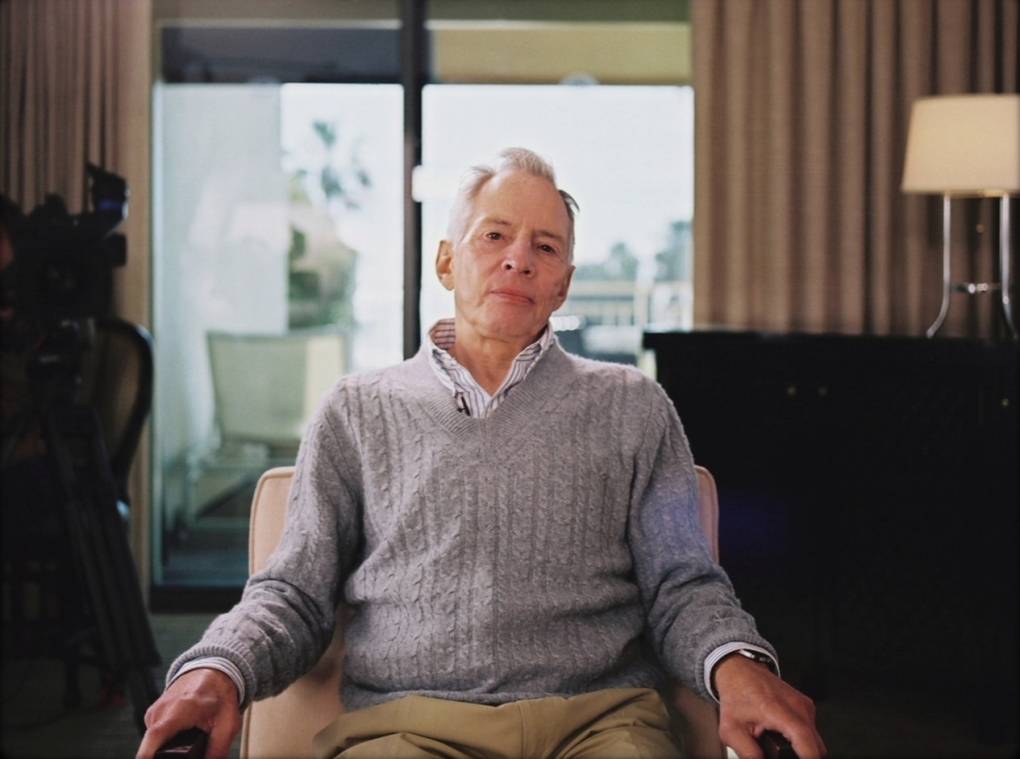
"caption": "‘The Jinx’ was interesting because murderer Robert Durst was a gruesomely fascinating interview subject. ‘The Jinx — Part Two’ falters without his involvement.",
"description": null,
"title": "‘The Jinx’ was interesting because murderer Robert Durst was a gruesomely fascinating interview subject. ‘The Jinx — Part Two’ falters without his involvement.",
"credit": "HBO",
"status": "inherit",
"altTag": "An elderly white man with white hair sits up straight in a chair, arms resting either side of him.",
"isLoading": false,
"fetchFailed": false
},
"arts_13955949": {
"type": "attachments",
"id": "arts_13955949",
"meta": {
"index": "attachments_1716263798",
"site": "arts",
"id": "13955949",
"found": true
},
"parent": 13955948,
"imgSizes": {
"twentyfourteen-full-width": {
"file": "https://cdn.kqed.org/wp-content/uploads/sites/2/2024/04/brandy-hellville-the-cult-of-fast-fashion_1_custom-02fe7696d2aa7c8c1748614c017d2e87857d4da0-1038x576.jpg",
"width": 1038,
"mimeType": "image/jpeg",
"height": 576
},
"thumbnail": {
"file": "https://cdn.kqed.org/wp-content/uploads/sites/2/2024/04/brandy-hellville-the-cult-of-fast-fashion_1_custom-02fe7696d2aa7c8c1748614c017d2e87857d4da0-160x107.jpg",
"width": 160,
"mimeType": "image/jpeg",
"height": 107
},
"post-thumbnail": {
"file": "https://cdn.kqed.org/wp-content/uploads/sites/2/2024/04/brandy-hellville-the-cult-of-fast-fashion_1_custom-02fe7696d2aa7c8c1748614c017d2e87857d4da0-672x372.jpg",
"width": 672,
"mimeType": "image/jpeg",
"height": 372
},
"kqedFullSize": {
"file": "https://cdn.kqed.org/wp-content/uploads/sites/2/2024/04/brandy-hellville-the-cult-of-fast-fashion_1_custom-02fe7696d2aa7c8c1748614c017d2e87857d4da0.jpg",
"width": 1920,
"height": 1278
},
"large": {
"file": "https://cdn.kqed.org/wp-content/uploads/sites/2/2024/04/brandy-hellville-the-cult-of-fast-fashion_1_custom-02fe7696d2aa7c8c1748614c017d2e87857d4da0-1020x679.jpg",
"width": 1020,
"mimeType": "image/jpeg",
"height": 679
},
"1536x1536": {
"file": "https://cdn.kqed.org/wp-content/uploads/sites/2/2024/04/brandy-hellville-the-cult-of-fast-fashion_1_custom-02fe7696d2aa7c8c1748614c017d2e87857d4da0-1536x1022.jpg",
"width": 1536,
"mimeType": "image/jpeg",
"height": 1022
},
"medium": {
"file": "https://cdn.kqed.org/wp-content/uploads/sites/2/2024/04/brandy-hellville-the-cult-of-fast-fashion_1_custom-02fe7696d2aa7c8c1748614c017d2e87857d4da0-800x533.jpg",
"width": 800,
"mimeType": "image/jpeg",
"height": 533
},
"medium_large": {
"file": "https://cdn.kqed.org/wp-content/uploads/sites/2/2024/04/brandy-hellville-the-cult-of-fast-fashion_1_custom-02fe7696d2aa7c8c1748614c017d2e87857d4da0-768x511.jpg",
"width": 768,
"mimeType": "image/jpeg",
"height": 511
}
},
"publishDate": 1713160661,
"modified": 1713161531,
"caption": "From the Max documentary ‘Brandy Hellville & the Cult of Fast Fashion.’",
"description": null,
"title": "From the Max documentary ‘Brandy Hellville & the Cult of Fast Fashion.’",
"credit": "Max",
"status": "inherit",
"altTag": "Two slender blonde young women stand in a field shaking their long hair in front of their faces.",
"isLoading": false,
"fetchFailed": false
},
"arts_13955858": {
"type": "attachments",
"id": "arts_13955858",
"meta": {
"index": "attachments_1716263798",
"site": "arts",
"id": "13955858",
"found": true
},
"parent": 13955854,
"imgSizes": {
"twentyfourteen-full-width": {
"file": "https://cdn.kqed.org/wp-content/uploads/sites/2/2024/04/GettyImages-51973822-1038x576.jpg",
"width": 1038,
"mimeType": "image/jpeg",
"height": 576
},
"thumbnail": {
"file": "https://cdn.kqed.org/wp-content/uploads/sites/2/2024/04/GettyImages-51973822-160x106.jpg",
"width": 160,
"mimeType": "image/jpeg",
"height": 106
},
"post-thumbnail": {
"file": "https://cdn.kqed.org/wp-content/uploads/sites/2/2024/04/GettyImages-51973822-672x372.jpg",
"width": 672,
"mimeType": "image/jpeg",
"height": 372
},
"kqedFullSize": {
"file": "https://cdn.kqed.org/wp-content/uploads/sites/2/2024/04/GettyImages-51973822.jpg",
"width": 1477,
"height": 979
},
"large": {
"file": "https://cdn.kqed.org/wp-content/uploads/sites/2/2024/04/GettyImages-51973822-1020x676.jpg",
"width": 1020,
"mimeType": "image/jpeg",
"height": 676
},
"medium": {
"file": "https://cdn.kqed.org/wp-content/uploads/sites/2/2024/04/GettyImages-51973822-800x530.jpg",
"width": 800,
"mimeType": "image/jpeg",
"height": 530
},
"medium_large": {
"file": "https://cdn.kqed.org/wp-content/uploads/sites/2/2024/04/GettyImages-51973822-768x509.jpg",
"width": 768,
"mimeType": "image/jpeg",
"height": 509
}
},
"publishDate": 1712877150,
"modified": 1712877294,
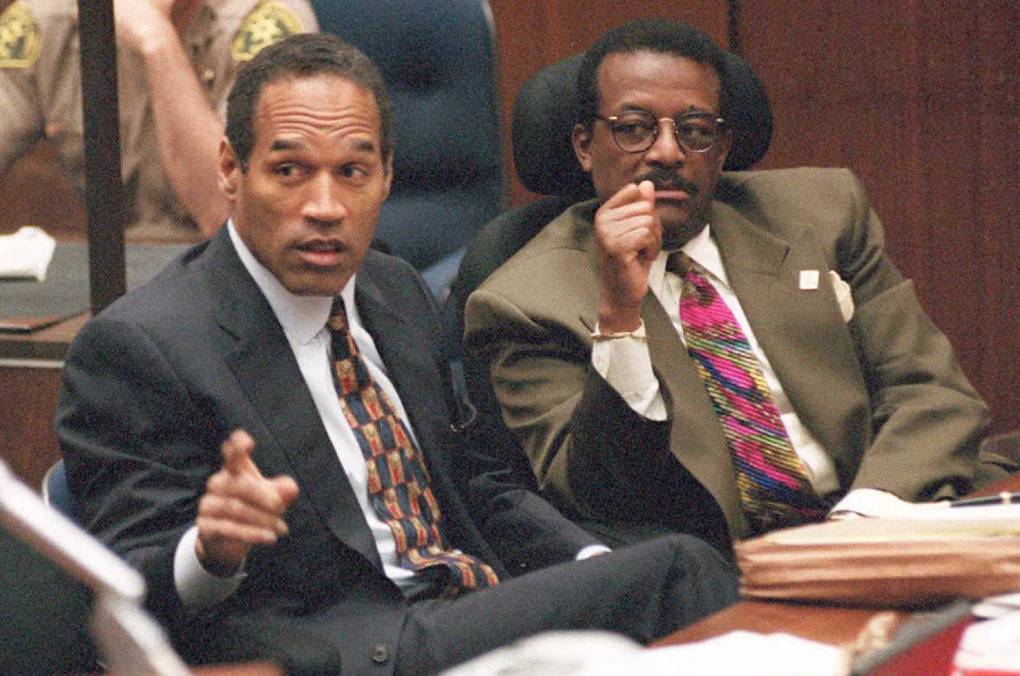
"caption": "Murder defendant O.J. Simpson points towards prosecuting attorney Cheri Lewis in court while stating ‘That’s wrong’ to Lewis’ statement that no plumbing was torn up in Simpson’s Rockingham estate during the prosecution’s investigation of the murders. Next to Simpson is his lead attorney Johnnie Cochran, Jr. ",
"description": null,
"title": "Murder defendant O.J. Simpson points towards prosecuting attorney Cheri Lewis in court while stating ‘That’s wrong’ to Lewis’ statement that no plumbing was torn up in Simpson’s Rockingham estate during the prosecution’s investigation of the murders. Next to Simpson is his lead attorney Johnnie Cochran, Jr.",
"credit": "Myung J CHUN/ AFP via Getty Images",
"status": "inherit",
"altTag": "OJ Simpson sits in court, gesturing to someone off camera. At his side sits one of his attorneys.",
"isLoading": false,
"fetchFailed": false
},
"arts_13953961": {
"type": "attachments",
"id": "arts_13953961",
"meta": {
"index": "attachments_1716263798",
"site": "arts",
"id": "13953961",
"found": true
},
"parent": 13953890,
"imgSizes": {
"twentyfourteen-full-width": {
"file": "https://cdn.kqed.org/wp-content/uploads/sites/2/2024/03/opensfhistory_wnp25.4502-1000x576.jpg",
"width": 1000,
"mimeType": "image/jpeg",
"height": 576
},
"thumbnail": {
"file": "https://cdn.kqed.org/wp-content/uploads/sites/2/2024/03/opensfhistory_wnp25.4502-160x109.jpg",
"width": 160,
"mimeType": "image/jpeg",
"height": 109
},
"post-thumbnail": {
"file": "https://cdn.kqed.org/wp-content/uploads/sites/2/2024/03/opensfhistory_wnp25.4502-672x372.jpg",
"width": 672,
"mimeType": "image/jpeg",
"height": 372
},
"kqedFullSize": {
"file": "https://cdn.kqed.org/wp-content/uploads/sites/2/2024/03/opensfhistory_wnp25.4502.jpg",
"width": 1000,
"height": 683
},
"medium": {
"file": "https://cdn.kqed.org/wp-content/uploads/sites/2/2024/03/opensfhistory_wnp25.4502-800x546.jpg",
"width": 800,
"mimeType": "image/jpeg",
"height": 546
},
"medium_large": {
"file": "https://cdn.kqed.org/wp-content/uploads/sites/2/2024/03/opensfhistory_wnp25.4502-768x525.jpg",
"width": 768,
"mimeType": "image/jpeg",
"height": 525
}
},
"publishDate": 1710287771,
"modified": 1710356627,
"caption": "The St. Francis Hotel and Union Square as it looked in 1962.",
"description": null,
"title": "The St. Francis Hotel and Union Square as it looked in 1962.",
"credit": "OpenSFHistory/wnp25.4502",
"status": "inherit",
"altTag": null,
"isLoading": false,
"fetchFailed": false
},
"arts_13939171": {
"type": "attachments",
"id": "arts_13939171",
"meta": {
"index": "attachments_1716263798",
"site": "arts",
"id": "13939171",
"found": true
},
"parent": 13939170,
"imgSizes": {
"twentyfourteen-full-width": {
"file": "https://cdn.kqed.org/wp-content/uploads/sites/2/2023/12/carol-and-charles-stuart_custom-39b78da4ab0d9d7264e99ae7832d355b599773cc-1038x576.jpg",
"width": 1038,
"mimeType": "image/jpeg",
"height": 576
},
"thumbnail": {
"file": "https://cdn.kqed.org/wp-content/uploads/sites/2/2023/12/carol-and-charles-stuart_custom-39b78da4ab0d9d7264e99ae7832d355b599773cc-160x112.jpg",
"width": 160,
"mimeType": "image/jpeg",
"height": 112
},
"post-thumbnail": {
"file": "https://cdn.kqed.org/wp-content/uploads/sites/2/2023/12/carol-and-charles-stuart_custom-39b78da4ab0d9d7264e99ae7832d355b599773cc-672x372.jpg",
"width": 672,
"mimeType": "image/jpeg",
"height": 372
},
"kqedFullSize": {
"file": "https://cdn.kqed.org/wp-content/uploads/sites/2/2023/12/carol-and-charles-stuart_custom-39b78da4ab0d9d7264e99ae7832d355b599773cc.jpg",
"width": 1920,
"height": 1338
},
"large": {
"file": "https://cdn.kqed.org/wp-content/uploads/sites/2/2023/12/carol-and-charles-stuart_custom-39b78da4ab0d9d7264e99ae7832d355b599773cc-1020x711.jpg",
"width": 1020,
"mimeType": "image/jpeg",
"height": 711
},
"1536x1536": {
"file": "https://cdn.kqed.org/wp-content/uploads/sites/2/2023/12/carol-and-charles-stuart_custom-39b78da4ab0d9d7264e99ae7832d355b599773cc-1536x1070.jpg",
"width": 1536,
"mimeType": "image/jpeg",
"height": 1070
},
"medium": {
"file": "https://cdn.kqed.org/wp-content/uploads/sites/2/2023/12/carol-and-charles-stuart_custom-39b78da4ab0d9d7264e99ae7832d355b599773cc-800x558.jpg",
"width": 800,
"mimeType": "image/jpeg",
"height": 558
},
"medium_large": {
"file": "https://cdn.kqed.org/wp-content/uploads/sites/2/2023/12/carol-and-charles-stuart_custom-39b78da4ab0d9d7264e99ae7832d355b599773cc-768x535.jpg",
"width": 768,
"mimeType": "image/jpeg",
"height": 535
}
},
"publishDate": 1702318183,
"modified": 1702319037,
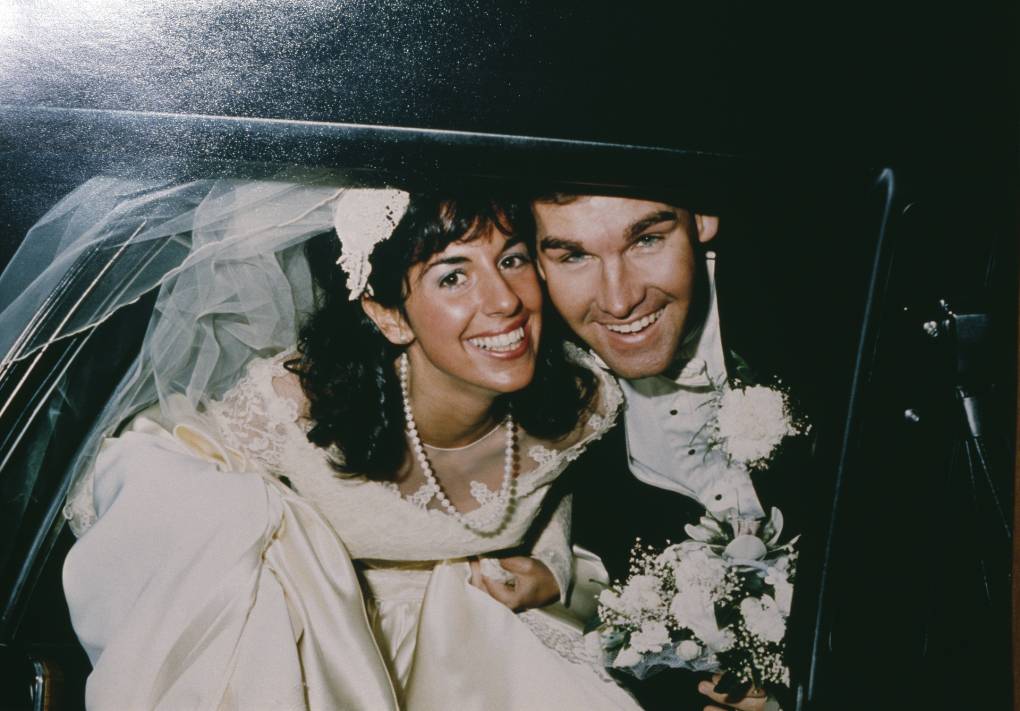
"caption": "‘Murder in Boston’ is a three-part docuseries about the 1989 murder of Carol Stuart. But it wisely focuses on the police investigation — both its origins and the deep scars it left.",
"description": null,
"title": "‘Murder in Boston’ is a three-part docuseries about the 1989 murder of Carol Stuart. But it wisely focuses on the police investigation — both its origins and the deep scars it left.",
"credit": "Max",
"status": "inherit",
"altTag": "A bride and groom smile broadly from the back of a car.",
"isLoading": false,
"fetchFailed": false
},
"arts_13934953": {
"type": "attachments",
"id": "arts_13934953",
"meta": {
"index": "attachments_1716263798",
"site": "arts",
"id": "13934953",
"found": true
},
"parent": 13934945,
"imgSizes": {
"twentyfourteen-full-width": {
"file": "https://ww2.kqed.org/app/uploads/sites/2/2023/09/Screen-Shot-2023-09-19-at-10.49.45-AM-962x576.png",
"width": 962,
"mimeType": "image/png",
"height": 576
},
"thumbnail": {
"file": "https://ww2.kqed.org/app/uploads/sites/2/2023/09/Screen-Shot-2023-09-19-at-10.49.45-AM-160x100.png",
"width": 160,
"mimeType": "image/png",
"height": 100
},
"post-thumbnail": {
"file": "https://ww2.kqed.org/app/uploads/sites/2/2023/09/Screen-Shot-2023-09-19-at-10.49.45-AM-672x372.png",
"width": 672,
"mimeType": "image/png",
"height": 372
},
"kqedFullSize": {
"file": "https://ww2.kqed.org/app/uploads/sites/2/2023/09/Screen-Shot-2023-09-19-at-10.49.45-AM.png",
"width": 962,
"height": 600
},
"medium": {
"file": "https://ww2.kqed.org/app/uploads/sites/2/2023/09/Screen-Shot-2023-09-19-at-10.49.45-AM-800x499.png",
"width": 800,
"mimeType": "image/png",
"height": 499
},
"medium_large": {
"file": "https://ww2.kqed.org/app/uploads/sites/2/2023/09/Screen-Shot-2023-09-19-at-10.49.45-AM-768x479.png",
"width": 768,
"mimeType": "image/png",
"height": 479
}
},
"publishDate": 1695145803,
"modified": 1695145901,
"caption": "‘Bright Young Women’ by Jessica Knoll.",
"description": null,
"title": "‘Bright Young Women’ by Jessica Knoll.",
"credit": "S&S/ Marysue Rucci Books",
"status": "inherit",
"altTag": null,
"isLoading": false,
"fetchFailed": false
},
"arts_13933825": {
"type": "attachments",
"id": "arts_13933825",
"meta": {
"index": "attachments_1716263798",
"site": "arts",
"id": "13933825",
"found": true
},
"parent": 13933824,
"imgSizes": {
"twentyfourteen-full-width": {
"file": "https://ww2.kqed.org/app/uploads/sites/2/2023/08/quarterback-trilian-harris_0_wide-d0bd364db2d77c650c6ac3a4cf57d047c43af016-1038x576.jpg",
"width": 1038,
"mimeType": "image/jpeg",
"height": 576
},
"thumbnail": {
"file": "https://ww2.kqed.org/app/uploads/sites/2/2023/08/quarterback-trilian-harris_0_wide-d0bd364db2d77c650c6ac3a4cf57d047c43af016-160x90.jpg",
"width": 160,
"mimeType": "image/jpeg",
"height": 90
},
"post-thumbnail": {
"file": "https://ww2.kqed.org/app/uploads/sites/2/2023/08/quarterback-trilian-harris_0_wide-d0bd364db2d77c650c6ac3a4cf57d047c43af016-672x372.jpg",
"width": 672,
"mimeType": "image/jpeg",
"height": 372
},
"kqedFullSize": {
"file": "https://ww2.kqed.org/app/uploads/sites/2/2023/08/quarterback-trilian-harris_0_wide-d0bd364db2d77c650c6ac3a4cf57d047c43af016.jpg",
"width": 1917,
"height": 1078
},
"large": {
"file": "https://ww2.kqed.org/app/uploads/sites/2/2023/08/quarterback-trilian-harris_0_wide-d0bd364db2d77c650c6ac3a4cf57d047c43af016-1020x574.jpg",
"width": 1020,
"mimeType": "image/jpeg",
"height": 574
},
"1536x1536": {
"file": "https://ww2.kqed.org/app/uploads/sites/2/2023/08/quarterback-trilian-harris_0_wide-d0bd364db2d77c650c6ac3a4cf57d047c43af016-1536x864.jpg",
"width": 1536,
"mimeType": "image/jpeg",
"height": 864
},
"medium": {
"file": "https://ww2.kqed.org/app/uploads/sites/2/2023/08/quarterback-trilian-harris_0_wide-d0bd364db2d77c650c6ac3a4cf57d047c43af016-800x450.jpg",
"width": 800,
"mimeType": "image/jpeg",
"height": 450
},
"medium_large": {
"file": "https://ww2.kqed.org/app/uploads/sites/2/2023/08/quarterback-trilian-harris_0_wide-d0bd364db2d77c650c6ac3a4cf57d047c43af016-768x432.jpg",
"width": 768,
"mimeType": "image/jpeg",
"height": 432
}
},
"publishDate": 1692903352,
"modified": 1692904623,
"caption": "Quarterback Trilian Harris is one of the players swindled in a phony high school football program the state of Ohio later called a \"scam.\"",
"description": null,
"title": "Quarterback Trilian Harris is one of the players swindled in a phony high school football program the state of Ohio later called a \"scam.\"",
"credit": "HBO",
"status": "inherit",
"altTag": "A young Black man stands agaist a wood paneled wall holding up a black football jersey with the number 13 on it.",
"isLoading": false,
"fetchFailed": false
},
"arts_13926073": {
"type": "attachments",
"id": "arts_13926073",
"meta": {
"index": "attachments_1716263798",
"site": "arts",
"id": "13926073",
"found": true
},
"parent": 13926069,
"imgSizes": {
"twentyfourteen-full-width": {
"file": "https://ww2.kqed.org/app/uploads/sites/2/2023/03/Screen-Shot-2023-03-09-at-2.54.47-PM-1038x576.png",
"width": 1038,
"mimeType": "image/png",
"height": 576
},
"thumbnail": {
"file": "https://ww2.kqed.org/app/uploads/sites/2/2023/03/Screen-Shot-2023-03-09-at-2.54.47-PM-160x94.png",
"width": 160,
"mimeType": "image/png",
"height": 94
},
"post-thumbnail": {
"file": "https://ww2.kqed.org/app/uploads/sites/2/2023/03/Screen-Shot-2023-03-09-at-2.54.47-PM-672x372.png",
"width": 672,
"mimeType": "image/png",
"height": 372
},
"kqedFullSize": {
"file": "https://ww2.kqed.org/app/uploads/sites/2/2023/03/Screen-Shot-2023-03-09-at-2.54.47-PM.png",
"width": 2018,
"height": 1188
},
"large": {
"file": "https://ww2.kqed.org/app/uploads/sites/2/2023/03/Screen-Shot-2023-03-09-at-2.54.47-PM-1020x600.png",
"width": 1020,
"mimeType": "image/png",
"height": 600
},
"1536x1536": {
"file": "https://ww2.kqed.org/app/uploads/sites/2/2023/03/Screen-Shot-2023-03-09-at-2.54.47-PM-1536x904.png",
"width": 1536,
"mimeType": "image/png",
"height": 904
},
"full-width": {
"file": "https://ww2.kqed.org/app/uploads/sites/2/2023/03/Screen-Shot-2023-03-09-at-2.54.47-PM-1920x1130.png",
"width": 1920,
"mimeType": "image/png",
"height": 1130
},
"medium": {
"file": "https://ww2.kqed.org/app/uploads/sites/2/2023/03/Screen-Shot-2023-03-09-at-2.54.47-PM-800x471.png",
"width": 800,
"mimeType": "image/png",
"height": 471
},
"medium_large": {
"file": "https://ww2.kqed.org/app/uploads/sites/2/2023/03/Screen-Shot-2023-03-09-at-2.54.47-PM-768x452.png",
"width": 768,
"mimeType": "image/png",
"height": 452
}
},
"publishDate": 1678404566,
"modified": 1678404637,
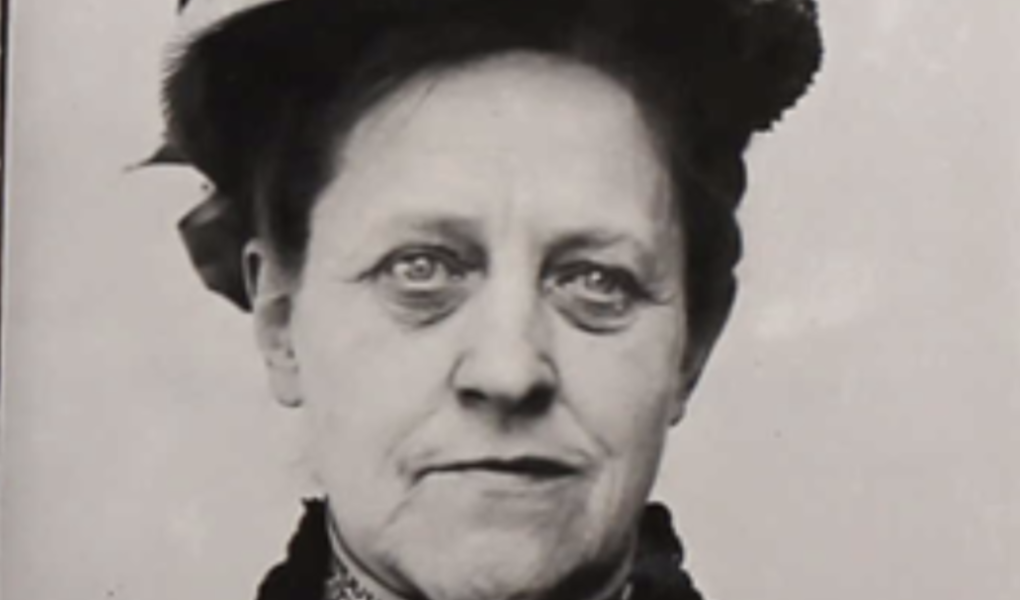
"caption": "Isabella J. Martin, a truly crappy criminal.",
"description": null,
"title": "Isabella J. Martin, a truly crappy criminal.",
"credit": null,
"status": "inherit",
"altTag": "A white woman with ruddy features stands, wearing a hat, facing the camera.",
"isLoading": false,
"fetchFailed": false
},
"arts_13925755": {
"type": "attachments",
"id": "arts_13925755",
"meta": {
"index": "attachments_1716263798",
"site": "arts",
"id": "13925755",
"found": true
},
"parent": 13925754,
"imgSizes": {
"twentyfourteen-full-width": {
"file": "https://ww2.kqed.org/app/uploads/sites/2/2023/02/gettyimages-1243082911_custom-39f9524472a62c3b4670bab113d5f8a224ed8432-scaled-e1677652491103-1038x576.jpg",
"width": 1038,
"mimeType": "image/jpeg",
"height": 576
},
"thumbnail": {
"file": "https://ww2.kqed.org/app/uploads/sites/2/2023/02/gettyimages-1243082911_custom-39f9524472a62c3b4670bab113d5f8a224ed8432-scaled-e1677652491103-160x83.jpg",
"width": 160,
"mimeType": "image/jpeg",
"height": 83
},
"post-thumbnail": {
"file": "https://ww2.kqed.org/app/uploads/sites/2/2023/02/gettyimages-1243082911_custom-39f9524472a62c3b4670bab113d5f8a224ed8432-scaled-e1677652491103-672x372.jpg",
"width": 672,
"mimeType": "image/jpeg",
"height": 372
},
"kqedFullSize": {
"file": "https://ww2.kqed.org/app/uploads/sites/2/2023/02/gettyimages-1243082911_custom-39f9524472a62c3b4670bab113d5f8a224ed8432-scaled-e1677652491103.jpg",
"width": 1920,
"height": 1001
},
"2048x2048": {
"file": "https://ww2.kqed.org/app/uploads/sites/2/2023/02/gettyimages-1243082911_custom-39f9524472a62c3b4670bab113d5f8a224ed8432-2048x1068.jpg",
"width": 2048,
"mimeType": "image/jpeg",
"height": 1068
},
"large": {
"file": "https://ww2.kqed.org/app/uploads/sites/2/2023/02/gettyimages-1243082911_custom-39f9524472a62c3b4670bab113d5f8a224ed8432-scaled-e1677652491103-1020x532.jpg",
"width": 1020,
"mimeType": "image/jpeg",
"height": 532
},
"1536x1536": {
"file": "https://ww2.kqed.org/app/uploads/sites/2/2023/02/gettyimages-1243082911_custom-39f9524472a62c3b4670bab113d5f8a224ed8432-scaled-e1677652491103-1536x801.jpg",
"width": 1536,
"mimeType": "image/jpeg",
"height": 801
},
"full-width": {
"file": "https://ww2.kqed.org/app/uploads/sites/2/2023/02/gettyimages-1243082911_custom-39f9524472a62c3b4670bab113d5f8a224ed8432-1920x1002.jpg",
"width": 1920,
"mimeType": "image/jpeg",
"height": 1002
},
"medium": {
"file": "https://ww2.kqed.org/app/uploads/sites/2/2023/02/gettyimages-1243082911_custom-39f9524472a62c3b4670bab113d5f8a224ed8432-scaled-e1677652491103-800x417.jpg",
"width": 800,
"mimeType": "image/jpeg",
"height": 417
},
"medium_large": {
"file": "https://ww2.kqed.org/app/uploads/sites/2/2023/02/gettyimages-1243082911_custom-39f9524472a62c3b4670bab113d5f8a224ed8432-scaled-e1677652491103-768x400.jpg",
"width": 768,
"mimeType": "image/jpeg",
"height": 400
}
},
"publishDate": 1677651932,
"modified": 1677652640,
"caption": "Serial’s new true-crime podcast, ‘The Coldest Case in Laramie,’ revisits a 1985 murder. Above, storm clouds over downtown Laramie, Wyo., on Aug. 13, 2022.",
"description": null,
"title": "Serial’s new true-crime podcast, ‘The Coldest Case in Laramie,’ revisits a 1985 murder. Above, storm clouds over downtown Laramie, Wyo., on Aug. 13, 2022.",
"credit": "PATRICK T. FALLON/AFP via Getty Images",
"status": "inherit",
"altTag": "Dark gray clouds spread out on a long row of store fronts. One displays a vertical sign that says LARAMIE.",
"isLoading": false,
"fetchFailed": false
},
"arts_13925149": {
"type": "attachments",
"id": "arts_13925149",
"meta": {
"index": "attachments_1716263798",
"site": "arts",
"id": "13925149",
"found": true
},
"parent": 13925147,
"imgSizes": {
"twentyfourteen-full-width": {
"file": "https://ww2.kqed.org/app/uploads/sites/2/2023/02/Screen-Shot-2023-02-14-at-1.29.59-PM-1038x576.png",
"width": 1038,
"mimeType": "image/png",
"height": 576
},
"thumbnail": {
"file": "https://ww2.kqed.org/app/uploads/sites/2/2023/02/Screen-Shot-2023-02-14-at-1.29.59-PM-160x100.png",
"width": 160,
"mimeType": "image/png",
"height": 100
},
"post-thumbnail": {
"file": "https://ww2.kqed.org/app/uploads/sites/2/2023/02/Screen-Shot-2023-02-14-at-1.29.59-PM-672x372.png",
"width": 672,
"mimeType": "image/png",
"height": 372
},
"kqedFullSize": {
"file": "https://ww2.kqed.org/app/uploads/sites/2/2023/02/Screen-Shot-2023-02-14-at-1.29.59-PM.png",
"width": 1874,
"height": 1174
},
"large": {
"file": "https://ww2.kqed.org/app/uploads/sites/2/2023/02/Screen-Shot-2023-02-14-at-1.29.59-PM-1020x639.png",
"width": 1020,
"mimeType": "image/png",
"height": 639
},
"1536x1536": {
"file": "https://ww2.kqed.org/app/uploads/sites/2/2023/02/Screen-Shot-2023-02-14-at-1.29.59-PM-1536x962.png",
"width": 1536,
"mimeType": "image/png",
"height": 962
},
"medium": {
"file": "https://ww2.kqed.org/app/uploads/sites/2/2023/02/Screen-Shot-2023-02-14-at-1.29.59-PM-800x501.png",
"width": 800,
"mimeType": "image/png",
"height": 501
},
"medium_large": {
"file": "https://ww2.kqed.org/app/uploads/sites/2/2023/02/Screen-Shot-2023-02-14-at-1.29.59-PM-768x481.png",
"width": 768,
"mimeType": "image/png",
"height": 481
}
},
"publishDate": 1676410245,
"modified": 1676410432,
"caption": "Caril Ann Fugate, before she was incarcerated at age 14 and convicted of first-degree murder. ",
"description": null,
"title": "Caril Ann Fugate, before she was incarcerated at age 14 and convicted of first-degree murder.",
"credit": "Showtime",
"status": "inherit",
"altTag": "A young woman with red hair pulled back into pigtails smiles sweetly in a photo booth with an orange scarf tied around her neck. She is wearing fashionable 1950s spectacles.",
"isLoading": false,
"fetchFailed": false
},
"arts_13919441": {
"type": "attachments",
"id": "arts_13919441",
"meta": {
"index": "attachments_1716263798",
"site": "arts",
"id": "13919441",
"found": true
},
"parent": 13919440,
"imgSizes": {
"twentyfourteen-full-width": {
"file": "https://ww2.kqed.org/app/uploads/sites/2/2022/09/ap22262749491425_custom-99dde5477499e88d303a41b7df0045aa5e3c987a-1038x576.jpg",
"width": 1038,
"mimeType": "image/jpeg",
"height": 576
},
"thumbnail": {
"file": "https://ww2.kqed.org/app/uploads/sites/2/2022/09/ap22262749491425_custom-99dde5477499e88d303a41b7df0045aa5e3c987a-160x120.jpg",
"width": 160,
"mimeType": "image/jpeg",
"height": 120
},
"post-thumbnail": {
"file": "https://ww2.kqed.org/app/uploads/sites/2/2022/09/ap22262749491425_custom-99dde5477499e88d303a41b7df0045aa5e3c987a-672x372.jpg",
"width": 672,
"mimeType": "image/jpeg",
"height": 372
},
"kqedFullSize": {
"file": "https://ww2.kqed.org/app/uploads/sites/2/2022/09/ap22262749491425_custom-99dde5477499e88d303a41b7df0045aa5e3c987a-scaled-e1663789307188.jpg",
"width": 1920,
"height": 1439
},
"2048x2048": {
"file": "https://ww2.kqed.org/app/uploads/sites/2/2022/09/ap22262749491425_custom-99dde5477499e88d303a41b7df0045aa5e3c987a-2048x1535.jpg",
"width": 2048,
"mimeType": "image/jpeg",
"height": 1535
},
"large": {
"file": "https://ww2.kqed.org/app/uploads/sites/2/2022/09/ap22262749491425_custom-99dde5477499e88d303a41b7df0045aa5e3c987a-1020x764.jpg",
"width": 1020,
"mimeType": "image/jpeg",
"height": 764
},
"1536x1536": {
"file": "https://ww2.kqed.org/app/uploads/sites/2/2022/09/ap22262749491425_custom-99dde5477499e88d303a41b7df0045aa5e3c987a-1536x1151.jpg",
"width": 1536,
"mimeType": "image/jpeg",
"height": 1151
},
"full-width": {
"file": "https://ww2.kqed.org/app/uploads/sites/2/2022/09/ap22262749491425_custom-99dde5477499e88d303a41b7df0045aa5e3c987a-1920x1439.jpg",
"width": 1920,
"mimeType": "image/jpeg",
"height": 1439
},
"medium": {
"file": "https://ww2.kqed.org/app/uploads/sites/2/2022/09/ap22262749491425_custom-99dde5477499e88d303a41b7df0045aa5e3c987a-800x600.jpg",
"width": 800,
"mimeType": "image/jpeg",
"height": 600
},
"medium_large": {
"file": "https://ww2.kqed.org/app/uploads/sites/2/2022/09/ap22262749491425_custom-99dde5477499e88d303a41b7df0045aa5e3c987a-768x576.jpg",
"width": 768,
"mimeType": "image/jpeg",
"height": 576
}
},
"publishDate": 1663788601,
"modified": 1663789418,
"caption": "Adnan Syed, center, leaves the Cummings Courthouse in Baltimore on Monday, Sept. 19, 2022. A judge has ordered the release of Syed after overturning his conviction for a 1999 murder that was chronicled in the hit podcast 'Serial.'",
"description": "Adnan Syed, center, leaves the Cummings Courthouse, Monday, Sept. 19, 2022, in Baltimore. A judge has ordered the release of Syed after overturning his conviction for a 1999 murder that was chronicled in the hit podcast “Serial.” (AP Photo/Brian Witte)",
"title": "Adnan Syed, center, leaves the Cummings Courthouse in Baltimore on Monday, Sept. 19, 2022. A judge has ordered the release of Syed after overturning his conviction for a 1999 murder that was chronicled in the hit podcast 'Serial.'",
"credit": null,
"status": "inherit",
"altTag": "A crowd of people gathered in the street, stands in a circle around a bearded man of Arabic descent and a white woman.",
"isLoading": false,
"fetchFailed": false
},
"arts_13913029": {
"type": "attachments",
"id": "arts_13913029",
"meta": {
"index": "attachments_1716263798",
"site": "arts",
"id": "13913029",
"found": true
},
"parent": 13913028,
"imgSizes": {
"twentyfourteen-full-width": {
"file": "https://ww2.kqed.org/app/uploads/sites/2/2022/05/toni-collette-colin-firth_1_custom-d335666af405658d77468cc825d92d5f31767a75-1038x576.jpg",
"width": 1038,
"mimeType": "image/jpeg",
"height": 576
},
"thumbnail": {
"file": "https://ww2.kqed.org/app/uploads/sites/2/2022/05/toni-collette-colin-firth_1_custom-d335666af405658d77468cc825d92d5f31767a75-160x109.jpg",
"width": 160,
"mimeType": "image/jpeg",
"height": 109
},
"post-thumbnail": {
"file": "https://ww2.kqed.org/app/uploads/sites/2/2022/05/toni-collette-colin-firth_1_custom-d335666af405658d77468cc825d92d5f31767a75-672x372.jpg",
"width": 672,
"mimeType": "image/jpeg",
"height": 372
},
"kqedFullSize": {
"file": "https://ww2.kqed.org/app/uploads/sites/2/2022/05/toni-collette-colin-firth_1_custom-d335666af405658d77468cc825d92d5f31767a75.jpg",
"width": 1879,
"height": 1278
},
"large": {
"file": "https://ww2.kqed.org/app/uploads/sites/2/2022/05/toni-collette-colin-firth_1_custom-d335666af405658d77468cc825d92d5f31767a75-1020x694.jpg",
"width": 1020,
"mimeType": "image/jpeg",
"height": 694
},
"1536x1536": {
"file": "https://ww2.kqed.org/app/uploads/sites/2/2022/05/toni-collette-colin-firth_1_custom-d335666af405658d77468cc825d92d5f31767a75-1536x1045.jpg",
"width": 1536,
"mimeType": "image/jpeg",
"height": 1045
},
"medium": {
"file": "https://ww2.kqed.org/app/uploads/sites/2/2022/05/toni-collette-colin-firth_1_custom-d335666af405658d77468cc825d92d5f31767a75-800x544.jpg",
"width": 800,
"mimeType": "image/jpeg",
"height": 544
},
"medium_large": {
"file": "https://ww2.kqed.org/app/uploads/sites/2/2022/05/toni-collette-colin-firth_1_custom-d335666af405658d77468cc825d92d5f31767a75-768x522.jpg",
"width": 768,
"mimeType": "image/jpeg",
"height": 522
}
},
"publishDate": 1651865787,
"modified": 1651867020,
"caption": "Toni Collette and Colin Firth in 'The Staircase.'",
"description": null,
"title": "Toni Collette and Colin Firth in 'The Staircase.'",
"credit": "HBO Max",
"status": "inherit",
"altTag": "A woman stands over a stove cooking in a warm and homely kitchen, while a man pours her a glass of wine, while drinking one himself.",
"isLoading": false,
"fetchFailed": false
}
},
"audioPlayerReducer": {
"postId": "stream_live",
"isPaused": true,
"isPlaying": false,
"pfsActive": false,
"pledgeModalIsOpen": true,
"playerDrawerIsOpen": false,
"liveAudioPlayStartedAt": 0,
"liveAudioPlayContext": ""
},
"authorsReducer": {
"byline_arts_13956374": {
"type": "authors",
"id": "byline_arts_13956374",
"meta": {
"override": true
},
"slug": "byline_arts_13956374",
"name": "Linda Holmes",
"isLoading": false
},
"byline_arts_13955948": {
"type": "authors",
"id": "byline_arts_13955948",
"meta": {
"override": true
},
"slug": "byline_arts_13955948",
"name": "Linda Holmes",
"isLoading": false
},
"byline_arts_13955854": {
"type": "authors",
"id": "byline_arts_13955854",
"meta": {
"override": true
},
"slug": "byline_arts_13955854",
"name": "Ted Anthony, Associated Press",
"isLoading": false
},
"byline_arts_13939170": {
"type": "authors",
"id": "byline_arts_13939170",
"meta": {
"override": true
},
"slug": "byline_arts_13939170",
"name": "Linda Holmes",
"isLoading": false
},
"byline_arts_13934945": {
"type": "authors",
"id": "byline_arts_13934945",
"meta": {
"override": true
},
"slug": "byline_arts_13934945",
"name": "Alicia Rancilio, Associated Press",
"isLoading": false
},
"byline_arts_13933824": {
"type": "authors",
"id": "byline_arts_13933824",
"meta": {
"override": true
},
"slug": "byline_arts_13933824",
"name": "Linda Holmes",
"isLoading": false
},
"byline_arts_13925754": {
"type": "authors",
"id": "byline_arts_13925754",
"meta": {
"override": true
},
"slug": "byline_arts_13925754",
"name": "Nick Quah",
"isLoading": false
},
"byline_arts_13919440": {
"type": "authors",
"id": "byline_arts_13919440",
"meta": {
"override": true
},
"slug": "byline_arts_13919440",
"name": "Elizabeth Blair",
"isLoading": false
},
"byline_arts_13913028": {
"type": "authors",
"id": "byline_arts_13913028",
"meta": {
"override": true
},
"slug": "byline_arts_13913028",
"name": "Linda Holmes",
"isLoading": false
},
"ralexandra": {
"type": "authors",
"id": "11242",
"meta": {
"index": "authors_1716337520",
"id": "11242",
"found": true
},
"name": "Rae Alexandra",
"firstName": "Rae",
"lastName": "Alexandra",
"slug": "ralexandra",
"email": "ralexandra@kqed.org",
"display_author_email": true,
"staff_mastheads": [
"arts"
],
"title": "Reporter/Producer",
"bio": "Rae Alexandra is a Reporter/Producer for KQED Arts & Culture, and the creator/author of the \u003ca href=\"https://www.kqed.org/arts/program/rebel-girls-from-bay-area-history\">Rebel Girls From Bay Area History\u003c/a> and \u003ca href=\"https://www.kqed.org/bizarrebayarea\">Bizarre Bay Area\u003c/a> series. Her debut book, \u003ca href=\"https://citylights.com/politics-current-events-history/unsung-heroines35-women-who-changed/\">Unsung Heroines: 35 Women Who Changed the Bay Area\u003c/a> was published by City Lights in March 2026. In 2023, Rae was awarded an SPJ Excellence in Journalism Award for Arts & Culture. Rae was born and raised in Wales and subsequently — even after two decades in Northern California — still uses phrases that regularly baffle her coworkers.",
"avatar": "https://secure.gravatar.com/avatar/edfee8176c80cc0a382b051190f5341997df378a934a5774dcb0977732dfd401?s=600&d=blank&r=g",
"twitter": null,
"bluesky": null,
"facebook": null,
"instagram": null,
"linkedin": null,
"sites": [
{
"site": "arts",
"roles": [
"editor"
]
},
{
"site": "news",
"roles": [
"editor"
]
},
{
"site": "pop",
"roles": [
"editor"
]
},
{
"site": "bayareabites",
"roles": [
"editor"
]
},
{
"site": "science",
"roles": [
"editor"
]
}
],
"headData": {
"title": "Rae Alexandra | KQED",
"description": "Reporter/Producer",
"ogImgSrc": "https://secure.gravatar.com/avatar/edfee8176c80cc0a382b051190f5341997df378a934a5774dcb0977732dfd401?s=600&d=blank&r=g",
"twImgSrc": "https://secure.gravatar.com/avatar/edfee8176c80cc0a382b051190f5341997df378a934a5774dcb0977732dfd401?s=600&d=blank&r=g"
},
"isLoading": false,
"link": "/author/ralexandra"
}
},
"pagesReducer": {
"arts_tag_true-crime": {
"type": "terms",
"id": "arts_8366",
"meta": {
"index": "terms_1716263798",
"site": "arts",
"id": "8366",
"score": 9.553174
},
"featImg": null,
"name": "true crime",
"description": null,
"taxonomy": "tag",
"headData": {
"twImgId": null,
"twTitle": null,
"ogTitle": null,
"ogImgId": null,
"twDescription": null,
"description": null,
"title": "true crime Archives | KQED Arts",
"ogDescription": null
},
"ttid": 8378,
"slug": "true-crime",
"isLoading": false,
"title": "true crime",
"pageMeta": {
"site": "arts",
"WpPageTemplate": "page-topic-editorial",
"currentPage": 2
},
"blocks": [
{
"blockName": "kqed/post-list",
"attrs": {
"layout": "cardArticle2",
"query": "posts/arts?tag=true-crime",
"seeMore": false,
"paginated": true,
"page": 2
}
},
{
"blockName": "kqed/ad"
}
]
}
},
"pfsSessionReducer": {},
"postsReducer": {
"stream_live": {
"type": "live",
"id": "stream_live",
"audioUrl": "https://streams.kqed.org/kqedradio",
"title": "Live Stream",
"excerpt": "Live Stream information currently unavailable.",
"link": "/radio",
"featImg": "",
"label": {
"name": "KQED Live",
"link": "/"
}
},
"stream_kqedNewscast": {
"type": "posts",
"id": "stream_kqedNewscast",
"audioUrl": "https://www.kqed.org/.stream/anon/radio/RDnews/newscast.mp3?_=1",
"title": "KQED Newscast",
"featImg": "",
"label": {
"name": "88.5 FM",
"link": "/"
}
},
"arts_13956374": {
"type": "posts",
"id": "arts_13956374",
"meta": {
"index": "posts_1716263798",
"site": "arts",
"id": "13956374",
"score": null,
"sort": [
1713893938000
]
},
"guestAuthors": [],
"slug": "new-the-jinx-part-two-hbo-max-review-robert-durst-confession",
"title": "So Far, the Biggest Mystery of the New ‘Jinx’ Is: What’s the Mystery?",
"publishDate": 1713893938,
"format": "standard",
"headTitle": "So Far, the Biggest Mystery of the New ‘Jinx’ Is: What’s the Mystery? | KQED",
"labelTerm": {
"term": 140,
"site": "arts"
},
"content": "\u003cp>HBO’s \u003ca href=\"https://www.npr.org/2015/03/18/376989647/the-jinx-and-the-challenges-of-public-curiosity\">\u003cem>The Jinx\u003c/em>,\u003c/a> which aired in 2015 (yes, nine years ago), was a huge contributor to the true-crime boom in television and audio. It came out the same year as Netflix’s \u003ca href=\"https://www.npr.org/2016/01/05/461908092/over-10-years-two-filmmakers-documented-the-making-a-murderer\">\u003cem>Making a Murderer\u003c/em> \u003c/a>and only a few months after the first season of the podcast \u003ca href=\"https://www.npr.org/2014/12/18/371636304/sarah-koenig-on-serial-i-think-something-went-wrong-with-this-case\">\u003cem>Serial\u003c/em>\u003c/a>. Few later attempts have been as successful, though, because they lack \u003cem>The Jinx\u003c/em>‘s secret weapon: the participation of the extraordinarily strange, compulsively talkative, and now deceased subject, Robert Durst.\u003c/p>\n\u003cp>The story of the docuseries goes like this: Durst had long been suspected in both the disappearance of his wife, Kathie, in 1982 and the shooting death of his best friend, Susan Berman, in 2000. He had admitted shooting his neighbor, Morris Black, in 2001 but was acquitted by a jury on a theory of self-defense. For reasons known only to himself, Durst chose to live out his life as an ultrawealthy real estate tycoon, but also to sit for long interviews with director Andrew Jarecki for \u003cem>The Jinx \u003c/em>to discuss the alleged crimes.\u003c/p>\n\u003cp>[aside postid='arts_11299066']These interviews were what made \u003cem>The Jinx \u003c/em>so compelling. Durst could not stop himself from talking, even when staying silent was obviously in his best interests. This extended to a hot-mic incident that Jarecki treated as a bombshell confession, even though it turned out to be a \u003ca href=\"https://www.nytimes.com/2019/04/24/arts/television/robert-durst-the-jinx.html\">bit more complicated than that\u003c/a>. The day before the finale aired, Durst was arrested for the murder of Berman, based in part on evidence that the documentarians had uncovered and provided to law enforcement. This follow-up series essentially covers his trial and the time leading up to it. But it, too, lacks the punch that Durst’s presence offered the original.\u003c/p>\n\u003cp>https://www.youtube.com/watch?v=ShYl5K8Nlq8\u003c/p>\n\u003cp>There are some things about the self-referential nature of this second chapter that are a little unpleasant. \u003cem>The Jinx \u003c/em>is now part of the story of Durst’s life after his arrest. The filmmakers show some footage of the series finale viewing party they held in 2015 for (among others) the family of the disappeared first wife Durst is suspected of having killed. We watch their (apparent) relief and gratitude when the “confession” is played. Not shown: the incident \u003ca href=\"https://www.nytimes.com/2019/04/24/arts/television/robert-durst-the-jinx.html\">reported in \u003cem>The New York Times\u003c/em>\u003c/a> in which another guest at the same party (Rosie O’Donnell, for whatever reason) immediately demanded to know why the filmmakers would have withheld this evidence from law enforcement to use it as the kicker to the show, a question that played out in the press as well, along with some \u003ca href=\"https://www.npr.org/2015/03/18/376989647/the-jinx-and-the-challenges-of-public-curiosity\">other tough questions about the making of\u003c/a> \u003cem>The Jinx\u003c/em>. But the way the viewing party is shown in \u003cem>Part Two\u003c/em>, nobody felt anything but vindicated and thankful.\u003c/p>\n\u003cp>[ad fullwidth]\u003c/p>\n\u003cp>It seems questionable to set up a viewing party for a putative victim’s family and film their reaction to your big reveal about her murder, and a bit sketchy to omit parts where people weren’t sure you were doing the good deed you think you were doing.\u003c/p>\n\u003cp>Ethically, those things raise some questions. But as television, the biggest problem with the episodes HBO provided to critics (four out of what will eventually be six) is that they’re pretty boring. Without Durst’s involvement (it seems that he finally stopped participating in documentary-making after he was arrested and died shortly after his conviction), the series often seems to be grasping for revelations. It’s also heavily reliant on reenactments, which aren’t particularly visually interesting and look a lot like every other true-crime reenactment on TV.\u003c/p>\n\u003cp>[aside postid='arts_13955854']The third episode is the best of the four; without spoiling it, it sheds a bit of additional light on the back story, if you’re still looking for it. But what \u003cem>The Jinx — Part Two\u003c/em> reveals is that \u003cem>The Jinx \u003c/em>was interesting because while Durst might be a murderer, he was also a gruesomely fascinating interview subject. While there’s tape here of phone calls from when he was incarcerated, and sometimes you get those “Bob being Bob” moments, the mesmerizing aspects of the original are not there.\u003c/p>\n\u003cp>There’s no telling what might come in the final two episodes; perhaps they have more to say, and that’s why they were held back from critics. The big revelations in \u003cem>The Jinx \u003c/em>came in the last two episodes, after all. But in the meantime, this feels like a mystery show in search of a mystery, a true crime series with limited truths to share.\u003c/p>\n\u003cp>\u003cem>This piece also appeared in NPR’s Pop Culture Happy Hour newsletter. \u003c/em>\u003ca href=\"https://www.npr.org/newsletter/pop-culture\">\u003cem>Sign up for the newsletter\u003c/em>\u003c/a>\u003cem> so you don’t miss the next one, plus get weekly recommendations about what’s making us happy.\u003c/em>\u003c/p>\n\u003cp>\u003c/p>\n\u003cp>\u003cem>Listen to Pop Culture Happy Hour on \u003c/em>\u003ca href=\"http://n.pr/3xNgYt9\">\u003cem>Apple Podcasts\u003c/em>\u003c/a>\u003cem> and \u003c/em>\u003ca href=\"http://n.pr/3ELR3n6\">\u003cem>Spotify\u003c/em>\u003c/a>\u003cem>.\u003c/em>\u003c/p>\n\u003cdiv class=\"fullattribution\">\u003cem>Copyright 2024 NPR. To see more, \u003ca href=\"https://www.npr.org\">visit NPR\u003c/a>.\u003cimg decoding=\"async\" src=\"https://www.google-analytics.com/__utm.gif?utmac=UA-5828686-4&utmdt=So+far%2C+the+biggest+mystery+of+the+new+%27Jinx%27+is%3A+What%27s+the+mystery%3F&utme=8(APIKey)9(MDAxOTAwOTE4MDEyMTkxMDAzNjczZDljZA004)\">\u003c/em>\u003c/div>\n\n",
"blocks": [],
"excerpt": "Nine years ago, HBO’s ‘The Jinx’ played a role in the arrest of Robert Durst. Now its follow-up is grasping for revelations.",
"status": "publish",
"parent": 0,
"modified": 1750185779,
"stats": {
"hasAudio": false,
"hasVideo": true,
"hasChartOrMap": false,
"iframeSrcs": [],
"hasGoogleForm": false,
"hasGallery": false,
"hasHearkenModule": false,
"hasPolis": false,
"paragraphCount": 12,
"wordCount": 837
},
"headData": {
"title": "Review: ‘The Jinx - Part Two’ Doesn’t Offer Much New Information | KQED",
"description": "Nine years ago, HBO’s ‘The Jinx’ played a role in the arrest of Robert Durst. Now its follow-up is grasping for revelations.",
"ogTitle": "So Far, the Biggest Mystery of the New ‘Jinx’ Is: What’s the Mystery?",
"ogDescription": "",
"ogImgId": "",
"twTitle": "So Far, the Biggest Mystery of the New ‘Jinx’ Is: What’s the Mystery?",
"twDescription": "",
"twImgId": "",
"socialTitle": "Review: ‘The Jinx - Part Two’ Doesn’t Offer Much New Information %%page%% %%sep%% KQED",
"schema": {
"@context": "https://schema.org",
"@type": "Article",
"headline": "So Far, the Biggest Mystery of the New ‘Jinx’ Is: What’s the Mystery?",
"datePublished": "2024-04-23T10:38:58-07:00",
"dateModified": "2025-06-17T11:42:59-07:00",
"image": "https://cdn.kqed.org/wp-content/uploads/2020/02/KQED-OG-Image@1x.png"
}
},
"sticky": false,
"nprByline": "Linda Holmes",
"nprImageAgency": "HBO",
"nprStoryId": "1245787366",
"nprApiLink": "http://api.npr.org/query?id=1245787366&apiKey=MDAxOTAwOTE4MDEyMTkxMDAzNjczZDljZA004",
"nprHtmlLink": "https://www.npr.org/2024/04/20/1245787366/the-jinx-part-two-review-robert-durst-murder?ft=nprml&f=1245787366",
"nprRetrievedStory": "1",
"nprPubDate": "Sat, 20 Apr 2024 07:01:00 -0400",
"nprStoryDate": "Sat, 20 Apr 2024 07:01:14 -0400",
"nprLastModifiedDate": "Sat, 20 Apr 2024 07:01:14 -0400",
"templateType": "standard",
"featuredImageType": "standard",
"excludeFromSiteSearch": "Include",
"showOnAuthorArchivePages": "No",
"articleAge": "0",
"path": "/arts/13956374/new-the-jinx-part-two-hbo-max-review-robert-durst-confession",
"audioTrackLength": null,
"parsedContent": [
{
"type": "contentString",
"content": "\u003cdiv class=\"post-body\">\u003cp>\u003cp>HBO’s \u003ca href=\"https://www.npr.org/2015/03/18/376989647/the-jinx-and-the-challenges-of-public-curiosity\">\u003cem>The Jinx\u003c/em>,\u003c/a> which aired in 2015 (yes, nine years ago), was a huge contributor to the true-crime boom in television and audio. It came out the same year as Netflix’s \u003ca href=\"https://www.npr.org/2016/01/05/461908092/over-10-years-two-filmmakers-documented-the-making-a-murderer\">\u003cem>Making a Murderer\u003c/em> \u003c/a>and only a few months after the first season of the podcast \u003ca href=\"https://www.npr.org/2014/12/18/371636304/sarah-koenig-on-serial-i-think-something-went-wrong-with-this-case\">\u003cem>Serial\u003c/em>\u003c/a>. Few later attempts have been as successful, though, because they lack \u003cem>The Jinx\u003c/em>‘s secret weapon: the participation of the extraordinarily strange, compulsively talkative, and now deceased subject, Robert Durst.\u003c/p>\n\u003cp>The story of the docuseries goes like this: Durst had long been suspected in both the disappearance of his wife, Kathie, in 1982 and the shooting death of his best friend, Susan Berman, in 2000. He had admitted shooting his neighbor, Morris Black, in 2001 but was acquitted by a jury on a theory of self-defense. For reasons known only to himself, Durst chose to live out his life as an ultrawealthy real estate tycoon, but also to sit for long interviews with director Andrew Jarecki for \u003cem>The Jinx \u003c/em>to discuss the alleged crimes.\u003c/p>\n\u003cp>\u003c/p>\u003c/div>",
"attributes": {
"named": {},
"numeric": []
}
},
{
"type": "component",
"content": "",
"name": "aside",
"attributes": {
"named": {
"postid": "arts_11299066",
"label": ""
},
"numeric": []
}
},
{
"type": "contentString",
"content": "\u003cdiv class=\"post-body\">\u003cp>These interviews were what made \u003cem>The Jinx \u003c/em>so compelling. Durst could not stop himself from talking, even when staying silent was obviously in his best interests. This extended to a hot-mic incident that Jarecki treated as a bombshell confession, even though it turned out to be a \u003ca href=\"https://www.nytimes.com/2019/04/24/arts/television/robert-durst-the-jinx.html\">bit more complicated than that\u003c/a>. The day before the finale aired, Durst was arrested for the murder of Berman, based in part on evidence that the documentarians had uncovered and provided to law enforcement. This follow-up series essentially covers his trial and the time leading up to it. But it, too, lacks the punch that Durst’s presence offered the original.\u003c/p>\u003c/p>\u003cp>\u003cspan class='utils-parseShortcode-shortcodes-__youtubeShortcode__embedYoutube'>\n \u003cspan class='utils-parseShortcode-shortcodes-__youtubeShortcode__embedYoutubeInside'>\n \u003ciframe\n loading='lazy'\n class='utils-parseShortcode-shortcodes-__youtubeShortcode__youtubePlayer'\n type='text/html'\n src='//www.youtube.com/embed/ShYl5K8Nlq8'\n title='//www.youtube.com/embed/ShYl5K8Nlq8'\n allowfullscreen='true'\n style='border:0;'>\u003c/iframe>\n \u003c/span>\n \u003c/span>\u003c/p>\u003cp>\u003cp>There are some things about the self-referential nature of this second chapter that are a little unpleasant. \u003cem>The Jinx \u003c/em>is now part of the story of Durst’s life after his arrest. The filmmakers show some footage of the series finale viewing party they held in 2015 for (among others) the family of the disappeared first wife Durst is suspected of having killed. We watch their (apparent) relief and gratitude when the “confession” is played. Not shown: the incident \u003ca href=\"https://www.nytimes.com/2019/04/24/arts/television/robert-durst-the-jinx.html\">reported in \u003cem>The New York Times\u003c/em>\u003c/a> in which another guest at the same party (Rosie O’Donnell, for whatever reason) immediately demanded to know why the filmmakers would have withheld this evidence from law enforcement to use it as the kicker to the show, a question that played out in the press as well, along with some \u003ca href=\"https://www.npr.org/2015/03/18/376989647/the-jinx-and-the-challenges-of-public-curiosity\">other tough questions about the making of\u003c/a> \u003cem>The Jinx\u003c/em>. But the way the viewing party is shown in \u003cem>Part Two\u003c/em>, nobody felt anything but vindicated and thankful.\u003c/p>\n\u003cp>\u003c/p>\u003c/div>",
"attributes": {
"named": {},
"numeric": []
}
},
{
"type": "component",
"content": "",
"name": "ad",
"attributes": {
"named": {
"label": "fullwidth"
},
"numeric": [
"fullwidth"
]
}
},
{
"type": "contentString",
"content": "\u003cdiv class=\"post-body\">\u003cp>\u003c/p>\n\u003cp>It seems questionable to set up a viewing party for a putative victim’s family and film their reaction to your big reveal about her murder, and a bit sketchy to omit parts where people weren’t sure you were doing the good deed you think you were doing.\u003c/p>\n\u003cp>Ethically, those things raise some questions. But as television, the biggest problem with the episodes HBO provided to critics (four out of what will eventually be six) is that they’re pretty boring. Without Durst’s involvement (it seems that he finally stopped participating in documentary-making after he was arrested and died shortly after his conviction), the series often seems to be grasping for revelations. It’s also heavily reliant on reenactments, which aren’t particularly visually interesting and look a lot like every other true-crime reenactment on TV.\u003c/p>\n\u003cp>\u003c/p>\u003c/div>",
"attributes": {
"named": {},
"numeric": []
}
},
{
"type": "component",
"content": "",
"name": "aside",
"attributes": {
"named": {
"postid": "arts_13955854",
"label": ""
},
"numeric": []
}
},
{
"type": "contentString",
"content": "\u003cdiv class=\"post-body\">\u003cp>The third episode is the best of the four; without spoiling it, it sheds a bit of additional light on the back story, if you’re still looking for it. But what \u003cem>The Jinx — Part Two\u003c/em> reveals is that \u003cem>The Jinx \u003c/em>was interesting because while Durst might be a murderer, he was also a gruesomely fascinating interview subject. While there’s tape here of phone calls from when he was incarcerated, and sometimes you get those “Bob being Bob” moments, the mesmerizing aspects of the original are not there.\u003c/p>\n\u003cp>There’s no telling what might come in the final two episodes; perhaps they have more to say, and that’s why they were held back from critics. The big revelations in \u003cem>The Jinx \u003c/em>came in the last two episodes, after all. But in the meantime, this feels like a mystery show in search of a mystery, a true crime series with limited truths to share.\u003c/p>\n\u003cp>\u003cem>This piece also appeared in NPR’s Pop Culture Happy Hour newsletter. \u003c/em>\u003ca href=\"https://www.npr.org/newsletter/pop-culture\">\u003cem>Sign up for the newsletter\u003c/em>\u003c/a>\u003cem> so you don’t miss the next one, plus get weekly recommendations about what’s making us happy.\u003c/em>\u003c/p>\n\u003cp>\u003c/p>\n\u003cp>\u003cem>Listen to Pop Culture Happy Hour on \u003c/em>\u003ca href=\"http://n.pr/3xNgYt9\">\u003cem>Apple Podcasts\u003c/em>\u003c/a>\u003cem> and \u003c/em>\u003ca href=\"http://n.pr/3ELR3n6\">\u003cem>Spotify\u003c/em>\u003c/a>\u003cem>.\u003c/em>\u003c/p>\n\u003cdiv class=\"fullattribution\">\u003cem>Copyright 2024 NPR. To see more, \u003ca href=\"https://www.npr.org\">visit NPR\u003c/a>.\u003cimg decoding=\"async\" src=\"https://www.google-analytics.com/__utm.gif?utmac=UA-5828686-4&utmdt=So+far%2C+the+biggest+mystery+of+the+new+%27Jinx%27+is%3A+What%27s+the+mystery%3F&utme=8(APIKey)9(MDAxOTAwOTE4MDEyMTkxMDAzNjczZDljZA004)\">\u003c/em>\u003c/div>\n\n\u003c/div>\u003c/p>",
"attributes": {
"named": {},
"numeric": []
}
}
],
"link": "/arts/13956374/new-the-jinx-part-two-hbo-max-review-robert-durst-confession",
"authors": [
"byline_arts_13956374"
],
"programs": [
"arts_140"
],
"categories": [
"arts_1",
"arts_75",
"arts_990"
],
"tags": [
"arts_13672",
"arts_8350",
"arts_20624",
"arts_769",
"arts_585",
"arts_8366"
],
"affiliates": [
"arts_137"
],
"featImg": "arts_13956375",
"label": "arts_140"
},
"arts_13955948": {
"type": "posts",
"id": "arts_13955948",
"meta": {
"index": "posts_1716263798",
"site": "arts",
"id": "13955948",
"score": null,
"sort": [
1713190768000
]
},
"parent": 0,
"labelTerm": {
"site": "arts",
"term": 140
},
"blocks": [],
"publishDate": 1713190768,
"format": "standard",
"title": "Three Eye-Opening Documentaries You Can Stream Right Now",
"headTitle": "Three Eye-Opening Documentaries You Can Stream Right Now | KQED",
"content": "\u003cp>True crime docs, scammer docs, serious docs … one of the most notable developments of the streaming era of television is that there are new documentary films and series coming out \u003cem>constantly\u003c/em>. The difficulty for someone who might want to check some of them out is that they go by in a blur, and a lot of them have similar-looking titles and promotion. There are still big-ticket entries — on April 21, HBO will premiere a follow-up series to its huge true-crime hit \u003cem>The Jinx\u003c/em> — but there are also a lot of lower-profile projects flying by, so let’s take a moment to check in with a few current ones.\u003c/p>\n\u003ch3>‘\u003ca href=\"https://www.netflix.com/watch/81586385\">What Jennifer Did\u003c/a>’\u003c/h3>\n\u003cp>https://www.youtube.com/watch?v=M-ppnYEAqSE\u003c/p>\n\u003cp>A feature-length film about a 2010 home invasion that killed a woman and left her husband in a coma, \u003cem>What Jennifer Did \u003c/em>is mostly told from the point of view of the police who gradually zeroed in on the couple’s daughter, who was home at the time.\u003c/p>\n\u003cp>Police-side crime documentaries tend to be the least interesting to me, and in this case, it feels like there’s a tremendous amount of context missing about the family in favor of a fairly simple “she wanted to be with her boyfriend” narrative. But I say that in part because I have read \u003ca href=\"https://torontolife.com/city/jennifer-pan-revenge/\">the 2015 piece by Karen Ho\u003c/a> in \u003cem>Toronto Life\u003c/em> that considers more broadly what led to this bizarre act.\u003c/p>\n\u003cp>\u003cem>Netflix, available now.\u003c/em>\u003c/p>\n\u003ch3>‘\u003ca href=\"https://play.max.com/video/watch/f0ec4d4e-1b22-431e-8f3d-229103287d3a/511cde7d-1801-4af3-b2dc-d372eaf84791\">Brandy Hellville & the Cult of Fast Fashion\u003c/a>’\u003c/h3>\n\u003cp>https://www.youtube.com/watch?v=p1pONvsrBEo\u003c/p>\n\u003cp>[ad fullwidth]\u003c/p>\n\u003cp>I can honestly tell you I was not very familiar with the Brandy Melville brand before I watched this film, which tells the story of how social media helped make a juggernaut out of a whole lot of nondescript tiny shirts. (It’s more complicated than that, and … also not.)\u003c/p>\n\u003cp>The story of the gross in-store culture (which reminded me a \u003cem>lot\u003c/em> of parts of \u003ca href=\"https://www.netflix.com/title/81323741\">the Netflix film \u003cem>White Hot\u003c/em>, about Abercrombie & Fitch\u003c/a>) is interesting and pretty lively, but I would have preferred a little more time spent on the fast-fashion element, which I do think is ripe for more documentary work.\u003c/p>\n\u003cp>\u003cem>Max, available now.\u003c/em>\u003c/p>\n\u003ch3>‘\u003ca href=\"https://play.max.com/show/a27b5e0a-68eb-48e2-baa6-2b0f01d5b8be\">The Synanon Fix\u003c/a>’\u003c/h3>\n\u003cp>https://www.youtube.com/watch?v=Y8Z8xMmly1M\u003c/p>\n\u003cp>Sometimes, it feels like documentaries are their own expanded universe. I was just watching \u003ca href=\"https://www.netflix.com/title/81579761\">an entirely different show\u003c/a> about the “troubled teen” industry and its dark history, and it mentioned how Synanon, which began in California as a program to treat addiction, influenced much of what became the “we will grab your badly behaved teenager from their bed, take them to some secluded location, allow them no contact with anybody, and turn them around” model.\u003c/p>\n\u003cp>And now, Synanon has its own docuseries, which considers whether and when Synanon turned into what you would call a cult. (Was it the head-shaving? The mass weddings? The dictates about reproduction?) But what stands out the most is the consideration of how a program and a community can change shape, and it takes a while for people inside and outside it to register those changes.\u003c/p>\n\u003cp>\u003cem>Max, airing now.\u003c/em>\u003c/p>\n\u003cp>[aside postid='arts_13954796']We’re only scratching the surface of what’s out there — Netflix’s #1 show as I write this is their \u003ca href=\"https://www.netflix.com/browse?jbv=81476420\">\u003cem>\u003cstrong>Unlocked: A Jail Experiment\u003c/strong>\u003c/em>\u003c/a>, about a “program” that gives incarcerated men more freedom. And I am 100% committed to finding time before it expires on April 20 to watch \u003ca href=\"https://www.pbs.org/video/menus-plaisirs-les-troisgros-rbfnou/\">\u003cem>\u003cstrong>Menus-Plaisirs — Les Troisgros\u003c/strong>\u003c/em>\u003c/a>, the latest from the great documentarian Frederick Wiseman, which is available on PBS.\u003c/p>\n\u003cp>\u003cem>This piece also appeared in NPR’s Pop Culture Happy Hour newsletter. \u003c/em>\u003ca href=\"https://www.npr.org/newsletter/pop-culture\">\u003cem>Sign up for the newsletter\u003c/em>\u003c/a>\u003cem> so you don’t miss the next one, plus get weekly recommendations about what’s making us happy.\u003c/em>\u003c/p>\n\u003cp>\u003c/p>\n\u003cp>\u003cem>Listen to Pop Culture Happy Hour on \u003c/em>\u003ca href=\"http://n.pr/3xNgYt9\">\u003cem>Apple Podcasts\u003c/em>\u003c/a>\u003cem> and \u003c/em>\u003ca href=\"http://n.pr/3ELR3n6\">\u003cem>Spotify\u003c/em>\u003c/a>\u003cem>.\u003c/em>\u003c/p>\n\u003cdiv class=\"fullattribution\">\u003cem>Copyright 2024 NPR. To see more, \u003ca href=\"https://www.npr.org\">visit NPR\u003c/a>.\u003cimg decoding=\"async\" src=\"https://www.google-analytics.com/__utm.gif?utmac=UA-5828686-4&utmdt=Three+eye-opening+documentaries+you+can+stream+right+now&utme=8(APIKey)9(MDAxOTAwOTE4MDEyMTkxMDAzNjczZDljZA004)\">\u003c/em>\u003c/div>\n\n",
"stats": {
"hasVideo": true,
"hasChartOrMap": false,
"hasAudio": false,
"hasPolis": false,
"wordCount": 683,
"hasGoogleForm": false,
"hasGallery": false,
"hasHearkenModule": false,
"iframeSrcs": [],
"paragraphCount": 15
},
"modified": 1713162028,
"excerpt": "It can be hard keeping track of all the new docs out there. Three currently on Netflix and Max are stand outs.",
"headData": {
"twImgId": "",
"twTitle": "Three Eye-Opening Documentaries You Can Stream Right Now",
"socialTitle": "Best New True Crime Documentaries to Stream%%page%% %%sep%% KQED",
"ogTitle": "Three Eye-Opening Documentaries You Can Stream Right Now",
"ogImgId": "",
"twDescription": "",
"description": "It can be hard keeping track of all the new docs out there. Three currently on Netflix and Max are stand outs.",
"title": "Best New True Crime Documentaries to Stream | KQED",
"ogDescription": "",
"schema": {
"@context": "https://schema.org",
"@type": "Article",
"headline": "Three Eye-Opening Documentaries You Can Stream Right Now",
"datePublished": "2024-04-15T07:19:28-07:00",
"dateModified": "2024-04-14T23:20:28-07:00",
"image": "https://cdn.kqed.org/wp-content/uploads/2020/02/KQED-OG-Image@1x.png"
}
},
"guestAuthors": [],
"slug": "best-new-documentaries-netflix-hbo-streaming",
"status": "publish",
"nprApiLink": "http://api.npr.org/query?id=1244355654&apiKey=MDAxOTAwOTE4MDEyMTkxMDAzNjczZDljZA004",
"templateType": "standard",
"nprStoryDate": "Sun, 14 Apr 2024 07:00:40 -0400",
"excludeFromSiteSearch": "Include",
"nprLastModifiedDate": "Sun, 14 Apr 2024 07:00:40 -0400",
"featuredImageType": "standard",
"nprHtmlLink": "https://www.npr.org/2024/04/14/1244355654/what-to-watch-documentary-netflix-hbo-max?ft=nprml&f=1244355654",
"nprImageAgency": "HBO",
"nprStoryId": "1244355654",
"nprByline": "Linda Holmes",
"sticky": false,
"showOnAuthorArchivePages": "No",
"articleAge": "0",
"nprRetrievedStory": "1",
"nprPubDate": "Sun, 14 Apr 2024 07:00:00 -0400",
"path": "/arts/13955948/best-new-documentaries-netflix-hbo-streaming",
"audioTrackLength": null,
"parsedContent": [
{
"type": "contentString",
"content": "\u003cdiv class=\"post-body\">\u003cp>\u003cp>True crime docs, scammer docs, serious docs … one of the most notable developments of the streaming era of television is that there are new documentary films and series coming out \u003cem>constantly\u003c/em>. The difficulty for someone who might want to check some of them out is that they go by in a blur, and a lot of them have similar-looking titles and promotion. There are still big-ticket entries — on April 21, HBO will premiere a follow-up series to its huge true-crime hit \u003cem>The Jinx\u003c/em> — but there are also a lot of lower-profile projects flying by, so let’s take a moment to check in with a few current ones.\u003c/p>\n\u003ch3>‘\u003ca href=\"https://www.netflix.com/watch/81586385\">What Jennifer Did\u003c/a>’\u003c/h3>\u003c/p>\u003cp>\u003cspan class='utils-parseShortcode-shortcodes-__youtubeShortcode__embedYoutube'>\n \u003cspan class='utils-parseShortcode-shortcodes-__youtubeShortcode__embedYoutubeInside'>\n \u003ciframe\n loading='lazy'\n class='utils-parseShortcode-shortcodes-__youtubeShortcode__youtubePlayer'\n type='text/html'\n src='//www.youtube.com/embed/M-ppnYEAqSE'\n title='//www.youtube.com/embed/M-ppnYEAqSE'\n allowfullscreen='true'\n style='border:0;'>\u003c/iframe>\n \u003c/span>\n \u003c/span>\u003c/p>\u003cp>\u003cp>A feature-length film about a 2010 home invasion that killed a woman and left her husband in a coma, \u003cem>What Jennifer Did \u003c/em>is mostly told from the point of view of the police who gradually zeroed in on the couple’s daughter, who was home at the time.\u003c/p>\n\u003cp>Police-side crime documentaries tend to be the least interesting to me, and in this case, it feels like there’s a tremendous amount of context missing about the family in favor of a fairly simple “she wanted to be with her boyfriend” narrative. But I say that in part because I have read \u003ca href=\"https://torontolife.com/city/jennifer-pan-revenge/\">the 2015 piece by Karen Ho\u003c/a> in \u003cem>Toronto Life\u003c/em> that considers more broadly what led to this bizarre act.\u003c/p>\n\u003cp>\u003cem>Netflix, available now.\u003c/em>\u003c/p>\n\u003ch3>‘\u003ca href=\"https://play.max.com/video/watch/f0ec4d4e-1b22-431e-8f3d-229103287d3a/511cde7d-1801-4af3-b2dc-d372eaf84791\">Brandy Hellville & the Cult of Fast Fashion\u003c/a>’\u003c/h3>\u003c/p>\u003cp>\u003cspan class='utils-parseShortcode-shortcodes-__youtubeShortcode__embedYoutube'>\n \u003cspan class='utils-parseShortcode-shortcodes-__youtubeShortcode__embedYoutubeInside'>\n \u003ciframe\n loading='lazy'\n class='utils-parseShortcode-shortcodes-__youtubeShortcode__youtubePlayer'\n type='text/html'\n src='//www.youtube.com/embed/p1pONvsrBEo'\n title='//www.youtube.com/embed/p1pONvsrBEo'\n allowfullscreen='true'\n style='border:0;'>\u003c/iframe>\n \u003c/span>\n \u003c/span>\u003c/p>\u003cp>\u003cp>\u003c/p>\u003c/div>",
"attributes": {
"named": {},
"numeric": []
}
},
{
"type": "component",
"content": "",
"name": "ad",
"attributes": {
"named": {
"label": "fullwidth"
},
"numeric": [
"fullwidth"
]
}
},
{
"type": "contentString",
"content": "\u003cdiv class=\"post-body\">\u003cp>\u003c/p>\n\u003cp>I can honestly tell you I was not very familiar with the Brandy Melville brand before I watched this film, which tells the story of how social media helped make a juggernaut out of a whole lot of nondescript tiny shirts. (It’s more complicated than that, and … also not.)\u003c/p>\n\u003cp>The story of the gross in-store culture (which reminded me a \u003cem>lot\u003c/em> of parts of \u003ca href=\"https://www.netflix.com/title/81323741\">the Netflix film \u003cem>White Hot\u003c/em>, about Abercrombie & Fitch\u003c/a>) is interesting and pretty lively, but I would have preferred a little more time spent on the fast-fashion element, which I do think is ripe for more documentary work.\u003c/p>\n\u003cp>\u003cem>Max, available now.\u003c/em>\u003c/p>\n\u003ch3>‘\u003ca href=\"https://play.max.com/show/a27b5e0a-68eb-48e2-baa6-2b0f01d5b8be\">The Synanon Fix\u003c/a>’\u003c/h3>\u003c/p>\u003cp>\u003cspan class='utils-parseShortcode-shortcodes-__youtubeShortcode__embedYoutube'>\n \u003cspan class='utils-parseShortcode-shortcodes-__youtubeShortcode__embedYoutubeInside'>\n \u003ciframe\n loading='lazy'\n class='utils-parseShortcode-shortcodes-__youtubeShortcode__youtubePlayer'\n type='text/html'\n src='//www.youtube.com/embed/Y8Z8xMmly1M'\n title='//www.youtube.com/embed/Y8Z8xMmly1M'\n allowfullscreen='true'\n style='border:0;'>\u003c/iframe>\n \u003c/span>\n \u003c/span>\u003c/p>\u003cp>\u003cp>Sometimes, it feels like documentaries are their own expanded universe. I was just watching \u003ca href=\"https://www.netflix.com/title/81579761\">an entirely different show\u003c/a> about the “troubled teen” industry and its dark history, and it mentioned how Synanon, which began in California as a program to treat addiction, influenced much of what became the “we will grab your badly behaved teenager from their bed, take them to some secluded location, allow them no contact with anybody, and turn them around” model.\u003c/p>\n\u003cp>And now, Synanon has its own docuseries, which considers whether and when Synanon turned into what you would call a cult. (Was it the head-shaving? The mass weddings? The dictates about reproduction?) But what stands out the most is the consideration of how a program and a community can change shape, and it takes a while for people inside and outside it to register those changes.\u003c/p>\n\u003cp>\u003cem>Max, airing now.\u003c/em>\u003c/p>\n\u003cp>\u003c/p>\u003c/div>",
"attributes": {
"named": {},
"numeric": []
}
},
{
"type": "component",
"content": "",
"name": "aside",
"attributes": {
"named": {
"postid": "arts_13954796",
"label": ""
},
"numeric": []
}
},
{
"type": "contentString",
"content": "\u003cdiv class=\"post-body\">\u003cp>We’re only scratching the surface of what’s out there — Netflix’s #1 show as I write this is their \u003ca href=\"https://www.netflix.com/browse?jbv=81476420\">\u003cem>\u003cstrong>Unlocked: A Jail Experiment\u003c/strong>\u003c/em>\u003c/a>, about a “program” that gives incarcerated men more freedom. And I am 100% committed to finding time before it expires on April 20 to watch \u003ca href=\"https://www.pbs.org/video/menus-plaisirs-les-troisgros-rbfnou/\">\u003cem>\u003cstrong>Menus-Plaisirs — Les Troisgros\u003c/strong>\u003c/em>\u003c/a>, the latest from the great documentarian Frederick Wiseman, which is available on PBS.\u003c/p>\n\u003cp>\u003cem>This piece also appeared in NPR’s Pop Culture Happy Hour newsletter. \u003c/em>\u003ca href=\"https://www.npr.org/newsletter/pop-culture\">\u003cem>Sign up for the newsletter\u003c/em>\u003c/a>\u003cem> so you don’t miss the next one, plus get weekly recommendations about what’s making us happy.\u003c/em>\u003c/p>\n\u003cp>\u003c/p>\n\u003cp>\u003cem>Listen to Pop Culture Happy Hour on \u003c/em>\u003ca href=\"http://n.pr/3xNgYt9\">\u003cem>Apple Podcasts\u003c/em>\u003c/a>\u003cem> and \u003c/em>\u003ca href=\"http://n.pr/3ELR3n6\">\u003cem>Spotify\u003c/em>\u003c/a>\u003cem>.\u003c/em>\u003c/p>\n\u003cdiv class=\"fullattribution\">\u003cem>Copyright 2024 NPR. To see more, \u003ca href=\"https://www.npr.org\">visit NPR\u003c/a>.\u003cimg decoding=\"async\" src=\"https://www.google-analytics.com/__utm.gif?utmac=UA-5828686-4&utmdt=Three+eye-opening+documentaries+you+can+stream+right+now&utme=8(APIKey)9(MDAxOTAwOTE4MDEyMTkxMDAzNjczZDljZA004)\">\u003c/em>\u003c/div>\n\n\u003c/div>\u003c/p>",
"attributes": {
"named": {},
"numeric": []
}
}
],
"link": "/arts/13955948/best-new-documentaries-netflix-hbo-streaming",
"authors": [
"byline_arts_13955948"
],
"programs": [
"arts_140"
],
"categories": [
"arts_1",
"arts_74",
"arts_75",
"arts_990"
],
"tags": [
"arts_13672",
"arts_20624",
"arts_3324",
"arts_769",
"arts_6427",
"arts_585",
"arts_8366"
],
"affiliates": [
"arts_137"
],
"featImg": "arts_13955949",
"label": "arts_140"
},
"arts_13955854": {
"type": "posts",
"id": "arts_13955854",
"meta": {
"index": "posts_1716263798",
"site": "arts",
"id": "13955854",
"score": null,
"sort": [
1712877559000
]
},
"guestAuthors": [],
"slug": "the-oj-simpson-saga-was-a-unique-american-moment-that-still-hasnt-left-us",
"title": "The OJ Simpson Saga Was a Unique American Moment That Still Hasn’t Left Us",
"publishDate": 1712877559,
"format": "standard",
"headTitle": "The OJ Simpson Saga Was a Unique American Moment That Still Hasn’t Left Us | KQED",
"labelTerm": {
"site": "arts"
},
"content": "\u003cp>A dog’s plaintive wail. A courtroom couplet-turned-cultural catchphrase about gloves. A judge and attorneys who became media darlings and villains. A slightly bewildered houseguest elevated, briefly, into a slightly bewildered celebrity. Troubling questions about race that echo still. The beginning of the Kardashian dynasty. An epic slow-motion highway chase. And, lest we forget, \u003ca href=\"https://www.kqed.org/pop/112365/everything-weve-learned-so-far-from-kim-goldmans-oj-simpson-podcast\">two people whose lives ended brutally\u003c/a>.\u003c/p>\n\u003cp>And a nation watched — a nation far different than today’s, where the ravenousness for reality television has multiplied. The spectator mentality of those jumbled days in 1994 and 1995, then novel, has since become an intrinsic part of the American fabric. Smack at the center of the national conversation was O.J. Simpson, one of the most curious cultural figures of recent U.S. history.\u003c/p>\n\u003cp>[aside postid='news_11982639']Simpson’s death Wednesday, almost exactly three decades after the killings that changed his reputation from football hero to suspect, summoned remembrances of an odd moment in time — no, let’s call it what it was, which was deeply weird — in which a smartphone-less country craned its neck toward clunky TVs to watch a Ford Bronco inch its way along a California freeway.\u003c/p>\n\u003cp>“It was an incredible moment in American history,” said Wolf Blitzer, anchoring coverage of Simpson’s death Thursday on CNN. What made it so — beyond, of course, tabloid culture and the fundamental news value of such a famous person accused in such brutal killings?\u003c/p>\n\u003cfigure id=\"attachment_13955855\" class=\"wp-caption aligncenter\" style=\"max-width: 1920px\">\u003cimg loading=\"lazy\" decoding=\"async\" class=\"size-full wp-image-13955855\" src=\"https://cdn.kqed.org/wp-content/uploads/sites/2/2024/04/GettyImages-1221630947-scaled-e1712876528807.jpg\" alt=\"A photo of a tv screen showing cars lined up on a freeway. The caption says "ABC News Live Coverage. OJ Simpson's car."\" width=\"1920\" height=\"1293\">\u003cfigcaption class=\"wp-caption-text\">The infamous white Ford Bronco crawling along the freeway in 1994. \u003ccite>(Rick Maiman/ Sygma via Getty Images)\u003c/cite>\u003c/figcaption>\u003c/figure>\n\u003ch2>The saga anticipated 21st century media\u003c/h2>\n\u003cp>In an era when the internet as we know it was still being born, when “platform” was still just a place to board a train, Simpson was a unique breed of celebrity. He was truly transmedia, a harbinger of the digital age — a walking, talking crossover story for multiple audiences.\u003c/p>\n\u003cp>[ad fullwidth]\u003c/p>\n\u003cp>He was sports — the very pinnacle of football excellence. He was stardom, not only for his athletic prowess but for his Hertz-hawking run through airports on TV and his acting in movies like \u003cem>The Naked Gun\u003c/em>. He embodied societal questions about race, class and money long before Nicole Brown Simpson and Ronald Goldman were stabbed to death on June 12, 1994.\u003c/p>\n\u003cp>Then came the saga, beginning with the killings and ending — only technically — in a Los Angeles courtroom more than a year later. The most epic of American novels had nothing on this period of the mid-1990s. Americans watched. Americans talked about watching. Americans debated. Americans judged. And Americans watched some more.\u003c/p>\n\u003cp>The generations-old chasm between white Americans and Black Americans was not helped by \u003cem>Time\u003c/em> magazine’s decision to tactically darken Simpson’s mugshot on its cover for dramatic — and, many said, racist — effect. For those who lived through that period, it’s hard to remember much in the public sphere that wasn’t crowded out by the O.J. storyline and its many components, including the subsequent civil trial that found Simpson liable for the deaths. One newspaper even ran a series of possible endings to the storyline, written by mystery novelists.\u003c/p>\n\u003cp>Sure, people were saying different things. But it was, inarguably, a national conversation.\u003c/p>\n\u003cfigure id=\"attachment_13955856\" class=\"wp-caption aligncenter\" style=\"max-width: 1988px\">\u003cimg loading=\"lazy\" decoding=\"async\" class=\"size-full wp-image-13955856\" src=\"https://cdn.kqed.org/wp-content/uploads/sites/2/2024/04/GettyImages-2147058107.jpg\" alt=\"A man in a shirt and tie talks on a 1990s-era phone while standing in front of a wall of televisions all showing the trial of OJ Simpson.\" width=\"1988\" height=\"1358\" srcset=\"https://cdn.kqed.org/wp-content/uploads/sites/2/2024/04/GettyImages-2147058107.jpg 1988w, https://cdn.kqed.org/wp-content/uploads/sites/2/2024/04/GettyImages-2147058107-800x546.jpg 800w, https://cdn.kqed.org/wp-content/uploads/sites/2/2024/04/GettyImages-2147058107-1020x697.jpg 1020w, https://cdn.kqed.org/wp-content/uploads/sites/2/2024/04/GettyImages-2147058107-160x109.jpg 160w, https://cdn.kqed.org/wp-content/uploads/sites/2/2024/04/GettyImages-2147058107-768x525.jpg 768w, https://cdn.kqed.org/wp-content/uploads/sites/2/2024/04/GettyImages-2147058107-1536x1049.jpg 1536w, https://cdn.kqed.org/wp-content/uploads/sites/2/2024/04/GettyImages-2147058107-1920x1312.jpg 1920w\" sizes=\"(max-width: 1988px) 100vw, 1988px\">\u003cfigcaption class=\"wp-caption-text\">Salesman Neal McCarthy speaks to a customer on the phone, as the O.J. Simpson murder trial is tuned to most of his store’s TVs. \u003ccite>(Pat Greenhouse/ The Boston Globe via Getty Images)\u003c/cite>\u003c/figcaption>\u003c/figure>\n\u003cp>The nation — and its media — are far more fragmented now. Rarely these days do Americans gather around the virtual campfire for a common experience; instead, small brush fires draw niche crowds in virtual corners for equally intense, but smaller, common experiences. This week’s eclipse was a rare exception.\u003c/p>\n\u003cp>In 1994, everyday real-time, wall-to-wall coverage was still emerging. Sure, we had Walter Cronkite during the Kennedy assassination and again during the chaotic 1968 Democratic National Convention. And the first Gulf War in 1991 firmly cemented live-TV expectations. But coverage of the Bronco chase and the trial fed the appetite in a way no other event did. Even now, such universal viewership is rare.\u003c/p>\n\u003cp>[aside postid='pop_112365']“The media we consume is much more diffuse now. It’s so rare that we’re all glued to the same spectacle,” said Danielle Lindemann, author of the 2022 book \u003cem>True Story: What Reality TV Says About Us\u003c/em>.\u003c/p>\n\u003cp>“In 1994 we were watching our television sets and following along with news coverage,” Lindemann, a professor of sociology at Lehigh University, said in an email. “But there wasn’t that parallel discourse happening via social media.”\u003c/p>\n\u003ch2>Connections between then and now\u003c/h2>\n\u003cp>The connections between the Simpson saga and today aren’t hard to find.\u003c/p>\n\u003cp>Judges and lawyers in high-profile cases are now regular fodder for the spotlight. One of Simpson’s attorneys, Robert Kardashian, paved the way for the next generation of his family to change the very face of how celebrity operates. A local Los Angeles TV reporter who covered the case, Harvey Levin, went on to establish TMZ, a luridly foundational pillar of modern multiplatform celebrity coverage — and the outlet that broke the news of Simpson’s death.\u003c/p>\n\u003cp>And of course, as with so many American stories, there is the question of race.\u003c/p>\n\u003cfigure id=\"attachment_13955857\" class=\"wp-caption aligncenter\" style=\"max-width: 1920px\">\u003cimg loading=\"lazy\" decoding=\"async\" class=\"size-full wp-image-13955857\" src=\"https://cdn.kqed.org/wp-content/uploads/sites/2/2024/04/GettyImages-600007422-scaled-e1712876970949.jpg\" alt='A Black man crouches next to a line of t shirts and hats for sale. All say \"Free OJ\" on them.' width=\"1920\" height=\"1289\">\u003cfigcaption class=\"wp-caption-text\">O.J. Simpson shirt and support mechandising outside the courthouse, during his trial in Los Angeles. \u003ccite>(Evan Hurd/ Corbis via Getty Images)\u003c/cite>\u003c/figcaption>\u003c/figure>\n\u003cp>Simpson’s acquittal on murder charges revealed a fundamental fault line: Some Black people welcomed the verdict, while many white people were in disbelief. Simpson probably confused matters more over the years by saying, famously, “I’m not Black. I’m O.J.” But for many Black Americans who felt their interactions with police and the courts had produced unjust results, the acquittal was a notable exception.\u003c/p>\n\u003cp>“There was a sense that it’s only justice for a rich Black man to get off when a rich white man would,” said John Baick, a professor of history at Western New England University.\u003c/p>\n\u003cp>Three decades on, that conversation isn’t over — he’s certainly still discussing it with students. On Thursday, Baick invoked Simpson to talk about race, fame and wealth in class; only after it ended did he find out his subject had died.\u003c/p>\n\u003cp>[aside postid='arts_11665308']A generation has passed since these events were fresh. And after thousands of hours of video, millions of written words and countless talking heads weighing in, the O.J. Simpson case stands as two things: an American moment like no other, and an interlude that contained so much of what American culture is and was becoming.\u003c/p>\n\u003cp>From the old, weird America, it got the obsession with violent true crime and its quirky cast of film noir villains and heroes, not to mention the tragedy and the whodunit. And it was a teaser trailer of the emerging, fragmenting internet culture that would, in a few years, give us smartphones, social media, reality-TV saturation and live coverage of just about everything.\u003c/p>\n\u003cp>Was it, as so many said so loudly, “the trial of the century”? That’s subjective. But any culture is made up of small bits, and the Simpson case left many of those in its wake. This much is incontrovertibly true: After the slow-speed chase, American media culture got a whole lot faster really quickly. So fast, in fact, that many of the central questions around the case — about race, justice and how we consume murder and misery as just another set of consumer products — linger unanswered.\u003c/p>\n\u003cp>[ad floatright]\u003c/p>\n\u003cp>“Where does this fit in? What do Americans think about this now?” Baick wonders. ”What you think about O.J. Simpson might be a litmus test for a long time still.”\u003c/p>\n\n",
"blocks": [],
"excerpt": "After that slow-speed chase, American media culture got a whole lot faster, really quickly.",
"status": "publish",
"parent": 0,
"modified": 1726701728,
"stats": {
"hasAudio": false,
"hasVideo": false,
"hasChartOrMap": false,
"iframeSrcs": [],
"hasGoogleForm": false,
"hasGallery": false,
"hasHearkenModule": false,
"hasPolis": false,
"paragraphCount": 25,
"wordCount": 1344
},
"headData": {
"title": "How the OJ Simpson Trial Impacted America in Permanent Ways | KQED",
"description": "After that slow-speed chase, American media culture got a whole lot faster, really quickly.",
"ogTitle": "The OJ Simpson Saga Was a Unique American Moment That Still Hasn’t Left Us",
"ogDescription": "",
"ogImgId": "",
"twTitle": "The OJ Simpson Saga Was a Unique American Moment That Still Hasn’t Left Us",
"twDescription": "",
"twImgId": "",
"socialTitle": "How the OJ Simpson Trial Impacted America in Permanent Ways %%page%% %%sep%% KQED",
"schema": {
"@context": "https://schema.org",
"@type": "Article",
"headline": "The OJ Simpson Saga Was a Unique American Moment That Still Hasn’t Left Us",
"datePublished": "2024-04-11T16:19:19-07:00",
"dateModified": "2024-09-18T16:22:08-07:00",
"image": "https://cdn.kqed.org/wp-content/uploads/2020/02/KQED-OG-Image@1x.png"
}
},
"sticky": false,
"nprByline": "Ted Anthony, Associated Press",
"templateType": "standard",
"featuredImageType": "standard",
"excludeFromSiteSearch": "Include",
"showOnAuthorArchivePages": "No",
"articleAge": "0",
"path": "/arts/13955854/the-oj-simpson-saga-was-a-unique-american-moment-that-still-hasnt-left-us",
"audioTrackLength": null,
"parsedContent": [
{
"type": "contentString",
"content": "\u003cdiv class=\"post-body\">\u003cp>\u003cp>A dog’s plaintive wail. A courtroom couplet-turned-cultural catchphrase about gloves. A judge and attorneys who became media darlings and villains. A slightly bewildered houseguest elevated, briefly, into a slightly bewildered celebrity. Troubling questions about race that echo still. The beginning of the Kardashian dynasty. An epic slow-motion highway chase. And, lest we forget, \u003ca href=\"https://www.kqed.org/pop/112365/everything-weve-learned-so-far-from-kim-goldmans-oj-simpson-podcast\">two people whose lives ended brutally\u003c/a>.\u003c/p>\n\u003cp>And a nation watched — a nation far different than today’s, where the ravenousness for reality television has multiplied. The spectator mentality of those jumbled days in 1994 and 1995, then novel, has since become an intrinsic part of the American fabric. Smack at the center of the national conversation was O.J. Simpson, one of the most curious cultural figures of recent U.S. history.\u003c/p>\n\u003cp>\u003c/p>\u003c/div>",
"attributes": {
"named": {},
"numeric": []
}
},
{
"type": "component",
"content": "",
"name": "aside",
"attributes": {
"named": {
"postid": "news_11982639",
"label": ""
},
"numeric": []
}
},
{
"type": "contentString",
"content": "\u003cdiv class=\"post-body\">\u003cp>Simpson’s death Wednesday, almost exactly three decades after the killings that changed his reputation from football hero to suspect, summoned remembrances of an odd moment in time — no, let’s call it what it was, which was deeply weird — in which a smartphone-less country craned its neck toward clunky TVs to watch a Ford Bronco inch its way along a California freeway.\u003c/p>\n\u003cp>“It was an incredible moment in American history,” said Wolf Blitzer, anchoring coverage of Simpson’s death Thursday on CNN. What made it so — beyond, of course, tabloid culture and the fundamental news value of such a famous person accused in such brutal killings?\u003c/p>\n\u003cfigure id=\"attachment_13955855\" class=\"wp-caption aligncenter\" style=\"max-width: 1920px\">\u003cimg loading=\"lazy\" decoding=\"async\" class=\"size-full wp-image-13955855\" src=\"https://cdn.kqed.org/wp-content/uploads/sites/2/2024/04/GettyImages-1221630947-scaled-e1712876528807.jpg\" alt=\"A photo of a tv screen showing cars lined up on a freeway. The caption says "ABC News Live Coverage. OJ Simpson's car."\" width=\"1920\" height=\"1293\">\u003cfigcaption class=\"wp-caption-text\">The infamous white Ford Bronco crawling along the freeway in 1994. \u003ccite>(Rick Maiman/ Sygma via Getty Images)\u003c/cite>\u003c/figcaption>\u003c/figure>\n\u003ch2>The saga anticipated 21st century media\u003c/h2>\n\u003cp>In an era when the internet as we know it was still being born, when “platform” was still just a place to board a train, Simpson was a unique breed of celebrity. He was truly transmedia, a harbinger of the digital age — a walking, talking crossover story for multiple audiences.\u003c/p>\n\u003cp>\u003c/p>\u003c/div>",
"attributes": {
"named": {},
"numeric": []
}
},
{
"type": "component",
"content": "",
"name": "ad",
"attributes": {
"named": {
"label": "fullwidth"
},
"numeric": [
"fullwidth"
]
}
},
{
"type": "contentString",
"content": "\u003cdiv class=\"post-body\">\u003cp>\u003c/p>\n\u003cp>He was sports — the very pinnacle of football excellence. He was stardom, not only for his athletic prowess but for his Hertz-hawking run through airports on TV and his acting in movies like \u003cem>The Naked Gun\u003c/em>. He embodied societal questions about race, class and money long before Nicole Brown Simpson and Ronald Goldman were stabbed to death on June 12, 1994.\u003c/p>\n\u003cp>Then came the saga, beginning with the killings and ending — only technically — in a Los Angeles courtroom more than a year later. The most epic of American novels had nothing on this period of the mid-1990s. Americans watched. Americans talked about watching. Americans debated. Americans judged. And Americans watched some more.\u003c/p>\n\u003cp>The generations-old chasm between white Americans and Black Americans was not helped by \u003cem>Time\u003c/em> magazine’s decision to tactically darken Simpson’s mugshot on its cover for dramatic — and, many said, racist — effect. For those who lived through that period, it’s hard to remember much in the public sphere that wasn’t crowded out by the O.J. storyline and its many components, including the subsequent civil trial that found Simpson liable for the deaths. One newspaper even ran a series of possible endings to the storyline, written by mystery novelists.\u003c/p>\n\u003cp>Sure, people were saying different things. But it was, inarguably, a national conversation.\u003c/p>\n\u003cfigure id=\"attachment_13955856\" class=\"wp-caption aligncenter\" style=\"max-width: 1988px\">\u003cimg loading=\"lazy\" decoding=\"async\" class=\"size-full wp-image-13955856\" src=\"https://cdn.kqed.org/wp-content/uploads/sites/2/2024/04/GettyImages-2147058107.jpg\" alt=\"A man in a shirt and tie talks on a 1990s-era phone while standing in front of a wall of televisions all showing the trial of OJ Simpson.\" width=\"1988\" height=\"1358\" srcset=\"https://cdn.kqed.org/wp-content/uploads/sites/2/2024/04/GettyImages-2147058107.jpg 1988w, https://cdn.kqed.org/wp-content/uploads/sites/2/2024/04/GettyImages-2147058107-800x546.jpg 800w, https://cdn.kqed.org/wp-content/uploads/sites/2/2024/04/GettyImages-2147058107-1020x697.jpg 1020w, https://cdn.kqed.org/wp-content/uploads/sites/2/2024/04/GettyImages-2147058107-160x109.jpg 160w, https://cdn.kqed.org/wp-content/uploads/sites/2/2024/04/GettyImages-2147058107-768x525.jpg 768w, https://cdn.kqed.org/wp-content/uploads/sites/2/2024/04/GettyImages-2147058107-1536x1049.jpg 1536w, https://cdn.kqed.org/wp-content/uploads/sites/2/2024/04/GettyImages-2147058107-1920x1312.jpg 1920w\" sizes=\"(max-width: 1988px) 100vw, 1988px\">\u003cfigcaption class=\"wp-caption-text\">Salesman Neal McCarthy speaks to a customer on the phone, as the O.J. Simpson murder trial is tuned to most of his store’s TVs. \u003ccite>(Pat Greenhouse/ The Boston Globe via Getty Images)\u003c/cite>\u003c/figcaption>\u003c/figure>\n\u003cp>The nation — and its media — are far more fragmented now. Rarely these days do Americans gather around the virtual campfire for a common experience; instead, small brush fires draw niche crowds in virtual corners for equally intense, but smaller, common experiences. This week’s eclipse was a rare exception.\u003c/p>\n\u003cp>In 1994, everyday real-time, wall-to-wall coverage was still emerging. Sure, we had Walter Cronkite during the Kennedy assassination and again during the chaotic 1968 Democratic National Convention. And the first Gulf War in 1991 firmly cemented live-TV expectations. But coverage of the Bronco chase and the trial fed the appetite in a way no other event did. Even now, such universal viewership is rare.\u003c/p>\n\u003cp>\u003c/p>\u003c/div>",
"attributes": {
"named": {},
"numeric": []
}
},
{
"type": "component",
"content": "",
"name": "aside",
"attributes": {
"named": {
"postid": "pop_112365",
"label": ""
},
"numeric": []
}
},
{
"type": "contentString",
"content": "\u003cdiv class=\"post-body\">\u003cp>“The media we consume is much more diffuse now. It’s so rare that we’re all glued to the same spectacle,” said Danielle Lindemann, author of the 2022 book \u003cem>True Story: What Reality TV Says About Us\u003c/em>.\u003c/p>\n\u003cp>“In 1994 we were watching our television sets and following along with news coverage,” Lindemann, a professor of sociology at Lehigh University, said in an email. “But there wasn’t that parallel discourse happening via social media.”\u003c/p>\n\u003ch2>Connections between then and now\u003c/h2>\n\u003cp>The connections between the Simpson saga and today aren’t hard to find.\u003c/p>\n\u003cp>Judges and lawyers in high-profile cases are now regular fodder for the spotlight. One of Simpson’s attorneys, Robert Kardashian, paved the way for the next generation of his family to change the very face of how celebrity operates. A local Los Angeles TV reporter who covered the case, Harvey Levin, went on to establish TMZ, a luridly foundational pillar of modern multiplatform celebrity coverage — and the outlet that broke the news of Simpson’s death.\u003c/p>\n\u003cp>And of course, as with so many American stories, there is the question of race.\u003c/p>\n\u003cfigure id=\"attachment_13955857\" class=\"wp-caption aligncenter\" style=\"max-width: 1920px\">\u003cimg loading=\"lazy\" decoding=\"async\" class=\"size-full wp-image-13955857\" src=\"https://cdn.kqed.org/wp-content/uploads/sites/2/2024/04/GettyImages-600007422-scaled-e1712876970949.jpg\" alt='A Black man crouches next to a line of t shirts and hats for sale. All say \"Free OJ\" on them.' width=\"1920\" height=\"1289\">\u003cfigcaption class=\"wp-caption-text\">O.J. Simpson shirt and support mechandising outside the courthouse, during his trial in Los Angeles. \u003ccite>(Evan Hurd/ Corbis via Getty Images)\u003c/cite>\u003c/figcaption>\u003c/figure>\n\u003cp>Simpson’s acquittal on murder charges revealed a fundamental fault line: Some Black people welcomed the verdict, while many white people were in disbelief. Simpson probably confused matters more over the years by saying, famously, “I’m not Black. I’m O.J.” But for many Black Americans who felt their interactions with police and the courts had produced unjust results, the acquittal was a notable exception.\u003c/p>\n\u003cp>“There was a sense that it’s only justice for a rich Black man to get off when a rich white man would,” said John Baick, a professor of history at Western New England University.\u003c/p>\n\u003cp>Three decades on, that conversation isn’t over — he’s certainly still discussing it with students. On Thursday, Baick invoked Simpson to talk about race, fame and wealth in class; only after it ended did he find out his subject had died.\u003c/p>\n\u003cp>\u003c/p>\u003c/div>",
"attributes": {
"named": {},
"numeric": []
}
},
{
"type": "component",
"content": "",
"name": "aside",
"attributes": {
"named": {
"postid": "arts_11665308",
"label": ""
},
"numeric": []
}
},
{
"type": "contentString",
"content": "\u003cdiv class=\"post-body\">\u003cp>A generation has passed since these events were fresh. And after thousands of hours of video, millions of written words and countless talking heads weighing in, the O.J. Simpson case stands as two things: an American moment like no other, and an interlude that contained so much of what American culture is and was becoming.\u003c/p>\n\u003cp>From the old, weird America, it got the obsession with violent true crime and its quirky cast of film noir villains and heroes, not to mention the tragedy and the whodunit. And it was a teaser trailer of the emerging, fragmenting internet culture that would, in a few years, give us smartphones, social media, reality-TV saturation and live coverage of just about everything.\u003c/p>\n\u003cp>Was it, as so many said so loudly, “the trial of the century”? That’s subjective. But any culture is made up of small bits, and the Simpson case left many of those in its wake. This much is incontrovertibly true: After the slow-speed chase, American media culture got a whole lot faster really quickly. So fast, in fact, that many of the central questions around the case — about race, justice and how we consume murder and misery as just another set of consumer products — linger unanswered.\u003c/p>\n\u003cp>\u003c/p>\u003c/div>",
"attributes": {
"named": {},
"numeric": []
}
},
{
"type": "component",
"content": "",
"name": "ad",
"attributes": {
"named": {
"label": "floatright"
},
"numeric": [
"floatright"
]
}
},
{
"type": "contentString",
"content": "\u003cdiv class=\"post-body\">\u003cp>\u003c/p>\n\u003cp>“Where does this fit in? What do Americans think about this now?” Baick wonders. ”What you think about O.J. Simpson might be a litmus test for a long time still.”\u003c/p>\n\n\u003c/div>\u003c/p>",
"attributes": {
"named": {},
"numeric": []
}
}
],
"link": "/arts/13955854/the-oj-simpson-saga-was-a-unique-american-moment-that-still-hasnt-left-us",
"authors": [
"byline_arts_13955854"
],
"categories": [
"arts_1",
"arts_2303",
"arts_75",
"arts_990"
],
"tags": [
"arts_8054",
"arts_8366"
],
"featImg": "arts_13955858",
"label": "arts"
},
"arts_13953890": {
"type": "posts",
"id": "arts_13953890",
"meta": {
"index": "posts_1716263798",
"site": "arts",
"id": "13953890",
"score": null,
"sort": [
1710786030000
]
},
"guestAuthors": [],
"slug": "st-francis-hotel-san-francisco-history-arbuckle-jolson-crocker-gerald-ford",
"title": "5 Infamous Moments From the St. Francis Hotel’s 120-Year History",
"publishDate": 1710786030,
"format": "standard",
"headTitle": "5 Infamous Moments From the St. Francis Hotel’s 120-Year History | KQED",
"labelTerm": {
"site": "arts"
},
"content": "\u003cp>There was nothing low key about the opening of the St. Francis Hotel in March 1904. Built directly overlooking San Francisco’s Union Square, the hotel cost $2.5 million to construct (that’s $87 million in 2024 money) and $400,000 to furnish (nearly $14 million now).\u003c/p>\n\u003cp>That year, \u003cem>The San Francisco Call and Post\u003c/em> raved: “Its construction has been so designed that all the suites are light and airy and its interior domestic arrangements are unrivaled in the West.” The hotel celebrated its opening night with a glitzy party for 600 of the most fashionable people in the city, who spent the evening sipping on Moet & Chandon White Seal champagne.\u003c/p>\n\u003cfigure id=\"attachment_13954256\" class=\"wp-caption aligncenter\" style=\"max-width: 1920px\">\u003cimg loading=\"lazy\" decoding=\"async\" class=\"size-full wp-image-13954256\" src=\"https://cdn.kqed.org/wp-content/uploads/sites/2/2024/03/20240315_162322-1-scaled-e1710782681924.jpg\" alt=\"Three mechanized contraptions stand in a line against a white wall.\" width=\"1920\" height=\"1392\">\u003cfigcaption class=\"wp-caption-text\">The coin washing machine, as seen in the new St. Francis Museum. \u003ccite>(Rae Alexandra/KQED)\u003c/cite>\u003c/figcaption>\u003c/figure>\n\u003cp>Since then, the St. Francis has been so married to keeping up appearances that in 1934, it even started washing the coins that passed through its coffers, lest staff and guests get their white gloves sullied. That kind of attention to detail has attracted famous and distinguished guests ever since — including Charlie Chaplin and Queen Elizabeth II. But it hasn’t all been smooth sailing.\u003c/p>\n\u003cp>Here are five infamous incidents from the St. Francis Hotel’s long history.\u003c/p>\n\u003ch2>The Fatty Arbuckle scandal\u003c/h2>\n\u003cp>Easily the most notorious thing to happen at the St. Francis Hotel transpired on Sept. 5, 1921. During a Labor Day party thrown by movie star Roscoe “Fatty” Arbuckle, a young actress named Virginia Rappe suffered a ruptured bladder and died shortly afterwards. Arbuckle was accused of sexual assault and manslaughter, prompting both the rumor mill and Prohibition-era morality police to kick into high gear. His two first trials resulted in hung juries. Arbuckle was found not guilty after a third round in court, but by then his reputation lay in ruins.\u003c/p>\n\u003cfigure id=\"attachment_13953917\" class=\"wp-caption aligncenter\" style=\"max-width: 2560px\">\u003cimg loading=\"lazy\" decoding=\"async\" class=\"wp-image-13953917 size-full\" src=\"https://cdn.kqed.org/wp-content/uploads/sites/2/2024/03/GettyImages-640475679-scaled.jpg\" alt=\"\" width=\"2560\" height=\"1812\" srcset=\"https://cdn.kqed.org/wp-content/uploads/sites/2/2024/03/GettyImages-640475679-scaled.jpg 2560w, https://cdn.kqed.org/wp-content/uploads/sites/2/2024/03/GettyImages-640475679-800x566.jpg 800w, https://cdn.kqed.org/wp-content/uploads/sites/2/2024/03/GettyImages-640475679-1020x722.jpg 1020w, https://cdn.kqed.org/wp-content/uploads/sites/2/2024/03/GettyImages-640475679-160x113.jpg 160w, https://cdn.kqed.org/wp-content/uploads/sites/2/2024/03/GettyImages-640475679-768x544.jpg 768w, https://cdn.kqed.org/wp-content/uploads/sites/2/2024/03/GettyImages-640475679-1536x1087.jpg 1536w, https://cdn.kqed.org/wp-content/uploads/sites/2/2024/03/GettyImages-640475679-2048x1449.jpg 2048w, https://cdn.kqed.org/wp-content/uploads/sites/2/2024/03/GettyImages-640475679-1920x1359.jpg 1920w\" sizes=\"(max-width: 2560px) 100vw, 2560px\">\u003cfigcaption class=\"wp-caption-text\">Roscoe ‘Fatty’ Arbuckle (third from right) in San Francisco at one of his three manslaughter trials. \u003ccite>(Library of Congress/Corbis/ VCG via Getty Images)\u003c/cite>\u003c/figcaption>\u003c/figure>\n\u003cp>Arbuckle had rented adjoining rooms 1219, 1220 and 1221 on Labor Day and there were people moving between all of them. The enduring mystery around what happened to Rappe in room 1219 was caused by a combination of conflicting accounts from witnesses, two different versions of events from Arbuckle himself (he was married at the time), as well as confusion on the part of a gravely ill Rappe. The most detailed and painstakingly analyzed summary can be found in \u003ca href=\"https://www.abebooks.com/servlet/BookDetailsPL?bi=31754040004&cm_sp=rec-_-pd_hw_o_1-_-bdp&ref_=pd_hw_o_1\">Greg Merritt’s book, \u003cem>Room 1219\u003c/em>\u003c/a>. In it, Merritt concludes that Rappe’s bladder injury probably resulted from a combination of preexisting conditions (she lived with chronic cystitis) and an act of intimacy between Arbuckle and Rappe that started consensually.\u003c/p>\n\u003cp>[ad fullwidth]\u003c/p>\n\u003cp>In the four days between the incident and Rappe’s death, Rappe told her nurses that she had already been “suffering for six weeks from internal trouble” at the time of her encounter with Arbuckle and that her pain was the result of “relations with her sweetheart,” Henry Lehrman. Rappe told one nurse that her contact with Arbuckle had been consensual, but she also asked that the nurse determine whether or not she’d been assaulted while unconscious.\u003c/p>\n\u003cp>In the end, Arbuckle’s final jury concluded:\u003c/p>\n\u003cblockquote>\u003cp>Acquittal is not enough for Roscoe Arbuckle. We feel that a great injustice has been done him. We feel also that it was only our plain duty to give him this exoneration, under the evidence, for there was not the slightest proof adduced to connect him in any way with the commission of a crime.\u003c/p>\u003c/blockquote>\n\u003cp>Though blacklisted for years, Arbuckle’s career recovered somewhat in the early 1930s. He didn’t live long enough to enjoy it though. He died of a heart attack, aged 46, in 1933. His last breath was taken inside a room at New York’s Park Central Hotel.\u003c/p>\n\u003cfigure id=\"attachment_13954257\" class=\"wp-caption aligncenter\" style=\"max-width: 1920px\">\u003cimg loading=\"lazy\" decoding=\"async\" class=\"size-full wp-image-13954257\" src=\"https://cdn.kqed.org/wp-content/uploads/sites/2/2024/03/1219-today-scaled-e1710783111622.jpg\" alt=\"A modern hotel room with a queen sized bed.\" width=\"1920\" height=\"1551\">\u003cfigcaption class=\"wp-caption-text\">The infamous room 1219, as it looks today. \u003ccite>(Rae Alexandra/KQED)\u003c/cite>\u003c/figcaption>\u003c/figure>\n\u003ch2>Al Jolson’s death in Arbuckle’s suite\u003c/h2>\n\u003cp>Nearly 30 years after Arbuckle made those three adjoining rooms on the 12th floor famous, Al Jolson — a singer best known today for his performances in blackface — got into trouble in the same suite. On Oct. 17, 1950, after an evening spent dining at \u003ca href=\"https://www.yelp.com/biz/tarantinos-restaurant-san-francisco\">Tarantino’s\u003c/a> in Fisherman’s Wharf, Jolson and two friends returned to his rooms to play cards.\u003c/p>\n\u003cp>Midway through a game of gin rummy in the parlor (1220), Jolson complained of chest pains and put himself to bed in 1221. Minutes later, he called to his friends with the words “Boys, this is it.” When a nurse arrived to check on Jolson, she found him fumbling and moaning. He apparently joked with her, “I must be dead — I can’t find a pulse.” By the time two doctors arrived, Jolson truly was at death’s door. His last words were, “Well boys, I’m going.”\u003c/p>\n\u003cp>[aside postid='arts_13952258']Louis Sobol, Jolson’s cousin-in-law, published a column in the \u003cem>San Francisco Examiner\u003c/em> a week after the 67-year-old’s death, stating that Jolson had been dealing with heart issues recently, but was optimistic about the future. That positivity may have been spurred by his 27-year-old wife, Erle.\u003c/p>\n\u003cp>Sobol wrote that after a recent doctor’s visit: “[Jolson] proudly boasted to pals at the Hillcrest Country Club: ‘Doc examining me said I’ll live to be 90 … I told him I was going to be the first guy in show business to live to be 100.’”\u003c/p>\n\u003ch2>The death of Henry S. Crocker\u003c/h2>\n\u003cp>Long before Rappe and Jolson’s final stays, the first major death to happen at the St. Francis came on July 18, 1904, just four months after the hotel opened. Prominent printing and stationery businessman Henry Crocker was the younger brother of railroad magnate Charles Crocker, whose heirs built the St. Francis.\u003c/p>\n\u003cp>Henry, his wife and son were some of the first permanent residents at the St. Francis and it’s there that Henry died, aged 72, after a short illness. His will and the distribution of his large estate dominated newspapers for weeks after his death.\u003c/p>\n\u003ch2>Gerald Ford’s almost-assassination\u003c/h2>\n\u003cfigure id=\"attachment_13953960\" class=\"wp-caption aligncenter\" style=\"max-width: 1920px\">\u003cimg loading=\"lazy\" decoding=\"async\" class=\"size-full wp-image-13953960\" src=\"https://cdn.kqed.org/wp-content/uploads/sites/2/2024/03/GettyImages-515402780-scaled-e1710285563457.jpg\" alt=\"A white woman in pale blue 1970s-era clothing sits in the rear of a brown car.\" width=\"1920\" height=\"1264\">\u003cfigcaption class=\"wp-caption-text\">Sara Jane Moore leaves San Mateo County Jail for a court appointment in San Francisco after attempting to assassinate President Gerald Ford outside the St. Francis Hotel. \u003ccite>(Bettmann/Getty Images)\u003c/cite>\u003c/figcaption>\u003c/figure>\n\u003cp>On Sept. 22, 1975, Gerald Ford finished a TV interview in the hotel’s MacArthur Suite, made his way six floors down with Secret Service agents and his advisor (Donald Rumsfeld!), and exited onto Post Street. Approximately 40 feet away, Sara Jane Moore was waiting for the president in a crowd of onlookers.\u003c/p>\n\u003cp>[aside postid='arts_13932525']That morning, Moore had purchased a brand new .38 pistol; police confiscated her own revolver the day before. It was 17 days after Manson Family member Squeaky Fromme attempted to kill Ford in Sacramento, and Moore, driven by radical political views and a belief in violent revolution, was determined to get the job done. Moore fired two shots at the president, the first of which narrowly missed his head. The second — fired as a bystander dived on Moore to stop her — hit a 42-year-old taxi driver named John Ludwig, who survived.\u003c/p>\n\u003cp>At her trial, Judge Samuel Conti made it clear that only the gun’s inaccurate sight prevented the 45-year-old from actually shooting the president. Moore stated in court that her actions were “a correct expression of my anger.” She went on to serve 32 years at \u003ca href=\"https://www.latimes.com/california/story/2024-03-12/fbi-raid-warden-ousted-dublin-california-womens-prison\">Dublin’s women’s prison\u003c/a> before she was released in 2007, a year after Ford’s death. On her release, Moore said she was glad she hadn’t succeeded in killing him.\u003c/p>\n\u003ch2>The fire\u003c/h2>\n\u003cfigure id=\"attachment_13953958\" class=\"wp-caption aligncenter\" style=\"max-width: 1000px\">\u003cimg loading=\"lazy\" decoding=\"async\" src=\"https://cdn.kqed.org/wp-content/uploads/sites/2/2024/03/opensfhistory_wnp27.5473.jpg\" alt=\"A sepia-toned photograph of a tall, burned out building with two towers intact and a third under construction.\" width=\"1000\" height=\"758\" class=\"size-full wp-image-13953958\" srcset=\"https://cdn.kqed.org/wp-content/uploads/sites/2/2024/03/opensfhistory_wnp27.5473.jpg 1000w, https://cdn.kqed.org/wp-content/uploads/sites/2/2024/03/opensfhistory_wnp27.5473-800x606.jpg 800w, https://cdn.kqed.org/wp-content/uploads/sites/2/2024/03/opensfhistory_wnp27.5473-160x121.jpg 160w, https://cdn.kqed.org/wp-content/uploads/sites/2/2024/03/opensfhistory_wnp27.5473-768x582.jpg 768w\" sizes=\"(max-width: 1000px) 100vw, 1000px\">\u003cfigcaption class=\"wp-caption-text\">The hotel undergoing reconstruction after the post-earthquake 1906 fire gutted the property. \u003ccite>(OpenSFHistory/wnp27.5473)\u003c/cite>\u003c/figcaption>\u003c/figure>\n\u003cp>On April 18, 1906, the St. Francis survived San Francisco’s 5:12 a.m. earthquake just fine. So much so that opera star \u003ca href=\"https://en.wikipedia.org/wiki/Enrico_Caruso\">Enrico Caruso\u003c/a> was served breakfast at the hotel later that morning. (After experiencing that day, Caruso swore he’d never come back to the city again — and he didn’t.)\u003c/p>\n\u003cp>That morning calm didn’t last, however. The hotel — along with its third tower, not long under construction — was soon engulfed in flames. But in many ways, the St. Francis became a symbol of the city’s tenacious rebuilding efforts. Just three months after the destruction, the annual dinner of the Merchants’ Association was given in the hotel’s banquet hall, even though it remained in terrible, charred shape and was surrounded by rubble.\u003c/p>\n\u003cp>[aside postid='arts_13912438']The St. Francis also carried the distinction of giving San Francisco its very own rebuilding mascot — a fox terrier that belonged to wine cellar manager James Hall. The dog was locked in the cellar when fire overtook the building, and it took five days for the hotel to stop smoldering enough for Hall to find out his pet’s fate.\u003c/p>\n\u003cp>“One of the first things to greet his startled gaze,” the \u003cem>San Francisco Chronicle\u003c/em> reported on May 27, 1906, “was the little fox terrier crouched beneath some machinery. The heat in the wine cellar must have been intense, but the little animal had managed to escape the flames and come out of the ordeal unsinged, although nearly dead from thirst and hunger. With tender care, Hall nursed the dog back to good health and spirits and not many days after his rescue, he was as cheerful and lively as before the fire.”\u003c/p>\n\u003cp>The dog’s survival gave a boost to beleaguered San Franciscans; he was renamed “Francis” in honor of the hotel that trapped yet saved him. Francis remains a fixture — in spirit at least — in the hotel today.\u003c/p>\n\u003cfigure id=\"attachment_13954255\" class=\"wp-caption alignnone\" style=\"max-width: 2560px\">\u003cimg loading=\"lazy\" decoding=\"async\" class=\"size-full wp-image-13954255\" src=\"https://cdn.kqed.org/wp-content/uploads/sites/2/2024/03/francis-scaled.jpg\" alt=\"\" width=\"2560\" height=\"1188\" srcset=\"https://cdn.kqed.org/wp-content/uploads/sites/2/2024/03/francis-scaled.jpg 2560w, https://cdn.kqed.org/wp-content/uploads/sites/2/2024/03/francis-800x371.jpg 800w, https://cdn.kqed.org/wp-content/uploads/sites/2/2024/03/francis-1020x473.jpg 1020w, https://cdn.kqed.org/wp-content/uploads/sites/2/2024/03/francis-160x74.jpg 160w, https://cdn.kqed.org/wp-content/uploads/sites/2/2024/03/francis-768x356.jpg 768w, https://cdn.kqed.org/wp-content/uploads/sites/2/2024/03/francis-1536x713.jpg 1536w, https://cdn.kqed.org/wp-content/uploads/sites/2/2024/03/francis-2048x951.jpg 2048w, https://cdn.kqed.org/wp-content/uploads/sites/2/2024/03/francis-1920x891.jpg 1920w\" sizes=\"(max-width: 2560px) 100vw, 2560px\">\u003cfigcaption class=\"wp-caption-text\">(L-R): A book and soft toy honoring Francis, for sale at the hotel today; a photo of the real-life Francis; a painted depiction of Francis that adorns the wall of a new lounge in the hotel. \u003ccite>(Rae Alexandra)\u003c/cite>\u003c/figcaption>\u003c/figure>\n\u003cp>\u003cimg loading=\"lazy\" decoding=\"async\" class=\"aligncenter size-medium wp-image-12127869\" src=\"https://ww2.kqed.org/arts/wp-content/uploads/sites/2/2016/09/Q.Logo_.Break_-800x78.jpg\" alt=\"\" width=\"800\" height=\"78\" srcset=\"https://cdn.kqed.org/wp-content/uploads/sites/2/2016/09/Q.Logo_.Break_.jpg 800w, https://cdn.kqed.org/wp-content/uploads/sites/2/2016/09/Q.Logo_.Break_-400x39.jpg 400w, https://cdn.kqed.org/wp-content/uploads/sites/2/2016/09/Q.Logo_.Break_-768x75.jpg 768w\" sizes=\"(max-width: 800px) 100vw, 800px\">\u003c/p>\n\u003cp>\u003cem>As part of its 120th anniversary, the Westin St. Francis Hotel is opening a new museum on March 22, 2024, featuring memorabilia, artifacts and the coin-washing machine. \u003c/em>\u003c/p>\n\u003cp>[ad floatright]\u003c/p>\n\u003cp>\u003cem>Hotel historian Howard Mutz leads free tours of the hotel every Saturday, starting under the clock of the Tower Lobby at 11 a.m.\u003c/em>\u003c/p>\n\n",
"blocks": [],
"excerpt": "Since 1904, the San Francisco landmark has experienced its fair share of death, debauchery and ... indestructible dogs?",
"status": "publish",
"parent": 0,
"modified": 1726771014,
"stats": {
"hasAudio": false,
"hasVideo": false,
"hasChartOrMap": false,
"iframeSrcs": [],
"hasGoogleForm": false,
"hasGallery": false,
"hasHearkenModule": false,
"hasPolis": false,
"paragraphCount": 29,
"wordCount": 1790
},
"headData": {
"title": "San Francisco’s Infamous St. Francis Hotel: Dames, Deaths, Dogs | KQED",
"description": "Since 1904, the San Francisco landmark has experienced its fair share of death, debauchery and ... indestructible dogs?",
"ogTitle": "5 Infamous Historical Moments From San Francisco’s St. Francis Hotel",
"ogDescription": "",
"ogImgId": "",
"twTitle": "5 Infamous Historical Moments From San Francisco’s St. Francis Hotel",
"twDescription": "",
"twImgId": "",
"socialTitle": "San Francisco’s Infamous St. Francis Hotel: Dames, Deaths, Dogs%%page%% %%sep%% KQED",
"schema": {
"@context": "https://schema.org",
"@type": "Article",
"headline": "5 Infamous Moments From the St. Francis Hotel’s 120-Year History",
"datePublished": "2024-03-18T11:20:30-07:00",
"dateModified": "2024-09-19T11:36:54-07:00",
"image": "https://cdn.kqed.org/wp-content/uploads/2020/02/KQED-OG-Image@1x.png"
}
},
"sticky": false,
"templateType": "standard",
"featuredImageType": "standard",
"excludeFromSiteSearch": "Include",
"articleAge": "0",
"path": "/arts/13953890/st-francis-hotel-san-francisco-history-arbuckle-jolson-crocker-gerald-ford",
"audioTrackLength": null,
"parsedContent": [
{
"type": "contentString",
"content": "\u003cdiv class=\"post-body\">\u003cp>\u003cp>There was nothing low key about the opening of the St. Francis Hotel in March 1904. Built directly overlooking San Francisco’s Union Square, the hotel cost $2.5 million to construct (that’s $87 million in 2024 money) and $400,000 to furnish (nearly $14 million now).\u003c/p>\n\u003cp>That year, \u003cem>The San Francisco Call and Post\u003c/em> raved: “Its construction has been so designed that all the suites are light and airy and its interior domestic arrangements are unrivaled in the West.” The hotel celebrated its opening night with a glitzy party for 600 of the most fashionable people in the city, who spent the evening sipping on Moet & Chandon White Seal champagne.\u003c/p>\n\u003cfigure id=\"attachment_13954256\" class=\"wp-caption aligncenter\" style=\"max-width: 1920px\">\u003cimg loading=\"lazy\" decoding=\"async\" class=\"size-full wp-image-13954256\" src=\"https://cdn.kqed.org/wp-content/uploads/sites/2/2024/03/20240315_162322-1-scaled-e1710782681924.jpg\" alt=\"Three mechanized contraptions stand in a line against a white wall.\" width=\"1920\" height=\"1392\">\u003cfigcaption class=\"wp-caption-text\">The coin washing machine, as seen in the new St. Francis Museum. \u003ccite>(Rae Alexandra/KQED)\u003c/cite>\u003c/figcaption>\u003c/figure>\n\u003cp>Since then, the St. Francis has been so married to keeping up appearances that in 1934, it even started washing the coins that passed through its coffers, lest staff and guests get their white gloves sullied. That kind of attention to detail has attracted famous and distinguished guests ever since — including Charlie Chaplin and Queen Elizabeth II. But it hasn’t all been smooth sailing.\u003c/p>\n\u003cp>Here are five infamous incidents from the St. Francis Hotel’s long history.\u003c/p>\n\u003ch2>The Fatty Arbuckle scandal\u003c/h2>\n\u003cp>Easily the most notorious thing to happen at the St. Francis Hotel transpired on Sept. 5, 1921. During a Labor Day party thrown by movie star Roscoe “Fatty” Arbuckle, a young actress named Virginia Rappe suffered a ruptured bladder and died shortly afterwards. Arbuckle was accused of sexual assault and manslaughter, prompting both the rumor mill and Prohibition-era morality police to kick into high gear. His two first trials resulted in hung juries. Arbuckle was found not guilty after a third round in court, but by then his reputation lay in ruins.\u003c/p>\n\u003cfigure id=\"attachment_13953917\" class=\"wp-caption aligncenter\" style=\"max-width: 2560px\">\u003cimg loading=\"lazy\" decoding=\"async\" class=\"wp-image-13953917 size-full\" src=\"https://cdn.kqed.org/wp-content/uploads/sites/2/2024/03/GettyImages-640475679-scaled.jpg\" alt=\"\" width=\"2560\" height=\"1812\" srcset=\"https://cdn.kqed.org/wp-content/uploads/sites/2/2024/03/GettyImages-640475679-scaled.jpg 2560w, https://cdn.kqed.org/wp-content/uploads/sites/2/2024/03/GettyImages-640475679-800x566.jpg 800w, https://cdn.kqed.org/wp-content/uploads/sites/2/2024/03/GettyImages-640475679-1020x722.jpg 1020w, https://cdn.kqed.org/wp-content/uploads/sites/2/2024/03/GettyImages-640475679-160x113.jpg 160w, https://cdn.kqed.org/wp-content/uploads/sites/2/2024/03/GettyImages-640475679-768x544.jpg 768w, https://cdn.kqed.org/wp-content/uploads/sites/2/2024/03/GettyImages-640475679-1536x1087.jpg 1536w, https://cdn.kqed.org/wp-content/uploads/sites/2/2024/03/GettyImages-640475679-2048x1449.jpg 2048w, https://cdn.kqed.org/wp-content/uploads/sites/2/2024/03/GettyImages-640475679-1920x1359.jpg 1920w\" sizes=\"(max-width: 2560px) 100vw, 2560px\">\u003cfigcaption class=\"wp-caption-text\">Roscoe ‘Fatty’ Arbuckle (third from right) in San Francisco at one of his three manslaughter trials. \u003ccite>(Library of Congress/Corbis/ VCG via Getty Images)\u003c/cite>\u003c/figcaption>\u003c/figure>\n\u003cp>Arbuckle had rented adjoining rooms 1219, 1220 and 1221 on Labor Day and there were people moving between all of them. The enduring mystery around what happened to Rappe in room 1219 was caused by a combination of conflicting accounts from witnesses, two different versions of events from Arbuckle himself (he was married at the time), as well as confusion on the part of a gravely ill Rappe. The most detailed and painstakingly analyzed summary can be found in \u003ca href=\"https://www.abebooks.com/servlet/BookDetailsPL?bi=31754040004&cm_sp=rec-_-pd_hw_o_1-_-bdp&ref_=pd_hw_o_1\">Greg Merritt’s book, \u003cem>Room 1219\u003c/em>\u003c/a>. In it, Merritt concludes that Rappe’s bladder injury probably resulted from a combination of preexisting conditions (she lived with chronic cystitis) and an act of intimacy between Arbuckle and Rappe that started consensually.\u003c/p>\n\u003cp>\u003c/p>\u003c/div>",
"attributes": {
"named": {},
"numeric": []
}
},
{
"type": "component",
"content": "",
"name": "ad",
"attributes": {
"named": {
"label": "fullwidth"
},
"numeric": [
"fullwidth"
]
}
},
{
"type": "contentString",
"content": "\u003cdiv class=\"post-body\">\u003cp>\u003c/p>\n\u003cp>In the four days between the incident and Rappe’s death, Rappe told her nurses that she had already been “suffering for six weeks from internal trouble” at the time of her encounter with Arbuckle and that her pain was the result of “relations with her sweetheart,” Henry Lehrman. Rappe told one nurse that her contact with Arbuckle had been consensual, but she also asked that the nurse determine whether or not she’d been assaulted while unconscious.\u003c/p>\n\u003cp>In the end, Arbuckle’s final jury concluded:\u003c/p>\n\u003cblockquote>\u003cp>Acquittal is not enough for Roscoe Arbuckle. We feel that a great injustice has been done him. We feel also that it was only our plain duty to give him this exoneration, under the evidence, for there was not the slightest proof adduced to connect him in any way with the commission of a crime.\u003c/p>\u003c/blockquote>\n\u003cp>Though blacklisted for years, Arbuckle’s career recovered somewhat in the early 1930s. He didn’t live long enough to enjoy it though. He died of a heart attack, aged 46, in 1933. His last breath was taken inside a room at New York’s Park Central Hotel.\u003c/p>\n\u003cfigure id=\"attachment_13954257\" class=\"wp-caption aligncenter\" style=\"max-width: 1920px\">\u003cimg loading=\"lazy\" decoding=\"async\" class=\"size-full wp-image-13954257\" src=\"https://cdn.kqed.org/wp-content/uploads/sites/2/2024/03/1219-today-scaled-e1710783111622.jpg\" alt=\"A modern hotel room with a queen sized bed.\" width=\"1920\" height=\"1551\">\u003cfigcaption class=\"wp-caption-text\">The infamous room 1219, as it looks today. \u003ccite>(Rae Alexandra/KQED)\u003c/cite>\u003c/figcaption>\u003c/figure>\n\u003ch2>Al Jolson’s death in Arbuckle’s suite\u003c/h2>\n\u003cp>Nearly 30 years after Arbuckle made those three adjoining rooms on the 12th floor famous, Al Jolson — a singer best known today for his performances in blackface — got into trouble in the same suite. On Oct. 17, 1950, after an evening spent dining at \u003ca href=\"https://www.yelp.com/biz/tarantinos-restaurant-san-francisco\">Tarantino’s\u003c/a> in Fisherman’s Wharf, Jolson and two friends returned to his rooms to play cards.\u003c/p>\n\u003cp>Midway through a game of gin rummy in the parlor (1220), Jolson complained of chest pains and put himself to bed in 1221. Minutes later, he called to his friends with the words “Boys, this is it.” When a nurse arrived to check on Jolson, she found him fumbling and moaning. He apparently joked with her, “I must be dead — I can’t find a pulse.” By the time two doctors arrived, Jolson truly was at death’s door. His last words were, “Well boys, I’m going.”\u003c/p>\n\u003cp>\u003c/p>\u003c/div>",
"attributes": {
"named": {},
"numeric": []
}
},
{
"type": "component",
"content": "",
"name": "aside",
"attributes": {
"named": {
"postid": "arts_13952258",
"label": ""
},
"numeric": []
}
},
{
"type": "contentString",
"content": "\u003cdiv class=\"post-body\">\u003cp>Louis Sobol, Jolson’s cousin-in-law, published a column in the \u003cem>San Francisco Examiner\u003c/em> a week after the 67-year-old’s death, stating that Jolson had been dealing with heart issues recently, but was optimistic about the future. That positivity may have been spurred by his 27-year-old wife, Erle.\u003c/p>\n\u003cp>Sobol wrote that after a recent doctor’s visit: “[Jolson] proudly boasted to pals at the Hillcrest Country Club: ‘Doc examining me said I’ll live to be 90 … I told him I was going to be the first guy in show business to live to be 100.’”\u003c/p>\n\u003ch2>The death of Henry S. Crocker\u003c/h2>\n\u003cp>Long before Rappe and Jolson’s final stays, the first major death to happen at the St. Francis came on July 18, 1904, just four months after the hotel opened. Prominent printing and stationery businessman Henry Crocker was the younger brother of railroad magnate Charles Crocker, whose heirs built the St. Francis.\u003c/p>\n\u003cp>Henry, his wife and son were some of the first permanent residents at the St. Francis and it’s there that Henry died, aged 72, after a short illness. His will and the distribution of his large estate dominated newspapers for weeks after his death.\u003c/p>\n\u003ch2>Gerald Ford’s almost-assassination\u003c/h2>\n\u003cfigure id=\"attachment_13953960\" class=\"wp-caption aligncenter\" style=\"max-width: 1920px\">\u003cimg loading=\"lazy\" decoding=\"async\" class=\"size-full wp-image-13953960\" src=\"https://cdn.kqed.org/wp-content/uploads/sites/2/2024/03/GettyImages-515402780-scaled-e1710285563457.jpg\" alt=\"A white woman in pale blue 1970s-era clothing sits in the rear of a brown car.\" width=\"1920\" height=\"1264\">\u003cfigcaption class=\"wp-caption-text\">Sara Jane Moore leaves San Mateo County Jail for a court appointment in San Francisco after attempting to assassinate President Gerald Ford outside the St. Francis Hotel. \u003ccite>(Bettmann/Getty Images)\u003c/cite>\u003c/figcaption>\u003c/figure>\n\u003cp>On Sept. 22, 1975, Gerald Ford finished a TV interview in the hotel’s MacArthur Suite, made his way six floors down with Secret Service agents and his advisor (Donald Rumsfeld!), and exited onto Post Street. Approximately 40 feet away, Sara Jane Moore was waiting for the president in a crowd of onlookers.\u003c/p>\n\u003cp>\u003c/p>\u003c/div>",
"attributes": {
"named": {},
"numeric": []
}
},
{
"type": "component",
"content": "",
"name": "aside",
"attributes": {
"named": {
"postid": "arts_13932525",
"label": ""
},
"numeric": []
}
},
{
"type": "contentString",
"content": "\u003cdiv class=\"post-body\">\u003cp>That morning, Moore had purchased a brand new .38 pistol; police confiscated her own revolver the day before. It was 17 days after Manson Family member Squeaky Fromme attempted to kill Ford in Sacramento, and Moore, driven by radical political views and a belief in violent revolution, was determined to get the job done. Moore fired two shots at the president, the first of which narrowly missed his head. The second — fired as a bystander dived on Moore to stop her — hit a 42-year-old taxi driver named John Ludwig, who survived.\u003c/p>\n\u003cp>At her trial, Judge Samuel Conti made it clear that only the gun’s inaccurate sight prevented the 45-year-old from actually shooting the president. Moore stated in court that her actions were “a correct expression of my anger.” She went on to serve 32 years at \u003ca href=\"https://www.latimes.com/california/story/2024-03-12/fbi-raid-warden-ousted-dublin-california-womens-prison\">Dublin’s women’s prison\u003c/a> before she was released in 2007, a year after Ford’s death. On her release, Moore said she was glad she hadn’t succeeded in killing him.\u003c/p>\n\u003ch2>The fire\u003c/h2>\n\u003cfigure id=\"attachment_13953958\" class=\"wp-caption aligncenter\" style=\"max-width: 1000px\">\u003cimg loading=\"lazy\" decoding=\"async\" src=\"https://cdn.kqed.org/wp-content/uploads/sites/2/2024/03/opensfhistory_wnp27.5473.jpg\" alt=\"A sepia-toned photograph of a tall, burned out building with two towers intact and a third under construction.\" width=\"1000\" height=\"758\" class=\"size-full wp-image-13953958\" srcset=\"https://cdn.kqed.org/wp-content/uploads/sites/2/2024/03/opensfhistory_wnp27.5473.jpg 1000w, https://cdn.kqed.org/wp-content/uploads/sites/2/2024/03/opensfhistory_wnp27.5473-800x606.jpg 800w, https://cdn.kqed.org/wp-content/uploads/sites/2/2024/03/opensfhistory_wnp27.5473-160x121.jpg 160w, https://cdn.kqed.org/wp-content/uploads/sites/2/2024/03/opensfhistory_wnp27.5473-768x582.jpg 768w\" sizes=\"(max-width: 1000px) 100vw, 1000px\">\u003cfigcaption class=\"wp-caption-text\">The hotel undergoing reconstruction after the post-earthquake 1906 fire gutted the property. \u003ccite>(OpenSFHistory/wnp27.5473)\u003c/cite>\u003c/figcaption>\u003c/figure>\n\u003cp>On April 18, 1906, the St. Francis survived San Francisco’s 5:12 a.m. earthquake just fine. So much so that opera star \u003ca href=\"https://en.wikipedia.org/wiki/Enrico_Caruso\">Enrico Caruso\u003c/a> was served breakfast at the hotel later that morning. (After experiencing that day, Caruso swore he’d never come back to the city again — and he didn’t.)\u003c/p>\n\u003cp>That morning calm didn’t last, however. The hotel — along with its third tower, not long under construction — was soon engulfed in flames. But in many ways, the St. Francis became a symbol of the city’s tenacious rebuilding efforts. Just three months after the destruction, the annual dinner of the Merchants’ Association was given in the hotel’s banquet hall, even though it remained in terrible, charred shape and was surrounded by rubble.\u003c/p>\n\u003cp>\u003c/p>\u003c/div>",
"attributes": {
"named": {},
"numeric": []
}
},
{
"type": "component",
"content": "",
"name": "aside",
"attributes": {
"named": {
"postid": "arts_13912438",
"label": ""
},
"numeric": []
}
},
{
"type": "contentString",
"content": "\u003cdiv class=\"post-body\">\u003cp>The St. Francis also carried the distinction of giving San Francisco its very own rebuilding mascot — a fox terrier that belonged to wine cellar manager James Hall. The dog was locked in the cellar when fire overtook the building, and it took five days for the hotel to stop smoldering enough for Hall to find out his pet’s fate.\u003c/p>\n\u003cp>“One of the first things to greet his startled gaze,” the \u003cem>San Francisco Chronicle\u003c/em> reported on May 27, 1906, “was the little fox terrier crouched beneath some machinery. The heat in the wine cellar must have been intense, but the little animal had managed to escape the flames and come out of the ordeal unsinged, although nearly dead from thirst and hunger. With tender care, Hall nursed the dog back to good health and spirits and not many days after his rescue, he was as cheerful and lively as before the fire.”\u003c/p>\n\u003cp>The dog’s survival gave a boost to beleaguered San Franciscans; he was renamed “Francis” in honor of the hotel that trapped yet saved him. Francis remains a fixture — in spirit at least — in the hotel today.\u003c/p>\n\u003cfigure id=\"attachment_13954255\" class=\"wp-caption alignnone\" style=\"max-width: 2560px\">\u003cimg loading=\"lazy\" decoding=\"async\" class=\"size-full wp-image-13954255\" src=\"https://cdn.kqed.org/wp-content/uploads/sites/2/2024/03/francis-scaled.jpg\" alt=\"\" width=\"2560\" height=\"1188\" srcset=\"https://cdn.kqed.org/wp-content/uploads/sites/2/2024/03/francis-scaled.jpg 2560w, https://cdn.kqed.org/wp-content/uploads/sites/2/2024/03/francis-800x371.jpg 800w, https://cdn.kqed.org/wp-content/uploads/sites/2/2024/03/francis-1020x473.jpg 1020w, https://cdn.kqed.org/wp-content/uploads/sites/2/2024/03/francis-160x74.jpg 160w, https://cdn.kqed.org/wp-content/uploads/sites/2/2024/03/francis-768x356.jpg 768w, https://cdn.kqed.org/wp-content/uploads/sites/2/2024/03/francis-1536x713.jpg 1536w, https://cdn.kqed.org/wp-content/uploads/sites/2/2024/03/francis-2048x951.jpg 2048w, https://cdn.kqed.org/wp-content/uploads/sites/2/2024/03/francis-1920x891.jpg 1920w\" sizes=\"(max-width: 2560px) 100vw, 2560px\">\u003cfigcaption class=\"wp-caption-text\">(L-R): A book and soft toy honoring Francis, for sale at the hotel today; a photo of the real-life Francis; a painted depiction of Francis that adorns the wall of a new lounge in the hotel. \u003ccite>(Rae Alexandra)\u003c/cite>\u003c/figcaption>\u003c/figure>\n\u003cp>\u003cimg loading=\"lazy\" decoding=\"async\" class=\"aligncenter size-medium wp-image-12127869\" src=\"https://ww2.kqed.org/arts/wp-content/uploads/sites/2/2016/09/Q.Logo_.Break_-800x78.jpg\" alt=\"\" width=\"800\" height=\"78\" srcset=\"https://cdn.kqed.org/wp-content/uploads/sites/2/2016/09/Q.Logo_.Break_.jpg 800w, https://cdn.kqed.org/wp-content/uploads/sites/2/2016/09/Q.Logo_.Break_-400x39.jpg 400w, https://cdn.kqed.org/wp-content/uploads/sites/2/2016/09/Q.Logo_.Break_-768x75.jpg 768w\" sizes=\"(max-width: 800px) 100vw, 800px\">\u003c/p>\n\u003cp>\u003cem>As part of its 120th anniversary, the Westin St. Francis Hotel is opening a new museum on March 22, 2024, featuring memorabilia, artifacts and the coin-washing machine. \u003c/em>\u003c/p>\n\u003cp>\u003c/p>\u003c/div>",
"attributes": {
"named": {},
"numeric": []
}
},
{
"type": "component",
"content": "",
"name": "ad",
"attributes": {
"named": {
"label": "floatright"
},
"numeric": [
"floatright"
]
}
},
{
"type": "contentString",
"content": "\u003cdiv class=\"post-body\">\u003cp>\u003c/p>\n\u003cp>\u003cem>Hotel historian Howard Mutz leads free tours of the hotel every Saturday, starting under the clock of the Tower Lobby at 11 a.m.\u003c/em>\u003c/p>\n\n\u003c/div>\u003c/p>",
"attributes": {
"named": {},
"numeric": []
}
}
],
"link": "/arts/13953890/st-francis-hotel-san-francisco-history-arbuckle-jolson-crocker-gerald-ford",
"authors": [
"11242"
],
"categories": [
"arts_1",
"arts_7862"
],
"tags": [
"arts_10278",
"arts_1146",
"arts_8366"
],
"featImg": "arts_13953961",
"label": "arts"
},
"arts_13939170": {
"type": "posts",
"id": "arts_13939170",
"meta": {
"index": "posts_1716263798",
"site": "arts",
"id": "13939170",
"score": null,
"sort": [
1702319386000
]
},
"parent": 0,
"labelTerm": {
"site": "arts",
"term": 140
},
"blocks": [],
"publishDate": 1702319386,
"format": "standard",
"title": "‘Murder in Boston’ Is What a Docuseries Should Look Like",
"headTitle": "‘Murder in Boston’ Is What a Docuseries Should Look Like | KQED",
"content": "\u003cp>Last Monday night, HBO aired the first of three installments in its documentary series \u003cem>Murder in Boston: Roots, Rage & Reckoning\u003c/em>. Directed by Jason Hehir (who made \u003cem>The Last Dance\u003c/em>), it’s about the October 1989 murder of Carol Stuart. The murder was originally reported by her husband, Charles, as a carjacking by a Black assailant in which they had both been shot. She died, as did the baby she was carrying. By January, Charles’ brother confessed that he had assisted Charles in murdering his wife and that Charles’ own injury was essentially a misdirect; the carjacker never existed. In the intervening months, a manhunt had resulted in the police stopping, searching and harassing large numbers of Black men in Boston, one of whom they even arrested. Charles Stuart identified him as the — as it turns out — fictional murderer, then took his own life shortly after his brother gave him up to the police.\u003c/p>\n\u003cp>[aside postid='arts_13938155']There is an obvious way this series could have gone: exacting detail on the Stuarts, their families, how beautiful Carol was, how it all went wrong — on other words, on Charles’ decision to kill her and his brother’s decision to turn him in. Instead, it wisely focuses not on the murder itself, but on the police investigation, both its origins and the deep scars it left. The bulk of the first installment is spent on the history of segregation and racism in Boston, with particular focus on the ugly protests against busing as a way to desegregate public schools. It’s a bit of a salutary bait-and-switch, seeming like another true-crime story, but really taking this case and using it as only one example of much broader problems. The result is far more satisfying and substantial.\u003c/p>\n\u003cp>The three-episode docuseries is a standard format by now, particularly on Netflix. That’s how many episodes Netflix has of \u003cem>Bad Vegan \u003c/em>and \u003cem>Escaping Twin Flames \u003c/em>and \u003cem>Bad Surgeon\u003c/em>. It’s how many there are of Max’s own \u003cem>Love Has Won\u003c/em>. These often follow a three-act structure: the setup, the explosive events, the consequences and conclusions. \u003cem>Murder in Boston \u003c/em>suggests what might be a better path for a series like this, which calls all the way back to Ezra Edelman’s outstanding series \u003cem>O.J.: Made in America\u003c/em>. That series, while it was longer, similarly used its long format to provide what is often missing from stories about true crime, or scandals, or headlines of the past: context.\u003c/p>\n\u003cp>https://www.youtube.com/watch?v=QCmcq0PoKS4\u003c/p>\n\u003cp>Yes, it’s possible to spend three episodes synthesizing what we know about events of the past, primarily for the benefit of people who either want to look back on them as familiar or want to learn about them because they weren’t around the first time. But why set aside the benefit time can often provide, which is a chance to gain new perspective on familiar stories?\u003c/p>\n\u003cp>[ad fullwidth]\u003c/p>\n\u003cp>Journalists and civil rights leaders, and one retired police officer who was willing to talk — and who seems to have zero regrets about his role in the manhunt — speak to the ways the aftermath of this killing changed the city, how it echoes in conversations that still take place now, and how, in retrospect, biases and failures of imagination prevented a mostly white police apparatus from being suspicious about Stuart’s story when plenty of Black residents never believed it for a minute. (For all this useful context, it also is undeniably an advantage to this series that the old \u003cem>COPS\u003c/em>-like show \u003cem>Rescue 911 \u003c/em>was \u003ca href=\"https://www.latimes.com/archives/la-xpm-1990-02-27-ca-1438-story.html\">filming with Boston emergency medical services\u003c/a> on the night of the murder, which means there is much more footage than usual of the crime scene, of Charles Stuart being loaded into the ambulance and being treated in the hospital, and of him muttering about the supposed Black carjacker.)\u003c/p>\n\u003cp>[aside postid='arts_13938247']This is what a docuseries should look like. Events are covered efficiently; context is given room to breathe, to occupy the space it needs. A lot of such projects are disposable and sensational, offering less light than heat. But this is one that gets the balance right.\u003c/p>\n\u003cp>\u003cem>This piece also appeared in NPR’s Pop Culture Happy Hour newsletter. \u003c/em>\u003ca href=\"https://www.npr.org/newsletter/pop-culture\">\u003cem>Sign up for the newsletter\u003c/em>\u003c/a>\u003cem> so you don’t miss the next one, plus get weekly recommendations about what’s making us happy.\u003c/em>\u003c/p>\n\u003cp>\u003c/p>\n\u003cp>\u003cem>Listen to Pop Culture Happy Hour on \u003c/em>\u003ca href=\"http://n.pr/3xNgYt9\">\u003cem>Apple Podcasts\u003c/em>\u003c/a>\u003cem> and \u003c/em>\u003ca href=\"http://n.pr/3ELR3n6\">\u003cem>Spotify\u003c/em>\u003c/a>\u003cem>.\u003c/em>\u003c/p>\n\u003cdiv class=\"fullattribution\">\u003cem>Copyright 2023 NPR. To see more, \u003ca href=\"https://www.npr.org\">visit NPR\u003c/a>.\u003cimg decoding=\"async\" src=\"https://www.google-analytics.com/__utm.gif?utmac=UA-5828686-4&utmdt=%27Murder+in+Boston%27+is+what+a+docuseries+should+look+like&utme=8(APIKey)9(MDAxOTAwOTE4MDEyMTkxMDAzNjczZDljZA004)\">\u003c/em>\u003c/div>\n\n",
"stats": {
"hasVideo": true,
"hasChartOrMap": false,
"hasAudio": false,
"hasPolis": false,
"wordCount": 774,
"hasGoogleForm": false,
"hasGallery": false,
"hasHearkenModule": false,
"iframeSrcs": [],
"paragraphCount": 10
},
"modified": 1705003001,
"excerpt": "The new Max show, about a 1989 murder and the police investigation that followed, is much more than a true-crime story.",
"headData": {
"twImgId": "",
"twTitle": "‘Murder in Boston’ Is What a Docuseries Should Look Like",
"socialTitle": "‘Murder in Boston’ Examines the History of Racism in the City%%page%% %%sep%% KQED",
"ogTitle": "‘Murder in Boston’ Is What a Docuseries Should Look Like",
"ogImgId": "",
"twDescription": "",
"description": "The new Max show, about a 1989 murder and the police investigation that followed, is much more than a true-crime story.",
"title": "‘Murder in Boston’ Examines the History of Racism in the City | KQED",
"ogDescription": "",
"schema": {
"@context": "https://schema.org",
"@type": "Article",
"headline": "‘Murder in Boston’ Is What a Docuseries Should Look Like",
"datePublished": "2023-12-11T10:29:46-08:00",
"dateModified": "2024-01-11T11:56:41-08:00",
"image": "https://cdn.kqed.org/wp-content/uploads/2020/02/KQED-OG-Image@1x.png"
}
},
"guestAuthors": [],
"slug": "murder-in-boston-docuseries-hbo-max-true-crime-history",
"status": "publish",
"nprApiLink": "http://api.npr.org/query?id=1218242535&apiKey=MDAxOTAwOTE4MDEyMTkxMDAzNjczZDljZA004",
"templateType": "standard",
"nprStoryDate": "Sat, 09 Dec 2023 05:00:19 -0500",
"excludeFromSiteSearch": "Include",
"nprLastModifiedDate": "Sat, 09 Dec 2023 05:00:19 -0500",
"featuredImageType": "standard",
"nprHtmlLink": "https://www.npr.org/2023/12/09/1218242535/murder-in-boston-is-what-a-docuseries-should-look-like?ft=nprml&f=1218242535",
"nprImageAgency": "HBO",
"nprStoryId": "1218242535",
"nprByline": "Linda Holmes",
"sticky": false,
"showOnAuthorArchivePages": "No",
"WpOldSlug": "murder-in-boston-is-what-a-docuseries-should-look-like",
"articleAge": "0",
"nprRetrievedStory": "1",
"nprPubDate": "Sat, 09 Dec 2023 05:00:00 -0500",
"path": "/arts/13939170/murder-in-boston-docuseries-hbo-max-true-crime-history",
"audioTrackLength": null,
"parsedContent": [
{
"type": "contentString",
"content": "\u003cdiv class=\"post-body\">\u003cp>\u003cp>Last Monday night, HBO aired the first of three installments in its documentary series \u003cem>Murder in Boston: Roots, Rage & Reckoning\u003c/em>. Directed by Jason Hehir (who made \u003cem>The Last Dance\u003c/em>), it’s about the October 1989 murder of Carol Stuart. The murder was originally reported by her husband, Charles, as a carjacking by a Black assailant in which they had both been shot. She died, as did the baby she was carrying. By January, Charles’ brother confessed that he had assisted Charles in murdering his wife and that Charles’ own injury was essentially a misdirect; the carjacker never existed. In the intervening months, a manhunt had resulted in the police stopping, searching and harassing large numbers of Black men in Boston, one of whom they even arrested. Charles Stuart identified him as the — as it turns out — fictional murderer, then took his own life shortly after his brother gave him up to the police.\u003c/p>\n\u003cp>\u003c/p>\u003c/div>",
"attributes": {
"named": {},
"numeric": []
}
},
{
"type": "component",
"content": "",
"name": "aside",
"attributes": {
"named": {
"postid": "arts_13938155",
"label": ""
},
"numeric": []
}
},
{
"type": "contentString",
"content": "\u003cdiv class=\"post-body\">\u003cp>There is an obvious way this series could have gone: exacting detail on the Stuarts, their families, how beautiful Carol was, how it all went wrong — on other words, on Charles’ decision to kill her and his brother’s decision to turn him in. Instead, it wisely focuses not on the murder itself, but on the police investigation, both its origins and the deep scars it left. The bulk of the first installment is spent on the history of segregation and racism in Boston, with particular focus on the ugly protests against busing as a way to desegregate public schools. It’s a bit of a salutary bait-and-switch, seeming like another true-crime story, but really taking this case and using it as only one example of much broader problems. The result is far more satisfying and substantial.\u003c/p>\n\u003cp>The three-episode docuseries is a standard format by now, particularly on Netflix. That’s how many episodes Netflix has of \u003cem>Bad Vegan \u003c/em>and \u003cem>Escaping Twin Flames \u003c/em>and \u003cem>Bad Surgeon\u003c/em>. It’s how many there are of Max’s own \u003cem>Love Has Won\u003c/em>. These often follow a three-act structure: the setup, the explosive events, the consequences and conclusions. \u003cem>Murder in Boston \u003c/em>suggests what might be a better path for a series like this, which calls all the way back to Ezra Edelman’s outstanding series \u003cem>O.J.: Made in America\u003c/em>. That series, while it was longer, similarly used its long format to provide what is often missing from stories about true crime, or scandals, or headlines of the past: context.\u003c/p>\u003c/p>\u003cp>\u003cspan class='utils-parseShortcode-shortcodes-__youtubeShortcode__embedYoutube'>\n \u003cspan class='utils-parseShortcode-shortcodes-__youtubeShortcode__embedYoutubeInside'>\n \u003ciframe\n loading='lazy'\n class='utils-parseShortcode-shortcodes-__youtubeShortcode__youtubePlayer'\n type='text/html'\n src='//www.youtube.com/embed/QCmcq0PoKS4'\n title='//www.youtube.com/embed/QCmcq0PoKS4'\n allowfullscreen='true'\n style='border:0;'>\u003c/iframe>\n \u003c/span>\n \u003c/span>\u003c/p>\u003cp>\u003cp>Yes, it’s possible to spend three episodes synthesizing what we know about events of the past, primarily for the benefit of people who either want to look back on them as familiar or want to learn about them because they weren’t around the first time. But why set aside the benefit time can often provide, which is a chance to gain new perspective on familiar stories?\u003c/p>\n\u003cp>\u003c/p>\u003c/div>",
"attributes": {
"named": {},
"numeric": []
}
},
{
"type": "component",
"content": "",
"name": "ad",
"attributes": {
"named": {
"label": "fullwidth"
},
"numeric": [
"fullwidth"
]
}
},
{
"type": "contentString",
"content": "\u003cdiv class=\"post-body\">\u003cp>\u003c/p>\n\u003cp>Journalists and civil rights leaders, and one retired police officer who was willing to talk — and who seems to have zero regrets about his role in the manhunt — speak to the ways the aftermath of this killing changed the city, how it echoes in conversations that still take place now, and how, in retrospect, biases and failures of imagination prevented a mostly white police apparatus from being suspicious about Stuart’s story when plenty of Black residents never believed it for a minute. (For all this useful context, it also is undeniably an advantage to this series that the old \u003cem>COPS\u003c/em>-like show \u003cem>Rescue 911 \u003c/em>was \u003ca href=\"https://www.latimes.com/archives/la-xpm-1990-02-27-ca-1438-story.html\">filming with Boston emergency medical services\u003c/a> on the night of the murder, which means there is much more footage than usual of the crime scene, of Charles Stuart being loaded into the ambulance and being treated in the hospital, and of him muttering about the supposed Black carjacker.)\u003c/p>\n\u003cp>\u003c/p>\u003c/div>",
"attributes": {
"named": {},
"numeric": []
}
},
{
"type": "component",
"content": "",
"name": "aside",
"attributes": {
"named": {
"postid": "arts_13938247",
"label": ""
},
"numeric": []
}
},
{
"type": "contentString",
"content": "\u003cdiv class=\"post-body\">\u003cp>This is what a docuseries should look like. Events are covered efficiently; context is given room to breathe, to occupy the space it needs. A lot of such projects are disposable and sensational, offering less light than heat. But this is one that gets the balance right.\u003c/p>\n\u003cp>\u003cem>This piece also appeared in NPR’s Pop Culture Happy Hour newsletter. \u003c/em>\u003ca href=\"https://www.npr.org/newsletter/pop-culture\">\u003cem>Sign up for the newsletter\u003c/em>\u003c/a>\u003cem> so you don’t miss the next one, plus get weekly recommendations about what’s making us happy.\u003c/em>\u003c/p>\n\u003cp>\u003c/p>\n\u003cp>\u003cem>Listen to Pop Culture Happy Hour on \u003c/em>\u003ca href=\"http://n.pr/3xNgYt9\">\u003cem>Apple Podcasts\u003c/em>\u003c/a>\u003cem> and \u003c/em>\u003ca href=\"http://n.pr/3ELR3n6\">\u003cem>Spotify\u003c/em>\u003c/a>\u003cem>.\u003c/em>\u003c/p>\n\u003cdiv class=\"fullattribution\">\u003cem>Copyright 2023 NPR. To see more, \u003ca href=\"https://www.npr.org\">visit NPR\u003c/a>.\u003cimg decoding=\"async\" src=\"https://www.google-analytics.com/__utm.gif?utmac=UA-5828686-4&utmdt=%27Murder+in+Boston%27+is+what+a+docuseries+should+look+like&utme=8(APIKey)9(MDAxOTAwOTE4MDEyMTkxMDAzNjczZDljZA004)\">\u003c/em>\u003c/div>\n\n\u003c/div>\u003c/p>",
"attributes": {
"named": {},
"numeric": []
}
}
],
"link": "/arts/13939170/murder-in-boston-docuseries-hbo-max-true-crime-history",
"authors": [
"byline_arts_13939170"
],
"programs": [
"arts_140"
],
"categories": [
"arts_1",
"arts_990"
],
"tags": [
"arts_13672",
"arts_585",
"arts_8366"
],
"affiliates": [
"arts_137"
],
"featImg": "arts_13939171",
"label": "arts_140"
},
"arts_13934945": {
"type": "posts",
"id": "arts_13934945",
"meta": {
"index": "posts_1716263798",
"site": "arts",
"id": "13934945",
"score": null,
"sort": [
1695146822000
]
},
"parent": 0,
"labelTerm": {
"site": "arts",
"term": 140
},
"blocks": [],
"publishDate": 1695146822,
"format": "aside",
"title": "Jessica Knoll’s ‘Bright Young Women’ is an Ode to Victims and Survivors of Ted Bundy",
"headTitle": "Jessica Knoll’s ‘Bright Young Women’ is an Ode to Victims and Survivors of Ted Bundy | KQED",
"content": "\u003cfigure id=\"attachment_13934951\" class=\"wp-caption aligncenter\" style=\"max-width: 800px\">\u003cimg loading=\"lazy\" decoding=\"async\" class=\"size-medium wp-image-13934951\" src=\"https://ww2.kqed.org/app/uploads/sites/2/2023/09/101124639-800x1200.jpg\" alt=\"A yellow book cover featuring a close-up panel of a woman's eyes and eyebrows. The font of the title looks distinctly ’70s.\" width=\"800\" height=\"1200\" srcset=\"https://cdn.kqed.org/wp-content/uploads/sites/2/2023/09/101124639-800x1200.jpg 800w, https://cdn.kqed.org/wp-content/uploads/sites/2/2023/09/101124639-1020x1530.jpg 1020w, https://cdn.kqed.org/wp-content/uploads/sites/2/2023/09/101124639-160x240.jpg 160w, https://cdn.kqed.org/wp-content/uploads/sites/2/2023/09/101124639-768x1152.jpg 768w, https://cdn.kqed.org/wp-content/uploads/sites/2/2023/09/101124639-1024x1536.jpg 1024w, https://cdn.kqed.org/wp-content/uploads/sites/2/2023/09/101124639-1365x2048.jpg 1365w, https://cdn.kqed.org/wp-content/uploads/sites/2/2023/09/101124639.jpg 1400w\" sizes=\"(max-width: 800px) 100vw, 800px\">\u003cfigcaption class=\"wp-caption-text\">‘Bright Young Women’ by Jessica Knoll. \u003ccite>(S&S/ Marysue Rucci Books)\u003c/cite>\u003c/figcaption>\u003c/figure>\n\u003cp>\u003cem>Luckiest Girl Alive\u003c/em> author Jessica Knoll’s latest novel was inspired by Ted Bundy’s murders of two sorority sisters at Florida State University in 1978.\u003c/p>\n\u003cp>Media coverage often mentions Bundy’s so-called charm and good looks as an oxymoron to his crimes. Instead of romanticizing the killer, Knoll’s \u003cem>Bright Young Women\u003c/em> is a tribute to victims and survivors.\u003c/p>\n\u003cp>[aside postid='arts_13904265']A docu-series about Bundy on Netflix called \u003cem>Conversations with a Killer: The Ted Bundy Tapes\u003c/em>, was the impetus for the novel. Knoll was floored by an episode that included the judge’s description of Bundy at his sentencing, where he was complimentary of the convicted killer. Knoll looked up the court transcripts and was disturbed by the full picture.\u003c/p>\n\u003cp>“He called Bundy ‘a bright young man,’” recalled Knoll. “(Bundy) rambled on for like 30 or 45 minutes before the judge said, ‘You’re a bright young man. You could have done all these things with your life, but you went another way.’ And when you read what Ted Bundy said, what he rambled on about, I was like, ‘This was your bright young man, judge?’”\u003c/p>\n\u003cp>\u003cem>Bright Young Women\u003c/em> follows fictional FSU student Pamela, who sees a man fleeing her sorority house in the middle of the night. It’s discovered that two of her sorority sisters were murdered, and two others were brutally attacked.\u003c/p>\n\u003cp>[ad fullwidth]\u003c/p>\n\u003cp>“The dates of the attacks, the dates of the trial, the locations, things like that are all based on real events,” explained Knoll, who also modeled a chilling scene in her book off of real-life, when her fictional defendant, acting as one of his own attorneys, deposes Pamela. Bundy also deposed witnesses in his trial.\u003c/p>\n\u003cp>“He brought those sorority sisters down to a jail cell and was able to depose them because he was representing himself,” said Knoll. “That’s actually illegal now. It’s a violation of the victims’ rights. But at the time, it would have been a violation of his rights for the women to refuse to be deposed by him.”\u003c/p>\n\u003cp>Knoll is also quick to clarify that Bundy was not the only attorney on his defense team believing history sometimes overlooks that fact, giving him too much credit. “He had a whole counsel. He would have drowned trying to defend himself on his own,” she said.\u003c/p>\n\u003cfigure id=\"attachment_13934954\" class=\"wp-caption aligncenter\" style=\"max-width: 800px\">\u003cimg loading=\"lazy\" decoding=\"async\" class=\"size-medium wp-image-13934954\" src=\"https://ww2.kqed.org/app/uploads/sites/2/2023/09/GettyImages-515554520-scaled-e1695146012554-800x553.jpg\" alt=\"A man in a suit sits behind a desk that is strewn with papers, in the center of three men and one woman. They are all concentrating on what he is saying.\" width=\"800\" height=\"553\" srcset=\"https://cdn.kqed.org/wp-content/uploads/sites/2/2023/09/GettyImages-515554520-scaled-e1695146012554-800x553.jpg 800w, https://cdn.kqed.org/wp-content/uploads/sites/2/2023/09/GettyImages-515554520-scaled-e1695146012554-1020x705.jpg 1020w, https://cdn.kqed.org/wp-content/uploads/sites/2/2023/09/GettyImages-515554520-scaled-e1695146012554-160x111.jpg 160w, https://cdn.kqed.org/wp-content/uploads/sites/2/2023/09/GettyImages-515554520-scaled-e1695146012554-768x531.jpg 768w, https://cdn.kqed.org/wp-content/uploads/sites/2/2023/09/GettyImages-515554520-scaled-e1695146012554-1536x1062.jpg 1536w, https://cdn.kqed.org/wp-content/uploads/sites/2/2023/09/GettyImages-515554520-scaled-e1695146012554.jpg 1920w\" sizes=\"(max-width: 800px) 100vw, 800px\">\u003cfigcaption class=\"wp-caption-text\">Ted Bundy conferring with his defense attorneys on the opening day of his trial for the murder of two FSU students. \u003ccite>(Bettmann/ Getty Images)\u003c/cite>\u003c/figcaption>\u003c/figure>\n\u003cp>Bundy, who is believed to have killed at least 30 women, was executed in 1989.\u003c/p>\n\u003cp>Knoll’s research included meeting with Kathy Kleiner, one of the women attacked by Bundy in the Chi Omega sorority house, while she was sleeping. She later testified at his trial. Kleiner is the first person thanked by Knoll in the acknowledgements for \u003cem>Bright Young Women.\u003c/em>\u003c/p>\n\u003cp>“I was blown away by, first of all, how generous she was to give me her time and to speak to me,” said Knoll. “She was very candid and vulnerable, but at the same time, she’s a very happy-go-lucky person, and she married her soul mate and has a beautiful life. She was really adamant from a very young age that this was not going to define her, and she was not going to be afraid for the rest of her life.”\u003c/p>\n\u003cp>[aside postid='pop_109009']Knoll has also demonstrated resilience to the unthinkable. Her debut novel, \u003cem>Luckiest Girl Alive\u003c/em> is about a woman confronting the trauma of being sexually assaulted as a teen at a party. Knoll is also a rape survivor with a similar experience and says an objective of \u003cem>Bright Young Women\u003c/em> was to say something “about the grit of survivors, which is something that I have personal experience with too.”\u003c/p>\n\u003cp>\u003cem>Luckiest Girl Alive\u003c/em> was adapted into a film starring Mila Kunis that debuted last fall on Netflix. Knoll wrote the screenplay and was a co-executive producer. Her second novel, \u003cem>The Favorite Sister\u003c/em>, will also be made into a TV series, which Knoll helped to write.\u003c/p>\n\u003cp>Knoll, along with authors Zakiya Dalila Harris, Jenny Han and Laura Dave, are recent examples of authors who have written their own adaptations.\u003c/p>\n\u003cp>\u003c/p>\n\u003cp>“It’s my opinion that when an author is involved in an adaptation, I think it is almost always a more successful final product.”\u003c/p>\n\n",
"stats": {
"hasVideo": false,
"hasChartOrMap": false,
"hasAudio": false,
"hasPolis": false,
"wordCount": 779,
"hasGoogleForm": false,
"hasGallery": false,
"hasHearkenModule": false,
"iframeSrcs": [],
"paragraphCount": 17
},
"modified": 1705005012,
"excerpt": "A new novel blends real events and fictional characters to honor the women often lost in narratives about Bundy.",
"headData": {
"twImgId": "",
"twTitle": "New Novel ‘Bright Young Women’ is an Ode to Victims and Survivors of Ted Bundy",
"ogTitle": "New Novel ‘Bright Young Women’ is an Ode to Victims and Survivors of Ted Bundy",
"ogImgId": "",
"twDescription": "",
"description": "A new novel blends real events and fictional characters to honor the women often lost in narratives about Bundy.",
"title": "Jessica Knoll’s ‘Bright Young Women’ is an Ode to Victims and Survivors of Ted Bundy | KQED",
"ogDescription": "",
"schema": {
"@context": "https://schema.org",
"@type": "Article",
"headline": "Jessica Knoll’s ‘Bright Young Women’ is an Ode to Victims and Survivors of Ted Bundy",
"datePublished": "2023-09-19T11:07:02-07:00",
"dateModified": "2024-01-11T12:30:12-08:00",
"image": "https://cdn.kqed.org/wp-content/uploads/2020/02/KQED-OG-Image@1x.png"
}
},
"guestAuthors": [],
"slug": "jessica-knoll-bright-young-women-ted-bundy-kathy-kleiner-sorority",
"status": "publish",
"templateType": "standard",
"nprByline": "Alicia Rancilio, Associated Press",
"excludeFromSiteSearch": "Include",
"featuredImageType": "standard",
"sticky": false,
"showOnAuthorArchivePages": "No",
"articleAge": "0",
"path": "/arts/13934945/jessica-knoll-bright-young-women-ted-bundy-kathy-kleiner-sorority",
"audioTrackLength": null,
"parsedContent": [
{
"type": "contentString",
"content": "\u003cdiv class=\"post-body\">\u003cp>\u003cfigure id=\"attachment_13934951\" class=\"wp-caption aligncenter\" style=\"max-width: 800px\">\u003cimg loading=\"lazy\" decoding=\"async\" class=\"size-medium wp-image-13934951\" src=\"https://ww2.kqed.org/app/uploads/sites/2/2023/09/101124639-800x1200.jpg\" alt=\"A yellow book cover featuring a close-up panel of a woman's eyes and eyebrows. The font of the title looks distinctly ’70s.\" width=\"800\" height=\"1200\" srcset=\"https://cdn.kqed.org/wp-content/uploads/sites/2/2023/09/101124639-800x1200.jpg 800w, https://cdn.kqed.org/wp-content/uploads/sites/2/2023/09/101124639-1020x1530.jpg 1020w, https://cdn.kqed.org/wp-content/uploads/sites/2/2023/09/101124639-160x240.jpg 160w, https://cdn.kqed.org/wp-content/uploads/sites/2/2023/09/101124639-768x1152.jpg 768w, https://cdn.kqed.org/wp-content/uploads/sites/2/2023/09/101124639-1024x1536.jpg 1024w, https://cdn.kqed.org/wp-content/uploads/sites/2/2023/09/101124639-1365x2048.jpg 1365w, https://cdn.kqed.org/wp-content/uploads/sites/2/2023/09/101124639.jpg 1400w\" sizes=\"(max-width: 800px) 100vw, 800px\">\u003cfigcaption class=\"wp-caption-text\">‘Bright Young Women’ by Jessica Knoll. \u003ccite>(S&S/ Marysue Rucci Books)\u003c/cite>\u003c/figcaption>\u003c/figure>\n\u003cp>\u003cem>Luckiest Girl Alive\u003c/em> author Jessica Knoll’s latest novel was inspired by Ted Bundy’s murders of two sorority sisters at Florida State University in 1978.\u003c/p>\n\u003cp>Media coverage often mentions Bundy’s so-called charm and good looks as an oxymoron to his crimes. Instead of romanticizing the killer, Knoll’s \u003cem>Bright Young Women\u003c/em> is a tribute to victims and survivors.\u003c/p>\n\u003cp>\u003c/p>\u003c/div>",
"attributes": {
"named": {},
"numeric": []
}
},
{
"type": "component",
"content": "",
"name": "aside",
"attributes": {
"named": {
"postid": "arts_13904265",
"label": ""
},
"numeric": []
}
},
{
"type": "contentString",
"content": "\u003cdiv class=\"post-body\">\u003cp>A docu-series about Bundy on Netflix called \u003cem>Conversations with a Killer: The Ted Bundy Tapes\u003c/em>, was the impetus for the novel. Knoll was floored by an episode that included the judge’s description of Bundy at his sentencing, where he was complimentary of the convicted killer. Knoll looked up the court transcripts and was disturbed by the full picture.\u003c/p>\n\u003cp>“He called Bundy ‘a bright young man,’” recalled Knoll. “(Bundy) rambled on for like 30 or 45 minutes before the judge said, ‘You’re a bright young man. You could have done all these things with your life, but you went another way.’ And when you read what Ted Bundy said, what he rambled on about, I was like, ‘This was your bright young man, judge?’”\u003c/p>\n\u003cp>\u003cem>Bright Young Women\u003c/em> follows fictional FSU student Pamela, who sees a man fleeing her sorority house in the middle of the night. It’s discovered that two of her sorority sisters were murdered, and two others were brutally attacked.\u003c/p>\n\u003cp>\u003c/p>\u003c/div>",
"attributes": {
"named": {},
"numeric": []
}
},
{
"type": "component",
"content": "",
"name": "ad",
"attributes": {
"named": {
"label": "fullwidth"
},
"numeric": [
"fullwidth"
]
}
},
{
"type": "contentString",
"content": "\u003cdiv class=\"post-body\">\u003cp>\u003c/p>\n\u003cp>“The dates of the attacks, the dates of the trial, the locations, things like that are all based on real events,” explained Knoll, who also modeled a chilling scene in her book off of real-life, when her fictional defendant, acting as one of his own attorneys, deposes Pamela. Bundy also deposed witnesses in his trial.\u003c/p>\n\u003cp>“He brought those sorority sisters down to a jail cell and was able to depose them because he was representing himself,” said Knoll. “That’s actually illegal now. It’s a violation of the victims’ rights. But at the time, it would have been a violation of his rights for the women to refuse to be deposed by him.”\u003c/p>\n\u003cp>Knoll is also quick to clarify that Bundy was not the only attorney on his defense team believing history sometimes overlooks that fact, giving him too much credit. “He had a whole counsel. He would have drowned trying to defend himself on his own,” she said.\u003c/p>\n\u003cfigure id=\"attachment_13934954\" class=\"wp-caption aligncenter\" style=\"max-width: 800px\">\u003cimg loading=\"lazy\" decoding=\"async\" class=\"size-medium wp-image-13934954\" src=\"https://ww2.kqed.org/app/uploads/sites/2/2023/09/GettyImages-515554520-scaled-e1695146012554-800x553.jpg\" alt=\"A man in a suit sits behind a desk that is strewn with papers, in the center of three men and one woman. They are all concentrating on what he is saying.\" width=\"800\" height=\"553\" srcset=\"https://cdn.kqed.org/wp-content/uploads/sites/2/2023/09/GettyImages-515554520-scaled-e1695146012554-800x553.jpg 800w, https://cdn.kqed.org/wp-content/uploads/sites/2/2023/09/GettyImages-515554520-scaled-e1695146012554-1020x705.jpg 1020w, https://cdn.kqed.org/wp-content/uploads/sites/2/2023/09/GettyImages-515554520-scaled-e1695146012554-160x111.jpg 160w, https://cdn.kqed.org/wp-content/uploads/sites/2/2023/09/GettyImages-515554520-scaled-e1695146012554-768x531.jpg 768w, https://cdn.kqed.org/wp-content/uploads/sites/2/2023/09/GettyImages-515554520-scaled-e1695146012554-1536x1062.jpg 1536w, https://cdn.kqed.org/wp-content/uploads/sites/2/2023/09/GettyImages-515554520-scaled-e1695146012554.jpg 1920w\" sizes=\"(max-width: 800px) 100vw, 800px\">\u003cfigcaption class=\"wp-caption-text\">Ted Bundy conferring with his defense attorneys on the opening day of his trial for the murder of two FSU students. \u003ccite>(Bettmann/ Getty Images)\u003c/cite>\u003c/figcaption>\u003c/figure>\n\u003cp>Bundy, who is believed to have killed at least 30 women, was executed in 1989.\u003c/p>\n\u003cp>Knoll’s research included meeting with Kathy Kleiner, one of the women attacked by Bundy in the Chi Omega sorority house, while she was sleeping. She later testified at his trial. Kleiner is the first person thanked by Knoll in the acknowledgements for \u003cem>Bright Young Women.\u003c/em>\u003c/p>\n\u003cp>“I was blown away by, first of all, how generous she was to give me her time and to speak to me,” said Knoll. “She was very candid and vulnerable, but at the same time, she’s a very happy-go-lucky person, and she married her soul mate and has a beautiful life. She was really adamant from a very young age that this was not going to define her, and she was not going to be afraid for the rest of her life.”\u003c/p>\n\u003cp>\u003c/p>\u003c/div>",
"attributes": {
"named": {},
"numeric": []
}
},
{
"type": "component",
"content": "",
"name": "aside",
"attributes": {
"named": {
"postid": "pop_109009",
"label": ""
},
"numeric": []
}
},
{
"type": "contentString",
"content": "\u003cdiv class=\"post-body\">\u003cp>Knoll has also demonstrated resilience to the unthinkable. Her debut novel, \u003cem>Luckiest Girl Alive\u003c/em> is about a woman confronting the trauma of being sexually assaulted as a teen at a party. Knoll is also a rape survivor with a similar experience and says an objective of \u003cem>Bright Young Women\u003c/em> was to say something “about the grit of survivors, which is something that I have personal experience with too.”\u003c/p>\n\u003cp>\u003cem>Luckiest Girl Alive\u003c/em> was adapted into a film starring Mila Kunis that debuted last fall on Netflix. Knoll wrote the screenplay and was a co-executive producer. Her second novel, \u003cem>The Favorite Sister\u003c/em>, will also be made into a TV series, which Knoll helped to write.\u003c/p>\n\u003cp>Knoll, along with authors Zakiya Dalila Harris, Jenny Han and Laura Dave, are recent examples of authors who have written their own adaptations.\u003c/p>\n\u003cp>\u003c/p>\n\u003cp>“It’s my opinion that when an author is involved in an adaptation, I think it is almost always a more successful final product.”\u003c/p>\n\n\u003c/div>\u003c/p>",
"attributes": {
"named": {},
"numeric": []
}
}
],
"link": "/arts/13934945/jessica-knoll-bright-young-women-ted-bundy-kathy-kleiner-sorority",
"authors": [
"byline_arts_13934945"
],
"programs": [
"arts_140"
],
"categories": [
"arts_1",
"arts_73"
],
"tags": [
"arts_585",
"arts_8366"
],
"featImg": "arts_13934953",
"label": "arts_140"
},
"arts_13933824": {
"type": "posts",
"id": "arts_13933824",
"meta": {
"index": "posts_1716263798",
"site": "arts",
"id": "13933824",
"score": null,
"sort": [
1692978301000
]
},
"parent": 0,
"labelTerm": {
"site": "arts",
"term": 140
},
"blocks": [],
"publishDate": 1692978301,
"format": "standard",
"title": "In ‘BS High’ and ‘Telemarketers,’ Scamming Is a Group Effort",
"headTitle": "In ‘BS High’ and ‘Telemarketers,’ Scamming Is a Group Effort | KQED",
"content": "\u003cp>The thriving true-crime category in television is dominated by murders and scams, and it tends to be far better at explaining the latter than the former. Murders often don’t seem rationally motivated. Scams often do. And the best scam documentaries explore not just what drives the wild characters who hoodwink other people, but broken systems and wider failings that give them the ability to do it.\u003c/p>\n\u003cp>The latest scam documentary is from HBO. Called \u003cem>BS High\u003c/em>, it’s directed by Travon Free and Martin Desmond Roe, and it follows the story of the Bishop Sycamore football team. The team was supposedly out of Bishop Sycamore High School in Ohio. Only as it turned out, there was no Bishop Sycamore High School. There was only a football team run by a guy named Roy Johnson, who recruited young men who hadn’t successfully gotten into college football and promised them that his “program” could be a bridge for them to get there. But there were no classes and no academics, players say promises to improve grades or scores were fiction, and there wasn’t even any real coaching of value. This all came to light in 2021 after Bishop Sycamore was beaten 58-0 in a game against Florida’s IMG Academy (a highly rated actual sports academy) that was broadcast on ESPN.\u003c/p>\n\u003cp>https://www.youtube.com/watch?v=aevincEID5Y\u003c/p>\n\u003ch3>A program that wasn’t what it appeared to be\u003c/h3>\n\u003cp>The specifics of the Bishop Sycamore scandal as reported in the documentary are upsetting, to say the least. On top of the broken promises, young men were injured, because the team didn’t have proper training support and was utterly unqualified to play the teams they played. They weren’t actually being prepared for elite football, which there’s no evidence Johnson knew how to coach. Some even wound up with evictions on their personal records (which can create problems down the road when you’re renting again) after players say Johnson failed to pay the bills he’d taken on for their housing. They also allege that he got them to apply for — or even applied on their behalf for — fraudulent PPP loans during the COVID pandemic (intended for small businesses) that provided money they could then give him to pay “tuition.” (Johnson denies this, and some, but not all, of the other claims from players. He also admits at one point that he doesn’t mind lying about anything he doesn’t think anybody can prove one way or the other.) Players say they weren’t even reliably fed, to the point where both Johnson and the team resorted to theft or scamming just so they could eat. These gory details are all fairly standard true-crime fare, despite their monstrousness.\u003c/p>\n\u003cp>[aside postid='arts_13931888']Where \u003cem>BS High\u003c/em> excels is in its consideration of the systemic failures that allow something like Bishop Sycamore to happen — and then potentially to keep happening. Sports journalist Bomani Jones says in the film that Johnson is not the problem, he’s a symptom of the problem. The problem is the amount of money in high school sports, and the fact that because paying players is verboten, adults collect all that money for \u003cem>supplying \u003c/em>the players that the system needs. (One of the more distasteful figures in the film is the guy in a suit whose company arranged Bishop Sycamore’s punishing and totally inappropriate schedule, including the game against IMG Academy. There’s money in “matchmaking” between high schools across the country, it turns out, no matter how lopsided the matchups.)\u003c/p>\n\u003cp>[ad fullwidth]\u003c/p>\n\u003cp>Jones talks, too, about the significance of the fact that most of these young players were Black, as is Johnson. “The fact that the players are Black is the reason why somebody like Roy Johnson would think that he could get away with this.” And so, Jones says, it’s the wrong angle to think in terms of why Johnson would do this to “his people.” Jones says: “He did that to his people because that’s who you can do this to. Black players are the commodity in athletics. They are the prize that everybody wants, and they are also the least respected people in the whole process. So yeah, he was going to do this to Black people.”\u003c/p>\n\u003cp>As is often the case, there are apparent regulatory and media failures, too. Ben Ferree, a former investigator for the Ohio High School Athletic Association, spends a lot of time in the film explaining how the rules were not adequate to respond to the Bishop Sycamore scheme, nor could he get anyone in the media interested in reporting on it until the ESPN game. And when there eventually was an investigation from the state, the report called Bishop Sycamore “a scam,” but concluded there was little authority to regulate it, because it was organized as a religious school.\u003c/p>\n\u003cfigure id=\"attachment_13933826\" class=\"wp-caption aligncenter\" style=\"max-width: 800px\">\u003cimg loading=\"lazy\" decoding=\"async\" class=\"size-medium wp-image-13933826\" src=\"https://ww2.kqed.org/app/uploads/sites/2/2023/08/roy-johnson-right-with-a-bishop-sycamore-player_wide-30933e0c8f85a42d80d48a76fa13ffcde55a4db8-800x450.jpe\" alt=\"A Black football player wearing a 3 jersey, stands on the field. To his right, a Black man wearing a baseball cap and grey t-shirts counsels him.\" width=\"800\" height=\"450\" srcset=\"https://cdn.kqed.org/wp-content/uploads/sites/2/2023/08/roy-johnson-right-with-a-bishop-sycamore-player_wide-30933e0c8f85a42d80d48a76fa13ffcde55a4db8-800x450.jpe 800w, https://cdn.kqed.org/wp-content/uploads/sites/2/2023/08/roy-johnson-right-with-a-bishop-sycamore-player_wide-30933e0c8f85a42d80d48a76fa13ffcde55a4db8-1020x574.jpe 1020w, https://cdn.kqed.org/wp-content/uploads/sites/2/2023/08/roy-johnson-right-with-a-bishop-sycamore-player_wide-30933e0c8f85a42d80d48a76fa13ffcde55a4db8-160x90.jpe 160w, https://cdn.kqed.org/wp-content/uploads/sites/2/2023/08/roy-johnson-right-with-a-bishop-sycamore-player_wide-30933e0c8f85a42d80d48a76fa13ffcde55a4db8-768x432.jpe 768w, https://cdn.kqed.org/wp-content/uploads/sites/2/2023/08/roy-johnson-right-with-a-bishop-sycamore-player_wide-30933e0c8f85a42d80d48a76fa13ffcde55a4db8-1536x864.jpe 1536w, https://cdn.kqed.org/wp-content/uploads/sites/2/2023/08/roy-johnson-right-with-a-bishop-sycamore-player_wide-30933e0c8f85a42d80d48a76fa13ffcde55a4db8.jpe 1917w\" sizes=\"(max-width: 800px) 100vw, 800px\">\u003cfigcaption class=\"wp-caption-text\">Roy Johnson (right) presented himself as a high school coach. \u003ccite>(HBO)\u003c/cite>\u003c/figcaption>\u003c/figure>\n\u003cp>Jones even indirectly indicts the complicity of ESPN itself when he talks about how bad the game had to be for the broadcast team to start calling out how dangerous and lopsided it seemed to be: “It takes a lot for a broadcast crew to be critical of what they are seeing in real time … It had to be so transparently fraudulent that people who were on the payroll to promote this event could not keep up the story.”\u003c/p>\n\u003cp>[aside postid='arts_13931346']All of this exists alongside, not in place of, the presentation of Johnson as an unsettlingly cold figure who seems to feel only glee that he’s made himself famous. Johnson is a colorful character, but also, as Ferree says, “His life provided a fantastic case study for all the flaws of the legal system.” Johnson would have gotten nowhere without systems that were ripe to be exploited, and the filmmakers do a good job of balancing attention to the eye-popping persona that Johnson presents with asking bigger questions about whether the opportunities for exploitation that he capitalized on were created by forces much larger than any one guy.\u003c/p>\n\u003ch3>Telemarketing, police, and drugs in the bathrooms\u003c/h3>\n\u003cp>And that is the unlikely connection between \u003cem>BS High\u003c/em> and HBO’s other current scammer entry, the docuseries \u003cem>Telemarketers\u003c/em>, which airs its third and final episode this weekend. \u003cem>Telemarketers \u003c/em>is about a phenomenon familiar to many of us: the phone call asking for money for some kind of charity connected to local law enforcement. You’re told that your donation will support the families of fallen officers or injured ones, or just that it will more broadly support the police. The telemarketing company at issue here, a New Jersey outfit called Civic Development Group, also raised money for other charities sometimes, like cancer foundations and firefighters, but it appears that police organizations were the bread and butter.\u003c/p>\n\u003cp>https://www.youtube.com/watch?v=5EhxXmSsdOs\u003c/p>\n\u003cp>As it happens, in the early 2000s, a young guy named Sam Lipman-Stern started bringing a video camera to work to document the no-holds-barred, absolutely wild office environment at CDG, where nobody even cared if you did heroin in the bathroom as long as you hit your call numbers. Sam’s grainy amateur video is the backbone of the early part of the series, which he directed with Adam Bhala Lough, a documentarian who happens to be his cousin. The two connected years later when Sam had already spent a lot of time “investigating” CDG after he left.\u003c/p>\n\u003cp>What’s to investigate? Well, in reality, in the initial iteration of CDG — and the business changed shape a few times — only a small portion of the money collected went to the “charity.” (And that’s if the charity was legit at all.) The rest stayed with the telemarketing company. This isn’t that shocking on its own; this is probably something a lot of people know about these kinds of calls by now. But in addition to being a solid character study of both Sam and his buddy Pat, a colleague and a seemingly legendary money-raiser (who is so Jersey he might as well have a fresh tomato growing out of his ear), \u003cem>Telemarketers \u003c/em>also considers the systemic reasons why this scam worked.\u003c/p>\n\u003ch3>Why did people donate?\u003c/h3>\n\u003cp>One key detail is that when a caller donated money, they’d be sent a sticker that looked like an official police decal of some kind, and the telemarketer would tell you to put it on your car or on the door of your business. And while obviously there was never any promise that this would prevent you from getting a ticket or get you any better response for your premises, the telemarketers knew that one reason people wanted the decals was that … well, yeah, maybe it would mean you wouldn’t get a ticket. Of course, trading a law enforcement decision for a donation would be totally corrupt, meaning that while the scam certainly wasn’t reliant on \u003cem>actual \u003c/em>police corruption, it could be aided by a \u003cem>belief \u003c/em>in police corruption — the belief that giving money could prevent you from being ticketed.\u003c/p>\n\u003cfigure id=\"attachment_13933827\" class=\"wp-caption aligncenter\" style=\"max-width: 720px\">\u003cimg loading=\"lazy\" decoding=\"async\" class=\"size-full wp-image-13933827\" src=\"https://ww2.kqed.org/app/uploads/sites/2/2023/08/patrick-pespas_wide-ac41a0cdce1b7121e92786f60ddbc96d6b0af256.jpg\" alt=\"A scruffy man with salt and pepper hair and a mustache and stubble, mugs for the camera in front of an old fashioned desktop computer. He is wearing a rugby shirt.\" width=\"720\" height=\"404\" srcset=\"https://cdn.kqed.org/wp-content/uploads/sites/2/2023/08/patrick-pespas_wide-ac41a0cdce1b7121e92786f60ddbc96d6b0af256.jpg 720w, https://cdn.kqed.org/wp-content/uploads/sites/2/2023/08/patrick-pespas_wide-ac41a0cdce1b7121e92786f60ddbc96d6b0af256-160x90.jpg 160w\" sizes=\"(max-width: 720px) 100vw, 720px\">\u003cfigcaption class=\"wp-caption-text\">Patrick Pespas, a longtime telemarketer with Civic Development Group, is one of the very colorful characters in ‘Telemarketers.’ \u003ccite>(HBO)\u003c/cite>\u003c/figcaption>\u003c/figure>\n\u003cp>At the same time, though, it capitalized on the sympathies of people who automatically wanted to give money as soon as law enforcement was mentioned, \u003cem>and \u003c/em>it played on the fears of people who might be fearful of how they’d be treated by law enforcement if they didn’t give. So you might give money because you respected the police (like a thank-you), or because you feared the police (like protection money), or because you thought the police would treat you better (like a bribe). So the film effectively posits that this scam wouldn’t work nearly as well without the very particular relationships Americans have with policing. (Later installments go much deeper into the specifics of where this money was even going; suffice it to say it’s complicated.)\u003c/p>\n\u003cp>[aside postid='arts_13932890']\u003cem>Telemarketers \u003c/em>also explores why this operation — which, unlike Bishop Sycamore, required a large number of people to participate in the scam — was able to find people who wanted to work there. And the answer is, obviously, limited options. They recruited callers at places like halfway houses, they hired people who had been incarcerated and had trouble getting work, they hired people whose addiction issues might make it hard for them to show up for a job where they \u003cem>couldn’t \u003c/em>get high in the bathroom during the day. Without a steady supply of people who didn’t have a lot of better choices and thus kept the job even though they found it very distasteful and didn’t feel great about working there, it stands to reason that somebody might have exposed the details of the operation a lot sooner.\u003c/p>\n\u003cp>And so, like \u003cem>BS High\u003c/em>, we circle back to bigger questions. Not just “how did this work?”, but “\u003cem>Why\u003c/em> did this work?” If you assume that the world is full of budding scammers, then it’s easy to think of successful rip-offs as individual failures in someone’s defenses — “I’d never fall for that.” But a lot of scams are not bespoke plots to capitalize on a person’s particular frailties. They are aimed directly at systemic weaknesses, at gates we’ve left open for people to walk right through: poverty, capitalist exploitation, racism, community relationships with police, incarceration that dumps people out into the world with nothing.\u003c/p>\n\u003cp>[ad floatright]\u003c/p>\n\u003cp>A good scammer documentary keeps you entertained with larger-than-life characters, but has the sense, at its core, to recognize that if any one scammer had to do it all alone, it would never work. It may take a village to stop a scam, but sometimes, it takes the rules of the village to enable one, too.\u003c/p>\n\u003cdiv class=\"fullattribution\">\u003cem>Copyright 2023 NPR. To see more, \u003ca href=\"https://www.npr.org\">visit NPR\u003c/a>.\u003cimg decoding=\"async\" src=\"https://www.google-analytics.com/__utm.gif?utmac=UA-5828686-4&utmdt=In+%27BS+High%27+and+%27Telemarketers%2C%27+scamming+is+a+group+effort&utme=8(APIKey)9(MDAxOTAwOTE4MDEyMTkxMDAzNjczZDljZA004)\">\u003c/em>\u003c/div>\n\n",
"stats": {
"hasVideo": true,
"hasChartOrMap": false,
"hasAudio": false,
"hasPolis": false,
"wordCount": 2079,
"hasGoogleForm": false,
"hasGallery": false,
"hasHearkenModule": false,
"iframeSrcs": [],
"paragraphCount": 18
},
"modified": 1705005096,
"excerpt": "In two HBO documentaries about scams in football and telemarketing, the systemic problems that drive grifts get their due.",
"headData": {
"twImgId": "",
"twTitle": "",
"ogTitle": "",
"ogImgId": "",
"twDescription": "",
"description": "In two HBO documentaries about scams in football and telemarketing, the systemic problems that drive grifts get their due.",
"title": "In ‘BS High’ and ‘Telemarketers,’ Scamming Is a Group Effort | KQED",
"ogDescription": "",
"schema": {
"@context": "https://schema.org",
"@type": "Article",
"headline": "In ‘BS High’ and ‘Telemarketers,’ Scamming Is a Group Effort",
"datePublished": "2023-08-25T08:45:01-07:00",
"dateModified": "2024-01-11T12:31:36-08:00",
"image": "https://cdn.kqed.org/wp-content/uploads/2020/02/KQED-OG-Image@1x.png"
}
},
"guestAuthors": [],
"slug": "bs-high-telemarketers-hbo-max-scamming-documentaries",
"status": "publish",
"nprApiLink": "http://api.npr.org/query?id=1195400442&apiKey=MDAxOTAwOTE4MDEyMTkxMDAzNjczZDljZA004",
"templateType": "standard",
"nprStoryDate": "Thu, 24 Aug 2023 07:00:24 -0400",
"excludeFromSiteSearch": "Include",
"nprLastModifiedDate": "Thu, 24 Aug 2023 07:00:24 -0400",
"featuredImageType": "standard",
"nprHtmlLink": "https://www.npr.org/2023/08/24/1195400442/in-bs-high-and-telemarketers-scamming-is-a-group-effort?ft=nprml&f=1195400442",
"nprImageAgency": "HBO",
"nprStoryId": "1195400442",
"nprByline": "Linda Holmes",
"sticky": false,
"showOnAuthorArchivePages": "No",
"articleAge": "0",
"nprRetrievedStory": "1",
"nprPubDate": "Thu, 24 Aug 2023 07:00:00 -0400",
"path": "/arts/13933824/bs-high-telemarketers-hbo-max-scamming-documentaries",
"audioTrackLength": null,
"parsedContent": [
{
"type": "contentString",
"content": "\u003cdiv class=\"post-body\">\u003cp>\u003cp>The thriving true-crime category in television is dominated by murders and scams, and it tends to be far better at explaining the latter than the former. Murders often don’t seem rationally motivated. Scams often do. And the best scam documentaries explore not just what drives the wild characters who hoodwink other people, but broken systems and wider failings that give them the ability to do it.\u003c/p>\n\u003cp>The latest scam documentary is from HBO. Called \u003cem>BS High\u003c/em>, it’s directed by Travon Free and Martin Desmond Roe, and it follows the story of the Bishop Sycamore football team. The team was supposedly out of Bishop Sycamore High School in Ohio. Only as it turned out, there was no Bishop Sycamore High School. There was only a football team run by a guy named Roy Johnson, who recruited young men who hadn’t successfully gotten into college football and promised them that his “program” could be a bridge for them to get there. But there were no classes and no academics, players say promises to improve grades or scores were fiction, and there wasn’t even any real coaching of value. This all came to light in 2021 after Bishop Sycamore was beaten 58-0 in a game against Florida’s IMG Academy (a highly rated actual sports academy) that was broadcast on ESPN.\u003c/p>\u003c/p>\u003cp>\u003cspan class='utils-parseShortcode-shortcodes-__youtubeShortcode__embedYoutube'>\n \u003cspan class='utils-parseShortcode-shortcodes-__youtubeShortcode__embedYoutubeInside'>\n \u003ciframe\n loading='lazy'\n class='utils-parseShortcode-shortcodes-__youtubeShortcode__youtubePlayer'\n type='text/html'\n src='//www.youtube.com/embed/aevincEID5Y'\n title='//www.youtube.com/embed/aevincEID5Y'\n allowfullscreen='true'\n style='border:0;'>\u003c/iframe>\n \u003c/span>\n \u003c/span>\u003c/p>\u003cp>\u003ch3>A program that wasn’t what it appeared to be\u003c/h3>\n\u003cp>The specifics of the Bishop Sycamore scandal as reported in the documentary are upsetting, to say the least. On top of the broken promises, young men were injured, because the team didn’t have proper training support and was utterly unqualified to play the teams they played. They weren’t actually being prepared for elite football, which there’s no evidence Johnson knew how to coach. Some even wound up with evictions on their personal records (which can create problems down the road when you’re renting again) after players say Johnson failed to pay the bills he’d taken on for their housing. They also allege that he got them to apply for — or even applied on their behalf for — fraudulent PPP loans during the COVID pandemic (intended for small businesses) that provided money they could then give him to pay “tuition.” (Johnson denies this, and some, but not all, of the other claims from players. He also admits at one point that he doesn’t mind lying about anything he doesn’t think anybody can prove one way or the other.) Players say they weren’t even reliably fed, to the point where both Johnson and the team resorted to theft or scamming just so they could eat. These gory details are all fairly standard true-crime fare, despite their monstrousness.\u003c/p>\n\u003cp>\u003c/p>\u003c/div>",
"attributes": {
"named": {},
"numeric": []
}
},
{
"type": "component",
"content": "",
"name": "aside",
"attributes": {
"named": {
"postid": "arts_13931888",
"label": ""
},
"numeric": []
}
},
{
"type": "contentString",
"content": "\u003cdiv class=\"post-body\">\u003cp>Where \u003cem>BS High\u003c/em> excels is in its consideration of the systemic failures that allow something like Bishop Sycamore to happen — and then potentially to keep happening. Sports journalist Bomani Jones says in the film that Johnson is not the problem, he’s a symptom of the problem. The problem is the amount of money in high school sports, and the fact that because paying players is verboten, adults collect all that money for \u003cem>supplying \u003c/em>the players that the system needs. (One of the more distasteful figures in the film is the guy in a suit whose company arranged Bishop Sycamore’s punishing and totally inappropriate schedule, including the game against IMG Academy. There’s money in “matchmaking” between high schools across the country, it turns out, no matter how lopsided the matchups.)\u003c/p>\n\u003cp>\u003c/p>\u003c/div>",
"attributes": {
"named": {},
"numeric": []
}
},
{
"type": "component",
"content": "",
"name": "ad",
"attributes": {
"named": {
"label": "fullwidth"
},
"numeric": [
"fullwidth"
]
}
},
{
"type": "contentString",
"content": "\u003cdiv class=\"post-body\">\u003cp>\u003c/p>\n\u003cp>Jones talks, too, about the significance of the fact that most of these young players were Black, as is Johnson. “The fact that the players are Black is the reason why somebody like Roy Johnson would think that he could get away with this.” And so, Jones says, it’s the wrong angle to think in terms of why Johnson would do this to “his people.” Jones says: “He did that to his people because that’s who you can do this to. Black players are the commodity in athletics. They are the prize that everybody wants, and they are also the least respected people in the whole process. So yeah, he was going to do this to Black people.”\u003c/p>\n\u003cp>As is often the case, there are apparent regulatory and media failures, too. Ben Ferree, a former investigator for the Ohio High School Athletic Association, spends a lot of time in the film explaining how the rules were not adequate to respond to the Bishop Sycamore scheme, nor could he get anyone in the media interested in reporting on it until the ESPN game. And when there eventually was an investigation from the state, the report called Bishop Sycamore “a scam,” but concluded there was little authority to regulate it, because it was organized as a religious school.\u003c/p>\n\u003cfigure id=\"attachment_13933826\" class=\"wp-caption aligncenter\" style=\"max-width: 800px\">\u003cimg loading=\"lazy\" decoding=\"async\" class=\"size-medium wp-image-13933826\" src=\"https://ww2.kqed.org/app/uploads/sites/2/2023/08/roy-johnson-right-with-a-bishop-sycamore-player_wide-30933e0c8f85a42d80d48a76fa13ffcde55a4db8-800x450.jpe\" alt=\"A Black football player wearing a 3 jersey, stands on the field. To his right, a Black man wearing a baseball cap and grey t-shirts counsels him.\" width=\"800\" height=\"450\" srcset=\"https://cdn.kqed.org/wp-content/uploads/sites/2/2023/08/roy-johnson-right-with-a-bishop-sycamore-player_wide-30933e0c8f85a42d80d48a76fa13ffcde55a4db8-800x450.jpe 800w, https://cdn.kqed.org/wp-content/uploads/sites/2/2023/08/roy-johnson-right-with-a-bishop-sycamore-player_wide-30933e0c8f85a42d80d48a76fa13ffcde55a4db8-1020x574.jpe 1020w, https://cdn.kqed.org/wp-content/uploads/sites/2/2023/08/roy-johnson-right-with-a-bishop-sycamore-player_wide-30933e0c8f85a42d80d48a76fa13ffcde55a4db8-160x90.jpe 160w, https://cdn.kqed.org/wp-content/uploads/sites/2/2023/08/roy-johnson-right-with-a-bishop-sycamore-player_wide-30933e0c8f85a42d80d48a76fa13ffcde55a4db8-768x432.jpe 768w, https://cdn.kqed.org/wp-content/uploads/sites/2/2023/08/roy-johnson-right-with-a-bishop-sycamore-player_wide-30933e0c8f85a42d80d48a76fa13ffcde55a4db8-1536x864.jpe 1536w, https://cdn.kqed.org/wp-content/uploads/sites/2/2023/08/roy-johnson-right-with-a-bishop-sycamore-player_wide-30933e0c8f85a42d80d48a76fa13ffcde55a4db8.jpe 1917w\" sizes=\"(max-width: 800px) 100vw, 800px\">\u003cfigcaption class=\"wp-caption-text\">Roy Johnson (right) presented himself as a high school coach. \u003ccite>(HBO)\u003c/cite>\u003c/figcaption>\u003c/figure>\n\u003cp>Jones even indirectly indicts the complicity of ESPN itself when he talks about how bad the game had to be for the broadcast team to start calling out how dangerous and lopsided it seemed to be: “It takes a lot for a broadcast crew to be critical of what they are seeing in real time … It had to be so transparently fraudulent that people who were on the payroll to promote this event could not keep up the story.”\u003c/p>\n\u003cp>\u003c/p>\u003c/div>",
"attributes": {
"named": {},
"numeric": []
}
},
{
"type": "component",
"content": "",
"name": "aside",
"attributes": {
"named": {
"postid": "arts_13931346",
"label": ""
},
"numeric": []
}
},
{
"type": "contentString",
"content": "\u003cdiv class=\"post-body\">\u003cp>All of this exists alongside, not in place of, the presentation of Johnson as an unsettlingly cold figure who seems to feel only glee that he’s made himself famous. Johnson is a colorful character, but also, as Ferree says, “His life provided a fantastic case study for all the flaws of the legal system.” Johnson would have gotten nowhere without systems that were ripe to be exploited, and the filmmakers do a good job of balancing attention to the eye-popping persona that Johnson presents with asking bigger questions about whether the opportunities for exploitation that he capitalized on were created by forces much larger than any one guy.\u003c/p>\n\u003ch3>Telemarketing, police, and drugs in the bathrooms\u003c/h3>\n\u003cp>And that is the unlikely connection between \u003cem>BS High\u003c/em> and HBO’s other current scammer entry, the docuseries \u003cem>Telemarketers\u003c/em>, which airs its third and final episode this weekend. \u003cem>Telemarketers \u003c/em>is about a phenomenon familiar to many of us: the phone call asking for money for some kind of charity connected to local law enforcement. You’re told that your donation will support the families of fallen officers or injured ones, or just that it will more broadly support the police. The telemarketing company at issue here, a New Jersey outfit called Civic Development Group, also raised money for other charities sometimes, like cancer foundations and firefighters, but it appears that police organizations were the bread and butter.\u003c/p>\u003c/p>\u003cp>\u003cspan class='utils-parseShortcode-shortcodes-__youtubeShortcode__embedYoutube'>\n \u003cspan class='utils-parseShortcode-shortcodes-__youtubeShortcode__embedYoutubeInside'>\n \u003ciframe\n loading='lazy'\n class='utils-parseShortcode-shortcodes-__youtubeShortcode__youtubePlayer'\n type='text/html'\n src='//www.youtube.com/embed/5EhxXmSsdOs'\n title='//www.youtube.com/embed/5EhxXmSsdOs'\n allowfullscreen='true'\n style='border:0;'>\u003c/iframe>\n \u003c/span>\n \u003c/span>\u003c/p>\u003cp>\u003cp>As it happens, in the early 2000s, a young guy named Sam Lipman-Stern started bringing a video camera to work to document the no-holds-barred, absolutely wild office environment at CDG, where nobody even cared if you did heroin in the bathroom as long as you hit your call numbers. Sam’s grainy amateur video is the backbone of the early part of the series, which he directed with Adam Bhala Lough, a documentarian who happens to be his cousin. The two connected years later when Sam had already spent a lot of time “investigating” CDG after he left.\u003c/p>\n\u003cp>What’s to investigate? Well, in reality, in the initial iteration of CDG — and the business changed shape a few times — only a small portion of the money collected went to the “charity.” (And that’s if the charity was legit at all.) The rest stayed with the telemarketing company. This isn’t that shocking on its own; this is probably something a lot of people know about these kinds of calls by now. But in addition to being a solid character study of both Sam and his buddy Pat, a colleague and a seemingly legendary money-raiser (who is so Jersey he might as well have a fresh tomato growing out of his ear), \u003cem>Telemarketers \u003c/em>also considers the systemic reasons why this scam worked.\u003c/p>\n\u003ch3>Why did people donate?\u003c/h3>\n\u003cp>One key detail is that when a caller donated money, they’d be sent a sticker that looked like an official police decal of some kind, and the telemarketer would tell you to put it on your car or on the door of your business. And while obviously there was never any promise that this would prevent you from getting a ticket or get you any better response for your premises, the telemarketers knew that one reason people wanted the decals was that … well, yeah, maybe it would mean you wouldn’t get a ticket. Of course, trading a law enforcement decision for a donation would be totally corrupt, meaning that while the scam certainly wasn’t reliant on \u003cem>actual \u003c/em>police corruption, it could be aided by a \u003cem>belief \u003c/em>in police corruption — the belief that giving money could prevent you from being ticketed.\u003c/p>\n\u003cfigure id=\"attachment_13933827\" class=\"wp-caption aligncenter\" style=\"max-width: 720px\">\u003cimg loading=\"lazy\" decoding=\"async\" class=\"size-full wp-image-13933827\" src=\"https://ww2.kqed.org/app/uploads/sites/2/2023/08/patrick-pespas_wide-ac41a0cdce1b7121e92786f60ddbc96d6b0af256.jpg\" alt=\"A scruffy man with salt and pepper hair and a mustache and stubble, mugs for the camera in front of an old fashioned desktop computer. He is wearing a rugby shirt.\" width=\"720\" height=\"404\" srcset=\"https://cdn.kqed.org/wp-content/uploads/sites/2/2023/08/patrick-pespas_wide-ac41a0cdce1b7121e92786f60ddbc96d6b0af256.jpg 720w, https://cdn.kqed.org/wp-content/uploads/sites/2/2023/08/patrick-pespas_wide-ac41a0cdce1b7121e92786f60ddbc96d6b0af256-160x90.jpg 160w\" sizes=\"(max-width: 720px) 100vw, 720px\">\u003cfigcaption class=\"wp-caption-text\">Patrick Pespas, a longtime telemarketer with Civic Development Group, is one of the very colorful characters in ‘Telemarketers.’ \u003ccite>(HBO)\u003c/cite>\u003c/figcaption>\u003c/figure>\n\u003cp>At the same time, though, it capitalized on the sympathies of people who automatically wanted to give money as soon as law enforcement was mentioned, \u003cem>and \u003c/em>it played on the fears of people who might be fearful of how they’d be treated by law enforcement if they didn’t give. So you might give money because you respected the police (like a thank-you), or because you feared the police (like protection money), or because you thought the police would treat you better (like a bribe). So the film effectively posits that this scam wouldn’t work nearly as well without the very particular relationships Americans have with policing. (Later installments go much deeper into the specifics of where this money was even going; suffice it to say it’s complicated.)\u003c/p>\n\u003cp>\u003c/p>\u003c/div>",
"attributes": {
"named": {},
"numeric": []
}
},
{
"type": "component",
"content": "",
"name": "aside",
"attributes": {
"named": {
"postid": "arts_13932890",
"label": ""
},
"numeric": []
}
},
{
"type": "contentString",
"content": "\u003cdiv class=\"post-body\">\u003cp>\u003cem>Telemarketers \u003c/em>also explores why this operation — which, unlike Bishop Sycamore, required a large number of people to participate in the scam — was able to find people who wanted to work there. And the answer is, obviously, limited options. They recruited callers at places like halfway houses, they hired people who had been incarcerated and had trouble getting work, they hired people whose addiction issues might make it hard for them to show up for a job where they \u003cem>couldn’t \u003c/em>get high in the bathroom during the day. Without a steady supply of people who didn’t have a lot of better choices and thus kept the job even though they found it very distasteful and didn’t feel great about working there, it stands to reason that somebody might have exposed the details of the operation a lot sooner.\u003c/p>\n\u003cp>And so, like \u003cem>BS High\u003c/em>, we circle back to bigger questions. Not just “how did this work?”, but “\u003cem>Why\u003c/em> did this work?” If you assume that the world is full of budding scammers, then it’s easy to think of successful rip-offs as individual failures in someone’s defenses — “I’d never fall for that.” But a lot of scams are not bespoke plots to capitalize on a person’s particular frailties. They are aimed directly at systemic weaknesses, at gates we’ve left open for people to walk right through: poverty, capitalist exploitation, racism, community relationships with police, incarceration that dumps people out into the world with nothing.\u003c/p>\n\u003cp>\u003c/p>\u003c/div>",
"attributes": {
"named": {},
"numeric": []
}
},
{
"type": "component",
"content": "",
"name": "ad",
"attributes": {
"named": {
"label": "floatright"
},
"numeric": [
"floatright"
]
}
},
{
"type": "contentString",
"content": "\u003cdiv class=\"post-body\">\u003cp>\u003c/p>\n\u003cp>A good scammer documentary keeps you entertained with larger-than-life characters, but has the sense, at its core, to recognize that if any one scammer had to do it all alone, it would never work. It may take a village to stop a scam, but sometimes, it takes the rules of the village to enable one, too.\u003c/p>\n\u003cdiv class=\"fullattribution\">\u003cem>Copyright 2023 NPR. To see more, \u003ca href=\"https://www.npr.org\">visit NPR\u003c/a>.\u003cimg decoding=\"async\" src=\"https://www.google-analytics.com/__utm.gif?utmac=UA-5828686-4&utmdt=In+%27BS+High%27+and+%27Telemarketers%2C%27+scamming+is+a+group+effort&utme=8(APIKey)9(MDAxOTAwOTE4MDEyMTkxMDAzNjczZDljZA004)\">\u003c/em>\u003c/div>\n\n\u003c/div>\u003c/p>",
"attributes": {
"named": {},
"numeric": []
}
}
],
"link": "/arts/13933824/bs-high-telemarketers-hbo-max-scamming-documentaries",
"authors": [
"byline_arts_13933824"
],
"programs": [
"arts_140"
],
"categories": [
"arts_1",
"arts_75",
"arts_990"
],
"tags": [
"arts_13672",
"arts_8273",
"arts_585",
"arts_8366"
],
"affiliates": [
"arts_137"
],
"featImg": "arts_13933825",
"label": "arts_140"
},
"arts_13926069": {
"type": "posts",
"id": "arts_13926069",
"meta": {
"index": "posts_1716263798",
"site": "arts",
"id": "13926069",
"score": null,
"sort": [
1680098412000
]
},
"guestAuthors": [],
"slug": "meet-isabella-j-martin-the-crappiest-criminal-in-bay-area-history",
"title": "Meet Isabella J. Martin, the Crappiest Criminal in Bay Area History",
"publishDate": 1680098412,
"format": "aside",
"headTitle": "Meet Isabella J. Martin, the Crappiest Criminal in Bay Area History | KQED",
"labelTerm": {
"site": "arts"
},
"content": "\u003cfigure id=\"attachment_13925406\" class=\"wp-caption aligncenter\" style=\"max-width: 800px\">\u003cimg loading=\"lazy\" decoding=\"async\" class=\"size-medium wp-image-13925406\" src=\"https://ww2.kqed.org/app/uploads/sites/2/2023/02/Screen-Shot-2023-02-22-at-4.11.31-PM-800x1048.png\" alt=\"A sour-faced white woman in high collared Victorian clothing and feathered hat stands with a numbered card attached to her chest.\" width=\"800\" height=\"1048\" srcset=\"https://cdn.kqed.org/wp-content/uploads/sites/2/2023/02/Screen-Shot-2023-02-22-at-4.11.31-PM-800x1048.png 800w, https://cdn.kqed.org/wp-content/uploads/sites/2/2023/02/Screen-Shot-2023-02-22-at-4.11.31-PM-160x210.png 160w, https://cdn.kqed.org/wp-content/uploads/sites/2/2023/02/Screen-Shot-2023-02-22-at-4.11.31-PM-768x1006.png 768w, https://cdn.kqed.org/wp-content/uploads/sites/2/2023/02/Screen-Shot-2023-02-22-at-4.11.31-PM.png 812w\" sizes=\"(max-width: 800px) 100vw, 800px\">\u003cfigcaption class=\"wp-caption-text\">Isabella J. Martin after her 1908 arrest.\u003c/figcaption>\u003c/figure>\n\u003cp>She was deceitful, she was depraved, and she might have been truly dangerous if she’d ever stopped being so dim.\u003c/p>\n\u003cp>This was Isabella J. Martin, a woman whose attempted crimes spanned locations from San Francisco and Oakland all the way up to Weaverville, a small Gold Rush town 200 miles north of Sacramento. In her lifetime, Isabella committed a lot of offenses. They just rarely gave her the result she’d been hoping for.\u003c/p>\n\u003cp>[aside postid='arts_13925848']A New Yorker by birth, Isabella became California’s problem in 1882, when she turned 21 and moved west to Weaverville. Four years later, Isabella married a wealthy mine owner named John Martin who was 30 years her senior. A year into their marriage, Isabella came home from a trip to New York with a baby son and claimed he was John’s. She even named the child after him. A year after that, John Sr. was dead in mysterious circumstances and his brother Henry suspected Isabella had poisoned him. No one ever proved the murder either way, but the accusation thoroughly infuriated Isabella. So much so that when Henry, a San Francisco resident with his own family, died in 1893, Isabella came up with a preposterous scheme to try and get her hands on some of his cash.\u003c/p>\n\u003cp>In 1894, Isabella sued Henry’s family, presenting them with a forged will that said Henry wanted to leave her and John Jr. a third of his estate. She did this despite Henry’s family already being in possession of his actual will — one that he had written alongside his wife. Isabella repeatedly insinuated that John Jr. was really Henry’s son, the result of an illicit affair. She made this claim despite the fact that Henry had openly despised, badmouthed and actively avoided Isabella when he was alive.\u003c/p>\n\u003cp>At this point, Isabella was no doubt spurred on by the fact that she had used a child to extort money out of someone before. In 1885, she’d managed to convince a former lover named Andrew Crawford that she’d given birth to his baby. He sent her $1,000 to disappear. It would appear to be the first and last time one of Isabella’s crimes went according to plan.\u003c/p>\n\u003cfigure id=\"attachment_13927045\" class=\"wp-caption aligncenter\" style=\"max-width: 568px\">\u003cimg loading=\"lazy\" decoding=\"async\" class=\"size-full wp-image-13927045\" src=\"https://ww2.kqed.org/app/uploads/sites/2/2023/03/Screen-Shot-2023-03-28-at-12.12.39-PM.png\" alt=\"A black and white courtroom sketch from the turn of the century depicting a stern looking woman, wearing dark suit and hat.\" width=\"568\" height=\"647\" srcset=\"https://cdn.kqed.org/wp-content/uploads/sites/2/2023/03/Screen-Shot-2023-03-28-at-12.12.39-PM.png 568w, https://cdn.kqed.org/wp-content/uploads/sites/2/2023/03/Screen-Shot-2023-03-28-at-12.12.39-PM-160x182.png 160w\" sizes=\"(max-width: 568px) 100vw, 568px\">\u003cfigcaption class=\"wp-caption-text\">Isabella J. Martin, as sketched in court. She reportedly wore a different outfit every day of her high profile trial against Henry Martin’s family.\u003c/figcaption>\u003c/figure>\n\u003cp>Isabella’s court case against Henry’s family dragged on for three months — and the public couldn’t have been happier about it. Hundreds of spectators packed the court daily and San Francisco newspapers had a field day reporting on every tiny detail. Isabella’s self-confidence remained steadfast throughout the trial, despite her reputation getting torn to shreds in both the courtroom and the press on a daily basis. She was prone to violent outbursts that disrupted testimony. She also insisted on bringing her three-year-old son to the court every day — at one point even suggesting that the judge might like to take care of John Jr.\u003c/p>\n\u003cp>[ad fullwidth]\u003c/p>\n\u003cp>“My goodness, no!” Judge Coffey exclaimed, according to a \u003cem>San Francisco Call\u003c/em> report at the time. “I’m too busy! I’ve got work to do! Take the child anywhere. Put him on the desk, put him on the roof, but don’t bring him to me.”\u003c/p>\n\u003cp>By the end of the case, Isabella was a laughingstock. Having learned absolutely nothing from any of it, in 1895 Isabella decided to go after Arthur Rodgers, the attorney who had exposed her lies in court. Isabella sued him for defamation of character because of Rodgers’ suggestion at the trial that John Jr. was, in fact, secretly adopted and was neither the biological son of John Sr. \u003cem>or\u003c/em> Henry.\u003c/p>\n\u003cp>[aside postid='arts_13924208']Isabella filed a second suit on behalf of John Jr. alleging that Rodgers had “defamed the child by attempting to bastardize him.” All told, she asked for $1 million in compensation — that’s almost $36 million in today’s money. While all of this was going on, Isabella was also sending Rodgers’ wife vaguely threatening letters. (“Arthur Rodgers can never, while life lasts, undertake or attempt anything that will not be closely followed by myself,” Isabella wrote in one.)\u003c/p>\n\u003cp>Needless to say, Isabella didn’t win a penny. Moreover, the suits against Rodgers took on a whole new level of absurdity in 1907 when Isabella began claiming that John Jr. was, in fact, the biological son of the \u003ca href=\"https://en.wikipedia.org/wiki/Clara_Ward,_Princesse_de_Caraman-Chimay\">Princess de Chimay\u003c/a>— a Detroit socialite named Clara Ward who’d married into Belgian royalty. Isabella of course, thought this assertion might entitle her to some of Ward’s money. It did not.\u003c/p>\n\u003cp>At that point, Martin could’ve cut her losses and given up on her life of failed schemes. But she wasn’t done. In 1901, she forced her son to burn down two Oakland cottages she owned so she could collect the insurance money. When the Westchester Fire Insurance company refused to pay out, rightfully suspecting arson, Isabella — the genius! — sued them. That case was dismissed four years later by a judge named Frank B. Ogden who also suspected Isabella of foul play.\u003c/p>\n\u003cp>It is at this point that Isabella left the neighborhood of money-hungry scam artist and flew headlong into unhinged maniac territory.\u003c/p>\n\u003cp>Two years after Judge Ogden threw her case out, Isabella hatched a plot to kill him and perhaps his family. One night, Isabella invited over a male admirer so she would have an alibi. She then gave John Jr. “an oil-skin coat and overalls” to wear, handed him a bomb she had made, and demanded he leave the device at Judge Ogden’s Alice Street home in Oakland. John Jr. lived in fear of his abusive mother, so did as he was told.\u003c/p>\n\u003cp>Not wishing to have blood on his hands, however, John Jr. did not put the bomb at the front of the house, as his mother had instructed. Seeing Ogden’s family gathered in the parlor there, John Jr. instead took the device around to the back of the house and left it on their veranda. When the bomb detonated, the veranda was destroyed and a portion of Judge Ogden’s house badly damaged, but nobody got hurt.\u003c/p>\n\u003cp>Isabella’s house of cards really started collapsing after John Jr. (now 16) was arrested after attempting to burn down a Weaverville barn on her behalf. He later told police that the man living in the barn had once failed to give Isabella “permission to stop in the New York Hotel on the ground that there was no room,” and that she still felt slighted by the incident.\u003c/p>\n\u003cp>[aside postid='arts_13863165']Once John Jr. was in police custody, he sang like a bird, relieved to finally be away from his domineering mother. He revealed that Isabella was in the process of building a bomb for another judge, George Samuels, because Samuels had once given Isabella what she considered bad legal advice. John Jr. even took the cops to his mom’s dynamite stashes to prove it.\u003c/p>\n\u003cp>John Jr. also revealed details about the time that he and his mom had poisoned a barrel of sugar with lead powder at Hansen’s, an Oakland grocery store. “She had no grievance against Hansen,” John Jr. later testified, “but she wanted to get every person in town; she wanted to poison every man, woman and child in this city.”\u003c/p>\n\u003cp>The lead-in-the-sugar incident wasn’t the first time Isabella had sought to murder an entire community either. At one point, she had also put a combination of acetate and arsenic into what she thought was Weaverville’s water supply. In classic Isabella style, she put the poison in the wrong water spring. No humans were harmed.\u003c/p>\n\u003cp>On another occasion, Isabella had forced John Jr. to throw phosphorus onto the home and property of some neighbors she was having a spat with.\u003c/p>\n\u003cp>In December 1908, a jury took just a few hours to convict Isabella of the bomb plot to kill Judge Ogden. Her defense during the trial was simply to blame her son for everything. Isabella testified against John Jr. at great length, emphasizing:\u003c/p>\n\u003cblockquote>\u003cp>He has been insane from his earlier youth. My life has been terrible watching him. I have seen him pin my canary to a fence and dance and clap his hands until the canary died… He has always played with fire… All his habits of life are those of a degenerate… He was born that way. I do not know to whom in heredity this reprehensible conduct is to be charged, but I do know it is not to me.\u003c/p>\u003c/blockquote>\n\u003cp>The jury believed none of it. Isabella was sentenced to life in prison, the latter half of which was served in a Napa mental institution — though, as far as records indicate, she never received a formal diagnosis. John Jr. went on to lead a good, law-abiding life once out of the clutches of his mother. Isabella wound up being one of the most ambitious but somehow least successful criminals in California history.\u003c/p>\n\u003cp>[ad floatright]\u003c/p>\n\u003cp>Isabella J. Martin spent her whole life wanting to watch the whole world burn. Fortunately, she never quite figured out how to light the match.\u003c/p>\n\n",
"blocks": [],
"excerpt": "Isabella J. Martin tried extortion, arson, poisoning and bomb plots — and she sucked at all of it.",
"status": "publish",
"parent": 0,
"modified": 1726771125,
"stats": {
"hasAudio": false,
"hasVideo": false,
"hasChartOrMap": false,
"iframeSrcs": [],
"hasGoogleForm": false,
"hasGallery": false,
"hasHearkenModule": false,
"hasPolis": false,
"paragraphCount": 25,
"wordCount": 1623
},
"headData": {
"title": "Bay Area True Crime: Isabella J. Martin Wished Death on Oakland | KQED",
"description": "Isabella J. Martin tried extortion, arson, poisoning and bomb plots — and she sucked at all of it.",
"ogTitle": "Introducing Isabella J. Martin: the Crappiest Criminal in Bay Area History",
"ogDescription": "",
"ogImgId": "",
"twTitle": "Introducing Isabella J. Martin: the Crappiest Criminal in Bay Area History",
"twDescription": "",
"twImgId": "",
"socialTitle": "Bay Area True Crime: Isabella J. Martin Wished Death on Oakland %%page%% %%sep%% KQED",
"schema": {
"@context": "https://schema.org",
"@type": "Article",
"headline": "Meet Isabella J. Martin, the Crappiest Criminal in Bay Area History",
"datePublished": "2023-03-29T07:00:12-07:00",
"dateModified": "2024-09-19T11:38:45-07:00",
"image": "https://cdn.kqed.org/wp-content/uploads/2020/02/KQED-OG-Image@1x.png"
}
},
"audioUrl": "https://traffic.omny.fm/d/clips/0af137ef-751e-4b19-a055-aaef00d2d578/ffca7e9f-6831-4[…]f-aaef00f5a073/b99544af-03bb-4bfa-83f0-afe9013fed12/audio.mp3",
"sticky": false,
"templateType": "standard",
"featuredImageType": "standard",
"excludeFromSiteSearch": "Include",
"articleAge": "0",
"path": "/arts/13926069/meet-isabella-j-martin-the-crappiest-criminal-in-bay-area-history",
"audioTrackLength": null,
"parsedContent": [
{
"type": "contentString",
"content": "\u003cdiv class=\"post-body\">\u003cp>\u003cfigure id=\"attachment_13925406\" class=\"wp-caption aligncenter\" style=\"max-width: 800px\">\u003cimg loading=\"lazy\" decoding=\"async\" class=\"size-medium wp-image-13925406\" src=\"https://ww2.kqed.org/app/uploads/sites/2/2023/02/Screen-Shot-2023-02-22-at-4.11.31-PM-800x1048.png\" alt=\"A sour-faced white woman in high collared Victorian clothing and feathered hat stands with a numbered card attached to her chest.\" width=\"800\" height=\"1048\" srcset=\"https://cdn.kqed.org/wp-content/uploads/sites/2/2023/02/Screen-Shot-2023-02-22-at-4.11.31-PM-800x1048.png 800w, https://cdn.kqed.org/wp-content/uploads/sites/2/2023/02/Screen-Shot-2023-02-22-at-4.11.31-PM-160x210.png 160w, https://cdn.kqed.org/wp-content/uploads/sites/2/2023/02/Screen-Shot-2023-02-22-at-4.11.31-PM-768x1006.png 768w, https://cdn.kqed.org/wp-content/uploads/sites/2/2023/02/Screen-Shot-2023-02-22-at-4.11.31-PM.png 812w\" sizes=\"(max-width: 800px) 100vw, 800px\">\u003cfigcaption class=\"wp-caption-text\">Isabella J. Martin after her 1908 arrest.\u003c/figcaption>\u003c/figure>\n\u003cp>She was deceitful, she was depraved, and she might have been truly dangerous if she’d ever stopped being so dim.\u003c/p>\n\u003cp>This was Isabella J. Martin, a woman whose attempted crimes spanned locations from San Francisco and Oakland all the way up to Weaverville, a small Gold Rush town 200 miles north of Sacramento. In her lifetime, Isabella committed a lot of offenses. They just rarely gave her the result she’d been hoping for.\u003c/p>\n\u003cp>\u003c/p>\u003c/div>",
"attributes": {
"named": {},
"numeric": []
}
},
{
"type": "component",
"content": "",
"name": "aside",
"attributes": {
"named": {
"postid": "arts_13925848",
"label": ""
},
"numeric": []
}
},
{
"type": "contentString",
"content": "\u003cdiv class=\"post-body\">\u003cp>A New Yorker by birth, Isabella became California’s problem in 1882, when she turned 21 and moved west to Weaverville. Four years later, Isabella married a wealthy mine owner named John Martin who was 30 years her senior. A year into their marriage, Isabella came home from a trip to New York with a baby son and claimed he was John’s. She even named the child after him. A year after that, John Sr. was dead in mysterious circumstances and his brother Henry suspected Isabella had poisoned him. No one ever proved the murder either way, but the accusation thoroughly infuriated Isabella. So much so that when Henry, a San Francisco resident with his own family, died in 1893, Isabella came up with a preposterous scheme to try and get her hands on some of his cash.\u003c/p>\n\u003cp>In 1894, Isabella sued Henry’s family, presenting them with a forged will that said Henry wanted to leave her and John Jr. a third of his estate. She did this despite Henry’s family already being in possession of his actual will — one that he had written alongside his wife. Isabella repeatedly insinuated that John Jr. was really Henry’s son, the result of an illicit affair. She made this claim despite the fact that Henry had openly despised, badmouthed and actively avoided Isabella when he was alive.\u003c/p>\n\u003cp>At this point, Isabella was no doubt spurred on by the fact that she had used a child to extort money out of someone before. In 1885, she’d managed to convince a former lover named Andrew Crawford that she’d given birth to his baby. He sent her $1,000 to disappear. It would appear to be the first and last time one of Isabella’s crimes went according to plan.\u003c/p>\n\u003cfigure id=\"attachment_13927045\" class=\"wp-caption aligncenter\" style=\"max-width: 568px\">\u003cimg loading=\"lazy\" decoding=\"async\" class=\"size-full wp-image-13927045\" src=\"https://ww2.kqed.org/app/uploads/sites/2/2023/03/Screen-Shot-2023-03-28-at-12.12.39-PM.png\" alt=\"A black and white courtroom sketch from the turn of the century depicting a stern looking woman, wearing dark suit and hat.\" width=\"568\" height=\"647\" srcset=\"https://cdn.kqed.org/wp-content/uploads/sites/2/2023/03/Screen-Shot-2023-03-28-at-12.12.39-PM.png 568w, https://cdn.kqed.org/wp-content/uploads/sites/2/2023/03/Screen-Shot-2023-03-28-at-12.12.39-PM-160x182.png 160w\" sizes=\"(max-width: 568px) 100vw, 568px\">\u003cfigcaption class=\"wp-caption-text\">Isabella J. Martin, as sketched in court. She reportedly wore a different outfit every day of her high profile trial against Henry Martin’s family.\u003c/figcaption>\u003c/figure>\n\u003cp>Isabella’s court case against Henry’s family dragged on for three months — and the public couldn’t have been happier about it. Hundreds of spectators packed the court daily and San Francisco newspapers had a field day reporting on every tiny detail. Isabella’s self-confidence remained steadfast throughout the trial, despite her reputation getting torn to shreds in both the courtroom and the press on a daily basis. She was prone to violent outbursts that disrupted testimony. She also insisted on bringing her three-year-old son to the court every day — at one point even suggesting that the judge might like to take care of John Jr.\u003c/p>\n\u003cp>\u003c/p>\u003c/div>",
"attributes": {
"named": {},
"numeric": []
}
},
{
"type": "component",
"content": "",
"name": "ad",
"attributes": {
"named": {
"label": "fullwidth"
},
"numeric": [
"fullwidth"
]
}
},
{
"type": "contentString",
"content": "\u003cdiv class=\"post-body\">\u003cp>\u003c/p>\n\u003cp>“My goodness, no!” Judge Coffey exclaimed, according to a \u003cem>San Francisco Call\u003c/em> report at the time. “I’m too busy! I’ve got work to do! Take the child anywhere. Put him on the desk, put him on the roof, but don’t bring him to me.”\u003c/p>\n\u003cp>By the end of the case, Isabella was a laughingstock. Having learned absolutely nothing from any of it, in 1895 Isabella decided to go after Arthur Rodgers, the attorney who had exposed her lies in court. Isabella sued him for defamation of character because of Rodgers’ suggestion at the trial that John Jr. was, in fact, secretly adopted and was neither the biological son of John Sr. \u003cem>or\u003c/em> Henry.\u003c/p>\n\u003cp>\u003c/p>\u003c/div>",
"attributes": {
"named": {},
"numeric": []
}
},
{
"type": "component",
"content": "",
"name": "aside",
"attributes": {
"named": {
"postid": "arts_13924208",
"label": ""
},
"numeric": []
}
},
{
"type": "contentString",
"content": "\u003cdiv class=\"post-body\">\u003cp>Isabella filed a second suit on behalf of John Jr. alleging that Rodgers had “defamed the child by attempting to bastardize him.” All told, she asked for $1 million in compensation — that’s almost $36 million in today’s money. While all of this was going on, Isabella was also sending Rodgers’ wife vaguely threatening letters. (“Arthur Rodgers can never, while life lasts, undertake or attempt anything that will not be closely followed by myself,” Isabella wrote in one.)\u003c/p>\n\u003cp>Needless to say, Isabella didn’t win a penny. Moreover, the suits against Rodgers took on a whole new level of absurdity in 1907 when Isabella began claiming that John Jr. was, in fact, the biological son of the \u003ca href=\"https://en.wikipedia.org/wiki/Clara_Ward,_Princesse_de_Caraman-Chimay\">Princess de Chimay\u003c/a>— a Detroit socialite named Clara Ward who’d married into Belgian royalty. Isabella of course, thought this assertion might entitle her to some of Ward’s money. It did not.\u003c/p>\n\u003cp>At that point, Martin could’ve cut her losses and given up on her life of failed schemes. But she wasn’t done. In 1901, she forced her son to burn down two Oakland cottages she owned so she could collect the insurance money. When the Westchester Fire Insurance company refused to pay out, rightfully suspecting arson, Isabella — the genius! — sued them. That case was dismissed four years later by a judge named Frank B. Ogden who also suspected Isabella of foul play.\u003c/p>\n\u003cp>It is at this point that Isabella left the neighborhood of money-hungry scam artist and flew headlong into unhinged maniac territory.\u003c/p>\n\u003cp>Two years after Judge Ogden threw her case out, Isabella hatched a plot to kill him and perhaps his family. One night, Isabella invited over a male admirer so she would have an alibi. She then gave John Jr. “an oil-skin coat and overalls” to wear, handed him a bomb she had made, and demanded he leave the device at Judge Ogden’s Alice Street home in Oakland. John Jr. lived in fear of his abusive mother, so did as he was told.\u003c/p>\n\u003cp>Not wishing to have blood on his hands, however, John Jr. did not put the bomb at the front of the house, as his mother had instructed. Seeing Ogden’s family gathered in the parlor there, John Jr. instead took the device around to the back of the house and left it on their veranda. When the bomb detonated, the veranda was destroyed and a portion of Judge Ogden’s house badly damaged, but nobody got hurt.\u003c/p>\n\u003cp>Isabella’s house of cards really started collapsing after John Jr. (now 16) was arrested after attempting to burn down a Weaverville barn on her behalf. He later told police that the man living in the barn had once failed to give Isabella “permission to stop in the New York Hotel on the ground that there was no room,” and that she still felt slighted by the incident.\u003c/p>\n\u003cp>\u003c/p>\u003c/div>",
"attributes": {
"named": {},
"numeric": []
}
},
{
"type": "component",
"content": "",
"name": "aside",
"attributes": {
"named": {
"postid": "arts_13863165",
"label": ""
},
"numeric": []
}
},
{
"type": "contentString",
"content": "\u003cdiv class=\"post-body\">\u003cp>Once John Jr. was in police custody, he sang like a bird, relieved to finally be away from his domineering mother. He revealed that Isabella was in the process of building a bomb for another judge, George Samuels, because Samuels had once given Isabella what she considered bad legal advice. John Jr. even took the cops to his mom’s dynamite stashes to prove it.\u003c/p>\n\u003cp>John Jr. also revealed details about the time that he and his mom had poisoned a barrel of sugar with lead powder at Hansen’s, an Oakland grocery store. “She had no grievance against Hansen,” John Jr. later testified, “but she wanted to get every person in town; she wanted to poison every man, woman and child in this city.”\u003c/p>\n\u003cp>The lead-in-the-sugar incident wasn’t the first time Isabella had sought to murder an entire community either. At one point, she had also put a combination of acetate and arsenic into what she thought was Weaverville’s water supply. In classic Isabella style, she put the poison in the wrong water spring. No humans were harmed.\u003c/p>\n\u003cp>On another occasion, Isabella had forced John Jr. to throw phosphorus onto the home and property of some neighbors she was having a spat with.\u003c/p>\n\u003cp>In December 1908, a jury took just a few hours to convict Isabella of the bomb plot to kill Judge Ogden. Her defense during the trial was simply to blame her son for everything. Isabella testified against John Jr. at great length, emphasizing:\u003c/p>\n\u003cblockquote>\u003cp>He has been insane from his earlier youth. My life has been terrible watching him. I have seen him pin my canary to a fence and dance and clap his hands until the canary died… He has always played with fire… All his habits of life are those of a degenerate… He was born that way. I do not know to whom in heredity this reprehensible conduct is to be charged, but I do know it is not to me.\u003c/p>\u003c/blockquote>\n\u003cp>The jury believed none of it. Isabella was sentenced to life in prison, the latter half of which was served in a Napa mental institution — though, as far as records indicate, she never received a formal diagnosis. John Jr. went on to lead a good, law-abiding life once out of the clutches of his mother. Isabella wound up being one of the most ambitious but somehow least successful criminals in California history.\u003c/p>\n\u003cp>\u003c/p>\u003c/div>",
"attributes": {
"named": {},
"numeric": []
}
},
{
"type": "component",
"content": "",
"name": "ad",
"attributes": {
"named": {
"label": "floatright"
},
"numeric": [
"floatright"
]
}
},
{
"type": "contentString",
"content": "\u003cdiv class=\"post-body\">\u003cp>\u003c/p>\n\u003cp>Isabella J. Martin spent her whole life wanting to watch the whole world burn. Fortunately, she never quite figured out how to light the match.\u003c/p>\n\n\u003c/div>\u003c/p>",
"attributes": {
"named": {},
"numeric": []
}
}
],
"link": "/arts/13926069/meet-isabella-j-martin-the-crappiest-criminal-in-bay-area-history",
"authors": [
"11242"
],
"categories": [
"arts_1",
"arts_7862"
],
"tags": [
"arts_6660",
"arts_14353",
"arts_10278",
"arts_1143",
"arts_1146",
"arts_8366"
],
"featImg": "arts_13926073",
"label": "arts"
},
"arts_13925754": {
"type": "posts",
"id": "arts_13925754",
"meta": {
"index": "posts_1716263798",
"site": "arts",
"id": "13925754",
"score": null,
"sort": [
1677685439000
]
},
"parent": 0,
"labelTerm": {
"site": "arts",
"term": 140
},
"blocks": [],
"publishDate": 1677685439,
"format": "standard",
"title": "‘The Coldest Case’ is Serial’s Latest Podcast on Murder and Memory",
"headTitle": "‘The Coldest Case’ is Serial’s Latest Podcast on Murder and Memory | KQED",
"content": "\u003cp>In Kim Barker’s memory, the city of Laramie, Wyo. — where she spent some years as a teenager — was a miserable place. A seasoned journalist with \u003cem>The New York Times\u003c/em>, Barker is now also the host of \u003ca href=\"https://www.nytimes.com/2023/02/16/podcasts/serial-laramie-cold-case.html\">\u003cem>The Coldest Case in Laramie\u003c/em>\u003c/a>, a new audio documentary series from Serial Productions that brings her back into the jagged edges of her former home.\u003c/p>\n\u003cp>[aside postid='arts_13878051']The cold case in question took place almost four decades ago. In 1985, Shelli Wiley, a University of Wyoming student, was brutally killed in her apartment, which was also set ablaze. The ensuing police investigation brought nothing definite. Two separate arrests were eventually made for the crime, but neither stuck. And so, for a long time, the case was left to freeze.\u003c/p>\n\u003cp>At the time of the murder, Barker was a kid in Laramie. The case had stuck with her: its brutality, its open-endedness. Decades later, while waylaid by the pandemic, she found herself checking back on the murder — only to find a fresh development.\u003c/p>\n\u003cp>In 2016, a former police officer, who had lived near Wiley’s apartment, was arrested for the murder on the basis of blood evidence linking him to the scene. As it turned out, many in the area had long harbored suspicions that he was the culprit. This felt like a definite resolution. But that lead went nowhere as well. Shortly after the arrest, the charges against him were surprisingly dropped, and no new charges have been filed since.\u003c/p>\n\u003cp>What, exactly, is going on here? This is where Barker enters the scene.\u003c/p>\n\u003cp>[ad fullwidth]\u003c/p>\n\u003cp>https://www.youtube.com/watch?v=q0ZcQWOsnO8\u003c/p>\n\u003cp>\u003cem>The Coldest Case in Laramie\u003c/em> isn’t quite a conventional true crime story. It certainly doesn’t want to be; even the creators explicitly insist the podcast is not “a case of whodunit.” Instead, the show is best described as an extensive accounting of what happens when the confusion around a horrific crime meets a gravitational pull for closure. It’s a mess.\u003c/p>\n\u003cp>At the heart of \u003cem>The Coldest Case in Laramie\u003c/em> is an interest in the unreliability of memory and the slipperiness of truth. One of the podcast’s more striking moments revolves around a woman who had been living with the victim at the time. The woman had a memory of being sent a letter with a bunch of money and a warning to skip town not long after the murder. The message had seared into her brain for decades, but, as revealed through Barker’s reporting, few things about that memory are what they seem. Barker later presents the woman with pieces of evidence that radically challenge her core memory, and you can almost hear a mind change.\u003c/p>\n\u003cp>[aside postid='pop_109009']\u003cem>The Coldest Case in Laramie\u003c/em> is undeniably compelling, but there’s also something about the show’s underlying themes that feels oddly commonplace. We’re currently neck-deep in a documentary boom so utterly dominated by true crime stories that we’re pretty much well past the point of saturation. At this point, these themes of unreliable memory and subjective truths feel like they should be starting points for a story like this. And given the pedigree of Serial Productions, responsible for seminal projects like \u003ca href=\"https://www.npr.org/2017/04/07/522912205/pop-culture-happy-hour-s-town-and-chewing-gum\">\u003cem>S-Town\u003c/em>\u003c/a>, \u003ca href=\"https://www.npr.org/2020/10/12/922092481/podcast-examines-how-nice-white-parents-become-obstacles-in-integrated-schools\">\u003cem>Nice White Parents\u003c/em>\u003c/a> — and, you know, \u003ca href=\"https://www.npr.org/2022/09/20/1124141699/serial-adnan-syed\">\u003cem>Serial\u003c/em>\u003c/a> — it’s hard not to feel accustomed to expecting something more; a bigger, newer idea on which to hang this story.\u003c/p>\n\u003cp>\u003c/p>\n\u003cp>Of course, none of this is to undercut the reporting as well as the still very much important ideas driving the podcast. It will always be terrifying how our justice system depends so much on something as capricious as memory, and how different people might look at the same piece of information only to arrive at completely different conclusions. By the end of the series, even Barker begins to reconsider how she remembers the Laramie where she grew up. But the increasing expected nature of these themes in nonfiction crime narratives start to beg the question: Where do we go from here?\u003c/p>\n\u003cdiv class=\"fullattribution\">\u003cem>Copyright 2023 Fresh Air. To see more, visit \u003ca href=\"http://www.npr.org/programs/fresh-air/\">Fresh Air\u003c/a>.\u003cimg decoding=\"async\" src=\"https://www.google-analytics.com/__utm.gif?utmac=UA-5828686-4&utmdt=%27The+Coldest+Case%27+is+Serial%27s+latest+podcast+on+murder+and+memory&utme=8(APIKey)9(MDAxOTAwOTE4MDEyMTkxMDAzNjczZDljZA004)\">\u003c/em>\u003c/div>\n\n",
"stats": {
"hasVideo": true,
"hasChartOrMap": false,
"hasAudio": false,
"hasPolis": false,
"wordCount": 701,
"hasGoogleForm": false,
"hasGallery": false,
"hasHearkenModule": false,
"iframeSrcs": [],
"paragraphCount": 11
},
"modified": 1705005789,
"excerpt": "In 1985, a student was murdered in Wyoming. Now, a new podcast about the unsolved crime grapples the slipperiness of truth.",
"headData": {
"twImgId": "",
"twTitle": "‘The Coldest Case’ is Serial’s Latest Podcast on Murder and Memory",
"socialTitle": "Review: ‘The Coldest Case in Laramie,’ a New True Crime Podcast %%page%% %%sep%% KQED",
"ogTitle": "‘The Coldest Case’ is Serial’s Latest Podcast on Murder and Memory",
"ogImgId": "",
"twDescription": "",
"description": "In 1985, a student was murdered in Wyoming. Now, a new podcast about the unsolved crime grapples the slipperiness of truth.",
"title": "Review: ‘The Coldest Case in Laramie,’ a New True Crime Podcast | KQED",
"ogDescription": "",
"schema": {
"@context": "https://schema.org",
"@type": "Article",
"headline": "‘The Coldest Case’ is Serial’s Latest Podcast on Murder and Memory",
"datePublished": "2023-03-01T07:43:59-08:00",
"dateModified": "2024-01-11T12:43:09-08:00",
"image": "https://cdn.kqed.org/wp-content/uploads/2020/02/KQED-OG-Image@1x.png"
}
},
"guestAuthors": [],
"slug": "the-coldest-case-is-serials-latest-podcast-on-murder-and-memory",
"status": "publish",
"nprApiLink": "http://api.npr.org/query?id=1159786894&apiKey=MDAxOTAwOTE4MDEyMTkxMDAzNjczZDljZA004",
"templateType": "standard",
"nprStoryDate": "Tue, 28 Feb 2023 11:30:13 -0500",
"excludeFromSiteSearch": "Include",
"nprLastModifiedDate": "Tue, 28 Feb 2023 11:33:22 -0500",
"featuredImageType": "standard",
"nprHtmlLink": "https://www.npr.org/2023/02/28/1159786894/serial-podcast-coldest-case-laramie-wyoming-murder-review?ft=nprml&f=1159786894",
"nprAudio": "https://ondemand.npr.org/anon.npr-mp3/npr/fa/2023/02/20230228_fa_bdc8773b-ba5d-4e76-952a-141bdce76673.mp3?orgId=427869011&topicId=1048&d=431&p=13&story=1159786894&ft=nprml&f=1159786894",
"nprImageAgency": "AFP via Getty Images",
"nprAudioM3u": "http://api.npr.org/m3u/11160100525-be8578.m3u?orgId=427869011&topicId=1048&d=431&p=13&story=1159786894&ft=nprml&f=1159786894",
"nprStoryId": "1159786894",
"nprByline": "Nick Quah",
"sticky": false,
"nprImageCredit": "Patrick T. Fallon",
"showOnAuthorArchivePages": "No",
"articleAge": "0",
"nprRetrievedStory": "1",
"nprPubDate": "Tue, 28 Feb 2023 13:22:00 -0500",
"path": "/arts/13925754/the-coldest-case-is-serials-latest-podcast-on-murder-and-memory",
"audioUrl": "https://ondemand.npr.org/anon.npr-mp3/npr/fa/2023/02/20230228_fa_bdc8773b-ba5d-4e76-952a-141bdce76673.mp3?orgId=427869011&topicId=1048&d=431&p=13&story=1159786894&ft=nprml&f=1159786894",
"audioTrackLength": null,
"parsedContent": [
{
"type": "contentString",
"content": "\u003cdiv class=\"post-body\">\u003cp>\u003cp>In Kim Barker’s memory, the city of Laramie, Wyo. — where she spent some years as a teenager — was a miserable place. A seasoned journalist with \u003cem>The New York Times\u003c/em>, Barker is now also the host of \u003ca href=\"https://www.nytimes.com/2023/02/16/podcasts/serial-laramie-cold-case.html\">\u003cem>The Coldest Case in Laramie\u003c/em>\u003c/a>, a new audio documentary series from Serial Productions that brings her back into the jagged edges of her former home.\u003c/p>\n\u003cp>\u003c/p>\u003c/div>",
"attributes": {
"named": {},
"numeric": []
}
},
{
"type": "component",
"content": "",
"name": "aside",
"attributes": {
"named": {
"postid": "arts_13878051",
"label": ""
},
"numeric": []
}
},
{
"type": "contentString",
"content": "\u003cdiv class=\"post-body\">\u003cp>The cold case in question took place almost four decades ago. In 1985, Shelli Wiley, a University of Wyoming student, was brutally killed in her apartment, which was also set ablaze. The ensuing police investigation brought nothing definite. Two separate arrests were eventually made for the crime, but neither stuck. And so, for a long time, the case was left to freeze.\u003c/p>\n\u003cp>At the time of the murder, Barker was a kid in Laramie. The case had stuck with her: its brutality, its open-endedness. Decades later, while waylaid by the pandemic, she found herself checking back on the murder — only to find a fresh development.\u003c/p>\n\u003cp>In 2016, a former police officer, who had lived near Wiley’s apartment, was arrested for the murder on the basis of blood evidence linking him to the scene. As it turned out, many in the area had long harbored suspicions that he was the culprit. This felt like a definite resolution. But that lead went nowhere as well. Shortly after the arrest, the charges against him were surprisingly dropped, and no new charges have been filed since.\u003c/p>\n\u003cp>What, exactly, is going on here? This is where Barker enters the scene.\u003c/p>\n\u003cp>\u003c/p>\u003c/div>",
"attributes": {
"named": {},
"numeric": []
}
},
{
"type": "component",
"content": "",
"name": "ad",
"attributes": {
"named": {
"label": "fullwidth"
},
"numeric": [
"fullwidth"
]
}
},
{
"type": "contentString",
"content": "\u003cdiv class=\"post-body\">\u003cp>\u003c/p>\u003c/p>\u003cp>\u003cspan class='utils-parseShortcode-shortcodes-__youtubeShortcode__embedYoutube'>\n \u003cspan class='utils-parseShortcode-shortcodes-__youtubeShortcode__embedYoutubeInside'>\n \u003ciframe\n loading='lazy'\n class='utils-parseShortcode-shortcodes-__youtubeShortcode__youtubePlayer'\n type='text/html'\n src='//www.youtube.com/embed/q0ZcQWOsnO8'\n title='//www.youtube.com/embed/q0ZcQWOsnO8'\n allowfullscreen='true'\n style='border:0;'>\u003c/iframe>\n \u003c/span>\n \u003c/span>\u003c/p>\u003cp>\u003cp>\u003cem>The Coldest Case in Laramie\u003c/em> isn’t quite a conventional true crime story. It certainly doesn’t want to be; even the creators explicitly insist the podcast is not “a case of whodunit.” Instead, the show is best described as an extensive accounting of what happens when the confusion around a horrific crime meets a gravitational pull for closure. It’s a mess.\u003c/p>\n\u003cp>At the heart of \u003cem>The Coldest Case in Laramie\u003c/em> is an interest in the unreliability of memory and the slipperiness of truth. One of the podcast’s more striking moments revolves around a woman who had been living with the victim at the time. The woman had a memory of being sent a letter with a bunch of money and a warning to skip town not long after the murder. The message had seared into her brain for decades, but, as revealed through Barker’s reporting, few things about that memory are what they seem. Barker later presents the woman with pieces of evidence that radically challenge her core memory, and you can almost hear a mind change.\u003c/p>\n\u003cp>\u003c/p>\u003c/div>",
"attributes": {
"named": {},
"numeric": []
}
},
{
"type": "component",
"content": "",
"name": "aside",
"attributes": {
"named": {
"postid": "pop_109009",
"label": ""
},
"numeric": []
}
},
{
"type": "contentString",
"content": "\u003cdiv class=\"post-body\">\u003cp>\u003cem>The Coldest Case in Laramie\u003c/em> is undeniably compelling, but there’s also something about the show’s underlying themes that feels oddly commonplace. We’re currently neck-deep in a documentary boom so utterly dominated by true crime stories that we’re pretty much well past the point of saturation. At this point, these themes of unreliable memory and subjective truths feel like they should be starting points for a story like this. And given the pedigree of Serial Productions, responsible for seminal projects like \u003ca href=\"https://www.npr.org/2017/04/07/522912205/pop-culture-happy-hour-s-town-and-chewing-gum\">\u003cem>S-Town\u003c/em>\u003c/a>, \u003ca href=\"https://www.npr.org/2020/10/12/922092481/podcast-examines-how-nice-white-parents-become-obstacles-in-integrated-schools\">\u003cem>Nice White Parents\u003c/em>\u003c/a> — and, you know, \u003ca href=\"https://www.npr.org/2022/09/20/1124141699/serial-adnan-syed\">\u003cem>Serial\u003c/em>\u003c/a> — it’s hard not to feel accustomed to expecting something more; a bigger, newer idea on which to hang this story.\u003c/p>\n\u003cp>\u003c/p>\n\u003cp>Of course, none of this is to undercut the reporting as well as the still very much important ideas driving the podcast. It will always be terrifying how our justice system depends so much on something as capricious as memory, and how different people might look at the same piece of information only to arrive at completely different conclusions. By the end of the series, even Barker begins to reconsider how she remembers the Laramie where she grew up. But the increasing expected nature of these themes in nonfiction crime narratives start to beg the question: Where do we go from here?\u003c/p>\n\u003cdiv class=\"fullattribution\">\u003cem>Copyright 2023 Fresh Air. To see more, visit \u003ca href=\"http://www.npr.org/programs/fresh-air/\">Fresh Air\u003c/a>.\u003cimg decoding=\"async\" src=\"https://www.google-analytics.com/__utm.gif?utmac=UA-5828686-4&utmdt=%27The+Coldest+Case%27+is+Serial%27s+latest+podcast+on+murder+and+memory&utme=8(APIKey)9(MDAxOTAwOTE4MDEyMTkxMDAzNjczZDljZA004)\">\u003c/em>\u003c/div>\n\n\u003c/div>\u003c/p>",
"attributes": {
"named": {},
"numeric": []
}
}
],
"link": "/arts/13925754/the-coldest-case-is-serials-latest-podcast-on-murder-and-memory",
"authors": [
"byline_arts_13925754"
],
"programs": [
"arts_140"
],
"categories": [
"arts_1",
"arts_75"
],
"tags": [
"arts_3837",
"arts_12987",
"arts_585",
"arts_8366"
],
"affiliates": [
"arts_137"
],
"featImg": "arts_13925755",
"label": "arts_140"
},
"arts_13925147": {
"type": "posts",
"id": "arts_13925147",
"meta": {
"index": "posts_1716263798",
"site": "arts",
"id": "13925147",
"score": null,
"sort": [
1676485995000
]
},
"parent": 0,
"labelTerm": {
"site": "arts",
"term": 140
},
"blocks": [],
"publishDate": 1676485995,
"format": "standard",
"title": "‘The 12th Victim’ Dissects the Heart of an American Tragedy",
"headTitle": "‘The 12th Victim’ Dissects the Heart of an American Tragedy | KQED",
"content": "\u003cp>It’s a case that has inspired American pop culture since it happened 65 years ago. Charles Starkweather and Caril Ann Fugate were a teenaged Bonnie and Clyde for the 1950s. In ’58, they murdered her family, holed up in her house for almost a week, hit the roads of Nebraska and went on a merciless killing spree. Starkweather was an 18-year-old ne’er-do-well. Fugate was a 14-year-old Lolita in love with her quintessential all-American bad boy. The couple’s story inspired movies like 1963’s \u003cem>The Sadist\u003c/em>, 1993’s \u003cem>Natural Born Killers\u003c/em> and 1973’s \u003cem>Badlands\u003c/em>, as well as the Bruce Springsteen song of the same name.\u003c/p>\n\u003cp>[aside postid='arts_13924520']Unfortunately for almost everyone involved, much of this popular narrative is false. The reality, as thoroughly dissected in Showtime’s new documentary series, \u003cem>The 12th Victim\u003c/em>, paints a far more complex picture — one that thoroughly exonerates Fugate for her role in the killings. By the end of four gripping episodes, what becomes clear is that this was not a story of youthful rebellion and lust run amok. It was a kidnapping, a major miscarriage of justice and one of the most egregious incidents of victim blaming in our nation’s history.\u003c/p>\n\u003cp>Starkweather was a remorseless spree killer who murdered 11 people in cold blood, alright. But Fugate wasn’t willingly along for the ride; she was a terrified hostage. After she finally escaped from Starkweather, the newly orphaned Fugate’s fortitude and survival was rewarded with a first degree murder conviction. She was the youngest person in American history ever charged with the crime.\u003c/p>\n\u003cp>https://www.youtube.com/watch?v=2Qy0ucSZuo0\u003c/p>\n\u003cp>One of the many pertinent points hammered home by \u003cem>The 12th Victim\u003c/em> is that Fugate’s version of events never wavered, no matter how many years passed. She told the same story under hypnosis and, at one point in the 1980s, she was found to be truthful by a televised lie detector test.\u003c/p>\n\u003cp>[ad fullwidth]\u003c/p>\n\u003cp>Fugate’s version of events goes like this: After attempting to break up with Starkweather because she thought he was “crazy,” Fugate arrived home from school one day to find him in her house and armed. Starkweather told Fugate that if she didn’t do exactly as he instructed that he would have her family killed, including her beloved sister Betty-Jean, who was just two years old at the time. Starkweather told Fugate that her family were being held by associates of his and that she must go with him if she wanted them to live. She had no idea that Starkweather had already slaughtered her parents and baby sister and hidden their bodies.\u003c/p>\n\u003cp>[aside postid='pop_109009']After they hit the road, Starkweather killed almost everyone he and Fugate crossed paths with. By the time the pair were finally cornered by police officers, Fugate was in a deeply traumatized state. While Starkweather took on the cops, Fugate ran from their vehicle \u003ci>towards\u003c/i> the police, screaming for help and begging them to arrest Starkweather.\u003c/p>\n\u003cp>Once in custody, one of the first things Fugate asked for was her parents. She spent hours repeatedly begging to see her mother. Eventually an officer blurted out, “My God, girl, don’t you know they’re all dead?” Fugate became so distressed she had to be forcibly sedated.\u003c/p>\n\u003cp>In contrast, Starkweather proudly admitted to his crimes and, initially at least, stated that Fugate was indeed his hostage. As weeks dragged on, and as police found a variety of grossly inappropriate ways to pit Starkweather against Fugate, the murderer’s story began changing. By the time he was on death row and given an entire essay in \u003cem>Parade\u003c/em> magazine — one of the most popular publications of the time — Starkweather was claiming that his crimes were actually all Fugate’s idea.\u003c/p>\n\u003cp>“All the time the spree was taking place, I was scared,” Starkweather wrote in \u003cem>Parade\u003c/em>. “I was going to give up. Carol then threatened out loud that she wasn’t going to give up … With a shotgun laying across her lap with the barrel pointing directly at me, and with her fast talking, she convinced me that we didn’t have anything to gain by giving up.”\u003c/p>\n\u003cp>Despite being patently preposterous, the public ate it up. This version of events lined up with then-popular conservative ideas about the dangers of teen rebellion. And the public desire for answers that made sense were most quickly satiated by the scapegoating of Fugate. Plus, Starkweather’s version was infinitely more titillating for the press to have fun with.\u003c/p>\n\u003cp>After Starkweather was permitted to testify against Fugate at her trial, he famously stated: “If I fry in the electric chair, she should be sitting in my lap.”\u003c/p>\n\u003cp>\u003cem>The 12th Victim\u003c/em>’s primary focus is consistently the real Caril Ann Fugate — who she was before, during and after the crimes. Particularly heartbreaking to watch are her tireless attempts to prove her innocence — and to consistently demonstrate her good character — throughout the rest of her life.\u003c/p>\n\u003cp>[aside postid='arts_13913533']What elevates \u003cem>The 12th Victim\u003c/em> further is the way the series touches on how pop culture can impact justice. Popular pulp fiction of the 1950s indelibly influenced how receptive the public was to Starkweather and the authorities’ portrayal of Fugate. But that sensational false narrative has been getting fed back to us on a cultural loop ever since, keeping the issues (and misogyny) that plagued Fugate’s case ever-present in similar ways. In America, the show successfully argues, we’d always rather hear a story driven by sexualized violence than we would about a young woman surviving an impossible set of circumstances.\u003c/p>\n\u003cp>\u003cem>The 12th Victim\u003c/em>, at least, offers Caril Ann Fugate a final shot at redemption.\u003c/p>\n\u003cp>\u003cimg loading=\"lazy\" decoding=\"async\" class=\"aligncenter size-medium wp-image-12127869\" src=\"https://ww2.kqed.org/arts/wp-content/uploads/sites/2/2016/09/Q.Logo_.Break_-800x78.jpg\" alt=\"\" width=\"800\" height=\"78\" srcset=\"https://cdn.kqed.org/wp-content/uploads/sites/2/2016/09/Q.Logo_.Break_.jpg 800w, https://cdn.kqed.org/wp-content/uploads/sites/2/2016/09/Q.Logo_.Break_-400x39.jpg 400w, https://cdn.kqed.org/wp-content/uploads/sites/2/2016/09/Q.Logo_.Break_-768x75.jpg 768w\" sizes=\"(max-width: 800px) 100vw, 800px\">\u003c/p>\n\u003cp>\u003c/p>\n\u003cp>\u003cem>‘The 12th Victim’ premieres on Showtime on Feb. 17, 2023. \u003ca href=\"https://www.sho.com/the-12th-victim\">Details here\u003c/a>.\u003c/em>\u003c/p>\n\n",
"stats": {
"hasVideo": true,
"hasChartOrMap": false,
"hasAudio": false,
"hasPolis": false,
"wordCount": 1016,
"hasGoogleForm": false,
"hasGallery": false,
"hasHearkenModule": false,
"iframeSrcs": [],
"paragraphCount": 18
},
"modified": 1705005838,
"excerpt": "Showtime’s new four-part true crime series documents one of the worst cases of victim blaming in American history.",
"headData": {
"twImgId": "",
"twTitle": "‘The 12th Victim’ Dissects the Heart of an American Tragedy",
"socialTitle": "‘The 12th Victim’ Review: Teens, Tragedy and Misogyny Writ Large %%page%% %%sep%% KQED",
"ogTitle": "‘The 12th Victim’ Dissects the Heart of an American Tragedy",
"ogImgId": "",
"twDescription": "",
"description": "Showtime’s new four-part true crime series documents one of the worst cases of victim blaming in American history.",
"title": "‘The 12th Victim’ Review: Teens, Tragedy and Misogyny Writ Large | KQED",
"ogDescription": "",
"schema": {
"@context": "https://schema.org",
"@type": "Article",
"headline": "‘The 12th Victim’ Dissects the Heart of an American Tragedy",
"datePublished": "2023-02-15T10:33:15-08:00",
"dateModified": "2024-01-11T12:43:58-08:00",
"image": "https://cdn.kqed.org/wp-content/uploads/2020/02/KQED-OG-Image@1x.png"
}
},
"guestAuthors": [],
"slug": "the-12th-victim-showtime-american-tragedy-crime",
"status": "publish",
"templateType": "standard",
"excludeFromSiteSearch": "Include",
"featuredImageType": "standard",
"sticky": false,
"articleAge": "0",
"path": "/arts/13925147/the-12th-victim-showtime-american-tragedy-crime",
"audioTrackLength": null,
"parsedContent": [
{
"type": "contentString",
"content": "\u003cdiv class=\"post-body\">\u003cp>\u003cp>It’s a case that has inspired American pop culture since it happened 65 years ago. Charles Starkweather and Caril Ann Fugate were a teenaged Bonnie and Clyde for the 1950s. In ’58, they murdered her family, holed up in her house for almost a week, hit the roads of Nebraska and went on a merciless killing spree. Starkweather was an 18-year-old ne’er-do-well. Fugate was a 14-year-old Lolita in love with her quintessential all-American bad boy. The couple’s story inspired movies like 1963’s \u003cem>The Sadist\u003c/em>, 1993’s \u003cem>Natural Born Killers\u003c/em> and 1973’s \u003cem>Badlands\u003c/em>, as well as the Bruce Springsteen song of the same name.\u003c/p>\n\u003cp>\u003c/p>\u003c/div>",
"attributes": {
"named": {},
"numeric": []
}
},
{
"type": "component",
"content": "",
"name": "aside",
"attributes": {
"named": {
"postid": "arts_13924520",
"label": ""
},
"numeric": []
}
},
{
"type": "contentString",
"content": "\u003cdiv class=\"post-body\">\u003cp>Unfortunately for almost everyone involved, much of this popular narrative is false. The reality, as thoroughly dissected in Showtime’s new documentary series, \u003cem>The 12th Victim\u003c/em>, paints a far more complex picture — one that thoroughly exonerates Fugate for her role in the killings. By the end of four gripping episodes, what becomes clear is that this was not a story of youthful rebellion and lust run amok. It was a kidnapping, a major miscarriage of justice and one of the most egregious incidents of victim blaming in our nation’s history.\u003c/p>\n\u003cp>Starkweather was a remorseless spree killer who murdered 11 people in cold blood, alright. But Fugate wasn’t willingly along for the ride; she was a terrified hostage. After she finally escaped from Starkweather, the newly orphaned Fugate’s fortitude and survival was rewarded with a first degree murder conviction. She was the youngest person in American history ever charged with the crime.\u003c/p>\u003c/p>\u003cp>\u003cspan class='utils-parseShortcode-shortcodes-__youtubeShortcode__embedYoutube'>\n \u003cspan class='utils-parseShortcode-shortcodes-__youtubeShortcode__embedYoutubeInside'>\n \u003ciframe\n loading='lazy'\n class='utils-parseShortcode-shortcodes-__youtubeShortcode__youtubePlayer'\n type='text/html'\n src='//www.youtube.com/embed/2Qy0ucSZuo0'\n title='//www.youtube.com/embed/2Qy0ucSZuo0'\n allowfullscreen='true'\n style='border:0;'>\u003c/iframe>\n \u003c/span>\n \u003c/span>\u003c/p>\u003cp>\u003cp>One of the many pertinent points hammered home by \u003cem>The 12th Victim\u003c/em> is that Fugate’s version of events never wavered, no matter how many years passed. She told the same story under hypnosis and, at one point in the 1980s, she was found to be truthful by a televised lie detector test.\u003c/p>\n\u003cp>\u003c/p>\u003c/div>",
"attributes": {
"named": {},
"numeric": []
}
},
{
"type": "component",
"content": "",
"name": "ad",
"attributes": {
"named": {
"label": "fullwidth"
},
"numeric": [
"fullwidth"
]
}
},
{
"type": "contentString",
"content": "\u003cdiv class=\"post-body\">\u003cp>\u003c/p>\n\u003cp>Fugate’s version of events goes like this: After attempting to break up with Starkweather because she thought he was “crazy,” Fugate arrived home from school one day to find him in her house and armed. Starkweather told Fugate that if she didn’t do exactly as he instructed that he would have her family killed, including her beloved sister Betty-Jean, who was just two years old at the time. Starkweather told Fugate that her family were being held by associates of his and that she must go with him if she wanted them to live. She had no idea that Starkweather had already slaughtered her parents and baby sister and hidden their bodies.\u003c/p>\n\u003cp>\u003c/p>\u003c/div>",
"attributes": {
"named": {},
"numeric": []
}
},
{
"type": "component",
"content": "",
"name": "aside",
"attributes": {
"named": {
"postid": "pop_109009",
"label": ""
},
"numeric": []
}
},
{
"type": "contentString",
"content": "\u003cdiv class=\"post-body\">\u003cp>After they hit the road, Starkweather killed almost everyone he and Fugate crossed paths with. By the time the pair were finally cornered by police officers, Fugate was in a deeply traumatized state. While Starkweather took on the cops, Fugate ran from their vehicle \u003ci>towards\u003c/i> the police, screaming for help and begging them to arrest Starkweather.\u003c/p>\n\u003cp>Once in custody, one of the first things Fugate asked for was her parents. She spent hours repeatedly begging to see her mother. Eventually an officer blurted out, “My God, girl, don’t you know they’re all dead?” Fugate became so distressed she had to be forcibly sedated.\u003c/p>\n\u003cp>In contrast, Starkweather proudly admitted to his crimes and, initially at least, stated that Fugate was indeed his hostage. As weeks dragged on, and as police found a variety of grossly inappropriate ways to pit Starkweather against Fugate, the murderer’s story began changing. By the time he was on death row and given an entire essay in \u003cem>Parade\u003c/em> magazine — one of the most popular publications of the time — Starkweather was claiming that his crimes were actually all Fugate’s idea.\u003c/p>\n\u003cp>“All the time the spree was taking place, I was scared,” Starkweather wrote in \u003cem>Parade\u003c/em>. “I was going to give up. Carol then threatened out loud that she wasn’t going to give up … With a shotgun laying across her lap with the barrel pointing directly at me, and with her fast talking, she convinced me that we didn’t have anything to gain by giving up.”\u003c/p>\n\u003cp>Despite being patently preposterous, the public ate it up. This version of events lined up with then-popular conservative ideas about the dangers of teen rebellion. And the public desire for answers that made sense were most quickly satiated by the scapegoating of Fugate. Plus, Starkweather’s version was infinitely more titillating for the press to have fun with.\u003c/p>\n\u003cp>After Starkweather was permitted to testify against Fugate at her trial, he famously stated: “If I fry in the electric chair, she should be sitting in my lap.”\u003c/p>\n\u003cp>\u003cem>The 12th Victim\u003c/em>’s primary focus is consistently the real Caril Ann Fugate — who she was before, during and after the crimes. Particularly heartbreaking to watch are her tireless attempts to prove her innocence — and to consistently demonstrate her good character — throughout the rest of her life.\u003c/p>\n\u003cp>\u003c/p>\u003c/div>",
"attributes": {
"named": {},
"numeric": []
}
},
{
"type": "component",
"content": "",
"name": "aside",
"attributes": {
"named": {
"postid": "arts_13913533",
"label": ""
},
"numeric": []
}
},
{
"type": "contentString",
"content": "\u003cdiv class=\"post-body\">\u003cp>What elevates \u003cem>The 12th Victim\u003c/em> further is the way the series touches on how pop culture can impact justice. Popular pulp fiction of the 1950s indelibly influenced how receptive the public was to Starkweather and the authorities’ portrayal of Fugate. But that sensational false narrative has been getting fed back to us on a cultural loop ever since, keeping the issues (and misogyny) that plagued Fugate’s case ever-present in similar ways. In America, the show successfully argues, we’d always rather hear a story driven by sexualized violence than we would about a young woman surviving an impossible set of circumstances.\u003c/p>\n\u003cp>\u003cem>The 12th Victim\u003c/em>, at least, offers Caril Ann Fugate a final shot at redemption.\u003c/p>\n\u003cp>\u003cimg loading=\"lazy\" decoding=\"async\" class=\"aligncenter size-medium wp-image-12127869\" src=\"https://ww2.kqed.org/arts/wp-content/uploads/sites/2/2016/09/Q.Logo_.Break_-800x78.jpg\" alt=\"\" width=\"800\" height=\"78\" srcset=\"https://cdn.kqed.org/wp-content/uploads/sites/2/2016/09/Q.Logo_.Break_.jpg 800w, https://cdn.kqed.org/wp-content/uploads/sites/2/2016/09/Q.Logo_.Break_-400x39.jpg 400w, https://cdn.kqed.org/wp-content/uploads/sites/2/2016/09/Q.Logo_.Break_-768x75.jpg 768w\" sizes=\"(max-width: 800px) 100vw, 800px\">\u003c/p>\n\u003cp>\u003c/p>\n\u003cp>\u003cem>‘The 12th Victim’ premieres on Showtime on Feb. 17, 2023. \u003ca href=\"https://www.sho.com/the-12th-victim\">Details here\u003c/a>.\u003c/em>\u003c/p>\n\n\u003c/div>\u003c/p>",
"attributes": {
"named": {},
"numeric": []
}
}
],
"link": "/arts/13925147/the-12th-victim-showtime-american-tragedy-crime",
"authors": [
"11242"
],
"programs": [
"arts_140"
],
"categories": [
"arts_1",
"arts_7862",
"arts_75",
"arts_990"
],
"tags": [
"arts_10772",
"arts_13672",
"arts_6013",
"arts_585",
"arts_8366"
],
"featImg": "arts_13925149",
"label": "arts_140"
},
"arts_13919440": {
"type": "posts",
"id": "arts_13919440",
"meta": {
"index": "posts_1716263798",
"site": "arts",
"id": "13919440",
"score": null,
"sort": [
1663790006000
]
},
"parent": 0,
"labelTerm": {
"site": "arts",
"term": 137
},
"blocks": [],
"publishDate": 1663790006,
"format": "standard",
"title": "How the Investigation of Adnan Syed Became a Podcast Phenomenon",
"headTitle": "How the Investigation of Adnan Syed Became a Podcast Phenomenon | KQED",
"content": "\u003cp>“Adnan’s case was a mess. Is a mess. That’s where we were when we stopped reporting in 2014,” says \u003cem>Serial\u003c/em> host Sarah Koenig in her straightforward, personal style in the new episode titled “\u003ca href=\"https://serialpodcast.org/\" target=\"_blank\" rel=\"noopener noreferrer\">Adnan is Out\u003c/a>.”\u003c/p>\n\u003cp>In 2014, over the course of 12 episodes, \u003cem>Serial\u003c/em> probed the details of the murder case of Hae Min Lee, Adnan Syed’s former girlfriend. Lee was found strangled to death in Baltimore’s Leakin Park in 1999.\u003c/p>\n\u003cp>[aside postid='pop_109009']In 2000, Syed was convicted of murdering Lee when he was 17 years old. He spent 23 years in prison. On Monday, in a Baltimore courtroom, a judge \u003ca href=\"https://www.npr.org/2022/09/19/1123878679/adnan-syed-released-serial\" target=\"_blank\" rel=\"noopener noreferrer\">ruled\u003c/a> to vacate his conviction.\u003c/p>\n\u003cp>Beyond the tremendous impact \u003cem>Serial\u003c/em> has had on Syed’s case and on exposing the flaws in the legal system, the podcast broke new ground in episodic, audio storytelling.\u003c/p>\n\u003cp>Created and produced by Koenig and Julie Snyder, \u003cem>Serial\u003c/em> was a spinoff of \u003ca href=\"https://www.thisamericanlife.org/about/our-other-shows#:~:text=Released%20in%2012%20episodes%2C%20Serial,more%20than%20300%20million%20downloads.\" target=\"_blank\" rel=\"noopener noreferrer\">\u003cem>This American Life\u003c/em>\u003c/a>. With some 300 million downloads, the first season broke podcast records and spawned a cottage industry of true crime podcasts. It won just about every major journalism award including a DuPont and a Peabody, the first ever awarded to a podcast. Koenig was named one of \u003cem>Time\u003c/em>‘s \u003ca href=\"https://time.com/collection-post/3823276/sarah-koenig-2015-time-100/\" target=\"_blank\" rel=\"noopener noreferrer\">Most Influential People\u003c/a> of 2015.\u003c/p>\n\u003cfigure id=\"attachment_13919442\" class=\"wp-caption aligncenter\" style=\"max-width: 800px\">\u003cimg loading=\"lazy\" decoding=\"async\" class=\"size-medium wp-image-13919442\" src=\"https://ww2.kqed.org/app/uploads/sites/2/2022/09/gettyimages-475459240_custom-a900006c0c1464b294dc3b53d78b3e441a600753-800x555.jpg\" alt=\"A woman wearing black dress, white pearls and black spectacles smiles as she holds up a trophy.\" width=\"800\" height=\"555\">\u003cfigcaption class=\"wp-caption-text\">Sarah Koenig with her award at The 74th Annual Peabody Awards Ceremony at Cipriani Wall Street in New York City on May 31, 2015. \u003ccite>(Jemal Countess/Getty Images for Peabody Awards)\u003c/cite>\u003c/figcaption>\u003c/figure>\n\u003cp>Barry Scheck, co-director of The Innocence Project, learned about \u003cem>Serial\u003c/em> from his kids. At the time, podcasting experienced something of a generational divide. He believes dogged reporting, a reliance on experts and propulsive storytelling were key to its success.\u003c/p>\n\u003cp>[ad fullwidth]\u003c/p>\n\u003cp>He says the way Koenig connected the audience with \u003cem>Serial\u003c/em>‘s reporting made for compelling listening. “One of the intriguing parts of the \u003cem>Serial\u003c/em> podcast is that everybody heard her thought processes out loud,” says Scheck, “and that’s part of the appeal of it. You know, we’re all in this together trying to think, ‘Is he innocent? Is he guilty?'”\u003c/p>\n\u003cp>There’s the story and then there’s the discussion it provoked. In the case of \u003cem>Serial\u003c/em>, they worked in tandem.\u003c/p>\n\u003cp>[aside postid='pop_19352']The \u003cem>Serial\u003c/em> phenomenon was not just about trying to solve the crime itself. It was also about the vast community devouring each episode and then picking it apart online. Journalists at \u003ca href=\"https://www.theatlantic.com/entertainment/archive/2014/12/serial-episode-10-cristinas-world/383432/\" target=\"_blank\" rel=\"noopener noreferrer\">\u003cem>The Atlantic\u003c/em>\u003c/a> blogged about it. \u003ca href=\"https://www.reddit.com/r/serialpodcast/\" target=\"_blank\" rel=\"noopener noreferrer\">A place to discuss Serial: The Podcast\u003c/a> on Reddit reached more than 72,000 members.\u003c/p>\n\u003cp>As Christopher Dunn, Legal Director of the New York Civil Liberties Union, \u003ca href=\"https://www.nyclu.org/en/publications/column-serial-podcast-and-disparate-impact-civil-rights-and-real-world-new-york-law\" target=\"_blank\" rel=\"noopener noreferrer\">marveled\u003c/a> in 2015, \u003cem>Serial\u003c/em> “unleashed a spirited and wide-ranging civil rights debate on the internet,” he wrote. “Most significantly, the discussion forum Reddit, which is enormously popular with young people, exploded with commentary from tens of thousands of people who debated and investigated every aspect of the case, many of which the podcast had not addressed.”\u003c/p>\n\u003cp>The idea to delve into Syed’s case originated with Rabia Chaudry, a lawyer and one of Syed’s friends and supporters. She pitched the idea to Koenig. As \u003cem>Serial \u003c/em>unfolded, \u003ca href=\"https://www.patheos.com/blogs/splitthemoon/category/adnan-syed/\" target=\"_blank\" rel=\"noopener noreferrer\">Chaudry blogged\u003c/a> about each episode, sharing her knowledge of the case and airing complaints about the way she felt producers were handling aspects of the story.\u003c/p>\n\u003cp>\u003ca href=\"https://www.patheos.com/blogs/splitthemoon/2014/10/lets-give-them-something-to-talk-about/\" target=\"_blank\" rel=\"noopener noreferrer\">Chaudry was also struck\u003c/a> by how her views were becoming part of the narrative. “I realized that while I and others close to Adnan were mired in the minutiae of both the case and show, we were part of that case and show for the public. \u003ca href=\"http://www.slate.com/blogs/browbeat/2014/10/27/rabia_chaudry_blogs_about_adnan_syed_and_recaps_the_serial_podcast_on_split.html\" target=\"_blank\" rel=\"noopener noreferrer\">Our interactions online were being discussed\u003c/a>, we were being judged and assessed, we were adding both entertainment and substantive value to the discourse. We were also characters in the larger story,” she wrote.\u003c/p>\n\u003cp>Chaudry went on to write her book and produce a podcast about Syed. She’s also an Executive Producer on \u003ca href=\"https://www.hbo.com/the-case-against-adnan-syed\">\u003cem>The Case Against Adnan Syed\u003c/em>\u003c/a>, a four-part HBO documentary series.\u003c/p>\n\u003cp>While Scheck is pleased to see all of the other true crime podcasts \u003cem>Serial\u003c/em> inspired, he urges caution to anyone who thinks it’s easy to do it well.\u003c/p>\n\u003cp>[aside postid='pop_14701']“It’s one thing to have a podcast and try to tell a story. It’s quite another to get into the business of exposing a wrongful conviction,” he says.\u003c/p>\n\u003cp>Scheck says \u003cem>Serial\u003c/em> benefitted from a team that knew what they didn’t know.\u003c/p>\n\u003cp>“What was great about \u003cem>Serial\u003c/em> is that they made no pretense at every turn,” says Scheck. “They were trying to turn to investigators, they were trying to turn to experts. They were relying on the audience for leads. And they went about it in a very professional way.”\u003c/p>\n\u003cp>\u003c/p>\n\u003cp>“To say it was addictive is an understatement,” Scottish actor Ewan McGregor wrote in \u003cem>Time’s Most Influential People\u003c/em> entry for Sarah Koenig. “Suddenly, investigative journalism became our hobby, our passion. People were talking about it everywhere you went. It was a true cultural phenomenon.”\u003c/p>\n\u003cdiv class=\"fullattribution\">\u003cem>Copyright 2022 NPR. To see more, \u003ca href=\"https://www.patheos.com/blogs/splitthemoon/category/adnan-syed/\" target=\"_blank\" rel=\"noopener noreferrer\">visit NPR\u003c/a>.\u003cimg decoding=\"async\" src=\"https://www.google-analytics.com/__utm.gif?utmac=UA-5828686-4&utmdt=How+the+investigation+of+Adnan+Syed+became+a+podcast+phenomenon&utme=8(APIKey)9(MDAxOTAwOTE4MDEyMTkxMDAzNjczZDljZA004)\">\u003c/em>\u003c/div>\n\n",
"stats": {
"hasVideo": false,
"hasChartOrMap": false,
"hasAudio": false,
"hasPolis": false,
"wordCount": 877,
"hasGoogleForm": false,
"hasGallery": false,
"hasHearkenModule": false,
"iframeSrcs": [],
"paragraphCount": 20
},
"modified": 1705006354,
"excerpt": "Adnan Syed had his conviction overturned this week after 2015's 'Serial' podcast brought national attention to his case.",
"headData": {
"twImgId": "",
"twTitle": "",
"ogTitle": "",
"ogImgId": "",
"twDescription": "",
"description": "Adnan Syed had his conviction overturned this week after 2015's 'Serial' podcast brought national attention to his case.",
"title": "How the Investigation of Adnan Syed Became a Podcast Phenomenon | KQED",
"ogDescription": "",
"schema": {
"@context": "https://schema.org",
"@type": "Article",
"headline": "How the Investigation of Adnan Syed Became a Podcast Phenomenon",
"datePublished": "2022-09-21T12:53:26-07:00",
"dateModified": "2024-01-11T12:52:34-08:00",
"image": "https://cdn.kqed.org/wp-content/uploads/2020/02/KQED-OG-Image@1x.png"
}
},
"guestAuthors": [],
"slug": "how-the-investigation-of-adnan-syed-became-a-podcast-phenomenon",
"status": "publish",
"nprApiLink": "http://api.npr.org/query?id=1124141699&apiKey=MDAxOTAwOTE4MDEyMTkxMDAzNjczZDljZA004",
"templateType": "standard",
"nprStoryDate": "Tue, 20 Sep 2022 17:43:21 -0400",
"excludeFromSiteSearch": "Include",
"nprLastModifiedDate": "Wed, 21 Sep 2022 10:19:30 -0400",
"featuredImageType": "standard",
"nprHtmlLink": "https://www.npr.org/2022/09/20/1124141699/serial-adnan-syed?ft=nprml&f=1124141699",
"nprImageAgency": "AP",
"nprStoryId": "1124141699",
"nprByline": "Elizabeth Blair",
"sticky": false,
"nprImageCredit": "Brian Witte",
"showOnAuthorArchivePages": "No",
"nprRetrievedStory": "1",
"nprPubDate": "Wed, 21 Sep 2022 10:19:00 -0400",
"path": "/arts/13919440/how-the-investigation-of-adnan-syed-became-a-podcast-phenomenon",
"audioTrackLength": null,
"parsedContent": [
{
"type": "contentString",
"content": "\u003cdiv class=\"post-body\">\u003cp>\u003cp>“Adnan’s case was a mess. Is a mess. That’s where we were when we stopped reporting in 2014,” says \u003cem>Serial\u003c/em> host Sarah Koenig in her straightforward, personal style in the new episode titled “\u003ca href=\"https://serialpodcast.org/\" target=\"_blank\" rel=\"noopener noreferrer\">Adnan is Out\u003c/a>.”\u003c/p>\n\u003cp>In 2014, over the course of 12 episodes, \u003cem>Serial\u003c/em> probed the details of the murder case of Hae Min Lee, Adnan Syed’s former girlfriend. Lee was found strangled to death in Baltimore’s Leakin Park in 1999.\u003c/p>\n\u003cp>\u003c/p>\u003c/div>",
"attributes": {
"named": {},
"numeric": []
}
},
{
"type": "component",
"content": "",
"name": "aside",
"attributes": {
"named": {
"postid": "pop_109009",
"label": ""
},
"numeric": []
}
},
{
"type": "contentString",
"content": "\u003cdiv class=\"post-body\">\u003cp>In 2000, Syed was convicted of murdering Lee when he was 17 years old. He spent 23 years in prison. On Monday, in a Baltimore courtroom, a judge \u003ca href=\"https://www.npr.org/2022/09/19/1123878679/adnan-syed-released-serial\" target=\"_blank\" rel=\"noopener noreferrer\">ruled\u003c/a> to vacate his conviction.\u003c/p>\n\u003cp>Beyond the tremendous impact \u003cem>Serial\u003c/em> has had on Syed’s case and on exposing the flaws in the legal system, the podcast broke new ground in episodic, audio storytelling.\u003c/p>\n\u003cp>Created and produced by Koenig and Julie Snyder, \u003cem>Serial\u003c/em> was a spinoff of \u003ca href=\"https://www.thisamericanlife.org/about/our-other-shows#:~:text=Released%20in%2012%20episodes%2C%20Serial,more%20than%20300%20million%20downloads.\" target=\"_blank\" rel=\"noopener noreferrer\">\u003cem>This American Life\u003c/em>\u003c/a>. With some 300 million downloads, the first season broke podcast records and spawned a cottage industry of true crime podcasts. It won just about every major journalism award including a DuPont and a Peabody, the first ever awarded to a podcast. Koenig was named one of \u003cem>Time\u003c/em>‘s \u003ca href=\"https://time.com/collection-post/3823276/sarah-koenig-2015-time-100/\" target=\"_blank\" rel=\"noopener noreferrer\">Most Influential People\u003c/a> of 2015.\u003c/p>\n\u003cfigure id=\"attachment_13919442\" class=\"wp-caption aligncenter\" style=\"max-width: 800px\">\u003cimg loading=\"lazy\" decoding=\"async\" class=\"size-medium wp-image-13919442\" src=\"https://ww2.kqed.org/app/uploads/sites/2/2022/09/gettyimages-475459240_custom-a900006c0c1464b294dc3b53d78b3e441a600753-800x555.jpg\" alt=\"A woman wearing black dress, white pearls and black spectacles smiles as she holds up a trophy.\" width=\"800\" height=\"555\">\u003cfigcaption class=\"wp-caption-text\">Sarah Koenig with her award at The 74th Annual Peabody Awards Ceremony at Cipriani Wall Street in New York City on May 31, 2015. \u003ccite>(Jemal Countess/Getty Images for Peabody Awards)\u003c/cite>\u003c/figcaption>\u003c/figure>\n\u003cp>Barry Scheck, co-director of The Innocence Project, learned about \u003cem>Serial\u003c/em> from his kids. At the time, podcasting experienced something of a generational divide. He believes dogged reporting, a reliance on experts and propulsive storytelling were key to its success.\u003c/p>\n\u003cp>\u003c/p>\u003c/div>",
"attributes": {
"named": {},
"numeric": []
}
},
{
"type": "component",
"content": "",
"name": "ad",
"attributes": {
"named": {
"label": "fullwidth"
},
"numeric": [
"fullwidth"
]
}
},
{
"type": "contentString",
"content": "\u003cdiv class=\"post-body\">\u003cp>\u003c/p>\n\u003cp>He says the way Koenig connected the audience with \u003cem>Serial\u003c/em>‘s reporting made for compelling listening. “One of the intriguing parts of the \u003cem>Serial\u003c/em> podcast is that everybody heard her thought processes out loud,” says Scheck, “and that’s part of the appeal of it. You know, we’re all in this together trying to think, ‘Is he innocent? Is he guilty?'”\u003c/p>\n\u003cp>There’s the story and then there’s the discussion it provoked. In the case of \u003cem>Serial\u003c/em>, they worked in tandem.\u003c/p>\n\u003cp>\u003c/p>\u003c/div>",
"attributes": {
"named": {},
"numeric": []
}
},
{
"type": "component",
"content": "",
"name": "aside",
"attributes": {
"named": {
"postid": "pop_19352",
"label": ""
},
"numeric": []
}
},
{
"type": "contentString",
"content": "\u003cdiv class=\"post-body\">\u003cp>The \u003cem>Serial\u003c/em> phenomenon was not just about trying to solve the crime itself. It was also about the vast community devouring each episode and then picking it apart online. Journalists at \u003ca href=\"https://www.theatlantic.com/entertainment/archive/2014/12/serial-episode-10-cristinas-world/383432/\" target=\"_blank\" rel=\"noopener noreferrer\">\u003cem>The Atlantic\u003c/em>\u003c/a> blogged about it. \u003ca href=\"https://www.reddit.com/r/serialpodcast/\" target=\"_blank\" rel=\"noopener noreferrer\">A place to discuss Serial: The Podcast\u003c/a> on Reddit reached more than 72,000 members.\u003c/p>\n\u003cp>As Christopher Dunn, Legal Director of the New York Civil Liberties Union, \u003ca href=\"https://www.nyclu.org/en/publications/column-serial-podcast-and-disparate-impact-civil-rights-and-real-world-new-york-law\" target=\"_blank\" rel=\"noopener noreferrer\">marveled\u003c/a> in 2015, \u003cem>Serial\u003c/em> “unleashed a spirited and wide-ranging civil rights debate on the internet,” he wrote. “Most significantly, the discussion forum Reddit, which is enormously popular with young people, exploded with commentary from tens of thousands of people who debated and investigated every aspect of the case, many of which the podcast had not addressed.”\u003c/p>\n\u003cp>The idea to delve into Syed’s case originated with Rabia Chaudry, a lawyer and one of Syed’s friends and supporters. She pitched the idea to Koenig. As \u003cem>Serial \u003c/em>unfolded, \u003ca href=\"https://www.patheos.com/blogs/splitthemoon/category/adnan-syed/\" target=\"_blank\" rel=\"noopener noreferrer\">Chaudry blogged\u003c/a> about each episode, sharing her knowledge of the case and airing complaints about the way she felt producers were handling aspects of the story.\u003c/p>\n\u003cp>\u003ca href=\"https://www.patheos.com/blogs/splitthemoon/2014/10/lets-give-them-something-to-talk-about/\" target=\"_blank\" rel=\"noopener noreferrer\">Chaudry was also struck\u003c/a> by how her views were becoming part of the narrative. “I realized that while I and others close to Adnan were mired in the minutiae of both the case and show, we were part of that case and show for the public. \u003ca href=\"http://www.slate.com/blogs/browbeat/2014/10/27/rabia_chaudry_blogs_about_adnan_syed_and_recaps_the_serial_podcast_on_split.html\" target=\"_blank\" rel=\"noopener noreferrer\">Our interactions online were being discussed\u003c/a>, we were being judged and assessed, we were adding both entertainment and substantive value to the discourse. We were also characters in the larger story,” she wrote.\u003c/p>\n\u003cp>Chaudry went on to write her book and produce a podcast about Syed. She’s also an Executive Producer on \u003ca href=\"https://www.hbo.com/the-case-against-adnan-syed\">\u003cem>The Case Against Adnan Syed\u003c/em>\u003c/a>, a four-part HBO documentary series.\u003c/p>\n\u003cp>While Scheck is pleased to see all of the other true crime podcasts \u003cem>Serial\u003c/em> inspired, he urges caution to anyone who thinks it’s easy to do it well.\u003c/p>\n\u003cp>\u003c/p>\u003c/div>",
"attributes": {
"named": {},
"numeric": []
}
},
{
"type": "component",
"content": "",
"name": "aside",
"attributes": {
"named": {
"postid": "pop_14701",
"label": ""
},
"numeric": []
}
},
{
"type": "contentString",
"content": "\u003cdiv class=\"post-body\">\u003cp>“It’s one thing to have a podcast and try to tell a story. It’s quite another to get into the business of exposing a wrongful conviction,” he says.\u003c/p>\n\u003cp>Scheck says \u003cem>Serial\u003c/em> benefitted from a team that knew what they didn’t know.\u003c/p>\n\u003cp>“What was great about \u003cem>Serial\u003c/em> is that they made no pretense at every turn,” says Scheck. “They were trying to turn to investigators, they were trying to turn to experts. They were relying on the audience for leads. And they went about it in a very professional way.”\u003c/p>\n\u003cp>\u003c/p>\n\u003cp>“To say it was addictive is an understatement,” Scottish actor Ewan McGregor wrote in \u003cem>Time’s Most Influential People\u003c/em> entry for Sarah Koenig. “Suddenly, investigative journalism became our hobby, our passion. People were talking about it everywhere you went. It was a true cultural phenomenon.”\u003c/p>\n\u003cdiv class=\"fullattribution\">\u003cem>Copyright 2022 NPR. To see more, \u003ca href=\"https://www.patheos.com/blogs/splitthemoon/category/adnan-syed/\" target=\"_blank\" rel=\"noopener noreferrer\">visit NPR\u003c/a>.\u003cimg decoding=\"async\" src=\"https://www.google-analytics.com/__utm.gif?utmac=UA-5828686-4&utmdt=How+the+investigation+of+Adnan+Syed+became+a+podcast+phenomenon&utme=8(APIKey)9(MDAxOTAwOTE4MDEyMTkxMDAzNjczZDljZA004)\">\u003c/em>\u003c/div>\n\n\u003c/div>\u003c/p>",
"attributes": {
"named": {},
"numeric": []
}
}
],
"link": "/arts/13919440/how-the-investigation-of-adnan-syed-became-a-podcast-phenomenon",
"authors": [
"byline_arts_13919440"
],
"categories": [
"arts_1",
"arts_75"
],
"tags": [
"arts_8350",
"arts_3837",
"arts_12987",
"arts_8366"
],
"affiliates": [
"arts_137"
],
"featImg": "arts_13919441",
"label": "arts_137"
},
"arts_13913028": {
"type": "posts",
"id": "arts_13913028",
"meta": {
"index": "posts_1716263798",
"site": "arts",
"id": "13913028",
"score": null,
"sort": [
1651870985000
]
},
"parent": 0,
"labelTerm": {
"site": "arts",
"term": 137
},
"blocks": [],
"publishDate": 1651870985,
"format": "standard",
"title": "'The Staircase': A Drama About a Docuseries About a 20-year-old Murder Case",
"headTitle": "‘The Staircase’: A Drama About a Docuseries About a 20-year-old Murder Case | KQED",
"content": "\u003cp>It’s always interesting when you find yourself at odds with other critics. I used to observe a strict rule of not reading anybody else’s opinions about anything until I was sure I was done writing or saying everything I was going to write or say, just to make sure I wasn’t influenced. But more recently, I’ve learned that expectations and track records and a variety of other factors can make it hard to feel like a blank slate when it comes to a piece of art. And sometimes, seeing what someone else has said clarifies my own thinking—sometimes because I think they’re right, and sometimes because I think they’re wrong. So while I don’t seek out reviews of things I’m not finished talking about yet, I don’t avoid them either.\u003c/p>\n\u003cp>I bring this up because I found myself impatient with the well-reviewed HBO Max series \u003cem>The Staircase\u003c/em>, created by Antonio Campos. (See the positive reviews in \u003ca href=\"https://www.hollywoodreporter.com/tv/tv-reviews/the-staircase-review-1235139509/\" target=\"_blank\" rel=\"noopener noreferrer\">\u003cem>The Hollywood Reporter\u003c/em>\u003c/a> and \u003ca href=\"https://www.vanityfair.com/hollywood/2022/05/hbo-the-staircase-may-be-the-truest-crime-series-weve-got\" target=\"_blank\" rel=\"noopener noreferrer\">\u003cem>Vanity Fair\u003c/em>\u003c/a>, for instance.) It stars Colin Firth as Michael Peterson, the Durham, NC writer who was convicted of the murder of his wife, Kathleen, and became the subject of a popular 2004 documentary series also called \u003cem>The Staircase\u003c/em>.\u003c/p>\n\u003cp>https://www.youtube.com/watch?v=Bvv97sCcruY\u003c/p>\n\u003cp>Many years after Peterson’s conviction, after a judge concluded that some of the expert testimony in his trial was false, Peterson was granted a new trial. Rather than try him again, the state allowed him to make an “Alford plea”—essentially a guilty plea where you maintain your innocence but admit the state has enough evidence to convict you. He was sentenced to the time he had already served and was released. (Alford pleas were also the final resolution of the cases behind the \u003ca href=\"https://www.reuters.com/article/us-crime-westmemphis3-arkansas/after-18-years-west-memphis-3-go-free-on-plea-deal-idUSTRE77I54A20110819\" target=\"_blank\" rel=\"noopener noreferrer\">\u003cem>Paradise Lost \u003c/em>documentaries\u003c/a>.)\u003c/p>\n\u003cp>For a while after its release, the original series of \u003cem>The Staircase \u003c/em>was hard to find for U.S. audiences. But as the case continued to twist, additional episodes were added in 2013 and 2018, and the whole thing wound up on Netflix. Particularly with that added exposure, it’s probably one of the most influential true-crime works of the 21st century. It even inspired \u003cem>Trial & Error\u003c/em>, an \u003ca href=\"https://deadline.com/2017/01/john-lithgow-nick-dagosto-trial-error-mockumentary-series-new-case-each-season-tca-1201888960/\" target=\"_blank\" rel=\"noopener noreferrer\">NBC parody series\u003c/a> starring John Lithgow.\u003c/p>\n\u003cp>[ad fullwidth]\u003c/p>\n\u003cp>Perhaps its ubiquity is why my initial reaction to hearing that there was to be a scripted series, even one with a cast that includes Firth, Toni Collette (as Kathleen in flashbacks), Michael Stuhlbarg (as Michael’s lawyer) and Parker Posey (as one of the DAs), was exhaustion. There are an awful lot of stories right now that receive some exhaustive documentary treatment—in this case, more than a decade of it—that seems like it has to have pulled just about every interesting thread, until you wonder what can possibly be left.\u003c/p>\n\u003cp>[aside postID='pop_97139,arts_13910084,arts_13912145']Five episodes of \u003cem>The Staircase\u003c/em>, out of what will eventually be eight, were given to critics. In those five episodes, the show does two interesting things to try to get around some of the limitations of these shows. The first is the danger of duplicating the documentary, which it escapes in part by incorporating its making. Vincent Vermignon and Frank Feys play the documentary director Jean-Xavier de Lestrade and producer Denis Poncet, who connect with Peterson to begin filming him and his team shortly after his case begins, and whose work ultimately becomes critical to the notoriety and maybe even the resolution of his case.\u003c/p>\n\u003cp>The other problem is specific to the case at hand here: that there’s not an agreed-upon conclusion to this story. Michael ultimately pled guilty without admitting guilt, and despite his conviction, there remains some debate about whether he is actually guilty or not. This is particularly relevant to flashbacks to Michael’s marriage to Kathleen, including an examination of what role his bisexuality played in their relationship. The prosecution claimed at trial that Kathleen discovered he was in contact with male sex workers and that this led to an argument during which Michael killed her; he claimed she knew about it and wasn’t bothered.\u003c/p>\n\u003cp>https://www.youtube.com/watch?v=TftAFQflBy8\u003c/p>\n\u003cp>The series (at least through five episodes) is resolute about not taking a position about whether Michael killed Kathleen or not. In fact, it will show you both a speculative scene where it was an accident and a speculative scene where it was murder. This means trying to truthfully tell the story of a marriage without committing to whether it does or does not end in a homicide. Firth and Collette are gifted actors when it comes to emotional nuance, but ambiguity about this fundamental question (and about the claimed motive), justified by the available evidence as it may be, requires them to play scenes so as to make them plausible chapters in two wildly different stories. As good as they are, it’s an awful lot to ask of actors, and it makes Kathleen feel half-developed, since you can’t know to what degree she is fully informed about her own relationship.\u003c/p>\n\u003cp>The most successful part of the series is the part that turns the least on whether Michael is in fact guilty, which is the shifting allegiances of his kids (the kids, after all, don’t know for sure what happened either). The members of the cast involved in this story—including Sophie Turner and Odessa Young as the young women Michael took in after the death of their mother, a friend, Dane DeHaan and Patrick Schwarzenegger as the sons Michael had before he and Kathleen married, and Olivia deJonge as the daughter Kathleen had—are very good.\u003c/p>\n\u003cfigure id=\"attachment_13913030\" class=\"wp-caption aligncenter\" style=\"max-width: 800px\">\u003cimg loading=\"lazy\" decoding=\"async\" class=\"size-medium wp-image-13913030\" src=\"https://ww2.kqed.org/app/uploads/sites/2/2022/05/colin-firth_5_custom-8177d40e9b30d0a8d34e49de8e8d5ff8c67dfd8b-800x538.jpg\" alt=\"A white man wearing a suit walks through a tight crowd of reporters and media crews.\" width=\"800\" height=\"538\" srcset=\"https://cdn.kqed.org/wp-content/uploads/sites/2/2022/05/colin-firth_5_custom-8177d40e9b30d0a8d34e49de8e8d5ff8c67dfd8b-800x538.jpg 800w, https://cdn.kqed.org/wp-content/uploads/sites/2/2022/05/colin-firth_5_custom-8177d40e9b30d0a8d34e49de8e8d5ff8c67dfd8b-1020x687.jpg 1020w, https://cdn.kqed.org/wp-content/uploads/sites/2/2022/05/colin-firth_5_custom-8177d40e9b30d0a8d34e49de8e8d5ff8c67dfd8b-160x108.jpg 160w, https://cdn.kqed.org/wp-content/uploads/sites/2/2022/05/colin-firth_5_custom-8177d40e9b30d0a8d34e49de8e8d5ff8c67dfd8b-768x517.jpg 768w, https://cdn.kqed.org/wp-content/uploads/sites/2/2022/05/colin-firth_5_custom-8177d40e9b30d0a8d34e49de8e8d5ff8c67dfd8b-1536x1034.jpg 1536w, https://cdn.kqed.org/wp-content/uploads/sites/2/2022/05/colin-firth_5_custom-8177d40e9b30d0a8d34e49de8e8d5ff8c67dfd8b.jpg 1869w\" sizes=\"(max-width: 800px) 100vw, 800px\">\u003cfigcaption class=\"wp-caption-text\">Colin Firth in ‘The Staircase.’ \u003ccite>(HBO Max)\u003c/cite>\u003c/figcaption>\u003c/figure>\n\u003cp>But there’s an awful lot going on. That story about the documentarians tries to delve into their ethics and their power squabbles over recognition and control and credit. There’s a story about how prison affects Michael between his conviction and his release and how he gets by in the meantime. There’s a whole story featuring Juliette Binoche that doesn’t kick in until the fourth episode. And at the very end of that fifth episode, you learn that yes, they’ll be covering the so-called “owl theory,” which posits that Kathleen neither fell (as Michael claimed) nor was murdered (as the prosecution claimed) but was attacked by an owl and died from her injuries.\u003c/p>\n\u003cp>The filmmaking itself is exceptional. The whole show looks great, and the editing (particularly given the complicated structure) is quite brilliant: There is a sequence in which an elevator door closes, and the editing alone tells the story of an entire family in about five seconds. The weaving in of footage that’s been altered to look like similar scenes from the documentary is a technical marvel; they’ve gotten the lighting and the picture to look just like the grainy, cheap-video feel of the real doc. That technique is used sparingly and wisely, as a reminder of how moments that are now famous (among true crime types) are part of a much larger picture.\u003c/p>\n\u003cp>There’s a lot to like about this series. Firth (with his generally British and stoic air) is much more convincing than I expected as the fidgety Peterson. And who doesn’t like Juliette Binoche? But there was something about this that held me at a distance, because of the very restlessness—the trial, the marriage, the kids, the investigation, the filmmaking, all swirling faster and faster—that seems to be Campos’s intent. It leaves me wondering whether this feeling is fatigue, and thus, whether it is about this series at all. If I hadn’t seen so many documentary-to-scripted series, would I be as weary when I see an on-screen indication that we are flashing back to The Happy Times before The Bad Thing happened? I don’t know.\u003c/p>\n\u003cp>Just another entry in the big long list of mysteries without resolutions.\u003c/p>\n\u003chr>\n\u003cp>[ad floatright]\u003c/p>\n\u003cp>\u003cem>This essay first appeared in NPR’s Pop Culture Happy Hour newsletter. \u003c/em>\u003ca href=\"https://www.npr.org/newsletter/pop-culture\" target=\"_blank\" rel=\"noopener noreferrer\">\u003cem>Sign up for the newsletter\u003c/em>\u003c/a>\u003cem> so you don’t miss the next one, plus get weekly recommendations on what’s making us happy. Listen to Pop Culture Happy Hour on \u003c/em>\u003ca href=\"http://n.pr/3xNgYt9\" target=\"_blank\" rel=\"noopener noreferrer\">\u003cem>Apple Podcasts\u003c/em>\u003c/a>\u003cem> and \u003c/em>\u003ca href=\"http://n.pr/3ELR3n6\" target=\"_blank\" rel=\"noopener noreferrer\">\u003cem>Spotify\u003c/em>\u003c/a>\u003cem>.\u003c/em>\u003c/p>\n\u003cdiv class=\"fullattribution\">\u003cem>Copyright 2022 NPR. To see more, \u003ca href=\"https://www.npr.org\" target=\"_blank\" rel=\"noopener noreferrer\">visit NPR\u003c/a>.\u003cimg decoding=\"async\" src=\"https://www.google-analytics.com/__utm.gif?utmac=UA-5828686-4&utmdt=%27The+Staircase%27%3A+A+drama+about+a+docuseries+about+a+20-year-old+murder+case&utme=8(APIKey)9(MDAxOTAwOTE4MDEyMTkxMDAzNjczZDljZA004)\">\u003c/em>\u003c/div>\n\n",
"stats": {
"hasVideo": true,
"hasChartOrMap": false,
"hasAudio": false,
"hasPolis": false,
"wordCount": 1442,
"hasGoogleForm": false,
"hasGallery": false,
"hasHearkenModule": false,
"iframeSrcs": [],
"paragraphCount": 16
},
"modified": 1705006882,
"excerpt": "The new HBO show stars Colin Firth as Michael Peterson, the writer who was convicted of his wife Kathleen's murder.",
"headData": {
"twImgId": "",
"twTitle": "",
"ogTitle": "",
"ogImgId": "",
"twDescription": "",
"description": "The new HBO show stars Colin Firth as Michael Peterson, the writer who was convicted of his wife Kathleen's murder.",
"title": "'The Staircase': A Drama About a Docuseries About a 20-year-old Murder Case | KQED",
"ogDescription": "",
"schema": {
"@context": "https://schema.org",
"@type": "Article",
"headline": "'The Staircase': A Drama About a Docuseries About a 20-year-old Murder Case",
"datePublished": "2022-05-06T14:03:05-07:00",
"dateModified": "2024-01-11T13:01:22-08:00",
"image": "https://cdn.kqed.org/wp-content/uploads/2020/02/KQED-OG-Image@1x.png"
}
},
"guestAuthors": [],
"slug": "the-staircase-the-hbo-drama-vs-a-docuseries-about-a-20-year-old-murder-case",
"status": "publish",
"nprApiLink": "http://api.npr.org/query?id=1097111332&apiKey=MDAxOTAwOTE4MDEyMTkxMDAzNjczZDljZA004",
"templateType": "standard",
"nprStoryDate": "Fri, 06 May 2022 14:28:18 -0400",
"excludeFromSiteSearch": "Include",
"nprLastModifiedDate": "Fri, 06 May 2022 14:30:13 -0400",
"featuredImageType": "standard",
"nprHtmlLink": "https://www.npr.org/2022/05/06/1097111332/hbo-the-staircase-review-true-story-murder-case?ft=nprml&f=1097111332",
"nprImageAgency": "HBO Max",
"nprStoryId": "1097111332",
"nprByline": "Linda Holmes",
"sticky": false,
"showOnAuthorArchivePages": "No",
"nprRetrievedStory": "1",
"nprPubDate": "Fri, 06 May 2022 14:30:00 -0400",
"path": "/arts/13913028/the-staircase-the-hbo-drama-vs-a-docuseries-about-a-20-year-old-murder-case",
"audioTrackLength": null,
"parsedContent": [
{
"type": "contentString",
"content": "\u003cdiv class=\"post-body\">\u003cp>\u003cp>It’s always interesting when you find yourself at odds with other critics. I used to observe a strict rule of not reading anybody else’s opinions about anything until I was sure I was done writing or saying everything I was going to write or say, just to make sure I wasn’t influenced. But more recently, I’ve learned that expectations and track records and a variety of other factors can make it hard to feel like a blank slate when it comes to a piece of art. And sometimes, seeing what someone else has said clarifies my own thinking—sometimes because I think they’re right, and sometimes because I think they’re wrong. So while I don’t seek out reviews of things I’m not finished talking about yet, I don’t avoid them either.\u003c/p>\n\u003cp>I bring this up because I found myself impatient with the well-reviewed HBO Max series \u003cem>The Staircase\u003c/em>, created by Antonio Campos. (See the positive reviews in \u003ca href=\"https://www.hollywoodreporter.com/tv/tv-reviews/the-staircase-review-1235139509/\" target=\"_blank\" rel=\"noopener noreferrer\">\u003cem>The Hollywood Reporter\u003c/em>\u003c/a> and \u003ca href=\"https://www.vanityfair.com/hollywood/2022/05/hbo-the-staircase-may-be-the-truest-crime-series-weve-got\" target=\"_blank\" rel=\"noopener noreferrer\">\u003cem>Vanity Fair\u003c/em>\u003c/a>, for instance.) It stars Colin Firth as Michael Peterson, the Durham, NC writer who was convicted of the murder of his wife, Kathleen, and became the subject of a popular 2004 documentary series also called \u003cem>The Staircase\u003c/em>.\u003c/p>\u003c/p>\u003cp>\u003cspan class='utils-parseShortcode-shortcodes-__youtubeShortcode__embedYoutube'>\n \u003cspan class='utils-parseShortcode-shortcodes-__youtubeShortcode__embedYoutubeInside'>\n \u003ciframe\n loading='lazy'\n class='utils-parseShortcode-shortcodes-__youtubeShortcode__youtubePlayer'\n type='text/html'\n src='//www.youtube.com/embed/Bvv97sCcruY'\n title='//www.youtube.com/embed/Bvv97sCcruY'\n allowfullscreen='true'\n style='border:0;'>\u003c/iframe>\n \u003c/span>\n \u003c/span>\u003c/p>\u003cp>\u003cp>Many years after Peterson’s conviction, after a judge concluded that some of the expert testimony in his trial was false, Peterson was granted a new trial. Rather than try him again, the state allowed him to make an “Alford plea”—essentially a guilty plea where you maintain your innocence but admit the state has enough evidence to convict you. He was sentenced to the time he had already served and was released. (Alford pleas were also the final resolution of the cases behind the \u003ca href=\"https://www.reuters.com/article/us-crime-westmemphis3-arkansas/after-18-years-west-memphis-3-go-free-on-plea-deal-idUSTRE77I54A20110819\" target=\"_blank\" rel=\"noopener noreferrer\">\u003cem>Paradise Lost \u003c/em>documentaries\u003c/a>.)\u003c/p>\n\u003cp>For a while after its release, the original series of \u003cem>The Staircase \u003c/em>was hard to find for U.S. audiences. But as the case continued to twist, additional episodes were added in 2013 and 2018, and the whole thing wound up on Netflix. Particularly with that added exposure, it’s probably one of the most influential true-crime works of the 21st century. It even inspired \u003cem>Trial & Error\u003c/em>, an \u003ca href=\"https://deadline.com/2017/01/john-lithgow-nick-dagosto-trial-error-mockumentary-series-new-case-each-season-tca-1201888960/\" target=\"_blank\" rel=\"noopener noreferrer\">NBC parody series\u003c/a> starring John Lithgow.\u003c/p>\n\u003cp>\u003c/p>\u003c/div>",
"attributes": {
"named": {},
"numeric": []
}
},
{
"type": "component",
"content": "",
"name": "ad",
"attributes": {
"named": {
"label": "fullwidth"
},
"numeric": [
"fullwidth"
]
}
},
{
"type": "contentString",
"content": "\u003cdiv class=\"post-body\">\u003cp>\u003c/p>\n\u003cp>Perhaps its ubiquity is why my initial reaction to hearing that there was to be a scripted series, even one with a cast that includes Firth, Toni Collette (as Kathleen in flashbacks), Michael Stuhlbarg (as Michael’s lawyer) and Parker Posey (as one of the DAs), was exhaustion. There are an awful lot of stories right now that receive some exhaustive documentary treatment—in this case, more than a decade of it—that seems like it has to have pulled just about every interesting thread, until you wonder what can possibly be left.\u003c/p>\n\u003cp>\u003c/p>\u003c/div>",
"attributes": {
"named": {},
"numeric": []
}
},
{
"type": "component",
"content": "",
"name": "aside",
"attributes": {
"named": {
"postid": "pop_97139,arts_13910084,arts_13912145",
"label": ""
},
"numeric": []
}
},
{
"type": "contentString",
"content": "\u003cdiv class=\"post-body\">\u003cp>Five episodes of \u003cem>The Staircase\u003c/em>, out of what will eventually be eight, were given to critics. In those five episodes, the show does two interesting things to try to get around some of the limitations of these shows. The first is the danger of duplicating the documentary, which it escapes in part by incorporating its making. Vincent Vermignon and Frank Feys play the documentary director Jean-Xavier de Lestrade and producer Denis Poncet, who connect with Peterson to begin filming him and his team shortly after his case begins, and whose work ultimately becomes critical to the notoriety and maybe even the resolution of his case.\u003c/p>\n\u003cp>The other problem is specific to the case at hand here: that there’s not an agreed-upon conclusion to this story. Michael ultimately pled guilty without admitting guilt, and despite his conviction, there remains some debate about whether he is actually guilty or not. This is particularly relevant to flashbacks to Michael’s marriage to Kathleen, including an examination of what role his bisexuality played in their relationship. The prosecution claimed at trial that Kathleen discovered he was in contact with male sex workers and that this led to an argument during which Michael killed her; he claimed she knew about it and wasn’t bothered.\u003c/p>\u003c/p>\u003cp>\u003cspan class='utils-parseShortcode-shortcodes-__youtubeShortcode__embedYoutube'>\n \u003cspan class='utils-parseShortcode-shortcodes-__youtubeShortcode__embedYoutubeInside'>\n \u003ciframe\n loading='lazy'\n class='utils-parseShortcode-shortcodes-__youtubeShortcode__youtubePlayer'\n type='text/html'\n src='//www.youtube.com/embed/TftAFQflBy8'\n title='//www.youtube.com/embed/TftAFQflBy8'\n allowfullscreen='true'\n style='border:0;'>\u003c/iframe>\n \u003c/span>\n \u003c/span>\u003c/p>\u003cp>\u003cp>The series (at least through five episodes) is resolute about not taking a position about whether Michael killed Kathleen or not. In fact, it will show you both a speculative scene where it was an accident and a speculative scene where it was murder. This means trying to truthfully tell the story of a marriage without committing to whether it does or does not end in a homicide. Firth and Collette are gifted actors when it comes to emotional nuance, but ambiguity about this fundamental question (and about the claimed motive), justified by the available evidence as it may be, requires them to play scenes so as to make them plausible chapters in two wildly different stories. As good as they are, it’s an awful lot to ask of actors, and it makes Kathleen feel half-developed, since you can’t know to what degree she is fully informed about her own relationship.\u003c/p>\n\u003cp>The most successful part of the series is the part that turns the least on whether Michael is in fact guilty, which is the shifting allegiances of his kids (the kids, after all, don’t know for sure what happened either). The members of the cast involved in this story—including Sophie Turner and Odessa Young as the young women Michael took in after the death of their mother, a friend, Dane DeHaan and Patrick Schwarzenegger as the sons Michael had before he and Kathleen married, and Olivia deJonge as the daughter Kathleen had—are very good.\u003c/p>\n\u003cfigure id=\"attachment_13913030\" class=\"wp-caption aligncenter\" style=\"max-width: 800px\">\u003cimg loading=\"lazy\" decoding=\"async\" class=\"size-medium wp-image-13913030\" src=\"https://ww2.kqed.org/app/uploads/sites/2/2022/05/colin-firth_5_custom-8177d40e9b30d0a8d34e49de8e8d5ff8c67dfd8b-800x538.jpg\" alt=\"A white man wearing a suit walks through a tight crowd of reporters and media crews.\" width=\"800\" height=\"538\" srcset=\"https://cdn.kqed.org/wp-content/uploads/sites/2/2022/05/colin-firth_5_custom-8177d40e9b30d0a8d34e49de8e8d5ff8c67dfd8b-800x538.jpg 800w, https://cdn.kqed.org/wp-content/uploads/sites/2/2022/05/colin-firth_5_custom-8177d40e9b30d0a8d34e49de8e8d5ff8c67dfd8b-1020x687.jpg 1020w, https://cdn.kqed.org/wp-content/uploads/sites/2/2022/05/colin-firth_5_custom-8177d40e9b30d0a8d34e49de8e8d5ff8c67dfd8b-160x108.jpg 160w, https://cdn.kqed.org/wp-content/uploads/sites/2/2022/05/colin-firth_5_custom-8177d40e9b30d0a8d34e49de8e8d5ff8c67dfd8b-768x517.jpg 768w, https://cdn.kqed.org/wp-content/uploads/sites/2/2022/05/colin-firth_5_custom-8177d40e9b30d0a8d34e49de8e8d5ff8c67dfd8b-1536x1034.jpg 1536w, https://cdn.kqed.org/wp-content/uploads/sites/2/2022/05/colin-firth_5_custom-8177d40e9b30d0a8d34e49de8e8d5ff8c67dfd8b.jpg 1869w\" sizes=\"(max-width: 800px) 100vw, 800px\">\u003cfigcaption class=\"wp-caption-text\">Colin Firth in ‘The Staircase.’ \u003ccite>(HBO Max)\u003c/cite>\u003c/figcaption>\u003c/figure>\n\u003cp>But there’s an awful lot going on. That story about the documentarians tries to delve into their ethics and their power squabbles over recognition and control and credit. There’s a story about how prison affects Michael between his conviction and his release and how he gets by in the meantime. There’s a whole story featuring Juliette Binoche that doesn’t kick in until the fourth episode. And at the very end of that fifth episode, you learn that yes, they’ll be covering the so-called “owl theory,” which posits that Kathleen neither fell (as Michael claimed) nor was murdered (as the prosecution claimed) but was attacked by an owl and died from her injuries.\u003c/p>\n\u003cp>The filmmaking itself is exceptional. The whole show looks great, and the editing (particularly given the complicated structure) is quite brilliant: There is a sequence in which an elevator door closes, and the editing alone tells the story of an entire family in about five seconds. The weaving in of footage that’s been altered to look like similar scenes from the documentary is a technical marvel; they’ve gotten the lighting and the picture to look just like the grainy, cheap-video feel of the real doc. That technique is used sparingly and wisely, as a reminder of how moments that are now famous (among true crime types) are part of a much larger picture.\u003c/p>\n\u003cp>There’s a lot to like about this series. Firth (with his generally British and stoic air) is much more convincing than I expected as the fidgety Peterson. And who doesn’t like Juliette Binoche? But there was something about this that held me at a distance, because of the very restlessness—the trial, the marriage, the kids, the investigation, the filmmaking, all swirling faster and faster—that seems to be Campos’s intent. It leaves me wondering whether this feeling is fatigue, and thus, whether it is about this series at all. If I hadn’t seen so many documentary-to-scripted series, would I be as weary when I see an on-screen indication that we are flashing back to The Happy Times before The Bad Thing happened? I don’t know.\u003c/p>\n\u003cp>Just another entry in the big long list of mysteries without resolutions.\u003c/p>\n\u003chr>\n\u003cp>\u003c/p>\u003c/div>",
"attributes": {
"named": {},
"numeric": []
}
},
{
"type": "component",
"content": "",
"name": "ad",
"attributes": {
"named": {
"label": "floatright"
},
"numeric": [
"floatright"
]
}
},
{
"type": "contentString",
"content": "\u003cdiv class=\"post-body\">\u003cp>\u003c/p>\n\u003cp>\u003cem>This essay first appeared in NPR’s Pop Culture Happy Hour newsletter. \u003c/em>\u003ca href=\"https://www.npr.org/newsletter/pop-culture\" target=\"_blank\" rel=\"noopener noreferrer\">\u003cem>Sign up for the newsletter\u003c/em>\u003c/a>\u003cem> so you don’t miss the next one, plus get weekly recommendations on what’s making us happy. Listen to Pop Culture Happy Hour on \u003c/em>\u003ca href=\"http://n.pr/3xNgYt9\" target=\"_blank\" rel=\"noopener noreferrer\">\u003cem>Apple Podcasts\u003c/em>\u003c/a>\u003cem> and \u003c/em>\u003ca href=\"http://n.pr/3ELR3n6\" target=\"_blank\" rel=\"noopener noreferrer\">\u003cem>Spotify\u003c/em>\u003c/a>\u003cem>.\u003c/em>\u003c/p>\n\u003cdiv class=\"fullattribution\">\u003cem>Copyright 2022 NPR. To see more, \u003ca href=\"https://www.npr.org\" target=\"_blank\" rel=\"noopener noreferrer\">visit NPR\u003c/a>.\u003cimg decoding=\"async\" src=\"https://www.google-analytics.com/__utm.gif?utmac=UA-5828686-4&utmdt=%27The+Staircase%27%3A+A+drama+about+a+docuseries+about+a+20-year-old+murder+case&utme=8(APIKey)9(MDAxOTAwOTE4MDEyMTkxMDAzNjczZDljZA004)\">\u003c/em>\u003c/div>\n\n\u003c/div>\u003c/p>",
"attributes": {
"named": {},
"numeric": []
}
}
],
"link": "/arts/13913028/the-staircase-the-hbo-drama-vs-a-docuseries-about-a-20-year-old-murder-case",
"authors": [
"byline_arts_13913028"
],
"categories": [
"arts_1",
"arts_75",
"arts_990"
],
"tags": [
"arts_977",
"arts_8350",
"arts_3324",
"arts_8366"
],
"affiliates": [
"arts_137"
],
"featImg": "arts_13913029",
"label": "arts_137"
}
},
"podcastsReducer": {
"isFetching": false,
"fetchFailed": false,
"hasFetched": false,
"podcasts": {}
},
"radioProgramsReducer": {
"isFetching": false,
"fetchFailed": false,
"hasFetched": false,
"radioPrograms": {}
},
"programsReducer": {
"all-things-considered": {
"id": "all-things-considered",
"title": "All Things Considered",
"info": "Every weekday, \u003cem>All Things Considered\u003c/em> hosts Robert Siegel, Audie Cornish, Ari Shapiro, and Kelly McEvers present the program's trademark mix of news, interviews, commentaries, reviews, and offbeat features. Michel Martin hosts on the weekends.",
"airtime": "MON-FRI 1pm-2pm, 4:30pm-6:30pm\u003cbr />SAT-SUN 5pm-6pm",
"imageSrc": "https://cdn.kqed.org/wp-content/uploads/2024/04/All-Things-Considered-Podcast-Tile-360x360-1.jpg",
"officialWebsiteLink": "https://www.npr.org/programs/all-things-considered/",
"meta": {
"site": "news",
"source": "npr"
},
"link": "/radio/program/all-things-considered"
},
"american-suburb-podcast": {
"id": "american-suburb-podcast",
"title": "American Suburb: The Podcast",
"tagline": "The flip side of gentrification, told through one town",
"info": "Gentrification is changing cities across America, forcing people from neighborhoods they have long called home. Call them the displaced. Now those priced out of the Bay Area are looking for a better life in an unlikely place. American Suburb follows this migration to one California town along the Delta, 45 miles from San Francisco. But is this once sleepy suburb ready for them?",
"imageSrc": "https://cdn.kqed.org/wp-content/uploads/2024/04/American-Suburb-Podcast-Tile-703x703-1.jpg",
"officialWebsiteLink": "/news/series/american-suburb-podcast",
"meta": {
"site": "news",
"source": "kqed",
"order": 19
},
"link": "/news/series/american-suburb-podcast/",
"subscribe": {
"npr": "https://rpb3r.app.goo.gl/RBrW",
"apple": "https://itunes.apple.com/WebObjects/MZStore.woa/wa/viewPodcast?mt=2&id=1287748328",
"tuneIn": "https://tunein.com/radio/American-Suburb-p1086805/",
"rss": "https://ww2.kqed.org/news/series/american-suburb-podcast/feed/podcast",
"google": "https://podcasts.google.com/feed/aHR0cHM6Ly9mZWVkcy5tZWdhcGhvbmUuZm0vS1FJTkMzMDExODgxNjA5"
}
},
"baycurious": {
"id": "baycurious",
"title": "Bay Curious",
"tagline": "Exploring the Bay Area, one question at a time",
"info": "KQED’s new podcast, Bay Curious, gets to the bottom of the mysteries — both profound and peculiar — that give the Bay Area its unique identity. And we’ll do it with your help! You ask the questions. You decide what Bay Curious investigates. And you join us on the journey to find the answers.",
"imageSrc": "https://cdn.kqed.org/wp-content/uploads/2024/04/Bay-Curious-Podcast-Tile-703x703-1.jpg",
"imageAlt": "KQED Bay Curious",
"officialWebsiteLink": "/news/series/baycurious",
"meta": {
"site": "news",
"source": "kqed",
"order": 3
},
"link": "/podcasts/baycurious",
"subscribe": {
"apple": "https://podcasts.apple.com/us/podcast/bay-curious/id1172473406",
"npr": "https://www.npr.org/podcasts/500557090/bay-curious",
"rss": "https://ww2.kqed.org/news/category/bay-curious-podcast/feed/podcast",
"amazon": "https://music.amazon.com/podcasts/9a90d476-aa04-455d-9a4c-0871ed6216d4/bay-curious",
"stitcher": "https://www.stitcher.com/podcast/kqed/bay-curious",
"spotify": "https://open.spotify.com/show/6O76IdmhixfijmhTZLIJ8k"
}
},
"bbc-world-service": {
"id": "bbc-world-service",
"title": "BBC World Service",
"info": "The day's top stories from BBC News compiled twice daily in the week, once at weekends.",
"airtime": "MON-FRI 9pm-10pm, TUE-FRI 1am-2am",
"imageSrc": "https://cdn.kqed.org/wp-content/uploads/2024/04/BBC-World-Service-Podcast-Tile-360x360-1.jpg",
"officialWebsiteLink": "https://www.bbc.co.uk/sounds/play/live:bbc_world_service",
"meta": {
"site": "news",
"source": "BBC World Service"
},
"link": "/radio/program/bbc-world-service",
"subscribe": {
"apple": "https://itunes.apple.com/us/podcast/global-news-podcast/id135067274?mt=2",
"tuneIn": "https://tunein.com/radio/BBC-World-Service-p455581/",
"rss": "https://podcasts.files.bbci.co.uk/p02nq0gn.rss"
}
},
"californiareport": {
"id": "californiareport",
"title": "The California Report",
"tagline": "California, day by day",
"info": "KQED’s statewide radio news program providing daily coverage of issues, trends and public policy decisions.",
"imageSrc": "https://cdn.kqed.org/wp-content/uploads/2024/04/The-California-Report-Podcast-Tile-703x703-1.jpg",
"imageAlt": "KQED The California Report",
"officialWebsiteLink": "/californiareport",
"meta": {
"site": "news",
"source": "kqed",
"order": 8
},
"link": "/californiareport",
"subscribe": {
"apple": "https://podcasts.apple.com/us/podcast/kqeds-the-california-report/id79681292",
"amazon": "https://music.amazon.com/podcasts/26099305-72af-4542-9dde-ac1807fe36d5/kqed-s-the-california-report",
"npr": "https://www.npr.org/podcasts/432285393/the-california-report",
"stitcher": "https://www.stitcher.com/podcast/kqedfm-kqeds-the-california-report-podcast-8838",
"rss": "https://ww2.kqed.org/news/tag/tcram/feed/podcast"
}
},
"californiareportmagazine": {
"id": "californiareportmagazine",
"title": "The California Report Magazine",
"tagline": "Your state, your stories",
"info": "Every week, The California Report Magazine takes you on a road trip for the ears: to visit the places and meet the people who make California unique. The in-depth storytelling podcast from the California Report.",
"airtime": "FRI 4:30pm-5pm, 6:30pm-7pm, 11pm-11:30pm",
"imageSrc": "https://cdn.kqed.org/wp-content/uploads/2024/04/The-California-Report-Magazine-Podcast-Tile-703x703-1.jpg",
"imageAlt": "KQED The California Report Magazine",
"officialWebsiteLink": "/californiareportmagazine",
"meta": {
"site": "news",
"source": "kqed",
"order": 10
},
"link": "/californiareportmagazine",
"subscribe": {
"apple": "https://podcasts.apple.com/us/podcast/the-california-report-magazine/id1314750545",
"google": "https://podcasts.google.com/feed/aHR0cHM6Ly9mZWVkcy5tZWdhcGhvbmUuZm0vS1FJTkM3NjkwNjk1OTAz",
"npr": "https://www.npr.org/podcasts/564733126/the-california-report-magazine",
"stitcher": "https://www.stitcher.com/podcast/kqed/the-california-report-magazine",
"rss": "https://ww2.kqed.org/news/tag/tcrmag/feed/podcast"
}
},
"city-arts": {
"id": "city-arts",
"title": "City Arts & Lectures",
"info": "A one-hour radio program to hear celebrated writers, artists and thinkers address contemporary ideas and values, often discussing the creative process. Please note: tapes or transcripts are not available",
"imageSrc": "https://ww2.kqed.org/radio/wp-content/uploads/sites/50/2018/05/cityartsandlecture-300x300.jpg",
"officialWebsiteLink": "https://www.cityarts.net/",
"airtime": "SUN 1pm-2pm, TUE 10pm, WED 1am",
"meta": {
"site": "news",
"source": "City Arts & Lectures"
},
"link": "https://www.cityarts.net",
"subscribe": {
"tuneIn": "https://tunein.com/radio/City-Arts-and-Lectures-p692/",
"rss": "https://www.cityarts.net/feed/"
}
},
"closealltabs": {
"id": "closealltabs",
"title": "Close All Tabs",
"tagline": "Your irreverent guide to the trends redefining our world",
"info": "Close All Tabs breaks down how digital culture shapes our world through thoughtful insights and irreverent humor.",
"imageSrc": "https://cdn.kqed.org/wp-content/uploads/2025/02/CAT_2_Tile-scaled.jpg",
"imageAlt": "KQED Close All Tabs",
"officialWebsiteLink": "/podcasts/closealltabs",
"meta": {
"site": "news",
"source": "kqed",
"order": 1
},
"link": "/podcasts/closealltabs",
"subscribe": {
"apple": "https://podcasts.apple.com/us/podcast/close-all-tabs/id214663465",
"rss": "https://feeds.megaphone.fm/KQINC6993880386",
"amazon": "https://music.amazon.com/podcasts/92d9d4ac-67a3-4eed-b10a-fb45d45b1ef2/close-all-tabs",
"spotify": "https://open.spotify.com/show/6LAJFHnGK1pYXYzv6SIol6?si=deb0cae19813417c"
}
},
"code-switch-life-kit": {
"id": "code-switch-life-kit",
"title": "Code Switch / Life Kit",
"info": "\u003cem>Code Switch\u003c/em>, which listeners will hear in the first part of the hour, has fearless and much-needed conversations about race. Hosted by journalists of color, the show tackles the subject of race head-on, exploring how it impacts every part of society — from politics and pop culture to history, sports and more.\u003cbr />\u003cbr />\u003cem>Life Kit\u003c/em>, which will be in the second part of the hour, guides you through spaces and feelings no one prepares you for — from finances to mental health, from workplace microaggressions to imposter syndrome, from relationships to parenting. The show features experts with real world experience and shares their knowledge. Because everyone needs a little help being human.\u003cbr />\u003cbr />\u003ca href=\"https://www.npr.org/podcasts/510312/codeswitch\">\u003cem>Code Switch\u003c/em> offical site and podcast\u003c/a>\u003cbr />\u003ca href=\"https://www.npr.org/lifekit\">\u003cem>Life Kit\u003c/em> offical site and podcast\u003c/a>\u003cbr />",
"airtime": "SUN 9pm-10pm",
"imageSrc": "https://cdn.kqed.org/wp-content/uploads/2024/04/Code-Switch-Life-Kit-Podcast-Tile-360x360-1.jpg",
"meta": {
"site": "radio",
"source": "npr"
},
"link": "/radio/program/code-switch-life-kit",
"subscribe": {
"apple": "https://podcasts.apple.com/podcast/1112190608?mt=2&at=11l79Y&ct=nprdirectory",
"google": "https://podcasts.google.com/feed/aHR0cHM6Ly93d3cubnByLm9yZy9yc3MvcG9kY2FzdC5waHA_aWQ9NTEwMzEy",
"spotify": "https://open.spotify.com/show/3bExJ9JQpkwNhoHvaIIuyV",
"rss": "https://feeds.npr.org/510312/podcast.xml"
}
},
"commonwealth-club": {
"id": "commonwealth-club",
"title": "Commonwealth Club of California Podcast",
"info": "The Commonwealth Club of California is the nation's oldest and largest public affairs forum. As a non-partisan forum, The Club brings to the public airwaves diverse viewpoints on important topics. The Club's weekly radio broadcast - the oldest in the U.S., dating back to 1924 - is carried across the nation on public radio stations and is now podcasting. Our website archive features audio of our recent programs, as well as selected speeches from our long and distinguished history. This podcast feed is usually updated twice a week and is always un-edited.",
"airtime": "THU 10pm, FRI 1am",
"imageSrc": "https://cdn.kqed.org/wp-content/uploads/2024/04/Commonwealth-Club-Podcast-Tile-360x360-1.jpg",
"officialWebsiteLink": "https://www.commonwealthclub.org/podcasts",
"meta": {
"site": "news",
"source": "Commonwealth Club of California"
},
"link": "/radio/program/commonwealth-club",
"subscribe": {
"apple": "https://itunes.apple.com/us/podcast/commonwealth-club-of-california-podcast/id976334034?mt=2",
"google": "https://podcasts.google.com/feed/aHR0cDovL3d3dy5jb21tb253ZWFsdGhjbHViLm9yZy9hdWRpby9wb2RjYXN0L3dlZWtseS54bWw",
"tuneIn": "https://tunein.com/radio/Commonwealth-Club-of-California-p1060/"
}
},
"forum": {
"id": "forum",
"title": "Forum",
"tagline": "The conversation starts here",
"info": "KQED’s live call-in program discussing local, state, national and international issues, as well as in-depth interviews.",
"airtime": "MON-FRI 9am-11am, 10pm-11pm",
"imageSrc": "https://cdn.kqed.org/wp-content/uploads/2024/04/Forum-Podcast-Tile-703x703-1.jpg",
"imageAlt": "KQED Forum with Mina Kim and Alexis Madrigal",
"officialWebsiteLink": "/forum",
"meta": {
"site": "news",
"source": "kqed",
"order": 9
},
"link": "/forum",
"subscribe": {
"apple": "https://podcasts.apple.com/us/podcast/kqeds-forum/id73329719",
"google": "https://podcasts.google.com/feed/aHR0cHM6Ly9mZWVkcy5tZWdhcGhvbmUuZm0vS1FJTkM5NTU3MzgxNjMz",
"npr": "https://www.npr.org/podcasts/432307980/forum",
"stitcher": "https://www.stitcher.com/podcast/kqedfm-kqeds-forum-podcast",
"rss": "https://feeds.megaphone.fm/KQINC9557381633"
}
},
"freakonomics-radio": {
"id": "freakonomics-radio",
"title": "Freakonomics Radio",
"info": "Freakonomics Radio is a one-hour award-winning podcast and public-radio project hosted by Stephen Dubner, with co-author Steve Levitt as a regular guest. It is produced in partnership with WNYC.",
"imageSrc": "https://ww2.kqed.org/news/wp-content/uploads/sites/10/2018/05/freakonomicsRadio.png",
"officialWebsiteLink": "http://freakonomics.com/",
"airtime": "SUN 1am-2am, SAT 3pm-4pm",
"meta": {
"site": "radio",
"source": "WNYC"
},
"link": "/radio/program/freakonomics-radio",
"subscribe": {
"npr": "https://rpb3r.app.goo.gl/4s8b",
"apple": "https://itunes.apple.com/us/podcast/freakonomics-radio/id354668519",
"tuneIn": "https://tunein.com/podcasts/WNYC-Podcasts/Freakonomics-Radio-p272293/",
"rss": "https://feeds.feedburner.com/freakonomicsradio"
}
},
"fresh-air": {
"id": "fresh-air",
"title": "Fresh Air",
"info": "Hosted by Terry Gross, \u003cem>Fresh Air from WHYY\u003c/em> is the Peabody Award-winning weekday magazine of contemporary arts and issues. One of public radio's most popular programs, Fresh Air features intimate conversations with today's biggest luminaries.",
"airtime": "MON-FRI 7pm-8pm",
"imageSrc": "https://cdn.kqed.org/wp-content/uploads/2024/04/Fresh-Air-Podcast-Tile-360x360-1.jpg",
"officialWebsiteLink": "https://www.npr.org/programs/fresh-air/",
"meta": {
"site": "radio",
"source": "npr"
},
"link": "/radio/program/fresh-air",
"subscribe": {
"npr": "https://rpb3r.app.goo.gl/4s8b",
"apple": "https://itunes.apple.com/WebObjects/MZStore.woa/wa/viewPodcast?s=143441&mt=2&id=214089682&at=11l79Y&ct=nprdirectory",
"tuneIn": "https://tunein.com/radio/Fresh-Air-p17/",
"rss": "https://feeds.npr.org/381444908/podcast.xml"
}
},
"here-and-now": {
"id": "here-and-now",
"title": "Here & Now",
"info": "A live production of NPR and WBUR Boston, in collaboration with stations across the country, Here & Now reflects the fluid world of news as it's happening in the middle of the day, with timely, in-depth news, interviews and conversation. Hosted by Robin Young, Jeremy Hobson and Tonya Mosley.",
"airtime": "MON-THU 11am-12pm",
"imageSrc": "https://cdn.kqed.org/wp-content/uploads/2024/04/Here-And-Now-Podcast-Tile-360x360-1.jpg",
"officialWebsiteLink": "http://www.wbur.org/hereandnow",
"meta": {
"site": "news",
"source": "npr"
},
"link": "/radio/program/here-and-now",
"subsdcribe": {
"apple": "https://itunes.apple.com/WebObjects/MZStore.woa/wa/viewPodcast?mt=2&id=426698661",
"tuneIn": "https://tunein.com/radio/Here--Now-p211/",
"rss": "https://feeds.npr.org/510051/podcast.xml"
}
},
"hidden-brain": {
"id": "hidden-brain",
"title": "Hidden Brain",
"info": "Shankar Vedantam uses science and storytelling to reveal the unconscious patterns that drive human behavior, shape our choices and direct our relationships.",
"imageSrc": "https://ww2.kqed.org/radio/wp-content/uploads/sites/50/2018/05/hiddenbrain.jpg",
"officialWebsiteLink": "https://www.npr.org/series/423302056/hidden-brain",
"airtime": "SUN 7pm-8pm",
"meta": {
"site": "news",
"source": "NPR"
},
"link": "/radio/program/hidden-brain",
"subscribe": {
"apple": "https://itunes.apple.com/us/podcast/hidden-brain/id1028908750?mt=2",
"tuneIn": "https://tunein.com/podcasts/Science-Podcasts/Hidden-Brain-p787503/",
"rss": "https://feeds.npr.org/510308/podcast.xml"
}
},
"how-i-built-this": {
"id": "how-i-built-this",
"title": "How I Built This with Guy Raz",
"info": "Guy Raz dives into the stories behind some of the world's best known companies. How I Built This weaves a narrative journey about innovators, entrepreneurs and idealists—and the movements they built.",
"imageSrc": "https://ww2.kqed.org/news/wp-content/uploads/sites/10/2018/05/howIBuiltThis.png",
"officialWebsiteLink": "https://www.npr.org/podcasts/510313/how-i-built-this",
"airtime": "SUN 7:30pm-8pm",
"meta": {
"site": "news",
"source": "npr"
},
"link": "/radio/program/how-i-built-this",
"subscribe": {
"npr": "https://rpb3r.app.goo.gl/3zxy",
"apple": "https://itunes.apple.com/us/podcast/how-i-built-this-with-guy-raz/id1150510297?mt=2",
"tuneIn": "https://tunein.com/podcasts/Arts--Culture-Podcasts/How-I-Built-This-p910896/",
"rss": "https://feeds.npr.org/510313/podcast.xml"
}
},
"hyphenacion": {
"id": "hyphenacion",
"title": "Hyphenación",
"tagline": "Where conversation and cultura meet",
"info": "What kind of no sabo word is Hyphenación? For us, it’s about living within a hyphenation. Like being a third-gen Mexican-American from the Texas border now living that Bay Area Chicano life. Like Xorje! Each week we bring together a couple of hyphenated Latinos to talk all about personal life choices: family, careers, relationships, belonging … everything is on the table. ",
"imageSrc": "https://cdn.kqed.org/wp-content/uploads/2025/03/Hyphenacion_FinalAssets_PodcastTile.png",
"imageAlt": "KQED Hyphenación",
"officialWebsiteLink": "/podcasts/hyphenacion",
"meta": {
"site": "news",
"source": "kqed",
"order": 15
},
"link": "/podcasts/hyphenacion",
"subscribe": {
"apple": "https://podcasts.apple.com/us/podcast/hyphenaci%C3%B3n/id1191591838",
"spotify": "https://open.spotify.com/show/2p3Fifq96nw9BPcmFdIq0o?si=39209f7b25774f38",
"youtube": "https://www.youtube.com/c/kqedarts",
"amazon": "https://music.amazon.com/podcasts/6c3dd23c-93fb-4aab-97ba-1725fa6315f1/hyphenaci%C3%B3n",
"rss": "https://feeds.megaphone.fm/KQINC2275451163"
}
},
"jerrybrown": {
"id": "jerrybrown",
"title": "The Political Mind of Jerry Brown",
"tagline": "Lessons from a lifetime in politics",
"info": "The Political Mind of Jerry Brown brings listeners the wisdom of the former Governor, Mayor, and presidential candidate. Scott Shafer interviewed Brown for more than 40 hours, covering the former governor's life and half-century in the political game – and Brown has some lessons he'd like to share. ",
"imageSrc": "https://cdn.kqed.org/wp-content/uploads/2024/04/The-Political-Mind-of-Jerry-Brown-Podcast-Tile-703x703-1.jpg",
"imageAlt": "KQED The Political Mind of Jerry Brown",
"officialWebsiteLink": "/podcasts/jerrybrown",
"meta": {
"site": "news",
"source": "kqed",
"order": 18
},
"link": "/podcasts/jerrybrown",
"subscribe": {
"npr": "https://www.npr.org/podcasts/790253322/the-political-mind-of-jerry-brown",
"apple": "https://itunes.apple.com/us/podcast/id1492194549",
"rss": "https://ww2.kqed.org/news/series/jerrybrown/feed/podcast/",
"tuneIn": "http://tun.in/pjGcK",
"stitcher": "https://www.stitcher.com/podcast/kqed/the-political-mind-of-jerry-brown",
"spotify": "https://open.spotify.com/show/54C1dmuyFyKMFttY6X2j6r?si=K8SgRCoISNK6ZbjpXrX5-w",
"amazon": "https://music.amazon.com/podcasts/44420f75-3b0e-4301-ab3b-16da6b09e543/the-political-mind-of-jerry-brown"
}
},
"latino-usa": {
"id": "latino-usa",
"title": "Latino USA",
"airtime": "MON 1am-2am, SUN 6pm-7pm",
"info": "Latino USA, the radio journal of news and culture, is the only national, English-language radio program produced from a Latino perspective.",
"imageSrc": "https://ww2.kqed.org/radio/wp-content/uploads/sites/50/2018/04/latinoUsa.jpg",
"officialWebsiteLink": "http://latinousa.org/",
"meta": {
"site": "news",
"source": "npr"
},
"link": "/radio/program/latino-usa",
"subscribe": {
"npr": "https://rpb3r.app.goo.gl/xtTd",
"apple": "https://itunes.apple.com/WebObjects/MZStore.woa/wa/viewPodcast?s=143441&mt=2&id=79681317&at=11l79Y&ct=nprdirectory",
"tuneIn": "https://tunein.com/radio/Latino-USA-p621/",
"rss": "https://feeds.npr.org/510016/podcast.xml"
}
},
"marketplace": {
"id": "marketplace",
"title": "Marketplace",
"info": "Our flagship program, helmed by Kai Ryssdal, examines what the day in money delivered, through stories, conversations, newsworthy numbers and more. Updated Monday through Friday at about 3:30 p.m. PT.",
"airtime": "MON-FRI 4pm-4:30pm, MON-WED 6:30pm-7pm",
"imageSrc": "https://cdn.kqed.org/wp-content/uploads/2024/04/Marketplace-Podcast-Tile-360x360-1.jpg",
"officialWebsiteLink": "https://www.marketplace.org/",
"meta": {
"site": "news",
"source": "American Public Media"
},
"link": "/radio/program/marketplace",
"subscribe": {
"apple": "https://itunes.apple.com/WebObjects/MZStore.woa/wa/viewPodcast?s=143441&mt=2&id=201853034&at=11l79Y&ct=nprdirectory",
"tuneIn": "https://tunein.com/radio/APM-Marketplace-p88/",
"rss": "https://feeds.publicradio.org/public_feeds/marketplace-pm/rss/rss"
}
},
"masters-of-scale": {
"id": "masters-of-scale",
"title": "Masters of Scale",
"info": "Masters of Scale is an original podcast in which LinkedIn co-founder and Greylock Partner Reid Hoffman sets out to describe and prove theories that explain how great entrepreneurs take their companies from zero to a gazillion in ingenious fashion.",
"airtime": "Every other Wednesday June 12 through October 16 at 8pm (repeats Thursdays at 2am)",
"imageSrc": "https://cdn.kqed.org/wp-content/uploads/2024/04/Masters-of-Scale-Podcast-Tile-360x360-1.jpg",
"officialWebsiteLink": "https://mastersofscale.com/",
"meta": {
"site": "radio",
"source": "WaitWhat"
},
"link": "/radio/program/masters-of-scale",
"subscribe": {
"apple": "http://mastersofscale.app.link/",
"rss": "https://rss.art19.com/masters-of-scale"
}
},
"mindshift": {
"id": "mindshift",
"title": "MindShift",
"tagline": "A podcast about the future of learning and how we raise our kids",
"info": "The MindShift podcast explores the innovations in education that are shaping how kids learn. Hosts Ki Sung and Katrina Schwartz introduce listeners to educators, researchers, parents and students who are developing effective ways to improve how kids learn. We cover topics like how fed-up administrators are developing surprising tactics to deal with classroom disruptions; how listening to podcasts are helping kids develop reading skills; the consequences of overparenting; and why interdisciplinary learning can engage students on all ends of the traditional achievement spectrum. This podcast is part of the MindShift education site, a division of KQED News. KQED is an NPR/PBS member station based in San Francisco. You can also visit the MindShift website for episodes and supplemental blog posts or tweet us \u003ca href=\"https://twitter.com/MindShiftKQED\">@MindShiftKQED\u003c/a> or visit us at \u003ca href=\"/mindshift\">MindShift.KQED.org\u003c/a>",
"imageSrc": "https://cdn.kqed.org/wp-content/uploads/2024/04/Mindshift-Podcast-Tile-703x703-1.jpg",
"imageAlt": "KQED MindShift: How We Will Learn",
"officialWebsiteLink": "/mindshift/",
"meta": {
"site": "news",
"source": "kqed",
"order": 12
},
"link": "/podcasts/mindshift",
"subscribe": {
"apple": "https://podcasts.apple.com/us/podcast/mindshift-podcast/id1078765985",
"google": "https://podcasts.google.com/feed/aHR0cHM6Ly9mZWVkcy5tZWdhcGhvbmUuZm0vS1FJTkM1NzY0NjAwNDI5",
"npr": "https://www.npr.org/podcasts/464615685/mind-shift-podcast",
"stitcher": "https://www.stitcher.com/podcast/kqed/stories-teachers-share",
"spotify": "https://open.spotify.com/show/0MxSpNYZKNprFLCl7eEtyx"
}
},
"morning-edition": {
"id": "morning-edition",
"title": "Morning Edition",
"info": "\u003cem>Morning Edition\u003c/em> takes listeners around the country and the world with multi-faceted stories and commentaries every weekday. Hosts Steve Inskeep, David Greene and Rachel Martin bring you the latest breaking news and features to prepare you for the day.",
"airtime": "MON-FRI 3am-9am",
"imageSrc": "https://cdn.kqed.org/wp-content/uploads/2024/04/Morning-Edition-Podcast-Tile-360x360-1.jpg",
"officialWebsiteLink": "https://www.npr.org/programs/morning-edition/",
"meta": {
"site": "news",
"source": "npr"
},
"link": "/radio/program/morning-edition"
},
"onourwatch": {
"id": "onourwatch",
"title": "On Our Watch",
"tagline": "Deeply-reported investigative journalism",
"info": "For decades, the process for how police police themselves has been inconsistent – if not opaque. In some states, like California, these proceedings were completely hidden. After a new police transparency law unsealed scores of internal affairs files, our reporters set out to examine these cases and the shadow world of police discipline. On Our Watch brings listeners into the rooms where officers are questioned and witnesses are interrogated to find out who this system is really protecting. Is it the officers, or the public they've sworn to serve?",
"imageSrc": "https://cdn.kqed.org/wp-content/uploads/2024/04/On-Our-Watch-Podcast-Tile-703x703-1.jpg",
"imageAlt": "On Our Watch from NPR and KQED",
"officialWebsiteLink": "/podcasts/onourwatch",
"meta": {
"site": "news",
"source": "kqed",
"order": 11
},
"link": "/podcasts/onourwatch",
"subscribe": {
"apple": "https://podcasts.apple.com/podcast/id1567098962",
"google": "https://podcasts.google.com/feed/aHR0cHM6Ly9mZWVkcy5ucHIub3JnLzUxMDM2MC9wb2RjYXN0LnhtbD9zYz1nb29nbGVwb2RjYXN0cw",
"npr": "https://rpb3r.app.goo.gl/onourwatch",
"spotify": "https://open.spotify.com/show/0OLWoyizopu6tY1XiuX70x",
"tuneIn": "https://tunein.com/radio/On-Our-Watch-p1436229/",
"stitcher": "https://www.stitcher.com/show/on-our-watch",
"rss": "https://feeds.npr.org/510360/podcast.xml"
}
},
"on-the-media": {
"id": "on-the-media",
"title": "On The Media",
"info": "Our weekly podcast explores how the media 'sausage' is made, casts an incisive eye on fluctuations in the marketplace of ideas, and examines threats to the freedom of information and expression in America and abroad. For one hour a week, the show tries to lift the veil from the process of \"making media,\" especially news media, because it's through that lens that we see the world and the world sees us",
"airtime": "SUN 2pm-3pm, MON 12am-1am",
"imageSrc": "https://ww2.kqed.org/radio/wp-content/uploads/sites/50/2018/04/onTheMedia.png",
"officialWebsiteLink": "https://www.wnycstudios.org/shows/otm",
"meta": {
"site": "news",
"source": "wnyc"
},
"link": "/radio/program/on-the-media",
"subscribe": {
"apple": "https://itunes.apple.com/us/podcast/on-the-media/id73330715?mt=2",
"tuneIn": "https://tunein.com/radio/On-the-Media-p69/",
"rss": "http://feeds.wnyc.org/onthemedia"
}
},
"pbs-newshour": {
"id": "pbs-newshour",
"title": "PBS NewsHour",
"info": "Analysis, background reports and updates from the PBS NewsHour putting today's news in context.",
"airtime": "MON-FRI 3pm-4pm",
"imageSrc": "https://cdn.kqed.org/wp-content/uploads/2024/04/PBS-News-Hour-Podcast-Tile-360x360-1.jpg",
"officialWebsiteLink": "https://www.pbs.org/newshour/",
"meta": {
"site": "news",
"source": "pbs"
},
"link": "/radio/program/pbs-newshour",
"subscribe": {
"apple": "https://itunes.apple.com/us/podcast/pbs-newshour-full-show/id394432287?mt=2",
"tuneIn": "https://tunein.com/radio/PBS-NewsHour---Full-Show-p425698/",
"rss": "https://www.pbs.org/newshour/feeds/rss/podcasts/show"
}
},
"perspectives": {
"id": "perspectives",
"title": "Perspectives",
"tagline": "KQED's series of daily listener commentaries since 1991",
"info": "KQED's series of daily listener commentaries since 1991.",
"imageSrc": "https://cdn.kqed.org/wp-content/uploads/2025/01/Perspectives_Tile_Final.jpg",
"imageAlt": "KQED Perspectives",
"officialWebsiteLink": "/perspectives/",
"meta": {
"site": "radio",
"source": "kqed",
"order": 14
},
"link": "/perspectives",
"subscribe": {
"apple": "https://podcasts.apple.com/us/podcast/id73801135",
"npr": "https://www.npr.org/podcasts/432309616/perspectives",
"rss": "https://ww2.kqed.org/perspectives/category/perspectives/feed/",
"google": "https://podcasts.google.com/feed/aHR0cHM6Ly93dzIua3FlZC5vcmcvcGVyc3BlY3RpdmVzL2NhdGVnb3J5L3BlcnNwZWN0aXZlcy9mZWVkLw"
}
},
"planet-money": {
"id": "planet-money",
"title": "Planet Money",
"info": "The economy explained. Imagine you could call up a friend and say, Meet me at the bar and tell me what's going on with the economy. Now imagine that's actually a fun evening.",
"airtime": "SUN 3pm-4pm",
"imageSrc": "https://ww2.kqed.org/radio/wp-content/uploads/sites/50/2018/04/planetmoney.jpg",
"officialWebsiteLink": "https://www.npr.org/sections/money/",
"meta": {
"site": "news",
"source": "npr"
},
"link": "/radio/program/planet-money",
"subscribe": {
"npr": "https://rpb3r.app.goo.gl/M4f5",
"apple": "https://itunes.apple.com/us/podcast/planet-money/id290783428?mt=2",
"tuneIn": "https://tunein.com/podcasts/Business--Economics-Podcasts/Planet-Money-p164680/",
"rss": "https://feeds.npr.org/510289/podcast.xml"
}
},
"politicalbreakdown": {
"id": "politicalbreakdown",
"title": "Political Breakdown",
"tagline": "Politics from a personal perspective",
"info": "Political Breakdown is a new series that explores the political intersection of California and the nation. Each week hosts Scott Shafer and Marisa Lagos are joined with a new special guest to unpack politics -- with personality — and offer an insider’s glimpse at how politics happens.",
"airtime": "THU 6:30pm-7pm",
"imageSrc": "https://cdn.kqed.org/wp-content/uploads/2024/04/Political-Breakdown-2024-Podcast-Tile-703x703-1.jpg",
"imageAlt": "KQED Political Breakdown",
"officialWebsiteLink": "/podcasts/politicalbreakdown",
"meta": {
"site": "radio",
"source": "kqed",
"order": 5
},
"link": "/podcasts/politicalbreakdown",
"subscribe": {
"apple": "https://podcasts.apple.com/us/podcast/political-breakdown/id1327641087",
"amazon": "https://music.amazon.com/podcasts/e0c2d153-ad36-4c8d-901d-f1da6a724824/political-breakdown",
"npr": "https://www.npr.org/podcasts/572155894/political-breakdown",
"stitcher": "https://www.stitcher.com/podcast/kqed/political-breakdown",
"spotify": "https://open.spotify.com/show/07RVyIjIdk2WDuVehvBMoN",
"rss": "https://ww2.kqed.org/news/tag/political-breakdown/feed/podcast"
}
},
"possible": {
"id": "possible",
"title": "Possible",
"info": "Possible is hosted by entrepreneur Reid Hoffman and writer Aria Finger. Together in Possible, Hoffman and Finger lead enlightening discussions about building a brighter collective future. The show features interviews with visionary guests like Trevor Noah, Sam Altman and Janette Sadik-Khan. Possible paints an optimistic portrait of the world we can create through science, policy, business, art and our shared humanity. It asks: What if everything goes right for once? How can we get there? Each episode also includes a short fiction story generated by advanced AI GPT-4, serving as a thought-provoking springboard to speculate how humanity could leverage technology for good.",
"airtime": "SUN 2pm",
"imageSrc": "https://cdn.kqed.org/wp-content/uploads/2024/04/Possible-Podcast-Tile-360x360-1.jpg",
"officialWebsiteLink": "https://www.possible.fm/",
"meta": {
"site": "news",
"source": "Possible"
},
"link": "/radio/program/possible",
"subscribe": {
"apple": "https://podcasts.apple.com/us/podcast/possible/id1677184070",
"spotify": "https://open.spotify.com/show/730YpdUSNlMyPQwNnyjp4k"
}
},
"pri-the-world": {
"id": "pri-the-world",
"title": "PRI's The World: Latest Edition",
"info": "Each weekday, host Marco Werman and his team of producers bring you the world's most interesting stories in an hour of radio that reminds us just how small our planet really is.",
"airtime": "MON-FRI 2pm-3pm",
"imageSrc": "https://cdn.kqed.org/wp-content/uploads/2024/04/The-World-Podcast-Tile-360x360-1.jpg",
"officialWebsiteLink": "https://www.pri.org/programs/the-world",
"meta": {
"site": "news",
"source": "PRI"
},
"link": "/radio/program/pri-the-world",
"subscribe": {
"apple": "https://itunes.apple.com/us/podcast/pris-the-world-latest-edition/id278196007?mt=2",
"tuneIn": "https://tunein.com/podcasts/News--Politics-Podcasts/PRIs-The-World-p24/",
"rss": "http://feeds.feedburner.com/pri/theworld"
}
},
"radiolab": {
"id": "radiolab",
"title": "Radiolab",
"info": "A two-time Peabody Award-winner, Radiolab is an investigation told through sounds and stories, and centered around one big idea. In the Radiolab world, information sounds like music and science and culture collide. Hosted by Jad Abumrad and Robert Krulwich, the show is designed for listeners who demand skepticism, but appreciate wonder. WNYC Studios is the producer of other leading podcasts including Freakonomics Radio, Death, Sex & Money, On the Media and many more.",
"airtime": "SUN 12am-1am, SAT 2pm-3pm",
"imageSrc": "https://ww2.kqed.org/radio/wp-content/uploads/sites/50/2018/04/radiolab1400.png",
"officialWebsiteLink": "https://www.wnycstudios.org/shows/radiolab/",
"meta": {
"site": "science",
"source": "WNYC"
},
"link": "/radio/program/radiolab",
"subscribe": {
"apple": "https://itunes.apple.com/us/podcast/radiolab/id152249110?mt=2",
"tuneIn": "https://tunein.com/radio/RadioLab-p68032/",
"rss": "https://feeds.wnyc.org/radiolab"
}
},
"reveal": {
"id": "reveal",
"title": "Reveal",
"info": "Created by The Center for Investigative Reporting and PRX, Reveal is public radios first one-hour weekly radio show and podcast dedicated to investigative reporting. Credible, fact based and without a partisan agenda, Reveal combines the power and artistry of driveway moment storytelling with data-rich reporting on critically important issues. The result is stories that inform and inspire, arming our listeners with information to right injustices, hold the powerful accountable and improve lives.Reveal is hosted by Al Letson and showcases the award-winning work of CIR and newsrooms large and small across the nation. In a radio and podcast market crowded with choices, Reveal focuses on important and often surprising stories that illuminate the world for our listeners.",
"airtime": "SAT 4pm-5pm",
"imageSrc": "https://ww2.kqed.org/radio/wp-content/uploads/sites/50/2018/04/reveal300px.png",
"officialWebsiteLink": "https://www.revealnews.org/episodes/",
"meta": {
"site": "news",
"source": "npr"
},
"link": "/radio/program/reveal",
"subscribe": {
"apple": "https://itunes.apple.com/us/podcast/reveal/id886009669",
"tuneIn": "https://tunein.com/radio/Reveal-p679597/",
"rss": "http://feeds.revealradio.org/revealpodcast"
}
},
"rightnowish": {
"id": "rightnowish",
"title": "Rightnowish",
"tagline": "Art is where you find it",
"info": "Rightnowish digs into life in the Bay Area right now… ish. Journalist Pendarvis Harshaw takes us to galleries painted on the sides of liquor stores in West Oakland. We'll dance in warehouses in the Bayview, make smoothies with kids in South Berkeley, and listen to classical music in a 1984 Cutlass Supreme in Richmond. Every week, Pen talks to movers and shakers about how the Bay Area shapes what they create, and how they shape the place we call home.",
"imageSrc": "https://cdn.kqed.org/wp-content/uploads/2024/04/Rightnowish-Podcast-Tile-500x500-1.jpg",
"imageAlt": "KQED Rightnowish with Pendarvis Harshaw",
"officialWebsiteLink": "/podcasts/rightnowish",
"meta": {
"site": "arts",
"source": "kqed",
"order": 16
},
"link": "/podcasts/rightnowish",
"subscribe": {
"npr": "https://www.npr.org/podcasts/721590300/rightnowish",
"rss": "https://ww2.kqed.org/arts/programs/rightnowish/feed/podcast",
"apple": "https://podcasts.apple.com/us/podcast/rightnowish/id1482187648",
"stitcher": "https://www.stitcher.com/podcast/kqed/rightnowish",
"google": "https://podcasts.google.com/feed/aHR0cHM6Ly9mZWVkcy5tZWdhcGhvbmUuZm0vS1FJTkMxMjU5MTY3NDc4",
"spotify": "https://open.spotify.com/show/7kEJuafTzTVan7B78ttz1I"
}
},
"science-friday": {
"id": "science-friday",
"title": "Science Friday",
"info": "Science Friday is a weekly science talk show, broadcast live over public radio stations nationwide. Each week, the show focuses on science topics that are in the news and tries to bring an educated, balanced discussion to bear on the scientific issues at hand. Panels of expert guests join host Ira Flatow, a veteran science journalist, to discuss science and to take questions from listeners during the call-in portion of the program.",
"airtime": "FRI 11am-1pm",
"imageSrc": "https://cdn.kqed.org/wp-content/uploads/2024/04/Science-Friday-Podcast-Tile-360x360-1.jpg",
"officialWebsiteLink": "https://www.wnycstudios.org/shows/science-friday",
"meta": {
"site": "news",
"source": "npr"
},
"link": "/radio/program/science-friday",
"subscribe": {
"apple": "https://itunes.apple.com/WebObjects/MZStore.woa/wa/viewPodcast?s=143441&mt=2&id=73329284&at=11l79Y&ct=nprdirectory",
"tuneIn": "https://tunein.com/radio/Science-Friday-p394/",
"rss": "http://feeds.wnyc.org/science-friday"
}
},
"snap-judgment": {
"id": "snap-judgment",
"title": "Snap Judgment",
"tagline": "Real stories with killer beats",
"info": "The Snap Judgment radio show and podcast mixes real stories with killer beats to produce cinematic, dramatic radio. Snap's musical brand of storytelling dares listeners to see the world through the eyes of another. This is storytelling... with a BEAT!! Snap first aired on public radio stations nationwide in July 2010. Today, Snap Judgment airs on over 450 public radio stations and is brought to the airwaves by KQED & PRX.",
"airtime": "SAT 1pm-2pm, 9pm-10pm",
"imageSrc": "https://cdn.kqed.org/wp-content/uploads/2024/05/Snap-Judgment-Podcast-Tile-703x703-1.jpg",
"imageAlt": "KQED Snap Judgment",
"officialWebsiteLink": "https://snapjudgment.org",
"meta": {
"site": "arts",
"source": "kqed",
"order": 4
},
"link": "https://snapjudgment.org",
"subscribe": {
"apple": "https://podcasts.apple.com/us/podcast/snap-judgment/id283657561",
"npr": "https://www.npr.org/podcasts/449018144/snap-judgment",
"stitcher": "https://www.pandora.com/podcast/snap-judgment/PC:241?source=stitcher-sunset",
"spotify": "https://open.spotify.com/show/3Cct7ZWmxHNAtLgBTqjC5v",
"rss": "https://snap.feed.snapjudgment.org/"
}
},
"soldout": {
"id": "soldout",
"title": "SOLD OUT: Rethinking Housing in America",
"tagline": "A new future for housing",
"info": "Sold Out: Rethinking Housing in America",
"imageSrc": "https://cdn.kqed.org/wp-content/uploads/2024/04/Sold-Out-Podcast-Tile-703x703-1.jpg",
"imageAlt": "KQED Sold Out: Rethinking Housing in America",
"officialWebsiteLink": "/podcasts/soldout",
"meta": {
"site": "news",
"source": "kqed",
"order": 13
},
"link": "/podcasts/soldout",
"subscribe": {
"npr": "https://www.npr.org/podcasts/911586047/s-o-l-d-o-u-t-a-new-future-for-housing",
"apple": "https://podcasts.apple.com/us/podcast/introducing-sold-out-rethinking-housing-in-america/id1531354937",
"rss": "https://feeds.megaphone.fm/soldout",
"spotify": "https://open.spotify.com/show/38dTBSk2ISFoPiyYNoKn1X",
"stitcher": "https://www.stitcher.com/podcast/kqed/sold-out-rethinking-housing-in-america",
"tunein": "https://tunein.com/radio/SOLD-OUT-Rethinking-Housing-in-America-p1365871/"
}
},
"spooked": {
"id": "spooked",
"title": "Spooked",
"tagline": "True-life supernatural stories",
"info": "",
"imageSrc": "https://cdn.kqed.org/wp-content/uploads/2024/10/Spooked-Podcast-Tile-703x703-1.jpg",
"imageAlt": "KQED Spooked",
"officialWebsiteLink": "https://spookedpodcast.org/",
"meta": {
"site": "news",
"source": "kqed",
"order": 7
},
"link": "https://spookedpodcast.org/",
"subscribe": {
"apple": "https://podcasts.apple.com/us/podcast/spooked/id1279361017",
"npr": "https://www.npr.org/podcasts/549547848/snap-judgment-presents-spooked",
"spotify": "https://open.spotify.com/show/76571Rfl3m7PLJQZKQIGCT",
"rss": "https://feeds.simplecast.com/TBotaapn"
}
},
"tech-nation": {
"id": "tech-nation",
"title": "Tech Nation Radio Podcast",
"info": "Tech Nation is a weekly public radio program, hosted by Dr. Moira Gunn. Founded in 1993, it has grown from a simple interview show to a multi-faceted production, featuring conversations with noted technology and science leaders, and a weekly science and technology-related commentary.",
"airtime": "FRI 10pm",
"imageSrc": "https://cdn.kqed.org/wp-content/uploads/2024/04/Tech-Nation-Radio-Podcast-Tile-360x360-1.jpg",
"officialWebsiteLink": "http://technation.podomatic.com/",
"meta": {
"site": "science",
"source": "Tech Nation Media"
},
"link": "/radio/program/tech-nation",
"subscribe": {
"rss": "https://technation.podomatic.com/rss2.xml"
}
},
"ted-radio-hour": {
"id": "ted-radio-hour",
"title": "TED Radio Hour",
"info": "The TED Radio Hour is a journey through fascinating ideas, astonishing inventions, fresh approaches to old problems, and new ways to think and create.",
"airtime": "SUN 3pm-4pm, SAT 10pm-11pm",
"imageSrc": "https://ww2.kqed.org/radio/wp-content/uploads/sites/50/2018/04/tedRadioHour.jpg",
"officialWebsiteLink": "https://www.npr.org/programs/ted-radio-hour/?showDate=2018-06-22",
"meta": {
"site": "news",
"source": "npr"
},
"link": "/radio/program/ted-radio-hour",
"subscribe": {
"npr": "https://rpb3r.app.goo.gl/8vsS",
"apple": "https://itunes.apple.com/WebObjects/MZStore.woa/wa/viewPodcast?s=143441&mt=2&id=523121474&at=11l79Y&ct=nprdirectory",
"tuneIn": "https://tunein.com/radio/TED-Radio-Hour-p418021/",
"rss": "https://feeds.npr.org/510298/podcast.xml"
}
},
"thebay": {
"id": "thebay",
"title": "The Bay",
"tagline": "Local news to keep you rooted",
"info": "Host Devin Katayama walks you through the biggest story of the day with reporters and newsmakers.",
"imageSrc": "https://cdn.kqed.org/wp-content/uploads/2024/04/The-Bay-Podcast-Tile-703x703-1.jpg",
"imageAlt": "KQED The Bay",
"officialWebsiteLink": "/podcasts/thebay",
"meta": {
"site": "radio",
"source": "kqed",
"order": 2
},
"link": "/podcasts/thebay",
"subscribe": {
"apple": "https://podcasts.apple.com/us/podcast/the-bay/id1350043452",
"amazon": "https://music.amazon.com/podcasts/d800ea4c-7a2c-42f2-b861-edaf78a5db0b/the-bay",
"npr": "https://www.npr.org/podcasts/586725995/the-bay",
"stitcher": "https://www.stitcher.com/podcast/kqed/the-bay",
"spotify": "https://open.spotify.com/show/4BIKBKIujizLHlIlBNaAqQ",
"rss": "https://feeds.megaphone.fm/KQINC8259786327"
}
},
"thelatest": {
"id": "thelatest",
"title": "The Latest",
"tagline": "Trusted local news in real time",
"info": "",
"imageSrc": "https://cdn.kqed.org/wp-content/uploads/2025/05/The-Latest-2025-Podcast-Tile-703x703-1.jpg",
"imageAlt": "KQED The Latest",
"officialWebsiteLink": "/thelatest",
"meta": {
"site": "news",
"source": "kqed",
"order": 6
},
"link": "/thelatest",
"subscribe": {
"apple": "https://podcasts.apple.com/us/podcast/the-latest-from-kqed/id1197721799",
"npr": "https://www.npr.org/podcasts/1257949365/the-latest-from-k-q-e-d",
"spotify": "https://open.spotify.com/show/5KIIXMgM9GTi5AepwOYvIZ?si=bd3053fec7244dba",
"rss": "https://feeds.megaphone.fm/KQINC9137121918"
}
},
"theleap": {
"id": "theleap",
"title": "The Leap",
"tagline": "What if you closed your eyes, and jumped?",
"info": "Stories about people making dramatic, risky changes, told by award-winning public radio reporter Judy Campbell.",
"imageSrc": "https://cdn.kqed.org/wp-content/uploads/2024/04/The-Leap-Podcast-Tile-703x703-1.jpg",
"imageAlt": "KQED The Leap",
"officialWebsiteLink": "/podcasts/theleap",
"meta": {
"site": "news",
"source": "kqed",
"order": 17
},
"link": "/podcasts/theleap",
"subscribe": {
"apple": "https://podcasts.apple.com/us/podcast/the-leap/id1046668171",
"npr": "https://www.npr.org/podcasts/447248267/the-leap",
"stitcher": "https://www.stitcher.com/podcast/kqed/the-leap",
"spotify": "https://open.spotify.com/show/3sSlVHHzU0ytLwuGs1SD1U",
"rss": "https://ww2.kqed.org/news/programs/the-leap/feed/podcast"
}
},
"the-moth-radio-hour": {
"id": "the-moth-radio-hour",
"title": "The Moth Radio Hour",
"info": "Since its launch in 1997, The Moth has presented thousands of true stories, told live and without notes, to standing-room-only crowds worldwide. Moth storytellers stand alone, under a spotlight, with only a microphone and a roomful of strangers. The storyteller and the audience embark on a high-wire act of shared experience which is both terrifying and exhilarating. Since 2008, The Moth podcast has featured many of our favorite stories told live on Moth stages around the country. For information on all of our programs and live events, visit themoth.org.",
"airtime": "SAT 8pm-9pm and SUN 11am-12pm",
"imageSrc": "https://ww2.kqed.org/radio/wp-content/uploads/sites/50/2018/04/theMoth.jpg",
"officialWebsiteLink": "https://themoth.org/",
"meta": {
"site": "arts",
"source": "prx"
},
"link": "/radio/program/the-moth-radio-hour",
"subscribe": {
"apple": "https://itunes.apple.com/us/podcast/the-moth-podcast/id275699983?mt=2",
"tuneIn": "https://tunein.com/radio/The-Moth-p273888/",
"rss": "http://feeds.themoth.org/themothpodcast"
}
},
"the-new-yorker-radio-hour": {
"id": "the-new-yorker-radio-hour",
"title": "The New Yorker Radio Hour",
"info": "The New Yorker Radio Hour is a weekly program presented by the magazine's editor, David Remnick, and produced by WNYC Studios and The New Yorker. Each episode features a diverse mix of interviews, profiles, storytelling, and an occasional burst of humor inspired by the magazine, and shaped by its writers, artists, and editors. This isn't a radio version of a magazine, but something all its own, reflecting the rich possibilities of audio storytelling and conversation. Theme music for the show was composed and performed by Merrill Garbus of tUnE-YArDs.",
"airtime": "SAT 10am-11am",
"imageSrc": "https://cdn.kqed.org/wp-content/uploads/2024/04/The-New-Yorker-Podcast-Tile-360x360-1.jpg",
"officialWebsiteLink": "https://www.wnycstudios.org/shows/tnyradiohour",
"meta": {
"site": "arts",
"source": "WNYC"
},
"link": "/radio/program/the-new-yorker-radio-hour",
"subscribe": {
"apple": "https://itunes.apple.com/us/podcast/id1050430296",
"tuneIn": "https://tunein.com/podcasts/WNYC-Podcasts/New-Yorker-Radio-Hour-p803804/",
"rss": "https://feeds.feedburner.com/newyorkerradiohour"
}
},
"the-sam-sanders-show": {
"id": "the-sam-sanders-show",
"title": "The Sam Sanders Show",
"info": "One of public radio's most dynamic voices, Sam Sanders helped launch The NPR Politics Podcast and hosted NPR's hit show It's Been A Minute. Now, the award-winning host returns with something brand new, The Sam Sanders Show. Every week, Sam Sanders and friends dig into the culture that shapes our lives: what's driving the biggest trends, how artists really think, and even the memes you can't stop scrolling past. Sam is beloved for his way of unpacking the world and bringing you up close to fresh currents and engaging conversations. The Sam Sanders Show is smart, funny and always a good time.",
"airtime": "FRI 12-1pm AND SAT 11am-12pm",
"imageSrc": "https://cdn.kqed.org/wp-content/uploads/2025/11/The-Sam-Sanders-Show-Podcast-Tile-400x400-1.jpg",
"officialWebsiteLink": "https://www.kcrw.com/shows/the-sam-sanders-show/latest",
"meta": {
"site": "arts",
"source": "KCRW"
},
"link": "https://www.kcrw.com/shows/the-sam-sanders-show/latest",
"subscribe": {
"rss": "https://feed.cdnstream1.com/zjb/feed/download/ac/28/59/ac28594c-e1d0-4231-8728-61865cdc80e8.xml"
}
},
"the-splendid-table": {
"id": "the-splendid-table",
"title": "The Splendid Table",
"info": "\u003cem>The Splendid Table\u003c/em> hosts our nation's conversations about cooking, sustainability and food culture.",
"imageSrc": "https://cdn.kqed.org/wp-content/uploads/2024/04/The-Splendid-Table-Podcast-Tile-360x360-1.jpg",
"officialWebsiteLink": "https://www.splendidtable.org/",
"airtime": "SUN 10-11 pm",
"meta": {
"site": "radio",
"source": "npr"
},
"link": "/radio/program/the-splendid-table"
},
"this-american-life": {
"id": "this-american-life",
"title": "This American Life",
"info": "This American Life is a weekly public radio show, heard by 2.2 million people on more than 500 stations. Another 2.5 million people download the weekly podcast. It is hosted by Ira Glass, produced in collaboration with Chicago Public Media, delivered to stations by PRX The Public Radio Exchange, and has won all of the major broadcasting awards.",
"airtime": "SAT 12pm-1pm, 7pm-8pm",
"imageSrc": "https://ww2.kqed.org/radio/wp-content/uploads/sites/50/2018/04/thisAmericanLife.png",
"officialWebsiteLink": "https://www.thisamericanlife.org/",
"meta": {
"site": "news",
"source": "wbez"
},
"link": "/radio/program/this-american-life",
"subscribe": {
"apple": "https://itunes.apple.com/WebObjects/MZStore.woa/wa/viewPodcast?s=143441&mt=2&id=201671138&at=11l79Y&ct=nprdirectory",
"rss": "https://www.thisamericanlife.org/podcast/rss.xml"
}
},
"tinydeskradio": {
"id": "tinydeskradio",
"title": "Tiny Desk Radio",
"info": "We're bringing the best of Tiny Desk to the airwaves, only on public radio.",
"airtime": "SUN 8pm and SAT 9pm",
"imageSrc": "https://cdn.kqed.org/wp-content/uploads/2025/04/300x300-For-Member-Station-Logo-Tiny-Desk-Radio-@2x.png",
"officialWebsiteLink": "https://www.npr.org/series/g-s1-52030/tiny-desk-radio",
"meta": {
"site": "news",
"source": "npr"
},
"link": "/radio/program/tinydeskradio",
"subscribe": {
"rss": "https://feeds.npr.org/g-s1-52030/rss.xml"
}
},
"wait-wait-dont-tell-me": {
"id": "wait-wait-dont-tell-me",
"title": "Wait Wait... Don't Tell Me!",
"info": "Peter Sagal and Bill Kurtis host the weekly NPR News quiz show alongside some of the best and brightest news and entertainment personalities.",
"airtime": "SUN 10am-11am, SAT 11am-12pm, SAT 6pm-7pm",
"imageSrc": "https://cdn.kqed.org/wp-content/uploads/2024/04/Wait-Wait-Podcast-Tile-300x300-1.jpg",
"officialWebsiteLink": "https://www.npr.org/programs/wait-wait-dont-tell-me/",
"meta": {
"site": "news",
"source": "npr"
},
"link": "/radio/program/wait-wait-dont-tell-me",
"subscribe": {
"npr": "https://rpb3r.app.goo.gl/Xogv",
"apple": "https://itunes.apple.com/WebObjects/MZStore.woa/wa/viewPodcast?s=143441&mt=2&id=121493804&at=11l79Y&ct=nprdirectory",
"tuneIn": "https://tunein.com/radio/Wait-Wait-Dont-Tell-Me-p46/",
"rss": "https://feeds.npr.org/344098539/podcast.xml"
}
},
"weekend-edition-saturday": {
"id": "weekend-edition-saturday",
"title": "Weekend Edition Saturday",
"info": "Weekend Edition Saturday wraps up the week's news and offers a mix of analysis and features on a wide range of topics, including arts, sports, entertainment, and human interest stories. The two-hour program is hosted by NPR's Peabody Award-winning Scott Simon.",
"airtime": "SAT 5am-10am",
"imageSrc": "https://cdn.kqed.org/wp-content/uploads/2024/04/Weekend-Edition-Podcast-Tile-360x360-1.jpg",
"officialWebsiteLink": "https://www.npr.org/programs/weekend-edition-saturday/",
"meta": {
"site": "news",
"source": "npr"
},
"link": "/radio/program/weekend-edition-saturday"
},
"weekend-edition-sunday": {
"id": "weekend-edition-sunday",
"title": "Weekend Edition Sunday",
"info": "Weekend Edition Sunday features interviews with newsmakers, artists, scientists, politicians, musicians, writers, theologians and historians. The program has covered news events from Nelson Mandela's 1990 release from a South African prison to the capture of Saddam Hussein.",
"airtime": "SUN 5am-10am",
"imageSrc": "https://cdn.kqed.org/wp-content/uploads/2024/04/Weekend-Edition-Podcast-Tile-360x360-1.jpg",
"officialWebsiteLink": "https://www.npr.org/programs/weekend-edition-sunday/",
"meta": {
"site": "news",
"source": "npr"
},
"link": "/radio/program/weekend-edition-sunday"
}
},
"racesReducer": {},
"racesGenElectionReducer": {},
"racesGenElection2026Reducer": {},
"radioSchedulesReducer": {},
"listsReducer": {
"posts/arts?tag=true-crime": {
"isFetching": false,
"latestQuery": {
"from": 12,
"size": 12
},
"vitalsOnly": false,
"totalRequested": 12,
"isLoading": false,
"isLoadingMore": true,
"total": {
"value": 33,
"relation": "eq"
},
"items": [
"arts_13956374",
"arts_13955948",
"arts_13955854",
"arts_13953890",
"arts_13939170",
"arts_13934945",
"arts_13933824",
"arts_13926069",
"arts_13925754",
"arts_13925147",
"arts_13919440",
"arts_13913028"
],
"complete": true
}
},
"recallGuideReducer": {
"intros": {},
"policy": {},
"candidates": {}
},
"savedArticleReducer": {
"articles": [],
"status": {}
},
"newslettersReducer": {
"isFetching": false,
"fetchFailed": false,
"hasFetched": false,
"newsletters": {},
"isSubscribing": false,
"isUnsubscribing": false,
"subscribedNewsletters": {}
},
"termsReducer": {
"about": {
"name": "About",
"type": "terms",
"id": "about",
"slug": "about",
"link": "/about",
"taxonomy": "site"
},
"arts": {
"name": "Arts & Culture",
"grouping": [
"arts",
"pop",
"trulyca"
],
"description": "KQED Arts provides daily in-depth coverage of the Bay Area's music, art, film, performing arts, literature and arts news, as well as cultural commentary and criticism.",
"type": "terms",
"id": "arts",
"slug": "arts",
"link": "/arts",
"taxonomy": "site"
},
"artschool": {
"name": "Art School",
"parent": "arts",
"type": "terms",
"id": "artschool",
"slug": "artschool",
"link": "/artschool",
"taxonomy": "site"
},
"bayareabites": {
"name": "KQED food",
"grouping": [
"food",
"bayareabites",
"checkplease"
],
"parent": "food",
"type": "terms",
"id": "bayareabites",
"slug": "bayareabites",
"link": "/food",
"taxonomy": "site"
},
"bayareahiphop": {
"name": "Bay Area Hiphop",
"type": "terms",
"id": "bayareahiphop",
"slug": "bayareahiphop",
"link": "/bayareahiphop",
"taxonomy": "site"
},
"campaign21": {
"name": "Campaign 21",
"type": "terms",
"id": "campaign21",
"slug": "campaign21",
"link": "/campaign21",
"taxonomy": "site"
},
"careers": {
"name": "Careers",
"type": "terms",
"id": "careers",
"slug": "careers",
"link": "/careers",
"taxonomy": "site"
},
"checkplease": {
"name": "KQED food",
"grouping": [
"food",
"bayareabites",
"checkplease"
],
"parent": "food",
"type": "terms",
"id": "checkplease",
"slug": "checkplease",
"link": "/food",
"taxonomy": "site"
},
"education": {
"name": "Education",
"grouping": [
"education"
],
"type": "terms",
"id": "education",
"slug": "education",
"link": "/education",
"taxonomy": "site"
},
"elections": {
"name": "Elections",
"type": "terms",
"id": "elections",
"slug": "elections",
"link": "/elections",
"taxonomy": "site"
},
"events": {
"name": "Events",
"type": "terms",
"id": "events",
"slug": "events",
"link": "/events",
"taxonomy": "site"
},
"event": {
"name": "Event",
"alias": "events",
"type": "terms",
"id": "event",
"slug": "event",
"link": "/event",
"taxonomy": "site"
},
"filmschoolshorts": {
"name": "Film School Shorts",
"type": "terms",
"id": "filmschoolshorts",
"slug": "filmschoolshorts",
"link": "/filmschoolshorts",
"taxonomy": "site"
},
"food": {
"name": "KQED food",
"grouping": [
"food",
"bayareabites",
"checkplease"
],
"type": "terms",
"id": "food",
"slug": "food",
"link": "/food",
"taxonomy": "site"
},
"forum": {
"name": "Forum",
"relatedContentQuery": "posts/forum?",
"parent": "news",
"type": "terms",
"id": "forum",
"slug": "forum",
"link": "/forum",
"taxonomy": "site"
},
"futureofyou": {
"name": "Future of You",
"grouping": [
"science",
"futureofyou"
],
"parent": "science",
"type": "terms",
"id": "futureofyou",
"slug": "futureofyou",
"link": "/futureofyou",
"taxonomy": "site"
},
"jpepinheart": {
"name": "KQED food",
"relatedContentQuery": "posts/food,bayareabites,checkplease",
"parent": "food",
"type": "terms",
"id": "jpepinheart",
"slug": "jpepinheart",
"link": "/food",
"taxonomy": "site"
},
"liveblog": {
"name": "Live Blog",
"type": "terms",
"id": "liveblog",
"slug": "liveblog",
"link": "/liveblog",
"taxonomy": "site"
},
"livetv": {
"name": "Live TV",
"parent": "tv",
"type": "terms",
"id": "livetv",
"slug": "livetv",
"link": "/livetv",
"taxonomy": "site"
},
"lowdown": {
"name": "The Lowdown",
"relatedContentQuery": "posts/lowdown?",
"parent": "news",
"type": "terms",
"id": "lowdown",
"slug": "lowdown",
"link": "/lowdown",
"taxonomy": "site"
},
"mindshift": {
"name": "Mindshift",
"parent": "news",
"description": "MindShift explores the future of education by highlighting the innovative – and sometimes counterintuitive – ways educators and parents are helping all children succeed.",
"type": "terms",
"id": "mindshift",
"slug": "mindshift",
"link": "/mindshift",
"taxonomy": "site"
},
"news": {
"name": "News",
"grouping": [
"news",
"forum"
],
"type": "terms",
"id": "news",
"slug": "news",
"link": "/news",
"taxonomy": "site"
},
"newsletters": {
"name": "newsletters",
"type": "terms",
"id": "newsletters",
"slug": "newsletters",
"link": "/newsletters",
"taxonomy": "site"
},
"perspectives": {
"name": "Perspectives",
"parent": "radio",
"type": "terms",
"id": "perspectives",
"slug": "perspectives",
"link": "/perspectives",
"taxonomy": "site"
},
"podcasts": {
"name": "Podcasts",
"type": "terms",
"id": "podcasts",
"slug": "podcasts",
"link": "/podcasts",
"taxonomy": "site"
},
"pop": {
"name": "Pop",
"parent": "arts",
"type": "terms",
"id": "pop",
"slug": "pop",
"link": "/pop",
"taxonomy": "site"
},
"pressroom": {
"name": "Pressroom",
"type": "terms",
"id": "pressroom",
"slug": "pressroom",
"link": "/pressroom",
"taxonomy": "site"
},
"quest": {
"name": "Quest",
"parent": "science",
"type": "terms",
"id": "quest",
"slug": "quest",
"link": "/quest",
"taxonomy": "site"
},
"radio": {
"name": "Radio",
"grouping": [
"forum",
"perspectives"
],
"description": "Listen to KQED Public Radio – home of Forum and The California Report – on 88.5 FM in San Francisco, 89.3 FM in Sacramento, 88.3 FM in Santa Rosa and 88.1 FM in Martinez.",
"type": "terms",
"id": "radio",
"slug": "radio",
"link": "/radio",
"taxonomy": "site"
},
"root": {
"name": "KQED",
"image": "https://ww2.kqed.org/app/uploads/2020/02/KQED-OG-Image@1x.png",
"imageWidth": 1200,
"imageHeight": 630,
"headData": {
"title": "KQED | News, Radio, Podcasts, TV | Public Media for Northern California",
"description": "KQED provides public radio, television, and independent reporting on issues that matter to the Bay Area. We’re the NPR and PBS member station for Northern California."
},
"type": "terms",
"id": "root",
"slug": "root",
"link": "/root",
"taxonomy": "site"
},
"science": {
"name": "Science",
"grouping": [
"science",
"futureofyou"
],
"description": "KQED Science brings you award-winning science and environment coverage from the Bay Area and beyond.",
"type": "terms",
"id": "science",
"slug": "science",
"link": "/science",
"taxonomy": "site"
},
"stateofhealth": {
"name": "State of Health",
"parent": "science",
"type": "terms",
"id": "stateofhealth",
"slug": "stateofhealth",
"link": "/stateofhealth",
"taxonomy": "site"
},
"support": {
"name": "Support",
"type": "terms",
"id": "support",
"slug": "support",
"link": "/support",
"taxonomy": "site"
},
"thedolist": {
"name": "The Do List",
"parent": "arts",
"type": "terms",
"id": "thedolist",
"slug": "thedolist",
"link": "/thedolist",
"taxonomy": "site"
},
"trulyca": {
"name": "Truly CA",
"grouping": [
"arts",
"pop",
"trulyca"
],
"parent": "arts",
"type": "terms",
"id": "trulyca",
"slug": "trulyca",
"link": "/trulyca",
"taxonomy": "site"
},
"tv": {
"name": "TV",
"type": "terms",
"id": "tv",
"slug": "tv",
"link": "/tv",
"taxonomy": "site"
},
"voterguide": {
"name": "Voter Guide",
"parent": "elections",
"alias": "elections",
"type": "terms",
"id": "voterguide",
"slug": "voterguide",
"link": "/voterguide",
"taxonomy": "site"
},
"guiaelectoral": {
"name": "Guia Electoral",
"parent": "elections",
"alias": "elections",
"type": "terms",
"id": "guiaelectoral",
"slug": "guiaelectoral",
"link": "/guiaelectoral",
"taxonomy": "site"
},
"arts_tag_true-crime": {
"isLoading": true
},
"arts_8366": {
"type": "terms",
"id": "arts_8366",
"meta": {
"index": "terms_1716263798",
"site": "arts",
"id": "8366",
"found": true
},
"relationships": {},
"featImg": null,
"name": "true crime",
"description": null,
"taxonomy": "tag",
"headData": {
"twImgId": null,
"twTitle": null,
"ogTitle": null,
"ogImgId": null,
"twDescription": null,
"description": null,
"title": "true crime Archives | KQED Arts",
"ogDescription": null
},
"ttid": 8378,
"slug": "true-crime",
"isLoading": false,
"link": "/arts/tag/true-crime"
},
"arts_140": {
"type": "terms",
"id": "arts_140",
"meta": {
"index": "terms_1716263798",
"site": "arts",
"id": "140",
"found": true
},
"relationships": {},
"name": "The Do List",
"slug": "the-do-list",
"taxonomy": "program",
"description": null,
"featImg": "https://cdn.kqed.org/wp-content/uploads/sites/2/2015/11/The-Do-LIst-logo-2014-horizontal-015.png",
"headData": {
"title": "The Do List Archives | KQED Arts",
"description": null,
"ogTitle": null,
"ogDescription": null,
"ogImgId": null,
"twTitle": null,
"twDescription": null,
"twImgId": null
},
"ttid": 141,
"isLoading": false,
"link": "/arts/program/the-do-list"
},
"arts_1": {
"type": "terms",
"id": "arts_1",
"meta": {
"index": "terms_1716263798",
"site": "arts",
"id": "1",
"found": true
},
"relationships": {},
"featImg": null,
"name": "Arts",
"description": null,
"taxonomy": "category",
"headData": {
"twImgId": null,
"twTitle": null,
"ogTitle": null,
"ogImgId": null,
"twDescription": null,
"description": null,
"title": "Arts Archives | KQED Arts",
"ogDescription": null
},
"ttid": 1,
"slug": "arts",
"isLoading": false,
"link": "/arts/category/arts"
},
"arts_75": {
"type": "terms",
"id": "arts_75",
"meta": {
"index": "terms_1716263798",
"site": "arts",
"id": "75",
"found": true
},
"relationships": {},
"featImg": null,
"name": "Pop Culture",
"description": null,
"taxonomy": "category",
"headData": {
"twImgId": null,
"twTitle": null,
"ogTitle": null,
"ogImgId": null,
"twDescription": null,
"description": null,
"title": "Pop Culture Archives | KQED Arts",
"ogDescription": null
},
"ttid": 76,
"slug": "popculture",
"isLoading": false,
"link": "/arts/category/popculture"
},
"arts_990": {
"type": "terms",
"id": "arts_990",
"meta": {
"index": "terms_1716263798",
"site": "arts",
"id": "990",
"found": true
},
"relationships": {},
"featImg": null,
"name": "TV",
"description": null,
"taxonomy": "category",
"headData": {
"twImgId": null,
"twTitle": null,
"ogTitle": null,
"ogImgId": null,
"twDescription": null,
"description": null,
"title": "TV Archives | KQED Arts",
"ogDescription": null
},
"ttid": 1008,
"slug": "tv",
"isLoading": false,
"link": "/arts/category/tv"
},
"arts_13672": {
"type": "terms",
"id": "arts_13672",
"meta": {
"index": "terms_1716263798",
"site": "arts",
"id": "13672",
"found": true
},
"relationships": {},
"name": "Documentaries",
"slug": "documentaries",
"taxonomy": "tag",
"description": null,
"featImg": null,
"headData": {
"title": "Documentaries | KQED Arts",
"description": null,
"ogTitle": null,
"ogDescription": null,
"ogImgId": null,
"twTitle": null,
"twDescription": null,
"twImgId": null
},
"ttid": 13684,
"isLoading": false,
"link": "/arts/tag/documentaries"
},
"arts_8350": {
"type": "terms",
"id": "arts_8350",
"meta": {
"index": "terms_1716263798",
"site": "arts",
"id": "8350",
"found": true
},
"relationships": {},
"featImg": null,
"name": "HBO",
"description": null,
"taxonomy": "tag",
"headData": {
"twImgId": null,
"twTitle": null,
"ogTitle": null,
"ogImgId": null,
"twDescription": null,
"description": null,
"title": "HBO Archives | KQED Arts",
"ogDescription": null
},
"ttid": 8362,
"slug": "hbo",
"isLoading": false,
"link": "/arts/tag/hbo"
},
"arts_20624": {
"type": "terms",
"id": "arts_20624",
"meta": {
"index": "terms_1716263798",
"site": "arts",
"id": "20624",
"found": true
},
"relationships": {},
"featImg": null,
"name": "Max",
"description": null,
"taxonomy": "tag",
"headData": {
"twImgId": null,
"twTitle": null,
"ogTitle": null,
"ogImgId": null,
"twDescription": null,
"description": null,
"title": "Max Archives | KQED Arts",
"ogDescription": null
},
"ttid": 20636,
"slug": "max",
"isLoading": false,
"link": "/arts/tag/max"
},
"arts_769": {
"type": "terms",
"id": "arts_769",
"meta": {
"index": "terms_1716263798",
"site": "arts",
"id": "769",
"found": true
},
"relationships": {},
"featImg": null,
"name": "review",
"description": null,
"taxonomy": "tag",
"headData": {
"twImgId": null,
"twTitle": null,
"ogTitle": null,
"ogImgId": null,
"twDescription": null,
"description": null,
"title": "review Archives | KQED Arts",
"ogDescription": null
},
"ttid": 787,
"slug": "review",
"isLoading": false,
"link": "/arts/tag/review"
},
"arts_585": {
"type": "terms",
"id": "arts_585",
"meta": {
"index": "terms_1716263798",
"site": "arts",
"id": "585",
"found": true
},
"relationships": {},
"featImg": null,
"name": "thedolist",
"description": null,
"taxonomy": "tag",
"headData": {
"twImgId": null,
"twTitle": null,
"ogTitle": null,
"ogImgId": null,
"twDescription": null,
"description": null,
"title": "thedolist Archives | KQED Arts",
"ogDescription": null
},
"ttid": 590,
"slug": "thedolist",
"isLoading": false,
"link": "/arts/tag/thedolist"
},
"arts_137": {
"type": "terms",
"id": "arts_137",
"meta": {
"index": "terms_1716263798",
"site": "arts",
"id": "137",
"found": true
},
"relationships": {},
"featImg": "https://ww2.kqed.org/app/uploads/sites/2/2014/04/logo-npr-lg1.png",
"name": "NPR",
"description": null,
"taxonomy": "affiliate",
"headData": {
"twImgId": null,
"twTitle": null,
"ogTitle": null,
"ogImgId": null,
"twDescription": null,
"description": null,
"title": "NPR Archives | KQED Arts",
"ogDescription": null
},
"ttid": 138,
"slug": "npr",
"isLoading": false,
"link": "/arts/affiliate/npr"
},
"arts_21866": {
"type": "terms",
"id": "arts_21866",
"meta": {
"index": "terms_1716263798",
"site": "arts",
"id": "21866",
"found": true
},
"relationships": {},
"featImg": null,
"name": "Arts and Culture",
"description": null,
"taxonomy": "interest",
"headData": {
"twImgId": null,
"twTitle": null,
"ogTitle": null,
"ogImgId": null,
"twDescription": null,
"description": null,
"title": "Arts and Culture Archives | KQED Arts",
"ogDescription": null
},
"ttid": 21878,
"slug": "arts-and-culture",
"isLoading": false,
"link": "/arts/interest/arts-and-culture"
},
"arts_21879": {
"type": "terms",
"id": "arts_21879",
"meta": {
"index": "terms_1716263798",
"site": "arts",
"id": "21879",
"found": true
},
"relationships": {},
"featImg": null,
"name": "Entertainment",
"description": null,
"taxonomy": "interest",
"headData": {
"twImgId": null,
"twTitle": null,
"ogTitle": null,
"ogImgId": null,
"twDescription": null,
"description": null,
"title": "Entertainment Archives | KQED Arts",
"ogDescription": null
},
"ttid": 21891,
"slug": "entertainment",
"isLoading": false,
"link": "/arts/interest/entertainment"
},
"arts_74": {
"type": "terms",
"id": "arts_74",
"meta": {
"index": "terms_1716263798",
"site": "arts",
"id": "74",
"found": true
},
"relationships": {},
"featImg": null,
"name": "Movies",
"description": null,
"taxonomy": "category",
"headData": {
"twImgId": null,
"twTitle": null,
"ogTitle": null,
"ogImgId": null,
"twDescription": null,
"description": null,
"title": "Movies Archives | KQED Arts",
"ogDescription": null
},
"ttid": 75,
"slug": "movies",
"isLoading": false,
"link": "/arts/category/movies"
},
"arts_3324": {
"type": "terms",
"id": "arts_3324",
"meta": {
"index": "terms_1716263798",
"site": "arts",
"id": "3324",
"found": true
},
"relationships": {},
"featImg": null,
"name": "Netflix",
"description": null,
"taxonomy": "tag",
"headData": {
"twImgId": null,
"twTitle": null,
"ogTitle": null,
"ogImgId": null,
"twDescription": null,
"description": null,
"title": "Netflix Archives | KQED Arts",
"ogDescription": null
},
"ttid": 3336,
"slug": "netflix",
"isLoading": false,
"link": "/arts/tag/netflix"
},
"arts_6427": {
"type": "terms",
"id": "arts_6427",
"meta": {
"index": "terms_1716263798",
"site": "arts",
"id": "6427",
"found": true
},
"relationships": {},
"featImg": null,
"name": "streaming",
"description": null,
"taxonomy": "tag",
"headData": {
"twImgId": null,
"twTitle": null,
"ogTitle": null,
"ogImgId": null,
"twDescription": null,
"description": null,
"title": "streaming Archives | KQED Arts",
"ogDescription": null
},
"ttid": 6439,
"slug": "streaming",
"isLoading": false,
"link": "/arts/tag/streaming"
},
"arts_2303": {
"type": "terms",
"id": "arts_2303",
"meta": {
"index": "terms_1716263798",
"site": "arts",
"id": "2303",
"found": true
},
"relationships": {},
"featImg": null,
"name": "Commentary",
"description": null,
"taxonomy": "category",
"headData": {
"twImgId": null,
"twTitle": null,
"ogTitle": null,
"ogImgId": null,
"twDescription": null,
"description": null,
"title": "Commentary Archives | KQED Arts",
"ogDescription": null
},
"ttid": 2315,
"slug": "commentary",
"isLoading": false,
"link": "/arts/category/commentary"
},
"arts_8054": {
"type": "terms",
"id": "arts_8054",
"meta": {
"index": "terms_1716263798",
"site": "arts",
"id": "8054",
"found": true
},
"relationships": {},
"featImg": null,
"name": "1990s",
"description": null,
"taxonomy": "tag",
"headData": {
"twImgId": null,
"twTitle": null,
"ogTitle": null,
"ogImgId": null,
"twDescription": null,
"description": null,
"title": "1990s Archives | KQED Arts",
"ogDescription": null
},
"ttid": 8066,
"slug": "1990s",
"isLoading": false,
"link": "/arts/tag/1990s"
},
"arts_21863": {
"type": "terms",
"id": "arts_21863",
"meta": {
"index": "terms_1716263798",
"site": "arts",
"id": "21863",
"found": true
},
"relationships": {},
"featImg": null,
"name": "News",
"description": null,
"taxonomy": "interest",
"headData": {
"twImgId": null,
"twTitle": null,
"ogTitle": null,
"ogImgId": null,
"twDescription": null,
"description": null,
"title": "News Archives | KQED Arts",
"ogDescription": null
},
"ttid": 21875,
"slug": "news",
"isLoading": false,
"link": "/arts/interest/news"
},
"arts_7862": {
"type": "terms",
"id": "arts_7862",
"meta": {
"index": "terms_1716263798",
"site": "arts",
"id": "7862",
"found": true
},
"relationships": {},
"featImg": null,
"name": "History",
"description": null,
"taxonomy": "category",
"headData": {
"twImgId": null,
"twTitle": null,
"ogTitle": null,
"ogImgId": null,
"twDescription": null,
"description": null,
"title": "History Archives | KQED Arts",
"ogDescription": null
},
"ttid": 7874,
"slug": "history",
"isLoading": false,
"link": "/arts/category/history"
},
"arts_10278": {
"type": "terms",
"id": "arts_10278",
"meta": {
"index": "terms_1716263798",
"site": "arts",
"id": "10278",
"found": true
},
"relationships": {},
"featImg": null,
"name": "featured-arts",
"description": null,
"taxonomy": "tag",
"headData": {
"twImgId": null,
"twTitle": null,
"ogTitle": null,
"ogImgId": null,
"twDescription": null,
"description": null,
"title": "featured-arts Archives | KQED Arts",
"ogDescription": null
},
"ttid": 10290,
"slug": "featured-arts",
"isLoading": false,
"link": "/arts/tag/featured-arts"
},
"arts_1146": {
"type": "terms",
"id": "arts_1146",
"meta": {
"index": "terms_1716263798",
"site": "arts",
"id": "1146",
"found": true
},
"relationships": {},
"featImg": null,
"name": "San Francisco",
"description": null,
"taxonomy": "tag",
"headData": {
"twImgId": null,
"twTitle": null,
"ogTitle": null,
"ogImgId": null,
"twDescription": null,
"description": null,
"title": "San Francisco Archives | KQED Arts",
"ogDescription": null
},
"ttid": 701,
"slug": "san-francisco",
"isLoading": false,
"link": "/arts/tag/san-francisco"
},
"arts_73": {
"type": "terms",
"id": "arts_73",
"meta": {
"index": "terms_1716263798",
"site": "arts",
"id": "73",
"found": true
},
"relationships": {},
"featImg": null,
"name": "Books",
"description": null,
"taxonomy": "category",
"headData": {
"twImgId": null,
"twTitle": null,
"ogTitle": null,
"ogImgId": null,
"twDescription": null,
"description": null,
"title": "Books Archives | KQED Arts",
"ogDescription": null
},
"ttid": 74,
"slug": "literature",
"isLoading": false,
"link": "/arts/category/literature"
},
"arts_8273": {
"type": "terms",
"id": "arts_8273",
"meta": {
"index": "terms_1716263798",
"site": "arts",
"id": "8273",
"found": true
},
"relationships": {},
"featImg": null,
"name": "football",
"description": null,
"taxonomy": "tag",
"headData": {
"twImgId": null,
"twTitle": null,
"ogTitle": null,
"ogImgId": null,
"twDescription": null,
"description": null,
"title": "football Archives | KQED Arts",
"ogDescription": null
},
"ttid": 8285,
"slug": "football",
"isLoading": false,
"link": "/arts/tag/football"
},
"arts_6660": {
"type": "terms",
"id": "arts_6660",
"meta": {
"index": "terms_1716263798",
"site": "arts",
"id": "6660",
"found": true
},
"relationships": {},
"featImg": null,
"name": "bay area history",
"description": null,
"taxonomy": "tag",
"headData": {
"twImgId": null,
"twTitle": null,
"ogTitle": null,
"ogImgId": null,
"twDescription": null,
"description": null,
"title": "bay area history Archives | KQED Arts",
"ogDescription": null
},
"ttid": 6672,
"slug": "bay-area-history",
"isLoading": false,
"link": "/arts/tag/bay-area-history"
},
"arts_14353": {
"type": "terms",
"id": "arts_14353",
"meta": {
"index": "terms_1716263798",
"site": "arts",
"id": "14353",
"found": true
},
"relationships": {},
"featImg": null,
"name": "bizarrebayarea",
"description": null,
"taxonomy": "tag",
"headData": {
"twImgId": null,
"twTitle": null,
"ogTitle": null,
"ogImgId": null,
"twDescription": null,
"description": null,
"title": "bizarrebayarea Archives | KQED Arts",
"ogDescription": null
},
"ttid": 14365,
"slug": "bizarrebayarea",
"isLoading": false,
"link": "/arts/tag/bizarrebayarea"
},
"arts_1143": {
"type": "terms",
"id": "arts_1143",
"meta": {
"index": "terms_1716263798",
"site": "arts",
"id": "1143",
"found": true
},
"relationships": {},
"featImg": null,
"name": "Oakland",
"description": null,
"taxonomy": "tag",
"headData": {
"twImgId": null,
"twTitle": null,
"ogTitle": null,
"ogImgId": null,
"twDescription": null,
"description": null,
"title": "Oakland Archives | KQED Arts",
"ogDescription": null
},
"ttid": 692,
"slug": "oakland",
"isLoading": false,
"link": "/arts/tag/oakland"
},
"arts_3837": {
"type": "terms",
"id": "arts_3837",
"meta": {
"index": "terms_1716263798",
"site": "arts",
"id": "3837",
"found": true
},
"relationships": {},
"featImg": null,
"name": "podcasts",
"description": null,
"taxonomy": "tag",
"headData": {
"twImgId": null,
"twTitle": null,
"ogTitle": null,
"ogImgId": null,
"twDescription": null,
"description": null,
"title": "podcasts Archives | KQED Arts",
"ogDescription": null
},
"ttid": 3849,
"slug": "podcasts",
"isLoading": false,
"link": "/arts/tag/podcasts"
},
"arts_12987": {
"type": "terms",
"id": "arts_12987",
"meta": {
"index": "terms_1716263798",
"site": "arts",
"id": "12987",
"found": true
},
"relationships": {},
"featImg": null,
"name": "radio",
"description": null,
"taxonomy": "tag",
"headData": {
"twImgId": null,
"twTitle": null,
"ogTitle": null,
"ogImgId": null,
"twDescription": null,
"description": null,
"title": "radio Archives | KQED Arts",
"ogDescription": null
},
"ttid": 12999,
"slug": "radio",
"isLoading": false,
"link": "/arts/tag/radio"
},
"arts_10772": {
"type": "terms",
"id": "arts_10772",
"meta": {
"index": "terms_1716263798",
"site": "arts",
"id": "10772",
"found": true
},
"relationships": {},
"name": "1950s",
"slug": "1950s",
"taxonomy": "tag",
"description": null,
"featImg": null,
"headData": {
"title": "1950s | KQED Arts",
"description": null,
"ogTitle": null,
"ogDescription": null,
"ogImgId": null,
"twTitle": null,
"twDescription": null,
"twImgId": null
},
"ttid": 10784,
"isLoading": false,
"link": "/arts/tag/1950s"
},
"arts_6013": {
"type": "terms",
"id": "arts_6013",
"meta": {
"index": "terms_1716263798",
"site": "arts",
"id": "6013",
"found": true
},
"relationships": {},
"featImg": null,
"name": "misogyny",
"description": null,
"taxonomy": "tag",
"headData": {
"twImgId": null,
"twTitle": null,
"ogTitle": null,
"ogImgId": null,
"twDescription": null,
"description": null,
"title": "misogyny Archives | KQED Arts",
"ogDescription": null
},
"ttid": 6025,
"slug": "misogyny",
"isLoading": false,
"link": "/arts/tag/misogyny"
},
"arts_977": {
"type": "terms",
"id": "arts_977",
"meta": {
"index": "terms_1716263798",
"site": "arts",
"id": "977",
"found": true
},
"relationships": {},
"name": "Film",
"slug": "film",
"taxonomy": "tag",
"description": null,
"featImg": null,
"headData": {
"title": "Film Archives | KQED Arts",
"description": null,
"ogTitle": null,
"ogDescription": null,
"ogImgId": null,
"twTitle": null,
"twDescription": null,
"twImgId": null
},
"ttid": 995,
"isLoading": false,
"link": "/arts/tag/film"
}
},
"userPermissionsReducer": {
"wpLoggedIn": false
},
"eventsReducer": {},
"fssReducer": {},
"tvDailyScheduleReducer": {},
"tvWeeklyScheduleReducer": {},
"tvPrimetimeScheduleReducer": {},
"tvMonthlyScheduleReducer": {},
"userAccountReducer": {
"user": {
"email": null,
"emailStatus": "EMAIL_UNVALIDATED",
"loggedStatus": "LOGGED_OUT",
"loggingChecked": false,
"articles": [],
"firstName": null,
"lastName": null,
"phoneNumber": null,
"fetchingMembership": false,
"membershipError": false,
"memberships": [
{
"id": null,
"startDate": null,
"firstName": null,
"lastName": null,
"familyNumber": null,
"memberNumber": null,
"memberSince": null,
"expirationDate": null,
"pfsEligible": false,
"isSustaining": false,
"membershipLevel": "Prospect",
"membershipStatus": "Non Member",
"lastGiftDate": null,
"renewalDate": null,
"lastDonationAmount": null
}
]
},
"authModal": {
"isOpen": false,
"view": "LANDING_VIEW"
},
"error": null
},
"youthMediaReducer": {},
"checkPleaseReducer": {
"filterData": {
"region": {
"key": "Restaurant Region",
"filters": [
"Any Region"
]
},
"cuisine": {
"key": "Restaurant Cuisine",
"filters": [
"Any Cuisine"
]
}
},
"restaurantDataById": {},
"restaurantIdsSorted": [],
"error": null
},
"userAgentReducer": {
"userAgent": "Mozilla/5.0 AppleWebKit/537.36 (KHTML, like Gecko; compatible; ClaudeBot/1.0; +claudebot@anthropic.com)",
"isBot": true
}
}