window.__IS_SSR__=true
window.__INITIAL_STATE__={
"attachmentsReducer": {
"audio_0": {
"type": "attachments",
"id": "audio_0",
"imgSizes": {
"kqedFullSize": {
"file": "https://ww2.kqed.org/news/wp-content/themes/KQED-unified/img/audio_bgs/background0.jpg"
}
}
},
"audio_1": {
"type": "attachments",
"id": "audio_1",
"imgSizes": {
"kqedFullSize": {
"file": "https://ww2.kqed.org/news/wp-content/themes/KQED-unified/img/audio_bgs/background1.jpg"
}
}
},
"audio_2": {
"type": "attachments",
"id": "audio_2",
"imgSizes": {
"kqedFullSize": {
"file": "https://ww2.kqed.org/news/wp-content/themes/KQED-unified/img/audio_bgs/background2.jpg"
}
}
},
"audio_3": {
"type": "attachments",
"id": "audio_3",
"imgSizes": {
"kqedFullSize": {
"file": "https://ww2.kqed.org/news/wp-content/themes/KQED-unified/img/audio_bgs/background3.jpg"
}
}
},
"audio_4": {
"type": "attachments",
"id": "audio_4",
"imgSizes": {
"kqedFullSize": {
"file": "https://ww2.kqed.org/news/wp-content/themes/KQED-unified/img/audio_bgs/background4.jpg"
}
}
},
"placeholder": {
"type": "attachments",
"id": "placeholder",
"imgSizes": {
"thumbnail": {
"file": "https://cdn.kqed.org/wp-content/uploads/2024/12/KQED-Default-Image-816638274-2000x1333-1-160x107.jpg",
"width": 160,
"height": 107,
"mimeType": "image/jpeg"
},
"medium": {
"file": "https://cdn.kqed.org/wp-content/uploads/2024/12/KQED-Default-Image-816638274-2000x1333-1-800x533.jpg",
"width": 800,
"height": 533,
"mimeType": "image/jpeg"
},
"medium_large": {
"file": "https://cdn.kqed.org/wp-content/uploads/2024/12/KQED-Default-Image-816638274-2000x1333-1-768x512.jpg",
"width": 768,
"height": 512,
"mimeType": "image/jpeg"
},
"large": {
"file": "https://cdn.kqed.org/wp-content/uploads/2024/12/KQED-Default-Image-816638274-2000x1333-1-1020x680.jpg",
"width": 1020,
"height": 680,
"mimeType": "image/jpeg"
},
"1536x1536": {
"file": "https://cdn.kqed.org/wp-content/uploads/2024/12/KQED-Default-Image-816638274-2000x1333-1-1536x1024.jpg",
"width": 1536,
"height": 1024,
"mimeType": "image/jpeg"
},
"fd-lrg": {
"file": "https://cdn.kqed.org/wp-content/uploads/2024/12/KQED-Default-Image-816638274-2000x1333-1-1536x1024.jpg",
"width": 1536,
"height": 1024,
"mimeType": "image/jpeg"
},
"fd-med": {
"file": "https://cdn.kqed.org/wp-content/uploads/2024/12/KQED-Default-Image-816638274-2000x1333-1-1020x680.jpg",
"width": 1020,
"height": 680,
"mimeType": "image/jpeg"
},
"fd-sm": {
"file": "https://cdn.kqed.org/wp-content/uploads/2024/12/KQED-Default-Image-816638274-2000x1333-1-800x533.jpg",
"width": 800,
"height": 533,
"mimeType": "image/jpeg"
},
"post-thumbnail": {
"file": "https://cdn.kqed.org/wp-content/uploads/2024/12/KQED-Default-Image-816638274-2000x1333-1-672x372.jpg",
"width": 672,
"height": 372,
"mimeType": "image/jpeg"
},
"twentyfourteen-full-width": {
"file": "https://cdn.kqed.org/wp-content/uploads/2024/12/KQED-Default-Image-816638274-2000x1333-1-1038x576.jpg",
"width": 1038,
"height": 576,
"mimeType": "image/jpeg"
},
"xxsmall": {
"file": "https://cdn.kqed.org/wp-content/uploads/2024/12/KQED-Default-Image-816638274-2000x1333-1-160x107.jpg",
"width": 160,
"height": 107,
"mimeType": "image/jpeg"
},
"xsmall": {
"file": "https://cdn.kqed.org/wp-content/uploads/2024/12/KQED-Default-Image-816638274-2000x1333-1-672x372.jpg",
"width": 672,
"height": 372,
"mimeType": "image/jpeg"
},
"small": {
"file": "https://cdn.kqed.org/wp-content/uploads/2024/12/KQED-Default-Image-816638274-2000x1333-1-672x372.jpg",
"width": 672,
"height": 372,
"mimeType": "image/jpeg"
},
"xlarge": {
"file": "https://cdn.kqed.org/wp-content/uploads/2024/12/KQED-Default-Image-816638274-2000x1333-1-1020x680.jpg",
"width": 1020,
"height": 680,
"mimeType": "image/jpeg"
},
"full-width": {
"file": "https://cdn.kqed.org/wp-content/uploads/2024/12/KQED-Default-Image-816638274-2000x1333-1-1920x1280.jpg",
"width": 1920,
"height": 1280,
"mimeType": "image/jpeg"
},
"guest-author-32": {
"file": "https://cdn.kqed.org/wp-content/uploads/2025/01/KQED-Default-Image-816638274-1333x1333-1-160x160.jpg",
"width": 32,
"height": 32,
"mimeType": "image/jpeg"
},
"guest-author-50": {
"file": "https://cdn.kqed.org/wp-content/uploads/2025/01/KQED-Default-Image-816638274-1333x1333-1-160x160.jpg",
"width": 50,
"height": 50,
"mimeType": "image/jpeg"
},
"guest-author-64": {
"file": "https://cdn.kqed.org/wp-content/uploads/2025/01/KQED-Default-Image-816638274-1333x1333-1-160x160.jpg",
"width": 64,
"height": 64,
"mimeType": "image/jpeg"
},
"guest-author-96": {
"file": "https://cdn.kqed.org/wp-content/uploads/2025/01/KQED-Default-Image-816638274-1333x1333-1-160x160.jpg",
"width": 96,
"height": 96,
"mimeType": "image/jpeg"
},
"guest-author-128": {
"file": "https://cdn.kqed.org/wp-content/uploads/2025/01/KQED-Default-Image-816638274-1333x1333-1-160x160.jpg",
"width": 128,
"height": 128,
"mimeType": "image/jpeg"
},
"detail": {
"file": "https://cdn.kqed.org/wp-content/uploads/2025/01/KQED-Default-Image-816638274-1333x1333-1-160x160.jpg",
"width": 160,
"height": 160,
"mimeType": "image/jpeg"
},
"kqedFullSize": {
"file": "https://cdn.kqed.org/wp-content/uploads/2024/12/KQED-Default-Image-816638274-2000x1333-1.jpg",
"width": 2000,
"height": 1333
}
}
},
"arts_13958472": {
"type": "attachments",
"id": "arts_13958472",
"meta": {
"index": "attachments_1716263798",
"site": "arts",
"id": "13958472",
"found": true
},
"title": "Lavics_crop",
"publishDate": 1716509939,
"status": "inherit",
"parent": 13958466,
"modified": 1716510104,
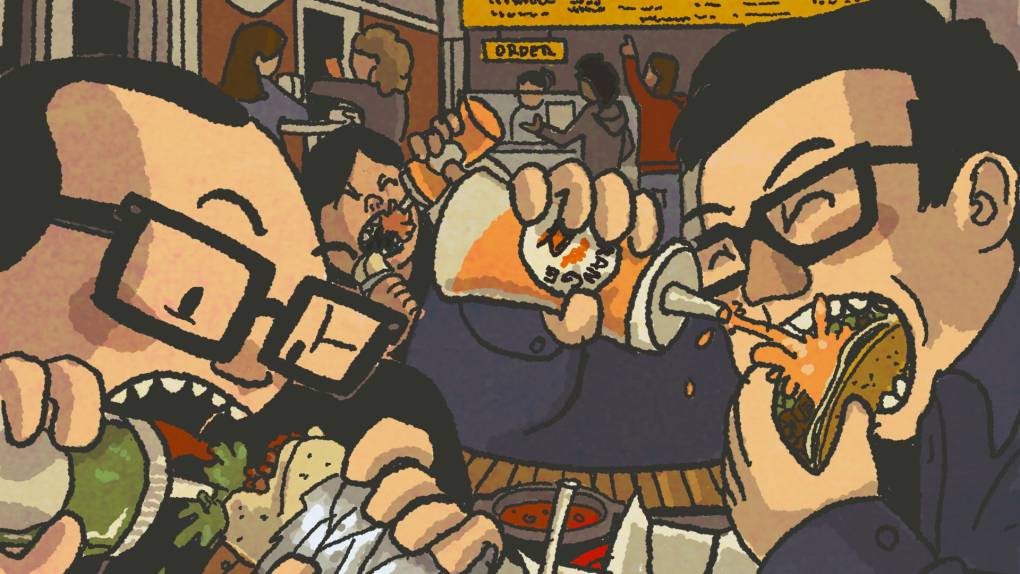
"caption": "San Jose's La Victoria Taqueria (aka La Vic's), is famous for its orange sauce — and for feeding hungry college students until 3 a.m.",
"credit": "Thien Pham",
"altTag": "Illustration: Two men devour tacos and burritos while pouring hot sauce from squeeze bottles directly into their mouths.",
"description": null,
"imgSizes": {
"medium": {
"file": "https://cdn.kqed.org/wp-content/uploads/sites/2/2024/05/Lavics_crop-800x450.jpg",
"width": 800,
"height": 450,
"mimeType": "image/jpeg"
},
"large": {
"file": "https://cdn.kqed.org/wp-content/uploads/sites/2/2024/05/Lavics_crop-1020x574.jpg",
"width": 1020,
"height": 574,
"mimeType": "image/jpeg"
},
"thumbnail": {
"file": "https://cdn.kqed.org/wp-content/uploads/sites/2/2024/05/Lavics_crop-160x90.jpg",
"width": 160,
"height": 90,
"mimeType": "image/jpeg"
},
"medium_large": {
"file": "https://cdn.kqed.org/wp-content/uploads/sites/2/2024/05/Lavics_crop-768x432.jpg",
"width": 768,
"height": 432,
"mimeType": "image/jpeg"
},
"1536x1536": {
"file": "https://cdn.kqed.org/wp-content/uploads/sites/2/2024/05/Lavics_crop-1536x864.jpg",
"width": 1536,
"height": 864,
"mimeType": "image/jpeg"
},
"post-thumbnail": {
"file": "https://cdn.kqed.org/wp-content/uploads/sites/2/2024/05/Lavics_crop-672x372.jpg",
"width": 672,
"height": 372,
"mimeType": "image/jpeg"
},
"twentyfourteen-full-width": {
"file": "https://cdn.kqed.org/wp-content/uploads/sites/2/2024/05/Lavics_crop-1038x576.jpg",
"width": 1038,
"height": 576,
"mimeType": "image/jpeg"
},
"kqedFullSize": {
"file": "https://cdn.kqed.org/wp-content/uploads/sites/2/2024/05/Lavics_crop.jpg",
"width": 1920,
"height": 1080
}
},
"isLoading": false,
"fetchFailed": false
},
"arts_13958340": {
"type": "attachments",
"id": "arts_13958340",
"meta": {
"index": "attachments_1716263798",
"site": "arts",
"id": "13958340",
"found": true
},
"title": "The team from the Coterie Den in San Jose on April 18, 2024.",
"publishDate": 1716404848,
"status": "inherit",
"parent": 13958336,
"modified": 1716405292,
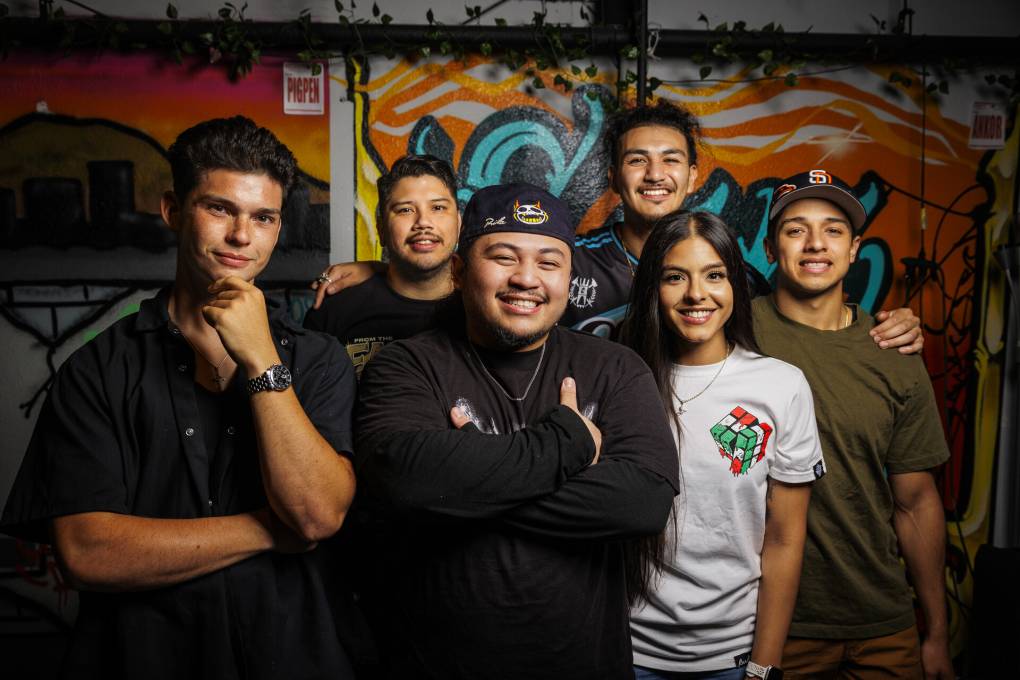
"caption": "The team from the Coterie Den in San Jose on April 18, 2024. From left to right: website designer Wyatt Perkins, Vizions Management, engineer Isandro, owner LJame$, event coordinator Ruby Rodriguez and photographer Danny Cardona. ",
"credit": "Martin do Nascimento/KQED",
"altTag": null,
"description": null,
"imgSizes": {
"medium": {
"file": "https://cdn.kqed.org/wp-content/uploads/sites/2/2024/05/240419-COTERIE-DEN-MD-07_qut-800x533.jpg",
"width": 800,
"height": 533,
"mimeType": "image/jpeg"
},
"large": {
"file": "https://cdn.kqed.org/wp-content/uploads/sites/2/2024/05/240419-COTERIE-DEN-MD-07_qut-1020x680.jpg",
"width": 1020,
"height": 680,
"mimeType": "image/jpeg"
},
"thumbnail": {
"file": "https://cdn.kqed.org/wp-content/uploads/sites/2/2024/05/240419-COTERIE-DEN-MD-07_qut-160x107.jpg",
"width": 160,
"height": 107,
"mimeType": "image/jpeg"
},
"medium_large": {
"file": "https://cdn.kqed.org/wp-content/uploads/sites/2/2024/05/240419-COTERIE-DEN-MD-07_qut-768x512.jpg",
"width": 768,
"height": 512,
"mimeType": "image/jpeg"
},
"1536x1536": {
"file": "https://cdn.kqed.org/wp-content/uploads/sites/2/2024/05/240419-COTERIE-DEN-MD-07_qut-1536x1024.jpg",
"width": 1536,
"height": 1024,
"mimeType": "image/jpeg"
},
"post-thumbnail": {
"file": "https://cdn.kqed.org/wp-content/uploads/sites/2/2024/05/240419-COTERIE-DEN-MD-07_qut-672x372.jpg",
"width": 672,
"height": 372,
"mimeType": "image/jpeg"
},
"twentyfourteen-full-width": {
"file": "https://cdn.kqed.org/wp-content/uploads/sites/2/2024/05/240419-COTERIE-DEN-MD-07_qut-1038x576.jpg",
"width": 1038,
"height": 576,
"mimeType": "image/jpeg"
},
"kqedFullSize": {
"file": "https://cdn.kqed.org/wp-content/uploads/sites/2/2024/05/240419-COTERIE-DEN-MD-07_qut.jpg",
"width": 1920,
"height": 1280
}
},
"isLoading": false,
"fetchFailed": false
},
"arts_13958232": {
"type": "attachments",
"id": "arts_13958232",
"meta": {
"index": "attachments_1716263798",
"site": "arts",
"id": "13958232",
"found": true
},
"title": "Cinco de Mayo paletas",
"publishDate": 1716314721,
"status": "inherit",
"parent": 13958172,
"modified": 1716314853,
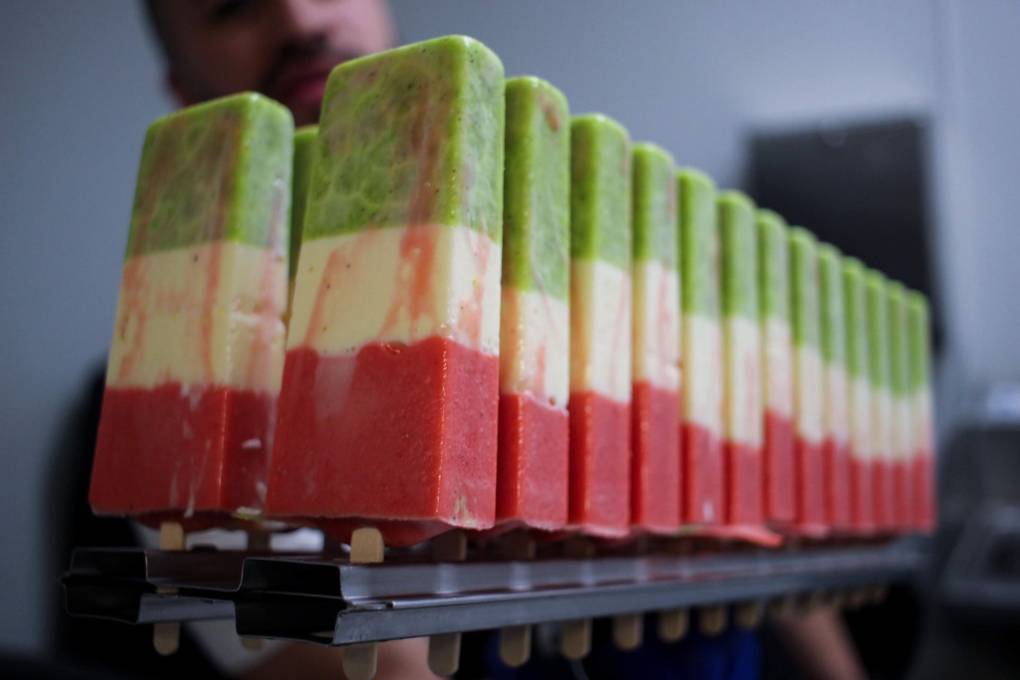
"caption": "A batch of Cinco de Mayo–themed paletas from Paleta Planeta. The popular San Jose paleta cart will soon open a brick-and-mortar shop.",
"credit": "Octavio Peña",
"altTag": "A batch of paletas featuring the green, white and red tricolor pattern of the Mexican flag.",
"description": null,
"imgSizes": {
"medium": {
"file": "https://cdn.kqed.org/wp-content/uploads/sites/2/2024/05/Cinco-de-Mayo-paletas-800x533.jpg",
"width": 800,
"height": 533,
"mimeType": "image/jpeg"
},
"large": {
"file": "https://cdn.kqed.org/wp-content/uploads/sites/2/2024/05/Cinco-de-Mayo-paletas-1020x680.jpg",
"width": 1020,
"height": 680,
"mimeType": "image/jpeg"
},
"thumbnail": {
"file": "https://cdn.kqed.org/wp-content/uploads/sites/2/2024/05/Cinco-de-Mayo-paletas-160x107.jpg",
"width": 160,
"height": 107,
"mimeType": "image/jpeg"
},
"medium_large": {
"file": "https://cdn.kqed.org/wp-content/uploads/sites/2/2024/05/Cinco-de-Mayo-paletas-768x512.jpg",
"width": 768,
"height": 512,
"mimeType": "image/jpeg"
},
"1536x1536": {
"file": "https://cdn.kqed.org/wp-content/uploads/sites/2/2024/05/Cinco-de-Mayo-paletas-1536x1024.jpg",
"width": 1536,
"height": 1024,
"mimeType": "image/jpeg"
},
"post-thumbnail": {
"file": "https://cdn.kqed.org/wp-content/uploads/sites/2/2024/05/Cinco-de-Mayo-paletas-672x372.jpg",
"width": 672,
"height": 372,
"mimeType": "image/jpeg"
},
"twentyfourteen-full-width": {
"file": "https://cdn.kqed.org/wp-content/uploads/sites/2/2024/05/Cinco-de-Mayo-paletas-1038x576.jpg",
"width": 1038,
"height": 576,
"mimeType": "image/jpeg"
},
"kqedFullSize": {
"file": "https://cdn.kqed.org/wp-content/uploads/sites/2/2024/05/Cinco-de-Mayo-paletas.jpg",
"width": 1920,
"height": 1280
}
},
"isLoading": false,
"fetchFailed": false
},
"arts_13956941": {
"type": "attachments",
"id": "arts_13956941",
"meta": {
"index": "attachments_1716263798",
"site": "arts",
"id": "13956941",
"found": true
},
"parent": 13956931,
"imgSizes": {
"twentyfourteen-full-width": {
"file": "https://cdn.kqed.org/wp-content/uploads/sites/2/2024/05/rsellers_240330_falcons_5487-1038x576.jpg",
"width": 1038,
"mimeType": "image/jpeg",
"height": 576
},
"thumbnail": {
"file": "https://cdn.kqed.org/wp-content/uploads/sites/2/2024/05/rsellers_240330_falcons_5487-160x114.jpg",
"width": 160,
"mimeType": "image/jpeg",
"height": 114
},
"post-thumbnail": {
"file": "https://cdn.kqed.org/wp-content/uploads/sites/2/2024/05/rsellers_240330_falcons_5487-672x372.jpg",
"width": 672,
"mimeType": "image/jpeg",
"height": 372
},
"kqedFullSize": {
"file": "https://cdn.kqed.org/wp-content/uploads/sites/2/2024/05/rsellers_240330_falcons_5487.jpg",
"width": 2100,
"height": 1500
},
"2048x2048": {
"file": "https://cdn.kqed.org/wp-content/uploads/sites/2/2024/05/rsellers_240330_falcons_5487-2048x1463.jpg",
"width": 2048,
"mimeType": "image/jpeg",
"height": 1463
},
"large": {
"file": "https://cdn.kqed.org/wp-content/uploads/sites/2/2024/05/rsellers_240330_falcons_5487-1020x729.jpg",
"width": 1020,
"mimeType": "image/jpeg",
"height": 729
},
"1536x1536": {
"file": "https://cdn.kqed.org/wp-content/uploads/sites/2/2024/05/rsellers_240330_falcons_5487-1536x1097.jpg",
"width": 1536,
"mimeType": "image/jpeg",
"height": 1097
},
"full-width": {
"file": "https://cdn.kqed.org/wp-content/uploads/sites/2/2024/05/rsellers_240330_falcons_5487-1920x1371.jpg",
"width": 1920,
"mimeType": "image/jpeg",
"height": 1371
},
"medium": {
"file": "https://cdn.kqed.org/wp-content/uploads/sites/2/2024/05/rsellers_240330_falcons_5487-800x571.jpg",
"width": 800,
"mimeType": "image/jpeg",
"height": 571
},
"medium_large": {
"file": "https://cdn.kqed.org/wp-content/uploads/sites/2/2024/05/rsellers_240330_falcons_5487-768x549.jpg",
"width": 768,
"mimeType": "image/jpeg",
"height": 549
}
},
"publishDate": 1714583519,
"modified": 1714584944,
"caption": "The Bay Area Falcons are one of the region's non-major league teams providing local sports fans something positive to cheer about.",
"description": null,
"title": "rsellers_240330_falcons_5487",
"credit": "Bay Area Falcons",
"status": "inherit",
"altTag": "an ultimate frisbee player throws a disc from midfield",
"isLoading": false,
"fetchFailed": false
},
"arts_13957186": {
"type": "attachments",
"id": "arts_13957186",
"meta": {
"index": "attachments_1716263798",
"site": "arts",
"id": "13957186",
"found": true
},
"parent": 13957183,
"imgSizes": {
"twentyfourteen-full-width": {
"file": "https://cdn.kqed.org/wp-content/uploads/sites/2/2024/05/lownslow-897x576.png",
"width": 897,
"mimeType": "image/png",
"height": 576
},
"thumbnail": {
"file": "https://cdn.kqed.org/wp-content/uploads/sites/2/2024/05/lownslow-160x112.png",
"width": 160,
"mimeType": "image/png",
"height": 112
},
"post-thumbnail": {
"file": "https://cdn.kqed.org/wp-content/uploads/sites/2/2024/05/lownslow-672x372.png",
"width": 672,
"mimeType": "image/png",
"height": 372
},
"kqedFullSize": {
"file": "https://cdn.kqed.org/wp-content/uploads/sites/2/2024/05/lownslow.png",
"width": 897,
"height": 629
},
"medium": {
"file": "https://cdn.kqed.org/wp-content/uploads/sites/2/2024/05/lownslow-800x561.png",
"width": 800,
"mimeType": "image/png",
"height": 561
},
"medium_large": {
"file": "https://cdn.kqed.org/wp-content/uploads/sites/2/2024/05/lownslow-768x539.png",
"width": 768,
"mimeType": "image/png",
"height": 539
}
},
"publishDate": 1714697156,
"modified": 1714697214,
"caption": "From 'Low 'n Slow: The Art of Lowriding,' a documentary from 1983.",
"description": null,
"title": "lownslow",
"credit": "Courtesy Ricardo Cortez",
"status": "inherit",
"altTag": "Title image with illustration of lowrider and colorful city behind",
"isLoading": false,
"fetchFailed": false
},
"arts_13876304": {
"type": "attachments",
"id": "arts_13876304",
"meta": {
"index": "attachments_1716263798",
"site": "arts",
"id": "13876304",
"found": true
},
"parent": 13876299,
"imgSizes": {
"twentyfourteen-full-width": {
"file": "https://ww2.kqed.org/app/uploads/sites/2/2020/03/GettyImages-1201691171-1024x576.jpg",
"width": 1024,
"mimeType": "image/jpeg",
"height": 576
},
"thumbnail": {
"file": "https://ww2.kqed.org/app/uploads/sites/2/2020/03/GettyImages-1201691171-160x107.jpg",
"width": 160,
"mimeType": "image/jpeg",
"height": 107
},
"post-thumbnail": {
"file": "https://ww2.kqed.org/app/uploads/sites/2/2020/03/GettyImages-1201691171-672x372.jpg",
"width": 672,
"mimeType": "image/jpeg",
"height": 372
},
"kqedFullSize": {
"file": "https://ww2.kqed.org/app/uploads/sites/2/2020/03/GettyImages-1201691171.jpg",
"width": 1024,
"height": 683
},
"large": {
"file": "https://ww2.kqed.org/app/uploads/sites/2/2020/03/GettyImages-1201691171-1020x680.jpg",
"width": 1020,
"mimeType": "image/jpeg",
"height": 680
},
"medium": {
"file": "https://ww2.kqed.org/app/uploads/sites/2/2020/03/GettyImages-1201691171-800x534.jpg",
"width": 800,
"mimeType": "image/jpeg",
"height": 534
},
"medium_large": {
"file": "https://ww2.kqed.org/app/uploads/sites/2/2020/03/GettyImages-1201691171-768x512.jpg",
"width": 768,
"mimeType": "image/jpeg",
"height": 512
}
},
"publishDate": 1583876195,
"modified": 1583876466,
"caption": "Billie Eilish at the BRIT Awards in London, February 2020. ",
"description": "Billie Eilish at the BRIT Awards in London, February 2020. ",
"title": "Billie Eilish at the BRIT Awards in London, February 2020.",
"credit": "TOLGA AKMEN/AFP via Getty Images",
"status": "inherit",
"isLoading": false,
"fetchFailed": false
},
"arts_13954721": {
"type": "attachments",
"id": "arts_13954721",
"meta": {
"index": "attachments_1716263798",
"site": "arts",
"id": "13954721",
"found": true
},
"parent": 13954716,
"imgSizes": {
"twentyfourteen-full-width": {
"file": "https://cdn.kqed.org/wp-content/uploads/sites/2/2024/03/SJD2023_FullSet-178_websize-1038x576.jpg",
"width": 1038,
"mimeType": "image/jpeg",
"height": 576
},
"thumbnail": {
"file": "https://cdn.kqed.org/wp-content/uploads/sites/2/2024/03/SJD2023_FullSet-178_websize-160x107.jpg",
"width": 160,
"mimeType": "image/jpeg",
"height": 107
},
"post-thumbnail": {
"file": "https://cdn.kqed.org/wp-content/uploads/sites/2/2024/03/SJD2023_FullSet-178_websize-672x372.jpg",
"width": 672,
"mimeType": "image/jpeg",
"height": 372
},
"kqedFullSize": {
"file": "https://cdn.kqed.org/wp-content/uploads/sites/2/2024/03/SJD2023_FullSet-178_websize.jpg",
"width": 1600,
"height": 1067
},
"large": {
"file": "https://cdn.kqed.org/wp-content/uploads/sites/2/2024/03/SJD2023_FullSet-178_websize-1020x680.jpg",
"width": 1020,
"mimeType": "image/jpeg",
"height": 680
},
"1536x1536": {
"file": "https://cdn.kqed.org/wp-content/uploads/sites/2/2024/03/SJD2023_FullSet-178_websize-1536x1024.jpg",
"width": 1536,
"mimeType": "image/jpeg",
"height": 1024
},
"medium": {
"file": "https://cdn.kqed.org/wp-content/uploads/sites/2/2024/03/SJD2023_FullSet-178_websize-800x534.jpg",
"width": 800,
"mimeType": "image/jpeg",
"height": 534
},
"medium_large": {
"file": "https://cdn.kqed.org/wp-content/uploads/sites/2/2024/03/SJD2023_FullSet-178_websize-768x512.jpg",
"width": 768,
"mimeType": "image/jpeg",
"height": 512
}
},
"publishDate": 1711409032,
"modified": 1711476904,
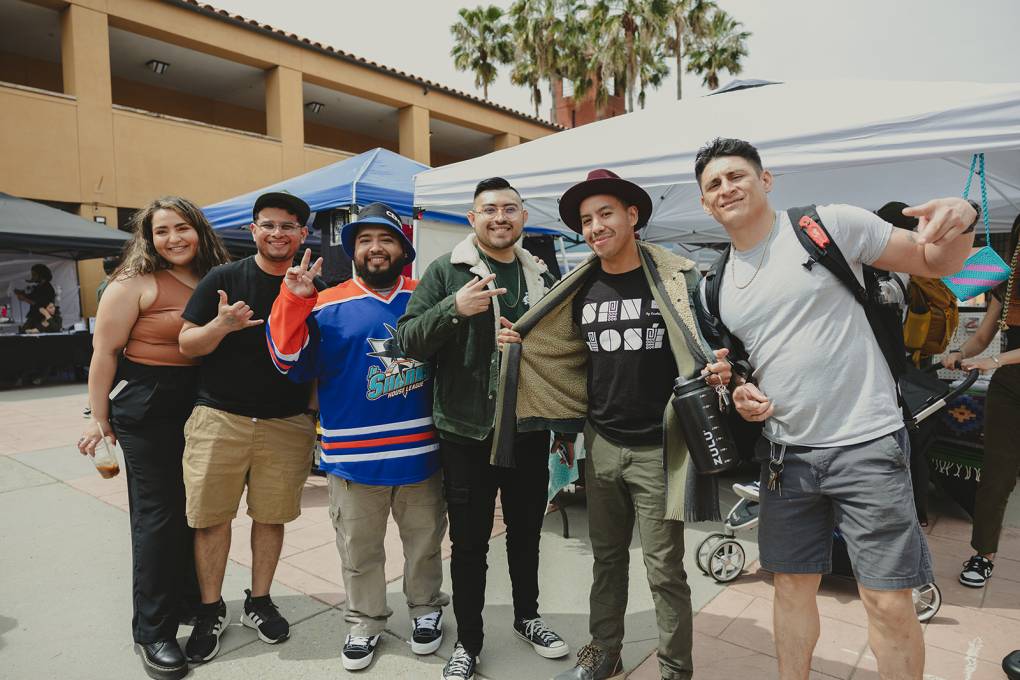
"caption": "A group of San Jose activists, artists and organizers gather for San Jose Day in 2023. ",
"description": null,
"title": "San Jose Day 2023",
"credit": "Alex Knowbody",
"status": "inherit",
"altTag": "a group of San Jose residents stand outside during a festival in their city",
"isLoading": false,
"fetchFailed": false
},
"arts_13954987": {
"type": "attachments",
"id": "arts_13954987",
"meta": {
"index": "attachments_1716263798",
"site": "arts",
"id": "13954987",
"found": true
},
"parent": 13954983,
"imgSizes": {
"twentyfourteen-full-width": {
"file": "https://cdn.kqed.org/wp-content/uploads/sites/2/2024/03/Cajun-bistro-7-crop-1038x576.jpg",
"width": 1038,
"mimeType": "image/jpeg",
"height": 576
},
"thumbnail": {
"file": "https://cdn.kqed.org/wp-content/uploads/sites/2/2024/03/Cajun-bistro-7-crop-160x90.jpg",
"width": 160,
"mimeType": "image/jpeg",
"height": 90
},
"post-thumbnail": {
"file": "https://cdn.kqed.org/wp-content/uploads/sites/2/2024/03/Cajun-bistro-7-crop-672x372.jpg",
"width": 672,
"mimeType": "image/jpeg",
"height": 372
},
"kqedFullSize": {
"file": "https://cdn.kqed.org/wp-content/uploads/sites/2/2024/03/Cajun-bistro-7-crop.jpg",
"width": 1920,
"height": 1080
},
"large": {
"file": "https://cdn.kqed.org/wp-content/uploads/sites/2/2024/03/Cajun-bistro-7-crop-1020x574.jpg",
"width": 1020,
"mimeType": "image/jpeg",
"height": 574
},
"1536x1536": {
"file": "https://cdn.kqed.org/wp-content/uploads/sites/2/2024/03/Cajun-bistro-7-crop-1536x864.jpg",
"width": 1536,
"mimeType": "image/jpeg",
"height": 864
},
"medium": {
"file": "https://cdn.kqed.org/wp-content/uploads/sites/2/2024/03/Cajun-bistro-7-crop-800x450.jpg",
"width": 800,
"mimeType": "image/jpeg",
"height": 450
},
"medium_large": {
"file": "https://cdn.kqed.org/wp-content/uploads/sites/2/2024/03/Cajun-bistro-7-crop-768x432.jpg",
"width": 768,
"mimeType": "image/jpeg",
"height": 432
}
},
"publishDate": 1711665591,
"modified": 1711665690,
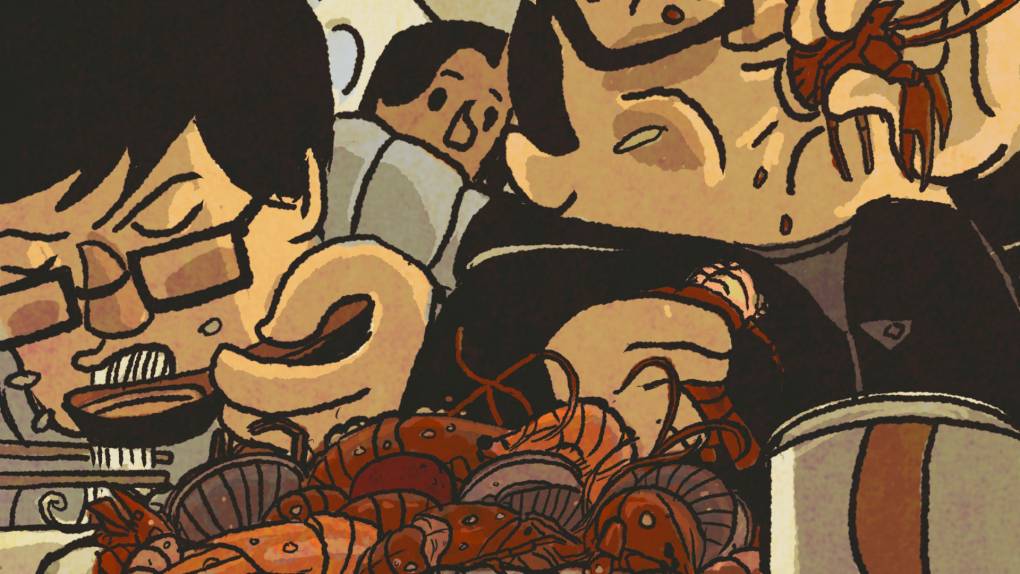
"caption": "By the end of our meal at Cajun Bistro 7, we'd left a pile of shrimp and crawfish carcasses in our wake. The Viet-Cajun spot in San Jose is open until 4 a.m. daily.",
"description": null,
"title": "Cajun bistro 7 crop",
"credit": "Thien Pham",
"status": "inherit",
"altTag": "Two men in glasses devouring their food ravenously. There's a big bowl of shrimp and crawfish in front of them.",
"isLoading": false,
"fetchFailed": false
},
"arts_13954688": {
"type": "attachments",
"id": "arts_13954688",
"meta": {
"index": "attachments_1716263798",
"site": "arts",
"id": "13954688",
"found": true
},
"parent": 13954682,
"imgSizes": {
"twentyfourteen-full-width": {
"file": "https://cdn.kqed.org/wp-content/uploads/sites/2/2024/03/lumpia_crop-1038x576.jpg",
"width": 1038,
"mimeType": "image/jpeg",
"height": 576
},
"thumbnail": {
"file": "https://cdn.kqed.org/wp-content/uploads/sites/2/2024/03/lumpia_crop-160x90.jpg",
"width": 160,
"mimeType": "image/jpeg",
"height": 90
},
"post-thumbnail": {
"file": "https://cdn.kqed.org/wp-content/uploads/sites/2/2024/03/lumpia_crop-672x372.jpg",
"width": 672,
"mimeType": "image/jpeg",
"height": 372
},
"kqedFullSize": {
"file": "https://cdn.kqed.org/wp-content/uploads/sites/2/2024/03/lumpia_crop.jpg",
"width": 2000,
"height": 1125
},
"large": {
"file": "https://cdn.kqed.org/wp-content/uploads/sites/2/2024/03/lumpia_crop-1020x574.jpg",
"width": 1020,
"mimeType": "image/jpeg",
"height": 574
},
"1536x1536": {
"file": "https://cdn.kqed.org/wp-content/uploads/sites/2/2024/03/lumpia_crop-1536x864.jpg",
"width": 1536,
"mimeType": "image/jpeg",
"height": 864
},
"full-width": {
"file": "https://cdn.kqed.org/wp-content/uploads/sites/2/2024/03/lumpia_crop-1920x1080.jpg",
"width": 1920,
"mimeType": "image/jpeg",
"height": 1080
},
"medium": {
"file": "https://cdn.kqed.org/wp-content/uploads/sites/2/2024/03/lumpia_crop-800x450.jpg",
"width": 800,
"mimeType": "image/jpeg",
"height": 450
},
"medium_large": {
"file": "https://cdn.kqed.org/wp-content/uploads/sites/2/2024/03/lumpia_crop-768x432.jpg",
"width": 768,
"mimeType": "image/jpeg",
"height": 432
}
},
"publishDate": 1711395675,
"modified": 1711407960,
"caption": "How many lumpia can you eat in five minutes? A contestant at last year's inaugural lumpia eating contest in San Jose shows how it's done.",
"description": null,
"title": "lumpia_crop",
"credit": "Courtesy of Mestizo",
"status": "inherit",
"altTag": "a man shoves four lumpia rolls into his mouth during an eating contest",
"isLoading": false,
"fetchFailed": false
},
"arts_13954555": {
"type": "attachments",
"id": "arts_13954555",
"meta": {
"index": "attachments_1716263798",
"site": "arts",
"id": "13954555",
"found": true
},
"parent": 13954422,
"imgSizes": {
"thumbnail": {
"file": "https://cdn.kqed.org/wp-content/uploads/sites/2/2024/03/JACKA.Mural_.diorama.plocz_-160x113.jpg",
"width": 160,
"mimeType": "image/jpeg",
"height": 113
},
"post-thumbnail": {
"file": "https://cdn.kqed.org/wp-content/uploads/sites/2/2024/03/JACKA.Mural_.diorama.plocz_-672x372.jpg",
"width": 672,
"mimeType": "image/jpeg",
"height": 372
},
"kqedFullSize": {
"file": "https://cdn.kqed.org/wp-content/uploads/sites/2/2024/03/JACKA.Mural_.diorama.plocz_.jpg",
"width": 717,
"height": 507
}
},
"publishDate": 1711040866,
"modified": 1711040938,
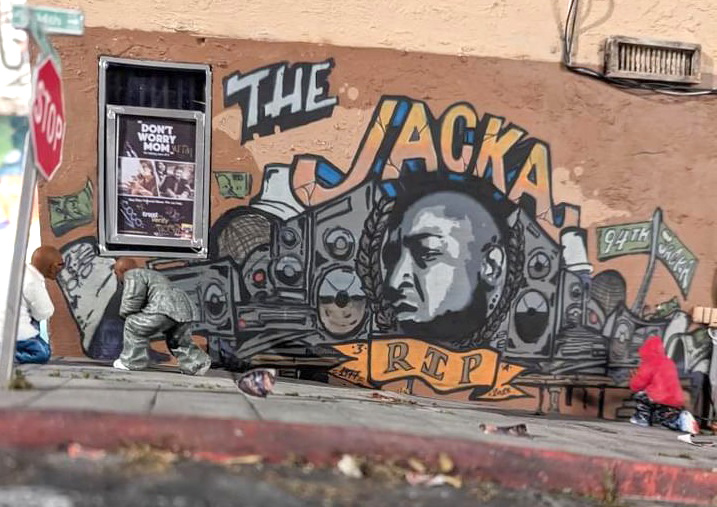
"caption": "P.LOCZ's work has been featured in exhibits like 'The Jacka Art Experience,' hosted earlier this year in remembrance of the East Oakland rapper. ",
"description": null,
"title": "JACKA.Mural.diorama.plocz",
"credit": "Courtesy P.LOCZ",
"status": "inherit",
"altTag": "An artistic depiction of a mural, on a street corner, that reads 'The Jacka' and pictures a Black man surrounded by illustrations",
"isLoading": false,
"fetchFailed": false
},
"arts_13954410": {
"type": "attachments",
"id": "arts_13954410",
"meta": {
"index": "attachments_1716263798",
"site": "arts",
"id": "13954410",
"found": true
},
"parent": 13954374,
"imgSizes": {
"twentyfourteen-full-width": {
"file": "https://cdn.kqed.org/wp-content/uploads/sites/2/2024/03/elhalalamigos-suhoorfest-crop-1038x576.jpg",
"width": 1038,
"mimeType": "image/jpeg",
"height": 576
},
"thumbnail": {
"file": "https://cdn.kqed.org/wp-content/uploads/sites/2/2024/03/elhalalamigos-suhoorfest-crop-160x90.jpg",
"width": 160,
"mimeType": "image/jpeg",
"height": 90
},
"post-thumbnail": {
"file": "https://cdn.kqed.org/wp-content/uploads/sites/2/2024/03/elhalalamigos-suhoorfest-crop-672x372.jpg",
"width": 672,
"mimeType": "image/jpeg",
"height": 372
},
"kqedFullSize": {
"file": "https://cdn.kqed.org/wp-content/uploads/sites/2/2024/03/elhalalamigos-suhoorfest-crop.jpg",
"width": 1920,
"height": 1080
},
"large": {
"file": "https://cdn.kqed.org/wp-content/uploads/sites/2/2024/03/elhalalamigos-suhoorfest-crop-1020x574.jpg",
"width": 1020,
"mimeType": "image/jpeg",
"height": 574
},
"1536x1536": {
"file": "https://cdn.kqed.org/wp-content/uploads/sites/2/2024/03/elhalalamigos-suhoorfest-crop-1536x864.jpg",
"width": 1536,
"mimeType": "image/jpeg",
"height": 864
},
"medium": {
"file": "https://cdn.kqed.org/wp-content/uploads/sites/2/2024/03/elhalalamigos-suhoorfest-crop-800x450.jpg",
"width": 800,
"mimeType": "image/jpeg",
"height": 450
},
"medium_large": {
"file": "https://cdn.kqed.org/wp-content/uploads/sites/2/2024/03/elhalalamigos-suhoorfest-crop-768x432.jpg",
"width": 768,
"mimeType": "image/jpeg",
"height": 432
}
},
"publishDate": 1710959688,
"modified": 1710959921,
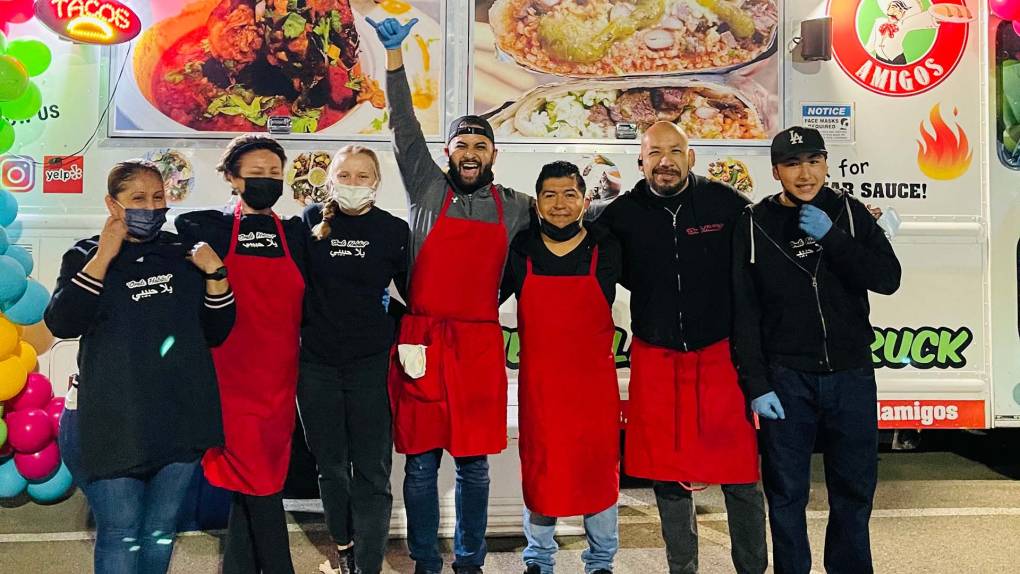
"caption": "The El Halal Amigos team at 2021's inaugural Suhoor Fest event. The one-night food-focused Ramadad celebration draws tens of thousands of people each year.",
"description": null,
"title": "elhalalamigos-suhoorfest-crop",
"credit": "Courtesy of Hashim Abdelfattah",
"status": "inherit",
"altTag": "Taco truck workers in red aprons pose for a photo in front of the El Halal Amigos food truck.",
"isLoading": false,
"fetchFailed": false
},
"arts_13954114": {
"type": "attachments",
"id": "arts_13954114",
"meta": {
"index": "attachments_1716263798",
"site": "arts",
"id": "13954114",
"found": true
},
"parent": 13954112,
"imgSizes": {
"twentyfourteen-full-width": {
"file": "https://cdn.kqed.org/wp-content/uploads/sites/2/2024/03/Orale1-crop-1038x576.jpg",
"width": 1038,
"mimeType": "image/jpeg",
"height": 576
},
"thumbnail": {
"file": "https://cdn.kqed.org/wp-content/uploads/sites/2/2024/03/Orale1-crop-160x90.jpg",
"width": 160,
"mimeType": "image/jpeg",
"height": 90
},
"post-thumbnail": {
"file": "https://cdn.kqed.org/wp-content/uploads/sites/2/2024/03/Orale1-crop-672x372.jpg",
"width": 672,
"mimeType": "image/jpeg",
"height": 372
},
"kqedFullSize": {
"file": "https://cdn.kqed.org/wp-content/uploads/sites/2/2024/03/Orale1-crop.jpg",
"width": 1920,
"height": 1080
},
"large": {
"file": "https://cdn.kqed.org/wp-content/uploads/sites/2/2024/03/Orale1-crop-1020x574.jpg",
"width": 1020,
"mimeType": "image/jpeg",
"height": 574
},
"1536x1536": {
"file": "https://cdn.kqed.org/wp-content/uploads/sites/2/2024/03/Orale1-crop-1536x864.jpg",
"width": 1536,
"mimeType": "image/jpeg",
"height": 864
},
"medium": {
"file": "https://cdn.kqed.org/wp-content/uploads/sites/2/2024/03/Orale1-crop-800x450.jpg",
"width": 800,
"mimeType": "image/jpeg",
"height": 450
},
"medium_large": {
"file": "https://cdn.kqed.org/wp-content/uploads/sites/2/2024/03/Orale1-crop-768x432.jpg",
"width": 768,
"mimeType": "image/jpeg",
"height": 432
}
},
"publishDate": 1710446413,
"modified": 1710446549,
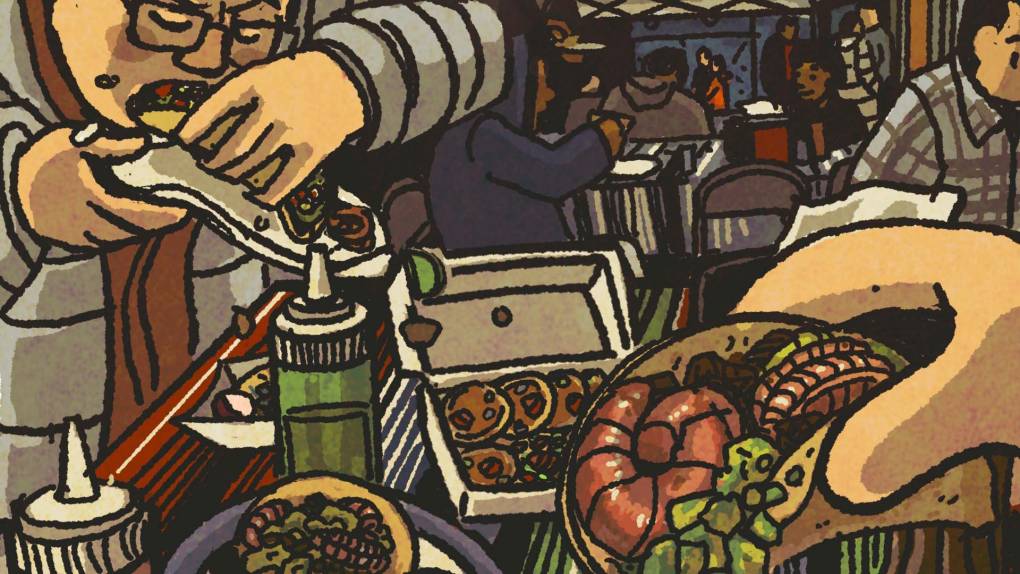
"caption": "The Orale taco truck is open — and stays busy — until 3 a.m. on the weekends. It's located in the Alum Rock neighborhood in Eastside San Jose.",
"description": null,
"title": "Orale1-crop",
"credit": "Thien Pham",
"status": "inherit",
"altTag": "Illustration: In a tented dining area, a man holds a large shrimp taco while his companion stuffs a huarache into his mouth.",
"isLoading": false,
"fetchFailed": false
}
},
"audioPlayerReducer": {
"postId": "stream_live",
"isPaused": true,
"isPlaying": false,
"pfsActive": false,
"pledgeModalIsOpen": true,
"playerDrawerIsOpen": false,
"liveAudioPlayStartedAt": 0,
"liveAudioPlayContext": ""
},
"authorsReducer": {
"shotchkiss": {
"type": "authors",
"id": "61",
"meta": {
"index": "authors_1716337520",
"id": "61",
"found": true
},
"name": "Sarah Hotchkiss",
"firstName": "Sarah",
"lastName": "Hotchkiss",
"slug": "shotchkiss",
"email": "shotchkiss@kqed.org",
"display_author_email": true,
"staff_mastheads": [
"arts"
],
"title": "Senior Editor",
"bio": "Sarah Hotchkiss is a San Francisco \u003ca href=\"http://www.sarahhotchkiss.com\">artist\u003c/a> and arts writer. In 2019, she received the Dorothea & Leo Rabkin Foundation grant for visual art journalism and in 2020 she received a Society of Professional Journalists, Northern California award for excellence in arts and culture reporting.",
"avatar": "https://secure.gravatar.com/avatar/bc662df144b3d27fd8b1b6f1c2a420d34e91e53154d411bb7ad353cc8b6cea8d?s=600&d=blank&r=g",
"twitter": null,
"bluesky": null,
"facebook": null,
"instagram": null,
"linkedin": null,
"sites": [
{
"site": "",
"roles": [
"editor"
]
},
{
"site": "arts",
"roles": [
"Contributor",
"administrator"
]
},
{
"site": "artschool",
"roles": [
"administrator"
]
},
{
"site": "news",
"roles": [
"editor"
]
},
{
"site": "pop",
"roles": [
"administrator"
]
},
{
"site": "bayareabites",
"roles": [
"editor"
]
},
{
"site": "spark",
"roles": [
"editor"
]
},
{
"site": "checkplease",
"roles": [
"editor"
]
}
],
"headData": {
"title": "Sarah Hotchkiss | KQED",
"description": "Senior Editor",
"ogImgSrc": "https://secure.gravatar.com/avatar/bc662df144b3d27fd8b1b6f1c2a420d34e91e53154d411bb7ad353cc8b6cea8d?s=600&d=blank&r=g",
"twImgSrc": "https://secure.gravatar.com/avatar/bc662df144b3d27fd8b1b6f1c2a420d34e91e53154d411bb7ad353cc8b6cea8d?s=600&d=blank&r=g"
},
"isLoading": false,
"link": "/author/shotchkiss"
},
"nvoynovskaya": {
"type": "authors",
"id": "11387",
"meta": {
"index": "authors_1716337520",
"id": "11387",
"found": true
},
"name": "Nastia Voynovskaya",
"firstName": "Nastia",
"lastName": "Voynovskaya",
"slug": "nvoynovskaya",
"email": "nvoynovskaya@kqed.org",
"display_author_email": false,
"staff_mastheads": [
"arts"
],
"title": "Editor and reporter",
"bio": "Nastia Voynovskaya is a reporter, editor and host at KQED Arts & Culture. She's been covering the arts in the Bay Area for over a decade, with a focus on music, queer culture, labor issues and grassroots organizing. She has edited KQED story series such as Trans Bay: A History of San Francisco's Gender-Diverse Community, and co-created KQED's Bay Area hip-hop history project, That's My Word. Nastia's work has been recognized by the Society of Professional Journalists and San Francisco Press Club. She regularly appears on podcasts and radio programs, including NPR's All Songs Considered, and hosts live events where music, culture and conversation meet.",
"avatar": "https://secure.gravatar.com/avatar/5025ee460e5a85d69ca20ea6c6f2f80d7e17795c828f61ea3aecfcd924e9042e?s=600&d=blank&r=g",
"twitter": null,
"bluesky": null,
"facebook": null,
"instagram": "https://www.instagram.com/nananastia/",
"linkedin": null,
"sites": [
{
"site": "",
"roles": [
"editor"
]
},
{
"site": "arts",
"roles": [
"administrator"
]
},
{
"site": "news",
"roles": [
"editor"
]
},
{
"site": "pop",
"roles": [
"administrator"
]
},
{
"site": "bayareabites",
"roles": [
"editor"
]
},
{
"site": "podcasts",
"roles": [
"editor"
]
},
{
"site": "hiphop",
"roles": [
"editor"
]
}
],
"headData": {
"title": "Nastia Voynovskaya | KQED",
"description": "Editor and reporter",
"ogImgSrc": "https://secure.gravatar.com/avatar/5025ee460e5a85d69ca20ea6c6f2f80d7e17795c828f61ea3aecfcd924e9042e?s=600&d=blank&r=g",
"twImgSrc": "https://secure.gravatar.com/avatar/5025ee460e5a85d69ca20ea6c6f2f80d7e17795c828f61ea3aecfcd924e9042e?s=600&d=blank&r=g"
},
"isLoading": false,
"link": "/author/nvoynovskaya"
},
"ltsai": {
"type": "authors",
"id": "11743",
"meta": {
"index": "authors_1716337520",
"id": "11743",
"found": true
},
"name": "Luke Tsai",
"firstName": "Luke",
"lastName": "Tsai",
"slug": "ltsai",
"email": "ltsai@kqed.org",
"display_author_email": true,
"staff_mastheads": [
"arts"
],
"title": "Food Editor",
"bio": "Luke Tsai is KQED's food editor and resident stinky tofu connoisseur. Prior to KQED, he was an editor at Eater SF, \u003cem>San Francisco \u003c/em>magazine, and the \u003cem>East Bay Express\u003c/em>, and his work has also appeared in TASTE, the \u003cem>San Francisco Chronicle\u003c/em>, and the \u003cem>Best Food Writing\u003c/em> anthology. When he isn't writing or editing, you'll find him eating most everything he can get his hands on.",
"avatar": "https://secure.gravatar.com/avatar/1e59b45bf191526e7339d6ba46e33a57b2030d25c27660ecc64ea3cb863e34f7?s=600&d=blank&r=g",
"twitter": "theluketsai",
"bluesky": null,
"facebook": null,
"instagram": null,
"linkedin": null,
"sites": [
{
"site": "",
"roles": [
"editor"
]
},
{
"site": "arts",
"roles": [
"administrator"
]
},
{
"site": "news",
"roles": [
"editor",
"contributor"
]
},
{
"site": "bayareabites",
"roles": [
"editor"
]
},
{
"site": "food",
"roles": [
"editor"
]
}
],
"headData": {
"title": "Luke Tsai | KQED",
"description": "Food Editor",
"ogImgSrc": "https://secure.gravatar.com/avatar/1e59b45bf191526e7339d6ba46e33a57b2030d25c27660ecc64ea3cb863e34f7?s=600&d=blank&r=g",
"twImgSrc": "https://secure.gravatar.com/avatar/1e59b45bf191526e7339d6ba46e33a57b2030d25c27660ecc64ea3cb863e34f7?s=600&d=blank&r=g"
},
"isLoading": false,
"link": "/author/ltsai"
},
"achazaro": {
"type": "authors",
"id": "11748",
"meta": {
"index": "authors_1716337520",
"id": "11748",
"found": true
},
"name": "Alan Chazaro",
"firstName": "Alan",
"lastName": "Chazaro",
"slug": "achazaro",
"email": "agchazaro@gmail.com",
"display_author_email": true,
"staff_mastheads": [],
"title": "Food Writer and Reporter",
"bio": "Alan Chazaro is the author of \u003cem>This Is Not a Frank Ocean Cover Album\u003c/em> (Black Lawrence Press, 2019), \u003cem>Piñata Theory\u003c/em> (Black Lawrence Press, 2020), and \u003cem>Notes from the Eastern Span of the Bay Bridge\u003c/em> (Ghost City Press, 2021). He is a graduate of June Jordan’s Poetry for the People program at UC Berkeley and a former Lawrence Ferlinghetti Fellow at the University of San Francisco. He writes about sports, food, art, music, education, and culture while repping the Bay on \u003ca href=\"https://twitter.com/alan_chazaro\">Twitter\u003c/a> and \u003ca href=\"https://www.instagram.com/alan_chazaro/?hl=en\">Instagram\u003c/a> at @alan_chazaro.",
"avatar": "https://secure.gravatar.com/avatar/ea8b6dd970fc5c29e7a188e7d5861df7?s=600&d=blank&r=g",
"twitter": "alan_chazaro",
"facebook": null,
"instagram": null,
"linkedin": null,
"sites": [
{
"site": "arts",
"roles": [
"contributor"
]
},
{
"site": "news",
"roles": [
"editor"
]
}
],
"headData": {
"title": "Alan Chazaro | KQED",
"description": "Food Writer and Reporter",
"ogImgSrc": "https://secure.gravatar.com/avatar/ea8b6dd970fc5c29e7a188e7d5861df7?s=600&d=blank&r=g",
"twImgSrc": "https://secure.gravatar.com/avatar/ea8b6dd970fc5c29e7a188e7d5861df7?s=600&d=blank&r=g"
},
"isLoading": false,
"link": "/author/achazaro"
},
"tpham": {
"type": "authors",
"id": "11753",
"meta": {
"index": "authors_1716337520",
"id": "11753",
"found": true
},
"name": "Thien Pham",
"firstName": "Thien",
"lastName": "Pham",
"slug": "tpham",
"email": "thiendog@gmail.com",
"display_author_email": false,
"staff_mastheads": [],
"title": "KQED Contributor",
"bio": null,
"avatar": "https://secure.gravatar.com/avatar/a5b4729969ad46d88e7b9ec9dd4f3fa6af84dd0fa8fa91f01d8d9481694999bc?s=600&d=blank&r=g",
"twitter": null,
"bluesky": null,
"facebook": null,
"instagram": null,
"linkedin": null,
"sites": [
{
"site": "arts",
"roles": [
"contributor"
]
}
],
"headData": {
"title": "Thien Pham | KQED",
"description": "KQED Contributor",
"ogImgSrc": "https://secure.gravatar.com/avatar/a5b4729969ad46d88e7b9ec9dd4f3fa6af84dd0fa8fa91f01d8d9481694999bc?s=600&d=blank&r=g",
"twImgSrc": "https://secure.gravatar.com/avatar/a5b4729969ad46d88e7b9ec9dd4f3fa6af84dd0fa8fa91f01d8d9481694999bc?s=600&d=blank&r=g"
},
"isLoading": false,
"link": "/author/tpham"
},
"opena": {
"type": "authors",
"id": "11903",
"meta": {
"index": "authors_1716337520",
"id": "11903",
"found": true
},
"name": "Octavio Peña",
"firstName": "Octavio",
"lastName": "Peña",
"slug": "opena",
"email": "octaviopenagutierrez@gmail.com",
"display_author_email": false,
"staff_mastheads": [],
"title": "KQED Contributor",
"bio": null,
"avatar": "https://secure.gravatar.com/avatar/62850791380238ea3945ee72a3d56056477904792b41daaf11effa8780bab75d?s=600&d=blank&r=g",
"twitter": null,
"bluesky": null,
"facebook": null,
"instagram": null,
"linkedin": null,
"sites": [
{
"site": "arts",
"roles": [
"contributor"
]
}
],
"headData": {
"title": "Octavio Peña | KQED",
"description": "KQED Contributor",
"ogImgSrc": "https://secure.gravatar.com/avatar/62850791380238ea3945ee72a3d56056477904792b41daaf11effa8780bab75d?s=600&d=blank&r=g",
"twImgSrc": "https://secure.gravatar.com/avatar/62850791380238ea3945ee72a3d56056477904792b41daaf11effa8780bab75d?s=600&d=blank&r=g"
},
"isLoading": false,
"link": "/author/opena"
}
},
"pagesReducer": {
"arts_tag_san-jose": {
"type": "terms",
"id": "arts_1084",
"meta": {
"index": "terms_1716263798",
"site": "arts",
"id": "1084",
"score": 8.005517
},
"featImg": null,
"name": "San Jose",
"description": null,
"taxonomy": "tag",
"headData": {
"twImgId": null,
"twTitle": null,
"ogTitle": null,
"ogImgId": null,
"twDescription": null,
"description": null,
"title": "San Jose Archives | KQED Arts",
"ogDescription": null
},
"ttid": 1101,
"slug": "san-jose",
"isLoading": false,
"title": "San Jose",
"pageMeta": {
"site": "arts",
"WpPageTemplate": "page-topic-editorial",
"currentPage": 7
},
"blocks": [
{
"blockName": "kqed/post-list",
"attrs": {
"layout": "cardArticle2",
"query": "posts/arts?tag=san-jose",
"seeMore": false,
"paginated": true,
"page": 7
}
},
{
"blockName": "kqed/ad"
}
]
}
},
"pfsSessionReducer": {},
"postsReducer": {
"stream_live": {
"type": "live",
"id": "stream_live",
"audioUrl": "https://streams.kqed.org/kqedradio",
"title": "Live Stream",
"excerpt": "Live Stream information currently unavailable.",
"link": "/radio",
"featImg": "",
"label": {
"name": "KQED Live",
"link": "/"
}
},
"stream_kqedNewscast": {
"type": "posts",
"id": "stream_kqedNewscast",
"audioUrl": "https://www.kqed.org/.stream/anon/radio/RDnews/newscast.mp3?_=1",
"title": "KQED Newscast",
"featImg": "",
"label": {
"name": "88.5 FM",
"link": "/"
}
},
"arts_13958466": {
"type": "posts",
"id": "arts_13958466",
"meta": {
"index": "posts_1716263798",
"site": "arts",
"id": "13958466",
"score": null,
"sort": [
1716510433000
]
},
"guestAuthors": [],
"slug": "la-vics-orange-sauce-la-victoria-taqueria-late-night-san-jose",
"title": "Taquerias Come and Go, but La Vic’s Orange Sauce Is Forever",
"publishDate": 1716510433,
"format": "aside",
"headTitle": "Taquerias Come and Go, but La Vic’s Orange Sauce Is Forever | KQED",
"labelTerm": {},
"content": "\u003cfigure id=\"attachment_13958470\" class=\"wp-caption alignnone\" style=\"max-width: 1920px\">\u003cimg loading=\"lazy\" decoding=\"async\" class=\"size-full wp-image-13958470\" src=\"https://cdn.kqed.org/wp-content/uploads/sites/2/2024/05/Lavics.jpg\" alt=\"Illustration: Two men devour tacos and burritos while pouring hot sauce from squeeze bottles directly into their mouths.\" width=\"1920\" height=\"1920\" srcset=\"https://cdn.kqed.org/wp-content/uploads/sites/2/2024/05/Lavics.jpg 1920w, https://cdn.kqed.org/wp-content/uploads/sites/2/2024/05/Lavics-800x800.jpg 800w, https://cdn.kqed.org/wp-content/uploads/sites/2/2024/05/Lavics-1020x1020.jpg 1020w, https://cdn.kqed.org/wp-content/uploads/sites/2/2024/05/Lavics-160x160.jpg 160w, https://cdn.kqed.org/wp-content/uploads/sites/2/2024/05/Lavics-768x768.jpg 768w, https://cdn.kqed.org/wp-content/uploads/sites/2/2024/05/Lavics-1536x1536.jpg 1536w\" sizes=\"(max-width: 1920px) 100vw, 1920px\">\u003cfigcaption class=\"wp-caption-text\">San Jose’s La Victoria Taqueria (aka La Vic’s), is famous for its orange sauce — and for feeding hungry college students until 3 a.m. \u003ccite>(Thien Pham)\u003c/cite>\u003c/figcaption>\u003c/figure>\n\u003cp>\u003ca href=\"https://www.kqed.org/arts/tag/the-midnight-diners\">\u003ci>The Midnight Diners\u003c/i>\u003c/a>\u003ci> is a regular collaboration between KQED food editor Luke Tsai and graphic novelist \u003c/i>\u003ca href=\"https://www.instagram.com/thiendog/?hl=en\">\u003ci>Thien Pham\u003c/i>\u003c/a>\u003ci>. Follow them each week as they explore the hot pot restaurants, taco carts and 24-hour casino buffets that make up the Bay Area’s after-hours dining scene.\u003c/i>\u003c/p>\n\u003cp>I’ve never stumbled into \u003ca href=\"https://www.lavicsj.com/\">La Victoria Taqueria\u003c/a> at 2 o’clock in the morning, bleary-eyed and half-starving midway through a six-hour cram session during finals week at San Jose State. Never crushed a plate of carne asada fries, half-drunk, after a night of dancing at Agenda or SJ Live back in the day.\u003c/p>\n\u003cp>So my devotion to La Vic’s legendary orange sauce — the creamy, chile-flecked condiment that spawned a hundred imitators — is merely practical rather than religious. I just think it’s one of the most delicious hot sauces in the Bay Area. Almost certainly the most delicious you can get your hands on at 3 a.m.\u003c/p>\n\u003cp>And after our recent late-night visit, I think I understand the hype.\u003c/p>\n\u003cp>Open since 1998, the original San Carlos Street location of La Vic’s sits kitty-corner to SJSU’s main campus, inside a cheery, slightly ramshackle old house — like a cartoon Victorian where a child detective goes mystery hunting. The family-owned taqueria offers a very standard college town burrito shop menu: enormously overstuffed tacos and burritos, quesadillas and loaded nachos and fries.\u003c/p>\n\u003cp>[ad fullwidth]\u003c/p>\n\u003cp>The only difference is that everywhere you look, there’s orange sauce. Twelve-ounce squeeze bottles on every table, and lined up in the fridge case behind the counter. Multiple orange sauce posters on the walls. College kids — so many college kids, in gym shorts or decked out for a night at the club — ordering extra tubs of orange sauce to go with their takeout burritos. Even the cup for our agua fresca was decorated with a picture of a bottle of orange sauce. (“Orange you glad you tried,” reads the tagline.)\u003c/p>\n\u003cfigure id=\"attachment_13958473\" class=\"wp-caption alignnone\" style=\"max-width: 1920px\">\u003cimg loading=\"lazy\" decoding=\"async\" class=\"size-full wp-image-13958473\" src=\"https://cdn.kqed.org/wp-content/uploads/sites/2/2024/05/Lavics2.jpg\" alt=\"Illustration: Exterior of La Victoria Taqueria, in an old Victorian house, lit up at night.\" width=\"1920\" height=\"1920\" srcset=\"https://cdn.kqed.org/wp-content/uploads/sites/2/2024/05/Lavics2.jpg 1920w, https://cdn.kqed.org/wp-content/uploads/sites/2/2024/05/Lavics2-800x800.jpg 800w, https://cdn.kqed.org/wp-content/uploads/sites/2/2024/05/Lavics2-1020x1020.jpg 1020w, https://cdn.kqed.org/wp-content/uploads/sites/2/2024/05/Lavics2-160x160.jpg 160w, https://cdn.kqed.org/wp-content/uploads/sites/2/2024/05/Lavics2-768x768.jpg 768w, https://cdn.kqed.org/wp-content/uploads/sites/2/2024/05/Lavics2-1536x1536.jpg 1536w\" sizes=\"(max-width: 1920px) 100vw, 1920px\">\u003cfigcaption class=\"wp-caption-text\">The original La Vic’s is located in downtown San Jose, right across the street from San Jose State University. \u003ccite>(Thien Pham)\u003c/cite>\u003c/figcaption>\u003c/figure>\n\u003cp>Look, if we’re being strictly honest, there are plenty of taquerias in San Jose — and all around the Bay — where you can get a tastier, more well-constructed burrito than the ones La Vic’s is rolling out these days. You can find more flavorful carnitas and juicier, less gristly carne asada. There are other restaurants that do a better job of piling meat and cheese on top of French fries.\u003c/p>\n\u003cp>But man does that orange sauce paper over a thousand sins.\u003c/p>\n\u003cp>Like any well-guarded family recipe, the actual contents of the sauce are shrouded in secrecy and wild speculation. In \u003ca href=\"https://www.mercurynews.com/2022/07/07/san-jose-orange-sauce-taco-burrito-la-victoria-recipe/\">public interviews\u003c/a>, La Vic’s owners have only revealed a handful of obvious ingredients: garlic, onions, tomatoes, dried red chiles. Meanwhile, orange-sauce conspiracy theorists have long debated the source of the sauce’s telltale creaminess, which has been rumored to come from crushed-up crackers, mayonnaise and even leftover chorizo grease (!). The restaurant, for its part, stresses that the sauce has always been \u003ca href=\"https://www.sfgate.com/food/article/La-Victoria-orange-sauce-is-secret-17081821.php\">100% vegan\u003c/a>. (I, and most \u003ca href=\"https://www.reddit.com/r/SalsaSnobs/comments/191wyaw/update_la_victorias_orange_sauce_aka_san_jose/\">copycat recipes\u003c/a>, suspect the creaminess just comes from emulsified vegetable oil.)\u003c/p>\n\u003cp>\u003cspan style=\"font-weight: 400\">\u003cspan style=\"color: #2b2b2b;font-weight: 400\">[aside postID='arts_13958041,arts_13955884,arts_13954983']\u003c/span>\u003c/span>Whatever the secret, La Vic’s orange sauce is delicious. It has a bright, garlicky heat that immediately perks up the palate and a tanginess that keeps it from being overly heavy, making it a natural foil to salty grilled meats. And we loved how the sauce’s slightly dense, creamy texture allows it to cling to surfaces instead of making the food soggy like your typical watery salsa.\u003c/p>\n\u003cp>We also figured out how, if you order smartly, you can put together a legitimately solid meal at La Vic’s, even apart from squirting orange sauce onto every bite. First pro tip: It’s the super tacos, not the burritos, that are the star of the menu, especially if you order them with lengua, which is the tastiest and most tender of the meat options. The super tacos feature thick, double-stacked tortillas that the taqueros will crisp up on request, and they’re loaded with guacamole and sour cream, which provide a refreshing tang.\u003c/p>\n\u003cp>Second tip: Don’t sleep on the zippy and criminally underrated green sauce, which some La Vic’s loyalists like even better than the orange sauce.\u003c/p>\n\u003cp>Third: It’s true that the carne asada fries, which come loaded with steak, nacho cheese, sour cream and guac, are the ideal drunk food. But the fries here aren’t especially crispy, and it’s only a matter of minutes before the whole thing turns into a soggy mess. Consider instead the nachos. They have a much more resilient crunch and are, in my view, the perfect vessel for orange sauce.\u003c/p>\n\u003cp>Unless you count my own cooking, that is. Like so many other La Vic’s initiates, I dropped $8 on a bottle of the sauce to bring home — to test if it does, in fact, taste amazing on everything, like so many of the glowing reviews I’d read. For the past couple of weeks, I’ve been putting it on scrambled eggs and homemade carnitas, stirring it into bowls of rice and beans. And it really is true: I haven’t been disappointed yet.\u003c/p>\n\u003chr>\n\u003cp>\u003c/p>\n\u003cp>\u003ca href=\"https://www.lavicsj.com/\">\u003ci>La Victoria Taqueria\u003c/i>\u003c/a>\u003ci> has six Bay Area locations, mostly in San Jose. The original location at 140 E. San Carlos St. is open from 7 a.m.–3 a.m. daily.\u003c/i>\u003c/p>\n\n",
"blocks": [],
"excerpt": "The San Jose institution has fed hungry college students late into the night for more than 25 years.",
"status": "publish",
"parent": 0,
"modified": 1726786324,
"stats": {
"hasAudio": false,
"hasVideo": false,
"hasChartOrMap": false,
"iframeSrcs": [],
"hasGoogleForm": false,
"hasGallery": false,
"hasHearkenModule": false,
"hasPolis": false,
"paragraphCount": 17,
"wordCount": 990
},
"headData": {
"title": "La Victoria’s Orange Sauce Is a Late-Night Legend in San Jose | KQED",
"description": "The San Jose institution has fed hungry college students late into the night for more than 25 years.",
"ogTitle": "Taquerias Come and Go, but La Vic’s Orange Sauce Is Forever",
"ogDescription": "",
"ogImgId": "",
"twTitle": "Taquerias Come and Go, but La Vic’s Orange Sauce Is Forever",
"twDescription": "",
"twImgId": "",
"socialTitle": "La Victoria’s Orange Sauce Is a Late-Night Legend in San Jose %%page%% %%sep%% KQED",
"schema": {
"@context": "https://schema.org",
"@type": "Article",
"headline": "Taquerias Come and Go, but La Vic’s Orange Sauce Is Forever",
"datePublished": "2024-05-23T17:27:13-07:00",
"dateModified": "2024-09-19T15:52:04-07:00",
"image": "https://cdn.kqed.org/wp-content/uploads/2020/02/KQED-OG-Image@1x.png"
}
},
"source": "The Midnight Diners",
"sourceUrl": "https://www.kqed.org/arts/tag/the-midnight-diners",
"sticky": false,
"nprStoryId": "kqed-13958466",
"excludeFromSiteSearch": "Include",
"articleAge": "0",
"path": "/arts/13958466/la-vics-orange-sauce-la-victoria-taqueria-late-night-san-jose",
"audioTrackLength": null,
"parsedContent": [
{
"type": "contentString",
"content": "\u003cdiv class=\"post-body\">\u003cp>\u003cfigure id=\"attachment_13958470\" class=\"wp-caption alignnone\" style=\"max-width: 1920px\">\u003cimg loading=\"lazy\" decoding=\"async\" class=\"size-full wp-image-13958470\" src=\"https://cdn.kqed.org/wp-content/uploads/sites/2/2024/05/Lavics.jpg\" alt=\"Illustration: Two men devour tacos and burritos while pouring hot sauce from squeeze bottles directly into their mouths.\" width=\"1920\" height=\"1920\" srcset=\"https://cdn.kqed.org/wp-content/uploads/sites/2/2024/05/Lavics.jpg 1920w, https://cdn.kqed.org/wp-content/uploads/sites/2/2024/05/Lavics-800x800.jpg 800w, https://cdn.kqed.org/wp-content/uploads/sites/2/2024/05/Lavics-1020x1020.jpg 1020w, https://cdn.kqed.org/wp-content/uploads/sites/2/2024/05/Lavics-160x160.jpg 160w, https://cdn.kqed.org/wp-content/uploads/sites/2/2024/05/Lavics-768x768.jpg 768w, https://cdn.kqed.org/wp-content/uploads/sites/2/2024/05/Lavics-1536x1536.jpg 1536w\" sizes=\"(max-width: 1920px) 100vw, 1920px\">\u003cfigcaption class=\"wp-caption-text\">San Jose’s La Victoria Taqueria (aka La Vic’s), is famous for its orange sauce — and for feeding hungry college students until 3 a.m. \u003ccite>(Thien Pham)\u003c/cite>\u003c/figcaption>\u003c/figure>\n\u003cp>\u003ca href=\"https://www.kqed.org/arts/tag/the-midnight-diners\">\u003ci>The Midnight Diners\u003c/i>\u003c/a>\u003ci> is a regular collaboration between KQED food editor Luke Tsai and graphic novelist \u003c/i>\u003ca href=\"https://www.instagram.com/thiendog/?hl=en\">\u003ci>Thien Pham\u003c/i>\u003c/a>\u003ci>. Follow them each week as they explore the hot pot restaurants, taco carts and 24-hour casino buffets that make up the Bay Area’s after-hours dining scene.\u003c/i>\u003c/p>\n\u003cp>I’ve never stumbled into \u003ca href=\"https://www.lavicsj.com/\">La Victoria Taqueria\u003c/a> at 2 o’clock in the morning, bleary-eyed and half-starving midway through a six-hour cram session during finals week at San Jose State. Never crushed a plate of carne asada fries, half-drunk, after a night of dancing at Agenda or SJ Live back in the day.\u003c/p>\n\u003cp>So my devotion to La Vic’s legendary orange sauce — the creamy, chile-flecked condiment that spawned a hundred imitators — is merely practical rather than religious. I just think it’s one of the most delicious hot sauces in the Bay Area. Almost certainly the most delicious you can get your hands on at 3 a.m.\u003c/p>\n\u003cp>And after our recent late-night visit, I think I understand the hype.\u003c/p>\n\u003cp>Open since 1998, the original San Carlos Street location of La Vic’s sits kitty-corner to SJSU’s main campus, inside a cheery, slightly ramshackle old house — like a cartoon Victorian where a child detective goes mystery hunting. The family-owned taqueria offers a very standard college town burrito shop menu: enormously overstuffed tacos and burritos, quesadillas and loaded nachos and fries.\u003c/p>\n\u003cp>\u003c/p>\u003c/div>",
"attributes": {
"named": {},
"numeric": []
}
},
{
"type": "component",
"content": "",
"name": "ad",
"attributes": {
"named": {
"label": "fullwidth"
},
"numeric": [
"fullwidth"
]
}
},
{
"type": "contentString",
"content": "\u003cdiv class=\"post-body\">\u003cp>\u003c/p>\n\u003cp>The only difference is that everywhere you look, there’s orange sauce. Twelve-ounce squeeze bottles on every table, and lined up in the fridge case behind the counter. Multiple orange sauce posters on the walls. College kids — so many college kids, in gym shorts or decked out for a night at the club — ordering extra tubs of orange sauce to go with their takeout burritos. Even the cup for our agua fresca was decorated with a picture of a bottle of orange sauce. (“Orange you glad you tried,” reads the tagline.)\u003c/p>\n\u003cfigure id=\"attachment_13958473\" class=\"wp-caption alignnone\" style=\"max-width: 1920px\">\u003cimg loading=\"lazy\" decoding=\"async\" class=\"size-full wp-image-13958473\" src=\"https://cdn.kqed.org/wp-content/uploads/sites/2/2024/05/Lavics2.jpg\" alt=\"Illustration: Exterior of La Victoria Taqueria, in an old Victorian house, lit up at night.\" width=\"1920\" height=\"1920\" srcset=\"https://cdn.kqed.org/wp-content/uploads/sites/2/2024/05/Lavics2.jpg 1920w, https://cdn.kqed.org/wp-content/uploads/sites/2/2024/05/Lavics2-800x800.jpg 800w, https://cdn.kqed.org/wp-content/uploads/sites/2/2024/05/Lavics2-1020x1020.jpg 1020w, https://cdn.kqed.org/wp-content/uploads/sites/2/2024/05/Lavics2-160x160.jpg 160w, https://cdn.kqed.org/wp-content/uploads/sites/2/2024/05/Lavics2-768x768.jpg 768w, https://cdn.kqed.org/wp-content/uploads/sites/2/2024/05/Lavics2-1536x1536.jpg 1536w\" sizes=\"(max-width: 1920px) 100vw, 1920px\">\u003cfigcaption class=\"wp-caption-text\">The original La Vic’s is located in downtown San Jose, right across the street from San Jose State University. \u003ccite>(Thien Pham)\u003c/cite>\u003c/figcaption>\u003c/figure>\n\u003cp>Look, if we’re being strictly honest, there are plenty of taquerias in San Jose — and all around the Bay — where you can get a tastier, more well-constructed burrito than the ones La Vic’s is rolling out these days. You can find more flavorful carnitas and juicier, less gristly carne asada. There are other restaurants that do a better job of piling meat and cheese on top of French fries.\u003c/p>\n\u003cp>But man does that orange sauce paper over a thousand sins.\u003c/p>\n\u003cp>Like any well-guarded family recipe, the actual contents of the sauce are shrouded in secrecy and wild speculation. In \u003ca href=\"https://www.mercurynews.com/2022/07/07/san-jose-orange-sauce-taco-burrito-la-victoria-recipe/\">public interviews\u003c/a>, La Vic’s owners have only revealed a handful of obvious ingredients: garlic, onions, tomatoes, dried red chiles. Meanwhile, orange-sauce conspiracy theorists have long debated the source of the sauce’s telltale creaminess, which has been rumored to come from crushed-up crackers, mayonnaise and even leftover chorizo grease (!). The restaurant, for its part, stresses that the sauce has always been \u003ca href=\"https://www.sfgate.com/food/article/La-Victoria-orange-sauce-is-secret-17081821.php\">100% vegan\u003c/a>. (I, and most \u003ca href=\"https://www.reddit.com/r/SalsaSnobs/comments/191wyaw/update_la_victorias_orange_sauce_aka_san_jose/\">copycat recipes\u003c/a>, suspect the creaminess just comes from emulsified vegetable oil.)\u003c/p>\n\u003cp>\u003cspan style=\"font-weight: 400\">\u003cspan style=\"color: #2b2b2b;font-weight: 400\">\u003c/p>\u003c/div>",
"attributes": {
"named": {},
"numeric": []
}
},
{
"type": "component",
"content": "",
"name": "aside",
"attributes": {
"named": {
"postid": "arts_13958041,arts_13955884,arts_13954983",
"label": ""
},
"numeric": []
}
},
{
"type": "contentString",
"content": "\u003cdiv class=\"post-body\">\u003cp>\u003c/span>\u003c/span>Whatever the secret, La Vic’s orange sauce is delicious. It has a bright, garlicky heat that immediately perks up the palate and a tanginess that keeps it from being overly heavy, making it a natural foil to salty grilled meats. And we loved how the sauce’s slightly dense, creamy texture allows it to cling to surfaces instead of making the food soggy like your typical watery salsa.\u003c/p>\n\u003cp>We also figured out how, if you order smartly, you can put together a legitimately solid meal at La Vic’s, even apart from squirting orange sauce onto every bite. First pro tip: It’s the super tacos, not the burritos, that are the star of the menu, especially if you order them with lengua, which is the tastiest and most tender of the meat options. The super tacos feature thick, double-stacked tortillas that the taqueros will crisp up on request, and they’re loaded with guacamole and sour cream, which provide a refreshing tang.\u003c/p>\n\u003cp>Second tip: Don’t sleep on the zippy and criminally underrated green sauce, which some La Vic’s loyalists like even better than the orange sauce.\u003c/p>\n\u003cp>Third: It’s true that the carne asada fries, which come loaded with steak, nacho cheese, sour cream and guac, are the ideal drunk food. But the fries here aren’t especially crispy, and it’s only a matter of minutes before the whole thing turns into a soggy mess. Consider instead the nachos. They have a much more resilient crunch and are, in my view, the perfect vessel for orange sauce.\u003c/p>\n\u003cp>Unless you count my own cooking, that is. Like so many other La Vic’s initiates, I dropped $8 on a bottle of the sauce to bring home — to test if it does, in fact, taste amazing on everything, like so many of the glowing reviews I’d read. For the past couple of weeks, I’ve been putting it on scrambled eggs and homemade carnitas, stirring it into bowls of rice and beans. And it really is true: I haven’t been disappointed yet.\u003c/p>\n\u003chr>\n\u003cp>\u003c/p>\n\u003cp>\u003ca href=\"https://www.lavicsj.com/\">\u003ci>La Victoria Taqueria\u003c/i>\u003c/a>\u003ci> has six Bay Area locations, mostly in San Jose. The original location at 140 E. San Carlos St. is open from 7 a.m.–3 a.m. daily.\u003c/i>\u003c/p>\n\n\u003c/div>\u003c/p>",
"attributes": {
"named": {},
"numeric": []
}
}
],
"link": "/arts/13958466/la-vics-orange-sauce-la-victoria-taqueria-late-night-san-jose",
"authors": [
"11743",
"11753"
],
"series": [
"arts_22316"
],
"categories": [
"arts_1",
"arts_12276"
],
"tags": [
"arts_21731",
"arts_10278",
"arts_1297",
"arts_8805",
"arts_14985",
"arts_1084",
"arts_14984",
"arts_21928"
],
"featImg": "arts_13958472",
"label": "source_arts_13958466"
},
"arts_13958336": {
"type": "posts",
"id": "arts_13958336",
"meta": {
"index": "posts_1716263798",
"site": "arts",
"id": "13958336",
"score": null,
"sort": [
1716414309000
]
},
"guestAuthors": [],
"slug": "the-coterie-den-recording-photography-video-studio-san-jose",
"title": "At the Coterie Den, San José Artists Work, Play and Dream",
"publishDate": 1716414309,
"format": "standard",
"headTitle": "At the Coterie Den, San José Artists Work, Play and Dream | KQED",
"labelTerm": {
"site": "arts"
},
"content": "\u003cp>Oakland, San Francisco and Vallejo might get all the glory when it comes to producing the Bay Area’s brightest hip-hop talent, but don’t sleep on San José. Not only is it the hometown of the late \u003ca href=\"https://www.kqed.org/arts/13907735/remembering-traxamillion-whose-beats-defined-the-bay-area-sound\">hyphy architect Traxamillion\u003c/a> — who produced all-time 2000s classics like Keak Da Sneak’s “Super Hyphy” and The Jacka’s “Glamorous Lifestyle” — but it’s also where \u003ca href=\"https://www.kqed.org/arts/13939767/peanut-butter-wolf-san-jose-hip-hop-1980s-1990s\">DJ and producer Peanut Butter Wolf\u003c/a> started Stones Throw Records, the iconic independent label that put out classic material by Madlib, MF Doom and J Dilla during that same decade.\u003c/p>\n\u003cp>Though San José is the Bay’s most populous city, today it’s often overlooked when it comes to culture — more known for its tech workers in Tesla Cybertrucks than its music scene. But it doesn’t take much digging to see that there’s a groundswell of local artists working hard to put the 408 back on the map, and take their music beyond the Bay.\u003c/p>\n\u003cp>Their home base? \u003ca href=\"https://thecoterieden.com/?gclid=CjwKCAjwr7ayBhAPEiwA6EIGxNSvr7d6O2ylnXK4DCPlGvZlHPFCsD2nQclmHc5j3ls2ijcGDyQu3hoCZVoQAvD_BwE\">The Coterie Den\u003c/a>.\u003c/p>\n\u003cp>It’s an artist-run, D.I.Y. creative space in a basement below a Japantown nail shop. Follow its winding staircase, and inside you’ll find a recording studio; a video, photo and podcast set; and a community event space decorated with murals and canvases by local artists. The Coterie Den is usually bustling with creatives in action, and regularly hosts fashion markets, open mics and gallery shows that are open to the public.\u003c/p>\n\u003cp>Twenty-eight-year-old rapper and event producer \u003ca href=\"https://www.instagram.com/ljames408/\">LJame$\u003c/a>, aka Lucas Milan, founded the Coterie Den in late 2021 with two business partners. At the time, he felt discouraged by San José’s lack of venues and resources for up-and-coming artists, especially in hip-hop. He came close to burnout and thought about quitting music altogether.\u003c/p>\n\u003cfigure id=\"attachment_13956255\" class=\"wp-caption aligncenter\" style=\"max-width: 2000px\">\u003cimg loading=\"lazy\" decoding=\"async\" class=\"size-full wp-image-13956255\" src=\"https://cdn.kqed.org/wp-content/uploads/sites/2/2024/04/240419-COTERIE-DEN-MD-03-KQED-2.jpg\" alt=\"\" width=\"2000\" height=\"1333\" srcset=\"https://cdn.kqed.org/wp-content/uploads/sites/2/2024/04/240419-COTERIE-DEN-MD-03-KQED-2.jpg 2000w, https://cdn.kqed.org/wp-content/uploads/sites/2/2024/04/240419-COTERIE-DEN-MD-03-KQED-2-800x533.jpg 800w, https://cdn.kqed.org/wp-content/uploads/sites/2/2024/04/240419-COTERIE-DEN-MD-03-KQED-2-1020x680.jpg 1020w, https://cdn.kqed.org/wp-content/uploads/sites/2/2024/04/240419-COTERIE-DEN-MD-03-KQED-2-160x107.jpg 160w, https://cdn.kqed.org/wp-content/uploads/sites/2/2024/04/240419-COTERIE-DEN-MD-03-KQED-2-768x512.jpg 768w, https://cdn.kqed.org/wp-content/uploads/sites/2/2024/04/240419-COTERIE-DEN-MD-03-KQED-2-1536x1024.jpg 1536w, https://cdn.kqed.org/wp-content/uploads/sites/2/2024/04/240419-COTERIE-DEN-MD-03-KQED-2-1920x1280.jpg 1920w\" sizes=\"(max-width: 2000px) 100vw, 2000px\">\u003cfigcaption class=\"wp-caption-text\">LJame$, aka Lucas Milan, at the Coterie Den in San José on April 18, 2024. \u003ccite>(Martin do Nascimento/KQED)\u003c/cite>\u003c/figcaption>\u003c/figure>\n\u003cp>That changed when he and his business partners found the former grocery storage space that would become the Coterie Den. They rolled up their sleeves and put up drywall, soundproofed the studio and hired artists to repaint its salmon-colored walls with graffiti lettering and murals. Pouring his energy into the project reignited LJame$’ passion for creating, and the chance to lift up others became his motivation.\u003c/p>\n\u003cp>[ad fullwidth]\u003c/p>\n\u003cp>“Artists can come, put that work in, get their practice in, [get] those reps — right? Like you go to the gym to shoot a shot,” says LJame$, who’s now the Coterie Den’s sole owner.\u003c/p>\n\u003cp>He runs the studio while also working a tech job by day, and pretty much doesn’t sleep. But he says it’s worth it. He has a team of 10 hungry creatives working alongside him — some of whom are as young as 19.\u003c/p>\n\u003cfigure id=\"attachment_13958339\" class=\"wp-caption aligncenter\" style=\"max-width: 1920px\">\u003cimg loading=\"lazy\" decoding=\"async\" class=\"size-full wp-image-13958339\" src=\"https://cdn.kqed.org/wp-content/uploads/sites/2/2024/05/240419-COTERIE-DEN-MD-04_qut.jpg\" alt=\"\" width=\"1920\" height=\"1280\" srcset=\"https://cdn.kqed.org/wp-content/uploads/sites/2/2024/05/240419-COTERIE-DEN-MD-04_qut.jpg 1920w, https://cdn.kqed.org/wp-content/uploads/sites/2/2024/05/240419-COTERIE-DEN-MD-04_qut-800x533.jpg 800w, https://cdn.kqed.org/wp-content/uploads/sites/2/2024/05/240419-COTERIE-DEN-MD-04_qut-1020x680.jpg 1020w, https://cdn.kqed.org/wp-content/uploads/sites/2/2024/05/240419-COTERIE-DEN-MD-04_qut-160x107.jpg 160w, https://cdn.kqed.org/wp-content/uploads/sites/2/2024/05/240419-COTERIE-DEN-MD-04_qut-768x512.jpg 768w, https://cdn.kqed.org/wp-content/uploads/sites/2/2024/05/240419-COTERIE-DEN-MD-04_qut-1536x1024.jpg 1536w\" sizes=\"(max-width: 1920px) 100vw, 1920px\">\u003cfigcaption class=\"wp-caption-text\">Engineer Isandro Biaco at the Coterie Den in San José on April 18, 2024. \u003ccite>(Martin do Nascimento/KQED)\u003c/cite>\u003c/figcaption>\u003c/figure>\n\u003cp>In-house engineer \u003ca href=\"https://www.instagram.com/isandro.flp/\">Isandro\u003c/a> — who gets constant props from everyone who stops by during our interview — taught himself to mix and master music, and saved up money from construction work for his own studio equipment. Becoming the Coterie Den’s full-time engineer has opened up new opportunities: In 2022, his own single “\u003ca href=\"https://youtu.be/doblhgONeJU?si=gQcyHUZt-Ze7x6U2\">Heart2Heart\u003c/a>” took off on TikTok, and it was his Coterie Den comrades who instructed him on how to parlay the attention into his budding solo music career.\u003c/p>\n\u003cp>“I didn’t know what to do with all this hype,” he says. “I didn’t know that you had to be consistent and drop songs and keep feeding the people to grow a fan base. … With the Den, and having the resources here, and having all these dope-ass creative people excited to show me, ‘Yo, this is how you do it,’ we’re able to make it happen.”\u003c/p>\n\u003cp>Spending an afternoon with the Coterie Den crew, it’s easy to appreciate their collaborative, sibling-like energy. “I tangibly see sometimes how I’ve grown through journal entries. We journal a lot,” reflects LJame$. “I see some of the notes from earlier meetings to now. Like, ‘Man, we want to start an open mic’ to now [having] launched a successful open mic in here.”\u003c/p>\n\u003cfigure id=\"attachment_13958341\" class=\"wp-caption aligncenter\" style=\"max-width: 1920px\">\u003cimg loading=\"lazy\" decoding=\"async\" class=\"size-full wp-image-13958341\" src=\"https://cdn.kqed.org/wp-content/uploads/sites/2/2024/05/240419-COTERIE-DEN-MD-06_qut.jpg\" alt=\"\" width=\"1920\" height=\"1280\" srcset=\"https://cdn.kqed.org/wp-content/uploads/sites/2/2024/05/240419-COTERIE-DEN-MD-06_qut.jpg 1920w, https://cdn.kqed.org/wp-content/uploads/sites/2/2024/05/240419-COTERIE-DEN-MD-06_qut-800x533.jpg 800w, https://cdn.kqed.org/wp-content/uploads/sites/2/2024/05/240419-COTERIE-DEN-MD-06_qut-1020x680.jpg 1020w, https://cdn.kqed.org/wp-content/uploads/sites/2/2024/05/240419-COTERIE-DEN-MD-06_qut-160x107.jpg 160w, https://cdn.kqed.org/wp-content/uploads/sites/2/2024/05/240419-COTERIE-DEN-MD-06_qut-768x512.jpg 768w, https://cdn.kqed.org/wp-content/uploads/sites/2/2024/05/240419-COTERIE-DEN-MD-06_qut-1536x1024.jpg 1536w\" sizes=\"(max-width: 1920px) 100vw, 1920px\">\u003cfigcaption class=\"wp-caption-text\">Event coordinator Ruby Rodriguez at the Coterie Den in San José on April 18, 2024. \u003ccite>(Martin do Nascimento/KQED)\u003c/cite>\u003c/figcaption>\u003c/figure>\n\u003ch2>A hip-hop incubator\u003c/h2>\n\u003cp>When I visit the Coterie Den during their open mic season finale in late April, \u003ca href=\"https://www.instagram.com/saysumentertainment/\">Say Sum Entertainment\u003c/a> — a young, multicultural music collective co-hosting the event — is setting up a merch table as aspiring rappers and singers file in. Tonight, the artists will be scored on song structure, beat selection and stage presence by a judges’ panel consisting of LJame$, Isandro and Say Sum founder \u003ca href=\"https://www.instagram.com/415johnjohn/\">John John\u003c/a>. The open mic winner will get free studio time at the Coterie Den and a booking at Sam Sum’s next showcase.\u003c/p>\n\u003cp>The Coterie Den’s open mics are where Say Sum Entertainment began to take off, and the collective now has a network of over 100 artists all around the Bay Area who support one another. “Something that we want to keep growing is the community, to keep letting people know that the Bay Area is not all about competition, especially when it comes to music,” says John John.\u003c/p>\n\u003cp>“I have to give the Coterie Den their flowers, because they helped me grow a lot as an artist — and even as a human being,” says rapper, content creator and Sam Sum Entertainment member \u003ca href=\"https://www.instagram.com/3ddev/\">3DDev\u003c/a>. He remembers a turning point in his music career, when he got constructive criticism at a Coterie Den open mic: “You feel like you’re on \u003cem>American Idol\u003c/em>. The next day I went to the studio and made sure I took the time to polish my skills.”\u003c/p>\n\u003cfigure id=\"attachment_13958344\" class=\"wp-caption aligncenter\" style=\"max-width: 1920px\">\u003cimg loading=\"lazy\" decoding=\"async\" class=\"size-full wp-image-13958344\" src=\"https://cdn.kqed.org/wp-content/uploads/sites/2/2024/05/240419-COTERIE-DEN-MD-02_qut.jpg\" alt=\"\" width=\"1920\" height=\"1280\" srcset=\"https://cdn.kqed.org/wp-content/uploads/sites/2/2024/05/240419-COTERIE-DEN-MD-02_qut.jpg 1920w, https://cdn.kqed.org/wp-content/uploads/sites/2/2024/05/240419-COTERIE-DEN-MD-02_qut-800x533.jpg 800w, https://cdn.kqed.org/wp-content/uploads/sites/2/2024/05/240419-COTERIE-DEN-MD-02_qut-1020x680.jpg 1020w, https://cdn.kqed.org/wp-content/uploads/sites/2/2024/05/240419-COTERIE-DEN-MD-02_qut-160x107.jpg 160w, https://cdn.kqed.org/wp-content/uploads/sites/2/2024/05/240419-COTERIE-DEN-MD-02_qut-768x512.jpg 768w, https://cdn.kqed.org/wp-content/uploads/sites/2/2024/05/240419-COTERIE-DEN-MD-02_qut-1536x1024.jpg 1536w\" sizes=\"(max-width: 1920px) 100vw, 1920px\">\u003cfigcaption class=\"wp-caption-text\">Artists sign in to participate in the open mic at the Coterie Den in San José on April 18, 2024. \u003ccite>(Martin do Nascimento/KQED)\u003c/cite>\u003c/figcaption>\u003c/figure>\n\u003cp>It’s certainly nerve-wracking to get live feedback in front of your peers, and there’s a nervous, excited energy in the room as showtime approaches. I chat with rapper \u003ca href=\"https://www.instagram.com/401ksey/\">401k$ey\u003c/a>, who with a sheepish grin says it’s his second time ever getting up on stage. LJame$ starts calling artists up.\u003c/p>\n\u003cp>A rapper with twin braids and a curly mustache named \u003ca href=\"https://www.instagram.com/estevanamoroso/\">Mr. Amoroso\u003c/a> kicks the night off with a sermon about chasing paper that gets everyone nodding in agreement. A singer named \u003ca href=\"https://www.instagram.com/chloe12354/\">Chlo\u003c/a> breaks into Tinashe-esque choreography while delivering a diss track to “bitches who try to read a book by its cover.” And \u003ca href=\"https://www.instagram.com/westsidemoe_/\">Westside Moe\u003c/a> charms the room with romantic verses that take everyone back to the Ja Rule and Ashanti era of hip-hop love songs.\u003c/p>\n\u003cfigure id=\"attachment_13956261\" class=\"wp-caption aligncenter\" style=\"max-width: 2000px\">\u003cimg loading=\"lazy\" decoding=\"async\" class=\"size-full wp-image-13956261\" src=\"https://cdn.kqed.org/wp-content/uploads/sites/2/2024/04/240419-COTERIE-DEN-MD-15-KQED-2.jpg\" alt=\"\" width=\"2000\" height=\"1333\" srcset=\"https://cdn.kqed.org/wp-content/uploads/sites/2/2024/04/240419-COTERIE-DEN-MD-15-KQED-2.jpg 2000w, https://cdn.kqed.org/wp-content/uploads/sites/2/2024/04/240419-COTERIE-DEN-MD-15-KQED-2-800x533.jpg 800w, https://cdn.kqed.org/wp-content/uploads/sites/2/2024/04/240419-COTERIE-DEN-MD-15-KQED-2-1020x680.jpg 1020w, https://cdn.kqed.org/wp-content/uploads/sites/2/2024/04/240419-COTERIE-DEN-MD-15-KQED-2-160x107.jpg 160w, https://cdn.kqed.org/wp-content/uploads/sites/2/2024/04/240419-COTERIE-DEN-MD-15-KQED-2-768x512.jpg 768w, https://cdn.kqed.org/wp-content/uploads/sites/2/2024/04/240419-COTERIE-DEN-MD-15-KQED-2-1536x1024.jpg 1536w, https://cdn.kqed.org/wp-content/uploads/sites/2/2024/04/240419-COTERIE-DEN-MD-15-KQED-2-1920x1280.jpg 1920w\" sizes=\"(max-width: 2000px) 100vw, 2000px\">\u003cfigcaption class=\"wp-caption-text\">Chlo performs at the open mic night at the Coterie Den in San José on April 18, 2024. \u003ccite>(Martin do Nascimento/KQED)\u003c/cite>\u003c/figcaption>\u003c/figure>\n\u003cp>The judges heap generous praise but also don’t pull back on critiques. A common refrain is that people need to lower their backing vocals and let the audience hear them. When some of the shyer artists forget to introduce themselves or let on that they’re nervous, the judges emphasize confidence and personal branding.\u003c/p>\n\u003cp>When 401k$sey goes on, the sheepish demeanor falls away and he’s shoulder-shimmying across the stage while hyping the crowd with a call-and-response hook about rolling up to the club. Everyone loses it when he suddenly switches to rapping full force in Tagalog.\u003c/p>\n\u003cp>“Pare!” Isandro exclaims in Tagalog from the judges’ table. “Yeah, bruh, for the second performance, I’m blown away. It looks like you been doing this shit.”\u003c/p>\n\u003cp>At the end of the night, Mr. Amoroso takes the crown, and everyone ends the night with smiles, hugs and fuel for their next moves.\u003c/p>\n\u003cfigure id=\"attachment_13958343\" class=\"wp-caption aligncenter\" style=\"max-width: 1920px\">\u003cimg loading=\"lazy\" decoding=\"async\" class=\"size-full wp-image-13958343\" src=\"https://cdn.kqed.org/wp-content/uploads/sites/2/2024/05/240419-COTERIE-DEN-MD-14_qut.jpg\" alt=\"\" width=\"1920\" height=\"1280\" srcset=\"https://cdn.kqed.org/wp-content/uploads/sites/2/2024/05/240419-COTERIE-DEN-MD-14_qut.jpg 1920w, https://cdn.kqed.org/wp-content/uploads/sites/2/2024/05/240419-COTERIE-DEN-MD-14_qut-800x533.jpg 800w, https://cdn.kqed.org/wp-content/uploads/sites/2/2024/05/240419-COTERIE-DEN-MD-14_qut-1020x680.jpg 1020w, https://cdn.kqed.org/wp-content/uploads/sites/2/2024/05/240419-COTERIE-DEN-MD-14_qut-160x107.jpg 160w, https://cdn.kqed.org/wp-content/uploads/sites/2/2024/05/240419-COTERIE-DEN-MD-14_qut-768x512.jpg 768w, https://cdn.kqed.org/wp-content/uploads/sites/2/2024/05/240419-COTERIE-DEN-MD-14_qut-1536x1024.jpg 1536w\" sizes=\"(max-width: 1920px) 100vw, 1920px\">\u003cfigcaption class=\"wp-caption-text\">From left to right: John John, LJame$ and Isandro. LJame$ reviews the performance of a contestant at the open mic night at the Coterie Den in San José on April 18, 2024. \u003ccite>(Martin do Nascimento/KQED)\u003c/cite>\u003c/figcaption>\u003c/figure>\n\u003ch2>A melting pot in Japantown\u003c/h2>\n\u003cp>The Coterie Den is one of the newer businesses in \u003ca href=\"https://www.kqed.org/arts/13904788/san-jose-japantown-changes-minato-gombei-shuei-do-santo-market\">Japantown\u003c/a>, home to some eateries and shops that have been around since the 1940s and ’50s. As San José’s Japanese American population ages or moves away to suburbs, the neighborhood is becoming more multicultural — something reflected in its artistic expression. [aside postid='arts_13904788']\u003c/p>\n\u003cp>LJame$, who is Chicano, has been organizing car shows and artist markets with his team in Japantown, and he says it took a while for some of the old-school neighborhood merchants to embrace the Coterie Den crew. He has a supporter in fellow business owner My Nguyen, who co-founded nearby streetwear boutique \u003ca href=\"https://www.instagram.com/headliners/?hl=en\">Headliners\u003c/a> in 2011. With the addition of \u003ca href=\"https://www.instagram.com/coldwater.sj/\">Coldwater\u003c/a>, known for its \u003ca href=\"https://www.instagram.com/madebyrila/\">airbrushed sportswear\u003c/a> and in-house streetwear brand \u003ca href=\"https://www.instagram.com/juboclothing/\">Jubo\u003c/a>, there’s now a critical mass of establishments rooted in hip-hop culture in the neighborhood.\u003c/p>\n\u003cp>“Being a young, Brown gentleman in here — and Japantown [has] a board and they have a whole business association and a very tight-knit community,” LJame$ says. “My stuck up for me a lot. I appreciate him for doing that and opening up doors for us.”\u003c/p>\n\u003cfigure id=\"attachment_13958345\" class=\"wp-caption aligncenter\" style=\"max-width: 1920px\">\u003cimg loading=\"lazy\" decoding=\"async\" class=\"size-full wp-image-13958345\" src=\"https://cdn.kqed.org/wp-content/uploads/sites/2/2024/05/240419-COTERIE-DEN-MD-42_qut.jpg\" alt=\"\" width=\"1920\" height=\"1280\" srcset=\"https://cdn.kqed.org/wp-content/uploads/sites/2/2024/05/240419-COTERIE-DEN-MD-42_qut.jpg 1920w, https://cdn.kqed.org/wp-content/uploads/sites/2/2024/05/240419-COTERIE-DEN-MD-42_qut-800x533.jpg 800w, https://cdn.kqed.org/wp-content/uploads/sites/2/2024/05/240419-COTERIE-DEN-MD-42_qut-1020x680.jpg 1020w, https://cdn.kqed.org/wp-content/uploads/sites/2/2024/05/240419-COTERIE-DEN-MD-42_qut-160x107.jpg 160w, https://cdn.kqed.org/wp-content/uploads/sites/2/2024/05/240419-COTERIE-DEN-MD-42_qut-768x512.jpg 768w, https://cdn.kqed.org/wp-content/uploads/sites/2/2024/05/240419-COTERIE-DEN-MD-42_qut-1536x1024.jpg 1536w\" sizes=\"(max-width: 1920px) 100vw, 1920px\">\u003cfigcaption class=\"wp-caption-text\">401k$ey performs at the open mic night at the Coterie Den in San José on April 18, 2024. \u003ccite>(Martin do Nascimento/KQED)\u003c/cite>\u003c/figcaption>\u003c/figure>\n\u003cp>The crowd at Coterie Den — Chicano, Filipino, Vietnamese, Black, white — reflects that sense of solidarity. “I want to showcase that to the world because coexisting, being in places where we can all absorb the culture and learn and listen and talk to one another — that’s special,” LJame$ says. “And the world needs more of that. Not just only in the creative scene, but everywhere.”\u003c/p>\n\u003cp>“It’s like San José itself is a culture, but everybody kind of has their own culture,” says the Coterie Den’s event coordinator, \u003ca href=\"https://www.instagram.com/ruuubess/\">Ruby Rodriguez\u003c/a>.\u003c/p>\n\u003cfigure id=\"attachment_13956258\" class=\"wp-caption aligncenter\" style=\"max-width: 2000px\">\u003cimg loading=\"lazy\" decoding=\"async\" class=\"size-full wp-image-13956258\" src=\"https://cdn.kqed.org/wp-content/uploads/sites/2/2024/04/240419-COTERIE-DEN-MD-11-KQED-2.jpg\" alt=\"\" width=\"2000\" height=\"1333\" srcset=\"https://cdn.kqed.org/wp-content/uploads/sites/2/2024/04/240419-COTERIE-DEN-MD-11-KQED-2.jpg 2000w, https://cdn.kqed.org/wp-content/uploads/sites/2/2024/04/240419-COTERIE-DEN-MD-11-KQED-2-800x533.jpg 800w, https://cdn.kqed.org/wp-content/uploads/sites/2/2024/04/240419-COTERIE-DEN-MD-11-KQED-2-1020x680.jpg 1020w, https://cdn.kqed.org/wp-content/uploads/sites/2/2024/04/240419-COTERIE-DEN-MD-11-KQED-2-160x107.jpg 160w, https://cdn.kqed.org/wp-content/uploads/sites/2/2024/04/240419-COTERIE-DEN-MD-11-KQED-2-768x512.jpg 768w, https://cdn.kqed.org/wp-content/uploads/sites/2/2024/04/240419-COTERIE-DEN-MD-11-KQED-2-1536x1024.jpg 1536w, https://cdn.kqed.org/wp-content/uploads/sites/2/2024/04/240419-COTERIE-DEN-MD-11-KQED-2-1920x1280.jpg 1920w\" sizes=\"(max-width: 2000px) 100vw, 2000px\">\u003cfigcaption class=\"wp-caption-text\">The audience watches performances during the open mic night at the Coterie Den in San Jose on April 18, 2024. \u003ccite>(Martin do Nascimento/KQED)\u003c/cite>\u003c/figcaption>\u003c/figure>\n\u003cp>She has a major hand in the Coterie Den’s gatherings, including an even bigger open mic at last weekend’s Culture Night Market at Discovery Meadows. On May 26, the Coterie Den is hosting a \u003ca href=\"https://www.instagram.com/p/C7O98w8RUYI/?img_index=1\">Japantown vintage and thrift market\u003c/a>; on June 2, they’re sponsoring a \u003ca href=\"https://thecoterieden.com/packages/ols/categories/sunday-funday-tickets\">Sunday Funday\u003c/a> networking event and day party at nightclub Fuze SJ; and on June 3, the Coterie Den will open its doors for more networking and live performances at \u003ca href=\"https://thecoterieden.com/packages/ols/categories/innovative-meet-up-tickets\">Innovative Meetup\u003c/a>.\u003c/p>\n\u003cp>The Coterie Den team is passionate about their neighborhood. But their vision doesn’t stop there. They want to take their music beyond San José, and even beyond the Bay.\u003c/p>\n\u003cp>[ad floatright]\u003c/p>\n\u003cp>“I want to have one of these in LA. I want to have one in New York. I want to take this exact culture that we’re building, and just transcend the region,” LJame$ says. “I think we have something special to show of course for our city, of course for the Bay area. … And I feel like it needs to be spread across the nation.”\u003c/p>\n\n",
"blocks": [],
"excerpt": "The creative studio, founded by rapper LJame$, wants to take San José’s hip-hop scene nationwide. ",
"status": "publish",
"parent": 0,
"modified": 1726701439,
"stats": {
"hasAudio": false,
"hasVideo": false,
"hasChartOrMap": false,
"iframeSrcs": [],
"hasGoogleForm": false,
"hasGallery": false,
"hasHearkenModule": false,
"hasPolis": false,
"paragraphCount": 30,
"wordCount": 1965
},
"headData": {
"title": "At the Coterie Den, San José Artists Work, Play and Dream | KQED",
"description": "The creative studio, founded by rapper LJame$, wants to take San José’s hip-hop scene nationwide. ",
"ogTitle": "",
"ogDescription": "",
"ogImgId": "",
"twTitle": "",
"twDescription": "",
"twImgId": "",
"schema": {
"@context": "https://schema.org",
"@type": "Article",
"headline": "At the Coterie Den, San José Artists Work, Play and Dream",
"datePublished": "2024-05-22T14:45:09-07:00",
"dateModified": "2024-09-18T16:17:19-07:00",
"image": "https://cdn.kqed.org/wp-content/uploads/2020/02/KQED-OG-Image@1x.png"
}
},
"sticky": false,
"nprStoryId": "kqed-13958336",
"templateType": "standard",
"featuredImageType": "standard",
"excludeFromSiteSearch": "Include",
"articleAge": "0",
"path": "/arts/13958336/the-coterie-den-recording-photography-video-studio-san-jose",
"audioTrackLength": null,
"parsedContent": [
{
"type": "contentString",
"content": "\u003cdiv class=\"post-body\">\u003cp>\u003cp>Oakland, San Francisco and Vallejo might get all the glory when it comes to producing the Bay Area’s brightest hip-hop talent, but don’t sleep on San José. Not only is it the hometown of the late \u003ca href=\"https://www.kqed.org/arts/13907735/remembering-traxamillion-whose-beats-defined-the-bay-area-sound\">hyphy architect Traxamillion\u003c/a> — who produced all-time 2000s classics like Keak Da Sneak’s “Super Hyphy” and The Jacka’s “Glamorous Lifestyle” — but it’s also where \u003ca href=\"https://www.kqed.org/arts/13939767/peanut-butter-wolf-san-jose-hip-hop-1980s-1990s\">DJ and producer Peanut Butter Wolf\u003c/a> started Stones Throw Records, the iconic independent label that put out classic material by Madlib, MF Doom and J Dilla during that same decade.\u003c/p>\n\u003cp>Though San José is the Bay’s most populous city, today it’s often overlooked when it comes to culture — more known for its tech workers in Tesla Cybertrucks than its music scene. But it doesn’t take much digging to see that there’s a groundswell of local artists working hard to put the 408 back on the map, and take their music beyond the Bay.\u003c/p>\n\u003cp>Their home base? \u003ca href=\"https://thecoterieden.com/?gclid=CjwKCAjwr7ayBhAPEiwA6EIGxNSvr7d6O2ylnXK4DCPlGvZlHPFCsD2nQclmHc5j3ls2ijcGDyQu3hoCZVoQAvD_BwE\">The Coterie Den\u003c/a>.\u003c/p>\n\u003cp>It’s an artist-run, D.I.Y. creative space in a basement below a Japantown nail shop. Follow its winding staircase, and inside you’ll find a recording studio; a video, photo and podcast set; and a community event space decorated with murals and canvases by local artists. The Coterie Den is usually bustling with creatives in action, and regularly hosts fashion markets, open mics and gallery shows that are open to the public.\u003c/p>\n\u003cp>Twenty-eight-year-old rapper and event producer \u003ca href=\"https://www.instagram.com/ljames408/\">LJame$\u003c/a>, aka Lucas Milan, founded the Coterie Den in late 2021 with two business partners. At the time, he felt discouraged by San José’s lack of venues and resources for up-and-coming artists, especially in hip-hop. He came close to burnout and thought about quitting music altogether.\u003c/p>\n\u003cfigure id=\"attachment_13956255\" class=\"wp-caption aligncenter\" style=\"max-width: 2000px\">\u003cimg loading=\"lazy\" decoding=\"async\" class=\"size-full wp-image-13956255\" src=\"https://cdn.kqed.org/wp-content/uploads/sites/2/2024/04/240419-COTERIE-DEN-MD-03-KQED-2.jpg\" alt=\"\" width=\"2000\" height=\"1333\" srcset=\"https://cdn.kqed.org/wp-content/uploads/sites/2/2024/04/240419-COTERIE-DEN-MD-03-KQED-2.jpg 2000w, https://cdn.kqed.org/wp-content/uploads/sites/2/2024/04/240419-COTERIE-DEN-MD-03-KQED-2-800x533.jpg 800w, https://cdn.kqed.org/wp-content/uploads/sites/2/2024/04/240419-COTERIE-DEN-MD-03-KQED-2-1020x680.jpg 1020w, https://cdn.kqed.org/wp-content/uploads/sites/2/2024/04/240419-COTERIE-DEN-MD-03-KQED-2-160x107.jpg 160w, https://cdn.kqed.org/wp-content/uploads/sites/2/2024/04/240419-COTERIE-DEN-MD-03-KQED-2-768x512.jpg 768w, https://cdn.kqed.org/wp-content/uploads/sites/2/2024/04/240419-COTERIE-DEN-MD-03-KQED-2-1536x1024.jpg 1536w, https://cdn.kqed.org/wp-content/uploads/sites/2/2024/04/240419-COTERIE-DEN-MD-03-KQED-2-1920x1280.jpg 1920w\" sizes=\"(max-width: 2000px) 100vw, 2000px\">\u003cfigcaption class=\"wp-caption-text\">LJame$, aka Lucas Milan, at the Coterie Den in San José on April 18, 2024. \u003ccite>(Martin do Nascimento/KQED)\u003c/cite>\u003c/figcaption>\u003c/figure>\n\u003cp>That changed when he and his business partners found the former grocery storage space that would become the Coterie Den. They rolled up their sleeves and put up drywall, soundproofed the studio and hired artists to repaint its salmon-colored walls with graffiti lettering and murals. Pouring his energy into the project reignited LJame$’ passion for creating, and the chance to lift up others became his motivation.\u003c/p>\n\u003cp>\u003c/p>\u003c/div>",
"attributes": {
"named": {},
"numeric": []
}
},
{
"type": "component",
"content": "",
"name": "ad",
"attributes": {
"named": {
"label": "fullwidth"
},
"numeric": [
"fullwidth"
]
}
},
{
"type": "contentString",
"content": "\u003cdiv class=\"post-body\">\u003cp>\u003c/p>\n\u003cp>“Artists can come, put that work in, get their practice in, [get] those reps — right? Like you go to the gym to shoot a shot,” says LJame$, who’s now the Coterie Den’s sole owner.\u003c/p>\n\u003cp>He runs the studio while also working a tech job by day, and pretty much doesn’t sleep. But he says it’s worth it. He has a team of 10 hungry creatives working alongside him — some of whom are as young as 19.\u003c/p>\n\u003cfigure id=\"attachment_13958339\" class=\"wp-caption aligncenter\" style=\"max-width: 1920px\">\u003cimg loading=\"lazy\" decoding=\"async\" class=\"size-full wp-image-13958339\" src=\"https://cdn.kqed.org/wp-content/uploads/sites/2/2024/05/240419-COTERIE-DEN-MD-04_qut.jpg\" alt=\"\" width=\"1920\" height=\"1280\" srcset=\"https://cdn.kqed.org/wp-content/uploads/sites/2/2024/05/240419-COTERIE-DEN-MD-04_qut.jpg 1920w, https://cdn.kqed.org/wp-content/uploads/sites/2/2024/05/240419-COTERIE-DEN-MD-04_qut-800x533.jpg 800w, https://cdn.kqed.org/wp-content/uploads/sites/2/2024/05/240419-COTERIE-DEN-MD-04_qut-1020x680.jpg 1020w, https://cdn.kqed.org/wp-content/uploads/sites/2/2024/05/240419-COTERIE-DEN-MD-04_qut-160x107.jpg 160w, https://cdn.kqed.org/wp-content/uploads/sites/2/2024/05/240419-COTERIE-DEN-MD-04_qut-768x512.jpg 768w, https://cdn.kqed.org/wp-content/uploads/sites/2/2024/05/240419-COTERIE-DEN-MD-04_qut-1536x1024.jpg 1536w\" sizes=\"(max-width: 1920px) 100vw, 1920px\">\u003cfigcaption class=\"wp-caption-text\">Engineer Isandro Biaco at the Coterie Den in San José on April 18, 2024. \u003ccite>(Martin do Nascimento/KQED)\u003c/cite>\u003c/figcaption>\u003c/figure>\n\u003cp>In-house engineer \u003ca href=\"https://www.instagram.com/isandro.flp/\">Isandro\u003c/a> — who gets constant props from everyone who stops by during our interview — taught himself to mix and master music, and saved up money from construction work for his own studio equipment. Becoming the Coterie Den’s full-time engineer has opened up new opportunities: In 2022, his own single “\u003ca href=\"https://youtu.be/doblhgONeJU?si=gQcyHUZt-Ze7x6U2\">Heart2Heart\u003c/a>” took off on TikTok, and it was his Coterie Den comrades who instructed him on how to parlay the attention into his budding solo music career.\u003c/p>\n\u003cp>“I didn’t know what to do with all this hype,” he says. “I didn’t know that you had to be consistent and drop songs and keep feeding the people to grow a fan base. … With the Den, and having the resources here, and having all these dope-ass creative people excited to show me, ‘Yo, this is how you do it,’ we’re able to make it happen.”\u003c/p>\n\u003cp>Spending an afternoon with the Coterie Den crew, it’s easy to appreciate their collaborative, sibling-like energy. “I tangibly see sometimes how I’ve grown through journal entries. We journal a lot,” reflects LJame$. “I see some of the notes from earlier meetings to now. Like, ‘Man, we want to start an open mic’ to now [having] launched a successful open mic in here.”\u003c/p>\n\u003cfigure id=\"attachment_13958341\" class=\"wp-caption aligncenter\" style=\"max-width: 1920px\">\u003cimg loading=\"lazy\" decoding=\"async\" class=\"size-full wp-image-13958341\" src=\"https://cdn.kqed.org/wp-content/uploads/sites/2/2024/05/240419-COTERIE-DEN-MD-06_qut.jpg\" alt=\"\" width=\"1920\" height=\"1280\" srcset=\"https://cdn.kqed.org/wp-content/uploads/sites/2/2024/05/240419-COTERIE-DEN-MD-06_qut.jpg 1920w, https://cdn.kqed.org/wp-content/uploads/sites/2/2024/05/240419-COTERIE-DEN-MD-06_qut-800x533.jpg 800w, https://cdn.kqed.org/wp-content/uploads/sites/2/2024/05/240419-COTERIE-DEN-MD-06_qut-1020x680.jpg 1020w, https://cdn.kqed.org/wp-content/uploads/sites/2/2024/05/240419-COTERIE-DEN-MD-06_qut-160x107.jpg 160w, https://cdn.kqed.org/wp-content/uploads/sites/2/2024/05/240419-COTERIE-DEN-MD-06_qut-768x512.jpg 768w, https://cdn.kqed.org/wp-content/uploads/sites/2/2024/05/240419-COTERIE-DEN-MD-06_qut-1536x1024.jpg 1536w\" sizes=\"(max-width: 1920px) 100vw, 1920px\">\u003cfigcaption class=\"wp-caption-text\">Event coordinator Ruby Rodriguez at the Coterie Den in San José on April 18, 2024. \u003ccite>(Martin do Nascimento/KQED)\u003c/cite>\u003c/figcaption>\u003c/figure>\n\u003ch2>A hip-hop incubator\u003c/h2>\n\u003cp>When I visit the Coterie Den during their open mic season finale in late April, \u003ca href=\"https://www.instagram.com/saysumentertainment/\">Say Sum Entertainment\u003c/a> — a young, multicultural music collective co-hosting the event — is setting up a merch table as aspiring rappers and singers file in. Tonight, the artists will be scored on song structure, beat selection and stage presence by a judges’ panel consisting of LJame$, Isandro and Say Sum founder \u003ca href=\"https://www.instagram.com/415johnjohn/\">John John\u003c/a>. The open mic winner will get free studio time at the Coterie Den and a booking at Sam Sum’s next showcase.\u003c/p>\n\u003cp>The Coterie Den’s open mics are where Say Sum Entertainment began to take off, and the collective now has a network of over 100 artists all around the Bay Area who support one another. “Something that we want to keep growing is the community, to keep letting people know that the Bay Area is not all about competition, especially when it comes to music,” says John John.\u003c/p>\n\u003cp>“I have to give the Coterie Den their flowers, because they helped me grow a lot as an artist — and even as a human being,” says rapper, content creator and Sam Sum Entertainment member \u003ca href=\"https://www.instagram.com/3ddev/\">3DDev\u003c/a>. He remembers a turning point in his music career, when he got constructive criticism at a Coterie Den open mic: “You feel like you’re on \u003cem>American Idol\u003c/em>. The next day I went to the studio and made sure I took the time to polish my skills.”\u003c/p>\n\u003cfigure id=\"attachment_13958344\" class=\"wp-caption aligncenter\" style=\"max-width: 1920px\">\u003cimg loading=\"lazy\" decoding=\"async\" class=\"size-full wp-image-13958344\" src=\"https://cdn.kqed.org/wp-content/uploads/sites/2/2024/05/240419-COTERIE-DEN-MD-02_qut.jpg\" alt=\"\" width=\"1920\" height=\"1280\" srcset=\"https://cdn.kqed.org/wp-content/uploads/sites/2/2024/05/240419-COTERIE-DEN-MD-02_qut.jpg 1920w, https://cdn.kqed.org/wp-content/uploads/sites/2/2024/05/240419-COTERIE-DEN-MD-02_qut-800x533.jpg 800w, https://cdn.kqed.org/wp-content/uploads/sites/2/2024/05/240419-COTERIE-DEN-MD-02_qut-1020x680.jpg 1020w, https://cdn.kqed.org/wp-content/uploads/sites/2/2024/05/240419-COTERIE-DEN-MD-02_qut-160x107.jpg 160w, https://cdn.kqed.org/wp-content/uploads/sites/2/2024/05/240419-COTERIE-DEN-MD-02_qut-768x512.jpg 768w, https://cdn.kqed.org/wp-content/uploads/sites/2/2024/05/240419-COTERIE-DEN-MD-02_qut-1536x1024.jpg 1536w\" sizes=\"(max-width: 1920px) 100vw, 1920px\">\u003cfigcaption class=\"wp-caption-text\">Artists sign in to participate in the open mic at the Coterie Den in San José on April 18, 2024. \u003ccite>(Martin do Nascimento/KQED)\u003c/cite>\u003c/figcaption>\u003c/figure>\n\u003cp>It’s certainly nerve-wracking to get live feedback in front of your peers, and there’s a nervous, excited energy in the room as showtime approaches. I chat with rapper \u003ca href=\"https://www.instagram.com/401ksey/\">401k$ey\u003c/a>, who with a sheepish grin says it’s his second time ever getting up on stage. LJame$ starts calling artists up.\u003c/p>\n\u003cp>A rapper with twin braids and a curly mustache named \u003ca href=\"https://www.instagram.com/estevanamoroso/\">Mr. Amoroso\u003c/a> kicks the night off with a sermon about chasing paper that gets everyone nodding in agreement. A singer named \u003ca href=\"https://www.instagram.com/chloe12354/\">Chlo\u003c/a> breaks into Tinashe-esque choreography while delivering a diss track to “bitches who try to read a book by its cover.” And \u003ca href=\"https://www.instagram.com/westsidemoe_/\">Westside Moe\u003c/a> charms the room with romantic verses that take everyone back to the Ja Rule and Ashanti era of hip-hop love songs.\u003c/p>\n\u003cfigure id=\"attachment_13956261\" class=\"wp-caption aligncenter\" style=\"max-width: 2000px\">\u003cimg loading=\"lazy\" decoding=\"async\" class=\"size-full wp-image-13956261\" src=\"https://cdn.kqed.org/wp-content/uploads/sites/2/2024/04/240419-COTERIE-DEN-MD-15-KQED-2.jpg\" alt=\"\" width=\"2000\" height=\"1333\" srcset=\"https://cdn.kqed.org/wp-content/uploads/sites/2/2024/04/240419-COTERIE-DEN-MD-15-KQED-2.jpg 2000w, https://cdn.kqed.org/wp-content/uploads/sites/2/2024/04/240419-COTERIE-DEN-MD-15-KQED-2-800x533.jpg 800w, https://cdn.kqed.org/wp-content/uploads/sites/2/2024/04/240419-COTERIE-DEN-MD-15-KQED-2-1020x680.jpg 1020w, https://cdn.kqed.org/wp-content/uploads/sites/2/2024/04/240419-COTERIE-DEN-MD-15-KQED-2-160x107.jpg 160w, https://cdn.kqed.org/wp-content/uploads/sites/2/2024/04/240419-COTERIE-DEN-MD-15-KQED-2-768x512.jpg 768w, https://cdn.kqed.org/wp-content/uploads/sites/2/2024/04/240419-COTERIE-DEN-MD-15-KQED-2-1536x1024.jpg 1536w, https://cdn.kqed.org/wp-content/uploads/sites/2/2024/04/240419-COTERIE-DEN-MD-15-KQED-2-1920x1280.jpg 1920w\" sizes=\"(max-width: 2000px) 100vw, 2000px\">\u003cfigcaption class=\"wp-caption-text\">Chlo performs at the open mic night at the Coterie Den in San José on April 18, 2024. \u003ccite>(Martin do Nascimento/KQED)\u003c/cite>\u003c/figcaption>\u003c/figure>\n\u003cp>The judges heap generous praise but also don’t pull back on critiques. A common refrain is that people need to lower their backing vocals and let the audience hear them. When some of the shyer artists forget to introduce themselves or let on that they’re nervous, the judges emphasize confidence and personal branding.\u003c/p>\n\u003cp>When 401k$sey goes on, the sheepish demeanor falls away and he’s shoulder-shimmying across the stage while hyping the crowd with a call-and-response hook about rolling up to the club. Everyone loses it when he suddenly switches to rapping full force in Tagalog.\u003c/p>\n\u003cp>“Pare!” Isandro exclaims in Tagalog from the judges’ table. “Yeah, bruh, for the second performance, I’m blown away. It looks like you been doing this shit.”\u003c/p>\n\u003cp>At the end of the night, Mr. Amoroso takes the crown, and everyone ends the night with smiles, hugs and fuel for their next moves.\u003c/p>\n\u003cfigure id=\"attachment_13958343\" class=\"wp-caption aligncenter\" style=\"max-width: 1920px\">\u003cimg loading=\"lazy\" decoding=\"async\" class=\"size-full wp-image-13958343\" src=\"https://cdn.kqed.org/wp-content/uploads/sites/2/2024/05/240419-COTERIE-DEN-MD-14_qut.jpg\" alt=\"\" width=\"1920\" height=\"1280\" srcset=\"https://cdn.kqed.org/wp-content/uploads/sites/2/2024/05/240419-COTERIE-DEN-MD-14_qut.jpg 1920w, https://cdn.kqed.org/wp-content/uploads/sites/2/2024/05/240419-COTERIE-DEN-MD-14_qut-800x533.jpg 800w, https://cdn.kqed.org/wp-content/uploads/sites/2/2024/05/240419-COTERIE-DEN-MD-14_qut-1020x680.jpg 1020w, https://cdn.kqed.org/wp-content/uploads/sites/2/2024/05/240419-COTERIE-DEN-MD-14_qut-160x107.jpg 160w, https://cdn.kqed.org/wp-content/uploads/sites/2/2024/05/240419-COTERIE-DEN-MD-14_qut-768x512.jpg 768w, https://cdn.kqed.org/wp-content/uploads/sites/2/2024/05/240419-COTERIE-DEN-MD-14_qut-1536x1024.jpg 1536w\" sizes=\"(max-width: 1920px) 100vw, 1920px\">\u003cfigcaption class=\"wp-caption-text\">From left to right: John John, LJame$ and Isandro. LJame$ reviews the performance of a contestant at the open mic night at the Coterie Den in San José on April 18, 2024. \u003ccite>(Martin do Nascimento/KQED)\u003c/cite>\u003c/figcaption>\u003c/figure>\n\u003ch2>A melting pot in Japantown\u003c/h2>\n\u003cp>The Coterie Den is one of the newer businesses in \u003ca href=\"https://www.kqed.org/arts/13904788/san-jose-japantown-changes-minato-gombei-shuei-do-santo-market\">Japantown\u003c/a>, home to some eateries and shops that have been around since the 1940s and ’50s. As San José’s Japanese American population ages or moves away to suburbs, the neighborhood is becoming more multicultural — something reflected in its artistic expression. \u003c/p>\u003c/div>",
"attributes": {
"named": {},
"numeric": []
}
},
{
"type": "component",
"content": "",
"name": "aside",
"attributes": {
"named": {
"postid": "arts_13904788",
"label": ""
},
"numeric": []
}
},
{
"type": "contentString",
"content": "\u003cdiv class=\"post-body\">\u003cp>\u003c/p>\n\u003cp>LJame$, who is Chicano, has been organizing car shows and artist markets with his team in Japantown, and he says it took a while for some of the old-school neighborhood merchants to embrace the Coterie Den crew. He has a supporter in fellow business owner My Nguyen, who co-founded nearby streetwear boutique \u003ca href=\"https://www.instagram.com/headliners/?hl=en\">Headliners\u003c/a> in 2011. With the addition of \u003ca href=\"https://www.instagram.com/coldwater.sj/\">Coldwater\u003c/a>, known for its \u003ca href=\"https://www.instagram.com/madebyrila/\">airbrushed sportswear\u003c/a> and in-house streetwear brand \u003ca href=\"https://www.instagram.com/juboclothing/\">Jubo\u003c/a>, there’s now a critical mass of establishments rooted in hip-hop culture in the neighborhood.\u003c/p>\n\u003cp>“Being a young, Brown gentleman in here — and Japantown [has] a board and they have a whole business association and a very tight-knit community,” LJame$ says. “My stuck up for me a lot. I appreciate him for doing that and opening up doors for us.”\u003c/p>\n\u003cfigure id=\"attachment_13958345\" class=\"wp-caption aligncenter\" style=\"max-width: 1920px\">\u003cimg loading=\"lazy\" decoding=\"async\" class=\"size-full wp-image-13958345\" src=\"https://cdn.kqed.org/wp-content/uploads/sites/2/2024/05/240419-COTERIE-DEN-MD-42_qut.jpg\" alt=\"\" width=\"1920\" height=\"1280\" srcset=\"https://cdn.kqed.org/wp-content/uploads/sites/2/2024/05/240419-COTERIE-DEN-MD-42_qut.jpg 1920w, https://cdn.kqed.org/wp-content/uploads/sites/2/2024/05/240419-COTERIE-DEN-MD-42_qut-800x533.jpg 800w, https://cdn.kqed.org/wp-content/uploads/sites/2/2024/05/240419-COTERIE-DEN-MD-42_qut-1020x680.jpg 1020w, https://cdn.kqed.org/wp-content/uploads/sites/2/2024/05/240419-COTERIE-DEN-MD-42_qut-160x107.jpg 160w, https://cdn.kqed.org/wp-content/uploads/sites/2/2024/05/240419-COTERIE-DEN-MD-42_qut-768x512.jpg 768w, https://cdn.kqed.org/wp-content/uploads/sites/2/2024/05/240419-COTERIE-DEN-MD-42_qut-1536x1024.jpg 1536w\" sizes=\"(max-width: 1920px) 100vw, 1920px\">\u003cfigcaption class=\"wp-caption-text\">401k$ey performs at the open mic night at the Coterie Den in San José on April 18, 2024. \u003ccite>(Martin do Nascimento/KQED)\u003c/cite>\u003c/figcaption>\u003c/figure>\n\u003cp>The crowd at Coterie Den — Chicano, Filipino, Vietnamese, Black, white — reflects that sense of solidarity. “I want to showcase that to the world because coexisting, being in places where we can all absorb the culture and learn and listen and talk to one another — that’s special,” LJame$ says. “And the world needs more of that. Not just only in the creative scene, but everywhere.”\u003c/p>\n\u003cp>“It’s like San José itself is a culture, but everybody kind of has their own culture,” says the Coterie Den’s event coordinator, \u003ca href=\"https://www.instagram.com/ruuubess/\">Ruby Rodriguez\u003c/a>.\u003c/p>\n\u003cfigure id=\"attachment_13956258\" class=\"wp-caption aligncenter\" style=\"max-width: 2000px\">\u003cimg loading=\"lazy\" decoding=\"async\" class=\"size-full wp-image-13956258\" src=\"https://cdn.kqed.org/wp-content/uploads/sites/2/2024/04/240419-COTERIE-DEN-MD-11-KQED-2.jpg\" alt=\"\" width=\"2000\" height=\"1333\" srcset=\"https://cdn.kqed.org/wp-content/uploads/sites/2/2024/04/240419-COTERIE-DEN-MD-11-KQED-2.jpg 2000w, https://cdn.kqed.org/wp-content/uploads/sites/2/2024/04/240419-COTERIE-DEN-MD-11-KQED-2-800x533.jpg 800w, https://cdn.kqed.org/wp-content/uploads/sites/2/2024/04/240419-COTERIE-DEN-MD-11-KQED-2-1020x680.jpg 1020w, https://cdn.kqed.org/wp-content/uploads/sites/2/2024/04/240419-COTERIE-DEN-MD-11-KQED-2-160x107.jpg 160w, https://cdn.kqed.org/wp-content/uploads/sites/2/2024/04/240419-COTERIE-DEN-MD-11-KQED-2-768x512.jpg 768w, https://cdn.kqed.org/wp-content/uploads/sites/2/2024/04/240419-COTERIE-DEN-MD-11-KQED-2-1536x1024.jpg 1536w, https://cdn.kqed.org/wp-content/uploads/sites/2/2024/04/240419-COTERIE-DEN-MD-11-KQED-2-1920x1280.jpg 1920w\" sizes=\"(max-width: 2000px) 100vw, 2000px\">\u003cfigcaption class=\"wp-caption-text\">The audience watches performances during the open mic night at the Coterie Den in San Jose on April 18, 2024. \u003ccite>(Martin do Nascimento/KQED)\u003c/cite>\u003c/figcaption>\u003c/figure>\n\u003cp>She has a major hand in the Coterie Den’s gatherings, including an even bigger open mic at last weekend’s Culture Night Market at Discovery Meadows. On May 26, the Coterie Den is hosting a \u003ca href=\"https://www.instagram.com/p/C7O98w8RUYI/?img_index=1\">Japantown vintage and thrift market\u003c/a>; on June 2, they’re sponsoring a \u003ca href=\"https://thecoterieden.com/packages/ols/categories/sunday-funday-tickets\">Sunday Funday\u003c/a> networking event and day party at nightclub Fuze SJ; and on June 3, the Coterie Den will open its doors for more networking and live performances at \u003ca href=\"https://thecoterieden.com/packages/ols/categories/innovative-meet-up-tickets\">Innovative Meetup\u003c/a>.\u003c/p>\n\u003cp>The Coterie Den team is passionate about their neighborhood. But their vision doesn’t stop there. They want to take their music beyond San José, and even beyond the Bay.\u003c/p>\n\u003cp>\u003c/p>\u003c/div>",
"attributes": {
"named": {},
"numeric": []
}
},
{
"type": "component",
"content": "",
"name": "ad",
"attributes": {
"named": {
"label": "floatright"
},
"numeric": [
"floatright"
]
}
},
{
"type": "contentString",
"content": "\u003cdiv class=\"post-body\">\u003cp>\u003c/p>\n\u003cp>“I want to have one of these in LA. I want to have one in New York. I want to take this exact culture that we’re building, and just transcend the region,” LJame$ says. “I think we have something special to show of course for our city, of course for the Bay area. … And I feel like it needs to be spread across the nation.”\u003c/p>\n\n\u003c/div>\u003c/p>",
"attributes": {
"named": {},
"numeric": []
}
}
],
"link": "/arts/13958336/the-coterie-den-recording-photography-video-studio-san-jose",
"authors": [
"11387"
],
"categories": [
"arts_1",
"arts_69",
"arts_235"
],
"tags": [
"arts_8505",
"arts_10342",
"arts_10278",
"arts_831",
"arts_1084"
],
"featImg": "arts_13958340",
"label": "arts"
},
"arts_13958172": {
"type": "posts",
"id": "arts_13958172",
"meta": {
"index": "posts_1716263798",
"site": "arts",
"id": "13958172",
"score": null,
"sort": [
1716317353000
]
},
"guestAuthors": [],
"slug": "paleta-planeta-san-jose-mexican-popsicles",
"title": "San Jose’s Most Creative Paleta Cart Is Leveling Up the Mexican Ice Pop",
"publishDate": 1716317353,
"format": "standard",
"headTitle": "San Jose’s Most Creative Paleta Cart Is Leveling Up the Mexican Ice Pop | KQED",
"labelTerm": {},
"content": "\u003cp>On a hot summer day, the sound of a paleta cart’s bells usually signals the arrival of bright red paletas de fresa, ice cream sandwiches and gumball-eyed Spider-Man popsicles.\u003c/p>\n\u003cp>But the ice pops inside \u003ca href=\"https://www.instagram.com/paletaplaneta/\">Paleta Planeta’s\u003c/a> galaxy-wrapped cart in San Jose are different. While the cart does sell some traditional Mexican fruit paletas, it also offers an ever-rotating selection of hybrid flavors like taro Oreo and avocado chocolate. Other flavors aren’t particularly Mexican, or what you’d think to put in a popsicle, at all — pumpkin pie, for instance.\u003c/p>\n\u003cp>The experimental approach has earned Paleta Planeta a cult following across the South Bay.\u003c/p>\n\u003cp>“Our paletas have traditional Mexican roots,” co-founder Mauricio Salazar says. “But we blend them with flavors from other cultures.”\u003c/p>\n\u003cp>Mauricio and his brother Luis Salazar started selling paletas from their parents’ garage in October 2021. They wanted to start their own business due to the uncertainty of the pandemic’s layoffs, and their cousins — third-generation paleteros in Texas — offered to teach them the basics. Now, the Salazars manufacture and sell their ice pops from a kitchen in the back of Zuñigas Restaurant in San Jose. While recipe development is a joint effort, Luis is the one who makes the paletas. Mauricio primarily handles events and social media. And Gabriel, their younger brother, helps with bookkeeping and invoicing.\u003c/p>\n\u003cp>[ad fullwidth]\u003c/p>\n\u003cp>“We grew up playing competitive soccer,” Mauricio says. “We understand the importance of having a team.”\u003c/p>\n\u003cfigure id=\"attachment_13958233\" class=\"wp-caption alignnone\" style=\"max-width: 1920px\">\u003cimg loading=\"lazy\" decoding=\"async\" class=\"size-full wp-image-13958233\" src=\"https://cdn.kqed.org/wp-content/uploads/sites/2/2024/05/Mauricio-Left-and-Luis-Right.jpg\" alt=\"Two men in rubber gloves hold up popsicles.\" width=\"1920\" height=\"1280\" srcset=\"https://cdn.kqed.org/wp-content/uploads/sites/2/2024/05/Mauricio-Left-and-Luis-Right.jpg 1920w, https://cdn.kqed.org/wp-content/uploads/sites/2/2024/05/Mauricio-Left-and-Luis-Right-800x533.jpg 800w, https://cdn.kqed.org/wp-content/uploads/sites/2/2024/05/Mauricio-Left-and-Luis-Right-1020x680.jpg 1020w, https://cdn.kqed.org/wp-content/uploads/sites/2/2024/05/Mauricio-Left-and-Luis-Right-160x107.jpg 160w, https://cdn.kqed.org/wp-content/uploads/sites/2/2024/05/Mauricio-Left-and-Luis-Right-768x512.jpg 768w, https://cdn.kqed.org/wp-content/uploads/sites/2/2024/05/Mauricio-Left-and-Luis-Right-1536x1024.jpg 1536w\" sizes=\"(max-width: 1920px) 100vw, 1920px\">\u003cfigcaption class=\"wp-caption-text\">Brothers Mauricio (left) and Luis Salazar started their paleta business in 2021. \u003ccite>(Octavio Peña)\u003c/cite>\u003c/figcaption>\u003c/figure>\n\u003cp>As a team of two, Mauricio and Luis are able to produce and package a few hundred paletas per day with the use of a flash freezer. They fill metal paleta molds with fresh fruit purées and dunk them into a water-glycol bath, which freezes a batch within minutes. This is faster than waiting for paletas to solidify in a traditional freezer, and more importantly, it produces paletas that are light and airy.\u003c/p>\n\u003cp>The brothers take their craft seriously and have even traveled to the \u003ca href=\"https://es-us.noticias.yahoo.com/reposteros-espa%C3%B1oles-mexicanos-innovan-ser-223100688.html\">international paleta convention\u003c/a> in Mexico City to learn the flavors and techniques being used by new-wave paleteros. Indeed, what sets Planeta Paletas apart is the brothers’ creativity and dedication to offering unique flavor combinations.\u003c/p>\n\u003cfigure id=\"attachment_13958230\" class=\"wp-caption alignnone\" style=\"max-width: 1920px\">\u003cimg loading=\"lazy\" decoding=\"async\" class=\"size-full wp-image-13958230\" src=\"https://cdn.kqed.org/wp-content/uploads/sites/2/2024/05/Vibras-Mix-Chile-Cucumber-Strawberry-Cheesecake.jpg\" alt=\"Three colorful Mexican popsicles on top of a tray of ice.\" width=\"1920\" height=\"1200\" srcset=\"https://cdn.kqed.org/wp-content/uploads/sites/2/2024/05/Vibras-Mix-Chile-Cucumber-Strawberry-Cheesecake.jpg 1920w, https://cdn.kqed.org/wp-content/uploads/sites/2/2024/05/Vibras-Mix-Chile-Cucumber-Strawberry-Cheesecake-800x500.jpg 800w, https://cdn.kqed.org/wp-content/uploads/sites/2/2024/05/Vibras-Mix-Chile-Cucumber-Strawberry-Cheesecake-1020x638.jpg 1020w, https://cdn.kqed.org/wp-content/uploads/sites/2/2024/05/Vibras-Mix-Chile-Cucumber-Strawberry-Cheesecake-160x100.jpg 160w, https://cdn.kqed.org/wp-content/uploads/sites/2/2024/05/Vibras-Mix-Chile-Cucumber-Strawberry-Cheesecake-768x480.jpg 768w, https://cdn.kqed.org/wp-content/uploads/sites/2/2024/05/Vibras-Mix-Chile-Cucumber-Strawberry-Cheesecake-1536x960.jpg 1536w\" sizes=\"(max-width: 1920px) 100vw, 1920px\">\u003cfigcaption class=\"wp-caption-text\">A trio of colorful paletas. \u003ccite>(Octavio Peña)\u003c/cite>\u003c/figcaption>\u003c/figure>\n\u003cp>“Sometimes I go to the bar for inspiration,” says Luis. “If flavors work in a drink, they work in a paleta.” (A mojito inspired him to pair mint with fruit flavors like strawberry, pineapple and mango.) Mauricio keeps an eye out for potential ideas by keeping track of what fruits are in season and perusing boba shop menus.\u003c/p>\n\u003cp>\u003cspan style=\"color: #2b2b2b;font-weight: 400\">\u003cb>\u003cstrong>\u003cspan style=\"font-weight: 400\">[aside postID='arts_13958114,arts_13953266,arts_13957666']\u003c/span>\u003c/strong>\u003c/b>\u003c/span>Their flavor combinations aren’t thoughtless mishmashes of trendy ingredients. The matcha horchata, for example, pairs a drink popular in Japan with one popular in Mexico highlighting the subtle nuttiness of each. It’s herbal, sweet, and, for anyone that’s a fan of both drinks, provides simultaneous flashes of the sophistication of sitting down for a cup of hot tea and the cooling-off effect of a refreshing agua fresca.\u003c/p>\n\u003cp>The Salazar brothers use mostly seasonal fruits for two reasons: Because they’re more flavorful, they require less additional sugar, and they present the opportunity to experiment with ingredients the Salazars wouldn’t typically consider. Luis is especially proud of a creation he made by pairing mamey sapote, a Mexican fruit that has notes of pumpkin and apricot, with mango, which brightens the earthiness of the sapote.\u003c/p>\n\u003cfigure id=\"attachment_13958237\" class=\"wp-caption alignnone\" style=\"max-width: 1920px\">\u003cimg loading=\"lazy\" decoding=\"async\" class=\"size-full wp-image-13958237\" src=\"https://cdn.kqed.org/wp-content/uploads/sites/2/2024/05/Cooler.jpg\" alt=\"Ube brownie, mango maracuya lechera, mazapán paletas in a cooler.\" width=\"1920\" height=\"1280\" srcset=\"https://cdn.kqed.org/wp-content/uploads/sites/2/2024/05/Cooler.jpg 1920w, https://cdn.kqed.org/wp-content/uploads/sites/2/2024/05/Cooler-800x533.jpg 800w, https://cdn.kqed.org/wp-content/uploads/sites/2/2024/05/Cooler-1020x680.jpg 1020w, https://cdn.kqed.org/wp-content/uploads/sites/2/2024/05/Cooler-160x107.jpg 160w, https://cdn.kqed.org/wp-content/uploads/sites/2/2024/05/Cooler-768x512.jpg 768w, https://cdn.kqed.org/wp-content/uploads/sites/2/2024/05/Cooler-1536x1024.jpg 1536w\" sizes=\"(max-width: 1920px) 100vw, 1920px\">\u003cfigcaption class=\"wp-caption-text\">Planeta Paleta is known for its creative, non-traditional flavors, and its use of seasonal ingredients. \u003ccite>(Octavio Peña)\u003c/cite>\u003c/figcaption>\u003c/figure>\n\u003cp>My favorite is Planeta’s take on an orange cream pop. The paleta’s shattering exterior is made with mango and passionfruit which maintains the original creation’s tropical flavor while introducing a musky complexity. The interior swaps cream for lechera (i.e., Latin American condensed milk), which is sweeter and denser, balancing out the acidity of the fruits.\u003c/p>\n\u003cp>Other Paleta Planeta flavors are fun reinventions of Mexican classics. Candies like gansito and mazapan are suspended in ice to create a refreshing version of the treats. Abuelita brand Mexican hot chocolate is typically reserved for winter nights, but in ice pop form, you can bring it along for a beach day.\u003c/p>\n\u003cfigure id=\"attachment_13958238\" class=\"wp-caption alignnone\" style=\"max-width: 1920px\">\u003cimg loading=\"lazy\" decoding=\"async\" class=\"size-full wp-image-13958238\" src=\"https://cdn.kqed.org/wp-content/uploads/sites/2/2024/05/Cart.jpg\" alt='A purple, galaxy-themed paleta cart with the name of the business, \"Paleta Planeta,\" in a space-age font. ' width=\"1920\" height=\"1280\" srcset=\"https://cdn.kqed.org/wp-content/uploads/sites/2/2024/05/Cart.jpg 1920w, https://cdn.kqed.org/wp-content/uploads/sites/2/2024/05/Cart-800x533.jpg 800w, https://cdn.kqed.org/wp-content/uploads/sites/2/2024/05/Cart-1020x680.jpg 1020w, https://cdn.kqed.org/wp-content/uploads/sites/2/2024/05/Cart-160x107.jpg 160w, https://cdn.kqed.org/wp-content/uploads/sites/2/2024/05/Cart-768x512.jpg 768w, https://cdn.kqed.org/wp-content/uploads/sites/2/2024/05/Cart-1536x1024.jpg 1536w\" sizes=\"(max-width: 1920px) 100vw, 1920px\">\u003cfigcaption class=\"wp-caption-text\">The cart makes frequent appearances at a variety of South Bay events. \u003ccite>(Octavio Peña)\u003c/cite>\u003c/figcaption>\u003c/figure>\n\u003cp>After years of hard work, the brothers are ready to take their business to the next step: a brick-and-mortar location in downtown San Jose, in the former 4th Street Pizza building across from City Hall. New additions include a system that will allow customers to customize their paletas with a variety of toppings. The Salazars expect to open their doors by July.\u003c/p>\n\u003cp>“We’re born and raised in Eastside San Jose,” Mauricio says, “so we’re excited to be a part of the city’s new wave of flourishing businesses.”\u003c/p>\n\u003chr>\n\u003cp>\u003c/p>\n\u003cp>\u003ca href=\"https://www.paletaplaneta.com/\">\u003ci>Paleta Planeta\u003c/i>\u003c/a>\u003ci> is currently located inside of Zuñiga’s Restaurant at 1783 Alum Rock Ave. Unit 20 in San Jose. When it opens, the new brick-and-mortar shop will be located at 150 E. Santa Clara St. For weekly hours and events, check their \u003c/i>\u003ca href=\"https://www.instagram.com/paletaplaneta/\">\u003ci>Instagram account.\u003c/i>\u003c/a>\u003c/p>\n\n",
"blocks": [],
"excerpt": "Planeta Paletas will open a brick-and-mortar shop in San Jose later this summer.",
"status": "publish",
"parent": 0,
"modified": 1716317353,
"stats": {
"hasAudio": false,
"hasVideo": false,
"hasChartOrMap": false,
"iframeSrcs": [],
"hasGoogleForm": false,
"hasGallery": false,
"hasHearkenModule": false,
"hasPolis": false,
"paragraphCount": 18,
"wordCount": 924
},
"headData": {
"title": "Paleta Planeta Is San Jose’s Most Creative Mexican Popsicle Cart | KQED",
"description": "Planeta Paletas will open a brick-and-mortar shop in San Jose later this summer.",
"ogTitle": "San Jose’s Most Creative Paleta Cart Is Leveling Up the Mexican Ice Pop",
"ogDescription": "",
"ogImgId": "",
"twTitle": "San Jose’s Most Creative Paleta Cart Is Leveling Up the Mexican Ice Pop",
"twDescription": "",
"twImgId": "",
"socialTitle": "Paleta Planeta Is San Jose’s Most Creative Mexican Popsicle Cart %%page%% %%sep%% KQED",
"schema": {
"@context": "https://schema.org",
"@type": "Article",
"headline": "San Jose’s Most Creative Paleta Cart Is Leveling Up the Mexican Ice Pop",
"datePublished": "2024-05-21T11:49:13-07:00",
"dateModified": "2024-05-21T11:49:13-07:00",
"image": "https://cdn.kqed.org/wp-content/uploads/2020/02/KQED-OG-Image@1x.png"
}
},
"source": "Food",
"sourceUrl": "https://www.kqed.org/food",
"sticky": false,
"nprStoryId": "kqed-13958172",
"excludeFromSiteSearch": "Include",
"articleAge": "0",
"path": "/arts/13958172/paleta-planeta-san-jose-mexican-popsicles",
"audioTrackLength": null,
"parsedContent": [
{
"type": "contentString",
"content": "\u003cdiv class=\"post-body\">\u003cp>\u003cp>On a hot summer day, the sound of a paleta cart’s bells usually signals the arrival of bright red paletas de fresa, ice cream sandwiches and gumball-eyed Spider-Man popsicles.\u003c/p>\n\u003cp>But the ice pops inside \u003ca href=\"https://www.instagram.com/paletaplaneta/\">Paleta Planeta’s\u003c/a> galaxy-wrapped cart in San Jose are different. While the cart does sell some traditional Mexican fruit paletas, it also offers an ever-rotating selection of hybrid flavors like taro Oreo and avocado chocolate. Other flavors aren’t particularly Mexican, or what you’d think to put in a popsicle, at all — pumpkin pie, for instance.\u003c/p>\n\u003cp>The experimental approach has earned Paleta Planeta a cult following across the South Bay.\u003c/p>\n\u003cp>“Our paletas have traditional Mexican roots,” co-founder Mauricio Salazar says. “But we blend them with flavors from other cultures.”\u003c/p>\n\u003cp>Mauricio and his brother Luis Salazar started selling paletas from their parents’ garage in October 2021. They wanted to start their own business due to the uncertainty of the pandemic’s layoffs, and their cousins — third-generation paleteros in Texas — offered to teach them the basics. Now, the Salazars manufacture and sell their ice pops from a kitchen in the back of Zuñigas Restaurant in San Jose. While recipe development is a joint effort, Luis is the one who makes the paletas. Mauricio primarily handles events and social media. And Gabriel, their younger brother, helps with bookkeeping and invoicing.\u003c/p>\n\u003cp>\u003c/p>\u003c/div>",
"attributes": {
"named": {},
"numeric": []
}
},
{
"type": "component",
"content": "",
"name": "ad",
"attributes": {
"named": {
"label": "fullwidth"
},
"numeric": [
"fullwidth"
]
}
},
{
"type": "contentString",
"content": "\u003cdiv class=\"post-body\">\u003cp>\u003c/p>\n\u003cp>“We grew up playing competitive soccer,” Mauricio says. “We understand the importance of having a team.”\u003c/p>\n\u003cfigure id=\"attachment_13958233\" class=\"wp-caption alignnone\" style=\"max-width: 1920px\">\u003cimg loading=\"lazy\" decoding=\"async\" class=\"size-full wp-image-13958233\" src=\"https://cdn.kqed.org/wp-content/uploads/sites/2/2024/05/Mauricio-Left-and-Luis-Right.jpg\" alt=\"Two men in rubber gloves hold up popsicles.\" width=\"1920\" height=\"1280\" srcset=\"https://cdn.kqed.org/wp-content/uploads/sites/2/2024/05/Mauricio-Left-and-Luis-Right.jpg 1920w, https://cdn.kqed.org/wp-content/uploads/sites/2/2024/05/Mauricio-Left-and-Luis-Right-800x533.jpg 800w, https://cdn.kqed.org/wp-content/uploads/sites/2/2024/05/Mauricio-Left-and-Luis-Right-1020x680.jpg 1020w, https://cdn.kqed.org/wp-content/uploads/sites/2/2024/05/Mauricio-Left-and-Luis-Right-160x107.jpg 160w, https://cdn.kqed.org/wp-content/uploads/sites/2/2024/05/Mauricio-Left-and-Luis-Right-768x512.jpg 768w, https://cdn.kqed.org/wp-content/uploads/sites/2/2024/05/Mauricio-Left-and-Luis-Right-1536x1024.jpg 1536w\" sizes=\"(max-width: 1920px) 100vw, 1920px\">\u003cfigcaption class=\"wp-caption-text\">Brothers Mauricio (left) and Luis Salazar started their paleta business in 2021. \u003ccite>(Octavio Peña)\u003c/cite>\u003c/figcaption>\u003c/figure>\n\u003cp>As a team of two, Mauricio and Luis are able to produce and package a few hundred paletas per day with the use of a flash freezer. They fill metal paleta molds with fresh fruit purées and dunk them into a water-glycol bath, which freezes a batch within minutes. This is faster than waiting for paletas to solidify in a traditional freezer, and more importantly, it produces paletas that are light and airy.\u003c/p>\n\u003cp>The brothers take their craft seriously and have even traveled to the \u003ca href=\"https://es-us.noticias.yahoo.com/reposteros-espa%C3%B1oles-mexicanos-innovan-ser-223100688.html\">international paleta convention\u003c/a> in Mexico City to learn the flavors and techniques being used by new-wave paleteros. Indeed, what sets Planeta Paletas apart is the brothers’ creativity and dedication to offering unique flavor combinations.\u003c/p>\n\u003cfigure id=\"attachment_13958230\" class=\"wp-caption alignnone\" style=\"max-width: 1920px\">\u003cimg loading=\"lazy\" decoding=\"async\" class=\"size-full wp-image-13958230\" src=\"https://cdn.kqed.org/wp-content/uploads/sites/2/2024/05/Vibras-Mix-Chile-Cucumber-Strawberry-Cheesecake.jpg\" alt=\"Three colorful Mexican popsicles on top of a tray of ice.\" width=\"1920\" height=\"1200\" srcset=\"https://cdn.kqed.org/wp-content/uploads/sites/2/2024/05/Vibras-Mix-Chile-Cucumber-Strawberry-Cheesecake.jpg 1920w, https://cdn.kqed.org/wp-content/uploads/sites/2/2024/05/Vibras-Mix-Chile-Cucumber-Strawberry-Cheesecake-800x500.jpg 800w, https://cdn.kqed.org/wp-content/uploads/sites/2/2024/05/Vibras-Mix-Chile-Cucumber-Strawberry-Cheesecake-1020x638.jpg 1020w, https://cdn.kqed.org/wp-content/uploads/sites/2/2024/05/Vibras-Mix-Chile-Cucumber-Strawberry-Cheesecake-160x100.jpg 160w, https://cdn.kqed.org/wp-content/uploads/sites/2/2024/05/Vibras-Mix-Chile-Cucumber-Strawberry-Cheesecake-768x480.jpg 768w, https://cdn.kqed.org/wp-content/uploads/sites/2/2024/05/Vibras-Mix-Chile-Cucumber-Strawberry-Cheesecake-1536x960.jpg 1536w\" sizes=\"(max-width: 1920px) 100vw, 1920px\">\u003cfigcaption class=\"wp-caption-text\">A trio of colorful paletas. \u003ccite>(Octavio Peña)\u003c/cite>\u003c/figcaption>\u003c/figure>\n\u003cp>“Sometimes I go to the bar for inspiration,” says Luis. “If flavors work in a drink, they work in a paleta.” (A mojito inspired him to pair mint with fruit flavors like strawberry, pineapple and mango.) Mauricio keeps an eye out for potential ideas by keeping track of what fruits are in season and perusing boba shop menus.\u003c/p>\n\u003cp>\u003cspan style=\"color: #2b2b2b;font-weight: 400\">\u003cb>\u003cstrong>\u003cspan style=\"font-weight: 400\">\u003c/p>\u003c/div>",
"attributes": {
"named": {},
"numeric": []
}
},
{
"type": "component",
"content": "",
"name": "aside",
"attributes": {
"named": {
"postid": "arts_13958114,arts_13953266,arts_13957666",
"label": ""
},
"numeric": []
}
},
{
"type": "contentString",
"content": "\u003cdiv class=\"post-body\">\u003cp>\u003c/span>\u003c/strong>\u003c/b>\u003c/span>Their flavor combinations aren’t thoughtless mishmashes of trendy ingredients. The matcha horchata, for example, pairs a drink popular in Japan with one popular in Mexico highlighting the subtle nuttiness of each. It’s herbal, sweet, and, for anyone that’s a fan of both drinks, provides simultaneous flashes of the sophistication of sitting down for a cup of hot tea and the cooling-off effect of a refreshing agua fresca.\u003c/p>\n\u003cp>The Salazar brothers use mostly seasonal fruits for two reasons: Because they’re more flavorful, they require less additional sugar, and they present the opportunity to experiment with ingredients the Salazars wouldn’t typically consider. Luis is especially proud of a creation he made by pairing mamey sapote, a Mexican fruit that has notes of pumpkin and apricot, with mango, which brightens the earthiness of the sapote.\u003c/p>\n\u003cfigure id=\"attachment_13958237\" class=\"wp-caption alignnone\" style=\"max-width: 1920px\">\u003cimg loading=\"lazy\" decoding=\"async\" class=\"size-full wp-image-13958237\" src=\"https://cdn.kqed.org/wp-content/uploads/sites/2/2024/05/Cooler.jpg\" alt=\"Ube brownie, mango maracuya lechera, mazapán paletas in a cooler.\" width=\"1920\" height=\"1280\" srcset=\"https://cdn.kqed.org/wp-content/uploads/sites/2/2024/05/Cooler.jpg 1920w, https://cdn.kqed.org/wp-content/uploads/sites/2/2024/05/Cooler-800x533.jpg 800w, https://cdn.kqed.org/wp-content/uploads/sites/2/2024/05/Cooler-1020x680.jpg 1020w, https://cdn.kqed.org/wp-content/uploads/sites/2/2024/05/Cooler-160x107.jpg 160w, https://cdn.kqed.org/wp-content/uploads/sites/2/2024/05/Cooler-768x512.jpg 768w, https://cdn.kqed.org/wp-content/uploads/sites/2/2024/05/Cooler-1536x1024.jpg 1536w\" sizes=\"(max-width: 1920px) 100vw, 1920px\">\u003cfigcaption class=\"wp-caption-text\">Planeta Paleta is known for its creative, non-traditional flavors, and its use of seasonal ingredients. \u003ccite>(Octavio Peña)\u003c/cite>\u003c/figcaption>\u003c/figure>\n\u003cp>My favorite is Planeta’s take on an orange cream pop. The paleta’s shattering exterior is made with mango and passionfruit which maintains the original creation’s tropical flavor while introducing a musky complexity. The interior swaps cream for lechera (i.e., Latin American condensed milk), which is sweeter and denser, balancing out the acidity of the fruits.\u003c/p>\n\u003cp>Other Paleta Planeta flavors are fun reinventions of Mexican classics. Candies like gansito and mazapan are suspended in ice to create a refreshing version of the treats. Abuelita brand Mexican hot chocolate is typically reserved for winter nights, but in ice pop form, you can bring it along for a beach day.\u003c/p>\n\u003cfigure id=\"attachment_13958238\" class=\"wp-caption alignnone\" style=\"max-width: 1920px\">\u003cimg loading=\"lazy\" decoding=\"async\" class=\"size-full wp-image-13958238\" src=\"https://cdn.kqed.org/wp-content/uploads/sites/2/2024/05/Cart.jpg\" alt='A purple, galaxy-themed paleta cart with the name of the business, \"Paleta Planeta,\" in a space-age font. ' width=\"1920\" height=\"1280\" srcset=\"https://cdn.kqed.org/wp-content/uploads/sites/2/2024/05/Cart.jpg 1920w, https://cdn.kqed.org/wp-content/uploads/sites/2/2024/05/Cart-800x533.jpg 800w, https://cdn.kqed.org/wp-content/uploads/sites/2/2024/05/Cart-1020x680.jpg 1020w, https://cdn.kqed.org/wp-content/uploads/sites/2/2024/05/Cart-160x107.jpg 160w, https://cdn.kqed.org/wp-content/uploads/sites/2/2024/05/Cart-768x512.jpg 768w, https://cdn.kqed.org/wp-content/uploads/sites/2/2024/05/Cart-1536x1024.jpg 1536w\" sizes=\"(max-width: 1920px) 100vw, 1920px\">\u003cfigcaption class=\"wp-caption-text\">The cart makes frequent appearances at a variety of South Bay events. \u003ccite>(Octavio Peña)\u003c/cite>\u003c/figcaption>\u003c/figure>\n\u003cp>After years of hard work, the brothers are ready to take their business to the next step: a brick-and-mortar location in downtown San Jose, in the former 4th Street Pizza building across from City Hall. New additions include a system that will allow customers to customize their paletas with a variety of toppings. The Salazars expect to open their doors by July.\u003c/p>\n\u003cp>“We’re born and raised in Eastside San Jose,” Mauricio says, “so we’re excited to be a part of the city’s new wave of flourishing businesses.”\u003c/p>\n\u003chr>\n\u003cp>\u003c/p>\n\u003cp>\u003ca href=\"https://www.paletaplaneta.com/\">\u003ci>Paleta Planeta\u003c/i>\u003c/a>\u003ci> is currently located inside of Zuñiga’s Restaurant at 1783 Alum Rock Ave. Unit 20 in San Jose. When it opens, the new brick-and-mortar shop will be located at 150 E. Santa Clara St. For weekly hours and events, check their \u003c/i>\u003ca href=\"https://www.instagram.com/paletaplaneta/\">\u003ci>Instagram account.\u003c/i>\u003c/a>\u003c/p>\n\n\u003c/div>\u003c/p>",
"attributes": {
"named": {},
"numeric": []
}
}
],
"link": "/arts/13958172/paleta-planeta-san-jose-mexican-popsicles",
"authors": [
"11903"
],
"categories": [
"arts_1",
"arts_12276"
],
"tags": [
"arts_22144",
"arts_10278",
"arts_1297",
"arts_22078",
"arts_14985",
"arts_14089",
"arts_1084"
],
"featImg": "arts_13958232",
"label": "source_arts_13958172"
},
"arts_13956931": {
"type": "posts",
"id": "arts_13956931",
"meta": {
"index": "posts_1716263798",
"site": "arts",
"id": "13956931",
"score": null,
"sort": [
1715799619000
]
},
"guestAuthors": [],
"slug": "8-bay-area-sports-teams-and-games-to-see-this-summer-without-giving-john-fisher-a-dime",
"title": "8 Bay Area Sports Teams to See This Summer (Without Giving John Fisher a Dime)",
"publishDate": 1715799619,
"format": "standard",
"headTitle": "8 Bay Area Sports Teams to See This Summer (Without Giving John Fisher a Dime) | KQED",
"labelTerm": {
"term": 140,
"site": "arts"
},
"content": "\u003cp>In what might be the most heartbreaking, multi-league exodus in modern sports history, the Bay Area — and in particular, Oakland — has recently suffered more than its fair share of hometown woes. Between \u003ca href=\"https://www.espn.com/mlb/story/_/id/39908731/oakland-sacramento-meetings-moves-john-fisher\">the bumbling soullessness of Oakland Athletics owner John Fisher\u003c/a>, the departure of the Raiders and the not-so-distant transplanting of the Golden State Warriors in recent seasons, \u003ca href=\"https://www.kqed.org/arts/13955419/oakland-as-athletics-booker-ruiz-wristbandgate\">fanbases have experienced no shortage of rage and disappointment\u003c/a>.\u003c/p>\n\u003cp>The Bay Area’s response? To gather an eclectic and boisterous assemblage of fans and community members, and organize with a grassroots ferocity rarely seen in the sports world. The past few months have seen the Bay creating new teams — separate from the level of the Giants, 49ers, Warriors and \u003ca href=\"https://www.kqed.org/arts/13957833/golden-state-valkyries-chase-center-wnba-block-party-kehlani-e-40-p-lo\">the newly minted Valkyries\u003c/a> — garnering independent support and marching downfield with an unwavering appreciation for the underdog.\u003c/p>\n\u003cp>The upshot is that, this summer, there are more ways than ever to enjoy an affordable sports outing with your family — and, in doing so, proving that Bay Area sports fans are resilient and loyal. Here’s a brief rundown on how to support the Bay’s most exciting teams (without putting any money in Fisher’s feeble hands).\u003c/p>\n\u003cfigure id=\"attachment_13956942\" class=\"wp-caption alignnone\" style=\"max-width: 2560px\">\u003cimg loading=\"lazy\" decoding=\"async\" class=\"size-full wp-image-13956942\" src=\"https://cdn.kqed.org/wp-content/uploads/sites/2/2024/05/Ballers1-scaled.jpg\" alt=\"a baseball player shows off his Oakland Ballers jersey at a local tryout\" width=\"2560\" height=\"1833\" srcset=\"https://cdn.kqed.org/wp-content/uploads/sites/2/2024/05/Ballers1-scaled.jpg 2560w, https://cdn.kqed.org/wp-content/uploads/sites/2/2024/05/Ballers1-800x573.jpg 800w, https://cdn.kqed.org/wp-content/uploads/sites/2/2024/05/Ballers1-1020x730.jpg 1020w, https://cdn.kqed.org/wp-content/uploads/sites/2/2024/05/Ballers1-160x115.jpg 160w, https://cdn.kqed.org/wp-content/uploads/sites/2/2024/05/Ballers1-768x550.jpg 768w, https://cdn.kqed.org/wp-content/uploads/sites/2/2024/05/Ballers1-1536x1100.jpg 1536w, https://cdn.kqed.org/wp-content/uploads/sites/2/2024/05/Ballers1-2048x1466.jpg 2048w, https://cdn.kqed.org/wp-content/uploads/sites/2/2024/05/Ballers1-1920x1375.jpg 1920w\" sizes=\"(max-width: 2560px) 100vw, 2560px\">\u003cfigcaption class=\"wp-caption-text\">The Oakland Ballers recently held a tryout for local players to showcase their skills at Laney College. \u003ccite>(Oakland Ballers)\u003c/cite>\u003c/figcaption>\u003c/figure>\n\u003ch2>\u003ca href=\"https://www.instagram.com/oakland.ballers/?hl=en\">\u003cb>Oakland Ballers\u003c/b>\u003c/a>\u003c/h2>\n\u003cp>In search of a locally rooted organization committed to preserving Oakland’s storied baseball identity? Look no further than\u003ca href=\"https://www.kqed.org/news/11968536/new-oakland-ballers-baseball-team-aims-to-keep-the-sport-in-the-city\"> the B’s — short for Ballers\u003c/a> — whose \u003ca href=\"https://www.kqed.org/arts/13938668/meet-the-designer-for-the-bs-oaklands-new-homegrown-baseball-team\">snazzy, historically-forward logo\u003c/a> and uniforms harken back to \u003ca href=\"https://twitter.com/OaklandBallers/status/1781387456836981054\">the city’s prolific baseball legacy among shipyard workers and Black unions\u003c/a>. The brand new team will play at Raimondi Park in West Oakland and compete in the Pioneer League — an independent collection of minor league franchises with no Major League Baseball affiliations. Though their season doesn’t start until late May, the organization has already hit a home run by signing \u003ca href=\"https://www.instagram.com/kelsie_whitmore/?hl=en\">the league’s first-ever female pitcher, Kelsie Whitmore\u003c/a>. \u003cem>\u003ca href=\"https://uspst.clappit.com/tickets-oakland-ballers/showProductList.html\">Tickets here\u003c/a>\u003c/em>.\u003c/p>\n\u003cfigure id=\"attachment_13956939\" class=\"wp-caption alignnone\" style=\"max-width: 2560px\">\u003cimg loading=\"lazy\" decoding=\"async\" class=\"size-full wp-image-13956939\" src=\"https://cdn.kqed.org/wp-content/uploads/sites/2/2024/05/JT401019-scaled.jpg\" alt=\"a group of women soccer players celebrate after a goal is scored\" width=\"2560\" height=\"1706\" srcset=\"https://cdn.kqed.org/wp-content/uploads/sites/2/2024/05/JT401019-scaled.jpg 2560w, https://cdn.kqed.org/wp-content/uploads/sites/2/2024/05/JT401019-800x533.jpg 800w, https://cdn.kqed.org/wp-content/uploads/sites/2/2024/05/JT401019-1020x680.jpg 1020w, https://cdn.kqed.org/wp-content/uploads/sites/2/2024/05/JT401019-160x107.jpg 160w, https://cdn.kqed.org/wp-content/uploads/sites/2/2024/05/JT401019-768x512.jpg 768w, https://cdn.kqed.org/wp-content/uploads/sites/2/2024/05/JT401019-1536x1024.jpg 1536w, https://cdn.kqed.org/wp-content/uploads/sites/2/2024/05/JT401019-2048x1365.jpg 2048w, https://cdn.kqed.org/wp-content/uploads/sites/2/2024/05/JT401019-1920x1280.jpg 1920w\" sizes=\"(max-width: 2560px) 100vw, 2560px\">\u003cfigcaption class=\"wp-caption-text\">Bay FC players celebrate after a goal. The NWSL is considered among the best leagues in the world. \u003ccite>(Bay FC)\u003c/cite>\u003c/figcaption>\u003c/figure>\n\u003ch2>\u003ca href=\"https://www.instagram.com/wearebayfc/?hl=en\">\u003cb>Bay FC\u003c/b>\u003c/a>\u003c/h2>\n\u003cp>We’re witnessing the largest surge for women’s sports in history — and we can be proud that the Bay Area is at its forefront. In addition to \u003ca href=\"https://www.kqed.org/news/11963547/wnba-team-in-the-bay-a-slam-dunk-for-bay-area-basketball\">the WNBA’s announcement of a Golden State expansion franchise\u003c/a> in 2025, the region scored extra points by introducing their \u003ca href=\"https://www.kqed.org/news/11980330/a-new-pro-womens-soccer-team-kicks-off-in-the-bay\">newest women’s soccer team\u003c/a>: \u003ca href=\"https://www.instagram.com/wearebayfc/?hl=en\">Bay FC\u003c/a>, who made a splash by signing six-time African Women’s Footballer of the Year, Asisat Oshoala. Their \u003ca href=\"https://www.espn.com/soccer/story/_/id/39585552/nwsl-new-nike-kits-laying-foundation-commercial-growth\">Nike-designed kits and Old English crest\u003c/a> have elicited much excitement, and the schedule promises a variety of celebratory nights, including Pride and Latino Heritage. The team’s inaugural season is already underway as the newest members of the National Women’s Soccer League, which \u003cem>The Guardia\u003c/em>n recently dubbed “\u003ca href=\"https://amp.theguardian.com/football/2024/may/01/nwsl-commissioner-interview-us-soccer-expansion-value\">the world’s most innovative league\u003c/a>.” With home games costing as low as $13 at San Jose’s PayPal Park (a fun venue with the world’s largest outdoor bar), there’s no excuse for missing out on any summer kicks. \u003cem>\u003ca href=\"https://bayfc.com/schedule/\">Tickets here\u003c/a>.\u003c/em>\u003c/p>\n\u003cfigure id=\"attachment_13957862\" class=\"wp-caption aligncenter\" style=\"max-width: 1024px\">\u003ca href=\"https://cdn.kqed.org/wp-content/uploads/sites/2/2024/05/GettyImages-579843848.jpg\">\u003cimg loading=\"lazy\" decoding=\"async\" class=\"size-full wp-image-13957862\" src=\"https://cdn.kqed.org/wp-content/uploads/sites/2/2024/05/GettyImages-579843848.jpg\" alt=\"A man in a gray and blue baseball uniform that reads 'Stockton' is in the middle of throwing the ball from somewhere in the infield\" width=\"1024\" height=\"683\" srcset=\"https://cdn.kqed.org/wp-content/uploads/sites/2/2024/05/GettyImages-579843848.jpg 1024w, https://cdn.kqed.org/wp-content/uploads/sites/2/2024/05/GettyImages-579843848-800x534.jpg 800w, https://cdn.kqed.org/wp-content/uploads/sites/2/2024/05/GettyImages-579843848-1020x680.jpg 1020w, https://cdn.kqed.org/wp-content/uploads/sites/2/2024/05/GettyImages-579843848-160x107.jpg 160w, https://cdn.kqed.org/wp-content/uploads/sites/2/2024/05/GettyImages-579843848-768x512.jpg 768w\" sizes=\"(max-width: 1024px) 100vw, 1024px\">\u003c/a>\u003cfigcaption class=\"wp-caption-text\">Stockton Ports shortstop Franklin Barreto throws to first base during the game between the Stockton Ports and the Bakersfield Blaze at Sam Lynn in Bakersfield, CA. \u003ccite>( David Dennis/Icon Sportswire/Corbis/Icon Sportswire via Getty Images)\u003c/cite>\u003c/figcaption>\u003c/figure>\n\u003ch2>\u003ca href=\"https://www.instagram.com/stocktonports/\">\u003cb>Stockton Ports\u003c/b>\u003c/a>\u003c/h2>\n\u003cp>Not for meant for the casual bandwagoner, this sports excursion will require a day trip to Stockton. But, as the A’s official single-A affiliate, who have shown nothing but support to fans amid MLB’s failure to keep the green-and-gold in town, our neighboring franchise deserves some love. For years, the Ports have been overlooked as an out-of-market afterthought: Why watch minor leaguers when you have major leaguers nearby? Well, that reality has shifted: Why continue supporting a vapid owner when you have a friendly alternative nearby? Earlier this season, when Oakland sports fans held their own Fan Fest,\u003ca href=\"https://www.kqed.org/arts/13952437/oakland-as-fans-fest-jack-london-square-2024\"> the Ports became official sponsors\u003c/a> and provided donations to help make it happen. If that’s not the definition of being 10 toes down, I’m not sure what is. \u003cem>\u003ca href=\"https://www.milb.com/stockton/schedule/2024-04\">Tickets here\u003c/a>.\u003c/em>\u003c/p>\n\u003cfigure id=\"attachment_13957863\" class=\"wp-caption aligncenter\" style=\"max-width: 1024px\">\u003ca href=\"https://cdn.kqed.org/wp-content/uploads/sites/2/2024/05/GettyImages-2148930700.jpg\">\u003cimg loading=\"lazy\" decoding=\"async\" class=\"size-full wp-image-13957863\" src=\"https://cdn.kqed.org/wp-content/uploads/sites/2/2024/05/GettyImages-2148930700.jpg\" alt=\"two soccer players sign a colorful flag for fans in the stands after winning a nighttime game\" width=\"1024\" height=\"683\" srcset=\"https://cdn.kqed.org/wp-content/uploads/sites/2/2024/05/GettyImages-2148930700.jpg 1024w, https://cdn.kqed.org/wp-content/uploads/sites/2/2024/05/GettyImages-2148930700-800x534.jpg 800w, https://cdn.kqed.org/wp-content/uploads/sites/2/2024/05/GettyImages-2148930700-1020x680.jpg 1020w, https://cdn.kqed.org/wp-content/uploads/sites/2/2024/05/GettyImages-2148930700-160x107.jpg 160w, https://cdn.kqed.org/wp-content/uploads/sites/2/2024/05/GettyImages-2148930700-768x512.jpg 768w\" sizes=\"(max-width: 1024px) 100vw, 1024px\">\u003c/a>\u003cfigcaption class=\"wp-caption-text\">Neveal Hackshaw and Johnny Rodriguez of the Oakland Roots sign a flag for fans after the U.S. Open Cup third round game between the Oakland Roots and El Farolito on April 16, 2024 at Pioneer Stadium in Hayward, California. \u003ccite>(Doug Zimmerman/ISI Photos/USSF/Getty Images for USSF)\u003c/cite>\u003c/figcaption>\u003c/figure>\n\u003ch2>\u003ca href=\"https://www.instagram.com/oaklandroots/?hl=en\">\u003cb>Oakland Roots\u003c/b>\u003c/a>\u003c/h2>\n\u003cp>Perhaps the most socially conscious squad in all of professional U.S. sports, the Roots have \u003ca href=\"https://www.sfgate.com/sports/article/Are-the-Oakland-Roots-the-most-civic-minded-team-15661728.php\">put the community first since their 2018 formation in the Town\u003c/a>. Whether it’s collaborating with local artists and small businesses or cultivating a development team known as \u003ca href=\"https://www.instagram.com/project51o/\">Project 510\u003c/a>, the \u003ca href=\"https://www.kqed.org/news/11961286/oakland-roots-pro-soccer-team-raises-nearly-2-million-in-first-4-days-of-crowdfunding\">crowdfunded club\u003c/a> (which includes Jason Kidd, Marshawn Lynch, G Eazy and Billie Joe Armstrong as well as everyday Bay Area sports fans as part-owners) have been all in on hometown pride. You’re just as likely to see one of your favorite rappers performing at halftime, or casually attending a game on AAPI Heritage or Town Biz Night. Meanwhile CSU East Bay’s Pioneer Stadium is gorgeous, providing sweeping views of the Bay Area as an extra benefit to whatever’s going on between the sidelines. \u003cem>\u003ca href=\"https://seatgeek.com/oakland-roots-sc-tickets\">Tickets here\u003c/a>.\u003c/em>\u003c/p>\n\u003cfigure id=\"attachment_13956937\" class=\"wp-caption alignnone\" style=\"max-width: 2560px\">\u003cimg loading=\"lazy\" decoding=\"async\" class=\"size-full wp-image-13956937\" src=\"https://cdn.kqed.org/wp-content/uploads/sites/2/2024/05/cedwx-26693-scaled.jpg\" alt=\"a woman soccer player jogs during warm ups before a game\" width=\"2560\" height=\"1707\" srcset=\"https://cdn.kqed.org/wp-content/uploads/sites/2/2024/05/cedwx-26693-scaled.jpg 2560w, https://cdn.kqed.org/wp-content/uploads/sites/2/2024/05/cedwx-26693-800x533.jpg 800w, https://cdn.kqed.org/wp-content/uploads/sites/2/2024/05/cedwx-26693-1020x680.jpg 1020w, https://cdn.kqed.org/wp-content/uploads/sites/2/2024/05/cedwx-26693-160x107.jpg 160w, https://cdn.kqed.org/wp-content/uploads/sites/2/2024/05/cedwx-26693-768x512.jpg 768w, https://cdn.kqed.org/wp-content/uploads/sites/2/2024/05/cedwx-26693-1536x1024.jpg 1536w, https://cdn.kqed.org/wp-content/uploads/sites/2/2024/05/cedwx-26693-2048x1365.jpg 2048w, https://cdn.kqed.org/wp-content/uploads/sites/2/2024/05/cedwx-26693-1920x1280.jpg 1920w\" sizes=\"(max-width: 2560px) 100vw, 2560px\">\u003cfigcaption class=\"wp-caption-text\">The Oakland Soul have been heralded for their play on the field, and their style off the field. \u003ccite>(Oakland Soul SC)\u003c/cite>\u003c/figcaption>\u003c/figure>\n\u003ch2>\u003ca href=\"https://www.instagram.com/oaklandsoulsc/?hl=en\">\u003cb>Oakland Soul\u003c/b>\u003c/a>\u003c/h2>\n\u003cp>Not to be outdone, the Soul are \u003ca href=\"https://www.kqed.org/news/11915080/oakland-roots-soccer-club-to-start-new-amateur-womens-team\">the amateur women’s branch of the Roots\u003c/a> — with a growing buzz and fanbase of their own. Their funky, retro-inspired uniforms are worth snagging from Oaklandish. Currently, the team plays in the United Soccer League Network, with home games hosted at Merritt College, and will play one double header with the Roots at CSUEB. Unlike Bay FC, the Soul play in the USL W, a second-division women’s league one tier beneath the NWSL — in other words, the two leading women’s soccer teams of the region aren’t directly in competition with one another, so you can guiltlessly cheer on both at once. In 2025, \u003ca href=\"https://www.cbsnews.com/sanfrancisco/news/oakland-coliseum-roots-soul-soccer-teams-2025-officials-approve-deal/\">the Soul (along with the Roots) will be housed at the Oakland Coliseum\u003c/a>. \u003cem>\u003ca href=\"https://seatgeek.com/oakland-soul-sc-tickets\">Tickets here\u003c/a>.\u003c/em>\u003c/p>\n\u003cfigure id=\"attachment_13957864\" class=\"wp-caption aligncenter\" style=\"max-width: 1024px\">\u003ca href=\"https://cdn.kqed.org/wp-content/uploads/sites/2/2024/05/GettyImages-1328080443.jpg\">\u003cimg loading=\"lazy\" decoding=\"async\" class=\"size-full wp-image-13957864\" src=\"https://cdn.kqed.org/wp-content/uploads/sites/2/2024/05/GettyImages-1328080443.jpg\" alt=\"Lionel Messi of Argentina holds a giant trophy while smiling surrounded by his team after winning the Copa America Brazil 2021.\" width=\"1024\" height=\"683\" srcset=\"https://cdn.kqed.org/wp-content/uploads/sites/2/2024/05/GettyImages-1328080443.jpg 1024w, https://cdn.kqed.org/wp-content/uploads/sites/2/2024/05/GettyImages-1328080443-800x534.jpg 800w, https://cdn.kqed.org/wp-content/uploads/sites/2/2024/05/GettyImages-1328080443-1020x680.jpg 1020w, https://cdn.kqed.org/wp-content/uploads/sites/2/2024/05/GettyImages-1328080443-160x107.jpg 160w, https://cdn.kqed.org/wp-content/uploads/sites/2/2024/05/GettyImages-1328080443-768x512.jpg 768w\" sizes=\"(max-width: 1024px) 100vw, 1024px\">\u003c/a>\u003cfigcaption class=\"wp-caption-text\">Lionel Messi of Argentina smiles with the trophy as he celebrates with teammates after winning the final of Copa America Brazil 2021 between Brazil and Argentina at Maracana Stadium on July 10, 2021 in Rio de Janeiro, Brazil. \u003ccite>(Buda Mendes/Getty Images)\u003c/cite>\u003c/figcaption>\u003c/figure>\n\u003ch2>\u003ca href=\"https://www.instagram.com/copaamerica/?hl=en\">\u003cb>Copa América\u003c/b>\u003c/a>\u003c/h2>\n\u003cp>This isn’t a \u003cem>team\u003c/em>, per se — it’s a global phenomenon. Every four years, the biggest soccer tournament in the Western Hemisphere takes place in rotating host nations throughout the Americas. This year, the United States has been selected as the home of the famed cup — and Levi’s Stadium in Santa Clara has been deemed a national site for two games. With teams playing in cities across the country, Bay Area fans will be gifted with rare appearances from Brazil, Colombia, Ecuador and Venezuela for the oldest soccer tournament in the world (yes, older than the World Cup itself). \u003cem>\u003ca href=\"https://copaamerica.com/entradas/\">Tickets here\u003c/a>.\u003c/em>\u003c/p>\n\u003cfigure id=\"attachment_13956934\" class=\"wp-caption alignnone\" style=\"max-width: 2560px\">\u003cimg loading=\"lazy\" decoding=\"async\" class=\"size-full wp-image-13956934\" src=\"https://cdn.kqed.org/wp-content/uploads/sites/2/2024/05/2023.06.10-22-LindsayBaloun-OaklandSpiders-_MG_00043--scaled.jpg\" alt=\"an ultimate frisbee player runs for a score with frisbee in hand\" width=\"2560\" height=\"1707\" srcset=\"https://cdn.kqed.org/wp-content/uploads/sites/2/2024/05/2023.06.10-22-LindsayBaloun-OaklandSpiders-_MG_00043--scaled.jpg 2560w, https://cdn.kqed.org/wp-content/uploads/sites/2/2024/05/2023.06.10-22-LindsayBaloun-OaklandSpiders-_MG_00043--800x533.jpg 800w, https://cdn.kqed.org/wp-content/uploads/sites/2/2024/05/2023.06.10-22-LindsayBaloun-OaklandSpiders-_MG_00043--1020x680.jpg 1020w, https://cdn.kqed.org/wp-content/uploads/sites/2/2024/05/2023.06.10-22-LindsayBaloun-OaklandSpiders-_MG_00043--160x107.jpg 160w, https://cdn.kqed.org/wp-content/uploads/sites/2/2024/05/2023.06.10-22-LindsayBaloun-OaklandSpiders-_MG_00043--768x512.jpg 768w, https://cdn.kqed.org/wp-content/uploads/sites/2/2024/05/2023.06.10-22-LindsayBaloun-OaklandSpiders-_MG_00043--1536x1024.jpg 1536w, https://cdn.kqed.org/wp-content/uploads/sites/2/2024/05/2023.06.10-22-LindsayBaloun-OaklandSpiders-_MG_00043--2048x1365.jpg 2048w, https://cdn.kqed.org/wp-content/uploads/sites/2/2024/05/2023.06.10-22-LindsayBaloun-OaklandSpiders-_MG_00043--1920x1280.jpg 1920w\" sizes=\"(max-width: 2560px) 100vw, 2560px\">\u003cfigcaption class=\"wp-caption-text\">The Oakland Spiders are an ultimate frisbee team that play at Fremont High School in East Oakland. \u003ccite>(Julien Dagan @juliendaganphoto)\u003c/cite>\u003c/figcaption>\u003c/figure>\n\u003ch2>\u003ca href=\"https://www.instagram.com/bayareafalcons/?hl=en&img_index=1\">\u003cb>Bay Area Falcons\u003c/b>\u003c/a>\u003cb> and \u003c/b>\u003ca href=\"https://www.instagram.com/oaklandspiders/?hl=en\">\u003cb>Oakland Spiders\u003c/b>\u003c/a>\u003c/h2>\n\u003cp>If the venerable spring-and-summer sports of baseball and soccer aren’t your jam, or you’re looking for a new spin on sunny weather outings, check out the Falcons (women’s and non-binary) and Spiders (men’s) professional ultimate frisbee teams. Both squads compete at East Oakland’s Fremont High School for home games. The Spiders — two-time national champs, currently led by rookie frisbeer, \u003ca href=\"https://www.youtube.com/watch?v=Ghz9Qey4Of8\">Raekwon Adkins\u003c/a> — have also graciously provided \u003ca href=\"https://www.instagram.com/p/C5mcdH-PWoa/?hl=en\">an ultimate frisbee explainer video\u003c/a> for the uninitiated. Admittedly, I’ve never attended a pro frisbee game, but with my favorite summertime team — formerly known as the Oakland Athletics — about to vacate the area, I’ll certainly be looking elsewhere to provide my loyal fandom. \u003cem>\u003ca href=\"https://www.falconsultimate.com/tickets\">Tickets here\u003c/a> (Falcons) and\u003ca href=\"https://oaklandspiders.com/collections/tickets_memberships\"> here\u003c/a> (Spiders).\u003c/em>\u003c/p>\n\u003cp>[ad fullwidth]\u003c/p>\u003cp>[ad floatright]\u003c/p>\n",
"blocks": [],
"excerpt": "Yes, we're still mad about the A's — but there's never been a better time to catch the Oakland Roots or Bay FC. ",
"status": "publish",
"parent": 0,
"modified": 1726701499,
"stats": {
"hasAudio": false,
"hasVideo": false,
"hasChartOrMap": false,
"iframeSrcs": [],
"hasGoogleForm": false,
"hasGallery": false,
"hasHearkenModule": false,
"hasPolis": false,
"paragraphCount": 12,
"wordCount": 1393
},
"headData": {
"title": "8 Bay Area Sports Teams to See This Summer (Without Giving John Fisher a Dime) | KQED",
"description": "Yes, we're still mad about the A's — but there's never been a better time to catch the Oakland Roots or Bay FC. ",
"ogTitle": "",
"ogDescription": "",
"ogImgId": "",
"twTitle": "",
"twDescription": "",
"twImgId": "",
"schema": {
"@context": "https://schema.org",
"@type": "Article",
"headline": "8 Bay Area Sports Teams to See This Summer (Without Giving John Fisher a Dime)",
"datePublished": "2024-05-15T12:00:19-07:00",
"dateModified": "2024-09-18T16:18:19-07:00",
"image": "https://cdn.kqed.org/wp-content/uploads/2020/02/KQED-OG-Image@1x.png"
}
},
"sticky": false,
"nprStoryId": "kqed-13956931",
"templateType": "standard",
"featuredImageType": "standard",
"excludeFromSiteSearch": "Include",
"articleAge": "0",
"path": "/arts/13956931/8-bay-area-sports-teams-and-games-to-see-this-summer-without-giving-john-fisher-a-dime",
"audioTrackLength": null,
"parsedContent": [
{
"type": "contentString",
"content": "\u003cdiv class=\"post-body\">\u003cp>\u003cp>In what might be the most heartbreaking, multi-league exodus in modern sports history, the Bay Area — and in particular, Oakland — has recently suffered more than its fair share of hometown woes. Between \u003ca href=\"https://www.espn.com/mlb/story/_/id/39908731/oakland-sacramento-meetings-moves-john-fisher\">the bumbling soullessness of Oakland Athletics owner John Fisher\u003c/a>, the departure of the Raiders and the not-so-distant transplanting of the Golden State Warriors in recent seasons, \u003ca href=\"https://www.kqed.org/arts/13955419/oakland-as-athletics-booker-ruiz-wristbandgate\">fanbases have experienced no shortage of rage and disappointment\u003c/a>.\u003c/p>\n\u003cp>The Bay Area’s response? To gather an eclectic and boisterous assemblage of fans and community members, and organize with a grassroots ferocity rarely seen in the sports world. The past few months have seen the Bay creating new teams — separate from the level of the Giants, 49ers, Warriors and \u003ca href=\"https://www.kqed.org/arts/13957833/golden-state-valkyries-chase-center-wnba-block-party-kehlani-e-40-p-lo\">the newly minted Valkyries\u003c/a> — garnering independent support and marching downfield with an unwavering appreciation for the underdog.\u003c/p>\n\u003cp>The upshot is that, this summer, there are more ways than ever to enjoy an affordable sports outing with your family — and, in doing so, proving that Bay Area sports fans are resilient and loyal. Here’s a brief rundown on how to support the Bay’s most exciting teams (without putting any money in Fisher’s feeble hands).\u003c/p>\n\u003cfigure id=\"attachment_13956942\" class=\"wp-caption alignnone\" style=\"max-width: 2560px\">\u003cimg loading=\"lazy\" decoding=\"async\" class=\"size-full wp-image-13956942\" src=\"https://cdn.kqed.org/wp-content/uploads/sites/2/2024/05/Ballers1-scaled.jpg\" alt=\"a baseball player shows off his Oakland Ballers jersey at a local tryout\" width=\"2560\" height=\"1833\" srcset=\"https://cdn.kqed.org/wp-content/uploads/sites/2/2024/05/Ballers1-scaled.jpg 2560w, https://cdn.kqed.org/wp-content/uploads/sites/2/2024/05/Ballers1-800x573.jpg 800w, https://cdn.kqed.org/wp-content/uploads/sites/2/2024/05/Ballers1-1020x730.jpg 1020w, https://cdn.kqed.org/wp-content/uploads/sites/2/2024/05/Ballers1-160x115.jpg 160w, https://cdn.kqed.org/wp-content/uploads/sites/2/2024/05/Ballers1-768x550.jpg 768w, https://cdn.kqed.org/wp-content/uploads/sites/2/2024/05/Ballers1-1536x1100.jpg 1536w, https://cdn.kqed.org/wp-content/uploads/sites/2/2024/05/Ballers1-2048x1466.jpg 2048w, https://cdn.kqed.org/wp-content/uploads/sites/2/2024/05/Ballers1-1920x1375.jpg 1920w\" sizes=\"(max-width: 2560px) 100vw, 2560px\">\u003cfigcaption class=\"wp-caption-text\">The Oakland Ballers recently held a tryout for local players to showcase their skills at Laney College. \u003ccite>(Oakland Ballers)\u003c/cite>\u003c/figcaption>\u003c/figure>\n\u003ch2>\u003ca href=\"https://www.instagram.com/oakland.ballers/?hl=en\">\u003cb>Oakland Ballers\u003c/b>\u003c/a>\u003c/h2>\n\u003cp>In search of a locally rooted organization committed to preserving Oakland’s storied baseball identity? Look no further than\u003ca href=\"https://www.kqed.org/news/11968536/new-oakland-ballers-baseball-team-aims-to-keep-the-sport-in-the-city\"> the B’s — short for Ballers\u003c/a> — whose \u003ca href=\"https://www.kqed.org/arts/13938668/meet-the-designer-for-the-bs-oaklands-new-homegrown-baseball-team\">snazzy, historically-forward logo\u003c/a> and uniforms harken back to \u003ca href=\"https://twitter.com/OaklandBallers/status/1781387456836981054\">the city’s prolific baseball legacy among shipyard workers and Black unions\u003c/a>. The brand new team will play at Raimondi Park in West Oakland and compete in the Pioneer League — an independent collection of minor league franchises with no Major League Baseball affiliations. Though their season doesn’t start until late May, the organization has already hit a home run by signing \u003ca href=\"https://www.instagram.com/kelsie_whitmore/?hl=en\">the league’s first-ever female pitcher, Kelsie Whitmore\u003c/a>. \u003cem>\u003ca href=\"https://uspst.clappit.com/tickets-oakland-ballers/showProductList.html\">Tickets here\u003c/a>\u003c/em>.\u003c/p>\n\u003cfigure id=\"attachment_13956939\" class=\"wp-caption alignnone\" style=\"max-width: 2560px\">\u003cimg loading=\"lazy\" decoding=\"async\" class=\"size-full wp-image-13956939\" src=\"https://cdn.kqed.org/wp-content/uploads/sites/2/2024/05/JT401019-scaled.jpg\" alt=\"a group of women soccer players celebrate after a goal is scored\" width=\"2560\" height=\"1706\" srcset=\"https://cdn.kqed.org/wp-content/uploads/sites/2/2024/05/JT401019-scaled.jpg 2560w, https://cdn.kqed.org/wp-content/uploads/sites/2/2024/05/JT401019-800x533.jpg 800w, https://cdn.kqed.org/wp-content/uploads/sites/2/2024/05/JT401019-1020x680.jpg 1020w, https://cdn.kqed.org/wp-content/uploads/sites/2/2024/05/JT401019-160x107.jpg 160w, https://cdn.kqed.org/wp-content/uploads/sites/2/2024/05/JT401019-768x512.jpg 768w, https://cdn.kqed.org/wp-content/uploads/sites/2/2024/05/JT401019-1536x1024.jpg 1536w, https://cdn.kqed.org/wp-content/uploads/sites/2/2024/05/JT401019-2048x1365.jpg 2048w, https://cdn.kqed.org/wp-content/uploads/sites/2/2024/05/JT401019-1920x1280.jpg 1920w\" sizes=\"(max-width: 2560px) 100vw, 2560px\">\u003cfigcaption class=\"wp-caption-text\">Bay FC players celebrate after a goal. The NWSL is considered among the best leagues in the world. \u003ccite>(Bay FC)\u003c/cite>\u003c/figcaption>\u003c/figure>\n\u003ch2>\u003ca href=\"https://www.instagram.com/wearebayfc/?hl=en\">\u003cb>Bay FC\u003c/b>\u003c/a>\u003c/h2>\n\u003cp>We’re witnessing the largest surge for women’s sports in history — and we can be proud that the Bay Area is at its forefront. In addition to \u003ca href=\"https://www.kqed.org/news/11963547/wnba-team-in-the-bay-a-slam-dunk-for-bay-area-basketball\">the WNBA’s announcement of a Golden State expansion franchise\u003c/a> in 2025, the region scored extra points by introducing their \u003ca href=\"https://www.kqed.org/news/11980330/a-new-pro-womens-soccer-team-kicks-off-in-the-bay\">newest women’s soccer team\u003c/a>: \u003ca href=\"https://www.instagram.com/wearebayfc/?hl=en\">Bay FC\u003c/a>, who made a splash by signing six-time African Women’s Footballer of the Year, Asisat Oshoala. Their \u003ca href=\"https://www.espn.com/soccer/story/_/id/39585552/nwsl-new-nike-kits-laying-foundation-commercial-growth\">Nike-designed kits and Old English crest\u003c/a> have elicited much excitement, and the schedule promises a variety of celebratory nights, including Pride and Latino Heritage. The team’s inaugural season is already underway as the newest members of the National Women’s Soccer League, which \u003cem>The Guardia\u003c/em>n recently dubbed “\u003ca href=\"https://amp.theguardian.com/football/2024/may/01/nwsl-commissioner-interview-us-soccer-expansion-value\">the world’s most innovative league\u003c/a>.” With home games costing as low as $13 at San Jose’s PayPal Park (a fun venue with the world’s largest outdoor bar), there’s no excuse for missing out on any summer kicks. \u003cem>\u003ca href=\"https://bayfc.com/schedule/\">Tickets here\u003c/a>.\u003c/em>\u003c/p>\n\u003cfigure id=\"attachment_13957862\" class=\"wp-caption aligncenter\" style=\"max-width: 1024px\">\u003ca href=\"https://cdn.kqed.org/wp-content/uploads/sites/2/2024/05/GettyImages-579843848.jpg\">\u003cimg loading=\"lazy\" decoding=\"async\" class=\"size-full wp-image-13957862\" src=\"https://cdn.kqed.org/wp-content/uploads/sites/2/2024/05/GettyImages-579843848.jpg\" alt=\"A man in a gray and blue baseball uniform that reads 'Stockton' is in the middle of throwing the ball from somewhere in the infield\" width=\"1024\" height=\"683\" srcset=\"https://cdn.kqed.org/wp-content/uploads/sites/2/2024/05/GettyImages-579843848.jpg 1024w, https://cdn.kqed.org/wp-content/uploads/sites/2/2024/05/GettyImages-579843848-800x534.jpg 800w, https://cdn.kqed.org/wp-content/uploads/sites/2/2024/05/GettyImages-579843848-1020x680.jpg 1020w, https://cdn.kqed.org/wp-content/uploads/sites/2/2024/05/GettyImages-579843848-160x107.jpg 160w, https://cdn.kqed.org/wp-content/uploads/sites/2/2024/05/GettyImages-579843848-768x512.jpg 768w\" sizes=\"(max-width: 1024px) 100vw, 1024px\">\u003c/a>\u003cfigcaption class=\"wp-caption-text\">Stockton Ports shortstop Franklin Barreto throws to first base during the game between the Stockton Ports and the Bakersfield Blaze at Sam Lynn in Bakersfield, CA. \u003ccite>( David Dennis/Icon Sportswire/Corbis/Icon Sportswire via Getty Images)\u003c/cite>\u003c/figcaption>\u003c/figure>\n\u003ch2>\u003ca href=\"https://www.instagram.com/stocktonports/\">\u003cb>Stockton Ports\u003c/b>\u003c/a>\u003c/h2>\n\u003cp>Not for meant for the casual bandwagoner, this sports excursion will require a day trip to Stockton. But, as the A’s official single-A affiliate, who have shown nothing but support to fans amid MLB’s failure to keep the green-and-gold in town, our neighboring franchise deserves some love. For years, the Ports have been overlooked as an out-of-market afterthought: Why watch minor leaguers when you have major leaguers nearby? Well, that reality has shifted: Why continue supporting a vapid owner when you have a friendly alternative nearby? Earlier this season, when Oakland sports fans held their own Fan Fest,\u003ca href=\"https://www.kqed.org/arts/13952437/oakland-as-fans-fest-jack-london-square-2024\"> the Ports became official sponsors\u003c/a> and provided donations to help make it happen. If that’s not the definition of being 10 toes down, I’m not sure what is. \u003cem>\u003ca href=\"https://www.milb.com/stockton/schedule/2024-04\">Tickets here\u003c/a>.\u003c/em>\u003c/p>\n\u003cfigure id=\"attachment_13957863\" class=\"wp-caption aligncenter\" style=\"max-width: 1024px\">\u003ca href=\"https://cdn.kqed.org/wp-content/uploads/sites/2/2024/05/GettyImages-2148930700.jpg\">\u003cimg loading=\"lazy\" decoding=\"async\" class=\"size-full wp-image-13957863\" src=\"https://cdn.kqed.org/wp-content/uploads/sites/2/2024/05/GettyImages-2148930700.jpg\" alt=\"two soccer players sign a colorful flag for fans in the stands after winning a nighttime game\" width=\"1024\" height=\"683\" srcset=\"https://cdn.kqed.org/wp-content/uploads/sites/2/2024/05/GettyImages-2148930700.jpg 1024w, https://cdn.kqed.org/wp-content/uploads/sites/2/2024/05/GettyImages-2148930700-800x534.jpg 800w, https://cdn.kqed.org/wp-content/uploads/sites/2/2024/05/GettyImages-2148930700-1020x680.jpg 1020w, https://cdn.kqed.org/wp-content/uploads/sites/2/2024/05/GettyImages-2148930700-160x107.jpg 160w, https://cdn.kqed.org/wp-content/uploads/sites/2/2024/05/GettyImages-2148930700-768x512.jpg 768w\" sizes=\"(max-width: 1024px) 100vw, 1024px\">\u003c/a>\u003cfigcaption class=\"wp-caption-text\">Neveal Hackshaw and Johnny Rodriguez of the Oakland Roots sign a flag for fans after the U.S. Open Cup third round game between the Oakland Roots and El Farolito on April 16, 2024 at Pioneer Stadium in Hayward, California. \u003ccite>(Doug Zimmerman/ISI Photos/USSF/Getty Images for USSF)\u003c/cite>\u003c/figcaption>\u003c/figure>\n\u003ch2>\u003ca href=\"https://www.instagram.com/oaklandroots/?hl=en\">\u003cb>Oakland Roots\u003c/b>\u003c/a>\u003c/h2>\n\u003cp>Perhaps the most socially conscious squad in all of professional U.S. sports, the Roots have \u003ca href=\"https://www.sfgate.com/sports/article/Are-the-Oakland-Roots-the-most-civic-minded-team-15661728.php\">put the community first since their 2018 formation in the Town\u003c/a>. Whether it’s collaborating with local artists and small businesses or cultivating a development team known as \u003ca href=\"https://www.instagram.com/project51o/\">Project 510\u003c/a>, the \u003ca href=\"https://www.kqed.org/news/11961286/oakland-roots-pro-soccer-team-raises-nearly-2-million-in-first-4-days-of-crowdfunding\">crowdfunded club\u003c/a> (which includes Jason Kidd, Marshawn Lynch, G Eazy and Billie Joe Armstrong as well as everyday Bay Area sports fans as part-owners) have been all in on hometown pride. You’re just as likely to see one of your favorite rappers performing at halftime, or casually attending a game on AAPI Heritage or Town Biz Night. Meanwhile CSU East Bay’s Pioneer Stadium is gorgeous, providing sweeping views of the Bay Area as an extra benefit to whatever’s going on between the sidelines. \u003cem>\u003ca href=\"https://seatgeek.com/oakland-roots-sc-tickets\">Tickets here\u003c/a>.\u003c/em>\u003c/p>\n\u003cfigure id=\"attachment_13956937\" class=\"wp-caption alignnone\" style=\"max-width: 2560px\">\u003cimg loading=\"lazy\" decoding=\"async\" class=\"size-full wp-image-13956937\" src=\"https://cdn.kqed.org/wp-content/uploads/sites/2/2024/05/cedwx-26693-scaled.jpg\" alt=\"a woman soccer player jogs during warm ups before a game\" width=\"2560\" height=\"1707\" srcset=\"https://cdn.kqed.org/wp-content/uploads/sites/2/2024/05/cedwx-26693-scaled.jpg 2560w, https://cdn.kqed.org/wp-content/uploads/sites/2/2024/05/cedwx-26693-800x533.jpg 800w, https://cdn.kqed.org/wp-content/uploads/sites/2/2024/05/cedwx-26693-1020x680.jpg 1020w, https://cdn.kqed.org/wp-content/uploads/sites/2/2024/05/cedwx-26693-160x107.jpg 160w, https://cdn.kqed.org/wp-content/uploads/sites/2/2024/05/cedwx-26693-768x512.jpg 768w, https://cdn.kqed.org/wp-content/uploads/sites/2/2024/05/cedwx-26693-1536x1024.jpg 1536w, https://cdn.kqed.org/wp-content/uploads/sites/2/2024/05/cedwx-26693-2048x1365.jpg 2048w, https://cdn.kqed.org/wp-content/uploads/sites/2/2024/05/cedwx-26693-1920x1280.jpg 1920w\" sizes=\"(max-width: 2560px) 100vw, 2560px\">\u003cfigcaption class=\"wp-caption-text\">The Oakland Soul have been heralded for their play on the field, and their style off the field. \u003ccite>(Oakland Soul SC)\u003c/cite>\u003c/figcaption>\u003c/figure>\n\u003ch2>\u003ca href=\"https://www.instagram.com/oaklandsoulsc/?hl=en\">\u003cb>Oakland Soul\u003c/b>\u003c/a>\u003c/h2>\n\u003cp>Not to be outdone, the Soul are \u003ca href=\"https://www.kqed.org/news/11915080/oakland-roots-soccer-club-to-start-new-amateur-womens-team\">the amateur women’s branch of the Roots\u003c/a> — with a growing buzz and fanbase of their own. Their funky, retro-inspired uniforms are worth snagging from Oaklandish. Currently, the team plays in the United Soccer League Network, with home games hosted at Merritt College, and will play one double header with the Roots at CSUEB. Unlike Bay FC, the Soul play in the USL W, a second-division women’s league one tier beneath the NWSL — in other words, the two leading women’s soccer teams of the region aren’t directly in competition with one another, so you can guiltlessly cheer on both at once. In 2025, \u003ca href=\"https://www.cbsnews.com/sanfrancisco/news/oakland-coliseum-roots-soul-soccer-teams-2025-officials-approve-deal/\">the Soul (along with the Roots) will be housed at the Oakland Coliseum\u003c/a>. \u003cem>\u003ca href=\"https://seatgeek.com/oakland-soul-sc-tickets\">Tickets here\u003c/a>.\u003c/em>\u003c/p>\n\u003cfigure id=\"attachment_13957864\" class=\"wp-caption aligncenter\" style=\"max-width: 1024px\">\u003ca href=\"https://cdn.kqed.org/wp-content/uploads/sites/2/2024/05/GettyImages-1328080443.jpg\">\u003cimg loading=\"lazy\" decoding=\"async\" class=\"size-full wp-image-13957864\" src=\"https://cdn.kqed.org/wp-content/uploads/sites/2/2024/05/GettyImages-1328080443.jpg\" alt=\"Lionel Messi of Argentina holds a giant trophy while smiling surrounded by his team after winning the Copa America Brazil 2021.\" width=\"1024\" height=\"683\" srcset=\"https://cdn.kqed.org/wp-content/uploads/sites/2/2024/05/GettyImages-1328080443.jpg 1024w, https://cdn.kqed.org/wp-content/uploads/sites/2/2024/05/GettyImages-1328080443-800x534.jpg 800w, https://cdn.kqed.org/wp-content/uploads/sites/2/2024/05/GettyImages-1328080443-1020x680.jpg 1020w, https://cdn.kqed.org/wp-content/uploads/sites/2/2024/05/GettyImages-1328080443-160x107.jpg 160w, https://cdn.kqed.org/wp-content/uploads/sites/2/2024/05/GettyImages-1328080443-768x512.jpg 768w\" sizes=\"(max-width: 1024px) 100vw, 1024px\">\u003c/a>\u003cfigcaption class=\"wp-caption-text\">Lionel Messi of Argentina smiles with the trophy as he celebrates with teammates after winning the final of Copa America Brazil 2021 between Brazil and Argentina at Maracana Stadium on July 10, 2021 in Rio de Janeiro, Brazil. \u003ccite>(Buda Mendes/Getty Images)\u003c/cite>\u003c/figcaption>\u003c/figure>\n\u003ch2>\u003ca href=\"https://www.instagram.com/copaamerica/?hl=en\">\u003cb>Copa América\u003c/b>\u003c/a>\u003c/h2>\n\u003cp>This isn’t a \u003cem>team\u003c/em>, per se — it’s a global phenomenon. Every four years, the biggest soccer tournament in the Western Hemisphere takes place in rotating host nations throughout the Americas. This year, the United States has been selected as the home of the famed cup — and Levi’s Stadium in Santa Clara has been deemed a national site for two games. With teams playing in cities across the country, Bay Area fans will be gifted with rare appearances from Brazil, Colombia, Ecuador and Venezuela for the oldest soccer tournament in the world (yes, older than the World Cup itself). \u003cem>\u003ca href=\"https://copaamerica.com/entradas/\">Tickets here\u003c/a>.\u003c/em>\u003c/p>\n\u003cfigure id=\"attachment_13956934\" class=\"wp-caption alignnone\" style=\"max-width: 2560px\">\u003cimg loading=\"lazy\" decoding=\"async\" class=\"size-full wp-image-13956934\" src=\"https://cdn.kqed.org/wp-content/uploads/sites/2/2024/05/2023.06.10-22-LindsayBaloun-OaklandSpiders-_MG_00043--scaled.jpg\" alt=\"an ultimate frisbee player runs for a score with frisbee in hand\" width=\"2560\" height=\"1707\" srcset=\"https://cdn.kqed.org/wp-content/uploads/sites/2/2024/05/2023.06.10-22-LindsayBaloun-OaklandSpiders-_MG_00043--scaled.jpg 2560w, https://cdn.kqed.org/wp-content/uploads/sites/2/2024/05/2023.06.10-22-LindsayBaloun-OaklandSpiders-_MG_00043--800x533.jpg 800w, https://cdn.kqed.org/wp-content/uploads/sites/2/2024/05/2023.06.10-22-LindsayBaloun-OaklandSpiders-_MG_00043--1020x680.jpg 1020w, https://cdn.kqed.org/wp-content/uploads/sites/2/2024/05/2023.06.10-22-LindsayBaloun-OaklandSpiders-_MG_00043--160x107.jpg 160w, https://cdn.kqed.org/wp-content/uploads/sites/2/2024/05/2023.06.10-22-LindsayBaloun-OaklandSpiders-_MG_00043--768x512.jpg 768w, https://cdn.kqed.org/wp-content/uploads/sites/2/2024/05/2023.06.10-22-LindsayBaloun-OaklandSpiders-_MG_00043--1536x1024.jpg 1536w, https://cdn.kqed.org/wp-content/uploads/sites/2/2024/05/2023.06.10-22-LindsayBaloun-OaklandSpiders-_MG_00043--2048x1365.jpg 2048w, https://cdn.kqed.org/wp-content/uploads/sites/2/2024/05/2023.06.10-22-LindsayBaloun-OaklandSpiders-_MG_00043--1920x1280.jpg 1920w\" sizes=\"(max-width: 2560px) 100vw, 2560px\">\u003cfigcaption class=\"wp-caption-text\">The Oakland Spiders are an ultimate frisbee team that play at Fremont High School in East Oakland. \u003ccite>(Julien Dagan @juliendaganphoto)\u003c/cite>\u003c/figcaption>\u003c/figure>\n\u003ch2>\u003ca href=\"https://www.instagram.com/bayareafalcons/?hl=en&img_index=1\">\u003cb>Bay Area Falcons\u003c/b>\u003c/a>\u003cb> and \u003c/b>\u003ca href=\"https://www.instagram.com/oaklandspiders/?hl=en\">\u003cb>Oakland Spiders\u003c/b>\u003c/a>\u003c/h2>\n\u003cp>If the venerable spring-and-summer sports of baseball and soccer aren’t your jam, or you’re looking for a new spin on sunny weather outings, check out the Falcons (women’s and non-binary) and Spiders (men’s) professional ultimate frisbee teams. Both squads compete at East Oakland’s Fremont High School for home games. The Spiders — two-time national champs, currently led by rookie frisbeer, \u003ca href=\"https://www.youtube.com/watch?v=Ghz9Qey4Of8\">Raekwon Adkins\u003c/a> — have also graciously provided \u003ca href=\"https://www.instagram.com/p/C5mcdH-PWoa/?hl=en\">an ultimate frisbee explainer video\u003c/a> for the uninitiated. Admittedly, I’ve never attended a pro frisbee game, but with my favorite summertime team — formerly known as the Oakland Athletics — about to vacate the area, I’ll certainly be looking elsewhere to provide my loyal fandom. \u003cem>\u003ca href=\"https://www.falconsultimate.com/tickets\">Tickets here\u003c/a> (Falcons) and\u003ca href=\"https://oaklandspiders.com/collections/tickets_memberships\"> here\u003c/a> (Spiders).\u003c/em>\u003c/p>\n\u003cp>\u003c/p>\u003c/div>",
"attributes": {
"named": {},
"numeric": []
}
},
{
"type": "component",
"content": "",
"name": "ad",
"attributes": {
"named": {
"label": "fullwidth"
},
"numeric": [
"fullwidth"
]
}
},
{
"type": "contentString",
"content": "\u003cdiv class=\"post-body\">\u003cp>\u003c/p>\u003cp>\u003c/p>\u003c/div>",
"attributes": {
"named": {},
"numeric": []
}
},
{
"type": "component",
"content": "",
"name": "ad",
"attributes": {
"named": {
"label": "floatright"
},
"numeric": [
"floatright"
]
}
},
{
"type": "contentString",
"content": "\u003cdiv class=\"post-body\">\u003cp>\u003c/p>\n\u003c/div>\u003c/p>",
"attributes": {
"named": {},
"numeric": []
}
}
],
"link": "/arts/13956931/8-bay-area-sports-teams-and-games-to-see-this-summer-without-giving-john-fisher-a-dime",
"authors": [
"11748"
],
"programs": [
"arts_140"
],
"categories": [
"arts_1",
"arts_13238"
],
"tags": [
"arts_10092",
"arts_1331",
"arts_9346",
"arts_16908",
"arts_1551",
"arts_21764",
"arts_5489",
"arts_1084",
"arts_21960",
"arts_4506",
"arts_22150",
"arts_585"
],
"featImg": "arts_13956941",
"label": "arts_140"
},
"arts_13957183": {
"type": "posts",
"id": "arts_13957183",
"meta": {
"index": "posts_1716263798",
"site": "arts",
"id": "13957183",
"score": null,
"sort": [
1714753297000
]
},
"guestAuthors": [],
"slug": "firme-films-lowrider-showcase-macla-documentaries-cinco-de-mayo",
"title": "Rare Lowrider Documentaries Screen at MACLA for Cinco de Mayo",
"publishDate": 1714753297,
"format": "standard",
"headTitle": "Rare Lowrider Documentaries Screen at MACLA for Cinco de Mayo | KQED",
"labelTerm": {
"term": 140,
"site": "arts"
},
"content": "\u003cp>When \u003ca href=\"https://www.mercurynews.com/2024/04/30/cinco-de-mayo-celebrations-in-san-jose-include-parades-lowrider-shows/\">San José celebrates Cinco de Mayo\u003c/a> this weekend, there will be parades, live cumbia music and lucha libre wrestling spread across two days of revelry. But for those craving a slightly more subdued scene, a darkened screening room at \u003ca href=\"https://maclaarte.org/\">MACLA (Movimiento de Arte y Cultura Latino Americana)\u003c/a> might be your dream destination.\u003c/p>\n\u003cp>On May 4, at 12 p.m. and 2:30 p.m., Ricardo Cortez will be screening the first annual \u003ca href=\"https://partiful.com/e/IeGzltW6WC1jNCw8mRUj\">Firme Films Lowrider Showcase\u003c/a>, a free two-hour program of historic lowrider documentaries. \u003c/p>\n\u003cp>“I’ve been into lowrider culture since I was 13 years old,” says Cortez, a creative director, artist and author of \u003ci>\u003ca href=\"https://lowriderabc.com/\">The ABCs of Lowriding\u003c/a>\u003c/i>. When his daughter was born in 2017, he couldn’t find any children’s books that would introduce kids to the culture he loved so much. So he wrote and illustrated one himself.\u003c/p>\n\u003cfigure id=\"attachment_13957185\" class=\"wp-caption aligncenter\" style=\"max-width: 913px\">\u003cimg loading=\"lazy\" decoding=\"async\" src=\"https://cdn.kqed.org/wp-content/uploads/sites/2/2024/05/crusin-low.png\" alt=\"white text over image of shiny cars\" width=\"913\" height=\"621\" class=\"size-full wp-image-13957185\" srcset=\"https://cdn.kqed.org/wp-content/uploads/sites/2/2024/05/crusin-low.png 913w, https://cdn.kqed.org/wp-content/uploads/sites/2/2024/05/crusin-low-800x544.png 800w, https://cdn.kqed.org/wp-content/uploads/sites/2/2024/05/crusin-low-160x109.png 160w, https://cdn.kqed.org/wp-content/uploads/sites/2/2024/05/crusin-low-768x522.png 768w\" sizes=\"(max-width: 913px) 100vw, 913px\">\u003cfigcaption class=\"wp-caption-text\">A still from 1981’s ‘Crusin’ Low’ documentary, screening at MACLA on May 4. \u003ccite>(Courtesy of Ricardo Cortez)\u003c/cite>\u003c/figcaption>\u003c/figure>\n\u003cp>Cortez is also a collector, an amateur historian of all the ephemera that circulates around these sleek custom cars and the sense of community they create. Magazines and car show fliers led him to lowrider documentaries, many of which were made for television and now exist only in archival collections. \u003c/p>\n\u003cp>Working with libraries and directors, Cortez has digitized VHS copies of films specifically for this festival. \u003c/p>\n\u003cp>[ad fullwidth]\u003c/p>\n\u003cp>He’ll be showing a program of documentaries — \u003ci>Cruisin’ Low\u003c/i> from 1981, \u003ci>Low ’n Slow: The Art of Lowriding\u003c/i> from 1983, and 2005’s \u003ci>Lowriding in Aztlan\u003c/i> — along with a trailer for the forthcoming film \u003ci>La Vida Low: San Jose\u003c/i> and bonus TV coverage of lowriders.\u003c/p>\n\u003cp>Word of the screening has even spread to some of the people originally featured in the ’80s documentaries. “Back then they were like 17 years old, and now they’re in their 60s,” Cortez says. “They’re like, ‘Hey this is totally cool that we’re being featured, put on the big screen.’ And so they’re coming down from Sonoma to be able to be a part of this event.”\u003c/p>\n\u003cp>For Cortez, preserving and presenting these documentaries on a much larger scale (a large-scale projection as opposed to a home television screen) is part of honoring the material and its subject matter. “I think that there’s going to be a sense of pride,” he says, “knowing that we’re really putting our culture on a pedestal during this event.”\u003c/p>\n\u003chr>\n\u003cp>\u003c/p>\n\u003cp>\u003ci>The Firme Films Lowrider Showcase screens for free Saturday, May 4, 12–2 p.m. and 2:30–4:30 p.m. at MACLA (510 S. 1st St., San José). \u003ca href=\"https://partiful.com/e/IeGzltW6WC1jNCw8mRUj\">Registration is encouraged\u003c/a>, but does not guarantee a seat. Seating is first come, first served.\u003c/i>\u003c/p>\n\n",
"blocks": [],
"excerpt": "Ricardo Cortez’s Firme Films Lowrider Showcase includes documentaries about San José lowriding culture.",
"status": "publish",
"parent": 0,
"modified": 1726701582,
"stats": {
"hasAudio": false,
"hasVideo": false,
"hasChartOrMap": false,
"iframeSrcs": [],
"hasGoogleForm": false,
"hasGallery": false,
"hasHearkenModule": false,
"hasPolis": false,
"paragraphCount": 11,
"wordCount": 489
},
"headData": {
"title": "Rare Lowrider Documentaries Screen in San José on May 4 | KQED",
"description": "Ricardo Cortez’s Firme Films Lowrider Showcase includes documentaries about San José lowriding culture.",
"ogTitle": "Rare Lowrider Documentaries Screen at MACLA for Cinco de Mayo",
"ogDescription": "",
"ogImgId": "",
"twTitle": "Rare Lowrider Documentaries Screen at MACLA for Cinco de Mayo",
"twDescription": "",
"twImgId": "",
"socialTitle": "Rare Lowrider Documentaries Screen in San José on May 4 %%page%% %%sep%% KQED",
"schema": {
"@context": "https://schema.org",
"@type": "Article",
"headline": "Rare Lowrider Documentaries Screen at MACLA for Cinco de Mayo",
"datePublished": "2024-05-03T09:21:37-07:00",
"dateModified": "2024-09-18T16:19:42-07:00",
"image": "https://cdn.kqed.org/wp-content/uploads/2020/02/KQED-OG-Image@1x.png"
}
},
"sticky": false,
"nprStoryId": "kqed-13957183",
"templateType": "standard",
"featuredImageType": "standard",
"excludeFromSiteSearch": "Include",
"articleAge": "0",
"path": "/arts/13957183/firme-films-lowrider-showcase-macla-documentaries-cinco-de-mayo",
"audioTrackLength": null,
"parsedContent": [
{
"type": "contentString",
"content": "\u003cdiv class=\"post-body\">\u003cp>\u003cp>When \u003ca href=\"https://www.mercurynews.com/2024/04/30/cinco-de-mayo-celebrations-in-san-jose-include-parades-lowrider-shows/\">San José celebrates Cinco de Mayo\u003c/a> this weekend, there will be parades, live cumbia music and lucha libre wrestling spread across two days of revelry. But for those craving a slightly more subdued scene, a darkened screening room at \u003ca href=\"https://maclaarte.org/\">MACLA (Movimiento de Arte y Cultura Latino Americana)\u003c/a> might be your dream destination.\u003c/p>\n\u003cp>On May 4, at 12 p.m. and 2:30 p.m., Ricardo Cortez will be screening the first annual \u003ca href=\"https://partiful.com/e/IeGzltW6WC1jNCw8mRUj\">Firme Films Lowrider Showcase\u003c/a>, a free two-hour program of historic lowrider documentaries. \u003c/p>\n\u003cp>“I’ve been into lowrider culture since I was 13 years old,” says Cortez, a creative director, artist and author of \u003ci>\u003ca href=\"https://lowriderabc.com/\">The ABCs of Lowriding\u003c/a>\u003c/i>. When his daughter was born in 2017, he couldn’t find any children’s books that would introduce kids to the culture he loved so much. So he wrote and illustrated one himself.\u003c/p>\n\u003cfigure id=\"attachment_13957185\" class=\"wp-caption aligncenter\" style=\"max-width: 913px\">\u003cimg loading=\"lazy\" decoding=\"async\" src=\"https://cdn.kqed.org/wp-content/uploads/sites/2/2024/05/crusin-low.png\" alt=\"white text over image of shiny cars\" width=\"913\" height=\"621\" class=\"size-full wp-image-13957185\" srcset=\"https://cdn.kqed.org/wp-content/uploads/sites/2/2024/05/crusin-low.png 913w, https://cdn.kqed.org/wp-content/uploads/sites/2/2024/05/crusin-low-800x544.png 800w, https://cdn.kqed.org/wp-content/uploads/sites/2/2024/05/crusin-low-160x109.png 160w, https://cdn.kqed.org/wp-content/uploads/sites/2/2024/05/crusin-low-768x522.png 768w\" sizes=\"(max-width: 913px) 100vw, 913px\">\u003cfigcaption class=\"wp-caption-text\">A still from 1981’s ‘Crusin’ Low’ documentary, screening at MACLA on May 4. \u003ccite>(Courtesy of Ricardo Cortez)\u003c/cite>\u003c/figcaption>\u003c/figure>\n\u003cp>Cortez is also a collector, an amateur historian of all the ephemera that circulates around these sleek custom cars and the sense of community they create. Magazines and car show fliers led him to lowrider documentaries, many of which were made for television and now exist only in archival collections. \u003c/p>\n\u003cp>Working with libraries and directors, Cortez has digitized VHS copies of films specifically for this festival. \u003c/p>\n\u003cp>\u003c/p>\u003c/div>",
"attributes": {
"named": {},
"numeric": []
}
},
{
"type": "component",
"content": "",
"name": "ad",
"attributes": {
"named": {
"label": "fullwidth"
},
"numeric": [
"fullwidth"
]
}
},
{
"type": "contentString",
"content": "\u003cdiv class=\"post-body\">\u003cp>\u003c/p>\n\u003cp>He’ll be showing a program of documentaries — \u003ci>Cruisin’ Low\u003c/i> from 1981, \u003ci>Low ’n Slow: The Art of Lowriding\u003c/i> from 1983, and 2005’s \u003ci>Lowriding in Aztlan\u003c/i> — along with a trailer for the forthcoming film \u003ci>La Vida Low: San Jose\u003c/i> and bonus TV coverage of lowriders.\u003c/p>\n\u003cp>Word of the screening has even spread to some of the people originally featured in the ’80s documentaries. “Back then they were like 17 years old, and now they’re in their 60s,” Cortez says. “They’re like, ‘Hey this is totally cool that we’re being featured, put on the big screen.’ And so they’re coming down from Sonoma to be able to be a part of this event.”\u003c/p>\n\u003cp>For Cortez, preserving and presenting these documentaries on a much larger scale (a large-scale projection as opposed to a home television screen) is part of honoring the material and its subject matter. “I think that there’s going to be a sense of pride,” he says, “knowing that we’re really putting our culture on a pedestal during this event.”\u003c/p>\n\u003chr>\n\u003cp>\u003c/p>\n\u003cp>\u003ci>The Firme Films Lowrider Showcase screens for free Saturday, May 4, 12–2 p.m. and 2:30–4:30 p.m. at MACLA (510 S. 1st St., San José). \u003ca href=\"https://partiful.com/e/IeGzltW6WC1jNCw8mRUj\">Registration is encouraged\u003c/a>, but does not guarantee a seat. Seating is first come, first served.\u003c/i>\u003c/p>\n\n\u003c/div>\u003c/p>",
"attributes": {
"named": {},
"numeric": []
}
}
],
"link": "/arts/13957183/firme-films-lowrider-showcase-macla-documentaries-cinco-de-mayo",
"authors": [
"61"
],
"programs": [
"arts_140"
],
"categories": [
"arts_1",
"arts_74"
],
"tags": [
"arts_22093",
"arts_10278",
"arts_22092",
"arts_1084",
"arts_585"
],
"featImg": "arts_13957186",
"label": "arts_140"
},
"arts_13956767": {
"type": "posts",
"id": "arts_13956767",
"meta": {
"index": "posts_1716263798",
"site": "arts",
"id": "13956767",
"score": null,
"sort": [
1714423135000
]
},
"parent": 0,
"labelTerm": {
"site": "arts"
},
"blocks": [],
"publishDate": 1714423135,
"format": "standard",
"title": "Ticket Alert: Billie Eilish at San Jose’s SAP Center in December",
"headTitle": "Ticket Alert: Billie Eilish at San Jose’s SAP Center in December | KQED",
"content": "\u003cp>Billie Eilish is on a hot streak after her recent Oscar win for the whisper-sung ballad from \u003cem>Barbie\u003c/em>, “\u003ca href=\"https://www.youtube.com/watch?v=cW8VLC9nnTo\">What Was I Made For\u003c/a>?” And today, the singer announced a world tour to support her upcoming album \u003cem>Hit Me Hard and Soft\u003c/em>, which drops May 17.\u003c/p>\n\u003cp>Eilish stops in the Bay Area on Dec. 10 and 11 at San Jose’s SAP Center. \u003ca href=\"https://store.billieeilish.com/pages/tour\">The Live Nation-produced tour\u003c/a> kicks off in Quebec in September and ends in Dublin, Ireland in July 2025.\u003c/p>\n\u003cp>\u003ca href=\"https://youtu.be/QhlqyzjVU0s?si=6MR5DLTTj3lEOZ3V\">At Coachella\u003c/a> and in an \u003ca href=\"https://youtu.be/dkGUTfdVGuI?si=dwmg1K3IbRY1JxKO\">Apple Music interview\u003c/a> with Zane Lowe, Eilish teased new music from \u003cem>Hit Me Hard and Soft\u003c/em>. Going by the snippets she’s shared, the album appears to usher in a confident, sensual era of owning her queerness, which she recently spoke about in-depth in a \u003ca href=\"https://www.rollingstone.com/music/music-features/billie-eilish-hit-me-hard-and-soft-mental-health-fame-1235003585/\">\u003cem>Rolling Stone\u003c/em> cover story\u003c/a>.\u003c/p>\n\u003cp>Tickets for the tour go on sale for American Express cardholders on Tuesday, April 30 (at noon for Dec 10, and 1 p.m. for Dec 11). An artist presale also starts at that time; a promo code will be sent out via \u003ca href=\"https://store.billieeilish.com/\">Eilish’s mailing list\u003c/a>, the sign-up for which is at \u003ca href=\"https://store.billieeilish.com/pages/tour\">the bottom of her website\u003c/a>. Remaining tickets for the two San Jose dates go on sale to the general public on Friday, May 3, at noon and 1 p.m. respectively.\u003c/p>\n\u003cp>To discourage scalping, tickets to Eilish’s tour can be resold at their original price, not for a profit, through Ticketmaster’s Face Value Exchange. Eilish is also making an effort to make the tour more environmentally sustainable by reducing single-use plastics and encouraging fans to use public transit. A portion of North American ticket sales will go to environmental nonprofit \u003ca href=\"https://reverb.org/\">REVERB\u003c/a>.\u003c/p>\n\u003cp>[ad fullwidth]\u003c/p>\u003cp>\u003c/p>\n",
"stats": {
"hasVideo": false,
"hasChartOrMap": false,
"hasAudio": false,
"hasPolis": false,
"wordCount": 294,
"hasGoogleForm": false,
"hasGallery": false,
"hasHearkenModule": false,
"iframeSrcs": [],
"paragraphCount": 7
},
"modified": 1714424929,
"excerpt": "American Express and artist presales begin on April 30 at noon. ",
"headData": {
"twImgId": "",
"twTitle": "Ticket Alert: Billie Eilish at San Jose's SAP Center in December",
"socialTitle": "Billie Eilish in San Jose: Presale Code Info for SAP Center %%page%% %%sep%% KQED",
"ogTitle": "Ticket Alert: Billie Eilish at San Jose's SAP Center in December",
"ogImgId": "",
"twDescription": "",
"description": "American Express and artist presales begin on April 30 at noon. ",
"title": "Billie Eilish in San Jose: Presale Code Info for SAP Center | KQED",
"ogDescription": "",
"schema": {
"@context": "https://schema.org",
"@type": "Article",
"headline": "Ticket Alert: Billie Eilish at San Jose’s SAP Center in December",
"datePublished": "2024-04-29T13:38:55-07:00",
"dateModified": "2024-04-29T14:08:49-07:00",
"image": "https://cdn.kqed.org/wp-content/uploads/2020/02/KQED-OG-Image@1x.png"
}
},
"guestAuthors": [],
"slug": "billie-eilish-san-jose-sap-center-december-presale-code",
"status": "publish",
"templateType": "standard",
"excludeFromSiteSearch": "Include",
"featuredImageType": "standard",
"sticky": false,
"articleAge": "0",
"nprStoryId": "kqed-13956767",
"path": "/arts/13956767/billie-eilish-san-jose-sap-center-december-presale-code",
"audioTrackLength": null,
"parsedContent": [
{
"type": "contentString",
"content": "\u003cdiv class=\"post-body\">\u003cp>\u003cp>Billie Eilish is on a hot streak after her recent Oscar win for the whisper-sung ballad from \u003cem>Barbie\u003c/em>, “\u003ca href=\"https://www.youtube.com/watch?v=cW8VLC9nnTo\">What Was I Made For\u003c/a>?” And today, the singer announced a world tour to support her upcoming album \u003cem>Hit Me Hard and Soft\u003c/em>, which drops May 17.\u003c/p>\n\u003cp>Eilish stops in the Bay Area on Dec. 10 and 11 at San Jose’s SAP Center. \u003ca href=\"https://store.billieeilish.com/pages/tour\">The Live Nation-produced tour\u003c/a> kicks off in Quebec in September and ends in Dublin, Ireland in July 2025.\u003c/p>\n\u003cp>\u003ca href=\"https://youtu.be/QhlqyzjVU0s?si=6MR5DLTTj3lEOZ3V\">At Coachella\u003c/a> and in an \u003ca href=\"https://youtu.be/dkGUTfdVGuI?si=dwmg1K3IbRY1JxKO\">Apple Music interview\u003c/a> with Zane Lowe, Eilish teased new music from \u003cem>Hit Me Hard and Soft\u003c/em>. Going by the snippets she’s shared, the album appears to usher in a confident, sensual era of owning her queerness, which she recently spoke about in-depth in a \u003ca href=\"https://www.rollingstone.com/music/music-features/billie-eilish-hit-me-hard-and-soft-mental-health-fame-1235003585/\">\u003cem>Rolling Stone\u003c/em> cover story\u003c/a>.\u003c/p>\n\u003cp>Tickets for the tour go on sale for American Express cardholders on Tuesday, April 30 (at noon for Dec 10, and 1 p.m. for Dec 11). An artist presale also starts at that time; a promo code will be sent out via \u003ca href=\"https://store.billieeilish.com/\">Eilish’s mailing list\u003c/a>, the sign-up for which is at \u003ca href=\"https://store.billieeilish.com/pages/tour\">the bottom of her website\u003c/a>. Remaining tickets for the two San Jose dates go on sale to the general public on Friday, May 3, at noon and 1 p.m. respectively.\u003c/p>\n\u003cp>To discourage scalping, tickets to Eilish’s tour can be resold at their original price, not for a profit, through Ticketmaster’s Face Value Exchange. Eilish is also making an effort to make the tour more environmentally sustainable by reducing single-use plastics and encouraging fans to use public transit. A portion of North American ticket sales will go to environmental nonprofit \u003ca href=\"https://reverb.org/\">REVERB\u003c/a>.\u003c/p>\n\u003cp>\u003c/p>\u003c/div>",
"attributes": {
"named": {},
"numeric": []
}
},
{
"type": "component",
"content": "",
"name": "ad",
"attributes": {
"named": {
"label": "fullwidth"
},
"numeric": [
"fullwidth"
]
}
},
{
"type": "contentString",
"content": "\u003cdiv class=\"post-body\">\u003cp>\u003c/p>\u003cp>\u003c/p>\n\u003c/div>\u003c/p>",
"attributes": {
"named": {},
"numeric": []
}
}
],
"link": "/arts/13956767/billie-eilish-san-jose-sap-center-december-presale-code",
"authors": [
"11387"
],
"categories": [
"arts_1",
"arts_69"
],
"tags": [
"arts_1084",
"arts_585"
],
"featImg": "arts_13876304",
"label": "arts"
},
"arts_13954716": {
"type": "posts",
"id": "arts_13954716",
"meta": {
"index": "posts_1716263798",
"site": "arts",
"id": "13954716",
"score": null,
"sort": [
1711986334000
]
},
"guestAuthors": [],
"slug": "san-jose-day-returns-to-celebrate-the-408",
"title": "San Jose Day Returns to Celebrate the 408 in Japantown",
"publishDate": 1711986334,
"format": "standard",
"headTitle": "San Jose Day Returns to Celebrate the 408 in Japantown | KQED",
"labelTerm": {
"term": 140,
"site": "arts"
},
"content": "\u003cp>When Haley Cardamon interviewed \u003ca href=\"https://www.kqed.org/arts/13950855/underground-rap-playa-sht-political-joints-equipto-has-bars\">rapper and activist Equipto\u003c/a> in 2016, she was inspired by how hard he repped his hometown of San Francisco.\u003c/p>\n\u003cp>Cardamon — at the time a community college student running a local arts publication, \u003ca href=\"https://www.awesomefoundation.org/en/projects/80940-bay-area-creatives-klub-magazine\">\u003ci>B.A.C.K Magazine\u003c/i>\u003c/a> — learned from the Filipino lyricist about \u003ca href=\"https://www.kqed.org/arts/13895377/rightnowish-baghead-cerealforthekids\">415 Day\u003c/a>, a celebratory gathering for San Franciscans to uplift one another. The event officially debuted that same year at Dolores Park.\u003c/p>\n\u003cp>As someone born and raised in San Jose’s East Side and downtown neighborhoods, Cardamon realized the hometown she loved didn’t have any equivalent. “Girl, you could do it,” Cardamon recalls Equipto telling her.\u003c/p>\n\u003cp>That’s how San Jose Day, formerly known as 408 Day, was born, with its first iteration held downtown in 2017. It gained traction and continued annually until 2020, when the event was shut down by the pandemic. It made its return in 2023.\u003c/p>\n\u003cp>https://www.youtube.com/watch?v=j793qAWhjqA\u003c/p>\n\u003cp>[ad fullwidth]\u003c/p>\n\u003cp> \u003c/p>\n\u003cp>This year, the event is back and bigger than ever. Feeling reinvigorated, Cardamon believes San Jose is primed for a cultural renaissance.\u003c/p>\n\u003cp>“I’ll be honest, I don’t have a big interest in going to San Francisco and Oakland,” Cardamon says. “San Jose has so much going on. It’s very creative, and our culture has blossomed and grown in a way where people are collaborative and respectful of each other’s lanes. We survive in one of the toughest cities to make a living, and we hustle for each other.”\u003c/p>\n\u003cp>The 6th Annual San Jose Day will include live music, food vendors, Aztec and folklórico dancers, educational awareness groups, gallery artists and more. Among them, Cardamon is especially proud of the \u003ca href=\"https://siliconvalleydownsyndromenetwork.wildapricot.org/\">Silicon Valley Down Syndrome Network\u003c/a>, which is hosting a Japanese Taiko performance.\u003c/p>\n\u003cp>“I’m excited about that; I’ve never seen a festival host a special needs group of youth doing a performance,” says Cardamon. “And everyone’s getting paid. That’s special to me.”\u003c/p>\n\u003cfigure id=\"attachment_13954723\" class=\"wp-caption alignnone\" style=\"max-width: 1600px\">\u003cimg loading=\"lazy\" decoding=\"async\" class=\"size-full wp-image-13954723\" src=\"https://cdn.kqed.org/wp-content/uploads/sites/2/2024/03/SJD2023_FullSet-340_websize.jpg\" alt=\"a musical performer is on stage in front of a large audience in San Jose\" width=\"1600\" height=\"900\" srcset=\"https://cdn.kqed.org/wp-content/uploads/sites/2/2024/03/SJD2023_FullSet-340_websize.jpg 1600w, https://cdn.kqed.org/wp-content/uploads/sites/2/2024/03/SJD2023_FullSet-340_websize-800x450.jpg 800w, https://cdn.kqed.org/wp-content/uploads/sites/2/2024/03/SJD2023_FullSet-340_websize-1020x574.jpg 1020w, https://cdn.kqed.org/wp-content/uploads/sites/2/2024/03/SJD2023_FullSet-340_websize-160x90.jpg 160w, https://cdn.kqed.org/wp-content/uploads/sites/2/2024/03/SJD2023_FullSet-340_websize-768x432.jpg 768w, https://cdn.kqed.org/wp-content/uploads/sites/2/2024/03/SJD2023_FullSet-340_websize-1536x864.jpg 1536w\" sizes=\"(max-width: 1600px) 100vw, 1600px\">\u003cfigcaption class=\"wp-caption-text\">A San Jose performer captivates the crowd during San Jose Day in 2023. \u003ccite>(Alex Knowbody)\u003c/cite>\u003c/figcaption>\u003c/figure>\n\u003cp>Cardamon is a San Jose ride-or-die advocate. Having experienced housing insecurity during the 2008 recession in the city as a youth, she’s intimately familiar with the region’s struggles and the often inaccessible pathways for artists to thrive. That’s especially true in Silicon Valley, where tech innovation frequently eclipses the work of art innovators — both economically and culturally.\u003c/p>\n\u003cp>Like Cardamon herself, the event has roamed around San Jose’s diverse communities. It’s been held in the Gordon Biersch lot in downtown San Jose as well as the famed Mexican Heritage Plaza on Alum Rock Avenue. On April 6, \u003ca href=\"https://www.instagram.com/empire7studios/?hl=en\">Empire Seven Studios\u003c/a> in Japantown — \u003ca href=\"https://www.kqed.org/arts/13952476/san-jose-japantown-photo-night-cukui\">which has a bubbling creative scene\u003c/a> — hosts this year’s edition.\u003c/p>\n\u003cp>Having brought in more than 7,500 attendees last year, Cardamon feels a surging momentum in her city.\u003c/p>\n\u003cp>https://www.youtube.com/watch?v=X9cSIPpBz9Q\u003c/p>\n\u003cp> \u003c/p>\n\u003cp>“The energy was vividly euphoric and positive, so much love,” says Cardamon of last year’s festivities. “It was a pivotal moment for our event to know, and people were like ‘Oh shit, we’ve never heard of it before.’ We had over 98 artists involved. That made me realize I could do this. I want to give more of myself to this.”\u003c/p>\n\u003cp>Cardamon is in the process of finalizing her 501(c)(3) status as a nonprofit, and has also developed an arts and culture board to review applications for participating artists, vendors and community members.\u003c/p>\n\u003cp>Though not quite yet at the level of recognition as 415 Day or 510 Day, San Jose Day — in the hub of the Bay Area’s most populous county — is bound to keep growing. And as it does, Cardamon will be at the center, waving her San Jose flag.\u003c/p>\n\u003cp>\u003cimg loading=\"lazy\" decoding=\"async\" class=\"alignnone size-full wp-image-12127869\" src=\"https://cdn.kqed.org/wp-content/uploads/sites/2/2016/09/Q.Logo_.Break_.jpg\" alt=\"\" width=\"800\" height=\"78\" srcset=\"https://cdn.kqed.org/wp-content/uploads/sites/2/2016/09/Q.Logo_.Break_.jpg 800w, https://cdn.kqed.org/wp-content/uploads/sites/2/2016/09/Q.Logo_.Break_-400x39.jpg 400w, https://cdn.kqed.org/wp-content/uploads/sites/2/2016/09/Q.Logo_.Break_-768x75.jpg 768w\" sizes=\"(max-width: 800px) 100vw, 800px\">\u003c/p>\n\u003cp>\u003c/p>\n\u003cp>\u003ci>\u003ca href=\"https://www.sanjoseday.org/sjd2024\">San Jose Day\u003c/a> takes place on Saturday, April 6, from noon–6 p.m., at 525 N. 7th St., San Jose. Entry is free. \u003ca href=\"https://www.sanjoseday.org/sjd2024\">Details here\u003c/a>.\u003c/i>\u003c/p>\n\n",
"blocks": [],
"excerpt": "This year’s edition of the cultural festival takes place in San Jose’s thriving Japantown.",
"status": "publish",
"parent": 0,
"modified": 1726701788,
"stats": {
"hasAudio": false,
"hasVideo": true,
"hasChartOrMap": false,
"iframeSrcs": [],
"hasGoogleForm": false,
"hasGallery": false,
"hasHearkenModule": false,
"hasPolis": false,
"paragraphCount": 18,
"wordCount": 704
},
"headData": {
"title": "San Jose Day Returns to Celebrate the 408 in Japantown | KQED",
"description": "This year’s edition of the cultural festival takes place in San Jose’s thriving Japantown.",
"ogTitle": "",
"ogDescription": "",
"ogImgId": "",
"twTitle": "",
"twDescription": "",
"twImgId": "",
"schema": {
"@context": "https://schema.org",
"@type": "Article",
"headline": "San Jose Day Returns to Celebrate the 408 in Japantown",
"datePublished": "2024-04-01T08:45:34-07:00",
"dateModified": "2024-09-18T16:23:08-07:00",
"image": "https://cdn.kqed.org/wp-content/uploads/2020/02/KQED-OG-Image@1x.png"
}
},
"sticky": false,
"templateType": "standard",
"featuredImageType": "standard",
"excludeFromSiteSearch": "Include",
"articleAge": "0",
"path": "/arts/13954716/san-jose-day-returns-to-celebrate-the-408",
"audioTrackLength": null,
"parsedContent": [
{
"type": "contentString",
"content": "\u003cdiv class=\"post-body\">\u003cp>\u003cp>When Haley Cardamon interviewed \u003ca href=\"https://www.kqed.org/arts/13950855/underground-rap-playa-sht-political-joints-equipto-has-bars\">rapper and activist Equipto\u003c/a> in 2016, she was inspired by how hard he repped his hometown of San Francisco.\u003c/p>\n\u003cp>Cardamon — at the time a community college student running a local arts publication, \u003ca href=\"https://www.awesomefoundation.org/en/projects/80940-bay-area-creatives-klub-magazine\">\u003ci>B.A.C.K Magazine\u003c/i>\u003c/a> — learned from the Filipino lyricist about \u003ca href=\"https://www.kqed.org/arts/13895377/rightnowish-baghead-cerealforthekids\">415 Day\u003c/a>, a celebratory gathering for San Franciscans to uplift one another. The event officially debuted that same year at Dolores Park.\u003c/p>\n\u003cp>As someone born and raised in San Jose’s East Side and downtown neighborhoods, Cardamon realized the hometown she loved didn’t have any equivalent. “Girl, you could do it,” Cardamon recalls Equipto telling her.\u003c/p>\n\u003cp>That’s how San Jose Day, formerly known as 408 Day, was born, with its first iteration held downtown in 2017. It gained traction and continued annually until 2020, when the event was shut down by the pandemic. It made its return in 2023.\u003c/p>\u003c/p>\u003cp>\u003cspan class='utils-parseShortcode-shortcodes-__youtubeShortcode__embedYoutube'>\n \u003cspan class='utils-parseShortcode-shortcodes-__youtubeShortcode__embedYoutubeInside'>\n \u003ciframe\n loading='lazy'\n class='utils-parseShortcode-shortcodes-__youtubeShortcode__youtubePlayer'\n type='text/html'\n src='//www.youtube.com/embed/j793qAWhjqA'\n title='//www.youtube.com/embed/j793qAWhjqA'\n allowfullscreen='true'\n style='border:0;'>\u003c/iframe>\n \u003c/span>\n \u003c/span>\u003c/p>\u003cp>\u003cp>\u003c/p>\u003c/div>",
"attributes": {
"named": {},
"numeric": []
}
},
{
"type": "component",
"content": "",
"name": "ad",
"attributes": {
"named": {
"label": "fullwidth"
},
"numeric": [
"fullwidth"
]
}
},
{
"type": "contentString",
"content": "\u003cdiv class=\"post-body\">\u003cp>\u003c/p>\n\u003cp> \u003c/p>\n\u003cp>This year, the event is back and bigger than ever. Feeling reinvigorated, Cardamon believes San Jose is primed for a cultural renaissance.\u003c/p>\n\u003cp>“I’ll be honest, I don’t have a big interest in going to San Francisco and Oakland,” Cardamon says. “San Jose has so much going on. It’s very creative, and our culture has blossomed and grown in a way where people are collaborative and respectful of each other’s lanes. We survive in one of the toughest cities to make a living, and we hustle for each other.”\u003c/p>\n\u003cp>The 6th Annual San Jose Day will include live music, food vendors, Aztec and folklórico dancers, educational awareness groups, gallery artists and more. Among them, Cardamon is especially proud of the \u003ca href=\"https://siliconvalleydownsyndromenetwork.wildapricot.org/\">Silicon Valley Down Syndrome Network\u003c/a>, which is hosting a Japanese Taiko performance.\u003c/p>\n\u003cp>“I’m excited about that; I’ve never seen a festival host a special needs group of youth doing a performance,” says Cardamon. “And everyone’s getting paid. That’s special to me.”\u003c/p>\n\u003cfigure id=\"attachment_13954723\" class=\"wp-caption alignnone\" style=\"max-width: 1600px\">\u003cimg loading=\"lazy\" decoding=\"async\" class=\"size-full wp-image-13954723\" src=\"https://cdn.kqed.org/wp-content/uploads/sites/2/2024/03/SJD2023_FullSet-340_websize.jpg\" alt=\"a musical performer is on stage in front of a large audience in San Jose\" width=\"1600\" height=\"900\" srcset=\"https://cdn.kqed.org/wp-content/uploads/sites/2/2024/03/SJD2023_FullSet-340_websize.jpg 1600w, https://cdn.kqed.org/wp-content/uploads/sites/2/2024/03/SJD2023_FullSet-340_websize-800x450.jpg 800w, https://cdn.kqed.org/wp-content/uploads/sites/2/2024/03/SJD2023_FullSet-340_websize-1020x574.jpg 1020w, https://cdn.kqed.org/wp-content/uploads/sites/2/2024/03/SJD2023_FullSet-340_websize-160x90.jpg 160w, https://cdn.kqed.org/wp-content/uploads/sites/2/2024/03/SJD2023_FullSet-340_websize-768x432.jpg 768w, https://cdn.kqed.org/wp-content/uploads/sites/2/2024/03/SJD2023_FullSet-340_websize-1536x864.jpg 1536w\" sizes=\"(max-width: 1600px) 100vw, 1600px\">\u003cfigcaption class=\"wp-caption-text\">A San Jose performer captivates the crowd during San Jose Day in 2023. \u003ccite>(Alex Knowbody)\u003c/cite>\u003c/figcaption>\u003c/figure>\n\u003cp>Cardamon is a San Jose ride-or-die advocate. Having experienced housing insecurity during the 2008 recession in the city as a youth, she’s intimately familiar with the region’s struggles and the often inaccessible pathways for artists to thrive. That’s especially true in Silicon Valley, where tech innovation frequently eclipses the work of art innovators — both economically and culturally.\u003c/p>\n\u003cp>Like Cardamon herself, the event has roamed around San Jose’s diverse communities. It’s been held in the Gordon Biersch lot in downtown San Jose as well as the famed Mexican Heritage Plaza on Alum Rock Avenue. On April 6, \u003ca href=\"https://www.instagram.com/empire7studios/?hl=en\">Empire Seven Studios\u003c/a> in Japantown — \u003ca href=\"https://www.kqed.org/arts/13952476/san-jose-japantown-photo-night-cukui\">which has a bubbling creative scene\u003c/a> — hosts this year’s edition.\u003c/p>\n\u003cp>Having brought in more than 7,500 attendees last year, Cardamon feels a surging momentum in her city.\u003c/p>\u003c/p>\u003cp>\u003cspan class='utils-parseShortcode-shortcodes-__youtubeShortcode__embedYoutube'>\n \u003cspan class='utils-parseShortcode-shortcodes-__youtubeShortcode__embedYoutubeInside'>\n \u003ciframe\n loading='lazy'\n class='utils-parseShortcode-shortcodes-__youtubeShortcode__youtubePlayer'\n type='text/html'\n src='//www.youtube.com/embed/X9cSIPpBz9Q'\n title='//www.youtube.com/embed/X9cSIPpBz9Q'\n allowfullscreen='true'\n style='border:0;'>\u003c/iframe>\n \u003c/span>\n \u003c/span>\u003c/p>\u003cp>\u003cp> \u003c/p>\n\u003cp>“The energy was vividly euphoric and positive, so much love,” says Cardamon of last year’s festivities. “It was a pivotal moment for our event to know, and people were like ‘Oh shit, we’ve never heard of it before.’ We had over 98 artists involved. That made me realize I could do this. I want to give more of myself to this.”\u003c/p>\n\u003cp>Cardamon is in the process of finalizing her 501(c)(3) status as a nonprofit, and has also developed an arts and culture board to review applications for participating artists, vendors and community members.\u003c/p>\n\u003cp>Though not quite yet at the level of recognition as 415 Day or 510 Day, San Jose Day — in the hub of the Bay Area’s most populous county — is bound to keep growing. And as it does, Cardamon will be at the center, waving her San Jose flag.\u003c/p>\n\u003cp>\u003cimg loading=\"lazy\" decoding=\"async\" class=\"alignnone size-full wp-image-12127869\" src=\"https://cdn.kqed.org/wp-content/uploads/sites/2/2016/09/Q.Logo_.Break_.jpg\" alt=\"\" width=\"800\" height=\"78\" srcset=\"https://cdn.kqed.org/wp-content/uploads/sites/2/2016/09/Q.Logo_.Break_.jpg 800w, https://cdn.kqed.org/wp-content/uploads/sites/2/2016/09/Q.Logo_.Break_-400x39.jpg 400w, https://cdn.kqed.org/wp-content/uploads/sites/2/2016/09/Q.Logo_.Break_-768x75.jpg 768w\" sizes=\"(max-width: 800px) 100vw, 800px\">\u003c/p>\n\u003cp>\u003c/p>\n\u003cp>\u003ci>\u003ca href=\"https://www.sanjoseday.org/sjd2024\">San Jose Day\u003c/a> takes place on Saturday, April 6, from noon–6 p.m., at 525 N. 7th St., San Jose. Entry is free. \u003ca href=\"https://www.sanjoseday.org/sjd2024\">Details here\u003c/a>.\u003c/i>\u003c/p>\n\n\u003c/div>\u003c/p>",
"attributes": {
"named": {},
"numeric": []
}
}
],
"link": "/arts/13954716/san-jose-day-returns-to-celebrate-the-408",
"authors": [
"11748"
],
"programs": [
"arts_140"
],
"categories": [
"arts_1",
"arts_966",
"arts_69"
],
"tags": [
"arts_8167",
"arts_5684",
"arts_879",
"arts_14294",
"arts_1084",
"arts_3001",
"arts_2475",
"arts_585"
],
"featImg": "arts_13954721",
"label": "arts_140"
},
"arts_13954983": {
"type": "posts",
"id": "arts_13954983",
"meta": {
"index": "posts_1716263798",
"site": "arts",
"id": "13954983",
"score": null,
"sort": [
1711666143000
]
},
"parent": 0,
"labelTerm": {},
"blocks": [],
"publishDate": 1711666143,
"format": "aside",
"title": "This Viet-Cajun Spot in San Jose Serves the Freshest Crawfish Boils Until 4 a.m.",
"headTitle": "This Viet-Cajun Spot in San Jose Serves the Freshest Crawfish Boils Until 4 a.m. | KQED",
"content": "\u003cfigure id=\"attachment_13954986\" class=\"wp-caption alignnone\" style=\"max-width: 1920px\">\u003cimg loading=\"lazy\" decoding=\"async\" class=\"size-full wp-image-13954986\" src=\"https://cdn.kqed.org/wp-content/uploads/sites/2/2024/03/Cajun-bistro-7.jpg\" alt=\"Two men in glasses devouring their food ravenously. There's a big bowl of shrimp and crawfish in front of them.\" width=\"1920\" height=\"1920\" srcset=\"https://cdn.kqed.org/wp-content/uploads/sites/2/2024/03/Cajun-bistro-7.jpg 1920w, https://cdn.kqed.org/wp-content/uploads/sites/2/2024/03/Cajun-bistro-7-800x800.jpg 800w, https://cdn.kqed.org/wp-content/uploads/sites/2/2024/03/Cajun-bistro-7-1020x1020.jpg 1020w, https://cdn.kqed.org/wp-content/uploads/sites/2/2024/03/Cajun-bistro-7-160x160.jpg 160w, https://cdn.kqed.org/wp-content/uploads/sites/2/2024/03/Cajun-bistro-7-768x768.jpg 768w, https://cdn.kqed.org/wp-content/uploads/sites/2/2024/03/Cajun-bistro-7-1536x1536.jpg 1536w\" sizes=\"(max-width: 1920px) 100vw, 1920px\">\u003cfigcaption class=\"wp-caption-text\">By the end of our meal at Cajun Bistro 7, we’d left a pile of shrimp and crawfish carcasses in our wake. The Viet-Cajun spot in San Jose is open until 4 a.m. daily. \u003ccite>(Thien Pham)\u003c/cite>\u003c/figcaption>\u003c/figure>\n\u003cp>\u003ca href=\"https://www.kqed.org/arts/tag/the-midnight-diners\">\u003ci>\u003cspan style=\"font-weight: 400\">The Midnight Diners\u003c/span>\u003c/i>\u003c/a>\u003ci>\u003cspan style=\"font-weight: 400\"> is a regular collaboration between KQED food editor Luke Tsai and artist Thien Pham. Follow them each week as they explore the hot pot restaurants, taco carts and 24-hour casino buffets that make up the Bay Area’s after-hours dining scene.\u003c/span>\u003c/i>\u003c/p>\n\u003cp>\u003cspan style=\"font-weight: 400\">The first thing you notice upon walking into San Jose’s \u003c/span>\u003ca href=\"https://www.instagram.com/cajunbistro/\">\u003cspan style=\"font-weight: 400\">Cajun Bistro 7\u003c/span>\u003c/a>\u003cspan style=\"font-weight: 400\"> is how barebones the setup is. Layers of disposable plastic tablecloth are stacked on every table, and there’s little decor to speak of beyond a potted bamboo plant and a few kitschy floral dinner plates mounted on the wall. \u003c/span>\u003c/p>\n\u003cp>\u003cspan style=\"font-weight: 400\">It’s a vibe I like to call “Asian Mom’s Basement,” and it happens to be the setting where I feel most comfortable — where a group of friends might spend several hours with a deck of cards and a spread of snacks, just shooting the shit. \u003c/span>\u003c/p>\n\u003cp>\u003cspan style=\"font-weight: 400\">In my experience, \u003c/span>\u003ca href=\"https://eastbayexpress.com/in-praise-of-late-night-ramen-2-1/\">\u003cspan style=\"font-weight: 400\">restaurants that look like this\u003c/span>\u003c/a>\u003cspan style=\"font-weight: 400\"> always serve amazing food, and Cajun Bistro 7 proved to be no exception. We trekked to this relatively low-profile strip mall shop because we heard it serves some of the best Viet-Cajun seafood boils in San Jose until 4 a.m. (!!!) every night. But if anything, that \u003c/span>\u003ci>\u003cspan style=\"font-weight: 400\">undersells \u003c/span>\u003c/i>\u003cspan style=\"font-weight: 400\">just how good the restaurant is. \u003c/span>\u003c/p>\n\u003cp>\u003cspan style=\"font-weight: 400\">At a little past 10 o’clock on a Friday night, the place was packed with Vietnamese American twentysomethings, and every table had ordered one of the big seafood boil combinations — three or four pounds of crawfish, clams, mussels and head-on shrimp served in a plastic bag full of bright red sauce. It’s the kind of restaurant where plastic gloves are provided (and highly recommended), and you still wind up with a huge pile of dirty napkins at the end of your meal.\u003c/span>\u003c/p>\n\u003cfigure id=\"attachment_13954990\" class=\"wp-caption alignnone\" style=\"max-width: 1920px\">\u003cimg loading=\"lazy\" decoding=\"async\" class=\"size-full wp-image-13954990\" src=\"https://cdn.kqed.org/wp-content/uploads/sites/2/2024/03/Cajun-bistro-7-2.jpg\" alt=\"The exterior of the Cajun Bistro 7 at night, when the restaurant is lit up as though glowing from within.\" width=\"1920\" height=\"1920\" srcset=\"https://cdn.kqed.org/wp-content/uploads/sites/2/2024/03/Cajun-bistro-7-2.jpg 1920w, https://cdn.kqed.org/wp-content/uploads/sites/2/2024/03/Cajun-bistro-7-2-800x800.jpg 800w, https://cdn.kqed.org/wp-content/uploads/sites/2/2024/03/Cajun-bistro-7-2-1020x1020.jpg 1020w, https://cdn.kqed.org/wp-content/uploads/sites/2/2024/03/Cajun-bistro-7-2-160x160.jpg 160w, https://cdn.kqed.org/wp-content/uploads/sites/2/2024/03/Cajun-bistro-7-2-768x768.jpg 768w, https://cdn.kqed.org/wp-content/uploads/sites/2/2024/03/Cajun-bistro-7-2-1536x1536.jpg 1536w\" sizes=\"(max-width: 1920px) 100vw, 1920px\">\u003cfigcaption class=\"wp-caption-text\">Don’t be deceived by the restaurant’s understated appearance. \u003ccite>(Thien Pham)\u003c/cite>\u003c/figcaption>\u003c/figure>\n\u003cp>\u003cspan style=\"font-weight: 400\">I will be honest: I’ve never been to Louisiana, and I’ve spent the bulk of my adult life telling people that I think crawfish are “OK” but, truthfully, a bit overrated. I realize now that I must have been eating a whole lot of frozen crawfish. The specimens at Cajun Bistro knocked my socks off — plump and meaty with firm, sweet flesh that was tastier than any lobster.\u003c/span>\u003c/p>\n\u003cp>[ad fullwidth]\u003c/p>\n\u003cp>\u003cspan style=\"font-weight: 400\">The other seafood was also excellent, especially the gigantic shrimp, whose heads we ripped off with our hands, sucking on the sweet, briny juices inside. What sets this seafood boil apart, too, is the sauce. We opted for the “Sweet California,” which the owner recommended. At first, I worried it would be too sweet and too far removed from the traditional Cajun style. But if anything, it grew on me with every bite — super-garlicky and buttery with slight sweetness balanced by a tingle of heat, and a creaminess that I found irresistible. The evidence? The pile of shrimp and crawfish carcasses we left in our wake.\u003c/span>\u003c/p>\n\u003cp>\u003cspan style=\"font-weight: 400\">This wasn’t just the best seafood boil I’ve had in San Jose. It might be the best one in the whole Bay Area.\u003c/span>\u003c/p>\n\u003cp>\u003cspan style=\"font-weight: 400\">\u003cspan style=\"color: #2b2b2b;font-weight: 400\">[aside postID='arts_13954597,arts_13954112,arts_13951914']\u003c/span>As if that that weren’t enough, Cajun Bistro also serves a full traditional Vietnamese menu, including one of the tastiest bowls of home-style bun rieu — the crab-infused tomato broth noodle soup — I’ve had in the Bay: a balanced, deeply flavorful broth, impeccably fresh herbs and a jolt of funky nuoc mam (fermented shrimp paste) to make you feel alive.\u003c/span>\u003c/p>\n\u003cp>\u003cspan style=\"font-weight: 400\">Right now is a good time to visit Cajun Bistro 7, as we’re nearing the peak of the Louisiana crawfish season (though the restaurant offers crawfish year-round, sourcing the little crustaceans from the Sacramento Delta during the fall and winter months). Maybe the most unbelievable thing about the restaurant, apart from the delicious food and friendly service, is — again — the fact that it’s open until 4 a.m. every single night. That decision, we were told, was born out of sheer practicality rather than some grand plan to dominate the South Bay’s \u003c/span>\u003ca href=\"https://www.kqed.org/arts/13954112/orale-taco-truck-san-jose-late-night-pancakes-midnight-diners\">\u003cspan style=\"font-weight: 400\">after-midnight food scene\u003c/span>\u003c/a>.\u003cspan style=\"font-weight: 400\"> Their live crawfish shipment comes in at 5 a.m. every morning, so they have to stay up that late anyway.\u003c/span>\u003c/p>\n\u003cp>\u003cspan style=\"font-weight: 400\">Though I must admit: The idea of eating a full-on seafood boil at 4 o’clock in the morning sounds like sheer lunacy, even to me. But if you’ve achieved that particular side quest, I’d love to meet you at Cajun Bistro someday for a pre-dawn meal. If only just to shake your hand.\u003c/span>\u003c/p>\n\u003cp>\u003cimg loading=\"lazy\" decoding=\"async\" class=\"alignnone size-full wp-image-12127869\" src=\"https://cdn.kqed.org/wp-content/uploads/sites/2/2016/09/Q.Logo_.Break_.jpg\" alt=\"\" width=\"800\" height=\"78\" srcset=\"https://cdn.kqed.org/wp-content/uploads/sites/2/2016/09/Q.Logo_.Break_.jpg 800w, https://cdn.kqed.org/wp-content/uploads/sites/2/2016/09/Q.Logo_.Break_-400x39.jpg 400w, https://cdn.kqed.org/wp-content/uploads/sites/2/2016/09/Q.Logo_.Break_-768x75.jpg 768w\" sizes=\"(max-width: 800px) 100vw, 800px\">\u003c/p>\n\u003cp>\u003c/p>\n\u003cp>\u003ca href=\"https://www.instagram.com/cajunbistro/\">\u003ci>\u003cspan style=\"font-weight: 400\">Cajun Bistro 7\u003c/span>\u003c/i>\u003c/a>\u003ci>\u003cspan style=\"font-weight: 400\"> is open from 11 a.m. to 4 a.m. daily at 3005 Silver Creek Rd. Ste. 116 in San Jose. \u003c/span>\u003c/i>\u003c/p>\n\n",
"stats": {
"hasVideo": false,
"hasChartOrMap": false,
"hasAudio": false,
"hasPolis": false,
"wordCount": 863,
"hasGoogleForm": false,
"hasGallery": false,
"hasHearkenModule": false,
"iframeSrcs": [],
"paragraphCount": 15
},
"modified": 1711667362,
"excerpt": "Cajun Bistro 7 is the very definition of a hidden gem.",
"headData": {
"twImgId": "arts_13954987",
"twTitle": "This Viet-Cajun Spot in San Jose Serves the Freshest Crawfish Boils Until 4 a.m.",
"socialTitle": "The Best Viet-Cajun Seafood Boil in San Jose Is Open Until 4 a.m. %%page%% %%sep%% KQED",
"ogTitle": "This Viet-Cajun Spot in San Jose Serves the Freshest Crawfish Boils Until 4 a.m.",
"ogImgId": "arts_13954987",
"twDescription": "",
"description": "Cajun Bistro 7 is the very definition of a hidden gem.",
"title": "The Best Viet-Cajun Seafood Boil in San Jose Is Open Until 4 a.m. | KQED",
"ogDescription": "",
"schema": {
"@context": "https://schema.org",
"@type": "Article",
"headline": "This Viet-Cajun Spot in San Jose Serves the Freshest Crawfish Boils Until 4 a.m.",
"datePublished": "2024-03-28T15:49:03-07:00",
"dateModified": "2024-03-28T16:09:22-07:00",
"image": "https://cdn.kqed.org/wp-content/uploads/2020/02/KQED-OG-Image@1x.png"
}
},
"guestAuthors": [],
"slug": "viet-cajun-seafood-crawfish-boil-san-jose-late-night",
"status": "publish",
"sourceUrl": "https://www.kqed.org/arts/tag/the-midnight-diners",
"excludeFromSiteSearch": "Include",
"sticky": false,
"source": "The Midnight Diners",
"articleAge": "0",
"path": "/arts/13954983/viet-cajun-seafood-crawfish-boil-san-jose-late-night",
"audioTrackLength": null,
"parsedContent": [
{
"type": "contentString",
"content": "\u003cdiv class=\"post-body\">\u003cp>\u003cfigure id=\"attachment_13954986\" class=\"wp-caption alignnone\" style=\"max-width: 1920px\">\u003cimg loading=\"lazy\" decoding=\"async\" class=\"size-full wp-image-13954986\" src=\"https://cdn.kqed.org/wp-content/uploads/sites/2/2024/03/Cajun-bistro-7.jpg\" alt=\"Two men in glasses devouring their food ravenously. There's a big bowl of shrimp and crawfish in front of them.\" width=\"1920\" height=\"1920\" srcset=\"https://cdn.kqed.org/wp-content/uploads/sites/2/2024/03/Cajun-bistro-7.jpg 1920w, https://cdn.kqed.org/wp-content/uploads/sites/2/2024/03/Cajun-bistro-7-800x800.jpg 800w, https://cdn.kqed.org/wp-content/uploads/sites/2/2024/03/Cajun-bistro-7-1020x1020.jpg 1020w, https://cdn.kqed.org/wp-content/uploads/sites/2/2024/03/Cajun-bistro-7-160x160.jpg 160w, https://cdn.kqed.org/wp-content/uploads/sites/2/2024/03/Cajun-bistro-7-768x768.jpg 768w, https://cdn.kqed.org/wp-content/uploads/sites/2/2024/03/Cajun-bistro-7-1536x1536.jpg 1536w\" sizes=\"(max-width: 1920px) 100vw, 1920px\">\u003cfigcaption class=\"wp-caption-text\">By the end of our meal at Cajun Bistro 7, we’d left a pile of shrimp and crawfish carcasses in our wake. The Viet-Cajun spot in San Jose is open until 4 a.m. daily. \u003ccite>(Thien Pham)\u003c/cite>\u003c/figcaption>\u003c/figure>\n\u003cp>\u003ca href=\"https://www.kqed.org/arts/tag/the-midnight-diners\">\u003ci>\u003cspan style=\"font-weight: 400\">The Midnight Diners\u003c/span>\u003c/i>\u003c/a>\u003ci>\u003cspan style=\"font-weight: 400\"> is a regular collaboration between KQED food editor Luke Tsai and artist Thien Pham. Follow them each week as they explore the hot pot restaurants, taco carts and 24-hour casino buffets that make up the Bay Area’s after-hours dining scene.\u003c/span>\u003c/i>\u003c/p>\n\u003cp>\u003cspan style=\"font-weight: 400\">The first thing you notice upon walking into San Jose’s \u003c/span>\u003ca href=\"https://www.instagram.com/cajunbistro/\">\u003cspan style=\"font-weight: 400\">Cajun Bistro 7\u003c/span>\u003c/a>\u003cspan style=\"font-weight: 400\"> is how barebones the setup is. Layers of disposable plastic tablecloth are stacked on every table, and there’s little decor to speak of beyond a potted bamboo plant and a few kitschy floral dinner plates mounted on the wall. \u003c/span>\u003c/p>\n\u003cp>\u003cspan style=\"font-weight: 400\">It’s a vibe I like to call “Asian Mom’s Basement,” and it happens to be the setting where I feel most comfortable — where a group of friends might spend several hours with a deck of cards and a spread of snacks, just shooting the shit. \u003c/span>\u003c/p>\n\u003cp>\u003cspan style=\"font-weight: 400\">In my experience, \u003c/span>\u003ca href=\"https://eastbayexpress.com/in-praise-of-late-night-ramen-2-1/\">\u003cspan style=\"font-weight: 400\">restaurants that look like this\u003c/span>\u003c/a>\u003cspan style=\"font-weight: 400\"> always serve amazing food, and Cajun Bistro 7 proved to be no exception. We trekked to this relatively low-profile strip mall shop because we heard it serves some of the best Viet-Cajun seafood boils in San Jose until 4 a.m. (!!!) every night. But if anything, that \u003c/span>\u003ci>\u003cspan style=\"font-weight: 400\">undersells \u003c/span>\u003c/i>\u003cspan style=\"font-weight: 400\">just how good the restaurant is. \u003c/span>\u003c/p>\n\u003cp>\u003cspan style=\"font-weight: 400\">At a little past 10 o’clock on a Friday night, the place was packed with Vietnamese American twentysomethings, and every table had ordered one of the big seafood boil combinations — three or four pounds of crawfish, clams, mussels and head-on shrimp served in a plastic bag full of bright red sauce. It’s the kind of restaurant where plastic gloves are provided (and highly recommended), and you still wind up with a huge pile of dirty napkins at the end of your meal.\u003c/span>\u003c/p>\n\u003cfigure id=\"attachment_13954990\" class=\"wp-caption alignnone\" style=\"max-width: 1920px\">\u003cimg loading=\"lazy\" decoding=\"async\" class=\"size-full wp-image-13954990\" src=\"https://cdn.kqed.org/wp-content/uploads/sites/2/2024/03/Cajun-bistro-7-2.jpg\" alt=\"The exterior of the Cajun Bistro 7 at night, when the restaurant is lit up as though glowing from within.\" width=\"1920\" height=\"1920\" srcset=\"https://cdn.kqed.org/wp-content/uploads/sites/2/2024/03/Cajun-bistro-7-2.jpg 1920w, https://cdn.kqed.org/wp-content/uploads/sites/2/2024/03/Cajun-bistro-7-2-800x800.jpg 800w, https://cdn.kqed.org/wp-content/uploads/sites/2/2024/03/Cajun-bistro-7-2-1020x1020.jpg 1020w, https://cdn.kqed.org/wp-content/uploads/sites/2/2024/03/Cajun-bistro-7-2-160x160.jpg 160w, https://cdn.kqed.org/wp-content/uploads/sites/2/2024/03/Cajun-bistro-7-2-768x768.jpg 768w, https://cdn.kqed.org/wp-content/uploads/sites/2/2024/03/Cajun-bistro-7-2-1536x1536.jpg 1536w\" sizes=\"(max-width: 1920px) 100vw, 1920px\">\u003cfigcaption class=\"wp-caption-text\">Don’t be deceived by the restaurant’s understated appearance. \u003ccite>(Thien Pham)\u003c/cite>\u003c/figcaption>\u003c/figure>\n\u003cp>\u003cspan style=\"font-weight: 400\">I will be honest: I’ve never been to Louisiana, and I’ve spent the bulk of my adult life telling people that I think crawfish are “OK” but, truthfully, a bit overrated. I realize now that I must have been eating a whole lot of frozen crawfish. The specimens at Cajun Bistro knocked my socks off — plump and meaty with firm, sweet flesh that was tastier than any lobster.\u003c/span>\u003c/p>\n\u003cp>\u003c/p>\u003c/div>",
"attributes": {
"named": {},
"numeric": []
}
},
{
"type": "component",
"content": "",
"name": "ad",
"attributes": {
"named": {
"label": "fullwidth"
},
"numeric": [
"fullwidth"
]
}
},
{
"type": "contentString",
"content": "\u003cdiv class=\"post-body\">\u003cp>\u003c/p>\n\u003cp>\u003cspan style=\"font-weight: 400\">The other seafood was also excellent, especially the gigantic shrimp, whose heads we ripped off with our hands, sucking on the sweet, briny juices inside. What sets this seafood boil apart, too, is the sauce. We opted for the “Sweet California,” which the owner recommended. At first, I worried it would be too sweet and too far removed from the traditional Cajun style. But if anything, it grew on me with every bite — super-garlicky and buttery with slight sweetness balanced by a tingle of heat, and a creaminess that I found irresistible. The evidence? The pile of shrimp and crawfish carcasses we left in our wake.\u003c/span>\u003c/p>\n\u003cp>\u003cspan style=\"font-weight: 400\">This wasn’t just the best seafood boil I’ve had in San Jose. It might be the best one in the whole Bay Area.\u003c/span>\u003c/p>\n\u003cp>\u003cspan style=\"font-weight: 400\">\u003cspan style=\"color: #2b2b2b;font-weight: 400\">\u003c/p>\u003c/div>",
"attributes": {
"named": {},
"numeric": []
}
},
{
"type": "component",
"content": "",
"name": "aside",
"attributes": {
"named": {
"postid": "arts_13954597,arts_13954112,arts_13951914",
"label": ""
},
"numeric": []
}
},
{
"type": "contentString",
"content": "\u003cdiv class=\"post-body\">\u003cp>\u003c/span>As if that that weren’t enough, Cajun Bistro also serves a full traditional Vietnamese menu, including one of the tastiest bowls of home-style bun rieu — the crab-infused tomato broth noodle soup — I’ve had in the Bay: a balanced, deeply flavorful broth, impeccably fresh herbs and a jolt of funky nuoc mam (fermented shrimp paste) to make you feel alive.\u003c/span>\u003c/p>\n\u003cp>\u003cspan style=\"font-weight: 400\">Right now is a good time to visit Cajun Bistro 7, as we’re nearing the peak of the Louisiana crawfish season (though the restaurant offers crawfish year-round, sourcing the little crustaceans from the Sacramento Delta during the fall and winter months). Maybe the most unbelievable thing about the restaurant, apart from the delicious food and friendly service, is — again — the fact that it’s open until 4 a.m. every single night. That decision, we were told, was born out of sheer practicality rather than some grand plan to dominate the South Bay’s \u003c/span>\u003ca href=\"https://www.kqed.org/arts/13954112/orale-taco-truck-san-jose-late-night-pancakes-midnight-diners\">\u003cspan style=\"font-weight: 400\">after-midnight food scene\u003c/span>\u003c/a>.\u003cspan style=\"font-weight: 400\"> Their live crawfish shipment comes in at 5 a.m. every morning, so they have to stay up that late anyway.\u003c/span>\u003c/p>\n\u003cp>\u003cspan style=\"font-weight: 400\">Though I must admit: The idea of eating a full-on seafood boil at 4 o’clock in the morning sounds like sheer lunacy, even to me. But if you’ve achieved that particular side quest, I’d love to meet you at Cajun Bistro someday for a pre-dawn meal. If only just to shake your hand.\u003c/span>\u003c/p>\n\u003cp>\u003cimg loading=\"lazy\" decoding=\"async\" class=\"alignnone size-full wp-image-12127869\" src=\"https://cdn.kqed.org/wp-content/uploads/sites/2/2016/09/Q.Logo_.Break_.jpg\" alt=\"\" width=\"800\" height=\"78\" srcset=\"https://cdn.kqed.org/wp-content/uploads/sites/2/2016/09/Q.Logo_.Break_.jpg 800w, https://cdn.kqed.org/wp-content/uploads/sites/2/2016/09/Q.Logo_.Break_-400x39.jpg 400w, https://cdn.kqed.org/wp-content/uploads/sites/2/2016/09/Q.Logo_.Break_-768x75.jpg 768w\" sizes=\"(max-width: 800px) 100vw, 800px\">\u003c/p>\n\u003cp>\u003c/p>\n\u003cp>\u003ca href=\"https://www.instagram.com/cajunbistro/\">\u003ci>\u003cspan style=\"font-weight: 400\">Cajun Bistro 7\u003c/span>\u003c/i>\u003c/a>\u003ci>\u003cspan style=\"font-weight: 400\"> is open from 11 a.m. to 4 a.m. daily at 3005 Silver Creek Rd. Ste. 116 in San Jose. \u003c/span>\u003c/i>\u003c/p>\n\n\u003c/div>\u003c/p>",
"attributes": {
"named": {},
"numeric": []
}
}
],
"link": "/arts/13954983/viet-cajun-seafood-crawfish-boil-san-jose-late-night",
"authors": [
"11743",
"11753"
],
"categories": [
"arts_1",
"arts_12276"
],
"tags": [
"arts_5620",
"arts_10278",
"arts_1297",
"arts_8805",
"arts_1084",
"arts_21928",
"arts_15126"
],
"featImg": "arts_13954987",
"label": "source_arts_13954983"
},
"arts_13954682": {
"type": "posts",
"id": "arts_13954682",
"meta": {
"index": "posts_1716263798",
"site": "arts",
"id": "13954682",
"score": null,
"sort": [
1711473545000
]
},
"parent": 0,
"labelTerm": {},
"blocks": [],
"publishDate": 1711473545,
"format": "standard",
"title": "Do You Know the Way to the South Bay's Only Lumpia Eating Contest?",
"headTitle": "Do You Know the Way to the South Bay’s Only Lumpia Eating Contest? | KQED",
"content": "\u003cp>What’s the most lumpia you’ve ever eaten in one sitting? How fast did you consume the savory, starchy rolls of meat and cabbage? Do you think you could eat more than the stranger standing beside you?\u003c/p>\n\u003cp>These are questions you can answer at the South Bay’s \u003ca href=\"https://www.instagram.com/p/C4yzF0jP5KG/?img_index=1\">2nd Annual Lumpia Eating Contest\u003c/a>, set to take place in Milpitas on Saturday, March 30.\u003c/p>\n\u003cp>[aside postID='arts_13932574,arts_13954112,arts_13953330']The food extravaganza was originally conceived by three childhood friends — Keith Canda, Chris Zamora, and Anthony Cruzet — who run a San Jose food truck called \u003ca href=\"https://www.kqed.org/arts/13932574/mestizo-san-jose-filipino-food-truck-la-pulga-mexican-hawaiian\">Mestizo\u003c/a>.\u003c/p>\n\u003cp>“It was talked about throughout the Bay Area, and it’s never happened in [the San Jose area] before. It came together from just us sharing our ideas and getting the community involved,” Zamora says.\u003c/p>\n\u003cp>Largely considered to be \u003ca href=\"https://www.kqed.org/sanjosefood\">the Bay Area’s sprawling mecca for immigrant foods\u003c/a>, San Jose’s culinary scene often gets overshadowed by the trendier, more bustling and outwardly attractive scenes in nearby San Francisco, Oakland and Berkeley. But as homegrown locals, the Mestizo boys know better. Last year, they aspired to showcase San Jose’s food offerings by throwing their inaugural Lumpia Eating Contest in San Jose’s Japantown . And it was a hit.\u003c/p>\n\u003cfigure id=\"attachment_13954686\" class=\"wp-caption alignnone\" style=\"max-width: 1920px\">\u003cimg loading=\"lazy\" decoding=\"async\" class=\"size-full wp-image-13954686\" src=\"https://cdn.kqed.org/wp-content/uploads/sites/2/2024/03/93289d82-940a-4e01-9507-de24952a4e63.jpg\" alt=\"a custom-made award trophy for the winner of the lumpia eating contest in San Jose\" width=\"1920\" height=\"1920\" srcset=\"https://cdn.kqed.org/wp-content/uploads/sites/2/2024/03/93289d82-940a-4e01-9507-de24952a4e63.jpg 1920w, https://cdn.kqed.org/wp-content/uploads/sites/2/2024/03/93289d82-940a-4e01-9507-de24952a4e63-800x800.jpg 800w, https://cdn.kqed.org/wp-content/uploads/sites/2/2024/03/93289d82-940a-4e01-9507-de24952a4e63-1020x1020.jpg 1020w, https://cdn.kqed.org/wp-content/uploads/sites/2/2024/03/93289d82-940a-4e01-9507-de24952a4e63-160x160.jpg 160w, https://cdn.kqed.org/wp-content/uploads/sites/2/2024/03/93289d82-940a-4e01-9507-de24952a4e63-768x768.jpg 768w, https://cdn.kqed.org/wp-content/uploads/sites/2/2024/03/93289d82-940a-4e01-9507-de24952a4e63-1536x1536.jpg 1536w\" sizes=\"(max-width: 1920px) 100vw, 1920px\">\u003cfigcaption class=\"wp-caption-text\">The winner of the competition receives lifelong bragging rights and a custom award, in addition to a gift card, store credits and free merch. \u003ccite>(Courtesy Mestizo)\u003c/cite>\u003c/figcaption>\u003c/figure>\n\u003cp>Organized in collaboration with the legendary streetwear brand \u003ca href=\"https://www.instagram.com/cukui/\">Cukui\u003c/a>, as well as \u003ca href=\"https://www.instagram.com/krucialprinting/\">Krucial Printing\u003c/a>, the lumpia-inhaling spectacle drew a block’s worth of onlookers and two tables of hungry eaters who were determined to be crowned the Bay Area’s king (or queen) of lumpia. \u003ca href=\"https://www.instagram.com/lifeof3hunnid/\">The winner\u003c/a> devoured 30 rolls in under five minutes.\u003c/p>\n\u003cp>[ad fullwidth]\u003c/p>\n\u003cp>“You do the math and you’re like, ‘Man, eating that much lumpia? We can do that,’” Zamora \u003ca href=\"https://www.kqed.org/arts/13932574/mestizo-san-jose-filipino-food-truck-la-pulga-mexican-hawaiian\">told KQED\u003c/a> last year about that first lumpia-eating contest. “But then you see it, and it’s actually kind of hard to do.”\u003c/p>\n\u003cp>This year’s event will take place at Krucial Printing’s studio in Milpitas, which will offer more space for family entertainment, spectators and — of course — lumpia lovers. The menu will only consist of pork lumpia, and the rules are simple: Stomach as many of the golden-fried Filipino appetizers as digestively possible within five minutes, or be the fastest to finish the entire platter of 30 before the buzzer sounds.\u003c/p>\n\u003cfigure id=\"attachment_13954687\" class=\"wp-caption alignnone\" style=\"max-width: 1920px\">\u003cimg loading=\"lazy\" decoding=\"async\" class=\"size-full wp-image-13954687\" src=\"https://cdn.kqed.org/wp-content/uploads/sites/2/2024/03/b7bda3ab-cc68-4529-8f35-9c5be81b89ec.jpg\" alt=\"a paper tray of lumpia rolls are served during an eating competition\" width=\"1920\" height=\"1920\" srcset=\"https://cdn.kqed.org/wp-content/uploads/sites/2/2024/03/b7bda3ab-cc68-4529-8f35-9c5be81b89ec.jpg 1920w, https://cdn.kqed.org/wp-content/uploads/sites/2/2024/03/b7bda3ab-cc68-4529-8f35-9c5be81b89ec-800x800.jpg 800w, https://cdn.kqed.org/wp-content/uploads/sites/2/2024/03/b7bda3ab-cc68-4529-8f35-9c5be81b89ec-1020x1020.jpg 1020w, https://cdn.kqed.org/wp-content/uploads/sites/2/2024/03/b7bda3ab-cc68-4529-8f35-9c5be81b89ec-160x160.jpg 160w, https://cdn.kqed.org/wp-content/uploads/sites/2/2024/03/b7bda3ab-cc68-4529-8f35-9c5be81b89ec-768x768.jpg 768w, https://cdn.kqed.org/wp-content/uploads/sites/2/2024/03/b7bda3ab-cc68-4529-8f35-9c5be81b89ec-1536x1536.jpg 1536w\" sizes=\"(max-width: 1920px) 100vw, 1920px\">\u003cfigcaption class=\"wp-caption-text\">Contestants must eat 30 lumpia rolls in under five minutes. \u003ccite>(Courtesy Mestizo)\u003c/cite>\u003c/figcaption>\u003c/figure>\n\u003cp>One of the organizers, Cruzet, admits that the lack of vegetarian options can be “limiting,” and Mestizo hopes to offer more variety for future editions of the contest. They also dream of teaming up with \u003ca href=\"https://www.kqed.org/arts/13907726/e-40-goon-with-the-spoon-bay-area-rappers-food-entrepreneurs-hustle\">Lumpia Company, E-40’s Filipino food enterprise\u003c/a>.\u003c/p>\n\u003cp>Until then, Bay Area lumpia enthusiasts can rejoice in seeing a group of adults racing their way through a table’s worth of the crispy spring rolls, or maybe even take a bite out of the competition themselves.\u003c/p>\n\u003cp>\u003cimg loading=\"lazy\" decoding=\"async\" class=\"alignnone size-full wp-image-12127869\" src=\"https://cdn.kqed.org/wp-content/uploads/sites/2/2016/09/Q.Logo_.Break_.jpg\" alt=\"\" width=\"800\" height=\"78\" srcset=\"https://cdn.kqed.org/wp-content/uploads/sites/2/2016/09/Q.Logo_.Break_.jpg 800w, https://cdn.kqed.org/wp-content/uploads/sites/2/2016/09/Q.Logo_.Break_-400x39.jpg 400w, https://cdn.kqed.org/wp-content/uploads/sites/2/2016/09/Q.Logo_.Break_-768x75.jpg 768w\" sizes=\"(max-width: 800px) 100vw, 800px\">\u003c/p>\n\u003cp>\u003c/p>\n\u003cp>\u003cem>The South Bay’s\u003c/em> \u003ca href=\"https://www.instagram.com/p/C4yzF0jP5KG/?img_index=1\">\u003ci>2nd Annual Lumpia Eating Contest\u003c/i>\u003c/a>\u003ci> will take place on Saturday, March 30 from 11 a.m. to 3 p.m. at Krucial Printing (821 Houret Ct., Milpitas). The event is family friendly and will include local food vendors and merchandise. Contact \u003c/i>\u003ca href=\"https://www.instagram.com/westaymixin/\">\u003ci>Mestizo\u003c/i>\u003c/a>\u003ci> for more details or questions about entry.\u003c/i>\u003c/p>\n\n",
"stats": {
"hasVideo": false,
"hasChartOrMap": false,
"hasAudio": false,
"hasPolis": false,
"wordCount": 577,
"hasGoogleForm": false,
"hasGallery": false,
"hasHearkenModule": false,
"iframeSrcs": [],
"paragraphCount": 14
},
"modified": 1711473598,
"excerpt": "The Mestizo Filipino food truck brings back its popular competitive eating event.",
"headData": {
"twImgId": "",
"twTitle": "Do You Know the Way to the South Bay's Only Lumpia Eating Contest?",
"socialTitle": "Filipino Food Truck Throws Lumpia Eating Contest in Milpitas %%page%% %%sep%% KQED",
"ogTitle": "Do You Know the Way to the South Bay's Only Lumpia Eating Contest?",
"ogImgId": "",
"twDescription": "",
"description": "The Mestizo Filipino food truck brings back its popular competitive eating event.",
"title": "Filipino Food Truck Throws Lumpia Eating Contest in Milpitas | KQED",
"ogDescription": "",
"schema": {
"@context": "https://schema.org",
"@type": "Article",
"headline": "Do You Know the Way to the South Bay's Only Lumpia Eating Contest?",
"datePublished": "2024-03-26T10:19:05-07:00",
"dateModified": "2024-03-26T10:19:58-07:00",
"image": "https://cdn.kqed.org/wp-content/uploads/2020/02/KQED-OG-Image@1x.png"
}
},
"guestAuthors": [],
"slug": "lumpia-eating-contest-san-jose-milpitas-mestizo-cukui",
"status": "publish",
"sourceUrl": "https://www.kqed.org/food",
"excludeFromSiteSearch": "Include",
"sticky": false,
"source": "Food",
"WpOldSlug": "lumpia-eating-contest-san-jose-mestizo-cukui",
"articleAge": "0",
"path": "/arts/13954682/lumpia-eating-contest-san-jose-milpitas-mestizo-cukui",
"audioTrackLength": null,
"parsedContent": [
{
"type": "contentString",
"content": "\u003cdiv class=\"post-body\">\u003cp>\u003cp>What’s the most lumpia you’ve ever eaten in one sitting? How fast did you consume the savory, starchy rolls of meat and cabbage? Do you think you could eat more than the stranger standing beside you?\u003c/p>\n\u003cp>These are questions you can answer at the South Bay’s \u003ca href=\"https://www.instagram.com/p/C4yzF0jP5KG/?img_index=1\">2nd Annual Lumpia Eating Contest\u003c/a>, set to take place in Milpitas on Saturday, March 30.\u003c/p>\n\u003cp>\u003c/p>\u003c/div>",
"attributes": {
"named": {},
"numeric": []
}
},
{
"type": "component",
"content": "",
"name": "aside",
"attributes": {
"named": {
"postid": "arts_13932574,arts_13954112,arts_13953330",
"label": ""
},
"numeric": []
}
},
{
"type": "contentString",
"content": "\u003cdiv class=\"post-body\">\u003cp>The food extravaganza was originally conceived by three childhood friends — Keith Canda, Chris Zamora, and Anthony Cruzet — who run a San Jose food truck called \u003ca href=\"https://www.kqed.org/arts/13932574/mestizo-san-jose-filipino-food-truck-la-pulga-mexican-hawaiian\">Mestizo\u003c/a>.\u003c/p>\n\u003cp>“It was talked about throughout the Bay Area, and it’s never happened in [the San Jose area] before. It came together from just us sharing our ideas and getting the community involved,” Zamora says.\u003c/p>\n\u003cp>Largely considered to be \u003ca href=\"https://www.kqed.org/sanjosefood\">the Bay Area’s sprawling mecca for immigrant foods\u003c/a>, San Jose’s culinary scene often gets overshadowed by the trendier, more bustling and outwardly attractive scenes in nearby San Francisco, Oakland and Berkeley. But as homegrown locals, the Mestizo boys know better. Last year, they aspired to showcase San Jose’s food offerings by throwing their inaugural Lumpia Eating Contest in San Jose’s Japantown . And it was a hit.\u003c/p>\n\u003cfigure id=\"attachment_13954686\" class=\"wp-caption alignnone\" style=\"max-width: 1920px\">\u003cimg loading=\"lazy\" decoding=\"async\" class=\"size-full wp-image-13954686\" src=\"https://cdn.kqed.org/wp-content/uploads/sites/2/2024/03/93289d82-940a-4e01-9507-de24952a4e63.jpg\" alt=\"a custom-made award trophy for the winner of the lumpia eating contest in San Jose\" width=\"1920\" height=\"1920\" srcset=\"https://cdn.kqed.org/wp-content/uploads/sites/2/2024/03/93289d82-940a-4e01-9507-de24952a4e63.jpg 1920w, https://cdn.kqed.org/wp-content/uploads/sites/2/2024/03/93289d82-940a-4e01-9507-de24952a4e63-800x800.jpg 800w, https://cdn.kqed.org/wp-content/uploads/sites/2/2024/03/93289d82-940a-4e01-9507-de24952a4e63-1020x1020.jpg 1020w, https://cdn.kqed.org/wp-content/uploads/sites/2/2024/03/93289d82-940a-4e01-9507-de24952a4e63-160x160.jpg 160w, https://cdn.kqed.org/wp-content/uploads/sites/2/2024/03/93289d82-940a-4e01-9507-de24952a4e63-768x768.jpg 768w, https://cdn.kqed.org/wp-content/uploads/sites/2/2024/03/93289d82-940a-4e01-9507-de24952a4e63-1536x1536.jpg 1536w\" sizes=\"(max-width: 1920px) 100vw, 1920px\">\u003cfigcaption class=\"wp-caption-text\">The winner of the competition receives lifelong bragging rights and a custom award, in addition to a gift card, store credits and free merch. \u003ccite>(Courtesy Mestizo)\u003c/cite>\u003c/figcaption>\u003c/figure>\n\u003cp>Organized in collaboration with the legendary streetwear brand \u003ca href=\"https://www.instagram.com/cukui/\">Cukui\u003c/a>, as well as \u003ca href=\"https://www.instagram.com/krucialprinting/\">Krucial Printing\u003c/a>, the lumpia-inhaling spectacle drew a block’s worth of onlookers and two tables of hungry eaters who were determined to be crowned the Bay Area’s king (or queen) of lumpia. \u003ca href=\"https://www.instagram.com/lifeof3hunnid/\">The winner\u003c/a> devoured 30 rolls in under five minutes.\u003c/p>\n\u003cp>\u003c/p>\u003c/div>",
"attributes": {
"named": {},
"numeric": []
}
},
{
"type": "component",
"content": "",
"name": "ad",
"attributes": {
"named": {
"label": "fullwidth"
},
"numeric": [
"fullwidth"
]
}
},
{
"type": "contentString",
"content": "\u003cdiv class=\"post-body\">\u003cp>\u003c/p>\n\u003cp>“You do the math and you’re like, ‘Man, eating that much lumpia? We can do that,’” Zamora \u003ca href=\"https://www.kqed.org/arts/13932574/mestizo-san-jose-filipino-food-truck-la-pulga-mexican-hawaiian\">told KQED\u003c/a> last year about that first lumpia-eating contest. “But then you see it, and it’s actually kind of hard to do.”\u003c/p>\n\u003cp>This year’s event will take place at Krucial Printing’s studio in Milpitas, which will offer more space for family entertainment, spectators and — of course — lumpia lovers. The menu will only consist of pork lumpia, and the rules are simple: Stomach as many of the golden-fried Filipino appetizers as digestively possible within five minutes, or be the fastest to finish the entire platter of 30 before the buzzer sounds.\u003c/p>\n\u003cfigure id=\"attachment_13954687\" class=\"wp-caption alignnone\" style=\"max-width: 1920px\">\u003cimg loading=\"lazy\" decoding=\"async\" class=\"size-full wp-image-13954687\" src=\"https://cdn.kqed.org/wp-content/uploads/sites/2/2024/03/b7bda3ab-cc68-4529-8f35-9c5be81b89ec.jpg\" alt=\"a paper tray of lumpia rolls are served during an eating competition\" width=\"1920\" height=\"1920\" srcset=\"https://cdn.kqed.org/wp-content/uploads/sites/2/2024/03/b7bda3ab-cc68-4529-8f35-9c5be81b89ec.jpg 1920w, https://cdn.kqed.org/wp-content/uploads/sites/2/2024/03/b7bda3ab-cc68-4529-8f35-9c5be81b89ec-800x800.jpg 800w, https://cdn.kqed.org/wp-content/uploads/sites/2/2024/03/b7bda3ab-cc68-4529-8f35-9c5be81b89ec-1020x1020.jpg 1020w, https://cdn.kqed.org/wp-content/uploads/sites/2/2024/03/b7bda3ab-cc68-4529-8f35-9c5be81b89ec-160x160.jpg 160w, https://cdn.kqed.org/wp-content/uploads/sites/2/2024/03/b7bda3ab-cc68-4529-8f35-9c5be81b89ec-768x768.jpg 768w, https://cdn.kqed.org/wp-content/uploads/sites/2/2024/03/b7bda3ab-cc68-4529-8f35-9c5be81b89ec-1536x1536.jpg 1536w\" sizes=\"(max-width: 1920px) 100vw, 1920px\">\u003cfigcaption class=\"wp-caption-text\">Contestants must eat 30 lumpia rolls in under five minutes. \u003ccite>(Courtesy Mestizo)\u003c/cite>\u003c/figcaption>\u003c/figure>\n\u003cp>One of the organizers, Cruzet, admits that the lack of vegetarian options can be “limiting,” and Mestizo hopes to offer more variety for future editions of the contest. They also dream of teaming up with \u003ca href=\"https://www.kqed.org/arts/13907726/e-40-goon-with-the-spoon-bay-area-rappers-food-entrepreneurs-hustle\">Lumpia Company, E-40’s Filipino food enterprise\u003c/a>.\u003c/p>\n\u003cp>Until then, Bay Area lumpia enthusiasts can rejoice in seeing a group of adults racing their way through a table’s worth of the crispy spring rolls, or maybe even take a bite out of the competition themselves.\u003c/p>\n\u003cp>\u003cimg loading=\"lazy\" decoding=\"async\" class=\"alignnone size-full wp-image-12127869\" src=\"https://cdn.kqed.org/wp-content/uploads/sites/2/2016/09/Q.Logo_.Break_.jpg\" alt=\"\" width=\"800\" height=\"78\" srcset=\"https://cdn.kqed.org/wp-content/uploads/sites/2/2016/09/Q.Logo_.Break_.jpg 800w, https://cdn.kqed.org/wp-content/uploads/sites/2/2016/09/Q.Logo_.Break_-400x39.jpg 400w, https://cdn.kqed.org/wp-content/uploads/sites/2/2016/09/Q.Logo_.Break_-768x75.jpg 768w\" sizes=\"(max-width: 800px) 100vw, 800px\">\u003c/p>\n\u003cp>\u003c/p>\n\u003cp>\u003cem>The South Bay’s\u003c/em> \u003ca href=\"https://www.instagram.com/p/C4yzF0jP5KG/?img_index=1\">\u003ci>2nd Annual Lumpia Eating Contest\u003c/i>\u003c/a>\u003ci> will take place on Saturday, March 30 from 11 a.m. to 3 p.m. at Krucial Printing (821 Houret Ct., Milpitas). The event is family friendly and will include local food vendors and merchandise. Contact \u003c/i>\u003ca href=\"https://www.instagram.com/westaymixin/\">\u003ci>Mestizo\u003c/i>\u003c/a>\u003ci> for more details or questions about entry.\u003c/i>\u003c/p>\n\n\u003c/div>\u003c/p>",
"attributes": {
"named": {},
"numeric": []
}
}
],
"link": "/arts/13954682/lumpia-eating-contest-san-jose-milpitas-mestizo-cukui",
"authors": [
"11748"
],
"programs": [
"arts_140"
],
"categories": [
"arts_1",
"arts_12276"
],
"tags": [
"arts_10278",
"arts_2855",
"arts_1297",
"arts_15892",
"arts_1084",
"arts_3001",
"arts_585"
],
"featImg": "arts_13954688",
"label": "source_arts_13954682"
},
"arts_13954422": {
"type": "posts",
"id": "arts_13954422",
"meta": {
"index": "posts_1716263798",
"site": "arts",
"id": "13954422",
"score": null,
"sort": [
1711040962000
]
},
"guestAuthors": [],
"slug": "san-jose-rapper-plocz-dioramas",
"title": "This San Jose Rapper Recreates Bay Area Streets in Hyper-Realistic Dioramas",
"publishDate": 1711040962,
"format": "standard",
"headTitle": "This San Jose Rapper Recreates Bay Area Streets in Hyper-Realistic Dioramas | KQED",
"labelTerm": {},
"content": "\u003cp>Growing up in South San Jose without a car, Alejandro Aroz spent decades interacting with and memorizing the textures of its innumerable street corners.\u003c/p>\n\u003cp>When you traverse the Bay Area on foot, you notice everything from a different angle: the weeds sprouting through concrete, discarded blunt guts; the familiar person roaming your block. You gain a deeper understanding, if not appreciation, for it all.\u003c/p>\n\u003cp>[aside postID='arts_13952796']“I’ve been on foot my whole life, looking at my environment, and there’s so much in the Bay Area’s streets to look at,” the 32-year-old says. “I’m always taking notes, observing, bringing that into attention.”\u003c/p>\n\u003cp>By day, Aroz — who is Mexican American, Native American and Filipino — works as a sheet metal estimator, with a client list that includes tech companies, BART and the Golden State Warriors. But once he clocks out, he transforms into his artistic alter ego: \u003ca href=\"https://www.instagram.com/_p.locz_/?hl=en\">P.LOCZ\u003c/a>.\u003c/p>\n\u003cfigure id=\"attachment_13954434\" class=\"wp-caption alignnone\" style=\"max-width: 720px\">\u003cimg loading=\"lazy\" decoding=\"async\" class=\"size-full wp-image-13954434\" src=\"https://cdn.kqed.org/wp-content/uploads/sites/2/2024/03/A7F48BC4-F76D-43CE-B4BA-991292A83EBF.jpg\" alt=\"A man in a black hoodie and cap holds a small diorama of an art gallery storefront, standing in front of the same art gallery in real life\" width=\"720\" height=\"706\" srcset=\"https://cdn.kqed.org/wp-content/uploads/sites/2/2024/03/A7F48BC4-F76D-43CE-B4BA-991292A83EBF.jpg 720w, https://cdn.kqed.org/wp-content/uploads/sites/2/2024/03/A7F48BC4-F76D-43CE-B4BA-991292A83EBF-160x157.jpg 160w\" sizes=\"(max-width: 720px) 100vw, 720px\">\u003cfigcaption class=\"wp-caption-text\">P.LOCZ stands in front of San Jose’s 1 Culture Gallery with his replica of the storefront. The artist largely credits the gallery for his breakout success. \u003ccite>(Courtesy P.LOCZ)\u003c/cite>\u003c/figcaption>\u003c/figure>\n\u003cp>As P.LOCZ, Aroz raps, produces and illustrates. But most impressively — and unlike any other Bay Area rapper — he makes intricate dioramas as a proud “miniaturist.”\u003c/p>\n\u003cp>[ad fullwidth]\u003c/p>\n\u003cp>“Miniature art is really my lane,” he says. “With Bay Area music, there’s so many people trying to get to the top, you won’t always make it very far. But being in my own lane without anyone else in it, it was like ‘Woah, let me chase this instead of something everyone else is chasing.’”\u003c/p>\n\u003cp>Ever seen a diorama as a school project or in a museum exhibit? That’s what P.LOCZ does, except that his miniaturism is sprinkled with hella Bay Area game and street-level savvy that showcases the region’s most underappreciated communities, public figures, landmarks and cultural institutions.\u003c/p>\n\u003cp>[aside postID='arts_13953330']There’s \u003ca href=\"https://www.instagram.com/p/Cv3h9MZOGrx/\">the Barrio Lomas tribute\u003c/a> he made after being invited to the San Jose Chicano group’s reunion and learning about their history. There’s also \u003ca href=\"https://www.instagram.com/p/Csb_gFcrjai/\">the Del Monte water tower\u003c/a>, from the San Jose cannery where his grandmother once worked, which was shown at an exhibit honoring cannery workers.\u003c/p>\n\u003cp>Perhaps his most well-known work to date is a miniaturized depiction of a \u003ca href=\"https://www.instagram.com/p/C28E7JevDki/?img_index=1\">mural honoring The Jacka on 94th and MacArthur\u003c/a> in East Oakland, which he was commissioned to create for \u003ca href=\"https://www.kqed.org/arts/13951091/the-jacka-art-experience-documentary\">The Jacka’s tribute art show\u003c/a> in January.\u003c/p>\n\u003cp>What P.LOCZ does requires patience, intense technical skill and a granular attunement to detail. He visits every site, measures every angle and meticulously calculates the proper scale and sizing. Then, he incorporates the lowriders, graffiti and even sidewalk erosion to bring his dioramas to life.\u003c/p>\n\u003cfigure id=\"attachment_13954431\" class=\"wp-caption alignnone\" style=\"max-width: 720px\">\u003cimg loading=\"lazy\" decoding=\"async\" class=\"size-full wp-image-13954431\" src=\"https://cdn.kqed.org/wp-content/uploads/sites/2/2024/03/292AABB1-A0DA-4B66-A37F-A99FD13D58AD.jpg\" alt=\"a miniature replica of Wienerschnitzel is displayed in front of an actual Wienerschnitzel\" width=\"720\" height=\"689\" srcset=\"https://cdn.kqed.org/wp-content/uploads/sites/2/2024/03/292AABB1-A0DA-4B66-A37F-A99FD13D58AD.jpg 720w, https://cdn.kqed.org/wp-content/uploads/sites/2/2024/03/292AABB1-A0DA-4B66-A37F-A99FD13D58AD-160x153.jpg 160w\" sizes=\"(max-width: 720px) 100vw, 720px\">\u003cfigcaption class=\"wp-caption-text\">At his daughter’s request, P.LOCZ’s made a miniature replica of Wienerschnitzel near Roosevelt Park in San Jose. \u003ccite>(Courtesy P.LOCZ)\u003c/cite>\u003c/figcaption>\u003c/figure>\n\u003cp>His miniaturist work began in 2019, right before the pandemic, when he and his now 11-year-old daughter entered a contest for model car building. They placed second, inspiring P.LOCZ to elevate his craft.\u003c/p>\n\u003cp>When he asked his daughter what they should do next, she suggested \u003ca href=\"https://www.instagram.com/p/C0YMw2FOTBS/?img_index=1\">the Wienerschnitzel near Roosevelt Park\u003c/a> in San Jose that they often visited together. It became their first first-place model of miniature art.\u003c/p>\n\u003cp>“Now we win first place every time,” he says. “I do it for my daughter.”\u003c/p>\n\u003cp>[aside postID='arts_13951001']\u003ca href=\"https://www.instagram.com/1culture_/\">1 Culture Gallery\u003c/a> discovered him shortly afterward. P.LOCZ credits \u003ca href=\"https://www.kqed.org/arts/13923743/1culture-gallery-san-jose-graffiti-murals-andrew-espino\">the community-rooted San Jose gallery\u003c/a> and their co-owner, Andrew Espino, for pushing him to reach his maximum output. The gallery began featuring him as a regular artist, and encouraged him to pursue miniaturism more seriously.\u003c/p>\n\u003cp>Recently, P.LOCZ’s work was exhibited at the California Automobile Museum in Sacramento — where he spent a few years as an adolescent before moving back to San Jose — for their special exhibit \u003ca href=\"https://www.calautomuseum.org/special-exhibit-lowriders\">\u003ci>The Art of Lowriding\u003c/i>\u003c/a>. Titled “Boulevard of Dreams,” the portrayal honors San Jose’s Willow Street, the home of \u003ca href=\"https://www.instagram.com/lowridermagazine/?hl=en\">\u003ci>Lowrider \u003c/i>\u003cem>Magazine\u003c/em>\u003c/a>, which originated at San Jose State University in 1977 partially as a result of the Chicano Rights Movement. “I wanted to make sure that’s known,” he says. “It’s a big part of our history here.”\u003c/p>\n\u003cfigure id=\"attachment_13954430\" class=\"wp-caption alignnone\" style=\"max-width: 1079px\">\u003cimg loading=\"lazy\" decoding=\"async\" class=\"size-full wp-image-13954430\" src=\"https://cdn.kqed.org/wp-content/uploads/sites/2/2024/03/3C4A0F16-713E-47D6-B897-DA92CBF26156.jpg\" alt=\"an artist stands with his family and an art gallery owner after receiving a check for winning first place in an art contest\" width=\"1079\" height=\"1394\" srcset=\"https://cdn.kqed.org/wp-content/uploads/sites/2/2024/03/3C4A0F16-713E-47D6-B897-DA92CBF26156.jpg 1079w, https://cdn.kqed.org/wp-content/uploads/sites/2/2024/03/3C4A0F16-713E-47D6-B897-DA92CBF26156-800x1034.jpg 800w, https://cdn.kqed.org/wp-content/uploads/sites/2/2024/03/3C4A0F16-713E-47D6-B897-DA92CBF26156-1020x1318.jpg 1020w, https://cdn.kqed.org/wp-content/uploads/sites/2/2024/03/3C4A0F16-713E-47D6-B897-DA92CBF26156-160x207.jpg 160w, https://cdn.kqed.org/wp-content/uploads/sites/2/2024/03/3C4A0F16-713E-47D6-B897-DA92CBF26156-768x992.jpg 768w\" sizes=\"(max-width: 1079px) 100vw, 1079px\">\u003cfigcaption class=\"wp-caption-text\">P.LOCZ (center left) stands with his partner, his daughter and Andrew Espino (far left) after winning first place in an art competition. \u003ccite>(Courtesy P.LOCZ)\u003c/cite>\u003c/figcaption>\u003c/figure>\n\u003cp>One of his most controversially received pieces depicts a Chicano playing handball and being accosted by a San Jose police officer, who has his gun drawn. The piece was inspired by real-life experiences that he’s witnessed of community members being wrongly identified by SJPD officers, he says.\u003c/p>\n\u003cp>After finishing, he knew he had to incorporate his city. So went to the actual handball court and asked a local resident to tag it.\u003c/p>\n\u003cp>“My art,” he explains, “is to represent voices that aren’t always heard.”\u003c/p>\n\u003cp>\u003c/p>\n\u003cp>\u003cimg loading=\"lazy\" decoding=\"async\" class=\"alignnone size-full wp-image-12127869\" src=\"https://cdn.kqed.org/wp-content/uploads/sites/2/2016/09/Q.Logo_.Break_.jpg\" alt=\"\" width=\"800\" height=\"78\" srcset=\"https://cdn.kqed.org/wp-content/uploads/sites/2/2016/09/Q.Logo_.Break_.jpg 800w, https://cdn.kqed.org/wp-content/uploads/sites/2/2016/09/Q.Logo_.Break_-400x39.jpg 400w, https://cdn.kqed.org/wp-content/uploads/sites/2/2016/09/Q.Logo_.Break_-768x75.jpg 768w\" sizes=\"(max-width: 800px) 100vw, 800px\">\u003ci>P.LOCZ’s miniature art can be found at galleries and museums around the Bay Area. \u003c/i>\u003cem>For more, see \u003ca href=\"https://www.instagram.com/_p.locz_/?hl=en\">his Instagram\u003c/a>.\u003c/em>\u003c/p>\n\n",
"blocks": [],
"excerpt": "With a granular attention to detail, P.LOCZ’s miniature art honors his city’s cultural history.",
"status": "publish",
"parent": 0,
"modified": 1726701822,
"stats": {
"hasAudio": false,
"hasVideo": false,
"hasChartOrMap": false,
"iframeSrcs": [],
"hasGoogleForm": false,
"hasGallery": false,
"hasHearkenModule": false,
"hasPolis": false,
"paragraphCount": 21,
"wordCount": 895
},
"headData": {
"title": "This San Jose Rapper Recreates Bay Area Streets in Hyper-Realistic Dioramas | KQED",
"description": "With a granular attention to detail, P.LOCZ’s miniature art honors his city’s cultural history.",
"ogTitle": "",
"ogDescription": "",
"ogImgId": "",
"twTitle": "",
"twDescription": "",
"twImgId": "",
"schema": {
"@context": "https://schema.org",
"@type": "Article",
"headline": "This San Jose Rapper Recreates Bay Area Streets in Hyper-Realistic Dioramas",
"datePublished": "2024-03-21T10:09:22-07:00",
"dateModified": "2024-09-18T16:23:42-07:00",
"image": "https://cdn.kqed.org/wp-content/uploads/2020/02/KQED-OG-Image@1x.png"
}
},
"source": "Food",
"sourceUrl": "https://www.kqed.org/food",
"sticky": false,
"WpOldSlug": "this-san-jose-rapper-recreates-the-streets-in-hyper-realistic-dioramas",
"templateType": "standard",
"featuredImageType": "standard",
"excludeFromSiteSearch": "Include",
"articleAge": "0",
"path": "/arts/13954422/san-jose-rapper-plocz-dioramas",
"audioTrackLength": null,
"parsedContent": [
{
"type": "contentString",
"content": "\u003cdiv class=\"post-body\">\u003cp>\u003cp>Growing up in South San Jose without a car, Alejandro Aroz spent decades interacting with and memorizing the textures of its innumerable street corners.\u003c/p>\n\u003cp>When you traverse the Bay Area on foot, you notice everything from a different angle: the weeds sprouting through concrete, discarded blunt guts; the familiar person roaming your block. You gain a deeper understanding, if not appreciation, for it all.\u003c/p>\n\u003cp>\u003c/p>\u003c/div>",
"attributes": {
"named": {},
"numeric": []
}
},
{
"type": "component",
"content": "",
"name": "aside",
"attributes": {
"named": {
"postid": "arts_13952796",
"label": ""
},
"numeric": []
}
},
{
"type": "contentString",
"content": "\u003cdiv class=\"post-body\">\u003cp>“I’ve been on foot my whole life, looking at my environment, and there’s so much in the Bay Area’s streets to look at,” the 32-year-old says. “I’m always taking notes, observing, bringing that into attention.”\u003c/p>\n\u003cp>By day, Aroz — who is Mexican American, Native American and Filipino — works as a sheet metal estimator, with a client list that includes tech companies, BART and the Golden State Warriors. But once he clocks out, he transforms into his artistic alter ego: \u003ca href=\"https://www.instagram.com/_p.locz_/?hl=en\">P.LOCZ\u003c/a>.\u003c/p>\n\u003cfigure id=\"attachment_13954434\" class=\"wp-caption alignnone\" style=\"max-width: 720px\">\u003cimg loading=\"lazy\" decoding=\"async\" class=\"size-full wp-image-13954434\" src=\"https://cdn.kqed.org/wp-content/uploads/sites/2/2024/03/A7F48BC4-F76D-43CE-B4BA-991292A83EBF.jpg\" alt=\"A man in a black hoodie and cap holds a small diorama of an art gallery storefront, standing in front of the same art gallery in real life\" width=\"720\" height=\"706\" srcset=\"https://cdn.kqed.org/wp-content/uploads/sites/2/2024/03/A7F48BC4-F76D-43CE-B4BA-991292A83EBF.jpg 720w, https://cdn.kqed.org/wp-content/uploads/sites/2/2024/03/A7F48BC4-F76D-43CE-B4BA-991292A83EBF-160x157.jpg 160w\" sizes=\"(max-width: 720px) 100vw, 720px\">\u003cfigcaption class=\"wp-caption-text\">P.LOCZ stands in front of San Jose’s 1 Culture Gallery with his replica of the storefront. The artist largely credits the gallery for his breakout success. \u003ccite>(Courtesy P.LOCZ)\u003c/cite>\u003c/figcaption>\u003c/figure>\n\u003cp>As P.LOCZ, Aroz raps, produces and illustrates. But most impressively — and unlike any other Bay Area rapper — he makes intricate dioramas as a proud “miniaturist.”\u003c/p>\n\u003cp>\u003c/p>\u003c/div>",
"attributes": {
"named": {},
"numeric": []
}
},
{
"type": "component",
"content": "",
"name": "ad",
"attributes": {
"named": {
"label": "fullwidth"
},
"numeric": [
"fullwidth"
]
}
},
{
"type": "contentString",
"content": "\u003cdiv class=\"post-body\">\u003cp>\u003c/p>\n\u003cp>“Miniature art is really my lane,” he says. “With Bay Area music, there’s so many people trying to get to the top, you won’t always make it very far. But being in my own lane without anyone else in it, it was like ‘Woah, let me chase this instead of something everyone else is chasing.’”\u003c/p>\n\u003cp>Ever seen a diorama as a school project or in a museum exhibit? That’s what P.LOCZ does, except that his miniaturism is sprinkled with hella Bay Area game and street-level savvy that showcases the region’s most underappreciated communities, public figures, landmarks and cultural institutions.\u003c/p>\n\u003cp>\u003c/p>\u003c/div>",
"attributes": {
"named": {},
"numeric": []
}
},
{
"type": "component",
"content": "",
"name": "aside",
"attributes": {
"named": {
"postid": "arts_13953330",
"label": ""
},
"numeric": []
}
},
{
"type": "contentString",
"content": "\u003cdiv class=\"post-body\">\u003cp>There’s \u003ca href=\"https://www.instagram.com/p/Cv3h9MZOGrx/\">the Barrio Lomas tribute\u003c/a> he made after being invited to the San Jose Chicano group’s reunion and learning about their history. There’s also \u003ca href=\"https://www.instagram.com/p/Csb_gFcrjai/\">the Del Monte water tower\u003c/a>, from the San Jose cannery where his grandmother once worked, which was shown at an exhibit honoring cannery workers.\u003c/p>\n\u003cp>Perhaps his most well-known work to date is a miniaturized depiction of a \u003ca href=\"https://www.instagram.com/p/C28E7JevDki/?img_index=1\">mural honoring The Jacka on 94th and MacArthur\u003c/a> in East Oakland, which he was commissioned to create for \u003ca href=\"https://www.kqed.org/arts/13951091/the-jacka-art-experience-documentary\">The Jacka’s tribute art show\u003c/a> in January.\u003c/p>\n\u003cp>What P.LOCZ does requires patience, intense technical skill and a granular attunement to detail. He visits every site, measures every angle and meticulously calculates the proper scale and sizing. Then, he incorporates the lowriders, graffiti and even sidewalk erosion to bring his dioramas to life.\u003c/p>\n\u003cfigure id=\"attachment_13954431\" class=\"wp-caption alignnone\" style=\"max-width: 720px\">\u003cimg loading=\"lazy\" decoding=\"async\" class=\"size-full wp-image-13954431\" src=\"https://cdn.kqed.org/wp-content/uploads/sites/2/2024/03/292AABB1-A0DA-4B66-A37F-A99FD13D58AD.jpg\" alt=\"a miniature replica of Wienerschnitzel is displayed in front of an actual Wienerschnitzel\" width=\"720\" height=\"689\" srcset=\"https://cdn.kqed.org/wp-content/uploads/sites/2/2024/03/292AABB1-A0DA-4B66-A37F-A99FD13D58AD.jpg 720w, https://cdn.kqed.org/wp-content/uploads/sites/2/2024/03/292AABB1-A0DA-4B66-A37F-A99FD13D58AD-160x153.jpg 160w\" sizes=\"(max-width: 720px) 100vw, 720px\">\u003cfigcaption class=\"wp-caption-text\">At his daughter’s request, P.LOCZ’s made a miniature replica of Wienerschnitzel near Roosevelt Park in San Jose. \u003ccite>(Courtesy P.LOCZ)\u003c/cite>\u003c/figcaption>\u003c/figure>\n\u003cp>His miniaturist work began in 2019, right before the pandemic, when he and his now 11-year-old daughter entered a contest for model car building. They placed second, inspiring P.LOCZ to elevate his craft.\u003c/p>\n\u003cp>When he asked his daughter what they should do next, she suggested \u003ca href=\"https://www.instagram.com/p/C0YMw2FOTBS/?img_index=1\">the Wienerschnitzel near Roosevelt Park\u003c/a> in San Jose that they often visited together. It became their first first-place model of miniature art.\u003c/p>\n\u003cp>“Now we win first place every time,” he says. “I do it for my daughter.”\u003c/p>\n\u003cp>\u003c/p>\u003c/div>",
"attributes": {
"named": {},
"numeric": []
}
},
{
"type": "component",
"content": "",
"name": "aside",
"attributes": {
"named": {
"postid": "arts_13951001",
"label": ""
},
"numeric": []
}
},
{
"type": "contentString",
"content": "\u003cdiv class=\"post-body\">\u003cp>\u003ca href=\"https://www.instagram.com/1culture_/\">1 Culture Gallery\u003c/a> discovered him shortly afterward. P.LOCZ credits \u003ca href=\"https://www.kqed.org/arts/13923743/1culture-gallery-san-jose-graffiti-murals-andrew-espino\">the community-rooted San Jose gallery\u003c/a> and their co-owner, Andrew Espino, for pushing him to reach his maximum output. The gallery began featuring him as a regular artist, and encouraged him to pursue miniaturism more seriously.\u003c/p>\n\u003cp>Recently, P.LOCZ’s work was exhibited at the California Automobile Museum in Sacramento — where he spent a few years as an adolescent before moving back to San Jose — for their special exhibit \u003ca href=\"https://www.calautomuseum.org/special-exhibit-lowriders\">\u003ci>The Art of Lowriding\u003c/i>\u003c/a>. Titled “Boulevard of Dreams,” the portrayal honors San Jose’s Willow Street, the home of \u003ca href=\"https://www.instagram.com/lowridermagazine/?hl=en\">\u003ci>Lowrider \u003c/i>\u003cem>Magazine\u003c/em>\u003c/a>, which originated at San Jose State University in 1977 partially as a result of the Chicano Rights Movement. “I wanted to make sure that’s known,” he says. “It’s a big part of our history here.”\u003c/p>\n\u003cfigure id=\"attachment_13954430\" class=\"wp-caption alignnone\" style=\"max-width: 1079px\">\u003cimg loading=\"lazy\" decoding=\"async\" class=\"size-full wp-image-13954430\" src=\"https://cdn.kqed.org/wp-content/uploads/sites/2/2024/03/3C4A0F16-713E-47D6-B897-DA92CBF26156.jpg\" alt=\"an artist stands with his family and an art gallery owner after receiving a check for winning first place in an art contest\" width=\"1079\" height=\"1394\" srcset=\"https://cdn.kqed.org/wp-content/uploads/sites/2/2024/03/3C4A0F16-713E-47D6-B897-DA92CBF26156.jpg 1079w, https://cdn.kqed.org/wp-content/uploads/sites/2/2024/03/3C4A0F16-713E-47D6-B897-DA92CBF26156-800x1034.jpg 800w, https://cdn.kqed.org/wp-content/uploads/sites/2/2024/03/3C4A0F16-713E-47D6-B897-DA92CBF26156-1020x1318.jpg 1020w, https://cdn.kqed.org/wp-content/uploads/sites/2/2024/03/3C4A0F16-713E-47D6-B897-DA92CBF26156-160x207.jpg 160w, https://cdn.kqed.org/wp-content/uploads/sites/2/2024/03/3C4A0F16-713E-47D6-B897-DA92CBF26156-768x992.jpg 768w\" sizes=\"(max-width: 1079px) 100vw, 1079px\">\u003cfigcaption class=\"wp-caption-text\">P.LOCZ (center left) stands with his partner, his daughter and Andrew Espino (far left) after winning first place in an art competition. \u003ccite>(Courtesy P.LOCZ)\u003c/cite>\u003c/figcaption>\u003c/figure>\n\u003cp>One of his most controversially received pieces depicts a Chicano playing handball and being accosted by a San Jose police officer, who has his gun drawn. The piece was inspired by real-life experiences that he’s witnessed of community members being wrongly identified by SJPD officers, he says.\u003c/p>\n\u003cp>After finishing, he knew he had to incorporate his city. So went to the actual handball court and asked a local resident to tag it.\u003c/p>\n\u003cp>“My art,” he explains, “is to represent voices that aren’t always heard.”\u003c/p>\n\u003cp>\u003c/p>\n\u003cp>\u003cimg loading=\"lazy\" decoding=\"async\" class=\"alignnone size-full wp-image-12127869\" src=\"https://cdn.kqed.org/wp-content/uploads/sites/2/2016/09/Q.Logo_.Break_.jpg\" alt=\"\" width=\"800\" height=\"78\" srcset=\"https://cdn.kqed.org/wp-content/uploads/sites/2/2016/09/Q.Logo_.Break_.jpg 800w, https://cdn.kqed.org/wp-content/uploads/sites/2/2016/09/Q.Logo_.Break_-400x39.jpg 400w, https://cdn.kqed.org/wp-content/uploads/sites/2/2016/09/Q.Logo_.Break_-768x75.jpg 768w\" sizes=\"(max-width: 800px) 100vw, 800px\">\u003ci>P.LOCZ’s miniature art can be found at galleries and museums around the Bay Area. \u003c/i>\u003cem>For more, see \u003ca href=\"https://www.instagram.com/_p.locz_/?hl=en\">his Instagram\u003c/a>.\u003c/em>\u003c/p>\n\n\u003c/div>\u003c/p>",
"attributes": {
"named": {},
"numeric": []
}
}
],
"link": "/arts/13954422/san-jose-rapper-plocz-dioramas",
"authors": [
"11748"
],
"categories": [
"arts_1",
"arts_70"
],
"tags": [
"arts_8505",
"arts_10278",
"arts_2855",
"arts_877",
"arts_3178",
"arts_1084",
"arts_3001",
"arts_21896"
],
"featImg": "arts_13954555",
"label": "source_arts_13954422"
},
"arts_13954374": {
"type": "posts",
"id": "arts_13954374",
"meta": {
"index": "posts_1716263798",
"site": "arts",
"id": "13954374",
"score": null,
"sort": [
1710960389000
]
},
"parent": 0,
"labelTerm": {},
"blocks": [],
"publishDate": 1710960389,
"format": "standard",
"title": "San Jose’s Massive Suhoor Fest Is a Paradise for Halal Food Lovers",
"headTitle": "San Jose’s Massive Suhoor Fest Is a Paradise for Halal Food Lovers | KQED",
"content": "\u003cp>Picture this scene at midnight: You pull into a San Jose parking lot that’s been converted, for one night only, into what \u003ca href=\"https://www.instagram.com/elhalalamigos/\">El Halal Amigos’\u003c/a> Hashim Abdelfattah describes as a “giant, man-made city.” In every direction, masses of people gather under the stars to mingle with friends, rummage through clothing stalls, listen to Arabic music, sip on free chai samples and, of course, wait in line at one of the many food stalls serving halal dishes from all across the Islamic diaspora.\u003c/p>\n\u003cp>Welcome to \u003ca href=\"https://www.instagram.com/p/C4jlfKjxPwm/\">Suhoor Fest\u003c/a>, an annual food-focused, late-night \u003ca href=\"https://www.kqed.org/news/11979258/ramadan-2024-where-to-join-iftars-and-suhoors-in-the-bay-area\">Ramadan celebration\u003c/a> co-organized by \u003ca href=\"https://www.halalfest.com/\">Halal Fest\u003c/a> and El Halal Amigos. Now in its third year, the festival’s 2024 edition will take place on Saturday, March 23, from 11 p.m. to 5 a.m., at the \u003ca href=\"https://www.saba-igc.org/\">SABA Center\u003c/a> in North San Jose. It’s by far the largest event of its kind here in the Bay Area. All told, about 25,000 people attended last year’s event, Abdelfattah estimates. This year, he expects the turnout to be that big again — if not bigger.\u003c/p>\n\u003cp>“It feels like the entire Muslim population of California comes out,” Abdelfattah says. “I kid you not: It’s like walking into a 49ers game. It shocks me every year.”\u003c/p>\n\u003cp>[aside postID='news_11979258,arts_13952384,arts_13950577']Suhoor, of course, refers to the last meal that observant Muslims eat each night \u003ca href=\"https://www.kqed.org/forum/2010101892659/ramadan-a-time-to-fast-but-also-a-time-to-celebrate-food\">during Ramadan\u003c/a>, in the early pre-dawn hours before they begin their fast for the day. In areas with a large Muslim population, it has become quite common for local businesses and community organizations to throw this kind of communal suhoor food festival — though few in the U.S. are on the same scale as San Jose’s Suhoor Fest.\u003c/p>\n\u003cp>Abdelfattah, who is, in many ways, the \u003ca href=\"https://www.instagram.com/p/C4pohflL4zl/\">public face\u003c/a> of the South Bay’s vibrant halal food community, says there are about 10 food vendors who have signed up to sell at Suhoor Fest so far, serving a diverse range of cuisines that includes \u003ca href=\"https://www.instagram.com/psphillys/\">Philly cheesesteaks\u003c/a>, \u003ca href=\"https://www.instagram.com/jollofkitchen/\">Nigerian jollof rice\u003c/a>, \u003ca href=\"https://www.instagram.com/bombziesbbq/\">Asian-style barbecue\u003c/a>, \u003ca href=\"https://www.instagram.com/chaihojaicart/\">chai\u003c/a> and even halal boba. Abdelfattah, for his part, says El Halal Amigos is prepared to serve thousands of tacos that night, offering a stripped-down version of its menu in order to accommodate the long lines and large crowd.\u003c/p>\n\u003cp>[ad fullwidth]\u003c/p>\n\u003cp>Ultimately, the underlying reason for the gathering is spiritual, Abdelfattah explains. So, another big part of Suhoor Fest happens at the end of the night, when everyone comes together to pray at sunrise.\u003c/p>\n\u003cfigure id=\"attachment_13954384\" class=\"wp-caption alignnone\" style=\"max-width: 1920px\">\u003cimg loading=\"lazy\" decoding=\"async\" class=\"size-full wp-image-13954384\" src=\"https://cdn.kqed.org/wp-content/uploads/sites/2/2024/03/elhalalamigos-breakfastburrito.jpg\" alt=\"Foil-wrapped breakfast burrito cut in half to show its cheesy interior. A tub of orange salsa on the side.\" width=\"1920\" height=\"1920\" srcset=\"https://cdn.kqed.org/wp-content/uploads/sites/2/2024/03/elhalalamigos-breakfastburrito.jpg 1920w, https://cdn.kqed.org/wp-content/uploads/sites/2/2024/03/elhalalamigos-breakfastburrito-800x800.jpg 800w, https://cdn.kqed.org/wp-content/uploads/sites/2/2024/03/elhalalamigos-breakfastburrito-1020x1020.jpg 1020w, https://cdn.kqed.org/wp-content/uploads/sites/2/2024/03/elhalalamigos-breakfastburrito-160x160.jpg 160w, https://cdn.kqed.org/wp-content/uploads/sites/2/2024/03/elhalalamigos-breakfastburrito-768x768.jpg 768w, https://cdn.kqed.org/wp-content/uploads/sites/2/2024/03/elhalalamigos-breakfastburrito-1536x1536.jpg 1536w\" sizes=\"(max-width: 1920px) 100vw, 1920px\">\u003cfigcaption class=\"wp-caption-text\">Each year for Ramadan, hungry customers line up around the block for El Halal Amigos’ breakfast burrito — served until 3 a.m. on select Saturdays. \u003ccite>(Courtesy of Hashim Abdelfattah)\u003c/cite>\u003c/figcaption>\u003c/figure>\n\u003cp>For Abdelfattah, Suhoor Fest is just one part of his business’s Ramadan plans. Like many other \u003ca href=\"https://www.kqed.org/news/11979258/ramadan-2024-where-to-join-iftars-and-suhoors-in-the-bay-area\">Muslim-owned restaurants in the region\u003c/a>, El Halal Amigos is keeping special hours during Ramadan (one hour later than normal) and passing out free dates at sunset for iftar. The popular halal Mexican spot will also host its own suhoor event on Saturday nights, staying open until 3 a.m. to serve special breakfast burritos — with eggs, potatoes, halal beef bacon, scrambled eggs and a choice of meat — in addition to the full regular menu.\u003c/p>\n\u003cp>“Every year we have a line around the corner starting at midnight,” Abdelfattah says.\u003c/p>\n\u003cp>\u003cimg loading=\"lazy\" decoding=\"async\" class=\"alignnone size-full wp-image-12127869\" src=\"https://cdn.kqed.org/wp-content/uploads/sites/2/2016/09/Q.Logo_.Break_.jpg\" alt=\"\" width=\"800\" height=\"78\" srcset=\"https://cdn.kqed.org/wp-content/uploads/sites/2/2016/09/Q.Logo_.Break_.jpg 800w, https://cdn.kqed.org/wp-content/uploads/sites/2/2016/09/Q.Logo_.Break_-400x39.jpg 400w, https://cdn.kqed.org/wp-content/uploads/sites/2/2016/09/Q.Logo_.Break_-768x75.jpg 768w\" sizes=\"(max-width: 800px) 100vw, 800px\">\u003c/p>\n\u003cp>\u003c/p>\n\u003cp>\u003ci>\u003ca href=\"https://www.instagram.com/p/C4jlfKjxPwm/\">Suhoor Fest\u003c/a> will take place on Saturday, March 23, from 11 p.m.–5 a.m., in the parking lot of the SABA Islamic Center (4415 Fortran Ct., San Jose). \u003ca href=\"https://www.instagram.com/elhalalamigos/\">El Halal Amigos\u003c/a> is located at 1100 Lincoln Avenue in San Jose. For its Suhoor Nights series during Ramadan, the restaurant will serve breakfast burritos on March 23 and March 30, and crunchy tacos on April 6 — from 10 p.m. to 3 a.m. on each of those Saturday nights.\u003c/i>\u003c/p>\n\n",
"stats": {
"hasVideo": false,
"hasChartOrMap": false,
"hasAudio": false,
"hasPolis": false,
"wordCount": 658,
"hasGoogleForm": false,
"hasGallery": false,
"hasHearkenModule": false,
"iframeSrcs": [],
"paragraphCount": 12
},
"modified": 1710983637,
"excerpt": "‘It’s like you’re walking into a 49ers game.’",
"headData": {
"twImgId": "",
"twTitle": "San Jose’s Massive Suhoor Fest Is a Paradise for Halal Food Lovers",
"socialTitle": "San Jose's Suhoor Fest Draws Thousands of Halal Food Lovers %%page%% %%sep%% KQED",
"ogTitle": "San Jose’s Massive Suhoor Fest Is a Paradise for Halal Food Lovers",
"ogImgId": "",
"twDescription": "",
"description": "‘It’s like you’re walking into a 49ers game.’",
"title": "San Jose's Suhoor Fest Draws Thousands of Halal Food Lovers | KQED",
"ogDescription": "",
"schema": {
"@context": "https://schema.org",
"@type": "Article",
"headline": "San Jose’s Massive Suhoor Fest Is a Paradise for Halal Food Lovers",
"datePublished": "2024-03-20T11:46:29-07:00",
"dateModified": "2024-03-20T18:13:57-07:00",
"image": "https://cdn.kqed.org/wp-content/uploads/2020/02/KQED-OG-Image@1x.png"
}
},
"guestAuthors": [],
"slug": "suhoor-fest-san-jose-ramadan-el-halal-amigos",
"status": "publish",
"sourceUrl": "https://www.kqed.org/food",
"templateType": "standard",
"excludeFromSiteSearch": "Include",
"featuredImageType": "standard",
"sticky": false,
"source": "Food",
"articleAge": "0",
"path": "/arts/13954374/suhoor-fest-san-jose-ramadan-el-halal-amigos",
"audioTrackLength": null,
"parsedContent": [
{
"type": "contentString",
"content": "\u003cdiv class=\"post-body\">\u003cp>\u003cp>Picture this scene at midnight: You pull into a San Jose parking lot that’s been converted, for one night only, into what \u003ca href=\"https://www.instagram.com/elhalalamigos/\">El Halal Amigos’\u003c/a> Hashim Abdelfattah describes as a “giant, man-made city.” In every direction, masses of people gather under the stars to mingle with friends, rummage through clothing stalls, listen to Arabic music, sip on free chai samples and, of course, wait in line at one of the many food stalls serving halal dishes from all across the Islamic diaspora.\u003c/p>\n\u003cp>Welcome to \u003ca href=\"https://www.instagram.com/p/C4jlfKjxPwm/\">Suhoor Fest\u003c/a>, an annual food-focused, late-night \u003ca href=\"https://www.kqed.org/news/11979258/ramadan-2024-where-to-join-iftars-and-suhoors-in-the-bay-area\">Ramadan celebration\u003c/a> co-organized by \u003ca href=\"https://www.halalfest.com/\">Halal Fest\u003c/a> and El Halal Amigos. Now in its third year, the festival’s 2024 edition will take place on Saturday, March 23, from 11 p.m. to 5 a.m., at the \u003ca href=\"https://www.saba-igc.org/\">SABA Center\u003c/a> in North San Jose. It’s by far the largest event of its kind here in the Bay Area. All told, about 25,000 people attended last year’s event, Abdelfattah estimates. This year, he expects the turnout to be that big again — if not bigger.\u003c/p>\n\u003cp>“It feels like the entire Muslim population of California comes out,” Abdelfattah says. “I kid you not: It’s like walking into a 49ers game. It shocks me every year.”\u003c/p>\n\u003cp>\u003c/p>\u003c/div>",
"attributes": {
"named": {},
"numeric": []
}
},
{
"type": "component",
"content": "",
"name": "aside",
"attributes": {
"named": {
"postid": "news_11979258,arts_13952384,arts_13950577",
"label": ""
},
"numeric": []
}
},
{
"type": "contentString",
"content": "\u003cdiv class=\"post-body\">\u003cp>Suhoor, of course, refers to the last meal that observant Muslims eat each night \u003ca href=\"https://www.kqed.org/forum/2010101892659/ramadan-a-time-to-fast-but-also-a-time-to-celebrate-food\">during Ramadan\u003c/a>, in the early pre-dawn hours before they begin their fast for the day. In areas with a large Muslim population, it has become quite common for local businesses and community organizations to throw this kind of communal suhoor food festival — though few in the U.S. are on the same scale as San Jose’s Suhoor Fest.\u003c/p>\n\u003cp>Abdelfattah, who is, in many ways, the \u003ca href=\"https://www.instagram.com/p/C4pohflL4zl/\">public face\u003c/a> of the South Bay’s vibrant halal food community, says there are about 10 food vendors who have signed up to sell at Suhoor Fest so far, serving a diverse range of cuisines that includes \u003ca href=\"https://www.instagram.com/psphillys/\">Philly cheesesteaks\u003c/a>, \u003ca href=\"https://www.instagram.com/jollofkitchen/\">Nigerian jollof rice\u003c/a>, \u003ca href=\"https://www.instagram.com/bombziesbbq/\">Asian-style barbecue\u003c/a>, \u003ca href=\"https://www.instagram.com/chaihojaicart/\">chai\u003c/a> and even halal boba. Abdelfattah, for his part, says El Halal Amigos is prepared to serve thousands of tacos that night, offering a stripped-down version of its menu in order to accommodate the long lines and large crowd.\u003c/p>\n\u003cp>\u003c/p>\u003c/div>",
"attributes": {
"named": {},
"numeric": []
}
},
{
"type": "component",
"content": "",
"name": "ad",
"attributes": {
"named": {
"label": "fullwidth"
},
"numeric": [
"fullwidth"
]
}
},
{
"type": "contentString",
"content": "\u003cdiv class=\"post-body\">\u003cp>\u003c/p>\n\u003cp>Ultimately, the underlying reason for the gathering is spiritual, Abdelfattah explains. So, another big part of Suhoor Fest happens at the end of the night, when everyone comes together to pray at sunrise.\u003c/p>\n\u003cfigure id=\"attachment_13954384\" class=\"wp-caption alignnone\" style=\"max-width: 1920px\">\u003cimg loading=\"lazy\" decoding=\"async\" class=\"size-full wp-image-13954384\" src=\"https://cdn.kqed.org/wp-content/uploads/sites/2/2024/03/elhalalamigos-breakfastburrito.jpg\" alt=\"Foil-wrapped breakfast burrito cut in half to show its cheesy interior. A tub of orange salsa on the side.\" width=\"1920\" height=\"1920\" srcset=\"https://cdn.kqed.org/wp-content/uploads/sites/2/2024/03/elhalalamigos-breakfastburrito.jpg 1920w, https://cdn.kqed.org/wp-content/uploads/sites/2/2024/03/elhalalamigos-breakfastburrito-800x800.jpg 800w, https://cdn.kqed.org/wp-content/uploads/sites/2/2024/03/elhalalamigos-breakfastburrito-1020x1020.jpg 1020w, https://cdn.kqed.org/wp-content/uploads/sites/2/2024/03/elhalalamigos-breakfastburrito-160x160.jpg 160w, https://cdn.kqed.org/wp-content/uploads/sites/2/2024/03/elhalalamigos-breakfastburrito-768x768.jpg 768w, https://cdn.kqed.org/wp-content/uploads/sites/2/2024/03/elhalalamigos-breakfastburrito-1536x1536.jpg 1536w\" sizes=\"(max-width: 1920px) 100vw, 1920px\">\u003cfigcaption class=\"wp-caption-text\">Each year for Ramadan, hungry customers line up around the block for El Halal Amigos’ breakfast burrito — served until 3 a.m. on select Saturdays. \u003ccite>(Courtesy of Hashim Abdelfattah)\u003c/cite>\u003c/figcaption>\u003c/figure>\n\u003cp>For Abdelfattah, Suhoor Fest is just one part of his business’s Ramadan plans. Like many other \u003ca href=\"https://www.kqed.org/news/11979258/ramadan-2024-where-to-join-iftars-and-suhoors-in-the-bay-area\">Muslim-owned restaurants in the region\u003c/a>, El Halal Amigos is keeping special hours during Ramadan (one hour later than normal) and passing out free dates at sunset for iftar. The popular halal Mexican spot will also host its own suhoor event on Saturday nights, staying open until 3 a.m. to serve special breakfast burritos — with eggs, potatoes, halal beef bacon, scrambled eggs and a choice of meat — in addition to the full regular menu.\u003c/p>\n\u003cp>“Every year we have a line around the corner starting at midnight,” Abdelfattah says.\u003c/p>\n\u003cp>\u003cimg loading=\"lazy\" decoding=\"async\" class=\"alignnone size-full wp-image-12127869\" src=\"https://cdn.kqed.org/wp-content/uploads/sites/2/2016/09/Q.Logo_.Break_.jpg\" alt=\"\" width=\"800\" height=\"78\" srcset=\"https://cdn.kqed.org/wp-content/uploads/sites/2/2016/09/Q.Logo_.Break_.jpg 800w, https://cdn.kqed.org/wp-content/uploads/sites/2/2016/09/Q.Logo_.Break_-400x39.jpg 400w, https://cdn.kqed.org/wp-content/uploads/sites/2/2016/09/Q.Logo_.Break_-768x75.jpg 768w\" sizes=\"(max-width: 800px) 100vw, 800px\">\u003c/p>\n\u003cp>\u003c/p>\n\u003cp>\u003ci>\u003ca href=\"https://www.instagram.com/p/C4jlfKjxPwm/\">Suhoor Fest\u003c/a> will take place on Saturday, March 23, from 11 p.m.–5 a.m., in the parking lot of the SABA Islamic Center (4415 Fortran Ct., San Jose). \u003ca href=\"https://www.instagram.com/elhalalamigos/\">El Halal Amigos\u003c/a> is located at 1100 Lincoln Avenue in San Jose. For its Suhoor Nights series during Ramadan, the restaurant will serve breakfast burritos on March 23 and March 30, and crunchy tacos on April 6 — from 10 p.m. to 3 a.m. on each of those Saturday nights.\u003c/i>\u003c/p>\n\n\u003c/div>\u003c/p>",
"attributes": {
"named": {},
"numeric": []
}
}
],
"link": "/arts/13954374/suhoor-fest-san-jose-ramadan-el-halal-amigos",
"authors": [
"11743"
],
"programs": [
"arts_140"
],
"categories": [
"arts_1",
"arts_12276"
],
"tags": [
"arts_10278",
"arts_1297",
"arts_21762",
"arts_14985",
"arts_1084",
"arts_585"
],
"featImg": "arts_13954410",
"label": "source_arts_13954374"
},
"arts_13954112": {
"type": "posts",
"id": "arts_13954112",
"meta": {
"index": "posts_1716263798",
"site": "arts",
"id": "13954112",
"score": null,
"sort": [
1710450035000
]
},
"parent": 0,
"labelTerm": {},
"blocks": [],
"publishDate": 1710450035,
"format": "aside",
"title": "This San Jose Food Truck Slings Tiny Pancakes and Big-Ass Tacos Until 3 a.m.",
"headTitle": "This San Jose Food Truck Slings Tiny Pancakes and Big-Ass Tacos Until 3 a.m. | KQED",
"content": "\u003cfigure id=\"attachment_13954115\" class=\"wp-caption alignnone\" style=\"max-width: 1920px\">\u003cimg loading=\"lazy\" decoding=\"async\" class=\"size-full wp-image-13954115\" src=\"https://cdn.kqed.org/wp-content/uploads/sites/2/2024/03/Orale1.jpg\" alt=\"Illustration: In a tented dining area, a man holds a large shrimp taco while his companion stuffs a huarache into his mouth.\" width=\"1920\" height=\"1920\" srcset=\"https://cdn.kqed.org/wp-content/uploads/sites/2/2024/03/Orale1.jpg 1920w, https://cdn.kqed.org/wp-content/uploads/sites/2/2024/03/Orale1-800x800.jpg 800w, https://cdn.kqed.org/wp-content/uploads/sites/2/2024/03/Orale1-1020x1020.jpg 1020w, https://cdn.kqed.org/wp-content/uploads/sites/2/2024/03/Orale1-160x160.jpg 160w, https://cdn.kqed.org/wp-content/uploads/sites/2/2024/03/Orale1-768x768.jpg 768w, https://cdn.kqed.org/wp-content/uploads/sites/2/2024/03/Orale1-1536x1536.jpg 1536w\" sizes=\"(max-width: 1920px) 100vw, 1920px\">\u003cfigcaption class=\"wp-caption-text\">The Orale taco truck is open — and stays busy — until 3 a.m. on the weekends. It’s located in the Alum Rock neighborhood in Eastside San Jose. \u003ccite>(Thien Pham)\u003c/cite>\u003c/figcaption>\u003c/figure>\n\u003cp>\u003ca href=\"https://www.kqed.org/arts/tag/the-midnight-diners\">\u003ci>The Midnight Diners\u003c/i>\u003c/a>\u003ci> is a regular collaboration between KQED food editor Luke Tsai and artist Thien Pham. Follow them each week as they explore the hot pot restaurants, taco carts and 24-hour casino buffets that make up the Bay Area’s after-hours dining scene.\u003c/i>\u003c/p>\n\u003cp>The party is in full swing when we pull up to the \u003ca href=\"https://www.instagram.com/oraletaqueria2022/?hl=en\">Orale\u003c/a> taco truck at 11 o’clock on a drizzly Friday night, in a tire shop parking lot in Eastside \u003ca href=\"https://www.kqed.org/arts/tag/san-jose\">San Jose\u003c/a>. The tented, ad hoc dining area has the festive, easygoing bustle of a backyard barbecue, all lit up with string lights. Off to the side, a taquero grills up a massive batch of carne asada, perfuming the air with the smell of sizzling fat.\u003c/p>\n\u003cp>We drove out to this stretch of strip malls on Alum Rock because we’d heard that Orale stays open until 3 a.m. on the weekend — and, in fact, does a brisk business \u003ca href=\"https://www.instagram.com/p/Cy-n3XKuyzk/?hl=en\">all the way until 3\u003c/a>. And so it does: When we arrive, the line runs seven or eight customers deep. It only gets longer the further into the night we go.\u003c/p>\n\u003cp>Orale belongs to that new-school brand of taquerias and taco trucks we have here in the Bay, with the kind of wide-ranging menu that seems to encompass every Mexican street food trend to hit our region. In the mood for consomé-drenched \u003ca href=\"https://sf.eater.com/2019/11/21/20937687/el-garage-quesabirria-birria-taco-richmond-instagram\">quesabirria\u003c/a>? An \u003ca href=\"https://www.kqed.org/arts/13931115/tacos-el-rulas-richmond-taco-truck-alambre-papa-loca-instagram-food-influencer\">alambre\u003c/a>? A \u003ca href=\"https://www.instagram.com/p/CwJGFbgpXHG/\">bacon-wrapped hot dog\u003c/a> topped with everything under the sun? Orale has it all.\u003c/p>\n\u003cp>At the same time, the place doesn’t seem to have caught that social media–induced sickness where every burrito needs to be the \u003ca href=\"https://www.kqed.org/arts/13952597/worlds-largest-burrito-guinness-record-la-costena-mountain-view\">longest of all-time\u003c/a> and every plate gets drowned in an unconscionable amount of salsa — all \u003ca href=\"https://www.kqed.org/arts/13936325/social-media-biggest-pupusas-burritos-instagram-tiktok-latinextravagant-bay-area\">for the sake of the ’gram\u003c/a>. Orale serves some big-ass tacos, but they’re sensibly constructed and just darn tasty.\u003c/p>\n\u003cp>[ad fullwidth]\u003c/p>\n\u003cp>The flashiest menu item is probably the “mar y tierra” surf-and-turf taco, tailor-made for the kind of indulgent eater who thinks no steak dinner is complete without a broiled lobster tail. In this case, the “surf” consists of plump, well-seasoned grilled shrimp, which come draped, deliciously, over a layer of juicy carne asada, then topped with guacamole.\u003c/p>\n\u003cp>My favorite, however, is Orale’s tripas taco, for which the cow’s small intestines are cooked in their own fat until they reach textural perfection: crispy on the outside but not over-fried, so the inside retains its softness and chew. Topped with a drizzle of spicy orange salsa to cut into the slight gaminess of the meat, it’s one of the best versions I’ve ever had.\u003c/p>\n\u003cfigure id=\"attachment_13954117\" class=\"wp-caption alignnone\" style=\"max-width: 1920px\">\u003cimg loading=\"lazy\" decoding=\"async\" class=\"size-full wp-image-13954117\" src=\"https://cdn.kqed.org/wp-content/uploads/sites/2/2024/03/orale2.jpg\" alt=\"Illustration: Diners sit at folding tables set up under a white tent on a drizzly night while others line up outside a taco truck to order their food.\" width=\"1920\" height=\"1920\" srcset=\"https://cdn.kqed.org/wp-content/uploads/sites/2/2024/03/orale2.jpg 1920w, https://cdn.kqed.org/wp-content/uploads/sites/2/2024/03/orale2-800x800.jpg 800w, https://cdn.kqed.org/wp-content/uploads/sites/2/2024/03/orale2-1020x1020.jpg 1020w, https://cdn.kqed.org/wp-content/uploads/sites/2/2024/03/orale2-160x160.jpg 160w, https://cdn.kqed.org/wp-content/uploads/sites/2/2024/03/orale2-768x768.jpg 768w, https://cdn.kqed.org/wp-content/uploads/sites/2/2024/03/orale2-1536x1536.jpg 1536w\" sizes=\"(max-width: 1920px) 100vw, 1920px\">\u003cfigcaption class=\"wp-caption-text\">Set up in the parking lot of a tire shop, the taco truck features a quintessential Bay Area crowd and vibe. \u003ccite>(Thien Pham)\u003c/cite>\u003c/figcaption>\u003c/figure>\n\u003cp>Orale is also notable for its variety of masa-based specialties, like its huaraches — crunchy, slipper-shaped masa shells topped with lettuce, tomato, sliced avocado, crema, refried beans and your protein of choice. The vegetables are so fresh, you can almost order the dish as a (massive) “salad,” to balance out your meal.\u003c/p>\n\u003cp>\u003cspan style=\"color: #2b2b2b;font-weight: 400\">\u003cb>\u003cstrong>\u003cspan style=\"font-weight: 400\">[aside postID='arts_13953224,arts_13953702,arts_13904835']\u003c/span>\u003c/strong>\u003c/b>\u003c/span>Funny as it sounds, one of the main reasons we had driven out to Orale is because we heard that it also serves little pancakes, and late-night dessert (or breakfast??) options are a particular rarity. In this respect, too, Orale didn’t let us down. Next to the truck, they set up a couple of portable molded pancake griddles, where they’ll cook you a batch to order: nine little pancakes or 25 \u003ci>even tinier\u003c/i> pancakes for $10, each one flipped with a toothpick like a \u003ca href=\"https://www.youtube.com/watch?v=G845YGiLwaw\">Japanese takoyaki maker\u003c/a>. Then they dress them with whatever you pick from the toppings bar — I chose strawberries, condensed milk, cajeta and, why not, some smashed up Fruity Pebbles.\u003c/p>\n\u003cp>My friends, these were a delight. I don’t know if it was the lateness of the hour or the makeshift nature of the setting, but I can’t recall the last time I enjoyed a plate of pancakes so much — when the pancakes were so hot and fluffy and well-browned on the edges. It made me want to start a campaign for more street-side pancake vendors everywhere, or at least for one within walking distance of my home. Since it often takes a while for taco orders at Orale to come out, my advice is to go dessert-first. Have some pancakes while you wait.\u003c/p>\n\u003cp>Indeed, by the time we’d finished, the wait time for tacos was easily half an hour, and the line showed no sign of thinning out. But the vibe at Orale is so pleasant — so \u003ca href=\"https://www.kqed.org/arts/13904835/san-jose-immigrant-food\">quintessentially San Jose\u003c/a>, with an almost perfectly diverse crowd of twenty- and thirtysomethings (Latino, Black, Asian American) — that no one seems particularly pressed. Everyone is content to chill and make small talk with their neighbors at the long communal folding tables. About how great those tripitas are. And what a perfect time it is to be out here, eating this food, enjoying this night in the Bay.\u003c/p>\n\u003cp>\u003cimg loading=\"lazy\" decoding=\"async\" class=\"alignnone size-full wp-image-12127869\" src=\"https://cdn.kqed.org/wp-content/uploads/sites/2/2016/09/Q.Logo_.Break_.jpg\" alt=\"\" width=\"800\" height=\"78\" srcset=\"https://cdn.kqed.org/wp-content/uploads/sites/2/2016/09/Q.Logo_.Break_.jpg 800w, https://cdn.kqed.org/wp-content/uploads/sites/2/2016/09/Q.Logo_.Break_-400x39.jpg 400w, https://cdn.kqed.org/wp-content/uploads/sites/2/2016/09/Q.Logo_.Break_-768x75.jpg 768w\" sizes=\"(max-width: 800px) 100vw, 800px\">\u003c/p>\n\u003cp>\u003c/p>\n\u003cp>\u003ci>\u003ca href=\"https://www.instagram.com/oraletaqueria2022/\">Orale\u003c/a> is located at 2240 Alum Rock Ave. in San Jose. It’s open Monday through Thursday from 5:30 p.m.–1 a.m., Friday and Saturday from 5:30 p.m.–3 a.m. and Sunday from 1 p.m.–1 a.m. Cash only.\u003c/i>\u003c/p>\n\n",
"stats": {
"hasVideo": false,
"hasChartOrMap": false,
"hasAudio": false,
"hasPolis": false,
"wordCount": 966,
"hasGoogleForm": false,
"hasGallery": false,
"hasHearkenModule": false,
"iframeSrcs": [],
"paragraphCount": 15
},
"modified": 1710735131,
"excerpt": "Orale is the quintessential Bay Area late-night street food spot.",
"headData": {
"twImgId": "arts_13954114",
"twTitle": "This San Jose Food Truck Slings Tiny Pancakes and Big-Ass Tacos Until 3 a.m.",
"socialTitle": "This Late-Night San Jose Taco Truck Slings Tiny Pancakes Until 3 a.m. %%page%% %%sep%% KQED",
"ogTitle": "This San Jose Food Truck Slings Tiny Pancakes and Big-Ass Tacos Until 3 a.m.",
"ogImgId": "arts_13954114",
"twDescription": "",
"description": "Orale is the quintessential Bay Area late-night street food spot.",
"title": "This Late-Night San Jose Taco Truck Slings Tiny Pancakes Until 3 a.m. | KQED",
"ogDescription": "",
"schema": {
"@context": "https://schema.org",
"@type": "Article",
"headline": "This San Jose Food Truck Slings Tiny Pancakes and Big-Ass Tacos Until 3 a.m.",
"datePublished": "2024-03-14T14:00:35-07:00",
"dateModified": "2024-03-17T21:12:11-07:00",
"image": "https://cdn.kqed.org/wp-content/uploads/2020/02/KQED-OG-Image@1x.png"
}
},
"guestAuthors": [],
"slug": "orale-taco-truck-san-jose-late-night-pancakes-midnight-diners",
"status": "publish",
"sourceUrl": "https://www.kqed.org/arts/tag/the-midnight-diners",
"templateType": "standard",
"excludeFromSiteSearch": "Include",
"featuredImageType": "standard",
"sticky": false,
"source": "The Midnight Diners",
"articleAge": "0",
"path": "/arts/13954112/orale-taco-truck-san-jose-late-night-pancakes-midnight-diners",
"audioTrackLength": null,
"parsedContent": [
{
"type": "contentString",
"content": "\u003cdiv class=\"post-body\">\u003cp>\u003cfigure id=\"attachment_13954115\" class=\"wp-caption alignnone\" style=\"max-width: 1920px\">\u003cimg loading=\"lazy\" decoding=\"async\" class=\"size-full wp-image-13954115\" src=\"https://cdn.kqed.org/wp-content/uploads/sites/2/2024/03/Orale1.jpg\" alt=\"Illustration: In a tented dining area, a man holds a large shrimp taco while his companion stuffs a huarache into his mouth.\" width=\"1920\" height=\"1920\" srcset=\"https://cdn.kqed.org/wp-content/uploads/sites/2/2024/03/Orale1.jpg 1920w, https://cdn.kqed.org/wp-content/uploads/sites/2/2024/03/Orale1-800x800.jpg 800w, https://cdn.kqed.org/wp-content/uploads/sites/2/2024/03/Orale1-1020x1020.jpg 1020w, https://cdn.kqed.org/wp-content/uploads/sites/2/2024/03/Orale1-160x160.jpg 160w, https://cdn.kqed.org/wp-content/uploads/sites/2/2024/03/Orale1-768x768.jpg 768w, https://cdn.kqed.org/wp-content/uploads/sites/2/2024/03/Orale1-1536x1536.jpg 1536w\" sizes=\"(max-width: 1920px) 100vw, 1920px\">\u003cfigcaption class=\"wp-caption-text\">The Orale taco truck is open — and stays busy — until 3 a.m. on the weekends. It’s located in the Alum Rock neighborhood in Eastside San Jose. \u003ccite>(Thien Pham)\u003c/cite>\u003c/figcaption>\u003c/figure>\n\u003cp>\u003ca href=\"https://www.kqed.org/arts/tag/the-midnight-diners\">\u003ci>The Midnight Diners\u003c/i>\u003c/a>\u003ci> is a regular collaboration between KQED food editor Luke Tsai and artist Thien Pham. Follow them each week as they explore the hot pot restaurants, taco carts and 24-hour casino buffets that make up the Bay Area’s after-hours dining scene.\u003c/i>\u003c/p>\n\u003cp>The party is in full swing when we pull up to the \u003ca href=\"https://www.instagram.com/oraletaqueria2022/?hl=en\">Orale\u003c/a> taco truck at 11 o’clock on a drizzly Friday night, in a tire shop parking lot in Eastside \u003ca href=\"https://www.kqed.org/arts/tag/san-jose\">San Jose\u003c/a>. The tented, ad hoc dining area has the festive, easygoing bustle of a backyard barbecue, all lit up with string lights. Off to the side, a taquero grills up a massive batch of carne asada, perfuming the air with the smell of sizzling fat.\u003c/p>\n\u003cp>We drove out to this stretch of strip malls on Alum Rock because we’d heard that Orale stays open until 3 a.m. on the weekend — and, in fact, does a brisk business \u003ca href=\"https://www.instagram.com/p/Cy-n3XKuyzk/?hl=en\">all the way until 3\u003c/a>. And so it does: When we arrive, the line runs seven or eight customers deep. It only gets longer the further into the night we go.\u003c/p>\n\u003cp>Orale belongs to that new-school brand of taquerias and taco trucks we have here in the Bay, with the kind of wide-ranging menu that seems to encompass every Mexican street food trend to hit our region. In the mood for consomé-drenched \u003ca href=\"https://sf.eater.com/2019/11/21/20937687/el-garage-quesabirria-birria-taco-richmond-instagram\">quesabirria\u003c/a>? An \u003ca href=\"https://www.kqed.org/arts/13931115/tacos-el-rulas-richmond-taco-truck-alambre-papa-loca-instagram-food-influencer\">alambre\u003c/a>? A \u003ca href=\"https://www.instagram.com/p/CwJGFbgpXHG/\">bacon-wrapped hot dog\u003c/a> topped with everything under the sun? Orale has it all.\u003c/p>\n\u003cp>At the same time, the place doesn’t seem to have caught that social media–induced sickness where every burrito needs to be the \u003ca href=\"https://www.kqed.org/arts/13952597/worlds-largest-burrito-guinness-record-la-costena-mountain-view\">longest of all-time\u003c/a> and every plate gets drowned in an unconscionable amount of salsa — all \u003ca href=\"https://www.kqed.org/arts/13936325/social-media-biggest-pupusas-burritos-instagram-tiktok-latinextravagant-bay-area\">for the sake of the ’gram\u003c/a>. Orale serves some big-ass tacos, but they’re sensibly constructed and just darn tasty.\u003c/p>\n\u003cp>\u003c/p>\u003c/div>",
"attributes": {
"named": {},
"numeric": []
}
},
{
"type": "component",
"content": "",
"name": "ad",
"attributes": {
"named": {
"label": "fullwidth"
},
"numeric": [
"fullwidth"
]
}
},
{
"type": "contentString",
"content": "\u003cdiv class=\"post-body\">\u003cp>\u003c/p>\n\u003cp>The flashiest menu item is probably the “mar y tierra” surf-and-turf taco, tailor-made for the kind of indulgent eater who thinks no steak dinner is complete without a broiled lobster tail. In this case, the “surf” consists of plump, well-seasoned grilled shrimp, which come draped, deliciously, over a layer of juicy carne asada, then topped with guacamole.\u003c/p>\n\u003cp>My favorite, however, is Orale’s tripas taco, for which the cow’s small intestines are cooked in their own fat until they reach textural perfection: crispy on the outside but not over-fried, so the inside retains its softness and chew. Topped with a drizzle of spicy orange salsa to cut into the slight gaminess of the meat, it’s one of the best versions I’ve ever had.\u003c/p>\n\u003cfigure id=\"attachment_13954117\" class=\"wp-caption alignnone\" style=\"max-width: 1920px\">\u003cimg loading=\"lazy\" decoding=\"async\" class=\"size-full wp-image-13954117\" src=\"https://cdn.kqed.org/wp-content/uploads/sites/2/2024/03/orale2.jpg\" alt=\"Illustration: Diners sit at folding tables set up under a white tent on a drizzly night while others line up outside a taco truck to order their food.\" width=\"1920\" height=\"1920\" srcset=\"https://cdn.kqed.org/wp-content/uploads/sites/2/2024/03/orale2.jpg 1920w, https://cdn.kqed.org/wp-content/uploads/sites/2/2024/03/orale2-800x800.jpg 800w, https://cdn.kqed.org/wp-content/uploads/sites/2/2024/03/orale2-1020x1020.jpg 1020w, https://cdn.kqed.org/wp-content/uploads/sites/2/2024/03/orale2-160x160.jpg 160w, https://cdn.kqed.org/wp-content/uploads/sites/2/2024/03/orale2-768x768.jpg 768w, https://cdn.kqed.org/wp-content/uploads/sites/2/2024/03/orale2-1536x1536.jpg 1536w\" sizes=\"(max-width: 1920px) 100vw, 1920px\">\u003cfigcaption class=\"wp-caption-text\">Set up in the parking lot of a tire shop, the taco truck features a quintessential Bay Area crowd and vibe. \u003ccite>(Thien Pham)\u003c/cite>\u003c/figcaption>\u003c/figure>\n\u003cp>Orale is also notable for its variety of masa-based specialties, like its huaraches — crunchy, slipper-shaped masa shells topped with lettuce, tomato, sliced avocado, crema, refried beans and your protein of choice. The vegetables are so fresh, you can almost order the dish as a (massive) “salad,” to balance out your meal.\u003c/p>\n\u003cp>\u003cspan style=\"color: #2b2b2b;font-weight: 400\">\u003cb>\u003cstrong>\u003cspan style=\"font-weight: 400\">\u003c/p>\u003c/div>",
"attributes": {
"named": {},
"numeric": []
}
},
{
"type": "component",
"content": "",
"name": "aside",
"attributes": {
"named": {
"postid": "arts_13953224,arts_13953702,arts_13904835",
"label": ""
},
"numeric": []
}
},
{
"type": "contentString",
"content": "\u003cdiv class=\"post-body\">\u003cp>\u003c/span>\u003c/strong>\u003c/b>\u003c/span>Funny as it sounds, one of the main reasons we had driven out to Orale is because we heard that it also serves little pancakes, and late-night dessert (or breakfast??) options are a particular rarity. In this respect, too, Orale didn’t let us down. Next to the truck, they set up a couple of portable molded pancake griddles, where they’ll cook you a batch to order: nine little pancakes or 25 \u003ci>even tinier\u003c/i> pancakes for $10, each one flipped with a toothpick like a \u003ca href=\"https://www.youtube.com/watch?v=G845YGiLwaw\">Japanese takoyaki maker\u003c/a>. Then they dress them with whatever you pick from the toppings bar — I chose strawberries, condensed milk, cajeta and, why not, some smashed up Fruity Pebbles.\u003c/p>\n\u003cp>My friends, these were a delight. I don’t know if it was the lateness of the hour or the makeshift nature of the setting, but I can’t recall the last time I enjoyed a plate of pancakes so much — when the pancakes were so hot and fluffy and well-browned on the edges. It made me want to start a campaign for more street-side pancake vendors everywhere, or at least for one within walking distance of my home. Since it often takes a while for taco orders at Orale to come out, my advice is to go dessert-first. Have some pancakes while you wait.\u003c/p>\n\u003cp>Indeed, by the time we’d finished, the wait time for tacos was easily half an hour, and the line showed no sign of thinning out. But the vibe at Orale is so pleasant — so \u003ca href=\"https://www.kqed.org/arts/13904835/san-jose-immigrant-food\">quintessentially San Jose\u003c/a>, with an almost perfectly diverse crowd of twenty- and thirtysomethings (Latino, Black, Asian American) — that no one seems particularly pressed. Everyone is content to chill and make small talk with their neighbors at the long communal folding tables. About how great those tripitas are. And what a perfect time it is to be out here, eating this food, enjoying this night in the Bay.\u003c/p>\n\u003cp>\u003cimg loading=\"lazy\" decoding=\"async\" class=\"alignnone size-full wp-image-12127869\" src=\"https://cdn.kqed.org/wp-content/uploads/sites/2/2016/09/Q.Logo_.Break_.jpg\" alt=\"\" width=\"800\" height=\"78\" srcset=\"https://cdn.kqed.org/wp-content/uploads/sites/2/2016/09/Q.Logo_.Break_.jpg 800w, https://cdn.kqed.org/wp-content/uploads/sites/2/2016/09/Q.Logo_.Break_-400x39.jpg 400w, https://cdn.kqed.org/wp-content/uploads/sites/2/2016/09/Q.Logo_.Break_-768x75.jpg 768w\" sizes=\"(max-width: 800px) 100vw, 800px\">\u003c/p>\n\u003cp>\u003c/p>\n\u003cp>\u003ci>\u003ca href=\"https://www.instagram.com/oraletaqueria2022/\">Orale\u003c/a> is located at 2240 Alum Rock Ave. in San Jose. It’s open Monday through Thursday from 5:30 p.m.–1 a.m., Friday and Saturday from 5:30 p.m.–3 a.m. and Sunday from 1 p.m.–1 a.m. Cash only.\u003c/i>\u003c/p>\n\n\u003c/div>\u003c/p>",
"attributes": {
"named": {},
"numeric": []
}
}
],
"link": "/arts/13954112/orale-taco-truck-san-jose-late-night-pancakes-midnight-diners",
"authors": [
"11743",
"11753"
],
"categories": [
"arts_1",
"arts_12276"
],
"tags": [
"arts_10278",
"arts_1297",
"arts_14985",
"arts_1084",
"arts_12982",
"arts_14984",
"arts_21928"
],
"featImg": "arts_13954114",
"label": "source_arts_13954112"
}
},
"podcastsReducer": {
"isFetching": false,
"fetchFailed": false,
"hasFetched": false,
"podcasts": {}
},
"radioProgramsReducer": {
"isFetching": false,
"fetchFailed": false,
"hasFetched": false,
"radioPrograms": {}
},
"radioSearchSegmentsReducer": {},
"programsReducer": {
"all-things-considered": {
"id": "all-things-considered",
"title": "All Things Considered",
"info": "Every weekday, \u003cem>All Things Considered\u003c/em> hosts Robert Siegel, Audie Cornish, Ari Shapiro, and Kelly McEvers present the program's trademark mix of news, interviews, commentaries, reviews, and offbeat features. Michel Martin hosts on the weekends.",
"airtime": "MON-FRI 1pm-2pm, 4:30pm-6:30pm\u003cbr />SAT-SUN 5pm-6pm",
"imageSrc": "https://cdn.kqed.org/wp-content/uploads/2024/04/All-Things-Considered-Podcast-Tile-360x360-1.jpg",
"officialWebsiteLink": "https://www.npr.org/programs/all-things-considered/",
"meta": {
"site": "news",
"source": "npr"
},
"link": "/radio/program/all-things-considered"
},
"american-suburb-podcast": {
"id": "american-suburb-podcast",
"title": "American Suburb: The Podcast",
"tagline": "The flip side of gentrification, told through one town",
"info": "Gentrification is changing cities across America, forcing people from neighborhoods they have long called home. Call them the displaced. Now those priced out of the Bay Area are looking for a better life in an unlikely place. American Suburb follows this migration to one California town along the Delta, 45 miles from San Francisco. But is this once sleepy suburb ready for them?",
"imageSrc": "https://cdn.kqed.org/wp-content/uploads/2024/04/American-Suburb-Podcast-Tile-703x703-1.jpg",
"officialWebsiteLink": "/news/series/american-suburb-podcast",
"meta": {
"site": "news",
"source": "kqed",
"order": 19
},
"link": "/news/series/american-suburb-podcast/",
"subscribe": {
"npr": "https://rpb3r.app.goo.gl/RBrW",
"apple": "https://itunes.apple.com/WebObjects/MZStore.woa/wa/viewPodcast?mt=2&id=1287748328",
"tuneIn": "https://tunein.com/radio/American-Suburb-p1086805/",
"rss": "https://ww2.kqed.org/news/series/american-suburb-podcast/feed/podcast",
"google": "https://podcasts.google.com/feed/aHR0cHM6Ly9mZWVkcy5tZWdhcGhvbmUuZm0vS1FJTkMzMDExODgxNjA5"
}
},
"baycurious": {
"id": "baycurious",
"title": "Bay Curious",
"tagline": "Exploring the Bay Area, one question at a time",
"info": "KQED’s new podcast, Bay Curious, gets to the bottom of the mysteries — both profound and peculiar — that give the Bay Area its unique identity. And we’ll do it with your help! You ask the questions. You decide what Bay Curious investigates. And you join us on the journey to find the answers.",
"imageSrc": "https://cdn.kqed.org/wp-content/uploads/2024/04/Bay-Curious-Podcast-Tile-703x703-1.jpg",
"imageAlt": "KQED Bay Curious",
"officialWebsiteLink": "/news/series/baycurious",
"meta": {
"site": "news",
"source": "kqed",
"order": 3
},
"link": "/podcasts/baycurious",
"subscribe": {
"apple": "https://podcasts.apple.com/us/podcast/bay-curious/id1172473406",
"npr": "https://www.npr.org/podcasts/500557090/bay-curious",
"rss": "https://ww2.kqed.org/news/category/bay-curious-podcast/feed/podcast",
"amazon": "https://music.amazon.com/podcasts/9a90d476-aa04-455d-9a4c-0871ed6216d4/bay-curious",
"stitcher": "https://www.stitcher.com/podcast/kqed/bay-curious",
"spotify": "https://open.spotify.com/show/6O76IdmhixfijmhTZLIJ8k"
}
},
"bbc-world-service": {
"id": "bbc-world-service",
"title": "BBC World Service",
"info": "The day's top stories from BBC News compiled twice daily in the week, once at weekends.",
"airtime": "MON-FRI 9pm-10pm, TUE-FRI 1am-2am",
"imageSrc": "https://cdn.kqed.org/wp-content/uploads/2024/04/BBC-World-Service-Podcast-Tile-360x360-1.jpg",
"officialWebsiteLink": "https://www.bbc.co.uk/sounds/play/live:bbc_world_service",
"meta": {
"site": "news",
"source": "BBC World Service"
},
"link": "/radio/program/bbc-world-service",
"subscribe": {
"apple": "https://itunes.apple.com/us/podcast/global-news-podcast/id135067274?mt=2",
"tuneIn": "https://tunein.com/radio/BBC-World-Service-p455581/",
"rss": "https://podcasts.files.bbci.co.uk/p02nq0gn.rss"
}
},
"californiareport": {
"id": "californiareport",
"title": "The California Report",
"tagline": "California, day by day",
"info": "KQED’s statewide radio news program providing daily coverage of issues, trends and public policy decisions.",
"imageSrc": "https://cdn.kqed.org/wp-content/uploads/2024/04/The-California-Report-Podcast-Tile-703x703-1.jpg",
"imageAlt": "KQED The California Report",
"officialWebsiteLink": "/californiareport",
"meta": {
"site": "news",
"source": "kqed",
"order": 8
},
"link": "/californiareport",
"subscribe": {
"apple": "https://podcasts.apple.com/us/podcast/kqeds-the-california-report/id79681292",
"amazon": "https://music.amazon.com/podcasts/26099305-72af-4542-9dde-ac1807fe36d5/kqed-s-the-california-report",
"npr": "https://www.npr.org/podcasts/432285393/the-california-report",
"stitcher": "https://www.stitcher.com/podcast/kqedfm-kqeds-the-california-report-podcast-8838",
"rss": "https://ww2.kqed.org/news/tag/tcram/feed/podcast"
}
},
"californiareportmagazine": {
"id": "californiareportmagazine",
"title": "The California Report Magazine",
"tagline": "Your state, your stories",
"info": "Every week, The California Report Magazine takes you on a road trip for the ears: to visit the places and meet the people who make California unique. The in-depth storytelling podcast from the California Report.",
"airtime": "FRI 4:30pm-5pm, 6:30pm-7pm, 11pm-11:30pm",
"imageSrc": "https://cdn.kqed.org/wp-content/uploads/2024/04/The-California-Report-Magazine-Podcast-Tile-703x703-1.jpg",
"imageAlt": "KQED The California Report Magazine",
"officialWebsiteLink": "/californiareportmagazine",
"meta": {
"site": "news",
"source": "kqed",
"order": 10
},
"link": "/californiareportmagazine",
"subscribe": {
"apple": "https://podcasts.apple.com/us/podcast/the-california-report-magazine/id1314750545",
"google": "https://podcasts.google.com/feed/aHR0cHM6Ly9mZWVkcy5tZWdhcGhvbmUuZm0vS1FJTkM3NjkwNjk1OTAz",
"npr": "https://www.npr.org/podcasts/564733126/the-california-report-magazine",
"stitcher": "https://www.stitcher.com/podcast/kqed/the-california-report-magazine",
"rss": "https://ww2.kqed.org/news/tag/tcrmag/feed/podcast"
}
},
"city-arts": {
"id": "city-arts",
"title": "City Arts & Lectures",
"info": "A one-hour radio program to hear celebrated writers, artists and thinkers address contemporary ideas and values, often discussing the creative process. Please note: tapes or transcripts are not available",
"imageSrc": "https://ww2.kqed.org/radio/wp-content/uploads/sites/50/2018/05/cityartsandlecture-300x300.jpg",
"officialWebsiteLink": "https://www.cityarts.net/",
"airtime": "SUN 1pm-2pm, TUE 10pm, WED 1am",
"meta": {
"site": "news",
"source": "City Arts & Lectures"
},
"link": "https://www.cityarts.net",
"subscribe": {
"tuneIn": "https://tunein.com/radio/City-Arts-and-Lectures-p692/",
"rss": "https://www.cityarts.net/feed/"
}
},
"closealltabs": {
"id": "closealltabs",
"title": "Close All Tabs",
"tagline": "Your irreverent guide to the trends redefining our world",
"info": "Close All Tabs breaks down how digital culture shapes our world through thoughtful insights and irreverent humor.",
"imageSrc": "https://cdn.kqed.org/wp-content/uploads/2025/02/CAT_2_Tile-scaled.jpg",
"imageAlt": "KQED Close All Tabs",
"officialWebsiteLink": "/podcasts/closealltabs",
"meta": {
"site": "news",
"source": "kqed",
"order": 1
},
"link": "/podcasts/closealltabs",
"subscribe": {
"apple": "https://podcasts.apple.com/us/podcast/close-all-tabs/id214663465",
"rss": "https://feeds.megaphone.fm/KQINC6993880386",
"amazon": "https://music.amazon.com/podcasts/92d9d4ac-67a3-4eed-b10a-fb45d45b1ef2/close-all-tabs",
"spotify": "https://open.spotify.com/show/6LAJFHnGK1pYXYzv6SIol6?si=deb0cae19813417c"
}
},
"code-switch-life-kit": {
"id": "code-switch-life-kit",
"title": "Code Switch / Life Kit",
"info": "\u003cem>Code Switch\u003c/em>, which listeners will hear in the first part of the hour, has fearless and much-needed conversations about race. Hosted by journalists of color, the show tackles the subject of race head-on, exploring how it impacts every part of society — from politics and pop culture to history, sports and more.\u003cbr />\u003cbr />\u003cem>Life Kit\u003c/em>, which will be in the second part of the hour, guides you through spaces and feelings no one prepares you for — from finances to mental health, from workplace microaggressions to imposter syndrome, from relationships to parenting. The show features experts with real world experience and shares their knowledge. Because everyone needs a little help being human.\u003cbr />\u003cbr />\u003ca href=\"https://www.npr.org/podcasts/510312/codeswitch\">\u003cem>Code Switch\u003c/em> offical site and podcast\u003c/a>\u003cbr />\u003ca href=\"https://www.npr.org/lifekit\">\u003cem>Life Kit\u003c/em> offical site and podcast\u003c/a>\u003cbr />",
"airtime": "SUN 9pm-10pm",
"imageSrc": "https://cdn.kqed.org/wp-content/uploads/2024/04/Code-Switch-Life-Kit-Podcast-Tile-360x360-1.jpg",
"meta": {
"site": "radio",
"source": "npr"
},
"link": "/radio/program/code-switch-life-kit",
"subscribe": {
"apple": "https://podcasts.apple.com/podcast/1112190608?mt=2&at=11l79Y&ct=nprdirectory",
"google": "https://podcasts.google.com/feed/aHR0cHM6Ly93d3cubnByLm9yZy9yc3MvcG9kY2FzdC5waHA_aWQ9NTEwMzEy",
"spotify": "https://open.spotify.com/show/3bExJ9JQpkwNhoHvaIIuyV",
"rss": "https://feeds.npr.org/510312/podcast.xml"
}
},
"commonwealth-club": {
"id": "commonwealth-club",
"title": "Commonwealth Club of California Podcast",
"info": "The Commonwealth Club of California is the nation's oldest and largest public affairs forum. As a non-partisan forum, The Club brings to the public airwaves diverse viewpoints on important topics. The Club's weekly radio broadcast - the oldest in the U.S., dating back to 1924 - is carried across the nation on public radio stations and is now podcasting. Our website archive features audio of our recent programs, as well as selected speeches from our long and distinguished history. This podcast feed is usually updated twice a week and is always un-edited.",
"airtime": "THU 10pm, FRI 1am",
"imageSrc": "https://cdn.kqed.org/wp-content/uploads/2024/04/Commonwealth-Club-Podcast-Tile-360x360-1.jpg",
"officialWebsiteLink": "https://www.commonwealthclub.org/podcasts",
"meta": {
"site": "news",
"source": "Commonwealth Club of California"
},
"link": "/radio/program/commonwealth-club",
"subscribe": {
"apple": "https://itunes.apple.com/us/podcast/commonwealth-club-of-california-podcast/id976334034?mt=2",
"google": "https://podcasts.google.com/feed/aHR0cDovL3d3dy5jb21tb253ZWFsdGhjbHViLm9yZy9hdWRpby9wb2RjYXN0L3dlZWtseS54bWw",
"tuneIn": "https://tunein.com/radio/Commonwealth-Club-of-California-p1060/"
}
},
"forum": {
"id": "forum",
"title": "Forum",
"tagline": "The conversation starts here",
"info": "KQED’s live call-in program discussing local, state, national and international issues, as well as in-depth interviews.",
"airtime": "MON-FRI 9am-11am, 10pm-11pm",
"imageSrc": "https://cdn.kqed.org/wp-content/uploads/2024/04/Forum-Podcast-Tile-703x703-1.jpg",
"imageAlt": "KQED Forum with Mina Kim and Alexis Madrigal",
"officialWebsiteLink": "/forum",
"meta": {
"site": "news",
"source": "kqed",
"order": 9
},
"link": "/forum",
"subscribe": {
"apple": "https://podcasts.apple.com/us/podcast/kqeds-forum/id73329719",
"google": "https://podcasts.google.com/feed/aHR0cHM6Ly9mZWVkcy5tZWdhcGhvbmUuZm0vS1FJTkM5NTU3MzgxNjMz",
"npr": "https://www.npr.org/podcasts/432307980/forum",
"stitcher": "https://www.stitcher.com/podcast/kqedfm-kqeds-forum-podcast",
"rss": "https://feeds.megaphone.fm/KQINC9557381633"
}
},
"freakonomics-radio": {
"id": "freakonomics-radio",
"title": "Freakonomics Radio",
"info": "Freakonomics Radio is a one-hour award-winning podcast and public-radio project hosted by Stephen Dubner, with co-author Steve Levitt as a regular guest. It is produced in partnership with WNYC.",
"imageSrc": "https://ww2.kqed.org/news/wp-content/uploads/sites/10/2018/05/freakonomicsRadio.png",
"officialWebsiteLink": "http://freakonomics.com/",
"airtime": "SUN 1am-2am, SAT 3pm-4pm",
"meta": {
"site": "radio",
"source": "WNYC"
},
"link": "/radio/program/freakonomics-radio",
"subscribe": {
"npr": "https://rpb3r.app.goo.gl/4s8b",
"apple": "https://itunes.apple.com/us/podcast/freakonomics-radio/id354668519",
"tuneIn": "https://tunein.com/podcasts/WNYC-Podcasts/Freakonomics-Radio-p272293/",
"rss": "https://feeds.feedburner.com/freakonomicsradio"
}
},
"fresh-air": {
"id": "fresh-air",
"title": "Fresh Air",
"info": "Hosted by Terry Gross, \u003cem>Fresh Air from WHYY\u003c/em> is the Peabody Award-winning weekday magazine of contemporary arts and issues. One of public radio's most popular programs, Fresh Air features intimate conversations with today's biggest luminaries.",
"airtime": "MON-FRI 7pm-8pm",
"imageSrc": "https://cdn.kqed.org/wp-content/uploads/2024/04/Fresh-Air-Podcast-Tile-360x360-1.jpg",
"officialWebsiteLink": "https://www.npr.org/programs/fresh-air/",
"meta": {
"site": "radio",
"source": "npr"
},
"link": "/radio/program/fresh-air",
"subscribe": {
"npr": "https://rpb3r.app.goo.gl/4s8b",
"apple": "https://itunes.apple.com/WebObjects/MZStore.woa/wa/viewPodcast?s=143441&mt=2&id=214089682&at=11l79Y&ct=nprdirectory",
"tuneIn": "https://tunein.com/radio/Fresh-Air-p17/",
"rss": "https://feeds.npr.org/381444908/podcast.xml"
}
},
"here-and-now": {
"id": "here-and-now",
"title": "Here & Now",
"info": "A live production of NPR and WBUR Boston, in collaboration with stations across the country, Here & Now reflects the fluid world of news as it's happening in the middle of the day, with timely, in-depth news, interviews and conversation. Hosted by Robin Young, Jeremy Hobson and Tonya Mosley.",
"airtime": "MON-THU 11am-12pm",
"imageSrc": "https://cdn.kqed.org/wp-content/uploads/2024/04/Here-And-Now-Podcast-Tile-360x360-1.jpg",
"officialWebsiteLink": "http://www.wbur.org/hereandnow",
"meta": {
"site": "news",
"source": "npr"
},
"link": "/radio/program/here-and-now",
"subsdcribe": {
"apple": "https://itunes.apple.com/WebObjects/MZStore.woa/wa/viewPodcast?mt=2&id=426698661",
"tuneIn": "https://tunein.com/radio/Here--Now-p211/",
"rss": "https://feeds.npr.org/510051/podcast.xml"
}
},
"hidden-brain": {
"id": "hidden-brain",
"title": "Hidden Brain",
"info": "Shankar Vedantam uses science and storytelling to reveal the unconscious patterns that drive human behavior, shape our choices and direct our relationships.",
"imageSrc": "https://ww2.kqed.org/radio/wp-content/uploads/sites/50/2018/05/hiddenbrain.jpg",
"officialWebsiteLink": "https://www.npr.org/series/423302056/hidden-brain",
"airtime": "SUN 7pm-8pm",
"meta": {
"site": "news",
"source": "NPR"
},
"link": "/radio/program/hidden-brain",
"subscribe": {
"apple": "https://itunes.apple.com/us/podcast/hidden-brain/id1028908750?mt=2",
"tuneIn": "https://tunein.com/podcasts/Science-Podcasts/Hidden-Brain-p787503/",
"rss": "https://feeds.npr.org/510308/podcast.xml"
}
},
"how-i-built-this": {
"id": "how-i-built-this",
"title": "How I Built This with Guy Raz",
"info": "Guy Raz dives into the stories behind some of the world's best known companies. How I Built This weaves a narrative journey about innovators, entrepreneurs and idealists—and the movements they built.",
"imageSrc": "https://ww2.kqed.org/news/wp-content/uploads/sites/10/2018/05/howIBuiltThis.png",
"officialWebsiteLink": "https://www.npr.org/podcasts/510313/how-i-built-this",
"airtime": "SUN 7:30pm-8pm",
"meta": {
"site": "news",
"source": "npr"
},
"link": "/radio/program/how-i-built-this",
"subscribe": {
"npr": "https://rpb3r.app.goo.gl/3zxy",
"apple": "https://itunes.apple.com/us/podcast/how-i-built-this-with-guy-raz/id1150510297?mt=2",
"tuneIn": "https://tunein.com/podcasts/Arts--Culture-Podcasts/How-I-Built-This-p910896/",
"rss": "https://feeds.npr.org/510313/podcast.xml"
}
},
"hyphenacion": {
"id": "hyphenacion",
"title": "Hyphenación",
"tagline": "Where conversation and cultura meet",
"info": "What kind of no sabo word is Hyphenación? For us, it’s about living within a hyphenation. Like being a third-gen Mexican-American from the Texas border now living that Bay Area Chicano life. Like Xorje! Each week we bring together a couple of hyphenated Latinos to talk all about personal life choices: family, careers, relationships, belonging … everything is on the table. ",
"imageSrc": "https://cdn.kqed.org/wp-content/uploads/2025/03/Hyphenacion_FinalAssets_PodcastTile.png",
"imageAlt": "KQED Hyphenación",
"officialWebsiteLink": "/podcasts/hyphenacion",
"meta": {
"site": "news",
"source": "kqed",
"order": 15
},
"link": "/podcasts/hyphenacion",
"subscribe": {
"apple": "https://podcasts.apple.com/us/podcast/hyphenaci%C3%B3n/id1191591838",
"spotify": "https://open.spotify.com/show/2p3Fifq96nw9BPcmFdIq0o?si=39209f7b25774f38",
"youtube": "https://www.youtube.com/c/kqedarts",
"amazon": "https://music.amazon.com/podcasts/6c3dd23c-93fb-4aab-97ba-1725fa6315f1/hyphenaci%C3%B3n",
"rss": "https://feeds.megaphone.fm/KQINC2275451163"
}
},
"jerrybrown": {
"id": "jerrybrown",
"title": "The Political Mind of Jerry Brown",
"tagline": "Lessons from a lifetime in politics",
"info": "The Political Mind of Jerry Brown brings listeners the wisdom of the former Governor, Mayor, and presidential candidate. Scott Shafer interviewed Brown for more than 40 hours, covering the former governor's life and half-century in the political game – and Brown has some lessons he'd like to share. ",
"imageSrc": "https://cdn.kqed.org/wp-content/uploads/2024/04/The-Political-Mind-of-Jerry-Brown-Podcast-Tile-703x703-1.jpg",
"imageAlt": "KQED The Political Mind of Jerry Brown",
"officialWebsiteLink": "/podcasts/jerrybrown",
"meta": {
"site": "news",
"source": "kqed",
"order": 18
},
"link": "/podcasts/jerrybrown",
"subscribe": {
"npr": "https://www.npr.org/podcasts/790253322/the-political-mind-of-jerry-brown",
"apple": "https://itunes.apple.com/us/podcast/id1492194549",
"rss": "https://ww2.kqed.org/news/series/jerrybrown/feed/podcast/",
"tuneIn": "http://tun.in/pjGcK",
"stitcher": "https://www.stitcher.com/podcast/kqed/the-political-mind-of-jerry-brown",
"spotify": "https://open.spotify.com/show/54C1dmuyFyKMFttY6X2j6r?si=K8SgRCoISNK6ZbjpXrX5-w",
"amazon": "https://music.amazon.com/podcasts/44420f75-3b0e-4301-ab3b-16da6b09e543/the-political-mind-of-jerry-brown"
}
},
"latino-usa": {
"id": "latino-usa",
"title": "Latino USA",
"airtime": "MON 1am-2am, SUN 6pm-7pm",
"info": "Latino USA, the radio journal of news and culture, is the only national, English-language radio program produced from a Latino perspective.",
"imageSrc": "https://ww2.kqed.org/radio/wp-content/uploads/sites/50/2018/04/latinoUsa.jpg",
"officialWebsiteLink": "http://latinousa.org/",
"meta": {
"site": "news",
"source": "npr"
},
"link": "/radio/program/latino-usa",
"subscribe": {
"npr": "https://rpb3r.app.goo.gl/xtTd",
"apple": "https://itunes.apple.com/WebObjects/MZStore.woa/wa/viewPodcast?s=143441&mt=2&id=79681317&at=11l79Y&ct=nprdirectory",
"tuneIn": "https://tunein.com/radio/Latino-USA-p621/",
"rss": "https://feeds.npr.org/510016/podcast.xml"
}
},
"marketplace": {
"id": "marketplace",
"title": "Marketplace",
"info": "Our flagship program, helmed by Kai Ryssdal, examines what the day in money delivered, through stories, conversations, newsworthy numbers and more. Updated Monday through Friday at about 3:30 p.m. PT.",
"airtime": "MON-FRI 4pm-4:30pm, MON-WED 6:30pm-7pm",
"imageSrc": "https://cdn.kqed.org/wp-content/uploads/2024/04/Marketplace-Podcast-Tile-360x360-1.jpg",
"officialWebsiteLink": "https://www.marketplace.org/",
"meta": {
"site": "news",
"source": "American Public Media"
},
"link": "/radio/program/marketplace",
"subscribe": {
"apple": "https://itunes.apple.com/WebObjects/MZStore.woa/wa/viewPodcast?s=143441&mt=2&id=201853034&at=11l79Y&ct=nprdirectory",
"tuneIn": "https://tunein.com/radio/APM-Marketplace-p88/",
"rss": "https://feeds.publicradio.org/public_feeds/marketplace-pm/rss/rss"
}
},
"masters-of-scale": {
"id": "masters-of-scale",
"title": "Masters of Scale",
"info": "Masters of Scale is an original podcast in which LinkedIn co-founder and Greylock Partner Reid Hoffman sets out to describe and prove theories that explain how great entrepreneurs take their companies from zero to a gazillion in ingenious fashion.",
"airtime": "Every other Wednesday June 12 through October 16 at 8pm (repeats Thursdays at 2am)",
"imageSrc": "https://cdn.kqed.org/wp-content/uploads/2024/04/Masters-of-Scale-Podcast-Tile-360x360-1.jpg",
"officialWebsiteLink": "https://mastersofscale.com/",
"meta": {
"site": "radio",
"source": "WaitWhat"
},
"link": "/radio/program/masters-of-scale",
"subscribe": {
"apple": "http://mastersofscale.app.link/",
"rss": "https://rss.art19.com/masters-of-scale"
}
},
"mindshift": {
"id": "mindshift",
"title": "MindShift",
"tagline": "A podcast about the future of learning and how we raise our kids",
"info": "The MindShift podcast explores the innovations in education that are shaping how kids learn. Hosts Ki Sung and Katrina Schwartz introduce listeners to educators, researchers, parents and students who are developing effective ways to improve how kids learn. We cover topics like how fed-up administrators are developing surprising tactics to deal with classroom disruptions; how listening to podcasts are helping kids develop reading skills; the consequences of overparenting; and why interdisciplinary learning can engage students on all ends of the traditional achievement spectrum. This podcast is part of the MindShift education site, a division of KQED News. KQED is an NPR/PBS member station based in San Francisco. You can also visit the MindShift website for episodes and supplemental blog posts or tweet us \u003ca href=\"https://twitter.com/MindShiftKQED\">@MindShiftKQED\u003c/a> or visit us at \u003ca href=\"/mindshift\">MindShift.KQED.org\u003c/a>",
"imageSrc": "https://cdn.kqed.org/wp-content/uploads/2024/04/Mindshift-Podcast-Tile-703x703-1.jpg",
"imageAlt": "KQED MindShift: How We Will Learn",
"officialWebsiteLink": "/mindshift/",
"meta": {
"site": "news",
"source": "kqed",
"order": 12
},
"link": "/podcasts/mindshift",
"subscribe": {
"apple": "https://podcasts.apple.com/us/podcast/mindshift-podcast/id1078765985",
"google": "https://podcasts.google.com/feed/aHR0cHM6Ly9mZWVkcy5tZWdhcGhvbmUuZm0vS1FJTkM1NzY0NjAwNDI5",
"npr": "https://www.npr.org/podcasts/464615685/mind-shift-podcast",
"stitcher": "https://www.stitcher.com/podcast/kqed/stories-teachers-share",
"spotify": "https://open.spotify.com/show/0MxSpNYZKNprFLCl7eEtyx"
}
},
"morning-edition": {
"id": "morning-edition",
"title": "Morning Edition",
"info": "\u003cem>Morning Edition\u003c/em> takes listeners around the country and the world with multi-faceted stories and commentaries every weekday. Hosts Steve Inskeep, David Greene and Rachel Martin bring you the latest breaking news and features to prepare you for the day.",
"airtime": "MON-FRI 3am-9am",
"imageSrc": "https://cdn.kqed.org/wp-content/uploads/2024/04/Morning-Edition-Podcast-Tile-360x360-1.jpg",
"officialWebsiteLink": "https://www.npr.org/programs/morning-edition/",
"meta": {
"site": "news",
"source": "npr"
},
"link": "/radio/program/morning-edition"
},
"onourwatch": {
"id": "onourwatch",
"title": "On Our Watch",
"tagline": "Deeply-reported investigative journalism",
"info": "For decades, the process for how police police themselves has been inconsistent – if not opaque. In some states, like California, these proceedings were completely hidden. After a new police transparency law unsealed scores of internal affairs files, our reporters set out to examine these cases and the shadow world of police discipline. On Our Watch brings listeners into the rooms where officers are questioned and witnesses are interrogated to find out who this system is really protecting. Is it the officers, or the public they've sworn to serve?",
"imageSrc": "https://cdn.kqed.org/wp-content/uploads/2024/04/On-Our-Watch-Podcast-Tile-703x703-1.jpg",
"imageAlt": "On Our Watch from NPR and KQED",
"officialWebsiteLink": "/podcasts/onourwatch",
"meta": {
"site": "news",
"source": "kqed",
"order": 11
},
"link": "/podcasts/onourwatch",
"subscribe": {
"apple": "https://podcasts.apple.com/podcast/id1567098962",
"google": "https://podcasts.google.com/feed/aHR0cHM6Ly9mZWVkcy5ucHIub3JnLzUxMDM2MC9wb2RjYXN0LnhtbD9zYz1nb29nbGVwb2RjYXN0cw",
"npr": "https://rpb3r.app.goo.gl/onourwatch",
"spotify": "https://open.spotify.com/show/0OLWoyizopu6tY1XiuX70x",
"tuneIn": "https://tunein.com/radio/On-Our-Watch-p1436229/",
"stitcher": "https://www.stitcher.com/show/on-our-watch",
"rss": "https://feeds.npr.org/510360/podcast.xml"
}
},
"on-the-media": {
"id": "on-the-media",
"title": "On The Media",
"info": "Our weekly podcast explores how the media 'sausage' is made, casts an incisive eye on fluctuations in the marketplace of ideas, and examines threats to the freedom of information and expression in America and abroad. For one hour a week, the show tries to lift the veil from the process of \"making media,\" especially news media, because it's through that lens that we see the world and the world sees us",
"airtime": "SUN 2pm-3pm, MON 12am-1am",
"imageSrc": "https://ww2.kqed.org/radio/wp-content/uploads/sites/50/2018/04/onTheMedia.png",
"officialWebsiteLink": "https://www.wnycstudios.org/shows/otm",
"meta": {
"site": "news",
"source": "wnyc"
},
"link": "/radio/program/on-the-media",
"subscribe": {
"apple": "https://itunes.apple.com/us/podcast/on-the-media/id73330715?mt=2",
"tuneIn": "https://tunein.com/radio/On-the-Media-p69/",
"rss": "http://feeds.wnyc.org/onthemedia"
}
},
"pbs-newshour": {
"id": "pbs-newshour",
"title": "PBS NewsHour",
"info": "Analysis, background reports and updates from the PBS NewsHour putting today's news in context.",
"airtime": "MON-FRI 3pm-4pm",
"imageSrc": "https://cdn.kqed.org/wp-content/uploads/2024/04/PBS-News-Hour-Podcast-Tile-360x360-1.jpg",
"officialWebsiteLink": "https://www.pbs.org/newshour/",
"meta": {
"site": "news",
"source": "pbs"
},
"link": "/radio/program/pbs-newshour",
"subscribe": {
"apple": "https://itunes.apple.com/us/podcast/pbs-newshour-full-show/id394432287?mt=2",
"tuneIn": "https://tunein.com/radio/PBS-NewsHour---Full-Show-p425698/",
"rss": "https://www.pbs.org/newshour/feeds/rss/podcasts/show"
}
},
"perspectives": {
"id": "perspectives",
"title": "Perspectives",
"tagline": "KQED's series of daily listener commentaries since 1991",
"info": "KQED's series of daily listener commentaries since 1991.",
"imageSrc": "https://cdn.kqed.org/wp-content/uploads/2025/01/Perspectives_Tile_Final.jpg",
"imageAlt": "KQED Perspectives",
"officialWebsiteLink": "/perspectives/",
"meta": {
"site": "radio",
"source": "kqed",
"order": 14
},
"link": "/perspectives",
"subscribe": {
"apple": "https://podcasts.apple.com/us/podcast/id73801135",
"npr": "https://www.npr.org/podcasts/432309616/perspectives",
"rss": "https://ww2.kqed.org/perspectives/category/perspectives/feed/",
"google": "https://podcasts.google.com/feed/aHR0cHM6Ly93dzIua3FlZC5vcmcvcGVyc3BlY3RpdmVzL2NhdGVnb3J5L3BlcnNwZWN0aXZlcy9mZWVkLw"
}
},
"planet-money": {
"id": "planet-money",
"title": "Planet Money",
"info": "The economy explained. Imagine you could call up a friend and say, Meet me at the bar and tell me what's going on with the economy. Now imagine that's actually a fun evening.",
"airtime": "SUN 3pm-4pm",
"imageSrc": "https://ww2.kqed.org/radio/wp-content/uploads/sites/50/2018/04/planetmoney.jpg",
"officialWebsiteLink": "https://www.npr.org/sections/money/",
"meta": {
"site": "news",
"source": "npr"
},
"link": "/radio/program/planet-money",
"subscribe": {
"npr": "https://rpb3r.app.goo.gl/M4f5",
"apple": "https://itunes.apple.com/us/podcast/planet-money/id290783428?mt=2",
"tuneIn": "https://tunein.com/podcasts/Business--Economics-Podcasts/Planet-Money-p164680/",
"rss": "https://feeds.npr.org/510289/podcast.xml"
}
},
"politicalbreakdown": {
"id": "politicalbreakdown",
"title": "Political Breakdown",
"tagline": "Politics from a personal perspective",
"info": "Political Breakdown is a new series that explores the political intersection of California and the nation. Each week hosts Scott Shafer and Marisa Lagos are joined with a new special guest to unpack politics -- with personality — and offer an insider’s glimpse at how politics happens.",
"airtime": "THU 6:30pm-7pm",
"imageSrc": "https://cdn.kqed.org/wp-content/uploads/2024/04/Political-Breakdown-2024-Podcast-Tile-703x703-1.jpg",
"imageAlt": "KQED Political Breakdown",
"officialWebsiteLink": "/podcasts/politicalbreakdown",
"meta": {
"site": "radio",
"source": "kqed",
"order": 5
},
"link": "/podcasts/politicalbreakdown",
"subscribe": {
"apple": "https://podcasts.apple.com/us/podcast/political-breakdown/id1327641087",
"amazon": "https://music.amazon.com/podcasts/e0c2d153-ad36-4c8d-901d-f1da6a724824/political-breakdown",
"npr": "https://www.npr.org/podcasts/572155894/political-breakdown",
"stitcher": "https://www.stitcher.com/podcast/kqed/political-breakdown",
"spotify": "https://open.spotify.com/show/07RVyIjIdk2WDuVehvBMoN",
"rss": "https://ww2.kqed.org/news/tag/political-breakdown/feed/podcast"
}
},
"possible": {
"id": "possible",
"title": "Possible",
"info": "Possible is hosted by entrepreneur Reid Hoffman and writer Aria Finger. Together in Possible, Hoffman and Finger lead enlightening discussions about building a brighter collective future. The show features interviews with visionary guests like Trevor Noah, Sam Altman and Janette Sadik-Khan. Possible paints an optimistic portrait of the world we can create through science, policy, business, art and our shared humanity. It asks: What if everything goes right for once? How can we get there? Each episode also includes a short fiction story generated by advanced AI GPT-4, serving as a thought-provoking springboard to speculate how humanity could leverage technology for good.",
"airtime": "SUN 2pm",
"imageSrc": "https://cdn.kqed.org/wp-content/uploads/2024/04/Possible-Podcast-Tile-360x360-1.jpg",
"officialWebsiteLink": "https://www.possible.fm/",
"meta": {
"site": "news",
"source": "Possible"
},
"link": "/radio/program/possible",
"subscribe": {
"apple": "https://podcasts.apple.com/us/podcast/possible/id1677184070",
"spotify": "https://open.spotify.com/show/730YpdUSNlMyPQwNnyjp4k"
}
},
"pri-the-world": {
"id": "pri-the-world",
"title": "PRI's The World: Latest Edition",
"info": "Each weekday, host Marco Werman and his team of producers bring you the world's most interesting stories in an hour of radio that reminds us just how small our planet really is.",
"airtime": "MON-FRI 2pm-3pm",
"imageSrc": "https://cdn.kqed.org/wp-content/uploads/2024/04/The-World-Podcast-Tile-360x360-1.jpg",
"officialWebsiteLink": "https://www.pri.org/programs/the-world",
"meta": {
"site": "news",
"source": "PRI"
},
"link": "/radio/program/pri-the-world",
"subscribe": {
"apple": "https://itunes.apple.com/us/podcast/pris-the-world-latest-edition/id278196007?mt=2",
"tuneIn": "https://tunein.com/podcasts/News--Politics-Podcasts/PRIs-The-World-p24/",
"rss": "http://feeds.feedburner.com/pri/theworld"
}
},
"radiolab": {
"id": "radiolab",
"title": "Radiolab",
"info": "A two-time Peabody Award-winner, Radiolab is an investigation told through sounds and stories, and centered around one big idea. In the Radiolab world, information sounds like music and science and culture collide. Hosted by Jad Abumrad and Robert Krulwich, the show is designed for listeners who demand skepticism, but appreciate wonder. WNYC Studios is the producer of other leading podcasts including Freakonomics Radio, Death, Sex & Money, On the Media and many more.",
"airtime": "SUN 12am-1am, SAT 2pm-3pm",
"imageSrc": "https://ww2.kqed.org/radio/wp-content/uploads/sites/50/2018/04/radiolab1400.png",
"officialWebsiteLink": "https://www.wnycstudios.org/shows/radiolab/",
"meta": {
"site": "science",
"source": "WNYC"
},
"link": "/radio/program/radiolab",
"subscribe": {
"apple": "https://itunes.apple.com/us/podcast/radiolab/id152249110?mt=2",
"tuneIn": "https://tunein.com/radio/RadioLab-p68032/",
"rss": "https://feeds.wnyc.org/radiolab"
}
},
"reveal": {
"id": "reveal",
"title": "Reveal",
"info": "Created by The Center for Investigative Reporting and PRX, Reveal is public radios first one-hour weekly radio show and podcast dedicated to investigative reporting. Credible, fact based and without a partisan agenda, Reveal combines the power and artistry of driveway moment storytelling with data-rich reporting on critically important issues. The result is stories that inform and inspire, arming our listeners with information to right injustices, hold the powerful accountable and improve lives.Reveal is hosted by Al Letson and showcases the award-winning work of CIR and newsrooms large and small across the nation. In a radio and podcast market crowded with choices, Reveal focuses on important and often surprising stories that illuminate the world for our listeners.",
"airtime": "SAT 4pm-5pm",
"imageSrc": "https://ww2.kqed.org/radio/wp-content/uploads/sites/50/2018/04/reveal300px.png",
"officialWebsiteLink": "https://www.revealnews.org/episodes/",
"meta": {
"site": "news",
"source": "npr"
},
"link": "/radio/program/reveal",
"subscribe": {
"apple": "https://itunes.apple.com/us/podcast/reveal/id886009669",
"tuneIn": "https://tunein.com/radio/Reveal-p679597/",
"rss": "http://feeds.revealradio.org/revealpodcast"
}
},
"rightnowish": {
"id": "rightnowish",
"title": "Rightnowish",
"tagline": "Art is where you find it",
"info": "Rightnowish digs into life in the Bay Area right now… ish. Journalist Pendarvis Harshaw takes us to galleries painted on the sides of liquor stores in West Oakland. We'll dance in warehouses in the Bayview, make smoothies with kids in South Berkeley, and listen to classical music in a 1984 Cutlass Supreme in Richmond. Every week, Pen talks to movers and shakers about how the Bay Area shapes what they create, and how they shape the place we call home.",
"imageSrc": "https://cdn.kqed.org/wp-content/uploads/2024/04/Rightnowish-Podcast-Tile-500x500-1.jpg",
"imageAlt": "KQED Rightnowish with Pendarvis Harshaw",
"officialWebsiteLink": "/podcasts/rightnowish",
"meta": {
"site": "arts",
"source": "kqed",
"order": 16
},
"link": "/podcasts/rightnowish",
"subscribe": {
"npr": "https://www.npr.org/podcasts/721590300/rightnowish",
"rss": "https://ww2.kqed.org/arts/programs/rightnowish/feed/podcast",
"apple": "https://podcasts.apple.com/us/podcast/rightnowish/id1482187648",
"stitcher": "https://www.stitcher.com/podcast/kqed/rightnowish",
"google": "https://podcasts.google.com/feed/aHR0cHM6Ly9mZWVkcy5tZWdhcGhvbmUuZm0vS1FJTkMxMjU5MTY3NDc4",
"spotify": "https://open.spotify.com/show/7kEJuafTzTVan7B78ttz1I"
}
},
"science-friday": {
"id": "science-friday",
"title": "Science Friday",
"info": "Science Friday is a weekly science talk show, broadcast live over public radio stations nationwide. Each week, the show focuses on science topics that are in the news and tries to bring an educated, balanced discussion to bear on the scientific issues at hand. Panels of expert guests join host Ira Flatow, a veteran science journalist, to discuss science and to take questions from listeners during the call-in portion of the program.",
"airtime": "FRI 11am-1pm",
"imageSrc": "https://cdn.kqed.org/wp-content/uploads/2024/04/Science-Friday-Podcast-Tile-360x360-1.jpg",
"officialWebsiteLink": "https://www.wnycstudios.org/shows/science-friday",
"meta": {
"site": "news",
"source": "npr"
},
"link": "/radio/program/science-friday",
"subscribe": {
"apple": "https://itunes.apple.com/WebObjects/MZStore.woa/wa/viewPodcast?s=143441&mt=2&id=73329284&at=11l79Y&ct=nprdirectory",
"tuneIn": "https://tunein.com/radio/Science-Friday-p394/",
"rss": "http://feeds.wnyc.org/science-friday"
}
},
"snap-judgment": {
"id": "snap-judgment",
"title": "Snap Judgment",
"tagline": "Real stories with killer beats",
"info": "The Snap Judgment radio show and podcast mixes real stories with killer beats to produce cinematic, dramatic radio. Snap's musical brand of storytelling dares listeners to see the world through the eyes of another. This is storytelling... with a BEAT!! Snap first aired on public radio stations nationwide in July 2010. Today, Snap Judgment airs on over 450 public radio stations and is brought to the airwaves by KQED & PRX.",
"airtime": "SAT 1pm-2pm, 9pm-10pm",
"imageSrc": "https://cdn.kqed.org/wp-content/uploads/2024/05/Snap-Judgment-Podcast-Tile-703x703-1.jpg",
"imageAlt": "KQED Snap Judgment",
"officialWebsiteLink": "https://snapjudgment.org",
"meta": {
"site": "arts",
"source": "kqed",
"order": 4
},
"link": "https://snapjudgment.org",
"subscribe": {
"apple": "https://podcasts.apple.com/us/podcast/snap-judgment/id283657561",
"npr": "https://www.npr.org/podcasts/449018144/snap-judgment",
"stitcher": "https://www.pandora.com/podcast/snap-judgment/PC:241?source=stitcher-sunset",
"spotify": "https://open.spotify.com/show/3Cct7ZWmxHNAtLgBTqjC5v",
"rss": "https://snap.feed.snapjudgment.org/"
}
},
"soldout": {
"id": "soldout",
"title": "SOLD OUT: Rethinking Housing in America",
"tagline": "A new future for housing",
"info": "Sold Out: Rethinking Housing in America",
"imageSrc": "https://cdn.kqed.org/wp-content/uploads/2024/04/Sold-Out-Podcast-Tile-703x703-1.jpg",
"imageAlt": "KQED Sold Out: Rethinking Housing in America",
"officialWebsiteLink": "/podcasts/soldout",
"meta": {
"site": "news",
"source": "kqed",
"order": 13
},
"link": "/podcasts/soldout",
"subscribe": {
"npr": "https://www.npr.org/podcasts/911586047/s-o-l-d-o-u-t-a-new-future-for-housing",
"apple": "https://podcasts.apple.com/us/podcast/introducing-sold-out-rethinking-housing-in-america/id1531354937",
"rss": "https://feeds.megaphone.fm/soldout",
"spotify": "https://open.spotify.com/show/38dTBSk2ISFoPiyYNoKn1X",
"stitcher": "https://www.stitcher.com/podcast/kqed/sold-out-rethinking-housing-in-america",
"tunein": "https://tunein.com/radio/SOLD-OUT-Rethinking-Housing-in-America-p1365871/"
}
},
"spooked": {
"id": "spooked",
"title": "Spooked",
"tagline": "True-life supernatural stories",
"info": "",
"imageSrc": "https://cdn.kqed.org/wp-content/uploads/2024/10/Spooked-Podcast-Tile-703x703-1.jpg",
"imageAlt": "KQED Spooked",
"officialWebsiteLink": "https://spookedpodcast.org/",
"meta": {
"site": "news",
"source": "kqed",
"order": 7
},
"link": "https://spookedpodcast.org/",
"subscribe": {
"apple": "https://podcasts.apple.com/us/podcast/spooked/id1279361017",
"npr": "https://www.npr.org/podcasts/549547848/snap-judgment-presents-spooked",
"spotify": "https://open.spotify.com/show/76571Rfl3m7PLJQZKQIGCT",
"rss": "https://feeds.simplecast.com/TBotaapn"
}
},
"tech-nation": {
"id": "tech-nation",
"title": "Tech Nation Radio Podcast",
"info": "Tech Nation is a weekly public radio program, hosted by Dr. Moira Gunn. Founded in 1993, it has grown from a simple interview show to a multi-faceted production, featuring conversations with noted technology and science leaders, and a weekly science and technology-related commentary.",
"airtime": "FRI 10pm",
"imageSrc": "https://cdn.kqed.org/wp-content/uploads/2024/04/Tech-Nation-Radio-Podcast-Tile-360x360-1.jpg",
"officialWebsiteLink": "http://technation.podomatic.com/",
"meta": {
"site": "science",
"source": "Tech Nation Media"
},
"link": "/radio/program/tech-nation",
"subscribe": {
"rss": "https://technation.podomatic.com/rss2.xml"
}
},
"ted-radio-hour": {
"id": "ted-radio-hour",
"title": "TED Radio Hour",
"info": "The TED Radio Hour is a journey through fascinating ideas, astonishing inventions, fresh approaches to old problems, and new ways to think and create.",
"airtime": "SUN 3pm-4pm, SAT 10pm-11pm",
"imageSrc": "https://ww2.kqed.org/radio/wp-content/uploads/sites/50/2018/04/tedRadioHour.jpg",
"officialWebsiteLink": "https://www.npr.org/programs/ted-radio-hour/?showDate=2018-06-22",
"meta": {
"site": "news",
"source": "npr"
},
"link": "/radio/program/ted-radio-hour",
"subscribe": {
"npr": "https://rpb3r.app.goo.gl/8vsS",
"apple": "https://itunes.apple.com/WebObjects/MZStore.woa/wa/viewPodcast?s=143441&mt=2&id=523121474&at=11l79Y&ct=nprdirectory",
"tuneIn": "https://tunein.com/radio/TED-Radio-Hour-p418021/",
"rss": "https://feeds.npr.org/510298/podcast.xml"
}
},
"thebay": {
"id": "thebay",
"title": "The Bay",
"tagline": "Local news to keep you rooted",
"info": "Host Devin Katayama walks you through the biggest story of the day with reporters and newsmakers.",
"imageSrc": "https://cdn.kqed.org/wp-content/uploads/2024/04/The-Bay-Podcast-Tile-703x703-1.jpg",
"imageAlt": "KQED The Bay",
"officialWebsiteLink": "/podcasts/thebay",
"meta": {
"site": "radio",
"source": "kqed",
"order": 2
},
"link": "/podcasts/thebay",
"subscribe": {
"apple": "https://podcasts.apple.com/us/podcast/the-bay/id1350043452",
"amazon": "https://music.amazon.com/podcasts/d800ea4c-7a2c-42f2-b861-edaf78a5db0b/the-bay",
"npr": "https://www.npr.org/podcasts/586725995/the-bay",
"stitcher": "https://www.stitcher.com/podcast/kqed/the-bay",
"spotify": "https://open.spotify.com/show/4BIKBKIujizLHlIlBNaAqQ",
"rss": "https://feeds.megaphone.fm/KQINC8259786327"
}
},
"thelatest": {
"id": "thelatest",
"title": "The Latest",
"tagline": "Trusted local news in real time",
"info": "",
"imageSrc": "https://cdn.kqed.org/wp-content/uploads/2025/05/The-Latest-2025-Podcast-Tile-703x703-1.jpg",
"imageAlt": "KQED The Latest",
"officialWebsiteLink": "/thelatest",
"meta": {
"site": "news",
"source": "kqed",
"order": 6
},
"link": "/thelatest",
"subscribe": {
"apple": "https://podcasts.apple.com/us/podcast/the-latest-from-kqed/id1197721799",
"npr": "https://www.npr.org/podcasts/1257949365/the-latest-from-k-q-e-d",
"spotify": "https://open.spotify.com/show/5KIIXMgM9GTi5AepwOYvIZ?si=bd3053fec7244dba",
"rss": "https://feeds.megaphone.fm/KQINC9137121918"
}
},
"theleap": {
"id": "theleap",
"title": "The Leap",
"tagline": "What if you closed your eyes, and jumped?",
"info": "Stories about people making dramatic, risky changes, told by award-winning public radio reporter Judy Campbell.",
"imageSrc": "https://cdn.kqed.org/wp-content/uploads/2024/04/The-Leap-Podcast-Tile-703x703-1.jpg",
"imageAlt": "KQED The Leap",
"officialWebsiteLink": "/podcasts/theleap",
"meta": {
"site": "news",
"source": "kqed",
"order": 17
},
"link": "/podcasts/theleap",
"subscribe": {
"apple": "https://podcasts.apple.com/us/podcast/the-leap/id1046668171",
"npr": "https://www.npr.org/podcasts/447248267/the-leap",
"stitcher": "https://www.stitcher.com/podcast/kqed/the-leap",
"spotify": "https://open.spotify.com/show/3sSlVHHzU0ytLwuGs1SD1U",
"rss": "https://ww2.kqed.org/news/programs/the-leap/feed/podcast"
}
},
"the-moth-radio-hour": {
"id": "the-moth-radio-hour",
"title": "The Moth Radio Hour",
"info": "Since its launch in 1997, The Moth has presented thousands of true stories, told live and without notes, to standing-room-only crowds worldwide. Moth storytellers stand alone, under a spotlight, with only a microphone and a roomful of strangers. The storyteller and the audience embark on a high-wire act of shared experience which is both terrifying and exhilarating. Since 2008, The Moth podcast has featured many of our favorite stories told live on Moth stages around the country. For information on all of our programs and live events, visit themoth.org.",
"airtime": "SAT 8pm-9pm and SUN 11am-12pm",
"imageSrc": "https://ww2.kqed.org/radio/wp-content/uploads/sites/50/2018/04/theMoth.jpg",
"officialWebsiteLink": "https://themoth.org/",
"meta": {
"site": "arts",
"source": "prx"
},
"link": "/radio/program/the-moth-radio-hour",
"subscribe": {
"apple": "https://itunes.apple.com/us/podcast/the-moth-podcast/id275699983?mt=2",
"tuneIn": "https://tunein.com/radio/The-Moth-p273888/",
"rss": "http://feeds.themoth.org/themothpodcast"
}
},
"the-new-yorker-radio-hour": {
"id": "the-new-yorker-radio-hour",
"title": "The New Yorker Radio Hour",
"info": "The New Yorker Radio Hour is a weekly program presented by the magazine's editor, David Remnick, and produced by WNYC Studios and The New Yorker. Each episode features a diverse mix of interviews, profiles, storytelling, and an occasional burst of humor inspired by the magazine, and shaped by its writers, artists, and editors. This isn't a radio version of a magazine, but something all its own, reflecting the rich possibilities of audio storytelling and conversation. Theme music for the show was composed and performed by Merrill Garbus of tUnE-YArDs.",
"airtime": "SAT 10am-11am",
"imageSrc": "https://cdn.kqed.org/wp-content/uploads/2024/04/The-New-Yorker-Podcast-Tile-360x360-1.jpg",
"officialWebsiteLink": "https://www.wnycstudios.org/shows/tnyradiohour",
"meta": {
"site": "arts",
"source": "WNYC"
},
"link": "/radio/program/the-new-yorker-radio-hour",
"subscribe": {
"apple": "https://itunes.apple.com/us/podcast/id1050430296",
"tuneIn": "https://tunein.com/podcasts/WNYC-Podcasts/New-Yorker-Radio-Hour-p803804/",
"rss": "https://feeds.feedburner.com/newyorkerradiohour"
}
},
"the-sam-sanders-show": {
"id": "the-sam-sanders-show",
"title": "The Sam Sanders Show",
"info": "One of public radio's most dynamic voices, Sam Sanders helped launch The NPR Politics Podcast and hosted NPR's hit show It's Been A Minute. Now, the award-winning host returns with something brand new, The Sam Sanders Show. Every week, Sam Sanders and friends dig into the culture that shapes our lives: what's driving the biggest trends, how artists really think, and even the memes you can't stop scrolling past. Sam is beloved for his way of unpacking the world and bringing you up close to fresh currents and engaging conversations. The Sam Sanders Show is smart, funny and always a good time.",
"airtime": "FRI 12-1pm AND SAT 11am-12pm",
"imageSrc": "https://cdn.kqed.org/wp-content/uploads/2025/11/The-Sam-Sanders-Show-Podcast-Tile-400x400-1.jpg",
"officialWebsiteLink": "https://www.kcrw.com/shows/the-sam-sanders-show/latest",
"meta": {
"site": "arts",
"source": "KCRW"
},
"link": "https://www.kcrw.com/shows/the-sam-sanders-show/latest",
"subscribe": {
"rss": "https://feed.cdnstream1.com/zjb/feed/download/ac/28/59/ac28594c-e1d0-4231-8728-61865cdc80e8.xml"
}
},
"the-splendid-table": {
"id": "the-splendid-table",
"title": "The Splendid Table",
"info": "\u003cem>The Splendid Table\u003c/em> hosts our nation's conversations about cooking, sustainability and food culture.",
"imageSrc": "https://cdn.kqed.org/wp-content/uploads/2024/04/The-Splendid-Table-Podcast-Tile-360x360-1.jpg",
"officialWebsiteLink": "https://www.splendidtable.org/",
"airtime": "SUN 10-11 pm",
"meta": {
"site": "radio",
"source": "npr"
},
"link": "/radio/program/the-splendid-table"
},
"this-american-life": {
"id": "this-american-life",
"title": "This American Life",
"info": "This American Life is a weekly public radio show, heard by 2.2 million people on more than 500 stations. Another 2.5 million people download the weekly podcast. It is hosted by Ira Glass, produced in collaboration with Chicago Public Media, delivered to stations by PRX The Public Radio Exchange, and has won all of the major broadcasting awards.",
"airtime": "SAT 12pm-1pm, 7pm-8pm",
"imageSrc": "https://ww2.kqed.org/radio/wp-content/uploads/sites/50/2018/04/thisAmericanLife.png",
"officialWebsiteLink": "https://www.thisamericanlife.org/",
"meta": {
"site": "news",
"source": "wbez"
},
"link": "/radio/program/this-american-life",
"subscribe": {
"apple": "https://itunes.apple.com/WebObjects/MZStore.woa/wa/viewPodcast?s=143441&mt=2&id=201671138&at=11l79Y&ct=nprdirectory",
"rss": "https://www.thisamericanlife.org/podcast/rss.xml"
}
},
"tinydeskradio": {
"id": "tinydeskradio",
"title": "Tiny Desk Radio",
"info": "We're bringing the best of Tiny Desk to the airwaves, only on public radio.",
"airtime": "SUN 8pm and SAT 9pm",
"imageSrc": "https://cdn.kqed.org/wp-content/uploads/2025/04/300x300-For-Member-Station-Logo-Tiny-Desk-Radio-@2x.png",
"officialWebsiteLink": "https://www.npr.org/series/g-s1-52030/tiny-desk-radio",
"meta": {
"site": "news",
"source": "npr"
},
"link": "/radio/program/tinydeskradio",
"subscribe": {
"rss": "https://feeds.npr.org/g-s1-52030/rss.xml"
}
},
"wait-wait-dont-tell-me": {
"id": "wait-wait-dont-tell-me",
"title": "Wait Wait... Don't Tell Me!",
"info": "Peter Sagal and Bill Kurtis host the weekly NPR News quiz show alongside some of the best and brightest news and entertainment personalities.",
"airtime": "SUN 10am-11am, SAT 11am-12pm, SAT 6pm-7pm",
"imageSrc": "https://cdn.kqed.org/wp-content/uploads/2024/04/Wait-Wait-Podcast-Tile-300x300-1.jpg",
"officialWebsiteLink": "https://www.npr.org/programs/wait-wait-dont-tell-me/",
"meta": {
"site": "news",
"source": "npr"
},
"link": "/radio/program/wait-wait-dont-tell-me",
"subscribe": {
"npr": "https://rpb3r.app.goo.gl/Xogv",
"apple": "https://itunes.apple.com/WebObjects/MZStore.woa/wa/viewPodcast?s=143441&mt=2&id=121493804&at=11l79Y&ct=nprdirectory",
"tuneIn": "https://tunein.com/radio/Wait-Wait-Dont-Tell-Me-p46/",
"rss": "https://feeds.npr.org/344098539/podcast.xml"
}
},
"weekend-edition-saturday": {
"id": "weekend-edition-saturday",
"title": "Weekend Edition Saturday",
"info": "Weekend Edition Saturday wraps up the week's news and offers a mix of analysis and features on a wide range of topics, including arts, sports, entertainment, and human interest stories. The two-hour program is hosted by NPR's Peabody Award-winning Scott Simon.",
"airtime": "SAT 5am-10am",
"imageSrc": "https://cdn.kqed.org/wp-content/uploads/2024/04/Weekend-Edition-Podcast-Tile-360x360-1.jpg",
"officialWebsiteLink": "https://www.npr.org/programs/weekend-edition-saturday/",
"meta": {
"site": "news",
"source": "npr"
},
"link": "/radio/program/weekend-edition-saturday"
},
"weekend-edition-sunday": {
"id": "weekend-edition-sunday",
"title": "Weekend Edition Sunday",
"info": "Weekend Edition Sunday features interviews with newsmakers, artists, scientists, politicians, musicians, writers, theologians and historians. The program has covered news events from Nelson Mandela's 1990 release from a South African prison to the capture of Saddam Hussein.",
"airtime": "SUN 5am-10am",
"imageSrc": "https://cdn.kqed.org/wp-content/uploads/2024/04/Weekend-Edition-Podcast-Tile-360x360-1.jpg",
"officialWebsiteLink": "https://www.npr.org/programs/weekend-edition-sunday/",
"meta": {
"site": "news",
"source": "npr"
},
"link": "/radio/program/weekend-edition-sunday"
}
},
"racesReducer": {},
"racesGenElectionReducer": {},
"racesGenElection2026Reducer": {},
"radioSchedulesReducer": {},
"listsReducer": {
"posts/arts?tag=san-jose": {
"isFetching": false,
"latestQuery": {
"from": 72,
"size": 12
},
"vitalsOnly": false,
"totalRequested": 12,
"isLoading": false,
"isLoadingMore": true,
"total": {
"value": 193,
"relation": "eq"
},
"items": [
"arts_13958466",
"arts_13958336",
"arts_13958172",
"arts_13956931",
"arts_13957183",
"arts_13956767",
"arts_13954716",
"arts_13954983",
"arts_13954682",
"arts_13954422",
"arts_13954374",
"arts_13954112"
],
"complete": true
}
},
"recallGuideReducer": {
"intros": {},
"policy": {},
"candidates": {}
},
"savedArticleReducer": {
"articles": [],
"status": {}
},
"newslettersReducer": {
"isFetching": false,
"fetchFailed": false,
"hasFetched": false,
"newsletters": {},
"isSubscribing": false,
"isUnsubscribing": false,
"subscribedNewsletters": {}
},
"termsReducer": {
"about": {
"name": "About",
"type": "terms",
"id": "about",
"slug": "about",
"link": "/about",
"taxonomy": "site"
},
"arts": {
"name": "Arts & Culture",
"grouping": [
"arts",
"pop",
"trulyca"
],
"description": "KQED Arts provides daily in-depth coverage of the Bay Area's music, art, film, performing arts, literature and arts news, as well as cultural commentary and criticism.",
"type": "terms",
"id": "arts",
"slug": "arts",
"link": "/arts",
"taxonomy": "site"
},
"artschool": {
"name": "Art School",
"parent": "arts",
"type": "terms",
"id": "artschool",
"slug": "artschool",
"link": "/artschool",
"taxonomy": "site"
},
"bayareabites": {
"name": "KQED food",
"grouping": [
"food",
"bayareabites",
"checkplease"
],
"parent": "food",
"type": "terms",
"id": "bayareabites",
"slug": "bayareabites",
"link": "/food",
"taxonomy": "site"
},
"bayareahiphop": {
"name": "Bay Area Hiphop",
"type": "terms",
"id": "bayareahiphop",
"slug": "bayareahiphop",
"link": "/bayareahiphop",
"taxonomy": "site"
},
"campaign21": {
"name": "Campaign 21",
"type": "terms",
"id": "campaign21",
"slug": "campaign21",
"link": "/campaign21",
"taxonomy": "site"
},
"careers": {
"name": "Careers",
"type": "terms",
"id": "careers",
"slug": "careers",
"link": "/careers",
"taxonomy": "site"
},
"checkplease": {
"name": "KQED food",
"grouping": [
"food",
"bayareabites",
"checkplease"
],
"parent": "food",
"type": "terms",
"id": "checkplease",
"slug": "checkplease",
"link": "/food",
"taxonomy": "site"
},
"education": {
"name": "Education",
"grouping": [
"education"
],
"type": "terms",
"id": "education",
"slug": "education",
"link": "/education",
"taxonomy": "site"
},
"elections": {
"name": "Elections",
"type": "terms",
"id": "elections",
"slug": "elections",
"link": "/elections",
"taxonomy": "site"
},
"events": {
"name": "Events",
"type": "terms",
"id": "events",
"slug": "events",
"link": "/events",
"taxonomy": "site"
},
"event": {
"name": "Event",
"alias": "events",
"type": "terms",
"id": "event",
"slug": "event",
"link": "/event",
"taxonomy": "site"
},
"filmschoolshorts": {
"name": "Film School Shorts",
"type": "terms",
"id": "filmschoolshorts",
"slug": "filmschoolshorts",
"link": "/filmschoolshorts",
"taxonomy": "site"
},
"food": {
"name": "KQED food",
"grouping": [
"food",
"bayareabites",
"checkplease"
],
"type": "terms",
"id": "food",
"slug": "food",
"link": "/food",
"taxonomy": "site"
},
"forum": {
"name": "Forum",
"relatedContentQuery": "posts/forum?",
"parent": "news",
"type": "terms",
"id": "forum",
"slug": "forum",
"link": "/forum",
"taxonomy": "site"
},
"futureofyou": {
"name": "Future of You",
"grouping": [
"science",
"futureofyou"
],
"parent": "science",
"type": "terms",
"id": "futureofyou",
"slug": "futureofyou",
"link": "/futureofyou",
"taxonomy": "site"
},
"jpepinheart": {
"name": "KQED food",
"relatedContentQuery": "posts/food,bayareabites,checkplease",
"parent": "food",
"type": "terms",
"id": "jpepinheart",
"slug": "jpepinheart",
"link": "/food",
"taxonomy": "site"
},
"liveblog": {
"name": "Live Blog",
"type": "terms",
"id": "liveblog",
"slug": "liveblog",
"link": "/liveblog",
"taxonomy": "site"
},
"livetv": {
"name": "Live TV",
"parent": "tv",
"type": "terms",
"id": "livetv",
"slug": "livetv",
"link": "/livetv",
"taxonomy": "site"
},
"lowdown": {
"name": "The Lowdown",
"relatedContentQuery": "posts/lowdown?",
"parent": "news",
"type": "terms",
"id": "lowdown",
"slug": "lowdown",
"link": "/lowdown",
"taxonomy": "site"
},
"mindshift": {
"name": "Mindshift",
"parent": "news",
"description": "MindShift explores the future of education by highlighting the innovative – and sometimes counterintuitive – ways educators and parents are helping all children succeed.",
"type": "terms",
"id": "mindshift",
"slug": "mindshift",
"link": "/mindshift",
"taxonomy": "site"
},
"news": {
"name": "News",
"grouping": [
"news",
"forum"
],
"type": "terms",
"id": "news",
"slug": "news",
"link": "/news",
"taxonomy": "site"
},
"newsletters": {
"name": "newsletters",
"type": "terms",
"id": "newsletters",
"slug": "newsletters",
"link": "/newsletters",
"taxonomy": "site"
},
"perspectives": {
"name": "Perspectives",
"parent": "radio",
"type": "terms",
"id": "perspectives",
"slug": "perspectives",
"link": "/perspectives",
"taxonomy": "site"
},
"podcasts": {
"name": "Podcasts",
"type": "terms",
"id": "podcasts",
"slug": "podcasts",
"link": "/podcasts",
"taxonomy": "site"
},
"pop": {
"name": "Pop",
"parent": "arts",
"type": "terms",
"id": "pop",
"slug": "pop",
"link": "/pop",
"taxonomy": "site"
},
"pressroom": {
"name": "Pressroom",
"type": "terms",
"id": "pressroom",
"slug": "pressroom",
"link": "/pressroom",
"taxonomy": "site"
},
"quest": {
"name": "Quest",
"parent": "science",
"type": "terms",
"id": "quest",
"slug": "quest",
"link": "/quest",
"taxonomy": "site"
},
"radio": {
"name": "Radio",
"grouping": [
"forum",
"perspectives"
],
"description": "Listen to KQED Public Radio – home of Forum and The California Report – on 88.5 FM in San Francisco, 89.3 FM in Sacramento, 88.3 FM in Santa Rosa and 88.1 FM in Martinez.",
"type": "terms",
"id": "radio",
"slug": "radio",
"link": "/radio",
"taxonomy": "site"
},
"root": {
"name": "KQED",
"image": "https://ww2.kqed.org/app/uploads/2020/02/KQED-OG-Image@1x.png",
"imageWidth": 1200,
"imageHeight": 630,
"headData": {
"title": "KQED | News, Radio, Podcasts, TV | Public Media for Northern California",
"description": "KQED provides public radio, television, and independent reporting on issues that matter to the Bay Area. We’re the NPR and PBS member station for Northern California."
},
"type": "terms",
"id": "root",
"slug": "root",
"link": "/root",
"taxonomy": "site"
},
"science": {
"name": "Science",
"grouping": [
"science",
"futureofyou"
],
"description": "KQED Science brings you award-winning science and environment coverage from the Bay Area and beyond.",
"type": "terms",
"id": "science",
"slug": "science",
"link": "/science",
"taxonomy": "site"
},
"stateofhealth": {
"name": "State of Health",
"parent": "science",
"type": "terms",
"id": "stateofhealth",
"slug": "stateofhealth",
"link": "/stateofhealth",
"taxonomy": "site"
},
"support": {
"name": "Support",
"type": "terms",
"id": "support",
"slug": "support",
"link": "/support",
"taxonomy": "site"
},
"thedolist": {
"name": "The Do List",
"parent": "arts",
"type": "terms",
"id": "thedolist",
"slug": "thedolist",
"link": "/thedolist",
"taxonomy": "site"
},
"trulyca": {
"name": "Truly CA",
"grouping": [
"arts",
"pop",
"trulyca"
],
"parent": "arts",
"type": "terms",
"id": "trulyca",
"slug": "trulyca",
"link": "/trulyca",
"taxonomy": "site"
},
"tv": {
"name": "TV",
"type": "terms",
"id": "tv",
"slug": "tv",
"link": "/tv",
"taxonomy": "site"
},
"voterguide": {
"name": "Voter Guide",
"parent": "elections",
"alias": "elections",
"type": "terms",
"id": "voterguide",
"slug": "voterguide",
"link": "/voterguide",
"taxonomy": "site"
},
"guiaelectoral": {
"name": "Guia Electoral",
"parent": "elections",
"alias": "elections",
"type": "terms",
"id": "guiaelectoral",
"slug": "guiaelectoral",
"link": "/guiaelectoral",
"taxonomy": "site"
},
"arts_tag_san-jose": {
"isLoading": true
},
"arts_1084": {
"type": "terms",
"id": "arts_1084",
"meta": {
"index": "terms_1716263798",
"site": "arts",
"id": "1084",
"found": true
},
"relationships": {},
"featImg": null,
"name": "San Jose",
"description": null,
"taxonomy": "tag",
"headData": {
"twImgId": null,
"twTitle": null,
"ogTitle": null,
"ogImgId": null,
"twDescription": null,
"description": null,
"title": "San Jose Archives | KQED Arts",
"ogDescription": null
},
"ttid": 1101,
"slug": "san-jose",
"isLoading": false,
"link": "/arts/tag/san-jose"
},
"source_arts_13958466": {
"type": "terms",
"id": "source_arts_13958466",
"meta": {
"override": true
},
"name": "The Midnight Diners",
"link": "https://www.kqed.org/arts/tag/the-midnight-diners",
"isLoading": false
},
"source_arts_13958172": {
"type": "terms",
"id": "source_arts_13958172",
"meta": {
"override": true
},
"name": "Food",
"link": "https://www.kqed.org/food",
"isLoading": false
},
"source_arts_13954983": {
"type": "terms",
"id": "source_arts_13954983",
"meta": {
"override": true
},
"name": "The Midnight Diners",
"link": "https://www.kqed.org/arts/tag/the-midnight-diners",
"isLoading": false
},
"source_arts_13954682": {
"type": "terms",
"id": "source_arts_13954682",
"meta": {
"override": true
},
"name": "Food",
"link": "https://www.kqed.org/food",
"isLoading": false
},
"source_arts_13954422": {
"type": "terms",
"id": "source_arts_13954422",
"meta": {
"override": true
},
"name": "Food",
"link": "https://www.kqed.org/food",
"isLoading": false
},
"source_arts_13954374": {
"type": "terms",
"id": "source_arts_13954374",
"meta": {
"override": true
},
"name": "Food",
"link": "https://www.kqed.org/food",
"isLoading": false
},
"source_arts_13954112": {
"type": "terms",
"id": "source_arts_13954112",
"meta": {
"override": true
},
"name": "The Midnight Diners",
"link": "https://www.kqed.org/arts/tag/the-midnight-diners",
"isLoading": false
},
"arts_22316": {
"type": "terms",
"id": "arts_22316",
"meta": {
"index": "terms_1716263798",
"site": "arts",
"id": "22316",
"found": true
},
"relationships": {},
"name": "The Midnight Diners",
"slug": "midnight-diners",
"taxonomy": "series",
"description": null,
"featImg": null,
"headData": {
"title": "The Midnight Diners | KQED Arts",
"description": null,
"ogTitle": null,
"ogDescription": null,
"ogImgId": null,
"twTitle": null,
"twDescription": null,
"twImgId": null
},
"ttid": 22328,
"isLoading": false,
"link": "/arts/series/midnight-diners"
},
"arts_1": {
"type": "terms",
"id": "arts_1",
"meta": {
"index": "terms_1716263798",
"site": "arts",
"id": "1",
"found": true
},
"relationships": {},
"featImg": null,
"name": "Arts",
"description": null,
"taxonomy": "category",
"headData": {
"twImgId": null,
"twTitle": null,
"ogTitle": null,
"ogImgId": null,
"twDescription": null,
"description": null,
"title": "Arts Archives | KQED Arts",
"ogDescription": null
},
"ttid": 1,
"slug": "arts",
"isLoading": false,
"link": "/arts/category/arts"
},
"arts_12276": {
"type": "terms",
"id": "arts_12276",
"meta": {
"index": "terms_1716263798",
"site": "arts",
"id": "12276",
"found": true
},
"relationships": {},
"featImg": null,
"name": "Food",
"description": null,
"taxonomy": "category",
"headData": {
"twImgId": null,
"twTitle": null,
"ogTitle": null,
"ogImgId": null,
"twDescription": null,
"description": "Explore the Bay Area culinary scene through KQED's food stories, recipes, dining experiences, and stories from the diverse tastemakers that define the Bay's cuisines.",
"title": "Bay Area Food Archives, Articles, News, and Reviews | KQED",
"ogDescription": null
},
"ttid": 12288,
"slug": "food",
"isLoading": false,
"link": "/arts/category/food"
},
"arts_21731": {
"type": "terms",
"id": "arts_21731",
"meta": {
"index": "terms_1716263798",
"site": "arts",
"id": "21731",
"found": true
},
"relationships": {},
"featImg": null,
"name": "burrito",
"description": null,
"taxonomy": "tag",
"headData": {
"twImgId": null,
"twTitle": null,
"ogTitle": null,
"ogImgId": null,
"twDescription": null,
"description": null,
"title": "burrito Archives | KQED Arts",
"ogDescription": null
},
"ttid": 21743,
"slug": "burrito",
"isLoading": false,
"link": "/arts/tag/burrito"
},
"arts_10278": {
"type": "terms",
"id": "arts_10278",
"meta": {
"index": "terms_1716263798",
"site": "arts",
"id": "10278",
"found": true
},
"relationships": {},
"featImg": null,
"name": "featured-arts",
"description": null,
"taxonomy": "tag",
"headData": {
"twImgId": null,
"twTitle": null,
"ogTitle": null,
"ogImgId": null,
"twDescription": null,
"description": null,
"title": "featured-arts Archives | KQED Arts",
"ogDescription": null
},
"ttid": 10290,
"slug": "featured-arts",
"isLoading": false,
"link": "/arts/tag/featured-arts"
},
"arts_1297": {
"type": "terms",
"id": "arts_1297",
"meta": {
"index": "terms_1716263798",
"site": "arts",
"id": "1297",
"found": true
},
"relationships": {},
"featImg": null,
"name": "food",
"description": null,
"taxonomy": "tag",
"headData": {
"twImgId": null,
"twTitle": null,
"ogTitle": null,
"ogImgId": null,
"twDescription": null,
"description": null,
"title": "food Archives | KQED Arts",
"ogDescription": null
},
"ttid": 1309,
"slug": "food",
"isLoading": false,
"link": "/arts/tag/food"
},
"arts_8805": {
"type": "terms",
"id": "arts_8805",
"meta": {
"index": "terms_1716263798",
"site": "arts",
"id": "8805",
"found": true
},
"relationships": {},
"featImg": null,
"name": "late night",
"description": null,
"taxonomy": "tag",
"headData": {
"twImgId": null,
"twTitle": null,
"ogTitle": null,
"ogImgId": null,
"twDescription": null,
"description": null,
"title": "late night Archives | KQED Arts",
"ogDescription": null
},
"ttid": 8817,
"slug": "late-night",
"isLoading": false,
"link": "/arts/tag/late-night"
},
"arts_14985": {
"type": "terms",
"id": "arts_14985",
"meta": {
"index": "terms_1716263798",
"site": "arts",
"id": "14985",
"found": true
},
"relationships": {},
"featImg": null,
"name": "mexican food",
"description": null,
"taxonomy": "tag",
"headData": {
"twImgId": null,
"twTitle": null,
"ogTitle": null,
"ogImgId": null,
"twDescription": null,
"description": null,
"title": "mexican food Archives | KQED Arts",
"ogDescription": null
},
"ttid": 14997,
"slug": "mexican-food",
"isLoading": false,
"link": "/arts/tag/mexican-food"
},
"arts_14984": {
"type": "terms",
"id": "arts_14984",
"meta": {
"index": "terms_1716263798",
"site": "arts",
"id": "14984",
"found": true
},
"relationships": {},
"featImg": null,
"name": "tacos",
"description": null,
"taxonomy": "tag",
"headData": {
"twImgId": null,
"twTitle": null,
"ogTitle": null,
"ogImgId": null,
"twDescription": null,
"description": null,
"title": "tacos Archives | KQED Arts",
"ogDescription": null
},
"ttid": 14996,
"slug": "tacos",
"isLoading": false,
"link": "/arts/tag/tacos"
},
"arts_21928": {
"type": "terms",
"id": "arts_21928",
"meta": {
"index": "terms_1716263798",
"site": "arts",
"id": "21928",
"found": true
},
"relationships": {},
"featImg": null,
"name": "The Midnight Diners",
"description": "The Midnight Diners is a regular collaboration between KQED food editor Luke Tsai and artist Thien Pham. Follow them each week as they explore the hot pot restaurants, taco carts and 24-hour casino buffets that make up the Bay Area’s after-hours dining scene.",
"taxonomy": "tag",
"headData": {
"twImgId": null,
"twTitle": null,
"ogTitle": null,
"ogImgId": null,
"twDescription": null,
"description": "The Midnight Diners is a regular collaboration between KQED food editor Luke Tsai and artist Thien Pham. Follow them each week as they explore the hot pot restaurants, taco carts and 24-hour casino buffets that make up the Bay Area’s after-hours dining scene.",
"title": "The Midnight Diners Archives | KQED Arts",
"ogDescription": null
},
"ttid": 21940,
"slug": "the-midnight-diners",
"isLoading": false,
"link": "/arts/tag/the-midnight-diners"
},
"arts_21866": {
"type": "terms",
"id": "arts_21866",
"meta": {
"index": "terms_1716263798",
"site": "arts",
"id": "21866",
"found": true
},
"relationships": {},
"featImg": null,
"name": "Arts and Culture",
"description": null,
"taxonomy": "interest",
"headData": {
"twImgId": null,
"twTitle": null,
"ogTitle": null,
"ogImgId": null,
"twDescription": null,
"description": null,
"title": "Arts and Culture Archives | KQED Arts",
"ogDescription": null
},
"ttid": 21878,
"slug": "arts-and-culture",
"isLoading": false,
"link": "/arts/interest/arts-and-culture"
},
"arts_21868": {
"type": "terms",
"id": "arts_21868",
"meta": {
"index": "terms_1716263798",
"site": "arts",
"id": "21868",
"found": true
},
"relationships": {},
"featImg": null,
"name": "California",
"description": null,
"taxonomy": "interest",
"headData": {
"twImgId": null,
"twTitle": null,
"ogTitle": null,
"ogImgId": null,
"twDescription": null,
"description": null,
"title": "California Archives | KQED Arts",
"ogDescription": null
},
"ttid": 21880,
"slug": "california",
"isLoading": false,
"link": "/arts/interest/california"
},
"arts_21865": {
"type": "terms",
"id": "arts_21865",
"meta": {
"index": "terms_1716263798",
"site": "arts",
"id": "21865",
"found": true
},
"relationships": {},
"featImg": null,
"name": "Food and Drink",
"description": null,
"taxonomy": "interest",
"headData": {
"twImgId": null,
"twTitle": null,
"ogTitle": null,
"ogImgId": null,
"twDescription": null,
"description": null,
"title": "Food and Drink Archives | KQED Arts",
"ogDescription": null
},
"ttid": 21877,
"slug": "food-and-drink",
"isLoading": false,
"link": "/arts/interest/food-and-drink"
},
"arts_21861": {
"type": "terms",
"id": "arts_21861",
"meta": {
"index": "terms_1716263798",
"site": "arts",
"id": "21861",
"found": true
},
"relationships": {},
"featImg": null,
"name": "South Bay",
"description": null,
"taxonomy": "interest",
"headData": {
"twImgId": null,
"twTitle": null,
"ogTitle": null,
"ogImgId": null,
"twDescription": null,
"description": null,
"title": "South Bay Archives | KQED Arts",
"ogDescription": null
},
"ttid": 21873,
"slug": "south-bay",
"isLoading": false,
"link": "/arts/interest/south-bay"
},
"arts_69": {
"type": "terms",
"id": "arts_69",
"meta": {
"index": "terms_1716263798",
"site": "arts",
"id": "69",
"found": true
},
"relationships": {},
"featImg": null,
"name": "Music",
"description": null,
"taxonomy": "category",
"headData": {
"twImgId": null,
"twTitle": null,
"ogTitle": null,
"ogImgId": null,
"twDescription": null,
"description": null,
"title": "Music Archives | KQED Arts",
"ogDescription": null
},
"ttid": 70,
"slug": "music",
"isLoading": false,
"link": "/arts/category/music"
},
"arts_235": {
"type": "terms",
"id": "arts_235",
"meta": {
"index": "terms_1716263798",
"site": "arts",
"id": "235",
"found": true
},
"relationships": {},
"featImg": null,
"name": "News",
"description": null,
"taxonomy": "category",
"headData": {
"twImgId": null,
"twTitle": null,
"ogTitle": null,
"ogImgId": null,
"twDescription": null,
"description": null,
"title": "News Archives | KQED Arts",
"ogDescription": null
},
"ttid": 236,
"slug": "news",
"isLoading": false,
"link": "/arts/category/news"
},
"arts_8505": {
"type": "terms",
"id": "arts_8505",
"meta": {
"index": "terms_1716263798",
"site": "arts",
"id": "8505",
"found": true
},
"relationships": {},
"featImg": null,
"name": "bay area hip-hop",
"description": null,
"taxonomy": "tag",
"headData": {
"twImgId": null,
"twTitle": null,
"ogTitle": null,
"ogImgId": null,
"twDescription": null,
"description": null,
"title": "bay area hip-hop Archives | KQED Arts",
"ogDescription": null
},
"ttid": 8517,
"slug": "bay-area-hip-hop",
"isLoading": false,
"link": "/arts/tag/bay-area-hip-hop"
},
"arts_10342": {
"type": "terms",
"id": "arts_10342",
"meta": {
"index": "terms_1716263798",
"site": "arts",
"id": "10342",
"found": true
},
"relationships": {},
"featImg": null,
"name": "editorspick",
"description": null,
"taxonomy": "tag",
"headData": {
"twImgId": null,
"twTitle": null,
"ogTitle": null,
"ogImgId": null,
"twDescription": null,
"description": null,
"title": "editorspick Archives | KQED Arts",
"ogDescription": null
},
"ttid": 10354,
"slug": "editorspick",
"isLoading": false,
"link": "/arts/tag/editorspick"
},
"arts_831": {
"type": "terms",
"id": "arts_831",
"meta": {
"index": "terms_1716263798",
"site": "arts",
"id": "831",
"found": true
},
"relationships": {},
"featImg": null,
"name": "Hip Hop",
"description": null,
"taxonomy": "tag",
"headData": {
"twImgId": null,
"twTitle": null,
"socialTitle": "Fresh Off the Streets: Get Amped by the Bay's Hottest Hip-Hop Stories",
"ogTitle": null,
"ogImgId": null,
"twDescription": null,
"description": "Discover rising stars, hidden gems, and live events that'll keep your head nodding. Find your next favorite local hip hop artist right here.",
"metaRobotsNoIndex": "index",
"title": "Fresh Off the Streets: Get Amped by the Bay's Hottest Hip-Hop Stories",
"ogDescription": null
},
"ttid": 849,
"slug": "hip-hop",
"isLoading": false,
"link": "/arts/tag/hip-hop"
},
"arts_21879": {
"type": "terms",
"id": "arts_21879",
"meta": {
"index": "terms_1716263798",
"site": "arts",
"id": "21879",
"found": true
},
"relationships": {},
"featImg": null,
"name": "Entertainment",
"description": null,
"taxonomy": "interest",
"headData": {
"twImgId": null,
"twTitle": null,
"ogTitle": null,
"ogImgId": null,
"twDescription": null,
"description": null,
"title": "Entertainment Archives | KQED Arts",
"ogDescription": null
},
"ttid": 21891,
"slug": "entertainment",
"isLoading": false,
"link": "/arts/interest/entertainment"
},
"arts_22144": {
"type": "terms",
"id": "arts_22144",
"meta": {
"index": "terms_1716263798",
"site": "arts",
"id": "22144",
"found": true
},
"relationships": {},
"featImg": null,
"name": "dessert",
"description": null,
"taxonomy": "tag",
"headData": {
"twImgId": null,
"twTitle": null,
"ogTitle": null,
"ogImgId": null,
"twDescription": null,
"description": null,
"title": "dessert Archives | KQED Arts",
"ogDescription": null
},
"ttid": 22156,
"slug": "dessert",
"isLoading": false,
"link": "/arts/tag/dessert"
},
"arts_22078": {
"type": "terms",
"id": "arts_22078",
"meta": {
"index": "terms_1716263798",
"site": "arts",
"id": "22078",
"found": true
},
"relationships": {},
"featImg": null,
"name": "ice cream",
"description": null,
"taxonomy": "tag",
"headData": {
"twImgId": null,
"twTitle": null,
"ogTitle": null,
"ogImgId": null,
"twDescription": null,
"description": null,
"title": "ice cream Archives | KQED Arts",
"ogDescription": null
},
"ttid": 22090,
"slug": "ice-cream",
"isLoading": false,
"link": "/arts/tag/ice-cream"
},
"arts_14089": {
"type": "terms",
"id": "arts_14089",
"meta": {
"index": "terms_1716263798",
"site": "arts",
"id": "14089",
"found": true
},
"relationships": {},
"featImg": null,
"name": "pop-up",
"description": null,
"taxonomy": "tag",
"headData": {
"twImgId": null,
"twTitle": null,
"ogTitle": null,
"ogImgId": null,
"twDescription": null,
"description": null,
"title": "pop-up Archives | KQED Arts",
"ogDescription": null
},
"ttid": 14101,
"slug": "pop-up",
"isLoading": false,
"link": "/arts/tag/pop-up"
},
"arts_140": {
"type": "terms",
"id": "arts_140",
"meta": {
"index": "terms_1716263798",
"site": "arts",
"id": "140",
"found": true
},
"relationships": {},
"name": "The Do List",
"slug": "the-do-list",
"taxonomy": "program",
"description": null,
"featImg": "https://cdn.kqed.org/wp-content/uploads/sites/2/2015/11/The-Do-LIst-logo-2014-horizontal-015.png",
"headData": {
"title": "The Do List Archives | KQED Arts",
"description": null,
"ogTitle": null,
"ogDescription": null,
"ogImgId": null,
"twTitle": null,
"twDescription": null,
"twImgId": null
},
"ttid": 141,
"isLoading": false,
"link": "/arts/program/the-do-list"
},
"arts_13238": {
"type": "terms",
"id": "arts_13238",
"meta": {
"index": "terms_1716263798",
"site": "arts",
"id": "13238",
"found": true
},
"relationships": {},
"featImg": null,
"name": "Sports",
"description": null,
"taxonomy": "category",
"headData": {
"twImgId": null,
"twTitle": null,
"ogTitle": null,
"ogImgId": null,
"twDescription": null,
"description": null,
"title": "Sports Archives | KQED Arts",
"ogDescription": null
},
"ttid": 13250,
"slug": "sports",
"isLoading": false,
"link": "/arts/category/sports"
},
"arts_10092": {
"type": "terms",
"id": "arts_10092",
"meta": {
"index": "terms_1716263798",
"site": "arts",
"id": "10092",
"found": true
},
"relationships": {},
"featImg": null,
"name": "Baseball",
"description": null,
"taxonomy": "tag",
"headData": {
"twImgId": null,
"twTitle": null,
"ogTitle": null,
"ogImgId": null,
"twDescription": null,
"description": null,
"title": "Baseball Archives | KQED Arts",
"ogDescription": null
},
"ttid": 10104,
"slug": "baseball",
"isLoading": false,
"link": "/arts/tag/baseball"
},
"arts_1331": {
"type": "terms",
"id": "arts_1331",
"meta": {
"index": "terms_1716263798",
"site": "arts",
"id": "1331",
"found": true
},
"relationships": {},
"featImg": null,
"name": "bay area",
"description": null,
"taxonomy": "tag",
"headData": {
"twImgId": null,
"twTitle": null,
"ogTitle": null,
"ogImgId": null,
"twDescription": null,
"description": null,
"title": "bay area Archives | KQED Arts",
"ogDescription": null
},
"ttid": 1343,
"slug": "bay-area",
"isLoading": false,
"link": "/arts/tag/bay-area"
},
"arts_9346": {
"type": "terms",
"id": "arts_9346",
"meta": {
"index": "terms_1716263798",
"site": "arts",
"id": "9346",
"found": true
},
"relationships": {},
"featImg": null,
"name": "golden state warriors",
"description": null,
"taxonomy": "tag",
"headData": {
"twImgId": null,
"twTitle": null,
"ogTitle": null,
"ogImgId": null,
"twDescription": null,
"description": null,
"title": "golden state warriors Archives | KQED Arts",
"ogDescription": null
},
"ttid": 9358,
"slug": "golden-state-warriors",
"isLoading": false,
"link": "/arts/tag/golden-state-warriors"
},
"arts_16908": {
"type": "terms",
"id": "arts_16908",
"meta": {
"index": "terms_1716263798",
"site": "arts",
"id": "16908",
"found": true
},
"relationships": {},
"featImg": null,
"name": "levi's stadium",
"description": null,
"taxonomy": "tag",
"headData": {
"twImgId": null,
"twTitle": null,
"ogTitle": null,
"ogImgId": null,
"twDescription": null,
"description": null,
"title": "levi's stadium Archives | KQED Arts",
"ogDescription": null
},
"ttid": 16920,
"slug": "levis-stadium",
"isLoading": false,
"link": "/arts/tag/levis-stadium"
},
"arts_1551": {
"type": "terms",
"id": "arts_1551",
"meta": {
"index": "terms_1716263798",
"site": "arts",
"id": "1551",
"found": true
},
"relationships": {},
"featImg": null,
"name": "oakland a's",
"description": null,
"taxonomy": "tag",
"headData": {
"twImgId": null,
"twTitle": null,
"ogTitle": null,
"ogImgId": null,
"twDescription": null,
"description": null,
"title": "oakland a's Archives | KQED Arts",
"ogDescription": null
},
"ttid": 1563,
"slug": "oakland-as",
"isLoading": false,
"link": "/arts/tag/oakland-as"
},
"arts_21764": {
"type": "terms",
"id": "arts_21764",
"meta": {
"index": "terms_1716263798",
"site": "arts",
"id": "21764",
"found": true
},
"relationships": {},
"name": "Oakland Ballers",
"slug": "oakland-ballers",
"taxonomy": "tag",
"description": null,
"featImg": null,
"headData": {
"title": "Oakland Ballers | KQED Arts",
"description": null,
"ogTitle": null,
"ogDescription": null,
"ogImgId": null,
"twTitle": null,
"twDescription": null,
"twImgId": null
},
"ttid": 21776,
"isLoading": false,
"link": "/arts/tag/oakland-ballers"
},
"arts_5489": {
"type": "terms",
"id": "arts_5489",
"meta": {
"index": "terms_1716263798",
"site": "arts",
"id": "5489",
"found": true
},
"relationships": {},
"featImg": null,
"name": "oakland coliseum",
"description": null,
"taxonomy": "tag",
"headData": {
"twImgId": null,
"twTitle": null,
"ogTitle": null,
"ogImgId": null,
"twDescription": null,
"description": null,
"title": "oakland coliseum Archives | KQED Arts",
"ogDescription": null
},
"ttid": 5501,
"slug": "oakland-coliseum",
"isLoading": false,
"link": "/arts/tag/oakland-coliseum"
},
"arts_21960": {
"type": "terms",
"id": "arts_21960",
"meta": {
"index": "terms_1716263798",
"site": "arts",
"id": "21960",
"found": true
},
"relationships": {},
"featImg": null,
"name": "soccer",
"description": null,
"taxonomy": "tag",
"headData": {
"twImgId": null,
"twTitle": null,
"ogTitle": null,
"ogImgId": null,
"twDescription": null,
"description": null,
"title": "soccer Archives | KQED Arts",
"ogDescription": null
},
"ttid": 21972,
"slug": "soccer",
"isLoading": false,
"link": "/arts/tag/soccer"
},
"arts_4506": {
"type": "terms",
"id": "arts_4506",
"meta": {
"index": "terms_1716263798",
"site": "arts",
"id": "4506",
"found": true
},
"relationships": {},
"featImg": null,
"name": "Sports",
"description": null,
"taxonomy": "tag",
"headData": {
"twImgId": null,
"twTitle": null,
"ogTitle": null,
"ogImgId": null,
"twDescription": null,
"description": null,
"title": "Sports Archives | KQED Arts",
"ogDescription": null
},
"ttid": 4518,
"slug": "sports",
"isLoading": false,
"link": "/arts/tag/sports"
},
"arts_22150": {
"type": "terms",
"id": "arts_22150",
"meta": {
"index": "terms_1716263798",
"site": "arts",
"id": "22150",
"found": true
},
"relationships": {},
"featImg": null,
"name": "Summer Guide 2024",
"description": null,
"taxonomy": "tag",
"headData": {
"twImgId": null,
"twTitle": null,
"ogTitle": null,
"ogImgId": null,
"twDescription": null,
"description": null,
"title": "Summer Guide 2024 Archives | KQED Arts",
"ogDescription": null
},
"ttid": 22162,
"slug": "summer-guide-2024",
"isLoading": false,
"link": "/arts/tag/summer-guide-2024"
},
"arts_585": {
"type": "terms",
"id": "arts_585",
"meta": {
"index": "terms_1716263798",
"site": "arts",
"id": "585",
"found": true
},
"relationships": {},
"featImg": null,
"name": "thedolist",
"description": null,
"taxonomy": "tag",
"headData": {
"twImgId": null,
"twTitle": null,
"ogTitle": null,
"ogImgId": null,
"twDescription": null,
"description": null,
"title": "thedolist Archives | KQED Arts",
"ogDescription": null
},
"ttid": 590,
"slug": "thedolist",
"isLoading": false,
"link": "/arts/tag/thedolist"
},
"arts_74": {
"type": "terms",
"id": "arts_74",
"meta": {
"index": "terms_1716263798",
"site": "arts",
"id": "74",
"found": true
},
"relationships": {},
"featImg": null,
"name": "Movies",
"description": null,
"taxonomy": "category",
"headData": {
"twImgId": null,
"twTitle": null,
"ogTitle": null,
"ogImgId": null,
"twDescription": null,
"description": null,
"title": "Movies Archives | KQED Arts",
"ogDescription": null
},
"ttid": 75,
"slug": "movies",
"isLoading": false,
"link": "/arts/category/movies"
},
"arts_22093": {
"type": "terms",
"id": "arts_22093",
"meta": {
"index": "terms_1716263798",
"site": "arts",
"id": "22093",
"found": true
},
"relationships": {},
"featImg": null,
"name": "car culture",
"description": null,
"taxonomy": "tag",
"headData": {
"twImgId": null,
"twTitle": null,
"ogTitle": null,
"ogImgId": null,
"twDescription": null,
"description": null,
"title": "car culture Archives | KQED Arts",
"ogDescription": null
},
"ttid": 22105,
"slug": "car-culture",
"isLoading": false,
"link": "/arts/tag/car-culture"
},
"arts_22092": {
"type": "terms",
"id": "arts_22092",
"meta": {
"index": "terms_1716263798",
"site": "arts",
"id": "22092",
"found": true
},
"relationships": {},
"featImg": null,
"name": "lowriders",
"description": null,
"taxonomy": "tag",
"headData": {
"twImgId": null,
"twTitle": null,
"ogTitle": null,
"ogImgId": null,
"twDescription": null,
"description": null,
"title": "lowriders Archives | KQED Arts",
"ogDescription": null
},
"ttid": 22104,
"slug": "lowriders",
"isLoading": false,
"link": "/arts/tag/lowriders"
},
"arts_966": {
"type": "terms",
"id": "arts_966",
"meta": {
"index": "terms_1716263798",
"site": "arts",
"id": "966",
"found": true
},
"relationships": {},
"featImg": null,
"name": "Dance",
"description": null,
"taxonomy": "category",
"headData": {
"twImgId": null,
"twTitle": null,
"ogTitle": null,
"ogImgId": null,
"twDescription": null,
"description": null,
"title": "Dance Archives | KQED Arts",
"ogDescription": null
},
"ttid": 984,
"slug": "dance",
"isLoading": false,
"link": "/arts/category/dance"
},
"arts_8167": {
"type": "terms",
"id": "arts_8167",
"meta": {
"index": "terms_1716263798",
"site": "arts",
"id": "8167",
"found": true
},
"relationships": {},
"featImg": null,
"name": "community",
"description": null,
"taxonomy": "tag",
"headData": {
"twImgId": null,
"twTitle": null,
"ogTitle": null,
"ogImgId": null,
"twDescription": null,
"description": null,
"title": "community Archives | KQED Arts",
"ogDescription": null
},
"ttid": 8179,
"slug": "community",
"isLoading": false,
"link": "/arts/tag/community"
},
"arts_5684": {
"type": "terms",
"id": "arts_5684",
"meta": {
"index": "terms_1716263798",
"site": "arts",
"id": "5684",
"found": true
},
"relationships": {},
"featImg": null,
"name": "craft",
"description": null,
"taxonomy": "tag",
"headData": {
"twImgId": null,
"twTitle": null,
"ogTitle": null,
"ogImgId": null,
"twDescription": null,
"description": null,
"title": "craft Archives | KQED Arts",
"ogDescription": null
},
"ttid": 5696,
"slug": "craft",
"isLoading": false,
"link": "/arts/tag/craft"
},
"arts_879": {
"type": "terms",
"id": "arts_879",
"meta": {
"index": "terms_1716263798",
"site": "arts",
"id": "879",
"found": true
},
"relationships": {},
"featImg": null,
"name": "dance",
"description": "Covering dance events in the Bay Area and more.",
"taxonomy": "tag",
"headData": {
"twImgId": null,
"twTitle": null,
"ogTitle": null,
"ogImgId": null,
"twDescription": null,
"description": "Covering dance events in the Bay Area and more.",
"title": "dance Archives | KQED Arts",
"ogDescription": null
},
"ttid": 897,
"slug": "dance",
"isLoading": false,
"link": "/arts/tag/dance"
},
"arts_14294": {
"type": "terms",
"id": "arts_14294",
"meta": {
"index": "terms_1716263798",
"site": "arts",
"id": "14294",
"found": true
},
"relationships": {},
"featImg": null,
"name": "japantown",
"description": null,
"taxonomy": "tag",
"headData": {
"twImgId": null,
"twTitle": null,
"ogTitle": null,
"ogImgId": null,
"twDescription": null,
"description": null,
"title": "japantown Archives | KQED Arts",
"ogDescription": null
},
"ttid": 14306,
"slug": "japantown",
"isLoading": false,
"link": "/arts/tag/japantown"
},
"arts_3001": {
"type": "terms",
"id": "arts_3001",
"meta": {
"index": "terms_1716263798",
"site": "arts",
"id": "3001",
"found": true
},
"relationships": {},
"featImg": null,
"name": "silicon valley",
"description": null,
"taxonomy": "tag",
"headData": {
"twImgId": null,
"twTitle": null,
"ogTitle": null,
"ogImgId": null,
"twDescription": null,
"description": null,
"title": "silicon valley Archives | KQED Arts",
"ogDescription": null
},
"ttid": 3013,
"slug": "silicon-valley",
"isLoading": false,
"link": "/arts/tag/silicon-valley"
},
"arts_2475": {
"type": "terms",
"id": "arts_2475",
"meta": {
"index": "terms_1716263798",
"site": "arts",
"id": "2475",
"found": true
},
"relationships": {},
"featImg": null,
"name": "South Bay",
"description": null,
"taxonomy": "tag",
"headData": {
"twImgId": null,
"twTitle": null,
"ogTitle": null,
"ogImgId": null,
"twDescription": null,
"description": null,
"title": "South Bay Archives | KQED Arts",
"ogDescription": null
},
"ttid": 2487,
"slug": "south-bay",
"isLoading": false,
"link": "/arts/tag/south-bay"
},
"arts_21870": {
"type": "terms",
"id": "arts_21870",
"meta": {
"index": "terms_1716263798",
"site": "arts",
"id": "21870",
"found": true
},
"relationships": {},
"featImg": null,
"name": "Events",
"description": null,
"taxonomy": "interest",
"headData": {
"twImgId": null,
"twTitle": null,
"ogTitle": null,
"ogImgId": null,
"twDescription": null,
"description": null,
"title": "Events Archives | KQED Arts",
"ogDescription": null
},
"ttid": 21882,
"slug": "events",
"isLoading": false,
"link": "/arts/interest/events"
},
"arts_5620": {
"type": "terms",
"id": "arts_5620",
"meta": {
"index": "terms_1716263798",
"site": "arts",
"id": "5620",
"found": true
},
"relationships": {},
"featImg": null,
"name": "cajun",
"description": null,
"taxonomy": "tag",
"headData": {
"twImgId": null,
"twTitle": null,
"ogTitle": null,
"ogImgId": null,
"twDescription": null,
"description": null,
"title": "cajun Archives | KQED Arts",
"ogDescription": null
},
"ttid": 5632,
"slug": "cajun",
"isLoading": false,
"link": "/arts/tag/cajun"
},
"arts_15126": {
"type": "terms",
"id": "arts_15126",
"meta": {
"index": "terms_1716263798",
"site": "arts",
"id": "15126",
"found": true
},
"relationships": {},
"featImg": null,
"name": "vietnamese food",
"description": null,
"taxonomy": "tag",
"headData": {
"twImgId": null,
"twTitle": null,
"ogTitle": null,
"ogImgId": null,
"twDescription": null,
"description": null,
"title": "vietnamese food Archives | KQED Arts",
"ogDescription": null
},
"ttid": 15138,
"slug": "vietnamese-food",
"isLoading": false,
"link": "/arts/tag/vietnamese-food"
},
"arts_2855": {
"type": "terms",
"id": "arts_2855",
"meta": {
"index": "terms_1716263798",
"site": "arts",
"id": "2855",
"found": true
},
"relationships": {},
"featImg": null,
"name": "Filipino",
"description": null,
"taxonomy": "tag",
"headData": {
"twImgId": null,
"twTitle": null,
"ogTitle": null,
"ogImgId": null,
"twDescription": null,
"description": null,
"title": "Filipino Archives | KQED Arts",
"ogDescription": null
},
"ttid": 2867,
"slug": "filipino",
"isLoading": false,
"link": "/arts/tag/filipino"
},
"arts_15892": {
"type": "terms",
"id": "arts_15892",
"meta": {
"index": "terms_1716263798",
"site": "arts",
"id": "15892",
"found": true
},
"relationships": {},
"featImg": null,
"name": "lumpia",
"description": null,
"taxonomy": "tag",
"headData": {
"twImgId": null,
"twTitle": null,
"ogTitle": null,
"ogImgId": null,
"twDescription": null,
"description": null,
"title": "lumpia Archives | KQED Arts",
"ogDescription": null
},
"ttid": 15904,
"slug": "lumpia",
"isLoading": false,
"link": "/arts/tag/lumpia"
},
"arts_70": {
"type": "terms",
"id": "arts_70",
"meta": {
"index": "terms_1716263798",
"site": "arts",
"id": "70",
"found": true
},
"relationships": {},
"featImg": null,
"name": "Visual Arts",
"description": null,
"taxonomy": "category",
"headData": {
"twImgId": null,
"twTitle": null,
"ogTitle": null,
"ogImgId": null,
"twDescription": null,
"description": null,
"title": "Visual Arts Archives | KQED Arts",
"ogDescription": null
},
"ttid": 71,
"slug": "visualarts",
"isLoading": false,
"link": "/arts/category/visualarts"
},
"arts_877": {
"type": "terms",
"id": "arts_877",
"meta": {
"index": "terms_1716263798",
"site": "arts",
"id": "877",
"found": true
},
"relationships": {},
"featImg": null,
"name": "Mexican American",
"description": null,
"taxonomy": "tag",
"headData": {
"twImgId": null,
"twTitle": null,
"ogTitle": null,
"ogImgId": null,
"twDescription": null,
"description": null,
"title": "Mexican American Archives | KQED Arts",
"ogDescription": null
},
"ttid": 895,
"slug": "mexican-american",
"isLoading": false,
"link": "/arts/tag/mexican-american"
},
"arts_3178": {
"type": "terms",
"id": "arts_3178",
"meta": {
"index": "terms_1716263798",
"site": "arts",
"id": "3178",
"found": true
},
"relationships": {},
"featImg": null,
"name": "native american",
"description": null,
"taxonomy": "tag",
"headData": {
"twImgId": null,
"twTitle": null,
"ogTitle": null,
"ogImgId": null,
"twDescription": null,
"description": null,
"title": "native american Archives | KQED Arts",
"ogDescription": null
},
"ttid": 3190,
"slug": "native-american",
"isLoading": false,
"link": "/arts/tag/native-american"
},
"arts_21896": {
"type": "terms",
"id": "arts_21896",
"meta": {
"index": "terms_1716263798",
"site": "arts",
"id": "21896",
"found": true
},
"relationships": {},
"featImg": null,
"name": "The Jacka",
"description": null,
"taxonomy": "tag",
"headData": {
"twImgId": null,
"twTitle": null,
"ogTitle": null,
"ogImgId": null,
"twDescription": null,
"description": null,
"title": "The Jacka Archives | KQED Arts",
"ogDescription": null
},
"ttid": 21908,
"slug": "the-jacka",
"isLoading": false,
"link": "/arts/tag/the-jacka"
},
"arts_21762": {
"type": "terms",
"id": "arts_21762",
"meta": {
"index": "terms_1716263798",
"site": "arts",
"id": "21762",
"found": true
},
"relationships": {},
"featImg": null,
"name": "Islam",
"description": null,
"taxonomy": "tag",
"headData": {
"twImgId": null,
"twTitle": null,
"ogTitle": null,
"ogImgId": null,
"twDescription": null,
"description": null,
"title": "Islam Archives | KQED Arts",
"ogDescription": null
},
"ttid": 21774,
"slug": "islam",
"isLoading": false,
"link": "/arts/tag/islam"
},
"arts_12982": {
"type": "terms",
"id": "arts_12982",
"meta": {
"index": "terms_1716263798",
"site": "arts",
"id": "12982",
"found": true
},
"relationships": {},
"featImg": null,
"name": "street vendors",
"description": null,
"taxonomy": "tag",
"headData": {
"twImgId": null,
"twTitle": null,
"ogTitle": null,
"ogImgId": null,
"twDescription": null,
"description": null,
"title": "street vendors Archives | KQED Arts",
"ogDescription": null
},
"ttid": 12994,
"slug": "street-vendors",
"isLoading": false,
"link": "/arts/tag/street-vendors"
}
},
"userPermissionsReducer": {
"wpLoggedIn": false
},
"eventsReducer": {},
"fssReducer": {},
"tvDailyScheduleReducer": {},
"tvWeeklyScheduleReducer": {},
"tvPrimetimeScheduleReducer": {},
"tvMonthlyScheduleReducer": {},
"userAccountReducer": {
"user": {
"email": null,
"emailStatus": "EMAIL_UNVALIDATED",
"loggedStatus": "LOGGED_OUT",
"loggingChecked": false,
"articles": [],
"firstName": null,
"lastName": null,
"phoneNumber": null,
"fetchingMembership": false,
"membershipError": false,
"memberships": [
{
"id": null,
"startDate": null,
"firstName": null,
"lastName": null,
"familyNumber": null,
"memberNumber": null,
"memberSince": null,
"expirationDate": null,
"pfsEligible": false,
"isSustaining": false,
"membershipLevel": "Prospect",
"membershipStatus": "Non Member",
"lastGiftDate": null,
"renewalDate": null,
"lastDonationAmount": null
}
]
},
"authModal": {
"isOpen": false,
"view": "LANDING_VIEW"
},
"error": null
},
"youthMediaReducer": {},
"checkPleaseReducer": {
"filterData": {
"region": {
"key": "Restaurant Region",
"filters": [
"Any Region"
]
},
"cuisine": {
"key": "Restaurant Cuisine",
"filters": [
"Any Cuisine"
]
}
},
"restaurantDataById": {},
"restaurantIdsSorted": [],
"error": null
},
"userAgentReducer": {
"userAgent": "Mozilla/5.0 AppleWebKit/537.36 (KHTML, like Gecko; compatible; ClaudeBot/1.0; +claudebot@anthropic.com)",
"isBot": true
},
"requestOutcomesReducer": {
"notFound": []
}
}