window.__IS_SSR__=true
window.__INITIAL_STATE__={
"attachmentsReducer": {
"audio_0": {
"type": "attachments",
"id": "audio_0",
"imgSizes": {
"kqedFullSize": {
"file": "https://ww2.kqed.org/news/wp-content/themes/KQED-unified/img/audio_bgs/background0.jpg"
}
}
},
"audio_1": {
"type": "attachments",
"id": "audio_1",
"imgSizes": {
"kqedFullSize": {
"file": "https://ww2.kqed.org/news/wp-content/themes/KQED-unified/img/audio_bgs/background1.jpg"
}
}
},
"audio_2": {
"type": "attachments",
"id": "audio_2",
"imgSizes": {
"kqedFullSize": {
"file": "https://ww2.kqed.org/news/wp-content/themes/KQED-unified/img/audio_bgs/background2.jpg"
}
}
},
"audio_3": {
"type": "attachments",
"id": "audio_3",
"imgSizes": {
"kqedFullSize": {
"file": "https://ww2.kqed.org/news/wp-content/themes/KQED-unified/img/audio_bgs/background3.jpg"
}
}
},
"audio_4": {
"type": "attachments",
"id": "audio_4",
"imgSizes": {
"kqedFullSize": {
"file": "https://ww2.kqed.org/news/wp-content/themes/KQED-unified/img/audio_bgs/background4.jpg"
}
}
},
"placeholder": {
"type": "attachments",
"id": "placeholder",
"imgSizes": {
"thumbnail": {
"file": "https://cdn.kqed.org/wp-content/uploads/2024/12/KQED-Default-Image-816638274-2000x1333-1-160x107.jpg",
"width": 160,
"height": 107,
"mimeType": "image/jpeg"
},
"medium": {
"file": "https://cdn.kqed.org/wp-content/uploads/2024/12/KQED-Default-Image-816638274-2000x1333-1-800x533.jpg",
"width": 800,
"height": 533,
"mimeType": "image/jpeg"
},
"medium_large": {
"file": "https://cdn.kqed.org/wp-content/uploads/2024/12/KQED-Default-Image-816638274-2000x1333-1-768x512.jpg",
"width": 768,
"height": 512,
"mimeType": "image/jpeg"
},
"large": {
"file": "https://cdn.kqed.org/wp-content/uploads/2024/12/KQED-Default-Image-816638274-2000x1333-1-1020x680.jpg",
"width": 1020,
"height": 680,
"mimeType": "image/jpeg"
},
"1536x1536": {
"file": "https://cdn.kqed.org/wp-content/uploads/2024/12/KQED-Default-Image-816638274-2000x1333-1-1536x1024.jpg",
"width": 1536,
"height": 1024,
"mimeType": "image/jpeg"
},
"fd-lrg": {
"file": "https://cdn.kqed.org/wp-content/uploads/2024/12/KQED-Default-Image-816638274-2000x1333-1-1536x1024.jpg",
"width": 1536,
"height": 1024,
"mimeType": "image/jpeg"
},
"fd-med": {
"file": "https://cdn.kqed.org/wp-content/uploads/2024/12/KQED-Default-Image-816638274-2000x1333-1-1020x680.jpg",
"width": 1020,
"height": 680,
"mimeType": "image/jpeg"
},
"fd-sm": {
"file": "https://cdn.kqed.org/wp-content/uploads/2024/12/KQED-Default-Image-816638274-2000x1333-1-800x533.jpg",
"width": 800,
"height": 533,
"mimeType": "image/jpeg"
},
"post-thumbnail": {
"file": "https://cdn.kqed.org/wp-content/uploads/2024/12/KQED-Default-Image-816638274-2000x1333-1-672x372.jpg",
"width": 672,
"height": 372,
"mimeType": "image/jpeg"
},
"twentyfourteen-full-width": {
"file": "https://cdn.kqed.org/wp-content/uploads/2024/12/KQED-Default-Image-816638274-2000x1333-1-1038x576.jpg",
"width": 1038,
"height": 576,
"mimeType": "image/jpeg"
},
"xxsmall": {
"file": "https://cdn.kqed.org/wp-content/uploads/2024/12/KQED-Default-Image-816638274-2000x1333-1-160x107.jpg",
"width": 160,
"height": 107,
"mimeType": "image/jpeg"
},
"xsmall": {
"file": "https://cdn.kqed.org/wp-content/uploads/2024/12/KQED-Default-Image-816638274-2000x1333-1-672x372.jpg",
"width": 672,
"height": 372,
"mimeType": "image/jpeg"
},
"small": {
"file": "https://cdn.kqed.org/wp-content/uploads/2024/12/KQED-Default-Image-816638274-2000x1333-1-672x372.jpg",
"width": 672,
"height": 372,
"mimeType": "image/jpeg"
},
"xlarge": {
"file": "https://cdn.kqed.org/wp-content/uploads/2024/12/KQED-Default-Image-816638274-2000x1333-1-1020x680.jpg",
"width": 1020,
"height": 680,
"mimeType": "image/jpeg"
},
"full-width": {
"file": "https://cdn.kqed.org/wp-content/uploads/2024/12/KQED-Default-Image-816638274-2000x1333-1-1920x1280.jpg",
"width": 1920,
"height": 1280,
"mimeType": "image/jpeg"
},
"guest-author-32": {
"file": "https://cdn.kqed.org/wp-content/uploads/2025/01/KQED-Default-Image-816638274-1333x1333-1-160x160.jpg",
"width": 32,
"height": 32,
"mimeType": "image/jpeg"
},
"guest-author-50": {
"file": "https://cdn.kqed.org/wp-content/uploads/2025/01/KQED-Default-Image-816638274-1333x1333-1-160x160.jpg",
"width": 50,
"height": 50,
"mimeType": "image/jpeg"
},
"guest-author-64": {
"file": "https://cdn.kqed.org/wp-content/uploads/2025/01/KQED-Default-Image-816638274-1333x1333-1-160x160.jpg",
"width": 64,
"height": 64,
"mimeType": "image/jpeg"
},
"guest-author-96": {
"file": "https://cdn.kqed.org/wp-content/uploads/2025/01/KQED-Default-Image-816638274-1333x1333-1-160x160.jpg",
"width": 96,
"height": 96,
"mimeType": "image/jpeg"
},
"guest-author-128": {
"file": "https://cdn.kqed.org/wp-content/uploads/2025/01/KQED-Default-Image-816638274-1333x1333-1-160x160.jpg",
"width": 128,
"height": 128,
"mimeType": "image/jpeg"
},
"detail": {
"file": "https://cdn.kqed.org/wp-content/uploads/2025/01/KQED-Default-Image-816638274-1333x1333-1-160x160.jpg",
"width": 160,
"height": 160,
"mimeType": "image/jpeg"
},
"kqedFullSize": {
"file": "https://cdn.kqed.org/wp-content/uploads/2024/12/KQED-Default-Image-816638274-2000x1333-1.jpg",
"width": 2000,
"height": 1333
}
}
},
"arts_13939428": {
"type": "attachments",
"id": "arts_13939428",
"meta": {
"index": "attachments_1716263798",
"site": "arts",
"id": "13939428",
"found": true
},
"parent": 13939383,
"imgSizes": {
"twentyfourteen-full-width": {
"file": "https://cdn.kqed.org/wp-content/uploads/sites/2/2023/12/Timberland-Scan-crop_RR-1038x576.jpg",
"width": 1038,
"mimeType": "image/jpeg",
"height": 576
},
"thumbnail": {
"file": "https://cdn.kqed.org/wp-content/uploads/sites/2/2023/12/Timberland-Scan-crop_RR-160x90.jpg",
"width": 160,
"mimeType": "image/jpeg",
"height": 90
},
"post-thumbnail": {
"file": "https://cdn.kqed.org/wp-content/uploads/sites/2/2023/12/Timberland-Scan-crop_RR-672x372.jpg",
"width": 672,
"mimeType": "image/jpeg",
"height": 372
},
"kqedFullSize": {
"file": "https://cdn.kqed.org/wp-content/uploads/sites/2/2023/12/Timberland-Scan-crop_RR.jpg",
"width": 2000,
"height": 1125
},
"large": {
"file": "https://cdn.kqed.org/wp-content/uploads/sites/2/2023/12/Timberland-Scan-crop_RR-1020x574.jpg",
"width": 1020,
"mimeType": "image/jpeg",
"height": 574
},
"1536x1536": {
"file": "https://cdn.kqed.org/wp-content/uploads/sites/2/2023/12/Timberland-Scan-crop_RR-1536x864.jpg",
"width": 1536,
"mimeType": "image/jpeg",
"height": 864
},
"full-width": {
"file": "https://cdn.kqed.org/wp-content/uploads/sites/2/2023/12/Timberland-Scan-crop_RR-1920x1080.jpg",
"width": 1920,
"mimeType": "image/jpeg",
"height": 1080
},
"medium": {
"file": "https://cdn.kqed.org/wp-content/uploads/sites/2/2023/12/Timberland-Scan-crop_RR-800x450.jpg",
"width": 800,
"mimeType": "image/jpeg",
"height": 450
},
"medium_large": {
"file": "https://cdn.kqed.org/wp-content/uploads/sites/2/2023/12/Timberland-Scan-crop_RR-768x432.jpg",
"width": 768,
"mimeType": "image/jpeg",
"height": 432
}
},
"publishDate": 1702579071,
"modified": 1702579258,
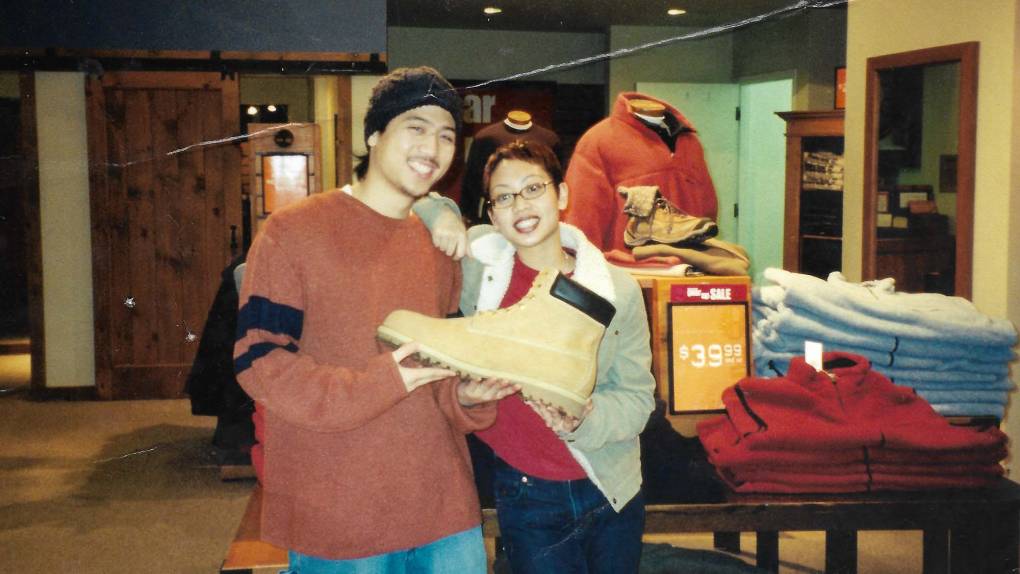
"caption": "A young Rocky Rivera (right) poses with her beloved wheat color Timberland boot. She worked in the downtown San Francisco Timberland store in the early 2000s.",
"description": null,
"title": "Timberland Scan-crop_RR",
"credit": "Courtesy of Rocky Rivera",
"status": "inherit",
"altTag": "A young man and woman pose for a photo inside a clothing store while holding a oversized Timberland work boot.",
"isLoading": false,
"fetchFailed": false
},
"arts_13938915": {
"type": "attachments",
"id": "arts_13938915",
"meta": {
"index": "attachments_1716263798",
"site": "arts",
"id": "13938915",
"found": true
},
"parent": 0,
"imgSizes": {
"twentyfourteen-full-width": {
"file": "https://cdn.kqed.org/wp-content/uploads/sites/2/2023/12/20231204-SFFILM-Festival-Awards-036-JY-KQED-1038x576.jpg",
"width": 1038,
"mimeType": "image/jpeg",
"height": 576
},
"thumbnail": {
"file": "https://cdn.kqed.org/wp-content/uploads/sites/2/2023/12/20231204-SFFILM-Festival-Awards-036-JY-KQED-160x107.jpg",
"width": 160,
"mimeType": "image/jpeg",
"height": 107
},
"post-thumbnail": {
"file": "https://cdn.kqed.org/wp-content/uploads/sites/2/2023/12/20231204-SFFILM-Festival-Awards-036-JY-KQED-672x372.jpg",
"width": 672,
"mimeType": "image/jpeg",
"height": 372
},
"kqedFullSize": {
"file": "https://cdn.kqed.org/wp-content/uploads/sites/2/2023/12/20231204-SFFILM-Festival-Awards-036-JY-KQED.jpg",
"width": 2000,
"height": 1333
},
"large": {
"file": "https://cdn.kqed.org/wp-content/uploads/sites/2/2023/12/20231204-SFFILM-Festival-Awards-036-JY-KQED-1020x680.jpg",
"width": 1020,
"mimeType": "image/jpeg",
"height": 680
},
"1536x1536": {
"file": "https://cdn.kqed.org/wp-content/uploads/sites/2/2023/12/20231204-SFFILM-Festival-Awards-036-JY-KQED-1536x1024.jpg",
"width": 1536,
"mimeType": "image/jpeg",
"height": 1024
},
"full-width": {
"file": "https://cdn.kqed.org/wp-content/uploads/sites/2/2023/12/20231204-SFFILM-Festival-Awards-036-JY-KQED-1920x1280.jpg",
"width": 1920,
"mimeType": "image/jpeg",
"height": 1280
},
"medium": {
"file": "https://cdn.kqed.org/wp-content/uploads/sites/2/2023/12/20231204-SFFILM-Festival-Awards-036-JY-KQED-800x533.jpg",
"width": 800,
"mimeType": "image/jpeg",
"height": 533
},
"medium_large": {
"file": "https://cdn.kqed.org/wp-content/uploads/sites/2/2023/12/20231204-SFFILM-Festival-Awards-036-JY-KQED-768x512.jpg",
"width": 768,
"mimeType": "image/jpeg",
"height": 512
}
},
"publishDate": 1701796340,
"modified": 1706045725,
"caption": "Director and actress Greta Gerwig poses on the red carpet at the 2023 SFFILM Festival Awards at the Yerba Buena Center for the Arts in San Francisco on Monday, Dec. 4, 2023. Gerwig received the Irving M. Levin Award for Film Direction on Monday.",
"description": null,
"title": "SFFILM Festival Awards",
"credit": "Juliana Yamada/ KQED",
"status": "inherit",
"altTag": "A person in a blue dress in front of a backdrop with the words \"SFFILM\" written on it.",
"isLoading": false,
"fetchFailed": false
},
"arts_13938804": {
"type": "attachments",
"id": "arts_13938804",
"meta": {
"index": "attachments_1716263798",
"site": "arts",
"id": "13938804",
"found": true
},
"parent": 13938798,
"imgSizes": {
"twentyfourteen-full-width": {
"file": "https://ww2.kqed.org/app/uploads/sites/2/2023/12/Bibingka-HR-PC_-Rezel-Kealoha-1038x576.jpg",
"width": 1038,
"mimeType": "image/jpeg",
"height": 576
},
"thumbnail": {
"file": "https://ww2.kqed.org/app/uploads/sites/2/2023/12/Bibingka-HR-PC_-Rezel-Kealoha-160x90.jpg",
"width": 160,
"mimeType": "image/jpeg",
"height": 90
},
"post-thumbnail": {
"file": "https://ww2.kqed.org/app/uploads/sites/2/2023/12/Bibingka-HR-PC_-Rezel-Kealoha-672x372.jpg",
"width": 672,
"mimeType": "image/jpeg",
"height": 372
},
"kqedFullSize": {
"file": "https://ww2.kqed.org/app/uploads/sites/2/2023/12/Bibingka-HR-PC_-Rezel-Kealoha.jpg",
"width": 2000,
"height": 1125
},
"large": {
"file": "https://ww2.kqed.org/app/uploads/sites/2/2023/12/Bibingka-HR-PC_-Rezel-Kealoha-1020x574.jpg",
"width": 1020,
"mimeType": "image/jpeg",
"height": 574
},
"1536x1536": {
"file": "https://ww2.kqed.org/app/uploads/sites/2/2023/12/Bibingka-HR-PC_-Rezel-Kealoha-1536x864.jpg",
"width": 1536,
"mimeType": "image/jpeg",
"height": 864
},
"full-width": {
"file": "https://ww2.kqed.org/app/uploads/sites/2/2023/12/Bibingka-HR-PC_-Rezel-Kealoha-1920x1080.jpg",
"width": 1920,
"mimeType": "image/jpeg",
"height": 1080
},
"medium": {
"file": "https://ww2.kqed.org/app/uploads/sites/2/2023/12/Bibingka-HR-PC_-Rezel-Kealoha-800x450.jpg",
"width": 800,
"mimeType": "image/jpeg",
"height": 450
},
"medium_large": {
"file": "https://ww2.kqed.org/app/uploads/sites/2/2023/12/Bibingka-HR-PC_-Rezel-Kealoha-768x432.jpg",
"width": 768,
"mimeType": "image/jpeg",
"height": 432
}
},
"publishDate": 1701461447,
"modified": 1701461613,
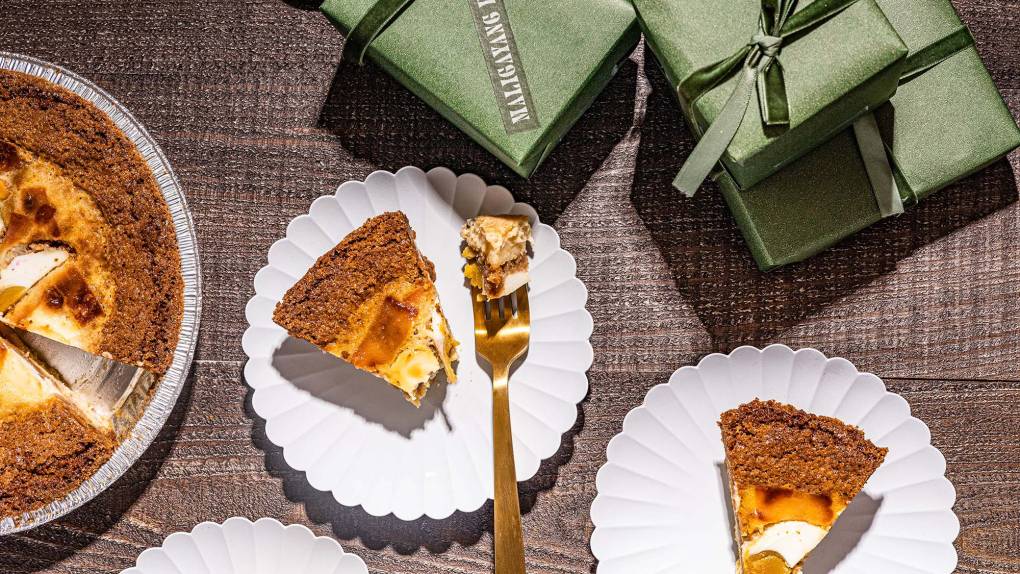
"caption": "Sweet Condesa's bibingka pie is inspired by a kind of coconut rice cake that's traditionally eaten for Christmas in the Philippines.",
"description": null,
"title": "Bibingka HR (PC_ Rezel Kealoha)",
"credit": "Courtesy of Rezel Kealoha",
"status": "inherit",
"altTag": "Overhead view of slices of custard pie on white plates, with gifts wrapped in green wrapping paper in the background.",
"isLoading": false,
"fetchFailed": false
},
"arts_13938395": {
"type": "attachments",
"id": "arts_13938395",
"meta": {
"index": "attachments_1716263798",
"site": "arts",
"id": "13938395",
"found": true
},
"parent": 13938024,
"imgSizes": {
"twentyfourteen-full-width": {
"file": "https://ww2.kqed.org/app/uploads/sites/2/2023/11/GettyImages-1298945965-1038x576.jpg",
"width": 1038,
"mimeType": "image/jpeg",
"height": 576
},
"thumbnail": {
"file": "https://ww2.kqed.org/app/uploads/sites/2/2023/11/GettyImages-1298945965-160x96.jpg",
"width": 160,
"mimeType": "image/jpeg",
"height": 96
},
"post-thumbnail": {
"file": "https://ww2.kqed.org/app/uploads/sites/2/2023/11/GettyImages-1298945965-672x372.jpg",
"width": 672,
"mimeType": "image/jpeg",
"height": 372
},
"kqedFullSize": {
"file": "https://ww2.kqed.org/app/uploads/sites/2/2023/11/GettyImages-1298945965.jpg",
"width": 1651,
"height": 992
},
"large": {
"file": "https://ww2.kqed.org/app/uploads/sites/2/2023/11/GettyImages-1298945965-1020x613.jpg",
"width": 1020,
"mimeType": "image/jpeg",
"height": 613
},
"1536x1536": {
"file": "https://ww2.kqed.org/app/uploads/sites/2/2023/11/GettyImages-1298945965-1536x923.jpg",
"width": 1536,
"mimeType": "image/jpeg",
"height": 923
},
"medium": {
"file": "https://ww2.kqed.org/app/uploads/sites/2/2023/11/GettyImages-1298945965-800x481.jpg",
"width": 800,
"mimeType": "image/jpeg",
"height": 481
},
"medium_large": {
"file": "https://ww2.kqed.org/app/uploads/sites/2/2023/11/GettyImages-1298945965-768x461.jpg",
"width": 768,
"mimeType": "image/jpeg",
"height": 461
}
},
"publishDate": 1700612449,
"modified": 1700612586,
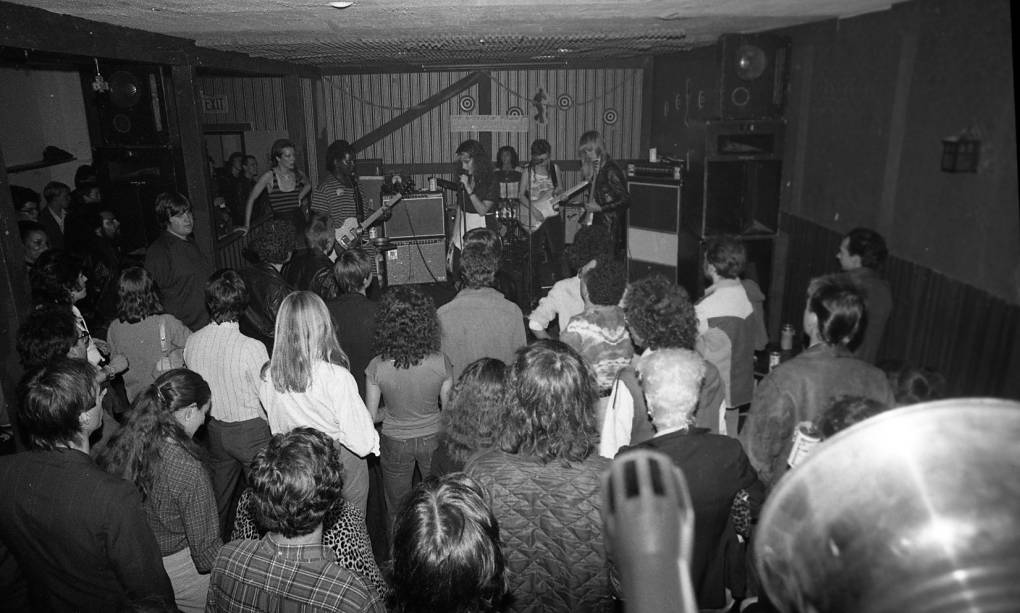
"caption": "A show at the legendary Deaf Club.",
"description": null,
"title": "A show at the legendary Deaf Club.",
"credit": "Vici MacDonald/ San Francisco Chronicle via Getty Images",
"status": "inherit",
"altTag": "A small, dank room with a band playing at the back of the room and a small audience watching, viewed from behind.",
"isLoading": false,
"fetchFailed": false
},
"arts_13938298": {
"type": "attachments",
"id": "arts_13938298",
"meta": {
"index": "attachments_1716263798",
"site": "arts",
"id": "13938298",
"found": true
},
"parent": 13938291,
"imgSizes": {
"twentyfourteen-full-width": {
"file": "https://ww2.kqed.org/app/uploads/sites/2/2023/11/BroadwayDragon2-JohnnyDismal_COVER-1038x576.jpg",
"width": 1038,
"mimeType": "image/jpeg",
"height": 576
},
"thumbnail": {
"file": "https://ww2.kqed.org/app/uploads/sites/2/2023/11/BroadwayDragon2-JohnnyDismal_COVER-160x126.jpg",
"width": 160,
"mimeType": "image/jpeg",
"height": 126
},
"post-thumbnail": {
"file": "https://ww2.kqed.org/app/uploads/sites/2/2023/11/BroadwayDragon2-JohnnyDismal_COVER-672x372.jpg",
"width": 672,
"mimeType": "image/jpeg",
"height": 372
},
"kqedFullSize": {
"file": "https://ww2.kqed.org/app/uploads/sites/2/2023/11/BroadwayDragon2-JohnnyDismal_COVER.jpg",
"width": 1454,
"height": 1148
},
"large": {
"file": "https://ww2.kqed.org/app/uploads/sites/2/2023/11/BroadwayDragon2-JohnnyDismal_COVER-1020x805.jpg",
"width": 1020,
"mimeType": "image/jpeg",
"height": 805
},
"medium": {
"file": "https://ww2.kqed.org/app/uploads/sites/2/2023/11/BroadwayDragon2-JohnnyDismal_COVER-800x632.jpg",
"width": 800,
"mimeType": "image/jpeg",
"height": 632
},
"medium_large": {
"file": "https://ww2.kqed.org/app/uploads/sites/2/2023/11/BroadwayDragon2-JohnnyDismal_COVER-768x606.jpg",
"width": 768,
"mimeType": "image/jpeg",
"height": 606
}
},
"publishDate": 1700517161,
"modified": 1700525351,
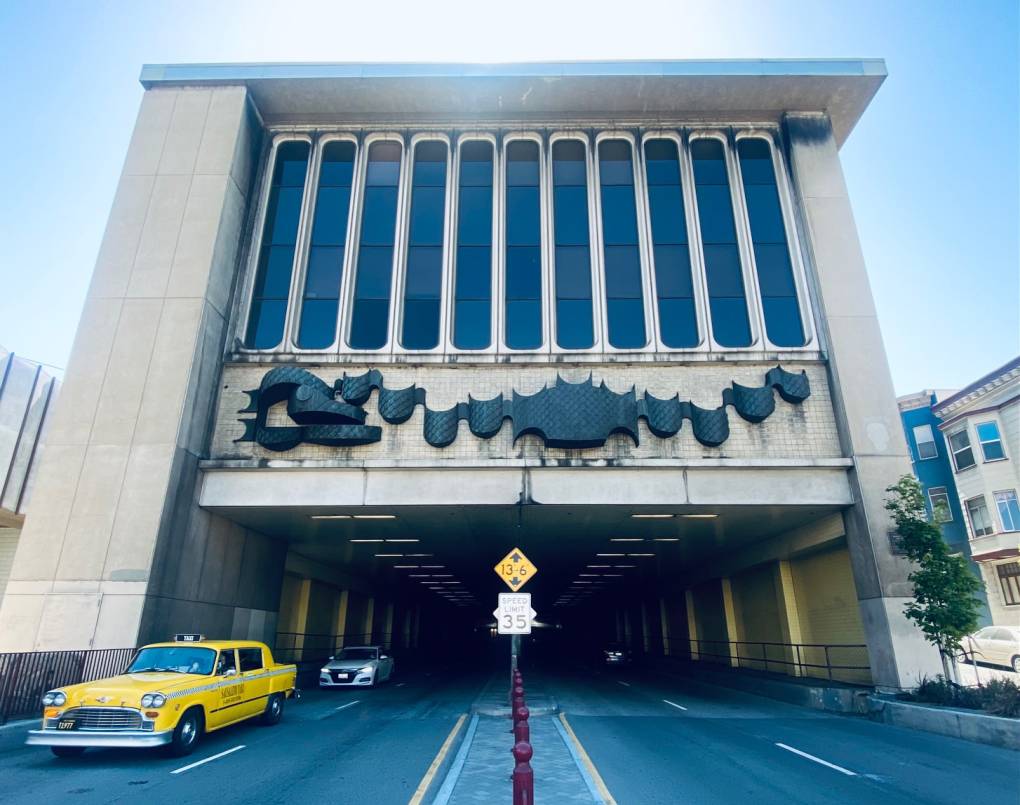
"caption": "Patti Bowler's 'Dragon Relief' has been mounted above the Broadway Tunnel on the facade of the Chinatown Public Health Center since 1970.",
"description": null,
"title": "BroadwayDragon2-JohnnyDismal_COVER",
"credit": "Johnny Dismal",
"status": "inherit",
"altTag": "two-way street goes under 70s style building with wide abstract metal dragon sculpture on face",
"isLoading": false,
"fetchFailed": false
},
"arts_13938014": {
"type": "attachments",
"id": "arts_13938014",
"meta": {
"index": "attachments_1716263798",
"site": "arts",
"id": "13938014",
"found": true
},
"parent": 13938001,
"imgSizes": {
"twentyfourteen-full-width": {
"file": "https://ww2.kqed.org/app/uploads/sites/2/2023/11/20231101-My-Linh-Le-012-JY_COVER-1038x576.jpg",
"width": 1038,
"mimeType": "image/jpeg",
"height": 576
},
"thumbnail": {
"file": "https://ww2.kqed.org/app/uploads/sites/2/2023/11/20231101-My-Linh-Le-012-JY_COVER-160x107.jpg",
"width": 160,
"mimeType": "image/jpeg",
"height": 107
},
"post-thumbnail": {
"file": "https://ww2.kqed.org/app/uploads/sites/2/2023/11/20231101-My-Linh-Le-012-JY_COVER-672x372.jpg",
"width": 672,
"mimeType": "image/jpeg",
"height": 372
},
"kqedFullSize": {
"file": "https://ww2.kqed.org/app/uploads/sites/2/2023/11/20231101-My-Linh-Le-012-JY_COVER.jpg",
"width": 2000,
"height": 1333
},
"large": {
"file": "https://ww2.kqed.org/app/uploads/sites/2/2023/11/20231101-My-Linh-Le-012-JY_COVER-1020x680.jpg",
"width": 1020,
"mimeType": "image/jpeg",
"height": 680
},
"1536x1536": {
"file": "https://ww2.kqed.org/app/uploads/sites/2/2023/11/20231101-My-Linh-Le-012-JY_COVER-1536x1024.jpg",
"width": 1536,
"mimeType": "image/jpeg",
"height": 1024
},
"full-width": {
"file": "https://ww2.kqed.org/app/uploads/sites/2/2023/11/20231101-My-Linh-Le-012-JY_COVER-1920x1280.jpg",
"width": 1920,
"mimeType": "image/jpeg",
"height": 1280
},
"medium": {
"file": "https://ww2.kqed.org/app/uploads/sites/2/2023/11/20231101-My-Linh-Le-012-JY_COVER-800x533.jpg",
"width": 800,
"mimeType": "image/jpeg",
"height": 533
},
"medium_large": {
"file": "https://ww2.kqed.org/app/uploads/sites/2/2023/11/20231101-My-Linh-Le-012-JY_COVER-768x512.jpg",
"width": 768,
"mimeType": "image/jpeg",
"height": 512
}
},
"publishDate": 1699990201,
"modified": 1699990360,
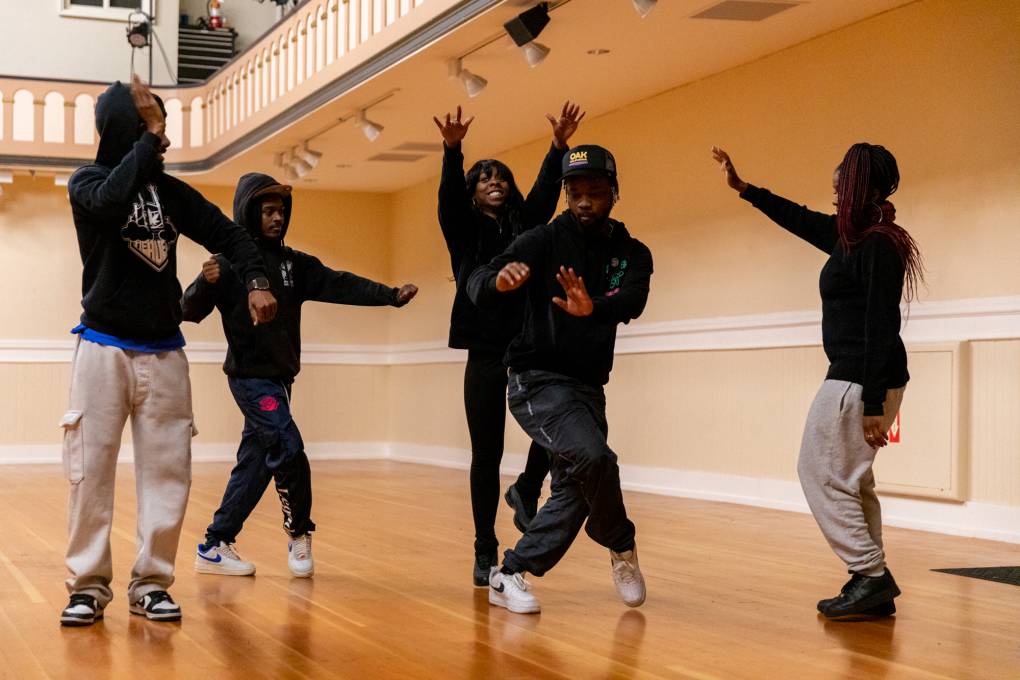
"caption": "Gary 'Ice Cold 3000' Morgan (center) dances with Mud Water Theatre members during rehearsal for 'Mud Water IV' at the Bayview Opera House. Created by My-Linh Le, the dance theatre piece will premiere at Dance Mission Theater on Nov. 18.\n\n",
"description": null,
"title": "20231101-My-Linh-Le-012-JY_COVER",
"credit": "Juliana Yamada/KQED",
"status": "inherit",
"altTag": null,
"isLoading": false,
"fetchFailed": false
},
"arts_13937992": {
"type": "attachments",
"id": "arts_13937992",
"meta": {
"index": "attachments_1716263798",
"site": "arts",
"id": "13937992",
"found": true
},
"parent": 13937961,
"imgSizes": {
"twentyfourteen-full-width": {
"file": "https://ww2.kqed.org/app/uploads/sites/2/2023/11/Tony-Toni-Tone-2.REV_-1038x576.png",
"width": 1038,
"mimeType": "image/png",
"height": 576
},
"thumbnail": {
"file": "https://ww2.kqed.org/app/uploads/sites/2/2023/11/Tony-Toni-Tone-2.REV_-160x90.png",
"width": 160,
"mimeType": "image/png",
"height": 90
},
"post-thumbnail": {
"file": "https://ww2.kqed.org/app/uploads/sites/2/2023/11/Tony-Toni-Tone-2.REV_-672x372.png",
"width": 672,
"mimeType": "image/png",
"height": 372
},
"kqedFullSize": {
"file": "https://ww2.kqed.org/app/uploads/sites/2/2023/11/Tony-Toni-Tone-2.REV_.png",
"width": 1152,
"height": 648
},
"large": {
"file": "https://ww2.kqed.org/app/uploads/sites/2/2023/11/Tony-Toni-Tone-2.REV_-1020x574.png",
"width": 1020,
"mimeType": "image/png",
"height": 574
},
"medium": {
"file": "https://ww2.kqed.org/app/uploads/sites/2/2023/11/Tony-Toni-Tone-2.REV_-800x450.png",
"width": 800,
"mimeType": "image/png",
"height": 450
},
"medium_large": {
"file": "https://ww2.kqed.org/app/uploads/sites/2/2023/11/Tony-Toni-Tone-2.REV_-768x432.png",
"width": 768,
"mimeType": "image/png",
"height": 432
}
},
"publishDate": 1699943752,
"modified": 1699943898,
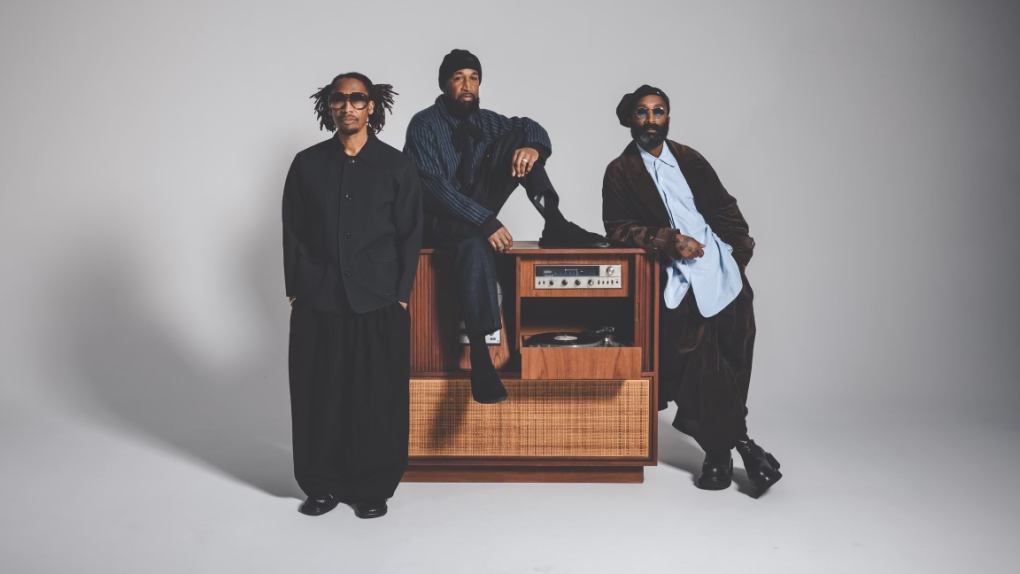
"caption": "Tony! Toni! Toné! bring their Just Me And You Tour to the Bay Area for three shows this week, including two in their hometown of Oakland at the Paramount Theatre. 'Oakland is our base, no matter what,' says D'Wayne Wiggins.",
"description": null,
"title": "Tony Toni Tone 2.REV",
"credit": "David 'Odiwams' Wright",
"status": "inherit",
"altTag": "Three Black men lean on a vintage stereo console",
"isLoading": false,
"fetchFailed": false
},
"arts_13937876": {
"type": "attachments",
"id": "arts_13937876",
"meta": {
"index": "attachments_1716263798",
"site": "arts",
"id": "13937876",
"found": true
},
"parent": 13937866,
"imgSizes": {
"twentyfourteen-full-width": {
"file": "https://ww2.kqed.org/app/uploads/sites/2/2023/11/Gaza-Surf-1038x538.jpg",
"width": 1038,
"mimeType": "image/jpeg",
"height": 538
},
"thumbnail": {
"file": "https://ww2.kqed.org/app/uploads/sites/2/2023/11/Gaza-Surf-160x80.jpg",
"width": 160,
"mimeType": "image/jpeg",
"height": 80
},
"post-thumbnail": {
"file": "https://ww2.kqed.org/app/uploads/sites/2/2023/11/Gaza-Surf-672x372.jpg",
"width": 672,
"mimeType": "image/jpeg",
"height": 372
},
"kqedFullSize": {
"file": "https://ww2.kqed.org/app/uploads/sites/2/2023/11/Gaza-Surf.jpg",
"width": 1076,
"height": 538
},
"large": {
"file": "https://ww2.kqed.org/app/uploads/sites/2/2023/11/Gaza-Surf-1020x510.jpg",
"width": 1020,
"mimeType": "image/jpeg",
"height": 510
},
"medium": {
"file": "https://ww2.kqed.org/app/uploads/sites/2/2023/11/Gaza-Surf-800x400.jpg",
"width": 800,
"mimeType": "image/jpeg",
"height": 400
},
"medium_large": {
"file": "https://ww2.kqed.org/app/uploads/sites/2/2023/11/Gaza-Surf-768x384.jpg",
"width": 768,
"mimeType": "image/jpeg",
"height": 384
}
},
"publishDate": 1699556330,
"modified": 1699556505,
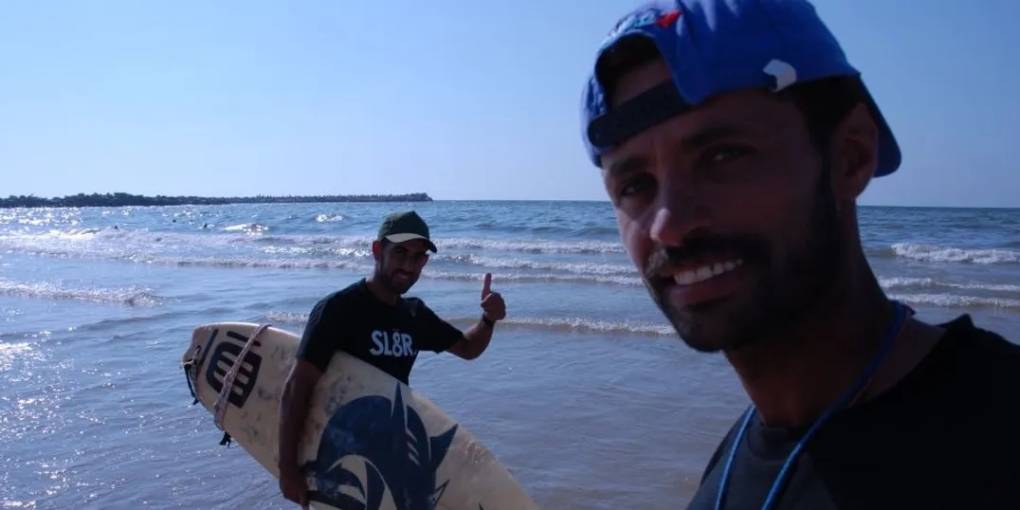
"caption": "Two surfers from the Gaza Surf Club stand near the coastline.",
"description": null,
"title": "Gaza Surf",
"credit": "The Gaza Surf Club website",
"status": "inherit",
"altTag": "two surfers on the shore of Gaza",
"isLoading": false,
"fetchFailed": false
},
"arts_13937891": {
"type": "attachments",
"id": "arts_13937891",
"meta": {
"index": "attachments_1716263798",
"site": "arts",
"id": "13937891",
"found": true
},
"parent": 13937851,
"imgSizes": {
"twentyfourteen-full-width": {
"file": "https://ww2.kqed.org/app/uploads/sites/2/2023/11/ofrendas-tamale-1038x576.jpg",
"width": 1038,
"mimeType": "image/jpeg",
"height": 576
},
"thumbnail": {
"file": "https://ww2.kqed.org/app/uploads/sites/2/2023/11/ofrendas-tamale-160x110.jpg",
"width": 160,
"mimeType": "image/jpeg",
"height": 110
},
"post-thumbnail": {
"file": "https://ww2.kqed.org/app/uploads/sites/2/2023/11/ofrendas-tamale-672x372.jpg",
"width": 672,
"mimeType": "image/jpeg",
"height": 372
},
"kqedFullSize": {
"file": "https://ww2.kqed.org/app/uploads/sites/2/2023/11/ofrendas-tamale.jpg",
"width": 1920,
"height": 1320
},
"large": {
"file": "https://ww2.kqed.org/app/uploads/sites/2/2023/11/ofrendas-tamale-1020x701.jpg",
"width": 1020,
"mimeType": "image/jpeg",
"height": 701
},
"1536x1536": {
"file": "https://ww2.kqed.org/app/uploads/sites/2/2023/11/ofrendas-tamale-1536x1056.jpg",
"width": 1536,
"mimeType": "image/jpeg",
"height": 1056
},
"medium": {
"file": "https://ww2.kqed.org/app/uploads/sites/2/2023/11/ofrendas-tamale-800x550.jpg",
"width": 800,
"mimeType": "image/jpeg",
"height": 550
},
"medium_large": {
"file": "https://ww2.kqed.org/app/uploads/sites/2/2023/11/ofrendas-tamale-768x528.jpg",
"width": 768,
"mimeType": "image/jpeg",
"height": 528
}
},
"publishDate": 1699557652,
"modified": 1699557767,
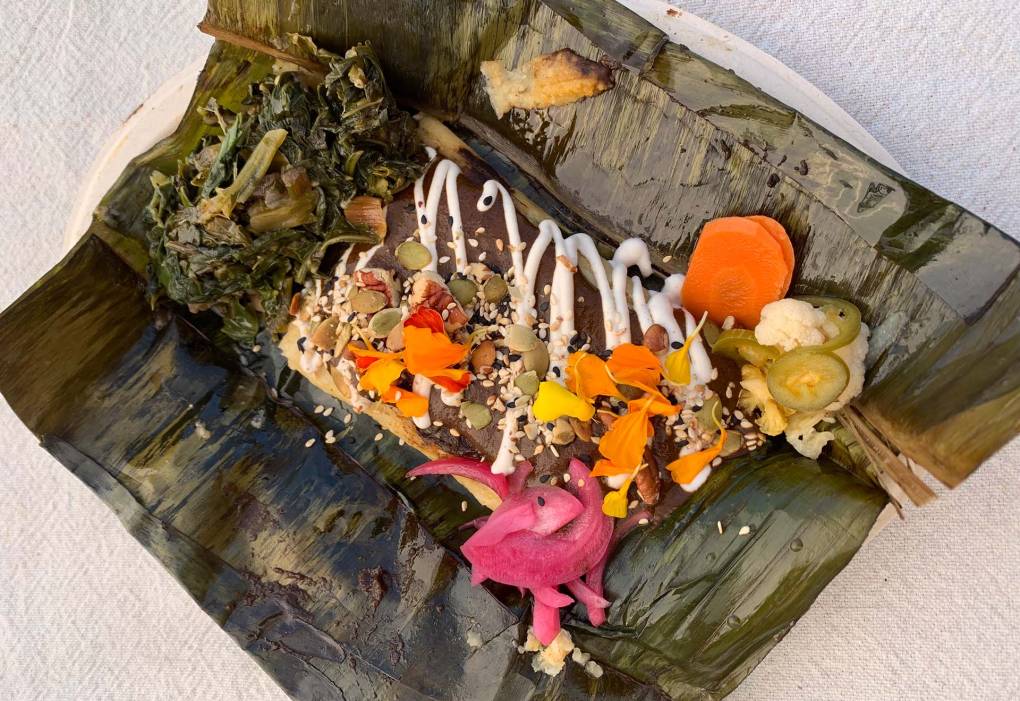
"caption": "Emmanuel Galvan's approach to tamal making is a reflection of his layered Mexican American experience.",
"description": null,
"title": "ofrendas tamale",
"credit": "Courtesy of Emmanuel Galvan",
"status": "inherit",
"altTag": "an open-faced tamale in banana leaf is decorated with a variety of colorful ingredients",
"isLoading": false,
"fetchFailed": false
},
"arts_13936840": {
"type": "attachments",
"id": "arts_13936840",
"meta": {
"index": "attachments_1716263798",
"site": "arts",
"id": "13936840",
"found": true
},
"title": "231019-RentCheck-001-BL-KQED",
"publishDate": 1698078304,
"status": "inherit",
"parent": 0,
"modified": 1778740291,
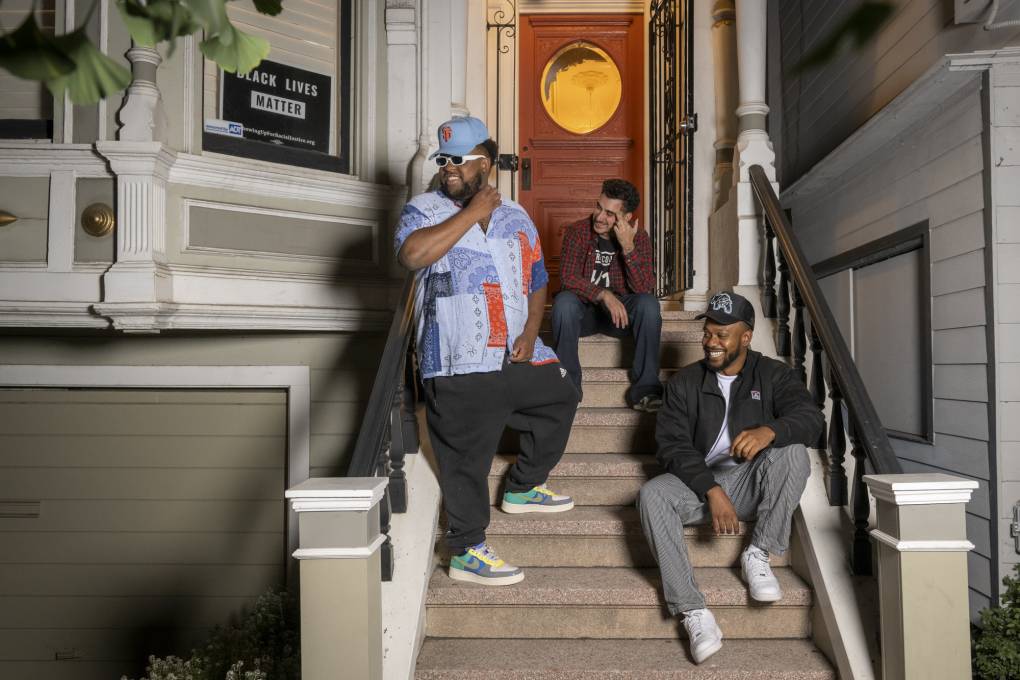
"caption": "From left: Afterthought, Baghead and Mike Evans Jr. hang out on the stoop of Afterthought's home studio in San Francisco on Oct. 19, 2023.",
"credit": "Beth LaBerge/KQED",
"altTag": "Three people sit and lean on the steps outside of a home and smile.",
"description": null,
"imgSizes": {
"medium": {
"file": "https://cdn.kqed.org/wp-content/uploads/sites/2/2023/10/231019-RentCheck-001-BL-KQED-800x533.jpg",
"width": 800,
"height": 533,
"mimeType": "image/jpeg"
},
"large": {
"file": "https://cdn.kqed.org/wp-content/uploads/sites/2/2023/10/231019-RentCheck-001-BL-KQED-1020x680.jpg",
"width": 1020,
"height": 680,
"mimeType": "image/jpeg"
},
"thumbnail": {
"file": "https://cdn.kqed.org/wp-content/uploads/sites/2/2023/10/231019-RentCheck-001-BL-KQED-160x107.jpg",
"width": 160,
"height": 107,
"mimeType": "image/jpeg"
},
"medium_large": {
"file": "https://cdn.kqed.org/wp-content/uploads/sites/2/2023/10/231019-RentCheck-001-BL-KQED-768x512.jpg",
"width": 768,
"height": 512,
"mimeType": "image/jpeg"
},
"1536x1536": {
"file": "https://cdn.kqed.org/wp-content/uploads/sites/2/2023/10/231019-RentCheck-001-BL-KQED-1536x1024.jpg",
"width": 1536,
"height": 1024,
"mimeType": "image/jpeg"
},
"post-thumbnail": {
"file": "https://cdn.kqed.org/wp-content/uploads/sites/2/2023/10/231019-RentCheck-001-BL-KQED-672x372.jpg",
"width": 672,
"height": 372,
"mimeType": "image/jpeg"
},
"twentyfourteen-full-width": {
"file": "https://cdn.kqed.org/wp-content/uploads/sites/2/2023/10/231019-RentCheck-001-BL-KQED-1038x576.jpg",
"width": 1038,
"height": 576,
"mimeType": "image/jpeg"
},
"full-width": {
"file": "https://cdn.kqed.org/wp-content/uploads/sites/2/2023/10/231019-RentCheck-001-BL-KQED-1920x1280.jpg",
"width": 1920,
"height": 1280,
"mimeType": "image/jpeg"
},
"kqedFullSize": {
"file": "https://cdn.kqed.org/wp-content/uploads/sites/2/2023/10/231019-RentCheck-001-BL-KQED.jpg",
"width": 2000,
"height": 1333
}
},
"isLoading": false,
"fetchFailed": false
},
"arts_13905561": {
"type": "attachments",
"id": "arts_13905561",
"meta": {
"index": "attachments_1716263798",
"site": "arts",
"id": "13905561",
"found": true
},
"parent": 13905544,
"imgSizes": {
"thumbnail": {
"file": "https://ww2.kqed.org/app/uploads/sites/2/2021/10/Rexx-Life-Raj-backstage-at-Outisde-Lands-on-Saturday-Oct.-30-2-160x107.jpg",
"width": 160,
"mimeType": "image/jpeg",
"height": 107
},
"post-thumbnail": {
"file": "https://ww2.kqed.org/app/uploads/sites/2/2021/10/Rexx-Life-Raj-backstage-at-Outisde-Lands-on-Saturday-Oct.-30-2-672x372.jpg",
"width": 672,
"mimeType": "image/jpeg",
"height": 372
},
"kqedFullSize": {
"file": "https://ww2.kqed.org/app/uploads/sites/2/2021/10/Rexx-Life-Raj-backstage-at-Outisde-Lands-on-Saturday-Oct.-30-2.jpg",
"width": 800,
"height": 533
},
"medium_large": {
"file": "https://ww2.kqed.org/app/uploads/sites/2/2021/10/Rexx-Life-Raj-backstage-at-Outisde-Lands-on-Saturday-Oct.-30-2-768x512.jpg",
"width": 768,
"mimeType": "image/jpeg",
"height": 512
}
},
"publishDate": 1635669356,
"modified": 1635698658,
"caption": "Rexx Life Raj backstage at Outisde Lands on Saturday, Oct. 30.",
"description": "Rexx Life Raj backstage at Outisde Lands on Saturday, Oct. 30.",
"title": "Rexx Life Raj backstage at Outisde Lands on Saturday, Oct. 30.",
"credit": "Estefany Gonzalez",
"status": "inherit",
"altTag": null,
"isLoading": false,
"fetchFailed": false
},
"arts_13936581": {
"type": "attachments",
"id": "arts_13936581",
"meta": {
"index": "attachments_1716263798",
"site": "arts",
"id": "13936581",
"found": true
},
"parent": 13936556,
"imgSizes": {
"twentyfourteen-full-width": {
"file": "https://ww2.kqed.org/app/uploads/sites/2/2023/10/StudArchiveBook_COVERgreen-1038x576.jpg",
"width": 1038,
"mimeType": "image/jpeg",
"height": 576
},
"thumbnail": {
"file": "https://ww2.kqed.org/app/uploads/sites/2/2023/10/StudArchiveBook_COVERgreen-160x90.jpg",
"width": 160,
"mimeType": "image/jpeg",
"height": 90
},
"post-thumbnail": {
"file": "https://ww2.kqed.org/app/uploads/sites/2/2023/10/StudArchiveBook_COVERgreen-672x372.jpg",
"width": 672,
"mimeType": "image/jpeg",
"height": 372
},
"kqedFullSize": {
"file": "https://ww2.kqed.org/app/uploads/sites/2/2023/10/StudArchiveBook_COVERgreen.jpg",
"width": 1920,
"height": 1080
},
"large": {
"file": "https://ww2.kqed.org/app/uploads/sites/2/2023/10/StudArchiveBook_COVERgreen-1020x574.jpg",
"width": 1020,
"mimeType": "image/jpeg",
"height": 574
},
"1536x1536": {
"file": "https://ww2.kqed.org/app/uploads/sites/2/2023/10/StudArchiveBook_COVERgreen-1536x864.jpg",
"width": 1536,
"mimeType": "image/jpeg",
"height": 864
},
"medium": {
"file": "https://ww2.kqed.org/app/uploads/sites/2/2023/10/StudArchiveBook_COVERgreen-800x450.jpg",
"width": 800,
"mimeType": "image/jpeg",
"height": 450
},
"medium_large": {
"file": "https://ww2.kqed.org/app/uploads/sites/2/2023/10/StudArchiveBook_COVERgreen-768x432.jpg",
"width": 768,
"mimeType": "image/jpeg",
"height": 432
}
},
"publishDate": 1697574926,
"modified": 1697574960,
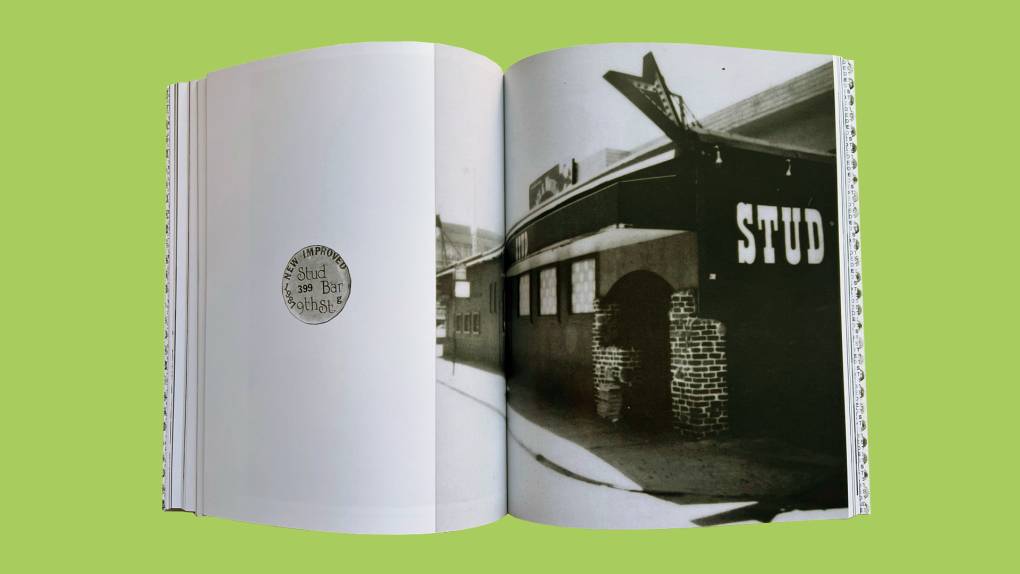
"caption": "A spread from 'The Stud Pin Archive and Ephemera 1970–1999.'",
"description": null,
"title": "StudArchiveBook_COVERgreen",
"credit": null,
"status": "inherit",
"altTag": "Open book with image of round pin on left page, black and white photo of exterior of bar on right, light green background",
"isLoading": false,
"fetchFailed": false
}
},
"audioPlayerReducer": {
"postId": "stream_live",
"isPaused": true,
"isPlaying": false,
"pfsActive": false,
"pledgeModalIsOpen": true,
"playerDrawerIsOpen": false,
"liveAudioPlayStartedAt": 0,
"liveAudioPlayContext": ""
},
"authorsReducer": {
"byline_arts_13938001": {
"type": "authors",
"id": "byline_arts_13938001",
"meta": {
"override": true
},
"slug": "byline_arts_13938001",
"name": "Dorothy R. Santos",
"isLoading": false
},
"shotchkiss": {
"type": "authors",
"id": "61",
"meta": {
"index": "authors_1716337520",
"id": "61",
"found": true
},
"name": "Sarah Hotchkiss",
"firstName": "Sarah",
"lastName": "Hotchkiss",
"slug": "shotchkiss",
"email": "shotchkiss@kqed.org",
"display_author_email": true,
"staff_mastheads": [
"arts"
],
"title": "Senior Editor",
"bio": "Sarah Hotchkiss is a San Francisco \u003ca href=\"http://www.sarahhotchkiss.com\">artist\u003c/a> and arts writer. In 2019, she received the Dorothea & Leo Rabkin Foundation grant for visual art journalism and in 2020 she received a Society of Professional Journalists, Northern California award for excellence in arts and culture reporting.",
"avatar": "https://secure.gravatar.com/avatar/bc662df144b3d27fd8b1b6f1c2a420d34e91e53154d411bb7ad353cc8b6cea8d?s=600&d=blank&r=g",
"twitter": null,
"bluesky": null,
"facebook": null,
"instagram": null,
"linkedin": null,
"sites": [
{
"site": "",
"roles": [
"editor"
]
},
{
"site": "arts",
"roles": [
"Contributor",
"administrator"
]
},
{
"site": "artschool",
"roles": [
"administrator"
]
},
{
"site": "news",
"roles": [
"editor"
]
},
{
"site": "pop",
"roles": [
"administrator"
]
},
{
"site": "bayareabites",
"roles": [
"editor"
]
},
{
"site": "spark",
"roles": [
"editor"
]
},
{
"site": "checkplease",
"roles": [
"editor"
]
}
],
"headData": {
"title": "Sarah Hotchkiss | KQED",
"description": "Senior Editor",
"ogImgSrc": "https://secure.gravatar.com/avatar/bc662df144b3d27fd8b1b6f1c2a420d34e91e53154d411bb7ad353cc8b6cea8d?s=600&d=blank&r=g",
"twImgSrc": "https://secure.gravatar.com/avatar/bc662df144b3d27fd8b1b6f1c2a420d34e91e53154d411bb7ad353cc8b6cea8d?s=600&d=blank&r=g"
},
"isLoading": false,
"link": "/author/shotchkiss"
},
"ralexandra": {
"type": "authors",
"id": "11242",
"meta": {
"index": "authors_1716337520",
"id": "11242",
"found": true
},
"name": "Rae Alexandra",
"firstName": "Rae",
"lastName": "Alexandra",
"slug": "ralexandra",
"email": "ralexandra@kqed.org",
"display_author_email": true,
"staff_mastheads": [],
"title": "Reporter/Producer",
"bio": "Rae Alexandra is a Reporter/Producer for KQED Arts & Culture, and the creator/author of the \u003ca href=\"https://www.kqed.org/arts/program/rebel-girls-from-bay-area-history\">Rebel Girls From Bay Area History\u003c/a> and \u003ca href=\"https://www.kqed.org/bizarrebayarea\">Bizarre Bay Area\u003c/a> series. Her debut book, \u003ca href=\"https://citylights.com/politics-current-events-history/unsung-heroines35-women-who-changed/\">Unsung Heroines: 35 Women Who Changed the Bay Area\u003c/a> was published by City Lights in March 2026. In 2023, Rae was awarded an SPJ Excellence in Journalism Award for Arts & Culture. Rae was born and raised in Wales and subsequently — even after two decades in Northern California — still uses phrases that regularly baffle her coworkers.",
"avatar": "https://secure.gravatar.com/avatar/edfee8176c80cc0a382b051190f5341997df378a934a5774dcb0977732dfd401?s=600&d=blank&r=g",
"twitter": null,
"bluesky": null,
"facebook": null,
"instagram": null,
"linkedin": null,
"sites": [
{
"site": "arts",
"roles": [
"subscriber"
]
},
{
"site": "news",
"roles": [
"subscriber"
]
},
{
"site": "pop",
"roles": [
"subscriber"
]
},
{
"site": "bayareabites",
"roles": [
"subscriber"
]
},
{
"site": "science",
"roles": [
"subscriber"
]
}
],
"headData": {
"title": "Rae Alexandra | KQED",
"description": "Reporter/Producer",
"ogImgSrc": "https://secure.gravatar.com/avatar/edfee8176c80cc0a382b051190f5341997df378a934a5774dcb0977732dfd401?s=600&d=blank&r=g",
"twImgSrc": "https://secure.gravatar.com/avatar/edfee8176c80cc0a382b051190f5341997df378a934a5774dcb0977732dfd401?s=600&d=blank&r=g"
},
"isLoading": false,
"link": "/author/ralexandra"
},
"aproehl": {
"type": "authors",
"id": "11296",
"meta": {
"index": "authors_1716337520",
"id": "11296",
"found": true
},
"name": "Ariana Proehl",
"firstName": "Ariana",
"lastName": "Proehl",
"slug": "aproehl",
"email": "aproehl@KQED.org",
"display_author_email": true,
"staff_mastheads": [
"news"
],
"title": "Culture Reporter, KQED",
"bio": "Ariana Proehl is a Culture Reporter and Host.",
"avatar": "https://secure.gravatar.com/avatar/c96b24567eb5bb3a4f8bb295ed53e232?s=600&d=blank&r=g",
"twitter": "ArianaProehl",
"facebook": null,
"instagram": null,
"linkedin": null,
"sites": [
{
"site": "arts",
"roles": []
},
{
"site": "news",
"roles": []
},
{
"site": "education",
"roles": []
},
{
"site": "forum",
"roles": []
}
],
"headData": {
"title": "Ariana Proehl | KQED",
"description": "Culture Reporter, KQED",
"ogImgSrc": "https://secure.gravatar.com/avatar/c96b24567eb5bb3a4f8bb295ed53e232?s=600&d=blank&r=g",
"twImgSrc": "https://secure.gravatar.com/avatar/c96b24567eb5bb3a4f8bb295ed53e232?s=600&d=blank&r=g"
},
"isLoading": false,
"link": "/author/aproehl"
},
"nvoynovskaya": {
"type": "authors",
"id": "11387",
"meta": {
"index": "authors_1716337520",
"id": "11387",
"found": true
},
"name": "Nastia Voynovskaya",
"firstName": "Nastia",
"lastName": "Voynovskaya",
"slug": "nvoynovskaya",
"email": "nvoynovskaya@kqed.org",
"display_author_email": false,
"staff_mastheads": [
"arts"
],
"title": "Editor and reporter",
"bio": "Nastia Voynovskaya is a reporter, editor and host at KQED Arts & Culture. She's been covering the arts in the Bay Area for over a decade, with a focus on music, queer culture, labor issues and grassroots organizing. She has edited KQED story series such as Trans Bay: A History of San Francisco's Gender-Diverse Community, and co-created KQED's Bay Area hip-hop history project, That's My Word. Nastia's work has been recognized by the Society of Professional Journalists and San Francisco Press Club. She regularly appears on podcasts and radio programs, including NPR's All Songs Considered, and hosts live events where music, culture and conversation meet.",
"avatar": "https://secure.gravatar.com/avatar/5025ee460e5a85d69ca20ea6c6f2f80d7e17795c828f61ea3aecfcd924e9042e?s=600&d=blank&r=g",
"twitter": null,
"bluesky": null,
"facebook": null,
"instagram": "https://www.instagram.com/nananastia/",
"linkedin": null,
"sites": [
{
"site": "",
"roles": [
"editor"
]
},
{
"site": "arts",
"roles": [
"administrator"
]
},
{
"site": "news",
"roles": [
"editor"
]
},
{
"site": "pop",
"roles": [
"administrator"
]
},
{
"site": "bayareabites",
"roles": [
"editor"
]
},
{
"site": "podcasts",
"roles": [
"editor"
]
},
{
"site": "hiphop",
"roles": [
"editor"
]
}
],
"headData": {
"title": "Nastia Voynovskaya | KQED",
"description": "Editor and reporter",
"ogImgSrc": "https://secure.gravatar.com/avatar/5025ee460e5a85d69ca20ea6c6f2f80d7e17795c828f61ea3aecfcd924e9042e?s=600&d=blank&r=g",
"twImgSrc": "https://secure.gravatar.com/avatar/5025ee460e5a85d69ca20ea6c6f2f80d7e17795c828f61ea3aecfcd924e9042e?s=600&d=blank&r=g"
},
"isLoading": false,
"link": "/author/nvoynovskaya"
},
"ltsai": {
"type": "authors",
"id": "11743",
"meta": {
"index": "authors_1716337520",
"id": "11743",
"found": true
},
"name": "Luke Tsai",
"firstName": "Luke",
"lastName": "Tsai",
"slug": "ltsai",
"email": "ltsai@kqed.org",
"display_author_email": true,
"staff_mastheads": [
"arts"
],
"title": "Food Editor",
"bio": "Luke Tsai is KQED's food editor and resident stinky tofu connoisseur. Prior to KQED, he was an editor at Eater SF, \u003cem>San Francisco \u003c/em>magazine, and the \u003cem>East Bay Express\u003c/em>, and his work has also appeared in TASTE, the \u003cem>San Francisco Chronicle\u003c/em>, and the \u003cem>Best Food Writing\u003c/em> anthology. When he isn't writing or editing, you'll find him eating most everything he can get his hands on.",
"avatar": "https://secure.gravatar.com/avatar/1e59b45bf191526e7339d6ba46e33a57b2030d25c27660ecc64ea3cb863e34f7?s=600&d=blank&r=g",
"twitter": "theluketsai",
"bluesky": null,
"facebook": null,
"instagram": null,
"linkedin": null,
"sites": [
{
"site": "",
"roles": [
"editor"
]
},
{
"site": "arts",
"roles": [
"administrator"
]
},
{
"site": "news",
"roles": [
"editor",
"contributor"
]
},
{
"site": "bayareabites",
"roles": [
"editor"
]
},
{
"site": "food",
"roles": [
"editor"
]
}
],
"headData": {
"title": "Luke Tsai | KQED",
"description": "Food Editor",
"ogImgSrc": "https://secure.gravatar.com/avatar/1e59b45bf191526e7339d6ba46e33a57b2030d25c27660ecc64ea3cb863e34f7?s=600&d=blank&r=g",
"twImgSrc": "https://secure.gravatar.com/avatar/1e59b45bf191526e7339d6ba46e33a57b2030d25c27660ecc64ea3cb863e34f7?s=600&d=blank&r=g"
},
"isLoading": false,
"link": "/author/ltsai"
},
"achazaro": {
"type": "authors",
"id": "11748",
"meta": {
"index": "authors_1716337520",
"id": "11748",
"found": true
},
"name": "Alan Chazaro",
"firstName": "Alan",
"lastName": "Chazaro",
"slug": "achazaro",
"email": "agchazaro@gmail.com",
"display_author_email": true,
"staff_mastheads": [],
"title": "Food Writer and Reporter",
"bio": "Alan Chazaro is the author of \u003cem>This Is Not a Frank Ocean Cover Album\u003c/em> (Black Lawrence Press, 2019), \u003cem>Piñata Theory\u003c/em> (Black Lawrence Press, 2020), and \u003cem>Notes from the Eastern Span of the Bay Bridge\u003c/em> (Ghost City Press, 2021). He is a graduate of June Jordan’s Poetry for the People program at UC Berkeley and a former Lawrence Ferlinghetti Fellow at the University of San Francisco. He writes about sports, food, art, music, education, and culture while repping the Bay on \u003ca href=\"https://twitter.com/alan_chazaro\">Twitter\u003c/a> and \u003ca href=\"https://www.instagram.com/alan_chazaro/?hl=en\">Instagram\u003c/a> at @alan_chazaro.",
"avatar": "https://secure.gravatar.com/avatar/ea8b6dd970fc5c29e7a188e7d5861df7?s=600&d=blank&r=g",
"twitter": "alan_chazaro",
"facebook": null,
"instagram": null,
"linkedin": null,
"sites": [
{
"site": "arts",
"roles": [
"contributor"
]
},
{
"site": "news",
"roles": [
"editor"
]
}
],
"headData": {
"title": "Alan Chazaro | KQED",
"description": "Food Writer and Reporter",
"ogImgSrc": "https://secure.gravatar.com/avatar/ea8b6dd970fc5c29e7a188e7d5861df7?s=600&d=blank&r=g",
"twImgSrc": "https://secure.gravatar.com/avatar/ea8b6dd970fc5c29e7a188e7d5861df7?s=600&d=blank&r=g"
},
"isLoading": false,
"link": "/author/achazaro"
},
"rockyrivera": {
"type": "authors",
"id": "11846",
"meta": {
"index": "authors_1716337520",
"id": "11846",
"found": true
},
"name": "Rocky Rivera",
"firstName": "Rocky",
"lastName": "Rivera",
"slug": "rockyrivera",
"email": "ms.rocky.rivera@gmail.com",
"display_author_email": false,
"staff_mastheads": [],
"title": "KQED Contributor",
"bio": "Rocky Rivera is a journalist, emcee, author and activist from San Francisco. She has released four albums through her label, Beatrock Music, and a ten-volume mixtape series with DJ Roza. She released her first book in 2021, entitled \u003cem>Snakeskin: Essays by Rocky Rivera\u003c/em>. Her latest album dropped in September 2024 and is called \"Long Kiss Goodnight\" with emcee/producer Otayo Dubb. She currently writes the Frisco Foodies column as a love letter to her hometown.",
"avatar": "https://secure.gravatar.com/avatar/946241ee2c59e6040607dfc75240d91b?s=600&d=blank&r=g",
"twitter": null,
"facebook": "https://m.facebook.com/rockyriveramusic",
"instagram": "https://instagram.com/rockyrivera",
"linkedin": "https://www.linkedin.com/in/krishtinedeleon/",
"sites": [
{
"site": "arts",
"roles": [
"author"
]
}
],
"headData": {
"title": "Rocky Rivera | KQED",
"description": "KQED Contributor",
"ogImgSrc": "https://secure.gravatar.com/avatar/946241ee2c59e6040607dfc75240d91b?s=600&d=blank&r=g",
"twImgSrc": "https://secure.gravatar.com/avatar/946241ee2c59e6040607dfc75240d91b?s=600&d=blank&r=g"
},
"isLoading": false,
"link": "/author/rockyrivera"
},
"omayeda": {
"type": "authors",
"id": "11872",
"meta": {
"index": "authors_1716337520",
"id": "11872",
"found": true
},
"name": "Olivia Cruz Mayeda",
"firstName": "Olivia Cruz",
"lastName": "Mayeda",
"slug": "omayeda",
"email": "omayeda@kqed.org",
"display_author_email": false,
"staff_mastheads": [],
"title": "Reporter",
"bio": "Olivia Cruz Mayeda is a journalist covering style, culture and reparations in the Bay Area, a place that has been home to her family for over 100 years. Her writing has also appeared in the \u003cem>San Francisco Chronicle\u003c/em> and \u003cem>El Tecolote\u003c/em>.",
"avatar": "https://secure.gravatar.com/avatar/a8c0baa30219ce1071a9474f4c14141f?s=600&d=blank&r=g",
"twitter": null,
"facebook": null,
"instagram": null,
"linkedin": null,
"sites": [
{
"site": "arts",
"roles": [
"contributor"
]
}
],
"headData": {
"title": "Olivia Cruz Mayeda | KQED",
"description": "Reporter",
"ogImgSrc": "https://secure.gravatar.com/avatar/a8c0baa30219ce1071a9474f4c14141f?s=600&d=blank&r=g",
"twImgSrc": "https://secure.gravatar.com/avatar/a8c0baa30219ce1071a9474f4c14141f?s=600&d=blank&r=g"
},
"isLoading": false,
"link": "/author/omayeda"
}
},
"pagesReducer": {
"arts_tag_san-francisco": {
"type": "terms",
"id": "arts_1146",
"meta": {
"index": "terms_1716263798",
"site": "arts",
"id": "1146",
"score": 6.722821
},
"featImg": null,
"name": "San Francisco",
"description": null,
"taxonomy": "tag",
"headData": {
"twImgId": null,
"twTitle": null,
"ogTitle": null,
"ogImgId": null,
"twDescription": null,
"description": null,
"title": "San Francisco Archives | KQED Arts",
"ogDescription": null
},
"ttid": 701,
"slug": "san-francisco",
"isLoading": false,
"title": "San Francisco",
"pageMeta": {
"site": "arts",
"WpPageTemplate": "page-topic-editorial",
"currentPage": 33
},
"blocks": [
{
"blockName": "kqed/post-list",
"attrs": {
"layout": "cardArticle2",
"query": "posts/arts?tag=san-francisco",
"seeMore": false,
"paginated": true,
"page": 33
}
},
{
"blockName": "kqed/ad"
}
]
}
},
"pfsSessionReducer": {},
"postsReducer": {
"stream_live": {
"type": "live",
"id": "stream_live",
"audioUrl": "https://streams.kqed.org/kqedradio",
"title": "Live Stream",
"excerpt": "Live Stream information currently unavailable.",
"link": "/radio",
"featImg": "",
"label": {
"name": "KQED Live",
"link": "/"
}
},
"stream_kqedNewscast": {
"type": "posts",
"id": "stream_kqedNewscast",
"audioUrl": "https://www.kqed.org/.stream/anon/radio/RDnews/newscast.mp3?_=1",
"title": "KQED Newscast",
"featImg": "",
"label": {
"name": "88.5 FM",
"link": "/"
}
},
"arts_13939383": {
"type": "posts",
"id": "arts_13939383",
"meta": {
"index": "posts_1716263798",
"site": "arts",
"id": "13939383",
"score": null,
"sort": [
1702584960000
]
},
"parent": 0,
"labelTerm": {},
"blocks": [],
"publishDate": 1702584960,
"format": "standard",
"title": "The Downtown San Francisco I Loved Was a Holiday Wonderland",
"headTitle": "The Downtown San Francisco I Loved Was a Holiday Wonderland | KQED",
"content": "\u003cp>\u003cstrong>\u003cem>Frisco Foodies is a recurring column in which a San Francisco local shares food memories of growing up in a now rapidly changing city.\u003c/em>\u003c/strong>\u003c/p>\n\u003cp>[dropcap]T[/dropcap]his holiday season, my teenage son asked for his first pair of classic wheat Timberland boots. Favored by construction workers and rap legends, Timberlands are prized for their lifelong durability and rugged aesthetic. I should know — I’ve had my own pair of wheats on ice for over twenty years. The style of shoe is canon in hip-hop history; when I interviewed the Wu-Tang Clan for \u003ci>The Source\u003c/i> in 2007, they mentioned that their performance fee back then, split between the nine original members, was sometimes only enough for a pair of Timbs.\u003c/p>\n\u003cp>In the early 2000s, when I worked as a retail associate at Timberland’s downtown San Francisco store, I learned that only the classics were resoleable for life, and that they were water-resistant enough to withstand a quick downpour but not a heavy deluge. They were a good investment, I told my son, but please let Mom pick them out. I wanted him to have a lasting pair.\u003c/p>\n\u003cp>I loved that downtown Timberland job and have fond memories of taking the J-Church train from Mission Terrace over Dolores Park and through the Castro, before it finally dropped me off at Market & Powell. I was convinced it was the most beautiful Muni line in the city, and the holiday season, with the Embarcadero skyline lit up, made the trip even more festive. It was just close enough to Union Square to feel the holiday cheer in the crisp winter air and hear a melancholy Coltrane song from a street performer’s saxophone. The store itself was small enough for me to form lasting relationships there. And the employee discount was good enough to allow me to play Santa during the holidays.\u003c/p>\n\u003cfigure id=\"attachment_13939440\" class=\"wp-caption alignnone\" style=\"max-width: 2000px\">\u003cimg loading=\"lazy\" decoding=\"async\" class=\"size-full wp-image-13939440\" src=\"https://cdn.kqed.org/wp-content/uploads/sites/2/2023/12/timberland-tag_RR.jpg\" alt='Over a box a Timberland boots, a hand holds up an engraved leather name tag that reads \"Krishtine\"' width=\"2000\" height=\"1983\" srcset=\"https://cdn.kqed.org/wp-content/uploads/sites/2/2023/12/timberland-tag_RR.jpg 2000w, https://cdn.kqed.org/wp-content/uploads/sites/2/2023/12/timberland-tag_RR-800x793.jpg 800w, https://cdn.kqed.org/wp-content/uploads/sites/2/2023/12/timberland-tag_RR-1020x1011.jpg 1020w, https://cdn.kqed.org/wp-content/uploads/sites/2/2023/12/timberland-tag_RR-160x159.jpg 160w, https://cdn.kqed.org/wp-content/uploads/sites/2/2023/12/timberland-tag_RR-768x761.jpg 768w, https://cdn.kqed.org/wp-content/uploads/sites/2/2023/12/timberland-tag_RR-1536x1523.jpg 1536w, https://cdn.kqed.org/wp-content/uploads/sites/2/2023/12/timberland-tag_RR-1920x1904.jpg 1920w\" sizes=\"(max-width: 2000px) 100vw, 2000px\">\u003cfigcaption class=\"wp-caption-text\">A relic of the downtown San Francisco of the early 2000s. \u003ccite>(Courtesy of Rocky Rivera)\u003c/cite>\u003c/figcaption>\u003c/figure>\n\u003cp>Fast forward to 2023 and I haven’t stepped foot in downtown for years — not since the pandemic accelerated the neighborhood’s retail apocalypse. What used to be the prime destination for Christmas shopping now has to contend with two-day Amazon Prime shipping and a barrage of Fox News reports about the whole area being an open-air drug market. Cop cars park on the corner next to Louis Vuitton, hoping to deter roving gangs of juvenile shoplifters known for their \u003ca href=\"https://www.ktvu.com/news/video-shows-san-franciscos-union-square-louis-vuitton-store-after-it-was-emptied-out-by-thieves\">chaotic smash-and-grabs\u003c/a>. Even a high-end supermarket couldn’t save its customers from \u003ca href=\"https://www.nytimes.com/2023/04/30/us/san-francisco-whole-foods-crime-economy.html\">“machete-wielding” assailants and drug users overdosing in the bathroom\u003c/a> — though locals might wonder who Whole Foods was trying to cater to downtown in the first place.\u003c/p>\n\u003cp>[ad fullwidth]\u003c/p>\n\u003cp>The neighborhood’s food scene isn’t doing much better. Chefs lament about how the lack of foot traffic and downtown office workers has shut down both trendy power-lunch spots (\u003ca href=\"https://www.sfchronicle.com/food/restaurants/article/barbacco-italian-san-francisco-18376833.php\">Barbacco\u003c/a>) and beloved family-run staples (\u003ca href=\"https://www.sfchronicle.com/food/restaurants/article/turtle-tower-vietnamese-closed-18519642.php\">Turtle Tower\u003c/a>). The nearby San Francisco Shopping Centre Mall is a shell of itself — about \u003ca href=\"https://www.nytimes.com/2023/06/14/business/westfield-mall-sf.html\">45 percent empty\u003c/a> after the Nordstrom closed over the summer. Even during the lunch rush, the food court often feels deserted.\u003c/p>\n\u003cp>\u003cspan style=\"font-weight: 400\">[aside postID='arts_13929836,arts_13923127,arts_13921079']\u003c/span>The downtown I remember had shoplifters, drug users, scammers and weirdos, too — that part hasn’t changed as much as today’s news headlines might lead you to believe. But back when I worked downtown, I could spend my half-hour lunch breaks on a $2.50 slice combo at Blondie’s Pizza or splurge on a $15 roast chicken with mashed potatoes at Wolfgang Puck’s bistro in the Macy’s Cellar. Sometimes I’d have clam chowder in a sourdough bowl at Boudin; other days, I would save my pennies and meet my family for a celebratory dinner at Tad’s Steakhouse. When I was really broke, there was always the McDonald’s on Powell, where the old Filipino manongs used to hang out and watch the tourists on cable cars go past — not to mention the countless corner stores that sold bagels, coffee and sandwiches next to the Swisher Sweet cigars I used to wrap my blunts.\u003c/p>\n\u003cp>Most of these places are gone or relocated from where they originally stood. Even the McDonald’s are \u003ca href=\"https://sfstandard.com/2023/10/31/downtown-san-francisco-mcdonalds-closes/\">shutting down\u003c/a>. And the Timberland store I loved so much? That’s gone as well. My engraved leather name tag and pristine-condition wheats are all that remain of that era of downtown San Francisco.\u003c/p>\n\u003ch2>\u003cb>‘Make the City Better’\u003c/b>\u003c/h2>\n\u003cp>“No one remembers, right before the pandemic, how many restaurants were closing, how many chefs burned out, how bad business was, how bad the rent was,” says Christian Ciscle, a chef and longtime San Francisco resident who owns \u003ca href=\"https://www.instagram.com/sfchickenbox/?hl=en\">SF Chickenbox \u003c/a>— a restaurant known for its perfectly golden-fried chicken, homemade hot sauces and chewy-pillowy mochi muffins. I’ve followed Ciscle’s seasoned breadcrumb trail from Little Skillet, where he served chicken and waffles to clubgoers at 330 Ritch, to Wing Wings in Lower Haight and now his new location in North Beach.\u003c/p>\n\u003cfigure id=\"attachment_13937770\" class=\"wp-caption alignnone\" style=\"max-width: 2000px\">\u003cimg loading=\"lazy\" decoding=\"async\" class=\"size-full wp-image-13937770\" src=\"https://cdn.kqed.org/wp-content/uploads/sites/2/2023/11/231108-SUCK-FLEA-MARKET-AC-05-KQED.jpg\" alt=\"A person in a baseball cap stands in the doorway of a city building.\" width=\"2000\" height=\"1333\" srcset=\"https://cdn.kqed.org/wp-content/uploads/sites/2/2023/11/231108-SUCK-FLEA-MARKET-AC-05-KQED.jpg 2000w, https://cdn.kqed.org/wp-content/uploads/sites/2/2023/11/231108-SUCK-FLEA-MARKET-AC-05-KQED-800x533.jpg 800w, https://cdn.kqed.org/wp-content/uploads/sites/2/2023/11/231108-SUCK-FLEA-MARKET-AC-05-KQED-1020x680.jpg 1020w, https://cdn.kqed.org/wp-content/uploads/sites/2/2023/11/231108-SUCK-FLEA-MARKET-AC-05-KQED-160x107.jpg 160w, https://cdn.kqed.org/wp-content/uploads/sites/2/2023/11/231108-SUCK-FLEA-MARKET-AC-05-KQED-768x512.jpg 768w, https://cdn.kqed.org/wp-content/uploads/sites/2/2023/11/231108-SUCK-FLEA-MARKET-AC-05-KQED-1536x1024.jpg 1536w, https://cdn.kqed.org/wp-content/uploads/sites/2/2023/11/231108-SUCK-FLEA-MARKET-AC-05-KQED-1920x1280.jpg 1920w\" sizes=\"(max-width: 2000px) 100vw, 2000px\">\u003cfigcaption class=\"wp-caption-text\">Christian Ciscle stands outside of the 332 Pine St. location of his latest project, Sucka Flea, a pop-up flea and swap market. \u003ccite>(Aryk Copley for KQED)\u003c/cite>\u003c/figcaption>\u003c/figure>\n\u003cp>Ciscle believes the mental health crisis and crime that have always existed in San Francisco are now compounded by the \u003ca href=\"https://www.sfexaminer.com/news/cocaine-buffets-and-meth-poop-meet-twitter-s-rising-anti-san-francisco-influencers/article_723ddc00-24b0-11ed-bfc5-732c1fb7fc07.html\">constant barrage of videos\u003c/a> that serve as fuel for conservative media outlets looking to blame progressive politicians. Experiencing even one incident first-hand is enough to make a liberal store owner switch ideologies to welcome increased police presence — an approach Ciscle believes doesn’t actually deter property crime but instead targets the most vulnerable. “There’s truth to how bad it is, but unhoused people didn’t make [downtown] bad,” he says. “What made them unhoused did.”\u003c/p>\n\u003cp>Downtown San Francisco has never been an ideal place for a food business, in Ciscle’s opinion: “It was always dead after 5 p.m. on weekdays and weekends. It was never a place to do business, unless you’re Tyler Florence.” And when the pandemic hit and business came to a screeching halt, he saw how vulnerable everyone was to closing down. “Nobody was bulletproof,” he says. “Everyone had to reassess their business model, their values.”\u003c/p>\n\u003cfigure id=\"attachment_13937771\" class=\"wp-caption alignnone\" style=\"max-width: 2000px\">\u003cimg loading=\"lazy\" decoding=\"async\" class=\"size-full wp-image-13937771\" src=\"https://cdn.kqed.org/wp-content/uploads/sites/2/2023/11/231108-SUCK-FLEA-MARKET-AC-06-KQED.jpg\" alt=\"A group of people stand stand outside of a city building.\" width=\"2000\" height=\"1333\" srcset=\"https://cdn.kqed.org/wp-content/uploads/sites/2/2023/11/231108-SUCK-FLEA-MARKET-AC-06-KQED.jpg 2000w, https://cdn.kqed.org/wp-content/uploads/sites/2/2023/11/231108-SUCK-FLEA-MARKET-AC-06-KQED-800x533.jpg 800w, https://cdn.kqed.org/wp-content/uploads/sites/2/2023/11/231108-SUCK-FLEA-MARKET-AC-06-KQED-1020x680.jpg 1020w, https://cdn.kqed.org/wp-content/uploads/sites/2/2023/11/231108-SUCK-FLEA-MARKET-AC-06-KQED-160x107.jpg 160w, https://cdn.kqed.org/wp-content/uploads/sites/2/2023/11/231108-SUCK-FLEA-MARKET-AC-06-KQED-768x512.jpg 768w, https://cdn.kqed.org/wp-content/uploads/sites/2/2023/11/231108-SUCK-FLEA-MARKET-AC-06-KQED-1536x1024.jpg 1536w, https://cdn.kqed.org/wp-content/uploads/sites/2/2023/11/231108-SUCK-FLEA-MARKET-AC-06-KQED-1920x1280.jpg 1920w\" sizes=\"(max-width: 2000px) 100vw, 2000px\">\u003cfigcaption class=\"wp-caption-text\">Vendors take a break outside of 332 Pine St. from the Sucka Flea market in San Francisco, Calif. on Nov. 5, 2023. \u003ccite>(Aryk Copley for KQED)\u003c/cite>\u003c/figcaption>\u003c/figure>\n\u003cp>Luckily, a newly created nonprofit called \u003ca href=\"https://sfnewdeal.org/\">SF New Deal\u003c/a> supported food businesses by paying them to provide meals for various community orgs. It paid SF Chickenbox for 200 meals a day — a source of money Ciscle could rely on in unsteady times, enabling him to keep his business open. Earlier this year, the program evolved into \u003ca href=\"https://www.vibrantsf.org/how-we-work\">Vacant to Vibrant\u003c/a> (V2V), a new initiative that tries to activate empty office spaces to accommodate small business pop-ups.\u003c/p>\n\u003cp>[pullquote size=\"large\" align=\"right\" citation=\"Christian Ciscle\"]‘Unhoused people didn’t make downtown bad. What made them unhoused did.’[/pullquote]Ciscle didn’t want to expand SF Chickenbox into downtown. But his experience throwing community festivals in years past made him perk up at the prospect of doing more than just food. The V2V program would allow him to utilize his long-standing relationships with vendors, artists, DJs and local artisans. So Ciscle created Sucka Flea, a pop-up flea market (and homage to San Francisco’s “Sucka Free” alias) that would also include local food vendors like \u003ca href=\"https://www.kqed.org/arts/13928804/hyphy-iceez-icee-slushy-filipino-hip-hop-mission-district-sf\">Hyphy Iceez\u003c/a> and \u003ca href=\"https://www.kqed.org/arts/13926749/tasty-tings-jamaican-beef-patties-sf-oakland\">Tasty Tings\u003c/a>. The flea market’s last event of the year — a \u003ca href=\"https://www.instagram.com/p/C0f3tPKLJZt/\">holiday-themed market\u003c/a> — will take place at Hub Embarcadero (Howard St. and Embarcadero) on Saturday, Dec. 16.\u003c/p>\n\u003cp>For jewelry designer \u003ca href=\"https://www.kqed.org/arts/13932647/rightnowish-presents-adorned-the-art-of-self-expression-affirmation\">Chelsea Macalino-Calalay\u003c/a>, Sucka Flea has provided a consistent space to sell her wares. At the Pine Street pop-up, her colorful baubles catch the eye of my five-year-old daughter, who otherwise would have no business in the Financial District on a Sunday afternoon. Macalino-Calalay is one of the thousands of Filipino Americans who were displaced from SoMa’s Manilatown enclave that once spanned ten city blocks to the International Hotel on Kearny Street. Macalino-Calalay’s family emigrated in the late ’60s and early ’70s. Her grandfather’s siblings were first employed as sign-painters at the Thomas Swan Sign Company when it was on Howard Street, then as food and service industry workers.\u003c/p>\n\u003cfigure id=\"attachment_13939443\" class=\"wp-caption alignnone\" style=\"max-width: 1920px\">\u003cimg loading=\"lazy\" decoding=\"async\" class=\"size-full wp-image-13939443\" src=\"https://cdn.kqed.org/wp-content/uploads/sites/2/2023/12/L1002703-qut.jpg\" alt=\"A smiling vendor greets a customer at an indoor flea market.\" width=\"1920\" height=\"1280\" srcset=\"https://cdn.kqed.org/wp-content/uploads/sites/2/2023/12/L1002703-qut.jpg 1920w, https://cdn.kqed.org/wp-content/uploads/sites/2/2023/12/L1002703-qut-800x533.jpg 800w, https://cdn.kqed.org/wp-content/uploads/sites/2/2023/12/L1002703-qut-1020x680.jpg 1020w, https://cdn.kqed.org/wp-content/uploads/sites/2/2023/12/L1002703-qut-160x107.jpg 160w, https://cdn.kqed.org/wp-content/uploads/sites/2/2023/12/L1002703-qut-768x512.jpg 768w, https://cdn.kqed.org/wp-content/uploads/sites/2/2023/12/L1002703-qut-1536x1024.jpg 1536w\" sizes=\"(max-width: 1920px) 100vw, 1920px\">\u003cfigcaption class=\"wp-caption-text\">The author chats with vendors Chelsea Macalino-Calalay (center) and Dante Kaleo during the November edition of Sucka Flea’s downtown pop-up. \u003ccite>(Aryk Copley for KQED)\u003c/cite>\u003c/figcaption>\u003c/figure>\n\u003cp>“I used to be a crepe chef and a cake decorator and a hostess and a waitress. So I worked in food, too. It showed me a lot about work ethic as well as perseverance,” she recalls with pride. “But it also showed me what I don’t want in a work environment.”\u003c/p>\n\u003cp>\u003cspan style=\"font-weight: 400\">[aside postID='arts_13933833']\u003c/span>Macalino-Calalay remembers downtown San Francisco as the place her family squeezed into on weekends, patronizing the fresh Filipino food at Aling Mary’s Unimart, relishing her lola’s home cooking, and enjoying meals from the McDonald’s on Bryant, where her father worked as a manager with an all-Filipino staff. Community orgs like West Bay, Soma Pilipinas and United Playaz helped her as a young girl, and Macalino-Calalay is seeing a resurgence of these kinds of resources that she hopes will continue.\u003c/p>\n\u003cp>When asked if things are better or worse today, she pauses. “From someone who didn’t grow up in SF, ‘worse’ is very subjective. Things being worse just looks like us not being there,” she says about her family of SF locals, who are now scattered throughout the East Bay and Outer Mission. Some are still in the SoMa, where her jewelry is now being shown in a special exhibit at SFMOMA with artist Pacita Abad. It’s a full-circle moment for a Frisco girl, who used to see parts of the museum being painted below the front steps of her family home on Langton Street.\u003c/p>\n\u003cfigure id=\"attachment_13937768\" class=\"wp-caption alignnone\" style=\"max-width: 2000px\">\u003cimg loading=\"lazy\" decoding=\"async\" class=\"size-full wp-image-13937768\" src=\"https://cdn.kqed.org/wp-content/uploads/sites/2/2023/11/231108-SUCK-FLEA-MARKET-AC-03-KQED.jpg\" alt=\"A person poses for a photo holding up a bowl of food in an indoor setting.\" width=\"2000\" height=\"1333\" srcset=\"https://cdn.kqed.org/wp-content/uploads/sites/2/2023/11/231108-SUCK-FLEA-MARKET-AC-03-KQED.jpg 2000w, https://cdn.kqed.org/wp-content/uploads/sites/2/2023/11/231108-SUCK-FLEA-MARKET-AC-03-KQED-800x533.jpg 800w, https://cdn.kqed.org/wp-content/uploads/sites/2/2023/11/231108-SUCK-FLEA-MARKET-AC-03-KQED-1020x680.jpg 1020w, https://cdn.kqed.org/wp-content/uploads/sites/2/2023/11/231108-SUCK-FLEA-MARKET-AC-03-KQED-160x107.jpg 160w, https://cdn.kqed.org/wp-content/uploads/sites/2/2023/11/231108-SUCK-FLEA-MARKET-AC-03-KQED-768x512.jpg 768w, https://cdn.kqed.org/wp-content/uploads/sites/2/2023/11/231108-SUCK-FLEA-MARKET-AC-03-KQED-1536x1024.jpg 1536w, https://cdn.kqed.org/wp-content/uploads/sites/2/2023/11/231108-SUCK-FLEA-MARKET-AC-03-KQED-1920x1280.jpg 1920w\" sizes=\"(max-width: 2000px) 100vw, 2000px\">\u003cfigcaption class=\"wp-caption-text\">Tanya Herrera (left) and Catherine Pham enjoy taking photos with some vintage collectibles. \u003ccite>(Aryk Copley for KQED)\u003c/cite>\u003c/figcaption>\u003c/figure>\n\u003cp>Meanwhile, \u003ca href=\"https://www.instagram.com/whackdonuts/?hl=en\">Whack Donuts\u003c/a> owner Vandor Hill, a born-and-raised San Franciscan, \u003ca href=\"https://www.sfchronicle.com/food/restaurants/article/downtown-sf-pop-ups-18392057.php\">opened his own temporary pop-up shop\u003c/a> through the V2V program. who sells delectable-looking peach cobbler doughnuts and Donkey Kong bread doughnuts, alongside trendy flavors like Thai tea and horchata. While he has appreciated the opportunity, He believes first-time business owners in San Francisco need even more support from City Hall — and actual follow-through from local politicians. “Like the Bobby Byrd song, ‘Saying It and Doing It Are Two Different Things.’ The mayor along with the Board of Supervisors have been saying a lot in terms of enforcing law and the homeless situation, but have yet to really make any lasting moves for improving these topics,” he says.\u003c/p>\n\u003cp>Ciscle, for his part, believes pandemic-era programs like SF New Deal and Vacant to Vibrant are proof that money is out there for local food business owners: “There’s billionaires blocks away from us right now that could literally fund some shit and make it better — not that they should be running the city,” he says. “There’s money to fund programs out there, not just locking people up. To feed people, put people in houses. Make the city better.”\u003c/p>\n\u003cp>“People are more concerned with seeing [the unhoused] on the street,” Ciscle says. “They’re gonna put a planter on the sidewalk there so they can’t sleep and then be mad it gets knocked over or graffiti-ed up. And now we have two problems.”\u003c/p>\n\u003cfigure id=\"attachment_13937769\" class=\"wp-caption alignnone\" style=\"max-width: 2000px\">\u003cimg loading=\"lazy\" decoding=\"async\" class=\"size-full wp-image-13937769\" src=\"https://cdn.kqed.org/wp-content/uploads/sites/2/2023/11/231108-SUCK-FLEA-MARKET-AC-04-KQED.jpg\" alt=\"A person with long hair laughs while sitting at a table talking to someone else.\" width=\"2000\" height=\"1333\" srcset=\"https://cdn.kqed.org/wp-content/uploads/sites/2/2023/11/231108-SUCK-FLEA-MARKET-AC-04-KQED.jpg 2000w, https://cdn.kqed.org/wp-content/uploads/sites/2/2023/11/231108-SUCK-FLEA-MARKET-AC-04-KQED-800x533.jpg 800w, https://cdn.kqed.org/wp-content/uploads/sites/2/2023/11/231108-SUCK-FLEA-MARKET-AC-04-KQED-1020x680.jpg 1020w, https://cdn.kqed.org/wp-content/uploads/sites/2/2023/11/231108-SUCK-FLEA-MARKET-AC-04-KQED-160x107.jpg 160w, https://cdn.kqed.org/wp-content/uploads/sites/2/2023/11/231108-SUCK-FLEA-MARKET-AC-04-KQED-768x512.jpg 768w, https://cdn.kqed.org/wp-content/uploads/sites/2/2023/11/231108-SUCK-FLEA-MARKET-AC-04-KQED-1536x1024.jpg 1536w, https://cdn.kqed.org/wp-content/uploads/sites/2/2023/11/231108-SUCK-FLEA-MARKET-AC-04-KQED-1920x1280.jpg 1920w\" sizes=\"(max-width: 2000px) 100vw, 2000px\">\u003cfigcaption class=\"wp-caption-text\">Nina Parks gives the author a tarot card reading. \u003ccite>(Aryk Copley for KQED)\u003c/cite>\u003c/figcaption>\u003c/figure>\n\u003cp>For now, Sucka Flea is occupying some of these empty spaces and providing small business owners with shared foot traffic and community. It can’t fix all of the problems facing downtown San Francisco, but it’s a start. After all, creating a family-friendly space that attracts folks from all over the Bay Area to shop downtown is no small feat — and \u003ca href=\"https://www.instagram.com/reel/C05JjsuvGK0/?igshid=MzRlODBiNWFlZA%3D%3D\">spending holiday shopping dollars with local vendors\u003c/a> seems more sustainable than throwing it away on chain restaurants and national department stores that never felt connected to community residents anyway. In a small way, the flea market has brought back some of that old holiday spirit I remember from my own time working in the neighborhood.\u003c/p>\n\u003cp>At the last flea market we attended, my son found a vintage button-down Ben Davis — another Frisco workwear staple — to go with the Timbs that he has yet to receive. Though I don’t consider my own pair vintage, I guess you can say those boots have walked many hills and seen a lot of change. Hopefully they’ll last long enough to live through a revitalization of downtown SF that is truly for the people who built it.\u003c/p>\n\u003cp>\u003cimg loading=\"lazy\" decoding=\"async\" class=\"alignnone size-full wp-image-12127869\" src=\"https://cdn.kqed.org/wp-content/uploads/sites/2/2016/09/Q.Logo_.Break_.jpg\" alt=\"\" width=\"800\" height=\"78\" srcset=\"https://cdn.kqed.org/wp-content/uploads/sites/2/2016/09/Q.Logo_.Break_.jpg 800w, https://cdn.kqed.org/wp-content/uploads/sites/2/2016/09/Q.Logo_.Break_-400x39.jpg 400w, https://cdn.kqed.org/wp-content/uploads/sites/2/2016/09/Q.Logo_.Break_-768x75.jpg 768w\" sizes=\"(max-width: 800px) 100vw, 800px\">\u003c/p>\n\u003cp>\u003ca href=\"https://www.suckaflea.com/\">\u003ci>Sucka Flea\u003c/i>\u003c/a>\u003ci>’s pop-up holiday market will take place on Saturday, Dec. 16, 10 a.m.–4 p.m., at Howard Street and Embarcadero in San Francisco. The downtown pop-up is normally held at 332 Pine St. Its Mission District outpost will have its next event at CityStation SF (701 Valencia St.) on Jan. 14.\u003c/i>\u003c/p>\n\u003cp>[ad floatright]\u003c/p>\n\u003cp>\u003cem>\u003ca href=\"https://www.kqed.org/arts/13921079/mom-tribute-dia-de-los-muertos-filipino-food-altar-frisco-foodies\">Rocky Rivera\u003c/a> is a journalist, emcee, author and activist from San Francisco. She has four musical projects out, three of those with her label Beatrock Music. She released her first book last year, entitled \u003c/em>Snakeskin: Essays by Rocky Rivera\u003cem>.\u003c/em>\u003c/p>\n\n",
"stats": {
"hasVideo": false,
"hasChartOrMap": false,
"hasAudio": false,
"hasPolis": false,
"wordCount": 2358,
"hasGoogleForm": false,
"hasGallery": false,
"hasHearkenModule": false,
"iframeSrcs": [],
"paragraphCount": 27
},
"modified": 1705002975,
"excerpt": "The new Sucka Flea pop-up flea market is helping to bring that feeling back.",
"headData": {
"twImgId": "",
"twTitle": "The Downtown San Francisco I Loved Was a Holiday Wonderland",
"socialTitle": "A New Flea Market Brings Holiday Spirit to Downtown San Francisco %%page%% %%sep%% KQED",
"ogTitle": "The Downtown San Francisco I Loved Was a Holiday Wonderland",
"ogImgId": "",
"twDescription": "",
"description": "The new Sucka Flea pop-up flea market is helping to bring that feeling back.",
"title": "A New Flea Market Brings Holiday Spirit to Downtown San Francisco | KQED",
"ogDescription": "",
"schema": {
"@context": "https://schema.org",
"@type": "Article",
"headline": "The Downtown San Francisco I Loved Was a Holiday Wonderland",
"datePublished": "2023-12-14T12:16:00-08:00",
"dateModified": "2024-01-11T11:56:15-08:00",
"image": "https://cdn.kqed.org/wp-content/uploads/2020/02/KQED-OG-Image@1x.png"
}
},
"guestAuthors": [],
"slug": "downtown-san-francisco-doom-spiral-sucka-flea-market-holiday-spirit",
"status": "publish",
"sourceUrl": "https://www.kqed.org/arts/tag/frisco-foodies",
"templateType": "standard",
"excludeFromSiteSearch": "Include",
"featuredImageType": "standard",
"sticky": false,
"source": "Frisco Foodies",
"articleAge": "0",
"path": "/arts/13939383/downtown-san-francisco-doom-spiral-sucka-flea-market-holiday-spirit",
"audioTrackLength": null,
"parsedContent": [
{
"type": "contentString",
"content": "\u003cdiv class=\"post-body\">\u003cp>\u003cp>\u003cstrong>\u003cem>Frisco Foodies is a recurring column in which a San Francisco local shares food memories of growing up in a now rapidly changing city.\u003c/em>\u003c/strong>\u003c/p>\n\u003cp>\u003c/p>\u003cp>\u003cspan class=\"utils-parseShortcode-shortcodes-__dropcapShortcode__dropcap\">T\u003c/span>\u003c/p>\u003cp>his holiday season, my teenage son asked for his first pair of classic wheat Timberland boots. Favored by construction workers and rap legends, Timberlands are prized for their lifelong durability and rugged aesthetic. I should know — I’ve had my own pair of wheats on ice for over twenty years. The style of shoe is canon in hip-hop history; when I interviewed the Wu-Tang Clan for \u003ci>The Source\u003c/i> in 2007, they mentioned that their performance fee back then, split between the nine original members, was sometimes only enough for a pair of Timbs.\u003c/p>\n\u003cp>In the early 2000s, when I worked as a retail associate at Timberland’s downtown San Francisco store, I learned that only the classics were resoleable for life, and that they were water-resistant enough to withstand a quick downpour but not a heavy deluge. They were a good investment, I told my son, but please let Mom pick them out. I wanted him to have a lasting pair.\u003c/p>\n\u003cp>I loved that downtown Timberland job and have fond memories of taking the J-Church train from Mission Terrace over Dolores Park and through the Castro, before it finally dropped me off at Market & Powell. I was convinced it was the most beautiful Muni line in the city, and the holiday season, with the Embarcadero skyline lit up, made the trip even more festive. It was just close enough to Union Square to feel the holiday cheer in the crisp winter air and hear a melancholy Coltrane song from a street performer’s saxophone. The store itself was small enough for me to form lasting relationships there. And the employee discount was good enough to allow me to play Santa during the holidays.\u003c/p>\n\u003cfigure id=\"attachment_13939440\" class=\"wp-caption alignnone\" style=\"max-width: 2000px\">\u003cimg loading=\"lazy\" decoding=\"async\" class=\"size-full wp-image-13939440\" src=\"https://cdn.kqed.org/wp-content/uploads/sites/2/2023/12/timberland-tag_RR.jpg\" alt='Over a box a Timberland boots, a hand holds up an engraved leather name tag that reads \"Krishtine\"' width=\"2000\" height=\"1983\" srcset=\"https://cdn.kqed.org/wp-content/uploads/sites/2/2023/12/timberland-tag_RR.jpg 2000w, https://cdn.kqed.org/wp-content/uploads/sites/2/2023/12/timberland-tag_RR-800x793.jpg 800w, https://cdn.kqed.org/wp-content/uploads/sites/2/2023/12/timberland-tag_RR-1020x1011.jpg 1020w, https://cdn.kqed.org/wp-content/uploads/sites/2/2023/12/timberland-tag_RR-160x159.jpg 160w, https://cdn.kqed.org/wp-content/uploads/sites/2/2023/12/timberland-tag_RR-768x761.jpg 768w, https://cdn.kqed.org/wp-content/uploads/sites/2/2023/12/timberland-tag_RR-1536x1523.jpg 1536w, https://cdn.kqed.org/wp-content/uploads/sites/2/2023/12/timberland-tag_RR-1920x1904.jpg 1920w\" sizes=\"(max-width: 2000px) 100vw, 2000px\">\u003cfigcaption class=\"wp-caption-text\">A relic of the downtown San Francisco of the early 2000s. \u003ccite>(Courtesy of Rocky Rivera)\u003c/cite>\u003c/figcaption>\u003c/figure>\n\u003cp>Fast forward to 2023 and I haven’t stepped foot in downtown for years — not since the pandemic accelerated the neighborhood’s retail apocalypse. What used to be the prime destination for Christmas shopping now has to contend with two-day Amazon Prime shipping and a barrage of Fox News reports about the whole area being an open-air drug market. Cop cars park on the corner next to Louis Vuitton, hoping to deter roving gangs of juvenile shoplifters known for their \u003ca href=\"https://www.ktvu.com/news/video-shows-san-franciscos-union-square-louis-vuitton-store-after-it-was-emptied-out-by-thieves\">chaotic smash-and-grabs\u003c/a>. Even a high-end supermarket couldn’t save its customers from \u003ca href=\"https://www.nytimes.com/2023/04/30/us/san-francisco-whole-foods-crime-economy.html\">“machete-wielding” assailants and drug users overdosing in the bathroom\u003c/a> — though locals might wonder who Whole Foods was trying to cater to downtown in the first place.\u003c/p>\n\u003cp>\u003c/p>\u003c/div>",
"attributes": {
"named": {},
"numeric": []
}
},
{
"type": "component",
"content": "",
"name": "ad",
"attributes": {
"named": {
"label": "fullwidth"
},
"numeric": [
"fullwidth"
]
}
},
{
"type": "contentString",
"content": "\u003cdiv class=\"post-body\">\u003cp>\u003c/p>\n\u003cp>The neighborhood’s food scene isn’t doing much better. Chefs lament about how the lack of foot traffic and downtown office workers has shut down both trendy power-lunch spots (\u003ca href=\"https://www.sfchronicle.com/food/restaurants/article/barbacco-italian-san-francisco-18376833.php\">Barbacco\u003c/a>) and beloved family-run staples (\u003ca href=\"https://www.sfchronicle.com/food/restaurants/article/turtle-tower-vietnamese-closed-18519642.php\">Turtle Tower\u003c/a>). The nearby San Francisco Shopping Centre Mall is a shell of itself — about \u003ca href=\"https://www.nytimes.com/2023/06/14/business/westfield-mall-sf.html\">45 percent empty\u003c/a> after the Nordstrom closed over the summer. Even during the lunch rush, the food court often feels deserted.\u003c/p>\n\u003cp>\u003cspan style=\"font-weight: 400\">\u003c/p>\u003c/div>",
"attributes": {
"named": {},
"numeric": []
}
},
{
"type": "component",
"content": "",
"name": "aside",
"attributes": {
"named": {
"postid": "arts_13929836,arts_13923127,arts_13921079",
"label": ""
},
"numeric": []
}
},
{
"type": "contentString",
"content": "\u003cdiv class=\"post-body\">\u003cp>\u003c/span>The downtown I remember had shoplifters, drug users, scammers and weirdos, too — that part hasn’t changed as much as today’s news headlines might lead you to believe. But back when I worked downtown, I could spend my half-hour lunch breaks on a $2.50 slice combo at Blondie’s Pizza or splurge on a $15 roast chicken with mashed potatoes at Wolfgang Puck’s bistro in the Macy’s Cellar. Sometimes I’d have clam chowder in a sourdough bowl at Boudin; other days, I would save my pennies and meet my family for a celebratory dinner at Tad’s Steakhouse. When I was really broke, there was always the McDonald’s on Powell, where the old Filipino manongs used to hang out and watch the tourists on cable cars go past — not to mention the countless corner stores that sold bagels, coffee and sandwiches next to the Swisher Sweet cigars I used to wrap my blunts.\u003c/p>\n\u003cp>Most of these places are gone or relocated from where they originally stood. Even the McDonald’s are \u003ca href=\"https://sfstandard.com/2023/10/31/downtown-san-francisco-mcdonalds-closes/\">shutting down\u003c/a>. And the Timberland store I loved so much? That’s gone as well. My engraved leather name tag and pristine-condition wheats are all that remain of that era of downtown San Francisco.\u003c/p>\n\u003ch2>\u003cb>‘Make the City Better’\u003c/b>\u003c/h2>\n\u003cp>“No one remembers, right before the pandemic, how many restaurants were closing, how many chefs burned out, how bad business was, how bad the rent was,” says Christian Ciscle, a chef and longtime San Francisco resident who owns \u003ca href=\"https://www.instagram.com/sfchickenbox/?hl=en\">SF Chickenbox \u003c/a>— a restaurant known for its perfectly golden-fried chicken, homemade hot sauces and chewy-pillowy mochi muffins. I’ve followed Ciscle’s seasoned breadcrumb trail from Little Skillet, where he served chicken and waffles to clubgoers at 330 Ritch, to Wing Wings in Lower Haight and now his new location in North Beach.\u003c/p>\n\u003cfigure id=\"attachment_13937770\" class=\"wp-caption alignnone\" style=\"max-width: 2000px\">\u003cimg loading=\"lazy\" decoding=\"async\" class=\"size-full wp-image-13937770\" src=\"https://cdn.kqed.org/wp-content/uploads/sites/2/2023/11/231108-SUCK-FLEA-MARKET-AC-05-KQED.jpg\" alt=\"A person in a baseball cap stands in the doorway of a city building.\" width=\"2000\" height=\"1333\" srcset=\"https://cdn.kqed.org/wp-content/uploads/sites/2/2023/11/231108-SUCK-FLEA-MARKET-AC-05-KQED.jpg 2000w, https://cdn.kqed.org/wp-content/uploads/sites/2/2023/11/231108-SUCK-FLEA-MARKET-AC-05-KQED-800x533.jpg 800w, https://cdn.kqed.org/wp-content/uploads/sites/2/2023/11/231108-SUCK-FLEA-MARKET-AC-05-KQED-1020x680.jpg 1020w, https://cdn.kqed.org/wp-content/uploads/sites/2/2023/11/231108-SUCK-FLEA-MARKET-AC-05-KQED-160x107.jpg 160w, https://cdn.kqed.org/wp-content/uploads/sites/2/2023/11/231108-SUCK-FLEA-MARKET-AC-05-KQED-768x512.jpg 768w, https://cdn.kqed.org/wp-content/uploads/sites/2/2023/11/231108-SUCK-FLEA-MARKET-AC-05-KQED-1536x1024.jpg 1536w, https://cdn.kqed.org/wp-content/uploads/sites/2/2023/11/231108-SUCK-FLEA-MARKET-AC-05-KQED-1920x1280.jpg 1920w\" sizes=\"(max-width: 2000px) 100vw, 2000px\">\u003cfigcaption class=\"wp-caption-text\">Christian Ciscle stands outside of the 332 Pine St. location of his latest project, Sucka Flea, a pop-up flea and swap market. \u003ccite>(Aryk Copley for KQED)\u003c/cite>\u003c/figcaption>\u003c/figure>\n\u003cp>Ciscle believes the mental health crisis and crime that have always existed in San Francisco are now compounded by the \u003ca href=\"https://www.sfexaminer.com/news/cocaine-buffets-and-meth-poop-meet-twitter-s-rising-anti-san-francisco-influencers/article_723ddc00-24b0-11ed-bfc5-732c1fb7fc07.html\">constant barrage of videos\u003c/a> that serve as fuel for conservative media outlets looking to blame progressive politicians. Experiencing even one incident first-hand is enough to make a liberal store owner switch ideologies to welcome increased police presence — an approach Ciscle believes doesn’t actually deter property crime but instead targets the most vulnerable. “There’s truth to how bad it is, but unhoused people didn’t make [downtown] bad,” he says. “What made them unhoused did.”\u003c/p>\n\u003cp>Downtown San Francisco has never been an ideal place for a food business, in Ciscle’s opinion: “It was always dead after 5 p.m. on weekdays and weekends. It was never a place to do business, unless you’re Tyler Florence.” And when the pandemic hit and business came to a screeching halt, he saw how vulnerable everyone was to closing down. “Nobody was bulletproof,” he says. “Everyone had to reassess their business model, their values.”\u003c/p>\n\u003cfigure id=\"attachment_13937771\" class=\"wp-caption alignnone\" style=\"max-width: 2000px\">\u003cimg loading=\"lazy\" decoding=\"async\" class=\"size-full wp-image-13937771\" src=\"https://cdn.kqed.org/wp-content/uploads/sites/2/2023/11/231108-SUCK-FLEA-MARKET-AC-06-KQED.jpg\" alt=\"A group of people stand stand outside of a city building.\" width=\"2000\" height=\"1333\" srcset=\"https://cdn.kqed.org/wp-content/uploads/sites/2/2023/11/231108-SUCK-FLEA-MARKET-AC-06-KQED.jpg 2000w, https://cdn.kqed.org/wp-content/uploads/sites/2/2023/11/231108-SUCK-FLEA-MARKET-AC-06-KQED-800x533.jpg 800w, https://cdn.kqed.org/wp-content/uploads/sites/2/2023/11/231108-SUCK-FLEA-MARKET-AC-06-KQED-1020x680.jpg 1020w, https://cdn.kqed.org/wp-content/uploads/sites/2/2023/11/231108-SUCK-FLEA-MARKET-AC-06-KQED-160x107.jpg 160w, https://cdn.kqed.org/wp-content/uploads/sites/2/2023/11/231108-SUCK-FLEA-MARKET-AC-06-KQED-768x512.jpg 768w, https://cdn.kqed.org/wp-content/uploads/sites/2/2023/11/231108-SUCK-FLEA-MARKET-AC-06-KQED-1536x1024.jpg 1536w, https://cdn.kqed.org/wp-content/uploads/sites/2/2023/11/231108-SUCK-FLEA-MARKET-AC-06-KQED-1920x1280.jpg 1920w\" sizes=\"(max-width: 2000px) 100vw, 2000px\">\u003cfigcaption class=\"wp-caption-text\">Vendors take a break outside of 332 Pine St. from the Sucka Flea market in San Francisco, Calif. on Nov. 5, 2023. \u003ccite>(Aryk Copley for KQED)\u003c/cite>\u003c/figcaption>\u003c/figure>\n\u003cp>Luckily, a newly created nonprofit called \u003ca href=\"https://sfnewdeal.org/\">SF New Deal\u003c/a> supported food businesses by paying them to provide meals for various community orgs. It paid SF Chickenbox for 200 meals a day — a source of money Ciscle could rely on in unsteady times, enabling him to keep his business open. Earlier this year, the program evolved into \u003ca href=\"https://www.vibrantsf.org/how-we-work\">Vacant to Vibrant\u003c/a> (V2V), a new initiative that tries to activate empty office spaces to accommodate small business pop-ups.\u003c/p>\n\u003cp>\u003c/p>\u003c/div>",
"attributes": {
"named": {},
"numeric": []
}
},
{
"type": "component",
"content": "‘Unhoused people didn’t make downtown bad. What made them unhoused did.’",
"name": "pullquote",
"attributes": {
"named": {
"size": "large",
"align": "right",
"citation": "Christian Ciscle",
"label": ""
},
"numeric": []
}
},
{
"type": "contentString",
"content": "\u003cdiv class=\"post-body\">\u003cp>Ciscle didn’t want to expand SF Chickenbox into downtown. But his experience throwing community festivals in years past made him perk up at the prospect of doing more than just food. The V2V program would allow him to utilize his long-standing relationships with vendors, artists, DJs and local artisans. So Ciscle created Sucka Flea, a pop-up flea market (and homage to San Francisco’s “Sucka Free” alias) that would also include local food vendors like \u003ca href=\"https://www.kqed.org/arts/13928804/hyphy-iceez-icee-slushy-filipino-hip-hop-mission-district-sf\">Hyphy Iceez\u003c/a> and \u003ca href=\"https://www.kqed.org/arts/13926749/tasty-tings-jamaican-beef-patties-sf-oakland\">Tasty Tings\u003c/a>. The flea market’s last event of the year — a \u003ca href=\"https://www.instagram.com/p/C0f3tPKLJZt/\">holiday-themed market\u003c/a> — will take place at Hub Embarcadero (Howard St. and Embarcadero) on Saturday, Dec. 16.\u003c/p>\n\u003cp>For jewelry designer \u003ca href=\"https://www.kqed.org/arts/13932647/rightnowish-presents-adorned-the-art-of-self-expression-affirmation\">Chelsea Macalino-Calalay\u003c/a>, Sucka Flea has provided a consistent space to sell her wares. At the Pine Street pop-up, her colorful baubles catch the eye of my five-year-old daughter, who otherwise would have no business in the Financial District on a Sunday afternoon. Macalino-Calalay is one of the thousands of Filipino Americans who were displaced from SoMa’s Manilatown enclave that once spanned ten city blocks to the International Hotel on Kearny Street. Macalino-Calalay’s family emigrated in the late ’60s and early ’70s. Her grandfather’s siblings were first employed as sign-painters at the Thomas Swan Sign Company when it was on Howard Street, then as food and service industry workers.\u003c/p>\n\u003cfigure id=\"attachment_13939443\" class=\"wp-caption alignnone\" style=\"max-width: 1920px\">\u003cimg loading=\"lazy\" decoding=\"async\" class=\"size-full wp-image-13939443\" src=\"https://cdn.kqed.org/wp-content/uploads/sites/2/2023/12/L1002703-qut.jpg\" alt=\"A smiling vendor greets a customer at an indoor flea market.\" width=\"1920\" height=\"1280\" srcset=\"https://cdn.kqed.org/wp-content/uploads/sites/2/2023/12/L1002703-qut.jpg 1920w, https://cdn.kqed.org/wp-content/uploads/sites/2/2023/12/L1002703-qut-800x533.jpg 800w, https://cdn.kqed.org/wp-content/uploads/sites/2/2023/12/L1002703-qut-1020x680.jpg 1020w, https://cdn.kqed.org/wp-content/uploads/sites/2/2023/12/L1002703-qut-160x107.jpg 160w, https://cdn.kqed.org/wp-content/uploads/sites/2/2023/12/L1002703-qut-768x512.jpg 768w, https://cdn.kqed.org/wp-content/uploads/sites/2/2023/12/L1002703-qut-1536x1024.jpg 1536w\" sizes=\"(max-width: 1920px) 100vw, 1920px\">\u003cfigcaption class=\"wp-caption-text\">The author chats with vendors Chelsea Macalino-Calalay (center) and Dante Kaleo during the November edition of Sucka Flea’s downtown pop-up. \u003ccite>(Aryk Copley for KQED)\u003c/cite>\u003c/figcaption>\u003c/figure>\n\u003cp>“I used to be a crepe chef and a cake decorator and a hostess and a waitress. So I worked in food, too. It showed me a lot about work ethic as well as perseverance,” she recalls with pride. “But it also showed me what I don’t want in a work environment.”\u003c/p>\n\u003cp>\u003cspan style=\"font-weight: 400\">\u003c/p>\u003c/div>",
"attributes": {
"named": {},
"numeric": []
}
},
{
"type": "component",
"content": "",
"name": "aside",
"attributes": {
"named": {
"postid": "arts_13933833",
"label": ""
},
"numeric": []
}
},
{
"type": "contentString",
"content": "\u003cdiv class=\"post-body\">\u003cp>\u003c/span>Macalino-Calalay remembers downtown San Francisco as the place her family squeezed into on weekends, patronizing the fresh Filipino food at Aling Mary’s Unimart, relishing her lola’s home cooking, and enjoying meals from the McDonald’s on Bryant, where her father worked as a manager with an all-Filipino staff. Community orgs like West Bay, Soma Pilipinas and United Playaz helped her as a young girl, and Macalino-Calalay is seeing a resurgence of these kinds of resources that she hopes will continue.\u003c/p>\n\u003cp>When asked if things are better or worse today, she pauses. “From someone who didn’t grow up in SF, ‘worse’ is very subjective. Things being worse just looks like us not being there,” she says about her family of SF locals, who are now scattered throughout the East Bay and Outer Mission. Some are still in the SoMa, where her jewelry is now being shown in a special exhibit at SFMOMA with artist Pacita Abad. It’s a full-circle moment for a Frisco girl, who used to see parts of the museum being painted below the front steps of her family home on Langton Street.\u003c/p>\n\u003cfigure id=\"attachment_13937768\" class=\"wp-caption alignnone\" style=\"max-width: 2000px\">\u003cimg loading=\"lazy\" decoding=\"async\" class=\"size-full wp-image-13937768\" src=\"https://cdn.kqed.org/wp-content/uploads/sites/2/2023/11/231108-SUCK-FLEA-MARKET-AC-03-KQED.jpg\" alt=\"A person poses for a photo holding up a bowl of food in an indoor setting.\" width=\"2000\" height=\"1333\" srcset=\"https://cdn.kqed.org/wp-content/uploads/sites/2/2023/11/231108-SUCK-FLEA-MARKET-AC-03-KQED.jpg 2000w, https://cdn.kqed.org/wp-content/uploads/sites/2/2023/11/231108-SUCK-FLEA-MARKET-AC-03-KQED-800x533.jpg 800w, https://cdn.kqed.org/wp-content/uploads/sites/2/2023/11/231108-SUCK-FLEA-MARKET-AC-03-KQED-1020x680.jpg 1020w, https://cdn.kqed.org/wp-content/uploads/sites/2/2023/11/231108-SUCK-FLEA-MARKET-AC-03-KQED-160x107.jpg 160w, https://cdn.kqed.org/wp-content/uploads/sites/2/2023/11/231108-SUCK-FLEA-MARKET-AC-03-KQED-768x512.jpg 768w, https://cdn.kqed.org/wp-content/uploads/sites/2/2023/11/231108-SUCK-FLEA-MARKET-AC-03-KQED-1536x1024.jpg 1536w, https://cdn.kqed.org/wp-content/uploads/sites/2/2023/11/231108-SUCK-FLEA-MARKET-AC-03-KQED-1920x1280.jpg 1920w\" sizes=\"(max-width: 2000px) 100vw, 2000px\">\u003cfigcaption class=\"wp-caption-text\">Tanya Herrera (left) and Catherine Pham enjoy taking photos with some vintage collectibles. \u003ccite>(Aryk Copley for KQED)\u003c/cite>\u003c/figcaption>\u003c/figure>\n\u003cp>Meanwhile, \u003ca href=\"https://www.instagram.com/whackdonuts/?hl=en\">Whack Donuts\u003c/a> owner Vandor Hill, a born-and-raised San Franciscan, \u003ca href=\"https://www.sfchronicle.com/food/restaurants/article/downtown-sf-pop-ups-18392057.php\">opened his own temporary pop-up shop\u003c/a> through the V2V program. who sells delectable-looking peach cobbler doughnuts and Donkey Kong bread doughnuts, alongside trendy flavors like Thai tea and horchata. While he has appreciated the opportunity, He believes first-time business owners in San Francisco need even more support from City Hall — and actual follow-through from local politicians. “Like the Bobby Byrd song, ‘Saying It and Doing It Are Two Different Things.’ The mayor along with the Board of Supervisors have been saying a lot in terms of enforcing law and the homeless situation, but have yet to really make any lasting moves for improving these topics,” he says.\u003c/p>\n\u003cp>Ciscle, for his part, believes pandemic-era programs like SF New Deal and Vacant to Vibrant are proof that money is out there for local food business owners: “There’s billionaires blocks away from us right now that could literally fund some shit and make it better — not that they should be running the city,” he says. “There’s money to fund programs out there, not just locking people up. To feed people, put people in houses. Make the city better.”\u003c/p>\n\u003cp>“People are more concerned with seeing [the unhoused] on the street,” Ciscle says. “They’re gonna put a planter on the sidewalk there so they can’t sleep and then be mad it gets knocked over or graffiti-ed up. And now we have two problems.”\u003c/p>\n\u003cfigure id=\"attachment_13937769\" class=\"wp-caption alignnone\" style=\"max-width: 2000px\">\u003cimg loading=\"lazy\" decoding=\"async\" class=\"size-full wp-image-13937769\" src=\"https://cdn.kqed.org/wp-content/uploads/sites/2/2023/11/231108-SUCK-FLEA-MARKET-AC-04-KQED.jpg\" alt=\"A person with long hair laughs while sitting at a table talking to someone else.\" width=\"2000\" height=\"1333\" srcset=\"https://cdn.kqed.org/wp-content/uploads/sites/2/2023/11/231108-SUCK-FLEA-MARKET-AC-04-KQED.jpg 2000w, https://cdn.kqed.org/wp-content/uploads/sites/2/2023/11/231108-SUCK-FLEA-MARKET-AC-04-KQED-800x533.jpg 800w, https://cdn.kqed.org/wp-content/uploads/sites/2/2023/11/231108-SUCK-FLEA-MARKET-AC-04-KQED-1020x680.jpg 1020w, https://cdn.kqed.org/wp-content/uploads/sites/2/2023/11/231108-SUCK-FLEA-MARKET-AC-04-KQED-160x107.jpg 160w, https://cdn.kqed.org/wp-content/uploads/sites/2/2023/11/231108-SUCK-FLEA-MARKET-AC-04-KQED-768x512.jpg 768w, https://cdn.kqed.org/wp-content/uploads/sites/2/2023/11/231108-SUCK-FLEA-MARKET-AC-04-KQED-1536x1024.jpg 1536w, https://cdn.kqed.org/wp-content/uploads/sites/2/2023/11/231108-SUCK-FLEA-MARKET-AC-04-KQED-1920x1280.jpg 1920w\" sizes=\"(max-width: 2000px) 100vw, 2000px\">\u003cfigcaption class=\"wp-caption-text\">Nina Parks gives the author a tarot card reading. \u003ccite>(Aryk Copley for KQED)\u003c/cite>\u003c/figcaption>\u003c/figure>\n\u003cp>For now, Sucka Flea is occupying some of these empty spaces and providing small business owners with shared foot traffic and community. It can’t fix all of the problems facing downtown San Francisco, but it’s a start. After all, creating a family-friendly space that attracts folks from all over the Bay Area to shop downtown is no small feat — and \u003ca href=\"https://www.instagram.com/reel/C05JjsuvGK0/?igshid=MzRlODBiNWFlZA%3D%3D\">spending holiday shopping dollars with local vendors\u003c/a> seems more sustainable than throwing it away on chain restaurants and national department stores that never felt connected to community residents anyway. In a small way, the flea market has brought back some of that old holiday spirit I remember from my own time working in the neighborhood.\u003c/p>\n\u003cp>At the last flea market we attended, my son found a vintage button-down Ben Davis — another Frisco workwear staple — to go with the Timbs that he has yet to receive. Though I don’t consider my own pair vintage, I guess you can say those boots have walked many hills and seen a lot of change. Hopefully they’ll last long enough to live through a revitalization of downtown SF that is truly for the people who built it.\u003c/p>\n\u003cp>\u003cimg loading=\"lazy\" decoding=\"async\" class=\"alignnone size-full wp-image-12127869\" src=\"https://cdn.kqed.org/wp-content/uploads/sites/2/2016/09/Q.Logo_.Break_.jpg\" alt=\"\" width=\"800\" height=\"78\" srcset=\"https://cdn.kqed.org/wp-content/uploads/sites/2/2016/09/Q.Logo_.Break_.jpg 800w, https://cdn.kqed.org/wp-content/uploads/sites/2/2016/09/Q.Logo_.Break_-400x39.jpg 400w, https://cdn.kqed.org/wp-content/uploads/sites/2/2016/09/Q.Logo_.Break_-768x75.jpg 768w\" sizes=\"(max-width: 800px) 100vw, 800px\">\u003c/p>\n\u003cp>\u003ca href=\"https://www.suckaflea.com/\">\u003ci>Sucka Flea\u003c/i>\u003c/a>\u003ci>’s pop-up holiday market will take place on Saturday, Dec. 16, 10 a.m.–4 p.m., at Howard Street and Embarcadero in San Francisco. The downtown pop-up is normally held at 332 Pine St. Its Mission District outpost will have its next event at CityStation SF (701 Valencia St.) on Jan. 14.\u003c/i>\u003c/p>\n\u003cp>\u003c/p>\u003c/div>",
"attributes": {
"named": {},
"numeric": []
}
},
{
"type": "component",
"content": "",
"name": "ad",
"attributes": {
"named": {
"label": "floatright"
},
"numeric": [
"floatright"
]
}
},
{
"type": "contentString",
"content": "\u003cdiv class=\"post-body\">\u003cp>\u003c/p>\n\u003cp>\u003cem>\u003ca href=\"https://www.kqed.org/arts/13921079/mom-tribute-dia-de-los-muertos-filipino-food-altar-frisco-foodies\">Rocky Rivera\u003c/a> is a journalist, emcee, author and activist from San Francisco. She has four musical projects out, three of those with her label Beatrock Music. She released her first book last year, entitled \u003c/em>Snakeskin: Essays by Rocky Rivera\u003cem>.\u003c/em>\u003c/p>\n\n\u003c/div>\u003c/p>",
"attributes": {
"named": {},
"numeric": []
}
}
],
"link": "/arts/13939383/downtown-san-francisco-doom-spiral-sucka-flea-market-holiday-spirit",
"authors": [
"11846"
],
"programs": [
"arts_140"
],
"categories": [
"arts_1",
"arts_12276"
],
"tags": [
"arts_10278",
"arts_19125",
"arts_1297",
"arts_18971",
"arts_10166",
"arts_10426",
"arts_14089",
"arts_1146",
"arts_585"
],
"featImg": "arts_13939428",
"label": "source_arts_13939383"
},
"arts_13938908": {
"type": "posts",
"id": "arts_13938908",
"meta": {
"index": "posts_1716263798",
"site": "arts",
"id": "13938908",
"score": null,
"sort": [
1701798330000
]
},
"parent": 0,
"labelTerm": {
"site": "arts"
},
"blocks": [],
"publishDate": 1701798330,
"format": "standard",
"title": "Greta Gerwig Wants to Make Two More Movies About Sacramento",
"headTitle": "Greta Gerwig Wants to Make Two More Movies About Sacramento | KQED",
"content": "\u003cp>At the SFFILM Awards Night on Monday, \u003cem>Barbie\u003c/em> director Greta Gerwig said she has two more movies about her hometown of Sacramento that she’d like to make. \u003c/p>\n\u003cp>“All filmmakers have a fantasy baseball team of movies they hope to make. And there’s actually two other movies I’d like to make in Sacramento, in the future,” she told KQED. Gerwig’s acclaimed 2017 film \u003cem>Lady Bird\u003c/em> was set and filmed in Sacramento. \u003c/p>\n\u003cp>As for any details on the films, “I have little inklings. But I have to keep them to myself. If I expose them to air, they’ll run away from me,” Gerwig said.\u003c/p>\n\u003cfigure id=\"attachment_13938913\" class=\"wp-caption aligncenter\" style=\"max-width: 2000px\">\u003cimg loading=\"lazy\" decoding=\"async\" src=\"https://ww2.kqed.org/app/uploads/sites/2/2023/12/20231204-SFFILM-Festival-Awards-021-JY-KQED.jpg\" alt=\"A person in a suit.\" width=\"2000\" height=\"1333\" class=\"size-full wp-image-13938913\" srcset=\"https://cdn.kqed.org/wp-content/uploads/sites/2/2023/12/20231204-SFFILM-Festival-Awards-021-JY-KQED.jpg 2000w, https://cdn.kqed.org/wp-content/uploads/sites/2/2023/12/20231204-SFFILM-Festival-Awards-021-JY-KQED-800x533.jpg 800w, https://cdn.kqed.org/wp-content/uploads/sites/2/2023/12/20231204-SFFILM-Festival-Awards-021-JY-KQED-1020x680.jpg 1020w, https://cdn.kqed.org/wp-content/uploads/sites/2/2023/12/20231204-SFFILM-Festival-Awards-021-JY-KQED-160x107.jpg 160w, https://cdn.kqed.org/wp-content/uploads/sites/2/2023/12/20231204-SFFILM-Festival-Awards-021-JY-KQED-768x512.jpg 768w, https://cdn.kqed.org/wp-content/uploads/sites/2/2023/12/20231204-SFFILM-Festival-Awards-021-JY-KQED-1536x1024.jpg 1536w, https://cdn.kqed.org/wp-content/uploads/sites/2/2023/12/20231204-SFFILM-Festival-Awards-021-JY-KQED-1920x1280.jpg 1920w\" sizes=\"(max-width: 2000px) 100vw, 2000px\">\u003cfigcaption class=\"wp-caption-text\">Actor Ryan Gosling poses on the red carpet at the 2023 SFFILM Awards Night at the Yerba Buena Center for the Arts in San Francisco on Monday, Dec. 4, 2023. Gosling presented the Irving M. Levin Award for Film Direction to director Greta Gerwig, who he worked with on the Barbie movie. \u003ccite>(Juliana Yamada/KQED)\u003c/cite>\u003c/figcaption>\u003c/figure>\n\u003cp>Introduced later by \u003cem>Barbie\u003c/em> star Ryan Gosling, Gerwig joined \u003cem>American Fiction\u003c/em> director Cord Jefferson and Roger Ross Williams as the three directors were honored at the SFFILM Awards Night, held at the Yerba Buena Center for the Arts on Monday. SFFILM also honored Nicolas Cage with a lifetime achievement award for acting during the annual ceremony.\u003c/p>\n\u003ch2>Greta Gerwig’s Bay Area Nostalgia\u003c/h2>\n\u003cp>Amidst a steady flow of booze and a crowd with hundreds of thousands of dollars in donations at the ready, Ryan Gosling described Gerwig to the crowd in a sentence as imaginative as it was befuddling. \u003c/p>\n\u003cp>[ad fullwidth]\u003c/p>\n\u003cp>“Working with Greta Gerwig is like getting a private tour of the Louvre, but you have total access to the Cheesecake Factory menu,” he said. \u003c/p>\n\u003cfigure id=\"attachment_13938917\" class=\"wp-caption aligncenter\" style=\"max-width: 2000px\">\u003cimg loading=\"lazy\" decoding=\"async\" src=\"https://ww2.kqed.org/app/uploads/sites/2/2023/12/20231204-SFFILM-Festival-Awards-046-JY-KQED.jpg\" alt=\"A person wearing earrings speaks in front of a row of cameras and microphones.\" width=\"2000\" height=\"1333\" class=\"size-full wp-image-13938917\" srcset=\"https://cdn.kqed.org/wp-content/uploads/sites/2/2023/12/20231204-SFFILM-Festival-Awards-046-JY-KQED.jpg 2000w, https://cdn.kqed.org/wp-content/uploads/sites/2/2023/12/20231204-SFFILM-Festival-Awards-046-JY-KQED-800x533.jpg 800w, https://cdn.kqed.org/wp-content/uploads/sites/2/2023/12/20231204-SFFILM-Festival-Awards-046-JY-KQED-1020x680.jpg 1020w, https://cdn.kqed.org/wp-content/uploads/sites/2/2023/12/20231204-SFFILM-Festival-Awards-046-JY-KQED-160x107.jpg 160w, https://cdn.kqed.org/wp-content/uploads/sites/2/2023/12/20231204-SFFILM-Festival-Awards-046-JY-KQED-768x512.jpg 768w, https://cdn.kqed.org/wp-content/uploads/sites/2/2023/12/20231204-SFFILM-Festival-Awards-046-JY-KQED-1536x1024.jpg 1536w, https://cdn.kqed.org/wp-content/uploads/sites/2/2023/12/20231204-SFFILM-Festival-Awards-046-JY-KQED-1920x1280.jpg 1920w\" sizes=\"(max-width: 2000px) 100vw, 2000px\">\u003cfigcaption class=\"wp-caption-text\">Director and actress Greta Gerwig speaks to the press at the 2023 SFFILM Awards Night at the Yerba Buena Center for the Arts in San Francisco on Monday, Dec. 4, 2023. Gerwig received the Irving M. Levin Award for Film Direction on Monday. \u003ccite>(Juliana Yamada/KQED)\u003c/cite>\u003c/figcaption>\u003c/figure>\n\u003cp>And yet the description holds up, in a way. Gerwig is known for striking a balance between high art and salt-of-the-Earth, Sacramento realness — where there is in fact a Cheesecake Factory a few miles from where she grew up.\u003c/p>\n\u003cp>Gerwig, who accepted the Irving M. Levin award for film direction, reminisced about seeing plays at Berkeley Repertory Theatre with her parents and thinking San Francisco was “the coolest place ever.” \u003c/p>\n\u003cp>“San Francisco and the East Bay — it was like the place you’d go if you’d cut class senior year and got on Amtrak to Richmond, and then you got on BART, and then you’d go to City Lights bookstore,” she said.\u003c/p>\n\u003ch2>Nicolas Cage on Broadway?\u003c/h2>\n\u003cp>Nicolas Cage, who owned a house on Russian Hill up until the early 2000s, also shared some Bay Area stories on the carpet. He remembered Charlie Sheen’s request when he visited to eat “square tube pasta” at Cafe Tiramisu in downtown San Francisco, and was introduced at the ceremony by the normally reclusive songwriter and singer Tom Waits, who lives in Sonoma County.\u003c/p>\n\u003cfigure id=\"attachment_13938911\" class=\"wp-caption aligncenter\" style=\"max-width: 2000px\">\u003cimg loading=\"lazy\" decoding=\"async\" src=\"https://ww2.kqed.org/app/uploads/sites/2/2023/12/20231204-SFFILM-Festival-Awards-005-JY-KQED.jpg\" alt=\"A person in a suit.\" width=\"2000\" height=\"1333\" class=\"size-full wp-image-13938911\" srcset=\"https://cdn.kqed.org/wp-content/uploads/sites/2/2023/12/20231204-SFFILM-Festival-Awards-005-JY-KQED.jpg 2000w, https://cdn.kqed.org/wp-content/uploads/sites/2/2023/12/20231204-SFFILM-Festival-Awards-005-JY-KQED-800x533.jpg 800w, https://cdn.kqed.org/wp-content/uploads/sites/2/2023/12/20231204-SFFILM-Festival-Awards-005-JY-KQED-1020x680.jpg 1020w, https://cdn.kqed.org/wp-content/uploads/sites/2/2023/12/20231204-SFFILM-Festival-Awards-005-JY-KQED-160x107.jpg 160w, https://cdn.kqed.org/wp-content/uploads/sites/2/2023/12/20231204-SFFILM-Festival-Awards-005-JY-KQED-768x512.jpg 768w, https://cdn.kqed.org/wp-content/uploads/sites/2/2023/12/20231204-SFFILM-Festival-Awards-005-JY-KQED-1536x1024.jpg 1536w, https://cdn.kqed.org/wp-content/uploads/sites/2/2023/12/20231204-SFFILM-Festival-Awards-005-JY-KQED-1920x1280.jpg 1920w\" sizes=\"(max-width: 2000px) 100vw, 2000px\">\u003cfigcaption class=\"wp-caption-text\">Actor Nicolas Cage talks to the media at the 2023 SFFILM Awards Night at the Yerba Buena Center for the Arts in San Francisco on Monday, Dec. 4, 2023. Cage received the Maria Manetti Shrem Lifetime Achievement award for his work as an actor. \u003ccite>(Juliana Yamada/KQED)\u003c/cite>\u003c/figcaption>\u003c/figure>\n\u003cp>Cage has played roles ranging from rogue treasure hunter to a satirical version of himself, and currently stars as a biology professor in the surreal \u003cem>Dream Scenario\u003c/em>. But there’s another role he’d want to tackle in the future.\u003c/p>\n\u003cp>“I think it would be interesting to try one of these reverse-time things where you’re a child in an adult body, like \u003cem>Big\u003c/em>,” he told KQED. “I remember I loved Martin Short in \u003cem>Clifford\u003c/em> — something like that.”\u003c/p>\n\u003cfigure id=\"attachment_13938912\" class=\"wp-caption aligncenter\" style=\"max-width: 2000px\">\u003cimg loading=\"lazy\" decoding=\"async\" src=\"https://ww2.kqed.org/app/uploads/sites/2/2023/12/20231204-SFFILM-Festival-Awards-006-JY-KQED.jpg\" alt=\"A person in a suit in front of a row of cameras and microphones.\" width=\"2000\" height=\"1333\" class=\"size-full wp-image-13938912\" srcset=\"https://cdn.kqed.org/wp-content/uploads/sites/2/2023/12/20231204-SFFILM-Festival-Awards-006-JY-KQED.jpg 2000w, https://cdn.kqed.org/wp-content/uploads/sites/2/2023/12/20231204-SFFILM-Festival-Awards-006-JY-KQED-800x533.jpg 800w, https://cdn.kqed.org/wp-content/uploads/sites/2/2023/12/20231204-SFFILM-Festival-Awards-006-JY-KQED-1020x680.jpg 1020w, https://cdn.kqed.org/wp-content/uploads/sites/2/2023/12/20231204-SFFILM-Festival-Awards-006-JY-KQED-160x107.jpg 160w, https://cdn.kqed.org/wp-content/uploads/sites/2/2023/12/20231204-SFFILM-Festival-Awards-006-JY-KQED-768x512.jpg 768w, https://cdn.kqed.org/wp-content/uploads/sites/2/2023/12/20231204-SFFILM-Festival-Awards-006-JY-KQED-1536x1024.jpg 1536w, https://cdn.kqed.org/wp-content/uploads/sites/2/2023/12/20231204-SFFILM-Festival-Awards-006-JY-KQED-1920x1280.jpg 1920w\" sizes=\"(max-width: 2000px) 100vw, 2000px\">\u003cfigcaption class=\"wp-caption-text\">Actor Nicolas Cage talks to the media at the 2023 SFFILM Awards Night at the Yerba Buena Center for the Arts in San Francisco on Monday, Dec. 4, 2023. Cage received the Maria Manetti Shrem Lifetime Achievement award for his work as an actor. \u003ccite>(Juliana Yamada/KQED)\u003c/cite>\u003c/figcaption>\u003c/figure>\n\u003cp>Cage added that he wants to pivot away from movies.\u003c/p>\n\u003cp>“I’ve pretty much said what I’ve wanted to say with screen acting,” he said. “I’m about ready to try my hand at television or Broadway — we’ll see what happens.”\u003c/p>\n\u003ch2>A Gate-Kept Industry for Black Directors\u003c/h2>\n\u003cp>\u003cem>Cassandro\u003c/em> director and storytelling award recipient Roger Ross Williams contributed his own Bay Area memories to the mix, including the premiere of his film at the Castro Theatre and the “incomparable San Francisco audience” in attendance.\u003c/p>\n\u003cp>“The response was so tremendous that it really made us feel that we had something special with this film,” he said. “And I have an incredible relationship with the San Francisco community.”\u003c/p>\n\u003cfigure id=\"attachment_13938914\" class=\"wp-caption aligncenter\" style=\"max-width: 2000px\">\u003cimg loading=\"lazy\" decoding=\"async\" src=\"https://ww2.kqed.org/app/uploads/sites/2/2023/12/20231204-SFFILM-Festival-Awards-030-JY-KQED.jpg\" alt='Two people wearing sport coats in front of a backdrop with the words \"SFFILM\" written on it.' width=\"2000\" height=\"1333\" class=\"size-full wp-image-13938914\" srcset=\"https://cdn.kqed.org/wp-content/uploads/sites/2/2023/12/20231204-SFFILM-Festival-Awards-030-JY-KQED.jpg 2000w, https://cdn.kqed.org/wp-content/uploads/sites/2/2023/12/20231204-SFFILM-Festival-Awards-030-JY-KQED-800x533.jpg 800w, https://cdn.kqed.org/wp-content/uploads/sites/2/2023/12/20231204-SFFILM-Festival-Awards-030-JY-KQED-1020x680.jpg 1020w, https://cdn.kqed.org/wp-content/uploads/sites/2/2023/12/20231204-SFFILM-Festival-Awards-030-JY-KQED-160x107.jpg 160w, https://cdn.kqed.org/wp-content/uploads/sites/2/2023/12/20231204-SFFILM-Festival-Awards-030-JY-KQED-768x512.jpg 768w, https://cdn.kqed.org/wp-content/uploads/sites/2/2023/12/20231204-SFFILM-Festival-Awards-030-JY-KQED-1536x1024.jpg 1536w, https://cdn.kqed.org/wp-content/uploads/sites/2/2023/12/20231204-SFFILM-Festival-Awards-030-JY-KQED-1920x1280.jpg 1920w\" sizes=\"(max-width: 2000px) 100vw, 2000px\">\u003cfigcaption class=\"wp-caption-text\">Raúl Castillo (left) and Roger Ross Williams (right) pose on the red carpet at the 2023 SFFILM Awards Night at the Yerba Buena Center for the Arts in San Francisco on Monday, Dec. 4, 2023. Castillo presented Williams with the Nion McEvoy & Leslie Berriman Award for Storytelling on Monday. \u003ccite>(Juliana Yamada/KQED)\u003c/cite>\u003c/figcaption>\u003c/figure>\n\u003cp>Williams was also Celebrity Grand Marshal for the 2013 San Francisco Pride parade, which he remembers as a deeply powerful moment. Since then, he’s directed nine films, including \u003cem>God Loves Uganda\u003c/em>, \u003cem>Life, Animated\u003c/em> and \u003cem>Love to Love You, Donna Summer\u003c/em>.\u003c/p>\n\u003cp>“I never thought [as] a gay Black man from a small town in Pennsylvania this would ever be possible for someone like me,” Williams said. \u003c/p>\n\u003cp>Williams also reflected on being the first-ever Black director to win an Oscar, in 2010 for the documentary short \u003cem>Music By Prudence\u003c/em>, and explained why he feels it’s a shame.\u003c/p>\n\u003cp>“This to me is a sin considering all the incredible Black directors that came before me should’ve won an Oscar,” he said. “The fact of the matter is the gatekeepers in this business didn’t really see someone like me — my phone didn’t ring after I got that Oscar, no agents called, no managers called.”\u003c/p>\n\u003cfigure id=\"attachment_13938916\" class=\"wp-caption aligncenter\" style=\"max-width: 2000px\">\u003cimg loading=\"lazy\" decoding=\"async\" src=\"https://ww2.kqed.org/app/uploads/sites/2/2023/12/20231204-SFFILM-Festival-Awards-043-JY-KQED.jpg\" alt='Two people wearing sport coats in front of a backdrop with the words \"SFFILM\" written on it.' width=\"2000\" height=\"1333\" class=\"size-full wp-image-13938916\" srcset=\"https://cdn.kqed.org/wp-content/uploads/sites/2/2023/12/20231204-SFFILM-Festival-Awards-043-JY-KQED.jpg 2000w, https://cdn.kqed.org/wp-content/uploads/sites/2/2023/12/20231204-SFFILM-Festival-Awards-043-JY-KQED-800x533.jpg 800w, https://cdn.kqed.org/wp-content/uploads/sites/2/2023/12/20231204-SFFILM-Festival-Awards-043-JY-KQED-1020x680.jpg 1020w, https://cdn.kqed.org/wp-content/uploads/sites/2/2023/12/20231204-SFFILM-Festival-Awards-043-JY-KQED-160x107.jpg 160w, https://cdn.kqed.org/wp-content/uploads/sites/2/2023/12/20231204-SFFILM-Festival-Awards-043-JY-KQED-768x512.jpg 768w, https://cdn.kqed.org/wp-content/uploads/sites/2/2023/12/20231204-SFFILM-Festival-Awards-043-JY-KQED-1536x1024.jpg 1536w, https://cdn.kqed.org/wp-content/uploads/sites/2/2023/12/20231204-SFFILM-Festival-Awards-043-JY-KQED-1920x1280.jpg 1920w\" sizes=\"(max-width: 2000px) 100vw, 2000px\">\u003cfigcaption class=\"wp-caption-text\">Actor John Ortiz (left) and director Cord Jefferson (right) pose on the red carpet at the 2023 SFFILM Awards Night at the Yerba Buena Center for the Arts in San Francisco on Monday, Dec. 4, 2023. Ortiz presented Jefferson with the George Gund III Award for Virtuosity on Monday. \u003ccite>(Juliana Yamada/KQED)\u003c/cite>\u003c/figcaption>\u003c/figure>\n\u003cp>\u003cem>American Fiction\u003c/em> director and Award for Virtuosity recipient Cord Jefferson echoed Williams’ sentiment when he described the process for pitching the movie, due to be released Dec. 15, that stars Jeffrey Wright.\u003c/p>\n\u003cp>[aside postID='arts_13932865']“I had several people tell me that this was one of the best scripts they’d read in years,” Jefferson said. “When I asked those same people to give me money to make the film, the vast majority of them — all but one, in fact — said no.”\u003c/p>\n\u003cp>Jefferson was told “it was just too risky,” underscoring a disparity in the speeches of the award recipients. Both Black directors dedicated time to explain how difficult it was to get their movies made, telling stories of structural inequity and discrimination that were not at all present in the speeches of their white counterparts. \u003c/p>\n\u003cfigure id=\"attachment_13938935\" class=\"wp-caption aligncenter\" style=\"max-width: 1000px\">\u003cimg loading=\"lazy\" decoding=\"async\" src=\"https://ww2.kqed.org/app/uploads/sites/2/2023/12/GettyImages-1832758409.jpg\" alt=\"A man in a black shirt, tousled hair and glasses speaks at a podium.\" width=\"1000\" height=\"683\" class=\"size-full wp-image-13938935\" srcset=\"https://cdn.kqed.org/wp-content/uploads/sites/2/2023/12/GettyImages-1832758409.jpg 1000w, https://cdn.kqed.org/wp-content/uploads/sites/2/2023/12/GettyImages-1832758409-800x546.jpg 800w, https://cdn.kqed.org/wp-content/uploads/sites/2/2023/12/GettyImages-1832758409-160x109.jpg 160w, https://cdn.kqed.org/wp-content/uploads/sites/2/2023/12/GettyImages-1832758409-768x525.jpg 768w\" sizes=\"(max-width: 1000px) 100vw, 1000px\">\u003cfigcaption class=\"wp-caption-text\">Musician Tom Waits presents a Lifetime Achievement Award for Acting to Nicolas Cage at the 2023 SFFILM Awards Night on Dec. 4, 2023 in San Francisco, California. \u003ccite>(Steve Jennings/Getty Images)\u003c/cite>\u003c/figcaption>\u003c/figure>\n\u003ch2>Filmmakers of the Future\u003c/h2>\n\u003cp>The awards ceremony generated hundreds of thousands of dollars in donations for the nonprofit, including $20,000 each from Gerwig and Gosling. Throughout the night, award recipients and SFFILM staff underscored the need to fund the filmmakers of the future.\u003c/p>\n\u003cp>The night concluded with an earnest and tearful message from Gerwig.\u003c/p>\n\u003cp>[ad floatright]\u003c/p>\n\u003cp>“It’s such a gift to make movies,” she said. “It’s the gift of my life, and it’s such a gift to be a part of this community.”\u003c/p>\n\n",
"stats": {
"hasVideo": false,
"hasChartOrMap": false,
"hasAudio": false,
"hasPolis": false,
"wordCount": 1401,
"hasGoogleForm": false,
"hasGallery": false,
"hasHearkenModule": false,
"iframeSrcs": [],
"paragraphCount": 28
},
"modified": 1705003021,
"excerpt": "The 'Barbie' director was honored at the SFFILM Awards in San Francisco, along with Nicolas Cage, Roger Ross Williams and Cord Jefferson.",
"headData": {
"twImgId": "",
"twTitle": "",
"ogTitle": "",
"ogImgId": "",
"twDescription": "",
"description": "The 'Barbie' director was honored at the SFFILM Awards in San Francisco, along with Nicolas Cage, Roger Ross Williams and Cord Jefferson.",
"title": "Greta Gerwig Wants to Make Two More Movies About Sacramento | KQED",
"ogDescription": "",
"schema": {
"@context": "https://schema.org",
"@type": "Article",
"headline": "Greta Gerwig Wants to Make Two More Movies About Sacramento",
"datePublished": "2023-12-05T09:45:30-08:00",
"dateModified": "2024-01-11T11:57:01-08:00",
"image": "https://cdn.kqed.org/wp-content/uploads/2020/02/KQED-OG-Image@1x.png"
}
},
"guestAuthors": [],
"slug": "greta-gerwig-sacramento-ryan-gosling-nicolas-cage-sffilm-awards",
"status": "publish",
"templateType": "standard",
"excludeFromSiteSearch": "Include",
"featuredImageType": "standard",
"sticky": false,
"articleAge": "0",
"path": "/arts/13938908/greta-gerwig-sacramento-ryan-gosling-nicolas-cage-sffilm-awards",
"audioTrackLength": null,
"parsedContent": [
{
"type": "contentString",
"content": "\u003cdiv class=\"post-body\">\u003cp>\u003cp>At the SFFILM Awards Night on Monday, \u003cem>Barbie\u003c/em> director Greta Gerwig said she has two more movies about her hometown of Sacramento that she’d like to make. \u003c/p>\n\u003cp>“All filmmakers have a fantasy baseball team of movies they hope to make. And there’s actually two other movies I’d like to make in Sacramento, in the future,” she told KQED. Gerwig’s acclaimed 2017 film \u003cem>Lady Bird\u003c/em> was set and filmed in Sacramento. \u003c/p>\n\u003cp>As for any details on the films, “I have little inklings. But I have to keep them to myself. If I expose them to air, they’ll run away from me,” Gerwig said.\u003c/p>\n\u003cfigure id=\"attachment_13938913\" class=\"wp-caption aligncenter\" style=\"max-width: 2000px\">\u003cimg loading=\"lazy\" decoding=\"async\" src=\"https://ww2.kqed.org/app/uploads/sites/2/2023/12/20231204-SFFILM-Festival-Awards-021-JY-KQED.jpg\" alt=\"A person in a suit.\" width=\"2000\" height=\"1333\" class=\"size-full wp-image-13938913\" srcset=\"https://cdn.kqed.org/wp-content/uploads/sites/2/2023/12/20231204-SFFILM-Festival-Awards-021-JY-KQED.jpg 2000w, https://cdn.kqed.org/wp-content/uploads/sites/2/2023/12/20231204-SFFILM-Festival-Awards-021-JY-KQED-800x533.jpg 800w, https://cdn.kqed.org/wp-content/uploads/sites/2/2023/12/20231204-SFFILM-Festival-Awards-021-JY-KQED-1020x680.jpg 1020w, https://cdn.kqed.org/wp-content/uploads/sites/2/2023/12/20231204-SFFILM-Festival-Awards-021-JY-KQED-160x107.jpg 160w, https://cdn.kqed.org/wp-content/uploads/sites/2/2023/12/20231204-SFFILM-Festival-Awards-021-JY-KQED-768x512.jpg 768w, https://cdn.kqed.org/wp-content/uploads/sites/2/2023/12/20231204-SFFILM-Festival-Awards-021-JY-KQED-1536x1024.jpg 1536w, https://cdn.kqed.org/wp-content/uploads/sites/2/2023/12/20231204-SFFILM-Festival-Awards-021-JY-KQED-1920x1280.jpg 1920w\" sizes=\"(max-width: 2000px) 100vw, 2000px\">\u003cfigcaption class=\"wp-caption-text\">Actor Ryan Gosling poses on the red carpet at the 2023 SFFILM Awards Night at the Yerba Buena Center for the Arts in San Francisco on Monday, Dec. 4, 2023. Gosling presented the Irving M. Levin Award for Film Direction to director Greta Gerwig, who he worked with on the Barbie movie. \u003ccite>(Juliana Yamada/KQED)\u003c/cite>\u003c/figcaption>\u003c/figure>\n\u003cp>Introduced later by \u003cem>Barbie\u003c/em> star Ryan Gosling, Gerwig joined \u003cem>American Fiction\u003c/em> director Cord Jefferson and Roger Ross Williams as the three directors were honored at the SFFILM Awards Night, held at the Yerba Buena Center for the Arts on Monday. SFFILM also honored Nicolas Cage with a lifetime achievement award for acting during the annual ceremony.\u003c/p>\n\u003ch2>Greta Gerwig’s Bay Area Nostalgia\u003c/h2>\n\u003cp>Amidst a steady flow of booze and a crowd with hundreds of thousands of dollars in donations at the ready, Ryan Gosling described Gerwig to the crowd in a sentence as imaginative as it was befuddling. \u003c/p>\n\u003cp>\u003c/p>\u003c/div>",
"attributes": {
"named": {},
"numeric": []
}
},
{
"type": "component",
"content": "",
"name": "ad",
"attributes": {
"named": {
"label": "fullwidth"
},
"numeric": [
"fullwidth"
]
}
},
{
"type": "contentString",
"content": "\u003cdiv class=\"post-body\">\u003cp>\u003c/p>\n\u003cp>“Working with Greta Gerwig is like getting a private tour of the Louvre, but you have total access to the Cheesecake Factory menu,” he said. \u003c/p>\n\u003cfigure id=\"attachment_13938917\" class=\"wp-caption aligncenter\" style=\"max-width: 2000px\">\u003cimg loading=\"lazy\" decoding=\"async\" src=\"https://ww2.kqed.org/app/uploads/sites/2/2023/12/20231204-SFFILM-Festival-Awards-046-JY-KQED.jpg\" alt=\"A person wearing earrings speaks in front of a row of cameras and microphones.\" width=\"2000\" height=\"1333\" class=\"size-full wp-image-13938917\" srcset=\"https://cdn.kqed.org/wp-content/uploads/sites/2/2023/12/20231204-SFFILM-Festival-Awards-046-JY-KQED.jpg 2000w, https://cdn.kqed.org/wp-content/uploads/sites/2/2023/12/20231204-SFFILM-Festival-Awards-046-JY-KQED-800x533.jpg 800w, https://cdn.kqed.org/wp-content/uploads/sites/2/2023/12/20231204-SFFILM-Festival-Awards-046-JY-KQED-1020x680.jpg 1020w, https://cdn.kqed.org/wp-content/uploads/sites/2/2023/12/20231204-SFFILM-Festival-Awards-046-JY-KQED-160x107.jpg 160w, https://cdn.kqed.org/wp-content/uploads/sites/2/2023/12/20231204-SFFILM-Festival-Awards-046-JY-KQED-768x512.jpg 768w, https://cdn.kqed.org/wp-content/uploads/sites/2/2023/12/20231204-SFFILM-Festival-Awards-046-JY-KQED-1536x1024.jpg 1536w, https://cdn.kqed.org/wp-content/uploads/sites/2/2023/12/20231204-SFFILM-Festival-Awards-046-JY-KQED-1920x1280.jpg 1920w\" sizes=\"(max-width: 2000px) 100vw, 2000px\">\u003cfigcaption class=\"wp-caption-text\">Director and actress Greta Gerwig speaks to the press at the 2023 SFFILM Awards Night at the Yerba Buena Center for the Arts in San Francisco on Monday, Dec. 4, 2023. Gerwig received the Irving M. Levin Award for Film Direction on Monday. \u003ccite>(Juliana Yamada/KQED)\u003c/cite>\u003c/figcaption>\u003c/figure>\n\u003cp>And yet the description holds up, in a way. Gerwig is known for striking a balance between high art and salt-of-the-Earth, Sacramento realness — where there is in fact a Cheesecake Factory a few miles from where she grew up.\u003c/p>\n\u003cp>Gerwig, who accepted the Irving M. Levin award for film direction, reminisced about seeing plays at Berkeley Repertory Theatre with her parents and thinking San Francisco was “the coolest place ever.” \u003c/p>\n\u003cp>“San Francisco and the East Bay — it was like the place you’d go if you’d cut class senior year and got on Amtrak to Richmond, and then you got on BART, and then you’d go to City Lights bookstore,” she said.\u003c/p>\n\u003ch2>Nicolas Cage on Broadway?\u003c/h2>\n\u003cp>Nicolas Cage, who owned a house on Russian Hill up until the early 2000s, also shared some Bay Area stories on the carpet. He remembered Charlie Sheen’s request when he visited to eat “square tube pasta” at Cafe Tiramisu in downtown San Francisco, and was introduced at the ceremony by the normally reclusive songwriter and singer Tom Waits, who lives in Sonoma County.\u003c/p>\n\u003cfigure id=\"attachment_13938911\" class=\"wp-caption aligncenter\" style=\"max-width: 2000px\">\u003cimg loading=\"lazy\" decoding=\"async\" src=\"https://ww2.kqed.org/app/uploads/sites/2/2023/12/20231204-SFFILM-Festival-Awards-005-JY-KQED.jpg\" alt=\"A person in a suit.\" width=\"2000\" height=\"1333\" class=\"size-full wp-image-13938911\" srcset=\"https://cdn.kqed.org/wp-content/uploads/sites/2/2023/12/20231204-SFFILM-Festival-Awards-005-JY-KQED.jpg 2000w, https://cdn.kqed.org/wp-content/uploads/sites/2/2023/12/20231204-SFFILM-Festival-Awards-005-JY-KQED-800x533.jpg 800w, https://cdn.kqed.org/wp-content/uploads/sites/2/2023/12/20231204-SFFILM-Festival-Awards-005-JY-KQED-1020x680.jpg 1020w, https://cdn.kqed.org/wp-content/uploads/sites/2/2023/12/20231204-SFFILM-Festival-Awards-005-JY-KQED-160x107.jpg 160w, https://cdn.kqed.org/wp-content/uploads/sites/2/2023/12/20231204-SFFILM-Festival-Awards-005-JY-KQED-768x512.jpg 768w, https://cdn.kqed.org/wp-content/uploads/sites/2/2023/12/20231204-SFFILM-Festival-Awards-005-JY-KQED-1536x1024.jpg 1536w, https://cdn.kqed.org/wp-content/uploads/sites/2/2023/12/20231204-SFFILM-Festival-Awards-005-JY-KQED-1920x1280.jpg 1920w\" sizes=\"(max-width: 2000px) 100vw, 2000px\">\u003cfigcaption class=\"wp-caption-text\">Actor Nicolas Cage talks to the media at the 2023 SFFILM Awards Night at the Yerba Buena Center for the Arts in San Francisco on Monday, Dec. 4, 2023. Cage received the Maria Manetti Shrem Lifetime Achievement award for his work as an actor. \u003ccite>(Juliana Yamada/KQED)\u003c/cite>\u003c/figcaption>\u003c/figure>\n\u003cp>Cage has played roles ranging from rogue treasure hunter to a satirical version of himself, and currently stars as a biology professor in the surreal \u003cem>Dream Scenario\u003c/em>. But there’s another role he’d want to tackle in the future.\u003c/p>\n\u003cp>“I think it would be interesting to try one of these reverse-time things where you’re a child in an adult body, like \u003cem>Big\u003c/em>,” he told KQED. “I remember I loved Martin Short in \u003cem>Clifford\u003c/em> — something like that.”\u003c/p>\n\u003cfigure id=\"attachment_13938912\" class=\"wp-caption aligncenter\" style=\"max-width: 2000px\">\u003cimg loading=\"lazy\" decoding=\"async\" src=\"https://ww2.kqed.org/app/uploads/sites/2/2023/12/20231204-SFFILM-Festival-Awards-006-JY-KQED.jpg\" alt=\"A person in a suit in front of a row of cameras and microphones.\" width=\"2000\" height=\"1333\" class=\"size-full wp-image-13938912\" srcset=\"https://cdn.kqed.org/wp-content/uploads/sites/2/2023/12/20231204-SFFILM-Festival-Awards-006-JY-KQED.jpg 2000w, https://cdn.kqed.org/wp-content/uploads/sites/2/2023/12/20231204-SFFILM-Festival-Awards-006-JY-KQED-800x533.jpg 800w, https://cdn.kqed.org/wp-content/uploads/sites/2/2023/12/20231204-SFFILM-Festival-Awards-006-JY-KQED-1020x680.jpg 1020w, https://cdn.kqed.org/wp-content/uploads/sites/2/2023/12/20231204-SFFILM-Festival-Awards-006-JY-KQED-160x107.jpg 160w, https://cdn.kqed.org/wp-content/uploads/sites/2/2023/12/20231204-SFFILM-Festival-Awards-006-JY-KQED-768x512.jpg 768w, https://cdn.kqed.org/wp-content/uploads/sites/2/2023/12/20231204-SFFILM-Festival-Awards-006-JY-KQED-1536x1024.jpg 1536w, https://cdn.kqed.org/wp-content/uploads/sites/2/2023/12/20231204-SFFILM-Festival-Awards-006-JY-KQED-1920x1280.jpg 1920w\" sizes=\"(max-width: 2000px) 100vw, 2000px\">\u003cfigcaption class=\"wp-caption-text\">Actor Nicolas Cage talks to the media at the 2023 SFFILM Awards Night at the Yerba Buena Center for the Arts in San Francisco on Monday, Dec. 4, 2023. Cage received the Maria Manetti Shrem Lifetime Achievement award for his work as an actor. \u003ccite>(Juliana Yamada/KQED)\u003c/cite>\u003c/figcaption>\u003c/figure>\n\u003cp>Cage added that he wants to pivot away from movies.\u003c/p>\n\u003cp>“I’ve pretty much said what I’ve wanted to say with screen acting,” he said. “I’m about ready to try my hand at television or Broadway — we’ll see what happens.”\u003c/p>\n\u003ch2>A Gate-Kept Industry for Black Directors\u003c/h2>\n\u003cp>\u003cem>Cassandro\u003c/em> director and storytelling award recipient Roger Ross Williams contributed his own Bay Area memories to the mix, including the premiere of his film at the Castro Theatre and the “incomparable San Francisco audience” in attendance.\u003c/p>\n\u003cp>“The response was so tremendous that it really made us feel that we had something special with this film,” he said. “And I have an incredible relationship with the San Francisco community.”\u003c/p>\n\u003cfigure id=\"attachment_13938914\" class=\"wp-caption aligncenter\" style=\"max-width: 2000px\">\u003cimg loading=\"lazy\" decoding=\"async\" src=\"https://ww2.kqed.org/app/uploads/sites/2/2023/12/20231204-SFFILM-Festival-Awards-030-JY-KQED.jpg\" alt='Two people wearing sport coats in front of a backdrop with the words \"SFFILM\" written on it.' width=\"2000\" height=\"1333\" class=\"size-full wp-image-13938914\" srcset=\"https://cdn.kqed.org/wp-content/uploads/sites/2/2023/12/20231204-SFFILM-Festival-Awards-030-JY-KQED.jpg 2000w, https://cdn.kqed.org/wp-content/uploads/sites/2/2023/12/20231204-SFFILM-Festival-Awards-030-JY-KQED-800x533.jpg 800w, https://cdn.kqed.org/wp-content/uploads/sites/2/2023/12/20231204-SFFILM-Festival-Awards-030-JY-KQED-1020x680.jpg 1020w, https://cdn.kqed.org/wp-content/uploads/sites/2/2023/12/20231204-SFFILM-Festival-Awards-030-JY-KQED-160x107.jpg 160w, https://cdn.kqed.org/wp-content/uploads/sites/2/2023/12/20231204-SFFILM-Festival-Awards-030-JY-KQED-768x512.jpg 768w, https://cdn.kqed.org/wp-content/uploads/sites/2/2023/12/20231204-SFFILM-Festival-Awards-030-JY-KQED-1536x1024.jpg 1536w, https://cdn.kqed.org/wp-content/uploads/sites/2/2023/12/20231204-SFFILM-Festival-Awards-030-JY-KQED-1920x1280.jpg 1920w\" sizes=\"(max-width: 2000px) 100vw, 2000px\">\u003cfigcaption class=\"wp-caption-text\">Raúl Castillo (left) and Roger Ross Williams (right) pose on the red carpet at the 2023 SFFILM Awards Night at the Yerba Buena Center for the Arts in San Francisco on Monday, Dec. 4, 2023. Castillo presented Williams with the Nion McEvoy & Leslie Berriman Award for Storytelling on Monday. \u003ccite>(Juliana Yamada/KQED)\u003c/cite>\u003c/figcaption>\u003c/figure>\n\u003cp>Williams was also Celebrity Grand Marshal for the 2013 San Francisco Pride parade, which he remembers as a deeply powerful moment. Since then, he’s directed nine films, including \u003cem>God Loves Uganda\u003c/em>, \u003cem>Life, Animated\u003c/em> and \u003cem>Love to Love You, Donna Summer\u003c/em>.\u003c/p>\n\u003cp>“I never thought [as] a gay Black man from a small town in Pennsylvania this would ever be possible for someone like me,” Williams said. \u003c/p>\n\u003cp>Williams also reflected on being the first-ever Black director to win an Oscar, in 2010 for the documentary short \u003cem>Music By Prudence\u003c/em>, and explained why he feels it’s a shame.\u003c/p>\n\u003cp>“This to me is a sin considering all the incredible Black directors that came before me should’ve won an Oscar,” he said. “The fact of the matter is the gatekeepers in this business didn’t really see someone like me — my phone didn’t ring after I got that Oscar, no agents called, no managers called.”\u003c/p>\n\u003cfigure id=\"attachment_13938916\" class=\"wp-caption aligncenter\" style=\"max-width: 2000px\">\u003cimg loading=\"lazy\" decoding=\"async\" src=\"https://ww2.kqed.org/app/uploads/sites/2/2023/12/20231204-SFFILM-Festival-Awards-043-JY-KQED.jpg\" alt='Two people wearing sport coats in front of a backdrop with the words \"SFFILM\" written on it.' width=\"2000\" height=\"1333\" class=\"size-full wp-image-13938916\" srcset=\"https://cdn.kqed.org/wp-content/uploads/sites/2/2023/12/20231204-SFFILM-Festival-Awards-043-JY-KQED.jpg 2000w, https://cdn.kqed.org/wp-content/uploads/sites/2/2023/12/20231204-SFFILM-Festival-Awards-043-JY-KQED-800x533.jpg 800w, https://cdn.kqed.org/wp-content/uploads/sites/2/2023/12/20231204-SFFILM-Festival-Awards-043-JY-KQED-1020x680.jpg 1020w, https://cdn.kqed.org/wp-content/uploads/sites/2/2023/12/20231204-SFFILM-Festival-Awards-043-JY-KQED-160x107.jpg 160w, https://cdn.kqed.org/wp-content/uploads/sites/2/2023/12/20231204-SFFILM-Festival-Awards-043-JY-KQED-768x512.jpg 768w, https://cdn.kqed.org/wp-content/uploads/sites/2/2023/12/20231204-SFFILM-Festival-Awards-043-JY-KQED-1536x1024.jpg 1536w, https://cdn.kqed.org/wp-content/uploads/sites/2/2023/12/20231204-SFFILM-Festival-Awards-043-JY-KQED-1920x1280.jpg 1920w\" sizes=\"(max-width: 2000px) 100vw, 2000px\">\u003cfigcaption class=\"wp-caption-text\">Actor John Ortiz (left) and director Cord Jefferson (right) pose on the red carpet at the 2023 SFFILM Awards Night at the Yerba Buena Center for the Arts in San Francisco on Monday, Dec. 4, 2023. Ortiz presented Jefferson with the George Gund III Award for Virtuosity on Monday. \u003ccite>(Juliana Yamada/KQED)\u003c/cite>\u003c/figcaption>\u003c/figure>\n\u003cp>\u003cem>American Fiction\u003c/em> director and Award for Virtuosity recipient Cord Jefferson echoed Williams’ sentiment when he described the process for pitching the movie, due to be released Dec. 15, that stars Jeffrey Wright.\u003c/p>\n\u003cp>\u003c/p>\u003c/div>",
"attributes": {
"named": {},
"numeric": []
}
},
{
"type": "component",
"content": "",
"name": "aside",
"attributes": {
"named": {
"postid": "arts_13932865",
"label": ""
},
"numeric": []
}
},
{
"type": "contentString",
"content": "\u003cdiv class=\"post-body\">\u003cp>“I had several people tell me that this was one of the best scripts they’d read in years,” Jefferson said. “When I asked those same people to give me money to make the film, the vast majority of them — all but one, in fact — said no.”\u003c/p>\n\u003cp>Jefferson was told “it was just too risky,” underscoring a disparity in the speeches of the award recipients. Both Black directors dedicated time to explain how difficult it was to get their movies made, telling stories of structural inequity and discrimination that were not at all present in the speeches of their white counterparts. \u003c/p>\n\u003cfigure id=\"attachment_13938935\" class=\"wp-caption aligncenter\" style=\"max-width: 1000px\">\u003cimg loading=\"lazy\" decoding=\"async\" src=\"https://ww2.kqed.org/app/uploads/sites/2/2023/12/GettyImages-1832758409.jpg\" alt=\"A man in a black shirt, tousled hair and glasses speaks at a podium.\" width=\"1000\" height=\"683\" class=\"size-full wp-image-13938935\" srcset=\"https://cdn.kqed.org/wp-content/uploads/sites/2/2023/12/GettyImages-1832758409.jpg 1000w, https://cdn.kqed.org/wp-content/uploads/sites/2/2023/12/GettyImages-1832758409-800x546.jpg 800w, https://cdn.kqed.org/wp-content/uploads/sites/2/2023/12/GettyImages-1832758409-160x109.jpg 160w, https://cdn.kqed.org/wp-content/uploads/sites/2/2023/12/GettyImages-1832758409-768x525.jpg 768w\" sizes=\"(max-width: 1000px) 100vw, 1000px\">\u003cfigcaption class=\"wp-caption-text\">Musician Tom Waits presents a Lifetime Achievement Award for Acting to Nicolas Cage at the 2023 SFFILM Awards Night on Dec. 4, 2023 in San Francisco, California. \u003ccite>(Steve Jennings/Getty Images)\u003c/cite>\u003c/figcaption>\u003c/figure>\n\u003ch2>Filmmakers of the Future\u003c/h2>\n\u003cp>The awards ceremony generated hundreds of thousands of dollars in donations for the nonprofit, including $20,000 each from Gerwig and Gosling. Throughout the night, award recipients and SFFILM staff underscored the need to fund the filmmakers of the future.\u003c/p>\n\u003cp>The night concluded with an earnest and tearful message from Gerwig.\u003c/p>\n\u003cp>\u003c/p>\u003c/div>",
"attributes": {
"named": {},
"numeric": []
}
},
{
"type": "component",
"content": "",
"name": "ad",
"attributes": {
"named": {
"label": "floatright"
},
"numeric": [
"floatright"
]
}
},
{
"type": "contentString",
"content": "\u003cdiv class=\"post-body\">\u003cp>\u003c/p>\n\u003cp>“It’s such a gift to make movies,” she said. “It’s the gift of my life, and it’s such a gift to be a part of this community.”\u003c/p>\n\n\u003c/div>\u003c/p>",
"attributes": {
"named": {},
"numeric": []
}
}
],
"link": "/arts/13938908/greta-gerwig-sacramento-ryan-gosling-nicolas-cage-sffilm-awards",
"authors": [
"11872"
],
"categories": [
"arts_1",
"arts_74",
"arts_235"
],
"tags": [
"arts_11374",
"arts_9943",
"arts_21780",
"arts_1146",
"arts_3772",
"arts_1040"
],
"featImg": "arts_13938915",
"label": "arts"
},
"arts_13938798": {
"type": "posts",
"id": "arts_13938798",
"meta": {
"index": "posts_1716263798",
"site": "arts",
"id": "13938798",
"score": null,
"sort": [
1701462609000
]
},
"parent": 0,
"labelTerm": {},
"blocks": [],
"publishDate": 1701462609,
"format": "standard",
"title": "The Bay Area’s Famous ‘Pinay Pie Lady’ Gears Up for One Last Christmas Bake Sale",
"headTitle": "The Bay Area’s Famous ‘Pinay Pie Lady’ Gears Up for One Last Christmas Bake Sale | KQED",
"content": "\u003cp>For hundreds of Bay Area Filipinos, Christmas wouldn’t be Christmas without holiday pie — and not just any pie, but one of \u003ca href=\"https://sweetcondesapastries.com/\">Sweet Condesa’s\u003c/a> Filipino-inspired pies, which come in \u003ca href=\"https://www.kqed.org/arts/13906834/sweet-condesa-filipino-holiday-pie-bibingka\">nostalgic seasonal flavors\u003c/a> like bibingka and queso de bola.\u003c/p>\n\u003cp>Owner Melody Lorenzo, the Bay Area’s self-styled “\u003ca href=\"https://sweetcondesapastries.com/our-story\">Pinay Pie Lady\u003c/a>,” says the end-of-year holidays have always been Sweet Condesa’s busiest time. But this Christmas season will also be bittersweet: It’ll be the Filipino dessert shop’s last-ever holiday pie sale before it transitions from being a bakery business into more of a consulting agency next summer.\u003c/p>\n\u003cp>In other words, this might be the last year you’ll be able to secure an ube pie for your holiday table, short of having to bake one yourself.\u003c/p>\n\u003cp>Sweet Condesa’s graham-cracker-crust custard pies have enjoyed cult favorite status in the Bay ever since the pandemic \u003ca href=\"https://sf.eater.com/2020/11/9/21557156/sweet-condesa-filipino-bakery-ube-calamansi-turon-pie-thanksgiving-oakland\">turned Lorenzo’s baking side hustle into a full-time business\u003c/a>. But the past year has been particularly difficult, Lorenzo explains. She’d moved Sweet Condesa from Oakland to the old Tselogs location in San Francisco’s Mission District with the idea of setting up an in-person storefront — but then city inspectors wound up nixing that plan. To make up for that loss, Lorenzo redoubled her efforts on the events and wedding catering side of her business. But it has been slow going.\u003c/p>\n\u003cfigure id=\"attachment_13938806\" class=\"wp-caption alignnone\" style=\"max-width: 1707px\">\u003cimg loading=\"lazy\" decoding=\"async\" class=\"size-full wp-image-13938806\" src=\"https://ww2.kqed.org/app/uploads/sites/2/2023/12/Headshot-2-PC_-Hillary-Jeanne-Photography-scaled.jpg\" alt='A Filipina woman seated on a staircase poses for a portrait. The text on the front of her pink sweatshirt reads, \"100% Pinay\".' width=\"1707\" height=\"2560\" srcset=\"https://cdn.kqed.org/wp-content/uploads/sites/2/2023/12/Headshot-2-PC_-Hillary-Jeanne-Photography-scaled.jpg 1707w, https://cdn.kqed.org/wp-content/uploads/sites/2/2023/12/Headshot-2-PC_-Hillary-Jeanne-Photography-800x1200.jpg 800w, https://cdn.kqed.org/wp-content/uploads/sites/2/2023/12/Headshot-2-PC_-Hillary-Jeanne-Photography-1020x1530.jpg 1020w, https://cdn.kqed.org/wp-content/uploads/sites/2/2023/12/Headshot-2-PC_-Hillary-Jeanne-Photography-160x240.jpg 160w, https://cdn.kqed.org/wp-content/uploads/sites/2/2023/12/Headshot-2-PC_-Hillary-Jeanne-Photography-768x1152.jpg 768w, https://cdn.kqed.org/wp-content/uploads/sites/2/2023/12/Headshot-2-PC_-Hillary-Jeanne-Photography-1024x1536.jpg 1024w, https://cdn.kqed.org/wp-content/uploads/sites/2/2023/12/Headshot-2-PC_-Hillary-Jeanne-Photography-1365x2048.jpg 1365w, https://cdn.kqed.org/wp-content/uploads/sites/2/2023/12/Headshot-2-PC_-Hillary-Jeanne-Photography-1920x2880.jpg 1920w\" sizes=\"(max-width: 1707px) 100vw, 1707px\">\u003cfigcaption class=\"wp-caption-text\">Melody Lorenzo has been running Sweet Condesa as a full-time business since the start of the pandemic. \u003ccite>(Courtesy of Hillary Jeanne Photography)\u003c/cite>\u003c/figcaption>\u003c/figure>\n\u003cp>“I don’t know if it’s because of inflation, but [business] is not the same compared to the past,” she says. “Sales are down.”\u003c/p>\n\u003cp>[ad fullwidth]\u003c/p>\n\u003cp>And so, after having spent the last three years of the pandemic grinding away to keep the bakery afloat, Lorenzo says she’s going to reboot the business when her lease runs out at the end of July. Instead of selling baked goods herself, she wants to step outside the kitchen and turn Sweet Condesa into a resource for other aspiring small business owners, especially folks of color. Part of that will take the form of consulting and mentorship. She’d like to help other bakers who are new to the industry draft their business plans and navigate the permitting process. She’ll assist with recipe development and conduct baking and dessert decorating workshops. Eventually, she’d like to write a cookbook.\u003c/p>\n\u003cp>“Sweet Condesa isn’t going anywhere,” Lorenzo says. “It’s just sad that there’s not going to be holiday pies.”\u003c/p>\n\u003cfigure id=\"attachment_13938807\" class=\"wp-caption alignnone\" style=\"max-width: 1707px\">\u003cimg loading=\"lazy\" decoding=\"async\" class=\"size-full wp-image-13938807\" src=\"https://ww2.kqed.org/app/uploads/sites/2/2023/12/Puto-Bumbong-PC_-Rezel-Kealoha-vertical-scaled.jpg\" alt=\"A graham cracker crust pie topped with black glutinous rice, shredded coconut and sesame seeds.\" width=\"1707\" height=\"2560\" srcset=\"https://cdn.kqed.org/wp-content/uploads/sites/2/2023/12/Puto-Bumbong-PC_-Rezel-Kealoha-vertical-scaled.jpg 1707w, https://cdn.kqed.org/wp-content/uploads/sites/2/2023/12/Puto-Bumbong-PC_-Rezel-Kealoha-vertical-800x1200.jpg 800w, https://cdn.kqed.org/wp-content/uploads/sites/2/2023/12/Puto-Bumbong-PC_-Rezel-Kealoha-vertical-1020x1530.jpg 1020w, https://cdn.kqed.org/wp-content/uploads/sites/2/2023/12/Puto-Bumbong-PC_-Rezel-Kealoha-vertical-160x240.jpg 160w, https://cdn.kqed.org/wp-content/uploads/sites/2/2023/12/Puto-Bumbong-PC_-Rezel-Kealoha-vertical-768x1152.jpg 768w, https://cdn.kqed.org/wp-content/uploads/sites/2/2023/12/Puto-Bumbong-PC_-Rezel-Kealoha-vertical-1024x1536.jpg 1024w, https://cdn.kqed.org/wp-content/uploads/sites/2/2023/12/Puto-Bumbong-PC_-Rezel-Kealoha-vertical-1365x2048.jpg 1365w, https://cdn.kqed.org/wp-content/uploads/sites/2/2023/12/Puto-Bumbong-PC_-Rezel-Kealoha-vertical-1920x2880.jpg 1920w\" sizes=\"(max-width: 1707px) 100vw, 1707px\">\u003cfigcaption class=\"wp-caption-text\">The puto bumbong pie comes topped with shredded coconut, sesame seeds and muscovado sugar. \u003ccite>(Courtesy of Rezel Kealoha)\u003c/cite>\u003c/figcaption>\u003c/figure>\n\u003cp>\u003cspan style=\"color: #2b2b2b;font-weight: 400\">\u003cb>\u003cstrong>\u003cspan style=\"font-weight: 400\">[aside postID='arts_13923127,arts_13938479,arts_13936639']\u003c/span>\u003c/strong>\u003c/b>\u003c/span>For her final big “Pasko,” or Christmas, dessert drop, Lorenzo has brought back all of her \u003ca href=\"https://www.hotplate.com/sweetcondesapastries/504dbbae-0bf2-4dab-8527-f3ea805e088c\">signature holiday pies\u003c/a>, which draw inspiration from the items you would find at any traditional Filipino Christmas feast. There’s the bibingka pie, inspired by the steaming-hot coconut rice cakes that vendors in the Philippines sell after Christmas mass. There’s a savory-sweet pie that features queso de bola, a cheese that Filipinos traditionally eat for Christmas, and another one that incorporates the flavors of the purple steamed rice cakes known as puto bumbong. Sweet Condesa’s year-round classics will also be available — the tangy-sweet calamansi pie (the highlight of my family’s socially distanced Thanksgiving 2020) and, of course, the neon-purple ube pie. All of the pies have a cold custard base and a graham cracker crust.\u003c/p>\n\u003cp>This year, Lorenzo is also selling of mixed baker’s dozen of Pasko cookies, including a gingerbread-adjacent cookie that includes pieces of dried Philippine mango, a cookie inspired by Filipino hot chocolate and an “ube pie” cookie — a happy accident that Lorenzo created when she had to repurpose a less-than-aesthetic batch of pies.\u003c/p>\n\u003cfigure id=\"attachment_13938808\" class=\"wp-caption alignnone\" style=\"max-width: 2000px\">\u003cimg loading=\"lazy\" decoding=\"async\" class=\"size-full wp-image-13938808\" src=\"https://ww2.kqed.org/app/uploads/sites/2/2023/12/Pasko-Cookies.jpg\" alt=\"A plate of Christmas cookies surround by presents and other holiday-related decorative paraphernalia.\" width=\"2000\" height=\"1933\" srcset=\"https://cdn.kqed.org/wp-content/uploads/sites/2/2023/12/Pasko-Cookies.jpg 2000w, https://cdn.kqed.org/wp-content/uploads/sites/2/2023/12/Pasko-Cookies-800x773.jpg 800w, https://cdn.kqed.org/wp-content/uploads/sites/2/2023/12/Pasko-Cookies-1020x986.jpg 1020w, https://cdn.kqed.org/wp-content/uploads/sites/2/2023/12/Pasko-Cookies-160x155.jpg 160w, https://cdn.kqed.org/wp-content/uploads/sites/2/2023/12/Pasko-Cookies-768x742.jpg 768w, https://cdn.kqed.org/wp-content/uploads/sites/2/2023/12/Pasko-Cookies-1536x1485.jpg 1536w, https://cdn.kqed.org/wp-content/uploads/sites/2/2023/12/Pasko-Cookies-1920x1856.jpg 1920w\" sizes=\"(max-width: 2000px) 100vw, 2000px\">\u003cfigcaption class=\"wp-caption-text\">Lorenzo’s Christmas cookies incorporate Filipino ingredients such as dried mango and ube. \u003ccite>(Courtesy of Sweet Condesa)\u003c/cite>\u003c/figcaption>\u003c/figure>\n\u003cp>As Sweet Condesa’s post-bakery life nears, longtime customers will have to take solace in the fact that they’ll still have access to Lorenzo’s desserts for about eight more months. Even after the holiday pie sale ends, customers will still be able to order pies and other sweet treats \u003ca href=\"https://www.exploreneon.com/store/restaurant/486/?utm_source=sweetcondesa&utm_medium=partner&utm_campaign=fbb\">online\u003c/a>, for pickup and home delivery, twice a month. The desserts are also available three days a week at \u003ca href=\"https://www.abanicocoffee.com/\">Abanico Coffee Roasters\u003c/a> in the Mission. And Lorenzo will continue to do events catering and occasional afternoon tea pop-ups over that same time period, before she closes the books on this chapter of her business.\u003c/p>\n\u003cp>“I still want to do a lot of weddings,” she says.\u003c/p>\n\u003cp>\u003cimg loading=\"lazy\" decoding=\"async\" class=\"alignnone size-full wp-image-12127869\" src=\"https://ww2.kqed.org/app/uploads/sites/2/2016/09/Q.Logo_.Break_.jpg\" alt=\"\" width=\"800\" height=\"78\" srcset=\"https://cdn.kqed.org/wp-content/uploads/sites/2/2016/09/Q.Logo_.Break_.jpg 800w, https://cdn.kqed.org/wp-content/uploads/sites/2/2016/09/Q.Logo_.Break_-400x39.jpg 400w, https://cdn.kqed.org/wp-content/uploads/sites/2/2016/09/Q.Logo_.Break_-768x75.jpg 768w\" sizes=\"(max-width: 800px) 100vw, 800px\">\u003c/p>\n\u003cp>\u003c/p>\n\u003cp>\u003ci>\u003ca href=\"https://sweetcondesapastries.com/\">Sweet Condesa\u003c/a>’s \u003c/i>\u003ci>Christmas pre-sale\u003c/i>\u003ci> is open for \u003ca href=\"https://www.hotplate.com/sweetcondesapastries/504dbbae-0bf2-4dab-8527-f3ea805e088c\">online ordering\u003c/a> from now through Dec. 19. Pickup at the bakery’s Mission District headquarters (518 S. Van Ness, San Francisco) will take place on Friday, Dec. 22 and Saturday, Dec. 23. Limited home delivery is available for Dec. 21–22.\u003c/i>\u003c/p>\n\n",
"stats": {
"hasVideo": false,
"hasChartOrMap": false,
"hasAudio": false,
"hasPolis": false,
"wordCount": 884,
"hasGoogleForm": false,
"hasGallery": false,
"hasHearkenModule": false,
"iframeSrcs": [],
"paragraphCount": 15
},
"modified": 1716247646,
"excerpt": "Sweet Condesa’s ube and bibingka pies are a Filipino American holiday staple.",
"headData": {
"twImgId": "",
"twTitle": "",
"ogTitle": "",
"ogImgId": "",
"twDescription": "",
"description": "Sweet Condesa’s ube and bibingka pies are a Filipino American holiday staple.",
"title": "The Bay Area’s Famous ‘Pinay Pie Lady’ Gears Up for One Last Christmas Bake Sale | KQED",
"ogDescription": "",
"schema": {
"@context": "https://schema.org",
"@type": "Article",
"headline": "The Bay Area’s Famous ‘Pinay Pie Lady’ Gears Up for One Last Christmas Bake Sale",
"datePublished": "2023-12-01T12:30:09-08:00",
"dateModified": "2024-05-20T16:27:26-07:00",
"image": "https://cdn.kqed.org/wp-content/uploads/2020/02/KQED-OG-Image@1x.png"
}
},
"guestAuthors": [],
"slug": "filipino-christmas-pies-sweet-condesa-sf-pinay-pie-lady",
"status": "publish",
"sourceUrl": "https://www.kqed.org/food",
"excludeFromSiteSearch": "Include",
"sticky": false,
"source": "Food",
"articleAge": "0",
"path": "/arts/13938798/filipino-christmas-pies-sweet-condesa-sf-pinay-pie-lady",
"audioTrackLength": null,
"parsedContent": [
{
"type": "contentString",
"content": "\u003cdiv class=\"post-body\">\u003cp>\u003cp>For hundreds of Bay Area Filipinos, Christmas wouldn’t be Christmas without holiday pie — and not just any pie, but one of \u003ca href=\"https://sweetcondesapastries.com/\">Sweet Condesa’s\u003c/a> Filipino-inspired pies, which come in \u003ca href=\"https://www.kqed.org/arts/13906834/sweet-condesa-filipino-holiday-pie-bibingka\">nostalgic seasonal flavors\u003c/a> like bibingka and queso de bola.\u003c/p>\n\u003cp>Owner Melody Lorenzo, the Bay Area’s self-styled “\u003ca href=\"https://sweetcondesapastries.com/our-story\">Pinay Pie Lady\u003c/a>,” says the end-of-year holidays have always been Sweet Condesa’s busiest time. But this Christmas season will also be bittersweet: It’ll be the Filipino dessert shop’s last-ever holiday pie sale before it transitions from being a bakery business into more of a consulting agency next summer.\u003c/p>\n\u003cp>In other words, this might be the last year you’ll be able to secure an ube pie for your holiday table, short of having to bake one yourself.\u003c/p>\n\u003cp>Sweet Condesa’s graham-cracker-crust custard pies have enjoyed cult favorite status in the Bay ever since the pandemic \u003ca href=\"https://sf.eater.com/2020/11/9/21557156/sweet-condesa-filipino-bakery-ube-calamansi-turon-pie-thanksgiving-oakland\">turned Lorenzo’s baking side hustle into a full-time business\u003c/a>. But the past year has been particularly difficult, Lorenzo explains. She’d moved Sweet Condesa from Oakland to the old Tselogs location in San Francisco’s Mission District with the idea of setting up an in-person storefront — but then city inspectors wound up nixing that plan. To make up for that loss, Lorenzo redoubled her efforts on the events and wedding catering side of her business. But it has been slow going.\u003c/p>\n\u003cfigure id=\"attachment_13938806\" class=\"wp-caption alignnone\" style=\"max-width: 1707px\">\u003cimg loading=\"lazy\" decoding=\"async\" class=\"size-full wp-image-13938806\" src=\"https://ww2.kqed.org/app/uploads/sites/2/2023/12/Headshot-2-PC_-Hillary-Jeanne-Photography-scaled.jpg\" alt='A Filipina woman seated on a staircase poses for a portrait. The text on the front of her pink sweatshirt reads, \"100% Pinay\".' width=\"1707\" height=\"2560\" srcset=\"https://cdn.kqed.org/wp-content/uploads/sites/2/2023/12/Headshot-2-PC_-Hillary-Jeanne-Photography-scaled.jpg 1707w, https://cdn.kqed.org/wp-content/uploads/sites/2/2023/12/Headshot-2-PC_-Hillary-Jeanne-Photography-800x1200.jpg 800w, https://cdn.kqed.org/wp-content/uploads/sites/2/2023/12/Headshot-2-PC_-Hillary-Jeanne-Photography-1020x1530.jpg 1020w, https://cdn.kqed.org/wp-content/uploads/sites/2/2023/12/Headshot-2-PC_-Hillary-Jeanne-Photography-160x240.jpg 160w, https://cdn.kqed.org/wp-content/uploads/sites/2/2023/12/Headshot-2-PC_-Hillary-Jeanne-Photography-768x1152.jpg 768w, https://cdn.kqed.org/wp-content/uploads/sites/2/2023/12/Headshot-2-PC_-Hillary-Jeanne-Photography-1024x1536.jpg 1024w, https://cdn.kqed.org/wp-content/uploads/sites/2/2023/12/Headshot-2-PC_-Hillary-Jeanne-Photography-1365x2048.jpg 1365w, https://cdn.kqed.org/wp-content/uploads/sites/2/2023/12/Headshot-2-PC_-Hillary-Jeanne-Photography-1920x2880.jpg 1920w\" sizes=\"(max-width: 1707px) 100vw, 1707px\">\u003cfigcaption class=\"wp-caption-text\">Melody Lorenzo has been running Sweet Condesa as a full-time business since the start of the pandemic. \u003ccite>(Courtesy of Hillary Jeanne Photography)\u003c/cite>\u003c/figcaption>\u003c/figure>\n\u003cp>“I don’t know if it’s because of inflation, but [business] is not the same compared to the past,” she says. “Sales are down.”\u003c/p>\n\u003cp>\u003c/p>\u003c/div>",
"attributes": {
"named": {},
"numeric": []
}
},
{
"type": "component",
"content": "",
"name": "ad",
"attributes": {
"named": {
"label": "fullwidth"
},
"numeric": [
"fullwidth"
]
}
},
{
"type": "contentString",
"content": "\u003cdiv class=\"post-body\">\u003cp>\u003c/p>\n\u003cp>And so, after having spent the last three years of the pandemic grinding away to keep the bakery afloat, Lorenzo says she’s going to reboot the business when her lease runs out at the end of July. Instead of selling baked goods herself, she wants to step outside the kitchen and turn Sweet Condesa into a resource for other aspiring small business owners, especially folks of color. Part of that will take the form of consulting and mentorship. She’d like to help other bakers who are new to the industry draft their business plans and navigate the permitting process. She’ll assist with recipe development and conduct baking and dessert decorating workshops. Eventually, she’d like to write a cookbook.\u003c/p>\n\u003cp>“Sweet Condesa isn’t going anywhere,” Lorenzo says. “It’s just sad that there’s not going to be holiday pies.”\u003c/p>\n\u003cfigure id=\"attachment_13938807\" class=\"wp-caption alignnone\" style=\"max-width: 1707px\">\u003cimg loading=\"lazy\" decoding=\"async\" class=\"size-full wp-image-13938807\" src=\"https://ww2.kqed.org/app/uploads/sites/2/2023/12/Puto-Bumbong-PC_-Rezel-Kealoha-vertical-scaled.jpg\" alt=\"A graham cracker crust pie topped with black glutinous rice, shredded coconut and sesame seeds.\" width=\"1707\" height=\"2560\" srcset=\"https://cdn.kqed.org/wp-content/uploads/sites/2/2023/12/Puto-Bumbong-PC_-Rezel-Kealoha-vertical-scaled.jpg 1707w, https://cdn.kqed.org/wp-content/uploads/sites/2/2023/12/Puto-Bumbong-PC_-Rezel-Kealoha-vertical-800x1200.jpg 800w, https://cdn.kqed.org/wp-content/uploads/sites/2/2023/12/Puto-Bumbong-PC_-Rezel-Kealoha-vertical-1020x1530.jpg 1020w, https://cdn.kqed.org/wp-content/uploads/sites/2/2023/12/Puto-Bumbong-PC_-Rezel-Kealoha-vertical-160x240.jpg 160w, https://cdn.kqed.org/wp-content/uploads/sites/2/2023/12/Puto-Bumbong-PC_-Rezel-Kealoha-vertical-768x1152.jpg 768w, https://cdn.kqed.org/wp-content/uploads/sites/2/2023/12/Puto-Bumbong-PC_-Rezel-Kealoha-vertical-1024x1536.jpg 1024w, https://cdn.kqed.org/wp-content/uploads/sites/2/2023/12/Puto-Bumbong-PC_-Rezel-Kealoha-vertical-1365x2048.jpg 1365w, https://cdn.kqed.org/wp-content/uploads/sites/2/2023/12/Puto-Bumbong-PC_-Rezel-Kealoha-vertical-1920x2880.jpg 1920w\" sizes=\"(max-width: 1707px) 100vw, 1707px\">\u003cfigcaption class=\"wp-caption-text\">The puto bumbong pie comes topped with shredded coconut, sesame seeds and muscovado sugar. \u003ccite>(Courtesy of Rezel Kealoha)\u003c/cite>\u003c/figcaption>\u003c/figure>\n\u003cp>\u003cspan style=\"color: #2b2b2b;font-weight: 400\">\u003cb>\u003cstrong>\u003cspan style=\"font-weight: 400\">\u003c/p>\u003c/div>",
"attributes": {
"named": {},
"numeric": []
}
},
{
"type": "component",
"content": "",
"name": "aside",
"attributes": {
"named": {
"postid": "arts_13923127,arts_13938479,arts_13936639",
"label": ""
},
"numeric": []
}
},
{
"type": "contentString",
"content": "\u003cdiv class=\"post-body\">\u003cp>\u003c/span>\u003c/strong>\u003c/b>\u003c/span>For her final big “Pasko,” or Christmas, dessert drop, Lorenzo has brought back all of her \u003ca href=\"https://www.hotplate.com/sweetcondesapastries/504dbbae-0bf2-4dab-8527-f3ea805e088c\">signature holiday pies\u003c/a>, which draw inspiration from the items you would find at any traditional Filipino Christmas feast. There’s the bibingka pie, inspired by the steaming-hot coconut rice cakes that vendors in the Philippines sell after Christmas mass. There’s a savory-sweet pie that features queso de bola, a cheese that Filipinos traditionally eat for Christmas, and another one that incorporates the flavors of the purple steamed rice cakes known as puto bumbong. Sweet Condesa’s year-round classics will also be available — the tangy-sweet calamansi pie (the highlight of my family’s socially distanced Thanksgiving 2020) and, of course, the neon-purple ube pie. All of the pies have a cold custard base and a graham cracker crust.\u003c/p>\n\u003cp>This year, Lorenzo is also selling of mixed baker’s dozen of Pasko cookies, including a gingerbread-adjacent cookie that includes pieces of dried Philippine mango, a cookie inspired by Filipino hot chocolate and an “ube pie” cookie — a happy accident that Lorenzo created when she had to repurpose a less-than-aesthetic batch of pies.\u003c/p>\n\u003cfigure id=\"attachment_13938808\" class=\"wp-caption alignnone\" style=\"max-width: 2000px\">\u003cimg loading=\"lazy\" decoding=\"async\" class=\"size-full wp-image-13938808\" src=\"https://ww2.kqed.org/app/uploads/sites/2/2023/12/Pasko-Cookies.jpg\" alt=\"A plate of Christmas cookies surround by presents and other holiday-related decorative paraphernalia.\" width=\"2000\" height=\"1933\" srcset=\"https://cdn.kqed.org/wp-content/uploads/sites/2/2023/12/Pasko-Cookies.jpg 2000w, https://cdn.kqed.org/wp-content/uploads/sites/2/2023/12/Pasko-Cookies-800x773.jpg 800w, https://cdn.kqed.org/wp-content/uploads/sites/2/2023/12/Pasko-Cookies-1020x986.jpg 1020w, https://cdn.kqed.org/wp-content/uploads/sites/2/2023/12/Pasko-Cookies-160x155.jpg 160w, https://cdn.kqed.org/wp-content/uploads/sites/2/2023/12/Pasko-Cookies-768x742.jpg 768w, https://cdn.kqed.org/wp-content/uploads/sites/2/2023/12/Pasko-Cookies-1536x1485.jpg 1536w, https://cdn.kqed.org/wp-content/uploads/sites/2/2023/12/Pasko-Cookies-1920x1856.jpg 1920w\" sizes=\"(max-width: 2000px) 100vw, 2000px\">\u003cfigcaption class=\"wp-caption-text\">Lorenzo’s Christmas cookies incorporate Filipino ingredients such as dried mango and ube. \u003ccite>(Courtesy of Sweet Condesa)\u003c/cite>\u003c/figcaption>\u003c/figure>\n\u003cp>As Sweet Condesa’s post-bakery life nears, longtime customers will have to take solace in the fact that they’ll still have access to Lorenzo’s desserts for about eight more months. Even after the holiday pie sale ends, customers will still be able to order pies and other sweet treats \u003ca href=\"https://www.exploreneon.com/store/restaurant/486/?utm_source=sweetcondesa&utm_medium=partner&utm_campaign=fbb\">online\u003c/a>, for pickup and home delivery, twice a month. The desserts are also available three days a week at \u003ca href=\"https://www.abanicocoffee.com/\">Abanico Coffee Roasters\u003c/a> in the Mission. And Lorenzo will continue to do events catering and occasional afternoon tea pop-ups over that same time period, before she closes the books on this chapter of her business.\u003c/p>\n\u003cp>“I still want to do a lot of weddings,” she says.\u003c/p>\n\u003cp>\u003cimg loading=\"lazy\" decoding=\"async\" class=\"alignnone size-full wp-image-12127869\" src=\"https://ww2.kqed.org/app/uploads/sites/2/2016/09/Q.Logo_.Break_.jpg\" alt=\"\" width=\"800\" height=\"78\" srcset=\"https://cdn.kqed.org/wp-content/uploads/sites/2/2016/09/Q.Logo_.Break_.jpg 800w, https://cdn.kqed.org/wp-content/uploads/sites/2/2016/09/Q.Logo_.Break_-400x39.jpg 400w, https://cdn.kqed.org/wp-content/uploads/sites/2/2016/09/Q.Logo_.Break_-768x75.jpg 768w\" sizes=\"(max-width: 800px) 100vw, 800px\">\u003c/p>\n\u003cp>\u003c/p>\n\u003cp>\u003ci>\u003ca href=\"https://sweetcondesapastries.com/\">Sweet Condesa\u003c/a>’s \u003c/i>\u003ci>Christmas pre-sale\u003c/i>\u003ci> is open for \u003ca href=\"https://www.hotplate.com/sweetcondesapastries/504dbbae-0bf2-4dab-8527-f3ea805e088c\">online ordering\u003c/a> from now through Dec. 19. Pickup at the bakery’s Mission District headquarters (518 S. Van Ness, San Francisco) will take place on Friday, Dec. 22 and Saturday, Dec. 23. Limited home delivery is available for Dec. 21–22.\u003c/i>\u003c/p>\n\n\u003c/div>\u003c/p>",
"attributes": {
"named": {},
"numeric": []
}
}
],
"link": "/arts/13938798/filipino-christmas-pies-sweet-condesa-sf-pinay-pie-lady",
"authors": [
"11743"
],
"programs": [
"arts_140"
],
"categories": [
"arts_1",
"arts_12276"
],
"tags": [
"arts_3388",
"arts_22144",
"arts_10278",
"arts_14183",
"arts_1176",
"arts_1297",
"arts_3247",
"arts_1257",
"arts_1146",
"arts_585",
"arts_16240"
],
"featImg": "arts_13938804",
"label": "source_arts_13938798"
},
"arts_13938024": {
"type": "posts",
"id": "arts_13938024",
"meta": {
"index": "posts_1716263798",
"site": "arts",
"id": "13938024",
"score": null,
"sort": [
1700676473000
]
},
"guestAuthors": [],
"slug": "old-san-francisco-punk-venues-deaf-club-farm-sound-music-tool-die",
"title": "5 Old SF Punk Venues (Other Than Mabuhay Gardens) We Wish Still Existed",
"publishDate": 1700676473,
"format": "standard",
"headTitle": "5 Old SF Punk Venues (Other Than Mabuhay Gardens) We Wish Still Existed | KQED",
"labelTerm": {
"site": "arts"
},
"content": "\u003cp>San Francisco has birthed and lost a ridiculous number of punk rock venues over the years. There are recent favorites like \u003ca href=\"https://www.invisibleoranges.com/rip-pound-sf/\">The Pound\u003c/a> and \u003ca href=\"https://www.sfgate.com/entertainment/article/farewell-cocodrie-north-beach-club-shutting-down-2748469.php\">Club Cocodrie\u003c/a>, both closed in the early 2000s. There are the short-lived little nightclubs of the 1980s, including \u003ca href=\"https://www.dnalounge.com/backstage/log/19xx/AAC-0697.html\">Club Nine\u003c/a> (which later turned into The Stud), \u003ca href=\"https://www.kqed.org/arts/13902953/alternative-voices-1980s-san-francisco-punk-jeanne-hansen-photography-jonah-raskin\">The Offensive, Club Foot and Attitude\u003c/a>. Most famously of all, there was the legendary \u003ca href=\"https://en.wikipedia.org/wiki/Mabuhay_Gardens\">Mabuhay Gardens\u003c/a>, a home-away-from-home for the most popular punk bands of the ’80s.\u003c/p>\n\u003cp>That same time period also inspired the creation of a handful of venues that were particularly strange and magnificent. Here are five of the most fascinating that we wish still existed today.\u003c/p>\n\u003ch2>The Deaf Club\u003c/h2>\n\u003cp>\u003cstrong>530 Valencia St.\u003c/strong>\u003c/p>\n\u003cp>It may have only lasted 18 months, but the lore of the Mission District’s Deaf Club will live on forever. Its first show was the result of Daphne Hanrahan — then-manager of The Offs — confusing the San Francisco Club of the Deaf with a new punk venue. Soon, by renting out the space herself, she had turned it into one.\u003c/p>\n\u003cp>In February 1979, the \u003cem>San Francisco Examiner\u003c/em> declared:\u003c/p>\n\u003cblockquote>\u003cp>The latest club on the local punk scene is called the Deaf Club. The joke is that the name is no joke … Since December, Walking Dead Productions has sponsored two or three concerts at the club each week, featuring local punk outfits like Crime and the Dils, plus occasional imports from Los Angeles … At the shows, punk followers mingle with the deaf club members.\u003c/p>\u003c/blockquote>\n\u003cp>In \u003ca href=\"https://bookshop.org/p/books/gimme-something-better-the-profound-progressive-and-occasionally-pointless-history-of-bay-area-punk-from-dead-kennedys-to-green-day-jack-boulware/11716732?ean=9780143113805&ref=&source=IndieBound&title=Gimme+Something+Better%3A+The+Profound%2C+Progressive%2C+and+Occasionally+Pointless+History+of+Bay+Area+Punk+from+Dead+Kennedys+to+Green+Day\">\u003cem>Gimme Something Better\u003c/em>\u003c/a>, Jack Boulware and Silke Tudor’s 2009 tome on Bay Area punk, Penelope Houston of The Avengers recalled: “It was kind of amazing. I think [deaf attendees] were dancing to the vibrations. The deaf people were amused that all these punks wanted to come in and rent their room and have these shows.”\u003c/p>\n\u003cp>[ad fullwidth]\u003c/p>\n\u003cp>In 2004, Dead Kennedys reminded the world of the club’s existence with the release of \u003ca href=\"https://en.wikipedia.org/wiki/Live_at_the_Deaf_Club\">\u003cem>Live at the Deaf Club\u003c/em>\u003c/a>, an album of live material recorded at the second floor venue in March 1979. Nothing, however, quite captures the worlds colliding and camaraderie inside the place quite like Richard Gaikowski’s 1980 film, \u003ca href=\"https://www.imdb.com/title/tt8652820/\">\u003cem>Deaf/Punk\u003c/em>\u003c/a>:\u003c/p>\n\u003cp>https://www.youtube.com/watch?v=7L4NxRqb6Fk\u003c/p>\n\u003ch2>The Farm\u003c/h2>\n\u003cp>\u003cstrong>1499 Potrero Ave.\u003c/strong>\u003c/p>\n\u003cp>Long before it was \u003ca href=\"https://sfrecpark.org/895/Potrero-del-Sol-Park-La-Raza\">Potrero del Sol Park\u003c/a>, the green expanse around the intersection at Potrero and Cesar Chavez was The Farm — a community center, art space, active farm and, most bizarrely of all, a punk venue. The likes of Bad Brains, 7 Seconds, Black Flag, Circle Jerks, Descendents and DOA all came through here in the early ’80s, much to the delight of the San Francisco underground.\u003c/p>\n\u003cp>[aside postid='arts_13899031']Though the aggressive music seemed totally out of step with the hippie commune vibes that had been cultivated at The Farm throughout the late 1970s, members of its board of directors expressed an openness towards — and fascination with — the bands and fans that came through.\u003c/p>\n\u003cp>“Even when the punks were there, I remember going,” noted artist and board member René Yañez in a documentary about The Farm, “and the toilets were broken and they were hanging this kid out the window and the police coming … But I found it interesting.”\u003c/p>\n\u003cp>At the time, fellow board member Gail Feldman said: “[Folks] see people with hair sticking straight up and they get a little worried. But actually there hasn’t been that much of a problem…”\u003c/p>\n\u003cp>The Farm’s “punk era” can be seen in this documentary about the space, starting from 26:40:\u003c/p>\n\u003cp>https://www.youtube.com/watch?v=fpfD_3AvH8Y\u003c/p>\n\u003ch2>Valencia Tool & Die\u003c/h2>\n\u003cp>\u003cstrong>974 Valencia St.\u003c/strong>\u003c/p>\n\u003cp>Today, it’s\u003ca href=\"https://www.lolosf.com/\"> Loló\u003c/a>: A restaurant with a noisy ambiance and carnival-inspired decor. This is fairly fitting once you realize that, between 1980 and 1983, 974 Valencia St. was a supremely weird gallery, indie movie theater, performance art space and, yes, excellent punk venue.\u003c/p>\n\u003cp>[aside postid='arts_13894169']During its short tenure, the venue managed to host the likes of Minor Threat, Social Distortion, Hüsker Dü, Fang and even \u003ca href=\"https://www.youtube.com/watch?v=2SCIJlMTR7A\">Allen Ginsberg performing with a New Wave band called The Job\u003c/a>. Performances happened on the street level and in the cellar — a space that was soundproofed with sand, only accessible via trap door and entirely lacking in a stage. Sometimes shows happened on both floors simultaneously. Sometimes they happened on Sunday afternoons. And sometimes (fairly frequently, actually) they happened entirely out of hours, in the middle of the night.\u003c/p>\n\u003cp>In the end, the venue was shut down for a number of violations, including some that were fire code-related. But while it existed, Valencia Tool & Die was a space where musicians could experiment without filter, find community and share ideas. Consider the band in the video below, Faith. No Man. Here they are playing a perfectly good set in Tool & Die’s basement in 1983. A couple of months after this was filmed, however, the rhythm section — bassist Billy Gould and drummer Mike Bordin — decided they could do better. They struck out on their own and formed a little band called Faith No More. So that’s nice.\u003c/p>\n\u003cp>https://www.youtube.com/watch?v=E6G1bWKNjJY\u003c/p>\n\u003ch2>The Sound of Music\u003c/h2>\n\u003cp>\u003cstrong>162 Turk St.\u003c/strong>\u003c/p>\n\u003cp>Today, it looks like any other nondescript, three-story building in the Tenderloin. But between 1980 and 1987, the Sound of Music was a punk rock venue and nightclub that hosted bands like \u003ca href=\"https://www.kqed.org/arts/13935330/frightwig-40th-anniversary-album-san-francisco-punk-rock-riot-grrrl\">Frightwig\u003c/a>, \u003ca href=\"https://www.youtube.com/watch?v=VxoiN7c2UYU&list=RDEMS9VV4IqCH_18L_Bgf2Xxew&start_radio=1\">Boy Trouble\u003c/a> and, later on, Romeo Void. (Agnostic Front also once played the tiny club after their show at Mabuhay Gardens got canceled at the last minute.)\u003c/p>\n\u003cp>[aside postid='arts_13902953']Owned by Celso Ruperto — a photographer best known for \u003ca href=\"https://oac.cdlib.org/findaid/ark:/13030/c8jh3tvx/\">documenting the dancers of North Beach’s strip clubs\u003c/a> — the club was only-partially-controlled chaos. It also had a reputation for being very lackadaisical when it came to checking IDs; Frightwig guitarist Mia d’Bruzzi started bartending there when she was only 17. “Everyone was broke, pissed off about everything and having the time of their lives,” d’Bruzzi told \u003ca href=\"https://hoodline.com/2015/10/punks-tenderloin-roots-and-the-sound-of-music/\">\u003cem>Central City Extra\u003c/em>\u003c/a> in 2015. “If I didn’t like a band, I would throw half-full beer cans at them from the bar.”\u003c/p>\n\u003cp>Ruperto decided to let the venue go in 1986. It was listed for sale in newspapers that year for $65,000. The final show happened there in 1987.\u003c/p>\n\u003cp>“The Sound of Music was a dump,” \u003ca href=\"https://en.wikipedia.org/wiki/White_Trash_Debutantes\">White Trash Debutantes\u003c/a> singer Ginger Coyote recalled in 2015. “The sound system sucked, but it was a club where about anyone could play and most people could get in free or cheap.”\u003c/p>\n\u003cp>Looks like a good time to us…\u003c/p>\n\u003cp>https://www.youtube.com/watch?v=HWp79_YFODw\u003c/p>\n\u003ch2>Target Video\u003c/h2>\n\u003cp>\u003cstrong>678 South Van Ness Ave.\u003c/strong>\u003c/p>\n\u003cp>In 1983, two years after it had closed, the \u003cem>Examiner\u003c/em> described Target Video as “a black building on South Van Ness Ave.” and “a national flashpoint of new culture in the making.”\u003c/p>\n\u003cp>[aside postid='arts_13927137']The man behind that cultural earthquake was Joe Rees, a sculptor, videographer and one-man punk archive. Rees videotaped over 500 bands, all over the country, starting in 1976, documenting the underground scene like no one else. And it wasn’t just the sheer volume of footage that made Rees stand out, it was what he did with it. Rees spliced his films of punk shows with news and documentary clips that often added a gravitas — and impending sense of doom — to already intense songs.\u003c/p>\n\u003cp>It made sense for Rees, then, to start his own venue in 1978. He could record bands at \u003ca href=\"https://www.youtube.com/watch?v=cpbeu7szjkE\">Target Video, turn those sets into short films\u003c/a>, then hold screenings of those in the building too.\u003c/p>\n\u003cp>[ad floatright]\u003c/p>\n\u003cp>\u003ca href=\"https://www.artforum.com/events/joe-rees-228192/\">An article in \u003cem>Artforum\u003c/em>\u003c/a> once described Rees’ work as “art for TV fans, rather than TV for art fans.” For the punks who frequented Target Video shows, it was simply TV for them — disaffected, angry, with one hell of a soundtrack.\u003c/p>\n\u003cfigure id=\"attachment_13938380\" class=\"wp-caption aligncenter\" style=\"max-width: 2560px\">\u003cimg loading=\"lazy\" decoding=\"async\" class=\"size-full wp-image-13938380\" src=\"https://ww2.kqed.org/app/uploads/sites/2/2023/11/GettyImages-1178248674-scaled.jpg\" alt=\"A group of four young men clamber down a very steep wall, laughing and at strange angles. One of them is holding a pool cue. Two of them are holding cans of beer.\" width=\"2560\" height=\"1841\" srcset=\"https://cdn.kqed.org/wp-content/uploads/sites/2/2023/11/GettyImages-1178248674-scaled.jpg 2560w, https://cdn.kqed.org/wp-content/uploads/sites/2/2023/11/GettyImages-1178248674-800x575.jpg 800w, https://cdn.kqed.org/wp-content/uploads/sites/2/2023/11/GettyImages-1178248674-1020x734.jpg 1020w, https://cdn.kqed.org/wp-content/uploads/sites/2/2023/11/GettyImages-1178248674-160x115.jpg 160w, https://cdn.kqed.org/wp-content/uploads/sites/2/2023/11/GettyImages-1178248674-768x552.jpg 768w, https://cdn.kqed.org/wp-content/uploads/sites/2/2023/11/GettyImages-1178248674-1536x1105.jpg 1536w, https://cdn.kqed.org/wp-content/uploads/sites/2/2023/11/GettyImages-1178248674-2048x1473.jpg 2048w, https://cdn.kqed.org/wp-content/uploads/sites/2/2023/11/GettyImages-1178248674-1920x1381.jpg 1920w\" sizes=\"(max-width: 2560px) 100vw, 2560px\">\u003cfigcaption class=\"wp-caption-text\">Let’s close this out with a photo of Flipper — a band that played literally all of these venues — on a San Francisco railway embankment in 1981. Just because. \u003ccite>(Ruby Ray/ Getty Images)\u003c/cite>\u003c/figcaption>\u003c/figure>\n\n",
"blocks": [],
"excerpt": "Because modern-day SF is lacking in 17-year-old bartenders, deaf slam dancers and rooms soundproofed with sand.",
"status": "publish",
"parent": 0,
"modified": 1726771048,
"stats": {
"hasAudio": false,
"hasVideo": true,
"hasChartOrMap": false,
"iframeSrcs": [],
"hasGoogleForm": false,
"hasGallery": false,
"hasHearkenModule": false,
"hasPolis": false,
"paragraphCount": 31,
"wordCount": 1415
},
"headData": {
"title": "5 Old SF Punk Venues (Other Than Mabuhay Gardens) We Wish Still Existed | KQED",
"description": "Because modern-day SF is lacking in 17-year-old bartenders, deaf slam dancers and rooms soundproofed with sand.",
"ogTitle": "",
"ogDescription": "",
"ogImgId": "",
"twTitle": "",
"twDescription": "",
"twImgId": "",
"schema": {
"@context": "https://schema.org",
"@type": "Article",
"headline": "5 Old SF Punk Venues (Other Than Mabuhay Gardens) We Wish Still Existed",
"datePublished": "2023-11-22T10:07:53-08:00",
"dateModified": "2024-09-19T11:37:28-07:00",
"image": "https://cdn.kqed.org/wp-content/uploads/2020/02/KQED-OG-Image@1x.png"
}
},
"sticky": false,
"templateType": "standard",
"featuredImageType": "standard",
"excludeFromSiteSearch": "Include",
"articleAge": "0",
"path": "/arts/13938024/old-san-francisco-punk-venues-deaf-club-farm-sound-music-tool-die",
"audioTrackLength": null,
"parsedContent": [
{
"type": "contentString",
"content": "\u003cdiv class=\"post-body\">\u003cp>\u003cp>San Francisco has birthed and lost a ridiculous number of punk rock venues over the years. There are recent favorites like \u003ca href=\"https://www.invisibleoranges.com/rip-pound-sf/\">The Pound\u003c/a> and \u003ca href=\"https://www.sfgate.com/entertainment/article/farewell-cocodrie-north-beach-club-shutting-down-2748469.php\">Club Cocodrie\u003c/a>, both closed in the early 2000s. There are the short-lived little nightclubs of the 1980s, including \u003ca href=\"https://www.dnalounge.com/backstage/log/19xx/AAC-0697.html\">Club Nine\u003c/a> (which later turned into The Stud), \u003ca href=\"https://www.kqed.org/arts/13902953/alternative-voices-1980s-san-francisco-punk-jeanne-hansen-photography-jonah-raskin\">The Offensive, Club Foot and Attitude\u003c/a>. Most famously of all, there was the legendary \u003ca href=\"https://en.wikipedia.org/wiki/Mabuhay_Gardens\">Mabuhay Gardens\u003c/a>, a home-away-from-home for the most popular punk bands of the ’80s.\u003c/p>\n\u003cp>That same time period also inspired the creation of a handful of venues that were particularly strange and magnificent. Here are five of the most fascinating that we wish still existed today.\u003c/p>\n\u003ch2>The Deaf Club\u003c/h2>\n\u003cp>\u003cstrong>530 Valencia St.\u003c/strong>\u003c/p>\n\u003cp>It may have only lasted 18 months, but the lore of the Mission District’s Deaf Club will live on forever. Its first show was the result of Daphne Hanrahan — then-manager of The Offs — confusing the San Francisco Club of the Deaf with a new punk venue. Soon, by renting out the space herself, she had turned it into one.\u003c/p>\n\u003cp>In February 1979, the \u003cem>San Francisco Examiner\u003c/em> declared:\u003c/p>\n\u003cblockquote>\u003cp>The latest club on the local punk scene is called the Deaf Club. The joke is that the name is no joke … Since December, Walking Dead Productions has sponsored two or three concerts at the club each week, featuring local punk outfits like Crime and the Dils, plus occasional imports from Los Angeles … At the shows, punk followers mingle with the deaf club members.\u003c/p>\u003c/blockquote>\n\u003cp>In \u003ca href=\"https://bookshop.org/p/books/gimme-something-better-the-profound-progressive-and-occasionally-pointless-history-of-bay-area-punk-from-dead-kennedys-to-green-day-jack-boulware/11716732?ean=9780143113805&ref=&source=IndieBound&title=Gimme+Something+Better%3A+The+Profound%2C+Progressive%2C+and+Occasionally+Pointless+History+of+Bay+Area+Punk+from+Dead+Kennedys+to+Green+Day\">\u003cem>Gimme Something Better\u003c/em>\u003c/a>, Jack Boulware and Silke Tudor’s 2009 tome on Bay Area punk, Penelope Houston of The Avengers recalled: “It was kind of amazing. I think [deaf attendees] were dancing to the vibrations. The deaf people were amused that all these punks wanted to come in and rent their room and have these shows.”\u003c/p>\n\u003cp>\u003c/p>\u003c/div>",
"attributes": {
"named": {},
"numeric": []
}
},
{
"type": "component",
"content": "",
"name": "ad",
"attributes": {
"named": {
"label": "fullwidth"
},
"numeric": [
"fullwidth"
]
}
},
{
"type": "contentString",
"content": "\u003cdiv class=\"post-body\">\u003cp>\u003c/p>\n\u003cp>In 2004, Dead Kennedys reminded the world of the club’s existence with the release of \u003ca href=\"https://en.wikipedia.org/wiki/Live_at_the_Deaf_Club\">\u003cem>Live at the Deaf Club\u003c/em>\u003c/a>, an album of live material recorded at the second floor venue in March 1979. Nothing, however, quite captures the worlds colliding and camaraderie inside the place quite like Richard Gaikowski’s 1980 film, \u003ca href=\"https://www.imdb.com/title/tt8652820/\">\u003cem>Deaf/Punk\u003c/em>\u003c/a>:\u003c/p>\u003c/p>\u003cp>\u003cspan class='utils-parseShortcode-shortcodes-__youtubeShortcode__embedYoutube'>\n \u003cspan class='utils-parseShortcode-shortcodes-__youtubeShortcode__embedYoutubeInside'>\n \u003ciframe\n loading='lazy'\n class='utils-parseShortcode-shortcodes-__youtubeShortcode__youtubePlayer'\n type='text/html'\n src='//www.youtube.com/embed/7L4NxRqb6Fk'\n title='//www.youtube.com/embed/7L4NxRqb6Fk'\n allowfullscreen='true'\n style='border:0;'>\u003c/iframe>\n \u003c/span>\n \u003c/span>\u003c/p>\u003cp>\u003ch2>The Farm\u003c/h2>\n\u003cp>\u003cstrong>1499 Potrero Ave.\u003c/strong>\u003c/p>\n\u003cp>Long before it was \u003ca href=\"https://sfrecpark.org/895/Potrero-del-Sol-Park-La-Raza\">Potrero del Sol Park\u003c/a>, the green expanse around the intersection at Potrero and Cesar Chavez was The Farm — a community center, art space, active farm and, most bizarrely of all, a punk venue. The likes of Bad Brains, 7 Seconds, Black Flag, Circle Jerks, Descendents and DOA all came through here in the early ’80s, much to the delight of the San Francisco underground.\u003c/p>\n\u003cp>\u003c/p>\u003c/div>",
"attributes": {
"named": {},
"numeric": []
}
},
{
"type": "component",
"content": "",
"name": "aside",
"attributes": {
"named": {
"postid": "arts_13899031",
"label": ""
},
"numeric": []
}
},
{
"type": "contentString",
"content": "\u003cdiv class=\"post-body\">\u003cp>Though the aggressive music seemed totally out of step with the hippie commune vibes that had been cultivated at The Farm throughout the late 1970s, members of its board of directors expressed an openness towards — and fascination with — the bands and fans that came through.\u003c/p>\n\u003cp>“Even when the punks were there, I remember going,” noted artist and board member René Yañez in a documentary about The Farm, “and the toilets were broken and they were hanging this kid out the window and the police coming … But I found it interesting.”\u003c/p>\n\u003cp>At the time, fellow board member Gail Feldman said: “[Folks] see people with hair sticking straight up and they get a little worried. But actually there hasn’t been that much of a problem…”\u003c/p>\n\u003cp>The Farm’s “punk era” can be seen in this documentary about the space, starting from 26:40:\u003c/p>\u003c/p>\u003cp>\u003cspan class='utils-parseShortcode-shortcodes-__youtubeShortcode__embedYoutube'>\n \u003cspan class='utils-parseShortcode-shortcodes-__youtubeShortcode__embedYoutubeInside'>\n \u003ciframe\n loading='lazy'\n class='utils-parseShortcode-shortcodes-__youtubeShortcode__youtubePlayer'\n type='text/html'\n src='//www.youtube.com/embed/fpfD_3AvH8Y'\n title='//www.youtube.com/embed/fpfD_3AvH8Y'\n allowfullscreen='true'\n style='border:0;'>\u003c/iframe>\n \u003c/span>\n \u003c/span>\u003c/p>\u003cp>\u003ch2>Valencia Tool & Die\u003c/h2>\n\u003cp>\u003cstrong>974 Valencia St.\u003c/strong>\u003c/p>\n\u003cp>Today, it’s\u003ca href=\"https://www.lolosf.com/\"> Loló\u003c/a>: A restaurant with a noisy ambiance and carnival-inspired decor. This is fairly fitting once you realize that, between 1980 and 1983, 974 Valencia St. was a supremely weird gallery, indie movie theater, performance art space and, yes, excellent punk venue.\u003c/p>\n\u003cp>\u003c/p>\u003c/div>",
"attributes": {
"named": {},
"numeric": []
}
},
{
"type": "component",
"content": "",
"name": "aside",
"attributes": {
"named": {
"postid": "arts_13894169",
"label": ""
},
"numeric": []
}
},
{
"type": "contentString",
"content": "\u003cdiv class=\"post-body\">\u003cp>During its short tenure, the venue managed to host the likes of Minor Threat, Social Distortion, Hüsker Dü, Fang and even \u003ca href=\"https://www.youtube.com/watch?v=2SCIJlMTR7A\">Allen Ginsberg performing with a New Wave band called The Job\u003c/a>. Performances happened on the street level and in the cellar — a space that was soundproofed with sand, only accessible via trap door and entirely lacking in a stage. Sometimes shows happened on both floors simultaneously. Sometimes they happened on Sunday afternoons. And sometimes (fairly frequently, actually) they happened entirely out of hours, in the middle of the night.\u003c/p>\n\u003cp>In the end, the venue was shut down for a number of violations, including some that were fire code-related. But while it existed, Valencia Tool & Die was a space where musicians could experiment without filter, find community and share ideas. Consider the band in the video below, Faith. No Man. Here they are playing a perfectly good set in Tool & Die’s basement in 1983. A couple of months after this was filmed, however, the rhythm section — bassist Billy Gould and drummer Mike Bordin — decided they could do better. They struck out on their own and formed a little band called Faith No More. So that’s nice.\u003c/p>\u003c/p>\u003cp>\u003cspan class='utils-parseShortcode-shortcodes-__youtubeShortcode__embedYoutube'>\n \u003cspan class='utils-parseShortcode-shortcodes-__youtubeShortcode__embedYoutubeInside'>\n \u003ciframe\n loading='lazy'\n class='utils-parseShortcode-shortcodes-__youtubeShortcode__youtubePlayer'\n type='text/html'\n src='//www.youtube.com/embed/E6G1bWKNjJY'\n title='//www.youtube.com/embed/E6G1bWKNjJY'\n allowfullscreen='true'\n style='border:0;'>\u003c/iframe>\n \u003c/span>\n \u003c/span>\u003c/p>\u003cp>\u003ch2>The Sound of Music\u003c/h2>\n\u003cp>\u003cstrong>162 Turk St.\u003c/strong>\u003c/p>\n\u003cp>Today, it looks like any other nondescript, three-story building in the Tenderloin. But between 1980 and 1987, the Sound of Music was a punk rock venue and nightclub that hosted bands like \u003ca href=\"https://www.kqed.org/arts/13935330/frightwig-40th-anniversary-album-san-francisco-punk-rock-riot-grrrl\">Frightwig\u003c/a>, \u003ca href=\"https://www.youtube.com/watch?v=VxoiN7c2UYU&list=RDEMS9VV4IqCH_18L_Bgf2Xxew&start_radio=1\">Boy Trouble\u003c/a> and, later on, Romeo Void. (Agnostic Front also once played the tiny club after their show at Mabuhay Gardens got canceled at the last minute.)\u003c/p>\n\u003cp>\u003c/p>\u003c/div>",
"attributes": {
"named": {},
"numeric": []
}
},
{
"type": "component",
"content": "",
"name": "aside",
"attributes": {
"named": {
"postid": "arts_13902953",
"label": ""
},
"numeric": []
}
},
{
"type": "contentString",
"content": "\u003cdiv class=\"post-body\">\u003cp>Owned by Celso Ruperto — a photographer best known for \u003ca href=\"https://oac.cdlib.org/findaid/ark:/13030/c8jh3tvx/\">documenting the dancers of North Beach’s strip clubs\u003c/a> — the club was only-partially-controlled chaos. It also had a reputation for being very lackadaisical when it came to checking IDs; Frightwig guitarist Mia d’Bruzzi started bartending there when she was only 17. “Everyone was broke, pissed off about everything and having the time of their lives,” d’Bruzzi told \u003ca href=\"https://hoodline.com/2015/10/punks-tenderloin-roots-and-the-sound-of-music/\">\u003cem>Central City Extra\u003c/em>\u003c/a> in 2015. “If I didn’t like a band, I would throw half-full beer cans at them from the bar.”\u003c/p>\n\u003cp>Ruperto decided to let the venue go in 1986. It was listed for sale in newspapers that year for $65,000. The final show happened there in 1987.\u003c/p>\n\u003cp>“The Sound of Music was a dump,” \u003ca href=\"https://en.wikipedia.org/wiki/White_Trash_Debutantes\">White Trash Debutantes\u003c/a> singer Ginger Coyote recalled in 2015. “The sound system sucked, but it was a club where about anyone could play and most people could get in free or cheap.”\u003c/p>\n\u003cp>Looks like a good time to us…\u003c/p>\u003c/p>\u003cp>\u003cspan class='utils-parseShortcode-shortcodes-__youtubeShortcode__embedYoutube'>\n \u003cspan class='utils-parseShortcode-shortcodes-__youtubeShortcode__embedYoutubeInside'>\n \u003ciframe\n loading='lazy'\n class='utils-parseShortcode-shortcodes-__youtubeShortcode__youtubePlayer'\n type='text/html'\n src='//www.youtube.com/embed/HWp79_YFODw'\n title='//www.youtube.com/embed/HWp79_YFODw'\n allowfullscreen='true'\n style='border:0;'>\u003c/iframe>\n \u003c/span>\n \u003c/span>\u003c/p>\u003cp>\u003ch2>Target Video\u003c/h2>\n\u003cp>\u003cstrong>678 South Van Ness Ave.\u003c/strong>\u003c/p>\n\u003cp>In 1983, two years after it had closed, the \u003cem>Examiner\u003c/em> described Target Video as “a black building on South Van Ness Ave.” and “a national flashpoint of new culture in the making.”\u003c/p>\n\u003cp>\u003c/p>\u003c/div>",
"attributes": {
"named": {},
"numeric": []
}
},
{
"type": "component",
"content": "",
"name": "aside",
"attributes": {
"named": {
"postid": "arts_13927137",
"label": ""
},
"numeric": []
}
},
{
"type": "contentString",
"content": "\u003cdiv class=\"post-body\">\u003cp>The man behind that cultural earthquake was Joe Rees, a sculptor, videographer and one-man punk archive. Rees videotaped over 500 bands, all over the country, starting in 1976, documenting the underground scene like no one else. And it wasn’t just the sheer volume of footage that made Rees stand out, it was what he did with it. Rees spliced his films of punk shows with news and documentary clips that often added a gravitas — and impending sense of doom — to already intense songs.\u003c/p>\n\u003cp>It made sense for Rees, then, to start his own venue in 1978. He could record bands at \u003ca href=\"https://www.youtube.com/watch?v=cpbeu7szjkE\">Target Video, turn those sets into short films\u003c/a>, then hold screenings of those in the building too.\u003c/p>\n\u003cp>\u003c/p>\u003c/div>",
"attributes": {
"named": {},
"numeric": []
}
},
{
"type": "component",
"content": "",
"name": "ad",
"attributes": {
"named": {
"label": "floatright"
},
"numeric": [
"floatright"
]
}
},
{
"type": "contentString",
"content": "\u003cdiv class=\"post-body\">\u003cp>\u003c/p>\n\u003cp>\u003ca href=\"https://www.artforum.com/events/joe-rees-228192/\">An article in \u003cem>Artforum\u003c/em>\u003c/a> once described Rees’ work as “art for TV fans, rather than TV for art fans.” For the punks who frequented Target Video shows, it was simply TV for them — disaffected, angry, with one hell of a soundtrack.\u003c/p>\n\u003cfigure id=\"attachment_13938380\" class=\"wp-caption aligncenter\" style=\"max-width: 2560px\">\u003cimg loading=\"lazy\" decoding=\"async\" class=\"size-full wp-image-13938380\" src=\"https://ww2.kqed.org/app/uploads/sites/2/2023/11/GettyImages-1178248674-scaled.jpg\" alt=\"A group of four young men clamber down a very steep wall, laughing and at strange angles. One of them is holding a pool cue. Two of them are holding cans of beer.\" width=\"2560\" height=\"1841\" srcset=\"https://cdn.kqed.org/wp-content/uploads/sites/2/2023/11/GettyImages-1178248674-scaled.jpg 2560w, https://cdn.kqed.org/wp-content/uploads/sites/2/2023/11/GettyImages-1178248674-800x575.jpg 800w, https://cdn.kqed.org/wp-content/uploads/sites/2/2023/11/GettyImages-1178248674-1020x734.jpg 1020w, https://cdn.kqed.org/wp-content/uploads/sites/2/2023/11/GettyImages-1178248674-160x115.jpg 160w, https://cdn.kqed.org/wp-content/uploads/sites/2/2023/11/GettyImages-1178248674-768x552.jpg 768w, https://cdn.kqed.org/wp-content/uploads/sites/2/2023/11/GettyImages-1178248674-1536x1105.jpg 1536w, https://cdn.kqed.org/wp-content/uploads/sites/2/2023/11/GettyImages-1178248674-2048x1473.jpg 2048w, https://cdn.kqed.org/wp-content/uploads/sites/2/2023/11/GettyImages-1178248674-1920x1381.jpg 1920w\" sizes=\"(max-width: 2560px) 100vw, 2560px\">\u003cfigcaption class=\"wp-caption-text\">Let’s close this out with a photo of Flipper — a band that played literally all of these venues — on a San Francisco railway embankment in 1981. Just because. \u003ccite>(Ruby Ray/ Getty Images)\u003c/cite>\u003c/figcaption>\u003c/figure>\n\n\u003c/div>\u003c/p>",
"attributes": {
"named": {},
"numeric": []
}
}
],
"link": "/arts/13938024/old-san-francisco-punk-venues-deaf-club-farm-sound-music-tool-die",
"authors": [
"11242"
],
"categories": [
"arts_1",
"arts_7862",
"arts_75"
],
"tags": [
"arts_6660",
"arts_9964",
"arts_10342",
"arts_10278",
"arts_21529",
"arts_913",
"arts_1146"
],
"featImg": "arts_13938395",
"label": "arts"
},
"arts_13938291": {
"type": "posts",
"id": "arts_13938291",
"meta": {
"index": "posts_1716263798",
"site": "arts",
"id": "13938291",
"score": null,
"sort": [
1700521118000
]
},
"guestAuthors": [],
"slug": "sfac-remove-dragon-relief-broadway-tunnel-chinatown",
"title": "SFAC Votes to Remove ‘Dragon Relief’ Over Broadway Tunnel",
"publishDate": 1700521118,
"format": "standard",
"headTitle": "SFAC Votes to Remove ‘Dragon Relief’ Over Broadway Tunnel | KQED",
"labelTerm": {
"site": "arts"
},
"content": "\u003cp>In a Visual Arts Committee meeting on Nov. 15, members of the San Francisco Arts Commission voted unanimously to remove the bronze and brass dragon sculpture over the Broadway Tunnel and place the public artwork in storage.\u003c/p>\n\u003cp>The decision was prompted by planned upgrades to the 1968 Chinatown Public Health Center, which include enlarging the windows over the tunnel and eliminating the wall on which the sculpture is currently mounted.\u003c/p>\n\u003cp>[aside postID='news_11891329']Also on the table was the option of relocating Patti Bowler’s \u003ci>Dragon Relief\u003c/i> to the building’s roof or in a vertical rearrangement to its Broadway-facing side. But letters, petitions and public comment directly from Chinatown community members and neighborhood organizations made it clear this was a unique opportunity to reassess the sculpture’s suitability.\u003c/p>\n\u003cp>“It’s a big moment for the community,” said Jenny Leung, executive director of the \u003ca href=\"https://www.cccsf.us/\">Chinese Culture Center\u003c/a>, of the committee’s decision. “There’s so much structural exclusion of people of color from making these big decisions about public spaces and public art.”\u003c/p>\n\u003cp>The CCC was one of seven Chinatown organizations that wrote a letter arguing for the sculpture’s removal, stating that \u003ci>Dragon Relief\u003c/i> “does not inspire community pride, does not have a foundation in community process, and holds little value toward community health and wellness.”\u003c/p>\n\u003cp>[ad fullwidth]\u003c/p>\n\u003cp>Patti Bowler, who died in 1992, designed \u003ci>Dragon Relief\u003c/i> as one of the first commissions under the city’s Art Enrichment Ordinance, which sets aside a percentage of a building’s budget for public art. The 56-foot-long ribbon of metal was fabricated in Santa Rosa by Wade Lux and installed in 1970 on the Clarence Mayhew-designed health center. (\u003ca href=\"https://www.kqed.org/news/11891329/hiding-in-plain-sight-the-dragon-sitting-on-top-of-s-fs-broadway-tunnel\">KQED previously reported\u003c/a> that Bowler’s husband, architect J. Carson Bowler, was once employed by Mayhew, who selected Bowler for the $27,500 project.)\u003c/p>\n\u003cp>As Visual Arts Committee member JD Beltran noted in the Nov. 15 meeting, the selection of Bowler, in consultation with seemingly no other stakeholders than the architect, is no longer the norm.\u003c/p>\n\u003cp>“In the six decades since this was created, our process as a commission has completely changed — for the better,” said Beltran. “We don’t even take a step forward until we actually consult with the community. And I think now that we do have those processes in place … since this is public art and it is community art, I think we should honor that process.”\u003c/p>\n\u003cp>In addition to questioning the relationship between Bowler’s artwork and the neighborhood served by the health center, letters and public comment touched on concerns for the safety and privacy of patients; a desire to honor Bowler’s original design; and potential distractions to drivers and pedestrians. Ultimately, no comments emerged as strongly in favor of relocating the sculpture to another part of the building.\u003c/p>\n\u003cfigure id=\"attachment_13938308\" class=\"wp-caption aligncenter\" style=\"max-width: 2000px\">\u003cimg loading=\"lazy\" decoding=\"async\" class=\"size-full wp-image-13938308\" src=\"https://ww2.kqed.org/app/uploads/sites/2/2023/11/CPHCUpgrade2_2000.jpg\" alt=\"Architectural rendering of glass-fronted building with red wrapping shape and Chinese characters on column\" width=\"2000\" height=\"1125\" srcset=\"https://cdn.kqed.org/wp-content/uploads/sites/2/2023/11/CPHCUpgrade2_2000.jpg 2000w, https://cdn.kqed.org/wp-content/uploads/sites/2/2023/11/CPHCUpgrade2_2000-800x450.jpg 800w, https://cdn.kqed.org/wp-content/uploads/sites/2/2023/11/CPHCUpgrade2_2000-1020x574.jpg 1020w, https://cdn.kqed.org/wp-content/uploads/sites/2/2023/11/CPHCUpgrade2_2000-160x90.jpg 160w, https://cdn.kqed.org/wp-content/uploads/sites/2/2023/11/CPHCUpgrade2_2000-768x432.jpg 768w, https://cdn.kqed.org/wp-content/uploads/sites/2/2023/11/CPHCUpgrade2_2000-1536x864.jpg 1536w, https://cdn.kqed.org/wp-content/uploads/sites/2/2023/11/CPHCUpgrade2_2000-1920x1080.jpg 1920w\" sizes=\"(max-width: 2000px) 100vw, 2000px\">\u003cfigcaption class=\"wp-caption-text\">A view of the planned upgrades to the Chinatown Public Health Center, as seen from Mason Street. \u003ccite>(San Francisco Public Works)\u003c/cite>\u003c/figcaption>\u003c/figure>\n\u003cp>While the city may make an attempt to keep \u003ci>Dragon Relief\u003c/i> in public view, large pieces of public artwork do not often reemerge from storage. According to their presentation at the meeting, the SFAC has removed 12 large-scale public artworks over the past 20 years — only one has been successfully relocated to another city property.\u003c/p>\n\u003cp>Placing an an artwork like \u003ci>Dragon Relief\u003c/i> in storage, then, is not a decision to be taken lightly. In recent years, the SFAC has worked to build back public trust after the high-profile debacle of Lava Thomas’ rejected, then re-awarded \u003ca href=\"https://www.kqed.org/arts/13889089/sfac-awards-the-maya-angelou-monument-to-lava-thomas-finally\">Maya Angelou monument\u003c/a>, when top-down decision making seemed to fly in the face of both public desires and the SFAC’s own commissioning processes.\u003c/p>\n\u003cp>SFAC staff members noted that the amount of community outreach done around \u003ci>Dragon Relief\u003c/i> went beyond their usual approach, and was informed by their work with the \u003ca href=\"https://www.sfartscommission.org/content/monuments-and-memorials-advisory-committee\">Monuments and Memorials Advisory Committee\u003c/a>, established in 2020 to reevaluate the city’s historical markers.\u003c/p>\n\u003cp>Seismic upgrades and a modernization of the health center are planned to begin in spring 2025 and last two years, pending voter approval of a bond measure on the November 2024 ballot. The SFAC will have a budget of $691,461 for new art enrichment in the building, which could include an exterior mosaic, interior murals and the purchase of two-dimensional work. The CCC will work with the SFAC to facilitate applications by monolingual artists like \u003ca href=\"https://www.papercutlady.com/index.html\">Yumei Hou\u003c/a>, whose \u003ca href=\"https://sfartscommission.org/experience-art/projects/central-subway-public-art-program\">artwork\u003c/a> in the Central Subway’s Chinatown station is based on her traditional cut paper pieces.\u003c/p>\n\u003cp>\u003c/p>\n\u003cp>“Today, we can speak more holistically about what it means to have an artwork that is representative of the community, having something that represents their story, having something that actually excites and galvanizes the community to be a part of,” said CCC Deputy Director Hoi Leung at the Nov. 15 meeting. “The community really cares about art if they’re educated and empowered to think about art.”\u003c/p>\n\n",
"blocks": [],
"excerpt": "After an outpouring of community feedback, the SFAC took the opportunity to reassess the 1970 sculpture.\r\n",
"status": "publish",
"parent": 0,
"modified": 1726757560,
"stats": {
"hasAudio": false,
"hasVideo": false,
"hasChartOrMap": false,
"iframeSrcs": [],
"hasGoogleForm": false,
"hasGallery": false,
"hasHearkenModule": false,
"hasPolis": false,
"paragraphCount": 16,
"wordCount": 851
},
"headData": {
"title": "SFAC Votes to Remove ‘Dragon Relief’ Over Broadway Tunnel | KQED",
"description": "After an outpouring of community feedback, the SFAC took the opportunity to reassess the 1970 sculpture.\r\n",
"ogTitle": "",
"ogDescription": "",
"ogImgId": "",
"twTitle": "",
"twDescription": "",
"twImgId": "",
"schema": {
"@context": "https://schema.org",
"@type": "Article",
"headline": "SFAC Votes to Remove ‘Dragon Relief’ Over Broadway Tunnel",
"datePublished": "2023-11-20T14:58:38-08:00",
"dateModified": "2024-09-19T07:52:40-07:00",
"image": "https://cdn.kqed.org/wp-content/uploads/2020/02/KQED-OG-Image@1x.png"
}
},
"sticky": false,
"templateType": "standard",
"featuredImageType": "standard",
"excludeFromSiteSearch": "Include",
"articleAge": "0",
"path": "/arts/13938291/sfac-remove-dragon-relief-broadway-tunnel-chinatown",
"audioTrackLength": null,
"parsedContent": [
{
"type": "contentString",
"content": "\u003cdiv class=\"post-body\">\u003cp>\u003cp>In a Visual Arts Committee meeting on Nov. 15, members of the San Francisco Arts Commission voted unanimously to remove the bronze and brass dragon sculpture over the Broadway Tunnel and place the public artwork in storage.\u003c/p>\n\u003cp>The decision was prompted by planned upgrades to the 1968 Chinatown Public Health Center, which include enlarging the windows over the tunnel and eliminating the wall on which the sculpture is currently mounted.\u003c/p>\n\u003cp>\u003c/p>\u003c/div>",
"attributes": {
"named": {},
"numeric": []
}
},
{
"type": "component",
"content": "",
"name": "aside",
"attributes": {
"named": {
"postid": "news_11891329",
"label": ""
},
"numeric": []
}
},
{
"type": "contentString",
"content": "\u003cdiv class=\"post-body\">\u003cp>Also on the table was the option of relocating Patti Bowler’s \u003ci>Dragon Relief\u003c/i> to the building’s roof or in a vertical rearrangement to its Broadway-facing side. But letters, petitions and public comment directly from Chinatown community members and neighborhood organizations made it clear this was a unique opportunity to reassess the sculpture’s suitability.\u003c/p>\n\u003cp>“It’s a big moment for the community,” said Jenny Leung, executive director of the \u003ca href=\"https://www.cccsf.us/\">Chinese Culture Center\u003c/a>, of the committee’s decision. “There’s so much structural exclusion of people of color from making these big decisions about public spaces and public art.”\u003c/p>\n\u003cp>The CCC was one of seven Chinatown organizations that wrote a letter arguing for the sculpture’s removal, stating that \u003ci>Dragon Relief\u003c/i> “does not inspire community pride, does not have a foundation in community process, and holds little value toward community health and wellness.”\u003c/p>\n\u003cp>\u003c/p>\u003c/div>",
"attributes": {
"named": {},
"numeric": []
}
},
{
"type": "component",
"content": "",
"name": "ad",
"attributes": {
"named": {
"label": "fullwidth"
},
"numeric": [
"fullwidth"
]
}
},
{
"type": "contentString",
"content": "\u003cdiv class=\"post-body\">\u003cp>\u003c/p>\n\u003cp>Patti Bowler, who died in 1992, designed \u003ci>Dragon Relief\u003c/i> as one of the first commissions under the city’s Art Enrichment Ordinance, which sets aside a percentage of a building’s budget for public art. The 56-foot-long ribbon of metal was fabricated in Santa Rosa by Wade Lux and installed in 1970 on the Clarence Mayhew-designed health center. (\u003ca href=\"https://www.kqed.org/news/11891329/hiding-in-plain-sight-the-dragon-sitting-on-top-of-s-fs-broadway-tunnel\">KQED previously reported\u003c/a> that Bowler’s husband, architect J. Carson Bowler, was once employed by Mayhew, who selected Bowler for the $27,500 project.)\u003c/p>\n\u003cp>As Visual Arts Committee member JD Beltran noted in the Nov. 15 meeting, the selection of Bowler, in consultation with seemingly no other stakeholders than the architect, is no longer the norm.\u003c/p>\n\u003cp>“In the six decades since this was created, our process as a commission has completely changed — for the better,” said Beltran. “We don’t even take a step forward until we actually consult with the community. And I think now that we do have those processes in place … since this is public art and it is community art, I think we should honor that process.”\u003c/p>\n\u003cp>In addition to questioning the relationship between Bowler’s artwork and the neighborhood served by the health center, letters and public comment touched on concerns for the safety and privacy of patients; a desire to honor Bowler’s original design; and potential distractions to drivers and pedestrians. Ultimately, no comments emerged as strongly in favor of relocating the sculpture to another part of the building.\u003c/p>\n\u003cfigure id=\"attachment_13938308\" class=\"wp-caption aligncenter\" style=\"max-width: 2000px\">\u003cimg loading=\"lazy\" decoding=\"async\" class=\"size-full wp-image-13938308\" src=\"https://ww2.kqed.org/app/uploads/sites/2/2023/11/CPHCUpgrade2_2000.jpg\" alt=\"Architectural rendering of glass-fronted building with red wrapping shape and Chinese characters on column\" width=\"2000\" height=\"1125\" srcset=\"https://cdn.kqed.org/wp-content/uploads/sites/2/2023/11/CPHCUpgrade2_2000.jpg 2000w, https://cdn.kqed.org/wp-content/uploads/sites/2/2023/11/CPHCUpgrade2_2000-800x450.jpg 800w, https://cdn.kqed.org/wp-content/uploads/sites/2/2023/11/CPHCUpgrade2_2000-1020x574.jpg 1020w, https://cdn.kqed.org/wp-content/uploads/sites/2/2023/11/CPHCUpgrade2_2000-160x90.jpg 160w, https://cdn.kqed.org/wp-content/uploads/sites/2/2023/11/CPHCUpgrade2_2000-768x432.jpg 768w, https://cdn.kqed.org/wp-content/uploads/sites/2/2023/11/CPHCUpgrade2_2000-1536x864.jpg 1536w, https://cdn.kqed.org/wp-content/uploads/sites/2/2023/11/CPHCUpgrade2_2000-1920x1080.jpg 1920w\" sizes=\"(max-width: 2000px) 100vw, 2000px\">\u003cfigcaption class=\"wp-caption-text\">A view of the planned upgrades to the Chinatown Public Health Center, as seen from Mason Street. \u003ccite>(San Francisco Public Works)\u003c/cite>\u003c/figcaption>\u003c/figure>\n\u003cp>While the city may make an attempt to keep \u003ci>Dragon Relief\u003c/i> in public view, large pieces of public artwork do not often reemerge from storage. According to their presentation at the meeting, the SFAC has removed 12 large-scale public artworks over the past 20 years — only one has been successfully relocated to another city property.\u003c/p>\n\u003cp>Placing an an artwork like \u003ci>Dragon Relief\u003c/i> in storage, then, is not a decision to be taken lightly. In recent years, the SFAC has worked to build back public trust after the high-profile debacle of Lava Thomas’ rejected, then re-awarded \u003ca href=\"https://www.kqed.org/arts/13889089/sfac-awards-the-maya-angelou-monument-to-lava-thomas-finally\">Maya Angelou monument\u003c/a>, when top-down decision making seemed to fly in the face of both public desires and the SFAC’s own commissioning processes.\u003c/p>\n\u003cp>SFAC staff members noted that the amount of community outreach done around \u003ci>Dragon Relief\u003c/i> went beyond their usual approach, and was informed by their work with the \u003ca href=\"https://www.sfartscommission.org/content/monuments-and-memorials-advisory-committee\">Monuments and Memorials Advisory Committee\u003c/a>, established in 2020 to reevaluate the city’s historical markers.\u003c/p>\n\u003cp>Seismic upgrades and a modernization of the health center are planned to begin in spring 2025 and last two years, pending voter approval of a bond measure on the November 2024 ballot. The SFAC will have a budget of $691,461 for new art enrichment in the building, which could include an exterior mosaic, interior murals and the purchase of two-dimensional work. The CCC will work with the SFAC to facilitate applications by monolingual artists like \u003ca href=\"https://www.papercutlady.com/index.html\">Yumei Hou\u003c/a>, whose \u003ca href=\"https://sfartscommission.org/experience-art/projects/central-subway-public-art-program\">artwork\u003c/a> in the Central Subway’s Chinatown station is based on her traditional cut paper pieces.\u003c/p>\n\u003cp>\u003c/p>\n\u003cp>“Today, we can speak more holistically about what it means to have an artwork that is representative of the community, having something that represents their story, having something that actually excites and galvanizes the community to be a part of,” said CCC Deputy Director Hoi Leung at the Nov. 15 meeting. “The community really cares about art if they’re educated and empowered to think about art.”\u003c/p>\n\n\u003c/div>\u003c/p>",
"attributes": {
"named": {},
"numeric": []
}
}
],
"link": "/arts/13938291/sfac-remove-dragon-relief-broadway-tunnel-chinatown",
"authors": [
"61"
],
"categories": [
"arts_1",
"arts_235"
],
"tags": [
"arts_2654",
"arts_3835",
"arts_2628",
"arts_1146",
"arts_1879"
],
"featImg": "arts_13938298",
"label": "arts"
},
"arts_13938001": {
"type": "posts",
"id": "arts_13938001",
"meta": {
"index": "posts_1716263798",
"site": "arts",
"id": "13938001",
"score": null,
"sort": [
1699992952000
]
},
"guestAuthors": [],
"slug": "my-linh-le-turf-dance-mud-water-iv-mission-dance-theater",
"title": "In an AI-Driven Future, Turf Dancers Share the Meaning of Their Movements",
"publishDate": 1699992952,
"format": "standard",
"headTitle": "In an AI-Driven Future, Turf Dancers Share the Meaning of Their Movements | KQED",
"labelTerm": {
"term": 140,
"site": "arts"
},
"content": "\u003cp>In a 2016 music video for Kaytranada’s “\u003ca href=\"https://www.youtube.com/watch?v=KZnou4zthz4\">Lite Spots\u003c/a>” a robot follows its creator around Los Angeles, watching and mimicking dance moves. But there’s one dance style (which looks a lot like the Oakland-born turfing) that the robot is unable to fully capture, resulting in an error message, an inability for the AI to compute. In her new dance theater performance \u003cem>Mud Water IV\u003c/em>, Nov. 18 and 19 at \u003ca href=\"https://dancemissiontheater.org/2023/09/05/nov-17-19-mude-water-iv/\">Dance Mission Theater\u003c/a>, Bay Area artist and choreographer \u003ca href=\"https://www.kqed.org/arts/11514189/women-to-watch-my-linh-le\">My-Linh Le\u003c/a> proposes a futuristic scenario not so dissimilar from that music video: what might it look like to teach an AI about the cultural roots and importance of turfing? \u003c/p>\n\u003cp>[aside postID='arts_13932887']Le, the founder and director of \u003ca href=\"https://www.mudwatertheatre.com/\">Mud Water Theatre\u003c/a>, is best known for bringing turfing to the stage, collaboratively creating productions with groups of dancers — including a combination of \u003ca href=\"https://www.kqed.org/arts/11230644/turf-dancing-and-ballet-struggle-to-meet-half-way\">turfing and ballet\u003c/a>. She pivoted to film at the height of the pandemic, creating \u003ca href=\"https://sffilm.org/event/mud-water/\">\u003cem>Mud Water\u003c/em>\u003c/a>, a half-hour short that premiered at the 2022 San Francisco International Film Festival as a hybrid narrative and dance film. \u003c/p>\n\u003cp>While preparing for this latest iteration of the project, her cast struggled to define turfing, so Le provided ChatGPT’s take on the dance form (\u003ca href=\"https://www.kqed.org/arts/13932887/turf-dancing-oakland-street-dance\">originally known as fuckin’ with it\u003c/a>). In addition to a description of fluid, graceful, abrupt and robotic movements, the chatbot offered that turfing “means to engage with or manipulate something in a casual or experimental manner, often with a sense of nonchalance or indifference. It can also imply a willingness to take risks or be daring.” The dancers agreed.\u003c/p>\n\u003cfigure id=\"attachment_13937645\" class=\"wp-caption aligncenter\" style=\"max-width: 2000px\">\u003cimg loading=\"lazy\" decoding=\"async\" src=\"https://ww2.kqed.org/app/uploads/sites/2/2023/11/20231101-My-Linh-Le-013-JY-KQED.jpg\" alt=\"A person with glasses smiles in a large indoor room.\" width=\"2000\" height=\"1333\" class=\"size-full wp-image-13937645\" srcset=\"https://cdn.kqed.org/wp-content/uploads/sites/2/2023/11/20231101-My-Linh-Le-013-JY-KQED.jpg 2000w, https://cdn.kqed.org/wp-content/uploads/sites/2/2023/11/20231101-My-Linh-Le-013-JY-KQED-800x533.jpg 800w, https://cdn.kqed.org/wp-content/uploads/sites/2/2023/11/20231101-My-Linh-Le-013-JY-KQED-1020x680.jpg 1020w, https://cdn.kqed.org/wp-content/uploads/sites/2/2023/11/20231101-My-Linh-Le-013-JY-KQED-160x107.jpg 160w, https://cdn.kqed.org/wp-content/uploads/sites/2/2023/11/20231101-My-Linh-Le-013-JY-KQED-768x512.jpg 768w, https://cdn.kqed.org/wp-content/uploads/sites/2/2023/11/20231101-My-Linh-Le-013-JY-KQED-1536x1024.jpg 1536w, https://cdn.kqed.org/wp-content/uploads/sites/2/2023/11/20231101-My-Linh-Le-013-JY-KQED-1920x1280.jpg 1920w\" sizes=\"(max-width: 2000px) 100vw, 2000px\">\u003cfigcaption class=\"wp-caption-text\">My-Linh Le smiles as she watches her dancers rehearse at the Bayview Opera House. \u003ccite>(Juliana Yamada/KQED)\u003c/cite>\u003c/figcaption>\u003c/figure>\n\u003ch2>From ‘going hyphy to going viral’\u003c/h2>\n\u003cp>Le thinks of \u003cem>Mud Water IV\u003c/em> as an exercise in autoethnography, a method of reflecting on the dancers’ observations of their own culture or subculture. Since the \u003ca href=\"https://www.kqed.org/arts/13932887/turf-dancing-oakland-street-dance\">emergence of turfing\u003c/a> in the early 2000s, shifts in musical styles have inevitably changed the way people dance to that music. Le is especially interested in the role virality plays within the attention economy; she’s trying to understand the trajectory of Bay Area dance culture from “going hyphy to going viral.” Fittingly, part of the premise of \u003cem>Mud Water IV\u003c/em>, set in the year 2032, is the existence of an AI called DanceGPT that has gorged itself on social media dance trends.\u003c/p>\n\u003cp>[aside postID='arts_13856335']“You basically have to change the integrity of the thing you love or the stance that you want to represent, if you want it to spread,” Le says of dance in today’s social media landscape. “But in the end, what are you spreading? Many of the turfers in our cast have been discussing the changes and shifts they’re seeing.” \u003c/p>\n\u003cp>[ad fullwidth]\u003c/p>\n\u003cp>The cast is made up of some of the most extraordinary dancers in the Bay Area turfing community, including Alante “\u003ca href=\"https://www.instagram.com/ogtaehaze/\">Tae-Ninja\u003c/a>” Hall, Arthur “\u003ca href=\"https://www.instagram.com/_dopeyfresh_/\">Dopeyfresh\u003c/a>” Gardner, Gary “\u003ca href=\"https://www.instagram.com/icecold3000/\">Icecold3000\u003c/a>” Morgan, Jarell “\u003ca href=\"https://www.instagram.com/lf_skeeter/\">Skeeter\u003c/a>” Boyd, \u003ca href=\"https://www.instagram.com/2112charlie/\">Charlie\u003c/a>, Michael “\u003ca href=\"https://www.instagram.com/nonamevision/\">Noname\u003c/a>” Chicago II, \u003ca href=\"https://www.instagram.com/shakathecreator/\">Shaka Perdue\u003c/a> and \u003ca href=\"https://www.instagram.com/tuuhleacee/\">Telice Summerfield\u003c/a>. Le asked her cast questions about their experiences in the turfing community, becoming an intermediary for their reflections as they prepared for the show over the past year. She considered how their perceptions, their participation in the movement, might possibly feed into DanceGPT — and how algorithms, in turn, could change or transform the culture. \u003c/p>\n\u003cfigure id=\"attachment_13938015\" class=\"wp-caption aligncenter\" style=\"max-width: 2000px\">\u003cimg loading=\"lazy\" decoding=\"async\" src=\"https://ww2.kqed.org/app/uploads/sites/2/2023/11/20231101-My-Linh-Le-004-JY_2000.jpg\" alt=\"A woman holds left hand pointing down in dance movement, mouth open and tongue out\" width=\"2000\" height=\"1333\" class=\"size-full wp-image-13938015\" srcset=\"https://cdn.kqed.org/wp-content/uploads/sites/2/2023/11/20231101-My-Linh-Le-004-JY_2000.jpg 2000w, https://cdn.kqed.org/wp-content/uploads/sites/2/2023/11/20231101-My-Linh-Le-004-JY_2000-800x533.jpg 800w, https://cdn.kqed.org/wp-content/uploads/sites/2/2023/11/20231101-My-Linh-Le-004-JY_2000-1020x680.jpg 1020w, https://cdn.kqed.org/wp-content/uploads/sites/2/2023/11/20231101-My-Linh-Le-004-JY_2000-160x107.jpg 160w, https://cdn.kqed.org/wp-content/uploads/sites/2/2023/11/20231101-My-Linh-Le-004-JY_2000-768x512.jpg 768w, https://cdn.kqed.org/wp-content/uploads/sites/2/2023/11/20231101-My-Linh-Le-004-JY_2000-1536x1024.jpg 1536w, https://cdn.kqed.org/wp-content/uploads/sites/2/2023/11/20231101-My-Linh-Le-004-JY_2000-1920x1280.jpg 1920w\" sizes=\"(max-width: 2000px) 100vw, 2000px\">\u003cfigcaption class=\"wp-caption-text\">Alante ‘Tae-Ninja’ Hall during rehearsals for ‘Mud Water IV.’ \u003ccite>(Juliana Yamada/KQED)\u003c/cite>\u003c/figcaption>\u003c/figure>\n\u003cp>At Dance Mission Theater, the final production includes turfing, storytelling and motion graphics projected behind the dancers on stage. The entire structure of the show is documentary-esque, a purposeful response to the rapid speed of data and image-consumption by both social media and machine-learning platforms. Audiences watch as the dancers attempt to provide — ultimately — a definition of turfing. \u003c/p>\n\u003cp>As I sat through a rehearsal, every movement changed slightly with every repetition, which was refreshing and slightly unnerving — a particular glide or articulation was specific to each moment. Similarly, the sheer beauty of turfing comes from the inability to contain it. Could an AI capture and document, with precision, the history and cultural impact of turfing? The short answer is: never.\u003c/p>\n\u003ch2>‘It takes the whole community’\u003c/h2>\n\u003cp>If technology cannot hold a dance movement, maybe a dancer’s body can serve as a type of archive? The body remembers — but it also forgets. It inevitably evolves and ages, which might not make it the most reliable entity for storing memories and movements. As dancers and dance forms evolve, movements become second nature or are omitted, especially if a gesture doesn’t feel like it has a soul to it. \u003c/p>\n\u003cfigure id=\"attachment_13938016\" class=\"wp-caption aligncenter\" style=\"max-width: 2000px\">\u003cimg loading=\"lazy\" decoding=\"async\" src=\"https://ww2.kqed.org/app/uploads/sites/2/2023/11/20231101-My-Linh-Le-003-JY_2000.jpg\" alt=\"Person in glasses is in focus watching two dancers in foreground, out of focus\" width=\"2000\" height=\"1333\" class=\"size-full wp-image-13938016\" srcset=\"https://cdn.kqed.org/wp-content/uploads/sites/2/2023/11/20231101-My-Linh-Le-003-JY_2000.jpg 2000w, https://cdn.kqed.org/wp-content/uploads/sites/2/2023/11/20231101-My-Linh-Le-003-JY_2000-800x533.jpg 800w, https://cdn.kqed.org/wp-content/uploads/sites/2/2023/11/20231101-My-Linh-Le-003-JY_2000-1020x680.jpg 1020w, https://cdn.kqed.org/wp-content/uploads/sites/2/2023/11/20231101-My-Linh-Le-003-JY_2000-160x107.jpg 160w, https://cdn.kqed.org/wp-content/uploads/sites/2/2023/11/20231101-My-Linh-Le-003-JY_2000-768x512.jpg 768w, https://cdn.kqed.org/wp-content/uploads/sites/2/2023/11/20231101-My-Linh-Le-003-JY_2000-1536x1024.jpg 1536w, https://cdn.kqed.org/wp-content/uploads/sites/2/2023/11/20231101-My-Linh-Le-003-JY_2000-1920x1280.jpg 1920w\" sizes=\"(max-width: 2000px) 100vw, 2000px\">\u003cfigcaption class=\"wp-caption-text\">Telice Summerfield (left) and Alante ‘Tae-Ninja’ Hall (right) rehearse for as My-Linh Le (center) watches. \u003ccite>(Juliana Yamada/KQED)\u003c/cite>\u003c/figcaption>\u003c/figure>\n\u003cp>Le came up in \u003ca href=\"https://www.kqed.org/arts/13833179/playboyz-inc-dancers-keep-strutting-and-popping-alive-in-san-jose\">the popping scene of San José\u003c/a>, but it was a creative environment, she says, of a specific time, place and people. “You can put on the clothing and the attire. You can play the music of the ’80s or ’90s, but essentially you can’t recreate it,” she says. “You can’t reenact it because it takes the whole community for a culture to exist. When we talk about the archive being the body, yes, it is the body. But it is also the bodies — the many, within the community.” \u003c/p>\n\u003cp>[aside postID='arts_13833179']Turfing is full of intricate finger, hand and arm gesticulations. Its dancers seem to float across concrete, creating a genre of movement in a class of its own. The culture makes space for celebration alongside \u003ca href=\"https://www.kqed.org/arts/13935408/hyphy-kids-got-trauma-pt-2-we-dance-different\">expressions of mourning, trauma and loss\u003c/a>, all while dancers battle to take up room on the floor. What started at house parties and in the streets now also exists in competitions and theatrical performances, and yet it is a movement that resists label or definition. \u003cem>Mud Water IV\u003c/em> attempts to grasp its meaning: the dance form’s irresistibility lies in its insistence to play as much as to rouse. \u003c/p>\n\u003cp>What appeals to Le, and what the upcoming performance captures, is turfing’s profoundly rooted, endlessly iterative style. “You’re going to get every texture,” she says. “You’re going to get smooth, fluid, liquid. You’re going to get the frenetic. You’re going to get the deeply thoughtful movement as well as happy. You enter and go in any direction. \u003c/p>\n\u003cp>“There are no rules when it comes to turfing or fuck with it,” Le adds. “It comes down to whether or not you share the same values, same kind of history, and similar experiences that you end up speaking in the same language.”\u003c/p>\n\u003cp>\u003cimg loading=\"lazy\" decoding=\"async\" src=\"https://ww2.kqed.org/app/uploads/sites/2/2016/09/Q.Logo_.Break_.jpg\" alt=\"\" width=\"800\" height=\"78\" class=\"aligncenter size-full wp-image-12127869\" srcset=\"https://cdn.kqed.org/wp-content/uploads/sites/2/2016/09/Q.Logo_.Break_.jpg 800w, https://cdn.kqed.org/wp-content/uploads/sites/2/2016/09/Q.Logo_.Break_-400x39.jpg 400w, https://cdn.kqed.org/wp-content/uploads/sites/2/2016/09/Q.Logo_.Break_-768x75.jpg 768w\" sizes=\"(max-width: 800px) 100vw, 800px\">\u003c/p>\n\u003cp>[ad floatright]\u003c/p>\n\u003cp>\u003ci>‘Mud Water IV’ takes place Nov. 18 and 19 at Dance Mission Theater (3316 24th St.). \u003ca href=\"https://www.eventbrite.com/e/mud-water-iv-tickets-715650468817\">Click here for tickets and more information\u003c/a>.\u003c/i>\u003c/p>\n\n",
"blocks": [],
"excerpt": "My-Linh Le’s new dance theater performance ‘Mud Water IV’ imagines turfing in 2032.\r\n",
"status": "publish",
"parent": 0,
"modified": 1726700566,
"stats": {
"hasAudio": false,
"hasVideo": false,
"hasChartOrMap": false,
"iframeSrcs": [],
"hasGoogleForm": false,
"hasGallery": false,
"hasHearkenModule": false,
"hasPolis": false,
"paragraphCount": 17,
"wordCount": 1195
},
"headData": {
"title": "‘Mud Water IV’ Imagines Turfing in an AI-Driven Future | KQED",
"description": "My-Linh Le’s new dance theater performance ‘Mud Water IV’ imagines turfing in 2032.\r\n",
"ogTitle": "In an AI-Driven Future, Turf Dancers Share the Meaning of Their Movements",
"ogDescription": "",
"ogImgId": "",
"twTitle": "In an AI-Driven Future, Turf Dancers Share the Meaning of Their Movements",
"twDescription": "",
"twImgId": "",
"socialTitle": "‘Mud Water IV’ Imagines Turfing in an AI-Driven Future %%page%% %%sep%% KQED",
"schema": {
"@context": "https://schema.org",
"@type": "Article",
"headline": "In an AI-Driven Future, Turf Dancers Share the Meaning of Their Movements",
"datePublished": "2023-11-14T12:15:52-08:00",
"dateModified": "2024-09-18T16:02:46-07:00",
"image": "https://cdn.kqed.org/wp-content/uploads/2020/02/KQED-OG-Image@1x.png"
}
},
"sticky": false,
"nprByline": "Dorothy R. Santos",
"templateType": "standard",
"featuredImageType": "standard",
"excludeFromSiteSearch": "Include",
"showOnAuthorArchivePages": "No",
"articleAge": "0",
"path": "/arts/13938001/my-linh-le-turf-dance-mud-water-iv-mission-dance-theater",
"audioTrackLength": null,
"parsedContent": [
{
"type": "contentString",
"content": "\u003cdiv class=\"post-body\">\u003cp>\u003cp>In a 2016 music video for Kaytranada’s “\u003ca href=\"https://www.youtube.com/watch?v=KZnou4zthz4\">Lite Spots\u003c/a>” a robot follows its creator around Los Angeles, watching and mimicking dance moves. But there’s one dance style (which looks a lot like the Oakland-born turfing) that the robot is unable to fully capture, resulting in an error message, an inability for the AI to compute. In her new dance theater performance \u003cem>Mud Water IV\u003c/em>, Nov. 18 and 19 at \u003ca href=\"https://dancemissiontheater.org/2023/09/05/nov-17-19-mude-water-iv/\">Dance Mission Theater\u003c/a>, Bay Area artist and choreographer \u003ca href=\"https://www.kqed.org/arts/11514189/women-to-watch-my-linh-le\">My-Linh Le\u003c/a> proposes a futuristic scenario not so dissimilar from that music video: what might it look like to teach an AI about the cultural roots and importance of turfing? \u003c/p>\n\u003cp>\u003c/p>\u003c/div>",
"attributes": {
"named": {},
"numeric": []
}
},
{
"type": "component",
"content": "",
"name": "aside",
"attributes": {
"named": {
"postid": "arts_13932887",
"label": ""
},
"numeric": []
}
},
{
"type": "contentString",
"content": "\u003cdiv class=\"post-body\">\u003cp>Le, the founder and director of \u003ca href=\"https://www.mudwatertheatre.com/\">Mud Water Theatre\u003c/a>, is best known for bringing turfing to the stage, collaboratively creating productions with groups of dancers — including a combination of \u003ca href=\"https://www.kqed.org/arts/11230644/turf-dancing-and-ballet-struggle-to-meet-half-way\">turfing and ballet\u003c/a>. She pivoted to film at the height of the pandemic, creating \u003ca href=\"https://sffilm.org/event/mud-water/\">\u003cem>Mud Water\u003c/em>\u003c/a>, a half-hour short that premiered at the 2022 San Francisco International Film Festival as a hybrid narrative and dance film. \u003c/p>\n\u003cp>While preparing for this latest iteration of the project, her cast struggled to define turfing, so Le provided ChatGPT’s take on the dance form (\u003ca href=\"https://www.kqed.org/arts/13932887/turf-dancing-oakland-street-dance\">originally known as fuckin’ with it\u003c/a>). In addition to a description of fluid, graceful, abrupt and robotic movements, the chatbot offered that turfing “means to engage with or manipulate something in a casual or experimental manner, often with a sense of nonchalance or indifference. It can also imply a willingness to take risks or be daring.” The dancers agreed.\u003c/p>\n\u003cfigure id=\"attachment_13937645\" class=\"wp-caption aligncenter\" style=\"max-width: 2000px\">\u003cimg loading=\"lazy\" decoding=\"async\" src=\"https://ww2.kqed.org/app/uploads/sites/2/2023/11/20231101-My-Linh-Le-013-JY-KQED.jpg\" alt=\"A person with glasses smiles in a large indoor room.\" width=\"2000\" height=\"1333\" class=\"size-full wp-image-13937645\" srcset=\"https://cdn.kqed.org/wp-content/uploads/sites/2/2023/11/20231101-My-Linh-Le-013-JY-KQED.jpg 2000w, https://cdn.kqed.org/wp-content/uploads/sites/2/2023/11/20231101-My-Linh-Le-013-JY-KQED-800x533.jpg 800w, https://cdn.kqed.org/wp-content/uploads/sites/2/2023/11/20231101-My-Linh-Le-013-JY-KQED-1020x680.jpg 1020w, https://cdn.kqed.org/wp-content/uploads/sites/2/2023/11/20231101-My-Linh-Le-013-JY-KQED-160x107.jpg 160w, https://cdn.kqed.org/wp-content/uploads/sites/2/2023/11/20231101-My-Linh-Le-013-JY-KQED-768x512.jpg 768w, https://cdn.kqed.org/wp-content/uploads/sites/2/2023/11/20231101-My-Linh-Le-013-JY-KQED-1536x1024.jpg 1536w, https://cdn.kqed.org/wp-content/uploads/sites/2/2023/11/20231101-My-Linh-Le-013-JY-KQED-1920x1280.jpg 1920w\" sizes=\"(max-width: 2000px) 100vw, 2000px\">\u003cfigcaption class=\"wp-caption-text\">My-Linh Le smiles as she watches her dancers rehearse at the Bayview Opera House. \u003ccite>(Juliana Yamada/KQED)\u003c/cite>\u003c/figcaption>\u003c/figure>\n\u003ch2>From ‘going hyphy to going viral’\u003c/h2>\n\u003cp>Le thinks of \u003cem>Mud Water IV\u003c/em> as an exercise in autoethnography, a method of reflecting on the dancers’ observations of their own culture or subculture. Since the \u003ca href=\"https://www.kqed.org/arts/13932887/turf-dancing-oakland-street-dance\">emergence of turfing\u003c/a> in the early 2000s, shifts in musical styles have inevitably changed the way people dance to that music. Le is especially interested in the role virality plays within the attention economy; she’s trying to understand the trajectory of Bay Area dance culture from “going hyphy to going viral.” Fittingly, part of the premise of \u003cem>Mud Water IV\u003c/em>, set in the year 2032, is the existence of an AI called DanceGPT that has gorged itself on social media dance trends.\u003c/p>\n\u003cp>\u003c/p>\u003c/div>",
"attributes": {
"named": {},
"numeric": []
}
},
{
"type": "component",
"content": "",
"name": "aside",
"attributes": {
"named": {
"postid": "arts_13856335",
"label": ""
},
"numeric": []
}
},
{
"type": "contentString",
"content": "\u003cdiv class=\"post-body\">\u003cp>“You basically have to change the integrity of the thing you love or the stance that you want to represent, if you want it to spread,” Le says of dance in today’s social media landscape. “But in the end, what are you spreading? Many of the turfers in our cast have been discussing the changes and shifts they’re seeing.” \u003c/p>\n\u003cp>\u003c/p>\u003c/div>",
"attributes": {
"named": {},
"numeric": []
}
},
{
"type": "component",
"content": "",
"name": "ad",
"attributes": {
"named": {
"label": "fullwidth"
},
"numeric": [
"fullwidth"
]
}
},
{
"type": "contentString",
"content": "\u003cdiv class=\"post-body\">\u003cp>\u003c/p>\n\u003cp>The cast is made up of some of the most extraordinary dancers in the Bay Area turfing community, including Alante “\u003ca href=\"https://www.instagram.com/ogtaehaze/\">Tae-Ninja\u003c/a>” Hall, Arthur “\u003ca href=\"https://www.instagram.com/_dopeyfresh_/\">Dopeyfresh\u003c/a>” Gardner, Gary “\u003ca href=\"https://www.instagram.com/icecold3000/\">Icecold3000\u003c/a>” Morgan, Jarell “\u003ca href=\"https://www.instagram.com/lf_skeeter/\">Skeeter\u003c/a>” Boyd, \u003ca href=\"https://www.instagram.com/2112charlie/\">Charlie\u003c/a>, Michael “\u003ca href=\"https://www.instagram.com/nonamevision/\">Noname\u003c/a>” Chicago II, \u003ca href=\"https://www.instagram.com/shakathecreator/\">Shaka Perdue\u003c/a> and \u003ca href=\"https://www.instagram.com/tuuhleacee/\">Telice Summerfield\u003c/a>. Le asked her cast questions about their experiences in the turfing community, becoming an intermediary for their reflections as they prepared for the show over the past year. She considered how their perceptions, their participation in the movement, might possibly feed into DanceGPT — and how algorithms, in turn, could change or transform the culture. \u003c/p>\n\u003cfigure id=\"attachment_13938015\" class=\"wp-caption aligncenter\" style=\"max-width: 2000px\">\u003cimg loading=\"lazy\" decoding=\"async\" src=\"https://ww2.kqed.org/app/uploads/sites/2/2023/11/20231101-My-Linh-Le-004-JY_2000.jpg\" alt=\"A woman holds left hand pointing down in dance movement, mouth open and tongue out\" width=\"2000\" height=\"1333\" class=\"size-full wp-image-13938015\" srcset=\"https://cdn.kqed.org/wp-content/uploads/sites/2/2023/11/20231101-My-Linh-Le-004-JY_2000.jpg 2000w, https://cdn.kqed.org/wp-content/uploads/sites/2/2023/11/20231101-My-Linh-Le-004-JY_2000-800x533.jpg 800w, https://cdn.kqed.org/wp-content/uploads/sites/2/2023/11/20231101-My-Linh-Le-004-JY_2000-1020x680.jpg 1020w, https://cdn.kqed.org/wp-content/uploads/sites/2/2023/11/20231101-My-Linh-Le-004-JY_2000-160x107.jpg 160w, https://cdn.kqed.org/wp-content/uploads/sites/2/2023/11/20231101-My-Linh-Le-004-JY_2000-768x512.jpg 768w, https://cdn.kqed.org/wp-content/uploads/sites/2/2023/11/20231101-My-Linh-Le-004-JY_2000-1536x1024.jpg 1536w, https://cdn.kqed.org/wp-content/uploads/sites/2/2023/11/20231101-My-Linh-Le-004-JY_2000-1920x1280.jpg 1920w\" sizes=\"(max-width: 2000px) 100vw, 2000px\">\u003cfigcaption class=\"wp-caption-text\">Alante ‘Tae-Ninja’ Hall during rehearsals for ‘Mud Water IV.’ \u003ccite>(Juliana Yamada/KQED)\u003c/cite>\u003c/figcaption>\u003c/figure>\n\u003cp>At Dance Mission Theater, the final production includes turfing, storytelling and motion graphics projected behind the dancers on stage. The entire structure of the show is documentary-esque, a purposeful response to the rapid speed of data and image-consumption by both social media and machine-learning platforms. Audiences watch as the dancers attempt to provide — ultimately — a definition of turfing. \u003c/p>\n\u003cp>As I sat through a rehearsal, every movement changed slightly with every repetition, which was refreshing and slightly unnerving — a particular glide or articulation was specific to each moment. Similarly, the sheer beauty of turfing comes from the inability to contain it. Could an AI capture and document, with precision, the history and cultural impact of turfing? The short answer is: never.\u003c/p>\n\u003ch2>‘It takes the whole community’\u003c/h2>\n\u003cp>If technology cannot hold a dance movement, maybe a dancer’s body can serve as a type of archive? The body remembers — but it also forgets. It inevitably evolves and ages, which might not make it the most reliable entity for storing memories and movements. As dancers and dance forms evolve, movements become second nature or are omitted, especially if a gesture doesn’t feel like it has a soul to it. \u003c/p>\n\u003cfigure id=\"attachment_13938016\" class=\"wp-caption aligncenter\" style=\"max-width: 2000px\">\u003cimg loading=\"lazy\" decoding=\"async\" src=\"https://ww2.kqed.org/app/uploads/sites/2/2023/11/20231101-My-Linh-Le-003-JY_2000.jpg\" alt=\"Person in glasses is in focus watching two dancers in foreground, out of focus\" width=\"2000\" height=\"1333\" class=\"size-full wp-image-13938016\" srcset=\"https://cdn.kqed.org/wp-content/uploads/sites/2/2023/11/20231101-My-Linh-Le-003-JY_2000.jpg 2000w, https://cdn.kqed.org/wp-content/uploads/sites/2/2023/11/20231101-My-Linh-Le-003-JY_2000-800x533.jpg 800w, https://cdn.kqed.org/wp-content/uploads/sites/2/2023/11/20231101-My-Linh-Le-003-JY_2000-1020x680.jpg 1020w, https://cdn.kqed.org/wp-content/uploads/sites/2/2023/11/20231101-My-Linh-Le-003-JY_2000-160x107.jpg 160w, https://cdn.kqed.org/wp-content/uploads/sites/2/2023/11/20231101-My-Linh-Le-003-JY_2000-768x512.jpg 768w, https://cdn.kqed.org/wp-content/uploads/sites/2/2023/11/20231101-My-Linh-Le-003-JY_2000-1536x1024.jpg 1536w, https://cdn.kqed.org/wp-content/uploads/sites/2/2023/11/20231101-My-Linh-Le-003-JY_2000-1920x1280.jpg 1920w\" sizes=\"(max-width: 2000px) 100vw, 2000px\">\u003cfigcaption class=\"wp-caption-text\">Telice Summerfield (left) and Alante ‘Tae-Ninja’ Hall (right) rehearse for as My-Linh Le (center) watches. \u003ccite>(Juliana Yamada/KQED)\u003c/cite>\u003c/figcaption>\u003c/figure>\n\u003cp>Le came up in \u003ca href=\"https://www.kqed.org/arts/13833179/playboyz-inc-dancers-keep-strutting-and-popping-alive-in-san-jose\">the popping scene of San José\u003c/a>, but it was a creative environment, she says, of a specific time, place and people. “You can put on the clothing and the attire. You can play the music of the ’80s or ’90s, but essentially you can’t recreate it,” she says. “You can’t reenact it because it takes the whole community for a culture to exist. When we talk about the archive being the body, yes, it is the body. But it is also the bodies — the many, within the community.” \u003c/p>\n\u003cp>\u003c/p>\u003c/div>",
"attributes": {
"named": {},
"numeric": []
}
},
{
"type": "component",
"content": "",
"name": "aside",
"attributes": {
"named": {
"postid": "arts_13833179",
"label": ""
},
"numeric": []
}
},
{
"type": "contentString",
"content": "\u003cdiv class=\"post-body\">\u003cp>Turfing is full of intricate finger, hand and arm gesticulations. Its dancers seem to float across concrete, creating a genre of movement in a class of its own. The culture makes space for celebration alongside \u003ca href=\"https://www.kqed.org/arts/13935408/hyphy-kids-got-trauma-pt-2-we-dance-different\">expressions of mourning, trauma and loss\u003c/a>, all while dancers battle to take up room on the floor. What started at house parties and in the streets now also exists in competitions and theatrical performances, and yet it is a movement that resists label or definition. \u003cem>Mud Water IV\u003c/em> attempts to grasp its meaning: the dance form’s irresistibility lies in its insistence to play as much as to rouse. \u003c/p>\n\u003cp>What appeals to Le, and what the upcoming performance captures, is turfing’s profoundly rooted, endlessly iterative style. “You’re going to get every texture,” she says. “You’re going to get smooth, fluid, liquid. You’re going to get the frenetic. You’re going to get the deeply thoughtful movement as well as happy. You enter and go in any direction. \u003c/p>\n\u003cp>“There are no rules when it comes to turfing or fuck with it,” Le adds. “It comes down to whether or not you share the same values, same kind of history, and similar experiences that you end up speaking in the same language.”\u003c/p>\n\u003cp>\u003cimg loading=\"lazy\" decoding=\"async\" src=\"https://ww2.kqed.org/app/uploads/sites/2/2016/09/Q.Logo_.Break_.jpg\" alt=\"\" width=\"800\" height=\"78\" class=\"aligncenter size-full wp-image-12127869\" srcset=\"https://cdn.kqed.org/wp-content/uploads/sites/2/2016/09/Q.Logo_.Break_.jpg 800w, https://cdn.kqed.org/wp-content/uploads/sites/2/2016/09/Q.Logo_.Break_-400x39.jpg 400w, https://cdn.kqed.org/wp-content/uploads/sites/2/2016/09/Q.Logo_.Break_-768x75.jpg 768w\" sizes=\"(max-width: 800px) 100vw, 800px\">\u003c/p>\n\u003cp>\u003c/p>\u003c/div>",
"attributes": {
"named": {},
"numeric": []
}
},
{
"type": "component",
"content": "",
"name": "ad",
"attributes": {
"named": {
"label": "floatright"
},
"numeric": [
"floatright"
]
}
},
{
"type": "contentString",
"content": "\u003cdiv class=\"post-body\">\u003cp>\u003c/p>\n\u003cp>\u003ci>‘Mud Water IV’ takes place Nov. 18 and 19 at Dance Mission Theater (3316 24th St.). \u003ca href=\"https://www.eventbrite.com/e/mud-water-iv-tickets-715650468817\">Click here for tickets and more information\u003c/a>.\u003c/i>\u003c/p>\n\n\u003c/div>\u003c/p>",
"attributes": {
"named": {},
"numeric": []
}
}
],
"link": "/arts/13938001/my-linh-le-turf-dance-mud-water-iv-mission-dance-theater",
"authors": [
"byline_arts_13938001"
],
"programs": [
"arts_140"
],
"categories": [
"arts_1",
"arts_966"
],
"tags": [
"arts_879",
"arts_10278",
"arts_1146",
"arts_21737"
],
"featImg": "arts_13938014",
"label": "arts_140"
},
"arts_13937961": {
"type": "posts",
"id": "arts_13937961",
"meta": {
"index": "posts_1716263798",
"site": "arts",
"id": "13937961",
"score": null,
"sort": [
1699977631000
]
},
"parent": 0,
"labelTerm": {
"site": "arts"
},
"blocks": [],
"publishDate": 1699977631,
"format": "standard",
"title": "Talking With Tony! Toni! Toné! About Finally Coming Back to Oakland — Together",
"headTitle": "Talking With Tony! Toni! Toné! About Finally Coming Back to Oakland — Together | KQED",
"content": "\u003cp>Earlier this year, when a cryptic announcement hit social media that all three original members of Tony! Toni! Toné! were going on tour, I, like a lot of people, immediately searched for more details. I even texted the number they said to text, and I normally avoid celebrity text sign-up promos. But this was \u003cem>Tony! Toni! Toné!\u003c/em> — and an extra special hometown show in Oakland was sure to come.\u003c/p>\n\u003cp>When tickets for a show at the Paramount were eventually announced, they quickly sold out. So the group added a second Paramount show (at press time, also nearly sold out). Which just proves the love that Oakland shares for Raphael Saadiq, D’Wayne Wiggins and Timothy Christian Riley, and the music they’ve produced while always repping their hometown.\u003c/p>\n\u003cp>And, as Raphael Saadiq and D’Wayne Wiggins shared when I caught up with them over Zoom before their Just Me and You Tour arrives at the Paramount Theatre in Oakland this week, it’ll be a dream come true to give that love right back.\u003c/p>\n\u003cp>[aside postID='arts_13935962']\u003cem>Interview has been edited for length and clarity.\u003c/em>\u003c/p>\n\u003cp>\u003cstrong>Ariana Proehl: You’re in the final days of this tour. How excited are you for these hometown shows? And knowing that you sold out the Paramount?\u003c/strong>\u003c/p>\n\u003cp>[ad fullwidth]\u003c/p>\n\u003cp>\u003cstrong>D’Wayne Wiggins\u003c/strong>: It’s like living out a dream. The Paramount Theatre. I’ve watched many artists there. I met Cab Calloway there when I was a kid. Seeing Frankie Beverly every November. Historical events have been there. For us to be there.… and on stage with family? Oh my God.\u003c/p>\n\u003cp>\u003cstrong>Raphael Saadiq\u003c/strong>: I think my excitement will happen when we get to the venue, and then after we get dressed, and that moment we’re about to walk on. And that’s the craziest feeling we get in a place like the Paramount…. We did L.A. [last Saturday] and L.A. was something that we couldn’t even imagine. I don’t even want to think about what Oakland could be. I don’t know how to do that right now.\u003c/p>\n\u003cp>https://www.youtube.com/watch?v=fQd24h1ZDc4\u003c/p>\n\u003cp> \u003c/p>\n\u003cp>\u003cstrong>I imagine there’s going to be a lot of family in the audience.\u003c/strong>\u003c/p>\n\u003cp>\u003cstrong>Raphael Saadiq\u003c/strong>: It’s going to be a lot of friends. A lot of family. A lot of people happy to see us together. And we’ll be happy to see them, too. It’s been a long time coming. The energy between us three and also the energy between the audience has been something that we couldn’t put together. Money couldn’t put it together. It’s just special. It’s like the perfect storm right now for us.\u003c/p>\n\u003cp>\u003cstrong>So was it easy to just drop back in and find the flow with each other on stage again?\u003c/strong>\u003c/p>\n\u003cp>\u003cstrong>Raphael Saadiq\u003c/strong>: It never changed.\u003c/p>\n\u003cp>\u003cstrong>D’Wayne Wiggins\u003c/strong>: We’re comfortable on stage together like that… We know each other’s moves. We know each other’s vibes, we know each other’s style. You know, the history we have together. Certain licks we’ll do, certain turnarounds. Ray’ll change the show right before your eyes and say something in Tim’s ear. That’s the beauty of it. You know, it’s like we levitate together. We rise.\u003c/p>\n\u003cp>[aside postID='arts_13810633']\u003cstrong>Do you have any favorite memories of when you first started playing together? Like out in Oakland clubs?\u003c/strong>\u003c/p>\n\u003cp>\u003cstrong>Raphael Saadiq\u003c/strong>: We’ve had our share of clubs, one being the \u003ca href=\"https://www.facebook.com/gmackeynurhyme/photos/a.474949895894297/499512880104665/\">Lucky Lion\u003c/a>. That was a place – I guess it would be like First Avenue in Minneapolis, for bands in Oakland. But playing outside in parks was the bigger thing in Oakland. We played a lot of parks. Arroyo Viejo Park, as well as Elmhurst Park on C Street and 98th — I think that was my first gig at a park. My best memories are of playing at parks, not at clubs.\u003c/p>\n\u003cp>\u003cstrong>D’Wayne Wiggins\u003c/strong>: That’s great memories, too, because DeFremery Park, Sobrante Park, Arroyo Viejo Park, San Antonio Park. Maaan, every park we must have jammed at, you know?\u003c/p>\n\u003cp>https://www.youtube.com/watch?v=e1YYqeKUp-M\u003c/p>\n\u003cp> \u003c/p>\n\u003cp>\u003cstrong>I read, Raphael, that when you kind of stealthily announced the tour, you wanted it to be very organic — not be leading with the business aspect, but with family. Is that right?\u003c/strong>\u003c/p>\n\u003cp>\u003cstrong>Raphael Saadiq\u003c/strong>: Yeah… for a long time I was quoted as saying, ‘I’ll probably never do [Tony! Toni! Toné!] again.’ And I did say that, but I kind of said it knowing I can’t control that, right? But I knew I wanted to put the announcement out very beautifully. I wanted to see us look how we look. Get the right photos out, and \u003ca href=\"https://spinningplatters.com/2023/03/29/breaking-raphael-saadiq-is-touring-with-tony-toni-tone/\">throw a billboard up in the middle of East Oakland\u003c/a>, where we started. And not tell D’Wayne and not tell Tim. Not tell any management people. We felt like Oakland should know first.\u003c/p>\n\u003cfigure id=\"attachment_13937964\" class=\"wp-caption aligncenter\" style=\"max-width: 2504px\">\u003cimg loading=\"lazy\" decoding=\"async\" class=\"size-full wp-image-13937964\" src=\"https://ww2.kqed.org/app/uploads/sites/2/2023/11/Tony-Toni-Tone.jpg\" alt=\"Three Black men in semi-formal fashionable clothes stand in a row, looking into the camera\" width=\"2504\" height=\"1704\" srcset=\"https://cdn.kqed.org/wp-content/uploads/sites/2/2023/11/Tony-Toni-Tone.jpg 2504w, https://cdn.kqed.org/wp-content/uploads/sites/2/2023/11/Tony-Toni-Tone-800x544.jpg 800w, https://cdn.kqed.org/wp-content/uploads/sites/2/2023/11/Tony-Toni-Tone-1020x694.jpg 1020w, https://cdn.kqed.org/wp-content/uploads/sites/2/2023/11/Tony-Toni-Tone-160x109.jpg 160w, https://cdn.kqed.org/wp-content/uploads/sites/2/2023/11/Tony-Toni-Tone-768x523.jpg 768w, https://cdn.kqed.org/wp-content/uploads/sites/2/2023/11/Tony-Toni-Tone-1536x1045.jpg 1536w, https://cdn.kqed.org/wp-content/uploads/sites/2/2023/11/Tony-Toni-Tone-2048x1394.jpg 2048w, https://cdn.kqed.org/wp-content/uploads/sites/2/2023/11/Tony-Toni-Tone-1920x1307.jpg 1920w\" sizes=\"(max-width: 2504px) 100vw, 2504px\">\u003cfigcaption class=\"wp-caption-text\">The image that Raphael Saadiq put on a billboard in Oakland to announce Tony! Toni! Toné!’s reunion tour. \u003ccite>(David 'Odiwams' Wright)\u003c/cite>\u003c/figcaption>\u003c/figure>\n\u003cp>You know, we’ve not just played music in that city, but we’ve lost family members in that city. We ate a lot of cheeseburgers in that city. We ate a lot of donuts. We’ve had a lot of fights with people. We dodged bullets… We watched karate movies at Eastmont Mall at the Lux. We got to watch buildings go up and go down. We watched the whole city change from Black to what it is now. You know, we’ve seen a lot. We walked those streets so much. We watched our parents get old and, you know, watched our father [pass away]. So many people we said ‘good morning’ to that’s not there no more. Older people who taught us, that died a natural death, who had a good life.\u003c/p>\n\u003cp>So we have a lot ingrained in us that’s not just music. We’re not just music anymore. We’re feeling like this ancestor thing coming out. Spirit just took over. We’re just riding the wave. I really feel like that. And that’s how I’ve been feeling on the tour.\u003c/p>\n\u003cp>\u003cstrong>D’Wayne Wiggins\u003c/strong>: The music is the score to our lives, you know. It helped us stay focused. We learned a lot. We still learn a lot. We walked away from the industry. It wasn’t like we weren’t selling [records]. We just had other goals that we wanted to pursue and it took us a while to gather all of those thoughts and those passions. And when you see us on stage together, you can see we’ve been through a lot and it shines. And Oakland is our base, no matter what.\u003c/p>\n\u003cp>\u003cimg loading=\"lazy\" decoding=\"async\" class=\"aligncenter size-full wp-image-12127869\" src=\"https://ww2.kqed.org/app/uploads/sites/2/2016/09/Q.Logo_.Break_.jpg\" alt=\"\" width=\"800\" height=\"78\" srcset=\"https://cdn.kqed.org/wp-content/uploads/sites/2/2016/09/Q.Logo_.Break_.jpg 800w, https://cdn.kqed.org/wp-content/uploads/sites/2/2016/09/Q.Logo_.Break_-400x39.jpg 400w, https://cdn.kqed.org/wp-content/uploads/sites/2/2016/09/Q.Logo_.Break_-768x75.jpg 768w\" sizes=\"(max-width: 800px) 100vw, 800px\">\u003c/p>\n\u003cp>[ad floatright]\u003c/p>\n\u003cp>\u003cem>Tony! Toni! Toné! plays the Paramount Theatre in Oakland on Nov. 14 and 15, and The Masonic in San Francisco on Nov. 17. \u003ca href=\"https://www.ticketmaster.com/tony-toni-tone-tickets/artist/874672\">Details and ticket info here\u003c/a>.\u003c/em>\u003c/p>\n\n",
"stats": {
"hasVideo": true,
"hasChartOrMap": false,
"hasAudio": false,
"hasPolis": false,
"wordCount": 1233,
"hasGoogleForm": false,
"hasGallery": false,
"hasHearkenModule": false,
"iframeSrcs": [],
"paragraphCount": 24
},
"modified": 1705003102,
"excerpt": "Raphael Saadiq and D'Wayne Wiggins discuss why their reunion shows at the Paramount Theatre are extra special: 'Oakland is our base, no matter what.'",
"headData": {
"twImgId": "",
"twTitle": "",
"ogTitle": "",
"ogImgId": "",
"twDescription": "",
"description": "Raphael Saadiq and D'Wayne Wiggins discuss why their reunion shows at the Paramount Theatre are extra special: 'Oakland is our base, no matter what.'",
"title": "Talking With Tony! Toni! Toné! About Finally Coming Back to Oakland — Together | KQED",
"ogDescription": "",
"schema": {
"@context": "https://schema.org",
"@type": "Article",
"headline": "Talking With Tony! Toni! Toné! About Finally Coming Back to Oakland — Together",
"datePublished": "2023-11-14T08:00:31-08:00",
"dateModified": "2024-01-11T11:58:22-08:00",
"image": "https://cdn.kqed.org/wp-content/uploads/2020/02/KQED-OG-Image@1x.png"
}
},
"guestAuthors": [],
"slug": "tony-toni-tone-reunion-oakland-interview-paramount-theatre",
"status": "publish",
"templateType": "standard",
"audioUrl": "https://traffic.omny.fm/d/clips/0af137ef-751e-4b19-a055-aaef00d2d578/ffca7e9f-6831-41c5-bcaf-aaef00f5a073/70f0572b-c36a-41f0-b915-b0ba011427e4/audio.mp3",
"excludeFromSiteSearch": "Include",
"featuredImageType": "standard",
"sticky": false,
"articleAge": "0",
"path": "/arts/13937961/tony-toni-tone-reunion-oakland-interview-paramount-theatre",
"audioTrackLength": null,
"parsedContent": [
{
"type": "contentString",
"content": "\u003cdiv class=\"post-body\">\u003cp>\u003cp>Earlier this year, when a cryptic announcement hit social media that all three original members of Tony! Toni! Toné! were going on tour, I, like a lot of people, immediately searched for more details. I even texted the number they said to text, and I normally avoid celebrity text sign-up promos. But this was \u003cem>Tony! Toni! Toné!\u003c/em> — and an extra special hometown show in Oakland was sure to come.\u003c/p>\n\u003cp>When tickets for a show at the Paramount were eventually announced, they quickly sold out. So the group added a second Paramount show (at press time, also nearly sold out). Which just proves the love that Oakland shares for Raphael Saadiq, D’Wayne Wiggins and Timothy Christian Riley, and the music they’ve produced while always repping their hometown.\u003c/p>\n\u003cp>And, as Raphael Saadiq and D’Wayne Wiggins shared when I caught up with them over Zoom before their Just Me and You Tour arrives at the Paramount Theatre in Oakland this week, it’ll be a dream come true to give that love right back.\u003c/p>\n\u003cp>\u003c/p>\u003c/div>",
"attributes": {
"named": {},
"numeric": []
}
},
{
"type": "component",
"content": "",
"name": "aside",
"attributes": {
"named": {
"postid": "arts_13935962",
"label": ""
},
"numeric": []
}
},
{
"type": "contentString",
"content": "\u003cdiv class=\"post-body\">\u003cp>\u003cem>Interview has been edited for length and clarity.\u003c/em>\u003c/p>\n\u003cp>\u003cstrong>Ariana Proehl: You’re in the final days of this tour. How excited are you for these hometown shows? And knowing that you sold out the Paramount?\u003c/strong>\u003c/p>\n\u003cp>\u003c/p>\u003c/div>",
"attributes": {
"named": {},
"numeric": []
}
},
{
"type": "component",
"content": "",
"name": "ad",
"attributes": {
"named": {
"label": "fullwidth"
},
"numeric": [
"fullwidth"
]
}
},
{
"type": "contentString",
"content": "\u003cdiv class=\"post-body\">\u003cp>\u003c/p>\n\u003cp>\u003cstrong>D’Wayne Wiggins\u003c/strong>: It’s like living out a dream. The Paramount Theatre. I’ve watched many artists there. I met Cab Calloway there when I was a kid. Seeing Frankie Beverly every November. Historical events have been there. For us to be there.… and on stage with family? Oh my God.\u003c/p>\n\u003cp>\u003cstrong>Raphael Saadiq\u003c/strong>: I think my excitement will happen when we get to the venue, and then after we get dressed, and that moment we’re about to walk on. And that’s the craziest feeling we get in a place like the Paramount…. We did L.A. [last Saturday] and L.A. was something that we couldn’t even imagine. I don’t even want to think about what Oakland could be. I don’t know how to do that right now.\u003c/p>\u003c/p>\u003cp>\u003cspan class='utils-parseShortcode-shortcodes-__youtubeShortcode__embedYoutube'>\n \u003cspan class='utils-parseShortcode-shortcodes-__youtubeShortcode__embedYoutubeInside'>\n \u003ciframe\n loading='lazy'\n class='utils-parseShortcode-shortcodes-__youtubeShortcode__youtubePlayer'\n type='text/html'\n src='//www.youtube.com/embed/fQd24h1ZDc4'\n title='//www.youtube.com/embed/fQd24h1ZDc4'\n allowfullscreen='true'\n style='border:0;'>\u003c/iframe>\n \u003c/span>\n \u003c/span>\u003c/p>\u003cp>\u003cp> \u003c/p>\n\u003cp>\u003cstrong>I imagine there’s going to be a lot of family in the audience.\u003c/strong>\u003c/p>\n\u003cp>\u003cstrong>Raphael Saadiq\u003c/strong>: It’s going to be a lot of friends. A lot of family. A lot of people happy to see us together. And we’ll be happy to see them, too. It’s been a long time coming. The energy between us three and also the energy between the audience has been something that we couldn’t put together. Money couldn’t put it together. It’s just special. It’s like the perfect storm right now for us.\u003c/p>\n\u003cp>\u003cstrong>So was it easy to just drop back in and find the flow with each other on stage again?\u003c/strong>\u003c/p>\n\u003cp>\u003cstrong>Raphael Saadiq\u003c/strong>: It never changed.\u003c/p>\n\u003cp>\u003cstrong>D’Wayne Wiggins\u003c/strong>: We’re comfortable on stage together like that… We know each other’s moves. We know each other’s vibes, we know each other’s style. You know, the history we have together. Certain licks we’ll do, certain turnarounds. Ray’ll change the show right before your eyes and say something in Tim’s ear. That’s the beauty of it. You know, it’s like we levitate together. We rise.\u003c/p>\n\u003cp>\u003c/p>\u003c/div>",
"attributes": {
"named": {},
"numeric": []
}
},
{
"type": "component",
"content": "",
"name": "aside",
"attributes": {
"named": {
"postid": "arts_13810633",
"label": ""
},
"numeric": []
}
},
{
"type": "contentString",
"content": "\u003cdiv class=\"post-body\">\u003cp>\u003cstrong>Do you have any favorite memories of when you first started playing together? Like out in Oakland clubs?\u003c/strong>\u003c/p>\n\u003cp>\u003cstrong>Raphael Saadiq\u003c/strong>: We’ve had our share of clubs, one being the \u003ca href=\"https://www.facebook.com/gmackeynurhyme/photos/a.474949895894297/499512880104665/\">Lucky Lion\u003c/a>. That was a place – I guess it would be like First Avenue in Minneapolis, for bands in Oakland. But playing outside in parks was the bigger thing in Oakland. We played a lot of parks. Arroyo Viejo Park, as well as Elmhurst Park on C Street and 98th — I think that was my first gig at a park. My best memories are of playing at parks, not at clubs.\u003c/p>\n\u003cp>\u003cstrong>D’Wayne Wiggins\u003c/strong>: That’s great memories, too, because DeFremery Park, Sobrante Park, Arroyo Viejo Park, San Antonio Park. Maaan, every park we must have jammed at, you know?\u003c/p>\u003c/p>\u003cp>\u003cspan class='utils-parseShortcode-shortcodes-__youtubeShortcode__embedYoutube'>\n \u003cspan class='utils-parseShortcode-shortcodes-__youtubeShortcode__embedYoutubeInside'>\n \u003ciframe\n loading='lazy'\n class='utils-parseShortcode-shortcodes-__youtubeShortcode__youtubePlayer'\n type='text/html'\n src='//www.youtube.com/embed/e1YYqeKUp-M'\n title='//www.youtube.com/embed/e1YYqeKUp-M'\n allowfullscreen='true'\n style='border:0;'>\u003c/iframe>\n \u003c/span>\n \u003c/span>\u003c/p>\u003cp>\u003cp> \u003c/p>\n\u003cp>\u003cstrong>I read, Raphael, that when you kind of stealthily announced the tour, you wanted it to be very organic — not be leading with the business aspect, but with family. Is that right?\u003c/strong>\u003c/p>\n\u003cp>\u003cstrong>Raphael Saadiq\u003c/strong>: Yeah… for a long time I was quoted as saying, ‘I’ll probably never do [Tony! Toni! Toné!] again.’ And I did say that, but I kind of said it knowing I can’t control that, right? But I knew I wanted to put the announcement out very beautifully. I wanted to see us look how we look. Get the right photos out, and \u003ca href=\"https://spinningplatters.com/2023/03/29/breaking-raphael-saadiq-is-touring-with-tony-toni-tone/\">throw a billboard up in the middle of East Oakland\u003c/a>, where we started. And not tell D’Wayne and not tell Tim. Not tell any management people. We felt like Oakland should know first.\u003c/p>\n\u003cfigure id=\"attachment_13937964\" class=\"wp-caption aligncenter\" style=\"max-width: 2504px\">\u003cimg loading=\"lazy\" decoding=\"async\" class=\"size-full wp-image-13937964\" src=\"https://ww2.kqed.org/app/uploads/sites/2/2023/11/Tony-Toni-Tone.jpg\" alt=\"Three Black men in semi-formal fashionable clothes stand in a row, looking into the camera\" width=\"2504\" height=\"1704\" srcset=\"https://cdn.kqed.org/wp-content/uploads/sites/2/2023/11/Tony-Toni-Tone.jpg 2504w, https://cdn.kqed.org/wp-content/uploads/sites/2/2023/11/Tony-Toni-Tone-800x544.jpg 800w, https://cdn.kqed.org/wp-content/uploads/sites/2/2023/11/Tony-Toni-Tone-1020x694.jpg 1020w, https://cdn.kqed.org/wp-content/uploads/sites/2/2023/11/Tony-Toni-Tone-160x109.jpg 160w, https://cdn.kqed.org/wp-content/uploads/sites/2/2023/11/Tony-Toni-Tone-768x523.jpg 768w, https://cdn.kqed.org/wp-content/uploads/sites/2/2023/11/Tony-Toni-Tone-1536x1045.jpg 1536w, https://cdn.kqed.org/wp-content/uploads/sites/2/2023/11/Tony-Toni-Tone-2048x1394.jpg 2048w, https://cdn.kqed.org/wp-content/uploads/sites/2/2023/11/Tony-Toni-Tone-1920x1307.jpg 1920w\" sizes=\"(max-width: 2504px) 100vw, 2504px\">\u003cfigcaption class=\"wp-caption-text\">The image that Raphael Saadiq put on a billboard in Oakland to announce Tony! Toni! Toné!’s reunion tour. \u003ccite>(David 'Odiwams' Wright)\u003c/cite>\u003c/figcaption>\u003c/figure>\n\u003cp>You know, we’ve not just played music in that city, but we’ve lost family members in that city. We ate a lot of cheeseburgers in that city. We ate a lot of donuts. We’ve had a lot of fights with people. We dodged bullets… We watched karate movies at Eastmont Mall at the Lux. We got to watch buildings go up and go down. We watched the whole city change from Black to what it is now. You know, we’ve seen a lot. We walked those streets so much. We watched our parents get old and, you know, watched our father [pass away]. So many people we said ‘good morning’ to that’s not there no more. Older people who taught us, that died a natural death, who had a good life.\u003c/p>\n\u003cp>So we have a lot ingrained in us that’s not just music. We’re not just music anymore. We’re feeling like this ancestor thing coming out. Spirit just took over. We’re just riding the wave. I really feel like that. And that’s how I’ve been feeling on the tour.\u003c/p>\n\u003cp>\u003cstrong>D’Wayne Wiggins\u003c/strong>: The music is the score to our lives, you know. It helped us stay focused. We learned a lot. We still learn a lot. We walked away from the industry. It wasn’t like we weren’t selling [records]. We just had other goals that we wanted to pursue and it took us a while to gather all of those thoughts and those passions. And when you see us on stage together, you can see we’ve been through a lot and it shines. And Oakland is our base, no matter what.\u003c/p>\n\u003cp>\u003cimg loading=\"lazy\" decoding=\"async\" class=\"aligncenter size-full wp-image-12127869\" src=\"https://ww2.kqed.org/app/uploads/sites/2/2016/09/Q.Logo_.Break_.jpg\" alt=\"\" width=\"800\" height=\"78\" srcset=\"https://cdn.kqed.org/wp-content/uploads/sites/2/2016/09/Q.Logo_.Break_.jpg 800w, https://cdn.kqed.org/wp-content/uploads/sites/2/2016/09/Q.Logo_.Break_-400x39.jpg 400w, https://cdn.kqed.org/wp-content/uploads/sites/2/2016/09/Q.Logo_.Break_-768x75.jpg 768w\" sizes=\"(max-width: 800px) 100vw, 800px\">\u003c/p>\n\u003cp>\u003c/p>\u003c/div>",
"attributes": {
"named": {},
"numeric": []
}
},
{
"type": "component",
"content": "",
"name": "ad",
"attributes": {
"named": {
"label": "floatright"
},
"numeric": [
"floatright"
]
}
},
{
"type": "contentString",
"content": "\u003cdiv class=\"post-body\">\u003cp>\u003c/p>\n\u003cp>\u003cem>Tony! Toni! Toné! plays the Paramount Theatre in Oakland on Nov. 14 and 15, and The Masonic in San Francisco on Nov. 17. \u003ca href=\"https://www.ticketmaster.com/tony-toni-tone-tickets/artist/874672\">Details and ticket info here\u003c/a>.\u003c/em>\u003c/p>\n\n\u003c/div>\u003c/p>",
"attributes": {
"named": {},
"numeric": []
}
}
],
"link": "/arts/13937961/tony-toni-tone-reunion-oakland-interview-paramount-theatre",
"authors": [
"11296"
],
"categories": [
"arts_1",
"arts_69",
"arts_235"
],
"tags": [
"arts_10342",
"arts_10278",
"arts_1143",
"arts_21734",
"arts_924",
"arts_1146",
"arts_21733",
"arts_21735",
"arts_585"
],
"featImg": "arts_13937992",
"label": "arts"
},
"arts_13937866": {
"type": "posts",
"id": "arts_13937866",
"meta": {
"index": "posts_1716263798",
"site": "arts",
"id": "13937866",
"score": null,
"sort": [
1699902024000
]
},
"parent": 0,
"labelTerm": {
"site": "arts",
"term": 140
},
"blocks": [],
"publishDate": 1699902024,
"format": "standard",
"title": "Local Surfers Raise Awareness, Call for Ceasefire with ‘Gaza Surf Club’ Screening",
"headTitle": "Local Surfers Raise Awareness, Call for Ceasefire with ‘Gaza Surf Club’ Screening | KQED",
"content": "\u003cp>“Gaza is nothing without the beach. It’s the only escape for the people.”\u003c/p>\n\u003cp>That’s a line from a Palestinian surfer in \u003ca href=\"https://www.youtube.com/watch?v=FdHF9AOZeGw\">\u003ci>Gaza Surf Club\u003c/i>\u003c/a>, a 2016 film which documents an intergenerational and mixed-gender group of surfers in Gaza. On Friday, Nov. 17, the documentary screens in San Francisco and Berkeley as part of a grassroots effort to raise relief funds for families impacted by the ongoing conflict between Israel and Hamas.\u003c/p>\n\u003cp>The death toll from Israeli air strikes in Gaza surpassed 11,000 late last week, according to Gaza’s ministry of health. While the Israeli government has said its air strikes are a necessary response to the Oct. 7 attacks by Hamas that took around 240 people hostage and killed approximately 1,200 in Israel, a human rights expert from the U.N. has said the Israeli military’s current bombardment could soon amount to “\u003ca href=\"https://www.ohchr.org/en/press-releases/2023/10/un-expert-warns-new-instance-mass-ethnic-cleansing-palestinians-calls\">ethnic cleansing\u003c/a>.”\u003c/p>\n\u003cp>“This is about amplifying Palestinian voices, which aren’t very accessible right now,” says Yasmine El-Hage, a Bay Area surfer of Lebanese, Peruvian and Iranian descent who is co-organizing the San Francisco event. “Lives in the Middle East and for people of color worldwide aren’t valued equally in our discourse. We see the numbers [of deaths] rising to 11,000, but we need to be reminded that these are people with dreams, just like us.”\u003c/p>\n\u003cp>For El-Hage and her community of waveriders, that means cultivating a space for connection and discourse centered on a universal human need: access to water. El-Hage — who has volunteered her time as a member of an oil spill emergency response team, and who is active in advocating for clean water rights in San Francisco’s Bayview-Hunters Point community — has previously worked in refugee camps amid various crises. For her, surfing is an escape and a reflection of the human condition, regardless of where you stand on a map.\u003c/p>\n\u003cp>[ad fullwidth]\u003c/p>\n\u003cp>“[Surfing is] a taste of freedom for all of us, no matter what you’re doing, whatever is going on, you just go out into the ocean and it’s incredibly peaceful,” El-Hage says. “So many of us understand that feeling deeply.”\u003c/p>\n\u003cp>The screening marks a collaboration between El-Hage and other surfers and community advocates: Drew Madsen of the \u003ca href=\"https://bwtf.surfrider.org/\">Blue Water Task Force\u003c/a> and Golden Gate Longboard Collective; Leenah, a surfer who is organizing a Surf Power Hour in solidarity with Palestinians in the Peninsula; and Marie Salem, a California community organizer.\u003c/p>\n\u003cp>The organizers welcome those in the Bay Area who care about the conflict in Gaza but haven’t been quite sure how to get involved. In addition to the screening, a friend of El-Hage, who grew up in Gaza and currently has family there, will speak about their experiences in a Q&A after the film. And the Bay Area’s own \u003ca href=\"https://www.kqed.org/arts/13928345/mishmish-vegan-palestinian-pop-up\">vegan Palestinian pop-up, Mishmish\u003c/a>, will be on hand to serve diasporic plates throughout the night.\u003c/p>\n\u003cfigure id=\"attachment_13928355\" class=\"wp-caption alignnone\" style=\"max-width: 1366px\">\u003cimg loading=\"lazy\" decoding=\"async\" class=\"size-full wp-image-13928355\" src=\"https://ww2.kqed.org/app/uploads/sites/2/2023/04/5HOA9KqO.jpg-large.jpeg\" alt=\"\" width=\"1366\" height=\"2048\" srcset=\"https://cdn.kqed.org/wp-content/uploads/sites/2/2023/04/5HOA9KqO.jpg-large.jpeg 1366w, https://cdn.kqed.org/wp-content/uploads/sites/2/2023/04/5HOA9KqO.jpg-large-800x1199.jpeg 800w, https://cdn.kqed.org/wp-content/uploads/sites/2/2023/04/5HOA9KqO.jpg-large-1020x1529.jpeg 1020w, https://cdn.kqed.org/wp-content/uploads/sites/2/2023/04/5HOA9KqO.jpg-large-160x240.jpeg 160w, https://cdn.kqed.org/wp-content/uploads/sites/2/2023/04/5HOA9KqO.jpg-large-768x1151.jpeg 768w, https://cdn.kqed.org/wp-content/uploads/sites/2/2023/04/5HOA9KqO.jpg-large-1025x1536.jpeg 1025w\" sizes=\"(max-width: 1366px) 100vw, 1366px\">\u003cfigcaption class=\"wp-caption-text\">Bazella, a carrot and green pea stew, served at Mishmish. \u003ccite>(Alan Chazaro)\u003c/cite>\u003c/figcaption>\u003c/figure>\n\u003cp>The screening will be hosted at a private location with a suggestion donation of $10, and the option to lend additional aid to the \u003ca href=\"https://www.palestinercs.org/en\">Palestine Red Crescent Society\u003c/a>, a member of the International Red Cross. In order to attend, audience members must show proof of having reached out to their representatives \u003ca href=\"https://www.jewishvoiceforpeace.org/resource/call-congress-support-ceasefire/\">calling for a ceasefire\u003c/a>.\u003c/p>\n\u003cp>Coincidentally, the East Bay surf club \u003ca href=\"https://www.instagram.com/queersurf/?hl=en\">Queer Surf\u003c/a>, in conjunction with Cinema Iran, will screen the film in Berkeley that same night. El-Hage says the events weren’t coordinated, but are a reflection of a “collective consciousness in this heavy moment.”\u003c/p>\n\u003cp>El-Hage, who is in the process of applying to medical school, notes that 2.2 million people in Gaza currently don’t have access to food, water, fuel, electricity, medicine and other basic needs. “Why are we calling for a ceasefire? People are lacking basic services and are under siege,” she says. “\u003ca href=\"https://www.npr.org/2023/10/19/1206479861/israel-gaza-hamas-children-population-war-palestinians\">40% of them are under the age of 14\u003c/a>. That’s a crucial humanitarian issue.”\u003c/p>\n\u003cp>El-Hage continues: “Here in the Bay Area, we love surfing. We love the ocean. We can all approach this with that love and learn about a group of amazing people who just happen to speak another language, and that can lead to taking more action.”\u003c/p>\n\u003cp>\u003cimg loading=\"lazy\" decoding=\"async\" class=\"alignnone size-full wp-image-12127869\" src=\"https://ww2.kqed.org/app/uploads/sites/2/2016/09/Q.Logo_.Break_.jpg\" alt=\"\" width=\"800\" height=\"78\" srcset=\"https://cdn.kqed.org/wp-content/uploads/sites/2/2016/09/Q.Logo_.Break_.jpg 800w, https://cdn.kqed.org/wp-content/uploads/sites/2/2016/09/Q.Logo_.Break_-400x39.jpg 400w, https://cdn.kqed.org/wp-content/uploads/sites/2/2016/09/Q.Logo_.Break_-768x75.jpg 768w\" sizes=\"(max-width: 800px) 100vw, 800px\">\u003c/p>\n\u003cp>\u003c/p>\n\u003cp>\u003cem>\u003ca href=\"https://gazasurfclub.com/\">‘Gaza Surf Club’\u003c/a> screens in San Francisco on Friday, Nov. 17 at 7 p.m. For more details, \u003ca href=\"mailto:sfsurfingpals@gmail.com\">email the organizers\u003c/a>. \u003ca href=\"https://www.instagram.com/queersurf/?hl=en\">Queer Surf\u003c/a> will screen the film Friday, Nov. 17 at 7 p.m. at \u003ca href=\"https://www.2727.today/\">2727 Gallery\u003c/a> (2727 California St., Berkeley). $10 donation suggested. \u003c/em>\u003c/p>\n\n",
"stats": {
"hasVideo": false,
"hasChartOrMap": false,
"hasAudio": false,
"hasPolis": false,
"wordCount": 802,
"hasGoogleForm": false,
"hasGallery": false,
"hasHearkenModule": false,
"iframeSrcs": [],
"paragraphCount": 16
},
"modified": 1705003107,
"excerpt": "Two events on Nov. 17 seek to amplify Palestinian voices and provide an entry point for people looking to get involved. ",
"headData": {
"twImgId": "",
"twTitle": "Local Surfers Raise Funds, Awareness with ‘Gaza Surf Club’ Screening",
"socialTitle": "Local Surfers to Screen ‘Gaza Surf Club’ in SF and Berkeley %%page%% %%sep%% KQED",
"ogTitle": "Local Surfers Raise Funds, Awareness with ‘Gaza Surf Club’ Screening",
"ogImgId": "",
"twDescription": "",
"description": "Two events on Nov. 17 seek to amplify Palestinian voices and provide an entry point for people looking to get involved. ",
"title": "Local Surfers to Screen ‘Gaza Surf Club’ in SF and Berkeley | KQED",
"ogDescription": "",
"schema": {
"@context": "https://schema.org",
"@type": "Article",
"headline": "Local Surfers Raise Awareness, Call for Ceasefire with ‘Gaza Surf Club’ Screening",
"datePublished": "2023-11-13T11:00:24-08:00",
"dateModified": "2024-01-11T11:58:27-08:00",
"image": "https://cdn.kqed.org/wp-content/uploads/2020/02/KQED-OG-Image@1x.png"
}
},
"guestAuthors": [],
"slug": "local-surfers-screening-gaza-surf-club",
"status": "publish",
"templateType": "standard",
"excludeFromSiteSearch": "Include",
"featuredImageType": "standard",
"sticky": false,
"articleAge": "0",
"path": "/arts/13937866/local-surfers-screening-gaza-surf-club",
"audioTrackLength": null,
"parsedContent": [
{
"type": "contentString",
"content": "\u003cdiv class=\"post-body\">\u003cp>\u003cp>“Gaza is nothing without the beach. It’s the only escape for the people.”\u003c/p>\n\u003cp>That’s a line from a Palestinian surfer in \u003ca href=\"https://www.youtube.com/watch?v=FdHF9AOZeGw\">\u003ci>Gaza Surf Club\u003c/i>\u003c/a>, a 2016 film which documents an intergenerational and mixed-gender group of surfers in Gaza. On Friday, Nov. 17, the documentary screens in San Francisco and Berkeley as part of a grassroots effort to raise relief funds for families impacted by the ongoing conflict between Israel and Hamas.\u003c/p>\n\u003cp>The death toll from Israeli air strikes in Gaza surpassed 11,000 late last week, according to Gaza’s ministry of health. While the Israeli government has said its air strikes are a necessary response to the Oct. 7 attacks by Hamas that took around 240 people hostage and killed approximately 1,200 in Israel, a human rights expert from the U.N. has said the Israeli military’s current bombardment could soon amount to “\u003ca href=\"https://www.ohchr.org/en/press-releases/2023/10/un-expert-warns-new-instance-mass-ethnic-cleansing-palestinians-calls\">ethnic cleansing\u003c/a>.”\u003c/p>\n\u003cp>“This is about amplifying Palestinian voices, which aren’t very accessible right now,” says Yasmine El-Hage, a Bay Area surfer of Lebanese, Peruvian and Iranian descent who is co-organizing the San Francisco event. “Lives in the Middle East and for people of color worldwide aren’t valued equally in our discourse. We see the numbers [of deaths] rising to 11,000, but we need to be reminded that these are people with dreams, just like us.”\u003c/p>\n\u003cp>For El-Hage and her community of waveriders, that means cultivating a space for connection and discourse centered on a universal human need: access to water. El-Hage — who has volunteered her time as a member of an oil spill emergency response team, and who is active in advocating for clean water rights in San Francisco’s Bayview-Hunters Point community — has previously worked in refugee camps amid various crises. For her, surfing is an escape and a reflection of the human condition, regardless of where you stand on a map.\u003c/p>\n\u003cp>\u003c/p>\u003c/div>",
"attributes": {
"named": {},
"numeric": []
}
},
{
"type": "component",
"content": "",
"name": "ad",
"attributes": {
"named": {
"label": "fullwidth"
},
"numeric": [
"fullwidth"
]
}
},
{
"type": "contentString",
"content": "\u003cdiv class=\"post-body\">\u003cp>\u003c/p>\n\u003cp>“[Surfing is] a taste of freedom for all of us, no matter what you’re doing, whatever is going on, you just go out into the ocean and it’s incredibly peaceful,” El-Hage says. “So many of us understand that feeling deeply.”\u003c/p>\n\u003cp>The screening marks a collaboration between El-Hage and other surfers and community advocates: Drew Madsen of the \u003ca href=\"https://bwtf.surfrider.org/\">Blue Water Task Force\u003c/a> and Golden Gate Longboard Collective; Leenah, a surfer who is organizing a Surf Power Hour in solidarity with Palestinians in the Peninsula; and Marie Salem, a California community organizer.\u003c/p>\n\u003cp>The organizers welcome those in the Bay Area who care about the conflict in Gaza but haven’t been quite sure how to get involved. In addition to the screening, a friend of El-Hage, who grew up in Gaza and currently has family there, will speak about their experiences in a Q&A after the film. And the Bay Area’s own \u003ca href=\"https://www.kqed.org/arts/13928345/mishmish-vegan-palestinian-pop-up\">vegan Palestinian pop-up, Mishmish\u003c/a>, will be on hand to serve diasporic plates throughout the night.\u003c/p>\n\u003cfigure id=\"attachment_13928355\" class=\"wp-caption alignnone\" style=\"max-width: 1366px\">\u003cimg loading=\"lazy\" decoding=\"async\" class=\"size-full wp-image-13928355\" src=\"https://ww2.kqed.org/app/uploads/sites/2/2023/04/5HOA9KqO.jpg-large.jpeg\" alt=\"\" width=\"1366\" height=\"2048\" srcset=\"https://cdn.kqed.org/wp-content/uploads/sites/2/2023/04/5HOA9KqO.jpg-large.jpeg 1366w, https://cdn.kqed.org/wp-content/uploads/sites/2/2023/04/5HOA9KqO.jpg-large-800x1199.jpeg 800w, https://cdn.kqed.org/wp-content/uploads/sites/2/2023/04/5HOA9KqO.jpg-large-1020x1529.jpeg 1020w, https://cdn.kqed.org/wp-content/uploads/sites/2/2023/04/5HOA9KqO.jpg-large-160x240.jpeg 160w, https://cdn.kqed.org/wp-content/uploads/sites/2/2023/04/5HOA9KqO.jpg-large-768x1151.jpeg 768w, https://cdn.kqed.org/wp-content/uploads/sites/2/2023/04/5HOA9KqO.jpg-large-1025x1536.jpeg 1025w\" sizes=\"(max-width: 1366px) 100vw, 1366px\">\u003cfigcaption class=\"wp-caption-text\">Bazella, a carrot and green pea stew, served at Mishmish. \u003ccite>(Alan Chazaro)\u003c/cite>\u003c/figcaption>\u003c/figure>\n\u003cp>The screening will be hosted at a private location with a suggestion donation of $10, and the option to lend additional aid to the \u003ca href=\"https://www.palestinercs.org/en\">Palestine Red Crescent Society\u003c/a>, a member of the International Red Cross. In order to attend, audience members must show proof of having reached out to their representatives \u003ca href=\"https://www.jewishvoiceforpeace.org/resource/call-congress-support-ceasefire/\">calling for a ceasefire\u003c/a>.\u003c/p>\n\u003cp>Coincidentally, the East Bay surf club \u003ca href=\"https://www.instagram.com/queersurf/?hl=en\">Queer Surf\u003c/a>, in conjunction with Cinema Iran, will screen the film in Berkeley that same night. El-Hage says the events weren’t coordinated, but are a reflection of a “collective consciousness in this heavy moment.”\u003c/p>\n\u003cp>El-Hage, who is in the process of applying to medical school, notes that 2.2 million people in Gaza currently don’t have access to food, water, fuel, electricity, medicine and other basic needs. “Why are we calling for a ceasefire? People are lacking basic services and are under siege,” she says. “\u003ca href=\"https://www.npr.org/2023/10/19/1206479861/israel-gaza-hamas-children-population-war-palestinians\">40% of them are under the age of 14\u003c/a>. That’s a crucial humanitarian issue.”\u003c/p>\n\u003cp>El-Hage continues: “Here in the Bay Area, we love surfing. We love the ocean. We can all approach this with that love and learn about a group of amazing people who just happen to speak another language, and that can lead to taking more action.”\u003c/p>\n\u003cp>\u003cimg loading=\"lazy\" decoding=\"async\" class=\"alignnone size-full wp-image-12127869\" src=\"https://ww2.kqed.org/app/uploads/sites/2/2016/09/Q.Logo_.Break_.jpg\" alt=\"\" width=\"800\" height=\"78\" srcset=\"https://cdn.kqed.org/wp-content/uploads/sites/2/2016/09/Q.Logo_.Break_.jpg 800w, https://cdn.kqed.org/wp-content/uploads/sites/2/2016/09/Q.Logo_.Break_-400x39.jpg 400w, https://cdn.kqed.org/wp-content/uploads/sites/2/2016/09/Q.Logo_.Break_-768x75.jpg 768w\" sizes=\"(max-width: 800px) 100vw, 800px\">\u003c/p>\n\u003cp>\u003c/p>\n\u003cp>\u003cem>\u003ca href=\"https://gazasurfclub.com/\">‘Gaza Surf Club’\u003c/a> screens in San Francisco on Friday, Nov. 17 at 7 p.m. For more details, \u003ca href=\"mailto:sfsurfingpals@gmail.com\">email the organizers\u003c/a>. \u003ca href=\"https://www.instagram.com/queersurf/?hl=en\">Queer Surf\u003c/a> will screen the film Friday, Nov. 17 at 7 p.m. at \u003ca href=\"https://www.2727.today/\">2727 Gallery\u003c/a> (2727 California St., Berkeley). $10 donation suggested. \u003c/em>\u003c/p>\n\n\u003c/div>\u003c/p>",
"attributes": {
"named": {},
"numeric": []
}
}
],
"link": "/arts/13937866/local-surfers-screening-gaza-surf-club",
"authors": [
"11748"
],
"programs": [
"arts_140"
],
"categories": [
"arts_1",
"arts_74"
],
"tags": [
"arts_1270",
"arts_8838",
"arts_3465",
"arts_21682",
"arts_1146",
"arts_585"
],
"featImg": "arts_13937876",
"label": "arts_140"
},
"arts_13937851": {
"type": "posts",
"id": "arts_13937851",
"meta": {
"index": "posts_1716263798",
"site": "arts",
"id": "13937851",
"score": null,
"sort": [
1699571264000
]
},
"guestAuthors": [],
"slug": "ofrendas-mexican-immigration-dinner-bolita-masa-sf-ica",
"title": "A Team of All-Star Chefs Offers a ‘Multisensory Experience’ Inspired by Mexican Immigration",
"publishDate": 1699571264,
"format": "standard",
"headTitle": "A Team of All-Star Chefs Offers a ‘Multisensory Experience’ Inspired by Mexican Immigration | KQED",
"labelTerm": {},
"content": "\u003cp>\u003ca href=\"https://www.kqed.org/arts/13933138/bolita-masa-berkeley-pop-up-farmers-market-tetelas-tamales\">Emmanuel Galvan\u003c/a>, the Mexican American chef and founder of \u003ca href=\"https://www.instagram.com/bolitamasa/\">Berkeley’s Bolita Masa\u003c/a>, doesn’t know how to define home. It’s an elusive concept for the San Francisco resident who grew up in Napa Valley raised by Mexican immigrants.\u003c/p>\n\u003cp>“As the son of Jalisco, I don’t feel like I’m from there. I don’t feel Mexican enough,” Galvan says. “But I also don’t feel white enough to fit into [the United States]. As Mexican Americans, we’re battling that tension. [Food] is a way to address that.”\u003c/p>\n\u003cp>Luckily for the tortilla-loving gastronome, \u003ca href=\"https://www.kqed.org/arts/13933138/bolita-masa-berkeley-pop-up-farmers-market-tetelas-tamales\">his recipes are a way to explore his origin\u003c/a>: What is it? What does it taste like? And who gets invited to the table to experience it?\u003c/p>\n\u003cp>On Nov. 18, Galvan will explore the various textures and ingredients of being Mexican American by hosting “Ofrendas: Neither Here Nor There.” Co-organized with Jacob Croom of \u003ca href=\"https://www.instagram.com/my.friend.fernando/\">My Friend Fernando\u003c/a> (a Chicano supper club that migrates around the East Bay), the event will showcase five chefs from around the U.S. and Mexico in a “multisensory hour” of small bites, drinks, cumbia music and art at the \u003ca href=\"https://www.kqed.org/arts/tag/institute-for-contemporary-art\">Institute of Contemporary Art\u003c/a> in San Francisco’s Dogpatch.\u003c/p>\n\u003cp>In addition to Galvan and Croom, “Ofrendas” will feature Luna Vela of the James Beard Award-winning \u003ca href=\"https://www.instagram.com/nixtataqueria/\">Nixta Taqueria\u003c/a> in Austin; \u003ca href=\"https://atlanta.eater.com/2022/5/12/23067797/atlanta-chef-maricela-vega-launching-masa-tortilla-business-chico\">Maricela Vega\u003c/a>, who cut her teeth as the executive chef at Atlanta’s 8ARM; and Tony Ortiz, who originally hails from Zacatecas and recently launched \u003ca href=\"https://www.instagram.com/chileconmiel/?hl=en\">Chile Con Miel\u003c/a> in New York City. The \u003ca href=\"https://www.instagram.com/bsidebrujas/?hl=en\">B-Side Brujas\u003c/a> will also be in the house, spinning Spanish music vinyls.\u003c/p>\n\u003cfigure id=\"attachment_13937892\" class=\"wp-caption alignnone\" style=\"max-width: 1920px\">\u003cimg loading=\"lazy\" decoding=\"async\" class=\"size-full wp-image-13937892\" src=\"https://ww2.kqed.org/app/uploads/sites/2/2023/11/ofrendas-bowl.jpg\" alt=\"filled with Mexican soup presented against a bright pink backdrop\" width=\"1920\" height=\"2353\" srcset=\"https://cdn.kqed.org/wp-content/uploads/sites/2/2023/11/ofrendas-bowl.jpg 1920w, https://cdn.kqed.org/wp-content/uploads/sites/2/2023/11/ofrendas-bowl-800x980.jpg 800w, https://cdn.kqed.org/wp-content/uploads/sites/2/2023/11/ofrendas-bowl-1020x1250.jpg 1020w, https://cdn.kqed.org/wp-content/uploads/sites/2/2023/11/ofrendas-bowl-160x196.jpg 160w, https://cdn.kqed.org/wp-content/uploads/sites/2/2023/11/ofrendas-bowl-768x941.jpg 768w, https://cdn.kqed.org/wp-content/uploads/sites/2/2023/11/ofrendas-bowl-1253x1536.jpg 1253w, https://cdn.kqed.org/wp-content/uploads/sites/2/2023/11/ofrendas-bowl-1671x2048.jpg 1671w\" sizes=\"(max-width: 1920px) 100vw, 1920px\">\u003cfigcaption class=\"wp-caption-text\">Luna Vela’s tortilla bowls are an ode to childhood soups presented in an elevated form. \u003ccite>(Courtesy of Emmanuel Galvin)\u003c/cite>\u003c/figcaption>\u003c/figure>\n\u003cp>The meal itself won’t be a sit-down dinner. In fact, there won’t be any seating at all. Instead, guests are encouraged to mingle and explore — and to check out the artwork being displayed in the museum itself.\u003c/p>\n\u003cp>[ad fullwidth]\u003c/p>\n\u003cp>“Through these projects we learn more about who we are and get to express that a little bit more,” says Galvan. “We don’t always explore the actual tensions and the disparity that exists in Mexico. We’re trying to present history through the romance of its ingredients. Some of us will address it more directly in our dishes. Some of it will happen through conversations.”\u003c/p>\n\u003cp>The New York City–based Ortiz, for example, is preparing nicuatole, an indigenous Oaxacan corn gelatin dessert with fig leaf oil and quince. The red puree of his dish is intended to symbolize the loss of lives in \u003ca href=\"https://www.bbc.com/news/world-latin-america-67227493\">a tragic post-hurricane flood that recently devastated western Mexico\u003c/a>.\u003c/p>\n\u003cp>\u003cb>\u003cstrong>\u003cspan style=\"font-weight: 400\">[aside postID='arts_13933138,arts_13931115,arts_13920076']\u003c/span>\u003c/strong>\u003c/b>For Galvan’s part, his approach to tamal making is inherently representative of what he feels it’s like to be Mexican American: “Tamales are covered, and [eating one] is an unraveling to see what’s inside. There is a level of complexity about what’s hidden inside for people who want to engage with that. But if you don’t want to, it’s also just a tasty bite to enjoy.”\u003c/p>\n\u003cp>Other dishes will include grilled oysters, star-shaped tortilla bowls filled with sopa de estrellitas, and enchiladas bathed in a squash and sikil’pak (Mayan pumpkin seed) sauce.\u003c/p>\n\u003cp>“Growing up, [indigenous Mexican cuisine] was seen as icky or not sexy,” says Galvan. “But now it’s food that every chef wants to eat or make. This is our offering. An ofrenda.”\u003c/p>\n\u003cp>Galvan and Croom are paying the up-front costs of the event themselves, and they hope to continue offering it as a regular series throughout the Bay Area — which, for now, is home.\u003c/p>\n\u003cp>\u003cimg loading=\"lazy\" decoding=\"async\" class=\"alignnone size-full wp-image-12127869\" src=\"https://ww2.kqed.org/app/uploads/sites/2/2016/09/Q.Logo_.Break_.jpg\" alt=\"\" width=\"800\" height=\"78\" srcset=\"https://cdn.kqed.org/wp-content/uploads/sites/2/2016/09/Q.Logo_.Break_.jpg 800w, https://cdn.kqed.org/wp-content/uploads/sites/2/2016/09/Q.Logo_.Break_-400x39.jpg 400w, https://cdn.kqed.org/wp-content/uploads/sites/2/2016/09/Q.Logo_.Break_-768x75.jpg 768w\" sizes=\"(max-width: 800px) 100vw, 800px\">\u003c/p>\n\u003cp>\u003c/p>\n\u003cp>\u003cem>\u003ca href=\"https://www.icasf.org/calendar/157-ofrendas-neither-here-nor-there\">“Ofrendas: Neither Here Nor There”\u003c/a> will take place at the ICA SF (901 Minnesota St., San Francisco) on Sat., Nov. 18 from 6 to 9 p.m. \u003ca href=\"https://www.icasf.org/calendar/157-ofrendas-neither-here-nor-there\">Tickets are $75\u003c/a> per person and will include five small dishes, two beverages and access to \u003ca href=\"https://www.icasf.org/exhibitions\">the museum’s galleries\u003c/a>.\u003c/em>\u003c/p>\n\n",
"blocks": [],
"excerpt": "Mexican American foodmakers from around the country will serve dishes that explore their migratory heritages.",
"status": "publish",
"parent": 0,
"modified": 1729111912,
"stats": {
"hasAudio": false,
"hasVideo": false,
"hasChartOrMap": false,
"iframeSrcs": [],
"hasGoogleForm": false,
"hasGallery": false,
"hasHearkenModule": false,
"hasPolis": false,
"paragraphCount": 16,
"wordCount": 711
},
"headData": {
"title": "A Mexican American Pop-Up in SF Explores Immigration, Identity | KQED",
"description": "Mexican American foodmakers from around the country will serve dishes that explore their migratory heritages.",
"ogTitle": "A Team of All-Star Chefs Offers a ‘Multisensory Experience’ Inspired by Mexican Immigration",
"ogDescription": "",
"ogImgId": "",
"twTitle": "A Team of All-Star Chefs Offers a ‘Multisensory Experience’ Inspired by Mexican Immigration",
"twDescription": "",
"twImgId": "",
"socialTitle": "A Mexican American Pop-Up in SF Explores Immigration, Identity %%page%% %%sep%% KQED",
"schema": {
"@context": "https://schema.org",
"@type": "Article",
"headline": "A Team of All-Star Chefs Offers a ‘Multisensory Experience’ Inspired by Mexican Immigration",
"datePublished": "2023-11-09T15:07:44-08:00",
"dateModified": "2024-10-16T13:51:52-07:00",
"image": "https://cdn.kqed.org/wp-content/uploads/2020/02/KQED-OG-Image@1x.png"
}
},
"source": "Food",
"sourceUrl": "https://www.kqed.org/food",
"sticky": false,
"excludeFromSiteSearch": "Include",
"articleAge": "0",
"path": "/arts/13937851/ofrendas-mexican-immigration-dinner-bolita-masa-sf-ica",
"audioTrackLength": null,
"parsedContent": [
{
"type": "contentString",
"content": "\u003cdiv class=\"post-body\">\u003cp>\u003cp>\u003ca href=\"https://www.kqed.org/arts/13933138/bolita-masa-berkeley-pop-up-farmers-market-tetelas-tamales\">Emmanuel Galvan\u003c/a>, the Mexican American chef and founder of \u003ca href=\"https://www.instagram.com/bolitamasa/\">Berkeley’s Bolita Masa\u003c/a>, doesn’t know how to define home. It’s an elusive concept for the San Francisco resident who grew up in Napa Valley raised by Mexican immigrants.\u003c/p>\n\u003cp>“As the son of Jalisco, I don’t feel like I’m from there. I don’t feel Mexican enough,” Galvan says. “But I also don’t feel white enough to fit into [the United States]. As Mexican Americans, we’re battling that tension. [Food] is a way to address that.”\u003c/p>\n\u003cp>Luckily for the tortilla-loving gastronome, \u003ca href=\"https://www.kqed.org/arts/13933138/bolita-masa-berkeley-pop-up-farmers-market-tetelas-tamales\">his recipes are a way to explore his origin\u003c/a>: What is it? What does it taste like? And who gets invited to the table to experience it?\u003c/p>\n\u003cp>On Nov. 18, Galvan will explore the various textures and ingredients of being Mexican American by hosting “Ofrendas: Neither Here Nor There.” Co-organized with Jacob Croom of \u003ca href=\"https://www.instagram.com/my.friend.fernando/\">My Friend Fernando\u003c/a> (a Chicano supper club that migrates around the East Bay), the event will showcase five chefs from around the U.S. and Mexico in a “multisensory hour” of small bites, drinks, cumbia music and art at the \u003ca href=\"https://www.kqed.org/arts/tag/institute-for-contemporary-art\">Institute of Contemporary Art\u003c/a> in San Francisco’s Dogpatch.\u003c/p>\n\u003cp>In addition to Galvan and Croom, “Ofrendas” will feature Luna Vela of the James Beard Award-winning \u003ca href=\"https://www.instagram.com/nixtataqueria/\">Nixta Taqueria\u003c/a> in Austin; \u003ca href=\"https://atlanta.eater.com/2022/5/12/23067797/atlanta-chef-maricela-vega-launching-masa-tortilla-business-chico\">Maricela Vega\u003c/a>, who cut her teeth as the executive chef at Atlanta’s 8ARM; and Tony Ortiz, who originally hails from Zacatecas and recently launched \u003ca href=\"https://www.instagram.com/chileconmiel/?hl=en\">Chile Con Miel\u003c/a> in New York City. The \u003ca href=\"https://www.instagram.com/bsidebrujas/?hl=en\">B-Side Brujas\u003c/a> will also be in the house, spinning Spanish music vinyls.\u003c/p>\n\u003cfigure id=\"attachment_13937892\" class=\"wp-caption alignnone\" style=\"max-width: 1920px\">\u003cimg loading=\"lazy\" decoding=\"async\" class=\"size-full wp-image-13937892\" src=\"https://ww2.kqed.org/app/uploads/sites/2/2023/11/ofrendas-bowl.jpg\" alt=\"filled with Mexican soup presented against a bright pink backdrop\" width=\"1920\" height=\"2353\" srcset=\"https://cdn.kqed.org/wp-content/uploads/sites/2/2023/11/ofrendas-bowl.jpg 1920w, https://cdn.kqed.org/wp-content/uploads/sites/2/2023/11/ofrendas-bowl-800x980.jpg 800w, https://cdn.kqed.org/wp-content/uploads/sites/2/2023/11/ofrendas-bowl-1020x1250.jpg 1020w, https://cdn.kqed.org/wp-content/uploads/sites/2/2023/11/ofrendas-bowl-160x196.jpg 160w, https://cdn.kqed.org/wp-content/uploads/sites/2/2023/11/ofrendas-bowl-768x941.jpg 768w, https://cdn.kqed.org/wp-content/uploads/sites/2/2023/11/ofrendas-bowl-1253x1536.jpg 1253w, https://cdn.kqed.org/wp-content/uploads/sites/2/2023/11/ofrendas-bowl-1671x2048.jpg 1671w\" sizes=\"(max-width: 1920px) 100vw, 1920px\">\u003cfigcaption class=\"wp-caption-text\">Luna Vela’s tortilla bowls are an ode to childhood soups presented in an elevated form. \u003ccite>(Courtesy of Emmanuel Galvin)\u003c/cite>\u003c/figcaption>\u003c/figure>\n\u003cp>The meal itself won’t be a sit-down dinner. In fact, there won’t be any seating at all. Instead, guests are encouraged to mingle and explore — and to check out the artwork being displayed in the museum itself.\u003c/p>\n\u003cp>\u003c/p>\u003c/div>",
"attributes": {
"named": {},
"numeric": []
}
},
{
"type": "component",
"content": "",
"name": "ad",
"attributes": {
"named": {
"label": "fullwidth"
},
"numeric": [
"fullwidth"
]
}
},
{
"type": "contentString",
"content": "\u003cdiv class=\"post-body\">\u003cp>\u003c/p>\n\u003cp>“Through these projects we learn more about who we are and get to express that a little bit more,” says Galvan. “We don’t always explore the actual tensions and the disparity that exists in Mexico. We’re trying to present history through the romance of its ingredients. Some of us will address it more directly in our dishes. Some of it will happen through conversations.”\u003c/p>\n\u003cp>The New York City–based Ortiz, for example, is preparing nicuatole, an indigenous Oaxacan corn gelatin dessert with fig leaf oil and quince. The red puree of his dish is intended to symbolize the loss of lives in \u003ca href=\"https://www.bbc.com/news/world-latin-america-67227493\">a tragic post-hurricane flood that recently devastated western Mexico\u003c/a>.\u003c/p>\n\u003cp>\u003cb>\u003cstrong>\u003cspan style=\"font-weight: 400\">\u003c/p>\u003c/div>",
"attributes": {
"named": {},
"numeric": []
}
},
{
"type": "component",
"content": "",
"name": "aside",
"attributes": {
"named": {
"postid": "arts_13933138,arts_13931115,arts_13920076",
"label": ""
},
"numeric": []
}
},
{
"type": "contentString",
"content": "\u003cdiv class=\"post-body\">\u003cp>\u003c/span>\u003c/strong>\u003c/b>For Galvan’s part, his approach to tamal making is inherently representative of what he feels it’s like to be Mexican American: “Tamales are covered, and [eating one] is an unraveling to see what’s inside. There is a level of complexity about what’s hidden inside for people who want to engage with that. But if you don’t want to, it’s also just a tasty bite to enjoy.”\u003c/p>\n\u003cp>Other dishes will include grilled oysters, star-shaped tortilla bowls filled with sopa de estrellitas, and enchiladas bathed in a squash and sikil’pak (Mayan pumpkin seed) sauce.\u003c/p>\n\u003cp>“Growing up, [indigenous Mexican cuisine] was seen as icky or not sexy,” says Galvan. “But now it’s food that every chef wants to eat or make. This is our offering. An ofrenda.”\u003c/p>\n\u003cp>Galvan and Croom are paying the up-front costs of the event themselves, and they hope to continue offering it as a regular series throughout the Bay Area — which, for now, is home.\u003c/p>\n\u003cp>\u003cimg loading=\"lazy\" decoding=\"async\" class=\"alignnone size-full wp-image-12127869\" src=\"https://ww2.kqed.org/app/uploads/sites/2/2016/09/Q.Logo_.Break_.jpg\" alt=\"\" width=\"800\" height=\"78\" srcset=\"https://cdn.kqed.org/wp-content/uploads/sites/2/2016/09/Q.Logo_.Break_.jpg 800w, https://cdn.kqed.org/wp-content/uploads/sites/2/2016/09/Q.Logo_.Break_-400x39.jpg 400w, https://cdn.kqed.org/wp-content/uploads/sites/2/2016/09/Q.Logo_.Break_-768x75.jpg 768w\" sizes=\"(max-width: 800px) 100vw, 800px\">\u003c/p>\n\u003cp>\u003c/p>\n\u003cp>\u003cem>\u003ca href=\"https://www.icasf.org/calendar/157-ofrendas-neither-here-nor-there\">“Ofrendas: Neither Here Nor There”\u003c/a> will take place at the ICA SF (901 Minnesota St., San Francisco) on Sat., Nov. 18 from 6 to 9 p.m. \u003ca href=\"https://www.icasf.org/calendar/157-ofrendas-neither-here-nor-there\">Tickets are $75\u003c/a> per person and will include five small dishes, two beverages and access to \u003ca href=\"https://www.icasf.org/exhibitions\">the museum’s galleries\u003c/a>.\u003c/em>\u003c/p>\n\n\u003c/div>\u003c/p>",
"attributes": {
"named": {},
"numeric": []
}
}
],
"link": "/arts/13937851/ofrendas-mexican-immigration-dinner-bolita-masa-sf-ica",
"authors": [
"11748"
],
"programs": [
"arts_140"
],
"categories": [
"arts_1",
"arts_12276",
"arts_22352"
],
"tags": [
"arts_1297",
"arts_1773",
"arts_14985",
"arts_14089",
"arts_1146",
"arts_21729",
"arts_585"
],
"featImg": "arts_13937891",
"label": "source_arts_13937851"
},
"arts_13937068": {
"type": "posts",
"id": "arts_13937068",
"meta": {
"index": "posts_1716263798",
"site": "arts",
"id": "13937068",
"score": null,
"sort": [
1698422675000
]
},
"parent": 0,
"labelTerm": {
"site": "arts"
},
"blocks": [],
"publishDate": 1698422675,
"format": "standard",
"title": "How the Web Series and Album ‘Rent Check’ Are Fueling a ‘San Francisco Renaissance’",
"headTitle": "How the Web Series and Album ‘Rent Check’ Are Fueling a ‘San Francisco Renaissance’ | KQED",
"content": "\u003cp>[dropcap]O[/dropcap]n a Thursday night in rapper-producer \u003ca href=\"https://www.instagram.com/aft.fng/\">Afterthought\u003c/a>’s home studio in the Fillmore, he, fellow musician \u003ca href=\"https://www.instagram.com/baghead.fng/\">Baghead\u003c/a> and comedian \u003ca href=\"https://www.instagram.com/everybodylovezmike/\">Mike Evans Jr.\u003c/a> are plotting out the weekend’s itinerary. It’s the two-year anniversary of their 17-member artist collective, \u003ca href=\"https://www.instagram.com/familynotagroup__/\">Family Not a Group\u003c/a> (FNG), and there are Costco trips to be made (they’re cooking jambalaya for 100 people for their anniversary party at El Rio) and a half-dozen friends’ DJ gigs to hit up.\u003c/p>\n\u003cp>Afterthought is still jet-lagged from his tour in Europe, and Baghead hasn’t even had the chance to take off his nametag from the school where he and Evans work by day. The three are tired and hungry, yet fueled by the excitement of dreams within reach — it’s all in a day’s work for up-and-coming creatives who were born, raised and working hard to stay rooted in one of the most expensive cities in the U.S.\u003c/p>\n\u003cp>That sense of hope and precarity is the backdrop of \u003ca href=\"https://www.youtube.com/playlist?list=PLrtmArB3wmUWthlTLmCihg0YHisf4UU3K\">\u003ci>Rent Check\u003c/i>\u003c/a>, a new web series starring Evans as a fictional version of himself — a relatable, tie-dye-wearing striver trying to make it in San Francisco. Evans started writing it in 2019, and the project catalyzed the formation of FNG, who came together during the recording of the accompanying \u003ci>Rent Check\u003c/i> album in 2021. In the two years since, FNG’s momentum seems to have grown exponentially: the crew’s many endeavors have had a lift-all-boats effect for young, diverse artists from the City, and the energy is contagious.\u003c/p>\n\u003cp>“A lot of people who are around us think about us as having elevated to a level or whatever,” says Afterthought, who executive produced the \u003ci>Rent Check\u003c/i> album with Evans and Baghead. “But we still have no money, and most of us work regular jobs in addition to being artists. It’s the hardest position where it’s like, ‘Do I quit and be so uncertain?’ — which is basically what \u003cem>Rent Check\u003c/em> is dealing with.”\u003c/p>\n\u003cp>https://youtu.be/amSk_NUZUn0?si=-t55CtKinvdIWaI8\u003c/p>\n\u003cp>[ad fullwidth]\u003c/p>\n\u003cp>The community-funded web series was a huge, collective effort. Evans co-directed \u003ci>Rent Check\u003c/i> with Jules Retzlaff, and the small, independent \u003ca href=\"https://www.instagram.com/surgemediacollective/\">Surge Media Collective\u003c/a>’s Jill Hill and Annie Aguirre came on as producers. The cast includes many FNG members and standout Bay Area musicians like \u003ca href=\"https://www.kqed.org/arts/13900085/stunnaman02-and-the-big-steppin-energy-in-the-room\">Stunnaman02\u003c/a> and \u003ca href=\"https://www.kqed.org/arts/13913890/la-dona-ybca-san-francisco-guaranteed-income-pilot-artists\">La Doña\u003c/a>. After its YouTube release in May, the show will get a proper celebration Nov. 4 at the \u003ca href=\"https://www.brava.org/all-events/rent-check\">Brava Theater\u003c/a> with a screening and live performance of the \u003ci>Rent Check\u003c/i> album, which hits streaming platforms on Nov. 3.\u003c/p>\n\u003cp>“I think it’s very Bay Area and of us to have been like, ‘We’re gonna do this shit grassroots and do this shit on our own,’” Evans says.\u003c/p>\n\u003cfigure id=\"attachment_13936838\" class=\"wp-caption aligncenter\" style=\"max-width: 2000px\">\u003cimg loading=\"lazy\" decoding=\"async\" class=\"size-full wp-image-13936838\" src=\"https://ww2.kqed.org/app/uploads/sites/2/2023/10/231019-RentCheck-012-BL-KQED.jpg\" alt=\"A person wearing a baseball cap holds a basketball covered in signatures.\" width=\"2000\" height=\"1333\" srcset=\"https://cdn.kqed.org/wp-content/uploads/sites/2/2023/10/231019-RentCheck-012-BL-KQED.jpg 2000w, https://cdn.kqed.org/wp-content/uploads/sites/2/2023/10/231019-RentCheck-012-BL-KQED-800x533.jpg 800w, https://cdn.kqed.org/wp-content/uploads/sites/2/2023/10/231019-RentCheck-012-BL-KQED-1020x680.jpg 1020w, https://cdn.kqed.org/wp-content/uploads/sites/2/2023/10/231019-RentCheck-012-BL-KQED-160x107.jpg 160w, https://cdn.kqed.org/wp-content/uploads/sites/2/2023/10/231019-RentCheck-012-BL-KQED-768x512.jpg 768w, https://cdn.kqed.org/wp-content/uploads/sites/2/2023/10/231019-RentCheck-012-BL-KQED-1536x1024.jpg 1536w, https://cdn.kqed.org/wp-content/uploads/sites/2/2023/10/231019-RentCheck-012-BL-KQED-1920x1280.jpg 1920w\" sizes=\"(max-width: 2000px) 100vw, 2000px\">\u003cfigcaption class=\"wp-caption-text\">Mike Evans Jr. holds a basketball signed by everyone who collaborated on his web series, ‘Rent Check,’ in San Francisco on Oct. 19, 2023. \u003ccite>(Beth LaBerge/KQED)\u003c/cite>\u003c/figcaption>\u003c/figure>\n\u003cp>[dropcap]I[/dropcap]n \u003ci>Rent Check\u003c/i>’s surreal vignettes, as the fictional Evans communes with a hyphy ghost and battles bullies on the basketball court, the 12 episodes coalesce into an absurd, hilarious and at-times poignant story about a young man’s search for meaning and belonging.\u003c/p>\n\u003cp>Amid gross-out gags and raunchy jokes, \u003ci>Rent Check\u003c/i> is sophisticated in how it blends social and political commentary with humor, building on Bay Area shows and films like Rafael Casal and Daveed Diggs’ \u003ca href=\"https://www.kqed.org/arts/13837271/what-the-complicated-friendship-in-blindspotting-reveals-about-race\">\u003ci>Blindspotting\u003c/i>\u003c/a>, Boots Riley’s \u003ca href=\"https://www.kqed.org/arts/13930923/tune-yards-boots-riley-im-a-virgo\">\u003ci>I’m a Virgo\u003c/i>\u003c/a> and Joe Talbot’s \u003ca href=\"https://www.kqed.org/arts/13858829/the-last-black-man-in-san-francisco-hits-home-in-oakland\">\u003ci>Last Black Man of San Francisco\u003c/i>\u003c/a> (whose star, Jimmie Fails, plays a fitness coach in \u003cem>Rent Check\u003c/em>). Race, gentrification and inequality are the focal points of those works, but \u003ci>Rent Check\u003c/i> doesn’t strain to overly explain itself. Instead, social injustices are the backdrop of Evans’ misadventures, and, by trusting the viewer to \u003ci>get it\u003c/i>, the show is able to take the conversation to interesting places.\u003c/p>\n\u003cp>https://youtu.be/aJy_-GNJysQ?si=jBCAXG9c6RzEPf5S\u003c/p>\n\u003cp>A particularly hard-hitting episode called \u003ci>Pimp of the Year\u003c/i> explores a viewpoint often heard on the street level of Bay Area activism, about the limitations of electoral politics. While smoking weed dressed as Spiderman on Halloween, days before the 2020 election, the fictional Evans argues the importance of voting blue to two friends (in cheesy zebra-print coats and dollar-sign necklaces) who insist that all politicians are pimps.\u003c/p>\n\u003cp>“A president never change shit in the hood, bro,” says a character played by rapper-activist \u003ca href=\"https://www.kqed.org/arts/13936224/hyphy-kids-got-trauma-pt-4-my-generations-report-card\">Rich Iyala\u003c/a>. “Never! As far as I’m concerned, it’s just another white man in power.”\u003c/p>\n\u003cp>To Evans, the encounter hasn’t lost its relevance in 2023. “In all reality, it’s like no matter who the president is, they’re still a part of the same fucked up machine that’s literally killing babies across across the world right now,” Evans says. “In that episode I play the character of the typical person that believes in the two-party system, that believes all Democrats are our saviors.” [aside label='More on San Francisco Artists' postid='arts_13934125,arts_13928057,arts_13932870']\u003c/p>\n\u003cp>[dropcap]T[/dropcap]hese political conversations aren’t just happening on screen. Evans met Iyala on a trip to Sacramento to protest statewide police brutality, and many of the \u003ci>Rent Check\u003c/i> collaborators have a history of boots-on-the-ground social justice activism. Evans connected with \u003ci>Rent Check\u003c/i> series co-director Jules Retzlaff while campaigning for justice for Mario Woods, who was killed by the San Francisco Police Department in 2015. And in 2016, Retzlaff and \u003ci>Rent Check\u003c/i> album executive producer Baghead were two of the four \u003ca href=\"https://www.kqed.org/news/10944195/s-f-state-students-go-on-hunger-strike-for-raise-in-ethnic-studies-budget\">San Francisco State University students who participated in a hunger strike\u003c/a> in response to cuts to the ethnic studies department.\u003c/p>\n\u003cp>The crew’s politics come across poignantly on the \u003ci>Rent Check\u003c/i> album track “Cut the Stimmy” by EaSWay, Frak, Afterthought and Kaly Jay (who plays the aforementioned hyphy ghost), where a chorus of “fuck Joe Biden” is rambunctious enough to incite a mosh pit.\u003c/p>\n\u003cp>https://youtu.be/i_TJpYcz2lc?si=8P1M6jraAnHGDDEq\u003c/p>\n\u003cp>“The way we’re pushing the song now is trying to express that politics is about who has right to food and water, who has a right to shelter, who doesn’t,” says Baghead. “Whether it’s gentrification in San Francisco or what’s happening in Palestine, we see the establishment as people who continue to support the structures that are in place now that will put profit — put wealth, capital — over people’s lives.”\u003c/p>\n\u003cp>The \u003ci>Rent Check\u003c/i> crew and FNG might look like they’re all about having a good time on the surface, but there’s a deeper purpose to bringing people together through laughter. After so many working class people and artists have been pushed out, Baghead calls what they’re doing the “San Francisco renaissance.”\u003c/p>\n\u003cfigure id=\"attachment_13936839\" class=\"wp-caption aligncenter\" style=\"max-width: 2000px\">\u003cimg loading=\"lazy\" decoding=\"async\" class=\"size-full wp-image-13936839\" src=\"https://ww2.kqed.org/app/uploads/sites/2/2023/10/231019-RentCheck-013-BL-KQED.jpg\" alt=\"A collage of polaroid-type photos of people hand on a wall indoors.\" width=\"2000\" height=\"1333\" srcset=\"https://cdn.kqed.org/wp-content/uploads/sites/2/2023/10/231019-RentCheck-013-BL-KQED.jpg 2000w, https://cdn.kqed.org/wp-content/uploads/sites/2/2023/10/231019-RentCheck-013-BL-KQED-800x533.jpg 800w, https://cdn.kqed.org/wp-content/uploads/sites/2/2023/10/231019-RentCheck-013-BL-KQED-1020x680.jpg 1020w, https://cdn.kqed.org/wp-content/uploads/sites/2/2023/10/231019-RentCheck-013-BL-KQED-160x107.jpg 160w, https://cdn.kqed.org/wp-content/uploads/sites/2/2023/10/231019-RentCheck-013-BL-KQED-768x512.jpg 768w, https://cdn.kqed.org/wp-content/uploads/sites/2/2023/10/231019-RentCheck-013-BL-KQED-1536x1024.jpg 1536w, https://cdn.kqed.org/wp-content/uploads/sites/2/2023/10/231019-RentCheck-013-BL-KQED-1920x1280.jpg 1920w\" sizes=\"(max-width: 2000px) 100vw, 2000px\">\u003cfigcaption class=\"wp-caption-text\">Polaroid photos of ‘Rent Check’ collaborators hang on the door of Afterthought’s home studio in San Francisco on Oct. 19, 2023. \u003ccite>(Beth LaBerge/KQED)\u003c/cite>\u003c/figcaption>\u003c/figure>\n\u003cp>“Really what I want for us is more stability in our artistic careers and in San Francisco — that’s the constant fight that we’re battling,” says Afterthought, noting the album and many FNG projects wouldn’t have happened without his parents generously opening their home to their huge crew of 20-somethings. “I get a parking ticket now and it’s like, all right, well, I gotta pay for the parking ticket, or I pay for this music video.”\u003c/p>\n\u003cp>“We have hella fun, but we’re still creating music in spaces where we’re critically thinking about what’s happening and what our role is as a people,” Baghead adds, “What can we do, you know? And doing it from a place of knowing that we deserve to have joy.”\u003c/p>\n\u003cp>\u003cimg loading=\"lazy\" decoding=\"async\" class=\"aligncenter size-full wp-image-12127869\" src=\"https://ww2.kqed.org/app/uploads/sites/2/2016/09/Q.Logo_.Break_.jpg\" alt=\"\" width=\"800\" height=\"78\" srcset=\"https://cdn.kqed.org/wp-content/uploads/sites/2/2016/09/Q.Logo_.Break_.jpg 800w, https://cdn.kqed.org/wp-content/uploads/sites/2/2016/09/Q.Logo_.Break_-400x39.jpg 400w, https://cdn.kqed.org/wp-content/uploads/sites/2/2016/09/Q.Logo_.Break_-768x75.jpg 768w\" sizes=\"(max-width: 800px) 100vw, 800px\">\u003c/p>\n\u003cp>[ad floatright]\u003c/p>\n\u003cp>\u003cem>The Rent Check film screening and concert takes place at the Brava Theater in San Francisco on Nov. 4. \u003ca href=\"https://www.brava.org/all-events/rent-check\">Tickets and details here\u003c/a>.\u003c/em>\u003c/p>\n\n",
"stats": {
"hasVideo": false,
"hasChartOrMap": false,
"hasAudio": false,
"hasPolis": false,
"wordCount": 1409,
"hasGoogleForm": false,
"hasGallery": false,
"hasHearkenModule": false,
"iframeSrcs": [],
"paragraphCount": 21
},
"modified": 1707844477,
"excerpt": "The grassroots project led by comedian Mike Evans Jr. and Family Not a Group galvanized the City's young creatives.",
"headData": {
"twImgId": "",
"twTitle": "",
"socialTitle": "‘Rent Check’: A Show and Album Fueling an SF ‘Renaissance’ %%page%% %%sep%% KQED",
"ogTitle": "",
"ogImgId": "",
"twDescription": "",
"description": "The grassroots project led by comedian Mike Evans Jr. and Family Not a Group galvanized the City's young creatives.",
"title": "‘Rent Check’: A Show and Album Fueling an SF ‘Renaissance’ | KQED",
"ogDescription": "",
"schema": {
"@context": "https://schema.org",
"@type": "Article",
"headline": "How the Web Series and Album ‘Rent Check’ Are Fueling a ‘San Francisco Renaissance’",
"datePublished": "2023-10-27T09:04:35-07:00",
"dateModified": "2024-02-13T09:14:37-08:00",
"image": "https://cdn.kqed.org/wp-content/uploads/2020/02/KQED-OG-Image@1x.png"
}
},
"guestAuthors": [],
"slug": "rent-check-mike-evans-jr-family-not-group-san-francisco",
"status": "publish",
"templateType": "standard",
"excludeFromSiteSearch": "Exclude",
"featuredImageType": "standard",
"sticky": false,
"articleAge": "0",
"path": "/arts/13937068/rent-check-mike-evans-jr-family-not-group-san-francisco",
"audioTrackLength": null,
"parsedContent": [
{
"type": "contentString",
"content": "\u003cdiv class=\"post-body\">\u003cp>\u003cp>\u003c/p>\u003cp>\u003cspan class=\"utils-parseShortcode-shortcodes-__dropcapShortcode__dropcap\">O\u003c/span>\u003c/p>\u003cp>n a Thursday night in rapper-producer \u003ca href=\"https://www.instagram.com/aft.fng/\">Afterthought\u003c/a>’s home studio in the Fillmore, he, fellow musician \u003ca href=\"https://www.instagram.com/baghead.fng/\">Baghead\u003c/a> and comedian \u003ca href=\"https://www.instagram.com/everybodylovezmike/\">Mike Evans Jr.\u003c/a> are plotting out the weekend’s itinerary. It’s the two-year anniversary of their 17-member artist collective, \u003ca href=\"https://www.instagram.com/familynotagroup__/\">Family Not a Group\u003c/a> (FNG), and there are Costco trips to be made (they’re cooking jambalaya for 100 people for their anniversary party at El Rio) and a half-dozen friends’ DJ gigs to hit up.\u003c/p>\n\u003cp>Afterthought is still jet-lagged from his tour in Europe, and Baghead hasn’t even had the chance to take off his nametag from the school where he and Evans work by day. The three are tired and hungry, yet fueled by the excitement of dreams within reach — it’s all in a day’s work for up-and-coming creatives who were born, raised and working hard to stay rooted in one of the most expensive cities in the U.S.\u003c/p>\n\u003cp>That sense of hope and precarity is the backdrop of \u003ca href=\"https://www.youtube.com/playlist?list=PLrtmArB3wmUWthlTLmCihg0YHisf4UU3K\">\u003ci>Rent Check\u003c/i>\u003c/a>, a new web series starring Evans as a fictional version of himself — a relatable, tie-dye-wearing striver trying to make it in San Francisco. Evans started writing it in 2019, and the project catalyzed the formation of FNG, who came together during the recording of the accompanying \u003ci>Rent Check\u003c/i> album in 2021. In the two years since, FNG’s momentum seems to have grown exponentially: the crew’s many endeavors have had a lift-all-boats effect for young, diverse artists from the City, and the energy is contagious.\u003c/p>\n\u003cp>“A lot of people who are around us think about us as having elevated to a level or whatever,” says Afterthought, who executive produced the \u003ci>Rent Check\u003c/i> album with Evans and Baghead. “But we still have no money, and most of us work regular jobs in addition to being artists. It’s the hardest position where it’s like, ‘Do I quit and be so uncertain?’ — which is basically what \u003cem>Rent Check\u003c/em> is dealing with.”\u003c/p>\u003c/p>\u003cp>\u003cspan class='utils-parseShortcode-shortcodes-__youtubeShortcode__embedYoutube'>\n \u003cspan class='utils-parseShortcode-shortcodes-__youtubeShortcode__embedYoutubeInside'>\n \u003ciframe\n loading='lazy'\n class='utils-parseShortcode-shortcodes-__youtubeShortcode__youtubePlayer'\n type='text/html'\n src='//www.youtube.com/embed/amSk_NUZUn0'\n title='//www.youtube.com/embed/amSk_NUZUn0'\n allowfullscreen='true'\n style='border:0;'>\u003c/iframe>\n \u003c/span>\n \u003c/span>\u003c/p>\u003cp>\u003cp>\u003c/p>\u003c/div>",
"attributes": {
"named": {},
"numeric": []
}
},
{
"type": "component",
"content": "",
"name": "ad",
"attributes": {
"named": {
"label": "fullwidth"
},
"numeric": [
"fullwidth"
]
}
},
{
"type": "contentString",
"content": "\u003cdiv class=\"post-body\">\u003cp>\u003c/p>\n\u003cp>The community-funded web series was a huge, collective effort. Evans co-directed \u003ci>Rent Check\u003c/i> with Jules Retzlaff, and the small, independent \u003ca href=\"https://www.instagram.com/surgemediacollective/\">Surge Media Collective\u003c/a>’s Jill Hill and Annie Aguirre came on as producers. The cast includes many FNG members and standout Bay Area musicians like \u003ca href=\"https://www.kqed.org/arts/13900085/stunnaman02-and-the-big-steppin-energy-in-the-room\">Stunnaman02\u003c/a> and \u003ca href=\"https://www.kqed.org/arts/13913890/la-dona-ybca-san-francisco-guaranteed-income-pilot-artists\">La Doña\u003c/a>. After its YouTube release in May, the show will get a proper celebration Nov. 4 at the \u003ca href=\"https://www.brava.org/all-events/rent-check\">Brava Theater\u003c/a> with a screening and live performance of the \u003ci>Rent Check\u003c/i> album, which hits streaming platforms on Nov. 3.\u003c/p>\n\u003cp>“I think it’s very Bay Area and of us to have been like, ‘We’re gonna do this shit grassroots and do this shit on our own,’” Evans says.\u003c/p>\n\u003cfigure id=\"attachment_13936838\" class=\"wp-caption aligncenter\" style=\"max-width: 2000px\">\u003cimg loading=\"lazy\" decoding=\"async\" class=\"size-full wp-image-13936838\" src=\"https://ww2.kqed.org/app/uploads/sites/2/2023/10/231019-RentCheck-012-BL-KQED.jpg\" alt=\"A person wearing a baseball cap holds a basketball covered in signatures.\" width=\"2000\" height=\"1333\" srcset=\"https://cdn.kqed.org/wp-content/uploads/sites/2/2023/10/231019-RentCheck-012-BL-KQED.jpg 2000w, https://cdn.kqed.org/wp-content/uploads/sites/2/2023/10/231019-RentCheck-012-BL-KQED-800x533.jpg 800w, https://cdn.kqed.org/wp-content/uploads/sites/2/2023/10/231019-RentCheck-012-BL-KQED-1020x680.jpg 1020w, https://cdn.kqed.org/wp-content/uploads/sites/2/2023/10/231019-RentCheck-012-BL-KQED-160x107.jpg 160w, https://cdn.kqed.org/wp-content/uploads/sites/2/2023/10/231019-RentCheck-012-BL-KQED-768x512.jpg 768w, https://cdn.kqed.org/wp-content/uploads/sites/2/2023/10/231019-RentCheck-012-BL-KQED-1536x1024.jpg 1536w, https://cdn.kqed.org/wp-content/uploads/sites/2/2023/10/231019-RentCheck-012-BL-KQED-1920x1280.jpg 1920w\" sizes=\"(max-width: 2000px) 100vw, 2000px\">\u003cfigcaption class=\"wp-caption-text\">Mike Evans Jr. holds a basketball signed by everyone who collaborated on his web series, ‘Rent Check,’ in San Francisco on Oct. 19, 2023. \u003ccite>(Beth LaBerge/KQED)\u003c/cite>\u003c/figcaption>\u003c/figure>\n\u003cp>\u003c/p>\u003cp>\u003cspan class=\"utils-parseShortcode-shortcodes-__dropcapShortcode__dropcap\">I\u003c/span>\u003c/p>\u003cp>n \u003ci>Rent Check\u003c/i>’s surreal vignettes, as the fictional Evans communes with a hyphy ghost and battles bullies on the basketball court, the 12 episodes coalesce into an absurd, hilarious and at-times poignant story about a young man’s search for meaning and belonging.\u003c/p>\n\u003cp>Amid gross-out gags and raunchy jokes, \u003ci>Rent Check\u003c/i> is sophisticated in how it blends social and political commentary with humor, building on Bay Area shows and films like Rafael Casal and Daveed Diggs’ \u003ca href=\"https://www.kqed.org/arts/13837271/what-the-complicated-friendship-in-blindspotting-reveals-about-race\">\u003ci>Blindspotting\u003c/i>\u003c/a>, Boots Riley’s \u003ca href=\"https://www.kqed.org/arts/13930923/tune-yards-boots-riley-im-a-virgo\">\u003ci>I’m a Virgo\u003c/i>\u003c/a> and Joe Talbot’s \u003ca href=\"https://www.kqed.org/arts/13858829/the-last-black-man-in-san-francisco-hits-home-in-oakland\">\u003ci>Last Black Man of San Francisco\u003c/i>\u003c/a> (whose star, Jimmie Fails, plays a fitness coach in \u003cem>Rent Check\u003c/em>). Race, gentrification and inequality are the focal points of those works, but \u003ci>Rent Check\u003c/i> doesn’t strain to overly explain itself. Instead, social injustices are the backdrop of Evans’ misadventures, and, by trusting the viewer to \u003ci>get it\u003c/i>, the show is able to take the conversation to interesting places.\u003c/p>\u003c/p>\u003cp>\u003cspan class='utils-parseShortcode-shortcodes-__youtubeShortcode__embedYoutube'>\n \u003cspan class='utils-parseShortcode-shortcodes-__youtubeShortcode__embedYoutubeInside'>\n \u003ciframe\n loading='lazy'\n class='utils-parseShortcode-shortcodes-__youtubeShortcode__youtubePlayer'\n type='text/html'\n src='//www.youtube.com/embed/aJy_-GNJysQ'\n title='//www.youtube.com/embed/aJy_-GNJysQ'\n allowfullscreen='true'\n style='border:0;'>\u003c/iframe>\n \u003c/span>\n \u003c/span>\u003c/p>\u003cp>\u003cp>A particularly hard-hitting episode called \u003ci>Pimp of the Year\u003c/i> explores a viewpoint often heard on the street level of Bay Area activism, about the limitations of electoral politics. While smoking weed dressed as Spiderman on Halloween, days before the 2020 election, the fictional Evans argues the importance of voting blue to two friends (in cheesy zebra-print coats and dollar-sign necklaces) who insist that all politicians are pimps.\u003c/p>\n\u003cp>“A president never change shit in the hood, bro,” says a character played by rapper-activist \u003ca href=\"https://www.kqed.org/arts/13936224/hyphy-kids-got-trauma-pt-4-my-generations-report-card\">Rich Iyala\u003c/a>. “Never! As far as I’m concerned, it’s just another white man in power.”\u003c/p>\n\u003cp>To Evans, the encounter hasn’t lost its relevance in 2023. “In all reality, it’s like no matter who the president is, they’re still a part of the same fucked up machine that’s literally killing babies across across the world right now,” Evans says. “In that episode I play the character of the typical person that believes in the two-party system, that believes all Democrats are our saviors.” \u003c/p>\u003c/div>",
"attributes": {
"named": {},
"numeric": []
}
},
{
"type": "component",
"content": "",
"name": "aside",
"attributes": {
"named": {
"label": "More on San Francisco Artists ",
"postid": "arts_13934125,arts_13928057,arts_13932870"
},
"numeric": []
}
},
{
"type": "contentString",
"content": "\u003cdiv class=\"post-body\">\u003cp>\u003c/p>\n\u003cp>\u003c/p>\u003cp>\u003cspan class=\"utils-parseShortcode-shortcodes-__dropcapShortcode__dropcap\">T\u003c/span>\u003c/p>\u003cp>hese political conversations aren’t just happening on screen. Evans met Iyala on a trip to Sacramento to protest statewide police brutality, and many of the \u003ci>Rent Check\u003c/i> collaborators have a history of boots-on-the-ground social justice activism. Evans connected with \u003ci>Rent Check\u003c/i> series co-director Jules Retzlaff while campaigning for justice for Mario Woods, who was killed by the San Francisco Police Department in 2015. And in 2016, Retzlaff and \u003ci>Rent Check\u003c/i> album executive producer Baghead were two of the four \u003ca href=\"https://www.kqed.org/news/10944195/s-f-state-students-go-on-hunger-strike-for-raise-in-ethnic-studies-budget\">San Francisco State University students who participated in a hunger strike\u003c/a> in response to cuts to the ethnic studies department.\u003c/p>\n\u003cp>The crew’s politics come across poignantly on the \u003ci>Rent Check\u003c/i> album track “Cut the Stimmy” by EaSWay, Frak, Afterthought and Kaly Jay (who plays the aforementioned hyphy ghost), where a chorus of “fuck Joe Biden” is rambunctious enough to incite a mosh pit.\u003c/p>\u003c/p>\u003cp>\u003cspan class='utils-parseShortcode-shortcodes-__youtubeShortcode__embedYoutube'>\n \u003cspan class='utils-parseShortcode-shortcodes-__youtubeShortcode__embedYoutubeInside'>\n \u003ciframe\n loading='lazy'\n class='utils-parseShortcode-shortcodes-__youtubeShortcode__youtubePlayer'\n type='text/html'\n src='//www.youtube.com/embed/i_TJpYcz2lc'\n title='//www.youtube.com/embed/i_TJpYcz2lc'\n allowfullscreen='true'\n style='border:0;'>\u003c/iframe>\n \u003c/span>\n \u003c/span>\u003c/p>\u003cp>\u003cp>“The way we’re pushing the song now is trying to express that politics is about who has right to food and water, who has a right to shelter, who doesn’t,” says Baghead. “Whether it’s gentrification in San Francisco or what’s happening in Palestine, we see the establishment as people who continue to support the structures that are in place now that will put profit — put wealth, capital — over people’s lives.”\u003c/p>\n\u003cp>The \u003ci>Rent Check\u003c/i> crew and FNG might look like they’re all about having a good time on the surface, but there’s a deeper purpose to bringing people together through laughter. After so many working class people and artists have been pushed out, Baghead calls what they’re doing the “San Francisco renaissance.”\u003c/p>\n\u003cfigure id=\"attachment_13936839\" class=\"wp-caption aligncenter\" style=\"max-width: 2000px\">\u003cimg loading=\"lazy\" decoding=\"async\" class=\"size-full wp-image-13936839\" src=\"https://ww2.kqed.org/app/uploads/sites/2/2023/10/231019-RentCheck-013-BL-KQED.jpg\" alt=\"A collage of polaroid-type photos of people hand on a wall indoors.\" width=\"2000\" height=\"1333\" srcset=\"https://cdn.kqed.org/wp-content/uploads/sites/2/2023/10/231019-RentCheck-013-BL-KQED.jpg 2000w, https://cdn.kqed.org/wp-content/uploads/sites/2/2023/10/231019-RentCheck-013-BL-KQED-800x533.jpg 800w, https://cdn.kqed.org/wp-content/uploads/sites/2/2023/10/231019-RentCheck-013-BL-KQED-1020x680.jpg 1020w, https://cdn.kqed.org/wp-content/uploads/sites/2/2023/10/231019-RentCheck-013-BL-KQED-160x107.jpg 160w, https://cdn.kqed.org/wp-content/uploads/sites/2/2023/10/231019-RentCheck-013-BL-KQED-768x512.jpg 768w, https://cdn.kqed.org/wp-content/uploads/sites/2/2023/10/231019-RentCheck-013-BL-KQED-1536x1024.jpg 1536w, https://cdn.kqed.org/wp-content/uploads/sites/2/2023/10/231019-RentCheck-013-BL-KQED-1920x1280.jpg 1920w\" sizes=\"(max-width: 2000px) 100vw, 2000px\">\u003cfigcaption class=\"wp-caption-text\">Polaroid photos of ‘Rent Check’ collaborators hang on the door of Afterthought’s home studio in San Francisco on Oct. 19, 2023. \u003ccite>(Beth LaBerge/KQED)\u003c/cite>\u003c/figcaption>\u003c/figure>\n\u003cp>“Really what I want for us is more stability in our artistic careers and in San Francisco — that’s the constant fight that we’re battling,” says Afterthought, noting the album and many FNG projects wouldn’t have happened without his parents generously opening their home to their huge crew of 20-somethings. “I get a parking ticket now and it’s like, all right, well, I gotta pay for the parking ticket, or I pay for this music video.”\u003c/p>\n\u003cp>“We have hella fun, but we’re still creating music in spaces where we’re critically thinking about what’s happening and what our role is as a people,” Baghead adds, “What can we do, you know? And doing it from a place of knowing that we deserve to have joy.”\u003c/p>\n\u003cp>\u003cimg loading=\"lazy\" decoding=\"async\" class=\"aligncenter size-full wp-image-12127869\" src=\"https://ww2.kqed.org/app/uploads/sites/2/2016/09/Q.Logo_.Break_.jpg\" alt=\"\" width=\"800\" height=\"78\" srcset=\"https://cdn.kqed.org/wp-content/uploads/sites/2/2016/09/Q.Logo_.Break_.jpg 800w, https://cdn.kqed.org/wp-content/uploads/sites/2/2016/09/Q.Logo_.Break_-400x39.jpg 400w, https://cdn.kqed.org/wp-content/uploads/sites/2/2016/09/Q.Logo_.Break_-768x75.jpg 768w\" sizes=\"(max-width: 800px) 100vw, 800px\">\u003c/p>\n\u003cp>\u003c/p>\u003c/div>",
"attributes": {
"named": {},
"numeric": []
}
},
{
"type": "component",
"content": "",
"name": "ad",
"attributes": {
"named": {
"label": "floatright"
},
"numeric": [
"floatright"
]
}
},
{
"type": "contentString",
"content": "\u003cdiv class=\"post-body\">\u003cp>\u003c/p>\n\u003cp>\u003cem>The Rent Check film screening and concert takes place at the Brava Theater in San Francisco on Nov. 4. \u003ca href=\"https://www.brava.org/all-events/rent-check\">Tickets and details here\u003c/a>.\u003c/em>\u003c/p>\n\n\u003c/div>\u003c/p>",
"attributes": {
"named": {},
"numeric": []
}
}
],
"link": "/arts/13937068/rent-check-mike-evans-jr-family-not-group-san-francisco",
"authors": [
"11387"
],
"categories": [
"arts_1",
"arts_74"
],
"tags": [
"arts_21930",
"arts_10278",
"arts_831",
"arts_1146"
],
"featImg": "arts_13936840",
"label": "arts"
},
"arts_13936865": {
"type": "posts",
"id": "arts_13936865",
"meta": {
"index": "posts_1716263798",
"site": "arts",
"id": "13936865",
"score": null,
"sort": [
1698181003000
]
},
"guestAuthors": [],
"slug": "berkeleys-rexx-life-raj-administers-medicine-for-the-soul-on-california-poppy-3",
"title": "Berkeley’s Rexx Life Raj Provides Medicine for the Soul on 'California Poppy 3'",
"publishDate": 1698181003,
"format": "standard",
"headTitle": "Berkeley’s Rexx Life Raj Provides Medicine for the Soul on ‘California Poppy 3’ | KQED",
"labelTerm": {
"term": 140,
"site": "arts"
},
"content": "\u003cp>It’s always a bright moment in the Bay Area whenever \u003ca href=\"https://www.instagram.com/rexxliferaj/?hl=en\">Rexx Life Raj\u003c/a> — Berkeley’s ascendant, bluesy rapper — drops a new album.\u003c/p>\n\u003cp>Over the past decade, Raj has been on a dynastic run of spiritual music-making. With each release, he’s built a trademark sound as an introspective, emotionally charged lyricist who can shift seamlessly from \u003ca href=\"https://www.youtube.com/watch?v=LGa1Gbt3ElA\">bragging about owning Teslas\u003c/a> to deeply \u003ca href=\"https://www.kqed.org/arts/13915940/rexx-life-raj-the-blue-hour-empire\">mourning the loss of his parents\u003c/a>.\u003c/p>\n\u003cp>Now, he returns with \u003ci>California Poppy 3\u003c/i>, the third installment in an ongoing series. The \u003ci>California Poppy\u003c/i> triumvirate spans more than six years of Raj’s life, and maintains a unifying sound and theme that feel like one endlessly expansive album, with each installment arriving a few years apart. With messages about self-love and coping through trauma, his music has become a sort of audio medicine for fans.\u003c/p>\n\u003cp>Featuring local rap stars with epic statures of their own like Kamaiyah, Damian Lillard and LaRussell, \u003cem>California Poppy 3\u003c/em> is as soulful and summery as Raj’s previous explorations on joyful West Coast living.\u003c/p>\n\u003cp>https://www.youtube.com/watch?v=IsU51o2zyys\u003c/p>\n\u003cp>[ad fullwidth]\u003c/p>\n\u003cp>Singles like “\u003ca href=\"https://www.youtube.com/watch?v=Opij5eEKNBM\">Dandelion Root\u003c/a>” exemplify the rapper’s sense of intentional living and aphoristic wisdom. Over an acoustic-washed instrumental, he scorns his generation’s addiction to lustful attention-seeking: “Slow motion better than no motion, gradual ascension… I can’t trust no [man] that free his morals to grab attention / After you done hoeing yourself out, what you gon’ tell your children?”\u003c/p>\n\u003cp>Across the album, Raj — a former football player — is like a sage village elder rhapsodizing about his mistakes, his accomplishments, and his aspirations for a brighter outcome. With a subdued style in contrast to the typical frequency of aggressively cocky rap, he’s carved out a clear and necessary lane in an overcrowded genre. Rather than overpowering the listener with empty production or unchecked egoism, his toned-down vocals are refreshing, uplifting and soul-repairing.\u003c/p>\n\u003cp>But the thing about Raj is that he knows how to flex, too. In the saucy video for “\u003ca href=\"https://www.youtube.com/watch?v=G_8fURKT_yE\">Backslide\u003c/a>,” he rides around Barcelona in foreign machinery while wearing a handwoven tie-dye hat and Makaveli T-shirt, displaying a hard-earned, lavish lifestyle. For a kid from Telegraph Avenue who just a few years ago rapped “Look, I ain’t never had shit / I always wanted more, though,” he’s certainly made it.\u003c/p>\n\u003cp>Just a few days ago, Rexx posted that “i’ve always had an idealized version of myself in my mind. life is the never ending journey to reach him.” In \u003cem>California Poppy 3\u003c/em>, he’s one step closer.\u003c/p>\n\u003cp>\u003cimg loading=\"lazy\" decoding=\"async\" class=\"alignnone size-medium wp-image-12127869\" src=\"https://ww2.kqed.org/app/uploads/sites/2/2016/09/Q.Logo_.Break_-800x78.jpg\" alt=\"\" width=\"800\" height=\"78\" srcset=\"https://cdn.kqed.org/wp-content/uploads/sites/2/2016/09/Q.Logo_.Break_.jpg 800w, https://cdn.kqed.org/wp-content/uploads/sites/2/2016/09/Q.Logo_.Break_-400x39.jpg 400w, https://cdn.kqed.org/wp-content/uploads/sites/2/2016/09/Q.Logo_.Break_-768x75.jpg 768w\" sizes=\"auto, (max-width: 800px) 100vw, 800px\">\u003c/p>\n\u003cp>\u003c/p>\n\u003cp>\u003cem>Rexx Life Raj’s release party for ‘California Poppy 3’ is on Sunday, Oct. 29, at Victory Hall (360 Ritch St., San Francisco) from 6 p.m. to 10 p.m. \u003ca href=\"https://partiful.com/e/gG7dUmvHnsRlDApLO7pw\">Details and RSVP here\u003c/a>.\u003c/em>\u003c/p>\n\n",
"blocks": [],
"excerpt": "With a 'state flower-turned-state of mind,' Rexx Life Raj delivers another soulfully therapeutic rap album.",
"status": "publish",
"parent": 0,
"modified": 1753916835,
"stats": {
"hasAudio": false,
"hasVideo": true,
"hasChartOrMap": false,
"iframeSrcs": [],
"hasGoogleForm": false,
"hasGallery": false,
"hasHearkenModule": false,
"hasPolis": false,
"paragraphCount": 12,
"wordCount": 498
},
"headData": {
"title": "Berkeley’s Rexx Life Raj Provides Medicine for the Soul on 'California Poppy 3' | KQED",
"description": "With a 'state flower-turned-state of mind,' Rexx Life Raj delivers another soulfully therapeutic rap album.",
"ogTitle": "",
"ogDescription": "",
"ogImgId": "",
"twTitle": "",
"twDescription": "",
"twImgId": "",
"schema": {
"@context": "https://schema.org",
"@type": "Article",
"headline": "Berkeley’s Rexx Life Raj Provides Medicine for the Soul on 'California Poppy 3'",
"datePublished": "2023-10-24T13:56:43-07:00",
"dateModified": "2025-07-30T16:07:15-07:00",
"image": "https://cdn.kqed.org/wp-content/uploads/2020/02/KQED-OG-Image@1x.png"
}
},
"primaryCategory": {
"termId": 1,
"slug": "arts",
"name": "Arts"
},
"sticky": false,
"WpOldSlug": "berkeleys-rexx-life-raj-provides-medicine-for-the-soul-on-california-poppy-3",
"templateType": "standard",
"featuredImageType": "standard",
"excludeFromSiteSearch": "Include",
"articleAge": "0",
"path": "/arts/13936865/berkeleys-rexx-life-raj-administers-medicine-for-the-soul-on-california-poppy-3",
"audioTrackLength": null,
"parsedContent": [
{
"type": "contentString",
"content": "\u003cdiv class=\"post-body\">\u003cp>\u003cp>It’s always a bright moment in the Bay Area whenever \u003ca href=\"https://www.instagram.com/rexxliferaj/?hl=en\">Rexx Life Raj\u003c/a> — Berkeley’s ascendant, bluesy rapper — drops a new album.\u003c/p>\n\u003cp>Over the past decade, Raj has been on a dynastic run of spiritual music-making. With each release, he’s built a trademark sound as an introspective, emotionally charged lyricist who can shift seamlessly from \u003ca href=\"https://www.youtube.com/watch?v=LGa1Gbt3ElA\">bragging about owning Teslas\u003c/a> to deeply \u003ca href=\"https://www.kqed.org/arts/13915940/rexx-life-raj-the-blue-hour-empire\">mourning the loss of his parents\u003c/a>.\u003c/p>\n\u003cp>Now, he returns with \u003ci>California Poppy 3\u003c/i>, the third installment in an ongoing series. The \u003ci>California Poppy\u003c/i> triumvirate spans more than six years of Raj’s life, and maintains a unifying sound and theme that feel like one endlessly expansive album, with each installment arriving a few years apart. With messages about self-love and coping through trauma, his music has become a sort of audio medicine for fans.\u003c/p>\n\u003cp>Featuring local rap stars with epic statures of their own like Kamaiyah, Damian Lillard and LaRussell, \u003cem>California Poppy 3\u003c/em> is as soulful and summery as Raj’s previous explorations on joyful West Coast living.\u003c/p>\u003c/p>\u003cp>\u003cspan class='utils-parseShortcode-shortcodes-__youtubeShortcode__embedYoutube'>\n \u003cspan class='utils-parseShortcode-shortcodes-__youtubeShortcode__embedYoutubeInside'>\n \u003ciframe\n loading='lazy'\n class='utils-parseShortcode-shortcodes-__youtubeShortcode__youtubePlayer'\n type='text/html'\n src='//www.youtube.com/embed/IsU51o2zyys'\n title='//www.youtube.com/embed/IsU51o2zyys'\n allowfullscreen='true'\n style='border:0;'>\u003c/iframe>\n \u003c/span>\n \u003c/span>\u003c/p>\u003cp>\u003cp>\u003c/p>\u003c/div>",
"attributes": {
"named": {},
"numeric": []
}
},
{
"type": "component",
"content": "",
"name": "ad",
"attributes": {
"named": {
"label": "fullwidth"
},
"numeric": [
"fullwidth"
]
}
},
{
"type": "contentString",
"content": "\u003cdiv class=\"post-body\">\u003cp>\u003c/p>\n\u003cp>Singles like “\u003ca href=\"https://www.youtube.com/watch?v=Opij5eEKNBM\">Dandelion Root\u003c/a>” exemplify the rapper’s sense of intentional living and aphoristic wisdom. Over an acoustic-washed instrumental, he scorns his generation’s addiction to lustful attention-seeking: “Slow motion better than no motion, gradual ascension… I can’t trust no [man] that free his morals to grab attention / After you done hoeing yourself out, what you gon’ tell your children?”\u003c/p>\n\u003cp>Across the album, Raj — a former football player — is like a sage village elder rhapsodizing about his mistakes, his accomplishments, and his aspirations for a brighter outcome. With a subdued style in contrast to the typical frequency of aggressively cocky rap, he’s carved out a clear and necessary lane in an overcrowded genre. Rather than overpowering the listener with empty production or unchecked egoism, his toned-down vocals are refreshing, uplifting and soul-repairing.\u003c/p>\n\u003cp>But the thing about Raj is that he knows how to flex, too. In the saucy video for “\u003ca href=\"https://www.youtube.com/watch?v=G_8fURKT_yE\">Backslide\u003c/a>,” he rides around Barcelona in foreign machinery while wearing a handwoven tie-dye hat and Makaveli T-shirt, displaying a hard-earned, lavish lifestyle. For a kid from Telegraph Avenue who just a few years ago rapped “Look, I ain’t never had shit / I always wanted more, though,” he’s certainly made it.\u003c/p>\n\u003cp>Just a few days ago, Rexx posted that “i’ve always had an idealized version of myself in my mind. life is the never ending journey to reach him.” In \u003cem>California Poppy 3\u003c/em>, he’s one step closer.\u003c/p>\n\u003cp>\u003cimg loading=\"lazy\" decoding=\"async\" class=\"alignnone size-medium wp-image-12127869\" src=\"https://ww2.kqed.org/app/uploads/sites/2/2016/09/Q.Logo_.Break_-800x78.jpg\" alt=\"\" width=\"800\" height=\"78\" srcset=\"https://cdn.kqed.org/wp-content/uploads/sites/2/2016/09/Q.Logo_.Break_.jpg 800w, https://cdn.kqed.org/wp-content/uploads/sites/2/2016/09/Q.Logo_.Break_-400x39.jpg 400w, https://cdn.kqed.org/wp-content/uploads/sites/2/2016/09/Q.Logo_.Break_-768x75.jpg 768w\" sizes=\"auto, (max-width: 800px) 100vw, 800px\">\u003c/p>\n\u003cp>\u003c/p>\n\u003cp>\u003cem>Rexx Life Raj’s release party for ‘California Poppy 3’ is on Sunday, Oct. 29, at Victory Hall (360 Ritch St., San Francisco) from 6 p.m. to 10 p.m. \u003ca href=\"https://partiful.com/e/gG7dUmvHnsRlDApLO7pw\">Details and RSVP here\u003c/a>.\u003c/em>\u003c/p>\n\n\u003c/div>\u003c/p>",
"attributes": {
"named": {},
"numeric": []
}
}
],
"link": "/arts/13936865/berkeleys-rexx-life-raj-administers-medicine-for-the-soul-on-california-poppy-3",
"authors": [
"11748"
],
"programs": [
"arts_140"
],
"categories": [
"arts_1",
"arts_69"
],
"tags": [
"arts_1270",
"arts_10278",
"arts_1983",
"arts_1146",
"arts_4506",
"arts_585"
],
"featImg": "arts_13905561",
"label": "arts_140"
},
"arts_13936556": {
"type": "posts",
"id": "arts_13936556",
"meta": {
"index": "posts_1716263798",
"site": "arts",
"id": "13936556",
"score": null,
"sort": [
1697578616000
]
},
"parent": 0,
"labelTerm": {
"site": "arts",
"term": 140
},
"blocks": [],
"publishDate": 1697578616,
"format": "standard",
"title": "A New Book Tells the Stud’s History Through Hundreds of Bartender-Made Pins",
"headTitle": "A New Book Tells the Stud’s History Through Hundreds of Bartender-Made Pins | KQED",
"content": "\u003cp>It’s been a banner few months for one of San Francisco’s most important queer venues. The Stud, which closed its doors in the first months of the pandemic, \u003ca href=\"https://www.kqed.org/arts/13934286/the-stud-will-reopen-in-a-new-location-in-early-2024\">recently announced\u003c/a> it will reopen in early 2024 in a new location, continuing the bar’s now 57-year history.\u003c/p>\n\u003cp>[aside postID='arts_13934286']In further cause for celebration, that history will soon be even more visible thanks to an image-filled, nearly 200-page book published by the Oakland press \u003ca href=\"https://www.instagram.com/landandseaoakland/\">Land and Sea\u003c/a>. \u003ci>\u003ca href=\"https://studpinarchives.com/Book\">The Stud Pin Archive and Ephemera 1970–1999\u003c/a>\u003c/i> contains photographs, news clippings and documentation of the Stud’s pin collection (numbering over 250 pins!), lovingly documented by former bartender Chloe Miller. On Friday, Oct. 20, \u003ca href=\"https://etaletc.com/\">Et al.\u003c/a>’s Mission Street gallery will host a launch party for the book, with music and performances befitting the eclectic, welcoming nature of the bar.\u003c/p>\n\u003cp>For Miller, the project came out of a desire to preserve, but also from a basic curiosity about the artist behind the pins. When Miller worked at the Stud, the pins held up pictures on a wall opposite her well, operating as thumbtacks for pieces of Stud ephemera. Most were created by longtime Stud bartender Paul “Gidget” Sinclair, who often placed a telltale lower-case “g” on his pared-down, visually arresting pin designs.\u003c/p>\n\u003cp>“They were hilarious,” she remembers thinking. “They’re really comical. Like, whoever made them has to be such a funny person.” She tracked down Sinclair’s identity (he died from AIDS in the late 1990s) through stories in the \u003ci>Bay Area Reporter\u003c/i> and by talking to former Stud bartenders.\u003c/p>\n\u003cfigure id=\"attachment_13936574\" class=\"wp-caption aligncenter\" style=\"max-width: 1376px\">\u003cimg loading=\"lazy\" decoding=\"async\" class=\"size-full wp-image-13936574\" src=\"https://ww2.kqed.org/app/uploads/sites/2/2023/10/Gidgetphoto.jpg\" alt=\"Three white people pose in fancy dress and makeup at a party\" width=\"1376\" height=\"1047\" srcset=\"https://cdn.kqed.org/wp-content/uploads/sites/2/2023/10/Gidgetphoto.jpg 1376w, https://cdn.kqed.org/wp-content/uploads/sites/2/2023/10/Gidgetphoto-800x609.jpg 800w, https://cdn.kqed.org/wp-content/uploads/sites/2/2023/10/Gidgetphoto-1020x776.jpg 1020w, https://cdn.kqed.org/wp-content/uploads/sites/2/2023/10/Gidgetphoto-160x122.jpg 160w, https://cdn.kqed.org/wp-content/uploads/sites/2/2023/10/Gidgetphoto-768x584.jpg 768w\" sizes=\"(max-width: 1376px) 100vw, 1376px\">\u003cfigcaption class=\"wp-caption-text\">A photo from the Stud archives featuring Paul ‘Gidget’ Sinclair at right. \u003ccite>(Courtesy Land and Sea)\u003c/cite>\u003c/figcaption>\u003c/figure>\n\u003cp>The pins capture a real sense of the time in which they were made — and the events that were notable in the lives of Stud staff and patrons. “The pinbacks are like tiny time capsules,” Miller writes in the book’s introduction. Alongside cheeky designs made for parties and dance nights are pins that mark \u003ca href=\"https://www.instagram.com/p/BtMDNiNh6Mc/\">the Challenger disaster\u003c/a>, the \u003ca href=\"https://www.instagram.com/p/Btl5Cc2hwnk/\">Atlanta Child Murders\u003c/a>, \u003ca href=\"https://www.instagram.com/p/BsQ8w0Vh2zP/\">49ers games\u003c/a> and \u003ca href=\"https://www.instagram.com/p/Buozak0Bw9Q/\">the royal wedding\u003c/a> of Diana and Charles.\u003c/p>\n\u003cp>[ad fullwidth]\u003c/p>\n\u003cp>In late 2018, Miller started the Instagram account \u003ca href=\"https://www.instagram.com/stud_pin_archives\">@stud_pin_archives\u003c/a>, posting tightly cropped photographs of the 2.5-inch and 3-inch (mostly round) pins. Miller says putting the archive on the site was very purposeful; she and Rachel Ryan, the Stud collective president, often talk about how to make the bar’s history as easy to access as possible.\u003c/p>\n\u003cp>“When you give [a collection] to a museum or historical society, it just goes into the basement before it gets processed,” Miller says, noting that interested viewers aren’t always researchers; they might not know how to jump through the necessary institutional hoops to visit archival material in person. “Instagram is accessible to almost everybody. It’s something that somebody who is queer living in Texas or Indiana could see. Or even in another country.”\u003c/p>\n\u003cfigure id=\"attachment_13936575\" class=\"wp-caption aligncenter\" style=\"max-width: 1500px\">\u003cimg loading=\"lazy\" decoding=\"async\" class=\"size-full wp-image-13936575\" src=\"https://ww2.kqed.org/app/uploads/sites/2/2023/10/pins.jpg\" alt=\"Black and white image of crowded sea of round pins with graphics advertising parties or the bar\" width=\"1500\" height=\"1000\" srcset=\"https://cdn.kqed.org/wp-content/uploads/sites/2/2023/10/pins.jpg 1500w, https://cdn.kqed.org/wp-content/uploads/sites/2/2023/10/pins-800x533.jpg 800w, https://cdn.kqed.org/wp-content/uploads/sites/2/2023/10/pins-1020x680.jpg 1020w, https://cdn.kqed.org/wp-content/uploads/sites/2/2023/10/pins-160x107.jpg 160w, https://cdn.kqed.org/wp-content/uploads/sites/2/2023/10/pins-768x512.jpg 768w\" sizes=\"(max-width: 1500px) 100vw, 1500px\">\u003cfigcaption class=\"wp-caption-text\">Some of the over 250 pins in the Stud’s pin archive, many created by Paul ‘Gidget’ Sinclair. \u003ccite>(Courtesy Stud Pin Archive)\u003c/cite>\u003c/figcaption>\u003c/figure>\n\u003cp>There was also a real sense of urgency in getting the pins out into the world — one of Miller’s main sources died during the pandemic. So many with knowledge of the bar’s history were lost to the AIDS epidemic, Miller says, that it’s rare to have access to people with memories of those decades.\u003c/p>\n\u003cp>The book expands greatly on the Instagram account, including short essays by Miller and Stud collective member Marke Bieschke, context-providing articles from local newspapers and juicy bits of ephemera, like this jotted-down memory from New Year’s Eve 1970: “they locked the bar @ midnite & passed out window pane acid & everyone got naked & crazy ‘til dawn!!”\u003c/p>\n\u003cp>The publication is a true homage to Sinclair, and to the “Studettes who came before us,” as Miller writes. More than anything, this material sheds light on those who do the hard, creative work of making a safe and happy place for others to enjoy: the bartenders. In a \u003ca href=\"https://youtu.be/rpMXef15YLg?feature=shared&t=344\">1982 video about the Stud\u003c/a>, Sinclair speaks cheerfully about the bar’s philosophy: “People who work here, we all love each other, and care about each other. And that’s what’s generated!”\u003c/p>\n\u003cp>\u003cimg loading=\"lazy\" decoding=\"async\" class=\"aligncenter size-full wp-image-12127869\" src=\"https://ww2.kqed.org/app/uploads/sites/2/2016/09/Q.Logo_.Break_.jpg\" alt=\"\" width=\"800\" height=\"78\" srcset=\"https://cdn.kqed.org/wp-content/uploads/sites/2/2016/09/Q.Logo_.Break_.jpg 800w, https://cdn.kqed.org/wp-content/uploads/sites/2/2016/09/Q.Logo_.Break_-400x39.jpg 400w, https://cdn.kqed.org/wp-content/uploads/sites/2/2016/09/Q.Logo_.Break_-768x75.jpg 768w\" sizes=\"(max-width: 800px) 100vw, 800px\">\u003c/p>\n\u003cp>\u003c/p>\n\u003cp>\u003ci>‘The Stud Pin Archive and Ephemera’ book release party will take place 6–10 p.m. Friday, Oct. 20 at \u003ca href=\"https://etaletc.com/\">Et al. etc.\u003c/a> (2831 Mission St., San Francisco) with DJs Josh Cheon and Lakeverett and performances by Hollywood Texas and Cliff Hengst. Books and other Stud-related merch will be available for sale.\u003c/i>\u003c/p>\n\n",
"stats": {
"hasVideo": false,
"hasChartOrMap": false,
"hasAudio": false,
"hasPolis": false,
"wordCount": 815,
"hasGoogleForm": false,
"hasGallery": false,
"hasHearkenModule": false,
"iframeSrcs": [],
"paragraphCount": 14
},
"modified": 1705003220,
"excerpt": "A book release at Et al. etc. on Oct. 20 celebrates the work of longtime bartender Paul ‘Gidget’ Sinclair.",
"headData": {
"twImgId": "",
"twTitle": "",
"socialTitle": "Telling the Stud’s History Through Bartender-Made Pins %%page%% %%sep%% KQED",
"ogTitle": "",
"ogImgId": "",
"twDescription": "",
"description": "A book release at Et al. etc. on Oct. 20 celebrates the work of longtime bartender Paul ‘Gidget’ Sinclair.",
"title": "Telling the Stud’s History Through Bartender-Made Pins | KQED",
"ogDescription": "",
"schema": {
"@context": "https://schema.org",
"@type": "Article",
"headline": "A New Book Tells the Stud’s History Through Hundreds of Bartender-Made Pins",
"datePublished": "2023-10-17T14:36:56-07:00",
"dateModified": "2024-01-11T12:00:20-08:00",
"image": "https://cdn.kqed.org/wp-content/uploads/2020/02/KQED-OG-Image@1x.png"
}
},
"guestAuthors": [],
"slug": "the-stud-pin-archive-and-ephemera-book-land-and-sea",
"status": "publish",
"templateType": "standard",
"excludeFromSiteSearch": "Include",
"featuredImageType": "standard",
"sticky": false,
"articleAge": "0",
"path": "/arts/13936556/the-stud-pin-archive-and-ephemera-book-land-and-sea",
"audioTrackLength": null,
"parsedContent": [
{
"type": "contentString",
"content": "\u003cdiv class=\"post-body\">\u003cp>\u003cp>It’s been a banner few months for one of San Francisco’s most important queer venues. The Stud, which closed its doors in the first months of the pandemic, \u003ca href=\"https://www.kqed.org/arts/13934286/the-stud-will-reopen-in-a-new-location-in-early-2024\">recently announced\u003c/a> it will reopen in early 2024 in a new location, continuing the bar’s now 57-year history.\u003c/p>\n\u003cp>\u003c/p>\u003c/div>",
"attributes": {
"named": {},
"numeric": []
}
},
{
"type": "component",
"content": "",
"name": "aside",
"attributes": {
"named": {
"postid": "arts_13934286",
"label": ""
},
"numeric": []
}
},
{
"type": "contentString",
"content": "\u003cdiv class=\"post-body\">\u003cp>In further cause for celebration, that history will soon be even more visible thanks to an image-filled, nearly 200-page book published by the Oakland press \u003ca href=\"https://www.instagram.com/landandseaoakland/\">Land and Sea\u003c/a>. \u003ci>\u003ca href=\"https://studpinarchives.com/Book\">The Stud Pin Archive and Ephemera 1970–1999\u003c/a>\u003c/i> contains photographs, news clippings and documentation of the Stud’s pin collection (numbering over 250 pins!), lovingly documented by former bartender Chloe Miller. On Friday, Oct. 20, \u003ca href=\"https://etaletc.com/\">Et al.\u003c/a>’s Mission Street gallery will host a launch party for the book, with music and performances befitting the eclectic, welcoming nature of the bar.\u003c/p>\n\u003cp>For Miller, the project came out of a desire to preserve, but also from a basic curiosity about the artist behind the pins. When Miller worked at the Stud, the pins held up pictures on a wall opposite her well, operating as thumbtacks for pieces of Stud ephemera. Most were created by longtime Stud bartender Paul “Gidget” Sinclair, who often placed a telltale lower-case “g” on his pared-down, visually arresting pin designs.\u003c/p>\n\u003cp>“They were hilarious,” she remembers thinking. “They’re really comical. Like, whoever made them has to be such a funny person.” She tracked down Sinclair’s identity (he died from AIDS in the late 1990s) through stories in the \u003ci>Bay Area Reporter\u003c/i> and by talking to former Stud bartenders.\u003c/p>\n\u003cfigure id=\"attachment_13936574\" class=\"wp-caption aligncenter\" style=\"max-width: 1376px\">\u003cimg loading=\"lazy\" decoding=\"async\" class=\"size-full wp-image-13936574\" src=\"https://ww2.kqed.org/app/uploads/sites/2/2023/10/Gidgetphoto.jpg\" alt=\"Three white people pose in fancy dress and makeup at a party\" width=\"1376\" height=\"1047\" srcset=\"https://cdn.kqed.org/wp-content/uploads/sites/2/2023/10/Gidgetphoto.jpg 1376w, https://cdn.kqed.org/wp-content/uploads/sites/2/2023/10/Gidgetphoto-800x609.jpg 800w, https://cdn.kqed.org/wp-content/uploads/sites/2/2023/10/Gidgetphoto-1020x776.jpg 1020w, https://cdn.kqed.org/wp-content/uploads/sites/2/2023/10/Gidgetphoto-160x122.jpg 160w, https://cdn.kqed.org/wp-content/uploads/sites/2/2023/10/Gidgetphoto-768x584.jpg 768w\" sizes=\"(max-width: 1376px) 100vw, 1376px\">\u003cfigcaption class=\"wp-caption-text\">A photo from the Stud archives featuring Paul ‘Gidget’ Sinclair at right. \u003ccite>(Courtesy Land and Sea)\u003c/cite>\u003c/figcaption>\u003c/figure>\n\u003cp>The pins capture a real sense of the time in which they were made — and the events that were notable in the lives of Stud staff and patrons. “The pinbacks are like tiny time capsules,” Miller writes in the book’s introduction. Alongside cheeky designs made for parties and dance nights are pins that mark \u003ca href=\"https://www.instagram.com/p/BtMDNiNh6Mc/\">the Challenger disaster\u003c/a>, the \u003ca href=\"https://www.instagram.com/p/Btl5Cc2hwnk/\">Atlanta Child Murders\u003c/a>, \u003ca href=\"https://www.instagram.com/p/BsQ8w0Vh2zP/\">49ers games\u003c/a> and \u003ca href=\"https://www.instagram.com/p/Buozak0Bw9Q/\">the royal wedding\u003c/a> of Diana and Charles.\u003c/p>\n\u003cp>\u003c/p>\u003c/div>",
"attributes": {
"named": {},
"numeric": []
}
},
{
"type": "component",
"content": "",
"name": "ad",
"attributes": {
"named": {
"label": "fullwidth"
},
"numeric": [
"fullwidth"
]
}
},
{
"type": "contentString",
"content": "\u003cdiv class=\"post-body\">\u003cp>\u003c/p>\n\u003cp>In late 2018, Miller started the Instagram account \u003ca href=\"https://www.instagram.com/stud_pin_archives\">@stud_pin_archives\u003c/a>, posting tightly cropped photographs of the 2.5-inch and 3-inch (mostly round) pins. Miller says putting the archive on the site was very purposeful; she and Rachel Ryan, the Stud collective president, often talk about how to make the bar’s history as easy to access as possible.\u003c/p>\n\u003cp>“When you give [a collection] to a museum or historical society, it just goes into the basement before it gets processed,” Miller says, noting that interested viewers aren’t always researchers; they might not know how to jump through the necessary institutional hoops to visit archival material in person. “Instagram is accessible to almost everybody. It’s something that somebody who is queer living in Texas or Indiana could see. Or even in another country.”\u003c/p>\n\u003cfigure id=\"attachment_13936575\" class=\"wp-caption aligncenter\" style=\"max-width: 1500px\">\u003cimg loading=\"lazy\" decoding=\"async\" class=\"size-full wp-image-13936575\" src=\"https://ww2.kqed.org/app/uploads/sites/2/2023/10/pins.jpg\" alt=\"Black and white image of crowded sea of round pins with graphics advertising parties or the bar\" width=\"1500\" height=\"1000\" srcset=\"https://cdn.kqed.org/wp-content/uploads/sites/2/2023/10/pins.jpg 1500w, https://cdn.kqed.org/wp-content/uploads/sites/2/2023/10/pins-800x533.jpg 800w, https://cdn.kqed.org/wp-content/uploads/sites/2/2023/10/pins-1020x680.jpg 1020w, https://cdn.kqed.org/wp-content/uploads/sites/2/2023/10/pins-160x107.jpg 160w, https://cdn.kqed.org/wp-content/uploads/sites/2/2023/10/pins-768x512.jpg 768w\" sizes=\"(max-width: 1500px) 100vw, 1500px\">\u003cfigcaption class=\"wp-caption-text\">Some of the over 250 pins in the Stud’s pin archive, many created by Paul ‘Gidget’ Sinclair. \u003ccite>(Courtesy Stud Pin Archive)\u003c/cite>\u003c/figcaption>\u003c/figure>\n\u003cp>There was also a real sense of urgency in getting the pins out into the world — one of Miller’s main sources died during the pandemic. So many with knowledge of the bar’s history were lost to the AIDS epidemic, Miller says, that it’s rare to have access to people with memories of those decades.\u003c/p>\n\u003cp>The book expands greatly on the Instagram account, including short essays by Miller and Stud collective member Marke Bieschke, context-providing articles from local newspapers and juicy bits of ephemera, like this jotted-down memory from New Year’s Eve 1970: “they locked the bar @ midnite & passed out window pane acid & everyone got naked & crazy ‘til dawn!!”\u003c/p>\n\u003cp>The publication is a true homage to Sinclair, and to the “Studettes who came before us,” as Miller writes. More than anything, this material sheds light on those who do the hard, creative work of making a safe and happy place for others to enjoy: the bartenders. In a \u003ca href=\"https://youtu.be/rpMXef15YLg?feature=shared&t=344\">1982 video about the Stud\u003c/a>, Sinclair speaks cheerfully about the bar’s philosophy: “People who work here, we all love each other, and care about each other. And that’s what’s generated!”\u003c/p>\n\u003cp>\u003cimg loading=\"lazy\" decoding=\"async\" class=\"aligncenter size-full wp-image-12127869\" src=\"https://ww2.kqed.org/app/uploads/sites/2/2016/09/Q.Logo_.Break_.jpg\" alt=\"\" width=\"800\" height=\"78\" srcset=\"https://cdn.kqed.org/wp-content/uploads/sites/2/2016/09/Q.Logo_.Break_.jpg 800w, https://cdn.kqed.org/wp-content/uploads/sites/2/2016/09/Q.Logo_.Break_-400x39.jpg 400w, https://cdn.kqed.org/wp-content/uploads/sites/2/2016/09/Q.Logo_.Break_-768x75.jpg 768w\" sizes=\"(max-width: 800px) 100vw, 800px\">\u003c/p>\n\u003cp>\u003c/p>\n\u003cp>\u003ci>‘The Stud Pin Archive and Ephemera’ book release party will take place 6–10 p.m. Friday, Oct. 20 at \u003ca href=\"https://etaletc.com/\">Et al. etc.\u003c/a> (2831 Mission St., San Francisco) with DJs Josh Cheon and Lakeverett and performances by Hollywood Texas and Cliff Hengst. Books and other Stud-related merch will be available for sale.\u003c/i>\u003c/p>\n\n\u003c/div>\u003c/p>",
"attributes": {
"named": {},
"numeric": []
}
}
],
"link": "/arts/13936556/the-stud-pin-archive-and-ephemera-book-land-and-sea",
"authors": [
"61"
],
"programs": [
"arts_140"
],
"categories": [
"arts_1",
"arts_73",
"arts_70"
],
"tags": [
"arts_7705",
"arts_928",
"arts_10278",
"arts_3226",
"arts_1146"
],
"featImg": "arts_13936581",
"label": "arts_140"
}
},
"podcastsReducer": {
"isFetching": false,
"fetchFailed": false,
"hasFetched": false,
"podcasts": {}
},
"radioProgramsReducer": {
"isFetching": false,
"fetchFailed": false,
"hasFetched": false,
"radioPrograms": {}
},
"radioSearchSegmentsReducer": {},
"programsReducer": {
"all-things-considered": {
"id": "all-things-considered",
"title": "All Things Considered",
"info": "Every weekday, \u003cem>All Things Considered\u003c/em> hosts Robert Siegel, Audie Cornish, Ari Shapiro, and Kelly McEvers present the program's trademark mix of news, interviews, commentaries, reviews, and offbeat features. Michel Martin hosts on the weekends.",
"airtime": "MON-FRI 1pm-2pm, 4:30pm-6:30pm\u003cbr />SAT-SUN 5pm-6pm",
"imageSrc": "https://cdn.kqed.org/wp-content/uploads/2024/04/All-Things-Considered-Podcast-Tile-360x360-1.jpg",
"officialWebsiteLink": "https://www.npr.org/programs/all-things-considered/",
"meta": {
"site": "news",
"source": "npr"
},
"link": "/radio/program/all-things-considered"
},
"american-suburb-podcast": {
"id": "american-suburb-podcast",
"title": "American Suburb: The Podcast",
"tagline": "The flip side of gentrification, told through one town",
"info": "Gentrification is changing cities across America, forcing people from neighborhoods they have long called home. Call them the displaced. Now those priced out of the Bay Area are looking for a better life in an unlikely place. American Suburb follows this migration to one California town along the Delta, 45 miles from San Francisco. But is this once sleepy suburb ready for them?",
"imageSrc": "https://cdn.kqed.org/wp-content/uploads/2024/04/American-Suburb-Podcast-Tile-703x703-1.jpg",
"officialWebsiteLink": "/news/series/american-suburb-podcast",
"meta": {
"site": "news",
"source": "kqed",
"order": 19
},
"link": "/news/series/american-suburb-podcast/",
"subscribe": {
"npr": "https://rpb3r.app.goo.gl/RBrW",
"apple": "https://itunes.apple.com/WebObjects/MZStore.woa/wa/viewPodcast?mt=2&id=1287748328",
"tuneIn": "https://tunein.com/radio/American-Suburb-p1086805/",
"rss": "https://ww2.kqed.org/news/series/american-suburb-podcast/feed/podcast",
"google": "https://podcasts.google.com/feed/aHR0cHM6Ly9mZWVkcy5tZWdhcGhvbmUuZm0vS1FJTkMzMDExODgxNjA5"
}
},
"baycurious": {
"id": "baycurious",
"title": "Bay Curious",
"tagline": "Exploring the Bay Area, one question at a time",
"info": "KQED’s new podcast, Bay Curious, gets to the bottom of the mysteries — both profound and peculiar — that give the Bay Area its unique identity. And we’ll do it with your help! You ask the questions. You decide what Bay Curious investigates. And you join us on the journey to find the answers.",
"imageSrc": "https://cdn.kqed.org/wp-content/uploads/2024/04/Bay-Curious-Podcast-Tile-703x703-1.jpg",
"imageAlt": "KQED Bay Curious",
"officialWebsiteLink": "/news/series/baycurious",
"meta": {
"site": "news",
"source": "kqed",
"order": 3
},
"link": "/podcasts/baycurious",
"subscribe": {
"apple": "https://podcasts.apple.com/us/podcast/bay-curious/id1172473406",
"npr": "https://www.npr.org/podcasts/500557090/bay-curious",
"rss": "https://ww2.kqed.org/news/category/bay-curious-podcast/feed/podcast",
"amazon": "https://music.amazon.com/podcasts/9a90d476-aa04-455d-9a4c-0871ed6216d4/bay-curious",
"stitcher": "https://www.stitcher.com/podcast/kqed/bay-curious",
"spotify": "https://open.spotify.com/show/6O76IdmhixfijmhTZLIJ8k"
}
},
"bbc-world-service": {
"id": "bbc-world-service",
"title": "BBC World Service",
"info": "The day's top stories from BBC News compiled twice daily in the week, once at weekends.",
"airtime": "MON-FRI 9pm-10pm, TUE-FRI 1am-2am",
"imageSrc": "https://cdn.kqed.org/wp-content/uploads/2024/04/BBC-World-Service-Podcast-Tile-360x360-1.jpg",
"officialWebsiteLink": "https://www.bbc.co.uk/sounds/play/live:bbc_world_service",
"meta": {
"site": "news",
"source": "BBC World Service"
},
"link": "/radio/program/bbc-world-service",
"subscribe": {
"apple": "https://itunes.apple.com/us/podcast/global-news-podcast/id135067274?mt=2",
"tuneIn": "https://tunein.com/radio/BBC-World-Service-p455581/",
"rss": "https://podcasts.files.bbci.co.uk/p02nq0gn.rss"
}
},
"californiareport": {
"id": "californiareport",
"title": "The California Report",
"tagline": "California, day by day",
"info": "KQED’s statewide radio news program providing daily coverage of issues, trends and public policy decisions.",
"imageSrc": "https://cdn.kqed.org/wp-content/uploads/2024/04/The-California-Report-Podcast-Tile-703x703-1.jpg",
"imageAlt": "KQED The California Report",
"officialWebsiteLink": "/californiareport",
"meta": {
"site": "news",
"source": "kqed",
"order": 8
},
"link": "/californiareport",
"subscribe": {
"apple": "https://podcasts.apple.com/us/podcast/kqeds-the-california-report/id79681292",
"amazon": "https://music.amazon.com/podcasts/26099305-72af-4542-9dde-ac1807fe36d5/kqed-s-the-california-report",
"npr": "https://www.npr.org/podcasts/432285393/the-california-report",
"stitcher": "https://www.stitcher.com/podcast/kqedfm-kqeds-the-california-report-podcast-8838",
"rss": "https://ww2.kqed.org/news/tag/tcram/feed/podcast"
}
},
"californiareportmagazine": {
"id": "californiareportmagazine",
"title": "The California Report Magazine",
"tagline": "Your state, your stories",
"info": "Every week, The California Report Magazine takes you on a road trip for the ears: to visit the places and meet the people who make California unique. The in-depth storytelling podcast from the California Report.",
"airtime": "FRI 4:30pm-5pm, 6:30pm-7pm, 11pm-11:30pm",
"imageSrc": "https://cdn.kqed.org/wp-content/uploads/2024/04/The-California-Report-Magazine-Podcast-Tile-703x703-1.jpg",
"imageAlt": "KQED The California Report Magazine",
"officialWebsiteLink": "/californiareportmagazine",
"meta": {
"site": "news",
"source": "kqed",
"order": 10
},
"link": "/californiareportmagazine",
"subscribe": {
"apple": "https://podcasts.apple.com/us/podcast/the-california-report-magazine/id1314750545",
"google": "https://podcasts.google.com/feed/aHR0cHM6Ly9mZWVkcy5tZWdhcGhvbmUuZm0vS1FJTkM3NjkwNjk1OTAz",
"npr": "https://www.npr.org/podcasts/564733126/the-california-report-magazine",
"stitcher": "https://www.stitcher.com/podcast/kqed/the-california-report-magazine",
"rss": "https://ww2.kqed.org/news/tag/tcrmag/feed/podcast"
}
},
"city-arts": {
"id": "city-arts",
"title": "City Arts & Lectures",
"info": "A one-hour radio program to hear celebrated writers, artists and thinkers address contemporary ideas and values, often discussing the creative process. Please note: tapes or transcripts are not available",
"imageSrc": "https://ww2.kqed.org/radio/wp-content/uploads/sites/50/2018/05/cityartsandlecture-300x300.jpg",
"officialWebsiteLink": "https://www.cityarts.net/",
"airtime": "SUN 1pm-2pm, TUE 10pm, WED 1am",
"meta": {
"site": "news",
"source": "City Arts & Lectures"
},
"link": "https://www.cityarts.net",
"subscribe": {
"tuneIn": "https://tunein.com/radio/City-Arts-and-Lectures-p692/",
"rss": "https://www.cityarts.net/feed/"
}
},
"closealltabs": {
"id": "closealltabs",
"title": "Close All Tabs",
"tagline": "Your irreverent guide to the trends redefining our world",
"info": "Close All Tabs breaks down how digital culture shapes our world through thoughtful insights and irreverent humor.",
"imageSrc": "https://cdn.kqed.org/wp-content/uploads/2025/02/CAT_2_Tile-scaled.jpg",
"imageAlt": "KQED Close All Tabs",
"officialWebsiteLink": "/podcasts/closealltabs",
"meta": {
"site": "news",
"source": "kqed",
"order": 1
},
"link": "/podcasts/closealltabs",
"subscribe": {
"apple": "https://podcasts.apple.com/us/podcast/close-all-tabs/id214663465",
"rss": "https://feeds.megaphone.fm/KQINC6993880386",
"amazon": "https://music.amazon.com/podcasts/92d9d4ac-67a3-4eed-b10a-fb45d45b1ef2/close-all-tabs",
"spotify": "https://open.spotify.com/show/6LAJFHnGK1pYXYzv6SIol6?si=deb0cae19813417c"
}
},
"code-switch-life-kit": {
"id": "code-switch-life-kit",
"title": "Code Switch / Life Kit",
"info": "\u003cem>Code Switch\u003c/em>, which listeners will hear in the first part of the hour, has fearless and much-needed conversations about race. Hosted by journalists of color, the show tackles the subject of race head-on, exploring how it impacts every part of society — from politics and pop culture to history, sports and more.\u003cbr />\u003cbr />\u003cem>Life Kit\u003c/em>, which will be in the second part of the hour, guides you through spaces and feelings no one prepares you for — from finances to mental health, from workplace microaggressions to imposter syndrome, from relationships to parenting. The show features experts with real world experience and shares their knowledge. Because everyone needs a little help being human.\u003cbr />\u003cbr />\u003ca href=\"https://www.npr.org/podcasts/510312/codeswitch\">\u003cem>Code Switch\u003c/em> offical site and podcast\u003c/a>\u003cbr />\u003ca href=\"https://www.npr.org/lifekit\">\u003cem>Life Kit\u003c/em> offical site and podcast\u003c/a>\u003cbr />",
"airtime": "SUN 9pm-10pm",
"imageSrc": "https://cdn.kqed.org/wp-content/uploads/2024/04/Code-Switch-Life-Kit-Podcast-Tile-360x360-1.jpg",
"meta": {
"site": "radio",
"source": "npr"
},
"link": "/radio/program/code-switch-life-kit",
"subscribe": {
"apple": "https://podcasts.apple.com/podcast/1112190608?mt=2&at=11l79Y&ct=nprdirectory",
"google": "https://podcasts.google.com/feed/aHR0cHM6Ly93d3cubnByLm9yZy9yc3MvcG9kY2FzdC5waHA_aWQ9NTEwMzEy",
"spotify": "https://open.spotify.com/show/3bExJ9JQpkwNhoHvaIIuyV",
"rss": "https://feeds.npr.org/510312/podcast.xml"
}
},
"commonwealth-club": {
"id": "commonwealth-club",
"title": "Commonwealth Club of California Podcast",
"info": "The Commonwealth Club of California is the nation's oldest and largest public affairs forum. As a non-partisan forum, The Club brings to the public airwaves diverse viewpoints on important topics. The Club's weekly radio broadcast - the oldest in the U.S., dating back to 1924 - is carried across the nation on public radio stations and is now podcasting. Our website archive features audio of our recent programs, as well as selected speeches from our long and distinguished history. This podcast feed is usually updated twice a week and is always un-edited.",
"airtime": "THU 10pm, FRI 1am",
"imageSrc": "https://cdn.kqed.org/wp-content/uploads/2024/04/Commonwealth-Club-Podcast-Tile-360x360-1.jpg",
"officialWebsiteLink": "https://www.commonwealthclub.org/podcasts",
"meta": {
"site": "news",
"source": "Commonwealth Club of California"
},
"link": "/radio/program/commonwealth-club",
"subscribe": {
"apple": "https://itunes.apple.com/us/podcast/commonwealth-club-of-california-podcast/id976334034?mt=2",
"google": "https://podcasts.google.com/feed/aHR0cDovL3d3dy5jb21tb253ZWFsdGhjbHViLm9yZy9hdWRpby9wb2RjYXN0L3dlZWtseS54bWw",
"tuneIn": "https://tunein.com/radio/Commonwealth-Club-of-California-p1060/"
}
},
"forum": {
"id": "forum",
"title": "Forum",
"tagline": "The conversation starts here",
"info": "KQED’s live call-in program discussing local, state, national and international issues, as well as in-depth interviews.",
"airtime": "MON-FRI 9am-11am, 10pm-11pm",
"imageSrc": "https://cdn.kqed.org/wp-content/uploads/2024/04/Forum-Podcast-Tile-703x703-1.jpg",
"imageAlt": "KQED Forum with Mina Kim and Alexis Madrigal",
"officialWebsiteLink": "/forum",
"meta": {
"site": "news",
"source": "kqed",
"order": 9
},
"link": "/forum",
"subscribe": {
"apple": "https://podcasts.apple.com/us/podcast/kqeds-forum/id73329719",
"google": "https://podcasts.google.com/feed/aHR0cHM6Ly9mZWVkcy5tZWdhcGhvbmUuZm0vS1FJTkM5NTU3MzgxNjMz",
"npr": "https://www.npr.org/podcasts/432307980/forum",
"stitcher": "https://www.stitcher.com/podcast/kqedfm-kqeds-forum-podcast",
"rss": "https://feeds.megaphone.fm/KQINC9557381633"
}
},
"freakonomics-radio": {
"id": "freakonomics-radio",
"title": "Freakonomics Radio",
"info": "Freakonomics Radio is a one-hour award-winning podcast and public-radio project hosted by Stephen Dubner, with co-author Steve Levitt as a regular guest. It is produced in partnership with WNYC.",
"imageSrc": "https://ww2.kqed.org/news/wp-content/uploads/sites/10/2018/05/freakonomicsRadio.png",
"officialWebsiteLink": "http://freakonomics.com/",
"airtime": "SUN 1am-2am, SAT 3pm-4pm",
"meta": {
"site": "radio",
"source": "WNYC"
},
"link": "/radio/program/freakonomics-radio",
"subscribe": {
"npr": "https://rpb3r.app.goo.gl/4s8b",
"apple": "https://itunes.apple.com/us/podcast/freakonomics-radio/id354668519",
"tuneIn": "https://tunein.com/podcasts/WNYC-Podcasts/Freakonomics-Radio-p272293/",
"rss": "https://feeds.feedburner.com/freakonomicsradio"
}
},
"fresh-air": {
"id": "fresh-air",
"title": "Fresh Air",
"info": "Hosted by Terry Gross, \u003cem>Fresh Air from WHYY\u003c/em> is the Peabody Award-winning weekday magazine of contemporary arts and issues. One of public radio's most popular programs, Fresh Air features intimate conversations with today's biggest luminaries.",
"airtime": "MON-FRI 7pm-8pm",
"imageSrc": "https://cdn.kqed.org/wp-content/uploads/2024/04/Fresh-Air-Podcast-Tile-360x360-1.jpg",
"officialWebsiteLink": "https://www.npr.org/programs/fresh-air/",
"meta": {
"site": "radio",
"source": "npr"
},
"link": "/radio/program/fresh-air",
"subscribe": {
"npr": "https://rpb3r.app.goo.gl/4s8b",
"apple": "https://itunes.apple.com/WebObjects/MZStore.woa/wa/viewPodcast?s=143441&mt=2&id=214089682&at=11l79Y&ct=nprdirectory",
"tuneIn": "https://tunein.com/radio/Fresh-Air-p17/",
"rss": "https://feeds.npr.org/381444908/podcast.xml"
}
},
"here-and-now": {
"id": "here-and-now",
"title": "Here & Now",
"info": "A live production of NPR and WBUR Boston, in collaboration with stations across the country, Here & Now reflects the fluid world of news as it's happening in the middle of the day, with timely, in-depth news, interviews and conversation. Hosted by Robin Young, Jeremy Hobson and Tonya Mosley.",
"airtime": "MON-THU 11am-12pm",
"imageSrc": "https://cdn.kqed.org/wp-content/uploads/2024/04/Here-And-Now-Podcast-Tile-360x360-1.jpg",
"officialWebsiteLink": "http://www.wbur.org/hereandnow",
"meta": {
"site": "news",
"source": "npr"
},
"link": "/radio/program/here-and-now",
"subsdcribe": {
"apple": "https://itunes.apple.com/WebObjects/MZStore.woa/wa/viewPodcast?mt=2&id=426698661",
"tuneIn": "https://tunein.com/radio/Here--Now-p211/",
"rss": "https://feeds.npr.org/510051/podcast.xml"
}
},
"hidden-brain": {
"id": "hidden-brain",
"title": "Hidden Brain",
"info": "Shankar Vedantam uses science and storytelling to reveal the unconscious patterns that drive human behavior, shape our choices and direct our relationships.",
"imageSrc": "https://ww2.kqed.org/radio/wp-content/uploads/sites/50/2018/05/hiddenbrain.jpg",
"officialWebsiteLink": "https://www.npr.org/series/423302056/hidden-brain",
"airtime": "SUN 7pm-8pm",
"meta": {
"site": "news",
"source": "NPR"
},
"link": "/radio/program/hidden-brain",
"subscribe": {
"apple": "https://itunes.apple.com/us/podcast/hidden-brain/id1028908750?mt=2",
"tuneIn": "https://tunein.com/podcasts/Science-Podcasts/Hidden-Brain-p787503/",
"rss": "https://feeds.npr.org/510308/podcast.xml"
}
},
"how-i-built-this": {
"id": "how-i-built-this",
"title": "How I Built This with Guy Raz",
"info": "Guy Raz dives into the stories behind some of the world's best known companies. How I Built This weaves a narrative journey about innovators, entrepreneurs and idealists—and the movements they built.",
"imageSrc": "https://ww2.kqed.org/news/wp-content/uploads/sites/10/2018/05/howIBuiltThis.png",
"officialWebsiteLink": "https://www.npr.org/podcasts/510313/how-i-built-this",
"airtime": "SUN 7:30pm-8pm",
"meta": {
"site": "news",
"source": "npr"
},
"link": "/radio/program/how-i-built-this",
"subscribe": {
"npr": "https://rpb3r.app.goo.gl/3zxy",
"apple": "https://itunes.apple.com/us/podcast/how-i-built-this-with-guy-raz/id1150510297?mt=2",
"tuneIn": "https://tunein.com/podcasts/Arts--Culture-Podcasts/How-I-Built-This-p910896/",
"rss": "https://feeds.npr.org/510313/podcast.xml"
}
},
"hyphenacion": {
"id": "hyphenacion",
"title": "Hyphenación",
"tagline": "Where conversation and cultura meet",
"info": "What kind of no sabo word is Hyphenación? For us, it’s about living within a hyphenation. Like being a third-gen Mexican-American from the Texas border now living that Bay Area Chicano life. Like Xorje! Each week we bring together a couple of hyphenated Latinos to talk all about personal life choices: family, careers, relationships, belonging … everything is on the table. ",
"imageSrc": "https://cdn.kqed.org/wp-content/uploads/2025/03/Hyphenacion_FinalAssets_PodcastTile.png",
"imageAlt": "KQED Hyphenación",
"officialWebsiteLink": "/podcasts/hyphenacion",
"meta": {
"site": "news",
"source": "kqed",
"order": 15
},
"link": "/podcasts/hyphenacion",
"subscribe": {
"apple": "https://podcasts.apple.com/us/podcast/hyphenaci%C3%B3n/id1191591838",
"spotify": "https://open.spotify.com/show/2p3Fifq96nw9BPcmFdIq0o?si=39209f7b25774f38",
"youtube": "https://www.youtube.com/c/kqedarts",
"amazon": "https://music.amazon.com/podcasts/6c3dd23c-93fb-4aab-97ba-1725fa6315f1/hyphenaci%C3%B3n",
"rss": "https://feeds.megaphone.fm/KQINC2275451163"
}
},
"jerrybrown": {
"id": "jerrybrown",
"title": "The Political Mind of Jerry Brown",
"tagline": "Lessons from a lifetime in politics",
"info": "The Political Mind of Jerry Brown brings listeners the wisdom of the former Governor, Mayor, and presidential candidate. Scott Shafer interviewed Brown for more than 40 hours, covering the former governor's life and half-century in the political game – and Brown has some lessons he'd like to share. ",
"imageSrc": "https://cdn.kqed.org/wp-content/uploads/2024/04/The-Political-Mind-of-Jerry-Brown-Podcast-Tile-703x703-1.jpg",
"imageAlt": "KQED The Political Mind of Jerry Brown",
"officialWebsiteLink": "/podcasts/jerrybrown",
"meta": {
"site": "news",
"source": "kqed",
"order": 18
},
"link": "/podcasts/jerrybrown",
"subscribe": {
"npr": "https://www.npr.org/podcasts/790253322/the-political-mind-of-jerry-brown",
"apple": "https://itunes.apple.com/us/podcast/id1492194549",
"rss": "https://ww2.kqed.org/news/series/jerrybrown/feed/podcast/",
"tuneIn": "http://tun.in/pjGcK",
"stitcher": "https://www.stitcher.com/podcast/kqed/the-political-mind-of-jerry-brown",
"spotify": "https://open.spotify.com/show/54C1dmuyFyKMFttY6X2j6r?si=K8SgRCoISNK6ZbjpXrX5-w",
"amazon": "https://music.amazon.com/podcasts/44420f75-3b0e-4301-ab3b-16da6b09e543/the-political-mind-of-jerry-brown"
}
},
"latino-usa": {
"id": "latino-usa",
"title": "Latino USA",
"airtime": "MON 1am-2am, SUN 6pm-7pm",
"info": "Latino USA, the radio journal of news and culture, is the only national, English-language radio program produced from a Latino perspective.",
"imageSrc": "https://ww2.kqed.org/radio/wp-content/uploads/sites/50/2018/04/latinoUsa.jpg",
"officialWebsiteLink": "http://latinousa.org/",
"meta": {
"site": "news",
"source": "npr"
},
"link": "/radio/program/latino-usa",
"subscribe": {
"npr": "https://rpb3r.app.goo.gl/xtTd",
"apple": "https://itunes.apple.com/WebObjects/MZStore.woa/wa/viewPodcast?s=143441&mt=2&id=79681317&at=11l79Y&ct=nprdirectory",
"tuneIn": "https://tunein.com/radio/Latino-USA-p621/",
"rss": "https://feeds.npr.org/510016/podcast.xml"
}
},
"marketplace": {
"id": "marketplace",
"title": "Marketplace",
"info": "Our flagship program, helmed by Kai Ryssdal, examines what the day in money delivered, through stories, conversations, newsworthy numbers and more. Updated Monday through Friday at about 3:30 p.m. PT.",
"airtime": "MON-FRI 4pm-4:30pm, MON-WED 6:30pm-7pm",
"imageSrc": "https://cdn.kqed.org/wp-content/uploads/2024/04/Marketplace-Podcast-Tile-360x360-1.jpg",
"officialWebsiteLink": "https://www.marketplace.org/",
"meta": {
"site": "news",
"source": "American Public Media"
},
"link": "/radio/program/marketplace",
"subscribe": {
"apple": "https://itunes.apple.com/WebObjects/MZStore.woa/wa/viewPodcast?s=143441&mt=2&id=201853034&at=11l79Y&ct=nprdirectory",
"tuneIn": "https://tunein.com/radio/APM-Marketplace-p88/",
"rss": "https://feeds.publicradio.org/public_feeds/marketplace-pm/rss/rss"
}
},
"masters-of-scale": {
"id": "masters-of-scale",
"title": "Masters of Scale",
"info": "Masters of Scale is an original podcast in which LinkedIn co-founder and Greylock Partner Reid Hoffman sets out to describe and prove theories that explain how great entrepreneurs take their companies from zero to a gazillion in ingenious fashion.",
"airtime": "Every other Wednesday June 12 through October 16 at 8pm (repeats Thursdays at 2am)",
"imageSrc": "https://cdn.kqed.org/wp-content/uploads/2024/04/Masters-of-Scale-Podcast-Tile-360x360-1.jpg",
"officialWebsiteLink": "https://mastersofscale.com/",
"meta": {
"site": "radio",
"source": "WaitWhat"
},
"link": "/radio/program/masters-of-scale",
"subscribe": {
"apple": "http://mastersofscale.app.link/",
"rss": "https://rss.art19.com/masters-of-scale"
}
},
"mindshift": {
"id": "mindshift",
"title": "MindShift",
"tagline": "A podcast about the future of learning and how we raise our kids",
"info": "The MindShift podcast explores the innovations in education that are shaping how kids learn. Hosts Ki Sung and Katrina Schwartz introduce listeners to educators, researchers, parents and students who are developing effective ways to improve how kids learn. We cover topics like how fed-up administrators are developing surprising tactics to deal with classroom disruptions; how listening to podcasts are helping kids develop reading skills; the consequences of overparenting; and why interdisciplinary learning can engage students on all ends of the traditional achievement spectrum. This podcast is part of the MindShift education site, a division of KQED News. KQED is an NPR/PBS member station based in San Francisco. You can also visit the MindShift website for episodes and supplemental blog posts or tweet us \u003ca href=\"https://twitter.com/MindShiftKQED\">@MindShiftKQED\u003c/a> or visit us at \u003ca href=\"/mindshift\">MindShift.KQED.org\u003c/a>",
"imageSrc": "https://cdn.kqed.org/wp-content/uploads/2024/04/Mindshift-Podcast-Tile-703x703-1.jpg",
"imageAlt": "KQED MindShift: How We Will Learn",
"officialWebsiteLink": "/mindshift/",
"meta": {
"site": "news",
"source": "kqed",
"order": 12
},
"link": "/podcasts/mindshift",
"subscribe": {
"apple": "https://podcasts.apple.com/us/podcast/mindshift-podcast/id1078765985",
"google": "https://podcasts.google.com/feed/aHR0cHM6Ly9mZWVkcy5tZWdhcGhvbmUuZm0vS1FJTkM1NzY0NjAwNDI5",
"npr": "https://www.npr.org/podcasts/464615685/mind-shift-podcast",
"stitcher": "https://www.stitcher.com/podcast/kqed/stories-teachers-share",
"spotify": "https://open.spotify.com/show/0MxSpNYZKNprFLCl7eEtyx"
}
},
"morning-edition": {
"id": "morning-edition",
"title": "Morning Edition",
"info": "\u003cem>Morning Edition\u003c/em> takes listeners around the country and the world with multi-faceted stories and commentaries every weekday. Hosts Steve Inskeep, David Greene and Rachel Martin bring you the latest breaking news and features to prepare you for the day.",
"airtime": "MON-FRI 3am-9am",
"imageSrc": "https://cdn.kqed.org/wp-content/uploads/2024/04/Morning-Edition-Podcast-Tile-360x360-1.jpg",
"officialWebsiteLink": "https://www.npr.org/programs/morning-edition/",
"meta": {
"site": "news",
"source": "npr"
},
"link": "/radio/program/morning-edition"
},
"onourwatch": {
"id": "onourwatch",
"title": "On Our Watch",
"tagline": "Deeply-reported investigative journalism",
"info": "For decades, the process for how police police themselves has been inconsistent – if not opaque. In some states, like California, these proceedings were completely hidden. After a new police transparency law unsealed scores of internal affairs files, our reporters set out to examine these cases and the shadow world of police discipline. On Our Watch brings listeners into the rooms where officers are questioned and witnesses are interrogated to find out who this system is really protecting. Is it the officers, or the public they've sworn to serve?",
"imageSrc": "https://cdn.kqed.org/wp-content/uploads/2024/04/On-Our-Watch-Podcast-Tile-703x703-1.jpg",
"imageAlt": "On Our Watch from NPR and KQED",
"officialWebsiteLink": "/podcasts/onourwatch",
"meta": {
"site": "news",
"source": "kqed",
"order": 11
},
"link": "/podcasts/onourwatch",
"subscribe": {
"apple": "https://podcasts.apple.com/podcast/id1567098962",
"google": "https://podcasts.google.com/feed/aHR0cHM6Ly9mZWVkcy5ucHIub3JnLzUxMDM2MC9wb2RjYXN0LnhtbD9zYz1nb29nbGVwb2RjYXN0cw",
"npr": "https://rpb3r.app.goo.gl/onourwatch",
"spotify": "https://open.spotify.com/show/0OLWoyizopu6tY1XiuX70x",
"tuneIn": "https://tunein.com/radio/On-Our-Watch-p1436229/",
"stitcher": "https://www.stitcher.com/show/on-our-watch",
"rss": "https://feeds.npr.org/510360/podcast.xml"
}
},
"on-the-media": {
"id": "on-the-media",
"title": "On The Media",
"info": "Our weekly podcast explores how the media 'sausage' is made, casts an incisive eye on fluctuations in the marketplace of ideas, and examines threats to the freedom of information and expression in America and abroad. For one hour a week, the show tries to lift the veil from the process of \"making media,\" especially news media, because it's through that lens that we see the world and the world sees us",
"airtime": "SUN 2pm-3pm, MON 12am-1am",
"imageSrc": "https://ww2.kqed.org/radio/wp-content/uploads/sites/50/2018/04/onTheMedia.png",
"officialWebsiteLink": "https://www.wnycstudios.org/shows/otm",
"meta": {
"site": "news",
"source": "wnyc"
},
"link": "/radio/program/on-the-media",
"subscribe": {
"apple": "https://itunes.apple.com/us/podcast/on-the-media/id73330715?mt=2",
"tuneIn": "https://tunein.com/radio/On-the-Media-p69/",
"rss": "http://feeds.wnyc.org/onthemedia"
}
},
"pbs-newshour": {
"id": "pbs-newshour",
"title": "PBS NewsHour",
"info": "Analysis, background reports and updates from the PBS NewsHour putting today's news in context.",
"airtime": "MON-FRI 3pm-4pm",
"imageSrc": "https://cdn.kqed.org/wp-content/uploads/2024/04/PBS-News-Hour-Podcast-Tile-360x360-1.jpg",
"officialWebsiteLink": "https://www.pbs.org/newshour/",
"meta": {
"site": "news",
"source": "pbs"
},
"link": "/radio/program/pbs-newshour",
"subscribe": {
"apple": "https://itunes.apple.com/us/podcast/pbs-newshour-full-show/id394432287?mt=2",
"tuneIn": "https://tunein.com/radio/PBS-NewsHour---Full-Show-p425698/",
"rss": "https://www.pbs.org/newshour/feeds/rss/podcasts/show"
}
},
"perspectives": {
"id": "perspectives",
"title": "Perspectives",
"tagline": "KQED's series of daily listener commentaries since 1991",
"info": "KQED's series of daily listener commentaries since 1991.",
"imageSrc": "https://cdn.kqed.org/wp-content/uploads/2025/01/Perspectives_Tile_Final.jpg",
"imageAlt": "KQED Perspectives",
"officialWebsiteLink": "/perspectives/",
"meta": {
"site": "radio",
"source": "kqed",
"order": 14
},
"link": "/perspectives",
"subscribe": {
"apple": "https://podcasts.apple.com/us/podcast/id73801135",
"npr": "https://www.npr.org/podcasts/432309616/perspectives",
"rss": "https://ww2.kqed.org/perspectives/category/perspectives/feed/",
"google": "https://podcasts.google.com/feed/aHR0cHM6Ly93dzIua3FlZC5vcmcvcGVyc3BlY3RpdmVzL2NhdGVnb3J5L3BlcnNwZWN0aXZlcy9mZWVkLw"
}
},
"planet-money": {
"id": "planet-money",
"title": "Planet Money",
"info": "The economy explained. Imagine you could call up a friend and say, Meet me at the bar and tell me what's going on with the economy. Now imagine that's actually a fun evening.",
"airtime": "SUN 3pm-4pm",
"imageSrc": "https://ww2.kqed.org/radio/wp-content/uploads/sites/50/2018/04/planetmoney.jpg",
"officialWebsiteLink": "https://www.npr.org/sections/money/",
"meta": {
"site": "news",
"source": "npr"
},
"link": "/radio/program/planet-money",
"subscribe": {
"npr": "https://rpb3r.app.goo.gl/M4f5",
"apple": "https://itunes.apple.com/us/podcast/planet-money/id290783428?mt=2",
"tuneIn": "https://tunein.com/podcasts/Business--Economics-Podcasts/Planet-Money-p164680/",
"rss": "https://feeds.npr.org/510289/podcast.xml"
}
},
"politicalbreakdown": {
"id": "politicalbreakdown",
"title": "Political Breakdown",
"tagline": "Politics from a personal perspective",
"info": "Political Breakdown is a new series that explores the political intersection of California and the nation. Each week hosts Scott Shafer and Marisa Lagos are joined with a new special guest to unpack politics -- with personality — and offer an insider’s glimpse at how politics happens.",
"airtime": "THU 6:30pm-7pm",
"imageSrc": "https://cdn.kqed.org/wp-content/uploads/2024/04/Political-Breakdown-2024-Podcast-Tile-703x703-1.jpg",
"imageAlt": "KQED Political Breakdown",
"officialWebsiteLink": "/podcasts/politicalbreakdown",
"meta": {
"site": "radio",
"source": "kqed",
"order": 5
},
"link": "/podcasts/politicalbreakdown",
"subscribe": {
"apple": "https://podcasts.apple.com/us/podcast/political-breakdown/id1327641087",
"amazon": "https://music.amazon.com/podcasts/e0c2d153-ad36-4c8d-901d-f1da6a724824/political-breakdown",
"npr": "https://www.npr.org/podcasts/572155894/political-breakdown",
"stitcher": "https://www.stitcher.com/podcast/kqed/political-breakdown",
"spotify": "https://open.spotify.com/show/07RVyIjIdk2WDuVehvBMoN",
"rss": "https://ww2.kqed.org/news/tag/political-breakdown/feed/podcast"
}
},
"possible": {
"id": "possible",
"title": "Possible",
"info": "Possible is hosted by entrepreneur Reid Hoffman and writer Aria Finger. Together in Possible, Hoffman and Finger lead enlightening discussions about building a brighter collective future. The show features interviews with visionary guests like Trevor Noah, Sam Altman and Janette Sadik-Khan. Possible paints an optimistic portrait of the world we can create through science, policy, business, art and our shared humanity. It asks: What if everything goes right for once? How can we get there? Each episode also includes a short fiction story generated by advanced AI GPT-4, serving as a thought-provoking springboard to speculate how humanity could leverage technology for good.",
"airtime": "SUN 2pm",
"imageSrc": "https://cdn.kqed.org/wp-content/uploads/2024/04/Possible-Podcast-Tile-360x360-1.jpg",
"officialWebsiteLink": "https://www.possible.fm/",
"meta": {
"site": "news",
"source": "Possible"
},
"link": "/radio/program/possible",
"subscribe": {
"apple": "https://podcasts.apple.com/us/podcast/possible/id1677184070",
"spotify": "https://open.spotify.com/show/730YpdUSNlMyPQwNnyjp4k"
}
},
"pri-the-world": {
"id": "pri-the-world",
"title": "PRI's The World: Latest Edition",
"info": "Each weekday, host Marco Werman and his team of producers bring you the world's most interesting stories in an hour of radio that reminds us just how small our planet really is.",
"airtime": "MON-FRI 2pm-3pm",
"imageSrc": "https://cdn.kqed.org/wp-content/uploads/2024/04/The-World-Podcast-Tile-360x360-1.jpg",
"officialWebsiteLink": "https://www.pri.org/programs/the-world",
"meta": {
"site": "news",
"source": "PRI"
},
"link": "/radio/program/pri-the-world",
"subscribe": {
"apple": "https://itunes.apple.com/us/podcast/pris-the-world-latest-edition/id278196007?mt=2",
"tuneIn": "https://tunein.com/podcasts/News--Politics-Podcasts/PRIs-The-World-p24/",
"rss": "http://feeds.feedburner.com/pri/theworld"
}
},
"radiolab": {
"id": "radiolab",
"title": "Radiolab",
"info": "A two-time Peabody Award-winner, Radiolab is an investigation told through sounds and stories, and centered around one big idea. In the Radiolab world, information sounds like music and science and culture collide. Hosted by Jad Abumrad and Robert Krulwich, the show is designed for listeners who demand skepticism, but appreciate wonder. WNYC Studios is the producer of other leading podcasts including Freakonomics Radio, Death, Sex & Money, On the Media and many more.",
"airtime": "SUN 12am-1am, SAT 2pm-3pm",
"imageSrc": "https://ww2.kqed.org/radio/wp-content/uploads/sites/50/2018/04/radiolab1400.png",
"officialWebsiteLink": "https://www.wnycstudios.org/shows/radiolab/",
"meta": {
"site": "science",
"source": "WNYC"
},
"link": "/radio/program/radiolab",
"subscribe": {
"apple": "https://itunes.apple.com/us/podcast/radiolab/id152249110?mt=2",
"tuneIn": "https://tunein.com/radio/RadioLab-p68032/",
"rss": "https://feeds.wnyc.org/radiolab"
}
},
"reveal": {
"id": "reveal",
"title": "Reveal",
"info": "Created by The Center for Investigative Reporting and PRX, Reveal is public radios first one-hour weekly radio show and podcast dedicated to investigative reporting. Credible, fact based and without a partisan agenda, Reveal combines the power and artistry of driveway moment storytelling with data-rich reporting on critically important issues. The result is stories that inform and inspire, arming our listeners with information to right injustices, hold the powerful accountable and improve lives.Reveal is hosted by Al Letson and showcases the award-winning work of CIR and newsrooms large and small across the nation. In a radio and podcast market crowded with choices, Reveal focuses on important and often surprising stories that illuminate the world for our listeners.",
"airtime": "SAT 4pm-5pm",
"imageSrc": "https://ww2.kqed.org/radio/wp-content/uploads/sites/50/2018/04/reveal300px.png",
"officialWebsiteLink": "https://www.revealnews.org/episodes/",
"meta": {
"site": "news",
"source": "npr"
},
"link": "/radio/program/reveal",
"subscribe": {
"apple": "https://itunes.apple.com/us/podcast/reveal/id886009669",
"tuneIn": "https://tunein.com/radio/Reveal-p679597/",
"rss": "http://feeds.revealradio.org/revealpodcast"
}
},
"rightnowish": {
"id": "rightnowish",
"title": "Rightnowish",
"tagline": "Art is where you find it",
"info": "Rightnowish digs into life in the Bay Area right now… ish. Journalist Pendarvis Harshaw takes us to galleries painted on the sides of liquor stores in West Oakland. We'll dance in warehouses in the Bayview, make smoothies with kids in South Berkeley, and listen to classical music in a 1984 Cutlass Supreme in Richmond. Every week, Pen talks to movers and shakers about how the Bay Area shapes what they create, and how they shape the place we call home.",
"imageSrc": "https://cdn.kqed.org/wp-content/uploads/2024/04/Rightnowish-Podcast-Tile-500x500-1.jpg",
"imageAlt": "KQED Rightnowish with Pendarvis Harshaw",
"officialWebsiteLink": "/podcasts/rightnowish",
"meta": {
"site": "arts",
"source": "kqed",
"order": 16
},
"link": "/podcasts/rightnowish",
"subscribe": {
"npr": "https://www.npr.org/podcasts/721590300/rightnowish",
"rss": "https://ww2.kqed.org/arts/programs/rightnowish/feed/podcast",
"apple": "https://podcasts.apple.com/us/podcast/rightnowish/id1482187648",
"stitcher": "https://www.stitcher.com/podcast/kqed/rightnowish",
"google": "https://podcasts.google.com/feed/aHR0cHM6Ly9mZWVkcy5tZWdhcGhvbmUuZm0vS1FJTkMxMjU5MTY3NDc4",
"spotify": "https://open.spotify.com/show/7kEJuafTzTVan7B78ttz1I"
}
},
"science-friday": {
"id": "science-friday",
"title": "Science Friday",
"info": "Science Friday is a weekly science talk show, broadcast live over public radio stations nationwide. Each week, the show focuses on science topics that are in the news and tries to bring an educated, balanced discussion to bear on the scientific issues at hand. Panels of expert guests join host Ira Flatow, a veteran science journalist, to discuss science and to take questions from listeners during the call-in portion of the program.",
"airtime": "FRI 11am-1pm",
"imageSrc": "https://cdn.kqed.org/wp-content/uploads/2024/04/Science-Friday-Podcast-Tile-360x360-1.jpg",
"officialWebsiteLink": "https://www.wnycstudios.org/shows/science-friday",
"meta": {
"site": "news",
"source": "npr"
},
"link": "/radio/program/science-friday",
"subscribe": {
"apple": "https://itunes.apple.com/WebObjects/MZStore.woa/wa/viewPodcast?s=143441&mt=2&id=73329284&at=11l79Y&ct=nprdirectory",
"tuneIn": "https://tunein.com/radio/Science-Friday-p394/",
"rss": "http://feeds.wnyc.org/science-friday"
}
},
"snap-judgment": {
"id": "snap-judgment",
"title": "Snap Judgment",
"tagline": "Real stories with killer beats",
"info": "The Snap Judgment radio show and podcast mixes real stories with killer beats to produce cinematic, dramatic radio. Snap's musical brand of storytelling dares listeners to see the world through the eyes of another. This is storytelling... with a BEAT!! Snap first aired on public radio stations nationwide in July 2010. Today, Snap Judgment airs on over 450 public radio stations and is brought to the airwaves by KQED & PRX.",
"airtime": "SAT 1pm-2pm, 9pm-10pm",
"imageSrc": "https://cdn.kqed.org/wp-content/uploads/2024/05/Snap-Judgment-Podcast-Tile-703x703-1.jpg",
"imageAlt": "KQED Snap Judgment",
"officialWebsiteLink": "https://snapjudgment.org",
"meta": {
"site": "arts",
"source": "kqed",
"order": 4
},
"link": "https://snapjudgment.org",
"subscribe": {
"apple": "https://podcasts.apple.com/us/podcast/snap-judgment/id283657561",
"npr": "https://www.npr.org/podcasts/449018144/snap-judgment",
"stitcher": "https://www.pandora.com/podcast/snap-judgment/PC:241?source=stitcher-sunset",
"spotify": "https://open.spotify.com/show/3Cct7ZWmxHNAtLgBTqjC5v",
"rss": "https://snap.feed.snapjudgment.org/"
}
},
"soldout": {
"id": "soldout",
"title": "SOLD OUT: Rethinking Housing in America",
"tagline": "A new future for housing",
"info": "Sold Out: Rethinking Housing in America",
"imageSrc": "https://cdn.kqed.org/wp-content/uploads/2024/04/Sold-Out-Podcast-Tile-703x703-1.jpg",
"imageAlt": "KQED Sold Out: Rethinking Housing in America",
"officialWebsiteLink": "/podcasts/soldout",
"meta": {
"site": "news",
"source": "kqed",
"order": 13
},
"link": "/podcasts/soldout",
"subscribe": {
"npr": "https://www.npr.org/podcasts/911586047/s-o-l-d-o-u-t-a-new-future-for-housing",
"apple": "https://podcasts.apple.com/us/podcast/introducing-sold-out-rethinking-housing-in-america/id1531354937",
"rss": "https://feeds.megaphone.fm/soldout",
"spotify": "https://open.spotify.com/show/38dTBSk2ISFoPiyYNoKn1X",
"stitcher": "https://www.stitcher.com/podcast/kqed/sold-out-rethinking-housing-in-america",
"tunein": "https://tunein.com/radio/SOLD-OUT-Rethinking-Housing-in-America-p1365871/"
}
},
"spooked": {
"id": "spooked",
"title": "Spooked",
"tagline": "True-life supernatural stories",
"info": "",
"imageSrc": "https://cdn.kqed.org/wp-content/uploads/2024/10/Spooked-Podcast-Tile-703x703-1.jpg",
"imageAlt": "KQED Spooked",
"officialWebsiteLink": "https://spookedpodcast.org/",
"meta": {
"site": "news",
"source": "kqed",
"order": 7
},
"link": "https://spookedpodcast.org/",
"subscribe": {
"apple": "https://podcasts.apple.com/us/podcast/spooked/id1279361017",
"npr": "https://www.npr.org/podcasts/549547848/snap-judgment-presents-spooked",
"spotify": "https://open.spotify.com/show/76571Rfl3m7PLJQZKQIGCT",
"rss": "https://feeds.simplecast.com/TBotaapn"
}
},
"tech-nation": {
"id": "tech-nation",
"title": "Tech Nation Radio Podcast",
"info": "Tech Nation is a weekly public radio program, hosted by Dr. Moira Gunn. Founded in 1993, it has grown from a simple interview show to a multi-faceted production, featuring conversations with noted technology and science leaders, and a weekly science and technology-related commentary.",
"airtime": "FRI 10pm",
"imageSrc": "https://cdn.kqed.org/wp-content/uploads/2024/04/Tech-Nation-Radio-Podcast-Tile-360x360-1.jpg",
"officialWebsiteLink": "http://technation.podomatic.com/",
"meta": {
"site": "science",
"source": "Tech Nation Media"
},
"link": "/radio/program/tech-nation",
"subscribe": {
"rss": "https://technation.podomatic.com/rss2.xml"
}
},
"ted-radio-hour": {
"id": "ted-radio-hour",
"title": "TED Radio Hour",
"info": "The TED Radio Hour is a journey through fascinating ideas, astonishing inventions, fresh approaches to old problems, and new ways to think and create.",
"airtime": "SUN 3pm-4pm, SAT 10pm-11pm",
"imageSrc": "https://ww2.kqed.org/radio/wp-content/uploads/sites/50/2018/04/tedRadioHour.jpg",
"officialWebsiteLink": "https://www.npr.org/programs/ted-radio-hour/?showDate=2018-06-22",
"meta": {
"site": "news",
"source": "npr"
},
"link": "/radio/program/ted-radio-hour",
"subscribe": {
"npr": "https://rpb3r.app.goo.gl/8vsS",
"apple": "https://itunes.apple.com/WebObjects/MZStore.woa/wa/viewPodcast?s=143441&mt=2&id=523121474&at=11l79Y&ct=nprdirectory",
"tuneIn": "https://tunein.com/radio/TED-Radio-Hour-p418021/",
"rss": "https://feeds.npr.org/510298/podcast.xml"
}
},
"thebay": {
"id": "thebay",
"title": "The Bay",
"tagline": "Local news to keep you rooted",
"info": "Host Devin Katayama walks you through the biggest story of the day with reporters and newsmakers.",
"imageSrc": "https://cdn.kqed.org/wp-content/uploads/2024/04/The-Bay-Podcast-Tile-703x703-1.jpg",
"imageAlt": "KQED The Bay",
"officialWebsiteLink": "/podcasts/thebay",
"meta": {
"site": "radio",
"source": "kqed",
"order": 2
},
"link": "/podcasts/thebay",
"subscribe": {
"apple": "https://podcasts.apple.com/us/podcast/the-bay/id1350043452",
"amazon": "https://music.amazon.com/podcasts/d800ea4c-7a2c-42f2-b861-edaf78a5db0b/the-bay",
"npr": "https://www.npr.org/podcasts/586725995/the-bay",
"stitcher": "https://www.stitcher.com/podcast/kqed/the-bay",
"spotify": "https://open.spotify.com/show/4BIKBKIujizLHlIlBNaAqQ",
"rss": "https://feeds.megaphone.fm/KQINC8259786327"
}
},
"thelatest": {
"id": "thelatest",
"title": "The Latest",
"tagline": "Trusted local news in real time",
"info": "",
"imageSrc": "https://cdn.kqed.org/wp-content/uploads/2025/05/The-Latest-2025-Podcast-Tile-703x703-1.jpg",
"imageAlt": "KQED The Latest",
"officialWebsiteLink": "/thelatest",
"meta": {
"site": "news",
"source": "kqed",
"order": 6
},
"link": "/thelatest",
"subscribe": {
"apple": "https://podcasts.apple.com/us/podcast/the-latest-from-kqed/id1197721799",
"npr": "https://www.npr.org/podcasts/1257949365/the-latest-from-k-q-e-d",
"spotify": "https://open.spotify.com/show/5KIIXMgM9GTi5AepwOYvIZ?si=bd3053fec7244dba",
"rss": "https://feeds.megaphone.fm/KQINC9137121918"
}
},
"theleap": {
"id": "theleap",
"title": "The Leap",
"tagline": "What if you closed your eyes, and jumped?",
"info": "Stories about people making dramatic, risky changes, told by award-winning public radio reporter Judy Campbell.",
"imageSrc": "https://cdn.kqed.org/wp-content/uploads/2024/04/The-Leap-Podcast-Tile-703x703-1.jpg",
"imageAlt": "KQED The Leap",
"officialWebsiteLink": "/podcasts/theleap",
"meta": {
"site": "news",
"source": "kqed",
"order": 17
},
"link": "/podcasts/theleap",
"subscribe": {
"apple": "https://podcasts.apple.com/us/podcast/the-leap/id1046668171",
"npr": "https://www.npr.org/podcasts/447248267/the-leap",
"stitcher": "https://www.stitcher.com/podcast/kqed/the-leap",
"spotify": "https://open.spotify.com/show/3sSlVHHzU0ytLwuGs1SD1U",
"rss": "https://ww2.kqed.org/news/programs/the-leap/feed/podcast"
}
},
"the-moth-radio-hour": {
"id": "the-moth-radio-hour",
"title": "The Moth Radio Hour",
"info": "Since its launch in 1997, The Moth has presented thousands of true stories, told live and without notes, to standing-room-only crowds worldwide. Moth storytellers stand alone, under a spotlight, with only a microphone and a roomful of strangers. The storyteller and the audience embark on a high-wire act of shared experience which is both terrifying and exhilarating. Since 2008, The Moth podcast has featured many of our favorite stories told live on Moth stages around the country. For information on all of our programs and live events, visit themoth.org.",
"airtime": "SAT 8pm-9pm and SUN 11am-12pm",
"imageSrc": "https://ww2.kqed.org/radio/wp-content/uploads/sites/50/2018/04/theMoth.jpg",
"officialWebsiteLink": "https://themoth.org/",
"meta": {
"site": "arts",
"source": "prx"
},
"link": "/radio/program/the-moth-radio-hour",
"subscribe": {
"apple": "https://itunes.apple.com/us/podcast/the-moth-podcast/id275699983?mt=2",
"tuneIn": "https://tunein.com/radio/The-Moth-p273888/",
"rss": "http://feeds.themoth.org/themothpodcast"
}
},
"the-new-yorker-radio-hour": {
"id": "the-new-yorker-radio-hour",
"title": "The New Yorker Radio Hour",
"info": "The New Yorker Radio Hour is a weekly program presented by the magazine's editor, David Remnick, and produced by WNYC Studios and The New Yorker. Each episode features a diverse mix of interviews, profiles, storytelling, and an occasional burst of humor inspired by the magazine, and shaped by its writers, artists, and editors. This isn't a radio version of a magazine, but something all its own, reflecting the rich possibilities of audio storytelling and conversation. Theme music for the show was composed and performed by Merrill Garbus of tUnE-YArDs.",
"airtime": "SAT 10am-11am",
"imageSrc": "https://cdn.kqed.org/wp-content/uploads/2024/04/The-New-Yorker-Podcast-Tile-360x360-1.jpg",
"officialWebsiteLink": "https://www.wnycstudios.org/shows/tnyradiohour",
"meta": {
"site": "arts",
"source": "WNYC"
},
"link": "/radio/program/the-new-yorker-radio-hour",
"subscribe": {
"apple": "https://itunes.apple.com/us/podcast/id1050430296",
"tuneIn": "https://tunein.com/podcasts/WNYC-Podcasts/New-Yorker-Radio-Hour-p803804/",
"rss": "https://feeds.feedburner.com/newyorkerradiohour"
}
},
"the-sam-sanders-show": {
"id": "the-sam-sanders-show",
"title": "The Sam Sanders Show",
"info": "One of public radio's most dynamic voices, Sam Sanders helped launch The NPR Politics Podcast and hosted NPR's hit show It's Been A Minute. Now, the award-winning host returns with something brand new, The Sam Sanders Show. Every week, Sam Sanders and friends dig into the culture that shapes our lives: what's driving the biggest trends, how artists really think, and even the memes you can't stop scrolling past. Sam is beloved for his way of unpacking the world and bringing you up close to fresh currents and engaging conversations. The Sam Sanders Show is smart, funny and always a good time.",
"airtime": "FRI 12-1pm AND SAT 11am-12pm",
"imageSrc": "https://cdn.kqed.org/wp-content/uploads/2025/11/The-Sam-Sanders-Show-Podcast-Tile-400x400-1.jpg",
"officialWebsiteLink": "https://www.kcrw.com/shows/the-sam-sanders-show/latest",
"meta": {
"site": "arts",
"source": "KCRW"
},
"link": "https://www.kcrw.com/shows/the-sam-sanders-show/latest",
"subscribe": {
"rss": "https://feed.cdnstream1.com/zjb/feed/download/ac/28/59/ac28594c-e1d0-4231-8728-61865cdc80e8.xml"
}
},
"the-splendid-table": {
"id": "the-splendid-table",
"title": "The Splendid Table",
"info": "\u003cem>The Splendid Table\u003c/em> hosts our nation's conversations about cooking, sustainability and food culture.",
"imageSrc": "https://cdn.kqed.org/wp-content/uploads/2024/04/The-Splendid-Table-Podcast-Tile-360x360-1.jpg",
"officialWebsiteLink": "https://www.splendidtable.org/",
"airtime": "SUN 10-11 pm",
"meta": {
"site": "radio",
"source": "npr"
},
"link": "/radio/program/the-splendid-table"
},
"this-american-life": {
"id": "this-american-life",
"title": "This American Life",
"info": "This American Life is a weekly public radio show, heard by 2.2 million people on more than 500 stations. Another 2.5 million people download the weekly podcast. It is hosted by Ira Glass, produced in collaboration with Chicago Public Media, delivered to stations by PRX The Public Radio Exchange, and has won all of the major broadcasting awards.",
"airtime": "SAT 12pm-1pm, 7pm-8pm",
"imageSrc": "https://ww2.kqed.org/radio/wp-content/uploads/sites/50/2018/04/thisAmericanLife.png",
"officialWebsiteLink": "https://www.thisamericanlife.org/",
"meta": {
"site": "news",
"source": "wbez"
},
"link": "/radio/program/this-american-life",
"subscribe": {
"apple": "https://itunes.apple.com/WebObjects/MZStore.woa/wa/viewPodcast?s=143441&mt=2&id=201671138&at=11l79Y&ct=nprdirectory",
"rss": "https://www.thisamericanlife.org/podcast/rss.xml"
}
},
"tinydeskradio": {
"id": "tinydeskradio",
"title": "Tiny Desk Radio",
"info": "We're bringing the best of Tiny Desk to the airwaves, only on public radio.",
"airtime": "SUN 8pm and SAT 9pm",
"imageSrc": "https://cdn.kqed.org/wp-content/uploads/2025/04/300x300-For-Member-Station-Logo-Tiny-Desk-Radio-@2x.png",
"officialWebsiteLink": "https://www.npr.org/series/g-s1-52030/tiny-desk-radio",
"meta": {
"site": "news",
"source": "npr"
},
"link": "/radio/program/tinydeskradio",
"subscribe": {
"rss": "https://feeds.npr.org/g-s1-52030/rss.xml"
}
},
"wait-wait-dont-tell-me": {
"id": "wait-wait-dont-tell-me",
"title": "Wait Wait... Don't Tell Me!",
"info": "Peter Sagal and Bill Kurtis host the weekly NPR News quiz show alongside some of the best and brightest news and entertainment personalities.",
"airtime": "SUN 10am-11am, SAT 11am-12pm, SAT 6pm-7pm",
"imageSrc": "https://cdn.kqed.org/wp-content/uploads/2024/04/Wait-Wait-Podcast-Tile-300x300-1.jpg",
"officialWebsiteLink": "https://www.npr.org/programs/wait-wait-dont-tell-me/",
"meta": {
"site": "news",
"source": "npr"
},
"link": "/radio/program/wait-wait-dont-tell-me",
"subscribe": {
"npr": "https://rpb3r.app.goo.gl/Xogv",
"apple": "https://itunes.apple.com/WebObjects/MZStore.woa/wa/viewPodcast?s=143441&mt=2&id=121493804&at=11l79Y&ct=nprdirectory",
"tuneIn": "https://tunein.com/radio/Wait-Wait-Dont-Tell-Me-p46/",
"rss": "https://feeds.npr.org/344098539/podcast.xml"
}
},
"weekend-edition-saturday": {
"id": "weekend-edition-saturday",
"title": "Weekend Edition Saturday",
"info": "Weekend Edition Saturday wraps up the week's news and offers a mix of analysis and features on a wide range of topics, including arts, sports, entertainment, and human interest stories. The two-hour program is hosted by NPR's Peabody Award-winning Scott Simon.",
"airtime": "SAT 5am-10am",
"imageSrc": "https://cdn.kqed.org/wp-content/uploads/2024/04/Weekend-Edition-Podcast-Tile-360x360-1.jpg",
"officialWebsiteLink": "https://www.npr.org/programs/weekend-edition-saturday/",
"meta": {
"site": "news",
"source": "npr"
},
"link": "/radio/program/weekend-edition-saturday"
},
"weekend-edition-sunday": {
"id": "weekend-edition-sunday",
"title": "Weekend Edition Sunday",
"info": "Weekend Edition Sunday features interviews with newsmakers, artists, scientists, politicians, musicians, writers, theologians and historians. The program has covered news events from Nelson Mandela's 1990 release from a South African prison to the capture of Saddam Hussein.",
"airtime": "SUN 5am-10am",
"imageSrc": "https://cdn.kqed.org/wp-content/uploads/2024/04/Weekend-Edition-Podcast-Tile-360x360-1.jpg",
"officialWebsiteLink": "https://www.npr.org/programs/weekend-edition-sunday/",
"meta": {
"site": "news",
"source": "npr"
},
"link": "/radio/program/weekend-edition-sunday"
}
},
"racesReducer": {},
"racesGenElectionReducer": {},
"racesGenElection2026Reducer": {},
"radioSchedulesReducer": {},
"listsReducer": {
"posts/arts?tag=san-francisco": {
"isFetching": false,
"latestQuery": {
"from": 384,
"size": 12
},
"vitalsOnly": false,
"totalRequested": 12,
"isLoading": false,
"isLoadingMore": true,
"total": {
"value": 616,
"relation": "eq"
},
"items": [
"arts_13939383",
"arts_13938908",
"arts_13938798",
"arts_13938024",
"arts_13938291",
"arts_13938001",
"arts_13937961",
"arts_13937866",
"arts_13937851",
"arts_13937068",
"arts_13936865",
"arts_13936556"
],
"complete": true
}
},
"recallGuideReducer": {
"intros": {},
"policy": {},
"candidates": {}
},
"savedArticleReducer": {
"articles": [],
"status": {}
},
"newslettersReducer": {
"isFetching": false,
"fetchFailed": false,
"hasFetched": false,
"newsletters": {},
"isSubscribing": false,
"isUnsubscribing": false,
"subscribedNewsletters": {}
},
"termsReducer": {
"about": {
"name": "About",
"type": "terms",
"id": "about",
"slug": "about",
"link": "/about",
"taxonomy": "site"
},
"arts": {
"name": "Arts & Culture",
"grouping": [
"arts",
"pop",
"trulyca"
],
"description": "KQED Arts provides daily in-depth coverage of the Bay Area's music, art, film, performing arts, literature and arts news, as well as cultural commentary and criticism.",
"type": "terms",
"id": "arts",
"slug": "arts",
"link": "/arts",
"taxonomy": "site"
},
"artschool": {
"name": "Art School",
"parent": "arts",
"type": "terms",
"id": "artschool",
"slug": "artschool",
"link": "/artschool",
"taxonomy": "site"
},
"bayareabites": {
"name": "KQED food",
"grouping": [
"food",
"bayareabites",
"checkplease"
],
"parent": "food",
"type": "terms",
"id": "bayareabites",
"slug": "bayareabites",
"link": "/food",
"taxonomy": "site"
},
"bayareahiphop": {
"name": "Bay Area Hiphop",
"type": "terms",
"id": "bayareahiphop",
"slug": "bayareahiphop",
"link": "/bayareahiphop",
"taxonomy": "site"
},
"campaign21": {
"name": "Campaign 21",
"type": "terms",
"id": "campaign21",
"slug": "campaign21",
"link": "/campaign21",
"taxonomy": "site"
},
"careers": {
"name": "Careers",
"type": "terms",
"id": "careers",
"slug": "careers",
"link": "/careers",
"taxonomy": "site"
},
"checkplease": {
"name": "KQED food",
"grouping": [
"food",
"bayareabites",
"checkplease"
],
"parent": "food",
"type": "terms",
"id": "checkplease",
"slug": "checkplease",
"link": "/food",
"taxonomy": "site"
},
"education": {
"name": "Education",
"grouping": [
"education"
],
"type": "terms",
"id": "education",
"slug": "education",
"link": "/education",
"taxonomy": "site"
},
"elections": {
"name": "Elections",
"type": "terms",
"id": "elections",
"slug": "elections",
"link": "/elections",
"taxonomy": "site"
},
"events": {
"name": "Events",
"type": "terms",
"id": "events",
"slug": "events",
"link": "/events",
"taxonomy": "site"
},
"event": {
"name": "Event",
"alias": "events",
"type": "terms",
"id": "event",
"slug": "event",
"link": "/event",
"taxonomy": "site"
},
"filmschoolshorts": {
"name": "Film School Shorts",
"type": "terms",
"id": "filmschoolshorts",
"slug": "filmschoolshorts",
"link": "/filmschoolshorts",
"taxonomy": "site"
},
"food": {
"name": "KQED food",
"grouping": [
"food",
"bayareabites",
"checkplease"
],
"type": "terms",
"id": "food",
"slug": "food",
"link": "/food",
"taxonomy": "site"
},
"forum": {
"name": "Forum",
"relatedContentQuery": "posts/forum?",
"parent": "news",
"type": "terms",
"id": "forum",
"slug": "forum",
"link": "/forum",
"taxonomy": "site"
},
"futureofyou": {
"name": "Future of You",
"grouping": [
"science",
"futureofyou"
],
"parent": "science",
"type": "terms",
"id": "futureofyou",
"slug": "futureofyou",
"link": "/futureofyou",
"taxonomy": "site"
},
"jpepinheart": {
"name": "KQED food",
"relatedContentQuery": "posts/food,bayareabites,checkplease",
"parent": "food",
"type": "terms",
"id": "jpepinheart",
"slug": "jpepinheart",
"link": "/food",
"taxonomy": "site"
},
"liveblog": {
"name": "Live Blog",
"type": "terms",
"id": "liveblog",
"slug": "liveblog",
"link": "/liveblog",
"taxonomy": "site"
},
"livetv": {
"name": "Live TV",
"parent": "tv",
"type": "terms",
"id": "livetv",
"slug": "livetv",
"link": "/livetv",
"taxonomy": "site"
},
"lowdown": {
"name": "The Lowdown",
"relatedContentQuery": "posts/lowdown?",
"parent": "news",
"type": "terms",
"id": "lowdown",
"slug": "lowdown",
"link": "/lowdown",
"taxonomy": "site"
},
"mindshift": {
"name": "Mindshift",
"parent": "news",
"description": "MindShift explores the future of education by highlighting the innovative – and sometimes counterintuitive – ways educators and parents are helping all children succeed.",
"type": "terms",
"id": "mindshift",
"slug": "mindshift",
"link": "/mindshift",
"taxonomy": "site"
},
"news": {
"name": "News",
"grouping": [
"news",
"forum"
],
"type": "terms",
"id": "news",
"slug": "news",
"link": "/news",
"taxonomy": "site"
},
"newsletters": {
"name": "newsletters",
"type": "terms",
"id": "newsletters",
"slug": "newsletters",
"link": "/newsletters",
"taxonomy": "site"
},
"perspectives": {
"name": "Perspectives",
"parent": "radio",
"type": "terms",
"id": "perspectives",
"slug": "perspectives",
"link": "/perspectives",
"taxonomy": "site"
},
"podcasts": {
"name": "Podcasts",
"type": "terms",
"id": "podcasts",
"slug": "podcasts",
"link": "/podcasts",
"taxonomy": "site"
},
"pop": {
"name": "Pop",
"parent": "arts",
"type": "terms",
"id": "pop",
"slug": "pop",
"link": "/pop",
"taxonomy": "site"
},
"pressroom": {
"name": "Pressroom",
"type": "terms",
"id": "pressroom",
"slug": "pressroom",
"link": "/pressroom",
"taxonomy": "site"
},
"quest": {
"name": "Quest",
"parent": "science",
"type": "terms",
"id": "quest",
"slug": "quest",
"link": "/quest",
"taxonomy": "site"
},
"radio": {
"name": "Radio",
"grouping": [
"forum",
"perspectives"
],
"description": "Listen to KQED Public Radio – home of Forum and The California Report – on 88.5 FM in San Francisco, 89.3 FM in Sacramento, 88.3 FM in Santa Rosa and 88.1 FM in Martinez.",
"type": "terms",
"id": "radio",
"slug": "radio",
"link": "/radio",
"taxonomy": "site"
},
"root": {
"name": "KQED",
"image": "https://ww2.kqed.org/app/uploads/2020/02/KQED-OG-Image@1x.png",
"imageWidth": 1200,
"imageHeight": 630,
"headData": {
"title": "KQED | News, Radio, Podcasts, TV | Public Media for Northern California",
"description": "KQED provides public radio, television, and independent reporting on issues that matter to the Bay Area. We’re the NPR and PBS member station for Northern California."
},
"type": "terms",
"id": "root",
"slug": "root",
"link": "/root",
"taxonomy": "site"
},
"science": {
"name": "Science",
"grouping": [
"science",
"futureofyou"
],
"description": "KQED Science brings you award-winning science and environment coverage from the Bay Area and beyond.",
"type": "terms",
"id": "science",
"slug": "science",
"link": "/science",
"taxonomy": "site"
},
"stateofhealth": {
"name": "State of Health",
"parent": "science",
"type": "terms",
"id": "stateofhealth",
"slug": "stateofhealth",
"link": "/stateofhealth",
"taxonomy": "site"
},
"support": {
"name": "Support",
"type": "terms",
"id": "support",
"slug": "support",
"link": "/support",
"taxonomy": "site"
},
"thedolist": {
"name": "The Do List",
"parent": "arts",
"type": "terms",
"id": "thedolist",
"slug": "thedolist",
"link": "/thedolist",
"taxonomy": "site"
},
"trulyca": {
"name": "Truly CA",
"grouping": [
"arts",
"pop",
"trulyca"
],
"parent": "arts",
"type": "terms",
"id": "trulyca",
"slug": "trulyca",
"link": "/trulyca",
"taxonomy": "site"
},
"tv": {
"name": "TV",
"type": "terms",
"id": "tv",
"slug": "tv",
"link": "/tv",
"taxonomy": "site"
},
"voterguide": {
"name": "Voter Guide",
"parent": "elections",
"alias": "elections",
"type": "terms",
"id": "voterguide",
"slug": "voterguide",
"link": "/voterguide",
"taxonomy": "site"
},
"guiaelectoral": {
"name": "Guia Electoral",
"parent": "elections",
"alias": "elections",
"type": "terms",
"id": "guiaelectoral",
"slug": "guiaelectoral",
"link": "/guiaelectoral",
"taxonomy": "site"
},
"arts_tag_san-francisco": {
"isLoading": true
},
"arts_1146": {
"type": "terms",
"id": "arts_1146",
"meta": {
"index": "terms_1716263798",
"site": "arts",
"id": "1146",
"found": true
},
"relationships": {},
"featImg": null,
"name": "San Francisco",
"description": null,
"taxonomy": "tag",
"headData": {
"twImgId": null,
"twTitle": null,
"ogTitle": null,
"ogImgId": null,
"twDescription": null,
"description": null,
"title": "San Francisco Archives | KQED Arts",
"ogDescription": null
},
"ttid": 701,
"slug": "san-francisco",
"isLoading": false,
"link": "/arts/tag/san-francisco"
},
"source_arts_13939383": {
"type": "terms",
"id": "source_arts_13939383",
"meta": {
"override": true
},
"name": "Frisco Foodies",
"link": "https://www.kqed.org/arts/tag/frisco-foodies",
"isLoading": false
},
"source_arts_13938798": {
"type": "terms",
"id": "source_arts_13938798",
"meta": {
"override": true
},
"name": "Food",
"link": "https://www.kqed.org/food",
"isLoading": false
},
"source_arts_13937851": {
"type": "terms",
"id": "source_arts_13937851",
"meta": {
"override": true
},
"name": "Food",
"link": "https://www.kqed.org/food",
"isLoading": false
},
"arts_140": {
"type": "terms",
"id": "arts_140",
"meta": {
"index": "terms_1716263798",
"site": "arts",
"id": "140",
"found": true
},
"relationships": {},
"name": "The Do List",
"slug": "the-do-list",
"taxonomy": "program",
"description": null,
"featImg": "https://cdn.kqed.org/wp-content/uploads/sites/2/2015/11/The-Do-LIst-logo-2014-horizontal-015.png",
"headData": {
"title": "The Do List Archives | KQED Arts",
"description": null,
"ogTitle": null,
"ogDescription": null,
"ogImgId": null,
"twTitle": null,
"twDescription": null,
"twImgId": null
},
"ttid": 141,
"isLoading": false,
"link": "/arts/program/the-do-list"
},
"arts_1": {
"type": "terms",
"id": "arts_1",
"meta": {
"index": "terms_1716263798",
"site": "arts",
"id": "1",
"found": true
},
"relationships": {},
"featImg": null,
"name": "Arts",
"description": null,
"taxonomy": "category",
"headData": {
"twImgId": null,
"twTitle": null,
"ogTitle": null,
"ogImgId": null,
"twDescription": null,
"description": null,
"title": "Arts Archives | KQED Arts",
"ogDescription": null
},
"ttid": 1,
"slug": "arts",
"isLoading": false,
"link": "/arts/category/arts"
},
"arts_12276": {
"type": "terms",
"id": "arts_12276",
"meta": {
"index": "terms_1716263798",
"site": "arts",
"id": "12276",
"found": true
},
"relationships": {},
"featImg": null,
"name": "Food",
"description": null,
"taxonomy": "category",
"headData": {
"twImgId": null,
"twTitle": null,
"ogTitle": null,
"ogImgId": null,
"twDescription": null,
"description": "Explore the Bay Area culinary scene through KQED's food stories, recipes, dining experiences, and stories from the diverse tastemakers that define the Bay's cuisines.",
"title": "Bay Area Food Archives, Articles, News, and Reviews | KQED",
"ogDescription": null
},
"ttid": 12288,
"slug": "food",
"isLoading": false,
"link": "/arts/category/food"
},
"arts_10278": {
"type": "terms",
"id": "arts_10278",
"meta": {
"index": "terms_1716263798",
"site": "arts",
"id": "10278",
"found": true
},
"relationships": {},
"featImg": null,
"name": "featured-arts",
"description": null,
"taxonomy": "tag",
"headData": {
"twImgId": null,
"twTitle": null,
"ogTitle": null,
"ogImgId": null,
"twDescription": null,
"description": null,
"title": "featured-arts Archives | KQED Arts",
"ogDescription": null
},
"ttid": 10290,
"slug": "featured-arts",
"isLoading": false,
"link": "/arts/tag/featured-arts"
},
"arts_19125": {
"type": "terms",
"id": "arts_19125",
"meta": {
"index": "terms_1716263798",
"site": "arts",
"id": "19125",
"found": true
},
"relationships": {},
"featImg": null,
"name": "flea markets",
"description": null,
"taxonomy": "tag",
"headData": {
"twImgId": null,
"twTitle": null,
"ogTitle": null,
"ogImgId": null,
"twDescription": null,
"description": null,
"title": "flea markets Archives | KQED Arts",
"ogDescription": null
},
"ttid": 19137,
"slug": "flea-markets",
"isLoading": false,
"link": "/arts/tag/flea-markets"
},
"arts_1297": {
"type": "terms",
"id": "arts_1297",
"meta": {
"index": "terms_1716263798",
"site": "arts",
"id": "1297",
"found": true
},
"relationships": {},
"featImg": null,
"name": "food",
"description": null,
"taxonomy": "tag",
"headData": {
"twImgId": null,
"twTitle": null,
"ogTitle": null,
"ogImgId": null,
"twDescription": null,
"description": null,
"title": "food Archives | KQED Arts",
"ogDescription": null
},
"ttid": 1309,
"slug": "food",
"isLoading": false,
"link": "/arts/tag/food"
},
"arts_18971": {
"type": "terms",
"id": "arts_18971",
"meta": {
"index": "terms_1716263798",
"site": "arts",
"id": "18971",
"found": true
},
"relationships": {},
"featImg": null,
"name": "frisco foodies",
"description": null,
"taxonomy": "tag",
"headData": {
"twImgId": null,
"twTitle": null,
"ogTitle": null,
"ogImgId": null,
"twDescription": null,
"description": null,
"title": "frisco foodies Archives | KQED Arts",
"ogDescription": null
},
"ttid": 18983,
"slug": "frisco-foodies",
"isLoading": false,
"link": "/arts/tag/frisco-foodies"
},
"arts_10166": {
"type": "terms",
"id": "arts_10166",
"meta": {
"index": "terms_1716263798",
"site": "arts",
"id": "10166",
"found": true
},
"relationships": {},
"featImg": null,
"name": "pandemic",
"description": null,
"taxonomy": "tag",
"headData": {
"twImgId": null,
"twTitle": null,
"ogTitle": null,
"ogImgId": null,
"twDescription": null,
"description": null,
"title": "pandemic Archives | KQED Arts",
"ogDescription": null
},
"ttid": 10178,
"slug": "pandemic",
"isLoading": false,
"link": "/arts/tag/pandemic"
},
"arts_10426": {
"type": "terms",
"id": "arts_10426",
"meta": {
"index": "terms_1716263798",
"site": "arts",
"id": "10426",
"found": true
},
"relationships": {},
"featImg": null,
"name": "personal essay",
"description": null,
"taxonomy": "tag",
"headData": {
"twImgId": null,
"twTitle": null,
"ogTitle": null,
"ogImgId": null,
"twDescription": null,
"description": null,
"title": "personal essay Archives | KQED Arts",
"ogDescription": null
},
"ttid": 10438,
"slug": "personal-essay",
"isLoading": false,
"link": "/arts/tag/personal-essay"
},
"arts_14089": {
"type": "terms",
"id": "arts_14089",
"meta": {
"index": "terms_1716263798",
"site": "arts",
"id": "14089",
"found": true
},
"relationships": {},
"featImg": null,
"name": "pop-up",
"description": null,
"taxonomy": "tag",
"headData": {
"twImgId": null,
"twTitle": null,
"ogTitle": null,
"ogImgId": null,
"twDescription": null,
"description": null,
"title": "pop-up Archives | KQED Arts",
"ogDescription": null
},
"ttid": 14101,
"slug": "pop-up",
"isLoading": false,
"link": "/arts/tag/pop-up"
},
"arts_585": {
"type": "terms",
"id": "arts_585",
"meta": {
"index": "terms_1716263798",
"site": "arts",
"id": "585",
"found": true
},
"relationships": {},
"featImg": null,
"name": "thedolist",
"description": null,
"taxonomy": "tag",
"headData": {
"twImgId": null,
"twTitle": null,
"ogTitle": null,
"ogImgId": null,
"twDescription": null,
"description": null,
"title": "thedolist Archives | KQED Arts",
"ogDescription": null
},
"ttid": 590,
"slug": "thedolist",
"isLoading": false,
"link": "/arts/tag/thedolist"
},
"arts_74": {
"type": "terms",
"id": "arts_74",
"meta": {
"index": "terms_1716263798",
"site": "arts",
"id": "74",
"found": true
},
"relationships": {},
"featImg": null,
"name": "Movies",
"description": null,
"taxonomy": "category",
"headData": {
"twImgId": null,
"twTitle": null,
"ogTitle": null,
"ogImgId": null,
"twDescription": null,
"description": null,
"title": "Movies Archives | KQED Arts",
"ogDescription": null
},
"ttid": 75,
"slug": "movies",
"isLoading": false,
"link": "/arts/category/movies"
},
"arts_235": {
"type": "terms",
"id": "arts_235",
"meta": {
"index": "terms_1716263798",
"site": "arts",
"id": "235",
"found": true
},
"relationships": {},
"featImg": null,
"name": "News",
"description": null,
"taxonomy": "category",
"headData": {
"twImgId": null,
"twTitle": null,
"ogTitle": null,
"ogImgId": null,
"twDescription": null,
"description": null,
"title": "News Archives | KQED Arts",
"ogDescription": null
},
"ttid": 236,
"slug": "news",
"isLoading": false,
"link": "/arts/category/news"
},
"arts_11374": {
"type": "terms",
"id": "arts_11374",
"meta": {
"index": "terms_1716263798",
"site": "arts",
"id": "11374",
"found": true
},
"relationships": {},
"featImg": null,
"name": "arts-featured",
"description": null,
"taxonomy": "tag",
"headData": {
"twImgId": null,
"twTitle": null,
"ogTitle": null,
"ogImgId": null,
"twDescription": null,
"description": null,
"title": "arts-featured Archives | KQED Arts",
"ogDescription": null
},
"ttid": 11386,
"slug": "arts-featured",
"isLoading": false,
"link": "/arts/tag/arts-featured"
},
"arts_9943": {
"type": "terms",
"id": "arts_9943",
"meta": {
"index": "terms_1716263798",
"site": "arts",
"id": "9943",
"found": true
},
"relationships": {},
"featImg": null,
"name": "Awards",
"description": null,
"taxonomy": "tag",
"headData": {
"twImgId": null,
"twTitle": null,
"ogTitle": null,
"ogImgId": null,
"twDescription": null,
"description": null,
"title": "Awards Archives | KQED Arts",
"ogDescription": null
},
"ttid": 9955,
"slug": "awards",
"isLoading": false,
"link": "/arts/tag/awards"
},
"arts_21780": {
"type": "terms",
"id": "arts_21780",
"meta": {
"index": "terms_1716263798",
"site": "arts",
"id": "21780",
"found": true
},
"relationships": {},
"featImg": null,
"name": "greta gerwig",
"description": null,
"taxonomy": "tag",
"headData": {
"twImgId": null,
"twTitle": null,
"ogTitle": null,
"ogImgId": null,
"twDescription": null,
"description": null,
"title": "greta gerwig Archives | KQED Arts",
"ogDescription": null
},
"ttid": 21792,
"slug": "greta-gerwig",
"isLoading": false,
"link": "/arts/tag/greta-gerwig"
},
"arts_3772": {
"type": "terms",
"id": "arts_3772",
"meta": {
"index": "terms_1716263798",
"site": "arts",
"id": "3772",
"found": true
},
"relationships": {},
"name": "SFFILM",
"slug": "sffilm",
"taxonomy": "tag",
"description": null,
"featImg": null,
"headData": {
"title": "SFFILM | KQED Arts",
"description": null,
"ogTitle": null,
"ogDescription": null,
"ogImgId": null,
"twTitle": null,
"twDescription": null,
"twImgId": null
},
"ttid": 3784,
"isLoading": false,
"link": "/arts/tag/sffilm"
},
"arts_1040": {
"type": "terms",
"id": "arts_1040",
"meta": {
"index": "terms_1716263798",
"site": "arts",
"id": "1040",
"found": true
},
"relationships": {},
"featImg": null,
"name": "YBCA",
"description": null,
"taxonomy": "tag",
"headData": {
"twImgId": null,
"twTitle": null,
"ogTitle": null,
"ogImgId": null,
"twDescription": null,
"description": null,
"title": "YBCA Archives | KQED Arts",
"ogDescription": null
},
"ttid": 1057,
"slug": "ybca",
"isLoading": false,
"link": "/arts/tag/ybca"
},
"arts_3388": {
"type": "terms",
"id": "arts_3388",
"meta": {
"index": "terms_1716263798",
"site": "arts",
"id": "3388",
"found": true
},
"relationships": {},
"featImg": null,
"name": "christmas",
"description": null,
"taxonomy": "tag",
"headData": {
"twImgId": null,
"twTitle": null,
"ogTitle": null,
"ogImgId": null,
"twDescription": null,
"description": null,
"title": "christmas Archives | KQED Arts",
"ogDescription": null
},
"ttid": 3400,
"slug": "christmas",
"isLoading": false,
"link": "/arts/tag/christmas"
},
"arts_22144": {
"type": "terms",
"id": "arts_22144",
"meta": {
"index": "terms_1716263798",
"site": "arts",
"id": "22144",
"found": true
},
"relationships": {},
"featImg": null,
"name": "dessert",
"description": null,
"taxonomy": "tag",
"headData": {
"twImgId": null,
"twTitle": null,
"ogTitle": null,
"ogImgId": null,
"twDescription": null,
"description": null,
"title": "dessert Archives | KQED Arts",
"ogDescription": null
},
"ttid": 22156,
"slug": "dessert",
"isLoading": false,
"link": "/arts/tag/dessert"
},
"arts_14183": {
"type": "terms",
"id": "arts_14183",
"meta": {
"index": "terms_1716263798",
"site": "arts",
"id": "14183",
"found": true
},
"relationships": {},
"featImg": null,
"name": "Filipino food",
"description": null,
"taxonomy": "tag",
"headData": {
"twImgId": null,
"twTitle": null,
"ogTitle": null,
"ogImgId": null,
"twDescription": null,
"description": null,
"title": "Filipino food Archives | KQED Arts",
"ogDescription": null
},
"ttid": 14195,
"slug": "filipino-food",
"isLoading": false,
"link": "/arts/tag/filipino-food"
},
"arts_1176": {
"type": "terms",
"id": "arts_1176",
"meta": {
"index": "terms_1716263798",
"site": "arts",
"id": "1176",
"found": true
},
"relationships": {},
"featImg": null,
"name": "Filipino-American",
"description": null,
"taxonomy": "tag",
"headData": {
"twImgId": null,
"twTitle": null,
"ogTitle": null,
"ogImgId": null,
"twDescription": null,
"description": null,
"title": "Filipino-American Archives | KQED Arts",
"ogDescription": null
},
"ttid": 1188,
"slug": "filipino-american",
"isLoading": false,
"link": "/arts/tag/filipino-american"
},
"arts_3247": {
"type": "terms",
"id": "arts_3247",
"meta": {
"index": "terms_1716263798",
"site": "arts",
"id": "3247",
"found": true
},
"relationships": {},
"featImg": null,
"name": "holidays",
"description": null,
"taxonomy": "tag",
"headData": {
"twImgId": null,
"twTitle": null,
"ogTitle": null,
"ogImgId": null,
"twDescription": null,
"description": null,
"title": "holidays Archives | KQED Arts",
"ogDescription": null
},
"ttid": 3259,
"slug": "holidays",
"isLoading": false,
"link": "/arts/tag/holidays"
},
"arts_1257": {
"type": "terms",
"id": "arts_1257",
"meta": {
"index": "terms_1716263798",
"site": "arts",
"id": "1257",
"found": true
},
"relationships": {},
"featImg": null,
"name": "Mission District",
"description": null,
"taxonomy": "tag",
"headData": {
"twImgId": null,
"twTitle": null,
"ogTitle": null,
"ogImgId": null,
"twDescription": null,
"description": null,
"title": "Mission District Archives | KQED Arts",
"ogDescription": null
},
"ttid": 1269,
"slug": "mission-district",
"isLoading": false,
"link": "/arts/tag/mission-district"
},
"arts_16240": {
"type": "terms",
"id": "arts_16240",
"meta": {
"index": "terms_1716263798",
"site": "arts",
"id": "16240",
"found": true
},
"relationships": {},
"featImg": null,
"name": "ube",
"description": null,
"taxonomy": "tag",
"headData": {
"twImgId": null,
"twTitle": null,
"ogTitle": null,
"ogImgId": null,
"twDescription": null,
"description": null,
"title": "ube Archives | KQED Arts",
"ogDescription": null
},
"ttid": 16252,
"slug": "ube",
"isLoading": false,
"link": "/arts/tag/ube"
},
"arts_7862": {
"type": "terms",
"id": "arts_7862",
"meta": {
"index": "terms_1716263798",
"site": "arts",
"id": "7862",
"found": true
},
"relationships": {},
"featImg": null,
"name": "History",
"description": null,
"taxonomy": "category",
"headData": {
"twImgId": null,
"twTitle": null,
"ogTitle": null,
"ogImgId": null,
"twDescription": null,
"description": null,
"title": "History Archives | KQED Arts",
"ogDescription": null
},
"ttid": 7874,
"slug": "history",
"isLoading": false,
"link": "/arts/category/history"
},
"arts_75": {
"type": "terms",
"id": "arts_75",
"meta": {
"index": "terms_1716263798",
"site": "arts",
"id": "75",
"found": true
},
"relationships": {},
"featImg": null,
"name": "Pop Culture",
"description": null,
"taxonomy": "category",
"headData": {
"twImgId": null,
"twTitle": null,
"ogTitle": null,
"ogImgId": null,
"twDescription": null,
"description": null,
"title": "Pop Culture Archives | KQED Arts",
"ogDescription": null
},
"ttid": 76,
"slug": "popculture",
"isLoading": false,
"link": "/arts/category/popculture"
},
"arts_6660": {
"type": "terms",
"id": "arts_6660",
"meta": {
"index": "terms_1716263798",
"site": "arts",
"id": "6660",
"found": true
},
"relationships": {},
"featImg": null,
"name": "bay area history",
"description": null,
"taxonomy": "tag",
"headData": {
"twImgId": null,
"twTitle": null,
"ogTitle": null,
"ogImgId": null,
"twDescription": null,
"description": null,
"title": "bay area history Archives | KQED Arts",
"ogDescription": null
},
"ttid": 6672,
"slug": "bay-area-history",
"isLoading": false,
"link": "/arts/tag/bay-area-history"
},
"arts_9964": {
"type": "terms",
"id": "arts_9964",
"meta": {
"index": "terms_1716263798",
"site": "arts",
"id": "9964",
"found": true
},
"relationships": {},
"featImg": null,
"name": "bay area punk",
"description": null,
"taxonomy": "tag",
"headData": {
"twImgId": null,
"twTitle": null,
"ogTitle": null,
"ogImgId": null,
"twDescription": null,
"description": null,
"title": "bay area punk Archives | KQED Arts",
"ogDescription": null
},
"ttid": 9976,
"slug": "bay-area-punk",
"isLoading": false,
"link": "/arts/tag/bay-area-punk"
},
"arts_10342": {
"type": "terms",
"id": "arts_10342",
"meta": {
"index": "terms_1716263798",
"site": "arts",
"id": "10342",
"found": true
},
"relationships": {},
"featImg": null,
"name": "editorspick",
"description": null,
"taxonomy": "tag",
"headData": {
"twImgId": null,
"twTitle": null,
"ogTitle": null,
"ogImgId": null,
"twDescription": null,
"description": null,
"title": "editorspick Archives | KQED Arts",
"ogDescription": null
},
"ttid": 10354,
"slug": "editorspick",
"isLoading": false,
"link": "/arts/tag/editorspick"
},
"arts_21529": {
"type": "terms",
"id": "arts_21529",
"meta": {
"index": "terms_1716263798",
"site": "arts",
"id": "21529",
"found": true
},
"relationships": {},
"featImg": null,
"name": "historic bay area bars",
"description": null,
"taxonomy": "tag",
"headData": {
"twImgId": null,
"twTitle": null,
"ogTitle": null,
"ogImgId": null,
"twDescription": null,
"description": null,
"title": "historic bay area bars Archives | KQED Arts",
"ogDescription": null
},
"ttid": 21541,
"slug": "historic-bay-area-bars",
"isLoading": false,
"link": "/arts/tag/historic-bay-area-bars"
},
"arts_913": {
"type": "terms",
"id": "arts_913",
"meta": {
"index": "terms_1716263798",
"site": "arts",
"id": "913",
"found": true
},
"relationships": {},
"featImg": null,
"name": "punk",
"description": null,
"taxonomy": "tag",
"headData": {
"twImgId": null,
"twTitle": null,
"ogTitle": null,
"ogImgId": null,
"twDescription": null,
"description": null,
"title": "punk Archives | KQED Arts",
"ogDescription": null
},
"ttid": 931,
"slug": "punk",
"isLoading": false,
"link": "/arts/tag/punk"
},
"arts_2654": {
"type": "terms",
"id": "arts_2654",
"meta": {
"index": "terms_1716263798",
"site": "arts",
"id": "2654",
"found": true
},
"relationships": {},
"featImg": null,
"name": "chinatown",
"description": null,
"taxonomy": "tag",
"headData": {
"twImgId": null,
"twTitle": null,
"ogTitle": null,
"ogImgId": null,
"twDescription": null,
"description": null,
"title": "chinatown Archives | KQED Arts",
"ogDescription": null
},
"ttid": 2666,
"slug": "chinatown",
"isLoading": false,
"link": "/arts/tag/chinatown"
},
"arts_3835": {
"type": "terms",
"id": "arts_3835",
"meta": {
"index": "terms_1716263798",
"site": "arts",
"id": "3835",
"found": true
},
"relationships": {},
"featImg": null,
"name": "chinese culture center",
"description": null,
"taxonomy": "tag",
"headData": {
"twImgId": null,
"twTitle": null,
"ogTitle": null,
"ogImgId": null,
"twDescription": null,
"description": null,
"title": "chinese culture center Archives | KQED Arts",
"ogDescription": null
},
"ttid": 3847,
"slug": "chinese-culture-center",
"isLoading": false,
"link": "/arts/tag/chinese-culture-center"
},
"arts_2628": {
"type": "terms",
"id": "arts_2628",
"meta": {
"index": "terms_1716263798",
"site": "arts",
"id": "2628",
"found": true
},
"relationships": {},
"name": "Public Art",
"slug": "public-art",
"taxonomy": "tag",
"description": null,
"featImg": null,
"headData": {
"title": "Public Art | KQED Arts",
"description": null,
"ogTitle": null,
"ogDescription": null,
"ogImgId": null,
"twTitle": null,
"twDescription": null,
"twImgId": null
},
"ttid": 2640,
"isLoading": false,
"link": "/arts/tag/public-art"
},
"arts_1879": {
"type": "terms",
"id": "arts_1879",
"meta": {
"index": "terms_1716263798",
"site": "arts",
"id": "1879",
"found": true
},
"relationships": {},
"featImg": null,
"name": "sfac",
"description": null,
"taxonomy": "tag",
"headData": {
"twImgId": null,
"twTitle": null,
"ogTitle": null,
"ogImgId": null,
"twDescription": null,
"description": null,
"title": "sfac Archives | KQED Arts",
"ogDescription": null
},
"ttid": 1891,
"slug": "sfac",
"isLoading": false,
"link": "/arts/tag/sfac"
},
"arts_966": {
"type": "terms",
"id": "arts_966",
"meta": {
"index": "terms_1716263798",
"site": "arts",
"id": "966",
"found": true
},
"relationships": {},
"featImg": null,
"name": "Dance",
"description": null,
"taxonomy": "category",
"headData": {
"twImgId": null,
"twTitle": null,
"ogTitle": null,
"ogImgId": null,
"twDescription": null,
"description": null,
"title": "Dance Archives | KQED Arts",
"ogDescription": null
},
"ttid": 984,
"slug": "dance",
"isLoading": false,
"link": "/arts/category/dance"
},
"arts_879": {
"type": "terms",
"id": "arts_879",
"meta": {
"index": "terms_1716263798",
"site": "arts",
"id": "879",
"found": true
},
"relationships": {},
"featImg": null,
"name": "dance",
"description": "Covering dance events in the Bay Area and more.",
"taxonomy": "tag",
"headData": {
"twImgId": null,
"twTitle": null,
"ogTitle": null,
"ogImgId": null,
"twDescription": null,
"description": "Covering dance events in the Bay Area and more.",
"title": "dance Archives | KQED Arts",
"ogDescription": null
},
"ttid": 897,
"slug": "dance",
"isLoading": false,
"link": "/arts/tag/dance"
},
"arts_21737": {
"type": "terms",
"id": "arts_21737",
"meta": {
"index": "terms_1716263798",
"site": "arts",
"id": "21737",
"found": true
},
"relationships": {},
"featImg": null,
"name": "theodlist",
"description": null,
"taxonomy": "tag",
"headData": {
"twImgId": null,
"twTitle": null,
"ogTitle": null,
"ogImgId": null,
"twDescription": null,
"description": null,
"title": "theodlist Archives | KQED Arts",
"ogDescription": null
},
"ttid": 21749,
"slug": "theodlist",
"isLoading": false,
"link": "/arts/tag/theodlist"
},
"arts_69": {
"type": "terms",
"id": "arts_69",
"meta": {
"index": "terms_1716263798",
"site": "arts",
"id": "69",
"found": true
},
"relationships": {},
"featImg": null,
"name": "Music",
"description": null,
"taxonomy": "category",
"headData": {
"twImgId": null,
"twTitle": null,
"ogTitle": null,
"ogImgId": null,
"twDescription": null,
"description": null,
"title": "Music Archives | KQED Arts",
"ogDescription": null
},
"ttid": 70,
"slug": "music",
"isLoading": false,
"link": "/arts/category/music"
},
"arts_1143": {
"type": "terms",
"id": "arts_1143",
"meta": {
"index": "terms_1716263798",
"site": "arts",
"id": "1143",
"found": true
},
"relationships": {},
"featImg": null,
"name": "Oakland",
"description": null,
"taxonomy": "tag",
"headData": {
"twImgId": null,
"twTitle": null,
"ogTitle": null,
"ogImgId": null,
"twDescription": null,
"description": null,
"title": "Oakland Archives | KQED Arts",
"ogDescription": null
},
"ttid": 692,
"slug": "oakland",
"isLoading": false,
"link": "/arts/tag/oakland"
},
"arts_21734": {
"type": "terms",
"id": "arts_21734",
"meta": {
"index": "terms_1716263798",
"site": "arts",
"id": "21734",
"found": true
},
"relationships": {},
"featImg": null,
"name": "paramount theatre",
"description": null,
"taxonomy": "tag",
"headData": {
"twImgId": null,
"twTitle": null,
"ogTitle": null,
"ogImgId": null,
"twDescription": null,
"description": null,
"title": "paramount theatre Archives | KQED Arts",
"ogDescription": null
},
"ttid": 21746,
"slug": "paramount-theatre",
"isLoading": false,
"link": "/arts/tag/paramount-theatre"
},
"arts_924": {
"type": "terms",
"id": "arts_924",
"meta": {
"index": "terms_1716263798",
"site": "arts",
"id": "924",
"found": true
},
"relationships": {},
"featImg": null,
"name": "R&B",
"description": null,
"taxonomy": "tag",
"headData": {
"twImgId": null,
"twTitle": null,
"ogTitle": null,
"ogImgId": null,
"twDescription": null,
"description": null,
"title": "R&B Archives | KQED Arts",
"ogDescription": null
},
"ttid": 942,
"slug": "rb",
"isLoading": false,
"link": "/arts/tag/rb"
},
"arts_21733": {
"type": "terms",
"id": "arts_21733",
"meta": {
"index": "terms_1716263798",
"site": "arts",
"id": "21733",
"found": true
},
"relationships": {},
"featImg": null,
"name": "soul music",
"description": null,
"taxonomy": "tag",
"headData": {
"twImgId": null,
"twTitle": null,
"ogTitle": null,
"ogImgId": null,
"twDescription": null,
"description": null,
"title": "soul music Archives | KQED Arts",
"ogDescription": null
},
"ttid": 21745,
"slug": "soul-music",
"isLoading": false,
"link": "/arts/tag/soul-music"
},
"arts_21735": {
"type": "terms",
"id": "arts_21735",
"meta": {
"index": "terms_1716263798",
"site": "arts",
"id": "21735",
"found": true
},
"relationships": {},
"featImg": null,
"name": "the masonic",
"description": null,
"taxonomy": "tag",
"headData": {
"twImgId": null,
"twTitle": null,
"ogTitle": null,
"ogImgId": null,
"twDescription": null,
"description": null,
"title": "the masonic Archives | KQED Arts",
"ogDescription": null
},
"ttid": 21747,
"slug": "the-masonic",
"isLoading": false,
"link": "/arts/tag/the-masonic"
},
"arts_1270": {
"type": "terms",
"id": "arts_1270",
"meta": {
"index": "terms_1716263798",
"site": "arts",
"id": "1270",
"found": true
},
"relationships": {},
"featImg": null,
"name": "Berkeley",
"description": null,
"taxonomy": "tag",
"headData": {
"twImgId": null,
"twTitle": null,
"ogTitle": null,
"ogImgId": null,
"twDescription": null,
"description": null,
"title": "Berkeley Archives | KQED Arts",
"ogDescription": null
},
"ttid": 1282,
"slug": "berkeley",
"isLoading": false,
"link": "/arts/tag/berkeley"
},
"arts_8838": {
"type": "terms",
"id": "arts_8838",
"meta": {
"index": "terms_1716263798",
"site": "arts",
"id": "8838",
"found": true
},
"relationships": {},
"featImg": null,
"name": "gaza",
"description": null,
"taxonomy": "tag",
"headData": {
"twImgId": null,
"twTitle": null,
"ogTitle": null,
"ogImgId": null,
"twDescription": null,
"description": null,
"title": "gaza Archives | KQED Arts",
"ogDescription": null
},
"ttid": 8850,
"slug": "gaza",
"isLoading": false,
"link": "/arts/tag/gaza"
},
"arts_3465": {
"type": "terms",
"id": "arts_3465",
"meta": {
"index": "terms_1716263798",
"site": "arts",
"id": "3465",
"found": true
},
"relationships": {},
"featImg": null,
"name": "movies",
"description": null,
"taxonomy": "tag",
"headData": {
"twImgId": null,
"twTitle": null,
"ogTitle": null,
"ogImgId": null,
"twDescription": null,
"description": null,
"title": "movies Archives | KQED Arts",
"ogDescription": null
},
"ttid": 3477,
"slug": "movies",
"isLoading": false,
"link": "/arts/tag/movies"
},
"arts_21682": {
"type": "terms",
"id": "arts_21682",
"meta": {
"index": "terms_1716263798",
"site": "arts",
"id": "21682",
"found": true
},
"relationships": {},
"featImg": null,
"name": "palestine",
"description": null,
"taxonomy": "tag",
"headData": {
"twImgId": null,
"twTitle": null,
"ogTitle": null,
"ogImgId": null,
"twDescription": null,
"description": null,
"title": "palestine Archives | KQED Arts",
"ogDescription": null
},
"ttid": 21694,
"slug": "palestine",
"isLoading": false,
"link": "/arts/tag/palestine"
},
"arts_22352": {
"type": "terms",
"id": "arts_22352",
"meta": {
"index": "terms_1716263798",
"site": "arts",
"id": "22352",
"found": true
},
"relationships": {},
"name": "Immigration",
"slug": "immigration",
"taxonomy": "category",
"description": null,
"featImg": null,
"headData": {
"title": "Immigration | KQED Arts",
"description": null,
"ogTitle": null,
"ogDescription": null,
"ogImgId": null,
"twTitle": null,
"twDescription": null,
"twImgId": null
},
"ttid": 22364,
"isLoading": false,
"link": "/arts/category/immigration"
},
"arts_1773": {
"type": "terms",
"id": "arts_1773",
"meta": {
"index": "terms_1716263798",
"site": "arts",
"id": "1773",
"found": true
},
"relationships": {},
"featImg": null,
"name": "immigration",
"description": null,
"taxonomy": "tag",
"headData": {
"twImgId": null,
"twTitle": null,
"ogTitle": null,
"ogImgId": null,
"twDescription": null,
"description": null,
"title": "immigration Archives | KQED Arts",
"ogDescription": null
},
"ttid": 1785,
"slug": "immigration",
"isLoading": false,
"link": "/arts/tag/immigration"
},
"arts_14985": {
"type": "terms",
"id": "arts_14985",
"meta": {
"index": "terms_1716263798",
"site": "arts",
"id": "14985",
"found": true
},
"relationships": {},
"featImg": null,
"name": "mexican food",
"description": null,
"taxonomy": "tag",
"headData": {
"twImgId": null,
"twTitle": null,
"ogTitle": null,
"ogImgId": null,
"twDescription": null,
"description": null,
"title": "mexican food Archives | KQED Arts",
"ogDescription": null
},
"ttid": 14997,
"slug": "mexican-food",
"isLoading": false,
"link": "/arts/tag/mexican-food"
},
"arts_21729": {
"type": "terms",
"id": "arts_21729",
"meta": {
"index": "terms_1716263798",
"site": "arts",
"id": "21729",
"found": true
},
"relationships": {},
"featImg": null,
"name": "tamales",
"description": null,
"taxonomy": "tag",
"headData": {
"twImgId": null,
"twTitle": null,
"ogTitle": null,
"ogImgId": null,
"twDescription": null,
"description": null,
"title": "tamales Archives | KQED Arts",
"ogDescription": null
},
"ttid": 21741,
"slug": "tamales",
"isLoading": false,
"link": "/arts/tag/tamales"
},
"arts_21930": {
"type": "terms",
"id": "arts_21930",
"meta": {
"index": "terms_1716263798",
"site": "arts",
"id": "21930",
"found": true
},
"relationships": {},
"featImg": null,
"name": "Family Not a Group",
"description": null,
"taxonomy": "tag",
"headData": {
"twImgId": null,
"twTitle": null,
"ogTitle": null,
"ogImgId": null,
"twDescription": null,
"description": null,
"title": "Family Not a Group Archives | KQED Arts",
"ogDescription": null
},
"ttid": 21942,
"slug": "family-not-a-group",
"isLoading": false,
"link": "/arts/tag/family-not-a-group"
},
"arts_831": {
"type": "terms",
"id": "arts_831",
"meta": {
"index": "terms_1716263798",
"site": "arts",
"id": "831",
"found": true
},
"relationships": {},
"featImg": null,
"name": "Hip Hop",
"description": null,
"taxonomy": "tag",
"headData": {
"twImgId": null,
"twTitle": null,
"socialTitle": "Fresh Off the Streets: Get Amped by the Bay's Hottest Hip-Hop Stories",
"ogTitle": null,
"ogImgId": null,
"twDescription": null,
"description": "Discover rising stars, hidden gems, and live events that'll keep your head nodding. Find your next favorite local hip hop artist right here.",
"metaRobotsNoIndex": "index",
"title": "Fresh Off the Streets: Get Amped by the Bay's Hottest Hip-Hop Stories",
"ogDescription": null
},
"ttid": 849,
"slug": "hip-hop",
"isLoading": false,
"link": "/arts/tag/hip-hop"
},
"arts_1983": {
"type": "terms",
"id": "arts_1983",
"meta": {
"index": "terms_1716263798",
"site": "arts",
"id": "1983",
"found": true
},
"relationships": {},
"featImg": null,
"name": "rexx life raj",
"description": null,
"taxonomy": "tag",
"headData": {
"twImgId": null,
"twTitle": null,
"ogTitle": null,
"ogImgId": null,
"twDescription": null,
"description": null,
"title": "rexx life raj Archives | KQED Arts",
"ogDescription": null
},
"ttid": 1995,
"slug": "rexx-life-raj",
"isLoading": false,
"link": "/arts/tag/rexx-life-raj"
},
"arts_4506": {
"type": "terms",
"id": "arts_4506",
"meta": {
"index": "terms_1716263798",
"site": "arts",
"id": "4506",
"found": true
},
"relationships": {},
"featImg": null,
"name": "Sports",
"description": null,
"taxonomy": "tag",
"headData": {
"twImgId": null,
"twTitle": null,
"ogTitle": null,
"ogImgId": null,
"twDescription": null,
"description": null,
"title": "Sports Archives | KQED Arts",
"ogDescription": null
},
"ttid": 4518,
"slug": "sports",
"isLoading": false,
"link": "/arts/tag/sports"
},
"arts_73": {
"type": "terms",
"id": "arts_73",
"meta": {
"index": "terms_1716263798",
"site": "arts",
"id": "73",
"found": true
},
"relationships": {},
"featImg": null,
"name": "Books",
"description": null,
"taxonomy": "category",
"headData": {
"twImgId": null,
"twTitle": null,
"ogTitle": null,
"ogImgId": null,
"twDescription": null,
"description": null,
"title": "Books Archives | KQED Arts",
"ogDescription": null
},
"ttid": 74,
"slug": "literature",
"isLoading": false,
"link": "/arts/category/literature"
},
"arts_70": {
"type": "terms",
"id": "arts_70",
"meta": {
"index": "terms_1716263798",
"site": "arts",
"id": "70",
"found": true
},
"relationships": {},
"featImg": null,
"name": "Visual Arts",
"description": null,
"taxonomy": "category",
"headData": {
"twImgId": null,
"twTitle": null,
"ogTitle": null,
"ogImgId": null,
"twDescription": null,
"description": null,
"title": "Visual Arts Archives | KQED Arts",
"ogDescription": null
},
"ttid": 71,
"slug": "visualarts",
"isLoading": false,
"link": "/arts/category/visualarts"
},
"arts_7705": {
"type": "terms",
"id": "arts_7705",
"meta": {
"index": "terms_1716263798",
"site": "arts",
"id": "7705",
"found": true
},
"relationships": {},
"featImg": null,
"name": "archives",
"description": null,
"taxonomy": "tag",
"headData": {
"twImgId": null,
"twTitle": null,
"ogTitle": null,
"ogImgId": null,
"twDescription": null,
"description": null,
"title": "archives Archives | KQED Arts",
"ogDescription": null
},
"ttid": 7717,
"slug": "archives",
"isLoading": false,
"link": "/arts/tag/archives"
},
"arts_928": {
"type": "terms",
"id": "arts_928",
"meta": {
"index": "terms_1716263798",
"site": "arts",
"id": "928",
"found": true
},
"relationships": {},
"featImg": null,
"name": "books",
"description": null,
"taxonomy": "tag",
"headData": {
"twImgId": null,
"twTitle": null,
"ogTitle": null,
"ogImgId": null,
"twDescription": null,
"description": null,
"title": "books Archives | KQED Arts",
"ogDescription": null
},
"ttid": 946,
"slug": "books",
"isLoading": false,
"link": "/arts/tag/books"
},
"arts_3226": {
"type": "terms",
"id": "arts_3226",
"meta": {
"index": "terms_1716263798",
"site": "arts",
"id": "3226",
"found": true
},
"relationships": {},
"name": "LGBTQ+",
"slug": "lgbtq",
"taxonomy": "tag",
"description": null,
"featImg": null,
"headData": {
"title": "LGBTQ+ | KQED Arts",
"description": null,
"ogTitle": null,
"ogDescription": null,
"ogImgId": null,
"twTitle": null,
"twDescription": null,
"twImgId": null
},
"ttid": 3238,
"isLoading": false,
"link": "/arts/tag/lgbtq"
}
},
"userPermissionsReducer": {
"wpLoggedIn": false
},
"eventsReducer": {},
"fssReducer": {},
"tvDailyScheduleReducer": {},
"tvWeeklyScheduleReducer": {},
"tvPrimetimeScheduleReducer": {},
"tvMonthlyScheduleReducer": {},
"userAccountReducer": {
"user": {
"email": null,
"emailStatus": "EMAIL_UNVALIDATED",
"loggedStatus": "LOGGED_OUT",
"loggingChecked": false,
"articles": [],
"firstName": null,
"lastName": null,
"phoneNumber": null,
"fetchingMembership": false,
"membershipError": false,
"memberships": [
{
"id": null,
"startDate": null,
"firstName": null,
"lastName": null,
"familyNumber": null,
"memberNumber": null,
"memberSince": null,
"expirationDate": null,
"pfsEligible": false,
"isSustaining": false,
"membershipLevel": "Prospect",
"membershipStatus": "Non Member",
"lastGiftDate": null,
"renewalDate": null,
"lastDonationAmount": null
}
]
},
"authModal": {
"isOpen": false,
"view": "LANDING_VIEW"
},
"error": null
},
"youthMediaReducer": {},
"checkPleaseReducer": {
"filterData": {
"region": {
"key": "Restaurant Region",
"filters": [
"Any Region"
]
},
"cuisine": {
"key": "Restaurant Cuisine",
"filters": [
"Any Cuisine"
]
}
},
"restaurantDataById": {},
"restaurantIdsSorted": [],
"error": null
},
"userAgentReducer": {
"userAgent": "Mozilla/5.0 AppleWebKit/537.36 (KHTML, like Gecko; compatible; ClaudeBot/1.0; +claudebot@anthropic.com)",
"isBot": true
},
"requestOutcomesReducer": {
"notFound": []
}
}