window.__IS_SSR__=true
window.__INITIAL_STATE__={
"attachmentsReducer": {
"audio_0": {
"type": "attachments",
"id": "audio_0",
"imgSizes": {
"kqedFullSize": {
"file": "https://ww2.kqed.org/news/wp-content/themes/KQED-unified/img/audio_bgs/background0.jpg"
}
}
},
"audio_1": {
"type": "attachments",
"id": "audio_1",
"imgSizes": {
"kqedFullSize": {
"file": "https://ww2.kqed.org/news/wp-content/themes/KQED-unified/img/audio_bgs/background1.jpg"
}
}
},
"audio_2": {
"type": "attachments",
"id": "audio_2",
"imgSizes": {
"kqedFullSize": {
"file": "https://ww2.kqed.org/news/wp-content/themes/KQED-unified/img/audio_bgs/background2.jpg"
}
}
},
"audio_3": {
"type": "attachments",
"id": "audio_3",
"imgSizes": {
"kqedFullSize": {
"file": "https://ww2.kqed.org/news/wp-content/themes/KQED-unified/img/audio_bgs/background3.jpg"
}
}
},
"audio_4": {
"type": "attachments",
"id": "audio_4",
"imgSizes": {
"kqedFullSize": {
"file": "https://ww2.kqed.org/news/wp-content/themes/KQED-unified/img/audio_bgs/background4.jpg"
}
}
},
"placeholder": {
"type": "attachments",
"id": "placeholder",
"imgSizes": {
"thumbnail": {
"file": "https://cdn.kqed.org/wp-content/uploads/2024/12/KQED-Default-Image-816638274-2000x1333-1-160x107.jpg",
"width": 160,
"height": 107,
"mimeType": "image/jpeg"
},
"medium": {
"file": "https://cdn.kqed.org/wp-content/uploads/2024/12/KQED-Default-Image-816638274-2000x1333-1-800x533.jpg",
"width": 800,
"height": 533,
"mimeType": "image/jpeg"
},
"medium_large": {
"file": "https://cdn.kqed.org/wp-content/uploads/2024/12/KQED-Default-Image-816638274-2000x1333-1-768x512.jpg",
"width": 768,
"height": 512,
"mimeType": "image/jpeg"
},
"large": {
"file": "https://cdn.kqed.org/wp-content/uploads/2024/12/KQED-Default-Image-816638274-2000x1333-1-1020x680.jpg",
"width": 1020,
"height": 680,
"mimeType": "image/jpeg"
},
"1536x1536": {
"file": "https://cdn.kqed.org/wp-content/uploads/2024/12/KQED-Default-Image-816638274-2000x1333-1-1536x1024.jpg",
"width": 1536,
"height": 1024,
"mimeType": "image/jpeg"
},
"fd-lrg": {
"file": "https://cdn.kqed.org/wp-content/uploads/2024/12/KQED-Default-Image-816638274-2000x1333-1-1536x1024.jpg",
"width": 1536,
"height": 1024,
"mimeType": "image/jpeg"
},
"fd-med": {
"file": "https://cdn.kqed.org/wp-content/uploads/2024/12/KQED-Default-Image-816638274-2000x1333-1-1020x680.jpg",
"width": 1020,
"height": 680,
"mimeType": "image/jpeg"
},
"fd-sm": {
"file": "https://cdn.kqed.org/wp-content/uploads/2024/12/KQED-Default-Image-816638274-2000x1333-1-800x533.jpg",
"width": 800,
"height": 533,
"mimeType": "image/jpeg"
},
"post-thumbnail": {
"file": "https://cdn.kqed.org/wp-content/uploads/2024/12/KQED-Default-Image-816638274-2000x1333-1-672x372.jpg",
"width": 672,
"height": 372,
"mimeType": "image/jpeg"
},
"twentyfourteen-full-width": {
"file": "https://cdn.kqed.org/wp-content/uploads/2024/12/KQED-Default-Image-816638274-2000x1333-1-1038x576.jpg",
"width": 1038,
"height": 576,
"mimeType": "image/jpeg"
},
"xxsmall": {
"file": "https://cdn.kqed.org/wp-content/uploads/2024/12/KQED-Default-Image-816638274-2000x1333-1-160x107.jpg",
"width": 160,
"height": 107,
"mimeType": "image/jpeg"
},
"xsmall": {
"file": "https://cdn.kqed.org/wp-content/uploads/2024/12/KQED-Default-Image-816638274-2000x1333-1-672x372.jpg",
"width": 672,
"height": 372,
"mimeType": "image/jpeg"
},
"small": {
"file": "https://cdn.kqed.org/wp-content/uploads/2024/12/KQED-Default-Image-816638274-2000x1333-1-672x372.jpg",
"width": 672,
"height": 372,
"mimeType": "image/jpeg"
},
"xlarge": {
"file": "https://cdn.kqed.org/wp-content/uploads/2024/12/KQED-Default-Image-816638274-2000x1333-1-1020x680.jpg",
"width": 1020,
"height": 680,
"mimeType": "image/jpeg"
},
"full-width": {
"file": "https://cdn.kqed.org/wp-content/uploads/2024/12/KQED-Default-Image-816638274-2000x1333-1-1920x1280.jpg",
"width": 1920,
"height": 1280,
"mimeType": "image/jpeg"
},
"guest-author-32": {
"file": "https://cdn.kqed.org/wp-content/uploads/2025/01/KQED-Default-Image-816638274-1333x1333-1-160x160.jpg",
"width": 32,
"height": 32,
"mimeType": "image/jpeg"
},
"guest-author-50": {
"file": "https://cdn.kqed.org/wp-content/uploads/2025/01/KQED-Default-Image-816638274-1333x1333-1-160x160.jpg",
"width": 50,
"height": 50,
"mimeType": "image/jpeg"
},
"guest-author-64": {
"file": "https://cdn.kqed.org/wp-content/uploads/2025/01/KQED-Default-Image-816638274-1333x1333-1-160x160.jpg",
"width": 64,
"height": 64,
"mimeType": "image/jpeg"
},
"guest-author-96": {
"file": "https://cdn.kqed.org/wp-content/uploads/2025/01/KQED-Default-Image-816638274-1333x1333-1-160x160.jpg",
"width": 96,
"height": 96,
"mimeType": "image/jpeg"
},
"guest-author-128": {
"file": "https://cdn.kqed.org/wp-content/uploads/2025/01/KQED-Default-Image-816638274-1333x1333-1-160x160.jpg",
"width": 128,
"height": 128,
"mimeType": "image/jpeg"
},
"detail": {
"file": "https://cdn.kqed.org/wp-content/uploads/2025/01/KQED-Default-Image-816638274-1333x1333-1-160x160.jpg",
"width": 160,
"height": 160,
"mimeType": "image/jpeg"
},
"kqedFullSize": {
"file": "https://cdn.kqed.org/wp-content/uploads/2024/12/KQED-Default-Image-816638274-2000x1333-1.jpg",
"width": 2000,
"height": 1333
}
}
},
"arts_13965825": {
"type": "attachments",
"id": "arts_13965825",
"meta": {
"index": "attachments_1716263798",
"site": "arts",
"id": "13965825",
"found": true
},
"title": "20240923_NICKIMINAJFANDOMVOTE_GC-8-KQED",
"publishDate": 1727715345,
"status": "inherit",
"parent": 0,
"modified": 1727715423,
"caption": "Ronnie Punani of Stockton poses for a photo ahead of a Nicki Minaj concert at the Chase Center on September 23, 2024.",
"credit": "Gina Castro/KQED",
"altTag": null,
"description": null,
"imgSizes": {
"medium": {
"file": "https://cdn.kqed.org/wp-content/uploads/sites/2/2024/09/20240923_NICKIMINAJFANDOMVOTE_GC-8-KQED-800x533.jpg",
"width": 800,
"height": 533,
"mimeType": "image/jpeg"
},
"large": {
"file": "https://cdn.kqed.org/wp-content/uploads/sites/2/2024/09/20240923_NICKIMINAJFANDOMVOTE_GC-8-KQED-1020x680.jpg",
"width": 1020,
"height": 680,
"mimeType": "image/jpeg"
},
"thumbnail": {
"file": "https://cdn.kqed.org/wp-content/uploads/sites/2/2024/09/20240923_NICKIMINAJFANDOMVOTE_GC-8-KQED-160x107.jpg",
"width": 160,
"height": 107,
"mimeType": "image/jpeg"
},
"medium_large": {
"file": "https://cdn.kqed.org/wp-content/uploads/sites/2/2024/09/20240923_NICKIMINAJFANDOMVOTE_GC-8-KQED-768x512.jpg",
"width": 768,
"height": 512,
"mimeType": "image/jpeg"
},
"1536x1536": {
"file": "https://cdn.kqed.org/wp-content/uploads/sites/2/2024/09/20240923_NICKIMINAJFANDOMVOTE_GC-8-KQED-1536x1024.jpg",
"width": 1536,
"height": 1024,
"mimeType": "image/jpeg"
},
"post-thumbnail": {
"file": "https://cdn.kqed.org/wp-content/uploads/sites/2/2024/09/20240923_NICKIMINAJFANDOMVOTE_GC-8-KQED-672x372.jpg",
"width": 672,
"height": 372,
"mimeType": "image/jpeg"
},
"twentyfourteen-full-width": {
"file": "https://cdn.kqed.org/wp-content/uploads/sites/2/2024/09/20240923_NICKIMINAJFANDOMVOTE_GC-8-KQED-1038x576.jpg",
"width": 1038,
"height": 576,
"mimeType": "image/jpeg"
},
"full-width": {
"file": "https://cdn.kqed.org/wp-content/uploads/sites/2/2024/09/20240923_NICKIMINAJFANDOMVOTE_GC-8-KQED-1920x1280.jpg",
"width": 1920,
"height": 1280,
"mimeType": "image/jpeg"
},
"kqedFullSize": {
"file": "https://cdn.kqed.org/wp-content/uploads/sites/2/2024/09/20240923_NICKIMINAJFANDOMVOTE_GC-8-KQED.jpg",
"width": 2000,
"height": 1333
}
},
"isLoading": false,
"fetchFailed": false
},
"arts_13966163": {
"type": "attachments",
"id": "arts_13966163",
"meta": {
"index": "attachments_1716263798",
"site": "arts",
"id": "13966163",
"found": true
},
"title": "AntonLavey.16x9",
"publishDate": 1728147893,
"status": "inherit",
"parent": 13966153,
"modified": 1728148300,
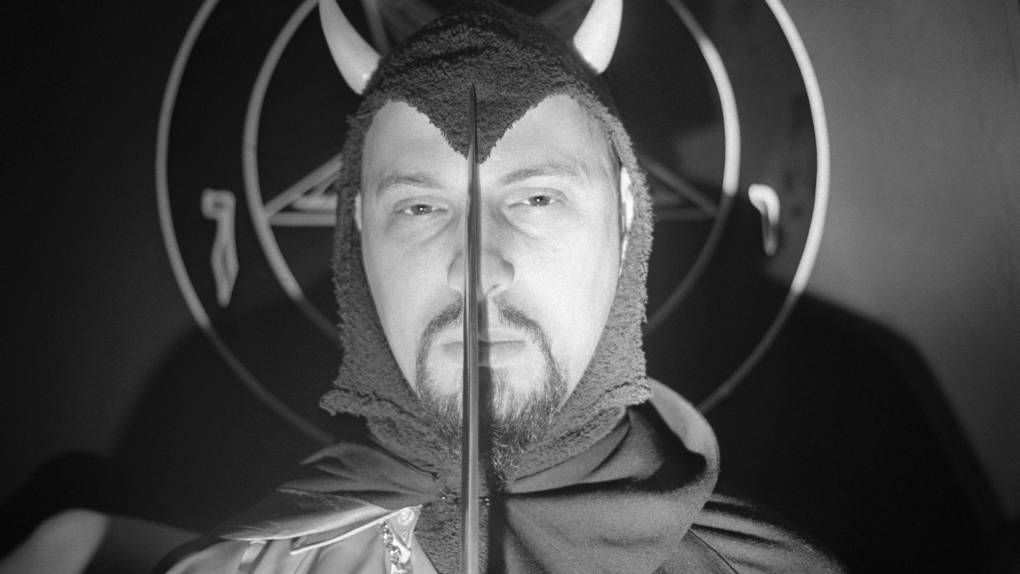
"caption": "Anton LaVey poses in his Black House, the San Francisco headquarters for the Church of Satan, in 1967.",
"credit": "Bettmann/Getty",
"altTag": "A man in a horned headdress, moustache and goatee poses before a pentagram, holding a sword that bifurcates his unsmiling face.",
"description": "Anton LaVey",
"imgSizes": {
"medium": {
"file": "https://cdn.kqed.org/wp-content/uploads/sites/2/2024/10/AntonLavey.16x9-800x450.jpg",
"width": 800,
"height": 450,
"mimeType": "image/jpeg"
},
"large": {
"file": "https://cdn.kqed.org/wp-content/uploads/sites/2/2024/10/AntonLavey.16x9-1020x574.jpg",
"width": 1020,
"height": 574,
"mimeType": "image/jpeg"
},
"thumbnail": {
"file": "https://cdn.kqed.org/wp-content/uploads/sites/2/2024/10/AntonLavey.16x9-160x90.jpg",
"width": 160,
"height": 90,
"mimeType": "image/jpeg"
},
"medium_large": {
"file": "https://cdn.kqed.org/wp-content/uploads/sites/2/2024/10/AntonLavey.16x9-768x432.jpg",
"width": 768,
"height": 432,
"mimeType": "image/jpeg"
},
"1536x1536": {
"file": "https://cdn.kqed.org/wp-content/uploads/sites/2/2024/10/AntonLavey.16x9-1536x864.jpg",
"width": 1536,
"height": 864,
"mimeType": "image/jpeg"
},
"2048x2048": {
"file": "https://cdn.kqed.org/wp-content/uploads/sites/2/2024/10/AntonLavey.16x9-2048x1152.jpg",
"width": 2048,
"height": 1152,
"mimeType": "image/jpeg"
},
"post-thumbnail": {
"file": "https://cdn.kqed.org/wp-content/uploads/sites/2/2024/10/AntonLavey.16x9-672x372.jpg",
"width": 672,
"height": 372,
"mimeType": "image/jpeg"
},
"twentyfourteen-full-width": {
"file": "https://cdn.kqed.org/wp-content/uploads/sites/2/2024/10/AntonLavey.16x9-1038x576.jpg",
"width": 1038,
"height": 576,
"mimeType": "image/jpeg"
},
"full-width": {
"file": "https://cdn.kqed.org/wp-content/uploads/sites/2/2024/10/AntonLavey.16x9-1920x1080.jpg",
"width": 1920,
"height": 1080,
"mimeType": "image/jpeg"
},
"kqedFullSize": {
"file": "https://cdn.kqed.org/wp-content/uploads/sites/2/2024/10/AntonLavey.16x9-scaled.jpg",
"width": 2560,
"height": 1440
}
},
"isLoading": false,
"fetchFailed": false
},
"arts_13966102": {
"type": "attachments",
"id": "arts_13966102",
"meta": {
"index": "attachments_1716263798",
"site": "arts",
"id": "13966102",
"found": true
},
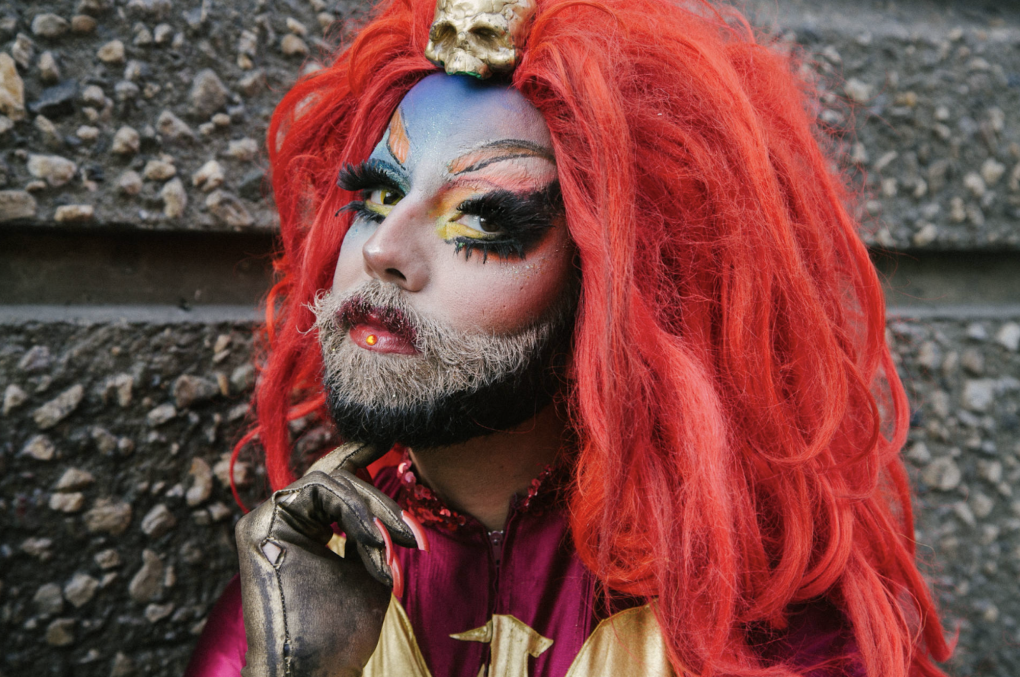
"title": "Diego Gómez in drag as ‘bearded cosplay queen’ Trangela Lansbury.",
"publishDate": 1728067050,
"status": "inherit",
"parent": 13966100,
"modified": 1728067213,
"caption": "Diego Gómez in drag as ‘bearded cosplay queen’ Trangela Lansbury.",
"credit": "Christina Campbell",
"altTag": "A bearded man in flamboyant makeup, large red wig and gloves with attached long fingernails.",
"description": null,
"imgSizes": {
"medium": {
"file": "https://cdn.kqed.org/wp-content/uploads/sites/2/2024/10/tran-lan-800x531.png",
"width": 800,
"height": 531,
"mimeType": "image/png"
},
"large": {
"file": "https://cdn.kqed.org/wp-content/uploads/sites/2/2024/10/tran-lan-1020x677.png",
"width": 1020,
"height": 677,
"mimeType": "image/png"
},
"thumbnail": {
"file": "https://cdn.kqed.org/wp-content/uploads/sites/2/2024/10/tran-lan-160x106.png",
"width": 160,
"height": 106,
"mimeType": "image/png"
},
"medium_large": {
"file": "https://cdn.kqed.org/wp-content/uploads/sites/2/2024/10/tran-lan-768x510.png",
"width": 768,
"height": 510,
"mimeType": "image/png"
},
"1536x1536": {
"file": "https://cdn.kqed.org/wp-content/uploads/sites/2/2024/10/tran-lan-1536x1019.png",
"width": 1536,
"height": 1019,
"mimeType": "image/png"
},
"post-thumbnail": {
"file": "https://cdn.kqed.org/wp-content/uploads/sites/2/2024/10/tran-lan-672x372.png",
"width": 672,
"height": 372,
"mimeType": "image/png"
},
"twentyfourteen-full-width": {
"file": "https://cdn.kqed.org/wp-content/uploads/sites/2/2024/10/tran-lan-1038x576.png",
"width": 1038,
"height": 576,
"mimeType": "image/png"
},
"full-width": {
"file": "https://cdn.kqed.org/wp-content/uploads/sites/2/2024/10/tran-lan-1920x1274.png",
"width": 1920,
"height": 1274,
"mimeType": "image/png"
},
"kqedFullSize": {
"file": "https://cdn.kqed.org/wp-content/uploads/sites/2/2024/10/tran-lan.png",
"width": 2000,
"height": 1327
}
},
"isLoading": false,
"fetchFailed": false
},
"arts_13810460": {
"type": "attachments",
"id": "arts_13810460",
"meta": {
"index": "attachments_1716263798",
"site": "arts",
"id": "13810460",
"found": true
},
"parent": 13810342,
"imgSizes": {
"small": {
"file": "https://ww2.kqed.org/app/uploads/sites/2/2017/10/HSB.MAIN_-520x325.jpg",
"width": 520,
"mimeType": "image/jpeg",
"height": 325
},
"twentyfourteen-full-width": {
"file": "https://ww2.kqed.org/app/uploads/sites/2/2017/10/HSB.MAIN_-1000x576.jpg",
"width": 1000,
"mimeType": "image/jpeg",
"height": 576
},
"thumbnail": {
"file": "https://ww2.kqed.org/app/uploads/sites/2/2017/10/HSB.MAIN_-160x100.jpg",
"width": 160,
"mimeType": "image/jpeg",
"height": 100
},
"fd-sm": {
"file": "https://ww2.kqed.org/app/uploads/sites/2/2017/10/HSB.MAIN_-960x600.jpg",
"width": 960,
"mimeType": "image/jpeg",
"height": 600
},
"post-thumbnail": {
"file": "https://ww2.kqed.org/app/uploads/sites/2/2017/10/HSB.MAIN_-672x372.jpg",
"width": 672,
"mimeType": "image/jpeg",
"height": 372
},
"xsmall": {
"file": "https://ww2.kqed.org/app/uploads/sites/2/2017/10/HSB.MAIN_-375x234.jpg",
"width": 375,
"mimeType": "image/jpeg",
"height": 234
},
"kqedFullSize": {
"file": "https://ww2.kqed.org/app/uploads/sites/2/2017/10/HSB.MAIN_.jpg",
"width": 1000,
"height": 625
},
"guest-author-50": {
"file": "https://ww2.kqed.org/app/uploads/sites/2/2017/10/HSB.MAIN_-50x50.jpg",
"width": 50,
"mimeType": "image/jpeg",
"height": 50
},
"guest-author-96": {
"file": "https://ww2.kqed.org/app/uploads/sites/2/2017/10/HSB.MAIN_-96x96.jpg",
"width": 96,
"mimeType": "image/jpeg",
"height": 96
},
"medium": {
"file": "https://ww2.kqed.org/app/uploads/sites/2/2017/10/HSB.MAIN_-800x500.jpg",
"width": 800,
"mimeType": "image/jpeg",
"height": 500
},
"guest-author-64": {
"file": "https://ww2.kqed.org/app/uploads/sites/2/2017/10/HSB.MAIN_-64x64.jpg",
"width": 64,
"mimeType": "image/jpeg",
"height": 64
},
"guest-author-32": {
"file": "https://ww2.kqed.org/app/uploads/sites/2/2017/10/HSB.MAIN_-32x32.jpg",
"width": 32,
"mimeType": "image/jpeg",
"height": 32
},
"detail": {
"file": "https://ww2.kqed.org/app/uploads/sites/2/2017/10/HSB.MAIN_-150x150.jpg",
"width": 150,
"mimeType": "image/jpeg",
"height": 150
},
"medium_large": {
"file": "https://ww2.kqed.org/app/uploads/sites/2/2017/10/HSB.MAIN_-768x480.jpg",
"width": 768,
"mimeType": "image/jpeg",
"height": 480
},
"guest-author-128": {
"file": "https://ww2.kqed.org/app/uploads/sites/2/2017/10/HSB.MAIN_-128x128.jpg",
"width": 128,
"mimeType": "image/jpeg",
"height": 128
},
"xxsmall": {
"file": "https://ww2.kqed.org/app/uploads/sites/2/2017/10/HSB.MAIN_-240x150.jpg",
"width": 240,
"mimeType": "image/jpeg",
"height": 150
}
},
"publishDate": 1507145907,
"modified": 1507145952,
"caption": "The Devil Makes Three at the 13th annual Hardly Strictly Bluegrass Festival in Golden Gate Park.",
"description": "The Devil Makes Three at the 13th annual Hardly Strictly Bluegrass Festival in Golden Gate Park.",
"title": "HSB.MAIN",
"credit": "Anthony Pidgeon/via Hardly Strictly",
"status": "inherit",
"isLoading": false,
"fetchFailed": false
},
"arts_13966075": {
"type": "attachments",
"id": "arts_13966075",
"meta": {
"index": "attachments_1716263798",
"site": "arts",
"id": "13966075",
"found": true
},
"title": "RideTheCycloneNCTC-L-R_-Milo-Boland-Sage-Alberto-Jon-Gary-Harris-Anne-Norland-Matt-Skinner.-Photo-by-Jenni-Chapman",
"publishDate": 1727992054,
"status": "inherit",
"parent": 13966064,
"modified": 1727993748,
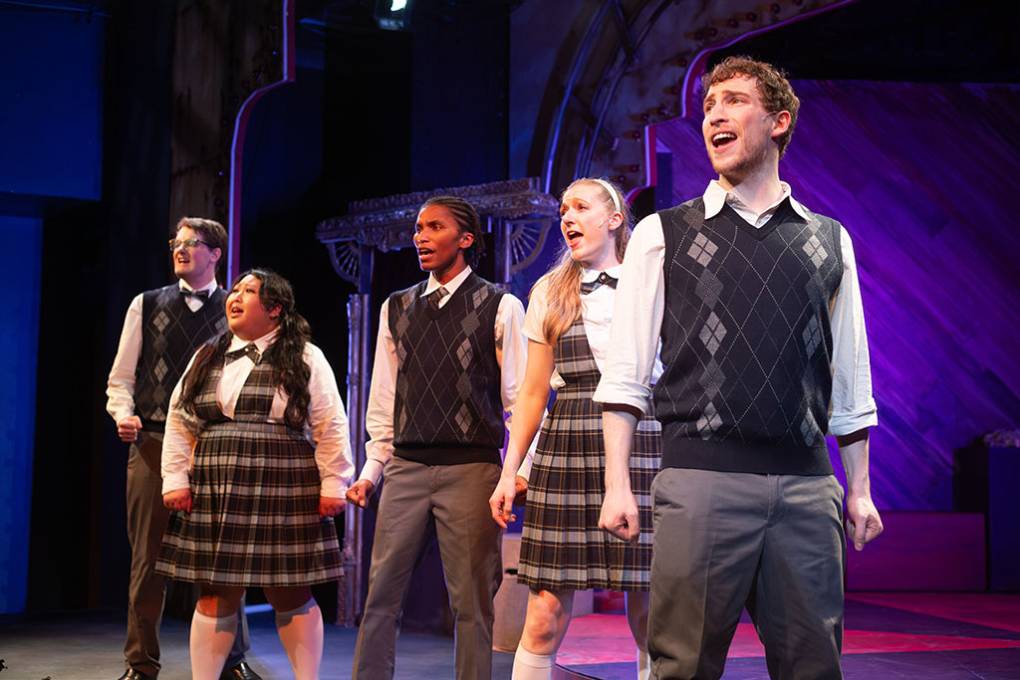
"caption": "(L–R) Milo Boland, Sage Alberto, Jon Gary Harris, Anne Norland and Matt Skinner in ‘Ride the Cyclone’ at the New Conservatory Theatre Center in San Francisco.",
"credit": "Jenni Chapman/Courtesy NCTC",
"altTag": "Five actors in matching school uniforms stand in a line, singing, against a purple backdrop",
"description": null,
"imgSizes": {
"medium": {
"file": "https://cdn.kqed.org/wp-content/uploads/sites/2/2024/10/RideTheCycloneNCTC-L-R_-Milo-Boland-Sage-Alberto-Jon-Gary-Harris-Anne-Norland-Matt-Skinner.-Photo-by-Jenni-Chapman-800x534.jpg",
"width": 800,
"height": 534,
"mimeType": "image/jpeg"
},
"large": {
"file": "https://cdn.kqed.org/wp-content/uploads/sites/2/2024/10/RideTheCycloneNCTC-L-R_-Milo-Boland-Sage-Alberto-Jon-Gary-Harris-Anne-Norland-Matt-Skinner.-Photo-by-Jenni-Chapman-1020x680.jpg",
"width": 1020,
"height": 680,
"mimeType": "image/jpeg"
},
"thumbnail": {
"file": "https://cdn.kqed.org/wp-content/uploads/sites/2/2024/10/RideTheCycloneNCTC-L-R_-Milo-Boland-Sage-Alberto-Jon-Gary-Harris-Anne-Norland-Matt-Skinner.-Photo-by-Jenni-Chapman-160x107.jpg",
"width": 160,
"height": 107,
"mimeType": "image/jpeg"
},
"medium_large": {
"file": "https://cdn.kqed.org/wp-content/uploads/sites/2/2024/10/RideTheCycloneNCTC-L-R_-Milo-Boland-Sage-Alberto-Jon-Gary-Harris-Anne-Norland-Matt-Skinner.-Photo-by-Jenni-Chapman-768x512.jpg",
"width": 768,
"height": 512,
"mimeType": "image/jpeg"
},
"post-thumbnail": {
"file": "https://cdn.kqed.org/wp-content/uploads/sites/2/2024/10/RideTheCycloneNCTC-L-R_-Milo-Boland-Sage-Alberto-Jon-Gary-Harris-Anne-Norland-Matt-Skinner.-Photo-by-Jenni-Chapman-672x372.jpg",
"width": 672,
"height": 372,
"mimeType": "image/jpeg"
},
"twentyfourteen-full-width": {
"file": "https://cdn.kqed.org/wp-content/uploads/sites/2/2024/10/RideTheCycloneNCTC-L-R_-Milo-Boland-Sage-Alberto-Jon-Gary-Harris-Anne-Norland-Matt-Skinner.-Photo-by-Jenni-Chapman-1024x576.jpg",
"width": 1024,
"height": 576,
"mimeType": "image/jpeg"
},
"kqedFullSize": {
"file": "https://cdn.kqed.org/wp-content/uploads/sites/2/2024/10/RideTheCycloneNCTC-L-R_-Milo-Boland-Sage-Alberto-Jon-Gary-Harris-Anne-Norland-Matt-Skinner.-Photo-by-Jenni-Chapman.jpg",
"width": 1024,
"height": 683
}
},
"isLoading": false,
"fetchFailed": false
},
"arts_13965953": {
"type": "attachments",
"id": "arts_13965953",
"meta": {
"index": "attachments_1716263798",
"site": "arts",
"id": "13965953",
"found": true
},
"title": "KW_05",
"publishDate": 1727848411,
"status": "inherit",
"parent": 13965937,
"modified": 1727848647,
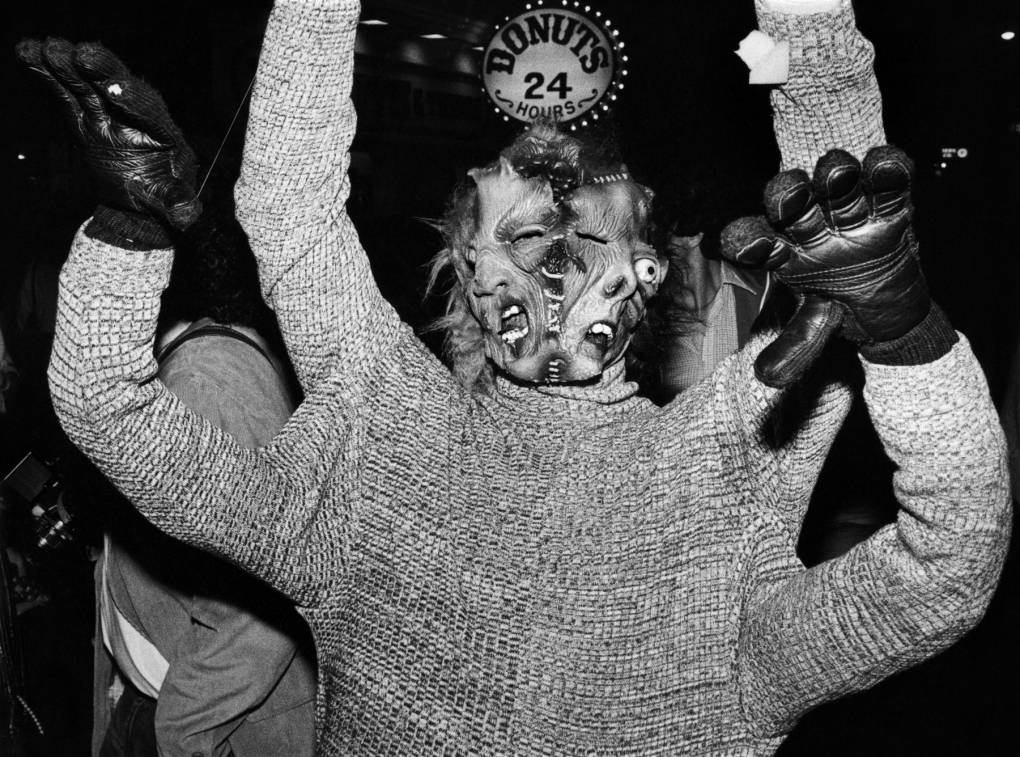
"caption": "From Ken Werner's 'Halloween.'",
"credit": "Courtesy Ken Werner and Anthology Editions",
"altTag": "Person dressed up as multi-armed monster with multi-face mask",
"description": null,
"imgSizes": {
"medium": {
"file": "https://cdn.kqed.org/wp-content/uploads/sites/2/2024/10/KW_05-800x593.jpg",
"width": 800,
"height": 593,
"mimeType": "image/jpeg"
},
"large": {
"file": "https://cdn.kqed.org/wp-content/uploads/sites/2/2024/10/KW_05-1020x757.jpg",
"width": 1020,
"height": 757,
"mimeType": "image/jpeg"
},
"thumbnail": {
"file": "https://cdn.kqed.org/wp-content/uploads/sites/2/2024/10/KW_05-160x119.jpg",
"width": 160,
"height": 119,
"mimeType": "image/jpeg"
},
"medium_large": {
"file": "https://cdn.kqed.org/wp-content/uploads/sites/2/2024/10/KW_05-768x570.jpg",
"width": 768,
"height": 570,
"mimeType": "image/jpeg"
},
"1536x1536": {
"file": "https://cdn.kqed.org/wp-content/uploads/sites/2/2024/10/KW_05-1536x1139.jpg",
"width": 1536,
"height": 1139,
"mimeType": "image/jpeg"
},
"post-thumbnail": {
"file": "https://cdn.kqed.org/wp-content/uploads/sites/2/2024/10/KW_05-672x372.jpg",
"width": 672,
"height": 372,
"mimeType": "image/jpeg"
},
"twentyfourteen-full-width": {
"file": "https://cdn.kqed.org/wp-content/uploads/sites/2/2024/10/KW_05-1038x576.jpg",
"width": 1038,
"height": 576,
"mimeType": "image/jpeg"
},
"kqedFullSize": {
"file": "https://cdn.kqed.org/wp-content/uploads/sites/2/2024/10/KW_05.jpg",
"width": 1800,
"height": 1335
}
},
"isLoading": false,
"fetchFailed": false
},
"arts_13965700": {
"type": "attachments",
"id": "arts_13965700",
"meta": {
"index": "attachments_1716263798",
"site": "arts",
"id": "13965700",
"found": true
},
"title": "366EDE66-F17B-42B7-AE18-3E222EA355F0",
"publishDate": 1727466253,
"status": "inherit",
"parent": 13965683,
"modified": 1727466508,
"caption": "Family Not a Group performs live at KQED's venue, The Commons, in San Francisco on Sept. 26. Back row, from left to right: Mike Evans Jr., Frak, Grand-O, Serg, Ozer, Professa Gabel, Baghead, SundaY, KQED's Nastia Voynovskaya, DJSay. Middle row, left to right: Lei, Kaly Jay, Jenset, Ash and Cynny. Front row, left to right: Afterthought and EaSWay. ",
"credit": "Toshiro Mata",
"altTag": null,
"description": null,
"imgSizes": {
"medium": {
"file": "https://cdn.kqed.org/wp-content/uploads/sites/2/2024/09/366EDE66-F17B-42B7-AE18-3E222EA355F0-800x533.jpg",
"width": 800,
"height": 533,
"mimeType": "image/jpeg"
},
"large": {
"file": "https://cdn.kqed.org/wp-content/uploads/sites/2/2024/09/366EDE66-F17B-42B7-AE18-3E222EA355F0-1020x680.jpg",
"width": 1020,
"height": 680,
"mimeType": "image/jpeg"
},
"thumbnail": {
"file": "https://cdn.kqed.org/wp-content/uploads/sites/2/2024/09/366EDE66-F17B-42B7-AE18-3E222EA355F0-160x107.jpg",
"width": 160,
"height": 107,
"mimeType": "image/jpeg"
},
"medium_large": {
"file": "https://cdn.kqed.org/wp-content/uploads/sites/2/2024/09/366EDE66-F17B-42B7-AE18-3E222EA355F0-768x512.jpg",
"width": 768,
"height": 512,
"mimeType": "image/jpeg"
},
"post-thumbnail": {
"file": "https://cdn.kqed.org/wp-content/uploads/sites/2/2024/09/366EDE66-F17B-42B7-AE18-3E222EA355F0-672x372.jpg",
"width": 672,
"height": 372,
"mimeType": "image/jpeg"
},
"twentyfourteen-full-width": {
"file": "https://cdn.kqed.org/wp-content/uploads/sites/2/2024/09/366EDE66-F17B-42B7-AE18-3E222EA355F0-1038x576.jpg",
"width": 1038,
"height": 576,
"mimeType": "image/jpeg"
},
"kqedFullSize": {
"file": "https://cdn.kqed.org/wp-content/uploads/sites/2/2024/09/366EDE66-F17B-42B7-AE18-3E222EA355F0.jpg",
"width": 1500,
"height": 1000
}
},
"isLoading": false,
"fetchFailed": false
},
"arts_13965382": {
"type": "attachments",
"id": "arts_13965382",
"meta": {
"index": "attachments_1716263798",
"site": "arts",
"id": "13965382",
"found": true
},
"title": "Incheon Pentaport Music Festival 2024",
"publishDate": 1727125036,
"status": "inherit",
"parent": 13965366,
"modified": 1727125073,
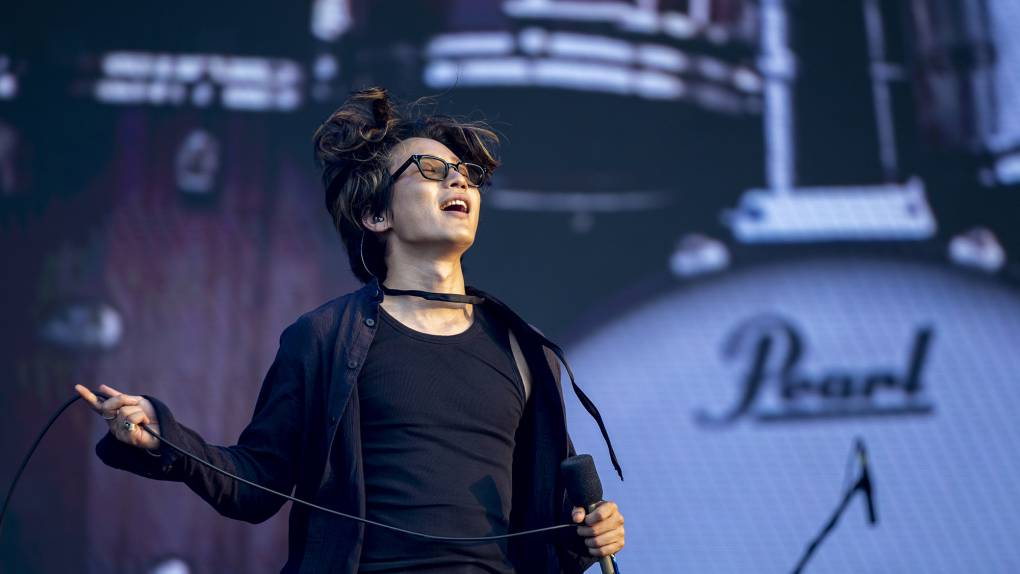
"caption": "Daniel Kim of South Korean indie rock band Wave to Earth performs at the Incheon Pentaport Music Festival 2024 on Aug. 2, 2024 in Incheon, South Korea. ",
"credit": "Justin Shin/Getty Images",
"altTag": null,
"description": null,
"imgSizes": {
"medium": {
"file": "https://cdn.kqed.org/wp-content/uploads/sites/2/2024/09/GettyImages-2164959621-800x450.jpg",
"width": 800,
"height": 450,
"mimeType": "image/jpeg"
},
"large": {
"file": "https://cdn.kqed.org/wp-content/uploads/sites/2/2024/09/GettyImages-2164959621-1020x574.jpg",
"width": 1020,
"height": 574,
"mimeType": "image/jpeg"
},
"thumbnail": {
"file": "https://cdn.kqed.org/wp-content/uploads/sites/2/2024/09/GettyImages-2164959621-160x90.jpg",
"width": 160,
"height": 90,
"mimeType": "image/jpeg"
},
"medium_large": {
"file": "https://cdn.kqed.org/wp-content/uploads/sites/2/2024/09/GettyImages-2164959621-768x432.jpg",
"width": 768,
"height": 432,
"mimeType": "image/jpeg"
},
"1536x1536": {
"file": "https://cdn.kqed.org/wp-content/uploads/sites/2/2024/09/GettyImages-2164959621-1536x864.jpg",
"width": 1536,
"height": 864,
"mimeType": "image/jpeg"
},
"post-thumbnail": {
"file": "https://cdn.kqed.org/wp-content/uploads/sites/2/2024/09/GettyImages-2164959621-672x372.jpg",
"width": 672,
"height": 372,
"mimeType": "image/jpeg"
},
"twentyfourteen-full-width": {
"file": "https://cdn.kqed.org/wp-content/uploads/sites/2/2024/09/GettyImages-2164959621-1038x576.jpg",
"width": 1038,
"height": 576,
"mimeType": "image/jpeg"
},
"full-width": {
"file": "https://cdn.kqed.org/wp-content/uploads/sites/2/2024/09/GettyImages-2164959621-1920x1080.jpg",
"width": 1920,
"height": 1080,
"mimeType": "image/jpeg"
},
"kqedFullSize": {
"file": "https://cdn.kqed.org/wp-content/uploads/sites/2/2024/09/GettyImages-2164959621.jpg",
"width": 2000,
"height": 1125
}
},
"isLoading": false,
"fetchFailed": false
},
"arts_13965328": {
"type": "attachments",
"id": "arts_13965328",
"meta": {
"index": "attachments_1716263798",
"site": "arts",
"id": "13965328",
"found": true
},
"title": "TheLox",
"publishDate": 1726935360,
"status": "inherit",
"parent": 13965327,
"modified": 1726935373,
"caption": "The Lox.",
"credit": null,
"altTag": null,
"description": null,
"imgSizes": {
"medium": {
"file": "https://cdn.kqed.org/wp-content/uploads/sites/2/2024/09/TheLox-800x450.jpg",
"width": 800,
"height": 450,
"mimeType": "image/jpeg"
},
"thumbnail": {
"file": "https://cdn.kqed.org/wp-content/uploads/sites/2/2024/09/TheLox-160x90.jpg",
"width": 160,
"height": 90,
"mimeType": "image/jpeg"
},
"medium_large": {
"file": "https://cdn.kqed.org/wp-content/uploads/sites/2/2024/09/TheLox-768x432.jpg",
"width": 768,
"height": 432,
"mimeType": "image/jpeg"
},
"post-thumbnail": {
"file": "https://cdn.kqed.org/wp-content/uploads/sites/2/2024/09/TheLox-672x372.jpg",
"width": 672,
"height": 372,
"mimeType": "image/jpeg"
},
"kqedFullSize": {
"file": "https://cdn.kqed.org/wp-content/uploads/sites/2/2024/09/TheLox.jpg",
"width": 942,
"height": 530
}
},
"isLoading": false,
"fetchFailed": false
},
"arts_13965255": {
"type": "attachments",
"id": "arts_13965255",
"meta": {
"index": "attachments_1716263798",
"site": "arts",
"id": "13965255",
"found": true
},
"title": "PVL_183",
"publishDate": 1726793254,
"status": "inherit",
"parent": 0,
"modified": 1726857886,
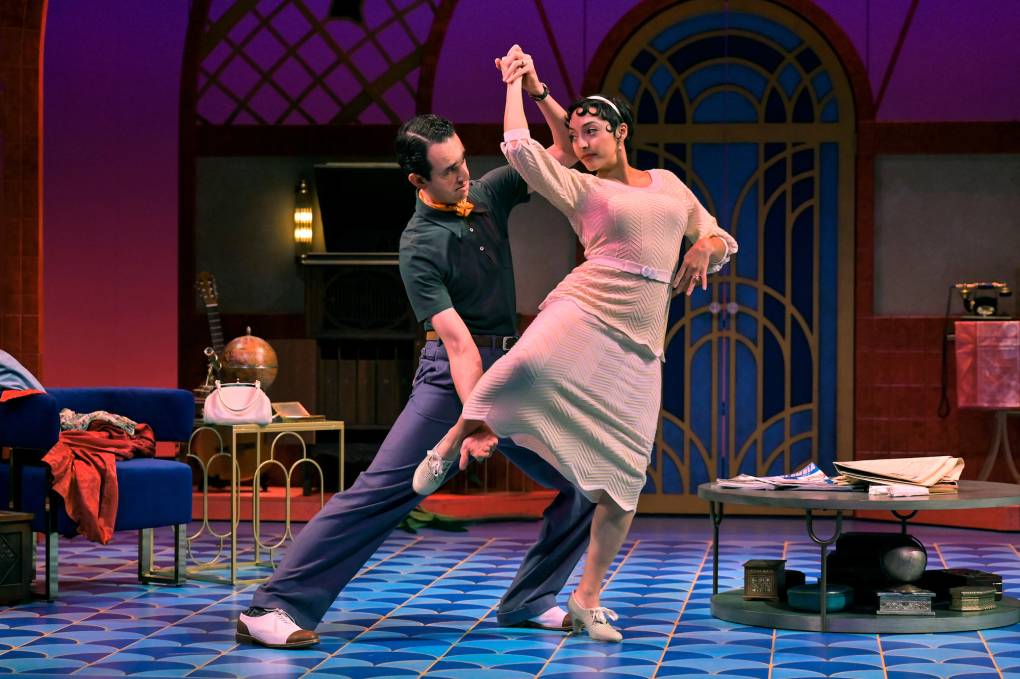
"caption": "Brady Morales-Woolery and Gianna DiGregorio Rivera in Noël Coward’s ‘Private Lives’ at A.C.T.’s Toni Rembe Theater.",
"credit": "Kevin Berne",
"altTag": "a man and a woman caught mid-dance atop a blue rug",
"description": null,
"imgSizes": {
"medium": {
"file": "https://cdn.kqed.org/wp-content/uploads/sites/2/2024/09/PVL_183-800x532.jpg",
"width": 800,
"height": 532,
"mimeType": "image/jpeg"
},
"large": {
"file": "https://cdn.kqed.org/wp-content/uploads/sites/2/2024/09/PVL_183-1020x679.jpg",
"width": 1020,
"height": 679,
"mimeType": "image/jpeg"
},
"thumbnail": {
"file": "https://cdn.kqed.org/wp-content/uploads/sites/2/2024/09/PVL_183-160x106.jpg",
"width": 160,
"height": 106,
"mimeType": "image/jpeg"
},
"medium_large": {
"file": "https://cdn.kqed.org/wp-content/uploads/sites/2/2024/09/PVL_183-768x511.jpg",
"width": 768,
"height": 511,
"mimeType": "image/jpeg"
},
"1536x1536": {
"file": "https://cdn.kqed.org/wp-content/uploads/sites/2/2024/09/PVL_183-1536x1022.jpg",
"width": 1536,
"height": 1022,
"mimeType": "image/jpeg"
},
"post-thumbnail": {
"file": "https://cdn.kqed.org/wp-content/uploads/sites/2/2024/09/PVL_183-672x372.jpg",
"width": 672,
"height": 372,
"mimeType": "image/jpeg"
},
"twentyfourteen-full-width": {
"file": "https://cdn.kqed.org/wp-content/uploads/sites/2/2024/09/PVL_183-1038x576.jpg",
"width": 1038,
"height": 576,
"mimeType": "image/jpeg"
},
"full-width": {
"file": "https://cdn.kqed.org/wp-content/uploads/sites/2/2024/09/PVL_183-1920x1278.jpg",
"width": 1920,
"height": 1278,
"mimeType": "image/jpeg"
},
"kqedFullSize": {
"file": "https://cdn.kqed.org/wp-content/uploads/sites/2/2024/09/PVL_183.jpg",
"width": 2000,
"height": 1331
}
},
"isLoading": false,
"fetchFailed": false
},
"arts_13964187": {
"type": "attachments",
"id": "arts_13964187",
"meta": {
"index": "attachments_1716263798",
"site": "arts",
"id": "13964187",
"found": true
},
"title": "jollof kitchen hero",
"publishDate": 1726179816,
"status": "inherit",
"parent": 13964180,
"modified": 1726179942,
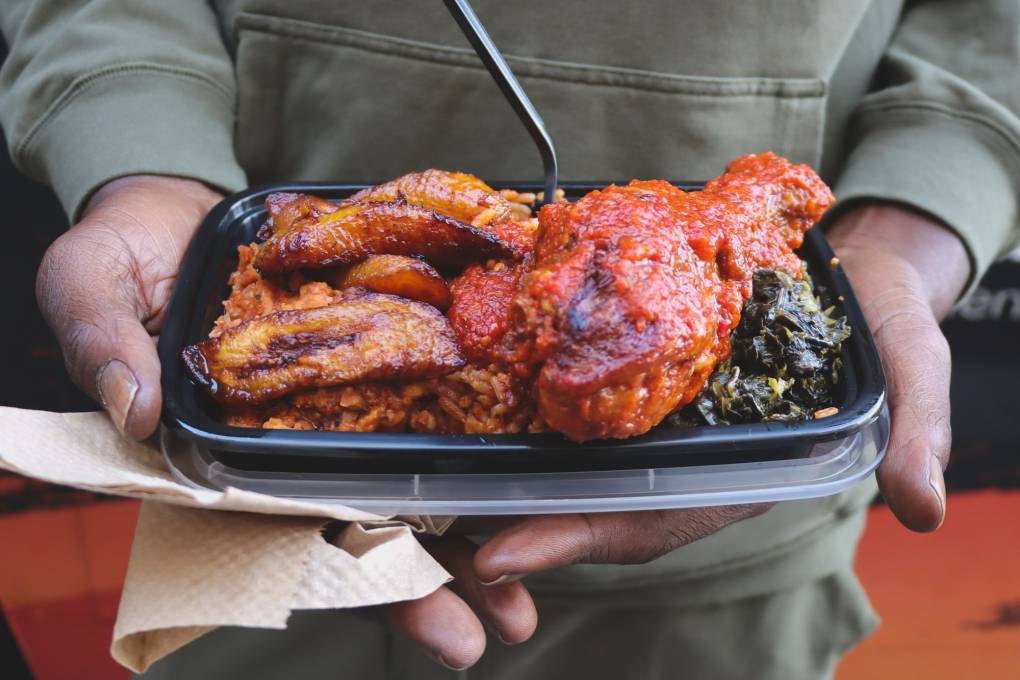
"caption": "Jollof Kitchen's locally famous jollof rice will be one of the many diasporic dishes featured at the first annual Bay Area African Restaurant Week, which runs Sept. 12–22, 2024.",
"credit": "Courtesy of Jollof Kitchen",
"altTag": "Man holding a takeout container of birght orange jollof rice with chicken and plantains.",
"description": null,
"imgSizes": {
"medium": {
"file": "https://cdn.kqed.org/wp-content/uploads/sites/2/2024/09/jollof-kitchen-hero-800x533.jpg",
"width": 800,
"height": 533,
"mimeType": "image/jpeg"
},
"large": {
"file": "https://cdn.kqed.org/wp-content/uploads/sites/2/2024/09/jollof-kitchen-hero-1020x680.jpg",
"width": 1020,
"height": 680,
"mimeType": "image/jpeg"
},
"thumbnail": {
"file": "https://cdn.kqed.org/wp-content/uploads/sites/2/2024/09/jollof-kitchen-hero-160x107.jpg",
"width": 160,
"height": 107,
"mimeType": "image/jpeg"
},
"medium_large": {
"file": "https://cdn.kqed.org/wp-content/uploads/sites/2/2024/09/jollof-kitchen-hero-768x512.jpg",
"width": 768,
"height": 512,
"mimeType": "image/jpeg"
},
"1536x1536": {
"file": "https://cdn.kqed.org/wp-content/uploads/sites/2/2024/09/jollof-kitchen-hero-1536x1024.jpg",
"width": 1536,
"height": 1024,
"mimeType": "image/jpeg"
},
"post-thumbnail": {
"file": "https://cdn.kqed.org/wp-content/uploads/sites/2/2024/09/jollof-kitchen-hero-672x372.jpg",
"width": 672,
"height": 372,
"mimeType": "image/jpeg"
},
"twentyfourteen-full-width": {
"file": "https://cdn.kqed.org/wp-content/uploads/sites/2/2024/09/jollof-kitchen-hero-1038x576.jpg",
"width": 1038,
"height": 576,
"mimeType": "image/jpeg"
},
"full-width": {
"file": "https://cdn.kqed.org/wp-content/uploads/sites/2/2024/09/jollof-kitchen-hero-1920x1280.jpg",
"width": 1920,
"height": 1280,
"mimeType": "image/jpeg"
},
"kqedFullSize": {
"file": "https://cdn.kqed.org/wp-content/uploads/sites/2/2024/09/jollof-kitchen-hero.jpg",
"width": 2000,
"height": 1333
}
},
"isLoading": false,
"fetchFailed": false
},
"arts_13963613": {
"type": "attachments",
"id": "arts_13963613",
"meta": {
"index": "attachments_1716263798",
"site": "arts",
"id": "13963613",
"found": true
},
"title": "four kings - hella hungry - featured - juliana yamada",
"publishDate": 1725403765,
"status": "inherit",
"parent": 0,
"modified": 1725490019,
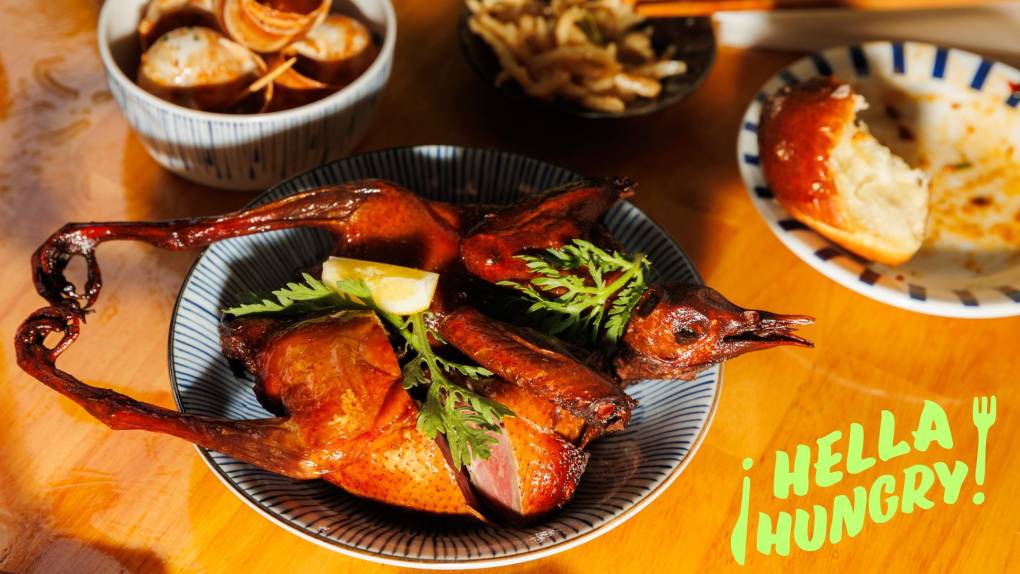
"caption": "The fried squab at Four Kings in San Francisco Chinatown on July 29, 2024. The dish, which takes a week to prepare and is only available in limited quantities, is one of the restaurant's biggest draws.",
"credit": "Juliana Yamada for KQED",
"altTag": "Spread of Cantonese dishes including whole fried squab with head and feet attached.",
"description": null,
"imgSizes": {
"medium": {
"file": "https://cdn.kqed.org/wp-content/uploads/sites/2/2024/09/four-kings-hella-hungry-featured-juliana-yamada-800x450.jpg",
"width": 800,
"height": 450,
"mimeType": "image/jpeg"
},
"large": {
"file": "https://cdn.kqed.org/wp-content/uploads/sites/2/2024/09/four-kings-hella-hungry-featured-juliana-yamada-1020x574.jpg",
"width": 1020,
"height": 574,
"mimeType": "image/jpeg"
},
"thumbnail": {
"file": "https://cdn.kqed.org/wp-content/uploads/sites/2/2024/09/four-kings-hella-hungry-featured-juliana-yamada-160x90.jpg",
"width": 160,
"height": 90,
"mimeType": "image/jpeg"
},
"medium_large": {
"file": "https://cdn.kqed.org/wp-content/uploads/sites/2/2024/09/four-kings-hella-hungry-featured-juliana-yamada-768x432.jpg",
"width": 768,
"height": 432,
"mimeType": "image/jpeg"
},
"1536x1536": {
"file": "https://cdn.kqed.org/wp-content/uploads/sites/2/2024/09/four-kings-hella-hungry-featured-juliana-yamada-1536x864.jpg",
"width": 1536,
"height": 864,
"mimeType": "image/jpeg"
},
"post-thumbnail": {
"file": "https://cdn.kqed.org/wp-content/uploads/sites/2/2024/09/four-kings-hella-hungry-featured-juliana-yamada-672x372.jpg",
"width": 672,
"height": 372,
"mimeType": "image/jpeg"
},
"twentyfourteen-full-width": {
"file": "https://cdn.kqed.org/wp-content/uploads/sites/2/2024/09/four-kings-hella-hungry-featured-juliana-yamada-1038x576.jpg",
"width": 1038,
"height": 576,
"mimeType": "image/jpeg"
},
"kqedFullSize": {
"file": "https://cdn.kqed.org/wp-content/uploads/sites/2/2024/09/four-kings-hella-hungry-featured-juliana-yamada.jpg",
"width": 1920,
"height": 1080
}
},
"isLoading": false,
"fetchFailed": false
}
},
"audioPlayerReducer": {
"postId": "stream_live",
"isPaused": true,
"isPlaying": false,
"pfsActive": false,
"pledgeModalIsOpen": true,
"playerDrawerIsOpen": false,
"liveAudioPlayStartedAt": 0,
"liveAudioPlayContext": ""
},
"authorsReducer": {
"byline_arts_13966153": {
"type": "authors",
"id": "byline_arts_13966153",
"meta": {
"override": true
},
"slug": "byline_arts_13966153",
"name": "Zack Ruskin",
"isLoading": false
},
"shotchkiss": {
"type": "authors",
"id": "61",
"meta": {
"index": "authors_1716337520",
"id": "61",
"found": true
},
"name": "Sarah Hotchkiss",
"firstName": "Sarah",
"lastName": "Hotchkiss",
"slug": "shotchkiss",
"email": "shotchkiss@kqed.org",
"display_author_email": true,
"staff_mastheads": [
"arts"
],
"title": "Senior Editor",
"bio": "Sarah Hotchkiss is a San Francisco \u003ca href=\"http://www.sarahhotchkiss.com\">artist\u003c/a> and arts writer. In 2019, she received the Dorothea & Leo Rabkin Foundation grant for visual art journalism and in 2020 she received a Society of Professional Journalists, Northern California award for excellence in arts and culture reporting.",
"avatar": "https://secure.gravatar.com/avatar/bc662df144b3d27fd8b1b6f1c2a420d34e91e53154d411bb7ad353cc8b6cea8d?s=600&d=blank&r=g",
"twitter": null,
"bluesky": null,
"facebook": null,
"instagram": null,
"linkedin": null,
"sites": [
{
"site": "",
"roles": [
"editor"
]
},
{
"site": "arts",
"roles": [
"Contributor",
"administrator"
]
},
{
"site": "artschool",
"roles": [
"administrator"
]
},
{
"site": "news",
"roles": [
"editor"
]
},
{
"site": "pop",
"roles": [
"administrator"
]
},
{
"site": "bayareabites",
"roles": [
"editor"
]
},
{
"site": "spark",
"roles": [
"editor"
]
},
{
"site": "checkplease",
"roles": [
"editor"
]
}
],
"headData": {
"title": "Sarah Hotchkiss | KQED",
"description": "Senior Editor",
"ogImgSrc": "https://secure.gravatar.com/avatar/bc662df144b3d27fd8b1b6f1c2a420d34e91e53154d411bb7ad353cc8b6cea8d?s=600&d=blank&r=g",
"twImgSrc": "https://secure.gravatar.com/avatar/bc662df144b3d27fd8b1b6f1c2a420d34e91e53154d411bb7ad353cc8b6cea8d?s=600&d=blank&r=g"
},
"isLoading": false,
"link": "/author/shotchkiss"
},
"gmeline": {
"type": "authors",
"id": "185",
"meta": {
"index": "authors_1716337520",
"id": "185",
"found": true
},
"name": "Gabe Meline",
"firstName": "Gabe",
"lastName": "Meline",
"slug": "gmeline",
"email": "gmeline@kqed.org",
"display_author_email": true,
"staff_mastheads": [
"arts"
],
"title": "Senior Editor, KQED Arts & Culture",
"bio": "Gabe Meline entered journalism at age 15 making photocopied zines, and has since earned awards from the Edward R. Murrow Awards, the Society for Professional Journalists, the Online Journalism Awards, the Association of Alternative Newsweeklies and the California Newspaper Publishers Association. Prior to KQED, he was the editor of the \u003cem>North Bay Bohemian\u003c/em> and a touring musician. He lives with his wife and daughter in his hometown of Santa Rosa, CA.",
"avatar": "https://secure.gravatar.com/avatar/5bebe57be0d8bc2dd318934feb47299e2d2d10cba28d09d8d7afb389a2ce2bdd?s=600&d=blank&r=g",
"twitter": null,
"bluesky": null,
"facebook": null,
"instagram": null,
"linkedin": null,
"sites": [
{
"site": "",
"roles": [
"editor"
]
},
{
"site": "arts",
"roles": [
"administrator"
]
},
{
"site": "artschool",
"roles": [
"editor"
]
},
{
"site": "news",
"roles": [
"author"
]
},
{
"site": "pop",
"roles": [
"editor"
]
},
{
"site": "bayareabites",
"roles": [
"editor"
]
},
{
"site": "food",
"roles": [
"editor"
]
},
{
"site": "forum",
"roles": [
"administrator"
]
},
{
"site": "liveblog",
"roles": [
"editor"
]
},
{
"site": "hiphop",
"roles": [
"editor"
]
}
],
"headData": {
"title": "Gabe Meline | KQED",
"description": "Senior Editor, KQED Arts & Culture",
"ogImgSrc": "https://secure.gravatar.com/avatar/5bebe57be0d8bc2dd318934feb47299e2d2d10cba28d09d8d7afb389a2ce2bdd?s=600&d=blank&r=g",
"twImgSrc": "https://secure.gravatar.com/avatar/5bebe57be0d8bc2dd318934feb47299e2d2d10cba28d09d8d7afb389a2ce2bdd?s=600&d=blank&r=g"
},
"isLoading": false,
"link": "/author/gmeline"
},
"ralexandra": {
"type": "authors",
"id": "11242",
"meta": {
"index": "authors_1716337520",
"id": "11242",
"found": true
},
"name": "Rae Alexandra",
"firstName": "Rae",
"lastName": "Alexandra",
"slug": "ralexandra",
"email": "ralexandra@kqed.org",
"display_author_email": true,
"staff_mastheads": [],
"title": "Reporter/Producer",
"bio": "Rae Alexandra is a Reporter/Producer for KQED Arts & Culture, and the creator/author of the \u003ca href=\"https://www.kqed.org/arts/program/rebel-girls-from-bay-area-history\">Rebel Girls From Bay Area History\u003c/a> and \u003ca href=\"https://www.kqed.org/bizarrebayarea\">Bizarre Bay Area\u003c/a> series. Her debut book, \u003ca href=\"https://citylights.com/politics-current-events-history/unsung-heroines35-women-who-changed/\">Unsung Heroines: 35 Women Who Changed the Bay Area\u003c/a> was published by City Lights in March 2026. In 2023, Rae was awarded an SPJ Excellence in Journalism Award for Arts & Culture. Rae was born and raised in Wales and subsequently — even after two decades in Northern California — still uses phrases that regularly baffle her coworkers.",
"avatar": "https://secure.gravatar.com/avatar/edfee8176c80cc0a382b051190f5341997df378a934a5774dcb0977732dfd401?s=600&d=blank&r=g",
"twitter": null,
"bluesky": null,
"facebook": null,
"instagram": null,
"linkedin": null,
"sites": [
{
"site": "arts",
"roles": [
"subscriber"
]
},
{
"site": "news",
"roles": [
"subscriber"
]
},
{
"site": "pop",
"roles": [
"subscriber"
]
},
{
"site": "bayareabites",
"roles": [
"subscriber"
]
},
{
"site": "science",
"roles": [
"subscriber"
]
}
],
"headData": {
"title": "Rae Alexandra | KQED",
"description": "Reporter/Producer",
"ogImgSrc": "https://secure.gravatar.com/avatar/edfee8176c80cc0a382b051190f5341997df378a934a5774dcb0977732dfd401?s=600&d=blank&r=g",
"twImgSrc": "https://secure.gravatar.com/avatar/edfee8176c80cc0a382b051190f5341997df378a934a5774dcb0977732dfd401?s=600&d=blank&r=g"
},
"isLoading": false,
"link": "/author/ralexandra"
},
"nvoynovskaya": {
"type": "authors",
"id": "11387",
"meta": {
"index": "authors_1716337520",
"id": "11387",
"found": true
},
"name": "Nastia Voynovskaya",
"firstName": "Nastia",
"lastName": "Voynovskaya",
"slug": "nvoynovskaya",
"email": "nvoynovskaya@kqed.org",
"display_author_email": false,
"staff_mastheads": [
"arts"
],
"title": "Editor and reporter",
"bio": "Nastia Voynovskaya is a reporter, editor and host at KQED Arts & Culture. She's been covering the arts in the Bay Area for over a decade, with a focus on music, queer culture, labor issues and grassroots organizing. She has edited KQED story series such as Trans Bay: A History of San Francisco's Gender-Diverse Community, and co-created KQED's Bay Area hip-hop history project, That's My Word. Nastia's work has been recognized by the Society of Professional Journalists and San Francisco Press Club. She regularly appears on podcasts and radio programs, including NPR's All Songs Considered, and hosts live events where music, culture and conversation meet.",
"avatar": "https://secure.gravatar.com/avatar/5025ee460e5a85d69ca20ea6c6f2f80d7e17795c828f61ea3aecfcd924e9042e?s=600&d=blank&r=g",
"twitter": null,
"bluesky": null,
"facebook": null,
"instagram": "https://www.instagram.com/nananastia/",
"linkedin": null,
"sites": [
{
"site": "",
"roles": [
"editor"
]
},
{
"site": "arts",
"roles": [
"administrator"
]
},
{
"site": "news",
"roles": [
"editor"
]
},
{
"site": "pop",
"roles": [
"administrator"
]
},
{
"site": "bayareabites",
"roles": [
"editor"
]
},
{
"site": "podcasts",
"roles": [
"editor"
]
},
{
"site": "hiphop",
"roles": [
"editor"
]
}
],
"headData": {
"title": "Nastia Voynovskaya | KQED",
"description": "Editor and reporter",
"ogImgSrc": "https://secure.gravatar.com/avatar/5025ee460e5a85d69ca20ea6c6f2f80d7e17795c828f61ea3aecfcd924e9042e?s=600&d=blank&r=g",
"twImgSrc": "https://secure.gravatar.com/avatar/5025ee460e5a85d69ca20ea6c6f2f80d7e17795c828f61ea3aecfcd924e9042e?s=600&d=blank&r=g"
},
"isLoading": false,
"link": "/author/nvoynovskaya"
},
"ltsai": {
"type": "authors",
"id": "11743",
"meta": {
"index": "authors_1716337520",
"id": "11743",
"found": true
},
"name": "Luke Tsai",
"firstName": "Luke",
"lastName": "Tsai",
"slug": "ltsai",
"email": "ltsai@kqed.org",
"display_author_email": true,
"staff_mastheads": [
"arts"
],
"title": "Food Editor",
"bio": "Luke Tsai is KQED's food editor and resident stinky tofu connoisseur. Prior to KQED, he was an editor at Eater SF, \u003cem>San Francisco \u003c/em>magazine, and the \u003cem>East Bay Express\u003c/em>, and his work has also appeared in TASTE, the \u003cem>San Francisco Chronicle\u003c/em>, and the \u003cem>Best Food Writing\u003c/em> anthology. When he isn't writing or editing, you'll find him eating most everything he can get his hands on.",
"avatar": "https://secure.gravatar.com/avatar/1e59b45bf191526e7339d6ba46e33a57b2030d25c27660ecc64ea3cb863e34f7?s=600&d=blank&r=g",
"twitter": "theluketsai",
"bluesky": null,
"facebook": null,
"instagram": null,
"linkedin": null,
"sites": [
{
"site": "",
"roles": [
"editor"
]
},
{
"site": "arts",
"roles": [
"administrator"
]
},
{
"site": "news",
"roles": [
"editor",
"contributor"
]
},
{
"site": "bayareabites",
"roles": [
"editor"
]
},
{
"site": "food",
"roles": [
"editor"
]
}
],
"headData": {
"title": "Luke Tsai | KQED",
"description": "Food Editor",
"ogImgSrc": "https://secure.gravatar.com/avatar/1e59b45bf191526e7339d6ba46e33a57b2030d25c27660ecc64ea3cb863e34f7?s=600&d=blank&r=g",
"twImgSrc": "https://secure.gravatar.com/avatar/1e59b45bf191526e7339d6ba46e33a57b2030d25c27660ecc64ea3cb863e34f7?s=600&d=blank&r=g"
},
"isLoading": false,
"link": "/author/ltsai"
},
"achazaro": {
"type": "authors",
"id": "11748",
"meta": {
"index": "authors_1716337520",
"id": "11748",
"found": true
},
"name": "Alan Chazaro",
"firstName": "Alan",
"lastName": "Chazaro",
"slug": "achazaro",
"email": "agchazaro@gmail.com",
"display_author_email": true,
"staff_mastheads": [],
"title": "Food Writer and Reporter",
"bio": "Alan Chazaro is the author of \u003cem>This Is Not a Frank Ocean Cover Album\u003c/em> (Black Lawrence Press, 2019), \u003cem>Piñata Theory\u003c/em> (Black Lawrence Press, 2020), and \u003cem>Notes from the Eastern Span of the Bay Bridge\u003c/em> (Ghost City Press, 2021). He is a graduate of June Jordan’s Poetry for the People program at UC Berkeley and a former Lawrence Ferlinghetti Fellow at the University of San Francisco. He writes about sports, food, art, music, education, and culture while repping the Bay on \u003ca href=\"https://twitter.com/alan_chazaro\">Twitter\u003c/a> and \u003ca href=\"https://www.instagram.com/alan_chazaro/?hl=en\">Instagram\u003c/a> at @alan_chazaro.",
"avatar": "https://secure.gravatar.com/avatar/ea8b6dd970fc5c29e7a188e7d5861df7?s=600&d=blank&r=g",
"twitter": "alan_chazaro",
"facebook": null,
"instagram": null,
"linkedin": null,
"sites": [
{
"site": "arts",
"roles": [
"contributor"
]
},
{
"site": "news",
"roles": [
"editor"
]
}
],
"headData": {
"title": "Alan Chazaro | KQED",
"description": "Food Writer and Reporter",
"ogImgSrc": "https://secure.gravatar.com/avatar/ea8b6dd970fc5c29e7a188e7d5861df7?s=600&d=blank&r=g",
"twImgSrc": "https://secure.gravatar.com/avatar/ea8b6dd970fc5c29e7a188e7d5861df7?s=600&d=blank&r=g"
},
"isLoading": false,
"link": "/author/achazaro"
},
"djchavez": {
"type": "authors",
"id": "11905",
"meta": {
"index": "authors_1716337520",
"id": "11905",
"found": true
},
"name": "David John Chávez",
"firstName": "David John",
"lastName": "Chávez",
"slug": "djchavez",
"email": "theatrechavez@gmail.com",
"display_author_email": false,
"staff_mastheads": [],
"title": "KQED Contributor",
"bio": "Based in San José, David is a theater critic and reporter who who served as Executive Chair of the American Theatre Critics/Journalists Association (’22-’25), as well as a regular theater contributor to The Mercury News, San Francisco Chronicle, American Theatre Magazine and KQED, among other publications. He is a two-time juror for the Pulitzer Prize for Drama (’22-’23) and a 2020 fellow of the Eugene O'Neill National Critics Institute.",
"avatar": "https://secure.gravatar.com/avatar/5eaa3ce994228213820907c390795c28f7b97165c2b575f46d15fc9273a132b7?s=600&d=blank&r=g",
"twitter": null,
"bluesky": null,
"facebook": "https://www.facebook.com/bydavidjchavez",
"instagram": "https://www.instagram.com/davidjchavez/",
"linkedin": null,
"sites": [
{
"site": "arts",
"roles": [
"contributor"
]
}
],
"headData": {
"title": "David John Chávez | KQED",
"description": "KQED Contributor",
"ogImgSrc": "https://secure.gravatar.com/avatar/5eaa3ce994228213820907c390795c28f7b97165c2b575f46d15fc9273a132b7?s=600&d=blank&r=g",
"twImgSrc": "https://secure.gravatar.com/avatar/5eaa3ce994228213820907c390795c28f7b97165c2b575f46d15fc9273a132b7?s=600&d=blank&r=g"
},
"isLoading": false,
"link": "/author/djchavez"
},
"sfaulise": {
"type": "authors",
"id": "11919",
"meta": {
"index": "authors_1716337520",
"id": "11919",
"found": true
},
"name": "Shannon Faulise",
"firstName": "Shannon",
"lastName": "Faulise",
"slug": "sfaulise",
"email": "sfaulise@kqed.org",
"display_author_email": false,
"staff_mastheads": [],
"title": "Contributor, KQED Arts & Culture",
"bio": "Shannon Faulise is a graduate of the UC Berkeley Graduate School of Journalism, where she concentrated on photojournalism and feature writing. Shannon's photos, audio pieces and written stories have appeared in The Oaklandside, The Redwood City Pulse and KALX. Outside of reporting, Shannon loves kpop, women's sports and concerts. She served as an intern for KQED Arts & Culture in 2024–25.",
"avatar": "https://secure.gravatar.com/avatar/76449df2627a603d6b02f0534ec3c913007029bff4f1c0572071401f9a293a02?s=600&d=blank&r=g",
"twitter": null,
"bluesky": null,
"facebook": null,
"instagram": null,
"linkedin": null,
"sites": [
{
"site": "arts",
"roles": [
"subscriber"
]
}
],
"headData": {
"title": "Shannon Faulise | KQED",
"description": "Contributor, KQED Arts & Culture",
"ogImgSrc": "https://secure.gravatar.com/avatar/76449df2627a603d6b02f0534ec3c913007029bff4f1c0572071401f9a293a02?s=600&d=blank&r=g",
"twImgSrc": "https://secure.gravatar.com/avatar/76449df2627a603d6b02f0534ec3c913007029bff4f1c0572071401f9a293a02?s=600&d=blank&r=g"
},
"isLoading": false,
"link": "/author/sfaulise"
}
},
"pagesReducer": {
"arts_tag_san-francisco": {
"type": "terms",
"id": "arts_1146",
"meta": {
"index": "terms_1716263798",
"site": "arts",
"id": "1146",
"score": 6.722821
},
"featImg": null,
"name": "San Francisco",
"description": null,
"taxonomy": "tag",
"headData": {
"twImgId": null,
"twTitle": null,
"ogTitle": null,
"ogImgId": null,
"twDescription": null,
"description": null,
"title": "San Francisco Archives | KQED Arts",
"ogDescription": null
},
"ttid": 701,
"slug": "san-francisco",
"isLoading": false,
"title": "San Francisco",
"pageMeta": {
"site": "arts",
"WpPageTemplate": "page-topic-editorial",
"currentPage": 22
},
"blocks": [
{
"blockName": "kqed/post-list",
"attrs": {
"layout": "cardArticle2",
"query": "posts/arts?tag=san-francisco",
"seeMore": false,
"paginated": true,
"page": 22
}
},
{
"blockName": "kqed/ad"
}
]
}
},
"pfsSessionReducer": {},
"postsReducer": {
"stream_live": {
"type": "live",
"id": "stream_live",
"audioUrl": "https://streams.kqed.org/kqedradio",
"title": "Live Stream",
"excerpt": "Live Stream information currently unavailable.",
"link": "/radio",
"featImg": "",
"label": {
"name": "KQED Live",
"link": "/"
}
},
"stream_kqedNewscast": {
"type": "posts",
"id": "stream_kqedNewscast",
"audioUrl": "https://www.kqed.org/.stream/anon/radio/RDnews/newscast.mp3?_=1",
"title": "KQED Newscast",
"featImg": "",
"label": {
"name": "88.5 FM",
"link": "/"
}
},
"arts_13966304": {
"type": "posts",
"id": "arts_13966304",
"meta": {
"index": "posts_1716263798",
"site": "arts",
"id": "13966304",
"score": null,
"sort": [
1728493545000
]
},
"guestAuthors": [],
"slug": "nicki-minaj-fans-election-barbz-harris-trump",
"title": "The Beautiful Chaos of Nicki Minaj Fans During an Election",
"publishDate": 1728493545,
"format": "standard",
"headTitle": "The Beautiful Chaos of Nicki Minaj Fans During an Election | KQED",
"labelTerm": {},
"content": "\u003cp>\u003cem>This story is part of the KQED series \u003ca href=\"https://www.kqed.org/fandomvote\">The Fandom Vote\u003c/a>, exploring the election-year concerns and voting preferences of pop culture fanbases.\u003c/em>\u003c/p>\n\u003cp>[dropcap]W[/dropcap]hen we began planning to talk to pop culture fandoms about this year’s election, we knew we couldn’t overlook the Barbz.\u003c/p>\n\u003cp>Nicki Minaj fans come from all walks of life, unified in their fierce loyalty to the Queen of Rap. As a pivotal figure in music who blew open the doors for today’s female rappers, Nicki is an icon — one whose fanbase has as many different political leanings as \u003ca href=\"https://nickiminaj.fandom.com/wiki/Alter_egos\">she has alter egos\u003c/a>. [aside postID='news_11999092']\u003c/p>\n\u003cp>Nicki’s own politics don’t exactly fit into a box, either. She’s expressed \u003ca href=\"https://www.billboard.com/music/music-news/nicki-minaj-hillary-clinton-donald-trump-barack-obama-sandra-bland-6804598/\">admiration for Hillary Clinton and Barack Obama\u003c/a>, but has also \u003ca href=\"https://x.com/NICKIMINAJ/status/1438256221660663812?lang=en\">decried\u003c/a> being told what to do by Democrats, including getting COVID vaccines. In trademark chaotic style, she once \u003ca href=\"https://www.eonline.com/news/760126/nicki-minaj-dedicates-anaconda-to-donald-trump-and-joe-biden-at-time-100-gala\">dedicated her ass-centric hit “Anaconda”\u003c/a> to \u003cem>both\u003c/em> Joe Biden and Donald Trump, “in the spirit of unity.”\u003c/p>\n\u003cp>So it wasn’t too surprising that outside Nicki Minaj’s show at the Chase Center in San Francisco, just over a month before Election Day, we found Barbz for Trump, Barbz for Harris, Barbz who didn’t care — as well as Barbz who flat-out hate both candidates.\u003c/p>\n\u003cp>[ad fullwidth]\u003c/p>\n\u003cp>You already know in advance what political opinions you’ll get at a Ted Nugent concert. Or a Phoebe Bridgers concert. Nicki, though? It’s all over the place.\u003c/p>\n\u003cfigure id=\"attachment_13965820\" class=\"wp-caption aligncenter\" style=\"max-width: 2000px\">\u003cimg loading=\"lazy\" decoding=\"async\" class=\"size-full wp-image-13965820\" src=\"https://cdn.kqed.org/wp-content/uploads/sites/2/2024/09/20240923_NICKIMINAJFANDOMVOTE_GC-1-KQED.jpg\" alt=\"\" width=\"2000\" height=\"1333\" srcset=\"https://cdn.kqed.org/wp-content/uploads/sites/2/2024/09/20240923_NICKIMINAJFANDOMVOTE_GC-1-KQED.jpg 2000w, https://cdn.kqed.org/wp-content/uploads/sites/2/2024/09/20240923_NICKIMINAJFANDOMVOTE_GC-1-KQED-800x533.jpg 800w, https://cdn.kqed.org/wp-content/uploads/sites/2/2024/09/20240923_NICKIMINAJFANDOMVOTE_GC-1-KQED-1020x680.jpg 1020w, https://cdn.kqed.org/wp-content/uploads/sites/2/2024/09/20240923_NICKIMINAJFANDOMVOTE_GC-1-KQED-160x107.jpg 160w, https://cdn.kqed.org/wp-content/uploads/sites/2/2024/09/20240923_NICKIMINAJFANDOMVOTE_GC-1-KQED-768x512.jpg 768w, https://cdn.kqed.org/wp-content/uploads/sites/2/2024/09/20240923_NICKIMINAJFANDOMVOTE_GC-1-KQED-1536x1024.jpg 1536w, https://cdn.kqed.org/wp-content/uploads/sites/2/2024/09/20240923_NICKIMINAJFANDOMVOTE_GC-1-KQED-1920x1280.jpg 1920w\" sizes=\"(max-width: 2000px) 100vw, 2000px\">\u003cfigcaption class=\"wp-caption-text\">Jeremiah Gage, left, and Elissa Amin, right, pose for a photo ahead of a Nicki Minaj concert at the Chase Center on September 23, 2024 \u003ccite>(Gina Castro/KQED)\u003c/cite>\u003c/figcaption>\u003c/figure>\n\u003cp>“I’m voting Trump all the way, and anybody that got a problem can fight me,” said Elissa Amin, from Reno. “When he was president four years ago, everything was better, prices were lower. He’s even said he’s gonna lower all the prices.”\u003c/p>\n\u003cp>Amin praised Trump’s foreign policy as well. “I feel like we’ve just been at war with a lot of countries. You can just make peace with someone in a phone call. That’s what he does,” she said.\u003c/p>\n\u003cp>As for other issues, like abortion, Amin said that she was “definitely learning more about that stuff right now. I’m trying to extend my knowledge on that. But I’m definitely all about pro-choice, whatever a woman wants to do with her body.”\u003c/p>\n\u003cp>Her friend, Jeremiah Gage, just turned 18. “I’m not really big on politics,” he said. “But I feel like it’s cool. Everyone has an opinion, and everyone’s opinion can change the world, you know? Definitely, next year, I will be voting.”\u003c/p>\n\u003cfigure id=\"attachment_13965829\" class=\"wp-caption aligncenter\" style=\"max-width: 2000px\">\u003cimg loading=\"lazy\" decoding=\"async\" class=\"size-full wp-image-13965829\" src=\"https://cdn.kqed.org/wp-content/uploads/sites/2/2024/09/20240923_NICKIMINAJFANDOMVOTE_GC-15-KQED.jpg\" alt=\"\" width=\"2000\" height=\"1333\" srcset=\"https://cdn.kqed.org/wp-content/uploads/sites/2/2024/09/20240923_NICKIMINAJFANDOMVOTE_GC-15-KQED.jpg 2000w, https://cdn.kqed.org/wp-content/uploads/sites/2/2024/09/20240923_NICKIMINAJFANDOMVOTE_GC-15-KQED-800x533.jpg 800w, https://cdn.kqed.org/wp-content/uploads/sites/2/2024/09/20240923_NICKIMINAJFANDOMVOTE_GC-15-KQED-1020x680.jpg 1020w, https://cdn.kqed.org/wp-content/uploads/sites/2/2024/09/20240923_NICKIMINAJFANDOMVOTE_GC-15-KQED-160x107.jpg 160w, https://cdn.kqed.org/wp-content/uploads/sites/2/2024/09/20240923_NICKIMINAJFANDOMVOTE_GC-15-KQED-768x512.jpg 768w, https://cdn.kqed.org/wp-content/uploads/sites/2/2024/09/20240923_NICKIMINAJFANDOMVOTE_GC-15-KQED-1536x1024.jpg 1536w, https://cdn.kqed.org/wp-content/uploads/sites/2/2024/09/20240923_NICKIMINAJFANDOMVOTE_GC-15-KQED-1920x1280.jpg 1920w\" sizes=\"(max-width: 2000px) 100vw, 2000px\">\u003cfigcaption class=\"wp-caption-text\">Domi Nhan, left, and Anecia Brown, right, of Modesto pose for a photo ahead of a Nicki Minaj concert at the Chase Center on September 23, 2024. \u003ccite>(Gina Castro/KQED)\u003c/cite>\u003c/figcaption>\u003c/figure>\n\u003cp>Domi Nhan came to the show from Modesto with her friend Anecia Brown.\u003c/p>\n\u003cp>“Go Kamala,” Nhan said, planning to vote for the candidate who “can actually have a difference and not go backwards.”\u003c/p>\n\u003cp>“I mean, look at the presidential debate. It was a mess. You can’t spit false information 24/7 just to save your ass,” Nhan said. “And women’s rights mean a lot to me. That’s \u003cem>something\u003c/em>, at least, and I’d rather go forward with something than nothing.”\u003c/p>\n\u003cfigure id=\"attachment_13965830\" class=\"wp-caption aligncenter\" style=\"max-width: 2000px\">\u003cimg loading=\"lazy\" decoding=\"async\" class=\"size-full wp-image-13965830\" src=\"https://cdn.kqed.org/wp-content/uploads/sites/2/2024/09/20240923_NICKIMINAJFANDOMVOTE_GC-16-KQED.jpg\" alt=\"\" width=\"2000\" height=\"1333\" srcset=\"https://cdn.kqed.org/wp-content/uploads/sites/2/2024/09/20240923_NICKIMINAJFANDOMVOTE_GC-16-KQED.jpg 2000w, https://cdn.kqed.org/wp-content/uploads/sites/2/2024/09/20240923_NICKIMINAJFANDOMVOTE_GC-16-KQED-800x533.jpg 800w, https://cdn.kqed.org/wp-content/uploads/sites/2/2024/09/20240923_NICKIMINAJFANDOMVOTE_GC-16-KQED-1020x680.jpg 1020w, https://cdn.kqed.org/wp-content/uploads/sites/2/2024/09/20240923_NICKIMINAJFANDOMVOTE_GC-16-KQED-160x107.jpg 160w, https://cdn.kqed.org/wp-content/uploads/sites/2/2024/09/20240923_NICKIMINAJFANDOMVOTE_GC-16-KQED-768x512.jpg 768w, https://cdn.kqed.org/wp-content/uploads/sites/2/2024/09/20240923_NICKIMINAJFANDOMVOTE_GC-16-KQED-1536x1024.jpg 1536w, https://cdn.kqed.org/wp-content/uploads/sites/2/2024/09/20240923_NICKIMINAJFANDOMVOTE_GC-16-KQED-1920x1280.jpg 1920w\" sizes=\"(max-width: 2000px) 100vw, 2000px\">\u003cfigcaption class=\"wp-caption-text\">Sierra Northcutt, left, and Leanna Taylor, right, of Sacramento pose for a photo ahead of a Nicki Minaj concert at the Chase Center on September 23, 2024. \u003ccite>(Gina Castro/KQED)\u003c/cite>\u003c/figcaption>\u003c/figure>\n\u003cp>Sierra Northcutt, from Sacramento, was blunt about her stance on the candidates.\u003c/p>\n\u003cp>“They’re both evil. They both fuckin’ suck,” she said. “I don’t think any one of ’em would be a good choice. We need somebody who’s actually for the people.”\u003c/p>\n\u003cp>Her friend Leanna Taylor agreed.\u003c/p>\n\u003cp>[aside postID='arts_13963687']“Either one, they’re just not ready for the White House,” Taylor said. “’Cause [Kamala] stands with how Joe Biden stands. I feel like Joe Biden hasn’t really done as much as other presidents. And Donald Trump, people say he’s crazy and everything, but there’s also just his age. We need somebody a little bit younger, who sees more of the younger generation’s perspective on things.\u003c/p>\n\u003cp>So what qualities would their ideal candidate have?\u003c/p>\n\u003cp>“Somebody who doesn’t come from privilege, obviously,” said Northcutt. “And under 70. Actually, under 50.”\u003c/p>\n\u003cfigure id=\"attachment_13965828\" class=\"wp-caption aligncenter\" style=\"max-width: 2000px\">\u003cimg loading=\"lazy\" decoding=\"async\" class=\"size-full wp-image-13965828\" src=\"https://cdn.kqed.org/wp-content/uploads/sites/2/2024/09/20240923_NICKIMINAJFANDOMVOTE_GC-12-KQED.jpg\" alt=\"\" width=\"2000\" height=\"1333\" srcset=\"https://cdn.kqed.org/wp-content/uploads/sites/2/2024/09/20240923_NICKIMINAJFANDOMVOTE_GC-12-KQED.jpg 2000w, https://cdn.kqed.org/wp-content/uploads/sites/2/2024/09/20240923_NICKIMINAJFANDOMVOTE_GC-12-KQED-800x533.jpg 800w, https://cdn.kqed.org/wp-content/uploads/sites/2/2024/09/20240923_NICKIMINAJFANDOMVOTE_GC-12-KQED-1020x680.jpg 1020w, https://cdn.kqed.org/wp-content/uploads/sites/2/2024/09/20240923_NICKIMINAJFANDOMVOTE_GC-12-KQED-160x107.jpg 160w, https://cdn.kqed.org/wp-content/uploads/sites/2/2024/09/20240923_NICKIMINAJFANDOMVOTE_GC-12-KQED-768x512.jpg 768w, https://cdn.kqed.org/wp-content/uploads/sites/2/2024/09/20240923_NICKIMINAJFANDOMVOTE_GC-12-KQED-1536x1024.jpg 1536w, https://cdn.kqed.org/wp-content/uploads/sites/2/2024/09/20240923_NICKIMINAJFANDOMVOTE_GC-12-KQED-1920x1280.jpg 1920w\" sizes=\"(max-width: 2000px) 100vw, 2000px\">\u003cfigcaption class=\"wp-caption-text\">Siena Starr of San Jose, 15, poses for a photo ahead of a Nicki Minaj concert at the Chase Center on September 23, 2024. \u003ccite>(Gina Castro/KQED)\u003c/cite>\u003c/figcaption>\u003c/figure>\n\u003cp>Siena Starr was just one year old when Nicki Minaj’s debut album \u003cem>Pink Friday\u003c/em> was released. Hailing from San Jose, Starr plans to start voting when she turns 18, but for now, at the age of 15, she’s already paying attention.\u003c/p>\n\u003cp>“I mean, if I could vote, I’d vote for Kamala Harris,” Starr said. “I feel like she’s very woman-empowering. I feel like she’d be a good representative for our country.”\u003c/p>\n\u003cp>Starr added that she doesn’t like Trump, stating it plain: “He used to be our president, and I didn’t like the ideas he had.”\u003c/p>\n\u003cfigure id=\"attachment_13966341\" class=\"wp-caption aligncenter\" style=\"max-width: 2000px\">\u003cimg loading=\"lazy\" decoding=\"async\" src=\"https://cdn.kqed.org/wp-content/uploads/sites/2/2024/10/20240923_NickiMinajFandomVote-27.jpg\" alt=\"\" width=\"2000\" height=\"1320\" class=\"size-full wp-image-13966341\" srcset=\"https://cdn.kqed.org/wp-content/uploads/sites/2/2024/10/20240923_NickiMinajFandomVote-27.jpg 2000w, https://cdn.kqed.org/wp-content/uploads/sites/2/2024/10/20240923_NickiMinajFandomVote-27-800x528.jpg 800w, https://cdn.kqed.org/wp-content/uploads/sites/2/2024/10/20240923_NickiMinajFandomVote-27-1020x673.jpg 1020w, https://cdn.kqed.org/wp-content/uploads/sites/2/2024/10/20240923_NickiMinajFandomVote-27-160x106.jpg 160w, https://cdn.kqed.org/wp-content/uploads/sites/2/2024/10/20240923_NickiMinajFandomVote-27-768x507.jpg 768w, https://cdn.kqed.org/wp-content/uploads/sites/2/2024/10/20240923_NickiMinajFandomVote-27-1536x1014.jpg 1536w, https://cdn.kqed.org/wp-content/uploads/sites/2/2024/10/20240923_NickiMinajFandomVote-27-1920x1267.jpg 1920w\" sizes=\"(max-width: 2000px) 100vw, 2000px\">\u003cfigcaption class=\"wp-caption-text\">(L–R) Nikaiyah Williams and Kiera Baldwin attend the Nicki Minaj concert at Chase Center on Sept. 23, 2024 in San Francisco. \u003ccite>(Gina Castro/KQED)\u003c/cite>\u003c/figcaption>\u003c/figure>\n\u003cp>Kiera Baldwin and Nikaiyah Williams, both from Hayward, are that rare breed of Bay Area voter: undecided about whether to vote for Harris or Trump. And it’s not that they don’t participate in elections.\u003c/p>\n\u003cp>“I vote,” Baldwin said. “But right now, I’m still thinking about it.” Baldwin cited the economy, homelessness and women’s rights as issues that are important to her.\u003c/p>\n\u003cp>Williams said her concerns in this election cycle include “homelessness and low-income families.”\u003c/p>\n\u003cp>As for any issue that Nicki fans are united on, “I would probably say women’s rights, most likely,” Baldwin offered, noting that Nicki Minaj is a mom.\u003c/p>\n\u003cfigure id=\"attachment_13965827\" class=\"wp-caption aligncenter\" style=\"max-width: 2000px\">\u003cimg loading=\"lazy\" decoding=\"async\" class=\"size-full wp-image-13965827\" src=\"https://cdn.kqed.org/wp-content/uploads/sites/2/2024/09/20240923_NICKIMINAJFANDOMVOTE_GC-11-KQED.jpg\" alt=\"\" width=\"2000\" height=\"1333\" srcset=\"https://cdn.kqed.org/wp-content/uploads/sites/2/2024/09/20240923_NICKIMINAJFANDOMVOTE_GC-11-KQED.jpg 2000w, https://cdn.kqed.org/wp-content/uploads/sites/2/2024/09/20240923_NICKIMINAJFANDOMVOTE_GC-11-KQED-800x533.jpg 800w, https://cdn.kqed.org/wp-content/uploads/sites/2/2024/09/20240923_NICKIMINAJFANDOMVOTE_GC-11-KQED-1020x680.jpg 1020w, https://cdn.kqed.org/wp-content/uploads/sites/2/2024/09/20240923_NICKIMINAJFANDOMVOTE_GC-11-KQED-160x107.jpg 160w, https://cdn.kqed.org/wp-content/uploads/sites/2/2024/09/20240923_NICKIMINAJFANDOMVOTE_GC-11-KQED-768x512.jpg 768w, https://cdn.kqed.org/wp-content/uploads/sites/2/2024/09/20240923_NICKIMINAJFANDOMVOTE_GC-11-KQED-1536x1024.jpg 1536w, https://cdn.kqed.org/wp-content/uploads/sites/2/2024/09/20240923_NICKIMINAJFANDOMVOTE_GC-11-KQED-1920x1280.jpg 1920w\" sizes=\"(max-width: 2000px) 100vw, 2000px\">\u003cfigcaption class=\"wp-caption-text\">Trini of Oakland poses for a photo ahead of a Nicki Minaj concert at the Chase Center on September 23, 2024. \u003ccite>(Gina Castro/KQED)\u003c/cite>\u003c/figcaption>\u003c/figure>\n\u003cp>Trini, a recording artist from Oakland, did not hesitate in her opinion.\u003c/p>\n\u003cp>“Vote Kamala,” she implored. “Please get Trump out of my face. I don’t want to see him no more. And I just hate the fact that he’s even an option. If a felon can run the country, then why can’t felons get jobs?”\u003c/p>\n\u003cp>An advocate for reproductive rights, Trini worries about what could happen if Trump wins and assumes the role of a dictator, especially since he’s given a lot of leeway already, she said.\u003c/p>\n\u003cp>“As far as the debate, he didn’t answer no questions directly. Just tiptoein’ around. I’m just over it. It’s like a theatrical performance at this point,” Trini added.\u003c/p>\n\u003cfigure id=\"attachment_13965823\" class=\"wp-caption aligncenter\" style=\"max-width: 2000px\">\u003cimg loading=\"lazy\" decoding=\"async\" class=\"size-full wp-image-13965823\" src=\"https://cdn.kqed.org/wp-content/uploads/sites/2/2024/09/20240923_NICKIMINAJFANDOMVOTE_GC-5-KQED.jpg\" alt=\"\" width=\"2000\" height=\"1333\" srcset=\"https://cdn.kqed.org/wp-content/uploads/sites/2/2024/09/20240923_NICKIMINAJFANDOMVOTE_GC-5-KQED.jpg 2000w, https://cdn.kqed.org/wp-content/uploads/sites/2/2024/09/20240923_NICKIMINAJFANDOMVOTE_GC-5-KQED-800x533.jpg 800w, https://cdn.kqed.org/wp-content/uploads/sites/2/2024/09/20240923_NICKIMINAJFANDOMVOTE_GC-5-KQED-1020x680.jpg 1020w, https://cdn.kqed.org/wp-content/uploads/sites/2/2024/09/20240923_NICKIMINAJFANDOMVOTE_GC-5-KQED-160x107.jpg 160w, https://cdn.kqed.org/wp-content/uploads/sites/2/2024/09/20240923_NICKIMINAJFANDOMVOTE_GC-5-KQED-768x512.jpg 768w, https://cdn.kqed.org/wp-content/uploads/sites/2/2024/09/20240923_NICKIMINAJFANDOMVOTE_GC-5-KQED-1536x1024.jpg 1536w, https://cdn.kqed.org/wp-content/uploads/sites/2/2024/09/20240923_NICKIMINAJFANDOMVOTE_GC-5-KQED-1920x1280.jpg 1920w\" sizes=\"(max-width: 2000px) 100vw, 2000px\">\u003cfigcaption class=\"wp-caption-text\">Ronnie Punani of Stockton poses for a photo ahead of a Nicki Minaj concert at the Chase Center on September 23, 2024. \u003ccite>(Gina Castro/KQED)\u003c/cite>\u003c/figcaption>\u003c/figure>\n\u003cp>Ronnie Punani came from Stockton for the show to celebrate her four-year anniversary with partner Nate — but was decidedly not celebrating her choices at the ballot box.\u003c/p>\n\u003cp>Each candidate “kind of sucks ass, you know, at this point,” she said. “It’s like, what the lesser evil is.”\u003c/p>\n\u003cp>Still, Ronnie encouraged people to vote anyway. “There’s a lot of people that are not registered, whose voice does matter. Every voice matters, wherever you come from, no matter your skin tone or who you are. Your voice matters.”\u003c/p>\n\u003cp>Neither Nate nor Ronnie wanted to say who they’d be voting for. But Nate offered an array of issues on his mind this election cycle.\u003c/p>\n\u003cfigure id=\"attachment_13965824\" class=\"wp-caption aligncenter\" style=\"max-width: 2000px\">\u003cimg loading=\"lazy\" decoding=\"async\" class=\"size-full wp-image-13965824\" src=\"https://cdn.kqed.org/wp-content/uploads/sites/2/2024/09/20240923_NICKIMINAJFANDOMVOTE_GC-6-KQED.jpg\" alt=\"\" width=\"2000\" height=\"1333\" srcset=\"https://cdn.kqed.org/wp-content/uploads/sites/2/2024/09/20240923_NICKIMINAJFANDOMVOTE_GC-6-KQED.jpg 2000w, https://cdn.kqed.org/wp-content/uploads/sites/2/2024/09/20240923_NICKIMINAJFANDOMVOTE_GC-6-KQED-800x533.jpg 800w, https://cdn.kqed.org/wp-content/uploads/sites/2/2024/09/20240923_NICKIMINAJFANDOMVOTE_GC-6-KQED-1020x680.jpg 1020w, https://cdn.kqed.org/wp-content/uploads/sites/2/2024/09/20240923_NICKIMINAJFANDOMVOTE_GC-6-KQED-160x107.jpg 160w, https://cdn.kqed.org/wp-content/uploads/sites/2/2024/09/20240923_NICKIMINAJFANDOMVOTE_GC-6-KQED-768x512.jpg 768w, https://cdn.kqed.org/wp-content/uploads/sites/2/2024/09/20240923_NICKIMINAJFANDOMVOTE_GC-6-KQED-1536x1024.jpg 1536w, https://cdn.kqed.org/wp-content/uploads/sites/2/2024/09/20240923_NICKIMINAJFANDOMVOTE_GC-6-KQED-1920x1280.jpg 1920w\" sizes=\"(max-width: 2000px) 100vw, 2000px\">\u003cfigcaption class=\"wp-caption-text\">Ronnie Punani of Stockton wears pink boots for a Nicki Minaj concert at the Chase Center on September 23, 2024. \u003ccite>(Gina Castro/KQED)\u003c/cite>\u003c/figcaption>\u003c/figure>\n\u003cp>“Everyday middle-class American jobs are always an issue,” Nate said. “Pay is always an issue. Living situations are always an issue. Groceries, everything from eggs to milk to bread and butter, are an issue.” He added that taxes, high rent, poverty and crime create poor living conditions.\u003c/p>\n\u003cp>“If you come in to the city, here in Frisco, it almost looks like a third-world country,” he said.\u003c/p>\n\u003cp>As for solutions? “I think we need to bring American jobs back to the states. I think taxes need to be lowered, I think police need to be reinforced, and I think that local government needs to step up.”\u003c/p>\n\u003cp>Ronnie said she’s not very concerned with Nicki Minaj making an endorsement of one candidate or the other.\u003c/p>\n\u003cp>“If you look in an interview, she always makes sure that her Barbz go to school. She’s encouraged people to make sure that they get their college degree. But when it comes down to politics, it’s like… you’ve seen the meme of Nicki Minaj with the American flag, right? Nicki for President, honestly. Period.”\u003c/p>\n\u003cfigure id=\"attachment_13965826\" class=\"wp-caption aligncenter\" style=\"max-width: 2000px\">\u003cimg loading=\"lazy\" decoding=\"async\" class=\"size-full wp-image-13965826\" src=\"https://cdn.kqed.org/wp-content/uploads/sites/2/2024/09/20240923_NICKIMINAJFANDOMVOTE_GC-9-KQED.jpg\" alt=\"\" width=\"2000\" height=\"1333\" srcset=\"https://cdn.kqed.org/wp-content/uploads/sites/2/2024/09/20240923_NICKIMINAJFANDOMVOTE_GC-9-KQED.jpg 2000w, https://cdn.kqed.org/wp-content/uploads/sites/2/2024/09/20240923_NICKIMINAJFANDOMVOTE_GC-9-KQED-800x533.jpg 800w, https://cdn.kqed.org/wp-content/uploads/sites/2/2024/09/20240923_NICKIMINAJFANDOMVOTE_GC-9-KQED-1020x680.jpg 1020w, https://cdn.kqed.org/wp-content/uploads/sites/2/2024/09/20240923_NICKIMINAJFANDOMVOTE_GC-9-KQED-160x107.jpg 160w, https://cdn.kqed.org/wp-content/uploads/sites/2/2024/09/20240923_NICKIMINAJFANDOMVOTE_GC-9-KQED-768x512.jpg 768w, https://cdn.kqed.org/wp-content/uploads/sites/2/2024/09/20240923_NICKIMINAJFANDOMVOTE_GC-9-KQED-1536x1024.jpg 1536w, https://cdn.kqed.org/wp-content/uploads/sites/2/2024/09/20240923_NICKIMINAJFANDOMVOTE_GC-9-KQED-1920x1280.jpg 1920w\" sizes=\"(max-width: 2000px) 100vw, 2000px\">\u003cfigcaption class=\"wp-caption-text\">Ally Thomas, left, and Cordè Faafiu, right, of Chico, pose for a photo ahead of a Nicki Minaj concert at the Chase Center on September 23, 2024. \u003ccite>(Gina Castro/KQED)\u003c/cite>\u003c/figcaption>\u003c/figure>\n\u003cp>Ally Thomas came for the show from Chico with her friend Cordé Faafiu. And while the three-hour drive proved her passion for Nicki Minaj, Thomas doesn’t have the same interest the election.\u003c/p>\n\u003cp>“I try to avoid it, to be honest. It’s just a mess,” she said.\u003c/p>\n\u003cp>Asked about any issues that concern her in Chico, Thomas said, “I mean, wildfires are always a concern, up in Chico. I was evacuated twice this year.”\u003c/p>\n\u003cfigure id=\"attachment_13965831\" class=\"wp-caption aligncenter\" style=\"max-width: 2000px\">\u003cimg loading=\"lazy\" decoding=\"async\" class=\"size-full wp-image-13965831\" src=\"https://cdn.kqed.org/wp-content/uploads/sites/2/2024/09/20240923_NICKIMINAJFANDOMVOTE_GC-17-KQED.jpg\" alt=\"\" width=\"2000\" height=\"1428\" srcset=\"https://cdn.kqed.org/wp-content/uploads/sites/2/2024/09/20240923_NICKIMINAJFANDOMVOTE_GC-17-KQED.jpg 2000w, https://cdn.kqed.org/wp-content/uploads/sites/2/2024/09/20240923_NICKIMINAJFANDOMVOTE_GC-17-KQED-800x571.jpg 800w, https://cdn.kqed.org/wp-content/uploads/sites/2/2024/09/20240923_NICKIMINAJFANDOMVOTE_GC-17-KQED-1020x728.jpg 1020w, https://cdn.kqed.org/wp-content/uploads/sites/2/2024/09/20240923_NICKIMINAJFANDOMVOTE_GC-17-KQED-160x114.jpg 160w, https://cdn.kqed.org/wp-content/uploads/sites/2/2024/09/20240923_NICKIMINAJFANDOMVOTE_GC-17-KQED-768x548.jpg 768w, https://cdn.kqed.org/wp-content/uploads/sites/2/2024/09/20240923_NICKIMINAJFANDOMVOTE_GC-17-KQED-1536x1097.jpg 1536w, https://cdn.kqed.org/wp-content/uploads/sites/2/2024/09/20240923_NICKIMINAJFANDOMVOTE_GC-17-KQED-1920x1371.jpg 1920w\" sizes=\"(max-width: 2000px) 100vw, 2000px\">\u003cfigcaption class=\"wp-caption-text\">From left, Lakayla Shelton, Shanquae Perry and Loretta Stanberry pose for a photo ahead of a Nicki Minaj concert at the Chase Center on September 23, 2024. \u003ccite>(Gina Castro/KQED)\u003c/cite>\u003c/figcaption>\u003c/figure>\n\u003cp>Lakayla Shelton, from San Francisco, said that with her background as a prosecutor, Harris would be a firm but fair president.\u003c/p>\n\u003cp>“She’s just a strong, independent woman, and that’s what we need in the office right now,” Shelton said.\u003c/p>\n\u003cp>[aside postID='arts_13960424']Her friend Loretta Stanberry, also from San Francisco, acknowledged some good in the Trump administration, like the stimulus checks authorized during the first year of COVID. But she plans to vote for Kamala, and “it’s not just because she’s a woman or she’s an African American,” she said.\u003c/p>\n\u003cp>“I feel like the direction Trump’s going, we’re not going to make it too long. And I also feel like if you could be a felon, indicted on felonies, and still run? I don’t think that’s fair.”\u003c/p>\n\u003cp>Stanberry went on to praise Harris’ mindset. “Even when working with Biden, she’s on our team, all the issues, she’s working for us. She’s for all minorities. No matter what descent, what you identify as, she’s equal to everybody. I feel like she’ll be a great president.”\u003c/p>\n\u003chr>\n\u003cp>[ad floatright]\u003c/p>\n\u003cp>\u003cem>Read more stories of pop culture fandoms and the election in the KQED series \u003ca href=\"https://www.kqed.org/fandomvote\">The Fandom Vote\u003c/a>.\u003c/em>\u003c/p>\n\n",
"blocks": [],
"excerpt": "At Nicki’s San Francisco concert, the Barbz spoke out on abortion, taxes and Trump.",
"status": "publish",
"parent": 0,
"modified": 1728968349,
"stats": {
"hasAudio": false,
"hasVideo": false,
"hasChartOrMap": false,
"iframeSrcs": [],
"hasGoogleForm": false,
"hasGallery": false,
"hasHearkenModule": false,
"hasPolis": false,
"paragraphCount": 50,
"wordCount": 2006
},
"headData": {
"title": "The Beautiful Chaos of Nicki Minaj Fans During an Election | KQED",
"description": "At Nicki’s San Francisco concert, the Barbz spoke out on abortion, taxes and Trump.",
"ogTitle": "",
"ogDescription": "",
"ogImgId": "",
"twTitle": "",
"twDescription": "",
"twImgId": "",
"schema": {
"@context": "https://schema.org",
"@type": "Article",
"headline": "The Beautiful Chaos of Nicki Minaj Fans During an Election",
"datePublished": "2024-10-09T10:05:45-07:00",
"dateModified": "2024-10-14T21:59:09-07:00",
"image": "https://cdn.kqed.org/wp-content/uploads/2020/02/KQED-OG-Image@1x.png"
}
},
"source": "The Fandom Vote",
"sourceUrl": "https://www.kqed.org/fandomvote",
"sticky": false,
"nprStoryId": "kqed-13966304",
"templateType": "standard",
"featuredImageType": "standard",
"excludeFromSiteSearch": "Include",
"articleAge": "0",
"path": "/arts/13966304/nicki-minaj-fans-election-barbz-harris-trump",
"audioTrackLength": null,
"parsedContent": [
{
"type": "contentString",
"content": "\u003cdiv class=\"post-body\">\u003cp>\u003cp>\u003cem>This story is part of the KQED series \u003ca href=\"https://www.kqed.org/fandomvote\">The Fandom Vote\u003c/a>, exploring the election-year concerns and voting preferences of pop culture fanbases.\u003c/em>\u003c/p>\n\u003cp>\u003c/p>\u003cp>\u003cspan class=\"utils-parseShortcode-shortcodes-__dropcapShortcode__dropcap\">W\u003c/span>\u003c/p>\u003cp>hen we began planning to talk to pop culture fandoms about this year’s election, we knew we couldn’t overlook the Barbz.\u003c/p>\n\u003cp>Nicki Minaj fans come from all walks of life, unified in their fierce loyalty to the Queen of Rap. As a pivotal figure in music who blew open the doors for today’s female rappers, Nicki is an icon — one whose fanbase has as many different political leanings as \u003ca href=\"https://nickiminaj.fandom.com/wiki/Alter_egos\">she has alter egos\u003c/a>. \u003c/p>\u003c/div>",
"attributes": {
"named": {},
"numeric": []
}
},
{
"type": "component",
"content": "",
"name": "aside",
"attributes": {
"named": {
"postid": "news_11999092",
"label": ""
},
"numeric": []
}
},
{
"type": "contentString",
"content": "\u003cdiv class=\"post-body\">\u003cp>\u003c/p>\n\u003cp>Nicki’s own politics don’t exactly fit into a box, either. She’s expressed \u003ca href=\"https://www.billboard.com/music/music-news/nicki-minaj-hillary-clinton-donald-trump-barack-obama-sandra-bland-6804598/\">admiration for Hillary Clinton and Barack Obama\u003c/a>, but has also \u003ca href=\"https://x.com/NICKIMINAJ/status/1438256221660663812?lang=en\">decried\u003c/a> being told what to do by Democrats, including getting COVID vaccines. In trademark chaotic style, she once \u003ca href=\"https://www.eonline.com/news/760126/nicki-minaj-dedicates-anaconda-to-donald-trump-and-joe-biden-at-time-100-gala\">dedicated her ass-centric hit “Anaconda”\u003c/a> to \u003cem>both\u003c/em> Joe Biden and Donald Trump, “in the spirit of unity.”\u003c/p>\n\u003cp>So it wasn’t too surprising that outside Nicki Minaj’s show at the Chase Center in San Francisco, just over a month before Election Day, we found Barbz for Trump, Barbz for Harris, Barbz who didn’t care — as well as Barbz who flat-out hate both candidates.\u003c/p>\n\u003cp>\u003c/p>\u003c/div>",
"attributes": {
"named": {},
"numeric": []
}
},
{
"type": "component",
"content": "",
"name": "ad",
"attributes": {
"named": {
"label": "fullwidth"
},
"numeric": [
"fullwidth"
]
}
},
{
"type": "contentString",
"content": "\u003cdiv class=\"post-body\">\u003cp>\u003c/p>\n\u003cp>You already know in advance what political opinions you’ll get at a Ted Nugent concert. Or a Phoebe Bridgers concert. Nicki, though? It’s all over the place.\u003c/p>\n\u003cfigure id=\"attachment_13965820\" class=\"wp-caption aligncenter\" style=\"max-width: 2000px\">\u003cimg loading=\"lazy\" decoding=\"async\" class=\"size-full wp-image-13965820\" src=\"https://cdn.kqed.org/wp-content/uploads/sites/2/2024/09/20240923_NICKIMINAJFANDOMVOTE_GC-1-KQED.jpg\" alt=\"\" width=\"2000\" height=\"1333\" srcset=\"https://cdn.kqed.org/wp-content/uploads/sites/2/2024/09/20240923_NICKIMINAJFANDOMVOTE_GC-1-KQED.jpg 2000w, https://cdn.kqed.org/wp-content/uploads/sites/2/2024/09/20240923_NICKIMINAJFANDOMVOTE_GC-1-KQED-800x533.jpg 800w, https://cdn.kqed.org/wp-content/uploads/sites/2/2024/09/20240923_NICKIMINAJFANDOMVOTE_GC-1-KQED-1020x680.jpg 1020w, https://cdn.kqed.org/wp-content/uploads/sites/2/2024/09/20240923_NICKIMINAJFANDOMVOTE_GC-1-KQED-160x107.jpg 160w, https://cdn.kqed.org/wp-content/uploads/sites/2/2024/09/20240923_NICKIMINAJFANDOMVOTE_GC-1-KQED-768x512.jpg 768w, https://cdn.kqed.org/wp-content/uploads/sites/2/2024/09/20240923_NICKIMINAJFANDOMVOTE_GC-1-KQED-1536x1024.jpg 1536w, https://cdn.kqed.org/wp-content/uploads/sites/2/2024/09/20240923_NICKIMINAJFANDOMVOTE_GC-1-KQED-1920x1280.jpg 1920w\" sizes=\"(max-width: 2000px) 100vw, 2000px\">\u003cfigcaption class=\"wp-caption-text\">Jeremiah Gage, left, and Elissa Amin, right, pose for a photo ahead of a Nicki Minaj concert at the Chase Center on September 23, 2024 \u003ccite>(Gina Castro/KQED)\u003c/cite>\u003c/figcaption>\u003c/figure>\n\u003cp>“I’m voting Trump all the way, and anybody that got a problem can fight me,” said Elissa Amin, from Reno. “When he was president four years ago, everything was better, prices were lower. He’s even said he’s gonna lower all the prices.”\u003c/p>\n\u003cp>Amin praised Trump’s foreign policy as well. “I feel like we’ve just been at war with a lot of countries. You can just make peace with someone in a phone call. That’s what he does,” she said.\u003c/p>\n\u003cp>As for other issues, like abortion, Amin said that she was “definitely learning more about that stuff right now. I’m trying to extend my knowledge on that. But I’m definitely all about pro-choice, whatever a woman wants to do with her body.”\u003c/p>\n\u003cp>Her friend, Jeremiah Gage, just turned 18. “I’m not really big on politics,” he said. “But I feel like it’s cool. Everyone has an opinion, and everyone’s opinion can change the world, you know? Definitely, next year, I will be voting.”\u003c/p>\n\u003cfigure id=\"attachment_13965829\" class=\"wp-caption aligncenter\" style=\"max-width: 2000px\">\u003cimg loading=\"lazy\" decoding=\"async\" class=\"size-full wp-image-13965829\" src=\"https://cdn.kqed.org/wp-content/uploads/sites/2/2024/09/20240923_NICKIMINAJFANDOMVOTE_GC-15-KQED.jpg\" alt=\"\" width=\"2000\" height=\"1333\" srcset=\"https://cdn.kqed.org/wp-content/uploads/sites/2/2024/09/20240923_NICKIMINAJFANDOMVOTE_GC-15-KQED.jpg 2000w, https://cdn.kqed.org/wp-content/uploads/sites/2/2024/09/20240923_NICKIMINAJFANDOMVOTE_GC-15-KQED-800x533.jpg 800w, https://cdn.kqed.org/wp-content/uploads/sites/2/2024/09/20240923_NICKIMINAJFANDOMVOTE_GC-15-KQED-1020x680.jpg 1020w, https://cdn.kqed.org/wp-content/uploads/sites/2/2024/09/20240923_NICKIMINAJFANDOMVOTE_GC-15-KQED-160x107.jpg 160w, https://cdn.kqed.org/wp-content/uploads/sites/2/2024/09/20240923_NICKIMINAJFANDOMVOTE_GC-15-KQED-768x512.jpg 768w, https://cdn.kqed.org/wp-content/uploads/sites/2/2024/09/20240923_NICKIMINAJFANDOMVOTE_GC-15-KQED-1536x1024.jpg 1536w, https://cdn.kqed.org/wp-content/uploads/sites/2/2024/09/20240923_NICKIMINAJFANDOMVOTE_GC-15-KQED-1920x1280.jpg 1920w\" sizes=\"(max-width: 2000px) 100vw, 2000px\">\u003cfigcaption class=\"wp-caption-text\">Domi Nhan, left, and Anecia Brown, right, of Modesto pose for a photo ahead of a Nicki Minaj concert at the Chase Center on September 23, 2024. \u003ccite>(Gina Castro/KQED)\u003c/cite>\u003c/figcaption>\u003c/figure>\n\u003cp>Domi Nhan came to the show from Modesto with her friend Anecia Brown.\u003c/p>\n\u003cp>“Go Kamala,” Nhan said, planning to vote for the candidate who “can actually have a difference and not go backwards.”\u003c/p>\n\u003cp>“I mean, look at the presidential debate. It was a mess. You can’t spit false information 24/7 just to save your ass,” Nhan said. “And women’s rights mean a lot to me. That’s \u003cem>something\u003c/em>, at least, and I’d rather go forward with something than nothing.”\u003c/p>\n\u003cfigure id=\"attachment_13965830\" class=\"wp-caption aligncenter\" style=\"max-width: 2000px\">\u003cimg loading=\"lazy\" decoding=\"async\" class=\"size-full wp-image-13965830\" src=\"https://cdn.kqed.org/wp-content/uploads/sites/2/2024/09/20240923_NICKIMINAJFANDOMVOTE_GC-16-KQED.jpg\" alt=\"\" width=\"2000\" height=\"1333\" srcset=\"https://cdn.kqed.org/wp-content/uploads/sites/2/2024/09/20240923_NICKIMINAJFANDOMVOTE_GC-16-KQED.jpg 2000w, https://cdn.kqed.org/wp-content/uploads/sites/2/2024/09/20240923_NICKIMINAJFANDOMVOTE_GC-16-KQED-800x533.jpg 800w, https://cdn.kqed.org/wp-content/uploads/sites/2/2024/09/20240923_NICKIMINAJFANDOMVOTE_GC-16-KQED-1020x680.jpg 1020w, https://cdn.kqed.org/wp-content/uploads/sites/2/2024/09/20240923_NICKIMINAJFANDOMVOTE_GC-16-KQED-160x107.jpg 160w, https://cdn.kqed.org/wp-content/uploads/sites/2/2024/09/20240923_NICKIMINAJFANDOMVOTE_GC-16-KQED-768x512.jpg 768w, https://cdn.kqed.org/wp-content/uploads/sites/2/2024/09/20240923_NICKIMINAJFANDOMVOTE_GC-16-KQED-1536x1024.jpg 1536w, https://cdn.kqed.org/wp-content/uploads/sites/2/2024/09/20240923_NICKIMINAJFANDOMVOTE_GC-16-KQED-1920x1280.jpg 1920w\" sizes=\"(max-width: 2000px) 100vw, 2000px\">\u003cfigcaption class=\"wp-caption-text\">Sierra Northcutt, left, and Leanna Taylor, right, of Sacramento pose for a photo ahead of a Nicki Minaj concert at the Chase Center on September 23, 2024. \u003ccite>(Gina Castro/KQED)\u003c/cite>\u003c/figcaption>\u003c/figure>\n\u003cp>Sierra Northcutt, from Sacramento, was blunt about her stance on the candidates.\u003c/p>\n\u003cp>“They’re both evil. They both fuckin’ suck,” she said. “I don’t think any one of ’em would be a good choice. We need somebody who’s actually for the people.”\u003c/p>\n\u003cp>Her friend Leanna Taylor agreed.\u003c/p>\n\u003cp>\u003c/p>\u003c/div>",
"attributes": {
"named": {},
"numeric": []
}
},
{
"type": "component",
"content": "",
"name": "aside",
"attributes": {
"named": {
"postid": "arts_13963687",
"label": ""
},
"numeric": []
}
},
{
"type": "contentString",
"content": "\u003cdiv class=\"post-body\">\u003cp>“Either one, they’re just not ready for the White House,” Taylor said. “’Cause [Kamala] stands with how Joe Biden stands. I feel like Joe Biden hasn’t really done as much as other presidents. And Donald Trump, people say he’s crazy and everything, but there’s also just his age. We need somebody a little bit younger, who sees more of the younger generation’s perspective on things.\u003c/p>\n\u003cp>So what qualities would their ideal candidate have?\u003c/p>\n\u003cp>“Somebody who doesn’t come from privilege, obviously,” said Northcutt. “And under 70. Actually, under 50.”\u003c/p>\n\u003cfigure id=\"attachment_13965828\" class=\"wp-caption aligncenter\" style=\"max-width: 2000px\">\u003cimg loading=\"lazy\" decoding=\"async\" class=\"size-full wp-image-13965828\" src=\"https://cdn.kqed.org/wp-content/uploads/sites/2/2024/09/20240923_NICKIMINAJFANDOMVOTE_GC-12-KQED.jpg\" alt=\"\" width=\"2000\" height=\"1333\" srcset=\"https://cdn.kqed.org/wp-content/uploads/sites/2/2024/09/20240923_NICKIMINAJFANDOMVOTE_GC-12-KQED.jpg 2000w, https://cdn.kqed.org/wp-content/uploads/sites/2/2024/09/20240923_NICKIMINAJFANDOMVOTE_GC-12-KQED-800x533.jpg 800w, https://cdn.kqed.org/wp-content/uploads/sites/2/2024/09/20240923_NICKIMINAJFANDOMVOTE_GC-12-KQED-1020x680.jpg 1020w, https://cdn.kqed.org/wp-content/uploads/sites/2/2024/09/20240923_NICKIMINAJFANDOMVOTE_GC-12-KQED-160x107.jpg 160w, https://cdn.kqed.org/wp-content/uploads/sites/2/2024/09/20240923_NICKIMINAJFANDOMVOTE_GC-12-KQED-768x512.jpg 768w, https://cdn.kqed.org/wp-content/uploads/sites/2/2024/09/20240923_NICKIMINAJFANDOMVOTE_GC-12-KQED-1536x1024.jpg 1536w, https://cdn.kqed.org/wp-content/uploads/sites/2/2024/09/20240923_NICKIMINAJFANDOMVOTE_GC-12-KQED-1920x1280.jpg 1920w\" sizes=\"(max-width: 2000px) 100vw, 2000px\">\u003cfigcaption class=\"wp-caption-text\">Siena Starr of San Jose, 15, poses for a photo ahead of a Nicki Minaj concert at the Chase Center on September 23, 2024. \u003ccite>(Gina Castro/KQED)\u003c/cite>\u003c/figcaption>\u003c/figure>\n\u003cp>Siena Starr was just one year old when Nicki Minaj’s debut album \u003cem>Pink Friday\u003c/em> was released. Hailing from San Jose, Starr plans to start voting when she turns 18, but for now, at the age of 15, she’s already paying attention.\u003c/p>\n\u003cp>“I mean, if I could vote, I’d vote for Kamala Harris,” Starr said. “I feel like she’s very woman-empowering. I feel like she’d be a good representative for our country.”\u003c/p>\n\u003cp>Starr added that she doesn’t like Trump, stating it plain: “He used to be our president, and I didn’t like the ideas he had.”\u003c/p>\n\u003cfigure id=\"attachment_13966341\" class=\"wp-caption aligncenter\" style=\"max-width: 2000px\">\u003cimg loading=\"lazy\" decoding=\"async\" src=\"https://cdn.kqed.org/wp-content/uploads/sites/2/2024/10/20240923_NickiMinajFandomVote-27.jpg\" alt=\"\" width=\"2000\" height=\"1320\" class=\"size-full wp-image-13966341\" srcset=\"https://cdn.kqed.org/wp-content/uploads/sites/2/2024/10/20240923_NickiMinajFandomVote-27.jpg 2000w, https://cdn.kqed.org/wp-content/uploads/sites/2/2024/10/20240923_NickiMinajFandomVote-27-800x528.jpg 800w, https://cdn.kqed.org/wp-content/uploads/sites/2/2024/10/20240923_NickiMinajFandomVote-27-1020x673.jpg 1020w, https://cdn.kqed.org/wp-content/uploads/sites/2/2024/10/20240923_NickiMinajFandomVote-27-160x106.jpg 160w, https://cdn.kqed.org/wp-content/uploads/sites/2/2024/10/20240923_NickiMinajFandomVote-27-768x507.jpg 768w, https://cdn.kqed.org/wp-content/uploads/sites/2/2024/10/20240923_NickiMinajFandomVote-27-1536x1014.jpg 1536w, https://cdn.kqed.org/wp-content/uploads/sites/2/2024/10/20240923_NickiMinajFandomVote-27-1920x1267.jpg 1920w\" sizes=\"(max-width: 2000px) 100vw, 2000px\">\u003cfigcaption class=\"wp-caption-text\">(L–R) Nikaiyah Williams and Kiera Baldwin attend the Nicki Minaj concert at Chase Center on Sept. 23, 2024 in San Francisco. \u003ccite>(Gina Castro/KQED)\u003c/cite>\u003c/figcaption>\u003c/figure>\n\u003cp>Kiera Baldwin and Nikaiyah Williams, both from Hayward, are that rare breed of Bay Area voter: undecided about whether to vote for Harris or Trump. And it’s not that they don’t participate in elections.\u003c/p>\n\u003cp>“I vote,” Baldwin said. “But right now, I’m still thinking about it.” Baldwin cited the economy, homelessness and women’s rights as issues that are important to her.\u003c/p>\n\u003cp>Williams said her concerns in this election cycle include “homelessness and low-income families.”\u003c/p>\n\u003cp>As for any issue that Nicki fans are united on, “I would probably say women’s rights, most likely,” Baldwin offered, noting that Nicki Minaj is a mom.\u003c/p>\n\u003cfigure id=\"attachment_13965827\" class=\"wp-caption aligncenter\" style=\"max-width: 2000px\">\u003cimg loading=\"lazy\" decoding=\"async\" class=\"size-full wp-image-13965827\" src=\"https://cdn.kqed.org/wp-content/uploads/sites/2/2024/09/20240923_NICKIMINAJFANDOMVOTE_GC-11-KQED.jpg\" alt=\"\" width=\"2000\" height=\"1333\" srcset=\"https://cdn.kqed.org/wp-content/uploads/sites/2/2024/09/20240923_NICKIMINAJFANDOMVOTE_GC-11-KQED.jpg 2000w, https://cdn.kqed.org/wp-content/uploads/sites/2/2024/09/20240923_NICKIMINAJFANDOMVOTE_GC-11-KQED-800x533.jpg 800w, https://cdn.kqed.org/wp-content/uploads/sites/2/2024/09/20240923_NICKIMINAJFANDOMVOTE_GC-11-KQED-1020x680.jpg 1020w, https://cdn.kqed.org/wp-content/uploads/sites/2/2024/09/20240923_NICKIMINAJFANDOMVOTE_GC-11-KQED-160x107.jpg 160w, https://cdn.kqed.org/wp-content/uploads/sites/2/2024/09/20240923_NICKIMINAJFANDOMVOTE_GC-11-KQED-768x512.jpg 768w, https://cdn.kqed.org/wp-content/uploads/sites/2/2024/09/20240923_NICKIMINAJFANDOMVOTE_GC-11-KQED-1536x1024.jpg 1536w, https://cdn.kqed.org/wp-content/uploads/sites/2/2024/09/20240923_NICKIMINAJFANDOMVOTE_GC-11-KQED-1920x1280.jpg 1920w\" sizes=\"(max-width: 2000px) 100vw, 2000px\">\u003cfigcaption class=\"wp-caption-text\">Trini of Oakland poses for a photo ahead of a Nicki Minaj concert at the Chase Center on September 23, 2024. \u003ccite>(Gina Castro/KQED)\u003c/cite>\u003c/figcaption>\u003c/figure>\n\u003cp>Trini, a recording artist from Oakland, did not hesitate in her opinion.\u003c/p>\n\u003cp>“Vote Kamala,” she implored. “Please get Trump out of my face. I don’t want to see him no more. And I just hate the fact that he’s even an option. If a felon can run the country, then why can’t felons get jobs?”\u003c/p>\n\u003cp>An advocate for reproductive rights, Trini worries about what could happen if Trump wins and assumes the role of a dictator, especially since he’s given a lot of leeway already, she said.\u003c/p>\n\u003cp>“As far as the debate, he didn’t answer no questions directly. Just tiptoein’ around. I’m just over it. It’s like a theatrical performance at this point,” Trini added.\u003c/p>\n\u003cfigure id=\"attachment_13965823\" class=\"wp-caption aligncenter\" style=\"max-width: 2000px\">\u003cimg loading=\"lazy\" decoding=\"async\" class=\"size-full wp-image-13965823\" src=\"https://cdn.kqed.org/wp-content/uploads/sites/2/2024/09/20240923_NICKIMINAJFANDOMVOTE_GC-5-KQED.jpg\" alt=\"\" width=\"2000\" height=\"1333\" srcset=\"https://cdn.kqed.org/wp-content/uploads/sites/2/2024/09/20240923_NICKIMINAJFANDOMVOTE_GC-5-KQED.jpg 2000w, https://cdn.kqed.org/wp-content/uploads/sites/2/2024/09/20240923_NICKIMINAJFANDOMVOTE_GC-5-KQED-800x533.jpg 800w, https://cdn.kqed.org/wp-content/uploads/sites/2/2024/09/20240923_NICKIMINAJFANDOMVOTE_GC-5-KQED-1020x680.jpg 1020w, https://cdn.kqed.org/wp-content/uploads/sites/2/2024/09/20240923_NICKIMINAJFANDOMVOTE_GC-5-KQED-160x107.jpg 160w, https://cdn.kqed.org/wp-content/uploads/sites/2/2024/09/20240923_NICKIMINAJFANDOMVOTE_GC-5-KQED-768x512.jpg 768w, https://cdn.kqed.org/wp-content/uploads/sites/2/2024/09/20240923_NICKIMINAJFANDOMVOTE_GC-5-KQED-1536x1024.jpg 1536w, https://cdn.kqed.org/wp-content/uploads/sites/2/2024/09/20240923_NICKIMINAJFANDOMVOTE_GC-5-KQED-1920x1280.jpg 1920w\" sizes=\"(max-width: 2000px) 100vw, 2000px\">\u003cfigcaption class=\"wp-caption-text\">Ronnie Punani of Stockton poses for a photo ahead of a Nicki Minaj concert at the Chase Center on September 23, 2024. \u003ccite>(Gina Castro/KQED)\u003c/cite>\u003c/figcaption>\u003c/figure>\n\u003cp>Ronnie Punani came from Stockton for the show to celebrate her four-year anniversary with partner Nate — but was decidedly not celebrating her choices at the ballot box.\u003c/p>\n\u003cp>Each candidate “kind of sucks ass, you know, at this point,” she said. “It’s like, what the lesser evil is.”\u003c/p>\n\u003cp>Still, Ronnie encouraged people to vote anyway. “There’s a lot of people that are not registered, whose voice does matter. Every voice matters, wherever you come from, no matter your skin tone or who you are. Your voice matters.”\u003c/p>\n\u003cp>Neither Nate nor Ronnie wanted to say who they’d be voting for. But Nate offered an array of issues on his mind this election cycle.\u003c/p>\n\u003cfigure id=\"attachment_13965824\" class=\"wp-caption aligncenter\" style=\"max-width: 2000px\">\u003cimg loading=\"lazy\" decoding=\"async\" class=\"size-full wp-image-13965824\" src=\"https://cdn.kqed.org/wp-content/uploads/sites/2/2024/09/20240923_NICKIMINAJFANDOMVOTE_GC-6-KQED.jpg\" alt=\"\" width=\"2000\" height=\"1333\" srcset=\"https://cdn.kqed.org/wp-content/uploads/sites/2/2024/09/20240923_NICKIMINAJFANDOMVOTE_GC-6-KQED.jpg 2000w, https://cdn.kqed.org/wp-content/uploads/sites/2/2024/09/20240923_NICKIMINAJFANDOMVOTE_GC-6-KQED-800x533.jpg 800w, https://cdn.kqed.org/wp-content/uploads/sites/2/2024/09/20240923_NICKIMINAJFANDOMVOTE_GC-6-KQED-1020x680.jpg 1020w, https://cdn.kqed.org/wp-content/uploads/sites/2/2024/09/20240923_NICKIMINAJFANDOMVOTE_GC-6-KQED-160x107.jpg 160w, https://cdn.kqed.org/wp-content/uploads/sites/2/2024/09/20240923_NICKIMINAJFANDOMVOTE_GC-6-KQED-768x512.jpg 768w, https://cdn.kqed.org/wp-content/uploads/sites/2/2024/09/20240923_NICKIMINAJFANDOMVOTE_GC-6-KQED-1536x1024.jpg 1536w, https://cdn.kqed.org/wp-content/uploads/sites/2/2024/09/20240923_NICKIMINAJFANDOMVOTE_GC-6-KQED-1920x1280.jpg 1920w\" sizes=\"(max-width: 2000px) 100vw, 2000px\">\u003cfigcaption class=\"wp-caption-text\">Ronnie Punani of Stockton wears pink boots for a Nicki Minaj concert at the Chase Center on September 23, 2024. \u003ccite>(Gina Castro/KQED)\u003c/cite>\u003c/figcaption>\u003c/figure>\n\u003cp>“Everyday middle-class American jobs are always an issue,” Nate said. “Pay is always an issue. Living situations are always an issue. Groceries, everything from eggs to milk to bread and butter, are an issue.” He added that taxes, high rent, poverty and crime create poor living conditions.\u003c/p>\n\u003cp>“If you come in to the city, here in Frisco, it almost looks like a third-world country,” he said.\u003c/p>\n\u003cp>As for solutions? “I think we need to bring American jobs back to the states. I think taxes need to be lowered, I think police need to be reinforced, and I think that local government needs to step up.”\u003c/p>\n\u003cp>Ronnie said she’s not very concerned with Nicki Minaj making an endorsement of one candidate or the other.\u003c/p>\n\u003cp>“If you look in an interview, she always makes sure that her Barbz go to school. She’s encouraged people to make sure that they get their college degree. But when it comes down to politics, it’s like… you’ve seen the meme of Nicki Minaj with the American flag, right? Nicki for President, honestly. Period.”\u003c/p>\n\u003cfigure id=\"attachment_13965826\" class=\"wp-caption aligncenter\" style=\"max-width: 2000px\">\u003cimg loading=\"lazy\" decoding=\"async\" class=\"size-full wp-image-13965826\" src=\"https://cdn.kqed.org/wp-content/uploads/sites/2/2024/09/20240923_NICKIMINAJFANDOMVOTE_GC-9-KQED.jpg\" alt=\"\" width=\"2000\" height=\"1333\" srcset=\"https://cdn.kqed.org/wp-content/uploads/sites/2/2024/09/20240923_NICKIMINAJFANDOMVOTE_GC-9-KQED.jpg 2000w, https://cdn.kqed.org/wp-content/uploads/sites/2/2024/09/20240923_NICKIMINAJFANDOMVOTE_GC-9-KQED-800x533.jpg 800w, https://cdn.kqed.org/wp-content/uploads/sites/2/2024/09/20240923_NICKIMINAJFANDOMVOTE_GC-9-KQED-1020x680.jpg 1020w, https://cdn.kqed.org/wp-content/uploads/sites/2/2024/09/20240923_NICKIMINAJFANDOMVOTE_GC-9-KQED-160x107.jpg 160w, https://cdn.kqed.org/wp-content/uploads/sites/2/2024/09/20240923_NICKIMINAJFANDOMVOTE_GC-9-KQED-768x512.jpg 768w, https://cdn.kqed.org/wp-content/uploads/sites/2/2024/09/20240923_NICKIMINAJFANDOMVOTE_GC-9-KQED-1536x1024.jpg 1536w, https://cdn.kqed.org/wp-content/uploads/sites/2/2024/09/20240923_NICKIMINAJFANDOMVOTE_GC-9-KQED-1920x1280.jpg 1920w\" sizes=\"(max-width: 2000px) 100vw, 2000px\">\u003cfigcaption class=\"wp-caption-text\">Ally Thomas, left, and Cordè Faafiu, right, of Chico, pose for a photo ahead of a Nicki Minaj concert at the Chase Center on September 23, 2024. \u003ccite>(Gina Castro/KQED)\u003c/cite>\u003c/figcaption>\u003c/figure>\n\u003cp>Ally Thomas came for the show from Chico with her friend Cordé Faafiu. And while the three-hour drive proved her passion for Nicki Minaj, Thomas doesn’t have the same interest the election.\u003c/p>\n\u003cp>“I try to avoid it, to be honest. It’s just a mess,” she said.\u003c/p>\n\u003cp>Asked about any issues that concern her in Chico, Thomas said, “I mean, wildfires are always a concern, up in Chico. I was evacuated twice this year.”\u003c/p>\n\u003cfigure id=\"attachment_13965831\" class=\"wp-caption aligncenter\" style=\"max-width: 2000px\">\u003cimg loading=\"lazy\" decoding=\"async\" class=\"size-full wp-image-13965831\" src=\"https://cdn.kqed.org/wp-content/uploads/sites/2/2024/09/20240923_NICKIMINAJFANDOMVOTE_GC-17-KQED.jpg\" alt=\"\" width=\"2000\" height=\"1428\" srcset=\"https://cdn.kqed.org/wp-content/uploads/sites/2/2024/09/20240923_NICKIMINAJFANDOMVOTE_GC-17-KQED.jpg 2000w, https://cdn.kqed.org/wp-content/uploads/sites/2/2024/09/20240923_NICKIMINAJFANDOMVOTE_GC-17-KQED-800x571.jpg 800w, https://cdn.kqed.org/wp-content/uploads/sites/2/2024/09/20240923_NICKIMINAJFANDOMVOTE_GC-17-KQED-1020x728.jpg 1020w, https://cdn.kqed.org/wp-content/uploads/sites/2/2024/09/20240923_NICKIMINAJFANDOMVOTE_GC-17-KQED-160x114.jpg 160w, https://cdn.kqed.org/wp-content/uploads/sites/2/2024/09/20240923_NICKIMINAJFANDOMVOTE_GC-17-KQED-768x548.jpg 768w, https://cdn.kqed.org/wp-content/uploads/sites/2/2024/09/20240923_NICKIMINAJFANDOMVOTE_GC-17-KQED-1536x1097.jpg 1536w, https://cdn.kqed.org/wp-content/uploads/sites/2/2024/09/20240923_NICKIMINAJFANDOMVOTE_GC-17-KQED-1920x1371.jpg 1920w\" sizes=\"(max-width: 2000px) 100vw, 2000px\">\u003cfigcaption class=\"wp-caption-text\">From left, Lakayla Shelton, Shanquae Perry and Loretta Stanberry pose for a photo ahead of a Nicki Minaj concert at the Chase Center on September 23, 2024. \u003ccite>(Gina Castro/KQED)\u003c/cite>\u003c/figcaption>\u003c/figure>\n\u003cp>Lakayla Shelton, from San Francisco, said that with her background as a prosecutor, Harris would be a firm but fair president.\u003c/p>\n\u003cp>“She’s just a strong, independent woman, and that’s what we need in the office right now,” Shelton said.\u003c/p>\n\u003cp>\u003c/p>\u003c/div>",
"attributes": {
"named": {},
"numeric": []
}
},
{
"type": "component",
"content": "",
"name": "aside",
"attributes": {
"named": {
"postid": "arts_13960424",
"label": ""
},
"numeric": []
}
},
{
"type": "contentString",
"content": "\u003cdiv class=\"post-body\">\u003cp>Her friend Loretta Stanberry, also from San Francisco, acknowledged some good in the Trump administration, like the stimulus checks authorized during the first year of COVID. But she plans to vote for Kamala, and “it’s not just because she’s a woman or she’s an African American,” she said.\u003c/p>\n\u003cp>“I feel like the direction Trump’s going, we’re not going to make it too long. And I also feel like if you could be a felon, indicted on felonies, and still run? I don’t think that’s fair.”\u003c/p>\n\u003cp>Stanberry went on to praise Harris’ mindset. “Even when working with Biden, she’s on our team, all the issues, she’s working for us. She’s for all minorities. No matter what descent, what you identify as, she’s equal to everybody. I feel like she’ll be a great president.”\u003c/p>\n\u003chr>\n\u003cp>\u003c/p>\u003c/div>",
"attributes": {
"named": {},
"numeric": []
}
},
{
"type": "component",
"content": "",
"name": "ad",
"attributes": {
"named": {
"label": "floatright"
},
"numeric": [
"floatright"
]
}
},
{
"type": "contentString",
"content": "\u003cdiv class=\"post-body\">\u003cp>\u003c/p>\n\u003cp>\u003cem>Read more stories of pop culture fandoms and the election in the KQED series \u003ca href=\"https://www.kqed.org/fandomvote\">The Fandom Vote\u003c/a>.\u003c/em>\u003c/p>\n\n\u003c/div>\u003c/p>",
"attributes": {
"named": {},
"numeric": []
}
}
],
"link": "/arts/13966304/nicki-minaj-fans-election-barbz-harris-trump",
"authors": [
"185"
],
"series": [
"arts_22318"
],
"categories": [
"arts_1",
"arts_69",
"arts_75"
],
"tags": [
"arts_6926",
"arts_22277",
"arts_22227",
"arts_10278",
"arts_831",
"arts_1146"
],
"featImg": "arts_13965825",
"label": "source_arts_13966304"
},
"arts_13966153": {
"type": "posts",
"id": "arts_13966153",
"meta": {
"index": "posts_1716263798",
"site": "arts",
"id": "13966153",
"score": null,
"sort": [
1728149597000
]
},
"guestAuthors": [],
"slug": "anton-lavey-church-of-satan-doug-brod-book",
"title": "Excavating the Truth of Anton LaVey’s Devilish Life",
"publishDate": 1728149597,
"format": "standard",
"headTitle": "Excavating the Truth of Anton LaVey’s Devilish Life | KQED",
"labelTerm": {
"site": "arts"
},
"content": "\u003cp>You’d never know it these days, but for decades, 6114 California Street was one of the \u003ca href=\"https://www.churchofsatan.com/faq-the-black-house/\">most infamous addresses\u003c/a> in all of San Francisco. As the longtime headquarters of \u003ca href=\"https://www.kqed.org/news/11964949/how-the-church-of-satan-was-born-in-san-francisco\">Anton LaVey’s Church of Satan\u003c/a>, the house — painted completely black — hosted a rotating menagerie of colorful guests (including, at one point, \u003ca href=\"https://www.sfchronicle.com/oursf/article/church-satan-lavey-lion-18444967.php\">a lion\u003c/a>) visiting the sanctuary devoted to Satan.\u003c/p>\n\u003cp>In his revelatory new biography of LaVey, author Doug Brod attempts to parse fact from fiction, detailing how a Jewish boy from Chicago left an indelible dark mark on popular culture — and found himself labeled as a face of evil to many Americans.\u003c/p>\n\u003cfigure id=\"attachment_13966166\" class=\"wp-caption aligncenter\" style=\"max-width: 1734px\">\u003cimg loading=\"lazy\" decoding=\"async\" src=\"https://cdn.kqed.org/wp-content/uploads/sites/2/2024/10/GettyImages-515036094-scaled-e1697741210672.jpg\" alt=\"\" width=\"1734\" height=\"2000\" class=\"size-full wp-image-13966166\" srcset=\"https://cdn.kqed.org/wp-content/uploads/sites/2/2024/10/GettyImages-515036094-scaled-e1697741210672.jpg 1734w, https://cdn.kqed.org/wp-content/uploads/sites/2/2024/10/GettyImages-515036094-scaled-e1697741210672-800x923.jpg 800w, https://cdn.kqed.org/wp-content/uploads/sites/2/2024/10/GettyImages-515036094-scaled-e1697741210672-1020x1176.jpg 1020w, https://cdn.kqed.org/wp-content/uploads/sites/2/2024/10/GettyImages-515036094-scaled-e1697741210672-160x185.jpg 160w, https://cdn.kqed.org/wp-content/uploads/sites/2/2024/10/GettyImages-515036094-scaled-e1697741210672-768x886.jpg 768w, https://cdn.kqed.org/wp-content/uploads/sites/2/2024/10/GettyImages-515036094-scaled-e1697741210672-1332x1536.jpg 1332w\" sizes=\"(max-width: 1734px) 100vw, 1734px\">\u003cfigcaption class=\"wp-caption-text\">Anton Szandor LaVey, the leader of the First Church of Satan, taps his gum-chewing 3-year-old daughter, Zeena Galatea LaVey, on the head with a sword during “baptism ceremonies” in San Francisco on May 23, 1967. A naked woman reclines on the altar during the anti-religious ceremony. \u003ccite>(Bettmann/Getty)\u003c/cite>\u003c/figcaption>\u003c/figure>\n\u003cp>Relying on more than 50 interviews as well as church documents and personal correspondence, \u003cem>\u003ca href=\"https://www.hachettebookgroup.com/titles/doug-brod/born-with-a-tail/9781668644690/\">Born With a Tail: The Devilish Life and Wicked Times of Anton Szandor LaVey\u003c/a>\u003c/em> (Hachette; $31) shows that while many of LaVey’s most outlandish claims were clearly lies, his brilliance at combining philosophy and outrage put him on equal standing with history’s great charlatans.\u003c/p>\n\u003cp>[aside postID='news_11964949']One part pope, nine parts P. T. Barnum, LaVey nonetheless cultivated a devoted following whose exploits regularly made headlines and late-night television appearances. But the occult trappings of LaVey’s organization belied its true intent; no one was literally worshiping Satan.\u003c/p>\n\u003cp>“The church’s idea was more like a self-empowerment group,” Brod says. “LaVey wanted people to indulge in their carnal desires. It was basically a hedonistic philosophy — some might say it was a greedy and selfish philosophy — but it was about always putting the individual first.”\u003c/p>\n\u003cfigure id=\"attachment_13966159\" class=\"wp-caption aligncenter\" style=\"max-width: 1325px\">\u003cimg loading=\"lazy\" decoding=\"async\" src=\"https://cdn.kqed.org/wp-content/uploads/sites/2/2024/10/Born-with-a-Tail_HC.jpg\" alt=\"\" width=\"1325\" height=\"2000\" class=\"size-full wp-image-13966159\" srcset=\"https://cdn.kqed.org/wp-content/uploads/sites/2/2024/10/Born-with-a-Tail_HC.jpg 1325w, https://cdn.kqed.org/wp-content/uploads/sites/2/2024/10/Born-with-a-Tail_HC-800x1208.jpg 800w, https://cdn.kqed.org/wp-content/uploads/sites/2/2024/10/Born-with-a-Tail_HC-1020x1540.jpg 1020w, https://cdn.kqed.org/wp-content/uploads/sites/2/2024/10/Born-with-a-Tail_HC-160x242.jpg 160w, https://cdn.kqed.org/wp-content/uploads/sites/2/2024/10/Born-with-a-Tail_HC-768x1159.jpg 768w, https://cdn.kqed.org/wp-content/uploads/sites/2/2024/10/Born-with-a-Tail_HC-1018x1536.jpg 1018w\" sizes=\"(max-width: 1325px) 100vw, 1325px\">\u003cfigcaption class=\"wp-caption-text\">‘Born With a Tail: The Devilish Life and Wicked Times of Anton Szandor LaVey,’ by Doug Brod. \u003ccite>(Hachette Book Group)\u003c/cite>\u003c/figcaption>\u003c/figure>\n\u003cp>In his 368-page biography, Brod recounts the Church of Satan’s colorful history from its inception at the Black House in 1966, and the Satanic marriage ceremonies and baptisms the group publicly performed to earn early press, to the devastating backlash LaVey endured as a result of the \u003ca href=\"https://en.wikipedia.org/wiki/Satanic_panic\">Satanic Panic\u003c/a> of the 1980s and his eventual retreat from public life.\u003c/p>\n\u003cp>[ad fullwidth]\u003c/p>\n\u003cp>Ahead of \u003ca href=\"https://greenapplebooks.com/event/2024-10-08/offsite-doug-brod-jack-boulware\">an appearance on Tuesday, Oct. 8\u003c/a> at 540 Rogues in San Francisco, Brod spoke with KQED by phone to discuss LaVey’s lasting impact, what his research uncovered, and where the Church of Satan stands today.\u003c/p>\n\u003cp>\u003cem>This conversation has been edited for length and clarity.\u003c/em>\u003c/p>\n\u003cfigure id=\"attachment_13966161\" class=\"wp-caption aligncenter\" style=\"max-width: 2000px\">\u003cimg loading=\"lazy\" decoding=\"async\" src=\"https://cdn.kqed.org/wp-content/uploads/sites/2/2024/10/GettyImages-515103210-scaled-e1697737890511.jpg\" alt=\"\" width=\"2000\" height=\"1428\" class=\"size-full wp-image-13966161\" srcset=\"https://cdn.kqed.org/wp-content/uploads/sites/2/2024/10/GettyImages-515103210-scaled-e1697737890511.jpg 2000w, https://cdn.kqed.org/wp-content/uploads/sites/2/2024/10/GettyImages-515103210-scaled-e1697737890511-800x571.jpg 800w, https://cdn.kqed.org/wp-content/uploads/sites/2/2024/10/GettyImages-515103210-scaled-e1697737890511-1020x728.jpg 1020w, https://cdn.kqed.org/wp-content/uploads/sites/2/2024/10/GettyImages-515103210-scaled-e1697737890511-160x114.jpg 160w, https://cdn.kqed.org/wp-content/uploads/sites/2/2024/10/GettyImages-515103210-scaled-e1697737890511-768x548.jpg 768w, https://cdn.kqed.org/wp-content/uploads/sites/2/2024/10/GettyImages-515103210-scaled-e1697737890511-1536x1097.jpg 1536w, https://cdn.kqed.org/wp-content/uploads/sites/2/2024/10/GettyImages-515103210-scaled-e1697737890511-1920x1371.jpg 1920w\" sizes=\"(max-width: 2000px) 100vw, 2000px\">\u003cfigcaption class=\"wp-caption-text\">Anton Szandor LaVey, head of the First Satanic Church, is assisted by his partner, Diane, as they go through a satanic ceremony in 1970. \u003ccite>(Bettmann/Getty)\u003c/cite>\u003c/figcaption>\u003c/figure>\n\u003cp>\u003cstrong>Getting to the bottom of Anton LaVey’s life seems like a challenging task. Where did you start? Were the fact-checks previously published by journalist Lawrence Wright and LaVey’s daughters Zeena helpful?\u003c/strong>\u003c/p>\n\u003cp>One thing that was really essential for me was going into the archives of the \u003cem>San Francisco Chronicle\u003c/em> and the \u003cem>Examiner\u003c/em>, because he was in the papers constantly: on the front page, in columns, and as a news topic. He was also on local TV news programs. Contemporaneous stories are a little more trustworthy, and perhaps more reliable, then people hearing stuff secondhand 30 years later. Yes, that \u003ca href=\"https://www.rollingstone.com/culture/culture-features/anton-levey-interview-1235074429/\">Lawrence Wright piece in \u003cem>Rolling Stone\u003c/em>\u003c/a>, where he was able to debunk some of LaVey’s more outlandish claims, was essential too. I interviewed Lawrence for the book. The “\u003ca href=\"https://archive.org/details/reality-and-legend\">Legend vs. Reality\u003c/a>” piece was co-written by Zeena LaVey [now Zeena Schreck], who became estranged from her father. There was a lot of negativity surrounding that estrangement, and this piece was one of the main sources of it. There was also a very interesting book written by one of his right-hand men, Michael Aquino, who was there pretty much from the start of the Church. He wrote a 500-page account of the Church of Satan that he self-published. There’s a lot of bizarre stuff in there, because Michael Aquino was a true occult believer, while the case can be made that Anton LaVey was not. \u003c/p>\n\u003cfigure id=\"attachment_13966156\" class=\"wp-caption aligncenter\" style=\"max-width: 2000px\">\u003cimg loading=\"lazy\" decoding=\"async\" src=\"https://cdn.kqed.org/wp-content/uploads/sites/2/2024/10/8-Anton-with-Joe-Pyne.jpg\" alt=\"\" width=\"2000\" height=\"1351\" class=\"size-full wp-image-13966156\" srcset=\"https://cdn.kqed.org/wp-content/uploads/sites/2/2024/10/8-Anton-with-Joe-Pyne.jpg 2000w, https://cdn.kqed.org/wp-content/uploads/sites/2/2024/10/8-Anton-with-Joe-Pyne-800x540.jpg 800w, https://cdn.kqed.org/wp-content/uploads/sites/2/2024/10/8-Anton-with-Joe-Pyne-1020x689.jpg 1020w, https://cdn.kqed.org/wp-content/uploads/sites/2/2024/10/8-Anton-with-Joe-Pyne-160x108.jpg 160w, https://cdn.kqed.org/wp-content/uploads/sites/2/2024/10/8-Anton-with-Joe-Pyne-768x519.jpg 768w, https://cdn.kqed.org/wp-content/uploads/sites/2/2024/10/8-Anton-with-Joe-Pyne-1536x1038.jpg 1536w, https://cdn.kqed.org/wp-content/uploads/sites/2/2024/10/8-Anton-with-Joe-Pyne-1920x1297.jpg 1920w\" sizes=\"(max-width: 2000px) 100vw, 2000px\">\u003cfigcaption class=\"wp-caption-text\">Anton LaVey on ‘The Joe Pyne Show’ in October 1967. LaVey remained unflappable against the combative interviewer. \u003ccite>(Walter Fischer / Courtesy of Alf Wahlgren)\u003c/cite>\u003c/figcaption>\u003c/figure>\n\u003cp>\u003cstrong>One thing that struck me about LaVey and the Church of Satan is how large they managed to appear, despite never having more than 300 members around the world at their peak. For how ingrained the Church of Satan is in today’s culture, were you surprised by how few people were involved with the organization?\u003c/strong>\u003c/p>\n\u003cp>LaVey just glommed on to a really interesting philosophy and he articulated it very, very well. People basically took from it what they wanted to take from it. Eventually, it got mixed in with the devil-worship brand of Satanism that was prevalent in the media in the ’80s, which led to the Satanic Panic, but he never really wanted that. LaVey’s thing was more of a philosophical approach to life that stressed the power of the individual and the power of people. It was very effective, and he was a very effective communicator. Even down to the way he looked, he is so associated with what we see as Satanism today, with his bald head and the Van Dyke beard and his pirate earring and arched eyebrows. There are questions about how big the organization actually was, and who knows if we’ll ever get the real numbers? I certainly couldn’t get the real numbers.\u003c/p>\n\u003cfigure id=\"attachment_13966157\" class=\"wp-caption aligncenter\" style=\"max-width: 2000px\">\u003cimg loading=\"lazy\" decoding=\"async\" src=\"https://cdn.kqed.org/wp-content/uploads/sites/2/2024/10/7-Forrest-Ackerman.jpg\" alt=\"\" width=\"2000\" height=\"1325\" class=\"size-full wp-image-13966157\" srcset=\"https://cdn.kqed.org/wp-content/uploads/sites/2/2024/10/7-Forrest-Ackerman.jpg 2000w, https://cdn.kqed.org/wp-content/uploads/sites/2/2024/10/7-Forrest-Ackerman-800x530.jpg 800w, https://cdn.kqed.org/wp-content/uploads/sites/2/2024/10/7-Forrest-Ackerman-1020x676.jpg 1020w, https://cdn.kqed.org/wp-content/uploads/sites/2/2024/10/7-Forrest-Ackerman-160x106.jpg 160w, https://cdn.kqed.org/wp-content/uploads/sites/2/2024/10/7-Forrest-Ackerman-768x509.jpg 768w, https://cdn.kqed.org/wp-content/uploads/sites/2/2024/10/7-Forrest-Ackerman-1536x1018.jpg 1536w, https://cdn.kqed.org/wp-content/uploads/sites/2/2024/10/7-Forrest-Ackerman-1920x1272.jpg 1920w\" sizes=\"(max-width: 2000px) 100vw, 2000px\">\u003cfigcaption class=\"wp-caption-text\">On a 1967 visit to magazine editor Forrest J. Ackerman’s ‘Ackermansion’ in Los Angeles, LaVey admired his friend’s vast collection of horror, sci-fi, and fantasy memorabilia. \u003ccite>(Walter Fischer / Courtesy of Alf Wahlgren)\u003c/cite>\u003c/figcaption>\u003c/figure>\n\u003cp>\u003cstrong>Anton LaVey died in 1997. It’s now 2024. Do you think people are aware that a lot of what he was doing was for show, or is there still a contingent of folks who believe he was truly evil?\u003c/strong>\u003c/p>\n\u003cp>During the writing of the book, everyone I mentioned it to, at least in my circle, found it really interesting but I never heard anything especially negative. My feeling is that people do know who he actually was, and what he was actually about. Even if they don’t see him as a benign figure, they at least see him as someone who wasn’t diabolical. As I write in the book, there are cases to be made that he was indeed a bad guy in many respects, but overall, I think it was only during the time of the Satanic Panic where he was really considered to be this evil, diabolical figure. Over time, I think that’s changed.\u003c/p>\n\u003cfigure id=\"attachment_13966165\" class=\"wp-caption aligncenter\" style=\"max-width: 1850px\">\u003cimg loading=\"lazy\" decoding=\"async\" src=\"https://cdn.kqed.org/wp-content/uploads/sites/2/2024/10/GettyImages-1310361512.jpg\" alt=\"\" width=\"1850\" height=\"2000\" class=\"size-full wp-image-13966165\" srcset=\"https://cdn.kqed.org/wp-content/uploads/sites/2/2024/10/GettyImages-1310361512.jpg 1850w, https://cdn.kqed.org/wp-content/uploads/sites/2/2024/10/GettyImages-1310361512-800x865.jpg 800w, https://cdn.kqed.org/wp-content/uploads/sites/2/2024/10/GettyImages-1310361512-1020x1103.jpg 1020w, https://cdn.kqed.org/wp-content/uploads/sites/2/2024/10/GettyImages-1310361512-160x173.jpg 160w, https://cdn.kqed.org/wp-content/uploads/sites/2/2024/10/GettyImages-1310361512-768x830.jpg 768w, https://cdn.kqed.org/wp-content/uploads/sites/2/2024/10/GettyImages-1310361512-1421x1536.jpg 1421w\" sizes=\"(max-width: 1850px) 100vw, 1850px\">\u003cfigcaption class=\"wp-caption-text\">Anton LaVey, founder and self-proclaimed high priest of the Church of Satan, is photographed at home in San Francisco with his pet lion on June 26, 1964. \u003ccite>(Art Frisch/The San Francisco Chronicle via Getty Images)\u003c/cite>\u003c/figcaption>\u003c/figure>\n\u003cp>\u003cstrong>But he did also have some garden-variety evil in him, in the form of domestic violence and animal abuse. Now that people have had a chance to reevaluate his spectacles — like \u003ca href=\"https://www.sfchronicle.com/oursf/article/church-satan-lavey-lion-18444967.php\">choosing to keep a pet lion in his home\u003c/a> — do you think we have the distance necessary to properly evaluate LaVey’s life and legacy?\u003c/strong>\u003c/p>\n\u003cp>That’s pretty much what I set out to do, but I have to say, I was helped along by an amazing discovery. While I was working on the book, I interviewed a man named Don Frew, who knew LaVey during the Satanic Panic era. He and his wife run \u003ca href=\"https://adocentynlibrary.org/\">a research center\u003c/a> in Albany, California. They have thousands of books on the occult, and on esoteric topics like UFOs and Satanism and paganism — all this stuff. Not only did Don know LaVey, he was friends with him and was able to get his hands on boxes upon boxes of original Church of Satan administrative materials, as well as correspondence between LaVey and his friends.\u003c/p>\n\u003cfigure id=\"attachment_13966158\" class=\"wp-caption aligncenter\" style=\"max-width: 1333px\">\u003cimg loading=\"lazy\" decoding=\"async\" src=\"https://cdn.kqed.org/wp-content/uploads/sites/2/2024/10/Doug-Brod-Headshot.jpg\" alt=\"\" width=\"1333\" height=\"2000\" class=\"size-full wp-image-13966158\" srcset=\"https://cdn.kqed.org/wp-content/uploads/sites/2/2024/10/Doug-Brod-Headshot.jpg 1333w, https://cdn.kqed.org/wp-content/uploads/sites/2/2024/10/Doug-Brod-Headshot-800x1200.jpg 800w, https://cdn.kqed.org/wp-content/uploads/sites/2/2024/10/Doug-Brod-Headshot-1020x1530.jpg 1020w, https://cdn.kqed.org/wp-content/uploads/sites/2/2024/10/Doug-Brod-Headshot-160x240.jpg 160w, https://cdn.kqed.org/wp-content/uploads/sites/2/2024/10/Doug-Brod-Headshot-768x1152.jpg 768w, https://cdn.kqed.org/wp-content/uploads/sites/2/2024/10/Doug-Brod-Headshot-1024x1536.jpg 1024w\" sizes=\"(max-width: 1333px) 100vw, 1333px\">\u003cfigcaption class=\"wp-caption-text\">Doug Brod. \u003ccite>(Hachette Book Group)\u003c/cite>\u003c/figcaption>\u003c/figure>\n\u003cp>\u003cstrong>What’s the status of the Church of Satan today?\u003c/strong>\u003c/p>\n\u003cp>As I write in the book, it’s no longer a clubhouse that’s centrally located in San Francisco. Now it’s more of an internet-based organization. There’s still a Church of Satan with its headquarters in Poughkeepsie, New York. It’s headed up by a married couple, Peter H. Gilmore and Peggy Nadramia, and there are still many followers. If you go on Facebook, you’ll see there are still people who really follow the LaVeyan form of Satanism, but it’s more dispersed now. It’s not so much an organized system. It’s more people doing their own thing.\u003c/p>\n\u003cp>[aside postID='pop_111144']I will say this for the Church of Satan itself: \u003ca href=\"https://www.churchofsatan.com/\">their website is really fascinating\u003c/a>. It was also a very good resource for some of the research in this book. Their X — formerly Twitter — account is \u003ca href=\"https://x.com/ChurchofSatan\">very funny and very droll\u003c/a>. They’re constantly on the defense, which is amusing, but yes, it’s still around. There are also other organizations that base themselves on the Church of Satan. There’s the \u003ca href=\"https://thesatanictemple.com/?srsltid=AfmBOorurPbZKtfu_ZLyee9NwLmRjQ5WhGsTrCuUmxchw0KB2hXbdDRW\">Satanic Temple\u003c/a>, which is more like a social justice organization. They do a lot of stuff with the First Amendment. They put up, like, \u003ca href=\"https://www.bbc.com/news/magazine-33682878\">Baphomet\u003c/a> statues alongside the Ten Commandments at various state halls. They’re a very active protest organization that’s less about following satanic tenets or satanic rules and more about using the idea of Satan worship to counter the overt Christian nationalism in this country.\u003c/p>\n\u003cfigure id=\"attachment_13966160\" class=\"wp-caption aligncenter\" style=\"max-width: 2000px\">\u003cimg loading=\"lazy\" decoding=\"async\" src=\"https://cdn.kqed.org/wp-content/uploads/sites/2/2024/10/14-Anton-in-black-cap.jpg\" alt=\"\" width=\"2000\" height=\"1333\" class=\"size-full wp-image-13966160\" srcset=\"https://cdn.kqed.org/wp-content/uploads/sites/2/2024/10/14-Anton-in-black-cap.jpg 2000w, https://cdn.kqed.org/wp-content/uploads/sites/2/2024/10/14-Anton-in-black-cap-800x533.jpg 800w, https://cdn.kqed.org/wp-content/uploads/sites/2/2024/10/14-Anton-in-black-cap-1020x680.jpg 1020w, https://cdn.kqed.org/wp-content/uploads/sites/2/2024/10/14-Anton-in-black-cap-160x107.jpg 160w, https://cdn.kqed.org/wp-content/uploads/sites/2/2024/10/14-Anton-in-black-cap-768x512.jpg 768w, https://cdn.kqed.org/wp-content/uploads/sites/2/2024/10/14-Anton-in-black-cap-1536x1024.jpg 1536w, https://cdn.kqed.org/wp-content/uploads/sites/2/2024/10/14-Anton-in-black-cap-1920x1280.jpg 1920w\" sizes=\"(max-width: 2000px) 100vw, 2000px\">\u003cfigcaption class=\"wp-caption-text\">Anton LaVey in the early ’70s, when the Church of Satan founder was arguably at his most productive. \u003ccite>(Stanton and Sharon LaVey family / Courtesy of Alf Wahlgren)\u003c/cite>\u003c/figcaption>\u003c/figure>\n\u003cp>\u003cstrong>In terms of what this book can tell us about the times we live in now, do you see a lot of symmetry between the world LaVey lived in and the present moment?\u003c/strong>\u003c/p>\n\u003cp>Absolutely. People are always looking for organizations where like-minded people share their ideas and philosophies. The thing that depresses me about what’s going on today is that it feels like an amped-up version of the Satanic Panic, which happened in the ’80s and really made LaVey go into retreat, because the Church of Satan was being blamed for a lot of things it had nothing to do with. But now you have QAnon and various other belief systems where everything is conspiracy theories and lies. People are being bombarded with lies, and groups are being scapegoated as a result, which feels a lot like a repeat of the Satanic Panic. That’s something that’s still going on today. It has nothing to do with LaVey, per se, but it has a lot to do with how he was seen in the ’80s.\u003c/p>\n\u003cfigure id=\"attachment_13966164\" class=\"wp-caption aligncenter\" style=\"max-width: 2000px\">\u003cimg loading=\"lazy\" decoding=\"async\" src=\"https://cdn.kqed.org/wp-content/uploads/sites/2/2024/10/GettyImages-515098326-scaled-e1697741191291.jpg\" alt=\"\" width=\"2000\" height=\"1330\" class=\"size-full wp-image-13966164\" srcset=\"https://cdn.kqed.org/wp-content/uploads/sites/2/2024/10/GettyImages-515098326-scaled-e1697741191291.jpg 2000w, https://cdn.kqed.org/wp-content/uploads/sites/2/2024/10/GettyImages-515098326-scaled-e1697741191291-800x532.jpg 800w, https://cdn.kqed.org/wp-content/uploads/sites/2/2024/10/GettyImages-515098326-scaled-e1697741191291-1020x678.jpg 1020w, https://cdn.kqed.org/wp-content/uploads/sites/2/2024/10/GettyImages-515098326-scaled-e1697741191291-160x106.jpg 160w, https://cdn.kqed.org/wp-content/uploads/sites/2/2024/10/GettyImages-515098326-scaled-e1697741191291-768x511.jpg 768w, https://cdn.kqed.org/wp-content/uploads/sites/2/2024/10/GettyImages-515098326-scaled-e1697741191291-1536x1021.jpg 1536w, https://cdn.kqed.org/wp-content/uploads/sites/2/2024/10/GettyImages-515098326-scaled-e1697741191291-1920x1277.jpg 1920w\" sizes=\"(max-width: 2000px) 100vw, 2000px\">\u003cfigcaption class=\"wp-caption-text\">Anton LaVey, founder of the Church of Satan, rises out from a hidden corridor behind a false fireplace in his study in 1967. \u003ccite>(Bettmann/Getty)\u003c/cite>\u003c/figcaption>\u003c/figure>\n\u003cp>\u003cstrong>Tell me about the person you’ll be chatting with on Tuesday here in San Francisco. Do they have ties to the Church of Satan as well?\u003c/strong>\u003c/p>\n\u003cp>\u003ca href=\"https://jackboulware.substack.com/\">Jack Boulware\u003c/a> will be in conversation with me, and yes! He was someone I interviewed for the book because he knew LaVey. He actually \u003ca href=\"https://jackboulware.substack.com/p/32-years-of-satan\">published a fashion shoot\u003c/a> with LaVey in a magazine called \u003cem>The Nose\u003c/em> many years ago. He was friendly with LaVey for a period, so I’m hoping he’ll share some of his stories at the event too.\u003c/p>\n\u003chr>\n\u003cp>[ad floatright]\u003c/p>\n\u003cp>\u003cem>Doug Brod appears in conversation with Jack Boulware on Tuesday, Oct. 8, at 540 Rogues (540 Clement St., San Francisco), presented by Green Apple Books. \u003ca href=\"https://greenapplebooks.com/event/2024-10-08/offsite-doug-brod-jack-boulware\">Details here\u003c/a>. \u003c/em>\u003c/p>\n\n",
"blocks": [],
"excerpt": "The Church of Satan founder created a headline-grabbing persona. A new book by Doug Brod dispels its myths.",
"status": "publish",
"parent": 0,
"modified": 1728677455,
"stats": {
"hasAudio": false,
"hasVideo": false,
"hasChartOrMap": false,
"iframeSrcs": [],
"hasGoogleForm": false,
"hasGallery": false,
"hasHearkenModule": false,
"hasPolis": false,
"paragraphCount": 26,
"wordCount": 2030
},
"headData": {
"title": "Excavating the Truth of Anton LaVey’s Devilish Life | KQED",
"description": "The Church of Satan founder created a headline-grabbing persona. A new book by Doug Brod dispels its myths.",
"ogTitle": "",
"ogDescription": "",
"ogImgId": "",
"twTitle": "",
"twDescription": "",
"twImgId": "",
"schema": {
"@context": "https://schema.org",
"@type": "Article",
"headline": "Excavating the Truth of Anton LaVey’s Devilish Life",
"datePublished": "2024-10-05T10:33:17-07:00",
"dateModified": "2024-10-11T13:10:55-07:00",
"image": "https://cdn.kqed.org/wp-content/uploads/2020/02/KQED-OG-Image@1x.png"
}
},
"sticky": false,
"nprByline": "Zack Ruskin",
"nprStoryId": "kqed-13966153",
"templateType": "standard",
"featuredImageType": "standard",
"subhead": "The Church of Satan founder created a headline-grabbing persona. A new book by Doug Brod dispels its myths.",
"excludeFromSiteSearch": "Include",
"showOnAuthorArchivePages": "No",
"articleAge": "0",
"path": "/arts/13966153/anton-lavey-church-of-satan-doug-brod-book",
"audioTrackLength": null,
"parsedContent": [
{
"type": "contentString",
"content": "\u003cdiv class=\"post-body\">\u003cp>\u003cp>You’d never know it these days, but for decades, 6114 California Street was one of the \u003ca href=\"https://www.churchofsatan.com/faq-the-black-house/\">most infamous addresses\u003c/a> in all of San Francisco. As the longtime headquarters of \u003ca href=\"https://www.kqed.org/news/11964949/how-the-church-of-satan-was-born-in-san-francisco\">Anton LaVey’s Church of Satan\u003c/a>, the house — painted completely black — hosted a rotating menagerie of colorful guests (including, at one point, \u003ca href=\"https://www.sfchronicle.com/oursf/article/church-satan-lavey-lion-18444967.php\">a lion\u003c/a>) visiting the sanctuary devoted to Satan.\u003c/p>\n\u003cp>In his revelatory new biography of LaVey, author Doug Brod attempts to parse fact from fiction, detailing how a Jewish boy from Chicago left an indelible dark mark on popular culture — and found himself labeled as a face of evil to many Americans.\u003c/p>\n\u003cfigure id=\"attachment_13966166\" class=\"wp-caption aligncenter\" style=\"max-width: 1734px\">\u003cimg loading=\"lazy\" decoding=\"async\" src=\"https://cdn.kqed.org/wp-content/uploads/sites/2/2024/10/GettyImages-515036094-scaled-e1697741210672.jpg\" alt=\"\" width=\"1734\" height=\"2000\" class=\"size-full wp-image-13966166\" srcset=\"https://cdn.kqed.org/wp-content/uploads/sites/2/2024/10/GettyImages-515036094-scaled-e1697741210672.jpg 1734w, https://cdn.kqed.org/wp-content/uploads/sites/2/2024/10/GettyImages-515036094-scaled-e1697741210672-800x923.jpg 800w, https://cdn.kqed.org/wp-content/uploads/sites/2/2024/10/GettyImages-515036094-scaled-e1697741210672-1020x1176.jpg 1020w, https://cdn.kqed.org/wp-content/uploads/sites/2/2024/10/GettyImages-515036094-scaled-e1697741210672-160x185.jpg 160w, https://cdn.kqed.org/wp-content/uploads/sites/2/2024/10/GettyImages-515036094-scaled-e1697741210672-768x886.jpg 768w, https://cdn.kqed.org/wp-content/uploads/sites/2/2024/10/GettyImages-515036094-scaled-e1697741210672-1332x1536.jpg 1332w\" sizes=\"(max-width: 1734px) 100vw, 1734px\">\u003cfigcaption class=\"wp-caption-text\">Anton Szandor LaVey, the leader of the First Church of Satan, taps his gum-chewing 3-year-old daughter, Zeena Galatea LaVey, on the head with a sword during “baptism ceremonies” in San Francisco on May 23, 1967. A naked woman reclines on the altar during the anti-religious ceremony. \u003ccite>(Bettmann/Getty)\u003c/cite>\u003c/figcaption>\u003c/figure>\n\u003cp>Relying on more than 50 interviews as well as church documents and personal correspondence, \u003cem>\u003ca href=\"https://www.hachettebookgroup.com/titles/doug-brod/born-with-a-tail/9781668644690/\">Born With a Tail: The Devilish Life and Wicked Times of Anton Szandor LaVey\u003c/a>\u003c/em> (Hachette; $31) shows that while many of LaVey’s most outlandish claims were clearly lies, his brilliance at combining philosophy and outrage put him on equal standing with history’s great charlatans.\u003c/p>\n\u003cp>\u003c/p>\u003c/div>",
"attributes": {
"named": {},
"numeric": []
}
},
{
"type": "component",
"content": "",
"name": "aside",
"attributes": {
"named": {
"postid": "news_11964949",
"label": ""
},
"numeric": []
}
},
{
"type": "contentString",
"content": "\u003cdiv class=\"post-body\">\u003cp>One part pope, nine parts P. T. Barnum, LaVey nonetheless cultivated a devoted following whose exploits regularly made headlines and late-night television appearances. But the occult trappings of LaVey’s organization belied its true intent; no one was literally worshiping Satan.\u003c/p>\n\u003cp>“The church’s idea was more like a self-empowerment group,” Brod says. “LaVey wanted people to indulge in their carnal desires. It was basically a hedonistic philosophy — some might say it was a greedy and selfish philosophy — but it was about always putting the individual first.”\u003c/p>\n\u003cfigure id=\"attachment_13966159\" class=\"wp-caption aligncenter\" style=\"max-width: 1325px\">\u003cimg loading=\"lazy\" decoding=\"async\" src=\"https://cdn.kqed.org/wp-content/uploads/sites/2/2024/10/Born-with-a-Tail_HC.jpg\" alt=\"\" width=\"1325\" height=\"2000\" class=\"size-full wp-image-13966159\" srcset=\"https://cdn.kqed.org/wp-content/uploads/sites/2/2024/10/Born-with-a-Tail_HC.jpg 1325w, https://cdn.kqed.org/wp-content/uploads/sites/2/2024/10/Born-with-a-Tail_HC-800x1208.jpg 800w, https://cdn.kqed.org/wp-content/uploads/sites/2/2024/10/Born-with-a-Tail_HC-1020x1540.jpg 1020w, https://cdn.kqed.org/wp-content/uploads/sites/2/2024/10/Born-with-a-Tail_HC-160x242.jpg 160w, https://cdn.kqed.org/wp-content/uploads/sites/2/2024/10/Born-with-a-Tail_HC-768x1159.jpg 768w, https://cdn.kqed.org/wp-content/uploads/sites/2/2024/10/Born-with-a-Tail_HC-1018x1536.jpg 1018w\" sizes=\"(max-width: 1325px) 100vw, 1325px\">\u003cfigcaption class=\"wp-caption-text\">‘Born With a Tail: The Devilish Life and Wicked Times of Anton Szandor LaVey,’ by Doug Brod. \u003ccite>(Hachette Book Group)\u003c/cite>\u003c/figcaption>\u003c/figure>\n\u003cp>In his 368-page biography, Brod recounts the Church of Satan’s colorful history from its inception at the Black House in 1966, and the Satanic marriage ceremonies and baptisms the group publicly performed to earn early press, to the devastating backlash LaVey endured as a result of the \u003ca href=\"https://en.wikipedia.org/wiki/Satanic_panic\">Satanic Panic\u003c/a> of the 1980s and his eventual retreat from public life.\u003c/p>\n\u003cp>\u003c/p>\u003c/div>",
"attributes": {
"named": {},
"numeric": []
}
},
{
"type": "component",
"content": "",
"name": "ad",
"attributes": {
"named": {
"label": "fullwidth"
},
"numeric": [
"fullwidth"
]
}
},
{
"type": "contentString",
"content": "\u003cdiv class=\"post-body\">\u003cp>\u003c/p>\n\u003cp>Ahead of \u003ca href=\"https://greenapplebooks.com/event/2024-10-08/offsite-doug-brod-jack-boulware\">an appearance on Tuesday, Oct. 8\u003c/a> at 540 Rogues in San Francisco, Brod spoke with KQED by phone to discuss LaVey’s lasting impact, what his research uncovered, and where the Church of Satan stands today.\u003c/p>\n\u003cp>\u003cem>This conversation has been edited for length and clarity.\u003c/em>\u003c/p>\n\u003cfigure id=\"attachment_13966161\" class=\"wp-caption aligncenter\" style=\"max-width: 2000px\">\u003cimg loading=\"lazy\" decoding=\"async\" src=\"https://cdn.kqed.org/wp-content/uploads/sites/2/2024/10/GettyImages-515103210-scaled-e1697737890511.jpg\" alt=\"\" width=\"2000\" height=\"1428\" class=\"size-full wp-image-13966161\" srcset=\"https://cdn.kqed.org/wp-content/uploads/sites/2/2024/10/GettyImages-515103210-scaled-e1697737890511.jpg 2000w, https://cdn.kqed.org/wp-content/uploads/sites/2/2024/10/GettyImages-515103210-scaled-e1697737890511-800x571.jpg 800w, https://cdn.kqed.org/wp-content/uploads/sites/2/2024/10/GettyImages-515103210-scaled-e1697737890511-1020x728.jpg 1020w, https://cdn.kqed.org/wp-content/uploads/sites/2/2024/10/GettyImages-515103210-scaled-e1697737890511-160x114.jpg 160w, https://cdn.kqed.org/wp-content/uploads/sites/2/2024/10/GettyImages-515103210-scaled-e1697737890511-768x548.jpg 768w, https://cdn.kqed.org/wp-content/uploads/sites/2/2024/10/GettyImages-515103210-scaled-e1697737890511-1536x1097.jpg 1536w, https://cdn.kqed.org/wp-content/uploads/sites/2/2024/10/GettyImages-515103210-scaled-e1697737890511-1920x1371.jpg 1920w\" sizes=\"(max-width: 2000px) 100vw, 2000px\">\u003cfigcaption class=\"wp-caption-text\">Anton Szandor LaVey, head of the First Satanic Church, is assisted by his partner, Diane, as they go through a satanic ceremony in 1970. \u003ccite>(Bettmann/Getty)\u003c/cite>\u003c/figcaption>\u003c/figure>\n\u003cp>\u003cstrong>Getting to the bottom of Anton LaVey’s life seems like a challenging task. Where did you start? Were the fact-checks previously published by journalist Lawrence Wright and LaVey’s daughters Zeena helpful?\u003c/strong>\u003c/p>\n\u003cp>One thing that was really essential for me was going into the archives of the \u003cem>San Francisco Chronicle\u003c/em> and the \u003cem>Examiner\u003c/em>, because he was in the papers constantly: on the front page, in columns, and as a news topic. He was also on local TV news programs. Contemporaneous stories are a little more trustworthy, and perhaps more reliable, then people hearing stuff secondhand 30 years later. Yes, that \u003ca href=\"https://www.rollingstone.com/culture/culture-features/anton-levey-interview-1235074429/\">Lawrence Wright piece in \u003cem>Rolling Stone\u003c/em>\u003c/a>, where he was able to debunk some of LaVey’s more outlandish claims, was essential too. I interviewed Lawrence for the book. The “\u003ca href=\"https://archive.org/details/reality-and-legend\">Legend vs. Reality\u003c/a>” piece was co-written by Zeena LaVey [now Zeena Schreck], who became estranged from her father. There was a lot of negativity surrounding that estrangement, and this piece was one of the main sources of it. There was also a very interesting book written by one of his right-hand men, Michael Aquino, who was there pretty much from the start of the Church. He wrote a 500-page account of the Church of Satan that he self-published. There’s a lot of bizarre stuff in there, because Michael Aquino was a true occult believer, while the case can be made that Anton LaVey was not. \u003c/p>\n\u003cfigure id=\"attachment_13966156\" class=\"wp-caption aligncenter\" style=\"max-width: 2000px\">\u003cimg loading=\"lazy\" decoding=\"async\" src=\"https://cdn.kqed.org/wp-content/uploads/sites/2/2024/10/8-Anton-with-Joe-Pyne.jpg\" alt=\"\" width=\"2000\" height=\"1351\" class=\"size-full wp-image-13966156\" srcset=\"https://cdn.kqed.org/wp-content/uploads/sites/2/2024/10/8-Anton-with-Joe-Pyne.jpg 2000w, https://cdn.kqed.org/wp-content/uploads/sites/2/2024/10/8-Anton-with-Joe-Pyne-800x540.jpg 800w, https://cdn.kqed.org/wp-content/uploads/sites/2/2024/10/8-Anton-with-Joe-Pyne-1020x689.jpg 1020w, https://cdn.kqed.org/wp-content/uploads/sites/2/2024/10/8-Anton-with-Joe-Pyne-160x108.jpg 160w, https://cdn.kqed.org/wp-content/uploads/sites/2/2024/10/8-Anton-with-Joe-Pyne-768x519.jpg 768w, https://cdn.kqed.org/wp-content/uploads/sites/2/2024/10/8-Anton-with-Joe-Pyne-1536x1038.jpg 1536w, https://cdn.kqed.org/wp-content/uploads/sites/2/2024/10/8-Anton-with-Joe-Pyne-1920x1297.jpg 1920w\" sizes=\"(max-width: 2000px) 100vw, 2000px\">\u003cfigcaption class=\"wp-caption-text\">Anton LaVey on ‘The Joe Pyne Show’ in October 1967. LaVey remained unflappable against the combative interviewer. \u003ccite>(Walter Fischer / Courtesy of Alf Wahlgren)\u003c/cite>\u003c/figcaption>\u003c/figure>\n\u003cp>\u003cstrong>One thing that struck me about LaVey and the Church of Satan is how large they managed to appear, despite never having more than 300 members around the world at their peak. For how ingrained the Church of Satan is in today’s culture, were you surprised by how few people were involved with the organization?\u003c/strong>\u003c/p>\n\u003cp>LaVey just glommed on to a really interesting philosophy and he articulated it very, very well. People basically took from it what they wanted to take from it. Eventually, it got mixed in with the devil-worship brand of Satanism that was prevalent in the media in the ’80s, which led to the Satanic Panic, but he never really wanted that. LaVey’s thing was more of a philosophical approach to life that stressed the power of the individual and the power of people. It was very effective, and he was a very effective communicator. Even down to the way he looked, he is so associated with what we see as Satanism today, with his bald head and the Van Dyke beard and his pirate earring and arched eyebrows. There are questions about how big the organization actually was, and who knows if we’ll ever get the real numbers? I certainly couldn’t get the real numbers.\u003c/p>\n\u003cfigure id=\"attachment_13966157\" class=\"wp-caption aligncenter\" style=\"max-width: 2000px\">\u003cimg loading=\"lazy\" decoding=\"async\" src=\"https://cdn.kqed.org/wp-content/uploads/sites/2/2024/10/7-Forrest-Ackerman.jpg\" alt=\"\" width=\"2000\" height=\"1325\" class=\"size-full wp-image-13966157\" srcset=\"https://cdn.kqed.org/wp-content/uploads/sites/2/2024/10/7-Forrest-Ackerman.jpg 2000w, https://cdn.kqed.org/wp-content/uploads/sites/2/2024/10/7-Forrest-Ackerman-800x530.jpg 800w, https://cdn.kqed.org/wp-content/uploads/sites/2/2024/10/7-Forrest-Ackerman-1020x676.jpg 1020w, https://cdn.kqed.org/wp-content/uploads/sites/2/2024/10/7-Forrest-Ackerman-160x106.jpg 160w, https://cdn.kqed.org/wp-content/uploads/sites/2/2024/10/7-Forrest-Ackerman-768x509.jpg 768w, https://cdn.kqed.org/wp-content/uploads/sites/2/2024/10/7-Forrest-Ackerman-1536x1018.jpg 1536w, https://cdn.kqed.org/wp-content/uploads/sites/2/2024/10/7-Forrest-Ackerman-1920x1272.jpg 1920w\" sizes=\"(max-width: 2000px) 100vw, 2000px\">\u003cfigcaption class=\"wp-caption-text\">On a 1967 visit to magazine editor Forrest J. Ackerman’s ‘Ackermansion’ in Los Angeles, LaVey admired his friend’s vast collection of horror, sci-fi, and fantasy memorabilia. \u003ccite>(Walter Fischer / Courtesy of Alf Wahlgren)\u003c/cite>\u003c/figcaption>\u003c/figure>\n\u003cp>\u003cstrong>Anton LaVey died in 1997. It’s now 2024. Do you think people are aware that a lot of what he was doing was for show, or is there still a contingent of folks who believe he was truly evil?\u003c/strong>\u003c/p>\n\u003cp>During the writing of the book, everyone I mentioned it to, at least in my circle, found it really interesting but I never heard anything especially negative. My feeling is that people do know who he actually was, and what he was actually about. Even if they don’t see him as a benign figure, they at least see him as someone who wasn’t diabolical. As I write in the book, there are cases to be made that he was indeed a bad guy in many respects, but overall, I think it was only during the time of the Satanic Panic where he was really considered to be this evil, diabolical figure. Over time, I think that’s changed.\u003c/p>\n\u003cfigure id=\"attachment_13966165\" class=\"wp-caption aligncenter\" style=\"max-width: 1850px\">\u003cimg loading=\"lazy\" decoding=\"async\" src=\"https://cdn.kqed.org/wp-content/uploads/sites/2/2024/10/GettyImages-1310361512.jpg\" alt=\"\" width=\"1850\" height=\"2000\" class=\"size-full wp-image-13966165\" srcset=\"https://cdn.kqed.org/wp-content/uploads/sites/2/2024/10/GettyImages-1310361512.jpg 1850w, https://cdn.kqed.org/wp-content/uploads/sites/2/2024/10/GettyImages-1310361512-800x865.jpg 800w, https://cdn.kqed.org/wp-content/uploads/sites/2/2024/10/GettyImages-1310361512-1020x1103.jpg 1020w, https://cdn.kqed.org/wp-content/uploads/sites/2/2024/10/GettyImages-1310361512-160x173.jpg 160w, https://cdn.kqed.org/wp-content/uploads/sites/2/2024/10/GettyImages-1310361512-768x830.jpg 768w, https://cdn.kqed.org/wp-content/uploads/sites/2/2024/10/GettyImages-1310361512-1421x1536.jpg 1421w\" sizes=\"(max-width: 1850px) 100vw, 1850px\">\u003cfigcaption class=\"wp-caption-text\">Anton LaVey, founder and self-proclaimed high priest of the Church of Satan, is photographed at home in San Francisco with his pet lion on June 26, 1964. \u003ccite>(Art Frisch/The San Francisco Chronicle via Getty Images)\u003c/cite>\u003c/figcaption>\u003c/figure>\n\u003cp>\u003cstrong>But he did also have some garden-variety evil in him, in the form of domestic violence and animal abuse. Now that people have had a chance to reevaluate his spectacles — like \u003ca href=\"https://www.sfchronicle.com/oursf/article/church-satan-lavey-lion-18444967.php\">choosing to keep a pet lion in his home\u003c/a> — do you think we have the distance necessary to properly evaluate LaVey’s life and legacy?\u003c/strong>\u003c/p>\n\u003cp>That’s pretty much what I set out to do, but I have to say, I was helped along by an amazing discovery. While I was working on the book, I interviewed a man named Don Frew, who knew LaVey during the Satanic Panic era. He and his wife run \u003ca href=\"https://adocentynlibrary.org/\">a research center\u003c/a> in Albany, California. They have thousands of books on the occult, and on esoteric topics like UFOs and Satanism and paganism — all this stuff. Not only did Don know LaVey, he was friends with him and was able to get his hands on boxes upon boxes of original Church of Satan administrative materials, as well as correspondence between LaVey and his friends.\u003c/p>\n\u003cfigure id=\"attachment_13966158\" class=\"wp-caption aligncenter\" style=\"max-width: 1333px\">\u003cimg loading=\"lazy\" decoding=\"async\" src=\"https://cdn.kqed.org/wp-content/uploads/sites/2/2024/10/Doug-Brod-Headshot.jpg\" alt=\"\" width=\"1333\" height=\"2000\" class=\"size-full wp-image-13966158\" srcset=\"https://cdn.kqed.org/wp-content/uploads/sites/2/2024/10/Doug-Brod-Headshot.jpg 1333w, https://cdn.kqed.org/wp-content/uploads/sites/2/2024/10/Doug-Brod-Headshot-800x1200.jpg 800w, https://cdn.kqed.org/wp-content/uploads/sites/2/2024/10/Doug-Brod-Headshot-1020x1530.jpg 1020w, https://cdn.kqed.org/wp-content/uploads/sites/2/2024/10/Doug-Brod-Headshot-160x240.jpg 160w, https://cdn.kqed.org/wp-content/uploads/sites/2/2024/10/Doug-Brod-Headshot-768x1152.jpg 768w, https://cdn.kqed.org/wp-content/uploads/sites/2/2024/10/Doug-Brod-Headshot-1024x1536.jpg 1024w\" sizes=\"(max-width: 1333px) 100vw, 1333px\">\u003cfigcaption class=\"wp-caption-text\">Doug Brod. \u003ccite>(Hachette Book Group)\u003c/cite>\u003c/figcaption>\u003c/figure>\n\u003cp>\u003cstrong>What’s the status of the Church of Satan today?\u003c/strong>\u003c/p>\n\u003cp>As I write in the book, it’s no longer a clubhouse that’s centrally located in San Francisco. Now it’s more of an internet-based organization. There’s still a Church of Satan with its headquarters in Poughkeepsie, New York. It’s headed up by a married couple, Peter H. Gilmore and Peggy Nadramia, and there are still many followers. If you go on Facebook, you’ll see there are still people who really follow the LaVeyan form of Satanism, but it’s more dispersed now. It’s not so much an organized system. It’s more people doing their own thing.\u003c/p>\n\u003cp>\u003c/p>\u003c/div>",
"attributes": {
"named": {},
"numeric": []
}
},
{
"type": "component",
"content": "",
"name": "aside",
"attributes": {
"named": {
"postid": "pop_111144",
"label": ""
},
"numeric": []
}
},
{
"type": "contentString",
"content": "\u003cdiv class=\"post-body\">\u003cp>I will say this for the Church of Satan itself: \u003ca href=\"https://www.churchofsatan.com/\">their website is really fascinating\u003c/a>. It was also a very good resource for some of the research in this book. Their X — formerly Twitter — account is \u003ca href=\"https://x.com/ChurchofSatan\">very funny and very droll\u003c/a>. They’re constantly on the defense, which is amusing, but yes, it’s still around. There are also other organizations that base themselves on the Church of Satan. There’s the \u003ca href=\"https://thesatanictemple.com/?srsltid=AfmBOorurPbZKtfu_ZLyee9NwLmRjQ5WhGsTrCuUmxchw0KB2hXbdDRW\">Satanic Temple\u003c/a>, which is more like a social justice organization. They do a lot of stuff with the First Amendment. They put up, like, \u003ca href=\"https://www.bbc.com/news/magazine-33682878\">Baphomet\u003c/a> statues alongside the Ten Commandments at various state halls. They’re a very active protest organization that’s less about following satanic tenets or satanic rules and more about using the idea of Satan worship to counter the overt Christian nationalism in this country.\u003c/p>\n\u003cfigure id=\"attachment_13966160\" class=\"wp-caption aligncenter\" style=\"max-width: 2000px\">\u003cimg loading=\"lazy\" decoding=\"async\" src=\"https://cdn.kqed.org/wp-content/uploads/sites/2/2024/10/14-Anton-in-black-cap.jpg\" alt=\"\" width=\"2000\" height=\"1333\" class=\"size-full wp-image-13966160\" srcset=\"https://cdn.kqed.org/wp-content/uploads/sites/2/2024/10/14-Anton-in-black-cap.jpg 2000w, https://cdn.kqed.org/wp-content/uploads/sites/2/2024/10/14-Anton-in-black-cap-800x533.jpg 800w, https://cdn.kqed.org/wp-content/uploads/sites/2/2024/10/14-Anton-in-black-cap-1020x680.jpg 1020w, https://cdn.kqed.org/wp-content/uploads/sites/2/2024/10/14-Anton-in-black-cap-160x107.jpg 160w, https://cdn.kqed.org/wp-content/uploads/sites/2/2024/10/14-Anton-in-black-cap-768x512.jpg 768w, https://cdn.kqed.org/wp-content/uploads/sites/2/2024/10/14-Anton-in-black-cap-1536x1024.jpg 1536w, https://cdn.kqed.org/wp-content/uploads/sites/2/2024/10/14-Anton-in-black-cap-1920x1280.jpg 1920w\" sizes=\"(max-width: 2000px) 100vw, 2000px\">\u003cfigcaption class=\"wp-caption-text\">Anton LaVey in the early ’70s, when the Church of Satan founder was arguably at his most productive. \u003ccite>(Stanton and Sharon LaVey family / Courtesy of Alf Wahlgren)\u003c/cite>\u003c/figcaption>\u003c/figure>\n\u003cp>\u003cstrong>In terms of what this book can tell us about the times we live in now, do you see a lot of symmetry between the world LaVey lived in and the present moment?\u003c/strong>\u003c/p>\n\u003cp>Absolutely. People are always looking for organizations where like-minded people share their ideas and philosophies. The thing that depresses me about what’s going on today is that it feels like an amped-up version of the Satanic Panic, which happened in the ’80s and really made LaVey go into retreat, because the Church of Satan was being blamed for a lot of things it had nothing to do with. But now you have QAnon and various other belief systems where everything is conspiracy theories and lies. People are being bombarded with lies, and groups are being scapegoated as a result, which feels a lot like a repeat of the Satanic Panic. That’s something that’s still going on today. It has nothing to do with LaVey, per se, but it has a lot to do with how he was seen in the ’80s.\u003c/p>\n\u003cfigure id=\"attachment_13966164\" class=\"wp-caption aligncenter\" style=\"max-width: 2000px\">\u003cimg loading=\"lazy\" decoding=\"async\" src=\"https://cdn.kqed.org/wp-content/uploads/sites/2/2024/10/GettyImages-515098326-scaled-e1697741191291.jpg\" alt=\"\" width=\"2000\" height=\"1330\" class=\"size-full wp-image-13966164\" srcset=\"https://cdn.kqed.org/wp-content/uploads/sites/2/2024/10/GettyImages-515098326-scaled-e1697741191291.jpg 2000w, https://cdn.kqed.org/wp-content/uploads/sites/2/2024/10/GettyImages-515098326-scaled-e1697741191291-800x532.jpg 800w, https://cdn.kqed.org/wp-content/uploads/sites/2/2024/10/GettyImages-515098326-scaled-e1697741191291-1020x678.jpg 1020w, https://cdn.kqed.org/wp-content/uploads/sites/2/2024/10/GettyImages-515098326-scaled-e1697741191291-160x106.jpg 160w, https://cdn.kqed.org/wp-content/uploads/sites/2/2024/10/GettyImages-515098326-scaled-e1697741191291-768x511.jpg 768w, https://cdn.kqed.org/wp-content/uploads/sites/2/2024/10/GettyImages-515098326-scaled-e1697741191291-1536x1021.jpg 1536w, https://cdn.kqed.org/wp-content/uploads/sites/2/2024/10/GettyImages-515098326-scaled-e1697741191291-1920x1277.jpg 1920w\" sizes=\"(max-width: 2000px) 100vw, 2000px\">\u003cfigcaption class=\"wp-caption-text\">Anton LaVey, founder of the Church of Satan, rises out from a hidden corridor behind a false fireplace in his study in 1967. \u003ccite>(Bettmann/Getty)\u003c/cite>\u003c/figcaption>\u003c/figure>\n\u003cp>\u003cstrong>Tell me about the person you’ll be chatting with on Tuesday here in San Francisco. Do they have ties to the Church of Satan as well?\u003c/strong>\u003c/p>\n\u003cp>\u003ca href=\"https://jackboulware.substack.com/\">Jack Boulware\u003c/a> will be in conversation with me, and yes! He was someone I interviewed for the book because he knew LaVey. He actually \u003ca href=\"https://jackboulware.substack.com/p/32-years-of-satan\">published a fashion shoot\u003c/a> with LaVey in a magazine called \u003cem>The Nose\u003c/em> many years ago. He was friendly with LaVey for a period, so I’m hoping he’ll share some of his stories at the event too.\u003c/p>\n\u003chr>\n\u003cp>\u003c/p>\u003c/div>",
"attributes": {
"named": {},
"numeric": []
}
},
{
"type": "component",
"content": "",
"name": "ad",
"attributes": {
"named": {
"label": "floatright"
},
"numeric": [
"floatright"
]
}
},
{
"type": "contentString",
"content": "\u003cdiv class=\"post-body\">\u003cp>\u003c/p>\n\u003cp>\u003cem>Doug Brod appears in conversation with Jack Boulware on Tuesday, Oct. 8, at 540 Rogues (540 Clement St., San Francisco), presented by Green Apple Books. \u003ca href=\"https://greenapplebooks.com/event/2024-10-08/offsite-doug-brod-jack-boulware\">Details here\u003c/a>. \u003c/em>\u003c/p>\n\n\u003c/div>\u003c/p>",
"attributes": {
"named": {},
"numeric": []
}
}
],
"link": "/arts/13966153/anton-lavey-church-of-satan-doug-brod-book",
"authors": [
"byline_arts_13966153"
],
"categories": [
"arts_1",
"arts_73",
"arts_7862"
],
"tags": [
"arts_22339",
"arts_10342",
"arts_10278",
"arts_22340",
"arts_1146"
],
"featImg": "arts_13966163",
"label": "arts"
},
"arts_13966100": {
"type": "posts",
"id": "arts_13966100",
"meta": {
"index": "posts_1716263798",
"site": "arts",
"id": "13966100",
"score": null,
"sort": [
1728072066000
]
},
"guestAuthors": [],
"slug": "diego-gomez-go-fund-me-queer-artist-recovering-tenderloin-attack",
"title": "San Francisco Rallies Around Queer Artist Diego Gómez After Tenderloin Attack",
"publishDate": 1728072066,
"format": "standard",
"headTitle": "San Francisco Rallies Around Queer Artist Diego Gómez After Tenderloin Attack | KQED",
"labelTerm": {
"site": "arts"
},
"content": "\u003cp>A fundraiser has been set up to assist beloved San Francisco artist \u003ca href=\"https://www.diegodiegodiego.com/home\">Diego Gómez\u003c/a> after he was brutally attacked in the Tenderloin on Sept. 30. Well over 300 donations have poured into the \u003ca href=\"https://www.gofundme.com/f/join-us-in-uplifting-diego-in-his-recovery\">GoFundMe page\u003c/a> since it was set up on Oct. 2, so far raising $20,000.\u003c/p>\n\u003cp>Gómez is best known for his joyful murals (including the view of the Bay that decorates \u003ca href=\"https://www.instagram.com/p/DAoe4VSyb1n/\">Oasis nightclub’s roofdeck\u003c/a>), \u003ca href=\"https://store.silversprocket.net/products/1963-is-not-an-end-but-a-beginning-by-diego-gomez?srsltid=AfmBOoqHZRHochxlt-CYSTdiUmBl5TwMvyiblLa_CwM6i69WNVRX23e_\">graphic novels\u003c/a> and drag persona, \u003ca href=\"https://www.kqed.org/arts/13835510/bearded-drag-queen-trangela-lansbury-paints-herself-into-a-comic-book-universe\">Trangela Lansbury\u003c/a> — whom KQED once described as a “bearded cosplay queen.”\u003c/p>\n\u003cblockquote class=\"tiktok-embed\" style=\"max-width: 605px;min-width: 325px\" cite=\"https://www.tiktok.com/@designnurd/video/7074781562595937582\" data-video-id=\"7074781562595937582\">\n\u003csection>\u003ca title=\"@designnurd\" href=\"https://www.tiktok.com/@designnurd?refer=embed\" target=\"_blank\" rel=\"noopener\">@designnurd\u003c/a> \u003ca title=\"sourcandy\" href=\"https://www.tiktok.com/tag/sourcandy?refer=embed\" target=\"_blank\" rel=\"noopener\">#sourcandy\u003c/a> \u003ca title=\"sourcandychallange\" href=\"https://www.tiktok.com/tag/sourcandychallange?refer=embed\" target=\"_blank\" rel=\"noopener\">#sourcandychallange\u003c/a> \u003ca title=\"pastel\" href=\"https://www.tiktok.com/tag/pastel?refer=embed\" target=\"_blank\" rel=\"noopener\">#pastel\u003c/a> \u003ca title=\"lisafrank\" href=\"https://www.tiktok.com/tag/lisafrank?refer=embed\" target=\"_blank\" rel=\"noopener\">#lisafrank\u003c/a> \u003ca title=\"billboard\" href=\"https://www.tiktok.com/tag/billboard?refer=embed\" target=\"_blank\" rel=\"noopener\">#billboard\u003c/a> \u003ca title=\"billboardart\" href=\"https://www.tiktok.com/tag/billboardart?refer=embed\" target=\"_blank\" rel=\"noopener\">#billboardart\u003c/a> \u003ca title=\"oasis\" href=\"https://www.tiktok.com/tag/oasis?refer=embed\" target=\"_blank\" rel=\"noopener\">#oasis\u003c/a> \u003ca title=\"sfoasis\" href=\"https://www.tiktok.com/tag/sfoasis?refer=embed\" target=\"_blank\" rel=\"noopener\">#sfoasis\u003c/a> \u003ca title=\"oasissf\" href=\"https://www.tiktok.com/tag/oasissf?refer=embed\" target=\"_blank\" rel=\"noopener\">#oasissf\u003c/a> \u003ca title=\"fantasy\" href=\"https://www.tiktok.com/tag/fantasy?refer=embed\" target=\"_blank\" rel=\"noopener\">#fantasy\u003c/a> \u003ca title=\"barbie\" href=\"https://www.tiktok.com/tag/barbie?refer=embed\" target=\"_blank\" rel=\"noopener\">#barbie\u003c/a> \u003ca title=\"barbiegirl\" href=\"https://www.tiktok.com/tag/barbiegirl?refer=embed\" target=\"_blank\" rel=\"noopener\">#barbiegirl\u003c/a> \u003ca title=\"shera\" href=\"https://www.tiktok.com/tag/shera?refer=embed\" target=\"_blank\" rel=\"noopener\">#shera\u003c/a> \u003ca title=\"jemandtheholograms\" href=\"https://www.tiktok.com/tag/jemandtheholograms?refer=embed\" target=\"_blank\" rel=\"noopener\">#jemandtheholograms\u003c/a> \u003ca title=\"rainbow\" href=\"https://www.tiktok.com/tag/rainbow?refer=embed\" target=\"_blank\" rel=\"noopener\">#rainbow\u003c/a> \u003ca title=\"unicorn\" href=\"https://www.tiktok.com/tag/unicorn?refer=embed\" target=\"_blank\" rel=\"noopener\">#unicorn\u003c/a> \u003ca title=\"pegasus\" href=\"https://www.tiktok.com/tag/pegasus?refer=embed\" target=\"_blank\" rel=\"noopener\">#pegasus\u003c/a> \u003ca title=\"darkhorse\" href=\"https://www.tiktok.com/tag/darkhorse?refer=embed\" target=\"_blank\" rel=\"noopener\">#darkhorse\u003c/a> \u003ca title=\"queerart\" href=\"https://www.tiktok.com/tag/queerart?refer=embed\" target=\"_blank\" rel=\"noopener\">#queerart\u003c/a> \u003ca title=\"blackpink\" href=\"https://www.tiktok.com/tag/blackpink?refer=embed\" target=\"_blank\" rel=\"noopener\">#blackpink\u003c/a> \u003ca title=\"gaga\" href=\"https://www.tiktok.com/tag/gaga?refer=embed\" target=\"_blank\" rel=\"noopener\">#gaga\u003c/a> \u003ca title=\"ladygaga\" href=\"https://www.tiktok.com/tag/ladygaga?refer=embed\" target=\"_blank\" rel=\"noopener\">#ladygaga\u003c/a> \u003ca title=\"blackpinkinyourarea\" href=\"https://www.tiktok.com/tag/blackpinkinyourarea?refer=embed\" target=\"_blank\" rel=\"noopener\">#blackpinkinyourarea\u003c/a> @ladygaga @blackpinkofficial \u003ca title=\"psychedelic\" href=\"https://www.tiktok.com/tag/psychedelic?refer=embed\" target=\"_blank\" rel=\"noopener\">#psychedelic\u003c/a> \u003ca title=\"psychedelicart\" href=\"https://www.tiktok.com/tag/psychedelicart?refer=embed\" target=\"_blank\" rel=\"noopener\">#psychedelicart\u003c/a> \u003ca title=\"oillamp\" href=\"https://www.tiktok.com/tag/oillamp?refer=embed\" target=\"_blank\" rel=\"noopener\">#oillamp\u003c/a> \u003ca title=\"arcoiris\" href=\"https://www.tiktok.com/tag/arcoiris?refer=embed\" target=\"_blank\" rel=\"noopener\">#arcoiris\u003c/a> \u003ca title=\"🌈\" href=\"https://www.tiktok.com/tag/%F0%9F%8C%88?refer=embed\" target=\"_blank\" rel=\"noopener\">#🌈\u003c/a> \u003ca title=\"🦄\" href=\"https://www.tiktok.com/tag/%F0%9F%A6%84?refer=embed\" target=\"_blank\" rel=\"noopener\">#🦄\u003c/a> \u003ca title=\"💫\" href=\"https://www.tiktok.com/tag/%F0%9F%92%AB?refer=embed\" target=\"_blank\" rel=\"noopener\">#💫\u003c/a> \u003ca title=\"♬ Sour Candy - Lady Gaga & BLACKPINK\" href=\"https://www.tiktok.com/music/Sour-Candy-6831979598612285442?refer=embed\" target=\"_blank\" rel=\"noopener\">♬ Sour Candy – Lady Gaga & BLACKPINK\u003c/a>\u003c/section>\n\u003c/blockquote>\n\u003cp>[tiktok]\u003c/p>\n\u003cp>Gómez is also well-known in local art communities for his ability to turn George Washington, Abraham Lincoln or Andrew Jackson — as seen on the one, five and 20 dollar bills, specifically — into any public figure of his choosing with a few flicks of his paint brush.\u003c/p>\n\u003cblockquote class=\"tiktok-embed\" style=\"max-width: 605px;min-width: 325px\" cite=\"https://www.tiktok.com/@designnurd/video/6912651051321625861\" data-video-id=\"6912651051321625861\">\n\u003csection>\u003ca title=\"@designnurd\" href=\"https://www.tiktok.com/@designnurd?refer=embed\" target=\"_blank\" rel=\"noopener\">@designnurd\u003c/a> And justice for ALL.✊🏿✊🏾✊🏽✊🏼✊🏻✊#\u003ca title=\"justiceforgeorgefloyd\" href=\"https://www.tiktok.com/tag/justiceforgeorgefloyd?refer=embed\" target=\"_blank\" rel=\"noopener\">justiceforgeorgefloyd \u003c/a>#\u003ca title=\"arrestderekchauvin\" href=\"https://www.tiktok.com/tag/arrestderekchauvin?refer=embed\" target=\"_blank\" rel=\"noopener\">arrestderekchauvin \u003c/a>#\u003ca title=\"blacklivesmatter\" href=\"https://www.tiktok.com/tag/blacklivesmatter?refer=embed\" target=\"_blank\" rel=\"noopener\">blacklivesmatter \u003c/a> #\u003ca title=\"georgefloyd\" href=\"https://www.tiktok.com/tag/georgefloyd?refer=embed\" target=\"_blank\" rel=\"noopener\">georgefloyd \u003c/a>#\u003ca title=\"20dollarbill\" href=\"https://www.tiktok.com/tag/20dollarbill?refer=embed\" target=\"_blank\" rel=\"noopener\">20dollarbill \u003c/a>#\u003ca title=\"timelapseportrait\" href=\"https://www.tiktok.com/tag/timelapseportrait?refer=embed\" target=\"_blank\" rel=\"noopener\">timelapseportrait\u003c/a> \u003ca title=\"♬ original sound - Designnurd\" href=\"https://www.tiktok.com/music/original-sound-6912650998720842502?refer=embed\" target=\"_blank\" rel=\"noopener\">♬ original sound – Designnurd\u003c/a>\u003c/section>\n\u003c/blockquote>\n\u003cp>[tiktok]\u003c/p>\n\u003cp>Gómez’s friend Lauri Green, who set up the GoFundMe for Gómez’s birthday, explained on the page that Gómez had been treated for “multiple facial fractures” at the neurological ICU at San Francisco General Hospital.\u003c/p>\n\u003cp>[ad fullwidth]\u003c/p>\n\u003cp>“Diego has a long road to recovery ahead of him and we are unsure when he will be able to return to work,” Green wrote. “Medical bills and living expenses in San Francisco can be overwhelming, and we want to ensure he has the support he needs to focus on healing.”\u003c/p>\n\u003cp>[aside postid='arts_13819139']A later update from Green stated that Gómez was sent home on Oct. 4 and was recuperating with family members. “Thank you all so much for your outpouring of support,” Green said. “It means so much to Diego! He is very grateful.”\u003c/p>\n\u003cp>\u003c/p>\n\u003cp>Green’s final goal is to raise $35,000 to assist Gómez.\u003c/p>\n\n",
"blocks": [],
"excerpt": "The muralist and drag performer was recently released from SF General's neurological ICU.",
"status": "publish",
"parent": 0,
"modified": 1741366761,
"stats": {
"hasAudio": false,
"hasVideo": false,
"hasChartOrMap": false,
"iframeSrcs": [],
"hasGoogleForm": false,
"hasGallery": false,
"hasHearkenModule": false,
"hasPolis": false,
"paragraphCount": 11,
"wordCount": 383
},
"headData": {
"title": "Beloved SF Artist Diego Gómez Attacked in Tenderloin | KQED",
"description": "The muralist and drag performer was recently released from SF General's neurological ICU.",
"ogTitle": "San Francisco Rallies Around Queer Artist Diego Gómez, After Tenderloin Attack",
"ogDescription": "",
"ogImgId": "",
"twTitle": "San Francisco Rallies Around Queer Artist Diego Gómez, After Tenderloin Attack",
"twDescription": "",
"twImgId": "",
"socialTitle": "Beloved SF Artist Diego Gómez Attacked in Tenderloin %%page%% %%sep%% KQED",
"schema": {
"@context": "https://schema.org",
"@type": "Article",
"headline": "San Francisco Rallies Around Queer Artist Diego Gómez After Tenderloin Attack",
"datePublished": "2024-10-04T13:01:06-07:00",
"dateModified": "2025-03-07T08:59:21-08:00",
"image": "https://cdn.kqed.org/wp-content/uploads/2020/02/KQED-OG-Image@1x.png"
}
},
"sticky": false,
"nprStoryId": "kqed-13966100",
"templateType": "standard",
"featuredImageType": "standard",
"excludeFromSiteSearch": "Include",
"articleAge": "0",
"path": "/arts/13966100/diego-gomez-go-fund-me-queer-artist-recovering-tenderloin-attack",
"audioTrackLength": null,
"parsedContent": [
{
"type": "contentString",
"content": "\u003cdiv class=\"post-body\">\u003cp>\u003cp>A fundraiser has been set up to assist beloved San Francisco artist \u003ca href=\"https://www.diegodiegodiego.com/home\">Diego Gómez\u003c/a> after he was brutally attacked in the Tenderloin on Sept. 30. Well over 300 donations have poured into the \u003ca href=\"https://www.gofundme.com/f/join-us-in-uplifting-diego-in-his-recovery\">GoFundMe page\u003c/a> since it was set up on Oct. 2, so far raising $20,000.\u003c/p>\n\u003cp>Gómez is best known for his joyful murals (including the view of the Bay that decorates \u003ca href=\"https://www.instagram.com/p/DAoe4VSyb1n/\">Oasis nightclub’s roofdeck\u003c/a>), \u003ca href=\"https://store.silversprocket.net/products/1963-is-not-an-end-but-a-beginning-by-diego-gomez?srsltid=AfmBOoqHZRHochxlt-CYSTdiUmBl5TwMvyiblLa_CwM6i69WNVRX23e_\">graphic novels\u003c/a> and drag persona, \u003ca href=\"https://www.kqed.org/arts/13835510/bearded-drag-queen-trangela-lansbury-paints-herself-into-a-comic-book-universe\">Trangela Lansbury\u003c/a> — whom KQED once described as a “bearded cosplay queen.”\u003c/p>\n\u003cblockquote class=\"tiktok-embed\" style=\"max-width: 605px;min-width: 325px\" cite=\"https://www.tiktok.com/@designnurd/video/7074781562595937582\" data-video-id=\"7074781562595937582\">\n\u003csection>\u003ca title=\"@designnurd\" href=\"https://www.tiktok.com/@designnurd?refer=embed\" target=\"_blank\" rel=\"noopener\">@designnurd\u003c/a> \u003ca title=\"sourcandy\" href=\"https://www.tiktok.com/tag/sourcandy?refer=embed\" target=\"_blank\" rel=\"noopener\">#sourcandy\u003c/a> \u003ca title=\"sourcandychallange\" href=\"https://www.tiktok.com/tag/sourcandychallange?refer=embed\" target=\"_blank\" rel=\"noopener\">#sourcandychallange\u003c/a> \u003ca title=\"pastel\" href=\"https://www.tiktok.com/tag/pastel?refer=embed\" target=\"_blank\" rel=\"noopener\">#pastel\u003c/a> \u003ca title=\"lisafrank\" href=\"https://www.tiktok.com/tag/lisafrank?refer=embed\" target=\"_blank\" rel=\"noopener\">#lisafrank\u003c/a> \u003ca title=\"billboard\" href=\"https://www.tiktok.com/tag/billboard?refer=embed\" target=\"_blank\" rel=\"noopener\">#billboard\u003c/a> \u003ca title=\"billboardart\" href=\"https://www.tiktok.com/tag/billboardart?refer=embed\" target=\"_blank\" rel=\"noopener\">#billboardart\u003c/a> \u003ca title=\"oasis\" href=\"https://www.tiktok.com/tag/oasis?refer=embed\" target=\"_blank\" rel=\"noopener\">#oasis\u003c/a> \u003ca title=\"sfoasis\" href=\"https://www.tiktok.com/tag/sfoasis?refer=embed\" target=\"_blank\" rel=\"noopener\">#sfoasis\u003c/a> \u003ca title=\"oasissf\" href=\"https://www.tiktok.com/tag/oasissf?refer=embed\" target=\"_blank\" rel=\"noopener\">#oasissf\u003c/a> \u003ca title=\"fantasy\" href=\"https://www.tiktok.com/tag/fantasy?refer=embed\" target=\"_blank\" rel=\"noopener\">#fantasy\u003c/a> \u003ca title=\"barbie\" href=\"https://www.tiktok.com/tag/barbie?refer=embed\" target=\"_blank\" rel=\"noopener\">#barbie\u003c/a> \u003ca title=\"barbiegirl\" href=\"https://www.tiktok.com/tag/barbiegirl?refer=embed\" target=\"_blank\" rel=\"noopener\">#barbiegirl\u003c/a> \u003ca title=\"shera\" href=\"https://www.tiktok.com/tag/shera?refer=embed\" target=\"_blank\" rel=\"noopener\">#shera\u003c/a> \u003ca title=\"jemandtheholograms\" href=\"https://www.tiktok.com/tag/jemandtheholograms?refer=embed\" target=\"_blank\" rel=\"noopener\">#jemandtheholograms\u003c/a> \u003ca title=\"rainbow\" href=\"https://www.tiktok.com/tag/rainbow?refer=embed\" target=\"_blank\" rel=\"noopener\">#rainbow\u003c/a> \u003ca title=\"unicorn\" href=\"https://www.tiktok.com/tag/unicorn?refer=embed\" target=\"_blank\" rel=\"noopener\">#unicorn\u003c/a> \u003ca title=\"pegasus\" href=\"https://www.tiktok.com/tag/pegasus?refer=embed\" target=\"_blank\" rel=\"noopener\">#pegasus\u003c/a> \u003ca title=\"darkhorse\" href=\"https://www.tiktok.com/tag/darkhorse?refer=embed\" target=\"_blank\" rel=\"noopener\">#darkhorse\u003c/a> \u003ca title=\"queerart\" href=\"https://www.tiktok.com/tag/queerart?refer=embed\" target=\"_blank\" rel=\"noopener\">#queerart\u003c/a> \u003ca title=\"blackpink\" href=\"https://www.tiktok.com/tag/blackpink?refer=embed\" target=\"_blank\" rel=\"noopener\">#blackpink\u003c/a> \u003ca title=\"gaga\" href=\"https://www.tiktok.com/tag/gaga?refer=embed\" target=\"_blank\" rel=\"noopener\">#gaga\u003c/a> \u003ca title=\"ladygaga\" href=\"https://www.tiktok.com/tag/ladygaga?refer=embed\" target=\"_blank\" rel=\"noopener\">#ladygaga\u003c/a> \u003ca title=\"blackpinkinyourarea\" href=\"https://www.tiktok.com/tag/blackpinkinyourarea?refer=embed\" target=\"_blank\" rel=\"noopener\">#blackpinkinyourarea\u003c/a> @ladygaga @blackpinkofficial \u003ca title=\"psychedelic\" href=\"https://www.tiktok.com/tag/psychedelic?refer=embed\" target=\"_blank\" rel=\"noopener\">#psychedelic\u003c/a> \u003ca title=\"psychedelicart\" href=\"https://www.tiktok.com/tag/psychedelicart?refer=embed\" target=\"_blank\" rel=\"noopener\">#psychedelicart\u003c/a> \u003ca title=\"oillamp\" href=\"https://www.tiktok.com/tag/oillamp?refer=embed\" target=\"_blank\" rel=\"noopener\">#oillamp\u003c/a> \u003ca title=\"arcoiris\" href=\"https://www.tiktok.com/tag/arcoiris?refer=embed\" target=\"_blank\" rel=\"noopener\">#arcoiris\u003c/a> \u003ca title=\"🌈\" href=\"https://www.tiktok.com/tag/%F0%9F%8C%88?refer=embed\" target=\"_blank\" rel=\"noopener\">#🌈\u003c/a> \u003ca title=\"🦄\" href=\"https://www.tiktok.com/tag/%F0%9F%A6%84?refer=embed\" target=\"_blank\" rel=\"noopener\">#🦄\u003c/a> \u003ca title=\"💫\" href=\"https://www.tiktok.com/tag/%F0%9F%92%AB?refer=embed\" target=\"_blank\" rel=\"noopener\">#💫\u003c/a> \u003ca title=\"♬ Sour Candy - Lady Gaga & BLACKPINK\" href=\"https://www.tiktok.com/music/Sour-Candy-6831979598612285442?refer=embed\" target=\"_blank\" rel=\"noopener\">♬ Sour Candy – Lady Gaga & BLACKPINK\u003c/a>\u003c/section>\n\u003c/blockquote>\n\u003cp>\u003c/p>\u003c/div>",
"attributes": {
"named": {},
"numeric": []
}
},
{
"type": "component",
"content": "",
"name": "tiktok",
"attributes": {
"named": {
"label": ""
},
"numeric": []
}
},
{
"type": "contentString",
"content": "\u003cdiv class=\"post-body\">\u003cp>\u003c/p>\n\u003cp>Gómez is also well-known in local art communities for his ability to turn George Washington, Abraham Lincoln or Andrew Jackson — as seen on the one, five and 20 dollar bills, specifically — into any public figure of his choosing with a few flicks of his paint brush.\u003c/p>\n\u003cblockquote class=\"tiktok-embed\" style=\"max-width: 605px;min-width: 325px\" cite=\"https://www.tiktok.com/@designnurd/video/6912651051321625861\" data-video-id=\"6912651051321625861\">\n\u003csection>\u003ca title=\"@designnurd\" href=\"https://www.tiktok.com/@designnurd?refer=embed\" target=\"_blank\" rel=\"noopener\">@designnurd\u003c/a> And justice for ALL.✊🏿✊🏾✊🏽✊🏼✊🏻✊#\u003ca title=\"justiceforgeorgefloyd\" href=\"https://www.tiktok.com/tag/justiceforgeorgefloyd?refer=embed\" target=\"_blank\" rel=\"noopener\">justiceforgeorgefloyd \u003c/a>#\u003ca title=\"arrestderekchauvin\" href=\"https://www.tiktok.com/tag/arrestderekchauvin?refer=embed\" target=\"_blank\" rel=\"noopener\">arrestderekchauvin \u003c/a>#\u003ca title=\"blacklivesmatter\" href=\"https://www.tiktok.com/tag/blacklivesmatter?refer=embed\" target=\"_blank\" rel=\"noopener\">blacklivesmatter \u003c/a> #\u003ca title=\"georgefloyd\" href=\"https://www.tiktok.com/tag/georgefloyd?refer=embed\" target=\"_blank\" rel=\"noopener\">georgefloyd \u003c/a>#\u003ca title=\"20dollarbill\" href=\"https://www.tiktok.com/tag/20dollarbill?refer=embed\" target=\"_blank\" rel=\"noopener\">20dollarbill \u003c/a>#\u003ca title=\"timelapseportrait\" href=\"https://www.tiktok.com/tag/timelapseportrait?refer=embed\" target=\"_blank\" rel=\"noopener\">timelapseportrait\u003c/a> \u003ca title=\"♬ original sound - Designnurd\" href=\"https://www.tiktok.com/music/original-sound-6912650998720842502?refer=embed\" target=\"_blank\" rel=\"noopener\">♬ original sound – Designnurd\u003c/a>\u003c/section>\n\u003c/blockquote>\n\u003cp>\u003c/p>\u003c/div>",
"attributes": {
"named": {},
"numeric": []
}
},
{
"type": "component",
"content": "",
"name": "tiktok",
"attributes": {
"named": {
"label": ""
},
"numeric": []
}
},
{
"type": "contentString",
"content": "\u003cdiv class=\"post-body\">\u003cp>\u003c/p>\n\u003cp>Gómez’s friend Lauri Green, who set up the GoFundMe for Gómez’s birthday, explained on the page that Gómez had been treated for “multiple facial fractures” at the neurological ICU at San Francisco General Hospital.\u003c/p>\n\u003cp>\u003c/p>\u003c/div>",
"attributes": {
"named": {},
"numeric": []
}
},
{
"type": "component",
"content": "",
"name": "ad",
"attributes": {
"named": {
"label": "fullwidth"
},
"numeric": [
"fullwidth"
]
}
},
{
"type": "contentString",
"content": "\u003cdiv class=\"post-body\">\u003cp>\u003c/p>\n\u003cp>“Diego has a long road to recovery ahead of him and we are unsure when he will be able to return to work,” Green wrote. “Medical bills and living expenses in San Francisco can be overwhelming, and we want to ensure he has the support he needs to focus on healing.”\u003c/p>\n\u003cp>\u003c/p>\u003c/div>",
"attributes": {
"named": {},
"numeric": []
}
},
{
"type": "component",
"content": "",
"name": "aside",
"attributes": {
"named": {
"postid": "arts_13819139",
"label": ""
},
"numeric": []
}
},
{
"type": "contentString",
"content": "\u003cdiv class=\"post-body\">\u003cp>A later update from Green stated that Gómez was sent home on Oct. 4 and was recuperating with family members. “Thank you all so much for your outpouring of support,” Green said. “It means so much to Diego! He is very grateful.”\u003c/p>\n\u003cp>\u003c/p>\n\u003cp>Green’s final goal is to raise $35,000 to assist Gómez.\u003c/p>\n\n\u003c/div>\u003c/p>",
"attributes": {
"named": {},
"numeric": []
}
}
],
"link": "/arts/13966100/diego-gomez-go-fund-me-queer-artist-recovering-tenderloin-attack",
"authors": [
"11242"
],
"categories": [
"arts_1",
"arts_235"
],
"tags": [
"arts_21822",
"arts_1556",
"arts_10629",
"arts_3226",
"arts_1146",
"arts_1020"
],
"featImg": "arts_13966102",
"label": "arts"
},
"arts_13966091": {
"type": "posts",
"id": "arts_13966091",
"meta": {
"index": "posts_1716263798",
"site": "arts",
"id": "13966091",
"score": null,
"sort": [
1728054682000
]
},
"guestAuthors": [],
"slug": "hardly-strictly-livestream-2024",
"title": "Can't Make It to Hardly Strictly? Stream Your Favorite Sets Online",
"publishDate": 1728054682,
"format": "standard",
"headTitle": "Can’t Make It to Hardly Strictly? Stream Your Favorite Sets Online | KQED",
"labelTerm": {
"site": "arts"
},
"content": "\u003cp>This weekend’s \u003ca href=\"https://www.hardlystrictlybluegrass.com/\">Hardly Strictly Bluegrass Festival\u003c/a> is free as always, bringing top-class talent to picturesque Golden Gate Park for three days straight — with no corporate sponsors and at zero charge.\u003c/p>\n\u003cp>Our guide to the festival is \u003ca href=\"https://www.kqed.org/news/12007103/hardly-strictly-bluegrass-2024-schedule-parking-maps-road-closures-alcohol\">here\u003c/a>. But what if you don’t want to battle the crowds? Or you live out of state? \u003c/p>\n\u003cp>We’ve got you covered. Below, watch a daily livestream from the festival’s Banjo Stage (\u003ca href=\"https://www.hardlystrictlybluegrass.com/schedule\">schedule here\u003c/a>) to see sets by Mavis Staples, Steve Earle, Emmylou Harris and others. \u003c/p>\n\u003cp>\u003ciframe loading=\"lazy\" width=\"560\" height=\"315\" src=\"https://www.youtube.com/embed/MLxg0gyJ3P4?si=9TnkQaO_8jfqq-Wq\" title=\"YouTube video player\" frameborder=\"0\" allow=\"accelerometer; autoplay; clipboard-write; encrypted-media; gyroscope; picture-in-picture; web-share\" referrerpolicy=\"strict-origin-when-cross-origin\" allowfullscreen>\u003c/iframe>\u003c/p>\n\u003cp>[ad fullwidth]\u003c/p>\u003cp>\u003c/p>\n",
"blocks": [],
"excerpt": "Watch a daily livestream to see sets by Mavis Staples, Steve Earle, Emmylou Harris and others.",
"status": "publish",
"parent": 0,
"modified": 1728231101,
"stats": {
"hasAudio": false,
"hasVideo": true,
"hasChartOrMap": false,
"iframeSrcs": [],
"hasGoogleForm": false,
"hasGallery": false,
"hasHearkenModule": false,
"hasPolis": false,
"paragraphCount": 6,
"wordCount": 93
},
"headData": {
"title": "Can't Make It to Hardly Strictly? Stream Your Favorite Sets Online | KQED",
"description": "Watch a daily livestream to see sets by Mavis Staples, Steve Earle, Emmylou Harris and others.",
"ogTitle": "",
"ogDescription": "",
"ogImgId": "",
"twTitle": "",
"twDescription": "",
"twImgId": "",
"schema": {
"@context": "https://schema.org",
"@type": "Article",
"headline": "Can't Make It to Hardly Strictly? Stream Your Favorite Sets Online",
"datePublished": "2024-10-04T08:11:22-07:00",
"dateModified": "2024-10-06T09:11:41-07:00",
"image": "https://cdn.kqed.org/wp-content/uploads/2020/02/KQED-OG-Image@1x.png"
}
},
"sticky": false,
"nprStoryId": "kqed-13966091",
"templateType": "standard",
"featuredImageType": "standard",
"excludeFromSiteSearch": "Include",
"articleAge": "0",
"path": "/arts/13966091/hardly-strictly-livestream-2024",
"audioTrackLength": null,
"parsedContent": [
{
"type": "contentString",
"content": "\u003cdiv class=\"post-body\">\u003cp>\u003cp>This weekend’s \u003ca href=\"https://www.hardlystrictlybluegrass.com/\">Hardly Strictly Bluegrass Festival\u003c/a> is free as always, bringing top-class talent to picturesque Golden Gate Park for three days straight — with no corporate sponsors and at zero charge.\u003c/p>\n\u003cp>Our guide to the festival is \u003ca href=\"https://www.kqed.org/news/12007103/hardly-strictly-bluegrass-2024-schedule-parking-maps-road-closures-alcohol\">here\u003c/a>. But what if you don’t want to battle the crowds? Or you live out of state? \u003c/p>\n\u003cp>We’ve got you covered. Below, watch a daily livestream from the festival’s Banjo Stage (\u003ca href=\"https://www.hardlystrictlybluegrass.com/schedule\">schedule here\u003c/a>) to see sets by Mavis Staples, Steve Earle, Emmylou Harris and others. \u003c/p>\n\u003cp>\u003ciframe loading=\"lazy\" width=\"560\" height=\"315\" src=\"https://www.youtube.com/embed/MLxg0gyJ3P4?si=9TnkQaO_8jfqq-Wq\" title=\"YouTube video player\" frameborder=\"0\" allow=\"accelerometer; autoplay; clipboard-write; encrypted-media; gyroscope; picture-in-picture; web-share\" referrerpolicy=\"strict-origin-when-cross-origin\" allowfullscreen>\u003c/iframe>\u003c/p>\n\u003cp>\u003c/p>\u003c/div>",
"attributes": {
"named": {},
"numeric": []
}
},
{
"type": "component",
"content": "",
"name": "ad",
"attributes": {
"named": {
"label": "fullwidth"
},
"numeric": [
"fullwidth"
]
}
},
{
"type": "contentString",
"content": "\u003cdiv class=\"post-body\">\u003cp>\u003c/p>\u003cp>\u003c/p>\n\u003c/div>\u003c/p>",
"attributes": {
"named": {},
"numeric": []
}
}
],
"link": "/arts/13966091/hardly-strictly-livestream-2024",
"authors": [
"185"
],
"categories": [
"arts_1",
"arts_69"
],
"tags": [
"arts_22068",
"arts_2415",
"arts_2427",
"arts_2688",
"arts_1146",
"arts_585"
],
"featImg": "arts_13810460",
"label": "arts"
},
"arts_13966064": {
"type": "posts",
"id": "arts_13966064",
"meta": {
"index": "posts_1716263798",
"site": "arts",
"id": "13966064",
"score": null,
"sort": [
1727995476000
]
},
"guestAuthors": [],
"slug": "ride-the-cyclone-musical-review-san-francisco",
"title": "In the TikTok-Revived Musical ‘Ride the Cyclone,’ Mortality Is a Game",
"publishDate": 1727995476,
"format": "standard",
"headTitle": "In the TikTok-Revived Musical ‘Ride the Cyclone,’ Mortality Is a Game | KQED",
"labelTerm": {
"term": 140,
"site": "arts"
},
"content": "\u003cp>TikTok’s algorithm revives all manner of cultural errata: the Cocteau Twins, baggy jeans, \u003cem>Juno\u003c/em>. Some of it is inexplicable (“Running Up That Hill”? Really?), while other Gen Z revivals make complete sense, like the 2008 musical \u003cem>Ride the Cyclone\u003c/em>. \u003c/p>\n\u003cp>In the show, a group of high school choir students thrown from a derailed roller coaster at a local carnival are sent into purgatory, where they must vote unanimously for only one among them to go back to Earth and experience life anew. \u003c/p>\n\u003cp>Death, competition, popularity, sex — these are constant obsessions of the American teenager. So it’s no surprise that \u003cem>Ride the Cyclone\u003c/em>’s run at the New Conservatory Theatre Center in San Francisco has been extended due to high demand. What may be a surprise is that, in the hands of director Stephanie Temple, the production is thoroughly enjoyable, no matter if you’re 13 or 59. \u003c/p>\n\u003cfigure id=\"attachment_13966074\" class=\"wp-caption aligncenter\" style=\"max-width: 1024px\">\u003cimg loading=\"lazy\" decoding=\"async\" src=\"https://cdn.kqed.org/wp-content/uploads/sites/2/2024/10/RideTheCycloneNCTC-Front-Center_-Sage-Alberto.-Back-Ensemble.-Photo-by-Jenni-Chapman.jpg\" alt=\"\" width=\"1024\" height=\"683\" class=\"size-full wp-image-13966074\" srcset=\"https://cdn.kqed.org/wp-content/uploads/sites/2/2024/10/RideTheCycloneNCTC-Front-Center_-Sage-Alberto.-Back-Ensemble.-Photo-by-Jenni-Chapman.jpg 1024w, https://cdn.kqed.org/wp-content/uploads/sites/2/2024/10/RideTheCycloneNCTC-Front-Center_-Sage-Alberto.-Back-Ensemble.-Photo-by-Jenni-Chapman-800x534.jpg 800w, https://cdn.kqed.org/wp-content/uploads/sites/2/2024/10/RideTheCycloneNCTC-Front-Center_-Sage-Alberto.-Back-Ensemble.-Photo-by-Jenni-Chapman-1020x680.jpg 1020w, https://cdn.kqed.org/wp-content/uploads/sites/2/2024/10/RideTheCycloneNCTC-Front-Center_-Sage-Alberto.-Back-Ensemble.-Photo-by-Jenni-Chapman-160x107.jpg 160w, https://cdn.kqed.org/wp-content/uploads/sites/2/2024/10/RideTheCycloneNCTC-Front-Center_-Sage-Alberto.-Back-Ensemble.-Photo-by-Jenni-Chapman-768x512.jpg 768w\" sizes=\"(max-width: 1024px) 100vw, 1024px\">\u003cfigcaption class=\"wp-caption-text\">Sage Alberto, center, in ‘Ride the Cyclone’ at the New Conservatory Theatre Center in San Francisco. \u003ccite>(Jenni Chapman/Courtesy NCTC)\u003c/cite>\u003c/figcaption>\u003c/figure>\n\u003cp>Anne Norland adroitly drives the action as Ocean, a peppy overachiever who immediately argues for herself to be the one that gets to return to life. As her deferential friend Constance, Sage Alberto displays expert dry wit and comic timing that turns to introspection when she assesses her place in the social hierarchy. Kaylyn Dowd nails the role of The Amazing Karnak, the Zoltar-esque fortune telling machine that orchestrates the students’ game of mortality.\u003c/p>\n\u003cp>Meanwhile, Noel (an effervescent Jon Gary Harris) is overdramatic, very gay, and yearning for a grittier life — or, at least, one more meaningful than working at the Taco Bell in the mall. Mischa (Matt Skinner) puts on a gangsta veneer to cloak his passion, and Milo Boland’s Ricky, mute on Earth but reacquainted with his voice in purgatory, gets to speak his innermost desires (spoiler alert: it involves cats). \u003c/p>\n\u003cfigure id=\"attachment_13966081\" class=\"wp-caption aligncenter\" style=\"max-width: 2000px\">\u003cimg loading=\"lazy\" decoding=\"async\" src=\"https://cdn.kqed.org/wp-content/uploads/sites/2/2024/10/RideTheCycloneNCTC-Jon-Gary-Harris.-Photo-by-Jenni-Chapman-1_comp.jpg\" alt=\"Black actor with feather boa, white woman in pink wig smiles big\" width=\"2000\" height=\"1483\" class=\"size-full wp-image-13966081\" srcset=\"https://cdn.kqed.org/wp-content/uploads/sites/2/2024/10/RideTheCycloneNCTC-Jon-Gary-Harris.-Photo-by-Jenni-Chapman-1_comp.jpg 2000w, https://cdn.kqed.org/wp-content/uploads/sites/2/2024/10/RideTheCycloneNCTC-Jon-Gary-Harris.-Photo-by-Jenni-Chapman-1_comp-800x593.jpg 800w, https://cdn.kqed.org/wp-content/uploads/sites/2/2024/10/RideTheCycloneNCTC-Jon-Gary-Harris.-Photo-by-Jenni-Chapman-1_comp-1020x756.jpg 1020w, https://cdn.kqed.org/wp-content/uploads/sites/2/2024/10/RideTheCycloneNCTC-Jon-Gary-Harris.-Photo-by-Jenni-Chapman-1_comp-160x119.jpg 160w, https://cdn.kqed.org/wp-content/uploads/sites/2/2024/10/RideTheCycloneNCTC-Jon-Gary-Harris.-Photo-by-Jenni-Chapman-1_comp-768x569.jpg 768w, https://cdn.kqed.org/wp-content/uploads/sites/2/2024/10/RideTheCycloneNCTC-Jon-Gary-Harris.-Photo-by-Jenni-Chapman-1_comp-1536x1139.jpg 1536w, https://cdn.kqed.org/wp-content/uploads/sites/2/2024/10/RideTheCycloneNCTC-Jon-Gary-Harris.-Photo-by-Jenni-Chapman-1_comp-1920x1424.jpg 1920w\" sizes=\"(max-width: 2000px) 100vw, 2000px\">\u003cfigcaption class=\"wp-caption-text\">L: Jon Gary Harris in ‘Ride the Cyclone’; R: Kaylyn Down as The Amazing Karnak. \u003ccite>(Jenni Chapman/Courtesy NCTC)\u003c/cite>\u003c/figcaption>\u003c/figure>\n\u003cp>If the story hangs a little raggedly at times, it at least avoids the cliché of putting each student into a different high school clique, focusing instead on their family background, personality and outlook on life. And while each character’s featured song doesn’t always work as an argument to be brought back to life (most, in fact, are simply teen fantasies writ large), the larger purpose, I think, is to show the hopes, dreams and fragility of young lives. \u003c/p>\n\u003cp>[ad fullwidth]\u003c/p>\n\u003cp>That’s as evident in Ocean’s razzle-dazzle opener, “What the World Needs,” as it is in Mischa’s novelty rap number “This Song Is Awesome” or Constance’s “Jawbreaker.” Although Noel’s sultry “Noel’s Lament” is a crowd-pleasing showstopper, the most jaw-dropping song here is from Grace Margaret Craig as a girl whose remains were so mangled that she could not be identified — a Jane Doe — and whose incredible range propels “The Ballad of Jane Doe.” \u003c/p>\n\u003cfigure id=\"attachment_13966072\" class=\"wp-caption aligncenter\" style=\"max-width: 1024px\">\u003cimg loading=\"lazy\" decoding=\"async\" src=\"https://cdn.kqed.org/wp-content/uploads/sites/2/2024/10/RideTheCycloneNCTC_-Grace-Margaret-Craig.-Photo-by-Jenni-Chapman.jpg\" alt=\"\" width=\"1024\" height=\"683\" class=\"size-full wp-image-13966072\" srcset=\"https://cdn.kqed.org/wp-content/uploads/sites/2/2024/10/RideTheCycloneNCTC_-Grace-Margaret-Craig.-Photo-by-Jenni-Chapman.jpg 1024w, https://cdn.kqed.org/wp-content/uploads/sites/2/2024/10/RideTheCycloneNCTC_-Grace-Margaret-Craig.-Photo-by-Jenni-Chapman-800x534.jpg 800w, https://cdn.kqed.org/wp-content/uploads/sites/2/2024/10/RideTheCycloneNCTC_-Grace-Margaret-Craig.-Photo-by-Jenni-Chapman-1020x680.jpg 1020w, https://cdn.kqed.org/wp-content/uploads/sites/2/2024/10/RideTheCycloneNCTC_-Grace-Margaret-Craig.-Photo-by-Jenni-Chapman-160x107.jpg 160w, https://cdn.kqed.org/wp-content/uploads/sites/2/2024/10/RideTheCycloneNCTC_-Grace-Margaret-Craig.-Photo-by-Jenni-Chapman-768x512.jpg 768w\" sizes=\"(max-width: 1024px) 100vw, 1024px\">\u003cfigcaption class=\"wp-caption-text\">Grace Margaret Craig in ‘Ride the Cyclone’ at the New Conservatory Theatre Center in San Francisco. \u003ccite>(Jenni Chapman/Courtesy NCTC)\u003c/cite>\u003c/figcaption>\u003c/figure>\n\u003cp>With moving character development, moments of hilarity and an unexpectedly emotional ending, \u003cem>Ride the Cyclone\u003c/em> is a rousing 90 minutes — and a reminder to make the most of the other minutes you’ve got. \u003c/p>\n\u003chr>\n\u003cp>\u003c/p>\n\u003cp>\u003cem>‘Ride the Cyclone’ runs through Oct. 27 at the New Conservatory Theatre Center in San Francisco. \u003ca href=\"https://nctcsf.org/event/ride-the-cyclone/\">Tickets and details here\u003c/a>.\u003c/em>\u003c/p>\n\n",
"blocks": [],
"excerpt": "In San Francisco, the popular show about dead teenagers who strive to live again is both fun and poignant.",
"status": "publish",
"parent": 0,
"modified": 1727997389,
"stats": {
"hasAudio": false,
"hasVideo": false,
"hasChartOrMap": false,
"iframeSrcs": [],
"hasGoogleForm": false,
"hasGallery": false,
"hasHearkenModule": false,
"hasPolis": false,
"paragraphCount": 11,
"wordCount": 612
},
"headData": {
"title": "‘Ride the Cyclone’ Musical Review: Mortality Is a Game | KQED",
"description": "In San Francisco, the popular show about dead teenagers who strive to live again is both fun and poignant.",
"ogTitle": "In the TikTok-Revived Musical ‘Ride the Cyclone,’ Mortality Is a Game",
"ogDescription": "",
"ogImgId": "",
"twTitle": "In the TikTok-Revived Musical ‘Ride the Cyclone,’ Mortality Is a Game",
"twDescription": "",
"twImgId": "",
"socialTitle": "‘Ride the Cyclone’ Musical Review: Mortality Is a Game %%page%% %%sep%% KQED",
"schema": {
"@context": "https://schema.org",
"@type": "Article",
"headline": "In the TikTok-Revived Musical ‘Ride the Cyclone,’ Mortality Is a Game",
"datePublished": "2024-10-03T15:44:36-07:00",
"dateModified": "2024-10-03T16:16:29-07:00",
"image": "https://cdn.kqed.org/wp-content/uploads/2020/02/KQED-OG-Image@1x.png"
}
},
"sticky": false,
"nprStoryId": "kqed-13966064",
"templateType": "standard",
"featuredImageType": "standard",
"excludeFromSiteSearch": "Include",
"articleAge": "0",
"path": "/arts/13966064/ride-the-cyclone-musical-review-san-francisco",
"audioTrackLength": null,
"parsedContent": [
{
"type": "contentString",
"content": "\u003cdiv class=\"post-body\">\u003cp>\u003cp>TikTok’s algorithm revives all manner of cultural errata: the Cocteau Twins, baggy jeans, \u003cem>Juno\u003c/em>. Some of it is inexplicable (“Running Up That Hill”? Really?), while other Gen Z revivals make complete sense, like the 2008 musical \u003cem>Ride the Cyclone\u003c/em>. \u003c/p>\n\u003cp>In the show, a group of high school choir students thrown from a derailed roller coaster at a local carnival are sent into purgatory, where they must vote unanimously for only one among them to go back to Earth and experience life anew. \u003c/p>\n\u003cp>Death, competition, popularity, sex — these are constant obsessions of the American teenager. So it’s no surprise that \u003cem>Ride the Cyclone\u003c/em>’s run at the New Conservatory Theatre Center in San Francisco has been extended due to high demand. What may be a surprise is that, in the hands of director Stephanie Temple, the production is thoroughly enjoyable, no matter if you’re 13 or 59. \u003c/p>\n\u003cfigure id=\"attachment_13966074\" class=\"wp-caption aligncenter\" style=\"max-width: 1024px\">\u003cimg loading=\"lazy\" decoding=\"async\" src=\"https://cdn.kqed.org/wp-content/uploads/sites/2/2024/10/RideTheCycloneNCTC-Front-Center_-Sage-Alberto.-Back-Ensemble.-Photo-by-Jenni-Chapman.jpg\" alt=\"\" width=\"1024\" height=\"683\" class=\"size-full wp-image-13966074\" srcset=\"https://cdn.kqed.org/wp-content/uploads/sites/2/2024/10/RideTheCycloneNCTC-Front-Center_-Sage-Alberto.-Back-Ensemble.-Photo-by-Jenni-Chapman.jpg 1024w, https://cdn.kqed.org/wp-content/uploads/sites/2/2024/10/RideTheCycloneNCTC-Front-Center_-Sage-Alberto.-Back-Ensemble.-Photo-by-Jenni-Chapman-800x534.jpg 800w, https://cdn.kqed.org/wp-content/uploads/sites/2/2024/10/RideTheCycloneNCTC-Front-Center_-Sage-Alberto.-Back-Ensemble.-Photo-by-Jenni-Chapman-1020x680.jpg 1020w, https://cdn.kqed.org/wp-content/uploads/sites/2/2024/10/RideTheCycloneNCTC-Front-Center_-Sage-Alberto.-Back-Ensemble.-Photo-by-Jenni-Chapman-160x107.jpg 160w, https://cdn.kqed.org/wp-content/uploads/sites/2/2024/10/RideTheCycloneNCTC-Front-Center_-Sage-Alberto.-Back-Ensemble.-Photo-by-Jenni-Chapman-768x512.jpg 768w\" sizes=\"(max-width: 1024px) 100vw, 1024px\">\u003cfigcaption class=\"wp-caption-text\">Sage Alberto, center, in ‘Ride the Cyclone’ at the New Conservatory Theatre Center in San Francisco. \u003ccite>(Jenni Chapman/Courtesy NCTC)\u003c/cite>\u003c/figcaption>\u003c/figure>\n\u003cp>Anne Norland adroitly drives the action as Ocean, a peppy overachiever who immediately argues for herself to be the one that gets to return to life. As her deferential friend Constance, Sage Alberto displays expert dry wit and comic timing that turns to introspection when she assesses her place in the social hierarchy. Kaylyn Dowd nails the role of The Amazing Karnak, the Zoltar-esque fortune telling machine that orchestrates the students’ game of mortality.\u003c/p>\n\u003cp>Meanwhile, Noel (an effervescent Jon Gary Harris) is overdramatic, very gay, and yearning for a grittier life — or, at least, one more meaningful than working at the Taco Bell in the mall. Mischa (Matt Skinner) puts on a gangsta veneer to cloak his passion, and Milo Boland’s Ricky, mute on Earth but reacquainted with his voice in purgatory, gets to speak his innermost desires (spoiler alert: it involves cats). \u003c/p>\n\u003cfigure id=\"attachment_13966081\" class=\"wp-caption aligncenter\" style=\"max-width: 2000px\">\u003cimg loading=\"lazy\" decoding=\"async\" src=\"https://cdn.kqed.org/wp-content/uploads/sites/2/2024/10/RideTheCycloneNCTC-Jon-Gary-Harris.-Photo-by-Jenni-Chapman-1_comp.jpg\" alt=\"Black actor with feather boa, white woman in pink wig smiles big\" width=\"2000\" height=\"1483\" class=\"size-full wp-image-13966081\" srcset=\"https://cdn.kqed.org/wp-content/uploads/sites/2/2024/10/RideTheCycloneNCTC-Jon-Gary-Harris.-Photo-by-Jenni-Chapman-1_comp.jpg 2000w, https://cdn.kqed.org/wp-content/uploads/sites/2/2024/10/RideTheCycloneNCTC-Jon-Gary-Harris.-Photo-by-Jenni-Chapman-1_comp-800x593.jpg 800w, https://cdn.kqed.org/wp-content/uploads/sites/2/2024/10/RideTheCycloneNCTC-Jon-Gary-Harris.-Photo-by-Jenni-Chapman-1_comp-1020x756.jpg 1020w, https://cdn.kqed.org/wp-content/uploads/sites/2/2024/10/RideTheCycloneNCTC-Jon-Gary-Harris.-Photo-by-Jenni-Chapman-1_comp-160x119.jpg 160w, https://cdn.kqed.org/wp-content/uploads/sites/2/2024/10/RideTheCycloneNCTC-Jon-Gary-Harris.-Photo-by-Jenni-Chapman-1_comp-768x569.jpg 768w, https://cdn.kqed.org/wp-content/uploads/sites/2/2024/10/RideTheCycloneNCTC-Jon-Gary-Harris.-Photo-by-Jenni-Chapman-1_comp-1536x1139.jpg 1536w, https://cdn.kqed.org/wp-content/uploads/sites/2/2024/10/RideTheCycloneNCTC-Jon-Gary-Harris.-Photo-by-Jenni-Chapman-1_comp-1920x1424.jpg 1920w\" sizes=\"(max-width: 2000px) 100vw, 2000px\">\u003cfigcaption class=\"wp-caption-text\">L: Jon Gary Harris in ‘Ride the Cyclone’; R: Kaylyn Down as The Amazing Karnak. \u003ccite>(Jenni Chapman/Courtesy NCTC)\u003c/cite>\u003c/figcaption>\u003c/figure>\n\u003cp>If the story hangs a little raggedly at times, it at least avoids the cliché of putting each student into a different high school clique, focusing instead on their family background, personality and outlook on life. And while each character’s featured song doesn’t always work as an argument to be brought back to life (most, in fact, are simply teen fantasies writ large), the larger purpose, I think, is to show the hopes, dreams and fragility of young lives. \u003c/p>\n\u003cp>\u003c/p>\u003c/div>",
"attributes": {
"named": {},
"numeric": []
}
},
{
"type": "component",
"content": "",
"name": "ad",
"attributes": {
"named": {
"label": "fullwidth"
},
"numeric": [
"fullwidth"
]
}
},
{
"type": "contentString",
"content": "\u003cdiv class=\"post-body\">\u003cp>\u003c/p>\n\u003cp>That’s as evident in Ocean’s razzle-dazzle opener, “What the World Needs,” as it is in Mischa’s novelty rap number “This Song Is Awesome” or Constance’s “Jawbreaker.” Although Noel’s sultry “Noel’s Lament” is a crowd-pleasing showstopper, the most jaw-dropping song here is from Grace Margaret Craig as a girl whose remains were so mangled that she could not be identified — a Jane Doe — and whose incredible range propels “The Ballad of Jane Doe.” \u003c/p>\n\u003cfigure id=\"attachment_13966072\" class=\"wp-caption aligncenter\" style=\"max-width: 1024px\">\u003cimg loading=\"lazy\" decoding=\"async\" src=\"https://cdn.kqed.org/wp-content/uploads/sites/2/2024/10/RideTheCycloneNCTC_-Grace-Margaret-Craig.-Photo-by-Jenni-Chapman.jpg\" alt=\"\" width=\"1024\" height=\"683\" class=\"size-full wp-image-13966072\" srcset=\"https://cdn.kqed.org/wp-content/uploads/sites/2/2024/10/RideTheCycloneNCTC_-Grace-Margaret-Craig.-Photo-by-Jenni-Chapman.jpg 1024w, https://cdn.kqed.org/wp-content/uploads/sites/2/2024/10/RideTheCycloneNCTC_-Grace-Margaret-Craig.-Photo-by-Jenni-Chapman-800x534.jpg 800w, https://cdn.kqed.org/wp-content/uploads/sites/2/2024/10/RideTheCycloneNCTC_-Grace-Margaret-Craig.-Photo-by-Jenni-Chapman-1020x680.jpg 1020w, https://cdn.kqed.org/wp-content/uploads/sites/2/2024/10/RideTheCycloneNCTC_-Grace-Margaret-Craig.-Photo-by-Jenni-Chapman-160x107.jpg 160w, https://cdn.kqed.org/wp-content/uploads/sites/2/2024/10/RideTheCycloneNCTC_-Grace-Margaret-Craig.-Photo-by-Jenni-Chapman-768x512.jpg 768w\" sizes=\"(max-width: 1024px) 100vw, 1024px\">\u003cfigcaption class=\"wp-caption-text\">Grace Margaret Craig in ‘Ride the Cyclone’ at the New Conservatory Theatre Center in San Francisco. \u003ccite>(Jenni Chapman/Courtesy NCTC)\u003c/cite>\u003c/figcaption>\u003c/figure>\n\u003cp>With moving character development, moments of hilarity and an unexpectedly emotional ending, \u003cem>Ride the Cyclone\u003c/em> is a rousing 90 minutes — and a reminder to make the most of the other minutes you’ve got. \u003c/p>\n\u003chr>\n\u003cp>\u003c/p>\n\u003cp>\u003cem>‘Ride the Cyclone’ runs through Oct. 27 at the New Conservatory Theatre Center in San Francisco. \u003ca href=\"https://nctcsf.org/event/ride-the-cyclone/\">Tickets and details here\u003c/a>.\u003c/em>\u003c/p>\n\n\u003c/div>\u003c/p>",
"attributes": {
"named": {},
"numeric": []
}
}
],
"link": "/arts/13966064/ride-the-cyclone-musical-review-san-francisco",
"authors": [
"185"
],
"programs": [
"arts_140"
],
"categories": [
"arts_1",
"arts_22313",
"arts_967"
],
"tags": [
"arts_10278",
"arts_769",
"arts_1146",
"arts_585"
],
"featImg": "arts_13966075",
"label": "arts_140"
},
"arts_13965937": {
"type": "posts",
"id": "arts_13965937",
"meta": {
"index": "posts_1716263798",
"site": "arts",
"id": "13965937",
"score": null,
"sort": [
1727886553000
]
},
"guestAuthors": [],
"slug": "halloween-san-francisco-1970s-history-photos",
"title": "Revisit Halloween in 1970s San Francisco With This Photo Book",
"publishDate": 1727886553,
"format": "standard",
"headTitle": "Revisit Halloween in 1970s San Francisco With This Photo Book | KQED",
"labelTerm": {
"site": "arts"
},
"content": "\u003cp>For over 40 years, a slim book titled \u003ci>Halloween: A Fantasy in Three Acts\u003c/i> has been legendary in both art book and photography circles. Initially published in 1981 in an edition of 1,500, the volume of stark black-and-white photographs seems to chronicle a single night of Halloween celebrations in San Francisco. In actuality, it’s a composite — a paper movie, as photographer Ken Werner calls it — of five years worth of costume parties and balls.\u003c/p>\n\u003cp>[aside postID='arts_13962878']It’s easy to see why \u003ci>Halloween\u003c/i> developed such a cult following. Its rarity was one thing, but the subject matter — and the artistry with which Werner captured the creative, raunchy and irreverent energy of those nights — is immediately compelling.\u003c/p>\n\u003cp>It makes perfect sense, then, that Brooklyn-based Anthology Editions, an imprint of the record label Mexican Summer, would publish \u003ca href=\"https://anthology.net/book/halloween/\">a facsimile reissue of the original\u003c/a>. Now we can all flip through its pages, reliving a specific and very special era of San Francisco history, without paying rare-book-collector prices.\u003c/p>\n\u003cfigure id=\"attachment_13965950\" class=\"wp-caption aligncenter\" style=\"max-width: 2000px\">\u003cimg loading=\"lazy\" decoding=\"async\" class=\"size-full wp-image-13965950\" src=\"https://cdn.kqed.org/wp-content/uploads/sites/2/2024/10/COVER-HALLOWEEN_2000.jpg\" alt=\"Cover of book with title and person in monster costume\" width=\"2000\" height=\"1125\" srcset=\"https://cdn.kqed.org/wp-content/uploads/sites/2/2024/10/COVER-HALLOWEEN_2000.jpg 2000w, https://cdn.kqed.org/wp-content/uploads/sites/2/2024/10/COVER-HALLOWEEN_2000-800x450.jpg 800w, https://cdn.kqed.org/wp-content/uploads/sites/2/2024/10/COVER-HALLOWEEN_2000-1020x574.jpg 1020w, https://cdn.kqed.org/wp-content/uploads/sites/2/2024/10/COVER-HALLOWEEN_2000-160x90.jpg 160w, https://cdn.kqed.org/wp-content/uploads/sites/2/2024/10/COVER-HALLOWEEN_2000-768x432.jpg 768w, https://cdn.kqed.org/wp-content/uploads/sites/2/2024/10/COVER-HALLOWEEN_2000-1536x864.jpg 1536w, https://cdn.kqed.org/wp-content/uploads/sites/2/2024/10/COVER-HALLOWEEN_2000-1920x1080.jpg 1920w\" sizes=\"auto, (max-width: 2000px) 100vw, 2000px\">\u003cfigcaption class=\"wp-caption-text\">Ken Werner’s ‘Halloween,’ originally published in 1981, republished in 2024. \u003ccite>(Courtesy Ken Werner and Anthology Editions)\u003c/cite>\u003c/figcaption>\u003c/figure>\n\u003ch2>‘It was magical’\u003c/h2>\n\u003cp>By the time Ken Werner moved to San Francisco from New York in 1976, the city’s Halloween celebrations were well established. As he wrote in his introduction, the night was “a major civic event” in the 1920s and ’30s. The parties quieted during the war years, but reemerged in the ’50s and ’60s, reinvented by the hippies as absurdist public events.\u003c/p>\n\u003cp>“But it was the gay community, not the hippies, that was to have an enduring impact on San Francisco’s Halloween celebrations,” Werner wrote in 1981. He attended his first San Francisco Halloween in 1976.\u003c/p>\n\u003cp>[ad fullwidth]\u003c/p>\n\u003cp>“A friend said, ‘There’s an event on Polk Street you might be interested in — bring your camera and your flash,” Werner remembers today, talking with KQED. “And that was the start.”\u003c/p>\n\u003cp>For the next five years, Werner photographed Polk Street, Castro Street, the Hooker’s Ball and the Beaux Arts Ball, capturing elaborate costumes, last-minute assemblages and what may have been just everyday, out-there outfits.\u003c/p>\n\u003cfigure id=\"attachment_13965952\" class=\"wp-caption aligncenter\" style=\"max-width: 1800px\">\u003cimg loading=\"lazy\" decoding=\"async\" class=\"size-full wp-image-13965952\" src=\"https://cdn.kqed.org/wp-content/uploads/sites/2/2024/10/KW_02.jpg\" alt=\"\" width=\"1800\" height=\"1691\" srcset=\"https://cdn.kqed.org/wp-content/uploads/sites/2/2024/10/KW_02.jpg 1800w, https://cdn.kqed.org/wp-content/uploads/sites/2/2024/10/KW_02-800x752.jpg 800w, https://cdn.kqed.org/wp-content/uploads/sites/2/2024/10/KW_02-1020x958.jpg 1020w, https://cdn.kqed.org/wp-content/uploads/sites/2/2024/10/KW_02-160x150.jpg 160w, https://cdn.kqed.org/wp-content/uploads/sites/2/2024/10/KW_02-768x721.jpg 768w, https://cdn.kqed.org/wp-content/uploads/sites/2/2024/10/KW_02-1536x1443.jpg 1536w\" sizes=\"auto, (max-width: 1800px) 100vw, 1800px\">\u003cfigcaption class=\"wp-caption-text\">From Ken Werner’s ‘Halloween.’ \u003ccite>(Courtesy Ken Werner and Anthology Editions)\u003c/cite>\u003c/figcaption>\u003c/figure>\n\u003cp>“It was magical. It was incredible,” he says. “I felt like Alice in Wonderland down a rabbit hole, but maybe that rabbit hole had been burrowed by Edgar Allan Poe.”\u003c/p>\n\u003cp>In Werner’s high contrast, flash-lit shots, partygoers occasionally pose for the camera, but for the most part they look more like they’ve been caught in the act: of behaving wildly, of looking ridiculous, of having a great time.\u003c/p>\n\u003cp>This is Halloween before store-bought get-ups. It’s disheveled, playful, erotic, grotesque and sometimes downright weird. In one of the most inexplicable costumes in \u003ci>Halloween\u003c/i>, a man wears pants, gym shorts \u003ci>and\u003c/i> briefs (put on in that order) while sporting a smooth, papier mâché faceless head, button-down shirt and patterned tie.\u003c/p>\n\u003cp>\u003ci>What\u003c/i> is he? It doesn’t seem to matter.\u003c/p>\n\u003cfigure id=\"attachment_13965961\" class=\"wp-caption aligncenter\" style=\"max-width: 2000px\">\u003cimg loading=\"lazy\" decoding=\"async\" class=\"size-full wp-image-13965961\" src=\"https://cdn.kqed.org/wp-content/uploads/sites/2/2024/10/KW_09_200.jpg\" alt=\"person dressed as a headless in tall trench coat and someone in skull mask and hood\" width=\"2000\" height=\"1244\" srcset=\"https://cdn.kqed.org/wp-content/uploads/sites/2/2024/10/KW_09_200.jpg 2000w, https://cdn.kqed.org/wp-content/uploads/sites/2/2024/10/KW_09_200-800x498.jpg 800w, https://cdn.kqed.org/wp-content/uploads/sites/2/2024/10/KW_09_200-1020x634.jpg 1020w, https://cdn.kqed.org/wp-content/uploads/sites/2/2024/10/KW_09_200-160x100.jpg 160w, https://cdn.kqed.org/wp-content/uploads/sites/2/2024/10/KW_09_200-768x478.jpg 768w, https://cdn.kqed.org/wp-content/uploads/sites/2/2024/10/KW_09_200-1536x955.jpg 1536w, https://cdn.kqed.org/wp-content/uploads/sites/2/2024/10/KW_09_200-1920x1194.jpg 1920w\" sizes=\"auto, (max-width: 2000px) 100vw, 2000px\">\u003cfigcaption class=\"wp-caption-text\">Two images from Ken Werner’s ‘Halloween.’ \u003ccite>(Courtesy Ken Werner and Anthology Editions)\u003c/cite>\u003c/figcaption>\u003c/figure>\n\u003cp>At the time, Werner thought of his book as not just an artistic pursuit but a political statement. “I was terrified that there were political forces arrayed against [Halloween], that were going to crush it,” he says, referring to the Board of Supervisors’ attempts to leave Polk and Castro Streets open to traffic, pushing revelers onto cramped sidewalks. “I was truly worried that it was going to disappear and that, to me, would have been a disaster.”\u003c/p>\n\u003ch2>‘It tends to fall into the right hands’\u003c/h2>\n\u003cp>\u003ci>Halloween\u003c/i> is split into three acts: the sun goes down and the party gets started; the night takes an erotic turn (penis costumes abound); and the sun begins to come up, capturing the bedraggled remnants of the party.\u003c/p>\n\u003cp>Werner had a bit of a professional advantage when it came to printing his images and sequencing the book. He worked at \u003ci>Modern Photography\u003c/i> magazine and freelanced for other photography publications. In San Francisco he served at the editorial director of \u003ci>\u003ca href=\"https://archive.org/details/Darkroom_Photography_Volume_01_Issue_01_1979_03_Sheptow_Publishing_US/mode/2up\">Darkroom Photography\u003c/a>\u003c/i>, a national publication for amateurs and professionals alike.\u003c/p>\n\u003cfigure id=\"attachment_13965954\" class=\"wp-caption aligncenter\" style=\"max-width: 1800px\">\u003cimg loading=\"lazy\" decoding=\"async\" class=\"size-full wp-image-13965954\" src=\"https://cdn.kqed.org/wp-content/uploads/sites/2/2024/10/KW_07.jpg\" alt=\"people photographed in costume, including an invisible man outfit\" width=\"1800\" height=\"1355\" srcset=\"https://cdn.kqed.org/wp-content/uploads/sites/2/2024/10/KW_07.jpg 1800w, https://cdn.kqed.org/wp-content/uploads/sites/2/2024/10/KW_07-800x602.jpg 800w, https://cdn.kqed.org/wp-content/uploads/sites/2/2024/10/KW_07-1020x768.jpg 1020w, https://cdn.kqed.org/wp-content/uploads/sites/2/2024/10/KW_07-160x120.jpg 160w, https://cdn.kqed.org/wp-content/uploads/sites/2/2024/10/KW_07-768x578.jpg 768w, https://cdn.kqed.org/wp-content/uploads/sites/2/2024/10/KW_07-1536x1156.jpg 1536w\" sizes=\"auto, (max-width: 1800px) 100vw, 1800px\">\u003cfigcaption class=\"wp-caption-text\">From Ken Werner’s ‘Halloween.’ \u003ccite>(Courtesy Ken Werner and Anthology Editions)\u003c/cite>\u003c/figcaption>\u003c/figure>\n\u003cp>He self-published \u003ci>Halloween\u003c/i> under the moniker Octavia Press (“she was a mad queen”) and tried to get San Francisco bookstores interested. “It was very much an experience where I did not feel that the local community, at least as represented by bookstore owners, was getting it,” he says.\u003c/p>\n\u003cp>But over the years, when he checked in on Octavia Press’ one-and-only publication, he found the ISBN in a number of significant university and museum libraries, including the Metropolitan Museum of Art. “Even though it’s a limited number of copies,” Werner says, “it tends to fall into the right hands.”\u003c/p>\n\u003cp>Anthology Editions reached out during a particularly bleak moment during the pandemic. Werner says the experience of reissuing the book has been truly validating: “To have them say this is worthy of reintroducing to the world, it meant a very great deal to me.”\u003c/p>\n\u003cfigure id=\"attachment_13965955\" class=\"wp-caption aligncenter\" style=\"max-width: 1800px\">\u003cimg loading=\"lazy\" decoding=\"async\" class=\"size-full wp-image-13965955\" src=\"https://cdn.kqed.org/wp-content/uploads/sites/2/2024/10/KW_04.jpg\" alt=\"person in face paint smokes a cigarette\" width=\"1800\" height=\"1385\" srcset=\"https://cdn.kqed.org/wp-content/uploads/sites/2/2024/10/KW_04.jpg 1800w, https://cdn.kqed.org/wp-content/uploads/sites/2/2024/10/KW_04-800x616.jpg 800w, https://cdn.kqed.org/wp-content/uploads/sites/2/2024/10/KW_04-1020x785.jpg 1020w, https://cdn.kqed.org/wp-content/uploads/sites/2/2024/10/KW_04-160x123.jpg 160w, https://cdn.kqed.org/wp-content/uploads/sites/2/2024/10/KW_04-768x591.jpg 768w, https://cdn.kqed.org/wp-content/uploads/sites/2/2024/10/KW_04-1536x1182.jpg 1536w\" sizes=\"auto, (max-width: 1800px) 100vw, 1800px\">\u003cfigcaption class=\"wp-caption-text\">From Ken Werner’s ‘Halloween.’ \u003ccite>(Courtesy of Ken Werner and Anthology Editions)\u003c/cite>\u003c/figcaption>\u003c/figure>\n\u003ch2>‘I’d love to be back there’\u003c/h2>\n\u003cp>Werner kept up his documentation of San Francisco Halloweens until 2001, when he says it started to feel unsafe to be in a large crowd, walking backwards with a camera up to his face. (In 2006, nine people were wounded when a shooter opened fire at the Castro Halloween party, it returned in 2023 at a much smaller and tamer scale.)\u003c/p>\n\u003cp>Returning to the book over the years, he still feels a sense of pride. “I am amazed, honestly, that I was able to take so many strong, powerful photographs,” he says, pointing out that the entire book was made in just eight nights of shooting.\u003c/p>\n\u003cp>He also sees a beautiful moment in San Francisco’s LGBTQ+ history. “I wish I had a time machine so I could go back to those days, because it was a time of relative innocence,” he says. “The book went to the printer two months before the first very first reports of the mysterious illness that was affecting gay people. There was that positive energy and sense of freedom that soon was blighted. And so yeah, I’d love to be back there.”\u003c/p>\n\u003cp>With this new publication — now in unlimited quantities — Werner has a second chance to find and hear from his audience. On the book’s final page, a bit of text reads “Comments and correspondence invited,” just as the original did 43 years ago.\u003c/p>\n\u003cp>“I had a wonderful time taking those pictures,” he says. “I’m glad that it’s being reintroduced to a new generation.”\u003c/p>\n\u003chr>\n\u003cp>[ad floatright]\u003c/p>\n\u003cp>\u003ci>Ken Werner’s ‘\u003ca href=\"https://anthology.net/book/halloween/\">Halloween: A Fantasy in Three Acts\u003c/a>’ is available from Anthology Editions.\u003c/i>\u003c/p>\n\n",
"blocks": [],
"excerpt": "Ken Werner’s photos of long-ago parties capture the creative, raunchy and irreverent energy of the era. ",
"status": "publish",
"parent": 0,
"modified": 1733851812,
"stats": {
"hasAudio": false,
"hasVideo": false,
"hasChartOrMap": false,
"iframeSrcs": [],
"hasGoogleForm": false,
"hasGallery": false,
"hasHearkenModule": false,
"hasPolis": false,
"paragraphCount": 25,
"wordCount": 1232
},
"headData": {
"title": "1970s Halloween Photos Capture a Bygone San Francisco | KQED",
"description": "Ken Werner’s photos of long-ago parties capture the creative, raunchy and irreverent energy of the era. ",
"ogTitle": "Revisit Halloween in 1970s San Francisco With This Photo Book",
"ogDescription": "",
"ogImgId": "",
"twTitle": "Revisit Halloween in 1970s San Francisco With This Photo Book",
"twDescription": "",
"twImgId": "",
"socialTitle": "1970s Halloween Photos Capture a Bygone San Francisco %%page%% %%sep%% KQED",
"schema": {
"@context": "https://schema.org",
"@type": "Article",
"headline": "Revisit Halloween in 1970s San Francisco With This Photo Book",
"datePublished": "2024-10-02T09:29:13-07:00",
"dateModified": "2024-12-10T09:30:12-08:00",
"image": "https://cdn.kqed.org/wp-content/uploads/2020/02/KQED-OG-Image@1x.png"
}
},
"sticky": false,
"nprStoryId": "kqed-13965937",
"templateType": "standard",
"featuredImageType": "standard",
"excludeFromSiteSearch": "Include",
"articleAge": "0",
"path": "/arts/13965937/halloween-san-francisco-1970s-history-photos",
"audioTrackLength": null,
"parsedContent": [
{
"type": "contentString",
"content": "\u003cdiv class=\"post-body\">\u003cp>\u003cp>For over 40 years, a slim book titled \u003ci>Halloween: A Fantasy in Three Acts\u003c/i> has been legendary in both art book and photography circles. Initially published in 1981 in an edition of 1,500, the volume of stark black-and-white photographs seems to chronicle a single night of Halloween celebrations in San Francisco. In actuality, it’s a composite — a paper movie, as photographer Ken Werner calls it — of five years worth of costume parties and balls.\u003c/p>\n\u003cp>\u003c/p>\u003c/div>",
"attributes": {
"named": {},
"numeric": []
}
},
{
"type": "component",
"content": "",
"name": "aside",
"attributes": {
"named": {
"postid": "arts_13962878",
"label": ""
},
"numeric": []
}
},
{
"type": "contentString",
"content": "\u003cdiv class=\"post-body\">\u003cp>It’s easy to see why \u003ci>Halloween\u003c/i> developed such a cult following. Its rarity was one thing, but the subject matter — and the artistry with which Werner captured the creative, raunchy and irreverent energy of those nights — is immediately compelling.\u003c/p>\n\u003cp>It makes perfect sense, then, that Brooklyn-based Anthology Editions, an imprint of the record label Mexican Summer, would publish \u003ca href=\"https://anthology.net/book/halloween/\">a facsimile reissue of the original\u003c/a>. Now we can all flip through its pages, reliving a specific and very special era of San Francisco history, without paying rare-book-collector prices.\u003c/p>\n\u003cfigure id=\"attachment_13965950\" class=\"wp-caption aligncenter\" style=\"max-width: 2000px\">\u003cimg loading=\"lazy\" decoding=\"async\" class=\"size-full wp-image-13965950\" src=\"https://cdn.kqed.org/wp-content/uploads/sites/2/2024/10/COVER-HALLOWEEN_2000.jpg\" alt=\"Cover of book with title and person in monster costume\" width=\"2000\" height=\"1125\" srcset=\"https://cdn.kqed.org/wp-content/uploads/sites/2/2024/10/COVER-HALLOWEEN_2000.jpg 2000w, https://cdn.kqed.org/wp-content/uploads/sites/2/2024/10/COVER-HALLOWEEN_2000-800x450.jpg 800w, https://cdn.kqed.org/wp-content/uploads/sites/2/2024/10/COVER-HALLOWEEN_2000-1020x574.jpg 1020w, https://cdn.kqed.org/wp-content/uploads/sites/2/2024/10/COVER-HALLOWEEN_2000-160x90.jpg 160w, https://cdn.kqed.org/wp-content/uploads/sites/2/2024/10/COVER-HALLOWEEN_2000-768x432.jpg 768w, https://cdn.kqed.org/wp-content/uploads/sites/2/2024/10/COVER-HALLOWEEN_2000-1536x864.jpg 1536w, https://cdn.kqed.org/wp-content/uploads/sites/2/2024/10/COVER-HALLOWEEN_2000-1920x1080.jpg 1920w\" sizes=\"auto, (max-width: 2000px) 100vw, 2000px\">\u003cfigcaption class=\"wp-caption-text\">Ken Werner’s ‘Halloween,’ originally published in 1981, republished in 2024. \u003ccite>(Courtesy Ken Werner and Anthology Editions)\u003c/cite>\u003c/figcaption>\u003c/figure>\n\u003ch2>‘It was magical’\u003c/h2>\n\u003cp>By the time Ken Werner moved to San Francisco from New York in 1976, the city’s Halloween celebrations were well established. As he wrote in his introduction, the night was “a major civic event” in the 1920s and ’30s. The parties quieted during the war years, but reemerged in the ’50s and ’60s, reinvented by the hippies as absurdist public events.\u003c/p>\n\u003cp>“But it was the gay community, not the hippies, that was to have an enduring impact on San Francisco’s Halloween celebrations,” Werner wrote in 1981. He attended his first San Francisco Halloween in 1976.\u003c/p>\n\u003cp>\u003c/p>\u003c/div>",
"attributes": {
"named": {},
"numeric": []
}
},
{
"type": "component",
"content": "",
"name": "ad",
"attributes": {
"named": {
"label": "fullwidth"
},
"numeric": [
"fullwidth"
]
}
},
{
"type": "contentString",
"content": "\u003cdiv class=\"post-body\">\u003cp>\u003c/p>\n\u003cp>“A friend said, ‘There’s an event on Polk Street you might be interested in — bring your camera and your flash,” Werner remembers today, talking with KQED. “And that was the start.”\u003c/p>\n\u003cp>For the next five years, Werner photographed Polk Street, Castro Street, the Hooker’s Ball and the Beaux Arts Ball, capturing elaborate costumes, last-minute assemblages and what may have been just everyday, out-there outfits.\u003c/p>\n\u003cfigure id=\"attachment_13965952\" class=\"wp-caption aligncenter\" style=\"max-width: 1800px\">\u003cimg loading=\"lazy\" decoding=\"async\" class=\"size-full wp-image-13965952\" src=\"https://cdn.kqed.org/wp-content/uploads/sites/2/2024/10/KW_02.jpg\" alt=\"\" width=\"1800\" height=\"1691\" srcset=\"https://cdn.kqed.org/wp-content/uploads/sites/2/2024/10/KW_02.jpg 1800w, https://cdn.kqed.org/wp-content/uploads/sites/2/2024/10/KW_02-800x752.jpg 800w, https://cdn.kqed.org/wp-content/uploads/sites/2/2024/10/KW_02-1020x958.jpg 1020w, https://cdn.kqed.org/wp-content/uploads/sites/2/2024/10/KW_02-160x150.jpg 160w, https://cdn.kqed.org/wp-content/uploads/sites/2/2024/10/KW_02-768x721.jpg 768w, https://cdn.kqed.org/wp-content/uploads/sites/2/2024/10/KW_02-1536x1443.jpg 1536w\" sizes=\"auto, (max-width: 1800px) 100vw, 1800px\">\u003cfigcaption class=\"wp-caption-text\">From Ken Werner’s ‘Halloween.’ \u003ccite>(Courtesy Ken Werner and Anthology Editions)\u003c/cite>\u003c/figcaption>\u003c/figure>\n\u003cp>“It was magical. It was incredible,” he says. “I felt like Alice in Wonderland down a rabbit hole, but maybe that rabbit hole had been burrowed by Edgar Allan Poe.”\u003c/p>\n\u003cp>In Werner’s high contrast, flash-lit shots, partygoers occasionally pose for the camera, but for the most part they look more like they’ve been caught in the act: of behaving wildly, of looking ridiculous, of having a great time.\u003c/p>\n\u003cp>This is Halloween before store-bought get-ups. It’s disheveled, playful, erotic, grotesque and sometimes downright weird. In one of the most inexplicable costumes in \u003ci>Halloween\u003c/i>, a man wears pants, gym shorts \u003ci>and\u003c/i> briefs (put on in that order) while sporting a smooth, papier mâché faceless head, button-down shirt and patterned tie.\u003c/p>\n\u003cp>\u003ci>What\u003c/i> is he? It doesn’t seem to matter.\u003c/p>\n\u003cfigure id=\"attachment_13965961\" class=\"wp-caption aligncenter\" style=\"max-width: 2000px\">\u003cimg loading=\"lazy\" decoding=\"async\" class=\"size-full wp-image-13965961\" src=\"https://cdn.kqed.org/wp-content/uploads/sites/2/2024/10/KW_09_200.jpg\" alt=\"person dressed as a headless in tall trench coat and someone in skull mask and hood\" width=\"2000\" height=\"1244\" srcset=\"https://cdn.kqed.org/wp-content/uploads/sites/2/2024/10/KW_09_200.jpg 2000w, https://cdn.kqed.org/wp-content/uploads/sites/2/2024/10/KW_09_200-800x498.jpg 800w, https://cdn.kqed.org/wp-content/uploads/sites/2/2024/10/KW_09_200-1020x634.jpg 1020w, https://cdn.kqed.org/wp-content/uploads/sites/2/2024/10/KW_09_200-160x100.jpg 160w, https://cdn.kqed.org/wp-content/uploads/sites/2/2024/10/KW_09_200-768x478.jpg 768w, https://cdn.kqed.org/wp-content/uploads/sites/2/2024/10/KW_09_200-1536x955.jpg 1536w, https://cdn.kqed.org/wp-content/uploads/sites/2/2024/10/KW_09_200-1920x1194.jpg 1920w\" sizes=\"auto, (max-width: 2000px) 100vw, 2000px\">\u003cfigcaption class=\"wp-caption-text\">Two images from Ken Werner’s ‘Halloween.’ \u003ccite>(Courtesy Ken Werner and Anthology Editions)\u003c/cite>\u003c/figcaption>\u003c/figure>\n\u003cp>At the time, Werner thought of his book as not just an artistic pursuit but a political statement. “I was terrified that there were political forces arrayed against [Halloween], that were going to crush it,” he says, referring to the Board of Supervisors’ attempts to leave Polk and Castro Streets open to traffic, pushing revelers onto cramped sidewalks. “I was truly worried that it was going to disappear and that, to me, would have been a disaster.”\u003c/p>\n\u003ch2>‘It tends to fall into the right hands’\u003c/h2>\n\u003cp>\u003ci>Halloween\u003c/i> is split into three acts: the sun goes down and the party gets started; the night takes an erotic turn (penis costumes abound); and the sun begins to come up, capturing the bedraggled remnants of the party.\u003c/p>\n\u003cp>Werner had a bit of a professional advantage when it came to printing his images and sequencing the book. He worked at \u003ci>Modern Photography\u003c/i> magazine and freelanced for other photography publications. In San Francisco he served at the editorial director of \u003ci>\u003ca href=\"https://archive.org/details/Darkroom_Photography_Volume_01_Issue_01_1979_03_Sheptow_Publishing_US/mode/2up\">Darkroom Photography\u003c/a>\u003c/i>, a national publication for amateurs and professionals alike.\u003c/p>\n\u003cfigure id=\"attachment_13965954\" class=\"wp-caption aligncenter\" style=\"max-width: 1800px\">\u003cimg loading=\"lazy\" decoding=\"async\" class=\"size-full wp-image-13965954\" src=\"https://cdn.kqed.org/wp-content/uploads/sites/2/2024/10/KW_07.jpg\" alt=\"people photographed in costume, including an invisible man outfit\" width=\"1800\" height=\"1355\" srcset=\"https://cdn.kqed.org/wp-content/uploads/sites/2/2024/10/KW_07.jpg 1800w, https://cdn.kqed.org/wp-content/uploads/sites/2/2024/10/KW_07-800x602.jpg 800w, https://cdn.kqed.org/wp-content/uploads/sites/2/2024/10/KW_07-1020x768.jpg 1020w, https://cdn.kqed.org/wp-content/uploads/sites/2/2024/10/KW_07-160x120.jpg 160w, https://cdn.kqed.org/wp-content/uploads/sites/2/2024/10/KW_07-768x578.jpg 768w, https://cdn.kqed.org/wp-content/uploads/sites/2/2024/10/KW_07-1536x1156.jpg 1536w\" sizes=\"auto, (max-width: 1800px) 100vw, 1800px\">\u003cfigcaption class=\"wp-caption-text\">From Ken Werner’s ‘Halloween.’ \u003ccite>(Courtesy Ken Werner and Anthology Editions)\u003c/cite>\u003c/figcaption>\u003c/figure>\n\u003cp>He self-published \u003ci>Halloween\u003c/i> under the moniker Octavia Press (“she was a mad queen”) and tried to get San Francisco bookstores interested. “It was very much an experience where I did not feel that the local community, at least as represented by bookstore owners, was getting it,” he says.\u003c/p>\n\u003cp>But over the years, when he checked in on Octavia Press’ one-and-only publication, he found the ISBN in a number of significant university and museum libraries, including the Metropolitan Museum of Art. “Even though it’s a limited number of copies,” Werner says, “it tends to fall into the right hands.”\u003c/p>\n\u003cp>Anthology Editions reached out during a particularly bleak moment during the pandemic. Werner says the experience of reissuing the book has been truly validating: “To have them say this is worthy of reintroducing to the world, it meant a very great deal to me.”\u003c/p>\n\u003cfigure id=\"attachment_13965955\" class=\"wp-caption aligncenter\" style=\"max-width: 1800px\">\u003cimg loading=\"lazy\" decoding=\"async\" class=\"size-full wp-image-13965955\" src=\"https://cdn.kqed.org/wp-content/uploads/sites/2/2024/10/KW_04.jpg\" alt=\"person in face paint smokes a cigarette\" width=\"1800\" height=\"1385\" srcset=\"https://cdn.kqed.org/wp-content/uploads/sites/2/2024/10/KW_04.jpg 1800w, https://cdn.kqed.org/wp-content/uploads/sites/2/2024/10/KW_04-800x616.jpg 800w, https://cdn.kqed.org/wp-content/uploads/sites/2/2024/10/KW_04-1020x785.jpg 1020w, https://cdn.kqed.org/wp-content/uploads/sites/2/2024/10/KW_04-160x123.jpg 160w, https://cdn.kqed.org/wp-content/uploads/sites/2/2024/10/KW_04-768x591.jpg 768w, https://cdn.kqed.org/wp-content/uploads/sites/2/2024/10/KW_04-1536x1182.jpg 1536w\" sizes=\"auto, (max-width: 1800px) 100vw, 1800px\">\u003cfigcaption class=\"wp-caption-text\">From Ken Werner’s ‘Halloween.’ \u003ccite>(Courtesy of Ken Werner and Anthology Editions)\u003c/cite>\u003c/figcaption>\u003c/figure>\n\u003ch2>‘I’d love to be back there’\u003c/h2>\n\u003cp>Werner kept up his documentation of San Francisco Halloweens until 2001, when he says it started to feel unsafe to be in a large crowd, walking backwards with a camera up to his face. (In 2006, nine people were wounded when a shooter opened fire at the Castro Halloween party, it returned in 2023 at a much smaller and tamer scale.)\u003c/p>\n\u003cp>Returning to the book over the years, he still feels a sense of pride. “I am amazed, honestly, that I was able to take so many strong, powerful photographs,” he says, pointing out that the entire book was made in just eight nights of shooting.\u003c/p>\n\u003cp>He also sees a beautiful moment in San Francisco’s LGBTQ+ history. “I wish I had a time machine so I could go back to those days, because it was a time of relative innocence,” he says. “The book went to the printer two months before the first very first reports of the mysterious illness that was affecting gay people. There was that positive energy and sense of freedom that soon was blighted. And so yeah, I’d love to be back there.”\u003c/p>\n\u003cp>With this new publication — now in unlimited quantities — Werner has a second chance to find and hear from his audience. On the book’s final page, a bit of text reads “Comments and correspondence invited,” just as the original did 43 years ago.\u003c/p>\n\u003cp>“I had a wonderful time taking those pictures,” he says. “I’m glad that it’s being reintroduced to a new generation.”\u003c/p>\n\u003chr>\n\u003cp>\u003c/p>\u003c/div>",
"attributes": {
"named": {},
"numeric": []
}
},
{
"type": "component",
"content": "",
"name": "ad",
"attributes": {
"named": {
"label": "floatright"
},
"numeric": [
"floatright"
]
}
},
{
"type": "contentString",
"content": "\u003cdiv class=\"post-body\">\u003cp>\u003c/p>\n\u003cp>\u003ci>Ken Werner’s ‘\u003ca href=\"https://anthology.net/book/halloween/\">Halloween: A Fantasy in Three Acts\u003c/a>’ is available from Anthology Editions.\u003c/i>\u003c/p>\n\n\u003c/div>\u003c/p>",
"attributes": {
"named": {},
"numeric": []
}
}
],
"link": "/arts/13965937/halloween-san-francisco-1970s-history-photos",
"authors": [
"61"
],
"categories": [
"arts_1",
"arts_73",
"arts_7862",
"arts_70"
],
"tags": [
"arts_3547",
"arts_10342",
"arts_10278",
"arts_3226",
"arts_822",
"arts_1146",
"arts_1020",
"arts_585"
],
"featImg": "arts_13965953",
"label": "arts"
},
"arts_13965683": {
"type": "posts",
"id": "arts_13965683",
"meta": {
"index": "posts_1716263798",
"site": "arts",
"id": "13965683",
"score": null,
"sort": [
1727479243000
]
},
"guestAuthors": [],
"slug": "family-not-a-group-hip-hop-collective-kqed-live-event-recap",
"title": "Watch: SF Artist Collective Family Not a Group Took Over KQED",
"publishDate": 1727479243,
"format": "standard",
"headTitle": "Watch: SF Artist Collective Family Not a Group Took Over KQED | KQED",
"labelTerm": {
"site": "arts"
},
"content": "\u003cp>If you grew up in the Bay Area or have been here for a while, you know how difficult it is to be an artist because life is so expensive. Despite that, San Francisco is going through a creative renaissance — and not because of corporations or millionaires, but because artists are creating culture at the grassroots level. A big part of that is the 17-member artist collective \u003ca href=\"https://www.instagram.com/familynotagroup__/\">Family Not a Group\u003c/a>.\u003c/p>\n\u003cp>You’ll find FNG wherever culture is happening — they make music, throw parties and educate students. They’ve been part of efforts to feed their neighborhoods, and have marched in the streets protesting police brutality and Israel’s war in Gaza.\u003c/p>\n\u003cp>On Sept. 26, we invited FNG to take over KQED headquarters to show off their many talents and contributions to local culture. We kicked the night off with a screening of their web series \u003cem>Rent Check\u003c/em> and a discussion with comedian and show creator \u003ca href=\"https://www.instagram.com/everybodylovezmike/\">Mike Evans Jr.\u003c/a>, rapper and actor \u003ca href=\"https://www.instagram.com/kaly_incognegreaux/?hl=en\">Kaly Jay\u003c/a> and singer \u003ca href=\"https://www.instagram.com/heythisissunday/\">SundaY\u003c/a>, the latter two of whom appear in the series and on the \u003cem>Rent Check\u003c/em> album. Afterwards, Mike told a few jokes, followed by high-energy musical performances from FNG members \u003ca href=\"https://www.instagram.com/aft.fng/\">Afterthought\u003c/a>, \u003ca href=\"https://www.instagram.com/fraktheperson/?hl=en\">Frak\u003c/a>, \u003ca href=\"https://www.instagram.com/grando1k/?hl=en\">Grand-O\u003c/a>, \u003ca href=\"https://www.instagram.com/bay.areash/\">Ash\u003c/a>, \u003ca href=\"https://www.instagram.com/serg.fng/?hl=en\">Serg\u003c/a>, Cynny, \u003ca href=\"https://www.instagram.com/ozersf/?hl=en\">Ozer\u003c/a>, \u003ca href=\"https://www.instagram.com/Easweh/\">EaSWay\u003c/a>, \u003ca href=\"https://www.instagram.com/sayheykiid/\">DJSay\u003c/a>, Kaly Jay, SundaY and \u003ca href=\"https://www.instagram.com/PROFESSAGABEL/\">Professa Gabel\u003c/a>.\u003c/p>\n\u003cp>We went dumb, and we got nerdy. After the music, Jenset, Baghead, DJSay and Afterthought shared about their experiences growing up in the Tenderloin, Mission, Bayview and Fillmore, respectively, and how their neighborhoods shaped their views on inequality, gentrification and solidarity. They spoke on how they see their roles as artists who are part of movements for human rights and collective liberation. As Jenset succinctly put it, “Free the world.”\u003c/p>\n\u003cp>Frak, who appears on the latest season of Nick Cannon’s \u003cem>Wild ’n Out\u003c/em>, closed out the night with a freestyle using words that the audience shouted out. It was a brilliant end to a beautiful night brimming with Frisco pride. I would say you had to be there, but you can watch it back on YouTube.\u003c/p>\n\u003cp>[ad fullwidth]\u003c/p>\n\u003cp>\u003c/p>\n\u003cp>https://youtu.be/KjTYOX9uxFE?si=muk3gXAI_dwIb2-6\u003c/p>\n\n",
"blocks": [],
"excerpt": "We went dumb and then got nerdy with the 17-member crew of rappers, DJs, artists and activists. ",
"status": "publish",
"parent": 0,
"modified": 1727488034,
"stats": {
"hasAudio": false,
"hasVideo": false,
"hasChartOrMap": false,
"iframeSrcs": [],
"hasGoogleForm": false,
"hasGallery": false,
"hasHearkenModule": false,
"hasPolis": false,
"paragraphCount": 7,
"wordCount": 365
},
"headData": {
"title": "Watch: SF Artist Collective Family Not a Group Took Over KQED | KQED",
"description": "We went dumb and then got nerdy with the 17-member crew of rappers, DJs, artists and activists. ",
"ogTitle": "",
"ogDescription": "",
"ogImgId": "",
"twTitle": "",
"twDescription": "",
"twImgId": "",
"schema": {
"@context": "https://schema.org",
"@type": "Article",
"headline": "Watch: SF Artist Collective Family Not a Group Took Over KQED",
"datePublished": "2024-09-27T16:20:43-07:00",
"dateModified": "2024-09-27T18:47:14-07:00",
"image": "https://cdn.kqed.org/wp-content/uploads/2020/02/KQED-OG-Image@1x.png"
}
},
"sticky": false,
"nprStoryId": "kqed-13965683",
"templateType": "standard",
"featuredImageType": "standard",
"excludeFromSiteSearch": "Include",
"articleAge": "0",
"path": "/arts/13965683/family-not-a-group-hip-hop-collective-kqed-live-event-recap",
"audioTrackLength": null,
"parsedContent": [
{
"type": "contentString",
"content": "\u003cdiv class=\"post-body\">\u003cp>\u003cp>If you grew up in the Bay Area or have been here for a while, you know how difficult it is to be an artist because life is so expensive. Despite that, San Francisco is going through a creative renaissance — and not because of corporations or millionaires, but because artists are creating culture at the grassroots level. A big part of that is the 17-member artist collective \u003ca href=\"https://www.instagram.com/familynotagroup__/\">Family Not a Group\u003c/a>.\u003c/p>\n\u003cp>You’ll find FNG wherever culture is happening — they make music, throw parties and educate students. They’ve been part of efforts to feed their neighborhoods, and have marched in the streets protesting police brutality and Israel’s war in Gaza.\u003c/p>\n\u003cp>On Sept. 26, we invited FNG to take over KQED headquarters to show off their many talents and contributions to local culture. We kicked the night off with a screening of their web series \u003cem>Rent Check\u003c/em> and a discussion with comedian and show creator \u003ca href=\"https://www.instagram.com/everybodylovezmike/\">Mike Evans Jr.\u003c/a>, rapper and actor \u003ca href=\"https://www.instagram.com/kaly_incognegreaux/?hl=en\">Kaly Jay\u003c/a> and singer \u003ca href=\"https://www.instagram.com/heythisissunday/\">SundaY\u003c/a>, the latter two of whom appear in the series and on the \u003cem>Rent Check\u003c/em> album. Afterwards, Mike told a few jokes, followed by high-energy musical performances from FNG members \u003ca href=\"https://www.instagram.com/aft.fng/\">Afterthought\u003c/a>, \u003ca href=\"https://www.instagram.com/fraktheperson/?hl=en\">Frak\u003c/a>, \u003ca href=\"https://www.instagram.com/grando1k/?hl=en\">Grand-O\u003c/a>, \u003ca href=\"https://www.instagram.com/bay.areash/\">Ash\u003c/a>, \u003ca href=\"https://www.instagram.com/serg.fng/?hl=en\">Serg\u003c/a>, Cynny, \u003ca href=\"https://www.instagram.com/ozersf/?hl=en\">Ozer\u003c/a>, \u003ca href=\"https://www.instagram.com/Easweh/\">EaSWay\u003c/a>, \u003ca href=\"https://www.instagram.com/sayheykiid/\">DJSay\u003c/a>, Kaly Jay, SundaY and \u003ca href=\"https://www.instagram.com/PROFESSAGABEL/\">Professa Gabel\u003c/a>.\u003c/p>\n\u003cp>We went dumb, and we got nerdy. After the music, Jenset, Baghead, DJSay and Afterthought shared about their experiences growing up in the Tenderloin, Mission, Bayview and Fillmore, respectively, and how their neighborhoods shaped their views on inequality, gentrification and solidarity. They spoke on how they see their roles as artists who are part of movements for human rights and collective liberation. As Jenset succinctly put it, “Free the world.”\u003c/p>\n\u003cp>Frak, who appears on the latest season of Nick Cannon’s \u003cem>Wild ’n Out\u003c/em>, closed out the night with a freestyle using words that the audience shouted out. It was a brilliant end to a beautiful night brimming with Frisco pride. I would say you had to be there, but you can watch it back on YouTube.\u003c/p>\n\u003cp>\u003c/p>\u003c/div>",
"attributes": {
"named": {},
"numeric": []
}
},
{
"type": "component",
"content": "",
"name": "ad",
"attributes": {
"named": {
"label": "fullwidth"
},
"numeric": [
"fullwidth"
]
}
},
{
"type": "contentString",
"content": "\u003cdiv class=\"post-body\">\u003cp>\u003c/p>\n\u003cp>\u003c/p>\u003c/p>\u003cp>\u003cspan class='utils-parseShortcode-shortcodes-__youtubeShortcode__embedYoutube'>\n \u003cspan class='utils-parseShortcode-shortcodes-__youtubeShortcode__embedYoutubeInside'>\n \u003ciframe\n loading='lazy'\n class='utils-parseShortcode-shortcodes-__youtubeShortcode__youtubePlayer'\n type='text/html'\n src='//www.youtube.com/embed/KjTYOX9uxFE'\n title='//www.youtube.com/embed/KjTYOX9uxFE'\n allowfullscreen='true'\n style='border:0;'>\u003c/iframe>\n \u003c/span>\n \u003c/span>\u003c/p>\u003cp>\n\u003c/div>\u003c/p>",
"attributes": {
"named": {},
"numeric": []
}
}
],
"link": "/arts/13965683/family-not-a-group-hip-hop-collective-kqed-live-event-recap",
"authors": [
"11387"
],
"categories": [
"arts_1",
"arts_968",
"arts_69"
],
"tags": [
"arts_4459",
"arts_8505",
"arts_22101",
"arts_10278",
"arts_1146"
],
"featImg": "arts_13965700",
"label": "arts"
},
"arts_13965366": {
"type": "posts",
"id": "arts_13965366",
"meta": {
"index": "posts_1716263798",
"site": "arts",
"id": "13965366",
"score": null,
"sort": [
1727126568000
]
},
"guestAuthors": [],
"slug": "korean-indie-rock-wave-to-earth-san-francisco-masonic-review",
"title": "Wave to Earth’s Show at the Masonic Was a Love Letter from Seoul to SF",
"publishDate": 1727126568,
"format": "standard",
"headTitle": "Wave to Earth’s Show at the Masonic Was a Love Letter from Seoul to SF | KQED",
"labelTerm": {
"site": "arts"
},
"content": "\u003cp>Dressed in a black leather jacket and dark-rimmed glasses, Daniel Kim, lead singer of K-indie rock group \u003ca href=\"https://www.instagram.com/wave_to_earth/\">Wave to Earth\u003c/a>, strummed a few chords under the Masonic’s deep, purple lights as if lost in a melodic train of thought. After a minute or so of anticipatory playing, he turned to the audience, light reflecting off his yellow electric guitar.\u003c/p>\n\u003cp>“Can we sing together?” he asked. The San Francisco crowd roared in response and began to shout along the first few bars of Wave to Earth’s 2023 hit song “\u003ca href=\"https://youtu.be/6Q5xqNkCk7w?si=26p1HiXl-ffYJeDo\">bad\u003c/a>.”\u003c/p>\n\u003cp>The band, which is based in Seoul and sings in English, has been steadily gaining more American fans since the release of their first studio album, \u003cem>0.1 flaws and all.\u003c/em>, in 2023. They played a sold-out show in Oakland the night before their Saturday San Francisco concert.\u003c/p>\n\u003cfigure id=\"attachment_13965384\" class=\"wp-caption aligncenter\" style=\"max-width: 2000px\">\u003cimg loading=\"lazy\" decoding=\"async\" class=\"size-full wp-image-13965384\" src=\"https://cdn.kqed.org/wp-content/uploads/sites/2/2024/09/GettyImages-2164959315.jpg\" alt=\"\" width=\"2000\" height=\"1332\" srcset=\"https://cdn.kqed.org/wp-content/uploads/sites/2/2024/09/GettyImages-2164959315.jpg 2000w, https://cdn.kqed.org/wp-content/uploads/sites/2/2024/09/GettyImages-2164959315-800x533.jpg 800w, https://cdn.kqed.org/wp-content/uploads/sites/2/2024/09/GettyImages-2164959315-1020x679.jpg 1020w, https://cdn.kqed.org/wp-content/uploads/sites/2/2024/09/GettyImages-2164959315-160x107.jpg 160w, https://cdn.kqed.org/wp-content/uploads/sites/2/2024/09/GettyImages-2164959315-768x511.jpg 768w, https://cdn.kqed.org/wp-content/uploads/sites/2/2024/09/GettyImages-2164959315-1536x1023.jpg 1536w, https://cdn.kqed.org/wp-content/uploads/sites/2/2024/09/GettyImages-2164959315-1920x1279.jpg 1920w\" sizes=\"(max-width: 2000px) 100vw, 2000px\">\u003cfigcaption class=\"wp-caption-text\">Daniel Kim of South Korean indie rock band Wave to Earth performs at the Incheon Pentaport Music Festival 2024 on Aug. 2, 2024 in Incheon, South Korea. \u003ccite>(Photo by Justin Shin/Getty Images)\u003c/cite>\u003c/figcaption>\u003c/figure>\n\u003cp>Although they toured in North America just last year, Wave to Earth’s current world tour is a chance for them to expand their reach and elevate their status from emerging artist to established. Kim, who is also the group’s lead guitar player, is one of three permanent members, along with bassist John Cha and drummer Dong Q. Their second studio album p\u003cem>lay with earth! 0.03\u003c/em> dropped earlier this month, and along for the ride on the tour are fellow musicians Jo Jung-geun (keyboard) and Jeon-min (saxophone).\u003c/p>\n\u003cp>At their show, the band drifted from playfully soft, dreamy tracks like “\u003ca href=\"https://www.youtube.com/watch?v=nZqwQCLYgjk\">seasons\u003c/a>” and brighter, more upbeat songs with jazz-infused drumming styles, like that of “\u003ca href=\"https://youtu.be/Eh7xsHKQ_6k?si=INdEYDrhmXy9s-DU\">pueblo\u003c/a>.” With the saxophone thrown in too, the show felt more like a casual jam session than a carefully orchestrated concert. If this were a modern-day episode of \u003cem>Buffy the Vampire Slayer\u003c/em>, Wave to Earth’s vibe would absolutely mesh with \u003ca href=\"https://youtu.be/DObRviejtqw?si=rSeRE0Ycn-uzFy0m\">bands playing The Bronze\u003c/a>. [aside postid='art_13963789']\u003c/p>\n\u003cp>[ad fullwidth]\u003c/p>\n\u003cp>The young audience, a wide mix of Asian Americans and white folks, had a vibe that was incredibly wholesome. Four guys in front of me all threw their arms around each other and swayed along to “\u003ca href=\"https://youtu.be/Q49pnA4jsp8?si=tHoKVo_izgChverv\">love.\u003c/a>” during the encore. (I also envied them for remembering to bring their digital cameras — one inch lenses are allowed inside the Masonic! — for cooler photos.) But what made an even bigger impression was how well the fans matched Wave to Earth’s energy.\u003c/p>\n\u003cp>“The only reason that we can be on stage is because of you,” Kim said toward the end of the show. “But sadly, we only have two songs left —” The crowd cut him off, screaming wildly in opposition. Kim tried again. “Just two more songs —” The audience drowned him out even faster, and he gave up, smiling in defeat.\u003c/p>\n\u003cfigure id=\"attachment_13965385\" class=\"wp-caption aligncenter\" style=\"max-width: 2000px\">\u003cimg loading=\"lazy\" decoding=\"async\" class=\"size-full wp-image-13965385\" src=\"https://cdn.kqed.org/wp-content/uploads/sites/2/2024/09/GettyImages-2164959722.jpg\" alt=\"\" width=\"2000\" height=\"1333\" srcset=\"https://cdn.kqed.org/wp-content/uploads/sites/2/2024/09/GettyImages-2164959722.jpg 2000w, https://cdn.kqed.org/wp-content/uploads/sites/2/2024/09/GettyImages-2164959722-800x533.jpg 800w, https://cdn.kqed.org/wp-content/uploads/sites/2/2024/09/GettyImages-2164959722-1020x680.jpg 1020w, https://cdn.kqed.org/wp-content/uploads/sites/2/2024/09/GettyImages-2164959722-160x107.jpg 160w, https://cdn.kqed.org/wp-content/uploads/sites/2/2024/09/GettyImages-2164959722-768x512.jpg 768w, https://cdn.kqed.org/wp-content/uploads/sites/2/2024/09/GettyImages-2164959722-1536x1024.jpg 1536w, https://cdn.kqed.org/wp-content/uploads/sites/2/2024/09/GettyImages-2164959722-1920x1280.jpg 1920w\" sizes=\"(max-width: 2000px) 100vw, 2000px\">\u003cfigcaption class=\"wp-caption-text\">Soonjong Cha and Daniel Kim of South Korean indie rock band Wave to Earth perform at the Incheon Pentaport Music Festival 2024 on Aug. 2, 2024 in Incheon, South Korea. \u003ccite>(Justin Shin/Getty Images)\u003c/cite>\u003c/figcaption>\u003c/figure>\n\u003cp>I couldn’t blame the audience one bit for their reactions. There was something special about being able to see the way the band members collaborated together on stage to bring fans’ favorite tracks to life, and their extended instrumental interludes elevated their sound. At times it toed the line between rock and jazz, especially with the smooth, rich tones of Jeon-min on saxophone. Kim, too, was especially entertaining to watch as he made his way across the stage to jam directly with Cha and Dong Q.\u003c/p>\n\u003cp>\u003c/p>\n\u003cp>Before they left the stage for good, all of the members sat down on stage to take a group photo with the audience. It was a perfect way to wrap the show for the group, whose depth, range and passion won’t be soon forgotten in the Bay Area.\u003c/p>\n\n",
"blocks": [],
"excerpt": "The K-indie rock band's extended, jazzy versions of their hits had young Bay Area fans screaming for more. ",
"status": "publish",
"parent": 0,
"modified": 1727127327,
"stats": {
"hasAudio": false,
"hasVideo": false,
"hasChartOrMap": false,
"iframeSrcs": [],
"hasGoogleForm": false,
"hasGallery": false,
"hasHearkenModule": false,
"hasPolis": false,
"paragraphCount": 11,
"wordCount": 680
},
"headData": {
"title": "Review: Wave to Earth at The Masonic in San Francisco | KQED",
"description": "The K-indie rock band's extended, jazzy versions of their hits had young Bay Area fans screaming for more. ",
"ogTitle": "Wave to Earth’s Show at the Masonic Was a Love Letter from Seoul to SF",
"ogDescription": "",
"ogImgId": "",
"twTitle": "Wave to Earth’s Show at the Masonic Was a Love Letter from Seoul to SF",
"twDescription": "",
"twImgId": "",
"socialTitle": "Review: Wave to Earth at The Masonic in San Francisco %%page%% %%sep%% KQED",
"schema": {
"@context": "https://schema.org",
"@type": "Article",
"headline": "Wave to Earth’s Show at the Masonic Was a Love Letter from Seoul to SF",
"datePublished": "2024-09-23T14:22:48-07:00",
"dateModified": "2024-09-23T14:35:27-07:00",
"image": "https://cdn.kqed.org/wp-content/uploads/2020/02/KQED-OG-Image@1x.png"
}
},
"sticky": false,
"nprStoryId": "kqed-13965366",
"templateType": "standard",
"featuredImageType": "standard",
"excludeFromSiteSearch": "Include",
"articleAge": "0",
"path": "/arts/13965366/korean-indie-rock-wave-to-earth-san-francisco-masonic-review",
"audioTrackLength": null,
"parsedContent": [
{
"type": "contentString",
"content": "\u003cdiv class=\"post-body\">\u003cp>\u003cp>Dressed in a black leather jacket and dark-rimmed glasses, Daniel Kim, lead singer of K-indie rock group \u003ca href=\"https://www.instagram.com/wave_to_earth/\">Wave to Earth\u003c/a>, strummed a few chords under the Masonic’s deep, purple lights as if lost in a melodic train of thought. After a minute or so of anticipatory playing, he turned to the audience, light reflecting off his yellow electric guitar.\u003c/p>\n\u003cp>“Can we sing together?” he asked. The San Francisco crowd roared in response and began to shout along the first few bars of Wave to Earth’s 2023 hit song “\u003ca href=\"https://youtu.be/6Q5xqNkCk7w?si=26p1HiXl-ffYJeDo\">bad\u003c/a>.”\u003c/p>\n\u003cp>The band, which is based in Seoul and sings in English, has been steadily gaining more American fans since the release of their first studio album, \u003cem>0.1 flaws and all.\u003c/em>, in 2023. They played a sold-out show in Oakland the night before their Saturday San Francisco concert.\u003c/p>\n\u003cfigure id=\"attachment_13965384\" class=\"wp-caption aligncenter\" style=\"max-width: 2000px\">\u003cimg loading=\"lazy\" decoding=\"async\" class=\"size-full wp-image-13965384\" src=\"https://cdn.kqed.org/wp-content/uploads/sites/2/2024/09/GettyImages-2164959315.jpg\" alt=\"\" width=\"2000\" height=\"1332\" srcset=\"https://cdn.kqed.org/wp-content/uploads/sites/2/2024/09/GettyImages-2164959315.jpg 2000w, https://cdn.kqed.org/wp-content/uploads/sites/2/2024/09/GettyImages-2164959315-800x533.jpg 800w, https://cdn.kqed.org/wp-content/uploads/sites/2/2024/09/GettyImages-2164959315-1020x679.jpg 1020w, https://cdn.kqed.org/wp-content/uploads/sites/2/2024/09/GettyImages-2164959315-160x107.jpg 160w, https://cdn.kqed.org/wp-content/uploads/sites/2/2024/09/GettyImages-2164959315-768x511.jpg 768w, https://cdn.kqed.org/wp-content/uploads/sites/2/2024/09/GettyImages-2164959315-1536x1023.jpg 1536w, https://cdn.kqed.org/wp-content/uploads/sites/2/2024/09/GettyImages-2164959315-1920x1279.jpg 1920w\" sizes=\"(max-width: 2000px) 100vw, 2000px\">\u003cfigcaption class=\"wp-caption-text\">Daniel Kim of South Korean indie rock band Wave to Earth performs at the Incheon Pentaport Music Festival 2024 on Aug. 2, 2024 in Incheon, South Korea. \u003ccite>(Photo by Justin Shin/Getty Images)\u003c/cite>\u003c/figcaption>\u003c/figure>\n\u003cp>Although they toured in North America just last year, Wave to Earth’s current world tour is a chance for them to expand their reach and elevate their status from emerging artist to established. Kim, who is also the group’s lead guitar player, is one of three permanent members, along with bassist John Cha and drummer Dong Q. Their second studio album p\u003cem>lay with earth! 0.03\u003c/em> dropped earlier this month, and along for the ride on the tour are fellow musicians Jo Jung-geun (keyboard) and Jeon-min (saxophone).\u003c/p>\n\u003cp>At their show, the band drifted from playfully soft, dreamy tracks like “\u003ca href=\"https://www.youtube.com/watch?v=nZqwQCLYgjk\">seasons\u003c/a>” and brighter, more upbeat songs with jazz-infused drumming styles, like that of “\u003ca href=\"https://youtu.be/Eh7xsHKQ_6k?si=INdEYDrhmXy9s-DU\">pueblo\u003c/a>.” With the saxophone thrown in too, the show felt more like a casual jam session than a carefully orchestrated concert. If this were a modern-day episode of \u003cem>Buffy the Vampire Slayer\u003c/em>, Wave to Earth’s vibe would absolutely mesh with \u003ca href=\"https://youtu.be/DObRviejtqw?si=rSeRE0Ycn-uzFy0m\">bands playing The Bronze\u003c/a>. \u003c/p>\u003c/div>",
"attributes": {
"named": {},
"numeric": []
}
},
{
"type": "component",
"content": "",
"name": "aside",
"attributes": {
"named": {
"postid": "art_13963789",
"label": ""
},
"numeric": []
}
},
{
"type": "contentString",
"content": "\u003cdiv class=\"post-body\">\u003cp>\u003c/p>\n\u003cp>\u003c/p>\u003c/div>",
"attributes": {
"named": {},
"numeric": []
}
},
{
"type": "component",
"content": "",
"name": "ad",
"attributes": {
"named": {
"label": "fullwidth"
},
"numeric": [
"fullwidth"
]
}
},
{
"type": "contentString",
"content": "\u003cdiv class=\"post-body\">\u003cp>\u003c/p>\n\u003cp>The young audience, a wide mix of Asian Americans and white folks, had a vibe that was incredibly wholesome. Four guys in front of me all threw their arms around each other and swayed along to “\u003ca href=\"https://youtu.be/Q49pnA4jsp8?si=tHoKVo_izgChverv\">love.\u003c/a>” during the encore. (I also envied them for remembering to bring their digital cameras — one inch lenses are allowed inside the Masonic! — for cooler photos.) But what made an even bigger impression was how well the fans matched Wave to Earth’s energy.\u003c/p>\n\u003cp>“The only reason that we can be on stage is because of you,” Kim said toward the end of the show. “But sadly, we only have two songs left —” The crowd cut him off, screaming wildly in opposition. Kim tried again. “Just two more songs —” The audience drowned him out even faster, and he gave up, smiling in defeat.\u003c/p>\n\u003cfigure id=\"attachment_13965385\" class=\"wp-caption aligncenter\" style=\"max-width: 2000px\">\u003cimg loading=\"lazy\" decoding=\"async\" class=\"size-full wp-image-13965385\" src=\"https://cdn.kqed.org/wp-content/uploads/sites/2/2024/09/GettyImages-2164959722.jpg\" alt=\"\" width=\"2000\" height=\"1333\" srcset=\"https://cdn.kqed.org/wp-content/uploads/sites/2/2024/09/GettyImages-2164959722.jpg 2000w, https://cdn.kqed.org/wp-content/uploads/sites/2/2024/09/GettyImages-2164959722-800x533.jpg 800w, https://cdn.kqed.org/wp-content/uploads/sites/2/2024/09/GettyImages-2164959722-1020x680.jpg 1020w, https://cdn.kqed.org/wp-content/uploads/sites/2/2024/09/GettyImages-2164959722-160x107.jpg 160w, https://cdn.kqed.org/wp-content/uploads/sites/2/2024/09/GettyImages-2164959722-768x512.jpg 768w, https://cdn.kqed.org/wp-content/uploads/sites/2/2024/09/GettyImages-2164959722-1536x1024.jpg 1536w, https://cdn.kqed.org/wp-content/uploads/sites/2/2024/09/GettyImages-2164959722-1920x1280.jpg 1920w\" sizes=\"(max-width: 2000px) 100vw, 2000px\">\u003cfigcaption class=\"wp-caption-text\">Soonjong Cha and Daniel Kim of South Korean indie rock band Wave to Earth perform at the Incheon Pentaport Music Festival 2024 on Aug. 2, 2024 in Incheon, South Korea. \u003ccite>(Justin Shin/Getty Images)\u003c/cite>\u003c/figcaption>\u003c/figure>\n\u003cp>I couldn’t blame the audience one bit for their reactions. There was something special about being able to see the way the band members collaborated together on stage to bring fans’ favorite tracks to life, and their extended instrumental interludes elevated their sound. At times it toed the line between rock and jazz, especially with the smooth, rich tones of Jeon-min on saxophone. Kim, too, was especially entertaining to watch as he made his way across the stage to jam directly with Cha and Dong Q.\u003c/p>\n\u003cp>\u003c/p>\n\u003cp>Before they left the stage for good, all of the members sat down on stage to take a group photo with the audience. It was a perfect way to wrap the show for the group, whose depth, range and passion won’t be soon forgotten in the Bay Area.\u003c/p>\n\n\u003c/div>\u003c/p>",
"attributes": {
"named": {},
"numeric": []
}
}
],
"link": "/arts/13965366/korean-indie-rock-wave-to-earth-san-francisco-masonic-review",
"authors": [
"11919"
],
"categories": [
"arts_1",
"arts_69"
],
"tags": [
"arts_769",
"arts_1146",
"arts_21735"
],
"featImg": "arts_13965382",
"label": "arts"
},
"arts_13965327": {
"type": "posts",
"id": "arts_13965327",
"meta": {
"index": "posts_1716263798",
"site": "arts",
"id": "13965327",
"score": null,
"sort": [
1726936016000
]
},
"guestAuthors": [],
"slug": "the-lox-with-one-w-after-another-come-to-san-francisco",
"title": "The Lox, With One W After Another, Come to San Francisco",
"publishDate": 1726936016,
"format": "standard",
"headTitle": "The Lox, With One W After Another, Come to San Francisco | KQED",
"labelTerm": {
"site": "arts"
},
"content": "\u003cp>The pandemic’s Verzuz battles were meant to have no winner, but anyone who witnessed \u003ca href=\"https://www.youtube.com/watch?v=nP4_0d1npjk\">Dipset getting their lunch eaten in real time by The Lox\u003c/a> will tell you: it was a jubilant massacre, and a masterclass in coming prepared. \u003c/p>\n\u003cp>That The Lox are still killing shows almost three decades in should be no surprise. Rather than slinging alcohol like other seasoned rap veterans, the group’s Styles P has found entrepreneurship in \u003ca href=\"https://web.archive.org/web/20231201075120/https://gothamist.com/arts-entertainment/after-25-years-of-rapping-nycs-styles-p-is-ready-to-focus-on-his-wellness-empire\">wellness\u003c/a> and runs \u003ca href=\"https://farmacares.org/\">a vegan nonprofit\u003c/a>. Jadakiss has a \u003ca href=\"https://www.kisscafecoffee.com/\">coffee brand\u003c/a>. Sheek Louch invests in \u003ca href=\"https://editionml.com/sheek-louch-real-estate-tips-music-interview\">real estate\u003c/a>. They’re taking care of themselves. \u003c/p>\n\u003cp>Fresh off an \u003ca href=\"https://www.npr.org/2024/08/01/g-s1-14761/the-lox-tiny-desk-concert\">NPR Tiny Desk appearance\u003c/a>, the Yonkers trio is currently on tour during \u003ca href=\"https://www.nytimes.com/2024/09/19/podcasts/the-sean-diddy-combs-charges-explained.html\">some bombshell revelations about their former label boss\u003c/a>, and one can only imagine the conversations on the tour bus. The Lox famously dumped Diddy after their debut album \u003cem>Money, Power & Respect\u003c/em>, and took shots at him on their follow-up \u003cem>We Are The Streets\u003c/em>; by the time they reach San Francisco on Sunday night, expect an extra bit of fire in their delivery.\u003c/p>\n\u003chr>\n\u003cp>\u003cem>The Lox perform with Tony Moxberg, Stunnaman02 and C5 on Sunday, Sept. 22, at the Regency Ballroom in San Francisco. \u003ca href=\"https://www.theregencyballroom.com/events/detail/?event_id=538357\">Details here\u003c/a>. \u003c/em>\u003c/p>\n\u003cp>[ad fullwidth]\u003c/p>\u003cp>\u003c/p>\n",
"blocks": [],
"excerpt": "After 30 years in the game, the Yonkers trio take a victory lap while their ex-label boss sits in jail.",
"status": "publish",
"parent": 0,
"modified": 1726936016,
"stats": {
"hasAudio": false,
"hasVideo": false,
"hasChartOrMap": false,
"iframeSrcs": [],
"hasGoogleForm": false,
"hasGallery": false,
"hasHearkenModule": false,
"hasPolis": false,
"paragraphCount": 6,
"wordCount": 202
},
"headData": {
"title": "The Lox, With One W After Another, Come to San Francisco | KQED",
"description": "After 30 years in the game, the Yonkers trio take a victory lap while their ex-label boss sits in jail.",
"ogTitle": "",
"ogDescription": "",
"ogImgId": "",
"twTitle": "",
"twDescription": "",
"twImgId": "",
"schema": {
"@context": "https://schema.org",
"@type": "Article",
"headline": "The Lox, With One W After Another, Come to San Francisco",
"datePublished": "2024-09-21T09:26:56-07:00",
"dateModified": "2024-09-21T09:26:56-07:00",
"image": "https://cdn.kqed.org/wp-content/uploads/2020/02/KQED-OG-Image@1x.png"
}
},
"sticky": false,
"nprStoryId": "kqed-13965327",
"templateType": "standard",
"featuredImageType": "standard",
"excludeFromSiteSearch": "Include",
"articleAge": "0",
"path": "/arts/13965327/the-lox-with-one-w-after-another-come-to-san-francisco",
"audioTrackLength": null,
"parsedContent": [
{
"type": "contentString",
"content": "\u003cdiv class=\"post-body\">\u003cp>\u003cp>The pandemic’s Verzuz battles were meant to have no winner, but anyone who witnessed \u003ca href=\"https://www.youtube.com/watch?v=nP4_0d1npjk\">Dipset getting their lunch eaten in real time by The Lox\u003c/a> will tell you: it was a jubilant massacre, and a masterclass in coming prepared. \u003c/p>\n\u003cp>That The Lox are still killing shows almost three decades in should be no surprise. Rather than slinging alcohol like other seasoned rap veterans, the group’s Styles P has found entrepreneurship in \u003ca href=\"https://web.archive.org/web/20231201075120/https://gothamist.com/arts-entertainment/after-25-years-of-rapping-nycs-styles-p-is-ready-to-focus-on-his-wellness-empire\">wellness\u003c/a> and runs \u003ca href=\"https://farmacares.org/\">a vegan nonprofit\u003c/a>. Jadakiss has a \u003ca href=\"https://www.kisscafecoffee.com/\">coffee brand\u003c/a>. Sheek Louch invests in \u003ca href=\"https://editionml.com/sheek-louch-real-estate-tips-music-interview\">real estate\u003c/a>. They’re taking care of themselves. \u003c/p>\n\u003cp>Fresh off an \u003ca href=\"https://www.npr.org/2024/08/01/g-s1-14761/the-lox-tiny-desk-concert\">NPR Tiny Desk appearance\u003c/a>, the Yonkers trio is currently on tour during \u003ca href=\"https://www.nytimes.com/2024/09/19/podcasts/the-sean-diddy-combs-charges-explained.html\">some bombshell revelations about their former label boss\u003c/a>, and one can only imagine the conversations on the tour bus. The Lox famously dumped Diddy after their debut album \u003cem>Money, Power & Respect\u003c/em>, and took shots at him on their follow-up \u003cem>We Are The Streets\u003c/em>; by the time they reach San Francisco on Sunday night, expect an extra bit of fire in their delivery.\u003c/p>\n\u003chr>\n\u003cp>\u003cem>The Lox perform with Tony Moxberg, Stunnaman02 and C5 on Sunday, Sept. 22, at the Regency Ballroom in San Francisco. \u003ca href=\"https://www.theregencyballroom.com/events/detail/?event_id=538357\">Details here\u003c/a>. \u003c/em>\u003c/p>\n\u003cp>\u003c/p>\u003c/div>",
"attributes": {
"named": {},
"numeric": []
}
},
{
"type": "component",
"content": "",
"name": "ad",
"attributes": {
"named": {
"label": "fullwidth"
},
"numeric": [
"fullwidth"
]
}
},
{
"type": "contentString",
"content": "\u003cdiv class=\"post-body\">\u003cp>\u003c/p>\u003cp>\u003c/p>\n\u003c/div>\u003c/p>",
"attributes": {
"named": {},
"numeric": []
}
}
],
"link": "/arts/13965327/the-lox-with-one-w-after-another-come-to-san-francisco",
"authors": [
"185"
],
"categories": [
"arts_1",
"arts_69",
"arts_22313"
],
"tags": [
"arts_831",
"arts_974",
"arts_22029",
"arts_1146",
"arts_585"
],
"featImg": "arts_13965328",
"label": "arts"
},
"arts_13965288": {
"type": "posts",
"id": "arts_13965288",
"meta": {
"index": "posts_1716263798",
"site": "arts",
"id": "13965288",
"score": null,
"sort": [
1726858618000
]
},
"guestAuthors": [],
"slug": "review-private-lives-act-san-francisco",
"title": "Review: Love Is an Argentinian Tango in ACT’s ‘Private Lives’",
"publishDate": 1726858618,
"format": "standard",
"headTitle": "Review: Love Is an Argentinian Tango in ACT’s ‘Private Lives’ | KQED",
"labelTerm": {
"site": "arts"
},
"content": "\u003cp>The tango is a luscious expression of lost love, nostalgia and melancholia — and a staple of Argentinian life.\u003c/p>\n\u003cp>In the hands of Elyot and Amanda, their tango is perfect: a soft kick here, a gentle spin there, with bodies that flutter close together to turn their hot breath into hotter fire. But when the dance pauses, the fire of their passion turns to embers, reminding them why they got divorced in the first place. \u003c/p>\n\u003cp>The aesthetically pleasing production of Noël Coward’s \u003cem>Private Lives\u003c/em> at American Conservatory Theater (ACT), running through Oct. 6, conveys an irresistible sensuality. Tanya Orellana’s scenic design is its own star of the show, with bright splashes of color that contrast with the darkness of Coward’s heady script. The terrific cast of four is guided masterfully by director KJ Sanchez (paired smoothly with tango instructor Lisette Perelle), who pulls every little ditty of physical humor out of Coward’s pithy comedy of manners.\u003c/p>\n\u003cfigure id=\"attachment_13965260\" class=\"wp-caption aligncenter\" style=\"max-width: 2000px\">\u003cimg loading=\"lazy\" decoding=\"async\" src=\"https://cdn.kqed.org/wp-content/uploads/sites/2/2024/09/PVL_154.jpg\" alt=\"\" width=\"2000\" height=\"1331\" class=\"size-full wp-image-13965260\" srcset=\"https://cdn.kqed.org/wp-content/uploads/sites/2/2024/09/PVL_154.jpg 2000w, https://cdn.kqed.org/wp-content/uploads/sites/2/2024/09/PVL_154-800x532.jpg 800w, https://cdn.kqed.org/wp-content/uploads/sites/2/2024/09/PVL_154-1020x679.jpg 1020w, https://cdn.kqed.org/wp-content/uploads/sites/2/2024/09/PVL_154-160x106.jpg 160w, https://cdn.kqed.org/wp-content/uploads/sites/2/2024/09/PVL_154-768x511.jpg 768w, https://cdn.kqed.org/wp-content/uploads/sites/2/2024/09/PVL_154-1536x1022.jpg 1536w, https://cdn.kqed.org/wp-content/uploads/sites/2/2024/09/PVL_154-1920x1278.jpg 1920w\" sizes=\"(max-width: 2000px) 100vw, 2000px\">\u003cfigcaption class=\"wp-caption-text\">Hugo E. Carbajal and Sarita Ocón in Noël Coward’s ‘Private Lives’ at A.C.T.’s Toni Rembe Theater. \u003ccite>(Kevin Berne)\u003c/cite>\u003c/figcaption>\u003c/figure>\n\u003cp>Unfortunately, there aren’t nearly enough of those ditties to sustain the humor over the play’s two-hour run time. Too many moments lack purposeful urgency. The script itself is a relic and meanders far too long, oftentimes being overly chatty without saying much. The task of a modern production like ACT’s — one in which it mostly succeeds — is to gloss over these deficiencies with aplomb.\u003c/p>\n\u003cp>[aside postID='arts_13963021']Elyot Chase (Hugo E. Carbajal) and his new bride Sibyl (Gianna DeGregorio Rivera) are on their honeymoon, toasting to new beginnings. Elyot’s marriage to Amanda (Sarita Ocón) is a thing of the past, and Amanda is now the bride of Victor (Brady Morales-Woolery). \u003c/p>\n\u003cp>[ad fullwidth]\u003c/p>\n\u003cp>As fate would have it, only a small fence separates the couples at their honeymoon hotel. On the hotel balcony, love, lust and loathing overtake Elyot and Amanda in equal measure; their harmonious accord as dance partners makes the inadequacies of prior passions easy to forget.\u003c/p>\n\u003cfigure id=\"attachment_13965256\" class=\"wp-caption aligncenter\" style=\"max-width: 2000px\">\u003cimg loading=\"lazy\" decoding=\"async\" src=\"https://cdn.kqed.org/wp-content/uploads/sites/2/2024/09/PVL_197.jpg\" alt=\"\" width=\"2000\" height=\"1331\" class=\"size-full wp-image-13965256\" srcset=\"https://cdn.kqed.org/wp-content/uploads/sites/2/2024/09/PVL_197.jpg 2000w, https://cdn.kqed.org/wp-content/uploads/sites/2/2024/09/PVL_197-800x532.jpg 800w, https://cdn.kqed.org/wp-content/uploads/sites/2/2024/09/PVL_197-1020x679.jpg 1020w, https://cdn.kqed.org/wp-content/uploads/sites/2/2024/09/PVL_197-160x106.jpg 160w, https://cdn.kqed.org/wp-content/uploads/sites/2/2024/09/PVL_197-768x511.jpg 768w, https://cdn.kqed.org/wp-content/uploads/sites/2/2024/09/PVL_197-1536x1022.jpg 1536w, https://cdn.kqed.org/wp-content/uploads/sites/2/2024/09/PVL_197-1920x1278.jpg 1920w\" sizes=\"(max-width: 2000px) 100vw, 2000px\">\u003cfigcaption class=\"wp-caption-text\">(L–R) Hugo E. Carbajal, Gianna DiGregorio Rivera and Brady Morales-Woolery in Noël Coward’s ‘Private Lives’ at A.C.T.’s Toni Rembe Theater. \u003ccite>(Kevin Berne)\u003c/cite>\u003c/figcaption>\u003c/figure>\n\u003cp>As is to be expected in a genre where social conventions are upended by manipulative characters shallower than a dry puddle, Amanda and Elyot take turns being more awful than the other, all while consuming an endless fountain of brandy. Negotiating the whims of Elyot and Amanda is its own dance for Sibyl and Victor, collateral damage in the selfish pursuits of two who treat marriage as less important than an elementary school promise ring.\u003c/p>\n\u003cp>While the dialogue drags, the production positively soars in the machinations of physicality. You can feel the creativity of Sanchez oozing into every little onstage step, stutter and shake. As Elyot, Carbajal’s motions are loaded with spry dexterity. (Take note of his stylized pushups, his fantastically sensual bit with a robe, and his command of the tango.) Even moments of the script’s problematic nature, dealing with domestic violence, are treated softly and skillfully with highly choreographed and playful physicality from the entire talented cast. \u003c/p>\n\u003cp>Every bit Carbajal’s equal is Ocón, a phenomenal performer built for both classic and contemporary interpretations. While her Amanda is putty in the hands of Elyot’s smooth sauntering, Ocón’s ability with some of Coward’s most universe-revealing lines in response to Elyot’s raging misogyny is a marvel. \u003c/p>\n\u003cfigure id=\"attachment_13965258\" class=\"wp-caption aligncenter\" style=\"max-width: 2000px\">\u003cimg loading=\"lazy\" decoding=\"async\" src=\"https://cdn.kqed.org/wp-content/uploads/sites/2/2024/09/PVL_235.jpg\" alt=\"\" width=\"2000\" height=\"1331\" class=\"size-full wp-image-13965258\" srcset=\"https://cdn.kqed.org/wp-content/uploads/sites/2/2024/09/PVL_235.jpg 2000w, https://cdn.kqed.org/wp-content/uploads/sites/2/2024/09/PVL_235-800x532.jpg 800w, https://cdn.kqed.org/wp-content/uploads/sites/2/2024/09/PVL_235-1020x679.jpg 1020w, https://cdn.kqed.org/wp-content/uploads/sites/2/2024/09/PVL_235-160x106.jpg 160w, https://cdn.kqed.org/wp-content/uploads/sites/2/2024/09/PVL_235-768x511.jpg 768w, https://cdn.kqed.org/wp-content/uploads/sites/2/2024/09/PVL_235-1536x1022.jpg 1536w, https://cdn.kqed.org/wp-content/uploads/sites/2/2024/09/PVL_235-1920x1278.jpg 1920w\" sizes=\"(max-width: 2000px) 100vw, 2000px\">\u003cfigcaption class=\"wp-caption-text\">Sarita Ocón, Hugo E Carbajal, Gianna DiGregorio Rivera and Brady Morales-Woolery in Noël Coward’s ‘Private Lives’ at A.C.T.’s Toni Rembe Theater. \u003ccite>(Kevin Berne)\u003c/cite>\u003c/figcaption>\u003c/figure>\n\u003cp>Both Rivera and Morales-Woolery force their characters to disrupt the chaos that Elyot and Amanda bring, and their subtlety at allowing Coward’s humor to flow naturally presents delightful foils to their counterparts. They are part of an overall cast unified with skill and substance.\u003c/p>\n\u003cp>There are a million reasons why the characters in \u003cem>Private Lives\u003c/em> shouldn’t be anywhere near a relationship with another human. But if this reinvention of Coward’s classic proves anything, it’s that when a problem comes face-to-face with the tango, the stirring and sophisticated dance has always been, and forever will be, undefeated. \u003c/p>\n\u003chr>\n\u003cp>\u003c/p>\n\u003cp>\u003cem>‘Private Lives’ runs through Sunday, Oct. 6, at the Toni Rembe Theater in San Francisco. \u003ca href=\"https://www.act-sf.org/whats-on/2024-25-season/private-lives/\">Details here\u003c/a>.\u003c/em>\u003c/p>\n\n",
"blocks": [],
"excerpt": "While its lengthy script can drag, Noël Coward's comedy of manners gets a sensual upgrade at ACT.",
"status": "publish",
"parent": 0,
"modified": 1726859062,
"stats": {
"hasAudio": false,
"hasVideo": false,
"hasChartOrMap": false,
"iframeSrcs": [],
"hasGoogleForm": false,
"hasGallery": false,
"hasHearkenModule": false,
"hasPolis": false,
"paragraphCount": 14,
"wordCount": 789
},
"headData": {
"title": "Review: Love Is an Argentinian Tango in ACT’s ‘Private Lives’ | KQED",
"description": "While its lengthy script can drag, Noël Coward's comedy of manners gets a sensual upgrade at ACT.",
"ogTitle": "",
"ogDescription": "",
"ogImgId": "",
"twTitle": "",
"twDescription": "",
"twImgId": "",
"schema": {
"@context": "https://schema.org",
"@type": "Article",
"headline": "Review: Love Is an Argentinian Tango in ACT’s ‘Private Lives’",
"datePublished": "2024-09-20T11:56:58-07:00",
"dateModified": "2024-09-20T12:04:22-07:00",
"image": "https://cdn.kqed.org/wp-content/uploads/2020/02/KQED-OG-Image@1x.png"
}
},
"sticky": false,
"nprStoryId": "kqed-13965288",
"templateType": "standard",
"featuredImageType": "standard",
"excludeFromSiteSearch": "Include",
"articleAge": "0",
"path": "/arts/13965288/review-private-lives-act-san-francisco",
"audioTrackLength": null,
"parsedContent": [
{
"type": "contentString",
"content": "\u003cdiv class=\"post-body\">\u003cp>\u003cp>The tango is a luscious expression of lost love, nostalgia and melancholia — and a staple of Argentinian life.\u003c/p>\n\u003cp>In the hands of Elyot and Amanda, their tango is perfect: a soft kick here, a gentle spin there, with bodies that flutter close together to turn their hot breath into hotter fire. But when the dance pauses, the fire of their passion turns to embers, reminding them why they got divorced in the first place. \u003c/p>\n\u003cp>The aesthetically pleasing production of Noël Coward’s \u003cem>Private Lives\u003c/em> at American Conservatory Theater (ACT), running through Oct. 6, conveys an irresistible sensuality. Tanya Orellana’s scenic design is its own star of the show, with bright splashes of color that contrast with the darkness of Coward’s heady script. The terrific cast of four is guided masterfully by director KJ Sanchez (paired smoothly with tango instructor Lisette Perelle), who pulls every little ditty of physical humor out of Coward’s pithy comedy of manners.\u003c/p>\n\u003cfigure id=\"attachment_13965260\" class=\"wp-caption aligncenter\" style=\"max-width: 2000px\">\u003cimg loading=\"lazy\" decoding=\"async\" src=\"https://cdn.kqed.org/wp-content/uploads/sites/2/2024/09/PVL_154.jpg\" alt=\"\" width=\"2000\" height=\"1331\" class=\"size-full wp-image-13965260\" srcset=\"https://cdn.kqed.org/wp-content/uploads/sites/2/2024/09/PVL_154.jpg 2000w, https://cdn.kqed.org/wp-content/uploads/sites/2/2024/09/PVL_154-800x532.jpg 800w, https://cdn.kqed.org/wp-content/uploads/sites/2/2024/09/PVL_154-1020x679.jpg 1020w, https://cdn.kqed.org/wp-content/uploads/sites/2/2024/09/PVL_154-160x106.jpg 160w, https://cdn.kqed.org/wp-content/uploads/sites/2/2024/09/PVL_154-768x511.jpg 768w, https://cdn.kqed.org/wp-content/uploads/sites/2/2024/09/PVL_154-1536x1022.jpg 1536w, https://cdn.kqed.org/wp-content/uploads/sites/2/2024/09/PVL_154-1920x1278.jpg 1920w\" sizes=\"(max-width: 2000px) 100vw, 2000px\">\u003cfigcaption class=\"wp-caption-text\">Hugo E. Carbajal and Sarita Ocón in Noël Coward’s ‘Private Lives’ at A.C.T.’s Toni Rembe Theater. \u003ccite>(Kevin Berne)\u003c/cite>\u003c/figcaption>\u003c/figure>\n\u003cp>Unfortunately, there aren’t nearly enough of those ditties to sustain the humor over the play’s two-hour run time. Too many moments lack purposeful urgency. The script itself is a relic and meanders far too long, oftentimes being overly chatty without saying much. The task of a modern production like ACT’s — one in which it mostly succeeds — is to gloss over these deficiencies with aplomb.\u003c/p>\n\u003cp>\u003c/p>\u003c/div>",
"attributes": {
"named": {},
"numeric": []
}
},
{
"type": "component",
"content": "",
"name": "aside",
"attributes": {
"named": {
"postid": "arts_13963021",
"label": ""
},
"numeric": []
}
},
{
"type": "contentString",
"content": "\u003cdiv class=\"post-body\">\u003cp>Elyot Chase (Hugo E. Carbajal) and his new bride Sibyl (Gianna DeGregorio Rivera) are on their honeymoon, toasting to new beginnings. Elyot’s marriage to Amanda (Sarita Ocón) is a thing of the past, and Amanda is now the bride of Victor (Brady Morales-Woolery). \u003c/p>\n\u003cp>\u003c/p>\u003c/div>",
"attributes": {
"named": {},
"numeric": []
}
},
{
"type": "component",
"content": "",
"name": "ad",
"attributes": {
"named": {
"label": "fullwidth"
},
"numeric": [
"fullwidth"
]
}
},
{
"type": "contentString",
"content": "\u003cdiv class=\"post-body\">\u003cp>\u003c/p>\n\u003cp>As fate would have it, only a small fence separates the couples at their honeymoon hotel. On the hotel balcony, love, lust and loathing overtake Elyot and Amanda in equal measure; their harmonious accord as dance partners makes the inadequacies of prior passions easy to forget.\u003c/p>\n\u003cfigure id=\"attachment_13965256\" class=\"wp-caption aligncenter\" style=\"max-width: 2000px\">\u003cimg loading=\"lazy\" decoding=\"async\" src=\"https://cdn.kqed.org/wp-content/uploads/sites/2/2024/09/PVL_197.jpg\" alt=\"\" width=\"2000\" height=\"1331\" class=\"size-full wp-image-13965256\" srcset=\"https://cdn.kqed.org/wp-content/uploads/sites/2/2024/09/PVL_197.jpg 2000w, https://cdn.kqed.org/wp-content/uploads/sites/2/2024/09/PVL_197-800x532.jpg 800w, https://cdn.kqed.org/wp-content/uploads/sites/2/2024/09/PVL_197-1020x679.jpg 1020w, https://cdn.kqed.org/wp-content/uploads/sites/2/2024/09/PVL_197-160x106.jpg 160w, https://cdn.kqed.org/wp-content/uploads/sites/2/2024/09/PVL_197-768x511.jpg 768w, https://cdn.kqed.org/wp-content/uploads/sites/2/2024/09/PVL_197-1536x1022.jpg 1536w, https://cdn.kqed.org/wp-content/uploads/sites/2/2024/09/PVL_197-1920x1278.jpg 1920w\" sizes=\"(max-width: 2000px) 100vw, 2000px\">\u003cfigcaption class=\"wp-caption-text\">(L–R) Hugo E. Carbajal, Gianna DiGregorio Rivera and Brady Morales-Woolery in Noël Coward’s ‘Private Lives’ at A.C.T.’s Toni Rembe Theater. \u003ccite>(Kevin Berne)\u003c/cite>\u003c/figcaption>\u003c/figure>\n\u003cp>As is to be expected in a genre where social conventions are upended by manipulative characters shallower than a dry puddle, Amanda and Elyot take turns being more awful than the other, all while consuming an endless fountain of brandy. Negotiating the whims of Elyot and Amanda is its own dance for Sibyl and Victor, collateral damage in the selfish pursuits of two who treat marriage as less important than an elementary school promise ring.\u003c/p>\n\u003cp>While the dialogue drags, the production positively soars in the machinations of physicality. You can feel the creativity of Sanchez oozing into every little onstage step, stutter and shake. As Elyot, Carbajal’s motions are loaded with spry dexterity. (Take note of his stylized pushups, his fantastically sensual bit with a robe, and his command of the tango.) Even moments of the script’s problematic nature, dealing with domestic violence, are treated softly and skillfully with highly choreographed and playful physicality from the entire talented cast. \u003c/p>\n\u003cp>Every bit Carbajal’s equal is Ocón, a phenomenal performer built for both classic and contemporary interpretations. While her Amanda is putty in the hands of Elyot’s smooth sauntering, Ocón’s ability with some of Coward’s most universe-revealing lines in response to Elyot’s raging misogyny is a marvel. \u003c/p>\n\u003cfigure id=\"attachment_13965258\" class=\"wp-caption aligncenter\" style=\"max-width: 2000px\">\u003cimg loading=\"lazy\" decoding=\"async\" src=\"https://cdn.kqed.org/wp-content/uploads/sites/2/2024/09/PVL_235.jpg\" alt=\"\" width=\"2000\" height=\"1331\" class=\"size-full wp-image-13965258\" srcset=\"https://cdn.kqed.org/wp-content/uploads/sites/2/2024/09/PVL_235.jpg 2000w, https://cdn.kqed.org/wp-content/uploads/sites/2/2024/09/PVL_235-800x532.jpg 800w, https://cdn.kqed.org/wp-content/uploads/sites/2/2024/09/PVL_235-1020x679.jpg 1020w, https://cdn.kqed.org/wp-content/uploads/sites/2/2024/09/PVL_235-160x106.jpg 160w, https://cdn.kqed.org/wp-content/uploads/sites/2/2024/09/PVL_235-768x511.jpg 768w, https://cdn.kqed.org/wp-content/uploads/sites/2/2024/09/PVL_235-1536x1022.jpg 1536w, https://cdn.kqed.org/wp-content/uploads/sites/2/2024/09/PVL_235-1920x1278.jpg 1920w\" sizes=\"(max-width: 2000px) 100vw, 2000px\">\u003cfigcaption class=\"wp-caption-text\">Sarita Ocón, Hugo E Carbajal, Gianna DiGregorio Rivera and Brady Morales-Woolery in Noël Coward’s ‘Private Lives’ at A.C.T.’s Toni Rembe Theater. \u003ccite>(Kevin Berne)\u003c/cite>\u003c/figcaption>\u003c/figure>\n\u003cp>Both Rivera and Morales-Woolery force their characters to disrupt the chaos that Elyot and Amanda bring, and their subtlety at allowing Coward’s humor to flow naturally presents delightful foils to their counterparts. They are part of an overall cast unified with skill and substance.\u003c/p>\n\u003cp>There are a million reasons why the characters in \u003cem>Private Lives\u003c/em> shouldn’t be anywhere near a relationship with another human. But if this reinvention of Coward’s classic proves anything, it’s that when a problem comes face-to-face with the tango, the stirring and sophisticated dance has always been, and forever will be, undefeated. \u003c/p>\n\u003chr>\n\u003cp>\u003c/p>\n\u003cp>\u003cem>‘Private Lives’ runs through Sunday, Oct. 6, at the Toni Rembe Theater in San Francisco. \u003ca href=\"https://www.act-sf.org/whats-on/2024-25-season/private-lives/\">Details here\u003c/a>.\u003c/em>\u003c/p>\n\n\u003c/div>\u003c/p>",
"attributes": {
"named": {},
"numeric": []
}
}
],
"link": "/arts/13965288/review-private-lives-act-san-francisco",
"authors": [
"11905"
],
"categories": [
"arts_1",
"arts_22313",
"arts_967"
],
"tags": [
"arts_1175",
"arts_10278",
"arts_769",
"arts_1146"
],
"featImg": "arts_13965255",
"label": "arts"
},
"arts_13964180": {
"type": "posts",
"id": "arts_13964180",
"meta": {
"index": "posts_1716263798",
"site": "arts",
"id": "13964180",
"score": null,
"sort": [
1726180752000
]
},
"guestAuthors": [],
"slug": "bay-area-african-restaurant-week-nigerian-ethiopian-jollof-oakland",
"title": "The Bay’s First African Restaurant Week Celebrates the Whole Continent",
"publishDate": 1726180752,
"format": "standard",
"headTitle": "The Bay’s First African Restaurant Week Celebrates the Whole Continent | KQED",
"labelTerm": {},
"content": "\u003cp>The Bay Area is home to decades-old \u003ca href=\"https://www.kqed.org/arts/13905230/zeni-ethiopian-restaurant-san-jose\">kitfo houses\u003c/a>, spirited \u003ca href=\"https://www.kqed.org/arts/13960580/jollof-festival-oakland-west-african-food-competition-nigerian-sierra-leone\">jollof rivalries\u003c/a> and innovative \u003ca href=\"https://www.kqed.org/arts/13938506/cafe-colucci-pop-up-oakland-ethiopian-ghanaian-selasie-dotse\">Ghanaian-Ethiopian fine dining mashups\u003c/a>. But it has never had an entire week dedicated to celebrating the African continent’s diverse and varied cuisines.\u003c/p>\n\u003cp>Until now, that is. Today, the first ever \u003ca href=\"https://africanrestaurantweek.com/bayarea/\">Bay Area African Restaurant Week\u003c/a> kicks off with a slew of prix-fixe meal deals and pop-up events, mostly spread across the East Bay and San Francisco. Organizers hope the ten-day promotion, which runs from Sept. 12–22, will give a boost to some of the region’s up-and-coming African and Afro-Caribbean food businesses — and that it will be the start of a rich and flavor-packed annual tradition.\u003c/p>\n\u003cp>\u003cspan style=\"font-weight: 400\">[aside postID='arts_13960580']\u003c/span>Co-organizer Kemi Tijaniqudus of the Nigerian food truck \u003ca href=\"https://www.instagram.com/jollofkitchen/\">Jollof Kitchen\u003c/a> says she first started thinking about organizing some kind of African food festival as early as 2015. Her idea, she says, was to bring greater visibility to cuisines from across the continent — “west, east, north, south” — beyond the handful of African dishes, like jollof rice and the \u003ca href=\"https://eastbayexpress.com/the-curious-history-of-the-eritrean-and-ethiopian-veggie-combo-2-1/\">Ethiopian veggie combo\u003c/a>, that have already gained mainstream traction.\u003c/p>\n\u003cp>“People know Ethiopian food and West African food, but you hardly hear people talk about Zimbabwe, South Africa or Rwanda,” she says.\u003c/p>\n\u003cp>For several years, though, the everyday demands of operating a food truck business didn’t leave Tijaniqudus with enough bandwidth to put together an event on the scale and scope she was imagining. Then she heard about \u003ca href=\"https://africanrestaurantweek.com/\">African Restaurant Week\u003c/a>, a national organization based in New York that has been hosting weeklong African restaurant promotions in cities across the country \u003ca href=\"https://www.prlog.org/12215599-nyc-celebrates-its-first-ever-african-restaurant-week-2013.html\">since 2013\u003c/a>. Why not pool resources with a group that was already doing the work to highlight African food and culture, and had experience with the logistics of putting a large-scale event like this together? So, Tijaniqudus reached out and initiated a collaboration with African Restaurant Week founder Akin Akinsanya.\u003c/p>\n\u003cp>[ad fullwidth]\u003c/p>\n\u003cp>The resulting Bay Area African Restaurant Week is a cross between a traditional restaurant week promotion and the kind of grand, one-day festival that Tijaniqudus had initially envisioned. As with any other restaurant week, the 25 African restaurants who have currently signed up to participate will offer special discounted meal deals over the course of those ten days. But the event will also be bookended with big, audacious kickoff and closing parties that spotlight food trucks, caterers and other smaller vendors that don’t have a regular brick-and-mortar location. Like other African Restaurant Week events across the country, the Bay Area iteration will also showcase cuisines from across the African diaspora, particularly the Afro-Caribbean islands.\u003c/p>\n\u003cfigure id=\"attachment_13954275\" class=\"wp-caption alignnone\" style=\"max-width: 2000px\">\u003cimg loading=\"lazy\" decoding=\"async\" class=\"size-full wp-image-13954275\" src=\"https://cdn.kqed.org/wp-content/uploads/sites/2/2024/03/swahili-spot-beef-bowl.jpg\" alt=\"Beef curry bowl loaded with beans and greens.\" width=\"2000\" height=\"1500\" srcset=\"https://cdn.kqed.org/wp-content/uploads/sites/2/2024/03/swahili-spot-beef-bowl.jpg 2000w, https://cdn.kqed.org/wp-content/uploads/sites/2/2024/03/swahili-spot-beef-bowl-800x600.jpg 800w, https://cdn.kqed.org/wp-content/uploads/sites/2/2024/03/swahili-spot-beef-bowl-1020x765.jpg 1020w, https://cdn.kqed.org/wp-content/uploads/sites/2/2024/03/swahili-spot-beef-bowl-160x120.jpg 160w, https://cdn.kqed.org/wp-content/uploads/sites/2/2024/03/swahili-spot-beef-bowl-768x576.jpg 768w, https://cdn.kqed.org/wp-content/uploads/sites/2/2024/03/swahili-spot-beef-bowl-1536x1152.jpg 1536w, https://cdn.kqed.org/wp-content/uploads/sites/2/2024/03/swahili-spot-beef-bowl-1920x1440.jpg 1920w\" sizes=\"(max-width: 2000px) 100vw, 2000px\">\u003cfigcaption class=\"wp-caption-text\">A Tanzanian beef curry bowl at Oakland’s Swahili Spot, one of the local restaurants participating in African Restaurant Week. \u003ccite>(Luke Tsai/KQED)\u003c/cite>\u003c/figcaption>\u003c/figure>\n\u003cp>The \u003ca href=\"https://www.eventbrite.com/e/kick-off-bay-area-african-restaurant-week-2024-tickets-1004733172967?aff=oddtdtcreator\">Sept. 13 kickoff event\u003c/a> at Oakland’s Parliament nightclub, for instance, will feature Ghanaian jollof from \u003ca href=\"https://www.instagram.com/jaybabas_kitchen/\">JayBaba’s Kitchen\u003c/a>, Zimbabwean sadza (cornmeal mash) served with sardines or peanut butter chicken from \u003ca href=\"https://nendoro.co/pages/vumba-mts-kitchen-menu?srsltid=AfmBOop-PsKc0ODvL7d101ykUHRrcIKFse4G-vqP8-cLrlylMXmqH2vu\">Vumba Mts Kitchen\u003c/a>, Gambian food from San Jose-based Tutti Fruti Kitchen and Nigerian food from \u003ca href=\"https://www.instagram.com/thegrubrepublic_/?hl=en\">The Grub Republic\u003c/a> — plus music from a lineup of local AfroBeats DJs. \u003ca href=\"https://www.instagram.com/p/C_uOK2xM79i/?img_index=1\">Another pop-up\u003c/a>, held on Sept. 14 at Oakland’s Zanzi dance club, will focus on Nigeria’s street food–style grilled meats known as suya.\u003c/p>\n\u003cp>\u003cspan style=\"font-weight: 400\">[aside postID='arts_13960933,arts_13954267']\u003c/span>Meanwhile, the \u003ca href=\"https://www.eventbrite.com/e/bay-area-african-restaurant-week-festival-2024-tickets-944469241927?aff=oddtdtcreator\">Sept. 22 close-out event\u003c/a> at \u003ca href=\"https://www.instagram.com/fortheculture701/?hl=en\">For the Culture\u003c/a> will be even larger in scale, with restaurants like Swahili Spot (the \u003ca href=\"https://www.kqed.org/arts/13954267/tanzanian-restaurant-swahili-spot-west-oakland-curry\">Bay Area’s only Tanzanian restaurant\u003c/a>) and Tijaniqudus’ own \u003ca href=\"https://www.kqed.org/arts/13960580/jollof-festival-oakland-west-african-food-competition-nigerian-sierra-leone\">jollof championship–winning truck\u003c/a>, Jollof Kitchen, joining the festivities, along with a cooking competition for home cooks, a retail marketplace, and an array of cultural performances.\u003c/p>\n\u003cp>\u003ca href=\"https://africanrestaurantweek.com/bayarea/\">Most of the restaurants participating in the ten-day promotion\u003c/a> will offer a 10% discount to customers who mention African Restaurant Week. That includes high-profile spots like \u003ca href=\"https://azizasf.com/\">Aziza\u003c/a>, the upscale Moroccan restaurant in San Francisco’s Outer Richmond neighborhood, as well as relative newcomers like \u003ca href=\"https://www.kqed.org/arts/13936332/tchaka-haitian-restaurant-oakland\">T’Chaka\u003c/a>, the Haitian standout in Old Oakland. A few, like Oakland’s Trinidadian hot spot, \u003ca href=\"https://www.instagram.com/cocobreezeco/?hl=en\">Cocobreeze\u003c/a>, will also offer special combo meals and a prix-fixe deal — $65 for a four-course meal for two. And Golden Safari, a popular Nigerian restaurant in Hayward, will give away hand-crafted commemorative Nigerian plateware as a souvenir.\u003c/p>\n\u003cfigure id=\"attachment_13936339\" class=\"wp-caption alignnone\" style=\"max-width: 2000px\">\u003cimg loading=\"lazy\" decoding=\"async\" class=\"size-full wp-image-13936339\" src=\"https://cdn.kqed.org/wp-content/uploads/sites/2/2023/10/tchaka_griot.jpg\" alt=\"Fried pork, rice, plantains and pikliz (pickled cabbage and carrots) on a dark blue plate.\" width=\"2000\" height=\"1375\" srcset=\"https://cdn.kqed.org/wp-content/uploads/sites/2/2023/10/tchaka_griot.jpg 2000w, https://cdn.kqed.org/wp-content/uploads/sites/2/2023/10/tchaka_griot-800x550.jpg 800w, https://cdn.kqed.org/wp-content/uploads/sites/2/2023/10/tchaka_griot-1020x701.jpg 1020w, https://cdn.kqed.org/wp-content/uploads/sites/2/2023/10/tchaka_griot-160x110.jpg 160w, https://cdn.kqed.org/wp-content/uploads/sites/2/2023/10/tchaka_griot-768x528.jpg 768w, https://cdn.kqed.org/wp-content/uploads/sites/2/2023/10/tchaka_griot-1536x1056.jpg 1536w, https://cdn.kqed.org/wp-content/uploads/sites/2/2023/10/tchaka_griot-1920x1320.jpg 1920w\" sizes=\"(max-width: 2000px) 100vw, 2000px\">\u003cfigcaption class=\"wp-caption-text\">Griot, a citrus-marinated fried pork dish, is one of the Haitian specialties served at T’chaka in Old Oakland. \u003ccite>(Luke Tsai/KQED)\u003c/cite>\u003c/figcaption>\u003c/figure>\n\u003cfigure id=\"attachment_13964189\" class=\"wp-caption alignnone\" style=\"max-width: 2000px\">\u003cimg loading=\"lazy\" decoding=\"async\" class=\"size-full wp-image-13964189\" src=\"https://cdn.kqed.org/wp-content/uploads/sites/2/2024/09/Oxtails-and-Curry-Goat-Best-of-Both-Worlds-Combo.jpg\" alt=\"Takeout container with curry goat, braised oxtails, plantains, and rice and peas.\" width=\"2000\" height=\"1250\" srcset=\"https://cdn.kqed.org/wp-content/uploads/sites/2/2024/09/Oxtails-and-Curry-Goat-Best-of-Both-Worlds-Combo.jpg 2000w, https://cdn.kqed.org/wp-content/uploads/sites/2/2024/09/Oxtails-and-Curry-Goat-Best-of-Both-Worlds-Combo-800x500.jpg 800w, https://cdn.kqed.org/wp-content/uploads/sites/2/2024/09/Oxtails-and-Curry-Goat-Best-of-Both-Worlds-Combo-1020x638.jpg 1020w, https://cdn.kqed.org/wp-content/uploads/sites/2/2024/09/Oxtails-and-Curry-Goat-Best-of-Both-Worlds-Combo-160x100.jpg 160w, https://cdn.kqed.org/wp-content/uploads/sites/2/2024/09/Oxtails-and-Curry-Goat-Best-of-Both-Worlds-Combo-768x480.jpg 768w, https://cdn.kqed.org/wp-content/uploads/sites/2/2024/09/Oxtails-and-Curry-Goat-Best-of-Both-Worlds-Combo-1536x960.jpg 1536w, https://cdn.kqed.org/wp-content/uploads/sites/2/2024/09/Oxtails-and-Curry-Goat-Best-of-Both-Worlds-Combo-1920x1200.jpg 1920w\" sizes=\"(max-width: 2000px) 100vw, 2000px\">\u003cfigcaption class=\"wp-caption-text\">A “Best of Both Worlds” combo plate with oxtails and curry goat — one of Cocobreeze’s African Restaurant Week specials. \u003ccite>(Courtesy of Cocobreeze)\u003c/cite>\u003c/figcaption>\u003c/figure>\n\u003cp>In many ways, the very existence of Bay Area African Restaurant Week is a testament to how much more mainstream exposure the cuisines of the African diaspora have achieved over the past several years. An event of this scale would have been almost inconceivable in the Bay Area even a decade ago, when very few of these cuisines had received much local recognition or coverage outside of the immigrant communities themselves.\u003c/p>\n\u003cp>Tijaniqudus says that as much as she has always loved sharing her own Nigerian culture and food, she hopes this restaurant week will help take the Bay Area’s African food scene to the next level.\u003c/p>\n\u003cp>“People know jollof, jollof, jollof,” she says. “We want people to taste all of the African foods.”\u003c/p>\n\u003chr>\n\u003cp>\u003c/p>\n\u003cp>\u003ci>Bay Area African Restaurant Week will run from Sept. 12–22. An updated (and growing) list of participating restaurants is available on the \u003c/i>\u003ca href=\"https://africanrestaurantweek.com/bayarea/\">\u003ci>African Restaurant Week website\u003c/i>\u003c/a>\u003ci>. The \u003c/i>\u003ca href=\"https://www.eventbrite.com/e/kick-off-bay-area-african-restaurant-week-2024-tickets-1004733172967?aff=oddtdtcreator\">\u003ci>kickoff party\u003c/i>\u003c/a>\u003ci> will be held on Friday, Sept. 13 from 6–10 p.m. at Parliament (811 Washington St., Oakland). The \u003c/i>\u003ca href=\"https://www.eventbrite.com/e/bay-area-african-restaurant-week-festival-2024-tickets-944469241927?aff=oddtdtcreator\">\u003ci>closing festival\u003c/i>\u003c/a>\u003ci> at For the Culture (701 Clay St., Oakland) will be held on Sunday, Sept. 22 from noon–7 p.m. Tickets for both events are currently free when reserved in advance; food and beverages will be sold a la carte.\u003c/i>\u003c/p>\n\n",
"blocks": [],
"excerpt": "A stacked lineup of pop-ups, dance parties and discounted menu items will highlight both wildly popular and lesser known national cuisines.",
"status": "publish",
"parent": 0,
"modified": 1726247527,
"stats": {
"hasAudio": false,
"hasVideo": false,
"hasChartOrMap": false,
"iframeSrcs": [],
"hasGoogleForm": false,
"hasGallery": false,
"hasHearkenModule": false,
"hasPolis": false,
"paragraphCount": 15,
"wordCount": 1018
},
"headData": {
"title": "The First Bay Area African Restaurant Week Celebrates the Whole Continent | KQED",
"description": "A stacked lineup of pop-ups, dance parties and discounted menu items will highlight both wildly popular and lesser known national cuisines.",
"ogTitle": "The Bay’s First African Restaurant Week Celebrates the Whole Continent",
"ogDescription": "",
"ogImgId": "",
"twTitle": "The Bay’s First African Restaurant Week Celebrates the Whole Continent",
"twDescription": "",
"twImgId": "",
"socialTitle": "The First Bay Area African Restaurant Week Celebrates the Whole Continent %%page%% %%sep%% KQED",
"schema": {
"@context": "https://schema.org",
"@type": "Article",
"headline": "The Bay’s First African Restaurant Week Celebrates the Whole Continent",
"datePublished": "2024-09-12T15:39:12-07:00",
"dateModified": "2024-09-13T10:12:07-07:00",
"image": "https://cdn.kqed.org/wp-content/uploads/2020/02/KQED-OG-Image@1x.png"
}
},
"source": "Food",
"sourceUrl": "https://www.kqed.org/food",
"sticky": false,
"nprStoryId": "kqed-13964180",
"excludeFromSiteSearch": "Include",
"articleAge": "0",
"path": "/arts/13964180/bay-area-african-restaurant-week-nigerian-ethiopian-jollof-oakland",
"audioTrackLength": null,
"parsedContent": [
{
"type": "contentString",
"content": "\u003cdiv class=\"post-body\">\u003cp>\u003cp>The Bay Area is home to decades-old \u003ca href=\"https://www.kqed.org/arts/13905230/zeni-ethiopian-restaurant-san-jose\">kitfo houses\u003c/a>, spirited \u003ca href=\"https://www.kqed.org/arts/13960580/jollof-festival-oakland-west-african-food-competition-nigerian-sierra-leone\">jollof rivalries\u003c/a> and innovative \u003ca href=\"https://www.kqed.org/arts/13938506/cafe-colucci-pop-up-oakland-ethiopian-ghanaian-selasie-dotse\">Ghanaian-Ethiopian fine dining mashups\u003c/a>. But it has never had an entire week dedicated to celebrating the African continent’s diverse and varied cuisines.\u003c/p>\n\u003cp>Until now, that is. Today, the first ever \u003ca href=\"https://africanrestaurantweek.com/bayarea/\">Bay Area African Restaurant Week\u003c/a> kicks off with a slew of prix-fixe meal deals and pop-up events, mostly spread across the East Bay and San Francisco. Organizers hope the ten-day promotion, which runs from Sept. 12–22, will give a boost to some of the region’s up-and-coming African and Afro-Caribbean food businesses — and that it will be the start of a rich and flavor-packed annual tradition.\u003c/p>\n\u003cp>\u003cspan style=\"font-weight: 400\">\u003c/p>\u003c/div>",
"attributes": {
"named": {},
"numeric": []
}
},
{
"type": "component",
"content": "",
"name": "aside",
"attributes": {
"named": {
"postid": "arts_13960580",
"label": ""
},
"numeric": []
}
},
{
"type": "contentString",
"content": "\u003cdiv class=\"post-body\">\u003cp>\u003c/span>Co-organizer Kemi Tijaniqudus of the Nigerian food truck \u003ca href=\"https://www.instagram.com/jollofkitchen/\">Jollof Kitchen\u003c/a> says she first started thinking about organizing some kind of African food festival as early as 2015. Her idea, she says, was to bring greater visibility to cuisines from across the continent — “west, east, north, south” — beyond the handful of African dishes, like jollof rice and the \u003ca href=\"https://eastbayexpress.com/the-curious-history-of-the-eritrean-and-ethiopian-veggie-combo-2-1/\">Ethiopian veggie combo\u003c/a>, that have already gained mainstream traction.\u003c/p>\n\u003cp>“People know Ethiopian food and West African food, but you hardly hear people talk about Zimbabwe, South Africa or Rwanda,” she says.\u003c/p>\n\u003cp>For several years, though, the everyday demands of operating a food truck business didn’t leave Tijaniqudus with enough bandwidth to put together an event on the scale and scope she was imagining. Then she heard about \u003ca href=\"https://africanrestaurantweek.com/\">African Restaurant Week\u003c/a>, a national organization based in New York that has been hosting weeklong African restaurant promotions in cities across the country \u003ca href=\"https://www.prlog.org/12215599-nyc-celebrates-its-first-ever-african-restaurant-week-2013.html\">since 2013\u003c/a>. Why not pool resources with a group that was already doing the work to highlight African food and culture, and had experience with the logistics of putting a large-scale event like this together? So, Tijaniqudus reached out and initiated a collaboration with African Restaurant Week founder Akin Akinsanya.\u003c/p>\n\u003cp>\u003c/p>\u003c/div>",
"attributes": {
"named": {},
"numeric": []
}
},
{
"type": "component",
"content": "",
"name": "ad",
"attributes": {
"named": {
"label": "fullwidth"
},
"numeric": [
"fullwidth"
]
}
},
{
"type": "contentString",
"content": "\u003cdiv class=\"post-body\">\u003cp>\u003c/p>\n\u003cp>The resulting Bay Area African Restaurant Week is a cross between a traditional restaurant week promotion and the kind of grand, one-day festival that Tijaniqudus had initially envisioned. As with any other restaurant week, the 25 African restaurants who have currently signed up to participate will offer special discounted meal deals over the course of those ten days. But the event will also be bookended with big, audacious kickoff and closing parties that spotlight food trucks, caterers and other smaller vendors that don’t have a regular brick-and-mortar location. Like other African Restaurant Week events across the country, the Bay Area iteration will also showcase cuisines from across the African diaspora, particularly the Afro-Caribbean islands.\u003c/p>\n\u003cfigure id=\"attachment_13954275\" class=\"wp-caption alignnone\" style=\"max-width: 2000px\">\u003cimg loading=\"lazy\" decoding=\"async\" class=\"size-full wp-image-13954275\" src=\"https://cdn.kqed.org/wp-content/uploads/sites/2/2024/03/swahili-spot-beef-bowl.jpg\" alt=\"Beef curry bowl loaded with beans and greens.\" width=\"2000\" height=\"1500\" srcset=\"https://cdn.kqed.org/wp-content/uploads/sites/2/2024/03/swahili-spot-beef-bowl.jpg 2000w, https://cdn.kqed.org/wp-content/uploads/sites/2/2024/03/swahili-spot-beef-bowl-800x600.jpg 800w, https://cdn.kqed.org/wp-content/uploads/sites/2/2024/03/swahili-spot-beef-bowl-1020x765.jpg 1020w, https://cdn.kqed.org/wp-content/uploads/sites/2/2024/03/swahili-spot-beef-bowl-160x120.jpg 160w, https://cdn.kqed.org/wp-content/uploads/sites/2/2024/03/swahili-spot-beef-bowl-768x576.jpg 768w, https://cdn.kqed.org/wp-content/uploads/sites/2/2024/03/swahili-spot-beef-bowl-1536x1152.jpg 1536w, https://cdn.kqed.org/wp-content/uploads/sites/2/2024/03/swahili-spot-beef-bowl-1920x1440.jpg 1920w\" sizes=\"(max-width: 2000px) 100vw, 2000px\">\u003cfigcaption class=\"wp-caption-text\">A Tanzanian beef curry bowl at Oakland’s Swahili Spot, one of the local restaurants participating in African Restaurant Week. \u003ccite>(Luke Tsai/KQED)\u003c/cite>\u003c/figcaption>\u003c/figure>\n\u003cp>The \u003ca href=\"https://www.eventbrite.com/e/kick-off-bay-area-african-restaurant-week-2024-tickets-1004733172967?aff=oddtdtcreator\">Sept. 13 kickoff event\u003c/a> at Oakland’s Parliament nightclub, for instance, will feature Ghanaian jollof from \u003ca href=\"https://www.instagram.com/jaybabas_kitchen/\">JayBaba’s Kitchen\u003c/a>, Zimbabwean sadza (cornmeal mash) served with sardines or peanut butter chicken from \u003ca href=\"https://nendoro.co/pages/vumba-mts-kitchen-menu?srsltid=AfmBOop-PsKc0ODvL7d101ykUHRrcIKFse4G-vqP8-cLrlylMXmqH2vu\">Vumba Mts Kitchen\u003c/a>, Gambian food from San Jose-based Tutti Fruti Kitchen and Nigerian food from \u003ca href=\"https://www.instagram.com/thegrubrepublic_/?hl=en\">The Grub Republic\u003c/a> — plus music from a lineup of local AfroBeats DJs. \u003ca href=\"https://www.instagram.com/p/C_uOK2xM79i/?img_index=1\">Another pop-up\u003c/a>, held on Sept. 14 at Oakland’s Zanzi dance club, will focus on Nigeria’s street food–style grilled meats known as suya.\u003c/p>\n\u003cp>\u003cspan style=\"font-weight: 400\">\u003c/p>\u003c/div>",
"attributes": {
"named": {},
"numeric": []
}
},
{
"type": "component",
"content": "",
"name": "aside",
"attributes": {
"named": {
"postid": "arts_13960933,arts_13954267",
"label": ""
},
"numeric": []
}
},
{
"type": "contentString",
"content": "\u003cdiv class=\"post-body\">\u003cp>\u003c/span>Meanwhile, the \u003ca href=\"https://www.eventbrite.com/e/bay-area-african-restaurant-week-festival-2024-tickets-944469241927?aff=oddtdtcreator\">Sept. 22 close-out event\u003c/a> at \u003ca href=\"https://www.instagram.com/fortheculture701/?hl=en\">For the Culture\u003c/a> will be even larger in scale, with restaurants like Swahili Spot (the \u003ca href=\"https://www.kqed.org/arts/13954267/tanzanian-restaurant-swahili-spot-west-oakland-curry\">Bay Area’s only Tanzanian restaurant\u003c/a>) and Tijaniqudus’ own \u003ca href=\"https://www.kqed.org/arts/13960580/jollof-festival-oakland-west-african-food-competition-nigerian-sierra-leone\">jollof championship–winning truck\u003c/a>, Jollof Kitchen, joining the festivities, along with a cooking competition for home cooks, a retail marketplace, and an array of cultural performances.\u003c/p>\n\u003cp>\u003ca href=\"https://africanrestaurantweek.com/bayarea/\">Most of the restaurants participating in the ten-day promotion\u003c/a> will offer a 10% discount to customers who mention African Restaurant Week. That includes high-profile spots like \u003ca href=\"https://azizasf.com/\">Aziza\u003c/a>, the upscale Moroccan restaurant in San Francisco’s Outer Richmond neighborhood, as well as relative newcomers like \u003ca href=\"https://www.kqed.org/arts/13936332/tchaka-haitian-restaurant-oakland\">T’Chaka\u003c/a>, the Haitian standout in Old Oakland. A few, like Oakland’s Trinidadian hot spot, \u003ca href=\"https://www.instagram.com/cocobreezeco/?hl=en\">Cocobreeze\u003c/a>, will also offer special combo meals and a prix-fixe deal — $65 for a four-course meal for two. And Golden Safari, a popular Nigerian restaurant in Hayward, will give away hand-crafted commemorative Nigerian plateware as a souvenir.\u003c/p>\n\u003cfigure id=\"attachment_13936339\" class=\"wp-caption alignnone\" style=\"max-width: 2000px\">\u003cimg loading=\"lazy\" decoding=\"async\" class=\"size-full wp-image-13936339\" src=\"https://cdn.kqed.org/wp-content/uploads/sites/2/2023/10/tchaka_griot.jpg\" alt=\"Fried pork, rice, plantains and pikliz (pickled cabbage and carrots) on a dark blue plate.\" width=\"2000\" height=\"1375\" srcset=\"https://cdn.kqed.org/wp-content/uploads/sites/2/2023/10/tchaka_griot.jpg 2000w, https://cdn.kqed.org/wp-content/uploads/sites/2/2023/10/tchaka_griot-800x550.jpg 800w, https://cdn.kqed.org/wp-content/uploads/sites/2/2023/10/tchaka_griot-1020x701.jpg 1020w, https://cdn.kqed.org/wp-content/uploads/sites/2/2023/10/tchaka_griot-160x110.jpg 160w, https://cdn.kqed.org/wp-content/uploads/sites/2/2023/10/tchaka_griot-768x528.jpg 768w, https://cdn.kqed.org/wp-content/uploads/sites/2/2023/10/tchaka_griot-1536x1056.jpg 1536w, https://cdn.kqed.org/wp-content/uploads/sites/2/2023/10/tchaka_griot-1920x1320.jpg 1920w\" sizes=\"(max-width: 2000px) 100vw, 2000px\">\u003cfigcaption class=\"wp-caption-text\">Griot, a citrus-marinated fried pork dish, is one of the Haitian specialties served at T’chaka in Old Oakland. \u003ccite>(Luke Tsai/KQED)\u003c/cite>\u003c/figcaption>\u003c/figure>\n\u003cfigure id=\"attachment_13964189\" class=\"wp-caption alignnone\" style=\"max-width: 2000px\">\u003cimg loading=\"lazy\" decoding=\"async\" class=\"size-full wp-image-13964189\" src=\"https://cdn.kqed.org/wp-content/uploads/sites/2/2024/09/Oxtails-and-Curry-Goat-Best-of-Both-Worlds-Combo.jpg\" alt=\"Takeout container with curry goat, braised oxtails, plantains, and rice and peas.\" width=\"2000\" height=\"1250\" srcset=\"https://cdn.kqed.org/wp-content/uploads/sites/2/2024/09/Oxtails-and-Curry-Goat-Best-of-Both-Worlds-Combo.jpg 2000w, https://cdn.kqed.org/wp-content/uploads/sites/2/2024/09/Oxtails-and-Curry-Goat-Best-of-Both-Worlds-Combo-800x500.jpg 800w, https://cdn.kqed.org/wp-content/uploads/sites/2/2024/09/Oxtails-and-Curry-Goat-Best-of-Both-Worlds-Combo-1020x638.jpg 1020w, https://cdn.kqed.org/wp-content/uploads/sites/2/2024/09/Oxtails-and-Curry-Goat-Best-of-Both-Worlds-Combo-160x100.jpg 160w, https://cdn.kqed.org/wp-content/uploads/sites/2/2024/09/Oxtails-and-Curry-Goat-Best-of-Both-Worlds-Combo-768x480.jpg 768w, https://cdn.kqed.org/wp-content/uploads/sites/2/2024/09/Oxtails-and-Curry-Goat-Best-of-Both-Worlds-Combo-1536x960.jpg 1536w, https://cdn.kqed.org/wp-content/uploads/sites/2/2024/09/Oxtails-and-Curry-Goat-Best-of-Both-Worlds-Combo-1920x1200.jpg 1920w\" sizes=\"(max-width: 2000px) 100vw, 2000px\">\u003cfigcaption class=\"wp-caption-text\">A “Best of Both Worlds” combo plate with oxtails and curry goat — one of Cocobreeze’s African Restaurant Week specials. \u003ccite>(Courtesy of Cocobreeze)\u003c/cite>\u003c/figcaption>\u003c/figure>\n\u003cp>In many ways, the very existence of Bay Area African Restaurant Week is a testament to how much more mainstream exposure the cuisines of the African diaspora have achieved over the past several years. An event of this scale would have been almost inconceivable in the Bay Area even a decade ago, when very few of these cuisines had received much local recognition or coverage outside of the immigrant communities themselves.\u003c/p>\n\u003cp>Tijaniqudus says that as much as she has always loved sharing her own Nigerian culture and food, she hopes this restaurant week will help take the Bay Area’s African food scene to the next level.\u003c/p>\n\u003cp>“People know jollof, jollof, jollof,” she says. “We want people to taste all of the African foods.”\u003c/p>\n\u003chr>\n\u003cp>\u003c/p>\n\u003cp>\u003ci>Bay Area African Restaurant Week will run from Sept. 12–22. An updated (and growing) list of participating restaurants is available on the \u003c/i>\u003ca href=\"https://africanrestaurantweek.com/bayarea/\">\u003ci>African Restaurant Week website\u003c/i>\u003c/a>\u003ci>. The \u003c/i>\u003ca href=\"https://www.eventbrite.com/e/kick-off-bay-area-african-restaurant-week-2024-tickets-1004733172967?aff=oddtdtcreator\">\u003ci>kickoff party\u003c/i>\u003c/a>\u003ci> will be held on Friday, Sept. 13 from 6–10 p.m. at Parliament (811 Washington St., Oakland). The \u003c/i>\u003ca href=\"https://www.eventbrite.com/e/bay-area-african-restaurant-week-festival-2024-tickets-944469241927?aff=oddtdtcreator\">\u003ci>closing festival\u003c/i>\u003c/a>\u003ci> at For the Culture (701 Clay St., Oakland) will be held on Sunday, Sept. 22 from noon–7 p.m. Tickets for both events are currently free when reserved in advance; food and beverages will be sold a la carte.\u003c/i>\u003c/p>\n\n\u003c/div>\u003c/p>",
"attributes": {
"named": {},
"numeric": []
}
}
],
"link": "/arts/13964180/bay-area-african-restaurant-week-nigerian-ethiopian-jollof-oakland",
"authors": [
"11743"
],
"programs": [
"arts_140"
],
"categories": [
"arts_1",
"arts_12276"
],
"tags": [
"arts_2438",
"arts_21761",
"arts_10278",
"arts_1297",
"arts_1143",
"arts_1146",
"arts_585",
"arts_21774"
],
"featImg": "arts_13964187",
"label": "source_arts_13964180"
},
"arts_13962284": {
"type": "posts",
"id": "arts_13962284",
"meta": {
"index": "posts_1716263798",
"site": "arts",
"id": "13962284",
"score": null,
"sort": [
1725475357000
]
},
"guestAuthors": [],
"slug": "four-kings-hong-kong-restaurant-san-francisco-chinatown-hella-hungry-interview",
"title": "This Hong Kong-Inspired Hot Spot Abounds With Cantonese Soul",
"publishDate": 1725475357,
"format": "standard",
"headTitle": "This Hong Kong-Inspired Hot Spot Abounds With Cantonese Soul | KQED",
"labelTerm": {},
"content": "\u003cp>[dropcap]I[/dropcap]’ve never actually been to Hong Kong. How fortunate, then, that a multiverse portal to a 1990s Cantopop-themed iteration of the island city has ripped through the Bay Area’s space-time continuum.\u003c/p>\n\u003cp>On a hilly, jam-packed street in San Francisco’s Chinatown, Four Kings beckons. Led by chefs Franky Ho and Mike Long and their partners Lucy Li and Millie Boonkokua, the five-month-old restaurant is where the past, present and future of San Franciscan Cantonese food abounds.\u003c/p>\n\u003cp>Nightly, not one but \u003ci>two\u003c/i> queues of curious locals overflow down opposite ends of the tiny block. Once seated inside, you’ll quickly surrender to the temptations of the casually upscale hot spot’s culinary éclat and abundance.\u003c/p>\n\u003cp>This is where you go when you want to feast on HK favorites — saucy pork chop rice, succulent black pepper steak and fusion offerings like mapo spaghetti or XO escargot — while industrial kitchen appliances hum around you, longtime friends chatter nearby and the immortal Wong Ka Kui croons over the speakers. If you’re savvy, you’ll enjoy a glass of monkey-picked oolong tea, a boozy Chinese almond milk highball or a crisp Taiwanese lager brewed with discarded bread crusts while observing the bustling energy from an intimately tight spot at the counter.\u003c/p>\n\u003cfigure id=\"attachment_13961953\" class=\"wp-caption alignnone\" style=\"max-width: 2000px\">\u003cimg loading=\"lazy\" decoding=\"async\" class=\"size-full wp-image-13961953\" src=\"https://cdn.kqed.org/wp-content/uploads/sites/2/2024/08/20240729-HELLAHUNGRYFOURKINGS-JY-012-KQED.jpg\" alt=\"\" width=\"2000\" height=\"1333\" srcset=\"https://cdn.kqed.org/wp-content/uploads/sites/2/2024/08/20240729-HELLAHUNGRYFOURKINGS-JY-012-KQED.jpg 2000w, https://cdn.kqed.org/wp-content/uploads/sites/2/2024/08/20240729-HELLAHUNGRYFOURKINGS-JY-012-KQED-800x533.jpg 800w, https://cdn.kqed.org/wp-content/uploads/sites/2/2024/08/20240729-HELLAHUNGRYFOURKINGS-JY-012-KQED-1020x680.jpg 1020w, https://cdn.kqed.org/wp-content/uploads/sites/2/2024/08/20240729-HELLAHUNGRYFOURKINGS-JY-012-KQED-160x107.jpg 160w, https://cdn.kqed.org/wp-content/uploads/sites/2/2024/08/20240729-HELLAHUNGRYFOURKINGS-JY-012-KQED-768x512.jpg 768w, https://cdn.kqed.org/wp-content/uploads/sites/2/2024/08/20240729-HELLAHUNGRYFOURKINGS-JY-012-KQED-1536x1024.jpg 1536w, https://cdn.kqed.org/wp-content/uploads/sites/2/2024/08/20240729-HELLAHUNGRYFOURKINGS-JY-012-KQED-1920x1280.jpg 1920w\" sizes=\"(max-width: 2000px) 100vw, 2000px\">\u003cfigcaption class=\"wp-caption-text\">The pork chop rice with tomato egg — Four Kings’ take on a classic Hong Kong cha chaan teng–style dish. \u003ccite>(Juliana Yamada for KQED)\u003c/cite>\u003c/figcaption>\u003c/figure>\n\u003cp>And just when you’ve finally begun to settle in and appreciate the restaurant’s funkier elements (unframed posters of Cantopop celebrities, golden maneki-neko playfully waving their paws, a kitschy array of knickknacks bathed in neon-lit perfection), a plate of fried squab arrives to recenter your attention.\u003c/p>\n\u003cp>[ad fullwidth]\u003c/p>\n\u003cp>That squab is the headlining draw at Four Kings, and, like the rest of the menu here, it’s both an ode to and a deviation from traditional Cantonese fare. The malt-sugar-brushed bird comes with its claws and beak intact, and you’ll need to properly angle it with your hands to get a piece of thigh — the best part, I’m told.\u003c/p>\n\u003cfigure id=\"attachment_13961950\" class=\"wp-caption alignnone\" style=\"max-width: 2000px\">\u003cimg loading=\"lazy\" decoding=\"async\" class=\"size-full wp-image-13961950\" src=\"https://cdn.kqed.org/wp-content/uploads/sites/2/2024/08/20240729-HELLAHUNGRYFOURKINGS-JY-001-KQED.jpg\" alt=\"\" width=\"2000\" height=\"1333\" srcset=\"https://cdn.kqed.org/wp-content/uploads/sites/2/2024/08/20240729-HELLAHUNGRYFOURKINGS-JY-001-KQED.jpg 2000w, https://cdn.kqed.org/wp-content/uploads/sites/2/2024/08/20240729-HELLAHUNGRYFOURKINGS-JY-001-KQED-800x533.jpg 800w, https://cdn.kqed.org/wp-content/uploads/sites/2/2024/08/20240729-HELLAHUNGRYFOURKINGS-JY-001-KQED-1020x680.jpg 1020w, https://cdn.kqed.org/wp-content/uploads/sites/2/2024/08/20240729-HELLAHUNGRYFOURKINGS-JY-001-KQED-160x107.jpg 160w, https://cdn.kqed.org/wp-content/uploads/sites/2/2024/08/20240729-HELLAHUNGRYFOURKINGS-JY-001-KQED-768x512.jpg 768w, https://cdn.kqed.org/wp-content/uploads/sites/2/2024/08/20240729-HELLAHUNGRYFOURKINGS-JY-001-KQED-1536x1024.jpg 1536w, https://cdn.kqed.org/wp-content/uploads/sites/2/2024/08/20240729-HELLAHUNGRYFOURKINGS-JY-001-KQED-1920x1280.jpg 1920w\" sizes=\"(max-width: 2000px) 100vw, 2000px\">\u003cfigcaption class=\"wp-caption-text\">Salted egg squash croquettes. \u003ccite>(Juliana Yamada for KQED)\u003c/cite>\u003c/figcaption>\u003c/figure>\n\u003cp>Having grown up in Chinatown after immigrating from China, Ho is serving heat in the neighborhood where he was raised by his grandmother and mother, who still regularly drops off homemade soup at the restaurant in the mornings. While working as a chef at Mister Jiu’s, he struck up a friendship with Long, who brings his Los Angeles flare and memories of living in Hong Kong to Four Kings, which the duo started as a pop-up last year. With Li running the business end and Boonkokua greeting guests as the hostess, the team of four has overtaken San Francisco’s dining scene like a monsoon.\u003c/p>\n\u003cp>Built on a shared sense of childhood nostalgia, migratory friendships and the comfort of home away from home, Four Kings has an anima — a deep soulfulness — that can only be unlocked after living abroad, after tasting a homeland. It’s hot mustard jellyfish salad and sweet red bean shaved ice for the soul.\u003c/p>\n\u003cp>Four Kings isn’t the traditional dining experience you might encounter in the historic center of Chinatown. Instead, it’s like being inside the culinary fever dream of first-generation Cantonese millennials — where plates of sensory-overloading goodness keep piling up in front of you, and where you’re lavished with attention as the royal guest of honor.\u003c/p>\n\u003cp>\u003ci>This interview has been edited for length and clarity.\u003c/i>\u003c/p>\n\u003cp style=\"text-align: center\">********\u003c/p>\n\u003cfigure id=\"attachment_13961956\" class=\"wp-caption alignnone\" style=\"max-width: 2000px\">\u003cimg loading=\"lazy\" decoding=\"async\" class=\"size-full wp-image-13961956\" src=\"https://cdn.kqed.org/wp-content/uploads/sites/2/2024/08/20240729-HELLAHUNGRYFOURKINGS-JY-022-KQED.jpg\" alt=\"\" width=\"2000\" height=\"1333\" srcset=\"https://cdn.kqed.org/wp-content/uploads/sites/2/2024/08/20240729-HELLAHUNGRYFOURKINGS-JY-022-KQED.jpg 2000w, https://cdn.kqed.org/wp-content/uploads/sites/2/2024/08/20240729-HELLAHUNGRYFOURKINGS-JY-022-KQED-800x533.jpg 800w, https://cdn.kqed.org/wp-content/uploads/sites/2/2024/08/20240729-HELLAHUNGRYFOURKINGS-JY-022-KQED-1020x680.jpg 1020w, https://cdn.kqed.org/wp-content/uploads/sites/2/2024/08/20240729-HELLAHUNGRYFOURKINGS-JY-022-KQED-160x107.jpg 160w, https://cdn.kqed.org/wp-content/uploads/sites/2/2024/08/20240729-HELLAHUNGRYFOURKINGS-JY-022-KQED-768x512.jpg 768w, https://cdn.kqed.org/wp-content/uploads/sites/2/2024/08/20240729-HELLAHUNGRYFOURKINGS-JY-022-KQED-1536x1024.jpg 1536w, https://cdn.kqed.org/wp-content/uploads/sites/2/2024/08/20240729-HELLAHUNGRYFOURKINGS-JY-022-KQED-1920x1280.jpg 1920w\" sizes=\"(max-width: 2000px) 100vw, 2000px\">\u003cfigcaption class=\"wp-caption-text\">A full house of customers. Since opening in the spring of 2024, Four Kings has been one of San Francisco’s buzziest restaurants. \u003ccite>(Juliana Yamada for KQED)\u003c/cite>\u003c/figcaption>\u003c/figure>\n\u003cp>\u003cb>Alan Chazaro: Cantopop music is a major element at Four Kings. How did you get into that genre and how does it fit with your concept? Also, any Cantopop recommendations?\u003c/b>\u003c/p>\n\u003cp>\u003cb>Mike Long:\u003c/b> Cantopop is huge for Cantonese kids. Our parents play it all the time on TVB — that’s the channel for Cantonese stuff. Beyond is my favorite group.\u003c/p>\n\u003cp>\u003cb>Lucy Li: \u003c/b>Our name, Four Kings, references the Four Heavenly Kings, which is a specific group of Cantopop stars from the ’90s. They’re not an actual group, but they were dubbed as the four. It’s like Britney or Christina, but this is for four men in Cantopop [Jacky Cheung, Andy Lau, Leon Lai and Aaron Kwok]. Out of those four, I like Jacky Cheung’s music the best.\u003c/p>\n\u003cp>When we used to all hang out before we worked together, we would always listen to a Chinese playlist, and then we just kept adding to it. So that’s what started it. We were like, oh, we should just play this at our future restaurant because we like it so much.\u003c/p>\n\u003cp>\u003cb>Millie Boonkokua::\u003c/b> We have \u003ca href=\"https://open.spotify.com/playlist/7m5GmSTmYNqJ0VpZFyPG6A?si=c8282f11eef64212&nd=1&dlsi=d4a6f3ea1bdf4a88\">a Cantopop playlist\u003c/a> that we’re happy to share with customers if they ask about it at the restaurant.\u003c/p>\n\u003cp>\u003c!-- iframe plugin v.4.3 wordpress.org/plugins/iframe/ -->\u003cbr>\n\u003ciframe style=\"border-radius:12px\" src=\"https://open.spotify.com/embed/playlist/7m5GmSTmYNqJ0VpZFyPG6A?utm_source=generator\" width=\"100%\" height=\"352\" frameborder=\"0\" allowfullscreen allow=\"autoplay; clipboard-write; encrypted-media; fullscreen; picture-in-picture\" loading=\"lazy\" scrolling=\"yes\" class=\"iframe-class\">\u003c/iframe>\u003c/p>\n\u003cp>\u003cb>How are you all feeling a few months into your successful opening? You entered this endeavor as friends and life partners, so I’m sure there have been plenty of highlights and struggles in running your first food business in San Francisco.\u003c/b>\u003c/p>\n\u003cp>\u003cb>Mike:\u003c/b> The struggle has always been there, and it’s probably going to keep going, but the reward has definitely been amazing. We spent a lot of time in our careers working for other people, and Franky and I transitioned from fine dining to where we’re at now. That has always been a goal of ours, to open a more low-key, casual, approachable spot. But the whole journey has been really good. It really helps to have this team right here: Lucy, Millie, Franky. Each one of us brings a different strength to this team. Without it, this isn’t doable. It’s a lot easier to do it together.\u003c/p>\n\u003cp>\u003cb>Lucy:\u003c/b> It might look like we have a big team from the outside, but it’s really just the four of us. I’m doing press and accounting. I have no PR training. Millie is doing everything. She’s making drinks and serving. Mike and Franky are in the kitchen. Mike \u003ca href=\"https://www.itsfourkings.com/menu\">designed our menu\u003c/a>. And we love our staff. They’re amazing, and we can’t do this without them.\u003c/p>\n\u003cp>\u003cb>Franky:\u003c/b> Yes, I agree. [Group laughs].\u003c/p>\n\u003cp>\u003cb>Millie: \u003c/b>I just want to say, as the person who does the hosting and works the front every day, I just feel overwhelmed with joy. I get to be the one who physically opens our door every night, and sometimes there are 40 people or more waiting outside. It really is just a feeling of joy.\u003c/p>\n\u003cfigure id=\"attachment_13962301\" class=\"wp-caption alignnone\" style=\"max-width: 2560px\">\u003cimg loading=\"lazy\" decoding=\"async\" class=\"size-full wp-image-13962301\" src=\"https://cdn.kqed.org/wp-content/uploads/sites/2/2024/08/20240729-HellaHungryFourKings-JY-003-scaled.jpg\" alt=\"\" width=\"2560\" height=\"1707\" srcset=\"https://cdn.kqed.org/wp-content/uploads/sites/2/2024/08/20240729-HellaHungryFourKings-JY-003-scaled.jpg 2560w, https://cdn.kqed.org/wp-content/uploads/sites/2/2024/08/20240729-HellaHungryFourKings-JY-003-800x533.jpg 800w, https://cdn.kqed.org/wp-content/uploads/sites/2/2024/08/20240729-HellaHungryFourKings-JY-003-1020x680.jpg 1020w, https://cdn.kqed.org/wp-content/uploads/sites/2/2024/08/20240729-HellaHungryFourKings-JY-003-160x107.jpg 160w, https://cdn.kqed.org/wp-content/uploads/sites/2/2024/08/20240729-HellaHungryFourKings-JY-003-768x512.jpg 768w, https://cdn.kqed.org/wp-content/uploads/sites/2/2024/08/20240729-HellaHungryFourKings-JY-003-1536x1024.jpg 1536w, https://cdn.kqed.org/wp-content/uploads/sites/2/2024/08/20240729-HellaHungryFourKings-JY-003-2048x1365.jpg 2048w, https://cdn.kqed.org/wp-content/uploads/sites/2/2024/08/20240729-HellaHungryFourKings-JY-003-1920x1280.jpg 1920w\" sizes=\"(max-width: 2560px) 100vw, 2560px\">\u003cfigcaption class=\"wp-caption-text\">KQED Arts Reporter Alan Chazaro eats the hot mustard jellyfish salad. \u003ccite>(Juliana Yamada for KQED)\u003c/cite>\u003c/figcaption>\u003c/figure>\n\u003cp>\u003cb>When I visited, I could definitely feel that vibe of deep friendship and teamwork. You all seem to be doing multiple things at once.\u003c/b>\u003c/p>\n\u003cp>\u003cb>Mike:\u003c/b> The big ethos of our restaurant is that no one person is doing just one specific task. We want our kitchen to kind of operate in a way where each person gets each other’s back and everyone’s able to flow into helping one another out. A lot of traditional restaurants have a disconnect between front and back of the house. But for us, in a way, we’re like, hey, they’re a little busy right now. We’re going to help run food. And that’s kind of also what we want to encourage, that engagement with our guests and being able to drop off some food, check in on everyone.\u003c/p>\n\u003cp>\u003cb>What did you all learn from running a pop-up together?\u003c/b>\u003c/p>\n\u003cp>\u003cb>Franky:\u003c/b> Our pop-up was extremely busy. There were long lines and we would run out of food. We were very short-staffed.\u003c/p>\n\u003cp>\u003cb>Lucy:\u003c/b> It was just the four of us [laughs].\u003c/p>\n\u003cp>\u003cb>Mike: \u003c/b>Yeah, and the dishwasher had to be downstairs. So with running up and down the stairs to do that on top of cooking and serving, it was pretty rough. We were a little…\u003c/p>\n\u003cp>\u003cb>Lucy:\u003c/b> Very slammed. But the reception, seeing people line up, was a good indicator of like, okay, maybe we’re doing something right. And then seeing continued interest only further confirmed that. That energy we had during the pop-up never went away. It just kept increasing.\u003c/p>\n\u003cp>\u003cb>I love pop-ups. A lot can be learned and creatively developed at that stage.\u003c/b>\u003c/p>\n\u003cp>\u003cb>Mike: \u003c/b>With our pop-up, we had this idea of doing a Cantonese izakaya–style concept. But I think initially, it was a hard image for a lot of people to think about. But by doing our pop-up slowly, people began to recognize what we were trying to do. And it’s the same for ourselves, too, right? It allows us to start actually seeing what we had planned.\u003c/p>\n\u003cp>Up until now, even with the brick-and-mortar, we are still trying to realize that goal. It wasn’t until our opening night and seeing guests here that it really felt like we hit it. That’s when we felt like, okay, this is the spot where we want to be. A lot of energy and people just having a good time in a casual neighborhood spot. Sharing small-plate foods, enjoying everything. I think it’s through the pop-up phase that we were able to learn all that.\u003c/p>\n\u003cfigure id=\"attachment_13961955\" class=\"wp-caption alignnone\" style=\"max-width: 2000px\">\u003cimg loading=\"lazy\" decoding=\"async\" class=\"size-full wp-image-13961955\" src=\"https://cdn.kqed.org/wp-content/uploads/sites/2/2024/08/20240729-HELLAHUNGRYFOURKINGS-JY-016-KQED.jpg\" alt=\"\" width=\"2000\" height=\"1333\" srcset=\"https://cdn.kqed.org/wp-content/uploads/sites/2/2024/08/20240729-HELLAHUNGRYFOURKINGS-JY-016-KQED.jpg 2000w, https://cdn.kqed.org/wp-content/uploads/sites/2/2024/08/20240729-HELLAHUNGRYFOURKINGS-JY-016-KQED-800x533.jpg 800w, https://cdn.kqed.org/wp-content/uploads/sites/2/2024/08/20240729-HELLAHUNGRYFOURKINGS-JY-016-KQED-1020x680.jpg 1020w, https://cdn.kqed.org/wp-content/uploads/sites/2/2024/08/20240729-HELLAHUNGRYFOURKINGS-JY-016-KQED-160x107.jpg 160w, https://cdn.kqed.org/wp-content/uploads/sites/2/2024/08/20240729-HELLAHUNGRYFOURKINGS-JY-016-KQED-768x512.jpg 768w, https://cdn.kqed.org/wp-content/uploads/sites/2/2024/08/20240729-HELLAHUNGRYFOURKINGS-JY-016-KQED-1536x1024.jpg 1536w, https://cdn.kqed.org/wp-content/uploads/sites/2/2024/08/20240729-HELLAHUNGRYFOURKINGS-JY-016-KQED-1920x1280.jpg 1920w\" sizes=\"(max-width: 2000px) 100vw, 2000px\">\u003cfigcaption class=\"wp-caption-text\">KQED Arts Reporter Alan Chazaro waits in line outside the Chinatown restaurant with Four Kings co-owner Lucy Li. \u003ccite>(Juliana Yamada for KQED)\u003c/cite>\u003c/figcaption>\u003c/figure>\n\u003cp>\u003cb>And you’re doing it all in San Francisco’s Chinatown, the neighborhood where Franky grew up. How does it feel being there and what’s your relationship with this community? \u003c/b>\u003c/p>\n\u003cp>\u003cb>Franky:\u003c/b> It’s been nice coming back and having a restaurant where [my family and I] first immigrated to [from Guangdong province of China]. We really like the neighborhood. We try to support a lot of the local producers and the produce people. We get a lot of our live seafood from Chinatown, and our noodles are all made in Chinatown. We weren’t specifically looking to be in Chinatown, but we just somehow ended up in the perfect space.\u003c/p>\n\u003cp>\u003cb>\u003cspan style=\"font-weight: 400\">[aside postID='arts_13961696,arts_13950866,arts_13924997']\u003c/span>Mike: \u003c/b>Our building used to be an old shrimp company. When our landlord took over the space years ago, his wife wanted to build a Kumon. The space downstairs became a restaurant prior to us taking over. I definitely feel very honored to be in Chinatown. Being in this space, you see more and more of the culture. Just walking from the parking lot [beneath Portsmouth Square] to the restaurant, you see all the grandmas and grandpas playing chess and cards in the park. It’s dope to see everyday.\u003c/p>\n\u003cp>\u003cb>Lucy:\u003c/b> It’s a vibrant community.\u003c/p>\n\u003cp>\u003cb>Mike:\u003c/b> Yeah. It gives you glimpses of the vibes of being in Hong Kong. Especially if you go down Stockton Street. When I think about Hong Kong, it’s walking down crowded streets. It’s hot, it’s humid. And then you have AC blasting from the storefronts, and they’re just selling random knickknacks. Sometimes when you walk down Chinatown in San Francisco, you hit those same feelings.\u003c/p>\n\u003cp>\u003cb>Have you been back to Hong Kong recently? \u003c/b>\u003ca href=\"https://video.kqed.org/video/crackdown-1710973659/\">\u003cb>The government has implemented new national security laws\u003c/b>\u003c/a>\u003cb>. What’s the political climate there right now?\u003c/b>\u003c/p>\n\u003cp>\u003cb>Mike:\u003c/b> Lucy and I actually went [a year ago]. Politics isn’t necessarily what you see on the streets. It doesn’t really affect tourism, doesn’t affect visitors. But you do see it in the families. like for me and my relatives. There’s a divide between people who are pro-China and people who are in support of the youth movements for liberation and democracy. So you definitely see the tension within families, but not necessarily out in the streets.\u003c/p>\n\u003cp>\u003cb>Do you all have any go-to spots in Chinatown or nearby? How is being here a source of culinary inspiration?\u003c/b>\u003c/p>\n\u003cp>\u003cb>Mike:\u003c/b> We go out in Chinatown all the time. Every Monday night after service, after a long week, we take our staff to eat dinner at like 2 a.m., and the only spot that’s open, which happens, in our opinion, to be the best place in Chinatown is \u003ca href=\"https://maps.app.goo.gl/Q3TFUs2W6LRwHMQS6\">Taishan Cuisine\u003c/a> on Broadway. We also go to Hon’s Wun-Tun around the corner. They have two locations. But yeah, we definitely eat out in Chinatown for sure.\u003c/p>\n\u003cfigure id=\"attachment_13961957\" class=\"wp-caption alignnone\" style=\"max-width: 2000px\">\u003cimg loading=\"lazy\" decoding=\"async\" class=\"size-full wp-image-13961957\" src=\"https://cdn.kqed.org/wp-content/uploads/sites/2/2024/08/20240729-HELLAHUNGRYFOURKINGS-JY-027-KQED.jpg\" alt=\"\" width=\"2000\" height=\"1333\" srcset=\"https://cdn.kqed.org/wp-content/uploads/sites/2/2024/08/20240729-HELLAHUNGRYFOURKINGS-JY-027-KQED.jpg 2000w, https://cdn.kqed.org/wp-content/uploads/sites/2/2024/08/20240729-HELLAHUNGRYFOURKINGS-JY-027-KQED-800x533.jpg 800w, https://cdn.kqed.org/wp-content/uploads/sites/2/2024/08/20240729-HELLAHUNGRYFOURKINGS-JY-027-KQED-1020x680.jpg 1020w, https://cdn.kqed.org/wp-content/uploads/sites/2/2024/08/20240729-HELLAHUNGRYFOURKINGS-JY-027-KQED-160x107.jpg 160w, https://cdn.kqed.org/wp-content/uploads/sites/2/2024/08/20240729-HELLAHUNGRYFOURKINGS-JY-027-KQED-768x512.jpg 768w, https://cdn.kqed.org/wp-content/uploads/sites/2/2024/08/20240729-HELLAHUNGRYFOURKINGS-JY-027-KQED-1536x1024.jpg 1536w, https://cdn.kqed.org/wp-content/uploads/sites/2/2024/08/20240729-HELLAHUNGRYFOURKINGS-JY-027-KQED-1920x1280.jpg 1920w\" sizes=\"(max-width: 2000px) 100vw, 2000px\">\u003cfigcaption class=\"wp-caption-text\">Line cook Brenda Lau plates a dessert. \u003ccite>(Juliana Yamada for KQED)\u003c/cite>\u003c/figcaption>\u003c/figure>\n\u003cp>\u003cb>Have other chefs or business owners in the area stopped by since you’ve moved in?\u003c/b>\u003c/p>\n\u003cp>\u003cb>Lucy: \u003c/b>One of our big inspirations in the Bay Area is actually \u003ca href=\"https://sf.eater.com/2022/6/8/23160058/chome-izakaya-san-francisco-mission\">Chome\u003c/a>. They’re a Japanese izakaya [in the Mission], and we’ve been there plenty. They actually came to eat at Four Kings since we opened, and it was really cute. We love Chome.\u003c/p>\n\u003cp>\u003cb>Franky:\u003c/b> R & G Lounge has stopped by. They’re right near to us.\u003c/p>\n\u003cp>\u003cb>Mike:\u003c/b> Mow Lee [Shing Kee & Company]. They’re very established and do Chinese charcuterie plates just up the street. The owner’s son has eaten here. There has been a lot of support in general.\u003c/p>\n\u003cp>\u003cb>Franky, you’ve been in Chinatown the longest. How has the area changed over time?\u003c/b>\u003c/p>\n\u003cp>\u003cb>Franky: \u003c/b>It changed a lot for a while, but I feel like it’s back to where it was when [my family and I] first immigrated here. We’re getting a lot more people again, and all the vendors are busy, the streets are busy. I feel like a couple of years ago it was pretty dead. And a lot of restaurants and businesses were closing, but it seems like it’s back to where it was from what I remember. I see a lot of the younger generations coming back to hang out in Chinatown.\u003c/p>\n\u003cp>\u003ca href=\"https://www.itsfourkings.com/about\">\u003cb>Your amazing website\u003c/b>\u003c/a>\u003cb> lists Franky as being better than “a walking encyclopedia of Chinese food knowledge.” So I humbly ask, what defines Cantonese food for you, Franky?\u003c/b>\u003c/p>\n\u003cp>\u003cb>Franky:\u003c/b> There’s a few descriptions and explanations for Cantonese food. In China, Cantonese food is pure food. They don’t add a lot of seasoning. Everything is fresh. That’s why many things are steamed or blanched. But when you move towards Hong Kong or Macau, Cantonese food becomes fusion food. A mixture of French cuisine. British influences. It can be more flavorful.\u003c/p>\n\u003cp>\u003cb>What dish do you serve at Four Kings that most embodies your version of Cantonese food?\u003c/b>\u003c/p>\n\u003cp>\u003cb>Mike:\u003c/b> The pork chop rice. The inspiration for ours comes from cha chaan teng, which are the Hong Kong-style cafes we go to. One of our favorite orders that we get there is this big pork chop on either rice or spaghetti. And that’s kind of our take on it for our restaurant. We really needed to be able to bring something that’s nostalgic. It hits home for us and for a lot of young Cantonese kids, too.\u003c/p>\n\u003cp>\u003cb>Lucy:\u003c/b> The dish also takes inspiration from Japanese katsudon.\u003c/p>\n\u003cp>\u003cb>Mike: \u003c/b>Yeah, so we bread it with panko and deep-fry our pork chops after we brine it for a few days. And then we serve it with a tomato egg slurry versus the traditional sauce.\u003c/p>\n\u003cp>\u003cb>Franky:\u003c/b> I also really like our take on a Hong Kong version of a Sichuan fish dish, which is fermented mustard greens and fried fish. I guess we do a San Francisco version of it. And we add butter, which is from the French influence.\u003c/p>\n\u003cp>\u003cb>Mike:\u003c/b> The fried squab is also an easy answer.\u003c/p>\n\u003cfigure id=\"attachment_13962300\" class=\"wp-caption alignnone\" style=\"max-width: 2560px\">\u003cimg loading=\"lazy\" decoding=\"async\" class=\"size-full wp-image-13962300\" src=\"https://cdn.kqed.org/wp-content/uploads/sites/2/2024/08/20240729-HellaHungryFourKings-JY-019-scaled.jpg\" alt=\"\" width=\"2560\" height=\"1707\" srcset=\"https://cdn.kqed.org/wp-content/uploads/sites/2/2024/08/20240729-HellaHungryFourKings-JY-019-scaled.jpg 2560w, https://cdn.kqed.org/wp-content/uploads/sites/2/2024/08/20240729-HellaHungryFourKings-JY-019-800x533.jpg 800w, https://cdn.kqed.org/wp-content/uploads/sites/2/2024/08/20240729-HellaHungryFourKings-JY-019-1020x680.jpg 1020w, https://cdn.kqed.org/wp-content/uploads/sites/2/2024/08/20240729-HellaHungryFourKings-JY-019-160x107.jpg 160w, https://cdn.kqed.org/wp-content/uploads/sites/2/2024/08/20240729-HellaHungryFourKings-JY-019-768x512.jpg 768w, https://cdn.kqed.org/wp-content/uploads/sites/2/2024/08/20240729-HellaHungryFourKings-JY-019-1536x1024.jpg 1536w, https://cdn.kqed.org/wp-content/uploads/sites/2/2024/08/20240729-HellaHungryFourKings-JY-019-2048x1365.jpg 2048w, https://cdn.kqed.org/wp-content/uploads/sites/2/2024/08/20240729-HellaHungryFourKings-JY-019-1920x1280.jpg 1920w\" sizes=\"(max-width: 2560px) 100vw, 2560px\">\u003cfigcaption class=\"wp-caption-text\">Fried squab hanging in the kitchen. \u003ccite>(Juliana Yamada for KQED)\u003c/cite>\u003c/figcaption>\u003c/figure>\n\u003cp>\u003cb>For those who don’t know, what exactly is squab, and why isn’t it more commonly served in the U.S.?\u003c/b>\u003c/p>\n\u003cp>\u003cb>Franky:\u003c/b> I feel like a lot of people don’t really eat squab because they’re pigeons. But a good amount of fine dining restaurants use them.\u003c/p>\n\u003cp>\u003cb>Mike: \u003c/b>There aren’t any farms for squab. So the general price for it is pretty expensive. And I guess for most people to get a smaller bird for that price, it’s not ideal. Hence, it’s a harder protein to sell at a restaurant because it always comes with a higher price tag.\u003c/p>\n\u003cp>\u003cb>Lucy: \u003c/b>Franky, you have a personal connection to squab.\u003c/p>\n\u003cp>\u003cb>Franky:\u003c/b> Yeah, so in my hometown in China, we’re famous for our squab. Our dialect is squab, or “squab speak” in Chinese. Most banquets will serve one fried squab per person. We wanted to bring that here. We also really want people to eat it with their hands, to just devour it.\u003c/p>\n\u003cp>\u003cb>Mike:\u003c/b> The squab is ideal for our restaurant concept because we want to serve smaller plates for our size [the building is narrow]. It’s my favorite course from a Cantonese banquet. All the kids always fight for the squab.\u003c/p>\n\u003chr>\n\u003cp>[ad floatright]\u003c/p>\n\u003cp>\u003ci>Four Kings (710 Commercial St., San Francisco) is open Thurs. through Mon. from 6 to 11 p.m. \u003c/i>\u003ca href=\"https://www.opentable.com/restref/client/?restref=1329550&lang=en-US&ot_source=Restaurant%20website&corrid=ba87a81d-b5c9-4732-9555-dbc3fd2783f1\">\u003ci>Reservations\u003c/i>\u003c/a>\u003ci> are recommended up to three weeks in advance; walk-in counter seating is available on a limited basis. Fried squab is offered in small quantities on a first-come, first-served basis.\u003c/i>\u003c/p>\n\n",
"blocks": [],
"excerpt": "Four Kings buzzes with funky ebullience and inventive spirit in SF Chinatown — and there’s fried squab.",
"status": "publish",
"parent": 0,
"modified": 1727131728,
"stats": {
"hasAudio": false,
"hasVideo": false,
"hasChartOrMap": false,
"iframeSrcs": [],
"hasGoogleForm": false,
"hasGallery": false,
"hasHearkenModule": false,
"hasPolis": false,
"paragraphCount": 63,
"wordCount": 2969
},
"headData": {
"title": "Four Kings Abounds With Cantonese Soul in SF Chinatown | KQED",
"description": "Four Kings buzzes with funky ebullience and inventive spirit in SF Chinatown — and there’s fried squab.",
"ogTitle": "This Hong Kong-Inspired Hot Spot Abounds With Cantonese Soul",
"ogDescription": "",
"ogImgId": "",
"twTitle": "This Hong Kong-Inspired Hot Spot Abounds With Cantonese Soul",
"twDescription": "",
"twImgId": "",
"socialTitle": "Four Kings Abounds With Cantonese Soul in SF Chinatown %%page%% %%sep%% KQED",
"schema": {
"@context": "https://schema.org",
"@type": "Article",
"headline": "This Hong Kong-Inspired Hot Spot Abounds With Cantonese Soul",
"datePublished": "2024-09-04T11:42:37-07:00",
"dateModified": "2024-09-23T15:48:48-07:00",
"image": "https://cdn.kqed.org/wp-content/uploads/2020/02/KQED-OG-Image@1x.png"
}
},
"source": "¡Hella Hungry!",
"sourceUrl": "https://www.kqed.org/hellahungry",
"sticky": false,
"nprStoryId": "kqed-13962284",
"excludeFromSiteSearch": "Include",
"articleAge": "0",
"path": "/arts/13962284/four-kings-hong-kong-restaurant-san-francisco-chinatown-hella-hungry-interview",
"audioTrackLength": null,
"parsedContent": [
{
"type": "contentString",
"content": "\u003cdiv class=\"post-body\">\u003cp>\u003cp>\u003c/p>\u003cp>\u003cspan class=\"utils-parseShortcode-shortcodes-__dropcapShortcode__dropcap\">I\u003c/span>\u003c/p>\u003cp>’ve never actually been to Hong Kong. How fortunate, then, that a multiverse portal to a 1990s Cantopop-themed iteration of the island city has ripped through the Bay Area’s space-time continuum.\u003c/p>\n\u003cp>On a hilly, jam-packed street in San Francisco’s Chinatown, Four Kings beckons. Led by chefs Franky Ho and Mike Long and their partners Lucy Li and Millie Boonkokua, the five-month-old restaurant is where the past, present and future of San Franciscan Cantonese food abounds.\u003c/p>\n\u003cp>Nightly, not one but \u003ci>two\u003c/i> queues of curious locals overflow down opposite ends of the tiny block. Once seated inside, you’ll quickly surrender to the temptations of the casually upscale hot spot’s culinary éclat and abundance.\u003c/p>\n\u003cp>This is where you go when you want to feast on HK favorites — saucy pork chop rice, succulent black pepper steak and fusion offerings like mapo spaghetti or XO escargot — while industrial kitchen appliances hum around you, longtime friends chatter nearby and the immortal Wong Ka Kui croons over the speakers. If you’re savvy, you’ll enjoy a glass of monkey-picked oolong tea, a boozy Chinese almond milk highball or a crisp Taiwanese lager brewed with discarded bread crusts while observing the bustling energy from an intimately tight spot at the counter.\u003c/p>\n\u003cfigure id=\"attachment_13961953\" class=\"wp-caption alignnone\" style=\"max-width: 2000px\">\u003cimg loading=\"lazy\" decoding=\"async\" class=\"size-full wp-image-13961953\" src=\"https://cdn.kqed.org/wp-content/uploads/sites/2/2024/08/20240729-HELLAHUNGRYFOURKINGS-JY-012-KQED.jpg\" alt=\"\" width=\"2000\" height=\"1333\" srcset=\"https://cdn.kqed.org/wp-content/uploads/sites/2/2024/08/20240729-HELLAHUNGRYFOURKINGS-JY-012-KQED.jpg 2000w, https://cdn.kqed.org/wp-content/uploads/sites/2/2024/08/20240729-HELLAHUNGRYFOURKINGS-JY-012-KQED-800x533.jpg 800w, https://cdn.kqed.org/wp-content/uploads/sites/2/2024/08/20240729-HELLAHUNGRYFOURKINGS-JY-012-KQED-1020x680.jpg 1020w, https://cdn.kqed.org/wp-content/uploads/sites/2/2024/08/20240729-HELLAHUNGRYFOURKINGS-JY-012-KQED-160x107.jpg 160w, https://cdn.kqed.org/wp-content/uploads/sites/2/2024/08/20240729-HELLAHUNGRYFOURKINGS-JY-012-KQED-768x512.jpg 768w, https://cdn.kqed.org/wp-content/uploads/sites/2/2024/08/20240729-HELLAHUNGRYFOURKINGS-JY-012-KQED-1536x1024.jpg 1536w, https://cdn.kqed.org/wp-content/uploads/sites/2/2024/08/20240729-HELLAHUNGRYFOURKINGS-JY-012-KQED-1920x1280.jpg 1920w\" sizes=\"(max-width: 2000px) 100vw, 2000px\">\u003cfigcaption class=\"wp-caption-text\">The pork chop rice with tomato egg — Four Kings’ take on a classic Hong Kong cha chaan teng–style dish. \u003ccite>(Juliana Yamada for KQED)\u003c/cite>\u003c/figcaption>\u003c/figure>\n\u003cp>And just when you’ve finally begun to settle in and appreciate the restaurant’s funkier elements (unframed posters of Cantopop celebrities, golden maneki-neko playfully waving their paws, a kitschy array of knickknacks bathed in neon-lit perfection), a plate of fried squab arrives to recenter your attention.\u003c/p>\n\u003cp>\u003c/p>\u003c/div>",
"attributes": {
"named": {},
"numeric": []
}
},
{
"type": "component",
"content": "",
"name": "ad",
"attributes": {
"named": {
"label": "fullwidth"
},
"numeric": [
"fullwidth"
]
}
},
{
"type": "contentString",
"content": "\u003cdiv class=\"post-body\">\u003cp>\u003c/p>\n\u003cp>That squab is the headlining draw at Four Kings, and, like the rest of the menu here, it’s both an ode to and a deviation from traditional Cantonese fare. The malt-sugar-brushed bird comes with its claws and beak intact, and you’ll need to properly angle it with your hands to get a piece of thigh — the best part, I’m told.\u003c/p>\n\u003cfigure id=\"attachment_13961950\" class=\"wp-caption alignnone\" style=\"max-width: 2000px\">\u003cimg loading=\"lazy\" decoding=\"async\" class=\"size-full wp-image-13961950\" src=\"https://cdn.kqed.org/wp-content/uploads/sites/2/2024/08/20240729-HELLAHUNGRYFOURKINGS-JY-001-KQED.jpg\" alt=\"\" width=\"2000\" height=\"1333\" srcset=\"https://cdn.kqed.org/wp-content/uploads/sites/2/2024/08/20240729-HELLAHUNGRYFOURKINGS-JY-001-KQED.jpg 2000w, https://cdn.kqed.org/wp-content/uploads/sites/2/2024/08/20240729-HELLAHUNGRYFOURKINGS-JY-001-KQED-800x533.jpg 800w, https://cdn.kqed.org/wp-content/uploads/sites/2/2024/08/20240729-HELLAHUNGRYFOURKINGS-JY-001-KQED-1020x680.jpg 1020w, https://cdn.kqed.org/wp-content/uploads/sites/2/2024/08/20240729-HELLAHUNGRYFOURKINGS-JY-001-KQED-160x107.jpg 160w, https://cdn.kqed.org/wp-content/uploads/sites/2/2024/08/20240729-HELLAHUNGRYFOURKINGS-JY-001-KQED-768x512.jpg 768w, https://cdn.kqed.org/wp-content/uploads/sites/2/2024/08/20240729-HELLAHUNGRYFOURKINGS-JY-001-KQED-1536x1024.jpg 1536w, https://cdn.kqed.org/wp-content/uploads/sites/2/2024/08/20240729-HELLAHUNGRYFOURKINGS-JY-001-KQED-1920x1280.jpg 1920w\" sizes=\"(max-width: 2000px) 100vw, 2000px\">\u003cfigcaption class=\"wp-caption-text\">Salted egg squash croquettes. \u003ccite>(Juliana Yamada for KQED)\u003c/cite>\u003c/figcaption>\u003c/figure>\n\u003cp>Having grown up in Chinatown after immigrating from China, Ho is serving heat in the neighborhood where he was raised by his grandmother and mother, who still regularly drops off homemade soup at the restaurant in the mornings. While working as a chef at Mister Jiu’s, he struck up a friendship with Long, who brings his Los Angeles flare and memories of living in Hong Kong to Four Kings, which the duo started as a pop-up last year. With Li running the business end and Boonkokua greeting guests as the hostess, the team of four has overtaken San Francisco’s dining scene like a monsoon.\u003c/p>\n\u003cp>Built on a shared sense of childhood nostalgia, migratory friendships and the comfort of home away from home, Four Kings has an anima — a deep soulfulness — that can only be unlocked after living abroad, after tasting a homeland. It’s hot mustard jellyfish salad and sweet red bean shaved ice for the soul.\u003c/p>\n\u003cp>Four Kings isn’t the traditional dining experience you might encounter in the historic center of Chinatown. Instead, it’s like being inside the culinary fever dream of first-generation Cantonese millennials — where plates of sensory-overloading goodness keep piling up in front of you, and where you’re lavished with attention as the royal guest of honor.\u003c/p>\n\u003cp>\u003ci>This interview has been edited for length and clarity.\u003c/i>\u003c/p>\n\u003cp style=\"text-align: center\">********\u003c/p>\n\u003cfigure id=\"attachment_13961956\" class=\"wp-caption alignnone\" style=\"max-width: 2000px\">\u003cimg loading=\"lazy\" decoding=\"async\" class=\"size-full wp-image-13961956\" src=\"https://cdn.kqed.org/wp-content/uploads/sites/2/2024/08/20240729-HELLAHUNGRYFOURKINGS-JY-022-KQED.jpg\" alt=\"\" width=\"2000\" height=\"1333\" srcset=\"https://cdn.kqed.org/wp-content/uploads/sites/2/2024/08/20240729-HELLAHUNGRYFOURKINGS-JY-022-KQED.jpg 2000w, https://cdn.kqed.org/wp-content/uploads/sites/2/2024/08/20240729-HELLAHUNGRYFOURKINGS-JY-022-KQED-800x533.jpg 800w, https://cdn.kqed.org/wp-content/uploads/sites/2/2024/08/20240729-HELLAHUNGRYFOURKINGS-JY-022-KQED-1020x680.jpg 1020w, https://cdn.kqed.org/wp-content/uploads/sites/2/2024/08/20240729-HELLAHUNGRYFOURKINGS-JY-022-KQED-160x107.jpg 160w, https://cdn.kqed.org/wp-content/uploads/sites/2/2024/08/20240729-HELLAHUNGRYFOURKINGS-JY-022-KQED-768x512.jpg 768w, https://cdn.kqed.org/wp-content/uploads/sites/2/2024/08/20240729-HELLAHUNGRYFOURKINGS-JY-022-KQED-1536x1024.jpg 1536w, https://cdn.kqed.org/wp-content/uploads/sites/2/2024/08/20240729-HELLAHUNGRYFOURKINGS-JY-022-KQED-1920x1280.jpg 1920w\" sizes=\"(max-width: 2000px) 100vw, 2000px\">\u003cfigcaption class=\"wp-caption-text\">A full house of customers. Since opening in the spring of 2024, Four Kings has been one of San Francisco’s buzziest restaurants. \u003ccite>(Juliana Yamada for KQED)\u003c/cite>\u003c/figcaption>\u003c/figure>\n\u003cp>\u003cb>Alan Chazaro: Cantopop music is a major element at Four Kings. How did you get into that genre and how does it fit with your concept? Also, any Cantopop recommendations?\u003c/b>\u003c/p>\n\u003cp>\u003cb>Mike Long:\u003c/b> Cantopop is huge for Cantonese kids. Our parents play it all the time on TVB — that’s the channel for Cantonese stuff. Beyond is my favorite group.\u003c/p>\n\u003cp>\u003cb>Lucy Li: \u003c/b>Our name, Four Kings, references the Four Heavenly Kings, which is a specific group of Cantopop stars from the ’90s. They’re not an actual group, but they were dubbed as the four. It’s like Britney or Christina, but this is for four men in Cantopop [Jacky Cheung, Andy Lau, Leon Lai and Aaron Kwok]. Out of those four, I like Jacky Cheung’s music the best.\u003c/p>\n\u003cp>When we used to all hang out before we worked together, we would always listen to a Chinese playlist, and then we just kept adding to it. So that’s what started it. We were like, oh, we should just play this at our future restaurant because we like it so much.\u003c/p>\n\u003cp>\u003cb>Millie Boonkokua::\u003c/b> We have \u003ca href=\"https://open.spotify.com/playlist/7m5GmSTmYNqJ0VpZFyPG6A?si=c8282f11eef64212&nd=1&dlsi=d4a6f3ea1bdf4a88\">a Cantopop playlist\u003c/a> that we’re happy to share with customers if they ask about it at the restaurant.\u003c/p>\n\u003cp>\u003c!-- iframe plugin v.4.3 wordpress.org/plugins/iframe/ -->\u003cbr>\n\u003ciframe style=\"border-radius:12px\" src=\"https://open.spotify.com/embed/playlist/7m5GmSTmYNqJ0VpZFyPG6A?utm_source=generator\" width=\"100%\" height=\"352\" frameborder=\"0\" allowfullscreen allow=\"autoplay; clipboard-write; encrypted-media; fullscreen; picture-in-picture\" loading=\"lazy\" scrolling=\"yes\" class=\"iframe-class\">\u003c/iframe>\u003c/p>\n\u003cp>\u003cb>How are you all feeling a few months into your successful opening? You entered this endeavor as friends and life partners, so I’m sure there have been plenty of highlights and struggles in running your first food business in San Francisco.\u003c/b>\u003c/p>\n\u003cp>\u003cb>Mike:\u003c/b> The struggle has always been there, and it’s probably going to keep going, but the reward has definitely been amazing. We spent a lot of time in our careers working for other people, and Franky and I transitioned from fine dining to where we’re at now. That has always been a goal of ours, to open a more low-key, casual, approachable spot. But the whole journey has been really good. It really helps to have this team right here: Lucy, Millie, Franky. Each one of us brings a different strength to this team. Without it, this isn’t doable. It’s a lot easier to do it together.\u003c/p>\n\u003cp>\u003cb>Lucy:\u003c/b> It might look like we have a big team from the outside, but it’s really just the four of us. I’m doing press and accounting. I have no PR training. Millie is doing everything. She’s making drinks and serving. Mike and Franky are in the kitchen. Mike \u003ca href=\"https://www.itsfourkings.com/menu\">designed our menu\u003c/a>. And we love our staff. They’re amazing, and we can’t do this without them.\u003c/p>\n\u003cp>\u003cb>Franky:\u003c/b> Yes, I agree. [Group laughs].\u003c/p>\n\u003cp>\u003cb>Millie: \u003c/b>I just want to say, as the person who does the hosting and works the front every day, I just feel overwhelmed with joy. I get to be the one who physically opens our door every night, and sometimes there are 40 people or more waiting outside. It really is just a feeling of joy.\u003c/p>\n\u003cfigure id=\"attachment_13962301\" class=\"wp-caption alignnone\" style=\"max-width: 2560px\">\u003cimg loading=\"lazy\" decoding=\"async\" class=\"size-full wp-image-13962301\" src=\"https://cdn.kqed.org/wp-content/uploads/sites/2/2024/08/20240729-HellaHungryFourKings-JY-003-scaled.jpg\" alt=\"\" width=\"2560\" height=\"1707\" srcset=\"https://cdn.kqed.org/wp-content/uploads/sites/2/2024/08/20240729-HellaHungryFourKings-JY-003-scaled.jpg 2560w, https://cdn.kqed.org/wp-content/uploads/sites/2/2024/08/20240729-HellaHungryFourKings-JY-003-800x533.jpg 800w, https://cdn.kqed.org/wp-content/uploads/sites/2/2024/08/20240729-HellaHungryFourKings-JY-003-1020x680.jpg 1020w, https://cdn.kqed.org/wp-content/uploads/sites/2/2024/08/20240729-HellaHungryFourKings-JY-003-160x107.jpg 160w, https://cdn.kqed.org/wp-content/uploads/sites/2/2024/08/20240729-HellaHungryFourKings-JY-003-768x512.jpg 768w, https://cdn.kqed.org/wp-content/uploads/sites/2/2024/08/20240729-HellaHungryFourKings-JY-003-1536x1024.jpg 1536w, https://cdn.kqed.org/wp-content/uploads/sites/2/2024/08/20240729-HellaHungryFourKings-JY-003-2048x1365.jpg 2048w, https://cdn.kqed.org/wp-content/uploads/sites/2/2024/08/20240729-HellaHungryFourKings-JY-003-1920x1280.jpg 1920w\" sizes=\"(max-width: 2560px) 100vw, 2560px\">\u003cfigcaption class=\"wp-caption-text\">KQED Arts Reporter Alan Chazaro eats the hot mustard jellyfish salad. \u003ccite>(Juliana Yamada for KQED)\u003c/cite>\u003c/figcaption>\u003c/figure>\n\u003cp>\u003cb>When I visited, I could definitely feel that vibe of deep friendship and teamwork. You all seem to be doing multiple things at once.\u003c/b>\u003c/p>\n\u003cp>\u003cb>Mike:\u003c/b> The big ethos of our restaurant is that no one person is doing just one specific task. We want our kitchen to kind of operate in a way where each person gets each other’s back and everyone’s able to flow into helping one another out. A lot of traditional restaurants have a disconnect between front and back of the house. But for us, in a way, we’re like, hey, they’re a little busy right now. We’re going to help run food. And that’s kind of also what we want to encourage, that engagement with our guests and being able to drop off some food, check in on everyone.\u003c/p>\n\u003cp>\u003cb>What did you all learn from running a pop-up together?\u003c/b>\u003c/p>\n\u003cp>\u003cb>Franky:\u003c/b> Our pop-up was extremely busy. There were long lines and we would run out of food. We were very short-staffed.\u003c/p>\n\u003cp>\u003cb>Lucy:\u003c/b> It was just the four of us [laughs].\u003c/p>\n\u003cp>\u003cb>Mike: \u003c/b>Yeah, and the dishwasher had to be downstairs. So with running up and down the stairs to do that on top of cooking and serving, it was pretty rough. We were a little…\u003c/p>\n\u003cp>\u003cb>Lucy:\u003c/b> Very slammed. But the reception, seeing people line up, was a good indicator of like, okay, maybe we’re doing something right. And then seeing continued interest only further confirmed that. That energy we had during the pop-up never went away. It just kept increasing.\u003c/p>\n\u003cp>\u003cb>I love pop-ups. A lot can be learned and creatively developed at that stage.\u003c/b>\u003c/p>\n\u003cp>\u003cb>Mike: \u003c/b>With our pop-up, we had this idea of doing a Cantonese izakaya–style concept. But I think initially, it was a hard image for a lot of people to think about. But by doing our pop-up slowly, people began to recognize what we were trying to do. And it’s the same for ourselves, too, right? It allows us to start actually seeing what we had planned.\u003c/p>\n\u003cp>Up until now, even with the brick-and-mortar, we are still trying to realize that goal. It wasn’t until our opening night and seeing guests here that it really felt like we hit it. That’s when we felt like, okay, this is the spot where we want to be. A lot of energy and people just having a good time in a casual neighborhood spot. Sharing small-plate foods, enjoying everything. I think it’s through the pop-up phase that we were able to learn all that.\u003c/p>\n\u003cfigure id=\"attachment_13961955\" class=\"wp-caption alignnone\" style=\"max-width: 2000px\">\u003cimg loading=\"lazy\" decoding=\"async\" class=\"size-full wp-image-13961955\" src=\"https://cdn.kqed.org/wp-content/uploads/sites/2/2024/08/20240729-HELLAHUNGRYFOURKINGS-JY-016-KQED.jpg\" alt=\"\" width=\"2000\" height=\"1333\" srcset=\"https://cdn.kqed.org/wp-content/uploads/sites/2/2024/08/20240729-HELLAHUNGRYFOURKINGS-JY-016-KQED.jpg 2000w, https://cdn.kqed.org/wp-content/uploads/sites/2/2024/08/20240729-HELLAHUNGRYFOURKINGS-JY-016-KQED-800x533.jpg 800w, https://cdn.kqed.org/wp-content/uploads/sites/2/2024/08/20240729-HELLAHUNGRYFOURKINGS-JY-016-KQED-1020x680.jpg 1020w, https://cdn.kqed.org/wp-content/uploads/sites/2/2024/08/20240729-HELLAHUNGRYFOURKINGS-JY-016-KQED-160x107.jpg 160w, https://cdn.kqed.org/wp-content/uploads/sites/2/2024/08/20240729-HELLAHUNGRYFOURKINGS-JY-016-KQED-768x512.jpg 768w, https://cdn.kqed.org/wp-content/uploads/sites/2/2024/08/20240729-HELLAHUNGRYFOURKINGS-JY-016-KQED-1536x1024.jpg 1536w, https://cdn.kqed.org/wp-content/uploads/sites/2/2024/08/20240729-HELLAHUNGRYFOURKINGS-JY-016-KQED-1920x1280.jpg 1920w\" sizes=\"(max-width: 2000px) 100vw, 2000px\">\u003cfigcaption class=\"wp-caption-text\">KQED Arts Reporter Alan Chazaro waits in line outside the Chinatown restaurant with Four Kings co-owner Lucy Li. \u003ccite>(Juliana Yamada for KQED)\u003c/cite>\u003c/figcaption>\u003c/figure>\n\u003cp>\u003cb>And you’re doing it all in San Francisco’s Chinatown, the neighborhood where Franky grew up. How does it feel being there and what’s your relationship with this community? \u003c/b>\u003c/p>\n\u003cp>\u003cb>Franky:\u003c/b> It’s been nice coming back and having a restaurant where [my family and I] first immigrated to [from Guangdong province of China]. We really like the neighborhood. We try to support a lot of the local producers and the produce people. We get a lot of our live seafood from Chinatown, and our noodles are all made in Chinatown. We weren’t specifically looking to be in Chinatown, but we just somehow ended up in the perfect space.\u003c/p>\n\u003cp>\u003cb>\u003cspan style=\"font-weight: 400\">\u003c/p>\u003c/div>",
"attributes": {
"named": {},
"numeric": []
}
},
{
"type": "component",
"content": "",
"name": "aside",
"attributes": {
"named": {
"postid": "arts_13961696,arts_13950866,arts_13924997",
"label": ""
},
"numeric": []
}
},
{
"type": "contentString",
"content": "\u003cdiv class=\"post-body\">\u003cp>\u003c/span>Mike: \u003c/b>Our building used to be an old shrimp company. When our landlord took over the space years ago, his wife wanted to build a Kumon. The space downstairs became a restaurant prior to us taking over. I definitely feel very honored to be in Chinatown. Being in this space, you see more and more of the culture. Just walking from the parking lot [beneath Portsmouth Square] to the restaurant, you see all the grandmas and grandpas playing chess and cards in the park. It’s dope to see everyday.\u003c/p>\n\u003cp>\u003cb>Lucy:\u003c/b> It’s a vibrant community.\u003c/p>\n\u003cp>\u003cb>Mike:\u003c/b> Yeah. It gives you glimpses of the vibes of being in Hong Kong. Especially if you go down Stockton Street. When I think about Hong Kong, it’s walking down crowded streets. It’s hot, it’s humid. And then you have AC blasting from the storefronts, and they’re just selling random knickknacks. Sometimes when you walk down Chinatown in San Francisco, you hit those same feelings.\u003c/p>\n\u003cp>\u003cb>Have you been back to Hong Kong recently? \u003c/b>\u003ca href=\"https://video.kqed.org/video/crackdown-1710973659/\">\u003cb>The government has implemented new national security laws\u003c/b>\u003c/a>\u003cb>. What’s the political climate there right now?\u003c/b>\u003c/p>\n\u003cp>\u003cb>Mike:\u003c/b> Lucy and I actually went [a year ago]. Politics isn’t necessarily what you see on the streets. It doesn’t really affect tourism, doesn’t affect visitors. But you do see it in the families. like for me and my relatives. There’s a divide between people who are pro-China and people who are in support of the youth movements for liberation and democracy. So you definitely see the tension within families, but not necessarily out in the streets.\u003c/p>\n\u003cp>\u003cb>Do you all have any go-to spots in Chinatown or nearby? How is being here a source of culinary inspiration?\u003c/b>\u003c/p>\n\u003cp>\u003cb>Mike:\u003c/b> We go out in Chinatown all the time. Every Monday night after service, after a long week, we take our staff to eat dinner at like 2 a.m., and the only spot that’s open, which happens, in our opinion, to be the best place in Chinatown is \u003ca href=\"https://maps.app.goo.gl/Q3TFUs2W6LRwHMQS6\">Taishan Cuisine\u003c/a> on Broadway. We also go to Hon’s Wun-Tun around the corner. They have two locations. But yeah, we definitely eat out in Chinatown for sure.\u003c/p>\n\u003cfigure id=\"attachment_13961957\" class=\"wp-caption alignnone\" style=\"max-width: 2000px\">\u003cimg loading=\"lazy\" decoding=\"async\" class=\"size-full wp-image-13961957\" src=\"https://cdn.kqed.org/wp-content/uploads/sites/2/2024/08/20240729-HELLAHUNGRYFOURKINGS-JY-027-KQED.jpg\" alt=\"\" width=\"2000\" height=\"1333\" srcset=\"https://cdn.kqed.org/wp-content/uploads/sites/2/2024/08/20240729-HELLAHUNGRYFOURKINGS-JY-027-KQED.jpg 2000w, https://cdn.kqed.org/wp-content/uploads/sites/2/2024/08/20240729-HELLAHUNGRYFOURKINGS-JY-027-KQED-800x533.jpg 800w, https://cdn.kqed.org/wp-content/uploads/sites/2/2024/08/20240729-HELLAHUNGRYFOURKINGS-JY-027-KQED-1020x680.jpg 1020w, https://cdn.kqed.org/wp-content/uploads/sites/2/2024/08/20240729-HELLAHUNGRYFOURKINGS-JY-027-KQED-160x107.jpg 160w, https://cdn.kqed.org/wp-content/uploads/sites/2/2024/08/20240729-HELLAHUNGRYFOURKINGS-JY-027-KQED-768x512.jpg 768w, https://cdn.kqed.org/wp-content/uploads/sites/2/2024/08/20240729-HELLAHUNGRYFOURKINGS-JY-027-KQED-1536x1024.jpg 1536w, https://cdn.kqed.org/wp-content/uploads/sites/2/2024/08/20240729-HELLAHUNGRYFOURKINGS-JY-027-KQED-1920x1280.jpg 1920w\" sizes=\"(max-width: 2000px) 100vw, 2000px\">\u003cfigcaption class=\"wp-caption-text\">Line cook Brenda Lau plates a dessert. \u003ccite>(Juliana Yamada for KQED)\u003c/cite>\u003c/figcaption>\u003c/figure>\n\u003cp>\u003cb>Have other chefs or business owners in the area stopped by since you’ve moved in?\u003c/b>\u003c/p>\n\u003cp>\u003cb>Lucy: \u003c/b>One of our big inspirations in the Bay Area is actually \u003ca href=\"https://sf.eater.com/2022/6/8/23160058/chome-izakaya-san-francisco-mission\">Chome\u003c/a>. They’re a Japanese izakaya [in the Mission], and we’ve been there plenty. They actually came to eat at Four Kings since we opened, and it was really cute. We love Chome.\u003c/p>\n\u003cp>\u003cb>Franky:\u003c/b> R & G Lounge has stopped by. They’re right near to us.\u003c/p>\n\u003cp>\u003cb>Mike:\u003c/b> Mow Lee [Shing Kee & Company]. They’re very established and do Chinese charcuterie plates just up the street. The owner’s son has eaten here. There has been a lot of support in general.\u003c/p>\n\u003cp>\u003cb>Franky, you’ve been in Chinatown the longest. How has the area changed over time?\u003c/b>\u003c/p>\n\u003cp>\u003cb>Franky: \u003c/b>It changed a lot for a while, but I feel like it’s back to where it was when [my family and I] first immigrated here. We’re getting a lot more people again, and all the vendors are busy, the streets are busy. I feel like a couple of years ago it was pretty dead. And a lot of restaurants and businesses were closing, but it seems like it’s back to where it was from what I remember. I see a lot of the younger generations coming back to hang out in Chinatown.\u003c/p>\n\u003cp>\u003ca href=\"https://www.itsfourkings.com/about\">\u003cb>Your amazing website\u003c/b>\u003c/a>\u003cb> lists Franky as being better than “a walking encyclopedia of Chinese food knowledge.” So I humbly ask, what defines Cantonese food for you, Franky?\u003c/b>\u003c/p>\n\u003cp>\u003cb>Franky:\u003c/b> There’s a few descriptions and explanations for Cantonese food. In China, Cantonese food is pure food. They don’t add a lot of seasoning. Everything is fresh. That’s why many things are steamed or blanched. But when you move towards Hong Kong or Macau, Cantonese food becomes fusion food. A mixture of French cuisine. British influences. It can be more flavorful.\u003c/p>\n\u003cp>\u003cb>What dish do you serve at Four Kings that most embodies your version of Cantonese food?\u003c/b>\u003c/p>\n\u003cp>\u003cb>Mike:\u003c/b> The pork chop rice. The inspiration for ours comes from cha chaan teng, which are the Hong Kong-style cafes we go to. One of our favorite orders that we get there is this big pork chop on either rice or spaghetti. And that’s kind of our take on it for our restaurant. We really needed to be able to bring something that’s nostalgic. It hits home for us and for a lot of young Cantonese kids, too.\u003c/p>\n\u003cp>\u003cb>Lucy:\u003c/b> The dish also takes inspiration from Japanese katsudon.\u003c/p>\n\u003cp>\u003cb>Mike: \u003c/b>Yeah, so we bread it with panko and deep-fry our pork chops after we brine it for a few days. And then we serve it with a tomato egg slurry versus the traditional sauce.\u003c/p>\n\u003cp>\u003cb>Franky:\u003c/b> I also really like our take on a Hong Kong version of a Sichuan fish dish, which is fermented mustard greens and fried fish. I guess we do a San Francisco version of it. And we add butter, which is from the French influence.\u003c/p>\n\u003cp>\u003cb>Mike:\u003c/b> The fried squab is also an easy answer.\u003c/p>\n\u003cfigure id=\"attachment_13962300\" class=\"wp-caption alignnone\" style=\"max-width: 2560px\">\u003cimg loading=\"lazy\" decoding=\"async\" class=\"size-full wp-image-13962300\" src=\"https://cdn.kqed.org/wp-content/uploads/sites/2/2024/08/20240729-HellaHungryFourKings-JY-019-scaled.jpg\" alt=\"\" width=\"2560\" height=\"1707\" srcset=\"https://cdn.kqed.org/wp-content/uploads/sites/2/2024/08/20240729-HellaHungryFourKings-JY-019-scaled.jpg 2560w, https://cdn.kqed.org/wp-content/uploads/sites/2/2024/08/20240729-HellaHungryFourKings-JY-019-800x533.jpg 800w, https://cdn.kqed.org/wp-content/uploads/sites/2/2024/08/20240729-HellaHungryFourKings-JY-019-1020x680.jpg 1020w, https://cdn.kqed.org/wp-content/uploads/sites/2/2024/08/20240729-HellaHungryFourKings-JY-019-160x107.jpg 160w, https://cdn.kqed.org/wp-content/uploads/sites/2/2024/08/20240729-HellaHungryFourKings-JY-019-768x512.jpg 768w, https://cdn.kqed.org/wp-content/uploads/sites/2/2024/08/20240729-HellaHungryFourKings-JY-019-1536x1024.jpg 1536w, https://cdn.kqed.org/wp-content/uploads/sites/2/2024/08/20240729-HellaHungryFourKings-JY-019-2048x1365.jpg 2048w, https://cdn.kqed.org/wp-content/uploads/sites/2/2024/08/20240729-HellaHungryFourKings-JY-019-1920x1280.jpg 1920w\" sizes=\"(max-width: 2560px) 100vw, 2560px\">\u003cfigcaption class=\"wp-caption-text\">Fried squab hanging in the kitchen. \u003ccite>(Juliana Yamada for KQED)\u003c/cite>\u003c/figcaption>\u003c/figure>\n\u003cp>\u003cb>For those who don’t know, what exactly is squab, and why isn’t it more commonly served in the U.S.?\u003c/b>\u003c/p>\n\u003cp>\u003cb>Franky:\u003c/b> I feel like a lot of people don’t really eat squab because they’re pigeons. But a good amount of fine dining restaurants use them.\u003c/p>\n\u003cp>\u003cb>Mike: \u003c/b>There aren’t any farms for squab. So the general price for it is pretty expensive. And I guess for most people to get a smaller bird for that price, it’s not ideal. Hence, it’s a harder protein to sell at a restaurant because it always comes with a higher price tag.\u003c/p>\n\u003cp>\u003cb>Lucy: \u003c/b>Franky, you have a personal connection to squab.\u003c/p>\n\u003cp>\u003cb>Franky:\u003c/b> Yeah, so in my hometown in China, we’re famous for our squab. Our dialect is squab, or “squab speak” in Chinese. Most banquets will serve one fried squab per person. We wanted to bring that here. We also really want people to eat it with their hands, to just devour it.\u003c/p>\n\u003cp>\u003cb>Mike:\u003c/b> The squab is ideal for our restaurant concept because we want to serve smaller plates for our size [the building is narrow]. It’s my favorite course from a Cantonese banquet. All the kids always fight for the squab.\u003c/p>\n\u003chr>\n\u003cp>\u003c/p>\u003c/div>",
"attributes": {
"named": {},
"numeric": []
}
},
{
"type": "component",
"content": "",
"name": "ad",
"attributes": {
"named": {
"label": "floatright"
},
"numeric": [
"floatright"
]
}
},
{
"type": "contentString",
"content": "\u003cdiv class=\"post-body\">\u003cp>\u003c/p>\n\u003cp>\u003ci>Four Kings (710 Commercial St., San Francisco) is open Thurs. through Mon. from 6 to 11 p.m. \u003c/i>\u003ca href=\"https://www.opentable.com/restref/client/?restref=1329550&lang=en-US&ot_source=Restaurant%20website&corrid=ba87a81d-b5c9-4732-9555-dbc3fd2783f1\">\u003ci>Reservations\u003c/i>\u003c/a>\u003ci> are recommended up to three weeks in advance; walk-in counter seating is available on a limited basis. Fried squab is offered in small quantities on a first-come, first-served basis.\u003c/i>\u003c/p>\n\n\u003c/div>\u003c/p>",
"attributes": {
"named": {},
"numeric": []
}
}
],
"link": "/arts/13962284/four-kings-hong-kong-restaurant-san-francisco-chinatown-hella-hungry-interview",
"authors": [
"11748"
],
"series": [
"arts_22307"
],
"categories": [
"arts_1",
"arts_12276"
],
"tags": [
"arts_4672",
"arts_2654",
"arts_21727",
"arts_10278",
"arts_1297",
"arts_17573",
"arts_1050",
"arts_8805",
"arts_1146"
],
"featImg": "arts_13963613",
"label": "source_arts_13962284"
}
},
"podcastsReducer": {
"isFetching": false,
"fetchFailed": false,
"hasFetched": false,
"podcasts": {}
},
"radioProgramsReducer": {
"isFetching": false,
"fetchFailed": false,
"hasFetched": false,
"radioPrograms": {}
},
"radioSearchSegmentsReducer": {},
"programsReducer": {
"all-things-considered": {
"id": "all-things-considered",
"title": "All Things Considered",
"info": "Every weekday, \u003cem>All Things Considered\u003c/em> hosts Robert Siegel, Audie Cornish, Ari Shapiro, and Kelly McEvers present the program's trademark mix of news, interviews, commentaries, reviews, and offbeat features. Michel Martin hosts on the weekends.",
"airtime": "MON-FRI 1pm-2pm, 4:30pm-6:30pm\u003cbr />SAT-SUN 5pm-6pm",
"imageSrc": "https://cdn.kqed.org/wp-content/uploads/2024/04/All-Things-Considered-Podcast-Tile-360x360-1.jpg",
"officialWebsiteLink": "https://www.npr.org/programs/all-things-considered/",
"meta": {
"site": "news",
"source": "npr"
},
"link": "/radio/program/all-things-considered"
},
"american-suburb-podcast": {
"id": "american-suburb-podcast",
"title": "American Suburb: The Podcast",
"tagline": "The flip side of gentrification, told through one town",
"info": "Gentrification is changing cities across America, forcing people from neighborhoods they have long called home. Call them the displaced. Now those priced out of the Bay Area are looking for a better life in an unlikely place. American Suburb follows this migration to one California town along the Delta, 45 miles from San Francisco. But is this once sleepy suburb ready for them?",
"imageSrc": "https://cdn.kqed.org/wp-content/uploads/2024/04/American-Suburb-Podcast-Tile-703x703-1.jpg",
"officialWebsiteLink": "/news/series/american-suburb-podcast",
"meta": {
"site": "news",
"source": "kqed",
"order": 19
},
"link": "/news/series/american-suburb-podcast/",
"subscribe": {
"npr": "https://rpb3r.app.goo.gl/RBrW",
"apple": "https://itunes.apple.com/WebObjects/MZStore.woa/wa/viewPodcast?mt=2&id=1287748328",
"tuneIn": "https://tunein.com/radio/American-Suburb-p1086805/",
"rss": "https://ww2.kqed.org/news/series/american-suburb-podcast/feed/podcast",
"google": "https://podcasts.google.com/feed/aHR0cHM6Ly9mZWVkcy5tZWdhcGhvbmUuZm0vS1FJTkMzMDExODgxNjA5"
}
},
"baycurious": {
"id": "baycurious",
"title": "Bay Curious",
"tagline": "Exploring the Bay Area, one question at a time",
"info": "KQED’s new podcast, Bay Curious, gets to the bottom of the mysteries — both profound and peculiar — that give the Bay Area its unique identity. And we’ll do it with your help! You ask the questions. You decide what Bay Curious investigates. And you join us on the journey to find the answers.",
"imageSrc": "https://cdn.kqed.org/wp-content/uploads/2024/04/Bay-Curious-Podcast-Tile-703x703-1.jpg",
"imageAlt": "KQED Bay Curious",
"officialWebsiteLink": "/news/series/baycurious",
"meta": {
"site": "news",
"source": "kqed",
"order": 3
},
"link": "/podcasts/baycurious",
"subscribe": {
"apple": "https://podcasts.apple.com/us/podcast/bay-curious/id1172473406",
"npr": "https://www.npr.org/podcasts/500557090/bay-curious",
"rss": "https://ww2.kqed.org/news/category/bay-curious-podcast/feed/podcast",
"amazon": "https://music.amazon.com/podcasts/9a90d476-aa04-455d-9a4c-0871ed6216d4/bay-curious",
"stitcher": "https://www.stitcher.com/podcast/kqed/bay-curious",
"spotify": "https://open.spotify.com/show/6O76IdmhixfijmhTZLIJ8k"
}
},
"bbc-world-service": {
"id": "bbc-world-service",
"title": "BBC World Service",
"info": "The day's top stories from BBC News compiled twice daily in the week, once at weekends.",
"airtime": "MON-FRI 9pm-10pm, TUE-FRI 1am-2am",
"imageSrc": "https://cdn.kqed.org/wp-content/uploads/2024/04/BBC-World-Service-Podcast-Tile-360x360-1.jpg",
"officialWebsiteLink": "https://www.bbc.co.uk/sounds/play/live:bbc_world_service",
"meta": {
"site": "news",
"source": "BBC World Service"
},
"link": "/radio/program/bbc-world-service",
"subscribe": {
"apple": "https://itunes.apple.com/us/podcast/global-news-podcast/id135067274?mt=2",
"tuneIn": "https://tunein.com/radio/BBC-World-Service-p455581/",
"rss": "https://podcasts.files.bbci.co.uk/p02nq0gn.rss"
}
},
"californiareport": {
"id": "californiareport",
"title": "The California Report",
"tagline": "California, day by day",
"info": "KQED’s statewide radio news program providing daily coverage of issues, trends and public policy decisions.",
"imageSrc": "https://cdn.kqed.org/wp-content/uploads/2024/04/The-California-Report-Podcast-Tile-703x703-1.jpg",
"imageAlt": "KQED The California Report",
"officialWebsiteLink": "/californiareport",
"meta": {
"site": "news",
"source": "kqed",
"order": 8
},
"link": "/californiareport",
"subscribe": {
"apple": "https://podcasts.apple.com/us/podcast/kqeds-the-california-report/id79681292",
"amazon": "https://music.amazon.com/podcasts/26099305-72af-4542-9dde-ac1807fe36d5/kqed-s-the-california-report",
"npr": "https://www.npr.org/podcasts/432285393/the-california-report",
"stitcher": "https://www.stitcher.com/podcast/kqedfm-kqeds-the-california-report-podcast-8838",
"rss": "https://ww2.kqed.org/news/tag/tcram/feed/podcast"
}
},
"californiareportmagazine": {
"id": "californiareportmagazine",
"title": "The California Report Magazine",
"tagline": "Your state, your stories",
"info": "Every week, The California Report Magazine takes you on a road trip for the ears: to visit the places and meet the people who make California unique. The in-depth storytelling podcast from the California Report.",
"airtime": "FRI 4:30pm-5pm, 6:30pm-7pm, 11pm-11:30pm",
"imageSrc": "https://cdn.kqed.org/wp-content/uploads/2024/04/The-California-Report-Magazine-Podcast-Tile-703x703-1.jpg",
"imageAlt": "KQED The California Report Magazine",
"officialWebsiteLink": "/californiareportmagazine",
"meta": {
"site": "news",
"source": "kqed",
"order": 10
},
"link": "/californiareportmagazine",
"subscribe": {
"apple": "https://podcasts.apple.com/us/podcast/the-california-report-magazine/id1314750545",
"google": "https://podcasts.google.com/feed/aHR0cHM6Ly9mZWVkcy5tZWdhcGhvbmUuZm0vS1FJTkM3NjkwNjk1OTAz",
"npr": "https://www.npr.org/podcasts/564733126/the-california-report-magazine",
"stitcher": "https://www.stitcher.com/podcast/kqed/the-california-report-magazine",
"rss": "https://ww2.kqed.org/news/tag/tcrmag/feed/podcast"
}
},
"city-arts": {
"id": "city-arts",
"title": "City Arts & Lectures",
"info": "A one-hour radio program to hear celebrated writers, artists and thinkers address contemporary ideas and values, often discussing the creative process. Please note: tapes or transcripts are not available",
"imageSrc": "https://ww2.kqed.org/radio/wp-content/uploads/sites/50/2018/05/cityartsandlecture-300x300.jpg",
"officialWebsiteLink": "https://www.cityarts.net/",
"airtime": "SUN 1pm-2pm, TUE 10pm, WED 1am",
"meta": {
"site": "news",
"source": "City Arts & Lectures"
},
"link": "https://www.cityarts.net",
"subscribe": {
"tuneIn": "https://tunein.com/radio/City-Arts-and-Lectures-p692/",
"rss": "https://www.cityarts.net/feed/"
}
},
"closealltabs": {
"id": "closealltabs",
"title": "Close All Tabs",
"tagline": "Your irreverent guide to the trends redefining our world",
"info": "Close All Tabs breaks down how digital culture shapes our world through thoughtful insights and irreverent humor.",
"imageSrc": "https://cdn.kqed.org/wp-content/uploads/2025/02/CAT_2_Tile-scaled.jpg",
"imageAlt": "KQED Close All Tabs",
"officialWebsiteLink": "/podcasts/closealltabs",
"meta": {
"site": "news",
"source": "kqed",
"order": 1
},
"link": "/podcasts/closealltabs",
"subscribe": {
"apple": "https://podcasts.apple.com/us/podcast/close-all-tabs/id214663465",
"rss": "https://feeds.megaphone.fm/KQINC6993880386",
"amazon": "https://music.amazon.com/podcasts/92d9d4ac-67a3-4eed-b10a-fb45d45b1ef2/close-all-tabs",
"spotify": "https://open.spotify.com/show/6LAJFHnGK1pYXYzv6SIol6?si=deb0cae19813417c"
}
},
"code-switch-life-kit": {
"id": "code-switch-life-kit",
"title": "Code Switch / Life Kit",
"info": "\u003cem>Code Switch\u003c/em>, which listeners will hear in the first part of the hour, has fearless and much-needed conversations about race. Hosted by journalists of color, the show tackles the subject of race head-on, exploring how it impacts every part of society — from politics and pop culture to history, sports and more.\u003cbr />\u003cbr />\u003cem>Life Kit\u003c/em>, which will be in the second part of the hour, guides you through spaces and feelings no one prepares you for — from finances to mental health, from workplace microaggressions to imposter syndrome, from relationships to parenting. The show features experts with real world experience and shares their knowledge. Because everyone needs a little help being human.\u003cbr />\u003cbr />\u003ca href=\"https://www.npr.org/podcasts/510312/codeswitch\">\u003cem>Code Switch\u003c/em> offical site and podcast\u003c/a>\u003cbr />\u003ca href=\"https://www.npr.org/lifekit\">\u003cem>Life Kit\u003c/em> offical site and podcast\u003c/a>\u003cbr />",
"airtime": "SUN 9pm-10pm",
"imageSrc": "https://cdn.kqed.org/wp-content/uploads/2024/04/Code-Switch-Life-Kit-Podcast-Tile-360x360-1.jpg",
"meta": {
"site": "radio",
"source": "npr"
},
"link": "/radio/program/code-switch-life-kit",
"subscribe": {
"apple": "https://podcasts.apple.com/podcast/1112190608?mt=2&at=11l79Y&ct=nprdirectory",
"google": "https://podcasts.google.com/feed/aHR0cHM6Ly93d3cubnByLm9yZy9yc3MvcG9kY2FzdC5waHA_aWQ9NTEwMzEy",
"spotify": "https://open.spotify.com/show/3bExJ9JQpkwNhoHvaIIuyV",
"rss": "https://feeds.npr.org/510312/podcast.xml"
}
},
"commonwealth-club": {
"id": "commonwealth-club",
"title": "Commonwealth Club of California Podcast",
"info": "The Commonwealth Club of California is the nation's oldest and largest public affairs forum. As a non-partisan forum, The Club brings to the public airwaves diverse viewpoints on important topics. The Club's weekly radio broadcast - the oldest in the U.S., dating back to 1924 - is carried across the nation on public radio stations and is now podcasting. Our website archive features audio of our recent programs, as well as selected speeches from our long and distinguished history. This podcast feed is usually updated twice a week and is always un-edited.",
"airtime": "THU 10pm, FRI 1am",
"imageSrc": "https://cdn.kqed.org/wp-content/uploads/2024/04/Commonwealth-Club-Podcast-Tile-360x360-1.jpg",
"officialWebsiteLink": "https://www.commonwealthclub.org/podcasts",
"meta": {
"site": "news",
"source": "Commonwealth Club of California"
},
"link": "/radio/program/commonwealth-club",
"subscribe": {
"apple": "https://itunes.apple.com/us/podcast/commonwealth-club-of-california-podcast/id976334034?mt=2",
"google": "https://podcasts.google.com/feed/aHR0cDovL3d3dy5jb21tb253ZWFsdGhjbHViLm9yZy9hdWRpby9wb2RjYXN0L3dlZWtseS54bWw",
"tuneIn": "https://tunein.com/radio/Commonwealth-Club-of-California-p1060/"
}
},
"forum": {
"id": "forum",
"title": "Forum",
"tagline": "The conversation starts here",
"info": "KQED’s live call-in program discussing local, state, national and international issues, as well as in-depth interviews.",
"airtime": "MON-FRI 9am-11am, 10pm-11pm",
"imageSrc": "https://cdn.kqed.org/wp-content/uploads/2024/04/Forum-Podcast-Tile-703x703-1.jpg",
"imageAlt": "KQED Forum with Mina Kim and Alexis Madrigal",
"officialWebsiteLink": "/forum",
"meta": {
"site": "news",
"source": "kqed",
"order": 9
},
"link": "/forum",
"subscribe": {
"apple": "https://podcasts.apple.com/us/podcast/kqeds-forum/id73329719",
"google": "https://podcasts.google.com/feed/aHR0cHM6Ly9mZWVkcy5tZWdhcGhvbmUuZm0vS1FJTkM5NTU3MzgxNjMz",
"npr": "https://www.npr.org/podcasts/432307980/forum",
"stitcher": "https://www.stitcher.com/podcast/kqedfm-kqeds-forum-podcast",
"rss": "https://feeds.megaphone.fm/KQINC9557381633"
}
},
"freakonomics-radio": {
"id": "freakonomics-radio",
"title": "Freakonomics Radio",
"info": "Freakonomics Radio is a one-hour award-winning podcast and public-radio project hosted by Stephen Dubner, with co-author Steve Levitt as a regular guest. It is produced in partnership with WNYC.",
"imageSrc": "https://ww2.kqed.org/news/wp-content/uploads/sites/10/2018/05/freakonomicsRadio.png",
"officialWebsiteLink": "http://freakonomics.com/",
"airtime": "SUN 1am-2am, SAT 3pm-4pm",
"meta": {
"site": "radio",
"source": "WNYC"
},
"link": "/radio/program/freakonomics-radio",
"subscribe": {
"npr": "https://rpb3r.app.goo.gl/4s8b",
"apple": "https://itunes.apple.com/us/podcast/freakonomics-radio/id354668519",
"tuneIn": "https://tunein.com/podcasts/WNYC-Podcasts/Freakonomics-Radio-p272293/",
"rss": "https://feeds.feedburner.com/freakonomicsradio"
}
},
"fresh-air": {
"id": "fresh-air",
"title": "Fresh Air",
"info": "Hosted by Terry Gross, \u003cem>Fresh Air from WHYY\u003c/em> is the Peabody Award-winning weekday magazine of contemporary arts and issues. One of public radio's most popular programs, Fresh Air features intimate conversations with today's biggest luminaries.",
"airtime": "MON-FRI 7pm-8pm",
"imageSrc": "https://cdn.kqed.org/wp-content/uploads/2024/04/Fresh-Air-Podcast-Tile-360x360-1.jpg",
"officialWebsiteLink": "https://www.npr.org/programs/fresh-air/",
"meta": {
"site": "radio",
"source": "npr"
},
"link": "/radio/program/fresh-air",
"subscribe": {
"npr": "https://rpb3r.app.goo.gl/4s8b",
"apple": "https://itunes.apple.com/WebObjects/MZStore.woa/wa/viewPodcast?s=143441&mt=2&id=214089682&at=11l79Y&ct=nprdirectory",
"tuneIn": "https://tunein.com/radio/Fresh-Air-p17/",
"rss": "https://feeds.npr.org/381444908/podcast.xml"
}
},
"here-and-now": {
"id": "here-and-now",
"title": "Here & Now",
"info": "A live production of NPR and WBUR Boston, in collaboration with stations across the country, Here & Now reflects the fluid world of news as it's happening in the middle of the day, with timely, in-depth news, interviews and conversation. Hosted by Robin Young, Jeremy Hobson and Tonya Mosley.",
"airtime": "MON-THU 11am-12pm",
"imageSrc": "https://cdn.kqed.org/wp-content/uploads/2024/04/Here-And-Now-Podcast-Tile-360x360-1.jpg",
"officialWebsiteLink": "http://www.wbur.org/hereandnow",
"meta": {
"site": "news",
"source": "npr"
},
"link": "/radio/program/here-and-now",
"subsdcribe": {
"apple": "https://itunes.apple.com/WebObjects/MZStore.woa/wa/viewPodcast?mt=2&id=426698661",
"tuneIn": "https://tunein.com/radio/Here--Now-p211/",
"rss": "https://feeds.npr.org/510051/podcast.xml"
}
},
"hidden-brain": {
"id": "hidden-brain",
"title": "Hidden Brain",
"info": "Shankar Vedantam uses science and storytelling to reveal the unconscious patterns that drive human behavior, shape our choices and direct our relationships.",
"imageSrc": "https://ww2.kqed.org/radio/wp-content/uploads/sites/50/2018/05/hiddenbrain.jpg",
"officialWebsiteLink": "https://www.npr.org/series/423302056/hidden-brain",
"airtime": "SUN 7pm-8pm",
"meta": {
"site": "news",
"source": "NPR"
},
"link": "/radio/program/hidden-brain",
"subscribe": {
"apple": "https://itunes.apple.com/us/podcast/hidden-brain/id1028908750?mt=2",
"tuneIn": "https://tunein.com/podcasts/Science-Podcasts/Hidden-Brain-p787503/",
"rss": "https://feeds.npr.org/510308/podcast.xml"
}
},
"how-i-built-this": {
"id": "how-i-built-this",
"title": "How I Built This with Guy Raz",
"info": "Guy Raz dives into the stories behind some of the world's best known companies. How I Built This weaves a narrative journey about innovators, entrepreneurs and idealists—and the movements they built.",
"imageSrc": "https://ww2.kqed.org/news/wp-content/uploads/sites/10/2018/05/howIBuiltThis.png",
"officialWebsiteLink": "https://www.npr.org/podcasts/510313/how-i-built-this",
"airtime": "SUN 7:30pm-8pm",
"meta": {
"site": "news",
"source": "npr"
},
"link": "/radio/program/how-i-built-this",
"subscribe": {
"npr": "https://rpb3r.app.goo.gl/3zxy",
"apple": "https://itunes.apple.com/us/podcast/how-i-built-this-with-guy-raz/id1150510297?mt=2",
"tuneIn": "https://tunein.com/podcasts/Arts--Culture-Podcasts/How-I-Built-This-p910896/",
"rss": "https://feeds.npr.org/510313/podcast.xml"
}
},
"hyphenacion": {
"id": "hyphenacion",
"title": "Hyphenación",
"tagline": "Where conversation and cultura meet",
"info": "What kind of no sabo word is Hyphenación? For us, it’s about living within a hyphenation. Like being a third-gen Mexican-American from the Texas border now living that Bay Area Chicano life. Like Xorje! Each week we bring together a couple of hyphenated Latinos to talk all about personal life choices: family, careers, relationships, belonging … everything is on the table. ",
"imageSrc": "https://cdn.kqed.org/wp-content/uploads/2025/03/Hyphenacion_FinalAssets_PodcastTile.png",
"imageAlt": "KQED Hyphenación",
"officialWebsiteLink": "/podcasts/hyphenacion",
"meta": {
"site": "news",
"source": "kqed",
"order": 15
},
"link": "/podcasts/hyphenacion",
"subscribe": {
"apple": "https://podcasts.apple.com/us/podcast/hyphenaci%C3%B3n/id1191591838",
"spotify": "https://open.spotify.com/show/2p3Fifq96nw9BPcmFdIq0o?si=39209f7b25774f38",
"youtube": "https://www.youtube.com/c/kqedarts",
"amazon": "https://music.amazon.com/podcasts/6c3dd23c-93fb-4aab-97ba-1725fa6315f1/hyphenaci%C3%B3n",
"rss": "https://feeds.megaphone.fm/KQINC2275451163"
}
},
"jerrybrown": {
"id": "jerrybrown",
"title": "The Political Mind of Jerry Brown",
"tagline": "Lessons from a lifetime in politics",
"info": "The Political Mind of Jerry Brown brings listeners the wisdom of the former Governor, Mayor, and presidential candidate. Scott Shafer interviewed Brown for more than 40 hours, covering the former governor's life and half-century in the political game – and Brown has some lessons he'd like to share. ",
"imageSrc": "https://cdn.kqed.org/wp-content/uploads/2024/04/The-Political-Mind-of-Jerry-Brown-Podcast-Tile-703x703-1.jpg",
"imageAlt": "KQED The Political Mind of Jerry Brown",
"officialWebsiteLink": "/podcasts/jerrybrown",
"meta": {
"site": "news",
"source": "kqed",
"order": 18
},
"link": "/podcasts/jerrybrown",
"subscribe": {
"npr": "https://www.npr.org/podcasts/790253322/the-political-mind-of-jerry-brown",
"apple": "https://itunes.apple.com/us/podcast/id1492194549",
"rss": "https://ww2.kqed.org/news/series/jerrybrown/feed/podcast/",
"tuneIn": "http://tun.in/pjGcK",
"stitcher": "https://www.stitcher.com/podcast/kqed/the-political-mind-of-jerry-brown",
"spotify": "https://open.spotify.com/show/54C1dmuyFyKMFttY6X2j6r?si=K8SgRCoISNK6ZbjpXrX5-w",
"amazon": "https://music.amazon.com/podcasts/44420f75-3b0e-4301-ab3b-16da6b09e543/the-political-mind-of-jerry-brown"
}
},
"latino-usa": {
"id": "latino-usa",
"title": "Latino USA",
"airtime": "MON 1am-2am, SUN 6pm-7pm",
"info": "Latino USA, the radio journal of news and culture, is the only national, English-language radio program produced from a Latino perspective.",
"imageSrc": "https://ww2.kqed.org/radio/wp-content/uploads/sites/50/2018/04/latinoUsa.jpg",
"officialWebsiteLink": "http://latinousa.org/",
"meta": {
"site": "news",
"source": "npr"
},
"link": "/radio/program/latino-usa",
"subscribe": {
"npr": "https://rpb3r.app.goo.gl/xtTd",
"apple": "https://itunes.apple.com/WebObjects/MZStore.woa/wa/viewPodcast?s=143441&mt=2&id=79681317&at=11l79Y&ct=nprdirectory",
"tuneIn": "https://tunein.com/radio/Latino-USA-p621/",
"rss": "https://feeds.npr.org/510016/podcast.xml"
}
},
"marketplace": {
"id": "marketplace",
"title": "Marketplace",
"info": "Our flagship program, helmed by Kai Ryssdal, examines what the day in money delivered, through stories, conversations, newsworthy numbers and more. Updated Monday through Friday at about 3:30 p.m. PT.",
"airtime": "MON-FRI 4pm-4:30pm, MON-WED 6:30pm-7pm",
"imageSrc": "https://cdn.kqed.org/wp-content/uploads/2024/04/Marketplace-Podcast-Tile-360x360-1.jpg",
"officialWebsiteLink": "https://www.marketplace.org/",
"meta": {
"site": "news",
"source": "American Public Media"
},
"link": "/radio/program/marketplace",
"subscribe": {
"apple": "https://itunes.apple.com/WebObjects/MZStore.woa/wa/viewPodcast?s=143441&mt=2&id=201853034&at=11l79Y&ct=nprdirectory",
"tuneIn": "https://tunein.com/radio/APM-Marketplace-p88/",
"rss": "https://feeds.publicradio.org/public_feeds/marketplace-pm/rss/rss"
}
},
"masters-of-scale": {
"id": "masters-of-scale",
"title": "Masters of Scale",
"info": "Masters of Scale is an original podcast in which LinkedIn co-founder and Greylock Partner Reid Hoffman sets out to describe and prove theories that explain how great entrepreneurs take their companies from zero to a gazillion in ingenious fashion.",
"airtime": "Every other Wednesday June 12 through October 16 at 8pm (repeats Thursdays at 2am)",
"imageSrc": "https://cdn.kqed.org/wp-content/uploads/2024/04/Masters-of-Scale-Podcast-Tile-360x360-1.jpg",
"officialWebsiteLink": "https://mastersofscale.com/",
"meta": {
"site": "radio",
"source": "WaitWhat"
},
"link": "/radio/program/masters-of-scale",
"subscribe": {
"apple": "http://mastersofscale.app.link/",
"rss": "https://rss.art19.com/masters-of-scale"
}
},
"mindshift": {
"id": "mindshift",
"title": "MindShift",
"tagline": "A podcast about the future of learning and how we raise our kids",
"info": "The MindShift podcast explores the innovations in education that are shaping how kids learn. Hosts Ki Sung and Katrina Schwartz introduce listeners to educators, researchers, parents and students who are developing effective ways to improve how kids learn. We cover topics like how fed-up administrators are developing surprising tactics to deal with classroom disruptions; how listening to podcasts are helping kids develop reading skills; the consequences of overparenting; and why interdisciplinary learning can engage students on all ends of the traditional achievement spectrum. This podcast is part of the MindShift education site, a division of KQED News. KQED is an NPR/PBS member station based in San Francisco. You can also visit the MindShift website for episodes and supplemental blog posts or tweet us \u003ca href=\"https://twitter.com/MindShiftKQED\">@MindShiftKQED\u003c/a> or visit us at \u003ca href=\"/mindshift\">MindShift.KQED.org\u003c/a>",
"imageSrc": "https://cdn.kqed.org/wp-content/uploads/2024/04/Mindshift-Podcast-Tile-703x703-1.jpg",
"imageAlt": "KQED MindShift: How We Will Learn",
"officialWebsiteLink": "/mindshift/",
"meta": {
"site": "news",
"source": "kqed",
"order": 12
},
"link": "/podcasts/mindshift",
"subscribe": {
"apple": "https://podcasts.apple.com/us/podcast/mindshift-podcast/id1078765985",
"google": "https://podcasts.google.com/feed/aHR0cHM6Ly9mZWVkcy5tZWdhcGhvbmUuZm0vS1FJTkM1NzY0NjAwNDI5",
"npr": "https://www.npr.org/podcasts/464615685/mind-shift-podcast",
"stitcher": "https://www.stitcher.com/podcast/kqed/stories-teachers-share",
"spotify": "https://open.spotify.com/show/0MxSpNYZKNprFLCl7eEtyx"
}
},
"morning-edition": {
"id": "morning-edition",
"title": "Morning Edition",
"info": "\u003cem>Morning Edition\u003c/em> takes listeners around the country and the world with multi-faceted stories and commentaries every weekday. Hosts Steve Inskeep, David Greene and Rachel Martin bring you the latest breaking news and features to prepare you for the day.",
"airtime": "MON-FRI 3am-9am",
"imageSrc": "https://cdn.kqed.org/wp-content/uploads/2024/04/Morning-Edition-Podcast-Tile-360x360-1.jpg",
"officialWebsiteLink": "https://www.npr.org/programs/morning-edition/",
"meta": {
"site": "news",
"source": "npr"
},
"link": "/radio/program/morning-edition"
},
"onourwatch": {
"id": "onourwatch",
"title": "On Our Watch",
"tagline": "Deeply-reported investigative journalism",
"info": "For decades, the process for how police police themselves has been inconsistent – if not opaque. In some states, like California, these proceedings were completely hidden. After a new police transparency law unsealed scores of internal affairs files, our reporters set out to examine these cases and the shadow world of police discipline. On Our Watch brings listeners into the rooms where officers are questioned and witnesses are interrogated to find out who this system is really protecting. Is it the officers, or the public they've sworn to serve?",
"imageSrc": "https://cdn.kqed.org/wp-content/uploads/2024/04/On-Our-Watch-Podcast-Tile-703x703-1.jpg",
"imageAlt": "On Our Watch from NPR and KQED",
"officialWebsiteLink": "/podcasts/onourwatch",
"meta": {
"site": "news",
"source": "kqed",
"order": 11
},
"link": "/podcasts/onourwatch",
"subscribe": {
"apple": "https://podcasts.apple.com/podcast/id1567098962",
"google": "https://podcasts.google.com/feed/aHR0cHM6Ly9mZWVkcy5ucHIub3JnLzUxMDM2MC9wb2RjYXN0LnhtbD9zYz1nb29nbGVwb2RjYXN0cw",
"npr": "https://rpb3r.app.goo.gl/onourwatch",
"spotify": "https://open.spotify.com/show/0OLWoyizopu6tY1XiuX70x",
"tuneIn": "https://tunein.com/radio/On-Our-Watch-p1436229/",
"stitcher": "https://www.stitcher.com/show/on-our-watch",
"rss": "https://feeds.npr.org/510360/podcast.xml"
}
},
"on-the-media": {
"id": "on-the-media",
"title": "On The Media",
"info": "Our weekly podcast explores how the media 'sausage' is made, casts an incisive eye on fluctuations in the marketplace of ideas, and examines threats to the freedom of information and expression in America and abroad. For one hour a week, the show tries to lift the veil from the process of \"making media,\" especially news media, because it's through that lens that we see the world and the world sees us",
"airtime": "SUN 2pm-3pm, MON 12am-1am",
"imageSrc": "https://ww2.kqed.org/radio/wp-content/uploads/sites/50/2018/04/onTheMedia.png",
"officialWebsiteLink": "https://www.wnycstudios.org/shows/otm",
"meta": {
"site": "news",
"source": "wnyc"
},
"link": "/radio/program/on-the-media",
"subscribe": {
"apple": "https://itunes.apple.com/us/podcast/on-the-media/id73330715?mt=2",
"tuneIn": "https://tunein.com/radio/On-the-Media-p69/",
"rss": "http://feeds.wnyc.org/onthemedia"
}
},
"pbs-newshour": {
"id": "pbs-newshour",
"title": "PBS NewsHour",
"info": "Analysis, background reports and updates from the PBS NewsHour putting today's news in context.",
"airtime": "MON-FRI 3pm-4pm",
"imageSrc": "https://cdn.kqed.org/wp-content/uploads/2024/04/PBS-News-Hour-Podcast-Tile-360x360-1.jpg",
"officialWebsiteLink": "https://www.pbs.org/newshour/",
"meta": {
"site": "news",
"source": "pbs"
},
"link": "/radio/program/pbs-newshour",
"subscribe": {
"apple": "https://itunes.apple.com/us/podcast/pbs-newshour-full-show/id394432287?mt=2",
"tuneIn": "https://tunein.com/radio/PBS-NewsHour---Full-Show-p425698/",
"rss": "https://www.pbs.org/newshour/feeds/rss/podcasts/show"
}
},
"perspectives": {
"id": "perspectives",
"title": "Perspectives",
"tagline": "KQED's series of daily listener commentaries since 1991",
"info": "KQED's series of daily listener commentaries since 1991.",
"imageSrc": "https://cdn.kqed.org/wp-content/uploads/2025/01/Perspectives_Tile_Final.jpg",
"imageAlt": "KQED Perspectives",
"officialWebsiteLink": "/perspectives/",
"meta": {
"site": "radio",
"source": "kqed",
"order": 14
},
"link": "/perspectives",
"subscribe": {
"apple": "https://podcasts.apple.com/us/podcast/id73801135",
"npr": "https://www.npr.org/podcasts/432309616/perspectives",
"rss": "https://ww2.kqed.org/perspectives/category/perspectives/feed/",
"google": "https://podcasts.google.com/feed/aHR0cHM6Ly93dzIua3FlZC5vcmcvcGVyc3BlY3RpdmVzL2NhdGVnb3J5L3BlcnNwZWN0aXZlcy9mZWVkLw"
}
},
"planet-money": {
"id": "planet-money",
"title": "Planet Money",
"info": "The economy explained. Imagine you could call up a friend and say, Meet me at the bar and tell me what's going on with the economy. Now imagine that's actually a fun evening.",
"airtime": "SUN 3pm-4pm",
"imageSrc": "https://ww2.kqed.org/radio/wp-content/uploads/sites/50/2018/04/planetmoney.jpg",
"officialWebsiteLink": "https://www.npr.org/sections/money/",
"meta": {
"site": "news",
"source": "npr"
},
"link": "/radio/program/planet-money",
"subscribe": {
"npr": "https://rpb3r.app.goo.gl/M4f5",
"apple": "https://itunes.apple.com/us/podcast/planet-money/id290783428?mt=2",
"tuneIn": "https://tunein.com/podcasts/Business--Economics-Podcasts/Planet-Money-p164680/",
"rss": "https://feeds.npr.org/510289/podcast.xml"
}
},
"politicalbreakdown": {
"id": "politicalbreakdown",
"title": "Political Breakdown",
"tagline": "Politics from a personal perspective",
"info": "Political Breakdown is a new series that explores the political intersection of California and the nation. Each week hosts Scott Shafer and Marisa Lagos are joined with a new special guest to unpack politics -- with personality — and offer an insider’s glimpse at how politics happens.",
"airtime": "THU 6:30pm-7pm",
"imageSrc": "https://cdn.kqed.org/wp-content/uploads/2024/04/Political-Breakdown-2024-Podcast-Tile-703x703-1.jpg",
"imageAlt": "KQED Political Breakdown",
"officialWebsiteLink": "/podcasts/politicalbreakdown",
"meta": {
"site": "radio",
"source": "kqed",
"order": 5
},
"link": "/podcasts/politicalbreakdown",
"subscribe": {
"apple": "https://podcasts.apple.com/us/podcast/political-breakdown/id1327641087",
"amazon": "https://music.amazon.com/podcasts/e0c2d153-ad36-4c8d-901d-f1da6a724824/political-breakdown",
"npr": "https://www.npr.org/podcasts/572155894/political-breakdown",
"stitcher": "https://www.stitcher.com/podcast/kqed/political-breakdown",
"spotify": "https://open.spotify.com/show/07RVyIjIdk2WDuVehvBMoN",
"rss": "https://ww2.kqed.org/news/tag/political-breakdown/feed/podcast"
}
},
"possible": {
"id": "possible",
"title": "Possible",
"info": "Possible is hosted by entrepreneur Reid Hoffman and writer Aria Finger. Together in Possible, Hoffman and Finger lead enlightening discussions about building a brighter collective future. The show features interviews with visionary guests like Trevor Noah, Sam Altman and Janette Sadik-Khan. Possible paints an optimistic portrait of the world we can create through science, policy, business, art and our shared humanity. It asks: What if everything goes right for once? How can we get there? Each episode also includes a short fiction story generated by advanced AI GPT-4, serving as a thought-provoking springboard to speculate how humanity could leverage technology for good.",
"airtime": "SUN 2pm",
"imageSrc": "https://cdn.kqed.org/wp-content/uploads/2024/04/Possible-Podcast-Tile-360x360-1.jpg",
"officialWebsiteLink": "https://www.possible.fm/",
"meta": {
"site": "news",
"source": "Possible"
},
"link": "/radio/program/possible",
"subscribe": {
"apple": "https://podcasts.apple.com/us/podcast/possible/id1677184070",
"spotify": "https://open.spotify.com/show/730YpdUSNlMyPQwNnyjp4k"
}
},
"pri-the-world": {
"id": "pri-the-world",
"title": "PRI's The World: Latest Edition",
"info": "Each weekday, host Marco Werman and his team of producers bring you the world's most interesting stories in an hour of radio that reminds us just how small our planet really is.",
"airtime": "MON-FRI 2pm-3pm",
"imageSrc": "https://cdn.kqed.org/wp-content/uploads/2024/04/The-World-Podcast-Tile-360x360-1.jpg",
"officialWebsiteLink": "https://www.pri.org/programs/the-world",
"meta": {
"site": "news",
"source": "PRI"
},
"link": "/radio/program/pri-the-world",
"subscribe": {
"apple": "https://itunes.apple.com/us/podcast/pris-the-world-latest-edition/id278196007?mt=2",
"tuneIn": "https://tunein.com/podcasts/News--Politics-Podcasts/PRIs-The-World-p24/",
"rss": "http://feeds.feedburner.com/pri/theworld"
}
},
"radiolab": {
"id": "radiolab",
"title": "Radiolab",
"info": "A two-time Peabody Award-winner, Radiolab is an investigation told through sounds and stories, and centered around one big idea. In the Radiolab world, information sounds like music and science and culture collide. Hosted by Jad Abumrad and Robert Krulwich, the show is designed for listeners who demand skepticism, but appreciate wonder. WNYC Studios is the producer of other leading podcasts including Freakonomics Radio, Death, Sex & Money, On the Media and many more.",
"airtime": "SUN 12am-1am, SAT 2pm-3pm",
"imageSrc": "https://ww2.kqed.org/radio/wp-content/uploads/sites/50/2018/04/radiolab1400.png",
"officialWebsiteLink": "https://www.wnycstudios.org/shows/radiolab/",
"meta": {
"site": "science",
"source": "WNYC"
},
"link": "/radio/program/radiolab",
"subscribe": {
"apple": "https://itunes.apple.com/us/podcast/radiolab/id152249110?mt=2",
"tuneIn": "https://tunein.com/radio/RadioLab-p68032/",
"rss": "https://feeds.wnyc.org/radiolab"
}
},
"reveal": {
"id": "reveal",
"title": "Reveal",
"info": "Created by The Center for Investigative Reporting and PRX, Reveal is public radios first one-hour weekly radio show and podcast dedicated to investigative reporting. Credible, fact based and without a partisan agenda, Reveal combines the power and artistry of driveway moment storytelling with data-rich reporting on critically important issues. The result is stories that inform and inspire, arming our listeners with information to right injustices, hold the powerful accountable and improve lives.Reveal is hosted by Al Letson and showcases the award-winning work of CIR and newsrooms large and small across the nation. In a radio and podcast market crowded with choices, Reveal focuses on important and often surprising stories that illuminate the world for our listeners.",
"airtime": "SAT 4pm-5pm",
"imageSrc": "https://ww2.kqed.org/radio/wp-content/uploads/sites/50/2018/04/reveal300px.png",
"officialWebsiteLink": "https://www.revealnews.org/episodes/",
"meta": {
"site": "news",
"source": "npr"
},
"link": "/radio/program/reveal",
"subscribe": {
"apple": "https://itunes.apple.com/us/podcast/reveal/id886009669",
"tuneIn": "https://tunein.com/radio/Reveal-p679597/",
"rss": "http://feeds.revealradio.org/revealpodcast"
}
},
"rightnowish": {
"id": "rightnowish",
"title": "Rightnowish",
"tagline": "Art is where you find it",
"info": "Rightnowish digs into life in the Bay Area right now… ish. Journalist Pendarvis Harshaw takes us to galleries painted on the sides of liquor stores in West Oakland. We'll dance in warehouses in the Bayview, make smoothies with kids in South Berkeley, and listen to classical music in a 1984 Cutlass Supreme in Richmond. Every week, Pen talks to movers and shakers about how the Bay Area shapes what they create, and how they shape the place we call home.",
"imageSrc": "https://cdn.kqed.org/wp-content/uploads/2024/04/Rightnowish-Podcast-Tile-500x500-1.jpg",
"imageAlt": "KQED Rightnowish with Pendarvis Harshaw",
"officialWebsiteLink": "/podcasts/rightnowish",
"meta": {
"site": "arts",
"source": "kqed",
"order": 16
},
"link": "/podcasts/rightnowish",
"subscribe": {
"npr": "https://www.npr.org/podcasts/721590300/rightnowish",
"rss": "https://ww2.kqed.org/arts/programs/rightnowish/feed/podcast",
"apple": "https://podcasts.apple.com/us/podcast/rightnowish/id1482187648",
"stitcher": "https://www.stitcher.com/podcast/kqed/rightnowish",
"google": "https://podcasts.google.com/feed/aHR0cHM6Ly9mZWVkcy5tZWdhcGhvbmUuZm0vS1FJTkMxMjU5MTY3NDc4",
"spotify": "https://open.spotify.com/show/7kEJuafTzTVan7B78ttz1I"
}
},
"science-friday": {
"id": "science-friday",
"title": "Science Friday",
"info": "Science Friday is a weekly science talk show, broadcast live over public radio stations nationwide. Each week, the show focuses on science topics that are in the news and tries to bring an educated, balanced discussion to bear on the scientific issues at hand. Panels of expert guests join host Ira Flatow, a veteran science journalist, to discuss science and to take questions from listeners during the call-in portion of the program.",
"airtime": "FRI 11am-1pm",
"imageSrc": "https://cdn.kqed.org/wp-content/uploads/2024/04/Science-Friday-Podcast-Tile-360x360-1.jpg",
"officialWebsiteLink": "https://www.wnycstudios.org/shows/science-friday",
"meta": {
"site": "news",
"source": "npr"
},
"link": "/radio/program/science-friday",
"subscribe": {
"apple": "https://itunes.apple.com/WebObjects/MZStore.woa/wa/viewPodcast?s=143441&mt=2&id=73329284&at=11l79Y&ct=nprdirectory",
"tuneIn": "https://tunein.com/radio/Science-Friday-p394/",
"rss": "http://feeds.wnyc.org/science-friday"
}
},
"snap-judgment": {
"id": "snap-judgment",
"title": "Snap Judgment",
"tagline": "Real stories with killer beats",
"info": "The Snap Judgment radio show and podcast mixes real stories with killer beats to produce cinematic, dramatic radio. Snap's musical brand of storytelling dares listeners to see the world through the eyes of another. This is storytelling... with a BEAT!! Snap first aired on public radio stations nationwide in July 2010. Today, Snap Judgment airs on over 450 public radio stations and is brought to the airwaves by KQED & PRX.",
"airtime": "SAT 1pm-2pm, 9pm-10pm",
"imageSrc": "https://cdn.kqed.org/wp-content/uploads/2024/05/Snap-Judgment-Podcast-Tile-703x703-1.jpg",
"imageAlt": "KQED Snap Judgment",
"officialWebsiteLink": "https://snapjudgment.org",
"meta": {
"site": "arts",
"source": "kqed",
"order": 4
},
"link": "https://snapjudgment.org",
"subscribe": {
"apple": "https://podcasts.apple.com/us/podcast/snap-judgment/id283657561",
"npr": "https://www.npr.org/podcasts/449018144/snap-judgment",
"stitcher": "https://www.pandora.com/podcast/snap-judgment/PC:241?source=stitcher-sunset",
"spotify": "https://open.spotify.com/show/3Cct7ZWmxHNAtLgBTqjC5v",
"rss": "https://snap.feed.snapjudgment.org/"
}
},
"soldout": {
"id": "soldout",
"title": "SOLD OUT: Rethinking Housing in America",
"tagline": "A new future for housing",
"info": "Sold Out: Rethinking Housing in America",
"imageSrc": "https://cdn.kqed.org/wp-content/uploads/2024/04/Sold-Out-Podcast-Tile-703x703-1.jpg",
"imageAlt": "KQED Sold Out: Rethinking Housing in America",
"officialWebsiteLink": "/podcasts/soldout",
"meta": {
"site": "news",
"source": "kqed",
"order": 13
},
"link": "/podcasts/soldout",
"subscribe": {
"npr": "https://www.npr.org/podcasts/911586047/s-o-l-d-o-u-t-a-new-future-for-housing",
"apple": "https://podcasts.apple.com/us/podcast/introducing-sold-out-rethinking-housing-in-america/id1531354937",
"rss": "https://feeds.megaphone.fm/soldout",
"spotify": "https://open.spotify.com/show/38dTBSk2ISFoPiyYNoKn1X",
"stitcher": "https://www.stitcher.com/podcast/kqed/sold-out-rethinking-housing-in-america",
"tunein": "https://tunein.com/radio/SOLD-OUT-Rethinking-Housing-in-America-p1365871/"
}
},
"spooked": {
"id": "spooked",
"title": "Spooked",
"tagline": "True-life supernatural stories",
"info": "",
"imageSrc": "https://cdn.kqed.org/wp-content/uploads/2024/10/Spooked-Podcast-Tile-703x703-1.jpg",
"imageAlt": "KQED Spooked",
"officialWebsiteLink": "https://spookedpodcast.org/",
"meta": {
"site": "news",
"source": "kqed",
"order": 7
},
"link": "https://spookedpodcast.org/",
"subscribe": {
"apple": "https://podcasts.apple.com/us/podcast/spooked/id1279361017",
"npr": "https://www.npr.org/podcasts/549547848/snap-judgment-presents-spooked",
"spotify": "https://open.spotify.com/show/76571Rfl3m7PLJQZKQIGCT",
"rss": "https://feeds.simplecast.com/TBotaapn"
}
},
"tech-nation": {
"id": "tech-nation",
"title": "Tech Nation Radio Podcast",
"info": "Tech Nation is a weekly public radio program, hosted by Dr. Moira Gunn. Founded in 1993, it has grown from a simple interview show to a multi-faceted production, featuring conversations with noted technology and science leaders, and a weekly science and technology-related commentary.",
"airtime": "FRI 10pm",
"imageSrc": "https://cdn.kqed.org/wp-content/uploads/2024/04/Tech-Nation-Radio-Podcast-Tile-360x360-1.jpg",
"officialWebsiteLink": "http://technation.podomatic.com/",
"meta": {
"site": "science",
"source": "Tech Nation Media"
},
"link": "/radio/program/tech-nation",
"subscribe": {
"rss": "https://technation.podomatic.com/rss2.xml"
}
},
"ted-radio-hour": {
"id": "ted-radio-hour",
"title": "TED Radio Hour",
"info": "The TED Radio Hour is a journey through fascinating ideas, astonishing inventions, fresh approaches to old problems, and new ways to think and create.",
"airtime": "SUN 3pm-4pm, SAT 10pm-11pm",
"imageSrc": "https://ww2.kqed.org/radio/wp-content/uploads/sites/50/2018/04/tedRadioHour.jpg",
"officialWebsiteLink": "https://www.npr.org/programs/ted-radio-hour/?showDate=2018-06-22",
"meta": {
"site": "news",
"source": "npr"
},
"link": "/radio/program/ted-radio-hour",
"subscribe": {
"npr": "https://rpb3r.app.goo.gl/8vsS",
"apple": "https://itunes.apple.com/WebObjects/MZStore.woa/wa/viewPodcast?s=143441&mt=2&id=523121474&at=11l79Y&ct=nprdirectory",
"tuneIn": "https://tunein.com/radio/TED-Radio-Hour-p418021/",
"rss": "https://feeds.npr.org/510298/podcast.xml"
}
},
"thebay": {
"id": "thebay",
"title": "The Bay",
"tagline": "Local news to keep you rooted",
"info": "Host Devin Katayama walks you through the biggest story of the day with reporters and newsmakers.",
"imageSrc": "https://cdn.kqed.org/wp-content/uploads/2024/04/The-Bay-Podcast-Tile-703x703-1.jpg",
"imageAlt": "KQED The Bay",
"officialWebsiteLink": "/podcasts/thebay",
"meta": {
"site": "radio",
"source": "kqed",
"order": 2
},
"link": "/podcasts/thebay",
"subscribe": {
"apple": "https://podcasts.apple.com/us/podcast/the-bay/id1350043452",
"amazon": "https://music.amazon.com/podcasts/d800ea4c-7a2c-42f2-b861-edaf78a5db0b/the-bay",
"npr": "https://www.npr.org/podcasts/586725995/the-bay",
"stitcher": "https://www.stitcher.com/podcast/kqed/the-bay",
"spotify": "https://open.spotify.com/show/4BIKBKIujizLHlIlBNaAqQ",
"rss": "https://feeds.megaphone.fm/KQINC8259786327"
}
},
"thelatest": {
"id": "thelatest",
"title": "The Latest",
"tagline": "Trusted local news in real time",
"info": "",
"imageSrc": "https://cdn.kqed.org/wp-content/uploads/2025/05/The-Latest-2025-Podcast-Tile-703x703-1.jpg",
"imageAlt": "KQED The Latest",
"officialWebsiteLink": "/thelatest",
"meta": {
"site": "news",
"source": "kqed",
"order": 6
},
"link": "/thelatest",
"subscribe": {
"apple": "https://podcasts.apple.com/us/podcast/the-latest-from-kqed/id1197721799",
"npr": "https://www.npr.org/podcasts/1257949365/the-latest-from-k-q-e-d",
"spotify": "https://open.spotify.com/show/5KIIXMgM9GTi5AepwOYvIZ?si=bd3053fec7244dba",
"rss": "https://feeds.megaphone.fm/KQINC9137121918"
}
},
"theleap": {
"id": "theleap",
"title": "The Leap",
"tagline": "What if you closed your eyes, and jumped?",
"info": "Stories about people making dramatic, risky changes, told by award-winning public radio reporter Judy Campbell.",
"imageSrc": "https://cdn.kqed.org/wp-content/uploads/2024/04/The-Leap-Podcast-Tile-703x703-1.jpg",
"imageAlt": "KQED The Leap",
"officialWebsiteLink": "/podcasts/theleap",
"meta": {
"site": "news",
"source": "kqed",
"order": 17
},
"link": "/podcasts/theleap",
"subscribe": {
"apple": "https://podcasts.apple.com/us/podcast/the-leap/id1046668171",
"npr": "https://www.npr.org/podcasts/447248267/the-leap",
"stitcher": "https://www.stitcher.com/podcast/kqed/the-leap",
"spotify": "https://open.spotify.com/show/3sSlVHHzU0ytLwuGs1SD1U",
"rss": "https://ww2.kqed.org/news/programs/the-leap/feed/podcast"
}
},
"the-moth-radio-hour": {
"id": "the-moth-radio-hour",
"title": "The Moth Radio Hour",
"info": "Since its launch in 1997, The Moth has presented thousands of true stories, told live and without notes, to standing-room-only crowds worldwide. Moth storytellers stand alone, under a spotlight, with only a microphone and a roomful of strangers. The storyteller and the audience embark on a high-wire act of shared experience which is both terrifying and exhilarating. Since 2008, The Moth podcast has featured many of our favorite stories told live on Moth stages around the country. For information on all of our programs and live events, visit themoth.org.",
"airtime": "SAT 8pm-9pm and SUN 11am-12pm",
"imageSrc": "https://ww2.kqed.org/radio/wp-content/uploads/sites/50/2018/04/theMoth.jpg",
"officialWebsiteLink": "https://themoth.org/",
"meta": {
"site": "arts",
"source": "prx"
},
"link": "/radio/program/the-moth-radio-hour",
"subscribe": {
"apple": "https://itunes.apple.com/us/podcast/the-moth-podcast/id275699983?mt=2",
"tuneIn": "https://tunein.com/radio/The-Moth-p273888/",
"rss": "http://feeds.themoth.org/themothpodcast"
}
},
"the-new-yorker-radio-hour": {
"id": "the-new-yorker-radio-hour",
"title": "The New Yorker Radio Hour",
"info": "The New Yorker Radio Hour is a weekly program presented by the magazine's editor, David Remnick, and produced by WNYC Studios and The New Yorker. Each episode features a diverse mix of interviews, profiles, storytelling, and an occasional burst of humor inspired by the magazine, and shaped by its writers, artists, and editors. This isn't a radio version of a magazine, but something all its own, reflecting the rich possibilities of audio storytelling and conversation. Theme music for the show was composed and performed by Merrill Garbus of tUnE-YArDs.",
"airtime": "SAT 10am-11am",
"imageSrc": "https://cdn.kqed.org/wp-content/uploads/2024/04/The-New-Yorker-Podcast-Tile-360x360-1.jpg",
"officialWebsiteLink": "https://www.wnycstudios.org/shows/tnyradiohour",
"meta": {
"site": "arts",
"source": "WNYC"
},
"link": "/radio/program/the-new-yorker-radio-hour",
"subscribe": {
"apple": "https://itunes.apple.com/us/podcast/id1050430296",
"tuneIn": "https://tunein.com/podcasts/WNYC-Podcasts/New-Yorker-Radio-Hour-p803804/",
"rss": "https://feeds.feedburner.com/newyorkerradiohour"
}
},
"the-sam-sanders-show": {
"id": "the-sam-sanders-show",
"title": "The Sam Sanders Show",
"info": "One of public radio's most dynamic voices, Sam Sanders helped launch The NPR Politics Podcast and hosted NPR's hit show It's Been A Minute. Now, the award-winning host returns with something brand new, The Sam Sanders Show. Every week, Sam Sanders and friends dig into the culture that shapes our lives: what's driving the biggest trends, how artists really think, and even the memes you can't stop scrolling past. Sam is beloved for his way of unpacking the world and bringing you up close to fresh currents and engaging conversations. The Sam Sanders Show is smart, funny and always a good time.",
"airtime": "FRI 12-1pm AND SAT 11am-12pm",
"imageSrc": "https://cdn.kqed.org/wp-content/uploads/2025/11/The-Sam-Sanders-Show-Podcast-Tile-400x400-1.jpg",
"officialWebsiteLink": "https://www.kcrw.com/shows/the-sam-sanders-show/latest",
"meta": {
"site": "arts",
"source": "KCRW"
},
"link": "https://www.kcrw.com/shows/the-sam-sanders-show/latest",
"subscribe": {
"rss": "https://feed.cdnstream1.com/zjb/feed/download/ac/28/59/ac28594c-e1d0-4231-8728-61865cdc80e8.xml"
}
},
"the-splendid-table": {
"id": "the-splendid-table",
"title": "The Splendid Table",
"info": "\u003cem>The Splendid Table\u003c/em> hosts our nation's conversations about cooking, sustainability and food culture.",
"imageSrc": "https://cdn.kqed.org/wp-content/uploads/2024/04/The-Splendid-Table-Podcast-Tile-360x360-1.jpg",
"officialWebsiteLink": "https://www.splendidtable.org/",
"airtime": "SUN 10-11 pm",
"meta": {
"site": "radio",
"source": "npr"
},
"link": "/radio/program/the-splendid-table"
},
"this-american-life": {
"id": "this-american-life",
"title": "This American Life",
"info": "This American Life is a weekly public radio show, heard by 2.2 million people on more than 500 stations. Another 2.5 million people download the weekly podcast. It is hosted by Ira Glass, produced in collaboration with Chicago Public Media, delivered to stations by PRX The Public Radio Exchange, and has won all of the major broadcasting awards.",
"airtime": "SAT 12pm-1pm, 7pm-8pm",
"imageSrc": "https://ww2.kqed.org/radio/wp-content/uploads/sites/50/2018/04/thisAmericanLife.png",
"officialWebsiteLink": "https://www.thisamericanlife.org/",
"meta": {
"site": "news",
"source": "wbez"
},
"link": "/radio/program/this-american-life",
"subscribe": {
"apple": "https://itunes.apple.com/WebObjects/MZStore.woa/wa/viewPodcast?s=143441&mt=2&id=201671138&at=11l79Y&ct=nprdirectory",
"rss": "https://www.thisamericanlife.org/podcast/rss.xml"
}
},
"tinydeskradio": {
"id": "tinydeskradio",
"title": "Tiny Desk Radio",
"info": "We're bringing the best of Tiny Desk to the airwaves, only on public radio.",
"airtime": "SUN 8pm and SAT 9pm",
"imageSrc": "https://cdn.kqed.org/wp-content/uploads/2025/04/300x300-For-Member-Station-Logo-Tiny-Desk-Radio-@2x.png",
"officialWebsiteLink": "https://www.npr.org/series/g-s1-52030/tiny-desk-radio",
"meta": {
"site": "news",
"source": "npr"
},
"link": "/radio/program/tinydeskradio",
"subscribe": {
"rss": "https://feeds.npr.org/g-s1-52030/rss.xml"
}
},
"wait-wait-dont-tell-me": {
"id": "wait-wait-dont-tell-me",
"title": "Wait Wait... Don't Tell Me!",
"info": "Peter Sagal and Bill Kurtis host the weekly NPR News quiz show alongside some of the best and brightest news and entertainment personalities.",
"airtime": "SUN 10am-11am, SAT 11am-12pm, SAT 6pm-7pm",
"imageSrc": "https://cdn.kqed.org/wp-content/uploads/2024/04/Wait-Wait-Podcast-Tile-300x300-1.jpg",
"officialWebsiteLink": "https://www.npr.org/programs/wait-wait-dont-tell-me/",
"meta": {
"site": "news",
"source": "npr"
},
"link": "/radio/program/wait-wait-dont-tell-me",
"subscribe": {
"npr": "https://rpb3r.app.goo.gl/Xogv",
"apple": "https://itunes.apple.com/WebObjects/MZStore.woa/wa/viewPodcast?s=143441&mt=2&id=121493804&at=11l79Y&ct=nprdirectory",
"tuneIn": "https://tunein.com/radio/Wait-Wait-Dont-Tell-Me-p46/",
"rss": "https://feeds.npr.org/344098539/podcast.xml"
}
},
"weekend-edition-saturday": {
"id": "weekend-edition-saturday",
"title": "Weekend Edition Saturday",
"info": "Weekend Edition Saturday wraps up the week's news and offers a mix of analysis and features on a wide range of topics, including arts, sports, entertainment, and human interest stories. The two-hour program is hosted by NPR's Peabody Award-winning Scott Simon.",
"airtime": "SAT 5am-10am",
"imageSrc": "https://cdn.kqed.org/wp-content/uploads/2024/04/Weekend-Edition-Podcast-Tile-360x360-1.jpg",
"officialWebsiteLink": "https://www.npr.org/programs/weekend-edition-saturday/",
"meta": {
"site": "news",
"source": "npr"
},
"link": "/radio/program/weekend-edition-saturday"
},
"weekend-edition-sunday": {
"id": "weekend-edition-sunday",
"title": "Weekend Edition Sunday",
"info": "Weekend Edition Sunday features interviews with newsmakers, artists, scientists, politicians, musicians, writers, theologians and historians. The program has covered news events from Nelson Mandela's 1990 release from a South African prison to the capture of Saddam Hussein.",
"airtime": "SUN 5am-10am",
"imageSrc": "https://cdn.kqed.org/wp-content/uploads/2024/04/Weekend-Edition-Podcast-Tile-360x360-1.jpg",
"officialWebsiteLink": "https://www.npr.org/programs/weekend-edition-sunday/",
"meta": {
"site": "news",
"source": "npr"
},
"link": "/radio/program/weekend-edition-sunday"
}
},
"racesReducer": {},
"racesGenElectionReducer": {},
"racesGenElection2026Reducer": {},
"radioSchedulesReducer": {},
"listsReducer": {
"posts/arts?tag=san-francisco": {
"isFetching": false,
"latestQuery": {
"from": 252,
"size": 12
},
"vitalsOnly": false,
"totalRequested": 12,
"isLoading": false,
"isLoadingMore": true,
"total": {
"value": 617,
"relation": "eq"
},
"items": [
"arts_13966304",
"arts_13966153",
"arts_13966100",
"arts_13966091",
"arts_13966064",
"arts_13965937",
"arts_13965683",
"arts_13965366",
"arts_13965327",
"arts_13965288",
"arts_13964180",
"arts_13962284"
],
"complete": true
}
},
"recallGuideReducer": {
"intros": {},
"policy": {},
"candidates": {}
},
"savedArticleReducer": {
"articles": [],
"status": {}
},
"newslettersReducer": {
"isFetching": false,
"fetchFailed": false,
"hasFetched": false,
"newsletters": {},
"isSubscribing": false,
"isUnsubscribing": false,
"subscribedNewsletters": {}
},
"termsReducer": {
"about": {
"name": "About",
"type": "terms",
"id": "about",
"slug": "about",
"link": "/about",
"taxonomy": "site"
},
"arts": {
"name": "Arts & Culture",
"grouping": [
"arts",
"pop",
"trulyca"
],
"description": "KQED Arts provides daily in-depth coverage of the Bay Area's music, art, film, performing arts, literature and arts news, as well as cultural commentary and criticism.",
"type": "terms",
"id": "arts",
"slug": "arts",
"link": "/arts",
"taxonomy": "site"
},
"artschool": {
"name": "Art School",
"parent": "arts",
"type": "terms",
"id": "artschool",
"slug": "artschool",
"link": "/artschool",
"taxonomy": "site"
},
"bayareabites": {
"name": "KQED food",
"grouping": [
"food",
"bayareabites",
"checkplease"
],
"parent": "food",
"type": "terms",
"id": "bayareabites",
"slug": "bayareabites",
"link": "/food",
"taxonomy": "site"
},
"bayareahiphop": {
"name": "Bay Area Hiphop",
"type": "terms",
"id": "bayareahiphop",
"slug": "bayareahiphop",
"link": "/bayareahiphop",
"taxonomy": "site"
},
"campaign21": {
"name": "Campaign 21",
"type": "terms",
"id": "campaign21",
"slug": "campaign21",
"link": "/campaign21",
"taxonomy": "site"
},
"careers": {
"name": "Careers",
"type": "terms",
"id": "careers",
"slug": "careers",
"link": "/careers",
"taxonomy": "site"
},
"checkplease": {
"name": "KQED food",
"grouping": [
"food",
"bayareabites",
"checkplease"
],
"parent": "food",
"type": "terms",
"id": "checkplease",
"slug": "checkplease",
"link": "/food",
"taxonomy": "site"
},
"education": {
"name": "Education",
"grouping": [
"education"
],
"type": "terms",
"id": "education",
"slug": "education",
"link": "/education",
"taxonomy": "site"
},
"elections": {
"name": "Elections",
"type": "terms",
"id": "elections",
"slug": "elections",
"link": "/elections",
"taxonomy": "site"
},
"events": {
"name": "Events",
"type": "terms",
"id": "events",
"slug": "events",
"link": "/events",
"taxonomy": "site"
},
"event": {
"name": "Event",
"alias": "events",
"type": "terms",
"id": "event",
"slug": "event",
"link": "/event",
"taxonomy": "site"
},
"filmschoolshorts": {
"name": "Film School Shorts",
"type": "terms",
"id": "filmschoolshorts",
"slug": "filmschoolshorts",
"link": "/filmschoolshorts",
"taxonomy": "site"
},
"food": {
"name": "KQED food",
"grouping": [
"food",
"bayareabites",
"checkplease"
],
"type": "terms",
"id": "food",
"slug": "food",
"link": "/food",
"taxonomy": "site"
},
"forum": {
"name": "Forum",
"relatedContentQuery": "posts/forum?",
"parent": "news",
"type": "terms",
"id": "forum",
"slug": "forum",
"link": "/forum",
"taxonomy": "site"
},
"futureofyou": {
"name": "Future of You",
"grouping": [
"science",
"futureofyou"
],
"parent": "science",
"type": "terms",
"id": "futureofyou",
"slug": "futureofyou",
"link": "/futureofyou",
"taxonomy": "site"
},
"jpepinheart": {
"name": "KQED food",
"relatedContentQuery": "posts/food,bayareabites,checkplease",
"parent": "food",
"type": "terms",
"id": "jpepinheart",
"slug": "jpepinheart",
"link": "/food",
"taxonomy": "site"
},
"liveblog": {
"name": "Live Blog",
"type": "terms",
"id": "liveblog",
"slug": "liveblog",
"link": "/liveblog",
"taxonomy": "site"
},
"livetv": {
"name": "Live TV",
"parent": "tv",
"type": "terms",
"id": "livetv",
"slug": "livetv",
"link": "/livetv",
"taxonomy": "site"
},
"lowdown": {
"name": "The Lowdown",
"relatedContentQuery": "posts/lowdown?",
"parent": "news",
"type": "terms",
"id": "lowdown",
"slug": "lowdown",
"link": "/lowdown",
"taxonomy": "site"
},
"mindshift": {
"name": "Mindshift",
"parent": "news",
"description": "MindShift explores the future of education by highlighting the innovative – and sometimes counterintuitive – ways educators and parents are helping all children succeed.",
"type": "terms",
"id": "mindshift",
"slug": "mindshift",
"link": "/mindshift",
"taxonomy": "site"
},
"news": {
"name": "News",
"grouping": [
"news",
"forum"
],
"type": "terms",
"id": "news",
"slug": "news",
"link": "/news",
"taxonomy": "site"
},
"newsletters": {
"name": "newsletters",
"type": "terms",
"id": "newsletters",
"slug": "newsletters",
"link": "/newsletters",
"taxonomy": "site"
},
"perspectives": {
"name": "Perspectives",
"parent": "radio",
"type": "terms",
"id": "perspectives",
"slug": "perspectives",
"link": "/perspectives",
"taxonomy": "site"
},
"podcasts": {
"name": "Podcasts",
"type": "terms",
"id": "podcasts",
"slug": "podcasts",
"link": "/podcasts",
"taxonomy": "site"
},
"pop": {
"name": "Pop",
"parent": "arts",
"type": "terms",
"id": "pop",
"slug": "pop",
"link": "/pop",
"taxonomy": "site"
},
"pressroom": {
"name": "Pressroom",
"type": "terms",
"id": "pressroom",
"slug": "pressroom",
"link": "/pressroom",
"taxonomy": "site"
},
"quest": {
"name": "Quest",
"parent": "science",
"type": "terms",
"id": "quest",
"slug": "quest",
"link": "/quest",
"taxonomy": "site"
},
"radio": {
"name": "Radio",
"grouping": [
"forum",
"perspectives"
],
"description": "Listen to KQED Public Radio – home of Forum and The California Report – on 88.5 FM in San Francisco, 89.3 FM in Sacramento, 88.3 FM in Santa Rosa and 88.1 FM in Martinez.",
"type": "terms",
"id": "radio",
"slug": "radio",
"link": "/radio",
"taxonomy": "site"
},
"root": {
"name": "KQED",
"image": "https://ww2.kqed.org/app/uploads/2020/02/KQED-OG-Image@1x.png",
"imageWidth": 1200,
"imageHeight": 630,
"headData": {
"title": "KQED | News, Radio, Podcasts, TV | Public Media for Northern California",
"description": "KQED provides public radio, television, and independent reporting on issues that matter to the Bay Area. We’re the NPR and PBS member station for Northern California."
},
"type": "terms",
"id": "root",
"slug": "root",
"link": "/root",
"taxonomy": "site"
},
"science": {
"name": "Science",
"grouping": [
"science",
"futureofyou"
],
"description": "KQED Science brings you award-winning science and environment coverage from the Bay Area and beyond.",
"type": "terms",
"id": "science",
"slug": "science",
"link": "/science",
"taxonomy": "site"
},
"stateofhealth": {
"name": "State of Health",
"parent": "science",
"type": "terms",
"id": "stateofhealth",
"slug": "stateofhealth",
"link": "/stateofhealth",
"taxonomy": "site"
},
"support": {
"name": "Support",
"type": "terms",
"id": "support",
"slug": "support",
"link": "/support",
"taxonomy": "site"
},
"thedolist": {
"name": "The Do List",
"parent": "arts",
"type": "terms",
"id": "thedolist",
"slug": "thedolist",
"link": "/thedolist",
"taxonomy": "site"
},
"trulyca": {
"name": "Truly CA",
"grouping": [
"arts",
"pop",
"trulyca"
],
"parent": "arts",
"type": "terms",
"id": "trulyca",
"slug": "trulyca",
"link": "/trulyca",
"taxonomy": "site"
},
"tv": {
"name": "TV",
"type": "terms",
"id": "tv",
"slug": "tv",
"link": "/tv",
"taxonomy": "site"
},
"voterguide": {
"name": "Voter Guide",
"parent": "elections",
"alias": "elections",
"type": "terms",
"id": "voterguide",
"slug": "voterguide",
"link": "/voterguide",
"taxonomy": "site"
},
"guiaelectoral": {
"name": "Guia Electoral",
"parent": "elections",
"alias": "elections",
"type": "terms",
"id": "guiaelectoral",
"slug": "guiaelectoral",
"link": "/guiaelectoral",
"taxonomy": "site"
},
"arts_tag_san-francisco": {
"isLoading": true
},
"arts_1146": {
"type": "terms",
"id": "arts_1146",
"meta": {
"index": "terms_1716263798",
"site": "arts",
"id": "1146",
"found": true
},
"relationships": {},
"featImg": null,
"name": "San Francisco",
"description": null,
"taxonomy": "tag",
"headData": {
"twImgId": null,
"twTitle": null,
"ogTitle": null,
"ogImgId": null,
"twDescription": null,
"description": null,
"title": "San Francisco Archives | KQED Arts",
"ogDescription": null
},
"ttid": 701,
"slug": "san-francisco",
"isLoading": false,
"link": "/arts/tag/san-francisco"
},
"source_arts_13966304": {
"type": "terms",
"id": "source_arts_13966304",
"meta": {
"override": true
},
"name": "The Fandom Vote",
"link": "https://www.kqed.org/fandomvote",
"isLoading": false
},
"source_arts_13964180": {
"type": "terms",
"id": "source_arts_13964180",
"meta": {
"override": true
},
"name": "Food",
"link": "https://www.kqed.org/food",
"isLoading": false
},
"source_arts_13962284": {
"type": "terms",
"id": "source_arts_13962284",
"meta": {
"override": true
},
"name": "¡Hella Hungry!",
"link": "https://www.kqed.org/hellahungry",
"isLoading": false
},
"arts_22318": {
"type": "terms",
"id": "arts_22318",
"meta": {
"index": "terms_1716263798",
"site": "arts",
"id": "22318",
"found": true
},
"relationships": {},
"name": "The Fandom Vote",
"slug": "the-fandom-vote",
"taxonomy": "series",
"description": null,
"featImg": null,
"headData": {
"title": "The Fandom Vote | KQED Arts",
"description": null,
"ogTitle": null,
"ogDescription": null,
"ogImgId": null,
"twTitle": null,
"twDescription": null,
"twImgId": null
},
"ttid": 22330,
"isLoading": false,
"link": "/arts/series/the-fandom-vote"
},
"arts_1": {
"type": "terms",
"id": "arts_1",
"meta": {
"index": "terms_1716263798",
"site": "arts",
"id": "1",
"found": true
},
"relationships": {},
"featImg": null,
"name": "Arts",
"description": null,
"taxonomy": "category",
"headData": {
"twImgId": null,
"twTitle": null,
"ogTitle": null,
"ogImgId": null,
"twDescription": null,
"description": null,
"title": "Arts Archives | KQED Arts",
"ogDescription": null
},
"ttid": 1,
"slug": "arts",
"isLoading": false,
"link": "/arts/category/arts"
},
"arts_69": {
"type": "terms",
"id": "arts_69",
"meta": {
"index": "terms_1716263798",
"site": "arts",
"id": "69",
"found": true
},
"relationships": {},
"featImg": null,
"name": "Music",
"description": null,
"taxonomy": "category",
"headData": {
"twImgId": null,
"twTitle": null,
"ogTitle": null,
"ogImgId": null,
"twDescription": null,
"description": null,
"title": "Music Archives | KQED Arts",
"ogDescription": null
},
"ttid": 70,
"slug": "music",
"isLoading": false,
"link": "/arts/category/music"
},
"arts_75": {
"type": "terms",
"id": "arts_75",
"meta": {
"index": "terms_1716263798",
"site": "arts",
"id": "75",
"found": true
},
"relationships": {},
"featImg": null,
"name": "Pop Culture",
"description": null,
"taxonomy": "category",
"headData": {
"twImgId": null,
"twTitle": null,
"ogTitle": null,
"ogImgId": null,
"twDescription": null,
"description": null,
"title": "Pop Culture Archives | KQED Arts",
"ogDescription": null
},
"ttid": 76,
"slug": "popculture",
"isLoading": false,
"link": "/arts/category/popculture"
},
"arts_6926": {
"type": "terms",
"id": "arts_6926",
"meta": {
"index": "terms_1716263798",
"site": "arts",
"id": "6926",
"found": true
},
"relationships": {},
"featImg": null,
"name": "chase center",
"description": null,
"taxonomy": "tag",
"headData": {
"twImgId": null,
"twTitle": null,
"ogTitle": null,
"ogImgId": null,
"twDescription": null,
"description": null,
"title": "chase center Archives | KQED Arts",
"ogDescription": null
},
"ttid": 6938,
"slug": "chase-center",
"isLoading": false,
"link": "/arts/tag/chase-center"
},
"arts_22277": {
"type": "terms",
"id": "arts_22277",
"meta": {
"index": "terms_1716263798",
"site": "arts",
"id": "22277",
"found": true
},
"relationships": {},
"name": "election 2024",
"slug": "election-2024",
"taxonomy": "tag",
"description": null,
"featImg": null,
"headData": {
"title": "election 2024 | KQED Arts",
"description": null,
"ogTitle": null,
"ogDescription": null,
"ogImgId": null,
"twTitle": null,
"twDescription": null,
"twImgId": null
},
"ttid": 22289,
"isLoading": false,
"link": "/arts/tag/election-2024"
},
"arts_22227": {
"type": "terms",
"id": "arts_22227",
"meta": {
"index": "terms_1716263798",
"site": "arts",
"id": "22227",
"found": true
},
"relationships": {},
"name": "fandomvote",
"slug": "fandomvote",
"taxonomy": "tag",
"description": null,
"featImg": null,
"headData": {
"title": "fandomvote Archives | KQED Arts",
"description": null,
"ogTitle": null,
"ogDescription": null,
"ogImgId": null,
"twTitle": null,
"twDescription": null,
"twImgId": null
},
"ttid": 22239,
"isLoading": false,
"link": "/arts/tag/fandomvote"
},
"arts_10278": {
"type": "terms",
"id": "arts_10278",
"meta": {
"index": "terms_1716263798",
"site": "arts",
"id": "10278",
"found": true
},
"relationships": {},
"featImg": null,
"name": "featured-arts",
"description": null,
"taxonomy": "tag",
"headData": {
"twImgId": null,
"twTitle": null,
"ogTitle": null,
"ogImgId": null,
"twDescription": null,
"description": null,
"title": "featured-arts Archives | KQED Arts",
"ogDescription": null
},
"ttid": 10290,
"slug": "featured-arts",
"isLoading": false,
"link": "/arts/tag/featured-arts"
},
"arts_831": {
"type": "terms",
"id": "arts_831",
"meta": {
"index": "terms_1716263798",
"site": "arts",
"id": "831",
"found": true
},
"relationships": {},
"featImg": null,
"name": "Hip Hop",
"description": null,
"taxonomy": "tag",
"headData": {
"twImgId": null,
"twTitle": null,
"socialTitle": "Fresh Off the Streets: Get Amped by the Bay's Hottest Hip-Hop Stories",
"ogTitle": null,
"ogImgId": null,
"twDescription": null,
"description": "Discover rising stars, hidden gems, and live events that'll keep your head nodding. Find your next favorite local hip hop artist right here.",
"metaRobotsNoIndex": "index",
"title": "Fresh Off the Streets: Get Amped by the Bay's Hottest Hip-Hop Stories",
"ogDescription": null
},
"ttid": 849,
"slug": "hip-hop",
"isLoading": false,
"link": "/arts/tag/hip-hop"
},
"arts_21866": {
"type": "terms",
"id": "arts_21866",
"meta": {
"index": "terms_1716263798",
"site": "arts",
"id": "21866",
"found": true
},
"relationships": {},
"featImg": null,
"name": "Arts and Culture",
"description": null,
"taxonomy": "interest",
"headData": {
"twImgId": null,
"twTitle": null,
"ogTitle": null,
"ogImgId": null,
"twDescription": null,
"description": null,
"title": "Arts and Culture Archives | KQED Arts",
"ogDescription": null
},
"ttid": 21878,
"slug": "arts-and-culture",
"isLoading": false,
"link": "/arts/interest/arts-and-culture"
},
"arts_21879": {
"type": "terms",
"id": "arts_21879",
"meta": {
"index": "terms_1716263798",
"site": "arts",
"id": "21879",
"found": true
},
"relationships": {},
"featImg": null,
"name": "Entertainment",
"description": null,
"taxonomy": "interest",
"headData": {
"twImgId": null,
"twTitle": null,
"ogTitle": null,
"ogImgId": null,
"twDescription": null,
"description": null,
"title": "Entertainment Archives | KQED Arts",
"ogDescription": null
},
"ttid": 21891,
"slug": "entertainment",
"isLoading": false,
"link": "/arts/interest/entertainment"
},
"arts_21863": {
"type": "terms",
"id": "arts_21863",
"meta": {
"index": "terms_1716263798",
"site": "arts",
"id": "21863",
"found": true
},
"relationships": {},
"featImg": null,
"name": "News",
"description": null,
"taxonomy": "interest",
"headData": {
"twImgId": null,
"twTitle": null,
"ogTitle": null,
"ogImgId": null,
"twDescription": null,
"description": null,
"title": "News Archives | KQED Arts",
"ogDescription": null
},
"ttid": 21875,
"slug": "news",
"isLoading": false,
"link": "/arts/interest/news"
},
"arts_21859": {
"type": "terms",
"id": "arts_21859",
"meta": {
"index": "terms_1716263798",
"site": "arts",
"id": "21859",
"found": true
},
"relationships": {},
"featImg": null,
"name": "San Francisco",
"description": null,
"taxonomy": "interest",
"headData": {
"twImgId": null,
"twTitle": null,
"ogTitle": null,
"ogImgId": null,
"twDescription": null,
"description": null,
"title": "San Francisco Archives | KQED Arts",
"ogDescription": null
},
"ttid": 21871,
"slug": "san-francisco",
"isLoading": false,
"link": "/arts/interest/san-francisco"
},
"arts_73": {
"type": "terms",
"id": "arts_73",
"meta": {
"index": "terms_1716263798",
"site": "arts",
"id": "73",
"found": true
},
"relationships": {},
"featImg": null,
"name": "Books",
"description": null,
"taxonomy": "category",
"headData": {
"twImgId": null,
"twTitle": null,
"ogTitle": null,
"ogImgId": null,
"twDescription": null,
"description": null,
"title": "Books Archives | KQED Arts",
"ogDescription": null
},
"ttid": 74,
"slug": "literature",
"isLoading": false,
"link": "/arts/category/literature"
},
"arts_7862": {
"type": "terms",
"id": "arts_7862",
"meta": {
"index": "terms_1716263798",
"site": "arts",
"id": "7862",
"found": true
},
"relationships": {},
"featImg": null,
"name": "History",
"description": null,
"taxonomy": "category",
"headData": {
"twImgId": null,
"twTitle": null,
"ogTitle": null,
"ogImgId": null,
"twDescription": null,
"description": null,
"title": "History Archives | KQED Arts",
"ogDescription": null
},
"ttid": 7874,
"slug": "history",
"isLoading": false,
"link": "/arts/category/history"
},
"arts_22339": {
"type": "terms",
"id": "arts_22339",
"meta": {
"index": "terms_1716263798",
"site": "arts",
"id": "22339",
"found": true
},
"relationships": {},
"name": "anton lavey",
"slug": "anton-lavey",
"taxonomy": "tag",
"description": null,
"featImg": null,
"headData": {
"title": "anton lavey | KQED Arts",
"description": null,
"ogTitle": null,
"ogDescription": null,
"ogImgId": null,
"twTitle": null,
"twDescription": null,
"twImgId": null
},
"ttid": 22351,
"isLoading": false,
"link": "/arts/tag/anton-lavey"
},
"arts_10342": {
"type": "terms",
"id": "arts_10342",
"meta": {
"index": "terms_1716263798",
"site": "arts",
"id": "10342",
"found": true
},
"relationships": {},
"featImg": null,
"name": "editorspick",
"description": null,
"taxonomy": "tag",
"headData": {
"twImgId": null,
"twTitle": null,
"ogTitle": null,
"ogImgId": null,
"twDescription": null,
"description": null,
"title": "editorspick Archives | KQED Arts",
"ogDescription": null
},
"ttid": 10354,
"slug": "editorspick",
"isLoading": false,
"link": "/arts/tag/editorspick"
},
"arts_22340": {
"type": "terms",
"id": "arts_22340",
"meta": {
"index": "terms_1716263798",
"site": "arts",
"id": "22340",
"found": true
},
"relationships": {},
"name": "green apple books",
"slug": "green-apple-books",
"taxonomy": "tag",
"description": null,
"featImg": null,
"headData": {
"title": "green apple books | KQED Arts",
"description": null,
"ogTitle": null,
"ogDescription": null,
"ogImgId": null,
"twTitle": null,
"twDescription": null,
"twImgId": null
},
"ttid": 22352,
"isLoading": false,
"link": "/arts/tag/green-apple-books"
},
"arts_235": {
"type": "terms",
"id": "arts_235",
"meta": {
"index": "terms_1716263798",
"site": "arts",
"id": "235",
"found": true
},
"relationships": {},
"featImg": null,
"name": "News",
"description": null,
"taxonomy": "category",
"headData": {
"twImgId": null,
"twTitle": null,
"ogTitle": null,
"ogImgId": null,
"twDescription": null,
"description": null,
"title": "News Archives | KQED Arts",
"ogDescription": null
},
"ttid": 236,
"slug": "news",
"isLoading": false,
"link": "/arts/category/news"
},
"arts_21822": {
"type": "terms",
"id": "arts_21822",
"meta": {
"index": "terms_1716263798",
"site": "arts",
"id": "21822",
"found": true
},
"relationships": {},
"featImg": null,
"name": "Crime",
"description": null,
"taxonomy": "tag",
"headData": {
"twImgId": null,
"twTitle": null,
"ogTitle": null,
"ogImgId": null,
"twDescription": null,
"description": null,
"title": "Crime Archives | KQED Arts",
"ogDescription": null
},
"ttid": 21834,
"slug": "crime",
"isLoading": false,
"link": "/arts/tag/crime"
},
"arts_1556": {
"type": "terms",
"id": "arts_1556",
"meta": {
"index": "terms_1716263798",
"site": "arts",
"id": "1556",
"found": true
},
"relationships": {},
"featImg": null,
"name": "drag",
"description": null,
"taxonomy": "tag",
"headData": {
"twImgId": null,
"twTitle": null,
"ogTitle": null,
"ogImgId": null,
"twDescription": null,
"description": null,
"title": "drag Archives | KQED Arts",
"ogDescription": null
},
"ttid": 1568,
"slug": "drag",
"isLoading": false,
"link": "/arts/tag/drag"
},
"arts_10629": {
"type": "terms",
"id": "arts_10629",
"meta": {
"index": "terms_1716263798",
"site": "arts",
"id": "10629",
"found": true
},
"relationships": {},
"name": "Graphic Novels",
"slug": "graphic-novels",
"taxonomy": "tag",
"description": null,
"featImg": null,
"headData": {
"title": "Graphic Novels | KQED Arts",
"description": null,
"ogTitle": null,
"ogDescription": null,
"ogImgId": null,
"twTitle": null,
"twDescription": null,
"twImgId": null
},
"ttid": 10641,
"isLoading": false,
"link": "/arts/tag/graphic-novels"
},
"arts_3226": {
"type": "terms",
"id": "arts_3226",
"meta": {
"index": "terms_1716263798",
"site": "arts",
"id": "3226",
"found": true
},
"relationships": {},
"name": "LGBTQ+",
"slug": "lgbtq",
"taxonomy": "tag",
"description": null,
"featImg": null,
"headData": {
"title": "LGBTQ+ | KQED Arts",
"description": null,
"ogTitle": null,
"ogDescription": null,
"ogImgId": null,
"twTitle": null,
"twDescription": null,
"twImgId": null
},
"ttid": 3238,
"isLoading": false,
"link": "/arts/tag/lgbtq"
},
"arts_1020": {
"type": "terms",
"id": "arts_1020",
"meta": {
"index": "terms_1716263798",
"site": "arts",
"id": "1020",
"found": true
},
"relationships": {},
"featImg": null,
"name": "Tenderloin",
"description": null,
"taxonomy": "tag",
"headData": {
"twImgId": null,
"twTitle": null,
"ogTitle": null,
"ogImgId": null,
"twDescription": null,
"description": null,
"title": "Tenderloin Archives | KQED Arts",
"ogDescription": null
},
"ttid": 1037,
"slug": "tenderloin",
"isLoading": false,
"link": "/arts/tag/tenderloin"
},
"arts_22068": {
"type": "terms",
"id": "arts_22068",
"meta": {
"index": "terms_1716263798",
"site": "arts",
"id": "22068",
"found": true
},
"relationships": {},
"featImg": null,
"name": "festivals",
"description": null,
"taxonomy": "tag",
"headData": {
"twImgId": null,
"twTitle": null,
"ogTitle": null,
"ogImgId": null,
"twDescription": null,
"description": null,
"title": "festivals Archives | KQED Arts",
"ogDescription": null
},
"ttid": 22080,
"slug": "festivals",
"isLoading": false,
"link": "/arts/tag/festivals"
},
"arts_2415": {
"type": "terms",
"id": "arts_2415",
"meta": {
"index": "terms_1716263798",
"site": "arts",
"id": "2415",
"found": true
},
"relationships": {},
"featImg": null,
"name": "folk music",
"description": null,
"taxonomy": "tag",
"headData": {
"twImgId": null,
"twTitle": null,
"ogTitle": null,
"ogImgId": null,
"twDescription": null,
"description": null,
"title": "folk music Archives | KQED Arts",
"ogDescription": null
},
"ttid": 2427,
"slug": "folk-music",
"isLoading": false,
"link": "/arts/tag/folk-music"
},
"arts_2427": {
"type": "terms",
"id": "arts_2427",
"meta": {
"index": "terms_1716263798",
"site": "arts",
"id": "2427",
"found": true
},
"relationships": {},
"featImg": null,
"name": "Golden Gate Park",
"description": null,
"taxonomy": "tag",
"headData": {
"twImgId": null,
"twTitle": null,
"ogTitle": null,
"ogImgId": null,
"twDescription": null,
"description": null,
"title": "Golden Gate Park Archives | KQED Arts",
"ogDescription": null
},
"ttid": 2439,
"slug": "golden-gate-park",
"isLoading": false,
"link": "/arts/tag/golden-gate-park"
},
"arts_2688": {
"type": "terms",
"id": "arts_2688",
"meta": {
"index": "terms_1716263798",
"site": "arts",
"id": "2688",
"found": true
},
"relationships": {},
"featImg": null,
"name": "Hardly Strictly Bluegrass",
"description": null,
"taxonomy": "tag",
"headData": {
"twImgId": null,
"twTitle": null,
"ogTitle": null,
"ogImgId": null,
"twDescription": null,
"description": null,
"title": "Hardly Strictly Bluegrass Archives | KQED Arts",
"ogDescription": null
},
"ttid": 2700,
"slug": "hardly-strictly-bluegrass",
"isLoading": false,
"link": "/arts/tag/hardly-strictly-bluegrass"
},
"arts_585": {
"type": "terms",
"id": "arts_585",
"meta": {
"index": "terms_1716263798",
"site": "arts",
"id": "585",
"found": true
},
"relationships": {},
"featImg": null,
"name": "thedolist",
"description": null,
"taxonomy": "tag",
"headData": {
"twImgId": null,
"twTitle": null,
"ogTitle": null,
"ogImgId": null,
"twDescription": null,
"description": null,
"title": "thedolist Archives | KQED Arts",
"ogDescription": null
},
"ttid": 590,
"slug": "thedolist",
"isLoading": false,
"link": "/arts/tag/thedolist"
},
"arts_21870": {
"type": "terms",
"id": "arts_21870",
"meta": {
"index": "terms_1716263798",
"site": "arts",
"id": "21870",
"found": true
},
"relationships": {},
"featImg": null,
"name": "Events",
"description": null,
"taxonomy": "interest",
"headData": {
"twImgId": null,
"twTitle": null,
"ogTitle": null,
"ogImgId": null,
"twDescription": null,
"description": null,
"title": "Events Archives | KQED Arts",
"ogDescription": null
},
"ttid": 21882,
"slug": "events",
"isLoading": false,
"link": "/arts/interest/events"
},
"arts_140": {
"type": "terms",
"id": "arts_140",
"meta": {
"index": "terms_1716263798",
"site": "arts",
"id": "140",
"found": true
},
"relationships": {},
"name": "The Do List",
"slug": "the-do-list",
"taxonomy": "program",
"description": null,
"featImg": "https://cdn.kqed.org/wp-content/uploads/sites/2/2015/11/The-Do-LIst-logo-2014-horizontal-015.png",
"headData": {
"title": "The Do List Archives | KQED Arts",
"description": null,
"ogTitle": null,
"ogDescription": null,
"ogImgId": null,
"twTitle": null,
"twDescription": null,
"twImgId": null
},
"ttid": 141,
"isLoading": false,
"link": "/arts/program/the-do-list"
},
"arts_22313": {
"type": "terms",
"id": "arts_22313",
"meta": {
"index": "terms_1716263798",
"site": "arts",
"id": "22313",
"found": true
},
"relationships": {},
"name": "The Do List",
"slug": "the-do-list",
"taxonomy": "category",
"description": null,
"featImg": null,
"headData": {
"title": "The Do List | KQED Arts",
"description": null,
"ogTitle": null,
"ogDescription": null,
"ogImgId": null,
"twTitle": null,
"twDescription": null,
"twImgId": null
},
"ttid": 22325,
"isLoading": false,
"link": "/arts/category/the-do-list"
},
"arts_967": {
"type": "terms",
"id": "arts_967",
"meta": {
"index": "terms_1716263798",
"site": "arts",
"id": "967",
"found": true
},
"relationships": {},
"featImg": null,
"name": "Theater",
"description": null,
"taxonomy": "category",
"headData": {
"twImgId": null,
"twTitle": null,
"ogTitle": null,
"ogImgId": null,
"twDescription": null,
"description": null,
"title": "Theater Archives | KQED Arts",
"ogDescription": null
},
"ttid": 985,
"slug": "theater",
"isLoading": false,
"link": "/arts/category/theater"
},
"arts_769": {
"type": "terms",
"id": "arts_769",
"meta": {
"index": "terms_1716263798",
"site": "arts",
"id": "769",
"found": true
},
"relationships": {},
"featImg": null,
"name": "review",
"description": null,
"taxonomy": "tag",
"headData": {
"twImgId": null,
"twTitle": null,
"ogTitle": null,
"ogImgId": null,
"twDescription": null,
"description": null,
"title": "review Archives | KQED Arts",
"ogDescription": null
},
"ttid": 787,
"slug": "review",
"isLoading": false,
"link": "/arts/tag/review"
},
"arts_70": {
"type": "terms",
"id": "arts_70",
"meta": {
"index": "terms_1716263798",
"site": "arts",
"id": "70",
"found": true
},
"relationships": {},
"featImg": null,
"name": "Visual Arts",
"description": null,
"taxonomy": "category",
"headData": {
"twImgId": null,
"twTitle": null,
"ogTitle": null,
"ogImgId": null,
"twDescription": null,
"description": null,
"title": "Visual Arts Archives | KQED Arts",
"ogDescription": null
},
"ttid": 71,
"slug": "visualarts",
"isLoading": false,
"link": "/arts/category/visualarts"
},
"arts_3547": {
"type": "terms",
"id": "arts_3547",
"meta": {
"index": "terms_1716263798",
"site": "arts",
"id": "3547",
"found": true
},
"relationships": {},
"featImg": null,
"name": "castro",
"description": null,
"taxonomy": "tag",
"headData": {
"twImgId": null,
"twTitle": null,
"ogTitle": null,
"ogImgId": null,
"twDescription": null,
"description": null,
"title": "castro Archives | KQED Arts",
"ogDescription": null
},
"ttid": 3559,
"slug": "castro",
"isLoading": false,
"link": "/arts/tag/castro"
},
"arts_822": {
"type": "terms",
"id": "arts_822",
"meta": {
"index": "terms_1716263798",
"site": "arts",
"id": "822",
"found": true
},
"relationships": {},
"featImg": null,
"name": "photography",
"description": null,
"taxonomy": "tag",
"headData": {
"twImgId": null,
"twTitle": null,
"ogTitle": null,
"ogImgId": null,
"twDescription": null,
"description": null,
"title": "photography Archives | KQED Arts",
"ogDescription": null
},
"ttid": 840,
"slug": "photography",
"isLoading": false,
"link": "/arts/tag/photography"
},
"arts_968": {
"type": "terms",
"id": "arts_968",
"meta": {
"index": "terms_1716263798",
"site": "arts",
"id": "968",
"found": true
},
"relationships": {},
"featImg": null,
"name": "Comedy",
"description": null,
"taxonomy": "category",
"headData": {
"twImgId": null,
"twTitle": null,
"ogTitle": null,
"ogImgId": null,
"twDescription": null,
"description": null,
"title": "Comedy Archives | KQED Arts",
"ogDescription": null
},
"ttid": 986,
"slug": "comedy",
"isLoading": false,
"link": "/arts/category/comedy"
},
"arts_4459": {
"type": "terms",
"id": "arts_4459",
"meta": {
"index": "terms_1716263798",
"site": "arts",
"id": "4459",
"found": true
},
"relationships": {},
"featImg": null,
"name": "activism",
"description": null,
"taxonomy": "tag",
"headData": {
"twImgId": null,
"twTitle": null,
"ogTitle": null,
"ogImgId": null,
"twDescription": null,
"description": null,
"title": "activism Archives | KQED Arts",
"ogDescription": null
},
"ttid": 4471,
"slug": "activism",
"isLoading": false,
"link": "/arts/tag/activism"
},
"arts_8505": {
"type": "terms",
"id": "arts_8505",
"meta": {
"index": "terms_1716263798",
"site": "arts",
"id": "8505",
"found": true
},
"relationships": {},
"featImg": null,
"name": "bay area hip-hop",
"description": null,
"taxonomy": "tag",
"headData": {
"twImgId": null,
"twTitle": null,
"ogTitle": null,
"ogImgId": null,
"twDescription": null,
"description": null,
"title": "bay area hip-hop Archives | KQED Arts",
"ogDescription": null
},
"ttid": 8517,
"slug": "bay-area-hip-hop",
"isLoading": false,
"link": "/arts/tag/bay-area-hip-hop"
},
"arts_22101": {
"type": "terms",
"id": "arts_22101",
"meta": {
"index": "terms_1716263798",
"site": "arts",
"id": "22101",
"found": true
},
"relationships": {},
"featImg": null,
"name": "Event",
"description": null,
"taxonomy": "tag",
"headData": {
"twImgId": null,
"twTitle": null,
"ogTitle": null,
"ogImgId": null,
"twDescription": null,
"description": null,
"title": "Event Archives | KQED Arts",
"ogDescription": null
},
"ttid": 22113,
"slug": "event",
"isLoading": false,
"link": "/arts/tag/event"
},
"arts_21735": {
"type": "terms",
"id": "arts_21735",
"meta": {
"index": "terms_1716263798",
"site": "arts",
"id": "21735",
"found": true
},
"relationships": {},
"featImg": null,
"name": "the masonic",
"description": null,
"taxonomy": "tag",
"headData": {
"twImgId": null,
"twTitle": null,
"ogTitle": null,
"ogImgId": null,
"twDescription": null,
"description": null,
"title": "the masonic Archives | KQED Arts",
"ogDescription": null
},
"ttid": 21747,
"slug": "the-masonic",
"isLoading": false,
"link": "/arts/tag/the-masonic"
},
"arts_974": {
"type": "terms",
"id": "arts_974",
"meta": {
"index": "terms_1716263798",
"site": "arts",
"id": "974",
"found": true
},
"relationships": {},
"featImg": null,
"name": "rap",
"description": null,
"taxonomy": "tag",
"headData": {
"twImgId": null,
"twTitle": null,
"ogTitle": null,
"ogImgId": null,
"twDescription": null,
"description": null,
"title": "rap Archives | KQED Arts",
"ogDescription": null
},
"ttid": 992,
"slug": "rap",
"isLoading": false,
"link": "/arts/tag/rap"
},
"arts_22029": {
"type": "terms",
"id": "arts_22029",
"meta": {
"index": "terms_1716263798",
"site": "arts",
"id": "22029",
"found": true
},
"relationships": {},
"featImg": null,
"name": "regency ballroom",
"description": null,
"taxonomy": "tag",
"headData": {
"twImgId": null,
"twTitle": null,
"ogTitle": null,
"ogImgId": null,
"twDescription": null,
"description": null,
"title": "regency ballroom Archives | KQED Arts",
"ogDescription": null
},
"ttid": 22041,
"slug": "regency-ballroom",
"isLoading": false,
"link": "/arts/tag/regency-ballroom"
},
"arts_1175": {
"type": "terms",
"id": "arts_1175",
"meta": {
"index": "terms_1716263798",
"site": "arts",
"id": "1175",
"found": true
},
"relationships": {},
"featImg": null,
"name": "American Conservatory Theater",
"description": null,
"taxonomy": "tag",
"headData": {
"twImgId": null,
"twTitle": null,
"ogTitle": null,
"ogImgId": null,
"twDescription": null,
"description": null,
"title": "American Conservatory Theater Archives | KQED Arts",
"ogDescription": null
},
"ttid": 1187,
"slug": "american-conservatory-theater",
"isLoading": false,
"link": "/arts/tag/american-conservatory-theater"
},
"arts_12276": {
"type": "terms",
"id": "arts_12276",
"meta": {
"index": "terms_1716263798",
"site": "arts",
"id": "12276",
"found": true
},
"relationships": {},
"featImg": null,
"name": "Food",
"description": null,
"taxonomy": "category",
"headData": {
"twImgId": null,
"twTitle": null,
"ogTitle": null,
"ogImgId": null,
"twDescription": null,
"description": "Explore the Bay Area culinary scene through KQED's food stories, recipes, dining experiences, and stories from the diverse tastemakers that define the Bay's cuisines.",
"title": "Bay Area Food Archives, Articles, News, and Reviews | KQED",
"ogDescription": null
},
"ttid": 12288,
"slug": "food",
"isLoading": false,
"link": "/arts/category/food"
},
"arts_2438": {
"type": "terms",
"id": "arts_2438",
"meta": {
"index": "terms_1716263798",
"site": "arts",
"id": "2438",
"found": true
},
"relationships": {},
"featImg": null,
"name": "African diaspora",
"description": null,
"taxonomy": "tag",
"headData": {
"twImgId": null,
"twTitle": null,
"ogTitle": null,
"ogImgId": null,
"twDescription": null,
"description": null,
"title": "African diaspora Archives | KQED Arts",
"ogDescription": null
},
"ttid": 2450,
"slug": "african-diaspora",
"isLoading": false,
"link": "/arts/tag/african-diaspora"
},
"arts_21761": {
"type": "terms",
"id": "arts_21761",
"meta": {
"index": "terms_1716263798",
"site": "arts",
"id": "21761",
"found": true
},
"relationships": {},
"featImg": null,
"name": "ethiopian food",
"description": null,
"taxonomy": "tag",
"headData": {
"twImgId": null,
"twTitle": null,
"ogTitle": null,
"ogImgId": null,
"twDescription": null,
"description": null,
"title": "ethiopian food Archives | KQED Arts",
"ogDescription": null
},
"ttid": 21773,
"slug": "ethiopian-food",
"isLoading": false,
"link": "/arts/tag/ethiopian-food"
},
"arts_1297": {
"type": "terms",
"id": "arts_1297",
"meta": {
"index": "terms_1716263798",
"site": "arts",
"id": "1297",
"found": true
},
"relationships": {},
"featImg": null,
"name": "food",
"description": null,
"taxonomy": "tag",
"headData": {
"twImgId": null,
"twTitle": null,
"ogTitle": null,
"ogImgId": null,
"twDescription": null,
"description": null,
"title": "food Archives | KQED Arts",
"ogDescription": null
},
"ttid": 1309,
"slug": "food",
"isLoading": false,
"link": "/arts/tag/food"
},
"arts_1143": {
"type": "terms",
"id": "arts_1143",
"meta": {
"index": "terms_1716263798",
"site": "arts",
"id": "1143",
"found": true
},
"relationships": {},
"featImg": null,
"name": "Oakland",
"description": null,
"taxonomy": "tag",
"headData": {
"twImgId": null,
"twTitle": null,
"ogTitle": null,
"ogImgId": null,
"twDescription": null,
"description": null,
"title": "Oakland Archives | KQED Arts",
"ogDescription": null
},
"ttid": 692,
"slug": "oakland",
"isLoading": false,
"link": "/arts/tag/oakland"
},
"arts_21774": {
"type": "terms",
"id": "arts_21774",
"meta": {
"index": "terms_1716263798",
"site": "arts",
"id": "21774",
"found": true
},
"relationships": {},
"featImg": null,
"name": "west african",
"description": null,
"taxonomy": "tag",
"headData": {
"twImgId": null,
"twTitle": null,
"ogTitle": null,
"ogImgId": null,
"twDescription": null,
"description": null,
"title": "west african Archives | KQED Arts",
"ogDescription": null
},
"ttid": 21786,
"slug": "west-african",
"isLoading": false,
"link": "/arts/tag/west-african"
},
"arts_21868": {
"type": "terms",
"id": "arts_21868",
"meta": {
"index": "terms_1716263798",
"site": "arts",
"id": "21868",
"found": true
},
"relationships": {},
"featImg": null,
"name": "California",
"description": null,
"taxonomy": "interest",
"headData": {
"twImgId": null,
"twTitle": null,
"ogTitle": null,
"ogImgId": null,
"twDescription": null,
"description": null,
"title": "California Archives | KQED Arts",
"ogDescription": null
},
"ttid": 21880,
"slug": "california",
"isLoading": false,
"link": "/arts/interest/california"
},
"arts_21871": {
"type": "terms",
"id": "arts_21871",
"meta": {
"index": "terms_1716263798",
"site": "arts",
"id": "21871",
"found": true
},
"relationships": {},
"featImg": null,
"name": "East Bay",
"description": null,
"taxonomy": "interest",
"headData": {
"twImgId": null,
"twTitle": null,
"ogTitle": null,
"ogImgId": null,
"twDescription": null,
"description": null,
"title": "East Bay Archives | KQED Arts",
"ogDescription": null
},
"ttid": 21883,
"slug": "east-bay",
"isLoading": false,
"link": "/arts/interest/east-bay"
},
"arts_21865": {
"type": "terms",
"id": "arts_21865",
"meta": {
"index": "terms_1716263798",
"site": "arts",
"id": "21865",
"found": true
},
"relationships": {},
"featImg": null,
"name": "Food and Drink",
"description": null,
"taxonomy": "interest",
"headData": {
"twImgId": null,
"twTitle": null,
"ogTitle": null,
"ogImgId": null,
"twDescription": null,
"description": null,
"title": "Food and Drink Archives | KQED Arts",
"ogDescription": null
},
"ttid": 21877,
"slug": "food-and-drink",
"isLoading": false,
"link": "/arts/interest/food-and-drink"
},
"arts_21878": {
"type": "terms",
"id": "arts_21878",
"meta": {
"index": "terms_1716263798",
"site": "arts",
"id": "21878",
"found": true
},
"relationships": {},
"featImg": null,
"name": "Immigration",
"description": null,
"taxonomy": "interest",
"headData": {
"twImgId": null,
"twTitle": null,
"ogTitle": null,
"ogImgId": null,
"twDescription": null,
"description": null,
"title": "Immigration Archives | KQED Arts",
"ogDescription": null
},
"ttid": 21890,
"slug": "immigration",
"isLoading": false,
"link": "/arts/interest/immigration"
},
"arts_21860": {
"type": "terms",
"id": "arts_21860",
"meta": {
"index": "terms_1716263798",
"site": "arts",
"id": "21860",
"found": true
},
"relationships": {},
"featImg": null,
"name": "Oakland",
"description": null,
"taxonomy": "interest",
"headData": {
"twImgId": null,
"twTitle": null,
"ogTitle": null,
"ogImgId": null,
"twDescription": null,
"description": null,
"title": "Oakland Archives | KQED Arts",
"ogDescription": null
},
"ttid": 21872,
"slug": "oakland",
"isLoading": false,
"link": "/arts/interest/oakland"
},
"arts_22307": {
"type": "terms",
"id": "arts_22307",
"meta": {
"index": "terms_1716263798",
"site": "arts",
"id": "22307",
"found": true
},
"relationships": {},
"name": "¡Hella Hungry!",
"slug": "hella-hungry",
"taxonomy": "series",
"description": null,
"featImg": null,
"headData": {
"title": "¡Hella Hungry! | KQED Arts",
"description": null,
"ogTitle": null,
"ogDescription": null,
"ogImgId": null,
"twTitle": null,
"twDescription": null,
"twImgId": null
},
"ttid": 22319,
"isLoading": false,
"link": "/arts/series/hella-hungry"
},
"arts_4672": {
"type": "terms",
"id": "arts_4672",
"meta": {
"index": "terms_1716263798",
"site": "arts",
"id": "4672",
"found": true
},
"relationships": {},
"featImg": null,
"name": "Asian American",
"description": null,
"taxonomy": "tag",
"headData": {
"twImgId": null,
"twTitle": null,
"ogTitle": null,
"ogImgId": null,
"twDescription": null,
"description": null,
"title": "Asian American Archives | KQED Arts",
"ogDescription": null
},
"ttid": 4684,
"slug": "asian-american",
"isLoading": false,
"link": "/arts/tag/asian-american"
},
"arts_2654": {
"type": "terms",
"id": "arts_2654",
"meta": {
"index": "terms_1716263798",
"site": "arts",
"id": "2654",
"found": true
},
"relationships": {},
"featImg": null,
"name": "chinatown",
"description": null,
"taxonomy": "tag",
"headData": {
"twImgId": null,
"twTitle": null,
"ogTitle": null,
"ogImgId": null,
"twDescription": null,
"description": null,
"title": "chinatown Archives | KQED Arts",
"ogDescription": null
},
"ttid": 2666,
"slug": "chinatown",
"isLoading": false,
"link": "/arts/tag/chinatown"
},
"arts_21727": {
"type": "terms",
"id": "arts_21727",
"meta": {
"index": "terms_1716263798",
"site": "arts",
"id": "21727",
"found": true
},
"relationships": {},
"featImg": null,
"name": "chinese food",
"description": null,
"taxonomy": "tag",
"headData": {
"twImgId": null,
"twTitle": null,
"ogTitle": null,
"ogImgId": null,
"twDescription": null,
"description": null,
"title": "chinese food Archives | KQED Arts",
"ogDescription": null
},
"ttid": 21739,
"slug": "chinese-food",
"isLoading": false,
"link": "/arts/tag/chinese-food"
},
"arts_17573": {
"type": "terms",
"id": "arts_17573",
"meta": {
"index": "terms_1716263798",
"site": "arts",
"id": "17573",
"found": true
},
"relationships": {},
"featImg": null,
"name": "hella hungry",
"description": null,
"taxonomy": "tag",
"headData": {
"twImgId": null,
"twTitle": null,
"socialTitle": "From Tamales to Trendy Toasts: Hella Hungry Tours Bay Area Flavors",
"ogTitle": null,
"ogImgId": null,
"twDescription": null,
"description": "KQED's food blog, Hella Hungry, dives into the Bay Area's diverse culinary scene. Discover hidden gems, meet passionate chefs, and explore the stories behind the flavors.",
"metaRobotsNoIndex": "index",
"title": "From Tamales to Trendy Toasts: Hella Hungry Tours Bay Area Flavors",
"ogDescription": null
},
"ttid": 17585,
"slug": "hella-hungry",
"isLoading": false,
"link": "/arts/tag/hella-hungry"
},
"arts_1050": {
"type": "terms",
"id": "arts_1050",
"meta": {
"index": "terms_1716263798",
"site": "arts",
"id": "1050",
"found": true
},
"relationships": {},
"featImg": null,
"name": "interview",
"description": null,
"taxonomy": "tag",
"headData": {
"twImgId": null,
"twTitle": null,
"ogTitle": null,
"ogImgId": null,
"twDescription": null,
"description": null,
"title": "interview Archives | KQED Arts",
"ogDescription": null
},
"ttid": 1067,
"slug": "interview",
"isLoading": false,
"link": "/arts/tag/interview"
},
"arts_8805": {
"type": "terms",
"id": "arts_8805",
"meta": {
"index": "terms_1716263798",
"site": "arts",
"id": "8805",
"found": true
},
"relationships": {},
"featImg": null,
"name": "late night",
"description": null,
"taxonomy": "tag",
"headData": {
"twImgId": null,
"twTitle": null,
"ogTitle": null,
"ogImgId": null,
"twDescription": null,
"description": null,
"title": "late night Archives | KQED Arts",
"ogDescription": null
},
"ttid": 8817,
"slug": "late-night",
"isLoading": false,
"link": "/arts/tag/late-night"
}
},
"userPermissionsReducer": {
"wpLoggedIn": false
},
"eventsReducer": {},
"fssReducer": {},
"tvDailyScheduleReducer": {},
"tvWeeklyScheduleReducer": {},
"tvPrimetimeScheduleReducer": {},
"tvMonthlyScheduleReducer": {},
"userAccountReducer": {
"user": {
"email": null,
"emailStatus": "EMAIL_UNVALIDATED",
"loggedStatus": "LOGGED_OUT",
"loggingChecked": false,
"articles": [],
"firstName": null,
"lastName": null,
"phoneNumber": null,
"fetchingMembership": false,
"membershipError": false,
"memberships": [
{
"id": null,
"startDate": null,
"firstName": null,
"lastName": null,
"familyNumber": null,
"memberNumber": null,
"memberSince": null,
"expirationDate": null,
"pfsEligible": false,
"isSustaining": false,
"membershipLevel": "Prospect",
"membershipStatus": "Non Member",
"lastGiftDate": null,
"renewalDate": null,
"lastDonationAmount": null
}
]
},
"authModal": {
"isOpen": false,
"view": "LANDING_VIEW"
},
"error": null
},
"youthMediaReducer": {},
"checkPleaseReducer": {
"filterData": {
"region": {
"key": "Restaurant Region",
"filters": [
"Any Region"
]
},
"cuisine": {
"key": "Restaurant Cuisine",
"filters": [
"Any Cuisine"
]
}
},
"restaurantDataById": {},
"restaurantIdsSorted": [],
"error": null
},
"userAgentReducer": {
"userAgent": "Mozilla/5.0 AppleWebKit/537.36 (KHTML, like Gecko; compatible; ClaudeBot/1.0; +claudebot@anthropic.com)",
"isBot": true
},
"requestOutcomesReducer": {
"notFound": []
}
}