window.__IS_SSR__=true
window.__INITIAL_STATE__={
"attachmentsReducer": {
"audio_0": {
"type": "attachments",
"id": "audio_0",
"imgSizes": {
"kqedFullSize": {
"file": "https://ww2.kqed.org/news/wp-content/themes/KQED-unified/img/audio_bgs/background0.jpg"
}
}
},
"audio_1": {
"type": "attachments",
"id": "audio_1",
"imgSizes": {
"kqedFullSize": {
"file": "https://ww2.kqed.org/news/wp-content/themes/KQED-unified/img/audio_bgs/background1.jpg"
}
}
},
"audio_2": {
"type": "attachments",
"id": "audio_2",
"imgSizes": {
"kqedFullSize": {
"file": "https://ww2.kqed.org/news/wp-content/themes/KQED-unified/img/audio_bgs/background2.jpg"
}
}
},
"audio_3": {
"type": "attachments",
"id": "audio_3",
"imgSizes": {
"kqedFullSize": {
"file": "https://ww2.kqed.org/news/wp-content/themes/KQED-unified/img/audio_bgs/background3.jpg"
}
}
},
"audio_4": {
"type": "attachments",
"id": "audio_4",
"imgSizes": {
"kqedFullSize": {
"file": "https://ww2.kqed.org/news/wp-content/themes/KQED-unified/img/audio_bgs/background4.jpg"
}
}
},
"placeholder": {
"type": "attachments",
"id": "placeholder",
"imgSizes": {
"thumbnail": {
"file": "https://cdn.kqed.org/wp-content/uploads/2024/12/KQED-Default-Image-816638274-2000x1333-1-160x107.jpg",
"width": 160,
"height": 107,
"mimeType": "image/jpeg"
},
"medium": {
"file": "https://cdn.kqed.org/wp-content/uploads/2024/12/KQED-Default-Image-816638274-2000x1333-1-800x533.jpg",
"width": 800,
"height": 533,
"mimeType": "image/jpeg"
},
"medium_large": {
"file": "https://cdn.kqed.org/wp-content/uploads/2024/12/KQED-Default-Image-816638274-2000x1333-1-768x512.jpg",
"width": 768,
"height": 512,
"mimeType": "image/jpeg"
},
"large": {
"file": "https://cdn.kqed.org/wp-content/uploads/2024/12/KQED-Default-Image-816638274-2000x1333-1-1020x680.jpg",
"width": 1020,
"height": 680,
"mimeType": "image/jpeg"
},
"1536x1536": {
"file": "https://cdn.kqed.org/wp-content/uploads/2024/12/KQED-Default-Image-816638274-2000x1333-1-1536x1024.jpg",
"width": 1536,
"height": 1024,
"mimeType": "image/jpeg"
},
"fd-lrg": {
"file": "https://cdn.kqed.org/wp-content/uploads/2024/12/KQED-Default-Image-816638274-2000x1333-1-1536x1024.jpg",
"width": 1536,
"height": 1024,
"mimeType": "image/jpeg"
},
"fd-med": {
"file": "https://cdn.kqed.org/wp-content/uploads/2024/12/KQED-Default-Image-816638274-2000x1333-1-1020x680.jpg",
"width": 1020,
"height": 680,
"mimeType": "image/jpeg"
},
"fd-sm": {
"file": "https://cdn.kqed.org/wp-content/uploads/2024/12/KQED-Default-Image-816638274-2000x1333-1-800x533.jpg",
"width": 800,
"height": 533,
"mimeType": "image/jpeg"
},
"post-thumbnail": {
"file": "https://cdn.kqed.org/wp-content/uploads/2024/12/KQED-Default-Image-816638274-2000x1333-1-672x372.jpg",
"width": 672,
"height": 372,
"mimeType": "image/jpeg"
},
"twentyfourteen-full-width": {
"file": "https://cdn.kqed.org/wp-content/uploads/2024/12/KQED-Default-Image-816638274-2000x1333-1-1038x576.jpg",
"width": 1038,
"height": 576,
"mimeType": "image/jpeg"
},
"xxsmall": {
"file": "https://cdn.kqed.org/wp-content/uploads/2024/12/KQED-Default-Image-816638274-2000x1333-1-160x107.jpg",
"width": 160,
"height": 107,
"mimeType": "image/jpeg"
},
"xsmall": {
"file": "https://cdn.kqed.org/wp-content/uploads/2024/12/KQED-Default-Image-816638274-2000x1333-1-672x372.jpg",
"width": 672,
"height": 372,
"mimeType": "image/jpeg"
},
"small": {
"file": "https://cdn.kqed.org/wp-content/uploads/2024/12/KQED-Default-Image-816638274-2000x1333-1-672x372.jpg",
"width": 672,
"height": 372,
"mimeType": "image/jpeg"
},
"xlarge": {
"file": "https://cdn.kqed.org/wp-content/uploads/2024/12/KQED-Default-Image-816638274-2000x1333-1-1020x680.jpg",
"width": 1020,
"height": 680,
"mimeType": "image/jpeg"
},
"full-width": {
"file": "https://cdn.kqed.org/wp-content/uploads/2024/12/KQED-Default-Image-816638274-2000x1333-1-1920x1280.jpg",
"width": 1920,
"height": 1280,
"mimeType": "image/jpeg"
},
"guest-author-32": {
"file": "https://cdn.kqed.org/wp-content/uploads/2025/01/KQED-Default-Image-816638274-1333x1333-1-160x160.jpg",
"width": 32,
"height": 32,
"mimeType": "image/jpeg"
},
"guest-author-50": {
"file": "https://cdn.kqed.org/wp-content/uploads/2025/01/KQED-Default-Image-816638274-1333x1333-1-160x160.jpg",
"width": 50,
"height": 50,
"mimeType": "image/jpeg"
},
"guest-author-64": {
"file": "https://cdn.kqed.org/wp-content/uploads/2025/01/KQED-Default-Image-816638274-1333x1333-1-160x160.jpg",
"width": 64,
"height": 64,
"mimeType": "image/jpeg"
},
"guest-author-96": {
"file": "https://cdn.kqed.org/wp-content/uploads/2025/01/KQED-Default-Image-816638274-1333x1333-1-160x160.jpg",
"width": 96,
"height": 96,
"mimeType": "image/jpeg"
},
"guest-author-128": {
"file": "https://cdn.kqed.org/wp-content/uploads/2025/01/KQED-Default-Image-816638274-1333x1333-1-160x160.jpg",
"width": 128,
"height": 128,
"mimeType": "image/jpeg"
},
"detail": {
"file": "https://cdn.kqed.org/wp-content/uploads/2025/01/KQED-Default-Image-816638274-1333x1333-1-160x160.jpg",
"width": 160,
"height": 160,
"mimeType": "image/jpeg"
},
"kqedFullSize": {
"file": "https://cdn.kqed.org/wp-content/uploads/2024/12/KQED-Default-Image-816638274-2000x1333-1.jpg",
"width": 2000,
"height": 1333
}
}
},
"arts_13963513": {
"type": "attachments",
"id": "arts_13963513",
"meta": {
"index": "attachments_1716263798",
"site": "arts",
"id": "13963513",
"found": true
},
"title": "Cube_ICASF_2000",
"publishDate": 1725050829,
"status": "inherit",
"parent": 13963491,
"modified": 1725051093,
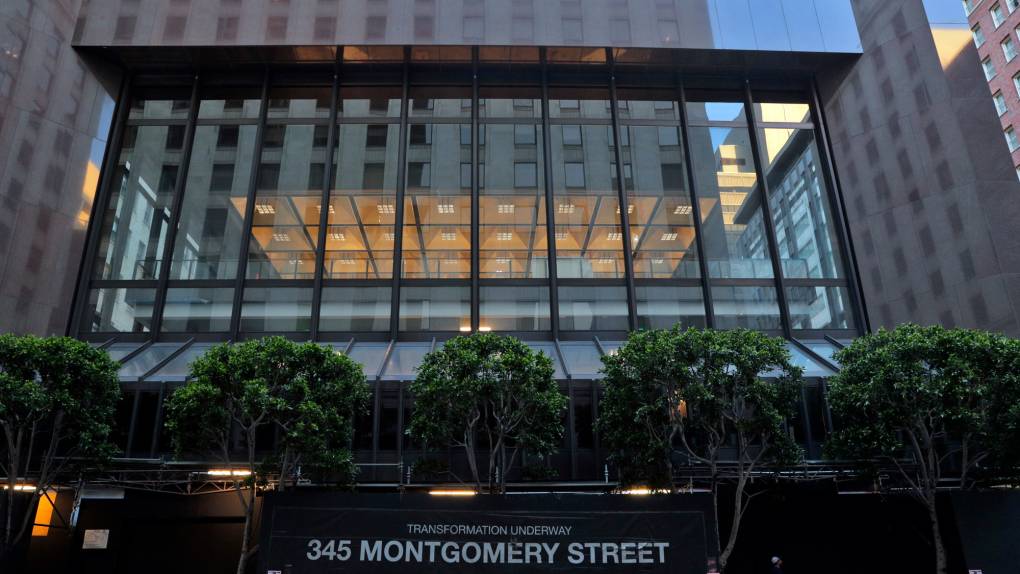
"caption": "The exterior of 345 Montgomery St. in 2020.",
"credit": "Carlos Avila Gonzalez/The San Francisco Chronicle via Getty Images",
"altTag": "Modernist building with brown stone and large glass facade",
"description": null,
"imgSizes": {
"medium": {
"file": "https://cdn.kqed.org/wp-content/uploads/sites/2/2024/08/Cube_ICASF_2000-800x450.jpg",
"width": 800,
"height": 450,
"mimeType": "image/jpeg"
},
"large": {
"file": "https://cdn.kqed.org/wp-content/uploads/sites/2/2024/08/Cube_ICASF_2000-1020x574.jpg",
"width": 1020,
"height": 574,
"mimeType": "image/jpeg"
},
"thumbnail": {
"file": "https://cdn.kqed.org/wp-content/uploads/sites/2/2024/08/Cube_ICASF_2000-160x90.jpg",
"width": 160,
"height": 90,
"mimeType": "image/jpeg"
},
"medium_large": {
"file": "https://cdn.kqed.org/wp-content/uploads/sites/2/2024/08/Cube_ICASF_2000-768x432.jpg",
"width": 768,
"height": 432,
"mimeType": "image/jpeg"
},
"1536x1536": {
"file": "https://cdn.kqed.org/wp-content/uploads/sites/2/2024/08/Cube_ICASF_2000-1536x864.jpg",
"width": 1536,
"height": 864,
"mimeType": "image/jpeg"
},
"post-thumbnail": {
"file": "https://cdn.kqed.org/wp-content/uploads/sites/2/2024/08/Cube_ICASF_2000-672x372.jpg",
"width": 672,
"height": 372,
"mimeType": "image/jpeg"
},
"twentyfourteen-full-width": {
"file": "https://cdn.kqed.org/wp-content/uploads/sites/2/2024/08/Cube_ICASF_2000-1038x576.jpg",
"width": 1038,
"height": 576,
"mimeType": "image/jpeg"
},
"full-width": {
"file": "https://cdn.kqed.org/wp-content/uploads/sites/2/2024/08/Cube_ICASF_2000-1920x1080.jpg",
"width": 1920,
"height": 1080,
"mimeType": "image/jpeg"
},
"kqedFullSize": {
"file": "https://cdn.kqed.org/wp-content/uploads/sites/2/2024/08/Cube_ICASF_2000.jpg",
"width": 2000,
"height": 1125
}
},
"isLoading": false,
"fetchFailed": false
},
"arts_13963441": {
"type": "attachments",
"id": "arts_13963441",
"meta": {
"index": "attachments_1716263798",
"site": "arts",
"id": "13963441",
"found": true
},
"title": "Emmys-crop",
"publishDate": 1724975141,
"status": "inherit",
"parent": 13963437,
"modified": 1724975264,
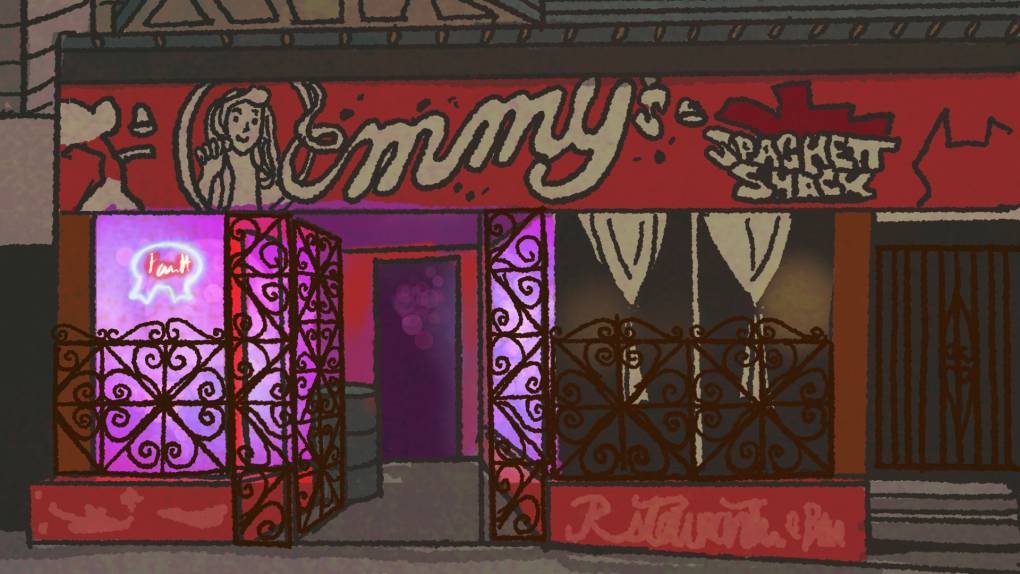
"caption": "Emmy's Spaghetti Shack has been open in the Mission Bernal area of San Francisco for more than 20 years.",
"credit": "Thien Pham",
"altTag": "Illustration: red and purple front facade of a restaurant at nighttime. The sign reads, \"Emmy's\" in cursive.",
"description": null,
"imgSizes": {
"medium": {
"file": "https://cdn.kqed.org/wp-content/uploads/sites/2/2024/08/Emmys-crop-800x450.jpg",
"width": 800,
"height": 450,
"mimeType": "image/jpeg"
},
"large": {
"file": "https://cdn.kqed.org/wp-content/uploads/sites/2/2024/08/Emmys-crop-1020x574.jpg",
"width": 1020,
"height": 574,
"mimeType": "image/jpeg"
},
"thumbnail": {
"file": "https://cdn.kqed.org/wp-content/uploads/sites/2/2024/08/Emmys-crop-160x90.jpg",
"width": 160,
"height": 90,
"mimeType": "image/jpeg"
},
"medium_large": {
"file": "https://cdn.kqed.org/wp-content/uploads/sites/2/2024/08/Emmys-crop-768x432.jpg",
"width": 768,
"height": 432,
"mimeType": "image/jpeg"
},
"1536x1536": {
"file": "https://cdn.kqed.org/wp-content/uploads/sites/2/2024/08/Emmys-crop-1536x864.jpg",
"width": 1536,
"height": 864,
"mimeType": "image/jpeg"
},
"post-thumbnail": {
"file": "https://cdn.kqed.org/wp-content/uploads/sites/2/2024/08/Emmys-crop-672x372.jpg",
"width": 672,
"height": 372,
"mimeType": "image/jpeg"
},
"twentyfourteen-full-width": {
"file": "https://cdn.kqed.org/wp-content/uploads/sites/2/2024/08/Emmys-crop-1038x576.jpg",
"width": 1038,
"height": 576,
"mimeType": "image/jpeg"
},
"kqedFullSize": {
"file": "https://cdn.kqed.org/wp-content/uploads/sites/2/2024/08/Emmys-crop.jpg",
"width": 1920,
"height": 1080
}
},
"isLoading": false,
"fetchFailed": false
},
"arts_13962609": {
"type": "attachments",
"id": "arts_13962609",
"meta": {
"index": "attachments_1716263798",
"site": "arts",
"id": "13962609",
"found": true
},
"title": "A 1980 Raymond Pettibon flier for Black Flag, The Enemy, The Cosmetics and Social Unrest at Mabuhay Gardens in San Francisco.",
"publishDate": 1723568799,
"status": "inherit",
"parent": 13962592,
"modified": 1756156514,
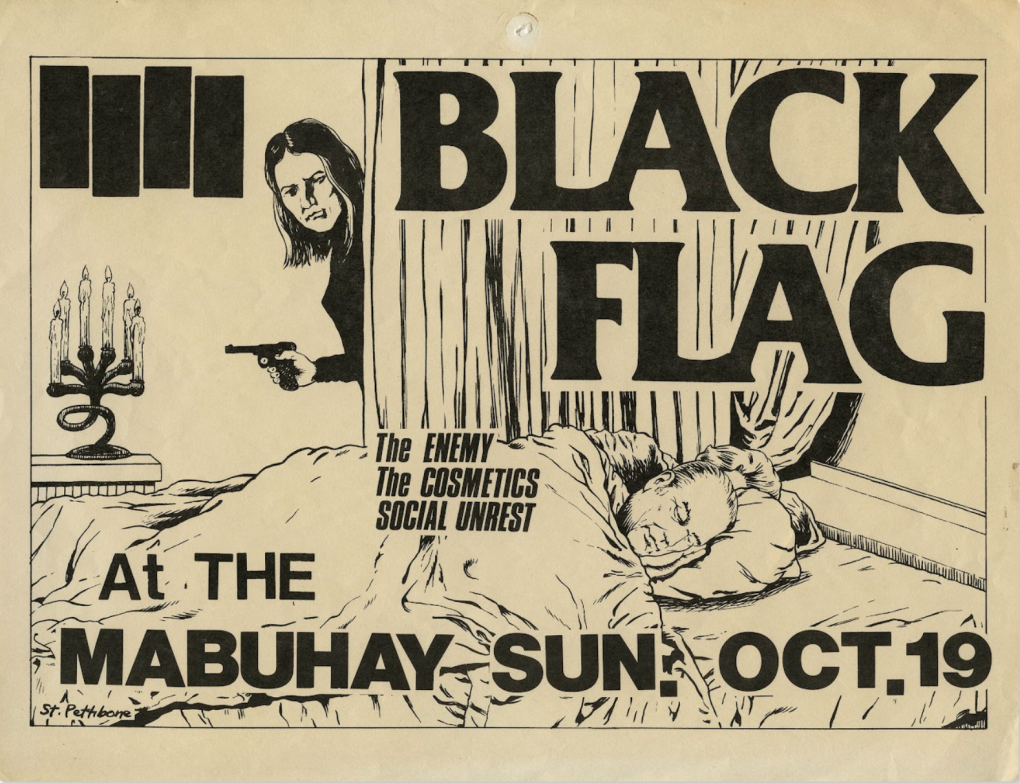
"caption": "A 1980 Raymond Pettibon flyer for Black Flag, The Enemy, The Cosmetics and Social Unrest at Mabuhay Gardens in San Francisco.",
"credit": "Courtesy of Specific Object/ Wright Auction House",
"altTag": "A flier featuring black and white art of a woman sneaking into the room of a sleeping man. She is holding a gun.",
"description": null,
"imgSizes": {
"medium": {
"file": "https://cdn.kqed.org/wp-content/uploads/sites/2/2024/08/black-flag-mabuhay-800x614.png",
"width": 800,
"height": 614,
"mimeType": "image/png"
},
"large": {
"file": "https://cdn.kqed.org/wp-content/uploads/sites/2/2024/08/black-flag-mabuhay-1020x783.png",
"width": 1020,
"height": 783,
"mimeType": "image/png"
},
"thumbnail": {
"file": "https://cdn.kqed.org/wp-content/uploads/sites/2/2024/08/black-flag-mabuhay-160x123.png",
"width": 160,
"height": 123,
"mimeType": "image/png"
},
"medium_large": {
"file": "https://cdn.kqed.org/wp-content/uploads/sites/2/2024/08/black-flag-mabuhay-768x590.png",
"width": 768,
"height": 590,
"mimeType": "image/png"
},
"1536x1536": {
"file": "https://cdn.kqed.org/wp-content/uploads/sites/2/2024/08/black-flag-mabuhay-1536x1180.png",
"width": 1536,
"height": 1180,
"mimeType": "image/png"
},
"post-thumbnail": {
"file": "https://cdn.kqed.org/wp-content/uploads/sites/2/2024/08/black-flag-mabuhay-672x372.png",
"width": 672,
"height": 372,
"mimeType": "image/png"
},
"twentyfourteen-full-width": {
"file": "https://cdn.kqed.org/wp-content/uploads/sites/2/2024/08/black-flag-mabuhay-1038x576.png",
"width": 1038,
"height": 576,
"mimeType": "image/png"
},
"kqedFullSize": {
"file": "https://cdn.kqed.org/wp-content/uploads/sites/2/2024/08/black-flag-mabuhay.png",
"width": 1578,
"height": 1212
}
},
"isLoading": false,
"fetchFailed": false
},
"arts_13962505": {
"type": "attachments",
"id": "arts_13962505",
"meta": {
"index": "attachments_1716263798",
"site": "arts",
"id": "13962505",
"found": true
},
"title": "Outside Lands Day 3",
"publishDate": 1723463427,
"status": "inherit",
"parent": 0,
"modified": 1723463636,
"caption": "Kallie Schloemann cheers as Chappell Roan performs at Outside Lands on Sunday, Aug. 11, 2024.",
"credit": "Estefany Gonzalez for KQED",
"altTag": null,
"description": null,
"imgSizes": {
"medium": {
"file": "https://cdn.kqed.org/wp-content/uploads/sites/2/2024/08/240811_OutsideLands__EG_001-800x533.jpg",
"width": 800,
"height": 533,
"mimeType": "image/jpeg"
},
"large": {
"file": "https://cdn.kqed.org/wp-content/uploads/sites/2/2024/08/240811_OutsideLands__EG_001-1020x680.jpg",
"width": 1020,
"height": 680,
"mimeType": "image/jpeg"
},
"thumbnail": {
"file": "https://cdn.kqed.org/wp-content/uploads/sites/2/2024/08/240811_OutsideLands__EG_001-160x107.jpg",
"width": 160,
"height": 107,
"mimeType": "image/jpeg"
},
"medium_large": {
"file": "https://cdn.kqed.org/wp-content/uploads/sites/2/2024/08/240811_OutsideLands__EG_001-768x512.jpg",
"width": 768,
"height": 512,
"mimeType": "image/jpeg"
},
"1536x1536": {
"file": "https://cdn.kqed.org/wp-content/uploads/sites/2/2024/08/240811_OutsideLands__EG_001-1536x1024.jpg",
"width": 1536,
"height": 1024,
"mimeType": "image/jpeg"
},
"post-thumbnail": {
"file": "https://cdn.kqed.org/wp-content/uploads/sites/2/2024/08/240811_OutsideLands__EG_001-672x372.jpg",
"width": 672,
"height": 372,
"mimeType": "image/jpeg"
},
"twentyfourteen-full-width": {
"file": "https://cdn.kqed.org/wp-content/uploads/sites/2/2024/08/240811_OutsideLands__EG_001-1038x576.jpg",
"width": 1038,
"height": 576,
"mimeType": "image/jpeg"
},
"kqedFullSize": {
"file": "https://cdn.kqed.org/wp-content/uploads/sites/2/2024/08/240811_OutsideLands__EG_001.jpg",
"width": 1920,
"height": 1280
}
},
"isLoading": false,
"fetchFailed": false
},
"arts_13962511": {
"type": "attachments",
"id": "arts_13962511",
"meta": {
"index": "attachments_1716263798",
"site": "arts",
"id": "13962511",
"found": true
},
"title": "Outside Lands Day 3",
"publishDate": 1723463450,
"status": "inherit",
"parent": 0,
"modified": 1723463666,
"caption": "Chappell Roan performs at Outside Lands on Sunday, Aug. 11, 2024.",
"credit": "Estefany Gonzalez for KQED",
"altTag": null,
"description": null,
"imgSizes": {
"medium": {
"file": "https://cdn.kqed.org/wp-content/uploads/sites/2/2024/08/240811_OutsideLands__EG_007-800x533.jpg",
"width": 800,
"height": 533,
"mimeType": "image/jpeg"
},
"large": {
"file": "https://cdn.kqed.org/wp-content/uploads/sites/2/2024/08/240811_OutsideLands__EG_007-1020x680.jpg",
"width": 1020,
"height": 680,
"mimeType": "image/jpeg"
},
"thumbnail": {
"file": "https://cdn.kqed.org/wp-content/uploads/sites/2/2024/08/240811_OutsideLands__EG_007-160x107.jpg",
"width": 160,
"height": 107,
"mimeType": "image/jpeg"
},
"medium_large": {
"file": "https://cdn.kqed.org/wp-content/uploads/sites/2/2024/08/240811_OutsideLands__EG_007-768x512.jpg",
"width": 768,
"height": 512,
"mimeType": "image/jpeg"
},
"1536x1536": {
"file": "https://cdn.kqed.org/wp-content/uploads/sites/2/2024/08/240811_OutsideLands__EG_007-1536x1024.jpg",
"width": 1536,
"height": 1024,
"mimeType": "image/jpeg"
},
"post-thumbnail": {
"file": "https://cdn.kqed.org/wp-content/uploads/sites/2/2024/08/240811_OutsideLands__EG_007-672x372.jpg",
"width": 672,
"height": 372,
"mimeType": "image/jpeg"
},
"twentyfourteen-full-width": {
"file": "https://cdn.kqed.org/wp-content/uploads/sites/2/2024/08/240811_OutsideLands__EG_007-1038x576.jpg",
"width": 1038,
"height": 576,
"mimeType": "image/jpeg"
},
"kqedFullSize": {
"file": "https://cdn.kqed.org/wp-content/uploads/sites/2/2024/08/240811_OutsideLands__EG_007.jpg",
"width": 1920,
"height": 1280
}
},
"isLoading": false,
"fetchFailed": false
},
"arts_13962286": {
"type": "attachments",
"id": "arts_13962286",
"meta": {
"index": "attachments_1716263798",
"site": "arts",
"id": "13962286",
"found": true
},
"title": "Photographer Alexis Floyd.",
"publishDate": 1723139861,
"status": "inherit",
"parent": 13962254,
"modified": 1723147453,
"caption": "Photographer Alexis Floyd. ",
"credit": "Besty Tan",
"altTag": "Photographer Alexis Floyd.",
"description": "Photographer Alexis Floyd. ",
"imgSizes": {
"medium": {
"file": "https://cdn.kqed.org/wp-content/uploads/sites/2/2024/08/Screenshot-2024-08-08-at-10.45.49 AM-800x662.png",
"width": 800,
"height": 662,
"mimeType": "image/png"
},
"large": {
"file": "https://cdn.kqed.org/wp-content/uploads/sites/2/2024/08/Screenshot-2024-08-08-at-10.45.49 AM-1020x844.png",
"width": 1020,
"height": 844,
"mimeType": "image/png"
},
"thumbnail": {
"file": "https://cdn.kqed.org/wp-content/uploads/sites/2/2024/08/Screenshot-2024-08-08-at-10.45.49 AM-160x132.png",
"width": 160,
"height": 132,
"mimeType": "image/png"
},
"medium_large": {
"file": "https://cdn.kqed.org/wp-content/uploads/sites/2/2024/08/Screenshot-2024-08-08-at-10.45.49 AM-768x635.png",
"width": 768,
"height": 635,
"mimeType": "image/png"
},
"post-thumbnail": {
"file": "https://cdn.kqed.org/wp-content/uploads/sites/2/2024/08/Screenshot-2024-08-08-at-10.45.49 AM-672x372.png",
"width": 672,
"height": 372,
"mimeType": "image/png"
},
"twentyfourteen-full-width": {
"file": "https://cdn.kqed.org/wp-content/uploads/sites/2/2024/08/Screenshot-2024-08-08-at-10.45.49 AM-1038x576.png",
"width": 1038,
"height": 576,
"mimeType": "image/png"
},
"kqedFullSize": {
"file": "https://cdn.kqed.org/wp-content/uploads/sites/2/2024/08/Screenshot-2024-08-08-at-10.45.49 AM.png",
"width": 1272,
"height": 1052
}
},
"isLoading": false,
"fetchFailed": false
},
"arts_13962057": {
"type": "attachments",
"id": "arts_13962057",
"meta": {
"index": "attachments_1716263798",
"site": "arts",
"id": "13962057",
"found": true
},
"title": "OliviaRodrigo.MAIN",
"publishDate": 1722703908,
"status": "inherit",
"parent": 13962051,
"modified": 1722704234,
"caption": "Olivia Rodrigo performs during her GUTS World Tour at the Chase Center in San Francisco on Aug. 2, 2024.",
"credit": "Gina Castro/KQED",
"altTag": null,
"description": null,
"imgSizes": {
"medium": {
"file": "https://cdn.kqed.org/wp-content/uploads/sites/2/2024/08/OliviaRodrigo.MAIN_-800x538.jpg",
"width": 800,
"height": 538,
"mimeType": "image/jpeg"
},
"large": {
"file": "https://cdn.kqed.org/wp-content/uploads/sites/2/2024/08/OliviaRodrigo.MAIN_-1020x685.jpg",
"width": 1020,
"height": 685,
"mimeType": "image/jpeg"
},
"thumbnail": {
"file": "https://cdn.kqed.org/wp-content/uploads/sites/2/2024/08/OliviaRodrigo.MAIN_-160x108.jpg",
"width": 160,
"height": 108,
"mimeType": "image/jpeg"
},
"medium_large": {
"file": "https://cdn.kqed.org/wp-content/uploads/sites/2/2024/08/OliviaRodrigo.MAIN_-768x516.jpg",
"width": 768,
"height": 516,
"mimeType": "image/jpeg"
},
"1536x1536": {
"file": "https://cdn.kqed.org/wp-content/uploads/sites/2/2024/08/OliviaRodrigo.MAIN_-1536x1032.jpg",
"width": 1536,
"height": 1032,
"mimeType": "image/jpeg"
},
"post-thumbnail": {
"file": "https://cdn.kqed.org/wp-content/uploads/sites/2/2024/08/OliviaRodrigo.MAIN_-672x372.jpg",
"width": 672,
"height": 372,
"mimeType": "image/jpeg"
},
"twentyfourteen-full-width": {
"file": "https://cdn.kqed.org/wp-content/uploads/sites/2/2024/08/OliviaRodrigo.MAIN_-1038x576.jpg",
"width": 1038,
"height": 576,
"mimeType": "image/jpeg"
},
"full-width": {
"file": "https://cdn.kqed.org/wp-content/uploads/sites/2/2024/08/OliviaRodrigo.MAIN_-1920x1290.jpg",
"width": 1920,
"height": 1290,
"mimeType": "image/jpeg"
},
"kqedFullSize": {
"file": "https://cdn.kqed.org/wp-content/uploads/sites/2/2024/08/OliviaRodrigo.MAIN_.jpg",
"width": 2000,
"height": 1344
}
},
"isLoading": false,
"fetchFailed": false
},
"arts_13962005": {
"type": "attachments",
"id": "arts_13962005",
"meta": {
"index": "attachments_1716263798",
"site": "arts",
"id": "13962005",
"found": true
},
"title": "BrazenHead2-crop",
"publishDate": 1722620248,
"status": "inherit",
"parent": 13961997,
"modified": 1722620371,
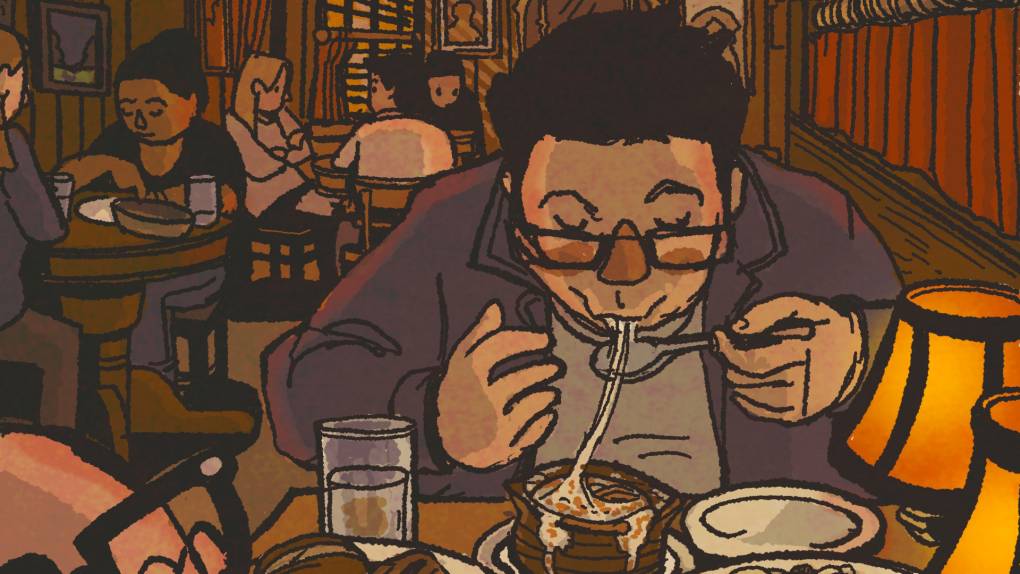
"caption": "The food at Brazen Head is delightfully old-school. The Cow Hollow pub is one of San Francisco's best late-night restaurants.",
"credit": "Thien Pham",
"altTag": "Illustration: A man eating a bowl of French onion soup, pulling up a long strand of melted cheese.",
"description": null,
"imgSizes": {
"medium": {
"file": "https://cdn.kqed.org/wp-content/uploads/sites/2/2024/08/BrazenHead2-crop-800x450.jpg",
"width": 800,
"height": 450,
"mimeType": "image/jpeg"
},
"large": {
"file": "https://cdn.kqed.org/wp-content/uploads/sites/2/2024/08/BrazenHead2-crop-1020x574.jpg",
"width": 1020,
"height": 574,
"mimeType": "image/jpeg"
},
"thumbnail": {
"file": "https://cdn.kqed.org/wp-content/uploads/sites/2/2024/08/BrazenHead2-crop-160x90.jpg",
"width": 160,
"height": 90,
"mimeType": "image/jpeg"
},
"medium_large": {
"file": "https://cdn.kqed.org/wp-content/uploads/sites/2/2024/08/BrazenHead2-crop-768x432.jpg",
"width": 768,
"height": 432,
"mimeType": "image/jpeg"
},
"1536x1536": {
"file": "https://cdn.kqed.org/wp-content/uploads/sites/2/2024/08/BrazenHead2-crop-1536x864.jpg",
"width": 1536,
"height": 864,
"mimeType": "image/jpeg"
},
"post-thumbnail": {
"file": "https://cdn.kqed.org/wp-content/uploads/sites/2/2024/08/BrazenHead2-crop-672x372.jpg",
"width": 672,
"height": 372,
"mimeType": "image/jpeg"
},
"twentyfourteen-full-width": {
"file": "https://cdn.kqed.org/wp-content/uploads/sites/2/2024/08/BrazenHead2-crop-1038x576.jpg",
"width": 1038,
"height": 576,
"mimeType": "image/jpeg"
},
"kqedFullSize": {
"file": "https://cdn.kqed.org/wp-content/uploads/sites/2/2024/08/BrazenHead2-crop.jpg",
"width": 1920,
"height": 1080
}
},
"isLoading": false,
"fetchFailed": false
},
"arts_13961870": {
"type": "attachments",
"id": "arts_13961870",
"meta": {
"index": "attachments_1716263798",
"site": "arts",
"id": "13961870",
"found": true
},
"title": "2",
"publishDate": 1722460637,
"status": "inherit",
"parent": 13961696,
"modified": 1722461712,
"caption": "Mestiza, the newly reopened Filipino restaurant in San Francisco's SoMa district, features fresh, plant-leaning dishes like a calabasa coconut curry (pictured on the right).",
"credit": "Beth LaBerge/KQED",
"altTag": "A chef holding two Filipino dishes, including a coconut curry topped with bok choy.",
"description": null,
"imgSizes": {
"medium": {
"file": "https://cdn.kqed.org/wp-content/uploads/sites/2/2024/07/2-800x450.png",
"width": 800,
"height": 450,
"mimeType": "image/png"
},
"large": {
"file": "https://cdn.kqed.org/wp-content/uploads/sites/2/2024/07/2-1020x574.png",
"width": 1020,
"height": 574,
"mimeType": "image/png"
},
"thumbnail": {
"file": "https://cdn.kqed.org/wp-content/uploads/sites/2/2024/07/2-160x90.png",
"width": 160,
"height": 90,
"mimeType": "image/png"
},
"medium_large": {
"file": "https://cdn.kqed.org/wp-content/uploads/sites/2/2024/07/2-768x432.png",
"width": 768,
"height": 432,
"mimeType": "image/png"
},
"1536x1536": {
"file": "https://cdn.kqed.org/wp-content/uploads/sites/2/2024/07/2-1536x864.png",
"width": 1536,
"height": 864,
"mimeType": "image/png"
},
"post-thumbnail": {
"file": "https://cdn.kqed.org/wp-content/uploads/sites/2/2024/07/2-672x372.png",
"width": 672,
"height": 372,
"mimeType": "image/png"
},
"twentyfourteen-full-width": {
"file": "https://cdn.kqed.org/wp-content/uploads/sites/2/2024/07/2-1038x576.png",
"width": 1038,
"height": 576,
"mimeType": "image/png"
},
"kqedFullSize": {
"file": "https://cdn.kqed.org/wp-content/uploads/sites/2/2024/07/2.png",
"width": 1920,
"height": 1080
}
},
"isLoading": false,
"fetchFailed": false
},
"arts_13957510": {
"type": "attachments",
"id": "arts_13957510",
"meta": {
"index": "attachments_1716263798",
"site": "arts",
"id": "13957510",
"found": true
},
"title": "20240506_NAILTECHFOODIE-16-KQED",
"publishDate": 1715207256,
"status": "inherit",
"parent": 0,
"modified": 1722297416,
"caption": "Chris Phung, left, and Rocky Rivera, right, eat at Little Sweet, a restaurant serving Hong Kong-style dishes, on Monday, May 6, 2024.",
"credit": "Gina Castro/KQED",
"altTag": "Two women sit at a large round table inside a Chinese restaurant, a spread of chicken wings and other dishes in front of them.",
"description": null,
"imgSizes": {
"medium": {
"file": "https://cdn.kqed.org/wp-content/uploads/sites/2/2024/05/20240506_NAILTECHFOODIE-16-KQED-800x533.jpg",
"width": 800,
"height": 533,
"mimeType": "image/jpeg"
},
"large": {
"file": "https://cdn.kqed.org/wp-content/uploads/sites/2/2024/05/20240506_NAILTECHFOODIE-16-KQED-1020x680.jpg",
"width": 1020,
"height": 680,
"mimeType": "image/jpeg"
},
"thumbnail": {
"file": "https://cdn.kqed.org/wp-content/uploads/sites/2/2024/05/20240506_NAILTECHFOODIE-16-KQED-160x107.jpg",
"width": 160,
"height": 107,
"mimeType": "image/jpeg"
},
"medium_large": {
"file": "https://cdn.kqed.org/wp-content/uploads/sites/2/2024/05/20240506_NAILTECHFOODIE-16-KQED-768x512.jpg",
"width": 768,
"height": 512,
"mimeType": "image/jpeg"
},
"1536x1536": {
"file": "https://cdn.kqed.org/wp-content/uploads/sites/2/2024/05/20240506_NAILTECHFOODIE-16-KQED-1536x1024.jpg",
"width": 1536,
"height": 1024,
"mimeType": "image/jpeg"
},
"post-thumbnail": {
"file": "https://cdn.kqed.org/wp-content/uploads/sites/2/2024/05/20240506_NAILTECHFOODIE-16-KQED-672x372.jpg",
"width": 672,
"height": 372,
"mimeType": "image/jpeg"
},
"twentyfourteen-full-width": {
"file": "https://cdn.kqed.org/wp-content/uploads/sites/2/2024/05/20240506_NAILTECHFOODIE-16-KQED-1038x576.jpg",
"width": 1038,
"height": 576,
"mimeType": "image/jpeg"
},
"full-width": {
"file": "https://cdn.kqed.org/wp-content/uploads/sites/2/2024/05/20240506_NAILTECHFOODIE-16-KQED-1920x1280.jpg",
"width": 1920,
"height": 1280,
"mimeType": "image/jpeg"
},
"kqedFullSize": {
"file": "https://cdn.kqed.org/wp-content/uploads/sites/2/2024/05/20240506_NAILTECHFOODIE-16-KQED.jpg",
"width": 2000,
"height": 1333
}
},
"isLoading": false,
"fetchFailed": false
},
"arts_11641882": {
"type": "attachments",
"id": "arts_11641882",
"meta": {
"index": "attachments_1716263798",
"site": "arts",
"id": "11641882",
"found": true
},
"title": "Equipto.MAIN",
"publishDate": 1464911331,
"status": "inherit",
"parent": 11630270,
"modified": 1721849624,
"caption": "Equipto leans against a mural dedicated to freedom fighters of the past and present.",
"credit": "Rafael Roy",
"altTag": "Equipto leans against a freshly painted mural dedicated to freedom fighters of the past and present.",
"description": "Equipto leans against a freshly painted mural dedicated to freedom fighters of the past and present.",
"imgSizes": {
"thumbnail": {
"file": "https://cdn.kqed.org/wp-content/uploads/sites/2/2016/06/Equipto.MAIN_-400x225.jpg",
"width": 400,
"height": 225,
"mimeType": "image/jpeg"
},
"medium": {
"file": "https://cdn.kqed.org/wp-content/uploads/sites/2/2016/06/Equipto.MAIN_-800x450.jpg",
"width": 800,
"height": 450,
"mimeType": "image/jpeg"
},
"medium_large": {
"file": "https://cdn.kqed.org/wp-content/uploads/sites/2/2016/06/Equipto.MAIN_-768x432.jpg",
"width": 768,
"height": 432,
"mimeType": "image/jpeg"
},
"large": {
"file": "https://cdn.kqed.org/wp-content/uploads/sites/2/2016/06/Equipto.MAIN_-1180x664.jpg",
"width": 1180,
"height": 664,
"mimeType": "image/jpeg"
},
"fd-lrg": {
"file": "https://cdn.kqed.org/wp-content/uploads/sites/2/2016/06/Equipto.MAIN_-1920x1080.jpg",
"width": 1920,
"height": 1080,
"mimeType": "image/jpeg"
},
"fd-med": {
"file": "https://cdn.kqed.org/wp-content/uploads/sites/2/2016/06/Equipto.MAIN_-1180x664.jpg",
"width": 1180,
"height": 664,
"mimeType": "image/jpeg"
},
"fd-sm": {
"file": "https://cdn.kqed.org/wp-content/uploads/sites/2/2016/06/Equipto.MAIN_-960x540.jpg",
"width": 960,
"height": 540,
"mimeType": "image/jpeg"
},
"post-thumbnail": {
"file": "https://cdn.kqed.org/wp-content/uploads/sites/2/2016/06/Equipto.MAIN_-672x372.jpg",
"width": 672,
"height": 372,
"mimeType": "image/jpeg"
},
"twentyfourteen-full-width": {
"file": "https://cdn.kqed.org/wp-content/uploads/sites/2/2016/06/Equipto.MAIN_-1038x576.jpg",
"width": 1038,
"height": 576,
"mimeType": "image/jpeg"
},
"guest-author-32": {
"file": "https://cdn.kqed.org/wp-content/uploads/sites/2/2016/06/Equipto.MAIN_-32x32.jpg",
"width": 32,
"height": 32,
"mimeType": "image/jpeg"
},
"guest-author-50": {
"file": "https://cdn.kqed.org/wp-content/uploads/sites/2/2016/06/Equipto.MAIN_-50x50.jpg",
"width": 50,
"height": 50,
"mimeType": "image/jpeg"
},
"guest-author-64": {
"file": "https://cdn.kqed.org/wp-content/uploads/sites/2/2016/06/Equipto.MAIN_-64x64.jpg",
"width": 64,
"height": 64,
"mimeType": "image/jpeg"
},
"guest-author-96": {
"file": "https://cdn.kqed.org/wp-content/uploads/sites/2/2016/06/Equipto.MAIN_-96x96.jpg",
"width": 96,
"height": 96,
"mimeType": "image/jpeg"
},
"guest-author-128": {
"file": "https://cdn.kqed.org/wp-content/uploads/sites/2/2016/06/Equipto.MAIN_-128x128.jpg",
"width": 128,
"height": 128,
"mimeType": "image/jpeg"
},
"detail": {
"file": "https://cdn.kqed.org/wp-content/uploads/sites/2/2016/06/Equipto.MAIN_-150x150.jpg",
"width": 150,
"height": 150,
"mimeType": "image/jpeg"
},
"kqedFullSize": {
"file": "https://cdn.kqed.org/wp-content/uploads/sites/2/2016/06/Equipto.MAIN_.jpg",
"width": 1920,
"height": 1080
}
},
"isLoading": false,
"fetchFailed": false
},
"arts_13961257": {
"type": "attachments",
"id": "arts_13961257",
"meta": {
"index": "attachments_1716263798",
"site": "arts",
"id": "13961257",
"found": true
},
"title": "240711-BRAZILIANFOODBOOM-09-BL-KQED",
"publishDate": 1721237870,
"status": "inherit",
"parent": 0,
"modified": 1721413076,
"caption": "Cafe de Casa's arroz nordestino, one of the traditional lunch dishes the Brazilian restaurant serves at its new flagship location on Fisherman's Wharf. On the side: pao de queijo, a.k.a. cheese bread, one of the first Brazilian dishes to achieve mainstream popularity.",
"credit": "Beth LaBerge/KQED",
"altTag": "Rice, beans and plantains in a small black pot.",
"description": null,
"imgSizes": {
"medium": {
"file": "https://cdn.kqed.org/wp-content/uploads/sites/2/2024/07/240711-BRAZILIANFOODBOOM-09-BL-KQED-800x533.jpg",
"width": 800,
"height": 533,
"mimeType": "image/jpeg"
},
"large": {
"file": "https://cdn.kqed.org/wp-content/uploads/sites/2/2024/07/240711-BRAZILIANFOODBOOM-09-BL-KQED-1020x680.jpg",
"width": 1020,
"height": 680,
"mimeType": "image/jpeg"
},
"thumbnail": {
"file": "https://cdn.kqed.org/wp-content/uploads/sites/2/2024/07/240711-BRAZILIANFOODBOOM-09-BL-KQED-160x107.jpg",
"width": 160,
"height": 107,
"mimeType": "image/jpeg"
},
"medium_large": {
"file": "https://cdn.kqed.org/wp-content/uploads/sites/2/2024/07/240711-BRAZILIANFOODBOOM-09-BL-KQED-768x512.jpg",
"width": 768,
"height": 512,
"mimeType": "image/jpeg"
},
"1536x1536": {
"file": "https://cdn.kqed.org/wp-content/uploads/sites/2/2024/07/240711-BRAZILIANFOODBOOM-09-BL-KQED-1536x1024.jpg",
"width": 1536,
"height": 1024,
"mimeType": "image/jpeg"
},
"post-thumbnail": {
"file": "https://cdn.kqed.org/wp-content/uploads/sites/2/2024/07/240711-BRAZILIANFOODBOOM-09-BL-KQED-672x372.jpg",
"width": 672,
"height": 372,
"mimeType": "image/jpeg"
},
"twentyfourteen-full-width": {
"file": "https://cdn.kqed.org/wp-content/uploads/sites/2/2024/07/240711-BRAZILIANFOODBOOM-09-BL-KQED-1038x576.jpg",
"width": 1038,
"height": 576,
"mimeType": "image/jpeg"
},
"full-width": {
"file": "https://cdn.kqed.org/wp-content/uploads/sites/2/2024/07/240711-BRAZILIANFOODBOOM-09-BL-KQED-1920x1280.jpg",
"width": 1920,
"height": 1280,
"mimeType": "image/jpeg"
},
"kqedFullSize": {
"file": "https://cdn.kqed.org/wp-content/uploads/sites/2/2024/07/240711-BRAZILIANFOODBOOM-09-BL-KQED.jpg",
"width": 2000,
"height": 1333
}
},
"isLoading": false,
"fetchFailed": false
}
},
"audioPlayerReducer": {
"postId": "stream_live",
"isPaused": true,
"isPlaying": false,
"pfsActive": false,
"pledgeModalIsOpen": true,
"playerDrawerIsOpen": false,
"liveAudioPlayStartedAt": 0,
"liveAudioPlayContext": ""
},
"authorsReducer": {
"byline_arts_13961345": {
"type": "authors",
"id": "byline_arts_13961345",
"meta": {
"override": true
},
"slug": "byline_arts_13961345",
"name": "Adrian Spinelli",
"isLoading": false
},
"shotchkiss": {
"type": "authors",
"id": "61",
"meta": {
"index": "authors_1716337520",
"id": "61",
"found": true
},
"name": "Sarah Hotchkiss",
"firstName": "Sarah",
"lastName": "Hotchkiss",
"slug": "shotchkiss",
"email": "shotchkiss@kqed.org",
"display_author_email": true,
"staff_mastheads": [
"arts"
],
"title": "Senior Editor",
"bio": "Sarah Hotchkiss is a San Francisco \u003ca href=\"http://www.sarahhotchkiss.com\">artist\u003c/a> and arts writer. In 2019, she received the Dorothea & Leo Rabkin Foundation grant for visual art journalism and in 2020 she received a Society of Professional Journalists, Northern California award for excellence in arts and culture reporting.",
"avatar": "https://secure.gravatar.com/avatar/bc662df144b3d27fd8b1b6f1c2a420d34e91e53154d411bb7ad353cc8b6cea8d?s=600&d=blank&r=g",
"twitter": null,
"bluesky": null,
"facebook": null,
"instagram": null,
"linkedin": null,
"sites": [
{
"site": "",
"roles": [
"editor"
]
},
{
"site": "arts",
"roles": [
"Contributor",
"administrator"
]
},
{
"site": "artschool",
"roles": [
"administrator"
]
},
{
"site": "news",
"roles": [
"editor"
]
},
{
"site": "pop",
"roles": [
"administrator"
]
},
{
"site": "bayareabites",
"roles": [
"editor"
]
},
{
"site": "spark",
"roles": [
"editor"
]
},
{
"site": "checkplease",
"roles": [
"editor"
]
}
],
"headData": {
"title": "Sarah Hotchkiss | KQED",
"description": "Senior Editor",
"ogImgSrc": "https://secure.gravatar.com/avatar/bc662df144b3d27fd8b1b6f1c2a420d34e91e53154d411bb7ad353cc8b6cea8d?s=600&d=blank&r=g",
"twImgSrc": "https://secure.gravatar.com/avatar/bc662df144b3d27fd8b1b6f1c2a420d34e91e53154d411bb7ad353cc8b6cea8d?s=600&d=blank&r=g"
},
"isLoading": false,
"link": "/author/shotchkiss"
},
"gmeline": {
"type": "authors",
"id": "185",
"meta": {
"index": "authors_1716337520",
"id": "185",
"found": true
},
"name": "Gabe Meline",
"firstName": "Gabe",
"lastName": "Meline",
"slug": "gmeline",
"email": "gmeline@kqed.org",
"display_author_email": true,
"staff_mastheads": [
"arts"
],
"title": "Senior Editor, KQED Arts & Culture",
"bio": "Gabe Meline entered journalism at age 15 making photocopied zines, and has since earned awards from the Edward R. Murrow Awards, the Society for Professional Journalists, the Online Journalism Awards, the Association of Alternative Newsweeklies and the California Newspaper Publishers Association. Prior to KQED, he was the editor of the \u003cem>North Bay Bohemian\u003c/em> and a touring musician. He lives with his wife and daughter in his hometown of Santa Rosa, CA.",
"avatar": "https://secure.gravatar.com/avatar/5bebe57be0d8bc2dd318934feb47299e2d2d10cba28d09d8d7afb389a2ce2bdd?s=600&d=blank&r=g",
"twitter": null,
"bluesky": null,
"facebook": null,
"instagram": null,
"linkedin": null,
"sites": [
{
"site": "",
"roles": [
"editor"
]
},
{
"site": "arts",
"roles": [
"administrator"
]
},
{
"site": "artschool",
"roles": [
"editor"
]
},
{
"site": "news",
"roles": [
"author"
]
},
{
"site": "pop",
"roles": [
"editor"
]
},
{
"site": "bayareabites",
"roles": [
"editor"
]
},
{
"site": "food",
"roles": [
"editor"
]
},
{
"site": "forum",
"roles": [
"administrator"
]
},
{
"site": "liveblog",
"roles": [
"editor"
]
},
{
"site": "hiphop",
"roles": [
"editor"
]
}
],
"headData": {
"title": "Gabe Meline | KQED",
"description": "Senior Editor, KQED Arts & Culture",
"ogImgSrc": "https://secure.gravatar.com/avatar/5bebe57be0d8bc2dd318934feb47299e2d2d10cba28d09d8d7afb389a2ce2bdd?s=600&d=blank&r=g",
"twImgSrc": "https://secure.gravatar.com/avatar/5bebe57be0d8bc2dd318934feb47299e2d2d10cba28d09d8d7afb389a2ce2bdd?s=600&d=blank&r=g"
},
"isLoading": false,
"link": "/author/gmeline"
},
"ralexandra": {
"type": "authors",
"id": "11242",
"meta": {
"index": "authors_1716337520",
"id": "11242",
"found": true
},
"name": "Rae Alexandra",
"firstName": "Rae",
"lastName": "Alexandra",
"slug": "ralexandra",
"email": "ralexandra@kqed.org",
"display_author_email": true,
"staff_mastheads": [],
"title": "Reporter/Producer",
"bio": "Rae Alexandra is a Reporter/Producer for KQED Arts & Culture, and the creator/author of the \u003ca href=\"https://www.kqed.org/arts/program/rebel-girls-from-bay-area-history\">Rebel Girls From Bay Area History\u003c/a> and \u003ca href=\"https://www.kqed.org/bizarrebayarea\">Bizarre Bay Area\u003c/a> series. Her debut book, \u003ca href=\"https://citylights.com/politics-current-events-history/unsung-heroines35-women-who-changed/\">Unsung Heroines: 35 Women Who Changed the Bay Area\u003c/a> was published by City Lights in March 2026. In 2023, Rae was awarded an SPJ Excellence in Journalism Award for Arts & Culture. Rae was born and raised in Wales and subsequently — even after two decades in Northern California — still uses phrases that regularly baffle her coworkers.",
"avatar": "https://secure.gravatar.com/avatar/edfee8176c80cc0a382b051190f5341997df378a934a5774dcb0977732dfd401?s=600&d=blank&r=g",
"twitter": null,
"bluesky": null,
"facebook": null,
"instagram": null,
"linkedin": null,
"sites": [
{
"site": "arts",
"roles": [
"subscriber"
]
},
{
"site": "news",
"roles": [
"subscriber"
]
},
{
"site": "pop",
"roles": [
"subscriber"
]
},
{
"site": "bayareabites",
"roles": [
"subscriber"
]
},
{
"site": "science",
"roles": [
"subscriber"
]
}
],
"headData": {
"title": "Rae Alexandra | KQED",
"description": "Reporter/Producer",
"ogImgSrc": "https://secure.gravatar.com/avatar/edfee8176c80cc0a382b051190f5341997df378a934a5774dcb0977732dfd401?s=600&d=blank&r=g",
"twImgSrc": "https://secure.gravatar.com/avatar/edfee8176c80cc0a382b051190f5341997df378a934a5774dcb0977732dfd401?s=600&d=blank&r=g"
},
"isLoading": false,
"link": "/author/ralexandra"
},
"egonzalez": {
"type": "authors",
"id": "11384",
"meta": {
"index": "authors_1716337520",
"id": "11384",
"found": true
},
"name": "Estefany Gonzalez",
"firstName": "Estefany",
"lastName": "Gonzalez",
"slug": "egonzalez",
"email": "estefancy@gmail.com",
"display_author_email": false,
"staff_mastheads": [],
"title": "KQED Contributor",
"bio": "Estefany is a contributing photographer at KQED.",
"avatar": "https://secure.gravatar.com/avatar/31ed90a4cd60f9435d6f170329b6cbb7?s=600&d=blank&r=g",
"twitter": null,
"facebook": null,
"instagram": "https://www.instagram.com/estefancy/",
"linkedin": null,
"sites": [
{
"site": "arts",
"roles": [
"author"
]
},
{
"site": "news",
"roles": [
"author"
]
}
],
"headData": {
"title": "Estefany Gonzalez | KQED",
"description": "KQED Contributor",
"ogImgSrc": "https://secure.gravatar.com/avatar/31ed90a4cd60f9435d6f170329b6cbb7?s=600&d=blank&r=g",
"twImgSrc": "https://secure.gravatar.com/avatar/31ed90a4cd60f9435d6f170329b6cbb7?s=600&d=blank&r=g"
},
"isLoading": false,
"link": "/author/egonzalez"
},
"nvoynovskaya": {
"type": "authors",
"id": "11387",
"meta": {
"index": "authors_1716337520",
"id": "11387",
"found": true
},
"name": "Nastia Voynovskaya",
"firstName": "Nastia",
"lastName": "Voynovskaya",
"slug": "nvoynovskaya",
"email": "nvoynovskaya@kqed.org",
"display_author_email": false,
"staff_mastheads": [
"arts"
],
"title": "Editor and reporter",
"bio": "Nastia Voynovskaya is a reporter, editor and host at KQED Arts & Culture. She's been covering the arts in the Bay Area for over a decade, with a focus on music, queer culture, labor issues and grassroots organizing. She has edited KQED story series such as Trans Bay: A History of San Francisco's Gender-Diverse Community, and co-created KQED's Bay Area hip-hop history project, That's My Word. Nastia's work has been recognized by the Society of Professional Journalists and San Francisco Press Club. She regularly appears on podcasts and radio programs, including NPR's All Songs Considered, and hosts live events where music, culture and conversation meet.",
"avatar": "https://secure.gravatar.com/avatar/5025ee460e5a85d69ca20ea6c6f2f80d7e17795c828f61ea3aecfcd924e9042e?s=600&d=blank&r=g",
"twitter": null,
"bluesky": null,
"facebook": null,
"instagram": "https://www.instagram.com/nananastia/",
"linkedin": null,
"sites": [
{
"site": "",
"roles": [
"editor"
]
},
{
"site": "arts",
"roles": [
"administrator"
]
},
{
"site": "news",
"roles": [
"editor"
]
},
{
"site": "pop",
"roles": [
"administrator"
]
},
{
"site": "bayareabites",
"roles": [
"editor"
]
},
{
"site": "podcasts",
"roles": [
"editor"
]
},
{
"site": "hiphop",
"roles": [
"editor"
]
}
],
"headData": {
"title": "Nastia Voynovskaya | KQED",
"description": "Editor and reporter",
"ogImgSrc": "https://secure.gravatar.com/avatar/5025ee460e5a85d69ca20ea6c6f2f80d7e17795c828f61ea3aecfcd924e9042e?s=600&d=blank&r=g",
"twImgSrc": "https://secure.gravatar.com/avatar/5025ee460e5a85d69ca20ea6c6f2f80d7e17795c828f61ea3aecfcd924e9042e?s=600&d=blank&r=g"
},
"isLoading": false,
"link": "/author/nvoynovskaya"
},
"ogpenn": {
"type": "authors",
"id": "11491",
"meta": {
"index": "authors_1716337520",
"id": "11491",
"found": true
},
"name": "Pendarvis Harshaw",
"firstName": "Pendarvis",
"lastName": "Harshaw",
"slug": "ogpenn",
"email": "ogpenn@gmail.com",
"display_author_email": false,
"staff_mastheads": [
"arts"
],
"title": "Community Engagement Reporter",
"bio": "Pendarvis Harshaw is an educator, host and writer with KQED Arts.",
"avatar": "https://secure.gravatar.com/avatar/972b77ee8e3f346ae2b00622661187fbfabd059b5693bbdc1475ea7a722fd4cd?s=600&d=blank&r=g",
"twitter": null,
"bluesky": null,
"facebook": null,
"instagram": "ogpenn",
"linkedin": null,
"sites": [
{
"site": "arts",
"roles": [
"administrator"
]
},
{
"site": "news",
"roles": [
"editor"
]
},
{
"site": "bayareabites",
"roles": [
"author"
]
},
{
"site": "hiphop",
"roles": [
"editor"
]
}
],
"headData": {
"title": "Pendarvis Harshaw | KQED",
"description": "Community Engagement Reporter",
"ogImgSrc": "https://secure.gravatar.com/avatar/972b77ee8e3f346ae2b00622661187fbfabd059b5693bbdc1475ea7a722fd4cd?s=600&d=blank&r=g",
"twImgSrc": "https://secure.gravatar.com/avatar/972b77ee8e3f346ae2b00622661187fbfabd059b5693bbdc1475ea7a722fd4cd?s=600&d=blank&r=g"
},
"isLoading": false,
"link": "/author/ogpenn"
},
"ltsai": {
"type": "authors",
"id": "11743",
"meta": {
"index": "authors_1716337520",
"id": "11743",
"found": true
},
"name": "Luke Tsai",
"firstName": "Luke",
"lastName": "Tsai",
"slug": "ltsai",
"email": "ltsai@kqed.org",
"display_author_email": true,
"staff_mastheads": [
"arts"
],
"title": "Food Editor",
"bio": "Luke Tsai is KQED's food editor and resident stinky tofu connoisseur. Prior to KQED, he was an editor at Eater SF, \u003cem>San Francisco \u003c/em>magazine, and the \u003cem>East Bay Express\u003c/em>, and his work has also appeared in TASTE, the \u003cem>San Francisco Chronicle\u003c/em>, and the \u003cem>Best Food Writing\u003c/em> anthology. When he isn't writing or editing, you'll find him eating most everything he can get his hands on.",
"avatar": "https://secure.gravatar.com/avatar/1e59b45bf191526e7339d6ba46e33a57b2030d25c27660ecc64ea3cb863e34f7?s=600&d=blank&r=g",
"twitter": "theluketsai",
"bluesky": null,
"facebook": null,
"instagram": null,
"linkedin": null,
"sites": [
{
"site": "",
"roles": [
"editor"
]
},
{
"site": "arts",
"roles": [
"administrator"
]
},
{
"site": "news",
"roles": [
"editor",
"contributor"
]
},
{
"site": "bayareabites",
"roles": [
"editor"
]
},
{
"site": "food",
"roles": [
"editor"
]
}
],
"headData": {
"title": "Luke Tsai | KQED",
"description": "Food Editor",
"ogImgSrc": "https://secure.gravatar.com/avatar/1e59b45bf191526e7339d6ba46e33a57b2030d25c27660ecc64ea3cb863e34f7?s=600&d=blank&r=g",
"twImgSrc": "https://secure.gravatar.com/avatar/1e59b45bf191526e7339d6ba46e33a57b2030d25c27660ecc64ea3cb863e34f7?s=600&d=blank&r=g"
},
"isLoading": false,
"link": "/author/ltsai"
},
"achazaro": {
"type": "authors",
"id": "11748",
"meta": {
"index": "authors_1716337520",
"id": "11748",
"found": true
},
"name": "Alan Chazaro",
"firstName": "Alan",
"lastName": "Chazaro",
"slug": "achazaro",
"email": "agchazaro@gmail.com",
"display_author_email": true,
"staff_mastheads": [],
"title": "Food Writer and Reporter",
"bio": "Alan Chazaro is the author of \u003cem>This Is Not a Frank Ocean Cover Album\u003c/em> (Black Lawrence Press, 2019), \u003cem>Piñata Theory\u003c/em> (Black Lawrence Press, 2020), and \u003cem>Notes from the Eastern Span of the Bay Bridge\u003c/em> (Ghost City Press, 2021). He is a graduate of June Jordan’s Poetry for the People program at UC Berkeley and a former Lawrence Ferlinghetti Fellow at the University of San Francisco. He writes about sports, food, art, music, education, and culture while repping the Bay on \u003ca href=\"https://twitter.com/alan_chazaro\">Twitter\u003c/a> and \u003ca href=\"https://www.instagram.com/alan_chazaro/?hl=en\">Instagram\u003c/a> at @alan_chazaro.",
"avatar": "https://secure.gravatar.com/avatar/ea8b6dd970fc5c29e7a188e7d5861df7?s=600&d=blank&r=g",
"twitter": "alan_chazaro",
"facebook": null,
"instagram": null,
"linkedin": null,
"sites": [
{
"site": "arts",
"roles": [
"contributor"
]
},
{
"site": "news",
"roles": [
"editor"
]
}
],
"headData": {
"title": "Alan Chazaro | KQED",
"description": "Food Writer and Reporter",
"ogImgSrc": "https://secure.gravatar.com/avatar/ea8b6dd970fc5c29e7a188e7d5861df7?s=600&d=blank&r=g",
"twImgSrc": "https://secure.gravatar.com/avatar/ea8b6dd970fc5c29e7a188e7d5861df7?s=600&d=blank&r=g"
},
"isLoading": false,
"link": "/author/achazaro"
},
"tpham": {
"type": "authors",
"id": "11753",
"meta": {
"index": "authors_1716337520",
"id": "11753",
"found": true
},
"name": "Thien Pham",
"firstName": "Thien",
"lastName": "Pham",
"slug": "tpham",
"email": "thiendog@gmail.com",
"display_author_email": false,
"staff_mastheads": [],
"title": "KQED Contributor",
"bio": null,
"avatar": "https://secure.gravatar.com/avatar/a5b4729969ad46d88e7b9ec9dd4f3fa6af84dd0fa8fa91f01d8d9481694999bc?s=600&d=blank&r=g",
"twitter": null,
"bluesky": null,
"facebook": null,
"instagram": null,
"linkedin": null,
"sites": [
{
"site": "arts",
"roles": [
"contributor"
]
}
],
"headData": {
"title": "Thien Pham | KQED",
"description": "KQED Contributor",
"ogImgSrc": "https://secure.gravatar.com/avatar/a5b4729969ad46d88e7b9ec9dd4f3fa6af84dd0fa8fa91f01d8d9481694999bc?s=600&d=blank&r=g",
"twImgSrc": "https://secure.gravatar.com/avatar/a5b4729969ad46d88e7b9ec9dd4f3fa6af84dd0fa8fa91f01d8d9481694999bc?s=600&d=blank&r=g"
},
"isLoading": false,
"link": "/author/tpham"
},
"rockyrivera": {
"type": "authors",
"id": "11846",
"meta": {
"index": "authors_1716337520",
"id": "11846",
"found": true
},
"name": "Rocky Rivera",
"firstName": "Rocky",
"lastName": "Rivera",
"slug": "rockyrivera",
"email": "ms.rocky.rivera@gmail.com",
"display_author_email": false,
"staff_mastheads": [],
"title": "KQED Contributor",
"bio": "Rocky Rivera is a journalist, emcee, author and activist from San Francisco. She has released four albums through her label, Beatrock Music, and a ten-volume mixtape series with DJ Roza. She released her first book in 2021, entitled \u003cem>Snakeskin: Essays by Rocky Rivera\u003c/em>. Her latest album dropped in September 2024 and is called \"Long Kiss Goodnight\" with emcee/producer Otayo Dubb. She currently writes the Frisco Foodies column as a love letter to her hometown.",
"avatar": "https://secure.gravatar.com/avatar/946241ee2c59e6040607dfc75240d91b?s=600&d=blank&r=g",
"twitter": null,
"facebook": "https://m.facebook.com/rockyriveramusic",
"instagram": "https://instagram.com/rockyrivera",
"linkedin": "https://www.linkedin.com/in/krishtinedeleon/",
"sites": [
{
"site": "arts",
"roles": [
"author"
]
}
],
"headData": {
"title": "Rocky Rivera | KQED",
"description": "KQED Contributor",
"ogImgSrc": "https://secure.gravatar.com/avatar/946241ee2c59e6040607dfc75240d91b?s=600&d=blank&r=g",
"twImgSrc": "https://secure.gravatar.com/avatar/946241ee2c59e6040607dfc75240d91b?s=600&d=blank&r=g"
},
"isLoading": false,
"link": "/author/rockyrivera"
},
"omayeda": {
"type": "authors",
"id": "11872",
"meta": {
"index": "authors_1716337520",
"id": "11872",
"found": true
},
"name": "Olivia Cruz Mayeda",
"firstName": "Olivia Cruz",
"lastName": "Mayeda",
"slug": "omayeda",
"email": "omayeda@kqed.org",
"display_author_email": false,
"staff_mastheads": [],
"title": "Reporter",
"bio": "Olivia Cruz Mayeda is a journalist covering style, culture and reparations in the Bay Area, a place that has been home to her family for over 100 years. Her writing has also appeared in the \u003cem>San Francisco Chronicle\u003c/em> and \u003cem>El Tecolote\u003c/em>.",
"avatar": "https://secure.gravatar.com/avatar/a8c0baa30219ce1071a9474f4c14141f?s=600&d=blank&r=g",
"twitter": null,
"facebook": null,
"instagram": null,
"linkedin": null,
"sites": [
{
"site": "arts",
"roles": [
"contributor"
]
}
],
"headData": {
"title": "Olivia Cruz Mayeda | KQED",
"description": "Reporter",
"ogImgSrc": "https://secure.gravatar.com/avatar/a8c0baa30219ce1071a9474f4c14141f?s=600&d=blank&r=g",
"twImgSrc": "https://secure.gravatar.com/avatar/a8c0baa30219ce1071a9474f4c14141f?s=600&d=blank&r=g"
},
"isLoading": false,
"link": "/author/omayeda"
},
"udursun": {
"type": "authors",
"id": "11883",
"meta": {
"index": "authors_1716337520",
"id": "11883",
"found": true
},
"name": "Ugur Dursun",
"firstName": "Ugur",
"lastName": "Dursun",
"slug": "udursun",
"email": "udursun@kqed.org",
"display_author_email": true,
"staff_mastheads": [
"arts"
],
"title": "Engagement Producer, KQED Arts & Culture",
"bio": "Ugur Dursun is a reporter and audience engagement producer for KQED Arts. Previously, her reporting has appeared on SFGate, East Bay Times, The Mercury News, KTVU, NBC Bay Area, The Stanford Daily, and other Bay Area local news outlets. In 2023, she was a recipient of Online News Association's \u003ca href=\"https://journalists.org/programs/mj-bear-fellowship/\">MJ Bear Fellowship\u003c/a>, which honors six standout journalists under the age of 30 who are pushing innovation in digital news.",
"avatar": "https://secure.gravatar.com/avatar/9c5fe6a93389635670fe02d7fa44666938055adfbfc2cfd7fffc1de9e29072a2?s=600&d=blank&r=g",
"twitter": null,
"bluesky": null,
"facebook": null,
"instagram": null,
"linkedin": null,
"sites": [
{
"site": "arts",
"roles": [
"administrator"
]
},
{
"site": "news",
"roles": [
"editor"
]
}
],
"headData": {
"title": "Ugur Dursun | KQED",
"description": "Engagement Producer, KQED Arts & Culture",
"ogImgSrc": "https://secure.gravatar.com/avatar/9c5fe6a93389635670fe02d7fa44666938055adfbfc2cfd7fffc1de9e29072a2?s=600&d=blank&r=g",
"twImgSrc": "https://secure.gravatar.com/avatar/9c5fe6a93389635670fe02d7fa44666938055adfbfc2cfd7fffc1de9e29072a2?s=600&d=blank&r=g"
},
"isLoading": false,
"link": "/author/udursun"
}
},
"pagesReducer": {
"arts_tag_san-francisco": {
"type": "terms",
"id": "arts_1146",
"meta": {
"index": "terms_1716263798",
"site": "arts",
"id": "1146",
"score": 6.7229023
},
"featImg": null,
"name": "San Francisco",
"description": null,
"taxonomy": "tag",
"headData": {
"twImgId": null,
"twTitle": null,
"ogTitle": null,
"ogImgId": null,
"twDescription": null,
"description": null,
"title": "San Francisco Archives | KQED Arts",
"ogDescription": null
},
"ttid": 701,
"slug": "san-francisco",
"isLoading": false,
"title": "San Francisco",
"pageMeta": {
"site": "arts",
"WpPageTemplate": "page-topic-editorial",
"currentPage": 23
},
"blocks": [
{
"blockName": "kqed/post-list",
"attrs": {
"layout": "cardArticle2",
"query": "posts/arts?tag=san-francisco",
"seeMore": false,
"paginated": true,
"page": 23
}
},
{
"blockName": "kqed/ad"
}
]
}
},
"pfsSessionReducer": {},
"postsReducer": {
"stream_live": {
"type": "live",
"id": "stream_live",
"audioUrl": "https://streams.kqed.org/kqedradio",
"title": "Live Stream",
"excerpt": "Live Stream information currently unavailable.",
"link": "/radio",
"featImg": "",
"label": {
"name": "KQED Live",
"link": "/"
}
},
"stream_kqedNewscast": {
"type": "posts",
"id": "stream_kqedNewscast",
"audioUrl": "https://www.kqed.org/.stream/anon/radio/RDnews/newscast.mp3?_=1",
"title": "KQED Newscast",
"featImg": "",
"label": {
"name": "88.5 FM",
"link": "/"
}
},
"arts_13963491": {
"type": "posts",
"id": "arts_13963491",
"meta": {
"index": "posts_1716263798",
"site": "arts",
"id": "13963491",
"score": null,
"sort": [
1725061579000
]
},
"guestAuthors": [],
"slug": "ica-san-francisco-contemporary-art-museum-trump-financial-district",
"title": "San Francisco Art Museum to Move Into Building Co-Owned by Trump",
"publishDate": 1725061579,
"format": "standard",
"headTitle": "San Francisco Art Museum to Move Into Building Co-Owned by Trump | KQED",
"labelTerm": {
"site": "arts"
},
"content": "\u003cp>The \u003ca href=\"https://www.icasf.org/\">Institute of Contemporary Art San Francisco\u003c/a> announced today that it will soon move from its current location in the Dogpatch neighborhood to 345 Montgomery St. in the Financial District, a building co-owned by Vornado Realty Trust and the Trump Organization.\u003c/p>\n\u003cp>The property is anchored by a 52-story tower at 555 California St., the former flagship building for Bank of America, which the Trump Organization \u003ca href=\"https://www.trump.com/commercial-real-estate-portfolio/555-california-street\">describes in its list of holdings\u003c/a> as an “iconic business address towering over San Francisco.” The Trump Organization \u003ca href=\"https://www.sfchronicle.com/realestate/article/trump-sell-s-f-tower-19363646.php\">reportedly holds a 30% ownership share\u003c/a> of the property.\u003c/p>\n\u003cp>Asked about former president Donald Trump’s stake in their future home, ICA founding director Ali Gass told KQED that “ICA San Francisco’s values are not at all aligned with Trump’s values.”\u003c/p>\n\u003cp>Gass added that fact would be made clear through the artists and programming the ICA supports in the new location, and stressed that the nonprofit has dealt exclusively with Vornado. “They have been extraordinarily generous and clearly believe deeply in the impact of a nonprofit arts organization,” she said.\u003c/p>\n\u003cp>The ICA’s future home, “\u003ca href=\"https://www.cbre.com/properties/properties-for-lease/office/details/US-SMPL-54744/the-cube-345-montgomery-street-san-francisco-ca-94104\">The Cube\u003c/a>,” was once a banking hall; the dramatic stone, glass and metal building was designed in 1971 by Skidmore, Owings & Merrill.\u003c/p>\n\u003cp>[ad fullwidth]\u003c/p>\n\u003cp>The non-collecting institution will \u003ca href=\"https://sfstandard.com/2024/08/30/institute-of-contemporary-art-san-francisco-relocates-downtown/\">reopen on two floors of the five-story, 73,000-square-foot building\u003c/a> on Oct. 25, more than doubling its current gallery space. And, through a deal with Vornado, it will do so at virtually no cost to itself: The ICA will enjoy free rent and utilities for two years.\u003c/p>\n\u003cp>Gass emphasized the benefits the ICA will bring to the immediate neighborhood, and to downtown San Francisco at large. “What we’ve seen contemporary art be able to do in so many cities and neighborhoods [is] drive traffic and have economic impact,” she said, “because people come to an arts organization and they go get a meal, and they go get a drink.”\u003c/p>\n\u003cp>While the Trump Organization does not have decision-making power related to property, it has profited greatly from its partnership with Vornado, which includes \u003ca href=\"https://www.vno.com/office/property/1290-avenue-of-the-americas/3311697/landing\">another co-owned building\u003c/a> in Manhattan. In 2021, \u003ca href=\"https://www.bloomberg.com/news/articles/2021-04-30/trump-scores-617-million-of-cash-with-vornado-from-tower-bonds\">Bloomberg reported\u003c/a> that the former president was positioned to share a windfall of around $617 million after a bond sale to refinance 555 California St.\u003c/p>\n\u003cp>Largely funded by \u003ca href=\"https://www.economist.com/culture/2022/10/19/silicon-valleys-plutocrats-are-shaking-up-culture-in-the-region\">Silicon Valley tech money\u003c/a>, ICA San Francisco set forth a bold mission to promote “\u003ca href=\"https://www.kqed.org/arts/13918463/fall-2022-bay-area-visual-art-gallery-museum-guide\">constant reinvention in the realm of contemporary art\u003c/a>” — and, just as importantly, to make that experimental work accessible to all. In the two years since its launch, the museum has largely made good on those promises, hosting eight high-profile exhibitions, all with free admission, plus dozens of additional \u003ca href=\"https://www.kqed.org/arts/13937851/ofrendas-mexican-immigration-dinner-bolita-masa-sf-ica\">pop-ups\u003c/a> and educational programs.\u003c/p>\n\u003cp>During its time in the Dogpatch, the ICA hosted exhibitions spotlighting both prominent international artists and up-and-coming locals. One \u003ca href=\"https://www.kqed.org/arts/13918463/fall-2022-bay-area-visual-art-gallery-museum-guide\">installation featured hand-sewn banners\u003c/a> inspired by traditional tattoo designs; another asserted \u003ca href=\"https://www.kqed.org/arts/13925416/resting-our-eyes-ica-sf-review-black-women-leisure\">Black women’s right to rest and leisure\u003c/a>. The museum also contributed to the once mostly industrial area’s burgeoning identity as the city’s “\u003ca href=\"https://nymag.com/urbanist/inside-the-dogpatch-san-franciscos-artsiest-neighborhood.html\">artsiest neighborhood\u003c/a>.”\u003c/p>\n\u003cp>\u003c/p>\n\u003cp>The ICA will launch its new Financial District space with three openings: \u003cem>\u003ca href=\"https://www.icasf.org/exhibitions/16-the-poetics-of-dimensions\">The Poetics of Dimensions\u003c/a>\u003c/em>, curated by Larry Ossei-Mensah; \u003cem>\u003ca href=\"https://www.icasf.org/exhibitions/15-riverbend\">Maryam Yousif: Riverbend\u003c/a>\u003c/em>, a ceramics exhibition that references \u003ca href=\"https://www.kqed.org/arts/13963016/visual-art-fall-guide-2024-bay-area\">Mesopotamian and Assyrian mythology and Iraqi pop culture\u003c/a>; and a solo presentation by New York artist \u003ca href=\"https://www.kathleen-ryan.com/\">Kathleen Ryan\u003c/a>.\u003c/p>\n\n",
"blocks": [],
"excerpt": "The ICA San Francisco will move into a new, rent-free space at 345 Montgomery St. in the Financial District.",
"status": "publish",
"parent": 0,
"modified": 1725381399,
"stats": {
"hasAudio": false,
"hasVideo": false,
"hasChartOrMap": false,
"iframeSrcs": [],
"hasGoogleForm": false,
"hasGallery": false,
"hasHearkenModule": false,
"hasPolis": false,
"paragraphCount": 13,
"wordCount": 586
},
"headData": {
"title": "San Francisco Art Museum to Move Into Building Co-Owned by Trump | KQED",
"description": "The ICA San Francisco will move into a new, rent-free space at 345 Montgomery St. in the Financial District.",
"ogTitle": "",
"ogDescription": "",
"ogImgId": "",
"twTitle": "",
"twDescription": "",
"twImgId": "",
"schema": {
"@context": "https://schema.org",
"@type": "Article",
"headline": "San Francisco Art Museum to Move Into Building Co-Owned by Trump",
"datePublished": "2024-08-30T16:46:19-07:00",
"dateModified": "2024-09-03T09:36:39-07:00",
"image": "https://cdn.kqed.org/wp-content/uploads/2020/02/KQED-OG-Image@1x.png"
}
},
"sticky": false,
"nprStoryId": "kqed-13963491",
"templateType": "standard",
"featuredImageType": "standard",
"excludeFromSiteSearch": "Include",
"articleAge": "0",
"path": "/arts/13963491/ica-san-francisco-contemporary-art-museum-trump-financial-district",
"audioTrackLength": null,
"parsedContent": [
{
"type": "contentString",
"content": "\u003cdiv class=\"post-body\">\u003cp>\u003cp>The \u003ca href=\"https://www.icasf.org/\">Institute of Contemporary Art San Francisco\u003c/a> announced today that it will soon move from its current location in the Dogpatch neighborhood to 345 Montgomery St. in the Financial District, a building co-owned by Vornado Realty Trust and the Trump Organization.\u003c/p>\n\u003cp>The property is anchored by a 52-story tower at 555 California St., the former flagship building for Bank of America, which the Trump Organization \u003ca href=\"https://www.trump.com/commercial-real-estate-portfolio/555-california-street\">describes in its list of holdings\u003c/a> as an “iconic business address towering over San Francisco.” The Trump Organization \u003ca href=\"https://www.sfchronicle.com/realestate/article/trump-sell-s-f-tower-19363646.php\">reportedly holds a 30% ownership share\u003c/a> of the property.\u003c/p>\n\u003cp>Asked about former president Donald Trump’s stake in their future home, ICA founding director Ali Gass told KQED that “ICA San Francisco’s values are not at all aligned with Trump’s values.”\u003c/p>\n\u003cp>Gass added that fact would be made clear through the artists and programming the ICA supports in the new location, and stressed that the nonprofit has dealt exclusively with Vornado. “They have been extraordinarily generous and clearly believe deeply in the impact of a nonprofit arts organization,” she said.\u003c/p>\n\u003cp>The ICA’s future home, “\u003ca href=\"https://www.cbre.com/properties/properties-for-lease/office/details/US-SMPL-54744/the-cube-345-montgomery-street-san-francisco-ca-94104\">The Cube\u003c/a>,” was once a banking hall; the dramatic stone, glass and metal building was designed in 1971 by Skidmore, Owings & Merrill.\u003c/p>\n\u003cp>\u003c/p>\u003c/div>",
"attributes": {
"named": {},
"numeric": []
}
},
{
"type": "component",
"content": "",
"name": "ad",
"attributes": {
"named": {
"label": "fullwidth"
},
"numeric": [
"fullwidth"
]
}
},
{
"type": "contentString",
"content": "\u003cdiv class=\"post-body\">\u003cp>\u003c/p>\n\u003cp>The non-collecting institution will \u003ca href=\"https://sfstandard.com/2024/08/30/institute-of-contemporary-art-san-francisco-relocates-downtown/\">reopen on two floors of the five-story, 73,000-square-foot building\u003c/a> on Oct. 25, more than doubling its current gallery space. And, through a deal with Vornado, it will do so at virtually no cost to itself: The ICA will enjoy free rent and utilities for two years.\u003c/p>\n\u003cp>Gass emphasized the benefits the ICA will bring to the immediate neighborhood, and to downtown San Francisco at large. “What we’ve seen contemporary art be able to do in so many cities and neighborhoods [is] drive traffic and have economic impact,” she said, “because people come to an arts organization and they go get a meal, and they go get a drink.”\u003c/p>\n\u003cp>While the Trump Organization does not have decision-making power related to property, it has profited greatly from its partnership with Vornado, which includes \u003ca href=\"https://www.vno.com/office/property/1290-avenue-of-the-americas/3311697/landing\">another co-owned building\u003c/a> in Manhattan. In 2021, \u003ca href=\"https://www.bloomberg.com/news/articles/2021-04-30/trump-scores-617-million-of-cash-with-vornado-from-tower-bonds\">Bloomberg reported\u003c/a> that the former president was positioned to share a windfall of around $617 million after a bond sale to refinance 555 California St.\u003c/p>\n\u003cp>Largely funded by \u003ca href=\"https://www.economist.com/culture/2022/10/19/silicon-valleys-plutocrats-are-shaking-up-culture-in-the-region\">Silicon Valley tech money\u003c/a>, ICA San Francisco set forth a bold mission to promote “\u003ca href=\"https://www.kqed.org/arts/13918463/fall-2022-bay-area-visual-art-gallery-museum-guide\">constant reinvention in the realm of contemporary art\u003c/a>” — and, just as importantly, to make that experimental work accessible to all. In the two years since its launch, the museum has largely made good on those promises, hosting eight high-profile exhibitions, all with free admission, plus dozens of additional \u003ca href=\"https://www.kqed.org/arts/13937851/ofrendas-mexican-immigration-dinner-bolita-masa-sf-ica\">pop-ups\u003c/a> and educational programs.\u003c/p>\n\u003cp>During its time in the Dogpatch, the ICA hosted exhibitions spotlighting both prominent international artists and up-and-coming locals. One \u003ca href=\"https://www.kqed.org/arts/13918463/fall-2022-bay-area-visual-art-gallery-museum-guide\">installation featured hand-sewn banners\u003c/a> inspired by traditional tattoo designs; another asserted \u003ca href=\"https://www.kqed.org/arts/13925416/resting-our-eyes-ica-sf-review-black-women-leisure\">Black women’s right to rest and leisure\u003c/a>. The museum also contributed to the once mostly industrial area’s burgeoning identity as the city’s “\u003ca href=\"https://nymag.com/urbanist/inside-the-dogpatch-san-franciscos-artsiest-neighborhood.html\">artsiest neighborhood\u003c/a>.”\u003c/p>\n\u003cp>\u003c/p>\n\u003cp>The ICA will launch its new Financial District space with three openings: \u003cem>\u003ca href=\"https://www.icasf.org/exhibitions/16-the-poetics-of-dimensions\">The Poetics of Dimensions\u003c/a>\u003c/em>, curated by Larry Ossei-Mensah; \u003cem>\u003ca href=\"https://www.icasf.org/exhibitions/15-riverbend\">Maryam Yousif: Riverbend\u003c/a>\u003c/em>, a ceramics exhibition that references \u003ca href=\"https://www.kqed.org/arts/13963016/visual-art-fall-guide-2024-bay-area\">Mesopotamian and Assyrian mythology and Iraqi pop culture\u003c/a>; and a solo presentation by New York artist \u003ca href=\"https://www.kathleen-ryan.com/\">Kathleen Ryan\u003c/a>.\u003c/p>\n\n\u003c/div>\u003c/p>",
"attributes": {
"named": {},
"numeric": []
}
}
],
"link": "/arts/13963491/ica-san-francisco-contemporary-art-museum-trump-financial-district",
"authors": [
"61",
"11743"
],
"categories": [
"arts_1",
"arts_235",
"arts_70"
],
"tags": [
"arts_820",
"arts_22291",
"arts_1753",
"arts_10342",
"arts_10278",
"arts_3648",
"arts_1146",
"arts_901"
],
"featImg": "arts_13963513",
"label": "arts"
},
"arts_13963437": {
"type": "posts",
"id": "arts_13963437",
"meta": {
"index": "posts_1716263798",
"site": "arts",
"id": "13963437",
"score": null,
"sort": [
1724976003000
]
},
"guestAuthors": [],
"slug": "emmys-spaghetti-shack-late-night-san-francisco-mission-bernal",
"title": "San Francisco’s Favorite Spaghetti Shack Has a New Late-Night Menu",
"publishDate": 1724976003,
"format": "aside",
"headTitle": "San Francisco’s Favorite Spaghetti Shack Has a New Late-Night Menu | KQED",
"labelTerm": {},
"content": "\u003cfigure id=\"attachment_13963442\" class=\"wp-caption alignnone\" style=\"max-width: 1920px\">\u003cimg loading=\"lazy\" decoding=\"async\" class=\"size-full wp-image-13963442\" src=\"https://cdn.kqed.org/wp-content/uploads/sites/2/2024/08/Emmys2.jpg\" alt=\"Illustration: Two men in a funkily decorated restaurant. They're devouring spaghetti, mozzarella balls, and a large meatball hero.\" width=\"1920\" height=\"1920\" srcset=\"https://cdn.kqed.org/wp-content/uploads/sites/2/2024/08/Emmys2.jpg 1920w, https://cdn.kqed.org/wp-content/uploads/sites/2/2024/08/Emmys2-800x800.jpg 800w, https://cdn.kqed.org/wp-content/uploads/sites/2/2024/08/Emmys2-1020x1020.jpg 1020w, https://cdn.kqed.org/wp-content/uploads/sites/2/2024/08/Emmys2-160x160.jpg 160w, https://cdn.kqed.org/wp-content/uploads/sites/2/2024/08/Emmys2-768x768.jpg 768w, https://cdn.kqed.org/wp-content/uploads/sites/2/2024/08/Emmys2-1536x1536.jpg 1536w\" sizes=\"(max-width: 1920px) 100vw, 1920px\">\u003cfigcaption class=\"wp-caption-text\">Highlights of the new late-night menu at Emmy’s Spaghetti Shack include $9 spaghetti and a spectacular meatball hero. \u003ccite>(Thien Pham)\u003c/cite>\u003c/figcaption>\u003c/figure>\n\u003cp>\u003ca href=\"https://www.kqed.org/arts/tag/the-midnight-diners\">\u003ci>The Midnight Diners\u003c/i>\u003c/a>\u003ci> is a regular collaboration between KQED food editor Luke Tsai and graphic novelist \u003c/i>\u003ca href=\"https://www.instagram.com/thiendog/?hl=en\">\u003ci>Thien Pham\u003c/i>\u003c/a>\u003ci>. Follow them each week as they explore the hot pot restaurants, taco carts and 24-hour casino buffets that make up the Bay Area’s after-hours dining scene.\u003c/i>\u003c/p>\n\u003cp>\u003ca href=\"https://www.instagram.com/emmysspaghettishack/\">Emmy’s Spaghetti Shack\u003c/a> certainly isn’t the only spot in San Francisco serving an old-school Italian American menu. But it might be the only one I would describe as a punk rock red-sauce Italian dive bar. With its rainbow disco lights and weird chandeliers, its pinball machines and shrine of framed Dolly Parton photographs, the restaurant has the eclectic, lived-in quality of a place where someone — say, a fun aunt — has collected all the things they love.\u003c/p>\n\u003cp>For more than 20 years, founder (and namesake) Emmy Kaplan \u003ci>was \u003c/i>that “fun aunt,” and under her warm-hearted watch, the restaurant played great music every night, sold probably a million plates of spaghetti and meatballs, and cemented its reputation as a quintessentially \u003ca href=\"https://www.sfgate.com/food/article/sf-emmys-spaghetti-shack-17632474.php\">fun and casual neighborhood joint\u003c/a> on the edge of the Mission and Bernal Heights. A legit San Francisco classic.\u003c/p>\n\u003cp>Then, a few weeks ago, Kaplan \u003ca href=\"https://brokeassstuart.com/2024/08/02/emmys-spaghetti-shack-is-being-sold-and-this-is-good-news/\">announced that she had sold Emmy’s\u003c/a> to Mike Irish, the restaurant’s bar manager for the past several years. To everyone’s great relief, the upshot of that sale appears to be that precisely nothing will change. Well, almost nothing. The menu has a few crowd-pleasing additions (lasagna! shrimp cocktail!). And, at least on Fridays and Saturdays, the restaurant now stays open until midnight — a throwback to the early-2000s incarnation of the spaghetti shack, when it was one of the only casual sit-down restaurants in the neighborhood that was open late.\u003c/p>\n\u003cp>More to the point: On those nights, starting at 9:30, the restaurant serves a special late-night menu, which includes a $9 plate of spaghetti and a meatball parm hero that — spoiler alert — immediately ranks among San Francisco’s most appealing late-night dishes.\u003c/p>\n\u003cp>[ad fullwidth]\u003c/p>\n\u003cp>Which is what brought us into Emmy’s sparkly, tinsel- and string light–bedecked dining room on a recent Friday night. The restaurant was only one or two weeks into its new late-night offerings, but the prospect of good red sauce Italian after 10 p.m. had a gravitational pull too heavy for us to resist.\u003c/p>\n\u003cp>Maybe the most impressive thing about Emmy’s is how the restaurant has been a master of capturing so many different demographics. We arrived a few minutes before it shifted over to the late-night menu, and the dining room was a multicultural mix of all different types of parties: young couples, older couples, families with exceptionally hungry teenagers, and swagged-out college kids pregaming on their way to the club.\u003c/p>\n\u003cp>Emmy’s is known as one of the city’s most family-friendly restaurants, with a longstanding “kids eat free” deal on Tuesdays. It’s also an enormously popular date-night spot — and just doubled down by \u003ca href=\"https://www.sfgate.com/food/article/offbeat-sf-restaurant-best-deal-19626297.php\">launching a $60 “Monday Is for Lovers” prix-fixe for two\u003c/a> that comes with a bottle of wine. In many ways, then, the new late-night hours are just the latest extension of the restaurant’s ongoing effort to provide things the community really wants — which, in this case, happens to be hearty red sauce Italian at midnight.\u003c/p>\n\u003cfigure id=\"attachment_13963444\" class=\"wp-caption alignnone\" style=\"max-width: 1920px\">\u003cimg loading=\"lazy\" decoding=\"async\" class=\"size-full wp-image-13963444\" src=\"https://cdn.kqed.org/wp-content/uploads/sites/2/2024/08/Emmys.jpg\" alt=\"Illustration: red and purple front facade of a restaurant at nighttime. The sign reads, "Emmy's" in cursive.\" width=\"1920\" height=\"1920\" srcset=\"https://cdn.kqed.org/wp-content/uploads/sites/2/2024/08/Emmys.jpg 1920w, https://cdn.kqed.org/wp-content/uploads/sites/2/2024/08/Emmys-800x800.jpg 800w, https://cdn.kqed.org/wp-content/uploads/sites/2/2024/08/Emmys-1020x1020.jpg 1020w, https://cdn.kqed.org/wp-content/uploads/sites/2/2024/08/Emmys-160x160.jpg 160w, https://cdn.kqed.org/wp-content/uploads/sites/2/2024/08/Emmys-768x768.jpg 768w, https://cdn.kqed.org/wp-content/uploads/sites/2/2024/08/Emmys-1536x1536.jpg 1536w\" sizes=\"(max-width: 1920px) 100vw, 1920px\">\u003cfigcaption class=\"wp-caption-text\">The restaurant has been open in San Francisco’s Mission Bernal neighborhood for more than 20 years. \u003ccite>(Thien Pham)\u003c/cite>\u003c/figcaption>\u003c/figure>\n\u003cp>Because we arrived a little early, we were able to try the new “Cadillac lasagna” from the regular dinner menu. It was kind of a “deconstructed” version, the pasta sheets arranged in a loose pile rather than cut into a neatly layered square. But the combination of flavors — the rich vodka meat sauce, dollops of sunflower seed pesto and cool ricotta — were just as homey and nostalgic as we’d hoped.\u003c/p>\n\u003cp>As it turns out, though, it’s easy enough to cobble together a delicious meal ordering exclusively off the new late-night menu, which offers a mix of new dishes and Emmy’s classics. We started with a standard (and perfectly satisfying) version of shrimp cocktail and the crowd favorite cauliflower balls — oozy, stretchy, spherical mozzarella sticks, essentially, with bits of cauliflower mixed in for health (?) and textural interest.\u003c/p>\n\u003cp>\u003cspan style=\"font-weight: 400\">\u003cspan style=\"color: #2b2b2b;font-weight: 400\">[aside postID='arts_13963093,arts_13961997,arts_13959808']\u003c/span>\u003c/span>While you can dine at Emmy’s at any time of night and find at least one massive plate of spaghetti and meatballs on every table, the late-night menu gives you the opportunity to order a smaller (but still not exactly petite) order of that red sauce spaghetti — for just $9, with the option to add on a meatball (or vegan meatball). It had been a number of years since I’d had a plate of Emmy’s spaghetti, but we were hooked from the first piping hot, eminently slurpable bite.\u003c/p>\n\u003cp>The showstopper is that new meatball hero, which repurposes several of the restaurant’s staple ingredients — vodka sauce, pesto, stretchy cheese and maybe the best meatballs in town — and serves them hot on a toasty sesame roll. The sandwich comes with a little squeeze bottle of Calabrian hot sauce, which you don’t really need. The real pro hack is to scoop some spaghetti into the hero so you get a bit of extra sauciness in every bite. This is it: the Platonic ideal of late-night drunk food.\u003c/p>\n\u003cp>Emmy’s hasn’t done a ton of advertising for the new late-night menu on its \u003ca href=\"https://www.instagram.com/emmysspaghettishack/\">social media\u003c/a>, and for a while it seemed like maybe we were the only ones who knew about it. But by the time we left, around 11 o’clock, they’d curtained off the front room and turned up the music, and the restaurant had once again started to fill up. The playlist shuffled from MF Doom to Bo Diddley to a plaintive country ballad, and the night owls sipped Cosmos and dug into their plates of spaghetti. And for at least one night, in this one spot, it felt like San Francisco’s late-night scene hadn’t ever died at all.\u003c/p>\n\u003chr>\n\u003cp>[ad floatright]\u003c/p>\n\u003cp>\u003ca href=\"https://sfspaghettishack.com/\">\u003ci>Emmy’s Spaghetti Shack\u003c/i>\u003c/a>\u003ci> is open Sun.–Thu. 5–9:30 p.m. and Fri.–Sat. 5 p.m.–midnight at 3230 Mission St. in San Francisco. On Fridays and Saturdays, it serves a special late-night menu starting at 9:30 p.m.\u003c/i>\u003c/p>\n\n",
"blocks": [],
"excerpt": "Emmy’s Spaghetti Shack now serves meatball heroes and red sauce spaghetti until midnight on weekends.",
"status": "publish",
"parent": 0,
"modified": 1726786278,
"stats": {
"hasAudio": false,
"hasVideo": false,
"hasChartOrMap": false,
"iframeSrcs": [],
"hasGoogleForm": false,
"hasGallery": false,
"hasHearkenModule": false,
"hasPolis": false,
"paragraphCount": 16,
"wordCount": 1152
},
"headData": {
"title": "Emmy's Spaghetti Shack Has One of SF's Best Late-Night Menus | KQED",
"description": "Emmy’s Spaghetti Shack now serves meatball heroes and red sauce spaghetti until midnight on weekends.",
"ogTitle": "San Francisco’s Favorite Spaghetti Shack Has a New Late-Night Menu",
"ogDescription": "",
"ogImgId": "",
"twTitle": "San Francisco’s Favorite Spaghetti Shack Has a New Late-Night Menu",
"twDescription": "",
"twImgId": "",
"socialTitle": "Emmy's Spaghetti Shack Has One of SF's Best Late-Night Menus %%page%% %%sep%% KQED",
"schema": {
"@context": "https://schema.org",
"@type": "Article",
"headline": "San Francisco’s Favorite Spaghetti Shack Has a New Late-Night Menu",
"datePublished": "2024-08-29T17:00:03-07:00",
"dateModified": "2024-09-19T15:51:18-07:00",
"image": "https://cdn.kqed.org/wp-content/uploads/2020/02/KQED-OG-Image@1x.png"
}
},
"source": "The Midnight Diners",
"sourceUrl": "https://www.kqed.org/arts/tag/the-midnight-diners",
"sticky": false,
"nprStoryId": "kqed-13963437",
"excludeFromSiteSearch": "Include",
"articleAge": "0",
"path": "/arts/13963437/emmys-spaghetti-shack-late-night-san-francisco-mission-bernal",
"audioTrackLength": null,
"parsedContent": [
{
"type": "contentString",
"content": "\u003cdiv class=\"post-body\">\u003cp>\u003cfigure id=\"attachment_13963442\" class=\"wp-caption alignnone\" style=\"max-width: 1920px\">\u003cimg loading=\"lazy\" decoding=\"async\" class=\"size-full wp-image-13963442\" src=\"https://cdn.kqed.org/wp-content/uploads/sites/2/2024/08/Emmys2.jpg\" alt=\"Illustration: Two men in a funkily decorated restaurant. They're devouring spaghetti, mozzarella balls, and a large meatball hero.\" width=\"1920\" height=\"1920\" srcset=\"https://cdn.kqed.org/wp-content/uploads/sites/2/2024/08/Emmys2.jpg 1920w, https://cdn.kqed.org/wp-content/uploads/sites/2/2024/08/Emmys2-800x800.jpg 800w, https://cdn.kqed.org/wp-content/uploads/sites/2/2024/08/Emmys2-1020x1020.jpg 1020w, https://cdn.kqed.org/wp-content/uploads/sites/2/2024/08/Emmys2-160x160.jpg 160w, https://cdn.kqed.org/wp-content/uploads/sites/2/2024/08/Emmys2-768x768.jpg 768w, https://cdn.kqed.org/wp-content/uploads/sites/2/2024/08/Emmys2-1536x1536.jpg 1536w\" sizes=\"(max-width: 1920px) 100vw, 1920px\">\u003cfigcaption class=\"wp-caption-text\">Highlights of the new late-night menu at Emmy’s Spaghetti Shack include $9 spaghetti and a spectacular meatball hero. \u003ccite>(Thien Pham)\u003c/cite>\u003c/figcaption>\u003c/figure>\n\u003cp>\u003ca href=\"https://www.kqed.org/arts/tag/the-midnight-diners\">\u003ci>The Midnight Diners\u003c/i>\u003c/a>\u003ci> is a regular collaboration between KQED food editor Luke Tsai and graphic novelist \u003c/i>\u003ca href=\"https://www.instagram.com/thiendog/?hl=en\">\u003ci>Thien Pham\u003c/i>\u003c/a>\u003ci>. Follow them each week as they explore the hot pot restaurants, taco carts and 24-hour casino buffets that make up the Bay Area’s after-hours dining scene.\u003c/i>\u003c/p>\n\u003cp>\u003ca href=\"https://www.instagram.com/emmysspaghettishack/\">Emmy’s Spaghetti Shack\u003c/a> certainly isn’t the only spot in San Francisco serving an old-school Italian American menu. But it might be the only one I would describe as a punk rock red-sauce Italian dive bar. With its rainbow disco lights and weird chandeliers, its pinball machines and shrine of framed Dolly Parton photographs, the restaurant has the eclectic, lived-in quality of a place where someone — say, a fun aunt — has collected all the things they love.\u003c/p>\n\u003cp>For more than 20 years, founder (and namesake) Emmy Kaplan \u003ci>was \u003c/i>that “fun aunt,” and under her warm-hearted watch, the restaurant played great music every night, sold probably a million plates of spaghetti and meatballs, and cemented its reputation as a quintessentially \u003ca href=\"https://www.sfgate.com/food/article/sf-emmys-spaghetti-shack-17632474.php\">fun and casual neighborhood joint\u003c/a> on the edge of the Mission and Bernal Heights. A legit San Francisco classic.\u003c/p>\n\u003cp>Then, a few weeks ago, Kaplan \u003ca href=\"https://brokeassstuart.com/2024/08/02/emmys-spaghetti-shack-is-being-sold-and-this-is-good-news/\">announced that she had sold Emmy’s\u003c/a> to Mike Irish, the restaurant’s bar manager for the past several years. To everyone’s great relief, the upshot of that sale appears to be that precisely nothing will change. Well, almost nothing. The menu has a few crowd-pleasing additions (lasagna! shrimp cocktail!). And, at least on Fridays and Saturdays, the restaurant now stays open until midnight — a throwback to the early-2000s incarnation of the spaghetti shack, when it was one of the only casual sit-down restaurants in the neighborhood that was open late.\u003c/p>\n\u003cp>More to the point: On those nights, starting at 9:30, the restaurant serves a special late-night menu, which includes a $9 plate of spaghetti and a meatball parm hero that — spoiler alert — immediately ranks among San Francisco’s most appealing late-night dishes.\u003c/p>\n\u003cp>\u003c/p>\u003c/div>",
"attributes": {
"named": {},
"numeric": []
}
},
{
"type": "component",
"content": "",
"name": "ad",
"attributes": {
"named": {
"label": "fullwidth"
},
"numeric": [
"fullwidth"
]
}
},
{
"type": "contentString",
"content": "\u003cdiv class=\"post-body\">\u003cp>\u003c/p>\n\u003cp>Which is what brought us into Emmy’s sparkly, tinsel- and string light–bedecked dining room on a recent Friday night. The restaurant was only one or two weeks into its new late-night offerings, but the prospect of good red sauce Italian after 10 p.m. had a gravitational pull too heavy for us to resist.\u003c/p>\n\u003cp>Maybe the most impressive thing about Emmy’s is how the restaurant has been a master of capturing so many different demographics. We arrived a few minutes before it shifted over to the late-night menu, and the dining room was a multicultural mix of all different types of parties: young couples, older couples, families with exceptionally hungry teenagers, and swagged-out college kids pregaming on their way to the club.\u003c/p>\n\u003cp>Emmy’s is known as one of the city’s most family-friendly restaurants, with a longstanding “kids eat free” deal on Tuesdays. It’s also an enormously popular date-night spot — and just doubled down by \u003ca href=\"https://www.sfgate.com/food/article/offbeat-sf-restaurant-best-deal-19626297.php\">launching a $60 “Monday Is for Lovers” prix-fixe for two\u003c/a> that comes with a bottle of wine. In many ways, then, the new late-night hours are just the latest extension of the restaurant’s ongoing effort to provide things the community really wants — which, in this case, happens to be hearty red sauce Italian at midnight.\u003c/p>\n\u003cfigure id=\"attachment_13963444\" class=\"wp-caption alignnone\" style=\"max-width: 1920px\">\u003cimg loading=\"lazy\" decoding=\"async\" class=\"size-full wp-image-13963444\" src=\"https://cdn.kqed.org/wp-content/uploads/sites/2/2024/08/Emmys.jpg\" alt=\"Illustration: red and purple front facade of a restaurant at nighttime. The sign reads, "Emmy's" in cursive.\" width=\"1920\" height=\"1920\" srcset=\"https://cdn.kqed.org/wp-content/uploads/sites/2/2024/08/Emmys.jpg 1920w, https://cdn.kqed.org/wp-content/uploads/sites/2/2024/08/Emmys-800x800.jpg 800w, https://cdn.kqed.org/wp-content/uploads/sites/2/2024/08/Emmys-1020x1020.jpg 1020w, https://cdn.kqed.org/wp-content/uploads/sites/2/2024/08/Emmys-160x160.jpg 160w, https://cdn.kqed.org/wp-content/uploads/sites/2/2024/08/Emmys-768x768.jpg 768w, https://cdn.kqed.org/wp-content/uploads/sites/2/2024/08/Emmys-1536x1536.jpg 1536w\" sizes=\"(max-width: 1920px) 100vw, 1920px\">\u003cfigcaption class=\"wp-caption-text\">The restaurant has been open in San Francisco’s Mission Bernal neighborhood for more than 20 years. \u003ccite>(Thien Pham)\u003c/cite>\u003c/figcaption>\u003c/figure>\n\u003cp>Because we arrived a little early, we were able to try the new “Cadillac lasagna” from the regular dinner menu. It was kind of a “deconstructed” version, the pasta sheets arranged in a loose pile rather than cut into a neatly layered square. But the combination of flavors — the rich vodka meat sauce, dollops of sunflower seed pesto and cool ricotta — were just as homey and nostalgic as we’d hoped.\u003c/p>\n\u003cp>As it turns out, though, it’s easy enough to cobble together a delicious meal ordering exclusively off the new late-night menu, which offers a mix of new dishes and Emmy’s classics. We started with a standard (and perfectly satisfying) version of shrimp cocktail and the crowd favorite cauliflower balls — oozy, stretchy, spherical mozzarella sticks, essentially, with bits of cauliflower mixed in for health (?) and textural interest.\u003c/p>\n\u003cp>\u003cspan style=\"font-weight: 400\">\u003cspan style=\"color: #2b2b2b;font-weight: 400\">\u003c/p>\u003c/div>",
"attributes": {
"named": {},
"numeric": []
}
},
{
"type": "component",
"content": "",
"name": "aside",
"attributes": {
"named": {
"postid": "arts_13963093,arts_13961997,arts_13959808",
"label": ""
},
"numeric": []
}
},
{
"type": "contentString",
"content": "\u003cdiv class=\"post-body\">\u003cp>\u003c/span>\u003c/span>While you can dine at Emmy’s at any time of night and find at least one massive plate of spaghetti and meatballs on every table, the late-night menu gives you the opportunity to order a smaller (but still not exactly petite) order of that red sauce spaghetti — for just $9, with the option to add on a meatball (or vegan meatball). It had been a number of years since I’d had a plate of Emmy’s spaghetti, but we were hooked from the first piping hot, eminently slurpable bite.\u003c/p>\n\u003cp>The showstopper is that new meatball hero, which repurposes several of the restaurant’s staple ingredients — vodka sauce, pesto, stretchy cheese and maybe the best meatballs in town — and serves them hot on a toasty sesame roll. The sandwich comes with a little squeeze bottle of Calabrian hot sauce, which you don’t really need. The real pro hack is to scoop some spaghetti into the hero so you get a bit of extra sauciness in every bite. This is it: the Platonic ideal of late-night drunk food.\u003c/p>\n\u003cp>Emmy’s hasn’t done a ton of advertising for the new late-night menu on its \u003ca href=\"https://www.instagram.com/emmysspaghettishack/\">social media\u003c/a>, and for a while it seemed like maybe we were the only ones who knew about it. But by the time we left, around 11 o’clock, they’d curtained off the front room and turned up the music, and the restaurant had once again started to fill up. The playlist shuffled from MF Doom to Bo Diddley to a plaintive country ballad, and the night owls sipped Cosmos and dug into their plates of spaghetti. And for at least one night, in this one spot, it felt like San Francisco’s late-night scene hadn’t ever died at all.\u003c/p>\n\u003chr>\n\u003cp>\u003c/p>\u003c/div>",
"attributes": {
"named": {},
"numeric": []
}
},
{
"type": "component",
"content": "",
"name": "ad",
"attributes": {
"named": {
"label": "floatright"
},
"numeric": [
"floatright"
]
}
},
{
"type": "contentString",
"content": "\u003cdiv class=\"post-body\">\u003cp>\u003c/p>\n\u003cp>\u003ca href=\"https://sfspaghettishack.com/\">\u003ci>Emmy’s Spaghetti Shack\u003c/i>\u003c/a>\u003ci> is open Sun.–Thu. 5–9:30 p.m. and Fri.–Sat. 5 p.m.–midnight at 3230 Mission St. in San Francisco. On Fridays and Saturdays, it serves a special late-night menu starting at 9:30 p.m.\u003c/i>\u003c/p>\n\n\u003c/div>\u003c/p>",
"attributes": {
"named": {},
"numeric": []
}
}
],
"link": "/arts/13963437/emmys-spaghetti-shack-late-night-san-francisco-mission-bernal",
"authors": [
"11743",
"11753"
],
"series": [
"arts_22316"
],
"categories": [
"arts_1",
"arts_12276"
],
"tags": [
"arts_22286",
"arts_10278",
"arts_1297",
"arts_8805",
"arts_1257",
"arts_1146",
"arts_21928"
],
"featImg": "arts_13963441",
"label": "source_arts_13963437"
},
"arts_13962592": {
"type": "posts",
"id": "arts_13962592",
"meta": {
"index": "posts_1716263798",
"site": "arts",
"id": "13962592",
"score": null,
"sort": [
1723573734000
]
},
"guestAuthors": [],
"slug": "raymond-pettibon-auction-black-flag-fliers-punk-rock-ephemera-fab-mab-on-broadway",
"title": "Hundreds of Raymond Pettibon’s Black Flag Show Fliers Go to Auction",
"publishDate": 1723573734,
"format": "standard",
"headTitle": "Hundreds of Raymond Pettibon’s Black Flag Show Fliers Go to Auction | KQED",
"labelTerm": {
"term": 140,
"site": "arts"
},
"content": "\u003cp>A new auction of Raymond Pettibon’s artwork is about to give punk rock fans a chance to own a piece of Bay Area music history.\u003c/p>\n\u003cp>Pettibon’s signature black and white sketches during the 1980s \u003ca href=\"https://www.kqed.org/arts/13961071/san-francisco-punk-photography-70s-80s-haight-street-art-center\">heyday of California punk\u003c/a> were consistently confrontational and thought-provoking, and often lewd or grotesque. Pettibon’s striking images adorned fliers, posters, album covers, T-shirts, ads and a variety of other ephemera for bands like Black Flag, Flipper and Minutemen. Now, more than 300 of these items are about to go on sale via Wright Auction House in Chicago.\u003c/p>\n\u003cfigure id=\"attachment_13962610\" class=\"wp-caption aligncenter\" style=\"max-width: 1920px\">\u003cimg loading=\"lazy\" decoding=\"async\" class=\"size-full wp-image-13962610\" src=\"https://cdn.kqed.org/wp-content/uploads/sites/2/2024/08/Pettibon-scaled-e1723569491786.jpg\" alt=\"A flier featuring black and white drawings of crowds of men in underpants and tank tops.\" width=\"1920\" height=\"1920\">\u003cfigcaption class=\"wp-caption-text\">A 1983 Raymond Pettibon flier advertising Black Flag, Saccharine Trust, NIGhist and Rebel Truth at the On Broadway in San Francisco. \u003ccite>(Courtesy of Specific Object/ Wright Auction House)\u003c/cite>\u003c/figcaption>\u003c/figure>\n\u003cp>Though phone and online bidding for \u003ca href=\"https://www.wright20.com/auctions/2024/08/raymond-pettibon-the-punk-years-curated-by-specific-object-david-platzker\">\u003cem>Raymond Pettibon: The Punk Years\u003c/em> \u003c/a>officially opens on Aug. 22, advanced bids have already begun rolling in online. Starting bids across the board are $50, and estimated sale prices range between $150 and $1,500. One yellow \u003ca href=\"https://www.wright20.com/auctions/2024/08/raymond-pettibon-the-punk-years-curated-by-specific-object-david-platzker/165\">“Jealous Again” skateboard\u003c/a>, for example, is anticipated to garner as much as $1,000. Pettibon’s art zines are expected to fetch as much as $600 each, even though some of them are already available to \u003ca href=\"https://archive.org/details/raymond-pettibon-captive-chains-1978/mode/2up\">read on the Internet Archive\u003c/a> and \u003ca href=\"https://www.abebooks.com/servlet/BookDetailsPL?bi=30298694462&ref_=ps_ggl_17738760402&cm_mmc=ggl-_-COM_Shopp_Rare-_-product_id=bi%3A%2030298694462-_-keyword=&gclid=Cj0KCQjw5ea1BhC6ARIsAEOG5pyXvpIYYDbjU13JzzkMmXJVWvx_ClE4ojS53oSjQh4EJTAiH0kca28aArBREALw_wcB\">buy online for less\u003c/a>.\u003c/p>\n\u003cp>[aside postid='arts_13938024']The bulk of the Bay Area-related items up for grabs are Pettibon’s Black Flag fliers for shows at Mabuhay Gardens and On Broadway, historic venues in San Francisco’s North Beach. Pettibon’s work for the band was prolific, in part because his brother Greg Ginn is Black Flag’s guitarist. Items promoting other bands are present here too — the likes of Descendents, Meat Puppets and Hüsker Dü playing lesser-known Bay Area clubs like Palo Alto’s Keystone, which closed in 1986.\u003c/p>\n\u003cfigure id=\"attachment_13962611\" class=\"wp-caption aligncenter\" style=\"max-width: 1920px\">\u003cimg loading=\"lazy\" decoding=\"async\" class=\"size-full wp-image-13962611\" src=\"https://cdn.kqed.org/wp-content/uploads/sites/2/2024/08/Pettibon-Kennedys-scaled-e1723570000868.jpg\" alt=\"A flier featuring black and white sketches of four people including John F Kennedy and Lee Harvey Oswald.\" width=\"1920\" height=\"1920\">\u003cfigcaption class=\"wp-caption-text\">A 1979 flier for Black Flag and Dead Kennedys at the Mabuhay Gardens by Raymond Pettibon. \u003ccite>(Courtesy of Specific Object/ Wright Auction House)\u003c/cite>\u003c/figcaption>\u003c/figure>\n\u003cp>The auction was curated by\u003ca href=\"https://specificobject.com/about.cfm\"> Specific Object\u003c/a>, a New York City gallery and bookstore owned by former MoMA curator David Platzker. There is something profoundly surreal about this particular moment in California underground music being presented and sold in this manner, but it’s also an opportunity to get your hands on Pettibon’s most searing work, presented in its original format. And that’s worth bidding on.\u003c/p>\n\u003chr>\n\u003cp>\u003cem>‘\u003ca href=\"https://www.wright20.com/auctions/2024/08/raymond-pettibon-the-punk-years-curated-by-specific-object-david-platzker\">Raymond Pettibon: The Punk Years\u003c/a>\u003c/em>\u003ca href=\"https://www.wright20.com/auctions/2024/08/raymond-pettibon-the-punk-years-curated-by-specific-object-david-platzker\">, \u003c/a>\u003cem>\u003ca href=\"https://www.wright20.com/auctions/2024/08/raymond-pettibon-the-punk-years-curated-by-specific-object-david-platzker\">Curated by Specific Object\u003c/a>’ is open to online bids now through Aug. 22, 2024.\u003c/em>\u003c/p>\n\u003cp>[ad fullwidth]\u003c/p>\u003cp>\u003c/p>\n",
"blocks": [],
"excerpt": "The artist's confrontational, often grotesque style defined the 1980s heyday of California punk.",
"status": "publish",
"parent": 0,
"modified": 1726700879,
"stats": {
"hasAudio": false,
"hasVideo": false,
"hasChartOrMap": false,
"iframeSrcs": [],
"hasGoogleForm": false,
"hasGallery": false,
"hasHearkenModule": false,
"hasPolis": false,
"paragraphCount": 8,
"wordCount": 434
},
"headData": {
"title": "Raymond Pettibon’s Fliers and Rare Punk Items on Auction | KQED",
"description": "The artist's confrontational, often grotesque style defined the 1980s heyday of California punk.",
"ogTitle": "Raymond Pettibon’s Black Flag Fliers Are Going to Auction This Month",
"ogDescription": "",
"ogImgId": "",
"twTitle": "Raymond Pettibon’s Black Flag Fliers Are Going to Auction This Month",
"twDescription": "",
"twImgId": "",
"socialTitle": "Raymond Pettibon’s Fliers and Rare Punk Items on Auction %%page%% %%sep%% KQED",
"schema": {
"@context": "https://schema.org",
"@type": "Article",
"headline": "Hundreds of Raymond Pettibon’s Black Flag Show Fliers Go to Auction",
"datePublished": "2024-08-13T11:28:54-07:00",
"dateModified": "2024-09-18T16:07:59-07:00",
"image": "https://cdn.kqed.org/wp-content/uploads/2020/02/KQED-OG-Image@1x.png"
}
},
"sticky": false,
"nprStoryId": "kqed-13962592",
"templateType": "standard",
"featuredImageType": "standard",
"excludeFromSiteSearch": "Include",
"articleAge": "0",
"path": "/arts/13962592/raymond-pettibon-auction-black-flag-fliers-punk-rock-ephemera-fab-mab-on-broadway",
"audioTrackLength": null,
"parsedContent": [
{
"type": "contentString",
"content": "\u003cdiv class=\"post-body\">\u003cp>\u003cp>A new auction of Raymond Pettibon’s artwork is about to give punk rock fans a chance to own a piece of Bay Area music history.\u003c/p>\n\u003cp>Pettibon’s signature black and white sketches during the 1980s \u003ca href=\"https://www.kqed.org/arts/13961071/san-francisco-punk-photography-70s-80s-haight-street-art-center\">heyday of California punk\u003c/a> were consistently confrontational and thought-provoking, and often lewd or grotesque. Pettibon’s striking images adorned fliers, posters, album covers, T-shirts, ads and a variety of other ephemera for bands like Black Flag, Flipper and Minutemen. Now, more than 300 of these items are about to go on sale via Wright Auction House in Chicago.\u003c/p>\n\u003cfigure id=\"attachment_13962610\" class=\"wp-caption aligncenter\" style=\"max-width: 1920px\">\u003cimg loading=\"lazy\" decoding=\"async\" class=\"size-full wp-image-13962610\" src=\"https://cdn.kqed.org/wp-content/uploads/sites/2/2024/08/Pettibon-scaled-e1723569491786.jpg\" alt=\"A flier featuring black and white drawings of crowds of men in underpants and tank tops.\" width=\"1920\" height=\"1920\">\u003cfigcaption class=\"wp-caption-text\">A 1983 Raymond Pettibon flier advertising Black Flag, Saccharine Trust, NIGhist and Rebel Truth at the On Broadway in San Francisco. \u003ccite>(Courtesy of Specific Object/ Wright Auction House)\u003c/cite>\u003c/figcaption>\u003c/figure>\n\u003cp>Though phone and online bidding for \u003ca href=\"https://www.wright20.com/auctions/2024/08/raymond-pettibon-the-punk-years-curated-by-specific-object-david-platzker\">\u003cem>Raymond Pettibon: The Punk Years\u003c/em> \u003c/a>officially opens on Aug. 22, advanced bids have already begun rolling in online. Starting bids across the board are $50, and estimated sale prices range between $150 and $1,500. One yellow \u003ca href=\"https://www.wright20.com/auctions/2024/08/raymond-pettibon-the-punk-years-curated-by-specific-object-david-platzker/165\">“Jealous Again” skateboard\u003c/a>, for example, is anticipated to garner as much as $1,000. Pettibon’s art zines are expected to fetch as much as $600 each, even though some of them are already available to \u003ca href=\"https://archive.org/details/raymond-pettibon-captive-chains-1978/mode/2up\">read on the Internet Archive\u003c/a> and \u003ca href=\"https://www.abebooks.com/servlet/BookDetailsPL?bi=30298694462&ref_=ps_ggl_17738760402&cm_mmc=ggl-_-COM_Shopp_Rare-_-product_id=bi%3A%2030298694462-_-keyword=&gclid=Cj0KCQjw5ea1BhC6ARIsAEOG5pyXvpIYYDbjU13JzzkMmXJVWvx_ClE4ojS53oSjQh4EJTAiH0kca28aArBREALw_wcB\">buy online for less\u003c/a>.\u003c/p>\n\u003cp>\u003c/p>\u003c/div>",
"attributes": {
"named": {},
"numeric": []
}
},
{
"type": "component",
"content": "",
"name": "aside",
"attributes": {
"named": {
"postid": "arts_13938024",
"label": ""
},
"numeric": []
}
},
{
"type": "contentString",
"content": "\u003cdiv class=\"post-body\">\u003cp>The bulk of the Bay Area-related items up for grabs are Pettibon’s Black Flag fliers for shows at Mabuhay Gardens and On Broadway, historic venues in San Francisco’s North Beach. Pettibon’s work for the band was prolific, in part because his brother Greg Ginn is Black Flag’s guitarist. Items promoting other bands are present here too — the likes of Descendents, Meat Puppets and Hüsker Dü playing lesser-known Bay Area clubs like Palo Alto’s Keystone, which closed in 1986.\u003c/p>\n\u003cfigure id=\"attachment_13962611\" class=\"wp-caption aligncenter\" style=\"max-width: 1920px\">\u003cimg loading=\"lazy\" decoding=\"async\" class=\"size-full wp-image-13962611\" src=\"https://cdn.kqed.org/wp-content/uploads/sites/2/2024/08/Pettibon-Kennedys-scaled-e1723570000868.jpg\" alt=\"A flier featuring black and white sketches of four people including John F Kennedy and Lee Harvey Oswald.\" width=\"1920\" height=\"1920\">\u003cfigcaption class=\"wp-caption-text\">A 1979 flier for Black Flag and Dead Kennedys at the Mabuhay Gardens by Raymond Pettibon. \u003ccite>(Courtesy of Specific Object/ Wright Auction House)\u003c/cite>\u003c/figcaption>\u003c/figure>\n\u003cp>The auction was curated by\u003ca href=\"https://specificobject.com/about.cfm\"> Specific Object\u003c/a>, a New York City gallery and bookstore owned by former MoMA curator David Platzker. There is something profoundly surreal about this particular moment in California underground music being presented and sold in this manner, but it’s also an opportunity to get your hands on Pettibon’s most searing work, presented in its original format. And that’s worth bidding on.\u003c/p>\n\u003chr>\n\u003cp>\u003cem>‘\u003ca href=\"https://www.wright20.com/auctions/2024/08/raymond-pettibon-the-punk-years-curated-by-specific-object-david-platzker\">Raymond Pettibon: The Punk Years\u003c/a>\u003c/em>\u003ca href=\"https://www.wright20.com/auctions/2024/08/raymond-pettibon-the-punk-years-curated-by-specific-object-david-platzker\">, \u003c/a>\u003cem>\u003ca href=\"https://www.wright20.com/auctions/2024/08/raymond-pettibon-the-punk-years-curated-by-specific-object-david-platzker\">Curated by Specific Object\u003c/a>’ is open to online bids now through Aug. 22, 2024.\u003c/em>\u003c/p>\n\u003cp>\u003c/p>\u003c/div>",
"attributes": {
"named": {},
"numeric": []
}
},
{
"type": "component",
"content": "",
"name": "ad",
"attributes": {
"named": {
"label": "fullwidth"
},
"numeric": [
"fullwidth"
]
}
},
{
"type": "contentString",
"content": "\u003cdiv class=\"post-body\">\u003cp>\u003c/p>\u003cp>\u003c/p>\n\u003c/div>\u003c/p>",
"attributes": {
"named": {},
"numeric": []
}
}
],
"link": "/arts/13962592/raymond-pettibon-auction-black-flag-fliers-punk-rock-ephemera-fab-mab-on-broadway",
"authors": [
"11242"
],
"programs": [
"arts_140"
],
"categories": [
"arts_1",
"arts_69",
"arts_75"
],
"tags": [
"arts_10278",
"arts_913",
"arts_22057",
"arts_1146",
"arts_585"
],
"featImg": "arts_13962609",
"label": "arts_140"
},
"arts_13962557": {
"type": "posts",
"id": "arts_13962557",
"meta": {
"index": "posts_1716263798",
"site": "arts",
"id": "13962557",
"score": null,
"sort": [
1723478466000
]
},
"guestAuthors": [],
"slug": "fashion-outfits-photos-outside-lands-2024",
"title": "Photos: Fan Fashions and Hot Looks at Outside Lands 2024",
"publishDate": 1723478466,
"format": "standard",
"headTitle": "Photos: Fan Fashions and Hot Looks at Outside Lands 2024 | KQED",
"labelTerm": {
"site": "arts"
},
"content": "\u003cp>Music festivals like Outside Lands always bring out hot fits — even in Golden Gate Park’s chilly, foggy mist. This past weekend, photographer Estefany Gonzalez was on the scene at Outside Lands for photos of fans and their festival fashion.\u003c/p>\n\u003cp>\u003cstrong>\u003cem>\u003ca href=\"https://www.kqed.org/arts/13962406/chappell-roan-outside-lands-2024-review-photos-sabrina-carpenter-sturgill-simpson\">See photos and read about the weekend’s performances here\u003c/a>\u003c/em>\u003c/strong>. \u003c/p>\n\u003cfigure id=\"attachment_13962488\" class=\"wp-caption aligncenter\" style=\"max-width: 1920px\">\u003cimg loading=\"lazy\" decoding=\"async\" class=\"size-full wp-image-13962488\" src=\"https://cdn.kqed.org/wp-content/uploads/sites/2/2024/08/240810_OutsideLands__EG_034.jpg\" alt=\"\" width=\"1920\" height=\"1280\" srcset=\"https://cdn.kqed.org/wp-content/uploads/sites/2/2024/08/240810_OutsideLands__EG_034.jpg 1920w, https://cdn.kqed.org/wp-content/uploads/sites/2/2024/08/240810_OutsideLands__EG_034-800x533.jpg 800w, https://cdn.kqed.org/wp-content/uploads/sites/2/2024/08/240810_OutsideLands__EG_034-1020x680.jpg 1020w, https://cdn.kqed.org/wp-content/uploads/sites/2/2024/08/240810_OutsideLands__EG_034-160x107.jpg 160w, https://cdn.kqed.org/wp-content/uploads/sites/2/2024/08/240810_OutsideLands__EG_034-768x512.jpg 768w, https://cdn.kqed.org/wp-content/uploads/sites/2/2024/08/240810_OutsideLands__EG_034-1536x1024.jpg 1536w\" sizes=\"(max-width: 1920px) 100vw, 1920px\">\u003cfigcaption class=\"wp-caption-text\">Bevon Brye wears a floral ‘Midsommar’-inspired outfit at Outside Lands on Saturday, Aug. 10, 2024.\u003c/figcaption>\u003c/figure>\n\u003cfigure id=\"attachment_13962507\" class=\"wp-caption aligncenter\" style=\"max-width: 853px\">\u003cimg loading=\"lazy\" decoding=\"async\" class=\"size-full wp-image-13962507\" src=\"https://cdn.kqed.org/wp-content/uploads/sites/2/2024/08/240811_OutsideLands__EG_003.jpg\" alt=\"\" width=\"853\" height=\"1280\" srcset=\"https://cdn.kqed.org/wp-content/uploads/sites/2/2024/08/240811_OutsideLands__EG_003.jpg 853w, https://cdn.kqed.org/wp-content/uploads/sites/2/2024/08/240811_OutsideLands__EG_003-800x1200.jpg 800w, https://cdn.kqed.org/wp-content/uploads/sites/2/2024/08/240811_OutsideLands__EG_003-160x240.jpg 160w, https://cdn.kqed.org/wp-content/uploads/sites/2/2024/08/240811_OutsideLands__EG_003-768x1152.jpg 768w\" sizes=\"(max-width: 853px) 100vw, 853px\">\u003cfigcaption class=\"wp-caption-text\">Teagan Paris (left) and Emily Izenman kiss as they wait for Chappell Roan to take the stage at Outside Lands on Sunday, Aug. 11, 2024.\u003c/figcaption>\u003c/figure>\n\u003cfigure id=\"attachment_13962497\" class=\"wp-caption aligncenter\" style=\"max-width: 1920px\">\u003cimg loading=\"lazy\" decoding=\"async\" class=\"size-full wp-image-13962497\" src=\"https://cdn.kqed.org/wp-content/uploads/sites/2/2024/08/240810_OutsideLands__EG_043.jpg\" alt=\"\" width=\"1920\" height=\"1280\" srcset=\"https://cdn.kqed.org/wp-content/uploads/sites/2/2024/08/240810_OutsideLands__EG_043.jpg 1920w, https://cdn.kqed.org/wp-content/uploads/sites/2/2024/08/240810_OutsideLands__EG_043-800x533.jpg 800w, https://cdn.kqed.org/wp-content/uploads/sites/2/2024/08/240810_OutsideLands__EG_043-1020x680.jpg 1020w, https://cdn.kqed.org/wp-content/uploads/sites/2/2024/08/240810_OutsideLands__EG_043-160x107.jpg 160w, https://cdn.kqed.org/wp-content/uploads/sites/2/2024/08/240810_OutsideLands__EG_043-768x512.jpg 768w, https://cdn.kqed.org/wp-content/uploads/sites/2/2024/08/240810_OutsideLands__EG_043-1536x1024.jpg 1536w\" sizes=\"(max-width: 1920px) 100vw, 1920px\">\u003cfigcaption class=\"wp-caption-text\">Ajani Purnell (center) and Lie Burgess dance in front of the Sutro Stage as Channel Tres performs at Outside Lands on Saturday, Aug. 10, 2024. \u003ccite>(Estefany Gonzalez for KQED)\u003c/cite>\u003c/figcaption>\u003c/figure>\n\u003cfigure id=\"attachment_13962517\" class=\"wp-caption aligncenter\" style=\"max-width: 1920px\">\u003cimg loading=\"lazy\" decoding=\"async\" class=\"size-full wp-image-13962517\" src=\"https://cdn.kqed.org/wp-content/uploads/sites/2/2024/08/240811_OutsideLands__EG_013.jpg\" alt=\"\" width=\"1920\" height=\"1280\" srcset=\"https://cdn.kqed.org/wp-content/uploads/sites/2/2024/08/240811_OutsideLands__EG_013.jpg 1920w, https://cdn.kqed.org/wp-content/uploads/sites/2/2024/08/240811_OutsideLands__EG_013-800x533.jpg 800w, https://cdn.kqed.org/wp-content/uploads/sites/2/2024/08/240811_OutsideLands__EG_013-1020x680.jpg 1020w, https://cdn.kqed.org/wp-content/uploads/sites/2/2024/08/240811_OutsideLands__EG_013-160x107.jpg 160w, https://cdn.kqed.org/wp-content/uploads/sites/2/2024/08/240811_OutsideLands__EG_013-768x512.jpg 768w, https://cdn.kqed.org/wp-content/uploads/sites/2/2024/08/240811_OutsideLands__EG_013-1536x1024.jpg 1536w\" sizes=\"(max-width: 1920px) 100vw, 1920px\">\u003cfigcaption class=\"wp-caption-text\">Aaron Lopez (center) dances to “Hot To Go!” as Chappell Roan performs at Outside Lands on Sunday, Aug. 11, 2024. \u003ccite>(Estefany Gonzalez for KQED)\u003c/cite>\u003c/figcaption>\u003c/figure>\n\u003cfigure id=\"attachment_13962469\" class=\"wp-caption aligncenter\" style=\"max-width: 1920px\">\u003cimg loading=\"lazy\" decoding=\"async\" class=\"size-full wp-image-13962469\" src=\"https://cdn.kqed.org/wp-content/uploads/sites/2/2024/08/240810_OutsideLands__EG_015.jpg\" alt=\"\" width=\"1920\" height=\"1280\" srcset=\"https://cdn.kqed.org/wp-content/uploads/sites/2/2024/08/240810_OutsideLands__EG_015.jpg 1920w, https://cdn.kqed.org/wp-content/uploads/sites/2/2024/08/240810_OutsideLands__EG_015-800x533.jpg 800w, https://cdn.kqed.org/wp-content/uploads/sites/2/2024/08/240810_OutsideLands__EG_015-1020x680.jpg 1020w, https://cdn.kqed.org/wp-content/uploads/sites/2/2024/08/240810_OutsideLands__EG_015-160x107.jpg 160w, https://cdn.kqed.org/wp-content/uploads/sites/2/2024/08/240810_OutsideLands__EG_015-768x512.jpg 768w, https://cdn.kqed.org/wp-content/uploads/sites/2/2024/08/240810_OutsideLands__EG_015-1536x1024.jpg 1536w\" sizes=\"(max-width: 1920px) 100vw, 1920px\">\u003cfigcaption class=\"wp-caption-text\">Mahlae Balenciaga poses for a portrait backstage at Outside Lands on Saturday, Aug. 10, 2024. \u003ccite>(Estefany Gonzalez for KQED)\u003c/cite>\u003c/figcaption>\u003c/figure>\n\u003cfigure id=\"attachment_13962430\" class=\"wp-caption aligncenter\" style=\"max-width: 1920px\">\u003cimg loading=\"lazy\" decoding=\"async\" class=\"size-full wp-image-13962430\" src=\"https://cdn.kqed.org/wp-content/uploads/sites/2/2024/08/240809_OutsideLands__EG_020.jpg\" alt=\"\" width=\"1920\" height=\"1280\" srcset=\"https://cdn.kqed.org/wp-content/uploads/sites/2/2024/08/240809_OutsideLands__EG_020.jpg 1920w, https://cdn.kqed.org/wp-content/uploads/sites/2/2024/08/240809_OutsideLands__EG_020-800x533.jpg 800w, https://cdn.kqed.org/wp-content/uploads/sites/2/2024/08/240809_OutsideLands__EG_020-1020x680.jpg 1020w, https://cdn.kqed.org/wp-content/uploads/sites/2/2024/08/240809_OutsideLands__EG_020-160x107.jpg 160w, https://cdn.kqed.org/wp-content/uploads/sites/2/2024/08/240809_OutsideLands__EG_020-768x512.jpg 768w, https://cdn.kqed.org/wp-content/uploads/sites/2/2024/08/240809_OutsideLands__EG_020-1536x1024.jpg 1536w\" sizes=\"(max-width: 1920px) 100vw, 1920px\">\u003cfigcaption class=\"wp-caption-text\">Vyvy Nguyen (center) and friends wear matching friendship bracelets at Outside Lands on Friday, Aug. 9, 2024. \u003ccite>(Estefany Gonzalez for KQED)\u003c/cite>\u003c/figcaption>\u003c/figure>\n\u003cfigure id=\"attachment_13962428\" class=\"wp-caption aligncenter\" style=\"max-width: 1920px\">\u003cimg loading=\"lazy\" decoding=\"async\" class=\"size-full wp-image-13962428\" src=\"https://cdn.kqed.org/wp-content/uploads/sites/2/2024/08/240809_OutsideLands__EG_018.jpg\" alt=\"\" width=\"1920\" height=\"1280\" srcset=\"https://cdn.kqed.org/wp-content/uploads/sites/2/2024/08/240809_OutsideLands__EG_018.jpg 1920w, https://cdn.kqed.org/wp-content/uploads/sites/2/2024/08/240809_OutsideLands__EG_018-800x533.jpg 800w, https://cdn.kqed.org/wp-content/uploads/sites/2/2024/08/240809_OutsideLands__EG_018-1020x680.jpg 1020w, https://cdn.kqed.org/wp-content/uploads/sites/2/2024/08/240809_OutsideLands__EG_018-160x107.jpg 160w, https://cdn.kqed.org/wp-content/uploads/sites/2/2024/08/240809_OutsideLands__EG_018-768x512.jpg 768w, https://cdn.kqed.org/wp-content/uploads/sites/2/2024/08/240809_OutsideLands__EG_018-1536x1024.jpg 1536w\" sizes=\"(max-width: 1920px) 100vw, 1920px\">\u003cfigcaption class=\"wp-caption-text\">Festival attendees watch Mel 4Ever perform on the Dolores’ Stage at Outside Lands on Friday, Aug. 9, 2024. \u003ccite>(Estefany Gonzalez for KQED)\u003c/cite>\u003c/figcaption>\u003c/figure>\n\u003cfigure id=\"attachment_13962424\" class=\"wp-caption aligncenter\" style=\"max-width: 1920px\">\u003cimg loading=\"lazy\" decoding=\"async\" class=\"size-full wp-image-13962424\" src=\"https://cdn.kqed.org/wp-content/uploads/sites/2/2024/08/240809_OutsideLands__EG_014.jpg\" alt=\"\" width=\"1920\" height=\"1280\" srcset=\"https://cdn.kqed.org/wp-content/uploads/sites/2/2024/08/240809_OutsideLands__EG_014.jpg 1920w, https://cdn.kqed.org/wp-content/uploads/sites/2/2024/08/240809_OutsideLands__EG_014-800x533.jpg 800w, https://cdn.kqed.org/wp-content/uploads/sites/2/2024/08/240809_OutsideLands__EG_014-1020x680.jpg 1020w, https://cdn.kqed.org/wp-content/uploads/sites/2/2024/08/240809_OutsideLands__EG_014-160x107.jpg 160w, https://cdn.kqed.org/wp-content/uploads/sites/2/2024/08/240809_OutsideLands__EG_014-768x512.jpg 768w, https://cdn.kqed.org/wp-content/uploads/sites/2/2024/08/240809_OutsideLands__EG_014-1536x1024.jpg 1536w\" sizes=\"(max-width: 1920px) 100vw, 1920px\">\u003cfigcaption class=\"wp-caption-text\">From left: Grace Stephenson, Robin Nguyen and Frank Ortiz watch Mel 4Ever perform on the Dolores’ Stage at Outside Lands on Friday, Aug. 9, 2024. \u003ccite>(Estefany Gonzalez for KQED)\u003c/cite>\u003c/figcaption>\u003c/figure>\n\u003cfigure id=\"attachment_13962420\" class=\"wp-caption aligncenter\" style=\"max-width: 1920px\">\u003cimg loading=\"lazy\" decoding=\"async\" class=\"size-full wp-image-13962420\" src=\"https://cdn.kqed.org/wp-content/uploads/sites/2/2024/08/240809_OutsideLands__EG_010.jpg\" alt=\"\" width=\"1920\" height=\"1280\" srcset=\"https://cdn.kqed.org/wp-content/uploads/sites/2/2024/08/240809_OutsideLands__EG_010.jpg 1920w, https://cdn.kqed.org/wp-content/uploads/sites/2/2024/08/240809_OutsideLands__EG_010-800x533.jpg 800w, https://cdn.kqed.org/wp-content/uploads/sites/2/2024/08/240809_OutsideLands__EG_010-1020x680.jpg 1020w, https://cdn.kqed.org/wp-content/uploads/sites/2/2024/08/240809_OutsideLands__EG_010-160x107.jpg 160w, https://cdn.kqed.org/wp-content/uploads/sites/2/2024/08/240809_OutsideLands__EG_010-768x512.jpg 768w, https://cdn.kqed.org/wp-content/uploads/sites/2/2024/08/240809_OutsideLands__EG_010-1536x1024.jpg 1536w\" sizes=\"(max-width: 1920px) 100vw, 1920px\">\u003cfigcaption class=\"wp-caption-text\">Brian Andrews and his daughter Chloe Andrews watch Shaboozey perform at Outside Lands on Friday, Aug. 9, 2024. \u003ccite>(Estefany Gonzalez for KQED)\u003c/cite>\u003c/figcaption>\u003c/figure>\n\u003cfigure id=\"attachment_13962423\" class=\"wp-caption aligncenter\" style=\"max-width: 1920px\">\u003cimg loading=\"lazy\" decoding=\"async\" class=\"size-full wp-image-13962423\" src=\"https://cdn.kqed.org/wp-content/uploads/sites/2/2024/08/240809_OutsideLands__EG_013.jpg\" alt=\"\" width=\"1920\" height=\"1280\" srcset=\"https://cdn.kqed.org/wp-content/uploads/sites/2/2024/08/240809_OutsideLands__EG_013.jpg 1920w, https://cdn.kqed.org/wp-content/uploads/sites/2/2024/08/240809_OutsideLands__EG_013-800x533.jpg 800w, https://cdn.kqed.org/wp-content/uploads/sites/2/2024/08/240809_OutsideLands__EG_013-1020x680.jpg 1020w, https://cdn.kqed.org/wp-content/uploads/sites/2/2024/08/240809_OutsideLands__EG_013-160x107.jpg 160w, https://cdn.kqed.org/wp-content/uploads/sites/2/2024/08/240809_OutsideLands__EG_013-768x512.jpg 768w, https://cdn.kqed.org/wp-content/uploads/sites/2/2024/08/240809_OutsideLands__EG_013-1536x1024.jpg 1536w\" sizes=\"(max-width: 1920px) 100vw, 1920px\">\u003cfigcaption class=\"wp-caption-text\">Addison Overbay (center) watches The Japanese House perform from the front row of the Lands End Stage at Outside Lands on Friday, Aug. 9, 2024. \u003ccite>(Estefany Gonzalez for KQED)\u003c/cite>\u003c/figcaption>\u003c/figure>\n\u003cfigure id=\"attachment_13962414\" class=\"wp-caption aligncenter\" style=\"max-width: 1920px\">\u003cimg loading=\"lazy\" decoding=\"async\" class=\"size-full wp-image-13962414\" src=\"https://cdn.kqed.org/wp-content/uploads/sites/2/2024/08/240809_OutsideLands__EG_004.jpg\" alt=\"\" width=\"1920\" height=\"1280\" srcset=\"https://cdn.kqed.org/wp-content/uploads/sites/2/2024/08/240809_OutsideLands__EG_004.jpg 1920w, https://cdn.kqed.org/wp-content/uploads/sites/2/2024/08/240809_OutsideLands__EG_004-800x533.jpg 800w, https://cdn.kqed.org/wp-content/uploads/sites/2/2024/08/240809_OutsideLands__EG_004-1020x680.jpg 1020w, https://cdn.kqed.org/wp-content/uploads/sites/2/2024/08/240809_OutsideLands__EG_004-160x107.jpg 160w, https://cdn.kqed.org/wp-content/uploads/sites/2/2024/08/240809_OutsideLands__EG_004-768x512.jpg 768w, https://cdn.kqed.org/wp-content/uploads/sites/2/2024/08/240809_OutsideLands__EG_004-1536x1024.jpg 1536w\" sizes=\"(max-width: 1920px) 100vw, 1920px\">\u003cfigcaption class=\"wp-caption-text\">Eric and Rose Dosier cheer as they are pronounced husband and wife at Outside Lands on Friday, Aug. 9, 2024. The Dosiers are among many couples tying the knot at this year’s festival. \u003ccite>(Estefany Gonzalez for KQED)\u003c/cite>\u003c/figcaption>\u003c/figure>\n\u003cfigure id=\"attachment_13962411\" class=\"wp-caption aligncenter\" style=\"max-width: 1920px\">\u003cimg loading=\"lazy\" decoding=\"async\" class=\"size-full wp-image-13962411\" src=\"https://cdn.kqed.org/wp-content/uploads/sites/2/2024/08/240809_OutsideLands__EG_001.jpg\" alt=\"\" width=\"1920\" height=\"1280\" srcset=\"https://cdn.kqed.org/wp-content/uploads/sites/2/2024/08/240809_OutsideLands__EG_001.jpg 1920w, https://cdn.kqed.org/wp-content/uploads/sites/2/2024/08/240809_OutsideLands__EG_001-800x533.jpg 800w, https://cdn.kqed.org/wp-content/uploads/sites/2/2024/08/240809_OutsideLands__EG_001-1020x680.jpg 1020w, https://cdn.kqed.org/wp-content/uploads/sites/2/2024/08/240809_OutsideLands__EG_001-160x107.jpg 160w, https://cdn.kqed.org/wp-content/uploads/sites/2/2024/08/240809_OutsideLands__EG_001-768x512.jpg 768w, https://cdn.kqed.org/wp-content/uploads/sites/2/2024/08/240809_OutsideLands__EG_001-1536x1024.jpg 1536w\" sizes=\"(max-width: 1920px) 100vw, 1920px\">\u003cfigcaption class=\"wp-caption-text\">From left: Shirley Shao,Paula Choi, and Paul Hanna strike a pose in their space inspired outfits at Outside Lands on Friday, Aug. 9, 2024. \u003ccite>(Estefany Gonzalez for KQED)\u003c/cite>\u003c/figcaption>\u003c/figure>\n\u003cfigure id=\"attachment_13962434\" class=\"wp-caption aligncenter\" style=\"max-width: 1920px\">\u003cimg loading=\"lazy\" decoding=\"async\" class=\"size-full wp-image-13962434\" src=\"https://cdn.kqed.org/wp-content/uploads/sites/2/2024/08/240809_OutsideLands__EG_024.jpg\" alt=\"\" width=\"1920\" height=\"1280\" srcset=\"https://cdn.kqed.org/wp-content/uploads/sites/2/2024/08/240809_OutsideLands__EG_024.jpg 1920w, https://cdn.kqed.org/wp-content/uploads/sites/2/2024/08/240809_OutsideLands__EG_024-800x533.jpg 800w, https://cdn.kqed.org/wp-content/uploads/sites/2/2024/08/240809_OutsideLands__EG_024-1020x680.jpg 1020w, https://cdn.kqed.org/wp-content/uploads/sites/2/2024/08/240809_OutsideLands__EG_024-160x107.jpg 160w, https://cdn.kqed.org/wp-content/uploads/sites/2/2024/08/240809_OutsideLands__EG_024-768x512.jpg 768w, https://cdn.kqed.org/wp-content/uploads/sites/2/2024/08/240809_OutsideLands__EG_024-1536x1024.jpg 1536w\" sizes=\"(max-width: 1920px) 100vw, 1920px\">\u003cfigcaption class=\"wp-caption-text\">Golden State Warriors’ Gary Payton II poses for a portrait at Outside Lands on Friday, Aug. 9, 2024. \u003ccite>(Estefany Gonzalez for KQED)\u003c/cite>\u003c/figcaption>\u003c/figure>\n\u003cfigure id=\"attachment_13962466\" class=\"wp-caption aligncenter\" style=\"max-width: 1920px\">\u003cimg loading=\"lazy\" decoding=\"async\" class=\"size-full wp-image-13962466\" src=\"https://cdn.kqed.org/wp-content/uploads/sites/2/2024/08/240810_OutsideLands__EG_012.jpg\" alt=\"\" width=\"1920\" height=\"1280\" srcset=\"https://cdn.kqed.org/wp-content/uploads/sites/2/2024/08/240810_OutsideLands__EG_012.jpg 1920w, https://cdn.kqed.org/wp-content/uploads/sites/2/2024/08/240810_OutsideLands__EG_012-800x533.jpg 800w, https://cdn.kqed.org/wp-content/uploads/sites/2/2024/08/240810_OutsideLands__EG_012-1020x680.jpg 1020w, https://cdn.kqed.org/wp-content/uploads/sites/2/2024/08/240810_OutsideLands__EG_012-160x107.jpg 160w, https://cdn.kqed.org/wp-content/uploads/sites/2/2024/08/240810_OutsideLands__EG_012-768x512.jpg 768w, https://cdn.kqed.org/wp-content/uploads/sites/2/2024/08/240810_OutsideLands__EG_012-1536x1024.jpg 1536w\" sizes=\"(max-width: 1920px) 100vw, 1920px\">\u003cfigcaption class=\"wp-caption-text\">Jax poses for a portrait backstage at Outside Lands on Saturday, Aug. 10, 2024. \u003ccite>(Estefany Gonzalez for KQED)\u003c/cite>\u003c/figcaption>\u003c/figure>\n\u003cfigure id=\"attachment_13962485\" class=\"wp-caption aligncenter\" style=\"max-width: 1920px\">\u003cimg loading=\"lazy\" decoding=\"async\" class=\"size-full wp-image-13962485\" src=\"https://cdn.kqed.org/wp-content/uploads/sites/2/2024/08/240810_OutsideLands__EG_031.jpg\" alt=\"\" width=\"1920\" height=\"1280\" srcset=\"https://cdn.kqed.org/wp-content/uploads/sites/2/2024/08/240810_OutsideLands__EG_031.jpg 1920w, https://cdn.kqed.org/wp-content/uploads/sites/2/2024/08/240810_OutsideLands__EG_031-800x533.jpg 800w, https://cdn.kqed.org/wp-content/uploads/sites/2/2024/08/240810_OutsideLands__EG_031-1020x680.jpg 1020w, https://cdn.kqed.org/wp-content/uploads/sites/2/2024/08/240810_OutsideLands__EG_031-160x107.jpg 160w, https://cdn.kqed.org/wp-content/uploads/sites/2/2024/08/240810_OutsideLands__EG_031-768x512.jpg 768w, https://cdn.kqed.org/wp-content/uploads/sites/2/2024/08/240810_OutsideLands__EG_031-1536x1024.jpg 1536w\" sizes=\"(max-width: 1920px) 100vw, 1920px\">\u003cfigcaption class=\"wp-caption-text\">Max Robinson crowd surfs as Schoolboy Q performs at Outside Lands on Saturday, Aug. 10, 2024. \u003ccite>(Estefany Gonzalez for KQED)\u003c/cite>\u003c/figcaption>\u003c/figure>\n\u003cfigure id=\"attachment_13962496\" class=\"wp-caption aligncenter\" style=\"max-width: 1920px\">\u003cimg loading=\"lazy\" decoding=\"async\" class=\"size-full wp-image-13962496\" src=\"https://cdn.kqed.org/wp-content/uploads/sites/2/2024/08/240810_OutsideLands__EG_042.jpg\" alt=\"\" width=\"1920\" height=\"1280\" srcset=\"https://cdn.kqed.org/wp-content/uploads/sites/2/2024/08/240810_OutsideLands__EG_042.jpg 1920w, https://cdn.kqed.org/wp-content/uploads/sites/2/2024/08/240810_OutsideLands__EG_042-800x533.jpg 800w, https://cdn.kqed.org/wp-content/uploads/sites/2/2024/08/240810_OutsideLands__EG_042-1020x680.jpg 1020w, https://cdn.kqed.org/wp-content/uploads/sites/2/2024/08/240810_OutsideLands__EG_042-160x107.jpg 160w, https://cdn.kqed.org/wp-content/uploads/sites/2/2024/08/240810_OutsideLands__EG_042-768x512.jpg 768w, https://cdn.kqed.org/wp-content/uploads/sites/2/2024/08/240810_OutsideLands__EG_042-1536x1024.jpg 1536w\" sizes=\"(max-width: 1920px) 100vw, 1920px\">\u003cfigcaption class=\"wp-caption-text\">Anabelle Martin and Christian Martin dance as Channel Tres performs at Outside Lands on Saturday, Aug. 10, 2024. \u003ccite>(Estefany Gonzalez for KQED)\u003c/cite>\u003c/figcaption>\u003c/figure>\n\u003cfigure id=\"attachment_13962415\" class=\"wp-caption aligncenter\" style=\"max-width: 853px\">\u003cimg loading=\"lazy\" decoding=\"async\" src=\"https://cdn.kqed.org/wp-content/uploads/sites/2/2024/08/240809_OutsideLands__EG_005.jpg\" alt=\"\" width=\"853\" height=\"1280\" class=\"size-full wp-image-13962415\" srcset=\"https://cdn.kqed.org/wp-content/uploads/sites/2/2024/08/240809_OutsideLands__EG_005.jpg 853w, https://cdn.kqed.org/wp-content/uploads/sites/2/2024/08/240809_OutsideLands__EG_005-800x1200.jpg 800w, https://cdn.kqed.org/wp-content/uploads/sites/2/2024/08/240809_OutsideLands__EG_005-160x240.jpg 160w, https://cdn.kqed.org/wp-content/uploads/sites/2/2024/08/240809_OutsideLands__EG_005-768x1152.jpg 768w\" sizes=\"(max-width: 853px) 100vw, 853px\">\u003cfigcaption class=\"wp-caption-text\">Sean Ryan dons a faux-fur coat he found on OfferUp to stay warm and stylish at Outside Lands on Friday, Aug. 9, 2024. \u003ccite>(Estefany Gonzalez for KQED)\u003c/cite>\u003c/figcaption>\u003c/figure>\n\u003cfigure id=\"attachment_13962498\" class=\"wp-caption aligncenter\" style=\"max-width: 1920px\">\u003cimg loading=\"lazy\" decoding=\"async\" class=\"size-full wp-image-13962498\" src=\"https://cdn.kqed.org/wp-content/uploads/sites/2/2024/08/240810_OutsideLands__EG_044.jpg\" alt=\"\" width=\"1920\" height=\"1280\" srcset=\"https://cdn.kqed.org/wp-content/uploads/sites/2/2024/08/240810_OutsideLands__EG_044.jpg 1920w, https://cdn.kqed.org/wp-content/uploads/sites/2/2024/08/240810_OutsideLands__EG_044-800x533.jpg 800w, https://cdn.kqed.org/wp-content/uploads/sites/2/2024/08/240810_OutsideLands__EG_044-1020x680.jpg 1020w, https://cdn.kqed.org/wp-content/uploads/sites/2/2024/08/240810_OutsideLands__EG_044-160x107.jpg 160w, https://cdn.kqed.org/wp-content/uploads/sites/2/2024/08/240810_OutsideLands__EG_044-768x512.jpg 768w, https://cdn.kqed.org/wp-content/uploads/sites/2/2024/08/240810_OutsideLands__EG_044-1536x1024.jpg 1536w\" sizes=\"(max-width: 1920px) 100vw, 1920px\">\u003cfigcaption class=\"wp-caption-text\">Thousands of festival goers gather in front of the Lands End Stage to watch Sabrina Carpenter headline Outside Lands on Saturday, Aug. 10, 2024. \u003ccite>(Estefany Gonzalez for KQED)\u003c/cite>\u003c/figcaption>\u003c/figure>\n\u003cfigure id=\"attachment_13962508\" class=\"wp-caption aligncenter\" style=\"max-width: 1920px\">\u003cimg loading=\"lazy\" decoding=\"async\" class=\"size-full wp-image-13962508\" src=\"https://cdn.kqed.org/wp-content/uploads/sites/2/2024/08/240811_OutsideLands__EG_004.jpg\" alt=\"\" width=\"1920\" height=\"1280\" srcset=\"https://cdn.kqed.org/wp-content/uploads/sites/2/2024/08/240811_OutsideLands__EG_004.jpg 1920w, https://cdn.kqed.org/wp-content/uploads/sites/2/2024/08/240811_OutsideLands__EG_004-800x533.jpg 800w, https://cdn.kqed.org/wp-content/uploads/sites/2/2024/08/240811_OutsideLands__EG_004-1020x680.jpg 1020w, https://cdn.kqed.org/wp-content/uploads/sites/2/2024/08/240811_OutsideLands__EG_004-160x107.jpg 160w, https://cdn.kqed.org/wp-content/uploads/sites/2/2024/08/240811_OutsideLands__EG_004-768x512.jpg 768w, https://cdn.kqed.org/wp-content/uploads/sites/2/2024/08/240811_OutsideLands__EG_004-1536x1024.jpg 1536w\" sizes=\"(max-width: 1920px) 100vw, 1920px\">\u003cfigcaption class=\"wp-caption-text\">Ashley Gaing (center) cheers from the front row of the Lands End Stage as Chappell Roan performs at Outside Lands on Sunday, Aug. 11, 2024. \u003ccite>(Estefany Gonzalez for KQED)\u003c/cite>\u003c/figcaption>\u003c/figure>\n\u003cfigure id=\"attachment_13962518\" class=\"wp-caption aligncenter\" style=\"max-width: 1920px\">\u003cimg loading=\"lazy\" decoding=\"async\" class=\"size-full wp-image-13962518\" src=\"https://cdn.kqed.org/wp-content/uploads/sites/2/2024/08/240811_OutsideLands__EG_014A.jpg\" alt=\"\" width=\"1920\" height=\"1280\" srcset=\"https://cdn.kqed.org/wp-content/uploads/sites/2/2024/08/240811_OutsideLands__EG_014A.jpg 1920w, https://cdn.kqed.org/wp-content/uploads/sites/2/2024/08/240811_OutsideLands__EG_014A-800x533.jpg 800w, https://cdn.kqed.org/wp-content/uploads/sites/2/2024/08/240811_OutsideLands__EG_014A-1020x680.jpg 1020w, https://cdn.kqed.org/wp-content/uploads/sites/2/2024/08/240811_OutsideLands__EG_014A-160x107.jpg 160w, https://cdn.kqed.org/wp-content/uploads/sites/2/2024/08/240811_OutsideLands__EG_014A-768x512.jpg 768w, https://cdn.kqed.org/wp-content/uploads/sites/2/2024/08/240811_OutsideLands__EG_014A-1536x1024.jpg 1536w\" sizes=\"(max-width: 1920px) 100vw, 1920px\">\u003cfigcaption class=\"wp-caption-text\">Nicole Brown (left) and Emily Koehler watch Chappell Roan perform at Outside Lands on Sunday, Aug. 11, 2024. \u003ccite>(Estefany Gonzalez for KQED)\u003c/cite>\u003c/figcaption>\u003c/figure>\n\u003cfigure id=\"attachment_13962525\" class=\"wp-caption aligncenter\" style=\"max-width: 1920px\">\u003cimg loading=\"lazy\" decoding=\"async\" class=\"size-full wp-image-13962525\" src=\"https://cdn.kqed.org/wp-content/uploads/sites/2/2024/08/240811_OutsideLands__EG_021.jpg\" alt=\"\" width=\"1920\" height=\"1280\" srcset=\"https://cdn.kqed.org/wp-content/uploads/sites/2/2024/08/240811_OutsideLands__EG_021.jpg 1920w, https://cdn.kqed.org/wp-content/uploads/sites/2/2024/08/240811_OutsideLands__EG_021-800x533.jpg 800w, https://cdn.kqed.org/wp-content/uploads/sites/2/2024/08/240811_OutsideLands__EG_021-1020x680.jpg 1020w, https://cdn.kqed.org/wp-content/uploads/sites/2/2024/08/240811_OutsideLands__EG_021-160x107.jpg 160w, https://cdn.kqed.org/wp-content/uploads/sites/2/2024/08/240811_OutsideLands__EG_021-768x512.jpg 768w, https://cdn.kqed.org/wp-content/uploads/sites/2/2024/08/240811_OutsideLands__EG_021-1536x1024.jpg 1536w\" sizes=\"(max-width: 1920px) 100vw, 1920px\">\u003cfigcaption class=\"wp-caption-text\">Alexandro Cervantes waves their wig in the air as Uncle Waffles performs at Outside Lands on Sunday, Aug. 11, 2024. \u003ccite>(Estefany Gonzalez for KQED)\u003c/cite>\u003c/figcaption>\u003c/figure>\n\u003cfigure id=\"attachment_13962416\" class=\"wp-caption aligncenter\" style=\"max-width: 1920px\">\u003cimg loading=\"lazy\" decoding=\"async\" src=\"https://cdn.kqed.org/wp-content/uploads/sites/2/2024/08/240809_OutsideLands__EG_006.jpg\" alt=\"\" width=\"1920\" height=\"1280\" class=\"size-full wp-image-13962416\" srcset=\"https://cdn.kqed.org/wp-content/uploads/sites/2/2024/08/240809_OutsideLands__EG_006.jpg 1920w, https://cdn.kqed.org/wp-content/uploads/sites/2/2024/08/240809_OutsideLands__EG_006-800x533.jpg 800w, https://cdn.kqed.org/wp-content/uploads/sites/2/2024/08/240809_OutsideLands__EG_006-1020x680.jpg 1020w, https://cdn.kqed.org/wp-content/uploads/sites/2/2024/08/240809_OutsideLands__EG_006-160x107.jpg 160w, https://cdn.kqed.org/wp-content/uploads/sites/2/2024/08/240809_OutsideLands__EG_006-768x512.jpg 768w, https://cdn.kqed.org/wp-content/uploads/sites/2/2024/08/240809_OutsideLands__EG_006-1536x1024.jpg 1536w\" sizes=\"(max-width: 1920px) 100vw, 1920px\">\u003cfigcaption class=\"wp-caption-text\">Allison Rose (left) and Mike Derb watch Shaboozey perform at Outside Lands on Friday, Aug. 9, 2024. \u003ccite>(Estefany Gonzalez for KQED)\u003c/cite>\u003c/figcaption>\u003c/figure>\n\u003cfigure id=\"attachment_13962523\" class=\"wp-caption aligncenter\" style=\"max-width: 1920px\">\u003cimg loading=\"lazy\" decoding=\"async\" class=\"size-full wp-image-13962523\" src=\"https://cdn.kqed.org/wp-content/uploads/sites/2/2024/08/240811_OutsideLands__EG_019.jpg\" alt=\"\" width=\"1920\" height=\"1280\" srcset=\"https://cdn.kqed.org/wp-content/uploads/sites/2/2024/08/240811_OutsideLands__EG_019.jpg 1920w, https://cdn.kqed.org/wp-content/uploads/sites/2/2024/08/240811_OutsideLands__EG_019-800x533.jpg 800w, https://cdn.kqed.org/wp-content/uploads/sites/2/2024/08/240811_OutsideLands__EG_019-1020x680.jpg 1020w, https://cdn.kqed.org/wp-content/uploads/sites/2/2024/08/240811_OutsideLands__EG_019-160x107.jpg 160w, https://cdn.kqed.org/wp-content/uploads/sites/2/2024/08/240811_OutsideLands__EG_019-768x512.jpg 768w, https://cdn.kqed.org/wp-content/uploads/sites/2/2024/08/240811_OutsideLands__EG_019-1536x1024.jpg 1536w\" sizes=\"(max-width: 1920px) 100vw, 1920px\">\u003cfigcaption class=\"wp-caption-text\">Anna Walter (left) and Dre Jameson blow bubbles at the Soma Stage as Uncle Waffles performs at Outside Lands on Sunday, Aug. 11, 2024. \u003ccite>(Estefany Gonzalez for KQED)\u003c/cite>\u003c/figcaption>\u003c/figure>\n\u003cfigure id=\"attachment_13962468\" class=\"wp-caption aligncenter\" style=\"max-width: 1920px\">\u003cimg loading=\"lazy\" decoding=\"async\" src=\"https://cdn.kqed.org/wp-content/uploads/sites/2/2024/08/240810_OutsideLands__EG_014.jpg\" alt=\"\" width=\"1920\" height=\"1280\" class=\"size-full wp-image-13962468\" srcset=\"https://cdn.kqed.org/wp-content/uploads/sites/2/2024/08/240810_OutsideLands__EG_014.jpg 1920w, https://cdn.kqed.org/wp-content/uploads/sites/2/2024/08/240810_OutsideLands__EG_014-800x533.jpg 800w, https://cdn.kqed.org/wp-content/uploads/sites/2/2024/08/240810_OutsideLands__EG_014-1020x680.jpg 1020w, https://cdn.kqed.org/wp-content/uploads/sites/2/2024/08/240810_OutsideLands__EG_014-160x107.jpg 160w, https://cdn.kqed.org/wp-content/uploads/sites/2/2024/08/240810_OutsideLands__EG_014-768x512.jpg 768w, https://cdn.kqed.org/wp-content/uploads/sites/2/2024/08/240810_OutsideLands__EG_014-1536x1024.jpg 1536w\" sizes=\"(max-width: 1920px) 100vw, 1920px\">\u003cfigcaption class=\"wp-caption-text\">Nicki Jizz (left) and Yvie Oddly pose for a portrait backstage at Outside Lands on Saturday, Aug. 10, 2024. \u003ccite>(Estefany Gonzalez for KQED)\u003c/cite>\u003c/figcaption>\u003c/figure>\n\u003cfigure id=\"attachment_13962542\" class=\"wp-caption aligncenter\" style=\"max-width: 1920px\">\u003cimg loading=\"lazy\" decoding=\"async\" class=\"size-full wp-image-13962542\" src=\"https://cdn.kqed.org/wp-content/uploads/sites/2/2024/08/240811_OutsideLands__EG_040.jpg\" alt=\"\" width=\"1920\" height=\"1280\" srcset=\"https://cdn.kqed.org/wp-content/uploads/sites/2/2024/08/240811_OutsideLands__EG_040.jpg 1920w, https://cdn.kqed.org/wp-content/uploads/sites/2/2024/08/240811_OutsideLands__EG_040-800x533.jpg 800w, https://cdn.kqed.org/wp-content/uploads/sites/2/2024/08/240811_OutsideLands__EG_040-1020x680.jpg 1020w, https://cdn.kqed.org/wp-content/uploads/sites/2/2024/08/240811_OutsideLands__EG_040-160x107.jpg 160w, https://cdn.kqed.org/wp-content/uploads/sites/2/2024/08/240811_OutsideLands__EG_040-768x512.jpg 768w, https://cdn.kqed.org/wp-content/uploads/sites/2/2024/08/240811_OutsideLands__EG_040-1536x1024.jpg 1536w\" sizes=\"(max-width: 1920px) 100vw, 1920px\">\u003cfigcaption class=\"wp-caption-text\">Thao Nguyen and Kyree Lewis (center) dance as Kaytranada performs at Outside Lands on Sunday, Aug. 11, 2024. \u003ccite>(Estefany Gonzalez for KQED)\u003c/cite>\u003c/figcaption>\u003c/figure>\n\u003cfigure id=\"attachment_13962533\" class=\"wp-caption aligncenter\" style=\"max-width: 1920px\">\u003cimg loading=\"lazy\" decoding=\"async\" class=\"size-full wp-image-13962533\" src=\"https://cdn.kqed.org/wp-content/uploads/sites/2/2024/08/240811_OutsideLands__EG_029.jpg\" alt=\"\" width=\"1920\" height=\"1280\" srcset=\"https://cdn.kqed.org/wp-content/uploads/sites/2/2024/08/240811_OutsideLands__EG_029.jpg 1920w, https://cdn.kqed.org/wp-content/uploads/sites/2/2024/08/240811_OutsideLands__EG_029-800x533.jpg 800w, https://cdn.kqed.org/wp-content/uploads/sites/2/2024/08/240811_OutsideLands__EG_029-1020x680.jpg 1020w, https://cdn.kqed.org/wp-content/uploads/sites/2/2024/08/240811_OutsideLands__EG_029-160x107.jpg 160w, https://cdn.kqed.org/wp-content/uploads/sites/2/2024/08/240811_OutsideLands__EG_029-768x512.jpg 768w, https://cdn.kqed.org/wp-content/uploads/sites/2/2024/08/240811_OutsideLands__EG_029-1536x1024.jpg 1536w\" sizes=\"(max-width: 1920px) 100vw, 1920px\">\u003cfigcaption class=\"wp-caption-text\">The crowd in front of the Land End Stage clears as Sturgill Simpson set time approaches at Outside Lands on Sunday, Aug. 11, 2024. \u003ccite>(Estefany Gonzalez for KQED)\u003c/cite>\u003c/figcaption>\u003c/figure>\n\u003cp>[ad fullwidth]\u003c/p>\u003cp>\u003c/p>\n",
"blocks": [],
"excerpt": "Fans showed up and showed out at Outside Lands in their freshest fits.",
"status": "publish",
"parent": 0,
"modified": 1723491362,
"stats": {
"hasAudio": false,
"hasVideo": false,
"hasChartOrMap": false,
"iframeSrcs": [],
"hasGoogleForm": false,
"hasGallery": false,
"hasHearkenModule": false,
"hasPolis": false,
"paragraphCount": 4,
"wordCount": 701
},
"headData": {
"title": "Photos: Fan Fashions and Hot Looks at Outside Lands 2024 | KQED",
"description": "Fans showed up and showed out at Outside Lands in their freshest fits.",
"ogTitle": "Fan Fashions, Hot Looks at Outside Lands 2024",
"ogDescription": "",
"ogImgId": "",
"twTitle": "Fan Fashions, Hot Looks at Outside Lands 2024",
"twDescription": "",
"twImgId": "",
"socialTitle": "Photos: Fan Fashions and Hot Looks at Outside Lands 2024 %%page%% %%sep%% KQED",
"schema": {
"@context": "https://schema.org",
"@type": "Article",
"headline": "Photos: Fan Fashions and Hot Looks at Outside Lands 2024",
"datePublished": "2024-08-12T09:01:06-07:00",
"dateModified": "2024-08-12T12:36:02-07:00",
"image": "https://cdn.kqed.org/wp-content/uploads/2020/02/KQED-OG-Image@1x.png"
}
},
"sticky": false,
"nprStoryId": "kqed-13962557",
"templateType": "standard",
"featuredImageType": "standard",
"excludeFromSiteSearch": "Include",
"articleAge": "0",
"path": "/arts/13962557/fashion-outfits-photos-outside-lands-2024",
"audioTrackLength": null,
"parsedContent": [
{
"type": "contentString",
"content": "\u003cdiv class=\"post-body\">\u003cp>\u003cp>Music festivals like Outside Lands always bring out hot fits — even in Golden Gate Park’s chilly, foggy mist. This past weekend, photographer Estefany Gonzalez was on the scene at Outside Lands for photos of fans and their festival fashion.\u003c/p>\n\u003cp>\u003cstrong>\u003cem>\u003ca href=\"https://www.kqed.org/arts/13962406/chappell-roan-outside-lands-2024-review-photos-sabrina-carpenter-sturgill-simpson\">See photos and read about the weekend’s performances here\u003c/a>\u003c/em>\u003c/strong>. \u003c/p>\n\u003cfigure id=\"attachment_13962488\" class=\"wp-caption aligncenter\" style=\"max-width: 1920px\">\u003cimg loading=\"lazy\" decoding=\"async\" class=\"size-full wp-image-13962488\" src=\"https://cdn.kqed.org/wp-content/uploads/sites/2/2024/08/240810_OutsideLands__EG_034.jpg\" alt=\"\" width=\"1920\" height=\"1280\" srcset=\"https://cdn.kqed.org/wp-content/uploads/sites/2/2024/08/240810_OutsideLands__EG_034.jpg 1920w, https://cdn.kqed.org/wp-content/uploads/sites/2/2024/08/240810_OutsideLands__EG_034-800x533.jpg 800w, https://cdn.kqed.org/wp-content/uploads/sites/2/2024/08/240810_OutsideLands__EG_034-1020x680.jpg 1020w, https://cdn.kqed.org/wp-content/uploads/sites/2/2024/08/240810_OutsideLands__EG_034-160x107.jpg 160w, https://cdn.kqed.org/wp-content/uploads/sites/2/2024/08/240810_OutsideLands__EG_034-768x512.jpg 768w, https://cdn.kqed.org/wp-content/uploads/sites/2/2024/08/240810_OutsideLands__EG_034-1536x1024.jpg 1536w\" sizes=\"(max-width: 1920px) 100vw, 1920px\">\u003cfigcaption class=\"wp-caption-text\">Bevon Brye wears a floral ‘Midsommar’-inspired outfit at Outside Lands on Saturday, Aug. 10, 2024.\u003c/figcaption>\u003c/figure>\n\u003cfigure id=\"attachment_13962507\" class=\"wp-caption aligncenter\" style=\"max-width: 853px\">\u003cimg loading=\"lazy\" decoding=\"async\" class=\"size-full wp-image-13962507\" src=\"https://cdn.kqed.org/wp-content/uploads/sites/2/2024/08/240811_OutsideLands__EG_003.jpg\" alt=\"\" width=\"853\" height=\"1280\" srcset=\"https://cdn.kqed.org/wp-content/uploads/sites/2/2024/08/240811_OutsideLands__EG_003.jpg 853w, https://cdn.kqed.org/wp-content/uploads/sites/2/2024/08/240811_OutsideLands__EG_003-800x1200.jpg 800w, https://cdn.kqed.org/wp-content/uploads/sites/2/2024/08/240811_OutsideLands__EG_003-160x240.jpg 160w, https://cdn.kqed.org/wp-content/uploads/sites/2/2024/08/240811_OutsideLands__EG_003-768x1152.jpg 768w\" sizes=\"(max-width: 853px) 100vw, 853px\">\u003cfigcaption class=\"wp-caption-text\">Teagan Paris (left) and Emily Izenman kiss as they wait for Chappell Roan to take the stage at Outside Lands on Sunday, Aug. 11, 2024.\u003c/figcaption>\u003c/figure>\n\u003cfigure id=\"attachment_13962497\" class=\"wp-caption aligncenter\" style=\"max-width: 1920px\">\u003cimg loading=\"lazy\" decoding=\"async\" class=\"size-full wp-image-13962497\" src=\"https://cdn.kqed.org/wp-content/uploads/sites/2/2024/08/240810_OutsideLands__EG_043.jpg\" alt=\"\" width=\"1920\" height=\"1280\" srcset=\"https://cdn.kqed.org/wp-content/uploads/sites/2/2024/08/240810_OutsideLands__EG_043.jpg 1920w, https://cdn.kqed.org/wp-content/uploads/sites/2/2024/08/240810_OutsideLands__EG_043-800x533.jpg 800w, https://cdn.kqed.org/wp-content/uploads/sites/2/2024/08/240810_OutsideLands__EG_043-1020x680.jpg 1020w, https://cdn.kqed.org/wp-content/uploads/sites/2/2024/08/240810_OutsideLands__EG_043-160x107.jpg 160w, https://cdn.kqed.org/wp-content/uploads/sites/2/2024/08/240810_OutsideLands__EG_043-768x512.jpg 768w, https://cdn.kqed.org/wp-content/uploads/sites/2/2024/08/240810_OutsideLands__EG_043-1536x1024.jpg 1536w\" sizes=\"(max-width: 1920px) 100vw, 1920px\">\u003cfigcaption class=\"wp-caption-text\">Ajani Purnell (center) and Lie Burgess dance in front of the Sutro Stage as Channel Tres performs at Outside Lands on Saturday, Aug. 10, 2024. \u003ccite>(Estefany Gonzalez for KQED)\u003c/cite>\u003c/figcaption>\u003c/figure>\n\u003cfigure id=\"attachment_13962517\" class=\"wp-caption aligncenter\" style=\"max-width: 1920px\">\u003cimg loading=\"lazy\" decoding=\"async\" class=\"size-full wp-image-13962517\" src=\"https://cdn.kqed.org/wp-content/uploads/sites/2/2024/08/240811_OutsideLands__EG_013.jpg\" alt=\"\" width=\"1920\" height=\"1280\" srcset=\"https://cdn.kqed.org/wp-content/uploads/sites/2/2024/08/240811_OutsideLands__EG_013.jpg 1920w, https://cdn.kqed.org/wp-content/uploads/sites/2/2024/08/240811_OutsideLands__EG_013-800x533.jpg 800w, https://cdn.kqed.org/wp-content/uploads/sites/2/2024/08/240811_OutsideLands__EG_013-1020x680.jpg 1020w, https://cdn.kqed.org/wp-content/uploads/sites/2/2024/08/240811_OutsideLands__EG_013-160x107.jpg 160w, https://cdn.kqed.org/wp-content/uploads/sites/2/2024/08/240811_OutsideLands__EG_013-768x512.jpg 768w, https://cdn.kqed.org/wp-content/uploads/sites/2/2024/08/240811_OutsideLands__EG_013-1536x1024.jpg 1536w\" sizes=\"(max-width: 1920px) 100vw, 1920px\">\u003cfigcaption class=\"wp-caption-text\">Aaron Lopez (center) dances to “Hot To Go!” as Chappell Roan performs at Outside Lands on Sunday, Aug. 11, 2024. \u003ccite>(Estefany Gonzalez for KQED)\u003c/cite>\u003c/figcaption>\u003c/figure>\n\u003cfigure id=\"attachment_13962469\" class=\"wp-caption aligncenter\" style=\"max-width: 1920px\">\u003cimg loading=\"lazy\" decoding=\"async\" class=\"size-full wp-image-13962469\" src=\"https://cdn.kqed.org/wp-content/uploads/sites/2/2024/08/240810_OutsideLands__EG_015.jpg\" alt=\"\" width=\"1920\" height=\"1280\" srcset=\"https://cdn.kqed.org/wp-content/uploads/sites/2/2024/08/240810_OutsideLands__EG_015.jpg 1920w, https://cdn.kqed.org/wp-content/uploads/sites/2/2024/08/240810_OutsideLands__EG_015-800x533.jpg 800w, https://cdn.kqed.org/wp-content/uploads/sites/2/2024/08/240810_OutsideLands__EG_015-1020x680.jpg 1020w, https://cdn.kqed.org/wp-content/uploads/sites/2/2024/08/240810_OutsideLands__EG_015-160x107.jpg 160w, https://cdn.kqed.org/wp-content/uploads/sites/2/2024/08/240810_OutsideLands__EG_015-768x512.jpg 768w, https://cdn.kqed.org/wp-content/uploads/sites/2/2024/08/240810_OutsideLands__EG_015-1536x1024.jpg 1536w\" sizes=\"(max-width: 1920px) 100vw, 1920px\">\u003cfigcaption class=\"wp-caption-text\">Mahlae Balenciaga poses for a portrait backstage at Outside Lands on Saturday, Aug. 10, 2024. \u003ccite>(Estefany Gonzalez for KQED)\u003c/cite>\u003c/figcaption>\u003c/figure>\n\u003cfigure id=\"attachment_13962430\" class=\"wp-caption aligncenter\" style=\"max-width: 1920px\">\u003cimg loading=\"lazy\" decoding=\"async\" class=\"size-full wp-image-13962430\" src=\"https://cdn.kqed.org/wp-content/uploads/sites/2/2024/08/240809_OutsideLands__EG_020.jpg\" alt=\"\" width=\"1920\" height=\"1280\" srcset=\"https://cdn.kqed.org/wp-content/uploads/sites/2/2024/08/240809_OutsideLands__EG_020.jpg 1920w, https://cdn.kqed.org/wp-content/uploads/sites/2/2024/08/240809_OutsideLands__EG_020-800x533.jpg 800w, https://cdn.kqed.org/wp-content/uploads/sites/2/2024/08/240809_OutsideLands__EG_020-1020x680.jpg 1020w, https://cdn.kqed.org/wp-content/uploads/sites/2/2024/08/240809_OutsideLands__EG_020-160x107.jpg 160w, https://cdn.kqed.org/wp-content/uploads/sites/2/2024/08/240809_OutsideLands__EG_020-768x512.jpg 768w, https://cdn.kqed.org/wp-content/uploads/sites/2/2024/08/240809_OutsideLands__EG_020-1536x1024.jpg 1536w\" sizes=\"(max-width: 1920px) 100vw, 1920px\">\u003cfigcaption class=\"wp-caption-text\">Vyvy Nguyen (center) and friends wear matching friendship bracelets at Outside Lands on Friday, Aug. 9, 2024. \u003ccite>(Estefany Gonzalez for KQED)\u003c/cite>\u003c/figcaption>\u003c/figure>\n\u003cfigure id=\"attachment_13962428\" class=\"wp-caption aligncenter\" style=\"max-width: 1920px\">\u003cimg loading=\"lazy\" decoding=\"async\" class=\"size-full wp-image-13962428\" src=\"https://cdn.kqed.org/wp-content/uploads/sites/2/2024/08/240809_OutsideLands__EG_018.jpg\" alt=\"\" width=\"1920\" height=\"1280\" srcset=\"https://cdn.kqed.org/wp-content/uploads/sites/2/2024/08/240809_OutsideLands__EG_018.jpg 1920w, https://cdn.kqed.org/wp-content/uploads/sites/2/2024/08/240809_OutsideLands__EG_018-800x533.jpg 800w, https://cdn.kqed.org/wp-content/uploads/sites/2/2024/08/240809_OutsideLands__EG_018-1020x680.jpg 1020w, https://cdn.kqed.org/wp-content/uploads/sites/2/2024/08/240809_OutsideLands__EG_018-160x107.jpg 160w, https://cdn.kqed.org/wp-content/uploads/sites/2/2024/08/240809_OutsideLands__EG_018-768x512.jpg 768w, https://cdn.kqed.org/wp-content/uploads/sites/2/2024/08/240809_OutsideLands__EG_018-1536x1024.jpg 1536w\" sizes=\"(max-width: 1920px) 100vw, 1920px\">\u003cfigcaption class=\"wp-caption-text\">Festival attendees watch Mel 4Ever perform on the Dolores’ Stage at Outside Lands on Friday, Aug. 9, 2024. \u003ccite>(Estefany Gonzalez for KQED)\u003c/cite>\u003c/figcaption>\u003c/figure>\n\u003cfigure id=\"attachment_13962424\" class=\"wp-caption aligncenter\" style=\"max-width: 1920px\">\u003cimg loading=\"lazy\" decoding=\"async\" class=\"size-full wp-image-13962424\" src=\"https://cdn.kqed.org/wp-content/uploads/sites/2/2024/08/240809_OutsideLands__EG_014.jpg\" alt=\"\" width=\"1920\" height=\"1280\" srcset=\"https://cdn.kqed.org/wp-content/uploads/sites/2/2024/08/240809_OutsideLands__EG_014.jpg 1920w, https://cdn.kqed.org/wp-content/uploads/sites/2/2024/08/240809_OutsideLands__EG_014-800x533.jpg 800w, https://cdn.kqed.org/wp-content/uploads/sites/2/2024/08/240809_OutsideLands__EG_014-1020x680.jpg 1020w, https://cdn.kqed.org/wp-content/uploads/sites/2/2024/08/240809_OutsideLands__EG_014-160x107.jpg 160w, https://cdn.kqed.org/wp-content/uploads/sites/2/2024/08/240809_OutsideLands__EG_014-768x512.jpg 768w, https://cdn.kqed.org/wp-content/uploads/sites/2/2024/08/240809_OutsideLands__EG_014-1536x1024.jpg 1536w\" sizes=\"(max-width: 1920px) 100vw, 1920px\">\u003cfigcaption class=\"wp-caption-text\">From left: Grace Stephenson, Robin Nguyen and Frank Ortiz watch Mel 4Ever perform on the Dolores’ Stage at Outside Lands on Friday, Aug. 9, 2024. \u003ccite>(Estefany Gonzalez for KQED)\u003c/cite>\u003c/figcaption>\u003c/figure>\n\u003cfigure id=\"attachment_13962420\" class=\"wp-caption aligncenter\" style=\"max-width: 1920px\">\u003cimg loading=\"lazy\" decoding=\"async\" class=\"size-full wp-image-13962420\" src=\"https://cdn.kqed.org/wp-content/uploads/sites/2/2024/08/240809_OutsideLands__EG_010.jpg\" alt=\"\" width=\"1920\" height=\"1280\" srcset=\"https://cdn.kqed.org/wp-content/uploads/sites/2/2024/08/240809_OutsideLands__EG_010.jpg 1920w, https://cdn.kqed.org/wp-content/uploads/sites/2/2024/08/240809_OutsideLands__EG_010-800x533.jpg 800w, https://cdn.kqed.org/wp-content/uploads/sites/2/2024/08/240809_OutsideLands__EG_010-1020x680.jpg 1020w, https://cdn.kqed.org/wp-content/uploads/sites/2/2024/08/240809_OutsideLands__EG_010-160x107.jpg 160w, https://cdn.kqed.org/wp-content/uploads/sites/2/2024/08/240809_OutsideLands__EG_010-768x512.jpg 768w, https://cdn.kqed.org/wp-content/uploads/sites/2/2024/08/240809_OutsideLands__EG_010-1536x1024.jpg 1536w\" sizes=\"(max-width: 1920px) 100vw, 1920px\">\u003cfigcaption class=\"wp-caption-text\">Brian Andrews and his daughter Chloe Andrews watch Shaboozey perform at Outside Lands on Friday, Aug. 9, 2024. \u003ccite>(Estefany Gonzalez for KQED)\u003c/cite>\u003c/figcaption>\u003c/figure>\n\u003cfigure id=\"attachment_13962423\" class=\"wp-caption aligncenter\" style=\"max-width: 1920px\">\u003cimg loading=\"lazy\" decoding=\"async\" class=\"size-full wp-image-13962423\" src=\"https://cdn.kqed.org/wp-content/uploads/sites/2/2024/08/240809_OutsideLands__EG_013.jpg\" alt=\"\" width=\"1920\" height=\"1280\" srcset=\"https://cdn.kqed.org/wp-content/uploads/sites/2/2024/08/240809_OutsideLands__EG_013.jpg 1920w, https://cdn.kqed.org/wp-content/uploads/sites/2/2024/08/240809_OutsideLands__EG_013-800x533.jpg 800w, https://cdn.kqed.org/wp-content/uploads/sites/2/2024/08/240809_OutsideLands__EG_013-1020x680.jpg 1020w, https://cdn.kqed.org/wp-content/uploads/sites/2/2024/08/240809_OutsideLands__EG_013-160x107.jpg 160w, https://cdn.kqed.org/wp-content/uploads/sites/2/2024/08/240809_OutsideLands__EG_013-768x512.jpg 768w, https://cdn.kqed.org/wp-content/uploads/sites/2/2024/08/240809_OutsideLands__EG_013-1536x1024.jpg 1536w\" sizes=\"(max-width: 1920px) 100vw, 1920px\">\u003cfigcaption class=\"wp-caption-text\">Addison Overbay (center) watches The Japanese House perform from the front row of the Lands End Stage at Outside Lands on Friday, Aug. 9, 2024. \u003ccite>(Estefany Gonzalez for KQED)\u003c/cite>\u003c/figcaption>\u003c/figure>\n\u003cfigure id=\"attachment_13962414\" class=\"wp-caption aligncenter\" style=\"max-width: 1920px\">\u003cimg loading=\"lazy\" decoding=\"async\" class=\"size-full wp-image-13962414\" src=\"https://cdn.kqed.org/wp-content/uploads/sites/2/2024/08/240809_OutsideLands__EG_004.jpg\" alt=\"\" width=\"1920\" height=\"1280\" srcset=\"https://cdn.kqed.org/wp-content/uploads/sites/2/2024/08/240809_OutsideLands__EG_004.jpg 1920w, https://cdn.kqed.org/wp-content/uploads/sites/2/2024/08/240809_OutsideLands__EG_004-800x533.jpg 800w, https://cdn.kqed.org/wp-content/uploads/sites/2/2024/08/240809_OutsideLands__EG_004-1020x680.jpg 1020w, https://cdn.kqed.org/wp-content/uploads/sites/2/2024/08/240809_OutsideLands__EG_004-160x107.jpg 160w, https://cdn.kqed.org/wp-content/uploads/sites/2/2024/08/240809_OutsideLands__EG_004-768x512.jpg 768w, https://cdn.kqed.org/wp-content/uploads/sites/2/2024/08/240809_OutsideLands__EG_004-1536x1024.jpg 1536w\" sizes=\"(max-width: 1920px) 100vw, 1920px\">\u003cfigcaption class=\"wp-caption-text\">Eric and Rose Dosier cheer as they are pronounced husband and wife at Outside Lands on Friday, Aug. 9, 2024. The Dosiers are among many couples tying the knot at this year’s festival. \u003ccite>(Estefany Gonzalez for KQED)\u003c/cite>\u003c/figcaption>\u003c/figure>\n\u003cfigure id=\"attachment_13962411\" class=\"wp-caption aligncenter\" style=\"max-width: 1920px\">\u003cimg loading=\"lazy\" decoding=\"async\" class=\"size-full wp-image-13962411\" src=\"https://cdn.kqed.org/wp-content/uploads/sites/2/2024/08/240809_OutsideLands__EG_001.jpg\" alt=\"\" width=\"1920\" height=\"1280\" srcset=\"https://cdn.kqed.org/wp-content/uploads/sites/2/2024/08/240809_OutsideLands__EG_001.jpg 1920w, https://cdn.kqed.org/wp-content/uploads/sites/2/2024/08/240809_OutsideLands__EG_001-800x533.jpg 800w, https://cdn.kqed.org/wp-content/uploads/sites/2/2024/08/240809_OutsideLands__EG_001-1020x680.jpg 1020w, https://cdn.kqed.org/wp-content/uploads/sites/2/2024/08/240809_OutsideLands__EG_001-160x107.jpg 160w, https://cdn.kqed.org/wp-content/uploads/sites/2/2024/08/240809_OutsideLands__EG_001-768x512.jpg 768w, https://cdn.kqed.org/wp-content/uploads/sites/2/2024/08/240809_OutsideLands__EG_001-1536x1024.jpg 1536w\" sizes=\"(max-width: 1920px) 100vw, 1920px\">\u003cfigcaption class=\"wp-caption-text\">From left: Shirley Shao,Paula Choi, and Paul Hanna strike a pose in their space inspired outfits at Outside Lands on Friday, Aug. 9, 2024. \u003ccite>(Estefany Gonzalez for KQED)\u003c/cite>\u003c/figcaption>\u003c/figure>\n\u003cfigure id=\"attachment_13962434\" class=\"wp-caption aligncenter\" style=\"max-width: 1920px\">\u003cimg loading=\"lazy\" decoding=\"async\" class=\"size-full wp-image-13962434\" src=\"https://cdn.kqed.org/wp-content/uploads/sites/2/2024/08/240809_OutsideLands__EG_024.jpg\" alt=\"\" width=\"1920\" height=\"1280\" srcset=\"https://cdn.kqed.org/wp-content/uploads/sites/2/2024/08/240809_OutsideLands__EG_024.jpg 1920w, https://cdn.kqed.org/wp-content/uploads/sites/2/2024/08/240809_OutsideLands__EG_024-800x533.jpg 800w, https://cdn.kqed.org/wp-content/uploads/sites/2/2024/08/240809_OutsideLands__EG_024-1020x680.jpg 1020w, https://cdn.kqed.org/wp-content/uploads/sites/2/2024/08/240809_OutsideLands__EG_024-160x107.jpg 160w, https://cdn.kqed.org/wp-content/uploads/sites/2/2024/08/240809_OutsideLands__EG_024-768x512.jpg 768w, https://cdn.kqed.org/wp-content/uploads/sites/2/2024/08/240809_OutsideLands__EG_024-1536x1024.jpg 1536w\" sizes=\"(max-width: 1920px) 100vw, 1920px\">\u003cfigcaption class=\"wp-caption-text\">Golden State Warriors’ Gary Payton II poses for a portrait at Outside Lands on Friday, Aug. 9, 2024. \u003ccite>(Estefany Gonzalez for KQED)\u003c/cite>\u003c/figcaption>\u003c/figure>\n\u003cfigure id=\"attachment_13962466\" class=\"wp-caption aligncenter\" style=\"max-width: 1920px\">\u003cimg loading=\"lazy\" decoding=\"async\" class=\"size-full wp-image-13962466\" src=\"https://cdn.kqed.org/wp-content/uploads/sites/2/2024/08/240810_OutsideLands__EG_012.jpg\" alt=\"\" width=\"1920\" height=\"1280\" srcset=\"https://cdn.kqed.org/wp-content/uploads/sites/2/2024/08/240810_OutsideLands__EG_012.jpg 1920w, https://cdn.kqed.org/wp-content/uploads/sites/2/2024/08/240810_OutsideLands__EG_012-800x533.jpg 800w, https://cdn.kqed.org/wp-content/uploads/sites/2/2024/08/240810_OutsideLands__EG_012-1020x680.jpg 1020w, https://cdn.kqed.org/wp-content/uploads/sites/2/2024/08/240810_OutsideLands__EG_012-160x107.jpg 160w, https://cdn.kqed.org/wp-content/uploads/sites/2/2024/08/240810_OutsideLands__EG_012-768x512.jpg 768w, https://cdn.kqed.org/wp-content/uploads/sites/2/2024/08/240810_OutsideLands__EG_012-1536x1024.jpg 1536w\" sizes=\"(max-width: 1920px) 100vw, 1920px\">\u003cfigcaption class=\"wp-caption-text\">Jax poses for a portrait backstage at Outside Lands on Saturday, Aug. 10, 2024. \u003ccite>(Estefany Gonzalez for KQED)\u003c/cite>\u003c/figcaption>\u003c/figure>\n\u003cfigure id=\"attachment_13962485\" class=\"wp-caption aligncenter\" style=\"max-width: 1920px\">\u003cimg loading=\"lazy\" decoding=\"async\" class=\"size-full wp-image-13962485\" src=\"https://cdn.kqed.org/wp-content/uploads/sites/2/2024/08/240810_OutsideLands__EG_031.jpg\" alt=\"\" width=\"1920\" height=\"1280\" srcset=\"https://cdn.kqed.org/wp-content/uploads/sites/2/2024/08/240810_OutsideLands__EG_031.jpg 1920w, https://cdn.kqed.org/wp-content/uploads/sites/2/2024/08/240810_OutsideLands__EG_031-800x533.jpg 800w, https://cdn.kqed.org/wp-content/uploads/sites/2/2024/08/240810_OutsideLands__EG_031-1020x680.jpg 1020w, https://cdn.kqed.org/wp-content/uploads/sites/2/2024/08/240810_OutsideLands__EG_031-160x107.jpg 160w, https://cdn.kqed.org/wp-content/uploads/sites/2/2024/08/240810_OutsideLands__EG_031-768x512.jpg 768w, https://cdn.kqed.org/wp-content/uploads/sites/2/2024/08/240810_OutsideLands__EG_031-1536x1024.jpg 1536w\" sizes=\"(max-width: 1920px) 100vw, 1920px\">\u003cfigcaption class=\"wp-caption-text\">Max Robinson crowd surfs as Schoolboy Q performs at Outside Lands on Saturday, Aug. 10, 2024. \u003ccite>(Estefany Gonzalez for KQED)\u003c/cite>\u003c/figcaption>\u003c/figure>\n\u003cfigure id=\"attachment_13962496\" class=\"wp-caption aligncenter\" style=\"max-width: 1920px\">\u003cimg loading=\"lazy\" decoding=\"async\" class=\"size-full wp-image-13962496\" src=\"https://cdn.kqed.org/wp-content/uploads/sites/2/2024/08/240810_OutsideLands__EG_042.jpg\" alt=\"\" width=\"1920\" height=\"1280\" srcset=\"https://cdn.kqed.org/wp-content/uploads/sites/2/2024/08/240810_OutsideLands__EG_042.jpg 1920w, https://cdn.kqed.org/wp-content/uploads/sites/2/2024/08/240810_OutsideLands__EG_042-800x533.jpg 800w, https://cdn.kqed.org/wp-content/uploads/sites/2/2024/08/240810_OutsideLands__EG_042-1020x680.jpg 1020w, https://cdn.kqed.org/wp-content/uploads/sites/2/2024/08/240810_OutsideLands__EG_042-160x107.jpg 160w, https://cdn.kqed.org/wp-content/uploads/sites/2/2024/08/240810_OutsideLands__EG_042-768x512.jpg 768w, https://cdn.kqed.org/wp-content/uploads/sites/2/2024/08/240810_OutsideLands__EG_042-1536x1024.jpg 1536w\" sizes=\"(max-width: 1920px) 100vw, 1920px\">\u003cfigcaption class=\"wp-caption-text\">Anabelle Martin and Christian Martin dance as Channel Tres performs at Outside Lands on Saturday, Aug. 10, 2024. \u003ccite>(Estefany Gonzalez for KQED)\u003c/cite>\u003c/figcaption>\u003c/figure>\n\u003cfigure id=\"attachment_13962415\" class=\"wp-caption aligncenter\" style=\"max-width: 853px\">\u003cimg loading=\"lazy\" decoding=\"async\" src=\"https://cdn.kqed.org/wp-content/uploads/sites/2/2024/08/240809_OutsideLands__EG_005.jpg\" alt=\"\" width=\"853\" height=\"1280\" class=\"size-full wp-image-13962415\" srcset=\"https://cdn.kqed.org/wp-content/uploads/sites/2/2024/08/240809_OutsideLands__EG_005.jpg 853w, https://cdn.kqed.org/wp-content/uploads/sites/2/2024/08/240809_OutsideLands__EG_005-800x1200.jpg 800w, https://cdn.kqed.org/wp-content/uploads/sites/2/2024/08/240809_OutsideLands__EG_005-160x240.jpg 160w, https://cdn.kqed.org/wp-content/uploads/sites/2/2024/08/240809_OutsideLands__EG_005-768x1152.jpg 768w\" sizes=\"(max-width: 853px) 100vw, 853px\">\u003cfigcaption class=\"wp-caption-text\">Sean Ryan dons a faux-fur coat he found on OfferUp to stay warm and stylish at Outside Lands on Friday, Aug. 9, 2024. \u003ccite>(Estefany Gonzalez for KQED)\u003c/cite>\u003c/figcaption>\u003c/figure>\n\u003cfigure id=\"attachment_13962498\" class=\"wp-caption aligncenter\" style=\"max-width: 1920px\">\u003cimg loading=\"lazy\" decoding=\"async\" class=\"size-full wp-image-13962498\" src=\"https://cdn.kqed.org/wp-content/uploads/sites/2/2024/08/240810_OutsideLands__EG_044.jpg\" alt=\"\" width=\"1920\" height=\"1280\" srcset=\"https://cdn.kqed.org/wp-content/uploads/sites/2/2024/08/240810_OutsideLands__EG_044.jpg 1920w, https://cdn.kqed.org/wp-content/uploads/sites/2/2024/08/240810_OutsideLands__EG_044-800x533.jpg 800w, https://cdn.kqed.org/wp-content/uploads/sites/2/2024/08/240810_OutsideLands__EG_044-1020x680.jpg 1020w, https://cdn.kqed.org/wp-content/uploads/sites/2/2024/08/240810_OutsideLands__EG_044-160x107.jpg 160w, https://cdn.kqed.org/wp-content/uploads/sites/2/2024/08/240810_OutsideLands__EG_044-768x512.jpg 768w, https://cdn.kqed.org/wp-content/uploads/sites/2/2024/08/240810_OutsideLands__EG_044-1536x1024.jpg 1536w\" sizes=\"(max-width: 1920px) 100vw, 1920px\">\u003cfigcaption class=\"wp-caption-text\">Thousands of festival goers gather in front of the Lands End Stage to watch Sabrina Carpenter headline Outside Lands on Saturday, Aug. 10, 2024. \u003ccite>(Estefany Gonzalez for KQED)\u003c/cite>\u003c/figcaption>\u003c/figure>\n\u003cfigure id=\"attachment_13962508\" class=\"wp-caption aligncenter\" style=\"max-width: 1920px\">\u003cimg loading=\"lazy\" decoding=\"async\" class=\"size-full wp-image-13962508\" src=\"https://cdn.kqed.org/wp-content/uploads/sites/2/2024/08/240811_OutsideLands__EG_004.jpg\" alt=\"\" width=\"1920\" height=\"1280\" srcset=\"https://cdn.kqed.org/wp-content/uploads/sites/2/2024/08/240811_OutsideLands__EG_004.jpg 1920w, https://cdn.kqed.org/wp-content/uploads/sites/2/2024/08/240811_OutsideLands__EG_004-800x533.jpg 800w, https://cdn.kqed.org/wp-content/uploads/sites/2/2024/08/240811_OutsideLands__EG_004-1020x680.jpg 1020w, https://cdn.kqed.org/wp-content/uploads/sites/2/2024/08/240811_OutsideLands__EG_004-160x107.jpg 160w, https://cdn.kqed.org/wp-content/uploads/sites/2/2024/08/240811_OutsideLands__EG_004-768x512.jpg 768w, https://cdn.kqed.org/wp-content/uploads/sites/2/2024/08/240811_OutsideLands__EG_004-1536x1024.jpg 1536w\" sizes=\"(max-width: 1920px) 100vw, 1920px\">\u003cfigcaption class=\"wp-caption-text\">Ashley Gaing (center) cheers from the front row of the Lands End Stage as Chappell Roan performs at Outside Lands on Sunday, Aug. 11, 2024. \u003ccite>(Estefany Gonzalez for KQED)\u003c/cite>\u003c/figcaption>\u003c/figure>\n\u003cfigure id=\"attachment_13962518\" class=\"wp-caption aligncenter\" style=\"max-width: 1920px\">\u003cimg loading=\"lazy\" decoding=\"async\" class=\"size-full wp-image-13962518\" src=\"https://cdn.kqed.org/wp-content/uploads/sites/2/2024/08/240811_OutsideLands__EG_014A.jpg\" alt=\"\" width=\"1920\" height=\"1280\" srcset=\"https://cdn.kqed.org/wp-content/uploads/sites/2/2024/08/240811_OutsideLands__EG_014A.jpg 1920w, https://cdn.kqed.org/wp-content/uploads/sites/2/2024/08/240811_OutsideLands__EG_014A-800x533.jpg 800w, https://cdn.kqed.org/wp-content/uploads/sites/2/2024/08/240811_OutsideLands__EG_014A-1020x680.jpg 1020w, https://cdn.kqed.org/wp-content/uploads/sites/2/2024/08/240811_OutsideLands__EG_014A-160x107.jpg 160w, https://cdn.kqed.org/wp-content/uploads/sites/2/2024/08/240811_OutsideLands__EG_014A-768x512.jpg 768w, https://cdn.kqed.org/wp-content/uploads/sites/2/2024/08/240811_OutsideLands__EG_014A-1536x1024.jpg 1536w\" sizes=\"(max-width: 1920px) 100vw, 1920px\">\u003cfigcaption class=\"wp-caption-text\">Nicole Brown (left) and Emily Koehler watch Chappell Roan perform at Outside Lands on Sunday, Aug. 11, 2024. \u003ccite>(Estefany Gonzalez for KQED)\u003c/cite>\u003c/figcaption>\u003c/figure>\n\u003cfigure id=\"attachment_13962525\" class=\"wp-caption aligncenter\" style=\"max-width: 1920px\">\u003cimg loading=\"lazy\" decoding=\"async\" class=\"size-full wp-image-13962525\" src=\"https://cdn.kqed.org/wp-content/uploads/sites/2/2024/08/240811_OutsideLands__EG_021.jpg\" alt=\"\" width=\"1920\" height=\"1280\" srcset=\"https://cdn.kqed.org/wp-content/uploads/sites/2/2024/08/240811_OutsideLands__EG_021.jpg 1920w, https://cdn.kqed.org/wp-content/uploads/sites/2/2024/08/240811_OutsideLands__EG_021-800x533.jpg 800w, https://cdn.kqed.org/wp-content/uploads/sites/2/2024/08/240811_OutsideLands__EG_021-1020x680.jpg 1020w, https://cdn.kqed.org/wp-content/uploads/sites/2/2024/08/240811_OutsideLands__EG_021-160x107.jpg 160w, https://cdn.kqed.org/wp-content/uploads/sites/2/2024/08/240811_OutsideLands__EG_021-768x512.jpg 768w, https://cdn.kqed.org/wp-content/uploads/sites/2/2024/08/240811_OutsideLands__EG_021-1536x1024.jpg 1536w\" sizes=\"(max-width: 1920px) 100vw, 1920px\">\u003cfigcaption class=\"wp-caption-text\">Alexandro Cervantes waves their wig in the air as Uncle Waffles performs at Outside Lands on Sunday, Aug. 11, 2024. \u003ccite>(Estefany Gonzalez for KQED)\u003c/cite>\u003c/figcaption>\u003c/figure>\n\u003cfigure id=\"attachment_13962416\" class=\"wp-caption aligncenter\" style=\"max-width: 1920px\">\u003cimg loading=\"lazy\" decoding=\"async\" src=\"https://cdn.kqed.org/wp-content/uploads/sites/2/2024/08/240809_OutsideLands__EG_006.jpg\" alt=\"\" width=\"1920\" height=\"1280\" class=\"size-full wp-image-13962416\" srcset=\"https://cdn.kqed.org/wp-content/uploads/sites/2/2024/08/240809_OutsideLands__EG_006.jpg 1920w, https://cdn.kqed.org/wp-content/uploads/sites/2/2024/08/240809_OutsideLands__EG_006-800x533.jpg 800w, https://cdn.kqed.org/wp-content/uploads/sites/2/2024/08/240809_OutsideLands__EG_006-1020x680.jpg 1020w, https://cdn.kqed.org/wp-content/uploads/sites/2/2024/08/240809_OutsideLands__EG_006-160x107.jpg 160w, https://cdn.kqed.org/wp-content/uploads/sites/2/2024/08/240809_OutsideLands__EG_006-768x512.jpg 768w, https://cdn.kqed.org/wp-content/uploads/sites/2/2024/08/240809_OutsideLands__EG_006-1536x1024.jpg 1536w\" sizes=\"(max-width: 1920px) 100vw, 1920px\">\u003cfigcaption class=\"wp-caption-text\">Allison Rose (left) and Mike Derb watch Shaboozey perform at Outside Lands on Friday, Aug. 9, 2024. \u003ccite>(Estefany Gonzalez for KQED)\u003c/cite>\u003c/figcaption>\u003c/figure>\n\u003cfigure id=\"attachment_13962523\" class=\"wp-caption aligncenter\" style=\"max-width: 1920px\">\u003cimg loading=\"lazy\" decoding=\"async\" class=\"size-full wp-image-13962523\" src=\"https://cdn.kqed.org/wp-content/uploads/sites/2/2024/08/240811_OutsideLands__EG_019.jpg\" alt=\"\" width=\"1920\" height=\"1280\" srcset=\"https://cdn.kqed.org/wp-content/uploads/sites/2/2024/08/240811_OutsideLands__EG_019.jpg 1920w, https://cdn.kqed.org/wp-content/uploads/sites/2/2024/08/240811_OutsideLands__EG_019-800x533.jpg 800w, https://cdn.kqed.org/wp-content/uploads/sites/2/2024/08/240811_OutsideLands__EG_019-1020x680.jpg 1020w, https://cdn.kqed.org/wp-content/uploads/sites/2/2024/08/240811_OutsideLands__EG_019-160x107.jpg 160w, https://cdn.kqed.org/wp-content/uploads/sites/2/2024/08/240811_OutsideLands__EG_019-768x512.jpg 768w, https://cdn.kqed.org/wp-content/uploads/sites/2/2024/08/240811_OutsideLands__EG_019-1536x1024.jpg 1536w\" sizes=\"(max-width: 1920px) 100vw, 1920px\">\u003cfigcaption class=\"wp-caption-text\">Anna Walter (left) and Dre Jameson blow bubbles at the Soma Stage as Uncle Waffles performs at Outside Lands on Sunday, Aug. 11, 2024. \u003ccite>(Estefany Gonzalez for KQED)\u003c/cite>\u003c/figcaption>\u003c/figure>\n\u003cfigure id=\"attachment_13962468\" class=\"wp-caption aligncenter\" style=\"max-width: 1920px\">\u003cimg loading=\"lazy\" decoding=\"async\" src=\"https://cdn.kqed.org/wp-content/uploads/sites/2/2024/08/240810_OutsideLands__EG_014.jpg\" alt=\"\" width=\"1920\" height=\"1280\" class=\"size-full wp-image-13962468\" srcset=\"https://cdn.kqed.org/wp-content/uploads/sites/2/2024/08/240810_OutsideLands__EG_014.jpg 1920w, https://cdn.kqed.org/wp-content/uploads/sites/2/2024/08/240810_OutsideLands__EG_014-800x533.jpg 800w, https://cdn.kqed.org/wp-content/uploads/sites/2/2024/08/240810_OutsideLands__EG_014-1020x680.jpg 1020w, https://cdn.kqed.org/wp-content/uploads/sites/2/2024/08/240810_OutsideLands__EG_014-160x107.jpg 160w, https://cdn.kqed.org/wp-content/uploads/sites/2/2024/08/240810_OutsideLands__EG_014-768x512.jpg 768w, https://cdn.kqed.org/wp-content/uploads/sites/2/2024/08/240810_OutsideLands__EG_014-1536x1024.jpg 1536w\" sizes=\"(max-width: 1920px) 100vw, 1920px\">\u003cfigcaption class=\"wp-caption-text\">Nicki Jizz (left) and Yvie Oddly pose for a portrait backstage at Outside Lands on Saturday, Aug. 10, 2024. \u003ccite>(Estefany Gonzalez for KQED)\u003c/cite>\u003c/figcaption>\u003c/figure>\n\u003cfigure id=\"attachment_13962542\" class=\"wp-caption aligncenter\" style=\"max-width: 1920px\">\u003cimg loading=\"lazy\" decoding=\"async\" class=\"size-full wp-image-13962542\" src=\"https://cdn.kqed.org/wp-content/uploads/sites/2/2024/08/240811_OutsideLands__EG_040.jpg\" alt=\"\" width=\"1920\" height=\"1280\" srcset=\"https://cdn.kqed.org/wp-content/uploads/sites/2/2024/08/240811_OutsideLands__EG_040.jpg 1920w, https://cdn.kqed.org/wp-content/uploads/sites/2/2024/08/240811_OutsideLands__EG_040-800x533.jpg 800w, https://cdn.kqed.org/wp-content/uploads/sites/2/2024/08/240811_OutsideLands__EG_040-1020x680.jpg 1020w, https://cdn.kqed.org/wp-content/uploads/sites/2/2024/08/240811_OutsideLands__EG_040-160x107.jpg 160w, https://cdn.kqed.org/wp-content/uploads/sites/2/2024/08/240811_OutsideLands__EG_040-768x512.jpg 768w, https://cdn.kqed.org/wp-content/uploads/sites/2/2024/08/240811_OutsideLands__EG_040-1536x1024.jpg 1536w\" sizes=\"(max-width: 1920px) 100vw, 1920px\">\u003cfigcaption class=\"wp-caption-text\">Thao Nguyen and Kyree Lewis (center) dance as Kaytranada performs at Outside Lands on Sunday, Aug. 11, 2024. \u003ccite>(Estefany Gonzalez for KQED)\u003c/cite>\u003c/figcaption>\u003c/figure>\n\u003cfigure id=\"attachment_13962533\" class=\"wp-caption aligncenter\" style=\"max-width: 1920px\">\u003cimg loading=\"lazy\" decoding=\"async\" class=\"size-full wp-image-13962533\" src=\"https://cdn.kqed.org/wp-content/uploads/sites/2/2024/08/240811_OutsideLands__EG_029.jpg\" alt=\"\" width=\"1920\" height=\"1280\" srcset=\"https://cdn.kqed.org/wp-content/uploads/sites/2/2024/08/240811_OutsideLands__EG_029.jpg 1920w, https://cdn.kqed.org/wp-content/uploads/sites/2/2024/08/240811_OutsideLands__EG_029-800x533.jpg 800w, https://cdn.kqed.org/wp-content/uploads/sites/2/2024/08/240811_OutsideLands__EG_029-1020x680.jpg 1020w, https://cdn.kqed.org/wp-content/uploads/sites/2/2024/08/240811_OutsideLands__EG_029-160x107.jpg 160w, https://cdn.kqed.org/wp-content/uploads/sites/2/2024/08/240811_OutsideLands__EG_029-768x512.jpg 768w, https://cdn.kqed.org/wp-content/uploads/sites/2/2024/08/240811_OutsideLands__EG_029-1536x1024.jpg 1536w\" sizes=\"(max-width: 1920px) 100vw, 1920px\">\u003cfigcaption class=\"wp-caption-text\">The crowd in front of the Land End Stage clears as Sturgill Simpson set time approaches at Outside Lands on Sunday, Aug. 11, 2024. \u003ccite>(Estefany Gonzalez for KQED)\u003c/cite>\u003c/figcaption>\u003c/figure>\n\u003cp>\u003c/p>\u003c/div>",
"attributes": {
"named": {},
"numeric": []
}
},
{
"type": "component",
"content": "",
"name": "ad",
"attributes": {
"named": {
"label": "fullwidth"
},
"numeric": [
"fullwidth"
]
}
},
{
"type": "contentString",
"content": "\u003cdiv class=\"post-body\">\u003cp>\u003c/p>\u003cp>\u003c/p>\n\u003c/div>\u003c/p>",
"attributes": {
"named": {},
"numeric": []
}
}
],
"link": "/arts/13962557/fashion-outfits-photos-outside-lands-2024",
"authors": [
"11384"
],
"categories": [
"arts_1",
"arts_76",
"arts_69"
],
"tags": [
"arts_1696",
"arts_2427",
"arts_1694",
"arts_1739",
"arts_822",
"arts_1146"
],
"featImg": "arts_13962505",
"label": "arts"
},
"arts_13962406": {
"type": "posts",
"id": "arts_13962406",
"meta": {
"index": "posts_1716263798",
"site": "arts",
"id": "13962406",
"score": null,
"sort": [
1723475551000
]
},
"guestAuthors": [],
"slug": "chappell-roan-outside-lands-2024-review-photos-sabrina-carpenter-sturgill-simpson",
"title": "Outside Lands Belonged to Chappell Roan",
"publishDate": 1723475551,
"format": "standard",
"headTitle": "Outside Lands Belonged to Chappell Roan | KQED",
"labelTerm": {
"site": "arts"
},
"content": "\u003cp>Without a doubt, 2024 was Chappell Roan’s Outside Lands. She was already a pop star in the making when the festival booked her months ago. But on Sunday at 4 p.m., as she pranced across the stage in a sequined leotard singing the opening lines of “Femininomenon,” she became the center of gravity, eclipsing the actual headliners.\u003c/p>\n\u003cp>Vocally, Roan is a maximalist: She packs a lot into her songwriting, and tracks like “Hot To Go” and “Red Wine Supernova” show her range. She belted out with power, seduced the audience in a husky near-whisper and then talked-sang in sassy call-and-responses that everyone could sing along to. Her lyrics were often displayed on screen, as if to remind the audience that not only does she want to impress you — she wants you to feel like you’re part of this.\u003c/p>\n\u003cfigure id=\"attachment_13962515\" class=\"wp-caption aligncenter\" style=\"max-width: 1920px\">\u003cimg loading=\"lazy\" decoding=\"async\" class=\"size-full wp-image-13962515\" src=\"https://cdn.kqed.org/wp-content/uploads/sites/2/2024/08/240811_OutsideLands__EG_011.jpg\" alt=\"\" width=\"1920\" height=\"1280\" srcset=\"https://cdn.kqed.org/wp-content/uploads/sites/2/2024/08/240811_OutsideLands__EG_011.jpg 1920w, https://cdn.kqed.org/wp-content/uploads/sites/2/2024/08/240811_OutsideLands__EG_011-800x533.jpg 800w, https://cdn.kqed.org/wp-content/uploads/sites/2/2024/08/240811_OutsideLands__EG_011-1020x680.jpg 1020w, https://cdn.kqed.org/wp-content/uploads/sites/2/2024/08/240811_OutsideLands__EG_011-160x107.jpg 160w, https://cdn.kqed.org/wp-content/uploads/sites/2/2024/08/240811_OutsideLands__EG_011-768x512.jpg 768w, https://cdn.kqed.org/wp-content/uploads/sites/2/2024/08/240811_OutsideLands__EG_011-1536x1024.jpg 1536w\" sizes=\"(max-width: 1920px) 100vw, 1920px\">\u003cfigcaption class=\"wp-caption-text\">Chappell Roan performs at Outside Lands on Sunday, Aug. 11, 2024. \u003ccite>(Estefany Gonzalez for KQED)\u003c/cite>\u003c/figcaption>\u003c/figure>\n\u003cp>While dancing during “After Midnight,” a coy, spicy track about making trouble (“I love a little drama / Let’s start a bar fight”), Roan landed into the splits like a drag queen. And in her darkly funny revenge song “My Kink Is Karma,” she got on her knees and bent over backwards while delivering the track’s psychosexual climax.\u003c/p>\n\u003cp>[aside postID='arts_13962557']“Pink Pony Club” was the scream-along moment of collective catharsis fans seemed to be waiting for. The high-drama song might be a little tongue-in-cheek on the surface, but its central conflict — a gay club go-go dancer defending her job to a disapproving mother (“I’m just having fun / on the stage in my heels / it’s where I belong”) — clearly resonated with everyone who’s had to fight for individuality within their family of origin, whether they’re queer, straight, 16 or 46.\u003c/p>\n\u003cfigure id=\"attachment_13962510\" class=\"wp-caption aligncenter\" style=\"max-width: 1920px\">\u003cimg loading=\"lazy\" decoding=\"async\" class=\"size-full wp-image-13962510\" src=\"https://cdn.kqed.org/wp-content/uploads/sites/2/2024/08/240811_OutsideLands__EG_006.jpg\" alt=\"\" width=\"1920\" height=\"1280\" srcset=\"https://cdn.kqed.org/wp-content/uploads/sites/2/2024/08/240811_OutsideLands__EG_006.jpg 1920w, https://cdn.kqed.org/wp-content/uploads/sites/2/2024/08/240811_OutsideLands__EG_006-800x533.jpg 800w, https://cdn.kqed.org/wp-content/uploads/sites/2/2024/08/240811_OutsideLands__EG_006-1020x680.jpg 1020w, https://cdn.kqed.org/wp-content/uploads/sites/2/2024/08/240811_OutsideLands__EG_006-160x107.jpg 160w, https://cdn.kqed.org/wp-content/uploads/sites/2/2024/08/240811_OutsideLands__EG_006-768x512.jpg 768w, https://cdn.kqed.org/wp-content/uploads/sites/2/2024/08/240811_OutsideLands__EG_006-1536x1024.jpg 1536w\" sizes=\"(max-width: 1920px) 100vw, 1920px\">\u003cfigcaption class=\"wp-caption-text\">Chappell Roan performs at Outside Lands on Sunday, Aug. 11, 2024. \u003ccite>(Estefany Gonzalez for KQED)\u003c/cite>\u003c/figcaption>\u003c/figure>\n\u003cp>When the screen above the stage showed aerial shots of the massive audience dotted with pink cowboy hats, it was hard not to feel vertigo looking down at sea of people jumping up and down and putting their hands up.\u003c/p>\n\u003cp>[ad fullwidth]\u003c/p>\n\u003cp>Roan is good at creating a spectacle, but her set proved that her astronomical rise is a product not of gimmicks or virality, but of raw talent. I haven’t seen an underdog ascend to greatness quite like this since the Warriors clinched their victory in the 2015 NBA finals and launched a dynasty. As a fan, you can feel that Roan is on the cusp of something magnificent, and it’s thrilling to watch. \u003cem>— Nastia Voynovskaya\u003c/em>\u003c/p>\n\u003ch2>More Outside Lands highlights\u003c/h2>\n\u003cfigure id=\"attachment_13962417\" class=\"wp-caption aligncenter\" style=\"max-width: 1920px\">\u003cimg loading=\"lazy\" decoding=\"async\" class=\"size-full wp-image-13962417\" src=\"https://cdn.kqed.org/wp-content/uploads/sites/2/2024/08/240809_OutsideLands__EG_007.jpg\" alt=\"\" width=\"1920\" height=\"1280\" srcset=\"https://cdn.kqed.org/wp-content/uploads/sites/2/2024/08/240809_OutsideLands__EG_007.jpg 1920w, https://cdn.kqed.org/wp-content/uploads/sites/2/2024/08/240809_OutsideLands__EG_007-800x533.jpg 800w, https://cdn.kqed.org/wp-content/uploads/sites/2/2024/08/240809_OutsideLands__EG_007-1020x680.jpg 1020w, https://cdn.kqed.org/wp-content/uploads/sites/2/2024/08/240809_OutsideLands__EG_007-160x107.jpg 160w, https://cdn.kqed.org/wp-content/uploads/sites/2/2024/08/240809_OutsideLands__EG_007-768x512.jpg 768w, https://cdn.kqed.org/wp-content/uploads/sites/2/2024/08/240809_OutsideLands__EG_007-1536x1024.jpg 1536w\" sizes=\"(max-width: 1920px) 100vw, 1920px\">\u003cfigcaption class=\"wp-caption-text\">Shaboozey performs at Outside Lands on Friday, Aug. 9, 2024. \u003ccite>(Estefany Gonzalez for KQED)\u003c/cite>\u003c/figcaption>\u003c/figure>\n\u003ch2>Shaboozey took Golden Gate Park down south\u003c/h2>\n\u003cp>Shaboozey showed immediate gravitas on stage, and his voice was potent, coarse and honeyed all at once as he spun invisible lassos and threw his mic up in the air Friday afternoon. The Fairfax, Virginia artist, whose music melds hip-hop country and rock — and who appeared twice on Beyoncé’s \u003ci>Cowboy Carter\u003c/i> album — sounded as good in person as he does recorded, if not better.\u003c/p>\n\u003cp>He pivoted easily from more heavy songs like “East of the Massanutten,” about leaving his hometown, to upbeat bops like “A Bar Song (Tipsy),” which had him tipping his red solo cup to christen the stage with beer. Sepia visuals of wild horses, the open road shimmering in the southern heat and a pickup truck under a starry sky helped transport fans during Shaboozey’s energetic, hearty and salt-of-the-earth set. \u003cem>— Olivia Cruz Mayeda\u003c/em>\u003c/p>\n\u003cfigure id=\"attachment_13962438\" class=\"wp-caption aligncenter\" style=\"max-width: 1920px\">\u003cimg loading=\"lazy\" decoding=\"async\" class=\"size-full wp-image-13962438\" src=\"https://cdn.kqed.org/wp-content/uploads/sites/2/2024/08/240809_OutsideLands__EG_028.jpg\" alt=\"\" width=\"1920\" height=\"1280\" srcset=\"https://cdn.kqed.org/wp-content/uploads/sites/2/2024/08/240809_OutsideLands__EG_028.jpg 1920w, https://cdn.kqed.org/wp-content/uploads/sites/2/2024/08/240809_OutsideLands__EG_028-800x533.jpg 800w, https://cdn.kqed.org/wp-content/uploads/sites/2/2024/08/240809_OutsideLands__EG_028-1020x680.jpg 1020w, https://cdn.kqed.org/wp-content/uploads/sites/2/2024/08/240809_OutsideLands__EG_028-160x107.jpg 160w, https://cdn.kqed.org/wp-content/uploads/sites/2/2024/08/240809_OutsideLands__EG_028-768x512.jpg 768w, https://cdn.kqed.org/wp-content/uploads/sites/2/2024/08/240809_OutsideLands__EG_028-1536x1024.jpg 1536w\" sizes=\"(max-width: 1920px) 100vw, 1920px\">\u003cfigcaption class=\"wp-caption-text\">Tyla performs at Outside Lands on Friday, Aug. 9, 2024. \u003ccite>(Estefany Gonzalez for KQED)\u003c/cite>\u003c/figcaption>\u003c/figure>\n\u003ch2>A dry set for Tyla\u003c/h2>\n\u003cp>Tyla’s highly anticipated Friday appearance turned out to be more anticipation than performance — the artist was over 30 minutes late. Her presence felt a little lackluster, too, maybe because she had so little time to actually be present. But in the four songs that she fit in, Tyla still wowed her audience, whose roars were increasingly deafening with each undulation of her body, especially to her viral song “Water,” which has had folks all over the internet pouring water all over themselves while twerking.\u003c/p>\n\u003cp>Unfortunately, the singer left the stage as quickly as she entered it, her enormous prop inflatable tiger collapsing back to the ground in a pitiful heap as festival employees prepared the stage for Kevin Abstract. Audience members, though visibly disappointed, were still murmuring how incredible she was. \u003cem>— Olivia Cruz Mayeda\u003c/em>\u003c/p>\n\u003cfigure id=\"attachment_13962449\" class=\"wp-caption aligncenter\" style=\"max-width: 1920px\">\u003cimg loading=\"lazy\" decoding=\"async\" class=\"size-full wp-image-13962449\" src=\"https://cdn.kqed.org/wp-content/uploads/sites/2/2024/08/240809_OutsideLands__EG_039.jpg\" alt=\"\" width=\"1920\" height=\"1280\" srcset=\"https://cdn.kqed.org/wp-content/uploads/sites/2/2024/08/240809_OutsideLands__EG_039.jpg 1920w, https://cdn.kqed.org/wp-content/uploads/sites/2/2024/08/240809_OutsideLands__EG_039-800x533.jpg 800w, https://cdn.kqed.org/wp-content/uploads/sites/2/2024/08/240809_OutsideLands__EG_039-1020x680.jpg 1020w, https://cdn.kqed.org/wp-content/uploads/sites/2/2024/08/240809_OutsideLands__EG_039-160x107.jpg 160w, https://cdn.kqed.org/wp-content/uploads/sites/2/2024/08/240809_OutsideLands__EG_039-768x512.jpg 768w, https://cdn.kqed.org/wp-content/uploads/sites/2/2024/08/240809_OutsideLands__EG_039-1536x1024.jpg 1536w\" sizes=\"(max-width: 1920px) 100vw, 1920px\">\u003cfigcaption class=\"wp-caption-text\">Daniel Caesar performs at Outside Lands on Friday, Aug. 9, 2024. \u003ccite>(Estefany Gonzalez for KQED)\u003c/cite>\u003c/figcaption>\u003c/figure>\n\u003ch2>Daniel Caesar really was Friday’s ‘Best Part’\u003c/h2>\n\u003cp>If Tyla left more to be desired, Daniel Caesar gave the people what they wanted for as long as he could. While the Killers headlined Friday, Caesar arrived on the smaller Sutro stage in a shroud of fog that accentuated his heavenly vocals in front of a jam-packed crowd. He was captivating for over 15 songs straight. From newer hits like “Always” (from his 2023 album, \u003cem>Never Enough\u003c/em>) to classics burned into our core romantic memories like “Best Part,” the crowd was right there with him, word for word. But the jewel of Caesar’s performance came as he seemingly ended his set only to suddenly reappear in a nearby grove of Eucalyptus trees singing his cover of Kanye’s “Street Lights.” The moment was cut short by the festival, but was beautiful nonetheless. \u003cem>— Olivia Cruz Mayeda\u003c/em>\u003c/p>\n\u003cfigure id=\"attachment_13962455\" class=\"wp-caption aligncenter\" style=\"max-width: 1920px\">\u003cimg loading=\"lazy\" decoding=\"async\" class=\"size-full wp-image-13962455\" src=\"https://cdn.kqed.org/wp-content/uploads/sites/2/2024/08/240809_OutsideLands__EG_045.jpg\" alt=\"\" width=\"1920\" height=\"1280\" srcset=\"https://cdn.kqed.org/wp-content/uploads/sites/2/2024/08/240809_OutsideLands__EG_045.jpg 1920w, https://cdn.kqed.org/wp-content/uploads/sites/2/2024/08/240809_OutsideLands__EG_045-800x533.jpg 800w, https://cdn.kqed.org/wp-content/uploads/sites/2/2024/08/240809_OutsideLands__EG_045-1020x680.jpg 1020w, https://cdn.kqed.org/wp-content/uploads/sites/2/2024/08/240809_OutsideLands__EG_045-160x107.jpg 160w, https://cdn.kqed.org/wp-content/uploads/sites/2/2024/08/240809_OutsideLands__EG_045-768x512.jpg 768w, https://cdn.kqed.org/wp-content/uploads/sites/2/2024/08/240809_OutsideLands__EG_045-1536x1024.jpg 1536w\" sizes=\"(max-width: 1920px) 100vw, 1920px\">\u003cfigcaption class=\"wp-caption-text\">Sabrina Carpenter headlines Outside Lands on Saturday, Aug. 10, 2024. \u003ccite>(Estefany Gonzalez for KQED)\u003c/cite>\u003c/figcaption>\u003c/figure>\n\u003ch2>Sabrina Carpenter brought out Kacey Musgraves\u003c/h2>\n\u003cp>Let’s get this out of the way: Sabrina Carpenter did a great job. “It’s my first time headlining a festival,” she said on Saturday night before thanking the crowd — but you couldn’t really tell at first glance. Her setlist had its peaks and valleys: A highpoint was an epic duet of “These Boots Are Made for Walkin’” with surprise guest Kacey Musgraves. Carpenter’s ballads, however, came off as dreary, and are proving to be her greatest weakness as a songwriter. Nonetheless, her humor shined through during performances of smash hits “Espresso” and “Nonsense,” the latter of which included a special pseudo-Shakespearean outro: “Soon cometh my album, so exciting / My heart doth pound beneath my breasts, so mighty / Outside Lands, it’s like thou art inside me.” \u003cem>— Ugur Dursun\u003c/em>\u003c/p>\n\u003cfigure id=\"attachment_13962490\" class=\"wp-caption aligncenter\" style=\"max-width: 1920px\">\u003cimg loading=\"lazy\" decoding=\"async\" class=\"size-full wp-image-13962490\" src=\"https://cdn.kqed.org/wp-content/uploads/sites/2/2024/08/240810_OutsideLands__EG_036.jpg\" alt=\"\" width=\"1920\" height=\"1280\" srcset=\"https://cdn.kqed.org/wp-content/uploads/sites/2/2024/08/240810_OutsideLands__EG_036.jpg 1920w, https://cdn.kqed.org/wp-content/uploads/sites/2/2024/08/240810_OutsideLands__EG_036-800x533.jpg 800w, https://cdn.kqed.org/wp-content/uploads/sites/2/2024/08/240810_OutsideLands__EG_036-1020x680.jpg 1020w, https://cdn.kqed.org/wp-content/uploads/sites/2/2024/08/240810_OutsideLands__EG_036-160x107.jpg 160w, https://cdn.kqed.org/wp-content/uploads/sites/2/2024/08/240810_OutsideLands__EG_036-768x512.jpg 768w, https://cdn.kqed.org/wp-content/uploads/sites/2/2024/08/240810_OutsideLands__EG_036-1536x1024.jpg 1536w\" sizes=\"(max-width: 1920px) 100vw, 1920px\">\u003cfigcaption class=\"wp-caption-text\">Grace Jones performs at Outside Lands on Saturday, Aug. 10, 2024.\u003c/figcaption>\u003c/figure>\n\u003ch2>Grace Jones showed club kids how it’s done\u003c/h2>\n\u003cp>Fashion icon and dance music legend Grace Jones set the tone as soon as the curtains parted to reveal her suspended midair while sporting an approximately 20-foot-long gown. The entertainer extraordinaire went on to change into different getups for nearly every song, taking the audience on a journey from 1981’s “Nightclubbing” to church and even her native Jamaica. “I’m gonna pretend I’m hot,” she joked after experiencing the brutal San Francisco chill we’re all too familiar with. Oozing with charisma for the whole hour, the superstar ended her set by getting herself seated on the shoulders of a festival staffer, who carried Jones along the barricade to greet the audience. By this point, Jones had clearly won over even the younger-leaning Sabrina Carpenter fans, who were patiently camping out for Carpenter to take the stage. \u003cem>— Ugur Dursun\u003c/em>\u003c/p>\n\u003cfigure id=\"attachment_13962463\" class=\"wp-caption aligncenter\" style=\"max-width: 1920px\">\u003cimg loading=\"lazy\" decoding=\"async\" class=\"size-full wp-image-13962463\" src=\"https://cdn.kqed.org/wp-content/uploads/sites/2/2024/08/240810_OutsideLands__EG_009.jpg\" alt=\"\" width=\"1920\" height=\"1280\" srcset=\"https://cdn.kqed.org/wp-content/uploads/sites/2/2024/08/240810_OutsideLands__EG_009.jpg 1920w, https://cdn.kqed.org/wp-content/uploads/sites/2/2024/08/240810_OutsideLands__EG_009-800x533.jpg 800w, https://cdn.kqed.org/wp-content/uploads/sites/2/2024/08/240810_OutsideLands__EG_009-1020x680.jpg 1020w, https://cdn.kqed.org/wp-content/uploads/sites/2/2024/08/240810_OutsideLands__EG_009-160x107.jpg 160w, https://cdn.kqed.org/wp-content/uploads/sites/2/2024/08/240810_OutsideLands__EG_009-768x512.jpg 768w, https://cdn.kqed.org/wp-content/uploads/sites/2/2024/08/240810_OutsideLands__EG_009-1536x1024.jpg 1536w\" sizes=\"(max-width: 1920px) 100vw, 1920px\">\u003cfigcaption class=\"wp-caption-text\">Jax performs on the Dolores’ Stage at Outside Lands on Saturday, Aug. 10, 2024. \u003ccite>(Estefany Gonzalez for KQED)\u003c/cite>\u003c/figcaption>\u003c/figure>\n\u003ch2>Dolores’ drag stage rivaled the main stage\u003c/h2>\n\u003cp>Over at Dolores’ Stage, San Francisco queer nightclub Oasis curated drag performances worthy of the headliner slot. SF drag powerhouse Nicki Jizz MCed a captivating 90-minute version of the club’s recurring all-Black drag show, Reparations, which featured a 12-minute tribute to Beyoncé’s Renaissance World Tour from local queen Mahlae Balenciaga and an energetic “brat summer” number from Jax. \u003cem>RuPaul’s Drag Race\u003c/em> winner Yvie Oddly closed out the show, highlighting her out-there style. She included a history lesson, too: “It blows me away to still get to do things like this,” Oddly proclaimed before showing a compilation of political figures speaking out against LGBTQ+ rights, reminding the audience of what’s at stake in the upcoming elections for trans and queer people of color in this country. And that was the perfect message to end on after a remarkably well-executed show. \u003cem>— Ugur Dursun\u003c/em>\u003c/p>\n\u003cfigure id=\"attachment_13962528\" class=\"wp-caption aligncenter\" style=\"max-width: 1920px\">\u003cimg loading=\"lazy\" decoding=\"async\" class=\"size-full wp-image-13962528\" src=\"https://cdn.kqed.org/wp-content/uploads/sites/2/2024/08/240811_OutsideLands__EG_024.jpg\" alt=\"\" width=\"1920\" height=\"1280\" srcset=\"https://cdn.kqed.org/wp-content/uploads/sites/2/2024/08/240811_OutsideLands__EG_024.jpg 1920w, https://cdn.kqed.org/wp-content/uploads/sites/2/2024/08/240811_OutsideLands__EG_024-800x533.jpg 800w, https://cdn.kqed.org/wp-content/uploads/sites/2/2024/08/240811_OutsideLands__EG_024-1020x680.jpg 1020w, https://cdn.kqed.org/wp-content/uploads/sites/2/2024/08/240811_OutsideLands__EG_024-160x107.jpg 160w, https://cdn.kqed.org/wp-content/uploads/sites/2/2024/08/240811_OutsideLands__EG_024-768x512.jpg 768w, https://cdn.kqed.org/wp-content/uploads/sites/2/2024/08/240811_OutsideLands__EG_024-1536x1024.jpg 1536w\" sizes=\"(max-width: 1920px) 100vw, 1920px\">\u003cfigcaption class=\"wp-caption-text\">Victoria Monét performs at Outside Lands on Sunday, Aug. 11, 2024. \u003ccite>(Estefany Gonzalez for KQED)\u003c/cite>\u003c/figcaption>\u003c/figure>\n\u003ch2>Victoria Monét got her flowers\u003c/h2>\n\u003cp>Despite heavy Golden Gate Park mist coating the stage, Victoria Monét threw down. The R&B star emerged in a pinstriped suit, hat downturned, flanked by four dancers who popped their hips to “Cadillac (A Pimp’s Anthem)” while working their pimp canes like poles. Monét’s voice was sturdy and strong, unassisted by any sort of backing track, as she performed an hour straight of athletic choreo that called to mind 2000s divas like Ciara.\u003c/p>\n\u003cp>After stripping down to a brown ensemble of a crop top and chaps, Monét was giving sexy and self-assured, but she also allowed herself to let loose and be playful. During “Stop (Askin’ Me 4Shyt),” she threw in an ad lib: “Stop acting like the Bay Area don’t got some of the finest women in the world.” Later, during “Smoke,” she did a lap around the audience and got audibly emotional when a fan handed her a bouquet of flowers. The moment felt surprisingly intimate, even as it happened on a massive festival stage. \u003cem>\u003cspan style=\"font-weight: 400\">— Nastia Voynovskaya\u003c/span>\u003c/em>\u003c/p>\n\u003cfigure id=\"attachment_13962535\" class=\"wp-caption aligncenter\" style=\"max-width: 1920px\">\u003cimg loading=\"lazy\" decoding=\"async\" class=\"size-full wp-image-13962535\" src=\"https://cdn.kqed.org/wp-content/uploads/sites/2/2024/08/240811_OutsideLands__EG_031.jpg\" alt=\"\" width=\"1920\" height=\"1280\" srcset=\"https://cdn.kqed.org/wp-content/uploads/sites/2/2024/08/240811_OutsideLands__EG_031.jpg 1920w, https://cdn.kqed.org/wp-content/uploads/sites/2/2024/08/240811_OutsideLands__EG_031-800x533.jpg 800w, https://cdn.kqed.org/wp-content/uploads/sites/2/2024/08/240811_OutsideLands__EG_031-1020x680.jpg 1020w, https://cdn.kqed.org/wp-content/uploads/sites/2/2024/08/240811_OutsideLands__EG_031-160x107.jpg 160w, https://cdn.kqed.org/wp-content/uploads/sites/2/2024/08/240811_OutsideLands__EG_031-768x512.jpg 768w, https://cdn.kqed.org/wp-content/uploads/sites/2/2024/08/240811_OutsideLands__EG_031-1536x1024.jpg 1536w\" sizes=\"(max-width: 1920px) 100vw, 1920px\">\u003cfigcaption class=\"wp-caption-text\">Sturgill Simpson headlines Outside Lands on Sunday, Aug. 11, 2024. \u003ccite>(Estefany Gonzalez for KQED)\u003c/cite>\u003c/figcaption>\u003c/figure>\n\u003ch2>A disjointed festival finale\u003c/h2>\n\u003cp>Sturgill Simpson is clearly a talent, but Outside Lands severely miscalculated, and did him a disservice, when they booked him to headline the main stage Sunday. The country star was in prime fighting shape after a three-year hiatus from performing due to a vocal injury. He had a band of the highest order, with instrumentalists seamlessly switching between guitar and lap steel, keys and saxophone as Simpson shredded on his guitar.\u003c/p>\n\u003cp>A dedicated group of head-banging, foot-stomping, hat-tipping fans were feeling it. But in my years of covering this festival, I’ve never seen such a sparse crowd for a headliner, especially one giving it their all like this. That was disappointing.\u003c/p>\n\u003cfigure id=\"attachment_13962534\" class=\"wp-caption aligncenter\" style=\"max-width: 1920px\">\u003cimg loading=\"lazy\" decoding=\"async\" class=\"size-full wp-image-13962534\" src=\"https://cdn.kqed.org/wp-content/uploads/sites/2/2024/08/240811_OutsideLands__EG_030.jpg\" alt=\"\" width=\"1920\" height=\"1280\" srcset=\"https://cdn.kqed.org/wp-content/uploads/sites/2/2024/08/240811_OutsideLands__EG_030.jpg 1920w, https://cdn.kqed.org/wp-content/uploads/sites/2/2024/08/240811_OutsideLands__EG_030-800x533.jpg 800w, https://cdn.kqed.org/wp-content/uploads/sites/2/2024/08/240811_OutsideLands__EG_030-1020x680.jpg 1020w, https://cdn.kqed.org/wp-content/uploads/sites/2/2024/08/240811_OutsideLands__EG_030-160x107.jpg 160w, https://cdn.kqed.org/wp-content/uploads/sites/2/2024/08/240811_OutsideLands__EG_030-768x512.jpg 768w, https://cdn.kqed.org/wp-content/uploads/sites/2/2024/08/240811_OutsideLands__EG_030-1536x1024.jpg 1536w\" sizes=\"(max-width: 1920px) 100vw, 1920px\">\u003cfigcaption class=\"wp-caption-text\">Will Kirkland (right) stands in the front row at the Lands End Stage as Sturgill Simpson’s set time approaches at Outside Lands on Sunday, Aug. 11, 2024. \u003ccite>(Estefany Gonzalez for KQED)\u003c/cite>\u003c/figcaption>\u003c/figure>\n\u003cp>[ad floatright]\u003c/p>\n\u003cp>Outside Lands took a risk by stacking the lineup with country acts this year. But San Francisco isn’t much of a country town, and the audience continued to atrophy from Simpson’s set over to Kaytranada’s. The Canadian house music producer and DJ was presiding over a massive dance party on the other side of the park, and one couldn’t help but think that the booking didn’t allow for either act to fully shine. \u003cem>\u003cspan style=\"font-weight: 400\">— Nastia Voynovskaya\u003c/span>\u003c/em>\u003c/p>\n\u003chr>\n\u003ch3>More performers at Outside Lands:\u003c/h3>\n\u003cfigure id=\"attachment_13962531\" class=\"wp-caption aligncenter\" style=\"max-width: 1920px\">\u003cimg loading=\"lazy\" decoding=\"async\" class=\"size-full wp-image-13962531\" src=\"https://cdn.kqed.org/wp-content/uploads/sites/2/2024/08/240811_OutsideLands__EG_027.jpg\" alt=\"\" width=\"1920\" height=\"1280\" srcset=\"https://cdn.kqed.org/wp-content/uploads/sites/2/2024/08/240811_OutsideLands__EG_027.jpg 1920w, https://cdn.kqed.org/wp-content/uploads/sites/2/2024/08/240811_OutsideLands__EG_027-800x533.jpg 800w, https://cdn.kqed.org/wp-content/uploads/sites/2/2024/08/240811_OutsideLands__EG_027-1020x680.jpg 1020w, https://cdn.kqed.org/wp-content/uploads/sites/2/2024/08/240811_OutsideLands__EG_027-160x107.jpg 160w, https://cdn.kqed.org/wp-content/uploads/sites/2/2024/08/240811_OutsideLands__EG_027-768x512.jpg 768w, https://cdn.kqed.org/wp-content/uploads/sites/2/2024/08/240811_OutsideLands__EG_027-1536x1024.jpg 1536w\" sizes=\"(max-width: 1920px) 100vw, 1920px\">\u003cfigcaption class=\"wp-caption-text\">Post Malone performs at Outside Lands on Sunday, Aug. 11, 2024. \u003ccite>(Estefany Gonzalez for KQED)\u003c/cite>\u003c/figcaption>\u003c/figure>\n\u003cfigure id=\"attachment_13962501\" class=\"wp-caption aligncenter\" style=\"max-width: 1920px\">\u003cimg loading=\"lazy\" decoding=\"async\" class=\"size-full wp-image-13962501\" src=\"https://cdn.kqed.org/wp-content/uploads/sites/2/2024/08/240810_OutsideLands__EG_019.jpg\" alt=\"\" width=\"1920\" height=\"1280\" srcset=\"https://cdn.kqed.org/wp-content/uploads/sites/2/2024/08/240810_OutsideLands__EG_019.jpg 1920w, https://cdn.kqed.org/wp-content/uploads/sites/2/2024/08/240810_OutsideLands__EG_019-800x533.jpg 800w, https://cdn.kqed.org/wp-content/uploads/sites/2/2024/08/240810_OutsideLands__EG_019-1020x680.jpg 1020w, https://cdn.kqed.org/wp-content/uploads/sites/2/2024/08/240810_OutsideLands__EG_019-160x107.jpg 160w, https://cdn.kqed.org/wp-content/uploads/sites/2/2024/08/240810_OutsideLands__EG_019-768x512.jpg 768w, https://cdn.kqed.org/wp-content/uploads/sites/2/2024/08/240810_OutsideLands__EG_019-1536x1024.jpg 1536w\" sizes=\"(max-width: 1920px) 100vw, 1920px\">\u003cfigcaption class=\"wp-caption-text\">Fletcher performs at Outside Lands on Saturday, Aug. 10, 2024. \u003ccite>(Estefany Gonzalez for KQED)\u003c/cite>\u003c/figcaption>\u003c/figure>\n\u003cfigure id=\"attachment_13962440\" class=\"wp-caption aligncenter\" style=\"max-width: 853px\">\u003cimg loading=\"lazy\" decoding=\"async\" class=\"size-full wp-image-13962440\" src=\"https://cdn.kqed.org/wp-content/uploads/sites/2/2024/08/240809_OutsideLands__EG_030.jpg\" alt=\"\" width=\"853\" height=\"1280\" srcset=\"https://cdn.kqed.org/wp-content/uploads/sites/2/2024/08/240809_OutsideLands__EG_030.jpg 853w, https://cdn.kqed.org/wp-content/uploads/sites/2/2024/08/240809_OutsideLands__EG_030-800x1200.jpg 800w, https://cdn.kqed.org/wp-content/uploads/sites/2/2024/08/240809_OutsideLands__EG_030-160x240.jpg 160w, https://cdn.kqed.org/wp-content/uploads/sites/2/2024/08/240809_OutsideLands__EG_030-768x1152.jpg 768w\" sizes=\"(max-width: 853px) 100vw, 853px\">\u003cfigcaption class=\"wp-caption-text\">Reneé Rapp performs at Outside Lands on Friday, Aug. 9, 2024. \u003ccite>(Estefany Gonzalez for KQED)\u003c/cite>\u003c/figcaption>\u003c/figure>\n\u003cfigure id=\"attachment_13962495\" class=\"wp-caption aligncenter\" style=\"max-width: 1920px\">\u003cimg loading=\"lazy\" decoding=\"async\" class=\"size-full wp-image-13962495\" src=\"https://cdn.kqed.org/wp-content/uploads/sites/2/2024/08/240810_OutsideLands__EG_041.jpg\" alt=\"\" width=\"1920\" height=\"1280\" srcset=\"https://cdn.kqed.org/wp-content/uploads/sites/2/2024/08/240810_OutsideLands__EG_041.jpg 1920w, https://cdn.kqed.org/wp-content/uploads/sites/2/2024/08/240810_OutsideLands__EG_041-800x533.jpg 800w, https://cdn.kqed.org/wp-content/uploads/sites/2/2024/08/240810_OutsideLands__EG_041-1020x680.jpg 1020w, https://cdn.kqed.org/wp-content/uploads/sites/2/2024/08/240810_OutsideLands__EG_041-160x107.jpg 160w, https://cdn.kqed.org/wp-content/uploads/sites/2/2024/08/240810_OutsideLands__EG_041-768x512.jpg 768w, https://cdn.kqed.org/wp-content/uploads/sites/2/2024/08/240810_OutsideLands__EG_041-1536x1024.jpg 1536w\" sizes=\"(max-width: 1920px) 100vw, 1920px\">\u003cfigcaption class=\"wp-caption-text\">Channel Tres performs at Outside Lands on Saturday, Aug. 10, 2024. \u003ccite>(Estefany Gonzalez for KQED)\u003c/cite>\u003c/figcaption>\u003c/figure>\n\u003cfigure id=\"attachment_13962425\" class=\"wp-caption aligncenter\" style=\"max-width: 1920px\">\u003cimg loading=\"lazy\" decoding=\"async\" class=\"size-full wp-image-13962425\" src=\"https://cdn.kqed.org/wp-content/uploads/sites/2/2024/08/240809_OutsideLands__EG_015.jpg\" alt=\"\" width=\"1920\" height=\"1280\" srcset=\"https://cdn.kqed.org/wp-content/uploads/sites/2/2024/08/240809_OutsideLands__EG_015.jpg 1920w, https://cdn.kqed.org/wp-content/uploads/sites/2/2024/08/240809_OutsideLands__EG_015-800x533.jpg 800w, https://cdn.kqed.org/wp-content/uploads/sites/2/2024/08/240809_OutsideLands__EG_015-1020x680.jpg 1020w, https://cdn.kqed.org/wp-content/uploads/sites/2/2024/08/240809_OutsideLands__EG_015-160x107.jpg 160w, https://cdn.kqed.org/wp-content/uploads/sites/2/2024/08/240809_OutsideLands__EG_015-768x512.jpg 768w, https://cdn.kqed.org/wp-content/uploads/sites/2/2024/08/240809_OutsideLands__EG_015-1536x1024.jpg 1536w\" sizes=\"(max-width: 1920px) 100vw, 1920px\">\u003cfigcaption class=\"wp-caption-text\">Mel 4Ever performs at Outside Lands on Friday, Aug. 9, 2024. \u003ccite>(Estefany Gonzalez for KQED)\u003c/cite>\u003c/figcaption>\u003c/figure>\n\u003cfigure id=\"attachment_13962445\" class=\"wp-caption aligncenter\" style=\"max-width: 1920px\">\u003cimg loading=\"lazy\" decoding=\"async\" class=\"size-full wp-image-13962445\" src=\"https://cdn.kqed.org/wp-content/uploads/sites/2/2024/08/240809_OutsideLands__EG_035.jpg\" alt=\"\" width=\"1920\" height=\"1280\" srcset=\"https://cdn.kqed.org/wp-content/uploads/sites/2/2024/08/240809_OutsideLands__EG_035.jpg 1920w, https://cdn.kqed.org/wp-content/uploads/sites/2/2024/08/240809_OutsideLands__EG_035-800x533.jpg 800w, https://cdn.kqed.org/wp-content/uploads/sites/2/2024/08/240809_OutsideLands__EG_035-1020x680.jpg 1020w, https://cdn.kqed.org/wp-content/uploads/sites/2/2024/08/240809_OutsideLands__EG_035-160x107.jpg 160w, https://cdn.kqed.org/wp-content/uploads/sites/2/2024/08/240809_OutsideLands__EG_035-768x512.jpg 768w, https://cdn.kqed.org/wp-content/uploads/sites/2/2024/08/240809_OutsideLands__EG_035-1536x1024.jpg 1536w\" sizes=\"(max-width: 1920px) 100vw, 1920px\">\u003cfigcaption class=\"wp-caption-text\">Kevin Abstract performs at Outside Lands on Friday, Aug. 9, 2024. \u003ccite>(Estefany Gonzalez for KQED)\u003c/cite>\u003c/figcaption>\u003c/figure>\n\u003cfigure id=\"attachment_13962462\" class=\"wp-caption aligncenter\" style=\"max-width: 1920px\">\u003cimg loading=\"lazy\" decoding=\"async\" class=\"size-full wp-image-13962462\" src=\"https://cdn.kqed.org/wp-content/uploads/sites/2/2024/08/240810_OutsideLands__EG_008.jpg\" alt=\"\" width=\"1920\" height=\"1280\" srcset=\"https://cdn.kqed.org/wp-content/uploads/sites/2/2024/08/240810_OutsideLands__EG_008.jpg 1920w, https://cdn.kqed.org/wp-content/uploads/sites/2/2024/08/240810_OutsideLands__EG_008-800x533.jpg 800w, https://cdn.kqed.org/wp-content/uploads/sites/2/2024/08/240810_OutsideLands__EG_008-1020x680.jpg 1020w, https://cdn.kqed.org/wp-content/uploads/sites/2/2024/08/240810_OutsideLands__EG_008-160x107.jpg 160w, https://cdn.kqed.org/wp-content/uploads/sites/2/2024/08/240810_OutsideLands__EG_008-768x512.jpg 768w, https://cdn.kqed.org/wp-content/uploads/sites/2/2024/08/240810_OutsideLands__EG_008-1536x1024.jpg 1536w\" sizes=\"(max-width: 1920px) 100vw, 1920px\">\u003cfigcaption class=\"wp-caption-text\">K. Flay performs Outside Lands on Saturday, Aug. 10, 2024. \u003ccite>(Estefany Gonzalez for KQED)\u003c/cite>\u003c/figcaption>\u003c/figure>\n\u003cfigure id=\"attachment_13962483\" class=\"wp-caption aligncenter\" style=\"max-width: 1920px\">\u003cimg loading=\"lazy\" decoding=\"async\" class=\"size-full wp-image-13962483\" src=\"https://cdn.kqed.org/wp-content/uploads/sites/2/2024/08/240810_OutsideLands__EG_029.jpg\" alt=\"\" width=\"1920\" height=\"1280\" srcset=\"https://cdn.kqed.org/wp-content/uploads/sites/2/2024/08/240810_OutsideLands__EG_029.jpg 1920w, https://cdn.kqed.org/wp-content/uploads/sites/2/2024/08/240810_OutsideLands__EG_029-800x533.jpg 800w, https://cdn.kqed.org/wp-content/uploads/sites/2/2024/08/240810_OutsideLands__EG_029-1020x680.jpg 1020w, https://cdn.kqed.org/wp-content/uploads/sites/2/2024/08/240810_OutsideLands__EG_029-160x107.jpg 160w, https://cdn.kqed.org/wp-content/uploads/sites/2/2024/08/240810_OutsideLands__EG_029-768x512.jpg 768w, https://cdn.kqed.org/wp-content/uploads/sites/2/2024/08/240810_OutsideLands__EG_029-1536x1024.jpg 1536w\" sizes=\"(max-width: 1920px) 100vw, 1920px\">\u003cfigcaption class=\"wp-caption-text\">Nicki Jizz and the Oasis Reparations cast perform on the Dolores’ Stage at Outside Lands on Saturday, Aug. 10, 2024.\u003c/figcaption>\u003c/figure>\n\u003cfigure id=\"attachment_13962487\" class=\"wp-caption aligncenter\" style=\"max-width: 1920px\">\u003cimg loading=\"lazy\" decoding=\"async\" class=\"size-full wp-image-13962487\" src=\"https://cdn.kqed.org/wp-content/uploads/sites/2/2024/08/240810_OutsideLands__EG_033.jpg\" alt=\"\" width=\"1920\" height=\"1280\" srcset=\"https://cdn.kqed.org/wp-content/uploads/sites/2/2024/08/240810_OutsideLands__EG_033.jpg 1920w, https://cdn.kqed.org/wp-content/uploads/sites/2/2024/08/240810_OutsideLands__EG_033-800x533.jpg 800w, https://cdn.kqed.org/wp-content/uploads/sites/2/2024/08/240810_OutsideLands__EG_033-1020x680.jpg 1020w, https://cdn.kqed.org/wp-content/uploads/sites/2/2024/08/240810_OutsideLands__EG_033-160x107.jpg 160w, https://cdn.kqed.org/wp-content/uploads/sites/2/2024/08/240810_OutsideLands__EG_033-768x512.jpg 768w, https://cdn.kqed.org/wp-content/uploads/sites/2/2024/08/240810_OutsideLands__EG_033-1536x1024.jpg 1536w\" sizes=\"(max-width: 1920px) 100vw, 1920px\">\u003cfigcaption class=\"wp-caption-text\">Schoolboy Q performs at Outside Lands on Saturday, Aug. 10, 2024. \u003ccite>(Estefany Gonzalez for KQED)\u003c/cite>\u003c/figcaption>\u003c/figure>\n\u003cfigure id=\"attachment_13962421\" class=\"wp-caption aligncenter\" style=\"max-width: 1920px\">\u003cimg loading=\"lazy\" decoding=\"async\" class=\"size-full wp-image-13962421\" src=\"https://cdn.kqed.org/wp-content/uploads/sites/2/2024/08/240809_OutsideLands__EG_011.jpg\" alt=\"\" width=\"1920\" height=\"1280\" srcset=\"https://cdn.kqed.org/wp-content/uploads/sites/2/2024/08/240809_OutsideLands__EG_011.jpg 1920w, https://cdn.kqed.org/wp-content/uploads/sites/2/2024/08/240809_OutsideLands__EG_011-800x533.jpg 800w, https://cdn.kqed.org/wp-content/uploads/sites/2/2024/08/240809_OutsideLands__EG_011-1020x680.jpg 1020w, https://cdn.kqed.org/wp-content/uploads/sites/2/2024/08/240809_OutsideLands__EG_011-160x107.jpg 160w, https://cdn.kqed.org/wp-content/uploads/sites/2/2024/08/240809_OutsideLands__EG_011-768x512.jpg 768w, https://cdn.kqed.org/wp-content/uploads/sites/2/2024/08/240809_OutsideLands__EG_011-1536x1024.jpg 1536w\" sizes=\"(max-width: 1920px) 100vw, 1920px\">\u003cfigcaption class=\"wp-caption-text\">The Japanese House performs at Outside Lands on Friday, Aug. 9, 2024. \u003ccite>(Estefany Gonzalez for KQED)\u003c/cite>\u003c/figcaption>\u003c/figure>\n\u003cfigure id=\"attachment_13962479\" class=\"wp-caption aligncenter\" style=\"max-width: 853px\">\u003cimg loading=\"lazy\" decoding=\"async\" class=\"size-full wp-image-13962479\" src=\"https://cdn.kqed.org/wp-content/uploads/sites/2/2024/08/240810_OutsideLands__EG_025.jpg\" alt=\"\" width=\"853\" height=\"1280\" srcset=\"https://cdn.kqed.org/wp-content/uploads/sites/2/2024/08/240810_OutsideLands__EG_025.jpg 853w, https://cdn.kqed.org/wp-content/uploads/sites/2/2024/08/240810_OutsideLands__EG_025-800x1200.jpg 800w, https://cdn.kqed.org/wp-content/uploads/sites/2/2024/08/240810_OutsideLands__EG_025-160x240.jpg 160w, https://cdn.kqed.org/wp-content/uploads/sites/2/2024/08/240810_OutsideLands__EG_025-768x1152.jpg 768w\" sizes=\"(max-width: 853px) 100vw, 853px\">\u003cfigcaption class=\"wp-caption-text\">Yvie Oddly performs on the Dolores’ Stage at Outside Lands on Saturday, Aug. 10, 2024. \u003ccite>(Estefany Gonzalez for KQED)\u003c/cite>\u003c/figcaption>\u003c/figure>\n\n",
"blocks": [],
"excerpt": "Other festival performers shined, but the Midwest Princess owned the weekend.",
"status": "publish",
"parent": 0,
"modified": 1723503870,
"stats": {
"hasAudio": false,
"hasVideo": false,
"hasChartOrMap": false,
"iframeSrcs": [],
"hasGoogleForm": false,
"hasGallery": false,
"hasHearkenModule": false,
"hasPolis": false,
"paragraphCount": 21,
"wordCount": 2173
},
"headData": {
"title": "Outside Lands Belonged to Chappell Roan: Review, Photos | KQED",
"description": "Recapping the 2024 festival, with highlights Grace Jones, Victoria Monét, Sabrina Carpenter, Daniel Caesar and more.",
"ogTitle": "Outside Lands Belonged to Chappell Roan",
"ogDescription": "Other festival performers shined, but the Midwest Princess owned the weekend.",
"ogImgId": "",
"twTitle": "Outside Lands Belonged to Chappell Roan",
"twDescription": "Other festival performers shined, but the Midwest Princess owned the weekend.",
"twImgId": "",
"socialTitle": "Outside Lands Belonged to Chappell Roan: Review, Photos %%page%% %%sep%% KQED",
"socialDescription": "Recapping the 2024 festival, with highlights Grace Jones, Victoria Monét, Sabrina Carpenter, Daniel Caesar and more.",
"schema": {
"@context": "https://schema.org",
"@type": "Article",
"headline": "Outside Lands Belonged to Chappell Roan",
"datePublished": "2024-08-12T08:12:31-07:00",
"dateModified": "2024-08-12T16:04:30-07:00",
"image": "https://cdn.kqed.org/wp-content/uploads/2020/02/KQED-OG-Image@1x.png"
}
},
"sticky": false,
"nprStoryId": "kqed-13962406",
"templateType": "standard",
"featuredImageType": "standard",
"excludeFromSiteSearch": "Include",
"articleAge": "0",
"path": "/arts/13962406/chappell-roan-outside-lands-2024-review-photos-sabrina-carpenter-sturgill-simpson",
"audioTrackLength": null,
"parsedContent": [
{
"type": "contentString",
"content": "\u003cdiv class=\"post-body\">\u003cp>\u003cp>Without a doubt, 2024 was Chappell Roan’s Outside Lands. She was already a pop star in the making when the festival booked her months ago. But on Sunday at 4 p.m., as she pranced across the stage in a sequined leotard singing the opening lines of “Femininomenon,” she became the center of gravity, eclipsing the actual headliners.\u003c/p>\n\u003cp>Vocally, Roan is a maximalist: She packs a lot into her songwriting, and tracks like “Hot To Go” and “Red Wine Supernova” show her range. She belted out with power, seduced the audience in a husky near-whisper and then talked-sang in sassy call-and-responses that everyone could sing along to. Her lyrics were often displayed on screen, as if to remind the audience that not only does she want to impress you — she wants you to feel like you’re part of this.\u003c/p>\n\u003cfigure id=\"attachment_13962515\" class=\"wp-caption aligncenter\" style=\"max-width: 1920px\">\u003cimg loading=\"lazy\" decoding=\"async\" class=\"size-full wp-image-13962515\" src=\"https://cdn.kqed.org/wp-content/uploads/sites/2/2024/08/240811_OutsideLands__EG_011.jpg\" alt=\"\" width=\"1920\" height=\"1280\" srcset=\"https://cdn.kqed.org/wp-content/uploads/sites/2/2024/08/240811_OutsideLands__EG_011.jpg 1920w, https://cdn.kqed.org/wp-content/uploads/sites/2/2024/08/240811_OutsideLands__EG_011-800x533.jpg 800w, https://cdn.kqed.org/wp-content/uploads/sites/2/2024/08/240811_OutsideLands__EG_011-1020x680.jpg 1020w, https://cdn.kqed.org/wp-content/uploads/sites/2/2024/08/240811_OutsideLands__EG_011-160x107.jpg 160w, https://cdn.kqed.org/wp-content/uploads/sites/2/2024/08/240811_OutsideLands__EG_011-768x512.jpg 768w, https://cdn.kqed.org/wp-content/uploads/sites/2/2024/08/240811_OutsideLands__EG_011-1536x1024.jpg 1536w\" sizes=\"(max-width: 1920px) 100vw, 1920px\">\u003cfigcaption class=\"wp-caption-text\">Chappell Roan performs at Outside Lands on Sunday, Aug. 11, 2024. \u003ccite>(Estefany Gonzalez for KQED)\u003c/cite>\u003c/figcaption>\u003c/figure>\n\u003cp>While dancing during “After Midnight,” a coy, spicy track about making trouble (“I love a little drama / Let’s start a bar fight”), Roan landed into the splits like a drag queen. And in her darkly funny revenge song “My Kink Is Karma,” she got on her knees and bent over backwards while delivering the track’s psychosexual climax.\u003c/p>\n\u003cp>\u003c/p>\u003c/div>",
"attributes": {
"named": {},
"numeric": []
}
},
{
"type": "component",
"content": "",
"name": "aside",
"attributes": {
"named": {
"postid": "arts_13962557",
"label": ""
},
"numeric": []
}
},
{
"type": "contentString",
"content": "\u003cdiv class=\"post-body\">\u003cp>“Pink Pony Club” was the scream-along moment of collective catharsis fans seemed to be waiting for. The high-drama song might be a little tongue-in-cheek on the surface, but its central conflict — a gay club go-go dancer defending her job to a disapproving mother (“I’m just having fun / on the stage in my heels / it’s where I belong”) — clearly resonated with everyone who’s had to fight for individuality within their family of origin, whether they’re queer, straight, 16 or 46.\u003c/p>\n\u003cfigure id=\"attachment_13962510\" class=\"wp-caption aligncenter\" style=\"max-width: 1920px\">\u003cimg loading=\"lazy\" decoding=\"async\" class=\"size-full wp-image-13962510\" src=\"https://cdn.kqed.org/wp-content/uploads/sites/2/2024/08/240811_OutsideLands__EG_006.jpg\" alt=\"\" width=\"1920\" height=\"1280\" srcset=\"https://cdn.kqed.org/wp-content/uploads/sites/2/2024/08/240811_OutsideLands__EG_006.jpg 1920w, https://cdn.kqed.org/wp-content/uploads/sites/2/2024/08/240811_OutsideLands__EG_006-800x533.jpg 800w, https://cdn.kqed.org/wp-content/uploads/sites/2/2024/08/240811_OutsideLands__EG_006-1020x680.jpg 1020w, https://cdn.kqed.org/wp-content/uploads/sites/2/2024/08/240811_OutsideLands__EG_006-160x107.jpg 160w, https://cdn.kqed.org/wp-content/uploads/sites/2/2024/08/240811_OutsideLands__EG_006-768x512.jpg 768w, https://cdn.kqed.org/wp-content/uploads/sites/2/2024/08/240811_OutsideLands__EG_006-1536x1024.jpg 1536w\" sizes=\"(max-width: 1920px) 100vw, 1920px\">\u003cfigcaption class=\"wp-caption-text\">Chappell Roan performs at Outside Lands on Sunday, Aug. 11, 2024. \u003ccite>(Estefany Gonzalez for KQED)\u003c/cite>\u003c/figcaption>\u003c/figure>\n\u003cp>When the screen above the stage showed aerial shots of the massive audience dotted with pink cowboy hats, it was hard not to feel vertigo looking down at sea of people jumping up and down and putting their hands up.\u003c/p>\n\u003cp>\u003c/p>\u003c/div>",
"attributes": {
"named": {},
"numeric": []
}
},
{
"type": "component",
"content": "",
"name": "ad",
"attributes": {
"named": {
"label": "fullwidth"
},
"numeric": [
"fullwidth"
]
}
},
{
"type": "contentString",
"content": "\u003cdiv class=\"post-body\">\u003cp>\u003c/p>\n\u003cp>Roan is good at creating a spectacle, but her set proved that her astronomical rise is a product not of gimmicks or virality, but of raw talent. I haven’t seen an underdog ascend to greatness quite like this since the Warriors clinched their victory in the 2015 NBA finals and launched a dynasty. As a fan, you can feel that Roan is on the cusp of something magnificent, and it’s thrilling to watch. \u003cem>— Nastia Voynovskaya\u003c/em>\u003c/p>\n\u003ch2>More Outside Lands highlights\u003c/h2>\n\u003cfigure id=\"attachment_13962417\" class=\"wp-caption aligncenter\" style=\"max-width: 1920px\">\u003cimg loading=\"lazy\" decoding=\"async\" class=\"size-full wp-image-13962417\" src=\"https://cdn.kqed.org/wp-content/uploads/sites/2/2024/08/240809_OutsideLands__EG_007.jpg\" alt=\"\" width=\"1920\" height=\"1280\" srcset=\"https://cdn.kqed.org/wp-content/uploads/sites/2/2024/08/240809_OutsideLands__EG_007.jpg 1920w, https://cdn.kqed.org/wp-content/uploads/sites/2/2024/08/240809_OutsideLands__EG_007-800x533.jpg 800w, https://cdn.kqed.org/wp-content/uploads/sites/2/2024/08/240809_OutsideLands__EG_007-1020x680.jpg 1020w, https://cdn.kqed.org/wp-content/uploads/sites/2/2024/08/240809_OutsideLands__EG_007-160x107.jpg 160w, https://cdn.kqed.org/wp-content/uploads/sites/2/2024/08/240809_OutsideLands__EG_007-768x512.jpg 768w, https://cdn.kqed.org/wp-content/uploads/sites/2/2024/08/240809_OutsideLands__EG_007-1536x1024.jpg 1536w\" sizes=\"(max-width: 1920px) 100vw, 1920px\">\u003cfigcaption class=\"wp-caption-text\">Shaboozey performs at Outside Lands on Friday, Aug. 9, 2024. \u003ccite>(Estefany Gonzalez for KQED)\u003c/cite>\u003c/figcaption>\u003c/figure>\n\u003ch2>Shaboozey took Golden Gate Park down south\u003c/h2>\n\u003cp>Shaboozey showed immediate gravitas on stage, and his voice was potent, coarse and honeyed all at once as he spun invisible lassos and threw his mic up in the air Friday afternoon. The Fairfax, Virginia artist, whose music melds hip-hop country and rock — and who appeared twice on Beyoncé’s \u003ci>Cowboy Carter\u003c/i> album — sounded as good in person as he does recorded, if not better.\u003c/p>\n\u003cp>He pivoted easily from more heavy songs like “East of the Massanutten,” about leaving his hometown, to upbeat bops like “A Bar Song (Tipsy),” which had him tipping his red solo cup to christen the stage with beer. Sepia visuals of wild horses, the open road shimmering in the southern heat and a pickup truck under a starry sky helped transport fans during Shaboozey’s energetic, hearty and salt-of-the-earth set. \u003cem>— Olivia Cruz Mayeda\u003c/em>\u003c/p>\n\u003cfigure id=\"attachment_13962438\" class=\"wp-caption aligncenter\" style=\"max-width: 1920px\">\u003cimg loading=\"lazy\" decoding=\"async\" class=\"size-full wp-image-13962438\" src=\"https://cdn.kqed.org/wp-content/uploads/sites/2/2024/08/240809_OutsideLands__EG_028.jpg\" alt=\"\" width=\"1920\" height=\"1280\" srcset=\"https://cdn.kqed.org/wp-content/uploads/sites/2/2024/08/240809_OutsideLands__EG_028.jpg 1920w, https://cdn.kqed.org/wp-content/uploads/sites/2/2024/08/240809_OutsideLands__EG_028-800x533.jpg 800w, https://cdn.kqed.org/wp-content/uploads/sites/2/2024/08/240809_OutsideLands__EG_028-1020x680.jpg 1020w, https://cdn.kqed.org/wp-content/uploads/sites/2/2024/08/240809_OutsideLands__EG_028-160x107.jpg 160w, https://cdn.kqed.org/wp-content/uploads/sites/2/2024/08/240809_OutsideLands__EG_028-768x512.jpg 768w, https://cdn.kqed.org/wp-content/uploads/sites/2/2024/08/240809_OutsideLands__EG_028-1536x1024.jpg 1536w\" sizes=\"(max-width: 1920px) 100vw, 1920px\">\u003cfigcaption class=\"wp-caption-text\">Tyla performs at Outside Lands on Friday, Aug. 9, 2024. \u003ccite>(Estefany Gonzalez for KQED)\u003c/cite>\u003c/figcaption>\u003c/figure>\n\u003ch2>A dry set for Tyla\u003c/h2>\n\u003cp>Tyla’s highly anticipated Friday appearance turned out to be more anticipation than performance — the artist was over 30 minutes late. Her presence felt a little lackluster, too, maybe because she had so little time to actually be present. But in the four songs that she fit in, Tyla still wowed her audience, whose roars were increasingly deafening with each undulation of her body, especially to her viral song “Water,” which has had folks all over the internet pouring water all over themselves while twerking.\u003c/p>\n\u003cp>Unfortunately, the singer left the stage as quickly as she entered it, her enormous prop inflatable tiger collapsing back to the ground in a pitiful heap as festival employees prepared the stage for Kevin Abstract. Audience members, though visibly disappointed, were still murmuring how incredible she was. \u003cem>— Olivia Cruz Mayeda\u003c/em>\u003c/p>\n\u003cfigure id=\"attachment_13962449\" class=\"wp-caption aligncenter\" style=\"max-width: 1920px\">\u003cimg loading=\"lazy\" decoding=\"async\" class=\"size-full wp-image-13962449\" src=\"https://cdn.kqed.org/wp-content/uploads/sites/2/2024/08/240809_OutsideLands__EG_039.jpg\" alt=\"\" width=\"1920\" height=\"1280\" srcset=\"https://cdn.kqed.org/wp-content/uploads/sites/2/2024/08/240809_OutsideLands__EG_039.jpg 1920w, https://cdn.kqed.org/wp-content/uploads/sites/2/2024/08/240809_OutsideLands__EG_039-800x533.jpg 800w, https://cdn.kqed.org/wp-content/uploads/sites/2/2024/08/240809_OutsideLands__EG_039-1020x680.jpg 1020w, https://cdn.kqed.org/wp-content/uploads/sites/2/2024/08/240809_OutsideLands__EG_039-160x107.jpg 160w, https://cdn.kqed.org/wp-content/uploads/sites/2/2024/08/240809_OutsideLands__EG_039-768x512.jpg 768w, https://cdn.kqed.org/wp-content/uploads/sites/2/2024/08/240809_OutsideLands__EG_039-1536x1024.jpg 1536w\" sizes=\"(max-width: 1920px) 100vw, 1920px\">\u003cfigcaption class=\"wp-caption-text\">Daniel Caesar performs at Outside Lands on Friday, Aug. 9, 2024. \u003ccite>(Estefany Gonzalez for KQED)\u003c/cite>\u003c/figcaption>\u003c/figure>\n\u003ch2>Daniel Caesar really was Friday’s ‘Best Part’\u003c/h2>\n\u003cp>If Tyla left more to be desired, Daniel Caesar gave the people what they wanted for as long as he could. While the Killers headlined Friday, Caesar arrived on the smaller Sutro stage in a shroud of fog that accentuated his heavenly vocals in front of a jam-packed crowd. He was captivating for over 15 songs straight. From newer hits like “Always” (from his 2023 album, \u003cem>Never Enough\u003c/em>) to classics burned into our core romantic memories like “Best Part,” the crowd was right there with him, word for word. But the jewel of Caesar’s performance came as he seemingly ended his set only to suddenly reappear in a nearby grove of Eucalyptus trees singing his cover of Kanye’s “Street Lights.” The moment was cut short by the festival, but was beautiful nonetheless. \u003cem>— Olivia Cruz Mayeda\u003c/em>\u003c/p>\n\u003cfigure id=\"attachment_13962455\" class=\"wp-caption aligncenter\" style=\"max-width: 1920px\">\u003cimg loading=\"lazy\" decoding=\"async\" class=\"size-full wp-image-13962455\" src=\"https://cdn.kqed.org/wp-content/uploads/sites/2/2024/08/240809_OutsideLands__EG_045.jpg\" alt=\"\" width=\"1920\" height=\"1280\" srcset=\"https://cdn.kqed.org/wp-content/uploads/sites/2/2024/08/240809_OutsideLands__EG_045.jpg 1920w, https://cdn.kqed.org/wp-content/uploads/sites/2/2024/08/240809_OutsideLands__EG_045-800x533.jpg 800w, https://cdn.kqed.org/wp-content/uploads/sites/2/2024/08/240809_OutsideLands__EG_045-1020x680.jpg 1020w, https://cdn.kqed.org/wp-content/uploads/sites/2/2024/08/240809_OutsideLands__EG_045-160x107.jpg 160w, https://cdn.kqed.org/wp-content/uploads/sites/2/2024/08/240809_OutsideLands__EG_045-768x512.jpg 768w, https://cdn.kqed.org/wp-content/uploads/sites/2/2024/08/240809_OutsideLands__EG_045-1536x1024.jpg 1536w\" sizes=\"(max-width: 1920px) 100vw, 1920px\">\u003cfigcaption class=\"wp-caption-text\">Sabrina Carpenter headlines Outside Lands on Saturday, Aug. 10, 2024. \u003ccite>(Estefany Gonzalez for KQED)\u003c/cite>\u003c/figcaption>\u003c/figure>\n\u003ch2>Sabrina Carpenter brought out Kacey Musgraves\u003c/h2>\n\u003cp>Let’s get this out of the way: Sabrina Carpenter did a great job. “It’s my first time headlining a festival,” she said on Saturday night before thanking the crowd — but you couldn’t really tell at first glance. Her setlist had its peaks and valleys: A highpoint was an epic duet of “These Boots Are Made for Walkin’” with surprise guest Kacey Musgraves. Carpenter’s ballads, however, came off as dreary, and are proving to be her greatest weakness as a songwriter. Nonetheless, her humor shined through during performances of smash hits “Espresso” and “Nonsense,” the latter of which included a special pseudo-Shakespearean outro: “Soon cometh my album, so exciting / My heart doth pound beneath my breasts, so mighty / Outside Lands, it’s like thou art inside me.” \u003cem>— Ugur Dursun\u003c/em>\u003c/p>\n\u003cfigure id=\"attachment_13962490\" class=\"wp-caption aligncenter\" style=\"max-width: 1920px\">\u003cimg loading=\"lazy\" decoding=\"async\" class=\"size-full wp-image-13962490\" src=\"https://cdn.kqed.org/wp-content/uploads/sites/2/2024/08/240810_OutsideLands__EG_036.jpg\" alt=\"\" width=\"1920\" height=\"1280\" srcset=\"https://cdn.kqed.org/wp-content/uploads/sites/2/2024/08/240810_OutsideLands__EG_036.jpg 1920w, https://cdn.kqed.org/wp-content/uploads/sites/2/2024/08/240810_OutsideLands__EG_036-800x533.jpg 800w, https://cdn.kqed.org/wp-content/uploads/sites/2/2024/08/240810_OutsideLands__EG_036-1020x680.jpg 1020w, https://cdn.kqed.org/wp-content/uploads/sites/2/2024/08/240810_OutsideLands__EG_036-160x107.jpg 160w, https://cdn.kqed.org/wp-content/uploads/sites/2/2024/08/240810_OutsideLands__EG_036-768x512.jpg 768w, https://cdn.kqed.org/wp-content/uploads/sites/2/2024/08/240810_OutsideLands__EG_036-1536x1024.jpg 1536w\" sizes=\"(max-width: 1920px) 100vw, 1920px\">\u003cfigcaption class=\"wp-caption-text\">Grace Jones performs at Outside Lands on Saturday, Aug. 10, 2024.\u003c/figcaption>\u003c/figure>\n\u003ch2>Grace Jones showed club kids how it’s done\u003c/h2>\n\u003cp>Fashion icon and dance music legend Grace Jones set the tone as soon as the curtains parted to reveal her suspended midair while sporting an approximately 20-foot-long gown. The entertainer extraordinaire went on to change into different getups for nearly every song, taking the audience on a journey from 1981’s “Nightclubbing” to church and even her native Jamaica. “I’m gonna pretend I’m hot,” she joked after experiencing the brutal San Francisco chill we’re all too familiar with. Oozing with charisma for the whole hour, the superstar ended her set by getting herself seated on the shoulders of a festival staffer, who carried Jones along the barricade to greet the audience. By this point, Jones had clearly won over even the younger-leaning Sabrina Carpenter fans, who were patiently camping out for Carpenter to take the stage. \u003cem>— Ugur Dursun\u003c/em>\u003c/p>\n\u003cfigure id=\"attachment_13962463\" class=\"wp-caption aligncenter\" style=\"max-width: 1920px\">\u003cimg loading=\"lazy\" decoding=\"async\" class=\"size-full wp-image-13962463\" src=\"https://cdn.kqed.org/wp-content/uploads/sites/2/2024/08/240810_OutsideLands__EG_009.jpg\" alt=\"\" width=\"1920\" height=\"1280\" srcset=\"https://cdn.kqed.org/wp-content/uploads/sites/2/2024/08/240810_OutsideLands__EG_009.jpg 1920w, https://cdn.kqed.org/wp-content/uploads/sites/2/2024/08/240810_OutsideLands__EG_009-800x533.jpg 800w, https://cdn.kqed.org/wp-content/uploads/sites/2/2024/08/240810_OutsideLands__EG_009-1020x680.jpg 1020w, https://cdn.kqed.org/wp-content/uploads/sites/2/2024/08/240810_OutsideLands__EG_009-160x107.jpg 160w, https://cdn.kqed.org/wp-content/uploads/sites/2/2024/08/240810_OutsideLands__EG_009-768x512.jpg 768w, https://cdn.kqed.org/wp-content/uploads/sites/2/2024/08/240810_OutsideLands__EG_009-1536x1024.jpg 1536w\" sizes=\"(max-width: 1920px) 100vw, 1920px\">\u003cfigcaption class=\"wp-caption-text\">Jax performs on the Dolores’ Stage at Outside Lands on Saturday, Aug. 10, 2024. \u003ccite>(Estefany Gonzalez for KQED)\u003c/cite>\u003c/figcaption>\u003c/figure>\n\u003ch2>Dolores’ drag stage rivaled the main stage\u003c/h2>\n\u003cp>Over at Dolores’ Stage, San Francisco queer nightclub Oasis curated drag performances worthy of the headliner slot. SF drag powerhouse Nicki Jizz MCed a captivating 90-minute version of the club’s recurring all-Black drag show, Reparations, which featured a 12-minute tribute to Beyoncé’s Renaissance World Tour from local queen Mahlae Balenciaga and an energetic “brat summer” number from Jax. \u003cem>RuPaul’s Drag Race\u003c/em> winner Yvie Oddly closed out the show, highlighting her out-there style. She included a history lesson, too: “It blows me away to still get to do things like this,” Oddly proclaimed before showing a compilation of political figures speaking out against LGBTQ+ rights, reminding the audience of what’s at stake in the upcoming elections for trans and queer people of color in this country. And that was the perfect message to end on after a remarkably well-executed show. \u003cem>— Ugur Dursun\u003c/em>\u003c/p>\n\u003cfigure id=\"attachment_13962528\" class=\"wp-caption aligncenter\" style=\"max-width: 1920px\">\u003cimg loading=\"lazy\" decoding=\"async\" class=\"size-full wp-image-13962528\" src=\"https://cdn.kqed.org/wp-content/uploads/sites/2/2024/08/240811_OutsideLands__EG_024.jpg\" alt=\"\" width=\"1920\" height=\"1280\" srcset=\"https://cdn.kqed.org/wp-content/uploads/sites/2/2024/08/240811_OutsideLands__EG_024.jpg 1920w, https://cdn.kqed.org/wp-content/uploads/sites/2/2024/08/240811_OutsideLands__EG_024-800x533.jpg 800w, https://cdn.kqed.org/wp-content/uploads/sites/2/2024/08/240811_OutsideLands__EG_024-1020x680.jpg 1020w, https://cdn.kqed.org/wp-content/uploads/sites/2/2024/08/240811_OutsideLands__EG_024-160x107.jpg 160w, https://cdn.kqed.org/wp-content/uploads/sites/2/2024/08/240811_OutsideLands__EG_024-768x512.jpg 768w, https://cdn.kqed.org/wp-content/uploads/sites/2/2024/08/240811_OutsideLands__EG_024-1536x1024.jpg 1536w\" sizes=\"(max-width: 1920px) 100vw, 1920px\">\u003cfigcaption class=\"wp-caption-text\">Victoria Monét performs at Outside Lands on Sunday, Aug. 11, 2024. \u003ccite>(Estefany Gonzalez for KQED)\u003c/cite>\u003c/figcaption>\u003c/figure>\n\u003ch2>Victoria Monét got her flowers\u003c/h2>\n\u003cp>Despite heavy Golden Gate Park mist coating the stage, Victoria Monét threw down. The R&B star emerged in a pinstriped suit, hat downturned, flanked by four dancers who popped their hips to “Cadillac (A Pimp’s Anthem)” while working their pimp canes like poles. Monét’s voice was sturdy and strong, unassisted by any sort of backing track, as she performed an hour straight of athletic choreo that called to mind 2000s divas like Ciara.\u003c/p>\n\u003cp>After stripping down to a brown ensemble of a crop top and chaps, Monét was giving sexy and self-assured, but she also allowed herself to let loose and be playful. During “Stop (Askin’ Me 4Shyt),” she threw in an ad lib: “Stop acting like the Bay Area don’t got some of the finest women in the world.” Later, during “Smoke,” she did a lap around the audience and got audibly emotional when a fan handed her a bouquet of flowers. The moment felt surprisingly intimate, even as it happened on a massive festival stage. \u003cem>\u003cspan style=\"font-weight: 400\">— Nastia Voynovskaya\u003c/span>\u003c/em>\u003c/p>\n\u003cfigure id=\"attachment_13962535\" class=\"wp-caption aligncenter\" style=\"max-width: 1920px\">\u003cimg loading=\"lazy\" decoding=\"async\" class=\"size-full wp-image-13962535\" src=\"https://cdn.kqed.org/wp-content/uploads/sites/2/2024/08/240811_OutsideLands__EG_031.jpg\" alt=\"\" width=\"1920\" height=\"1280\" srcset=\"https://cdn.kqed.org/wp-content/uploads/sites/2/2024/08/240811_OutsideLands__EG_031.jpg 1920w, https://cdn.kqed.org/wp-content/uploads/sites/2/2024/08/240811_OutsideLands__EG_031-800x533.jpg 800w, https://cdn.kqed.org/wp-content/uploads/sites/2/2024/08/240811_OutsideLands__EG_031-1020x680.jpg 1020w, https://cdn.kqed.org/wp-content/uploads/sites/2/2024/08/240811_OutsideLands__EG_031-160x107.jpg 160w, https://cdn.kqed.org/wp-content/uploads/sites/2/2024/08/240811_OutsideLands__EG_031-768x512.jpg 768w, https://cdn.kqed.org/wp-content/uploads/sites/2/2024/08/240811_OutsideLands__EG_031-1536x1024.jpg 1536w\" sizes=\"(max-width: 1920px) 100vw, 1920px\">\u003cfigcaption class=\"wp-caption-text\">Sturgill Simpson headlines Outside Lands on Sunday, Aug. 11, 2024. \u003ccite>(Estefany Gonzalez for KQED)\u003c/cite>\u003c/figcaption>\u003c/figure>\n\u003ch2>A disjointed festival finale\u003c/h2>\n\u003cp>Sturgill Simpson is clearly a talent, but Outside Lands severely miscalculated, and did him a disservice, when they booked him to headline the main stage Sunday. The country star was in prime fighting shape after a three-year hiatus from performing due to a vocal injury. He had a band of the highest order, with instrumentalists seamlessly switching between guitar and lap steel, keys and saxophone as Simpson shredded on his guitar.\u003c/p>\n\u003cp>A dedicated group of head-banging, foot-stomping, hat-tipping fans were feeling it. But in my years of covering this festival, I’ve never seen such a sparse crowd for a headliner, especially one giving it their all like this. That was disappointing.\u003c/p>\n\u003cfigure id=\"attachment_13962534\" class=\"wp-caption aligncenter\" style=\"max-width: 1920px\">\u003cimg loading=\"lazy\" decoding=\"async\" class=\"size-full wp-image-13962534\" src=\"https://cdn.kqed.org/wp-content/uploads/sites/2/2024/08/240811_OutsideLands__EG_030.jpg\" alt=\"\" width=\"1920\" height=\"1280\" srcset=\"https://cdn.kqed.org/wp-content/uploads/sites/2/2024/08/240811_OutsideLands__EG_030.jpg 1920w, https://cdn.kqed.org/wp-content/uploads/sites/2/2024/08/240811_OutsideLands__EG_030-800x533.jpg 800w, https://cdn.kqed.org/wp-content/uploads/sites/2/2024/08/240811_OutsideLands__EG_030-1020x680.jpg 1020w, https://cdn.kqed.org/wp-content/uploads/sites/2/2024/08/240811_OutsideLands__EG_030-160x107.jpg 160w, https://cdn.kqed.org/wp-content/uploads/sites/2/2024/08/240811_OutsideLands__EG_030-768x512.jpg 768w, https://cdn.kqed.org/wp-content/uploads/sites/2/2024/08/240811_OutsideLands__EG_030-1536x1024.jpg 1536w\" sizes=\"(max-width: 1920px) 100vw, 1920px\">\u003cfigcaption class=\"wp-caption-text\">Will Kirkland (right) stands in the front row at the Lands End Stage as Sturgill Simpson’s set time approaches at Outside Lands on Sunday, Aug. 11, 2024. \u003ccite>(Estefany Gonzalez for KQED)\u003c/cite>\u003c/figcaption>\u003c/figure>\n\u003cp>\u003c/p>\u003c/div>",
"attributes": {
"named": {},
"numeric": []
}
},
{
"type": "component",
"content": "",
"name": "ad",
"attributes": {
"named": {
"label": "floatright"
},
"numeric": [
"floatright"
]
}
},
{
"type": "contentString",
"content": "\u003cdiv class=\"post-body\">\u003cp>\u003c/p>\n\u003cp>Outside Lands took a risk by stacking the lineup with country acts this year. But San Francisco isn’t much of a country town, and the audience continued to atrophy from Simpson’s set over to Kaytranada’s. The Canadian house music producer and DJ was presiding over a massive dance party on the other side of the park, and one couldn’t help but think that the booking didn’t allow for either act to fully shine. \u003cem>\u003cspan style=\"font-weight: 400\">— Nastia Voynovskaya\u003c/span>\u003c/em>\u003c/p>\n\u003chr>\n\u003ch3>More performers at Outside Lands:\u003c/h3>\n\u003cfigure id=\"attachment_13962531\" class=\"wp-caption aligncenter\" style=\"max-width: 1920px\">\u003cimg loading=\"lazy\" decoding=\"async\" class=\"size-full wp-image-13962531\" src=\"https://cdn.kqed.org/wp-content/uploads/sites/2/2024/08/240811_OutsideLands__EG_027.jpg\" alt=\"\" width=\"1920\" height=\"1280\" srcset=\"https://cdn.kqed.org/wp-content/uploads/sites/2/2024/08/240811_OutsideLands__EG_027.jpg 1920w, https://cdn.kqed.org/wp-content/uploads/sites/2/2024/08/240811_OutsideLands__EG_027-800x533.jpg 800w, https://cdn.kqed.org/wp-content/uploads/sites/2/2024/08/240811_OutsideLands__EG_027-1020x680.jpg 1020w, https://cdn.kqed.org/wp-content/uploads/sites/2/2024/08/240811_OutsideLands__EG_027-160x107.jpg 160w, https://cdn.kqed.org/wp-content/uploads/sites/2/2024/08/240811_OutsideLands__EG_027-768x512.jpg 768w, https://cdn.kqed.org/wp-content/uploads/sites/2/2024/08/240811_OutsideLands__EG_027-1536x1024.jpg 1536w\" sizes=\"(max-width: 1920px) 100vw, 1920px\">\u003cfigcaption class=\"wp-caption-text\">Post Malone performs at Outside Lands on Sunday, Aug. 11, 2024. \u003ccite>(Estefany Gonzalez for KQED)\u003c/cite>\u003c/figcaption>\u003c/figure>\n\u003cfigure id=\"attachment_13962501\" class=\"wp-caption aligncenter\" style=\"max-width: 1920px\">\u003cimg loading=\"lazy\" decoding=\"async\" class=\"size-full wp-image-13962501\" src=\"https://cdn.kqed.org/wp-content/uploads/sites/2/2024/08/240810_OutsideLands__EG_019.jpg\" alt=\"\" width=\"1920\" height=\"1280\" srcset=\"https://cdn.kqed.org/wp-content/uploads/sites/2/2024/08/240810_OutsideLands__EG_019.jpg 1920w, https://cdn.kqed.org/wp-content/uploads/sites/2/2024/08/240810_OutsideLands__EG_019-800x533.jpg 800w, https://cdn.kqed.org/wp-content/uploads/sites/2/2024/08/240810_OutsideLands__EG_019-1020x680.jpg 1020w, https://cdn.kqed.org/wp-content/uploads/sites/2/2024/08/240810_OutsideLands__EG_019-160x107.jpg 160w, https://cdn.kqed.org/wp-content/uploads/sites/2/2024/08/240810_OutsideLands__EG_019-768x512.jpg 768w, https://cdn.kqed.org/wp-content/uploads/sites/2/2024/08/240810_OutsideLands__EG_019-1536x1024.jpg 1536w\" sizes=\"(max-width: 1920px) 100vw, 1920px\">\u003cfigcaption class=\"wp-caption-text\">Fletcher performs at Outside Lands on Saturday, Aug. 10, 2024. \u003ccite>(Estefany Gonzalez for KQED)\u003c/cite>\u003c/figcaption>\u003c/figure>\n\u003cfigure id=\"attachment_13962440\" class=\"wp-caption aligncenter\" style=\"max-width: 853px\">\u003cimg loading=\"lazy\" decoding=\"async\" class=\"size-full wp-image-13962440\" src=\"https://cdn.kqed.org/wp-content/uploads/sites/2/2024/08/240809_OutsideLands__EG_030.jpg\" alt=\"\" width=\"853\" height=\"1280\" srcset=\"https://cdn.kqed.org/wp-content/uploads/sites/2/2024/08/240809_OutsideLands__EG_030.jpg 853w, https://cdn.kqed.org/wp-content/uploads/sites/2/2024/08/240809_OutsideLands__EG_030-800x1200.jpg 800w, https://cdn.kqed.org/wp-content/uploads/sites/2/2024/08/240809_OutsideLands__EG_030-160x240.jpg 160w, https://cdn.kqed.org/wp-content/uploads/sites/2/2024/08/240809_OutsideLands__EG_030-768x1152.jpg 768w\" sizes=\"(max-width: 853px) 100vw, 853px\">\u003cfigcaption class=\"wp-caption-text\">Reneé Rapp performs at Outside Lands on Friday, Aug. 9, 2024. \u003ccite>(Estefany Gonzalez for KQED)\u003c/cite>\u003c/figcaption>\u003c/figure>\n\u003cfigure id=\"attachment_13962495\" class=\"wp-caption aligncenter\" style=\"max-width: 1920px\">\u003cimg loading=\"lazy\" decoding=\"async\" class=\"size-full wp-image-13962495\" src=\"https://cdn.kqed.org/wp-content/uploads/sites/2/2024/08/240810_OutsideLands__EG_041.jpg\" alt=\"\" width=\"1920\" height=\"1280\" srcset=\"https://cdn.kqed.org/wp-content/uploads/sites/2/2024/08/240810_OutsideLands__EG_041.jpg 1920w, https://cdn.kqed.org/wp-content/uploads/sites/2/2024/08/240810_OutsideLands__EG_041-800x533.jpg 800w, https://cdn.kqed.org/wp-content/uploads/sites/2/2024/08/240810_OutsideLands__EG_041-1020x680.jpg 1020w, https://cdn.kqed.org/wp-content/uploads/sites/2/2024/08/240810_OutsideLands__EG_041-160x107.jpg 160w, https://cdn.kqed.org/wp-content/uploads/sites/2/2024/08/240810_OutsideLands__EG_041-768x512.jpg 768w, https://cdn.kqed.org/wp-content/uploads/sites/2/2024/08/240810_OutsideLands__EG_041-1536x1024.jpg 1536w\" sizes=\"(max-width: 1920px) 100vw, 1920px\">\u003cfigcaption class=\"wp-caption-text\">Channel Tres performs at Outside Lands on Saturday, Aug. 10, 2024. \u003ccite>(Estefany Gonzalez for KQED)\u003c/cite>\u003c/figcaption>\u003c/figure>\n\u003cfigure id=\"attachment_13962425\" class=\"wp-caption aligncenter\" style=\"max-width: 1920px\">\u003cimg loading=\"lazy\" decoding=\"async\" class=\"size-full wp-image-13962425\" src=\"https://cdn.kqed.org/wp-content/uploads/sites/2/2024/08/240809_OutsideLands__EG_015.jpg\" alt=\"\" width=\"1920\" height=\"1280\" srcset=\"https://cdn.kqed.org/wp-content/uploads/sites/2/2024/08/240809_OutsideLands__EG_015.jpg 1920w, https://cdn.kqed.org/wp-content/uploads/sites/2/2024/08/240809_OutsideLands__EG_015-800x533.jpg 800w, https://cdn.kqed.org/wp-content/uploads/sites/2/2024/08/240809_OutsideLands__EG_015-1020x680.jpg 1020w, https://cdn.kqed.org/wp-content/uploads/sites/2/2024/08/240809_OutsideLands__EG_015-160x107.jpg 160w, https://cdn.kqed.org/wp-content/uploads/sites/2/2024/08/240809_OutsideLands__EG_015-768x512.jpg 768w, https://cdn.kqed.org/wp-content/uploads/sites/2/2024/08/240809_OutsideLands__EG_015-1536x1024.jpg 1536w\" sizes=\"(max-width: 1920px) 100vw, 1920px\">\u003cfigcaption class=\"wp-caption-text\">Mel 4Ever performs at Outside Lands on Friday, Aug. 9, 2024. \u003ccite>(Estefany Gonzalez for KQED)\u003c/cite>\u003c/figcaption>\u003c/figure>\n\u003cfigure id=\"attachment_13962445\" class=\"wp-caption aligncenter\" style=\"max-width: 1920px\">\u003cimg loading=\"lazy\" decoding=\"async\" class=\"size-full wp-image-13962445\" src=\"https://cdn.kqed.org/wp-content/uploads/sites/2/2024/08/240809_OutsideLands__EG_035.jpg\" alt=\"\" width=\"1920\" height=\"1280\" srcset=\"https://cdn.kqed.org/wp-content/uploads/sites/2/2024/08/240809_OutsideLands__EG_035.jpg 1920w, https://cdn.kqed.org/wp-content/uploads/sites/2/2024/08/240809_OutsideLands__EG_035-800x533.jpg 800w, https://cdn.kqed.org/wp-content/uploads/sites/2/2024/08/240809_OutsideLands__EG_035-1020x680.jpg 1020w, https://cdn.kqed.org/wp-content/uploads/sites/2/2024/08/240809_OutsideLands__EG_035-160x107.jpg 160w, https://cdn.kqed.org/wp-content/uploads/sites/2/2024/08/240809_OutsideLands__EG_035-768x512.jpg 768w, https://cdn.kqed.org/wp-content/uploads/sites/2/2024/08/240809_OutsideLands__EG_035-1536x1024.jpg 1536w\" sizes=\"(max-width: 1920px) 100vw, 1920px\">\u003cfigcaption class=\"wp-caption-text\">Kevin Abstract performs at Outside Lands on Friday, Aug. 9, 2024. \u003ccite>(Estefany Gonzalez for KQED)\u003c/cite>\u003c/figcaption>\u003c/figure>\n\u003cfigure id=\"attachment_13962462\" class=\"wp-caption aligncenter\" style=\"max-width: 1920px\">\u003cimg loading=\"lazy\" decoding=\"async\" class=\"size-full wp-image-13962462\" src=\"https://cdn.kqed.org/wp-content/uploads/sites/2/2024/08/240810_OutsideLands__EG_008.jpg\" alt=\"\" width=\"1920\" height=\"1280\" srcset=\"https://cdn.kqed.org/wp-content/uploads/sites/2/2024/08/240810_OutsideLands__EG_008.jpg 1920w, https://cdn.kqed.org/wp-content/uploads/sites/2/2024/08/240810_OutsideLands__EG_008-800x533.jpg 800w, https://cdn.kqed.org/wp-content/uploads/sites/2/2024/08/240810_OutsideLands__EG_008-1020x680.jpg 1020w, https://cdn.kqed.org/wp-content/uploads/sites/2/2024/08/240810_OutsideLands__EG_008-160x107.jpg 160w, https://cdn.kqed.org/wp-content/uploads/sites/2/2024/08/240810_OutsideLands__EG_008-768x512.jpg 768w, https://cdn.kqed.org/wp-content/uploads/sites/2/2024/08/240810_OutsideLands__EG_008-1536x1024.jpg 1536w\" sizes=\"(max-width: 1920px) 100vw, 1920px\">\u003cfigcaption class=\"wp-caption-text\">K. Flay performs Outside Lands on Saturday, Aug. 10, 2024. \u003ccite>(Estefany Gonzalez for KQED)\u003c/cite>\u003c/figcaption>\u003c/figure>\n\u003cfigure id=\"attachment_13962483\" class=\"wp-caption aligncenter\" style=\"max-width: 1920px\">\u003cimg loading=\"lazy\" decoding=\"async\" class=\"size-full wp-image-13962483\" src=\"https://cdn.kqed.org/wp-content/uploads/sites/2/2024/08/240810_OutsideLands__EG_029.jpg\" alt=\"\" width=\"1920\" height=\"1280\" srcset=\"https://cdn.kqed.org/wp-content/uploads/sites/2/2024/08/240810_OutsideLands__EG_029.jpg 1920w, https://cdn.kqed.org/wp-content/uploads/sites/2/2024/08/240810_OutsideLands__EG_029-800x533.jpg 800w, https://cdn.kqed.org/wp-content/uploads/sites/2/2024/08/240810_OutsideLands__EG_029-1020x680.jpg 1020w, https://cdn.kqed.org/wp-content/uploads/sites/2/2024/08/240810_OutsideLands__EG_029-160x107.jpg 160w, https://cdn.kqed.org/wp-content/uploads/sites/2/2024/08/240810_OutsideLands__EG_029-768x512.jpg 768w, https://cdn.kqed.org/wp-content/uploads/sites/2/2024/08/240810_OutsideLands__EG_029-1536x1024.jpg 1536w\" sizes=\"(max-width: 1920px) 100vw, 1920px\">\u003cfigcaption class=\"wp-caption-text\">Nicki Jizz and the Oasis Reparations cast perform on the Dolores’ Stage at Outside Lands on Saturday, Aug. 10, 2024.\u003c/figcaption>\u003c/figure>\n\u003cfigure id=\"attachment_13962487\" class=\"wp-caption aligncenter\" style=\"max-width: 1920px\">\u003cimg loading=\"lazy\" decoding=\"async\" class=\"size-full wp-image-13962487\" src=\"https://cdn.kqed.org/wp-content/uploads/sites/2/2024/08/240810_OutsideLands__EG_033.jpg\" alt=\"\" width=\"1920\" height=\"1280\" srcset=\"https://cdn.kqed.org/wp-content/uploads/sites/2/2024/08/240810_OutsideLands__EG_033.jpg 1920w, https://cdn.kqed.org/wp-content/uploads/sites/2/2024/08/240810_OutsideLands__EG_033-800x533.jpg 800w, https://cdn.kqed.org/wp-content/uploads/sites/2/2024/08/240810_OutsideLands__EG_033-1020x680.jpg 1020w, https://cdn.kqed.org/wp-content/uploads/sites/2/2024/08/240810_OutsideLands__EG_033-160x107.jpg 160w, https://cdn.kqed.org/wp-content/uploads/sites/2/2024/08/240810_OutsideLands__EG_033-768x512.jpg 768w, https://cdn.kqed.org/wp-content/uploads/sites/2/2024/08/240810_OutsideLands__EG_033-1536x1024.jpg 1536w\" sizes=\"(max-width: 1920px) 100vw, 1920px\">\u003cfigcaption class=\"wp-caption-text\">Schoolboy Q performs at Outside Lands on Saturday, Aug. 10, 2024. \u003ccite>(Estefany Gonzalez for KQED)\u003c/cite>\u003c/figcaption>\u003c/figure>\n\u003cfigure id=\"attachment_13962421\" class=\"wp-caption aligncenter\" style=\"max-width: 1920px\">\u003cimg loading=\"lazy\" decoding=\"async\" class=\"size-full wp-image-13962421\" src=\"https://cdn.kqed.org/wp-content/uploads/sites/2/2024/08/240809_OutsideLands__EG_011.jpg\" alt=\"\" width=\"1920\" height=\"1280\" srcset=\"https://cdn.kqed.org/wp-content/uploads/sites/2/2024/08/240809_OutsideLands__EG_011.jpg 1920w, https://cdn.kqed.org/wp-content/uploads/sites/2/2024/08/240809_OutsideLands__EG_011-800x533.jpg 800w, https://cdn.kqed.org/wp-content/uploads/sites/2/2024/08/240809_OutsideLands__EG_011-1020x680.jpg 1020w, https://cdn.kqed.org/wp-content/uploads/sites/2/2024/08/240809_OutsideLands__EG_011-160x107.jpg 160w, https://cdn.kqed.org/wp-content/uploads/sites/2/2024/08/240809_OutsideLands__EG_011-768x512.jpg 768w, https://cdn.kqed.org/wp-content/uploads/sites/2/2024/08/240809_OutsideLands__EG_011-1536x1024.jpg 1536w\" sizes=\"(max-width: 1920px) 100vw, 1920px\">\u003cfigcaption class=\"wp-caption-text\">The Japanese House performs at Outside Lands on Friday, Aug. 9, 2024. \u003ccite>(Estefany Gonzalez for KQED)\u003c/cite>\u003c/figcaption>\u003c/figure>\n\u003cfigure id=\"attachment_13962479\" class=\"wp-caption aligncenter\" style=\"max-width: 853px\">\u003cimg loading=\"lazy\" decoding=\"async\" class=\"size-full wp-image-13962479\" src=\"https://cdn.kqed.org/wp-content/uploads/sites/2/2024/08/240810_OutsideLands__EG_025.jpg\" alt=\"\" width=\"853\" height=\"1280\" srcset=\"https://cdn.kqed.org/wp-content/uploads/sites/2/2024/08/240810_OutsideLands__EG_025.jpg 853w, https://cdn.kqed.org/wp-content/uploads/sites/2/2024/08/240810_OutsideLands__EG_025-800x1200.jpg 800w, https://cdn.kqed.org/wp-content/uploads/sites/2/2024/08/240810_OutsideLands__EG_025-160x240.jpg 160w, https://cdn.kqed.org/wp-content/uploads/sites/2/2024/08/240810_OutsideLands__EG_025-768x1152.jpg 768w\" sizes=\"(max-width: 853px) 100vw, 853px\">\u003cfigcaption class=\"wp-caption-text\">Yvie Oddly performs on the Dolores’ Stage at Outside Lands on Saturday, Aug. 10, 2024. \u003ccite>(Estefany Gonzalez for KQED)\u003c/cite>\u003c/figcaption>\u003c/figure>\n\n\u003c/div>\u003c/p>",
"attributes": {
"named": {},
"numeric": []
}
}
],
"link": "/arts/13962406/chappell-roan-outside-lands-2024-review-photos-sabrina-carpenter-sturgill-simpson",
"authors": [
"11387",
"11872",
"11883"
],
"categories": [
"arts_1",
"arts_69",
"arts_235"
],
"tags": [
"arts_10342",
"arts_10278",
"arts_1694",
"arts_1739",
"arts_822",
"arts_769",
"arts_1146"
],
"featImg": "arts_13962511",
"label": "arts"
},
"arts_13962254": {
"type": "posts",
"id": "arts_13962254",
"meta": {
"index": "posts_1716263798",
"site": "arts",
"id": "13962254",
"score": null,
"sort": [
1723147560000
]
},
"guestAuthors": [],
"slug": "alexis-floyd-jettison-creative-photography",
"title": "For This San Ramon Photographer, There's Metamorphosis in Everything",
"publishDate": 1723147560,
"format": "standard",
"headTitle": "For This San Ramon Photographer, There’s Metamorphosis in Everything | KQED",
"labelTerm": {
"term": 140,
"site": "arts"
},
"content": "\u003cp>Growing into a new and improved form of oneself is both an intimate experience and a universal concept. Photographer \u003ca href=\"https://www.instagram.com/aleexisflyd/\" target=\"_blank\" rel=\"noopener\">Alexis Floyd\u003c/a> has gone through her own metamorphosis of late, and now it’s time for the final stage: spreading her wings and showing her growth to the world.\u003c/p>\n\u003cp>Floyd’s first solo show, \u003ca href=\"https://www.alexisfloyd.net/rhythm-of-the-butterfly\" target=\"_blank\" rel=\"noopener\">\u003cem>Rhythm Of The Butterfly\u003c/em>\u003c/a>, showcases her stylish portrait photography on Saturday at Jettison Creative in San Francisco.\u003c/p>\n\u003cfigure id=\"attachment_13962288\" class=\"wp-caption aligncenter\" style=\"max-width: 800px\">\u003cimg loading=\"lazy\" decoding=\"async\" class=\"size-medium wp-image-13962288\" src=\"https://cdn.kqed.org/wp-content/uploads/sites/2/2024/08/Screenshot-2024-08-08-at-10.45.31%E2%80%AFAM-800x1096.png\" alt=\"A woman sits backwards on a folding chair while wearing pink boxing gloves and posing for the camera.\" width=\"800\" height=\"1096\" srcset=\"https://cdn.kqed.org/wp-content/uploads/sites/2/2024/08/Screenshot-2024-08-08-at-10.45.31 AM-800x1096.png 800w, https://cdn.kqed.org/wp-content/uploads/sites/2/2024/08/Screenshot-2024-08-08-at-10.45.31 AM-1020x1398.png 1020w, https://cdn.kqed.org/wp-content/uploads/sites/2/2024/08/Screenshot-2024-08-08-at-10.45.31 AM-160x219.png 160w, https://cdn.kqed.org/wp-content/uploads/sites/2/2024/08/Screenshot-2024-08-08-at-10.45.31 AM-768x1052.png 768w, https://cdn.kqed.org/wp-content/uploads/sites/2/2024/08/Screenshot-2024-08-08-at-10.45.31 AM.png 1086w\" sizes=\"(max-width: 800px) 100vw, 800px\">\u003cfigcaption class=\"wp-caption-text\">Claudia Isabel poses for a knockout portrait. \u003ccite>(Alexis Floyd)\u003c/cite>\u003c/figcaption>\u003c/figure>\n\u003cp>Floyd, a 29-year-old artist from San Ramon, admits she’s a bit nervous about her show. But even those nerves serve a purpose in the transformation process.\u003c/p>\n\u003cp>“I’ve always kind of lived my life in fear, and I was always scared of trying new things,” says Floyd during a recent phone call. But lately she’s been putting herself out there, which has helped her overcome her fears and brought about some life-changing results — including becoming an artist-in-residence at Jettison Creative.\u003c/p>\n\u003cfigure id=\"attachment_13962290\" class=\"wp-caption aligncenter\" style=\"max-width: 800px\">\u003cimg loading=\"lazy\" decoding=\"async\" class=\"size-medium wp-image-13962290\" src=\"https://cdn.kqed.org/wp-content/uploads/sites/2/2024/08/Screenshot-2024-08-08-at-10.46.24%E2%80%AFAM-800x1185.png\" alt=\"A shirtless man sits on a park bench with his right leg folded in his lap, looking off into the distance. \" width=\"800\" height=\"1185\" srcset=\"https://cdn.kqed.org/wp-content/uploads/sites/2/2024/08/Screenshot-2024-08-08-at-10.46.24 AM-800x1185.png 800w, https://cdn.kqed.org/wp-content/uploads/sites/2/2024/08/Screenshot-2024-08-08-at-10.46.24 AM-1020x1510.png 1020w, https://cdn.kqed.org/wp-content/uploads/sites/2/2024/08/Screenshot-2024-08-08-at-10.46.24 AM-160x237.png 160w, https://cdn.kqed.org/wp-content/uploads/sites/2/2024/08/Screenshot-2024-08-08-at-10.46.24 AM-768x1137.png 768w, https://cdn.kqed.org/wp-content/uploads/sites/2/2024/08/Screenshot-2024-08-08-at-10.46.24 AM-1037x1536.png 1037w, https://cdn.kqed.org/wp-content/uploads/sites/2/2024/08/Screenshot-2024-08-08-at-10.46.24 AM.png 1090w\" sizes=\"(max-width: 800px) 100vw, 800px\">\u003cfigcaption class=\"wp-caption-text\">Chris Brown poses for a candid shot in the park. \u003ccite>(Alexis Floyd)\u003c/cite>\u003c/figcaption>\u003c/figure>\n\u003cp>“Me even applying for the artist-in-residence was a leap of faith and a testament to my evolution,” says Floyd. “And you can see the growth in my work. It’s different than anything I’ve posted on social media or on my website.”\u003c/p>\n\u003cp>[ad fullwidth]\u003c/p>\n\u003cp>On Saturday, in addition to her vibrant photography, Floyd is debuting other creative endeavors: collages made from plants, and jewelry made of cowrie shells. A nod to both African American and African culture, the pieces are representative of her identity as a Black young woman.\u003c/p>\n\u003cp>“My work is very intimate,” attests Floyd, noting that her art is about rebirth, transformation and perseverance, as well as spirituality. “My hope for everything I do,” says Floyd, “is for my work to be representative of God’s love and light.”\u003c/p>\n\u003cfigure id=\"attachment_13962291\" class=\"wp-caption aligncenter\" style=\"max-width: 800px\">\u003cimg loading=\"lazy\" decoding=\"async\" class=\"size-medium wp-image-13962291\" src=\"https://cdn.kqed.org/wp-content/uploads/sites/2/2024/08/5-800x1200.jpg\" alt=\"A woman in a bedazzled grey hat strikes a pose that allows you to see her gold teeth and dark red assemble.\" width=\"800\" height=\"1200\" srcset=\"https://cdn.kqed.org/wp-content/uploads/sites/2/2024/08/5-800x1200.jpg 800w, https://cdn.kqed.org/wp-content/uploads/sites/2/2024/08/5-1020x1530.jpg 1020w, https://cdn.kqed.org/wp-content/uploads/sites/2/2024/08/5-160x240.jpg 160w, https://cdn.kqed.org/wp-content/uploads/sites/2/2024/08/5-768x1152.jpg 768w, https://cdn.kqed.org/wp-content/uploads/sites/2/2024/08/5-1024x1536.jpg 1024w, https://cdn.kqed.org/wp-content/uploads/sites/2/2024/08/5-1365x2048.jpg 1365w, https://cdn.kqed.org/wp-content/uploads/sites/2/2024/08/5-1920x2880.jpg 1920w, https://cdn.kqed.org/wp-content/uploads/sites/2/2024/08/5-scaled.jpg 1707w\" sizes=\"(max-width: 800px) 100vw, 800px\">\u003cfigcaption class=\"wp-caption-text\">Meka Jannali showing how to properly wear a bedazzled hat and a gold grill. \u003ccite>(Alexis Floyd)\u003c/cite>\u003c/figcaption>\u003c/figure>\n\u003cp>Ultimately, Floyd wants her work to be a mirror for attendees, so they can see themselves in her work, and recognize the progress that \u003cem>they’ve\u003c/em> made.\u003c/p>\n\u003cp>“I want this to be an immersive experience,” says Floyd, “and a place for healing.”\u003c/p>\n\u003chr>\n\u003cp>\u003c/p>\n\u003cp>\u003cem>Alexis Floyd’s ‘Rhythm Of The Butterfly’ is a free exhibition on Saturday, Aug. 10, at Jettison Creative in San Francisco from 5 p.m. to 9 p.m. \u003ca href=\"https://www.alexisfloyd.net/rhythm-of-the-butterfly\">Details here\u003c/a>.\u003c/em>\u003c/p>\n\n",
"blocks": [],
"excerpt": "Alexis Floyd's exhibition 'Rhythm Of The Butterfly' is a product, and vessel, of personal growth.",
"status": "publish",
"parent": 0,
"modified": 1723148722,
"stats": {
"hasAudio": false,
"hasVideo": false,
"hasChartOrMap": false,
"iframeSrcs": [],
"hasGoogleForm": false,
"hasGallery": false,
"hasHearkenModule": false,
"hasPolis": false,
"paragraphCount": 12,
"wordCount": 430
},
"headData": {
"title": "For This San Ramon Photographer, There's Metamorphosis in Everything | KQED",
"description": "Alexis Floyd's exhibition 'Rhythm Of The Butterfly' is a product, and vessel, of personal growth.",
"ogTitle": "",
"ogDescription": "",
"ogImgId": "",
"twTitle": "",
"twDescription": "",
"twImgId": "",
"socialDescription": "Alexis Floyd's exhibition 'Rhythm Of The Butterfly' is a product, and vessel, of personal growth.",
"schema": {
"@context": "https://schema.org",
"@type": "Article",
"headline": "For This San Ramon Photographer, There's Metamorphosis in Everything",
"datePublished": "2024-08-08T13:06:00-07:00",
"dateModified": "2024-08-08T13:25:22-07:00",
"image": "https://cdn.kqed.org/wp-content/uploads/2020/02/KQED-OG-Image@1x.png"
}
},
"sticky": false,
"nprStoryId": "kqed-13962254",
"templateType": "standard",
"featuredImageType": "standard",
"excludeFromSiteSearch": "Include",
"articleAge": "0",
"path": "/arts/13962254/alexis-floyd-jettison-creative-photography",
"audioTrackLength": null,
"parsedContent": [
{
"type": "contentString",
"content": "\u003cdiv class=\"post-body\">\u003cp>\u003cp>Growing into a new and improved form of oneself is both an intimate experience and a universal concept. Photographer \u003ca href=\"https://www.instagram.com/aleexisflyd/\" target=\"_blank\" rel=\"noopener\">Alexis Floyd\u003c/a> has gone through her own metamorphosis of late, and now it’s time for the final stage: spreading her wings and showing her growth to the world.\u003c/p>\n\u003cp>Floyd’s first solo show, \u003ca href=\"https://www.alexisfloyd.net/rhythm-of-the-butterfly\" target=\"_blank\" rel=\"noopener\">\u003cem>Rhythm Of The Butterfly\u003c/em>\u003c/a>, showcases her stylish portrait photography on Saturday at Jettison Creative in San Francisco.\u003c/p>\n\u003cfigure id=\"attachment_13962288\" class=\"wp-caption aligncenter\" style=\"max-width: 800px\">\u003cimg loading=\"lazy\" decoding=\"async\" class=\"size-medium wp-image-13962288\" src=\"https://cdn.kqed.org/wp-content/uploads/sites/2/2024/08/Screenshot-2024-08-08-at-10.45.31%E2%80%AFAM-800x1096.png\" alt=\"A woman sits backwards on a folding chair while wearing pink boxing gloves and posing for the camera.\" width=\"800\" height=\"1096\" srcset=\"https://cdn.kqed.org/wp-content/uploads/sites/2/2024/08/Screenshot-2024-08-08-at-10.45.31 AM-800x1096.png 800w, https://cdn.kqed.org/wp-content/uploads/sites/2/2024/08/Screenshot-2024-08-08-at-10.45.31 AM-1020x1398.png 1020w, https://cdn.kqed.org/wp-content/uploads/sites/2/2024/08/Screenshot-2024-08-08-at-10.45.31 AM-160x219.png 160w, https://cdn.kqed.org/wp-content/uploads/sites/2/2024/08/Screenshot-2024-08-08-at-10.45.31 AM-768x1052.png 768w, https://cdn.kqed.org/wp-content/uploads/sites/2/2024/08/Screenshot-2024-08-08-at-10.45.31 AM.png 1086w\" sizes=\"(max-width: 800px) 100vw, 800px\">\u003cfigcaption class=\"wp-caption-text\">Claudia Isabel poses for a knockout portrait. \u003ccite>(Alexis Floyd)\u003c/cite>\u003c/figcaption>\u003c/figure>\n\u003cp>Floyd, a 29-year-old artist from San Ramon, admits she’s a bit nervous about her show. But even those nerves serve a purpose in the transformation process.\u003c/p>\n\u003cp>“I’ve always kind of lived my life in fear, and I was always scared of trying new things,” says Floyd during a recent phone call. But lately she’s been putting herself out there, which has helped her overcome her fears and brought about some life-changing results — including becoming an artist-in-residence at Jettison Creative.\u003c/p>\n\u003cfigure id=\"attachment_13962290\" class=\"wp-caption aligncenter\" style=\"max-width: 800px\">\u003cimg loading=\"lazy\" decoding=\"async\" class=\"size-medium wp-image-13962290\" src=\"https://cdn.kqed.org/wp-content/uploads/sites/2/2024/08/Screenshot-2024-08-08-at-10.46.24%E2%80%AFAM-800x1185.png\" alt=\"A shirtless man sits on a park bench with his right leg folded in his lap, looking off into the distance. \" width=\"800\" height=\"1185\" srcset=\"https://cdn.kqed.org/wp-content/uploads/sites/2/2024/08/Screenshot-2024-08-08-at-10.46.24 AM-800x1185.png 800w, https://cdn.kqed.org/wp-content/uploads/sites/2/2024/08/Screenshot-2024-08-08-at-10.46.24 AM-1020x1510.png 1020w, https://cdn.kqed.org/wp-content/uploads/sites/2/2024/08/Screenshot-2024-08-08-at-10.46.24 AM-160x237.png 160w, https://cdn.kqed.org/wp-content/uploads/sites/2/2024/08/Screenshot-2024-08-08-at-10.46.24 AM-768x1137.png 768w, https://cdn.kqed.org/wp-content/uploads/sites/2/2024/08/Screenshot-2024-08-08-at-10.46.24 AM-1037x1536.png 1037w, https://cdn.kqed.org/wp-content/uploads/sites/2/2024/08/Screenshot-2024-08-08-at-10.46.24 AM.png 1090w\" sizes=\"(max-width: 800px) 100vw, 800px\">\u003cfigcaption class=\"wp-caption-text\">Chris Brown poses for a candid shot in the park. \u003ccite>(Alexis Floyd)\u003c/cite>\u003c/figcaption>\u003c/figure>\n\u003cp>“Me even applying for the artist-in-residence was a leap of faith and a testament to my evolution,” says Floyd. “And you can see the growth in my work. It’s different than anything I’ve posted on social media or on my website.”\u003c/p>\n\u003cp>\u003c/p>\u003c/div>",
"attributes": {
"named": {},
"numeric": []
}
},
{
"type": "component",
"content": "",
"name": "ad",
"attributes": {
"named": {
"label": "fullwidth"
},
"numeric": [
"fullwidth"
]
}
},
{
"type": "contentString",
"content": "\u003cdiv class=\"post-body\">\u003cp>\u003c/p>\n\u003cp>On Saturday, in addition to her vibrant photography, Floyd is debuting other creative endeavors: collages made from plants, and jewelry made of cowrie shells. A nod to both African American and African culture, the pieces are representative of her identity as a Black young woman.\u003c/p>\n\u003cp>“My work is very intimate,” attests Floyd, noting that her art is about rebirth, transformation and perseverance, as well as spirituality. “My hope for everything I do,” says Floyd, “is for my work to be representative of God’s love and light.”\u003c/p>\n\u003cfigure id=\"attachment_13962291\" class=\"wp-caption aligncenter\" style=\"max-width: 800px\">\u003cimg loading=\"lazy\" decoding=\"async\" class=\"size-medium wp-image-13962291\" src=\"https://cdn.kqed.org/wp-content/uploads/sites/2/2024/08/5-800x1200.jpg\" alt=\"A woman in a bedazzled grey hat strikes a pose that allows you to see her gold teeth and dark red assemble.\" width=\"800\" height=\"1200\" srcset=\"https://cdn.kqed.org/wp-content/uploads/sites/2/2024/08/5-800x1200.jpg 800w, https://cdn.kqed.org/wp-content/uploads/sites/2/2024/08/5-1020x1530.jpg 1020w, https://cdn.kqed.org/wp-content/uploads/sites/2/2024/08/5-160x240.jpg 160w, https://cdn.kqed.org/wp-content/uploads/sites/2/2024/08/5-768x1152.jpg 768w, https://cdn.kqed.org/wp-content/uploads/sites/2/2024/08/5-1024x1536.jpg 1024w, https://cdn.kqed.org/wp-content/uploads/sites/2/2024/08/5-1365x2048.jpg 1365w, https://cdn.kqed.org/wp-content/uploads/sites/2/2024/08/5-1920x2880.jpg 1920w, https://cdn.kqed.org/wp-content/uploads/sites/2/2024/08/5-scaled.jpg 1707w\" sizes=\"(max-width: 800px) 100vw, 800px\">\u003cfigcaption class=\"wp-caption-text\">Meka Jannali showing how to properly wear a bedazzled hat and a gold grill. \u003ccite>(Alexis Floyd)\u003c/cite>\u003c/figcaption>\u003c/figure>\n\u003cp>Ultimately, Floyd wants her work to be a mirror for attendees, so they can see themselves in her work, and recognize the progress that \u003cem>they’ve\u003c/em> made.\u003c/p>\n\u003cp>“I want this to be an immersive experience,” says Floyd, “and a place for healing.”\u003c/p>\n\u003chr>\n\u003cp>\u003c/p>\n\u003cp>\u003cem>Alexis Floyd’s ‘Rhythm Of The Butterfly’ is a free exhibition on Saturday, Aug. 10, at Jettison Creative in San Francisco from 5 p.m. to 9 p.m. \u003ca href=\"https://www.alexisfloyd.net/rhythm-of-the-butterfly\">Details here\u003c/a>.\u003c/em>\u003c/p>\n\n\u003c/div>\u003c/p>",
"attributes": {
"named": {},
"numeric": []
}
}
],
"link": "/arts/13962254/alexis-floyd-jettison-creative-photography",
"authors": [
"11491"
],
"programs": [
"arts_140"
],
"categories": [
"arts_1",
"arts_70"
],
"tags": [
"arts_822",
"arts_1146",
"arts_585"
],
"featImg": "arts_13962286",
"label": "arts_140"
},
"arts_13962051": {
"type": "posts",
"id": "arts_13962051",
"meta": {
"index": "posts_1716263798",
"site": "arts",
"id": "13962051",
"score": null,
"sort": [
1722707276000
]
},
"guestAuthors": [],
"slug": "review-olivia-rodrigo-san-francisco-chase-center-guts-tour",
"title": "Review: Olivia Rodrigo Leads the Choir, Literally, in San Francisco",
"publishDate": 1722707276,
"format": "standard",
"headTitle": "Review: Olivia Rodrigo Leads the Choir, Literally, in San Francisco | KQED",
"labelTerm": {
"site": "arts"
},
"content": "\u003cp>I believe in the church of pop music. The congregation of an arena crowd, the ceremony of call and response, the big dumb sing-along of radio-hit scripture. I believe in simple human wisdom so perfectly produced that it reaches the spiritual, and I believe in the solace of \u003cem>formula\u003c/em>, which is just another word for tradition.\u003c/p>\n\u003cp>In other words, I believe in Olivia Rodrigo, and in the transcendence of her GUTS tour at the Chase Center in San Francisco on Friday night. And I especially endorse Olivia Rodrigo’s reformist sect within the church of pop music, which preaches that teenage girls deserve redemption too. \u003c/p>\n\u003cfigure id=\"attachment_13962061\" class=\"wp-caption aligncenter\" style=\"max-width: 2000px\">\u003cimg loading=\"lazy\" decoding=\"async\" src=\"https://cdn.kqed.org/wp-content/uploads/sites/2/2024/08/20240802_OliviaRodrigo_GC-43_qed.jpg\" alt=\"\" width=\"2000\" height=\"1282\" class=\"size-full wp-image-13962061\" srcset=\"https://cdn.kqed.org/wp-content/uploads/sites/2/2024/08/20240802_OliviaRodrigo_GC-43_qed.jpg 2000w, https://cdn.kqed.org/wp-content/uploads/sites/2/2024/08/20240802_OliviaRodrigo_GC-43_qed-800x513.jpg 800w, https://cdn.kqed.org/wp-content/uploads/sites/2/2024/08/20240802_OliviaRodrigo_GC-43_qed-1020x654.jpg 1020w, https://cdn.kqed.org/wp-content/uploads/sites/2/2024/08/20240802_OliviaRodrigo_GC-43_qed-160x103.jpg 160w, https://cdn.kqed.org/wp-content/uploads/sites/2/2024/08/20240802_OliviaRodrigo_GC-43_qed-768x492.jpg 768w, https://cdn.kqed.org/wp-content/uploads/sites/2/2024/08/20240802_OliviaRodrigo_GC-43_qed-1536x985.jpg 1536w, https://cdn.kqed.org/wp-content/uploads/sites/2/2024/08/20240802_OliviaRodrigo_GC-43_qed-1920x1231.jpg 1920w\" sizes=\"auto, (max-width: 2000px) 100vw, 2000px\">\u003cfigcaption class=\"wp-caption-text\">Olivia Rodrigo performs during her GUTS World Tour at the Chase Center in San Francisco on Aug. 2, 2024. \u003ccite>(Gina Castro/KQED)\u003c/cite>\u003c/figcaption>\u003c/figure>\n\u003cp>A more agnostic reviewer might tell you facts: that for nearly two hours, the “21-year-old phenomenon” Rodrigo “captivated the crowd” with her “energetic stage presence.” I can’t do that, though, because this was not even a concert, really. It was a \u003cem>ritual\u003c/em>, led by the power of a three-minute pop song to finally put into words what millions of young girls haven’t found the exact language for. \u003c/p>\n\u003cp>That much was evident in the arena’s attendees, a sea of teens and pre-teens in lavender and sequin, screaming along at deafening volume to Rodrigo’s opening song, “bad idea right?” This joyful noise somehow grew even louder for “ballad of a homeschooled girl.” Next came “vampire,” which showed Rodrigo’s talent for embodying a delicate song as first-person narrator while simultaneously inviting an ear-piercing 20,000-piece amateur choir into her personal world. \u003c/p>\n\u003cfigure id=\"attachment_13962059\" class=\"wp-caption aligncenter\" style=\"max-width: 2000px\">\u003cimg loading=\"lazy\" decoding=\"async\" src=\"https://cdn.kqed.org/wp-content/uploads/sites/2/2024/08/20240802_OliviaRodrigo_GC-4_qed.jpg\" alt=\"\" width=\"2000\" height=\"1326\" class=\"size-full wp-image-13962059\" srcset=\"https://cdn.kqed.org/wp-content/uploads/sites/2/2024/08/20240802_OliviaRodrigo_GC-4_qed.jpg 2000w, https://cdn.kqed.org/wp-content/uploads/sites/2/2024/08/20240802_OliviaRodrigo_GC-4_qed-800x530.jpg 800w, https://cdn.kqed.org/wp-content/uploads/sites/2/2024/08/20240802_OliviaRodrigo_GC-4_qed-1020x676.jpg 1020w, https://cdn.kqed.org/wp-content/uploads/sites/2/2024/08/20240802_OliviaRodrigo_GC-4_qed-160x106.jpg 160w, https://cdn.kqed.org/wp-content/uploads/sites/2/2024/08/20240802_OliviaRodrigo_GC-4_qed-768x509.jpg 768w, https://cdn.kqed.org/wp-content/uploads/sites/2/2024/08/20240802_OliviaRodrigo_GC-4_qed-1536x1018.jpg 1536w, https://cdn.kqed.org/wp-content/uploads/sites/2/2024/08/20240802_OliviaRodrigo_GC-4_qed-1920x1273.jpg 1920w\" sizes=\"auto, (max-width: 2000px) 100vw, 2000px\">\u003cfigcaption class=\"wp-caption-text\">Olivia Rodrigo performs during her GUTS World Tour at the Chase Center in San Francisco on Aug. 2, 2024. \u003ccite>(Gina Castro/KQED)\u003c/cite>\u003c/figcaption>\u003c/figure>\n\u003cp>We live in an age where finally, women \u003ca href=\"https://www.billboard.com/music/chart-beat/billboard-200-top-five-four-women-taylor-swift-billie-eilish-megan-thee-stallion-chappell-roan-1235725967/\">regularly occupy\u003c/a> the \u003ca href=\"https://www.billboard.com/music/chart-beat/taylor-swift-six-women-billboard-200-top-10-first-time-this-decade-1235720996/\">majority of the top positions\u003c/a> on the Billboard charts. Rodrigo is special, though; it’s almost scary how precise she is in singing about the emotions of adolescence, and isolating small aspects of a relationship to explore them at length.\u003c/p>\n\u003cp>[ad fullwidth]\u003c/p>\n\u003cp>Case in point: “deja vu,” a gift to any girl who’s watched from afar as her relationship gets copied and pasted. Or “traitor,” a kiss-off waltz performed as Rodrigo’s eight dancers played with shadows and light while she played with the tiny nuances of loyalty and betrayal.\u003c/p>\n\u003cp>Plus, in Rodrigo’s hands, insecurities have never been so \u003cem>fun\u003c/em>. Obsession, jealousy, compulsion, rage, wanting to sleep with your ex-boyfriend — her songs are mini-sermons of validation that say, in essence, “Everyone feels that way sometimes! And it’s \u003cem>great\u003c/em>!”\u003c/p>\n\u003cfigure id=\"attachment_13962058\" class=\"wp-caption aligncenter\" style=\"max-width: 2000px\">\u003cimg loading=\"lazy\" decoding=\"async\" src=\"https://cdn.kqed.org/wp-content/uploads/sites/2/2024/08/20240802_OliviaRodrigo_GC-2_qed.jpg\" alt=\"\" width=\"2000\" height=\"1333\" class=\"size-full wp-image-13962058\" srcset=\"https://cdn.kqed.org/wp-content/uploads/sites/2/2024/08/20240802_OliviaRodrigo_GC-2_qed.jpg 2000w, https://cdn.kqed.org/wp-content/uploads/sites/2/2024/08/20240802_OliviaRodrigo_GC-2_qed-800x533.jpg 800w, https://cdn.kqed.org/wp-content/uploads/sites/2/2024/08/20240802_OliviaRodrigo_GC-2_qed-1020x680.jpg 1020w, https://cdn.kqed.org/wp-content/uploads/sites/2/2024/08/20240802_OliviaRodrigo_GC-2_qed-160x107.jpg 160w, https://cdn.kqed.org/wp-content/uploads/sites/2/2024/08/20240802_OliviaRodrigo_GC-2_qed-768x512.jpg 768w, https://cdn.kqed.org/wp-content/uploads/sites/2/2024/08/20240802_OliviaRodrigo_GC-2_qed-1536x1024.jpg 1536w, https://cdn.kqed.org/wp-content/uploads/sites/2/2024/08/20240802_OliviaRodrigo_GC-2_qed-1920x1280.jpg 1920w\" sizes=\"auto, (max-width: 2000px) 100vw, 2000px\">\u003cfigcaption class=\"wp-caption-text\">Olivia Rodrigo performs during her GUTS World Tour at the Chase Center in San Francisco on Aug. 2, 2024. \u003ccite>(Gina Castro/KQED)\u003c/cite>\u003c/figcaption>\u003c/figure>\n\u003cp>This care for her younger fans, this cool older sister thing, ran throughout Friday’s show. “I’m 21 now, and I feel so happy and loved, and excited for the future,” Rodrigo assured the crowd while introducing “teenage dream.” “You have no idea how many wonderful things are right around the corner.”\u003c/p>\n\u003cp>She gave fans the acknowledgment of loved ones on the giant screen, showing the BFFs and significant others in the crowd. She reminded those who came with their parents, who probably spent three paychecks on tickets: “Hug them and tell them you love them!”\u003c/p>\n\u003cp>For two songs, she sailed on a crescent moon above the floor to get as close to the far sections as possible, waving while singing. On stage, her band comprised entirely of women and nonbinary musicians subtly said \u003cem>you can do this too\u003c/em>.\u003c/p>\n\u003cfigure id=\"attachment_13962060\" class=\"wp-caption aligncenter\" style=\"max-width: 1925px\">\u003cimg loading=\"lazy\" decoding=\"async\" src=\"https://cdn.kqed.org/wp-content/uploads/sites/2/2024/08/20240802_OliviaRodrigo_GC-15_qed.jpg\" alt=\"\" width=\"1925\" height=\"1333\" class=\"size-full wp-image-13962060\" srcset=\"https://cdn.kqed.org/wp-content/uploads/sites/2/2024/08/20240802_OliviaRodrigo_GC-15_qed.jpg 1925w, https://cdn.kqed.org/wp-content/uploads/sites/2/2024/08/20240802_OliviaRodrigo_GC-15_qed-800x554.jpg 800w, https://cdn.kqed.org/wp-content/uploads/sites/2/2024/08/20240802_OliviaRodrigo_GC-15_qed-1020x706.jpg 1020w, https://cdn.kqed.org/wp-content/uploads/sites/2/2024/08/20240802_OliviaRodrigo_GC-15_qed-160x111.jpg 160w, https://cdn.kqed.org/wp-content/uploads/sites/2/2024/08/20240802_OliviaRodrigo_GC-15_qed-768x532.jpg 768w, https://cdn.kqed.org/wp-content/uploads/sites/2/2024/08/20240802_OliviaRodrigo_GC-15_qed-1536x1064.jpg 1536w, https://cdn.kqed.org/wp-content/uploads/sites/2/2024/08/20240802_OliviaRodrigo_GC-15_qed-1920x1330.jpg 1920w\" sizes=\"auto, (max-width: 1925px) 100vw, 1925px\">\u003cfigcaption class=\"wp-caption-text\">Olivia Rodrigo performs during her GUTS World Tour at the Chase Center in San Francisco on Aug. 2, 2024. \u003ccite>(Gina Castro/KQED)\u003c/cite>\u003c/figcaption>\u003c/figure>\n\u003cp>And she offered the physical rebirth of letting it all out. Fans sang along to every single word of her songs, very loudly, all night long. During “all-american bitch,” Rodrigo instructed people to think of someone or something that pisses them off the most, and gave them a prolonged moment to scream their guts out about it.\u003c/p>\n\u003cp>Rodrigo’s done this at every show, as part of her tour’s mostly canned patter. But you know what? As a custom in the church of pop music, I even believe in canned patter: the lines about this being the best night ever, or the crowd being the best crowd ever. Because of course, it worked on me once, too — and, in the adrenaline rush of hearing it from your favorite singer, believing it is the greatest feeling in the world. \u003c/p>\n\u003cfigure id=\"attachment_13962062\" class=\"wp-caption aligncenter\" style=\"max-width: 2000px\">\u003cimg loading=\"lazy\" decoding=\"async\" src=\"https://cdn.kqed.org/wp-content/uploads/sites/2/2024/08/20240802_OliviaRodrigo_GC-45_qed.jpg\" alt=\"\" width=\"2000\" height=\"1315\" class=\"size-full wp-image-13962062\" srcset=\"https://cdn.kqed.org/wp-content/uploads/sites/2/2024/08/20240802_OliviaRodrigo_GC-45_qed.jpg 2000w, https://cdn.kqed.org/wp-content/uploads/sites/2/2024/08/20240802_OliviaRodrigo_GC-45_qed-800x526.jpg 800w, https://cdn.kqed.org/wp-content/uploads/sites/2/2024/08/20240802_OliviaRodrigo_GC-45_qed-1020x671.jpg 1020w, https://cdn.kqed.org/wp-content/uploads/sites/2/2024/08/20240802_OliviaRodrigo_GC-45_qed-160x105.jpg 160w, https://cdn.kqed.org/wp-content/uploads/sites/2/2024/08/20240802_OliviaRodrigo_GC-45_qed-768x505.jpg 768w, https://cdn.kqed.org/wp-content/uploads/sites/2/2024/08/20240802_OliviaRodrigo_GC-45_qed-1536x1010.jpg 1536w, https://cdn.kqed.org/wp-content/uploads/sites/2/2024/08/20240802_OliviaRodrigo_GC-45_qed-1920x1262.jpg 1920w\" sizes=\"auto, (max-width: 2000px) 100vw, 2000px\">\u003cfigcaption class=\"wp-caption-text\">Olivia Rodrigo performs during her GUTS World Tour at the Chase Center in San Francisco on Aug. 2, 2024. \u003ccite>(Gina Castro/KQED)\u003c/cite>\u003c/figcaption>\u003c/figure>\n\u003cp>But mainly, the night belonged to emotional precision. By the encore of “get him back!,” while sporting a “Bae Area” tank top, Rodrigo brought her young, multicultural congregation to uncontrollable elation simply by singing about their inner lives, accurately.\u003c/p>\n\u003cp>The crowd chanted along, the confetti shot into the air, and Rodrigo danced with abandon, skipping across the grave of every dumb boy, reassuring the still-screaming throng that their tortured feelings can and will dissipate, and that a better world is possible.\u003c/p>\n\u003chr>\n\u003cp>\u003c/p>\n\u003cp>\u003cem>Olivia Rodrigo performs the second of two Bay Area shows on Saturday, Aug. 3, at the Chase Center in San Francisco. \u003ca href=\"https://www.ticketmaster.com/olivia-rodrigo-guts-world-tour-san-francisco-california-08-03-2024/event/1C005F2EEFE15A98\">Details here\u003c/a>. \u003c/em>\u003c/p>\n\n",
"blocks": [],
"excerpt": "At the Chase Center, Rodrigo’s precise, emotional songs were accompanied by ear-piercing teenage abandon. ",
"status": "publish",
"parent": 0,
"modified": 1756136622,
"stats": {
"hasAudio": false,
"hasVideo": false,
"hasChartOrMap": false,
"iframeSrcs": [],
"hasGoogleForm": false,
"hasGallery": false,
"hasHearkenModule": false,
"hasPolis": false,
"paragraphCount": 17,
"wordCount": 946
},
"headData": {
"title": "Review: Olivia Rodrigo Leads the Choir, Literally, in San Francisco | KQED",
"description": "At the Chase Center, Rodrigo’s precise, emotional songs were accompanied by ear-piercing teenage abandon. ",
"ogTitle": "",
"ogDescription": "",
"ogImgId": "",
"twTitle": "",
"twDescription": "",
"twImgId": "",
"schema": {
"@context": "https://schema.org",
"@type": "Article",
"headline": "Review: Olivia Rodrigo Leads the Choir, Literally, in San Francisco",
"datePublished": "2024-08-03T10:47:56-07:00",
"dateModified": "2025-08-25T08:43:42-07:00",
"image": "https://cdn.kqed.org/wp-content/uploads/2020/02/KQED-OG-Image@1x.png"
}
},
"sticky": false,
"nprStoryId": "kqed-13962051",
"templateType": "standard",
"featuredImageType": "standard",
"excludeFromSiteSearch": "Include",
"articleAge": "0",
"path": "/arts/13962051/review-olivia-rodrigo-san-francisco-chase-center-guts-tour",
"audioTrackLength": null,
"parsedContent": [
{
"type": "contentString",
"content": "\u003cdiv class=\"post-body\">\u003cp>\u003cp>I believe in the church of pop music. The congregation of an arena crowd, the ceremony of call and response, the big dumb sing-along of radio-hit scripture. I believe in simple human wisdom so perfectly produced that it reaches the spiritual, and I believe in the solace of \u003cem>formula\u003c/em>, which is just another word for tradition.\u003c/p>\n\u003cp>In other words, I believe in Olivia Rodrigo, and in the transcendence of her GUTS tour at the Chase Center in San Francisco on Friday night. And I especially endorse Olivia Rodrigo’s reformist sect within the church of pop music, which preaches that teenage girls deserve redemption too. \u003c/p>\n\u003cfigure id=\"attachment_13962061\" class=\"wp-caption aligncenter\" style=\"max-width: 2000px\">\u003cimg loading=\"lazy\" decoding=\"async\" src=\"https://cdn.kqed.org/wp-content/uploads/sites/2/2024/08/20240802_OliviaRodrigo_GC-43_qed.jpg\" alt=\"\" width=\"2000\" height=\"1282\" class=\"size-full wp-image-13962061\" srcset=\"https://cdn.kqed.org/wp-content/uploads/sites/2/2024/08/20240802_OliviaRodrigo_GC-43_qed.jpg 2000w, https://cdn.kqed.org/wp-content/uploads/sites/2/2024/08/20240802_OliviaRodrigo_GC-43_qed-800x513.jpg 800w, https://cdn.kqed.org/wp-content/uploads/sites/2/2024/08/20240802_OliviaRodrigo_GC-43_qed-1020x654.jpg 1020w, https://cdn.kqed.org/wp-content/uploads/sites/2/2024/08/20240802_OliviaRodrigo_GC-43_qed-160x103.jpg 160w, https://cdn.kqed.org/wp-content/uploads/sites/2/2024/08/20240802_OliviaRodrigo_GC-43_qed-768x492.jpg 768w, https://cdn.kqed.org/wp-content/uploads/sites/2/2024/08/20240802_OliviaRodrigo_GC-43_qed-1536x985.jpg 1536w, https://cdn.kqed.org/wp-content/uploads/sites/2/2024/08/20240802_OliviaRodrigo_GC-43_qed-1920x1231.jpg 1920w\" sizes=\"auto, (max-width: 2000px) 100vw, 2000px\">\u003cfigcaption class=\"wp-caption-text\">Olivia Rodrigo performs during her GUTS World Tour at the Chase Center in San Francisco on Aug. 2, 2024. \u003ccite>(Gina Castro/KQED)\u003c/cite>\u003c/figcaption>\u003c/figure>\n\u003cp>A more agnostic reviewer might tell you facts: that for nearly two hours, the “21-year-old phenomenon” Rodrigo “captivated the crowd” with her “energetic stage presence.” I can’t do that, though, because this was not even a concert, really. It was a \u003cem>ritual\u003c/em>, led by the power of a three-minute pop song to finally put into words what millions of young girls haven’t found the exact language for. \u003c/p>\n\u003cp>That much was evident in the arena’s attendees, a sea of teens and pre-teens in lavender and sequin, screaming along at deafening volume to Rodrigo’s opening song, “bad idea right?” This joyful noise somehow grew even louder for “ballad of a homeschooled girl.” Next came “vampire,” which showed Rodrigo’s talent for embodying a delicate song as first-person narrator while simultaneously inviting an ear-piercing 20,000-piece amateur choir into her personal world. \u003c/p>\n\u003cfigure id=\"attachment_13962059\" class=\"wp-caption aligncenter\" style=\"max-width: 2000px\">\u003cimg loading=\"lazy\" decoding=\"async\" src=\"https://cdn.kqed.org/wp-content/uploads/sites/2/2024/08/20240802_OliviaRodrigo_GC-4_qed.jpg\" alt=\"\" width=\"2000\" height=\"1326\" class=\"size-full wp-image-13962059\" srcset=\"https://cdn.kqed.org/wp-content/uploads/sites/2/2024/08/20240802_OliviaRodrigo_GC-4_qed.jpg 2000w, https://cdn.kqed.org/wp-content/uploads/sites/2/2024/08/20240802_OliviaRodrigo_GC-4_qed-800x530.jpg 800w, https://cdn.kqed.org/wp-content/uploads/sites/2/2024/08/20240802_OliviaRodrigo_GC-4_qed-1020x676.jpg 1020w, https://cdn.kqed.org/wp-content/uploads/sites/2/2024/08/20240802_OliviaRodrigo_GC-4_qed-160x106.jpg 160w, https://cdn.kqed.org/wp-content/uploads/sites/2/2024/08/20240802_OliviaRodrigo_GC-4_qed-768x509.jpg 768w, https://cdn.kqed.org/wp-content/uploads/sites/2/2024/08/20240802_OliviaRodrigo_GC-4_qed-1536x1018.jpg 1536w, https://cdn.kqed.org/wp-content/uploads/sites/2/2024/08/20240802_OliviaRodrigo_GC-4_qed-1920x1273.jpg 1920w\" sizes=\"auto, (max-width: 2000px) 100vw, 2000px\">\u003cfigcaption class=\"wp-caption-text\">Olivia Rodrigo performs during her GUTS World Tour at the Chase Center in San Francisco on Aug. 2, 2024. \u003ccite>(Gina Castro/KQED)\u003c/cite>\u003c/figcaption>\u003c/figure>\n\u003cp>We live in an age where finally, women \u003ca href=\"https://www.billboard.com/music/chart-beat/billboard-200-top-five-four-women-taylor-swift-billie-eilish-megan-thee-stallion-chappell-roan-1235725967/\">regularly occupy\u003c/a> the \u003ca href=\"https://www.billboard.com/music/chart-beat/taylor-swift-six-women-billboard-200-top-10-first-time-this-decade-1235720996/\">majority of the top positions\u003c/a> on the Billboard charts. Rodrigo is special, though; it’s almost scary how precise she is in singing about the emotions of adolescence, and isolating small aspects of a relationship to explore them at length.\u003c/p>\n\u003cp>\u003c/p>\u003c/div>",
"attributes": {
"named": {},
"numeric": []
}
},
{
"type": "component",
"content": "",
"name": "ad",
"attributes": {
"named": {
"label": "fullwidth"
},
"numeric": [
"fullwidth"
]
}
},
{
"type": "contentString",
"content": "\u003cdiv class=\"post-body\">\u003cp>\u003c/p>\n\u003cp>Case in point: “deja vu,” a gift to any girl who’s watched from afar as her relationship gets copied and pasted. Or “traitor,” a kiss-off waltz performed as Rodrigo’s eight dancers played with shadows and light while she played with the tiny nuances of loyalty and betrayal.\u003c/p>\n\u003cp>Plus, in Rodrigo’s hands, insecurities have never been so \u003cem>fun\u003c/em>. Obsession, jealousy, compulsion, rage, wanting to sleep with your ex-boyfriend — her songs are mini-sermons of validation that say, in essence, “Everyone feels that way sometimes! And it’s \u003cem>great\u003c/em>!”\u003c/p>\n\u003cfigure id=\"attachment_13962058\" class=\"wp-caption aligncenter\" style=\"max-width: 2000px\">\u003cimg loading=\"lazy\" decoding=\"async\" src=\"https://cdn.kqed.org/wp-content/uploads/sites/2/2024/08/20240802_OliviaRodrigo_GC-2_qed.jpg\" alt=\"\" width=\"2000\" height=\"1333\" class=\"size-full wp-image-13962058\" srcset=\"https://cdn.kqed.org/wp-content/uploads/sites/2/2024/08/20240802_OliviaRodrigo_GC-2_qed.jpg 2000w, https://cdn.kqed.org/wp-content/uploads/sites/2/2024/08/20240802_OliviaRodrigo_GC-2_qed-800x533.jpg 800w, https://cdn.kqed.org/wp-content/uploads/sites/2/2024/08/20240802_OliviaRodrigo_GC-2_qed-1020x680.jpg 1020w, https://cdn.kqed.org/wp-content/uploads/sites/2/2024/08/20240802_OliviaRodrigo_GC-2_qed-160x107.jpg 160w, https://cdn.kqed.org/wp-content/uploads/sites/2/2024/08/20240802_OliviaRodrigo_GC-2_qed-768x512.jpg 768w, https://cdn.kqed.org/wp-content/uploads/sites/2/2024/08/20240802_OliviaRodrigo_GC-2_qed-1536x1024.jpg 1536w, https://cdn.kqed.org/wp-content/uploads/sites/2/2024/08/20240802_OliviaRodrigo_GC-2_qed-1920x1280.jpg 1920w\" sizes=\"auto, (max-width: 2000px) 100vw, 2000px\">\u003cfigcaption class=\"wp-caption-text\">Olivia Rodrigo performs during her GUTS World Tour at the Chase Center in San Francisco on Aug. 2, 2024. \u003ccite>(Gina Castro/KQED)\u003c/cite>\u003c/figcaption>\u003c/figure>\n\u003cp>This care for her younger fans, this cool older sister thing, ran throughout Friday’s show. “I’m 21 now, and I feel so happy and loved, and excited for the future,” Rodrigo assured the crowd while introducing “teenage dream.” “You have no idea how many wonderful things are right around the corner.”\u003c/p>\n\u003cp>She gave fans the acknowledgment of loved ones on the giant screen, showing the BFFs and significant others in the crowd. She reminded those who came with their parents, who probably spent three paychecks on tickets: “Hug them and tell them you love them!”\u003c/p>\n\u003cp>For two songs, she sailed on a crescent moon above the floor to get as close to the far sections as possible, waving while singing. On stage, her band comprised entirely of women and nonbinary musicians subtly said \u003cem>you can do this too\u003c/em>.\u003c/p>\n\u003cfigure id=\"attachment_13962060\" class=\"wp-caption aligncenter\" style=\"max-width: 1925px\">\u003cimg loading=\"lazy\" decoding=\"async\" src=\"https://cdn.kqed.org/wp-content/uploads/sites/2/2024/08/20240802_OliviaRodrigo_GC-15_qed.jpg\" alt=\"\" width=\"1925\" height=\"1333\" class=\"size-full wp-image-13962060\" srcset=\"https://cdn.kqed.org/wp-content/uploads/sites/2/2024/08/20240802_OliviaRodrigo_GC-15_qed.jpg 1925w, https://cdn.kqed.org/wp-content/uploads/sites/2/2024/08/20240802_OliviaRodrigo_GC-15_qed-800x554.jpg 800w, https://cdn.kqed.org/wp-content/uploads/sites/2/2024/08/20240802_OliviaRodrigo_GC-15_qed-1020x706.jpg 1020w, https://cdn.kqed.org/wp-content/uploads/sites/2/2024/08/20240802_OliviaRodrigo_GC-15_qed-160x111.jpg 160w, https://cdn.kqed.org/wp-content/uploads/sites/2/2024/08/20240802_OliviaRodrigo_GC-15_qed-768x532.jpg 768w, https://cdn.kqed.org/wp-content/uploads/sites/2/2024/08/20240802_OliviaRodrigo_GC-15_qed-1536x1064.jpg 1536w, https://cdn.kqed.org/wp-content/uploads/sites/2/2024/08/20240802_OliviaRodrigo_GC-15_qed-1920x1330.jpg 1920w\" sizes=\"auto, (max-width: 1925px) 100vw, 1925px\">\u003cfigcaption class=\"wp-caption-text\">Olivia Rodrigo performs during her GUTS World Tour at the Chase Center in San Francisco on Aug. 2, 2024. \u003ccite>(Gina Castro/KQED)\u003c/cite>\u003c/figcaption>\u003c/figure>\n\u003cp>And she offered the physical rebirth of letting it all out. Fans sang along to every single word of her songs, very loudly, all night long. During “all-american bitch,” Rodrigo instructed people to think of someone or something that pisses them off the most, and gave them a prolonged moment to scream their guts out about it.\u003c/p>\n\u003cp>Rodrigo’s done this at every show, as part of her tour’s mostly canned patter. But you know what? As a custom in the church of pop music, I even believe in canned patter: the lines about this being the best night ever, or the crowd being the best crowd ever. Because of course, it worked on me once, too — and, in the adrenaline rush of hearing it from your favorite singer, believing it is the greatest feeling in the world. \u003c/p>\n\u003cfigure id=\"attachment_13962062\" class=\"wp-caption aligncenter\" style=\"max-width: 2000px\">\u003cimg loading=\"lazy\" decoding=\"async\" src=\"https://cdn.kqed.org/wp-content/uploads/sites/2/2024/08/20240802_OliviaRodrigo_GC-45_qed.jpg\" alt=\"\" width=\"2000\" height=\"1315\" class=\"size-full wp-image-13962062\" srcset=\"https://cdn.kqed.org/wp-content/uploads/sites/2/2024/08/20240802_OliviaRodrigo_GC-45_qed.jpg 2000w, https://cdn.kqed.org/wp-content/uploads/sites/2/2024/08/20240802_OliviaRodrigo_GC-45_qed-800x526.jpg 800w, https://cdn.kqed.org/wp-content/uploads/sites/2/2024/08/20240802_OliviaRodrigo_GC-45_qed-1020x671.jpg 1020w, https://cdn.kqed.org/wp-content/uploads/sites/2/2024/08/20240802_OliviaRodrigo_GC-45_qed-160x105.jpg 160w, https://cdn.kqed.org/wp-content/uploads/sites/2/2024/08/20240802_OliviaRodrigo_GC-45_qed-768x505.jpg 768w, https://cdn.kqed.org/wp-content/uploads/sites/2/2024/08/20240802_OliviaRodrigo_GC-45_qed-1536x1010.jpg 1536w, https://cdn.kqed.org/wp-content/uploads/sites/2/2024/08/20240802_OliviaRodrigo_GC-45_qed-1920x1262.jpg 1920w\" sizes=\"auto, (max-width: 2000px) 100vw, 2000px\">\u003cfigcaption class=\"wp-caption-text\">Olivia Rodrigo performs during her GUTS World Tour at the Chase Center in San Francisco on Aug. 2, 2024. \u003ccite>(Gina Castro/KQED)\u003c/cite>\u003c/figcaption>\u003c/figure>\n\u003cp>But mainly, the night belonged to emotional precision. By the encore of “get him back!,” while sporting a “Bae Area” tank top, Rodrigo brought her young, multicultural congregation to uncontrollable elation simply by singing about their inner lives, accurately.\u003c/p>\n\u003cp>The crowd chanted along, the confetti shot into the air, and Rodrigo danced with abandon, skipping across the grave of every dumb boy, reassuring the still-screaming throng that their tortured feelings can and will dissipate, and that a better world is possible.\u003c/p>\n\u003chr>\n\u003cp>\u003c/p>\n\u003cp>\u003cem>Olivia Rodrigo performs the second of two Bay Area shows on Saturday, Aug. 3, at the Chase Center in San Francisco. \u003ca href=\"https://www.ticketmaster.com/olivia-rodrigo-guts-world-tour-san-francisco-california-08-03-2024/event/1C005F2EEFE15A98\">Details here\u003c/a>. \u003c/em>\u003c/p>\n\n\u003c/div>\u003c/p>",
"attributes": {
"named": {},
"numeric": []
}
}
],
"link": "/arts/13962051/review-olivia-rodrigo-san-francisco-chase-center-guts-tour",
"authors": [
"185"
],
"categories": [
"arts_1",
"arts_69",
"arts_235",
"arts_75"
],
"tags": [
"arts_6926",
"arts_10342",
"arts_10278",
"arts_22249",
"arts_769",
"arts_1146"
],
"featImg": "arts_13962057",
"label": "arts"
},
"arts_13961997": {
"type": "posts",
"id": "arts_13961997",
"meta": {
"index": "posts_1716263798",
"site": "arts",
"id": "13961997",
"score": null,
"sort": [
1722620939000
]
},
"guestAuthors": [],
"slug": "brazen-head-late-night-san-francisco-marina-cow-hollow",
"title": "Brazen Head Is San Francisco’s Most Delightful Late-Night Secret",
"publishDate": 1722620939,
"format": "aside",
"headTitle": "Brazen Head Is San Francisco’s Most Delightful Late-Night Secret | KQED",
"labelTerm": {},
"content": "\u003cfigure id=\"attachment_13962008\" class=\"wp-caption alignnone\" style=\"max-width: 1920px\">\u003cimg loading=\"lazy\" decoding=\"async\" class=\"size-full wp-image-13962008\" src=\"https://cdn.kqed.org/wp-content/uploads/sites/2/2024/08/BrazenHead2.jpg\" alt=\"Illustration: One man eats a bowl of French onion soup, pulling up a long strand of melted cheese. Another, in the foreground, forks escargots into his mouth.\" width=\"1920\" height=\"1920\" srcset=\"https://cdn.kqed.org/wp-content/uploads/sites/2/2024/08/BrazenHead2.jpg 1920w, https://cdn.kqed.org/wp-content/uploads/sites/2/2024/08/BrazenHead2-800x800.jpg 800w, https://cdn.kqed.org/wp-content/uploads/sites/2/2024/08/BrazenHead2-1020x1020.jpg 1020w, https://cdn.kqed.org/wp-content/uploads/sites/2/2024/08/BrazenHead2-160x160.jpg 160w, https://cdn.kqed.org/wp-content/uploads/sites/2/2024/08/BrazenHead2-768x768.jpg 768w, https://cdn.kqed.org/wp-content/uploads/sites/2/2024/08/BrazenHead2-1536x1536.jpg 1536w\" sizes=\"(max-width: 1920px) 100vw, 1920px\">\u003cfigcaption class=\"wp-caption-text\">The food at Brazen Head is delightfully old-school. The Cow Hollow pub is one of San Francisco’s best late-night restaurants. \u003ccite>(Thien Pham)\u003c/cite>\u003c/figcaption>\u003c/figure>\n\u003cp>\u003ca href=\"https://www.kqed.org/arts/tag/the-midnight-diners\">\u003ci>The Midnight Diners\u003c/i>\u003c/a>\u003ci> is a regular collaboration between KQED food editor Luke Tsai and graphic novelist \u003c/i>\u003ca href=\"https://www.instagram.com/thiendog/?hl=en\">\u003ci>Thien Pham\u003c/i>\u003c/a>\u003ci>. Follow them each week as they explore the hot pot restaurants, taco carts and 24-hour casino buffets that make up the Bay Area’s after-hours dining scene.\u003c/i>\u003c/p>\n\u003cp>One of San Francisco’s best-kept secrets is an unmarked Irish pub that serves French food until midnight — a dimly lit time capsule of a restaurant hidden away on a windswept corner of the Marina.\u003c/p>\n\u003cp>But maybe you already knew that.\u003c/p>\n\u003cp>In fact, what I love about \u003ca href=\"https://www.brazenheadsf.com/\">Brazen Head\u003c/a> — the Cow Hollow pub in question — is how the place is full of seeming contradictions. Start with how the restaurant still feels like a well-kept secret, unknown to wide swaths of San Franciscans — despite being, at the same time, a beloved local institution. Since we started this column, no other late-night spot in San Francisco has been recommended to us more frequently or with greater enthusiasm, in some cases by readers who’ve been frequenting the place since it first opened in the early ’80s. It’s your \u003ca href=\"https://blog.resy.com/2021/09/at-places-like-brazen-head-its-all-about-the-people/\">favorite chef’s favorite restaurant\u003c/a> — an IYKYK haunt for \u003ca href=\"https://www.sfchronicle.com/entertainment/article/The-old-fashioned-art-of-bartending-is-alive-at-13171622.php\">local food and beverage industry types\u003c/a>.\u003c/p>\n\u003cp>And it really \u003ci>is \u003c/i>popular. Even at 10 o’clock on a random Monday night, both the bar counter and dining room were almost fully packed, the whole place busy and buzzing with conversation.\u003c/p>\n\u003cp>[ad fullwidth]\u003c/p>\n\u003cp>But it’s also true that no one we knew personally had ever heard of Brazen Head, let alone eaten there. And the place is easy to miss, even if you’re already in the area. There’s no signage to speak of, other than a chalkboard specials sign posted on the sidewalk out front and a “B” and “H” on the old-timey stained-glass door panes. Pro tip: Look for the blue awning across the street from the Motel Capri.\u003c/p>\n\u003cfigure id=\"attachment_13962006\" class=\"wp-caption alignnone\" style=\"max-width: 1920px\">\u003cimg loading=\"lazy\" decoding=\"async\" class=\"size-full wp-image-13962006\" src=\"https://cdn.kqed.org/wp-content/uploads/sites/2/2024/08/BrazenHead.jpg\" alt=\"Illustration: The facade of an unmarked bar pictured late at night.\" width=\"1920\" height=\"1920\" srcset=\"https://cdn.kqed.org/wp-content/uploads/sites/2/2024/08/BrazenHead.jpg 1920w, https://cdn.kqed.org/wp-content/uploads/sites/2/2024/08/BrazenHead-800x800.jpg 800w, https://cdn.kqed.org/wp-content/uploads/sites/2/2024/08/BrazenHead-1020x1020.jpg 1020w, https://cdn.kqed.org/wp-content/uploads/sites/2/2024/08/BrazenHead-160x160.jpg 160w, https://cdn.kqed.org/wp-content/uploads/sites/2/2024/08/BrazenHead-768x768.jpg 768w, https://cdn.kqed.org/wp-content/uploads/sites/2/2024/08/BrazenHead-1536x1536.jpg 1536w\" sizes=\"(max-width: 1920px) 100vw, 1920px\">\u003cfigcaption class=\"wp-caption-text\">There’s no signage other than a sidewalk chalkboard listing the day’s specials. \u003ccite>(Thien Pham)\u003c/cite>\u003c/figcaption>\u003c/figure>\n\u003cp>Inside, Brazen Head’s aesthetics are those of an Irish pub even more ancient than its 40-plus years: wood paneling, thick velvet curtains and portraits of men in wigs reminiscent of the Elizabethan era. Dim orange lights suffuse the room with an eerie, Halloween-esque glow. The vibe is excellent — even if I’m convinced no human has ever taken a food photo here that doesn’t look like it was \u003ca href=\"https://www.instagram.com/brazenheadsf/\">shot in infrared\u003c/a>.\u003c/p>\n\u003cp>The menu, too, feels like a delightful time warp. It’s about evenly split between French bistro, Italian American and “classic American,” by which I mean the kind of old-school food that used to be ubiquitous at hotel restaurants in the 1980s — or the 1950s, even. When was the last time you saw escargots on the menu at a casual restaurant? Not some newfangled version topped with foam or microgreens, but the classic French style, in deep pools of hot, garlicky melted butter that you sop up with toasted sourdough.\u003c/p>\n\u003cp>\u003cspan style=\"font-weight: 400\">\u003cspan style=\"color: #2b2b2b;font-weight: 400\">[aside postID='arts_13961613,arts_13961328,arts_13959808']\u003c/span>\u003c/span>Or when was the last time you had beef Stroganoff, or even thought about the dish’s existence? (I’d probably have to go all the way back to my college struggle meals of Hamburger Helper.) Brazen Head’s version, a special on the night of our visit, featured tender chunks of filet mignon and fresh, handmade pappardelle, all tossed in a tangy sour cream sauce — a combination that was so wonderfully cozy and nostalgic, we couldn’t stop eating it.\u003c/p>\n\u003cp>French onion soup might seem like a perfunctory dish to put on a pub menu, but Brazen Head’s tastes like it was made with love — rich and melty, with a full-flavored broth that warmed us up from the inside. And even though most tables had ordered hefty prime rib plates (probably the restaurant’s most popular dish), we decided to go with another throwback: New York strip steak seared to an exquisitely tender and pink-centered medium rare, then bathed in a velvety black pepper au jus.\u003c/p>\n\u003cp>It felt extraordinarily luxurious to be eating food like this — escargots and handmade pasta! — at 11 o’clock on a weeknight. But the most surprising thing about Brazen Head was just how genuinely warm and friendly the service was — and, for a casual pub, how downright elegant. I wouldn’t have pegged this as the kind of restaurant where they swap out your plates and silverware between every course, and brush every stray crumb off the table. As soon as we mentioned to our server that we planned on sharing everything, she coursed out the entire meal, bringing one entree at a time, so that we could savor each dish at our own pace. All without the slightest hint of pretension.\u003c/p>\n\u003cp>No wonder the restaurant was still bustling even as the night wound down, a cross section of San Francisco all gathered in that hazy orange glow — young and septuagenarian; tourists and locals; couples dressed up for date night, and servers and line cooks just finished with their shift at some other restaurant. Everyone chatting up the bartender over cold martinis or polishing off the last bit of their prime rib plate. It was hard to imagine a more comfortable place.\u003c/p>\n\u003chr>\n\u003cp>\u003c/p>\n\u003cp>\u003ca href=\"https://www.instagram.com/brazenheadsf/?hl=en\">\u003ci>Brazen Head\u003c/i>\u003c/a>\u003ci> (3166 Buchanan St., San Francisco) serves dinner Mon. and Tue. from 5–11 p.m. and Wed.–Sun. from 5 p.m.–midnight. The bar is open until 2 a.m. daily. No reservations.\u003c/i>\u003c/p>\n\n",
"blocks": [],
"excerpt": "The Cow Hollow pub is unapologetically old-fashioned — but both its food and service are surprisingly elegant.",
"status": "publish",
"parent": 0,
"modified": 1726786293,
"stats": {
"hasAudio": false,
"hasVideo": false,
"hasChartOrMap": false,
"iframeSrcs": [],
"hasGoogleForm": false,
"hasGallery": false,
"hasHearkenModule": false,
"hasPolis": false,
"paragraphCount": 15,
"wordCount": 986
},
"headData": {
"title": "Brazen Head Is San Francisco’s Most Delightful Late-Night Secret | KQED",
"description": "The Cow Hollow pub is unapologetically old-fashioned — but both its food and service are surprisingly elegant.",
"ogTitle": "",
"ogDescription": "",
"ogImgId": "",
"twTitle": "",
"twDescription": "",
"twImgId": "",
"schema": {
"@context": "https://schema.org",
"@type": "Article",
"headline": "Brazen Head Is San Francisco’s Most Delightful Late-Night Secret",
"datePublished": "2024-08-02T10:48:59-07:00",
"dateModified": "2024-09-19T15:51:33-07:00",
"image": "https://cdn.kqed.org/wp-content/uploads/2020/02/KQED-OG-Image@1x.png"
}
},
"source": "The Midnight Diners",
"sourceUrl": "https://www.kqed.org/arts/tag/the-midnight-diners",
"sticky": false,
"nprStoryId": "kqed-13961997",
"excludeFromSiteSearch": "Include",
"articleAge": "0",
"path": "/arts/13961997/brazen-head-late-night-san-francisco-marina-cow-hollow",
"audioTrackLength": null,
"parsedContent": [
{
"type": "contentString",
"content": "\u003cdiv class=\"post-body\">\u003cp>\u003cfigure id=\"attachment_13962008\" class=\"wp-caption alignnone\" style=\"max-width: 1920px\">\u003cimg loading=\"lazy\" decoding=\"async\" class=\"size-full wp-image-13962008\" src=\"https://cdn.kqed.org/wp-content/uploads/sites/2/2024/08/BrazenHead2.jpg\" alt=\"Illustration: One man eats a bowl of French onion soup, pulling up a long strand of melted cheese. Another, in the foreground, forks escargots into his mouth.\" width=\"1920\" height=\"1920\" srcset=\"https://cdn.kqed.org/wp-content/uploads/sites/2/2024/08/BrazenHead2.jpg 1920w, https://cdn.kqed.org/wp-content/uploads/sites/2/2024/08/BrazenHead2-800x800.jpg 800w, https://cdn.kqed.org/wp-content/uploads/sites/2/2024/08/BrazenHead2-1020x1020.jpg 1020w, https://cdn.kqed.org/wp-content/uploads/sites/2/2024/08/BrazenHead2-160x160.jpg 160w, https://cdn.kqed.org/wp-content/uploads/sites/2/2024/08/BrazenHead2-768x768.jpg 768w, https://cdn.kqed.org/wp-content/uploads/sites/2/2024/08/BrazenHead2-1536x1536.jpg 1536w\" sizes=\"(max-width: 1920px) 100vw, 1920px\">\u003cfigcaption class=\"wp-caption-text\">The food at Brazen Head is delightfully old-school. The Cow Hollow pub is one of San Francisco’s best late-night restaurants. \u003ccite>(Thien Pham)\u003c/cite>\u003c/figcaption>\u003c/figure>\n\u003cp>\u003ca href=\"https://www.kqed.org/arts/tag/the-midnight-diners\">\u003ci>The Midnight Diners\u003c/i>\u003c/a>\u003ci> is a regular collaboration between KQED food editor Luke Tsai and graphic novelist \u003c/i>\u003ca href=\"https://www.instagram.com/thiendog/?hl=en\">\u003ci>Thien Pham\u003c/i>\u003c/a>\u003ci>. Follow them each week as they explore the hot pot restaurants, taco carts and 24-hour casino buffets that make up the Bay Area’s after-hours dining scene.\u003c/i>\u003c/p>\n\u003cp>One of San Francisco’s best-kept secrets is an unmarked Irish pub that serves French food until midnight — a dimly lit time capsule of a restaurant hidden away on a windswept corner of the Marina.\u003c/p>\n\u003cp>But maybe you already knew that.\u003c/p>\n\u003cp>In fact, what I love about \u003ca href=\"https://www.brazenheadsf.com/\">Brazen Head\u003c/a> — the Cow Hollow pub in question — is how the place is full of seeming contradictions. Start with how the restaurant still feels like a well-kept secret, unknown to wide swaths of San Franciscans — despite being, at the same time, a beloved local institution. Since we started this column, no other late-night spot in San Francisco has been recommended to us more frequently or with greater enthusiasm, in some cases by readers who’ve been frequenting the place since it first opened in the early ’80s. It’s your \u003ca href=\"https://blog.resy.com/2021/09/at-places-like-brazen-head-its-all-about-the-people/\">favorite chef’s favorite restaurant\u003c/a> — an IYKYK haunt for \u003ca href=\"https://www.sfchronicle.com/entertainment/article/The-old-fashioned-art-of-bartending-is-alive-at-13171622.php\">local food and beverage industry types\u003c/a>.\u003c/p>\n\u003cp>And it really \u003ci>is \u003c/i>popular. Even at 10 o’clock on a random Monday night, both the bar counter and dining room were almost fully packed, the whole place busy and buzzing with conversation.\u003c/p>\n\u003cp>\u003c/p>\u003c/div>",
"attributes": {
"named": {},
"numeric": []
}
},
{
"type": "component",
"content": "",
"name": "ad",
"attributes": {
"named": {
"label": "fullwidth"
},
"numeric": [
"fullwidth"
]
}
},
{
"type": "contentString",
"content": "\u003cdiv class=\"post-body\">\u003cp>\u003c/p>\n\u003cp>But it’s also true that no one we knew personally had ever heard of Brazen Head, let alone eaten there. And the place is easy to miss, even if you’re already in the area. There’s no signage to speak of, other than a chalkboard specials sign posted on the sidewalk out front and a “B” and “H” on the old-timey stained-glass door panes. Pro tip: Look for the blue awning across the street from the Motel Capri.\u003c/p>\n\u003cfigure id=\"attachment_13962006\" class=\"wp-caption alignnone\" style=\"max-width: 1920px\">\u003cimg loading=\"lazy\" decoding=\"async\" class=\"size-full wp-image-13962006\" src=\"https://cdn.kqed.org/wp-content/uploads/sites/2/2024/08/BrazenHead.jpg\" alt=\"Illustration: The facade of an unmarked bar pictured late at night.\" width=\"1920\" height=\"1920\" srcset=\"https://cdn.kqed.org/wp-content/uploads/sites/2/2024/08/BrazenHead.jpg 1920w, https://cdn.kqed.org/wp-content/uploads/sites/2/2024/08/BrazenHead-800x800.jpg 800w, https://cdn.kqed.org/wp-content/uploads/sites/2/2024/08/BrazenHead-1020x1020.jpg 1020w, https://cdn.kqed.org/wp-content/uploads/sites/2/2024/08/BrazenHead-160x160.jpg 160w, https://cdn.kqed.org/wp-content/uploads/sites/2/2024/08/BrazenHead-768x768.jpg 768w, https://cdn.kqed.org/wp-content/uploads/sites/2/2024/08/BrazenHead-1536x1536.jpg 1536w\" sizes=\"(max-width: 1920px) 100vw, 1920px\">\u003cfigcaption class=\"wp-caption-text\">There’s no signage other than a sidewalk chalkboard listing the day’s specials. \u003ccite>(Thien Pham)\u003c/cite>\u003c/figcaption>\u003c/figure>\n\u003cp>Inside, Brazen Head’s aesthetics are those of an Irish pub even more ancient than its 40-plus years: wood paneling, thick velvet curtains and portraits of men in wigs reminiscent of the Elizabethan era. Dim orange lights suffuse the room with an eerie, Halloween-esque glow. The vibe is excellent — even if I’m convinced no human has ever taken a food photo here that doesn’t look like it was \u003ca href=\"https://www.instagram.com/brazenheadsf/\">shot in infrared\u003c/a>.\u003c/p>\n\u003cp>The menu, too, feels like a delightful time warp. It’s about evenly split between French bistro, Italian American and “classic American,” by which I mean the kind of old-school food that used to be ubiquitous at hotel restaurants in the 1980s — or the 1950s, even. When was the last time you saw escargots on the menu at a casual restaurant? Not some newfangled version topped with foam or microgreens, but the classic French style, in deep pools of hot, garlicky melted butter that you sop up with toasted sourdough.\u003c/p>\n\u003cp>\u003cspan style=\"font-weight: 400\">\u003cspan style=\"color: #2b2b2b;font-weight: 400\">\u003c/p>\u003c/div>",
"attributes": {
"named": {},
"numeric": []
}
},
{
"type": "component",
"content": "",
"name": "aside",
"attributes": {
"named": {
"postid": "arts_13961613,arts_13961328,arts_13959808",
"label": ""
},
"numeric": []
}
},
{
"type": "contentString",
"content": "\u003cdiv class=\"post-body\">\u003cp>\u003c/span>\u003c/span>Or when was the last time you had beef Stroganoff, or even thought about the dish’s existence? (I’d probably have to go all the way back to my college struggle meals of Hamburger Helper.) Brazen Head’s version, a special on the night of our visit, featured tender chunks of filet mignon and fresh, handmade pappardelle, all tossed in a tangy sour cream sauce — a combination that was so wonderfully cozy and nostalgic, we couldn’t stop eating it.\u003c/p>\n\u003cp>French onion soup might seem like a perfunctory dish to put on a pub menu, but Brazen Head’s tastes like it was made with love — rich and melty, with a full-flavored broth that warmed us up from the inside. And even though most tables had ordered hefty prime rib plates (probably the restaurant’s most popular dish), we decided to go with another throwback: New York strip steak seared to an exquisitely tender and pink-centered medium rare, then bathed in a velvety black pepper au jus.\u003c/p>\n\u003cp>It felt extraordinarily luxurious to be eating food like this — escargots and handmade pasta! — at 11 o’clock on a weeknight. But the most surprising thing about Brazen Head was just how genuinely warm and friendly the service was — and, for a casual pub, how downright elegant. I wouldn’t have pegged this as the kind of restaurant where they swap out your plates and silverware between every course, and brush every stray crumb off the table. As soon as we mentioned to our server that we planned on sharing everything, she coursed out the entire meal, bringing one entree at a time, so that we could savor each dish at our own pace. All without the slightest hint of pretension.\u003c/p>\n\u003cp>No wonder the restaurant was still bustling even as the night wound down, a cross section of San Francisco all gathered in that hazy orange glow — young and septuagenarian; tourists and locals; couples dressed up for date night, and servers and line cooks just finished with their shift at some other restaurant. Everyone chatting up the bartender over cold martinis or polishing off the last bit of their prime rib plate. It was hard to imagine a more comfortable place.\u003c/p>\n\u003chr>\n\u003cp>\u003c/p>\n\u003cp>\u003ca href=\"https://www.instagram.com/brazenheadsf/?hl=en\">\u003ci>Brazen Head\u003c/i>\u003c/a>\u003ci> (3166 Buchanan St., San Francisco) serves dinner Mon. and Tue. from 5–11 p.m. and Wed.–Sun. from 5 p.m.–midnight. The bar is open until 2 a.m. daily. No reservations.\u003c/i>\u003c/p>\n\n\u003c/div>\u003c/p>",
"attributes": {
"named": {},
"numeric": []
}
}
],
"link": "/arts/13961997/brazen-head-late-night-san-francisco-marina-cow-hollow",
"authors": [
"11743",
"11753"
],
"series": [
"arts_22316"
],
"categories": [
"arts_1",
"arts_12276"
],
"tags": [
"arts_22245",
"arts_10278",
"arts_1297",
"arts_8805",
"arts_1146",
"arts_21928"
],
"featImg": "arts_13962005",
"label": "source_arts_13961997"
},
"arts_13961696": {
"type": "posts",
"id": "arts_13961696",
"meta": {
"index": "posts_1716263798",
"site": "arts",
"id": "13961696",
"score": null,
"sort": [
1722610802000
]
},
"guestAuthors": [],
"slug": "mestiza-filipino-vegan-restaurant-kamayan-soma-sf",
"title": "SF's Mestiza Returns With 13-Inch Lumpia and Vegan Filipino Bites",
"publishDate": 1722610802,
"format": "standard",
"headTitle": "SF’s Mestiza Returns With 13-Inch Lumpia and Vegan Filipino Bites | KQED",
"labelTerm": {},
"content": "\u003cp>\u003cstrong>\u003ca href=\"https://www.kqed.org/hellahungry\">\u003ci>¡Hella Hungry!\u003c/i>\u003c/a>\u003ci> is a series of interviews with Bay Area foodmakers exploring the region’s culinary innovations through the mouth of a first-generation local.\u003c/i>\u003c/strong>\u003c/p>\n\u003cp>[dropcap]O[/dropcap]perating a restaurant in San Francisco isn’t for the faint-hearted.\u003c/p>\n\u003cp>In a \u003ci>San Francisco Chronicle\u003c/i> column published earlier this year, former restaurant \u003ca href=\"https://www.sfchronicle.com/opinion/article/san-francisco-restaurant-small-business-18494773.php\">critic Soleil Ho outlined the debilitating costs of running a food business in a city\u003c/a> where even the most heralded institutions straddle a precarious tightrope “between stability and destitution.” In Ho’s eyes, the American notion of getting rewarded for hard work is merely a “fairy tale” — and that’s especially apparent in \u003ca href=\"https://www.sfchronicle.com/food/restaurants/article/sales-revenue-san-francisco-18659409.php\">the local restaurant industry’s recent struggles\u003c/a>.\u003c/p>\n\u003cp>Don’t tell Deanna Sison, though. As a savvy Filipina American hustler who operates a chicken-and-waffles spot (\u003ca href=\"https://www.instagram.com/littleskilletsf/?hl=en\">Little Skillet\u003c/a>) inside a cocktail bar (\u003ca href=\"https://www.instagram.com/victoryhallsf/?hl=en\">Victory Hall\u003c/a>) in Frisco’s SoMa district, Sison is far from feeble-spirited.\u003c/p>\n\u003cp>Now, she’s doubling — tripling? — down on her vision by re-launching Mestiza, the fast-casual Filipino noshery she opened in 2016. After the restaurant shuttered in 2020 due to the pandemic, most people would have just walked away. Not Sison.\u003c/p>\n\u003cfigure id=\"attachment_13961825\" class=\"wp-caption alignnone\" style=\"max-width: 2000px\">\u003cimg loading=\"lazy\" decoding=\"async\" class=\"size-full wp-image-13961825\" src=\"https://cdn.kqed.org/wp-content/uploads/sites/2/2024/07/240730-MESTIZA-07-BL-KQED.jpg\" alt=\"\" width=\"2000\" height=\"1333\" srcset=\"https://cdn.kqed.org/wp-content/uploads/sites/2/2024/07/240730-MESTIZA-07-BL-KQED.jpg 2000w, https://cdn.kqed.org/wp-content/uploads/sites/2/2024/07/240730-MESTIZA-07-BL-KQED-800x533.jpg 800w, https://cdn.kqed.org/wp-content/uploads/sites/2/2024/07/240730-MESTIZA-07-BL-KQED-1020x680.jpg 1020w, https://cdn.kqed.org/wp-content/uploads/sites/2/2024/07/240730-MESTIZA-07-BL-KQED-160x107.jpg 160w, https://cdn.kqed.org/wp-content/uploads/sites/2/2024/07/240730-MESTIZA-07-BL-KQED-768x512.jpg 768w, https://cdn.kqed.org/wp-content/uploads/sites/2/2024/07/240730-MESTIZA-07-BL-KQED-1536x1024.jpg 1536w, https://cdn.kqed.org/wp-content/uploads/sites/2/2024/07/240730-MESTIZA-07-BL-KQED-1920x1280.jpg 1920w\" sizes=\"(max-width: 2000px) 100vw, 2000px\">\u003cfigcaption class=\"wp-caption-text\">Deanna Sison poses for a portrait at her restaurant Mestiza, which reopened at a new location in SoMa in April 2024. \u003ccite>(Beth LaBerge/KQED)\u003c/cite>\u003c/figcaption>\u003c/figure>\n\u003cp>Open since April, Mestiza blooms again in a fresh, open-air venue with a vegetarian-friendly twist that isn’t usually at the forefront of Filipino cuisine. The revamped menu features a 13-inch lumpia roll stuffed with sweet potato, shaved Brussels sprouts and water chestnuts, served with pineapple-chili dipping sauce; flamed kofta skewers made from mashed chickpeas; crunchy quinoa-and-mint salad tossed with spicy mango-jalapeño slaw and tamarind vinaigrette; and for those with a sweet tooth, oat milk vanilla soft-serve doused with chili crisps.\u003c/p>\n\u003cp>[ad fullwidth]\u003c/p>\n\u003cp>The restaurant additionally offers a bold kamayan dinner meant to be eaten with one’s bare hands: an island-style platter for large groups served on giant banana leaves piled high with fish, fruit, vegetables and lumpia.\u003c/p>\n\u003cp>The vegan-leaning offerings are at once succulent, tropical and abundant — a reflection of both Sison’s health-conscious dietary shifts and chef Syl Mislang’s heritage as a Filipina Mexican. There’s also a hefty dose of savory proteins like pork adobo, grilled shrimp and cured pork belly.\u003c/p>\n\u003cp>When I visited Sison at the new location, I could see why she refused to let it all go. A sense of place (there’s a vibrant \u003ca href=\"https://www.instagram.com/indiangiver\">Cheyenne Randall\u003c/a> mural on the back wall) and family (Sison’s mother regularly visits to water the patio plants) was palpable.\u003c/p>\n\u003cp>For Sison, who has worked in SoMa since arriving in the Bay Area from Florida in 1999, Mestiza is about more than her culinary ambitions. It’s also a reflection of everything she has risked in pursuit of a fuller identity. She came to the Bay Area as a film student eager to build community, particularly among Pinoys, a group she admits was scarce in the American South of the ’80s. Decades later, in Sison’s homebase of San Francisco’s Filipino Cultural District, she hasn’t backed down from her original intentions.\u003c/p>\n\u003cfigure id=\"attachment_13961823\" class=\"wp-caption alignnone\" style=\"max-width: 2000px\">\u003cimg loading=\"lazy\" decoding=\"async\" class=\"size-full wp-image-13961823\" src=\"https://cdn.kqed.org/wp-content/uploads/sites/2/2024/07/240730-MESTIZA-02-BL-KQED.jpg\" alt=\"\" width=\"2000\" height=\"1333\" srcset=\"https://cdn.kqed.org/wp-content/uploads/sites/2/2024/07/240730-MESTIZA-02-BL-KQED.jpg 2000w, https://cdn.kqed.org/wp-content/uploads/sites/2/2024/07/240730-MESTIZA-02-BL-KQED-800x533.jpg 800w, https://cdn.kqed.org/wp-content/uploads/sites/2/2024/07/240730-MESTIZA-02-BL-KQED-1020x680.jpg 1020w, https://cdn.kqed.org/wp-content/uploads/sites/2/2024/07/240730-MESTIZA-02-BL-KQED-160x107.jpg 160w, https://cdn.kqed.org/wp-content/uploads/sites/2/2024/07/240730-MESTIZA-02-BL-KQED-768x512.jpg 768w, https://cdn.kqed.org/wp-content/uploads/sites/2/2024/07/240730-MESTIZA-02-BL-KQED-1536x1024.jpg 1536w, https://cdn.kqed.org/wp-content/uploads/sites/2/2024/07/240730-MESTIZA-02-BL-KQED-1920x1280.jpg 1920w\" sizes=\"(max-width: 2000px) 100vw, 2000px\">\u003cfigcaption class=\"wp-caption-text\">A mural by artist Cheyenne Randall titled ‘Vanilla Sky’ covers the back wall of the restaurant. The mural depicts the Filipina singer Grace Nono. \u003ccite>(Beth LaBerge/KQED)\u003c/cite>\u003c/figcaption>\u003c/figure>\n\u003cp>In its most elemental nature, Mestiza reminds us that, no matter the setbacks, our hunger should never go unattended — especially when that hunger feeds a sense of self.\u003c/p>\n\u003cp>\u003ci>This interview has been edited for length and clarity.\u003c/i>\u003c/p>\n\u003cp style=\"text-align: center\">********\u003c/p>\n\u003cp>\u003cb>Alan Chazaro: What’s your connection to SoMa? I know you’re proud of your roots here.\u003c/b>\u003c/p>\n\u003cp>\u003cb>Deanna Sison:\u003c/b> I was born in Florida, then moved to Germany when I was 10. I moved back to the U.S. when I went to college in Florida, but was always drawn to San Francisco. When I finished school, my one focus was to make it west: to go to San Francisco. The appeal was mainly around the diversity, but also the food culture. I came here in 1999 after college and have been here ever since. My first job was on Natoma Street. I had a Bachelor of Arts in film, and this neighborhood was a hub for independent filmmakers.\u003c/p>\n\u003cp>\u003cb>Whoa, I was not expecting that. What have been the biggest changes in the area since then?\u003c/b>\u003c/p>\n\u003cp>I’ve seen the whole neighborhood evolve and go through multiple changes. There are still some remnants from that time, but there was something about SoMa that used to feel very industrial and creative, filled with artists, working-class people. It had an edginess. Through the years it has turned into mostly a tech neighborhood with echoes of that gritty, innovative atmosphere.\u003c/p>\n\u003cp>To be here and have my own roots feels just as important because of Filipino Americans and their history in this neighborhood. I came to this city to connect with my Filipino roots. When the neighborhood was designated as the Filipino Cultural District in 2017, it was a reawakening for me. It actually coincided with the opening of the previous Mestiza. I had been open for a year and a half before that. It was a big moment of discovery, a journey to reconnect with what it meant to be Filipino American. To be in this neighborhood. To continue that legacy that preceded my time here. It was important for me to stay in this neighborhood for those cultural and practical reasons.\u003c/p>\n\u003cfigure id=\"attachment_13961824\" class=\"wp-caption alignnone\" style=\"max-width: 2000px\">\u003cimg loading=\"lazy\" decoding=\"async\" class=\"size-full wp-image-13961824\" src=\"https://cdn.kqed.org/wp-content/uploads/sites/2/2024/07/240730-MESTIZA-04-BL-KQED.jpg\" alt=\"\" width=\"2000\" height=\"1333\" srcset=\"https://cdn.kqed.org/wp-content/uploads/sites/2/2024/07/240730-MESTIZA-04-BL-KQED.jpg 2000w, https://cdn.kqed.org/wp-content/uploads/sites/2/2024/07/240730-MESTIZA-04-BL-KQED-800x533.jpg 800w, https://cdn.kqed.org/wp-content/uploads/sites/2/2024/07/240730-MESTIZA-04-BL-KQED-1020x680.jpg 1020w, https://cdn.kqed.org/wp-content/uploads/sites/2/2024/07/240730-MESTIZA-04-BL-KQED-160x107.jpg 160w, https://cdn.kqed.org/wp-content/uploads/sites/2/2024/07/240730-MESTIZA-04-BL-KQED-768x512.jpg 768w, https://cdn.kqed.org/wp-content/uploads/sites/2/2024/07/240730-MESTIZA-04-BL-KQED-1536x1024.jpg 1536w, https://cdn.kqed.org/wp-content/uploads/sites/2/2024/07/240730-MESTIZA-04-BL-KQED-1920x1280.jpg 1920w\" sizes=\"(max-width: 2000px) 100vw, 2000px\">\u003cfigcaption class=\"wp-caption-text\">Sison sits with her mother, who is a frequent presence at the restaurant. \u003ccite>(Beth LaBerge/KQED)\u003c/cite>\u003c/figcaption>\u003c/figure>\n\u003cp>\u003cb>I imagine Filipinos in Florida weren’t extremely visible back then. Or were they?\u003c/b>\u003c/p>\n\u003cp>It didn’t feel huge. In my younger years, the Filipinos would sometimes get together. It didn’t feel like I was hanging out with Filipinos a lot though. Only during family gatherings in the community. Maybe once a month at a local park. For important celebrations. But in my school there were only one or two others. It didn’t feel as prevalent [as it does in the Bay Area].\u003c/p>\n\u003cp>\u003cb>Your mom was watering the plants when I visited. She told me she grew up in the Philippines as one out of nine children. What’s her connection to this area?\u003c/b>\u003c/p>\n\u003cp>My mom was born in San Francisco and moved back to the Philippines and was raised there. But she came back to San Francisco eventually. There was just something in the ether about coming back here. It’s the only place I would choose to live anywhere in the country. Not LA. Not New York City. I actually did New York for a while. San Francisco is geographically my home.\u003c/p>\n\u003cp>\u003cb>Have you ever been to the Philippines? \u003c/b>\u003c/p>\n\u003cp>I’ve only been twice in my life. The first time I was seven years old. It was eye-opening. The role that food plays in everyday life is extremely important. It’s the connector between everyone. There was never a table that didn’t have food on it. As a kid, being at my aunt’s house, they’d go out and kill a chicken to put on the table that night. They made fresh coconut milk. All of the activities of making food: preparing it, serving it, enjoying it. Food is just such a big part of your daily experience. When I went back in my 20s, I basically went from one meal to the next. Big tables laden with food. Maybe coffee in between. Food is just a magnet to come and gather and connect. I remember that clearly. Memories are captured in the taste, flavors, smells of food. Sometimes no one even had to speak. We had food.\u003c/p>\n\u003cp>\u003cb>What’s your background in the culinary world? When did you get into the food industry?\u003c/b>\u003c/p>\n\u003cp>I always had second and third jobs in food service throughout my life. My first job was at Burger King. I worked in fast food, cocktailing, bussing, baking. On and on. I’ve had every role in a restaurant. Even when I was taking up jobs in film, I had a second or third job at a restaurant or bar. I found the perfect job on Craigslist working for an indie production company that created cooking shows. It was a PBS show. That was my favorite. I just wanted to watch those PBS cooking shows as a kid (laughs). Not cartoons.\u003c/p>\n\u003cp>The producer was at KQED, and she started \u003ca href=\"https://www.kqed.org/jacquespepin\">Jacques Pépin\u003c/a> and a few other series. They branched off to producing their own shows and distribution. They needed a production assistant. I ended up getting the job, and she was amazed at what I knew about cooking shows. I was there for five, six years. That was eye-opening for not just food and restaurants, but food culture. In that role I was able to go and read cookbooks, meet authors, professors, teachers. Cooking techniques. We were filming, but we had to prep a lot of food that would be aired on segments. I learned a lot that way.\u003c/p>\n\u003cfigure id=\"attachment_13961829\" class=\"wp-caption alignnone\" style=\"max-width: 2000px\">\u003cimg loading=\"lazy\" decoding=\"async\" class=\"size-full wp-image-13961829\" src=\"https://cdn.kqed.org/wp-content/uploads/sites/2/2024/07/240730-MESTIZA-16-BL-KQED.jpg\" alt=\"\" width=\"2000\" height=\"1333\" srcset=\"https://cdn.kqed.org/wp-content/uploads/sites/2/2024/07/240730-MESTIZA-16-BL-KQED.jpg 2000w, https://cdn.kqed.org/wp-content/uploads/sites/2/2024/07/240730-MESTIZA-16-BL-KQED-800x533.jpg 800w, https://cdn.kqed.org/wp-content/uploads/sites/2/2024/07/240730-MESTIZA-16-BL-KQED-1020x680.jpg 1020w, https://cdn.kqed.org/wp-content/uploads/sites/2/2024/07/240730-MESTIZA-16-BL-KQED-160x107.jpg 160w, https://cdn.kqed.org/wp-content/uploads/sites/2/2024/07/240730-MESTIZA-16-BL-KQED-768x512.jpg 768w, https://cdn.kqed.org/wp-content/uploads/sites/2/2024/07/240730-MESTIZA-16-BL-KQED-1536x1024.jpg 1536w, https://cdn.kqed.org/wp-content/uploads/sites/2/2024/07/240730-MESTIZA-16-BL-KQED-1920x1280.jpg 1920w\" sizes=\"(max-width: 2000px) 100vw, 2000px\">\u003cfigcaption class=\"wp-caption-text\">Chef Syl Mislang prepares an order of calabasa coconut curry. \u003ccite>(Beth LaBerge/KQED)\u003c/cite>\u003c/figcaption>\u003c/figure>\n\u003cp>\u003cb>How has the concept of Mestiza evolved over time, especially since closing in 2020? You took four years to re-open it.\u003c/b>\u003c/p>\n\u003cp>When I first opened, the space I took over was a taqueria that I knew from my time working in SoMa. I wanted to preserve that concept of a taqueria. Having experienced it in the neighborhood, I felt it was an important thing. But I wanted to bring my own heritage to the mix. That was the original Mestiza. It was a celebration of the Mexican and Filipino connection. There was a trade route for 200 years between Manila and Mexico, and we were both colonized by the Spaniards. We share a lot of cultural aspects. Catholicism. Holidays. Our names. Ingredients. So we made the menu around that fusion. Then we closed in 2020 because of the pandemic. We flirted with staying partially open, but it just didn’t work.\u003c/p>\n\u003cp>Until about 2022, I had been thinking about it but not really planning on reopening it. Some developers approached me to bring the concept to certain locations. It never felt right. Then, this spot around the corner from Little Skillet and Victory Hall opened up. I remember it from my 20s, a little Caribbean lunch spot with sangrias all day long that I enjoyed. It felt like it could be the perfect place for a new iteration of Mestiza.\u003c/p>\n\u003cp>\u003cb>Where did the idea of doing more plant-forward dishes originate? What are the joys and challenges with that — especially since Filipino food can be very meat-heavy?\u003c/b>\u003c/p>\n\u003cp>\u003cspan style=\"font-weight: 400\">[aside postID='arts_13938479,arts_13959765,arts_13956683']\u003c/span>That was a long process. COVID definitely was the only opportunity that I had to really evaluate my habits, our behaviors as a society. What do we put into our bodies? How important is our health? My dad had gout and high cholesterol and died of a heart attack. I have cousins with diabetes. So many of our illnesses are related to our diets. During COVID I experimented with all kinds of diets. Gluten-free. Plant-only. Plant-forward. Exercising. It had a profound impact on how I felt, my energy. Knowing I felt healthier during that scary time of sickness made me realize we should be healthier and better to ourselves. That informed my decision.\u003c/p>\n\u003cp>I thought about doing fully plant-based, but I felt, personally, that my body needs different kinds of protein. It doesn’t have to be such a drastic change in your diet. It can be incremental. It’s healthy for us, and the planet, to have choices. Being plant-forward means focusing on plants and minimizing the amount of meats we use, but it doesn’t completely exclude meat. I don’t know that going strictly plant based is 100% healthy for everyone’s body. But it’s lighter, easier to digest, and even more nurturing in some ways, with other nutritious vitamins and minerals.\u003c/p>\n\u003cfigure id=\"attachment_13961831\" class=\"wp-caption alignnone\" style=\"max-width: 2000px\">\u003cimg loading=\"lazy\" decoding=\"async\" class=\"size-full wp-image-13961831\" src=\"https://cdn.kqed.org/wp-content/uploads/sites/2/2024/07/240730-MESTIZA-29-BL-KQED.jpg\" alt=\"\" width=\"2000\" height=\"1333\" srcset=\"https://cdn.kqed.org/wp-content/uploads/sites/2/2024/07/240730-MESTIZA-29-BL-KQED.jpg 2000w, https://cdn.kqed.org/wp-content/uploads/sites/2/2024/07/240730-MESTIZA-29-BL-KQED-800x533.jpg 800w, https://cdn.kqed.org/wp-content/uploads/sites/2/2024/07/240730-MESTIZA-29-BL-KQED-1020x680.jpg 1020w, https://cdn.kqed.org/wp-content/uploads/sites/2/2024/07/240730-MESTIZA-29-BL-KQED-160x107.jpg 160w, https://cdn.kqed.org/wp-content/uploads/sites/2/2024/07/240730-MESTIZA-29-BL-KQED-768x512.jpg 768w, https://cdn.kqed.org/wp-content/uploads/sites/2/2024/07/240730-MESTIZA-29-BL-KQED-1536x1024.jpg 1536w, https://cdn.kqed.org/wp-content/uploads/sites/2/2024/07/240730-MESTIZA-29-BL-KQED-1920x1280.jpg 1920w\" sizes=\"(max-width: 2000px) 100vw, 2000px\">\u003cfigcaption class=\"wp-caption-text\">An abundant spread of pulled pork adobo and shrimp gambas. \u003ccite>(Beth LaBerge/KQED)\u003c/cite>\u003c/figcaption>\u003c/figure>\n\u003cp>\u003cb>Who else is doing plant-based Filipino cuisine around here?\u003c/b>\u003c/p>\n\u003cp>Reina [Montenegro] helped me in the beginning to go plant-based. \u003ca href=\"https://www.instagram.com/chef.reina/?hl=en\">Chef Reina\u003c/a> has a spot in Brisbane. It’s vegan Filipino. She helped me a lot in my exploration of that idea. Just trying to extract the best flavors and texture from Filipino food. Shout out Chef Reina.\u003c/p>\n\u003cp>\u003cb>What are your favorite places to get Filipino food in the Bay?\u003c/b>\u003c/p>\n\u003cp>There is a strong community of Filipino and Filipino Americans doing work right now in the Bay Area. We’re all pretty tight and encourage each other. Sarap Shop. Ox and Tiger. Abaca. That’s top-notch fine dining Filipino. It’s kind of its own genre. Chef Harold Villarosa helped me out; he has spots all over the country. Tselogs, a super solid restaurant with great food. I’m just impressed by the community we have in general. Everyone is super dope. [Chef Alex Retodo from] Lumpia Company has partnered with E-40, I love them. [They] bring so much of that Bay Area culture, and I respect them as business owners. Señor Sisig, with chefs Evan and Gil. Oh, and there was this one kamayan restaurant in SoMa. About six years ago, we took our whole staff there and it was a great experience that we still talk about.\u003c/p>\n\u003cp>\u003cb>Can you tell me more about the kamayan feast you host?\u003c/b>\u003c/p>\n\u003cp>Kamayan feast is offered any night of the week for a minimum reservation of four people or more. We used to only do it twice a week, but it’s so heavily requested now. It comes from the idea of hands, eating with your hands. The experience incorporates all of your senses. Seeing something gorgeous, touching it, tasting it, smelling it. It’s tactile. It’s communal and meant to be shared with others. It’s similar to sitting at my grandmother’s table. There’s something fulfilling when you share an experience full of joy with others. That creates memories, and it becomes an indelible memory when you use all of your sense. That’s what resonates. We love seeing people’s reactions when we bring a board to the table. We’re here in service of our community.\u003c/p>\n\u003cfigure id=\"attachment_13961827\" class=\"wp-caption alignnone\" style=\"max-width: 2000px\">\u003cimg loading=\"lazy\" decoding=\"async\" class=\"size-full wp-image-13961827\" src=\"https://cdn.kqed.org/wp-content/uploads/sites/2/2024/07/240730-MESTIZA-14-BL-KQED.jpg\" alt=\"\" width=\"2000\" height=\"1333\" srcset=\"https://cdn.kqed.org/wp-content/uploads/sites/2/2024/07/240730-MESTIZA-14-BL-KQED.jpg 2000w, https://cdn.kqed.org/wp-content/uploads/sites/2/2024/07/240730-MESTIZA-14-BL-KQED-800x533.jpg 800w, https://cdn.kqed.org/wp-content/uploads/sites/2/2024/07/240730-MESTIZA-14-BL-KQED-1020x680.jpg 1020w, https://cdn.kqed.org/wp-content/uploads/sites/2/2024/07/240730-MESTIZA-14-BL-KQED-160x107.jpg 160w, https://cdn.kqed.org/wp-content/uploads/sites/2/2024/07/240730-MESTIZA-14-BL-KQED-768x512.jpg 768w, https://cdn.kqed.org/wp-content/uploads/sites/2/2024/07/240730-MESTIZA-14-BL-KQED-1536x1024.jpg 1536w, https://cdn.kqed.org/wp-content/uploads/sites/2/2024/07/240730-MESTIZA-14-BL-KQED-1920x1280.jpg 1920w\" sizes=\"(max-width: 2000px) 100vw, 2000px\">\u003cfigcaption class=\"wp-caption-text\">The lumpia at Mestiza measure 13 inches long. \u003ccite>(Beth LaBerge/KQED)\u003c/cite>\u003c/figcaption>\u003c/figure>\n\u003cp>\u003cb>Very important question: How long is the lumpia at Mestiza? I’ve honestly never seen one that length. What’s your secret?\u003c/b>\u003c/p>\n\u003cp>Ummmm (laughs). I think it’s 13 inches. We just leave our ends open. I like those crispy ends. You have to get the filling to a right consistency so it doesn’t fall out. Roll it open ended. Frozen. And fried. I love it.\u003c/p>\n\u003chr>\n\u003cp>[ad floatright]\u003c/p>\n\u003cp>\u003ca href=\"https://www.instagram.com/mestizasf/?hl=en\">\u003ci>Mestiza\u003c/i>\u003c/a>\u003ci> (214 Townsend St., San Francisco) is open Tues. through Sat. from 11:30 a.m. to 7:30 p.m.\u003c/i>\u003c/p>\n\n",
"blocks": [],
"excerpt": "The restaurant has a new focus on plant-forward dining, kamayan feasts and devilishly appetizing desserts.",
"status": "publish",
"parent": 0,
"modified": 1727131743,
"stats": {
"hasAudio": false,
"hasVideo": false,
"hasChartOrMap": false,
"iframeSrcs": [],
"hasGoogleForm": false,
"hasGallery": false,
"hasHearkenModule": false,
"hasPolis": false,
"paragraphCount": 43,
"wordCount": 2580
},
"headData": {
"title": "SF's Mestiza Returns With 13-Inch Lumpia and Vegan Filipino Bites | KQED",
"description": "The restaurant has a new focus on plant-forward dining, kamayan feasts and devilishly appetizing desserts.",
"ogTitle": "",
"ogDescription": "",
"ogImgId": "",
"twTitle": "",
"twDescription": "",
"twImgId": "",
"schema": {
"@context": "https://schema.org",
"@type": "Article",
"headline": "SF's Mestiza Returns With 13-Inch Lumpia and Vegan Filipino Bites",
"datePublished": "2024-08-02T08:00:02-07:00",
"dateModified": "2024-09-23T15:49:03-07:00",
"image": "https://cdn.kqed.org/wp-content/uploads/2020/02/KQED-OG-Image@1x.png"
}
},
"source": "Food",
"sourceUrl": "https://www.kqed.org/food",
"sticky": false,
"nprStoryId": "kqed-13961696",
"excludeFromSiteSearch": "Include",
"articleAge": "0",
"path": "/arts/13961696/mestiza-filipino-vegan-restaurant-kamayan-soma-sf",
"audioTrackLength": null,
"parsedContent": [
{
"type": "contentString",
"content": "\u003cdiv class=\"post-body\">\u003cp>\u003cp>\u003cstrong>\u003ca href=\"https://www.kqed.org/hellahungry\">\u003ci>¡Hella Hungry!\u003c/i>\u003c/a>\u003ci> is a series of interviews with Bay Area foodmakers exploring the region’s culinary innovations through the mouth of a first-generation local.\u003c/i>\u003c/strong>\u003c/p>\n\u003cp>\u003c/p>\u003cp>\u003cspan class=\"utils-parseShortcode-shortcodes-__dropcapShortcode__dropcap\">O\u003c/span>\u003c/p>\u003cp>perating a restaurant in San Francisco isn’t for the faint-hearted.\u003c/p>\n\u003cp>In a \u003ci>San Francisco Chronicle\u003c/i> column published earlier this year, former restaurant \u003ca href=\"https://www.sfchronicle.com/opinion/article/san-francisco-restaurant-small-business-18494773.php\">critic Soleil Ho outlined the debilitating costs of running a food business in a city\u003c/a> where even the most heralded institutions straddle a precarious tightrope “between stability and destitution.” In Ho’s eyes, the American notion of getting rewarded for hard work is merely a “fairy tale” — and that’s especially apparent in \u003ca href=\"https://www.sfchronicle.com/food/restaurants/article/sales-revenue-san-francisco-18659409.php\">the local restaurant industry’s recent struggles\u003c/a>.\u003c/p>\n\u003cp>Don’t tell Deanna Sison, though. As a savvy Filipina American hustler who operates a chicken-and-waffles spot (\u003ca href=\"https://www.instagram.com/littleskilletsf/?hl=en\">Little Skillet\u003c/a>) inside a cocktail bar (\u003ca href=\"https://www.instagram.com/victoryhallsf/?hl=en\">Victory Hall\u003c/a>) in Frisco’s SoMa district, Sison is far from feeble-spirited.\u003c/p>\n\u003cp>Now, she’s doubling — tripling? — down on her vision by re-launching Mestiza, the fast-casual Filipino noshery she opened in 2016. After the restaurant shuttered in 2020 due to the pandemic, most people would have just walked away. Not Sison.\u003c/p>\n\u003cfigure id=\"attachment_13961825\" class=\"wp-caption alignnone\" style=\"max-width: 2000px\">\u003cimg loading=\"lazy\" decoding=\"async\" class=\"size-full wp-image-13961825\" src=\"https://cdn.kqed.org/wp-content/uploads/sites/2/2024/07/240730-MESTIZA-07-BL-KQED.jpg\" alt=\"\" width=\"2000\" height=\"1333\" srcset=\"https://cdn.kqed.org/wp-content/uploads/sites/2/2024/07/240730-MESTIZA-07-BL-KQED.jpg 2000w, https://cdn.kqed.org/wp-content/uploads/sites/2/2024/07/240730-MESTIZA-07-BL-KQED-800x533.jpg 800w, https://cdn.kqed.org/wp-content/uploads/sites/2/2024/07/240730-MESTIZA-07-BL-KQED-1020x680.jpg 1020w, https://cdn.kqed.org/wp-content/uploads/sites/2/2024/07/240730-MESTIZA-07-BL-KQED-160x107.jpg 160w, https://cdn.kqed.org/wp-content/uploads/sites/2/2024/07/240730-MESTIZA-07-BL-KQED-768x512.jpg 768w, https://cdn.kqed.org/wp-content/uploads/sites/2/2024/07/240730-MESTIZA-07-BL-KQED-1536x1024.jpg 1536w, https://cdn.kqed.org/wp-content/uploads/sites/2/2024/07/240730-MESTIZA-07-BL-KQED-1920x1280.jpg 1920w\" sizes=\"(max-width: 2000px) 100vw, 2000px\">\u003cfigcaption class=\"wp-caption-text\">Deanna Sison poses for a portrait at her restaurant Mestiza, which reopened at a new location in SoMa in April 2024. \u003ccite>(Beth LaBerge/KQED)\u003c/cite>\u003c/figcaption>\u003c/figure>\n\u003cp>Open since April, Mestiza blooms again in a fresh, open-air venue with a vegetarian-friendly twist that isn’t usually at the forefront of Filipino cuisine. The revamped menu features a 13-inch lumpia roll stuffed with sweet potato, shaved Brussels sprouts and water chestnuts, served with pineapple-chili dipping sauce; flamed kofta skewers made from mashed chickpeas; crunchy quinoa-and-mint salad tossed with spicy mango-jalapeño slaw and tamarind vinaigrette; and for those with a sweet tooth, oat milk vanilla soft-serve doused with chili crisps.\u003c/p>\n\u003cp>\u003c/p>\u003c/div>",
"attributes": {
"named": {},
"numeric": []
}
},
{
"type": "component",
"content": "",
"name": "ad",
"attributes": {
"named": {
"label": "fullwidth"
},
"numeric": [
"fullwidth"
]
}
},
{
"type": "contentString",
"content": "\u003cdiv class=\"post-body\">\u003cp>\u003c/p>\n\u003cp>The restaurant additionally offers a bold kamayan dinner meant to be eaten with one’s bare hands: an island-style platter for large groups served on giant banana leaves piled high with fish, fruit, vegetables and lumpia.\u003c/p>\n\u003cp>The vegan-leaning offerings are at once succulent, tropical and abundant — a reflection of both Sison’s health-conscious dietary shifts and chef Syl Mislang’s heritage as a Filipina Mexican. There’s also a hefty dose of savory proteins like pork adobo, grilled shrimp and cured pork belly.\u003c/p>\n\u003cp>When I visited Sison at the new location, I could see why she refused to let it all go. A sense of place (there’s a vibrant \u003ca href=\"https://www.instagram.com/indiangiver\">Cheyenne Randall\u003c/a> mural on the back wall) and family (Sison’s mother regularly visits to water the patio plants) was palpable.\u003c/p>\n\u003cp>For Sison, who has worked in SoMa since arriving in the Bay Area from Florida in 1999, Mestiza is about more than her culinary ambitions. It’s also a reflection of everything she has risked in pursuit of a fuller identity. She came to the Bay Area as a film student eager to build community, particularly among Pinoys, a group she admits was scarce in the American South of the ’80s. Decades later, in Sison’s homebase of San Francisco’s Filipino Cultural District, she hasn’t backed down from her original intentions.\u003c/p>\n\u003cfigure id=\"attachment_13961823\" class=\"wp-caption alignnone\" style=\"max-width: 2000px\">\u003cimg loading=\"lazy\" decoding=\"async\" class=\"size-full wp-image-13961823\" src=\"https://cdn.kqed.org/wp-content/uploads/sites/2/2024/07/240730-MESTIZA-02-BL-KQED.jpg\" alt=\"\" width=\"2000\" height=\"1333\" srcset=\"https://cdn.kqed.org/wp-content/uploads/sites/2/2024/07/240730-MESTIZA-02-BL-KQED.jpg 2000w, https://cdn.kqed.org/wp-content/uploads/sites/2/2024/07/240730-MESTIZA-02-BL-KQED-800x533.jpg 800w, https://cdn.kqed.org/wp-content/uploads/sites/2/2024/07/240730-MESTIZA-02-BL-KQED-1020x680.jpg 1020w, https://cdn.kqed.org/wp-content/uploads/sites/2/2024/07/240730-MESTIZA-02-BL-KQED-160x107.jpg 160w, https://cdn.kqed.org/wp-content/uploads/sites/2/2024/07/240730-MESTIZA-02-BL-KQED-768x512.jpg 768w, https://cdn.kqed.org/wp-content/uploads/sites/2/2024/07/240730-MESTIZA-02-BL-KQED-1536x1024.jpg 1536w, https://cdn.kqed.org/wp-content/uploads/sites/2/2024/07/240730-MESTIZA-02-BL-KQED-1920x1280.jpg 1920w\" sizes=\"(max-width: 2000px) 100vw, 2000px\">\u003cfigcaption class=\"wp-caption-text\">A mural by artist Cheyenne Randall titled ‘Vanilla Sky’ covers the back wall of the restaurant. The mural depicts the Filipina singer Grace Nono. \u003ccite>(Beth LaBerge/KQED)\u003c/cite>\u003c/figcaption>\u003c/figure>\n\u003cp>In its most elemental nature, Mestiza reminds us that, no matter the setbacks, our hunger should never go unattended — especially when that hunger feeds a sense of self.\u003c/p>\n\u003cp>\u003ci>This interview has been edited for length and clarity.\u003c/i>\u003c/p>\n\u003cp style=\"text-align: center\">********\u003c/p>\n\u003cp>\u003cb>Alan Chazaro: What’s your connection to SoMa? I know you’re proud of your roots here.\u003c/b>\u003c/p>\n\u003cp>\u003cb>Deanna Sison:\u003c/b> I was born in Florida, then moved to Germany when I was 10. I moved back to the U.S. when I went to college in Florida, but was always drawn to San Francisco. When I finished school, my one focus was to make it west: to go to San Francisco. The appeal was mainly around the diversity, but also the food culture. I came here in 1999 after college and have been here ever since. My first job was on Natoma Street. I had a Bachelor of Arts in film, and this neighborhood was a hub for independent filmmakers.\u003c/p>\n\u003cp>\u003cb>Whoa, I was not expecting that. What have been the biggest changes in the area since then?\u003c/b>\u003c/p>\n\u003cp>I’ve seen the whole neighborhood evolve and go through multiple changes. There are still some remnants from that time, but there was something about SoMa that used to feel very industrial and creative, filled with artists, working-class people. It had an edginess. Through the years it has turned into mostly a tech neighborhood with echoes of that gritty, innovative atmosphere.\u003c/p>\n\u003cp>To be here and have my own roots feels just as important because of Filipino Americans and their history in this neighborhood. I came to this city to connect with my Filipino roots. When the neighborhood was designated as the Filipino Cultural District in 2017, it was a reawakening for me. It actually coincided with the opening of the previous Mestiza. I had been open for a year and a half before that. It was a big moment of discovery, a journey to reconnect with what it meant to be Filipino American. To be in this neighborhood. To continue that legacy that preceded my time here. It was important for me to stay in this neighborhood for those cultural and practical reasons.\u003c/p>\n\u003cfigure id=\"attachment_13961824\" class=\"wp-caption alignnone\" style=\"max-width: 2000px\">\u003cimg loading=\"lazy\" decoding=\"async\" class=\"size-full wp-image-13961824\" src=\"https://cdn.kqed.org/wp-content/uploads/sites/2/2024/07/240730-MESTIZA-04-BL-KQED.jpg\" alt=\"\" width=\"2000\" height=\"1333\" srcset=\"https://cdn.kqed.org/wp-content/uploads/sites/2/2024/07/240730-MESTIZA-04-BL-KQED.jpg 2000w, https://cdn.kqed.org/wp-content/uploads/sites/2/2024/07/240730-MESTIZA-04-BL-KQED-800x533.jpg 800w, https://cdn.kqed.org/wp-content/uploads/sites/2/2024/07/240730-MESTIZA-04-BL-KQED-1020x680.jpg 1020w, https://cdn.kqed.org/wp-content/uploads/sites/2/2024/07/240730-MESTIZA-04-BL-KQED-160x107.jpg 160w, https://cdn.kqed.org/wp-content/uploads/sites/2/2024/07/240730-MESTIZA-04-BL-KQED-768x512.jpg 768w, https://cdn.kqed.org/wp-content/uploads/sites/2/2024/07/240730-MESTIZA-04-BL-KQED-1536x1024.jpg 1536w, https://cdn.kqed.org/wp-content/uploads/sites/2/2024/07/240730-MESTIZA-04-BL-KQED-1920x1280.jpg 1920w\" sizes=\"(max-width: 2000px) 100vw, 2000px\">\u003cfigcaption class=\"wp-caption-text\">Sison sits with her mother, who is a frequent presence at the restaurant. \u003ccite>(Beth LaBerge/KQED)\u003c/cite>\u003c/figcaption>\u003c/figure>\n\u003cp>\u003cb>I imagine Filipinos in Florida weren’t extremely visible back then. Or were they?\u003c/b>\u003c/p>\n\u003cp>It didn’t feel huge. In my younger years, the Filipinos would sometimes get together. It didn’t feel like I was hanging out with Filipinos a lot though. Only during family gatherings in the community. Maybe once a month at a local park. For important celebrations. But in my school there were only one or two others. It didn’t feel as prevalent [as it does in the Bay Area].\u003c/p>\n\u003cp>\u003cb>Your mom was watering the plants when I visited. She told me she grew up in the Philippines as one out of nine children. What’s her connection to this area?\u003c/b>\u003c/p>\n\u003cp>My mom was born in San Francisco and moved back to the Philippines and was raised there. But she came back to San Francisco eventually. There was just something in the ether about coming back here. It’s the only place I would choose to live anywhere in the country. Not LA. Not New York City. I actually did New York for a while. San Francisco is geographically my home.\u003c/p>\n\u003cp>\u003cb>Have you ever been to the Philippines? \u003c/b>\u003c/p>\n\u003cp>I’ve only been twice in my life. The first time I was seven years old. It was eye-opening. The role that food plays in everyday life is extremely important. It’s the connector between everyone. There was never a table that didn’t have food on it. As a kid, being at my aunt’s house, they’d go out and kill a chicken to put on the table that night. They made fresh coconut milk. All of the activities of making food: preparing it, serving it, enjoying it. Food is just such a big part of your daily experience. When I went back in my 20s, I basically went from one meal to the next. Big tables laden with food. Maybe coffee in between. Food is just a magnet to come and gather and connect. I remember that clearly. Memories are captured in the taste, flavors, smells of food. Sometimes no one even had to speak. We had food.\u003c/p>\n\u003cp>\u003cb>What’s your background in the culinary world? When did you get into the food industry?\u003c/b>\u003c/p>\n\u003cp>I always had second and third jobs in food service throughout my life. My first job was at Burger King. I worked in fast food, cocktailing, bussing, baking. On and on. I’ve had every role in a restaurant. Even when I was taking up jobs in film, I had a second or third job at a restaurant or bar. I found the perfect job on Craigslist working for an indie production company that created cooking shows. It was a PBS show. That was my favorite. I just wanted to watch those PBS cooking shows as a kid (laughs). Not cartoons.\u003c/p>\n\u003cp>The producer was at KQED, and she started \u003ca href=\"https://www.kqed.org/jacquespepin\">Jacques Pépin\u003c/a> and a few other series. They branched off to producing their own shows and distribution. They needed a production assistant. I ended up getting the job, and she was amazed at what I knew about cooking shows. I was there for five, six years. That was eye-opening for not just food and restaurants, but food culture. In that role I was able to go and read cookbooks, meet authors, professors, teachers. Cooking techniques. We were filming, but we had to prep a lot of food that would be aired on segments. I learned a lot that way.\u003c/p>\n\u003cfigure id=\"attachment_13961829\" class=\"wp-caption alignnone\" style=\"max-width: 2000px\">\u003cimg loading=\"lazy\" decoding=\"async\" class=\"size-full wp-image-13961829\" src=\"https://cdn.kqed.org/wp-content/uploads/sites/2/2024/07/240730-MESTIZA-16-BL-KQED.jpg\" alt=\"\" width=\"2000\" height=\"1333\" srcset=\"https://cdn.kqed.org/wp-content/uploads/sites/2/2024/07/240730-MESTIZA-16-BL-KQED.jpg 2000w, https://cdn.kqed.org/wp-content/uploads/sites/2/2024/07/240730-MESTIZA-16-BL-KQED-800x533.jpg 800w, https://cdn.kqed.org/wp-content/uploads/sites/2/2024/07/240730-MESTIZA-16-BL-KQED-1020x680.jpg 1020w, https://cdn.kqed.org/wp-content/uploads/sites/2/2024/07/240730-MESTIZA-16-BL-KQED-160x107.jpg 160w, https://cdn.kqed.org/wp-content/uploads/sites/2/2024/07/240730-MESTIZA-16-BL-KQED-768x512.jpg 768w, https://cdn.kqed.org/wp-content/uploads/sites/2/2024/07/240730-MESTIZA-16-BL-KQED-1536x1024.jpg 1536w, https://cdn.kqed.org/wp-content/uploads/sites/2/2024/07/240730-MESTIZA-16-BL-KQED-1920x1280.jpg 1920w\" sizes=\"(max-width: 2000px) 100vw, 2000px\">\u003cfigcaption class=\"wp-caption-text\">Chef Syl Mislang prepares an order of calabasa coconut curry. \u003ccite>(Beth LaBerge/KQED)\u003c/cite>\u003c/figcaption>\u003c/figure>\n\u003cp>\u003cb>How has the concept of Mestiza evolved over time, especially since closing in 2020? You took four years to re-open it.\u003c/b>\u003c/p>\n\u003cp>When I first opened, the space I took over was a taqueria that I knew from my time working in SoMa. I wanted to preserve that concept of a taqueria. Having experienced it in the neighborhood, I felt it was an important thing. But I wanted to bring my own heritage to the mix. That was the original Mestiza. It was a celebration of the Mexican and Filipino connection. There was a trade route for 200 years between Manila and Mexico, and we were both colonized by the Spaniards. We share a lot of cultural aspects. Catholicism. Holidays. Our names. Ingredients. So we made the menu around that fusion. Then we closed in 2020 because of the pandemic. We flirted with staying partially open, but it just didn’t work.\u003c/p>\n\u003cp>Until about 2022, I had been thinking about it but not really planning on reopening it. Some developers approached me to bring the concept to certain locations. It never felt right. Then, this spot around the corner from Little Skillet and Victory Hall opened up. I remember it from my 20s, a little Caribbean lunch spot with sangrias all day long that I enjoyed. It felt like it could be the perfect place for a new iteration of Mestiza.\u003c/p>\n\u003cp>\u003cb>Where did the idea of doing more plant-forward dishes originate? What are the joys and challenges with that — especially since Filipino food can be very meat-heavy?\u003c/b>\u003c/p>\n\u003cp>\u003cspan style=\"font-weight: 400\">\u003c/p>\u003c/div>",
"attributes": {
"named": {},
"numeric": []
}
},
{
"type": "component",
"content": "",
"name": "aside",
"attributes": {
"named": {
"postid": "arts_13938479,arts_13959765,arts_13956683",
"label": ""
},
"numeric": []
}
},
{
"type": "contentString",
"content": "\u003cdiv class=\"post-body\">\u003cp>\u003c/span>That was a long process. COVID definitely was the only opportunity that I had to really evaluate my habits, our behaviors as a society. What do we put into our bodies? How important is our health? My dad had gout and high cholesterol and died of a heart attack. I have cousins with diabetes. So many of our illnesses are related to our diets. During COVID I experimented with all kinds of diets. Gluten-free. Plant-only. Plant-forward. Exercising. It had a profound impact on how I felt, my energy. Knowing I felt healthier during that scary time of sickness made me realize we should be healthier and better to ourselves. That informed my decision.\u003c/p>\n\u003cp>I thought about doing fully plant-based, but I felt, personally, that my body needs different kinds of protein. It doesn’t have to be such a drastic change in your diet. It can be incremental. It’s healthy for us, and the planet, to have choices. Being plant-forward means focusing on plants and minimizing the amount of meats we use, but it doesn’t completely exclude meat. I don’t know that going strictly plant based is 100% healthy for everyone’s body. But it’s lighter, easier to digest, and even more nurturing in some ways, with other nutritious vitamins and minerals.\u003c/p>\n\u003cfigure id=\"attachment_13961831\" class=\"wp-caption alignnone\" style=\"max-width: 2000px\">\u003cimg loading=\"lazy\" decoding=\"async\" class=\"size-full wp-image-13961831\" src=\"https://cdn.kqed.org/wp-content/uploads/sites/2/2024/07/240730-MESTIZA-29-BL-KQED.jpg\" alt=\"\" width=\"2000\" height=\"1333\" srcset=\"https://cdn.kqed.org/wp-content/uploads/sites/2/2024/07/240730-MESTIZA-29-BL-KQED.jpg 2000w, https://cdn.kqed.org/wp-content/uploads/sites/2/2024/07/240730-MESTIZA-29-BL-KQED-800x533.jpg 800w, https://cdn.kqed.org/wp-content/uploads/sites/2/2024/07/240730-MESTIZA-29-BL-KQED-1020x680.jpg 1020w, https://cdn.kqed.org/wp-content/uploads/sites/2/2024/07/240730-MESTIZA-29-BL-KQED-160x107.jpg 160w, https://cdn.kqed.org/wp-content/uploads/sites/2/2024/07/240730-MESTIZA-29-BL-KQED-768x512.jpg 768w, https://cdn.kqed.org/wp-content/uploads/sites/2/2024/07/240730-MESTIZA-29-BL-KQED-1536x1024.jpg 1536w, https://cdn.kqed.org/wp-content/uploads/sites/2/2024/07/240730-MESTIZA-29-BL-KQED-1920x1280.jpg 1920w\" sizes=\"(max-width: 2000px) 100vw, 2000px\">\u003cfigcaption class=\"wp-caption-text\">An abundant spread of pulled pork adobo and shrimp gambas. \u003ccite>(Beth LaBerge/KQED)\u003c/cite>\u003c/figcaption>\u003c/figure>\n\u003cp>\u003cb>Who else is doing plant-based Filipino cuisine around here?\u003c/b>\u003c/p>\n\u003cp>Reina [Montenegro] helped me in the beginning to go plant-based. \u003ca href=\"https://www.instagram.com/chef.reina/?hl=en\">Chef Reina\u003c/a> has a spot in Brisbane. It’s vegan Filipino. She helped me a lot in my exploration of that idea. Just trying to extract the best flavors and texture from Filipino food. Shout out Chef Reina.\u003c/p>\n\u003cp>\u003cb>What are your favorite places to get Filipino food in the Bay?\u003c/b>\u003c/p>\n\u003cp>There is a strong community of Filipino and Filipino Americans doing work right now in the Bay Area. We’re all pretty tight and encourage each other. Sarap Shop. Ox and Tiger. Abaca. That’s top-notch fine dining Filipino. It’s kind of its own genre. Chef Harold Villarosa helped me out; he has spots all over the country. Tselogs, a super solid restaurant with great food. I’m just impressed by the community we have in general. Everyone is super dope. [Chef Alex Retodo from] Lumpia Company has partnered with E-40, I love them. [They] bring so much of that Bay Area culture, and I respect them as business owners. Señor Sisig, with chefs Evan and Gil. Oh, and there was this one kamayan restaurant in SoMa. About six years ago, we took our whole staff there and it was a great experience that we still talk about.\u003c/p>\n\u003cp>\u003cb>Can you tell me more about the kamayan feast you host?\u003c/b>\u003c/p>\n\u003cp>Kamayan feast is offered any night of the week for a minimum reservation of four people or more. We used to only do it twice a week, but it’s so heavily requested now. It comes from the idea of hands, eating with your hands. The experience incorporates all of your senses. Seeing something gorgeous, touching it, tasting it, smelling it. It’s tactile. It’s communal and meant to be shared with others. It’s similar to sitting at my grandmother’s table. There’s something fulfilling when you share an experience full of joy with others. That creates memories, and it becomes an indelible memory when you use all of your sense. That’s what resonates. We love seeing people’s reactions when we bring a board to the table. We’re here in service of our community.\u003c/p>\n\u003cfigure id=\"attachment_13961827\" class=\"wp-caption alignnone\" style=\"max-width: 2000px\">\u003cimg loading=\"lazy\" decoding=\"async\" class=\"size-full wp-image-13961827\" src=\"https://cdn.kqed.org/wp-content/uploads/sites/2/2024/07/240730-MESTIZA-14-BL-KQED.jpg\" alt=\"\" width=\"2000\" height=\"1333\" srcset=\"https://cdn.kqed.org/wp-content/uploads/sites/2/2024/07/240730-MESTIZA-14-BL-KQED.jpg 2000w, https://cdn.kqed.org/wp-content/uploads/sites/2/2024/07/240730-MESTIZA-14-BL-KQED-800x533.jpg 800w, https://cdn.kqed.org/wp-content/uploads/sites/2/2024/07/240730-MESTIZA-14-BL-KQED-1020x680.jpg 1020w, https://cdn.kqed.org/wp-content/uploads/sites/2/2024/07/240730-MESTIZA-14-BL-KQED-160x107.jpg 160w, https://cdn.kqed.org/wp-content/uploads/sites/2/2024/07/240730-MESTIZA-14-BL-KQED-768x512.jpg 768w, https://cdn.kqed.org/wp-content/uploads/sites/2/2024/07/240730-MESTIZA-14-BL-KQED-1536x1024.jpg 1536w, https://cdn.kqed.org/wp-content/uploads/sites/2/2024/07/240730-MESTIZA-14-BL-KQED-1920x1280.jpg 1920w\" sizes=\"(max-width: 2000px) 100vw, 2000px\">\u003cfigcaption class=\"wp-caption-text\">The lumpia at Mestiza measure 13 inches long. \u003ccite>(Beth LaBerge/KQED)\u003c/cite>\u003c/figcaption>\u003c/figure>\n\u003cp>\u003cb>Very important question: How long is the lumpia at Mestiza? I’ve honestly never seen one that length. What’s your secret?\u003c/b>\u003c/p>\n\u003cp>Ummmm (laughs). I think it’s 13 inches. We just leave our ends open. I like those crispy ends. You have to get the filling to a right consistency so it doesn’t fall out. Roll it open ended. Frozen. And fried. I love it.\u003c/p>\n\u003chr>\n\u003cp>\u003c/p>\u003c/div>",
"attributes": {
"named": {},
"numeric": []
}
},
{
"type": "component",
"content": "",
"name": "ad",
"attributes": {
"named": {
"label": "floatright"
},
"numeric": [
"floatright"
]
}
},
{
"type": "contentString",
"content": "\u003cdiv class=\"post-body\">\u003cp>\u003c/p>\n\u003cp>\u003ca href=\"https://www.instagram.com/mestizasf/?hl=en\">\u003ci>Mestiza\u003c/i>\u003c/a>\u003ci> (214 Townsend St., San Francisco) is open Tues. through Sat. from 11:30 a.m. to 7:30 p.m.\u003c/i>\u003c/p>\n\n\u003c/div>\u003c/p>",
"attributes": {
"named": {},
"numeric": []
}
}
],
"link": "/arts/13961696/mestiza-filipino-vegan-restaurant-kamayan-soma-sf",
"authors": [
"11748"
],
"series": [
"arts_22307"
],
"categories": [
"arts_1",
"arts_12276"
],
"tags": [
"arts_10278",
"arts_2855",
"arts_14183",
"arts_1176",
"arts_1297",
"arts_17573",
"arts_15892",
"arts_16375",
"arts_1146",
"arts_4903",
"arts_8836",
"arts_14087",
"arts_22075"
],
"featImg": "arts_13961870",
"label": "source_arts_13961696"
},
"arts_13961723": {
"type": "posts",
"id": "arts_13961723",
"meta": {
"index": "posts_1716263798",
"site": "arts",
"id": "13961723",
"score": null,
"sort": [
1722367444000
]
},
"guestAuthors": [],
"slug": "nail-tech-foodie-sf-ingleside-vietnamese-bay-area",
"title": "Why My Nail Tech Is My Favorite Bay Area Foodie",
"publishDate": 1722367444,
"format": "standard",
"headTitle": "Why My Nail Tech Is My Favorite Bay Area Foodie | KQED",
"labelTerm": {},
"content": "\u003cp>\u003cstrong>\u003cem>Frisco Foodies is a recurring column in which a San Francisco local shares food memories of growing up in a now rapidly changing city.\u003c/em>\u003c/strong>\u003c/p>\n\u003cp>[dropcap]I[/dropcap] got my first set of acrylic nails at a Vietnamese-owned nail shop at the corner of Persia and Mission: They were long and slightly curved, painted a frosty royal blue and emblazoned with white airbrush flames more suited to a Monte Carlo than a manicure. In a world before touchscreen ruled our devices, I loved the clickety-clack of plastic on computer keys. It was like having tiny masterpieces on the tips of my fingers.\u003c/p>\n\u003cp>As a lover of hip-hop streetwear, it was a necessary luxury — $20 for a full set, back then — that dressed up the baggiest of sweatpants. But going to the shop was rough. You might run into a drunk from the liquor store next door or get “hood-checked” waiting outside for your BFF to arrive on the bus. The corner was active, and the inside of the shop was even more chaotic and fraught with conflict.\u003c/p>\n\u003cfigure id=\"attachment_13961773\" class=\"wp-caption alignleft\" style=\"max-width: 800px\">\u003cimg loading=\"lazy\" decoding=\"async\" class=\"size-medium wp-image-13961773\" src=\"https://cdn.kqed.org/wp-content/uploads/sites/2/2024/07/Burton-Sr-Prom-800x800.jpg\" alt=\"A young women with intricately designed painted nails poses for a portrait with a young man.\" width=\"800\" height=\"800\" srcset=\"https://cdn.kqed.org/wp-content/uploads/sites/2/2024/07/Burton-Sr-Prom-800x800.jpg 800w, https://cdn.kqed.org/wp-content/uploads/sites/2/2024/07/Burton-Sr-Prom-1020x1020.jpg 1020w, https://cdn.kqed.org/wp-content/uploads/sites/2/2024/07/Burton-Sr-Prom-160x160.jpg 160w, https://cdn.kqed.org/wp-content/uploads/sites/2/2024/07/Burton-Sr-Prom-768x768.jpg 768w, https://cdn.kqed.org/wp-content/uploads/sites/2/2024/07/Burton-Sr-Prom-1536x1536.jpg 1536w, https://cdn.kqed.org/wp-content/uploads/sites/2/2024/07/Burton-Sr-Prom.jpg 1920w\" sizes=\"(max-width: 800px) 100vw, 800px\">\u003cfigcaption class=\"wp-caption-text\">On prom night, a young Rocky Rivera (right) shows off her intricately designed acrylic nails. \u003ccite>(Courtesy of Rocky Rivera)\u003c/cite>\u003c/figcaption>\u003c/figure>\n\u003cp>When there was a dispute about the cost or design, Asian service workers and their clientele sometimes lashed out at each other, and the language barrier rarely allowed the communication it takes to describe an intricate design. It was no wonder that friendships between nail techs and their customers rarely blossomed.\u003c/p>\n\u003cp>Nowadays, I have a standing three-week appointment at Linda’s Ocean Nails on Ocean and Ashton Avenue — one I haven’t broken since the start of the pandemic, when owner Christine “Chris” Phung reopened her Ingleside district shop for her regulars, and the two of us became friends. Our relationship solidified when she recreated my favorite car’s logo: an ’87 Buick Grand National orange-and-yellow arrow that mimicked the car’s legendary turbocharged V6 engine. Since then, we’ve collaborated on the gorgeous turquoise of a San Francisco garter snake and, \u003ca href=\"https://www.google.com/maps/contrib/112733447121314366844?hl=en-US&ved=1t:31294&ictx=111\">my personal favorite\u003c/a>, a matte military desert camouflage design that matched my Air Max 1s.\u003c/p>\n\u003cp>[ad fullwidth]\u003c/p>\n\u003cp>Every new design becomes our new favorite until the next. And our love for San Francisco and shared background growing up here made it easy for us to get along.\u003c/p>\n\u003cp>“I gotta like you to hold your hand for two hours,” she always tells me. It’s not often that locals like me stop on Ocean Avenue, even though it’s a main thoroughfare linking the 280 freeway entrance in Mission Terrace to the beach. The Ingleside neighborhood’s meandering stoplights, double-parked grocery trucks and heavy traffic create a stop-and-go situation that requires patience, not to mention a deft lane change from time to time. It’s not a destination, though people like Chris want to change that.\u003c/p>\n\u003cfigure id=\"attachment_13957506\" class=\"wp-caption alignnone\" style=\"max-width: 2000px\">\u003cimg loading=\"lazy\" decoding=\"async\" class=\"size-full wp-image-13957506\" src=\"https://cdn.kqed.org/wp-content/uploads/sites/2/2024/05/20240506_NAILTECHFOODIE-2-KQED.jpg\" alt=\"A nail salon worker works on a client's nails.\" width=\"2000\" height=\"1333\" srcset=\"https://cdn.kqed.org/wp-content/uploads/sites/2/2024/05/20240506_NAILTECHFOODIE-2-KQED.jpg 2000w, https://cdn.kqed.org/wp-content/uploads/sites/2/2024/05/20240506_NAILTECHFOODIE-2-KQED-800x533.jpg 800w, https://cdn.kqed.org/wp-content/uploads/sites/2/2024/05/20240506_NAILTECHFOODIE-2-KQED-1020x680.jpg 1020w, https://cdn.kqed.org/wp-content/uploads/sites/2/2024/05/20240506_NAILTECHFOODIE-2-KQED-160x107.jpg 160w, https://cdn.kqed.org/wp-content/uploads/sites/2/2024/05/20240506_NAILTECHFOODIE-2-KQED-768x512.jpg 768w, https://cdn.kqed.org/wp-content/uploads/sites/2/2024/05/20240506_NAILTECHFOODIE-2-KQED-1536x1024.jpg 1536w, https://cdn.kqed.org/wp-content/uploads/sites/2/2024/05/20240506_NAILTECHFOODIE-2-KQED-1920x1280.jpg 1920w\" sizes=\"(max-width: 2000px) 100vw, 2000px\">\u003cfigcaption class=\"wp-caption-text\">Chris Phung, a nail tech for over 20 years, works on Rocky Rivera’s nails at Linda’s Ocean Nails, her salon in San Francisco’s Ingleside neighborhood. \u003ccite>(Gina Castro/KQED)\u003c/cite>\u003c/figcaption>\u003c/figure>\n\u003cp>Chris is the ultimate foodie, too, often choosing her mom’s home cooking over the myriad Vietnamese restaurants in the city. When she does eat out, it’s for specialties she can only get at some particular spot, her taste honed from her years growing up in the Sunset district. Whether it’s the latest boba spot or a hot new dumpling shop, I trust her opinion on whether it’s worth all the hype.\u003c/p>\n\u003cp>On sunny Monday in May, the shop is closed for the day, and Chris is only doing my nails so we can hang out afterward at her favorite places on Ocean — a privilege I never thought I’d experience with my nail tech. I pull up a photo from my nail inspo board on IG and show it to her; she laughs and tells me her sister sent the same video just the day before. It’s proof to us that we are usually on the same wavelength when it comes to trendy design choices. We settle on a snake-inspired holographic design. She carefully applies a builder gel to the length of my existing natural nail, an upgrade from the acrylic tips we started out with when I first came to the shop.\u003c/p>\n\u003cfigure id=\"attachment_13957507\" class=\"wp-caption alignnone\" style=\"max-width: 2000px\">\u003cimg loading=\"lazy\" decoding=\"async\" class=\"size-full wp-image-13957507\" src=\"https://cdn.kqed.org/wp-content/uploads/sites/2/2024/05/20240506_NAILTECHFOODIE-3-KQED.jpg\" alt=\"Close-up of nails being finished with a black dots on a pink design.\" width=\"2000\" height=\"1354\" srcset=\"https://cdn.kqed.org/wp-content/uploads/sites/2/2024/05/20240506_NAILTECHFOODIE-3-KQED.jpg 2000w, https://cdn.kqed.org/wp-content/uploads/sites/2/2024/05/20240506_NAILTECHFOODIE-3-KQED-800x542.jpg 800w, https://cdn.kqed.org/wp-content/uploads/sites/2/2024/05/20240506_NAILTECHFOODIE-3-KQED-1020x691.jpg 1020w, https://cdn.kqed.org/wp-content/uploads/sites/2/2024/05/20240506_NAILTECHFOODIE-3-KQED-160x108.jpg 160w, https://cdn.kqed.org/wp-content/uploads/sites/2/2024/05/20240506_NAILTECHFOODIE-3-KQED-768x520.jpg 768w, https://cdn.kqed.org/wp-content/uploads/sites/2/2024/05/20240506_NAILTECHFOODIE-3-KQED-1536x1040.jpg 1536w, https://cdn.kqed.org/wp-content/uploads/sites/2/2024/05/20240506_NAILTECHFOODIE-3-KQED-1920x1300.jpg 1920w\" sizes=\"(max-width: 2000px) 100vw, 2000px\">\u003cfigcaption class=\"wp-caption-text\">‘Every new design becomes our new favorite until the next,’ Rivera writes of her collaborative relationship with Phung. \u003ccite>(Gina Castro/KQED)\u003c/cite>\u003c/figcaption>\u003c/figure>\n\u003cp>After we finish our set, we grab a bite across the street at Little Sweet, a Hong Kong street food eatery (not affiliated with the boba chain of the same name) that wound up closing in June. Chris had become friends with chef-owner Zoe Mak as a nail client, and Mak brought Chris dishes to test out before the business officially opened this past February.\u003c/p>\n\u003cp>Born and raised in Hong Kong before immigrating to the U.S. when she was 12 years old, Mak started the restaurant together with her bestie and business partner Flora Lam, a former marketing specialist whose husband is also from Hong Kong. The name, like the shop’s homemade milk tea, is “not too sweet” — the ultimate compliment for an Asian dessert.\u003c/p>\n\u003cp>Much of the signage and menu was in Chinese, so Chris orders me her faves from Little Sweet’s menu of Hong Kong-style dishes: the curry fish balls, garlic spareribs over rice, sticky soy sauce wings and, for dessert, an interestingly chewy papaya-and-sweet-fungus dish with a texture akin to tripe. The food is somewhere between post-bar-hop late-night munchies and the kind of snacks you’d find at a boba shop. Chris orders a side of rice to pour the extra curry over — her favorite menu hack. And while Mak is in the back, Chris herself attends to customers walking in.\u003c/p>\n\u003cfigure id=\"attachment_13957508\" class=\"wp-caption alignnone\" style=\"max-width: 2000px\">\u003cimg loading=\"lazy\" decoding=\"async\" class=\"size-full wp-image-13957508\" src=\"https://cdn.kqed.org/wp-content/uploads/sites/2/2024/05/20240506_NAILTECHFOODIE-12-KQED.jpg\" alt=\"A plate of soy-glazed and a small dish of curry.\" width=\"2000\" height=\"1318\" srcset=\"https://cdn.kqed.org/wp-content/uploads/sites/2/2024/05/20240506_NAILTECHFOODIE-12-KQED.jpg 2000w, https://cdn.kqed.org/wp-content/uploads/sites/2/2024/05/20240506_NAILTECHFOODIE-12-KQED-800x527.jpg 800w, https://cdn.kqed.org/wp-content/uploads/sites/2/2024/05/20240506_NAILTECHFOODIE-12-KQED-1020x672.jpg 1020w, https://cdn.kqed.org/wp-content/uploads/sites/2/2024/05/20240506_NAILTECHFOODIE-12-KQED-160x105.jpg 160w, https://cdn.kqed.org/wp-content/uploads/sites/2/2024/05/20240506_NAILTECHFOODIE-12-KQED-768x506.jpg 768w, https://cdn.kqed.org/wp-content/uploads/sites/2/2024/05/20240506_NAILTECHFOODIE-12-KQED-1536x1012.jpg 1536w, https://cdn.kqed.org/wp-content/uploads/sites/2/2024/05/20240506_NAILTECHFOODIE-12-KQED-1920x1265.jpg 1920w\" sizes=\"(max-width: 2000px) 100vw, 2000px\">\u003cfigcaption class=\"wp-caption-text\">Curry fishballs and special honey-flavored soy sauce wings at Little Sweet. \u003ccite>(Gina Castro/KQED)\u003c/cite>\u003c/figcaption>\u003c/figure>\n\u003cp>“I think it’s really important to love your neighbor and support them,” Mak says. She wanted a cafe in the Ingleside just like the ones she grew up going to in Hong Kong. “Maybe people know more Mission, but not Ingleside. We’re a little bit lost. We’re like a mystery place for people.”\u003c/p>\n\u003cp>In the end, all the local support still couldn’t save Little Sweet. From the very beginning, the shop suffered many setbacks, including an overnight burglary that delayed its opening. It wound up closing after just four months — news that devastates Chris when she hears it.\u003c/p>\n\u003cp>“I feel that she’s so young and works so hard, and she’s so passionate about the restaurant business, you know? I just wanted to see her succeed.”\u003c/p>\n\u003cfigure id=\"attachment_13961767\" class=\"wp-caption alignnone\" style=\"max-width: 2000px\">\u003cimg loading=\"lazy\" decoding=\"async\" class=\"size-full wp-image-13961767\" src=\"https://cdn.kqed.org/wp-content/uploads/sites/2/2024/07/20240506_NailTechFoodie-18_qed.jpg\" alt=\"Two Asian women with long hair pose for a portrait inside a restaurant.\" width=\"2000\" height=\"1333\" srcset=\"https://cdn.kqed.org/wp-content/uploads/sites/2/2024/07/20240506_NailTechFoodie-18_qed.jpg 2000w, https://cdn.kqed.org/wp-content/uploads/sites/2/2024/07/20240506_NailTechFoodie-18_qed-800x533.jpg 800w, https://cdn.kqed.org/wp-content/uploads/sites/2/2024/07/20240506_NailTechFoodie-18_qed-1020x680.jpg 1020w, https://cdn.kqed.org/wp-content/uploads/sites/2/2024/07/20240506_NailTechFoodie-18_qed-160x107.jpg 160w, https://cdn.kqed.org/wp-content/uploads/sites/2/2024/07/20240506_NailTechFoodie-18_qed-768x512.jpg 768w, https://cdn.kqed.org/wp-content/uploads/sites/2/2024/07/20240506_NailTechFoodie-18_qed-1536x1024.jpg 1536w, https://cdn.kqed.org/wp-content/uploads/sites/2/2024/07/20240506_NailTechFoodie-18_qed-1920x1280.jpg 1920w\" sizes=\"(max-width: 2000px) 100vw, 2000px\">\u003cfigcaption class=\"wp-caption-text\">Zoe Mak, left, chef of Little Sweet, and her business partner Flora Lam pose for a portrait inside Little Sweet. The Ingleside restaurant closed in June 2024. \u003ccite>(Gina Castro/KQED)\u003c/cite>\u003c/figcaption>\u003c/figure>\n\u003cp>[dropcap]I[/dropcap] knew Chris was like family to me when once, during a power outage, she grabbed her tools and invited me to her house. She spread a plastic tarp and did my fill-in right there on her dining room table. “Only for you, Rocky!” she said.\u003c/p>\n\u003cp>Born in Vietnam, Chris left her birth country after the war because her father was of Chinese descent and was no longer welcome. They went from refugee camp to refugee camp, even living in the Philippines for a time, before finally coming to America.\u003c/p>\n\u003cp>She grew up in the Sunset district, attending Jefferson Elementary, Hoover Middle and Lincoln High before heading down the street to attend San Francisco State. “When we first came, everything was very difficult. We were on all sorts of [financial] assistance,” she recalls. Both of her parents worked at a sewing factory and were on welfare.\u003c/p>\n\u003cp>\u003cspan style=\"font-weight: 400\">[aside postID='arts_13959765,arts_13929836,arts_13961328']\u003c/span>Before she opened Linda’s Ocean Nails, Chris worked at another nail salon down the street for 10 years alongside her mom while also working part-time at Wells Fargo. After majoring in accounting at San Francisco State, she decided to open the nail salon instead of becoming an accountant so that her mom could work for her and get the treatment she deserved. “I came back here and I decided to run the place myself because, you know, with the language barrier, my mom’s English was not that well, and I see her struggling with the business she’s at,” she remembers. That was in 1998. Her younger sisters, Bella and Cindy, joined them later after both acquired their cosmetology licenses.\u003c/p>\n\u003cp>At the time of our meeting, her mom and dad were in Vietnam on holiday, visiting friends and family they once left behind. Though it took tremendous sacrifice for Chris to keep the salon running during the pandemic and through her sisters’ multiple maternity leaves — at one point she was the shop’s lone nail tech — she was able to raise her two kids with her husband, with one daughter graduating from Lowell High School and UC Davis, while purchasing a home in the adjacent Lakeview district.\u003c/p>\n\u003cfigure id=\"attachment_13957511\" class=\"wp-caption alignnone\" style=\"max-width: 2000px\">\u003cimg loading=\"lazy\" decoding=\"async\" class=\"size-full wp-image-13957511\" src=\"https://cdn.kqed.org/wp-content/uploads/sites/2/2024/05/20240506_NAILTECHFOODIE-20-KQED.jpg\" alt=\"Two women sit at a booth and sip tea inside a restaurant.\" width=\"2000\" height=\"1333\" srcset=\"https://cdn.kqed.org/wp-content/uploads/sites/2/2024/05/20240506_NAILTECHFOODIE-20-KQED.jpg 2000w, https://cdn.kqed.org/wp-content/uploads/sites/2/2024/05/20240506_NAILTECHFOODIE-20-KQED-800x533.jpg 800w, https://cdn.kqed.org/wp-content/uploads/sites/2/2024/05/20240506_NAILTECHFOODIE-20-KQED-1020x680.jpg 1020w, https://cdn.kqed.org/wp-content/uploads/sites/2/2024/05/20240506_NAILTECHFOODIE-20-KQED-160x107.jpg 160w, https://cdn.kqed.org/wp-content/uploads/sites/2/2024/05/20240506_NAILTECHFOODIE-20-KQED-768x512.jpg 768w, https://cdn.kqed.org/wp-content/uploads/sites/2/2024/05/20240506_NAILTECHFOODIE-20-KQED-1536x1024.jpg 1536w, https://cdn.kqed.org/wp-content/uploads/sites/2/2024/05/20240506_NAILTECHFOODIE-20-KQED-1920x1280.jpg 1920w\" sizes=\"(max-width: 2000px) 100vw, 2000px\">\u003cfigcaption class=\"wp-caption-text\">Phung and Rivera sit inside Pho Ha Tien, a Vietnamese restaurant in Ingleside. \u003ccite>(Gina Castro/KQED)\u003c/cite>\u003c/figcaption>\u003c/figure>\n\u003cp>After our first lunch stop, we cross back over Ocean to Pho Ha Tien, the Vietnamese eatery right next to Chris’s shop, to meet owner Steve Cheng. Though I’m already pretty full, I always have room for pho, and their chicken pho broth turns out to be perfectly clear and abundantly seasoned. But the standout dish is their special five-spice chicken thigh, which comes deboned and served with rice — an easy dinner that Chris orders for her family every time her mom is out of the country.\u003c/p>\n\u003cp>Cheng also is a City kid, graduating from Redding Elementary in the Tenderloin, Marina Middle School and a year before Chris at Lincoln High. Like Chris, he took over the family business to “semi-retire” his parents, who now come in whenever they want to help or just hang out. “You can tell them to stay home and they’re like, ‘What am I gonna do at home?’” Cheng laughs. With three kids of his own, and two in their twenties, I ask if he wants to pass the business on to them. “To be honest, I don’t want them anywhere near the restaurant business,” he responds, shaking his head.\u003c/p>\n\u003cp>“It’s tough,” Chris agrees. During the pandemic, her landlord didn’t give the nail salon much of a break in rent, saying that they had bills to pay, too. It took a long nine months for her to open back up. In the case of Cheng’s restaurant, it took two months. He owed back pay, and the landlord still added the yearly rental increase. Both businesses just barely survived their hardest year to date, and it’s still unclear whether things are getting better or worse. “It is what it is, you just gotta weather through it,” says Cheng.\u003c/p>\n\u003cfigure id=\"attachment_13957512\" class=\"wp-caption alignnone\" style=\"max-width: 2000px\">\u003cimg loading=\"lazy\" decoding=\"async\" class=\"size-full wp-image-13957512\" src=\"https://cdn.kqed.org/wp-content/uploads/sites/2/2024/05/20240506_NAILTECHFOODIE-22-KQED.jpg\" alt=\"A spread of Vietnamese dishes, include pho, shrimp over vermicelli noodles, and grilled chicken thighs.\" width=\"2000\" height=\"1333\" srcset=\"https://cdn.kqed.org/wp-content/uploads/sites/2/2024/05/20240506_NAILTECHFOODIE-22-KQED.jpg 2000w, https://cdn.kqed.org/wp-content/uploads/sites/2/2024/05/20240506_NAILTECHFOODIE-22-KQED-800x533.jpg 800w, https://cdn.kqed.org/wp-content/uploads/sites/2/2024/05/20240506_NAILTECHFOODIE-22-KQED-1020x680.jpg 1020w, https://cdn.kqed.org/wp-content/uploads/sites/2/2024/05/20240506_NAILTECHFOODIE-22-KQED-160x107.jpg 160w, https://cdn.kqed.org/wp-content/uploads/sites/2/2024/05/20240506_NAILTECHFOODIE-22-KQED-768x512.jpg 768w, https://cdn.kqed.org/wp-content/uploads/sites/2/2024/05/20240506_NAILTECHFOODIE-22-KQED-1536x1024.jpg 1536w, https://cdn.kqed.org/wp-content/uploads/sites/2/2024/05/20240506_NAILTECHFOODIE-22-KQED-1920x1280.jpg 1920w\" sizes=\"(max-width: 2000px) 100vw, 2000px\">\u003cfigcaption class=\"wp-caption-text\">From left, five-spice chicken, chicken pho and a charbroiled shrimp vermicelli bowl are some of Pho Ha Tien’s homey Vietnamese dishes. \u003ccite>(Gina Castro/KQED)\u003c/cite>\u003c/figcaption>\u003c/figure>\n\u003cp>Though San Francisco allowed businesses to get out of long-term leases during the pandemic, it never gave shops like Linda’s Ocean Nails and Pho Ha Tien an incentive to stay. Once the CVS down across the street closed, Cheng noticed the decrease in foot traffic, and even more so when the Target down the block followed suit. “It’s kind of like a domino effect. You see these small businesses and it’s like, if these big franchises closed down, what chance do we have? Now every single block that you go to, there’s a minimum of three to five places shut down. You see, I can count it from here,” he says, gesturing toward the window.\u003c/p>\n\u003cp>Before, all three businesses were open late, and Chris would often unwind after work by ordering food and patronizing the nearby shops. There even used to be live music playing across the street. But now she takes her last client at 6:30 p.m. for safety reasons, wondering if Little Sweet’s late hours and frequent break-ins contributed to its closing. “We need mom-and-pop stores around here, especially on Ocean Ave.,” she says. But the neighborhood’s recent challenges need specialized attention from the city that goes beyond pandemic measures that many immigrant-run businesses did not take full advantage of anyway.\u003c/p>\n\u003cfigure id=\"attachment_13961768\" class=\"wp-caption alignnone\" style=\"max-width: 2000px\">\u003cimg loading=\"lazy\" decoding=\"async\" class=\"size-full wp-image-13961768\" src=\"https://cdn.kqed.org/wp-content/uploads/sites/2/2024/07/20240506_NailTechFoodie-25_qed.jpg\" alt=\"Two women eating noodles with a spread of Vietnamese food on the table in front of them.\" width=\"2000\" height=\"1333\" srcset=\"https://cdn.kqed.org/wp-content/uploads/sites/2/2024/07/20240506_NailTechFoodie-25_qed.jpg 2000w, https://cdn.kqed.org/wp-content/uploads/sites/2/2024/07/20240506_NailTechFoodie-25_qed-800x533.jpg 800w, https://cdn.kqed.org/wp-content/uploads/sites/2/2024/07/20240506_NailTechFoodie-25_qed-1020x680.jpg 1020w, https://cdn.kqed.org/wp-content/uploads/sites/2/2024/07/20240506_NailTechFoodie-25_qed-160x107.jpg 160w, https://cdn.kqed.org/wp-content/uploads/sites/2/2024/07/20240506_NailTechFoodie-25_qed-768x512.jpg 768w, https://cdn.kqed.org/wp-content/uploads/sites/2/2024/07/20240506_NailTechFoodie-25_qed-1536x1024.jpg 1536w, https://cdn.kqed.org/wp-content/uploads/sites/2/2024/07/20240506_NailTechFoodie-25_qed-1920x1280.jpg 1920w\" sizes=\"(max-width: 2000px) 100vw, 2000px\">\u003cfigcaption class=\"wp-caption-text\">‘I always have room for pho,’ Rivera says. \u003ccite>(Gina Castro/KQED)\u003c/cite>\u003c/figcaption>\u003c/figure>\n\u003cp>There are some glimmers of hope on the block, however. Some places were able to pivot, like the cafe owned by two brothers that switched up to a pizza shop when business opened back up, and the jumpy house across the street that’s promoting a night market.\u003c/p>\n\u003cp>“A night market would be excellent. It would draw people into Ocean Ave. and let them know we exist,” Chris says. But the little things also help — like word-of-mouth from her clients and the string of lights that the city recently installed along the avenue over the holidays. “They put ’em up and it makes it feel so bright and safe and nice. Just being there all those years, those changes make a huge difference.” She wants Ingleside to be a neighborhood where residents mingle and get to know each other.\u003c/p>\n\u003cp>“Like the Sunset, I want to be able to sit outside, drink coffee, enjoy the weather — well maybe not enjoy the weather,” she laughs, knowing she has to be realistic.\u003c/p>\n\u003cp>Though I’m hardly around Ocean Ave. in the evenings, this day in Ingleside makes me wonder about the potential of this part of the City I love. I don’t live here or even work here, but every three weeks, I drive across the bridge and make it my destination, rain or shine. Whether it’s for a chromed-out set of reptilian talons or a delicious steaming bowl of pho, I know with Chris working her magic, I’m in good hands.\u003c/p>\n\u003cfigure id=\"attachment_13961774\" class=\"wp-caption alignnone\" style=\"max-width: 1911px\">\u003cimg loading=\"lazy\" decoding=\"async\" class=\"size-full wp-image-13961774\" src=\"https://cdn.kqed.org/wp-content/uploads/sites/2/2024/07/20240506_NailTechFoodie-8_qed.jpg\" alt=\"A woman poses for a portrait in front of a sign inside her nail salon that lists the prices for various services.\" width=\"1911\" height=\"1333\" srcset=\"https://cdn.kqed.org/wp-content/uploads/sites/2/2024/07/20240506_NailTechFoodie-8_qed.jpg 1911w, https://cdn.kqed.org/wp-content/uploads/sites/2/2024/07/20240506_NailTechFoodie-8_qed-800x558.jpg 800w, https://cdn.kqed.org/wp-content/uploads/sites/2/2024/07/20240506_NailTechFoodie-8_qed-1020x711.jpg 1020w, https://cdn.kqed.org/wp-content/uploads/sites/2/2024/07/20240506_NailTechFoodie-8_qed-160x112.jpg 160w, https://cdn.kqed.org/wp-content/uploads/sites/2/2024/07/20240506_NailTechFoodie-8_qed-768x536.jpg 768w, https://cdn.kqed.org/wp-content/uploads/sites/2/2024/07/20240506_NailTechFoodie-8_qed-1536x1071.jpg 1536w\" sizes=\"(max-width: 1911px) 100vw, 1911px\">\u003cfigcaption class=\"wp-caption-text\">Phung poses for a portrait inside her family-ran nail salon in Ingleside. \u003ccite>(Gina Castro/KQED)\u003c/cite>\u003c/figcaption>\u003c/figure>\n\u003chr>\n\u003cp>[ad floatright]\u003c/p>\n\u003cp>\u003cem>\u003ca href=\"https://www.kqed.org/arts/13921079/mom-tribute-dia-de-los-muertos-filipino-food-altar-frisco-foodies\">Rocky Rivera\u003c/a> is a journalist, emcee, author and activist from San Francisco. She has four musical projects out, three of those with her label Beatrock Music. She released her first book, entitled \u003c/em>Snakeskin: Essays by Rocky Rivera, \u003cem>in 2021\u003c/em>\u003cem>.\u003c/em>\u003c/p>\n\n",
"blocks": [],
"excerpt": "A delicious food tour of San Francisco's Ingleside neighborhood.",
"status": "publish",
"parent": 0,
"modified": 1722368391,
"stats": {
"hasAudio": false,
"hasVideo": false,
"hasChartOrMap": false,
"iframeSrcs": [],
"hasGoogleForm": false,
"hasGallery": false,
"hasHearkenModule": false,
"hasPolis": false,
"paragraphCount": 32,
"wordCount": 2525
},
"headData": {
"title": "My Favorite Bay Area Foodie Is a Vietnamese American Nail Tech | KQED",
"description": "A delicious food tour of San Francisco's Ingleside neighborhood.",
"ogTitle": "Why My Nail Tech Is My Favorite Bay Area Foodie",
"ogDescription": "",
"ogImgId": "",
"twTitle": "Why My Nail Tech Is My Favorite Bay Area Foodie",
"twDescription": "",
"twImgId": "",
"socialTitle": "My Favorite Bay Area Foodie Is a Vietnamese American Nail Tech%%page%% %%sep%% KQED",
"schema": {
"@context": "https://schema.org",
"@type": "Article",
"headline": "Why My Nail Tech Is My Favorite Bay Area Foodie",
"datePublished": "2024-07-30T12:24:04-07:00",
"dateModified": "2024-07-30T12:39:51-07:00",
"image": "https://cdn.kqed.org/wp-content/uploads/2020/02/KQED-OG-Image@1x.png"
}
},
"source": "Frisco Foodies",
"sourceUrl": "https://www.kqed.org/arts/tag/frisco-foodies",
"sticky": false,
"nprStoryId": "kqed-13961723",
"excludeFromSiteSearch": "Include",
"articleAge": "0",
"path": "/arts/13961723/nail-tech-foodie-sf-ingleside-vietnamese-bay-area",
"audioTrackLength": null,
"parsedContent": [
{
"type": "contentString",
"content": "\u003cdiv class=\"post-body\">\u003cp>\u003cp>\u003cstrong>\u003cem>Frisco Foodies is a recurring column in which a San Francisco local shares food memories of growing up in a now rapidly changing city.\u003c/em>\u003c/strong>\u003c/p>\n\u003cp>\u003c/p>\u003cp>\u003cspan class=\"utils-parseShortcode-shortcodes-__dropcapShortcode__dropcap\">I\u003c/span>\u003c/p>\u003cp> got my first set of acrylic nails at a Vietnamese-owned nail shop at the corner of Persia and Mission: They were long and slightly curved, painted a frosty royal blue and emblazoned with white airbrush flames more suited to a Monte Carlo than a manicure. In a world before touchscreen ruled our devices, I loved the clickety-clack of plastic on computer keys. It was like having tiny masterpieces on the tips of my fingers.\u003c/p>\n\u003cp>As a lover of hip-hop streetwear, it was a necessary luxury — $20 for a full set, back then — that dressed up the baggiest of sweatpants. But going to the shop was rough. You might run into a drunk from the liquor store next door or get “hood-checked” waiting outside for your BFF to arrive on the bus. The corner was active, and the inside of the shop was even more chaotic and fraught with conflict.\u003c/p>\n\u003cfigure id=\"attachment_13961773\" class=\"wp-caption alignleft\" style=\"max-width: 800px\">\u003cimg loading=\"lazy\" decoding=\"async\" class=\"size-medium wp-image-13961773\" src=\"https://cdn.kqed.org/wp-content/uploads/sites/2/2024/07/Burton-Sr-Prom-800x800.jpg\" alt=\"A young women with intricately designed painted nails poses for a portrait with a young man.\" width=\"800\" height=\"800\" srcset=\"https://cdn.kqed.org/wp-content/uploads/sites/2/2024/07/Burton-Sr-Prom-800x800.jpg 800w, https://cdn.kqed.org/wp-content/uploads/sites/2/2024/07/Burton-Sr-Prom-1020x1020.jpg 1020w, https://cdn.kqed.org/wp-content/uploads/sites/2/2024/07/Burton-Sr-Prom-160x160.jpg 160w, https://cdn.kqed.org/wp-content/uploads/sites/2/2024/07/Burton-Sr-Prom-768x768.jpg 768w, https://cdn.kqed.org/wp-content/uploads/sites/2/2024/07/Burton-Sr-Prom-1536x1536.jpg 1536w, https://cdn.kqed.org/wp-content/uploads/sites/2/2024/07/Burton-Sr-Prom.jpg 1920w\" sizes=\"(max-width: 800px) 100vw, 800px\">\u003cfigcaption class=\"wp-caption-text\">On prom night, a young Rocky Rivera (right) shows off her intricately designed acrylic nails. \u003ccite>(Courtesy of Rocky Rivera)\u003c/cite>\u003c/figcaption>\u003c/figure>\n\u003cp>When there was a dispute about the cost or design, Asian service workers and their clientele sometimes lashed out at each other, and the language barrier rarely allowed the communication it takes to describe an intricate design. It was no wonder that friendships between nail techs and their customers rarely blossomed.\u003c/p>\n\u003cp>Nowadays, I have a standing three-week appointment at Linda’s Ocean Nails on Ocean and Ashton Avenue — one I haven’t broken since the start of the pandemic, when owner Christine “Chris” Phung reopened her Ingleside district shop for her regulars, and the two of us became friends. Our relationship solidified when she recreated my favorite car’s logo: an ’87 Buick Grand National orange-and-yellow arrow that mimicked the car’s legendary turbocharged V6 engine. Since then, we’ve collaborated on the gorgeous turquoise of a San Francisco garter snake and, \u003ca href=\"https://www.google.com/maps/contrib/112733447121314366844?hl=en-US&ved=1t:31294&ictx=111\">my personal favorite\u003c/a>, a matte military desert camouflage design that matched my Air Max 1s.\u003c/p>\n\u003cp>\u003c/p>\u003c/div>",
"attributes": {
"named": {},
"numeric": []
}
},
{
"type": "component",
"content": "",
"name": "ad",
"attributes": {
"named": {
"label": "fullwidth"
},
"numeric": [
"fullwidth"
]
}
},
{
"type": "contentString",
"content": "\u003cdiv class=\"post-body\">\u003cp>\u003c/p>\n\u003cp>Every new design becomes our new favorite until the next. And our love for San Francisco and shared background growing up here made it easy for us to get along.\u003c/p>\n\u003cp>“I gotta like you to hold your hand for two hours,” she always tells me. It’s not often that locals like me stop on Ocean Avenue, even though it’s a main thoroughfare linking the 280 freeway entrance in Mission Terrace to the beach. The Ingleside neighborhood’s meandering stoplights, double-parked grocery trucks and heavy traffic create a stop-and-go situation that requires patience, not to mention a deft lane change from time to time. It’s not a destination, though people like Chris want to change that.\u003c/p>\n\u003cfigure id=\"attachment_13957506\" class=\"wp-caption alignnone\" style=\"max-width: 2000px\">\u003cimg loading=\"lazy\" decoding=\"async\" class=\"size-full wp-image-13957506\" src=\"https://cdn.kqed.org/wp-content/uploads/sites/2/2024/05/20240506_NAILTECHFOODIE-2-KQED.jpg\" alt=\"A nail salon worker works on a client's nails.\" width=\"2000\" height=\"1333\" srcset=\"https://cdn.kqed.org/wp-content/uploads/sites/2/2024/05/20240506_NAILTECHFOODIE-2-KQED.jpg 2000w, https://cdn.kqed.org/wp-content/uploads/sites/2/2024/05/20240506_NAILTECHFOODIE-2-KQED-800x533.jpg 800w, https://cdn.kqed.org/wp-content/uploads/sites/2/2024/05/20240506_NAILTECHFOODIE-2-KQED-1020x680.jpg 1020w, https://cdn.kqed.org/wp-content/uploads/sites/2/2024/05/20240506_NAILTECHFOODIE-2-KQED-160x107.jpg 160w, https://cdn.kqed.org/wp-content/uploads/sites/2/2024/05/20240506_NAILTECHFOODIE-2-KQED-768x512.jpg 768w, https://cdn.kqed.org/wp-content/uploads/sites/2/2024/05/20240506_NAILTECHFOODIE-2-KQED-1536x1024.jpg 1536w, https://cdn.kqed.org/wp-content/uploads/sites/2/2024/05/20240506_NAILTECHFOODIE-2-KQED-1920x1280.jpg 1920w\" sizes=\"(max-width: 2000px) 100vw, 2000px\">\u003cfigcaption class=\"wp-caption-text\">Chris Phung, a nail tech for over 20 years, works on Rocky Rivera’s nails at Linda’s Ocean Nails, her salon in San Francisco’s Ingleside neighborhood. \u003ccite>(Gina Castro/KQED)\u003c/cite>\u003c/figcaption>\u003c/figure>\n\u003cp>Chris is the ultimate foodie, too, often choosing her mom’s home cooking over the myriad Vietnamese restaurants in the city. When she does eat out, it’s for specialties she can only get at some particular spot, her taste honed from her years growing up in the Sunset district. Whether it’s the latest boba spot or a hot new dumpling shop, I trust her opinion on whether it’s worth all the hype.\u003c/p>\n\u003cp>On sunny Monday in May, the shop is closed for the day, and Chris is only doing my nails so we can hang out afterward at her favorite places on Ocean — a privilege I never thought I’d experience with my nail tech. I pull up a photo from my nail inspo board on IG and show it to her; she laughs and tells me her sister sent the same video just the day before. It’s proof to us that we are usually on the same wavelength when it comes to trendy design choices. We settle on a snake-inspired holographic design. She carefully applies a builder gel to the length of my existing natural nail, an upgrade from the acrylic tips we started out with when I first came to the shop.\u003c/p>\n\u003cfigure id=\"attachment_13957507\" class=\"wp-caption alignnone\" style=\"max-width: 2000px\">\u003cimg loading=\"lazy\" decoding=\"async\" class=\"size-full wp-image-13957507\" src=\"https://cdn.kqed.org/wp-content/uploads/sites/2/2024/05/20240506_NAILTECHFOODIE-3-KQED.jpg\" alt=\"Close-up of nails being finished with a black dots on a pink design.\" width=\"2000\" height=\"1354\" srcset=\"https://cdn.kqed.org/wp-content/uploads/sites/2/2024/05/20240506_NAILTECHFOODIE-3-KQED.jpg 2000w, https://cdn.kqed.org/wp-content/uploads/sites/2/2024/05/20240506_NAILTECHFOODIE-3-KQED-800x542.jpg 800w, https://cdn.kqed.org/wp-content/uploads/sites/2/2024/05/20240506_NAILTECHFOODIE-3-KQED-1020x691.jpg 1020w, https://cdn.kqed.org/wp-content/uploads/sites/2/2024/05/20240506_NAILTECHFOODIE-3-KQED-160x108.jpg 160w, https://cdn.kqed.org/wp-content/uploads/sites/2/2024/05/20240506_NAILTECHFOODIE-3-KQED-768x520.jpg 768w, https://cdn.kqed.org/wp-content/uploads/sites/2/2024/05/20240506_NAILTECHFOODIE-3-KQED-1536x1040.jpg 1536w, https://cdn.kqed.org/wp-content/uploads/sites/2/2024/05/20240506_NAILTECHFOODIE-3-KQED-1920x1300.jpg 1920w\" sizes=\"(max-width: 2000px) 100vw, 2000px\">\u003cfigcaption class=\"wp-caption-text\">‘Every new design becomes our new favorite until the next,’ Rivera writes of her collaborative relationship with Phung. \u003ccite>(Gina Castro/KQED)\u003c/cite>\u003c/figcaption>\u003c/figure>\n\u003cp>After we finish our set, we grab a bite across the street at Little Sweet, a Hong Kong street food eatery (not affiliated with the boba chain of the same name) that wound up closing in June. Chris had become friends with chef-owner Zoe Mak as a nail client, and Mak brought Chris dishes to test out before the business officially opened this past February.\u003c/p>\n\u003cp>Born and raised in Hong Kong before immigrating to the U.S. when she was 12 years old, Mak started the restaurant together with her bestie and business partner Flora Lam, a former marketing specialist whose husband is also from Hong Kong. The name, like the shop’s homemade milk tea, is “not too sweet” — the ultimate compliment for an Asian dessert.\u003c/p>\n\u003cp>Much of the signage and menu was in Chinese, so Chris orders me her faves from Little Sweet’s menu of Hong Kong-style dishes: the curry fish balls, garlic spareribs over rice, sticky soy sauce wings and, for dessert, an interestingly chewy papaya-and-sweet-fungus dish with a texture akin to tripe. The food is somewhere between post-bar-hop late-night munchies and the kind of snacks you’d find at a boba shop. Chris orders a side of rice to pour the extra curry over — her favorite menu hack. And while Mak is in the back, Chris herself attends to customers walking in.\u003c/p>\n\u003cfigure id=\"attachment_13957508\" class=\"wp-caption alignnone\" style=\"max-width: 2000px\">\u003cimg loading=\"lazy\" decoding=\"async\" class=\"size-full wp-image-13957508\" src=\"https://cdn.kqed.org/wp-content/uploads/sites/2/2024/05/20240506_NAILTECHFOODIE-12-KQED.jpg\" alt=\"A plate of soy-glazed and a small dish of curry.\" width=\"2000\" height=\"1318\" srcset=\"https://cdn.kqed.org/wp-content/uploads/sites/2/2024/05/20240506_NAILTECHFOODIE-12-KQED.jpg 2000w, https://cdn.kqed.org/wp-content/uploads/sites/2/2024/05/20240506_NAILTECHFOODIE-12-KQED-800x527.jpg 800w, https://cdn.kqed.org/wp-content/uploads/sites/2/2024/05/20240506_NAILTECHFOODIE-12-KQED-1020x672.jpg 1020w, https://cdn.kqed.org/wp-content/uploads/sites/2/2024/05/20240506_NAILTECHFOODIE-12-KQED-160x105.jpg 160w, https://cdn.kqed.org/wp-content/uploads/sites/2/2024/05/20240506_NAILTECHFOODIE-12-KQED-768x506.jpg 768w, https://cdn.kqed.org/wp-content/uploads/sites/2/2024/05/20240506_NAILTECHFOODIE-12-KQED-1536x1012.jpg 1536w, https://cdn.kqed.org/wp-content/uploads/sites/2/2024/05/20240506_NAILTECHFOODIE-12-KQED-1920x1265.jpg 1920w\" sizes=\"(max-width: 2000px) 100vw, 2000px\">\u003cfigcaption class=\"wp-caption-text\">Curry fishballs and special honey-flavored soy sauce wings at Little Sweet. \u003ccite>(Gina Castro/KQED)\u003c/cite>\u003c/figcaption>\u003c/figure>\n\u003cp>“I think it’s really important to love your neighbor and support them,” Mak says. She wanted a cafe in the Ingleside just like the ones she grew up going to in Hong Kong. “Maybe people know more Mission, but not Ingleside. We’re a little bit lost. We’re like a mystery place for people.”\u003c/p>\n\u003cp>In the end, all the local support still couldn’t save Little Sweet. From the very beginning, the shop suffered many setbacks, including an overnight burglary that delayed its opening. It wound up closing after just four months — news that devastates Chris when she hears it.\u003c/p>\n\u003cp>“I feel that she’s so young and works so hard, and she’s so passionate about the restaurant business, you know? I just wanted to see her succeed.”\u003c/p>\n\u003cfigure id=\"attachment_13961767\" class=\"wp-caption alignnone\" style=\"max-width: 2000px\">\u003cimg loading=\"lazy\" decoding=\"async\" class=\"size-full wp-image-13961767\" src=\"https://cdn.kqed.org/wp-content/uploads/sites/2/2024/07/20240506_NailTechFoodie-18_qed.jpg\" alt=\"Two Asian women with long hair pose for a portrait inside a restaurant.\" width=\"2000\" height=\"1333\" srcset=\"https://cdn.kqed.org/wp-content/uploads/sites/2/2024/07/20240506_NailTechFoodie-18_qed.jpg 2000w, https://cdn.kqed.org/wp-content/uploads/sites/2/2024/07/20240506_NailTechFoodie-18_qed-800x533.jpg 800w, https://cdn.kqed.org/wp-content/uploads/sites/2/2024/07/20240506_NailTechFoodie-18_qed-1020x680.jpg 1020w, https://cdn.kqed.org/wp-content/uploads/sites/2/2024/07/20240506_NailTechFoodie-18_qed-160x107.jpg 160w, https://cdn.kqed.org/wp-content/uploads/sites/2/2024/07/20240506_NailTechFoodie-18_qed-768x512.jpg 768w, https://cdn.kqed.org/wp-content/uploads/sites/2/2024/07/20240506_NailTechFoodie-18_qed-1536x1024.jpg 1536w, https://cdn.kqed.org/wp-content/uploads/sites/2/2024/07/20240506_NailTechFoodie-18_qed-1920x1280.jpg 1920w\" sizes=\"(max-width: 2000px) 100vw, 2000px\">\u003cfigcaption class=\"wp-caption-text\">Zoe Mak, left, chef of Little Sweet, and her business partner Flora Lam pose for a portrait inside Little Sweet. The Ingleside restaurant closed in June 2024. \u003ccite>(Gina Castro/KQED)\u003c/cite>\u003c/figcaption>\u003c/figure>\n\u003cp>\u003c/p>\u003cp>\u003cspan class=\"utils-parseShortcode-shortcodes-__dropcapShortcode__dropcap\">I\u003c/span>\u003c/p>\u003cp> knew Chris was like family to me when once, during a power outage, she grabbed her tools and invited me to her house. She spread a plastic tarp and did my fill-in right there on her dining room table. “Only for you, Rocky!” she said.\u003c/p>\n\u003cp>Born in Vietnam, Chris left her birth country after the war because her father was of Chinese descent and was no longer welcome. They went from refugee camp to refugee camp, even living in the Philippines for a time, before finally coming to America.\u003c/p>\n\u003cp>She grew up in the Sunset district, attending Jefferson Elementary, Hoover Middle and Lincoln High before heading down the street to attend San Francisco State. “When we first came, everything was very difficult. We were on all sorts of [financial] assistance,” she recalls. Both of her parents worked at a sewing factory and were on welfare.\u003c/p>\n\u003cp>\u003cspan style=\"font-weight: 400\">\u003c/p>\u003c/div>",
"attributes": {
"named": {},
"numeric": []
}
},
{
"type": "component",
"content": "",
"name": "aside",
"attributes": {
"named": {
"postid": "arts_13959765,arts_13929836,arts_13961328",
"label": ""
},
"numeric": []
}
},
{
"type": "contentString",
"content": "\u003cdiv class=\"post-body\">\u003cp>\u003c/span>Before she opened Linda’s Ocean Nails, Chris worked at another nail salon down the street for 10 years alongside her mom while also working part-time at Wells Fargo. After majoring in accounting at San Francisco State, she decided to open the nail salon instead of becoming an accountant so that her mom could work for her and get the treatment she deserved. “I came back here and I decided to run the place myself because, you know, with the language barrier, my mom’s English was not that well, and I see her struggling with the business she’s at,” she remembers. That was in 1998. Her younger sisters, Bella and Cindy, joined them later after both acquired their cosmetology licenses.\u003c/p>\n\u003cp>At the time of our meeting, her mom and dad were in Vietnam on holiday, visiting friends and family they once left behind. Though it took tremendous sacrifice for Chris to keep the salon running during the pandemic and through her sisters’ multiple maternity leaves — at one point she was the shop’s lone nail tech — she was able to raise her two kids with her husband, with one daughter graduating from Lowell High School and UC Davis, while purchasing a home in the adjacent Lakeview district.\u003c/p>\n\u003cfigure id=\"attachment_13957511\" class=\"wp-caption alignnone\" style=\"max-width: 2000px\">\u003cimg loading=\"lazy\" decoding=\"async\" class=\"size-full wp-image-13957511\" src=\"https://cdn.kqed.org/wp-content/uploads/sites/2/2024/05/20240506_NAILTECHFOODIE-20-KQED.jpg\" alt=\"Two women sit at a booth and sip tea inside a restaurant.\" width=\"2000\" height=\"1333\" srcset=\"https://cdn.kqed.org/wp-content/uploads/sites/2/2024/05/20240506_NAILTECHFOODIE-20-KQED.jpg 2000w, https://cdn.kqed.org/wp-content/uploads/sites/2/2024/05/20240506_NAILTECHFOODIE-20-KQED-800x533.jpg 800w, https://cdn.kqed.org/wp-content/uploads/sites/2/2024/05/20240506_NAILTECHFOODIE-20-KQED-1020x680.jpg 1020w, https://cdn.kqed.org/wp-content/uploads/sites/2/2024/05/20240506_NAILTECHFOODIE-20-KQED-160x107.jpg 160w, https://cdn.kqed.org/wp-content/uploads/sites/2/2024/05/20240506_NAILTECHFOODIE-20-KQED-768x512.jpg 768w, https://cdn.kqed.org/wp-content/uploads/sites/2/2024/05/20240506_NAILTECHFOODIE-20-KQED-1536x1024.jpg 1536w, https://cdn.kqed.org/wp-content/uploads/sites/2/2024/05/20240506_NAILTECHFOODIE-20-KQED-1920x1280.jpg 1920w\" sizes=\"(max-width: 2000px) 100vw, 2000px\">\u003cfigcaption class=\"wp-caption-text\">Phung and Rivera sit inside Pho Ha Tien, a Vietnamese restaurant in Ingleside. \u003ccite>(Gina Castro/KQED)\u003c/cite>\u003c/figcaption>\u003c/figure>\n\u003cp>After our first lunch stop, we cross back over Ocean to Pho Ha Tien, the Vietnamese eatery right next to Chris’s shop, to meet owner Steve Cheng. Though I’m already pretty full, I always have room for pho, and their chicken pho broth turns out to be perfectly clear and abundantly seasoned. But the standout dish is their special five-spice chicken thigh, which comes deboned and served with rice — an easy dinner that Chris orders for her family every time her mom is out of the country.\u003c/p>\n\u003cp>Cheng also is a City kid, graduating from Redding Elementary in the Tenderloin, Marina Middle School and a year before Chris at Lincoln High. Like Chris, he took over the family business to “semi-retire” his parents, who now come in whenever they want to help or just hang out. “You can tell them to stay home and they’re like, ‘What am I gonna do at home?’” Cheng laughs. With three kids of his own, and two in their twenties, I ask if he wants to pass the business on to them. “To be honest, I don’t want them anywhere near the restaurant business,” he responds, shaking his head.\u003c/p>\n\u003cp>“It’s tough,” Chris agrees. During the pandemic, her landlord didn’t give the nail salon much of a break in rent, saying that they had bills to pay, too. It took a long nine months for her to open back up. In the case of Cheng’s restaurant, it took two months. He owed back pay, and the landlord still added the yearly rental increase. Both businesses just barely survived their hardest year to date, and it’s still unclear whether things are getting better or worse. “It is what it is, you just gotta weather through it,” says Cheng.\u003c/p>\n\u003cfigure id=\"attachment_13957512\" class=\"wp-caption alignnone\" style=\"max-width: 2000px\">\u003cimg loading=\"lazy\" decoding=\"async\" class=\"size-full wp-image-13957512\" src=\"https://cdn.kqed.org/wp-content/uploads/sites/2/2024/05/20240506_NAILTECHFOODIE-22-KQED.jpg\" alt=\"A spread of Vietnamese dishes, include pho, shrimp over vermicelli noodles, and grilled chicken thighs.\" width=\"2000\" height=\"1333\" srcset=\"https://cdn.kqed.org/wp-content/uploads/sites/2/2024/05/20240506_NAILTECHFOODIE-22-KQED.jpg 2000w, https://cdn.kqed.org/wp-content/uploads/sites/2/2024/05/20240506_NAILTECHFOODIE-22-KQED-800x533.jpg 800w, https://cdn.kqed.org/wp-content/uploads/sites/2/2024/05/20240506_NAILTECHFOODIE-22-KQED-1020x680.jpg 1020w, https://cdn.kqed.org/wp-content/uploads/sites/2/2024/05/20240506_NAILTECHFOODIE-22-KQED-160x107.jpg 160w, https://cdn.kqed.org/wp-content/uploads/sites/2/2024/05/20240506_NAILTECHFOODIE-22-KQED-768x512.jpg 768w, https://cdn.kqed.org/wp-content/uploads/sites/2/2024/05/20240506_NAILTECHFOODIE-22-KQED-1536x1024.jpg 1536w, https://cdn.kqed.org/wp-content/uploads/sites/2/2024/05/20240506_NAILTECHFOODIE-22-KQED-1920x1280.jpg 1920w\" sizes=\"(max-width: 2000px) 100vw, 2000px\">\u003cfigcaption class=\"wp-caption-text\">From left, five-spice chicken, chicken pho and a charbroiled shrimp vermicelli bowl are some of Pho Ha Tien’s homey Vietnamese dishes. \u003ccite>(Gina Castro/KQED)\u003c/cite>\u003c/figcaption>\u003c/figure>\n\u003cp>Though San Francisco allowed businesses to get out of long-term leases during the pandemic, it never gave shops like Linda’s Ocean Nails and Pho Ha Tien an incentive to stay. Once the CVS down across the street closed, Cheng noticed the decrease in foot traffic, and even more so when the Target down the block followed suit. “It’s kind of like a domino effect. You see these small businesses and it’s like, if these big franchises closed down, what chance do we have? Now every single block that you go to, there’s a minimum of three to five places shut down. You see, I can count it from here,” he says, gesturing toward the window.\u003c/p>\n\u003cp>Before, all three businesses were open late, and Chris would often unwind after work by ordering food and patronizing the nearby shops. There even used to be live music playing across the street. But now she takes her last client at 6:30 p.m. for safety reasons, wondering if Little Sweet’s late hours and frequent break-ins contributed to its closing. “We need mom-and-pop stores around here, especially on Ocean Ave.,” she says. But the neighborhood’s recent challenges need specialized attention from the city that goes beyond pandemic measures that many immigrant-run businesses did not take full advantage of anyway.\u003c/p>\n\u003cfigure id=\"attachment_13961768\" class=\"wp-caption alignnone\" style=\"max-width: 2000px\">\u003cimg loading=\"lazy\" decoding=\"async\" class=\"size-full wp-image-13961768\" src=\"https://cdn.kqed.org/wp-content/uploads/sites/2/2024/07/20240506_NailTechFoodie-25_qed.jpg\" alt=\"Two women eating noodles with a spread of Vietnamese food on the table in front of them.\" width=\"2000\" height=\"1333\" srcset=\"https://cdn.kqed.org/wp-content/uploads/sites/2/2024/07/20240506_NailTechFoodie-25_qed.jpg 2000w, https://cdn.kqed.org/wp-content/uploads/sites/2/2024/07/20240506_NailTechFoodie-25_qed-800x533.jpg 800w, https://cdn.kqed.org/wp-content/uploads/sites/2/2024/07/20240506_NailTechFoodie-25_qed-1020x680.jpg 1020w, https://cdn.kqed.org/wp-content/uploads/sites/2/2024/07/20240506_NailTechFoodie-25_qed-160x107.jpg 160w, https://cdn.kqed.org/wp-content/uploads/sites/2/2024/07/20240506_NailTechFoodie-25_qed-768x512.jpg 768w, https://cdn.kqed.org/wp-content/uploads/sites/2/2024/07/20240506_NailTechFoodie-25_qed-1536x1024.jpg 1536w, https://cdn.kqed.org/wp-content/uploads/sites/2/2024/07/20240506_NailTechFoodie-25_qed-1920x1280.jpg 1920w\" sizes=\"(max-width: 2000px) 100vw, 2000px\">\u003cfigcaption class=\"wp-caption-text\">‘I always have room for pho,’ Rivera says. \u003ccite>(Gina Castro/KQED)\u003c/cite>\u003c/figcaption>\u003c/figure>\n\u003cp>There are some glimmers of hope on the block, however. Some places were able to pivot, like the cafe owned by two brothers that switched up to a pizza shop when business opened back up, and the jumpy house across the street that’s promoting a night market.\u003c/p>\n\u003cp>“A night market would be excellent. It would draw people into Ocean Ave. and let them know we exist,” Chris says. But the little things also help — like word-of-mouth from her clients and the string of lights that the city recently installed along the avenue over the holidays. “They put ’em up and it makes it feel so bright and safe and nice. Just being there all those years, those changes make a huge difference.” She wants Ingleside to be a neighborhood where residents mingle and get to know each other.\u003c/p>\n\u003cp>“Like the Sunset, I want to be able to sit outside, drink coffee, enjoy the weather — well maybe not enjoy the weather,” she laughs, knowing she has to be realistic.\u003c/p>\n\u003cp>Though I’m hardly around Ocean Ave. in the evenings, this day in Ingleside makes me wonder about the potential of this part of the City I love. I don’t live here or even work here, but every three weeks, I drive across the bridge and make it my destination, rain or shine. Whether it’s for a chromed-out set of reptilian talons or a delicious steaming bowl of pho, I know with Chris working her magic, I’m in good hands.\u003c/p>\n\u003cfigure id=\"attachment_13961774\" class=\"wp-caption alignnone\" style=\"max-width: 1911px\">\u003cimg loading=\"lazy\" decoding=\"async\" class=\"size-full wp-image-13961774\" src=\"https://cdn.kqed.org/wp-content/uploads/sites/2/2024/07/20240506_NailTechFoodie-8_qed.jpg\" alt=\"A woman poses for a portrait in front of a sign inside her nail salon that lists the prices for various services.\" width=\"1911\" height=\"1333\" srcset=\"https://cdn.kqed.org/wp-content/uploads/sites/2/2024/07/20240506_NailTechFoodie-8_qed.jpg 1911w, https://cdn.kqed.org/wp-content/uploads/sites/2/2024/07/20240506_NailTechFoodie-8_qed-800x558.jpg 800w, https://cdn.kqed.org/wp-content/uploads/sites/2/2024/07/20240506_NailTechFoodie-8_qed-1020x711.jpg 1020w, https://cdn.kqed.org/wp-content/uploads/sites/2/2024/07/20240506_NailTechFoodie-8_qed-160x112.jpg 160w, https://cdn.kqed.org/wp-content/uploads/sites/2/2024/07/20240506_NailTechFoodie-8_qed-768x536.jpg 768w, https://cdn.kqed.org/wp-content/uploads/sites/2/2024/07/20240506_NailTechFoodie-8_qed-1536x1071.jpg 1536w\" sizes=\"(max-width: 1911px) 100vw, 1911px\">\u003cfigcaption class=\"wp-caption-text\">Phung poses for a portrait inside her family-ran nail salon in Ingleside. \u003ccite>(Gina Castro/KQED)\u003c/cite>\u003c/figcaption>\u003c/figure>\n\u003chr>\n\u003cp>\u003c/p>\u003c/div>",
"attributes": {
"named": {},
"numeric": []
}
},
{
"type": "component",
"content": "",
"name": "ad",
"attributes": {
"named": {
"label": "floatright"
},
"numeric": [
"floatright"
]
}
},
{
"type": "contentString",
"content": "\u003cdiv class=\"post-body\">\u003cp>\u003c/p>\n\u003cp>\u003cem>\u003ca href=\"https://www.kqed.org/arts/13921079/mom-tribute-dia-de-los-muertos-filipino-food-altar-frisco-foodies\">Rocky Rivera\u003c/a> is a journalist, emcee, author and activist from San Francisco. She has four musical projects out, three of those with her label Beatrock Music. She released her first book, entitled \u003c/em>Snakeskin: Essays by Rocky Rivera, \u003cem>in 2021\u003c/em>\u003cem>.\u003c/em>\u003c/p>\n\n\u003c/div>\u003c/p>",
"attributes": {
"named": {},
"numeric": []
}
}
],
"link": "/arts/13961723/nail-tech-foodie-sf-ingleside-vietnamese-bay-area",
"authors": [
"11846"
],
"categories": [
"arts_1",
"arts_12276"
],
"tags": [
"arts_21727",
"arts_991",
"arts_1696",
"arts_10278",
"arts_1297",
"arts_18971",
"arts_10426",
"arts_1146",
"arts_15126"
],
"featImg": "arts_13957510",
"label": "source_arts_13961723"
},
"arts_13961479": {
"type": "posts",
"id": "arts_13961479",
"meta": {
"index": "posts_1716263798",
"site": "arts",
"id": "13961479",
"score": null,
"sort": [
1721850802000
]
},
"guestAuthors": [],
"slug": "equipto-family-not-a-group-gaza-fundraiser-human-concern-international",
"title": "Equipto to Headline an SF Fundraiser for Humanitarian Aid in Gaza",
"publishDate": 1721850802,
"format": "standard",
"headTitle": "Equipto to Headline an SF Fundraiser for Humanitarian Aid in Gaza | KQED",
"labelTerm": {
"term": 140,
"site": "arts"
},
"content": "\u003cp>\u003ca href=\"https://www.instagram.com/everybodylovezmike/\">\u003cspan style=\"font-weight: 400\">Mike Evans Jr.\u003c/span>\u003c/a>\u003cspan style=\"font-weight: 400\"> — a local comedian, actor and member of the San Francisco artist collective \u003c/span>\u003ca href=\"https://www.kqed.org/arts/13910221/family-not-a-group-san-francisco-rap\">\u003cspan style=\"font-weight: 400\">Family Not A Group\u003c/span>\u003c/a>\u003cspan style=\"font-weight: 400\"> — was first introduced to Palestinian culture as an 11-year-old growing up in Vallejo. His neighbors, a Palestinian American family, would often invite him over to parties, and that’s where he began to appreciate their traditions and history.\u003c/span>\u003c/p>\n\u003cp>\u003cspan style=\"font-weight: 400\">For many Bay Area youth, that kind of exposure to diverse experiences can instill a certain openness towards others in the world: a sense of interconnected struggle which, as Evans Jr. puts it, often results in a “we’re not all free until we’re all free” ethos. [aside postid='news_11996920,news_11997141,news_11988170']\u003c/span>\u003c/p>\n\u003cp>\u003cspan style=\"font-weight: 400\">With \u003c/span>\u003ca href=\"https://abcnews.go.com/International/wireStory/latest-israeli-strikes-southern-gaza-palestinian-death-toll-112159613\">\u003cspan style=\"font-weight: 400\">a reported death toll of over 39,000 Palestinians\u003c/span>\u003c/a>\u003cspan style=\"font-weight: 400\"> in Gaza, Evans Jr. — along with many other \u003c/span>\u003ca href=\"https://www.kqed.org/news/11984203/pro-palestinian-protests-sweep-california-college-campuses-amid-israel-hamas-war\">\u003cspan style=\"font-weight: 400\">Bay Area artists, activists and students\u003c/span>\u003c/a>\u003cspan style=\"font-weight: 400\"> — has found ways to continue his advocacy.\u003c/span>\u003c/p>\n\u003cp>\u003cspan style=\"font-weight: 400\">On Sunday, July 28, Mike and his longtime friend Maya Y. will be co-hosting a group of local rappers, DJs, comedians, poets and community members for a Free Palestine Fundraiser at \u003c/span>\u003ca href=\"https://www.instagram.com/heyneighborcafe/?hl=en\">\u003cspan style=\"font-weight: 400\">Hey Neighbor Cafe\u003c/span>\u003c/a>\u003cspan style=\"font-weight: 400\"> in San Francisco. \u003c/span>\u003c/p>\n\u003cp>\u003cspan style=\"font-weight: 400\">All proceeds from the event will go directly to Human Concern International, which provides food, resources, aid and education to families in Gaza. Performances will include poetry from \u003c/span>\u003ca href=\"https://www.instagram.com/atayqueen/\">\u003cspan style=\"font-weight: 400\">Sarah O’ Neal\u003c/span>\u003c/a>\u003cspan style=\"font-weight: 400\"> and music by Afterthought, \u003c/span>\u003ca href=\"https://www.instagram.com/_friscobaby/?hl=en\">\u003cspan style=\"font-weight: 400\">Frisco Baby\u003c/span>\u003c/a>, \u003cspan style=\"font-weight: 400\">Palestinian American MC \u003c/span>\u003ca href=\"https://www.instagram.com/ishaq.ie/?hl=en\">\u003cspan style=\"font-weight: 400\">Ishaq\u003c/span>\u003c/a> and \u003cspan style=\"font-weight: 400\">DJs Jenset and Baghead\u003c/span>\u003cspan style=\"font-weight: 400\">.\u003c/span>\u003c/p>\n\u003cp>[ad fullwidth]\u003c/p>\n\u003cp>\u003cspan style=\"font-weight: 400\">Perhaps most notably, \u003c/span>\u003ca href=\"https://www.instagram.com/equipto_415/?hl=en\">\u003cspan style=\"font-weight: 400\">Equipto\u003c/span>\u003c/a> \u003cspan style=\"font-weight: 400\">will headline the grassroots event. The Japanese Colombian San Francisco lyricist is known for \u003ca href=\"https://www.kqed.org/arts/11630270/how-equiptos-hip-hop-helped-reshape-bay-area-activism\">his political activism: In 2016, he was as a member of the Frisco 5\u003c/a>, which organized a 17-day hunger strike to protest the police killings of Alex Nieto, Mario Woods and other community members.\u003c/span>\u003c/p>\n\u003cfigure id=\"attachment_13950872\" class=\"wp-caption aligncenter\" style=\"max-width: 576px\">\u003cimg loading=\"lazy\" decoding=\"async\" class=\"size-full wp-image-13950872\" src=\"https://cdn.kqed.org/wp-content/uploads/sites/2/2024/01/img_6475_720.png\" alt=\"Rapper and political activist Equipto sits in front of a mural dedicated to Mario Woods, who was killed by SFPD in 2015.\" width=\"576\" height=\"720\" srcset=\"https://cdn.kqed.org/wp-content/uploads/sites/2/2024/01/img_6475_720.png 576w, https://cdn.kqed.org/wp-content/uploads/sites/2/2024/01/img_6475_720-160x200.png 160w\" sizes=\"(max-width: 576px) 100vw, 576px\">\u003cfigcaption class=\"wp-caption-text\">Rapper and political activist Equipto sits in front of a mural dedicated to Mario Woods, who was killed by SFPD in 2015. \u003ccite>(Stephen Flynn)\u003c/cite>\u003c/figcaption>\u003c/figure>\n\u003cp>\u003ca href=\"https://www.kqed.org/arts/13950855/underground-rap-playa-sht-political-joints-equipto-has-bars\">\u003cspan style=\"font-weight: 400\">Equipto’s legacy in Bay Area music and activism runs deep\u003c/span>\u003c/a>\u003cspan style=\"font-weight: 400\">. Evans Jr. credits the veteran MC with supporting him early in his comedic career, dating back to 2015. Like Equipto, Evans Jr. — whose political consciousness expanded at San Francisco State University — is cognizant of how art and media should offer more than simply entertainment. It should be impactful, and it should provoke discourse.\u003c/span>\u003c/p>\n\u003cp>\u003cspan style=\"font-weight: 400\">“Until there’s not a genocide going on, people need to see it and hear about it. Business as usual is dangerous,” says Evans Jr.\u003c/span>\u003c/p>\n\u003cfigure id=\"attachment_13936838\" class=\"wp-caption aligncenter\" style=\"max-width: 2000px\">\u003cimg loading=\"lazy\" decoding=\"async\" class=\"size-full wp-image-13936838\" src=\"https://cdn.kqed.org/wp-content/uploads/sites/2/2023/10/231019-RentCheck-012-BL-KQED.jpg\" alt=\"A person wearing a baseball cap holds a basketball covered in signatures.\" width=\"2000\" height=\"1333\" srcset=\"https://cdn.kqed.org/wp-content/uploads/sites/2/2023/10/231019-RentCheck-012-BL-KQED.jpg 2000w, https://cdn.kqed.org/wp-content/uploads/sites/2/2023/10/231019-RentCheck-012-BL-KQED-800x533.jpg 800w, https://cdn.kqed.org/wp-content/uploads/sites/2/2023/10/231019-RentCheck-012-BL-KQED-1020x680.jpg 1020w, https://cdn.kqed.org/wp-content/uploads/sites/2/2023/10/231019-RentCheck-012-BL-KQED-160x107.jpg 160w, https://cdn.kqed.org/wp-content/uploads/sites/2/2023/10/231019-RentCheck-012-BL-KQED-768x512.jpg 768w, https://cdn.kqed.org/wp-content/uploads/sites/2/2023/10/231019-RentCheck-012-BL-KQED-1536x1024.jpg 1536w, https://cdn.kqed.org/wp-content/uploads/sites/2/2023/10/231019-RentCheck-012-BL-KQED-1920x1280.jpg 1920w\" sizes=\"(max-width: 2000px) 100vw, 2000px\">\u003cfigcaption class=\"wp-caption-text\">Mike Evans Jr. and Afterthought in San Francisco on Oct. 19, 2023. \u003ccite>(Beth LaBerge/KQED)\u003c/cite>\u003c/figcaption>\u003c/figure>\n\u003cp>\u003cspan style=\"font-weight: 400\">The event has been months in the making. Last November, after releasing the web series and album \u003c/span>\u003ca href=\"https://www.kqed.org/arts/13937068/rent-check-mike-evans-jr-family-not-group-san-francisco\">\u003ci>\u003cspan style=\"font-weight: 400\">Rent Check\u003c/span>\u003c/i>\u003c/a>\u003cspan style=\"font-weight: 400\">, Evans Jr. was approached by Maya Y., whose family is from Lebanon near the Gaza border, to co-facilitate the artist-centered fundraiser for Palestinians. Evans Jr., who grew up in both Vallejo and SF, enthusiastically agreed and tapped into the vast panoply of artists and activists he has cultivated over a lifetime.\u003c/span>\u003c/p>\n\u003cp>\u003cspan style=\"font-weight: 400\">In true Bay Area fashion, the artists are all donating their time, and Hey Neighbor Cafe is donating its space. \u003c/span>\u003cspan style=\"font-weight: 400\">“The artist community in the Bay Area throws down for Palestine,” Evans Jr. says. “Richmond was the first city [in the country] to pass a resolution on the side of Palestine. I know a lot of Oakland people who are down, too. The Bay is a small pocket, but we’re very strong in the fight.”\u003c/span>\u003c/p>\n\u003chr>\n\u003cp>\u003c/p>\n\u003cp>\u003cem>The Free Palestine Fundraiser will take place July 28, 5\u003cspan style=\"font-weight: 400\">–\u003c/span>9 p.m., at Hey Neighbor Cafe (\u003cspan style=\"font-weight: 400\">2 Burrows St., San Francisco). \u003ca href=\"https://posh.vip/e/free-palestine-fundraiser-show\">Tickets available here\u003c/a>.\u003c/span>\u003c/em>\u003c/p>\n\n",
"blocks": [],
"excerpt": "Artists from Family Not a Group will also perform at the July 28 benefit concert at Hey Neighbor Cafe. ",
"status": "publish",
"parent": 0,
"modified": 1726700980,
"stats": {
"hasAudio": false,
"hasVideo": false,
"hasChartOrMap": false,
"iframeSrcs": [],
"hasGoogleForm": false,
"hasGallery": false,
"hasHearkenModule": false,
"hasPolis": false,
"paragraphCount": 13,
"wordCount": 606
},
"headData": {
"title": "Equipto to Headline an SF Fundraiser for Humanitarian Aid in Gaza | KQED",
"description": "Artists from Family Not a Group will also perform at the July 28 benefit concert at Hey Neighbor Cafe. ",
"ogTitle": "",
"ogDescription": "",
"ogImgId": "",
"twTitle": "",
"twDescription": "",
"twImgId": "",
"schema": {
"@context": "https://schema.org",
"@type": "Article",
"headline": "Equipto to Headline an SF Fundraiser for Humanitarian Aid in Gaza",
"datePublished": "2024-07-24T12:53:22-07:00",
"dateModified": "2024-09-18T16:09:40-07:00",
"image": "https://cdn.kqed.org/wp-content/uploads/2020/02/KQED-OG-Image@1x.png"
}
},
"sticky": false,
"nprStoryId": "kqed-13961479",
"templateType": "standard",
"featuredImageType": "standard",
"excludeFromSiteSearch": "Include",
"articleAge": "0",
"path": "/arts/13961479/equipto-family-not-a-group-gaza-fundraiser-human-concern-international",
"audioTrackLength": null,
"parsedContent": [
{
"type": "contentString",
"content": "\u003cdiv class=\"post-body\">\u003cp>\u003cp>\u003ca href=\"https://www.instagram.com/everybodylovezmike/\">\u003cspan style=\"font-weight: 400\">Mike Evans Jr.\u003c/span>\u003c/a>\u003cspan style=\"font-weight: 400\"> — a local comedian, actor and member of the San Francisco artist collective \u003c/span>\u003ca href=\"https://www.kqed.org/arts/13910221/family-not-a-group-san-francisco-rap\">\u003cspan style=\"font-weight: 400\">Family Not A Group\u003c/span>\u003c/a>\u003cspan style=\"font-weight: 400\"> — was first introduced to Palestinian culture as an 11-year-old growing up in Vallejo. His neighbors, a Palestinian American family, would often invite him over to parties, and that’s where he began to appreciate their traditions and history.\u003c/span>\u003c/p>\n\u003cp>\u003cspan style=\"font-weight: 400\">For many Bay Area youth, that kind of exposure to diverse experiences can instill a certain openness towards others in the world: a sense of interconnected struggle which, as Evans Jr. puts it, often results in a “we’re not all free until we’re all free” ethos. \u003c/p>\u003c/div>",
"attributes": {
"named": {},
"numeric": []
}
},
{
"type": "component",
"content": "",
"name": "aside",
"attributes": {
"named": {
"postid": "news_11996920,news_11997141,news_11988170",
"label": ""
},
"numeric": []
}
},
{
"type": "contentString",
"content": "\u003cdiv class=\"post-body\">\u003cp>\u003c/span>\u003c/p>\n\u003cp>\u003cspan style=\"font-weight: 400\">With \u003c/span>\u003ca href=\"https://abcnews.go.com/International/wireStory/latest-israeli-strikes-southern-gaza-palestinian-death-toll-112159613\">\u003cspan style=\"font-weight: 400\">a reported death toll of over 39,000 Palestinians\u003c/span>\u003c/a>\u003cspan style=\"font-weight: 400\"> in Gaza, Evans Jr. — along with many other \u003c/span>\u003ca href=\"https://www.kqed.org/news/11984203/pro-palestinian-protests-sweep-california-college-campuses-amid-israel-hamas-war\">\u003cspan style=\"font-weight: 400\">Bay Area artists, activists and students\u003c/span>\u003c/a>\u003cspan style=\"font-weight: 400\"> — has found ways to continue his advocacy.\u003c/span>\u003c/p>\n\u003cp>\u003cspan style=\"font-weight: 400\">On Sunday, July 28, Mike and his longtime friend Maya Y. will be co-hosting a group of local rappers, DJs, comedians, poets and community members for a Free Palestine Fundraiser at \u003c/span>\u003ca href=\"https://www.instagram.com/heyneighborcafe/?hl=en\">\u003cspan style=\"font-weight: 400\">Hey Neighbor Cafe\u003c/span>\u003c/a>\u003cspan style=\"font-weight: 400\"> in San Francisco. \u003c/span>\u003c/p>\n\u003cp>\u003cspan style=\"font-weight: 400\">All proceeds from the event will go directly to Human Concern International, which provides food, resources, aid and education to families in Gaza. Performances will include poetry from \u003c/span>\u003ca href=\"https://www.instagram.com/atayqueen/\">\u003cspan style=\"font-weight: 400\">Sarah O’ Neal\u003c/span>\u003c/a>\u003cspan style=\"font-weight: 400\"> and music by Afterthought, \u003c/span>\u003ca href=\"https://www.instagram.com/_friscobaby/?hl=en\">\u003cspan style=\"font-weight: 400\">Frisco Baby\u003c/span>\u003c/a>, \u003cspan style=\"font-weight: 400\">Palestinian American MC \u003c/span>\u003ca href=\"https://www.instagram.com/ishaq.ie/?hl=en\">\u003cspan style=\"font-weight: 400\">Ishaq\u003c/span>\u003c/a> and \u003cspan style=\"font-weight: 400\">DJs Jenset and Baghead\u003c/span>\u003cspan style=\"font-weight: 400\">.\u003c/span>\u003c/p>\n\u003cp>\u003c/p>\u003c/div>",
"attributes": {
"named": {},
"numeric": []
}
},
{
"type": "component",
"content": "",
"name": "ad",
"attributes": {
"named": {
"label": "fullwidth"
},
"numeric": [
"fullwidth"
]
}
},
{
"type": "contentString",
"content": "\u003cdiv class=\"post-body\">\u003cp>\u003c/p>\n\u003cp>\u003cspan style=\"font-weight: 400\">Perhaps most notably, \u003c/span>\u003ca href=\"https://www.instagram.com/equipto_415/?hl=en\">\u003cspan style=\"font-weight: 400\">Equipto\u003c/span>\u003c/a> \u003cspan style=\"font-weight: 400\">will headline the grassroots event. The Japanese Colombian San Francisco lyricist is known for \u003ca href=\"https://www.kqed.org/arts/11630270/how-equiptos-hip-hop-helped-reshape-bay-area-activism\">his political activism: In 2016, he was as a member of the Frisco 5\u003c/a>, which organized a 17-day hunger strike to protest the police killings of Alex Nieto, Mario Woods and other community members.\u003c/span>\u003c/p>\n\u003cfigure id=\"attachment_13950872\" class=\"wp-caption aligncenter\" style=\"max-width: 576px\">\u003cimg loading=\"lazy\" decoding=\"async\" class=\"size-full wp-image-13950872\" src=\"https://cdn.kqed.org/wp-content/uploads/sites/2/2024/01/img_6475_720.png\" alt=\"Rapper and political activist Equipto sits in front of a mural dedicated to Mario Woods, who was killed by SFPD in 2015.\" width=\"576\" height=\"720\" srcset=\"https://cdn.kqed.org/wp-content/uploads/sites/2/2024/01/img_6475_720.png 576w, https://cdn.kqed.org/wp-content/uploads/sites/2/2024/01/img_6475_720-160x200.png 160w\" sizes=\"(max-width: 576px) 100vw, 576px\">\u003cfigcaption class=\"wp-caption-text\">Rapper and political activist Equipto sits in front of a mural dedicated to Mario Woods, who was killed by SFPD in 2015. \u003ccite>(Stephen Flynn)\u003c/cite>\u003c/figcaption>\u003c/figure>\n\u003cp>\u003ca href=\"https://www.kqed.org/arts/13950855/underground-rap-playa-sht-political-joints-equipto-has-bars\">\u003cspan style=\"font-weight: 400\">Equipto’s legacy in Bay Area music and activism runs deep\u003c/span>\u003c/a>\u003cspan style=\"font-weight: 400\">. Evans Jr. credits the veteran MC with supporting him early in his comedic career, dating back to 2015. Like Equipto, Evans Jr. — whose political consciousness expanded at San Francisco State University — is cognizant of how art and media should offer more than simply entertainment. It should be impactful, and it should provoke discourse.\u003c/span>\u003c/p>\n\u003cp>\u003cspan style=\"font-weight: 400\">“Until there’s not a genocide going on, people need to see it and hear about it. Business as usual is dangerous,” says Evans Jr.\u003c/span>\u003c/p>\n\u003cfigure id=\"attachment_13936838\" class=\"wp-caption aligncenter\" style=\"max-width: 2000px\">\u003cimg loading=\"lazy\" decoding=\"async\" class=\"size-full wp-image-13936838\" src=\"https://cdn.kqed.org/wp-content/uploads/sites/2/2023/10/231019-RentCheck-012-BL-KQED.jpg\" alt=\"A person wearing a baseball cap holds a basketball covered in signatures.\" width=\"2000\" height=\"1333\" srcset=\"https://cdn.kqed.org/wp-content/uploads/sites/2/2023/10/231019-RentCheck-012-BL-KQED.jpg 2000w, https://cdn.kqed.org/wp-content/uploads/sites/2/2023/10/231019-RentCheck-012-BL-KQED-800x533.jpg 800w, https://cdn.kqed.org/wp-content/uploads/sites/2/2023/10/231019-RentCheck-012-BL-KQED-1020x680.jpg 1020w, https://cdn.kqed.org/wp-content/uploads/sites/2/2023/10/231019-RentCheck-012-BL-KQED-160x107.jpg 160w, https://cdn.kqed.org/wp-content/uploads/sites/2/2023/10/231019-RentCheck-012-BL-KQED-768x512.jpg 768w, https://cdn.kqed.org/wp-content/uploads/sites/2/2023/10/231019-RentCheck-012-BL-KQED-1536x1024.jpg 1536w, https://cdn.kqed.org/wp-content/uploads/sites/2/2023/10/231019-RentCheck-012-BL-KQED-1920x1280.jpg 1920w\" sizes=\"(max-width: 2000px) 100vw, 2000px\">\u003cfigcaption class=\"wp-caption-text\">Mike Evans Jr. and Afterthought in San Francisco on Oct. 19, 2023. \u003ccite>(Beth LaBerge/KQED)\u003c/cite>\u003c/figcaption>\u003c/figure>\n\u003cp>\u003cspan style=\"font-weight: 400\">The event has been months in the making. Last November, after releasing the web series and album \u003c/span>\u003ca href=\"https://www.kqed.org/arts/13937068/rent-check-mike-evans-jr-family-not-group-san-francisco\">\u003ci>\u003cspan style=\"font-weight: 400\">Rent Check\u003c/span>\u003c/i>\u003c/a>\u003cspan style=\"font-weight: 400\">, Evans Jr. was approached by Maya Y., whose family is from Lebanon near the Gaza border, to co-facilitate the artist-centered fundraiser for Palestinians. Evans Jr., who grew up in both Vallejo and SF, enthusiastically agreed and tapped into the vast panoply of artists and activists he has cultivated over a lifetime.\u003c/span>\u003c/p>\n\u003cp>\u003cspan style=\"font-weight: 400\">In true Bay Area fashion, the artists are all donating their time, and Hey Neighbor Cafe is donating its space. \u003c/span>\u003cspan style=\"font-weight: 400\">“The artist community in the Bay Area throws down for Palestine,” Evans Jr. says. “Richmond was the first city [in the country] to pass a resolution on the side of Palestine. I know a lot of Oakland people who are down, too. The Bay is a small pocket, but we’re very strong in the fight.”\u003c/span>\u003c/p>\n\u003chr>\n\u003cp>\u003c/p>\n\u003cp>\u003cem>The Free Palestine Fundraiser will take place July 28, 5\u003cspan style=\"font-weight: 400\">–\u003c/span>9 p.m., at Hey Neighbor Cafe (\u003cspan style=\"font-weight: 400\">2 Burrows St., San Francisco). \u003ca href=\"https://posh.vip/e/free-palestine-fundraiser-show\">Tickets available here\u003c/a>.\u003c/span>\u003c/em>\u003c/p>\n\n\u003c/div>\u003c/p>",
"attributes": {
"named": {},
"numeric": []
}
}
],
"link": "/arts/13961479/equipto-family-not-a-group-gaza-fundraiser-human-concern-international",
"authors": [
"11748"
],
"programs": [
"arts_140"
],
"categories": [
"arts_1",
"arts_69"
],
"tags": [
"arts_21889",
"arts_21930",
"arts_10278",
"arts_8838",
"arts_21682",
"arts_1146",
"arts_585"
],
"featImg": "arts_11641882",
"label": "arts_140"
},
"arts_13961345": {
"type": "posts",
"id": "arts_13961345",
"meta": {
"index": "posts_1716263798",
"site": "arts",
"id": "13961345",
"score": null,
"sort": [
1721414797000
]
},
"guestAuthors": [],
"slug": "brazilian-food-boom-sf-bay-area-cafe-de-casa-brazilian-bbq",
"title": "The Golden Age of Brazilian Food in the Bay Area Is Here",
"publishDate": 1721414797,
"format": "standard",
"headTitle": "The Golden Age of Brazilian Food in the Bay Area Is Here | KQED",
"labelTerm": {},
"content": "\u003cp>[dropcap]A[/dropcap]cross the street from the Buena Vista Cafe’s white-coated bartenders pouring San Francisco’s most famous Irish coffee and the gobs of tourists stepping off the Powell/Hyde Cable Car turnaround, there’s an unexpected new addition to the neighborhood: a Brazilian restaurant.\u003c/p>\n\u003cp>But this isn’t just \u003ci>any\u003c/i> Brazilian restaurant. It’s \u003ca href=\"https://www.sfchronicle.com/food/restaurants/article/She-was-an-underground-food-legend-in-S-F-Now-16206269.php\">Cafe De Casa’s\u003c/a> third location in the Bay Area, an unprecedented milestone for Brazilian food around these parts. The stylishly-designed, 5,000-square-foot former Starbucks on Fisherman’s Wharf represents a massive expansion from the cozy grab-and-go shop that Cafe de Casa had around the corner for eight years. This is now a full-blown Brazilian food emporium, offering a bevy of savory pastries like pão de queijo (aka “PDQ,” or cheese bread) and creamy, chicken-filled coxinhas, chewy-crispy stuffed tapioca crepes, lunch plates, açai bowls, fresh juices and coffee drinks galore. Now there are even packages of Cafe de Casa frozen PDQs to bake at home, along with branded malagueta pepper hot sauce and artisan ceramics.\u003c/p>\n\u003cp>It’s a stark contrast from when I moved to San Francisco 15 years ago and my quests to find the hearty homestyle Brazilian lunch plates that I ate every day growing up were largely fruitless. If I wanted Brazilian food, the options were limited to steakhouses (usually a big meal for special occasions) or açai bowls (a snack) from a cafe on Valencia Street that promised for years to start a lunch service but never did. Where was the everyday food and staple rice and beans?\u003c/p>\n\u003cp>So when I stumbled upon Cafe de Casa’s original tiny yellow house in South San Francisco in the 2010s serving legit home cooked classics, it was the only place that would effectively quell my “saudades” (deep longing) for flavors from back home in Brazil.\u003c/p>\n\u003cfigure id=\"attachment_13961263\" class=\"wp-caption alignnone\" style=\"max-width: 2000px\">\u003cimg loading=\"lazy\" decoding=\"async\" class=\"size-full wp-image-13961263\" src=\"https://cdn.kqed.org/wp-content/uploads/sites/2/2024/07/240711-BRAZILIANFOODBOOM-42-BL-KQED.jpg\" alt=\"A woman and young boy peruse the pastry case at Cafe de Casa.\" width=\"2000\" height=\"1333\" srcset=\"https://cdn.kqed.org/wp-content/uploads/sites/2/2024/07/240711-BRAZILIANFOODBOOM-42-BL-KQED.jpg 2000w, https://cdn.kqed.org/wp-content/uploads/sites/2/2024/07/240711-BRAZILIANFOODBOOM-42-BL-KQED-800x533.jpg 800w, https://cdn.kqed.org/wp-content/uploads/sites/2/2024/07/240711-BRAZILIANFOODBOOM-42-BL-KQED-1020x680.jpg 1020w, https://cdn.kqed.org/wp-content/uploads/sites/2/2024/07/240711-BRAZILIANFOODBOOM-42-BL-KQED-160x107.jpg 160w, https://cdn.kqed.org/wp-content/uploads/sites/2/2024/07/240711-BRAZILIANFOODBOOM-42-BL-KQED-768x512.jpg 768w, https://cdn.kqed.org/wp-content/uploads/sites/2/2024/07/240711-BRAZILIANFOODBOOM-42-BL-KQED-1536x1024.jpg 1536w, https://cdn.kqed.org/wp-content/uploads/sites/2/2024/07/240711-BRAZILIANFOODBOOM-42-BL-KQED-1920x1280.jpg 1920w\" sizes=\"(max-width: 2000px) 100vw, 2000px\">\u003cfigcaption class=\"wp-caption-text\">A family looks at the pastry display case at Cafe de Casa on July 11, 2024. \u003ccite>(Beth LaBerge/KQED)\u003c/cite>\u003c/figcaption>\u003c/figure>\n\u003cp>Now, more than a decade later, that dearth of Brazilian food options in the Bay is a thing of the past. From my home on the edge of Noe Valley and Bernal Heights, for example, there are no less than a half dozen places within ten minutes of my doorstep. I make an easy pit stop when I bike by \u003ca href=\"https://www.sfchronicle.com/food/restaurants/article/brazilian-spot-sf-buffet-18175531.php\">The Brazilian Spot\u003c/a> on Valencia near 24th Street to grab a quick PDQ or a buffet lunch on Fridays. I can walk to \u003ca href=\"https://www.sfchronicle.com/food/article/At-S-F-s-Noeteca-Italian-wine-goes-hand-in-hand-16409455.php\">Noeteca\u003c/a> on Dolores Street for hearty lunch plates during the week, and I know I can get coxinhas in a pinch at Brazilian-owned Bernal Heights Pizza down the street. There’s another sleek Cafe De Casa in the Castro, Pebbles in Glen Park has sneaky-good PDQ and \u003ca href=\"https://www.kqed.org/arts/13935344/brazuca-brazilian-burger-acai-food-truck-richmond\">Brazuca’s\u003c/a> Brazi-Mex fusion food truck is a short jaunt away in the Dogpatch. And just last month, I discovered Vaulin’s Taproom on Bryant and 9th for a lunch plate with authentic Brazilian rice and beans, sauteed beef with caramelized onions, a fried egg and farofa.\u003c/p>\n\u003cp>[ad fullwidth]\u003c/p>\n\u003cp>It feels like nothing short of a golden age to be (and eat) Brazilian in San Francisco — and I’m not even counting the number of other options in Daly City or the East Bay.\u003c/p>\n\u003cp>But if Cafe de Casa’s expansion among this growing trend of Brazilian food businesses in a multitude of neighborhoods tells us anything, it’s that they’re very much not just feeding Brazilians. Through the years, the clientele at Cafe de Casa has become increasingly non-Brazilian, making it an important entry point to the cuisine.\u003c/p>\n\u003cp>“We wanted to make for Americans what Brazilians love,” says Amanda Moreira, who co-owns Cafe de Casa with her mother and sister. “Brazilian food is very agreeable to the palette. It’s flavorful, and not overly spicy.”\u003c/p>\n\u003cp>And while I typically introduce folks to Brazilian food via the crispy, gooey, cheesy PDQ, Moreira says the coxinha — a fried dough ball shaped like a chicken leg, filled with velvety seasoned chicken — is the perfect gateway. “I’ve never seen anyone not like a coxinha,” she says.\u003c/p>\n\u003cfigure id=\"attachment_13961258\" class=\"wp-caption alignnone\" style=\"max-width: 2000px\">\u003cimg loading=\"lazy\" decoding=\"async\" class=\"size-full wp-image-13961258\" src=\"https://cdn.kqed.org/wp-content/uploads/sites/2/2024/07/240711-BRAZILIANFOODBOOM-11-BL-KQED.jpg\" alt=\"Three triangular fried pastries on a plate.\" width=\"2000\" height=\"1333\" srcset=\"https://cdn.kqed.org/wp-content/uploads/sites/2/2024/07/240711-BRAZILIANFOODBOOM-11-BL-KQED.jpg 2000w, https://cdn.kqed.org/wp-content/uploads/sites/2/2024/07/240711-BRAZILIANFOODBOOM-11-BL-KQED-800x533.jpg 800w, https://cdn.kqed.org/wp-content/uploads/sites/2/2024/07/240711-BRAZILIANFOODBOOM-11-BL-KQED-1020x680.jpg 1020w, https://cdn.kqed.org/wp-content/uploads/sites/2/2024/07/240711-BRAZILIANFOODBOOM-11-BL-KQED-160x107.jpg 160w, https://cdn.kqed.org/wp-content/uploads/sites/2/2024/07/240711-BRAZILIANFOODBOOM-11-BL-KQED-768x512.jpg 768w, https://cdn.kqed.org/wp-content/uploads/sites/2/2024/07/240711-BRAZILIANFOODBOOM-11-BL-KQED-1536x1024.jpg 1536w, https://cdn.kqed.org/wp-content/uploads/sites/2/2024/07/240711-BRAZILIANFOODBOOM-11-BL-KQED-1920x1280.jpg 1920w\" sizes=\"(max-width: 2000px) 100vw, 2000px\">\u003cfigcaption class=\"wp-caption-text\">Cafe de Casa’s version of coxinha, a traditional Brazilian pastry. \u003ccite>(Beth LaBerge/KQED)\u003c/cite>\u003c/figcaption>\u003c/figure>\n\u003cfigure id=\"attachment_13961356\" class=\"wp-caption alignnone\" style=\"max-width: 1999px\">\u003cimg loading=\"lazy\" decoding=\"async\" class=\"size-full wp-image-13961356\" src=\"https://cdn.kqed.org/wp-content/uploads/sites/2/2024/07/240711-BrazilianFoodBoom-19-BL_qed.jpg\" alt=\"A Brazilian chicken pastry cut open to reveal its creamy filling.\" width=\"1999\" height=\"1333\" srcset=\"https://cdn.kqed.org/wp-content/uploads/sites/2/2024/07/240711-BrazilianFoodBoom-19-BL_qed.jpg 1999w, https://cdn.kqed.org/wp-content/uploads/sites/2/2024/07/240711-BrazilianFoodBoom-19-BL_qed-800x533.jpg 800w, https://cdn.kqed.org/wp-content/uploads/sites/2/2024/07/240711-BrazilianFoodBoom-19-BL_qed-1020x680.jpg 1020w, https://cdn.kqed.org/wp-content/uploads/sites/2/2024/07/240711-BrazilianFoodBoom-19-BL_qed-160x107.jpg 160w, https://cdn.kqed.org/wp-content/uploads/sites/2/2024/07/240711-BrazilianFoodBoom-19-BL_qed-768x512.jpg 768w, https://cdn.kqed.org/wp-content/uploads/sites/2/2024/07/240711-BrazilianFoodBoom-19-BL_qed-1536x1024.jpg 1536w, https://cdn.kqed.org/wp-content/uploads/sites/2/2024/07/240711-BrazilianFoodBoom-19-BL_qed-1920x1280.jpg 1920w\" sizes=\"(max-width: 1999px) 100vw, 1999px\">\u003cfigcaption class=\"wp-caption-text\">The pastry’s velvety chicken-and-cream-cheese filling. \u003ccite>(Beth LaBerge/KQED)\u003c/cite>\u003c/figcaption>\u003c/figure>\n\u003cp>Cafe De Casa even sells its coxinhas and other savory pastries to smaller Brazilian cafes around the Bay, most of which tend to cater to the growing number of expats in the region, who number somewhere between 15,000 and 40,000. But non-Brazilian clientele really started to take notice of Cafe de Casa’s offerings, Moreira explains, during the surging health food movement in the mid-to-late 2010s. Words like “gluten-free” and “antioxidant” were definitely en vogue in the Bay Area, and Cafe de Casa — with its gluten-free PDQs, tapioca crepes and proprietary açai blend — was well-positioned to be discovered by new customers.\u003c/p>\n\u003cp>“Açai was already having its moment in the health craze, but we were the first ones doing tapioca crepes in the area,” Moreria says. “Like the pão de queijo and tapioca crepes that are naturally gluten-free — it wasn’t \u003ci>engineered\u003c/i> to be that way. And there’s no sugar or milk in the tapiocas either, and people are after that, especially in these parts of California. When people with food allergies come searching for gluten-free and dairy-free, we show them an entire page of options and they’re blown away.”\u003c/p>\n\u003ch2>\u003cb>A Growing Community and Culture\u003c/b>\u003c/h2>\n\u003cp>Moreira moved to San Francisco in 2009 from the state of Goias, where a great majority of Brazilians in the Bay Area are from. Back then, most Brazilians out here were working blue-collared jobs like delivering pizzas or cleaning houses. These days, pizza delivery has been replaced by driving for Uber or DoorDash as a predominant job for Brazilians just arriving. Brazilians come to the Bay to stay as long as possible and make as much money to either take back home or, in cases like Moreira’s, to build a life here.\u003c/p>\n\u003cp>Moreira’s mother, Lucimar Canedo, was an early innovator when it came to Brazilian food in the Bay. After arriving in 2004, she’d sell her savory pastries out of a pizzeria she worked at and eventually settled into building the Cafe de Casa business in earnest with her daughters in 2011. But while Canedo and Moreira’s paths have led to the growth of their own business, the culture and communities that have grown around them along the way comprise an even bigger shift in the overall Brazilian food scene.\u003c/p>\n\u003cfigure id=\"attachment_13961259\" class=\"wp-caption alignnone\" style=\"max-width: 2000px\">\u003cimg loading=\"lazy\" decoding=\"async\" class=\"size-full wp-image-13961259\" src=\"https://cdn.kqed.org/wp-content/uploads/sites/2/2024/07/240711-BRAZILIANFOODBOOM-26-BL-KQED.jpg\" alt=\"A spread of pastries inside a display case.\" width=\"2000\" height=\"1333\" srcset=\"https://cdn.kqed.org/wp-content/uploads/sites/2/2024/07/240711-BRAZILIANFOODBOOM-26-BL-KQED.jpg 2000w, https://cdn.kqed.org/wp-content/uploads/sites/2/2024/07/240711-BRAZILIANFOODBOOM-26-BL-KQED-800x533.jpg 800w, https://cdn.kqed.org/wp-content/uploads/sites/2/2024/07/240711-BRAZILIANFOODBOOM-26-BL-KQED-1020x680.jpg 1020w, https://cdn.kqed.org/wp-content/uploads/sites/2/2024/07/240711-BRAZILIANFOODBOOM-26-BL-KQED-160x107.jpg 160w, https://cdn.kqed.org/wp-content/uploads/sites/2/2024/07/240711-BRAZILIANFOODBOOM-26-BL-KQED-768x512.jpg 768w, https://cdn.kqed.org/wp-content/uploads/sites/2/2024/07/240711-BRAZILIANFOODBOOM-26-BL-KQED-1536x1024.jpg 1536w, https://cdn.kqed.org/wp-content/uploads/sites/2/2024/07/240711-BRAZILIANFOODBOOM-26-BL-KQED-1920x1280.jpg 1920w\" sizes=\"(max-width: 2000px) 100vw, 2000px\">\u003cfigcaption class=\"wp-caption-text\">The impressive spread of pastries available at Cafe de Casa’s Fisherman’s Wharf location. \u003ccite>(Beth LaBerge/KQED)\u003c/cite>\u003c/figcaption>\u003c/figure>\n\u003cfigure id=\"attachment_13961358\" class=\"wp-caption alignnone\" style=\"max-width: 2000px\">\u003cimg loading=\"lazy\" decoding=\"async\" class=\"size-full wp-image-13961358\" src=\"https://cdn.kqed.org/wp-content/uploads/sites/2/2024/07/CafedeCasa_WEB-11_qed.jpg\" alt=\"Portrait of a woman (center) and her two adult daughters, all posing in jeans and blazers.\" width=\"2000\" height=\"1333\" srcset=\"https://cdn.kqed.org/wp-content/uploads/sites/2/2024/07/CafedeCasa_WEB-11_qed.jpg 2000w, https://cdn.kqed.org/wp-content/uploads/sites/2/2024/07/CafedeCasa_WEB-11_qed-800x533.jpg 800w, https://cdn.kqed.org/wp-content/uploads/sites/2/2024/07/CafedeCasa_WEB-11_qed-1020x680.jpg 1020w, https://cdn.kqed.org/wp-content/uploads/sites/2/2024/07/CafedeCasa_WEB-11_qed-160x107.jpg 160w, https://cdn.kqed.org/wp-content/uploads/sites/2/2024/07/CafedeCasa_WEB-11_qed-768x512.jpg 768w, https://cdn.kqed.org/wp-content/uploads/sites/2/2024/07/CafedeCasa_WEB-11_qed-1536x1024.jpg 1536w, https://cdn.kqed.org/wp-content/uploads/sites/2/2024/07/CafedeCasa_WEB-11_qed-1920x1280.jpg 1920w\" sizes=\"(max-width: 2000px) 100vw, 2000px\">\u003cfigcaption class=\"wp-caption-text\">Lucimar Canedo (center) and her daughters Amanda Moreira (left) and Thais Moreira pose for a portrait. \u003ccite>(Courtesy of Cafe de Casa)\u003c/cite>\u003c/figcaption>\u003c/figure>\n\u003cp>“The population is getting bigger out here for sure,” says Vaulin Silva of \u003ca href=\"https://sanfranciscobrazilianrestaurant.com/\">Vaulin’s Taproom\u003c/a> in SoMa. Silva owned the Inner Richmond’s Brazil-centric Sunstream Cafe for 15 years before selling it in 2020, so he knows a thing or two about Brazilians walking through his door. It’s one of the reasons he leveled up to a full-service food and beer operation in Vaulin’s.\u003c/p>\n\u003cp>Vaulin’s offers an extensive menu of Brazilian classics — including discounted lunch plates for ride-share and delivery drivers — as well as shareable bar food typical of Brazil’s gastropub culture to go along with a slew of beers on tap. Fostering community is on his mind, and now on weekends, Vaulin’s has live Brazilian music on the restaurant’s modest stage. “Brazilians kept coming [to the Bay], and they asked for more offerings like we have in Brazil,” he sums up, adding that his goal is to eventually attract more non-Brazilians too.\u003c/p>\n\u003ch2>\u003cb>Red Light/Green Light\u003c/b>\u003c/h2>\n\u003cp>Before places like Cafe de Casa, El Cerrito’s Brazil Bistro and Oakland’s Paulista Kitchen & Taproom came along serving everyday Brazilian staples, Brazilian barbecue (churrasco) was the first thing that came to mind when non-Brazilians in the Bay Area thought about Brazilian food. Espetus has been slicing meats off of large skewers tableside on Market Street since 2003 and opened an even more popular San Mateo location in 2008. International chain Fogo de Chão came to SOMA in 2016.\u003c/p>\n\u003cp>Celso Mattos is a veteran of churrascarias. He moved from Brazil’s barbecue mecca in Southern Brazil to Texas, where he started working at Fogo de Chão. When he came to the Bay Area, he served as the manager of Napa’s Galpão Gaucho, one of the barbecue chain’s seven restaurants across the country, mainly in California. He set out on his own in 2022 to open the modest Show de Carnes Express in Vacaville, before opening up a full-blown 200-seat \u003ca href=\"https://www.instagram.com/showdecarnesusa/?hl=en\">Show de Carnes\u003c/a> steakhouse in Sausalito in early 2023. He hasn’t looked back.\u003c/p>\n\u003cfigure id=\"attachment_13961373\" class=\"wp-caption alignnone\" style=\"max-width: 2000px\">\u003cimg loading=\"lazy\" decoding=\"async\" class=\"size-full wp-image-13961373\" src=\"https://cdn.kqed.org/wp-content/uploads/sites/2/2024/07/sdc-beef.jpg\" alt=\"Steak ready to be cut off the spit, at a Brazilian barbecue restaurant.\" width=\"2000\" height=\"1958\" srcset=\"https://cdn.kqed.org/wp-content/uploads/sites/2/2024/07/sdc-beef.jpg 2000w, https://cdn.kqed.org/wp-content/uploads/sites/2/2024/07/sdc-beef-800x783.jpg 800w, https://cdn.kqed.org/wp-content/uploads/sites/2/2024/07/sdc-beef-1020x999.jpg 1020w, https://cdn.kqed.org/wp-content/uploads/sites/2/2024/07/sdc-beef-160x157.jpg 160w, https://cdn.kqed.org/wp-content/uploads/sites/2/2024/07/sdc-beef-768x752.jpg 768w, https://cdn.kqed.org/wp-content/uploads/sites/2/2024/07/sdc-beef-1536x1504.jpg 1536w, https://cdn.kqed.org/wp-content/uploads/sites/2/2024/07/sdc-beef-1920x1880.jpg 1920w\" sizes=\"(max-width: 2000px) 100vw, 2000px\">\u003cfigcaption class=\"wp-caption-text\">Ribeye steak ready to be sliced off the skewer at Show de Carnes, a Brazilian barbecue restaurant in Sausalito. \u003ccite>(Courtesy of Show de Carnes)\u003c/cite>\u003c/figcaption>\u003c/figure>\n\u003cp>On a recent Tuesday night, Show de Carnes is humming. The smells of traditional Southern Brazilian–style grilled meats greet you as soon as you walk into the elegant dining room. Families, corporate dinners and birthday parties are filling the long group-friendly tables along one half of the room while two- and four-tops sip caipirinhas and take trips to the loaded salad bar on the other. Meat carvers make their hypnotic shuffle from table to table looking for the green-colored side of an indicator that you’re ready to be served, and slice meats like picanha, pork ribs and chicken hearts right onto your plate (the red side tells them you’re full or need a break.) And while this is an authentically Brazilian experience, most of the clientele is not.\u003c/p>\n\u003cp>\u003cstrong>\u003cspan style=\"font-weight: 400\">[aside postID='arts_13935344,arts_13960360,arts_13930138']\u003c/span>\u003c/strong>“90% of our clientele is American,” Mattos says. “Business has been very good right off the bat, truly beyond our expectations. But I really didn’t expect things to go this well in our first year, mainly because it didn’t happen that way in any of the other locations I opened with other companies I’ve worked with.”\u003c/p>\n\u003cp>Mattos says the Sausalito location made sense because there wasn’t a Brazilian steakhouse between Napa and San Francisco. Marin County, with its nearly 300,000 people who skew high-income, was attractive. “Generally speaking, there aren’t really that many churrascarias in the Bay for the number of people here,” Mattos explains.\u003c/p>\n\u003cp>While Brazilians in the Bay are usually looking for more everyday food than churrascarias, the strength of the concept forged on Brazilian hospitality is palpable among the masses. In fact, Show de Carnes is set to open \u003ca href=\"https://www.instagram.com/showdecarnesusa/p/C4rps1MsJez/\">another location in Palo Alto later this summer\u003c/a>, because whether they’re Brazilian or not, people in the Bay Area can’t seem to get enough Brazilian food right now.\u003c/p>\n\u003cfigure id=\"attachment_13961260\" class=\"wp-caption alignnone\" style=\"max-width: 2000px\">\u003cimg loading=\"lazy\" decoding=\"async\" class=\"size-full wp-image-13961260\" src=\"https://cdn.kqed.org/wp-content/uploads/sites/2/2024/07/240711-BRAZILIANFOODBOOM-30-BL-KQED.jpg\" alt=\"Customers eating lunch inside a busy Brazilian cafe.\" width=\"2000\" height=\"1333\" srcset=\"https://cdn.kqed.org/wp-content/uploads/sites/2/2024/07/240711-BRAZILIANFOODBOOM-30-BL-KQED.jpg 2000w, https://cdn.kqed.org/wp-content/uploads/sites/2/2024/07/240711-BRAZILIANFOODBOOM-30-BL-KQED-800x533.jpg 800w, https://cdn.kqed.org/wp-content/uploads/sites/2/2024/07/240711-BRAZILIANFOODBOOM-30-BL-KQED-1020x680.jpg 1020w, https://cdn.kqed.org/wp-content/uploads/sites/2/2024/07/240711-BRAZILIANFOODBOOM-30-BL-KQED-160x107.jpg 160w, https://cdn.kqed.org/wp-content/uploads/sites/2/2024/07/240711-BRAZILIANFOODBOOM-30-BL-KQED-768x512.jpg 768w, https://cdn.kqed.org/wp-content/uploads/sites/2/2024/07/240711-BRAZILIANFOODBOOM-30-BL-KQED-1536x1024.jpg 1536w, https://cdn.kqed.org/wp-content/uploads/sites/2/2024/07/240711-BRAZILIANFOODBOOM-30-BL-KQED-1920x1280.jpg 1920w\" sizes=\"(max-width: 2000px) 100vw, 2000px\">\u003cfigcaption class=\"wp-caption-text\">The lunch crowd at Cafe de Casa. \u003ccite>(Beth LaBerge/KQED)\u003c/cite>\u003c/figcaption>\u003c/figure>\n\u003cp>Indeed, Brazilian steakhouses have historically been the entry points to Brazilian food in America. Miguel Do Rego was a manager at Espetus for six years before opening The Brazilian Spot, the Mission District cafe and Brazilian food market,in 2022. He says the increasing popularity of establishments like his is a direct result of the longtime presence of Brazilian steakhouses in the Bay Area.\u003c/p>\n\u003cp>“When I was at Espetus, we were easily serving over 1,000 people a day on busy weekends between lunch and dinner at both locations,” Do Rego says. “Think about that. Every single weekend 3,000+ mostly non-Brazilian people were getting exposed to Brazilian food in this area. And more importantly, we served the PDQ as appetizers. So everyone knows about the ‘Brazilian cheese bread’ because of the steakhouses.”\u003c/p>\n\u003cp>Even Trader Joe’s now sells their own version of par-baked PDQs (spoiler alert: they’re just OK), and one company went on \u003ci>Shark Tank\u003c/i> a decade ago \u003ca href=\"https://www.foodrepublic.com/1424764/brazi-bites-shark-tank-now/\">effectively exploding the frozen PDQ market\u003c/a> everywhere from Whole Foods to Costco nationwide. The increased availability of this decidedly Brazilian product has led to a much more friendly environment for Brazilian cafes in places like the Bay Area.\u003c/p>\n\u003cfigure id=\"attachment_13961264\" class=\"wp-caption alignnone\" style=\"max-width: 2000px\">\u003cimg loading=\"lazy\" decoding=\"async\" class=\"size-full wp-image-13961264\" src=\"https://cdn.kqed.org/wp-content/uploads/sites/2/2024/07/240711-BRAZILIANFOODBOOM-49-BL-KQED.jpg\" alt=\"A woman smiles behind the counter while working at a cafe.\" width=\"2000\" height=\"1333\" srcset=\"https://cdn.kqed.org/wp-content/uploads/sites/2/2024/07/240711-BRAZILIANFOODBOOM-49-BL-KQED.jpg 2000w, https://cdn.kqed.org/wp-content/uploads/sites/2/2024/07/240711-BRAZILIANFOODBOOM-49-BL-KQED-800x533.jpg 800w, https://cdn.kqed.org/wp-content/uploads/sites/2/2024/07/240711-BRAZILIANFOODBOOM-49-BL-KQED-1020x680.jpg 1020w, https://cdn.kqed.org/wp-content/uploads/sites/2/2024/07/240711-BRAZILIANFOODBOOM-49-BL-KQED-160x107.jpg 160w, https://cdn.kqed.org/wp-content/uploads/sites/2/2024/07/240711-BRAZILIANFOODBOOM-49-BL-KQED-768x512.jpg 768w, https://cdn.kqed.org/wp-content/uploads/sites/2/2024/07/240711-BRAZILIANFOODBOOM-49-BL-KQED-1536x1024.jpg 1536w, https://cdn.kqed.org/wp-content/uploads/sites/2/2024/07/240711-BRAZILIANFOODBOOM-49-BL-KQED-1920x1280.jpg 1920w\" sizes=\"(max-width: 2000px) 100vw, 2000px\">\u003cfigcaption class=\"wp-caption-text\">“We wanted to make for Americans what Brazilians love,” says Amanda Moreira, who runs Cafe de Casa along with with her sister and mother. \u003ccite>(Beth LaBerge/KQED)\u003c/cite>\u003c/figcaption>\u003c/figure>\n\u003cp>And as the Bay Area’s history with Brazilian food now reaches back over 20 years since the first steakhouse opened and Cafe de Casa’s matriarch moved to the Bay, we’re seeing the results of these portals into Brazilian food laying lasting roots. With these hubs of culinary culture continuing to sprout and flourish, everyone in the Bay — no matter where they’re from — is seeing how Brazilian food is as vibrant as the country’s people. There’s a whole other world out there beyond just the barbecue that’s now easier to find than ever.\u003c/p>\n\u003cp>[ad floatright]\u003c/p>\n\u003cp>“My mom always said that all I need is for someone to walk through my door,” Moreira says back at Cafe de Casa. “Once they’re in, I’ll get to work, and once they’re done eating, I know they’re going to come back.”\u003c/p>\n\n",
"blocks": [],
"excerpt": "A new wave of restaurants is going beyond just açai bowls and Brazilian barbecue.",
"status": "publish",
"parent": 0,
"modified": 1725910336,
"stats": {
"hasAudio": false,
"hasVideo": false,
"hasChartOrMap": false,
"iframeSrcs": [],
"hasGoogleForm": false,
"hasGallery": false,
"hasHearkenModule": false,
"hasPolis": false,
"paragraphCount": 28,
"wordCount": 2359
},
"headData": {
"title": "The Golden Age of Brazilian Food in the SF Bay Area | KQED",
"description": "A new wave of restaurants is going beyond just açai bowls and Brazilian barbecue.",
"ogTitle": "The Golden Age of Brazilian Food in the Bay Area Is Here",
"ogDescription": "",
"ogImgId": "",
"twTitle": "The Golden Age of Brazilian Food in the Bay Area Is Here",
"twDescription": "",
"twImgId": "",
"socialTitle": "The Golden Age of Brazilian Food in the SF Bay Area %%page%% %%sep%% KQED",
"schema": {
"@context": "https://schema.org",
"@type": "Article",
"headline": "The Golden Age of Brazilian Food in the Bay Area Is Here",
"datePublished": "2024-07-19T11:46:37-07:00",
"dateModified": "2024-09-09T12:32:16-07:00",
"image": "https://cdn.kqed.org/wp-content/uploads/2020/02/KQED-OG-Image@1x.png"
}
},
"source": "Food",
"sourceUrl": "https://www.kqed.org/food",
"sticky": false,
"nprByline": "Adrian Spinelli",
"nprStoryId": "kqed-13961345",
"excludeFromSiteSearch": "Include",
"showOnAuthorArchivePages": "No",
"articleAge": "0",
"path": "/arts/13961345/brazilian-food-boom-sf-bay-area-cafe-de-casa-brazilian-bbq",
"audioTrackLength": null,
"parsedContent": [
{
"type": "contentString",
"content": "\u003cdiv class=\"post-body\">\u003cp>\u003cp>\u003c/p>\u003cp>\u003cspan class=\"utils-parseShortcode-shortcodes-__dropcapShortcode__dropcap\">A\u003c/span>\u003c/p>\u003cp>cross the street from the Buena Vista Cafe’s white-coated bartenders pouring San Francisco’s most famous Irish coffee and the gobs of tourists stepping off the Powell/Hyde Cable Car turnaround, there’s an unexpected new addition to the neighborhood: a Brazilian restaurant.\u003c/p>\n\u003cp>But this isn’t just \u003ci>any\u003c/i> Brazilian restaurant. It’s \u003ca href=\"https://www.sfchronicle.com/food/restaurants/article/She-was-an-underground-food-legend-in-S-F-Now-16206269.php\">Cafe De Casa’s\u003c/a> third location in the Bay Area, an unprecedented milestone for Brazilian food around these parts. The stylishly-designed, 5,000-square-foot former Starbucks on Fisherman’s Wharf represents a massive expansion from the cozy grab-and-go shop that Cafe de Casa had around the corner for eight years. This is now a full-blown Brazilian food emporium, offering a bevy of savory pastries like pão de queijo (aka “PDQ,” or cheese bread) and creamy, chicken-filled coxinhas, chewy-crispy stuffed tapioca crepes, lunch plates, açai bowls, fresh juices and coffee drinks galore. Now there are even packages of Cafe de Casa frozen PDQs to bake at home, along with branded malagueta pepper hot sauce and artisan ceramics.\u003c/p>\n\u003cp>It’s a stark contrast from when I moved to San Francisco 15 years ago and my quests to find the hearty homestyle Brazilian lunch plates that I ate every day growing up were largely fruitless. If I wanted Brazilian food, the options were limited to steakhouses (usually a big meal for special occasions) or açai bowls (a snack) from a cafe on Valencia Street that promised for years to start a lunch service but never did. Where was the everyday food and staple rice and beans?\u003c/p>\n\u003cp>So when I stumbled upon Cafe de Casa’s original tiny yellow house in South San Francisco in the 2010s serving legit home cooked classics, it was the only place that would effectively quell my “saudades” (deep longing) for flavors from back home in Brazil.\u003c/p>\n\u003cfigure id=\"attachment_13961263\" class=\"wp-caption alignnone\" style=\"max-width: 2000px\">\u003cimg loading=\"lazy\" decoding=\"async\" class=\"size-full wp-image-13961263\" src=\"https://cdn.kqed.org/wp-content/uploads/sites/2/2024/07/240711-BRAZILIANFOODBOOM-42-BL-KQED.jpg\" alt=\"A woman and young boy peruse the pastry case at Cafe de Casa.\" width=\"2000\" height=\"1333\" srcset=\"https://cdn.kqed.org/wp-content/uploads/sites/2/2024/07/240711-BRAZILIANFOODBOOM-42-BL-KQED.jpg 2000w, https://cdn.kqed.org/wp-content/uploads/sites/2/2024/07/240711-BRAZILIANFOODBOOM-42-BL-KQED-800x533.jpg 800w, https://cdn.kqed.org/wp-content/uploads/sites/2/2024/07/240711-BRAZILIANFOODBOOM-42-BL-KQED-1020x680.jpg 1020w, https://cdn.kqed.org/wp-content/uploads/sites/2/2024/07/240711-BRAZILIANFOODBOOM-42-BL-KQED-160x107.jpg 160w, https://cdn.kqed.org/wp-content/uploads/sites/2/2024/07/240711-BRAZILIANFOODBOOM-42-BL-KQED-768x512.jpg 768w, https://cdn.kqed.org/wp-content/uploads/sites/2/2024/07/240711-BRAZILIANFOODBOOM-42-BL-KQED-1536x1024.jpg 1536w, https://cdn.kqed.org/wp-content/uploads/sites/2/2024/07/240711-BRAZILIANFOODBOOM-42-BL-KQED-1920x1280.jpg 1920w\" sizes=\"(max-width: 2000px) 100vw, 2000px\">\u003cfigcaption class=\"wp-caption-text\">A family looks at the pastry display case at Cafe de Casa on July 11, 2024. \u003ccite>(Beth LaBerge/KQED)\u003c/cite>\u003c/figcaption>\u003c/figure>\n\u003cp>Now, more than a decade later, that dearth of Brazilian food options in the Bay is a thing of the past. From my home on the edge of Noe Valley and Bernal Heights, for example, there are no less than a half dozen places within ten minutes of my doorstep. I make an easy pit stop when I bike by \u003ca href=\"https://www.sfchronicle.com/food/restaurants/article/brazilian-spot-sf-buffet-18175531.php\">The Brazilian Spot\u003c/a> on Valencia near 24th Street to grab a quick PDQ or a buffet lunch on Fridays. I can walk to \u003ca href=\"https://www.sfchronicle.com/food/article/At-S-F-s-Noeteca-Italian-wine-goes-hand-in-hand-16409455.php\">Noeteca\u003c/a> on Dolores Street for hearty lunch plates during the week, and I know I can get coxinhas in a pinch at Brazilian-owned Bernal Heights Pizza down the street. There’s another sleek Cafe De Casa in the Castro, Pebbles in Glen Park has sneaky-good PDQ and \u003ca href=\"https://www.kqed.org/arts/13935344/brazuca-brazilian-burger-acai-food-truck-richmond\">Brazuca’s\u003c/a> Brazi-Mex fusion food truck is a short jaunt away in the Dogpatch. And just last month, I discovered Vaulin’s Taproom on Bryant and 9th for a lunch plate with authentic Brazilian rice and beans, sauteed beef with caramelized onions, a fried egg and farofa.\u003c/p>\n\u003cp>\u003c/p>\u003c/div>",
"attributes": {
"named": {},
"numeric": []
}
},
{
"type": "component",
"content": "",
"name": "ad",
"attributes": {
"named": {
"label": "fullwidth"
},
"numeric": [
"fullwidth"
]
}
},
{
"type": "contentString",
"content": "\u003cdiv class=\"post-body\">\u003cp>\u003c/p>\n\u003cp>It feels like nothing short of a golden age to be (and eat) Brazilian in San Francisco — and I’m not even counting the number of other options in Daly City or the East Bay.\u003c/p>\n\u003cp>But if Cafe de Casa’s expansion among this growing trend of Brazilian food businesses in a multitude of neighborhoods tells us anything, it’s that they’re very much not just feeding Brazilians. Through the years, the clientele at Cafe de Casa has become increasingly non-Brazilian, making it an important entry point to the cuisine.\u003c/p>\n\u003cp>“We wanted to make for Americans what Brazilians love,” says Amanda Moreira, who co-owns Cafe de Casa with her mother and sister. “Brazilian food is very agreeable to the palette. It’s flavorful, and not overly spicy.”\u003c/p>\n\u003cp>And while I typically introduce folks to Brazilian food via the crispy, gooey, cheesy PDQ, Moreira says the coxinha — a fried dough ball shaped like a chicken leg, filled with velvety seasoned chicken — is the perfect gateway. “I’ve never seen anyone not like a coxinha,” she says.\u003c/p>\n\u003cfigure id=\"attachment_13961258\" class=\"wp-caption alignnone\" style=\"max-width: 2000px\">\u003cimg loading=\"lazy\" decoding=\"async\" class=\"size-full wp-image-13961258\" src=\"https://cdn.kqed.org/wp-content/uploads/sites/2/2024/07/240711-BRAZILIANFOODBOOM-11-BL-KQED.jpg\" alt=\"Three triangular fried pastries on a plate.\" width=\"2000\" height=\"1333\" srcset=\"https://cdn.kqed.org/wp-content/uploads/sites/2/2024/07/240711-BRAZILIANFOODBOOM-11-BL-KQED.jpg 2000w, https://cdn.kqed.org/wp-content/uploads/sites/2/2024/07/240711-BRAZILIANFOODBOOM-11-BL-KQED-800x533.jpg 800w, https://cdn.kqed.org/wp-content/uploads/sites/2/2024/07/240711-BRAZILIANFOODBOOM-11-BL-KQED-1020x680.jpg 1020w, https://cdn.kqed.org/wp-content/uploads/sites/2/2024/07/240711-BRAZILIANFOODBOOM-11-BL-KQED-160x107.jpg 160w, https://cdn.kqed.org/wp-content/uploads/sites/2/2024/07/240711-BRAZILIANFOODBOOM-11-BL-KQED-768x512.jpg 768w, https://cdn.kqed.org/wp-content/uploads/sites/2/2024/07/240711-BRAZILIANFOODBOOM-11-BL-KQED-1536x1024.jpg 1536w, https://cdn.kqed.org/wp-content/uploads/sites/2/2024/07/240711-BRAZILIANFOODBOOM-11-BL-KQED-1920x1280.jpg 1920w\" sizes=\"(max-width: 2000px) 100vw, 2000px\">\u003cfigcaption class=\"wp-caption-text\">Cafe de Casa’s version of coxinha, a traditional Brazilian pastry. \u003ccite>(Beth LaBerge/KQED)\u003c/cite>\u003c/figcaption>\u003c/figure>\n\u003cfigure id=\"attachment_13961356\" class=\"wp-caption alignnone\" style=\"max-width: 1999px\">\u003cimg loading=\"lazy\" decoding=\"async\" class=\"size-full wp-image-13961356\" src=\"https://cdn.kqed.org/wp-content/uploads/sites/2/2024/07/240711-BrazilianFoodBoom-19-BL_qed.jpg\" alt=\"A Brazilian chicken pastry cut open to reveal its creamy filling.\" width=\"1999\" height=\"1333\" srcset=\"https://cdn.kqed.org/wp-content/uploads/sites/2/2024/07/240711-BrazilianFoodBoom-19-BL_qed.jpg 1999w, https://cdn.kqed.org/wp-content/uploads/sites/2/2024/07/240711-BrazilianFoodBoom-19-BL_qed-800x533.jpg 800w, https://cdn.kqed.org/wp-content/uploads/sites/2/2024/07/240711-BrazilianFoodBoom-19-BL_qed-1020x680.jpg 1020w, https://cdn.kqed.org/wp-content/uploads/sites/2/2024/07/240711-BrazilianFoodBoom-19-BL_qed-160x107.jpg 160w, https://cdn.kqed.org/wp-content/uploads/sites/2/2024/07/240711-BrazilianFoodBoom-19-BL_qed-768x512.jpg 768w, https://cdn.kqed.org/wp-content/uploads/sites/2/2024/07/240711-BrazilianFoodBoom-19-BL_qed-1536x1024.jpg 1536w, https://cdn.kqed.org/wp-content/uploads/sites/2/2024/07/240711-BrazilianFoodBoom-19-BL_qed-1920x1280.jpg 1920w\" sizes=\"(max-width: 1999px) 100vw, 1999px\">\u003cfigcaption class=\"wp-caption-text\">The pastry’s velvety chicken-and-cream-cheese filling. \u003ccite>(Beth LaBerge/KQED)\u003c/cite>\u003c/figcaption>\u003c/figure>\n\u003cp>Cafe De Casa even sells its coxinhas and other savory pastries to smaller Brazilian cafes around the Bay, most of which tend to cater to the growing number of expats in the region, who number somewhere between 15,000 and 40,000. But non-Brazilian clientele really started to take notice of Cafe de Casa’s offerings, Moreira explains, during the surging health food movement in the mid-to-late 2010s. Words like “gluten-free” and “antioxidant” were definitely en vogue in the Bay Area, and Cafe de Casa — with its gluten-free PDQs, tapioca crepes and proprietary açai blend — was well-positioned to be discovered by new customers.\u003c/p>\n\u003cp>“Açai was already having its moment in the health craze, but we were the first ones doing tapioca crepes in the area,” Moreria says. “Like the pão de queijo and tapioca crepes that are naturally gluten-free — it wasn’t \u003ci>engineered\u003c/i> to be that way. And there’s no sugar or milk in the tapiocas either, and people are after that, especially in these parts of California. When people with food allergies come searching for gluten-free and dairy-free, we show them an entire page of options and they’re blown away.”\u003c/p>\n\u003ch2>\u003cb>A Growing Community and Culture\u003c/b>\u003c/h2>\n\u003cp>Moreira moved to San Francisco in 2009 from the state of Goias, where a great majority of Brazilians in the Bay Area are from. Back then, most Brazilians out here were working blue-collared jobs like delivering pizzas or cleaning houses. These days, pizza delivery has been replaced by driving for Uber or DoorDash as a predominant job for Brazilians just arriving. Brazilians come to the Bay to stay as long as possible and make as much money to either take back home or, in cases like Moreira’s, to build a life here.\u003c/p>\n\u003cp>Moreira’s mother, Lucimar Canedo, was an early innovator when it came to Brazilian food in the Bay. After arriving in 2004, she’d sell her savory pastries out of a pizzeria she worked at and eventually settled into building the Cafe de Casa business in earnest with her daughters in 2011. But while Canedo and Moreira’s paths have led to the growth of their own business, the culture and communities that have grown around them along the way comprise an even bigger shift in the overall Brazilian food scene.\u003c/p>\n\u003cfigure id=\"attachment_13961259\" class=\"wp-caption alignnone\" style=\"max-width: 2000px\">\u003cimg loading=\"lazy\" decoding=\"async\" class=\"size-full wp-image-13961259\" src=\"https://cdn.kqed.org/wp-content/uploads/sites/2/2024/07/240711-BRAZILIANFOODBOOM-26-BL-KQED.jpg\" alt=\"A spread of pastries inside a display case.\" width=\"2000\" height=\"1333\" srcset=\"https://cdn.kqed.org/wp-content/uploads/sites/2/2024/07/240711-BRAZILIANFOODBOOM-26-BL-KQED.jpg 2000w, https://cdn.kqed.org/wp-content/uploads/sites/2/2024/07/240711-BRAZILIANFOODBOOM-26-BL-KQED-800x533.jpg 800w, https://cdn.kqed.org/wp-content/uploads/sites/2/2024/07/240711-BRAZILIANFOODBOOM-26-BL-KQED-1020x680.jpg 1020w, https://cdn.kqed.org/wp-content/uploads/sites/2/2024/07/240711-BRAZILIANFOODBOOM-26-BL-KQED-160x107.jpg 160w, https://cdn.kqed.org/wp-content/uploads/sites/2/2024/07/240711-BRAZILIANFOODBOOM-26-BL-KQED-768x512.jpg 768w, https://cdn.kqed.org/wp-content/uploads/sites/2/2024/07/240711-BRAZILIANFOODBOOM-26-BL-KQED-1536x1024.jpg 1536w, https://cdn.kqed.org/wp-content/uploads/sites/2/2024/07/240711-BRAZILIANFOODBOOM-26-BL-KQED-1920x1280.jpg 1920w\" sizes=\"(max-width: 2000px) 100vw, 2000px\">\u003cfigcaption class=\"wp-caption-text\">The impressive spread of pastries available at Cafe de Casa’s Fisherman’s Wharf location. \u003ccite>(Beth LaBerge/KQED)\u003c/cite>\u003c/figcaption>\u003c/figure>\n\u003cfigure id=\"attachment_13961358\" class=\"wp-caption alignnone\" style=\"max-width: 2000px\">\u003cimg loading=\"lazy\" decoding=\"async\" class=\"size-full wp-image-13961358\" src=\"https://cdn.kqed.org/wp-content/uploads/sites/2/2024/07/CafedeCasa_WEB-11_qed.jpg\" alt=\"Portrait of a woman (center) and her two adult daughters, all posing in jeans and blazers.\" width=\"2000\" height=\"1333\" srcset=\"https://cdn.kqed.org/wp-content/uploads/sites/2/2024/07/CafedeCasa_WEB-11_qed.jpg 2000w, https://cdn.kqed.org/wp-content/uploads/sites/2/2024/07/CafedeCasa_WEB-11_qed-800x533.jpg 800w, https://cdn.kqed.org/wp-content/uploads/sites/2/2024/07/CafedeCasa_WEB-11_qed-1020x680.jpg 1020w, https://cdn.kqed.org/wp-content/uploads/sites/2/2024/07/CafedeCasa_WEB-11_qed-160x107.jpg 160w, https://cdn.kqed.org/wp-content/uploads/sites/2/2024/07/CafedeCasa_WEB-11_qed-768x512.jpg 768w, https://cdn.kqed.org/wp-content/uploads/sites/2/2024/07/CafedeCasa_WEB-11_qed-1536x1024.jpg 1536w, https://cdn.kqed.org/wp-content/uploads/sites/2/2024/07/CafedeCasa_WEB-11_qed-1920x1280.jpg 1920w\" sizes=\"(max-width: 2000px) 100vw, 2000px\">\u003cfigcaption class=\"wp-caption-text\">Lucimar Canedo (center) and her daughters Amanda Moreira (left) and Thais Moreira pose for a portrait. \u003ccite>(Courtesy of Cafe de Casa)\u003c/cite>\u003c/figcaption>\u003c/figure>\n\u003cp>“The population is getting bigger out here for sure,” says Vaulin Silva of \u003ca href=\"https://sanfranciscobrazilianrestaurant.com/\">Vaulin’s Taproom\u003c/a> in SoMa. Silva owned the Inner Richmond’s Brazil-centric Sunstream Cafe for 15 years before selling it in 2020, so he knows a thing or two about Brazilians walking through his door. It’s one of the reasons he leveled up to a full-service food and beer operation in Vaulin’s.\u003c/p>\n\u003cp>Vaulin’s offers an extensive menu of Brazilian classics — including discounted lunch plates for ride-share and delivery drivers — as well as shareable bar food typical of Brazil’s gastropub culture to go along with a slew of beers on tap. Fostering community is on his mind, and now on weekends, Vaulin’s has live Brazilian music on the restaurant’s modest stage. “Brazilians kept coming [to the Bay], and they asked for more offerings like we have in Brazil,” he sums up, adding that his goal is to eventually attract more non-Brazilians too.\u003c/p>\n\u003ch2>\u003cb>Red Light/Green Light\u003c/b>\u003c/h2>\n\u003cp>Before places like Cafe de Casa, El Cerrito’s Brazil Bistro and Oakland’s Paulista Kitchen & Taproom came along serving everyday Brazilian staples, Brazilian barbecue (churrasco) was the first thing that came to mind when non-Brazilians in the Bay Area thought about Brazilian food. Espetus has been slicing meats off of large skewers tableside on Market Street since 2003 and opened an even more popular San Mateo location in 2008. International chain Fogo de Chão came to SOMA in 2016.\u003c/p>\n\u003cp>Celso Mattos is a veteran of churrascarias. He moved from Brazil’s barbecue mecca in Southern Brazil to Texas, where he started working at Fogo de Chão. When he came to the Bay Area, he served as the manager of Napa’s Galpão Gaucho, one of the barbecue chain’s seven restaurants across the country, mainly in California. He set out on his own in 2022 to open the modest Show de Carnes Express in Vacaville, before opening up a full-blown 200-seat \u003ca href=\"https://www.instagram.com/showdecarnesusa/?hl=en\">Show de Carnes\u003c/a> steakhouse in Sausalito in early 2023. He hasn’t looked back.\u003c/p>\n\u003cfigure id=\"attachment_13961373\" class=\"wp-caption alignnone\" style=\"max-width: 2000px\">\u003cimg loading=\"lazy\" decoding=\"async\" class=\"size-full wp-image-13961373\" src=\"https://cdn.kqed.org/wp-content/uploads/sites/2/2024/07/sdc-beef.jpg\" alt=\"Steak ready to be cut off the spit, at a Brazilian barbecue restaurant.\" width=\"2000\" height=\"1958\" srcset=\"https://cdn.kqed.org/wp-content/uploads/sites/2/2024/07/sdc-beef.jpg 2000w, https://cdn.kqed.org/wp-content/uploads/sites/2/2024/07/sdc-beef-800x783.jpg 800w, https://cdn.kqed.org/wp-content/uploads/sites/2/2024/07/sdc-beef-1020x999.jpg 1020w, https://cdn.kqed.org/wp-content/uploads/sites/2/2024/07/sdc-beef-160x157.jpg 160w, https://cdn.kqed.org/wp-content/uploads/sites/2/2024/07/sdc-beef-768x752.jpg 768w, https://cdn.kqed.org/wp-content/uploads/sites/2/2024/07/sdc-beef-1536x1504.jpg 1536w, https://cdn.kqed.org/wp-content/uploads/sites/2/2024/07/sdc-beef-1920x1880.jpg 1920w\" sizes=\"(max-width: 2000px) 100vw, 2000px\">\u003cfigcaption class=\"wp-caption-text\">Ribeye steak ready to be sliced off the skewer at Show de Carnes, a Brazilian barbecue restaurant in Sausalito. \u003ccite>(Courtesy of Show de Carnes)\u003c/cite>\u003c/figcaption>\u003c/figure>\n\u003cp>On a recent Tuesday night, Show de Carnes is humming. The smells of traditional Southern Brazilian–style grilled meats greet you as soon as you walk into the elegant dining room. Families, corporate dinners and birthday parties are filling the long group-friendly tables along one half of the room while two- and four-tops sip caipirinhas and take trips to the loaded salad bar on the other. Meat carvers make their hypnotic shuffle from table to table looking for the green-colored side of an indicator that you’re ready to be served, and slice meats like picanha, pork ribs and chicken hearts right onto your plate (the red side tells them you’re full or need a break.) And while this is an authentically Brazilian experience, most of the clientele is not.\u003c/p>\n\u003cp>\u003cstrong>\u003cspan style=\"font-weight: 400\">\u003c/p>\u003c/div>",
"attributes": {
"named": {},
"numeric": []
}
},
{
"type": "component",
"content": "",
"name": "aside",
"attributes": {
"named": {
"postid": "arts_13935344,arts_13960360,arts_13930138",
"label": ""
},
"numeric": []
}
},
{
"type": "contentString",
"content": "\u003cdiv class=\"post-body\">\u003cp>\u003c/span>\u003c/strong>“90% of our clientele is American,” Mattos says. “Business has been very good right off the bat, truly beyond our expectations. But I really didn’t expect things to go this well in our first year, mainly because it didn’t happen that way in any of the other locations I opened with other companies I’ve worked with.”\u003c/p>\n\u003cp>Mattos says the Sausalito location made sense because there wasn’t a Brazilian steakhouse between Napa and San Francisco. Marin County, with its nearly 300,000 people who skew high-income, was attractive. “Generally speaking, there aren’t really that many churrascarias in the Bay for the number of people here,” Mattos explains.\u003c/p>\n\u003cp>While Brazilians in the Bay are usually looking for more everyday food than churrascarias, the strength of the concept forged on Brazilian hospitality is palpable among the masses. In fact, Show de Carnes is set to open \u003ca href=\"https://www.instagram.com/showdecarnesusa/p/C4rps1MsJez/\">another location in Palo Alto later this summer\u003c/a>, because whether they’re Brazilian or not, people in the Bay Area can’t seem to get enough Brazilian food right now.\u003c/p>\n\u003cfigure id=\"attachment_13961260\" class=\"wp-caption alignnone\" style=\"max-width: 2000px\">\u003cimg loading=\"lazy\" decoding=\"async\" class=\"size-full wp-image-13961260\" src=\"https://cdn.kqed.org/wp-content/uploads/sites/2/2024/07/240711-BRAZILIANFOODBOOM-30-BL-KQED.jpg\" alt=\"Customers eating lunch inside a busy Brazilian cafe.\" width=\"2000\" height=\"1333\" srcset=\"https://cdn.kqed.org/wp-content/uploads/sites/2/2024/07/240711-BRAZILIANFOODBOOM-30-BL-KQED.jpg 2000w, https://cdn.kqed.org/wp-content/uploads/sites/2/2024/07/240711-BRAZILIANFOODBOOM-30-BL-KQED-800x533.jpg 800w, https://cdn.kqed.org/wp-content/uploads/sites/2/2024/07/240711-BRAZILIANFOODBOOM-30-BL-KQED-1020x680.jpg 1020w, https://cdn.kqed.org/wp-content/uploads/sites/2/2024/07/240711-BRAZILIANFOODBOOM-30-BL-KQED-160x107.jpg 160w, https://cdn.kqed.org/wp-content/uploads/sites/2/2024/07/240711-BRAZILIANFOODBOOM-30-BL-KQED-768x512.jpg 768w, https://cdn.kqed.org/wp-content/uploads/sites/2/2024/07/240711-BRAZILIANFOODBOOM-30-BL-KQED-1536x1024.jpg 1536w, https://cdn.kqed.org/wp-content/uploads/sites/2/2024/07/240711-BRAZILIANFOODBOOM-30-BL-KQED-1920x1280.jpg 1920w\" sizes=\"(max-width: 2000px) 100vw, 2000px\">\u003cfigcaption class=\"wp-caption-text\">The lunch crowd at Cafe de Casa. \u003ccite>(Beth LaBerge/KQED)\u003c/cite>\u003c/figcaption>\u003c/figure>\n\u003cp>Indeed, Brazilian steakhouses have historically been the entry points to Brazilian food in America. Miguel Do Rego was a manager at Espetus for six years before opening The Brazilian Spot, the Mission District cafe and Brazilian food market,in 2022. He says the increasing popularity of establishments like his is a direct result of the longtime presence of Brazilian steakhouses in the Bay Area.\u003c/p>\n\u003cp>“When I was at Espetus, we were easily serving over 1,000 people a day on busy weekends between lunch and dinner at both locations,” Do Rego says. “Think about that. Every single weekend 3,000+ mostly non-Brazilian people were getting exposed to Brazilian food in this area. And more importantly, we served the PDQ as appetizers. So everyone knows about the ‘Brazilian cheese bread’ because of the steakhouses.”\u003c/p>\n\u003cp>Even Trader Joe’s now sells their own version of par-baked PDQs (spoiler alert: they’re just OK), and one company went on \u003ci>Shark Tank\u003c/i> a decade ago \u003ca href=\"https://www.foodrepublic.com/1424764/brazi-bites-shark-tank-now/\">effectively exploding the frozen PDQ market\u003c/a> everywhere from Whole Foods to Costco nationwide. The increased availability of this decidedly Brazilian product has led to a much more friendly environment for Brazilian cafes in places like the Bay Area.\u003c/p>\n\u003cfigure id=\"attachment_13961264\" class=\"wp-caption alignnone\" style=\"max-width: 2000px\">\u003cimg loading=\"lazy\" decoding=\"async\" class=\"size-full wp-image-13961264\" src=\"https://cdn.kqed.org/wp-content/uploads/sites/2/2024/07/240711-BRAZILIANFOODBOOM-49-BL-KQED.jpg\" alt=\"A woman smiles behind the counter while working at a cafe.\" width=\"2000\" height=\"1333\" srcset=\"https://cdn.kqed.org/wp-content/uploads/sites/2/2024/07/240711-BRAZILIANFOODBOOM-49-BL-KQED.jpg 2000w, https://cdn.kqed.org/wp-content/uploads/sites/2/2024/07/240711-BRAZILIANFOODBOOM-49-BL-KQED-800x533.jpg 800w, https://cdn.kqed.org/wp-content/uploads/sites/2/2024/07/240711-BRAZILIANFOODBOOM-49-BL-KQED-1020x680.jpg 1020w, https://cdn.kqed.org/wp-content/uploads/sites/2/2024/07/240711-BRAZILIANFOODBOOM-49-BL-KQED-160x107.jpg 160w, https://cdn.kqed.org/wp-content/uploads/sites/2/2024/07/240711-BRAZILIANFOODBOOM-49-BL-KQED-768x512.jpg 768w, https://cdn.kqed.org/wp-content/uploads/sites/2/2024/07/240711-BRAZILIANFOODBOOM-49-BL-KQED-1536x1024.jpg 1536w, https://cdn.kqed.org/wp-content/uploads/sites/2/2024/07/240711-BRAZILIANFOODBOOM-49-BL-KQED-1920x1280.jpg 1920w\" sizes=\"(max-width: 2000px) 100vw, 2000px\">\u003cfigcaption class=\"wp-caption-text\">“We wanted to make for Americans what Brazilians love,” says Amanda Moreira, who runs Cafe de Casa along with with her sister and mother. \u003ccite>(Beth LaBerge/KQED)\u003c/cite>\u003c/figcaption>\u003c/figure>\n\u003cp>And as the Bay Area’s history with Brazilian food now reaches back over 20 years since the first steakhouse opened and Cafe de Casa’s matriarch moved to the Bay, we’re seeing the results of these portals into Brazilian food laying lasting roots. With these hubs of culinary culture continuing to sprout and flourish, everyone in the Bay — no matter where they’re from — is seeing how Brazilian food is as vibrant as the country’s people. There’s a whole other world out there beyond just the barbecue that’s now easier to find than ever.\u003c/p>\n\u003cp>\u003c/p>\u003c/div>",
"attributes": {
"named": {},
"numeric": []
}
},
{
"type": "component",
"content": "",
"name": "ad",
"attributes": {
"named": {
"label": "floatright"
},
"numeric": [
"floatright"
]
}
},
{
"type": "contentString",
"content": "\u003cdiv class=\"post-body\">\u003cp>\u003c/p>\n\u003cp>“My mom always said that all I need is for someone to walk through my door,” Moreira says back at Cafe de Casa. “Once they’re in, I’ll get to work, and once they’re done eating, I know they’re going to come back.”\u003c/p>\n\n\u003c/div>\u003c/p>",
"attributes": {
"named": {},
"numeric": []
}
}
],
"link": "/arts/13961345/brazilian-food-boom-sf-bay-area-cafe-de-casa-brazilian-bbq",
"authors": [
"byline_arts_13961345"
],
"categories": [
"arts_1",
"arts_12276"
],
"tags": [
"arts_13831",
"arts_22300",
"arts_10278",
"arts_22220",
"arts_1297",
"arts_14801",
"arts_1146"
],
"featImg": "arts_13961257",
"label": "source_arts_13961345"
}
},
"podcastsReducer": {
"isFetching": false,
"fetchFailed": false,
"hasFetched": false,
"podcasts": {}
},
"radioProgramsReducer": {
"isFetching": false,
"fetchFailed": false,
"hasFetched": false,
"radioPrograms": {}
},
"radioSearchSegmentsReducer": {},
"programsReducer": {
"all-things-considered": {
"id": "all-things-considered",
"title": "All Things Considered",
"info": "Every weekday, \u003cem>All Things Considered\u003c/em> hosts Robert Siegel, Audie Cornish, Ari Shapiro, and Kelly McEvers present the program's trademark mix of news, interviews, commentaries, reviews, and offbeat features. Michel Martin hosts on the weekends.",
"airtime": "MON-FRI 1pm-2pm, 4:30pm-6:30pm\u003cbr />SAT-SUN 5pm-6pm",
"imageSrc": "https://cdn.kqed.org/wp-content/uploads/2024/04/All-Things-Considered-Podcast-Tile-360x360-1.jpg",
"officialWebsiteLink": "https://www.npr.org/programs/all-things-considered/",
"meta": {
"site": "news",
"source": "npr"
},
"link": "/radio/program/all-things-considered"
},
"american-suburb-podcast": {
"id": "american-suburb-podcast",
"title": "American Suburb: The Podcast",
"tagline": "The flip side of gentrification, told through one town",
"info": "Gentrification is changing cities across America, forcing people from neighborhoods they have long called home. Call them the displaced. Now those priced out of the Bay Area are looking for a better life in an unlikely place. American Suburb follows this migration to one California town along the Delta, 45 miles from San Francisco. But is this once sleepy suburb ready for them?",
"imageSrc": "https://cdn.kqed.org/wp-content/uploads/2024/04/American-Suburb-Podcast-Tile-703x703-1.jpg",
"officialWebsiteLink": "/news/series/american-suburb-podcast",
"meta": {
"site": "news",
"source": "kqed",
"order": 19
},
"link": "/news/series/american-suburb-podcast/",
"subscribe": {
"npr": "https://rpb3r.app.goo.gl/RBrW",
"apple": "https://itunes.apple.com/WebObjects/MZStore.woa/wa/viewPodcast?mt=2&id=1287748328",
"tuneIn": "https://tunein.com/radio/American-Suburb-p1086805/",
"rss": "https://ww2.kqed.org/news/series/american-suburb-podcast/feed/podcast",
"google": "https://podcasts.google.com/feed/aHR0cHM6Ly9mZWVkcy5tZWdhcGhvbmUuZm0vS1FJTkMzMDExODgxNjA5"
}
},
"baycurious": {
"id": "baycurious",
"title": "Bay Curious",
"tagline": "Exploring the Bay Area, one question at a time",
"info": "KQED’s new podcast, Bay Curious, gets to the bottom of the mysteries — both profound and peculiar — that give the Bay Area its unique identity. And we’ll do it with your help! You ask the questions. You decide what Bay Curious investigates. And you join us on the journey to find the answers.",
"imageSrc": "https://cdn.kqed.org/wp-content/uploads/2024/04/Bay-Curious-Podcast-Tile-703x703-1.jpg",
"imageAlt": "KQED Bay Curious",
"officialWebsiteLink": "/news/series/baycurious",
"meta": {
"site": "news",
"source": "kqed",
"order": 3
},
"link": "/podcasts/baycurious",
"subscribe": {
"apple": "https://podcasts.apple.com/us/podcast/bay-curious/id1172473406",
"npr": "https://www.npr.org/podcasts/500557090/bay-curious",
"rss": "https://ww2.kqed.org/news/category/bay-curious-podcast/feed/podcast",
"amazon": "https://music.amazon.com/podcasts/9a90d476-aa04-455d-9a4c-0871ed6216d4/bay-curious",
"stitcher": "https://www.stitcher.com/podcast/kqed/bay-curious",
"spotify": "https://open.spotify.com/show/6O76IdmhixfijmhTZLIJ8k"
}
},
"bbc-world-service": {
"id": "bbc-world-service",
"title": "BBC World Service",
"info": "The day's top stories from BBC News compiled twice daily in the week, once at weekends.",
"airtime": "MON-FRI 9pm-10pm, TUE-FRI 1am-2am",
"imageSrc": "https://cdn.kqed.org/wp-content/uploads/2024/04/BBC-World-Service-Podcast-Tile-360x360-1.jpg",
"officialWebsiteLink": "https://www.bbc.co.uk/sounds/play/live:bbc_world_service",
"meta": {
"site": "news",
"source": "BBC World Service"
},
"link": "/radio/program/bbc-world-service",
"subscribe": {
"apple": "https://itunes.apple.com/us/podcast/global-news-podcast/id135067274?mt=2",
"tuneIn": "https://tunein.com/radio/BBC-World-Service-p455581/",
"rss": "https://podcasts.files.bbci.co.uk/p02nq0gn.rss"
}
},
"californiareport": {
"id": "californiareport",
"title": "The California Report",
"tagline": "California, day by day",
"info": "KQED’s statewide radio news program providing daily coverage of issues, trends and public policy decisions.",
"imageSrc": "https://cdn.kqed.org/wp-content/uploads/2024/04/The-California-Report-Podcast-Tile-703x703-1.jpg",
"imageAlt": "KQED The California Report",
"officialWebsiteLink": "/californiareport",
"meta": {
"site": "news",
"source": "kqed",
"order": 8
},
"link": "/californiareport",
"subscribe": {
"apple": "https://podcasts.apple.com/us/podcast/kqeds-the-california-report/id79681292",
"amazon": "https://music.amazon.com/podcasts/26099305-72af-4542-9dde-ac1807fe36d5/kqed-s-the-california-report",
"npr": "https://www.npr.org/podcasts/432285393/the-california-report",
"stitcher": "https://www.stitcher.com/podcast/kqedfm-kqeds-the-california-report-podcast-8838",
"rss": "https://ww2.kqed.org/news/tag/tcram/feed/podcast"
}
},
"californiareportmagazine": {
"id": "californiareportmagazine",
"title": "The California Report Magazine",
"tagline": "Your state, your stories",
"info": "Every week, The California Report Magazine takes you on a road trip for the ears: to visit the places and meet the people who make California unique. The in-depth storytelling podcast from the California Report.",
"airtime": "FRI 4:30pm-5pm, 6:30pm-7pm, 11pm-11:30pm",
"imageSrc": "https://cdn.kqed.org/wp-content/uploads/2024/04/The-California-Report-Magazine-Podcast-Tile-703x703-1.jpg",
"imageAlt": "KQED The California Report Magazine",
"officialWebsiteLink": "/californiareportmagazine",
"meta": {
"site": "news",
"source": "kqed",
"order": 10
},
"link": "/californiareportmagazine",
"subscribe": {
"apple": "https://podcasts.apple.com/us/podcast/the-california-report-magazine/id1314750545",
"google": "https://podcasts.google.com/feed/aHR0cHM6Ly9mZWVkcy5tZWdhcGhvbmUuZm0vS1FJTkM3NjkwNjk1OTAz",
"npr": "https://www.npr.org/podcasts/564733126/the-california-report-magazine",
"stitcher": "https://www.stitcher.com/podcast/kqed/the-california-report-magazine",
"rss": "https://ww2.kqed.org/news/tag/tcrmag/feed/podcast"
}
},
"city-arts": {
"id": "city-arts",
"title": "City Arts & Lectures",
"info": "A one-hour radio program to hear celebrated writers, artists and thinkers address contemporary ideas and values, often discussing the creative process. Please note: tapes or transcripts are not available",
"imageSrc": "https://ww2.kqed.org/radio/wp-content/uploads/sites/50/2018/05/cityartsandlecture-300x300.jpg",
"officialWebsiteLink": "https://www.cityarts.net/",
"airtime": "SUN 1pm-2pm, TUE 10pm, WED 1am",
"meta": {
"site": "news",
"source": "City Arts & Lectures"
},
"link": "https://www.cityarts.net",
"subscribe": {
"tuneIn": "https://tunein.com/radio/City-Arts-and-Lectures-p692/",
"rss": "https://www.cityarts.net/feed/"
}
},
"closealltabs": {
"id": "closealltabs",
"title": "Close All Tabs",
"tagline": "Your irreverent guide to the trends redefining our world",
"info": "Close All Tabs breaks down how digital culture shapes our world through thoughtful insights and irreverent humor.",
"imageSrc": "https://cdn.kqed.org/wp-content/uploads/2025/02/CAT_2_Tile-scaled.jpg",
"imageAlt": "KQED Close All Tabs",
"officialWebsiteLink": "/podcasts/closealltabs",
"meta": {
"site": "news",
"source": "kqed",
"order": 1
},
"link": "/podcasts/closealltabs",
"subscribe": {
"apple": "https://podcasts.apple.com/us/podcast/close-all-tabs/id214663465",
"rss": "https://feeds.megaphone.fm/KQINC6993880386",
"amazon": "https://music.amazon.com/podcasts/92d9d4ac-67a3-4eed-b10a-fb45d45b1ef2/close-all-tabs",
"spotify": "https://open.spotify.com/show/6LAJFHnGK1pYXYzv6SIol6?si=deb0cae19813417c"
}
},
"code-switch-life-kit": {
"id": "code-switch-life-kit",
"title": "Code Switch / Life Kit",
"info": "\u003cem>Code Switch\u003c/em>, which listeners will hear in the first part of the hour, has fearless and much-needed conversations about race. Hosted by journalists of color, the show tackles the subject of race head-on, exploring how it impacts every part of society — from politics and pop culture to history, sports and more.\u003cbr />\u003cbr />\u003cem>Life Kit\u003c/em>, which will be in the second part of the hour, guides you through spaces and feelings no one prepares you for — from finances to mental health, from workplace microaggressions to imposter syndrome, from relationships to parenting. The show features experts with real world experience and shares their knowledge. Because everyone needs a little help being human.\u003cbr />\u003cbr />\u003ca href=\"https://www.npr.org/podcasts/510312/codeswitch\">\u003cem>Code Switch\u003c/em> offical site and podcast\u003c/a>\u003cbr />\u003ca href=\"https://www.npr.org/lifekit\">\u003cem>Life Kit\u003c/em> offical site and podcast\u003c/a>\u003cbr />",
"airtime": "SUN 9pm-10pm",
"imageSrc": "https://cdn.kqed.org/wp-content/uploads/2024/04/Code-Switch-Life-Kit-Podcast-Tile-360x360-1.jpg",
"meta": {
"site": "radio",
"source": "npr"
},
"link": "/radio/program/code-switch-life-kit",
"subscribe": {
"apple": "https://podcasts.apple.com/podcast/1112190608?mt=2&at=11l79Y&ct=nprdirectory",
"google": "https://podcasts.google.com/feed/aHR0cHM6Ly93d3cubnByLm9yZy9yc3MvcG9kY2FzdC5waHA_aWQ9NTEwMzEy",
"spotify": "https://open.spotify.com/show/3bExJ9JQpkwNhoHvaIIuyV",
"rss": "https://feeds.npr.org/510312/podcast.xml"
}
},
"commonwealth-club": {
"id": "commonwealth-club",
"title": "Commonwealth Club of California Podcast",
"info": "The Commonwealth Club of California is the nation's oldest and largest public affairs forum. As a non-partisan forum, The Club brings to the public airwaves diverse viewpoints on important topics. The Club's weekly radio broadcast - the oldest in the U.S., dating back to 1924 - is carried across the nation on public radio stations and is now podcasting. Our website archive features audio of our recent programs, as well as selected speeches from our long and distinguished history. This podcast feed is usually updated twice a week and is always un-edited.",
"airtime": "THU 10pm, FRI 1am",
"imageSrc": "https://cdn.kqed.org/wp-content/uploads/2024/04/Commonwealth-Club-Podcast-Tile-360x360-1.jpg",
"officialWebsiteLink": "https://www.commonwealthclub.org/podcasts",
"meta": {
"site": "news",
"source": "Commonwealth Club of California"
},
"link": "/radio/program/commonwealth-club",
"subscribe": {
"apple": "https://itunes.apple.com/us/podcast/commonwealth-club-of-california-podcast/id976334034?mt=2",
"google": "https://podcasts.google.com/feed/aHR0cDovL3d3dy5jb21tb253ZWFsdGhjbHViLm9yZy9hdWRpby9wb2RjYXN0L3dlZWtseS54bWw",
"tuneIn": "https://tunein.com/radio/Commonwealth-Club-of-California-p1060/"
}
},
"forum": {
"id": "forum",
"title": "Forum",
"tagline": "The conversation starts here",
"info": "KQED’s live call-in program discussing local, state, national and international issues, as well as in-depth interviews.",
"airtime": "MON-FRI 9am-11am, 10pm-11pm",
"imageSrc": "https://cdn.kqed.org/wp-content/uploads/2024/04/Forum-Podcast-Tile-703x703-1.jpg",
"imageAlt": "KQED Forum with Mina Kim and Alexis Madrigal",
"officialWebsiteLink": "/forum",
"meta": {
"site": "news",
"source": "kqed",
"order": 9
},
"link": "/forum",
"subscribe": {
"apple": "https://podcasts.apple.com/us/podcast/kqeds-forum/id73329719",
"google": "https://podcasts.google.com/feed/aHR0cHM6Ly9mZWVkcy5tZWdhcGhvbmUuZm0vS1FJTkM5NTU3MzgxNjMz",
"npr": "https://www.npr.org/podcasts/432307980/forum",
"stitcher": "https://www.stitcher.com/podcast/kqedfm-kqeds-forum-podcast",
"rss": "https://feeds.megaphone.fm/KQINC9557381633"
}
},
"freakonomics-radio": {
"id": "freakonomics-radio",
"title": "Freakonomics Radio",
"info": "Freakonomics Radio is a one-hour award-winning podcast and public-radio project hosted by Stephen Dubner, with co-author Steve Levitt as a regular guest. It is produced in partnership with WNYC.",
"imageSrc": "https://ww2.kqed.org/news/wp-content/uploads/sites/10/2018/05/freakonomicsRadio.png",
"officialWebsiteLink": "http://freakonomics.com/",
"airtime": "SUN 1am-2am, SAT 3pm-4pm",
"meta": {
"site": "radio",
"source": "WNYC"
},
"link": "/radio/program/freakonomics-radio",
"subscribe": {
"npr": "https://rpb3r.app.goo.gl/4s8b",
"apple": "https://itunes.apple.com/us/podcast/freakonomics-radio/id354668519",
"tuneIn": "https://tunein.com/podcasts/WNYC-Podcasts/Freakonomics-Radio-p272293/",
"rss": "https://feeds.feedburner.com/freakonomicsradio"
}
},
"fresh-air": {
"id": "fresh-air",
"title": "Fresh Air",
"info": "Hosted by Terry Gross, \u003cem>Fresh Air from WHYY\u003c/em> is the Peabody Award-winning weekday magazine of contemporary arts and issues. One of public radio's most popular programs, Fresh Air features intimate conversations with today's biggest luminaries.",
"airtime": "MON-FRI 7pm-8pm",
"imageSrc": "https://cdn.kqed.org/wp-content/uploads/2024/04/Fresh-Air-Podcast-Tile-360x360-1.jpg",
"officialWebsiteLink": "https://www.npr.org/programs/fresh-air/",
"meta": {
"site": "radio",
"source": "npr"
},
"link": "/radio/program/fresh-air",
"subscribe": {
"npr": "https://rpb3r.app.goo.gl/4s8b",
"apple": "https://itunes.apple.com/WebObjects/MZStore.woa/wa/viewPodcast?s=143441&mt=2&id=214089682&at=11l79Y&ct=nprdirectory",
"tuneIn": "https://tunein.com/radio/Fresh-Air-p17/",
"rss": "https://feeds.npr.org/381444908/podcast.xml"
}
},
"here-and-now": {
"id": "here-and-now",
"title": "Here & Now",
"info": "A live production of NPR and WBUR Boston, in collaboration with stations across the country, Here & Now reflects the fluid world of news as it's happening in the middle of the day, with timely, in-depth news, interviews and conversation. Hosted by Robin Young, Jeremy Hobson and Tonya Mosley.",
"airtime": "MON-THU 11am-12pm",
"imageSrc": "https://cdn.kqed.org/wp-content/uploads/2024/04/Here-And-Now-Podcast-Tile-360x360-1.jpg",
"officialWebsiteLink": "http://www.wbur.org/hereandnow",
"meta": {
"site": "news",
"source": "npr"
},
"link": "/radio/program/here-and-now",
"subsdcribe": {
"apple": "https://itunes.apple.com/WebObjects/MZStore.woa/wa/viewPodcast?mt=2&id=426698661",
"tuneIn": "https://tunein.com/radio/Here--Now-p211/",
"rss": "https://feeds.npr.org/510051/podcast.xml"
}
},
"hidden-brain": {
"id": "hidden-brain",
"title": "Hidden Brain",
"info": "Shankar Vedantam uses science and storytelling to reveal the unconscious patterns that drive human behavior, shape our choices and direct our relationships.",
"imageSrc": "https://ww2.kqed.org/radio/wp-content/uploads/sites/50/2018/05/hiddenbrain.jpg",
"officialWebsiteLink": "https://www.npr.org/series/423302056/hidden-brain",
"airtime": "SUN 7pm-8pm",
"meta": {
"site": "news",
"source": "NPR"
},
"link": "/radio/program/hidden-brain",
"subscribe": {
"apple": "https://itunes.apple.com/us/podcast/hidden-brain/id1028908750?mt=2",
"tuneIn": "https://tunein.com/podcasts/Science-Podcasts/Hidden-Brain-p787503/",
"rss": "https://feeds.npr.org/510308/podcast.xml"
}
},
"how-i-built-this": {
"id": "how-i-built-this",
"title": "How I Built This with Guy Raz",
"info": "Guy Raz dives into the stories behind some of the world's best known companies. How I Built This weaves a narrative journey about innovators, entrepreneurs and idealists—and the movements they built.",
"imageSrc": "https://ww2.kqed.org/news/wp-content/uploads/sites/10/2018/05/howIBuiltThis.png",
"officialWebsiteLink": "https://www.npr.org/podcasts/510313/how-i-built-this",
"airtime": "SUN 7:30pm-8pm",
"meta": {
"site": "news",
"source": "npr"
},
"link": "/radio/program/how-i-built-this",
"subscribe": {
"npr": "https://rpb3r.app.goo.gl/3zxy",
"apple": "https://itunes.apple.com/us/podcast/how-i-built-this-with-guy-raz/id1150510297?mt=2",
"tuneIn": "https://tunein.com/podcasts/Arts--Culture-Podcasts/How-I-Built-This-p910896/",
"rss": "https://feeds.npr.org/510313/podcast.xml"
}
},
"hyphenacion": {
"id": "hyphenacion",
"title": "Hyphenación",
"tagline": "Where conversation and cultura meet",
"info": "What kind of no sabo word is Hyphenación? For us, it’s about living within a hyphenation. Like being a third-gen Mexican-American from the Texas border now living that Bay Area Chicano life. Like Xorje! Each week we bring together a couple of hyphenated Latinos to talk all about personal life choices: family, careers, relationships, belonging … everything is on the table. ",
"imageSrc": "https://cdn.kqed.org/wp-content/uploads/2025/03/Hyphenacion_FinalAssets_PodcastTile.png",
"imageAlt": "KQED Hyphenación",
"officialWebsiteLink": "/podcasts/hyphenacion",
"meta": {
"site": "news",
"source": "kqed",
"order": 15
},
"link": "/podcasts/hyphenacion",
"subscribe": {
"apple": "https://podcasts.apple.com/us/podcast/hyphenaci%C3%B3n/id1191591838",
"spotify": "https://open.spotify.com/show/2p3Fifq96nw9BPcmFdIq0o?si=39209f7b25774f38",
"youtube": "https://www.youtube.com/c/kqedarts",
"amazon": "https://music.amazon.com/podcasts/6c3dd23c-93fb-4aab-97ba-1725fa6315f1/hyphenaci%C3%B3n",
"rss": "https://feeds.megaphone.fm/KQINC2275451163"
}
},
"jerrybrown": {
"id": "jerrybrown",
"title": "The Political Mind of Jerry Brown",
"tagline": "Lessons from a lifetime in politics",
"info": "The Political Mind of Jerry Brown brings listeners the wisdom of the former Governor, Mayor, and presidential candidate. Scott Shafer interviewed Brown for more than 40 hours, covering the former governor's life and half-century in the political game – and Brown has some lessons he'd like to share. ",
"imageSrc": "https://cdn.kqed.org/wp-content/uploads/2024/04/The-Political-Mind-of-Jerry-Brown-Podcast-Tile-703x703-1.jpg",
"imageAlt": "KQED The Political Mind of Jerry Brown",
"officialWebsiteLink": "/podcasts/jerrybrown",
"meta": {
"site": "news",
"source": "kqed",
"order": 18
},
"link": "/podcasts/jerrybrown",
"subscribe": {
"npr": "https://www.npr.org/podcasts/790253322/the-political-mind-of-jerry-brown",
"apple": "https://itunes.apple.com/us/podcast/id1492194549",
"rss": "https://ww2.kqed.org/news/series/jerrybrown/feed/podcast/",
"tuneIn": "http://tun.in/pjGcK",
"stitcher": "https://www.stitcher.com/podcast/kqed/the-political-mind-of-jerry-brown",
"spotify": "https://open.spotify.com/show/54C1dmuyFyKMFttY6X2j6r?si=K8SgRCoISNK6ZbjpXrX5-w",
"amazon": "https://music.amazon.com/podcasts/44420f75-3b0e-4301-ab3b-16da6b09e543/the-political-mind-of-jerry-brown"
}
},
"latino-usa": {
"id": "latino-usa",
"title": "Latino USA",
"airtime": "MON 1am-2am, SUN 6pm-7pm",
"info": "Latino USA, the radio journal of news and culture, is the only national, English-language radio program produced from a Latino perspective.",
"imageSrc": "https://ww2.kqed.org/radio/wp-content/uploads/sites/50/2018/04/latinoUsa.jpg",
"officialWebsiteLink": "http://latinousa.org/",
"meta": {
"site": "news",
"source": "npr"
},
"link": "/radio/program/latino-usa",
"subscribe": {
"npr": "https://rpb3r.app.goo.gl/xtTd",
"apple": "https://itunes.apple.com/WebObjects/MZStore.woa/wa/viewPodcast?s=143441&mt=2&id=79681317&at=11l79Y&ct=nprdirectory",
"tuneIn": "https://tunein.com/radio/Latino-USA-p621/",
"rss": "https://feeds.npr.org/510016/podcast.xml"
}
},
"marketplace": {
"id": "marketplace",
"title": "Marketplace",
"info": "Our flagship program, helmed by Kai Ryssdal, examines what the day in money delivered, through stories, conversations, newsworthy numbers and more. Updated Monday through Friday at about 3:30 p.m. PT.",
"airtime": "MON-FRI 4pm-4:30pm, MON-WED 6:30pm-7pm",
"imageSrc": "https://cdn.kqed.org/wp-content/uploads/2024/04/Marketplace-Podcast-Tile-360x360-1.jpg",
"officialWebsiteLink": "https://www.marketplace.org/",
"meta": {
"site": "news",
"source": "American Public Media"
},
"link": "/radio/program/marketplace",
"subscribe": {
"apple": "https://itunes.apple.com/WebObjects/MZStore.woa/wa/viewPodcast?s=143441&mt=2&id=201853034&at=11l79Y&ct=nprdirectory",
"tuneIn": "https://tunein.com/radio/APM-Marketplace-p88/",
"rss": "https://feeds.publicradio.org/public_feeds/marketplace-pm/rss/rss"
}
},
"masters-of-scale": {
"id": "masters-of-scale",
"title": "Masters of Scale",
"info": "Masters of Scale is an original podcast in which LinkedIn co-founder and Greylock Partner Reid Hoffman sets out to describe and prove theories that explain how great entrepreneurs take their companies from zero to a gazillion in ingenious fashion.",
"airtime": "Every other Wednesday June 12 through October 16 at 8pm (repeats Thursdays at 2am)",
"imageSrc": "https://cdn.kqed.org/wp-content/uploads/2024/04/Masters-of-Scale-Podcast-Tile-360x360-1.jpg",
"officialWebsiteLink": "https://mastersofscale.com/",
"meta": {
"site": "radio",
"source": "WaitWhat"
},
"link": "/radio/program/masters-of-scale",
"subscribe": {
"apple": "http://mastersofscale.app.link/",
"rss": "https://rss.art19.com/masters-of-scale"
}
},
"mindshift": {
"id": "mindshift",
"title": "MindShift",
"tagline": "A podcast about the future of learning and how we raise our kids",
"info": "The MindShift podcast explores the innovations in education that are shaping how kids learn. Hosts Ki Sung and Katrina Schwartz introduce listeners to educators, researchers, parents and students who are developing effective ways to improve how kids learn. We cover topics like how fed-up administrators are developing surprising tactics to deal with classroom disruptions; how listening to podcasts are helping kids develop reading skills; the consequences of overparenting; and why interdisciplinary learning can engage students on all ends of the traditional achievement spectrum. This podcast is part of the MindShift education site, a division of KQED News. KQED is an NPR/PBS member station based in San Francisco. You can also visit the MindShift website for episodes and supplemental blog posts or tweet us \u003ca href=\"https://twitter.com/MindShiftKQED\">@MindShiftKQED\u003c/a> or visit us at \u003ca href=\"/mindshift\">MindShift.KQED.org\u003c/a>",
"imageSrc": "https://cdn.kqed.org/wp-content/uploads/2024/04/Mindshift-Podcast-Tile-703x703-1.jpg",
"imageAlt": "KQED MindShift: How We Will Learn",
"officialWebsiteLink": "/mindshift/",
"meta": {
"site": "news",
"source": "kqed",
"order": 12
},
"link": "/podcasts/mindshift",
"subscribe": {
"apple": "https://podcasts.apple.com/us/podcast/mindshift-podcast/id1078765985",
"google": "https://podcasts.google.com/feed/aHR0cHM6Ly9mZWVkcy5tZWdhcGhvbmUuZm0vS1FJTkM1NzY0NjAwNDI5",
"npr": "https://www.npr.org/podcasts/464615685/mind-shift-podcast",
"stitcher": "https://www.stitcher.com/podcast/kqed/stories-teachers-share",
"spotify": "https://open.spotify.com/show/0MxSpNYZKNprFLCl7eEtyx"
}
},
"morning-edition": {
"id": "morning-edition",
"title": "Morning Edition",
"info": "\u003cem>Morning Edition\u003c/em> takes listeners around the country and the world with multi-faceted stories and commentaries every weekday. Hosts Steve Inskeep, David Greene and Rachel Martin bring you the latest breaking news and features to prepare you for the day.",
"airtime": "MON-FRI 3am-9am",
"imageSrc": "https://cdn.kqed.org/wp-content/uploads/2024/04/Morning-Edition-Podcast-Tile-360x360-1.jpg",
"officialWebsiteLink": "https://www.npr.org/programs/morning-edition/",
"meta": {
"site": "news",
"source": "npr"
},
"link": "/radio/program/morning-edition"
},
"onourwatch": {
"id": "onourwatch",
"title": "On Our Watch",
"tagline": "Deeply-reported investigative journalism",
"info": "For decades, the process for how police police themselves has been inconsistent – if not opaque. In some states, like California, these proceedings were completely hidden. After a new police transparency law unsealed scores of internal affairs files, our reporters set out to examine these cases and the shadow world of police discipline. On Our Watch brings listeners into the rooms where officers are questioned and witnesses are interrogated to find out who this system is really protecting. Is it the officers, or the public they've sworn to serve?",
"imageSrc": "https://cdn.kqed.org/wp-content/uploads/2024/04/On-Our-Watch-Podcast-Tile-703x703-1.jpg",
"imageAlt": "On Our Watch from NPR and KQED",
"officialWebsiteLink": "/podcasts/onourwatch",
"meta": {
"site": "news",
"source": "kqed",
"order": 11
},
"link": "/podcasts/onourwatch",
"subscribe": {
"apple": "https://podcasts.apple.com/podcast/id1567098962",
"google": "https://podcasts.google.com/feed/aHR0cHM6Ly9mZWVkcy5ucHIub3JnLzUxMDM2MC9wb2RjYXN0LnhtbD9zYz1nb29nbGVwb2RjYXN0cw",
"npr": "https://rpb3r.app.goo.gl/onourwatch",
"spotify": "https://open.spotify.com/show/0OLWoyizopu6tY1XiuX70x",
"tuneIn": "https://tunein.com/radio/On-Our-Watch-p1436229/",
"stitcher": "https://www.stitcher.com/show/on-our-watch",
"rss": "https://feeds.npr.org/510360/podcast.xml"
}
},
"on-the-media": {
"id": "on-the-media",
"title": "On The Media",
"info": "Our weekly podcast explores how the media 'sausage' is made, casts an incisive eye on fluctuations in the marketplace of ideas, and examines threats to the freedom of information and expression in America and abroad. For one hour a week, the show tries to lift the veil from the process of \"making media,\" especially news media, because it's through that lens that we see the world and the world sees us",
"airtime": "SUN 2pm-3pm, MON 12am-1am",
"imageSrc": "https://ww2.kqed.org/radio/wp-content/uploads/sites/50/2018/04/onTheMedia.png",
"officialWebsiteLink": "https://www.wnycstudios.org/shows/otm",
"meta": {
"site": "news",
"source": "wnyc"
},
"link": "/radio/program/on-the-media",
"subscribe": {
"apple": "https://itunes.apple.com/us/podcast/on-the-media/id73330715?mt=2",
"tuneIn": "https://tunein.com/radio/On-the-Media-p69/",
"rss": "http://feeds.wnyc.org/onthemedia"
}
},
"pbs-newshour": {
"id": "pbs-newshour",
"title": "PBS NewsHour",
"info": "Analysis, background reports and updates from the PBS NewsHour putting today's news in context.",
"airtime": "MON-FRI 3pm-4pm",
"imageSrc": "https://cdn.kqed.org/wp-content/uploads/2024/04/PBS-News-Hour-Podcast-Tile-360x360-1.jpg",
"officialWebsiteLink": "https://www.pbs.org/newshour/",
"meta": {
"site": "news",
"source": "pbs"
},
"link": "/radio/program/pbs-newshour",
"subscribe": {
"apple": "https://itunes.apple.com/us/podcast/pbs-newshour-full-show/id394432287?mt=2",
"tuneIn": "https://tunein.com/radio/PBS-NewsHour---Full-Show-p425698/",
"rss": "https://www.pbs.org/newshour/feeds/rss/podcasts/show"
}
},
"perspectives": {
"id": "perspectives",
"title": "Perspectives",
"tagline": "KQED's series of daily listener commentaries since 1991",
"info": "KQED's series of daily listener commentaries since 1991.",
"imageSrc": "https://cdn.kqed.org/wp-content/uploads/2025/01/Perspectives_Tile_Final.jpg",
"imageAlt": "KQED Perspectives",
"officialWebsiteLink": "/perspectives/",
"meta": {
"site": "radio",
"source": "kqed",
"order": 14
},
"link": "/perspectives",
"subscribe": {
"apple": "https://podcasts.apple.com/us/podcast/id73801135",
"npr": "https://www.npr.org/podcasts/432309616/perspectives",
"rss": "https://ww2.kqed.org/perspectives/category/perspectives/feed/",
"google": "https://podcasts.google.com/feed/aHR0cHM6Ly93dzIua3FlZC5vcmcvcGVyc3BlY3RpdmVzL2NhdGVnb3J5L3BlcnNwZWN0aXZlcy9mZWVkLw"
}
},
"planet-money": {
"id": "planet-money",
"title": "Planet Money",
"info": "The economy explained. Imagine you could call up a friend and say, Meet me at the bar and tell me what's going on with the economy. Now imagine that's actually a fun evening.",
"airtime": "SUN 3pm-4pm",
"imageSrc": "https://ww2.kqed.org/radio/wp-content/uploads/sites/50/2018/04/planetmoney.jpg",
"officialWebsiteLink": "https://www.npr.org/sections/money/",
"meta": {
"site": "news",
"source": "npr"
},
"link": "/radio/program/planet-money",
"subscribe": {
"npr": "https://rpb3r.app.goo.gl/M4f5",
"apple": "https://itunes.apple.com/us/podcast/planet-money/id290783428?mt=2",
"tuneIn": "https://tunein.com/podcasts/Business--Economics-Podcasts/Planet-Money-p164680/",
"rss": "https://feeds.npr.org/510289/podcast.xml"
}
},
"politicalbreakdown": {
"id": "politicalbreakdown",
"title": "Political Breakdown",
"tagline": "Politics from a personal perspective",
"info": "Political Breakdown is a new series that explores the political intersection of California and the nation. Each week hosts Scott Shafer and Marisa Lagos are joined with a new special guest to unpack politics -- with personality — and offer an insider’s glimpse at how politics happens.",
"airtime": "THU 6:30pm-7pm",
"imageSrc": "https://cdn.kqed.org/wp-content/uploads/2024/04/Political-Breakdown-2024-Podcast-Tile-703x703-1.jpg",
"imageAlt": "KQED Political Breakdown",
"officialWebsiteLink": "/podcasts/politicalbreakdown",
"meta": {
"site": "radio",
"source": "kqed",
"order": 5
},
"link": "/podcasts/politicalbreakdown",
"subscribe": {
"apple": "https://podcasts.apple.com/us/podcast/political-breakdown/id1327641087",
"amazon": "https://music.amazon.com/podcasts/e0c2d153-ad36-4c8d-901d-f1da6a724824/political-breakdown",
"npr": "https://www.npr.org/podcasts/572155894/political-breakdown",
"stitcher": "https://www.stitcher.com/podcast/kqed/political-breakdown",
"spotify": "https://open.spotify.com/show/07RVyIjIdk2WDuVehvBMoN",
"rss": "https://ww2.kqed.org/news/tag/political-breakdown/feed/podcast"
}
},
"possible": {
"id": "possible",
"title": "Possible",
"info": "Possible is hosted by entrepreneur Reid Hoffman and writer Aria Finger. Together in Possible, Hoffman and Finger lead enlightening discussions about building a brighter collective future. The show features interviews with visionary guests like Trevor Noah, Sam Altman and Janette Sadik-Khan. Possible paints an optimistic portrait of the world we can create through science, policy, business, art and our shared humanity. It asks: What if everything goes right for once? How can we get there? Each episode also includes a short fiction story generated by advanced AI GPT-4, serving as a thought-provoking springboard to speculate how humanity could leverage technology for good.",
"airtime": "SUN 2pm",
"imageSrc": "https://cdn.kqed.org/wp-content/uploads/2024/04/Possible-Podcast-Tile-360x360-1.jpg",
"officialWebsiteLink": "https://www.possible.fm/",
"meta": {
"site": "news",
"source": "Possible"
},
"link": "/radio/program/possible",
"subscribe": {
"apple": "https://podcasts.apple.com/us/podcast/possible/id1677184070",
"spotify": "https://open.spotify.com/show/730YpdUSNlMyPQwNnyjp4k"
}
},
"pri-the-world": {
"id": "pri-the-world",
"title": "PRI's The World: Latest Edition",
"info": "Each weekday, host Marco Werman and his team of producers bring you the world's most interesting stories in an hour of radio that reminds us just how small our planet really is.",
"airtime": "MON-FRI 2pm-3pm",
"imageSrc": "https://cdn.kqed.org/wp-content/uploads/2024/04/The-World-Podcast-Tile-360x360-1.jpg",
"officialWebsiteLink": "https://www.pri.org/programs/the-world",
"meta": {
"site": "news",
"source": "PRI"
},
"link": "/radio/program/pri-the-world",
"subscribe": {
"apple": "https://itunes.apple.com/us/podcast/pris-the-world-latest-edition/id278196007?mt=2",
"tuneIn": "https://tunein.com/podcasts/News--Politics-Podcasts/PRIs-The-World-p24/",
"rss": "http://feeds.feedburner.com/pri/theworld"
}
},
"radiolab": {
"id": "radiolab",
"title": "Radiolab",
"info": "A two-time Peabody Award-winner, Radiolab is an investigation told through sounds and stories, and centered around one big idea. In the Radiolab world, information sounds like music and science and culture collide. Hosted by Jad Abumrad and Robert Krulwich, the show is designed for listeners who demand skepticism, but appreciate wonder. WNYC Studios is the producer of other leading podcasts including Freakonomics Radio, Death, Sex & Money, On the Media and many more.",
"airtime": "SUN 12am-1am, SAT 2pm-3pm",
"imageSrc": "https://ww2.kqed.org/radio/wp-content/uploads/sites/50/2018/04/radiolab1400.png",
"officialWebsiteLink": "https://www.wnycstudios.org/shows/radiolab/",
"meta": {
"site": "science",
"source": "WNYC"
},
"link": "/radio/program/radiolab",
"subscribe": {
"apple": "https://itunes.apple.com/us/podcast/radiolab/id152249110?mt=2",
"tuneIn": "https://tunein.com/radio/RadioLab-p68032/",
"rss": "https://feeds.wnyc.org/radiolab"
}
},
"reveal": {
"id": "reveal",
"title": "Reveal",
"info": "Created by The Center for Investigative Reporting and PRX, Reveal is public radios first one-hour weekly radio show and podcast dedicated to investigative reporting. Credible, fact based and without a partisan agenda, Reveal combines the power and artistry of driveway moment storytelling with data-rich reporting on critically important issues. The result is stories that inform and inspire, arming our listeners with information to right injustices, hold the powerful accountable and improve lives.Reveal is hosted by Al Letson and showcases the award-winning work of CIR and newsrooms large and small across the nation. In a radio and podcast market crowded with choices, Reveal focuses on important and often surprising stories that illuminate the world for our listeners.",
"airtime": "SAT 4pm-5pm",
"imageSrc": "https://ww2.kqed.org/radio/wp-content/uploads/sites/50/2018/04/reveal300px.png",
"officialWebsiteLink": "https://www.revealnews.org/episodes/",
"meta": {
"site": "news",
"source": "npr"
},
"link": "/radio/program/reveal",
"subscribe": {
"apple": "https://itunes.apple.com/us/podcast/reveal/id886009669",
"tuneIn": "https://tunein.com/radio/Reveal-p679597/",
"rss": "http://feeds.revealradio.org/revealpodcast"
}
},
"rightnowish": {
"id": "rightnowish",
"title": "Rightnowish",
"tagline": "Art is where you find it",
"info": "Rightnowish digs into life in the Bay Area right now… ish. Journalist Pendarvis Harshaw takes us to galleries painted on the sides of liquor stores in West Oakland. We'll dance in warehouses in the Bayview, make smoothies with kids in South Berkeley, and listen to classical music in a 1984 Cutlass Supreme in Richmond. Every week, Pen talks to movers and shakers about how the Bay Area shapes what they create, and how they shape the place we call home.",
"imageSrc": "https://cdn.kqed.org/wp-content/uploads/2024/04/Rightnowish-Podcast-Tile-500x500-1.jpg",
"imageAlt": "KQED Rightnowish with Pendarvis Harshaw",
"officialWebsiteLink": "/podcasts/rightnowish",
"meta": {
"site": "arts",
"source": "kqed",
"order": 16
},
"link": "/podcasts/rightnowish",
"subscribe": {
"npr": "https://www.npr.org/podcasts/721590300/rightnowish",
"rss": "https://ww2.kqed.org/arts/programs/rightnowish/feed/podcast",
"apple": "https://podcasts.apple.com/us/podcast/rightnowish/id1482187648",
"stitcher": "https://www.stitcher.com/podcast/kqed/rightnowish",
"google": "https://podcasts.google.com/feed/aHR0cHM6Ly9mZWVkcy5tZWdhcGhvbmUuZm0vS1FJTkMxMjU5MTY3NDc4",
"spotify": "https://open.spotify.com/show/7kEJuafTzTVan7B78ttz1I"
}
},
"science-friday": {
"id": "science-friday",
"title": "Science Friday",
"info": "Science Friday is a weekly science talk show, broadcast live over public radio stations nationwide. Each week, the show focuses on science topics that are in the news and tries to bring an educated, balanced discussion to bear on the scientific issues at hand. Panels of expert guests join host Ira Flatow, a veteran science journalist, to discuss science and to take questions from listeners during the call-in portion of the program.",
"airtime": "FRI 11am-1pm",
"imageSrc": "https://cdn.kqed.org/wp-content/uploads/2024/04/Science-Friday-Podcast-Tile-360x360-1.jpg",
"officialWebsiteLink": "https://www.wnycstudios.org/shows/science-friday",
"meta": {
"site": "news",
"source": "npr"
},
"link": "/radio/program/science-friday",
"subscribe": {
"apple": "https://itunes.apple.com/WebObjects/MZStore.woa/wa/viewPodcast?s=143441&mt=2&id=73329284&at=11l79Y&ct=nprdirectory",
"tuneIn": "https://tunein.com/radio/Science-Friday-p394/",
"rss": "http://feeds.wnyc.org/science-friday"
}
},
"snap-judgment": {
"id": "snap-judgment",
"title": "Snap Judgment",
"tagline": "Real stories with killer beats",
"info": "The Snap Judgment radio show and podcast mixes real stories with killer beats to produce cinematic, dramatic radio. Snap's musical brand of storytelling dares listeners to see the world through the eyes of another. This is storytelling... with a BEAT!! Snap first aired on public radio stations nationwide in July 2010. Today, Snap Judgment airs on over 450 public radio stations and is brought to the airwaves by KQED & PRX.",
"airtime": "SAT 1pm-2pm, 9pm-10pm",
"imageSrc": "https://cdn.kqed.org/wp-content/uploads/2024/05/Snap-Judgment-Podcast-Tile-703x703-1.jpg",
"imageAlt": "KQED Snap Judgment",
"officialWebsiteLink": "https://snapjudgment.org",
"meta": {
"site": "arts",
"source": "kqed",
"order": 4
},
"link": "https://snapjudgment.org",
"subscribe": {
"apple": "https://podcasts.apple.com/us/podcast/snap-judgment/id283657561",
"npr": "https://www.npr.org/podcasts/449018144/snap-judgment",
"stitcher": "https://www.pandora.com/podcast/snap-judgment/PC:241?source=stitcher-sunset",
"spotify": "https://open.spotify.com/show/3Cct7ZWmxHNAtLgBTqjC5v",
"rss": "https://snap.feed.snapjudgment.org/"
}
},
"soldout": {
"id": "soldout",
"title": "SOLD OUT: Rethinking Housing in America",
"tagline": "A new future for housing",
"info": "Sold Out: Rethinking Housing in America",
"imageSrc": "https://cdn.kqed.org/wp-content/uploads/2024/04/Sold-Out-Podcast-Tile-703x703-1.jpg",
"imageAlt": "KQED Sold Out: Rethinking Housing in America",
"officialWebsiteLink": "/podcasts/soldout",
"meta": {
"site": "news",
"source": "kqed",
"order": 13
},
"link": "/podcasts/soldout",
"subscribe": {
"npr": "https://www.npr.org/podcasts/911586047/s-o-l-d-o-u-t-a-new-future-for-housing",
"apple": "https://podcasts.apple.com/us/podcast/introducing-sold-out-rethinking-housing-in-america/id1531354937",
"rss": "https://feeds.megaphone.fm/soldout",
"spotify": "https://open.spotify.com/show/38dTBSk2ISFoPiyYNoKn1X",
"stitcher": "https://www.stitcher.com/podcast/kqed/sold-out-rethinking-housing-in-america",
"tunein": "https://tunein.com/radio/SOLD-OUT-Rethinking-Housing-in-America-p1365871/"
}
},
"spooked": {
"id": "spooked",
"title": "Spooked",
"tagline": "True-life supernatural stories",
"info": "",
"imageSrc": "https://cdn.kqed.org/wp-content/uploads/2024/10/Spooked-Podcast-Tile-703x703-1.jpg",
"imageAlt": "KQED Spooked",
"officialWebsiteLink": "https://spookedpodcast.org/",
"meta": {
"site": "news",
"source": "kqed",
"order": 7
},
"link": "https://spookedpodcast.org/",
"subscribe": {
"apple": "https://podcasts.apple.com/us/podcast/spooked/id1279361017",
"npr": "https://www.npr.org/podcasts/549547848/snap-judgment-presents-spooked",
"spotify": "https://open.spotify.com/show/76571Rfl3m7PLJQZKQIGCT",
"rss": "https://feeds.simplecast.com/TBotaapn"
}
},
"tech-nation": {
"id": "tech-nation",
"title": "Tech Nation Radio Podcast",
"info": "Tech Nation is a weekly public radio program, hosted by Dr. Moira Gunn. Founded in 1993, it has grown from a simple interview show to a multi-faceted production, featuring conversations with noted technology and science leaders, and a weekly science and technology-related commentary.",
"airtime": "FRI 10pm",
"imageSrc": "https://cdn.kqed.org/wp-content/uploads/2024/04/Tech-Nation-Radio-Podcast-Tile-360x360-1.jpg",
"officialWebsiteLink": "http://technation.podomatic.com/",
"meta": {
"site": "science",
"source": "Tech Nation Media"
},
"link": "/radio/program/tech-nation",
"subscribe": {
"rss": "https://technation.podomatic.com/rss2.xml"
}
},
"ted-radio-hour": {
"id": "ted-radio-hour",
"title": "TED Radio Hour",
"info": "The TED Radio Hour is a journey through fascinating ideas, astonishing inventions, fresh approaches to old problems, and new ways to think and create.",
"airtime": "SUN 3pm-4pm, SAT 10pm-11pm",
"imageSrc": "https://ww2.kqed.org/radio/wp-content/uploads/sites/50/2018/04/tedRadioHour.jpg",
"officialWebsiteLink": "https://www.npr.org/programs/ted-radio-hour/?showDate=2018-06-22",
"meta": {
"site": "news",
"source": "npr"
},
"link": "/radio/program/ted-radio-hour",
"subscribe": {
"npr": "https://rpb3r.app.goo.gl/8vsS",
"apple": "https://itunes.apple.com/WebObjects/MZStore.woa/wa/viewPodcast?s=143441&mt=2&id=523121474&at=11l79Y&ct=nprdirectory",
"tuneIn": "https://tunein.com/radio/TED-Radio-Hour-p418021/",
"rss": "https://feeds.npr.org/510298/podcast.xml"
}
},
"thebay": {
"id": "thebay",
"title": "The Bay",
"tagline": "Local news to keep you rooted",
"info": "Host Devin Katayama walks you through the biggest story of the day with reporters and newsmakers.",
"imageSrc": "https://cdn.kqed.org/wp-content/uploads/2024/04/The-Bay-Podcast-Tile-703x703-1.jpg",
"imageAlt": "KQED The Bay",
"officialWebsiteLink": "/podcasts/thebay",
"meta": {
"site": "radio",
"source": "kqed",
"order": 2
},
"link": "/podcasts/thebay",
"subscribe": {
"apple": "https://podcasts.apple.com/us/podcast/the-bay/id1350043452",
"amazon": "https://music.amazon.com/podcasts/d800ea4c-7a2c-42f2-b861-edaf78a5db0b/the-bay",
"npr": "https://www.npr.org/podcasts/586725995/the-bay",
"stitcher": "https://www.stitcher.com/podcast/kqed/the-bay",
"spotify": "https://open.spotify.com/show/4BIKBKIujizLHlIlBNaAqQ",
"rss": "https://feeds.megaphone.fm/KQINC8259786327"
}
},
"thelatest": {
"id": "thelatest",
"title": "The Latest",
"tagline": "Trusted local news in real time",
"info": "",
"imageSrc": "https://cdn.kqed.org/wp-content/uploads/2025/05/The-Latest-2025-Podcast-Tile-703x703-1.jpg",
"imageAlt": "KQED The Latest",
"officialWebsiteLink": "/thelatest",
"meta": {
"site": "news",
"source": "kqed",
"order": 6
},
"link": "/thelatest",
"subscribe": {
"apple": "https://podcasts.apple.com/us/podcast/the-latest-from-kqed/id1197721799",
"npr": "https://www.npr.org/podcasts/1257949365/the-latest-from-k-q-e-d",
"spotify": "https://open.spotify.com/show/5KIIXMgM9GTi5AepwOYvIZ?si=bd3053fec7244dba",
"rss": "https://feeds.megaphone.fm/KQINC9137121918"
}
},
"theleap": {
"id": "theleap",
"title": "The Leap",
"tagline": "What if you closed your eyes, and jumped?",
"info": "Stories about people making dramatic, risky changes, told by award-winning public radio reporter Judy Campbell.",
"imageSrc": "https://cdn.kqed.org/wp-content/uploads/2024/04/The-Leap-Podcast-Tile-703x703-1.jpg",
"imageAlt": "KQED The Leap",
"officialWebsiteLink": "/podcasts/theleap",
"meta": {
"site": "news",
"source": "kqed",
"order": 17
},
"link": "/podcasts/theleap",
"subscribe": {
"apple": "https://podcasts.apple.com/us/podcast/the-leap/id1046668171",
"npr": "https://www.npr.org/podcasts/447248267/the-leap",
"stitcher": "https://www.stitcher.com/podcast/kqed/the-leap",
"spotify": "https://open.spotify.com/show/3sSlVHHzU0ytLwuGs1SD1U",
"rss": "https://ww2.kqed.org/news/programs/the-leap/feed/podcast"
}
},
"the-moth-radio-hour": {
"id": "the-moth-radio-hour",
"title": "The Moth Radio Hour",
"info": "Since its launch in 1997, The Moth has presented thousands of true stories, told live and without notes, to standing-room-only crowds worldwide. Moth storytellers stand alone, under a spotlight, with only a microphone and a roomful of strangers. The storyteller and the audience embark on a high-wire act of shared experience which is both terrifying and exhilarating. Since 2008, The Moth podcast has featured many of our favorite stories told live on Moth stages around the country. For information on all of our programs and live events, visit themoth.org.",
"airtime": "SAT 8pm-9pm and SUN 11am-12pm",
"imageSrc": "https://ww2.kqed.org/radio/wp-content/uploads/sites/50/2018/04/theMoth.jpg",
"officialWebsiteLink": "https://themoth.org/",
"meta": {
"site": "arts",
"source": "prx"
},
"link": "/radio/program/the-moth-radio-hour",
"subscribe": {
"apple": "https://itunes.apple.com/us/podcast/the-moth-podcast/id275699983?mt=2",
"tuneIn": "https://tunein.com/radio/The-Moth-p273888/",
"rss": "http://feeds.themoth.org/themothpodcast"
}
},
"the-new-yorker-radio-hour": {
"id": "the-new-yorker-radio-hour",
"title": "The New Yorker Radio Hour",
"info": "The New Yorker Radio Hour is a weekly program presented by the magazine's editor, David Remnick, and produced by WNYC Studios and The New Yorker. Each episode features a diverse mix of interviews, profiles, storytelling, and an occasional burst of humor inspired by the magazine, and shaped by its writers, artists, and editors. This isn't a radio version of a magazine, but something all its own, reflecting the rich possibilities of audio storytelling and conversation. Theme music for the show was composed and performed by Merrill Garbus of tUnE-YArDs.",
"airtime": "SAT 10am-11am",
"imageSrc": "https://cdn.kqed.org/wp-content/uploads/2024/04/The-New-Yorker-Podcast-Tile-360x360-1.jpg",
"officialWebsiteLink": "https://www.wnycstudios.org/shows/tnyradiohour",
"meta": {
"site": "arts",
"source": "WNYC"
},
"link": "/radio/program/the-new-yorker-radio-hour",
"subscribe": {
"apple": "https://itunes.apple.com/us/podcast/id1050430296",
"tuneIn": "https://tunein.com/podcasts/WNYC-Podcasts/New-Yorker-Radio-Hour-p803804/",
"rss": "https://feeds.feedburner.com/newyorkerradiohour"
}
},
"the-sam-sanders-show": {
"id": "the-sam-sanders-show",
"title": "The Sam Sanders Show",
"info": "One of public radio's most dynamic voices, Sam Sanders helped launch The NPR Politics Podcast and hosted NPR's hit show It's Been A Minute. Now, the award-winning host returns with something brand new, The Sam Sanders Show. Every week, Sam Sanders and friends dig into the culture that shapes our lives: what's driving the biggest trends, how artists really think, and even the memes you can't stop scrolling past. Sam is beloved for his way of unpacking the world and bringing you up close to fresh currents and engaging conversations. The Sam Sanders Show is smart, funny and always a good time.",
"airtime": "FRI 12-1pm AND SAT 11am-12pm",
"imageSrc": "https://cdn.kqed.org/wp-content/uploads/2025/11/The-Sam-Sanders-Show-Podcast-Tile-400x400-1.jpg",
"officialWebsiteLink": "https://www.kcrw.com/shows/the-sam-sanders-show/latest",
"meta": {
"site": "arts",
"source": "KCRW"
},
"link": "https://www.kcrw.com/shows/the-sam-sanders-show/latest",
"subscribe": {
"rss": "https://feed.cdnstream1.com/zjb/feed/download/ac/28/59/ac28594c-e1d0-4231-8728-61865cdc80e8.xml"
}
},
"the-splendid-table": {
"id": "the-splendid-table",
"title": "The Splendid Table",
"info": "\u003cem>The Splendid Table\u003c/em> hosts our nation's conversations about cooking, sustainability and food culture.",
"imageSrc": "https://cdn.kqed.org/wp-content/uploads/2024/04/The-Splendid-Table-Podcast-Tile-360x360-1.jpg",
"officialWebsiteLink": "https://www.splendidtable.org/",
"airtime": "SUN 10-11 pm",
"meta": {
"site": "radio",
"source": "npr"
},
"link": "/radio/program/the-splendid-table"
},
"this-american-life": {
"id": "this-american-life",
"title": "This American Life",
"info": "This American Life is a weekly public radio show, heard by 2.2 million people on more than 500 stations. Another 2.5 million people download the weekly podcast. It is hosted by Ira Glass, produced in collaboration with Chicago Public Media, delivered to stations by PRX The Public Radio Exchange, and has won all of the major broadcasting awards.",
"airtime": "SAT 12pm-1pm, 7pm-8pm",
"imageSrc": "https://ww2.kqed.org/radio/wp-content/uploads/sites/50/2018/04/thisAmericanLife.png",
"officialWebsiteLink": "https://www.thisamericanlife.org/",
"meta": {
"site": "news",
"source": "wbez"
},
"link": "/radio/program/this-american-life",
"subscribe": {
"apple": "https://itunes.apple.com/WebObjects/MZStore.woa/wa/viewPodcast?s=143441&mt=2&id=201671138&at=11l79Y&ct=nprdirectory",
"rss": "https://www.thisamericanlife.org/podcast/rss.xml"
}
},
"tinydeskradio": {
"id": "tinydeskradio",
"title": "Tiny Desk Radio",
"info": "We're bringing the best of Tiny Desk to the airwaves, only on public radio.",
"airtime": "SUN 8pm and SAT 9pm",
"imageSrc": "https://cdn.kqed.org/wp-content/uploads/2025/04/300x300-For-Member-Station-Logo-Tiny-Desk-Radio-@2x.png",
"officialWebsiteLink": "https://www.npr.org/series/g-s1-52030/tiny-desk-radio",
"meta": {
"site": "news",
"source": "npr"
},
"link": "/radio/program/tinydeskradio",
"subscribe": {
"rss": "https://feeds.npr.org/g-s1-52030/rss.xml"
}
},
"wait-wait-dont-tell-me": {
"id": "wait-wait-dont-tell-me",
"title": "Wait Wait... Don't Tell Me!",
"info": "Peter Sagal and Bill Kurtis host the weekly NPR News quiz show alongside some of the best and brightest news and entertainment personalities.",
"airtime": "SUN 10am-11am, SAT 11am-12pm, SAT 6pm-7pm",
"imageSrc": "https://cdn.kqed.org/wp-content/uploads/2024/04/Wait-Wait-Podcast-Tile-300x300-1.jpg",
"officialWebsiteLink": "https://www.npr.org/programs/wait-wait-dont-tell-me/",
"meta": {
"site": "news",
"source": "npr"
},
"link": "/radio/program/wait-wait-dont-tell-me",
"subscribe": {
"npr": "https://rpb3r.app.goo.gl/Xogv",
"apple": "https://itunes.apple.com/WebObjects/MZStore.woa/wa/viewPodcast?s=143441&mt=2&id=121493804&at=11l79Y&ct=nprdirectory",
"tuneIn": "https://tunein.com/radio/Wait-Wait-Dont-Tell-Me-p46/",
"rss": "https://feeds.npr.org/344098539/podcast.xml"
}
},
"weekend-edition-saturday": {
"id": "weekend-edition-saturday",
"title": "Weekend Edition Saturday",
"info": "Weekend Edition Saturday wraps up the week's news and offers a mix of analysis and features on a wide range of topics, including arts, sports, entertainment, and human interest stories. The two-hour program is hosted by NPR's Peabody Award-winning Scott Simon.",
"airtime": "SAT 5am-10am",
"imageSrc": "https://cdn.kqed.org/wp-content/uploads/2024/04/Weekend-Edition-Podcast-Tile-360x360-1.jpg",
"officialWebsiteLink": "https://www.npr.org/programs/weekend-edition-saturday/",
"meta": {
"site": "news",
"source": "npr"
},
"link": "/radio/program/weekend-edition-saturday"
},
"weekend-edition-sunday": {
"id": "weekend-edition-sunday",
"title": "Weekend Edition Sunday",
"info": "Weekend Edition Sunday features interviews with newsmakers, artists, scientists, politicians, musicians, writers, theologians and historians. The program has covered news events from Nelson Mandela's 1990 release from a South African prison to the capture of Saddam Hussein.",
"airtime": "SUN 5am-10am",
"imageSrc": "https://cdn.kqed.org/wp-content/uploads/2024/04/Weekend-Edition-Podcast-Tile-360x360-1.jpg",
"officialWebsiteLink": "https://www.npr.org/programs/weekend-edition-sunday/",
"meta": {
"site": "news",
"source": "npr"
},
"link": "/radio/program/weekend-edition-sunday"
}
},
"racesReducer": {},
"racesGenElectionReducer": {},
"racesGenElection2026Reducer": {},
"radioSchedulesReducer": {},
"listsReducer": {
"posts/arts?tag=san-francisco": {
"isFetching": false,
"latestQuery": {
"from": 264,
"size": 12
},
"vitalsOnly": false,
"totalRequested": 12,
"isLoading": false,
"isLoadingMore": true,
"total": {
"value": 617,
"relation": "eq"
},
"items": [
"arts_13963491",
"arts_13963437",
"arts_13962592",
"arts_13962557",
"arts_13962406",
"arts_13962254",
"arts_13962051",
"arts_13961997",
"arts_13961696",
"arts_13961723",
"arts_13961479",
"arts_13961345"
],
"complete": true
}
},
"recallGuideReducer": {
"intros": {},
"policy": {},
"candidates": {}
},
"savedArticleReducer": {
"articles": [],
"status": {}
},
"newslettersReducer": {
"isFetching": false,
"fetchFailed": false,
"hasFetched": false,
"newsletters": {},
"isSubscribing": false,
"isUnsubscribing": false,
"subscribedNewsletters": {}
},
"termsReducer": {
"about": {
"name": "About",
"type": "terms",
"id": "about",
"slug": "about",
"link": "/about",
"taxonomy": "site"
},
"arts": {
"name": "Arts & Culture",
"grouping": [
"arts",
"pop",
"trulyca"
],
"description": "KQED Arts provides daily in-depth coverage of the Bay Area's music, art, film, performing arts, literature and arts news, as well as cultural commentary and criticism.",
"type": "terms",
"id": "arts",
"slug": "arts",
"link": "/arts",
"taxonomy": "site"
},
"artschool": {
"name": "Art School",
"parent": "arts",
"type": "terms",
"id": "artschool",
"slug": "artschool",
"link": "/artschool",
"taxonomy": "site"
},
"bayareabites": {
"name": "KQED food",
"grouping": [
"food",
"bayareabites",
"checkplease"
],
"parent": "food",
"type": "terms",
"id": "bayareabites",
"slug": "bayareabites",
"link": "/food",
"taxonomy": "site"
},
"bayareahiphop": {
"name": "Bay Area Hiphop",
"type": "terms",
"id": "bayareahiphop",
"slug": "bayareahiphop",
"link": "/bayareahiphop",
"taxonomy": "site"
},
"campaign21": {
"name": "Campaign 21",
"type": "terms",
"id": "campaign21",
"slug": "campaign21",
"link": "/campaign21",
"taxonomy": "site"
},
"careers": {
"name": "Careers",
"type": "terms",
"id": "careers",
"slug": "careers",
"link": "/careers",
"taxonomy": "site"
},
"checkplease": {
"name": "KQED food",
"grouping": [
"food",
"bayareabites",
"checkplease"
],
"parent": "food",
"type": "terms",
"id": "checkplease",
"slug": "checkplease",
"link": "/food",
"taxonomy": "site"
},
"education": {
"name": "Education",
"grouping": [
"education"
],
"type": "terms",
"id": "education",
"slug": "education",
"link": "/education",
"taxonomy": "site"
},
"elections": {
"name": "Elections",
"type": "terms",
"id": "elections",
"slug": "elections",
"link": "/elections",
"taxonomy": "site"
},
"events": {
"name": "Events",
"type": "terms",
"id": "events",
"slug": "events",
"link": "/events",
"taxonomy": "site"
},
"event": {
"name": "Event",
"alias": "events",
"type": "terms",
"id": "event",
"slug": "event",
"link": "/event",
"taxonomy": "site"
},
"filmschoolshorts": {
"name": "Film School Shorts",
"type": "terms",
"id": "filmschoolshorts",
"slug": "filmschoolshorts",
"link": "/filmschoolshorts",
"taxonomy": "site"
},
"food": {
"name": "KQED food",
"grouping": [
"food",
"bayareabites",
"checkplease"
],
"type": "terms",
"id": "food",
"slug": "food",
"link": "/food",
"taxonomy": "site"
},
"forum": {
"name": "Forum",
"relatedContentQuery": "posts/forum?",
"parent": "news",
"type": "terms",
"id": "forum",
"slug": "forum",
"link": "/forum",
"taxonomy": "site"
},
"futureofyou": {
"name": "Future of You",
"grouping": [
"science",
"futureofyou"
],
"parent": "science",
"type": "terms",
"id": "futureofyou",
"slug": "futureofyou",
"link": "/futureofyou",
"taxonomy": "site"
},
"jpepinheart": {
"name": "KQED food",
"relatedContentQuery": "posts/food,bayareabites,checkplease",
"parent": "food",
"type": "terms",
"id": "jpepinheart",
"slug": "jpepinheart",
"link": "/food",
"taxonomy": "site"
},
"liveblog": {
"name": "Live Blog",
"type": "terms",
"id": "liveblog",
"slug": "liveblog",
"link": "/liveblog",
"taxonomy": "site"
},
"livetv": {
"name": "Live TV",
"parent": "tv",
"type": "terms",
"id": "livetv",
"slug": "livetv",
"link": "/livetv",
"taxonomy": "site"
},
"lowdown": {
"name": "The Lowdown",
"relatedContentQuery": "posts/lowdown?",
"parent": "news",
"type": "terms",
"id": "lowdown",
"slug": "lowdown",
"link": "/lowdown",
"taxonomy": "site"
},
"mindshift": {
"name": "Mindshift",
"parent": "news",
"description": "MindShift explores the future of education by highlighting the innovative – and sometimes counterintuitive – ways educators and parents are helping all children succeed.",
"type": "terms",
"id": "mindshift",
"slug": "mindshift",
"link": "/mindshift",
"taxonomy": "site"
},
"news": {
"name": "News",
"grouping": [
"news",
"forum"
],
"type": "terms",
"id": "news",
"slug": "news",
"link": "/news",
"taxonomy": "site"
},
"newsletters": {
"name": "newsletters",
"type": "terms",
"id": "newsletters",
"slug": "newsletters",
"link": "/newsletters",
"taxonomy": "site"
},
"perspectives": {
"name": "Perspectives",
"parent": "radio",
"type": "terms",
"id": "perspectives",
"slug": "perspectives",
"link": "/perspectives",
"taxonomy": "site"
},
"podcasts": {
"name": "Podcasts",
"type": "terms",
"id": "podcasts",
"slug": "podcasts",
"link": "/podcasts",
"taxonomy": "site"
},
"pop": {
"name": "Pop",
"parent": "arts",
"type": "terms",
"id": "pop",
"slug": "pop",
"link": "/pop",
"taxonomy": "site"
},
"pressroom": {
"name": "Pressroom",
"type": "terms",
"id": "pressroom",
"slug": "pressroom",
"link": "/pressroom",
"taxonomy": "site"
},
"quest": {
"name": "Quest",
"parent": "science",
"type": "terms",
"id": "quest",
"slug": "quest",
"link": "/quest",
"taxonomy": "site"
},
"radio": {
"name": "Radio",
"grouping": [
"forum",
"perspectives"
],
"description": "Listen to KQED Public Radio – home of Forum and The California Report – on 88.5 FM in San Francisco, 89.3 FM in Sacramento, 88.3 FM in Santa Rosa and 88.1 FM in Martinez.",
"type": "terms",
"id": "radio",
"slug": "radio",
"link": "/radio",
"taxonomy": "site"
},
"root": {
"name": "KQED",
"image": "https://ww2.kqed.org/app/uploads/2020/02/KQED-OG-Image@1x.png",
"imageWidth": 1200,
"imageHeight": 630,
"headData": {
"title": "KQED | News, Radio, Podcasts, TV | Public Media for Northern California",
"description": "KQED provides public radio, television, and independent reporting on issues that matter to the Bay Area. We’re the NPR and PBS member station for Northern California."
},
"type": "terms",
"id": "root",
"slug": "root",
"link": "/root",
"taxonomy": "site"
},
"science": {
"name": "Science",
"grouping": [
"science",
"futureofyou"
],
"description": "KQED Science brings you award-winning science and environment coverage from the Bay Area and beyond.",
"type": "terms",
"id": "science",
"slug": "science",
"link": "/science",
"taxonomy": "site"
},
"stateofhealth": {
"name": "State of Health",
"parent": "science",
"type": "terms",
"id": "stateofhealth",
"slug": "stateofhealth",
"link": "/stateofhealth",
"taxonomy": "site"
},
"support": {
"name": "Support",
"type": "terms",
"id": "support",
"slug": "support",
"link": "/support",
"taxonomy": "site"
},
"thedolist": {
"name": "The Do List",
"parent": "arts",
"type": "terms",
"id": "thedolist",
"slug": "thedolist",
"link": "/thedolist",
"taxonomy": "site"
},
"trulyca": {
"name": "Truly CA",
"grouping": [
"arts",
"pop",
"trulyca"
],
"parent": "arts",
"type": "terms",
"id": "trulyca",
"slug": "trulyca",
"link": "/trulyca",
"taxonomy": "site"
},
"tv": {
"name": "TV",
"type": "terms",
"id": "tv",
"slug": "tv",
"link": "/tv",
"taxonomy": "site"
},
"voterguide": {
"name": "Voter Guide",
"parent": "elections",
"alias": "elections",
"type": "terms",
"id": "voterguide",
"slug": "voterguide",
"link": "/voterguide",
"taxonomy": "site"
},
"guiaelectoral": {
"name": "Guia Electoral",
"parent": "elections",
"alias": "elections",
"type": "terms",
"id": "guiaelectoral",
"slug": "guiaelectoral",
"link": "/guiaelectoral",
"taxonomy": "site"
},
"arts_tag_san-francisco": {
"isLoading": true
},
"arts_1146": {
"type": "terms",
"id": "arts_1146",
"meta": {
"index": "terms_1716263798",
"site": "arts",
"id": "1146",
"found": true
},
"relationships": {},
"featImg": null,
"name": "San Francisco",
"description": null,
"taxonomy": "tag",
"headData": {
"twImgId": null,
"twTitle": null,
"ogTitle": null,
"ogImgId": null,
"twDescription": null,
"description": null,
"title": "San Francisco Archives | KQED Arts",
"ogDescription": null
},
"ttid": 701,
"slug": "san-francisco",
"isLoading": false,
"link": "/arts/tag/san-francisco"
},
"source_arts_13963437": {
"type": "terms",
"id": "source_arts_13963437",
"meta": {
"override": true
},
"name": "The Midnight Diners",
"link": "https://www.kqed.org/arts/tag/the-midnight-diners",
"isLoading": false
},
"source_arts_13961997": {
"type": "terms",
"id": "source_arts_13961997",
"meta": {
"override": true
},
"name": "The Midnight Diners",
"link": "https://www.kqed.org/arts/tag/the-midnight-diners",
"isLoading": false
},
"source_arts_13961696": {
"type": "terms",
"id": "source_arts_13961696",
"meta": {
"override": true
},
"name": "Food",
"link": "https://www.kqed.org/food",
"isLoading": false
},
"source_arts_13961723": {
"type": "terms",
"id": "source_arts_13961723",
"meta": {
"override": true
},
"name": "Frisco Foodies",
"link": "https://www.kqed.org/arts/tag/frisco-foodies",
"isLoading": false
},
"source_arts_13961345": {
"type": "terms",
"id": "source_arts_13961345",
"meta": {
"override": true
},
"name": "Food",
"link": "https://www.kqed.org/food",
"isLoading": false
},
"arts_1": {
"type": "terms",
"id": "arts_1",
"meta": {
"index": "terms_1716263798",
"site": "arts",
"id": "1",
"found": true
},
"relationships": {},
"featImg": null,
"name": "Arts",
"description": null,
"taxonomy": "category",
"headData": {
"twImgId": null,
"twTitle": null,
"ogTitle": null,
"ogImgId": null,
"twDescription": null,
"description": null,
"title": "Arts Archives | KQED Arts",
"ogDescription": null
},
"ttid": 1,
"slug": "arts",
"isLoading": false,
"link": "/arts/category/arts"
},
"arts_235": {
"type": "terms",
"id": "arts_235",
"meta": {
"index": "terms_1716263798",
"site": "arts",
"id": "235",
"found": true
},
"relationships": {},
"featImg": null,
"name": "News",
"description": null,
"taxonomy": "category",
"headData": {
"twImgId": null,
"twTitle": null,
"ogTitle": null,
"ogImgId": null,
"twDescription": null,
"description": null,
"title": "News Archives | KQED Arts",
"ogDescription": null
},
"ttid": 236,
"slug": "news",
"isLoading": false,
"link": "/arts/category/news"
},
"arts_70": {
"type": "terms",
"id": "arts_70",
"meta": {
"index": "terms_1716263798",
"site": "arts",
"id": "70",
"found": true
},
"relationships": {},
"featImg": null,
"name": "Visual Arts",
"description": null,
"taxonomy": "category",
"headData": {
"twImgId": null,
"twTitle": null,
"ogTitle": null,
"ogImgId": null,
"twDescription": null,
"description": null,
"title": "Visual Arts Archives | KQED Arts",
"ogDescription": null
},
"ttid": 71,
"slug": "visualarts",
"isLoading": false,
"link": "/arts/category/visualarts"
},
"arts_820": {
"type": "terms",
"id": "arts_820",
"meta": {
"index": "terms_1716263798",
"site": "arts",
"id": "820",
"found": true
},
"relationships": {},
"featImg": null,
"name": "art",
"description": null,
"taxonomy": "tag",
"headData": {
"twImgId": null,
"twTitle": null,
"ogTitle": null,
"ogImgId": null,
"twDescription": null,
"description": null,
"title": "art Archives | KQED Arts",
"ogDescription": null
},
"ttid": 838,
"slug": "art",
"isLoading": false,
"link": "/arts/tag/art"
},
"arts_22291": {
"type": "terms",
"id": "arts_22291",
"meta": {
"index": "terms_1716263798",
"site": "arts",
"id": "22291",
"found": true
},
"relationships": {},
"name": "Dogpatch",
"slug": "dogpatch",
"taxonomy": "tag",
"description": null,
"featImg": null,
"headData": {
"title": "Dogpatch | KQED Arts",
"description": null,
"ogTitle": null,
"ogDescription": null,
"ogImgId": null,
"twTitle": null,
"twDescription": null,
"twImgId": null
},
"ttid": 22303,
"isLoading": false,
"link": "/arts/tag/dogpatch"
},
"arts_1753": {
"type": "terms",
"id": "arts_1753",
"meta": {
"index": "terms_1716263798",
"site": "arts",
"id": "1753",
"found": true
},
"relationships": {},
"featImg": null,
"name": "Donald Trump",
"description": null,
"taxonomy": "tag",
"headData": {
"twImgId": null,
"twTitle": null,
"ogTitle": null,
"ogImgId": null,
"twDescription": null,
"description": null,
"title": "Donald Trump Archives | KQED Arts",
"ogDescription": null
},
"ttid": 1765,
"slug": "donald-trump",
"isLoading": false,
"link": "/arts/tag/donald-trump"
},
"arts_10342": {
"type": "terms",
"id": "arts_10342",
"meta": {
"index": "terms_1716263798",
"site": "arts",
"id": "10342",
"found": true
},
"relationships": {},
"featImg": null,
"name": "editorspick",
"description": null,
"taxonomy": "tag",
"headData": {
"twImgId": null,
"twTitle": null,
"ogTitle": null,
"ogImgId": null,
"twDescription": null,
"description": null,
"title": "editorspick Archives | KQED Arts",
"ogDescription": null
},
"ttid": 10354,
"slug": "editorspick",
"isLoading": false,
"link": "/arts/tag/editorspick"
},
"arts_10278": {
"type": "terms",
"id": "arts_10278",
"meta": {
"index": "terms_1716263798",
"site": "arts",
"id": "10278",
"found": true
},
"relationships": {},
"featImg": null,
"name": "featured-arts",
"description": null,
"taxonomy": "tag",
"headData": {
"twImgId": null,
"twTitle": null,
"ogTitle": null,
"ogImgId": null,
"twDescription": null,
"description": null,
"title": "featured-arts Archives | KQED Arts",
"ogDescription": null
},
"ttid": 10290,
"slug": "featured-arts",
"isLoading": false,
"link": "/arts/tag/featured-arts"
},
"arts_3648": {
"type": "terms",
"id": "arts_3648",
"meta": {
"index": "terms_1716263798",
"site": "arts",
"id": "3648",
"found": true
},
"relationships": {},
"featImg": null,
"name": "museums",
"description": null,
"taxonomy": "tag",
"headData": {
"twImgId": null,
"twTitle": null,
"ogTitle": null,
"ogImgId": null,
"twDescription": null,
"description": null,
"title": "museums Archives | KQED Arts",
"ogDescription": null
},
"ttid": 3660,
"slug": "museums",
"isLoading": false,
"link": "/arts/tag/museums"
},
"arts_901": {
"type": "terms",
"id": "arts_901",
"meta": {
"index": "terms_1716263798",
"site": "arts",
"id": "901",
"found": true
},
"relationships": {},
"featImg": null,
"name": "visual art",
"description": null,
"taxonomy": "tag",
"headData": {
"twImgId": null,
"twTitle": null,
"ogTitle": null,
"ogImgId": null,
"twDescription": null,
"description": null,
"title": "visual art Archives | KQED Arts",
"ogDescription": null
},
"ttid": 919,
"slug": "visual-art",
"isLoading": false,
"link": "/arts/tag/visual-art"
},
"arts_21866": {
"type": "terms",
"id": "arts_21866",
"meta": {
"index": "terms_1716263798",
"site": "arts",
"id": "21866",
"found": true
},
"relationships": {},
"featImg": null,
"name": "Arts and Culture",
"description": null,
"taxonomy": "interest",
"headData": {
"twImgId": null,
"twTitle": null,
"ogTitle": null,
"ogImgId": null,
"twDescription": null,
"description": null,
"title": "Arts and Culture Archives | KQED Arts",
"ogDescription": null
},
"ttid": 21878,
"slug": "arts-and-culture",
"isLoading": false,
"link": "/arts/interest/arts-and-culture"
},
"arts_21868": {
"type": "terms",
"id": "arts_21868",
"meta": {
"index": "terms_1716263798",
"site": "arts",
"id": "21868",
"found": true
},
"relationships": {},
"featImg": null,
"name": "California",
"description": null,
"taxonomy": "interest",
"headData": {
"twImgId": null,
"twTitle": null,
"ogTitle": null,
"ogImgId": null,
"twDescription": null,
"description": null,
"title": "California Archives | KQED Arts",
"ogDescription": null
},
"ttid": 21880,
"slug": "california",
"isLoading": false,
"link": "/arts/interest/california"
},
"arts_21863": {
"type": "terms",
"id": "arts_21863",
"meta": {
"index": "terms_1716263798",
"site": "arts",
"id": "21863",
"found": true
},
"relationships": {},
"featImg": null,
"name": "News",
"description": null,
"taxonomy": "interest",
"headData": {
"twImgId": null,
"twTitle": null,
"ogTitle": null,
"ogImgId": null,
"twDescription": null,
"description": null,
"title": "News Archives | KQED Arts",
"ogDescription": null
},
"ttid": 21875,
"slug": "news",
"isLoading": false,
"link": "/arts/interest/news"
},
"arts_21859": {
"type": "terms",
"id": "arts_21859",
"meta": {
"index": "terms_1716263798",
"site": "arts",
"id": "21859",
"found": true
},
"relationships": {},
"featImg": null,
"name": "San Francisco",
"description": null,
"taxonomy": "interest",
"headData": {
"twImgId": null,
"twTitle": null,
"ogTitle": null,
"ogImgId": null,
"twDescription": null,
"description": null,
"title": "San Francisco Archives | KQED Arts",
"ogDescription": null
},
"ttid": 21871,
"slug": "san-francisco",
"isLoading": false,
"link": "/arts/interest/san-francisco"
},
"arts_22316": {
"type": "terms",
"id": "arts_22316",
"meta": {
"index": "terms_1716263798",
"site": "arts",
"id": "22316",
"found": true
},
"relationships": {},
"name": "The Midnight Diners",
"slug": "midnight-diners",
"taxonomy": "series",
"description": null,
"featImg": null,
"headData": {
"title": "The Midnight Diners | KQED Arts",
"description": null,
"ogTitle": null,
"ogDescription": null,
"ogImgId": null,
"twTitle": null,
"twDescription": null,
"twImgId": null
},
"ttid": 22328,
"isLoading": false,
"link": "/arts/series/midnight-diners"
},
"arts_12276": {
"type": "terms",
"id": "arts_12276",
"meta": {
"index": "terms_1716263798",
"site": "arts",
"id": "12276",
"found": true
},
"relationships": {},
"featImg": null,
"name": "Food",
"description": null,
"taxonomy": "category",
"headData": {
"twImgId": null,
"twTitle": null,
"ogTitle": null,
"ogImgId": null,
"twDescription": null,
"description": "Explore the Bay Area culinary scene through KQED's food stories, recipes, dining experiences, and stories from the diverse tastemakers that define the Bay's cuisines.",
"title": "Bay Area Food Archives, Articles, News, and Reviews | KQED",
"ogDescription": null
},
"ttid": 12288,
"slug": "food",
"isLoading": false,
"link": "/arts/category/food"
},
"arts_22286": {
"type": "terms",
"id": "arts_22286",
"meta": {
"index": "terms_1716263798",
"site": "arts",
"id": "22286",
"found": true
},
"relationships": {},
"name": "Bernal Heights",
"slug": "bernal-heights",
"taxonomy": "tag",
"description": null,
"featImg": null,
"headData": {
"title": "Bernal Heights | KQED Arts",
"description": null,
"ogTitle": null,
"ogDescription": null,
"ogImgId": null,
"twTitle": null,
"twDescription": null,
"twImgId": null
},
"ttid": 22298,
"isLoading": false,
"link": "/arts/tag/bernal-heights"
},
"arts_1297": {
"type": "terms",
"id": "arts_1297",
"meta": {
"index": "terms_1716263798",
"site": "arts",
"id": "1297",
"found": true
},
"relationships": {},
"featImg": null,
"name": "food",
"description": null,
"taxonomy": "tag",
"headData": {
"twImgId": null,
"twTitle": null,
"ogTitle": null,
"ogImgId": null,
"twDescription": null,
"description": null,
"title": "food Archives | KQED Arts",
"ogDescription": null
},
"ttid": 1309,
"slug": "food",
"isLoading": false,
"link": "/arts/tag/food"
},
"arts_8805": {
"type": "terms",
"id": "arts_8805",
"meta": {
"index": "terms_1716263798",
"site": "arts",
"id": "8805",
"found": true
},
"relationships": {},
"featImg": null,
"name": "late night",
"description": null,
"taxonomy": "tag",
"headData": {
"twImgId": null,
"twTitle": null,
"ogTitle": null,
"ogImgId": null,
"twDescription": null,
"description": null,
"title": "late night Archives | KQED Arts",
"ogDescription": null
},
"ttid": 8817,
"slug": "late-night",
"isLoading": false,
"link": "/arts/tag/late-night"
},
"arts_1257": {
"type": "terms",
"id": "arts_1257",
"meta": {
"index": "terms_1716263798",
"site": "arts",
"id": "1257",
"found": true
},
"relationships": {},
"featImg": null,
"name": "Mission District",
"description": null,
"taxonomy": "tag",
"headData": {
"twImgId": null,
"twTitle": null,
"ogTitle": null,
"ogImgId": null,
"twDescription": null,
"description": null,
"title": "Mission District Archives | KQED Arts",
"ogDescription": null
},
"ttid": 1269,
"slug": "mission-district",
"isLoading": false,
"link": "/arts/tag/mission-district"
},
"arts_21928": {
"type": "terms",
"id": "arts_21928",
"meta": {
"index": "terms_1716263798",
"site": "arts",
"id": "21928",
"found": true
},
"relationships": {},
"featImg": null,
"name": "The Midnight Diners",
"description": "The Midnight Diners is a regular collaboration between KQED food editor Luke Tsai and artist Thien Pham. Follow them each week as they explore the hot pot restaurants, taco carts and 24-hour casino buffets that make up the Bay Area’s after-hours dining scene.",
"taxonomy": "tag",
"headData": {
"twImgId": null,
"twTitle": null,
"ogTitle": null,
"ogImgId": null,
"twDescription": null,
"description": "The Midnight Diners is a regular collaboration between KQED food editor Luke Tsai and artist Thien Pham. Follow them each week as they explore the hot pot restaurants, taco carts and 24-hour casino buffets that make up the Bay Area’s after-hours dining scene.",
"title": "The Midnight Diners Archives | KQED Arts",
"ogDescription": null
},
"ttid": 21940,
"slug": "the-midnight-diners",
"isLoading": false,
"link": "/arts/tag/the-midnight-diners"
},
"arts_21865": {
"type": "terms",
"id": "arts_21865",
"meta": {
"index": "terms_1716263798",
"site": "arts",
"id": "21865",
"found": true
},
"relationships": {},
"featImg": null,
"name": "Food and Drink",
"description": null,
"taxonomy": "interest",
"headData": {
"twImgId": null,
"twTitle": null,
"ogTitle": null,
"ogImgId": null,
"twDescription": null,
"description": null,
"title": "Food and Drink Archives | KQED Arts",
"ogDescription": null
},
"ttid": 21877,
"slug": "food-and-drink",
"isLoading": false,
"link": "/arts/interest/food-and-drink"
},
"arts_140": {
"type": "terms",
"id": "arts_140",
"meta": {
"index": "terms_1716263798",
"site": "arts",
"id": "140",
"found": true
},
"relationships": {},
"name": "The Do List",
"slug": "the-do-list",
"taxonomy": "program",
"description": null,
"featImg": "https://cdn.kqed.org/wp-content/uploads/sites/2/2015/11/The-Do-LIst-logo-2014-horizontal-015.png",
"headData": {
"title": "The Do List Archives | KQED Arts",
"description": null,
"ogTitle": null,
"ogDescription": null,
"ogImgId": null,
"twTitle": null,
"twDescription": null,
"twImgId": null
},
"ttid": 141,
"isLoading": false,
"link": "/arts/program/the-do-list"
},
"arts_69": {
"type": "terms",
"id": "arts_69",
"meta": {
"index": "terms_1716263798",
"site": "arts",
"id": "69",
"found": true
},
"relationships": {},
"featImg": null,
"name": "Music",
"description": null,
"taxonomy": "category",
"headData": {
"twImgId": null,
"twTitle": null,
"ogTitle": null,
"ogImgId": null,
"twDescription": null,
"description": null,
"title": "Music Archives | KQED Arts",
"ogDescription": null
},
"ttid": 70,
"slug": "music",
"isLoading": false,
"link": "/arts/category/music"
},
"arts_75": {
"type": "terms",
"id": "arts_75",
"meta": {
"index": "terms_1716263798",
"site": "arts",
"id": "75",
"found": true
},
"relationships": {},
"featImg": null,
"name": "Pop Culture",
"description": null,
"taxonomy": "category",
"headData": {
"twImgId": null,
"twTitle": null,
"ogTitle": null,
"ogImgId": null,
"twDescription": null,
"description": null,
"title": "Pop Culture Archives | KQED Arts",
"ogDescription": null
},
"ttid": 76,
"slug": "popculture",
"isLoading": false,
"link": "/arts/category/popculture"
},
"arts_913": {
"type": "terms",
"id": "arts_913",
"meta": {
"index": "terms_1716263798",
"site": "arts",
"id": "913",
"found": true
},
"relationships": {},
"featImg": null,
"name": "punk",
"description": null,
"taxonomy": "tag",
"headData": {
"twImgId": null,
"twTitle": null,
"ogTitle": null,
"ogImgId": null,
"twDescription": null,
"description": null,
"title": "punk Archives | KQED Arts",
"ogDescription": null
},
"ttid": 931,
"slug": "punk",
"isLoading": false,
"link": "/arts/tag/punk"
},
"arts_22057": {
"type": "terms",
"id": "arts_22057",
"meta": {
"index": "terms_1716263798",
"site": "arts",
"id": "22057",
"found": true
},
"relationships": {},
"featImg": null,
"name": "punk rock",
"description": null,
"taxonomy": "tag",
"headData": {
"twImgId": null,
"twTitle": null,
"ogTitle": null,
"ogImgId": null,
"twDescription": null,
"description": null,
"title": "punk rock Archives | KQED Arts",
"ogDescription": null
},
"ttid": 22069,
"slug": "punk-rock",
"isLoading": false,
"link": "/arts/tag/punk-rock"
},
"arts_585": {
"type": "terms",
"id": "arts_585",
"meta": {
"index": "terms_1716263798",
"site": "arts",
"id": "585",
"found": true
},
"relationships": {},
"featImg": null,
"name": "thedolist",
"description": null,
"taxonomy": "tag",
"headData": {
"twImgId": null,
"twTitle": null,
"ogTitle": null,
"ogImgId": null,
"twDescription": null,
"description": null,
"title": "thedolist Archives | KQED Arts",
"ogDescription": null
},
"ttid": 590,
"slug": "thedolist",
"isLoading": false,
"link": "/arts/tag/thedolist"
},
"arts_21879": {
"type": "terms",
"id": "arts_21879",
"meta": {
"index": "terms_1716263798",
"site": "arts",
"id": "21879",
"found": true
},
"relationships": {},
"featImg": null,
"name": "Entertainment",
"description": null,
"taxonomy": "interest",
"headData": {
"twImgId": null,
"twTitle": null,
"ogTitle": null,
"ogImgId": null,
"twDescription": null,
"description": null,
"title": "Entertainment Archives | KQED Arts",
"ogDescription": null
},
"ttid": 21891,
"slug": "entertainment",
"isLoading": false,
"link": "/arts/interest/entertainment"
},
"arts_21870": {
"type": "terms",
"id": "arts_21870",
"meta": {
"index": "terms_1716263798",
"site": "arts",
"id": "21870",
"found": true
},
"relationships": {},
"featImg": null,
"name": "Events",
"description": null,
"taxonomy": "interest",
"headData": {
"twImgId": null,
"twTitle": null,
"ogTitle": null,
"ogImgId": null,
"twDescription": null,
"description": null,
"title": "Events Archives | KQED Arts",
"ogDescription": null
},
"ttid": 21882,
"slug": "events",
"isLoading": false,
"link": "/arts/interest/events"
},
"arts_76": {
"type": "terms",
"id": "arts_76",
"meta": {
"index": "terms_1716263798",
"site": "arts",
"id": "76",
"found": true
},
"relationships": {},
"featImg": null,
"name": "Fashion/Design",
"description": null,
"taxonomy": "category",
"headData": {
"twImgId": null,
"twTitle": null,
"ogTitle": null,
"ogImgId": null,
"twDescription": null,
"description": null,
"title": "Fashion/Design Archives | KQED Arts",
"ogDescription": null
},
"ttid": 77,
"slug": "design",
"isLoading": false,
"link": "/arts/category/design"
},
"arts_1696": {
"type": "terms",
"id": "arts_1696",
"meta": {
"index": "terms_1716263798",
"site": "arts",
"id": "1696",
"found": true
},
"relationships": {},
"featImg": null,
"name": "fashion",
"description": null,
"taxonomy": "tag",
"headData": {
"twImgId": null,
"twTitle": null,
"ogTitle": null,
"ogImgId": null,
"twDescription": null,
"description": null,
"title": "fashion Archives | KQED Arts",
"ogDescription": null
},
"ttid": 1708,
"slug": "fashion",
"isLoading": false,
"link": "/arts/tag/fashion"
},
"arts_2427": {
"type": "terms",
"id": "arts_2427",
"meta": {
"index": "terms_1716263798",
"site": "arts",
"id": "2427",
"found": true
},
"relationships": {},
"featImg": null,
"name": "Golden Gate Park",
"description": null,
"taxonomy": "tag",
"headData": {
"twImgId": null,
"twTitle": null,
"ogTitle": null,
"ogImgId": null,
"twDescription": null,
"description": null,
"title": "Golden Gate Park Archives | KQED Arts",
"ogDescription": null
},
"ttid": 2439,
"slug": "golden-gate-park",
"isLoading": false,
"link": "/arts/tag/golden-gate-park"
},
"arts_1694": {
"type": "terms",
"id": "arts_1694",
"meta": {
"index": "terms_1716263798",
"site": "arts",
"id": "1694",
"found": true
},
"relationships": {},
"featImg": null,
"name": "music festivals",
"description": null,
"taxonomy": "tag",
"headData": {
"twImgId": null,
"twTitle": null,
"ogTitle": null,
"ogImgId": null,
"twDescription": null,
"description": null,
"title": "music festivals Archives | KQED Arts",
"ogDescription": null
},
"ttid": 1706,
"slug": "music-festivals",
"isLoading": false,
"link": "/arts/tag/music-festivals"
},
"arts_1739": {
"type": "terms",
"id": "arts_1739",
"meta": {
"index": "terms_1716263798",
"site": "arts",
"id": "1739",
"found": true
},
"relationships": {},
"name": "Outside Lands",
"slug": "outside-lands",
"taxonomy": "tag",
"description": null,
"featImg": null,
"headData": {
"title": "Outside Lands | KQED Arts",
"description": null,
"ogTitle": null,
"ogDescription": null,
"ogImgId": null,
"twTitle": null,
"twDescription": null,
"twImgId": null
},
"ttid": 1751,
"isLoading": false,
"link": "/arts/tag/outside-lands"
},
"arts_822": {
"type": "terms",
"id": "arts_822",
"meta": {
"index": "terms_1716263798",
"site": "arts",
"id": "822",
"found": true
},
"relationships": {},
"featImg": null,
"name": "photography",
"description": null,
"taxonomy": "tag",
"headData": {
"twImgId": null,
"twTitle": null,
"ogTitle": null,
"ogImgId": null,
"twDescription": null,
"description": null,
"title": "photography Archives | KQED Arts",
"ogDescription": null
},
"ttid": 840,
"slug": "photography",
"isLoading": false,
"link": "/arts/tag/photography"
},
"arts_769": {
"type": "terms",
"id": "arts_769",
"meta": {
"index": "terms_1716263798",
"site": "arts",
"id": "769",
"found": true
},
"relationships": {},
"featImg": null,
"name": "review",
"description": null,
"taxonomy": "tag",
"headData": {
"twImgId": null,
"twTitle": null,
"ogTitle": null,
"ogImgId": null,
"twDescription": null,
"description": null,
"title": "review Archives | KQED Arts",
"ogDescription": null
},
"ttid": 787,
"slug": "review",
"isLoading": false,
"link": "/arts/tag/review"
},
"arts_6926": {
"type": "terms",
"id": "arts_6926",
"meta": {
"index": "terms_1716263798",
"site": "arts",
"id": "6926",
"found": true
},
"relationships": {},
"featImg": null,
"name": "chase center",
"description": null,
"taxonomy": "tag",
"headData": {
"twImgId": null,
"twTitle": null,
"ogTitle": null,
"ogImgId": null,
"twDescription": null,
"description": null,
"title": "chase center Archives | KQED Arts",
"ogDescription": null
},
"ttid": 6938,
"slug": "chase-center",
"isLoading": false,
"link": "/arts/tag/chase-center"
},
"arts_22249": {
"type": "terms",
"id": "arts_22249",
"meta": {
"index": "terms_1716263798",
"site": "arts",
"id": "22249",
"found": true
},
"relationships": {},
"name": "olivia rodrigo",
"slug": "olivia-rodrigo",
"taxonomy": "tag",
"description": null,
"featImg": null,
"headData": {
"title": "olivia rodrigo Archives | KQED Arts",
"description": null,
"ogTitle": null,
"ogDescription": null,
"ogImgId": null,
"twTitle": null,
"twDescription": null,
"twImgId": null
},
"ttid": 22261,
"isLoading": false,
"link": "/arts/tag/olivia-rodrigo"
},
"arts_22245": {
"type": "terms",
"id": "arts_22245",
"meta": {
"index": "terms_1716263798",
"site": "arts",
"id": "22245",
"found": true
},
"relationships": {},
"name": "bar",
"slug": "bar",
"taxonomy": "tag",
"description": null,
"featImg": null,
"headData": {
"title": "bar Archives | KQED Arts",
"description": null,
"ogTitle": null,
"ogDescription": null,
"ogImgId": null,
"twTitle": null,
"twDescription": null,
"twImgId": null
},
"ttid": 22257,
"isLoading": false,
"link": "/arts/tag/bar"
},
"arts_22307": {
"type": "terms",
"id": "arts_22307",
"meta": {
"index": "terms_1716263798",
"site": "arts",
"id": "22307",
"found": true
},
"relationships": {},
"name": "¡Hella Hungry!",
"slug": "hella-hungry",
"taxonomy": "series",
"description": null,
"featImg": null,
"headData": {
"title": "¡Hella Hungry! | KQED Arts",
"description": null,
"ogTitle": null,
"ogDescription": null,
"ogImgId": null,
"twTitle": null,
"twDescription": null,
"twImgId": null
},
"ttid": 22319,
"isLoading": false,
"link": "/arts/series/hella-hungry"
},
"arts_2855": {
"type": "terms",
"id": "arts_2855",
"meta": {
"index": "terms_1716263798",
"site": "arts",
"id": "2855",
"found": true
},
"relationships": {},
"featImg": null,
"name": "Filipino",
"description": null,
"taxonomy": "tag",
"headData": {
"twImgId": null,
"twTitle": null,
"ogTitle": null,
"ogImgId": null,
"twDescription": null,
"description": null,
"title": "Filipino Archives | KQED Arts",
"ogDescription": null
},
"ttid": 2867,
"slug": "filipino",
"isLoading": false,
"link": "/arts/tag/filipino"
},
"arts_14183": {
"type": "terms",
"id": "arts_14183",
"meta": {
"index": "terms_1716263798",
"site": "arts",
"id": "14183",
"found": true
},
"relationships": {},
"featImg": null,
"name": "Filipino food",
"description": null,
"taxonomy": "tag",
"headData": {
"twImgId": null,
"twTitle": null,
"ogTitle": null,
"ogImgId": null,
"twDescription": null,
"description": null,
"title": "Filipino food Archives | KQED Arts",
"ogDescription": null
},
"ttid": 14195,
"slug": "filipino-food",
"isLoading": false,
"link": "/arts/tag/filipino-food"
},
"arts_1176": {
"type": "terms",
"id": "arts_1176",
"meta": {
"index": "terms_1716263798",
"site": "arts",
"id": "1176",
"found": true
},
"relationships": {},
"featImg": null,
"name": "Filipino-American",
"description": null,
"taxonomy": "tag",
"headData": {
"twImgId": null,
"twTitle": null,
"ogTitle": null,
"ogImgId": null,
"twDescription": null,
"description": null,
"title": "Filipino-American Archives | KQED Arts",
"ogDescription": null
},
"ttid": 1188,
"slug": "filipino-american",
"isLoading": false,
"link": "/arts/tag/filipino-american"
},
"arts_17573": {
"type": "terms",
"id": "arts_17573",
"meta": {
"index": "terms_1716263798",
"site": "arts",
"id": "17573",
"found": true
},
"relationships": {},
"featImg": null,
"name": "hella hungry",
"description": null,
"taxonomy": "tag",
"headData": {
"twImgId": null,
"twTitle": null,
"socialTitle": "From Tamales to Trendy Toasts: Hella Hungry Tours Bay Area Flavors",
"ogTitle": null,
"ogImgId": null,
"twDescription": null,
"description": "KQED's food blog, Hella Hungry, dives into the Bay Area's diverse culinary scene. Discover hidden gems, meet passionate chefs, and explore the stories behind the flavors.",
"metaRobotsNoIndex": "index",
"title": "From Tamales to Trendy Toasts: Hella Hungry Tours Bay Area Flavors",
"ogDescription": null
},
"ttid": 17585,
"slug": "hella-hungry",
"isLoading": false,
"link": "/arts/tag/hella-hungry"
},
"arts_15892": {
"type": "terms",
"id": "arts_15892",
"meta": {
"index": "terms_1716263798",
"site": "arts",
"id": "15892",
"found": true
},
"relationships": {},
"featImg": null,
"name": "lumpia",
"description": null,
"taxonomy": "tag",
"headData": {
"twImgId": null,
"twTitle": null,
"ogTitle": null,
"ogImgId": null,
"twDescription": null,
"description": null,
"title": "lumpia Archives | KQED Arts",
"ogDescription": null
},
"ttid": 15904,
"slug": "lumpia",
"isLoading": false,
"link": "/arts/tag/lumpia"
},
"arts_16375": {
"type": "terms",
"id": "arts_16375",
"meta": {
"index": "terms_1716263798",
"site": "arts",
"id": "16375",
"found": true
},
"relationships": {},
"featImg": null,
"name": "lumpia company",
"description": null,
"taxonomy": "tag",
"headData": {
"twImgId": null,
"twTitle": null,
"ogTitle": null,
"ogImgId": null,
"twDescription": null,
"description": null,
"title": "lumpia company Archives | KQED Arts",
"ogDescription": null
},
"ttid": 16387,
"slug": "lumpia-company",
"isLoading": false,
"link": "/arts/tag/lumpia-company"
},
"arts_4903": {
"type": "terms",
"id": "arts_4903",
"meta": {
"index": "terms_1716263798",
"site": "arts",
"id": "4903",
"found": true
},
"relationships": {},
"featImg": null,
"name": "soma",
"description": null,
"taxonomy": "tag",
"headData": {
"twImgId": null,
"twTitle": null,
"ogTitle": null,
"ogImgId": null,
"twDescription": null,
"description": null,
"title": "soma Archives | KQED Arts",
"ogDescription": null
},
"ttid": 4915,
"slug": "soma",
"isLoading": false,
"link": "/arts/tag/soma"
},
"arts_8836": {
"type": "terms",
"id": "arts_8836",
"meta": {
"index": "terms_1716263798",
"site": "arts",
"id": "8836",
"found": true
},
"relationships": {},
"featImg": null,
"name": "SOMA Pilipinas",
"description": null,
"taxonomy": "tag",
"headData": {
"twImgId": null,
"twTitle": null,
"ogTitle": null,
"ogImgId": null,
"twDescription": null,
"description": null,
"title": "SOMA Pilipinas Archives | KQED Arts",
"ogDescription": null
},
"ttid": 8848,
"slug": "soma-pilipinas",
"isLoading": false,
"link": "/arts/tag/soma-pilipinas"
},
"arts_14087": {
"type": "terms",
"id": "arts_14087",
"meta": {
"index": "terms_1716263798",
"site": "arts",
"id": "14087",
"found": true
},
"relationships": {},
"featImg": null,
"name": "vegan",
"description": null,
"taxonomy": "tag",
"headData": {
"twImgId": null,
"twTitle": null,
"ogTitle": null,
"ogImgId": null,
"twDescription": null,
"description": null,
"title": "vegan Archives | KQED Arts",
"ogDescription": null
},
"ttid": 14099,
"slug": "vegan",
"isLoading": false,
"link": "/arts/tag/vegan"
},
"arts_22075": {
"type": "terms",
"id": "arts_22075",
"meta": {
"index": "terms_1716263798",
"site": "arts",
"id": "22075",
"found": true
},
"relationships": {},
"featImg": null,
"name": "vegetarian",
"description": null,
"taxonomy": "tag",
"headData": {
"twImgId": null,
"twTitle": null,
"ogTitle": null,
"ogImgId": null,
"twDescription": null,
"description": null,
"title": "vegetarian Archives | KQED Arts",
"ogDescription": null
},
"ttid": 22087,
"slug": "vegetarian",
"isLoading": false,
"link": "/arts/tag/vegetarian"
},
"arts_21727": {
"type": "terms",
"id": "arts_21727",
"meta": {
"index": "terms_1716263798",
"site": "arts",
"id": "21727",
"found": true
},
"relationships": {},
"featImg": null,
"name": "chinese food",
"description": null,
"taxonomy": "tag",
"headData": {
"twImgId": null,
"twTitle": null,
"ogTitle": null,
"ogImgId": null,
"twDescription": null,
"description": null,
"title": "chinese food Archives | KQED Arts",
"ogDescription": null
},
"ttid": 21739,
"slug": "chinese-food",
"isLoading": false,
"link": "/arts/tag/chinese-food"
},
"arts_991": {
"type": "terms",
"id": "arts_991",
"meta": {
"index": "terms_1716263798",
"site": "arts",
"id": "991",
"found": true
},
"relationships": {},
"featImg": null,
"name": "Essay",
"description": null,
"taxonomy": "tag",
"headData": {
"twImgId": null,
"twTitle": null,
"ogTitle": null,
"ogImgId": null,
"twDescription": null,
"description": null,
"title": "Essay Archives | KQED Arts",
"ogDescription": null
},
"ttid": 1009,
"slug": "essay",
"isLoading": false,
"link": "/arts/tag/essay"
},
"arts_18971": {
"type": "terms",
"id": "arts_18971",
"meta": {
"index": "terms_1716263798",
"site": "arts",
"id": "18971",
"found": true
},
"relationships": {},
"featImg": null,
"name": "frisco foodies",
"description": null,
"taxonomy": "tag",
"headData": {
"twImgId": null,
"twTitle": null,
"ogTitle": null,
"ogImgId": null,
"twDescription": null,
"description": null,
"title": "frisco foodies Archives | KQED Arts",
"ogDescription": null
},
"ttid": 18983,
"slug": "frisco-foodies",
"isLoading": false,
"link": "/arts/tag/frisco-foodies"
},
"arts_10426": {
"type": "terms",
"id": "arts_10426",
"meta": {
"index": "terms_1716263798",
"site": "arts",
"id": "10426",
"found": true
},
"relationships": {},
"featImg": null,
"name": "personal essay",
"description": null,
"taxonomy": "tag",
"headData": {
"twImgId": null,
"twTitle": null,
"ogTitle": null,
"ogImgId": null,
"twDescription": null,
"description": null,
"title": "personal essay Archives | KQED Arts",
"ogDescription": null
},
"ttid": 10438,
"slug": "personal-essay",
"isLoading": false,
"link": "/arts/tag/personal-essay"
},
"arts_15126": {
"type": "terms",
"id": "arts_15126",
"meta": {
"index": "terms_1716263798",
"site": "arts",
"id": "15126",
"found": true
},
"relationships": {},
"featImg": null,
"name": "vietnamese food",
"description": null,
"taxonomy": "tag",
"headData": {
"twImgId": null,
"twTitle": null,
"ogTitle": null,
"ogImgId": null,
"twDescription": null,
"description": null,
"title": "vietnamese food Archives | KQED Arts",
"ogDescription": null
},
"ttid": 15138,
"slug": "vietnamese-food",
"isLoading": false,
"link": "/arts/tag/vietnamese-food"
},
"arts_21889": {
"type": "terms",
"id": "arts_21889",
"meta": {
"index": "terms_1716263798",
"site": "arts",
"id": "21889",
"found": true
},
"relationships": {},
"featImg": null,
"name": "Equipto",
"description": null,
"taxonomy": "tag",
"headData": {
"twImgId": null,
"twTitle": null,
"ogTitle": null,
"ogImgId": null,
"twDescription": null,
"description": null,
"title": "Equipto Archives | KQED Arts",
"ogDescription": null
},
"ttid": 21901,
"slug": "equipto",
"isLoading": false,
"link": "/arts/tag/equipto"
},
"arts_21930": {
"type": "terms",
"id": "arts_21930",
"meta": {
"index": "terms_1716263798",
"site": "arts",
"id": "21930",
"found": true
},
"relationships": {},
"featImg": null,
"name": "Family Not a Group",
"description": null,
"taxonomy": "tag",
"headData": {
"twImgId": null,
"twTitle": null,
"ogTitle": null,
"ogImgId": null,
"twDescription": null,
"description": null,
"title": "Family Not a Group Archives | KQED Arts",
"ogDescription": null
},
"ttid": 21942,
"slug": "family-not-a-group",
"isLoading": false,
"link": "/arts/tag/family-not-a-group"
},
"arts_8838": {
"type": "terms",
"id": "arts_8838",
"meta": {
"index": "terms_1716263798",
"site": "arts",
"id": "8838",
"found": true
},
"relationships": {},
"featImg": null,
"name": "gaza",
"description": null,
"taxonomy": "tag",
"headData": {
"twImgId": null,
"twTitle": null,
"ogTitle": null,
"ogImgId": null,
"twDescription": null,
"description": null,
"title": "gaza Archives | KQED Arts",
"ogDescription": null
},
"ttid": 8850,
"slug": "gaza",
"isLoading": false,
"link": "/arts/tag/gaza"
},
"arts_21682": {
"type": "terms",
"id": "arts_21682",
"meta": {
"index": "terms_1716263798",
"site": "arts",
"id": "21682",
"found": true
},
"relationships": {},
"featImg": null,
"name": "palestine",
"description": null,
"taxonomy": "tag",
"headData": {
"twImgId": null,
"twTitle": null,
"ogTitle": null,
"ogImgId": null,
"twDescription": null,
"description": null,
"title": "palestine Archives | KQED Arts",
"ogDescription": null
},
"ttid": 21694,
"slug": "palestine",
"isLoading": false,
"link": "/arts/tag/palestine"
},
"arts_13831": {
"type": "terms",
"id": "arts_13831",
"meta": {
"index": "terms_1716263798",
"site": "arts",
"id": "13831",
"found": true
},
"relationships": {},
"featImg": null,
"name": "barbecue",
"description": null,
"taxonomy": "tag",
"headData": {
"twImgId": null,
"twTitle": null,
"ogTitle": null,
"ogImgId": null,
"twDescription": null,
"description": null,
"title": "barbecue Archives | KQED Arts",
"ogDescription": null
},
"ttid": 13843,
"slug": "barbecue",
"isLoading": false,
"link": "/arts/tag/barbecue"
},
"arts_22300": {
"type": "terms",
"id": "arts_22300",
"meta": {
"index": "terms_1716263798",
"site": "arts",
"id": "22300",
"found": true
},
"relationships": {},
"name": "brazilian food",
"slug": "brazilian-food",
"taxonomy": "tag",
"description": null,
"featImg": null,
"headData": {
"title": "brazilian food | KQED Arts",
"description": null,
"ogTitle": null,
"ogDescription": null,
"ogImgId": null,
"twTitle": null,
"twDescription": null,
"twImgId": null
},
"ttid": 22312,
"isLoading": false,
"link": "/arts/tag/brazilian-food"
},
"arts_22220": {
"type": "terms",
"id": "arts_22220",
"meta": {
"index": "terms_1716263798",
"site": "arts",
"id": "22220",
"found": true
},
"relationships": {},
"name": "Fisherman's Wharf",
"slug": "fishermans-wharf",
"taxonomy": "tag",
"description": null,
"featImg": null,
"headData": {
"title": "Fisherman's Wharf Archives | KQED Arts",
"description": null,
"ogTitle": null,
"ogDescription": null,
"ogImgId": null,
"twTitle": null,
"twDescription": null,
"twImgId": null
},
"ttid": 22232,
"isLoading": false,
"link": "/arts/tag/fishermans-wharf"
},
"arts_14801": {
"type": "terms",
"id": "arts_14801",
"meta": {
"index": "terms_1716263798",
"site": "arts",
"id": "14801",
"found": true
},
"relationships": {},
"featImg": null,
"name": "latin america",
"description": null,
"taxonomy": "tag",
"headData": {
"twImgId": null,
"twTitle": null,
"ogTitle": null,
"ogImgId": null,
"twDescription": null,
"description": null,
"title": "latin america Archives | KQED Arts",
"ogDescription": null
},
"ttid": 14813,
"slug": "latin-america",
"isLoading": false,
"link": "/arts/tag/latin-america"
},
"arts_21871": {
"type": "terms",
"id": "arts_21871",
"meta": {
"index": "terms_1716263798",
"site": "arts",
"id": "21871",
"found": true
},
"relationships": {},
"featImg": null,
"name": "East Bay",
"description": null,
"taxonomy": "interest",
"headData": {
"twImgId": null,
"twTitle": null,
"ogTitle": null,
"ogImgId": null,
"twDescription": null,
"description": null,
"title": "East Bay Archives | KQED Arts",
"ogDescription": null
},
"ttid": 21883,
"slug": "east-bay",
"isLoading": false,
"link": "/arts/interest/east-bay"
},
"arts_21878": {
"type": "terms",
"id": "arts_21878",
"meta": {
"index": "terms_1716263798",
"site": "arts",
"id": "21878",
"found": true
},
"relationships": {},
"featImg": null,
"name": "Immigration",
"description": null,
"taxonomy": "interest",
"headData": {
"twImgId": null,
"twTitle": null,
"ogTitle": null,
"ogImgId": null,
"twDescription": null,
"description": null,
"title": "Immigration Archives | KQED Arts",
"ogDescription": null
},
"ttid": 21890,
"slug": "immigration",
"isLoading": false,
"link": "/arts/interest/immigration"
},
"arts_21873": {
"type": "terms",
"id": "arts_21873",
"meta": {
"index": "terms_1716263798",
"site": "arts",
"id": "21873",
"found": true
},
"relationships": {},
"featImg": null,
"name": "North Bay",
"description": null,
"taxonomy": "interest",
"headData": {
"twImgId": null,
"twTitle": null,
"ogTitle": null,
"ogImgId": null,
"twDescription": null,
"description": null,
"title": "North Bay Archives | KQED Arts",
"ogDescription": null
},
"ttid": 21885,
"slug": "north-bay",
"isLoading": false,
"link": "/arts/interest/north-bay"
}
},
"userPermissionsReducer": {
"wpLoggedIn": false
},
"eventsReducer": {},
"fssReducer": {},
"tvDailyScheduleReducer": {},
"tvWeeklyScheduleReducer": {},
"tvPrimetimeScheduleReducer": {},
"tvMonthlyScheduleReducer": {},
"userAccountReducer": {
"user": {
"email": null,
"emailStatus": "EMAIL_UNVALIDATED",
"loggedStatus": "LOGGED_OUT",
"loggingChecked": false,
"articles": [],
"firstName": null,
"lastName": null,
"phoneNumber": null,
"fetchingMembership": false,
"membershipError": false,
"memberships": [
{
"id": null,
"startDate": null,
"firstName": null,
"lastName": null,
"familyNumber": null,
"memberNumber": null,
"memberSince": null,
"expirationDate": null,
"pfsEligible": false,
"isSustaining": false,
"membershipLevel": "Prospect",
"membershipStatus": "Non Member",
"lastGiftDate": null,
"renewalDate": null,
"lastDonationAmount": null
}
]
},
"authModal": {
"isOpen": false,
"view": "LANDING_VIEW"
},
"error": null
},
"youthMediaReducer": {},
"checkPleaseReducer": {
"filterData": {
"region": {
"key": "Restaurant Region",
"filters": [
"Any Region"
]
},
"cuisine": {
"key": "Restaurant Cuisine",
"filters": [
"Any Cuisine"
]
}
},
"restaurantDataById": {},
"restaurantIdsSorted": [],
"error": null
},
"userAgentReducer": {
"userAgent": "Mozilla/5.0 AppleWebKit/537.36 (KHTML, like Gecko; compatible; ClaudeBot/1.0; +claudebot@anthropic.com)",
"isBot": true
},
"requestOutcomesReducer": {
"notFound": []
}
}