window.__IS_SSR__=true
window.__INITIAL_STATE__={
"attachmentsReducer": {
"audio_0": {
"type": "attachments",
"id": "audio_0",
"imgSizes": {
"kqedFullSize": {
"file": "https://ww2.kqed.org/news/wp-content/themes/KQED-unified/img/audio_bgs/background0.jpg"
}
}
},
"audio_1": {
"type": "attachments",
"id": "audio_1",
"imgSizes": {
"kqedFullSize": {
"file": "https://ww2.kqed.org/news/wp-content/themes/KQED-unified/img/audio_bgs/background1.jpg"
}
}
},
"audio_2": {
"type": "attachments",
"id": "audio_2",
"imgSizes": {
"kqedFullSize": {
"file": "https://ww2.kqed.org/news/wp-content/themes/KQED-unified/img/audio_bgs/background2.jpg"
}
}
},
"audio_3": {
"type": "attachments",
"id": "audio_3",
"imgSizes": {
"kqedFullSize": {
"file": "https://ww2.kqed.org/news/wp-content/themes/KQED-unified/img/audio_bgs/background3.jpg"
}
}
},
"audio_4": {
"type": "attachments",
"id": "audio_4",
"imgSizes": {
"kqedFullSize": {
"file": "https://ww2.kqed.org/news/wp-content/themes/KQED-unified/img/audio_bgs/background4.jpg"
}
}
},
"placeholder": {
"type": "attachments",
"id": "placeholder",
"imgSizes": {
"thumbnail": {
"file": "https://cdn.kqed.org/wp-content/uploads/2024/12/KQED-Default-Image-816638274-2000x1333-1-160x107.jpg",
"width": 160,
"height": 107,
"mimeType": "image/jpeg"
},
"medium": {
"file": "https://cdn.kqed.org/wp-content/uploads/2024/12/KQED-Default-Image-816638274-2000x1333-1-800x533.jpg",
"width": 800,
"height": 533,
"mimeType": "image/jpeg"
},
"medium_large": {
"file": "https://cdn.kqed.org/wp-content/uploads/2024/12/KQED-Default-Image-816638274-2000x1333-1-768x512.jpg",
"width": 768,
"height": 512,
"mimeType": "image/jpeg"
},
"large": {
"file": "https://cdn.kqed.org/wp-content/uploads/2024/12/KQED-Default-Image-816638274-2000x1333-1-1020x680.jpg",
"width": 1020,
"height": 680,
"mimeType": "image/jpeg"
},
"1536x1536": {
"file": "https://cdn.kqed.org/wp-content/uploads/2024/12/KQED-Default-Image-816638274-2000x1333-1-1536x1024.jpg",
"width": 1536,
"height": 1024,
"mimeType": "image/jpeg"
},
"fd-lrg": {
"file": "https://cdn.kqed.org/wp-content/uploads/2024/12/KQED-Default-Image-816638274-2000x1333-1-1536x1024.jpg",
"width": 1536,
"height": 1024,
"mimeType": "image/jpeg"
},
"fd-med": {
"file": "https://cdn.kqed.org/wp-content/uploads/2024/12/KQED-Default-Image-816638274-2000x1333-1-1020x680.jpg",
"width": 1020,
"height": 680,
"mimeType": "image/jpeg"
},
"fd-sm": {
"file": "https://cdn.kqed.org/wp-content/uploads/2024/12/KQED-Default-Image-816638274-2000x1333-1-800x533.jpg",
"width": 800,
"height": 533,
"mimeType": "image/jpeg"
},
"post-thumbnail": {
"file": "https://cdn.kqed.org/wp-content/uploads/2024/12/KQED-Default-Image-816638274-2000x1333-1-672x372.jpg",
"width": 672,
"height": 372,
"mimeType": "image/jpeg"
},
"twentyfourteen-full-width": {
"file": "https://cdn.kqed.org/wp-content/uploads/2024/12/KQED-Default-Image-816638274-2000x1333-1-1038x576.jpg",
"width": 1038,
"height": 576,
"mimeType": "image/jpeg"
},
"xxsmall": {
"file": "https://cdn.kqed.org/wp-content/uploads/2024/12/KQED-Default-Image-816638274-2000x1333-1-160x107.jpg",
"width": 160,
"height": 107,
"mimeType": "image/jpeg"
},
"xsmall": {
"file": "https://cdn.kqed.org/wp-content/uploads/2024/12/KQED-Default-Image-816638274-2000x1333-1-672x372.jpg",
"width": 672,
"height": 372,
"mimeType": "image/jpeg"
},
"small": {
"file": "https://cdn.kqed.org/wp-content/uploads/2024/12/KQED-Default-Image-816638274-2000x1333-1-672x372.jpg",
"width": 672,
"height": 372,
"mimeType": "image/jpeg"
},
"xlarge": {
"file": "https://cdn.kqed.org/wp-content/uploads/2024/12/KQED-Default-Image-816638274-2000x1333-1-1020x680.jpg",
"width": 1020,
"height": 680,
"mimeType": "image/jpeg"
},
"full-width": {
"file": "https://cdn.kqed.org/wp-content/uploads/2024/12/KQED-Default-Image-816638274-2000x1333-1-1920x1280.jpg",
"width": 1920,
"height": 1280,
"mimeType": "image/jpeg"
},
"guest-author-32": {
"file": "https://cdn.kqed.org/wp-content/uploads/2025/01/KQED-Default-Image-816638274-1333x1333-1-160x160.jpg",
"width": 32,
"height": 32,
"mimeType": "image/jpeg"
},
"guest-author-50": {
"file": "https://cdn.kqed.org/wp-content/uploads/2025/01/KQED-Default-Image-816638274-1333x1333-1-160x160.jpg",
"width": 50,
"height": 50,
"mimeType": "image/jpeg"
},
"guest-author-64": {
"file": "https://cdn.kqed.org/wp-content/uploads/2025/01/KQED-Default-Image-816638274-1333x1333-1-160x160.jpg",
"width": 64,
"height": 64,
"mimeType": "image/jpeg"
},
"guest-author-96": {
"file": "https://cdn.kqed.org/wp-content/uploads/2025/01/KQED-Default-Image-816638274-1333x1333-1-160x160.jpg",
"width": 96,
"height": 96,
"mimeType": "image/jpeg"
},
"guest-author-128": {
"file": "https://cdn.kqed.org/wp-content/uploads/2025/01/KQED-Default-Image-816638274-1333x1333-1-160x160.jpg",
"width": 128,
"height": 128,
"mimeType": "image/jpeg"
},
"detail": {
"file": "https://cdn.kqed.org/wp-content/uploads/2025/01/KQED-Default-Image-816638274-1333x1333-1-160x160.jpg",
"width": 160,
"height": 160,
"mimeType": "image/jpeg"
},
"kqedFullSize": {
"file": "https://cdn.kqed.org/wp-content/uploads/2024/12/KQED-Default-Image-816638274-2000x1333-1.jpg",
"width": 2000,
"height": 1333
}
}
},
"arts_13953015": {
"type": "attachments",
"id": "arts_13953015",
"meta": {
"index": "attachments_1716263798",
"site": "arts",
"id": "13953015",
"found": true
},
"parent": 13953009,
"imgSizes": {
"twentyfourteen-full-width": {
"file": "https://cdn.kqed.org/wp-content/uploads/sites/2/2024/02/Screenshot-2024-02-26-at-12.07.32-PM-1038x576.png",
"width": 1038,
"mimeType": "image/png",
"height": 576
},
"thumbnail": {
"file": "https://cdn.kqed.org/wp-content/uploads/sites/2/2024/02/Screenshot-2024-02-26-at-12.07.32-PM-160x141.png",
"width": 160,
"mimeType": "image/png",
"height": 141
},
"post-thumbnail": {
"file": "https://cdn.kqed.org/wp-content/uploads/sites/2/2024/02/Screenshot-2024-02-26-at-12.07.32-PM-672x372.png",
"width": 672,
"mimeType": "image/png",
"height": 372
},
"kqedFullSize": {
"file": "https://cdn.kqed.org/wp-content/uploads/sites/2/2024/02/Screenshot-2024-02-26-at-12.07.32-PM.png",
"width": 1106,
"height": 972
},
"large": {
"file": "https://cdn.kqed.org/wp-content/uploads/sites/2/2024/02/Screenshot-2024-02-26-at-12.07.32-PM-1020x896.png",
"width": 1020,
"mimeType": "image/png",
"height": 896
},
"medium": {
"file": "https://cdn.kqed.org/wp-content/uploads/sites/2/2024/02/Screenshot-2024-02-26-at-12.07.32-PM-800x703.png",
"width": 800,
"mimeType": "image/png",
"height": 703
},
"medium_large": {
"file": "https://cdn.kqed.org/wp-content/uploads/sites/2/2024/02/Screenshot-2024-02-26-at-12.07.32-PM-768x675.png",
"width": 768,
"mimeType": "image/png",
"height": 675
}
},
"publishDate": 1708978103,
"modified": 1708994177,
"caption": "LOE Gino's new EP 'Everything Gone Be Aight' is a personal missive across six taut tracks.",
"description": "LOE Gino, posing for a photo while wearing a black shirt that reads \"NOT THE PLUG\" in colorful writing over his left chest area. ",
"title": "LOE Gino, posing for a photo while wearing a black shirt that reads \"NOT THE PLUG\" in colorful writing over his left chest area.",
"credit": "Jason 'Yeiseon' Hayes",
"status": "inherit",
"altTag": "LOE Gino, posing for a photo while wearing a black shirt that reads \"NOT THE PLUG\" in colorful writing over his left chest area.",
"isLoading": false,
"fetchFailed": false
},
"arts_13951440": {
"type": "attachments",
"id": "arts_13951440",
"meta": {
"index": "attachments_1716263798",
"site": "arts",
"id": "13951440",
"found": true
},
"parent": 13951430,
"imgSizes": {
"thumbnail": {
"file": "https://cdn.kqed.org/wp-content/uploads/sites/2/2024/02/SZA.16x9-160x90.jpg",
"width": 160,
"mimeType": "image/jpeg",
"height": 90
},
"post-thumbnail": {
"file": "https://cdn.kqed.org/wp-content/uploads/sites/2/2024/02/SZA.16x9-672x372.jpg",
"width": 672,
"mimeType": "image/jpeg",
"height": 372
},
"kqedFullSize": {
"file": "https://cdn.kqed.org/wp-content/uploads/sites/2/2024/02/SZA.16x9.jpg",
"width": 800,
"height": 450
},
"medium_large": {
"file": "https://cdn.kqed.org/wp-content/uploads/sites/2/2024/02/SZA.16x9-768x432.jpg",
"width": 768,
"mimeType": "image/jpeg",
"height": 432
}
},
"publishDate": 1706900536,
"modified": 1706900552,
"caption": "SZA plays Blurry Vision Festival in Oakland on May 12, 2018.",
"description": null,
"title": "SZA.16x9",
"credit": "Estefany Gonzales for KQED",
"status": "inherit",
"altTag": null,
"isLoading": false,
"fetchFailed": false
},
"arts_13950393": {
"type": "attachments",
"id": "arts_13950393",
"meta": {
"index": "attachments_1716263798",
"site": "arts",
"id": "13950393",
"found": true
},
"parent": 13950392,
"imgSizes": {
"twentyfourteen-full-width": {
"file": "https://cdn.kqed.org/wp-content/uploads/sites/2/2024/01/Screenshot-2024-01-16-at-8.53.22-AM-1038x576.png",
"width": 1038,
"mimeType": "image/png",
"height": 576
},
"thumbnail": {
"file": "https://cdn.kqed.org/wp-content/uploads/sites/2/2024/01/Screenshot-2024-01-16-at-8.53.22-AM-160x183.png",
"width": 160,
"mimeType": "image/png",
"height": 183
},
"post-thumbnail": {
"file": "https://cdn.kqed.org/wp-content/uploads/sites/2/2024/01/Screenshot-2024-01-16-at-8.53.22-AM-672x372.png",
"width": 672,
"mimeType": "image/png",
"height": 372
},
"kqedFullSize": {
"file": "https://cdn.kqed.org/wp-content/uploads/sites/2/2024/01/Screenshot-2024-01-16-at-8.53.22-AM.png",
"width": 1096,
"height": 1254
},
"large": {
"file": "https://cdn.kqed.org/wp-content/uploads/sites/2/2024/01/Screenshot-2024-01-16-at-8.53.22-AM-1020x1167.png",
"width": 1020,
"mimeType": "image/png",
"height": 1167
},
"medium": {
"file": "https://cdn.kqed.org/wp-content/uploads/sites/2/2024/01/Screenshot-2024-01-16-at-8.53.22-AM-800x915.png",
"width": 800,
"mimeType": "image/png",
"height": 915
},
"medium_large": {
"file": "https://cdn.kqed.org/wp-content/uploads/sites/2/2024/01/Screenshot-2024-01-16-at-8.53.22-AM-768x879.png",
"width": 768,
"mimeType": "image/png",
"height": 879
}
},
"publishDate": 1705424141,
"modified": 1705424545,
"caption": "Rob Woods.",
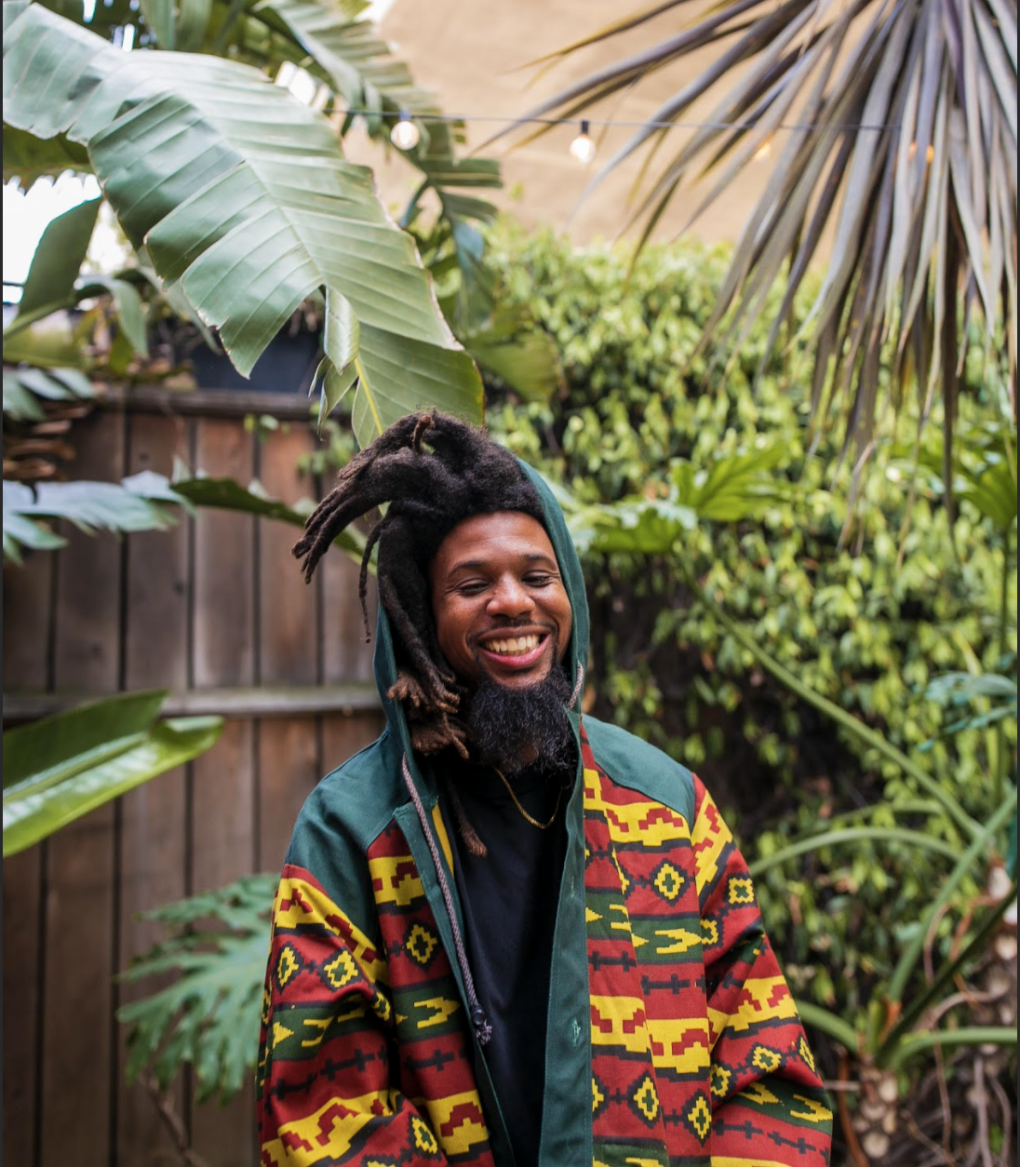
"description": "Rob Woods poses for a photo while standing under a large palm leaf and wearing a multicolored hooded jacket. ",
"title": "Rob Woods.",
"credit": "Dorean Raye",
"status": "inherit",
"altTag": "Rob Woods.",
"isLoading": false,
"fetchFailed": false
},
"arts_13940113": {
"type": "attachments",
"id": "arts_13940113",
"meta": {
"index": "attachments_1716263798",
"site": "arts",
"id": "13940113",
"found": true
},
"parent": 13940111,
"imgSizes": {
"twentyfourteen-full-width": {
"file": "https://cdn.kqed.org/wp-content/uploads/sites/2/2024/01/1-4-1038x576.jpg",
"width": 1038,
"mimeType": "image/jpeg",
"height": 576
},
"thumbnail": {
"file": "https://cdn.kqed.org/wp-content/uploads/sites/2/2024/01/1-4-160x107.jpg",
"width": 160,
"mimeType": "image/jpeg",
"height": 107
},
"post-thumbnail": {
"file": "https://cdn.kqed.org/wp-content/uploads/sites/2/2024/01/1-4-672x372.jpg",
"width": 672,
"mimeType": "image/jpeg",
"height": 372
},
"kqedFullSize": {
"file": "https://cdn.kqed.org/wp-content/uploads/sites/2/2024/01/1-4.jpg",
"width": 2415,
"height": 1610
},
"2048x2048": {
"file": "https://cdn.kqed.org/wp-content/uploads/sites/2/2024/01/1-4-2048x1365.jpg",
"width": 2048,
"mimeType": "image/jpeg",
"height": 1365
},
"large": {
"file": "https://cdn.kqed.org/wp-content/uploads/sites/2/2024/01/1-4-1020x680.jpg",
"width": 1020,
"mimeType": "image/jpeg",
"height": 680
},
"1536x1536": {
"file": "https://cdn.kqed.org/wp-content/uploads/sites/2/2024/01/1-4-1536x1024.jpg",
"width": 1536,
"mimeType": "image/jpeg",
"height": 1024
},
"full-width": {
"file": "https://cdn.kqed.org/wp-content/uploads/sites/2/2024/01/1-4-1920x1280.jpg",
"width": 1920,
"mimeType": "image/jpeg",
"height": 1280
},
"medium": {
"file": "https://cdn.kqed.org/wp-content/uploads/sites/2/2024/01/1-4-800x533.jpg",
"width": 800,
"mimeType": "image/jpeg",
"height": 533
},
"medium_large": {
"file": "https://cdn.kqed.org/wp-content/uploads/sites/2/2024/01/1-4-768x512.jpg",
"width": 768,
"mimeType": "image/jpeg",
"height": 512
}
},
"publishDate": 1704733462,
"modified": 1704733737,
"caption": "Telice Summerfield (center) dancing on stage with Keak Da Sneak (left) in Oakland. ",
"description": "Telice Summerfield (center) dancing on stage with Keak Da Sneak (left) in Oakland. ",
"title": "Telice Summerfield (center) dancing on stage with Keak Da Sneak (left) in Oakland.",
"credit": null,
"status": "inherit",
"altTag": "Telice Summerfield (center) dancing on stage with Keak Da Sneak (left) in Oakland.",
"isLoading": false,
"fetchFailed": false
},
"arts_13938177": {
"type": "attachments",
"id": "arts_13938177",
"meta": {
"index": "attachments_1716263798",
"site": "arts",
"id": "13938177",
"found": true
},
"parent": 13938161,
"imgSizes": {
"twentyfourteen-full-width": {
"file": "https://ww2.kqed.org/app/uploads/sites/2/2023/11/mini-pizza-bagels-1038x576.jpg",
"width": 1038,
"mimeType": "image/jpeg",
"height": 576
},
"thumbnail": {
"file": "https://ww2.kqed.org/app/uploads/sites/2/2023/11/mini-pizza-bagels-160x90.jpg",
"width": 160,
"mimeType": "image/jpeg",
"height": 90
},
"post-thumbnail": {
"file": "https://ww2.kqed.org/app/uploads/sites/2/2023/11/mini-pizza-bagels-672x372.jpg",
"width": 672,
"mimeType": "image/jpeg",
"height": 372
},
"kqedFullSize": {
"file": "https://ww2.kqed.org/app/uploads/sites/2/2023/11/mini-pizza-bagels.jpg",
"width": 1920,
"height": 1080
},
"large": {
"file": "https://ww2.kqed.org/app/uploads/sites/2/2023/11/mini-pizza-bagels-1020x574.jpg",
"width": 1020,
"mimeType": "image/jpeg",
"height": 574
},
"1536x1536": {
"file": "https://ww2.kqed.org/app/uploads/sites/2/2023/11/mini-pizza-bagels-1536x864.jpg",
"width": 1536,
"mimeType": "image/jpeg",
"height": 864
},
"medium": {
"file": "https://ww2.kqed.org/app/uploads/sites/2/2023/11/mini-pizza-bagels-800x450.jpg",
"width": 800,
"mimeType": "image/jpeg",
"height": 450
},
"medium_large": {
"file": "https://ww2.kqed.org/app/uploads/sites/2/2023/11/mini-pizza-bagels-768x432.jpg",
"width": 768,
"mimeType": "image/jpeg",
"height": 432
}
},
"publishDate": 1700180794,
"modified": 1700181615,
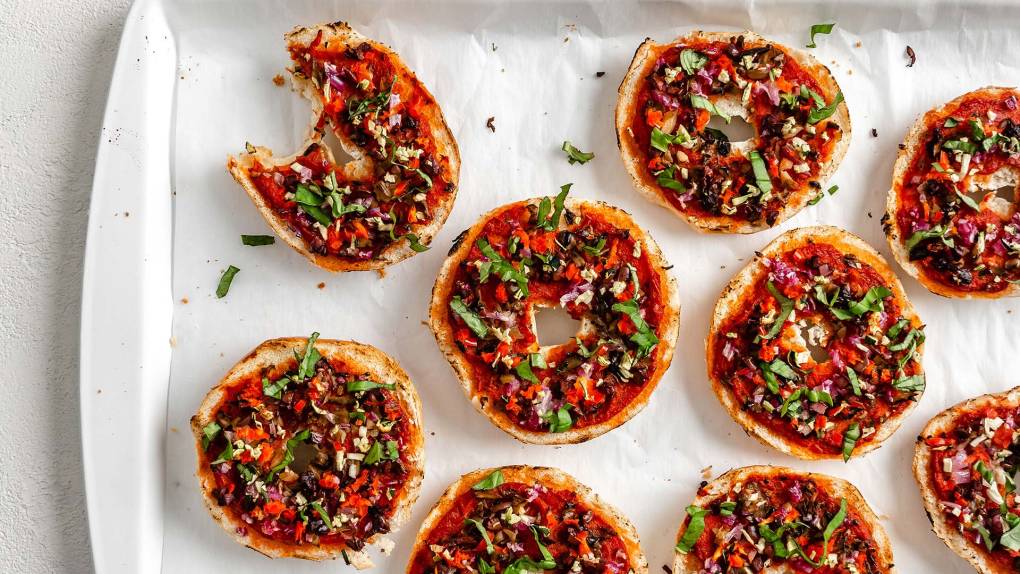
"caption": "Vegan cookbook author Toni Okamoto, posits that cooking plant-based food doesn't need to be expensive and super-time-consuming.",
"description": null,
"title": "mini-pizza-bagels",
"credit": "Courtesy of BenBella Books",
"status": "inherit",
"altTag": "A tray of miniature pizza bagels topped colorfully with chopped herbs and vegetables.",
"isLoading": false,
"fetchFailed": false
},
"arts_13931984": {
"type": "attachments",
"id": "arts_13931984",
"meta": {
"index": "attachments_1716263798",
"site": "arts",
"id": "13931984",
"found": true
},
"parent": 13931981,
"imgSizes": {
"twentyfourteen-full-width": {
"file": "https://ww2.kqed.org/app/uploads/sites/2/2023/07/GretaGerwig.AP_-1038x576.jpg",
"width": 1038,
"mimeType": "image/jpeg",
"height": 576
},
"thumbnail": {
"file": "https://ww2.kqed.org/app/uploads/sites/2/2023/07/GretaGerwig.AP_-160x90.jpg",
"width": 160,
"mimeType": "image/jpeg",
"height": 90
},
"post-thumbnail": {
"file": "https://ww2.kqed.org/app/uploads/sites/2/2023/07/GretaGerwig.AP_-672x372.jpg",
"width": 672,
"mimeType": "image/jpeg",
"height": 372
},
"kqedFullSize": {
"file": "https://ww2.kqed.org/app/uploads/sites/2/2023/07/GretaGerwig.AP_.jpg",
"width": 1820,
"height": 1022
},
"large": {
"file": "https://ww2.kqed.org/app/uploads/sites/2/2023/07/GretaGerwig.AP_-1020x573.jpg",
"width": 1020,
"mimeType": "image/jpeg",
"height": 573
},
"1536x1536": {
"file": "https://ww2.kqed.org/app/uploads/sites/2/2023/07/GretaGerwig.AP_-1536x863.jpg",
"width": 1536,
"mimeType": "image/jpeg",
"height": 863
},
"medium": {
"file": "https://ww2.kqed.org/app/uploads/sites/2/2023/07/GretaGerwig.AP_-800x449.jpg",
"width": 800,
"mimeType": "image/jpeg",
"height": 449
},
"medium_large": {
"file": "https://ww2.kqed.org/app/uploads/sites/2/2023/07/GretaGerwig.AP_-768x431.jpg",
"width": 768,
"mimeType": "image/jpeg",
"height": 431
}
},
"publishDate": 1690219805,
"modified": 1690219851,
"caption": "Director Greta Gerwig poses for the media prior to a news conference for the movie 'Barbie' in Seoul, South Korea, July 3, 2023. ",
"description": null,
"title": "GretaGerwig.AP",
"credit": "Lee Jin-man/AP",
"status": "inherit",
"altTag": null,
"isLoading": false,
"fetchFailed": false
},
"arts_13929798": {
"type": "attachments",
"id": "arts_13929798",
"meta": {
"index": "attachments_1716263798",
"site": "arts",
"id": "13929798",
"found": true
},
"parent": 13929289,
"imgSizes": {
"twentyfourteen-full-width": {
"file": "https://ww2.kqed.org/app/uploads/sites/2/2023/05/May-2023-March-Fong-Eu-1038x576.jpg",
"width": 1038,
"mimeType": "image/jpeg",
"height": 576
},
"thumbnail": {
"file": "https://ww2.kqed.org/app/uploads/sites/2/2023/05/May-2023-March-Fong-Eu-160x90.jpg",
"width": 160,
"mimeType": "image/jpeg",
"height": 90
},
"post-thumbnail": {
"file": "https://ww2.kqed.org/app/uploads/sites/2/2023/05/May-2023-March-Fong-Eu-672x372.jpg",
"width": 672,
"mimeType": "image/jpeg",
"height": 372
},
"kqedFullSize": {
"file": "https://ww2.kqed.org/app/uploads/sites/2/2023/05/May-2023-March-Fong-Eu.jpg",
"width": 1920,
"height": 1080
},
"large": {
"file": "https://ww2.kqed.org/app/uploads/sites/2/2023/05/May-2023-March-Fong-Eu-1020x574.jpg",
"width": 1020,
"mimeType": "image/jpeg",
"height": 574
},
"1536x1536": {
"file": "https://ww2.kqed.org/app/uploads/sites/2/2023/05/May-2023-March-Fong-Eu-1536x864.jpg",
"width": 1536,
"mimeType": "image/jpeg",
"height": 864
},
"medium": {
"file": "https://ww2.kqed.org/app/uploads/sites/2/2023/05/May-2023-March-Fong-Eu-800x450.jpg",
"width": 800,
"mimeType": "image/jpeg",
"height": 450
},
"medium_large": {
"file": "https://ww2.kqed.org/app/uploads/sites/2/2023/05/May-2023-March-Fong-Eu-768x432.jpg",
"width": 768,
"mimeType": "image/jpeg",
"height": 432
}
},
"publishDate": 1685463035,
"modified": 1685463035,
"caption": null,
"description": null,
"title": "May 2023 March Fong Eu",
"credit": null,
"status": "inherit",
"altTag": null,
"isLoading": false,
"fetchFailed": false
},
"arts_13928213": {
"type": "attachments",
"id": "arts_13928213",
"meta": {
"index": "attachments_1716263798",
"site": "arts",
"id": "13928213",
"found": true
},
"parent": 13928196,
"imgSizes": {
"twentyfourteen-full-width": {
"file": "https://ww2.kqed.org/app/uploads/sites/2/2023/04/pizza-supreme-being_ben-pizza-crop-1038x576.jpg",
"width": 1038,
"mimeType": "image/jpeg",
"height": 576
},
"thumbnail": {
"file": "https://ww2.kqed.org/app/uploads/sites/2/2023/04/pizza-supreme-being_ben-pizza-crop-160x110.jpg",
"width": 160,
"mimeType": "image/jpeg",
"height": 110
},
"post-thumbnail": {
"file": "https://ww2.kqed.org/app/uploads/sites/2/2023/04/pizza-supreme-being_ben-pizza-crop-672x372.jpg",
"width": 672,
"mimeType": "image/jpeg",
"height": 372
},
"kqedFullSize": {
"file": "https://ww2.kqed.org/app/uploads/sites/2/2023/04/pizza-supreme-being_ben-pizza-crop.jpg",
"width": 1920,
"height": 1320
},
"large": {
"file": "https://ww2.kqed.org/app/uploads/sites/2/2023/04/pizza-supreme-being_ben-pizza-crop-1020x701.jpg",
"width": 1020,
"mimeType": "image/jpeg",
"height": 701
},
"1536x1536": {
"file": "https://ww2.kqed.org/app/uploads/sites/2/2023/04/pizza-supreme-being_ben-pizza-crop-1536x1056.jpg",
"width": 1536,
"mimeType": "image/jpeg",
"height": 1056
},
"medium": {
"file": "https://ww2.kqed.org/app/uploads/sites/2/2023/04/pizza-supreme-being_ben-pizza-crop-800x550.jpg",
"width": 800,
"mimeType": "image/jpeg",
"height": 550
},
"medium_large": {
"file": "https://ww2.kqed.org/app/uploads/sites/2/2023/04/pizza-supreme-being_ben-pizza-crop-768x528.jpg",
"width": 768,
"mimeType": "image/jpeg",
"height": 528
}
},
"publishDate": 1682369605,
"modified": 1682369811,
"caption": "Ben Roberts slices a pepperoni pizza at his downtown Sacramento restaurant, Pizza Supreme Being.",
"description": null,
"title": "pizza supreme being_ben pizza crop",
"credit": "José Vadi",
"status": "inherit",
"altTag": "Man in black rubber gloves slices a pepperoni pizza.",
"isLoading": false,
"fetchFailed": false
},
"arts_13927884": {
"type": "attachments",
"id": "arts_13927884",
"meta": {
"index": "attachments_1716263798",
"site": "arts",
"id": "13927884",
"found": true
},
"parent": 13927874,
"imgSizes": {
"twentyfourteen-full-width": {
"file": "https://ww2.kqed.org/app/uploads/sites/2/2023/04/GettyImages-1244074861-1024x576.jpg",
"width": 1024,
"mimeType": "image/jpeg",
"height": 576
},
"thumbnail": {
"file": "https://ww2.kqed.org/app/uploads/sites/2/2023/04/GettyImages-1244074861-160x107.jpg",
"width": 160,
"mimeType": "image/jpeg",
"height": 107
},
"post-thumbnail": {
"file": "https://ww2.kqed.org/app/uploads/sites/2/2023/04/GettyImages-1244074861-672x372.jpg",
"width": 672,
"mimeType": "image/jpeg",
"height": 372
},
"kqedFullSize": {
"file": "https://ww2.kqed.org/app/uploads/sites/2/2023/04/GettyImages-1244074861.jpg",
"width": 1024,
"height": 683
},
"large": {
"file": "https://ww2.kqed.org/app/uploads/sites/2/2023/04/GettyImages-1244074861-1020x680.jpg",
"width": 1020,
"mimeType": "image/jpeg",
"height": 680
},
"medium": {
"file": "https://ww2.kqed.org/app/uploads/sites/2/2023/04/GettyImages-1244074861-800x534.jpg",
"width": 800,
"mimeType": "image/jpeg",
"height": 534
},
"medium_large": {
"file": "https://ww2.kqed.org/app/uploads/sites/2/2023/04/GettyImages-1244074861-768x512.jpg",
"width": 768,
"mimeType": "image/jpeg",
"height": 512
}
},
"publishDate": 1681763383,
"modified": 1681763514,
"caption": "E-40, pictured here at the Chase Center in 2022, was ejected from Game 1 of the NBA playoffs in Sacramento in Saturday night.",
"description": null,
"title": "NBA : Los Angeles Lakers vs Golden State Warriors pregame",
"credit": "Tayfun Coskun/Anadolu Agency via Getty Images",
"status": "inherit",
"altTag": null,
"isLoading": false,
"fetchFailed": false
},
"arts_13925721": {
"type": "attachments",
"id": "arts_13925721",
"meta": {
"index": "attachments_1716263798",
"site": "arts",
"id": "13925721",
"found": true
},
"parent": 13925701,
"imgSizes": {
"twentyfourteen-full-width": {
"file": "https://ww2.kqed.org/app/uploads/sites/2/2023/02/masabistro_brokedamouf-1038x576.jpg",
"width": 1038,
"mimeType": "image/jpeg",
"height": 576
},
"thumbnail": {
"file": "https://ww2.kqed.org/app/uploads/sites/2/2023/02/masabistro_brokedamouf-160x110.jpg",
"width": 160,
"mimeType": "image/jpeg",
"height": 110
},
"post-thumbnail": {
"file": "https://ww2.kqed.org/app/uploads/sites/2/2023/02/masabistro_brokedamouf-672x372.jpg",
"width": 672,
"mimeType": "image/jpeg",
"height": 372
},
"kqedFullSize": {
"file": "https://ww2.kqed.org/app/uploads/sites/2/2023/02/masabistro_brokedamouf.jpg",
"width": 1920,
"height": 1320
},
"large": {
"file": "https://ww2.kqed.org/app/uploads/sites/2/2023/02/masabistro_brokedamouf-1020x701.jpg",
"width": 1020,
"mimeType": "image/jpeg",
"height": 701
},
"1536x1536": {
"file": "https://ww2.kqed.org/app/uploads/sites/2/2023/02/masabistro_brokedamouf-1536x1056.jpg",
"width": 1536,
"mimeType": "image/jpeg",
"height": 1056
},
"medium": {
"file": "https://ww2.kqed.org/app/uploads/sites/2/2023/02/masabistro_brokedamouf-800x550.jpg",
"width": 800,
"mimeType": "image/jpeg",
"height": 550
},
"medium_large": {
"file": "https://ww2.kqed.org/app/uploads/sites/2/2023/02/masabistro_brokedamouf-768x528.jpg",
"width": 768,
"mimeType": "image/jpeg",
"height": 528
}
},
"publishDate": 1677545336,
"modified": 1677545496,
"caption": "Even though Masa Ramen Bistro's signature \"Broke Da Mouf\" ramen doesn't have Hawaiian ingredients, the over-the-top spirit behind the dish is quintessentially Hawaiian.",
"description": null,
"title": "masabistro_brokedamouf",
"credit": "Luke Tsai",
"status": "inherit",
"altTag": "A bowl of ramen: red-tinted broth topped with pork chashu, egg, scallions and a flurry of grated Parmesan cheese.",
"isLoading": false,
"fetchFailed": false
},
"arts_13924955": {
"type": "attachments",
"id": "arts_13924955",
"meta": {
"index": "attachments_1716263798",
"site": "arts",
"id": "13924955",
"found": true
},
"parent": 13924949,
"imgSizes": {
"twentyfourteen-full-width": {
"file": "https://ww2.kqed.org/app/uploads/sites/2/2023/02/IMG_5087-1-1038x576.jpeg",
"width": 1038,
"mimeType": "image/jpeg",
"height": 576
},
"thumbnail": {
"file": "https://ww2.kqed.org/app/uploads/sites/2/2023/02/IMG_5087-1-160x140.jpeg",
"width": 160,
"mimeType": "image/jpeg",
"height": 140
},
"post-thumbnail": {
"file": "https://ww2.kqed.org/app/uploads/sites/2/2023/02/IMG_5087-1-672x372.jpeg",
"width": 672,
"mimeType": "image/jpeg",
"height": 372
},
"kqedFullSize": {
"file": "https://ww2.kqed.org/app/uploads/sites/2/2023/02/IMG_5087-1-scaled.jpeg",
"width": 2560,
"height": 2248
},
"2048x2048": {
"file": "https://ww2.kqed.org/app/uploads/sites/2/2023/02/IMG_5087-1-2048x1798.jpeg",
"width": 2048,
"mimeType": "image/jpeg",
"height": 1798
},
"large": {
"file": "https://ww2.kqed.org/app/uploads/sites/2/2023/02/IMG_5087-1-1020x895.jpeg",
"width": 1020,
"mimeType": "image/jpeg",
"height": 895
},
"1536x1536": {
"file": "https://ww2.kqed.org/app/uploads/sites/2/2023/02/IMG_5087-1-1536x1349.jpeg",
"width": 1536,
"mimeType": "image/jpeg",
"height": 1349
},
"full-width": {
"file": "https://ww2.kqed.org/app/uploads/sites/2/2023/02/IMG_5087-1-1920x1686.jpeg",
"width": 1920,
"mimeType": "image/jpeg",
"height": 1686
},
"medium": {
"file": "https://ww2.kqed.org/app/uploads/sites/2/2023/02/IMG_5087-1-800x702.jpeg",
"width": 800,
"mimeType": "image/jpeg",
"height": 702
},
"medium_large": {
"file": "https://ww2.kqed.org/app/uploads/sites/2/2023/02/IMG_5087-1-768x674.jpeg",
"width": 768,
"mimeType": "image/jpeg",
"height": 674
}
},
"publishDate": 1675991702,
"modified": 1675991759,
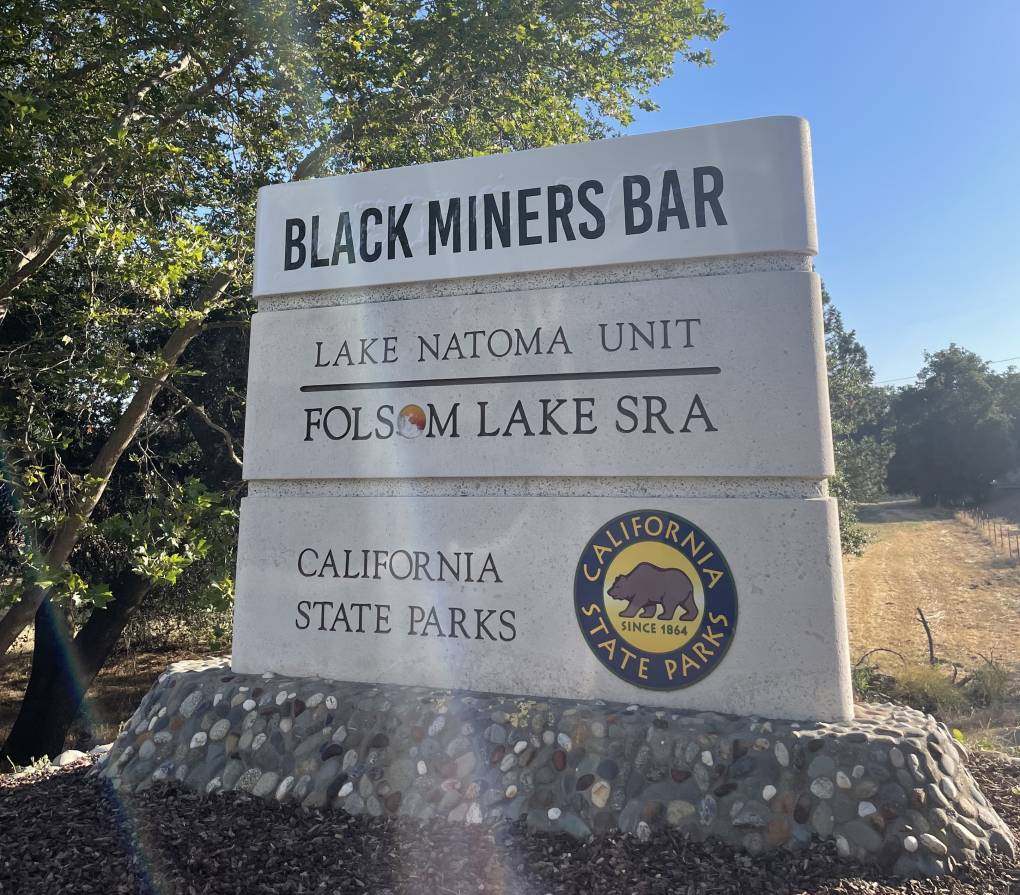
"caption": "The Black Miners Bar sign, freshly painted in summer of 2022.",
"description": "The Black Miners Bar sign, freshly painted in summer of 2022.",
"title": "The Black Miners Bar sign, freshly painted in summer of 2022.",
"credit": "Dorean Raye",
"status": "inherit",
"altTag": "The Black Miners Bar sign, freshly painted in summer of 2022.",
"isLoading": false,
"fetchFailed": false
},
"arts_13921888": {
"type": "attachments",
"id": "arts_13921888",
"meta": {
"index": "attachments_1716263798",
"site": "arts",
"id": "13921888",
"found": true
},
"parent": 13921886,
"imgSizes": {
"twentyfourteen-full-width": {
"file": "https://ww2.kqed.org/app/uploads/sites/2/2022/11/Marie-Mason-Potts-1038x576.jpg",
"width": 1038,
"mimeType": "image/jpeg",
"height": 576
},
"thumbnail": {
"file": "https://ww2.kqed.org/app/uploads/sites/2/2022/11/Marie-Mason-Potts-160x90.jpg",
"width": 160,
"mimeType": "image/jpeg",
"height": 90
},
"post-thumbnail": {
"file": "https://ww2.kqed.org/app/uploads/sites/2/2022/11/Marie-Mason-Potts-672x372.jpg",
"width": 672,
"mimeType": "image/jpeg",
"height": 372
},
"kqedFullSize": {
"file": "https://ww2.kqed.org/app/uploads/sites/2/2022/11/Marie-Mason-Potts.jpg",
"width": 1920,
"height": 1080
},
"large": {
"file": "https://ww2.kqed.org/app/uploads/sites/2/2022/11/Marie-Mason-Potts-1020x574.jpg",
"width": 1020,
"mimeType": "image/jpeg",
"height": 574
},
"1536x1536": {
"file": "https://ww2.kqed.org/app/uploads/sites/2/2022/11/Marie-Mason-Potts-1536x864.jpg",
"width": 1536,
"mimeType": "image/jpeg",
"height": 864
},
"medium": {
"file": "https://ww2.kqed.org/app/uploads/sites/2/2022/11/Marie-Mason-Potts-800x450.jpg",
"width": 800,
"mimeType": "image/jpeg",
"height": 450
},
"medium_large": {
"file": "https://ww2.kqed.org/app/uploads/sites/2/2022/11/Marie-Mason-Potts-768x432.jpg",
"width": 768,
"mimeType": "image/jpeg",
"height": 432
}
},
"publishDate": 1669158959,
"modified": 1669158959,
"caption": null,
"description": null,
"title": "Marie Mason Potts",
"credit": null,
"status": "inherit",
"altTag": null,
"isLoading": false,
"fetchFailed": false
}
},
"audioPlayerReducer": {
"postId": "stream_live",
"isPaused": true,
"isPlaying": false,
"pfsActive": false,
"pledgeModalIsOpen": true,
"playerDrawerIsOpen": false,
"liveAudioPlayStartedAt": 0,
"liveAudioPlayContext": ""
},
"authorsReducer": {
"byline_arts_13931981": {
"type": "authors",
"id": "byline_arts_13931981",
"meta": {
"override": true
},
"slug": "byline_arts_13931981",
"name": "Lindsey Bahr, Associated Press",
"isLoading": false
},
"byline_arts_13928196": {
"type": "authors",
"id": "byline_arts_13928196",
"meta": {
"override": true
},
"slug": "byline_arts_13928196",
"name": "José Vadi",
"isLoading": false
},
"ralexandra": {
"type": "authors",
"id": "11242",
"meta": {
"index": "authors_1716337520",
"id": "11242",
"found": true
},
"name": "Rae Alexandra",
"firstName": "Rae",
"lastName": "Alexandra",
"slug": "ralexandra",
"email": "ralexandra@kqed.org",
"display_author_email": true,
"staff_mastheads": [
"arts"
],
"title": "Reporter/Producer",
"bio": "Rae Alexandra is a Reporter/Producer for KQED Arts & Culture, and the creator/author of the \u003ca href=\"https://www.kqed.org/arts/program/rebel-girls-from-bay-area-history\">Rebel Girls From Bay Area History\u003c/a> and \u003ca href=\"https://www.kqed.org/bizarrebayarea\">Bizarre Bay Area\u003c/a> series. Her debut book, \u003ca href=\"https://citylights.com/politics-current-events-history/unsung-heroines35-women-who-changed/\">Unsung Heroines: 35 Women Who Changed the Bay Area\u003c/a> was published by City Lights in March 2026. In 2023, Rae was awarded an SPJ Excellence in Journalism Award for Arts & Culture. Rae was born and raised in Wales and subsequently — even after two decades in Northern California — still uses phrases that regularly baffle her coworkers.",
"avatar": "https://secure.gravatar.com/avatar/edfee8176c80cc0a382b051190f5341997df378a934a5774dcb0977732dfd401?s=600&d=blank&r=g",
"twitter": null,
"bluesky": null,
"facebook": null,
"instagram": null,
"linkedin": null,
"sites": [
{
"site": "arts",
"roles": [
"editor"
]
},
{
"site": "news",
"roles": [
"editor"
]
},
{
"site": "pop",
"roles": [
"editor"
]
},
{
"site": "bayareabites",
"roles": [
"editor"
]
},
{
"site": "science",
"roles": [
"editor"
]
}
],
"headData": {
"title": "Rae Alexandra | KQED",
"description": "Reporter/Producer",
"ogImgSrc": "https://secure.gravatar.com/avatar/edfee8176c80cc0a382b051190f5341997df378a934a5774dcb0977732dfd401?s=600&d=blank&r=g",
"twImgSrc": "https://secure.gravatar.com/avatar/edfee8176c80cc0a382b051190f5341997df378a934a5774dcb0977732dfd401?s=600&d=blank&r=g"
},
"isLoading": false,
"link": "/author/ralexandra"
},
"nvoynovskaya": {
"type": "authors",
"id": "11387",
"meta": {
"index": "authors_1716337520",
"id": "11387",
"found": true
},
"name": "Nastia Voynovskaya",
"firstName": "Nastia",
"lastName": "Voynovskaya",
"slug": "nvoynovskaya",
"email": "nvoynovskaya@kqed.org",
"display_author_email": false,
"staff_mastheads": [
"arts"
],
"title": "Editor and reporter",
"bio": "Nastia Voynovskaya is a reporter and editor at KQED Arts & Culture. She's been covering the arts in the Bay Area for over a decade, with a focus on music, queer culture, labor issues and grassroots organizing. She has edited KQED story series such as Trans Bay: A History of San Francisco's Gender-Diverse Community, and co-created KQED's Bay Area hip-hop history project, That's My Word. Nastia's work has been recognized by the Society of Professional Journalists and San Francisco Press Club. She holds a BA in comparative literature from UC Berkeley.",
"avatar": "https://secure.gravatar.com/avatar/5025ee460e5a85d69ca20ea6c6f2f80d7e17795c828f61ea3aecfcd924e9042e?s=600&d=blank&r=g",
"twitter": null,
"bluesky": null,
"facebook": null,
"instagram": "https://www.instagram.com/nananastia/",
"linkedin": null,
"sites": [
{
"site": "arts",
"roles": [
"administrator"
]
},
{
"site": "news",
"roles": [
"editor"
]
},
{
"site": "pop",
"roles": [
"administrator"
]
},
{
"site": "bayareabites",
"roles": [
"editor"
]
},
{
"site": "podcasts",
"roles": [
"editor"
]
},
{
"site": "hiphop",
"roles": [
"editor"
]
}
],
"headData": {
"title": "Nastia Voynovskaya | KQED",
"description": "Editor and reporter",
"ogImgSrc": "https://secure.gravatar.com/avatar/5025ee460e5a85d69ca20ea6c6f2f80d7e17795c828f61ea3aecfcd924e9042e?s=600&d=blank&r=g",
"twImgSrc": "https://secure.gravatar.com/avatar/5025ee460e5a85d69ca20ea6c6f2f80d7e17795c828f61ea3aecfcd924e9042e?s=600&d=blank&r=g"
},
"isLoading": false,
"link": "/author/nvoynovskaya"
},
"ogpenn": {
"type": "authors",
"id": "11491",
"meta": {
"index": "authors_1716337520",
"id": "11491",
"found": true
},
"name": "Pendarvis Harshaw",
"firstName": "Pendarvis",
"lastName": "Harshaw",
"slug": "ogpenn",
"email": "ogpenn@gmail.com",
"display_author_email": false,
"staff_mastheads": [
"arts"
],
"title": "Community Engagement Reporter",
"bio": "Pendarvis Harshaw is an educator, host and writer with KQED Arts.",
"avatar": "https://secure.gravatar.com/avatar/972b77ee8e3f346ae2b00622661187fbfabd059b5693bbdc1475ea7a722fd4cd?s=600&d=blank&r=g",
"twitter": null,
"bluesky": null,
"facebook": null,
"instagram": "ogpenn",
"linkedin": null,
"sites": [
{
"site": "arts",
"roles": [
"administrator"
]
},
{
"site": "news",
"roles": [
"editor"
]
},
{
"site": "bayareabites",
"roles": [
"author"
]
},
{
"site": "hiphop",
"roles": [
"editor"
]
}
],
"headData": {
"title": "Pendarvis Harshaw | KQED",
"description": "Community Engagement Reporter",
"ogImgSrc": "https://secure.gravatar.com/avatar/972b77ee8e3f346ae2b00622661187fbfabd059b5693bbdc1475ea7a722fd4cd?s=600&d=blank&r=g",
"twImgSrc": "https://secure.gravatar.com/avatar/972b77ee8e3f346ae2b00622661187fbfabd059b5693bbdc1475ea7a722fd4cd?s=600&d=blank&r=g"
},
"isLoading": false,
"link": "/author/ogpenn"
},
"mmedina": {
"type": "authors",
"id": "11528",
"meta": {
"index": "authors_1716337520",
"id": "11528",
"found": true
},
"name": "Marisol Medina-Cadena",
"firstName": "Marisol",
"lastName": "Medina-Cadena",
"slug": "mmedina",
"email": "mmedina@KQED.org",
"display_author_email": true,
"staff_mastheads": [],
"title": "Producer, Rightnowish Podcast",
"bio": "Marisol Medina-Cadena is a radio reporter and podcast producer. Before working at KQED, she produced for PBS member station, KCET, in Los Angeles. In 2017, Marisol won an Emmy Award for her work on the televised documentary, \u003cem>City Rising\u003c/em>, examining California's affordable housing crisis and the historical roots of gentrification.",
"avatar": "https://secure.gravatar.com/avatar/6c3db46a1cabb5e1fe9a365b5f4e681e?s=600&d=blank&r=g",
"twitter": "marisolreports",
"facebook": null,
"instagram": null,
"linkedin": null,
"sites": [
{
"site": "arts",
"roles": []
},
{
"site": "news",
"roles": [
"edit_others_posts"
]
}
],
"headData": {
"title": "Marisol Medina-Cadena | KQED",
"description": "Producer, Rightnowish Podcast",
"ogImgSrc": "https://secure.gravatar.com/avatar/6c3db46a1cabb5e1fe9a365b5f4e681e?s=600&d=blank&r=g",
"twImgSrc": "https://secure.gravatar.com/avatar/6c3db46a1cabb5e1fe9a365b5f4e681e?s=600&d=blank&r=g"
},
"isLoading": false,
"link": "/author/mmedina"
},
"btorres": {
"type": "authors",
"id": "11666",
"meta": {
"index": "authors_1716337520",
"id": "11666",
"found": true
},
"name": "Blanca Torres",
"firstName": "Blanca",
"lastName": "Torres",
"slug": "btorres",
"email": "btorres@kqed.org",
"display_author_email": true,
"staff_mastheads": [
"news"
],
"title": "Producer, Forum",
"bio": "Blanca Torres brings sharp news judgement and keen sense of lively conversation to her work as producer for Forum. She loves producing shows that leave listeners feeling like they heard distinctive voices, learned something new and gained a fresh perspective.\r\n\r\nShe joined KQED in January of 2020 after 16 years of working as a newspaper reporter most recently at the \u003cem>San Francisco Business Times,\u003c/em> where she wrote about real estate and economic development. Before that, she covered a variety of beats including crime, education, retail, workplace, the economy, consumer issues, and small business for the \u003cem>Contra Costa Times, Baltimore Sun\u003c/em> and\u003cem> The Seattle Times\u003c/em>. In addition to reporting, she worked as an editorial writer and columnist for the \u003cem>Seattle Times\u003c/em>. From 2017 to 2020, Blanca won a total of ten awards from the National Association of Real Estate Editors and won first place for land use reporting from the California News Publishers Association two years in a row. She is also a member and former board member for the National Association of Hispanic Journalists.\r\n\r\nA native of the Pacific Northwest, Blanca earned her bachelor's degree from Vanderbilt University in Nashville and a master's in fine arts in creative writing at Mills College. She lives in the East Bay with her family.",
"avatar": "https://secure.gravatar.com/avatar/f2322ff46076d337f7ba731ee6068cb1?s=600&d=blank&r=g",
"twitter": "@blancawrites",
"facebook": null,
"instagram": null,
"linkedin": null,
"sites": [
{
"site": "arts",
"roles": [
"editor"
]
},
{
"site": "news",
"roles": [
"editor"
]
},
{
"site": "forum",
"roles": [
"editor"
]
}
],
"headData": {
"title": "Blanca Torres | KQED",
"description": "Producer, Forum",
"ogImgSrc": "https://secure.gravatar.com/avatar/f2322ff46076d337f7ba731ee6068cb1?s=600&d=blank&r=g",
"twImgSrc": "https://secure.gravatar.com/avatar/f2322ff46076d337f7ba731ee6068cb1?s=600&d=blank&r=g"
},
"isLoading": false,
"link": "/author/btorres"
},
"ltsai": {
"type": "authors",
"id": "11743",
"meta": {
"index": "authors_1716337520",
"id": "11743",
"found": true
},
"name": "Luke Tsai",
"firstName": "Luke",
"lastName": "Tsai",
"slug": "ltsai",
"email": "ltsai@kqed.org",
"display_author_email": true,
"staff_mastheads": [
"arts"
],
"title": "Food Editor",
"bio": "Luke Tsai is KQED's food editor and resident stinky tofu connoisseur. Prior to KQED, he was an editor at Eater SF, \u003cem>San Francisco \u003c/em>magazine, and the \u003cem>East Bay Express\u003c/em>, and his work has also appeared in TASTE, the \u003cem>San Francisco Chronicle\u003c/em>, and the \u003cem>Best Food Writing\u003c/em> anthology. When he isn't writing or editing, you'll find him eating most everything he can get his hands on.",
"avatar": "https://secure.gravatar.com/avatar/1e59b45bf191526e7339d6ba46e33a57b2030d25c27660ecc64ea3cb863e34f7?s=600&d=blank&r=g",
"twitter": "theluketsai",
"bluesky": null,
"facebook": null,
"instagram": null,
"linkedin": null,
"sites": [
{
"site": "",
"roles": [
"editor"
]
},
{
"site": "arts",
"roles": [
"administrator"
]
},
{
"site": "news",
"roles": [
"editor",
"contributor"
]
},
{
"site": "bayareabites",
"roles": [
"editor"
]
},
{
"site": "food",
"roles": [
"editor"
]
}
],
"headData": {
"title": "Luke Tsai | KQED",
"description": "Food Editor",
"ogImgSrc": "https://secure.gravatar.com/avatar/1e59b45bf191526e7339d6ba46e33a57b2030d25c27660ecc64ea3cb863e34f7?s=600&d=blank&r=g",
"twImgSrc": "https://secure.gravatar.com/avatar/1e59b45bf191526e7339d6ba46e33a57b2030d25c27660ecc64ea3cb863e34f7?s=600&d=blank&r=g"
},
"isLoading": false,
"link": "/author/ltsai"
},
"achazaro": {
"type": "authors",
"id": "11748",
"meta": {
"index": "authors_1716337520",
"id": "11748",
"found": true
},
"name": "Alan Chazaro",
"firstName": "Alan",
"lastName": "Chazaro",
"slug": "achazaro",
"email": "agchazaro@gmail.com",
"display_author_email": true,
"staff_mastheads": [],
"title": "Food Writer and Reporter",
"bio": "Alan Chazaro is the author of \u003cem>This Is Not a Frank Ocean Cover Album\u003c/em> (Black Lawrence Press, 2019), \u003cem>Piñata Theory\u003c/em> (Black Lawrence Press, 2020), and \u003cem>Notes from the Eastern Span of the Bay Bridge\u003c/em> (Ghost City Press, 2021). He is a graduate of June Jordan’s Poetry for the People program at UC Berkeley and a former Lawrence Ferlinghetti Fellow at the University of San Francisco. He writes about sports, food, art, music, education, and culture while repping the Bay on \u003ca href=\"https://twitter.com/alan_chazaro\">Twitter\u003c/a> and \u003ca href=\"https://www.instagram.com/alan_chazaro/?hl=en\">Instagram\u003c/a> at @alan_chazaro.",
"avatar": "https://secure.gravatar.com/avatar/ea8b6dd970fc5c29e7a188e7d5861df7?s=600&d=blank&r=g",
"twitter": "alan_chazaro",
"facebook": null,
"instagram": null,
"linkedin": null,
"sites": [
{
"site": "arts",
"roles": [
"contributor"
]
},
{
"site": "news",
"roles": [
"editor"
]
}
],
"headData": {
"title": "Alan Chazaro | KQED",
"description": "Food Writer and Reporter",
"ogImgSrc": "https://secure.gravatar.com/avatar/ea8b6dd970fc5c29e7a188e7d5861df7?s=600&d=blank&r=g",
"twImgSrc": "https://secure.gravatar.com/avatar/ea8b6dd970fc5c29e7a188e7d5861df7?s=600&d=blank&r=g"
},
"isLoading": false,
"link": "/author/achazaro"
}
},
"pagesReducer": {
"arts_tag_sacramento": {
"type": "terms",
"id": "arts_5779",
"meta": {
"index": "terms_1716263798",
"site": "arts",
"id": "5779",
"score": 8.934054
},
"featImg": null,
"name": "sacramento",
"description": null,
"taxonomy": "tag",
"headData": {
"twImgId": null,
"twTitle": null,
"ogTitle": null,
"ogImgId": null,
"twDescription": null,
"description": null,
"title": "sacramento Archives | KQED Arts",
"ogDescription": null
},
"ttid": 5791,
"slug": "sacramento",
"isLoading": false,
"title": "sacramento",
"pageMeta": {
"site": "arts",
"WpPageTemplate": "page-topic-editorial",
"currentPage": 2
},
"blocks": [
{
"blockName": "kqed/post-list",
"attrs": {
"layout": "cardArticle2",
"query": "posts/arts?tag=sacramento",
"seeMore": false,
"paginated": true,
"page": 2
}
},
{
"blockName": "kqed/ad"
}
]
}
},
"pfsSessionReducer": {},
"postsReducer": {
"stream_live": {
"type": "live",
"id": "stream_live",
"audioUrl": "https://streams.kqed.org/kqedradio",
"title": "Live Stream",
"excerpt": "Live Stream information currently unavailable.",
"link": "/radio",
"featImg": "",
"label": {
"name": "KQED Live",
"link": "/"
}
},
"stream_kqedNewscast": {
"type": "posts",
"id": "stream_kqedNewscast",
"audioUrl": "https://www.kqed.org/.stream/anon/radio/RDnews/newscast.mp3?_=1",
"title": "KQED Newscast",
"featImg": "",
"label": {
"name": "88.5 FM",
"link": "/"
}
},
"arts_13953009": {
"type": "posts",
"id": "arts_13953009",
"meta": {
"index": "posts_1716263798",
"site": "arts",
"id": "13953009",
"score": null,
"sort": [
1708994696000
]
},
"parent": 0,
"labelTerm": {
"site": "arts",
"term": 140
},
"blocks": [],
"publishDate": 1708994696,
"format": "standard",
"title": "Berkeley Rapper LOE Gino's Got Birkenstocks — and Bars",
"headTitle": "Berkeley Rapper LOE Gino’s Got Birkenstocks — and Bars | KQED",
"content": "\u003cp>A few things to know about Berkeley’s \u003ca href=\"https://www.instagram.com/loe.gino/\">LOE Gino\u003c/a>: He’s a rapper, delivery truck driver, and a self-proclaimed foodie. He avidly rocks Birkenstock sandals, \u003cem>with\u003c/em> socks, and has a clever way of putting personal pain into his art.\u003c/p>\n\u003cp>The first part of his stage name, LOE, stands for \u003ca href=\"https://www.berkeleyside.org/2021/07/22/berkeley-hip-hop-artist-loe-gino\">loyalty over everything\u003c/a>. The second part, Gino, comes from his late mother, Gina.\u003c/p>\n\u003cp>At 6’3″ with locs, shaved at the side, he stands out in a crowd — and he’s often in one. He’s rocked stages all over the region, from \u003ca href=\"https://www.instagram.com/p/CvxpteTyGdI/?img_index=1\">The Plant Queen\u003c/a> nursery shop in his hometown of Berkeley to \u003ca href=\"https://www.instagram.com/p/C3RNmJrR_Jd/\">LaRussell’s pergola in Vallejo\u003c/a>. Last fall, I saw him perform a full set at Lola’s Lounge in Sacramento — a good portion of it while holding his young son.\u003c/p>\n\u003cfigure id=\"attachment_13953018\" class=\"wp-caption aligncenter\" style=\"max-width: 2458px\">\u003cimg loading=\"lazy\" decoding=\"async\" class=\"size-full wp-image-13953018\" src=\"https://cdn.kqed.org/wp-content/uploads/sites/2/2024/02/Screenshot-2024-02-26-at-1.01.06-PM.png\" alt=\"Berkeley rapper LOE Gino looks skyward.\" width=\"2458\" height=\"1616\" srcset=\"https://cdn.kqed.org/wp-content/uploads/sites/2/2024/02/Screenshot-2024-02-26-at-1.01.06-PM.png 2458w, https://cdn.kqed.org/wp-content/uploads/sites/2/2024/02/Screenshot-2024-02-26-at-1.01.06-PM-800x526.png 800w, https://cdn.kqed.org/wp-content/uploads/sites/2/2024/02/Screenshot-2024-02-26-at-1.01.06-PM-1020x671.png 1020w, https://cdn.kqed.org/wp-content/uploads/sites/2/2024/02/Screenshot-2024-02-26-at-1.01.06-PM-160x105.png 160w, https://cdn.kqed.org/wp-content/uploads/sites/2/2024/02/Screenshot-2024-02-26-at-1.01.06-PM-768x505.png 768w, https://cdn.kqed.org/wp-content/uploads/sites/2/2024/02/Screenshot-2024-02-26-at-1.01.06-PM-1536x1010.png 1536w, https://cdn.kqed.org/wp-content/uploads/sites/2/2024/02/Screenshot-2024-02-26-at-1.01.06-PM-2048x1346.png 2048w, https://cdn.kqed.org/wp-content/uploads/sites/2/2024/02/Screenshot-2024-02-26-at-1.01.06-PM-1920x1262.png 1920w\" sizes=\"(max-width: 2458px) 100vw, 2458px\">\u003cfigcaption class=\"wp-caption-text\">Berkeley rapper LOE Gino looks skyward. \u003ccite>(Jason 'Yeiseon' Hayes)\u003c/cite>\u003c/figcaption>\u003c/figure>\n\u003cp>His bars are cerebral and relatable; another human writing to process their thoughts, and at the same time escape their thought process.\u003c/p>\n\u003cp>“Craft brew drinker, with the cold pizza / Thoughts everywhere, I’m a fucking over-thinker / Never trip when they catted, I just turned them into believers / Showed up for myself and that’s on Citas,” he says in the song “What’s Life Supposed To Look Like?”\u003c/p>\n\u003cp>[ad fullwidth]\u003c/p>\n\u003cp>That idea of showing up for yourself, or SUFY, is a guiding principle in his career and brand. When he invited me over to listen to his new project, I had to show up.\u003c/p>\n\u003cp>[aside postID='arts_13950855']Inside his home garage-slash studio space, Gino sat with his friend and multimedia producer, \u003ca href=\"https://www.instagram.com/cheatcodeproductions_/\" target=\"_blank\" rel=\"noopener\">Cheatcode\u003c/a>, who handed me a pair of studio headphones. The plan was for me to listen to Gino’s new release, \u003ca href=\"https://linktr.ee/loegino\">\u003ci>Everything Gone Be Aight\u003c/i>\u003c/a>, after which they’d film my reaction.\u003c/p>\n\u003cp>While I listened to the 15 minute-long project — head-nodding and stretching my legs on a pair of stairs in the backyard — they made small talk.\u003c/p>\n\u003cp>I can’t recall the last time I pulled up to an artist’s crib and listened to their newest work. Nothing like standing next to someone while they play a recording of themselves, pouring out their heart over drums, snares and guitar riffs. Assessing someone’s latest contribution to humanity while being right next to them. It can make for a very awkward situation. \u003cem>What if the album doesn’t slap?!\u003c/em>\u003c/p>\n\u003cp>That wasn’t the case.\u003c/p>\n\u003cp>[aside postID='arts_13950431']The first three tracks of \u003ci>Everything Gone Be Aight\u003c/i> are fun, full of clever bars and quality production. There’s a cold guitar solo from \u003ca href=\"https://www.instagram.com/gyrefunk/\" target=\"_blank\" rel=\"noopener\">Gyrefunk\u003c/a> on “Lox n Stocks,” and a dope drum breakdown by \u003ca href=\"https://www.instagram.com/deafheff/\" target=\"_blank\" rel=\"noopener\">Deaf Heff\u003c/a> on “Lavender Candles.” The EP’s lyrics reference the things that make Gino who he is: reflective walks in the Berkeley hills, thoughts about deceased loved ones, and Birkenstocks.\u003c/p>\n\u003cp>“Vices,” the fourth track, is a heavy one. I didn’t fully grasp the story being told on first listen, but two lines stood out: “Late night she was typing her essay / Bitch nigga came in the room gave her SA.” A few listens later, I understood that it’s Gino’s account of a young family member’s life both before and after surviving sexual assault.\u003c/p>\n\u003cp>Intimate details like these, both universal and personal, are present throughout the EP. Gino writes about seeing his mother take her last breath, his photosynthetic relationship with his radiant son and his appreciation for lavender and sage.\u003c/p>\n\u003cp>\u003ciframe loading=\"lazy\" title=\"Whats life supposed to look like?\" width=\"640\" height=\"480\" src=\"https://www.youtube.com/embed/YyqvBdS0lSI?list=OLAK5uy_ngXaY_qX7MZ28FRUug1Z1fjpIChdDAcdA\" frameborder=\"0\" allow=\"accelerometer; autoplay; clipboard-write; encrypted-media; gyroscope; picture-in-picture; web-share\" allowfullscreen>\u003c/iframe>\u003c/p>\n\u003cp>The project ends with “Brandon Greene,” a 90-second track with bright keys, airy synths and wispy background vocals from \u003ca href=\"https://www.instagram.com/shante_music/\" target=\"_blank\" rel=\"noopener\">Shanté\u003c/a>. Gino writes about pills and anxiety, a nod to the life story of a guy named Brandon, who Gino met at work. During a 20-minute conversation, Brandon opened up about his youthful addiction to pills, and how it manifested as an adult. Gino hasn’t seen or talked to Brandon since, but it’s clear from the track that his story left a lasting impression.\u003c/p>\n\u003cp>Days later, after a few listens, I called Gino and asked him about the inspiration behind this project as a whole. While on the job, between shouting instructions and making deliveries, he answered with “the hard shit I go through.” Laughing, he noted that being able to adjust and persevere are key, and that ultimately, it’s his ever-cool mindset that pushed him to make this music.\u003c/p>\n\u003cp>As he says: “Everything gone be alright, even when it’s looking like it’s not.”\u003c/p>\n\u003cp>\u003cimg loading=\"lazy\" decoding=\"async\" class=\"aligncenter size-full wp-image-12127869\" src=\"https://cdn.kqed.org/wp-content/uploads/sites/2/2016/09/Q.Logo_.Break_.jpg\" alt=\"\" width=\"800\" height=\"78\" srcset=\"https://cdn.kqed.org/wp-content/uploads/sites/2/2016/09/Q.Logo_.Break_.jpg 800w, https://cdn.kqed.org/wp-content/uploads/sites/2/2016/09/Q.Logo_.Break_-400x39.jpg 400w, https://cdn.kqed.org/wp-content/uploads/sites/2/2016/09/Q.Logo_.Break_-768x75.jpg 768w\" sizes=\"(max-width: 800px) 100vw, 800px\">\u003c/p>\n\u003cp>\u003c/p>\n\u003cp>\u003cem>LOE Gino’s ‘\u003ca href=\"https://linktr.ee/loegino\">\u003ci>Everything Gone Be Aight\u003c/i>\u003c/a>‘ is \u003ca href=\"https://linktr.ee/loegino\">out now\u003c/a>. He performs live on \u003ca href=\"https://www.etix.com/ticket/p/60493678/live-in-the-atriumloe-gino-dave-steezy-santa-cruz-the-catalyst-atrium\">Sunday, March 24 at the Catalyst Atrium in Santa Cruz\u003c/a>. \u003c/em>\u003c/p>\n\n",
"stats": {
"hasVideo": true,
"hasChartOrMap": false,
"hasAudio": false,
"hasPolis": false,
"wordCount": 829,
"hasGoogleForm": false,
"hasGallery": false,
"hasHearkenModule": false,
"iframeSrcs": [],
"paragraphCount": 21
},
"modified": 1709071162,
"excerpt": "LOE Gino raps with equal ease about heavy moments, like his mother's dying breath, and everyday joys.",
"headData": {
"twImgId": "",
"twTitle": "",
"ogTitle": "",
"ogImgId": "",
"twDescription": "",
"description": "LOE Gino raps with equal ease about heavy moments, like his mother's dying breath, and everyday joys.",
"title": "Berkeley Rapper LOE Gino's Got Birkenstocks — and Bars | KQED",
"ogDescription": "",
"schema": {
"@context": "https://schema.org",
"@type": "Article",
"headline": "Berkeley Rapper LOE Gino's Got Birkenstocks — and Bars",
"datePublished": "2024-02-26T16:44:56-08:00",
"dateModified": "2024-02-27T13:59:22-08:00",
"image": "https://cdn.kqed.org/wp-content/uploads/2020/02/KQED-OG-Image@1x.png"
}
},
"guestAuthors": [],
"slug": "loe-gino-berkeley-birkenstocks-and-bars",
"status": "publish",
"templateType": "standard",
"excludeFromSiteSearch": "Include",
"featuredImageType": "standard",
"sticky": false,
"articleAge": "0",
"path": "/arts/13953009/loe-gino-berkeley-birkenstocks-and-bars",
"audioTrackLength": null,
"parsedContent": [
{
"type": "contentString",
"content": "\u003cdiv class=\"post-body\">\u003cp>\u003cp>A few things to know about Berkeley’s \u003ca href=\"https://www.instagram.com/loe.gino/\">LOE Gino\u003c/a>: He’s a rapper, delivery truck driver, and a self-proclaimed foodie. He avidly rocks Birkenstock sandals, \u003cem>with\u003c/em> socks, and has a clever way of putting personal pain into his art.\u003c/p>\n\u003cp>The first part of his stage name, LOE, stands for \u003ca href=\"https://www.berkeleyside.org/2021/07/22/berkeley-hip-hop-artist-loe-gino\">loyalty over everything\u003c/a>. The second part, Gino, comes from his late mother, Gina.\u003c/p>\n\u003cp>At 6’3″ with locs, shaved at the side, he stands out in a crowd — and he’s often in one. He’s rocked stages all over the region, from \u003ca href=\"https://www.instagram.com/p/CvxpteTyGdI/?img_index=1\">The Plant Queen\u003c/a> nursery shop in his hometown of Berkeley to \u003ca href=\"https://www.instagram.com/p/C3RNmJrR_Jd/\">LaRussell’s pergola in Vallejo\u003c/a>. Last fall, I saw him perform a full set at Lola’s Lounge in Sacramento — a good portion of it while holding his young son.\u003c/p>\n\u003cfigure id=\"attachment_13953018\" class=\"wp-caption aligncenter\" style=\"max-width: 2458px\">\u003cimg loading=\"lazy\" decoding=\"async\" class=\"size-full wp-image-13953018\" src=\"https://cdn.kqed.org/wp-content/uploads/sites/2/2024/02/Screenshot-2024-02-26-at-1.01.06-PM.png\" alt=\"Berkeley rapper LOE Gino looks skyward.\" width=\"2458\" height=\"1616\" srcset=\"https://cdn.kqed.org/wp-content/uploads/sites/2/2024/02/Screenshot-2024-02-26-at-1.01.06-PM.png 2458w, https://cdn.kqed.org/wp-content/uploads/sites/2/2024/02/Screenshot-2024-02-26-at-1.01.06-PM-800x526.png 800w, https://cdn.kqed.org/wp-content/uploads/sites/2/2024/02/Screenshot-2024-02-26-at-1.01.06-PM-1020x671.png 1020w, https://cdn.kqed.org/wp-content/uploads/sites/2/2024/02/Screenshot-2024-02-26-at-1.01.06-PM-160x105.png 160w, https://cdn.kqed.org/wp-content/uploads/sites/2/2024/02/Screenshot-2024-02-26-at-1.01.06-PM-768x505.png 768w, https://cdn.kqed.org/wp-content/uploads/sites/2/2024/02/Screenshot-2024-02-26-at-1.01.06-PM-1536x1010.png 1536w, https://cdn.kqed.org/wp-content/uploads/sites/2/2024/02/Screenshot-2024-02-26-at-1.01.06-PM-2048x1346.png 2048w, https://cdn.kqed.org/wp-content/uploads/sites/2/2024/02/Screenshot-2024-02-26-at-1.01.06-PM-1920x1262.png 1920w\" sizes=\"(max-width: 2458px) 100vw, 2458px\">\u003cfigcaption class=\"wp-caption-text\">Berkeley rapper LOE Gino looks skyward. \u003ccite>(Jason 'Yeiseon' Hayes)\u003c/cite>\u003c/figcaption>\u003c/figure>\n\u003cp>His bars are cerebral and relatable; another human writing to process their thoughts, and at the same time escape their thought process.\u003c/p>\n\u003cp>“Craft brew drinker, with the cold pizza / Thoughts everywhere, I’m a fucking over-thinker / Never trip when they catted, I just turned them into believers / Showed up for myself and that’s on Citas,” he says in the song “What’s Life Supposed To Look Like?”\u003c/p>\n\u003cp>\u003c/p>\u003c/div>",
"attributes": {
"named": {},
"numeric": []
}
},
{
"type": "component",
"content": "",
"name": "ad",
"attributes": {
"named": {
"label": "fullwidth"
},
"numeric": [
"fullwidth"
]
}
},
{
"type": "contentString",
"content": "\u003cdiv class=\"post-body\">\u003cp>\u003c/p>\n\u003cp>That idea of showing up for yourself, or SUFY, is a guiding principle in his career and brand. When he invited me over to listen to his new project, I had to show up.\u003c/p>\n\u003cp>\u003c/p>\u003c/div>",
"attributes": {
"named": {},
"numeric": []
}
},
{
"type": "component",
"content": "",
"name": "aside",
"attributes": {
"named": {
"postid": "arts_13950855",
"label": ""
},
"numeric": []
}
},
{
"type": "contentString",
"content": "\u003cdiv class=\"post-body\">\u003cp>Inside his home garage-slash studio space, Gino sat with his friend and multimedia producer, \u003ca href=\"https://www.instagram.com/cheatcodeproductions_/\" target=\"_blank\" rel=\"noopener\">Cheatcode\u003c/a>, who handed me a pair of studio headphones. The plan was for me to listen to Gino’s new release, \u003ca href=\"https://linktr.ee/loegino\">\u003ci>Everything Gone Be Aight\u003c/i>\u003c/a>, after which they’d film my reaction.\u003c/p>\n\u003cp>While I listened to the 15 minute-long project — head-nodding and stretching my legs on a pair of stairs in the backyard — they made small talk.\u003c/p>\n\u003cp>I can’t recall the last time I pulled up to an artist’s crib and listened to their newest work. Nothing like standing next to someone while they play a recording of themselves, pouring out their heart over drums, snares and guitar riffs. Assessing someone’s latest contribution to humanity while being right next to them. It can make for a very awkward situation. \u003cem>What if the album doesn’t slap?!\u003c/em>\u003c/p>\n\u003cp>That wasn’t the case.\u003c/p>\n\u003cp>\u003c/p>\u003c/div>",
"attributes": {
"named": {},
"numeric": []
}
},
{
"type": "component",
"content": "",
"name": "aside",
"attributes": {
"named": {
"postid": "arts_13950431",
"label": ""
},
"numeric": []
}
},
{
"type": "contentString",
"content": "\u003cdiv class=\"post-body\">\u003cp>The first three tracks of \u003ci>Everything Gone Be Aight\u003c/i> are fun, full of clever bars and quality production. There’s a cold guitar solo from \u003ca href=\"https://www.instagram.com/gyrefunk/\" target=\"_blank\" rel=\"noopener\">Gyrefunk\u003c/a> on “Lox n Stocks,” and a dope drum breakdown by \u003ca href=\"https://www.instagram.com/deafheff/\" target=\"_blank\" rel=\"noopener\">Deaf Heff\u003c/a> on “Lavender Candles.” The EP’s lyrics reference the things that make Gino who he is: reflective walks in the Berkeley hills, thoughts about deceased loved ones, and Birkenstocks.\u003c/p>\n\u003cp>“Vices,” the fourth track, is a heavy one. I didn’t fully grasp the story being told on first listen, but two lines stood out: “Late night she was typing her essay / Bitch nigga came in the room gave her SA.” A few listens later, I understood that it’s Gino’s account of a young family member’s life both before and after surviving sexual assault.\u003c/p>\n\u003cp>Intimate details like these, both universal and personal, are present throughout the EP. Gino writes about seeing his mother take her last breath, his photosynthetic relationship with his radiant son and his appreciation for lavender and sage.\u003c/p>\n\u003cp>\u003ciframe loading=\"lazy\" title=\"Whats life supposed to look like?\" width=\"640\" height=\"480\" src=\"https://www.youtube.com/embed/YyqvBdS0lSI?list=OLAK5uy_ngXaY_qX7MZ28FRUug1Z1fjpIChdDAcdA\" frameborder=\"0\" allow=\"accelerometer; autoplay; clipboard-write; encrypted-media; gyroscope; picture-in-picture; web-share\" allowfullscreen>\u003c/iframe>\u003c/p>\n\u003cp>The project ends with “Brandon Greene,” a 90-second track with bright keys, airy synths and wispy background vocals from \u003ca href=\"https://www.instagram.com/shante_music/\" target=\"_blank\" rel=\"noopener\">Shanté\u003c/a>. Gino writes about pills and anxiety, a nod to the life story of a guy named Brandon, who Gino met at work. During a 20-minute conversation, Brandon opened up about his youthful addiction to pills, and how it manifested as an adult. Gino hasn’t seen or talked to Brandon since, but it’s clear from the track that his story left a lasting impression.\u003c/p>\n\u003cp>Days later, after a few listens, I called Gino and asked him about the inspiration behind this project as a whole. While on the job, between shouting instructions and making deliveries, he answered with “the hard shit I go through.” Laughing, he noted that being able to adjust and persevere are key, and that ultimately, it’s his ever-cool mindset that pushed him to make this music.\u003c/p>\n\u003cp>As he says: “Everything gone be alright, even when it’s looking like it’s not.”\u003c/p>\n\u003cp>\u003cimg loading=\"lazy\" decoding=\"async\" class=\"aligncenter size-full wp-image-12127869\" src=\"https://cdn.kqed.org/wp-content/uploads/sites/2/2016/09/Q.Logo_.Break_.jpg\" alt=\"\" width=\"800\" height=\"78\" srcset=\"https://cdn.kqed.org/wp-content/uploads/sites/2/2016/09/Q.Logo_.Break_.jpg 800w, https://cdn.kqed.org/wp-content/uploads/sites/2/2016/09/Q.Logo_.Break_-400x39.jpg 400w, https://cdn.kqed.org/wp-content/uploads/sites/2/2016/09/Q.Logo_.Break_-768x75.jpg 768w\" sizes=\"(max-width: 800px) 100vw, 800px\">\u003c/p>\n\u003cp>\u003c/p>\n\u003cp>\u003cem>LOE Gino’s ‘\u003ca href=\"https://linktr.ee/loegino\">\u003ci>Everything Gone Be Aight\u003c/i>\u003c/a>‘ is \u003ca href=\"https://linktr.ee/loegino\">out now\u003c/a>. He performs live on \u003ca href=\"https://www.etix.com/ticket/p/60493678/live-in-the-atriumloe-gino-dave-steezy-santa-cruz-the-catalyst-atrium\">Sunday, March 24 at the Catalyst Atrium in Santa Cruz\u003c/a>. \u003c/em>\u003c/p>\n\n\u003c/div>\u003c/p>",
"attributes": {
"named": {},
"numeric": []
}
}
],
"link": "/arts/13953009/loe-gino-berkeley-birkenstocks-and-bars",
"authors": [
"11491"
],
"programs": [
"arts_140"
],
"categories": [
"arts_1",
"arts_69"
],
"tags": [
"arts_1270",
"arts_831",
"arts_21978",
"arts_974",
"arts_5779",
"arts_585",
"arts_3800"
],
"featImg": "arts_13953015",
"label": "arts_140"
},
"arts_13951430": {
"type": "posts",
"id": "arts_13951430",
"meta": {
"index": "posts_1716263798",
"site": "arts",
"id": "13951430",
"score": null,
"sort": [
1706900683000
]
},
"parent": 0,
"labelTerm": {
"site": "arts"
},
"blocks": [],
"publishDate": 1706900683,
"format": "standard",
"title": "SZA, Snoh Aalegra, Kaytraminé to Headline Sol Blume",
"headTitle": "SZA, Snoh Aalegra, Kaytraminé to Headline Sol Blume | KQED",
"content": "\u003cp>This Sunday, we’ll find out if SZA will become the first Black woman in 25 years to \u003ca href=\"https://www.hollywoodreporter.com/news/music-news/szas-sos-could-make-history-black-women-grammys-2024-1235810407/\">win album of the year at the Grammys\u003c/a>. Whether or not \u003cem>SOS\u003c/em> wins the Recording Academy’s top honor, the New Jersey-raised singer made another big announcement today: she’ll headline \u003ca href=\"https://solblume.com/\">Sol Blume\u003c/a>, one of the West Coast’s biggest R&B festivals.\u003c/p>\n\u003cp>The independently produced event at Sacramento’s Discovery Park returns May 3-5 with an expanded three-day format and bigger stages. In addition to SZA, velvet-voiced singer Snoh Aalegra and house-rap duo Kaytraminé, a collaboration between dance music producer Kaytranada and rapper Aminé, top the bill.\u003c/p>\n\u003cfigure id=\"attachment_13905549\" class=\"wp-caption aligncenter\" style=\"max-width: 800px\">\u003cimg loading=\"lazy\" decoding=\"async\" class=\"size-full wp-image-13905549\" src=\"https://cdn.kqed.org/wp-content/uploads/sites/2/2021/10/Amin%C3%A9-Performs-at-Outside-Lands-on-Saturday-Oct.-30-2.jpg\" alt=\"\" width=\"800\" height=\"533\" srcset=\"https://cdn.kqed.org/wp-content/uploads/sites/2/2021/10/Aminé-Performs-at-Outside-Lands-on-Saturday-Oct.-30-2.jpg 800w, https://cdn.kqed.org/wp-content/uploads/sites/2/2021/10/Aminé-Performs-at-Outside-Lands-on-Saturday-Oct.-30-2-160x107.jpg 160w, https://cdn.kqed.org/wp-content/uploads/sites/2/2021/10/Aminé-Performs-at-Outside-Lands-on-Saturday-Oct.-30-2-768x512.jpg 768w\" sizes=\"(max-width: 800px) 100vw, 800px\">\u003cfigcaption class=\"wp-caption-text\">Aminé Performs at Outside Lands on Saturday, Oct. 30, 2021. \u003ccite>(Estefany Gonzalez)\u003c/cite>\u003c/figcaption>\u003c/figure>\n\u003cp>The lineup also includes an appearance from Doechii, a rapidly rising rapper and singer whose multifaceted sound pulls from jersey club, house music and R&B. (Doechii starred alongside Oakland’s \u003ca href=\"https://www.kqed.org/arts/13925905/tia-nomore-earth-mama-a24-savanah-leaf\">Tia NoMore\u003c/a> in the acclaimed A24 film \u003ca href=\"https://www.kqed.org/forum/2010101893927/savannah-leafs-film-earth-mama-navigates-race-class-and-motherhood-in-oakland\">\u003cem>Earth Mama\u003c/em>\u003c/a>.) PinkPantheress, who blends hyperpop, garage and drum ‘n’ bass, also performs, along with genre-bending art-pop standouts Kelela and Omar Apollo. Also taking the stage is Ari Lennox, whose honest storytelling and arresting vocals do not miss, and singer-saxophone player Masego.\u003c/p>\n\u003cp>\u003cimg loading=\"lazy\" decoding=\"async\" class=\"aligncenter size-full wp-image-12127869\" src=\"https://cdn.kqed.org/wp-content/uploads/sites/2/2016/09/Q.Logo_.Break_.jpg\" alt=\"\" width=\"800\" height=\"78\" srcset=\"https://cdn.kqed.org/wp-content/uploads/sites/2/2016/09/Q.Logo_.Break_.jpg 800w, https://cdn.kqed.org/wp-content/uploads/sites/2/2016/09/Q.Logo_.Break_-400x39.jpg 400w, https://cdn.kqed.org/wp-content/uploads/sites/2/2016/09/Q.Logo_.Break_-768x75.jpg 768w\" sizes=\"(max-width: 800px) 100vw, 800px\">\u003c/p>\n\u003cp>\u003cem>Sol Blume gets underway Friday–Sunday, May 3–5, at Discovery Park in Sacramento. Three-day passes go on sale Feb. 5. \u003ca href=\"https://solblume.com/\">Details and full lineup here\u003c/a>. \u003c/em>\u003c/p>\n\u003cp>[ad fullwidth]\u003c/p>\u003cp>\u003c/p>\n",
"stats": {
"hasVideo": false,
"hasChartOrMap": false,
"hasAudio": false,
"hasPolis": false,
"wordCount": 251,
"hasGoogleForm": false,
"hasGallery": false,
"hasHearkenModule": false,
"iframeSrcs": [],
"paragraphCount": 7
},
"modified": 1706900778,
"excerpt": "The independent festival returns to Sacramento's Discovery Park May 3-5. ",
"headData": {
"twImgId": "",
"twTitle": "",
"ogTitle": "",
"ogImgId": "",
"twDescription": "",
"description": "The independent festival returns to Sacramento's Discovery Park May 3-5. ",
"title": "SZA, Snoh Aalegra, Kaytraminé to Headline Sol Blume | KQED",
"ogDescription": "",
"schema": {
"@context": "https://schema.org",
"@type": "Article",
"headline": "SZA, Snoh Aalegra, Kaytraminé to Headline Sol Blume",
"datePublished": "2024-02-02T11:04:43-08:00",
"dateModified": "2024-02-02T11:06:18-08:00",
"image": "https://cdn.kqed.org/wp-content/uploads/2020/02/KQED-OG-Image@1x.png"
}
},
"guestAuthors": [],
"slug": "sza-snoh-aalegra-kaytramine-sol-blume-2024-sacramento",
"status": "publish",
"templateType": "standard",
"excludeFromSiteSearch": "Include",
"featuredImageType": "standard",
"sticky": false,
"articleAge": "0",
"path": "/arts/13951430/sza-snoh-aalegra-kaytramine-sol-blume-2024-sacramento",
"audioTrackLength": null,
"parsedContent": [
{
"type": "contentString",
"content": "\u003cdiv class=\"post-body\">\u003cp>\u003cp>This Sunday, we’ll find out if SZA will become the first Black woman in 25 years to \u003ca href=\"https://www.hollywoodreporter.com/news/music-news/szas-sos-could-make-history-black-women-grammys-2024-1235810407/\">win album of the year at the Grammys\u003c/a>. Whether or not \u003cem>SOS\u003c/em> wins the Recording Academy’s top honor, the New Jersey-raised singer made another big announcement today: she’ll headline \u003ca href=\"https://solblume.com/\">Sol Blume\u003c/a>, one of the West Coast’s biggest R&B festivals.\u003c/p>\n\u003cp>The independently produced event at Sacramento’s Discovery Park returns May 3-5 with an expanded three-day format and bigger stages. In addition to SZA, velvet-voiced singer Snoh Aalegra and house-rap duo Kaytraminé, a collaboration between dance music producer Kaytranada and rapper Aminé, top the bill.\u003c/p>\n\u003cfigure id=\"attachment_13905549\" class=\"wp-caption aligncenter\" style=\"max-width: 800px\">\u003cimg loading=\"lazy\" decoding=\"async\" class=\"size-full wp-image-13905549\" src=\"https://cdn.kqed.org/wp-content/uploads/sites/2/2021/10/Amin%C3%A9-Performs-at-Outside-Lands-on-Saturday-Oct.-30-2.jpg\" alt=\"\" width=\"800\" height=\"533\" srcset=\"https://cdn.kqed.org/wp-content/uploads/sites/2/2021/10/Aminé-Performs-at-Outside-Lands-on-Saturday-Oct.-30-2.jpg 800w, https://cdn.kqed.org/wp-content/uploads/sites/2/2021/10/Aminé-Performs-at-Outside-Lands-on-Saturday-Oct.-30-2-160x107.jpg 160w, https://cdn.kqed.org/wp-content/uploads/sites/2/2021/10/Aminé-Performs-at-Outside-Lands-on-Saturday-Oct.-30-2-768x512.jpg 768w\" sizes=\"(max-width: 800px) 100vw, 800px\">\u003cfigcaption class=\"wp-caption-text\">Aminé Performs at Outside Lands on Saturday, Oct. 30, 2021. \u003ccite>(Estefany Gonzalez)\u003c/cite>\u003c/figcaption>\u003c/figure>\n\u003cp>The lineup also includes an appearance from Doechii, a rapidly rising rapper and singer whose multifaceted sound pulls from jersey club, house music and R&B. (Doechii starred alongside Oakland’s \u003ca href=\"https://www.kqed.org/arts/13925905/tia-nomore-earth-mama-a24-savanah-leaf\">Tia NoMore\u003c/a> in the acclaimed A24 film \u003ca href=\"https://www.kqed.org/forum/2010101893927/savannah-leafs-film-earth-mama-navigates-race-class-and-motherhood-in-oakland\">\u003cem>Earth Mama\u003c/em>\u003c/a>.) PinkPantheress, who blends hyperpop, garage and drum ‘n’ bass, also performs, along with genre-bending art-pop standouts Kelela and Omar Apollo. Also taking the stage is Ari Lennox, whose honest storytelling and arresting vocals do not miss, and singer-saxophone player Masego.\u003c/p>\n\u003cp>\u003cimg loading=\"lazy\" decoding=\"async\" class=\"aligncenter size-full wp-image-12127869\" src=\"https://cdn.kqed.org/wp-content/uploads/sites/2/2016/09/Q.Logo_.Break_.jpg\" alt=\"\" width=\"800\" height=\"78\" srcset=\"https://cdn.kqed.org/wp-content/uploads/sites/2/2016/09/Q.Logo_.Break_.jpg 800w, https://cdn.kqed.org/wp-content/uploads/sites/2/2016/09/Q.Logo_.Break_-400x39.jpg 400w, https://cdn.kqed.org/wp-content/uploads/sites/2/2016/09/Q.Logo_.Break_-768x75.jpg 768w\" sizes=\"(max-width: 800px) 100vw, 800px\">\u003c/p>\n\u003cp>\u003cem>Sol Blume gets underway Friday–Sunday, May 3–5, at Discovery Park in Sacramento. Three-day passes go on sale Feb. 5. \u003ca href=\"https://solblume.com/\">Details and full lineup here\u003c/a>. \u003c/em>\u003c/p>\n\u003cp>\u003c/p>\u003c/div>",
"attributes": {
"named": {},
"numeric": []
}
},
{
"type": "component",
"content": "",
"name": "ad",
"attributes": {
"named": {
"label": "fullwidth"
},
"numeric": [
"fullwidth"
]
}
},
{
"type": "contentString",
"content": "\u003cdiv class=\"post-body\">\u003cp>\u003c/p>\u003cp>\u003c/p>\n\u003c/div>\u003c/p>",
"attributes": {
"named": {},
"numeric": []
}
}
],
"link": "/arts/13951430/sza-snoh-aalegra-kaytramine-sol-blume-2024-sacramento",
"authors": [
"11387"
],
"categories": [
"arts_1",
"arts_69"
],
"tags": [
"arts_10278",
"arts_3541",
"arts_924",
"arts_5779",
"arts_585"
],
"featImg": "arts_13951440",
"label": "arts"
},
"arts_13950392": {
"type": "posts",
"id": "arts_13950392",
"meta": {
"index": "posts_1716263798",
"site": "arts",
"id": "13950392",
"score": null,
"sort": [
1705575615000
]
},
"guestAuthors": [],
"slug": "rob-woods",
"title": "Rob Woods Knows You Are Worthy",
"publishDate": 1705575615,
"format": "audio",
"headTitle": "Rob Woods Knows You Are Worthy | KQED",
"labelTerm": {
"term": 8720,
"site": "arts"
},
"content": "\u003cp>\u003ca href=\"#episode-transcript\">\u003ci>\u003cspan style=\"font-weight: 400\">View the full episode transcript.\u003c/span>\u003c/i>\u003c/a>\u003c/p>\n\u003cp>“Been through it all but I feel like it was worth it, not a perfect man but I feel like I am worthy,” sings musician \u003ca href=\"https://linktr.ee/Robwoods\" target=\"_blank\" rel=\"noopener\">Rob Woods\u003c/a> in a raspy yet uplifting tone that’s reflective of the sentiment in his trademark song, “\u003ca href=\"https://www.youtube.com/watch?v=jlKqjbf8u10&t=2s\" target=\"_blank\" rel=\"noopener\">Worthy\u003c/a>.”\u003c/p>\n\u003cp>Woods wrote the song in collaboration with Ricky Jassal, who he met while incarcerated in a California state prison. Since his release, Woods has been traveling around this state reminding people that no matter what they’ve been through, they too are worthy.\u003c/p>\n\u003cfigure id=\"attachment_13950397\" class=\"wp-caption aligncenter\" style=\"max-width: 800px\">\u003cimg loading=\"lazy\" decoding=\"async\" class=\"size-medium wp-image-13950397\" src=\"https://cdn.kqed.org/wp-content/uploads/sites/2/2024/01/Rob-Woods_-Photo_by_David_Chatman-800x531.jpg\" alt=\"Rob Woods talking to people at San Quentin State Prison about the idea of being worthy. \" width=\"800\" height=\"531\" srcset=\"https://cdn.kqed.org/wp-content/uploads/sites/2/2024/01/Rob-Woods_-Photo_by_David_Chatman-800x531.jpg 800w, https://cdn.kqed.org/wp-content/uploads/sites/2/2024/01/Rob-Woods_-Photo_by_David_Chatman-1020x677.jpg 1020w, https://cdn.kqed.org/wp-content/uploads/sites/2/2024/01/Rob-Woods_-Photo_by_David_Chatman-160x106.jpg 160w, https://cdn.kqed.org/wp-content/uploads/sites/2/2024/01/Rob-Woods_-Photo_by_David_Chatman-768x510.jpg 768w, https://cdn.kqed.org/wp-content/uploads/sites/2/2024/01/Rob-Woods_-Photo_by_David_Chatman-1536x1020.jpg 1536w, https://cdn.kqed.org/wp-content/uploads/sites/2/2024/01/Rob-Woods_-Photo_by_David_Chatman-2048x1360.jpg 2048w, https://cdn.kqed.org/wp-content/uploads/sites/2/2024/01/Rob-Woods_-Photo_by_David_Chatman-1920x1275.jpg 1920w\" sizes=\"(max-width: 800px) 100vw, 800px\">\u003cfigcaption class=\"wp-caption-text\">Rob Woods talking to people at San Quentin State Prison about the idea of being worthy. \u003ccite>(David Chatman)\u003c/cite>\u003c/figcaption>\u003c/figure>\n\u003cp>Through the \u003ca href=\"https://worthyfoundation.myshopify.com/\" target=\"_blank\" rel=\"noopener\">Worthy Foundation\u003c/a>, which Woods runs along with Quinton Jackson, Jacob Moynihan and Derek Foster, they have partnered with other volunteers to give free haircuts and resources to people living near the well-known unhoused community of Skid Row in Los Angeles. While there, his message was amplified when local artists painted the word “worthy” on a nearby wall. He’s also gone back behind the prison walls to do work, as he’s held workshops and performances at San Quentin in an effort to remind people of their value. And during a “Worthy Hour” show in his hometown of Sacramento, I got to see firsthand why Woods is so grounded, as his friends and family boisterously cheered in support of his art.\u003c/p>\n\u003cp>Woods’ work is important, especially here in California. This state is home to the \u003ca href=\"https://www.statista.com/statistics/203757/number-of-prisoners-in-the-us-by-states/\" target=\"_blank\" rel=\"noopener\">second largest population of imprisoned people\u003c/a> and \u003ca href=\"https://worldpopulationreview.com/state-rankings/homeless-population-by-state\" target=\"_blank\" rel=\"noopener\">the country’s largest unhoused population\u003c/a>. And for many people, even those who aren’t living behind bars or sleeping on the streets, times are hard. In the scramble to pay bills and make ends meet, our inherent value as human beings often gets lost. So this week we talk to Rob Woods for a simple but profound reminder that you too are worthy.\u003c/p>\n\u003cp>\u003c!-- iframe plugin v.4.3 wordpress.org/plugins/iframe/ -->\u003cbr>\n\u003ciframe loading=\"lazy\" frameborder=\"0\" height=\"200\" scrolling=\"no\" src=\"https://playlist.megaphone.fm/?e=KQINC3473309213&light=true\" width=\"100%\" class=\"iframe-class\">\u003c/iframe>\u003c/p>\n\u003cp> \u003c/p>\n\u003ch2 id=\"episode-transcript\">Episode Transcript\u003c/h2>\n\u003cp>\u003cb>Pendarvis Harshaw, host: \u003c/b>\u003cspan style=\"font-weight: 400\">Welcome to Rightnowish. \u003c/span>\u003c/p>\n\u003cp>\u003cspan style=\"font-weight: 400\">I’m your host Pendarvis Harshaw, bringing you a conversation I recently had with a talented musician by the name of Rob Woods. \u003c/span>\u003c/p>\n\u003cp>\u003cspan style=\"font-weight: 400\">Rob is an MC whose poetic lyrics speak of hard times and hope, the central idea in his music is that we’re all worthy beings. It’s best exemplified in his 2020 song titled, “Worthy,” a melodic and contemplative piece, with soulful lyrics about redemption.\u003c/span>\u003c/p>\n\u003cp>\u003cspan style=\"font-weight: 400\">This concept of worthiness, something he learned while incarcerated, also shows up in Rob’s approach to how he now serves the community. \u003c/span>\u003c/p>\n\u003cp>\u003cspan style=\"font-weight: 400\">He organizes with other volunteers to give haircuts to unhoused folks on Skid Row in Los Angeles. He also volunteers behind bars, speaking to people who are incarcerated in places like Marin County’s San Quentin State prison. And the idea of worthiness even shows up in his series of statewide live performances, which he calls, “The Worthy Hour.” \u003c/span>\u003c/p>\n\u003cp>\u003cspan style=\"font-weight: 400\">Rob knows what it’s like to be at your worst, and then grow to be the best version of yourself. So this week we talk about music, meaningful messages, and his movement to remind people that no matter what you’ve been through, you are worthy. Stay tuned.\u003c/span>\u003c/p>\n\u003cp>\u003cspan style=\"font-weight: 400\">Recently, I saw you perform in Sacramento at the Guild Theater as a part of your show called The Worthy Hour. What is the worthy hour?\u003c/span>\u003c/p>\n\u003cp>\u003cb>Rob Woods, guest: \u003c/b>\u003cspan style=\"font-weight: 400\">It’s exactly what it is. It’s for one hour. You know, I’m trying to pour into those that are, you know, there in attendance, making sure that they feel worthy, that they hear the word worthy, that they understand the meaning behind it, which is for me, it’s knowing that you are loved, knowing that you are worth it, your worth, that you’re worth everything, everything that you want and you desire. I feel like people need to hear that. \u003c/span>\u003c/p>\n\u003cp>\u003cspan style=\"font-weight: 400\">And, you know, I just been able to do it through a musical display most recently, you know, being able to capture a dope audience and sit there with them for the hour and make sure that they’re hearing this, feeling this. And it’s not all just rap. You know, I try to assemble some musicians like my buddy K.J. Focus, who’s just really, really mean on the saxophone. He pulls up and he’s able to convey that same message to you without saying a word, just through his instrument.\u003c/span>\u003c/p>\n\u003cp>\u003cspan style=\"font-weight: 400\">It started with me doing it only inside of prisons. But, I soon realized that even us out here, we need to hear that we’re worthy. It’s not just… some people that are going through things behind bars, like in all reality, we are all in need of hearing this word on the daily. So, you know, I just, you know, take pride in making it my job and doing it.\u003c/span>\u003c/p>\n\u003cp>\u003cspan style=\"font-weight: 400\">\u003cbr>\n\u003c/span>\u003cb>Pendarvis Harshaw: \u003c/b>\u003cspan style=\"font-weight: 400\">What was going on in your life when you wrote the song “Worthy”?\u003c/span>\u003c/p>\n\u003cp>\u003cb>Rob Woods: \u003c/b>\u003cspan style=\"font-weight: 400\">I was finishing up my prison bid sitting on the top of my bunk. I was confused a little bit on like where where I was at, you know. I kind of didn’t even understand, like, damn, you fucked up so bad that you got here. But at that same moment, I did feel that like, God was with me. I’ve never done anything on my own. I felt the power of like prayers, you know, I had a really powerful prayer team. My great aunties came to visit me in prison. They would pray on me. And now I feel like I have just like these angels. You know, I had angels on earth, I have angels above. And it made me feel like I knew I was going to be okay no matter what.\u003c/span>\u003c/p>\n\u003cp>\u003ci>\u003cspan style=\"font-weight: 400\">[Music]\u003c/span>\u003c/i>\u003c/p>\n\u003cp>\u003cb>Rob Woods:\u003c/b>\u003cspan style=\"font-weight: 400\"> You know, the words are “I admit that I did a lot of shit and I never been perfect, been through it all, but I feel like it was worth it. I’m not a perfect man, but I feel like I’m worthy. And if I’m worthy, then Lord, please have mercy on me.”\u003c/span>\u003c/p>\n\u003cp>\u003cb>Clip from Worthy by Rob Woods: \u003c/b>\u003c/p>\n\u003cp>\u003cspan style=\"font-weight: 400\">`\u003c/span> \u003cspan style=\"font-weight: 400\">I admit that I did a lot of shit and I never been perfect, \u003c/span>\u003c/p>\n\u003cp>\u003cspan style=\"font-weight: 400\">been through it all, but I feel like it was worth it. \u003c/span>\u003c/p>\n\u003cp>\u003cspan style=\"font-weight: 400\">Not a perfect man, but I feel like I’m worthy. \u003c/span>\u003c/p>\n\u003cp>\u003cspan style=\"font-weight: 400\">And if I’m worthy, then Lord, please have mercy…\u003c/span>\u003c/p>\n\u003cp>\u003cspan style=\"font-weight: 400\">With the song, I just, I don’t know man, I just heard it in my head. I had a calling for it to write the music. I didn’t, I did not find it, the beats and all that until later on in life. But the initial template was just me writing in my journal.\u003c/span>\u003c/p>\n\u003cp>\u003cb>Pendarvis Harshaw: \u003c/b>\u003cspan style=\"font-weight: 400\">You have a new song with LaRussell, who’s had immense success with putting heavy messages in his music and the Co-LLAB Choir. What was the conversation like leading up to that song?\u003c/span>\u003c/p>\n\u003cp>\u003ci>\u003cspan style=\"font-weight: 400\">[Music]\u003c/span>\u003c/i>\u003c/p>\n\u003cp>\u003cb>Rob Woods: \u003c/b>\u003cspan style=\"font-weight: 400\">It was a genuine approach on all fronts. You know, for me and… me and LaRussell it was just simply, you know we had done some shows. Pre-pandemic, you know, we did some shows where like we were just crossing paths, opening up for other artists and things of that nature. And, you know, we just had a chance to build a cool little rapport and a, you know, friendship through the music. And we waited until we found a track that actually just felt good for both of us.\u003c/span>\u003c/p>\n\u003cp>\u003cb>Clip from The Road by Rob Woods:\u003c/b>\u003c/p>\n\u003cp>\u003cspan style=\"font-weight: 400\">I feel like I got the weight of the world on my shoulders but finally here\u003c/span>\u003c/p>\n\u003cp>\u003cspan style=\"font-weight: 400\">Been through the winter, the stormiest weather but we made out to the clear\u003c/span>\u003c/p>\n\u003cp>\u003cspan style=\"font-weight: 400\">I put my foot on the gas, I ain’t comin’ off, we bout to switch up the gears\u003c/span>\u003c/p>\n\u003cp>\u003cspan style=\"font-weight: 400\">I was locked in the cell, wasn’t worried ‘bout bail but the failure was my only fear\u003c/span>\u003c/p>\n\u003cp>\u003cspan style=\"font-weight: 400\">And I’m back on the road (Back on the road)\u003c/span>\u003c/p>\n\u003cp>\u003cspan style=\"font-weight: 400\">Back in my mode (Back in my mode)\u003c/span>\u003c/p>\n\u003cp>\u003cspan style=\"font-weight: 400\">Back in my zone (Back in my zone)\u003c/span>\u003c/p>\n\u003cp>\u003cspan style=\"font-weight: 400\">Chasing the gold (Chasing)\u003c/span>\u003c/p>\n\u003cp>\u003cb>Rob Woods: \u003c/b>\u003cspan style=\"font-weight: 400\">The song is called The Road. You know, it hit… it hit for him. It hit for me. The beat maker, Beau Knows Beats, it hit for him. It was just very, very once- once we got the correct beat, it was easy, easy flowing. For the Co-LLAB choir…I had no… I didn’t know anything about it. But once they brought it to my attention on my damn this choir is so dope. And um, they jumped on another song with us with me and Gunna Goes Global called I Know. \u003c/span>\u003c/p>\n\u003cp>\u003ci>\u003cspan style=\"font-weight: 400\">[Music]\u003c/span>\u003c/i>\u003c/p>\n\u003cp>\u003cb>Rob Woods: \u003c/b>\u003cspan style=\"font-weight: 400\">And it was a heavy message based song but they elevated.. they elevated the sound. Took them\u003c/span> \u003cspan style=\"font-weight: 400\">no time for them to come back with their own versions of like how the song should sound and they amplified it in a way that I just can’t do on my own. I can’t do it myself, you know? I’m good with writing, I’m good with rapping. I think I can hold a note or two, but the power behind that choir and their willingness to be a part of this was like something that really amplified the track.\u003c/span>\u003c/p>\n\u003cp>\u003cb>Clip from I Know by Gunna Goes Global:\u003c/b>\u003c/p>\n\u003cp>\u003cspan style=\"font-weight: 400\">People always judged you\u003c/span>\u003c/p>\n\u003cp>\u003cspan style=\"font-weight: 400\">You ain’t want nothin’ but somebody to hug you\u003c/span>\u003c/p>\n\u003cp>\u003cspan style=\"font-weight: 400\">Bills got you stressin’ it’s heavy on your back\u003c/span>\u003c/p>\n\u003cp>\u003cspan style=\"font-weight: 400\">You tried to borrow money but they said they’d call you back\u003c/span>\u003c/p>\n\u003cp>\u003cb>Pendarvis Harshaw: \u003c/b>\u003cspan style=\"font-weight: 400\">Hip hop has long had this issue with some music being, um, lighter. It serves a purpose, but it can be overly.. like we’re overly saturated with music that isn’t um, of high intelligence, I’ll say or isn’t um, relating to the soul and so, how do you go about putting substance in your music and making sure that it reaches people?\u003c/span>\u003c/p>\n\u003cp>\u003cb>Rob Woods: \u003c/b>\u003cspan style=\"font-weight: 400\">The first thing that I want to do is make music that I care about and that I love. If I can’t do that, it can’t happen. Very hard for me to do that. So I just try to stay the course of like, do you believe in what you’re saying? Like the stuff that you’re writing about. Is this really you, is that really your life? Is that the image that you are putting out there, does that line up with the person that you are?\u003c/span>\u003c/p>\n\u003cp>\u003cspan style=\"font-weight: 400\">I know what I believe in and what I don’t believe in. And I don’t believe in putting negative things out there. I don’t believe in hurting my brother or my sister in any way. I don’t believe in down talk of any kind to my people. So, you know, with this music, I just make sure that those things are checked off. Does this make a person… how does it make a person feel? Because this isn’t for me. It’s for someone else. I’m giving it to them. How does it make them feel? What did they take away from it? What effect does it have on them, during the, you know, the course of them listening? And that has just been my, you know, my rule of thumb in creating.\u003c/span>\u003c/p>\n\u003cp>\u003ci>\u003cspan style=\"font-weight: 400\">[Music]\u003c/span>\u003c/i>\u003c/p>\n\u003cp>\u003cb>Pendarvis Harshaw: \u003c/b>\u003cspan style=\"font-weight: 400\">Your music is steeped in hope. Like, as I’ve listened, the first song that I really latched onto that black gold track, like I needed to hear that personally. It was, you know, around 2020 where things were pretty heavy. Thank you for that. And why does it feel important for you to have hope at the center of your art?\u003c/span>\u003c/p>\n\u003cp>\u003cb>Rob Woods: \u003c/b>\u003cspan style=\"font-weight: 400\">I think it’s important to implement hope at the inside of the track because that’s all I am you know, that’s all I’ve been. And even the track Black Gold, that was not my original track. It’s actually a guy that I met when I was doing a tour into San Quentin Prison. He was very talented, his name is Antwan Banks. When he got out, he reached out was like, “Hey, I love to connect, let’s do some music.” He came to me with this idea of black gold, like that’s him on the hook \u003c/span>\u003c/p>\n\u003cp>\u003cb>Antwan Banks in a clip from Black Gold by Rob Woods:\u003c/b>\u003c/p>\n\u003cp>\u003cb>“\u003c/b>\u003cspan style=\"font-weight: 400\">I know the price of black gold (Black gold, black gold, black gold)\u003c/span>\u003c/p>\n\u003cp>\u003cspan style=\"font-weight: 400\">I know the price of black gold (Black gold, black gold, black gold)…”\u003c/span>\u003c/p>\n\u003cp>\u003cb>Rob Woods: \u003c/b>\u003cspan style=\"font-weight: 400\">Us as black individuals and… We’ve been painted a different color. You know what I mean. We’ve been painted a different light and it’s negative. But, you know, I really, really want to do my job in reminding us, like, how beautiful black is.\u003c/span>\u003c/p>\n\u003cp>\u003cb>Clip from Black Gold by Rob Woods:\u003c/b>\u003c/p>\n\u003cp>\u003cspan style=\"font-weight: 400\">King like Nat Cole \u003c/span>\u003c/p>\n\u003cp>\u003cspan style=\"font-weight: 400\">Beautiful Black queens, all black bathrobes\u003c/span>\u003c/p>\n\u003cp>\u003cspan style=\"font-weight: 400\">All that Black soul, sound like…\u003c/span>\u003c/p>\n\u003cp>\u003cb>Rob Woods: \u003c/b>\u003cspan style=\"font-weight: 400\">I know that music is… it’s very, very, very, very powerful and it’s dangerous at the same time. I want to be on the side that’s putting something out there that people can take and that they can use in a way that it’s going to help, not hinder.\u003c/span>\u003c/p>\n\u003cp>\u003cb>Pendarvis Harshaw: \u003c/b>\u003cspan style=\"font-weight: 400\">As I’ve done work with folks who’ve been incarcerated in different institutions throughout the state as well as people reentering society, it’s been clear to me that that network, that community is essential in making sure that people get on their feet and reestablish themselves. Is this something you’ve experienced of seeing that… that network of even, um the kind of fraternal group of people you were incarcerated with even, have you experienced that as well?\u003c/span>\u003c/p>\n\u003cp>\u003cb>Rob Woods: \u003c/b>\u003cspan style=\"font-weight: 400\">The formerly incarcerated, I have seen what it looks like when they get out. There’s just absolutely nobody there. You know, I did my… my halfway house in the Tenderloin, you know. Very, very weird place for a prison to place a man after he’s doing prison time. You know, this is supposed to be a rehabilitation time of your life, but the halfway house in the Tenderloin, and we all know what it’s like there. You look to the left, you gon’ see a lot. You look to the right, you see a lot. It’s very hard to just get out and keep a straight path.\u003c/span>\u003c/p>\n\u003cp>\u003cspan style=\"font-weight: 400\">My sister was close to me, you know, like, literally right down the street. She lived in the Tenderloin too somehow and uh… I knew that that helped me a lot. She helped me with getting my first job, references. My other buddy Gunna Goes Global, he was in the halfway house when I got out with me, cause we met in prison. He gave me my first studio for $25 an hour. You know, everything that I really, really needed, it came from other individuals that wanted to help and just be a resource. And I feel like we all need that some times in our life, but definitely a person that has been going through incarceration. When they get home, they need all the help they can get. Positive reinforcements.\u003c/span>\u003c/p>\n\u003cp>\u003cb>Pendarvis Harshaw: \u003c/b>\u003cspan style=\"font-weight: 400\">People showing up for other people who might otherwise slip through the cracks of society. That’s…\u003c/span>\u003c/p>\n\u003cp>\u003cb>Rob Woods: \u003c/b>\u003cspan style=\"font-weight: 400\">Yep\u003c/span>\u003c/p>\n\u003cp>\u003cb>Pendarvis Harshaw:\u003c/b>\u003cspan style=\"font-weight: 400\"> That’s definitely what I’ve seen as well and so…\u003c/span> \u003cspan style=\"font-weight: 400\">thank you for sharing that experience. \u003c/span>\u003c/p>\n\u003cp>\u003cspan style=\"font-weight: 400\">Kind of fast forwarding a little bit. I understand that you grew up in Sacramento, you spent time in the Bay Area, then you moved to L.A. and when you, when you got there, you began working with the unhoused population, specifically around Skid Row. What did you see? What were your like, broad observations when you first got there?\u003c/span>\u003c/p>\n\u003cp>\u003cb>Rob Woods: \u003c/b>\u003cspan style=\"font-weight: 400\">You know, it’s very sad. \u003c/span>\u003c/p>\n\u003cp>\u003ci>\u003cspan style=\"font-weight: 400\">[Music]\u003c/span>\u003c/i>\u003c/p>\n\u003cp>\u003cb>Rob Woods:\u003c/b>\u003cspan style=\"font-weight: 400\"> Very much like how it is down there in San Francisco area where you have Taylor Street, where it’s one street, at the bottom of the street, it’s the Tenderloin. It’s poverty. It’s homelessness. It’s… it’s, you know, it’s just a totally different world from the top of the hill. Here in Los Angeles, it’s the same way. You got your downtown area. You have a very rich area where people are thriving and like just three blocks over you have Skid Row, which is five to seven blocks of just total opposite of that. And\u003c/span> \u003cspan style=\"font-weight: 400\">I saw people turning a blind eye. I saw people making a point to go around these areas. \u003c/span>\u003c/p>\n\u003cp>\u003cspan style=\"font-weight: 400\">The arts district is on the outside of Skid Row. Downtown is on the outside of Skid Row. Skid Row’s almost in the heart of the downtown area, but we make sure to go around it. And I didn’t feel good going around it. Man you know, I didn’t. I had to go in there. I had and it was during me making the video for Worthy, looking for all these dope beautiful spots to do the video. And I’m like, why are we going around what needs us the most?\u003c/span>\u003c/p>\n\u003cp>\u003cspan style=\"font-weight: 400\">Like we went in there and we had. We had our brotherhood, we had our sisterhood. We had people that actually wanted to hear the message. That was eye opening. That was very awakening to me to like, physically see people wanting this message. I feel like that is the place that needs it the most. Let’s… let’s come together in a place that needs us.\u003c/span>\u003c/p>\n\u003cp>\u003cb>Pendarvis Harshaw: \u003c/b>\u003cspan style=\"font-weight: 400\">One of the earlier parts of your volunteer work was around haircuts. Why did you see it as important to give people haircuts in effort to show them that they’re worthy?\u003c/span>\u003c/p>\n\u003cp>\u003cb>Rob Woods: \u003c/b>\u003cspan style=\"font-weight: 400\">You know, the feeling of when you get a haircut, you feel like, ‘Aye, damn, you know, like I feel good. I look good.’\u003c/span>\u003c/p>\n\u003cp>\u003ci>\u003cspan style=\"font-weight: 400\">[Music]\u003c/span>\u003c/i>\u003c/p>\n\u003cp>\u003cb>Rob Woods: ‘\u003c/b>\u003cspan style=\"font-weight: 400\">I don’t have a dime in my pocket, but I feel good, like, let’s go get it.’ You know, that is the energy that I was able to get, even when I was locked up. I get a haircut. I feel good. I still got some years, but looking in the mirror, I’mma be alright. I’m okay.\u003c/span>\u003c/p>\n\u003cp>\u003cspan style=\"font-weight: 400\">When I had the opportunity to do the haircuts in Skid Row, I wanted to give that same energy. You know, and it was beautiful to see.\u003c/span>\u003c/p>\n\u003cp>\u003cspan style=\"font-weight: 400\">One guy flew out from Washington. His name is Juice and he was also incarcerated with me, but he’s a barber. He flew himself out. He stayed for a weekend, and then two other barbers from the L.A. area just.. they banded together and they sat on that corner and they gave up as many free haircuts as possible. And we literally watched… It was a transition, it was a transformation from no smile, to haircut, to mirror, to smile, to walking off, and feeling good, and attacking the day.\u003c/span>\u003c/p>\n\u003cp>\u003cspan style=\"font-weight: 400\">And that’s like what my barber buddies were saying, they’re like, “Hey man we could give this freely. Like, this is the one thing that we possess that doesn’t cost us anything that we want to give away freely.”\u003c/span>\u003c/p>\n\u003cp> \u003c/p>\n\u003cp>\u003cb>Pendarvis Harshaw: \u003c/b>\u003cspan style=\"font-weight: 400\">Based on your firsthand experience in these two environments, prison and then working on the streets with folks who are unhoused. What parallels or overlaps have you seen?\u003c/span>\u003c/p>\n\u003cp> \u003c/p>\n\u003cp>\u003cb>Rob Woods: \u003c/b>\u003cspan style=\"font-weight: 400\">These are two places where it’s clear that they need, they need somebody. They need help, right? You’re dealing and you’re doing with the least amount of resources possible. They don’t have a lot. They might not even want a lot anymore, but they’re making it work and they are trying. But I also see a community of people that have each other’s backs. You know, that’s one thing that really drew me to the area was like, even though they don’t have homes and houses and cars, what they do have is like a heart and a smile and they’re sharing. They don’t have shit, but they’re still sharing!\u003c/span>\u003c/p>\n\u003cp>\u003cspan style=\"font-weight: 400\">\u003cbr>\n\u003c/span>\u003cspan style=\"font-weight: 400\">There’s some things that we need in society. We need, even in the prison system, it sucks to say, bro like the, the structure, the organization, the discipline that it- that they have in there, we need some of that out here. The minimal hopping on the phone to talk to people and the scrolling through our instagrams that they can’t do in there, I feel like we need a little bit of that out here to help balance you know, and keep us focused and stay on track.\u003c/span>\u003c/p>\n\u003cp>\u003cb>Pendarvis Harshaw: \u003c/b>\u003cspan style=\"font-weight: 400\">On a personal note, I know that the work that you do both as entertainment and also the work that you do, the social work that you do, can be draining. And this world just in general is taxing. And so I’m wondering, like when you’re down, what’s your… what’s your personal ritual to remind yourself that you’re worthy? \u003c/span>\u003c/p>\n\u003cp> \u003c/p>\n\u003cp>\u003cb>Rob Woods: \u003c/b>\u003cspan style=\"font-weight: 400\">I just remind myself, like first off, it’s all in my name. I’m named after my grandfather. Very, very, very great man, he led the family, 11 children. I have 11 aunties and uncles. And uh, he was a great man. And I always just try to remind myself like… Will he be proud, you know what I mean, of the work I’m doing? I think so. You know, even with like, the distribution, this stuff I’m doing with the community, I learned that from him. You know, I used to ride around in the back of his truck and he would stop at food banks and grab bread and stuff after work. We’d pass it out, and um, so a little piece of this, like I don’t get drained when it comes to that is what I’m trying to say. I get, I’m very excited because that’s my.. that’s my work. That’s my connection with him. We just keeping it, we just keeping it alive.\u003c/span>\u003c/p>\n\u003cp> \u003c/p>\n\u003cp>\u003cspan style=\"font-weight: 400\">For me, it’s a bit of a blessing. I’ve never not felt it. I’ve never not felt like God loves me, never not felt like my family loves me. To remind myself I literally just have to just speak, speak back to myself, speak to God, just being thankful.\u003c/span>\u003c/p>\n\u003cp>\u003cspan style=\"font-weight: 400\">\u003cbr>\n\u003c/span>\u003cb>Pendarvis Harshaw: \u003c/b>\u003cspan style=\"font-weight: 400\">How was it felt for you personally, seeing your message resonating with folks?\u003c/span>\u003c/p>\n\u003cp>\u003cspan style=\"font-weight: 400\"> \u003c/span>\u003cb>Rob Woods: \u003c/b>\u003cspan style=\"font-weight: 400\">You know I’m a solo artist, I’m not signed or none of that stuff. Bro I just literally like, I have the opportunity and the ability to create something and people actually like it. People actually love it. Some people actually take it and it’s helping them. And that is like, the hugest payoff for me. \u003c/span>\u003c/p>\n\u003cp>\u003cb>Rob Woods: \u003c/b>\u003cspan style=\"font-weight: 400\">It’s like cooking good food, man. And watching everybody at the table eat and get full and say it’s good. And then, you know, catch the itis and doze off, right? Like, I did it the right way. I feel like the same way with my music, and my message when I’m able to put it out there and the…. Man, it’s just… It’s… it’s amazing.\u003c/span>\u003c/p>\n\u003cp>\u003cb>Pendarvis Harshaw:\u003c/b>\u003cspan style=\"font-weight: 400\"> Indeed it is. Rob, thank you. Thank you for your message, your work and your music. \u003c/span>\u003c/p>\n\u003cp>\u003cspan style=\"font-weight: 400\">The service of reminding people of their worth– that we are all worthy– is such a unique thing that can be easily overlooked, especially when so much is needed: housing, mental health resources, changes to laws, you name it. But if you, as an individual, don’t think you’re worthy, you could have the world and it would mean nothing. So, it’s a universal message and I hope you all gained something from this conversation. \u003c/span>\u003c/p>\n\u003cp>\u003cspan style=\"font-weight: 400\">I invite you to check out Rob’s music, including his latest single, “The Road,” which is done in collaboration with Vallejo’s LaRussell and The Co-LLAB Choir, find it wherever you stream music. \u003c/span>\u003c/p>\n\u003cp>\u003cspan style=\"font-weight: 400\">And you can keep up with Rob Woods on instagram, at robwooods, all one word. Rob R-O-B. Woods is spelled with three O’s. That’s W-O-O-O-D-S.\u003c/span>\u003c/p>\n\u003cp>\u003ci>\u003cspan style=\"font-weight: 400\">[Music]\u003c/span>\u003c/i>\u003c/p>\n\u003cp> \u003c/p>\n\u003cp>\u003cspan style=\"font-weight: 400\">This episode was hosted by me, Pendarvis Harshaw.\u003c/span>\u003c/p>\n\u003cp>\u003cspan style=\"font-weight: 400\">It was produced by Marisol Medina-Cadena and Sheree Bishop.\u003c/span>\u003c/p>\n\u003cp>\u003cspan style=\"font-weight: 400\">Chris Hambrick is our editor.\u003c/span>\u003c/p>\n\u003cp>\u003cspan style=\"font-weight: 400\">Our engineer is Christopher Beale.\u003c/span>\u003c/p>\n\u003cp>\u003cspan style=\"font-weight: 400\">Rightnowish is also supported by Ugur Dursun, Cesar Saldana, Katie Sprenger, Jen Chien, and Holly Kernan.\u003c/span>\u003c/p>\n\u003cp>\u003cspan style=\"font-weight: 400\">Rightnowish is a KQED production.\u003c/span>\u003c/p>\n\u003cp>\u003cspan style=\"font-weight: 400\">Take it easy. Keep it lit. Be nice to people and don’t forget to pay it forward. Peace. \u003c/span>\u003c/p>\n\u003cp>\u003cimg loading=\"lazy\" decoding=\"async\" class=\"aligncenter size-full wp-image-12127869\" src=\"https://ww2.kqed.org/app/uploads/sites/2/2016/09/Q.Logo_.Break_.jpg\" alt=\"\" width=\"800\" height=\"78\" srcset=\"https://cdn.kqed.org/wp-content/uploads/sites/2/2016/09/Q.Logo_.Break_.jpg 800w, https://cdn.kqed.org/wp-content/uploads/sites/2/2016/09/Q.Logo_.Break_-400x39.jpg 400w, https://cdn.kqed.org/wp-content/uploads/sites/2/2016/09/Q.Logo_.Break_-768x75.jpg 768w\" sizes=\"(max-width: 800px) 100vw, 800px\">\u003c/p>\n\u003cp>\u003cstrong>\u003cem>Rightnowish is an arts and culture podcast produced at KQED. Listen to it wherever you get your podcasts or click the play button at the top of this page and subscribe to the show on \u003ca href=\"https://www.npr.org/podcasts/721590300/rightnowish\">NPR One\u003c/a>, \u003ca href=\"https://open.spotify.com/show/7kEJuafTzTVan7B78ttz1I\">Spotify\u003c/a>, \u003ca href=\"https://podcasts.apple.com/us/podcast/rightnowish/id1482187648\">Apple Podcasts\u003c/a>, \u003ca href=\"https://tunein.com/podcasts/Arts--Culture-Podcasts/Rightnowish-p1258245/\">TuneIn\u003c/a>, \u003ca href=\"https://www.stitcher.com/podcast/kqed/rightnowish\">Stitcher\u003c/a> or wherever you get your podcasts. \u003c/em>\u003c/strong>\u003c/p>\n\u003cp>[ad fullwidth]=\u003c/p>\n\u003cp>[ad floatright]\u003c/p>\n",
"blocks": [],
"excerpt": "Musician Rob Woods spreads the message that everyone from San Quentin prison to Skid Row is worthy.",
"status": "publish",
"parent": 0,
"modified": 1726875424,
"stats": {
"hasAudio": true,
"hasVideo": false,
"hasChartOrMap": false,
"iframeSrcs": [],
"hasGoogleForm": false,
"hasGallery": false,
"hasHearkenModule": false,
"hasPolis": false,
"paragraphCount": 104,
"wordCount": 4485
},
"headData": {
"title": "Rob Woods Knows You Are Worthy | KQED",
"description": ""Been through it all but I feel like it was worth it, not a perfect man but I feel like I am worthy," sings musician Rob Woods in a raspy yet uplifting tone that's reflective of the sentiment in his trademark song, "Worthy." Woods wrote the song in collaboration with Ricky Jassal, who he met while incarcerated in a California state prison. Since his release, Woods has been traveling around this state reminding people that no matter what they've been through, they too are worthy.",
"ogTitle": "",
"ogDescription": "",
"ogImgId": "",
"twTitle": "",
"twDescription": "",
"twImgId": "",
"socialDescription": ""Been through it all but I feel like it was worth it, not a perfect man but I feel like I am worthy," sings musician Rob Woods in a raspy yet uplifting tone that's reflective of the sentiment in his trademark song, "Worthy." Woods wrote the song in collaboration with Ricky Jassal, who he met while incarcerated in a California state prison. Since his release, Woods has been traveling around this state reminding people that no matter what they've been through, they too are worthy.",
"schema": {
"@context": "https://schema.org",
"@type": "Article",
"headline": "Rob Woods Knows You Are Worthy",
"datePublished": "2024-01-18T03:00:15-08:00",
"dateModified": "2024-09-20T16:37:04-07:00",
"image": "https://cdn.kqed.org/wp-content/uploads/2020/02/KQED-OG-Image@1x.png"
}
},
"audioUrl": "https://www.podtrac.com/pts/redirect.mp3/chrt.fm/track/G6C7C3/traffic.megaphone.fm/KQINC3473309213.mp3?updated=1705530491",
"sticky": false,
"templateType": "standard",
"featuredImageType": "standard",
"excludeFromSiteSearch": "Include",
"articleAge": "0",
"path": "/arts/13950392/rob-woods",
"audioTrackLength": null,
"parsedContent": [
{
"type": "contentString",
"content": "\u003cdiv class=\"post-body\">\u003cp>\u003cp>\u003ca href=\"#episode-transcript\">\u003ci>\u003cspan style=\"font-weight: 400\">View the full episode transcript.\u003c/span>\u003c/i>\u003c/a>\u003c/p>\n\u003cp>“Been through it all but I feel like it was worth it, not a perfect man but I feel like I am worthy,” sings musician \u003ca href=\"https://linktr.ee/Robwoods\" target=\"_blank\" rel=\"noopener\">Rob Woods\u003c/a> in a raspy yet uplifting tone that’s reflective of the sentiment in his trademark song, “\u003ca href=\"https://www.youtube.com/watch?v=jlKqjbf8u10&t=2s\" target=\"_blank\" rel=\"noopener\">Worthy\u003c/a>.”\u003c/p>\n\u003cp>Woods wrote the song in collaboration with Ricky Jassal, who he met while incarcerated in a California state prison. Since his release, Woods has been traveling around this state reminding people that no matter what they’ve been through, they too are worthy.\u003c/p>\n\u003cfigure id=\"attachment_13950397\" class=\"wp-caption aligncenter\" style=\"max-width: 800px\">\u003cimg loading=\"lazy\" decoding=\"async\" class=\"size-medium wp-image-13950397\" src=\"https://cdn.kqed.org/wp-content/uploads/sites/2/2024/01/Rob-Woods_-Photo_by_David_Chatman-800x531.jpg\" alt=\"Rob Woods talking to people at San Quentin State Prison about the idea of being worthy. \" width=\"800\" height=\"531\" srcset=\"https://cdn.kqed.org/wp-content/uploads/sites/2/2024/01/Rob-Woods_-Photo_by_David_Chatman-800x531.jpg 800w, https://cdn.kqed.org/wp-content/uploads/sites/2/2024/01/Rob-Woods_-Photo_by_David_Chatman-1020x677.jpg 1020w, https://cdn.kqed.org/wp-content/uploads/sites/2/2024/01/Rob-Woods_-Photo_by_David_Chatman-160x106.jpg 160w, https://cdn.kqed.org/wp-content/uploads/sites/2/2024/01/Rob-Woods_-Photo_by_David_Chatman-768x510.jpg 768w, https://cdn.kqed.org/wp-content/uploads/sites/2/2024/01/Rob-Woods_-Photo_by_David_Chatman-1536x1020.jpg 1536w, https://cdn.kqed.org/wp-content/uploads/sites/2/2024/01/Rob-Woods_-Photo_by_David_Chatman-2048x1360.jpg 2048w, https://cdn.kqed.org/wp-content/uploads/sites/2/2024/01/Rob-Woods_-Photo_by_David_Chatman-1920x1275.jpg 1920w\" sizes=\"(max-width: 800px) 100vw, 800px\">\u003cfigcaption class=\"wp-caption-text\">Rob Woods talking to people at San Quentin State Prison about the idea of being worthy. \u003ccite>(David Chatman)\u003c/cite>\u003c/figcaption>\u003c/figure>\n\u003cp>Through the \u003ca href=\"https://worthyfoundation.myshopify.com/\" target=\"_blank\" rel=\"noopener\">Worthy Foundation\u003c/a>, which Woods runs along with Quinton Jackson, Jacob Moynihan and Derek Foster, they have partnered with other volunteers to give free haircuts and resources to people living near the well-known unhoused community of Skid Row in Los Angeles. While there, his message was amplified when local artists painted the word “worthy” on a nearby wall. He’s also gone back behind the prison walls to do work, as he’s held workshops and performances at San Quentin in an effort to remind people of their value. And during a “Worthy Hour” show in his hometown of Sacramento, I got to see firsthand why Woods is so grounded, as his friends and family boisterously cheered in support of his art.\u003c/p>\n\u003cp>Woods’ work is important, especially here in California. This state is home to the \u003ca href=\"https://www.statista.com/statistics/203757/number-of-prisoners-in-the-us-by-states/\" target=\"_blank\" rel=\"noopener\">second largest population of imprisoned people\u003c/a> and \u003ca href=\"https://worldpopulationreview.com/state-rankings/homeless-population-by-state\" target=\"_blank\" rel=\"noopener\">the country’s largest unhoused population\u003c/a>. And for many people, even those who aren’t living behind bars or sleeping on the streets, times are hard. In the scramble to pay bills and make ends meet, our inherent value as human beings often gets lost. So this week we talk to Rob Woods for a simple but profound reminder that you too are worthy.\u003c/p>\n\u003cp>\u003c!-- iframe plugin v.4.3 wordpress.org/plugins/iframe/ -->\u003cbr>\n\u003ciframe loading=\"lazy\" frameborder=\"0\" height=\"200\" scrolling=\"no\" src=\"https://playlist.megaphone.fm/?e=KQINC3473309213&light=true\" width=\"100%\" class=\"iframe-class\">\u003c/iframe>\u003c/div>",
"attributes": {
"named": {},
"numeric": []
}
},
{
"type": "contentString",
"content": "\u003cdiv class=\"post-content post-body\">\u003ch2 id=\"episode-transcript\">Episode Transcript\u003c/h2>\n\u003cp>\u003cb>Pendarvis Harshaw, host: \u003c/b>\u003cspan style=\"font-weight: 400\">Welcome to Rightnowish. \u003c/span>\u003c/p>\n\u003cp>\u003cspan style=\"font-weight: 400\">I’m your host Pendarvis Harshaw, bringing you a conversation I recently had with a talented musician by the name of Rob Woods. \u003c/span>\u003c/p>\n\u003cp>\u003cspan style=\"font-weight: 400\">Rob is an MC whose poetic lyrics speak of hard times and hope, the central idea in his music is that we’re all worthy beings. It’s best exemplified in his 2020 song titled, “Worthy,” a melodic and contemplative piece, with soulful lyrics about redemption.\u003c/span>\u003c/p>\n\u003cp>\u003cspan style=\"font-weight: 400\">This concept of worthiness, something he learned while incarcerated, also shows up in Rob’s approach to how he now serves the community. \u003c/span>\u003c/p>\n\u003cp>\u003cspan style=\"font-weight: 400\">He organizes with other volunteers to give haircuts to unhoused folks on Skid Row in Los Angeles. He also volunteers behind bars, speaking to people who are incarcerated in places like Marin County’s San Quentin State prison. And the idea of worthiness even shows up in his series of statewide live performances, which he calls, “The Worthy Hour.” \u003c/span>\u003c/p>\n\u003cp>\u003cspan style=\"font-weight: 400\">Rob knows what it’s like to be at your worst, and then grow to be the best version of yourself. So this week we talk about music, meaningful messages, and his movement to remind people that no matter what you’ve been through, you are worthy. Stay tuned.\u003c/span>\u003c/p>\n\u003cp>\u003cspan style=\"font-weight: 400\">Recently, I saw you perform in Sacramento at the Guild Theater as a part of your show called The Worthy Hour. What is the worthy hour?\u003c/span>\u003c/p>\n\u003cp>\u003cb>Rob Woods, guest: \u003c/b>\u003cspan style=\"font-weight: 400\">It’s exactly what it is. It’s for one hour. You know, I’m trying to pour into those that are, you know, there in attendance, making sure that they feel worthy, that they hear the word worthy, that they understand the meaning behind it, which is for me, it’s knowing that you are loved, knowing that you are worth it, your worth, that you’re worth everything, everything that you want and you desire. I feel like people need to hear that. \u003c/span>\u003c/p>\n\u003cp>\u003cspan style=\"font-weight: 400\">And, you know, I just been able to do it through a musical display most recently, you know, being able to capture a dope audience and sit there with them for the hour and make sure that they’re hearing this, feeling this. And it’s not all just rap. You know, I try to assemble some musicians like my buddy K.J. Focus, who’s just really, really mean on the saxophone. He pulls up and he’s able to convey that same message to you without saying a word, just through his instrument.\u003c/span>\u003c/p>\n\u003cp>\u003cspan style=\"font-weight: 400\">It started with me doing it only inside of prisons. But, I soon realized that even us out here, we need to hear that we’re worthy. It’s not just… some people that are going through things behind bars, like in all reality, we are all in need of hearing this word on the daily. So, you know, I just, you know, take pride in making it my job and doing it.\u003c/span>\u003c/p>\n\u003cp>\u003cspan style=\"font-weight: 400\">\u003cbr>\n\u003c/span>\u003cb>Pendarvis Harshaw: \u003c/b>\u003cspan style=\"font-weight: 400\">What was going on in your life when you wrote the song “Worthy”?\u003c/span>\u003c/p>\n\u003cp>\u003cb>Rob Woods: \u003c/b>\u003cspan style=\"font-weight: 400\">I was finishing up my prison bid sitting on the top of my bunk. I was confused a little bit on like where where I was at, you know. I kind of didn’t even understand, like, damn, you fucked up so bad that you got here. But at that same moment, I did feel that like, God was with me. I’ve never done anything on my own. I felt the power of like prayers, you know, I had a really powerful prayer team. My great aunties came to visit me in prison. They would pray on me. And now I feel like I have just like these angels. You know, I had angels on earth, I have angels above. And it made me feel like I knew I was going to be okay no matter what.\u003c/span>\u003c/p>\n\u003cp>\u003ci>\u003cspan style=\"font-weight: 400\">[Music]\u003c/span>\u003c/i>\u003c/p>\n\u003cp>\u003cb>Rob Woods:\u003c/b>\u003cspan style=\"font-weight: 400\"> You know, the words are “I admit that I did a lot of shit and I never been perfect, been through it all, but I feel like it was worth it. I’m not a perfect man, but I feel like I’m worthy. And if I’m worthy, then Lord, please have mercy on me.”\u003c/span>\u003c/p>\n\u003cp>\u003cb>Clip from Worthy by Rob Woods: \u003c/b>\u003c/p>\n\u003cp>\u003cspan style=\"font-weight: 400\">`\u003c/span> \u003cspan style=\"font-weight: 400\">I admit that I did a lot of shit and I never been perfect, \u003c/span>\u003c/p>\n\u003cp>\u003cspan style=\"font-weight: 400\">been through it all, but I feel like it was worth it. \u003c/span>\u003c/p>\n\u003cp>\u003cspan style=\"font-weight: 400\">Not a perfect man, but I feel like I’m worthy. \u003c/span>\u003c/p>\n\u003cp>\u003cspan style=\"font-weight: 400\">And if I’m worthy, then Lord, please have mercy…\u003c/span>\u003c/p>\n\u003cp>\u003cspan style=\"font-weight: 400\">With the song, I just, I don’t know man, I just heard it in my head. I had a calling for it to write the music. I didn’t, I did not find it, the beats and all that until later on in life. But the initial template was just me writing in my journal.\u003c/span>\u003c/p>\n\u003cp>\u003cb>Pendarvis Harshaw: \u003c/b>\u003cspan style=\"font-weight: 400\">You have a new song with LaRussell, who’s had immense success with putting heavy messages in his music and the Co-LLAB Choir. What was the conversation like leading up to that song?\u003c/span>\u003c/p>\n\u003cp>\u003ci>\u003cspan style=\"font-weight: 400\">[Music]\u003c/span>\u003c/i>\u003c/p>\n\u003cp>\u003cb>Rob Woods: \u003c/b>\u003cspan style=\"font-weight: 400\">It was a genuine approach on all fronts. You know, for me and… me and LaRussell it was just simply, you know we had done some shows. Pre-pandemic, you know, we did some shows where like we were just crossing paths, opening up for other artists and things of that nature. And, you know, we just had a chance to build a cool little rapport and a, you know, friendship through the music. And we waited until we found a track that actually just felt good for both of us.\u003c/span>\u003c/p>\n\u003cp>\u003cb>Clip from The Road by Rob Woods:\u003c/b>\u003c/p>\n\u003cp>\u003cspan style=\"font-weight: 400\">I feel like I got the weight of the world on my shoulders but finally here\u003c/span>\u003c/p>\n\u003cp>\u003cspan style=\"font-weight: 400\">Been through the winter, the stormiest weather but we made out to the clear\u003c/span>\u003c/p>\n\u003cp>\u003cspan style=\"font-weight: 400\">I put my foot on the gas, I ain’t comin’ off, we bout to switch up the gears\u003c/span>\u003c/p>\n\u003cp>\u003cspan style=\"font-weight: 400\">I was locked in the cell, wasn’t worried ‘bout bail but the failure was my only fear\u003c/span>\u003c/p>\n\u003cp>\u003cspan style=\"font-weight: 400\">And I’m back on the road (Back on the road)\u003c/span>\u003c/p>\n\u003cp>\u003cspan style=\"font-weight: 400\">Back in my mode (Back in my mode)\u003c/span>\u003c/p>\n\u003cp>\u003cspan style=\"font-weight: 400\">Back in my zone (Back in my zone)\u003c/span>\u003c/p>\n\u003cp>\u003cspan style=\"font-weight: 400\">Chasing the gold (Chasing)\u003c/span>\u003c/p>\n\u003cp>\u003cb>Rob Woods: \u003c/b>\u003cspan style=\"font-weight: 400\">The song is called The Road. You know, it hit… it hit for him. It hit for me. The beat maker, Beau Knows Beats, it hit for him. It was just very, very once- once we got the correct beat, it was easy, easy flowing. For the Co-LLAB choir…I had no… I didn’t know anything about it. But once they brought it to my attention on my damn this choir is so dope. And um, they jumped on another song with us with me and Gunna Goes Global called I Know. \u003c/span>\u003c/p>\n\u003cp>\u003ci>\u003cspan style=\"font-weight: 400\">[Music]\u003c/span>\u003c/i>\u003c/p>\n\u003cp>\u003cb>Rob Woods: \u003c/b>\u003cspan style=\"font-weight: 400\">And it was a heavy message based song but they elevated.. they elevated the sound. Took them\u003c/span> \u003cspan style=\"font-weight: 400\">no time for them to come back with their own versions of like how the song should sound and they amplified it in a way that I just can’t do on my own. I can’t do it myself, you know? I’m good with writing, I’m good with rapping. I think I can hold a note or two, but the power behind that choir and their willingness to be a part of this was like something that really amplified the track.\u003c/span>\u003c/p>\n\u003cp>\u003cb>Clip from I Know by Gunna Goes Global:\u003c/b>\u003c/p>\n\u003cp>\u003cspan style=\"font-weight: 400\">People always judged you\u003c/span>\u003c/p>\n\u003cp>\u003cspan style=\"font-weight: 400\">You ain’t want nothin’ but somebody to hug you\u003c/span>\u003c/p>\n\u003cp>\u003cspan style=\"font-weight: 400\">Bills got you stressin’ it’s heavy on your back\u003c/span>\u003c/p>\n\u003cp>\u003cspan style=\"font-weight: 400\">You tried to borrow money but they said they’d call you back\u003c/span>\u003c/p>\n\u003cp>\u003cb>Pendarvis Harshaw: \u003c/b>\u003cspan style=\"font-weight: 400\">Hip hop has long had this issue with some music being, um, lighter. It serves a purpose, but it can be overly.. like we’re overly saturated with music that isn’t um, of high intelligence, I’ll say or isn’t um, relating to the soul and so, how do you go about putting substance in your music and making sure that it reaches people?\u003c/span>\u003c/p>\n\u003cp>\u003cb>Rob Woods: \u003c/b>\u003cspan style=\"font-weight: 400\">The first thing that I want to do is make music that I care about and that I love. If I can’t do that, it can’t happen. Very hard for me to do that. So I just try to stay the course of like, do you believe in what you’re saying? Like the stuff that you’re writing about. Is this really you, is that really your life? Is that the image that you are putting out there, does that line up with the person that you are?\u003c/span>\u003c/p>\n\u003cp>\u003cspan style=\"font-weight: 400\">I know what I believe in and what I don’t believe in. And I don’t believe in putting negative things out there. I don’t believe in hurting my brother or my sister in any way. I don’t believe in down talk of any kind to my people. So, you know, with this music, I just make sure that those things are checked off. Does this make a person… how does it make a person feel? Because this isn’t for me. It’s for someone else. I’m giving it to them. How does it make them feel? What did they take away from it? What effect does it have on them, during the, you know, the course of them listening? And that has just been my, you know, my rule of thumb in creating.\u003c/span>\u003c/p>\n\u003cp>\u003ci>\u003cspan style=\"font-weight: 400\">[Music]\u003c/span>\u003c/i>\u003c/p>\n\u003cp>\u003cb>Pendarvis Harshaw: \u003c/b>\u003cspan style=\"font-weight: 400\">Your music is steeped in hope. Like, as I’ve listened, the first song that I really latched onto that black gold track, like I needed to hear that personally. It was, you know, around 2020 where things were pretty heavy. Thank you for that. And why does it feel important for you to have hope at the center of your art?\u003c/span>\u003c/p>\n\u003cp>\u003cb>Rob Woods: \u003c/b>\u003cspan style=\"font-weight: 400\">I think it’s important to implement hope at the inside of the track because that’s all I am you know, that’s all I’ve been. And even the track Black Gold, that was not my original track. It’s actually a guy that I met when I was doing a tour into San Quentin Prison. He was very talented, his name is Antwan Banks. When he got out, he reached out was like, “Hey, I love to connect, let’s do some music.” He came to me with this idea of black gold, like that’s him on the hook \u003c/span>\u003c/p>\n\u003cp>\u003cb>Antwan Banks in a clip from Black Gold by Rob Woods:\u003c/b>\u003c/p>\n\u003cp>\u003cb>“\u003c/b>\u003cspan style=\"font-weight: 400\">I know the price of black gold (Black gold, black gold, black gold)\u003c/span>\u003c/p>\n\u003cp>\u003cspan style=\"font-weight: 400\">I know the price of black gold (Black gold, black gold, black gold)…”\u003c/span>\u003c/p>\n\u003cp>\u003cb>Rob Woods: \u003c/b>\u003cspan style=\"font-weight: 400\">Us as black individuals and… We’ve been painted a different color. You know what I mean. We’ve been painted a different light and it’s negative. But, you know, I really, really want to do my job in reminding us, like, how beautiful black is.\u003c/span>\u003c/p>\n\u003cp>\u003cb>Clip from Black Gold by Rob Woods:\u003c/b>\u003c/p>\n\u003cp>\u003cspan style=\"font-weight: 400\">King like Nat Cole \u003c/span>\u003c/p>\n\u003cp>\u003cspan style=\"font-weight: 400\">Beautiful Black queens, all black bathrobes\u003c/span>\u003c/p>\n\u003cp>\u003cspan style=\"font-weight: 400\">All that Black soul, sound like…\u003c/span>\u003c/p>\n\u003cp>\u003cb>Rob Woods: \u003c/b>\u003cspan style=\"font-weight: 400\">I know that music is… it’s very, very, very, very powerful and it’s dangerous at the same time. I want to be on the side that’s putting something out there that people can take and that they can use in a way that it’s going to help, not hinder.\u003c/span>\u003c/p>\n\u003cp>\u003cb>Pendarvis Harshaw: \u003c/b>\u003cspan style=\"font-weight: 400\">As I’ve done work with folks who’ve been incarcerated in different institutions throughout the state as well as people reentering society, it’s been clear to me that that network, that community is essential in making sure that people get on their feet and reestablish themselves. Is this something you’ve experienced of seeing that… that network of even, um the kind of fraternal group of people you were incarcerated with even, have you experienced that as well?\u003c/span>\u003c/p>\n\u003cp>\u003cb>Rob Woods: \u003c/b>\u003cspan style=\"font-weight: 400\">The formerly incarcerated, I have seen what it looks like when they get out. There’s just absolutely nobody there. You know, I did my… my halfway house in the Tenderloin, you know. Very, very weird place for a prison to place a man after he’s doing prison time. You know, this is supposed to be a rehabilitation time of your life, but the halfway house in the Tenderloin, and we all know what it’s like there. You look to the left, you gon’ see a lot. You look to the right, you see a lot. It’s very hard to just get out and keep a straight path.\u003c/span>\u003c/p>\n\u003cp>\u003cspan style=\"font-weight: 400\">My sister was close to me, you know, like, literally right down the street. She lived in the Tenderloin too somehow and uh… I knew that that helped me a lot. She helped me with getting my first job, references. My other buddy Gunna Goes Global, he was in the halfway house when I got out with me, cause we met in prison. He gave me my first studio for $25 an hour. You know, everything that I really, really needed, it came from other individuals that wanted to help and just be a resource. And I feel like we all need that some times in our life, but definitely a person that has been going through incarceration. When they get home, they need all the help they can get. Positive reinforcements.\u003c/span>\u003c/p>\n\u003cp>\u003cb>Pendarvis Harshaw: \u003c/b>\u003cspan style=\"font-weight: 400\">People showing up for other people who might otherwise slip through the cracks of society. That’s…\u003c/span>\u003c/p>\n\u003cp>\u003cb>Rob Woods: \u003c/b>\u003cspan style=\"font-weight: 400\">Yep\u003c/span>\u003c/p>\n\u003cp>\u003cb>Pendarvis Harshaw:\u003c/b>\u003cspan style=\"font-weight: 400\"> That’s definitely what I’ve seen as well and so…\u003c/span> \u003cspan style=\"font-weight: 400\">thank you for sharing that experience. \u003c/span>\u003c/p>\n\u003cp>\u003cspan style=\"font-weight: 400\">Kind of fast forwarding a little bit. I understand that you grew up in Sacramento, you spent time in the Bay Area, then you moved to L.A. and when you, when you got there, you began working with the unhoused population, specifically around Skid Row. What did you see? What were your like, broad observations when you first got there?\u003c/span>\u003c/p>\n\u003cp>\u003cb>Rob Woods: \u003c/b>\u003cspan style=\"font-weight: 400\">You know, it’s very sad. \u003c/span>\u003c/p>\n\u003cp>\u003ci>\u003cspan style=\"font-weight: 400\">[Music]\u003c/span>\u003c/i>\u003c/p>\n\u003cp>\u003cb>Rob Woods:\u003c/b>\u003cspan style=\"font-weight: 400\"> Very much like how it is down there in San Francisco area where you have Taylor Street, where it’s one street, at the bottom of the street, it’s the Tenderloin. It’s poverty. It’s homelessness. It’s… it’s, you know, it’s just a totally different world from the top of the hill. Here in Los Angeles, it’s the same way. You got your downtown area. You have a very rich area where people are thriving and like just three blocks over you have Skid Row, which is five to seven blocks of just total opposite of that. And\u003c/span> \u003cspan style=\"font-weight: 400\">I saw people turning a blind eye. I saw people making a point to go around these areas. \u003c/span>\u003c/p>\n\u003cp>\u003cspan style=\"font-weight: 400\">The arts district is on the outside of Skid Row. Downtown is on the outside of Skid Row. Skid Row’s almost in the heart of the downtown area, but we make sure to go around it. And I didn’t feel good going around it. Man you know, I didn’t. I had to go in there. I had and it was during me making the video for Worthy, looking for all these dope beautiful spots to do the video. And I’m like, why are we going around what needs us the most?\u003c/span>\u003c/p>\n\u003cp>\u003cspan style=\"font-weight: 400\">Like we went in there and we had. We had our brotherhood, we had our sisterhood. We had people that actually wanted to hear the message. That was eye opening. That was very awakening to me to like, physically see people wanting this message. I feel like that is the place that needs it the most. Let’s… let’s come together in a place that needs us.\u003c/span>\u003c/p>\n\u003cp>\u003cb>Pendarvis Harshaw: \u003c/b>\u003cspan style=\"font-weight: 400\">One of the earlier parts of your volunteer work was around haircuts. Why did you see it as important to give people haircuts in effort to show them that they’re worthy?\u003c/span>\u003c/p>\n\u003cp>\u003cb>Rob Woods: \u003c/b>\u003cspan style=\"font-weight: 400\">You know, the feeling of when you get a haircut, you feel like, ‘Aye, damn, you know, like I feel good. I look good.’\u003c/span>\u003c/p>\n\u003cp>\u003ci>\u003cspan style=\"font-weight: 400\">[Music]\u003c/span>\u003c/i>\u003c/p>\n\u003cp>\u003cb>Rob Woods: ‘\u003c/b>\u003cspan style=\"font-weight: 400\">I don’t have a dime in my pocket, but I feel good, like, let’s go get it.’ You know, that is the energy that I was able to get, even when I was locked up. I get a haircut. I feel good. I still got some years, but looking in the mirror, I’mma be alright. I’m okay.\u003c/span>\u003c/p>\n\u003cp>\u003cspan style=\"font-weight: 400\">When I had the opportunity to do the haircuts in Skid Row, I wanted to give that same energy. You know, and it was beautiful to see.\u003c/span>\u003c/p>\n\u003cp>\u003cspan style=\"font-weight: 400\">One guy flew out from Washington. His name is Juice and he was also incarcerated with me, but he’s a barber. He flew himself out. He stayed for a weekend, and then two other barbers from the L.A. area just.. they banded together and they sat on that corner and they gave up as many free haircuts as possible. And we literally watched… It was a transition, it was a transformation from no smile, to haircut, to mirror, to smile, to walking off, and feeling good, and attacking the day.\u003c/span>\u003c/p>\n\u003cp>\u003cspan style=\"font-weight: 400\">And that’s like what my barber buddies were saying, they’re like, “Hey man we could give this freely. Like, this is the one thing that we possess that doesn’t cost us anything that we want to give away freely.”\u003c/span>\u003c/p>\n\u003cp> \u003c/p>\n\u003cp>\u003cb>Pendarvis Harshaw: \u003c/b>\u003cspan style=\"font-weight: 400\">Based on your firsthand experience in these two environments, prison and then working on the streets with folks who are unhoused. What parallels or overlaps have you seen?\u003c/span>\u003c/p>\n\u003cp> \u003c/p>\n\u003cp>\u003cb>Rob Woods: \u003c/b>\u003cspan style=\"font-weight: 400\">These are two places where it’s clear that they need, they need somebody. They need help, right? You’re dealing and you’re doing with the least amount of resources possible. They don’t have a lot. They might not even want a lot anymore, but they’re making it work and they are trying. But I also see a community of people that have each other’s backs. You know, that’s one thing that really drew me to the area was like, even though they don’t have homes and houses and cars, what they do have is like a heart and a smile and they’re sharing. They don’t have shit, but they’re still sharing!\u003c/span>\u003c/p>\n\u003cp>\u003cspan style=\"font-weight: 400\">\u003cbr>\n\u003c/span>\u003cspan style=\"font-weight: 400\">There’s some things that we need in society. We need, even in the prison system, it sucks to say, bro like the, the structure, the organization, the discipline that it- that they have in there, we need some of that out here. The minimal hopping on the phone to talk to people and the scrolling through our instagrams that they can’t do in there, I feel like we need a little bit of that out here to help balance you know, and keep us focused and stay on track.\u003c/span>\u003c/p>\n\u003cp>\u003cb>Pendarvis Harshaw: \u003c/b>\u003cspan style=\"font-weight: 400\">On a personal note, I know that the work that you do both as entertainment and also the work that you do, the social work that you do, can be draining. And this world just in general is taxing. And so I’m wondering, like when you’re down, what’s your… what’s your personal ritual to remind yourself that you’re worthy? \u003c/span>\u003c/p>\n\u003cp> \u003c/p>\n\u003cp>\u003cb>Rob Woods: \u003c/b>\u003cspan style=\"font-weight: 400\">I just remind myself, like first off, it’s all in my name. I’m named after my grandfather. Very, very, very great man, he led the family, 11 children. I have 11 aunties and uncles. And uh, he was a great man. And I always just try to remind myself like… Will he be proud, you know what I mean, of the work I’m doing? I think so. You know, even with like, the distribution, this stuff I’m doing with the community, I learned that from him. You know, I used to ride around in the back of his truck and he would stop at food banks and grab bread and stuff after work. We’d pass it out, and um, so a little piece of this, like I don’t get drained when it comes to that is what I’m trying to say. I get, I’m very excited because that’s my.. that’s my work. That’s my connection with him. We just keeping it, we just keeping it alive.\u003c/span>\u003c/p>\n\u003cp> \u003c/p>\n\u003cp>\u003cspan style=\"font-weight: 400\">For me, it’s a bit of a blessing. I’ve never not felt it. I’ve never not felt like God loves me, never not felt like my family loves me. To remind myself I literally just have to just speak, speak back to myself, speak to God, just being thankful.\u003c/span>\u003c/p>\n\u003cp>\u003cspan style=\"font-weight: 400\">\u003cbr>\n\u003c/span>\u003cb>Pendarvis Harshaw: \u003c/b>\u003cspan style=\"font-weight: 400\">How was it felt for you personally, seeing your message resonating with folks?\u003c/span>\u003c/p>\n\u003cp>\u003cspan style=\"font-weight: 400\"> \u003c/span>\u003cb>Rob Woods: \u003c/b>\u003cspan style=\"font-weight: 400\">You know I’m a solo artist, I’m not signed or none of that stuff. Bro I just literally like, I have the opportunity and the ability to create something and people actually like it. People actually love it. Some people actually take it and it’s helping them. And that is like, the hugest payoff for me. \u003c/span>\u003c/p>\n\u003cp>\u003cb>Rob Woods: \u003c/b>\u003cspan style=\"font-weight: 400\">It’s like cooking good food, man. And watching everybody at the table eat and get full and say it’s good. And then, you know, catch the itis and doze off, right? Like, I did it the right way. I feel like the same way with my music, and my message when I’m able to put it out there and the…. Man, it’s just… It’s… it’s amazing.\u003c/span>\u003c/p>\n\u003cp>\u003cb>Pendarvis Harshaw:\u003c/b>\u003cspan style=\"font-weight: 400\"> Indeed it is. Rob, thank you. Thank you for your message, your work and your music. \u003c/span>\u003c/p>\n\u003cp>\u003cspan style=\"font-weight: 400\">The service of reminding people of their worth– that we are all worthy– is such a unique thing that can be easily overlooked, especially when so much is needed: housing, mental health resources, changes to laws, you name it. But if you, as an individual, don’t think you’re worthy, you could have the world and it would mean nothing. So, it’s a universal message and I hope you all gained something from this conversation. \u003c/span>\u003c/p>\n\u003cp>\u003cspan style=\"font-weight: 400\">I invite you to check out Rob’s music, including his latest single, “The Road,” which is done in collaboration with Vallejo’s LaRussell and The Co-LLAB Choir, find it wherever you stream music. \u003c/span>\u003c/p>\n\u003cp>\u003cspan style=\"font-weight: 400\">And you can keep up with Rob Woods on instagram, at robwooods, all one word. Rob R-O-B. Woods is spelled with three O’s. That’s W-O-O-O-D-S.\u003c/span>\u003c/p>\n\u003cp>\u003ci>\u003cspan style=\"font-weight: 400\">[Music]\u003c/span>\u003c/i>\u003c/p>\n\u003cp> \u003c/p>\n\u003cp>\u003cspan style=\"font-weight: 400\">This episode was hosted by me, Pendarvis Harshaw.\u003c/span>\u003c/p>\n\u003cp>\u003cspan style=\"font-weight: 400\">It was produced by Marisol Medina-Cadena and Sheree Bishop.\u003c/span>\u003c/p>\n\u003cp>\u003cspan style=\"font-weight: 400\">Chris Hambrick is our editor.\u003c/span>\u003c/p>\n\u003cp>\u003cspan style=\"font-weight: 400\">Our engineer is Christopher Beale.\u003c/span>\u003c/p>\n\u003cp>\u003cspan style=\"font-weight: 400\">Rightnowish is also supported by Ugur Dursun, Cesar Saldana, Katie Sprenger, Jen Chien, and Holly Kernan.\u003c/span>\u003c/p>\n\u003cp>\u003cspan style=\"font-weight: 400\">Rightnowish is a KQED production.\u003c/span>\u003c/p>\n\u003cp>\u003cspan style=\"font-weight: 400\">Take it easy. Keep it lit. Be nice to people and don’t forget to pay it forward. Peace. \u003c/span>\u003c/p>\n\u003cp>\u003cimg loading=\"lazy\" decoding=\"async\" class=\"aligncenter size-full wp-image-12127869\" src=\"https://ww2.kqed.org/app/uploads/sites/2/2016/09/Q.Logo_.Break_.jpg\" alt=\"\" width=\"800\" height=\"78\" srcset=\"https://cdn.kqed.org/wp-content/uploads/sites/2/2016/09/Q.Logo_.Break_.jpg 800w, https://cdn.kqed.org/wp-content/uploads/sites/2/2016/09/Q.Logo_.Break_-400x39.jpg 400w, https://cdn.kqed.org/wp-content/uploads/sites/2/2016/09/Q.Logo_.Break_-768x75.jpg 768w\" sizes=\"(max-width: 800px) 100vw, 800px\">\u003c/p>\n\u003cp>\u003cstrong>\u003cem>Rightnowish is an arts and culture podcast produced at KQED. Listen to it wherever you get your podcasts or click the play button at the top of this page and subscribe to the show on \u003ca href=\"https://www.npr.org/podcasts/721590300/rightnowish\">NPR One\u003c/a>, \u003ca href=\"https://open.spotify.com/show/7kEJuafTzTVan7B78ttz1I\">Spotify\u003c/a>, \u003ca href=\"https://podcasts.apple.com/us/podcast/rightnowish/id1482187648\">Apple Podcasts\u003c/a>, \u003ca href=\"https://tunein.com/podcasts/Arts--Culture-Podcasts/Rightnowish-p1258245/\">TuneIn\u003c/a>, \u003ca href=\"https://www.stitcher.com/podcast/kqed/rightnowish\">Stitcher\u003c/a> or wherever you get your podcasts. \u003c/em>\u003c/strong>\u003c/p>\n\u003cp>=\u003c/p>\n\u003cp>\u003c/p>\n\u003c/div>"
}
],
"link": "/arts/13950392/rob-woods",
"authors": [
"11491",
"11528"
],
"programs": [
"arts_8720"
],
"categories": [
"arts_1",
"arts_69",
"arts_21759"
],
"tags": [
"arts_831",
"arts_1355",
"arts_4681",
"arts_4773",
"arts_1143",
"arts_1526",
"arts_21842",
"arts_5779",
"arts_1146",
"arts_1985",
"arts_21843",
"arts_21844"
],
"featImg": "arts_13950393",
"label": "arts_8720"
},
"arts_13940111": {
"type": "posts",
"id": "arts_13940111",
"meta": {
"index": "posts_1716263798",
"site": "arts",
"id": "13940111",
"score": null,
"sort": [
1704970807000
]
},
"guestAuthors": [],
"slug": "from-buskin-on-bart-to-teaching-turfin",
"title": "From Buskin’ on BART to Teaching Turfin’",
"publishDate": 1704970807,
"format": "audio",
"headTitle": "From Buskin’ on BART to Teaching Turfin’ | KQED",
"labelTerm": {
"term": 8720,
"site": "arts"
},
"content": "\u003cp>\u003ca href=\"#episode-transcript\">\u003ci>\u003cspan style=\"font-weight: 400\">View the full episode transcript.\u003c/span>\u003c/i>\u003c/a>\u003c/p>\n\u003cp>“T\u003cspan style=\"font-weight: 400\">urfin’ is a way of life for me,” says \u003c/span>Telice Summerfield, a dancer who has the ability turn a BART platform into a stage where she can glide, tut, bend and bone break on beat. She exchanges energy with onlookers; they get entertained and she gets empowered. The dance is an art. It’s also a political act, as she takes up space at will.\u003c/p>\n\u003cp>\u003ca href=\"https://www.kqed.org/arts/13932887/turf-dancing-oakland-street-dance\" target=\"_blank\" rel=\"noopener\">Turf, \u003c/a>an acronym that stands for “taking up room on the floor,” is a style of dance that’s native to Oakland. During the hyphy movement of the early 2000s, the moves people were doing at house parties and in music videos left an indelible impression on Telice, as a youngster growing up in South Sacramento. When she was a teenager, her mother would drive her to functions in the Bay Area so she could be a part of the action. And as a young adult attending UC Berkeley, Telice found a home in Oakland’s turf dancing community.\u003c/p>\n\u003cfigure id=\"attachment_13940115\" class=\"wp-caption aligncenter\" style=\"max-width: 800px\">\u003cimg loading=\"lazy\" decoding=\"async\" class=\"wp-image-13940115 size-medium\" src=\"https://cdn.kqed.org/wp-content/uploads/sites/2/2024/01/1-3-800x533.jpg\" alt=\"Telice Summerfield's hair swings as she gigs in the center of a crowd during a recent battle.\" width=\"800\" height=\"533\" srcset=\"https://cdn.kqed.org/wp-content/uploads/sites/2/2024/01/1-3-800x533.jpg 800w, https://cdn.kqed.org/wp-content/uploads/sites/2/2024/01/1-3-1020x680.jpg 1020w, https://cdn.kqed.org/wp-content/uploads/sites/2/2024/01/1-3-160x107.jpg 160w, https://cdn.kqed.org/wp-content/uploads/sites/2/2024/01/1-3-768x512.jpg 768w, https://cdn.kqed.org/wp-content/uploads/sites/2/2024/01/1-3.jpg 1280w\" sizes=\"(max-width: 800px) 100vw, 800px\">\u003cfigcaption class=\"wp-caption-text\">Telice Summerfield’s hair swings as she gigs in the center of a crowd during a recent battle. \u003ccite>(Amy Marie Elmer / Artful Eye Studios)\u003c/cite>\u003c/figcaption>\u003c/figure>\n\u003cp>Through this community, Telice has built a career in dance. Last year alone she hosted the 2023 Red Bull Dance Your Style Competition, taught turf dancing to young folks at an elementary school in West Oakland, and led lessons on dance at the Oakland Museum of California.\u003c/p>\n\u003cp>Today we discuss how the hyphy movement opened her eyes to the arts as a child, how her experience at UC Berkeley exposed her to inequalities on campus as a young adult, and what dancing on BART has taught her about sociology. Now that Telice is a known name in the dancing world, she also gives us some insight on her plans to take the culture even further.\u003c/p>\n\u003cp>https://www.instagram.com/reel/ClfT3U6Dw3_/\u003c/p>\n\u003cp>\u003c!-- iframe plugin v.4.3 wordpress.org/plugins/iframe/ -->\u003cbr>\n\u003ciframe loading=\"lazy\" frameborder=\"0\" height=\"200\" scrolling=\"no\" src=\"https://playlist.megaphone.fm/?e=KQINC7950103605&light=true\" width=\"100%\" class=\"iframe-class\">\u003c/iframe>\u003c/p>\n\u003ch2 id=\"episode-transcript\">Episode Transcript\u003c/h2>\n\u003cp>\u003cem>[Music]\u003c/em>\u003c/p>\n\u003cp>\u003cstrong>Pendarvis Harshaw, host:\u003c/strong> Hey, what’s up family, welcome to Rightnowish. I’m your host, Pendarvis Harshaw, sliding in the studio to bring you a story that’s for sure going to get you moving.\u003c/p>\n\u003cp>If you’re an avid BART rider, chances are you’ve seen folks dancing on the train to make a lil change. The style of dance most people do on BART is T.U.R.F. Dancing, a type of dance that emerged from Oakland in the late 90s and early 2000s. It was popularized during the hyphy movement, and in many ways it carried the culture.\u003c/p>\n\u003cp>More than just going dumb, T.U.R.F. Dancing is about the smooth footwork, pantomiming and making facial expressions. It’s about the bone-breaking, tutting, and pop-locking. It’s storytelling on beat, and being player about it.\u003c/p>\n\u003cp>This week we’re talking to Telice Summerfield, a T.U.R.F. dancer who takes the meaning behind the acronym T.U.R.F.– taking up room on the floor– seriously.\u003c/p>\n\u003cp>Originally from South Sacramento, Telice was a kid when the hyphy movement kicked off. But she took note of it all: the good, the bad, and the dance moves.\u003c/p>\n\u003cp>And since then she’s gone on to teach dance classes in schools, host events at the Oakland Museum of California, and shine on stage at Red Bull’s Dance Your Style competition.\u003c/p>\n\u003cp>If you’re lucky enough to get on the right BART train, you’ll find Telice going from station to station, giggin’, doing bone-breaking contortions, and acrobatic moves as she performs on public transit. It’s because of this work ethic and talent that Telice’s name now rings bells in the Bay and beyond.\u003c/p>\n\u003cp>Today on Rightnowish, Telice shares a bit about her upbringing in Sacramento, her affection for the Town and how she’s T.U.R.F. danced all over Northern California– carrying the hyphy flag with her, and keeping the culture lit for the next generation.\u003c/p>\n\u003cp>All of that and more, right after this.\u003c/p>\n\u003cp>What’s your earliest memory of turf dancing, when was the first time you saw it?\u003c/p>\n\u003cp>\u003cem>[Music]\u003c/em>\u003c/p>\n\u003cp>\u003cstrong>Telice Summerfield:\u003c/strong> So when I was 11, my.. I want to call her my cousin, but she really like my little brother’s auntie. She were not, like, blood re-. Anyways, she threw a party. I want to say she was like a junior or senior in high school, and she threw a big ass party right there in Meadowview and it was so lit. It was like my first function. And in there they was fuckin wit’ it they was turfin’. And Iike it just was… it so lit. It was like one of the most hyphiest young moments of my life.\u003c/p>\n\u003cp>By, like, my junior year of high school, I was like ditching school to go to the battles or I would like, leave whatever school event. I was into extracurriculars, very studious, very smart. But I would be leaving the school shit to go dance because that’s really where my heart was.\u003c/p>\n\u003cp>\u003cstrong>Pendarvis Harshaw:\u003c/strong> During that time period, we have this thing called the hyphy movement. And through that, it furthered the cultural identity of Northern California hip hop. And it spoke to you in Sacramento. You latched on to it. What was it about the hyphy movement that spoke to you?\u003c/p>\n\u003cp>\u003cstrong>Telice Summerfield:\u003c/strong> Oh, my goodness. I felt a sense of like, ‘ooh, that’s me.’ Like, it was just like a sense of resonance, you know? Um, it allowed me to be free.\u003c/p>\n\u003cp>With the hyphy movement and with hyphy culture and like just the energy behind it, there’s a sense of like, relief and freedom and like, “Oh, you don’t actually got to sit like this and eat like this and do this.” And there’s no supposed to. You know, you could just like fuck with it, you feel me. And like it was very electric for me. Like I will always turn up. The Federation was my favorite. And whenever I felt constrained by rules or by circumstance or by um, obstacles, I could always turn on some hyphy slaps and it would just be lit like, I just would feel better, you know?\u003c/p>\n\u003cp>\u003cstrong>Pendarvis Harshaw:\u003c/strong> Something that I really wanted to touch on, is the fact that your mother would drive you and sometimes even your siblings to functions in Oakland so that you could dance. What did her belief in you do for you as a burgeoning dancer?\u003c/p>\n\u003cp>\u003cstrong>Telice Summerfield:\u003c/strong> She would do all of that sacrificing, and mind you she was like… the battles back in the day was like 25 dollars, maybe 20, 25 dollars. And she couldn’t afford to get us all if she would drive all the way from Sac, maybe with my siblings in a car, if they was around, if not, they was at home or whatever. But they would all wait outside for me and she would pay for me to get into battles and wait hours, hours for me to just be exposed, like maybe, maybe not cypher, maybe, maybe not meet a few people. You know what I mean?\u003c/p>\n\u003cp>Like, I was a lot more reserved and a lot less confident at the time, and so she would go the extra mile just for me to have the exposure to what I love most. And for me, like, especially in hindsight, I can never pay her back for that. You know, it’s like an investment that, like, she really believes in me and it’s paid off. You know, I’m able to pay my bills now off of dance, just off of me being who I am. And like, that’s a blessing. That is… that’s irreplaceable. You know, you can’t put a price tag on that. So, her investment in me way back when just showed me that she believed in whatever I decide to do, she gon’ stand ten toes behind me.\u003c/p>\n\u003cp>\u003cstrong>Pendarvis Harshaw:\u003c/strong> That’s beautiful. As a parent I know that that’s something that, yeah, you kind of live through your child in a lot of ways. And… and so seeing you pursue your dreams and be successful, I’m sure she’s proud of you.\u003c/p>\n\u003cp>Something I got to get here because this is an important part of your story. You get into UC Berkeley, you move to the Bay Area. You study social welfare as well as Spanish, and at the same time you weren’t all the way feeling what UC Berkeley was in terms of the social life on campus. So you ended up in Oakland. What did Oakland provide for you as an outlet during that time period?\u003c/p>\n\u003cp>\u003cstrong>Telice Summerfield:\u003c/strong> Oakland provided a sense of like home. Like it didn’t feel like there were as many social expectations or regulations. Racism wasn’t as heavy as it was in Berkeley. My craft held more weight in Oakland, you know, like I feel like my… I could take my craft to Oakland anywhere, you know, especially on the trains. Well, like, anywhere really and be recognized for what I do and, like, really be affirmed in what I do. Whereas like in Berkeley, it just was like, “Oh, that’s cool,” you know?\u003c/p>\n\u003cp>\u003cstrong>Pendarvis Harshaw:\u003c/strong> Very much so. I went to Berkeley for grad school. Similar situation where on Fridays I would drop my backpack off and just be in the town and I… It was a release, I could breathe again.\u003c/p>\n\u003cp>\u003cstrong>Telice Summerfield:\u003c/strong> And that’s a lot of the reason why I would either if I was in Berkeley, I was either at home, in class, or on my way to the BART.\u003cem> [chuckles]\u003c/em> Like, I was never really kickin’ it in Berkeley. I never really was fucking with the parties like that, like none of that, because I didn’t feel a sense of belonging. I didn’t feel like there was room for, like, real black girls, like.\u003c/p>\n\u003cp>Berkeley is well known for its political activism, its progressive activism, but there also still exists a lot of hegemony and hierarchy in that arena just to even have access to it, you know. So I felt that a lot and just Oakland gave me an escape. It gave me access to myself.\u003c/p>\n\u003cp>\u003cstrong>Pendarvis Harshaw:\u003c/strong> That makes perfect sense then. And that investment in yourself paid dividends. You furthered your community. You met folks who were into dance just like you were. You met my best friend in the world, Jesus.. Zeus El, who’s a legendary turf dancer. And so I’ve known Zeus since seventh grade, and I’ve seen him develop this turf dance family kind of from the outside. You know, I know a lot of the people, but I’m not a dancer, so I’m not in it. And so I’m wondering, what is it like being inside of that turf dancing family?\u003c/p>\n\u003cp>\u003cstrong>Telice Summerfield:\u003c/strong> First of all, shout out to Zeus. I love him so much. That’s big bro.\u003c/p>\n\u003cp>He’s incredible. He takes everybody in with open arms. And that’s not the case for all the turfers. And that’s not… that’s not our general standard of embracing people. You know, a lot of times people have to earn it. But he just like, welcomed me and I just- I’m so grateful.\u003c/p>\n\u003cp>\u003cem>[Music]\u003c/em>\u003c/p>\n\u003cp>\u003cstrong>Telice Summerfield:\u003c/strong> Being inside of that family is like it’s very nuanced. Like there’s very, very high highs and the lows really kick you in your ass and there’s a lot of politics too, that are not easily, uh, legible to an onlooker, right or somebody who just whose perspective is from the outside in.\u003c/p>\n\u003cp>It’s very critical that we stay connected, even if we don’t see eye to eye or even if we don’t agree on a topic. Being in that family is not easy, but Zeus made it a lot easier. Like I met, he was one of the first people I met in my first, like, day of being in Berkeley by myself without my family, you know. Like I went to the gym and I went to go flip with him. And that also gave me a sense of myself because I’ve been an athlete for a long time. And it just reminded me like, there’s not… you don’t have to separate your identity into categories, like they can all blend and serve your purpose for who you are.\u003c/p>\n\u003cp>\u003cstrong>Pendarvis Harshaw:\u003c/strong> You came out and you stole the show at a KQED event. We were honoring dancers from… basically 100 years worth of dancing told through this show. And toward the end, we invited folks to come up on stage and start hittin it, and you came out there, giggin, you knew a little bit of everybody and folks knew you.\u003c/p>\n\u003cp>\u003cstrong>Telice Summerfield:\u003c/strong> Being integral to what I love most has earned me the opportunity of getting to be who I am authentically, everywhere I go.\u003c/p>\n\u003cp>When you see me interacting with people and you see me like…. Like you said, I knew a little bit of everybody. Someone that I met from years ago in school could be at a KQED event and remember me or recognize me. Right. Or someone that I met through a village auntie can be at another event and remember me. You know what I mean? And so I think just like, developing authentic relationships and being authentic to who I am has allowed me to earn my name and earn like the…honor behind it.\u003c/p>\n\u003cp>\u003cstrong>Pendarvis Harshaw:\u003c/strong> You mentioned dancing in different places and people knowing you from the different hats that you wear. Do you have a different approach when you’re dancing on big stages or community events or even on BART?\u003c/p>\n\u003cp>\u003cstrong>Telice Summerfield:\u003c/strong> Dancing on big stages is really fun. It’s really fun because the support is for the most part, it’s overwhelming.\u003c/p>\n\u003cp>\u003cem>[Music]\u003c/em>\u003c/p>\n\u003cp>\u003cstrong>Telice Summerfield:\u003c/strong> It allows me to expose the culture to a larger amount of people and the way that I do it, is unique because I wasn’t here, you know, I wasn’t in the Town in 2006, 2007, 2008, right? So the way that I do it has to be genuine to who I am.\u003c/p>\n\u003cp>It feels empowering to dance on BART because I know that I can always feed myself off my craft, you know? But there’s… there’s, like, nuances, right? Like, there’s the good with the bad. Like, BART is not the cleanest place to be hustling. It’s not the cleanest place to be dancing, you know? So I don’t sit down when I’m dancing on BART. Like I don’t sit down on BART, period.\u003c/p>\n\u003cp>Most people who see dancers on BART, they rarely see girls. They rarely see girls who are raw. I don’t know, I don’t even really see girls like that and I be out there! So, like…\u003c/p>\n\u003cp>Turfing in itself is taken up from on a floor, right? And it’s like radical, it’s political. It’s not- it’s not just dance moves Like you can feel it, it pierces you, you know, And whether I’m dancing on BART, whether I’m dancing in a battle, whether I’m dancing at first Friday, whether I’m dancing at a music festival, like people can feel that.\u003c/p>\n\u003cp>\u003cstrong>Pendarvis Harshaw:\u003c/strong> That’s dope, Okay.\u003c/p>\n\u003cp>\u003cem>[Music]\u003c/em>\u003c/p>\n\u003cp>\u003cstrong>Pendarvis Harshaw:\u003c/strong> And, in terms of that validity in developing community and reaching folks during the pandemic, BART ridership took a dive. You pivoted and started doing work online. You developed a dance club called “Pussy Power Dance” and it became popular. Why do you think folks latched onto it?\u003c/p>\n\u003cp>\u003cstrong>Telice Summerfield:\u003c/strong> Well, I created Pussy Power out of a deficit of platform, right. Each month I would host a IG live session and it would last for about an hour and I would invite girls to come and perform on Pussy Power and, um, they would take 3 to 5 minutes to dance and they would just showcase. And I made it a showcase on purpose so that it was more open to all level styles, backgrounds, like I didn’t want it to feel like a competition or like a battle or like you’re going against all these girls in the live, right?\u003c/p>\n\u003cp>And I think that people latched on to it because they probably felt the same way and also because they saw how unifying it was from like, the barriers of time, space, language, level of dance, and any other constraints that could keep us away from each other, they- those obstacles didn’t limit us when we were on pussy power. So like, every episode was so inspiring, and all the girls were like, ‘oh my goodness!’ It was just so cool.\u003c/p>\n\u003cp>To me, giving back is a part of why I do everything that I do. Like I want everyone to walk away with something, even if it’s inspiration or hopefully it’s tangible. And so through Pussy Power, even though there was all these dimensions that kept us apart, I still was able to give back in tangible ways and that made it more popular.\u003c/p>\n\u003cp>\u003cstrong>Pendarvis Harshaw:\u003c/strong> It’s something, you seem like you’ve etched out a career path. Now you’re working in education as well, teaching young folks dance in West Oakland. Tell me more about your day job.\u003c/p>\n\u003cp>\u003cstrong>Telice Summerfield:\u003c/strong> My day job is teaching dance at an elementary school in West Oakland. And I teach from preschool up until fourth grade. Basically, there’s two classes of each grade and each class like, circulates through my class,\u003c/p>\n\u003cp>In my class we do, like it’s not elite dancing at all, you know, it’s not like it’s not “traditional” what traditional dance classes would look like, where like they’re learning a choreography and then they’re doing the choreography, right?\u003c/p>\n\u003cp>It’s more of like embracing movement as a creative expression of empowerment. You know, it’s like confidence building. It’s like them embracing that dance culture is really fun.\u003c/p>\n\u003cp>What I do, like, my role is to, like, uplift them and empower them and like, show them like, even if you don’t feel like the best dancer in the world, you can still come touch the stage and show some poses. And, you know, you can walk down a Soul Train line like the queen that you are. And so that allows them to share information of movement with each other, um, back and forth and just like embrace each other, you know, really see each other.\u003c/p>\n\u003cp>\u003cstrong>Pendarvis Harshaw:\u003c/strong> And then beyond that, you also do workshops with folks of all ages through the Oakland Museum of California. What’s that experience been like?\u003c/p>\n\u003cp>\u003cstrong>Telice Summerfield:\u003c/strong> The Oakland Museum, shout out to them. I love them so much. The workshop that I taught recently, it did have a diverse age group and I’m grateful for that because the movement and the information that I have to offer. I do want it to be accessible to everyone. And so I hosted a dance workshop on the front steps in the front patio of the Oakland Museum. And at first it was like only a few people. And like, there was some people who were feeling shy so they just wanted to watch. And then there are some people who are like, “Yeah, I’ll do it..I come fuck with y’all.” But by the end of the class it was like a good 15, 20 people and they all like, “Yeah!” You know, they’re all really excited.\u003c/p>\n\u003cp>And I like to end with uh, activities, games, you know, dance circles, things like that, because it… it’s not so like… accomplished-based. It’s actually about how you feel because it’s not just a dance move. It’s not just a dance style. It’s like a… It’s a feeling, you know what I mean? It’s like a… it’s like a radical act, it’s a radical practice. So people feel that when they’re in my classes, in my space, learning from me, they always leave with smiles. And that just makes me feel like, oh my goodness.\u003c/p>\n\u003cp>\u003cstrong>Pendarvis Harshaw:\u003c/strong> You’re doing the work. You’re doing the work. And it’s, I mean, the smiles and also like having income based on it, being able to make a living off of dance, that’s a sign that you’re on the right path. With that said, why do you personally think it’s important to pass down these lessons to the next generation?\u003c/p>\n\u003cp>\u003cstrong>Telice Summerfield:\u003c/strong> Several reasons, I really in my heart, I know that if we don’t pay it forward, the culture will die, like, just period.\u003c/p>\n\u003cp>\u003cem>[Music]\u003c/em>\u003c/p>\n\u003cp>\u003cstrong>Telice Summerfield:\u003c/strong> You know, and so, I really, as someone who’s really passionate about it and who cares about this a lot and like who makes a living and defines my path with this turfin’ shit, like turfing is a way of life for me. And as someone who uses this practice as a way of life, it’s critical to pass it down. It’s critical to pay it forward. So that way I’m not always… the burden isn’t always on me to keep this alive. Like, you know, it’s not just on any of us. Like we have a whole ‘nother generation of people who are emerging and maybe they can do a little bit more with this practice, with this community than we were able to do. You know, maybe they can reach farther than we were able to reach, you know?\u003c/p>\n\u003cp>Like there’s a lot of people around the world who want to learn turfing, you know, and we have it. It’s not like we’re not capable. There’s just some disconnects that I want to, like, connect so that not only I can get paid boucou money to travel the world, to teach and learn turfing. But my peers and my… my youngins can also do the same and see tangible opportunity from this, you know?\u003c/p>\n\u003cp>\u003cstrong>Pendarvis Harshaw:\u003c/strong> Everybody eats, B.\u003c/p>\n\u003cp>\u003cstrong>Telice Summerfield:\u003c/strong> Everybody eats. Everybody walks away with something.\u003c/p>\n\u003cp>\u003cem>[Music]\u003c/em>\u003c/p>\n\u003cp>\u003cstrong>Pendarvis Harshaw:\u003c/strong> I want to give a huge shoutout to Telice Summerfield. You’ve found your path, and you’ve simultaneously carried the culture with you! Thank you. Thank you for taking it even further!\u003c/p>\n\u003cp>You all can follow her on Instagram at tuuhleacee spelled T-U-U-H-L-E-A-C-E-E. And that’s the best way to stay updated on Telice’s upcoming performances, classes and more.\u003c/p>\n\u003cp>This episode was hosted by me, Pendarvis Harshaw.\u003c/p>\n\u003cp>It was produced by Marisol Medina-Cadena and Sheree Bishop.\u003c/p>\n\u003cp>Chris Hambrick is our editor.\u003c/p>\n\u003cp>Christopher Beale is our engineer.\u003c/p>\n\u003cp>Additional support provided by Jen Chien, Katie Sprenger, Cesar Saldaña, Ugur Dursun and Holly Kernan.\u003c/p>\n\u003cp>If you liked this episode, please share it with a friend, or write a review on your favorite podcast platform. It helps more people find us. Thanks y’all.\u003c/p>\n\u003cp>Rightnowish is a KQED Production.\u003c/p>\n\u003cp>Peace.\u003c/p>\n\u003cp>\u003cimg loading=\"lazy\" decoding=\"async\" class=\"aligncenter size-full wp-image-12127869\" src=\"https://ww2.kqed.org/app/uploads/sites/2/2016/09/Q.Logo_.Break_.jpg\" alt=\"\" width=\"800\" height=\"78\" srcset=\"https://cdn.kqed.org/wp-content/uploads/sites/2/2016/09/Q.Logo_.Break_.jpg 800w, https://cdn.kqed.org/wp-content/uploads/sites/2/2016/09/Q.Logo_.Break_-400x39.jpg 400w, https://cdn.kqed.org/wp-content/uploads/sites/2/2016/09/Q.Logo_.Break_-768x75.jpg 768w\" sizes=\"(max-width: 800px) 100vw, 800px\">\u003c/p>\n\u003cp>\u003cstrong>\u003cem>Rightnowish is an arts and culture podcast produced at KQED. Listen to it wherever you get your podcasts or click the play button at the top of this page and subscribe to the show on \u003ca href=\"https://www.npr.org/podcasts/721590300/rightnowish\">NPR One\u003c/a>, \u003ca href=\"https://open.spotify.com/show/7kEJuafTzTVan7B78ttz1I\">Spotify\u003c/a>, \u003ca href=\"https://podcasts.apple.com/us/podcast/rightnowish/id1482187648\">Apple Podcasts\u003c/a>, \u003ca href=\"https://tunein.com/podcasts/Arts--Culture-Podcasts/Rightnowish-p1258245/\">TuneIn\u003c/a>, \u003ca href=\"https://www.stitcher.com/podcast/kqed/rightnowish\">Stitcher\u003c/a> or wherever you get your podcasts. \u003c/em>\u003c/strong>\u003c/p>\n\u003cp>[ad fullwidth]=\u003c/p>\n\u003cp>[ad floatright]\u003c/p>\n",
"blocks": [],
"excerpt": "Telice Summerfield discusses the hyphy movement and her plans to take turf dancing culture even further.",
"status": "publish",
"parent": 0,
"modified": 1726875426,
"stats": {
"hasAudio": true,
"hasVideo": false,
"hasChartOrMap": false,
"iframeSrcs": [],
"hasGoogleForm": false,
"hasGallery": false,
"hasHearkenModule": false,
"hasPolis": false,
"paragraphCount": 84,
"wordCount": 4155
},
"headData": {
"title": "From Buskin’ on BART to Teaching Turfin’ | KQED",
"description": ""Turfin' is a way of life for me," says Telice Summerfield, a dancer who has the ability turn a BART platform into a stage where she can glide, tut, bend and bone break on beat. She exchanges energy with onlookers; they get entertained and she gets empowered. The dance is an art. It's also a political act, as she takes up space at will.",
"ogTitle": "",
"ogDescription": "",
"ogImgId": "",
"twTitle": "",
"twDescription": "",
"twImgId": "",
"socialDescription": ""Turfin' is a way of life for me," says Telice Summerfield, a dancer who has the ability turn a BART platform into a stage where she can glide, tut, bend and bone break on beat. She exchanges energy with onlookers; they get entertained and she gets empowered. The dance is an art. It's also a political act, as she takes up space at will.",
"schema": {
"@context": "https://schema.org",
"@type": "Article",
"headline": "From Buskin’ on BART to Teaching Turfin’",
"datePublished": "2024-01-11T03:00:07-08:00",
"dateModified": "2024-09-20T16:37:06-07:00",
"image": "https://cdn.kqed.org/wp-content/uploads/2020/02/KQED-OG-Image@1x.png"
}
},
"audioUrl": "https://www.podtrac.com/pts/redirect.mp3/chrt.fm/track/G6C7C3/traffic.megaphone.fm/KQINC7950103605.mp3?updated=1704930857",
"sticky": false,
"templateType": "standard",
"featuredImageType": "standard",
"excludeFromSiteSearch": "Include",
"articleAge": "0",
"path": "/arts/13940111/from-buskin-on-bart-to-teaching-turfin",
"audioTrackLength": null,
"parsedContent": [
{
"type": "contentString",
"content": "\u003cdiv class=\"post-body\">\u003cp>\u003cp>\u003ca href=\"#episode-transcript\">\u003ci>\u003cspan style=\"font-weight: 400\">View the full episode transcript.\u003c/span>\u003c/i>\u003c/a>\u003c/p>\n\u003cp>“T\u003cspan style=\"font-weight: 400\">urfin’ is a way of life for me,” says \u003c/span>Telice Summerfield, a dancer who has the ability turn a BART platform into a stage where she can glide, tut, bend and bone break on beat. She exchanges energy with onlookers; they get entertained and she gets empowered. The dance is an art. It’s also a political act, as she takes up space at will.\u003c/p>\n\u003cp>\u003ca href=\"https://www.kqed.org/arts/13932887/turf-dancing-oakland-street-dance\" target=\"_blank\" rel=\"noopener\">Turf, \u003c/a>an acronym that stands for “taking up room on the floor,” is a style of dance that’s native to Oakland. During the hyphy movement of the early 2000s, the moves people were doing at house parties and in music videos left an indelible impression on Telice, as a youngster growing up in South Sacramento. When she was a teenager, her mother would drive her to functions in the Bay Area so she could be a part of the action. And as a young adult attending UC Berkeley, Telice found a home in Oakland’s turf dancing community.\u003c/p>\n\u003cfigure id=\"attachment_13940115\" class=\"wp-caption aligncenter\" style=\"max-width: 800px\">\u003cimg loading=\"lazy\" decoding=\"async\" class=\"wp-image-13940115 size-medium\" src=\"https://cdn.kqed.org/wp-content/uploads/sites/2/2024/01/1-3-800x533.jpg\" alt=\"Telice Summerfield's hair swings as she gigs in the center of a crowd during a recent battle.\" width=\"800\" height=\"533\" srcset=\"https://cdn.kqed.org/wp-content/uploads/sites/2/2024/01/1-3-800x533.jpg 800w, https://cdn.kqed.org/wp-content/uploads/sites/2/2024/01/1-3-1020x680.jpg 1020w, https://cdn.kqed.org/wp-content/uploads/sites/2/2024/01/1-3-160x107.jpg 160w, https://cdn.kqed.org/wp-content/uploads/sites/2/2024/01/1-3-768x512.jpg 768w, https://cdn.kqed.org/wp-content/uploads/sites/2/2024/01/1-3.jpg 1280w\" sizes=\"(max-width: 800px) 100vw, 800px\">\u003cfigcaption class=\"wp-caption-text\">Telice Summerfield’s hair swings as she gigs in the center of a crowd during a recent battle. \u003ccite>(Amy Marie Elmer / Artful Eye Studios)\u003c/cite>\u003c/figcaption>\u003c/figure>\n\u003cp>Through this community, Telice has built a career in dance. Last year alone she hosted the 2023 Red Bull Dance Your Style Competition, taught turf dancing to young folks at an elementary school in West Oakland, and led lessons on dance at the Oakland Museum of California.\u003c/p>\n\u003cp>Today we discuss how the hyphy movement opened her eyes to the arts as a child, how her experience at UC Berkeley exposed her to inequalities on campus as a young adult, and what dancing on BART has taught her about sociology. Now that Telice is a known name in the dancing world, she also gives us some insight on her plans to take the culture even further.\u003c/p>\u003c/p>\u003c/div>",
"attributes": {
"named": {},
"numeric": []
}
},
{
"type": "component",
"content": "",
"name": "instagramLink",
"attributes": {
"named": {
"instagramUrl": "https://www.instagram.com/reel/ClfT3U6Dw3_/"
},
"numeric": []
}
},
{
"type": "contentString",
"content": "\u003cdiv class=\"post-body\">\u003cp>\u003cp>\u003c!-- iframe plugin v.4.3 wordpress.org/plugins/iframe/ -->\u003cbr>\n\u003ciframe loading=\"lazy\" frameborder=\"0\" height=\"200\" scrolling=\"no\" src=\"https://playlist.megaphone.fm/?e=KQINC7950103605&light=true\" width=\"100%\" class=\"iframe-class\">\u003c/iframe>\u003c/div>",
"attributes": {
"named": {},
"numeric": []
}
},
{
"type": "contentString",
"content": "\u003cdiv class=\"post-content post-body\">\u003ch2 id=\"episode-transcript\">Episode Transcript\u003c/h2>\n\u003cp>\u003cem>[Music]\u003c/em>\u003c/p>\n\u003cp>\u003cstrong>Pendarvis Harshaw, host:\u003c/strong> Hey, what’s up family, welcome to Rightnowish. I’m your host, Pendarvis Harshaw, sliding in the studio to bring you a story that’s for sure going to get you moving.\u003c/p>\n\u003cp>If you’re an avid BART rider, chances are you’ve seen folks dancing on the train to make a lil change. The style of dance most people do on BART is T.U.R.F. Dancing, a type of dance that emerged from Oakland in the late 90s and early 2000s. It was popularized during the hyphy movement, and in many ways it carried the culture.\u003c/p>\n\u003cp>More than just going dumb, T.U.R.F. Dancing is about the smooth footwork, pantomiming and making facial expressions. It’s about the bone-breaking, tutting, and pop-locking. It’s storytelling on beat, and being player about it.\u003c/p>\n\u003cp>This week we’re talking to Telice Summerfield, a T.U.R.F. dancer who takes the meaning behind the acronym T.U.R.F.– taking up room on the floor– seriously.\u003c/p>\n\u003cp>Originally from South Sacramento, Telice was a kid when the hyphy movement kicked off. But she took note of it all: the good, the bad, and the dance moves.\u003c/p>\n\u003cp>And since then she’s gone on to teach dance classes in schools, host events at the Oakland Museum of California, and shine on stage at Red Bull’s Dance Your Style competition.\u003c/p>\n\u003cp>If you’re lucky enough to get on the right BART train, you’ll find Telice going from station to station, giggin’, doing bone-breaking contortions, and acrobatic moves as she performs on public transit. It’s because of this work ethic and talent that Telice’s name now rings bells in the Bay and beyond.\u003c/p>\n\u003cp>Today on Rightnowish, Telice shares a bit about her upbringing in Sacramento, her affection for the Town and how she’s T.U.R.F. danced all over Northern California– carrying the hyphy flag with her, and keeping the culture lit for the next generation.\u003c/p>\n\u003cp>All of that and more, right after this.\u003c/p>\n\u003cp>What’s your earliest memory of turf dancing, when was the first time you saw it?\u003c/p>\n\u003cp>\u003cem>[Music]\u003c/em>\u003c/p>\n\u003cp>\u003cstrong>Telice Summerfield:\u003c/strong> So when I was 11, my.. I want to call her my cousin, but she really like my little brother’s auntie. She were not, like, blood re-. Anyways, she threw a party. I want to say she was like a junior or senior in high school, and she threw a big ass party right there in Meadowview and it was so lit. It was like my first function. And in there they was fuckin wit’ it they was turfin’. And Iike it just was… it so lit. It was like one of the most hyphiest young moments of my life.\u003c/p>\n\u003cp>By, like, my junior year of high school, I was like ditching school to go to the battles or I would like, leave whatever school event. I was into extracurriculars, very studious, very smart. But I would be leaving the school shit to go dance because that’s really where my heart was.\u003c/p>\n\u003cp>\u003cstrong>Pendarvis Harshaw:\u003c/strong> During that time period, we have this thing called the hyphy movement. And through that, it furthered the cultural identity of Northern California hip hop. And it spoke to you in Sacramento. You latched on to it. What was it about the hyphy movement that spoke to you?\u003c/p>\n\u003cp>\u003cstrong>Telice Summerfield:\u003c/strong> Oh, my goodness. I felt a sense of like, ‘ooh, that’s me.’ Like, it was just like a sense of resonance, you know? Um, it allowed me to be free.\u003c/p>\n\u003cp>With the hyphy movement and with hyphy culture and like just the energy behind it, there’s a sense of like, relief and freedom and like, “Oh, you don’t actually got to sit like this and eat like this and do this.” And there’s no supposed to. You know, you could just like fuck with it, you feel me. And like it was very electric for me. Like I will always turn up. The Federation was my favorite. And whenever I felt constrained by rules or by circumstance or by um, obstacles, I could always turn on some hyphy slaps and it would just be lit like, I just would feel better, you know?\u003c/p>\n\u003cp>\u003cstrong>Pendarvis Harshaw:\u003c/strong> Something that I really wanted to touch on, is the fact that your mother would drive you and sometimes even your siblings to functions in Oakland so that you could dance. What did her belief in you do for you as a burgeoning dancer?\u003c/p>\n\u003cp>\u003cstrong>Telice Summerfield:\u003c/strong> She would do all of that sacrificing, and mind you she was like… the battles back in the day was like 25 dollars, maybe 20, 25 dollars. And she couldn’t afford to get us all if she would drive all the way from Sac, maybe with my siblings in a car, if they was around, if not, they was at home or whatever. But they would all wait outside for me and she would pay for me to get into battles and wait hours, hours for me to just be exposed, like maybe, maybe not cypher, maybe, maybe not meet a few people. You know what I mean?\u003c/p>\n\u003cp>Like, I was a lot more reserved and a lot less confident at the time, and so she would go the extra mile just for me to have the exposure to what I love most. And for me, like, especially in hindsight, I can never pay her back for that. You know, it’s like an investment that, like, she really believes in me and it’s paid off. You know, I’m able to pay my bills now off of dance, just off of me being who I am. And like, that’s a blessing. That is… that’s irreplaceable. You know, you can’t put a price tag on that. So, her investment in me way back when just showed me that she believed in whatever I decide to do, she gon’ stand ten toes behind me.\u003c/p>\n\u003cp>\u003cstrong>Pendarvis Harshaw:\u003c/strong> That’s beautiful. As a parent I know that that’s something that, yeah, you kind of live through your child in a lot of ways. And… and so seeing you pursue your dreams and be successful, I’m sure she’s proud of you.\u003c/p>\n\u003cp>Something I got to get here because this is an important part of your story. You get into UC Berkeley, you move to the Bay Area. You study social welfare as well as Spanish, and at the same time you weren’t all the way feeling what UC Berkeley was in terms of the social life on campus. So you ended up in Oakland. What did Oakland provide for you as an outlet during that time period?\u003c/p>\n\u003cp>\u003cstrong>Telice Summerfield:\u003c/strong> Oakland provided a sense of like home. Like it didn’t feel like there were as many social expectations or regulations. Racism wasn’t as heavy as it was in Berkeley. My craft held more weight in Oakland, you know, like I feel like my… I could take my craft to Oakland anywhere, you know, especially on the trains. Well, like, anywhere really and be recognized for what I do and, like, really be affirmed in what I do. Whereas like in Berkeley, it just was like, “Oh, that’s cool,” you know?\u003c/p>\n\u003cp>\u003cstrong>Pendarvis Harshaw:\u003c/strong> Very much so. I went to Berkeley for grad school. Similar situation where on Fridays I would drop my backpack off and just be in the town and I… It was a release, I could breathe again.\u003c/p>\n\u003cp>\u003cstrong>Telice Summerfield:\u003c/strong> And that’s a lot of the reason why I would either if I was in Berkeley, I was either at home, in class, or on my way to the BART.\u003cem> [chuckles]\u003c/em> Like, I was never really kickin’ it in Berkeley. I never really was fucking with the parties like that, like none of that, because I didn’t feel a sense of belonging. I didn’t feel like there was room for, like, real black girls, like.\u003c/p>\n\u003cp>Berkeley is well known for its political activism, its progressive activism, but there also still exists a lot of hegemony and hierarchy in that arena just to even have access to it, you know. So I felt that a lot and just Oakland gave me an escape. It gave me access to myself.\u003c/p>\n\u003cp>\u003cstrong>Pendarvis Harshaw:\u003c/strong> That makes perfect sense then. And that investment in yourself paid dividends. You furthered your community. You met folks who were into dance just like you were. You met my best friend in the world, Jesus.. Zeus El, who’s a legendary turf dancer. And so I’ve known Zeus since seventh grade, and I’ve seen him develop this turf dance family kind of from the outside. You know, I know a lot of the people, but I’m not a dancer, so I’m not in it. And so I’m wondering, what is it like being inside of that turf dancing family?\u003c/p>\n\u003cp>\u003cstrong>Telice Summerfield:\u003c/strong> First of all, shout out to Zeus. I love him so much. That’s big bro.\u003c/p>\n\u003cp>He’s incredible. He takes everybody in with open arms. And that’s not the case for all the turfers. And that’s not… that’s not our general standard of embracing people. You know, a lot of times people have to earn it. But he just like, welcomed me and I just- I’m so grateful.\u003c/p>\n\u003cp>\u003cem>[Music]\u003c/em>\u003c/p>\n\u003cp>\u003cstrong>Telice Summerfield:\u003c/strong> Being inside of that family is like it’s very nuanced. Like there’s very, very high highs and the lows really kick you in your ass and there’s a lot of politics too, that are not easily, uh, legible to an onlooker, right or somebody who just whose perspective is from the outside in.\u003c/p>\n\u003cp>It’s very critical that we stay connected, even if we don’t see eye to eye or even if we don’t agree on a topic. Being in that family is not easy, but Zeus made it a lot easier. Like I met, he was one of the first people I met in my first, like, day of being in Berkeley by myself without my family, you know. Like I went to the gym and I went to go flip with him. And that also gave me a sense of myself because I’ve been an athlete for a long time. And it just reminded me like, there’s not… you don’t have to separate your identity into categories, like they can all blend and serve your purpose for who you are.\u003c/p>\n\u003cp>\u003cstrong>Pendarvis Harshaw:\u003c/strong> You came out and you stole the show at a KQED event. We were honoring dancers from… basically 100 years worth of dancing told through this show. And toward the end, we invited folks to come up on stage and start hittin it, and you came out there, giggin, you knew a little bit of everybody and folks knew you.\u003c/p>\n\u003cp>\u003cstrong>Telice Summerfield:\u003c/strong> Being integral to what I love most has earned me the opportunity of getting to be who I am authentically, everywhere I go.\u003c/p>\n\u003cp>When you see me interacting with people and you see me like…. Like you said, I knew a little bit of everybody. Someone that I met from years ago in school could be at a KQED event and remember me or recognize me. Right. Or someone that I met through a village auntie can be at another event and remember me. You know what I mean? And so I think just like, developing authentic relationships and being authentic to who I am has allowed me to earn my name and earn like the…honor behind it.\u003c/p>\n\u003cp>\u003cstrong>Pendarvis Harshaw:\u003c/strong> You mentioned dancing in different places and people knowing you from the different hats that you wear. Do you have a different approach when you’re dancing on big stages or community events or even on BART?\u003c/p>\n\u003cp>\u003cstrong>Telice Summerfield:\u003c/strong> Dancing on big stages is really fun. It’s really fun because the support is for the most part, it’s overwhelming.\u003c/p>\n\u003cp>\u003cem>[Music]\u003c/em>\u003c/p>\n\u003cp>\u003cstrong>Telice Summerfield:\u003c/strong> It allows me to expose the culture to a larger amount of people and the way that I do it, is unique because I wasn’t here, you know, I wasn’t in the Town in 2006, 2007, 2008, right? So the way that I do it has to be genuine to who I am.\u003c/p>\n\u003cp>It feels empowering to dance on BART because I know that I can always feed myself off my craft, you know? But there’s… there’s, like, nuances, right? Like, there’s the good with the bad. Like, BART is not the cleanest place to be hustling. It’s not the cleanest place to be dancing, you know? So I don’t sit down when I’m dancing on BART. Like I don’t sit down on BART, period.\u003c/p>\n\u003cp>Most people who see dancers on BART, they rarely see girls. They rarely see girls who are raw. I don’t know, I don’t even really see girls like that and I be out there! So, like…\u003c/p>\n\u003cp>Turfing in itself is taken up from on a floor, right? And it’s like radical, it’s political. It’s not- it’s not just dance moves Like you can feel it, it pierces you, you know, And whether I’m dancing on BART, whether I’m dancing in a battle, whether I’m dancing at first Friday, whether I’m dancing at a music festival, like people can feel that.\u003c/p>\n\u003cp>\u003cstrong>Pendarvis Harshaw:\u003c/strong> That’s dope, Okay.\u003c/p>\n\u003cp>\u003cem>[Music]\u003c/em>\u003c/p>\n\u003cp>\u003cstrong>Pendarvis Harshaw:\u003c/strong> And, in terms of that validity in developing community and reaching folks during the pandemic, BART ridership took a dive. You pivoted and started doing work online. You developed a dance club called “Pussy Power Dance” and it became popular. Why do you think folks latched onto it?\u003c/p>\n\u003cp>\u003cstrong>Telice Summerfield:\u003c/strong> Well, I created Pussy Power out of a deficit of platform, right. Each month I would host a IG live session and it would last for about an hour and I would invite girls to come and perform on Pussy Power and, um, they would take 3 to 5 minutes to dance and they would just showcase. And I made it a showcase on purpose so that it was more open to all level styles, backgrounds, like I didn’t want it to feel like a competition or like a battle or like you’re going against all these girls in the live, right?\u003c/p>\n\u003cp>And I think that people latched on to it because they probably felt the same way and also because they saw how unifying it was from like, the barriers of time, space, language, level of dance, and any other constraints that could keep us away from each other, they- those obstacles didn’t limit us when we were on pussy power. So like, every episode was so inspiring, and all the girls were like, ‘oh my goodness!’ It was just so cool.\u003c/p>\n\u003cp>To me, giving back is a part of why I do everything that I do. Like I want everyone to walk away with something, even if it’s inspiration or hopefully it’s tangible. And so through Pussy Power, even though there was all these dimensions that kept us apart, I still was able to give back in tangible ways and that made it more popular.\u003c/p>\n\u003cp>\u003cstrong>Pendarvis Harshaw:\u003c/strong> It’s something, you seem like you’ve etched out a career path. Now you’re working in education as well, teaching young folks dance in West Oakland. Tell me more about your day job.\u003c/p>\n\u003cp>\u003cstrong>Telice Summerfield:\u003c/strong> My day job is teaching dance at an elementary school in West Oakland. And I teach from preschool up until fourth grade. Basically, there’s two classes of each grade and each class like, circulates through my class,\u003c/p>\n\u003cp>In my class we do, like it’s not elite dancing at all, you know, it’s not like it’s not “traditional” what traditional dance classes would look like, where like they’re learning a choreography and then they’re doing the choreography, right?\u003c/p>\n\u003cp>It’s more of like embracing movement as a creative expression of empowerment. You know, it’s like confidence building. It’s like them embracing that dance culture is really fun.\u003c/p>\n\u003cp>What I do, like, my role is to, like, uplift them and empower them and like, show them like, even if you don’t feel like the best dancer in the world, you can still come touch the stage and show some poses. And, you know, you can walk down a Soul Train line like the queen that you are. And so that allows them to share information of movement with each other, um, back and forth and just like embrace each other, you know, really see each other.\u003c/p>\n\u003cp>\u003cstrong>Pendarvis Harshaw:\u003c/strong> And then beyond that, you also do workshops with folks of all ages through the Oakland Museum of California. What’s that experience been like?\u003c/p>\n\u003cp>\u003cstrong>Telice Summerfield:\u003c/strong> The Oakland Museum, shout out to them. I love them so much. The workshop that I taught recently, it did have a diverse age group and I’m grateful for that because the movement and the information that I have to offer. I do want it to be accessible to everyone. And so I hosted a dance workshop on the front steps in the front patio of the Oakland Museum. And at first it was like only a few people. And like, there was some people who were feeling shy so they just wanted to watch. And then there are some people who are like, “Yeah, I’ll do it..I come fuck with y’all.” But by the end of the class it was like a good 15, 20 people and they all like, “Yeah!” You know, they’re all really excited.\u003c/p>\n\u003cp>And I like to end with uh, activities, games, you know, dance circles, things like that, because it… it’s not so like… accomplished-based. It’s actually about how you feel because it’s not just a dance move. It’s not just a dance style. It’s like a… It’s a feeling, you know what I mean? It’s like a… it’s like a radical act, it’s a radical practice. So people feel that when they’re in my classes, in my space, learning from me, they always leave with smiles. And that just makes me feel like, oh my goodness.\u003c/p>\n\u003cp>\u003cstrong>Pendarvis Harshaw:\u003c/strong> You’re doing the work. You’re doing the work. And it’s, I mean, the smiles and also like having income based on it, being able to make a living off of dance, that’s a sign that you’re on the right path. With that said, why do you personally think it’s important to pass down these lessons to the next generation?\u003c/p>\n\u003cp>\u003cstrong>Telice Summerfield:\u003c/strong> Several reasons, I really in my heart, I know that if we don’t pay it forward, the culture will die, like, just period.\u003c/p>\n\u003cp>\u003cem>[Music]\u003c/em>\u003c/p>\n\u003cp>\u003cstrong>Telice Summerfield:\u003c/strong> You know, and so, I really, as someone who’s really passionate about it and who cares about this a lot and like who makes a living and defines my path with this turfin’ shit, like turfing is a way of life for me. And as someone who uses this practice as a way of life, it’s critical to pass it down. It’s critical to pay it forward. So that way I’m not always… the burden isn’t always on me to keep this alive. Like, you know, it’s not just on any of us. Like we have a whole ‘nother generation of people who are emerging and maybe they can do a little bit more with this practice, with this community than we were able to do. You know, maybe they can reach farther than we were able to reach, you know?\u003c/p>\n\u003cp>Like there’s a lot of people around the world who want to learn turfing, you know, and we have it. It’s not like we’re not capable. There’s just some disconnects that I want to, like, connect so that not only I can get paid boucou money to travel the world, to teach and learn turfing. But my peers and my… my youngins can also do the same and see tangible opportunity from this, you know?\u003c/p>\n\u003cp>\u003cstrong>Pendarvis Harshaw:\u003c/strong> Everybody eats, B.\u003c/p>\n\u003cp>\u003cstrong>Telice Summerfield:\u003c/strong> Everybody eats. Everybody walks away with something.\u003c/p>\n\u003cp>\u003cem>[Music]\u003c/em>\u003c/p>\n\u003cp>\u003cstrong>Pendarvis Harshaw:\u003c/strong> I want to give a huge shoutout to Telice Summerfield. You’ve found your path, and you’ve simultaneously carried the culture with you! Thank you. Thank you for taking it even further!\u003c/p>\n\u003cp>You all can follow her on Instagram at tuuhleacee spelled T-U-U-H-L-E-A-C-E-E. And that’s the best way to stay updated on Telice’s upcoming performances, classes and more.\u003c/p>\n\u003cp>This episode was hosted by me, Pendarvis Harshaw.\u003c/p>\n\u003cp>It was produced by Marisol Medina-Cadena and Sheree Bishop.\u003c/p>\n\u003cp>Chris Hambrick is our editor.\u003c/p>\n\u003cp>Christopher Beale is our engineer.\u003c/p>\n\u003cp>Additional support provided by Jen Chien, Katie Sprenger, Cesar Saldaña, Ugur Dursun and Holly Kernan.\u003c/p>\n\u003cp>If you liked this episode, please share it with a friend, or write a review on your favorite podcast platform. It helps more people find us. Thanks y’all.\u003c/p>\n\u003cp>Rightnowish is a KQED Production.\u003c/p>\n\u003cp>Peace.\u003c/p>\n\u003cp>\u003cimg loading=\"lazy\" decoding=\"async\" class=\"aligncenter size-full wp-image-12127869\" src=\"https://ww2.kqed.org/app/uploads/sites/2/2016/09/Q.Logo_.Break_.jpg\" alt=\"\" width=\"800\" height=\"78\" srcset=\"https://cdn.kqed.org/wp-content/uploads/sites/2/2016/09/Q.Logo_.Break_.jpg 800w, https://cdn.kqed.org/wp-content/uploads/sites/2/2016/09/Q.Logo_.Break_-400x39.jpg 400w, https://cdn.kqed.org/wp-content/uploads/sites/2/2016/09/Q.Logo_.Break_-768x75.jpg 768w\" sizes=\"(max-width: 800px) 100vw, 800px\">\u003c/p>\n\u003cp>\u003cstrong>\u003cem>Rightnowish is an arts and culture podcast produced at KQED. Listen to it wherever you get your podcasts or click the play button at the top of this page and subscribe to the show on \u003ca href=\"https://www.npr.org/podcasts/721590300/rightnowish\">NPR One\u003c/a>, \u003ca href=\"https://open.spotify.com/show/7kEJuafTzTVan7B78ttz1I\">Spotify\u003c/a>, \u003ca href=\"https://podcasts.apple.com/us/podcast/rightnowish/id1482187648\">Apple Podcasts\u003c/a>, \u003ca href=\"https://tunein.com/podcasts/Arts--Culture-Podcasts/Rightnowish-p1258245/\">TuneIn\u003c/a>, \u003ca href=\"https://www.stitcher.com/podcast/kqed/rightnowish\">Stitcher\u003c/a> or wherever you get your podcasts. \u003c/em>\u003c/strong>\u003c/p>\n\u003cp>=\u003c/p>\n\u003cp>\u003c/p>\n\u003c/div>"
}
],
"link": "/arts/13940111/from-buskin-on-bart-to-teaching-turfin",
"authors": [
"11491",
"11528"
],
"programs": [
"arts_8720"
],
"series": [
"arts_22314"
],
"categories": [
"arts_1",
"arts_966",
"arts_21759"
],
"tags": [
"arts_5814",
"arts_879",
"arts_6975",
"arts_1143",
"arts_21830",
"arts_5779",
"arts_19347",
"arts_21840",
"arts_21829"
],
"featImg": "arts_13940113",
"label": "arts_8720"
},
"arts_13938161": {
"type": "posts",
"id": "arts_13938161",
"meta": {
"index": "posts_1716263798",
"site": "arts",
"id": "13938161",
"score": null,
"sort": [
1700247493000
]
},
"parent": 0,
"labelTerm": {},
"blocks": [],
"publishDate": 1700247493,
"format": "standard",
"title": "A New Cookbook Shows That Going Vegan Doesn't Have to Break Your Budget",
"headTitle": "A New Cookbook Shows That Going Vegan Doesn’t Have to Break Your Budget | KQED",
"content": "\u003cp>Toni Okamoto spent most of her childhood in Sacramento with her Mexican grandmother and Japanese grandfather.\u003c/p>\n\u003cp>From her grandmother, she learned to cook calabasitas, sopa de fideo and tacos of all kinds. From her grandfather, she learned the value of cultivating your own ingredients — he returned to work on the family farm after surviving World War II internment camps.\u003c/p>\n\u003cp>Those influences now show up fondly in Okamato’s work as a vegan cook, a path she started in 2007, when she was 20 years old.\u003c/p>\n\u003cp>Earlier this year, she released her fourth cookbook, \u003ca href=\"https://www.penguinrandomhouse.com/books/718948/plant-based-on-a-budget-quick-and-easy-by-toni-okamoto-foreword-by-michael-greger/\">\u003ci>Plant-Based on a Budget Quick & Easy\u003c/i>\u003c/a>, which offers vegan recipes that are inexpensive and culturally relevant. She’s on a mission to re-educate people on how to cook better for their health, well-being and bank accounts while staying true to their identities.\u003c/p>\n\u003cp>In that way, Okamoto’s work echoes that of other Northern California cookbook authors including\u003ca href=\"https://www.kqed.org/arts/13900311/bryant-terry-four-color-books-imprint-food-media-diversity\"> Bryant Terry\u003c/a>, Luz Calvo and Catriona Rueda Esquibel, whose \u003ca href=\"https://eastbayexpress.com/bay-area-professors-write-decolonial-mexican-cookbook-to-reclaim-the-traditional-foods-of-their-ancestors-2-1/\">decolonial approach\u003c/a> to cooking challenges the widely accepted narrative that cultural or “ethnic” foods are inherently unhealthy — and that they must showcase meat.\u003c/p>\n\u003cp>[ad fullwidth]\u003c/p>\n\u003cp>\u003cimg loading=\"lazy\" decoding=\"async\" class=\"alignnone size-full wp-image-13938179\" src=\"https://ww2.kqed.org/app/uploads/sites/2/2023/11/Plant-BasedonaBudget-QuickandEasy_FrontCover.jpg\" alt=\"\" width=\"1920\" height=\"2469\" srcset=\"https://cdn.kqed.org/wp-content/uploads/sites/2/2023/11/Plant-BasedonaBudget-QuickandEasy_FrontCover.jpg 1920w, https://cdn.kqed.org/wp-content/uploads/sites/2/2023/11/Plant-BasedonaBudget-QuickandEasy_FrontCover-800x1029.jpg 800w, https://cdn.kqed.org/wp-content/uploads/sites/2/2023/11/Plant-BasedonaBudget-QuickandEasy_FrontCover-1020x1312.jpg 1020w, https://cdn.kqed.org/wp-content/uploads/sites/2/2023/11/Plant-BasedonaBudget-QuickandEasy_FrontCover-160x206.jpg 160w, https://cdn.kqed.org/wp-content/uploads/sites/2/2023/11/Plant-BasedonaBudget-QuickandEasy_FrontCover-768x988.jpg 768w, https://cdn.kqed.org/wp-content/uploads/sites/2/2023/11/Plant-BasedonaBudget-QuickandEasy_FrontCover-1194x1536.jpg 1194w, https://cdn.kqed.org/wp-content/uploads/sites/2/2023/11/Plant-BasedonaBudget-QuickandEasy_FrontCover-1593x2048.jpg 1593w\" sizes=\"(max-width: 1920px) 100vw, 1920px\">\u003c/p>\n\u003cp>Okamoto’s new cookbook has a recipe for udon noodles with peanut sauce, sheet pan nachos, cauliflower fried rice and vanilla buttercream frosting. There is an entire section on grains and legumes, ranging from amaranth to Mexican-style rice.\u003c/p>\n\u003cp>Meanwhile, her sopa de fideo — a tomato broth–based pasta dish — is a version of a meal I make for my kids about once a week based on a recipe I learned from my mother. Okamoto spruces hers up by adding diced zucchini and fresh tomatoes for texture and using vegetable broth instead of chicken bouillon. It takes less than 15 minutes to prepare and tastes like a bowl of grandma hugs. It’s also the kind of dish that can be reduced to a few steps or dressed up with a bit of extra effort, which reflects another one of the book’s themes: Make your food as easy and simple as you want, and level up as you see fit.\u003c/p>\n\u003cp>The release of \u003ci>Plant-Based on a Budget Quick & Easy\u003c/i> also coincides with a time of steep inflation. In 2022, \u003ca href=\"https://www.ers.usda.gov/data-products/food-price-outlook/summary-findings/\">food prices shot up by 10 percent\u003c/a> and \u003ca href=\"https://www.ers.usda.gov/data-products/ag-and-food-statistics-charting-the-essentials/food-prices-and-spending/?topicId=2b168260-a717-4708-a264-cb354e815c67#:~:text=In%202022%2C%20the%20share%20of,on%20food%20away%20from%20home.\">consumers spent 11.3 percent of their disposable income on food\u003c/a> — the sharpest leap ever recorded by the U.S. Department of Agriculture. And so the book also teaches readers how to master the basics with an eye toward frugality — properly stocking your pantry, cooking enough for multiple meals and planning ingredient lists ahead of time to avoid over-buying.\u003c/p>\n\u003cp>I talked to Okamoto about her journey as a vegan cook, her tips for eating more plants and how she fights the perception that veganism is mostly just for wealthy white people.\u003c/p>\n\u003cp>\u003ci>This interview has been edited for length and clarity.\u003c/i>\u003c/p>\n\u003cp style=\"text-align: center\">***\u003c/p>\n\u003cp>\u003cb>Blanca Torres: There is a perception that healthy eating is expensive. What are your thoughts on that? \u003c/b>\u003c/p>\n\u003cp>\u003cb>Toni Okamoto:\u003c/b> There has been this narrative that’s been created that processed food and fast food are the more inexpensive route to go. But when I teach people how to eat healthy and on a budget and to think beyond one meal, a light bulb will go off in their head. It will become clear that this is the cheapest way to be eating. I buy things like rice and beans, some frozen vegetables, some fruit like bananas and some sunflower seeds that can really stretch me the entire week, and I’ve shown countless people how to do it.\u003c/p>\n\u003cfigure id=\"attachment_13938180\" class=\"wp-caption alignnone\" style=\"max-width: 1707px\">\u003cimg loading=\"lazy\" decoding=\"async\" class=\"size-full wp-image-13938180\" src=\"https://ww2.kqed.org/app/uploads/sites/2/2023/11/Toni-Michelle-Meal-Plans-Last-Day-94-1-1-scaled.jpg\" alt=\"A smiling woman in a white blouse holds up a grocery store receipt.\" width=\"1707\" height=\"2560\" srcset=\"https://cdn.kqed.org/wp-content/uploads/sites/2/2023/11/Toni-Michelle-Meal-Plans-Last-Day-94-1-1-scaled.jpg 1707w, https://cdn.kqed.org/wp-content/uploads/sites/2/2023/11/Toni-Michelle-Meal-Plans-Last-Day-94-1-1-800x1200.jpg 800w, https://cdn.kqed.org/wp-content/uploads/sites/2/2023/11/Toni-Michelle-Meal-Plans-Last-Day-94-1-1-1020x1530.jpg 1020w, https://cdn.kqed.org/wp-content/uploads/sites/2/2023/11/Toni-Michelle-Meal-Plans-Last-Day-94-1-1-160x240.jpg 160w, https://cdn.kqed.org/wp-content/uploads/sites/2/2023/11/Toni-Michelle-Meal-Plans-Last-Day-94-1-1-768x1152.jpg 768w, https://cdn.kqed.org/wp-content/uploads/sites/2/2023/11/Toni-Michelle-Meal-Plans-Last-Day-94-1-1-1024x1536.jpg 1024w, https://cdn.kqed.org/wp-content/uploads/sites/2/2023/11/Toni-Michelle-Meal-Plans-Last-Day-94-1-1-1365x2048.jpg 1365w\" sizes=\"(max-width: 1707px) 100vw, 1707px\">\u003cfigcaption class=\"wp-caption-text\">Okamoto shows off her budget-friendly meal planning skills. \u003ccite>(Michelle Cehn)\u003c/cite>\u003c/figcaption>\u003c/figure>\n\u003cp>\u003cb>Do you have basic tips that you start out with?\u003c/b>\u003c/p>\n\u003cp>I would start out by creating a meal plan and taking note of what you have in your pantry and your refrigerator already. Then I take a shopping list to the grocery store. It’s so stressful to go in there and see all the things that I want to buy. But if I stay the course, I will save a lot of money, which will ultimately make me happy. You can buy a whole large container of oats for about $2.50. I’ll do overnight oats with sliced banana and some raw sunflower seeds for breakfast. For my entrees throughout the work week, I’ll do something like a big pasta dish with some fruits and veggies, maybe a can of beans and marinara sauce. Very simple and also economical. Another idea would be chili using pantry staples like canned beans, canned corn, canned tomatoes. Those will all be inexpensive.\u003c/p>\n\u003cp>When I was on a very, very, extremely tight financial budget, living in a lot of debt, I chose to cook dried beans, and I would have to soak them the night before and then watch them on the stove for a few hours as they cooked. Now I don’t have that time and have a little bit more money, so I’m choosing cans.\u003c/p>\n\u003cp>\u003cb>You were vegetarian, and then you became vegan. How do you define being a vegan?\u003c/b>\u003c/p>\n\u003cp>[In college] I joined a vegetarian club on campus, solely so that I could receive extra credit. I found incredibly inspiring people who taught me that it was possible to be on a budget, to be tied culturally to food that you grew up eating and still be vegan.\u003c/p>\n\u003cp>\u003cb>Veganism often comes off as elitist or that it’s a “white people thing.” What are your thoughts on breaking those perceptions? \u003c/b>\u003c/p>\n\u003cp>Being vegan for the past 16 years, I see it is becoming far more diverse than ever. The Black community is \u003ca href=\"https://www.kqed.org/arts/13916044/sucka-free-soul-the-vegan-hood-chefs-honor-southern-heritage-with-a-frisco-twist\">leading\u003c/a> \u003ca href=\"https://www.kqed.org/arts/13906738/malibus-burgers-vegan-diner-breakfast-oakland\">the way\u003c/a> for people becoming more interested in vegan living. And I think it’s now not only about the ethics of the environment or animals, but so many people are looking at their families and the suffering that they’ve experienced health-wise. I am so inspired by the vegans of color out there using their platforms to educate people on the benefits of plant-based eating.\u003c/p>\n\u003cfigure id=\"attachment_13938181\" class=\"wp-caption alignnone\" style=\"max-width: 1920px\">\u003cimg loading=\"lazy\" decoding=\"async\" class=\"size-full wp-image-13938181\" src=\"https://ww2.kqed.org/app/uploads/sites/2/2023/11/Sesame-Ginger-Noodles.jpg\" alt=\"A bowl of sesame ginger noodles topped with tofu and sliced red pepper.\" width=\"1920\" height=\"1536\" srcset=\"https://cdn.kqed.org/wp-content/uploads/sites/2/2023/11/Sesame-Ginger-Noodles.jpg 1920w, https://cdn.kqed.org/wp-content/uploads/sites/2/2023/11/Sesame-Ginger-Noodles-800x640.jpg 800w, https://cdn.kqed.org/wp-content/uploads/sites/2/2023/11/Sesame-Ginger-Noodles-1020x816.jpg 1020w, https://cdn.kqed.org/wp-content/uploads/sites/2/2023/11/Sesame-Ginger-Noodles-160x128.jpg 160w, https://cdn.kqed.org/wp-content/uploads/sites/2/2023/11/Sesame-Ginger-Noodles-768x614.jpg 768w, https://cdn.kqed.org/wp-content/uploads/sites/2/2023/11/Sesame-Ginger-Noodles-1536x1229.jpg 1536w\" sizes=\"(max-width: 1920px) 100vw, 1920px\">\u003cfigcaption class=\"wp-caption-text\">Okamoto believes vegan dishes — like this bowl of sesame-ginger noodles — can and should reflect people’s cultural identities. \u003ccite>(Courtesy of BenBella Books)\u003c/cite>\u003c/figcaption>\u003c/figure>\n\u003cp>\u003cb>Why do you use the term “plant-based”? What do you think that means? \u003c/b>\u003c/p>\n\u003cp>\u003cb>\u003cstrong>\u003cspan style=\"font-weight: 400\">[aside postID='arts_13928345,arts_13916044,arts_13910234']\u003c/span>\u003c/strong>\u003c/b>I wanted to create a resource that was as inclusive as possible. I originally started \u003ci>Plant-Based on a Budget\u003c/i> to solve some of the issues that my own family was experiencing. There was type 2 diabetes and heart disease that were causing so much suffering and sadness. We lost some family members to those things, and they experienced hardships before that, like heart attacks and amputations. I wanted to relieve some of the pain points like cost when it came to eating healthier and combating those diet-related health issues.\u003c/p>\n\u003cp>There are a lot of struggles that people are facing in their lives. And it’s so easy to think that someone doesn’t care about their nutrition or what their children are eating. But the fact is that people really do care. They just don’t have the skill set and the knowledge to change their habits.\u003c/p>\n\u003cp>\u003cb>How did your upbringing influence your cooking? \u003c/b>\u003c/p>\n\u003cp>When my dad came back from the Navy after being deployed, I went to live with him. And we lived sort of the bachelor life together. I started eating foods that were more processed and more convenient. My dad worked a lot trying to give us the best life possible, so we relied on convenient foods like a can of chili and hot dogs or Hamburger Helper, things like that. It wasn’t until I ran track in high school that I started feeling ill all the time, and my concerned coach suggested that I cut back on red meats and fast food so that I could perform better, feel healthier. It was the first time I thought about the food I ate and how it impacted my health.\u003c/p>\n\u003cfigure id=\"attachment_13938182\" class=\"wp-caption alignnone\" style=\"max-width: 1920px\">\u003cimg loading=\"lazy\" decoding=\"async\" class=\"size-full wp-image-13938182\" src=\"https://ww2.kqed.org/app/uploads/sites/2/2023/11/Toni-Author-Photo.jpg\" alt=\"A woman seated outdoors next to a garden bed holds up a stalk of kale.\" width=\"1920\" height=\"1177\" srcset=\"https://cdn.kqed.org/wp-content/uploads/sites/2/2023/11/Toni-Author-Photo.jpg 1920w, https://cdn.kqed.org/wp-content/uploads/sites/2/2023/11/Toni-Author-Photo-800x490.jpg 800w, https://cdn.kqed.org/wp-content/uploads/sites/2/2023/11/Toni-Author-Photo-1020x625.jpg 1020w, https://cdn.kqed.org/wp-content/uploads/sites/2/2023/11/Toni-Author-Photo-160x98.jpg 160w, https://cdn.kqed.org/wp-content/uploads/sites/2/2023/11/Toni-Author-Photo-768x471.jpg 768w, https://cdn.kqed.org/wp-content/uploads/sites/2/2023/11/Toni-Author-Photo-1536x942.jpg 1536w\" sizes=\"(max-width: 1920px) 100vw, 1920px\">\u003cfigcaption class=\"wp-caption-text\">Okamoto believes most people can add more plant-based foods into their diet, even if it’s just one or two meals a week. \u003ccite>(Michelle Cehn)\u003c/cite>\u003c/figcaption>\u003c/figure>\n\u003cp>\u003cb>At first, your family disagreed with your decision to stop eating meat. Now that your parents have come around, what is that like for you?\u003c/b>\u003c/p>\n\u003cp>Ultimately, I think there’s a mutual love and respect that we’ve shared for each other that wants us to continue being close. And they want to see me happy. They want to see me thriving, They want to see me healthy. And they know that this is the path I believe is going to make those things possible. So they support it. I appreciate how they’ve opened their minds and hearts. My parents no longer buy meat-based chorizo, they buy Soyrizo. If you knew my parents beforehand, you would also really appreciate that change.\u003c/p>\n\u003cp>\u003cb>Do you have any general guidance for people interested in expanding their diet to include more vegan foods?\u003c/b>\u003c/p>\n\u003cp>[ad floatright]\u003c/p>\n\u003cp>You can start with Meatless Monday or “Vegan Before 6:00” or one or two vegan or vegetarian meals per week. Eating more plants is going to help your gut. It’s going to bring you more energy, provide your body with more nutrients, and those are all positive things. It’s about giving yourself space to make those changes and also grace when you’re not meeting your goals.\u003c/p>\n\n",
"stats": {
"hasVideo": false,
"hasChartOrMap": false,
"hasAudio": false,
"hasPolis": false,
"wordCount": 1624,
"hasGoogleForm": false,
"hasGallery": false,
"hasHearkenModule": false,
"iframeSrcs": [],
"paragraphCount": 31
},
"modified": 1705003083,
"excerpt": "Sacramento author Toni Okamoto is on a mission to counter the misconceptions about plant-based cooking.",
"headData": {
"twImgId": "",
"twTitle": "",
"ogTitle": "",
"ogImgId": "",
"twDescription": "",
"description": "Sacramento author Toni Okamoto is on a mission to counter the misconceptions about plant-based cooking.",
"title": "A New Cookbook Shows That Going Vegan Doesn't Have to Break Your Budget | KQED",
"ogDescription": "",
"schema": {
"@context": "https://schema.org",
"@type": "Article",
"headline": "A New Cookbook Shows That Going Vegan Doesn't Have to Break Your Budget",
"datePublished": "2023-11-17T10:58:13-08:00",
"dateModified": "2024-01-11T11:58:03-08:00",
"image": "https://cdn.kqed.org/wp-content/uploads/2020/02/KQED-OG-Image@1x.png"
}
},
"guestAuthors": [],
"slug": "vegan-cookbook-plant-based-budget-quick",
"status": "publish",
"sourceUrl": "/food/",
"excludeFromSiteSearch": "Include",
"sticky": false,
"source": "Food",
"articleAge": "0",
"path": "/arts/13938161/vegan-cookbook-plant-based-budget-quick",
"audioTrackLength": null,
"parsedContent": [
{
"type": "contentString",
"content": "\u003cdiv class=\"post-body\">\u003cp>\u003cp>Toni Okamoto spent most of her childhood in Sacramento with her Mexican grandmother and Japanese grandfather.\u003c/p>\n\u003cp>From her grandmother, she learned to cook calabasitas, sopa de fideo and tacos of all kinds. From her grandfather, she learned the value of cultivating your own ingredients — he returned to work on the family farm after surviving World War II internment camps.\u003c/p>\n\u003cp>Those influences now show up fondly in Okamato’s work as a vegan cook, a path she started in 2007, when she was 20 years old.\u003c/p>\n\u003cp>Earlier this year, she released her fourth cookbook, \u003ca href=\"https://www.penguinrandomhouse.com/books/718948/plant-based-on-a-budget-quick-and-easy-by-toni-okamoto-foreword-by-michael-greger/\">\u003ci>Plant-Based on a Budget Quick & Easy\u003c/i>\u003c/a>, which offers vegan recipes that are inexpensive and culturally relevant. She’s on a mission to re-educate people on how to cook better for their health, well-being and bank accounts while staying true to their identities.\u003c/p>\n\u003cp>In that way, Okamoto’s work echoes that of other Northern California cookbook authors including\u003ca href=\"https://www.kqed.org/arts/13900311/bryant-terry-four-color-books-imprint-food-media-diversity\"> Bryant Terry\u003c/a>, Luz Calvo and Catriona Rueda Esquibel, whose \u003ca href=\"https://eastbayexpress.com/bay-area-professors-write-decolonial-mexican-cookbook-to-reclaim-the-traditional-foods-of-their-ancestors-2-1/\">decolonial approach\u003c/a> to cooking challenges the widely accepted narrative that cultural or “ethnic” foods are inherently unhealthy — and that they must showcase meat.\u003c/p>\n\u003cp>\u003c/p>\u003c/div>",
"attributes": {
"named": {},
"numeric": []
}
},
{
"type": "component",
"content": "",
"name": "ad",
"attributes": {
"named": {
"label": "fullwidth"
},
"numeric": [
"fullwidth"
]
}
},
{
"type": "contentString",
"content": "\u003cdiv class=\"post-body\">\u003cp>\u003c/p>\n\u003cp>\u003cimg loading=\"lazy\" decoding=\"async\" class=\"alignnone size-full wp-image-13938179\" src=\"https://ww2.kqed.org/app/uploads/sites/2/2023/11/Plant-BasedonaBudget-QuickandEasy_FrontCover.jpg\" alt=\"\" width=\"1920\" height=\"2469\" srcset=\"https://cdn.kqed.org/wp-content/uploads/sites/2/2023/11/Plant-BasedonaBudget-QuickandEasy_FrontCover.jpg 1920w, https://cdn.kqed.org/wp-content/uploads/sites/2/2023/11/Plant-BasedonaBudget-QuickandEasy_FrontCover-800x1029.jpg 800w, https://cdn.kqed.org/wp-content/uploads/sites/2/2023/11/Plant-BasedonaBudget-QuickandEasy_FrontCover-1020x1312.jpg 1020w, https://cdn.kqed.org/wp-content/uploads/sites/2/2023/11/Plant-BasedonaBudget-QuickandEasy_FrontCover-160x206.jpg 160w, https://cdn.kqed.org/wp-content/uploads/sites/2/2023/11/Plant-BasedonaBudget-QuickandEasy_FrontCover-768x988.jpg 768w, https://cdn.kqed.org/wp-content/uploads/sites/2/2023/11/Plant-BasedonaBudget-QuickandEasy_FrontCover-1194x1536.jpg 1194w, https://cdn.kqed.org/wp-content/uploads/sites/2/2023/11/Plant-BasedonaBudget-QuickandEasy_FrontCover-1593x2048.jpg 1593w\" sizes=\"(max-width: 1920px) 100vw, 1920px\">\u003c/p>\n\u003cp>Okamoto’s new cookbook has a recipe for udon noodles with peanut sauce, sheet pan nachos, cauliflower fried rice and vanilla buttercream frosting. There is an entire section on grains and legumes, ranging from amaranth to Mexican-style rice.\u003c/p>\n\u003cp>Meanwhile, her sopa de fideo — a tomato broth–based pasta dish — is a version of a meal I make for my kids about once a week based on a recipe I learned from my mother. Okamoto spruces hers up by adding diced zucchini and fresh tomatoes for texture and using vegetable broth instead of chicken bouillon. It takes less than 15 minutes to prepare and tastes like a bowl of grandma hugs. It’s also the kind of dish that can be reduced to a few steps or dressed up with a bit of extra effort, which reflects another one of the book’s themes: Make your food as easy and simple as you want, and level up as you see fit.\u003c/p>\n\u003cp>The release of \u003ci>Plant-Based on a Budget Quick & Easy\u003c/i> also coincides with a time of steep inflation. In 2022, \u003ca href=\"https://www.ers.usda.gov/data-products/food-price-outlook/summary-findings/\">food prices shot up by 10 percent\u003c/a> and \u003ca href=\"https://www.ers.usda.gov/data-products/ag-and-food-statistics-charting-the-essentials/food-prices-and-spending/?topicId=2b168260-a717-4708-a264-cb354e815c67#:~:text=In%202022%2C%20the%20share%20of,on%20food%20away%20from%20home.\">consumers spent 11.3 percent of their disposable income on food\u003c/a> — the sharpest leap ever recorded by the U.S. Department of Agriculture. And so the book also teaches readers how to master the basics with an eye toward frugality — properly stocking your pantry, cooking enough for multiple meals and planning ingredient lists ahead of time to avoid over-buying.\u003c/p>\n\u003cp>I talked to Okamoto about her journey as a vegan cook, her tips for eating more plants and how she fights the perception that veganism is mostly just for wealthy white people.\u003c/p>\n\u003cp>\u003ci>This interview has been edited for length and clarity.\u003c/i>\u003c/p>\n\u003cp style=\"text-align: center\">***\u003c/p>\n\u003cp>\u003cb>Blanca Torres: There is a perception that healthy eating is expensive. What are your thoughts on that? \u003c/b>\u003c/p>\n\u003cp>\u003cb>Toni Okamoto:\u003c/b> There has been this narrative that’s been created that processed food and fast food are the more inexpensive route to go. But when I teach people how to eat healthy and on a budget and to think beyond one meal, a light bulb will go off in their head. It will become clear that this is the cheapest way to be eating. I buy things like rice and beans, some frozen vegetables, some fruit like bananas and some sunflower seeds that can really stretch me the entire week, and I’ve shown countless people how to do it.\u003c/p>\n\u003cfigure id=\"attachment_13938180\" class=\"wp-caption alignnone\" style=\"max-width: 1707px\">\u003cimg loading=\"lazy\" decoding=\"async\" class=\"size-full wp-image-13938180\" src=\"https://ww2.kqed.org/app/uploads/sites/2/2023/11/Toni-Michelle-Meal-Plans-Last-Day-94-1-1-scaled.jpg\" alt=\"A smiling woman in a white blouse holds up a grocery store receipt.\" width=\"1707\" height=\"2560\" srcset=\"https://cdn.kqed.org/wp-content/uploads/sites/2/2023/11/Toni-Michelle-Meal-Plans-Last-Day-94-1-1-scaled.jpg 1707w, https://cdn.kqed.org/wp-content/uploads/sites/2/2023/11/Toni-Michelle-Meal-Plans-Last-Day-94-1-1-800x1200.jpg 800w, https://cdn.kqed.org/wp-content/uploads/sites/2/2023/11/Toni-Michelle-Meal-Plans-Last-Day-94-1-1-1020x1530.jpg 1020w, https://cdn.kqed.org/wp-content/uploads/sites/2/2023/11/Toni-Michelle-Meal-Plans-Last-Day-94-1-1-160x240.jpg 160w, https://cdn.kqed.org/wp-content/uploads/sites/2/2023/11/Toni-Michelle-Meal-Plans-Last-Day-94-1-1-768x1152.jpg 768w, https://cdn.kqed.org/wp-content/uploads/sites/2/2023/11/Toni-Michelle-Meal-Plans-Last-Day-94-1-1-1024x1536.jpg 1024w, https://cdn.kqed.org/wp-content/uploads/sites/2/2023/11/Toni-Michelle-Meal-Plans-Last-Day-94-1-1-1365x2048.jpg 1365w\" sizes=\"(max-width: 1707px) 100vw, 1707px\">\u003cfigcaption class=\"wp-caption-text\">Okamoto shows off her budget-friendly meal planning skills. \u003ccite>(Michelle Cehn)\u003c/cite>\u003c/figcaption>\u003c/figure>\n\u003cp>\u003cb>Do you have basic tips that you start out with?\u003c/b>\u003c/p>\n\u003cp>I would start out by creating a meal plan and taking note of what you have in your pantry and your refrigerator already. Then I take a shopping list to the grocery store. It’s so stressful to go in there and see all the things that I want to buy. But if I stay the course, I will save a lot of money, which will ultimately make me happy. You can buy a whole large container of oats for about $2.50. I’ll do overnight oats with sliced banana and some raw sunflower seeds for breakfast. For my entrees throughout the work week, I’ll do something like a big pasta dish with some fruits and veggies, maybe a can of beans and marinara sauce. Very simple and also economical. Another idea would be chili using pantry staples like canned beans, canned corn, canned tomatoes. Those will all be inexpensive.\u003c/p>\n\u003cp>When I was on a very, very, extremely tight financial budget, living in a lot of debt, I chose to cook dried beans, and I would have to soak them the night before and then watch them on the stove for a few hours as they cooked. Now I don’t have that time and have a little bit more money, so I’m choosing cans.\u003c/p>\n\u003cp>\u003cb>You were vegetarian, and then you became vegan. How do you define being a vegan?\u003c/b>\u003c/p>\n\u003cp>[In college] I joined a vegetarian club on campus, solely so that I could receive extra credit. I found incredibly inspiring people who taught me that it was possible to be on a budget, to be tied culturally to food that you grew up eating and still be vegan.\u003c/p>\n\u003cp>\u003cb>Veganism often comes off as elitist or that it’s a “white people thing.” What are your thoughts on breaking those perceptions? \u003c/b>\u003c/p>\n\u003cp>Being vegan for the past 16 years, I see it is becoming far more diverse than ever. The Black community is \u003ca href=\"https://www.kqed.org/arts/13916044/sucka-free-soul-the-vegan-hood-chefs-honor-southern-heritage-with-a-frisco-twist\">leading\u003c/a> \u003ca href=\"https://www.kqed.org/arts/13906738/malibus-burgers-vegan-diner-breakfast-oakland\">the way\u003c/a> for people becoming more interested in vegan living. And I think it’s now not only about the ethics of the environment or animals, but so many people are looking at their families and the suffering that they’ve experienced health-wise. I am so inspired by the vegans of color out there using their platforms to educate people on the benefits of plant-based eating.\u003c/p>\n\u003cfigure id=\"attachment_13938181\" class=\"wp-caption alignnone\" style=\"max-width: 1920px\">\u003cimg loading=\"lazy\" decoding=\"async\" class=\"size-full wp-image-13938181\" src=\"https://ww2.kqed.org/app/uploads/sites/2/2023/11/Sesame-Ginger-Noodles.jpg\" alt=\"A bowl of sesame ginger noodles topped with tofu and sliced red pepper.\" width=\"1920\" height=\"1536\" srcset=\"https://cdn.kqed.org/wp-content/uploads/sites/2/2023/11/Sesame-Ginger-Noodles.jpg 1920w, https://cdn.kqed.org/wp-content/uploads/sites/2/2023/11/Sesame-Ginger-Noodles-800x640.jpg 800w, https://cdn.kqed.org/wp-content/uploads/sites/2/2023/11/Sesame-Ginger-Noodles-1020x816.jpg 1020w, https://cdn.kqed.org/wp-content/uploads/sites/2/2023/11/Sesame-Ginger-Noodles-160x128.jpg 160w, https://cdn.kqed.org/wp-content/uploads/sites/2/2023/11/Sesame-Ginger-Noodles-768x614.jpg 768w, https://cdn.kqed.org/wp-content/uploads/sites/2/2023/11/Sesame-Ginger-Noodles-1536x1229.jpg 1536w\" sizes=\"(max-width: 1920px) 100vw, 1920px\">\u003cfigcaption class=\"wp-caption-text\">Okamoto believes vegan dishes — like this bowl of sesame-ginger noodles — can and should reflect people’s cultural identities. \u003ccite>(Courtesy of BenBella Books)\u003c/cite>\u003c/figcaption>\u003c/figure>\n\u003cp>\u003cb>Why do you use the term “plant-based”? What do you think that means? \u003c/b>\u003c/p>\n\u003cp>\u003cb>\u003cstrong>\u003cspan style=\"font-weight: 400\">\u003c/p>\u003c/div>",
"attributes": {
"named": {},
"numeric": []
}
},
{
"type": "component",
"content": "",
"name": "aside",
"attributes": {
"named": {
"postid": "arts_13928345,arts_13916044,arts_13910234",
"label": ""
},
"numeric": []
}
},
{
"type": "contentString",
"content": "\u003cdiv class=\"post-body\">\u003cp>\u003c/span>\u003c/strong>\u003c/b>I wanted to create a resource that was as inclusive as possible. I originally started \u003ci>Plant-Based on a Budget\u003c/i> to solve some of the issues that my own family was experiencing. There was type 2 diabetes and heart disease that were causing so much suffering and sadness. We lost some family members to those things, and they experienced hardships before that, like heart attacks and amputations. I wanted to relieve some of the pain points like cost when it came to eating healthier and combating those diet-related health issues.\u003c/p>\n\u003cp>There are a lot of struggles that people are facing in their lives. And it’s so easy to think that someone doesn’t care about their nutrition or what their children are eating. But the fact is that people really do care. They just don’t have the skill set and the knowledge to change their habits.\u003c/p>\n\u003cp>\u003cb>How did your upbringing influence your cooking? \u003c/b>\u003c/p>\n\u003cp>When my dad came back from the Navy after being deployed, I went to live with him. And we lived sort of the bachelor life together. I started eating foods that were more processed and more convenient. My dad worked a lot trying to give us the best life possible, so we relied on convenient foods like a can of chili and hot dogs or Hamburger Helper, things like that. It wasn’t until I ran track in high school that I started feeling ill all the time, and my concerned coach suggested that I cut back on red meats and fast food so that I could perform better, feel healthier. It was the first time I thought about the food I ate and how it impacted my health.\u003c/p>\n\u003cfigure id=\"attachment_13938182\" class=\"wp-caption alignnone\" style=\"max-width: 1920px\">\u003cimg loading=\"lazy\" decoding=\"async\" class=\"size-full wp-image-13938182\" src=\"https://ww2.kqed.org/app/uploads/sites/2/2023/11/Toni-Author-Photo.jpg\" alt=\"A woman seated outdoors next to a garden bed holds up a stalk of kale.\" width=\"1920\" height=\"1177\" srcset=\"https://cdn.kqed.org/wp-content/uploads/sites/2/2023/11/Toni-Author-Photo.jpg 1920w, https://cdn.kqed.org/wp-content/uploads/sites/2/2023/11/Toni-Author-Photo-800x490.jpg 800w, https://cdn.kqed.org/wp-content/uploads/sites/2/2023/11/Toni-Author-Photo-1020x625.jpg 1020w, https://cdn.kqed.org/wp-content/uploads/sites/2/2023/11/Toni-Author-Photo-160x98.jpg 160w, https://cdn.kqed.org/wp-content/uploads/sites/2/2023/11/Toni-Author-Photo-768x471.jpg 768w, https://cdn.kqed.org/wp-content/uploads/sites/2/2023/11/Toni-Author-Photo-1536x942.jpg 1536w\" sizes=\"(max-width: 1920px) 100vw, 1920px\">\u003cfigcaption class=\"wp-caption-text\">Okamoto believes most people can add more plant-based foods into their diet, even if it’s just one or two meals a week. \u003ccite>(Michelle Cehn)\u003c/cite>\u003c/figcaption>\u003c/figure>\n\u003cp>\u003cb>At first, your family disagreed with your decision to stop eating meat. Now that your parents have come around, what is that like for you?\u003c/b>\u003c/p>\n\u003cp>Ultimately, I think there’s a mutual love and respect that we’ve shared for each other that wants us to continue being close. And they want to see me happy. They want to see me thriving, They want to see me healthy. And they know that this is the path I believe is going to make those things possible. So they support it. I appreciate how they’ve opened their minds and hearts. My parents no longer buy meat-based chorizo, they buy Soyrizo. If you knew my parents beforehand, you would also really appreciate that change.\u003c/p>\n\u003cp>\u003cb>Do you have any general guidance for people interested in expanding their diet to include more vegan foods?\u003c/b>\u003c/p>\n\u003cp>\u003c/p>\u003c/div>",
"attributes": {
"named": {},
"numeric": []
}
},
{
"type": "component",
"content": "",
"name": "ad",
"attributes": {
"named": {
"label": "floatright"
},
"numeric": [
"floatright"
]
}
},
{
"type": "contentString",
"content": "\u003cdiv class=\"post-body\">\u003cp>\u003c/p>\n\u003cp>You can start with Meatless Monday or “Vegan Before 6:00” or one or two vegan or vegetarian meals per week. Eating more plants is going to help your gut. It’s going to bring you more energy, provide your body with more nutrients, and those are all positive things. It’s about giving yourself space to make those changes and also grace when you’re not meeting your goals.\u003c/p>\n\n\u003c/div>\u003c/p>",
"attributes": {
"named": {},
"numeric": []
}
}
],
"link": "/arts/13938161/vegan-cookbook-plant-based-budget-quick",
"authors": [
"11666"
],
"categories": [
"arts_1",
"arts_12276"
],
"tags": [
"arts_16106",
"arts_1297",
"arts_21673",
"arts_877",
"arts_989",
"arts_5779",
"arts_14087"
],
"featImg": "arts_13938177",
"label": "source_arts_13938161"
},
"arts_13931981": {
"type": "posts",
"id": "arts_13931981",
"meta": {
"index": "posts_1716263798",
"site": "arts",
"id": "13931981",
"score": null,
"sort": [
1690220141000
]
},
"parent": 0,
"labelTerm": {
"site": "arts"
},
"blocks": [],
"publishDate": 1690220141,
"format": "standard",
"title": "With 'Barbie,' Greta Gerwig Breaks a Box Office Record for Female Directors",
"headTitle": "With ‘Barbie,’ Greta Gerwig Breaks a Box Office Record for Female Directors | KQED",
"content": "\u003cp>Greta Gerwig’s \u003cem>Barbie\u003c/em> didn’t just break the opening weekend record for 2023; It also shattered the first weekend record for a film directed by a woman.\u003c/p>\n\u003cp>With $162 million in ticket sales from North American theaters, according to studio totals Monday, \u003cem>Barbie\u003c/em> catapulted past both \u003cem>Captain Marvel\u003c/em>, which was co-directed by Anna Boden and opened to $153.4 million in 2019, and \u003cem>Wonder Woman\u003c/em>, Patty Jenkins’ 2017 film that debuted to $103.3 million. Boasting a reported price tag of $145 million, \u003cem>Barbie\u003c/em> also cost less to produce than \u003cem>Captain Marvel\u003c/em> ($152 million) and \u003cem>Wonder Woman\u003c/em> ($200 million).\u003c/p>\n\u003cp>[aside postID='arts_13931753']Globally, it far surpassed \u003cem>Wonder Woman\u003c/em>’s debut with over $337 million versus $228.3 million, though \u003cem>Captain Marvel\u003c/em>’s global launch was higher at $455 million.\u003c/p>\n\u003cp>\u003cem>Barbie\u003c/em>’s debut, $7 million higher than estimated on Sunday, is also significant because its audience was 65% women — not a surprise in and of itself, but as far as box office history is concerned, movies that open over $100 million often have a majority male audience (including both \u003cem>Captain Marvel\u003c/em> and \u003cem>Wonder Woman\u003c/em>). This, many have noted, is perhaps less a rule and more of a lack of big films that have been made and promoted with a blockbuster female audience in minds.\u003c/p>\n\u003cp>A close, but imperfect comparison is \u003cem>Fifty Shades of Grey\u003c/em>, which was directed by Sam Taylor-Johnson, and made $85 million in its first three days. The R-rated adaptation opened on Presidents Day weekend in 2017 for a five-day haul of $93 million.\u003c/p>\n\u003cp>[ad fullwidth]\u003c/p>\n\u003cp>\u003cem>Barbie\u003c/em> also earned the title of the third biggest July debut ever, surpassing Christopher Nolan’s \u003cem>The Dark Knight\u003c/em> and \u003cem>The Dark Knight Rises\u003c/em> — not adjusted for inflation — and trailing only the live-action \u003cem>The Lion King\u003c/em> and \u003cem>Harry Potter and the Deathly Hallows: Part 2\u003c/em>.\u003c/p>\n\u003cp>[aside postID='news_11651802']Gerwig, \u003ca href=\"https://www.kqed.org/news/11651802/sacramento-finds-and-celebrates-itself-in-new-lady-bird-walking-tour\">born and raised in Sacramento\u003c/a>, co-wrote and directed \u003cem>Barbie\u003c/em>, which is intended to be the first of many Mattel-inspired spinoffs. And in just one weekend it’s already surpassed the domestic grosses her last two films, \u003cem>Little Women\u003c/em>, which earned $108.1 million and \u003cem>Lady Bird\u003c/em>, with $49 million. In 2018, Gerwig also made history by becoming the fifth woman to be nominated for the best director Oscar (for \u003cem>Lady Bird\u003c/em>). As of 2023, there have now been seven women nominated for best director, and some are already predicting that Gerwig will notch another nod for next year’s ceremony.\u003c/p>\n\u003cp>\u003cem>Barbie\u003c/em> and Gerwig’s success was celebrated widely online with many in Hollywood pausing to reflect on the moment. Reese Witherspoon posted “way to go, GG!” on Instagram, while director Ry Russo-Young wrote that “\u003cem>Barbie\u003c/em> and its success looms as a beacon of hope” amid the strikes and widely shut-down productions.\u003c/p>\n\u003cp>“It’s wildly original, feminist, giant in scope and swing, and feels singular to a perspective,” Russo-Young wrote. “These are rare qualities for big movies these days. I hope to see more made like this in the coming years.”\u003c/p>\n\u003cp>[aside postID='arts_121172']Filmmaker Nancy Meyers also celebrated the “triumph” on Instagram, but bristled at the focus on the glass ceiling aspect asking if “Christopher Nolan has ever once in his life been referred to as a male director.” Meyers and Nolan are among only a handful of writer-directors who have had two or more of their original films gross over $100 million domestically.\u003c/p>\n\u003cp>“Greta Gerwig’s \u003cem>Barbie\u003c/em> accomplished something so profound,” Melissa Silverstein, the founder of the blog Women and Hollywood and the artistic director of the Athena Film Festival, wrote in an email Monday. “The fact that she made a funny, entertaining feminist critique and broke so many box office records with a movie about a doll that has been such a lightning rod in our culture is a monumental feat that should not be underestimated.”\u003c/p>\n\u003cp>Now it’s a question of how high \u003cem>Barbie\u003c/em> can go and if it can outgross other top films directed by women. In North America, to get the No. 1 spot, \u003cem>Barbie\u003c/em> will have to earn more than \u003cem>Frozen II\u003c/em>, co-directed by Jennifer Lee, which tallied out with $477.4 million. \u003cem>Captain Marvel\u003c/em> is in second place with $426.8 million.\u003c/p>\n\u003cp>With good reviews and audience scores in its arsenal, word-of-mouth enthusiasm and watercooler buzz, as well as no direct new competition on the calendar, it’s likely that \u003cem>Barbie\u003c/em> will have “long legs,” a common phrase in the exhibition business that means a movie will continue selling significant numbers of tickets far past its opening weekend.\u003c/p>\n\u003cp>\u003c/p>\n\u003cp>“This film is working everywhere,” said Jeff Goldstein, Warner Bros.’ head of domestic distribution. ‘This historic result reflects the intense heat, interest and enthusiasm for \u003cem>Barbie\u003c/em>.”\u003c/p>\n\n",
"stats": {
"hasVideo": false,
"hasChartOrMap": false,
"hasAudio": false,
"hasPolis": false,
"wordCount": 832,
"hasGoogleForm": false,
"hasGallery": false,
"hasHearkenModule": false,
"iframeSrcs": [],
"paragraphCount": 16
},
"modified": 1705005243,
"excerpt": "The Sacramento-raised director, writer and actor is making box office history with 'Barbie.'",
"headData": {
"twImgId": "",
"twTitle": "",
"ogTitle": "",
"ogImgId": "",
"twDescription": "",
"description": "The Sacramento-raised director, writer and actor is making box office history with 'Barbie.'",
"title": "With 'Barbie,' Greta Gerwig Breaks a Box Office Record for Female Directors | KQED",
"ogDescription": "",
"schema": {
"@context": "https://schema.org",
"@type": "Article",
"headline": "With 'Barbie,' Greta Gerwig Breaks a Box Office Record for Female Directors",
"datePublished": "2023-07-24T10:35:41-07:00",
"dateModified": "2024-01-11T12:34:03-08:00",
"image": "https://cdn.kqed.org/wp-content/uploads/2020/02/KQED-OG-Image@1x.png"
}
},
"guestAuthors": [],
"slug": "greta-gerwig-box-office-record-female-directors",
"status": "publish",
"templateType": "standard",
"nprByline": "Lindsey Bahr, Associated Press",
"excludeFromSiteSearch": "Include",
"featuredImageType": "standard",
"sticky": false,
"showOnAuthorArchivePages": "No",
"WpOldSlug": "with-barbie-greta-gerwig-breaks-a-box-office-record-for-female-directors",
"articleAge": "0",
"path": "/arts/13931981/greta-gerwig-box-office-record-female-directors",
"audioTrackLength": null,
"parsedContent": [
{
"type": "contentString",
"content": "\u003cdiv class=\"post-body\">\u003cp>\u003cp>Greta Gerwig’s \u003cem>Barbie\u003c/em> didn’t just break the opening weekend record for 2023; It also shattered the first weekend record for a film directed by a woman.\u003c/p>\n\u003cp>With $162 million in ticket sales from North American theaters, according to studio totals Monday, \u003cem>Barbie\u003c/em> catapulted past both \u003cem>Captain Marvel\u003c/em>, which was co-directed by Anna Boden and opened to $153.4 million in 2019, and \u003cem>Wonder Woman\u003c/em>, Patty Jenkins’ 2017 film that debuted to $103.3 million. Boasting a reported price tag of $145 million, \u003cem>Barbie\u003c/em> also cost less to produce than \u003cem>Captain Marvel\u003c/em> ($152 million) and \u003cem>Wonder Woman\u003c/em> ($200 million).\u003c/p>\n\u003cp>\u003c/p>\u003c/div>",
"attributes": {
"named": {},
"numeric": []
}
},
{
"type": "component",
"content": "",
"name": "aside",
"attributes": {
"named": {
"postid": "arts_13931753",
"label": ""
},
"numeric": []
}
},
{
"type": "contentString",
"content": "\u003cdiv class=\"post-body\">\u003cp>Globally, it far surpassed \u003cem>Wonder Woman\u003c/em>’s debut with over $337 million versus $228.3 million, though \u003cem>Captain Marvel\u003c/em>’s global launch was higher at $455 million.\u003c/p>\n\u003cp>\u003cem>Barbie\u003c/em>’s debut, $7 million higher than estimated on Sunday, is also significant because its audience was 65% women — not a surprise in and of itself, but as far as box office history is concerned, movies that open over $100 million often have a majority male audience (including both \u003cem>Captain Marvel\u003c/em> and \u003cem>Wonder Woman\u003c/em>). This, many have noted, is perhaps less a rule and more of a lack of big films that have been made and promoted with a blockbuster female audience in minds.\u003c/p>\n\u003cp>A close, but imperfect comparison is \u003cem>Fifty Shades of Grey\u003c/em>, which was directed by Sam Taylor-Johnson, and made $85 million in its first three days. The R-rated adaptation opened on Presidents Day weekend in 2017 for a five-day haul of $93 million.\u003c/p>\n\u003cp>\u003c/p>\u003c/div>",
"attributes": {
"named": {},
"numeric": []
}
},
{
"type": "component",
"content": "",
"name": "ad",
"attributes": {
"named": {
"label": "fullwidth"
},
"numeric": [
"fullwidth"
]
}
},
{
"type": "contentString",
"content": "\u003cdiv class=\"post-body\">\u003cp>\u003c/p>\n\u003cp>\u003cem>Barbie\u003c/em> also earned the title of the third biggest July debut ever, surpassing Christopher Nolan’s \u003cem>The Dark Knight\u003c/em> and \u003cem>The Dark Knight Rises\u003c/em> — not adjusted for inflation — and trailing only the live-action \u003cem>The Lion King\u003c/em> and \u003cem>Harry Potter and the Deathly Hallows: Part 2\u003c/em>.\u003c/p>\n\u003cp>\u003c/p>\u003c/div>",
"attributes": {
"named": {},
"numeric": []
}
},
{
"type": "component",
"content": "",
"name": "aside",
"attributes": {
"named": {
"postid": "news_11651802",
"label": ""
},
"numeric": []
}
},
{
"type": "contentString",
"content": "\u003cdiv class=\"post-body\">\u003cp>Gerwig, \u003ca href=\"https://www.kqed.org/news/11651802/sacramento-finds-and-celebrates-itself-in-new-lady-bird-walking-tour\">born and raised in Sacramento\u003c/a>, co-wrote and directed \u003cem>Barbie\u003c/em>, which is intended to be the first of many Mattel-inspired spinoffs. And in just one weekend it’s already surpassed the domestic grosses her last two films, \u003cem>Little Women\u003c/em>, which earned $108.1 million and \u003cem>Lady Bird\u003c/em>, with $49 million. In 2018, Gerwig also made history by becoming the fifth woman to be nominated for the best director Oscar (for \u003cem>Lady Bird\u003c/em>). As of 2023, there have now been seven women nominated for best director, and some are already predicting that Gerwig will notch another nod for next year’s ceremony.\u003c/p>\n\u003cp>\u003cem>Barbie\u003c/em> and Gerwig’s success was celebrated widely online with many in Hollywood pausing to reflect on the moment. Reese Witherspoon posted “way to go, GG!” on Instagram, while director Ry Russo-Young wrote that “\u003cem>Barbie\u003c/em> and its success looms as a beacon of hope” amid the strikes and widely shut-down productions.\u003c/p>\n\u003cp>“It’s wildly original, feminist, giant in scope and swing, and feels singular to a perspective,” Russo-Young wrote. “These are rare qualities for big movies these days. I hope to see more made like this in the coming years.”\u003c/p>\n\u003cp>\u003c/p>\u003c/div>",
"attributes": {
"named": {},
"numeric": []
}
},
{
"type": "component",
"content": "",
"name": "aside",
"attributes": {
"named": {
"postid": "arts_121172",
"label": ""
},
"numeric": []
}
},
{
"type": "contentString",
"content": "\u003cdiv class=\"post-body\">\u003cp>Filmmaker Nancy Meyers also celebrated the “triumph” on Instagram, but bristled at the focus on the glass ceiling aspect asking if “Christopher Nolan has ever once in his life been referred to as a male director.” Meyers and Nolan are among only a handful of writer-directors who have had two or more of their original films gross over $100 million domestically.\u003c/p>\n\u003cp>“Greta Gerwig’s \u003cem>Barbie\u003c/em> accomplished something so profound,” Melissa Silverstein, the founder of the blog Women and Hollywood and the artistic director of the Athena Film Festival, wrote in an email Monday. “The fact that she made a funny, entertaining feminist critique and broke so many box office records with a movie about a doll that has been such a lightning rod in our culture is a monumental feat that should not be underestimated.”\u003c/p>\n\u003cp>Now it’s a question of how high \u003cem>Barbie\u003c/em> can go and if it can outgross other top films directed by women. In North America, to get the No. 1 spot, \u003cem>Barbie\u003c/em> will have to earn more than \u003cem>Frozen II\u003c/em>, co-directed by Jennifer Lee, which tallied out with $477.4 million. \u003cem>Captain Marvel\u003c/em> is in second place with $426.8 million.\u003c/p>\n\u003cp>With good reviews and audience scores in its arsenal, word-of-mouth enthusiasm and watercooler buzz, as well as no direct new competition on the calendar, it’s likely that \u003cem>Barbie\u003c/em> will have “long legs,” a common phrase in the exhibition business that means a movie will continue selling significant numbers of tickets far past its opening weekend.\u003c/p>\n\u003cp>\u003c/p>\n\u003cp>“This film is working everywhere,” said Jeff Goldstein, Warner Bros.’ head of domestic distribution. ‘This historic result reflects the intense heat, interest and enthusiasm for \u003cem>Barbie\u003c/em>.”\u003c/p>\n\n\u003c/div>\u003c/p>",
"attributes": {
"named": {},
"numeric": []
}
}
],
"link": "/arts/13931981/greta-gerwig-box-office-record-female-directors",
"authors": [
"byline_arts_13931981"
],
"categories": [
"arts_1",
"arts_74"
],
"tags": [
"arts_10278",
"arts_12322",
"arts_5779"
],
"featImg": "arts_13931984",
"label": "arts"
},
"arts_13929289": {
"type": "posts",
"id": "arts_13929289",
"meta": {
"index": "posts_1716263798",
"site": "arts",
"id": "13929289",
"score": null,
"sort": [
1685541624000
]
},
"guestAuthors": [],
"slug": "march-fong-eu-politician-pay-toilets-sledgehammer-secretary-of-state",
"title": "The Politician Who Took a Sledgehammer to Patriarchal Norms",
"publishDate": 1685541624,
"format": "standard",
"headTitle": "The Politician Who Took a Sledgehammer to Patriarchal Norms | KQED",
"labelTerm": {},
"content": "\u003cp>[dropcap]I[/dropcap]n 1973, March Fong Eu stood before an audience at Foothill College in Los Altos and made a searing speech, titled \u003ca href=\"https://www.kqed.org/news/11639158/march-fong-eu-the-self-sufficient-woman\">\u003cem>The Self-Sufficient Woman\u003c/em>\u003c/a>. In it, she directed her gaze squarely at the patriarchy and despaired at the state of gender equality in America.\u003c/p>\n\u003cp>“Maybe if some men had to bear and rear unwanted babies themselves, they would understand better our resentment of laws relating to our reproductive systems,” she said. “Maybe if some men let their wives involuntarily control their income, they would understand better our resentment of present discriminatory statutes directed toward women as a class. And maybe if some men were raped, and, in pursuit of justice, they found that they had to reveal humiliating information about their past lives, maybe then they would understand the anger of women who feel they are doubly wronged by rapists and the laws concerning rape.”\u003c/p>\n\u003cp>[aside postid='news_11639158']Evidently, Fong Eu was not one to mince words. She was not one to be trifled with. The first generation daughter of Chinese immigrants spent her entire life working to smash down the barriers that women faced at every turn. And Fong Eu was successful in that pursuit at every stage of her career.\u003c/p>\n\u003cp>First, she graduated from UC Berkeley. Then came a Master’s from Mills. Finally, she earned her Ph.D at Stanford. In her first profession as a dental hygienist, Fong Eu became the first woman and first Asian American to chair UCSF’s Department of Dental Hygiene. Then, starting in 1956, Fong Eu served three terms on the Alameda County Board of Education, serving as its president between 1961 and ’62. After that came the big one: In 1966, she won a place on the California State Assembly — with a margin of more than a million votes. Representing Oakland and Castro Valley, Fong Eu was one of only two women serving on the 118-person assembly at the time.\u003c/p>\n\u003cp>“There is no argument to the opinion that this nation could benefit greatly by increased participation by women in decision-making positions,” she later said. “We do bring to bear unique experiences and insights, unlike our male counterparts.”\u003c/p>\n\u003cp>[ad fullwidth]\u003c/p>\n\u003cp>[dropcap]I[/dropcap]n 1969, Fong Eu demonstrated that point when she went to war against pay toilets in public buildings. At the time, men’s urinals were free to use, but stalls cost a dime to access. It was an early example of what we now refer to as the “\u003ca href=\"https://www.investopedia.com/pink-tax-5095458\">pink tax\u003c/a>” — the extra money women are forced to pay for products and services. Fong Eu campaigned fervently for a statewide ban on the bathroom fee, using a combination of tenacity and humor.\u003c/p>\n\u003cp>The campaign culminated in a stunt on the steps of Sacramento’s Capitol building, during which Fong Eu smashed a padlocked toilet with a sledgehammer. She flung the sledgehammer with such gusto, assembled journalists were forced to duck out of the way. The speech she made that day was unabashedly filled with toilet humor too, much to the amusement of the press. (“The movement is on!” she declared with a cheeky smile. “The pressure is mounting!”)\u003c/p>\n\u003cp>https://www.youtube.com/watch?v=ek5ExFpHYMs\u003c/p>\n\u003cp>Toilets weren’t the only thing that got smashed when Fong Eu was an assemblywoman. On one occasion, one of her colleagues had promised to nominate her good friend Willie Brown for speaker, then failed to do so on the day. Fong Eu was so aghast, she physically reacted.\u003c/p>\n\u003cp>“March Fong Eu stood up and took her handbag and started whacking the guy on his head without saying a word!” Brown relayed to KPIX in 2018. “She didn’t tell me she was going to do it! Nobody understood that she had that potential.”\u003c/p>\n\u003cp>[aside postid='arts_13911567']In the end, it took five years after Fong Eu’s toilet stunt for then-Governor Ronald Reagan to sign legislation banning pay toilets. It is unlikely to have happened at all without Fong Eu loudly bringing the issue to the state’s attention. She used that fact in her 1974 campaign to become Secretary of State. Fong Eu would go on to win, with a record 3.4 million votes. (Four years later, she was so popular, that number had swelled to 4 million.) Fong Eu was the first woman to hold the position and the first Chinese-American elected to a constitutional office in California.\u003c/p>\n\u003cp>Fong Eu’s fortitude was tested in 1986 when an axe-wielding burglar broke into her home and brutally beat her. She survived by handing over several hundred dollars, but was left with enough cuts and bruises to warrant a hospital stay. Her deputy, Anthony L. Miller. told the press at the time, “She’s a real scrapper and survivor. She feels very lucky to be alive.”\u003c/p>\n\u003cp>Miller, incidentally, was an openly gay man that Fong Eu hired as Chief Deputy Secretary of State in 1980, saying she didn’t want the support of anyone who might have a problem with Miller’s sexuality. “Things are much different today,” Miller said in 2018, “because of people like March Fong Eu who led the way to tolerance, and acceptance and non-discrimination.”\u003c/p>\n\u003cp>[dropcap]F[/dropcap]ong Eu held onto the position of Secretary of State for almost two decades and, in that time, transformed voting access for Californians. She introduced voter registration by mail, absentee ballots for anyone who requested them (no reason needed), candidate statements on ballot pamphlets and internet reporting of election results.\u003c/p>\n\u003cp>[aside postid='arts_13897608']While in office, Fong Eu pushed for the various divisions of the secretary of state’s office to be consolidated under one roof. The resulting \u003ca href=\"https://www.dgs.ca.gov/RESD/Resources/List-of-DGS-Managed-Office-Buildings/Page-Content/List-of-DGS-Office-Buildings/Sacramento-Region/Secretary-of-State-Archives\">downtown Sacramento building\u003c/a> has been named after her since 2019. Fong Eu was also an ardent supporter of the California State Archives — appropriate, given that the archive currently houses \u003ca href=\"https://oac.cdlib.org/findaid/ark:/13030/c80g3sft/entire_text/\">72 boxes\u003c/a> of materials related to her.\u003c/p>\n\u003cp>In 1994, President Bill Clinton named Fong Eu as U.S. Ambassador to Micronesia. She served for two years before resigning to assist in the Clinton-Gore election campaign. Though she never held a prominent office again, Fong Eu never stopped working or pushing for what she felt was right. In the ’90s, she spoke out against prejudice towards Asian-Americans. After the debacle of the 2000 Bush v. Gore election angered her, \u003ca href=\"https://www.sfgate.com/politics/article/Florida-Made-Her-Mad-At-79-March-Fong-Eu-wants-2942518.php\">Fong Eu took an axe to a punchcard voting machine\u003c/a> at a Sacramento news conference.\u003c/p>\n\u003cp>March Fong Eu died in 2017 at the age of 95. Her casket was draped in an American flag and her funeral at Oakland’s Chapel of the Chimes was attended by colleagues and admirers from up and down California. The impact she made is almost impossible to measure — both on the careers of the female politicians coming up behind her and on the everyday lives of regular women statewide.\u003c/p>\n\u003cp>Perhaps Fong Eu said it best herself, during a 1979 interview with the \u003cem>New York Times\u003c/em>: “Not too bad for a lady born behind a Chinese laundry.”\u003c/p>\n\u003cp>\u003cimg loading=\"lazy\" decoding=\"async\" class=\"aligncenter size-medium wp-image-12127869\" src=\"https://ww2.kqed.org/arts/wp-content/uploads/sites/2/2016/09/Q.Logo_.Break_-800x78.jpg\" alt=\"\" width=\"800\" height=\"78\" srcset=\"https://cdn.kqed.org/wp-content/uploads/sites/2/2016/09/Q.Logo_.Break_.jpg 800w, https://cdn.kqed.org/wp-content/uploads/sites/2/2016/09/Q.Logo_.Break_-400x39.jpg 400w, https://cdn.kqed.org/wp-content/uploads/sites/2/2016/09/Q.Logo_.Break_-768x75.jpg 768w\" sizes=\"auto, (max-width: 800px) 100vw, 800px\">\u003c/p>\n\u003cp>\u003cem>To learn about other Rebel Girls from Bay Area History, visit the \u003ca href=\"https://www.kqed.org/rebelgirls\" target=\"_blank\" rel=\"noopener noreferrer\">Rebel Girls homepage\u003c/a>.\u003c/em>\u003c/p>\n\u003cp>[ad floatright]\u003c/p>\n\u003cp>\u003cem>A book celebrating women from the Rebel Girls series, \u003ca href=\"https://citylights.com/politics-current-events-history/unsung-heroines35-women-who-changed/\">‘Unsung Heroines: 35 Women Who Changed the Bay Area,’\u003c/a> is available now from City Lights.\u003c/em>\u003c/p>\n\n",
"blocks": [],
"excerpt": "March Fong Eu was the first Chinese American to serve in the California state assembly. She fought tirelessly for women.",
"status": "publish",
"parent": 0,
"modified": 1769719766,
"stats": {
"hasAudio": false,
"hasVideo": true,
"hasChartOrMap": false,
"iframeSrcs": [],
"hasGoogleForm": false,
"hasGallery": false,
"hasHearkenModule": false,
"hasPolis": false,
"paragraphCount": 22,
"wordCount": 1259
},
"headData": {
"title": "March Fong Eu: Unflinching Women's Rights Champion | KQED",
"description": "March Fong Eu was the first Chinese American to serve in the California state assembly. She fought tirelessly for women.",
"ogTitle": "The Politician Who Took a Sledgehammer to Patriarchal Norms",
"ogDescription": "",
"ogImgId": "",
"twTitle": "The Politician Who Took a Sledgehammer to Patriarchal Norms",
"twDescription": "",
"twImgId": "",
"socialTitle": "March Fong Eu: Unflinching Women's Rights Champion%%page%% %%sep%% KQED",
"schema": {
"@context": "https://schema.org",
"@type": "Article",
"headline": "The Politician Who Took a Sledgehammer to Patriarchal Norms",
"datePublished": "2023-05-31T07:00:24-07:00",
"dateModified": "2026-01-29T12:49:26-08:00",
"image": "https://cdn.kqed.org/wp-content/uploads/2020/02/KQED-OG-Image@1x.png"
}
},
"primaryCategory": {
"termId": 7862,
"slug": "history",
"name": "History"
},
"source": "Rebel Girls",
"sourceUrl": "https://www.kqed.org/rebelgirls",
"audioUrl": "https://traffic.omny.fm/d/clips/0af137ef-751e-4b19-a055-aaef00d2d578/ffca7e9f-6831-4[…]f-aaef00f5a073/7874d2a9-134b-4132-995b-b0380140bdc3/audio.mp3",
"sticky": false,
"templateType": "standard",
"featuredImageType": "standard",
"excludeFromSiteSearch": "Include",
"articleAge": "0",
"path": "/arts/13929289/march-fong-eu-politician-pay-toilets-sledgehammer-secretary-of-state",
"audioTrackLength": null,
"parsedContent": [
{
"type": "contentString",
"content": "\u003cdiv class=\"post-body\">\u003cp>\u003cp>\u003c/p>\u003cp>\u003cspan class=\"utils-parseShortcode-shortcodes-__dropcapShortcode__dropcap\">I\u003c/span>\u003c/p>\u003cp>n 1973, March Fong Eu stood before an audience at Foothill College in Los Altos and made a searing speech, titled \u003ca href=\"https://www.kqed.org/news/11639158/march-fong-eu-the-self-sufficient-woman\">\u003cem>The Self-Sufficient Woman\u003c/em>\u003c/a>. In it, she directed her gaze squarely at the patriarchy and despaired at the state of gender equality in America.\u003c/p>\n\u003cp>“Maybe if some men had to bear and rear unwanted babies themselves, they would understand better our resentment of laws relating to our reproductive systems,” she said. “Maybe if some men let their wives involuntarily control their income, they would understand better our resentment of present discriminatory statutes directed toward women as a class. And maybe if some men were raped, and, in pursuit of justice, they found that they had to reveal humiliating information about their past lives, maybe then they would understand the anger of women who feel they are doubly wronged by rapists and the laws concerning rape.”\u003c/p>\n\u003cp>\u003c/p>\u003c/div>",
"attributes": {
"named": {},
"numeric": []
}
},
{
"type": "component",
"content": "",
"name": "aside",
"attributes": {
"named": {
"postid": "news_11639158",
"label": ""
},
"numeric": []
}
},
{
"type": "contentString",
"content": "\u003cdiv class=\"post-body\">\u003cp>Evidently, Fong Eu was not one to mince words. She was not one to be trifled with. The first generation daughter of Chinese immigrants spent her entire life working to smash down the barriers that women faced at every turn. And Fong Eu was successful in that pursuit at every stage of her career.\u003c/p>\n\u003cp>First, she graduated from UC Berkeley. Then came a Master’s from Mills. Finally, she earned her Ph.D at Stanford. In her first profession as a dental hygienist, Fong Eu became the first woman and first Asian American to chair UCSF’s Department of Dental Hygiene. Then, starting in 1956, Fong Eu served three terms on the Alameda County Board of Education, serving as its president between 1961 and ’62. After that came the big one: In 1966, she won a place on the California State Assembly — with a margin of more than a million votes. Representing Oakland and Castro Valley, Fong Eu was one of only two women serving on the 118-person assembly at the time.\u003c/p>\n\u003cp>“There is no argument to the opinion that this nation could benefit greatly by increased participation by women in decision-making positions,” she later said. “We do bring to bear unique experiences and insights, unlike our male counterparts.”\u003c/p>\n\u003cp>\u003c/p>\u003c/div>",
"attributes": {
"named": {},
"numeric": []
}
},
{
"type": "component",
"content": "",
"name": "ad",
"attributes": {
"named": {
"label": "fullwidth"
},
"numeric": [
"fullwidth"
]
}
},
{
"type": "contentString",
"content": "\u003cdiv class=\"post-body\">\u003cp>\u003c/p>\n\u003cp>\u003c/p>\u003cp>\u003cspan class=\"utils-parseShortcode-shortcodes-__dropcapShortcode__dropcap\">I\u003c/span>\u003c/p>\u003cp>n 1969, Fong Eu demonstrated that point when she went to war against pay toilets in public buildings. At the time, men’s urinals were free to use, but stalls cost a dime to access. It was an early example of what we now refer to as the “\u003ca href=\"https://www.investopedia.com/pink-tax-5095458\">pink tax\u003c/a>” — the extra money women are forced to pay for products and services. Fong Eu campaigned fervently for a statewide ban on the bathroom fee, using a combination of tenacity and humor.\u003c/p>\n\u003cp>The campaign culminated in a stunt on the steps of Sacramento’s Capitol building, during which Fong Eu smashed a padlocked toilet with a sledgehammer. She flung the sledgehammer with such gusto, assembled journalists were forced to duck out of the way. The speech she made that day was unabashedly filled with toilet humor too, much to the amusement of the press. (“The movement is on!” she declared with a cheeky smile. “The pressure is mounting!”)\u003c/p>\u003c/p>\u003cp>\u003cspan class='utils-parseShortcode-shortcodes-__youtubeShortcode__embedYoutube'>\n \u003cspan class='utils-parseShortcode-shortcodes-__youtubeShortcode__embedYoutubeInside'>\n \u003ciframe\n loading='lazy'\n class='utils-parseShortcode-shortcodes-__youtubeShortcode__youtubePlayer'\n type='text/html'\n src='//www.youtube.com/embed/ek5ExFpHYMs'\n title='//www.youtube.com/embed/ek5ExFpHYMs'\n allowfullscreen='true'\n style='border:0;'>\u003c/iframe>\n \u003c/span>\n \u003c/span>\u003c/p>\u003cp>\u003cp>Toilets weren’t the only thing that got smashed when Fong Eu was an assemblywoman. On one occasion, one of her colleagues had promised to nominate her good friend Willie Brown for speaker, then failed to do so on the day. Fong Eu was so aghast, she physically reacted.\u003c/p>\n\u003cp>“March Fong Eu stood up and took her handbag and started whacking the guy on his head without saying a word!” Brown relayed to KPIX in 2018. “She didn’t tell me she was going to do it! Nobody understood that she had that potential.”\u003c/p>\n\u003cp>\u003c/p>\u003c/div>",
"attributes": {
"named": {},
"numeric": []
}
},
{
"type": "component",
"content": "",
"name": "aside",
"attributes": {
"named": {
"postid": "arts_13911567",
"label": ""
},
"numeric": []
}
},
{
"type": "contentString",
"content": "\u003cdiv class=\"post-body\">\u003cp>In the end, it took five years after Fong Eu’s toilet stunt for then-Governor Ronald Reagan to sign legislation banning pay toilets. It is unlikely to have happened at all without Fong Eu loudly bringing the issue to the state’s attention. She used that fact in her 1974 campaign to become Secretary of State. Fong Eu would go on to win, with a record 3.4 million votes. (Four years later, she was so popular, that number had swelled to 4 million.) Fong Eu was the first woman to hold the position and the first Chinese-American elected to a constitutional office in California.\u003c/p>\n\u003cp>Fong Eu’s fortitude was tested in 1986 when an axe-wielding burglar broke into her home and brutally beat her. She survived by handing over several hundred dollars, but was left with enough cuts and bruises to warrant a hospital stay. Her deputy, Anthony L. Miller. told the press at the time, “She’s a real scrapper and survivor. She feels very lucky to be alive.”\u003c/p>\n\u003cp>Miller, incidentally, was an openly gay man that Fong Eu hired as Chief Deputy Secretary of State in 1980, saying she didn’t want the support of anyone who might have a problem with Miller’s sexuality. “Things are much different today,” Miller said in 2018, “because of people like March Fong Eu who led the way to tolerance, and acceptance and non-discrimination.”\u003c/p>\n\u003cp>\u003c/p>\u003cp>\u003cspan class=\"utils-parseShortcode-shortcodes-__dropcapShortcode__dropcap\">F\u003c/span>\u003c/p>\u003cp>ong Eu held onto the position of Secretary of State for almost two decades and, in that time, transformed voting access for Californians. She introduced voter registration by mail, absentee ballots for anyone who requested them (no reason needed), candidate statements on ballot pamphlets and internet reporting of election results.\u003c/p>\n\u003cp>\u003c/p>\u003c/div>",
"attributes": {
"named": {},
"numeric": []
}
},
{
"type": "component",
"content": "",
"name": "aside",
"attributes": {
"named": {
"postid": "arts_13897608",
"label": ""
},
"numeric": []
}
},
{
"type": "contentString",
"content": "\u003cdiv class=\"post-body\">\u003cp>While in office, Fong Eu pushed for the various divisions of the secretary of state’s office to be consolidated under one roof. The resulting \u003ca href=\"https://www.dgs.ca.gov/RESD/Resources/List-of-DGS-Managed-Office-Buildings/Page-Content/List-of-DGS-Office-Buildings/Sacramento-Region/Secretary-of-State-Archives\">downtown Sacramento building\u003c/a> has been named after her since 2019. Fong Eu was also an ardent supporter of the California State Archives — appropriate, given that the archive currently houses \u003ca href=\"https://oac.cdlib.org/findaid/ark:/13030/c80g3sft/entire_text/\">72 boxes\u003c/a> of materials related to her.\u003c/p>\n\u003cp>In 1994, President Bill Clinton named Fong Eu as U.S. Ambassador to Micronesia. She served for two years before resigning to assist in the Clinton-Gore election campaign. Though she never held a prominent office again, Fong Eu never stopped working or pushing for what she felt was right. In the ’90s, she spoke out against prejudice towards Asian-Americans. After the debacle of the 2000 Bush v. Gore election angered her, \u003ca href=\"https://www.sfgate.com/politics/article/Florida-Made-Her-Mad-At-79-March-Fong-Eu-wants-2942518.php\">Fong Eu took an axe to a punchcard voting machine\u003c/a> at a Sacramento news conference.\u003c/p>\n\u003cp>March Fong Eu died in 2017 at the age of 95. Her casket was draped in an American flag and her funeral at Oakland’s Chapel of the Chimes was attended by colleagues and admirers from up and down California. The impact she made is almost impossible to measure — both on the careers of the female politicians coming up behind her and on the everyday lives of regular women statewide.\u003c/p>\n\u003cp>Perhaps Fong Eu said it best herself, during a 1979 interview with the \u003cem>New York Times\u003c/em>: “Not too bad for a lady born behind a Chinese laundry.”\u003c/p>\n\u003cp>\u003cimg loading=\"lazy\" decoding=\"async\" class=\"aligncenter size-medium wp-image-12127869\" src=\"https://ww2.kqed.org/arts/wp-content/uploads/sites/2/2016/09/Q.Logo_.Break_-800x78.jpg\" alt=\"\" width=\"800\" height=\"78\" srcset=\"https://cdn.kqed.org/wp-content/uploads/sites/2/2016/09/Q.Logo_.Break_.jpg 800w, https://cdn.kqed.org/wp-content/uploads/sites/2/2016/09/Q.Logo_.Break_-400x39.jpg 400w, https://cdn.kqed.org/wp-content/uploads/sites/2/2016/09/Q.Logo_.Break_-768x75.jpg 768w\" sizes=\"auto, (max-width: 800px) 100vw, 800px\">\u003c/p>\n\u003cp>\u003cem>To learn about other Rebel Girls from Bay Area History, visit the \u003ca href=\"https://www.kqed.org/rebelgirls\" target=\"_blank\" rel=\"noopener noreferrer\">Rebel Girls homepage\u003c/a>.\u003c/em>\u003c/p>\n\u003cp>\u003c/p>\u003c/div>",
"attributes": {
"named": {},
"numeric": []
}
},
{
"type": "component",
"content": "",
"name": "ad",
"attributes": {
"named": {
"label": "floatright"
},
"numeric": [
"floatright"
]
}
},
{
"type": "contentString",
"content": "\u003cdiv class=\"post-body\">\u003cp>\u003c/p>\n\u003cp>\u003cem>A book celebrating women from the Rebel Girls series, \u003ca href=\"https://citylights.com/politics-current-events-history/unsung-heroines35-women-who-changed/\">‘Unsung Heroines: 35 Women Who Changed the Bay Area,’\u003c/a> is available now from City Lights.\u003c/em>\u003c/p>\n\n\u003c/div>\u003c/p>",
"attributes": {
"named": {},
"numeric": []
}
}
],
"link": "/arts/13929289/march-fong-eu-politician-pay-toilets-sledgehammer-secretary-of-state",
"authors": [
"11242"
],
"series": [
"arts_22303"
],
"categories": [
"arts_1",
"arts_7862"
],
"tags": [
"arts_11374",
"arts_10278",
"arts_1962",
"arts_5826",
"arts_21841",
"arts_5779"
],
"featImg": "arts_13929798",
"label": "source_arts_13929289"
},
"arts_13928196": {
"type": "posts",
"id": "arts_13928196",
"meta": {
"index": "posts_1716263798",
"site": "arts",
"id": "13928196",
"score": null,
"sort": [
1682446550000
]
},
"parent": 0,
"labelTerm": {},
"blocks": [],
"publishDate": 1682446550,
"format": "standard",
"title": "How a Punk Rock–Inspired Pizza Shop Helped Me Feel at Home in Sacramento",
"headTitle": "How a Punk Rock–Inspired Pizza Shop Helped Me Feel at Home in Sacramento | KQED",
"content": "\u003cp>Two summers ago, when I told a fellow skater and frequent local of the Rockridge BART parking lot — a popular Oakland skate spot — that I was moving to Sacramento, he immediately recommended \u003ca href=\"https://www.pizzasupremebeing.com/\">Pizza Supreme Being\u003c/a>. The downtown pizzeria was, in his opinion, one of the city’s best.\u003c/p>\n\u003cp>Food recommendations are an everyday occurrence, but a referral from a skater — a member of a subculture rich with niche tastes and preferences measured to the millimeter, plus a ground level relationship with cities — is something I take to heart.\u003c/p>\n\u003cp>Located steps from the California State Capitol Park on the corner of 14th and O Streets, Pizza Supreme Being is what I frequently describe as a spotless, well-organized merch table at a hardcore show that just happens to sell amazing sourdough slices and pies. According to co-owner Ben Roberts, I’m not far off.\u003c/p>\n\u003cp>“I legitimately run this brand like I would a hardcore band or like a skateboard company,” Roberts explains. He approaches speciality pizza pies “as like a single for a band.” Limited, one-and-done merch drops create the type of cultural FOMO Roberts himself has fallen victim to, growing up skateboarding, playing in bands and going to underground shows. “I love seeing things out in the wild that I did happen to miss,” he explains. “It brings me back to those moments and things in my life that I was always so drawn to. I gotta make sure that I don’t lose touch with that.”\u003c/p>\n\u003cfigure id=\"attachment_13928215\" class=\"wp-caption alignnone\" style=\"max-width: 1920px\">\u003cimg loading=\"lazy\" decoding=\"async\" class=\"size-full wp-image-13928215\" src=\"https://ww2.kqed.org/app/uploads/sites/2/2023/04/pizza-supreme-being-crew-color-correct.jpg\" alt=\"Ben Roberts in a black punk rock T-shirt poses along with his pizza shop's employees, all dressed in white.\" width=\"1920\" height=\"1280\" srcset=\"https://cdn.kqed.org/wp-content/uploads/sites/2/2023/04/pizza-supreme-being-crew-color-correct.jpg 1920w, https://cdn.kqed.org/wp-content/uploads/sites/2/2023/04/pizza-supreme-being-crew-color-correct-800x533.jpg 800w, https://cdn.kqed.org/wp-content/uploads/sites/2/2023/04/pizza-supreme-being-crew-color-correct-1020x680.jpg 1020w, https://cdn.kqed.org/wp-content/uploads/sites/2/2023/04/pizza-supreme-being-crew-color-correct-160x107.jpg 160w, https://cdn.kqed.org/wp-content/uploads/sites/2/2023/04/pizza-supreme-being-crew-color-correct-768x512.jpg 768w, https://cdn.kqed.org/wp-content/uploads/sites/2/2023/04/pizza-supreme-being-crew-color-correct-1536x1024.jpg 1536w\" sizes=\"(max-width: 1920px) 100vw, 1920px\">\u003cfigcaption class=\"wp-caption-text\">Roberts (left) and his crew run the shop like it’s a skateboard brand or like they’re selling merch at a hardcore punk show. \u003ccite>(José Vadi)\u003c/cite>\u003c/figcaption>\u003c/figure>\n\u003cp>After years in fine dining, Roberts started Pizza Supreme Being as a pop-up around 2015 after building a transportable wood-fire oven. He spent four years serving slices at bars and wineries on weekends, building a local following serving pies with a more standard yeasted dough before transitioning to naturally leavened sourdough per the recommendation of wife and business partner, Pembe Sonmez-Roberts.\u003c/p>\n\u003cp>[ad fullwidth]\u003c/p>\n\u003cp>“You have to feed the [sourdough] starter twice a day,” Roberts says, explaining that this wasn’t practical in the business’s early years. Once they made the switch, however, the end result tasted “worlds better.”\u003c/p>\n\u003cp>They got keys to the restaurant in March 2019, opened by April, and celebrated their one-year anniversary by transitioning to shelter in place during the first wave of the COVID-19 pandemic. Three years later, “I feel like this is what’s normal,” Roberts explains. Even now the restaurant only offers outdoor dining and to-go orders.\u003c/p>\n\u003cp>And while the original restaurant dream was fork and knives with wood-fired pies, the reality-driven plan is affordable slices and pies “with superior ingredients.”\u003c/p>\n\u003cp>“I put all of our focus on our dough and our cheese blend,” Roberts says, detailing the organic tomatoes and never-bromated U.S. milled flour he uses daily. He also makes a signature homemade ranch dressing that when purchased online includes a YouTube tutorial link from Roberts himself. But lest you think everything on the menu has artisanal ambitions, Roberts says, “I also put Spam on pizza.”\u003c/p>\n\u003cp>The Spam is a trademark of the restaurant’s take on Hawaiian pizza, along with jalapeño and pineapple. The Heatwave Pizza combines hot coppa with jalapeño and Mike’s Hot Honey. And regulars know to come early (and hungry) enough to snag a square pepperoni slice, topped to the Detroit-style corners with pepperoni cups, before they sell out — and make no mistake, Pizza Supreme Being’s whole lineup of pizza always winds up selling out. Lining up to the kiosk window to place an order feels less like an exclusive foodie experience and more akin to buying tickets to a show. Slices are served to your seats outside, where government professionals, cross-city bike crews, pre-gaming hardcore show kids, skaters, families and beyond intersect in allegiance to a supreme being of a sourdough crust perfected to the last bite.\u003c/p>\n\u003cfigure id=\"attachment_13928222\" class=\"wp-caption alignnone\" style=\"max-width: 1080px\">\u003cimg loading=\"lazy\" decoding=\"async\" class=\"size-full wp-image-13928222\" src=\"https://ww2.kqed.org/app/uploads/sites/2/2023/04/332794941_174738161951148_860703287127675705_n.jpg\" alt=\"Overhead view of a pizza topped with hot coppa and jalapeños. \" width=\"1080\" height=\"1080\" srcset=\"https://cdn.kqed.org/wp-content/uploads/sites/2/2023/04/332794941_174738161951148_860703287127675705_n.jpg 1080w, https://cdn.kqed.org/wp-content/uploads/sites/2/2023/04/332794941_174738161951148_860703287127675705_n-800x800.jpg 800w, https://cdn.kqed.org/wp-content/uploads/sites/2/2023/04/332794941_174738161951148_860703287127675705_n-1020x1020.jpg 1020w, https://cdn.kqed.org/wp-content/uploads/sites/2/2023/04/332794941_174738161951148_860703287127675705_n-160x160.jpg 160w, https://cdn.kqed.org/wp-content/uploads/sites/2/2023/04/332794941_174738161951148_860703287127675705_n-768x768.jpg 768w\" sizes=\"(max-width: 1080px) 100vw, 1080px\">\u003cfigcaption class=\"wp-caption-text\">The Heatwave pizza combines hot coppa, jalapeños and Mike’s Hot Honey. \u003ccite>(Courtesy of Pizza Supreme Being/Instagram)\u003c/cite>\u003c/figcaption>\u003c/figure>\n\u003cp>What’s also impressive for such a small restaurant is that it hosts a whole network of local, multicultural food industry upstarts. Eddie Torres, who works full-time at Pizza Supreme Being, recently debuted a pizza featuring achiote marinated pork sausage and mojo verde as part of his own pop-up, \u003ca href=\"https://www.instagram.com/lacocina_de_carmen/\">La Cocina de Carmen\u003c/a> — his “vision of a California cuisine restaurant with Puerto Rican influence.” The restaurant has also hosted \u003ca href=\"https://www.instagram.com/congeecult/\">Congee Cult\u003c/a>, a two-person pop-up serving new takes on Chinese rice porridge.\u003c/p>\n\u003cp>\u003cspan style=\"font-weight: 400\">[aside postID='arts_13919707,arts_13915581,news_11815327']\u003c/span>Part of this community-driven mindset is a direct product of the music scenes Roberts grew up with. Now, with limited free time as a business owner and new parent, Roberts stays connected to those scenes by offering a good meal to visiting hardcore acts like Candy, Extinguish, Big Boy and the Los Angeles powerviolence band Zulu.\u003c/p>\n\u003cp>“I try my best to look at tour dates of bands that I really enjoy, or even ones I haven’t listened to that much, and just say ‘Pull up and I’ll feed you,’” Robert explains. “I know that they’re hungry, on the road, eating fast food.”\u003c/p>\n\u003cp>Sometimes Roberts lets these touring bands, like San Jose’s Sunami, set up a little merch pop-up — and, like any proper skate shop or hardcore band, the restaurant offers its own line of cheeky merch as well. One of my personal favorites is a T-shirt featuring a hand-drawn character inspired by Youth of Today lead singer Ray Cappo leaping mid-air, mid-song. The restaurant sells \u003ca href=\"https://www.instagram.com/p/CpBhzYzvJpm/?hl=en\">bumper stickers\u003c/a> that advocate for pepperoni cups and playfully trolls corporate ranch dressing manufacturers with the simple question, “Where the Heck is Hidden Valley?”\u003c/p>\n\u003cfigure id=\"attachment_13928223\" class=\"wp-caption alignnone\" style=\"max-width: 1080px\">\u003cimg loading=\"lazy\" decoding=\"async\" class=\"size-full wp-image-13928223\" src=\"https://ww2.kqed.org/app/uploads/sites/2/2023/04/332557431_949086672784735_8808409291648642488_n.jpg\" alt='Bumper stickers arranged on a white pizza box: \"Gas...Brake...Dip...Your Pizza in Ranch,\" \"I Went to Pizza Supreme Being and All I Got Was This Lousy Bumper Sticker,\" \"Welcome to Sacramento, We Dip Our Pizza in Ranch,\" \"I Brake for Pepperoni Cups,\" and \"Where the Heck Is Hidden Valley?\"' width=\"1080\" height=\"1080\" srcset=\"https://cdn.kqed.org/wp-content/uploads/sites/2/2023/04/332557431_949086672784735_8808409291648642488_n.jpg 1080w, https://cdn.kqed.org/wp-content/uploads/sites/2/2023/04/332557431_949086672784735_8808409291648642488_n-800x800.jpg 800w, https://cdn.kqed.org/wp-content/uploads/sites/2/2023/04/332557431_949086672784735_8808409291648642488_n-1020x1020.jpg 1020w, https://cdn.kqed.org/wp-content/uploads/sites/2/2023/04/332557431_949086672784735_8808409291648642488_n-160x160.jpg 160w, https://cdn.kqed.org/wp-content/uploads/sites/2/2023/04/332557431_949086672784735_8808409291648642488_n-768x768.jpg 768w\" sizes=\"(max-width: 1080px) 100vw, 1080px\">\u003cfigcaption class=\"wp-caption-text\">The pizza brand’s merch lineup includes a selection of cheeky pepperoni- and ranch dressing-themed bumper stickers. \u003ccite>(Courtesy of Pizza Supreme Being/Instagram)\u003c/cite>\u003c/figcaption>\u003c/figure>\n\u003cp>While a small, punk-inspired pizza shop might seem like an unlikely avatar for Sacramento’s acclaimed food scene, a sense of local pride is palpable in everything that Pizza Supreme Being produces. The restaurant’s Instagram Stories often feature selfies of Roberts posing in front of the beam lit above the Golden 1 Center after every Kings win, and the chef is effusive about how much cool stuff is happening in the capital city.\u003c/p>\n\u003cp>If the best parts of skateboarding, hardcore and similar subcultures are the communities they engender, why wouldn’t that also be true for a pizza restaurant? For me, Pizza Supreme Being has been a welcome portal into a Sacramento scene I’m still slowly getting to know — one whose hard-working ethos speaks for itself.\u003c/p>\n\u003cp>“I get really tired of being compared to other cities — the rising this or the next that,” Roberts says. “Just let us be us and see what we got.”\u003c/p>\n\u003cp>\u003cimg loading=\"lazy\" decoding=\"async\" class=\"aligncenter size-full wp-image-12127869\" src=\"https://ww2.kqed.org/app/uploads/sites/2/2016/09/Q.Logo_.Break_.jpg\" alt=\"\" width=\"800\" height=\"78\" srcset=\"https://cdn.kqed.org/wp-content/uploads/sites/2/2016/09/Q.Logo_.Break_.jpg 800w, https://cdn.kqed.org/wp-content/uploads/sites/2/2016/09/Q.Logo_.Break_-400x39.jpg 400w, https://cdn.kqed.org/wp-content/uploads/sites/2/2016/09/Q.Logo_.Break_-768x75.jpg 768w\" sizes=\"(max-width: 800px) 100vw, 800px\">\u003c/p>\n\u003cp>[ad floatright]\u003c/p>\n\u003cp>\u003ca href=\"https://www.pizzasupremebeing.com/\">\u003ci>Pizza Supreme Being\u003c/i>\u003c/a>\u003ci> is located at 1425 14th St., Ste. C, in Sacramento. Open Wed.–Sun., noon to 8:30 p.m. (or until sold out). Cashless — order \u003c/i>\u003ca href=\"https://curbyourpickup.square.site/\">\u003ci>online\u003c/i>\u003c/a>\u003ci> or call 916-917-5559. Follow them on \u003c/i>\u003ca href=\"https://www.instagram.com/pizzasupremebeing/\">\u003ci>Instagram\u003c/i>\u003c/a>\u003ci>. \u003c/i>\u003ci>\u003cbr>\n\u003c/i>\u003c/p>\n\n",
"stats": {
"hasVideo": false,
"hasChartOrMap": false,
"hasAudio": false,
"hasPolis": false,
"wordCount": 1276,
"hasGoogleForm": false,
"hasGallery": false,
"hasHearkenModule": false,
"iframeSrcs": [],
"paragraphCount": 21
},
"modified": 1705005585,
"excerpt": "Pizza Supreme Being is like a skateboard shop or hardcore band merch table that happens to sell delicious sourdough pizza.",
"headData": {
"twImgId": "",
"twTitle": "How a Punk Rock–Inspired Pizza Shop Helped Me Feel at Home in Sacramento",
"socialTitle": "How Pizza Supreme Being Helped an Oakland Transplant Feel at Home in Sacramento %%page%% %%sep%% KQED",
"ogTitle": "How a Punk Rock–Inspired Pizza Shop Helped Me Feel at Home in Sacramento",
"ogImgId": "",
"twDescription": "",
"description": "Pizza Supreme Being is like a skateboard shop or hardcore band merch table that happens to sell delicious sourdough pizza.",
"title": "How Pizza Supreme Being Helped an Oakland Transplant Feel at Home in Sacramento | KQED",
"ogDescription": "",
"schema": {
"@context": "https://schema.org",
"@type": "Article",
"headline": "How a Punk Rock–Inspired Pizza Shop Helped Me Feel at Home in Sacramento",
"datePublished": "2023-04-25T11:15:50-07:00",
"dateModified": "2024-01-11T12:39:45-08:00",
"image": "https://cdn.kqed.org/wp-content/uploads/2020/02/KQED-OG-Image@1x.png"
}
},
"guestAuthors": [],
"slug": "pizza-supreme-being-sourdough-punk-rock-skateboard-merch-sacramento",
"status": "publish",
"sourceUrl": "/food/",
"nprByline": "José Vadi",
"excludeFromSiteSearch": "Include",
"sticky": false,
"source": "Food",
"showOnAuthorArchivePages": "No",
"articleAge": "0",
"path": "/arts/13928196/pizza-supreme-being-sourdough-punk-rock-skateboard-merch-sacramento",
"audioTrackLength": null,
"parsedContent": [
{
"type": "contentString",
"content": "\u003cdiv class=\"post-body\">\u003cp>\u003cp>Two summers ago, when I told a fellow skater and frequent local of the Rockridge BART parking lot — a popular Oakland skate spot — that I was moving to Sacramento, he immediately recommended \u003ca href=\"https://www.pizzasupremebeing.com/\">Pizza Supreme Being\u003c/a>. The downtown pizzeria was, in his opinion, one of the city’s best.\u003c/p>\n\u003cp>Food recommendations are an everyday occurrence, but a referral from a skater — a member of a subculture rich with niche tastes and preferences measured to the millimeter, plus a ground level relationship with cities — is something I take to heart.\u003c/p>\n\u003cp>Located steps from the California State Capitol Park on the corner of 14th and O Streets, Pizza Supreme Being is what I frequently describe as a spotless, well-organized merch table at a hardcore show that just happens to sell amazing sourdough slices and pies. According to co-owner Ben Roberts, I’m not far off.\u003c/p>\n\u003cp>“I legitimately run this brand like I would a hardcore band or like a skateboard company,” Roberts explains. He approaches speciality pizza pies “as like a single for a band.” Limited, one-and-done merch drops create the type of cultural FOMO Roberts himself has fallen victim to, growing up skateboarding, playing in bands and going to underground shows. “I love seeing things out in the wild that I did happen to miss,” he explains. “It brings me back to those moments and things in my life that I was always so drawn to. I gotta make sure that I don’t lose touch with that.”\u003c/p>\n\u003cfigure id=\"attachment_13928215\" class=\"wp-caption alignnone\" style=\"max-width: 1920px\">\u003cimg loading=\"lazy\" decoding=\"async\" class=\"size-full wp-image-13928215\" src=\"https://ww2.kqed.org/app/uploads/sites/2/2023/04/pizza-supreme-being-crew-color-correct.jpg\" alt=\"Ben Roberts in a black punk rock T-shirt poses along with his pizza shop's employees, all dressed in white.\" width=\"1920\" height=\"1280\" srcset=\"https://cdn.kqed.org/wp-content/uploads/sites/2/2023/04/pizza-supreme-being-crew-color-correct.jpg 1920w, https://cdn.kqed.org/wp-content/uploads/sites/2/2023/04/pizza-supreme-being-crew-color-correct-800x533.jpg 800w, https://cdn.kqed.org/wp-content/uploads/sites/2/2023/04/pizza-supreme-being-crew-color-correct-1020x680.jpg 1020w, https://cdn.kqed.org/wp-content/uploads/sites/2/2023/04/pizza-supreme-being-crew-color-correct-160x107.jpg 160w, https://cdn.kqed.org/wp-content/uploads/sites/2/2023/04/pizza-supreme-being-crew-color-correct-768x512.jpg 768w, https://cdn.kqed.org/wp-content/uploads/sites/2/2023/04/pizza-supreme-being-crew-color-correct-1536x1024.jpg 1536w\" sizes=\"(max-width: 1920px) 100vw, 1920px\">\u003cfigcaption class=\"wp-caption-text\">Roberts (left) and his crew run the shop like it’s a skateboard brand or like they’re selling merch at a hardcore punk show. \u003ccite>(José Vadi)\u003c/cite>\u003c/figcaption>\u003c/figure>\n\u003cp>After years in fine dining, Roberts started Pizza Supreme Being as a pop-up around 2015 after building a transportable wood-fire oven. He spent four years serving slices at bars and wineries on weekends, building a local following serving pies with a more standard yeasted dough before transitioning to naturally leavened sourdough per the recommendation of wife and business partner, Pembe Sonmez-Roberts.\u003c/p>\n\u003cp>\u003c/p>\u003c/div>",
"attributes": {
"named": {},
"numeric": []
}
},
{
"type": "component",
"content": "",
"name": "ad",
"attributes": {
"named": {
"label": "fullwidth"
},
"numeric": [
"fullwidth"
]
}
},
{
"type": "contentString",
"content": "\u003cdiv class=\"post-body\">\u003cp>\u003c/p>\n\u003cp>“You have to feed the [sourdough] starter twice a day,” Roberts says, explaining that this wasn’t practical in the business’s early years. Once they made the switch, however, the end result tasted “worlds better.”\u003c/p>\n\u003cp>They got keys to the restaurant in March 2019, opened by April, and celebrated their one-year anniversary by transitioning to shelter in place during the first wave of the COVID-19 pandemic. Three years later, “I feel like this is what’s normal,” Roberts explains. Even now the restaurant only offers outdoor dining and to-go orders.\u003c/p>\n\u003cp>And while the original restaurant dream was fork and knives with wood-fired pies, the reality-driven plan is affordable slices and pies “with superior ingredients.”\u003c/p>\n\u003cp>“I put all of our focus on our dough and our cheese blend,” Roberts says, detailing the organic tomatoes and never-bromated U.S. milled flour he uses daily. He also makes a signature homemade ranch dressing that when purchased online includes a YouTube tutorial link from Roberts himself. But lest you think everything on the menu has artisanal ambitions, Roberts says, “I also put Spam on pizza.”\u003c/p>\n\u003cp>The Spam is a trademark of the restaurant’s take on Hawaiian pizza, along with jalapeño and pineapple. The Heatwave Pizza combines hot coppa with jalapeño and Mike’s Hot Honey. And regulars know to come early (and hungry) enough to snag a square pepperoni slice, topped to the Detroit-style corners with pepperoni cups, before they sell out — and make no mistake, Pizza Supreme Being’s whole lineup of pizza always winds up selling out. Lining up to the kiosk window to place an order feels less like an exclusive foodie experience and more akin to buying tickets to a show. Slices are served to your seats outside, where government professionals, cross-city bike crews, pre-gaming hardcore show kids, skaters, families and beyond intersect in allegiance to a supreme being of a sourdough crust perfected to the last bite.\u003c/p>\n\u003cfigure id=\"attachment_13928222\" class=\"wp-caption alignnone\" style=\"max-width: 1080px\">\u003cimg loading=\"lazy\" decoding=\"async\" class=\"size-full wp-image-13928222\" src=\"https://ww2.kqed.org/app/uploads/sites/2/2023/04/332794941_174738161951148_860703287127675705_n.jpg\" alt=\"Overhead view of a pizza topped with hot coppa and jalapeños. \" width=\"1080\" height=\"1080\" srcset=\"https://cdn.kqed.org/wp-content/uploads/sites/2/2023/04/332794941_174738161951148_860703287127675705_n.jpg 1080w, https://cdn.kqed.org/wp-content/uploads/sites/2/2023/04/332794941_174738161951148_860703287127675705_n-800x800.jpg 800w, https://cdn.kqed.org/wp-content/uploads/sites/2/2023/04/332794941_174738161951148_860703287127675705_n-1020x1020.jpg 1020w, https://cdn.kqed.org/wp-content/uploads/sites/2/2023/04/332794941_174738161951148_860703287127675705_n-160x160.jpg 160w, https://cdn.kqed.org/wp-content/uploads/sites/2/2023/04/332794941_174738161951148_860703287127675705_n-768x768.jpg 768w\" sizes=\"(max-width: 1080px) 100vw, 1080px\">\u003cfigcaption class=\"wp-caption-text\">The Heatwave pizza combines hot coppa, jalapeños and Mike’s Hot Honey. \u003ccite>(Courtesy of Pizza Supreme Being/Instagram)\u003c/cite>\u003c/figcaption>\u003c/figure>\n\u003cp>What’s also impressive for such a small restaurant is that it hosts a whole network of local, multicultural food industry upstarts. Eddie Torres, who works full-time at Pizza Supreme Being, recently debuted a pizza featuring achiote marinated pork sausage and mojo verde as part of his own pop-up, \u003ca href=\"https://www.instagram.com/lacocina_de_carmen/\">La Cocina de Carmen\u003c/a> — his “vision of a California cuisine restaurant with Puerto Rican influence.” The restaurant has also hosted \u003ca href=\"https://www.instagram.com/congeecult/\">Congee Cult\u003c/a>, a two-person pop-up serving new takes on Chinese rice porridge.\u003c/p>\n\u003cp>\u003cspan style=\"font-weight: 400\">\u003c/p>\u003c/div>",
"attributes": {
"named": {},
"numeric": []
}
},
{
"type": "component",
"content": "",
"name": "aside",
"attributes": {
"named": {
"postid": "arts_13919707,arts_13915581,news_11815327",
"label": ""
},
"numeric": []
}
},
{
"type": "contentString",
"content": "\u003cdiv class=\"post-body\">\u003cp>\u003c/span>Part of this community-driven mindset is a direct product of the music scenes Roberts grew up with. Now, with limited free time as a business owner and new parent, Roberts stays connected to those scenes by offering a good meal to visiting hardcore acts like Candy, Extinguish, Big Boy and the Los Angeles powerviolence band Zulu.\u003c/p>\n\u003cp>“I try my best to look at tour dates of bands that I really enjoy, or even ones I haven’t listened to that much, and just say ‘Pull up and I’ll feed you,’” Robert explains. “I know that they’re hungry, on the road, eating fast food.”\u003c/p>\n\u003cp>Sometimes Roberts lets these touring bands, like San Jose’s Sunami, set up a little merch pop-up — and, like any proper skate shop or hardcore band, the restaurant offers its own line of cheeky merch as well. One of my personal favorites is a T-shirt featuring a hand-drawn character inspired by Youth of Today lead singer Ray Cappo leaping mid-air, mid-song. The restaurant sells \u003ca href=\"https://www.instagram.com/p/CpBhzYzvJpm/?hl=en\">bumper stickers\u003c/a> that advocate for pepperoni cups and playfully trolls corporate ranch dressing manufacturers with the simple question, “Where the Heck is Hidden Valley?”\u003c/p>\n\u003cfigure id=\"attachment_13928223\" class=\"wp-caption alignnone\" style=\"max-width: 1080px\">\u003cimg loading=\"lazy\" decoding=\"async\" class=\"size-full wp-image-13928223\" src=\"https://ww2.kqed.org/app/uploads/sites/2/2023/04/332557431_949086672784735_8808409291648642488_n.jpg\" alt='Bumper stickers arranged on a white pizza box: \"Gas...Brake...Dip...Your Pizza in Ranch,\" \"I Went to Pizza Supreme Being and All I Got Was This Lousy Bumper Sticker,\" \"Welcome to Sacramento, We Dip Our Pizza in Ranch,\" \"I Brake for Pepperoni Cups,\" and \"Where the Heck Is Hidden Valley?\"' width=\"1080\" height=\"1080\" srcset=\"https://cdn.kqed.org/wp-content/uploads/sites/2/2023/04/332557431_949086672784735_8808409291648642488_n.jpg 1080w, https://cdn.kqed.org/wp-content/uploads/sites/2/2023/04/332557431_949086672784735_8808409291648642488_n-800x800.jpg 800w, https://cdn.kqed.org/wp-content/uploads/sites/2/2023/04/332557431_949086672784735_8808409291648642488_n-1020x1020.jpg 1020w, https://cdn.kqed.org/wp-content/uploads/sites/2/2023/04/332557431_949086672784735_8808409291648642488_n-160x160.jpg 160w, https://cdn.kqed.org/wp-content/uploads/sites/2/2023/04/332557431_949086672784735_8808409291648642488_n-768x768.jpg 768w\" sizes=\"(max-width: 1080px) 100vw, 1080px\">\u003cfigcaption class=\"wp-caption-text\">The pizza brand’s merch lineup includes a selection of cheeky pepperoni- and ranch dressing-themed bumper stickers. \u003ccite>(Courtesy of Pizza Supreme Being/Instagram)\u003c/cite>\u003c/figcaption>\u003c/figure>\n\u003cp>While a small, punk-inspired pizza shop might seem like an unlikely avatar for Sacramento’s acclaimed food scene, a sense of local pride is palpable in everything that Pizza Supreme Being produces. The restaurant’s Instagram Stories often feature selfies of Roberts posing in front of the beam lit above the Golden 1 Center after every Kings win, and the chef is effusive about how much cool stuff is happening in the capital city.\u003c/p>\n\u003cp>If the best parts of skateboarding, hardcore and similar subcultures are the communities they engender, why wouldn’t that also be true for a pizza restaurant? For me, Pizza Supreme Being has been a welcome portal into a Sacramento scene I’m still slowly getting to know — one whose hard-working ethos speaks for itself.\u003c/p>\n\u003cp>“I get really tired of being compared to other cities — the rising this or the next that,” Roberts says. “Just let us be us and see what we got.”\u003c/p>\n\u003cp>\u003cimg loading=\"lazy\" decoding=\"async\" class=\"aligncenter size-full wp-image-12127869\" src=\"https://ww2.kqed.org/app/uploads/sites/2/2016/09/Q.Logo_.Break_.jpg\" alt=\"\" width=\"800\" height=\"78\" srcset=\"https://cdn.kqed.org/wp-content/uploads/sites/2/2016/09/Q.Logo_.Break_.jpg 800w, https://cdn.kqed.org/wp-content/uploads/sites/2/2016/09/Q.Logo_.Break_-400x39.jpg 400w, https://cdn.kqed.org/wp-content/uploads/sites/2/2016/09/Q.Logo_.Break_-768x75.jpg 768w\" sizes=\"(max-width: 800px) 100vw, 800px\">\u003c/p>\n\u003cp>\u003c/p>\u003c/div>",
"attributes": {
"named": {},
"numeric": []
}
},
{
"type": "component",
"content": "",
"name": "ad",
"attributes": {
"named": {
"label": "floatright"
},
"numeric": [
"floatright"
]
}
},
{
"type": "contentString",
"content": "\u003cdiv class=\"post-body\">\u003cp>\u003c/p>\n\u003cp>\u003ca href=\"https://www.pizzasupremebeing.com/\">\u003ci>Pizza Supreme Being\u003c/i>\u003c/a>\u003ci> is located at 1425 14th St., Ste. C, in Sacramento. Open Wed.–Sun., noon to 8:30 p.m. (or until sold out). Cashless — order \u003c/i>\u003ca href=\"https://curbyourpickup.square.site/\">\u003ci>online\u003c/i>\u003c/a>\u003ci> or call 916-917-5559. Follow them on \u003c/i>\u003ca href=\"https://www.instagram.com/pizzasupremebeing/\">\u003ci>Instagram\u003c/i>\u003c/a>\u003ci>. \u003c/i>\u003ci>\u003cbr>\n\u003c/i>\u003c/p>\n\n\u003c/div>\u003c/p>",
"attributes": {
"named": {},
"numeric": []
}
}
],
"link": "/arts/13928196/pizza-supreme-being-sourdough-punk-rock-skateboard-merch-sacramento",
"authors": [
"byline_arts_13928196"
],
"categories": [
"arts_1",
"arts_12276"
],
"tags": [
"arts_1297",
"arts_14730",
"arts_913",
"arts_5779",
"arts_1442",
"arts_20354"
],
"featImg": "arts_13928213",
"label": "source_arts_13928196"
},
"arts_13927874": {
"type": "posts",
"id": "arts_13927874",
"meta": {
"index": "posts_1716263798",
"site": "arts",
"id": "13927874",
"score": null,
"sort": [
1681764530000
]
},
"parent": 0,
"labelTerm": {},
"blocks": [],
"publishDate": 1681764530,
"format": "standard",
"title": "Yes, E-40's Ejection Was Racial Disparity In Action",
"headTitle": "Yes, E-40’s Ejection Was Racial Disparity In Action | KQED",
"content": "\u003cp>\u003cspan style=\"font-size: 4.6875em;float: left;line-height: 0.733em;padding: 0.05em 0.1em 0 0;font-family: times, serif, georgia\">R\u003c/span>ight from the start of Game 1 of a highly anticipated NBA game between my Golden State Warriors and the Sacramento Kings, I immediately noticed something was off. And it had nothing to do with basketball.\u003c/p>\n\u003cp>\u003cimg loading=\"lazy\" decoding=\"async\" class=\"alignright size-thumbnail wp-image-13833985\" src=\"https://ww2.kqed.org/app/uploads/sites/2/2023/04/Alan.Chazaro.headshot.jpg\" alt=\"\" width=\"160\" height=\"184\">As the son of Mexican immigrants and a lifelong hoop head, I’ve always felt at home among Bay Area sports fans. In particular, Warriors fans reflect California’s cultural pluralisms more than just about any other team in the nation — not only in race but in age, gender, and economic class. So when I flipped on the TV on Saturday evening and saw the monolithic crowd, my instincts churned. There were \u003cem>hella\u003c/em> white people at the game in Sacramento — a city \u003ca href=\"https://sacramento.newsreview.com/2021/11/19/new-figures-show-sacramento-maintains-its-coveted-most-diverse-city-title/\">recently celebrated for being the most diverse in the United States\u003c/a>.\u003c/p>\n\u003cp>Hours later, the internet blew up in response to \u003ca href=\"https://twitter.com/incarceratedbob/status/1647723610092568578\">footage of Vallejo-raised rapper Earl “E-40” Stevens being ejected from the game\u003c/a>, after what he alleged to be an incident of “\u003ca href=\"https://twitter.com/MarcJSpears/status/1647618790900006913\">racial bias\u003c/a>.” I was not as shocked as others may have been. Nor was I surprised when Sacramento fans posted comments like “\u003ca href=\"https://twitter.com/Moburner314/status/1647738823667859457\">he claimed racism lol\u003c/a>,” and “\u003ca href=\"https://twitter.com/mr_zachparker/status/1647695912557334530\">If he had kept his cool, he probably wouldn’t have gotten kicked out\u003c/a>.”\u003c/p>\n\u003cp>As of now, NBA sources are claiming E-40 was removed from the game due to “standing excessively.” A smattering of fans online have also chimed in, stating he should’ve stayed seated during the game. But that’s like kicking Stephen Curry out of a basketball gym for making an excessive amount of three-pointers. What else are you supposed to do at a high-octane sporting event? Sit down, stay seated and politely clap with a bourgeoisie delicacy?\u003c/p>\n\u003cp>The Sacramento Kings organization have also issued \u003ca href=\"https://thehill.com/homenews/3953777-rapper-e-40-ejected-from-warriors-kings-game-citing-racial-bias/\">an official statement\u003c/a>, promising to investigate the matter. But if E-40’s account is accurate, and he was unfairly targeted by a white woman in a crowd where he was clearly othered — whether by race, fanship, or other factors — then Sacramento had better get ready for an arena-sized apology.\u003c/p>\n\u003cp>[ad fullwidth]\u003c/p>\n\u003cp>https://twitter.com/linebackrschool/status/1647434178395541504\u003c/p>\n\u003cp>\u003cspan style=\"font-size: 4.6875em;float: left;line-height: 0.733em;padding: 0.05em 0.1em 0 0;font-family: times, serif, georgia\">I\u003c/span>’ve visited NBA arenas around the nation — from Denver and Oklahoma City to Boston and New Orleans — and I know what it feels like to be away from the comfort of a Bay Area crowd. I’ve sat in sections where not only was I wearing the wrong colors, but where no one around me was visibly Latino. No one ever attacked me directly, in part because I made sure not to attract too much attention. But it’s definitely unsettling to be the sole representative of a different group among a large audience, especially as a person of color.\u003c/p>\n\u003cp>If you’ve never been in that situation, then you probably don’t know how strangely hostile and tense it can feel, and how quickly civil decorum can dissolve into a mobbish clamor against your presence. For most white Americans, it’s simply an environment they’ve rarely experienced, and as a result, whenever a person of color brings it up, it usually gets dismissed as an exaggeration or irrelevant complaint.\u003c/p>\n\u003cp>[aside postID='arts_13907726']Even worse, if you’ve never been pulled over, physically searched, temporarily detained or threatened to be taken to jail — due to nothing more than your physical traits, the clothes you’re wearing or for looking out of place in a certain environment, something I have personally experienced — then you might not fully grasp the levels of anxiety and anger that ensue when a security guard or enforcement officer approaches. Now put that in the context of Saturday night’s game. Race can never be separated from an outcome in this situation, in this country, in a certain body.\u003c/p>\n\u003cp>The incident also exposed underlying economic and class disparities in California. When the “We Believe” Warriors made it to the playoffs in 2007, I made sure to drop everything and attend two games. Back then, the Bay Area was only beginning its exorbitant cost of living increases, so a first-generation teenager like me was able to hit up games in East Oakland with my single-parent dad and older brother.\u003c/p>\n\u003cp>Unfortunately, that’s no longer the case. Going to this year’s playoff games at the Golden 1 Center in downtown Sacramento means \u003ca href=\"https://www.basketballnews.com/stories/kingswarriors-breaks-record-for-most-expensive-firstround-tickets\">paying prices that’ve never been seen for a first-round playoff match in the league’s history\u003c/a>. The average cost is $688 per seat; in lower-level seats, where E-40 was sitting, fans typically pay thousands of dollars, effectively making them hyper-exclusionary.\u003c/p>\n\u003cp>Here’s where race, as always, is a factor. In 2022, \u003ca href=\"https://www.cityofsacramento.org/Economic-Development/Why-Sacramento/Demographics-and-Market-Information/Key-Demographics\">according to the City of Sacramento\u003c/a>, non-Latino white residents accounted for 29%, or less than one-third, of the city’s population. Yet in \u003ca href=\"https://statisticalatlas.com/place/California/Sacramento/Household-Income#figure/household-income-distribution-by-race\">data showing average household incomes by race\u003c/a>, most incomes higher than $100,000 per year are made by white residents.\u003c/p>\n\u003cp>\u003cimg loading=\"lazy\" decoding=\"async\" class=\"aligncenter size-medium wp-image-13927880\" src=\"https://ww2.kqed.org/app/uploads/sites/2/2023/04/Screen-Shot-2023-04-17-at-1.09.38-PM-800x784.png\" alt=\"\" width=\"600\" height=\"588\" srcset=\"https://cdn.kqed.org/wp-content/uploads/sites/2/2023/04/Screen-Shot-2023-04-17-at-1.09.38-PM-800x784.png 800w, https://cdn.kqed.org/wp-content/uploads/sites/2/2023/04/Screen-Shot-2023-04-17-at-1.09.38-PM-160x157.png 160w, https://cdn.kqed.org/wp-content/uploads/sites/2/2023/04/Screen-Shot-2023-04-17-at-1.09.38-PM-768x753.png 768w, https://cdn.kqed.org/wp-content/uploads/sites/2/2023/04/Screen-Shot-2023-04-17-at-1.09.38-PM.png 892w\" sizes=\"(max-width: 600px) 100vw, 600px\">\u003c/p>\n\u003cp>Translation: despite being in the minority, white Sacramento residents maintain a major economic advantage, and have a significantly higher chance of being able to afford a high-cost, high-demand event like Saturday night’s playoff game.\u003c/p>\n\u003cp>There’s a saying in basketball: “ball don’t lie.” Well, after I took one look at the playoff-adrenalized masses in Sacramento, I couldn’t help but think: “crowd demographics don’t lie.” Factually speaking, the arena lacked any visible segments of people of color. In this scenario, E-40, despite being a hugely successful Black entertainer and entrepreneur, was vastly outnumbered — and then thrown out.\u003c/p>\n\u003cp>https://twitter.com/MarcJSpears/status/1647618790900006913\u003c/p>\n\u003cp>\u003cspan style=\"font-size: 4.6875em;float: left;line-height: 0.733em;padding: 0.05em 0.1em 0 0;font-family: times, serif, georgia\">E\u003c/span>-40 has attended countless NBA games for both the Warriors and Kings throughout his years as a superfan, often sitting near the teams’ players — something his business empire’s success allows him to do at this stage in his career. He has regularly appeared on national television during such games, including the NBA Finals. But this is the first time he has been tossed out. It’s out of the ordinary, to be sure.\u003c/p>\n\u003cp>According to the \u003cem>Washington Post\u003c/em>, when he found out about E-40 being jettisoned out of the arena, \u003ca href=\"https://www.washingtonpost.com/sports/nba/2023/04/16/nba-playoffs-kings-e40-ejected-racial-bias/2c5a54b8-dc8c-11ed-a78e-9a7c2418b00c_story.html\">Warriors star Klay Thompson defended the rapper\u003c/a>, saying “In my time knowing him, he’s always been respectful. He’s always been considerate of those around him. Very weird to see, and I hope it’s resolved.” (E-40 has announced that he will not be attending Game 2.)\u003c/p>\n\u003cp>[ad alignright]\u003c/p>\n\u003cp>It worries me that fans in a city like Sacramento can deny access for others. If a mixed crowd can’t gather for a sporting event in California’s capital — a state that most Americans would point to as being inclusive — then what does that say about our country’s deceptive failings?\u003c/p>\n\u003cp>Beyond sports, it reminds me that, for centuries, privileges for certain Americans have historically been leveraged against other groups of Americans. And that those calls for removal often have real consequences for those who are targeted, and told where and how they can exist — whether that means being kicked out of a basketball arena, or something much worse.\u003c/p>\n\u003cp>[ad floatright]\u003c/p>\n\u003cp>For me, that’s something that will never sit comfortably.\u003c/p>\n\n",
"stats": {
"hasVideo": false,
"hasChartOrMap": false,
"hasAudio": false,
"hasPolis": false,
"wordCount": 1261,
"hasGoogleForm": false,
"hasGallery": false,
"hasHearkenModule": false,
"iframeSrcs": [],
"paragraphCount": 22
},
"modified": 1705005615,
"excerpt": "The viral NBA moment underscores cultural, racial and economic disparities that Californians of color often face in an increasingly expensive region.\r\n",
"headData": {
"twImgId": "",
"twTitle": "",
"ogTitle": "",
"ogImgId": "",
"twDescription": "",
"description": "The viral NBA moment underscores cultural, racial and economic disparities that Californians of color often face in an increasingly expensive region.\r\n",
"title": "Yes, E-40's Ejection Was Racial Disparity In Action | KQED",
"ogDescription": "",
"schema": {
"@context": "https://schema.org",
"@type": "Article",
"headline": "Yes, E-40's Ejection Was Racial Disparity In Action",
"datePublished": "2023-04-17T13:48:50-07:00",
"dateModified": "2024-01-11T12:40:15-08:00",
"image": "https://cdn.kqed.org/wp-content/uploads/2020/02/KQED-OG-Image@1x.png"
}
},
"guestAuthors": [],
"slug": "e40-ejection-nba-racial-disparities",
"status": "publish",
"sourceUrl": "https://www.kqed.org/artscommentary",
"templateType": "standard",
"excludeFromSiteSearch": "Include",
"featuredImageType": "standard",
"sticky": false,
"source": "Commentary",
"articleAge": "0",
"path": "/arts/13927874/e40-ejection-nba-racial-disparities",
"audioTrackLength": null,
"parsedContent": [
{
"type": "contentString",
"content": "\u003cdiv class=\"post-body\">\u003cp>\u003cp>\u003cspan style=\"font-size: 4.6875em;float: left;line-height: 0.733em;padding: 0.05em 0.1em 0 0;font-family: times, serif, georgia\">R\u003c/span>ight from the start of Game 1 of a highly anticipated NBA game between my Golden State Warriors and the Sacramento Kings, I immediately noticed something was off. And it had nothing to do with basketball.\u003c/p>\n\u003cp>\u003cimg loading=\"lazy\" decoding=\"async\" class=\"alignright size-thumbnail wp-image-13833985\" src=\"https://ww2.kqed.org/app/uploads/sites/2/2023/04/Alan.Chazaro.headshot.jpg\" alt=\"\" width=\"160\" height=\"184\">As the son of Mexican immigrants and a lifelong hoop head, I’ve always felt at home among Bay Area sports fans. In particular, Warriors fans reflect California’s cultural pluralisms more than just about any other team in the nation — not only in race but in age, gender, and economic class. So when I flipped on the TV on Saturday evening and saw the monolithic crowd, my instincts churned. There were \u003cem>hella\u003c/em> white people at the game in Sacramento — a city \u003ca href=\"https://sacramento.newsreview.com/2021/11/19/new-figures-show-sacramento-maintains-its-coveted-most-diverse-city-title/\">recently celebrated for being the most diverse in the United States\u003c/a>.\u003c/p>\n\u003cp>Hours later, the internet blew up in response to \u003ca href=\"https://twitter.com/incarceratedbob/status/1647723610092568578\">footage of Vallejo-raised rapper Earl “E-40” Stevens being ejected from the game\u003c/a>, after what he alleged to be an incident of “\u003ca href=\"https://twitter.com/MarcJSpears/status/1647618790900006913\">racial bias\u003c/a>.” I was not as shocked as others may have been. Nor was I surprised when Sacramento fans posted comments like “\u003ca href=\"https://twitter.com/Moburner314/status/1647738823667859457\">he claimed racism lol\u003c/a>,” and “\u003ca href=\"https://twitter.com/mr_zachparker/status/1647695912557334530\">If he had kept his cool, he probably wouldn’t have gotten kicked out\u003c/a>.”\u003c/p>\n\u003cp>As of now, NBA sources are claiming E-40 was removed from the game due to “standing excessively.” A smattering of fans online have also chimed in, stating he should’ve stayed seated during the game. But that’s like kicking Stephen Curry out of a basketball gym for making an excessive amount of three-pointers. What else are you supposed to do at a high-octane sporting event? Sit down, stay seated and politely clap with a bourgeoisie delicacy?\u003c/p>\n\u003cp>The Sacramento Kings organization have also issued \u003ca href=\"https://thehill.com/homenews/3953777-rapper-e-40-ejected-from-warriors-kings-game-citing-racial-bias/\">an official statement\u003c/a>, promising to investigate the matter. But if E-40’s account is accurate, and he was unfairly targeted by a white woman in a crowd where he was clearly othered — whether by race, fanship, or other factors — then Sacramento had better get ready for an arena-sized apology.\u003c/p>\n\u003cp>\u003c/p>\u003c/div>",
"attributes": {
"named": {},
"numeric": []
}
},
{
"type": "component",
"content": "",
"name": "ad",
"attributes": {
"named": {
"label": "fullwidth"
},
"numeric": [
"fullwidth"
]
}
},
{
"type": "contentString",
"content": "\u003cdiv class=\"post-body\">\u003cp>\u003c/p>\u003c/p>\u003c/div>",
"attributes": {
"named": {},
"numeric": []
}
},
{
"type": "component",
"content": "",
"name": "singleTwitterStatus",
"attributes": {
"named": {
"id": "1647434178395541504"
},
"numeric": []
}
},
{
"type": "contentString",
"content": "\u003cdiv class=\"post-body\">\u003cp>\n\u003cp>\u003cspan style=\"font-size: 4.6875em;float: left;line-height: 0.733em;padding: 0.05em 0.1em 0 0;font-family: times, serif, georgia\">I\u003c/span>’ve visited NBA arenas around the nation — from Denver and Oklahoma City to Boston and New Orleans — and I know what it feels like to be away from the comfort of a Bay Area crowd. I’ve sat in sections where not only was I wearing the wrong colors, but where no one around me was visibly Latino. No one ever attacked me directly, in part because I made sure not to attract too much attention. But it’s definitely unsettling to be the sole representative of a different group among a large audience, especially as a person of color.\u003c/p>\n\u003cp>If you’ve never been in that situation, then you probably don’t know how strangely hostile and tense it can feel, and how quickly civil decorum can dissolve into a mobbish clamor against your presence. For most white Americans, it’s simply an environment they’ve rarely experienced, and as a result, whenever a person of color brings it up, it usually gets dismissed as an exaggeration or irrelevant complaint.\u003c/p>\n\u003cp>\u003c/p>\u003c/div>",
"attributes": {
"named": {},
"numeric": []
}
},
{
"type": "component",
"content": "",
"name": "aside",
"attributes": {
"named": {
"postid": "arts_13907726",
"label": ""
},
"numeric": []
}
},
{
"type": "contentString",
"content": "\u003cdiv class=\"post-body\">\u003cp>Even worse, if you’ve never been pulled over, physically searched, temporarily detained or threatened to be taken to jail — due to nothing more than your physical traits, the clothes you’re wearing or for looking out of place in a certain environment, something I have personally experienced — then you might not fully grasp the levels of anxiety and anger that ensue when a security guard or enforcement officer approaches. Now put that in the context of Saturday night’s game. Race can never be separated from an outcome in this situation, in this country, in a certain body.\u003c/p>\n\u003cp>The incident also exposed underlying economic and class disparities in California. When the “We Believe” Warriors made it to the playoffs in 2007, I made sure to drop everything and attend two games. Back then, the Bay Area was only beginning its exorbitant cost of living increases, so a first-generation teenager like me was able to hit up games in East Oakland with my single-parent dad and older brother.\u003c/p>\n\u003cp>Unfortunately, that’s no longer the case. Going to this year’s playoff games at the Golden 1 Center in downtown Sacramento means \u003ca href=\"https://www.basketballnews.com/stories/kingswarriors-breaks-record-for-most-expensive-firstround-tickets\">paying prices that’ve never been seen for a first-round playoff match in the league’s history\u003c/a>. The average cost is $688 per seat; in lower-level seats, where E-40 was sitting, fans typically pay thousands of dollars, effectively making them hyper-exclusionary.\u003c/p>\n\u003cp>Here’s where race, as always, is a factor. In 2022, \u003ca href=\"https://www.cityofsacramento.org/Economic-Development/Why-Sacramento/Demographics-and-Market-Information/Key-Demographics\">according to the City of Sacramento\u003c/a>, non-Latino white residents accounted for 29%, or less than one-third, of the city’s population. Yet in \u003ca href=\"https://statisticalatlas.com/place/California/Sacramento/Household-Income#figure/household-income-distribution-by-race\">data showing average household incomes by race\u003c/a>, most incomes higher than $100,000 per year are made by white residents.\u003c/p>\n\u003cp>\u003cimg loading=\"lazy\" decoding=\"async\" class=\"aligncenter size-medium wp-image-13927880\" src=\"https://ww2.kqed.org/app/uploads/sites/2/2023/04/Screen-Shot-2023-04-17-at-1.09.38-PM-800x784.png\" alt=\"\" width=\"600\" height=\"588\" srcset=\"https://cdn.kqed.org/wp-content/uploads/sites/2/2023/04/Screen-Shot-2023-04-17-at-1.09.38-PM-800x784.png 800w, https://cdn.kqed.org/wp-content/uploads/sites/2/2023/04/Screen-Shot-2023-04-17-at-1.09.38-PM-160x157.png 160w, https://cdn.kqed.org/wp-content/uploads/sites/2/2023/04/Screen-Shot-2023-04-17-at-1.09.38-PM-768x753.png 768w, https://cdn.kqed.org/wp-content/uploads/sites/2/2023/04/Screen-Shot-2023-04-17-at-1.09.38-PM.png 892w\" sizes=\"(max-width: 600px) 100vw, 600px\">\u003c/p>\n\u003cp>Translation: despite being in the minority, white Sacramento residents maintain a major economic advantage, and have a significantly higher chance of being able to afford a high-cost, high-demand event like Saturday night’s playoff game.\u003c/p>\n\u003cp>There’s a saying in basketball: “ball don’t lie.” Well, after I took one look at the playoff-adrenalized masses in Sacramento, I couldn’t help but think: “crowd demographics don’t lie.” Factually speaking, the arena lacked any visible segments of people of color. In this scenario, E-40, despite being a hugely successful Black entertainer and entrepreneur, was vastly outnumbered — and then thrown out.\u003c/p>\u003c/p>\u003c/div>",
"attributes": {
"named": {},
"numeric": []
}
},
{
"type": "component",
"content": "",
"name": "singleTwitterStatus",
"attributes": {
"named": {
"id": "1647618790900006913"
},
"numeric": []
}
},
{
"type": "contentString",
"content": "\u003cdiv class=\"post-body\">\u003cp>\n\u003cp>\u003cspan style=\"font-size: 4.6875em;float: left;line-height: 0.733em;padding: 0.05em 0.1em 0 0;font-family: times, serif, georgia\">E\u003c/span>-40 has attended countless NBA games for both the Warriors and Kings throughout his years as a superfan, often sitting near the teams’ players — something his business empire’s success allows him to do at this stage in his career. He has regularly appeared on national television during such games, including the NBA Finals. But this is the first time he has been tossed out. It’s out of the ordinary, to be sure.\u003c/p>\n\u003cp>According to the \u003cem>Washington Post\u003c/em>, when he found out about E-40 being jettisoned out of the arena, \u003ca href=\"https://www.washingtonpost.com/sports/nba/2023/04/16/nba-playoffs-kings-e40-ejected-racial-bias/2c5a54b8-dc8c-11ed-a78e-9a7c2418b00c_story.html\">Warriors star Klay Thompson defended the rapper\u003c/a>, saying “In my time knowing him, he’s always been respectful. He’s always been considerate of those around him. Very weird to see, and I hope it’s resolved.” (E-40 has announced that he will not be attending Game 2.)\u003c/p>\n\u003cp>\u003c/p>\u003c/div>",
"attributes": {
"named": {},
"numeric": []
}
},
{
"type": "component",
"content": "",
"name": "ad",
"attributes": {
"named": {
"label": "alignright"
},
"numeric": [
"alignright"
]
}
},
{
"type": "contentString",
"content": "\u003cdiv class=\"post-body\">\u003cp>\u003c/p>\n\u003cp>It worries me that fans in a city like Sacramento can deny access for others. If a mixed crowd can’t gather for a sporting event in California’s capital — a state that most Americans would point to as being inclusive — then what does that say about our country’s deceptive failings?\u003c/p>\n\u003cp>Beyond sports, it reminds me that, for centuries, privileges for certain Americans have historically been leveraged against other groups of Americans. And that those calls for removal often have real consequences for those who are targeted, and told where and how they can exist — whether that means being kicked out of a basketball arena, or something much worse.\u003c/p>\n\u003cp>\u003c/p>\u003c/div>",
"attributes": {
"named": {},
"numeric": []
}
},
{
"type": "component",
"content": "",
"name": "ad",
"attributes": {
"named": {
"label": "floatright"
},
"numeric": [
"floatright"
]
}
},
{
"type": "contentString",
"content": "\u003cdiv class=\"post-body\">\u003cp>\u003c/p>\n\u003cp>For me, that’s something that will never sit comfortably.\u003c/p>\n\n\u003c/div>\u003c/p>",
"attributes": {
"named": {},
"numeric": []
}
}
],
"link": "/arts/13927874/e40-ejection-nba-racial-disparities",
"authors": [
"11748"
],
"categories": [
"arts_1",
"arts_2303",
"arts_13238"
],
"tags": [
"arts_14452",
"arts_5786",
"arts_2767",
"arts_1601",
"arts_10342",
"arts_10278",
"arts_9346",
"arts_5787",
"arts_5779",
"arts_3298"
],
"featImg": "arts_13927884",
"label": "source_arts_13927874"
},
"arts_13925701": {
"type": "posts",
"id": "arts_13925701",
"meta": {
"index": "posts_1716263798",
"site": "arts",
"id": "13925701",
"score": null,
"sort": [
1677600041000
]
},
"parent": 0,
"labelTerm": {},
"blocks": [],
"publishDate": 1677600041,
"format": "standard",
"title": "One of the East Bay’s Best Ramen Shops Takes Its Cues From Hawaii",
"headTitle": "One of the East Bay’s Best Ramen Shops Takes Its Cues From Hawaii | KQED",
"content": "\u003cp>\u003cspan style=\"font-weight: 400\">At Berkeley’s \u003ca href=\"https://www.instagram.com/masaramenbistro/?hl=en\">Masa Ramen Bistro\u003c/a>, one vintage travel poster on the wall depicts a woman in a stylized kimono. In another, a young man crouches on a surfboard, riding a wave alongside a school of flying fish. “Fly to Hawaii,” the poster reads, and that’s also the promise that the restaurant offers to prospective diners: It’s a marriage between Japanese traditionalism and chill island vibes — between tonkotsu on one side of the menu and Spam musubi on the other. \u003c/span>\u003c/p>\n\u003cp>Not for nothing, the restaurant also serves some of the tastiest ramen in the East Bay.\u003c/p>\n\u003cp>Open since September on University Avenue, a few blocks away from the UC Berkeley campus, Masa Ramen is the brainchild of its namesake, chef Tim Masa Kawamoto. He and his partners in the venture, Clyde and Jackie Ulep, were born and raised in the Honolulu area, and upon arriving on the mainland, they identified what seemed like a surefire business opportunity. They met a lot of Hawaiians who’d relocated to the Bay Area, and, at the same time, they hadn’t been very impressed with the local ramen scene.\u003c/p>\n\u003cp>“We just felt like there was a niche for it,” Kawamoto says.\u003c/p>\n\u003cp>So Kawamoto, who is Japanese and has spent the better part of his career cooking at Japanese restaurants in Hawaii, set out to create his own unique mix of the two culinary traditions. Hawaii itself has its own rich ramen culture, Kawamoto explains. Because there are so many people of Japanese descent who live there — and many Japanese tourists who visit — there are a lot of high-quality traditional ramen shops, which span many of the different regional styles that are popular in Japan. At the same time, Hawaii has its own local style known as saimin, a noodle soup created by Chinese and Japanese workers on the pineapple plantations during the early 20th century.\u003c/p>\n\u003cfigure id=\"attachment_13925722\" class=\"wp-caption alignnone\" style=\"max-width: 1920px\">\u003cimg loading=\"lazy\" decoding=\"async\" class=\"size-full wp-image-13925722\" src=\"https://ww2.kqed.org/app/uploads/sites/2/2023/02/masabistro_michiko.jpg\" alt=\"A plate of Hawaiian-style mochiko fried chicken with shredded cabbage and lemon wedges on the side.\" width=\"1920\" height=\"1440\" srcset=\"https://cdn.kqed.org/wp-content/uploads/sites/2/2023/02/masabistro_michiko.jpg 1920w, https://cdn.kqed.org/wp-content/uploads/sites/2/2023/02/masabistro_michiko-800x600.jpg 800w, https://cdn.kqed.org/wp-content/uploads/sites/2/2023/02/masabistro_michiko-1020x765.jpg 1020w, https://cdn.kqed.org/wp-content/uploads/sites/2/2023/02/masabistro_michiko-160x120.jpg 160w, https://cdn.kqed.org/wp-content/uploads/sites/2/2023/02/masabistro_michiko-768x576.jpg 768w, https://cdn.kqed.org/wp-content/uploads/sites/2/2023/02/masabistro_michiko-1536x1152.jpg 1536w\" sizes=\"(max-width: 1920px) 100vw, 1920px\">\u003cfigcaption class=\"wp-caption-text\">The restaurant serves both Japanese-style karaage and Hawaiian-style mochiko fried chicken — the crunchy, sweet-and-savory version pictured here. \u003ccite>(Luke Tsai)\u003c/cite>\u003c/figcaption>\u003c/figure>\n\u003cp>Masa Ramen Bistro doesn’t serve saimin. And, for the most part, it doesn’t really aspire to serve “Hawaiian ramen,” in that literal sense. If anything, the focus of the menu is comfort food, both Hawaiian and Japanese — but the two sides are mostly kept separate. The Hawaiian side includes things like mochiko (sweet rice flour) fried chicken, Spam musubi and loco moco. On the Japanese side, the restaurant serves curry plates and karaage-style fried chicken, in addition to its daily lineup of six or seven different ramens.\u003c/p>\n\u003cp>[ad fullwidth]\u003c/p>\n\u003cp>Meanwhile, Kawamoto says he wouldn’t necessarily characterize the ramen itself as any kind of “fusion” food. The Diamond Head, for instance, is a straight-ahead tonkotsu ramen, and it’s about as satisfying a version as you’ll find in the area — rich without being overly heavy. But that’s not to say that the ramens don’t have a certain Hawaiian sensibility to them as well.\u003c/p>\n\u003cp>Take the restaurant’s signature “Broke Da Mouf” ramen, for instance, which takes its name from a Hawaiian expression used to describe something very, very delicious. (Or, as Kawamoto puts it, “It’s just so good, you can’t wait to have it.”) The base of the dish, again, is Kawamoto’s creamy tonkotsu broth, which he spikes with black garlic oil, garlic butter and chili sauce, all made in-house. Thin, straight ramen noodles are custom-made for the restaurant by \u003ca href=\"https://www.instagram.com/iseya_craft_noodle/?hl=en\">Iseya Craft Noodle\u003c/a>, the same Hayward-based noodle maker that supplies San Francisco’s \u003ca href=\"https://www.kqed.org/arts/13898743/noodle-in-a-haystack-ramen-pop-up-sf-richmond\">Noodle in a Haystack\u003c/a> and \u003ca href=\"https://www.sfchronicle.com/food/restaurants/article/ramen-noodles-iseya-17547602.php\">a few other highly touted ramen shops\u003c/a>. Most striking, a little mound of hand-grated Parmesan cheese sits on top, providing an extra layer of unctuousness once you mix it into the broth. It’s a bold bowl of ramen, both in its flavors and in the way it manages to strike just the right balance between so many disparate components.\u003c/p>\n\u003cp>[aside postID='arts_13911062,arts_13898743,arts_13923840']There’s nothing Hawaiian per se about any of those ingredients, Kawamoto explains. But the everything-but-the-kitchen-sink spirit behind the dish \u003ci>is\u003c/i> purely Hawaiian. “You know how they say in Texas, everything is bigger?” he says. “In Hawaii, the term is ‘go for broke.’ If you’re going to go, then go all the way. If you’re going to eat, then \u003ci>eat.\u003c/i>”\u003c/p>\n\u003cp>Another nod to Hawaii’s multicultural food traditions: The restaurant serves oxtail soup, a slow-simmered, star anise–fragrant dish that came out of Hawaii’s Chinese immigrant community. Masa Ramen Bistro serves the soup in the traditional way, with a side of white rice. But, fittingly for a Hawaiian ramen restaurant, you can also order it over ramen noodles.\u003c/p>\n\u003cp>In the five months since it has been open, the restaurant has already picked up a devoted following among Cal students and folks who live in the surrounding neighborhood. Kawamoto says he understands why some hardcore ramen heads may have been a little bit skeptical at first, perhaps worried that the “Hawaiian ramen” concept was just a gimmick.\u003c/p>\n\u003cp>There is one demographic, however, that Kawamoto says has embraced the restaurant from the start: “Japanese people love Hawaii,” he says. “For them, it’s the best of both worlds.”\u003c/p>\n\u003cfigure id=\"attachment_13925724\" class=\"wp-caption alignnone\" style=\"max-width: 1920px\">\u003cimg loading=\"lazy\" decoding=\"async\" class=\"size-full wp-image-13925724\" src=\"https://ww2.kqed.org/app/uploads/sites/2/2023/02/masabistro_spam.jpg\" alt=\"Spam musubi — spam and rice wrapped in a large piece of toasted seaweed — served on a black plate.\" width=\"1920\" height=\"1440\" srcset=\"https://cdn.kqed.org/wp-content/uploads/sites/2/2023/02/masabistro_spam.jpg 1920w, https://cdn.kqed.org/wp-content/uploads/sites/2/2023/02/masabistro_spam-800x600.jpg 800w, https://cdn.kqed.org/wp-content/uploads/sites/2/2023/02/masabistro_spam-1020x765.jpg 1020w, https://cdn.kqed.org/wp-content/uploads/sites/2/2023/02/masabistro_spam-160x120.jpg 160w, https://cdn.kqed.org/wp-content/uploads/sites/2/2023/02/masabistro_spam-768x576.jpg 768w, https://cdn.kqed.org/wp-content/uploads/sites/2/2023/02/masabistro_spam-1536x1152.jpg 1536w\" sizes=\"(max-width: 1920px) 100vw, 1920px\">\u003cfigcaption class=\"wp-caption-text\">Spam musubi, Masa Ramen Bistro style. \u003ccite>(Luke Tsai)\u003c/cite>\u003c/figcaption>\u003c/figure>\n\u003cp>\u003cimg loading=\"lazy\" decoding=\"async\" class=\"aligncenter size-full wp-image-12904247\" src=\"https://ww2.kqed.org/app/uploads/sites/2/2017/03/Q.Logo_.Break_-400x39.jpg\" alt=\"\" width=\"400\" height=\"39\" srcset=\"https://cdn.kqed.org/wp-content/uploads/sites/2/2017/03/Q.Logo_.Break_-400x39.jpg 400w, https://cdn.kqed.org/wp-content/uploads/sites/2/2017/03/Q.Logo_.Break_-400x39-160x16.jpg 160w, https://cdn.kqed.org/wp-content/uploads/sites/2/2017/03/Q.Logo_.Break_-400x39-240x23.jpg 240w, https://cdn.kqed.org/wp-content/uploads/sites/2/2017/03/Q.Logo_.Break_-400x39-375x37.jpg 375w\" sizes=\"(max-width: 400px) 100vw, 400px\">\u003c/p>\n\u003cp>\u003c/p>\n\u003cp>\u003ci>Masa Ramen Bistro is open Tuesday through Sunday, 11:30 a.m.–2:45 p.m. and 5–8:30 p.m., at 1923 University Ave. in Berkeley.\u003cbr>\n\u003c/i>\u003c/p>\n\n",
"stats": {
"hasVideo": false,
"hasChartOrMap": false,
"hasAudio": false,
"hasPolis": false,
"wordCount": 972,
"hasGoogleForm": false,
"hasGallery": false,
"hasHearkenModule": false,
"iframeSrcs": [],
"paragraphCount": 16
},
"modified": 1705005796,
"excerpt": "At Berkeley’s Masa Ramen Shop, comfort food comes in the form of Spam musubi, Japanese curry and some of the Bay Area’s most delicious ramen.",
"headData": {
"twImgId": "",
"twTitle": "",
"ogTitle": "",
"ogImgId": "",
"twDescription": "",
"description": "At Berkeley’s Masa Ramen Shop, comfort food comes in the form of Spam musubi, Japanese curry and some of the Bay Area’s most delicious ramen.",
"title": "One of the East Bay’s Best Ramen Shops Takes Its Cues From Hawaii | KQED",
"ogDescription": "",
"schema": {
"@context": "https://schema.org",
"@type": "Article",
"headline": "One of the East Bay’s Best Ramen Shops Takes Its Cues From Hawaii",
"datePublished": "2023-02-28T08:00:41-08:00",
"dateModified": "2024-01-11T12:43:16-08:00",
"image": "https://cdn.kqed.org/wp-content/uploads/2020/02/KQED-OG-Image@1x.png"
}
},
"guestAuthors": [],
"slug": "masa-ramen-bistro-hawaiian-ramen-shop-berkeley-broke-da-mouf",
"status": "publish",
"sourceUrl": "https://www.kqed.org/food/",
"excludeFromSiteSearch": "Include",
"sticky": false,
"source": "Food",
"articleAge": "0",
"path": "/arts/13925701/masa-ramen-bistro-hawaiian-ramen-shop-berkeley-broke-da-mouf",
"audioTrackLength": null,
"parsedContent": [
{
"type": "contentString",
"content": "\u003cdiv class=\"post-body\">\u003cp>\u003cp>\u003cspan style=\"font-weight: 400\">At Berkeley’s \u003ca href=\"https://www.instagram.com/masaramenbistro/?hl=en\">Masa Ramen Bistro\u003c/a>, one vintage travel poster on the wall depicts a woman in a stylized kimono. In another, a young man crouches on a surfboard, riding a wave alongside a school of flying fish. “Fly to Hawaii,” the poster reads, and that’s also the promise that the restaurant offers to prospective diners: It’s a marriage between Japanese traditionalism and chill island vibes — between tonkotsu on one side of the menu and Spam musubi on the other. \u003c/span>\u003c/p>\n\u003cp>Not for nothing, the restaurant also serves some of the tastiest ramen in the East Bay.\u003c/p>\n\u003cp>Open since September on University Avenue, a few blocks away from the UC Berkeley campus, Masa Ramen is the brainchild of its namesake, chef Tim Masa Kawamoto. He and his partners in the venture, Clyde and Jackie Ulep, were born and raised in the Honolulu area, and upon arriving on the mainland, they identified what seemed like a surefire business opportunity. They met a lot of Hawaiians who’d relocated to the Bay Area, and, at the same time, they hadn’t been very impressed with the local ramen scene.\u003c/p>\n\u003cp>“We just felt like there was a niche for it,” Kawamoto says.\u003c/p>\n\u003cp>So Kawamoto, who is Japanese and has spent the better part of his career cooking at Japanese restaurants in Hawaii, set out to create his own unique mix of the two culinary traditions. Hawaii itself has its own rich ramen culture, Kawamoto explains. Because there are so many people of Japanese descent who live there — and many Japanese tourists who visit — there are a lot of high-quality traditional ramen shops, which span many of the different regional styles that are popular in Japan. At the same time, Hawaii has its own local style known as saimin, a noodle soup created by Chinese and Japanese workers on the pineapple plantations during the early 20th century.\u003c/p>\n\u003cfigure id=\"attachment_13925722\" class=\"wp-caption alignnone\" style=\"max-width: 1920px\">\u003cimg loading=\"lazy\" decoding=\"async\" class=\"size-full wp-image-13925722\" src=\"https://ww2.kqed.org/app/uploads/sites/2/2023/02/masabistro_michiko.jpg\" alt=\"A plate of Hawaiian-style mochiko fried chicken with shredded cabbage and lemon wedges on the side.\" width=\"1920\" height=\"1440\" srcset=\"https://cdn.kqed.org/wp-content/uploads/sites/2/2023/02/masabistro_michiko.jpg 1920w, https://cdn.kqed.org/wp-content/uploads/sites/2/2023/02/masabistro_michiko-800x600.jpg 800w, https://cdn.kqed.org/wp-content/uploads/sites/2/2023/02/masabistro_michiko-1020x765.jpg 1020w, https://cdn.kqed.org/wp-content/uploads/sites/2/2023/02/masabistro_michiko-160x120.jpg 160w, https://cdn.kqed.org/wp-content/uploads/sites/2/2023/02/masabistro_michiko-768x576.jpg 768w, https://cdn.kqed.org/wp-content/uploads/sites/2/2023/02/masabistro_michiko-1536x1152.jpg 1536w\" sizes=\"(max-width: 1920px) 100vw, 1920px\">\u003cfigcaption class=\"wp-caption-text\">The restaurant serves both Japanese-style karaage and Hawaiian-style mochiko fried chicken — the crunchy, sweet-and-savory version pictured here. \u003ccite>(Luke Tsai)\u003c/cite>\u003c/figcaption>\u003c/figure>\n\u003cp>Masa Ramen Bistro doesn’t serve saimin. And, for the most part, it doesn’t really aspire to serve “Hawaiian ramen,” in that literal sense. If anything, the focus of the menu is comfort food, both Hawaiian and Japanese — but the two sides are mostly kept separate. The Hawaiian side includes things like mochiko (sweet rice flour) fried chicken, Spam musubi and loco moco. On the Japanese side, the restaurant serves curry plates and karaage-style fried chicken, in addition to its daily lineup of six or seven different ramens.\u003c/p>\n\u003cp>\u003c/p>\u003c/div>",
"attributes": {
"named": {},
"numeric": []
}
},
{
"type": "component",
"content": "",
"name": "ad",
"attributes": {
"named": {
"label": "fullwidth"
},
"numeric": [
"fullwidth"
]
}
},
{
"type": "contentString",
"content": "\u003cdiv class=\"post-body\">\u003cp>\u003c/p>\n\u003cp>Meanwhile, Kawamoto says he wouldn’t necessarily characterize the ramen itself as any kind of “fusion” food. The Diamond Head, for instance, is a straight-ahead tonkotsu ramen, and it’s about as satisfying a version as you’ll find in the area — rich without being overly heavy. But that’s not to say that the ramens don’t have a certain Hawaiian sensibility to them as well.\u003c/p>\n\u003cp>Take the restaurant’s signature “Broke Da Mouf” ramen, for instance, which takes its name from a Hawaiian expression used to describe something very, very delicious. (Or, as Kawamoto puts it, “It’s just so good, you can’t wait to have it.”) The base of the dish, again, is Kawamoto’s creamy tonkotsu broth, which he spikes with black garlic oil, garlic butter and chili sauce, all made in-house. Thin, straight ramen noodles are custom-made for the restaurant by \u003ca href=\"https://www.instagram.com/iseya_craft_noodle/?hl=en\">Iseya Craft Noodle\u003c/a>, the same Hayward-based noodle maker that supplies San Francisco’s \u003ca href=\"https://www.kqed.org/arts/13898743/noodle-in-a-haystack-ramen-pop-up-sf-richmond\">Noodle in a Haystack\u003c/a> and \u003ca href=\"https://www.sfchronicle.com/food/restaurants/article/ramen-noodles-iseya-17547602.php\">a few other highly touted ramen shops\u003c/a>. Most striking, a little mound of hand-grated Parmesan cheese sits on top, providing an extra layer of unctuousness once you mix it into the broth. It’s a bold bowl of ramen, both in its flavors and in the way it manages to strike just the right balance between so many disparate components.\u003c/p>\n\u003cp>\u003c/p>\u003c/div>",
"attributes": {
"named": {},
"numeric": []
}
},
{
"type": "component",
"content": "",
"name": "aside",
"attributes": {
"named": {
"postid": "arts_13911062,arts_13898743,arts_13923840",
"label": ""
},
"numeric": []
}
},
{
"type": "contentString",
"content": "\u003cdiv class=\"post-body\">\u003cp>There’s nothing Hawaiian per se about any of those ingredients, Kawamoto explains. But the everything-but-the-kitchen-sink spirit behind the dish \u003ci>is\u003c/i> purely Hawaiian. “You know how they say in Texas, everything is bigger?” he says. “In Hawaii, the term is ‘go for broke.’ If you’re going to go, then go all the way. If you’re going to eat, then \u003ci>eat.\u003c/i>”\u003c/p>\n\u003cp>Another nod to Hawaii’s multicultural food traditions: The restaurant serves oxtail soup, a slow-simmered, star anise–fragrant dish that came out of Hawaii’s Chinese immigrant community. Masa Ramen Bistro serves the soup in the traditional way, with a side of white rice. But, fittingly for a Hawaiian ramen restaurant, you can also order it over ramen noodles.\u003c/p>\n\u003cp>In the five months since it has been open, the restaurant has already picked up a devoted following among Cal students and folks who live in the surrounding neighborhood. Kawamoto says he understands why some hardcore ramen heads may have been a little bit skeptical at first, perhaps worried that the “Hawaiian ramen” concept was just a gimmick.\u003c/p>\n\u003cp>There is one demographic, however, that Kawamoto says has embraced the restaurant from the start: “Japanese people love Hawaii,” he says. “For them, it’s the best of both worlds.”\u003c/p>\n\u003cfigure id=\"attachment_13925724\" class=\"wp-caption alignnone\" style=\"max-width: 1920px\">\u003cimg loading=\"lazy\" decoding=\"async\" class=\"size-full wp-image-13925724\" src=\"https://ww2.kqed.org/app/uploads/sites/2/2023/02/masabistro_spam.jpg\" alt=\"Spam musubi — spam and rice wrapped in a large piece of toasted seaweed — served on a black plate.\" width=\"1920\" height=\"1440\" srcset=\"https://cdn.kqed.org/wp-content/uploads/sites/2/2023/02/masabistro_spam.jpg 1920w, https://cdn.kqed.org/wp-content/uploads/sites/2/2023/02/masabistro_spam-800x600.jpg 800w, https://cdn.kqed.org/wp-content/uploads/sites/2/2023/02/masabistro_spam-1020x765.jpg 1020w, https://cdn.kqed.org/wp-content/uploads/sites/2/2023/02/masabistro_spam-160x120.jpg 160w, https://cdn.kqed.org/wp-content/uploads/sites/2/2023/02/masabistro_spam-768x576.jpg 768w, https://cdn.kqed.org/wp-content/uploads/sites/2/2023/02/masabistro_spam-1536x1152.jpg 1536w\" sizes=\"(max-width: 1920px) 100vw, 1920px\">\u003cfigcaption class=\"wp-caption-text\">Spam musubi, Masa Ramen Bistro style. \u003ccite>(Luke Tsai)\u003c/cite>\u003c/figcaption>\u003c/figure>\n\u003cp>\u003cimg loading=\"lazy\" decoding=\"async\" class=\"aligncenter size-full wp-image-12904247\" src=\"https://ww2.kqed.org/app/uploads/sites/2/2017/03/Q.Logo_.Break_-400x39.jpg\" alt=\"\" width=\"400\" height=\"39\" srcset=\"https://cdn.kqed.org/wp-content/uploads/sites/2/2017/03/Q.Logo_.Break_-400x39.jpg 400w, https://cdn.kqed.org/wp-content/uploads/sites/2/2017/03/Q.Logo_.Break_-400x39-160x16.jpg 160w, https://cdn.kqed.org/wp-content/uploads/sites/2/2017/03/Q.Logo_.Break_-400x39-240x23.jpg 240w, https://cdn.kqed.org/wp-content/uploads/sites/2/2017/03/Q.Logo_.Break_-400x39-375x37.jpg 375w\" sizes=\"(max-width: 400px) 100vw, 400px\">\u003c/p>\n\u003cp>\u003c/p>\n\u003cp>\u003ci>Masa Ramen Bistro is open Tuesday through Sunday, 11:30 a.m.–2:45 p.m. and 5–8:30 p.m., at 1923 University Ave. in Berkeley.\u003cbr>\n\u003c/i>\u003c/p>\n\n\u003c/div>\u003c/p>",
"attributes": {
"named": {},
"numeric": []
}
}
],
"link": "/arts/13925701/masa-ramen-bistro-hawaiian-ramen-shop-berkeley-broke-da-mouf",
"authors": [
"11743"
],
"categories": [
"arts_1",
"arts_12276"
],
"tags": [
"arts_10278",
"arts_1297",
"arts_21732",
"arts_5779"
],
"featImg": "arts_13925721",
"label": "source_arts_13925701"
},
"arts_13924949": {
"type": "posts",
"id": "arts_13924949",
"meta": {
"index": "posts_1716263798",
"site": "arts",
"id": "13924949",
"score": null,
"sort": [
1676026813000
]
},
"parent": 0,
"labelTerm": {
"site": "arts",
"term": 8720
},
"blocks": [],
"publishDate": 1676026813,
"format": "audio",
"title": "From the Soil: Unfolding the Story of Black Miners Bar",
"headTitle": "From the Soil: Unfolding the Story of Black Miners Bar | KQED",
"content": "\u003cp>\u003cspan style=\"font-weight: 400\">Just a few miles northeast of the California state capital, in the city of Folsom, a public recreation area has been recently renamed \u003c/span>\u003ca href=\"https://www.parks.ca.gov/?page_id=27866\">\u003cspan style=\"font-weight: 400\">Black Miners Bar \u003c/span>\u003c/a>\u003cspan style=\"font-weight: 400\">after decades of being called Negro Bar.\u003c/span>\u003c/p>\n\u003cp>The tree-laden piece of land sits adjacent to the American River, between Folsom Lake and Lake Natoma. Nowadays, it’s a place where people gather for boating and swimming during the summer months, while woodland creatures like birds, squirrels and snakes make it their home year-round.\u003c/p>\n\u003cfigure id=\"attachment_13924950\" class=\"wp-caption aligncenter\" style=\"max-width: 800px\">\u003cimg loading=\"lazy\" decoding=\"async\" class=\"size-medium wp-image-13924950\" src=\"https://ww2.kqed.org/app/uploads/sites/2/2023/02/Screenshot-2023-02-09-at-4.46.30-PM-800x892.png\" alt=\"Michael Harris, historian and chair of Friends of Negro Bar, sits at a park bench at the site of a forthcoming community center for the park. \" width=\"800\" height=\"892\" srcset=\"https://cdn.kqed.org/wp-content/uploads/sites/2/2023/02/Screenshot-2023-02-09-at-4.46.30-PM-800x892.png 800w, https://cdn.kqed.org/wp-content/uploads/sites/2/2023/02/Screenshot-2023-02-09-at-4.46.30-PM-160x178.png 160w, https://cdn.kqed.org/wp-content/uploads/sites/2/2023/02/Screenshot-2023-02-09-at-4.46.30-PM-768x857.png 768w, https://cdn.kqed.org/wp-content/uploads/sites/2/2023/02/Screenshot-2023-02-09-at-4.46.30-PM.png 952w\" sizes=\"(max-width: 800px) 100vw, 800px\">\u003cfigcaption class=\"wp-caption-text\">Michael Harris, historian and chair of Friends of Negro Bar, sits at a park bench at the site of a forthcoming community center for the park. \u003ccite>(Pendarvis Harshaw)\u003c/cite>\u003c/figcaption>\u003c/figure>\n\u003cp>Historically, the site is known as a place where African American miners were relegated to panning during California’s Gold Rush of the mid-1800s, but it wasn’t \u003cem>just\u003c/em> miners who settled there.\u003c/p>\n\u003cp>There were also people who worked in industries that supported the miners, and those stories are still being explored.\u003c/p>\n\u003cp>After some debate about the origins and connotation of the park’s name, in the summer of 2022 California State Parks unanimously voted to change the name of Negro Bar to Black Miners Bar temporarily, while the department conducts more research into the true history of the area.\u003c/p>\n\u003cfigure id=\"attachment_13924953\" class=\"wp-caption aligncenter\" style=\"max-width: 800px\">\u003cimg loading=\"lazy\" decoding=\"async\" class=\"size-medium wp-image-13924953\" src=\"https://ww2.kqed.org/app/uploads/sites/2/2023/02/download-copy-800x800.jpg\" alt=\"Susan D. Anderson, History Curator and Program Manager at the California African American Museum.\" width=\"800\" height=\"800\" srcset=\"https://cdn.kqed.org/wp-content/uploads/sites/2/2023/02/download-copy-800x800.jpg 800w, https://cdn.kqed.org/wp-content/uploads/sites/2/2023/02/download-copy-1020x1020.jpg 1020w, https://cdn.kqed.org/wp-content/uploads/sites/2/2023/02/download-copy-160x160.jpg 160w, https://cdn.kqed.org/wp-content/uploads/sites/2/2023/02/download-copy-768x768.jpg 768w, https://cdn.kqed.org/wp-content/uploads/sites/2/2023/02/download-copy.jpg 1229w\" sizes=\"(max-width: 800px) 100vw, 800px\">\u003cfigcaption class=\"wp-caption-text\">Susan D. Anderson, History Curator and Program Manager at the California African American Museum. \u003ccite>(Via Susan D. Anderson)\u003c/cite>\u003c/figcaption>\u003c/figure>\n\u003cp>\u003cspan style=\"font-weight: 400\">For more on what actually transpired on this piece of land we talk to\u003c/span>\u003ca href=\"https://caamuseum.org/content/9-about/2-press/caam_2020hires_pressrelease.pdf\">\u003cspan style=\"font-weight: 400\"> Susan D. Anderson\u003c/span>\u003c/a>\u003cspan style=\"font-weight: 400\">, History Curator and Program Manager at the California African American Museum, and one of the lead researchers on the project. We also talk to Michael Harris, a historian and chair of the \u003c/span>\u003ca href=\"https://www.facebook.com/people/Friends-of-Negro-Bar-State-Historic-Park/100064839878968/?paipv=0&eav=Afb5Rwklt-QO2INsp5C4bESuCCnMzTvmVZ2568YQDbPh1pUmlu6cDVRk6kFhWHBU54w&_rdr\">\u003cspan style=\"font-weight: 400\">Friends of Negro Bar\u003c/span>\u003c/a>\u003cspan style=\"font-weight: 400\"> community group.\u003c/span>\u003c/p>\n\u003cp>As we simultaneously celebrate Black History Month and kick-off our series on land and life in Northern California, there’s no better way to start than by exploring the real story of one of the first places African Americans called home in California.\u003c/p>\n\u003cp>\u003c!-- iframe plugin v.4.3 wordpress.org/plugins/iframe/ -->\u003cbr>\n\u003ciframe loading=\"lazy\" frameborder=\"0\" height=\"200\" scrolling=\"no\" src=\"https://playlist.megaphone.fm/?e=KQINC1152334202&light=true\" width=\"100%\" class=\"iframe-class\">\u003c/iframe>\u003c/p>\n\u003cp>\u003ca href=\"http://bit.ly/3IfLxMY\">Read the transcript\u003c/a>\u003c/p>\n\u003cp>\u003cstrong>Below are lightly edited excerpts of my conversations with Susan D. Anderson and Michael Harris. \u003c/strong>\u003c/p>\n\u003cp>\u003cb>PENDARVIS HARSHAW: \u003c/b>\u003cspan style=\"font-weight: 400\">According to the U.S. census from 1850, there were 500 to 600 residents at the site where Black Miners Bar is now. \u003c/span>\u003c/p>\n\u003cp>\u003cspan style=\"font-weight: 400\">So how was it that Black folks arrived on the West Coast in the first place?\u003c/span>\u003c/p>\n\u003cp>\u003cb>SUSAN D. ANDERSON: \u003c/b>\u003cspan style=\"font-weight: 400\"> People of African descent have been coming to California since people have been coming to California. People of conquest in Spain, they brought African descended Spaniards with them who were navigators, soldiers, sailors, priests, enslaved people. \u003c/span>\u003c/p>\n\u003cp>\u003cb>HARSHAW: \u003c/b>\u003cspan style=\"font-weight: 400\">And once the U.S. seized California, the migration of Black people happened for other reasons. \u003c/span>\u003c/p>\n\u003cp>\u003cb>ANDERSON: \u003c/b>\u003cspan style=\"font-weight: 400\"> The country was in a crisis, in a crisis over slavery. And the year that California came into the United States, African-Americans who were freed, who lived in places like Pennsylvania or New York or Massachusetts, they would be kidnaped on the streets by the lawful exercise of the Fugitive Slave Law. And so people became very interested in what were the possibilities in the West. Will we be able to escape this kind of danger for ourselves? So African-Americans were very interested in California as a possible beacon of freedom.\u003c/span>\u003c/p>\n\u003cp>\u003cb>HARSHAW:\u003c/b>\u003cspan style=\"font-weight: 400\"> Though California was a refuge, Black folks still faced racial discrimination, which is what led many black miners and their families to congregate in their own area. \u003c/span>\u003c/p>\n\u003cp>\u003cb>HARSHAW: \u003c/b>\u003cspan style=\"font-weight: 400\">For Michael, he really wants people to understand that this settlement is more than just Black folks searching for gold, it’s about Black folks searching for liberation. \u003c/span>\u003c/p>\n\u003cp>\u003cb>MICHAEL HARRIS:\u003c/b>\u003cspan style=\"font-weight: 400\">The people that were coming out West were yearning to be free. They were looking for freedom and a place to, like, raise their families and a place to be human beings and that was afforded to them in this area. \u003c/span>\u003c/p>\n\u003cp>\u003cb>HARSHAW: \u003c/b>\u003cspan style=\"font-weight: 400\">Which factors into why Michael thinks “Black Miners Bar” as the name isn’t fit to describe this settlement that included more than just miners. For him he’s okay with it remaining “Negro Bar”.\u003c/span>\u003c/p>\n\u003cp>\u003cb>HARRIS:\u003c/b>\u003cspan style=\"font-weight: 400\"> Some people, they want to use 2022 nomenclature and ideas and values to talk about an 1848 story. There was no one running around talking ‘I’m Black and I’m proud.’ So to call it Black Miners Bar, you know, completely erases and like disparages that there were people of African descent here trying to figure out how to be free and set up towns, not just one. I mean, towns all up and down the American River.\u003c/span>\u003ci>\u003cspan style=\"font-weight: 400\"> \u003c/span>\u003c/i>\u003c/p>\n\u003cp>\u003cb>HARSHAW:\u003c/b>\u003cspan style=\"font-weight: 400\">Those towns were not too far away from the Black Miners Bar area. There were black settlements in Sacramento, Marysville, and El Dorado county. In creating towns for themselves in these California cities, Black folks also established their own institutions. \u003c/span>\u003c/p>\n\u003cp>\u003cimg loading=\"lazy\" decoding=\"async\" class=\"aligncenter size-full wp-image-12127869\" src=\"https://ww2.kqed.org/app/uploads/sites/2/2016/09/Q.Logo_.Break_.jpg\" alt=\"\" width=\"800\" height=\"78\" srcset=\"https://cdn.kqed.org/wp-content/uploads/sites/2/2016/09/Q.Logo_.Break_.jpg 800w, https://cdn.kqed.org/wp-content/uploads/sites/2/2016/09/Q.Logo_.Break_-400x39.jpg 400w, https://cdn.kqed.org/wp-content/uploads/sites/2/2016/09/Q.Logo_.Break_-768x75.jpg 768w\" sizes=\"(max-width: 800px) 100vw, 800px\">\u003c/p>\n\u003cp>\u003cstrong>\u003cem>Rightnowish is an arts and culture podcast produced at KQED. Listen to it wherever you get your podcasts or click the play button at the top of this page and subscribe to the show on \u003ca href=\"https://www.npr.org/podcasts/721590300/rightnowish\">NPR One\u003c/a>, \u003ca href=\"https://open.spotify.com/show/7kEJuafTzTVan7B78ttz1I\">Spotify\u003c/a>, \u003ca href=\"https://podcasts.apple.com/us/podcast/rightnowish/id1482187648\">Apple Podcasts\u003c/a>, \u003ca href=\"https://tunein.com/podcasts/Arts--Culture-Podcasts/Rightnowish-p1258245/\">TuneIn\u003c/a>, \u003ca href=\"https://www.stitcher.com/podcast/kqed/rightnowish\">Stitcher\u003c/a> or wherever you get your podcasts. \u003c/em>\u003c/strong>\u003c/p>\n\u003cp>[ad fullwidth]=\u003c/p>\n\u003cp>\u003c/p>\n",
"stats": {
"hasVideo": false,
"hasChartOrMap": false,
"hasAudio": true,
"hasPolis": false,
"wordCount": 876,
"hasGoogleForm": false,
"hasGallery": false,
"hasHearkenModule": false,
"iframeSrcs": [],
"paragraphCount": 25
},
"modified": 1705005861,
"excerpt": "Susan D. Anderson and Michael Harris discuss the Black Miners Bar area in Folsom, California.",
"headData": {
"twImgId": "",
"twTitle": "",
"ogTitle": "",
"ogImgId": "",
"twDescription": "",
"description": "Susan D. Anderson and Michael Harris discuss the Black Miners Bar area in Folsom, California.",
"title": "From the Soil: Unfolding the Story of Black Miners Bar | KQED",
"ogDescription": "",
"schema": {
"@context": "https://schema.org",
"@type": "Article",
"headline": "From the Soil: Unfolding the Story of Black Miners Bar",
"datePublished": "2023-02-10T03:00:13-08:00",
"dateModified": "2024-01-11T12:44:21-08:00",
"image": "https://cdn.kqed.org/wp-content/uploads/2020/02/KQED-OG-Image@1x.png"
}
},
"guestAuthors": [],
"slug": "from-the-soil-unfolding-the-story-of-black-miners-bar",
"status": "publish",
"audioUrl": "https://www.podtrac.com/pts/redirect.mp3/chrt.fm/track/A511B8/traffic.megaphone.fm/KQINC1152334202.mp3?updated=1675986211",
"excludeFromSiteSearch": "Include",
"sticky": false,
"subhead": "What's the real story of this land?",
"articleAge": "0",
"path": "/arts/13924949/from-the-soil-unfolding-the-story-of-black-miners-bar",
"audioTrackLength": null,
"parsedContent": [
{
"type": "contentString",
"content": "\u003cdiv class=\"post-body\">\u003cp>\u003cp>\u003cspan style=\"font-weight: 400\">Just a few miles northeast of the California state capital, in the city of Folsom, a public recreation area has been recently renamed \u003c/span>\u003ca href=\"https://www.parks.ca.gov/?page_id=27866\">\u003cspan style=\"font-weight: 400\">Black Miners Bar \u003c/span>\u003c/a>\u003cspan style=\"font-weight: 400\">after decades of being called Negro Bar.\u003c/span>\u003c/p>\n\u003cp>The tree-laden piece of land sits adjacent to the American River, between Folsom Lake and Lake Natoma. Nowadays, it’s a place where people gather for boating and swimming during the summer months, while woodland creatures like birds, squirrels and snakes make it their home year-round.\u003c/p>\n\u003cfigure id=\"attachment_13924950\" class=\"wp-caption aligncenter\" style=\"max-width: 800px\">\u003cimg loading=\"lazy\" decoding=\"async\" class=\"size-medium wp-image-13924950\" src=\"https://ww2.kqed.org/app/uploads/sites/2/2023/02/Screenshot-2023-02-09-at-4.46.30-PM-800x892.png\" alt=\"Michael Harris, historian and chair of Friends of Negro Bar, sits at a park bench at the site of a forthcoming community center for the park. \" width=\"800\" height=\"892\" srcset=\"https://cdn.kqed.org/wp-content/uploads/sites/2/2023/02/Screenshot-2023-02-09-at-4.46.30-PM-800x892.png 800w, https://cdn.kqed.org/wp-content/uploads/sites/2/2023/02/Screenshot-2023-02-09-at-4.46.30-PM-160x178.png 160w, https://cdn.kqed.org/wp-content/uploads/sites/2/2023/02/Screenshot-2023-02-09-at-4.46.30-PM-768x857.png 768w, https://cdn.kqed.org/wp-content/uploads/sites/2/2023/02/Screenshot-2023-02-09-at-4.46.30-PM.png 952w\" sizes=\"(max-width: 800px) 100vw, 800px\">\u003cfigcaption class=\"wp-caption-text\">Michael Harris, historian and chair of Friends of Negro Bar, sits at a park bench at the site of a forthcoming community center for the park. \u003ccite>(Pendarvis Harshaw)\u003c/cite>\u003c/figcaption>\u003c/figure>\n\u003cp>Historically, the site is known as a place where African American miners were relegated to panning during California’s Gold Rush of the mid-1800s, but it wasn’t \u003cem>just\u003c/em> miners who settled there.\u003c/p>\n\u003cp>There were also people who worked in industries that supported the miners, and those stories are still being explored.\u003c/p>\n\u003cp>After some debate about the origins and connotation of the park’s name, in the summer of 2022 California State Parks unanimously voted to change the name of Negro Bar to Black Miners Bar temporarily, while the department conducts more research into the true history of the area.\u003c/p>\n\u003cfigure id=\"attachment_13924953\" class=\"wp-caption aligncenter\" style=\"max-width: 800px\">\u003cimg loading=\"lazy\" decoding=\"async\" class=\"size-medium wp-image-13924953\" src=\"https://ww2.kqed.org/app/uploads/sites/2/2023/02/download-copy-800x800.jpg\" alt=\"Susan D. Anderson, History Curator and Program Manager at the California African American Museum.\" width=\"800\" height=\"800\" srcset=\"https://cdn.kqed.org/wp-content/uploads/sites/2/2023/02/download-copy-800x800.jpg 800w, https://cdn.kqed.org/wp-content/uploads/sites/2/2023/02/download-copy-1020x1020.jpg 1020w, https://cdn.kqed.org/wp-content/uploads/sites/2/2023/02/download-copy-160x160.jpg 160w, https://cdn.kqed.org/wp-content/uploads/sites/2/2023/02/download-copy-768x768.jpg 768w, https://cdn.kqed.org/wp-content/uploads/sites/2/2023/02/download-copy.jpg 1229w\" sizes=\"(max-width: 800px) 100vw, 800px\">\u003cfigcaption class=\"wp-caption-text\">Susan D. Anderson, History Curator and Program Manager at the California African American Museum. \u003ccite>(Via Susan D. Anderson)\u003c/cite>\u003c/figcaption>\u003c/figure>\n\u003cp>\u003cspan style=\"font-weight: 400\">For more on what actually transpired on this piece of land we talk to\u003c/span>\u003ca href=\"https://caamuseum.org/content/9-about/2-press/caam_2020hires_pressrelease.pdf\">\u003cspan style=\"font-weight: 400\"> Susan D. Anderson\u003c/span>\u003c/a>\u003cspan style=\"font-weight: 400\">, History Curator and Program Manager at the California African American Museum, and one of the lead researchers on the project. We also talk to Michael Harris, a historian and chair of the \u003c/span>\u003ca href=\"https://www.facebook.com/people/Friends-of-Negro-Bar-State-Historic-Park/100064839878968/?paipv=0&eav=Afb5Rwklt-QO2INsp5C4bESuCCnMzTvmVZ2568YQDbPh1pUmlu6cDVRk6kFhWHBU54w&_rdr\">\u003cspan style=\"font-weight: 400\">Friends of Negro Bar\u003c/span>\u003c/a>\u003cspan style=\"font-weight: 400\"> community group.\u003c/span>\u003c/p>\n\u003cp>As we simultaneously celebrate Black History Month and kick-off our series on land and life in Northern California, there’s no better way to start than by exploring the real story of one of the first places African Americans called home in California.\u003c/p>\n\u003cp>\u003c!-- iframe plugin v.4.3 wordpress.org/plugins/iframe/ -->\u003cbr>\n\u003ciframe loading=\"lazy\" frameborder=\"0\" height=\"200\" scrolling=\"no\" src=\"https://playlist.megaphone.fm/?e=KQINC1152334202&light=true\" width=\"100%\" class=\"iframe-class\">\u003c/iframe>\u003c/p>\n\u003cp>\u003ca href=\"http://bit.ly/3IfLxMY\">Read the transcript\u003c/a>\u003c/p>\n\u003cp>\u003cstrong>Below are lightly edited excerpts of my conversations with Susan D. Anderson and Michael Harris. \u003c/strong>\u003c/p>\n\u003cp>\u003cb>PENDARVIS HARSHAW: \u003c/b>\u003cspan style=\"font-weight: 400\">According to the U.S. census from 1850, there were 500 to 600 residents at the site where Black Miners Bar is now. \u003c/span>\u003c/p>\n\u003cp>\u003cspan style=\"font-weight: 400\">So how was it that Black folks arrived on the West Coast in the first place?\u003c/span>\u003c/p>\n\u003cp>\u003cb>SUSAN D. ANDERSON: \u003c/b>\u003cspan style=\"font-weight: 400\"> People of African descent have been coming to California since people have been coming to California. People of conquest in Spain, they brought African descended Spaniards with them who were navigators, soldiers, sailors, priests, enslaved people. \u003c/span>\u003c/p>\n\u003cp>\u003cb>HARSHAW: \u003c/b>\u003cspan style=\"font-weight: 400\">And once the U.S. seized California, the migration of Black people happened for other reasons. \u003c/span>\u003c/p>\n\u003cp>\u003cb>ANDERSON: \u003c/b>\u003cspan style=\"font-weight: 400\"> The country was in a crisis, in a crisis over slavery. And the year that California came into the United States, African-Americans who were freed, who lived in places like Pennsylvania or New York or Massachusetts, they would be kidnaped on the streets by the lawful exercise of the Fugitive Slave Law. And so people became very interested in what were the possibilities in the West. Will we be able to escape this kind of danger for ourselves? So African-Americans were very interested in California as a possible beacon of freedom.\u003c/span>\u003c/p>\n\u003cp>\u003cb>HARSHAW:\u003c/b>\u003cspan style=\"font-weight: 400\"> Though California was a refuge, Black folks still faced racial discrimination, which is what led many black miners and their families to congregate in their own area. \u003c/span>\u003c/p>\n\u003cp>\u003cb>HARSHAW: \u003c/b>\u003cspan style=\"font-weight: 400\">For Michael, he really wants people to understand that this settlement is more than just Black folks searching for gold, it’s about Black folks searching for liberation. \u003c/span>\u003c/p>\n\u003cp>\u003cb>MICHAEL HARRIS:\u003c/b>\u003cspan style=\"font-weight: 400\">The people that were coming out West were yearning to be free. They were looking for freedom and a place to, like, raise their families and a place to be human beings and that was afforded to them in this area. \u003c/span>\u003c/p>\n\u003cp>\u003cb>HARSHAW: \u003c/b>\u003cspan style=\"font-weight: 400\">Which factors into why Michael thinks “Black Miners Bar” as the name isn’t fit to describe this settlement that included more than just miners. For him he’s okay with it remaining “Negro Bar”.\u003c/span>\u003c/p>\n\u003cp>\u003cb>HARRIS:\u003c/b>\u003cspan style=\"font-weight: 400\"> Some people, they want to use 2022 nomenclature and ideas and values to talk about an 1848 story. There was no one running around talking ‘I’m Black and I’m proud.’ So to call it Black Miners Bar, you know, completely erases and like disparages that there were people of African descent here trying to figure out how to be free and set up towns, not just one. I mean, towns all up and down the American River.\u003c/span>\u003ci>\u003cspan style=\"font-weight: 400\"> \u003c/span>\u003c/i>\u003c/p>\n\u003cp>\u003cb>HARSHAW:\u003c/b>\u003cspan style=\"font-weight: 400\">Those towns were not too far away from the Black Miners Bar area. There were black settlements in Sacramento, Marysville, and El Dorado county. In creating towns for themselves in these California cities, Black folks also established their own institutions. \u003c/span>\u003c/p>\n\u003cp>\u003cimg loading=\"lazy\" decoding=\"async\" class=\"aligncenter size-full wp-image-12127869\" src=\"https://ww2.kqed.org/app/uploads/sites/2/2016/09/Q.Logo_.Break_.jpg\" alt=\"\" width=\"800\" height=\"78\" srcset=\"https://cdn.kqed.org/wp-content/uploads/sites/2/2016/09/Q.Logo_.Break_.jpg 800w, https://cdn.kqed.org/wp-content/uploads/sites/2/2016/09/Q.Logo_.Break_-400x39.jpg 400w, https://cdn.kqed.org/wp-content/uploads/sites/2/2016/09/Q.Logo_.Break_-768x75.jpg 768w\" sizes=\"(max-width: 800px) 100vw, 800px\">\u003c/p>\n\u003cp>\u003cstrong>\u003cem>Rightnowish is an arts and culture podcast produced at KQED. Listen to it wherever you get your podcasts or click the play button at the top of this page and subscribe to the show on \u003ca href=\"https://www.npr.org/podcasts/721590300/rightnowish\">NPR One\u003c/a>, \u003ca href=\"https://open.spotify.com/show/7kEJuafTzTVan7B78ttz1I\">Spotify\u003c/a>, \u003ca href=\"https://podcasts.apple.com/us/podcast/rightnowish/id1482187648\">Apple Podcasts\u003c/a>, \u003ca href=\"https://tunein.com/podcasts/Arts--Culture-Podcasts/Rightnowish-p1258245/\">TuneIn\u003c/a>, \u003ca href=\"https://www.stitcher.com/podcast/kqed/rightnowish\">Stitcher\u003c/a> or wherever you get your podcasts. \u003c/em>\u003c/strong>\u003c/p>\n\u003cp>\u003c/p>\u003c/div>",
"attributes": {
"named": {},
"numeric": []
}
},
{
"type": "component",
"content": "",
"name": "ad",
"attributes": {
"named": {
"label": "fullwidth"
},
"numeric": [
"fullwidth"
]
}
},
{
"type": "contentString",
"content": "\u003cdiv class=\"post-body\">\u003cp>=\u003c/p>\n\u003cp>\u003c/p>\n\u003c/div>\u003c/p>",
"attributes": {
"named": {},
"numeric": []
}
}
],
"link": "/arts/13924949/from-the-soil-unfolding-the-story-of-black-miners-bar",
"authors": [
"11491",
"11528"
],
"programs": [
"arts_8720"
],
"categories": [
"arts_1",
"arts_7862",
"arts_21759"
],
"tags": [
"arts_19899",
"arts_4097",
"arts_1398",
"arts_2272",
"arts_5779"
],
"featImg": "arts_13924955",
"label": "arts_8720"
},
"arts_13921886": {
"type": "posts",
"id": "arts_13921886",
"meta": {
"index": "posts_1716263798",
"site": "arts",
"id": "13921886",
"score": null,
"sort": [
1669852829000
]
},
"guestAuthors": [],
"slug": "the-indigenous-newspaper-editor-who-galvanized-native-americans",
"title": "The Indigenous Newspaper Editor Who Galvanized Native Americans",
"publishDate": 1669852829,
"format": "standard",
"headTitle": "The Indigenous Newspaper Editor Who Galvanized Native Americans | KQED",
"labelTerm": {},
"content": "\u003cp>[dropcap]I[/dropcap]n 1949, Marie Mason Potts took on a role that would transform the latter half of her life. She became editor of \u003cem>Smoke Signal, \u003c/em>the first newspaper in California to be written, edited and controlled exclusively by Indigenous Americans. Potts took over just as a new, post-war wave of Native American activism was swelling. And what she did with the paper for the next 30 years would indelibly impact the lives of countless Indigenous people all over America.\u003c/p>\n\u003cp>\u003cem>Smoke Signal\u003c/em> was first established by Potts’ youngest daughter, Kitty Flores, on behalf of the Federated Indians of California (FIC). Its first issue published in January 1948, when Flores was just 22. When Flores was forced to relocate for her husband’s job, Potts — who had contributed to the paper for the past 18 months — wasn’t about to let \u003cem>Smoke Signal\u003c/em> fall out of print. She remained dedicated to it, even during times of personal crisis, for the rest of her life.\u003c/p>\n\u003cp>\u003cem>Smoke Signal’\u003c/em>s initial goal was to unify disparate Indigenous communities so that they could work together as one force. “In Unity, There is Strength” its masthead declared, issue after issue. However, the longer Potts worked on the paper, the more embedded she became in every aspect of Indigenous activism — something she had already been involved with since her teens. Potts’ work at the paper ultimately transcended the normal commitments of a reporter or editor, and stretched into the realms of personal advice and legal assistance.\u003c/p>\n\u003cp>[aside postid='arts_13882943']When \u003cem>Smoke Signal’\u003c/em>s readers were struggling to deal with government officials or institutions, Potts sent them the forms they needed, instructions on how to file them and a list of official contacts who might be able to assist with land claims, civil rights issues and other legal battles. Potts’ willingness to be so hands-on provided essential support for Native communities in California — but her impact was much wider.\u003c/p>\n\u003cp>\u003cem>Smoke Signal’\u003c/em>s longevity was due not just to Potts’ knowledge and dedication to its readers, but to how successfully the paper reflected the communities it was serving. Potts recognized that writing about activism alone would not hold a large enough audience’s attention. So alongside news, analysis and regular columns, she made sure there were notices of obituaries, births and events — and, crucially, not a small amount of humor.\u003c/p>\n\u003cp>[ad fullwidth]\u003c/p>\n\u003cp>“An Indian was being interviewed for a position,” one \u003cem>Smoke Signal\u003c/em> joke read. “Among the questions asked was, ‘Do you know a foreign language?’ His reply was: ‘Yes. English.’”\u003c/p>\n\u003cp>[dropcap]P[/dropcap]otts knew the importance of levity during dark times. Indeed, she had endured plenty of her own. Potts was born in Big Meadow, Plumas County, the ancestral lands of the Northern Maidu. Today, we know it as Taylorsville, a name given to the area by white settlers during the Gold Rush. Potts’ birth, in fact, was the result of a rape committed by a white prospector. On the subject of her biological father and others like him, Potts once said, “They called the child a half-breed. I don’t know why they were ashamed of fathering a child. But that’s white society for you. My father was one of those sons o’ bitches.”\u003c/p>\n\u003cp>At five years old, Potts was enrolled — terrified and convinced she would be murdered — at the government-operated Greenville Indian School. She attended alongside several cousins and her older sister and brother. (The three siblings were given the last name Mason while attending.) By the time Potts had graduated from Pennsylvania’s Carlisle Indian Industrial School in 1915, she had no homeland to return to. Big Meadow had been submerged under a new hydroelectric reservoir, \u003ca href=\"https://www.lakealmanorarea.com/\" target=\"_blank\" rel=\"noopener noreferrer\">Lake Almanor\u003c/a>.\u003c/p>\n\u003cp>Potts never recovered from the loss of her homeland. But she captured its splendor in \u003cem>The Northern Maidu\u003c/em>, a book Potts wrote in 1971 to leave a permanent record of how her people had lived.\u003c/p>\n\u003cblockquote>\u003cp>How wonderful it was, lying awake at night sometimes, to hear the coyotes bark and the hoot owls uttering their calls among the trees. Sometimes there would be the running clatter of squirrels on the bark slabs above us; and in spring and summer, just as it grew light before the sun rose, there came the enchantment of the bird chorus, the orchestra of the Great Spirit all around us. That clean pine smell on the morning wind — where can we find it now?\u003c/p>\u003c/blockquote>\n\u003cp>Though Carlisle was an institution founded on ideas of settler colonialism, Potts thoroughly enjoyed her time there. She was an eager student and a social butterfly who thrived because she was able to connect with Indigenous people from all over the country. Her circle of girlfriends included women from the Chippewa, Cherokee, Pomo, Cayuga, Konkow and Pawnee nations. Carlisle was also where Potts cultivated an interest in journalism, while contributing to the school’s two newspapers, the \u003cem>Arrow \u003c/em>and the\u003cem> Red Man.\u003c/em>\u003c/p>\n\u003cp>[aside postid='arts_13889944']Shortly after graduation, Potts married Hensley Henry Potts, of the Konkow nation. (“A branch of the Maidu, but we didn’t speak the same Indian language,” she later explained.) The couple quickly got to work building their family. Raising children would dominate the next two decades for Potts. The couple’s first daughter, Josephine, arrived in 1916. Then came Jeanne in 1918, William in 1920, Nora in 1921, Pansy in 1922 and Kitty in 1924.\u003c/p>\n\u003cp>With the Potts’ large family, however, came much tragedy. William died in infancy, Kitty was killed in a car crash in her mid-twenties, and Josephine passed on before she’d reached the age of 30. Potts found great comfort in her 20 grandchildren and, of course, in fighting to improve the lives of those that remained around her.\u003c/p>\n\u003cp>[dropcap]O[/dropcap]nce her children were grown, Potts had more time to dedicate to her personal passions. She moved to Sacramento in 1942 and went to work lecturing at Sacramento State about her heritage, Native American history and cultural preservation. She gave speeches all over the country about Indigenous issues — and her years raising a family came in handy. That background enabled her to talk to groups of small children and at youth groups, after she’d given speeches at civic organizations and churches.\u003c/p>\n\u003cp>Potts’ commitment to \u003cem>Smoke Signal\u003c/em> spurred on her activism everywhere else. Starting in 1950, she chaired the “Indian exhibit” at the California State Fair. During the Korean and Vietnam Wars, she ensured Native American veterans, and those still fighting overseas, received free copies of the newspaper. In the ‘60s, she was western regional vice president of the California League for American Indians, an organization that helped Indigenous people access higher education. She also assisted the National Congress of American Indians with their community outreach and activism. She planned and attended countless Indigenous conferences, providing detailed summaries of each for \u003cem>Smoke Signal\u003c/em> readers.\u003c/p>\n\u003cp>[aside postid='arts_13870041']When Potts’ grandson (one of Pansy’s children) took part in the occupation of Alcatraz, not only did she spend time on the island with him and his fellow protesters, she actively assisted them. She printed their “\u003ca href=\"https://libguides.uml.edu/c.php?g=945022&p=6878950#:~:text=Proclamation%20to%20the%20Great%20White,Indians%20by%20right%20of%20discovery.\" target=\"_blank\" rel=\"noopener noreferrer\">Proclamation to the Great White Father and All His People\u003c/a>” on the front page of \u003cem>Smoke Signal,\u003c/em> along with a list of supplies and equipment that the occupiers needed. She helped to distribute and collect petitions in support of the occupation.\u003c/p>\n\u003cp>Just as Potts knew the importance of providing humor alongside the news in \u003cem>Smoke Signal\u003c/em>, she also understood that joy and revelry were useful tools in the struggle. In addition to traveling with Maidu dancers to demonstrate traditional dances and explain their significance to others, Potts had also enthusiastically assisted in bringing back the annual Bear Dance.\u003c/p>\n\u003cp>In \u003cem>The Northern Maidu\u003c/em>, Potts explained:\u003c/p>\n\u003cblockquote>\u003cp>From ancient times, the Maidu observed a Spring ceremony which took place when the first edible shoots came through the ground … It was an offering of thanks for having survived the winter, as well as an appeasement, not only to the bear spirits, but to the rattlesnakes … The grizzly bear was a symbol of life to us. If he had survived the winter, so had the tribe.\u003c/p>\u003c/blockquote>\n\u003cp>It was after traveling to the Bear Dance in Janesville in June 1978 that Potts’ spirit took the “no looking back” journey to the great “unknown.” The location felt fated. It was just 25 miles from Potts’ birthplace in Susanville. She was 83. When Potts died, \u003cem>Smoke Signal\u003c/em> died with her. But the paper’s legacy lives on — a testament to a life lived passionately, thoughtfully and in a near-constant state of service.\u003c/p>\n\u003cp>\u003cimg loading=\"lazy\" decoding=\"async\" class=\"aligncenter size-medium wp-image-12127869\" src=\"https://ww2.kqed.org/arts/wp-content/uploads/sites/2/2016/09/Q.Logo_.Break_-800x78.jpg\" alt=\"\" width=\"800\" height=\"78\" srcset=\"https://cdn.kqed.org/wp-content/uploads/sites/2/2016/09/Q.Logo_.Break_.jpg 800w, https://cdn.kqed.org/wp-content/uploads/sites/2/2016/09/Q.Logo_.Break_-400x39.jpg 400w, https://cdn.kqed.org/wp-content/uploads/sites/2/2016/09/Q.Logo_.Break_-768x75.jpg 768w\" sizes=\"auto, (max-width: 800px) 100vw, 800px\">\u003c/p>\n\u003cp>\u003cem>To learn about other Rebel Girls from Bay Area History, visit the \u003ca href=\"https://www.kqed.org/rebelgirls\" target=\"_blank\" rel=\"noopener noreferrer\">Rebel Girls homepage\u003c/a>.\u003c/em>\u003c/p>\n\u003cp>[ad floatright]\u003c/p>\n\u003cp>\u003cem>A book celebrating women from the Rebel Girls series, \u003ca href=\"https://citylights.com/politics-current-events-history/unsung-heroines35-women-who-changed/\">‘Unsung Heroines: 35 Women Who Changed the Bay Area,’\u003c/a> is available now from City Lights.\u003c/em>\u003c/p>\n\n",
"blocks": [],
"excerpt": "Marie Mason Potts blurred the lines between journalism and community organizing — but she knew the importance of humor too. ",
"status": "publish",
"parent": 0,
"modified": 1769719867,
"stats": {
"hasAudio": false,
"hasVideo": false,
"hasChartOrMap": false,
"iframeSrcs": [],
"hasGoogleForm": false,
"hasGallery": false,
"hasHearkenModule": false,
"hasPolis": false,
"paragraphCount": 25,
"wordCount": 1536
},
"headData": {
"title": "The Indigenous Newspaper Editor Who Galvanized Native Americans | KQED",
"description": "Marie Mason Potts blurred the lines between journalism and community organizing — but she knew the importance of humor too. ",
"ogTitle": "",
"ogDescription": "",
"ogImgId": "",
"twTitle": "",
"twDescription": "",
"twImgId": "",
"schema": {
"@context": "https://schema.org",
"@type": "Article",
"headline": "The Indigenous Newspaper Editor Who Galvanized Native Americans",
"datePublished": "2022-11-30T16:00:29-08:00",
"dateModified": "2026-01-29T12:51:07-08:00",
"image": "https://cdn.kqed.org/wp-content/uploads/2020/02/KQED-OG-Image@1x.png"
}
},
"primaryCategory": {
"termId": 1,
"slug": "arts",
"name": "Arts"
},
"source": "Rebel Girls",
"sourceUrl": "https://www.kqed.org/rebelgirls",
"audioUrl": "https://traffic.omny.fm/d/clips/0af137ef-751e-4b19-a055-aaef00d2d578/ffca7e9f-6831-4[…]f-aaef00f5a073/7981c90f-962f-4026-bbcb-af6a016cb5a9/audio.mp3",
"sticky": false,
"templateType": "standard",
"featuredImageType": "standard",
"excludeFromSiteSearch": "Include",
"articleAge": "0",
"path": "/arts/13921886/the-indigenous-newspaper-editor-who-galvanized-native-americans",
"audioTrackLength": null,
"parsedContent": [
{
"type": "contentString",
"content": "\u003cdiv class=\"post-body\">\u003cp>\u003cp>\u003c/p>\u003cp>\u003cspan class=\"utils-parseShortcode-shortcodes-__dropcapShortcode__dropcap\">I\u003c/span>\u003c/p>\u003cp>n 1949, Marie Mason Potts took on a role that would transform the latter half of her life. She became editor of \u003cem>Smoke Signal, \u003c/em>the first newspaper in California to be written, edited and controlled exclusively by Indigenous Americans. Potts took over just as a new, post-war wave of Native American activism was swelling. And what she did with the paper for the next 30 years would indelibly impact the lives of countless Indigenous people all over America.\u003c/p>\n\u003cp>\u003cem>Smoke Signal\u003c/em> was first established by Potts’ youngest daughter, Kitty Flores, on behalf of the Federated Indians of California (FIC). Its first issue published in January 1948, when Flores was just 22. When Flores was forced to relocate for her husband’s job, Potts — who had contributed to the paper for the past 18 months — wasn’t about to let \u003cem>Smoke Signal\u003c/em> fall out of print. She remained dedicated to it, even during times of personal crisis, for the rest of her life.\u003c/p>\n\u003cp>\u003cem>Smoke Signal’\u003c/em>s initial goal was to unify disparate Indigenous communities so that they could work together as one force. “In Unity, There is Strength” its masthead declared, issue after issue. However, the longer Potts worked on the paper, the more embedded she became in every aspect of Indigenous activism — something she had already been involved with since her teens. Potts’ work at the paper ultimately transcended the normal commitments of a reporter or editor, and stretched into the realms of personal advice and legal assistance.\u003c/p>\n\u003cp>\u003c/p>\u003c/div>",
"attributes": {
"named": {},
"numeric": []
}
},
{
"type": "component",
"content": "",
"name": "aside",
"attributes": {
"named": {
"postid": "arts_13882943",
"label": ""
},
"numeric": []
}
},
{
"type": "contentString",
"content": "\u003cdiv class=\"post-body\">\u003cp>When \u003cem>Smoke Signal’\u003c/em>s readers were struggling to deal with government officials or institutions, Potts sent them the forms they needed, instructions on how to file them and a list of official contacts who might be able to assist with land claims, civil rights issues and other legal battles. Potts’ willingness to be so hands-on provided essential support for Native communities in California — but her impact was much wider.\u003c/p>\n\u003cp>\u003cem>Smoke Signal’\u003c/em>s longevity was due not just to Potts’ knowledge and dedication to its readers, but to how successfully the paper reflected the communities it was serving. Potts recognized that writing about activism alone would not hold a large enough audience’s attention. So alongside news, analysis and regular columns, she made sure there were notices of obituaries, births and events — and, crucially, not a small amount of humor.\u003c/p>\n\u003cp>\u003c/p>\u003c/div>",
"attributes": {
"named": {},
"numeric": []
}
},
{
"type": "component",
"content": "",
"name": "ad",
"attributes": {
"named": {
"label": "fullwidth"
},
"numeric": [
"fullwidth"
]
}
},
{
"type": "contentString",
"content": "\u003cdiv class=\"post-body\">\u003cp>\u003c/p>\n\u003cp>“An Indian was being interviewed for a position,” one \u003cem>Smoke Signal\u003c/em> joke read. “Among the questions asked was, ‘Do you know a foreign language?’ His reply was: ‘Yes. English.’”\u003c/p>\n\u003cp>\u003c/p>\u003cp>\u003cspan class=\"utils-parseShortcode-shortcodes-__dropcapShortcode__dropcap\">P\u003c/span>\u003c/p>\u003cp>otts knew the importance of levity during dark times. Indeed, she had endured plenty of her own. Potts was born in Big Meadow, Plumas County, the ancestral lands of the Northern Maidu. Today, we know it as Taylorsville, a name given to the area by white settlers during the Gold Rush. Potts’ birth, in fact, was the result of a rape committed by a white prospector. On the subject of her biological father and others like him, Potts once said, “They called the child a half-breed. I don’t know why they were ashamed of fathering a child. But that’s white society for you. My father was one of those sons o’ bitches.”\u003c/p>\n\u003cp>At five years old, Potts was enrolled — terrified and convinced she would be murdered — at the government-operated Greenville Indian School. She attended alongside several cousins and her older sister and brother. (The three siblings were given the last name Mason while attending.) By the time Potts had graduated from Pennsylvania’s Carlisle Indian Industrial School in 1915, she had no homeland to return to. Big Meadow had been submerged under a new hydroelectric reservoir, \u003ca href=\"https://www.lakealmanorarea.com/\" target=\"_blank\" rel=\"noopener noreferrer\">Lake Almanor\u003c/a>.\u003c/p>\n\u003cp>Potts never recovered from the loss of her homeland. But she captured its splendor in \u003cem>The Northern Maidu\u003c/em>, a book Potts wrote in 1971 to leave a permanent record of how her people had lived.\u003c/p>\n\u003cblockquote>\u003cp>How wonderful it was, lying awake at night sometimes, to hear the coyotes bark and the hoot owls uttering their calls among the trees. Sometimes there would be the running clatter of squirrels on the bark slabs above us; and in spring and summer, just as it grew light before the sun rose, there came the enchantment of the bird chorus, the orchestra of the Great Spirit all around us. That clean pine smell on the morning wind — where can we find it now?\u003c/p>\u003c/blockquote>\n\u003cp>Though Carlisle was an institution founded on ideas of settler colonialism, Potts thoroughly enjoyed her time there. She was an eager student and a social butterfly who thrived because she was able to connect with Indigenous people from all over the country. Her circle of girlfriends included women from the Chippewa, Cherokee, Pomo, Cayuga, Konkow and Pawnee nations. Carlisle was also where Potts cultivated an interest in journalism, while contributing to the school’s two newspapers, the \u003cem>Arrow \u003c/em>and the\u003cem> Red Man.\u003c/em>\u003c/p>\n\u003cp>\u003c/p>\u003c/div>",
"attributes": {
"named": {},
"numeric": []
}
},
{
"type": "component",
"content": "",
"name": "aside",
"attributes": {
"named": {
"postid": "arts_13889944",
"label": ""
},
"numeric": []
}
},
{
"type": "contentString",
"content": "\u003cdiv class=\"post-body\">\u003cp>Shortly after graduation, Potts married Hensley Henry Potts, of the Konkow nation. (“A branch of the Maidu, but we didn’t speak the same Indian language,” she later explained.) The couple quickly got to work building their family. Raising children would dominate the next two decades for Potts. The couple’s first daughter, Josephine, arrived in 1916. Then came Jeanne in 1918, William in 1920, Nora in 1921, Pansy in 1922 and Kitty in 1924.\u003c/p>\n\u003cp>With the Potts’ large family, however, came much tragedy. William died in infancy, Kitty was killed in a car crash in her mid-twenties, and Josephine passed on before she’d reached the age of 30. Potts found great comfort in her 20 grandchildren and, of course, in fighting to improve the lives of those that remained around her.\u003c/p>\n\u003cp>\u003c/p>\u003cp>\u003cspan class=\"utils-parseShortcode-shortcodes-__dropcapShortcode__dropcap\">O\u003c/span>\u003c/p>\u003cp>nce her children were grown, Potts had more time to dedicate to her personal passions. She moved to Sacramento in 1942 and went to work lecturing at Sacramento State about her heritage, Native American history and cultural preservation. She gave speeches all over the country about Indigenous issues — and her years raising a family came in handy. That background enabled her to talk to groups of small children and at youth groups, after she’d given speeches at civic organizations and churches.\u003c/p>\n\u003cp>Potts’ commitment to \u003cem>Smoke Signal\u003c/em> spurred on her activism everywhere else. Starting in 1950, she chaired the “Indian exhibit” at the California State Fair. During the Korean and Vietnam Wars, she ensured Native American veterans, and those still fighting overseas, received free copies of the newspaper. In the ‘60s, she was western regional vice president of the California League for American Indians, an organization that helped Indigenous people access higher education. She also assisted the National Congress of American Indians with their community outreach and activism. She planned and attended countless Indigenous conferences, providing detailed summaries of each for \u003cem>Smoke Signal\u003c/em> readers.\u003c/p>\n\u003cp>\u003c/p>\u003c/div>",
"attributes": {
"named": {},
"numeric": []
}
},
{
"type": "component",
"content": "",
"name": "aside",
"attributes": {
"named": {
"postid": "arts_13870041",
"label": ""
},
"numeric": []
}
},
{
"type": "contentString",
"content": "\u003cdiv class=\"post-body\">\u003cp>When Potts’ grandson (one of Pansy’s children) took part in the occupation of Alcatraz, not only did she spend time on the island with him and his fellow protesters, she actively assisted them. She printed their “\u003ca href=\"https://libguides.uml.edu/c.php?g=945022&p=6878950#:~:text=Proclamation%20to%20the%20Great%20White,Indians%20by%20right%20of%20discovery.\" target=\"_blank\" rel=\"noopener noreferrer\">Proclamation to the Great White Father and All His People\u003c/a>” on the front page of \u003cem>Smoke Signal,\u003c/em> along with a list of supplies and equipment that the occupiers needed. She helped to distribute and collect petitions in support of the occupation.\u003c/p>\n\u003cp>Just as Potts knew the importance of providing humor alongside the news in \u003cem>Smoke Signal\u003c/em>, she also understood that joy and revelry were useful tools in the struggle. In addition to traveling with Maidu dancers to demonstrate traditional dances and explain their significance to others, Potts had also enthusiastically assisted in bringing back the annual Bear Dance.\u003c/p>\n\u003cp>In \u003cem>The Northern Maidu\u003c/em>, Potts explained:\u003c/p>\n\u003cblockquote>\u003cp>From ancient times, the Maidu observed a Spring ceremony which took place when the first edible shoots came through the ground … It was an offering of thanks for having survived the winter, as well as an appeasement, not only to the bear spirits, but to the rattlesnakes … The grizzly bear was a symbol of life to us. If he had survived the winter, so had the tribe.\u003c/p>\u003c/blockquote>\n\u003cp>It was after traveling to the Bear Dance in Janesville in June 1978 that Potts’ spirit took the “no looking back” journey to the great “unknown.” The location felt fated. It was just 25 miles from Potts’ birthplace in Susanville. She was 83. When Potts died, \u003cem>Smoke Signal\u003c/em> died with her. But the paper’s legacy lives on — a testament to a life lived passionately, thoughtfully and in a near-constant state of service.\u003c/p>\n\u003cp>\u003cimg loading=\"lazy\" decoding=\"async\" class=\"aligncenter size-medium wp-image-12127869\" src=\"https://ww2.kqed.org/arts/wp-content/uploads/sites/2/2016/09/Q.Logo_.Break_-800x78.jpg\" alt=\"\" width=\"800\" height=\"78\" srcset=\"https://cdn.kqed.org/wp-content/uploads/sites/2/2016/09/Q.Logo_.Break_.jpg 800w, https://cdn.kqed.org/wp-content/uploads/sites/2/2016/09/Q.Logo_.Break_-400x39.jpg 400w, https://cdn.kqed.org/wp-content/uploads/sites/2/2016/09/Q.Logo_.Break_-768x75.jpg 768w\" sizes=\"auto, (max-width: 800px) 100vw, 800px\">\u003c/p>\n\u003cp>\u003cem>To learn about other Rebel Girls from Bay Area History, visit the \u003ca href=\"https://www.kqed.org/rebelgirls\" target=\"_blank\" rel=\"noopener noreferrer\">Rebel Girls homepage\u003c/a>.\u003c/em>\u003c/p>\n\u003cp>\u003c/p>\u003c/div>",
"attributes": {
"named": {},
"numeric": []
}
},
{
"type": "component",
"content": "",
"name": "ad",
"attributes": {
"named": {
"label": "floatright"
},
"numeric": [
"floatright"
]
}
},
{
"type": "contentString",
"content": "\u003cdiv class=\"post-body\">\u003cp>\u003c/p>\n\u003cp>\u003cem>A book celebrating women from the Rebel Girls series, \u003ca href=\"https://citylights.com/politics-current-events-history/unsung-heroines35-women-who-changed/\">‘Unsung Heroines: 35 Women Who Changed the Bay Area,’\u003c/a> is available now from City Lights.\u003c/em>\u003c/p>\n\n\u003c/div>\u003c/p>",
"attributes": {
"named": {},
"numeric": []
}
}
],
"link": "/arts/13921886/the-indigenous-newspaper-editor-who-galvanized-native-americans",
"authors": [
"11242"
],
"series": [
"arts_22303"
],
"categories": [
"arts_1",
"arts_7862"
],
"tags": [
"arts_10278",
"arts_7005",
"arts_3178",
"arts_1526",
"arts_21841",
"arts_5779"
],
"featImg": "arts_13921888",
"label": "source_arts_13921886"
}
},
"podcastsReducer": {
"isFetching": false,
"fetchFailed": false,
"hasFetched": false,
"podcasts": {}
},
"radioProgramsReducer": {
"isFetching": false,
"fetchFailed": false,
"hasFetched": false,
"radioPrograms": {}
},
"programsReducer": {
"all-things-considered": {
"id": "all-things-considered",
"title": "All Things Considered",
"info": "Every weekday, \u003cem>All Things Considered\u003c/em> hosts Robert Siegel, Audie Cornish, Ari Shapiro, and Kelly McEvers present the program's trademark mix of news, interviews, commentaries, reviews, and offbeat features. Michel Martin hosts on the weekends.",
"airtime": "MON-FRI 1pm-2pm, 4:30pm-6:30pm\u003cbr />SAT-SUN 5pm-6pm",
"imageSrc": "https://cdn.kqed.org/wp-content/uploads/2024/04/All-Things-Considered-Podcast-Tile-360x360-1.jpg",
"officialWebsiteLink": "https://www.npr.org/programs/all-things-considered/",
"meta": {
"site": "news",
"source": "npr"
},
"link": "/radio/program/all-things-considered"
},
"american-suburb-podcast": {
"id": "american-suburb-podcast",
"title": "American Suburb: The Podcast",
"tagline": "The flip side of gentrification, told through one town",
"info": "Gentrification is changing cities across America, forcing people from neighborhoods they have long called home. Call them the displaced. Now those priced out of the Bay Area are looking for a better life in an unlikely place. American Suburb follows this migration to one California town along the Delta, 45 miles from San Francisco. But is this once sleepy suburb ready for them?",
"imageSrc": "https://cdn.kqed.org/wp-content/uploads/2024/04/American-Suburb-Podcast-Tile-703x703-1.jpg",
"officialWebsiteLink": "/news/series/american-suburb-podcast",
"meta": {
"site": "news",
"source": "kqed",
"order": 19
},
"link": "/news/series/american-suburb-podcast/",
"subscribe": {
"npr": "https://rpb3r.app.goo.gl/RBrW",
"apple": "https://itunes.apple.com/WebObjects/MZStore.woa/wa/viewPodcast?mt=2&id=1287748328",
"tuneIn": "https://tunein.com/radio/American-Suburb-p1086805/",
"rss": "https://ww2.kqed.org/news/series/american-suburb-podcast/feed/podcast",
"google": "https://podcasts.google.com/feed/aHR0cHM6Ly9mZWVkcy5tZWdhcGhvbmUuZm0vS1FJTkMzMDExODgxNjA5"
}
},
"baycurious": {
"id": "baycurious",
"title": "Bay Curious",
"tagline": "Exploring the Bay Area, one question at a time",
"info": "KQED’s new podcast, Bay Curious, gets to the bottom of the mysteries — both profound and peculiar — that give the Bay Area its unique identity. And we’ll do it with your help! You ask the questions. You decide what Bay Curious investigates. And you join us on the journey to find the answers.",
"imageSrc": "https://cdn.kqed.org/wp-content/uploads/2024/04/Bay-Curious-Podcast-Tile-703x703-1.jpg",
"imageAlt": "KQED Bay Curious",
"officialWebsiteLink": "/news/series/baycurious",
"meta": {
"site": "news",
"source": "kqed",
"order": 3
},
"link": "/podcasts/baycurious",
"subscribe": {
"apple": "https://podcasts.apple.com/us/podcast/bay-curious/id1172473406",
"npr": "https://www.npr.org/podcasts/500557090/bay-curious",
"rss": "https://ww2.kqed.org/news/category/bay-curious-podcast/feed/podcast",
"amazon": "https://music.amazon.com/podcasts/9a90d476-aa04-455d-9a4c-0871ed6216d4/bay-curious",
"stitcher": "https://www.stitcher.com/podcast/kqed/bay-curious",
"spotify": "https://open.spotify.com/show/6O76IdmhixfijmhTZLIJ8k"
}
},
"bbc-world-service": {
"id": "bbc-world-service",
"title": "BBC World Service",
"info": "The day's top stories from BBC News compiled twice daily in the week, once at weekends.",
"airtime": "MON-FRI 9pm-10pm, TUE-FRI 1am-2am",
"imageSrc": "https://cdn.kqed.org/wp-content/uploads/2024/04/BBC-World-Service-Podcast-Tile-360x360-1.jpg",
"officialWebsiteLink": "https://www.bbc.co.uk/sounds/play/live:bbc_world_service",
"meta": {
"site": "news",
"source": "BBC World Service"
},
"link": "/radio/program/bbc-world-service",
"subscribe": {
"apple": "https://itunes.apple.com/us/podcast/global-news-podcast/id135067274?mt=2",
"tuneIn": "https://tunein.com/radio/BBC-World-Service-p455581/",
"rss": "https://podcasts.files.bbci.co.uk/p02nq0gn.rss"
}
},
"californiareport": {
"id": "californiareport",
"title": "The California Report",
"tagline": "California, day by day",
"info": "KQED’s statewide radio news program providing daily coverage of issues, trends and public policy decisions.",
"imageSrc": "https://cdn.kqed.org/wp-content/uploads/2024/04/The-California-Report-Podcast-Tile-703x703-1.jpg",
"imageAlt": "KQED The California Report",
"officialWebsiteLink": "/californiareport",
"meta": {
"site": "news",
"source": "kqed",
"order": 8
},
"link": "/californiareport",
"subscribe": {
"apple": "https://podcasts.apple.com/us/podcast/kqeds-the-california-report/id79681292",
"amazon": "https://music.amazon.com/podcasts/26099305-72af-4542-9dde-ac1807fe36d5/kqed-s-the-california-report",
"npr": "https://www.npr.org/podcasts/432285393/the-california-report",
"stitcher": "https://www.stitcher.com/podcast/kqedfm-kqeds-the-california-report-podcast-8838",
"rss": "https://ww2.kqed.org/news/tag/tcram/feed/podcast"
}
},
"californiareportmagazine": {
"id": "californiareportmagazine",
"title": "The California Report Magazine",
"tagline": "Your state, your stories",
"info": "Every week, The California Report Magazine takes you on a road trip for the ears: to visit the places and meet the people who make California unique. The in-depth storytelling podcast from the California Report.",
"airtime": "FRI 4:30pm-5pm, 6:30pm-7pm, 11pm-11:30pm",
"imageSrc": "https://cdn.kqed.org/wp-content/uploads/2024/04/The-California-Report-Magazine-Podcast-Tile-703x703-1.jpg",
"imageAlt": "KQED The California Report Magazine",
"officialWebsiteLink": "/californiareportmagazine",
"meta": {
"site": "news",
"source": "kqed",
"order": 10
},
"link": "/californiareportmagazine",
"subscribe": {
"apple": "https://podcasts.apple.com/us/podcast/the-california-report-magazine/id1314750545",
"google": "https://podcasts.google.com/feed/aHR0cHM6Ly9mZWVkcy5tZWdhcGhvbmUuZm0vS1FJTkM3NjkwNjk1OTAz",
"npr": "https://www.npr.org/podcasts/564733126/the-california-report-magazine",
"stitcher": "https://www.stitcher.com/podcast/kqed/the-california-report-magazine",
"rss": "https://ww2.kqed.org/news/tag/tcrmag/feed/podcast"
}
},
"city-arts": {
"id": "city-arts",
"title": "City Arts & Lectures",
"info": "A one-hour radio program to hear celebrated writers, artists and thinkers address contemporary ideas and values, often discussing the creative process. Please note: tapes or transcripts are not available",
"imageSrc": "https://ww2.kqed.org/radio/wp-content/uploads/sites/50/2018/05/cityartsandlecture-300x300.jpg",
"officialWebsiteLink": "https://www.cityarts.net/",
"airtime": "SUN 1pm-2pm, TUE 10pm, WED 1am",
"meta": {
"site": "news",
"source": "City Arts & Lectures"
},
"link": "https://www.cityarts.net",
"subscribe": {
"tuneIn": "https://tunein.com/radio/City-Arts-and-Lectures-p692/",
"rss": "https://www.cityarts.net/feed/"
}
},
"closealltabs": {
"id": "closealltabs",
"title": "Close All Tabs",
"tagline": "Your irreverent guide to the trends redefining our world",
"info": "Close All Tabs breaks down how digital culture shapes our world through thoughtful insights and irreverent humor.",
"imageSrc": "https://cdn.kqed.org/wp-content/uploads/2025/02/CAT_2_Tile-scaled.jpg",
"imageAlt": "KQED Close All Tabs",
"officialWebsiteLink": "/podcasts/closealltabs",
"meta": {
"site": "news",
"source": "kqed",
"order": 1
},
"link": "/podcasts/closealltabs",
"subscribe": {
"apple": "https://podcasts.apple.com/us/podcast/close-all-tabs/id214663465",
"rss": "https://feeds.megaphone.fm/KQINC6993880386",
"amazon": "https://music.amazon.com/podcasts/92d9d4ac-67a3-4eed-b10a-fb45d45b1ef2/close-all-tabs",
"spotify": "https://open.spotify.com/show/6LAJFHnGK1pYXYzv6SIol6?si=deb0cae19813417c"
}
},
"code-switch-life-kit": {
"id": "code-switch-life-kit",
"title": "Code Switch / Life Kit",
"info": "\u003cem>Code Switch\u003c/em>, which listeners will hear in the first part of the hour, has fearless and much-needed conversations about race. Hosted by journalists of color, the show tackles the subject of race head-on, exploring how it impacts every part of society — from politics and pop culture to history, sports and more.\u003cbr />\u003cbr />\u003cem>Life Kit\u003c/em>, which will be in the second part of the hour, guides you through spaces and feelings no one prepares you for — from finances to mental health, from workplace microaggressions to imposter syndrome, from relationships to parenting. The show features experts with real world experience and shares their knowledge. Because everyone needs a little help being human.\u003cbr />\u003cbr />\u003ca href=\"https://www.npr.org/podcasts/510312/codeswitch\">\u003cem>Code Switch\u003c/em> offical site and podcast\u003c/a>\u003cbr />\u003ca href=\"https://www.npr.org/lifekit\">\u003cem>Life Kit\u003c/em> offical site and podcast\u003c/a>\u003cbr />",
"airtime": "SUN 9pm-10pm",
"imageSrc": "https://cdn.kqed.org/wp-content/uploads/2024/04/Code-Switch-Life-Kit-Podcast-Tile-360x360-1.jpg",
"meta": {
"site": "radio",
"source": "npr"
},
"link": "/radio/program/code-switch-life-kit",
"subscribe": {
"apple": "https://podcasts.apple.com/podcast/1112190608?mt=2&at=11l79Y&ct=nprdirectory",
"google": "https://podcasts.google.com/feed/aHR0cHM6Ly93d3cubnByLm9yZy9yc3MvcG9kY2FzdC5waHA_aWQ9NTEwMzEy",
"spotify": "https://open.spotify.com/show/3bExJ9JQpkwNhoHvaIIuyV",
"rss": "https://feeds.npr.org/510312/podcast.xml"
}
},
"commonwealth-club": {
"id": "commonwealth-club",
"title": "Commonwealth Club of California Podcast",
"info": "The Commonwealth Club of California is the nation's oldest and largest public affairs forum. As a non-partisan forum, The Club brings to the public airwaves diverse viewpoints on important topics. The Club's weekly radio broadcast - the oldest in the U.S., dating back to 1924 - is carried across the nation on public radio stations and is now podcasting. Our website archive features audio of our recent programs, as well as selected speeches from our long and distinguished history. This podcast feed is usually updated twice a week and is always un-edited.",
"airtime": "THU 10pm, FRI 1am",
"imageSrc": "https://cdn.kqed.org/wp-content/uploads/2024/04/Commonwealth-Club-Podcast-Tile-360x360-1.jpg",
"officialWebsiteLink": "https://www.commonwealthclub.org/podcasts",
"meta": {
"site": "news",
"source": "Commonwealth Club of California"
},
"link": "/radio/program/commonwealth-club",
"subscribe": {
"apple": "https://itunes.apple.com/us/podcast/commonwealth-club-of-california-podcast/id976334034?mt=2",
"google": "https://podcasts.google.com/feed/aHR0cDovL3d3dy5jb21tb253ZWFsdGhjbHViLm9yZy9hdWRpby9wb2RjYXN0L3dlZWtseS54bWw",
"tuneIn": "https://tunein.com/radio/Commonwealth-Club-of-California-p1060/"
}
},
"forum": {
"id": "forum",
"title": "Forum",
"tagline": "The conversation starts here",
"info": "KQED’s live call-in program discussing local, state, national and international issues, as well as in-depth interviews.",
"airtime": "MON-FRI 9am-11am, 10pm-11pm",
"imageSrc": "https://cdn.kqed.org/wp-content/uploads/2024/04/Forum-Podcast-Tile-703x703-1.jpg",
"imageAlt": "KQED Forum with Mina Kim and Alexis Madrigal",
"officialWebsiteLink": "/forum",
"meta": {
"site": "news",
"source": "kqed",
"order": 9
},
"link": "/forum",
"subscribe": {
"apple": "https://podcasts.apple.com/us/podcast/kqeds-forum/id73329719",
"google": "https://podcasts.google.com/feed/aHR0cHM6Ly9mZWVkcy5tZWdhcGhvbmUuZm0vS1FJTkM5NTU3MzgxNjMz",
"npr": "https://www.npr.org/podcasts/432307980/forum",
"stitcher": "https://www.stitcher.com/podcast/kqedfm-kqeds-forum-podcast",
"rss": "https://feeds.megaphone.fm/KQINC9557381633"
}
},
"freakonomics-radio": {
"id": "freakonomics-radio",
"title": "Freakonomics Radio",
"info": "Freakonomics Radio is a one-hour award-winning podcast and public-radio project hosted by Stephen Dubner, with co-author Steve Levitt as a regular guest. It is produced in partnership with WNYC.",
"imageSrc": "https://ww2.kqed.org/news/wp-content/uploads/sites/10/2018/05/freakonomicsRadio.png",
"officialWebsiteLink": "http://freakonomics.com/",
"airtime": "SUN 1am-2am, SAT 3pm-4pm",
"meta": {
"site": "radio",
"source": "WNYC"
},
"link": "/radio/program/freakonomics-radio",
"subscribe": {
"npr": "https://rpb3r.app.goo.gl/4s8b",
"apple": "https://itunes.apple.com/us/podcast/freakonomics-radio/id354668519",
"tuneIn": "https://tunein.com/podcasts/WNYC-Podcasts/Freakonomics-Radio-p272293/",
"rss": "https://feeds.feedburner.com/freakonomicsradio"
}
},
"fresh-air": {
"id": "fresh-air",
"title": "Fresh Air",
"info": "Hosted by Terry Gross, \u003cem>Fresh Air from WHYY\u003c/em> is the Peabody Award-winning weekday magazine of contemporary arts and issues. One of public radio's most popular programs, Fresh Air features intimate conversations with today's biggest luminaries.",
"airtime": "MON-FRI 7pm-8pm",
"imageSrc": "https://cdn.kqed.org/wp-content/uploads/2024/04/Fresh-Air-Podcast-Tile-360x360-1.jpg",
"officialWebsiteLink": "https://www.npr.org/programs/fresh-air/",
"meta": {
"site": "radio",
"source": "npr"
},
"link": "/radio/program/fresh-air",
"subscribe": {
"npr": "https://rpb3r.app.goo.gl/4s8b",
"apple": "https://itunes.apple.com/WebObjects/MZStore.woa/wa/viewPodcast?s=143441&mt=2&id=214089682&at=11l79Y&ct=nprdirectory",
"tuneIn": "https://tunein.com/radio/Fresh-Air-p17/",
"rss": "https://feeds.npr.org/381444908/podcast.xml"
}
},
"here-and-now": {
"id": "here-and-now",
"title": "Here & Now",
"info": "A live production of NPR and WBUR Boston, in collaboration with stations across the country, Here & Now reflects the fluid world of news as it's happening in the middle of the day, with timely, in-depth news, interviews and conversation. Hosted by Robin Young, Jeremy Hobson and Tonya Mosley.",
"airtime": "MON-THU 11am-12pm",
"imageSrc": "https://cdn.kqed.org/wp-content/uploads/2024/04/Here-And-Now-Podcast-Tile-360x360-1.jpg",
"officialWebsiteLink": "http://www.wbur.org/hereandnow",
"meta": {
"site": "news",
"source": "npr"
},
"link": "/radio/program/here-and-now",
"subsdcribe": {
"apple": "https://itunes.apple.com/WebObjects/MZStore.woa/wa/viewPodcast?mt=2&id=426698661",
"tuneIn": "https://tunein.com/radio/Here--Now-p211/",
"rss": "https://feeds.npr.org/510051/podcast.xml"
}
},
"hidden-brain": {
"id": "hidden-brain",
"title": "Hidden Brain",
"info": "Shankar Vedantam uses science and storytelling to reveal the unconscious patterns that drive human behavior, shape our choices and direct our relationships.",
"imageSrc": "https://ww2.kqed.org/radio/wp-content/uploads/sites/50/2018/05/hiddenbrain.jpg",
"officialWebsiteLink": "https://www.npr.org/series/423302056/hidden-brain",
"airtime": "SUN 7pm-8pm",
"meta": {
"site": "news",
"source": "NPR"
},
"link": "/radio/program/hidden-brain",
"subscribe": {
"apple": "https://itunes.apple.com/us/podcast/hidden-brain/id1028908750?mt=2",
"tuneIn": "https://tunein.com/podcasts/Science-Podcasts/Hidden-Brain-p787503/",
"rss": "https://feeds.npr.org/510308/podcast.xml"
}
},
"how-i-built-this": {
"id": "how-i-built-this",
"title": "How I Built This with Guy Raz",
"info": "Guy Raz dives into the stories behind some of the world's best known companies. How I Built This weaves a narrative journey about innovators, entrepreneurs and idealists—and the movements they built.",
"imageSrc": "https://ww2.kqed.org/news/wp-content/uploads/sites/10/2018/05/howIBuiltThis.png",
"officialWebsiteLink": "https://www.npr.org/podcasts/510313/how-i-built-this",
"airtime": "SUN 7:30pm-8pm",
"meta": {
"site": "news",
"source": "npr"
},
"link": "/radio/program/how-i-built-this",
"subscribe": {
"npr": "https://rpb3r.app.goo.gl/3zxy",
"apple": "https://itunes.apple.com/us/podcast/how-i-built-this-with-guy-raz/id1150510297?mt=2",
"tuneIn": "https://tunein.com/podcasts/Arts--Culture-Podcasts/How-I-Built-This-p910896/",
"rss": "https://feeds.npr.org/510313/podcast.xml"
}
},
"hyphenacion": {
"id": "hyphenacion",
"title": "Hyphenación",
"tagline": "Where conversation and cultura meet",
"info": "What kind of no sabo word is Hyphenación? For us, it’s about living within a hyphenation. Like being a third-gen Mexican-American from the Texas border now living that Bay Area Chicano life. Like Xorje! Each week we bring together a couple of hyphenated Latinos to talk all about personal life choices: family, careers, relationships, belonging … everything is on the table. ",
"imageSrc": "https://cdn.kqed.org/wp-content/uploads/2025/03/Hyphenacion_FinalAssets_PodcastTile.png",
"imageAlt": "KQED Hyphenación",
"officialWebsiteLink": "/podcasts/hyphenacion",
"meta": {
"site": "news",
"source": "kqed",
"order": 15
},
"link": "/podcasts/hyphenacion",
"subscribe": {
"apple": "https://podcasts.apple.com/us/podcast/hyphenaci%C3%B3n/id1191591838",
"spotify": "https://open.spotify.com/show/2p3Fifq96nw9BPcmFdIq0o?si=39209f7b25774f38",
"youtube": "https://www.youtube.com/c/kqedarts",
"amazon": "https://music.amazon.com/podcasts/6c3dd23c-93fb-4aab-97ba-1725fa6315f1/hyphenaci%C3%B3n",
"rss": "https://feeds.megaphone.fm/KQINC2275451163"
}
},
"jerrybrown": {
"id": "jerrybrown",
"title": "The Political Mind of Jerry Brown",
"tagline": "Lessons from a lifetime in politics",
"info": "The Political Mind of Jerry Brown brings listeners the wisdom of the former Governor, Mayor, and presidential candidate. Scott Shafer interviewed Brown for more than 40 hours, covering the former governor's life and half-century in the political game – and Brown has some lessons he'd like to share. ",
"imageSrc": "https://cdn.kqed.org/wp-content/uploads/2024/04/The-Political-Mind-of-Jerry-Brown-Podcast-Tile-703x703-1.jpg",
"imageAlt": "KQED The Political Mind of Jerry Brown",
"officialWebsiteLink": "/podcasts/jerrybrown",
"meta": {
"site": "news",
"source": "kqed",
"order": 18
},
"link": "/podcasts/jerrybrown",
"subscribe": {
"npr": "https://www.npr.org/podcasts/790253322/the-political-mind-of-jerry-brown",
"apple": "https://itunes.apple.com/us/podcast/id1492194549",
"rss": "https://ww2.kqed.org/news/series/jerrybrown/feed/podcast/",
"tuneIn": "http://tun.in/pjGcK",
"stitcher": "https://www.stitcher.com/podcast/kqed/the-political-mind-of-jerry-brown",
"spotify": "https://open.spotify.com/show/54C1dmuyFyKMFttY6X2j6r?si=K8SgRCoISNK6ZbjpXrX5-w",
"amazon": "https://music.amazon.com/podcasts/44420f75-3b0e-4301-ab3b-16da6b09e543/the-political-mind-of-jerry-brown"
}
},
"latino-usa": {
"id": "latino-usa",
"title": "Latino USA",
"airtime": "MON 1am-2am, SUN 6pm-7pm",
"info": "Latino USA, the radio journal of news and culture, is the only national, English-language radio program produced from a Latino perspective.",
"imageSrc": "https://ww2.kqed.org/radio/wp-content/uploads/sites/50/2018/04/latinoUsa.jpg",
"officialWebsiteLink": "http://latinousa.org/",
"meta": {
"site": "news",
"source": "npr"
},
"link": "/radio/program/latino-usa",
"subscribe": {
"npr": "https://rpb3r.app.goo.gl/xtTd",
"apple": "https://itunes.apple.com/WebObjects/MZStore.woa/wa/viewPodcast?s=143441&mt=2&id=79681317&at=11l79Y&ct=nprdirectory",
"tuneIn": "https://tunein.com/radio/Latino-USA-p621/",
"rss": "https://feeds.npr.org/510016/podcast.xml"
}
},
"marketplace": {
"id": "marketplace",
"title": "Marketplace",
"info": "Our flagship program, helmed by Kai Ryssdal, examines what the day in money delivered, through stories, conversations, newsworthy numbers and more. Updated Monday through Friday at about 3:30 p.m. PT.",
"airtime": "MON-FRI 4pm-4:30pm, MON-WED 6:30pm-7pm",
"imageSrc": "https://cdn.kqed.org/wp-content/uploads/2024/04/Marketplace-Podcast-Tile-360x360-1.jpg",
"officialWebsiteLink": "https://www.marketplace.org/",
"meta": {
"site": "news",
"source": "American Public Media"
},
"link": "/radio/program/marketplace",
"subscribe": {
"apple": "https://itunes.apple.com/WebObjects/MZStore.woa/wa/viewPodcast?s=143441&mt=2&id=201853034&at=11l79Y&ct=nprdirectory",
"tuneIn": "https://tunein.com/radio/APM-Marketplace-p88/",
"rss": "https://feeds.publicradio.org/public_feeds/marketplace-pm/rss/rss"
}
},
"masters-of-scale": {
"id": "masters-of-scale",
"title": "Masters of Scale",
"info": "Masters of Scale is an original podcast in which LinkedIn co-founder and Greylock Partner Reid Hoffman sets out to describe and prove theories that explain how great entrepreneurs take their companies from zero to a gazillion in ingenious fashion.",
"airtime": "Every other Wednesday June 12 through October 16 at 8pm (repeats Thursdays at 2am)",
"imageSrc": "https://cdn.kqed.org/wp-content/uploads/2024/04/Masters-of-Scale-Podcast-Tile-360x360-1.jpg",
"officialWebsiteLink": "https://mastersofscale.com/",
"meta": {
"site": "radio",
"source": "WaitWhat"
},
"link": "/radio/program/masters-of-scale",
"subscribe": {
"apple": "http://mastersofscale.app.link/",
"rss": "https://rss.art19.com/masters-of-scale"
}
},
"mindshift": {
"id": "mindshift",
"title": "MindShift",
"tagline": "A podcast about the future of learning and how we raise our kids",
"info": "The MindShift podcast explores the innovations in education that are shaping how kids learn. Hosts Ki Sung and Katrina Schwartz introduce listeners to educators, researchers, parents and students who are developing effective ways to improve how kids learn. We cover topics like how fed-up administrators are developing surprising tactics to deal with classroom disruptions; how listening to podcasts are helping kids develop reading skills; the consequences of overparenting; and why interdisciplinary learning can engage students on all ends of the traditional achievement spectrum. This podcast is part of the MindShift education site, a division of KQED News. KQED is an NPR/PBS member station based in San Francisco. You can also visit the MindShift website for episodes and supplemental blog posts or tweet us \u003ca href=\"https://twitter.com/MindShiftKQED\">@MindShiftKQED\u003c/a> or visit us at \u003ca href=\"/mindshift\">MindShift.KQED.org\u003c/a>",
"imageSrc": "https://cdn.kqed.org/wp-content/uploads/2024/04/Mindshift-Podcast-Tile-703x703-1.jpg",
"imageAlt": "KQED MindShift: How We Will Learn",
"officialWebsiteLink": "/mindshift/",
"meta": {
"site": "news",
"source": "kqed",
"order": 12
},
"link": "/podcasts/mindshift",
"subscribe": {
"apple": "https://podcasts.apple.com/us/podcast/mindshift-podcast/id1078765985",
"google": "https://podcasts.google.com/feed/aHR0cHM6Ly9mZWVkcy5tZWdhcGhvbmUuZm0vS1FJTkM1NzY0NjAwNDI5",
"npr": "https://www.npr.org/podcasts/464615685/mind-shift-podcast",
"stitcher": "https://www.stitcher.com/podcast/kqed/stories-teachers-share",
"spotify": "https://open.spotify.com/show/0MxSpNYZKNprFLCl7eEtyx"
}
},
"morning-edition": {
"id": "morning-edition",
"title": "Morning Edition",
"info": "\u003cem>Morning Edition\u003c/em> takes listeners around the country and the world with multi-faceted stories and commentaries every weekday. Hosts Steve Inskeep, David Greene and Rachel Martin bring you the latest breaking news and features to prepare you for the day.",
"airtime": "MON-FRI 3am-9am",
"imageSrc": "https://cdn.kqed.org/wp-content/uploads/2024/04/Morning-Edition-Podcast-Tile-360x360-1.jpg",
"officialWebsiteLink": "https://www.npr.org/programs/morning-edition/",
"meta": {
"site": "news",
"source": "npr"
},
"link": "/radio/program/morning-edition"
},
"onourwatch": {
"id": "onourwatch",
"title": "On Our Watch",
"tagline": "Deeply-reported investigative journalism",
"info": "For decades, the process for how police police themselves has been inconsistent – if not opaque. In some states, like California, these proceedings were completely hidden. After a new police transparency law unsealed scores of internal affairs files, our reporters set out to examine these cases and the shadow world of police discipline. On Our Watch brings listeners into the rooms where officers are questioned and witnesses are interrogated to find out who this system is really protecting. Is it the officers, or the public they've sworn to serve?",
"imageSrc": "https://cdn.kqed.org/wp-content/uploads/2024/04/On-Our-Watch-Podcast-Tile-703x703-1.jpg",
"imageAlt": "On Our Watch from NPR and KQED",
"officialWebsiteLink": "/podcasts/onourwatch",
"meta": {
"site": "news",
"source": "kqed",
"order": 11
},
"link": "/podcasts/onourwatch",
"subscribe": {
"apple": "https://podcasts.apple.com/podcast/id1567098962",
"google": "https://podcasts.google.com/feed/aHR0cHM6Ly9mZWVkcy5ucHIub3JnLzUxMDM2MC9wb2RjYXN0LnhtbD9zYz1nb29nbGVwb2RjYXN0cw",
"npr": "https://rpb3r.app.goo.gl/onourwatch",
"spotify": "https://open.spotify.com/show/0OLWoyizopu6tY1XiuX70x",
"tuneIn": "https://tunein.com/radio/On-Our-Watch-p1436229/",
"stitcher": "https://www.stitcher.com/show/on-our-watch",
"rss": "https://feeds.npr.org/510360/podcast.xml"
}
},
"on-the-media": {
"id": "on-the-media",
"title": "On The Media",
"info": "Our weekly podcast explores how the media 'sausage' is made, casts an incisive eye on fluctuations in the marketplace of ideas, and examines threats to the freedom of information and expression in America and abroad. For one hour a week, the show tries to lift the veil from the process of \"making media,\" especially news media, because it's through that lens that we see the world and the world sees us",
"airtime": "SUN 2pm-3pm, MON 12am-1am",
"imageSrc": "https://ww2.kqed.org/radio/wp-content/uploads/sites/50/2018/04/onTheMedia.png",
"officialWebsiteLink": "https://www.wnycstudios.org/shows/otm",
"meta": {
"site": "news",
"source": "wnyc"
},
"link": "/radio/program/on-the-media",
"subscribe": {
"apple": "https://itunes.apple.com/us/podcast/on-the-media/id73330715?mt=2",
"tuneIn": "https://tunein.com/radio/On-the-Media-p69/",
"rss": "http://feeds.wnyc.org/onthemedia"
}
},
"pbs-newshour": {
"id": "pbs-newshour",
"title": "PBS NewsHour",
"info": "Analysis, background reports and updates from the PBS NewsHour putting today's news in context.",
"airtime": "MON-FRI 3pm-4pm",
"imageSrc": "https://cdn.kqed.org/wp-content/uploads/2024/04/PBS-News-Hour-Podcast-Tile-360x360-1.jpg",
"officialWebsiteLink": "https://www.pbs.org/newshour/",
"meta": {
"site": "news",
"source": "pbs"
},
"link": "/radio/program/pbs-newshour",
"subscribe": {
"apple": "https://itunes.apple.com/us/podcast/pbs-newshour-full-show/id394432287?mt=2",
"tuneIn": "https://tunein.com/radio/PBS-NewsHour---Full-Show-p425698/",
"rss": "https://www.pbs.org/newshour/feeds/rss/podcasts/show"
}
},
"perspectives": {
"id": "perspectives",
"title": "Perspectives",
"tagline": "KQED's series of daily listener commentaries since 1991",
"info": "KQED's series of daily listener commentaries since 1991.",
"imageSrc": "https://cdn.kqed.org/wp-content/uploads/2025/01/Perspectives_Tile_Final.jpg",
"imageAlt": "KQED Perspectives",
"officialWebsiteLink": "/perspectives/",
"meta": {
"site": "radio",
"source": "kqed",
"order": 14
},
"link": "/perspectives",
"subscribe": {
"apple": "https://podcasts.apple.com/us/podcast/id73801135",
"npr": "https://www.npr.org/podcasts/432309616/perspectives",
"rss": "https://ww2.kqed.org/perspectives/category/perspectives/feed/",
"google": "https://podcasts.google.com/feed/aHR0cHM6Ly93dzIua3FlZC5vcmcvcGVyc3BlY3RpdmVzL2NhdGVnb3J5L3BlcnNwZWN0aXZlcy9mZWVkLw"
}
},
"planet-money": {
"id": "planet-money",
"title": "Planet Money",
"info": "The economy explained. Imagine you could call up a friend and say, Meet me at the bar and tell me what's going on with the economy. Now imagine that's actually a fun evening.",
"airtime": "SUN 3pm-4pm",
"imageSrc": "https://ww2.kqed.org/radio/wp-content/uploads/sites/50/2018/04/planetmoney.jpg",
"officialWebsiteLink": "https://www.npr.org/sections/money/",
"meta": {
"site": "news",
"source": "npr"
},
"link": "/radio/program/planet-money",
"subscribe": {
"npr": "https://rpb3r.app.goo.gl/M4f5",
"apple": "https://itunes.apple.com/us/podcast/planet-money/id290783428?mt=2",
"tuneIn": "https://tunein.com/podcasts/Business--Economics-Podcasts/Planet-Money-p164680/",
"rss": "https://feeds.npr.org/510289/podcast.xml"
}
},
"politicalbreakdown": {
"id": "politicalbreakdown",
"title": "Political Breakdown",
"tagline": "Politics from a personal perspective",
"info": "Political Breakdown is a new series that explores the political intersection of California and the nation. Each week hosts Scott Shafer and Marisa Lagos are joined with a new special guest to unpack politics -- with personality — and offer an insider’s glimpse at how politics happens.",
"airtime": "THU 6:30pm-7pm",
"imageSrc": "https://cdn.kqed.org/wp-content/uploads/2024/04/Political-Breakdown-2024-Podcast-Tile-703x703-1.jpg",
"imageAlt": "KQED Political Breakdown",
"officialWebsiteLink": "/podcasts/politicalbreakdown",
"meta": {
"site": "radio",
"source": "kqed",
"order": 5
},
"link": "/podcasts/politicalbreakdown",
"subscribe": {
"apple": "https://podcasts.apple.com/us/podcast/political-breakdown/id1327641087",
"amazon": "https://music.amazon.com/podcasts/e0c2d153-ad36-4c8d-901d-f1da6a724824/political-breakdown",
"npr": "https://www.npr.org/podcasts/572155894/political-breakdown",
"stitcher": "https://www.stitcher.com/podcast/kqed/political-breakdown",
"spotify": "https://open.spotify.com/show/07RVyIjIdk2WDuVehvBMoN",
"rss": "https://ww2.kqed.org/news/tag/political-breakdown/feed/podcast"
}
},
"possible": {
"id": "possible",
"title": "Possible",
"info": "Possible is hosted by entrepreneur Reid Hoffman and writer Aria Finger. Together in Possible, Hoffman and Finger lead enlightening discussions about building a brighter collective future. The show features interviews with visionary guests like Trevor Noah, Sam Altman and Janette Sadik-Khan. Possible paints an optimistic portrait of the world we can create through science, policy, business, art and our shared humanity. It asks: What if everything goes right for once? How can we get there? Each episode also includes a short fiction story generated by advanced AI GPT-4, serving as a thought-provoking springboard to speculate how humanity could leverage technology for good.",
"airtime": "SUN 2pm",
"imageSrc": "https://cdn.kqed.org/wp-content/uploads/2024/04/Possible-Podcast-Tile-360x360-1.jpg",
"officialWebsiteLink": "https://www.possible.fm/",
"meta": {
"site": "news",
"source": "Possible"
},
"link": "/radio/program/possible",
"subscribe": {
"apple": "https://podcasts.apple.com/us/podcast/possible/id1677184070",
"spotify": "https://open.spotify.com/show/730YpdUSNlMyPQwNnyjp4k"
}
},
"pri-the-world": {
"id": "pri-the-world",
"title": "PRI's The World: Latest Edition",
"info": "Each weekday, host Marco Werman and his team of producers bring you the world's most interesting stories in an hour of radio that reminds us just how small our planet really is.",
"airtime": "MON-FRI 2pm-3pm",
"imageSrc": "https://cdn.kqed.org/wp-content/uploads/2024/04/The-World-Podcast-Tile-360x360-1.jpg",
"officialWebsiteLink": "https://www.pri.org/programs/the-world",
"meta": {
"site": "news",
"source": "PRI"
},
"link": "/radio/program/pri-the-world",
"subscribe": {
"apple": "https://itunes.apple.com/us/podcast/pris-the-world-latest-edition/id278196007?mt=2",
"tuneIn": "https://tunein.com/podcasts/News--Politics-Podcasts/PRIs-The-World-p24/",
"rss": "http://feeds.feedburner.com/pri/theworld"
}
},
"radiolab": {
"id": "radiolab",
"title": "Radiolab",
"info": "A two-time Peabody Award-winner, Radiolab is an investigation told through sounds and stories, and centered around one big idea. In the Radiolab world, information sounds like music and science and culture collide. Hosted by Jad Abumrad and Robert Krulwich, the show is designed for listeners who demand skepticism, but appreciate wonder. WNYC Studios is the producer of other leading podcasts including Freakonomics Radio, Death, Sex & Money, On the Media and many more.",
"airtime": "SUN 12am-1am, SAT 2pm-3pm",
"imageSrc": "https://ww2.kqed.org/radio/wp-content/uploads/sites/50/2018/04/radiolab1400.png",
"officialWebsiteLink": "https://www.wnycstudios.org/shows/radiolab/",
"meta": {
"site": "science",
"source": "WNYC"
},
"link": "/radio/program/radiolab",
"subscribe": {
"apple": "https://itunes.apple.com/us/podcast/radiolab/id152249110?mt=2",
"tuneIn": "https://tunein.com/radio/RadioLab-p68032/",
"rss": "https://feeds.wnyc.org/radiolab"
}
},
"reveal": {
"id": "reveal",
"title": "Reveal",
"info": "Created by The Center for Investigative Reporting and PRX, Reveal is public radios first one-hour weekly radio show and podcast dedicated to investigative reporting. Credible, fact based and without a partisan agenda, Reveal combines the power and artistry of driveway moment storytelling with data-rich reporting on critically important issues. The result is stories that inform and inspire, arming our listeners with information to right injustices, hold the powerful accountable and improve lives.Reveal is hosted by Al Letson and showcases the award-winning work of CIR and newsrooms large and small across the nation. In a radio and podcast market crowded with choices, Reveal focuses on important and often surprising stories that illuminate the world for our listeners.",
"airtime": "SAT 4pm-5pm",
"imageSrc": "https://ww2.kqed.org/radio/wp-content/uploads/sites/50/2018/04/reveal300px.png",
"officialWebsiteLink": "https://www.revealnews.org/episodes/",
"meta": {
"site": "news",
"source": "npr"
},
"link": "/radio/program/reveal",
"subscribe": {
"apple": "https://itunes.apple.com/us/podcast/reveal/id886009669",
"tuneIn": "https://tunein.com/radio/Reveal-p679597/",
"rss": "http://feeds.revealradio.org/revealpodcast"
}
},
"rightnowish": {
"id": "rightnowish",
"title": "Rightnowish",
"tagline": "Art is where you find it",
"info": "Rightnowish digs into life in the Bay Area right now… ish. Journalist Pendarvis Harshaw takes us to galleries painted on the sides of liquor stores in West Oakland. We'll dance in warehouses in the Bayview, make smoothies with kids in South Berkeley, and listen to classical music in a 1984 Cutlass Supreme in Richmond. Every week, Pen talks to movers and shakers about how the Bay Area shapes what they create, and how they shape the place we call home.",
"imageSrc": "https://cdn.kqed.org/wp-content/uploads/2024/04/Rightnowish-Podcast-Tile-500x500-1.jpg",
"imageAlt": "KQED Rightnowish with Pendarvis Harshaw",
"officialWebsiteLink": "/podcasts/rightnowish",
"meta": {
"site": "arts",
"source": "kqed",
"order": 16
},
"link": "/podcasts/rightnowish",
"subscribe": {
"npr": "https://www.npr.org/podcasts/721590300/rightnowish",
"rss": "https://ww2.kqed.org/arts/programs/rightnowish/feed/podcast",
"apple": "https://podcasts.apple.com/us/podcast/rightnowish/id1482187648",
"stitcher": "https://www.stitcher.com/podcast/kqed/rightnowish",
"google": "https://podcasts.google.com/feed/aHR0cHM6Ly9mZWVkcy5tZWdhcGhvbmUuZm0vS1FJTkMxMjU5MTY3NDc4",
"spotify": "https://open.spotify.com/show/7kEJuafTzTVan7B78ttz1I"
}
},
"science-friday": {
"id": "science-friday",
"title": "Science Friday",
"info": "Science Friday is a weekly science talk show, broadcast live over public radio stations nationwide. Each week, the show focuses on science topics that are in the news and tries to bring an educated, balanced discussion to bear on the scientific issues at hand. Panels of expert guests join host Ira Flatow, a veteran science journalist, to discuss science and to take questions from listeners during the call-in portion of the program.",
"airtime": "FRI 11am-1pm",
"imageSrc": "https://cdn.kqed.org/wp-content/uploads/2024/04/Science-Friday-Podcast-Tile-360x360-1.jpg",
"officialWebsiteLink": "https://www.wnycstudios.org/shows/science-friday",
"meta": {
"site": "news",
"source": "npr"
},
"link": "/radio/program/science-friday",
"subscribe": {
"apple": "https://itunes.apple.com/WebObjects/MZStore.woa/wa/viewPodcast?s=143441&mt=2&id=73329284&at=11l79Y&ct=nprdirectory",
"tuneIn": "https://tunein.com/radio/Science-Friday-p394/",
"rss": "http://feeds.wnyc.org/science-friday"
}
},
"snap-judgment": {
"id": "snap-judgment",
"title": "Snap Judgment",
"tagline": "Real stories with killer beats",
"info": "The Snap Judgment radio show and podcast mixes real stories with killer beats to produce cinematic, dramatic radio. Snap's musical brand of storytelling dares listeners to see the world through the eyes of another. This is storytelling... with a BEAT!! Snap first aired on public radio stations nationwide in July 2010. Today, Snap Judgment airs on over 450 public radio stations and is brought to the airwaves by KQED & PRX.",
"airtime": "SAT 1pm-2pm, 9pm-10pm",
"imageSrc": "https://cdn.kqed.org/wp-content/uploads/2024/05/Snap-Judgment-Podcast-Tile-703x703-1.jpg",
"imageAlt": "KQED Snap Judgment",
"officialWebsiteLink": "https://snapjudgment.org",
"meta": {
"site": "arts",
"source": "kqed",
"order": 4
},
"link": "https://snapjudgment.org",
"subscribe": {
"apple": "https://podcasts.apple.com/us/podcast/snap-judgment/id283657561",
"npr": "https://www.npr.org/podcasts/449018144/snap-judgment",
"stitcher": "https://www.pandora.com/podcast/snap-judgment/PC:241?source=stitcher-sunset",
"spotify": "https://open.spotify.com/show/3Cct7ZWmxHNAtLgBTqjC5v",
"rss": "https://snap.feed.snapjudgment.org/"
}
},
"soldout": {
"id": "soldout",
"title": "SOLD OUT: Rethinking Housing in America",
"tagline": "A new future for housing",
"info": "Sold Out: Rethinking Housing in America",
"imageSrc": "https://cdn.kqed.org/wp-content/uploads/2024/04/Sold-Out-Podcast-Tile-703x703-1.jpg",
"imageAlt": "KQED Sold Out: Rethinking Housing in America",
"officialWebsiteLink": "/podcasts/soldout",
"meta": {
"site": "news",
"source": "kqed",
"order": 13
},
"link": "/podcasts/soldout",
"subscribe": {
"npr": "https://www.npr.org/podcasts/911586047/s-o-l-d-o-u-t-a-new-future-for-housing",
"apple": "https://podcasts.apple.com/us/podcast/introducing-sold-out-rethinking-housing-in-america/id1531354937",
"rss": "https://feeds.megaphone.fm/soldout",
"spotify": "https://open.spotify.com/show/38dTBSk2ISFoPiyYNoKn1X",
"stitcher": "https://www.stitcher.com/podcast/kqed/sold-out-rethinking-housing-in-america",
"tunein": "https://tunein.com/radio/SOLD-OUT-Rethinking-Housing-in-America-p1365871/"
}
},
"spooked": {
"id": "spooked",
"title": "Spooked",
"tagline": "True-life supernatural stories",
"info": "",
"imageSrc": "https://cdn.kqed.org/wp-content/uploads/2024/10/Spooked-Podcast-Tile-703x703-1.jpg",
"imageAlt": "KQED Spooked",
"officialWebsiteLink": "https://spookedpodcast.org/",
"meta": {
"site": "news",
"source": "kqed",
"order": 7
},
"link": "https://spookedpodcast.org/",
"subscribe": {
"apple": "https://podcasts.apple.com/us/podcast/spooked/id1279361017",
"npr": "https://www.npr.org/podcasts/549547848/snap-judgment-presents-spooked",
"spotify": "https://open.spotify.com/show/76571Rfl3m7PLJQZKQIGCT",
"rss": "https://feeds.simplecast.com/TBotaapn"
}
},
"tech-nation": {
"id": "tech-nation",
"title": "Tech Nation Radio Podcast",
"info": "Tech Nation is a weekly public radio program, hosted by Dr. Moira Gunn. Founded in 1993, it has grown from a simple interview show to a multi-faceted production, featuring conversations with noted technology and science leaders, and a weekly science and technology-related commentary.",
"airtime": "FRI 10pm",
"imageSrc": "https://cdn.kqed.org/wp-content/uploads/2024/04/Tech-Nation-Radio-Podcast-Tile-360x360-1.jpg",
"officialWebsiteLink": "http://technation.podomatic.com/",
"meta": {
"site": "science",
"source": "Tech Nation Media"
},
"link": "/radio/program/tech-nation",
"subscribe": {
"rss": "https://technation.podomatic.com/rss2.xml"
}
},
"ted-radio-hour": {
"id": "ted-radio-hour",
"title": "TED Radio Hour",
"info": "The TED Radio Hour is a journey through fascinating ideas, astonishing inventions, fresh approaches to old problems, and new ways to think and create.",
"airtime": "SUN 3pm-4pm, SAT 10pm-11pm",
"imageSrc": "https://ww2.kqed.org/radio/wp-content/uploads/sites/50/2018/04/tedRadioHour.jpg",
"officialWebsiteLink": "https://www.npr.org/programs/ted-radio-hour/?showDate=2018-06-22",
"meta": {
"site": "news",
"source": "npr"
},
"link": "/radio/program/ted-radio-hour",
"subscribe": {
"npr": "https://rpb3r.app.goo.gl/8vsS",
"apple": "https://itunes.apple.com/WebObjects/MZStore.woa/wa/viewPodcast?s=143441&mt=2&id=523121474&at=11l79Y&ct=nprdirectory",
"tuneIn": "https://tunein.com/radio/TED-Radio-Hour-p418021/",
"rss": "https://feeds.npr.org/510298/podcast.xml"
}
},
"thebay": {
"id": "thebay",
"title": "The Bay",
"tagline": "Local news to keep you rooted",
"info": "Host Devin Katayama walks you through the biggest story of the day with reporters and newsmakers.",
"imageSrc": "https://cdn.kqed.org/wp-content/uploads/2024/04/The-Bay-Podcast-Tile-703x703-1.jpg",
"imageAlt": "KQED The Bay",
"officialWebsiteLink": "/podcasts/thebay",
"meta": {
"site": "radio",
"source": "kqed",
"order": 2
},
"link": "/podcasts/thebay",
"subscribe": {
"apple": "https://podcasts.apple.com/us/podcast/the-bay/id1350043452",
"amazon": "https://music.amazon.com/podcasts/d800ea4c-7a2c-42f2-b861-edaf78a5db0b/the-bay",
"npr": "https://www.npr.org/podcasts/586725995/the-bay",
"stitcher": "https://www.stitcher.com/podcast/kqed/the-bay",
"spotify": "https://open.spotify.com/show/4BIKBKIujizLHlIlBNaAqQ",
"rss": "https://feeds.megaphone.fm/KQINC8259786327"
}
},
"thelatest": {
"id": "thelatest",
"title": "The Latest",
"tagline": "Trusted local news in real time",
"info": "",
"imageSrc": "https://cdn.kqed.org/wp-content/uploads/2025/05/The-Latest-2025-Podcast-Tile-703x703-1.jpg",
"imageAlt": "KQED The Latest",
"officialWebsiteLink": "/thelatest",
"meta": {
"site": "news",
"source": "kqed",
"order": 6
},
"link": "/thelatest",
"subscribe": {
"apple": "https://podcasts.apple.com/us/podcast/the-latest-from-kqed/id1197721799",
"npr": "https://www.npr.org/podcasts/1257949365/the-latest-from-k-q-e-d",
"spotify": "https://open.spotify.com/show/5KIIXMgM9GTi5AepwOYvIZ?si=bd3053fec7244dba",
"rss": "https://feeds.megaphone.fm/KQINC9137121918"
}
},
"theleap": {
"id": "theleap",
"title": "The Leap",
"tagline": "What if you closed your eyes, and jumped?",
"info": "Stories about people making dramatic, risky changes, told by award-winning public radio reporter Judy Campbell.",
"imageSrc": "https://cdn.kqed.org/wp-content/uploads/2024/04/The-Leap-Podcast-Tile-703x703-1.jpg",
"imageAlt": "KQED The Leap",
"officialWebsiteLink": "/podcasts/theleap",
"meta": {
"site": "news",
"source": "kqed",
"order": 17
},
"link": "/podcasts/theleap",
"subscribe": {
"apple": "https://podcasts.apple.com/us/podcast/the-leap/id1046668171",
"npr": "https://www.npr.org/podcasts/447248267/the-leap",
"stitcher": "https://www.stitcher.com/podcast/kqed/the-leap",
"spotify": "https://open.spotify.com/show/3sSlVHHzU0ytLwuGs1SD1U",
"rss": "https://ww2.kqed.org/news/programs/the-leap/feed/podcast"
}
},
"the-moth-radio-hour": {
"id": "the-moth-radio-hour",
"title": "The Moth Radio Hour",
"info": "Since its launch in 1997, The Moth has presented thousands of true stories, told live and without notes, to standing-room-only crowds worldwide. Moth storytellers stand alone, under a spotlight, with only a microphone and a roomful of strangers. The storyteller and the audience embark on a high-wire act of shared experience which is both terrifying and exhilarating. Since 2008, The Moth podcast has featured many of our favorite stories told live on Moth stages around the country. For information on all of our programs and live events, visit themoth.org.",
"airtime": "SAT 8pm-9pm and SUN 11am-12pm",
"imageSrc": "https://ww2.kqed.org/radio/wp-content/uploads/sites/50/2018/04/theMoth.jpg",
"officialWebsiteLink": "https://themoth.org/",
"meta": {
"site": "arts",
"source": "prx"
},
"link": "/radio/program/the-moth-radio-hour",
"subscribe": {
"apple": "https://itunes.apple.com/us/podcast/the-moth-podcast/id275699983?mt=2",
"tuneIn": "https://tunein.com/radio/The-Moth-p273888/",
"rss": "http://feeds.themoth.org/themothpodcast"
}
},
"the-new-yorker-radio-hour": {
"id": "the-new-yorker-radio-hour",
"title": "The New Yorker Radio Hour",
"info": "The New Yorker Radio Hour is a weekly program presented by the magazine's editor, David Remnick, and produced by WNYC Studios and The New Yorker. Each episode features a diverse mix of interviews, profiles, storytelling, and an occasional burst of humor inspired by the magazine, and shaped by its writers, artists, and editors. This isn't a radio version of a magazine, but something all its own, reflecting the rich possibilities of audio storytelling and conversation. Theme music for the show was composed and performed by Merrill Garbus of tUnE-YArDs.",
"airtime": "SAT 10am-11am",
"imageSrc": "https://cdn.kqed.org/wp-content/uploads/2024/04/The-New-Yorker-Podcast-Tile-360x360-1.jpg",
"officialWebsiteLink": "https://www.wnycstudios.org/shows/tnyradiohour",
"meta": {
"site": "arts",
"source": "WNYC"
},
"link": "/radio/program/the-new-yorker-radio-hour",
"subscribe": {
"apple": "https://itunes.apple.com/us/podcast/id1050430296",
"tuneIn": "https://tunein.com/podcasts/WNYC-Podcasts/New-Yorker-Radio-Hour-p803804/",
"rss": "https://feeds.feedburner.com/newyorkerradiohour"
}
},
"the-sam-sanders-show": {
"id": "the-sam-sanders-show",
"title": "The Sam Sanders Show",
"info": "One of public radio's most dynamic voices, Sam Sanders helped launch The NPR Politics Podcast and hosted NPR's hit show It's Been A Minute. Now, the award-winning host returns with something brand new, The Sam Sanders Show. Every week, Sam Sanders and friends dig into the culture that shapes our lives: what's driving the biggest trends, how artists really think, and even the memes you can't stop scrolling past. Sam is beloved for his way of unpacking the world and bringing you up close to fresh currents and engaging conversations. The Sam Sanders Show is smart, funny and always a good time.",
"airtime": "FRI 12-1pm AND SAT 11am-12pm",
"imageSrc": "https://cdn.kqed.org/wp-content/uploads/2025/11/The-Sam-Sanders-Show-Podcast-Tile-400x400-1.jpg",
"officialWebsiteLink": "https://www.kcrw.com/shows/the-sam-sanders-show/latest",
"meta": {
"site": "arts",
"source": "KCRW"
},
"link": "https://www.kcrw.com/shows/the-sam-sanders-show/latest",
"subscribe": {
"rss": "https://feed.cdnstream1.com/zjb/feed/download/ac/28/59/ac28594c-e1d0-4231-8728-61865cdc80e8.xml"
}
},
"the-splendid-table": {
"id": "the-splendid-table",
"title": "The Splendid Table",
"info": "\u003cem>The Splendid Table\u003c/em> hosts our nation's conversations about cooking, sustainability and food culture.",
"imageSrc": "https://cdn.kqed.org/wp-content/uploads/2024/04/The-Splendid-Table-Podcast-Tile-360x360-1.jpg",
"officialWebsiteLink": "https://www.splendidtable.org/",
"airtime": "SUN 10-11 pm",
"meta": {
"site": "radio",
"source": "npr"
},
"link": "/radio/program/the-splendid-table"
},
"this-american-life": {
"id": "this-american-life",
"title": "This American Life",
"info": "This American Life is a weekly public radio show, heard by 2.2 million people on more than 500 stations. Another 2.5 million people download the weekly podcast. It is hosted by Ira Glass, produced in collaboration with Chicago Public Media, delivered to stations by PRX The Public Radio Exchange, and has won all of the major broadcasting awards.",
"airtime": "SAT 12pm-1pm, 7pm-8pm",
"imageSrc": "https://ww2.kqed.org/radio/wp-content/uploads/sites/50/2018/04/thisAmericanLife.png",
"officialWebsiteLink": "https://www.thisamericanlife.org/",
"meta": {
"site": "news",
"source": "wbez"
},
"link": "/radio/program/this-american-life",
"subscribe": {
"apple": "https://itunes.apple.com/WebObjects/MZStore.woa/wa/viewPodcast?s=143441&mt=2&id=201671138&at=11l79Y&ct=nprdirectory",
"rss": "https://www.thisamericanlife.org/podcast/rss.xml"
}
},
"tinydeskradio": {
"id": "tinydeskradio",
"title": "Tiny Desk Radio",
"info": "We're bringing the best of Tiny Desk to the airwaves, only on public radio.",
"airtime": "SUN 8pm and SAT 9pm",
"imageSrc": "https://cdn.kqed.org/wp-content/uploads/2025/04/300x300-For-Member-Station-Logo-Tiny-Desk-Radio-@2x.png",
"officialWebsiteLink": "https://www.npr.org/series/g-s1-52030/tiny-desk-radio",
"meta": {
"site": "news",
"source": "npr"
},
"link": "/radio/program/tinydeskradio",
"subscribe": {
"rss": "https://feeds.npr.org/g-s1-52030/rss.xml"
}
},
"wait-wait-dont-tell-me": {
"id": "wait-wait-dont-tell-me",
"title": "Wait Wait... Don't Tell Me!",
"info": "Peter Sagal and Bill Kurtis host the weekly NPR News quiz show alongside some of the best and brightest news and entertainment personalities.",
"airtime": "SUN 10am-11am, SAT 11am-12pm, SAT 6pm-7pm",
"imageSrc": "https://cdn.kqed.org/wp-content/uploads/2024/04/Wait-Wait-Podcast-Tile-300x300-1.jpg",
"officialWebsiteLink": "https://www.npr.org/programs/wait-wait-dont-tell-me/",
"meta": {
"site": "news",
"source": "npr"
},
"link": "/radio/program/wait-wait-dont-tell-me",
"subscribe": {
"npr": "https://rpb3r.app.goo.gl/Xogv",
"apple": "https://itunes.apple.com/WebObjects/MZStore.woa/wa/viewPodcast?s=143441&mt=2&id=121493804&at=11l79Y&ct=nprdirectory",
"tuneIn": "https://tunein.com/radio/Wait-Wait-Dont-Tell-Me-p46/",
"rss": "https://feeds.npr.org/344098539/podcast.xml"
}
},
"weekend-edition-saturday": {
"id": "weekend-edition-saturday",
"title": "Weekend Edition Saturday",
"info": "Weekend Edition Saturday wraps up the week's news and offers a mix of analysis and features on a wide range of topics, including arts, sports, entertainment, and human interest stories. The two-hour program is hosted by NPR's Peabody Award-winning Scott Simon.",
"airtime": "SAT 5am-10am",
"imageSrc": "https://cdn.kqed.org/wp-content/uploads/2024/04/Weekend-Edition-Podcast-Tile-360x360-1.jpg",
"officialWebsiteLink": "https://www.npr.org/programs/weekend-edition-saturday/",
"meta": {
"site": "news",
"source": "npr"
},
"link": "/radio/program/weekend-edition-saturday"
},
"weekend-edition-sunday": {
"id": "weekend-edition-sunday",
"title": "Weekend Edition Sunday",
"info": "Weekend Edition Sunday features interviews with newsmakers, artists, scientists, politicians, musicians, writers, theologians and historians. The program has covered news events from Nelson Mandela's 1990 release from a South African prison to the capture of Saddam Hussein.",
"airtime": "SUN 5am-10am",
"imageSrc": "https://cdn.kqed.org/wp-content/uploads/2024/04/Weekend-Edition-Podcast-Tile-360x360-1.jpg",
"officialWebsiteLink": "https://www.npr.org/programs/weekend-edition-sunday/",
"meta": {
"site": "news",
"source": "npr"
},
"link": "/radio/program/weekend-edition-sunday"
}
},
"racesReducer": {},
"racesGenElectionReducer": {},
"racesGenElection2026Reducer": {},
"radioSchedulesReducer": {},
"listsReducer": {
"posts/arts?tag=sacramento": {
"isFetching": false,
"latestQuery": {
"from": 12,
"size": 12
},
"vitalsOnly": false,
"totalRequested": 12,
"isLoading": false,
"isLoadingMore": true,
"total": {
"value": 40,
"relation": "eq"
},
"items": [
"arts_13953009",
"arts_13951430",
"arts_13950392",
"arts_13940111",
"arts_13938161",
"arts_13931981",
"arts_13929289",
"arts_13928196",
"arts_13927874",
"arts_13925701",
"arts_13924949",
"arts_13921886"
],
"complete": true
}
},
"recallGuideReducer": {
"intros": {},
"policy": {},
"candidates": {}
},
"savedArticleReducer": {
"articles": [],
"status": {}
},
"newslettersReducer": {
"isFetching": false,
"fetchFailed": false,
"hasFetched": false,
"newsletters": {},
"isSubscribing": false,
"isUnsubscribing": false,
"subscribedNewsletters": {}
},
"termsReducer": {
"about": {
"name": "About",
"type": "terms",
"id": "about",
"slug": "about",
"link": "/about",
"taxonomy": "site"
},
"arts": {
"name": "Arts & Culture",
"grouping": [
"arts",
"pop",
"trulyca"
],
"description": "KQED Arts provides daily in-depth coverage of the Bay Area's music, art, film, performing arts, literature and arts news, as well as cultural commentary and criticism.",
"type": "terms",
"id": "arts",
"slug": "arts",
"link": "/arts",
"taxonomy": "site"
},
"artschool": {
"name": "Art School",
"parent": "arts",
"type": "terms",
"id": "artschool",
"slug": "artschool",
"link": "/artschool",
"taxonomy": "site"
},
"bayareabites": {
"name": "KQED food",
"grouping": [
"food",
"bayareabites",
"checkplease"
],
"parent": "food",
"type": "terms",
"id": "bayareabites",
"slug": "bayareabites",
"link": "/food",
"taxonomy": "site"
},
"bayareahiphop": {
"name": "Bay Area Hiphop",
"type": "terms",
"id": "bayareahiphop",
"slug": "bayareahiphop",
"link": "/bayareahiphop",
"taxonomy": "site"
},
"campaign21": {
"name": "Campaign 21",
"type": "terms",
"id": "campaign21",
"slug": "campaign21",
"link": "/campaign21",
"taxonomy": "site"
},
"careers": {
"name": "Careers",
"type": "terms",
"id": "careers",
"slug": "careers",
"link": "/careers",
"taxonomy": "site"
},
"checkplease": {
"name": "KQED food",
"grouping": [
"food",
"bayareabites",
"checkplease"
],
"parent": "food",
"type": "terms",
"id": "checkplease",
"slug": "checkplease",
"link": "/food",
"taxonomy": "site"
},
"education": {
"name": "Education",
"grouping": [
"education"
],
"type": "terms",
"id": "education",
"slug": "education",
"link": "/education",
"taxonomy": "site"
},
"elections": {
"name": "Elections",
"type": "terms",
"id": "elections",
"slug": "elections",
"link": "/elections",
"taxonomy": "site"
},
"events": {
"name": "Events",
"type": "terms",
"id": "events",
"slug": "events",
"link": "/events",
"taxonomy": "site"
},
"event": {
"name": "Event",
"alias": "events",
"type": "terms",
"id": "event",
"slug": "event",
"link": "/event",
"taxonomy": "site"
},
"filmschoolshorts": {
"name": "Film School Shorts",
"type": "terms",
"id": "filmschoolshorts",
"slug": "filmschoolshorts",
"link": "/filmschoolshorts",
"taxonomy": "site"
},
"food": {
"name": "KQED food",
"grouping": [
"food",
"bayareabites",
"checkplease"
],
"type": "terms",
"id": "food",
"slug": "food",
"link": "/food",
"taxonomy": "site"
},
"forum": {
"name": "Forum",
"relatedContentQuery": "posts/forum?",
"parent": "news",
"type": "terms",
"id": "forum",
"slug": "forum",
"link": "/forum",
"taxonomy": "site"
},
"futureofyou": {
"name": "Future of You",
"grouping": [
"science",
"futureofyou"
],
"parent": "science",
"type": "terms",
"id": "futureofyou",
"slug": "futureofyou",
"link": "/futureofyou",
"taxonomy": "site"
},
"jpepinheart": {
"name": "KQED food",
"relatedContentQuery": "posts/food,bayareabites,checkplease",
"parent": "food",
"type": "terms",
"id": "jpepinheart",
"slug": "jpepinheart",
"link": "/food",
"taxonomy": "site"
},
"liveblog": {
"name": "Live Blog",
"type": "terms",
"id": "liveblog",
"slug": "liveblog",
"link": "/liveblog",
"taxonomy": "site"
},
"livetv": {
"name": "Live TV",
"parent": "tv",
"type": "terms",
"id": "livetv",
"slug": "livetv",
"link": "/livetv",
"taxonomy": "site"
},
"lowdown": {
"name": "The Lowdown",
"relatedContentQuery": "posts/lowdown?",
"parent": "news",
"type": "terms",
"id": "lowdown",
"slug": "lowdown",
"link": "/lowdown",
"taxonomy": "site"
},
"mindshift": {
"name": "Mindshift",
"parent": "news",
"description": "MindShift explores the future of education by highlighting the innovative – and sometimes counterintuitive – ways educators and parents are helping all children succeed.",
"type": "terms",
"id": "mindshift",
"slug": "mindshift",
"link": "/mindshift",
"taxonomy": "site"
},
"news": {
"name": "News",
"grouping": [
"news",
"forum"
],
"type": "terms",
"id": "news",
"slug": "news",
"link": "/news",
"taxonomy": "site"
},
"newsletters": {
"name": "newsletters",
"type": "terms",
"id": "newsletters",
"slug": "newsletters",
"link": "/newsletters",
"taxonomy": "site"
},
"perspectives": {
"name": "Perspectives",
"parent": "radio",
"type": "terms",
"id": "perspectives",
"slug": "perspectives",
"link": "/perspectives",
"taxonomy": "site"
},
"podcasts": {
"name": "Podcasts",
"type": "terms",
"id": "podcasts",
"slug": "podcasts",
"link": "/podcasts",
"taxonomy": "site"
},
"pop": {
"name": "Pop",
"parent": "arts",
"type": "terms",
"id": "pop",
"slug": "pop",
"link": "/pop",
"taxonomy": "site"
},
"pressroom": {
"name": "Pressroom",
"type": "terms",
"id": "pressroom",
"slug": "pressroom",
"link": "/pressroom",
"taxonomy": "site"
},
"quest": {
"name": "Quest",
"parent": "science",
"type": "terms",
"id": "quest",
"slug": "quest",
"link": "/quest",
"taxonomy": "site"
},
"radio": {
"name": "Radio",
"grouping": [
"forum",
"perspectives"
],
"description": "Listen to KQED Public Radio – home of Forum and The California Report – on 88.5 FM in San Francisco, 89.3 FM in Sacramento, 88.3 FM in Santa Rosa and 88.1 FM in Martinez.",
"type": "terms",
"id": "radio",
"slug": "radio",
"link": "/radio",
"taxonomy": "site"
},
"root": {
"name": "KQED",
"image": "https://ww2.kqed.org/app/uploads/2020/02/KQED-OG-Image@1x.png",
"imageWidth": 1200,
"imageHeight": 630,
"headData": {
"title": "KQED | News, Radio, Podcasts, TV | Public Media for Northern California",
"description": "KQED provides public radio, television, and independent reporting on issues that matter to the Bay Area. We’re the NPR and PBS member station for Northern California."
},
"type": "terms",
"id": "root",
"slug": "root",
"link": "/root",
"taxonomy": "site"
},
"science": {
"name": "Science",
"grouping": [
"science",
"futureofyou"
],
"description": "KQED Science brings you award-winning science and environment coverage from the Bay Area and beyond.",
"type": "terms",
"id": "science",
"slug": "science",
"link": "/science",
"taxonomy": "site"
},
"stateofhealth": {
"name": "State of Health",
"parent": "science",
"type": "terms",
"id": "stateofhealth",
"slug": "stateofhealth",
"link": "/stateofhealth",
"taxonomy": "site"
},
"support": {
"name": "Support",
"type": "terms",
"id": "support",
"slug": "support",
"link": "/support",
"taxonomy": "site"
},
"thedolist": {
"name": "The Do List",
"parent": "arts",
"type": "terms",
"id": "thedolist",
"slug": "thedolist",
"link": "/thedolist",
"taxonomy": "site"
},
"trulyca": {
"name": "Truly CA",
"grouping": [
"arts",
"pop",
"trulyca"
],
"parent": "arts",
"type": "terms",
"id": "trulyca",
"slug": "trulyca",
"link": "/trulyca",
"taxonomy": "site"
},
"tv": {
"name": "TV",
"type": "terms",
"id": "tv",
"slug": "tv",
"link": "/tv",
"taxonomy": "site"
},
"voterguide": {
"name": "Voter Guide",
"parent": "elections",
"alias": "elections",
"type": "terms",
"id": "voterguide",
"slug": "voterguide",
"link": "/voterguide",
"taxonomy": "site"
},
"guiaelectoral": {
"name": "Guia Electoral",
"parent": "elections",
"alias": "elections",
"type": "terms",
"id": "guiaelectoral",
"slug": "guiaelectoral",
"link": "/guiaelectoral",
"taxonomy": "site"
},
"arts_tag_sacramento": {
"isLoading": true
},
"arts_5779": {
"type": "terms",
"id": "arts_5779",
"meta": {
"index": "terms_1716263798",
"site": "arts",
"id": "5779",
"found": true
},
"relationships": {},
"featImg": null,
"name": "sacramento",
"description": null,
"taxonomy": "tag",
"headData": {
"twImgId": null,
"twTitle": null,
"ogTitle": null,
"ogImgId": null,
"twDescription": null,
"description": null,
"title": "sacramento Archives | KQED Arts",
"ogDescription": null
},
"ttid": 5791,
"slug": "sacramento",
"isLoading": false,
"link": "/arts/tag/sacramento"
},
"source_arts_13938161": {
"type": "terms",
"id": "source_arts_13938161",
"meta": {
"override": true
},
"name": "Food",
"link": "/food/",
"isLoading": false
},
"source_arts_13929289": {
"type": "terms",
"id": "source_arts_13929289",
"meta": {
"override": true
},
"name": "Rebel Girls",
"link": "https://www.kqed.org/rebelgirls",
"isLoading": false
},
"source_arts_13928196": {
"type": "terms",
"id": "source_arts_13928196",
"meta": {
"override": true
},
"name": "Food",
"link": "/food/",
"isLoading": false
},
"source_arts_13927874": {
"type": "terms",
"id": "source_arts_13927874",
"meta": {
"override": true
},
"name": "Commentary",
"link": "https://www.kqed.org/artscommentary",
"isLoading": false
},
"source_arts_13925701": {
"type": "terms",
"id": "source_arts_13925701",
"meta": {
"override": true
},
"name": "Food",
"link": "https://www.kqed.org/food/",
"isLoading": false
},
"source_arts_13921886": {
"type": "terms",
"id": "source_arts_13921886",
"meta": {
"override": true
},
"name": "Rebel Girls",
"link": "https://www.kqed.org/rebelgirls",
"isLoading": false
},
"arts_140": {
"type": "terms",
"id": "arts_140",
"meta": {
"index": "terms_1716263798",
"site": "arts",
"id": "140",
"found": true
},
"relationships": {},
"name": "The Do List",
"slug": "the-do-list",
"taxonomy": "program",
"description": null,
"featImg": "https://cdn.kqed.org/wp-content/uploads/sites/2/2015/11/The-Do-LIst-logo-2014-horizontal-015.png",
"headData": {
"title": "The Do List Archives | KQED Arts",
"description": null,
"ogTitle": null,
"ogDescription": null,
"ogImgId": null,
"twTitle": null,
"twDescription": null,
"twImgId": null
},
"ttid": 141,
"isLoading": false,
"link": "/arts/program/the-do-list"
},
"arts_1": {
"type": "terms",
"id": "arts_1",
"meta": {
"index": "terms_1716263798",
"site": "arts",
"id": "1",
"found": true
},
"relationships": {},
"featImg": null,
"name": "Arts",
"description": null,
"taxonomy": "category",
"headData": {
"twImgId": null,
"twTitle": null,
"ogTitle": null,
"ogImgId": null,
"twDescription": null,
"description": null,
"title": "Arts Archives | KQED Arts",
"ogDescription": null
},
"ttid": 1,
"slug": "arts",
"isLoading": false,
"link": "/arts/category/arts"
},
"arts_69": {
"type": "terms",
"id": "arts_69",
"meta": {
"index": "terms_1716263798",
"site": "arts",
"id": "69",
"found": true
},
"relationships": {},
"featImg": null,
"name": "Music",
"description": null,
"taxonomy": "category",
"headData": {
"twImgId": null,
"twTitle": null,
"ogTitle": null,
"ogImgId": null,
"twDescription": null,
"description": null,
"title": "Music Archives | KQED Arts",
"ogDescription": null
},
"ttid": 70,
"slug": "music",
"isLoading": false,
"link": "/arts/category/music"
},
"arts_1270": {
"type": "terms",
"id": "arts_1270",
"meta": {
"index": "terms_1716263798",
"site": "arts",
"id": "1270",
"found": true
},
"relationships": {},
"featImg": null,
"name": "Berkeley",
"description": null,
"taxonomy": "tag",
"headData": {
"twImgId": null,
"twTitle": null,
"ogTitle": null,
"ogImgId": null,
"twDescription": null,
"description": null,
"title": "Berkeley Archives | KQED Arts",
"ogDescription": null
},
"ttid": 1282,
"slug": "berkeley",
"isLoading": false,
"link": "/arts/tag/berkeley"
},
"arts_831": {
"type": "terms",
"id": "arts_831",
"meta": {
"index": "terms_1716263798",
"site": "arts",
"id": "831",
"found": true
},
"relationships": {},
"featImg": null,
"name": "Hip Hop",
"description": null,
"taxonomy": "tag",
"headData": {
"twImgId": null,
"twTitle": null,
"socialTitle": "Fresh Off the Streets: Get Amped by the Bay's Hottest Hip-Hop Stories",
"ogTitle": null,
"ogImgId": null,
"twDescription": null,
"description": "Discover rising stars, hidden gems, and live events that'll keep your head nodding. Find your next favorite local hip hop artist right here.",
"metaRobotsNoIndex": "index",
"title": "Fresh Off the Streets: Get Amped by the Bay's Hottest Hip-Hop Stories",
"ogDescription": null
},
"ttid": 849,
"slug": "hip-hop",
"isLoading": false,
"link": "/arts/tag/hip-hop"
},
"arts_21978": {
"type": "terms",
"id": "arts_21978",
"meta": {
"index": "terms_1716263798",
"site": "arts",
"id": "21978",
"found": true
},
"relationships": {},
"featImg": null,
"name": "LOE Gino",
"description": null,
"taxonomy": "tag",
"headData": {
"twImgId": null,
"twTitle": null,
"ogTitle": null,
"ogImgId": null,
"twDescription": null,
"description": null,
"title": "LOE Gino Archives | KQED Arts",
"ogDescription": null
},
"ttid": 21990,
"slug": "loe-gino",
"isLoading": false,
"link": "/arts/tag/loe-gino"
},
"arts_974": {
"type": "terms",
"id": "arts_974",
"meta": {
"index": "terms_1716263798",
"site": "arts",
"id": "974",
"found": true
},
"relationships": {},
"featImg": null,
"name": "rap",
"description": null,
"taxonomy": "tag",
"headData": {
"twImgId": null,
"twTitle": null,
"ogTitle": null,
"ogImgId": null,
"twDescription": null,
"description": null,
"title": "rap Archives | KQED Arts",
"ogDescription": null
},
"ttid": 992,
"slug": "rap",
"isLoading": false,
"link": "/arts/tag/rap"
},
"arts_585": {
"type": "terms",
"id": "arts_585",
"meta": {
"index": "terms_1716263798",
"site": "arts",
"id": "585",
"found": true
},
"relationships": {},
"featImg": null,
"name": "thedolist",
"description": null,
"taxonomy": "tag",
"headData": {
"twImgId": null,
"twTitle": null,
"ogTitle": null,
"ogImgId": null,
"twDescription": null,
"description": null,
"title": "thedolist Archives | KQED Arts",
"ogDescription": null
},
"ttid": 590,
"slug": "thedolist",
"isLoading": false,
"link": "/arts/tag/thedolist"
},
"arts_3800": {
"type": "terms",
"id": "arts_3800",
"meta": {
"index": "terms_1716263798",
"site": "arts",
"id": "3800",
"found": true
},
"relationships": {},
"featImg": null,
"name": "vallejo",
"description": null,
"taxonomy": "tag",
"headData": {
"twImgId": null,
"twTitle": null,
"ogTitle": null,
"ogImgId": null,
"twDescription": null,
"description": null,
"title": "vallejo Archives | KQED Arts",
"ogDescription": null
},
"ttid": 3812,
"slug": "vallejo",
"isLoading": false,
"link": "/arts/tag/vallejo"
},
"arts_10278": {
"type": "terms",
"id": "arts_10278",
"meta": {
"index": "terms_1716263798",
"site": "arts",
"id": "10278",
"found": true
},
"relationships": {},
"featImg": null,
"name": "featured-arts",
"description": null,
"taxonomy": "tag",
"headData": {
"twImgId": null,
"twTitle": null,
"ogTitle": null,
"ogImgId": null,
"twDescription": null,
"description": null,
"title": "featured-arts Archives | KQED Arts",
"ogDescription": null
},
"ttid": 10290,
"slug": "featured-arts",
"isLoading": false,
"link": "/arts/tag/featured-arts"
},
"arts_3541": {
"type": "terms",
"id": "arts_3541",
"meta": {
"index": "terms_1716263798",
"site": "arts",
"id": "3541",
"found": true
},
"relationships": {},
"featImg": null,
"name": "lineup announcement",
"description": null,
"taxonomy": "tag",
"headData": {
"twImgId": null,
"twTitle": null,
"ogTitle": null,
"ogImgId": null,
"twDescription": null,
"description": null,
"title": "lineup announcement Archives | KQED Arts",
"ogDescription": null
},
"ttid": 3553,
"slug": "lineup-announcement",
"isLoading": false,
"link": "/arts/tag/lineup-announcement"
},
"arts_924": {
"type": "terms",
"id": "arts_924",
"meta": {
"index": "terms_1716263798",
"site": "arts",
"id": "924",
"found": true
},
"relationships": {},
"featImg": null,
"name": "R&B",
"description": null,
"taxonomy": "tag",
"headData": {
"twImgId": null,
"twTitle": null,
"ogTitle": null,
"ogImgId": null,
"twDescription": null,
"description": null,
"title": "R&B Archives | KQED Arts",
"ogDescription": null
},
"ttid": 942,
"slug": "rb",
"isLoading": false,
"link": "/arts/tag/rb"
},
"arts_8720": {
"type": "terms",
"id": "arts_8720",
"meta": {
"index": "terms_1716263798",
"site": "arts",
"id": "8720",
"found": true
},
"relationships": {},
"featImg": null,
"name": "Rightnowish",
"description": null,
"taxonomy": "program",
"headData": {
"twImgId": null,
"twTitle": null,
"ogTitle": null,
"ogImgId": null,
"twDescription": null,
"description": null,
"title": "Rightnowish Archives | KQED Arts",
"ogDescription": null
},
"ttid": 8732,
"slug": "rightnowish",
"isLoading": false,
"link": "/arts/program/rightnowish"
},
"arts_21759": {
"type": "terms",
"id": "arts_21759",
"meta": {
"index": "terms_1716263798",
"site": "arts",
"id": "21759",
"found": true
},
"relationships": {},
"featImg": null,
"name": "Podcast",
"description": null,
"taxonomy": "category",
"headData": {
"twImgId": null,
"twTitle": null,
"ogTitle": null,
"ogImgId": null,
"twDescription": null,
"description": null,
"title": "Podcast Archives | KQED Arts",
"ogDescription": null
},
"ttid": 21771,
"slug": "podcast",
"isLoading": false,
"link": "/arts/category/podcast"
},
"arts_1355": {
"type": "terms",
"id": "arts_1355",
"meta": {
"index": "terms_1716263798",
"site": "arts",
"id": "1355",
"found": true
},
"relationships": {},
"featImg": null,
"name": "homelessness",
"description": null,
"taxonomy": "tag",
"headData": {
"twImgId": null,
"twTitle": null,
"ogTitle": null,
"ogImgId": null,
"twDescription": null,
"description": null,
"title": "homelessness Archives | KQED Arts",
"ogDescription": null
},
"ttid": 1367,
"slug": "homelessness",
"isLoading": false,
"link": "/arts/tag/homelessness"
},
"arts_4681": {
"type": "terms",
"id": "arts_4681",
"meta": {
"index": "terms_1716263798",
"site": "arts",
"id": "4681",
"found": true
},
"relationships": {},
"featImg": null,
"name": "los angeles",
"description": null,
"taxonomy": "tag",
"headData": {
"twImgId": null,
"twTitle": null,
"ogTitle": null,
"ogImgId": null,
"twDescription": null,
"description": null,
"title": "los angeles Archives | KQED Arts",
"ogDescription": null
},
"ttid": 4693,
"slug": "los-angeles",
"isLoading": false,
"link": "/arts/tag/los-angeles"
},
"arts_4773": {
"type": "terms",
"id": "arts_4773",
"meta": {
"index": "terms_1716263798",
"site": "arts",
"id": "4773",
"found": true
},
"relationships": {},
"featImg": null,
"name": "mental health",
"description": null,
"taxonomy": "tag",
"headData": {
"twImgId": null,
"twTitle": null,
"ogTitle": null,
"ogImgId": null,
"twDescription": null,
"description": null,
"title": "mental health Archives | KQED Arts",
"ogDescription": null
},
"ttid": 4785,
"slug": "mental-health",
"isLoading": false,
"link": "/arts/tag/mental-health"
},
"arts_1143": {
"type": "terms",
"id": "arts_1143",
"meta": {
"index": "terms_1716263798",
"site": "arts",
"id": "1143",
"found": true
},
"relationships": {},
"featImg": null,
"name": "Oakland",
"description": null,
"taxonomy": "tag",
"headData": {
"twImgId": null,
"twTitle": null,
"ogTitle": null,
"ogImgId": null,
"twDescription": null,
"description": null,
"title": "Oakland Archives | KQED Arts",
"ogDescription": null
},
"ttid": 692,
"slug": "oakland",
"isLoading": false,
"link": "/arts/tag/oakland"
},
"arts_1526": {
"type": "terms",
"id": "arts_1526",
"meta": {
"index": "terms_1716263798",
"site": "arts",
"id": "1526",
"found": true
},
"relationships": {},
"featImg": null,
"name": "prison",
"description": null,
"taxonomy": "tag",
"headData": {
"twImgId": null,
"twTitle": null,
"ogTitle": null,
"ogImgId": null,
"twDescription": null,
"description": null,
"title": "prison Archives | KQED Arts",
"ogDescription": null
},
"ttid": 1538,
"slug": "prison",
"isLoading": false,
"link": "/arts/tag/prison"
},
"arts_21842": {
"type": "terms",
"id": "arts_21842",
"meta": {
"index": "terms_1716263798",
"site": "arts",
"id": "21842",
"found": true
},
"relationships": {},
"featImg": null,
"name": "Rob Woods",
"description": null,
"taxonomy": "tag",
"headData": {
"twImgId": null,
"twTitle": null,
"ogTitle": null,
"ogImgId": null,
"twDescription": null,
"description": null,
"title": "Rob Woods Archives | KQED Arts",
"ogDescription": null
},
"ttid": 21854,
"slug": "rob-woods",
"isLoading": false,
"link": "/arts/tag/rob-woods"
},
"arts_1146": {
"type": "terms",
"id": "arts_1146",
"meta": {
"index": "terms_1716263798",
"site": "arts",
"id": "1146",
"found": true
},
"relationships": {},
"featImg": null,
"name": "San Francisco",
"description": null,
"taxonomy": "tag",
"headData": {
"twImgId": null,
"twTitle": null,
"ogTitle": null,
"ogImgId": null,
"twDescription": null,
"description": null,
"title": "San Francisco Archives | KQED Arts",
"ogDescription": null
},
"ttid": 701,
"slug": "san-francisco",
"isLoading": false,
"link": "/arts/tag/san-francisco"
},
"arts_1985": {
"type": "terms",
"id": "arts_1985",
"meta": {
"index": "terms_1716263798",
"site": "arts",
"id": "1985",
"found": true
},
"relationships": {},
"featImg": null,
"name": "San Quentin",
"description": null,
"taxonomy": "tag",
"headData": {
"twImgId": null,
"twTitle": null,
"ogTitle": null,
"ogImgId": null,
"twDescription": null,
"description": null,
"title": "San Quentin Archives | KQED Arts",
"ogDescription": null
},
"ttid": 1997,
"slug": "san-quentin",
"isLoading": false,
"link": "/arts/tag/san-quentin"
},
"arts_21843": {
"type": "terms",
"id": "arts_21843",
"meta": {
"index": "terms_1716263798",
"site": "arts",
"id": "21843",
"found": true
},
"relationships": {},
"featImg": null,
"name": "Skid Row",
"description": null,
"taxonomy": "tag",
"headData": {
"twImgId": null,
"twTitle": null,
"ogTitle": null,
"ogImgId": null,
"twDescription": null,
"description": null,
"title": "Skid Row Archives | KQED Arts",
"ogDescription": null
},
"ttid": 21855,
"slug": "skid-row",
"isLoading": false,
"link": "/arts/tag/skid-row"
},
"arts_21844": {
"type": "terms",
"id": "arts_21844",
"meta": {
"index": "terms_1716263798",
"site": "arts",
"id": "21844",
"found": true
},
"relationships": {},
"featImg": null,
"name": "worthy",
"description": null,
"taxonomy": "tag",
"headData": {
"twImgId": null,
"twTitle": null,
"ogTitle": null,
"ogImgId": null,
"twDescription": null,
"description": null,
"title": "worthy Archives | KQED Arts",
"ogDescription": null
},
"ttid": 21856,
"slug": "worthy",
"isLoading": false,
"link": "/arts/tag/worthy"
},
"arts_22314": {
"type": "terms",
"id": "arts_22314",
"meta": {
"index": "terms_1716263798",
"site": "arts",
"id": "22314",
"found": true
},
"relationships": {},
"name": "That’s My Word",
"slug": "thats-my-word",
"taxonomy": "series",
"description": null,
"featImg": null,
"headData": {
"title": "That’s My Word | KQED Arts",
"description": null,
"ogTitle": null,
"ogDescription": null,
"ogImgId": null,
"twTitle": null,
"twDescription": null,
"twImgId": null
},
"ttid": 22326,
"isLoading": false,
"link": "/arts/series/thats-my-word"
},
"arts_966": {
"type": "terms",
"id": "arts_966",
"meta": {
"index": "terms_1716263798",
"site": "arts",
"id": "966",
"found": true
},
"relationships": {},
"featImg": null,
"name": "Dance",
"description": null,
"taxonomy": "category",
"headData": {
"twImgId": null,
"twTitle": null,
"ogTitle": null,
"ogImgId": null,
"twDescription": null,
"description": null,
"title": "Dance Archives | KQED Arts",
"ogDescription": null
},
"ttid": 984,
"slug": "dance",
"isLoading": false,
"link": "/arts/category/dance"
},
"arts_5814": {
"type": "terms",
"id": "arts_5814",
"meta": {
"index": "terms_1716263798",
"site": "arts",
"id": "5814",
"found": true
},
"relationships": {},
"featImg": null,
"name": "BART",
"description": null,
"taxonomy": "tag",
"headData": {
"twImgId": null,
"twTitle": null,
"ogTitle": null,
"ogImgId": null,
"twDescription": null,
"description": null,
"title": "BART Archives | KQED Arts",
"ogDescription": null
},
"ttid": 5826,
"slug": "bart",
"isLoading": false,
"link": "/arts/tag/bart"
},
"arts_879": {
"type": "terms",
"id": "arts_879",
"meta": {
"index": "terms_1716263798",
"site": "arts",
"id": "879",
"found": true
},
"relationships": {},
"featImg": null,
"name": "dance",
"description": "Covering dance events in the Bay Area and more.",
"taxonomy": "tag",
"headData": {
"twImgId": null,
"twTitle": null,
"ogTitle": null,
"ogImgId": null,
"twDescription": null,
"description": "Covering dance events in the Bay Area and more.",
"title": "dance Archives | KQED Arts",
"ogDescription": null
},
"ttid": 897,
"slug": "dance",
"isLoading": false,
"link": "/arts/tag/dance"
},
"arts_6975": {
"type": "terms",
"id": "arts_6975",
"meta": {
"index": "terms_1716263798",
"site": "arts",
"id": "6975",
"found": true
},
"relationships": {},
"featImg": null,
"name": "Hyphy",
"description": null,
"taxonomy": "tag",
"headData": {
"twImgId": null,
"twTitle": null,
"ogTitle": null,
"ogImgId": null,
"twDescription": null,
"description": null,
"title": "Hyphy Archives | KQED Arts",
"ogDescription": null
},
"ttid": 6987,
"slug": "hyphy",
"isLoading": false,
"link": "/arts/tag/hyphy"
},
"arts_21830": {
"type": "terms",
"id": "arts_21830",
"meta": {
"index": "terms_1716263798",
"site": "arts",
"id": "21830",
"found": true
},
"relationships": {},
"featImg": null,
"name": "OMCA",
"description": null,
"taxonomy": "tag",
"headData": {
"twImgId": null,
"twTitle": null,
"ogTitle": null,
"ogImgId": null,
"twDescription": null,
"description": null,
"title": "OMCA Archives | KQED Arts",
"ogDescription": null
},
"ttid": 21842,
"slug": "omca",
"isLoading": false,
"link": "/arts/tag/omca"
},
"arts_19347": {
"type": "terms",
"id": "arts_19347",
"meta": {
"index": "terms_1716263798",
"site": "arts",
"id": "19347",
"found": true
},
"relationships": {},
"featImg": null,
"name": "tmw-latest",
"description": null,
"taxonomy": "tag",
"headData": {
"twImgId": null,
"twTitle": null,
"ogTitle": null,
"ogImgId": null,
"twDescription": null,
"description": null,
"title": "tmw-latest Archives | KQED Arts",
"ogDescription": null
},
"ttid": 19359,
"slug": "tmw-latest",
"isLoading": false,
"link": "/arts/tag/tmw-latest"
},
"arts_21840": {
"type": "terms",
"id": "arts_21840",
"meta": {
"index": "terms_1716263798",
"site": "arts",
"id": "21840",
"found": true
},
"relationships": {},
"featImg": null,
"name": "turf dancing",
"description": null,
"taxonomy": "tag",
"headData": {
"twImgId": null,
"twTitle": null,
"ogTitle": null,
"ogImgId": null,
"twDescription": null,
"description": null,
"title": "turf dancing Archives | KQED Arts",
"ogDescription": null
},
"ttid": 21852,
"slug": "turf-dancing",
"isLoading": false,
"link": "/arts/tag/turf-dancing"
},
"arts_21829": {
"type": "terms",
"id": "arts_21829",
"meta": {
"index": "terms_1716263798",
"site": "arts",
"id": "21829",
"found": true
},
"relationships": {},
"featImg": null,
"name": "UC Berkeley",
"description": null,
"taxonomy": "tag",
"headData": {
"twImgId": null,
"twTitle": null,
"ogTitle": null,
"ogImgId": null,
"twDescription": null,
"description": null,
"title": "UC Berkeley Archives | KQED Arts",
"ogDescription": null
},
"ttid": 21841,
"slug": "uc-berkeley",
"isLoading": false,
"link": "/arts/tag/uc-berkeley"
},
"arts_12276": {
"type": "terms",
"id": "arts_12276",
"meta": {
"index": "terms_1716263798",
"site": "arts",
"id": "12276",
"found": true
},
"relationships": {},
"featImg": null,
"name": "Food",
"description": null,
"taxonomy": "category",
"headData": {
"twImgId": null,
"twTitle": null,
"ogTitle": null,
"ogImgId": null,
"twDescription": null,
"description": "Explore the Bay Area culinary scene through KQED's food stories, recipes, dining experiences, and stories from the diverse tastemakers that define the Bay's cuisines.",
"title": "Bay Area Food Archives, Articles, News, and Reviews | KQED",
"ogDescription": null
},
"ttid": 12288,
"slug": "food",
"isLoading": false,
"link": "/arts/category/food"
},
"arts_16106": {
"type": "terms",
"id": "arts_16106",
"meta": {
"index": "terms_1716263798",
"site": "arts",
"id": "16106",
"found": true
},
"relationships": {},
"featImg": null,
"name": "cookbook",
"description": null,
"taxonomy": "tag",
"headData": {
"twImgId": null,
"twTitle": null,
"ogTitle": null,
"ogImgId": null,
"twDescription": null,
"description": null,
"title": "cookbook Archives | KQED Arts",
"ogDescription": null
},
"ttid": 16118,
"slug": "cookbook",
"isLoading": false,
"link": "/arts/tag/cookbook"
},
"arts_1297": {
"type": "terms",
"id": "arts_1297",
"meta": {
"index": "terms_1716263798",
"site": "arts",
"id": "1297",
"found": true
},
"relationships": {},
"featImg": null,
"name": "food",
"description": null,
"taxonomy": "tag",
"headData": {
"twImgId": null,
"twTitle": null,
"ogTitle": null,
"ogImgId": null,
"twDescription": null,
"description": null,
"title": "food Archives | KQED Arts",
"ogDescription": null
},
"ttid": 1309,
"slug": "food",
"isLoading": false,
"link": "/arts/tag/food"
},
"arts_21673": {
"type": "terms",
"id": "arts_21673",
"meta": {
"index": "terms_1716263798",
"site": "arts",
"id": "21673",
"found": true
},
"relationships": {},
"featImg": null,
"name": "japanese american",
"description": null,
"taxonomy": "tag",
"headData": {
"twImgId": null,
"twTitle": null,
"ogTitle": null,
"ogImgId": null,
"twDescription": null,
"description": null,
"title": "japanese american Archives | KQED Arts",
"ogDescription": null
},
"ttid": 21685,
"slug": "japanese-american",
"isLoading": false,
"link": "/arts/tag/japanese-american"
},
"arts_877": {
"type": "terms",
"id": "arts_877",
"meta": {
"index": "terms_1716263798",
"site": "arts",
"id": "877",
"found": true
},
"relationships": {},
"featImg": null,
"name": "Mexican American",
"description": null,
"taxonomy": "tag",
"headData": {
"twImgId": null,
"twTitle": null,
"ogTitle": null,
"ogImgId": null,
"twDescription": null,
"description": null,
"title": "Mexican American Archives | KQED Arts",
"ogDescription": null
},
"ttid": 895,
"slug": "mexican-american",
"isLoading": false,
"link": "/arts/tag/mexican-american"
},
"arts_989": {
"type": "terms",
"id": "arts_989",
"meta": {
"index": "terms_1716263798",
"site": "arts",
"id": "989",
"found": true
},
"relationships": {},
"featImg": null,
"name": "Q&A",
"description": null,
"taxonomy": "tag",
"headData": {
"twImgId": null,
"twTitle": null,
"ogTitle": null,
"ogImgId": null,
"twDescription": null,
"description": null,
"title": "Q&A Archives | KQED Arts",
"ogDescription": null
},
"ttid": 1007,
"slug": "qa",
"isLoading": false,
"link": "/arts/tag/qa"
},
"arts_14087": {
"type": "terms",
"id": "arts_14087",
"meta": {
"index": "terms_1716263798",
"site": "arts",
"id": "14087",
"found": true
},
"relationships": {},
"featImg": null,
"name": "vegan",
"description": null,
"taxonomy": "tag",
"headData": {
"twImgId": null,
"twTitle": null,
"ogTitle": null,
"ogImgId": null,
"twDescription": null,
"description": null,
"title": "vegan Archives | KQED Arts",
"ogDescription": null
},
"ttid": 14099,
"slug": "vegan",
"isLoading": false,
"link": "/arts/tag/vegan"
},
"arts_74": {
"type": "terms",
"id": "arts_74",
"meta": {
"index": "terms_1716263798",
"site": "arts",
"id": "74",
"found": true
},
"relationships": {},
"featImg": null,
"name": "Movies",
"description": null,
"taxonomy": "category",
"headData": {
"twImgId": null,
"twTitle": null,
"ogTitle": null,
"ogImgId": null,
"twDescription": null,
"description": null,
"title": "Movies Archives | KQED Arts",
"ogDescription": null
},
"ttid": 75,
"slug": "movies",
"isLoading": false,
"link": "/arts/category/movies"
},
"arts_12322": {
"type": "terms",
"id": "arts_12322",
"meta": {
"index": "terms_1716263798",
"site": "arts",
"id": "12322",
"found": true
},
"relationships": {},
"featImg": null,
"name": "films",
"description": null,
"taxonomy": "tag",
"headData": {
"twImgId": null,
"twTitle": null,
"ogTitle": null,
"ogImgId": null,
"twDescription": null,
"description": null,
"title": "films Archives | KQED Arts",
"ogDescription": null
},
"ttid": 12334,
"slug": "films",
"isLoading": false,
"link": "/arts/tag/films"
},
"arts_22303": {
"type": "terms",
"id": "arts_22303",
"meta": {
"index": "terms_1716263798",
"site": "arts",
"id": "22303",
"found": true
},
"relationships": {},
"name": "Rebel Girls from Bay Area History",
"slug": "rebelgirls",
"taxonomy": "series",
"description": null,
"featImg": null,
"headData": {
"title": "Rebel Girls from Bay Area History | KQED Arts",
"description": null,
"ogTitle": null,
"ogDescription": null,
"ogImgId": null,
"twTitle": null,
"twDescription": null,
"twImgId": null
},
"ttid": 22315,
"isLoading": false,
"link": "/arts/series/rebelgirls"
},
"arts_7862": {
"type": "terms",
"id": "arts_7862",
"meta": {
"index": "terms_1716263798",
"site": "arts",
"id": "7862",
"found": true
},
"relationships": {},
"featImg": null,
"name": "History",
"description": null,
"taxonomy": "category",
"headData": {
"twImgId": null,
"twTitle": null,
"ogTitle": null,
"ogImgId": null,
"twDescription": null,
"description": null,
"title": "History Archives | KQED Arts",
"ogDescription": null
},
"ttid": 7874,
"slug": "history",
"isLoading": false,
"link": "/arts/category/history"
},
"arts_11374": {
"type": "terms",
"id": "arts_11374",
"meta": {
"index": "terms_1716263798",
"site": "arts",
"id": "11374",
"found": true
},
"relationships": {},
"featImg": null,
"name": "arts-featured",
"description": null,
"taxonomy": "tag",
"headData": {
"twImgId": null,
"twTitle": null,
"ogTitle": null,
"ogImgId": null,
"twDescription": null,
"description": null,
"title": "arts-featured Archives | KQED Arts",
"ogDescription": null
},
"ttid": 11386,
"slug": "arts-featured",
"isLoading": false,
"link": "/arts/tag/arts-featured"
},
"arts_1962": {
"type": "terms",
"id": "arts_1962",
"meta": {
"index": "terms_1716263798",
"site": "arts",
"id": "1962",
"found": true
},
"relationships": {},
"featImg": null,
"name": "feminism",
"description": null,
"taxonomy": "tag",
"headData": {
"twImgId": null,
"twTitle": null,
"ogTitle": null,
"ogImgId": null,
"twDescription": null,
"description": null,
"title": "feminism Archives | KQED Arts",
"ogDescription": null
},
"ttid": 1974,
"slug": "feminism",
"isLoading": false,
"link": "/arts/tag/feminism"
},
"arts_5826": {
"type": "terms",
"id": "arts_5826",
"meta": {
"index": "terms_1716263798",
"site": "arts",
"id": "5826",
"found": true
},
"relationships": {},
"featImg": null,
"name": "politics",
"description": null,
"taxonomy": "tag",
"headData": {
"twImgId": null,
"twTitle": null,
"ogTitle": null,
"ogImgId": null,
"twDescription": null,
"description": null,
"title": "politics Archives | KQED Arts",
"ogDescription": null
},
"ttid": 5838,
"slug": "politics",
"isLoading": false,
"link": "/arts/tag/politics"
},
"arts_21841": {
"type": "terms",
"id": "arts_21841",
"meta": {
"index": "terms_1716263798",
"site": "arts",
"id": "21841",
"found": true
},
"relationships": {},
"featImg": null,
"name": "rebelgirls",
"description": null,
"taxonomy": "tag",
"headData": {
"twImgId": null,
"twTitle": null,
"ogTitle": null,
"ogImgId": null,
"twDescription": null,
"description": null,
"title": "rebelgirls Archives | KQED Arts",
"ogDescription": null
},
"ttid": 21853,
"slug": "rebelgirls",
"isLoading": false,
"link": "/arts/tag/rebelgirls"
},
"arts_14730": {
"type": "terms",
"id": "arts_14730",
"meta": {
"index": "terms_1716263798",
"site": "arts",
"id": "14730",
"found": true
},
"relationships": {},
"featImg": null,
"name": "pizza",
"description": null,
"taxonomy": "tag",
"headData": {
"twImgId": null,
"twTitle": null,
"ogTitle": null,
"ogImgId": null,
"twDescription": null,
"description": null,
"title": "pizza Archives | KQED Arts",
"ogDescription": null
},
"ttid": 14742,
"slug": "pizza",
"isLoading": false,
"link": "/arts/tag/pizza"
},
"arts_913": {
"type": "terms",
"id": "arts_913",
"meta": {
"index": "terms_1716263798",
"site": "arts",
"id": "913",
"found": true
},
"relationships": {},
"featImg": null,
"name": "punk",
"description": null,
"taxonomy": "tag",
"headData": {
"twImgId": null,
"twTitle": null,
"ogTitle": null,
"ogImgId": null,
"twDescription": null,
"description": null,
"title": "punk Archives | KQED Arts",
"ogDescription": null
},
"ttid": 931,
"slug": "punk",
"isLoading": false,
"link": "/arts/tag/punk"
},
"arts_1442": {
"type": "terms",
"id": "arts_1442",
"meta": {
"index": "terms_1716263798",
"site": "arts",
"id": "1442",
"found": true
},
"relationships": {},
"featImg": null,
"name": "skateboarding",
"description": null,
"taxonomy": "tag",
"headData": {
"twImgId": null,
"twTitle": null,
"ogTitle": null,
"ogImgId": null,
"twDescription": null,
"description": null,
"title": "skateboarding Archives | KQED Arts",
"ogDescription": null
},
"ttid": 1454,
"slug": "skateboarding",
"isLoading": false,
"link": "/arts/tag/skateboarding"
},
"arts_20354": {
"type": "terms",
"id": "arts_20354",
"meta": {
"index": "terms_1716263798",
"site": "arts",
"id": "20354",
"found": true
},
"relationships": {},
"featImg": null,
"name": "spam",
"description": null,
"taxonomy": "tag",
"headData": {
"twImgId": null,
"twTitle": null,
"ogTitle": null,
"ogImgId": null,
"twDescription": null,
"description": null,
"title": "spam Archives | KQED Arts",
"ogDescription": null
},
"ttid": 20366,
"slug": "spam",
"isLoading": false,
"link": "/arts/tag/spam"
},
"arts_2303": {
"type": "terms",
"id": "arts_2303",
"meta": {
"index": "terms_1716263798",
"site": "arts",
"id": "2303",
"found": true
},
"relationships": {},
"featImg": null,
"name": "Commentary",
"description": null,
"taxonomy": "category",
"headData": {
"twImgId": null,
"twTitle": null,
"ogTitle": null,
"ogImgId": null,
"twDescription": null,
"description": null,
"title": "Commentary Archives | KQED Arts",
"ogDescription": null
},
"ttid": 2315,
"slug": "commentary",
"isLoading": false,
"link": "/arts/category/commentary"
},
"arts_13238": {
"type": "terms",
"id": "arts_13238",
"meta": {
"index": "terms_1716263798",
"site": "arts",
"id": "13238",
"found": true
},
"relationships": {},
"featImg": null,
"name": "Sports",
"description": null,
"taxonomy": "category",
"headData": {
"twImgId": null,
"twTitle": null,
"ogTitle": null,
"ogImgId": null,
"twDescription": null,
"description": null,
"title": "Sports Archives | KQED Arts",
"ogDescription": null
},
"ttid": 13250,
"slug": "sports",
"isLoading": false,
"link": "/arts/category/sports"
},
"arts_14452": {
"type": "terms",
"id": "arts_14452",
"meta": {
"index": "terms_1716263798",
"site": "arts",
"id": "14452",
"found": true
},
"relationships": {},
"featImg": null,
"name": "artscommentary",
"description": null,
"taxonomy": "tag",
"headData": {
"twImgId": null,
"twTitle": null,
"ogTitle": null,
"ogImgId": null,
"twDescription": null,
"description": null,
"title": "artscommentary Archives | KQED Arts",
"ogDescription": null
},
"ttid": 14464,
"slug": "artscommentary",
"isLoading": false,
"link": "/arts/tag/artscommentary"
},
"arts_5786": {
"type": "terms",
"id": "arts_5786",
"meta": {
"index": "terms_1716263798",
"site": "arts",
"id": "5786",
"found": true
},
"relationships": {},
"featImg": null,
"name": "Basketball",
"description": null,
"taxonomy": "tag",
"headData": {
"twImgId": null,
"twTitle": null,
"ogTitle": null,
"ogImgId": null,
"twDescription": null,
"description": null,
"title": "Basketball Archives | KQED Arts",
"ogDescription": null
},
"ttid": 5798,
"slug": "basketball",
"isLoading": false,
"link": "/arts/tag/basketball"
},
"arts_2767": {
"type": "terms",
"id": "arts_2767",
"meta": {
"index": "terms_1716263798",
"site": "arts",
"id": "2767",
"found": true
},
"relationships": {},
"featImg": null,
"name": "commentary",
"description": null,
"taxonomy": "tag",
"headData": {
"twImgId": null,
"twTitle": null,
"ogTitle": null,
"ogImgId": null,
"twDescription": null,
"description": null,
"title": "commentary Archives | KQED Arts",
"ogDescription": null
},
"ttid": 2779,
"slug": "commentary",
"isLoading": false,
"link": "/arts/tag/commentary"
},
"arts_1601": {
"type": "terms",
"id": "arts_1601",
"meta": {
"index": "terms_1716263798",
"site": "arts",
"id": "1601",
"found": true
},
"relationships": {},
"featImg": null,
"name": "E-40",
"description": null,
"taxonomy": "tag",
"headData": {
"twImgId": null,
"twTitle": null,
"ogTitle": null,
"ogImgId": null,
"twDescription": null,
"description": null,
"title": "E-40 Archives | KQED Arts",
"ogDescription": null
},
"ttid": 1613,
"slug": "e-40",
"isLoading": false,
"link": "/arts/tag/e-40"
},
"arts_10342": {
"type": "terms",
"id": "arts_10342",
"meta": {
"index": "terms_1716263798",
"site": "arts",
"id": "10342",
"found": true
},
"relationships": {},
"featImg": null,
"name": "editorspick",
"description": null,
"taxonomy": "tag",
"headData": {
"twImgId": null,
"twTitle": null,
"ogTitle": null,
"ogImgId": null,
"twDescription": null,
"description": null,
"title": "editorspick Archives | KQED Arts",
"ogDescription": null
},
"ttid": 10354,
"slug": "editorspick",
"isLoading": false,
"link": "/arts/tag/editorspick"
},
"arts_9346": {
"type": "terms",
"id": "arts_9346",
"meta": {
"index": "terms_1716263798",
"site": "arts",
"id": "9346",
"found": true
},
"relationships": {},
"featImg": null,
"name": "golden state warriors",
"description": null,
"taxonomy": "tag",
"headData": {
"twImgId": null,
"twTitle": null,
"ogTitle": null,
"ogImgId": null,
"twDescription": null,
"description": null,
"title": "golden state warriors Archives | KQED Arts",
"ogDescription": null
},
"ttid": 9358,
"slug": "golden-state-warriors",
"isLoading": false,
"link": "/arts/tag/golden-state-warriors"
},
"arts_5787": {
"type": "terms",
"id": "arts_5787",
"meta": {
"index": "terms_1716263798",
"site": "arts",
"id": "5787",
"found": true
},
"relationships": {},
"featImg": null,
"name": "NBA",
"description": null,
"taxonomy": "tag",
"headData": {
"twImgId": null,
"twTitle": null,
"ogTitle": null,
"ogImgId": null,
"twDescription": null,
"description": null,
"title": "NBA Archives | KQED Arts",
"ogDescription": null
},
"ttid": 5799,
"slug": "nba",
"isLoading": false,
"link": "/arts/tag/nba"
},
"arts_3298": {
"type": "terms",
"id": "arts_3298",
"meta": {
"index": "terms_1716263798",
"site": "arts",
"id": "3298",
"found": true
},
"relationships": {},
"featImg": null,
"name": "warriors",
"description": null,
"taxonomy": "tag",
"headData": {
"twImgId": null,
"twTitle": null,
"ogTitle": null,
"ogImgId": null,
"twDescription": null,
"description": null,
"title": "warriors Archives | KQED Arts",
"ogDescription": null
},
"ttid": 3310,
"slug": "warriors",
"isLoading": false,
"link": "/arts/tag/warriors"
},
"arts_21732": {
"type": "terms",
"id": "arts_21732",
"meta": {
"index": "terms_1716263798",
"site": "arts",
"id": "21732",
"found": true
},
"relationships": {},
"featImg": null,
"name": "japanese food",
"description": null,
"taxonomy": "tag",
"headData": {
"twImgId": null,
"twTitle": null,
"ogTitle": null,
"ogImgId": null,
"twDescription": null,
"description": null,
"title": "japanese food Archives | KQED Arts",
"ogDescription": null
},
"ttid": 21744,
"slug": "japanese-food",
"isLoading": false,
"link": "/arts/tag/japanese-food"
},
"arts_19899": {
"type": "terms",
"id": "arts_19899",
"meta": {
"index": "terms_1716263798",
"site": "arts",
"id": "19899",
"found": true
},
"relationships": {},
"featImg": null,
"name": "#fromthesoil",
"description": null,
"taxonomy": "tag",
"headData": {
"twImgId": null,
"twTitle": null,
"ogTitle": null,
"ogImgId": null,
"twDescription": null,
"description": null,
"title": "#fromthesoil Archives | KQED Arts",
"ogDescription": null
},
"ttid": 19911,
"slug": "fromthesoil",
"isLoading": false,
"link": "/arts/tag/fromthesoil"
},
"arts_4097": {
"type": "terms",
"id": "arts_4097",
"meta": {
"index": "terms_1716263798",
"site": "arts",
"id": "4097",
"found": true
},
"relationships": {},
"featImg": null,
"name": "black history",
"description": null,
"taxonomy": "tag",
"headData": {
"twImgId": null,
"twTitle": null,
"ogTitle": null,
"ogImgId": null,
"twDescription": null,
"description": null,
"title": "black history Archives | KQED Arts",
"ogDescription": null
},
"ttid": 4109,
"slug": "black-history",
"isLoading": false,
"link": "/arts/tag/black-history"
},
"arts_1398": {
"type": "terms",
"id": "arts_1398",
"meta": {
"index": "terms_1716263798",
"site": "arts",
"id": "1398",
"found": true
},
"relationships": {},
"featImg": null,
"name": "California",
"description": null,
"taxonomy": "tag",
"headData": {
"twImgId": null,
"twTitle": null,
"ogTitle": null,
"ogImgId": null,
"twDescription": null,
"description": null,
"title": "California Archives | KQED Arts",
"ogDescription": null
},
"ttid": 1410,
"slug": "california",
"isLoading": false,
"link": "/arts/tag/california"
},
"arts_2272": {
"type": "terms",
"id": "arts_2272",
"meta": {
"index": "terms_1716263798",
"site": "arts",
"id": "2272",
"found": true
},
"relationships": {},
"featImg": null,
"name": "gold rush",
"description": null,
"taxonomy": "tag",
"headData": {
"twImgId": null,
"twTitle": null,
"ogTitle": null,
"ogImgId": null,
"twDescription": null,
"description": null,
"title": "gold rush Archives | KQED Arts",
"ogDescription": null
},
"ttid": 2284,
"slug": "gold-rush",
"isLoading": false,
"link": "/arts/tag/gold-rush"
},
"arts_7005": {
"type": "terms",
"id": "arts_7005",
"meta": {
"index": "terms_1716263798",
"site": "arts",
"id": "7005",
"found": true
},
"relationships": {},
"featImg": null,
"name": "Indigenous",
"description": null,
"taxonomy": "tag",
"headData": {
"twImgId": null,
"twTitle": null,
"ogTitle": null,
"ogImgId": null,
"twDescription": null,
"description": null,
"title": "Indigenous Archives | KQED Arts",
"ogDescription": null
},
"ttid": 7017,
"slug": "indigenous",
"isLoading": false,
"link": "/arts/tag/indigenous"
},
"arts_3178": {
"type": "terms",
"id": "arts_3178",
"meta": {
"index": "terms_1716263798",
"site": "arts",
"id": "3178",
"found": true
},
"relationships": {},
"featImg": null,
"name": "native american",
"description": null,
"taxonomy": "tag",
"headData": {
"twImgId": null,
"twTitle": null,
"ogTitle": null,
"ogImgId": null,
"twDescription": null,
"description": null,
"title": "native american Archives | KQED Arts",
"ogDescription": null
},
"ttid": 3190,
"slug": "native-american",
"isLoading": false,
"link": "/arts/tag/native-american"
}
},
"userPermissionsReducer": {
"wpLoggedIn": false
},
"eventsReducer": {},
"fssReducer": {},
"tvDailyScheduleReducer": {},
"tvWeeklyScheduleReducer": {},
"tvPrimetimeScheduleReducer": {},
"tvMonthlyScheduleReducer": {},
"userAccountReducer": {
"user": {
"email": null,
"emailStatus": "EMAIL_UNVALIDATED",
"loggedStatus": "LOGGED_OUT",
"loggingChecked": false,
"articles": [],
"firstName": null,
"lastName": null,
"phoneNumber": null,
"fetchingMembership": false,
"membershipError": false,
"memberships": [
{
"id": null,
"startDate": null,
"firstName": null,
"lastName": null,
"familyNumber": null,
"memberNumber": null,
"memberSince": null,
"expirationDate": null,
"pfsEligible": false,
"isSustaining": false,
"membershipLevel": "Prospect",
"membershipStatus": "Non Member",
"lastGiftDate": null,
"renewalDate": null,
"lastDonationAmount": null
}
]
},
"authModal": {
"isOpen": false,
"view": "LANDING_VIEW"
},
"error": null
},
"youthMediaReducer": {},
"checkPleaseReducer": {
"filterData": {
"region": {
"key": "Restaurant Region",
"filters": [
"Any Region"
]
},
"cuisine": {
"key": "Restaurant Cuisine",
"filters": [
"Any Cuisine"
]
}
},
"restaurantDataById": {},
"restaurantIdsSorted": [],
"error": null
},
"userAgentReducer": {
"userAgent": "Mozilla/5.0 AppleWebKit/537.36 (KHTML, like Gecko; compatible; ClaudeBot/1.0; +claudebot@anthropic.com)",
"isBot": true
}
}