window.__IS_SSR__=true
window.__INITIAL_STATE__={
"attachmentsReducer": {
"audio_0": {
"type": "attachments",
"id": "audio_0",
"imgSizes": {
"kqedFullSize": {
"file": "https://ww2.kqed.org/news/wp-content/themes/KQED-unified/img/audio_bgs/background0.jpg"
}
}
},
"audio_1": {
"type": "attachments",
"id": "audio_1",
"imgSizes": {
"kqedFullSize": {
"file": "https://ww2.kqed.org/news/wp-content/themes/KQED-unified/img/audio_bgs/background1.jpg"
}
}
},
"audio_2": {
"type": "attachments",
"id": "audio_2",
"imgSizes": {
"kqedFullSize": {
"file": "https://ww2.kqed.org/news/wp-content/themes/KQED-unified/img/audio_bgs/background2.jpg"
}
}
},
"audio_3": {
"type": "attachments",
"id": "audio_3",
"imgSizes": {
"kqedFullSize": {
"file": "https://ww2.kqed.org/news/wp-content/themes/KQED-unified/img/audio_bgs/background3.jpg"
}
}
},
"audio_4": {
"type": "attachments",
"id": "audio_4",
"imgSizes": {
"kqedFullSize": {
"file": "https://ww2.kqed.org/news/wp-content/themes/KQED-unified/img/audio_bgs/background4.jpg"
}
}
},
"placeholder": {
"type": "attachments",
"id": "placeholder",
"imgSizes": {
"thumbnail": {
"file": "https://cdn.kqed.org/wp-content/uploads/2024/12/KQED-Default-Image-816638274-2000x1333-1-160x107.jpg",
"width": 160,
"height": 107,
"mimeType": "image/jpeg"
},
"medium": {
"file": "https://cdn.kqed.org/wp-content/uploads/2024/12/KQED-Default-Image-816638274-2000x1333-1-800x533.jpg",
"width": 800,
"height": 533,
"mimeType": "image/jpeg"
},
"medium_large": {
"file": "https://cdn.kqed.org/wp-content/uploads/2024/12/KQED-Default-Image-816638274-2000x1333-1-768x512.jpg",
"width": 768,
"height": 512,
"mimeType": "image/jpeg"
},
"large": {
"file": "https://cdn.kqed.org/wp-content/uploads/2024/12/KQED-Default-Image-816638274-2000x1333-1-1020x680.jpg",
"width": 1020,
"height": 680,
"mimeType": "image/jpeg"
},
"1536x1536": {
"file": "https://cdn.kqed.org/wp-content/uploads/2024/12/KQED-Default-Image-816638274-2000x1333-1-1536x1024.jpg",
"width": 1536,
"height": 1024,
"mimeType": "image/jpeg"
},
"fd-lrg": {
"file": "https://cdn.kqed.org/wp-content/uploads/2024/12/KQED-Default-Image-816638274-2000x1333-1-1536x1024.jpg",
"width": 1536,
"height": 1024,
"mimeType": "image/jpeg"
},
"fd-med": {
"file": "https://cdn.kqed.org/wp-content/uploads/2024/12/KQED-Default-Image-816638274-2000x1333-1-1020x680.jpg",
"width": 1020,
"height": 680,
"mimeType": "image/jpeg"
},
"fd-sm": {
"file": "https://cdn.kqed.org/wp-content/uploads/2024/12/KQED-Default-Image-816638274-2000x1333-1-800x533.jpg",
"width": 800,
"height": 533,
"mimeType": "image/jpeg"
},
"post-thumbnail": {
"file": "https://cdn.kqed.org/wp-content/uploads/2024/12/KQED-Default-Image-816638274-2000x1333-1-672x372.jpg",
"width": 672,
"height": 372,
"mimeType": "image/jpeg"
},
"twentyfourteen-full-width": {
"file": "https://cdn.kqed.org/wp-content/uploads/2024/12/KQED-Default-Image-816638274-2000x1333-1-1038x576.jpg",
"width": 1038,
"height": 576,
"mimeType": "image/jpeg"
},
"xxsmall": {
"file": "https://cdn.kqed.org/wp-content/uploads/2024/12/KQED-Default-Image-816638274-2000x1333-1-160x107.jpg",
"width": 160,
"height": 107,
"mimeType": "image/jpeg"
},
"xsmall": {
"file": "https://cdn.kqed.org/wp-content/uploads/2024/12/KQED-Default-Image-816638274-2000x1333-1-672x372.jpg",
"width": 672,
"height": 372,
"mimeType": "image/jpeg"
},
"small": {
"file": "https://cdn.kqed.org/wp-content/uploads/2024/12/KQED-Default-Image-816638274-2000x1333-1-672x372.jpg",
"width": 672,
"height": 372,
"mimeType": "image/jpeg"
},
"xlarge": {
"file": "https://cdn.kqed.org/wp-content/uploads/2024/12/KQED-Default-Image-816638274-2000x1333-1-1020x680.jpg",
"width": 1020,
"height": 680,
"mimeType": "image/jpeg"
},
"full-width": {
"file": "https://cdn.kqed.org/wp-content/uploads/2024/12/KQED-Default-Image-816638274-2000x1333-1-1920x1280.jpg",
"width": 1920,
"height": 1280,
"mimeType": "image/jpeg"
},
"guest-author-32": {
"file": "https://cdn.kqed.org/wp-content/uploads/2025/01/KQED-Default-Image-816638274-1333x1333-1-160x160.jpg",
"width": 32,
"height": 32,
"mimeType": "image/jpeg"
},
"guest-author-50": {
"file": "https://cdn.kqed.org/wp-content/uploads/2025/01/KQED-Default-Image-816638274-1333x1333-1-160x160.jpg",
"width": 50,
"height": 50,
"mimeType": "image/jpeg"
},
"guest-author-64": {
"file": "https://cdn.kqed.org/wp-content/uploads/2025/01/KQED-Default-Image-816638274-1333x1333-1-160x160.jpg",
"width": 64,
"height": 64,
"mimeType": "image/jpeg"
},
"guest-author-96": {
"file": "https://cdn.kqed.org/wp-content/uploads/2025/01/KQED-Default-Image-816638274-1333x1333-1-160x160.jpg",
"width": 96,
"height": 96,
"mimeType": "image/jpeg"
},
"guest-author-128": {
"file": "https://cdn.kqed.org/wp-content/uploads/2025/01/KQED-Default-Image-816638274-1333x1333-1-160x160.jpg",
"width": 128,
"height": 128,
"mimeType": "image/jpeg"
},
"detail": {
"file": "https://cdn.kqed.org/wp-content/uploads/2025/01/KQED-Default-Image-816638274-1333x1333-1-160x160.jpg",
"width": 160,
"height": 160,
"mimeType": "image/jpeg"
},
"kqedFullSize": {
"file": "https://cdn.kqed.org/wp-content/uploads/2024/12/KQED-Default-Image-816638274-2000x1333-1.jpg",
"width": 2000,
"height": 1333
}
}
},
"arts_13976522": {
"type": "attachments",
"id": "arts_13976522",
"meta": {
"index": "attachments_1716263798",
"site": "arts",
"id": "13976522",
"found": true
},
"title": "wedding party ladies",
"publishDate": 1747717929,
"status": "inherit",
"parent": 13976518,
"modified": 1747718036,
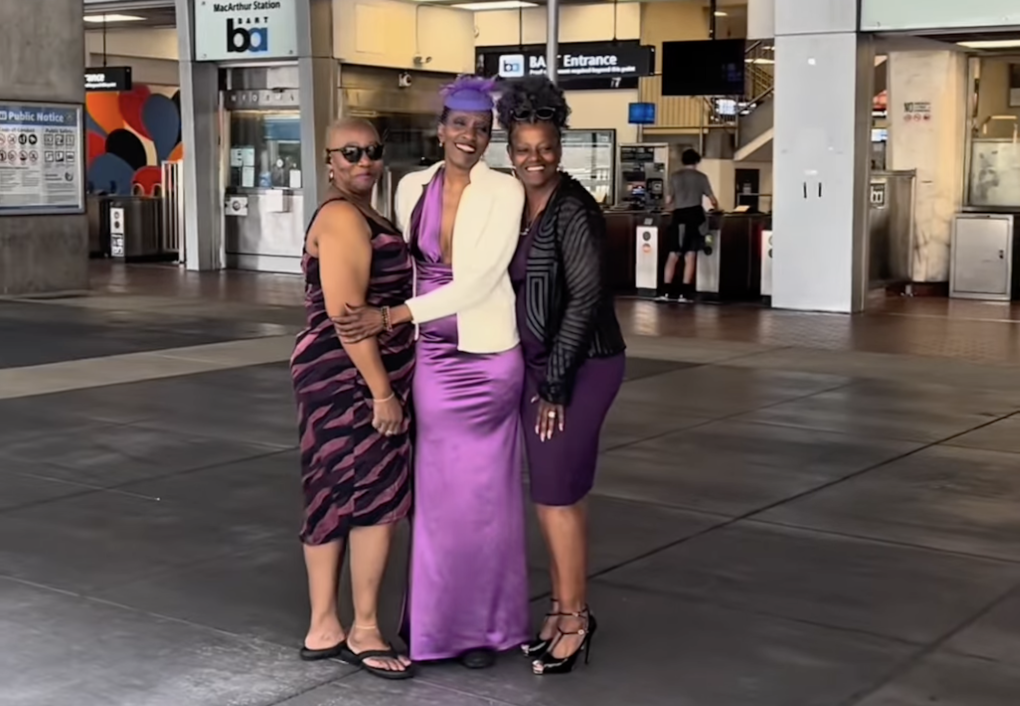
"caption": "Lenora and friends outside MacArthur BART station. ",
"credit": "Instagram/@sfbayarearapidtransit",
"altTag": "A Black woman in a purple satin gown, purple hat and white suit jacket stands outside a train station, smiling with two friends.",
"description": null,
"imgSizes": {
"medium": {
"file": "https://cdn.kqed.org/wp-content/uploads/sites/2/2025/05/wedding-party-ladies-800x554.png",
"width": 800,
"height": 554,
"mimeType": "image/png"
},
"large": {
"file": "https://cdn.kqed.org/wp-content/uploads/sites/2/2025/05/wedding-party-ladies-1020x706.png",
"width": 1020,
"height": 706,
"mimeType": "image/png"
},
"thumbnail": {
"file": "https://cdn.kqed.org/wp-content/uploads/sites/2/2025/05/wedding-party-ladies-160x111.png",
"width": 160,
"height": 111,
"mimeType": "image/png"
},
"medium_large": {
"file": "https://cdn.kqed.org/wp-content/uploads/sites/2/2025/05/wedding-party-ladies-768x532.png",
"width": 768,
"height": 532,
"mimeType": "image/png"
},
"1536x1536": {
"file": "https://cdn.kqed.org/wp-content/uploads/sites/2/2025/05/wedding-party-ladies-1536x1064.png",
"width": 1536,
"height": 1064,
"mimeType": "image/png"
},
"post-thumbnail": {
"file": "https://cdn.kqed.org/wp-content/uploads/sites/2/2025/05/wedding-party-ladies-672x372.png",
"width": 672,
"height": 372,
"mimeType": "image/png"
},
"twentyfourteen-full-width": {
"file": "https://cdn.kqed.org/wp-content/uploads/sites/2/2025/05/wedding-party-ladies-1038x576.png",
"width": 1038,
"height": 576,
"mimeType": "image/png"
},
"full-width": {
"file": "https://cdn.kqed.org/wp-content/uploads/sites/2/2025/05/wedding-party-ladies-1920x1330.png",
"width": 1920,
"height": 1330,
"mimeType": "image/png"
},
"kqedFullSize": {
"file": "https://cdn.kqed.org/wp-content/uploads/sites/2/2025/05/wedding-party-ladies.png",
"width": 2000,
"height": 1385
}
},
"isLoading": false,
"fetchFailed": false
},
"arts_13976159": {
"type": "attachments",
"id": "arts_13976159",
"meta": {
"index": "attachments_1716263798",
"site": "arts",
"id": "13976159",
"found": true
},
"title": "download-1",
"publishDate": 1747159568,
"status": "inherit",
"parent": 13975985,
"modified": 1747159742,
"caption": "Goapele grew up with underground hip-hop, jazz and Tony! Toni! Toné! in the creative soil of the East Bay. ",
"credit": "Kristopher ‘Squint’ Sandifer",
"altTag": "An African American woman in braids and a white dress poses in front of a wall with paint stencils on it.",
"description": null,
"imgSizes": {
"medium": {
"file": "https://cdn.kqed.org/wp-content/uploads/sites/2/2025/05/download-1-1-800x450.jpg",
"width": 800,
"height": 450,
"mimeType": "image/jpeg"
},
"large": {
"file": "https://cdn.kqed.org/wp-content/uploads/sites/2/2025/05/download-1-1-1020x574.jpg",
"width": 1020,
"height": 574,
"mimeType": "image/jpeg"
},
"thumbnail": {
"file": "https://cdn.kqed.org/wp-content/uploads/sites/2/2025/05/download-1-1-160x90.jpg",
"width": 160,
"height": 90,
"mimeType": "image/jpeg"
},
"medium_large": {
"file": "https://cdn.kqed.org/wp-content/uploads/sites/2/2025/05/download-1-1-768x432.jpg",
"width": 768,
"height": 432,
"mimeType": "image/jpeg"
},
"1536x1536": {
"file": "https://cdn.kqed.org/wp-content/uploads/sites/2/2025/05/download-1-1-1536x864.jpg",
"width": 1536,
"height": 864,
"mimeType": "image/jpeg"
},
"post-thumbnail": {
"file": "https://cdn.kqed.org/wp-content/uploads/sites/2/2025/05/download-1-1-672x372.jpg",
"width": 672,
"height": 372,
"mimeType": "image/jpeg"
},
"twentyfourteen-full-width": {
"file": "https://cdn.kqed.org/wp-content/uploads/sites/2/2025/05/download-1-1-1038x576.jpg",
"width": 1038,
"height": 576,
"mimeType": "image/jpeg"
},
"full-width": {
"file": "https://cdn.kqed.org/wp-content/uploads/sites/2/2025/05/download-1-1-1920x1080.jpg",
"width": 1920,
"height": 1080,
"mimeType": "image/jpeg"
},
"kqedFullSize": {
"file": "https://cdn.kqed.org/wp-content/uploads/sites/2/2025/05/download-1-1.jpg",
"width": 2000,
"height": 1125
}
},
"isLoading": false,
"fetchFailed": false
},
"arts_13976091": {
"type": "attachments",
"id": "arts_13976091",
"meta": {
"index": "attachments_1716263798",
"site": "arts",
"id": "13976091",
"found": true
},
"title": "Tyson Amir",
"publishDate": 1747093806,
"status": "inherit",
"parent": 13976063,
"modified": 1747093907,
"caption": "San Jose-raised educator and author, Tyson Amir.",
"credit": "Courtesy of Tyson Amir",
"altTag": "An African-American man in a black hat and black leather jacket sits at a desk talking directly into the camera.",
"description": null,
"imgSizes": {
"medium": {
"file": "https://cdn.kqed.org/wp-content/uploads/sites/2/2025/05/Screenshot-2025-05-10-at-2.21.10 PM-1-800x450.png",
"width": 800,
"height": 450,
"mimeType": "image/png"
},
"large": {
"file": "https://cdn.kqed.org/wp-content/uploads/sites/2/2025/05/Screenshot-2025-05-10-at-2.21.10 PM-1-1020x573.png",
"width": 1020,
"height": 573,
"mimeType": "image/png"
},
"thumbnail": {
"file": "https://cdn.kqed.org/wp-content/uploads/sites/2/2025/05/Screenshot-2025-05-10-at-2.21.10 PM-1-160x90.png",
"width": 160,
"height": 90,
"mimeType": "image/png"
},
"medium_large": {
"file": "https://cdn.kqed.org/wp-content/uploads/sites/2/2025/05/Screenshot-2025-05-10-at-2.21.10 PM-1-768x432.png",
"width": 768,
"height": 432,
"mimeType": "image/png"
},
"1536x1536": {
"file": "https://cdn.kqed.org/wp-content/uploads/sites/2/2025/05/Screenshot-2025-05-10-at-2.21.10 PM-1-1536x863.png",
"width": 1536,
"height": 863,
"mimeType": "image/png"
},
"post-thumbnail": {
"file": "https://cdn.kqed.org/wp-content/uploads/sites/2/2025/05/Screenshot-2025-05-10-at-2.21.10 PM-1-672x372.png",
"width": 672,
"height": 372,
"mimeType": "image/png"
},
"twentyfourteen-full-width": {
"file": "https://cdn.kqed.org/wp-content/uploads/sites/2/2025/05/Screenshot-2025-05-10-at-2.21.10 PM-1-1038x576.png",
"width": 1038,
"height": 576,
"mimeType": "image/png"
},
"kqedFullSize": {
"file": "https://cdn.kqed.org/wp-content/uploads/sites/2/2025/05/Screenshot-2025-05-10-at-2.21.10 PM-1.png",
"width": 1856,
"height": 1043
}
},
"isLoading": false,
"fetchFailed": false
},
"arts_13976197": {
"type": "attachments",
"id": "arts_13976197",
"meta": {
"index": "attachments_1716263798",
"site": "arts",
"id": "13976197",
"found": true
},
"title": "Mojo Carter at Oaklash 2022 by Rachel Ziegler",
"publishDate": 1747166417,
"status": "inherit",
"parent": 13976171,
"modified": 1747166451,
"caption": "Mojo Carter is one of the performers at Oaklash's May 17 block party. ",
"credit": "Rachel Ziegler",
"altTag": null,
"description": null,
"imgSizes": {
"medium": {
"file": "https://cdn.kqed.org/wp-content/uploads/sites/2/2025/05/Mojo-Carter-at-Oaklash-2022-by-Rachel-Ziegler-1-800x450.jpg",
"width": 800,
"height": 450,
"mimeType": "image/jpeg"
},
"large": {
"file": "https://cdn.kqed.org/wp-content/uploads/sites/2/2025/05/Mojo-Carter-at-Oaklash-2022-by-Rachel-Ziegler-1-1020x574.jpg",
"width": 1020,
"height": 574,
"mimeType": "image/jpeg"
},
"thumbnail": {
"file": "https://cdn.kqed.org/wp-content/uploads/sites/2/2025/05/Mojo-Carter-at-Oaklash-2022-by-Rachel-Ziegler-1-160x90.jpg",
"width": 160,
"height": 90,
"mimeType": "image/jpeg"
},
"medium_large": {
"file": "https://cdn.kqed.org/wp-content/uploads/sites/2/2025/05/Mojo-Carter-at-Oaklash-2022-by-Rachel-Ziegler-1-768x432.jpg",
"width": 768,
"height": 432,
"mimeType": "image/jpeg"
},
"1536x1536": {
"file": "https://cdn.kqed.org/wp-content/uploads/sites/2/2025/05/Mojo-Carter-at-Oaklash-2022-by-Rachel-Ziegler-1-1536x864.jpg",
"width": 1536,
"height": 864,
"mimeType": "image/jpeg"
},
"2048x2048": {
"file": "https://cdn.kqed.org/wp-content/uploads/sites/2/2025/05/Mojo-Carter-at-Oaklash-2022-by-Rachel-Ziegler-1-2048x1152.jpg",
"width": 2048,
"height": 1152,
"mimeType": "image/jpeg"
},
"post-thumbnail": {
"file": "https://cdn.kqed.org/wp-content/uploads/sites/2/2025/05/Mojo-Carter-at-Oaklash-2022-by-Rachel-Ziegler-1-672x372.jpg",
"width": 672,
"height": 372,
"mimeType": "image/jpeg"
},
"twentyfourteen-full-width": {
"file": "https://cdn.kqed.org/wp-content/uploads/sites/2/2025/05/Mojo-Carter-at-Oaklash-2022-by-Rachel-Ziegler-1-1038x576.jpg",
"width": 1038,
"height": 576,
"mimeType": "image/jpeg"
},
"full-width": {
"file": "https://cdn.kqed.org/wp-content/uploads/sites/2/2025/05/Mojo-Carter-at-Oaklash-2022-by-Rachel-Ziegler-1-1920x1080.jpg",
"width": 1920,
"height": 1080,
"mimeType": "image/jpeg"
},
"kqedFullSize": {
"file": "https://cdn.kqed.org/wp-content/uploads/sites/2/2025/05/Mojo-Carter-at-Oaklash-2022-by-Rachel-Ziegler-1-scaled.jpg",
"width": 2560,
"height": 1440
}
},
"isLoading": false,
"fetchFailed": false
},
"arts_13975959": {
"type": "attachments",
"id": "arts_13975959",
"meta": {
"index": "attachments_1716263798",
"site": "arts",
"id": "13975959",
"found": true
},
"title": "pho vy exterior",
"publishDate": 1746823538,
"status": "inherit",
"parent": 13975954,
"modified": 1746823628,
"caption": "Phở Vy has been an East Oakland staple since 2016. The restaurant's last day of business will be May 18, 2025.",
"credit": "Luke Tsai/KQED",
"altTag": "Exterior of a Vietnamese restaurant. The sign on the yellow awning reads, \"Pho Vy.\"",
"description": null,
"imgSizes": {
"medium": {
"file": "https://cdn.kqed.org/wp-content/uploads/sites/2/2025/05/pho-vy-exterior-800x450.jpg",
"width": 800,
"height": 450,
"mimeType": "image/jpeg"
},
"large": {
"file": "https://cdn.kqed.org/wp-content/uploads/sites/2/2025/05/pho-vy-exterior-1020x574.jpg",
"width": 1020,
"height": 574,
"mimeType": "image/jpeg"
},
"thumbnail": {
"file": "https://cdn.kqed.org/wp-content/uploads/sites/2/2025/05/pho-vy-exterior-160x90.jpg",
"width": 160,
"height": 90,
"mimeType": "image/jpeg"
},
"medium_large": {
"file": "https://cdn.kqed.org/wp-content/uploads/sites/2/2025/05/pho-vy-exterior-768x432.jpg",
"width": 768,
"height": 432,
"mimeType": "image/jpeg"
},
"1536x1536": {
"file": "https://cdn.kqed.org/wp-content/uploads/sites/2/2025/05/pho-vy-exterior-1536x864.jpg",
"width": 1536,
"height": 864,
"mimeType": "image/jpeg"
},
"post-thumbnail": {
"file": "https://cdn.kqed.org/wp-content/uploads/sites/2/2025/05/pho-vy-exterior-672x372.jpg",
"width": 672,
"height": 372,
"mimeType": "image/jpeg"
},
"twentyfourteen-full-width": {
"file": "https://cdn.kqed.org/wp-content/uploads/sites/2/2025/05/pho-vy-exterior-1038x576.jpg",
"width": 1038,
"height": 576,
"mimeType": "image/jpeg"
},
"full-width": {
"file": "https://cdn.kqed.org/wp-content/uploads/sites/2/2025/05/pho-vy-exterior-1920x1080.jpg",
"width": 1920,
"height": 1080,
"mimeType": "image/jpeg"
},
"kqedFullSize": {
"file": "https://cdn.kqed.org/wp-content/uploads/sites/2/2025/05/pho-vy-exterior.jpg",
"width": 2000,
"height": 1125
}
},
"isLoading": false,
"fetchFailed": false
},
"arts_13975539": {
"type": "attachments",
"id": "arts_13975539",
"meta": {
"index": "attachments_1716263798",
"site": "arts",
"id": "13975539",
"found": true
},
"title": "AyoBrame.16x9",
"publishDate": 1746022515,
"status": "inherit",
"parent": 13975538,
"modified": 1746022611,
"caption": "Saxophonist Ayo Brame performs at one of two sold-out shows at Yoshi’s in Oakland on his 18th birthday, April 25, 2025.",
"credit": "Gina Castro/KQED",
"altTag": "A young Black man in a patterned blue shirt plays the tenor saxophone with his eyes closed against a blue curtain background",
"description": null,
"imgSizes": {
"medium": {
"file": "https://cdn.kqed.org/wp-content/uploads/sites/2/2025/04/AyoBrame.16x9-800x450.jpg",
"width": 800,
"height": 450,
"mimeType": "image/jpeg"
},
"large": {
"file": "https://cdn.kqed.org/wp-content/uploads/sites/2/2025/04/AyoBrame.16x9-1020x574.jpg",
"width": 1020,
"height": 574,
"mimeType": "image/jpeg"
},
"thumbnail": {
"file": "https://cdn.kqed.org/wp-content/uploads/sites/2/2025/04/AyoBrame.16x9-160x90.jpg",
"width": 160,
"height": 90,
"mimeType": "image/jpeg"
},
"medium_large": {
"file": "https://cdn.kqed.org/wp-content/uploads/sites/2/2025/04/AyoBrame.16x9-768x432.jpg",
"width": 768,
"height": 432,
"mimeType": "image/jpeg"
},
"1536x1536": {
"file": "https://cdn.kqed.org/wp-content/uploads/sites/2/2025/04/AyoBrame.16x9-1536x864.jpg",
"width": 1536,
"height": 864,
"mimeType": "image/jpeg"
},
"post-thumbnail": {
"file": "https://cdn.kqed.org/wp-content/uploads/sites/2/2025/04/AyoBrame.16x9-672x372.jpg",
"width": 672,
"height": 372,
"mimeType": "image/jpeg"
},
"twentyfourteen-full-width": {
"file": "https://cdn.kqed.org/wp-content/uploads/sites/2/2025/04/AyoBrame.16x9-1038x576.jpg",
"width": 1038,
"height": 576,
"mimeType": "image/jpeg"
},
"full-width": {
"file": "https://cdn.kqed.org/wp-content/uploads/sites/2/2025/04/AyoBrame.16x9-1920x1080.jpg",
"width": 1920,
"height": 1080,
"mimeType": "image/jpeg"
},
"kqedFullSize": {
"file": "https://cdn.kqed.org/wp-content/uploads/sites/2/2025/04/AyoBrame.16x9.jpg",
"width": 2000,
"height": 1125
}
},
"isLoading": false,
"fetchFailed": false
},
"arts_13975532": {
"type": "attachments",
"id": "arts_13975532",
"meta": {
"index": "attachments_1716263798",
"site": "arts",
"id": "13975532",
"found": true
},
"title": "From-left,-AL-Abraham,-Jazmine-Quezada,-Lawrence-Chen-(floor),-Florrie-Geller-(standing)-and-Ashley-Thopiah-in-The-Seascape-by-Ye-Feng.-Photo-by-John-Hefti",
"publishDate": 1745988407,
"status": "inherit",
"parent": 13975232,
"modified": 1745989276,
"caption": "(L–R) AL Abraham, Jazmine Quezada, Lawrence Chen (floor), Florrie Geller (standing) and Ashley Thopiah rehearse ‘The Seascape’ by Ye Feng as part of the Oakland Ballet's Angel Island Project. ",
"credit": "John Hefti/Courtesy of Courtesy of Oakland Ballet",
"altTag": "Four dancers, all Asian, perform against a deep red backdrop with a long braided plait.",
"description": null,
"imgSizes": {
"medium": {
"file": "https://cdn.kqed.org/wp-content/uploads/sites/2/2025/04/From-left-AL-Abraham-Jazmine-Quezada-Lawrence-Chen-floor-Florrie-Geller-standing-and-Ashley-Thopiah-in-The-Seascape-by-Ye-Feng.-Photo-by-John-Hefti-800x450.jpg",
"width": 800,
"height": 450,
"mimeType": "image/jpeg"
},
"large": {
"file": "https://cdn.kqed.org/wp-content/uploads/sites/2/2025/04/From-left-AL-Abraham-Jazmine-Quezada-Lawrence-Chen-floor-Florrie-Geller-standing-and-Ashley-Thopiah-in-The-Seascape-by-Ye-Feng.-Photo-by-John-Hefti-1020x574.jpg",
"width": 1020,
"height": 574,
"mimeType": "image/jpeg"
},
"thumbnail": {
"file": "https://cdn.kqed.org/wp-content/uploads/sites/2/2025/04/From-left-AL-Abraham-Jazmine-Quezada-Lawrence-Chen-floor-Florrie-Geller-standing-and-Ashley-Thopiah-in-The-Seascape-by-Ye-Feng.-Photo-by-John-Hefti-160x90.jpg",
"width": 160,
"height": 90,
"mimeType": "image/jpeg"
},
"medium_large": {
"file": "https://cdn.kqed.org/wp-content/uploads/sites/2/2025/04/From-left-AL-Abraham-Jazmine-Quezada-Lawrence-Chen-floor-Florrie-Geller-standing-and-Ashley-Thopiah-in-The-Seascape-by-Ye-Feng.-Photo-by-John-Hefti-768x432.jpg",
"width": 768,
"height": 432,
"mimeType": "image/jpeg"
},
"1536x1536": {
"file": "https://cdn.kqed.org/wp-content/uploads/sites/2/2025/04/From-left-AL-Abraham-Jazmine-Quezada-Lawrence-Chen-floor-Florrie-Geller-standing-and-Ashley-Thopiah-in-The-Seascape-by-Ye-Feng.-Photo-by-John-Hefti-1536x864.jpg",
"width": 1536,
"height": 864,
"mimeType": "image/jpeg"
},
"post-thumbnail": {
"file": "https://cdn.kqed.org/wp-content/uploads/sites/2/2025/04/From-left-AL-Abraham-Jazmine-Quezada-Lawrence-Chen-floor-Florrie-Geller-standing-and-Ashley-Thopiah-in-The-Seascape-by-Ye-Feng.-Photo-by-John-Hefti-672x372.jpg",
"width": 672,
"height": 372,
"mimeType": "image/jpeg"
},
"twentyfourteen-full-width": {
"file": "https://cdn.kqed.org/wp-content/uploads/sites/2/2025/04/From-left-AL-Abraham-Jazmine-Quezada-Lawrence-Chen-floor-Florrie-Geller-standing-and-Ashley-Thopiah-in-The-Seascape-by-Ye-Feng.-Photo-by-John-Hefti-1038x576.jpg",
"width": 1038,
"height": 576,
"mimeType": "image/jpeg"
},
"full-width": {
"file": "https://cdn.kqed.org/wp-content/uploads/sites/2/2025/04/From-left-AL-Abraham-Jazmine-Quezada-Lawrence-Chen-floor-Florrie-Geller-standing-and-Ashley-Thopiah-in-The-Seascape-by-Ye-Feng.-Photo-by-John-Hefti-1920x1080.jpg",
"width": 1920,
"height": 1080,
"mimeType": "image/jpeg"
},
"kqedFullSize": {
"file": "https://cdn.kqed.org/wp-content/uploads/sites/2/2025/04/From-left-AL-Abraham-Jazmine-Quezada-Lawrence-Chen-floor-Florrie-Geller-standing-and-Ashley-Thopiah-in-The-Seascape-by-Ye-Feng.-Photo-by-John-Hefti.jpg",
"width": 2000,
"height": 1125
}
},
"isLoading": false,
"fetchFailed": false
},
"arts_13975418": {
"type": "attachments",
"id": "arts_13975418",
"meta": {
"index": "attachments_1716263798",
"site": "arts",
"id": "13975418",
"found": true
},
"title": "250423-OaklandMural-07-BL_qed",
"publishDate": 1745875411,
"status": "inherit",
"parent": 13975415,
"modified": 1745875499,
"caption": "Mural artists Fernando Rodriguez (left) and Kalani Cecaci stand in front of a mural Cecaci designed honoring fallen graffiti artists in downtown Oakland on April 23, 2025.",
"credit": "Beth LaBerge/KQED",
"altTag": null,
"description": null,
"imgSizes": {
"medium": {
"file": "https://cdn.kqed.org/wp-content/uploads/sites/2/2025/04/250423-OaklandMural-07-BL_qed-800x533.jpg",
"width": 800,
"height": 533,
"mimeType": "image/jpeg"
},
"large": {
"file": "https://cdn.kqed.org/wp-content/uploads/sites/2/2025/04/250423-OaklandMural-07-BL_qed-1020x680.jpg",
"width": 1020,
"height": 680,
"mimeType": "image/jpeg"
},
"thumbnail": {
"file": "https://cdn.kqed.org/wp-content/uploads/sites/2/2025/04/250423-OaklandMural-07-BL_qed-160x107.jpg",
"width": 160,
"height": 107,
"mimeType": "image/jpeg"
},
"medium_large": {
"file": "https://cdn.kqed.org/wp-content/uploads/sites/2/2025/04/250423-OaklandMural-07-BL_qed-768x512.jpg",
"width": 768,
"height": 512,
"mimeType": "image/jpeg"
},
"1536x1536": {
"file": "https://cdn.kqed.org/wp-content/uploads/sites/2/2025/04/250423-OaklandMural-07-BL_qed-1536x1024.jpg",
"width": 1536,
"height": 1024,
"mimeType": "image/jpeg"
},
"post-thumbnail": {
"file": "https://cdn.kqed.org/wp-content/uploads/sites/2/2025/04/250423-OaklandMural-07-BL_qed-672x372.jpg",
"width": 672,
"height": 372,
"mimeType": "image/jpeg"
},
"twentyfourteen-full-width": {
"file": "https://cdn.kqed.org/wp-content/uploads/sites/2/2025/04/250423-OaklandMural-07-BL_qed-1038x576.jpg",
"width": 1038,
"height": 576,
"mimeType": "image/jpeg"
},
"full-width": {
"file": "https://cdn.kqed.org/wp-content/uploads/sites/2/2025/04/250423-OaklandMural-07-BL_qed-1920x1280.jpg",
"width": 1920,
"height": 1280,
"mimeType": "image/jpeg"
},
"kqedFullSize": {
"file": "https://cdn.kqed.org/wp-content/uploads/sites/2/2025/04/250423-OaklandMural-07-BL_qed.jpg",
"width": 1999,
"height": 1333
}
},
"isLoading": false,
"fetchFailed": false
},
"arts_13975034": {
"type": "attachments",
"id": "arts_13975034",
"meta": {
"index": "attachments_1716263798",
"site": "arts",
"id": "13975034",
"found": true
},
"title": "20250420_YTPALESTINIANFOOD_GC-8-KQED",
"publishDate": 1745330507,
"status": "inherit",
"parent": 0,
"modified": 1745435319,
"caption": "Feras AbuGhaben prepares a za’atar flatbread at Manakish Oven & Grill in San Jose on April 20, 2025. Manakish is one of several Bay Area Palestinian restaurants whose popularity has soared in the past year.",
"credit": "Gina Castro/KQED",
"altTag": "Bright green za'atar spice blend being spread on a round of dough.",
"description": null,
"imgSizes": {
"medium": {
"file": "https://cdn.kqed.org/wp-content/uploads/sites/2/2025/04/20250420_YTPALESTINIANFOOD_GC-8-KQED-800x533.jpg",
"width": 800,
"height": 533,
"mimeType": "image/jpeg"
},
"large": {
"file": "https://cdn.kqed.org/wp-content/uploads/sites/2/2025/04/20250420_YTPALESTINIANFOOD_GC-8-KQED-1020x680.jpg",
"width": 1020,
"height": 680,
"mimeType": "image/jpeg"
},
"thumbnail": {
"file": "https://cdn.kqed.org/wp-content/uploads/sites/2/2025/04/20250420_YTPALESTINIANFOOD_GC-8-KQED-160x107.jpg",
"width": 160,
"height": 107,
"mimeType": "image/jpeg"
},
"medium_large": {
"file": "https://cdn.kqed.org/wp-content/uploads/sites/2/2025/04/20250420_YTPALESTINIANFOOD_GC-8-KQED-768x512.jpg",
"width": 768,
"height": 512,
"mimeType": "image/jpeg"
},
"1536x1536": {
"file": "https://cdn.kqed.org/wp-content/uploads/sites/2/2025/04/20250420_YTPALESTINIANFOOD_GC-8-KQED-1536x1024.jpg",
"width": 1536,
"height": 1024,
"mimeType": "image/jpeg"
},
"post-thumbnail": {
"file": "https://cdn.kqed.org/wp-content/uploads/sites/2/2025/04/20250420_YTPALESTINIANFOOD_GC-8-KQED-672x372.jpg",
"width": 672,
"height": 372,
"mimeType": "image/jpeg"
},
"twentyfourteen-full-width": {
"file": "https://cdn.kqed.org/wp-content/uploads/sites/2/2025/04/20250420_YTPALESTINIANFOOD_GC-8-KQED-1038x576.jpg",
"width": 1038,
"height": 576,
"mimeType": "image/jpeg"
},
"full-width": {
"file": "https://cdn.kqed.org/wp-content/uploads/sites/2/2025/04/20250420_YTPALESTINIANFOOD_GC-8-KQED-1920x1280.jpg",
"width": 1920,
"height": 1280,
"mimeType": "image/jpeg"
},
"kqedFullSize": {
"file": "https://cdn.kqed.org/wp-content/uploads/sites/2/2025/04/20250420_YTPALESTINIANFOOD_GC-8-KQED.jpg",
"width": 2000,
"height": 1333
}
},
"isLoading": false,
"fetchFailed": false
},
"arts_13975061": {
"type": "attachments",
"id": "arts_13975061",
"meta": {
"index": "attachments_1716263798",
"site": "arts",
"id": "13975061",
"found": true
},
"title": "Budget Paradise_StillB",
"publishDate": 1745344922,
"status": "inherit",
"parent": 13975059,
"modified": 1745347363,
"caption": "Ashley Hernandez (right) stars as Oakland artist Chester in LaTajh Simmons-Weaver's short film, 'Budget Paradise,' premiering at SFFILM on April 26. ",
"credit": "Courtesy of LaTajh Simmons-Weaver",
"altTag": "An artist and a coffee shop barista look into the distance in a film still.",
"description": null,
"imgSizes": {
"medium": {
"file": "https://cdn.kqed.org/wp-content/uploads/sites/2/2025/04/Budget-Paradise_StillB-800x432.jpg",
"width": 800,
"height": 432,
"mimeType": "image/jpeg"
},
"large": {
"file": "https://cdn.kqed.org/wp-content/uploads/sites/2/2025/04/Budget-Paradise_StillB-1020x551.jpg",
"width": 1020,
"height": 551,
"mimeType": "image/jpeg"
},
"thumbnail": {
"file": "https://cdn.kqed.org/wp-content/uploads/sites/2/2025/04/Budget-Paradise_StillB-160x86.jpg",
"width": 160,
"height": 86,
"mimeType": "image/jpeg"
},
"medium_large": {
"file": "https://cdn.kqed.org/wp-content/uploads/sites/2/2025/04/Budget-Paradise_StillB-768x415.jpg",
"width": 768,
"height": 415,
"mimeType": "image/jpeg"
},
"1536x1536": {
"file": "https://cdn.kqed.org/wp-content/uploads/sites/2/2025/04/Budget-Paradise_StillB-1536x830.jpg",
"width": 1536,
"height": 830,
"mimeType": "image/jpeg"
},
"2048x2048": {
"file": "https://cdn.kqed.org/wp-content/uploads/sites/2/2025/04/Budget-Paradise_StillB-2048x1107.jpg",
"width": 2048,
"height": 1107,
"mimeType": "image/jpeg"
},
"post-thumbnail": {
"file": "https://cdn.kqed.org/wp-content/uploads/sites/2/2025/04/Budget-Paradise_StillB-672x372.jpg",
"width": 672,
"height": 372,
"mimeType": "image/jpeg"
},
"twentyfourteen-full-width": {
"file": "https://cdn.kqed.org/wp-content/uploads/sites/2/2025/04/Budget-Paradise_StillB-1038x576.jpg",
"width": 1038,
"height": 576,
"mimeType": "image/jpeg"
},
"full-width": {
"file": "https://cdn.kqed.org/wp-content/uploads/sites/2/2025/04/Budget-Paradise_StillB-1920x1038.jpg",
"width": 1920,
"height": 1038,
"mimeType": "image/jpeg"
},
"kqedFullSize": {
"file": "https://cdn.kqed.org/wp-content/uploads/sites/2/2025/04/Budget-Paradise_StillB-scaled.jpg",
"width": 2560,
"height": 1384
}
},
"isLoading": false,
"fetchFailed": false
},
"arts_13974882": {
"type": "attachments",
"id": "arts_13974882",
"meta": {
"index": "attachments_1716263798",
"site": "arts",
"id": "13974882",
"found": true
},
"title": "19keys",
"publishDate": 1745005597,
"status": "inherit",
"parent": 13974592,
"modified": 1745005647,
"caption": "Oakland-raised 19Keys is a public speaker who pushes for self-sustainability and the liberation of Black people. ",
"credit": "Courtesy of 19Keys",
"altTag": null,
"description": null,
"imgSizes": {
"medium": {
"file": "https://cdn.kqed.org/wp-content/uploads/sites/2/2025/04/19keys-800x450.jpg",
"width": 800,
"height": 450,
"mimeType": "image/jpeg"
},
"large": {
"file": "https://cdn.kqed.org/wp-content/uploads/sites/2/2025/04/19keys-1020x574.jpg",
"width": 1020,
"height": 574,
"mimeType": "image/jpeg"
},
"thumbnail": {
"file": "https://cdn.kqed.org/wp-content/uploads/sites/2/2025/04/19keys-160x90.jpg",
"width": 160,
"height": 90,
"mimeType": "image/jpeg"
},
"medium_large": {
"file": "https://cdn.kqed.org/wp-content/uploads/sites/2/2025/04/19keys-768x432.jpg",
"width": 768,
"height": 432,
"mimeType": "image/jpeg"
},
"1536x1536": {
"file": "https://cdn.kqed.org/wp-content/uploads/sites/2/2025/04/19keys-1536x864.jpg",
"width": 1536,
"height": 864,
"mimeType": "image/jpeg"
},
"post-thumbnail": {
"file": "https://cdn.kqed.org/wp-content/uploads/sites/2/2025/04/19keys-672x372.jpg",
"width": 672,
"height": 372,
"mimeType": "image/jpeg"
},
"twentyfourteen-full-width": {
"file": "https://cdn.kqed.org/wp-content/uploads/sites/2/2025/04/19keys-1038x576.jpg",
"width": 1038,
"height": 576,
"mimeType": "image/jpeg"
},
"kqedFullSize": {
"file": "https://cdn.kqed.org/wp-content/uploads/sites/2/2025/04/19keys.jpg",
"width": 1707,
"height": 960
}
},
"isLoading": false,
"fetchFailed": false
},
"arts_13974821": {
"type": "attachments",
"id": "arts_13974821",
"meta": {
"index": "attachments_1716263798",
"site": "arts",
"id": "13974821",
"found": true
},
"title": "Pen.Coogler.GrandLake",
"publishDate": 1744948333,
"status": "inherit",
"parent": 0,
"modified": 1745006343,
"caption": "(L–R) Pendarvis Harshaw and Ryan Coogler onstage at the Grand Lake Theatre in Oakland after a screening of ‘Sinners,’ April 16, 2025. ",
"credit": "Casey Flanigan/ImageSpace",
"altTag": "Two African American men sit in directors-style chairs and share conversation while holding microphones in front of a gold curtain",
"description": null,
"imgSizes": {
"medium": {
"file": "https://cdn.kqed.org/wp-content/uploads/sites/2/2025/04/Pen.Coogler.GrandLake-800x576.jpg",
"width": 800,
"height": 576,
"mimeType": "image/jpeg"
},
"large": {
"file": "https://cdn.kqed.org/wp-content/uploads/sites/2/2025/04/Pen.Coogler.GrandLake-1020x734.jpg",
"width": 1020,
"height": 734,
"mimeType": "image/jpeg"
},
"thumbnail": {
"file": "https://cdn.kqed.org/wp-content/uploads/sites/2/2025/04/Pen.Coogler.GrandLake-160x115.jpg",
"width": 160,
"height": 115,
"mimeType": "image/jpeg"
},
"medium_large": {
"file": "https://cdn.kqed.org/wp-content/uploads/sites/2/2025/04/Pen.Coogler.GrandLake-768x553.jpg",
"width": 768,
"height": 553,
"mimeType": "image/jpeg"
},
"1536x1536": {
"file": "https://cdn.kqed.org/wp-content/uploads/sites/2/2025/04/Pen.Coogler.GrandLake-1536x1105.jpg",
"width": 1536,
"height": 1105,
"mimeType": "image/jpeg"
},
"post-thumbnail": {
"file": "https://cdn.kqed.org/wp-content/uploads/sites/2/2025/04/Pen.Coogler.GrandLake-672x372.jpg",
"width": 672,
"height": 372,
"mimeType": "image/jpeg"
},
"twentyfourteen-full-width": {
"file": "https://cdn.kqed.org/wp-content/uploads/sites/2/2025/04/Pen.Coogler.GrandLake-1038x576.jpg",
"width": 1038,
"height": 576,
"mimeType": "image/jpeg"
},
"full-width": {
"file": "https://cdn.kqed.org/wp-content/uploads/sites/2/2025/04/Pen.Coogler.GrandLake-1920x1381.jpg",
"width": 1920,
"height": 1381,
"mimeType": "image/jpeg"
},
"kqedFullSize": {
"file": "https://cdn.kqed.org/wp-content/uploads/sites/2/2025/04/Pen.Coogler.GrandLake.jpg",
"width": 2000,
"height": 1439
}
},
"isLoading": false,
"fetchFailed": false
}
},
"audioPlayerReducer": {
"postId": "stream_live",
"isPaused": true,
"isPlaying": false,
"pfsActive": false,
"pledgeModalIsOpen": true,
"playerDrawerIsOpen": false,
"liveAudioPlayStartedAt": 0,
"liveAudioPlayContext": ""
},
"authorsReducer": {
"byline_arts_13975415": {
"type": "authors",
"id": "byline_arts_13975415",
"meta": {
"override": true
},
"slug": "byline_arts_13975415",
"name": "Lylah Schmedel-Permanna",
"isLoading": false
},
"byline_arts_13975160": {
"type": "authors",
"id": "byline_arts_13975160",
"meta": {
"override": true
},
"slug": "byline_arts_13975160",
"name": "Khadijah Ismail",
"isLoading": false
},
"agilbert": {
"type": "authors",
"id": "86",
"meta": {
"index": "authors_1716337520",
"id": "86",
"found": true
},
"name": "Andrew Gilbert",
"firstName": "Andrew",
"lastName": "Gilbert",
"slug": "agilbert",
"email": "jazzscribe@aol.com",
"display_author_email": false,
"staff_mastheads": [],
"title": "KQED Contributor",
"bio": "A Los Angeles native based in the Berkeley area since 1996, Andrew Gilbert covers jazz, international music and dance for KQED's \u003ci>California Report, \u003c/i>the\u003ci> Mercury News\u003c/i>, \u003ci>San Francisco Chronicle\u003c/i>, \u003ci>Berkeleyside.com\u003c/i>, and other publications. He is available for weddings and bar and bat mitzvahs. #jazzscribe",
"avatar": "https://secure.gravatar.com/avatar/d7bcafdbefdd39e9a68f88724ca616eb4e7a5a6bff9cdfb62de652a1e1751471?s=600&d=blank&r=g",
"twitter": null,
"bluesky": null,
"facebook": null,
"instagram": null,
"linkedin": null,
"sites": [
{
"site": "arts",
"roles": [
"Contributor",
"author"
]
},
{
"site": "news",
"roles": [
"author"
]
}
],
"headData": {
"title": "Andrew Gilbert | KQED",
"description": "KQED Contributor",
"ogImgSrc": "https://secure.gravatar.com/avatar/d7bcafdbefdd39e9a68f88724ca616eb4e7a5a6bff9cdfb62de652a1e1751471?s=600&d=blank&r=g",
"twImgSrc": "https://secure.gravatar.com/avatar/d7bcafdbefdd39e9a68f88724ca616eb4e7a5a6bff9cdfb62de652a1e1751471?s=600&d=blank&r=g"
},
"isLoading": false,
"link": "/author/agilbert"
},
"gmeline": {
"type": "authors",
"id": "185",
"meta": {
"index": "authors_1716337520",
"id": "185",
"found": true
},
"name": "Gabe Meline",
"firstName": "Gabe",
"lastName": "Meline",
"slug": "gmeline",
"email": "gmeline@kqed.org",
"display_author_email": true,
"staff_mastheads": [
"arts"
],
"title": "Senior Editor, KQED Arts & Culture",
"bio": "Gabe Meline entered journalism at age 15 making photocopied zines, and has since earned awards from the Edward R. Murrow Awards, the Society for Professional Journalists, the Online Journalism Awards, the Association of Alternative Newsweeklies and the California Newspaper Publishers Association. Prior to KQED, he was the editor of the \u003cem>North Bay Bohemian\u003c/em> and a touring musician. He lives with his wife and daughter in his hometown of Santa Rosa, CA.",
"avatar": "https://secure.gravatar.com/avatar/5bebe57be0d8bc2dd318934feb47299e2d2d10cba28d09d8d7afb389a2ce2bdd?s=600&d=blank&r=g",
"twitter": null,
"bluesky": null,
"facebook": null,
"instagram": null,
"linkedin": null,
"sites": [
{
"site": "",
"roles": [
"editor"
]
},
{
"site": "arts",
"roles": [
"administrator"
]
},
{
"site": "artschool",
"roles": [
"editor"
]
},
{
"site": "news",
"roles": [
"author"
]
},
{
"site": "pop",
"roles": [
"editor"
]
},
{
"site": "bayareabites",
"roles": [
"editor"
]
},
{
"site": "food",
"roles": [
"editor"
]
},
{
"site": "forum",
"roles": [
"administrator"
]
},
{
"site": "liveblog",
"roles": [
"editor"
]
},
{
"site": "hiphop",
"roles": [
"editor"
]
}
],
"headData": {
"title": "Gabe Meline | KQED",
"description": "Senior Editor, KQED Arts & Culture",
"ogImgSrc": "https://secure.gravatar.com/avatar/5bebe57be0d8bc2dd318934feb47299e2d2d10cba28d09d8d7afb389a2ce2bdd?s=600&d=blank&r=g",
"twImgSrc": "https://secure.gravatar.com/avatar/5bebe57be0d8bc2dd318934feb47299e2d2d10cba28d09d8d7afb389a2ce2bdd?s=600&d=blank&r=g"
},
"isLoading": false,
"link": "/author/gmeline"
},
"ralexandra": {
"type": "authors",
"id": "11242",
"meta": {
"index": "authors_1716337520",
"id": "11242",
"found": true
},
"name": "Rae Alexandra",
"firstName": "Rae",
"lastName": "Alexandra",
"slug": "ralexandra",
"email": "ralexandra@kqed.org",
"display_author_email": true,
"staff_mastheads": [],
"title": "Reporter/Producer",
"bio": "Rae Alexandra is a Reporter/Producer for KQED Arts & Culture, and the creator/author of the \u003ca href=\"https://www.kqed.org/arts/program/rebel-girls-from-bay-area-history\">Rebel Girls From Bay Area History\u003c/a> and \u003ca href=\"https://www.kqed.org/bizarrebayarea\">Bizarre Bay Area\u003c/a> series. Her debut book, \u003ca href=\"https://citylights.com/politics-current-events-history/unsung-heroines35-women-who-changed/\">Unsung Heroines: 35 Women Who Changed the Bay Area\u003c/a> was published by City Lights in March 2026. In 2023, Rae was awarded an SPJ Excellence in Journalism Award for Arts & Culture. Rae was born and raised in Wales and subsequently — even after two decades in Northern California — still uses phrases that regularly baffle her coworkers.",
"avatar": "https://secure.gravatar.com/avatar/edfee8176c80cc0a382b051190f5341997df378a934a5774dcb0977732dfd401?s=600&d=blank&r=g",
"twitter": null,
"bluesky": null,
"facebook": null,
"instagram": null,
"linkedin": null,
"sites": [
{
"site": "arts",
"roles": [
"subscriber"
]
},
{
"site": "news",
"roles": [
"subscriber"
]
},
{
"site": "pop",
"roles": [
"subscriber"
]
},
{
"site": "bayareabites",
"roles": [
"subscriber"
]
},
{
"site": "science",
"roles": [
"subscriber"
]
}
],
"headData": {
"title": "Rae Alexandra | KQED",
"description": "Reporter/Producer",
"ogImgSrc": "https://secure.gravatar.com/avatar/edfee8176c80cc0a382b051190f5341997df378a934a5774dcb0977732dfd401?s=600&d=blank&r=g",
"twImgSrc": "https://secure.gravatar.com/avatar/edfee8176c80cc0a382b051190f5341997df378a934a5774dcb0977732dfd401?s=600&d=blank&r=g"
},
"isLoading": false,
"link": "/author/ralexandra"
},
"nvoynovskaya": {
"type": "authors",
"id": "11387",
"meta": {
"index": "authors_1716337520",
"id": "11387",
"found": true
},
"name": "Nastia Voynovskaya",
"firstName": "Nastia",
"lastName": "Voynovskaya",
"slug": "nvoynovskaya",
"email": "nvoynovskaya@kqed.org",
"display_author_email": false,
"staff_mastheads": [
"arts"
],
"title": "Editor and reporter",
"bio": "Nastia Voynovskaya is a reporter, editor and host at KQED Arts & Culture. She's been covering the arts in the Bay Area for over a decade, with a focus on music, queer culture, labor issues and grassroots organizing. She has edited KQED story series such as Trans Bay: A History of San Francisco's Gender-Diverse Community, and co-created KQED's Bay Area hip-hop history project, That's My Word. Nastia's work has been recognized by the Society of Professional Journalists and San Francisco Press Club. She regularly appears on podcasts and radio programs, including NPR's All Songs Considered, and hosts live events where music, culture and conversation meet.",
"avatar": "https://secure.gravatar.com/avatar/5025ee460e5a85d69ca20ea6c6f2f80d7e17795c828f61ea3aecfcd924e9042e?s=600&d=blank&r=g",
"twitter": null,
"bluesky": null,
"facebook": null,
"instagram": "https://www.instagram.com/nananastia/",
"linkedin": null,
"sites": [
{
"site": "",
"roles": [
"editor"
]
},
{
"site": "arts",
"roles": [
"administrator"
]
},
{
"site": "news",
"roles": [
"editor"
]
},
{
"site": "pop",
"roles": [
"administrator"
]
},
{
"site": "bayareabites",
"roles": [
"editor"
]
},
{
"site": "podcasts",
"roles": [
"editor"
]
},
{
"site": "hiphop",
"roles": [
"editor"
]
}
],
"headData": {
"title": "Nastia Voynovskaya | KQED",
"description": "Editor and reporter",
"ogImgSrc": "https://secure.gravatar.com/avatar/5025ee460e5a85d69ca20ea6c6f2f80d7e17795c828f61ea3aecfcd924e9042e?s=600&d=blank&r=g",
"twImgSrc": "https://secure.gravatar.com/avatar/5025ee460e5a85d69ca20ea6c6f2f80d7e17795c828f61ea3aecfcd924e9042e?s=600&d=blank&r=g"
},
"isLoading": false,
"link": "/author/nvoynovskaya"
},
"ogpenn": {
"type": "authors",
"id": "11491",
"meta": {
"index": "authors_1716337520",
"id": "11491",
"found": true
},
"name": "Pendarvis Harshaw",
"firstName": "Pendarvis",
"lastName": "Harshaw",
"slug": "ogpenn",
"email": "ogpenn@gmail.com",
"display_author_email": false,
"staff_mastheads": [
"arts"
],
"title": "Community Engagement Reporter",
"bio": "Pendarvis Harshaw is an educator, host and writer with KQED Arts.",
"avatar": "https://secure.gravatar.com/avatar/972b77ee8e3f346ae2b00622661187fbfabd059b5693bbdc1475ea7a722fd4cd?s=600&d=blank&r=g",
"twitter": null,
"bluesky": null,
"facebook": null,
"instagram": "ogpenn",
"linkedin": null,
"sites": [
{
"site": "arts",
"roles": [
"administrator"
]
},
{
"site": "news",
"roles": [
"editor"
]
},
{
"site": "bayareabites",
"roles": [
"author"
]
},
{
"site": "hiphop",
"roles": [
"editor"
]
}
],
"headData": {
"title": "Pendarvis Harshaw | KQED",
"description": "Community Engagement Reporter",
"ogImgSrc": "https://secure.gravatar.com/avatar/972b77ee8e3f346ae2b00622661187fbfabd059b5693bbdc1475ea7a722fd4cd?s=600&d=blank&r=g",
"twImgSrc": "https://secure.gravatar.com/avatar/972b77ee8e3f346ae2b00622661187fbfabd059b5693bbdc1475ea7a722fd4cd?s=600&d=blank&r=g"
},
"isLoading": false,
"link": "/author/ogpenn"
},
"ltsai": {
"type": "authors",
"id": "11743",
"meta": {
"index": "authors_1716337520",
"id": "11743",
"found": true
},
"name": "Luke Tsai",
"firstName": "Luke",
"lastName": "Tsai",
"slug": "ltsai",
"email": "ltsai@kqed.org",
"display_author_email": true,
"staff_mastheads": [
"arts"
],
"title": "Food Editor",
"bio": "Luke Tsai is KQED's food editor and resident stinky tofu connoisseur. Prior to KQED, he was an editor at Eater SF, \u003cem>San Francisco \u003c/em>magazine, and the \u003cem>East Bay Express\u003c/em>, and his work has also appeared in TASTE, the \u003cem>San Francisco Chronicle\u003c/em>, and the \u003cem>Best Food Writing\u003c/em> anthology. When he isn't writing or editing, you'll find him eating most everything he can get his hands on.",
"avatar": "https://secure.gravatar.com/avatar/1e59b45bf191526e7339d6ba46e33a57b2030d25c27660ecc64ea3cb863e34f7?s=600&d=blank&r=g",
"twitter": "theluketsai",
"bluesky": null,
"facebook": null,
"instagram": null,
"linkedin": null,
"sites": [
{
"site": "",
"roles": [
"editor"
]
},
{
"site": "arts",
"roles": [
"administrator"
]
},
{
"site": "news",
"roles": [
"editor",
"contributor"
]
},
{
"site": "bayareabites",
"roles": [
"editor"
]
},
{
"site": "food",
"roles": [
"editor"
]
}
],
"headData": {
"title": "Luke Tsai | KQED",
"description": "Food Editor",
"ogImgSrc": "https://secure.gravatar.com/avatar/1e59b45bf191526e7339d6ba46e33a57b2030d25c27660ecc64ea3cb863e34f7?s=600&d=blank&r=g",
"twImgSrc": "https://secure.gravatar.com/avatar/1e59b45bf191526e7339d6ba46e33a57b2030d25c27660ecc64ea3cb863e34f7?s=600&d=blank&r=g"
},
"isLoading": false,
"link": "/author/ltsai"
}
},
"pagesReducer": {
"arts_tag_oakland": {
"type": "terms",
"id": "arts_1143",
"meta": {
"index": "terms_1716263798",
"site": "arts",
"id": "1143",
"score": 6.870714
},
"featImg": null,
"name": "Oakland",
"description": null,
"taxonomy": "tag",
"headData": {
"twImgId": null,
"twTitle": null,
"ogTitle": null,
"ogImgId": null,
"twDescription": null,
"description": null,
"title": "Oakland Archives | KQED Arts",
"ogDescription": null
},
"ttid": 692,
"slug": "oakland",
"isLoading": false,
"title": "Oakland",
"pageMeta": {
"site": "arts",
"WpPageTemplate": "page-topic-editorial",
"currentPage": 13
},
"blocks": [
{
"blockName": "kqed/post-list",
"attrs": {
"layout": "cardArticle2",
"query": "posts/arts?tag=oakland",
"seeMore": false,
"paginated": true,
"page": 13
}
},
{
"blockName": "kqed/ad"
}
]
}
},
"pfsSessionReducer": {},
"postsReducer": {
"stream_live": {
"type": "live",
"id": "stream_live",
"audioUrl": "https://hls.kqed.org/hls/kqed_app/playlist.m3u8",
"title": "Live Stream",
"excerpt": "Live Stream information currently unavailable.",
"link": "/radio",
"featImg": "",
"label": {
"name": "KQED Live",
"link": "/"
}
},
"stream_kqedNewscast": {
"type": "posts",
"id": "stream_kqedNewscast",
"audioUrl": "https://www.kqed.org/.stream/anon/radio/RDnews/newscast.mp3?_=1",
"title": "KQED Newscast",
"featImg": "",
"label": {
"name": "88.5 FM",
"link": "/"
}
},
"arts_13976518": {
"type": "posts",
"id": "arts_13976518",
"meta": {
"index": "posts_1716263798",
"site": "arts",
"id": "13976518",
"score": null,
"sort": [
1747751924000
]
},
"guestAuthors": [],
"slug": "bart-train-wedding-john-lenora-oakland-macarthur",
"title": "A Couple Just Got Married on BART and Honestly, It Was Lovely",
"publishDate": 1747751924,
"format": "aside",
"headTitle": "A Couple Just Got Married on BART and Honestly, It Was Lovely | KQED",
"labelTerm": {
"site": "arts"
},
"content": "\u003cfigure id=\"attachment_13976521\" class=\"wp-caption aligncenter\" style=\"max-width: 2000px\">\u003cimg loading=\"lazy\" decoding=\"async\" class=\"size-full wp-image-13976521\" src=\"https://cdn.kqed.org/wp-content/uploads/sites/2/2025/05/Bart-wedding.png\" alt=\"Inside a train carriage, a Black woman wearing a purple satin gown and holding a large bouquet of purple and white paper flowers, stands smiling next to a white bald man in a purple and black suit. Before them is a female pastor in white and yellow robes reading from a small book.\" width=\"2000\" height=\"2064\" srcset=\"https://cdn.kqed.org/wp-content/uploads/sites/2/2025/05/Bart-wedding.png 2000w, https://cdn.kqed.org/wp-content/uploads/sites/2/2025/05/Bart-wedding-800x826.png 800w, https://cdn.kqed.org/wp-content/uploads/sites/2/2025/05/Bart-wedding-1020x1053.png 1020w, https://cdn.kqed.org/wp-content/uploads/sites/2/2025/05/Bart-wedding-160x165.png 160w, https://cdn.kqed.org/wp-content/uploads/sites/2/2025/05/Bart-wedding-768x793.png 768w, https://cdn.kqed.org/wp-content/uploads/sites/2/2025/05/Bart-wedding-1488x1536.png 1488w, https://cdn.kqed.org/wp-content/uploads/sites/2/2025/05/Bart-wedding-1984x2048.png 1984w, https://cdn.kqed.org/wp-content/uploads/sites/2/2025/05/Bart-wedding-1920x1981.png 1920w\" sizes=\"auto, (max-width: 2000px) 100vw, 2000px\">\u003cfigcaption class=\"wp-caption-text\">Legends getting married on a gosh-darn BART train. Round of applause. \u003ccite>(Instagram/@sfbayarearapidtransit)\u003c/cite>\u003c/figcaption>\u003c/figure>\n\u003cp>Stop what you’re doing and behold the sweetest thing you’re going to see all day: a beautiful couple getting married. On BART. With a perfectly coordinated purple wedding party, a bridal bouquet that could easily take up three seats, and a minister who stays positive, professional and pristine throughout, despite some BART train turbulence.\u003c/p>\n\u003cp>[aside postid='arts_13969644']The happy couple are Lenora and John — let’s call them Jonora! — and they opted to board at MacArthur Station in Oakland. The bride wore a backless purple gown and black sneakers. The groom did an Irish jig. The wedding party sang Too Short’s “Blow the Whistle” while boarding the train. The car’s handrails were decked out with green and purple garlands. Then the couple tied the knot in front of anyone who happened to be there.\u003c/p>\n\u003cp>Why BART, you ask? Because it’s where the couple first met. According to Lenora’s wedding vows, the couple’s first ever encounter culminated in John literally carrying his future bride out of the station.\u003c/p>\n\u003cp>“A guy who risked his life and limb carrying my clumsy self down those stairs,” Lenora says about her beau. “I knew then and there you were either incredibly chivalrous or slightly insane.”\u003c/p>\n\u003cp>Amen to all of this. And warmest congratulations to the happy couple.\u003c/p>\n\u003cblockquote class=\"tiktok-embed\" style=\"max-width: 605px;min-width: 325px\" cite=\"https://www.tiktok.com/@sfbart/video/7506260742635572522\" data-video-id=\"7506260742635572522\">\n\u003csection>\u003ca title=\"@sfbart\" href=\"https://www.tiktok.com/@sfbart?refer=embed\" target=\"_blank\" rel=\"noopener\">@sfbart\u003c/a>Congratulations to Lenora and John on their transit-oriented nuptials! The happy couple met on BART years ago and now they’ve tied the knot on a real-life in service train. Nothing beats a BART meet-cute (read about some more of those at the link in bio) but this is something else entirely. From the BART paper ticket bouquet to the dance moves, this whole wedding was an absolute slay.\u003ca title=\"♬ original sound - SFBART\" href=\"https://www.tiktok.com/music/original-sound-7506260796616231726?refer=embed\" target=\"_blank\" rel=\"noopener\">♬ original sound – SFBART\u003c/a>\n\u003c/section>\n\u003c/blockquote>\n\u003cp>[tiktok]\u003c/p>\n\u003cp>[ad fullwidth]\u003c/p>\u003cp>\u003c/p>\n",
"blocks": [],
"excerpt": "Thusly adding a whole new meaning to the term ‘bridal train.’",
"status": "publish",
"parent": 0,
"modified": 1747751924,
"stats": {
"hasAudio": false,
"hasVideo": false,
"hasChartOrMap": false,
"iframeSrcs": [],
"hasGoogleForm": false,
"hasGallery": false,
"hasHearkenModule": false,
"hasPolis": false,
"paragraphCount": 8,
"wordCount": 330
},
"headData": {
"title": "An Oakland BART Train Just Hosted an Actual Wedding | KQED",
"description": "Thusly adding a whole new meaning to the term ‘bridal train.’",
"ogTitle": "A Couple Just Got Married on BART and Honestly, It Was Lovely",
"ogDescription": "",
"ogImgId": "",
"twTitle": "A Couple Just Got Married on BART and Honestly, It Was Lovely",
"twDescription": "",
"twImgId": "",
"socialTitle": "An Oakland BART Train Just Hosted an Actual Wedding %%page%% %%sep%% KQED",
"schema": {
"@context": "https://schema.org",
"@type": "Article",
"headline": "A Couple Just Got Married on BART and Honestly, It Was Lovely",
"datePublished": "2025-05-20T07:38:44-07:00",
"dateModified": "2025-05-20T07:38:44-07:00",
"image": "https://cdn.kqed.org/wp-content/uploads/2020/02/KQED-OG-Image@1x.png"
}
},
"sticky": false,
"nprStoryId": "kqed-13976518",
"templateType": "standard",
"featuredImageType": "standard",
"excludeFromSiteSearch": "Include",
"articleAge": "0",
"path": "/arts/13976518/bart-train-wedding-john-lenora-oakland-macarthur",
"audioTrackLength": null,
"parsedContent": [
{
"type": "contentString",
"content": "\u003cdiv class=\"post-body\">\u003cp>\u003cfigure id=\"attachment_13976521\" class=\"wp-caption aligncenter\" style=\"max-width: 2000px\">\u003cimg loading=\"lazy\" decoding=\"async\" class=\"size-full wp-image-13976521\" src=\"https://cdn.kqed.org/wp-content/uploads/sites/2/2025/05/Bart-wedding.png\" alt=\"Inside a train carriage, a Black woman wearing a purple satin gown and holding a large bouquet of purple and white paper flowers, stands smiling next to a white bald man in a purple and black suit. Before them is a female pastor in white and yellow robes reading from a small book.\" width=\"2000\" height=\"2064\" srcset=\"https://cdn.kqed.org/wp-content/uploads/sites/2/2025/05/Bart-wedding.png 2000w, https://cdn.kqed.org/wp-content/uploads/sites/2/2025/05/Bart-wedding-800x826.png 800w, https://cdn.kqed.org/wp-content/uploads/sites/2/2025/05/Bart-wedding-1020x1053.png 1020w, https://cdn.kqed.org/wp-content/uploads/sites/2/2025/05/Bart-wedding-160x165.png 160w, https://cdn.kqed.org/wp-content/uploads/sites/2/2025/05/Bart-wedding-768x793.png 768w, https://cdn.kqed.org/wp-content/uploads/sites/2/2025/05/Bart-wedding-1488x1536.png 1488w, https://cdn.kqed.org/wp-content/uploads/sites/2/2025/05/Bart-wedding-1984x2048.png 1984w, https://cdn.kqed.org/wp-content/uploads/sites/2/2025/05/Bart-wedding-1920x1981.png 1920w\" sizes=\"auto, (max-width: 2000px) 100vw, 2000px\">\u003cfigcaption class=\"wp-caption-text\">Legends getting married on a gosh-darn BART train. Round of applause. \u003ccite>(Instagram/@sfbayarearapidtransit)\u003c/cite>\u003c/figcaption>\u003c/figure>\n\u003cp>Stop what you’re doing and behold the sweetest thing you’re going to see all day: a beautiful couple getting married. On BART. With a perfectly coordinated purple wedding party, a bridal bouquet that could easily take up three seats, and a minister who stays positive, professional and pristine throughout, despite some BART train turbulence.\u003c/p>\n\u003cp>\u003c/p>\u003c/div>",
"attributes": {
"named": {},
"numeric": []
}
},
{
"type": "component",
"content": "",
"name": "aside",
"attributes": {
"named": {
"postid": "arts_13969644",
"label": ""
},
"numeric": []
}
},
{
"type": "contentString",
"content": "\u003cdiv class=\"post-body\">\u003cp>The happy couple are Lenora and John — let’s call them Jonora! — and they opted to board at MacArthur Station in Oakland. The bride wore a backless purple gown and black sneakers. The groom did an Irish jig. The wedding party sang Too Short’s “Blow the Whistle” while boarding the train. The car’s handrails were decked out with green and purple garlands. Then the couple tied the knot in front of anyone who happened to be there.\u003c/p>\n\u003cp>Why BART, you ask? Because it’s where the couple first met. According to Lenora’s wedding vows, the couple’s first ever encounter culminated in John literally carrying his future bride out of the station.\u003c/p>\n\u003cp>“A guy who risked his life and limb carrying my clumsy self down those stairs,” Lenora says about her beau. “I knew then and there you were either incredibly chivalrous or slightly insane.”\u003c/p>\n\u003cp>Amen to all of this. And warmest congratulations to the happy couple.\u003c/p>\n\u003cblockquote class=\"tiktok-embed\" style=\"max-width: 605px;min-width: 325px\" cite=\"https://www.tiktok.com/@sfbart/video/7506260742635572522\" data-video-id=\"7506260742635572522\">\n\u003csection>\u003ca title=\"@sfbart\" href=\"https://www.tiktok.com/@sfbart?refer=embed\" target=\"_blank\" rel=\"noopener\">@sfbart\u003c/a>Congratulations to Lenora and John on their transit-oriented nuptials! The happy couple met on BART years ago and now they’ve tied the knot on a real-life in service train. Nothing beats a BART meet-cute (read about some more of those at the link in bio) but this is something else entirely. From the BART paper ticket bouquet to the dance moves, this whole wedding was an absolute slay.\u003ca title=\"♬ original sound - SFBART\" href=\"https://www.tiktok.com/music/original-sound-7506260796616231726?refer=embed\" target=\"_blank\" rel=\"noopener\">♬ original sound – SFBART\u003c/a>\n\u003c/section>\n\u003c/blockquote>\n\u003cp>\u003c/p>\u003c/div>",
"attributes": {
"named": {},
"numeric": []
}
},
{
"type": "component",
"content": "",
"name": "tiktok",
"attributes": {
"named": {
"label": ""
},
"numeric": []
}
},
{
"type": "contentString",
"content": "\u003cdiv class=\"post-body\">\u003cp>\u003c/p>\n\u003cp>\u003c/p>\u003c/div>",
"attributes": {
"named": {},
"numeric": []
}
},
{
"type": "component",
"content": "",
"name": "ad",
"attributes": {
"named": {
"label": "fullwidth"
},
"numeric": [
"fullwidth"
]
}
},
{
"type": "contentString",
"content": "\u003cdiv class=\"post-body\">\u003cp>\u003c/p>\u003cp>\u003c/p>\n\u003c/div>\u003c/p>",
"attributes": {
"named": {},
"numeric": []
}
}
],
"link": "/arts/13976518/bart-train-wedding-john-lenora-oakland-macarthur",
"authors": [
"11242"
],
"categories": [
"arts_1"
],
"tags": [
"arts_5814",
"arts_3931",
"arts_1143",
"arts_2137",
"arts_8017",
"arts_19533"
],
"featImg": "arts_13976522",
"label": "arts"
},
"arts_13975985": {
"type": "posts",
"id": "arts_13975985",
"meta": {
"index": "posts_1716263798",
"site": "arts",
"id": "13975985",
"score": null,
"sort": [
1747670446000
]
},
"guestAuthors": [],
"slug": "were-not-just-one-thing-goapele-on-the-bay-areas-eternal-inspiration",
"title": "‘We’re Not Just One Thing’: Goapele on the Bay Area’s Eternal Inspiration",
"publishDate": 1747670446,
"format": "standard",
"headTitle": "‘We’re Not Just One Thing’: Goapele on the Bay Area’s Eternal Inspiration | KQED",
"labelTerm": {},
"content": "\u003cp>Nearly a quarter-century after its release, \u003ca href=\"https://www.goapele.com/\" target=\"_blank\" rel=\"noopener\">Goapele’s\u003c/a> “Closer” continues to soundtrack people’s lives, from weddings to graduations. The song can be readily heard blasting from sound systems in the backs of Buicks in the Town, and uptempo house music remixes of it play constantly in sweaty nightclubs from London to Johannesburg.\u003c/p>\n\u003cp>Late this month, the Oakland singer and songwriter will perform older and newer music alike — and of course, “Closer” — during a \u003ca href=\"https://yoshis.com/events/buy-tickets/goapele-2/detail\" target=\"_blank\" rel=\"noopener\">May 23 and 24 residency at Yoshis’ jazz club in Oakland\u003c/a>.\u003c/p>\n\u003cp>A few weeks ago, \u003ca href=\"https://www.instagram.com/p/DJHRCpnthh6/\" target=\"_blank\" rel=\"noopener\">multiple Instagram accounts\u003c/a> began claiming that “Closer” was the first-ever music video by an African-American woman to be uploaded to YouTube.\u003c/p>\n\u003cp>“I wasn’t aware of it at the time,” Goapele tells me by phone. “But apparently this is true.”\u003c/p>\n\u003cfigure id=\"attachment_13976022\" class=\"wp-caption aligncenter\" style=\"max-width: 800px\">\u003cimg loading=\"lazy\" decoding=\"async\" class=\"size-medium wp-image-13976022\" src=\"https://cdn.kqed.org/wp-content/uploads/sites/2/2025/05/download-800x534.jpg\" alt=\"A woman on stage performing in front of a microphone. \" width=\"800\" height=\"534\" srcset=\"https://cdn.kqed.org/wp-content/uploads/sites/2/2025/05/download-800x534.jpg 800w, https://cdn.kqed.org/wp-content/uploads/sites/2/2025/05/download-1020x681.jpg 1020w, https://cdn.kqed.org/wp-content/uploads/sites/2/2025/05/download-160x107.jpg 160w, https://cdn.kqed.org/wp-content/uploads/sites/2/2025/05/download-768x512.jpg 768w, https://cdn.kqed.org/wp-content/uploads/sites/2/2025/05/download.jpg 1280w\" sizes=\"auto, (max-width: 800px) 100vw, 800px\">\u003cfigcaption class=\"wp-caption-text\">Singer and songwriter Goapele is excited to return to the stage in Oakland. \u003ccite>(Kristopher \"Squint\" Sandifer)\u003c/cite>\u003c/figcaption>\u003c/figure>\n\u003cp>Produced by Amp-Live and Mike Tiger, “Closer” was released on three different labels and had three different music videos. The track has since been sampled by artists ranging from Drake to H.E.R., and the song’s legend only continues to grow.\u003c/p>\n\u003cp>[ad fullwidth]\u003c/p>\n\u003cp>“There’s folks like \u003ca href=\"https://www.instagram.com/dnice/?hl=en\" target=\"_blank\" rel=\"noopener\">[DJ] D-Nice\u003c/a>,” Goapele says of the legendary New York DJ, “that are like, ‘I just learned about your song,’” she says, laughing. “And I’ve known him for years.”\u003c/p>\n\u003cp>Musical longevity is what Goapele hoped for back when she was honing her pen game as a student at Oakland’s Skyline High School and Berklee College of Music. “At one point it was new music,” she says, reflecting on the process of writing “Closer.”\u003c/p>\n\u003cp>“It’s really humbling that it’s still resonating with people.”\u003c/p>\n\u003cp>[aside postID='arts_13932465']Now based in Los Angeles, Goapele is looking forward to her first solo show in Oakland after time away. In the past couple of years, she’s done private performances with Oakland’s \u003ca href=\"https://rootscommunityhealth.org/\" target=\"_blank\" rel=\"noopener\">Roots Community Health Clinic\u003c/a> in East Oakland. She rocked the Lake Merritt bandshell at a free event hosted by social justice nonprofit \u003ca href=\"https://urbanpeacemovement.org/\" target=\"_blank\" rel=\"noopener\">Urban Peace Movement\u003c/a>. She’s also worked with local soccer team the \u003ca href=\"https://www.oaklandrootssc.com/\" target=\"_blank\" rel=\"noopener\">Oakland Roots\u003c/a>, and new WNBA team the \u003ca href=\"https://valkyries.wnba.com/\" target=\"_blank\" rel=\"noopener\">Golden State Valkyries\u003c/a>.\u003c/p>\n\u003cp>But a full solo show at Yoshi’s is special. Performing at home gives her an opportunity to experiment, lean into song arrangements and collaborate with special guests. “I feel like at Yoshi’s,” Goapele says excitedly, “I kind of stretch out a little bit.”\u003c/p>\n\u003cp>In addition to preparing for this show, she’s also working on new music — songs more connected to the African Diaspora.\u003c/p>\n\u003cp>“Half of my family is still in South Africa,” says Goapele, whose father, Douglas Mohlabane, was an exiled anti-apartheid activist. She’s long felt the urge to make music reflective of her family’s homeland, and now she’s on the verge of sharing some of it. She mentions a song “a little more in the Afrobeats vein,” produced by Oakland’s \u003ca href=\"https://www.instagram.com/djdsharp/\" target=\"_blank\" rel=\"noopener\">DJ D Sharp\u003c/a>.\u003c/p>\n\u003cfigure id=\"attachment_13250512\" class=\"wp-caption aligncenter\" style=\"max-width: 640px\">\u003cimg loading=\"lazy\" decoding=\"async\" class=\"size-full wp-image-13250512\" src=\"https://cdn.kqed.org/wp-content/uploads/sites/2/2017/05/Goapele.Kehlani.jpg\" alt=\"Goapele and Kehlani backstage at the Fox Theater in 2015, after Goapele appeared as a special guest of the singer.\" width=\"640\" height=\"640\" srcset=\"https://cdn.kqed.org/wp-content/uploads/sites/2/2017/05/Goapele.Kehlani.jpg 640w, https://cdn.kqed.org/wp-content/uploads/sites/2/2017/05/Goapele.Kehlani-160x160.jpg 160w, https://cdn.kqed.org/wp-content/uploads/sites/2/2017/05/Goapele.Kehlani-240x240.jpg 240w, https://cdn.kqed.org/wp-content/uploads/sites/2/2017/05/Goapele.Kehlani-375x375.jpg 375w, https://cdn.kqed.org/wp-content/uploads/sites/2/2017/05/Goapele.Kehlani-520x520.jpg 520w, https://cdn.kqed.org/wp-content/uploads/sites/2/2017/05/Goapele.Kehlani-32x32.jpg 32w, https://cdn.kqed.org/wp-content/uploads/sites/2/2017/05/Goapele.Kehlani-50x50.jpg 50w, https://cdn.kqed.org/wp-content/uploads/sites/2/2017/05/Goapele.Kehlani-64x64.jpg 64w, https://cdn.kqed.org/wp-content/uploads/sites/2/2017/05/Goapele.Kehlani-96x96.jpg 96w, https://cdn.kqed.org/wp-content/uploads/sites/2/2017/05/Goapele.Kehlani-128x128.jpg 128w, https://cdn.kqed.org/wp-content/uploads/sites/2/2017/05/Goapele.Kehlani-150x150.jpg 150w\" sizes=\"auto, (max-width: 640px) 100vw, 640px\">\u003cfigcaption class=\"wp-caption-text\">Goapele and Kehlani backstage at the Fox Theater in 2015, after Goapele appeared as a special guest of the singer. \u003ccite>(Goapele/Instagram)\u003c/cite>\u003c/figcaption>\u003c/figure>\n\u003cp>Goapele’s latest album \u003ca href=\"https://open.spotify.com/album/2xF9wlV17S9GuId8WTTxSp\" target=\"_blank\" rel=\"noopener\">\u003cem>Colours\u003c/em>\u003c/a> dropped in November of 2023, its artwork a collaboration with renowned Oakland-based visual artist \u003ca href=\"https://hueman.art/\" target=\"_blank\" rel=\"noopener\">Hueman\u003c/a>.\u003c/p>\n\u003cp>Hueman’s immersive artwork spoke to Goapele’s own experimentation with different modalities; at the time, she was pairing scented candles with her music “as a way to evoke a feeling past just the sound.”\u003c/p>\n\u003cp>After teaming up for an immersive experience at \u003ca href=\"https://cielcreativespace.com/\" target=\"_blank\" rel=\"noopener\">Ciel Creative Space\u003c/a> in Berkeley, the two completed \u003cem>Colours\u003c/em>. “It just felt very synergistic,” recalls Goapele. “I see music in colors,” she adds, “and I never was able to really express it on a project.”\u003c/p>\n\u003cp>Beyond her many collaborators from the Bay’s shared home turf, Goapele says it’s imperative that she works with people who speak the same cultural, creative and moral language, whether or not they’re from the Bay Area.\u003c/p>\n\u003cp>She credits this region’s natural scenery — redwood trees, huge bodies of water — as inspirations, coupled with the Bay’s history of grassroots activism and the recent elections of Congresswoman Lateefah Simon and Oakland Mayor Barbara Lee.\u003c/p>\n\u003cp>“And,” she adds, “I grew up at underground hip-hop shows at La Peña, watching jazz shows and listening to Tony! Toni! Toné!”\u003c/p>\n\u003cp>It all adds up to to what she describes as a “resilient, rebellious, eclectic spirit,” where there’s ample room to be an individual — something she’s tapping into for her next performance and forthcoming project.\u003c/p>\n\u003cp>“We’re not just one thing,” she says in reference to Bay Area culture, “we’re all of that. And we get to be complex, ya know?”\u003c/p>\n\u003chr>\n\u003cp>\u003c/p>\n\u003cp>\u003cem>Goapele performs four shows total on May 23 and 24 at Yoshi’s in Oakland. \u003ca href=\"https://yoshis.com/events/buy-tickets/goapele-2/detail\">Details here\u003c/a>. \u003c/em>\u003c/p>\n\n",
"blocks": [],
"excerpt": "The singer, who performs at Yoshi’s May 23 and 24, embraces complexity in her rich music.",
"status": "publish",
"parent": 0,
"modified": 1747680008,
"stats": {
"hasAudio": false,
"hasVideo": false,
"hasChartOrMap": false,
"iframeSrcs": [],
"hasGoogleForm": false,
"hasGallery": false,
"hasHearkenModule": false,
"hasPolis": false,
"paragraphCount": 23,
"wordCount": 890
},
"headData": {
"title": "‘We’re Not Just One Thing’: Goapele on the Bay Area’s Eternal Inspiration | KQED",
"description": "The singer, who performs at Yoshi’s May 23 and 24, embraces complexity in her rich music.",
"ogTitle": "",
"ogDescription": "",
"ogImgId": "",
"twTitle": "",
"twDescription": "",
"twImgId": "",
"schema": {
"@context": "https://schema.org",
"@type": "Article",
"headline": "‘We’re Not Just One Thing’: Goapele on the Bay Area’s Eternal Inspiration",
"datePublished": "2025-05-19T09:00:46-07:00",
"dateModified": "2025-05-19T11:40:08-07:00",
"image": "https://cdn.kqed.org/wp-content/uploads/2020/02/KQED-OG-Image@1x.png"
}
},
"source": "The Do List",
"sourceUrl": "https://www.kqed.org/thedolist",
"sticky": false,
"nprStoryId": "kqed-13975985",
"templateType": "standard",
"featuredImageType": "standard",
"excludeFromSiteSearch": "Include",
"articleAge": "0",
"path": "/arts/13975985/were-not-just-one-thing-goapele-on-the-bay-areas-eternal-inspiration",
"audioTrackLength": null,
"parsedContent": [
{
"type": "contentString",
"content": "\u003cdiv class=\"post-body\">\u003cp>\u003cp>Nearly a quarter-century after its release, \u003ca href=\"https://www.goapele.com/\" target=\"_blank\" rel=\"noopener\">Goapele’s\u003c/a> “Closer” continues to soundtrack people’s lives, from weddings to graduations. The song can be readily heard blasting from sound systems in the backs of Buicks in the Town, and uptempo house music remixes of it play constantly in sweaty nightclubs from London to Johannesburg.\u003c/p>\n\u003cp>Late this month, the Oakland singer and songwriter will perform older and newer music alike — and of course, “Closer” — during a \u003ca href=\"https://yoshis.com/events/buy-tickets/goapele-2/detail\" target=\"_blank\" rel=\"noopener\">May 23 and 24 residency at Yoshis’ jazz club in Oakland\u003c/a>.\u003c/p>\n\u003cp>A few weeks ago, \u003ca href=\"https://www.instagram.com/p/DJHRCpnthh6/\" target=\"_blank\" rel=\"noopener\">multiple Instagram accounts\u003c/a> began claiming that “Closer” was the first-ever music video by an African-American woman to be uploaded to YouTube.\u003c/p>\n\u003cp>“I wasn’t aware of it at the time,” Goapele tells me by phone. “But apparently this is true.”\u003c/p>\n\u003cfigure id=\"attachment_13976022\" class=\"wp-caption aligncenter\" style=\"max-width: 800px\">\u003cimg loading=\"lazy\" decoding=\"async\" class=\"size-medium wp-image-13976022\" src=\"https://cdn.kqed.org/wp-content/uploads/sites/2/2025/05/download-800x534.jpg\" alt=\"A woman on stage performing in front of a microphone. \" width=\"800\" height=\"534\" srcset=\"https://cdn.kqed.org/wp-content/uploads/sites/2/2025/05/download-800x534.jpg 800w, https://cdn.kqed.org/wp-content/uploads/sites/2/2025/05/download-1020x681.jpg 1020w, https://cdn.kqed.org/wp-content/uploads/sites/2/2025/05/download-160x107.jpg 160w, https://cdn.kqed.org/wp-content/uploads/sites/2/2025/05/download-768x512.jpg 768w, https://cdn.kqed.org/wp-content/uploads/sites/2/2025/05/download.jpg 1280w\" sizes=\"auto, (max-width: 800px) 100vw, 800px\">\u003cfigcaption class=\"wp-caption-text\">Singer and songwriter Goapele is excited to return to the stage in Oakland. \u003ccite>(Kristopher \"Squint\" Sandifer)\u003c/cite>\u003c/figcaption>\u003c/figure>\n\u003cp>Produced by Amp-Live and Mike Tiger, “Closer” was released on three different labels and had three different music videos. The track has since been sampled by artists ranging from Drake to H.E.R., and the song’s legend only continues to grow.\u003c/p>\n\u003cp>\u003c/p>\u003c/div>",
"attributes": {
"named": {},
"numeric": []
}
},
{
"type": "component",
"content": "",
"name": "ad",
"attributes": {
"named": {
"label": "fullwidth"
},
"numeric": [
"fullwidth"
]
}
},
{
"type": "contentString",
"content": "\u003cdiv class=\"post-body\">\u003cp>\u003c/p>\n\u003cp>“There’s folks like \u003ca href=\"https://www.instagram.com/dnice/?hl=en\" target=\"_blank\" rel=\"noopener\">[DJ] D-Nice\u003c/a>,” Goapele says of the legendary New York DJ, “that are like, ‘I just learned about your song,’” she says, laughing. “And I’ve known him for years.”\u003c/p>\n\u003cp>Musical longevity is what Goapele hoped for back when she was honing her pen game as a student at Oakland’s Skyline High School and Berklee College of Music. “At one point it was new music,” she says, reflecting on the process of writing “Closer.”\u003c/p>\n\u003cp>“It’s really humbling that it’s still resonating with people.”\u003c/p>\n\u003cp>\u003c/p>\u003c/div>",
"attributes": {
"named": {},
"numeric": []
}
},
{
"type": "component",
"content": "",
"name": "aside",
"attributes": {
"named": {
"postid": "arts_13932465",
"label": ""
},
"numeric": []
}
},
{
"type": "contentString",
"content": "\u003cdiv class=\"post-body\">\u003cp>Now based in Los Angeles, Goapele is looking forward to her first solo show in Oakland after time away. In the past couple of years, she’s done private performances with Oakland’s \u003ca href=\"https://rootscommunityhealth.org/\" target=\"_blank\" rel=\"noopener\">Roots Community Health Clinic\u003c/a> in East Oakland. She rocked the Lake Merritt bandshell at a free event hosted by social justice nonprofit \u003ca href=\"https://urbanpeacemovement.org/\" target=\"_blank\" rel=\"noopener\">Urban Peace Movement\u003c/a>. She’s also worked with local soccer team the \u003ca href=\"https://www.oaklandrootssc.com/\" target=\"_blank\" rel=\"noopener\">Oakland Roots\u003c/a>, and new WNBA team the \u003ca href=\"https://valkyries.wnba.com/\" target=\"_blank\" rel=\"noopener\">Golden State Valkyries\u003c/a>.\u003c/p>\n\u003cp>But a full solo show at Yoshi’s is special. Performing at home gives her an opportunity to experiment, lean into song arrangements and collaborate with special guests. “I feel like at Yoshi’s,” Goapele says excitedly, “I kind of stretch out a little bit.”\u003c/p>\n\u003cp>In addition to preparing for this show, she’s also working on new music — songs more connected to the African Diaspora.\u003c/p>\n\u003cp>“Half of my family is still in South Africa,” says Goapele, whose father, Douglas Mohlabane, was an exiled anti-apartheid activist. She’s long felt the urge to make music reflective of her family’s homeland, and now she’s on the verge of sharing some of it. She mentions a song “a little more in the Afrobeats vein,” produced by Oakland’s \u003ca href=\"https://www.instagram.com/djdsharp/\" target=\"_blank\" rel=\"noopener\">DJ D Sharp\u003c/a>.\u003c/p>\n\u003cfigure id=\"attachment_13250512\" class=\"wp-caption aligncenter\" style=\"max-width: 640px\">\u003cimg loading=\"lazy\" decoding=\"async\" class=\"size-full wp-image-13250512\" src=\"https://cdn.kqed.org/wp-content/uploads/sites/2/2017/05/Goapele.Kehlani.jpg\" alt=\"Goapele and Kehlani backstage at the Fox Theater in 2015, after Goapele appeared as a special guest of the singer.\" width=\"640\" height=\"640\" srcset=\"https://cdn.kqed.org/wp-content/uploads/sites/2/2017/05/Goapele.Kehlani.jpg 640w, https://cdn.kqed.org/wp-content/uploads/sites/2/2017/05/Goapele.Kehlani-160x160.jpg 160w, https://cdn.kqed.org/wp-content/uploads/sites/2/2017/05/Goapele.Kehlani-240x240.jpg 240w, https://cdn.kqed.org/wp-content/uploads/sites/2/2017/05/Goapele.Kehlani-375x375.jpg 375w, https://cdn.kqed.org/wp-content/uploads/sites/2/2017/05/Goapele.Kehlani-520x520.jpg 520w, https://cdn.kqed.org/wp-content/uploads/sites/2/2017/05/Goapele.Kehlani-32x32.jpg 32w, https://cdn.kqed.org/wp-content/uploads/sites/2/2017/05/Goapele.Kehlani-50x50.jpg 50w, https://cdn.kqed.org/wp-content/uploads/sites/2/2017/05/Goapele.Kehlani-64x64.jpg 64w, https://cdn.kqed.org/wp-content/uploads/sites/2/2017/05/Goapele.Kehlani-96x96.jpg 96w, https://cdn.kqed.org/wp-content/uploads/sites/2/2017/05/Goapele.Kehlani-128x128.jpg 128w, https://cdn.kqed.org/wp-content/uploads/sites/2/2017/05/Goapele.Kehlani-150x150.jpg 150w\" sizes=\"auto, (max-width: 640px) 100vw, 640px\">\u003cfigcaption class=\"wp-caption-text\">Goapele and Kehlani backstage at the Fox Theater in 2015, after Goapele appeared as a special guest of the singer. \u003ccite>(Goapele/Instagram)\u003c/cite>\u003c/figcaption>\u003c/figure>\n\u003cp>Goapele’s latest album \u003ca href=\"https://open.spotify.com/album/2xF9wlV17S9GuId8WTTxSp\" target=\"_blank\" rel=\"noopener\">\u003cem>Colours\u003c/em>\u003c/a> dropped in November of 2023, its artwork a collaboration with renowned Oakland-based visual artist \u003ca href=\"https://hueman.art/\" target=\"_blank\" rel=\"noopener\">Hueman\u003c/a>.\u003c/p>\n\u003cp>Hueman’s immersive artwork spoke to Goapele’s own experimentation with different modalities; at the time, she was pairing scented candles with her music “as a way to evoke a feeling past just the sound.”\u003c/p>\n\u003cp>After teaming up for an immersive experience at \u003ca href=\"https://cielcreativespace.com/\" target=\"_blank\" rel=\"noopener\">Ciel Creative Space\u003c/a> in Berkeley, the two completed \u003cem>Colours\u003c/em>. “It just felt very synergistic,” recalls Goapele. “I see music in colors,” she adds, “and I never was able to really express it on a project.”\u003c/p>\n\u003cp>Beyond her many collaborators from the Bay’s shared home turf, Goapele says it’s imperative that she works with people who speak the same cultural, creative and moral language, whether or not they’re from the Bay Area.\u003c/p>\n\u003cp>She credits this region’s natural scenery — redwood trees, huge bodies of water — as inspirations, coupled with the Bay’s history of grassroots activism and the recent elections of Congresswoman Lateefah Simon and Oakland Mayor Barbara Lee.\u003c/p>\n\u003cp>“And,” she adds, “I grew up at underground hip-hop shows at La Peña, watching jazz shows and listening to Tony! Toni! Toné!”\u003c/p>\n\u003cp>It all adds up to to what she describes as a “resilient, rebellious, eclectic spirit,” where there’s ample room to be an individual — something she’s tapping into for her next performance and forthcoming project.\u003c/p>\n\u003cp>“We’re not just one thing,” she says in reference to Bay Area culture, “we’re all of that. And we get to be complex, ya know?”\u003c/p>\n\u003chr>\n\u003cp>\u003c/p>\n\u003cp>\u003cem>Goapele performs four shows total on May 23 and 24 at Yoshi’s in Oakland. \u003ca href=\"https://yoshis.com/events/buy-tickets/goapele-2/detail\">Details here\u003c/a>. \u003c/em>\u003c/p>\n\n\u003c/div>\u003c/p>",
"attributes": {
"named": {},
"numeric": []
}
}
],
"link": "/arts/13975985/were-not-just-one-thing-goapele-on-the-bay-areas-eternal-inspiration",
"authors": [
"11491"
],
"categories": [
"arts_1",
"arts_69",
"arts_22313"
],
"tags": [
"arts_10278",
"arts_1828",
"arts_831",
"arts_1143",
"arts_924",
"arts_4107"
],
"featImg": "arts_13976159",
"label": "source_arts_13975985"
},
"arts_13976063": {
"type": "posts",
"id": "arts_13976063",
"meta": {
"index": "posts_1716263798",
"site": "arts",
"id": "13976063",
"score": null,
"sort": [
1747242009000
]
},
"guestAuthors": [],
"slug": "documentary-tyson-amir-racism-california-schools",
"title": "A Double Feature Confronts Racism in California Schools",
"publishDate": 1747242009,
"format": "standard",
"headTitle": "A Double Feature Confronts Racism in California Schools | KQED",
"labelTerm": {},
"content": "\u003cp>When \u003ca href=\"https://www.tysonamir.com/\" target=\"_blank\" rel=\"noopener\">Tyson Amir\u003c/a> wrote his 2016 book \u003ca href=\"https://www.tysonamir.com/product-page/black-boy-poems-by-tyson-amir\" target=\"_blank\" rel=\"noopener\">\u003cem>Black Boy Poems\u003c/em>\u003c/a>, he did so with the intention of assisting African American kids in their pursuit of education.\u003c/p>\n\u003cp>It’s the same reason he started leading classroom workshops in the South Bay, discussing current events and history alike. And on the heels of the pandemic, as students returned to the classroom, teachers and administrators in several school districts noticed an increase in racist behavior, specifically directed at African American students.\u003c/p>\n\u003cp>Now, Amir is the subject of a short film about his work, \u003cem>Black Impact: The Leaders We Build\u003c/em>, which screens Friday, May 16 at the New Parkway in Oakland as a part of \u003ca href=\"https://www.fsmei.org/event-details/revolutionary-visions-film-festival\" target=\"_blank\" rel=\"noopener\">The Revolutionary Visions Film Festival\u003c/a>.\u003c/p>\n\u003cp>Directed by \u003ca href=\"https://www.instagram.com/am1creates/\" target=\"_blank\" rel=\"noopener\">AM1\u003c/a>, the film centers on \u003ca href=\"https://www.fsmei.org/_files/ugd/d695b3_a4edf48b9e9f466fa8d5ba3788043fbf.pdf\" target=\"_blank\" rel=\"noopener\">a 2023 anti-racist resolution\u003c/a> at Bernal Intermediate School in San Jose. After it was implemented, it spread across San Jose’s Oak Grove School District and around the Bay Area.\u003c/p>\n\u003cp>Amir believes this work is a model response to an nationwide issue. Last year the \u003ca href=\"https://www.justice.gov/hatecrimes/reported-hate-crimes-schools/dl\" target=\"_blank\" rel=\"noopener\">Department of Justice reported\u003c/a> that, from 2018–2022, Black students were the most likely to be victims of hate crimes in schools.\u003c/p>\n\u003cfigure id=\"attachment_13976277\" class=\"wp-caption aligncenter\" style=\"max-width: 1683px\">\u003cimg loading=\"lazy\" decoding=\"async\" class=\"size-full wp-image-13976277\" src=\"https://cdn.kqed.org/wp-content/uploads/sites/2/2025/05/Screenshot-2025-05-10-at-2.20.41%E2%80%AFPM.png\" alt=\"\" width=\"1683\" height=\"1046\" srcset=\"https://cdn.kqed.org/wp-content/uploads/sites/2/2025/05/Screenshot-2025-05-10-at-2.20.41 PM.png 1683w, https://cdn.kqed.org/wp-content/uploads/sites/2/2025/05/Screenshot-2025-05-10-at-2.20.41 PM-800x497.png 800w, https://cdn.kqed.org/wp-content/uploads/sites/2/2025/05/Screenshot-2025-05-10-at-2.20.41 PM-1020x634.png 1020w, https://cdn.kqed.org/wp-content/uploads/sites/2/2025/05/Screenshot-2025-05-10-at-2.20.41 PM-160x99.png 160w, https://cdn.kqed.org/wp-content/uploads/sites/2/2025/05/Screenshot-2025-05-10-at-2.20.41 PM-768x477.png 768w, https://cdn.kqed.org/wp-content/uploads/sites/2/2025/05/Screenshot-2025-05-10-at-2.20.41 PM-1536x955.png 1536w\" sizes=\"auto, (max-width: 1683px) 100vw, 1683px\">\u003cfigcaption class=\"wp-caption-text\">Amir Tyson speaks with a classroom in a scene from ‘Black Impact: The Leaders We Build.’ \u003ccite>(Courtesy Tyson Amir)\u003c/cite>\u003c/figcaption>\u003c/figure>\n\u003cp>The year before, \u003ca href=\"https://idea.gseis.ucla.edu/publications/files/diverse-democracy-ca-report\" target=\"_blank\" rel=\"noopener\">a UCLA survey\u003c/a> of 150 California principals showed that two-thirds reported instances of racist statements being directed at Black students — more than any other racial demographic by far, despite making up just five percent of all California public school students.\u003c/p>\n\u003cp>[ad fullwidth]\u003c/p>\n\u003cp>Recently, \u003ca href=\"https://aclucalaction.org/state-of-black-education-2024-california-report-card/\" target=\"_blank\" rel=\"noopener\">the ACLU looked at the state’s education system\u003c/a> to see what, if any, fundamental changes have occurred in the 70 years since the landmark Civil Rights case Brown v. Board of Education. “California is the third most segregated state for Black students,” read one finding. “Enrollment for Black students in CA decreased by 47% from 2003 to 2023,” read another.\u003c/p>\n\u003cp>“And that’s the stuff that’s being reported,” says Amir via phone. “We know a whole bunch of stuff doesn’t get reported.”\u003c/p>\n\u003cp>Amir has witnessed students calling their Black classmates monkeys, the N-word and chicken munchers; one invoked picking cotton in demanding another pick up a ball of wadded notebook paper. “And this is in the elementary and middle schools,” Amir explains.\u003c/p>\n\u003cp>[aside postID='arts_13974210']In response, he worked with teachers and administrators to create and implement a contract for students. It outlined how to treat people of all races and ethnicities, and established a set of guidelines for educators handling racist remarks and actions.\u003c/p>\n\u003cp>Partway through the 19-minute film, Amir speaks a plain truth about his efforts. “Just because you put something on paper doesn’t mean it’s going to solve the problems that it’s addressing,” he says.\u003c/p>\n\u003cp>What follows is faculty and students admitting that the contract is a starting point. One that’s brought about \u003cem>some\u003c/em> change, but that also requires further work and education.\u003c/p>\n\u003cp>Nonetheless, in subsequent years the contract’s framework has spread around the Bay Area.\u003c/p>\n\u003cfigure id=\"attachment_13976278\" class=\"wp-caption aligncenter\" style=\"max-width: 1862px\">\u003cimg loading=\"lazy\" decoding=\"async\" class=\"size-full wp-image-13976278\" src=\"https://cdn.kqed.org/wp-content/uploads/sites/2/2025/05/Screenshot-2025-05-10-at-2.24.46%E2%80%AFPM.png\" alt=\"\" width=\"1862\" height=\"1039\" srcset=\"https://cdn.kqed.org/wp-content/uploads/sites/2/2025/05/Screenshot-2025-05-10-at-2.24.46 PM.png 1862w, https://cdn.kqed.org/wp-content/uploads/sites/2/2025/05/Screenshot-2025-05-10-at-2.24.46 PM-800x446.png 800w, https://cdn.kqed.org/wp-content/uploads/sites/2/2025/05/Screenshot-2025-05-10-at-2.24.46 PM-1020x569.png 1020w, https://cdn.kqed.org/wp-content/uploads/sites/2/2025/05/Screenshot-2025-05-10-at-2.24.46 PM-160x89.png 160w, https://cdn.kqed.org/wp-content/uploads/sites/2/2025/05/Screenshot-2025-05-10-at-2.24.46 PM-768x429.png 768w, https://cdn.kqed.org/wp-content/uploads/sites/2/2025/05/Screenshot-2025-05-10-at-2.24.46 PM-1536x857.png 1536w\" sizes=\"auto, (max-width: 1862px) 100vw, 1862px\">\u003cfigcaption class=\"wp-caption-text\">Amir Tyson speaks with a classroom in a scene from ‘Black Impact: The Leaders We Build.’ \u003ccite>(Courtesy Tyson Amir)\u003c/cite>\u003c/figcaption>\u003c/figure>\n\u003cp>“Hayward Unified School District passed a \u003ca href=\"https://mtedenmonarch.com/1414/news/husd-passes-n-word-policy/\" target=\"_blank\" rel=\"noopener\">no N-word policy\u003c/a> based on the Oak Grove School District anti-hate speech policy,” says Amir, who adds that Castro Valley Unified School District and New Haven Unified School District in Union City have passed similar resolutions.\u003c/p>\n\u003cp>The next step is supporting students outside of school, Amir says. That’s where his nonprofit, \u003ca href=\"https://www.livingmanuals.org/\" target=\"_blank\" rel=\"noopener\">Living Manuals\u003c/a>, comes in.\u003c/p>\n\u003cp>After noticing students’ progress receding during the summer months, he began organizing trips for students to visit a Wellness Retreat Center just outside the United States in Baja California, complete with meals, history lessons and self-defense classes. It’s an extension, Amir says, of what his colleague in education, \u003ca href=\"https://jsassociates.org/?fbclid=PAZXh0bgNhZW0CMTEAAad7oL_r8vqbvosQt7n0F9dDUiUgAWxcA7pRej5O8l6r90KzYLWJOkwxPHoxGg_aem_xoJnqFhZaj2sYsht567Jpw\" target=\"_blank\" rel=\"noopener\">Professor Jason Seals\u003c/a>, calls “a community of care.” (Professor Seals will also screen a film at The New Parkway on May 16 titled \u003ca href=\"https://www.linkedin.com/posts/jason-seals-96b39035_through-their-eyes-stories-of-anti-blackness-activity-7287250470568443904-iSbK/\" target=\"_blank\" rel=\"noopener\">\u003cem>Through Their Eyes: Stories of Anti-Blackness\u003c/em>.\u003c/a>)\u003c/p>\n\u003cp>[aside postID='arts_13971701']While working with the young people can bring incremental change, Amir believes real solutions will have to come from adults. “Teachers are mandated reporters,” Amir says, citing the California Education Code. Racism that students encounter is technically abuse, and Amir says in certain instances, teachers have witnessed it and said nothing.\u003c/p>\n\u003cp>“You’re trained to step in when you’re seeing a child being harmed,” Amir attests. “Don’t allow these children to be harmed,” Amir continues, “that’s your job as an educator, as an adult.”\u003c/p>\n\u003cp>All of this work is in effort to give students three key tools that create a healthy educational experience.\u003c/p>\n\u003cp>One where “you can think, you can learn,” Amir says, “and you can build better relationships.”\u003c/p>\n\u003chr>\n\u003cp>\u003c/p>\n\u003cp>\u003cem>‘Black Impact: The Leaders We Build’ screens Friday, May 16 at the New Parkway in Oakland. \u003ca href=\"https://www.fsmei.org/event-details/revolutionary-visions-film-festival\" target=\"_blank\" rel=\"noopener\">Details here\u003c/a>. \u003c/em>\u003c/p>\n\n",
"blocks": [],
"excerpt": "‘Black Impact: The Leaders We Build’ chronicles an anti-racist resolution in San Jose schools that spread regionwide.",
"status": "publish",
"parent": 0,
"modified": 1747245908,
"stats": {
"hasAudio": false,
"hasVideo": false,
"hasChartOrMap": false,
"iframeSrcs": [],
"hasGoogleForm": false,
"hasGallery": false,
"hasHearkenModule": false,
"hasPolis": false,
"paragraphCount": 23,
"wordCount": 866
},
"headData": {
"title": "Tyson Amir and ‘Black Impact: The Leaders We Build’ | KQED",
"description": "‘Black Impact: The Leaders We Build’ chronicles an anti-racist resolution in San Jose schools that spread regionwide.",
"ogTitle": "A Double Feature Confronts Racism in California Schools",
"ogDescription": "",
"ogImgId": "",
"twTitle": "A Double Feature Confronts Racism in California Schools",
"twDescription": "",
"twImgId": "",
"socialTitle": "Tyson Amir and ‘Black Impact: The Leaders We Build’ %%page%% %%sep%% KQED",
"schema": {
"@context": "https://schema.org",
"@type": "Article",
"headline": "A Double Feature Confronts Racism in California Schools",
"datePublished": "2025-05-14T10:00:09-07:00",
"dateModified": "2025-05-14T11:05:08-07:00",
"image": "https://cdn.kqed.org/wp-content/uploads/2020/02/KQED-OG-Image@1x.png"
}
},
"source": "The Do List",
"sourceUrl": "https://www.kqed.org/thedolist",
"sticky": false,
"nprStoryId": "kqed-13976063",
"templateType": "standard",
"featuredImageType": "standard",
"excludeFromSiteSearch": "Include",
"articleAge": "0",
"path": "/arts/13976063/documentary-tyson-amir-racism-california-schools",
"audioTrackLength": null,
"parsedContent": [
{
"type": "contentString",
"content": "\u003cdiv class=\"post-body\">\u003cp>\u003cp>When \u003ca href=\"https://www.tysonamir.com/\" target=\"_blank\" rel=\"noopener\">Tyson Amir\u003c/a> wrote his 2016 book \u003ca href=\"https://www.tysonamir.com/product-page/black-boy-poems-by-tyson-amir\" target=\"_blank\" rel=\"noopener\">\u003cem>Black Boy Poems\u003c/em>\u003c/a>, he did so with the intention of assisting African American kids in their pursuit of education.\u003c/p>\n\u003cp>It’s the same reason he started leading classroom workshops in the South Bay, discussing current events and history alike. And on the heels of the pandemic, as students returned to the classroom, teachers and administrators in several school districts noticed an increase in racist behavior, specifically directed at African American students.\u003c/p>\n\u003cp>Now, Amir is the subject of a short film about his work, \u003cem>Black Impact: The Leaders We Build\u003c/em>, which screens Friday, May 16 at the New Parkway in Oakland as a part of \u003ca href=\"https://www.fsmei.org/event-details/revolutionary-visions-film-festival\" target=\"_blank\" rel=\"noopener\">The Revolutionary Visions Film Festival\u003c/a>.\u003c/p>\n\u003cp>Directed by \u003ca href=\"https://www.instagram.com/am1creates/\" target=\"_blank\" rel=\"noopener\">AM1\u003c/a>, the film centers on \u003ca href=\"https://www.fsmei.org/_files/ugd/d695b3_a4edf48b9e9f466fa8d5ba3788043fbf.pdf\" target=\"_blank\" rel=\"noopener\">a 2023 anti-racist resolution\u003c/a> at Bernal Intermediate School in San Jose. After it was implemented, it spread across San Jose’s Oak Grove School District and around the Bay Area.\u003c/p>\n\u003cp>Amir believes this work is a model response to an nationwide issue. Last year the \u003ca href=\"https://www.justice.gov/hatecrimes/reported-hate-crimes-schools/dl\" target=\"_blank\" rel=\"noopener\">Department of Justice reported\u003c/a> that, from 2018–2022, Black students were the most likely to be victims of hate crimes in schools.\u003c/p>\n\u003cfigure id=\"attachment_13976277\" class=\"wp-caption aligncenter\" style=\"max-width: 1683px\">\u003cimg loading=\"lazy\" decoding=\"async\" class=\"size-full wp-image-13976277\" src=\"https://cdn.kqed.org/wp-content/uploads/sites/2/2025/05/Screenshot-2025-05-10-at-2.20.41%E2%80%AFPM.png\" alt=\"\" width=\"1683\" height=\"1046\" srcset=\"https://cdn.kqed.org/wp-content/uploads/sites/2/2025/05/Screenshot-2025-05-10-at-2.20.41 PM.png 1683w, https://cdn.kqed.org/wp-content/uploads/sites/2/2025/05/Screenshot-2025-05-10-at-2.20.41 PM-800x497.png 800w, https://cdn.kqed.org/wp-content/uploads/sites/2/2025/05/Screenshot-2025-05-10-at-2.20.41 PM-1020x634.png 1020w, https://cdn.kqed.org/wp-content/uploads/sites/2/2025/05/Screenshot-2025-05-10-at-2.20.41 PM-160x99.png 160w, https://cdn.kqed.org/wp-content/uploads/sites/2/2025/05/Screenshot-2025-05-10-at-2.20.41 PM-768x477.png 768w, https://cdn.kqed.org/wp-content/uploads/sites/2/2025/05/Screenshot-2025-05-10-at-2.20.41 PM-1536x955.png 1536w\" sizes=\"auto, (max-width: 1683px) 100vw, 1683px\">\u003cfigcaption class=\"wp-caption-text\">Amir Tyson speaks with a classroom in a scene from ‘Black Impact: The Leaders We Build.’ \u003ccite>(Courtesy Tyson Amir)\u003c/cite>\u003c/figcaption>\u003c/figure>\n\u003cp>The year before, \u003ca href=\"https://idea.gseis.ucla.edu/publications/files/diverse-democracy-ca-report\" target=\"_blank\" rel=\"noopener\">a UCLA survey\u003c/a> of 150 California principals showed that two-thirds reported instances of racist statements being directed at Black students — more than any other racial demographic by far, despite making up just five percent of all California public school students.\u003c/p>\n\u003cp>\u003c/p>\u003c/div>",
"attributes": {
"named": {},
"numeric": []
}
},
{
"type": "component",
"content": "",
"name": "ad",
"attributes": {
"named": {
"label": "fullwidth"
},
"numeric": [
"fullwidth"
]
}
},
{
"type": "contentString",
"content": "\u003cdiv class=\"post-body\">\u003cp>\u003c/p>\n\u003cp>Recently, \u003ca href=\"https://aclucalaction.org/state-of-black-education-2024-california-report-card/\" target=\"_blank\" rel=\"noopener\">the ACLU looked at the state’s education system\u003c/a> to see what, if any, fundamental changes have occurred in the 70 years since the landmark Civil Rights case Brown v. Board of Education. “California is the third most segregated state for Black students,” read one finding. “Enrollment for Black students in CA decreased by 47% from 2003 to 2023,” read another.\u003c/p>\n\u003cp>“And that’s the stuff that’s being reported,” says Amir via phone. “We know a whole bunch of stuff doesn’t get reported.”\u003c/p>\n\u003cp>Amir has witnessed students calling their Black classmates monkeys, the N-word and chicken munchers; one invoked picking cotton in demanding another pick up a ball of wadded notebook paper. “And this is in the elementary and middle schools,” Amir explains.\u003c/p>\n\u003cp>\u003c/p>\u003c/div>",
"attributes": {
"named": {},
"numeric": []
}
},
{
"type": "component",
"content": "",
"name": "aside",
"attributes": {
"named": {
"postid": "arts_13974210",
"label": ""
},
"numeric": []
}
},
{
"type": "contentString",
"content": "\u003cdiv class=\"post-body\">\u003cp>In response, he worked with teachers and administrators to create and implement a contract for students. It outlined how to treat people of all races and ethnicities, and established a set of guidelines for educators handling racist remarks and actions.\u003c/p>\n\u003cp>Partway through the 19-minute film, Amir speaks a plain truth about his efforts. “Just because you put something on paper doesn’t mean it’s going to solve the problems that it’s addressing,” he says.\u003c/p>\n\u003cp>What follows is faculty and students admitting that the contract is a starting point. One that’s brought about \u003cem>some\u003c/em> change, but that also requires further work and education.\u003c/p>\n\u003cp>Nonetheless, in subsequent years the contract’s framework has spread around the Bay Area.\u003c/p>\n\u003cfigure id=\"attachment_13976278\" class=\"wp-caption aligncenter\" style=\"max-width: 1862px\">\u003cimg loading=\"lazy\" decoding=\"async\" class=\"size-full wp-image-13976278\" src=\"https://cdn.kqed.org/wp-content/uploads/sites/2/2025/05/Screenshot-2025-05-10-at-2.24.46%E2%80%AFPM.png\" alt=\"\" width=\"1862\" height=\"1039\" srcset=\"https://cdn.kqed.org/wp-content/uploads/sites/2/2025/05/Screenshot-2025-05-10-at-2.24.46 PM.png 1862w, https://cdn.kqed.org/wp-content/uploads/sites/2/2025/05/Screenshot-2025-05-10-at-2.24.46 PM-800x446.png 800w, https://cdn.kqed.org/wp-content/uploads/sites/2/2025/05/Screenshot-2025-05-10-at-2.24.46 PM-1020x569.png 1020w, https://cdn.kqed.org/wp-content/uploads/sites/2/2025/05/Screenshot-2025-05-10-at-2.24.46 PM-160x89.png 160w, https://cdn.kqed.org/wp-content/uploads/sites/2/2025/05/Screenshot-2025-05-10-at-2.24.46 PM-768x429.png 768w, https://cdn.kqed.org/wp-content/uploads/sites/2/2025/05/Screenshot-2025-05-10-at-2.24.46 PM-1536x857.png 1536w\" sizes=\"auto, (max-width: 1862px) 100vw, 1862px\">\u003cfigcaption class=\"wp-caption-text\">Amir Tyson speaks with a classroom in a scene from ‘Black Impact: The Leaders We Build.’ \u003ccite>(Courtesy Tyson Amir)\u003c/cite>\u003c/figcaption>\u003c/figure>\n\u003cp>“Hayward Unified School District passed a \u003ca href=\"https://mtedenmonarch.com/1414/news/husd-passes-n-word-policy/\" target=\"_blank\" rel=\"noopener\">no N-word policy\u003c/a> based on the Oak Grove School District anti-hate speech policy,” says Amir, who adds that Castro Valley Unified School District and New Haven Unified School District in Union City have passed similar resolutions.\u003c/p>\n\u003cp>The next step is supporting students outside of school, Amir says. That’s where his nonprofit, \u003ca href=\"https://www.livingmanuals.org/\" target=\"_blank\" rel=\"noopener\">Living Manuals\u003c/a>, comes in.\u003c/p>\n\u003cp>After noticing students’ progress receding during the summer months, he began organizing trips for students to visit a Wellness Retreat Center just outside the United States in Baja California, complete with meals, history lessons and self-defense classes. It’s an extension, Amir says, of what his colleague in education, \u003ca href=\"https://jsassociates.org/?fbclid=PAZXh0bgNhZW0CMTEAAad7oL_r8vqbvosQt7n0F9dDUiUgAWxcA7pRej5O8l6r90KzYLWJOkwxPHoxGg_aem_xoJnqFhZaj2sYsht567Jpw\" target=\"_blank\" rel=\"noopener\">Professor Jason Seals\u003c/a>, calls “a community of care.” (Professor Seals will also screen a film at The New Parkway on May 16 titled \u003ca href=\"https://www.linkedin.com/posts/jason-seals-96b39035_through-their-eyes-stories-of-anti-blackness-activity-7287250470568443904-iSbK/\" target=\"_blank\" rel=\"noopener\">\u003cem>Through Their Eyes: Stories of Anti-Blackness\u003c/em>.\u003c/a>)\u003c/p>\n\u003cp>\u003c/p>\u003c/div>",
"attributes": {
"named": {},
"numeric": []
}
},
{
"type": "component",
"content": "",
"name": "aside",
"attributes": {
"named": {
"postid": "arts_13971701",
"label": ""
},
"numeric": []
}
},
{
"type": "contentString",
"content": "\u003cdiv class=\"post-body\">\u003cp>While working with the young people can bring incremental change, Amir believes real solutions will have to come from adults. “Teachers are mandated reporters,” Amir says, citing the California Education Code. Racism that students encounter is technically abuse, and Amir says in certain instances, teachers have witnessed it and said nothing.\u003c/p>\n\u003cp>“You’re trained to step in when you’re seeing a child being harmed,” Amir attests. “Don’t allow these children to be harmed,” Amir continues, “that’s your job as an educator, as an adult.”\u003c/p>\n\u003cp>All of this work is in effort to give students three key tools that create a healthy educational experience.\u003c/p>\n\u003cp>One where “you can think, you can learn,” Amir says, “and you can build better relationships.”\u003c/p>\n\u003chr>\n\u003cp>\u003c/p>\n\u003cp>\u003cem>‘Black Impact: The Leaders We Build’ screens Friday, May 16 at the New Parkway in Oakland. \u003ca href=\"https://www.fsmei.org/event-details/revolutionary-visions-film-festival\" target=\"_blank\" rel=\"noopener\">Details here\u003c/a>. \u003c/em>\u003c/p>\n\n\u003c/div>\u003c/p>",
"attributes": {
"named": {},
"numeric": []
}
}
],
"link": "/arts/13976063/documentary-tyson-amir-racism-california-schools",
"authors": [
"11491"
],
"categories": [
"arts_1",
"arts_74",
"arts_22313"
],
"tags": [
"arts_13672",
"arts_2196",
"arts_1143",
"arts_3652",
"arts_1084"
],
"featImg": "arts_13976091",
"label": "source_arts_13976063"
},
"arts_13976171": {
"type": "posts",
"id": "arts_13976171",
"meta": {
"index": "posts_1716263798",
"site": "arts",
"id": "13976171",
"score": null,
"sort": [
1747169835000
]
},
"guestAuthors": [],
"slug": "oaklash-2025-drag-block-party-oakland",
"title": "Oaklash Returns With an Epic Block Party, Drag on Skates and Wellness Workshops",
"publishDate": 1747169835,
"format": "aside",
"headTitle": "Oaklash Returns With an Epic Block Party, Drag on Skates and Wellness Workshops | KQED",
"labelTerm": {},
"content": "\u003cfigure id=\"attachment_13976196\" class=\"wp-caption aligncenter\" style=\"max-width: 2560px\">\u003cimg loading=\"lazy\" decoding=\"async\" class=\"size-full wp-image-13976196\" src=\"https://cdn.kqed.org/wp-content/uploads/sites/2/2025/05/Mojo-Carter-at-Oaklash-2022-by-Rachel-Ziegler-scaled.jpg\" alt=\"A drag performer on roller skates. \" width=\"2560\" height=\"2129\" srcset=\"https://cdn.kqed.org/wp-content/uploads/sites/2/2025/05/Mojo-Carter-at-Oaklash-2022-by-Rachel-Ziegler-scaled.jpg 2560w, https://cdn.kqed.org/wp-content/uploads/sites/2/2025/05/Mojo-Carter-at-Oaklash-2022-by-Rachel-Ziegler-800x665.jpg 800w, https://cdn.kqed.org/wp-content/uploads/sites/2/2025/05/Mojo-Carter-at-Oaklash-2022-by-Rachel-Ziegler-1020x848.jpg 1020w, https://cdn.kqed.org/wp-content/uploads/sites/2/2025/05/Mojo-Carter-at-Oaklash-2022-by-Rachel-Ziegler-160x133.jpg 160w, https://cdn.kqed.org/wp-content/uploads/sites/2/2025/05/Mojo-Carter-at-Oaklash-2022-by-Rachel-Ziegler-768x639.jpg 768w, https://cdn.kqed.org/wp-content/uploads/sites/2/2025/05/Mojo-Carter-at-Oaklash-2022-by-Rachel-Ziegler-1536x1277.jpg 1536w, https://cdn.kqed.org/wp-content/uploads/sites/2/2025/05/Mojo-Carter-at-Oaklash-2022-by-Rachel-Ziegler-2048x1703.jpg 2048w, https://cdn.kqed.org/wp-content/uploads/sites/2/2025/05/Mojo-Carter-at-Oaklash-2022-by-Rachel-Ziegler-1920x1597.jpg 1920w\" sizes=\"auto, (max-width: 2560px) 100vw, 2560px\">\u003cfigcaption class=\"wp-caption-text\">Mojo Carter is one of the performers at Oaklash’s May 17 block party. \u003ccite>(Rachel Ziegler)\u003c/cite>\u003c/figcaption>\u003c/figure>\n\u003cp>Amid attacks on trans rights and \u003ca href=\"https://www.kqed.org/arts/13975921/national-endowment-for-the-arts-grant-cancellations\">defunding of the arts\u003c/a>, it feels like the queer community needs to come together, blow off steam and bolster its resolve more than ever. Enter \u003ca href=\"https://www.oaklash.com/\">Oaklash\u003c/a>, a homegrown, grassroots drag extravaganza that takes over Oakland this weekend, May 16–18.\u003c/p>\n\u003cp>The event kicks off with ApocaLipstick Friday night at the White Horse, a queer bar going strong since 1933. Oaklash resident artist Obsidienne Obsurd — who is a classical violinist as well as an experimental, surrealist drag performer — will headline with a preview of their upcoming show, \u003cem>The Last 7 Days of Obsidienne Obsurd\u003c/em>. Performing alongside Obsidienne are Super Bloom, OMN, Miss Bea Haven & Poppa Bubbles, ViVi S Fierce and Piss E Sissy. [aside postid='arts_13975971']\u003c/p>\n\u003cp>The centerpiece of Oaklash will be an outdoor day party on May 17, with 60 performers, 40 vendors and seven DJs taking over four blocks of Old Oakland. Performers include \u003cem>RuPaul’s Drag Race\u003c/em> Season 11 winner Yvie Oddly, who’s known for gravity-defying dance moves and iridescent fashions; Nicki Jizz, host of San Francisco’s popular all-Black drag show Reparations; disco queen Bebe Sweetbriar; prolific drag king Mudd the Two Spirit; and Glamputee, a performer and disability justice advocate who recently led the twice-sold-out theater performance \u003cem>Glamputee’s LEG-acy Ball\u003c/em>.\u003c/p>\n\u003cfigure id=\"attachment_13929146\" class=\"wp-caption aligncenter\" style=\"max-width: 2560px\">\u003cimg loading=\"lazy\" decoding=\"async\" class=\"size-full wp-image-13929146\" src=\"https://cdn.kqed.org/wp-content/uploads/sites/2/2023/05/Mama-Celeste-and-Beatrix-Lahaine-by-Fred-Rowe-Oaklash-2022-scaled.jpeg\" alt=\"two colorfully dressed drag performers pose for the camera while people fill the street behind them at a drag festival\" width=\"2560\" height=\"1527\" srcset=\"https://cdn.kqed.org/wp-content/uploads/sites/2/2023/05/Mama-Celeste-and-Beatrix-Lahaine-by-Fred-Rowe-Oaklash-2022-scaled.jpeg 2560w, https://cdn.kqed.org/wp-content/uploads/sites/2/2023/05/Mama-Celeste-and-Beatrix-Lahaine-by-Fred-Rowe-Oaklash-2022-800x477.jpeg 800w, https://cdn.kqed.org/wp-content/uploads/sites/2/2023/05/Mama-Celeste-and-Beatrix-Lahaine-by-Fred-Rowe-Oaklash-2022-1020x608.jpeg 1020w, https://cdn.kqed.org/wp-content/uploads/sites/2/2023/05/Mama-Celeste-and-Beatrix-Lahaine-by-Fred-Rowe-Oaklash-2022-160x95.jpeg 160w, https://cdn.kqed.org/wp-content/uploads/sites/2/2023/05/Mama-Celeste-and-Beatrix-Lahaine-by-Fred-Rowe-Oaklash-2022-768x458.jpeg 768w, https://cdn.kqed.org/wp-content/uploads/sites/2/2023/05/Mama-Celeste-and-Beatrix-Lahaine-by-Fred-Rowe-Oaklash-2022-1536x916.jpeg 1536w, https://cdn.kqed.org/wp-content/uploads/sites/2/2023/05/Mama-Celeste-and-Beatrix-Lahaine-by-Fred-Rowe-Oaklash-2022-2048x1221.jpeg 2048w, https://cdn.kqed.org/wp-content/uploads/sites/2/2023/05/Mama-Celeste-and-Beatrix-Lahaine-by-Fred-Rowe-Oaklash-2022-1920x1145.jpeg 1920w\" sizes=\"auto, (max-width: 2560px) 100vw, 2560px\">\u003cfigcaption class=\"wp-caption-text\">Mama Celeste and Beatrix Lahaine, founders of Oaklash, pose at 2022’s festival. \u003ccite>(Fred Rowe)\u003c/cite>\u003c/figcaption>\u003c/figure>\n\u003cp>An afterparty at nearby nightclub Fluid510, The Lash Down, follows the main event. And on Sunday, drag artists and fans can decompress at DeFremery Park at the Panther Skate Plaza Kick Back. Not only will there be drag on roller skates, but fitness studio Radically Fit will also offer two classes: Queer Calisthenics and Twerklates, plus free acupuncture and massage from \u003ca href=\"https://www.kqed.org/arts/13971043/freedom-community-clinic-fruitvale-oakland-farm-orinda\">Freedom Community Clinic\u003c/a>, an Oakland organization bringing traditional medicine to the people.\u003c/p>\n\u003cp>For diehard drag fans and those new to the scene alike, Oaklash is an ideal destination to appreciate the Bay Area’s multifaceted abundance of gender-bending expression.\u003c/p>\n\u003chr>\n\u003cp>\u003cem>Oaklash goes down May 16–18. \u003ca href=\"https://www.oaklash.com/\">Full lineup and tickets here\u003c/a>.\u003c/em>\u003c/p>\n\u003cp>[ad fullwidth]\u003c/p>\u003cp>\u003c/p>\n",
"blocks": [],
"excerpt": "The weekend-long extravaganza features dozens of multifaceted, gender-bending performers.",
"status": "publish",
"parent": 0,
"modified": 1747169835,
"stats": {
"hasAudio": false,
"hasVideo": false,
"hasChartOrMap": false,
"iframeSrcs": [],
"hasGoogleForm": false,
"hasGallery": false,
"hasHearkenModule": false,
"hasPolis": false,
"paragraphCount": 8,
"wordCount": 374
},
"headData": {
"title": "Oaklash Returns with an Epic Drag Block Party | KQED",
"description": "The weekend-long extravaganza features dozens of multifaceted, gender-bending performers.",
"ogTitle": "",
"ogDescription": "",
"ogImgId": "",
"twTitle": "",
"twDescription": "",
"twImgId": "",
"socialTitle": "Oaklash Returns with an Epic Drag Block Party %%page%% %%sep%% KQED",
"schema": {
"@context": "https://schema.org",
"@type": "Article",
"headline": "Oaklash Returns With an Epic Block Party, Drag on Skates and Wellness Workshops",
"datePublished": "2025-05-13T13:57:15-07:00",
"dateModified": "2025-05-13T13:57:15-07:00",
"image": "https://cdn.kqed.org/wp-content/uploads/2020/02/KQED-OG-Image@1x.png"
}
},
"source": "The Do List",
"sourceUrl": "https://www.kqed.org/thedolist",
"sticky": false,
"nprStoryId": "kqed-13976171",
"templateType": "standard",
"featuredImageType": "standard",
"excludeFromSiteSearch": "Include",
"articleAge": "0",
"path": "/arts/13976171/oaklash-2025-drag-block-party-oakland",
"audioTrackLength": null,
"parsedContent": [
{
"type": "contentString",
"content": "\u003cdiv class=\"post-body\">\u003cp>\u003cfigure id=\"attachment_13976196\" class=\"wp-caption aligncenter\" style=\"max-width: 2560px\">\u003cimg loading=\"lazy\" decoding=\"async\" class=\"size-full wp-image-13976196\" src=\"https://cdn.kqed.org/wp-content/uploads/sites/2/2025/05/Mojo-Carter-at-Oaklash-2022-by-Rachel-Ziegler-scaled.jpg\" alt=\"A drag performer on roller skates. \" width=\"2560\" height=\"2129\" srcset=\"https://cdn.kqed.org/wp-content/uploads/sites/2/2025/05/Mojo-Carter-at-Oaklash-2022-by-Rachel-Ziegler-scaled.jpg 2560w, https://cdn.kqed.org/wp-content/uploads/sites/2/2025/05/Mojo-Carter-at-Oaklash-2022-by-Rachel-Ziegler-800x665.jpg 800w, https://cdn.kqed.org/wp-content/uploads/sites/2/2025/05/Mojo-Carter-at-Oaklash-2022-by-Rachel-Ziegler-1020x848.jpg 1020w, https://cdn.kqed.org/wp-content/uploads/sites/2/2025/05/Mojo-Carter-at-Oaklash-2022-by-Rachel-Ziegler-160x133.jpg 160w, https://cdn.kqed.org/wp-content/uploads/sites/2/2025/05/Mojo-Carter-at-Oaklash-2022-by-Rachel-Ziegler-768x639.jpg 768w, https://cdn.kqed.org/wp-content/uploads/sites/2/2025/05/Mojo-Carter-at-Oaklash-2022-by-Rachel-Ziegler-1536x1277.jpg 1536w, https://cdn.kqed.org/wp-content/uploads/sites/2/2025/05/Mojo-Carter-at-Oaklash-2022-by-Rachel-Ziegler-2048x1703.jpg 2048w, https://cdn.kqed.org/wp-content/uploads/sites/2/2025/05/Mojo-Carter-at-Oaklash-2022-by-Rachel-Ziegler-1920x1597.jpg 1920w\" sizes=\"auto, (max-width: 2560px) 100vw, 2560px\">\u003cfigcaption class=\"wp-caption-text\">Mojo Carter is one of the performers at Oaklash’s May 17 block party. \u003ccite>(Rachel Ziegler)\u003c/cite>\u003c/figcaption>\u003c/figure>\n\u003cp>Amid attacks on trans rights and \u003ca href=\"https://www.kqed.org/arts/13975921/national-endowment-for-the-arts-grant-cancellations\">defunding of the arts\u003c/a>, it feels like the queer community needs to come together, blow off steam and bolster its resolve more than ever. Enter \u003ca href=\"https://www.oaklash.com/\">Oaklash\u003c/a>, a homegrown, grassroots drag extravaganza that takes over Oakland this weekend, May 16–18.\u003c/p>\n\u003cp>The event kicks off with ApocaLipstick Friday night at the White Horse, a queer bar going strong since 1933. Oaklash resident artist Obsidienne Obsurd — who is a classical violinist as well as an experimental, surrealist drag performer — will headline with a preview of their upcoming show, \u003cem>The Last 7 Days of Obsidienne Obsurd\u003c/em>. Performing alongside Obsidienne are Super Bloom, OMN, Miss Bea Haven & Poppa Bubbles, ViVi S Fierce and Piss E Sissy. \u003c/p>\u003c/div>",
"attributes": {
"named": {},
"numeric": []
}
},
{
"type": "component",
"content": "",
"name": "aside",
"attributes": {
"named": {
"postid": "arts_13975971",
"label": ""
},
"numeric": []
}
},
{
"type": "contentString",
"content": "\u003cdiv class=\"post-body\">\u003cp>\u003c/p>\n\u003cp>The centerpiece of Oaklash will be an outdoor day party on May 17, with 60 performers, 40 vendors and seven DJs taking over four blocks of Old Oakland. Performers include \u003cem>RuPaul’s Drag Race\u003c/em> Season 11 winner Yvie Oddly, who’s known for gravity-defying dance moves and iridescent fashions; Nicki Jizz, host of San Francisco’s popular all-Black drag show Reparations; disco queen Bebe Sweetbriar; prolific drag king Mudd the Two Spirit; and Glamputee, a performer and disability justice advocate who recently led the twice-sold-out theater performance \u003cem>Glamputee’s LEG-acy Ball\u003c/em>.\u003c/p>\n\u003cfigure id=\"attachment_13929146\" class=\"wp-caption aligncenter\" style=\"max-width: 2560px\">\u003cimg loading=\"lazy\" decoding=\"async\" class=\"size-full wp-image-13929146\" src=\"https://cdn.kqed.org/wp-content/uploads/sites/2/2023/05/Mama-Celeste-and-Beatrix-Lahaine-by-Fred-Rowe-Oaklash-2022-scaled.jpeg\" alt=\"two colorfully dressed drag performers pose for the camera while people fill the street behind them at a drag festival\" width=\"2560\" height=\"1527\" srcset=\"https://cdn.kqed.org/wp-content/uploads/sites/2/2023/05/Mama-Celeste-and-Beatrix-Lahaine-by-Fred-Rowe-Oaklash-2022-scaled.jpeg 2560w, https://cdn.kqed.org/wp-content/uploads/sites/2/2023/05/Mama-Celeste-and-Beatrix-Lahaine-by-Fred-Rowe-Oaklash-2022-800x477.jpeg 800w, https://cdn.kqed.org/wp-content/uploads/sites/2/2023/05/Mama-Celeste-and-Beatrix-Lahaine-by-Fred-Rowe-Oaklash-2022-1020x608.jpeg 1020w, https://cdn.kqed.org/wp-content/uploads/sites/2/2023/05/Mama-Celeste-and-Beatrix-Lahaine-by-Fred-Rowe-Oaklash-2022-160x95.jpeg 160w, https://cdn.kqed.org/wp-content/uploads/sites/2/2023/05/Mama-Celeste-and-Beatrix-Lahaine-by-Fred-Rowe-Oaklash-2022-768x458.jpeg 768w, https://cdn.kqed.org/wp-content/uploads/sites/2/2023/05/Mama-Celeste-and-Beatrix-Lahaine-by-Fred-Rowe-Oaklash-2022-1536x916.jpeg 1536w, https://cdn.kqed.org/wp-content/uploads/sites/2/2023/05/Mama-Celeste-and-Beatrix-Lahaine-by-Fred-Rowe-Oaklash-2022-2048x1221.jpeg 2048w, https://cdn.kqed.org/wp-content/uploads/sites/2/2023/05/Mama-Celeste-and-Beatrix-Lahaine-by-Fred-Rowe-Oaklash-2022-1920x1145.jpeg 1920w\" sizes=\"auto, (max-width: 2560px) 100vw, 2560px\">\u003cfigcaption class=\"wp-caption-text\">Mama Celeste and Beatrix Lahaine, founders of Oaklash, pose at 2022’s festival. \u003ccite>(Fred Rowe)\u003c/cite>\u003c/figcaption>\u003c/figure>\n\u003cp>An afterparty at nearby nightclub Fluid510, The Lash Down, follows the main event. And on Sunday, drag artists and fans can decompress at DeFremery Park at the Panther Skate Plaza Kick Back. Not only will there be drag on roller skates, but fitness studio Radically Fit will also offer two classes: Queer Calisthenics and Twerklates, plus free acupuncture and massage from \u003ca href=\"https://www.kqed.org/arts/13971043/freedom-community-clinic-fruitvale-oakland-farm-orinda\">Freedom Community Clinic\u003c/a>, an Oakland organization bringing traditional medicine to the people.\u003c/p>\n\u003cp>For diehard drag fans and those new to the scene alike, Oaklash is an ideal destination to appreciate the Bay Area’s multifaceted abundance of gender-bending expression.\u003c/p>\n\u003chr>\n\u003cp>\u003cem>Oaklash goes down May 16–18. \u003ca href=\"https://www.oaklash.com/\">Full lineup and tickets here\u003c/a>.\u003c/em>\u003c/p>\n\u003cp>\u003c/p>\u003c/div>",
"attributes": {
"named": {},
"numeric": []
}
},
{
"type": "component",
"content": "",
"name": "ad",
"attributes": {
"named": {
"label": "fullwidth"
},
"numeric": [
"fullwidth"
]
}
},
{
"type": "contentString",
"content": "\u003cdiv class=\"post-body\">\u003cp>\u003c/p>\u003cp>\u003c/p>\n\u003c/div>\u003c/p>",
"attributes": {
"named": {},
"numeric": []
}
}
],
"link": "/arts/13976171/oaklash-2025-drag-block-party-oakland",
"authors": [
"11387"
],
"programs": [
"arts_140"
],
"categories": [
"arts_1",
"arts_966",
"arts_69",
"arts_22313"
],
"tags": [
"arts_1556",
"arts_10278",
"arts_3226",
"arts_1143",
"arts_22152",
"arts_585"
],
"featImg": "arts_13976197",
"label": "source_arts_13976171"
},
"arts_13975954": {
"type": "posts",
"id": "arts_13975954",
"meta": {
"index": "posts_1716263798",
"site": "arts",
"id": "13975954",
"score": null,
"sort": [
1746824165000
]
},
"guestAuthors": [],
"slug": "pho-vy-oakland-vietnamese-restaurant-closing",
"title": "One of Oakland’s Most Popular Phở Restaurants Is Closing",
"publishDate": 1746824165,
"format": "standard",
"headTitle": "One of Oakland’s Most Popular Phở Restaurants Is Closing | KQED",
"labelTerm": {},
"content": "\u003cp>For the past nine years, Phở Vy has built a dedicated following for its soul-warming noodle soups and trendy fusion tacos. Many Vietnamese food connoisseurs regard it as the very best phở restaurant in Oakland and possibly the entire East Bay.\u003c/p>\n\u003cp>But now, the restaurant is closing, Phở Vy’s owners \u003ca href=\"https://www.instagram.com/p/DIcsdzkJ_Hq/?hl=en\">announced on Instagram\u003c/a> last month. Its last day of business will be May 18.\u003c/p>\n\u003cp>Tuan Nguyen and his wife, Trang Truong, opened Phở Vy in 2016 after closing the smaller phở shop they used to run in Livermore. The new restaurant’s name and \u003ca href=\"https://www.instagram.com/p/BiG9MJaFjQn/?__d=1\">logo\u003c/a> were inspired by the couple’s young niece, Vy, who, as a toddler, was a constant presence in the dining room during those early years. (Now 9, Vy — along with her mom — currently runs a \u003ca href=\"https://www.instagram.com/laniluvcakes/\">cupcake pop-up\u003c/a> out of the restaurant.)\u003c/p>\n\u003cp>As Nguyen recalls, the restaurant got off to a slow start but soon cultivated a loyal, diverse base of customers who appreciated Phở Vy’s family-friendly atmosphere and, of course, the delicious food. The phở alone was light years ahead of the vast majority of Vietnamese spots in Oakland, especially in terms of the richness and clear flavor of the broth. Phở Vy was also one of the only phở restaurants in the East Bay that offered nuoc beo, the scallion-infused rendered beef fat traditionally added to give the soup an extra boost of fattiness, by request.\u003c/p>\n\u003cfigure id=\"attachment_13975960\" class=\"wp-caption alignnone\" style=\"max-width: 2000px\">\u003cimg loading=\"lazy\" decoding=\"async\" class=\"size-full wp-image-13975960\" src=\"https://cdn.kqed.org/wp-content/uploads/sites/2/2025/05/PhoVy_SpecialCombination.jpg\" alt=\"Bowl of pho with accompanying herbs against a black background.\" width=\"2000\" height=\"1501\" srcset=\"https://cdn.kqed.org/wp-content/uploads/sites/2/2025/05/PhoVy_SpecialCombination.jpg 2000w, https://cdn.kqed.org/wp-content/uploads/sites/2/2025/05/PhoVy_SpecialCombination-800x600.jpg 800w, https://cdn.kqed.org/wp-content/uploads/sites/2/2025/05/PhoVy_SpecialCombination-1020x766.jpg 1020w, https://cdn.kqed.org/wp-content/uploads/sites/2/2025/05/PhoVy_SpecialCombination-160x120.jpg 160w, https://cdn.kqed.org/wp-content/uploads/sites/2/2025/05/PhoVy_SpecialCombination-768x576.jpg 768w, https://cdn.kqed.org/wp-content/uploads/sites/2/2025/05/PhoVy_SpecialCombination-1536x1153.jpg 1536w, https://cdn.kqed.org/wp-content/uploads/sites/2/2025/05/PhoVy_SpecialCombination-1920x1441.jpg 1920w\" sizes=\"auto, (max-width: 2000px) 100vw, 2000px\">\u003cfigcaption class=\"wp-caption-text\">The restaurant was known for serving one of the best versions of phở in the East Bay. \u003ccite>(Courtesy of Phở Vy)\u003c/cite>\u003c/figcaption>\u003c/figure>\n\u003cp>I’ve often said that Bay Area phở lovers \u003ca href=\"https://www.kqed.org/arts/13904835/san-jose-immigrant-food\">really need to drive down to San Jose\u003c/a> to get their hands on a truly excellent bowl of noodles. Phở Vy has the long been the one exception to that rule — the only phở spot in the East Bay I was willing to make a special trip for.\u003c/p>\n\u003cp>[ad fullwidth]\u003c/p>\n\u003cp>During the pandemic, Nguyen also started to experiment with fusion recipes inspired by the burgeoning \u003ca href=\"https://sf.eater.com/2019/11/21/20937687/el-garage-quesabirria-birria-taco-richmond-instagram\">quesabirria trend\u003c/a>, as well as his own lifelong love of Mexican food, born out of his childhood in Oakland. Eventually, he started serving \u003ca href=\"https://www.kqed.org/arts/13895488/pho-vy-oakland-vietnamese-tacos-quesabirria-bo-kho\">a riff on quesabirria\u003c/a> that incorporated the restaurant’s other signature dish: bò kho, or Vietnamese beef stew, made using a family recipe from his mother’s hometown of Mỹ Tho in Vietnam. Garnished with fresh herbs and the kind of sweet pickled vegetables you’d put on bánh mì, those beef stew tacos went on to become one of the restaurant’s \u003ca href=\"https://www.sfchronicle.com/food/article/bay-area-quesabirria-17073409.php\">most popular dishes\u003c/a>.\u003c/p>\n\u003cp>“There are times where people would order party trays of it with 300 to 400 tacos per order,” Nguyen says. “It’s been selling like crazy.”\u003c/p>\n\u003cfigure id=\"attachment_13895514\" class=\"wp-caption alignnone\" style=\"max-width: 2560px\">\u003cimg loading=\"lazy\" decoding=\"async\" class=\"size-full wp-image-13895514\" src=\"https://cdn.kqed.org/wp-content/uploads/sites/2/2021/04/PhyVyTaco_closeup-scaled.jpg\" alt=\"Closeup of a Vietnamese taco, with stewed beef and pickled carrot and daikon.\" width=\"2560\" height=\"1536\" srcset=\"https://cdn.kqed.org/wp-content/uploads/sites/2/2021/04/PhyVyTaco_closeup-scaled.jpg 2560w, https://cdn.kqed.org/wp-content/uploads/sites/2/2021/04/PhyVyTaco_closeup-800x480.jpg 800w, https://cdn.kqed.org/wp-content/uploads/sites/2/2021/04/PhyVyTaco_closeup-1020x612.jpg 1020w, https://cdn.kqed.org/wp-content/uploads/sites/2/2021/04/PhyVyTaco_closeup-160x96.jpg 160w, https://cdn.kqed.org/wp-content/uploads/sites/2/2021/04/PhyVyTaco_closeup-768x461.jpg 768w, https://cdn.kqed.org/wp-content/uploads/sites/2/2021/04/PhyVyTaco_closeup-1536x922.jpg 1536w, https://cdn.kqed.org/wp-content/uploads/sites/2/2021/04/PhyVyTaco_closeup-2048x1229.jpg 2048w, https://cdn.kqed.org/wp-content/uploads/sites/2/2021/04/PhyVyTaco_closeup-1920x1152.jpg 1920w\" sizes=\"auto, (max-width: 2560px) 100vw, 2560px\">\u003cfigcaption class=\"wp-caption-text\">A close-up view of the Phở Vy’s bo kho taco. \u003ccite>(Luke Tsai/KQED)\u003c/cite>\u003c/figcaption>\u003c/figure>\n\u003cp>Nguyen describes Phở Vy’s closure as “temporary” and says it was largely motivated by his family’s desire to slow down and take care of their aging parents. Apart from that, the decision was driven by the usual mélange of reasons that have caused other restaurants in Oakland to shut their doors in recent years. A lot of it, Nguyen says, was a growing sense that the stretch of International Boulevard where the restaurant sits might no longer be the best fit: The canopies on their outdoor patio keep getting stolen. The sex work trade on International Boulevard has crept closer to the outside of the restaurant, making some of the young families who dine there uncomfortable. And customers are always telling Nguyen they’re in a rush because they’re worried about car break-ins.\u003c/p>\n\u003cp>\u003cspan style=\"font-weight: 400\">\u003cspan style=\"color: #2b2b2b;font-weight: 400\">[aside postID='arts_13975870,arts_13895488,arts_13905293']\u003c/span>\u003c/span>“Everything adds up,” he says.\u003c/p>\n\u003cp>Through it all, Nguyen says the restaurant has continued to do brisk business — but even then, their margins have gotten thinner as ingredient prices have gone up. Meanwhile, the restaurant’s lease expired last month, and Nguyen and Truong haven’t been able to come to an agreement with the landlord on rent.\u003c/p>\n\u003cp>For now, Nguyen says he feels like they just need to take a break, reset, and then begin looking for a new location — ideally still in Oakland. While the shop is closed, he’ll probably still do some catering and pop-ups (maybe a bò kho taco side business?) to keep himself busy. All told, he imagines the restaurant will stay closed for a year or longer.\u003c/p>\n\u003cp>“It’s all about timing,” he says. “But I have a really good feeling that there’s going to be a reopening.”\u003c/p>\n\u003chr>\n\u003cp>\u003c/p>\n\u003cp>\u003ca href=\"https://www.instagram.com/phovyoakland/?hl=en\">\u003ci>Phở Vy\u003c/i>\u003c/a>\u003ci> is open 10 a.m.–8 p.m. every day except Thursdays, when the restaurant is closed, at 401 International Blvd. in Oakland. Its final day of business will be Sunday, May 18.\u003c/i>\u003c/p>\n\n",
"blocks": [],
"excerpt": "Phở Vy’s last day will be May 18, but its owners hope to find a new location.",
"status": "publish",
"parent": 0,
"modified": 1746824627,
"stats": {
"hasAudio": false,
"hasVideo": false,
"hasChartOrMap": false,
"iframeSrcs": [],
"hasGoogleForm": false,
"hasGallery": false,
"hasHearkenModule": false,
"hasPolis": false,
"paragraphCount": 15,
"wordCount": 850
},
"headData": {
"title": "Oakland's Best Pho Restaurant Is Closing | KQED",
"description": "Phở Vy’s last day will be May 18, but its owners hope to find a new location.",
"ogTitle": "One of Oakland’s Most Popular Phở Restaurants Is Closing",
"ogDescription": "",
"ogImgId": "",
"twTitle": "One of Oakland’s Most Popular Phở Restaurants Is Closing",
"twDescription": "",
"twImgId": "",
"socialTitle": "Oakland's Best Pho Restaurant Is Closing %%page%% %%sep%% KQED",
"schema": {
"@context": "https://schema.org",
"@type": "Article",
"headline": "One of Oakland’s Most Popular Phở Restaurants Is Closing",
"datePublished": "2025-05-09T13:56:05-07:00",
"dateModified": "2025-05-09T14:03:47-07:00",
"image": "https://cdn.kqed.org/wp-content/uploads/2020/02/KQED-OG-Image@1x.png"
}
},
"source": "Food",
"sticky": false,
"nprStoryId": "kqed-13975954",
"templateType": "standard",
"featuredImageType": "standard",
"excludeFromSiteSearch": "Include",
"articleAge": "0",
"path": "/arts/13975954/pho-vy-oakland-vietnamese-restaurant-closing",
"audioTrackLength": null,
"parsedContent": [
{
"type": "contentString",
"content": "\u003cdiv class=\"post-body\">\u003cp>\u003cp>For the past nine years, Phở Vy has built a dedicated following for its soul-warming noodle soups and trendy fusion tacos. Many Vietnamese food connoisseurs regard it as the very best phở restaurant in Oakland and possibly the entire East Bay.\u003c/p>\n\u003cp>But now, the restaurant is closing, Phở Vy’s owners \u003ca href=\"https://www.instagram.com/p/DIcsdzkJ_Hq/?hl=en\">announced on Instagram\u003c/a> last month. Its last day of business will be May 18.\u003c/p>\n\u003cp>Tuan Nguyen and his wife, Trang Truong, opened Phở Vy in 2016 after closing the smaller phở shop they used to run in Livermore. The new restaurant’s name and \u003ca href=\"https://www.instagram.com/p/BiG9MJaFjQn/?__d=1\">logo\u003c/a> were inspired by the couple’s young niece, Vy, who, as a toddler, was a constant presence in the dining room during those early years. (Now 9, Vy — along with her mom — currently runs a \u003ca href=\"https://www.instagram.com/laniluvcakes/\">cupcake pop-up\u003c/a> out of the restaurant.)\u003c/p>\n\u003cp>As Nguyen recalls, the restaurant got off to a slow start but soon cultivated a loyal, diverse base of customers who appreciated Phở Vy’s family-friendly atmosphere and, of course, the delicious food. The phở alone was light years ahead of the vast majority of Vietnamese spots in Oakland, especially in terms of the richness and clear flavor of the broth. Phở Vy was also one of the only phở restaurants in the East Bay that offered nuoc beo, the scallion-infused rendered beef fat traditionally added to give the soup an extra boost of fattiness, by request.\u003c/p>\n\u003cfigure id=\"attachment_13975960\" class=\"wp-caption alignnone\" style=\"max-width: 2000px\">\u003cimg loading=\"lazy\" decoding=\"async\" class=\"size-full wp-image-13975960\" src=\"https://cdn.kqed.org/wp-content/uploads/sites/2/2025/05/PhoVy_SpecialCombination.jpg\" alt=\"Bowl of pho with accompanying herbs against a black background.\" width=\"2000\" height=\"1501\" srcset=\"https://cdn.kqed.org/wp-content/uploads/sites/2/2025/05/PhoVy_SpecialCombination.jpg 2000w, https://cdn.kqed.org/wp-content/uploads/sites/2/2025/05/PhoVy_SpecialCombination-800x600.jpg 800w, https://cdn.kqed.org/wp-content/uploads/sites/2/2025/05/PhoVy_SpecialCombination-1020x766.jpg 1020w, https://cdn.kqed.org/wp-content/uploads/sites/2/2025/05/PhoVy_SpecialCombination-160x120.jpg 160w, https://cdn.kqed.org/wp-content/uploads/sites/2/2025/05/PhoVy_SpecialCombination-768x576.jpg 768w, https://cdn.kqed.org/wp-content/uploads/sites/2/2025/05/PhoVy_SpecialCombination-1536x1153.jpg 1536w, https://cdn.kqed.org/wp-content/uploads/sites/2/2025/05/PhoVy_SpecialCombination-1920x1441.jpg 1920w\" sizes=\"auto, (max-width: 2000px) 100vw, 2000px\">\u003cfigcaption class=\"wp-caption-text\">The restaurant was known for serving one of the best versions of phở in the East Bay. \u003ccite>(Courtesy of Phở Vy)\u003c/cite>\u003c/figcaption>\u003c/figure>\n\u003cp>I’ve often said that Bay Area phở lovers \u003ca href=\"https://www.kqed.org/arts/13904835/san-jose-immigrant-food\">really need to drive down to San Jose\u003c/a> to get their hands on a truly excellent bowl of noodles. Phở Vy has the long been the one exception to that rule — the only phở spot in the East Bay I was willing to make a special trip for.\u003c/p>\n\u003cp>\u003c/p>\u003c/div>",
"attributes": {
"named": {},
"numeric": []
}
},
{
"type": "component",
"content": "",
"name": "ad",
"attributes": {
"named": {
"label": "fullwidth"
},
"numeric": [
"fullwidth"
]
}
},
{
"type": "contentString",
"content": "\u003cdiv class=\"post-body\">\u003cp>\u003c/p>\n\u003cp>During the pandemic, Nguyen also started to experiment with fusion recipes inspired by the burgeoning \u003ca href=\"https://sf.eater.com/2019/11/21/20937687/el-garage-quesabirria-birria-taco-richmond-instagram\">quesabirria trend\u003c/a>, as well as his own lifelong love of Mexican food, born out of his childhood in Oakland. Eventually, he started serving \u003ca href=\"https://www.kqed.org/arts/13895488/pho-vy-oakland-vietnamese-tacos-quesabirria-bo-kho\">a riff on quesabirria\u003c/a> that incorporated the restaurant’s other signature dish: bò kho, or Vietnamese beef stew, made using a family recipe from his mother’s hometown of Mỹ Tho in Vietnam. Garnished with fresh herbs and the kind of sweet pickled vegetables you’d put on bánh mì, those beef stew tacos went on to become one of the restaurant’s \u003ca href=\"https://www.sfchronicle.com/food/article/bay-area-quesabirria-17073409.php\">most popular dishes\u003c/a>.\u003c/p>\n\u003cp>“There are times where people would order party trays of it with 300 to 400 tacos per order,” Nguyen says. “It’s been selling like crazy.”\u003c/p>\n\u003cfigure id=\"attachment_13895514\" class=\"wp-caption alignnone\" style=\"max-width: 2560px\">\u003cimg loading=\"lazy\" decoding=\"async\" class=\"size-full wp-image-13895514\" src=\"https://cdn.kqed.org/wp-content/uploads/sites/2/2021/04/PhyVyTaco_closeup-scaled.jpg\" alt=\"Closeup of a Vietnamese taco, with stewed beef and pickled carrot and daikon.\" width=\"2560\" height=\"1536\" srcset=\"https://cdn.kqed.org/wp-content/uploads/sites/2/2021/04/PhyVyTaco_closeup-scaled.jpg 2560w, https://cdn.kqed.org/wp-content/uploads/sites/2/2021/04/PhyVyTaco_closeup-800x480.jpg 800w, https://cdn.kqed.org/wp-content/uploads/sites/2/2021/04/PhyVyTaco_closeup-1020x612.jpg 1020w, https://cdn.kqed.org/wp-content/uploads/sites/2/2021/04/PhyVyTaco_closeup-160x96.jpg 160w, https://cdn.kqed.org/wp-content/uploads/sites/2/2021/04/PhyVyTaco_closeup-768x461.jpg 768w, https://cdn.kqed.org/wp-content/uploads/sites/2/2021/04/PhyVyTaco_closeup-1536x922.jpg 1536w, https://cdn.kqed.org/wp-content/uploads/sites/2/2021/04/PhyVyTaco_closeup-2048x1229.jpg 2048w, https://cdn.kqed.org/wp-content/uploads/sites/2/2021/04/PhyVyTaco_closeup-1920x1152.jpg 1920w\" sizes=\"auto, (max-width: 2560px) 100vw, 2560px\">\u003cfigcaption class=\"wp-caption-text\">A close-up view of the Phở Vy’s bo kho taco. \u003ccite>(Luke Tsai/KQED)\u003c/cite>\u003c/figcaption>\u003c/figure>\n\u003cp>Nguyen describes Phở Vy’s closure as “temporary” and says it was largely motivated by his family’s desire to slow down and take care of their aging parents. Apart from that, the decision was driven by the usual mélange of reasons that have caused other restaurants in Oakland to shut their doors in recent years. A lot of it, Nguyen says, was a growing sense that the stretch of International Boulevard where the restaurant sits might no longer be the best fit: The canopies on their outdoor patio keep getting stolen. The sex work trade on International Boulevard has crept closer to the outside of the restaurant, making some of the young families who dine there uncomfortable. And customers are always telling Nguyen they’re in a rush because they’re worried about car break-ins.\u003c/p>\n\u003cp>\u003cspan style=\"font-weight: 400\">\u003cspan style=\"color: #2b2b2b;font-weight: 400\">\u003c/p>\u003c/div>",
"attributes": {
"named": {},
"numeric": []
}
},
{
"type": "component",
"content": "",
"name": "aside",
"attributes": {
"named": {
"postid": "arts_13975870,arts_13895488,arts_13905293",
"label": ""
},
"numeric": []
}
},
{
"type": "contentString",
"content": "\u003cdiv class=\"post-body\">\u003cp>\u003c/span>\u003c/span>“Everything adds up,” he says.\u003c/p>\n\u003cp>Through it all, Nguyen says the restaurant has continued to do brisk business — but even then, their margins have gotten thinner as ingredient prices have gone up. Meanwhile, the restaurant’s lease expired last month, and Nguyen and Truong haven’t been able to come to an agreement with the landlord on rent.\u003c/p>\n\u003cp>For now, Nguyen says he feels like they just need to take a break, reset, and then begin looking for a new location — ideally still in Oakland. While the shop is closed, he’ll probably still do some catering and pop-ups (maybe a bò kho taco side business?) to keep himself busy. All told, he imagines the restaurant will stay closed for a year or longer.\u003c/p>\n\u003cp>“It’s all about timing,” he says. “But I have a really good feeling that there’s going to be a reopening.”\u003c/p>\n\u003chr>\n\u003cp>\u003c/p>\n\u003cp>\u003ca href=\"https://www.instagram.com/phovyoakland/?hl=en\">\u003ci>Phở Vy\u003c/i>\u003c/a>\u003ci> is open 10 a.m.–8 p.m. every day except Thursdays, when the restaurant is closed, at 401 International Blvd. in Oakland. Its final day of business will be Sunday, May 18.\u003c/i>\u003c/p>\n\n\u003c/div>\u003c/p>",
"attributes": {
"named": {},
"numeric": []
}
}
],
"link": "/arts/13975954/pho-vy-oakland-vietnamese-restaurant-closing",
"authors": [
"11743"
],
"categories": [
"arts_1",
"arts_12276"
],
"tags": [
"arts_10331",
"arts_5016",
"arts_10278",
"arts_1297",
"arts_1143",
"arts_19019",
"arts_14059",
"arts_10330",
"arts_4385",
"arts_15126"
],
"featImg": "arts_13975959",
"label": "source_arts_13975954"
},
"arts_13975538": {
"type": "posts",
"id": "arts_13975538",
"meta": {
"index": "posts_1716263798",
"site": "arts",
"id": "13975538",
"score": null,
"sort": [
1746043225000
]
},
"guestAuthors": [],
"slug": "ayo-brame-oakland-jazz-prodigy-saxophone-yoshis-review",
"title": "An Oakland Jazz Prodigy Celebrates His 18th Birthday With Two Sold-Out Shows",
"publishDate": 1746043225,
"format": "aside",
"headTitle": "An Oakland Jazz Prodigy Celebrates His 18th Birthday With Two Sold-Out Shows | KQED",
"labelTerm": {
"site": "arts"
},
"content": "\u003cfigure id=\"attachment_13975343\" class=\"wp-caption aligncenter\" style=\"max-width: 2000px\">\u003cimg loading=\"lazy\" decoding=\"async\" class=\"size-full wp-image-13975343\" src=\"https://cdn.kqed.org/wp-content/uploads/sites/2/2025/04/20250425_AYOBRAME_GC-26-KQED-1.jpg\" alt=\"A young Black man in a patterned blue shirt plays the tenor saxophone with his eyes closed against a blue curtain background\" width=\"2000\" height=\"1375\" srcset=\"https://cdn.kqed.org/wp-content/uploads/sites/2/2025/04/20250425_AYOBRAME_GC-26-KQED-1.jpg 2000w, https://cdn.kqed.org/wp-content/uploads/sites/2/2025/04/20250425_AYOBRAME_GC-26-KQED-1-800x550.jpg 800w, https://cdn.kqed.org/wp-content/uploads/sites/2/2025/04/20250425_AYOBRAME_GC-26-KQED-1-1020x701.jpg 1020w, https://cdn.kqed.org/wp-content/uploads/sites/2/2025/04/20250425_AYOBRAME_GC-26-KQED-1-160x110.jpg 160w, https://cdn.kqed.org/wp-content/uploads/sites/2/2025/04/20250425_AYOBRAME_GC-26-KQED-1-768x528.jpg 768w, https://cdn.kqed.org/wp-content/uploads/sites/2/2025/04/20250425_AYOBRAME_GC-26-KQED-1-1536x1056.jpg 1536w, https://cdn.kqed.org/wp-content/uploads/sites/2/2025/04/20250425_AYOBRAME_GC-26-KQED-1-1920x1320.jpg 1920w\" sizes=\"auto, (max-width: 2000px) 100vw, 2000px\">\u003cfigcaption class=\"wp-caption-text\">Saxophonist Ayo Brame performs at one of two sold-out shows at Yoshi’s in Oakland on his 18th birthday, April 25, 2025. \u003ccite>(Gina Castro/KQED)\u003c/cite>\u003c/figcaption>\u003c/figure>\n\u003cp>When it’s your 18th birthday, and it’s time to pick an opening song for your sold-out shows at the hometown jazz club, \u003cem>and\u003c/em> your parents played John Coltrane’s \u003cem>A Love Supreme\u003c/em> while you were being born, the choice is obvious, right?\u003c/p>\n\u003cp>In front of a supportive crowd that included fellow musicians, family, schoolmates and fans, \u003ca href=\"https://www.ayobrame.com/\">Ayo Brame\u003c/a> kicked off his set at Yoshi’s this past Friday night with none other than “Acknowledgment,” the opener from \u003cem>A Love Supreme\u003c/em>, a bold landmark of 20th century music. Tenor sax in hand and a lifetime of creative expression ahead of him, Brame put the mouthpiece to his lips, closed his eyes and blew the song’s famous opening arpeggio.\u003c/p>\n\u003cp>It set off a variegated 75-minute set that showcased Brame’s breadth of style, and probably the first-ever instance of the music of New Edition, the Rebirth Brass Band, Fela Kuti, Joe Sample \u003cem>and\u003c/em> Too Short being played back-to-back on the Yoshi’s stage.\u003c/p>\n\u003cfigure id=\"attachment_13975405\" class=\"wp-caption aligncenter\" style=\"max-width: 988px\">\u003cimg loading=\"lazy\" decoding=\"async\" class=\"size-full wp-image-13975405\" src=\"https://cdn.kqed.org/wp-content/uploads/sites/2/2025/04/20250425_AyoBrame_GC-1_qed.jpg\" alt=\"\" width=\"988\" height=\"1333\" srcset=\"https://cdn.kqed.org/wp-content/uploads/sites/2/2025/04/20250425_AyoBrame_GC-1_qed.jpg 988w, https://cdn.kqed.org/wp-content/uploads/sites/2/2025/04/20250425_AyoBrame_GC-1_qed-800x1079.jpg 800w, https://cdn.kqed.org/wp-content/uploads/sites/2/2025/04/20250425_AyoBrame_GC-1_qed-160x216.jpg 160w, https://cdn.kqed.org/wp-content/uploads/sites/2/2025/04/20250425_AyoBrame_GC-1_qed-768x1036.jpg 768w\" sizes=\"auto, (max-width: 988px) 100vw, 988px\">\u003cfigcaption class=\"wp-caption-text\">Saxophonist Ayo Brame poses for a photo backstage before his shows at Yoshi’s in Oakland on his 18th birthday, April 25, 2025. \u003ccite>(Gina Castro/KQED)\u003c/cite>\u003c/figcaption>\u003c/figure>\n\u003cp>This was no surprise for those who know Brame’s upbringing, in particular his parents’ influence. After the day-one Coltrane — a clear guidepost for Brame’s playing — Yomi and Shimika Brame raised him on a steady diet of great Black music, only a fraction of which Brame was able to cover in his set of 12 songs, which included even more personal favorites via medleys and mashups. In Brame’s world, Too Short’s “Blow the Whistle” and Tupac’s “Dear Mama” live side-by-side with Wayne Shorter’s “Yes or No” and Thelonious Monk’s “Ruby, My Dear.”\u003c/p>\n\u003cp>In addition to the hard work of rehearsing, Brame mentioned another aspect to his practice during a short backstage conversation before the show: “Mental experience,” he called it. “Like, subliminal-like listening. It’s just been on my whole life, jazz music.”\u003c/p>\n\u003cp>[ad fullwidth]\u003c/p>\n\u003cp>Brame grew up near Lake Merritt and attended Glenview Elementary before being accepted to Oakland School for the Arts (OSA), which boasts among its alumni the singer Kehlani and actress Zendaya. After graduating from OSA this year, he’ll leave the Bay Area in August for his first-choice college, the Mannes School of Music in New York.\u003c/p>\n\u003cfigure id=\"attachment_13975404\" class=\"wp-caption aligncenter\" style=\"max-width: 2000px\">\u003cimg loading=\"lazy\" decoding=\"async\" class=\"size-full wp-image-13975404\" src=\"https://cdn.kqed.org/wp-content/uploads/sites/2/2025/04/20250425_AyoBrame_GC-3_qed.jpg\" alt=\"\" width=\"2000\" height=\"1333\" srcset=\"https://cdn.kqed.org/wp-content/uploads/sites/2/2025/04/20250425_AyoBrame_GC-3_qed.jpg 2000w, https://cdn.kqed.org/wp-content/uploads/sites/2/2025/04/20250425_AyoBrame_GC-3_qed-800x533.jpg 800w, https://cdn.kqed.org/wp-content/uploads/sites/2/2025/04/20250425_AyoBrame_GC-3_qed-1020x680.jpg 1020w, https://cdn.kqed.org/wp-content/uploads/sites/2/2025/04/20250425_AyoBrame_GC-3_qed-160x107.jpg 160w, https://cdn.kqed.org/wp-content/uploads/sites/2/2025/04/20250425_AyoBrame_GC-3_qed-768x512.jpg 768w, https://cdn.kqed.org/wp-content/uploads/sites/2/2025/04/20250425_AyoBrame_GC-3_qed-1536x1024.jpg 1536w, https://cdn.kqed.org/wp-content/uploads/sites/2/2025/04/20250425_AyoBrame_GC-3_qed-1920x1280.jpg 1920w\" sizes=\"auto, (max-width: 2000px) 100vw, 2000px\">\u003cfigcaption class=\"wp-caption-text\">Ayo Brame’s parents, Yomi Brame and Shimika Brame (L-R), watch their son at Yoshi’s in Oakland on his 18th birthday, April 25, 2025. \u003ccite>(Gina Castro/KQED)\u003c/cite>\u003c/figcaption>\u003c/figure>\n\u003cp>But since picking up the saxophone in 2022, he’s already made a huge splash here — and in tours of the Dominican Republic, Brazil, Cuba, Puerto Rico, Hong Kong and China. He counts among his local mentors Kev Choice (who served as music director and keyboardist for the Yoshi’s shows) and Howard Wiley. As for fans outside the Bay Area, he’s gotten accolades from both Kamasi Washington and former president Bill Clinton, who during a San Francisco tribute to Willie Mays \u003ca href=\"https://youtu.be/OE5iGnibfa0?feature=shared&t=202\">praised him\u003c/a> as a “a brilliant young saxophonist.”\u003c/p>\n\u003cp>Like most teenagers, Brame has other interests, including video games, visual art, sports and photography. But he’s particularly interested in developing his own voice on his horn, “internalizing” songs (he tends to discard sheet music after memorizing it) and getting lost in chord changes during solos so he can, in his words, “build the puzzle pieces back to the flow of the music.”\u003c/p>\n\u003cp>One small drawback to his show at Yoshi’s is that the sheer number of songs came at the expense of depth. The audience got a collage of Brame’s interests and influences, alongside a parade of talented collaborators and colleagues who shuffled on and off the stage, including \u003ca href=\"https://www.kqed.org/arts/tag/ian-kelly\">Ian Kelly\u003c/a> and \u003ca href=\"https://www.kqed.org/whatspimpin\">RyanNicole\u003c/a>. Meanwhile, the constant action somewhat overshadowed the passages where Brame was able to open up and truly show his personality as a soloist.\u003c/p>\n\u003cfigure id=\"attachment_13975342\" class=\"wp-caption aligncenter\" style=\"max-width: 2000px\">\u003cimg loading=\"lazy\" decoding=\"async\" class=\"size-full wp-image-13975342\" src=\"https://cdn.kqed.org/wp-content/uploads/sites/2/2025/04/20250425_AYOBRAME_GC-23-KQED-1.jpg\" alt=\"\" width=\"2000\" height=\"1333\" srcset=\"https://cdn.kqed.org/wp-content/uploads/sites/2/2025/04/20250425_AYOBRAME_GC-23-KQED-1.jpg 2000w, https://cdn.kqed.org/wp-content/uploads/sites/2/2025/04/20250425_AYOBRAME_GC-23-KQED-1-800x533.jpg 800w, https://cdn.kqed.org/wp-content/uploads/sites/2/2025/04/20250425_AYOBRAME_GC-23-KQED-1-1020x680.jpg 1020w, https://cdn.kqed.org/wp-content/uploads/sites/2/2025/04/20250425_AYOBRAME_GC-23-KQED-1-160x107.jpg 160w, https://cdn.kqed.org/wp-content/uploads/sites/2/2025/04/20250425_AYOBRAME_GC-23-KQED-1-768x512.jpg 768w, https://cdn.kqed.org/wp-content/uploads/sites/2/2025/04/20250425_AYOBRAME_GC-23-KQED-1-1536x1024.jpg 1536w, https://cdn.kqed.org/wp-content/uploads/sites/2/2025/04/20250425_AYOBRAME_GC-23-KQED-1-1920x1280.jpg 1920w\" sizes=\"auto, (max-width: 2000px) 100vw, 2000px\">\u003cfigcaption class=\"wp-caption-text\">Saxophonist Ayo Brame performs during a sold-out show at Yoshi’s in Oakland on his 18th birthday, April 25, 2025. \u003ccite>(Gina Castro/KQED)\u003c/cite>\u003c/figcaption>\u003c/figure>\n\u003cp>That’ll be even more important to watch in the coming years as Brame studies in New York and gets exposed to even more of the wider world. As he said backstage, “I think for now, I’ve found my voice. But I’m sure I’ll find even a \u003cem>grander\u003c/em> voice later on.”\u003c/p>\n\u003cp>But this was a birthday party, after all, where a medley of a Washington D.C. go-go version of Raphael Saadiq’s “Still Ray,” a New Orleans brass band rave-up of “Feel Like Funkin’ It Up” and Nigerian funk legend Fela Kuti’s “Original Sufferhead” brought audience members to their feet.\u003c/p>\n\u003cp>After the Latin-tinged Kamasi Washington number “Truth” and Brame’s own fusion-tinged composition “Oakland in My Soul,” and at the cajoling of the audience, a run-through of “Happy Birthday” — \u003ca href=\"https://www.youtube.com/watch?v=RcVZfJO01NI\">both\u003c/a> \u003ca href=\"https://www.kqed.org/arts/11745186/happy-birthday-song-has-been-set-free\">versions\u003c/a> — fittingly ended the night.\u003c/p>\n\u003cfigure id=\"attachment_13975341\" class=\"wp-caption aligncenter\" style=\"max-width: 2000px\">\u003cimg loading=\"lazy\" decoding=\"async\" class=\"size-full wp-image-13975341\" src=\"https://cdn.kqed.org/wp-content/uploads/sites/2/2025/04/20250425_AYOBRAME_GC-16-KQED-1.jpg\" alt=\"\" width=\"2000\" height=\"1333\" srcset=\"https://cdn.kqed.org/wp-content/uploads/sites/2/2025/04/20250425_AYOBRAME_GC-16-KQED-1.jpg 2000w, https://cdn.kqed.org/wp-content/uploads/sites/2/2025/04/20250425_AYOBRAME_GC-16-KQED-1-800x533.jpg 800w, https://cdn.kqed.org/wp-content/uploads/sites/2/2025/04/20250425_AYOBRAME_GC-16-KQED-1-1020x680.jpg 1020w, https://cdn.kqed.org/wp-content/uploads/sites/2/2025/04/20250425_AYOBRAME_GC-16-KQED-1-160x107.jpg 160w, https://cdn.kqed.org/wp-content/uploads/sites/2/2025/04/20250425_AYOBRAME_GC-16-KQED-1-768x512.jpg 768w, https://cdn.kqed.org/wp-content/uploads/sites/2/2025/04/20250425_AYOBRAME_GC-16-KQED-1-1536x1024.jpg 1536w, https://cdn.kqed.org/wp-content/uploads/sites/2/2025/04/20250425_AYOBRAME_GC-16-KQED-1-1920x1280.jpg 1920w\" sizes=\"auto, (max-width: 2000px) 100vw, 2000px\">\u003cfigcaption class=\"wp-caption-text\">The crowd applauds saxophonist Ayo Brame after his performance at a sold-out show at Yoshi’s in Oakland on April 25, 2025. \u003ccite>(Gina Castro/KQED)\u003c/cite>\u003c/figcaption>\u003c/figure>\n\u003cp>As for what’s next for this promising young talent, time can only tell. But while chatting backstage, he offered a small prediction.\u003c/p>\n\u003cp>\u003c/p>\n\u003cp>“Tupac has a quote,” Brame said, “where he’s like, ‘I’m not saying I’m gonna change the world, but I guarantee that I will spark the brain that will change the world.’ So that’s me. I wanna spark that mind.”\u003c/p>\n\n",
"blocks": [],
"excerpt": "Ayo Brame has the support of older players, his family and his city. Now, he heads off to New York. ",
"status": "publish",
"parent": 0,
"modified": 1746198999,
"stats": {
"hasAudio": false,
"hasVideo": false,
"hasChartOrMap": false,
"iframeSrcs": [],
"hasGoogleForm": false,
"hasGallery": false,
"hasHearkenModule": false,
"hasPolis": false,
"paragraphCount": 16,
"wordCount": 1032
},
"headData": {
"title": "Oakland’s Ayo Brame Turns 18 — and Sells Out Two Shows at Yoshi’s | KQED",
"description": "The jazz phenomenon has the support of older players, his family and his city. Now, he heads off to New York.",
"ogTitle": "An Oakland Jazz Prodigy Celebrates His 18th Birthday With Two Sold-Out Shows",
"ogDescription": "Ayo Brame has the support of older players, his family and his city. Now, he heads off to New York.",
"ogImgId": "",
"twTitle": "An Oakland Jazz Prodigy Celebrates His 18th Birthday With Two Sold-Out Shows",
"twDescription": "Ayo Brame has the support of older players, his family and his city. Now, he heads off to New York.",
"twImgId": "",
"socialTitle": "Oakland’s Ayo Brame Turns 18 — and Sells Out Two Shows at Yoshi’s %%page%% %%sep%% KQED",
"socialDescription": "The jazz phenomenon has the support of older players, his family and his city. Now, he heads off to New York.",
"schema": {
"@context": "https://schema.org",
"@type": "Article",
"headline": "An Oakland Jazz Prodigy Celebrates His 18th Birthday With Two Sold-Out Shows",
"datePublished": "2025-04-30T13:00:25-07:00",
"dateModified": "2025-05-02T08:16:39-07:00",
"image": "https://cdn.kqed.org/wp-content/uploads/2020/02/KQED-OG-Image@1x.png"
}
},
"sticky": false,
"nprStoryId": "kqed-13975538",
"templateType": "standard",
"featuredImageType": "standard",
"excludeFromSiteSearch": "Include",
"articleAge": "0",
"path": "/arts/13975538/ayo-brame-oakland-jazz-prodigy-saxophone-yoshis-review",
"audioTrackLength": null,
"parsedContent": [
{
"type": "contentString",
"content": "\u003cdiv class=\"post-body\">\u003cp>\u003cfigure id=\"attachment_13975343\" class=\"wp-caption aligncenter\" style=\"max-width: 2000px\">\u003cimg loading=\"lazy\" decoding=\"async\" class=\"size-full wp-image-13975343\" src=\"https://cdn.kqed.org/wp-content/uploads/sites/2/2025/04/20250425_AYOBRAME_GC-26-KQED-1.jpg\" alt=\"A young Black man in a patterned blue shirt plays the tenor saxophone with his eyes closed against a blue curtain background\" width=\"2000\" height=\"1375\" srcset=\"https://cdn.kqed.org/wp-content/uploads/sites/2/2025/04/20250425_AYOBRAME_GC-26-KQED-1.jpg 2000w, https://cdn.kqed.org/wp-content/uploads/sites/2/2025/04/20250425_AYOBRAME_GC-26-KQED-1-800x550.jpg 800w, https://cdn.kqed.org/wp-content/uploads/sites/2/2025/04/20250425_AYOBRAME_GC-26-KQED-1-1020x701.jpg 1020w, https://cdn.kqed.org/wp-content/uploads/sites/2/2025/04/20250425_AYOBRAME_GC-26-KQED-1-160x110.jpg 160w, https://cdn.kqed.org/wp-content/uploads/sites/2/2025/04/20250425_AYOBRAME_GC-26-KQED-1-768x528.jpg 768w, https://cdn.kqed.org/wp-content/uploads/sites/2/2025/04/20250425_AYOBRAME_GC-26-KQED-1-1536x1056.jpg 1536w, https://cdn.kqed.org/wp-content/uploads/sites/2/2025/04/20250425_AYOBRAME_GC-26-KQED-1-1920x1320.jpg 1920w\" sizes=\"auto, (max-width: 2000px) 100vw, 2000px\">\u003cfigcaption class=\"wp-caption-text\">Saxophonist Ayo Brame performs at one of two sold-out shows at Yoshi’s in Oakland on his 18th birthday, April 25, 2025. \u003ccite>(Gina Castro/KQED)\u003c/cite>\u003c/figcaption>\u003c/figure>\n\u003cp>When it’s your 18th birthday, and it’s time to pick an opening song for your sold-out shows at the hometown jazz club, \u003cem>and\u003c/em> your parents played John Coltrane’s \u003cem>A Love Supreme\u003c/em> while you were being born, the choice is obvious, right?\u003c/p>\n\u003cp>In front of a supportive crowd that included fellow musicians, family, schoolmates and fans, \u003ca href=\"https://www.ayobrame.com/\">Ayo Brame\u003c/a> kicked off his set at Yoshi’s this past Friday night with none other than “Acknowledgment,” the opener from \u003cem>A Love Supreme\u003c/em>, a bold landmark of 20th century music. Tenor sax in hand and a lifetime of creative expression ahead of him, Brame put the mouthpiece to his lips, closed his eyes and blew the song’s famous opening arpeggio.\u003c/p>\n\u003cp>It set off a variegated 75-minute set that showcased Brame’s breadth of style, and probably the first-ever instance of the music of New Edition, the Rebirth Brass Band, Fela Kuti, Joe Sample \u003cem>and\u003c/em> Too Short being played back-to-back on the Yoshi’s stage.\u003c/p>\n\u003cfigure id=\"attachment_13975405\" class=\"wp-caption aligncenter\" style=\"max-width: 988px\">\u003cimg loading=\"lazy\" decoding=\"async\" class=\"size-full wp-image-13975405\" src=\"https://cdn.kqed.org/wp-content/uploads/sites/2/2025/04/20250425_AyoBrame_GC-1_qed.jpg\" alt=\"\" width=\"988\" height=\"1333\" srcset=\"https://cdn.kqed.org/wp-content/uploads/sites/2/2025/04/20250425_AyoBrame_GC-1_qed.jpg 988w, https://cdn.kqed.org/wp-content/uploads/sites/2/2025/04/20250425_AyoBrame_GC-1_qed-800x1079.jpg 800w, https://cdn.kqed.org/wp-content/uploads/sites/2/2025/04/20250425_AyoBrame_GC-1_qed-160x216.jpg 160w, https://cdn.kqed.org/wp-content/uploads/sites/2/2025/04/20250425_AyoBrame_GC-1_qed-768x1036.jpg 768w\" sizes=\"auto, (max-width: 988px) 100vw, 988px\">\u003cfigcaption class=\"wp-caption-text\">Saxophonist Ayo Brame poses for a photo backstage before his shows at Yoshi’s in Oakland on his 18th birthday, April 25, 2025. \u003ccite>(Gina Castro/KQED)\u003c/cite>\u003c/figcaption>\u003c/figure>\n\u003cp>This was no surprise for those who know Brame’s upbringing, in particular his parents’ influence. After the day-one Coltrane — a clear guidepost for Brame’s playing — Yomi and Shimika Brame raised him on a steady diet of great Black music, only a fraction of which Brame was able to cover in his set of 12 songs, which included even more personal favorites via medleys and mashups. In Brame’s world, Too Short’s “Blow the Whistle” and Tupac’s “Dear Mama” live side-by-side with Wayne Shorter’s “Yes or No” and Thelonious Monk’s “Ruby, My Dear.”\u003c/p>\n\u003cp>In addition to the hard work of rehearsing, Brame mentioned another aspect to his practice during a short backstage conversation before the show: “Mental experience,” he called it. “Like, subliminal-like listening. It’s just been on my whole life, jazz music.”\u003c/p>\n\u003cp>\u003c/p>\u003c/div>",
"attributes": {
"named": {},
"numeric": []
}
},
{
"type": "component",
"content": "",
"name": "ad",
"attributes": {
"named": {
"label": "fullwidth"
},
"numeric": [
"fullwidth"
]
}
},
{
"type": "contentString",
"content": "\u003cdiv class=\"post-body\">\u003cp>\u003c/p>\n\u003cp>Brame grew up near Lake Merritt and attended Glenview Elementary before being accepted to Oakland School for the Arts (OSA), which boasts among its alumni the singer Kehlani and actress Zendaya. After graduating from OSA this year, he’ll leave the Bay Area in August for his first-choice college, the Mannes School of Music in New York.\u003c/p>\n\u003cfigure id=\"attachment_13975404\" class=\"wp-caption aligncenter\" style=\"max-width: 2000px\">\u003cimg loading=\"lazy\" decoding=\"async\" class=\"size-full wp-image-13975404\" src=\"https://cdn.kqed.org/wp-content/uploads/sites/2/2025/04/20250425_AyoBrame_GC-3_qed.jpg\" alt=\"\" width=\"2000\" height=\"1333\" srcset=\"https://cdn.kqed.org/wp-content/uploads/sites/2/2025/04/20250425_AyoBrame_GC-3_qed.jpg 2000w, https://cdn.kqed.org/wp-content/uploads/sites/2/2025/04/20250425_AyoBrame_GC-3_qed-800x533.jpg 800w, https://cdn.kqed.org/wp-content/uploads/sites/2/2025/04/20250425_AyoBrame_GC-3_qed-1020x680.jpg 1020w, https://cdn.kqed.org/wp-content/uploads/sites/2/2025/04/20250425_AyoBrame_GC-3_qed-160x107.jpg 160w, https://cdn.kqed.org/wp-content/uploads/sites/2/2025/04/20250425_AyoBrame_GC-3_qed-768x512.jpg 768w, https://cdn.kqed.org/wp-content/uploads/sites/2/2025/04/20250425_AyoBrame_GC-3_qed-1536x1024.jpg 1536w, https://cdn.kqed.org/wp-content/uploads/sites/2/2025/04/20250425_AyoBrame_GC-3_qed-1920x1280.jpg 1920w\" sizes=\"auto, (max-width: 2000px) 100vw, 2000px\">\u003cfigcaption class=\"wp-caption-text\">Ayo Brame’s parents, Yomi Brame and Shimika Brame (L-R), watch their son at Yoshi’s in Oakland on his 18th birthday, April 25, 2025. \u003ccite>(Gina Castro/KQED)\u003c/cite>\u003c/figcaption>\u003c/figure>\n\u003cp>But since picking up the saxophone in 2022, he’s already made a huge splash here — and in tours of the Dominican Republic, Brazil, Cuba, Puerto Rico, Hong Kong and China. He counts among his local mentors Kev Choice (who served as music director and keyboardist for the Yoshi’s shows) and Howard Wiley. As for fans outside the Bay Area, he’s gotten accolades from both Kamasi Washington and former president Bill Clinton, who during a San Francisco tribute to Willie Mays \u003ca href=\"https://youtu.be/OE5iGnibfa0?feature=shared&t=202\">praised him\u003c/a> as a “a brilliant young saxophonist.”\u003c/p>\n\u003cp>Like most teenagers, Brame has other interests, including video games, visual art, sports and photography. But he’s particularly interested in developing his own voice on his horn, “internalizing” songs (he tends to discard sheet music after memorizing it) and getting lost in chord changes during solos so he can, in his words, “build the puzzle pieces back to the flow of the music.”\u003c/p>\n\u003cp>One small drawback to his show at Yoshi’s is that the sheer number of songs came at the expense of depth. The audience got a collage of Brame’s interests and influences, alongside a parade of talented collaborators and colleagues who shuffled on and off the stage, including \u003ca href=\"https://www.kqed.org/arts/tag/ian-kelly\">Ian Kelly\u003c/a> and \u003ca href=\"https://www.kqed.org/whatspimpin\">RyanNicole\u003c/a>. Meanwhile, the constant action somewhat overshadowed the passages where Brame was able to open up and truly show his personality as a soloist.\u003c/p>\n\u003cfigure id=\"attachment_13975342\" class=\"wp-caption aligncenter\" style=\"max-width: 2000px\">\u003cimg loading=\"lazy\" decoding=\"async\" class=\"size-full wp-image-13975342\" src=\"https://cdn.kqed.org/wp-content/uploads/sites/2/2025/04/20250425_AYOBRAME_GC-23-KQED-1.jpg\" alt=\"\" width=\"2000\" height=\"1333\" srcset=\"https://cdn.kqed.org/wp-content/uploads/sites/2/2025/04/20250425_AYOBRAME_GC-23-KQED-1.jpg 2000w, https://cdn.kqed.org/wp-content/uploads/sites/2/2025/04/20250425_AYOBRAME_GC-23-KQED-1-800x533.jpg 800w, https://cdn.kqed.org/wp-content/uploads/sites/2/2025/04/20250425_AYOBRAME_GC-23-KQED-1-1020x680.jpg 1020w, https://cdn.kqed.org/wp-content/uploads/sites/2/2025/04/20250425_AYOBRAME_GC-23-KQED-1-160x107.jpg 160w, https://cdn.kqed.org/wp-content/uploads/sites/2/2025/04/20250425_AYOBRAME_GC-23-KQED-1-768x512.jpg 768w, https://cdn.kqed.org/wp-content/uploads/sites/2/2025/04/20250425_AYOBRAME_GC-23-KQED-1-1536x1024.jpg 1536w, https://cdn.kqed.org/wp-content/uploads/sites/2/2025/04/20250425_AYOBRAME_GC-23-KQED-1-1920x1280.jpg 1920w\" sizes=\"auto, (max-width: 2000px) 100vw, 2000px\">\u003cfigcaption class=\"wp-caption-text\">Saxophonist Ayo Brame performs during a sold-out show at Yoshi’s in Oakland on his 18th birthday, April 25, 2025. \u003ccite>(Gina Castro/KQED)\u003c/cite>\u003c/figcaption>\u003c/figure>\n\u003cp>That’ll be even more important to watch in the coming years as Brame studies in New York and gets exposed to even more of the wider world. As he said backstage, “I think for now, I’ve found my voice. But I’m sure I’ll find even a \u003cem>grander\u003c/em> voice later on.”\u003c/p>\n\u003cp>But this was a birthday party, after all, where a medley of a Washington D.C. go-go version of Raphael Saadiq’s “Still Ray,” a New Orleans brass band rave-up of “Feel Like Funkin’ It Up” and Nigerian funk legend Fela Kuti’s “Original Sufferhead” brought audience members to their feet.\u003c/p>\n\u003cp>After the Latin-tinged Kamasi Washington number “Truth” and Brame’s own fusion-tinged composition “Oakland in My Soul,” and at the cajoling of the audience, a run-through of “Happy Birthday” — \u003ca href=\"https://www.youtube.com/watch?v=RcVZfJO01NI\">both\u003c/a> \u003ca href=\"https://www.kqed.org/arts/11745186/happy-birthday-song-has-been-set-free\">versions\u003c/a> — fittingly ended the night.\u003c/p>\n\u003cfigure id=\"attachment_13975341\" class=\"wp-caption aligncenter\" style=\"max-width: 2000px\">\u003cimg loading=\"lazy\" decoding=\"async\" class=\"size-full wp-image-13975341\" src=\"https://cdn.kqed.org/wp-content/uploads/sites/2/2025/04/20250425_AYOBRAME_GC-16-KQED-1.jpg\" alt=\"\" width=\"2000\" height=\"1333\" srcset=\"https://cdn.kqed.org/wp-content/uploads/sites/2/2025/04/20250425_AYOBRAME_GC-16-KQED-1.jpg 2000w, https://cdn.kqed.org/wp-content/uploads/sites/2/2025/04/20250425_AYOBRAME_GC-16-KQED-1-800x533.jpg 800w, https://cdn.kqed.org/wp-content/uploads/sites/2/2025/04/20250425_AYOBRAME_GC-16-KQED-1-1020x680.jpg 1020w, https://cdn.kqed.org/wp-content/uploads/sites/2/2025/04/20250425_AYOBRAME_GC-16-KQED-1-160x107.jpg 160w, https://cdn.kqed.org/wp-content/uploads/sites/2/2025/04/20250425_AYOBRAME_GC-16-KQED-1-768x512.jpg 768w, https://cdn.kqed.org/wp-content/uploads/sites/2/2025/04/20250425_AYOBRAME_GC-16-KQED-1-1536x1024.jpg 1536w, https://cdn.kqed.org/wp-content/uploads/sites/2/2025/04/20250425_AYOBRAME_GC-16-KQED-1-1920x1280.jpg 1920w\" sizes=\"auto, (max-width: 2000px) 100vw, 2000px\">\u003cfigcaption class=\"wp-caption-text\">The crowd applauds saxophonist Ayo Brame after his performance at a sold-out show at Yoshi’s in Oakland on April 25, 2025. \u003ccite>(Gina Castro/KQED)\u003c/cite>\u003c/figcaption>\u003c/figure>\n\u003cp>As for what’s next for this promising young talent, time can only tell. But while chatting backstage, he offered a small prediction.\u003c/p>\n\u003cp>\u003c/p>\n\u003cp>“Tupac has a quote,” Brame said, “where he’s like, ‘I’m not saying I’m gonna change the world, but I guarantee that I will spark the brain that will change the world.’ So that’s me. I wanna spark that mind.”\u003c/p>\n\n\u003c/div>\u003c/p>",
"attributes": {
"named": {},
"numeric": []
}
}
],
"link": "/arts/13975538/ayo-brame-oakland-jazz-prodigy-saxophone-yoshis-review",
"authors": [
"185"
],
"categories": [
"arts_1",
"arts_69",
"arts_235"
],
"tags": [
"arts_10278",
"arts_1420",
"arts_1143",
"arts_4693",
"arts_769",
"arts_4107"
],
"featImg": "arts_13975539",
"label": "arts"
},
"arts_13975232": {
"type": "posts",
"id": "arts_13975232",
"meta": {
"index": "posts_1716263798",
"site": "arts",
"id": "13975232",
"score": null,
"sort": [
1746032454000
]
},
"guestAuthors": [],
"slug": "oakland-ballet-angel-island-immigration-dancing-moons",
"title": "Poetry of Angel Island Detainees Inspires Oakland Ballet Performance",
"publishDate": 1746032454,
"format": "standard",
"headTitle": "Poetry of Angel Island Detainees Inspires Oakland Ballet Performance | KQED",
"labelTerm": {},
"content": "\u003cp>When Oakland Ballet Artistic Director Graham Lustig began planning the fourth annual \u003ca href=\"https://oaklandballet.org/performances-events/angel_island_project/\">Dancing Moons Festival\u003c/a> about two years ago, he had little idea that it would arrive amid heated headlines about the United States government summarily detaining and deporting immigrants.\u003c/p>\n\u003cp>With its focus on Asian American and Pacific Islander choreographers, the festival had already provided an unprecedented spotlight in a creative realm with a slim track record of showcasing AAPI dance makers. The May 4 Paramount Theatre premiere of a major new work, \u003cem>Angel Island Project\u003c/em>, catapults the respected but low-key Oakland Ballet into the midst of a roiling debate centering on fundamental questions about who belongs here and who decides.\u003c/p>\n\u003cp>Inspired by the experiences of detainees at Angel Island, the United States’ primary immigration facility on the West Coast from 1910 to 1940, the ballet features the work of seven choreographers: Natasha Adorlee, Lawrence Chen, Feng Ye, Elaine Kudo, Ashley Thopiah, Wei Wang, and Phil Chan (who was appointed Oakland Ballet’s first artist-in-residence last spring).\u003c/p>\n\u003cfigure id=\"attachment_13975533\" class=\"wp-caption aligncenter\" style=\"max-width: 2000px\">\u003cimg loading=\"lazy\" decoding=\"async\" src=\"https://cdn.kqed.org/wp-content/uploads/sites/2/2025/04/Jazmine-Quezada-lifted-and-company-in-a-preview-performance-of-the-Angel-Island-Project-on-Angel-Island.-Photo-by-Peter-Schurmann.jpg\" alt=\"\" width=\"2000\" height=\"1335\" class=\"size-full wp-image-13975533\" srcset=\"https://cdn.kqed.org/wp-content/uploads/sites/2/2025/04/Jazmine-Quezada-lifted-and-company-in-a-preview-performance-of-the-Angel-Island-Project-on-Angel-Island.-Photo-by-Peter-Schurmann.jpg 2000w, https://cdn.kqed.org/wp-content/uploads/sites/2/2025/04/Jazmine-Quezada-lifted-and-company-in-a-preview-performance-of-the-Angel-Island-Project-on-Angel-Island.-Photo-by-Peter-Schurmann-800x534.jpg 800w, https://cdn.kqed.org/wp-content/uploads/sites/2/2025/04/Jazmine-Quezada-lifted-and-company-in-a-preview-performance-of-the-Angel-Island-Project-on-Angel-Island.-Photo-by-Peter-Schurmann-1020x681.jpg 1020w, https://cdn.kqed.org/wp-content/uploads/sites/2/2025/04/Jazmine-Quezada-lifted-and-company-in-a-preview-performance-of-the-Angel-Island-Project-on-Angel-Island.-Photo-by-Peter-Schurmann-160x107.jpg 160w, https://cdn.kqed.org/wp-content/uploads/sites/2/2025/04/Jazmine-Quezada-lifted-and-company-in-a-preview-performance-of-the-Angel-Island-Project-on-Angel-Island.-Photo-by-Peter-Schurmann-768x513.jpg 768w, https://cdn.kqed.org/wp-content/uploads/sites/2/2025/04/Jazmine-Quezada-lifted-and-company-in-a-preview-performance-of-the-Angel-Island-Project-on-Angel-Island.-Photo-by-Peter-Schurmann-1536x1025.jpg 1536w, https://cdn.kqed.org/wp-content/uploads/sites/2/2025/04/Jazmine-Quezada-lifted-and-company-in-a-preview-performance-of-the-Angel-Island-Project-on-Angel-Island.-Photo-by-Peter-Schurmann-1920x1282.jpg 1920w\" sizes=\"auto, (max-width: 2000px) 100vw, 2000px\">\u003cfigcaption class=\"wp-caption-text\">Jazmine Quezada (lifted) and company in a preview performance in March of the Angel Island Project on Angel Island. \u003ccite>(Peter Schurmann/Courtesy of Courtesy of Oakland Ballet)\u003c/cite>\u003c/figcaption>\u003c/figure>\n\u003cp>Lustig acknowledges the hot-button nature of the project while pushing back against the work’s topical implications.\u003c/p>\n\u003cp>“We’re not a political organization and we’re not trying to make a political point,” said the British-born choreographer. “Immigration has always been a hot topic. The Dancing Moons Festival is an opportunity to lift up Asian American creative voices: composers, designers, and choreographers. This just seemed a good fit.”\u003c/p>\n\u003cp>[ad fullwidth]\u003c/p>\n\u003cp>It’s a fit that’s inextricably entwined with the Bay Area, and not merely because Angel Island is a 15-minute ferry ride from Tiburon. An intricate collaboration with the Angel Island Immigration Station Foundation and Angel Island Parks and Recreation, the ballet is set to Huang Ruo’s “Angel Island,” an epic oratorio commissioned by Del Sol Quartet in 2020 with support from a Hewlett Foundation 50 Arts Commission.\u003c/p>\n\u003cp>While the quartet has performed “Angel Island” with vocal ensembles around the world since its 2021 premiere at the Presidio Theatre, the Dancing Moons Festival marks the first Bay Area performance of an eighth movement that Huang Ruo added for a 2023 production in Singapore. At the Paramount, the vocal ensemble Volti, conducted by Wei Cheng, joins Del Sol along with Oakland Ballet’s 12 dancers, with lighting design by Courtney Carson and costumes by Alysia Chang and Kaori Higashiyama.\u003c/p>\n\u003cfigure id=\"attachment_13975535\" class=\"wp-caption aligncenter\" style=\"max-width: 1333px\">\u003cimg loading=\"lazy\" decoding=\"async\" src=\"https://cdn.kqed.org/wp-content/uploads/sites/2/2025/04/From-front-to-back-Jazmine-Quezada-Ashley-Thopiah-and-Lawrence-Chen-in-The-Seascape-by-Ye-Feng.-Photo-by-John-Hefti.jpg\" alt=\"\" width=\"1333\" height=\"2000\" class=\"size-full wp-image-13975535\" srcset=\"https://cdn.kqed.org/wp-content/uploads/sites/2/2025/04/From-front-to-back-Jazmine-Quezada-Ashley-Thopiah-and-Lawrence-Chen-in-The-Seascape-by-Ye-Feng.-Photo-by-John-Hefti.jpg 1333w, https://cdn.kqed.org/wp-content/uploads/sites/2/2025/04/From-front-to-back-Jazmine-Quezada-Ashley-Thopiah-and-Lawrence-Chen-in-The-Seascape-by-Ye-Feng.-Photo-by-John-Hefti-800x1200.jpg 800w, https://cdn.kqed.org/wp-content/uploads/sites/2/2025/04/From-front-to-back-Jazmine-Quezada-Ashley-Thopiah-and-Lawrence-Chen-in-The-Seascape-by-Ye-Feng.-Photo-by-John-Hefti-1020x1530.jpg 1020w, https://cdn.kqed.org/wp-content/uploads/sites/2/2025/04/From-front-to-back-Jazmine-Quezada-Ashley-Thopiah-and-Lawrence-Chen-in-The-Seascape-by-Ye-Feng.-Photo-by-John-Hefti-160x240.jpg 160w, https://cdn.kqed.org/wp-content/uploads/sites/2/2025/04/From-front-to-back-Jazmine-Quezada-Ashley-Thopiah-and-Lawrence-Chen-in-The-Seascape-by-Ye-Feng.-Photo-by-John-Hefti-768x1152.jpg 768w, https://cdn.kqed.org/wp-content/uploads/sites/2/2025/04/From-front-to-back-Jazmine-Quezada-Ashley-Thopiah-and-Lawrence-Chen-in-The-Seascape-by-Ye-Feng.-Photo-by-John-Hefti-1024x1536.jpg 1024w\" sizes=\"auto, (max-width: 1333px) 100vw, 1333px\">\u003cfigcaption class=\"wp-caption-text\">(Front to back) Jazmine Quezada, Ashley Thopiah and Lawrence Chen rehearse ‘The Seascape’ by Ye Feng, part of Oakland Ballet’s Angel Island Project. \u003ccite>(John Hefti/Oakland Ballet)\u003c/cite>\u003c/figcaption>\u003c/figure>\n\u003cp>Despite so many collaborators, and contributions by seven choreographers, “it’s a seamless production,” Lustig says. “We have 12 dancers in the company and it became a jigsaw puzzle. Someone works with seven, there are five others who are available for the following piece. In some cases, one movement flows into the next, but there are a few dramatic endings where the stage goes dark.”\u003c/p>\n\u003cp>The libretto is based on San Francisco Poet Laureate Genny Lim’s English translations of poems carved into the walls of the Angel Island Immigration Station barracks — text that Del Sol violist Charlton Lee encountered in her 1991 volume \u003cem>Island: Poetry and History of Chinese Immigrants on Angel Island, 1910-1940\u003c/em>.\u003c/p>\n\u003cp>Lee’s parents immigrated from China in the 1960s, “and I didn’t learn that history until I was in college,” he said. “It opened my eyes to the historical discrimination against Chinese in America. There’s such a wealth of stories and history, and people are unaware of it, including a lot of newer immigrants. They don’t realize how long this type of stuff has been going on.”\u003c/p>\n\u003cfigure id=\"attachment_13975534\" class=\"wp-caption aligncenter\" style=\"max-width: 2000px\">\u003cimg loading=\"lazy\" decoding=\"async\" src=\"https://cdn.kqed.org/wp-content/uploads/sites/2/2025/04/Jazmine-Quezada-left-and-Ashley-Thopiah-in-a-preview-performance-of-the-Angel-Island-Project-on-Angel-Island.-Photo-by-Peter-Schurmann.jpg\" alt=\"\" width=\"2000\" height=\"1335\" class=\"size-full wp-image-13975534\" srcset=\"https://cdn.kqed.org/wp-content/uploads/sites/2/2025/04/Jazmine-Quezada-left-and-Ashley-Thopiah-in-a-preview-performance-of-the-Angel-Island-Project-on-Angel-Island.-Photo-by-Peter-Schurmann.jpg 2000w, https://cdn.kqed.org/wp-content/uploads/sites/2/2025/04/Jazmine-Quezada-left-and-Ashley-Thopiah-in-a-preview-performance-of-the-Angel-Island-Project-on-Angel-Island.-Photo-by-Peter-Schurmann-800x534.jpg 800w, https://cdn.kqed.org/wp-content/uploads/sites/2/2025/04/Jazmine-Quezada-left-and-Ashley-Thopiah-in-a-preview-performance-of-the-Angel-Island-Project-on-Angel-Island.-Photo-by-Peter-Schurmann-1020x681.jpg 1020w, https://cdn.kqed.org/wp-content/uploads/sites/2/2025/04/Jazmine-Quezada-left-and-Ashley-Thopiah-in-a-preview-performance-of-the-Angel-Island-Project-on-Angel-Island.-Photo-by-Peter-Schurmann-160x107.jpg 160w, https://cdn.kqed.org/wp-content/uploads/sites/2/2025/04/Jazmine-Quezada-left-and-Ashley-Thopiah-in-a-preview-performance-of-the-Angel-Island-Project-on-Angel-Island.-Photo-by-Peter-Schurmann-768x513.jpg 768w, https://cdn.kqed.org/wp-content/uploads/sites/2/2025/04/Jazmine-Quezada-left-and-Ashley-Thopiah-in-a-preview-performance-of-the-Angel-Island-Project-on-Angel-Island.-Photo-by-Peter-Schurmann-1536x1025.jpg 1536w, https://cdn.kqed.org/wp-content/uploads/sites/2/2025/04/Jazmine-Quezada-left-and-Ashley-Thopiah-in-a-preview-performance-of-the-Angel-Island-Project-on-Angel-Island.-Photo-by-Peter-Schurmann-1920x1282.jpg 1920w\" sizes=\"auto, (max-width: 2000px) 100vw, 2000px\">\u003cfigcaption class=\"wp-caption-text\">Jazmine Quezada (left) and Ashley Thopiah during a preview performance in March of the Angel Island Project on Angel Island. \u003ccite>(Peter Schurmann/Courtesy of Courtesy of Oakland Ballet)\u003c/cite>\u003c/figcaption>\u003c/figure>\n\u003cp>Born and raised in China and now based in New York City, Huang Ruo drew on a kaleidoscopic array of styles and idioms while composing “Angel Island,” including Chinese folk music, natural and processed sounds, Western avant-garde, noise, rock and jazz. (His collaboration with playwright David Henry Hwang, \u003cem>\u003ca href=\"https://www.sfopera.com/operas/the-monkey-king/\">The Monkey King\u003c/a>\u003c/em>, premieres at San Francisco Opera in November).\u003c/p>\n\u003cp>For Feng Ye, who moved from Beijing to San Jose in 2016, the dislocation, homesickness and loneliness expressed in the Angel Island poems is viscerally familiar. Her training in Chinese classical and contemporary dance made leaping into ballet a steep challenge.\u003c/p>\n\u003cp>In an excerpt that Oakland Ballet presented at Angel Island Immigration Station on a sunny afternoon in late March, Feng’s piece made canny use of a 40-foot-long plait, deploying the two-sided symbolism of hair in Chinese culture while also using the braid as a device to reorganize the stage.\u003c/p>\n\u003cfigure id=\"attachment_13975536\" class=\"wp-caption aligncenter\" style=\"max-width: 2000px\">\u003cimg loading=\"lazy\" decoding=\"async\" src=\"https://cdn.kqed.org/wp-content/uploads/sites/2/2025/04/From-left-Lawrence-Chen-Jazmine-Quezada-Florrie-Geller-AL-Abraham-and-Ashley-Thopiah-in-The-Seascape-by-Ye-Feng.-Photo-by-John-Hefti.jpg\" alt=\"\" width=\"2000\" height=\"1333\" class=\"size-full wp-image-13975536\" srcset=\"https://cdn.kqed.org/wp-content/uploads/sites/2/2025/04/From-left-Lawrence-Chen-Jazmine-Quezada-Florrie-Geller-AL-Abraham-and-Ashley-Thopiah-in-The-Seascape-by-Ye-Feng.-Photo-by-John-Hefti.jpg 2000w, https://cdn.kqed.org/wp-content/uploads/sites/2/2025/04/From-left-Lawrence-Chen-Jazmine-Quezada-Florrie-Geller-AL-Abraham-and-Ashley-Thopiah-in-The-Seascape-by-Ye-Feng.-Photo-by-John-Hefti-800x533.jpg 800w, https://cdn.kqed.org/wp-content/uploads/sites/2/2025/04/From-left-Lawrence-Chen-Jazmine-Quezada-Florrie-Geller-AL-Abraham-and-Ashley-Thopiah-in-The-Seascape-by-Ye-Feng.-Photo-by-John-Hefti-1020x680.jpg 1020w, https://cdn.kqed.org/wp-content/uploads/sites/2/2025/04/From-left-Lawrence-Chen-Jazmine-Quezada-Florrie-Geller-AL-Abraham-and-Ashley-Thopiah-in-The-Seascape-by-Ye-Feng.-Photo-by-John-Hefti-160x107.jpg 160w, https://cdn.kqed.org/wp-content/uploads/sites/2/2025/04/From-left-Lawrence-Chen-Jazmine-Quezada-Florrie-Geller-AL-Abraham-and-Ashley-Thopiah-in-The-Seascape-by-Ye-Feng.-Photo-by-John-Hefti-768x512.jpg 768w, https://cdn.kqed.org/wp-content/uploads/sites/2/2025/04/From-left-Lawrence-Chen-Jazmine-Quezada-Florrie-Geller-AL-Abraham-and-Ashley-Thopiah-in-The-Seascape-by-Ye-Feng.-Photo-by-John-Hefti-1536x1024.jpg 1536w, https://cdn.kqed.org/wp-content/uploads/sites/2/2025/04/From-left-Lawrence-Chen-Jazmine-Quezada-Florrie-Geller-AL-Abraham-and-Ashley-Thopiah-in-The-Seascape-by-Ye-Feng.-Photo-by-John-Hefti-1920x1280.jpg 1920w\" sizes=\"auto, (max-width: 2000px) 100vw, 2000px\">\u003cfigcaption class=\"wp-caption-text\">(L–R) Lawrence Chen, Jazmine Quezada, Florrie Geller, AL Abraham and Ashley Thopiah rehearse ‘The Seascape’ by Ye Feng as part of Oakland Ballet’s Angel Island Project. \u003ccite>(John Hefti/Courtesy of Courtesy of Oakland Ballet)\u003c/cite>\u003c/figcaption>\u003c/figure>\n\u003cp>“There’s so much about the hair,” she said. “If the girl falls in love, and they want to live together their whole life, they cut small piece as gift. But if they separate, she cuts a small piece and gives that, and they separate, forever. I wanted to use the braid, the long line, to change the space on stage. The braid connects the dancers, and we make a small space like family to support each other. But sometimes it separates people, and we extend the space.”\u003c/p>\n\u003cp>Expanding the closed circle has long been a motivation for Lustig. In his first U.S. job as artistic director of the American Repertory Ballet Theater in Princeton, New Jersey from 1999-2010, he created Dancing Through the Ceiling, a commissioning project for emerging and established women choreographers.\u003c/p>\n\u003cp>On that front, tremendous progress has been made since 2001, when he began his efforts to obliterate ballet’s glass ceiling. Lustig’s hope is that before too long, an event like the Dancing Moons Festival won’t seem necessary, but current events suggest that it will have reason to continue for many a season.\u003c/p>\n\u003cp>“The ballet hasn’t had a reputation for being very inclusive,” Lustig said. “There are opportunities for change. I feel as a company, we dance our social justice. We have an opportunity to elevate voices and stories not seen.”\u003c/p>\n\u003chr>\n\u003cp>[ad floatright]\u003c/p>\n\u003cp>\u003cem>The Angel Island Project will be performed at Oakland Ballet’s Dancing Moons Festival on Sunday, May 4, at the Paramount Theatre in Oakland. \u003ca href=\"https://oaklandballet.org/performances-events/angel_island_project/\">Details here\u003c/a>.\u003c/em>\u003c/p>\n\n",
"blocks": [],
"excerpt": "The new work is based on poems carved into the walls of Angel Island's immigration detention barracks.",
"status": "publish",
"parent": 0,
"modified": 1746033088,
"stats": {
"hasAudio": false,
"hasVideo": false,
"hasChartOrMap": false,
"iframeSrcs": [],
"hasGoogleForm": false,
"hasGallery": false,
"hasHearkenModule": false,
"hasPolis": false,
"paragraphCount": 20,
"wordCount": 1165
},
"headData": {
"title": "Poetry of Angel Island Detainees Inspires Oakland Ballet Performance | KQED",
"description": "The new work is based on poems carved into the walls of Angel Island's immigration detention barracks.",
"ogTitle": "",
"ogDescription": "",
"ogImgId": "",
"twTitle": "",
"twDescription": "",
"twImgId": "",
"schema": {
"@context": "https://schema.org",
"@type": "Article",
"headline": "Poetry of Angel Island Detainees Inspires Oakland Ballet Performance",
"datePublished": "2025-04-30T10:00:54-07:00",
"dateModified": "2025-04-30T10:11:28-07:00",
"image": "https://cdn.kqed.org/wp-content/uploads/2020/02/KQED-OG-Image@1x.png"
}
},
"source": "The Do List",
"sourceUrl": "https://www.kqed.org/thedolist",
"sticky": false,
"nprStoryId": "kqed-13975232",
"templateType": "standard",
"featuredImageType": "standard",
"excludeFromSiteSearch": "Include",
"articleAge": "0",
"path": "/arts/13975232/oakland-ballet-angel-island-immigration-dancing-moons",
"audioTrackLength": null,
"parsedContent": [
{
"type": "contentString",
"content": "\u003cdiv class=\"post-body\">\u003cp>\u003cp>When Oakland Ballet Artistic Director Graham Lustig began planning the fourth annual \u003ca href=\"https://oaklandballet.org/performances-events/angel_island_project/\">Dancing Moons Festival\u003c/a> about two years ago, he had little idea that it would arrive amid heated headlines about the United States government summarily detaining and deporting immigrants.\u003c/p>\n\u003cp>With its focus on Asian American and Pacific Islander choreographers, the festival had already provided an unprecedented spotlight in a creative realm with a slim track record of showcasing AAPI dance makers. The May 4 Paramount Theatre premiere of a major new work, \u003cem>Angel Island Project\u003c/em>, catapults the respected but low-key Oakland Ballet into the midst of a roiling debate centering on fundamental questions about who belongs here and who decides.\u003c/p>\n\u003cp>Inspired by the experiences of detainees at Angel Island, the United States’ primary immigration facility on the West Coast from 1910 to 1940, the ballet features the work of seven choreographers: Natasha Adorlee, Lawrence Chen, Feng Ye, Elaine Kudo, Ashley Thopiah, Wei Wang, and Phil Chan (who was appointed Oakland Ballet’s first artist-in-residence last spring).\u003c/p>\n\u003cfigure id=\"attachment_13975533\" class=\"wp-caption aligncenter\" style=\"max-width: 2000px\">\u003cimg loading=\"lazy\" decoding=\"async\" src=\"https://cdn.kqed.org/wp-content/uploads/sites/2/2025/04/Jazmine-Quezada-lifted-and-company-in-a-preview-performance-of-the-Angel-Island-Project-on-Angel-Island.-Photo-by-Peter-Schurmann.jpg\" alt=\"\" width=\"2000\" height=\"1335\" class=\"size-full wp-image-13975533\" srcset=\"https://cdn.kqed.org/wp-content/uploads/sites/2/2025/04/Jazmine-Quezada-lifted-and-company-in-a-preview-performance-of-the-Angel-Island-Project-on-Angel-Island.-Photo-by-Peter-Schurmann.jpg 2000w, https://cdn.kqed.org/wp-content/uploads/sites/2/2025/04/Jazmine-Quezada-lifted-and-company-in-a-preview-performance-of-the-Angel-Island-Project-on-Angel-Island.-Photo-by-Peter-Schurmann-800x534.jpg 800w, https://cdn.kqed.org/wp-content/uploads/sites/2/2025/04/Jazmine-Quezada-lifted-and-company-in-a-preview-performance-of-the-Angel-Island-Project-on-Angel-Island.-Photo-by-Peter-Schurmann-1020x681.jpg 1020w, https://cdn.kqed.org/wp-content/uploads/sites/2/2025/04/Jazmine-Quezada-lifted-and-company-in-a-preview-performance-of-the-Angel-Island-Project-on-Angel-Island.-Photo-by-Peter-Schurmann-160x107.jpg 160w, https://cdn.kqed.org/wp-content/uploads/sites/2/2025/04/Jazmine-Quezada-lifted-and-company-in-a-preview-performance-of-the-Angel-Island-Project-on-Angel-Island.-Photo-by-Peter-Schurmann-768x513.jpg 768w, https://cdn.kqed.org/wp-content/uploads/sites/2/2025/04/Jazmine-Quezada-lifted-and-company-in-a-preview-performance-of-the-Angel-Island-Project-on-Angel-Island.-Photo-by-Peter-Schurmann-1536x1025.jpg 1536w, https://cdn.kqed.org/wp-content/uploads/sites/2/2025/04/Jazmine-Quezada-lifted-and-company-in-a-preview-performance-of-the-Angel-Island-Project-on-Angel-Island.-Photo-by-Peter-Schurmann-1920x1282.jpg 1920w\" sizes=\"auto, (max-width: 2000px) 100vw, 2000px\">\u003cfigcaption class=\"wp-caption-text\">Jazmine Quezada (lifted) and company in a preview performance in March of the Angel Island Project on Angel Island. \u003ccite>(Peter Schurmann/Courtesy of Courtesy of Oakland Ballet)\u003c/cite>\u003c/figcaption>\u003c/figure>\n\u003cp>Lustig acknowledges the hot-button nature of the project while pushing back against the work’s topical implications.\u003c/p>\n\u003cp>“We’re not a political organization and we’re not trying to make a political point,” said the British-born choreographer. “Immigration has always been a hot topic. The Dancing Moons Festival is an opportunity to lift up Asian American creative voices: composers, designers, and choreographers. This just seemed a good fit.”\u003c/p>\n\u003cp>\u003c/p>\u003c/div>",
"attributes": {
"named": {},
"numeric": []
}
},
{
"type": "component",
"content": "",
"name": "ad",
"attributes": {
"named": {
"label": "fullwidth"
},
"numeric": [
"fullwidth"
]
}
},
{
"type": "contentString",
"content": "\u003cdiv class=\"post-body\">\u003cp>\u003c/p>\n\u003cp>It’s a fit that’s inextricably entwined with the Bay Area, and not merely because Angel Island is a 15-minute ferry ride from Tiburon. An intricate collaboration with the Angel Island Immigration Station Foundation and Angel Island Parks and Recreation, the ballet is set to Huang Ruo’s “Angel Island,” an epic oratorio commissioned by Del Sol Quartet in 2020 with support from a Hewlett Foundation 50 Arts Commission.\u003c/p>\n\u003cp>While the quartet has performed “Angel Island” with vocal ensembles around the world since its 2021 premiere at the Presidio Theatre, the Dancing Moons Festival marks the first Bay Area performance of an eighth movement that Huang Ruo added for a 2023 production in Singapore. At the Paramount, the vocal ensemble Volti, conducted by Wei Cheng, joins Del Sol along with Oakland Ballet’s 12 dancers, with lighting design by Courtney Carson and costumes by Alysia Chang and Kaori Higashiyama.\u003c/p>\n\u003cfigure id=\"attachment_13975535\" class=\"wp-caption aligncenter\" style=\"max-width: 1333px\">\u003cimg loading=\"lazy\" decoding=\"async\" src=\"https://cdn.kqed.org/wp-content/uploads/sites/2/2025/04/From-front-to-back-Jazmine-Quezada-Ashley-Thopiah-and-Lawrence-Chen-in-The-Seascape-by-Ye-Feng.-Photo-by-John-Hefti.jpg\" alt=\"\" width=\"1333\" height=\"2000\" class=\"size-full wp-image-13975535\" srcset=\"https://cdn.kqed.org/wp-content/uploads/sites/2/2025/04/From-front-to-back-Jazmine-Quezada-Ashley-Thopiah-and-Lawrence-Chen-in-The-Seascape-by-Ye-Feng.-Photo-by-John-Hefti.jpg 1333w, https://cdn.kqed.org/wp-content/uploads/sites/2/2025/04/From-front-to-back-Jazmine-Quezada-Ashley-Thopiah-and-Lawrence-Chen-in-The-Seascape-by-Ye-Feng.-Photo-by-John-Hefti-800x1200.jpg 800w, https://cdn.kqed.org/wp-content/uploads/sites/2/2025/04/From-front-to-back-Jazmine-Quezada-Ashley-Thopiah-and-Lawrence-Chen-in-The-Seascape-by-Ye-Feng.-Photo-by-John-Hefti-1020x1530.jpg 1020w, https://cdn.kqed.org/wp-content/uploads/sites/2/2025/04/From-front-to-back-Jazmine-Quezada-Ashley-Thopiah-and-Lawrence-Chen-in-The-Seascape-by-Ye-Feng.-Photo-by-John-Hefti-160x240.jpg 160w, https://cdn.kqed.org/wp-content/uploads/sites/2/2025/04/From-front-to-back-Jazmine-Quezada-Ashley-Thopiah-and-Lawrence-Chen-in-The-Seascape-by-Ye-Feng.-Photo-by-John-Hefti-768x1152.jpg 768w, https://cdn.kqed.org/wp-content/uploads/sites/2/2025/04/From-front-to-back-Jazmine-Quezada-Ashley-Thopiah-and-Lawrence-Chen-in-The-Seascape-by-Ye-Feng.-Photo-by-John-Hefti-1024x1536.jpg 1024w\" sizes=\"auto, (max-width: 1333px) 100vw, 1333px\">\u003cfigcaption class=\"wp-caption-text\">(Front to back) Jazmine Quezada, Ashley Thopiah and Lawrence Chen rehearse ‘The Seascape’ by Ye Feng, part of Oakland Ballet’s Angel Island Project. \u003ccite>(John Hefti/Oakland Ballet)\u003c/cite>\u003c/figcaption>\u003c/figure>\n\u003cp>Despite so many collaborators, and contributions by seven choreographers, “it’s a seamless production,” Lustig says. “We have 12 dancers in the company and it became a jigsaw puzzle. Someone works with seven, there are five others who are available for the following piece. In some cases, one movement flows into the next, but there are a few dramatic endings where the stage goes dark.”\u003c/p>\n\u003cp>The libretto is based on San Francisco Poet Laureate Genny Lim’s English translations of poems carved into the walls of the Angel Island Immigration Station barracks — text that Del Sol violist Charlton Lee encountered in her 1991 volume \u003cem>Island: Poetry and History of Chinese Immigrants on Angel Island, 1910-1940\u003c/em>.\u003c/p>\n\u003cp>Lee’s parents immigrated from China in the 1960s, “and I didn’t learn that history until I was in college,” he said. “It opened my eyes to the historical discrimination against Chinese in America. There’s such a wealth of stories and history, and people are unaware of it, including a lot of newer immigrants. They don’t realize how long this type of stuff has been going on.”\u003c/p>\n\u003cfigure id=\"attachment_13975534\" class=\"wp-caption aligncenter\" style=\"max-width: 2000px\">\u003cimg loading=\"lazy\" decoding=\"async\" src=\"https://cdn.kqed.org/wp-content/uploads/sites/2/2025/04/Jazmine-Quezada-left-and-Ashley-Thopiah-in-a-preview-performance-of-the-Angel-Island-Project-on-Angel-Island.-Photo-by-Peter-Schurmann.jpg\" alt=\"\" width=\"2000\" height=\"1335\" class=\"size-full wp-image-13975534\" srcset=\"https://cdn.kqed.org/wp-content/uploads/sites/2/2025/04/Jazmine-Quezada-left-and-Ashley-Thopiah-in-a-preview-performance-of-the-Angel-Island-Project-on-Angel-Island.-Photo-by-Peter-Schurmann.jpg 2000w, https://cdn.kqed.org/wp-content/uploads/sites/2/2025/04/Jazmine-Quezada-left-and-Ashley-Thopiah-in-a-preview-performance-of-the-Angel-Island-Project-on-Angel-Island.-Photo-by-Peter-Schurmann-800x534.jpg 800w, https://cdn.kqed.org/wp-content/uploads/sites/2/2025/04/Jazmine-Quezada-left-and-Ashley-Thopiah-in-a-preview-performance-of-the-Angel-Island-Project-on-Angel-Island.-Photo-by-Peter-Schurmann-1020x681.jpg 1020w, https://cdn.kqed.org/wp-content/uploads/sites/2/2025/04/Jazmine-Quezada-left-and-Ashley-Thopiah-in-a-preview-performance-of-the-Angel-Island-Project-on-Angel-Island.-Photo-by-Peter-Schurmann-160x107.jpg 160w, https://cdn.kqed.org/wp-content/uploads/sites/2/2025/04/Jazmine-Quezada-left-and-Ashley-Thopiah-in-a-preview-performance-of-the-Angel-Island-Project-on-Angel-Island.-Photo-by-Peter-Schurmann-768x513.jpg 768w, https://cdn.kqed.org/wp-content/uploads/sites/2/2025/04/Jazmine-Quezada-left-and-Ashley-Thopiah-in-a-preview-performance-of-the-Angel-Island-Project-on-Angel-Island.-Photo-by-Peter-Schurmann-1536x1025.jpg 1536w, https://cdn.kqed.org/wp-content/uploads/sites/2/2025/04/Jazmine-Quezada-left-and-Ashley-Thopiah-in-a-preview-performance-of-the-Angel-Island-Project-on-Angel-Island.-Photo-by-Peter-Schurmann-1920x1282.jpg 1920w\" sizes=\"auto, (max-width: 2000px) 100vw, 2000px\">\u003cfigcaption class=\"wp-caption-text\">Jazmine Quezada (left) and Ashley Thopiah during a preview performance in March of the Angel Island Project on Angel Island. \u003ccite>(Peter Schurmann/Courtesy of Courtesy of Oakland Ballet)\u003c/cite>\u003c/figcaption>\u003c/figure>\n\u003cp>Born and raised in China and now based in New York City, Huang Ruo drew on a kaleidoscopic array of styles and idioms while composing “Angel Island,” including Chinese folk music, natural and processed sounds, Western avant-garde, noise, rock and jazz. (His collaboration with playwright David Henry Hwang, \u003cem>\u003ca href=\"https://www.sfopera.com/operas/the-monkey-king/\">The Monkey King\u003c/a>\u003c/em>, premieres at San Francisco Opera in November).\u003c/p>\n\u003cp>For Feng Ye, who moved from Beijing to San Jose in 2016, the dislocation, homesickness and loneliness expressed in the Angel Island poems is viscerally familiar. Her training in Chinese classical and contemporary dance made leaping into ballet a steep challenge.\u003c/p>\n\u003cp>In an excerpt that Oakland Ballet presented at Angel Island Immigration Station on a sunny afternoon in late March, Feng’s piece made canny use of a 40-foot-long plait, deploying the two-sided symbolism of hair in Chinese culture while also using the braid as a device to reorganize the stage.\u003c/p>\n\u003cfigure id=\"attachment_13975536\" class=\"wp-caption aligncenter\" style=\"max-width: 2000px\">\u003cimg loading=\"lazy\" decoding=\"async\" src=\"https://cdn.kqed.org/wp-content/uploads/sites/2/2025/04/From-left-Lawrence-Chen-Jazmine-Quezada-Florrie-Geller-AL-Abraham-and-Ashley-Thopiah-in-The-Seascape-by-Ye-Feng.-Photo-by-John-Hefti.jpg\" alt=\"\" width=\"2000\" height=\"1333\" class=\"size-full wp-image-13975536\" srcset=\"https://cdn.kqed.org/wp-content/uploads/sites/2/2025/04/From-left-Lawrence-Chen-Jazmine-Quezada-Florrie-Geller-AL-Abraham-and-Ashley-Thopiah-in-The-Seascape-by-Ye-Feng.-Photo-by-John-Hefti.jpg 2000w, https://cdn.kqed.org/wp-content/uploads/sites/2/2025/04/From-left-Lawrence-Chen-Jazmine-Quezada-Florrie-Geller-AL-Abraham-and-Ashley-Thopiah-in-The-Seascape-by-Ye-Feng.-Photo-by-John-Hefti-800x533.jpg 800w, https://cdn.kqed.org/wp-content/uploads/sites/2/2025/04/From-left-Lawrence-Chen-Jazmine-Quezada-Florrie-Geller-AL-Abraham-and-Ashley-Thopiah-in-The-Seascape-by-Ye-Feng.-Photo-by-John-Hefti-1020x680.jpg 1020w, https://cdn.kqed.org/wp-content/uploads/sites/2/2025/04/From-left-Lawrence-Chen-Jazmine-Quezada-Florrie-Geller-AL-Abraham-and-Ashley-Thopiah-in-The-Seascape-by-Ye-Feng.-Photo-by-John-Hefti-160x107.jpg 160w, https://cdn.kqed.org/wp-content/uploads/sites/2/2025/04/From-left-Lawrence-Chen-Jazmine-Quezada-Florrie-Geller-AL-Abraham-and-Ashley-Thopiah-in-The-Seascape-by-Ye-Feng.-Photo-by-John-Hefti-768x512.jpg 768w, https://cdn.kqed.org/wp-content/uploads/sites/2/2025/04/From-left-Lawrence-Chen-Jazmine-Quezada-Florrie-Geller-AL-Abraham-and-Ashley-Thopiah-in-The-Seascape-by-Ye-Feng.-Photo-by-John-Hefti-1536x1024.jpg 1536w, https://cdn.kqed.org/wp-content/uploads/sites/2/2025/04/From-left-Lawrence-Chen-Jazmine-Quezada-Florrie-Geller-AL-Abraham-and-Ashley-Thopiah-in-The-Seascape-by-Ye-Feng.-Photo-by-John-Hefti-1920x1280.jpg 1920w\" sizes=\"auto, (max-width: 2000px) 100vw, 2000px\">\u003cfigcaption class=\"wp-caption-text\">(L–R) Lawrence Chen, Jazmine Quezada, Florrie Geller, AL Abraham and Ashley Thopiah rehearse ‘The Seascape’ by Ye Feng as part of Oakland Ballet’s Angel Island Project. \u003ccite>(John Hefti/Courtesy of Courtesy of Oakland Ballet)\u003c/cite>\u003c/figcaption>\u003c/figure>\n\u003cp>“There’s so much about the hair,” she said. “If the girl falls in love, and they want to live together their whole life, they cut small piece as gift. But if they separate, she cuts a small piece and gives that, and they separate, forever. I wanted to use the braid, the long line, to change the space on stage. The braid connects the dancers, and we make a small space like family to support each other. But sometimes it separates people, and we extend the space.”\u003c/p>\n\u003cp>Expanding the closed circle has long been a motivation for Lustig. In his first U.S. job as artistic director of the American Repertory Ballet Theater in Princeton, New Jersey from 1999-2010, he created Dancing Through the Ceiling, a commissioning project for emerging and established women choreographers.\u003c/p>\n\u003cp>On that front, tremendous progress has been made since 2001, when he began his efforts to obliterate ballet’s glass ceiling. Lustig’s hope is that before too long, an event like the Dancing Moons Festival won’t seem necessary, but current events suggest that it will have reason to continue for many a season.\u003c/p>\n\u003cp>“The ballet hasn’t had a reputation for being very inclusive,” Lustig said. “There are opportunities for change. I feel as a company, we dance our social justice. We have an opportunity to elevate voices and stories not seen.”\u003c/p>\n\u003chr>\n\u003cp>\u003c/p>\u003c/div>",
"attributes": {
"named": {},
"numeric": []
}
},
{
"type": "component",
"content": "",
"name": "ad",
"attributes": {
"named": {
"label": "floatright"
},
"numeric": [
"floatright"
]
}
},
{
"type": "contentString",
"content": "\u003cdiv class=\"post-body\">\u003cp>\u003c/p>\n\u003cp>\u003cem>The Angel Island Project will be performed at Oakland Ballet’s Dancing Moons Festival on Sunday, May 4, at the Paramount Theatre in Oakland. \u003ca href=\"https://oaklandballet.org/performances-events/angel_island_project/\">Details here\u003c/a>.\u003c/em>\u003c/p>\n\n\u003c/div>\u003c/p>",
"attributes": {
"named": {},
"numeric": []
}
}
],
"link": "/arts/13975232/oakland-ballet-angel-island-immigration-dancing-moons",
"authors": [
"86"
],
"categories": [
"arts_1",
"arts_966",
"arts_69",
"arts_235",
"arts_22313"
],
"tags": [
"arts_22018",
"arts_10278",
"arts_1143",
"arts_918",
"arts_21734"
],
"featImg": "arts_13975532",
"label": "source_arts_13975232"
},
"arts_13975415": {
"type": "posts",
"id": "arts_13975415",
"meta": {
"index": "posts_1716263798",
"site": "arts",
"id": "13975415",
"score": null,
"sort": [
1745942432000
]
},
"guestAuthors": [],
"slug": "kalani-cecaci-mural-oakland-graffiti-angus-cloud-mike-dream",
"title": "A Massive Oakland Mural Uplifts the Town’s Culture of Resistance",
"publishDate": 1745942432,
"format": "standard",
"headTitle": "A Massive Oakland Mural Uplifts the Town’s Culture of Resistance | KQED",
"labelTerm": {
"site": "arts"
},
"content": "\u003cp>No matter how much Oakland changes, the Town’s creative resistance remains irrepressible, from the \u003ca href=\"https://chavezfoundation.org/2024/02/19/cesar-chavez-and-the-black-panthers\">Black Panthers and United Farm Workers\u003c/a> of the ’60s to today’s hip-hop and graffiti movements.\u003c/p>\n\u003cp>Even amid ongoing gentrification and \u003ca href=\"https://www.kqed.org/news/12036919/barbara-lee-pledges-to-unite-oakland-in-first-remarks-as-mayor-elect\">political challenges\u003c/a>, long-time Oaklanders always find a way to find joy and support their own. [aside postid='arts_13973907']\u003c/p>\n\u003cp>That’s the idea behind a new, 3,500-square-foot \u003ca href=\"https://www.kqed.org/arts/tag/murals\">mural\u003c/a> standing tall and proud at the intersection of Thomas L. Berkley Way and Clay Street in Downtown Oakland. Third-generation East Oakland resident Kalani Cecaci creative-directed and painted the multi-panel piece with the help of over 50 self-taught aerosol artists, including Akil Francisco, the son of graffiti legend \u003ca href=\"https://www.kqed.org/arts/tag/mike-dream-francisco\">Mike “Dream” Francisco\u003c/a>. The wall also includes a homage to Cecaci’s close friend \u003ca href=\"https://www.kqed.org/arts/13932485/tributes-angus-cloud-euphoria-oakland-osa-kehlani-zendaya-kev-choice-jwalt\">Angus Cloud\u003c/a>, the late artist and actor whose final film, \u003cem>Freaky Tales\u003c/em>, is currently in theaters.\u003c/p>\n\u003cp>The mural, commissioned by \u003ca href=\"https://www.abgartgroup.com/\">ABG Art Group\u003c/a>, is just as personal to the artists as it is to the wider community it depicts. It’s a representation of what Oakland means for people who grew up on this side of the tracks. For those less familiar, the wall serves as a guide to local culture and its significance.\u003c/p>\n\u003cfigure id=\"attachment_13975376\" class=\"wp-caption aligncenter\" style=\"max-width: 2000px\">\u003cimg loading=\"lazy\" decoding=\"async\" class=\"size-full wp-image-13975376\" src=\"https://cdn.kqed.org/wp-content/uploads/sites/2/2025/04/250424-OAKLANDMURAL-14-BL-KQED.jpg\" alt=\"\" width=\"2000\" height=\"1334\" srcset=\"https://cdn.kqed.org/wp-content/uploads/sites/2/2025/04/250424-OAKLANDMURAL-14-BL-KQED.jpg 2000w, https://cdn.kqed.org/wp-content/uploads/sites/2/2025/04/250424-OAKLANDMURAL-14-BL-KQED-800x534.jpg 800w, https://cdn.kqed.org/wp-content/uploads/sites/2/2025/04/250424-OAKLANDMURAL-14-BL-KQED-1020x680.jpg 1020w, https://cdn.kqed.org/wp-content/uploads/sites/2/2025/04/250424-OAKLANDMURAL-14-BL-KQED-160x107.jpg 160w, https://cdn.kqed.org/wp-content/uploads/sites/2/2025/04/250424-OAKLANDMURAL-14-BL-KQED-768x512.jpg 768w, https://cdn.kqed.org/wp-content/uploads/sites/2/2025/04/250424-OAKLANDMURAL-14-BL-KQED-1536x1025.jpg 1536w, https://cdn.kqed.org/wp-content/uploads/sites/2/2025/04/250424-OAKLANDMURAL-14-BL-KQED-1920x1281.jpg 1920w\" sizes=\"auto, (max-width: 2000px) 100vw, 2000px\">\u003cfigcaption class=\"wp-caption-text\">A new mural on Thomas L. Berkley Way and Clay Street in downtown Oakland on April 24, 2025. \u003ccite>(Beth LaBerge/KQED)\u003c/cite>\u003c/figcaption>\u003c/figure>\n\u003ch2>‘Native Land Forever’\u003c/h2>\n\u003cp>“This is my favorite wall,” Cecaci says, pointing to a panel with the phrase “Native Land Forever” and two indigenous figures, a young woman in ceremonial garb and a smiling elder. When given the opportunity to create a mural in Oakland, the recognition of tribal land and culture was a given for Cecaci.\u003c/p>\n\u003cp>[ad fullwidth]\u003c/p>\n\u003cp>“It’s a reminder that the land we walk on right now, Oakland, was something else before. It belonged to the Ohlone people, and people don’t think about that or how important it is,” he says.\u003c/p>\n\u003cp>The font, with feathers spelling out all 21 letters, is the creation of Oakland artist Tre Sorensen. He came up with it when he and Cecaci visited the Oglala Lakota tribe at Wounded Knee Reserve in South Dakota, where one of the tribe members asked him to design letters for a tattoo.\u003c/p>\n\u003cp>Bordering the phrase is the representation of an Ohlone chief holding a Miwok basket in honor of Cecaci’s friend’s father, a tribe member, who recently passed away. On the right is a woman, another friend of Cecaci’s, Sabina Vargas of the Mexica tribe, engaging in ceremony.\u003c/p>\n\u003cp>“I’m not scared to tell somebody, ‘Yo, you’re on stolen land, brother, like, it’s not your people’s [land], you feel me, so respect it,’” says the artist.\u003c/p>\n\u003cfigure id=\"attachment_13975374\" class=\"wp-caption aligncenter\" style=\"max-width: 2000px\">\u003cimg loading=\"lazy\" decoding=\"async\" class=\"size-full wp-image-13975374\" src=\"https://cdn.kqed.org/wp-content/uploads/sites/2/2025/04/250424-OAKLANDMURAL-08-BL-KQED.jpg\" alt=\"\" width=\"2000\" height=\"1333\" srcset=\"https://cdn.kqed.org/wp-content/uploads/sites/2/2025/04/250424-OAKLANDMURAL-08-BL-KQED.jpg 2000w, https://cdn.kqed.org/wp-content/uploads/sites/2/2025/04/250424-OAKLANDMURAL-08-BL-KQED-800x533.jpg 800w, https://cdn.kqed.org/wp-content/uploads/sites/2/2025/04/250424-OAKLANDMURAL-08-BL-KQED-1020x680.jpg 1020w, https://cdn.kqed.org/wp-content/uploads/sites/2/2025/04/250424-OAKLANDMURAL-08-BL-KQED-160x107.jpg 160w, https://cdn.kqed.org/wp-content/uploads/sites/2/2025/04/250424-OAKLANDMURAL-08-BL-KQED-768x512.jpg 768w, https://cdn.kqed.org/wp-content/uploads/sites/2/2025/04/250424-OAKLANDMURAL-08-BL-KQED-1536x1024.jpg 1536w, https://cdn.kqed.org/wp-content/uploads/sites/2/2025/04/250424-OAKLANDMURAL-08-BL-KQED-1920x1280.jpg 1920w\" sizes=\"auto, (max-width: 2000px) 100vw, 2000px\">\u003cfigcaption class=\"wp-caption-text\">Akil Francisco stands beside a mural designed by Kalani Cecaci in downtown Oakland on April 24, 2025, honoring fallen graffiti artists, including his father, Mike “Dream” Francisco. \u003ccite>(Beth LaBerge/KQED)\u003c/cite>\u003c/figcaption>\u003c/figure>\n\u003ch2>Honoring Oakland’s fallen graffiti artists\u003c/h2>\n\u003cp>The second panel is dedicated to Oakland’s graffiti culture. The wall consists of over 60 individual tags in various styles, merging and fading into one another in a vibrant interwoven display.\u003c/p>\n\u003cp>The names at the very top layer of the piece form what Cecaci calls “Heaven’s Spot,” paying respects to well-known Bay Area graffiti writers who passed away in recent years. These late painters include Nautical, 3AYEM, Ghost51, Sern, DIEN, Shrooms, Math and Aneml. The ANGUS tag represents Angus Cloud, who used the moniker for his graffiti work. LUCHO pays respects to \u003ca href=\"https://missionlocal.org/2024/07/luis-manuel-arguello-inglis-dolores-park-homicide-victim-honored-with-mural-on-24th-and-folsom/\">Luis Manuel Arguello-Inglis\u003c/a>, a San Francisco teenager who was killed at Dolores Park last year.\u003c/p>\n\u003cp>Below Heaven’s Spot, there is a familiar name rendered in an earth-tone color scheme: Dream, a.k.a. Mike “Dream” Francisco. Dream and his crew, TDK, revolutionized the Bay Area graffiti scene by adding fine art elements to their work and using it to call out atrocities impacting communities of color. Nearly 25 years after his death, Dream’s legacy lives on through his son, Akil Francisco.\u003c/p>\n\u003cp>“[Graffiti] is just an art form that has been traditionally passed down from so many generations,” says Akil. “It’s really all just deeper than doing art. It all comes back to the friendships, the conversations, the stories.”\u003c/p>\n\u003cfigure id=\"attachment_13975373\" class=\"wp-caption aligncenter\" style=\"max-width: 2000px\">\u003cimg loading=\"lazy\" decoding=\"async\" class=\"size-full wp-image-13975373\" src=\"https://cdn.kqed.org/wp-content/uploads/sites/2/2025/04/250424-OAKLANDMURAL-06-BL-KQED.jpg\" alt=\"\" width=\"2000\" height=\"1333\" srcset=\"https://cdn.kqed.org/wp-content/uploads/sites/2/2025/04/250424-OAKLANDMURAL-06-BL-KQED.jpg 2000w, https://cdn.kqed.org/wp-content/uploads/sites/2/2025/04/250424-OAKLANDMURAL-06-BL-KQED-800x533.jpg 800w, https://cdn.kqed.org/wp-content/uploads/sites/2/2025/04/250424-OAKLANDMURAL-06-BL-KQED-1020x680.jpg 1020w, https://cdn.kqed.org/wp-content/uploads/sites/2/2025/04/250424-OAKLANDMURAL-06-BL-KQED-160x107.jpg 160w, https://cdn.kqed.org/wp-content/uploads/sites/2/2025/04/250424-OAKLANDMURAL-06-BL-KQED-768x512.jpg 768w, https://cdn.kqed.org/wp-content/uploads/sites/2/2025/04/250424-OAKLANDMURAL-06-BL-KQED-1536x1024.jpg 1536w, https://cdn.kqed.org/wp-content/uploads/sites/2/2025/04/250424-OAKLANDMURAL-06-BL-KQED-1920x1280.jpg 1920w\" sizes=\"auto, (max-width: 2000px) 100vw, 2000px\">\u003cfigcaption class=\"wp-caption-text\">Akil Francisco shows a tattoo dedicated to his father, Mike “Dream” Francisco. \u003ccite>(Beth LaBerge/KQED)\u003c/cite>\u003c/figcaption>\u003c/figure>\n\u003cp>The wall features the tags of 50 other artists who have achieved a high level of artistic expertise, manipulating spray paint to create saturation, fine lines and imitations of light patterns. For many, graffiti is a life-long practice, and the stakes of perfecting the craft are high in an artform that’s oftentimes criminalized. Viewers who pay attention to Oakland’s freeway overpasses and train yards might recognize some of the emblems.\u003c/p>\n\u003cp>“People don’t view graffiti as art, because all you see most of the time is all the quick tags. But go walk the train tracks, you’ll see some of the dopest artwork you’ll see in your lifetime,” Cecaci says. “When I look at the wall, I see people from different walks of life, different backgrounds, different everything, and they’re all here for one common purpose, and that’s to paint graffiti.”\u003c/p>\n\u003ch2>An homage to bike culture\u003c/h2>\n\u003cp>On any warm day in Oakland, groups of mostly young men on ATVs, dirt bikes and motorcycles bring life to the streets with the rumblings of their engines. Sometimes they ride in twos and threes; other times dozens of riders take over the street. Although they may not always wear helmets or follow traffic laws, the way this subculture creates a sense of community is undeniable.\u003c/p>\n\u003cp>“It’s like a beautiful dance of machines,” says Cecaci. “Seeing so many people from different parts of Oakland, different cliques, different hoods, and they’re all getting along for one common goal, and that’s the joy of the bikes.”\u003c/p>\n\u003cfigure id=\"attachment_13975370\" class=\"wp-caption aligncenter\" style=\"max-width: 2000px\">\u003cimg loading=\"lazy\" decoding=\"async\" class=\"size-full wp-image-13975370\" src=\"https://cdn.kqed.org/wp-content/uploads/sites/2/2025/04/250423-OAKLANDMURAL-16-BL-KQED.jpg\" alt=\"\" width=\"2000\" height=\"1333\" srcset=\"https://cdn.kqed.org/wp-content/uploads/sites/2/2025/04/250423-OAKLANDMURAL-16-BL-KQED.jpg 2000w, https://cdn.kqed.org/wp-content/uploads/sites/2/2025/04/250423-OAKLANDMURAL-16-BL-KQED-800x533.jpg 800w, https://cdn.kqed.org/wp-content/uploads/sites/2/2025/04/250423-OAKLANDMURAL-16-BL-KQED-1020x680.jpg 1020w, https://cdn.kqed.org/wp-content/uploads/sites/2/2025/04/250423-OAKLANDMURAL-16-BL-KQED-160x107.jpg 160w, https://cdn.kqed.org/wp-content/uploads/sites/2/2025/04/250423-OAKLANDMURAL-16-BL-KQED-768x512.jpg 768w, https://cdn.kqed.org/wp-content/uploads/sites/2/2025/04/250423-OAKLANDMURAL-16-BL-KQED-1536x1024.jpg 1536w, https://cdn.kqed.org/wp-content/uploads/sites/2/2025/04/250423-OAKLANDMURAL-16-BL-KQED-1920x1280.jpg 1920w\" sizes=\"auto, (max-width: 2000px) 100vw, 2000px\">\u003cfigcaption class=\"wp-caption-text\">The new mural in downtown Oakland features an homage to bike culture. \u003ccite>(Beth LaBerge/KQED)\u003c/cite>\u003c/figcaption>\u003c/figure>\n\u003cp>The panel displays an ATV rider in a helmet and hoodie riding past the Fairyland sign, which Cecaci replaced with the words “Ohlone Land.” He says he chose the image because of how bike culture keeps the community together.\u003c/p>\n\u003cp>“‘Bikes up, guns down’ is important, and it saves a lot of people,” he notes. “Sure people see it as a nuisance, but it’s something that unifies.”\u003c/p>\n\u003ch2>The next tribute to Angus Cloud: a new skate park\u003c/h2>\n\u003cp>Throughout Oakland, Angus Cloud’s image has been immortalized in what feels like every few blocks. While many see the young actor who played Fezco on \u003cem>Euphoria\u003c/em>, those who grew up with him see Conor Angus Cloud Hickey — a brother, son, dear friend and multi-talented artist who gave back to his community.\u003c/p>\n\u003cp>Cecaci and Angus had been best friends since high school. Angus’ mother, Lisa Cloud, played an inspirational role in both of their careers. While some parents told their kids not to paint on the walls, Lisa provided the paint, and Angus invited his friends to join him.\u003c/p>\n\u003cp>“This fool is the sickest artist I’ve ever met. Like, the things that came out of his mind — he was a fucking dope poet, sick rapper,” he says. “Very talented, interested in the world, curious, and he always said yes.”\u003c/p>\n\u003cfigure id=\"attachment_13975372\" class=\"wp-caption aligncenter\" style=\"max-width: 2000px\">\u003cimg loading=\"lazy\" decoding=\"async\" class=\"size-full wp-image-13975372\" src=\"https://cdn.kqed.org/wp-content/uploads/sites/2/2025/04/250424-OAKLANDMURAL-03-BL-KQED.jpg\" alt=\"\" width=\"2000\" height=\"1333\" srcset=\"https://cdn.kqed.org/wp-content/uploads/sites/2/2025/04/250424-OAKLANDMURAL-03-BL-KQED.jpg 2000w, https://cdn.kqed.org/wp-content/uploads/sites/2/2025/04/250424-OAKLANDMURAL-03-BL-KQED-800x533.jpg 800w, https://cdn.kqed.org/wp-content/uploads/sites/2/2025/04/250424-OAKLANDMURAL-03-BL-KQED-1020x680.jpg 1020w, https://cdn.kqed.org/wp-content/uploads/sites/2/2025/04/250424-OAKLANDMURAL-03-BL-KQED-160x107.jpg 160w, https://cdn.kqed.org/wp-content/uploads/sites/2/2025/04/250424-OAKLANDMURAL-03-BL-KQED-768x512.jpg 768w, https://cdn.kqed.org/wp-content/uploads/sites/2/2025/04/250424-OAKLANDMURAL-03-BL-KQED-1536x1024.jpg 1536w, https://cdn.kqed.org/wp-content/uploads/sites/2/2025/04/250424-OAKLANDMURAL-03-BL-KQED-1920x1280.jpg 1920w\" sizes=\"auto, (max-width: 2000px) 100vw, 2000px\">\u003cfigcaption class=\"wp-caption-text\">A mural honoring fallen graffiti artists, designed by Kalani Cecaci, features Angus Cloud, who passed away in 2023, in downtown Oakland on April 24, 2025. \u003ccite>(Beth LaBerge/KQED)\u003c/cite>\u003c/figcaption>\u003c/figure>\n\u003cp>Lisa says she never pushed Angus in a particular direction; she just encouraged him to pursue his talents with rigor. “To belong makes you bloom, to fit in you have to wither a bit,” Lisa says. “Above all else, I gave him the permission and encouragement to go to the things that make him bloom.”\u003c/p>\n\u003cp>Both Cecaci and Lisa have vivid memories of Angus’ tenacious spirit and authenticity. Even through the fame, his nonchalant confidence showed that he was not there to impress, but to be himself and represent Oakland the entire way. When he came home, Lisa says he would buy bags of McDonald’s burgers, cigarettes and lighters to distribute to the unhoused people in the area.\u003c/p>\n\u003cp>“The public connected with him in a very different way. He meant a lot to them,” Lisa reflects.\u003c/p>\n\u003cfigure id=\"attachment_13975367\" class=\"wp-caption aligncenter\" style=\"max-width: 2000px\">\u003cimg loading=\"lazy\" decoding=\"async\" class=\"size-full wp-image-13975367\" src=\"https://cdn.kqed.org/wp-content/uploads/sites/2/2025/04/250423-OAKLANDMURAL-02-BL-KQED.jpg\" alt=\"\" width=\"2000\" height=\"1333\" srcset=\"https://cdn.kqed.org/wp-content/uploads/sites/2/2025/04/250423-OAKLANDMURAL-02-BL-KQED.jpg 2000w, https://cdn.kqed.org/wp-content/uploads/sites/2/2025/04/250423-OAKLANDMURAL-02-BL-KQED-800x533.jpg 800w, https://cdn.kqed.org/wp-content/uploads/sites/2/2025/04/250423-OAKLANDMURAL-02-BL-KQED-1020x680.jpg 1020w, https://cdn.kqed.org/wp-content/uploads/sites/2/2025/04/250423-OAKLANDMURAL-02-BL-KQED-160x107.jpg 160w, https://cdn.kqed.org/wp-content/uploads/sites/2/2025/04/250423-OAKLANDMURAL-02-BL-KQED-768x512.jpg 768w, https://cdn.kqed.org/wp-content/uploads/sites/2/2025/04/250423-OAKLANDMURAL-02-BL-KQED-1536x1024.jpg 1536w, https://cdn.kqed.org/wp-content/uploads/sites/2/2025/04/250423-OAKLANDMURAL-02-BL-KQED-1920x1280.jpg 1920w\" sizes=\"auto, (max-width: 2000px) 100vw, 2000px\">\u003cfigcaption class=\"wp-caption-text\">Mural artist Kalani Cecaci spray paints the names of fellow artists on a mural he designed honoring fallen graffiti artists in downtown Oakland on April 23, 2025. \u003ccite>(Beth LaBerge/KQED)\u003c/cite>\u003c/figcaption>\u003c/figure>\n\u003cp>The panel displays a 30-foot-tall Angus over the backdrop of Town Park, a skate park in West Oakland that he frequented. There’s a replica of the last piece Angus ever painted, which he made for a friend who passed away known as DIEN.\u003c/p>\n\u003cp>The Angus mural serves as a precursor for more homages to him to come. Just two blocks away, a plot of land sits barren with plans of a skate park and recreational area for Oakland School for the Arts (OSA), where Angus attended high school. This project, called Cloud Park, is backed by OSA. With the right funding and city approval, OSA Executive Director Mike Oz says they could break ground as soon as this summer. The school is currently organizing a fundraiser showing of \u003cem>Freaky Tales\u003c/em> at the Grand Lake Theatre slated for June.\u003c/p>\n\u003cp>[ad floatright]\u003c/p>\n\u003cp>“There’s no Oakland for me without Conor. I’m just proud of him,” says Cecaci. “He represented his city well, so that’s why we paint him. … Fuck being famous, he was so much bigger than that to us and I wish people understood that.”\u003c/p>\n\n",
"blocks": [],
"excerpt": "The 3,500-square-foot piece, designed by Kalani Cecaci, honors Angus Cloud, Mike Dream and other fallen graffiti artists. ",
"status": "publish",
"parent": 0,
"modified": 1745948428,
"stats": {
"hasAudio": false,
"hasVideo": false,
"hasChartOrMap": false,
"iframeSrcs": [],
"hasGoogleForm": false,
"hasGallery": false,
"hasHearkenModule": false,
"hasPolis": false,
"paragraphCount": 30,
"wordCount": 1701
},
"headData": {
"title": "A New Oakland Mural Honors Angus Cloud and Mike Dream | KQED",
"description": "The 3,500-square-foot piece, designed by Kalani Cecaci, honors Angus Cloud, Mike Dream and other fallen graffiti artists. ",
"ogTitle": "A Massive Oakland Mural Uplifts the Town’s Culture of Resistance",
"ogDescription": "",
"ogImgId": "",
"twTitle": "A Massive Oakland Mural Uplifts the Town’s Culture of Resistance",
"twDescription": "",
"twImgId": "",
"socialTitle": "A New Oakland Mural Honors Angus Cloud and Mike Dream %%page%% %%sep%% KQED",
"schema": {
"@context": "https://schema.org",
"@type": "Article",
"headline": "A Massive Oakland Mural Uplifts the Town’s Culture of Resistance",
"datePublished": "2025-04-29T09:00:32-07:00",
"dateModified": "2025-04-29T10:40:28-07:00",
"image": "https://cdn.kqed.org/wp-content/uploads/2020/02/KQED-OG-Image@1x.png"
}
},
"sticky": false,
"nprByline": "Lylah Schmedel-Permanna",
"nprStoryId": "kqed-13975415",
"templateType": "standard",
"featuredImageType": "standard",
"excludeFromSiteSearch": "Include",
"showOnAuthorArchivePages": "No",
"articleAge": "0",
"path": "/arts/13975415/kalani-cecaci-mural-oakland-graffiti-angus-cloud-mike-dream",
"audioTrackLength": null,
"parsedContent": [
{
"type": "contentString",
"content": "\u003cdiv class=\"post-body\">\u003cp>\u003cp>No matter how much Oakland changes, the Town’s creative resistance remains irrepressible, from the \u003ca href=\"https://chavezfoundation.org/2024/02/19/cesar-chavez-and-the-black-panthers\">Black Panthers and United Farm Workers\u003c/a> of the ’60s to today’s hip-hop and graffiti movements.\u003c/p>\n\u003cp>Even amid ongoing gentrification and \u003ca href=\"https://www.kqed.org/news/12036919/barbara-lee-pledges-to-unite-oakland-in-first-remarks-as-mayor-elect\">political challenges\u003c/a>, long-time Oaklanders always find a way to find joy and support their own. \u003c/p>\u003c/div>",
"attributes": {
"named": {},
"numeric": []
}
},
{
"type": "component",
"content": "",
"name": "aside",
"attributes": {
"named": {
"postid": "arts_13973907",
"label": ""
},
"numeric": []
}
},
{
"type": "contentString",
"content": "\u003cdiv class=\"post-body\">\u003cp>\u003c/p>\n\u003cp>That’s the idea behind a new, 3,500-square-foot \u003ca href=\"https://www.kqed.org/arts/tag/murals\">mural\u003c/a> standing tall and proud at the intersection of Thomas L. Berkley Way and Clay Street in Downtown Oakland. Third-generation East Oakland resident Kalani Cecaci creative-directed and painted the multi-panel piece with the help of over 50 self-taught aerosol artists, including Akil Francisco, the son of graffiti legend \u003ca href=\"https://www.kqed.org/arts/tag/mike-dream-francisco\">Mike “Dream” Francisco\u003c/a>. The wall also includes a homage to Cecaci’s close friend \u003ca href=\"https://www.kqed.org/arts/13932485/tributes-angus-cloud-euphoria-oakland-osa-kehlani-zendaya-kev-choice-jwalt\">Angus Cloud\u003c/a>, the late artist and actor whose final film, \u003cem>Freaky Tales\u003c/em>, is currently in theaters.\u003c/p>\n\u003cp>The mural, commissioned by \u003ca href=\"https://www.abgartgroup.com/\">ABG Art Group\u003c/a>, is just as personal to the artists as it is to the wider community it depicts. It’s a representation of what Oakland means for people who grew up on this side of the tracks. For those less familiar, the wall serves as a guide to local culture and its significance.\u003c/p>\n\u003cfigure id=\"attachment_13975376\" class=\"wp-caption aligncenter\" style=\"max-width: 2000px\">\u003cimg loading=\"lazy\" decoding=\"async\" class=\"size-full wp-image-13975376\" src=\"https://cdn.kqed.org/wp-content/uploads/sites/2/2025/04/250424-OAKLANDMURAL-14-BL-KQED.jpg\" alt=\"\" width=\"2000\" height=\"1334\" srcset=\"https://cdn.kqed.org/wp-content/uploads/sites/2/2025/04/250424-OAKLANDMURAL-14-BL-KQED.jpg 2000w, https://cdn.kqed.org/wp-content/uploads/sites/2/2025/04/250424-OAKLANDMURAL-14-BL-KQED-800x534.jpg 800w, https://cdn.kqed.org/wp-content/uploads/sites/2/2025/04/250424-OAKLANDMURAL-14-BL-KQED-1020x680.jpg 1020w, https://cdn.kqed.org/wp-content/uploads/sites/2/2025/04/250424-OAKLANDMURAL-14-BL-KQED-160x107.jpg 160w, https://cdn.kqed.org/wp-content/uploads/sites/2/2025/04/250424-OAKLANDMURAL-14-BL-KQED-768x512.jpg 768w, https://cdn.kqed.org/wp-content/uploads/sites/2/2025/04/250424-OAKLANDMURAL-14-BL-KQED-1536x1025.jpg 1536w, https://cdn.kqed.org/wp-content/uploads/sites/2/2025/04/250424-OAKLANDMURAL-14-BL-KQED-1920x1281.jpg 1920w\" sizes=\"auto, (max-width: 2000px) 100vw, 2000px\">\u003cfigcaption class=\"wp-caption-text\">A new mural on Thomas L. Berkley Way and Clay Street in downtown Oakland on April 24, 2025. \u003ccite>(Beth LaBerge/KQED)\u003c/cite>\u003c/figcaption>\u003c/figure>\n\u003ch2>‘Native Land Forever’\u003c/h2>\n\u003cp>“This is my favorite wall,” Cecaci says, pointing to a panel with the phrase “Native Land Forever” and two indigenous figures, a young woman in ceremonial garb and a smiling elder. When given the opportunity to create a mural in Oakland, the recognition of tribal land and culture was a given for Cecaci.\u003c/p>\n\u003cp>\u003c/p>\u003c/div>",
"attributes": {
"named": {},
"numeric": []
}
},
{
"type": "component",
"content": "",
"name": "ad",
"attributes": {
"named": {
"label": "fullwidth"
},
"numeric": [
"fullwidth"
]
}
},
{
"type": "contentString",
"content": "\u003cdiv class=\"post-body\">\u003cp>\u003c/p>\n\u003cp>“It’s a reminder that the land we walk on right now, Oakland, was something else before. It belonged to the Ohlone people, and people don’t think about that or how important it is,” he says.\u003c/p>\n\u003cp>The font, with feathers spelling out all 21 letters, is the creation of Oakland artist Tre Sorensen. He came up with it when he and Cecaci visited the Oglala Lakota tribe at Wounded Knee Reserve in South Dakota, where one of the tribe members asked him to design letters for a tattoo.\u003c/p>\n\u003cp>Bordering the phrase is the representation of an Ohlone chief holding a Miwok basket in honor of Cecaci’s friend’s father, a tribe member, who recently passed away. On the right is a woman, another friend of Cecaci’s, Sabina Vargas of the Mexica tribe, engaging in ceremony.\u003c/p>\n\u003cp>“I’m not scared to tell somebody, ‘Yo, you’re on stolen land, brother, like, it’s not your people’s [land], you feel me, so respect it,’” says the artist.\u003c/p>\n\u003cfigure id=\"attachment_13975374\" class=\"wp-caption aligncenter\" style=\"max-width: 2000px\">\u003cimg loading=\"lazy\" decoding=\"async\" class=\"size-full wp-image-13975374\" src=\"https://cdn.kqed.org/wp-content/uploads/sites/2/2025/04/250424-OAKLANDMURAL-08-BL-KQED.jpg\" alt=\"\" width=\"2000\" height=\"1333\" srcset=\"https://cdn.kqed.org/wp-content/uploads/sites/2/2025/04/250424-OAKLANDMURAL-08-BL-KQED.jpg 2000w, https://cdn.kqed.org/wp-content/uploads/sites/2/2025/04/250424-OAKLANDMURAL-08-BL-KQED-800x533.jpg 800w, https://cdn.kqed.org/wp-content/uploads/sites/2/2025/04/250424-OAKLANDMURAL-08-BL-KQED-1020x680.jpg 1020w, https://cdn.kqed.org/wp-content/uploads/sites/2/2025/04/250424-OAKLANDMURAL-08-BL-KQED-160x107.jpg 160w, https://cdn.kqed.org/wp-content/uploads/sites/2/2025/04/250424-OAKLANDMURAL-08-BL-KQED-768x512.jpg 768w, https://cdn.kqed.org/wp-content/uploads/sites/2/2025/04/250424-OAKLANDMURAL-08-BL-KQED-1536x1024.jpg 1536w, https://cdn.kqed.org/wp-content/uploads/sites/2/2025/04/250424-OAKLANDMURAL-08-BL-KQED-1920x1280.jpg 1920w\" sizes=\"auto, (max-width: 2000px) 100vw, 2000px\">\u003cfigcaption class=\"wp-caption-text\">Akil Francisco stands beside a mural designed by Kalani Cecaci in downtown Oakland on April 24, 2025, honoring fallen graffiti artists, including his father, Mike “Dream” Francisco. \u003ccite>(Beth LaBerge/KQED)\u003c/cite>\u003c/figcaption>\u003c/figure>\n\u003ch2>Honoring Oakland’s fallen graffiti artists\u003c/h2>\n\u003cp>The second panel is dedicated to Oakland’s graffiti culture. The wall consists of over 60 individual tags in various styles, merging and fading into one another in a vibrant interwoven display.\u003c/p>\n\u003cp>The names at the very top layer of the piece form what Cecaci calls “Heaven’s Spot,” paying respects to well-known Bay Area graffiti writers who passed away in recent years. These late painters include Nautical, 3AYEM, Ghost51, Sern, DIEN, Shrooms, Math and Aneml. The ANGUS tag represents Angus Cloud, who used the moniker for his graffiti work. LUCHO pays respects to \u003ca href=\"https://missionlocal.org/2024/07/luis-manuel-arguello-inglis-dolores-park-homicide-victim-honored-with-mural-on-24th-and-folsom/\">Luis Manuel Arguello-Inglis\u003c/a>, a San Francisco teenager who was killed at Dolores Park last year.\u003c/p>\n\u003cp>Below Heaven’s Spot, there is a familiar name rendered in an earth-tone color scheme: Dream, a.k.a. Mike “Dream” Francisco. Dream and his crew, TDK, revolutionized the Bay Area graffiti scene by adding fine art elements to their work and using it to call out atrocities impacting communities of color. Nearly 25 years after his death, Dream’s legacy lives on through his son, Akil Francisco.\u003c/p>\n\u003cp>“[Graffiti] is just an art form that has been traditionally passed down from so many generations,” says Akil. “It’s really all just deeper than doing art. It all comes back to the friendships, the conversations, the stories.”\u003c/p>\n\u003cfigure id=\"attachment_13975373\" class=\"wp-caption aligncenter\" style=\"max-width: 2000px\">\u003cimg loading=\"lazy\" decoding=\"async\" class=\"size-full wp-image-13975373\" src=\"https://cdn.kqed.org/wp-content/uploads/sites/2/2025/04/250424-OAKLANDMURAL-06-BL-KQED.jpg\" alt=\"\" width=\"2000\" height=\"1333\" srcset=\"https://cdn.kqed.org/wp-content/uploads/sites/2/2025/04/250424-OAKLANDMURAL-06-BL-KQED.jpg 2000w, https://cdn.kqed.org/wp-content/uploads/sites/2/2025/04/250424-OAKLANDMURAL-06-BL-KQED-800x533.jpg 800w, https://cdn.kqed.org/wp-content/uploads/sites/2/2025/04/250424-OAKLANDMURAL-06-BL-KQED-1020x680.jpg 1020w, https://cdn.kqed.org/wp-content/uploads/sites/2/2025/04/250424-OAKLANDMURAL-06-BL-KQED-160x107.jpg 160w, https://cdn.kqed.org/wp-content/uploads/sites/2/2025/04/250424-OAKLANDMURAL-06-BL-KQED-768x512.jpg 768w, https://cdn.kqed.org/wp-content/uploads/sites/2/2025/04/250424-OAKLANDMURAL-06-BL-KQED-1536x1024.jpg 1536w, https://cdn.kqed.org/wp-content/uploads/sites/2/2025/04/250424-OAKLANDMURAL-06-BL-KQED-1920x1280.jpg 1920w\" sizes=\"auto, (max-width: 2000px) 100vw, 2000px\">\u003cfigcaption class=\"wp-caption-text\">Akil Francisco shows a tattoo dedicated to his father, Mike “Dream” Francisco. \u003ccite>(Beth LaBerge/KQED)\u003c/cite>\u003c/figcaption>\u003c/figure>\n\u003cp>The wall features the tags of 50 other artists who have achieved a high level of artistic expertise, manipulating spray paint to create saturation, fine lines and imitations of light patterns. For many, graffiti is a life-long practice, and the stakes of perfecting the craft are high in an artform that’s oftentimes criminalized. Viewers who pay attention to Oakland’s freeway overpasses and train yards might recognize some of the emblems.\u003c/p>\n\u003cp>“People don’t view graffiti as art, because all you see most of the time is all the quick tags. But go walk the train tracks, you’ll see some of the dopest artwork you’ll see in your lifetime,” Cecaci says. “When I look at the wall, I see people from different walks of life, different backgrounds, different everything, and they’re all here for one common purpose, and that’s to paint graffiti.”\u003c/p>\n\u003ch2>An homage to bike culture\u003c/h2>\n\u003cp>On any warm day in Oakland, groups of mostly young men on ATVs, dirt bikes and motorcycles bring life to the streets with the rumblings of their engines. Sometimes they ride in twos and threes; other times dozens of riders take over the street. Although they may not always wear helmets or follow traffic laws, the way this subculture creates a sense of community is undeniable.\u003c/p>\n\u003cp>“It’s like a beautiful dance of machines,” says Cecaci. “Seeing so many people from different parts of Oakland, different cliques, different hoods, and they’re all getting along for one common goal, and that’s the joy of the bikes.”\u003c/p>\n\u003cfigure id=\"attachment_13975370\" class=\"wp-caption aligncenter\" style=\"max-width: 2000px\">\u003cimg loading=\"lazy\" decoding=\"async\" class=\"size-full wp-image-13975370\" src=\"https://cdn.kqed.org/wp-content/uploads/sites/2/2025/04/250423-OAKLANDMURAL-16-BL-KQED.jpg\" alt=\"\" width=\"2000\" height=\"1333\" srcset=\"https://cdn.kqed.org/wp-content/uploads/sites/2/2025/04/250423-OAKLANDMURAL-16-BL-KQED.jpg 2000w, https://cdn.kqed.org/wp-content/uploads/sites/2/2025/04/250423-OAKLANDMURAL-16-BL-KQED-800x533.jpg 800w, https://cdn.kqed.org/wp-content/uploads/sites/2/2025/04/250423-OAKLANDMURAL-16-BL-KQED-1020x680.jpg 1020w, https://cdn.kqed.org/wp-content/uploads/sites/2/2025/04/250423-OAKLANDMURAL-16-BL-KQED-160x107.jpg 160w, https://cdn.kqed.org/wp-content/uploads/sites/2/2025/04/250423-OAKLANDMURAL-16-BL-KQED-768x512.jpg 768w, https://cdn.kqed.org/wp-content/uploads/sites/2/2025/04/250423-OAKLANDMURAL-16-BL-KQED-1536x1024.jpg 1536w, https://cdn.kqed.org/wp-content/uploads/sites/2/2025/04/250423-OAKLANDMURAL-16-BL-KQED-1920x1280.jpg 1920w\" sizes=\"auto, (max-width: 2000px) 100vw, 2000px\">\u003cfigcaption class=\"wp-caption-text\">The new mural in downtown Oakland features an homage to bike culture. \u003ccite>(Beth LaBerge/KQED)\u003c/cite>\u003c/figcaption>\u003c/figure>\n\u003cp>The panel displays an ATV rider in a helmet and hoodie riding past the Fairyland sign, which Cecaci replaced with the words “Ohlone Land.” He says he chose the image because of how bike culture keeps the community together.\u003c/p>\n\u003cp>“‘Bikes up, guns down’ is important, and it saves a lot of people,” he notes. “Sure people see it as a nuisance, but it’s something that unifies.”\u003c/p>\n\u003ch2>The next tribute to Angus Cloud: a new skate park\u003c/h2>\n\u003cp>Throughout Oakland, Angus Cloud’s image has been immortalized in what feels like every few blocks. While many see the young actor who played Fezco on \u003cem>Euphoria\u003c/em>, those who grew up with him see Conor Angus Cloud Hickey — a brother, son, dear friend and multi-talented artist who gave back to his community.\u003c/p>\n\u003cp>Cecaci and Angus had been best friends since high school. Angus’ mother, Lisa Cloud, played an inspirational role in both of their careers. While some parents told their kids not to paint on the walls, Lisa provided the paint, and Angus invited his friends to join him.\u003c/p>\n\u003cp>“This fool is the sickest artist I’ve ever met. Like, the things that came out of his mind — he was a fucking dope poet, sick rapper,” he says. “Very talented, interested in the world, curious, and he always said yes.”\u003c/p>\n\u003cfigure id=\"attachment_13975372\" class=\"wp-caption aligncenter\" style=\"max-width: 2000px\">\u003cimg loading=\"lazy\" decoding=\"async\" class=\"size-full wp-image-13975372\" src=\"https://cdn.kqed.org/wp-content/uploads/sites/2/2025/04/250424-OAKLANDMURAL-03-BL-KQED.jpg\" alt=\"\" width=\"2000\" height=\"1333\" srcset=\"https://cdn.kqed.org/wp-content/uploads/sites/2/2025/04/250424-OAKLANDMURAL-03-BL-KQED.jpg 2000w, https://cdn.kqed.org/wp-content/uploads/sites/2/2025/04/250424-OAKLANDMURAL-03-BL-KQED-800x533.jpg 800w, https://cdn.kqed.org/wp-content/uploads/sites/2/2025/04/250424-OAKLANDMURAL-03-BL-KQED-1020x680.jpg 1020w, https://cdn.kqed.org/wp-content/uploads/sites/2/2025/04/250424-OAKLANDMURAL-03-BL-KQED-160x107.jpg 160w, https://cdn.kqed.org/wp-content/uploads/sites/2/2025/04/250424-OAKLANDMURAL-03-BL-KQED-768x512.jpg 768w, https://cdn.kqed.org/wp-content/uploads/sites/2/2025/04/250424-OAKLANDMURAL-03-BL-KQED-1536x1024.jpg 1536w, https://cdn.kqed.org/wp-content/uploads/sites/2/2025/04/250424-OAKLANDMURAL-03-BL-KQED-1920x1280.jpg 1920w\" sizes=\"auto, (max-width: 2000px) 100vw, 2000px\">\u003cfigcaption class=\"wp-caption-text\">A mural honoring fallen graffiti artists, designed by Kalani Cecaci, features Angus Cloud, who passed away in 2023, in downtown Oakland on April 24, 2025. \u003ccite>(Beth LaBerge/KQED)\u003c/cite>\u003c/figcaption>\u003c/figure>\n\u003cp>Lisa says she never pushed Angus in a particular direction; she just encouraged him to pursue his talents with rigor. “To belong makes you bloom, to fit in you have to wither a bit,” Lisa says. “Above all else, I gave him the permission and encouragement to go to the things that make him bloom.”\u003c/p>\n\u003cp>Both Cecaci and Lisa have vivid memories of Angus’ tenacious spirit and authenticity. Even through the fame, his nonchalant confidence showed that he was not there to impress, but to be himself and represent Oakland the entire way. When he came home, Lisa says he would buy bags of McDonald’s burgers, cigarettes and lighters to distribute to the unhoused people in the area.\u003c/p>\n\u003cp>“The public connected with him in a very different way. He meant a lot to them,” Lisa reflects.\u003c/p>\n\u003cfigure id=\"attachment_13975367\" class=\"wp-caption aligncenter\" style=\"max-width: 2000px\">\u003cimg loading=\"lazy\" decoding=\"async\" class=\"size-full wp-image-13975367\" src=\"https://cdn.kqed.org/wp-content/uploads/sites/2/2025/04/250423-OAKLANDMURAL-02-BL-KQED.jpg\" alt=\"\" width=\"2000\" height=\"1333\" srcset=\"https://cdn.kqed.org/wp-content/uploads/sites/2/2025/04/250423-OAKLANDMURAL-02-BL-KQED.jpg 2000w, https://cdn.kqed.org/wp-content/uploads/sites/2/2025/04/250423-OAKLANDMURAL-02-BL-KQED-800x533.jpg 800w, https://cdn.kqed.org/wp-content/uploads/sites/2/2025/04/250423-OAKLANDMURAL-02-BL-KQED-1020x680.jpg 1020w, https://cdn.kqed.org/wp-content/uploads/sites/2/2025/04/250423-OAKLANDMURAL-02-BL-KQED-160x107.jpg 160w, https://cdn.kqed.org/wp-content/uploads/sites/2/2025/04/250423-OAKLANDMURAL-02-BL-KQED-768x512.jpg 768w, https://cdn.kqed.org/wp-content/uploads/sites/2/2025/04/250423-OAKLANDMURAL-02-BL-KQED-1536x1024.jpg 1536w, https://cdn.kqed.org/wp-content/uploads/sites/2/2025/04/250423-OAKLANDMURAL-02-BL-KQED-1920x1280.jpg 1920w\" sizes=\"auto, (max-width: 2000px) 100vw, 2000px\">\u003cfigcaption class=\"wp-caption-text\">Mural artist Kalani Cecaci spray paints the names of fellow artists on a mural he designed honoring fallen graffiti artists in downtown Oakland on April 23, 2025. \u003ccite>(Beth LaBerge/KQED)\u003c/cite>\u003c/figcaption>\u003c/figure>\n\u003cp>The panel displays a 30-foot-tall Angus over the backdrop of Town Park, a skate park in West Oakland that he frequented. There’s a replica of the last piece Angus ever painted, which he made for a friend who passed away known as DIEN.\u003c/p>\n\u003cp>The Angus mural serves as a precursor for more homages to him to come. Just two blocks away, a plot of land sits barren with plans of a skate park and recreational area for Oakland School for the Arts (OSA), where Angus attended high school. This project, called Cloud Park, is backed by OSA. With the right funding and city approval, OSA Executive Director Mike Oz says they could break ground as soon as this summer. The school is currently organizing a fundraiser showing of \u003cem>Freaky Tales\u003c/em> at the Grand Lake Theatre slated for June.\u003c/p>\n\u003cp>\u003c/p>\u003c/div>",
"attributes": {
"named": {},
"numeric": []
}
},
{
"type": "component",
"content": "",
"name": "ad",
"attributes": {
"named": {
"label": "floatright"
},
"numeric": [
"floatright"
]
}
},
{
"type": "contentString",
"content": "\u003cdiv class=\"post-body\">\u003cp>\u003c/p>\n\u003cp>“There’s no Oakland for me without Conor. I’m just proud of him,” says Cecaci. “He represented his city well, so that’s why we paint him. … Fuck being famous, he was so much bigger than that to us and I wish people understood that.”\u003c/p>\n\n\u003c/div>\u003c/p>",
"attributes": {
"named": {},
"numeric": []
}
}
],
"link": "/arts/13975415/kalani-cecaci-mural-oakland-graffiti-angus-cloud-mike-dream",
"authors": [
"byline_arts_13975415"
],
"categories": [
"arts_1",
"arts_70"
],
"tags": [
"arts_10278",
"arts_903",
"arts_2907",
"arts_1143"
],
"featImg": "arts_13975418",
"label": "arts"
},
"arts_13975160": {
"type": "posts",
"id": "arts_13975160",
"meta": {
"index": "posts_1716263798",
"site": "arts",
"id": "13975160",
"score": null,
"sort": [
1745438430000
]
},
"guestAuthors": [],
"slug": "palestinian-food-bay-area-gaza-activism-manakish-shawarmaji-azukar",
"title": "These Bay Area Chefs Are Preserving Palestinian Culture One Dish at a Time",
"publishDate": 1745438430,
"format": "standard",
"headTitle": "These Bay Area Chefs Are Preserving Palestinian Culture One Dish at a Time | KQED",
"labelTerm": {},
"content": "\u003cp>\u003cem>\u003cstrong>Editor’s note\u003c/strong>: This story is part of KQED’s \u003ca href=\"https://www.kqed.org/youthtakeover\">Youth Takeover\u003c/a>. Throughout the week of April 21–25, we’re publishing content by high school students from all over the Bay Area.\u003c/em>\u003c/p>\n\u003cp>[dropcap]A[/dropcap]s soon as I step into the Saba Center parking lot in San Jose, I’m hit by the bustling and lively environment of teens rushing towards concession stands with their friends, hand in hand. The traditional drumming of \u003ca href=\"https://www.kqed.org/arts/tag/islam\">Muslim\u003c/a> nasheeds (spiritual songs) and other Arabic music echoes all around. A line of food trucks sells everything from halal barbecue beef ribs to the trending Dubai chocolate cups. Most of the men all gather in one section of the parking lot, chai in hand, while the women congregate at the colorful hijab and abaya stands.\u003c/p>\n\u003cp>It’s a late Saturday night in mid-March during the holy month of Ramadan, when Muslims observe “suhoor” each day, eating one pre-dawn meal before they begin their day of fasting — usually alone in their own homes. But for one night each year, HalalFest hosts a giant, all-night, communal suhoor called “\u003ca href=\"https://www.kqed.org/arts/13972704/suhoor-fest-ramadan-san-jose-halal-food-festival-2025\">Suhoor Fest\u003c/a>,” where the Muslim communities from all over the Bay Area can come together with a spirit of joy and laughter. This year, I’ve come with my family to get a taste of the foods trending among Bay Area Muslims.\u003c/p>\n\u003cp>At one of the festival’s most popular food trucks, Manakish, the earthy fragrance of za’atar fills the air. The truck’s vibrant blue and yellow logo pulls the attention of visitors, and the line is so long it extends to the festival parking lot. Named after a kind of flatbread that’s central to Palestinian food culture, Manakish is one of the many Palestinian food businesses at this year’s Suhoor Fest that are proudly owning their cultural identity. Popular items such as Manakish’s za’atar-and-cheese flatbread and shawarma fries quickly begin to sell out — evidence of how much the flavors of Palestine have taken center stage.\u003c/p>\n\u003cfigure id=\"attachment_13975036\" class=\"wp-caption alignnone\" style=\"max-width: 2000px\">\u003cimg loading=\"lazy\" decoding=\"async\" class=\"size-full wp-image-13975036\" src=\"https://cdn.kqed.org/wp-content/uploads/sites/2/2025/04/20250420_YTPALESTINIANFOOD_GC-11-KQED.jpg\" alt=\"A cheesy za'atar flatbread on a pizza peel.\" width=\"2000\" height=\"1333\" srcset=\"https://cdn.kqed.org/wp-content/uploads/sites/2/2025/04/20250420_YTPALESTINIANFOOD_GC-11-KQED.jpg 2000w, https://cdn.kqed.org/wp-content/uploads/sites/2/2025/04/20250420_YTPALESTINIANFOOD_GC-11-KQED-800x533.jpg 800w, https://cdn.kqed.org/wp-content/uploads/sites/2/2025/04/20250420_YTPALESTINIANFOOD_GC-11-KQED-1020x680.jpg 1020w, https://cdn.kqed.org/wp-content/uploads/sites/2/2025/04/20250420_YTPALESTINIANFOOD_GC-11-KQED-160x107.jpg 160w, https://cdn.kqed.org/wp-content/uploads/sites/2/2025/04/20250420_YTPALESTINIANFOOD_GC-11-KQED-768x512.jpg 768w, https://cdn.kqed.org/wp-content/uploads/sites/2/2025/04/20250420_YTPALESTINIANFOOD_GC-11-KQED-1536x1024.jpg 1536w, https://cdn.kqed.org/wp-content/uploads/sites/2/2025/04/20250420_YTPALESTINIANFOOD_GC-11-KQED-1920x1280.jpg 1920w\" sizes=\"auto, (max-width: 2000px) 100vw, 2000px\">\u003cfigcaption class=\"wp-caption-text\">Manakish’s za’atar-and-cheese flatbread is one of its most popular dishes. \u003ccite>(Gina Castro/KQED)\u003c/cite>\u003c/figcaption>\u003c/figure>\n\u003cp>In fact, it appeared that around two-thirds of the stands at Suhoor Fest were either Palestinian-owned or at least showed some visible sign of solidarity with Palestine, like flags or stickers, even if the food wasn’t explicitly Palestinian. All of this comes at a time when Israel’s ongoing assault on Gaza has brought the Palestinian people into the public eye more than ever. To date, \u003ca href=\"https://news.un.org/en/story/2025/04/1162356\">more than 51,000 Palestinians\u003c/a>, mostly women and children, are reported to have been killed in the aftermath of Hamas’ attack on Israel on October 7, 2023.\u003c/p>\n\u003cp>[ad fullwidth]\u003c/p>\n\u003cp>At the heart of this Palestinian food movement is a deeper mission beyond the food itself: protecting Palestine’s cultural legacy. During a time when Palestinian American chefs across the Bay Area feel their people and their culture are under attack, both here and overseas, they’re using the preservation of traditional flavors as a form of resistance, embracing and speaking out about their Palestinian heritage more prominently than before. At Manakish, this resistance is expressed, in part, through its dedication to za’atar seasoning. Oakland’s Shawarmaji shows a similar commitment, using its traditional shawarma cooking techniques to reclaim and revive Palestinian food. And at Asúkar’s Palestinian-Cuban fusion pop-ups in Oakland, the chef is redoubling her efforts to ensure the Palestinian roots of her cooking are never overlooked.\u003c/p>\n\u003cdiv class=\"mceTemp\">\u003c/div>\n\u003cfigure id=\"attachment_13975038\" class=\"wp-caption alignnone\" style=\"max-width: 2000px\">\u003cimg loading=\"lazy\" decoding=\"async\" class=\"size-full wp-image-13975038\" src=\"https://cdn.kqed.org/wp-content/uploads/sites/2/2025/04/20250420_YTPALESTINIANFOOD_GC-17-KQED.jpg\" alt=\"Kebabs cooking over a smoky charcoal grill.\" width=\"2000\" height=\"1333\" srcset=\"https://cdn.kqed.org/wp-content/uploads/sites/2/2025/04/20250420_YTPALESTINIANFOOD_GC-17-KQED.jpg 2000w, https://cdn.kqed.org/wp-content/uploads/sites/2/2025/04/20250420_YTPALESTINIANFOOD_GC-17-KQED-800x533.jpg 800w, https://cdn.kqed.org/wp-content/uploads/sites/2/2025/04/20250420_YTPALESTINIANFOOD_GC-17-KQED-1020x680.jpg 1020w, https://cdn.kqed.org/wp-content/uploads/sites/2/2025/04/20250420_YTPALESTINIANFOOD_GC-17-KQED-160x107.jpg 160w, https://cdn.kqed.org/wp-content/uploads/sites/2/2025/04/20250420_YTPALESTINIANFOOD_GC-17-KQED-768x512.jpg 768w, https://cdn.kqed.org/wp-content/uploads/sites/2/2025/04/20250420_YTPALESTINIANFOOD_GC-17-KQED-1536x1024.jpg 1536w, https://cdn.kqed.org/wp-content/uploads/sites/2/2025/04/20250420_YTPALESTINIANFOOD_GC-17-KQED-1920x1280.jpg 1920w\" sizes=\"auto, (max-width: 2000px) 100vw, 2000px\">\u003cfigcaption class=\"wp-caption-text\">Kebabs cooking over a charcoal grill outside of Manakish. \u003ccite>(Gina Castro/KQED)\u003c/cite>\u003c/figcaption>\u003c/figure>\n\u003cp>[dropcap]A[/dropcap]part from the food truck, \u003ca href=\"https://www.instagram.com/manakishsanjose/\">Manakish Oven & Grill\u003c/a> is a Levantine-inspired restaurant with locations in San Jose and Walnut Creek. Nabila Salem and her husband Feras AbuGhaben created the business as a way to reconnect with their Palestinian roots and share a piece of home with others. Alongside its traditional Palestinian dishes, the restaurant also offers creative spin-offs like its shawarma fries and pizza-inspired manakish.\u003c/p>\n\u003cp>Salem says she longed for the tastes and smells of Palestine — something to remind her of home and keep the nostalgic smell of her teta’s, or grandmother’s, kitchen alive. At the restaurant, she hopes to preserve her culture by using authentic, Palestinian-sourced ingredients. “The spices we use in the shawarma — we get them from Palestine. Even the za’atar and olive oil, we get them all from there,” she says.\u003c/p>\n\u003cp>For Salem, the za’atar is especially important. It isn’t just a spice blend, but a representation of her heritage, a connection to her land, and a symbol of the strength of her culture. The process of making it — by combining thyme, sesame seeds, sumac and other spices — is an important Palestinian tradition dating back to the 12th century. “We show resistance through our food, how we make olive oil, how we make za’atar, how long it takes to make za’atar — it all shows our resistance,” Salem says. “We’re here. We’re strong. We’re not going anywhere.”\u003c/p>\n\u003cfigure id=\"attachment_13975039\" class=\"wp-caption alignnone\" style=\"max-width: 1333px\">\u003cimg loading=\"lazy\" decoding=\"async\" class=\"size-full wp-image-13975039\" src=\"https://cdn.kqed.org/wp-content/uploads/sites/2/2025/04/20250420_YTPALESTINIANFOOD_GC-22-KQED.jpg\" alt=\"A mother and child pose for a portrait, seated inside a restaurant with a cheese-topped flatbread in front of them.\" width=\"1333\" height=\"2000\" srcset=\"https://cdn.kqed.org/wp-content/uploads/sites/2/2025/04/20250420_YTPALESTINIANFOOD_GC-22-KQED.jpg 1333w, https://cdn.kqed.org/wp-content/uploads/sites/2/2025/04/20250420_YTPALESTINIANFOOD_GC-22-KQED-800x1200.jpg 800w, https://cdn.kqed.org/wp-content/uploads/sites/2/2025/04/20250420_YTPALESTINIANFOOD_GC-22-KQED-1020x1530.jpg 1020w, https://cdn.kqed.org/wp-content/uploads/sites/2/2025/04/20250420_YTPALESTINIANFOOD_GC-22-KQED-160x240.jpg 160w, https://cdn.kqed.org/wp-content/uploads/sites/2/2025/04/20250420_YTPALESTINIANFOOD_GC-22-KQED-768x1152.jpg 768w, https://cdn.kqed.org/wp-content/uploads/sites/2/2025/04/20250420_YTPALESTINIANFOOD_GC-22-KQED-1024x1536.jpg 1024w\" sizes=\"auto, (max-width: 1333px) 100vw, 1333px\">\u003cfigcaption class=\"wp-caption-text\">Nabila Salem, founder and owner of Manakish Oven & Grill, and her daughter Layla, 5, pose for a photo. \u003ccite>(Gina Castro/KQED)\u003c/cite>\u003c/figcaption>\u003c/figure>\n\u003cp>With what’s happening in Gaza today, Salem says she believes it’s extremely important to be louder than ever — both through their food and on \u003ca href=\"https://www.instagram.com/manakishsanjose/\">social media\u003c/a>. When she opened the original Manakish in Walnut Creek in 2019, the restaurant was less outspoken about its Palestinian roots, mostly advertising itself as a “Mediterranean” restaurant. Now, she feels an obligation to speak up and be more bold.\u003c/p>\n\u003cp>“I feel like our food now is more popular than it was two or even three years ago. People now want to try za’atar. They now want to communicate — they want to learn more about Palestine,” Salem says.\u003c/p>\n\u003cp>Most diners probably think of Oakland’s \u003ca href=\"https://www.instagram.com/theshawarmaji/?hl=en\">Shawarmaji\u003c/a> strictly as a Jordanian restaurant, with its focus on serving shawarma like it’s made on the streets of Amman, Jordan: layers of marinated meat stacked on a tall rotating spit, cooked slowly until tender, then sliced off and wrapped in warm pita with garlic sauce and pickles.\u003c/p>\n\u003cfigure id=\"attachment_13975217\" class=\"wp-caption alignnone\" style=\"max-width: 1920px\">\u003cimg loading=\"lazy\" decoding=\"async\" class=\"size-full wp-image-13975217\" src=\"https://cdn.kqed.org/wp-content/uploads/sites/2/2025/04/Copy-of-IMG_8835-scaled.jpg\" alt=\"A chef slices meat off of a shawarma spit.\" width=\"1920\" height=\"2560\" srcset=\"https://cdn.kqed.org/wp-content/uploads/sites/2/2025/04/Copy-of-IMG_8835-scaled.jpg 1920w, https://cdn.kqed.org/wp-content/uploads/sites/2/2025/04/Copy-of-IMG_8835-800x1067.jpg 800w, https://cdn.kqed.org/wp-content/uploads/sites/2/2025/04/Copy-of-IMG_8835-1020x1360.jpg 1020w, https://cdn.kqed.org/wp-content/uploads/sites/2/2025/04/Copy-of-IMG_8835-160x213.jpg 160w, https://cdn.kqed.org/wp-content/uploads/sites/2/2025/04/Copy-of-IMG_8835-768x1024.jpg 768w, https://cdn.kqed.org/wp-content/uploads/sites/2/2025/04/Copy-of-IMG_8835-1152x1536.jpg 1152w, https://cdn.kqed.org/wp-content/uploads/sites/2/2025/04/Copy-of-IMG_8835-1536x2048.jpg 1536w\" sizes=\"auto, (max-width: 1920px) 100vw, 1920px\">\u003cfigcaption class=\"wp-caption-text\">Shawarmaji chef Mohammad Abutaha slices shawarma off the vertical spit at his Oakland restaurant. \u003ccite>(Courtesy of Shawarmaji)\u003c/cite>\u003c/figcaption>\u003c/figure>\n\u003cp>But chef-owner Mohammad Abutaha explains that he’s actually of Palestinian descent. His grandparents were born in Yaffa, while he was raised in Amman, where his dad was born. And in the past year and a half, in particular, Abutaha has put his Palestinian identity front and center at both Shawarmaji locations, in Oakland and Santa Clara, and Teta Nalah, his new “Arab soul food” restaurant, as well as on social media, where he shares \u003ca href=\"https://www.instagram.com/p/DHZp0SfSpWZ/?hl=en&img_index=1\">traditional Palestinian recipes\u003c/a> and information about \u003ca href=\"https://www.instagram.com/p/DHd8QX_JpTL/?hl=en\">fundraisers\u003c/a> and protests related to Gaza.\u003c/p>\n\u003cp>\u003cspan style=\"font-weight: 400\">\u003cspan style=\"color: #2b2b2b;font-weight: 400\">[aside postID='arts_13972704,arts_13962355,arts_13894684']\u003c/span>\u003c/span>For Abutaha, keeping his food “authentic” isn’t just about holding on to traditions, but also using them as a way to spark conversation about each dish’s Palestinian origins. On the surface, Shawarmaji has a typical shawarma spot menu: falafel, chicken and beef shawarma, and a range of Levantine salads. “My path is more about recreating the food I grew up eating, preserving the culture and the original food,” Abutaha explains. His food reclaims the flavors of Palestine and Jordan, even if it’s just by simply preserving the original spices and cooking methods, resisting the need for it to be “whitewashed” or “catered to a certain audience.”\u003c/p>\n\u003cp>However, this approach isn’t always met with positive reviews. He acknowledges, “You know, people aren’t gonna like the garlic sauce — ‘\u003ca href=\"https://www.kqed.org/arts/13894684/toum-shawarmaji-jordanian-restaurant-oakland-garlic-sauce\">it’s too garlicky\u003c/a>, blah, blah, blah,’ — but that’s something I didn’t wanna compromise on because that’s how I ate it.” By keeping the garlic sauce authentic to how it’s served in Jordan, Abutaha hopes to preserve all the hard work that went into creating shawarma — the years of his ancestors’ labor that ought to be remembered. His refusal to compromise on those flavors is his way of standing up for his Palestinian heritage.\u003c/p>\n\u003cp>Meanwhile, chef Nicole Garcia blends both her husband’s Cuban roots and her own Palestinian heritage at her Oakland-based Palestinian-Cuban fusion pop-up \u003ca href=\"https://www.instagram.com/palestinian_cuban_fusion/?hl=en\">Asúkar\u003c/a>. The name is a combination of the Spanish word “azúcar” and the Arabic “sukkar.” She uses the term “mezze tapas” to describe the dining experience, which includes a combination of hybrid dishes — such as ropa vieja (a Cuban shredded meat dish) served over hummus — and more traditional Palestinian dishes like mujadara, which is made with lentils, rice and caramelized onions.\u003c/p>\n\u003cfigure id=\"attachment_13963734\" class=\"wp-caption alignnone\" style=\"max-width: 2000px\">\u003cimg loading=\"lazy\" decoding=\"async\" class=\"size-full wp-image-13963734\" src=\"https://cdn.kqed.org/wp-content/uploads/sites/2/2024/09/azucar-fusion.jpg\" alt=\"A tostone slider on a plate.\" width=\"2000\" height=\"1500\" srcset=\"https://cdn.kqed.org/wp-content/uploads/sites/2/2024/09/azucar-fusion.jpg 2000w, https://cdn.kqed.org/wp-content/uploads/sites/2/2024/09/azucar-fusion-800x600.jpg 800w, https://cdn.kqed.org/wp-content/uploads/sites/2/2024/09/azucar-fusion-1020x765.jpg 1020w, https://cdn.kqed.org/wp-content/uploads/sites/2/2024/09/azucar-fusion-160x120.jpg 160w, https://cdn.kqed.org/wp-content/uploads/sites/2/2024/09/azucar-fusion-768x576.jpg 768w, https://cdn.kqed.org/wp-content/uploads/sites/2/2024/09/azucar-fusion-1536x1152.jpg 1536w, https://cdn.kqed.org/wp-content/uploads/sites/2/2024/09/azucar-fusion-1920x1440.jpg 1920w\" sizes=\"auto, (max-width: 2000px) 100vw, 2000px\">\u003cfigcaption class=\"wp-caption-text\">Tostones sliders — one of Asúkar’s Palestian-Cuban fusion dishes. \u003ccite>(Courtesy of Oakland Bloom)\u003c/cite>\u003c/figcaption>\u003c/figure>\n\u003cp>Through her cooking, Garcia aims to advocate for the struggles of both the Cuban \u003ci>and\u003c/i> Palestinian cultures. “Food brings people together to recognize there are more similarities amongst all of us than differences,” she says. Since the events of October 7, Garcia says she has felt an even stronger responsibility to represent the Palestinian side of her identity. “When I’m at pop-ups, a lot of people will just overlook the Palestinian part and say, ‘Oh look, it’s a Cuban fusion,’” she says. “They’ll just totally overlook the Palestinian part.”\u003c/p>\n\u003cp>Part of her standing up for the Palestinian struggle has been through direct activism, like a screening of the documentary \u003ci>Israelism\u003c/i>, where attendees ate Asúkar’s mezze tapas and discussed the rise in Jewish solidarity with the Palestinian people, and the pro-Palestine tags on all of Garcia’s food posts.\u003c/p>\n\u003cp>Garcia also recognizes that, especially in the Bay Area’s crowded Arab food scene, it’s important to offer something distinct — to show the richness of Palestinian culture through every dish. By sourcing ingredients such as her somak and olive oil \u003ca href=\"https://www.instagram.com/p/CUcpiSylLtL/?hl=en\">directly from Palestine\u003c/a>, she actively resists the overlooking of her heritage. But Garcia stresses that she’s \u003ci>always\u003c/i> made sure to represent her Palestinian identity — it isn’t just something she’s doing now because people are talking about it on social media: “This is not a trend. This is humanity,” she says.\u003c/p>\n\u003cp>“Food is culture, food is identity. It’s a celebration,” Garcia continues. “And my people’s culture and identity is … beautiful and has every right to exist and thrive.”\u003c/p>\n\u003cfigure id=\"attachment_13975042\" class=\"wp-caption alignnone\" style=\"max-width: 2000px\">\u003cimg loading=\"lazy\" decoding=\"async\" class=\"size-full wp-image-13975042\" src=\"https://cdn.kqed.org/wp-content/uploads/sites/2/2025/04/20250420_YTPALESTINIANFOOD_GC-25-KQED.jpg\" alt=\"Bright, casual restaurant dining room decorated with Palestinian artwork.\" width=\"2000\" height=\"1333\" srcset=\"https://cdn.kqed.org/wp-content/uploads/sites/2/2025/04/20250420_YTPALESTINIANFOOD_GC-25-KQED.jpg 2000w, https://cdn.kqed.org/wp-content/uploads/sites/2/2025/04/20250420_YTPALESTINIANFOOD_GC-25-KQED-800x533.jpg 800w, https://cdn.kqed.org/wp-content/uploads/sites/2/2025/04/20250420_YTPALESTINIANFOOD_GC-25-KQED-1020x680.jpg 1020w, https://cdn.kqed.org/wp-content/uploads/sites/2/2025/04/20250420_YTPALESTINIANFOOD_GC-25-KQED-160x107.jpg 160w, https://cdn.kqed.org/wp-content/uploads/sites/2/2025/04/20250420_YTPALESTINIANFOOD_GC-25-KQED-768x512.jpg 768w, https://cdn.kqed.org/wp-content/uploads/sites/2/2025/04/20250420_YTPALESTINIANFOOD_GC-25-KQED-1536x1024.jpg 1536w, https://cdn.kqed.org/wp-content/uploads/sites/2/2025/04/20250420_YTPALESTINIANFOOD_GC-25-KQED-1920x1280.jpg 1920w\" sizes=\"auto, (max-width: 2000px) 100vw, 2000px\">\u003cfigcaption class=\"wp-caption-text\">Manakish’s bright, airy San Jose dining room is decorated with Palestinian-inspired artwork and light fixtures. \u003ccite>(Gina Castro/KQED)\u003c/cite>\u003c/figcaption>\u003c/figure>\n\u003cfigure id=\"attachment_13975040\" class=\"wp-caption alignnone\" style=\"max-width: 2000px\">\u003cimg loading=\"lazy\" decoding=\"async\" class=\"size-full wp-image-13975040\" src=\"https://cdn.kqed.org/wp-content/uploads/sites/2/2025/04/20250420_YTPALESTINIANFOOD_GC-23-KQED.jpg\" alt=\"Overhead view of a kefta kebab plate with rice and flatbread.\" width=\"2000\" height=\"1333\" srcset=\"https://cdn.kqed.org/wp-content/uploads/sites/2/2025/04/20250420_YTPALESTINIANFOOD_GC-23-KQED.jpg 2000w, https://cdn.kqed.org/wp-content/uploads/sites/2/2025/04/20250420_YTPALESTINIANFOOD_GC-23-KQED-800x533.jpg 800w, https://cdn.kqed.org/wp-content/uploads/sites/2/2025/04/20250420_YTPALESTINIANFOOD_GC-23-KQED-1020x680.jpg 1020w, https://cdn.kqed.org/wp-content/uploads/sites/2/2025/04/20250420_YTPALESTINIANFOOD_GC-23-KQED-160x107.jpg 160w, https://cdn.kqed.org/wp-content/uploads/sites/2/2025/04/20250420_YTPALESTINIANFOOD_GC-23-KQED-768x512.jpg 768w, https://cdn.kqed.org/wp-content/uploads/sites/2/2025/04/20250420_YTPALESTINIANFOOD_GC-23-KQED-1536x1024.jpg 1536w, https://cdn.kqed.org/wp-content/uploads/sites/2/2025/04/20250420_YTPALESTINIANFOOD_GC-23-KQED-1920x1280.jpg 1920w\" sizes=\"auto, (max-width: 2000px) 100vw, 2000px\">\u003cfigcaption class=\"wp-caption-text\">A kefta kebab plate at Manakish. \u003ccite>(Gina Castro/KQED)\u003c/cite>\u003c/figcaption>\u003c/figure>\n\u003cp>[dropcap]W[/dropcap]hen I finally visit Manakish’s new location in San Jose, I’m greeted by the soft glow of the colorful Moroccan lamps and the gentle hum of conversation amongst families looking at the menus. The za’atar flatbread comes fresh out of the oven, hot and crispy. As I tear off a piece, still steaming, the combination of cheese, earthiness and slight bitterness fills my mouth.\u003c/p>\n\u003cp>At that moment, I feel like I’m not just tasting any regular flatbread. I’m tasting the history behind it — the farmers who harvested the spices, the people who ground the spices by hand, and the families who passed the recipes down, maintaining the true flavors of the dish. And I’m overcome with admiration for the history and resilience these Palestinian dishes carry, and for the people who continue to keep it alive.\u003c/p>\n\u003cp>I take one more bite of the hot, soul-warming bread and think to myself, this is what resistance tastes like. And it tastes delicious.\u003c/p>\n\u003chr>\n\u003cp>[ad floatright]\u003c/p>\n\u003cp>\u003ci>Khadijah Ismail is a freshman at Notre Dame San Jose, a food enthusiast and a member of KQED’s Youth Advisory Board.\u003c/i>\u003c/p>\n\n",
"blocks": [],
"excerpt": "In the aftermath of Oct. 7, chefs at Manakish, Shawarmaji and Asúkar are representing their Palestinian roots more than ever. ",
"status": "publish",
"parent": 0,
"modified": 1745725017,
"stats": {
"hasAudio": false,
"hasVideo": false,
"hasChartOrMap": false,
"iframeSrcs": [],
"hasGoogleForm": false,
"hasGallery": false,
"hasHearkenModule": false,
"hasPolis": false,
"paragraphCount": 26,
"wordCount": 2089
},
"headData": {
"title": "Bay Area Palestinian Chefs Are Representing Their Culture More Than Ever | KQED",
"description": "In the aftermath of Oct. 7, chefs at Manakish, Shawarmaji and Asúkar are representing their Palestinian roots more than ever. ",
"ogTitle": "These Bay Area Chefs Are Preserving Palestinian Culture One Dish at a Time",
"ogDescription": "",
"ogImgId": "",
"twTitle": "These Bay Area Chefs Are Preserving Palestinian Culture One Dish at a Time",
"twDescription": "",
"twImgId": "",
"socialTitle": "Bay Area Palestinian Chefs Are Representing Their Culture More Than Ever %%page%% %%sep%% KQED",
"schema": {
"@context": "https://schema.org",
"@type": "Article",
"headline": "These Bay Area Chefs Are Preserving Palestinian Culture One Dish at a Time",
"datePublished": "2025-04-23T13:00:30-07:00",
"dateModified": "2025-04-26T20:36:57-07:00",
"image": "https://cdn.kqed.org/wp-content/uploads/2020/02/KQED-OG-Image@1x.png"
}
},
"source": "Food",
"sourceUrl": "https://www.kqed.org/food",
"sticky": false,
"nprByline": "Khadijah Ismail",
"nprStoryId": "kqed-13975160",
"templateType": "standard",
"featuredImageType": "standard",
"excludeFromSiteSearch": "Include",
"showOnAuthorArchivePages": "No",
"articleAge": "0",
"path": "/arts/13975160/palestinian-food-bay-area-gaza-activism-manakish-shawarmaji-azukar",
"audioTrackLength": null,
"parsedContent": [
{
"type": "contentString",
"content": "\u003cdiv class=\"post-body\">\u003cp>\u003cp>\u003cem>\u003cstrong>Editor’s note\u003c/strong>: This story is part of KQED’s \u003ca href=\"https://www.kqed.org/youthtakeover\">Youth Takeover\u003c/a>. Throughout the week of April 21–25, we’re publishing content by high school students from all over the Bay Area.\u003c/em>\u003c/p>\n\u003cp>\u003c/p>\u003cp>\u003cspan class=\"utils-parseShortcode-shortcodes-__dropcapShortcode__dropcap\">A\u003c/span>\u003c/p>\u003cp>s soon as I step into the Saba Center parking lot in San Jose, I’m hit by the bustling and lively environment of teens rushing towards concession stands with their friends, hand in hand. The traditional drumming of \u003ca href=\"https://www.kqed.org/arts/tag/islam\">Muslim\u003c/a> nasheeds (spiritual songs) and other Arabic music echoes all around. A line of food trucks sells everything from halal barbecue beef ribs to the trending Dubai chocolate cups. Most of the men all gather in one section of the parking lot, chai in hand, while the women congregate at the colorful hijab and abaya stands.\u003c/p>\n\u003cp>It’s a late Saturday night in mid-March during the holy month of Ramadan, when Muslims observe “suhoor” each day, eating one pre-dawn meal before they begin their day of fasting — usually alone in their own homes. But for one night each year, HalalFest hosts a giant, all-night, communal suhoor called “\u003ca href=\"https://www.kqed.org/arts/13972704/suhoor-fest-ramadan-san-jose-halal-food-festival-2025\">Suhoor Fest\u003c/a>,” where the Muslim communities from all over the Bay Area can come together with a spirit of joy and laughter. This year, I’ve come with my family to get a taste of the foods trending among Bay Area Muslims.\u003c/p>\n\u003cp>At one of the festival’s most popular food trucks, Manakish, the earthy fragrance of za’atar fills the air. The truck’s vibrant blue and yellow logo pulls the attention of visitors, and the line is so long it extends to the festival parking lot. Named after a kind of flatbread that’s central to Palestinian food culture, Manakish is one of the many Palestinian food businesses at this year’s Suhoor Fest that are proudly owning their cultural identity. Popular items such as Manakish’s za’atar-and-cheese flatbread and shawarma fries quickly begin to sell out — evidence of how much the flavors of Palestine have taken center stage.\u003c/p>\n\u003cfigure id=\"attachment_13975036\" class=\"wp-caption alignnone\" style=\"max-width: 2000px\">\u003cimg loading=\"lazy\" decoding=\"async\" class=\"size-full wp-image-13975036\" src=\"https://cdn.kqed.org/wp-content/uploads/sites/2/2025/04/20250420_YTPALESTINIANFOOD_GC-11-KQED.jpg\" alt=\"A cheesy za'atar flatbread on a pizza peel.\" width=\"2000\" height=\"1333\" srcset=\"https://cdn.kqed.org/wp-content/uploads/sites/2/2025/04/20250420_YTPALESTINIANFOOD_GC-11-KQED.jpg 2000w, https://cdn.kqed.org/wp-content/uploads/sites/2/2025/04/20250420_YTPALESTINIANFOOD_GC-11-KQED-800x533.jpg 800w, https://cdn.kqed.org/wp-content/uploads/sites/2/2025/04/20250420_YTPALESTINIANFOOD_GC-11-KQED-1020x680.jpg 1020w, https://cdn.kqed.org/wp-content/uploads/sites/2/2025/04/20250420_YTPALESTINIANFOOD_GC-11-KQED-160x107.jpg 160w, https://cdn.kqed.org/wp-content/uploads/sites/2/2025/04/20250420_YTPALESTINIANFOOD_GC-11-KQED-768x512.jpg 768w, https://cdn.kqed.org/wp-content/uploads/sites/2/2025/04/20250420_YTPALESTINIANFOOD_GC-11-KQED-1536x1024.jpg 1536w, https://cdn.kqed.org/wp-content/uploads/sites/2/2025/04/20250420_YTPALESTINIANFOOD_GC-11-KQED-1920x1280.jpg 1920w\" sizes=\"auto, (max-width: 2000px) 100vw, 2000px\">\u003cfigcaption class=\"wp-caption-text\">Manakish’s za’atar-and-cheese flatbread is one of its most popular dishes. \u003ccite>(Gina Castro/KQED)\u003c/cite>\u003c/figcaption>\u003c/figure>\n\u003cp>In fact, it appeared that around two-thirds of the stands at Suhoor Fest were either Palestinian-owned or at least showed some visible sign of solidarity with Palestine, like flags or stickers, even if the food wasn’t explicitly Palestinian. All of this comes at a time when Israel’s ongoing assault on Gaza has brought the Palestinian people into the public eye more than ever. To date, \u003ca href=\"https://news.un.org/en/story/2025/04/1162356\">more than 51,000 Palestinians\u003c/a>, mostly women and children, are reported to have been killed in the aftermath of Hamas’ attack on Israel on October 7, 2023.\u003c/p>\n\u003cp>\u003c/p>\u003c/div>",
"attributes": {
"named": {},
"numeric": []
}
},
{
"type": "component",
"content": "",
"name": "ad",
"attributes": {
"named": {
"label": "fullwidth"
},
"numeric": [
"fullwidth"
]
}
},
{
"type": "contentString",
"content": "\u003cdiv class=\"post-body\">\u003cp>\u003c/p>\n\u003cp>At the heart of this Palestinian food movement is a deeper mission beyond the food itself: protecting Palestine’s cultural legacy. During a time when Palestinian American chefs across the Bay Area feel their people and their culture are under attack, both here and overseas, they’re using the preservation of traditional flavors as a form of resistance, embracing and speaking out about their Palestinian heritage more prominently than before. At Manakish, this resistance is expressed, in part, through its dedication to za’atar seasoning. Oakland’s Shawarmaji shows a similar commitment, using its traditional shawarma cooking techniques to reclaim and revive Palestinian food. And at Asúkar’s Palestinian-Cuban fusion pop-ups in Oakland, the chef is redoubling her efforts to ensure the Palestinian roots of her cooking are never overlooked.\u003c/p>\n\u003cdiv class=\"mceTemp\">\u003c/div>\n\u003cfigure id=\"attachment_13975038\" class=\"wp-caption alignnone\" style=\"max-width: 2000px\">\u003cimg loading=\"lazy\" decoding=\"async\" class=\"size-full wp-image-13975038\" src=\"https://cdn.kqed.org/wp-content/uploads/sites/2/2025/04/20250420_YTPALESTINIANFOOD_GC-17-KQED.jpg\" alt=\"Kebabs cooking over a smoky charcoal grill.\" width=\"2000\" height=\"1333\" srcset=\"https://cdn.kqed.org/wp-content/uploads/sites/2/2025/04/20250420_YTPALESTINIANFOOD_GC-17-KQED.jpg 2000w, https://cdn.kqed.org/wp-content/uploads/sites/2/2025/04/20250420_YTPALESTINIANFOOD_GC-17-KQED-800x533.jpg 800w, https://cdn.kqed.org/wp-content/uploads/sites/2/2025/04/20250420_YTPALESTINIANFOOD_GC-17-KQED-1020x680.jpg 1020w, https://cdn.kqed.org/wp-content/uploads/sites/2/2025/04/20250420_YTPALESTINIANFOOD_GC-17-KQED-160x107.jpg 160w, https://cdn.kqed.org/wp-content/uploads/sites/2/2025/04/20250420_YTPALESTINIANFOOD_GC-17-KQED-768x512.jpg 768w, https://cdn.kqed.org/wp-content/uploads/sites/2/2025/04/20250420_YTPALESTINIANFOOD_GC-17-KQED-1536x1024.jpg 1536w, https://cdn.kqed.org/wp-content/uploads/sites/2/2025/04/20250420_YTPALESTINIANFOOD_GC-17-KQED-1920x1280.jpg 1920w\" sizes=\"auto, (max-width: 2000px) 100vw, 2000px\">\u003cfigcaption class=\"wp-caption-text\">Kebabs cooking over a charcoal grill outside of Manakish. \u003ccite>(Gina Castro/KQED)\u003c/cite>\u003c/figcaption>\u003c/figure>\n\u003cp>\u003c/p>\u003cp>\u003cspan class=\"utils-parseShortcode-shortcodes-__dropcapShortcode__dropcap\">A\u003c/span>\u003c/p>\u003cp>part from the food truck, \u003ca href=\"https://www.instagram.com/manakishsanjose/\">Manakish Oven & Grill\u003c/a> is a Levantine-inspired restaurant with locations in San Jose and Walnut Creek. Nabila Salem and her husband Feras AbuGhaben created the business as a way to reconnect with their Palestinian roots and share a piece of home with others. Alongside its traditional Palestinian dishes, the restaurant also offers creative spin-offs like its shawarma fries and pizza-inspired manakish.\u003c/p>\n\u003cp>Salem says she longed for the tastes and smells of Palestine — something to remind her of home and keep the nostalgic smell of her teta’s, or grandmother’s, kitchen alive. At the restaurant, she hopes to preserve her culture by using authentic, Palestinian-sourced ingredients. “The spices we use in the shawarma — we get them from Palestine. Even the za’atar and olive oil, we get them all from there,” she says.\u003c/p>\n\u003cp>For Salem, the za’atar is especially important. It isn’t just a spice blend, but a representation of her heritage, a connection to her land, and a symbol of the strength of her culture. The process of making it — by combining thyme, sesame seeds, sumac and other spices — is an important Palestinian tradition dating back to the 12th century. “We show resistance through our food, how we make olive oil, how we make za’atar, how long it takes to make za’atar — it all shows our resistance,” Salem says. “We’re here. We’re strong. We’re not going anywhere.”\u003c/p>\n\u003cfigure id=\"attachment_13975039\" class=\"wp-caption alignnone\" style=\"max-width: 1333px\">\u003cimg loading=\"lazy\" decoding=\"async\" class=\"size-full wp-image-13975039\" src=\"https://cdn.kqed.org/wp-content/uploads/sites/2/2025/04/20250420_YTPALESTINIANFOOD_GC-22-KQED.jpg\" alt=\"A mother and child pose for a portrait, seated inside a restaurant with a cheese-topped flatbread in front of them.\" width=\"1333\" height=\"2000\" srcset=\"https://cdn.kqed.org/wp-content/uploads/sites/2/2025/04/20250420_YTPALESTINIANFOOD_GC-22-KQED.jpg 1333w, https://cdn.kqed.org/wp-content/uploads/sites/2/2025/04/20250420_YTPALESTINIANFOOD_GC-22-KQED-800x1200.jpg 800w, https://cdn.kqed.org/wp-content/uploads/sites/2/2025/04/20250420_YTPALESTINIANFOOD_GC-22-KQED-1020x1530.jpg 1020w, https://cdn.kqed.org/wp-content/uploads/sites/2/2025/04/20250420_YTPALESTINIANFOOD_GC-22-KQED-160x240.jpg 160w, https://cdn.kqed.org/wp-content/uploads/sites/2/2025/04/20250420_YTPALESTINIANFOOD_GC-22-KQED-768x1152.jpg 768w, https://cdn.kqed.org/wp-content/uploads/sites/2/2025/04/20250420_YTPALESTINIANFOOD_GC-22-KQED-1024x1536.jpg 1024w\" sizes=\"auto, (max-width: 1333px) 100vw, 1333px\">\u003cfigcaption class=\"wp-caption-text\">Nabila Salem, founder and owner of Manakish Oven & Grill, and her daughter Layla, 5, pose for a photo. \u003ccite>(Gina Castro/KQED)\u003c/cite>\u003c/figcaption>\u003c/figure>\n\u003cp>With what’s happening in Gaza today, Salem says she believes it’s extremely important to be louder than ever — both through their food and on \u003ca href=\"https://www.instagram.com/manakishsanjose/\">social media\u003c/a>. When she opened the original Manakish in Walnut Creek in 2019, the restaurant was less outspoken about its Palestinian roots, mostly advertising itself as a “Mediterranean” restaurant. Now, she feels an obligation to speak up and be more bold.\u003c/p>\n\u003cp>“I feel like our food now is more popular than it was two or even three years ago. People now want to try za’atar. They now want to communicate — they want to learn more about Palestine,” Salem says.\u003c/p>\n\u003cp>Most diners probably think of Oakland’s \u003ca href=\"https://www.instagram.com/theshawarmaji/?hl=en\">Shawarmaji\u003c/a> strictly as a Jordanian restaurant, with its focus on serving shawarma like it’s made on the streets of Amman, Jordan: layers of marinated meat stacked on a tall rotating spit, cooked slowly until tender, then sliced off and wrapped in warm pita with garlic sauce and pickles.\u003c/p>\n\u003cfigure id=\"attachment_13975217\" class=\"wp-caption alignnone\" style=\"max-width: 1920px\">\u003cimg loading=\"lazy\" decoding=\"async\" class=\"size-full wp-image-13975217\" src=\"https://cdn.kqed.org/wp-content/uploads/sites/2/2025/04/Copy-of-IMG_8835-scaled.jpg\" alt=\"A chef slices meat off of a shawarma spit.\" width=\"1920\" height=\"2560\" srcset=\"https://cdn.kqed.org/wp-content/uploads/sites/2/2025/04/Copy-of-IMG_8835-scaled.jpg 1920w, https://cdn.kqed.org/wp-content/uploads/sites/2/2025/04/Copy-of-IMG_8835-800x1067.jpg 800w, https://cdn.kqed.org/wp-content/uploads/sites/2/2025/04/Copy-of-IMG_8835-1020x1360.jpg 1020w, https://cdn.kqed.org/wp-content/uploads/sites/2/2025/04/Copy-of-IMG_8835-160x213.jpg 160w, https://cdn.kqed.org/wp-content/uploads/sites/2/2025/04/Copy-of-IMG_8835-768x1024.jpg 768w, https://cdn.kqed.org/wp-content/uploads/sites/2/2025/04/Copy-of-IMG_8835-1152x1536.jpg 1152w, https://cdn.kqed.org/wp-content/uploads/sites/2/2025/04/Copy-of-IMG_8835-1536x2048.jpg 1536w\" sizes=\"auto, (max-width: 1920px) 100vw, 1920px\">\u003cfigcaption class=\"wp-caption-text\">Shawarmaji chef Mohammad Abutaha slices shawarma off the vertical spit at his Oakland restaurant. \u003ccite>(Courtesy of Shawarmaji)\u003c/cite>\u003c/figcaption>\u003c/figure>\n\u003cp>But chef-owner Mohammad Abutaha explains that he’s actually of Palestinian descent. His grandparents were born in Yaffa, while he was raised in Amman, where his dad was born. And in the past year and a half, in particular, Abutaha has put his Palestinian identity front and center at both Shawarmaji locations, in Oakland and Santa Clara, and Teta Nalah, his new “Arab soul food” restaurant, as well as on social media, where he shares \u003ca href=\"https://www.instagram.com/p/DHZp0SfSpWZ/?hl=en&img_index=1\">traditional Palestinian recipes\u003c/a> and information about \u003ca href=\"https://www.instagram.com/p/DHd8QX_JpTL/?hl=en\">fundraisers\u003c/a> and protests related to Gaza.\u003c/p>\n\u003cp>\u003cspan style=\"font-weight: 400\">\u003cspan style=\"color: #2b2b2b;font-weight: 400\">\u003c/p>\u003c/div>",
"attributes": {
"named": {},
"numeric": []
}
},
{
"type": "component",
"content": "",
"name": "aside",
"attributes": {
"named": {
"postid": "arts_13972704,arts_13962355,arts_13894684",
"label": ""
},
"numeric": []
}
},
{
"type": "contentString",
"content": "\u003cdiv class=\"post-body\">\u003cp>\u003c/span>\u003c/span>For Abutaha, keeping his food “authentic” isn’t just about holding on to traditions, but also using them as a way to spark conversation about each dish’s Palestinian origins. On the surface, Shawarmaji has a typical shawarma spot menu: falafel, chicken and beef shawarma, and a range of Levantine salads. “My path is more about recreating the food I grew up eating, preserving the culture and the original food,” Abutaha explains. His food reclaims the flavors of Palestine and Jordan, even if it’s just by simply preserving the original spices and cooking methods, resisting the need for it to be “whitewashed” or “catered to a certain audience.”\u003c/p>\n\u003cp>However, this approach isn’t always met with positive reviews. He acknowledges, “You know, people aren’t gonna like the garlic sauce — ‘\u003ca href=\"https://www.kqed.org/arts/13894684/toum-shawarmaji-jordanian-restaurant-oakland-garlic-sauce\">it’s too garlicky\u003c/a>, blah, blah, blah,’ — but that’s something I didn’t wanna compromise on because that’s how I ate it.” By keeping the garlic sauce authentic to how it’s served in Jordan, Abutaha hopes to preserve all the hard work that went into creating shawarma — the years of his ancestors’ labor that ought to be remembered. His refusal to compromise on those flavors is his way of standing up for his Palestinian heritage.\u003c/p>\n\u003cp>Meanwhile, chef Nicole Garcia blends both her husband’s Cuban roots and her own Palestinian heritage at her Oakland-based Palestinian-Cuban fusion pop-up \u003ca href=\"https://www.instagram.com/palestinian_cuban_fusion/?hl=en\">Asúkar\u003c/a>. The name is a combination of the Spanish word “azúcar” and the Arabic “sukkar.” She uses the term “mezze tapas” to describe the dining experience, which includes a combination of hybrid dishes — such as ropa vieja (a Cuban shredded meat dish) served over hummus — and more traditional Palestinian dishes like mujadara, which is made with lentils, rice and caramelized onions.\u003c/p>\n\u003cfigure id=\"attachment_13963734\" class=\"wp-caption alignnone\" style=\"max-width: 2000px\">\u003cimg loading=\"lazy\" decoding=\"async\" class=\"size-full wp-image-13963734\" src=\"https://cdn.kqed.org/wp-content/uploads/sites/2/2024/09/azucar-fusion.jpg\" alt=\"A tostone slider on a plate.\" width=\"2000\" height=\"1500\" srcset=\"https://cdn.kqed.org/wp-content/uploads/sites/2/2024/09/azucar-fusion.jpg 2000w, https://cdn.kqed.org/wp-content/uploads/sites/2/2024/09/azucar-fusion-800x600.jpg 800w, https://cdn.kqed.org/wp-content/uploads/sites/2/2024/09/azucar-fusion-1020x765.jpg 1020w, https://cdn.kqed.org/wp-content/uploads/sites/2/2024/09/azucar-fusion-160x120.jpg 160w, https://cdn.kqed.org/wp-content/uploads/sites/2/2024/09/azucar-fusion-768x576.jpg 768w, https://cdn.kqed.org/wp-content/uploads/sites/2/2024/09/azucar-fusion-1536x1152.jpg 1536w, https://cdn.kqed.org/wp-content/uploads/sites/2/2024/09/azucar-fusion-1920x1440.jpg 1920w\" sizes=\"auto, (max-width: 2000px) 100vw, 2000px\">\u003cfigcaption class=\"wp-caption-text\">Tostones sliders — one of Asúkar’s Palestian-Cuban fusion dishes. \u003ccite>(Courtesy of Oakland Bloom)\u003c/cite>\u003c/figcaption>\u003c/figure>\n\u003cp>Through her cooking, Garcia aims to advocate for the struggles of both the Cuban \u003ci>and\u003c/i> Palestinian cultures. “Food brings people together to recognize there are more similarities amongst all of us than differences,” she says. Since the events of October 7, Garcia says she has felt an even stronger responsibility to represent the Palestinian side of her identity. “When I’m at pop-ups, a lot of people will just overlook the Palestinian part and say, ‘Oh look, it’s a Cuban fusion,’” she says. “They’ll just totally overlook the Palestinian part.”\u003c/p>\n\u003cp>Part of her standing up for the Palestinian struggle has been through direct activism, like a screening of the documentary \u003ci>Israelism\u003c/i>, where attendees ate Asúkar’s mezze tapas and discussed the rise in Jewish solidarity with the Palestinian people, and the pro-Palestine tags on all of Garcia’s food posts.\u003c/p>\n\u003cp>Garcia also recognizes that, especially in the Bay Area’s crowded Arab food scene, it’s important to offer something distinct — to show the richness of Palestinian culture through every dish. By sourcing ingredients such as her somak and olive oil \u003ca href=\"https://www.instagram.com/p/CUcpiSylLtL/?hl=en\">directly from Palestine\u003c/a>, she actively resists the overlooking of her heritage. But Garcia stresses that she’s \u003ci>always\u003c/i> made sure to represent her Palestinian identity — it isn’t just something she’s doing now because people are talking about it on social media: “This is not a trend. This is humanity,” she says.\u003c/p>\n\u003cp>“Food is culture, food is identity. It’s a celebration,” Garcia continues. “And my people’s culture and identity is … beautiful and has every right to exist and thrive.”\u003c/p>\n\u003cfigure id=\"attachment_13975042\" class=\"wp-caption alignnone\" style=\"max-width: 2000px\">\u003cimg loading=\"lazy\" decoding=\"async\" class=\"size-full wp-image-13975042\" src=\"https://cdn.kqed.org/wp-content/uploads/sites/2/2025/04/20250420_YTPALESTINIANFOOD_GC-25-KQED.jpg\" alt=\"Bright, casual restaurant dining room decorated with Palestinian artwork.\" width=\"2000\" height=\"1333\" srcset=\"https://cdn.kqed.org/wp-content/uploads/sites/2/2025/04/20250420_YTPALESTINIANFOOD_GC-25-KQED.jpg 2000w, https://cdn.kqed.org/wp-content/uploads/sites/2/2025/04/20250420_YTPALESTINIANFOOD_GC-25-KQED-800x533.jpg 800w, https://cdn.kqed.org/wp-content/uploads/sites/2/2025/04/20250420_YTPALESTINIANFOOD_GC-25-KQED-1020x680.jpg 1020w, https://cdn.kqed.org/wp-content/uploads/sites/2/2025/04/20250420_YTPALESTINIANFOOD_GC-25-KQED-160x107.jpg 160w, https://cdn.kqed.org/wp-content/uploads/sites/2/2025/04/20250420_YTPALESTINIANFOOD_GC-25-KQED-768x512.jpg 768w, https://cdn.kqed.org/wp-content/uploads/sites/2/2025/04/20250420_YTPALESTINIANFOOD_GC-25-KQED-1536x1024.jpg 1536w, https://cdn.kqed.org/wp-content/uploads/sites/2/2025/04/20250420_YTPALESTINIANFOOD_GC-25-KQED-1920x1280.jpg 1920w\" sizes=\"auto, (max-width: 2000px) 100vw, 2000px\">\u003cfigcaption class=\"wp-caption-text\">Manakish’s bright, airy San Jose dining room is decorated with Palestinian-inspired artwork and light fixtures. \u003ccite>(Gina Castro/KQED)\u003c/cite>\u003c/figcaption>\u003c/figure>\n\u003cfigure id=\"attachment_13975040\" class=\"wp-caption alignnone\" style=\"max-width: 2000px\">\u003cimg loading=\"lazy\" decoding=\"async\" class=\"size-full wp-image-13975040\" src=\"https://cdn.kqed.org/wp-content/uploads/sites/2/2025/04/20250420_YTPALESTINIANFOOD_GC-23-KQED.jpg\" alt=\"Overhead view of a kefta kebab plate with rice and flatbread.\" width=\"2000\" height=\"1333\" srcset=\"https://cdn.kqed.org/wp-content/uploads/sites/2/2025/04/20250420_YTPALESTINIANFOOD_GC-23-KQED.jpg 2000w, https://cdn.kqed.org/wp-content/uploads/sites/2/2025/04/20250420_YTPALESTINIANFOOD_GC-23-KQED-800x533.jpg 800w, https://cdn.kqed.org/wp-content/uploads/sites/2/2025/04/20250420_YTPALESTINIANFOOD_GC-23-KQED-1020x680.jpg 1020w, https://cdn.kqed.org/wp-content/uploads/sites/2/2025/04/20250420_YTPALESTINIANFOOD_GC-23-KQED-160x107.jpg 160w, https://cdn.kqed.org/wp-content/uploads/sites/2/2025/04/20250420_YTPALESTINIANFOOD_GC-23-KQED-768x512.jpg 768w, https://cdn.kqed.org/wp-content/uploads/sites/2/2025/04/20250420_YTPALESTINIANFOOD_GC-23-KQED-1536x1024.jpg 1536w, https://cdn.kqed.org/wp-content/uploads/sites/2/2025/04/20250420_YTPALESTINIANFOOD_GC-23-KQED-1920x1280.jpg 1920w\" sizes=\"auto, (max-width: 2000px) 100vw, 2000px\">\u003cfigcaption class=\"wp-caption-text\">A kefta kebab plate at Manakish. \u003ccite>(Gina Castro/KQED)\u003c/cite>\u003c/figcaption>\u003c/figure>\n\u003cp>\u003c/p>\u003cp>\u003cspan class=\"utils-parseShortcode-shortcodes-__dropcapShortcode__dropcap\">W\u003c/span>\u003c/p>\u003cp>hen I finally visit Manakish’s new location in San Jose, I’m greeted by the soft glow of the colorful Moroccan lamps and the gentle hum of conversation amongst families looking at the menus. The za’atar flatbread comes fresh out of the oven, hot and crispy. As I tear off a piece, still steaming, the combination of cheese, earthiness and slight bitterness fills my mouth.\u003c/p>\n\u003cp>At that moment, I feel like I’m not just tasting any regular flatbread. I’m tasting the history behind it — the farmers who harvested the spices, the people who ground the spices by hand, and the families who passed the recipes down, maintaining the true flavors of the dish. And I’m overcome with admiration for the history and resilience these Palestinian dishes carry, and for the people who continue to keep it alive.\u003c/p>\n\u003cp>I take one more bite of the hot, soul-warming bread and think to myself, this is what resistance tastes like. And it tastes delicious.\u003c/p>\n\u003chr>\n\u003cp>\u003c/p>\u003c/div>",
"attributes": {
"named": {},
"numeric": []
}
},
{
"type": "component",
"content": "",
"name": "ad",
"attributes": {
"named": {
"label": "floatright"
},
"numeric": [
"floatright"
]
}
},
{
"type": "contentString",
"content": "\u003cdiv class=\"post-body\">\u003cp>\u003c/p>\n\u003cp>\u003ci>Khadijah Ismail is a freshman at Notre Dame San Jose, a food enthusiast and a member of KQED’s Youth Advisory Board.\u003c/i>\u003c/p>\n\n\u003c/div>\u003c/p>",
"attributes": {
"named": {},
"numeric": []
}
}
],
"link": "/arts/13975160/palestinian-food-bay-area-gaza-activism-manakish-shawarmaji-azukar",
"authors": [
"byline_arts_13975160"
],
"categories": [
"arts_1",
"arts_12276",
"arts_235"
],
"tags": [
"arts_10278",
"arts_10422",
"arts_1297",
"arts_21762",
"arts_1143",
"arts_21682",
"arts_22422",
"arts_1084",
"arts_4533"
],
"featImg": "arts_13975034",
"label": "source_arts_13975160"
},
"arts_13975059": {
"type": "posts",
"id": "arts_13975059",
"meta": {
"index": "posts_1716263798",
"site": "arts",
"id": "13975059",
"score": null,
"sort": [
1745347391000
]
},
"guestAuthors": [],
"slug": "latajh-simmons-weaver-filmmaker-sffilm-budget-paradise",
"title": "Oakland Is the Heartbeat of LaTajh Simmons-Weaver’s Cinematic Universe",
"publishDate": 1745347391,
"format": "standard",
"headTitle": "Oakland Is the Heartbeat of LaTajh Simmons-Weaver’s Cinematic Universe | KQED",
"labelTerm": {},
"content": "\u003cp>When \u003ca href=\"https://www.latajhweaver.com/\">LaTajh Simmons-Weaver\u003c/a> was a kid, their stoop was their front-row seat to the dramas of their North Oakland neighborhood. “My grandma would call it people watching,” they say. “I’ve always been very intrigued by the way people move through the world.”\u003c/p>\n\u003cp>They didn’t realize it back then, but they were honing what would later become their signature style as a filmmaker: quiet scenes where the audience becomes a fly on the wall, absorbing the characters’ facial expressions as they enter their emotional world. [aside postid='arts_13973675']\u003c/p>\n\u003cp>Simmons-Weaver’s new short film \u003ca href=\"https://sffilm.org/event/two-people-exchanging-saliva-110-budget-paradise/\">\u003ci>Budget Paradise\u003c/i>\u003c/a> debuts at the San Francisco International Film Festival on April 26. It follows a Black nonbinary painter named Chester as they roam through Oakland, facing rejection after rejection as they look for a quiet place to paint. It’s in those still moments that viewers connect to Chester’s yearning for creative freedom, their tender affection for a painting subject and their frustration at feeling like a stranger in their gentrifying hometown.\u003c/p>\n\u003cp>“I feel the artists are trying to keep up with what Oakland has become,” Simmons-Weaver reflects. “This city has become bigger than what we could have ever imagined, and we gotta find our place in it now.”\u003c/p>\n\u003cfigure id=\"attachment_13975062\" class=\"wp-caption aligncenter\" style=\"max-width: 1920px\">\u003cimg loading=\"lazy\" decoding=\"async\" class=\"size-full wp-image-13975062\" src=\"https://cdn.kqed.org/wp-content/uploads/sites/2/2025/04/000146820016.jpg\" alt=\"A director looks into a camera facing an Oakland street, with a film crew behind them.\" width=\"1920\" height=\"1273\" srcset=\"https://cdn.kqed.org/wp-content/uploads/sites/2/2025/04/000146820016.jpg 1920w, https://cdn.kqed.org/wp-content/uploads/sites/2/2025/04/000146820016-800x530.jpg 800w, https://cdn.kqed.org/wp-content/uploads/sites/2/2025/04/000146820016-1020x676.jpg 1020w, https://cdn.kqed.org/wp-content/uploads/sites/2/2025/04/000146820016-160x106.jpg 160w, https://cdn.kqed.org/wp-content/uploads/sites/2/2025/04/000146820016-768x509.jpg 768w, https://cdn.kqed.org/wp-content/uploads/sites/2/2025/04/000146820016-1536x1018.jpg 1536w\" sizes=\"auto, (max-width: 1920px) 100vw, 1920px\">\u003cfigcaption class=\"wp-caption-text\">LaTajh Simmons-Weaver on set for ‘Budget Paradise.’ \u003ccite>(Ryland Walker Knight)\u003c/cite>\u003c/figcaption>\u003c/figure>\n\u003cp>Like Chester, Simmons-Weaver has faced their fair share of obstacles on their creative path. Their recent filmmaking success is the product of a relentless grind that began over a decade ago, when they started working as a production assistant — a notoriously low-paid, grueling role on set — while writing their own scripts on the side. After their last PA gig in 2017 on \u003ca href=\"https://www.kqed.org/arts/tag/boots-riley\">Boots Riley\u003c/a>’s bizarro anti-capitalist thriller \u003ci>Sorry to Bother You\u003c/i>, Simmons-Weaver decided, despite their nerves and imposter syndrome, that it was time to step into the role of director.\u003c/p>\n\u003cp>[ad fullwidth]\u003c/p>\n\u003cp>Taking a chance on themself paid off. In 2023, their quirky short film \u003ci>Companion\u003c/i>, about the special yet strange ways cats love their humans, made it into Philadelphia’s BlackStar Film Festival and a handful of others around the country. That same year, they became an SFFILM FilmHouse Resident. They were also a producer on Savannah Leaf’s BAFTA Award-winning film \u003ca href=\"https://www.kqed.org/forum/2010101893927/savannah-leafs-film-earth-mama-navigates-race-class-and-motherhood-in-oakland\">\u003ci>Earth Mama\u003c/i>\u003c/a>, starring Oakland rapper-turned-actress \u003ca href=\"https://www.kqed.org/arts/13925905/tia-nomore-earth-mama-a24-savanah-leaf\">Tia Nomore\u003c/a> as a young mother in danger of losing custody of her kids.\u003c/p>\n\u003cp>Just a few months after \u003ci>Earth Mama\u003c/i> premiered, Boots Riley once again made waves with \u003ci>I’m a Virgo\u003c/i>, his Oakland-set, satirical sci-fi series about a 13-foot-tall man and his crew of friends who face off against a crime-fighting “hero” who isn’t what he seems. Simmons-Weaver’s connection to the show came about in an unexpected way. After Riley stopped them on the street to compliment their fashion and take their photo, their nonbinary swag became Riley’s inspiration for Jones, the queer character who rallies the masses against corrupt corporate forces.\u003c/p>\n\u003cp>https://youtu.be/mp_NErEYNb8?si=wl8EL0Cs3brPgYQP\u003c/p>\n\u003cp>After working behind the scenes on so many projects that have put Oakland cinema on the map, Simmons-Weaver is now making their mark as a filmmaker on the rise. \u003ci>Hold Me Close\u003c/i>, a short documentary they co-directed with their partner, Aurora Brachman, premiered at Sundance this year. The gorgeously slow-paced film offers an intimate look into the home life of a queer, Black couple, Corrine and Tiana, as they navigate starting a family, explaining their identities to their parents and figuring out how to feel safe in the world.\u003c/p>\n\u003cp>\u003ca href=\"https://glaad.org/hold-me-close-held-tight-at-sundance/\">GLAAD praised the film\u003c/a> for its nuanced depiction of Black, queer love. “I’m just interested in telling the different ways in which you could be Black and queer,” says Simmons-Weaver. “I think there’s just a mainstream queer story of coming out or getting a crush, but there’s so much more.”\u003c/p>\n\u003cp>Another new short documentary that Brachman directed and Simmons-Weaver produced, w\u003ci>hen the revolution doesn’t come\u003c/i>, follows several adult children of Black Panther activists. They grapple with the complicated experience of having parents who sacrificed their lives to a revolutionary cause.\u003c/p>\n\u003cp>https://youtu.be/fql4jvVrxPA?si=WMiGpBsdeBBJyDfs\u003c/p>\n\u003cp>Oakland’s unique culture — the activism, the artistry, but also the occasional element of danger — continues to inspire Simmons-Weaver, even though they, Brachman and their three cats have relocated to Los Angeles.\u003c/p>\n\u003cp>“I am truly dedicated to always making my films in Oakland,” they say. “Oakland is such a cool place, but it’s so weird. … There’s the violent side. There’s the artsy side. And it’s not big enough for those things to be separate. … It could really pop off at any time, which is scary, but it’s also so fun that you’re like, ‘I’ma risk it for the party.’” [aside postid='arts_13974689,arts_13974810']\u003c/p>\n\u003cp>Up next, Simmons-Weaver is working on their most ambitious project yet, a narrative feature called \u003ci>No One Turned Away for Lack of Funds: A Queer Inclusive Memoir.\u003c/i> It takes on the drama of the Oakland queer scene and how its radical politics can sometimes feed into cancel culture. The main character, Silas, designs escape rooms to pay their rent.\u003c/p>\n\u003cp>To develop the script, Simmons-Weaver received a prestigious SFFILM Rainin Grant, which has supported projects like Sean Wang’s Fremont-set film about adolescence, \u003ca href=\"https://www.kqed.org/forum/2010101906515/sean-wang-and-joan-chen-reflect-on-didi-%e5%bc%9f%e5%bc%9f-their-coming-of-age-film-set-in-fremont\">\u003ci>Dìdi\u003c/i>\u003c/a>; Joe Talbot’s meditation on gentrification, \u003ca href=\"https://www.kqed.org/arts/13858829/the-last-black-man-in-san-francisco-hits-home-in-oakland\">\u003ci>The Last Black Man in San Francisco\u003c/i>\u003c/a>; and \u003ca href=\"https://www.kqed.org/arts/tag/ryan-coogler\">Ryan Coogler\u003c/a>’s biopic of \u003ca href=\"https://www.kqed.org/arts/13847704/after-oscar-grant-oakland-artists-inspired-a-new-generation-of-activists\">Oscar Grant\u003c/a>, \u003ci>Fruitvale Station\u003c/i>. With the Bay Area’s growing reputation as a powerhouse of thoughtful, left-of-center cinema, Simmons-Weaver is well poised to add their contribution to the region’s growing filmography.\u003c/p>\n\u003cp>“It makes it feel like all the hard work is paying off,” Simmons-Weaver says. “[To go from] doing it with no money — like none, like zero, like negative money — and then just having people be like, ‘Oh yeah, we see what you’re doing, let me support you in this way.’ It’s just — man, I’m speechless about it.”\u003c/p>\n\u003chr>\n\u003cp>[ad floatright]\u003c/p>\n\u003cp>\u003cem>LaTajh Simmons-Weaver’s ‘Budget Paradise’ screens April 26 at Marina Theatre as part of the San Francisco International Film Festival. \u003ca href=\"https://sffilm.org/event/two-people-exchanging-saliva-110-budget-paradise/\">Tickets and details here\u003c/a>. \u003c/em>\u003c/p>\n\n",
"blocks": [],
"excerpt": "At SFFILM, the rising director premieres ‘Budget Paradise,’ about an artist navigating their gentrifying hometown.",
"status": "publish",
"parent": 0,
"modified": 1745347391,
"stats": {
"hasAudio": false,
"hasVideo": false,
"hasChartOrMap": false,
"iframeSrcs": [],
"hasGoogleForm": false,
"hasGallery": false,
"hasHearkenModule": false,
"hasPolis": false,
"paragraphCount": 18,
"wordCount": 1114
},
"headData": {
"title": "LaTajh Simmons-Weaver Is an Oakland Filmmaker Up Next | KQED",
"description": "At SFFILM, the rising director premieres ‘Budget Paradise,’ about an artist navigating their gentrifying hometown.",
"ogTitle": "Oakland Is the Heartbeat of LaTajh Simmons-Weaver’s Cinematic Universe",
"ogDescription": "",
"ogImgId": "",
"twTitle": "Oakland Is the Heartbeat of LaTajh Simmons-Weaver’s Cinematic Universe",
"twDescription": "",
"twImgId": "",
"socialTitle": "LaTajh Simmons-Weaver Is an Oakland Filmmaker Up Next %%page%% %%sep%% KQED",
"schema": {
"@context": "https://schema.org",
"@type": "Article",
"headline": "Oakland Is the Heartbeat of LaTajh Simmons-Weaver’s Cinematic Universe",
"datePublished": "2025-04-22T11:43:11-07:00",
"dateModified": "2025-04-22T11:43:11-07:00",
"image": "https://cdn.kqed.org/wp-content/uploads/2020/02/KQED-OG-Image@1x.png"
}
},
"source": "The Do List",
"sourceUrl": "https://www.kqed.org/thedolist",
"sticky": false,
"nprStoryId": "kqed-13975059",
"templateType": "standard",
"featuredImageType": "standard",
"excludeFromSiteSearch": "Include",
"articleAge": "0",
"path": "/arts/13975059/latajh-simmons-weaver-filmmaker-sffilm-budget-paradise",
"audioTrackLength": null,
"parsedContent": [
{
"type": "contentString",
"content": "\u003cdiv class=\"post-body\">\u003cp>\u003cp>When \u003ca href=\"https://www.latajhweaver.com/\">LaTajh Simmons-Weaver\u003c/a> was a kid, their stoop was their front-row seat to the dramas of their North Oakland neighborhood. “My grandma would call it people watching,” they say. “I’ve always been very intrigued by the way people move through the world.”\u003c/p>\n\u003cp>They didn’t realize it back then, but they were honing what would later become their signature style as a filmmaker: quiet scenes where the audience becomes a fly on the wall, absorbing the characters’ facial expressions as they enter their emotional world. \u003c/p>\u003c/div>",
"attributes": {
"named": {},
"numeric": []
}
},
{
"type": "component",
"content": "",
"name": "aside",
"attributes": {
"named": {
"postid": "arts_13973675",
"label": ""
},
"numeric": []
}
},
{
"type": "contentString",
"content": "\u003cdiv class=\"post-body\">\u003cp>\u003c/p>\n\u003cp>Simmons-Weaver’s new short film \u003ca href=\"https://sffilm.org/event/two-people-exchanging-saliva-110-budget-paradise/\">\u003ci>Budget Paradise\u003c/i>\u003c/a> debuts at the San Francisco International Film Festival on April 26. It follows a Black nonbinary painter named Chester as they roam through Oakland, facing rejection after rejection as they look for a quiet place to paint. It’s in those still moments that viewers connect to Chester’s yearning for creative freedom, their tender affection for a painting subject and their frustration at feeling like a stranger in their gentrifying hometown.\u003c/p>\n\u003cp>“I feel the artists are trying to keep up with what Oakland has become,” Simmons-Weaver reflects. “This city has become bigger than what we could have ever imagined, and we gotta find our place in it now.”\u003c/p>\n\u003cfigure id=\"attachment_13975062\" class=\"wp-caption aligncenter\" style=\"max-width: 1920px\">\u003cimg loading=\"lazy\" decoding=\"async\" class=\"size-full wp-image-13975062\" src=\"https://cdn.kqed.org/wp-content/uploads/sites/2/2025/04/000146820016.jpg\" alt=\"A director looks into a camera facing an Oakland street, with a film crew behind them.\" width=\"1920\" height=\"1273\" srcset=\"https://cdn.kqed.org/wp-content/uploads/sites/2/2025/04/000146820016.jpg 1920w, https://cdn.kqed.org/wp-content/uploads/sites/2/2025/04/000146820016-800x530.jpg 800w, https://cdn.kqed.org/wp-content/uploads/sites/2/2025/04/000146820016-1020x676.jpg 1020w, https://cdn.kqed.org/wp-content/uploads/sites/2/2025/04/000146820016-160x106.jpg 160w, https://cdn.kqed.org/wp-content/uploads/sites/2/2025/04/000146820016-768x509.jpg 768w, https://cdn.kqed.org/wp-content/uploads/sites/2/2025/04/000146820016-1536x1018.jpg 1536w\" sizes=\"auto, (max-width: 1920px) 100vw, 1920px\">\u003cfigcaption class=\"wp-caption-text\">LaTajh Simmons-Weaver on set for ‘Budget Paradise.’ \u003ccite>(Ryland Walker Knight)\u003c/cite>\u003c/figcaption>\u003c/figure>\n\u003cp>Like Chester, Simmons-Weaver has faced their fair share of obstacles on their creative path. Their recent filmmaking success is the product of a relentless grind that began over a decade ago, when they started working as a production assistant — a notoriously low-paid, grueling role on set — while writing their own scripts on the side. After their last PA gig in 2017 on \u003ca href=\"https://www.kqed.org/arts/tag/boots-riley\">Boots Riley\u003c/a>’s bizarro anti-capitalist thriller \u003ci>Sorry to Bother You\u003c/i>, Simmons-Weaver decided, despite their nerves and imposter syndrome, that it was time to step into the role of director.\u003c/p>\n\u003cp>\u003c/p>\u003c/div>",
"attributes": {
"named": {},
"numeric": []
}
},
{
"type": "component",
"content": "",
"name": "ad",
"attributes": {
"named": {
"label": "fullwidth"
},
"numeric": [
"fullwidth"
]
}
},
{
"type": "contentString",
"content": "\u003cdiv class=\"post-body\">\u003cp>\u003c/p>\n\u003cp>Taking a chance on themself paid off. In 2023, their quirky short film \u003ci>Companion\u003c/i>, about the special yet strange ways cats love their humans, made it into Philadelphia’s BlackStar Film Festival and a handful of others around the country. That same year, they became an SFFILM FilmHouse Resident. They were also a producer on Savannah Leaf’s BAFTA Award-winning film \u003ca href=\"https://www.kqed.org/forum/2010101893927/savannah-leafs-film-earth-mama-navigates-race-class-and-motherhood-in-oakland\">\u003ci>Earth Mama\u003c/i>\u003c/a>, starring Oakland rapper-turned-actress \u003ca href=\"https://www.kqed.org/arts/13925905/tia-nomore-earth-mama-a24-savanah-leaf\">Tia Nomore\u003c/a> as a young mother in danger of losing custody of her kids.\u003c/p>\n\u003cp>Just a few months after \u003ci>Earth Mama\u003c/i> premiered, Boots Riley once again made waves with \u003ci>I’m a Virgo\u003c/i>, his Oakland-set, satirical sci-fi series about a 13-foot-tall man and his crew of friends who face off against a crime-fighting “hero” who isn’t what he seems. Simmons-Weaver’s connection to the show came about in an unexpected way. After Riley stopped them on the street to compliment their fashion and take their photo, their nonbinary swag became Riley’s inspiration for Jones, the queer character who rallies the masses against corrupt corporate forces.\u003c/p>\u003c/p>\u003cp>\u003cspan class='utils-parseShortcode-shortcodes-__youtubeShortcode__embedYoutube'>\n \u003cspan class='utils-parseShortcode-shortcodes-__youtubeShortcode__embedYoutubeInside'>\n \u003ciframe\n loading='lazy'\n class='utils-parseShortcode-shortcodes-__youtubeShortcode__youtubePlayer'\n type='text/html'\n src='//www.youtube.com/embed/mp_NErEYNb8'\n title='//www.youtube.com/embed/mp_NErEYNb8'\n allowfullscreen='true'\n style='border:0;'>\u003c/iframe>\n \u003c/span>\n \u003c/span>\u003c/p>\u003cp>\u003cp>After working behind the scenes on so many projects that have put Oakland cinema on the map, Simmons-Weaver is now making their mark as a filmmaker on the rise. \u003ci>Hold Me Close\u003c/i>, a short documentary they co-directed with their partner, Aurora Brachman, premiered at Sundance this year. The gorgeously slow-paced film offers an intimate look into the home life of a queer, Black couple, Corrine and Tiana, as they navigate starting a family, explaining their identities to their parents and figuring out how to feel safe in the world.\u003c/p>\n\u003cp>\u003ca href=\"https://glaad.org/hold-me-close-held-tight-at-sundance/\">GLAAD praised the film\u003c/a> for its nuanced depiction of Black, queer love. “I’m just interested in telling the different ways in which you could be Black and queer,” says Simmons-Weaver. “I think there’s just a mainstream queer story of coming out or getting a crush, but there’s so much more.”\u003c/p>\n\u003cp>Another new short documentary that Brachman directed and Simmons-Weaver produced, w\u003ci>hen the revolution doesn’t come\u003c/i>, follows several adult children of Black Panther activists. They grapple with the complicated experience of having parents who sacrificed their lives to a revolutionary cause.\u003c/p>\u003c/p>\u003cp>\u003cspan class='utils-parseShortcode-shortcodes-__youtubeShortcode__embedYoutube'>\n \u003cspan class='utils-parseShortcode-shortcodes-__youtubeShortcode__embedYoutubeInside'>\n \u003ciframe\n loading='lazy'\n class='utils-parseShortcode-shortcodes-__youtubeShortcode__youtubePlayer'\n type='text/html'\n src='//www.youtube.com/embed/fql4jvVrxPA'\n title='//www.youtube.com/embed/fql4jvVrxPA'\n allowfullscreen='true'\n style='border:0;'>\u003c/iframe>\n \u003c/span>\n \u003c/span>\u003c/p>\u003cp>\u003cp>Oakland’s unique culture — the activism, the artistry, but also the occasional element of danger — continues to inspire Simmons-Weaver, even though they, Brachman and their three cats have relocated to Los Angeles.\u003c/p>\n\u003cp>“I am truly dedicated to always making my films in Oakland,” they say. “Oakland is such a cool place, but it’s so weird. … There’s the violent side. There’s the artsy side. And it’s not big enough for those things to be separate. … It could really pop off at any time, which is scary, but it’s also so fun that you’re like, ‘I’ma risk it for the party.’” \u003c/p>\u003c/div>",
"attributes": {
"named": {},
"numeric": []
}
},
{
"type": "component",
"content": "",
"name": "aside",
"attributes": {
"named": {
"postid": "arts_13974689,arts_13974810",
"label": ""
},
"numeric": []
}
},
{
"type": "contentString",
"content": "\u003cdiv class=\"post-body\">\u003cp>\u003c/p>\n\u003cp>Up next, Simmons-Weaver is working on their most ambitious project yet, a narrative feature called \u003ci>No One Turned Away for Lack of Funds: A Queer Inclusive Memoir.\u003c/i> It takes on the drama of the Oakland queer scene and how its radical politics can sometimes feed into cancel culture. The main character, Silas, designs escape rooms to pay their rent.\u003c/p>\n\u003cp>To develop the script, Simmons-Weaver received a prestigious SFFILM Rainin Grant, which has supported projects like Sean Wang’s Fremont-set film about adolescence, \u003ca href=\"https://www.kqed.org/forum/2010101906515/sean-wang-and-joan-chen-reflect-on-didi-%e5%bc%9f%e5%bc%9f-their-coming-of-age-film-set-in-fremont\">\u003ci>Dìdi\u003c/i>\u003c/a>; Joe Talbot’s meditation on gentrification, \u003ca href=\"https://www.kqed.org/arts/13858829/the-last-black-man-in-san-francisco-hits-home-in-oakland\">\u003ci>The Last Black Man in San Francisco\u003c/i>\u003c/a>; and \u003ca href=\"https://www.kqed.org/arts/tag/ryan-coogler\">Ryan Coogler\u003c/a>’s biopic of \u003ca href=\"https://www.kqed.org/arts/13847704/after-oscar-grant-oakland-artists-inspired-a-new-generation-of-activists\">Oscar Grant\u003c/a>, \u003ci>Fruitvale Station\u003c/i>. With the Bay Area’s growing reputation as a powerhouse of thoughtful, left-of-center cinema, Simmons-Weaver is well poised to add their contribution to the region’s growing filmography.\u003c/p>\n\u003cp>“It makes it feel like all the hard work is paying off,” Simmons-Weaver says. “[To go from] doing it with no money — like none, like zero, like negative money — and then just having people be like, ‘Oh yeah, we see what you’re doing, let me support you in this way.’ It’s just — man, I’m speechless about it.”\u003c/p>\n\u003chr>\n\u003cp>\u003c/p>\u003c/div>",
"attributes": {
"named": {},
"numeric": []
}
},
{
"type": "component",
"content": "",
"name": "ad",
"attributes": {
"named": {
"label": "floatright"
},
"numeric": [
"floatright"
]
}
},
{
"type": "contentString",
"content": "\u003cdiv class=\"post-body\">\u003cp>\u003c/p>\n\u003cp>\u003cem>LaTajh Simmons-Weaver’s ‘Budget Paradise’ screens April 26 at Marina Theatre as part of the San Francisco International Film Festival. \u003ca href=\"https://sffilm.org/event/two-people-exchanging-saliva-110-budget-paradise/\">Tickets and details here\u003c/a>. \u003c/em>\u003c/p>\n\n\u003c/div>\u003c/p>",
"attributes": {
"named": {},
"numeric": []
}
}
],
"link": "/arts/13975059/latajh-simmons-weaver-filmmaker-sffilm-budget-paradise",
"authors": [
"11387"
],
"programs": [
"arts_140"
],
"categories": [
"arts_1",
"arts_74",
"arts_22313"
],
"tags": [
"arts_10278",
"arts_977",
"arts_1143",
"arts_3772"
],
"featImg": "arts_13975061",
"label": "source_arts_13975059"
},
"arts_13974592": {
"type": "posts",
"id": "arts_13974592",
"meta": {
"index": "posts_1716263798",
"site": "arts",
"id": "13974592",
"score": null,
"sort": [
1745006929000
]
},
"guestAuthors": [],
"slug": "19keys-carl-l-hart-oaklnad-psychedelic-conference",
"title": "Oakland Psychedelic Conference Features a ‘High Level Conversation’ with 19Keys",
"publishDate": 1745006929,
"format": "aside",
"headTitle": "Oakland Psychedelic Conference Features a ‘High Level Conversation’ with 19Keys | KQED",
"labelTerm": {},
"content": "\u003cfigure id=\"attachment_13974847\" class=\"wp-caption aligncenter\" style=\"max-width: 1707px\">\u003cimg loading=\"lazy\" decoding=\"async\" class=\"size-full wp-image-13974847\" src=\"https://cdn.kqed.org/wp-content/uploads/sites/2/2025/04/X100F-17215-scaled.jpg\" alt=\"A black and white photo of a man sitting with a hat and jacket on and his left fist to his chin.\" width=\"1707\" height=\"2560\" srcset=\"https://cdn.kqed.org/wp-content/uploads/sites/2/2025/04/X100F-17215-scaled.jpg 1707w, https://cdn.kqed.org/wp-content/uploads/sites/2/2025/04/X100F-17215-800x1200.jpg 800w, https://cdn.kqed.org/wp-content/uploads/sites/2/2025/04/X100F-17215-1020x1530.jpg 1020w, https://cdn.kqed.org/wp-content/uploads/sites/2/2025/04/X100F-17215-160x240.jpg 160w, https://cdn.kqed.org/wp-content/uploads/sites/2/2025/04/X100F-17215-768x1152.jpg 768w, https://cdn.kqed.org/wp-content/uploads/sites/2/2025/04/X100F-17215-1024x1536.jpg 1024w, https://cdn.kqed.org/wp-content/uploads/sites/2/2025/04/X100F-17215-1365x2048.jpg 1365w, https://cdn.kqed.org/wp-content/uploads/sites/2/2025/04/X100F-17215-1920x2880.jpg 1920w\" sizes=\"auto, (max-width: 1707px) 100vw, 1707px\">\u003cfigcaption class=\"wp-caption-text\">Oakland-raised 19Keys is a public speaker who pushes for the self-sustainability and liberation of Black people. \u003ccite>(Courtesy of 19Keys)\u003c/cite>\u003c/figcaption>\u003c/figure>\n\u003cp>In 2019, Oakland became the \u003ca href=\"https://www.npr.org/2019/06/05/730061916/oakland-city-council-effectively-decriminalizes-psychedelic-mushrooms\" target=\"_blank\" rel=\"noopener\">second city in the U.S. to decriminalize psychedelic mushrooms.\u003c/a> Since then, the town has become home to a magic mushroom church, weekly underground markets and music dedicated to the usage of plant medicine, like \u003ca href=\"https://www.instagram.com/brothapeace/\" target=\"_blank\" rel=\"noopener\">Brotha Peace’\u003c/a>s 2024 track “\u003ca href=\"https://open.spotify.com/album/06YvrK0ca2HHgHge7HFMok\" target=\"_blank\" rel=\"noopener\">Mush Love.\u003c/a>”\u003c/p>\n\u003cp>This weekend, entheogenic plant advocates and psilocybin lovers will convene for an event dedicated to understanding, celebrating and creating community around psychedelic mushrooms and related medicinal plants. \u003ca href=\"https://www.eventbrite.com/e/oakland-psychedelic-conference-spirituality-and-beyond-conference-5-tickets-1118220400319\" target=\"_blank\" rel=\"noopener\">The Oakland Psychedelic Conference + Spirituality and Beyond Conference #5,\u003c/a> a two-day event organized \u003ca href=\"https://www.oaklandhyphae510.com/\" target=\"_blank\" rel=\"noopener\">Oakland Hyphae\u003c/a> and \u003ca href=\"https://ambrosia.church/\" target=\"_blank\" rel=\"noopener\">the Church of Ambrosia,\u003c/a> comes to the Henry J. Kaiser Center for the Arts. The event, which overlaps with 4/20 and Easter, will feature an adults-only Easter egg hunt where people can pick-up vouchers for cannabis, mushrooms and DMT.\u003c/p>\n\u003cfigure id=\"attachment_13974848\" class=\"wp-caption alignright\" style=\"max-width: 414px\">\u003cimg loading=\"lazy\" decoding=\"async\" class=\"size-full wp-image-13974848\" src=\"https://cdn.kqed.org/wp-content/uploads/sites/2/2025/04/491000336_2397768027274066_8080890860157101672_n.jpg\" alt=\"Two African-American men standing and posing for a photo.\" width=\"414\" height=\"552\" srcset=\"https://cdn.kqed.org/wp-content/uploads/sites/2/2025/04/491000336_2397768027274066_8080890860157101672_n.jpg 414w, https://cdn.kqed.org/wp-content/uploads/sites/2/2025/04/491000336_2397768027274066_8080890860157101672_n-160x213.jpg 160w\" sizes=\"auto, (max-width: 414px) 100vw, 414px\">\u003cfigcaption class=\"wp-caption-text\">19Keys and Reggie Harris, founder of Oakland Hyphae and Hyphae Labs, at the 2023 California Psychedelic Conference in Los Angeles. \u003ccite>(Courtesy of Reggie Harris)\u003c/cite>\u003c/figcaption>\u003c/figure>\n\u003cp>There’s also a long list of speakers and guests, including \u003ca href=\"https://www.instagram.com/themotherjaguar/?hl=en\" target=\"_blank\" rel=\"noopener\">Mother Jaguar\u003c/a>, \u003ca href=\"https://www.instagram.com/tuckyblunt/?hl=en\" target=\"_blank\" rel=\"noopener\">Alphonso “Tucky” Blunt\u003c/a> and \u003ca href=\"https://www.spearitwurx.com/about-us.html\" target=\"_blank\" rel=\"noopener\">Sizwe Andrews-Abakah\u003c/a>, as well as \u003ca href=\"https://profiles.ucsf.edu/robin.carhart-harris\" target=\"_blank\" rel=\"noopener\">Dr. Robin Carhart-Harris\u003c/a>, director of UCSF’s Neuroscape Psychedelics Division, and well-known entrepreneurial rapper \u003ca href=\"https://www.instagram.com/fabbydavisjr1/\" target=\"_blank\" rel=\"noopener\">Mistah F.A.B\u003c/a>.\u003c/p>\n\u003cp>Saturday night features a keynote conversation between a psychology professor and researcher at Columbia University, \u003ca href=\"https://psychology.columbia.edu/content/carl-hart\" target=\"_blank\" rel=\"noopener\">Dr. Carl L. Hart\u003c/a>, and host of the \u003ca href=\"https://www.youtube.com/playlist?list=PLXa8HXFcKT94-5I_FVD23rEzohplSf2-x\" target=\"_blank\" rel=\"noopener\">\u003cem>High Level Conversations\u003c/em> podcast\u003c/a>, \u003ca href=\"https://www.19keys.com/\" target=\"_blank\" rel=\"noopener\">19Keys.\u003c/a>\u003c/p>\n\u003cp>\u003cspan style=\"font-weight: 400\">A known advocate for\u003c/span> Black liberation, financial literacy and spiritual evolution, Keys says his involvement in the event revolves around the urgent need for cognitive resilience, especially right now.\u003c/p>\n\u003cp>\u003cspan style=\"font-weight: 400\">“We live in a time where people need to optimize the way they think,” says K\u003c/span>eys, who was born in St. Louis and raised in Oakland.\u003c/p>\n\u003cp>\u003cspan style=\"font-weight: 400\">The process of microdosing, or taking small amounts of psilocybin, has the potential to assist people with getting off of certain “feedback loops,” he says.\u003c/span>\u003c/p>\n\u003cp>\u003cspan style=\"font-weight: 400\">“Some people don’t know how to get out of these depressive states of anxiety,” Keys attests during a recent phone call. “And they don’t know how to understand the world that they’re living in.” \u003c/span>\u003c/p>\n\u003cp>\u003cspan style=\"font-weight: 400\">Using psychedelics as a ritual medicine comes from ancestral practices from around the world. As \u003ca href=\"https://www.npr.org/sections/shots-health-news/2024/06/27/nx-s1-5021788/magic-mushrooms-psilocybin-microdosing-psychedelics-trends\" target=\"_blank\" rel=\"noopener\">the magic mushroom industry\u003c/a> grows, Keys believes that people who partake should understand its origins.[ad fullwidth]\u003c/span>\u003c/p>\n\u003cp>\u003cspan style=\"font-weight: 400\">“I think it’s important to have a dialogue and an influence in this space,” says Keys\u003ca href=\"https://www.npr.org/sections/shots-health-news/2024/06/27/nx-s1-5021788/magic-mushrooms-psilocybin-microdosing-psychedelics-trends\" target=\"_blank\" rel=\"noopener\">.\u003c/a> \u003c/span>\u003c/p>\n\u003cp>\u003cspan style=\"font-weight: 400\">“A lot of people can pick it up,” he says about the medicine, “but what is the responsible way to do it?”\u003c/span>\u003c/p>\n\u003cp>Keys, who isn’t a regular user of psilocybin mushrooms, owns \u003ca href=\"https://asupermind.com/\" target=\"_blank\" rel=\"noopener\">Super Mind Coffee\u003c/a>, a business that uses adaptogenic mushrooms to make beverages to aid cognitive resilience.\u003c/p>\n\u003cp>\u003cspan style=\"font-weight: 400\">In a world where people’s focus is fleeting, our memories are stored in machines and artificial intelligence is replacing human intellect, Keys says, “\u003c/span>You’re gonna need to essentially become a super mind during this time.”\u003c/p>\n\u003cp>He consumes lion’s mane mushrooms to support brain health\u003cspan style=\"font-weight: 400\">, noting that it allows him to think more clearly and have sustained energy. “It’s like consciousness in a cup,” he quips.\u003c/span>\u003c/p>\n\u003cfigure id=\"attachment_13974849\" class=\"wp-caption aligncenter\" style=\"max-width: 800px\">\u003cimg loading=\"lazy\" decoding=\"async\" class=\"size-medium wp-image-13974849\" src=\"https://cdn.kqed.org/wp-content/uploads/sites/2/2025/04/34A8367-800x533.jpg\" alt=\"NBA star Jaylen Brown and 19Keys at a recent event in Boston.\" width=\"800\" height=\"533\" srcset=\"https://cdn.kqed.org/wp-content/uploads/sites/2/2025/04/34A8367-800x533.jpg 800w, https://cdn.kqed.org/wp-content/uploads/sites/2/2025/04/34A8367-1020x680.jpg 1020w, https://cdn.kqed.org/wp-content/uploads/sites/2/2025/04/34A8367-160x107.jpg 160w, https://cdn.kqed.org/wp-content/uploads/sites/2/2025/04/34A8367-768x512.jpg 768w, https://cdn.kqed.org/wp-content/uploads/sites/2/2025/04/34A8367-1536x1024.jpg 1536w, https://cdn.kqed.org/wp-content/uploads/sites/2/2025/04/34A8367-2048x1365.jpg 2048w, https://cdn.kqed.org/wp-content/uploads/sites/2/2025/04/34A8367-1920x1280.jpg 1920w\" sizes=\"auto, (max-width: 800px) 100vw, 800px\">\u003cfigcaption class=\"wp-caption-text\">NBA star and former UC Berkeley student-athlete Jaylen Brown on stage with 19Keys at a recent event in Boston.\u003cspan style=\"color: #2b2b2b;font-size: 16px\"> \u003c/span> \u003ccite>(Courtesy of 19Keys)\u003c/cite>\u003c/figcaption>\u003c/figure>\n\u003cp>\u003cspan style=\"font-weight: 400\">When asked about escaping the world of rapid technological advancement, predatory capitalism, overconsumption and other oppressive forces of the “matrix,” Keys admits that he doesn’t believe in escaping. Instead he says, “I believe in resting from the matrix.” \u003c/span>\u003c/p>\n\u003cp>\u003cspan style=\"font-weight: 400\">He explains, “Rest is not leisure, it’s your rebellion against slavery.” \u003c/span>\u003cspan style=\"font-weight: 400\">Being in harmony with ourselves and nature so that we can consistently regenerate energy is a form of liberation, says Keys, adding that\u003c/span> magic mushrooms taken in small doses, as well as other natural medicines, assist in the reclamation of energy. [aside postid='news_11990945']\u003c/p>\n\u003cp>\u003cspan style=\"font-weight: 400\">“They want to make sure that they can maintain controllable populace,” says Keys, referring to the government. He notes how natural medicines have been historically banned or placed at a lower tier of respect in our society. “When we look at psychedelics,” he says, “there shouldn’t just be an outright shunning of it from people who just don’t believe in it.”\u003c/span>\u003c/p>\n\u003cp>\u003cspan style=\"font-weight: 400\">He argues that many of those who look down on natural medicine are the same people rely on prescribed pharmaceuticals and over-the-counter medications, as well as a diet rife with food made of “all sorts of mind-bending-and-altering chemicals.”\u003c/span>\u003c/p>\n\u003cp>\u003cspan style=\"font-weight: 400\">“The difference,” he \u003c/span>\u003cspan style=\"font-weight: 400\">says in reference to psilocybin mushrooms, “\u003c/span>\u003cspan style=\"font-weight: 400\">is this one is just upfront about what it’s going to do for you.”\u003c/span>\u003c/p>\n\u003cp>\u003cspan style=\"font-weight: 400\">Cautious that a lack of understanding can become a form of slavery, Keys sees\u003c/span>\u003cspan style=\"font-weight: 400\"> cognitively sharp human beings who understand how to operate in an advanced world as a new form of liberation. And that’s what he’ll be discussing with \u003ca href=\"https://psychology.columbia.edu/content/carl-hart\" target=\"_blank\" rel=\"noopener\">Dr. Carl L. Hart\u003c/a> during a live taping of his podcast at the conference in Oakland on Saturday. \u003c/span>\u003c/p>\n\u003chr>\n\u003cp>\u003cem>\u003ca href=\"https://www.eventbrite.com/e/oakland-psychedelic-conference-spirituality-and-beyond-conference-5-tickets-1118220400319\" target=\"_blank\" rel=\"noopener\">The Oakland Psychedelic Conference + Spirituality and Beyond Conference #5\u003c/a> takes place April 19–20 at Oakland’s Henry J. Kaiser Center for the Arts.\u003ca href=\"https://www.eventbrite.com/e/oakland-psychedelic-conference-spirituality-and-beyond-conference-5-tickets-1118220400319\" target=\"_blank\" rel=\"noopener\"> Details and tickets here\u003c/a>. \u003c/em>\u003c/p>\n\u003cp> \u003c/p>\n\u003cp>\u003c/p>\n",
"blocks": [],
"excerpt": "The thought leader will sit down with Columbia University professor Carl L. Hart for a keynote conversation. ",
"status": "publish",
"parent": 0,
"modified": 1745008567,
"stats": {
"hasAudio": false,
"hasVideo": false,
"hasChartOrMap": false,
"iframeSrcs": [],
"hasGoogleForm": false,
"hasGallery": false,
"hasHearkenModule": false,
"hasPolis": false,
"paragraphCount": 22,
"wordCount": 938
},
"headData": {
"title": "19Keys to Speak at Oakland Psychedelic Conference | KQED",
"description": "The thought leader will sit down with Columbia University professor Carl L. Hart for a keynote conversation. ",
"ogTitle": "Oakland Psychedelic Conference Features a ‘High Level Conversation’ with 19Keys",
"ogDescription": "",
"ogImgId": "",
"twTitle": "Oakland Psychedelic Conference Features a ‘High Level Conversation’ with 19Keys",
"twDescription": "",
"twImgId": "",
"socialTitle": "19Keys to Speak at Oakland Psychedelic Conference %%page%% %%sep%% KQED",
"schema": {
"@context": "https://schema.org",
"@type": "Article",
"headline": "Oakland Psychedelic Conference Features a ‘High Level Conversation’ with 19Keys",
"datePublished": "2025-04-18T13:08:49-07:00",
"dateModified": "2025-04-18T13:36:07-07:00",
"image": "https://cdn.kqed.org/wp-content/uploads/2020/02/KQED-OG-Image@1x.png"
}
},
"source": "The Do List",
"sourceUrl": "https://www.kqed.org/thedolist",
"sticky": false,
"nprStoryId": "kqed-13974592",
"templateType": "standard",
"featuredImageType": "standard",
"excludeFromSiteSearch": "Include",
"articleAge": "0",
"path": "/arts/13974592/19keys-carl-l-hart-oaklnad-psychedelic-conference",
"audioTrackLength": null,
"parsedContent": [
{
"type": "contentString",
"content": "\u003cdiv class=\"post-body\">\u003cp>\u003cfigure id=\"attachment_13974847\" class=\"wp-caption aligncenter\" style=\"max-width: 1707px\">\u003cimg loading=\"lazy\" decoding=\"async\" class=\"size-full wp-image-13974847\" src=\"https://cdn.kqed.org/wp-content/uploads/sites/2/2025/04/X100F-17215-scaled.jpg\" alt=\"A black and white photo of a man sitting with a hat and jacket on and his left fist to his chin.\" width=\"1707\" height=\"2560\" srcset=\"https://cdn.kqed.org/wp-content/uploads/sites/2/2025/04/X100F-17215-scaled.jpg 1707w, https://cdn.kqed.org/wp-content/uploads/sites/2/2025/04/X100F-17215-800x1200.jpg 800w, https://cdn.kqed.org/wp-content/uploads/sites/2/2025/04/X100F-17215-1020x1530.jpg 1020w, https://cdn.kqed.org/wp-content/uploads/sites/2/2025/04/X100F-17215-160x240.jpg 160w, https://cdn.kqed.org/wp-content/uploads/sites/2/2025/04/X100F-17215-768x1152.jpg 768w, https://cdn.kqed.org/wp-content/uploads/sites/2/2025/04/X100F-17215-1024x1536.jpg 1024w, https://cdn.kqed.org/wp-content/uploads/sites/2/2025/04/X100F-17215-1365x2048.jpg 1365w, https://cdn.kqed.org/wp-content/uploads/sites/2/2025/04/X100F-17215-1920x2880.jpg 1920w\" sizes=\"auto, (max-width: 1707px) 100vw, 1707px\">\u003cfigcaption class=\"wp-caption-text\">Oakland-raised 19Keys is a public speaker who pushes for the self-sustainability and liberation of Black people. \u003ccite>(Courtesy of 19Keys)\u003c/cite>\u003c/figcaption>\u003c/figure>\n\u003cp>In 2019, Oakland became the \u003ca href=\"https://www.npr.org/2019/06/05/730061916/oakland-city-council-effectively-decriminalizes-psychedelic-mushrooms\" target=\"_blank\" rel=\"noopener\">second city in the U.S. to decriminalize psychedelic mushrooms.\u003c/a> Since then, the town has become home to a magic mushroom church, weekly underground markets and music dedicated to the usage of plant medicine, like \u003ca href=\"https://www.instagram.com/brothapeace/\" target=\"_blank\" rel=\"noopener\">Brotha Peace’\u003c/a>s 2024 track “\u003ca href=\"https://open.spotify.com/album/06YvrK0ca2HHgHge7HFMok\" target=\"_blank\" rel=\"noopener\">Mush Love.\u003c/a>”\u003c/p>\n\u003cp>This weekend, entheogenic plant advocates and psilocybin lovers will convene for an event dedicated to understanding, celebrating and creating community around psychedelic mushrooms and related medicinal plants. \u003ca href=\"https://www.eventbrite.com/e/oakland-psychedelic-conference-spirituality-and-beyond-conference-5-tickets-1118220400319\" target=\"_blank\" rel=\"noopener\">The Oakland Psychedelic Conference + Spirituality and Beyond Conference #5,\u003c/a> a two-day event organized \u003ca href=\"https://www.oaklandhyphae510.com/\" target=\"_blank\" rel=\"noopener\">Oakland Hyphae\u003c/a> and \u003ca href=\"https://ambrosia.church/\" target=\"_blank\" rel=\"noopener\">the Church of Ambrosia,\u003c/a> comes to the Henry J. Kaiser Center for the Arts. The event, which overlaps with 4/20 and Easter, will feature an adults-only Easter egg hunt where people can pick-up vouchers for cannabis, mushrooms and DMT.\u003c/p>\n\u003cfigure id=\"attachment_13974848\" class=\"wp-caption alignright\" style=\"max-width: 414px\">\u003cimg loading=\"lazy\" decoding=\"async\" class=\"size-full wp-image-13974848\" src=\"https://cdn.kqed.org/wp-content/uploads/sites/2/2025/04/491000336_2397768027274066_8080890860157101672_n.jpg\" alt=\"Two African-American men standing and posing for a photo.\" width=\"414\" height=\"552\" srcset=\"https://cdn.kqed.org/wp-content/uploads/sites/2/2025/04/491000336_2397768027274066_8080890860157101672_n.jpg 414w, https://cdn.kqed.org/wp-content/uploads/sites/2/2025/04/491000336_2397768027274066_8080890860157101672_n-160x213.jpg 160w\" sizes=\"auto, (max-width: 414px) 100vw, 414px\">\u003cfigcaption class=\"wp-caption-text\">19Keys and Reggie Harris, founder of Oakland Hyphae and Hyphae Labs, at the 2023 California Psychedelic Conference in Los Angeles. \u003ccite>(Courtesy of Reggie Harris)\u003c/cite>\u003c/figcaption>\u003c/figure>\n\u003cp>There’s also a long list of speakers and guests, including \u003ca href=\"https://www.instagram.com/themotherjaguar/?hl=en\" target=\"_blank\" rel=\"noopener\">Mother Jaguar\u003c/a>, \u003ca href=\"https://www.instagram.com/tuckyblunt/?hl=en\" target=\"_blank\" rel=\"noopener\">Alphonso “Tucky” Blunt\u003c/a> and \u003ca href=\"https://www.spearitwurx.com/about-us.html\" target=\"_blank\" rel=\"noopener\">Sizwe Andrews-Abakah\u003c/a>, as well as \u003ca href=\"https://profiles.ucsf.edu/robin.carhart-harris\" target=\"_blank\" rel=\"noopener\">Dr. Robin Carhart-Harris\u003c/a>, director of UCSF’s Neuroscape Psychedelics Division, and well-known entrepreneurial rapper \u003ca href=\"https://www.instagram.com/fabbydavisjr1/\" target=\"_blank\" rel=\"noopener\">Mistah F.A.B\u003c/a>.\u003c/p>\n\u003cp>Saturday night features a keynote conversation between a psychology professor and researcher at Columbia University, \u003ca href=\"https://psychology.columbia.edu/content/carl-hart\" target=\"_blank\" rel=\"noopener\">Dr. Carl L. Hart\u003c/a>, and host of the \u003ca href=\"https://www.youtube.com/playlist?list=PLXa8HXFcKT94-5I_FVD23rEzohplSf2-x\" target=\"_blank\" rel=\"noopener\">\u003cem>High Level Conversations\u003c/em> podcast\u003c/a>, \u003ca href=\"https://www.19keys.com/\" target=\"_blank\" rel=\"noopener\">19Keys.\u003c/a>\u003c/p>\n\u003cp>\u003cspan style=\"font-weight: 400\">A known advocate for\u003c/span> Black liberation, financial literacy and spiritual evolution, Keys says his involvement in the event revolves around the urgent need for cognitive resilience, especially right now.\u003c/p>\n\u003cp>\u003cspan style=\"font-weight: 400\">“We live in a time where people need to optimize the way they think,” says K\u003c/span>eys, who was born in St. Louis and raised in Oakland.\u003c/p>\n\u003cp>\u003cspan style=\"font-weight: 400\">The process of microdosing, or taking small amounts of psilocybin, has the potential to assist people with getting off of certain “feedback loops,” he says.\u003c/span>\u003c/p>\n\u003cp>\u003cspan style=\"font-weight: 400\">“Some people don’t know how to get out of these depressive states of anxiety,” Keys attests during a recent phone call. “And they don’t know how to understand the world that they’re living in.” \u003c/span>\u003c/p>\n\u003cp>\u003cspan style=\"font-weight: 400\">Using psychedelics as a ritual medicine comes from ancestral practices from around the world. As \u003ca href=\"https://www.npr.org/sections/shots-health-news/2024/06/27/nx-s1-5021788/magic-mushrooms-psilocybin-microdosing-psychedelics-trends\" target=\"_blank\" rel=\"noopener\">the magic mushroom industry\u003c/a> grows, Keys believes that people who partake should understand its origins.\u003c/p>\u003c/div>",
"attributes": {
"named": {},
"numeric": []
}
},
{
"type": "component",
"content": "",
"name": "ad",
"attributes": {
"named": {
"label": "fullwidth"
},
"numeric": [
"fullwidth"
]
}
},
{
"type": "contentString",
"content": "\u003cdiv class=\"post-body\">\u003cp>\u003c/span>\u003c/p>\n\u003cp>\u003cspan style=\"font-weight: 400\">“I think it’s important to have a dialogue and an influence in this space,” says Keys\u003ca href=\"https://www.npr.org/sections/shots-health-news/2024/06/27/nx-s1-5021788/magic-mushrooms-psilocybin-microdosing-psychedelics-trends\" target=\"_blank\" rel=\"noopener\">.\u003c/a> \u003c/span>\u003c/p>\n\u003cp>\u003cspan style=\"font-weight: 400\">“A lot of people can pick it up,” he says about the medicine, “but what is the responsible way to do it?”\u003c/span>\u003c/p>\n\u003cp>Keys, who isn’t a regular user of psilocybin mushrooms, owns \u003ca href=\"https://asupermind.com/\" target=\"_blank\" rel=\"noopener\">Super Mind Coffee\u003c/a>, a business that uses adaptogenic mushrooms to make beverages to aid cognitive resilience.\u003c/p>\n\u003cp>\u003cspan style=\"font-weight: 400\">In a world where people’s focus is fleeting, our memories are stored in machines and artificial intelligence is replacing human intellect, Keys says, “\u003c/span>You’re gonna need to essentially become a super mind during this time.”\u003c/p>\n\u003cp>He consumes lion’s mane mushrooms to support brain health\u003cspan style=\"font-weight: 400\">, noting that it allows him to think more clearly and have sustained energy. “It’s like consciousness in a cup,” he quips.\u003c/span>\u003c/p>\n\u003cfigure id=\"attachment_13974849\" class=\"wp-caption aligncenter\" style=\"max-width: 800px\">\u003cimg loading=\"lazy\" decoding=\"async\" class=\"size-medium wp-image-13974849\" src=\"https://cdn.kqed.org/wp-content/uploads/sites/2/2025/04/34A8367-800x533.jpg\" alt=\"NBA star Jaylen Brown and 19Keys at a recent event in Boston.\" width=\"800\" height=\"533\" srcset=\"https://cdn.kqed.org/wp-content/uploads/sites/2/2025/04/34A8367-800x533.jpg 800w, https://cdn.kqed.org/wp-content/uploads/sites/2/2025/04/34A8367-1020x680.jpg 1020w, https://cdn.kqed.org/wp-content/uploads/sites/2/2025/04/34A8367-160x107.jpg 160w, https://cdn.kqed.org/wp-content/uploads/sites/2/2025/04/34A8367-768x512.jpg 768w, https://cdn.kqed.org/wp-content/uploads/sites/2/2025/04/34A8367-1536x1024.jpg 1536w, https://cdn.kqed.org/wp-content/uploads/sites/2/2025/04/34A8367-2048x1365.jpg 2048w, https://cdn.kqed.org/wp-content/uploads/sites/2/2025/04/34A8367-1920x1280.jpg 1920w\" sizes=\"auto, (max-width: 800px) 100vw, 800px\">\u003cfigcaption class=\"wp-caption-text\">NBA star and former UC Berkeley student-athlete Jaylen Brown on stage with 19Keys at a recent event in Boston.\u003cspan style=\"color: #2b2b2b;font-size: 16px\"> \u003c/span> \u003ccite>(Courtesy of 19Keys)\u003c/cite>\u003c/figcaption>\u003c/figure>\n\u003cp>\u003cspan style=\"font-weight: 400\">When asked about escaping the world of rapid technological advancement, predatory capitalism, overconsumption and other oppressive forces of the “matrix,” Keys admits that he doesn’t believe in escaping. Instead he says, “I believe in resting from the matrix.” \u003c/span>\u003c/p>\n\u003cp>\u003cspan style=\"font-weight: 400\">He explains, “Rest is not leisure, it’s your rebellion against slavery.” \u003c/span>\u003cspan style=\"font-weight: 400\">Being in harmony with ourselves and nature so that we can consistently regenerate energy is a form of liberation, says Keys, adding that\u003c/span> magic mushrooms taken in small doses, as well as other natural medicines, assist in the reclamation of energy. \u003c/p>\u003c/div>",
"attributes": {
"named": {},
"numeric": []
}
},
{
"type": "component",
"content": "",
"name": "aside",
"attributes": {
"named": {
"postid": "news_11990945",
"label": ""
},
"numeric": []
}
},
{
"type": "contentString",
"content": "\u003cdiv class=\"post-body\">\u003cp>\u003c/p>\n\u003cp>\u003cspan style=\"font-weight: 400\">“They want to make sure that they can maintain controllable populace,” says Keys, referring to the government. He notes how natural medicines have been historically banned or placed at a lower tier of respect in our society. “When we look at psychedelics,” he says, “there shouldn’t just be an outright shunning of it from people who just don’t believe in it.”\u003c/span>\u003c/p>\n\u003cp>\u003cspan style=\"font-weight: 400\">He argues that many of those who look down on natural medicine are the same people rely on prescribed pharmaceuticals and over-the-counter medications, as well as a diet rife with food made of “all sorts of mind-bending-and-altering chemicals.”\u003c/span>\u003c/p>\n\u003cp>\u003cspan style=\"font-weight: 400\">“The difference,” he \u003c/span>\u003cspan style=\"font-weight: 400\">says in reference to psilocybin mushrooms, “\u003c/span>\u003cspan style=\"font-weight: 400\">is this one is just upfront about what it’s going to do for you.”\u003c/span>\u003c/p>\n\u003cp>\u003cspan style=\"font-weight: 400\">Cautious that a lack of understanding can become a form of slavery, Keys sees\u003c/span>\u003cspan style=\"font-weight: 400\"> cognitively sharp human beings who understand how to operate in an advanced world as a new form of liberation. And that’s what he’ll be discussing with \u003ca href=\"https://psychology.columbia.edu/content/carl-hart\" target=\"_blank\" rel=\"noopener\">Dr. Carl L. Hart\u003c/a> during a live taping of his podcast at the conference in Oakland on Saturday. \u003c/span>\u003c/p>\n\u003chr>\n\u003cp>\u003cem>\u003ca href=\"https://www.eventbrite.com/e/oakland-psychedelic-conference-spirituality-and-beyond-conference-5-tickets-1118220400319\" target=\"_blank\" rel=\"noopener\">The Oakland Psychedelic Conference + Spirituality and Beyond Conference #5\u003c/a> takes place April 19–20 at Oakland’s Henry J. Kaiser Center for the Arts.\u003ca href=\"https://www.eventbrite.com/e/oakland-psychedelic-conference-spirituality-and-beyond-conference-5-tickets-1118220400319\" target=\"_blank\" rel=\"noopener\"> Details and tickets here\u003c/a>. \u003c/em>\u003c/p>\n\u003cp> \u003c/p>\n\u003cp>\u003c/p>\n\u003c/div>\u003c/p>",
"attributes": {
"named": {},
"numeric": []
}
}
],
"link": "/arts/13974592/19keys-carl-l-hart-oaklnad-psychedelic-conference",
"authors": [
"11491"
],
"programs": [
"arts_140"
],
"categories": [
"arts_1",
"arts_22313"
],
"tags": [
"arts_11936",
"arts_1143"
],
"featImg": "arts_13974882",
"label": "source_arts_13974592"
},
"arts_13974810": {
"type": "posts",
"id": "arts_13974810",
"meta": {
"index": "posts_1716263798",
"site": "arts",
"id": "13974810",
"score": null,
"sort": [
1744992595000
]
},
"guestAuthors": [],
"slug": "ryan-coogler-sinners-grand-lake-theatre-interview",
"title": "In Oakland, Ryan Coogler Shares the Story Behind ‘Sinners’",
"publishDate": 1744992595,
"format": "standard",
"headTitle": "In Oakland, Ryan Coogler Shares the Story Behind ‘Sinners’ | KQED",
"labelTerm": {
"site": "arts"
},
"content": "\u003cp>Oakland’s Grand Lake Theatre was in rare form on Wednesday, April 16, for a packed private screening of Ryan Coogler’s latest film, \u003cem>Sinners\u003c/em>.\u003c/p>\n\u003cp>An \u003ca href=\"https://www.kqed.org/arts/13974689/ryan-coogler-sinners-michael-b-jordan-horror-film-review\" target=\"_blank\" rel=\"noopener\">artistically crafted horror film\u003c/a> set in 1930s prohibition-era Clarksdale, Mississippi, the movie stars Michael B. Jordan in a dual performance of slick-talking twin brothers hellbent on making money while providing a safe haven for the Black community. The two open a juke joint and host a party unlike any other. Then the vampires show up.\u003c/p>\n\u003cfigure id=\"attachment_13974840\" class=\"wp-caption aligncenter\" style=\"max-width: 2000px\">\u003cimg loading=\"lazy\" decoding=\"async\" src=\"https://cdn.kqed.org/wp-content/uploads/sites/2/2025/04/GomtJP2XYAA7LPF.jpg\" alt=\"\" width=\"2000\" height=\"727\" class=\"size-full wp-image-13974840\" srcset=\"https://cdn.kqed.org/wp-content/uploads/sites/2/2025/04/GomtJP2XYAA7LPF.jpg 2000w, https://cdn.kqed.org/wp-content/uploads/sites/2/2025/04/GomtJP2XYAA7LPF-800x291.jpg 800w, https://cdn.kqed.org/wp-content/uploads/sites/2/2025/04/GomtJP2XYAA7LPF-1020x371.jpg 1020w, https://cdn.kqed.org/wp-content/uploads/sites/2/2025/04/GomtJP2XYAA7LPF-160x58.jpg 160w, https://cdn.kqed.org/wp-content/uploads/sites/2/2025/04/GomtJP2XYAA7LPF-768x279.jpg 768w, https://cdn.kqed.org/wp-content/uploads/sites/2/2025/04/GomtJP2XYAA7LPF-1536x558.jpg 1536w, https://cdn.kqed.org/wp-content/uploads/sites/2/2025/04/GomtJP2XYAA7LPF-1920x698.jpg 1920w\" sizes=\"auto, (max-width: 2000px) 100vw, 2000px\">\u003cfigcaption class=\"wp-caption-text\">Michael B. Jordan, center, in Ryan Coogler’s latest feature film, ‘Sinners.’ \u003ccite>(Warner Bros.)\u003c/cite>\u003c/figcaption>\u003c/figure>\n\u003cp>At the Grand Lake, audience members shared long hugs, selfies and conversation amongst one another. Along with Coogler’s friends and family, attendees included Oakland mayoral candidate and former congresswoman Barbara Lee, comedic political pundit W. Kamau Bell and well-known community pillar and rapper Mistah F.A.B.\u003c/p>\n\u003cp>Someone not too far from me yelled “Warriors!” as Steph and Ayesha Curry walked in, making their way to sit near Draymond Green and Moses Moody. Moments later, the crowd erupted as Coogler and his wife, Oakland-raised film producer Zinzi Coogler, entered the building.\u003c/p>\n\u003cp>[aside postID='arts_13974689']After the two-hour, mind-bending, southern-musical thriller of a film, I had the honor of talking with Ryan Coogler onstage. We were accompanied by highly decorated actor Delroy Lindo, who plays blues musician Delta Slim in the film, and Grammy-winning musician and founding member of Tony! Toni! Tone!, Raphael Saadiq.\u003c/p>\n\u003cp>[ad fullwidth]\u003c/p>\n\u003cp>Over the course of 25 minutes, we touched on Saadiq and Lindo’s involvement in the film and roots in Oakland. But it was clearly Coogler’s night, as he rhapsodized at length about the film’s inspirations and the way his family history fueled his creative process.\u003c/p>\n\u003cp>Conspicuously, Coogler all but refused to explicitly state what was evident to the crowd who’d just seen \u003cem>Sinners\u003c/em>: that the film is an allegory for the oppression Black communities have faced historically, and today, in this country. But you can read what he \u003cem>did\u003c/em> say below.\u003c/p>\n\u003cp>\u003cem>This interview has been edited for length and clarity.\u003c/em>\u003c/p>\n\u003cfigure id=\"attachment_13974814\" class=\"wp-caption aligncenter\" style=\"max-width: 2000px\">\u003cimg loading=\"lazy\" decoding=\"async\" src=\"https://cdn.kqed.org/wp-content/uploads/sites/2/2025/04/IMG_3717.jpg\" alt=\"\" width=\"2000\" height=\"1500\" class=\"size-full wp-image-13974814\" srcset=\"https://cdn.kqed.org/wp-content/uploads/sites/2/2025/04/IMG_3717.jpg 2000w, https://cdn.kqed.org/wp-content/uploads/sites/2/2025/04/IMG_3717-800x600.jpg 800w, https://cdn.kqed.org/wp-content/uploads/sites/2/2025/04/IMG_3717-1020x765.jpg 1020w, https://cdn.kqed.org/wp-content/uploads/sites/2/2025/04/IMG_3717-160x120.jpg 160w, https://cdn.kqed.org/wp-content/uploads/sites/2/2025/04/IMG_3717-768x576.jpg 768w, https://cdn.kqed.org/wp-content/uploads/sites/2/2025/04/IMG_3717-1536x1152.jpg 1536w, https://cdn.kqed.org/wp-content/uploads/sites/2/2025/04/IMG_3717-1920x1440.jpg 1920w\" sizes=\"auto, (max-width: 2000px) 100vw, 2000px\">\u003cfigcaption class=\"wp-caption-text\">(L–R) Pendarvis Harshaw, Ryan Coogler, Delroy Lindo and Raphael Saadiq onstage at the Grand Lake Theatre in Oakland after a screening of ‘Sinners,’ April 16, 2025. \u003ccite>(Gabe Meline/KQED)\u003c/cite>\u003c/figcaption>\u003c/figure>\n\u003cp>\u003cstrong>PENDARVIS HARSHAW: In my line of work, it’s important not to bury the lede. This piece that we just saw, it’s an allegory for a much larger topic. It’s set in the 1930s, but it speaks to what’s happening today. Can you please explain the allegory that’s in this film? \u003c/strong>\u003c/p>\n\u003cp>\u003cstrong>RYAN COOGLER:\u003c/strong> I’m not as smart as you, Pendarvis (laughs). I was just trying to make something that came from me, and something people could enjoy in a big group. Honestly, I wanted to make a great movie. And while this was an opportunity for me to work with my wife, it really was an opportunity for me to look backwards at my recent ancestors. I got a chance to talk to my grandma, and interview her. She’s 96 years old. Talking to her about her past, and what her early life was like in Texas, I learned so much about myself.\u003c/p>\n\u003cp>My grandfather, who was a Mississippi man, died about a year before I was born, so I never met him physically. But I found out that my grandma’s first date with him was a movie date. That brought it all full circle. And I’ll tell you something – this might embarrass my grandma – I asked her, “Man, what was it like, in that movie theater?” And she said, “Well, I was tryin’ to watch the movie, and he was tryin’ to make out with me!” (laughs)\u003c/p>\n\u003cp>So a lot of the movie is like, the conversations I had with my grandma, and with my Uncle James, rest in peace. He was from Austin, Mississippi. He was my introduction to blues music — Buddy Guy is someone he would go see, in the later years of his life. So I was just trying to make something that felt like home. That was it. Any allegories you might find there, like I said, it’s a byproduct of me just trying to make something honest.\u003c/p>\n\u003cp>[aside postID='arts_13824804']\u003cstrong>I want to follow up with you real quick. The scene of the party, and the juke joint, and the roof on fire. We built something to liberate ourselves.\u003c/strong>\u003c/p>\n\u003cp>Yeah.\u003c/p>\n\u003cp>\u003cstrong>And then the vampires come. \u003c/strong>\u003c/p>\n\u003cp>Yeah.\u003c/p>\n\u003cp>\u003cstrong>\u003cem>That’s not an allegory?!?\u003c/em>\u003c/strong>\u003c/p>\n\u003cp>I’d say you outsmarted me, bro. (laughs)\u003c/p>\n\u003cp>I just got to be honest, though, about being \u003cem>here\u003c/em>, at the Grand Lake. I’ve shown movies all over the world, bro. And ain’t nothing like what happened just now. I wasn’t able to be here when we played \u003cem>Fruitvale Station\u003c/em>. I wasn’t able be here when we played \u003cem>Black Panther\u003c/em>, because I was in other parts of the world. So this was … I’ve been missing this.\u003c/p>\n\u003cp>After my uncle passed away — my uncle and his two sons were a massive part of my life, and I wasn’t around when they passed. I missed funerals, because I was trying to pursue the dream of making movies, or trying to pursue the dream of trying out for the NFL. These were people that really impacted my life. And when I think about them, I’ll listen to music I listened to when I was with them. With my uncle, it was blues music, and in the process of listening to the music, I’d feel like I was in his spirit. I felt like he was right there listening with me. That was the basis of the movie.\u003c/p>\n\u003cfigure id=\"attachment_13974822\" class=\"wp-caption aligncenter\" style=\"max-width: 1280px\">\u003cimg loading=\"lazy\" decoding=\"async\" src=\"https://cdn.kqed.org/wp-content/uploads/sites/2/2025/04/Pen.Ryan_.Delroy.Raphael.GL_.1.jpg\" alt=\"Four Black men sitting onstage in chairs and holding microphones against a gold draped curtain\" width=\"1280\" height=\"853\" class=\"size-full wp-image-13974822\" srcset=\"https://cdn.kqed.org/wp-content/uploads/sites/2/2025/04/Pen.Ryan_.Delroy.Raphael.GL_.1.jpg 1280w, https://cdn.kqed.org/wp-content/uploads/sites/2/2025/04/Pen.Ryan_.Delroy.Raphael.GL_.1-800x533.jpg 800w, https://cdn.kqed.org/wp-content/uploads/sites/2/2025/04/Pen.Ryan_.Delroy.Raphael.GL_.1-1020x680.jpg 1020w, https://cdn.kqed.org/wp-content/uploads/sites/2/2025/04/Pen.Ryan_.Delroy.Raphael.GL_.1-160x107.jpg 160w, https://cdn.kqed.org/wp-content/uploads/sites/2/2025/04/Pen.Ryan_.Delroy.Raphael.GL_.1-768x512.jpg 768w\" sizes=\"auto, (max-width: 1280px) 100vw, 1280px\">\u003cfigcaption class=\"wp-caption-text\">(L–R) Pendarvis Harshaw, Ryan Coogler, Delroy Lindo and Raphael Saadiq onstage at the Grand Lake Theatre in Oakland after a screening of ‘Sinners,’ April 16, 2025. \u003ccite>(Courtesy Warner Bros.)\u003c/cite>\u003c/figcaption>\u003c/figure>\n\u003cp>\u003cstrong>You and I are both products of institutions in the Bay, and there’s an issue that I’ve noticed with a lot of artists, where they get stuck in the Bay. Speaking to a room full of people who are creators: How do you get your work beyond this region?\u003c/strong>\u003c/p>\n\u003cp>That’s a heavy question, bro. Man. The pursuit took me out. I was trying to get a college scholarship, and that’s what got me in Sacramento, which is still in reach of the Bay. When it was time to go to a specific film school, I had a teacher who was from USC who advised me to go there. I didn’t apply anywhere else. So that got me to L.A., and that transition was difficult, bro. I was able to make that transition because I was able to tap in with some of my L.A. homies. Some of them might be here tonight. Some of my L.A. homies played football with me in Sac, and they kind of eased me in.\u003c/p>\n\u003cp>I don’t know if y’all have found this to be true, but there’s a whole lot of different L.A.s, you know? There’s the Hollywood L.A., and then there’s like \u003cem>L.A.\u003c/em> L.A., which is basically like Oakland, with a few slight differences. I was able to get down with people who are actually from here, and they kind of took me in, and I was able to have a home away from home. Does that make sense? If I didn’t have that, I don’t think I would have made it down there.\u003c/p>\n\u003cp>https://www.youtube.com/watch?v=7joulECTx_U\u003c/p>\n\u003cp>\u003cstrong>I read your artist statement about this film, how you pulled from horror films of the past, be it \u003cem>The Shining\u003c/em> or \u003cem>Get Out\u003c/em>. You mention \u003cem>Jurassic Park\u003c/em> as a horror film — I laugh because I literally ran out of this theater when I was a kid watching \u003cem>Jurassic Park\u003c/em>. It \u003cem>is\u003c/em> a horror film!\u003c/strong>\u003c/p>\n\u003cp>\u003cstrong>But my question to you is, in that note, you also mention how you wanted to create something that allows people to be in community. Why now? Why is community so broken right now?\u003c/strong>\u003c/p>\n\u003cp>It’s such a great question, bro. For me, I was coming off a lot of things that made me feel isolated. There was the global pandemic that obviously changed a lot of our habits. And anything that involved — like you guys here — people being around strangers, that atrophied. A lot of businesses that I love in the Bay Area and in Los Angeles were shut down. My favorite movie theater, the ArcLight Hollywood, that’s gone. My favorite restaurants, a lot of them, gone. And watching what happened with these youngsters, man, they had to have graduations on Zoom.\u003c/p>\n\u003cp>[aside postID='arts_13973907']And I lost my friend Chadwick. That started a whole process of — the project that I was on, it kind of doubled, tripled the time for me to get through it. I was in Atlanta for a long time, much, much longer than I wanted to be, and I couldn’t recharge the battery. I was kind of stranded out there, away from my family. And then, coming back, because the tech engine expanded into entertainment, we had a couple big labor issues, massive ones. One I was directly involved in, the WGA, which saw a stall in terms of work. I couldn’t go to the studio, I couldn’t cross the picket line — my uncle would kill me if I did that.\u003c/p>\n\u003cp>So it was a lot. It was a lot of isolation stacked on top of each other. And I got into this business because I love being in the theater. I love watching movies with strangers. I love that me and my wife’s first date was to the movies — we saw \u003cem>Bring It On\u003c/em> at the Jack London Regal. I also tried to do the thing my grandpa was doing. (laughs) Hey, I was a lot more successful, you feel me?\u003c/p>\n\u003cp>But I’ll take it back to your question — the thing I was trying to do was to get back to \u003cem>this\u003c/em> (gesturing at the theater audience), you know? And I wanted to do it in a personal way. One of the reasons it’s important right now is that it’s being attacked, isn’t it? And at times like that, you know… you got to raise the issue.\u003c/p>\n\u003chr>\n\u003cp>[ad floatright]\u003c/p>\n\u003cp>\u003cem>‘Sinners’ is in theaters now. \u003c/em>\u003c/p>\n\n",
"blocks": [],
"excerpt": "The director returned to his hometown for a special screening and Q&A at the Grand Lake Theatre with Pendarvis Harshaw.",
"status": "publish",
"parent": 0,
"modified": 1745008630,
"stats": {
"hasAudio": false,
"hasVideo": true,
"hasChartOrMap": false,
"iframeSrcs": [],
"hasGoogleForm": false,
"hasGallery": false,
"hasHearkenModule": false,
"hasPolis": false,
"paragraphCount": 32,
"wordCount": 1834
},
"headData": {
"title": "In Oakland, Ryan Coogler Shares the Story Behind ‘Sinners’ | KQED",
"description": "The director returned to his hometown for a special screening and Q&A at the Grand Lake Theatre with Pendarvis Harshaw.",
"ogTitle": "",
"ogDescription": "",
"ogImgId": "",
"twTitle": "",
"twDescription": "",
"twImgId": "",
"schema": {
"@context": "https://schema.org",
"@type": "Article",
"headline": "In Oakland, Ryan Coogler Shares the Story Behind ‘Sinners’",
"datePublished": "2025-04-18T09:09:55-07:00",
"dateModified": "2025-04-18T13:37:10-07:00",
"image": "https://cdn.kqed.org/wp-content/uploads/2020/02/KQED-OG-Image@1x.png"
}
},
"sticky": false,
"nprStoryId": "kqed-13974810",
"templateType": "standard",
"featuredImageType": "standard",
"excludeFromSiteSearch": "Include",
"articleAge": "0",
"path": "/arts/13974810/ryan-coogler-sinners-grand-lake-theatre-interview",
"audioTrackLength": null,
"parsedContent": [
{
"type": "contentString",
"content": "\u003cdiv class=\"post-body\">\u003cp>\u003cp>Oakland’s Grand Lake Theatre was in rare form on Wednesday, April 16, for a packed private screening of Ryan Coogler’s latest film, \u003cem>Sinners\u003c/em>.\u003c/p>\n\u003cp>An \u003ca href=\"https://www.kqed.org/arts/13974689/ryan-coogler-sinners-michael-b-jordan-horror-film-review\" target=\"_blank\" rel=\"noopener\">artistically crafted horror film\u003c/a> set in 1930s prohibition-era Clarksdale, Mississippi, the movie stars Michael B. Jordan in a dual performance of slick-talking twin brothers hellbent on making money while providing a safe haven for the Black community. The two open a juke joint and host a party unlike any other. Then the vampires show up.\u003c/p>\n\u003cfigure id=\"attachment_13974840\" class=\"wp-caption aligncenter\" style=\"max-width: 2000px\">\u003cimg loading=\"lazy\" decoding=\"async\" src=\"https://cdn.kqed.org/wp-content/uploads/sites/2/2025/04/GomtJP2XYAA7LPF.jpg\" alt=\"\" width=\"2000\" height=\"727\" class=\"size-full wp-image-13974840\" srcset=\"https://cdn.kqed.org/wp-content/uploads/sites/2/2025/04/GomtJP2XYAA7LPF.jpg 2000w, https://cdn.kqed.org/wp-content/uploads/sites/2/2025/04/GomtJP2XYAA7LPF-800x291.jpg 800w, https://cdn.kqed.org/wp-content/uploads/sites/2/2025/04/GomtJP2XYAA7LPF-1020x371.jpg 1020w, https://cdn.kqed.org/wp-content/uploads/sites/2/2025/04/GomtJP2XYAA7LPF-160x58.jpg 160w, https://cdn.kqed.org/wp-content/uploads/sites/2/2025/04/GomtJP2XYAA7LPF-768x279.jpg 768w, https://cdn.kqed.org/wp-content/uploads/sites/2/2025/04/GomtJP2XYAA7LPF-1536x558.jpg 1536w, https://cdn.kqed.org/wp-content/uploads/sites/2/2025/04/GomtJP2XYAA7LPF-1920x698.jpg 1920w\" sizes=\"auto, (max-width: 2000px) 100vw, 2000px\">\u003cfigcaption class=\"wp-caption-text\">Michael B. Jordan, center, in Ryan Coogler’s latest feature film, ‘Sinners.’ \u003ccite>(Warner Bros.)\u003c/cite>\u003c/figcaption>\u003c/figure>\n\u003cp>At the Grand Lake, audience members shared long hugs, selfies and conversation amongst one another. Along with Coogler’s friends and family, attendees included Oakland mayoral candidate and former congresswoman Barbara Lee, comedic political pundit W. Kamau Bell and well-known community pillar and rapper Mistah F.A.B.\u003c/p>\n\u003cp>Someone not too far from me yelled “Warriors!” as Steph and Ayesha Curry walked in, making their way to sit near Draymond Green and Moses Moody. Moments later, the crowd erupted as Coogler and his wife, Oakland-raised film producer Zinzi Coogler, entered the building.\u003c/p>\n\u003cp>\u003c/p>\u003c/div>",
"attributes": {
"named": {},
"numeric": []
}
},
{
"type": "component",
"content": "",
"name": "aside",
"attributes": {
"named": {
"postid": "arts_13974689",
"label": ""
},
"numeric": []
}
},
{
"type": "contentString",
"content": "\u003cdiv class=\"post-body\">\u003cp>After the two-hour, mind-bending, southern-musical thriller of a film, I had the honor of talking with Ryan Coogler onstage. We were accompanied by highly decorated actor Delroy Lindo, who plays blues musician Delta Slim in the film, and Grammy-winning musician and founding member of Tony! Toni! Tone!, Raphael Saadiq.\u003c/p>\n\u003cp>\u003c/p>\u003c/div>",
"attributes": {
"named": {},
"numeric": []
}
},
{
"type": "component",
"content": "",
"name": "ad",
"attributes": {
"named": {
"label": "fullwidth"
},
"numeric": [
"fullwidth"
]
}
},
{
"type": "contentString",
"content": "\u003cdiv class=\"post-body\">\u003cp>\u003c/p>\n\u003cp>Over the course of 25 minutes, we touched on Saadiq and Lindo’s involvement in the film and roots in Oakland. But it was clearly Coogler’s night, as he rhapsodized at length about the film’s inspirations and the way his family history fueled his creative process.\u003c/p>\n\u003cp>Conspicuously, Coogler all but refused to explicitly state what was evident to the crowd who’d just seen \u003cem>Sinners\u003c/em>: that the film is an allegory for the oppression Black communities have faced historically, and today, in this country. But you can read what he \u003cem>did\u003c/em> say below.\u003c/p>\n\u003cp>\u003cem>This interview has been edited for length and clarity.\u003c/em>\u003c/p>\n\u003cfigure id=\"attachment_13974814\" class=\"wp-caption aligncenter\" style=\"max-width: 2000px\">\u003cimg loading=\"lazy\" decoding=\"async\" src=\"https://cdn.kqed.org/wp-content/uploads/sites/2/2025/04/IMG_3717.jpg\" alt=\"\" width=\"2000\" height=\"1500\" class=\"size-full wp-image-13974814\" srcset=\"https://cdn.kqed.org/wp-content/uploads/sites/2/2025/04/IMG_3717.jpg 2000w, https://cdn.kqed.org/wp-content/uploads/sites/2/2025/04/IMG_3717-800x600.jpg 800w, https://cdn.kqed.org/wp-content/uploads/sites/2/2025/04/IMG_3717-1020x765.jpg 1020w, https://cdn.kqed.org/wp-content/uploads/sites/2/2025/04/IMG_3717-160x120.jpg 160w, https://cdn.kqed.org/wp-content/uploads/sites/2/2025/04/IMG_3717-768x576.jpg 768w, https://cdn.kqed.org/wp-content/uploads/sites/2/2025/04/IMG_3717-1536x1152.jpg 1536w, https://cdn.kqed.org/wp-content/uploads/sites/2/2025/04/IMG_3717-1920x1440.jpg 1920w\" sizes=\"auto, (max-width: 2000px) 100vw, 2000px\">\u003cfigcaption class=\"wp-caption-text\">(L–R) Pendarvis Harshaw, Ryan Coogler, Delroy Lindo and Raphael Saadiq onstage at the Grand Lake Theatre in Oakland after a screening of ‘Sinners,’ April 16, 2025. \u003ccite>(Gabe Meline/KQED)\u003c/cite>\u003c/figcaption>\u003c/figure>\n\u003cp>\u003cstrong>PENDARVIS HARSHAW: In my line of work, it’s important not to bury the lede. This piece that we just saw, it’s an allegory for a much larger topic. It’s set in the 1930s, but it speaks to what’s happening today. Can you please explain the allegory that’s in this film? \u003c/strong>\u003c/p>\n\u003cp>\u003cstrong>RYAN COOGLER:\u003c/strong> I’m not as smart as you, Pendarvis (laughs). I was just trying to make something that came from me, and something people could enjoy in a big group. Honestly, I wanted to make a great movie. And while this was an opportunity for me to work with my wife, it really was an opportunity for me to look backwards at my recent ancestors. I got a chance to talk to my grandma, and interview her. She’s 96 years old. Talking to her about her past, and what her early life was like in Texas, I learned so much about myself.\u003c/p>\n\u003cp>My grandfather, who was a Mississippi man, died about a year before I was born, so I never met him physically. But I found out that my grandma’s first date with him was a movie date. That brought it all full circle. And I’ll tell you something – this might embarrass my grandma – I asked her, “Man, what was it like, in that movie theater?” And she said, “Well, I was tryin’ to watch the movie, and he was tryin’ to make out with me!” (laughs)\u003c/p>\n\u003cp>So a lot of the movie is like, the conversations I had with my grandma, and with my Uncle James, rest in peace. He was from Austin, Mississippi. He was my introduction to blues music — Buddy Guy is someone he would go see, in the later years of his life. So I was just trying to make something that felt like home. That was it. Any allegories you might find there, like I said, it’s a byproduct of me just trying to make something honest.\u003c/p>\n\u003cp>\u003c/p>\u003c/div>",
"attributes": {
"named": {},
"numeric": []
}
},
{
"type": "component",
"content": "",
"name": "aside",
"attributes": {
"named": {
"postid": "arts_13824804",
"label": ""
},
"numeric": []
}
},
{
"type": "contentString",
"content": "\u003cdiv class=\"post-body\">\u003cp>\u003cstrong>I want to follow up with you real quick. The scene of the party, and the juke joint, and the roof on fire. We built something to liberate ourselves.\u003c/strong>\u003c/p>\n\u003cp>Yeah.\u003c/p>\n\u003cp>\u003cstrong>And then the vampires come. \u003c/strong>\u003c/p>\n\u003cp>Yeah.\u003c/p>\n\u003cp>\u003cstrong>\u003cem>That’s not an allegory?!?\u003c/em>\u003c/strong>\u003c/p>\n\u003cp>I’d say you outsmarted me, bro. (laughs)\u003c/p>\n\u003cp>I just got to be honest, though, about being \u003cem>here\u003c/em>, at the Grand Lake. I’ve shown movies all over the world, bro. And ain’t nothing like what happened just now. I wasn’t able to be here when we played \u003cem>Fruitvale Station\u003c/em>. I wasn’t able be here when we played \u003cem>Black Panther\u003c/em>, because I was in other parts of the world. So this was … I’ve been missing this.\u003c/p>\n\u003cp>After my uncle passed away — my uncle and his two sons were a massive part of my life, and I wasn’t around when they passed. I missed funerals, because I was trying to pursue the dream of making movies, or trying to pursue the dream of trying out for the NFL. These were people that really impacted my life. And when I think about them, I’ll listen to music I listened to when I was with them. With my uncle, it was blues music, and in the process of listening to the music, I’d feel like I was in his spirit. I felt like he was right there listening with me. That was the basis of the movie.\u003c/p>\n\u003cfigure id=\"attachment_13974822\" class=\"wp-caption aligncenter\" style=\"max-width: 1280px\">\u003cimg loading=\"lazy\" decoding=\"async\" src=\"https://cdn.kqed.org/wp-content/uploads/sites/2/2025/04/Pen.Ryan_.Delroy.Raphael.GL_.1.jpg\" alt=\"Four Black men sitting onstage in chairs and holding microphones against a gold draped curtain\" width=\"1280\" height=\"853\" class=\"size-full wp-image-13974822\" srcset=\"https://cdn.kqed.org/wp-content/uploads/sites/2/2025/04/Pen.Ryan_.Delroy.Raphael.GL_.1.jpg 1280w, https://cdn.kqed.org/wp-content/uploads/sites/2/2025/04/Pen.Ryan_.Delroy.Raphael.GL_.1-800x533.jpg 800w, https://cdn.kqed.org/wp-content/uploads/sites/2/2025/04/Pen.Ryan_.Delroy.Raphael.GL_.1-1020x680.jpg 1020w, https://cdn.kqed.org/wp-content/uploads/sites/2/2025/04/Pen.Ryan_.Delroy.Raphael.GL_.1-160x107.jpg 160w, https://cdn.kqed.org/wp-content/uploads/sites/2/2025/04/Pen.Ryan_.Delroy.Raphael.GL_.1-768x512.jpg 768w\" sizes=\"auto, (max-width: 1280px) 100vw, 1280px\">\u003cfigcaption class=\"wp-caption-text\">(L–R) Pendarvis Harshaw, Ryan Coogler, Delroy Lindo and Raphael Saadiq onstage at the Grand Lake Theatre in Oakland after a screening of ‘Sinners,’ April 16, 2025. \u003ccite>(Courtesy Warner Bros.)\u003c/cite>\u003c/figcaption>\u003c/figure>\n\u003cp>\u003cstrong>You and I are both products of institutions in the Bay, and there’s an issue that I’ve noticed with a lot of artists, where they get stuck in the Bay. Speaking to a room full of people who are creators: How do you get your work beyond this region?\u003c/strong>\u003c/p>\n\u003cp>That’s a heavy question, bro. Man. The pursuit took me out. I was trying to get a college scholarship, and that’s what got me in Sacramento, which is still in reach of the Bay. When it was time to go to a specific film school, I had a teacher who was from USC who advised me to go there. I didn’t apply anywhere else. So that got me to L.A., and that transition was difficult, bro. I was able to make that transition because I was able to tap in with some of my L.A. homies. Some of them might be here tonight. Some of my L.A. homies played football with me in Sac, and they kind of eased me in.\u003c/p>\n\u003cp>I don’t know if y’all have found this to be true, but there’s a whole lot of different L.A.s, you know? There’s the Hollywood L.A., and then there’s like \u003cem>L.A.\u003c/em> L.A., which is basically like Oakland, with a few slight differences. I was able to get down with people who are actually from here, and they kind of took me in, and I was able to have a home away from home. Does that make sense? If I didn’t have that, I don’t think I would have made it down there.\u003c/p>\u003c/p>\u003cp>\u003cspan class='utils-parseShortcode-shortcodes-__youtubeShortcode__embedYoutube'>\n \u003cspan class='utils-parseShortcode-shortcodes-__youtubeShortcode__embedYoutubeInside'>\n \u003ciframe\n loading='lazy'\n class='utils-parseShortcode-shortcodes-__youtubeShortcode__youtubePlayer'\n type='text/html'\n src='//www.youtube.com/embed/7joulECTx_U'\n title='//www.youtube.com/embed/7joulECTx_U'\n allowfullscreen='true'\n style='border:0;'>\u003c/iframe>\n \u003c/span>\n \u003c/span>\u003c/p>\u003cp>\u003cp>\u003cstrong>I read your artist statement about this film, how you pulled from horror films of the past, be it \u003cem>The Shining\u003c/em> or \u003cem>Get Out\u003c/em>. You mention \u003cem>Jurassic Park\u003c/em> as a horror film — I laugh because I literally ran out of this theater when I was a kid watching \u003cem>Jurassic Park\u003c/em>. It \u003cem>is\u003c/em> a horror film!\u003c/strong>\u003c/p>\n\u003cp>\u003cstrong>But my question to you is, in that note, you also mention how you wanted to create something that allows people to be in community. Why now? Why is community so broken right now?\u003c/strong>\u003c/p>\n\u003cp>It’s such a great question, bro. For me, I was coming off a lot of things that made me feel isolated. There was the global pandemic that obviously changed a lot of our habits. And anything that involved — like you guys here — people being around strangers, that atrophied. A lot of businesses that I love in the Bay Area and in Los Angeles were shut down. My favorite movie theater, the ArcLight Hollywood, that’s gone. My favorite restaurants, a lot of them, gone. And watching what happened with these youngsters, man, they had to have graduations on Zoom.\u003c/p>\n\u003cp>\u003c/p>\u003c/div>",
"attributes": {
"named": {},
"numeric": []
}
},
{
"type": "component",
"content": "",
"name": "aside",
"attributes": {
"named": {
"postid": "arts_13973907",
"label": ""
},
"numeric": []
}
},
{
"type": "contentString",
"content": "\u003cdiv class=\"post-body\">\u003cp>And I lost my friend Chadwick. That started a whole process of — the project that I was on, it kind of doubled, tripled the time for me to get through it. I was in Atlanta for a long time, much, much longer than I wanted to be, and I couldn’t recharge the battery. I was kind of stranded out there, away from my family. And then, coming back, because the tech engine expanded into entertainment, we had a couple big labor issues, massive ones. One I was directly involved in, the WGA, which saw a stall in terms of work. I couldn’t go to the studio, I couldn’t cross the picket line — my uncle would kill me if I did that.\u003c/p>\n\u003cp>So it was a lot. It was a lot of isolation stacked on top of each other. And I got into this business because I love being in the theater. I love watching movies with strangers. I love that me and my wife’s first date was to the movies — we saw \u003cem>Bring It On\u003c/em> at the Jack London Regal. I also tried to do the thing my grandpa was doing. (laughs) Hey, I was a lot more successful, you feel me?\u003c/p>\n\u003cp>But I’ll take it back to your question — the thing I was trying to do was to get back to \u003cem>this\u003c/em> (gesturing at the theater audience), you know? And I wanted to do it in a personal way. One of the reasons it’s important right now is that it’s being attacked, isn’t it? And at times like that, you know… you got to raise the issue.\u003c/p>\n\u003chr>\n\u003cp>\u003c/p>\u003c/div>",
"attributes": {
"named": {},
"numeric": []
}
},
{
"type": "component",
"content": "",
"name": "ad",
"attributes": {
"named": {
"label": "floatright"
},
"numeric": [
"floatright"
]
}
},
{
"type": "contentString",
"content": "\u003cdiv class=\"post-body\">\u003cp>\u003c/p>\n\u003cp>\u003cem>‘Sinners’ is in theaters now. \u003c/em>\u003c/p>\n\n\u003c/div>\u003c/p>",
"attributes": {
"named": {},
"numeric": []
}
}
],
"link": "/arts/13974810/ryan-coogler-sinners-grand-lake-theatre-interview",
"authors": [
"11491"
],
"categories": [
"arts_1",
"arts_74",
"arts_235"
],
"tags": [
"arts_10342",
"arts_10278",
"arts_1143"
],
"featImg": "arts_13974821",
"label": "arts"
}
},
"podcastsReducer": {
"isFetching": false,
"fetchFailed": false,
"hasFetched": false,
"podcasts": {}
},
"radioProgramsReducer": {
"isFetching": false,
"fetchFailed": false,
"hasFetched": false,
"radioPrograms": {}
},
"radioSearchSegmentsReducer": {},
"programsReducer": {
"all-things-considered": {
"id": "all-things-considered",
"title": "All Things Considered",
"info": "Every weekday, \u003cem>All Things Considered\u003c/em> hosts Robert Siegel, Audie Cornish, Ari Shapiro, and Kelly McEvers present the program's trademark mix of news, interviews, commentaries, reviews, and offbeat features. Michel Martin hosts on the weekends.",
"airtime": "MON-FRI 1pm-2pm, 4:30pm-6:30pm\u003cbr />SAT-SUN 5pm-6pm",
"imageSrc": "https://cdn.kqed.org/wp-content/uploads/2024/04/All-Things-Considered-Podcast-Tile-360x360-1.jpg",
"officialWebsiteLink": "https://www.npr.org/programs/all-things-considered/",
"meta": {
"site": "news",
"source": "npr"
},
"link": "/radio/program/all-things-considered"
},
"american-suburb-podcast": {
"id": "american-suburb-podcast",
"title": "American Suburb: The Podcast",
"tagline": "The flip side of gentrification, told through one town",
"info": "Gentrification is changing cities across America, forcing people from neighborhoods they have long called home. Call them the displaced. Now those priced out of the Bay Area are looking for a better life in an unlikely place. American Suburb follows this migration to one California town along the Delta, 45 miles from San Francisco. But is this once sleepy suburb ready for them?",
"imageSrc": "https://cdn.kqed.org/wp-content/uploads/2024/04/American-Suburb-Podcast-Tile-703x703-1.jpg",
"officialWebsiteLink": "/news/series/american-suburb-podcast",
"meta": {
"site": "news",
"source": "kqed",
"order": 19
},
"link": "/news/series/american-suburb-podcast/",
"subscribe": {
"npr": "https://rpb3r.app.goo.gl/RBrW",
"apple": "https://itunes.apple.com/WebObjects/MZStore.woa/wa/viewPodcast?mt=2&id=1287748328",
"tuneIn": "https://tunein.com/radio/American-Suburb-p1086805/",
"rss": "https://ww2.kqed.org/news/series/american-suburb-podcast/feed/podcast",
"google": "https://podcasts.google.com/feed/aHR0cHM6Ly9mZWVkcy5tZWdhcGhvbmUuZm0vS1FJTkMzMDExODgxNjA5"
}
},
"baycurious": {
"id": "baycurious",
"title": "Bay Curious",
"tagline": "Exploring the Bay Area, one question at a time",
"info": "KQED’s new podcast, Bay Curious, gets to the bottom of the mysteries — both profound and peculiar — that give the Bay Area its unique identity. And we’ll do it with your help! You ask the questions. You decide what Bay Curious investigates. And you join us on the journey to find the answers.",
"imageSrc": "https://cdn.kqed.org/wp-content/uploads/2024/04/Bay-Curious-Podcast-Tile-703x703-1.jpg",
"imageAlt": "KQED Bay Curious",
"officialWebsiteLink": "/news/series/baycurious",
"meta": {
"site": "news",
"source": "kqed",
"order": 3
},
"link": "/podcasts/baycurious",
"subscribe": {
"apple": "https://podcasts.apple.com/us/podcast/bay-curious/id1172473406",
"npr": "https://www.npr.org/podcasts/500557090/bay-curious",
"rss": "https://ww2.kqed.org/news/category/bay-curious-podcast/feed/podcast",
"amazon": "https://music.amazon.com/podcasts/9a90d476-aa04-455d-9a4c-0871ed6216d4/bay-curious",
"stitcher": "https://www.stitcher.com/podcast/kqed/bay-curious",
"spotify": "https://open.spotify.com/show/6O76IdmhixfijmhTZLIJ8k"
}
},
"bbc-world-service": {
"id": "bbc-world-service",
"title": "BBC World Service",
"info": "The day's top stories from BBC News compiled twice daily in the week, once at weekends.",
"airtime": "MON-FRI 9pm-10pm, TUE-FRI 1am-2am",
"imageSrc": "https://cdn.kqed.org/wp-content/uploads/2024/04/BBC-World-Service-Podcast-Tile-360x360-1.jpg",
"officialWebsiteLink": "https://www.bbc.co.uk/sounds/play/live:bbc_world_service",
"meta": {
"site": "news",
"source": "BBC World Service"
},
"link": "/radio/program/bbc-world-service",
"subscribe": {
"apple": "https://itunes.apple.com/us/podcast/global-news-podcast/id135067274?mt=2",
"tuneIn": "https://tunein.com/radio/BBC-World-Service-p455581/",
"rss": "https://podcasts.files.bbci.co.uk/p02nq0gn.rss"
}
},
"californiareport": {
"id": "californiareport",
"title": "The California Report",
"tagline": "California, day by day",
"info": "KQED’s statewide radio news program providing daily coverage of issues, trends and public policy decisions.",
"imageSrc": "https://cdn.kqed.org/wp-content/uploads/2024/04/The-California-Report-Podcast-Tile-703x703-1.jpg",
"imageAlt": "KQED The California Report",
"officialWebsiteLink": "/californiareport",
"meta": {
"site": "news",
"source": "kqed",
"order": 8
},
"link": "/californiareport",
"subscribe": {
"apple": "https://podcasts.apple.com/us/podcast/kqeds-the-california-report/id79681292",
"amazon": "https://music.amazon.com/podcasts/26099305-72af-4542-9dde-ac1807fe36d5/kqed-s-the-california-report",
"npr": "https://www.npr.org/podcasts/432285393/the-california-report",
"stitcher": "https://www.stitcher.com/podcast/kqedfm-kqeds-the-california-report-podcast-8838",
"rss": "https://ww2.kqed.org/news/tag/tcram/feed/podcast"
}
},
"californiareportmagazine": {
"id": "californiareportmagazine",
"title": "The California Report Magazine",
"tagline": "Your state, your stories",
"info": "Every week, The California Report Magazine takes you on a road trip for the ears: to visit the places and meet the people who make California unique. The in-depth storytelling podcast from the California Report.",
"airtime": "FRI 4:30pm-5pm, 6:30pm-7pm, 11pm-11:30pm",
"imageSrc": "https://cdn.kqed.org/wp-content/uploads/2024/04/The-California-Report-Magazine-Podcast-Tile-703x703-1.jpg",
"imageAlt": "KQED The California Report Magazine",
"officialWebsiteLink": "/californiareportmagazine",
"meta": {
"site": "news",
"source": "kqed",
"order": 10
},
"link": "/californiareportmagazine",
"subscribe": {
"apple": "https://podcasts.apple.com/us/podcast/the-california-report-magazine/id1314750545",
"google": "https://podcasts.google.com/feed/aHR0cHM6Ly9mZWVkcy5tZWdhcGhvbmUuZm0vS1FJTkM3NjkwNjk1OTAz",
"npr": "https://www.npr.org/podcasts/564733126/the-california-report-magazine",
"stitcher": "https://www.stitcher.com/podcast/kqed/the-california-report-magazine",
"rss": "https://ww2.kqed.org/news/tag/tcrmag/feed/podcast"
}
},
"city-arts": {
"id": "city-arts",
"title": "City Arts & Lectures",
"info": "A one-hour radio program to hear celebrated writers, artists and thinkers address contemporary ideas and values, often discussing the creative process. Please note: tapes or transcripts are not available",
"imageSrc": "https://ww2.kqed.org/radio/wp-content/uploads/sites/50/2018/05/cityartsandlecture-300x300.jpg",
"officialWebsiteLink": "https://www.cityarts.net/",
"airtime": "SUN 1pm-2pm, TUE 10pm, WED 1am",
"meta": {
"site": "news",
"source": "City Arts & Lectures"
},
"link": "https://www.cityarts.net",
"subscribe": {
"tuneIn": "https://tunein.com/radio/City-Arts-and-Lectures-p692/",
"rss": "https://www.cityarts.net/feed/"
}
},
"closealltabs": {
"id": "closealltabs",
"title": "Close All Tabs",
"tagline": "Your irreverent guide to the trends redefining our world",
"info": "Close All Tabs breaks down how digital culture shapes our world through thoughtful insights and irreverent humor.",
"imageSrc": "https://cdn.kqed.org/wp-content/uploads/2025/02/CAT_2_Tile-scaled.jpg",
"imageAlt": "KQED Close All Tabs",
"officialWebsiteLink": "/podcasts/closealltabs",
"meta": {
"site": "news",
"source": "kqed",
"order": 1
},
"link": "/podcasts/closealltabs",
"subscribe": {
"apple": "https://podcasts.apple.com/us/podcast/close-all-tabs/id214663465",
"rss": "https://feeds.megaphone.fm/KQINC6993880386",
"amazon": "https://music.amazon.com/podcasts/92d9d4ac-67a3-4eed-b10a-fb45d45b1ef2/close-all-tabs",
"spotify": "https://open.spotify.com/show/6LAJFHnGK1pYXYzv6SIol6?si=deb0cae19813417c"
}
},
"code-switch-life-kit": {
"id": "code-switch-life-kit",
"title": "Code Switch / Life Kit",
"info": "\u003cem>Code Switch\u003c/em>, which listeners will hear in the first part of the hour, has fearless and much-needed conversations about race. Hosted by journalists of color, the show tackles the subject of race head-on, exploring how it impacts every part of society — from politics and pop culture to history, sports and more.\u003cbr />\u003cbr />\u003cem>Life Kit\u003c/em>, which will be in the second part of the hour, guides you through spaces and feelings no one prepares you for — from finances to mental health, from workplace microaggressions to imposter syndrome, from relationships to parenting. The show features experts with real world experience and shares their knowledge. Because everyone needs a little help being human.\u003cbr />\u003cbr />\u003ca href=\"https://www.npr.org/podcasts/510312/codeswitch\">\u003cem>Code Switch\u003c/em> offical site and podcast\u003c/a>\u003cbr />\u003ca href=\"https://www.npr.org/lifekit\">\u003cem>Life Kit\u003c/em> offical site and podcast\u003c/a>\u003cbr />",
"airtime": "SUN 9pm-10pm",
"imageSrc": "https://cdn.kqed.org/wp-content/uploads/2024/04/Code-Switch-Life-Kit-Podcast-Tile-360x360-1.jpg",
"meta": {
"site": "radio",
"source": "npr"
},
"link": "/radio/program/code-switch-life-kit",
"subscribe": {
"apple": "https://podcasts.apple.com/podcast/1112190608?mt=2&at=11l79Y&ct=nprdirectory",
"google": "https://podcasts.google.com/feed/aHR0cHM6Ly93d3cubnByLm9yZy9yc3MvcG9kY2FzdC5waHA_aWQ9NTEwMzEy",
"spotify": "https://open.spotify.com/show/3bExJ9JQpkwNhoHvaIIuyV",
"rss": "https://feeds.npr.org/510312/podcast.xml"
}
},
"commonwealth-club": {
"id": "commonwealth-club",
"title": "Commonwealth Club of California Podcast",
"info": "The Commonwealth Club of California is the nation's oldest and largest public affairs forum. As a non-partisan forum, The Club brings to the public airwaves diverse viewpoints on important topics. The Club's weekly radio broadcast - the oldest in the U.S., dating back to 1924 - is carried across the nation on public radio stations and is now podcasting. Our website archive features audio of our recent programs, as well as selected speeches from our long and distinguished history. This podcast feed is usually updated twice a week and is always un-edited.",
"airtime": "THU 10pm, FRI 1am",
"imageSrc": "https://cdn.kqed.org/wp-content/uploads/2024/04/Commonwealth-Club-Podcast-Tile-360x360-1.jpg",
"officialWebsiteLink": "https://www.commonwealthclub.org/podcasts",
"meta": {
"site": "news",
"source": "Commonwealth Club of California"
},
"link": "/radio/program/commonwealth-club",
"subscribe": {
"apple": "https://itunes.apple.com/us/podcast/commonwealth-club-of-california-podcast/id976334034?mt=2",
"google": "https://podcasts.google.com/feed/aHR0cDovL3d3dy5jb21tb253ZWFsdGhjbHViLm9yZy9hdWRpby9wb2RjYXN0L3dlZWtseS54bWw",
"tuneIn": "https://tunein.com/radio/Commonwealth-Club-of-California-p1060/"
}
},
"forum": {
"id": "forum",
"title": "Forum",
"tagline": "The conversation starts here",
"info": "KQED’s live call-in program discussing local, state, national and international issues, as well as in-depth interviews.",
"airtime": "MON-FRI 9am-11am, 10pm-11pm",
"imageSrc": "https://cdn.kqed.org/wp-content/uploads/2024/04/Forum-Podcast-Tile-703x703-1.jpg",
"imageAlt": "KQED Forum with Mina Kim and Alexis Madrigal",
"officialWebsiteLink": "/forum",
"meta": {
"site": "news",
"source": "kqed",
"order": 9
},
"link": "/forum",
"subscribe": {
"apple": "https://podcasts.apple.com/us/podcast/kqeds-forum/id73329719",
"google": "https://podcasts.google.com/feed/aHR0cHM6Ly9mZWVkcy5tZWdhcGhvbmUuZm0vS1FJTkM5NTU3MzgxNjMz",
"npr": "https://www.npr.org/podcasts/432307980/forum",
"stitcher": "https://www.stitcher.com/podcast/kqedfm-kqeds-forum-podcast",
"rss": "https://feeds.megaphone.fm/KQINC9557381633"
}
},
"freakonomics-radio": {
"id": "freakonomics-radio",
"title": "Freakonomics Radio",
"info": "Freakonomics Radio is a one-hour award-winning podcast and public-radio project hosted by Stephen Dubner, with co-author Steve Levitt as a regular guest. It is produced in partnership with WNYC.",
"imageSrc": "https://ww2.kqed.org/news/wp-content/uploads/sites/10/2018/05/freakonomicsRadio.png",
"officialWebsiteLink": "http://freakonomics.com/",
"airtime": "SUN 1am-2am, SAT 3pm-4pm",
"meta": {
"site": "radio",
"source": "WNYC"
},
"link": "/radio/program/freakonomics-radio",
"subscribe": {
"npr": "https://rpb3r.app.goo.gl/4s8b",
"apple": "https://itunes.apple.com/us/podcast/freakonomics-radio/id354668519",
"tuneIn": "https://tunein.com/podcasts/WNYC-Podcasts/Freakonomics-Radio-p272293/",
"rss": "https://feeds.feedburner.com/freakonomicsradio"
}
},
"fresh-air": {
"id": "fresh-air",
"title": "Fresh Air",
"info": "Hosted by Terry Gross, \u003cem>Fresh Air from WHYY\u003c/em> is the Peabody Award-winning weekday magazine of contemporary arts and issues. One of public radio's most popular programs, Fresh Air features intimate conversations with today's biggest luminaries.",
"airtime": "MON-FRI 7pm-8pm",
"imageSrc": "https://cdn.kqed.org/wp-content/uploads/2024/04/Fresh-Air-Podcast-Tile-360x360-1.jpg",
"officialWebsiteLink": "https://www.npr.org/programs/fresh-air/",
"meta": {
"site": "radio",
"source": "npr"
},
"link": "/radio/program/fresh-air",
"subscribe": {
"npr": "https://rpb3r.app.goo.gl/4s8b",
"apple": "https://itunes.apple.com/WebObjects/MZStore.woa/wa/viewPodcast?s=143441&mt=2&id=214089682&at=11l79Y&ct=nprdirectory",
"tuneIn": "https://tunein.com/radio/Fresh-Air-p17/",
"rss": "https://feeds.npr.org/381444908/podcast.xml"
}
},
"here-and-now": {
"id": "here-and-now",
"title": "Here & Now",
"info": "A live production of NPR and WBUR Boston, in collaboration with stations across the country, Here & Now reflects the fluid world of news as it's happening in the middle of the day, with timely, in-depth news, interviews and conversation. Hosted by Robin Young, Jeremy Hobson and Tonya Mosley.",
"airtime": "MON-THU 11am-12pm",
"imageSrc": "https://cdn.kqed.org/wp-content/uploads/2024/04/Here-And-Now-Podcast-Tile-360x360-1.jpg",
"officialWebsiteLink": "http://www.wbur.org/hereandnow",
"meta": {
"site": "news",
"source": "npr"
},
"link": "/radio/program/here-and-now",
"subsdcribe": {
"apple": "https://itunes.apple.com/WebObjects/MZStore.woa/wa/viewPodcast?mt=2&id=426698661",
"tuneIn": "https://tunein.com/radio/Here--Now-p211/",
"rss": "https://feeds.npr.org/510051/podcast.xml"
}
},
"hidden-brain": {
"id": "hidden-brain",
"title": "Hidden Brain",
"info": "Shankar Vedantam uses science and storytelling to reveal the unconscious patterns that drive human behavior, shape our choices and direct our relationships.",
"imageSrc": "https://ww2.kqed.org/radio/wp-content/uploads/sites/50/2018/05/hiddenbrain.jpg",
"officialWebsiteLink": "https://www.npr.org/series/423302056/hidden-brain",
"airtime": "SUN 7pm-8pm",
"meta": {
"site": "news",
"source": "NPR"
},
"link": "/radio/program/hidden-brain",
"subscribe": {
"apple": "https://itunes.apple.com/us/podcast/hidden-brain/id1028908750?mt=2",
"tuneIn": "https://tunein.com/podcasts/Science-Podcasts/Hidden-Brain-p787503/",
"rss": "https://feeds.npr.org/510308/podcast.xml"
}
},
"how-i-built-this": {
"id": "how-i-built-this",
"title": "How I Built This with Guy Raz",
"info": "Guy Raz dives into the stories behind some of the world's best known companies. How I Built This weaves a narrative journey about innovators, entrepreneurs and idealists—and the movements they built.",
"imageSrc": "https://ww2.kqed.org/news/wp-content/uploads/sites/10/2018/05/howIBuiltThis.png",
"officialWebsiteLink": "https://www.npr.org/podcasts/510313/how-i-built-this",
"airtime": "SUN 7:30pm-8pm",
"meta": {
"site": "news",
"source": "npr"
},
"link": "/radio/program/how-i-built-this",
"subscribe": {
"npr": "https://rpb3r.app.goo.gl/3zxy",
"apple": "https://itunes.apple.com/us/podcast/how-i-built-this-with-guy-raz/id1150510297?mt=2",
"tuneIn": "https://tunein.com/podcasts/Arts--Culture-Podcasts/How-I-Built-This-p910896/",
"rss": "https://feeds.npr.org/510313/podcast.xml"
}
},
"hyphenacion": {
"id": "hyphenacion",
"title": "Hyphenación",
"tagline": "Where conversation and cultura meet",
"info": "What kind of no sabo word is Hyphenación? For us, it’s about living within a hyphenation. Like being a third-gen Mexican-American from the Texas border now living that Bay Area Chicano life. Like Xorje! Each week we bring together a couple of hyphenated Latinos to talk all about personal life choices: family, careers, relationships, belonging … everything is on the table. ",
"imageSrc": "https://cdn.kqed.org/wp-content/uploads/2025/03/Hyphenacion_FinalAssets_PodcastTile.png",
"imageAlt": "KQED Hyphenación",
"officialWebsiteLink": "/podcasts/hyphenacion",
"meta": {
"site": "news",
"source": "kqed",
"order": 15
},
"link": "/podcasts/hyphenacion",
"subscribe": {
"apple": "https://podcasts.apple.com/us/podcast/hyphenaci%C3%B3n/id1191591838",
"spotify": "https://open.spotify.com/show/2p3Fifq96nw9BPcmFdIq0o?si=39209f7b25774f38",
"youtube": "https://www.youtube.com/c/kqedarts",
"amazon": "https://music.amazon.com/podcasts/6c3dd23c-93fb-4aab-97ba-1725fa6315f1/hyphenaci%C3%B3n",
"rss": "https://feeds.megaphone.fm/KQINC2275451163"
}
},
"jerrybrown": {
"id": "jerrybrown",
"title": "The Political Mind of Jerry Brown",
"tagline": "Lessons from a lifetime in politics",
"info": "The Political Mind of Jerry Brown brings listeners the wisdom of the former Governor, Mayor, and presidential candidate. Scott Shafer interviewed Brown for more than 40 hours, covering the former governor's life and half-century in the political game – and Brown has some lessons he'd like to share. ",
"imageSrc": "https://cdn.kqed.org/wp-content/uploads/2024/04/The-Political-Mind-of-Jerry-Brown-Podcast-Tile-703x703-1.jpg",
"imageAlt": "KQED The Political Mind of Jerry Brown",
"officialWebsiteLink": "/podcasts/jerrybrown",
"meta": {
"site": "news",
"source": "kqed",
"order": 18
},
"link": "/podcasts/jerrybrown",
"subscribe": {
"npr": "https://www.npr.org/podcasts/790253322/the-political-mind-of-jerry-brown",
"apple": "https://itunes.apple.com/us/podcast/id1492194549",
"rss": "https://ww2.kqed.org/news/series/jerrybrown/feed/podcast/",
"tuneIn": "http://tun.in/pjGcK",
"stitcher": "https://www.stitcher.com/podcast/kqed/the-political-mind-of-jerry-brown",
"spotify": "https://open.spotify.com/show/54C1dmuyFyKMFttY6X2j6r?si=K8SgRCoISNK6ZbjpXrX5-w",
"amazon": "https://music.amazon.com/podcasts/44420f75-3b0e-4301-ab3b-16da6b09e543/the-political-mind-of-jerry-brown"
}
},
"latino-usa": {
"id": "latino-usa",
"title": "Latino USA",
"airtime": "MON 1am-2am, SUN 6pm-7pm",
"info": "Latino USA, the radio journal of news and culture, is the only national, English-language radio program produced from a Latino perspective.",
"imageSrc": "https://ww2.kqed.org/radio/wp-content/uploads/sites/50/2018/04/latinoUsa.jpg",
"officialWebsiteLink": "http://latinousa.org/",
"meta": {
"site": "news",
"source": "npr"
},
"link": "/radio/program/latino-usa",
"subscribe": {
"npr": "https://rpb3r.app.goo.gl/xtTd",
"apple": "https://itunes.apple.com/WebObjects/MZStore.woa/wa/viewPodcast?s=143441&mt=2&id=79681317&at=11l79Y&ct=nprdirectory",
"tuneIn": "https://tunein.com/radio/Latino-USA-p621/",
"rss": "https://feeds.npr.org/510016/podcast.xml"
}
},
"marketplace": {
"id": "marketplace",
"title": "Marketplace",
"info": "Our flagship program, helmed by Kai Ryssdal, examines what the day in money delivered, through stories, conversations, newsworthy numbers and more. Updated Monday through Friday at about 3:30 p.m. PT.",
"airtime": "MON-FRI 4pm-4:30pm, MON-WED 6:30pm-7pm",
"imageSrc": "https://cdn.kqed.org/wp-content/uploads/2024/04/Marketplace-Podcast-Tile-360x360-1.jpg",
"officialWebsiteLink": "https://www.marketplace.org/",
"meta": {
"site": "news",
"source": "American Public Media"
},
"link": "/radio/program/marketplace",
"subscribe": {
"apple": "https://itunes.apple.com/WebObjects/MZStore.woa/wa/viewPodcast?s=143441&mt=2&id=201853034&at=11l79Y&ct=nprdirectory",
"tuneIn": "https://tunein.com/radio/APM-Marketplace-p88/",
"rss": "https://feeds.publicradio.org/public_feeds/marketplace-pm/rss/rss"
}
},
"masters-of-scale": {
"id": "masters-of-scale",
"title": "Masters of Scale",
"info": "Masters of Scale is an original podcast in which LinkedIn co-founder and Greylock Partner Reid Hoffman sets out to describe and prove theories that explain how great entrepreneurs take their companies from zero to a gazillion in ingenious fashion.",
"airtime": "Every other Wednesday June 12 through October 16 at 8pm (repeats Thursdays at 2am)",
"imageSrc": "https://cdn.kqed.org/wp-content/uploads/2024/04/Masters-of-Scale-Podcast-Tile-360x360-1.jpg",
"officialWebsiteLink": "https://mastersofscale.com/",
"meta": {
"site": "radio",
"source": "WaitWhat"
},
"link": "/radio/program/masters-of-scale",
"subscribe": {
"apple": "http://mastersofscale.app.link/",
"rss": "https://rss.art19.com/masters-of-scale"
}
},
"mindshift": {
"id": "mindshift",
"title": "MindShift",
"tagline": "A podcast about the future of learning and how we raise our kids",
"info": "The MindShift podcast explores the innovations in education that are shaping how kids learn. Hosts Ki Sung and Katrina Schwartz introduce listeners to educators, researchers, parents and students who are developing effective ways to improve how kids learn. We cover topics like how fed-up administrators are developing surprising tactics to deal with classroom disruptions; how listening to podcasts are helping kids develop reading skills; the consequences of overparenting; and why interdisciplinary learning can engage students on all ends of the traditional achievement spectrum. This podcast is part of the MindShift education site, a division of KQED News. KQED is an NPR/PBS member station based in San Francisco. You can also visit the MindShift website for episodes and supplemental blog posts or tweet us \u003ca href=\"https://twitter.com/MindShiftKQED\">@MindShiftKQED\u003c/a> or visit us at \u003ca href=\"/mindshift\">MindShift.KQED.org\u003c/a>",
"imageSrc": "https://cdn.kqed.org/wp-content/uploads/2024/04/Mindshift-Podcast-Tile-703x703-1.jpg",
"imageAlt": "KQED MindShift: How We Will Learn",
"officialWebsiteLink": "/mindshift/",
"meta": {
"site": "news",
"source": "kqed",
"order": 12
},
"link": "/podcasts/mindshift",
"subscribe": {
"apple": "https://podcasts.apple.com/us/podcast/mindshift-podcast/id1078765985",
"google": "https://podcasts.google.com/feed/aHR0cHM6Ly9mZWVkcy5tZWdhcGhvbmUuZm0vS1FJTkM1NzY0NjAwNDI5",
"npr": "https://www.npr.org/podcasts/464615685/mind-shift-podcast",
"stitcher": "https://www.stitcher.com/podcast/kqed/stories-teachers-share",
"spotify": "https://open.spotify.com/show/0MxSpNYZKNprFLCl7eEtyx"
}
},
"morning-edition": {
"id": "morning-edition",
"title": "Morning Edition",
"info": "\u003cem>Morning Edition\u003c/em> takes listeners around the country and the world with multi-faceted stories and commentaries every weekday. Hosts Steve Inskeep, David Greene and Rachel Martin bring you the latest breaking news and features to prepare you for the day.",
"airtime": "MON-FRI 3am-9am",
"imageSrc": "https://cdn.kqed.org/wp-content/uploads/2024/04/Morning-Edition-Podcast-Tile-360x360-1.jpg",
"officialWebsiteLink": "https://www.npr.org/programs/morning-edition/",
"meta": {
"site": "news",
"source": "npr"
},
"link": "/radio/program/morning-edition"
},
"onourwatch": {
"id": "onourwatch",
"title": "On Our Watch",
"tagline": "Deeply-reported investigative journalism",
"info": "For decades, the process for how police police themselves has been inconsistent – if not opaque. In some states, like California, these proceedings were completely hidden. After a new police transparency law unsealed scores of internal affairs files, our reporters set out to examine these cases and the shadow world of police discipline. On Our Watch brings listeners into the rooms where officers are questioned and witnesses are interrogated to find out who this system is really protecting. Is it the officers, or the public they've sworn to serve?",
"imageSrc": "https://cdn.kqed.org/wp-content/uploads/2024/04/On-Our-Watch-Podcast-Tile-703x703-1.jpg",
"imageAlt": "On Our Watch from NPR and KQED",
"officialWebsiteLink": "/podcasts/onourwatch",
"meta": {
"site": "news",
"source": "kqed",
"order": 11
},
"link": "/podcasts/onourwatch",
"subscribe": {
"apple": "https://podcasts.apple.com/podcast/id1567098962",
"google": "https://podcasts.google.com/feed/aHR0cHM6Ly9mZWVkcy5ucHIub3JnLzUxMDM2MC9wb2RjYXN0LnhtbD9zYz1nb29nbGVwb2RjYXN0cw",
"npr": "https://rpb3r.app.goo.gl/onourwatch",
"spotify": "https://open.spotify.com/show/0OLWoyizopu6tY1XiuX70x",
"tuneIn": "https://tunein.com/radio/On-Our-Watch-p1436229/",
"stitcher": "https://www.stitcher.com/show/on-our-watch",
"rss": "https://feeds.npr.org/510360/podcast.xml"
}
},
"on-the-media": {
"id": "on-the-media",
"title": "On The Media",
"info": "Our weekly podcast explores how the media 'sausage' is made, casts an incisive eye on fluctuations in the marketplace of ideas, and examines threats to the freedom of information and expression in America and abroad. For one hour a week, the show tries to lift the veil from the process of \"making media,\" especially news media, because it's through that lens that we see the world and the world sees us",
"airtime": "SUN 2pm-3pm, MON 12am-1am",
"imageSrc": "https://ww2.kqed.org/radio/wp-content/uploads/sites/50/2018/04/onTheMedia.png",
"officialWebsiteLink": "https://www.wnycstudios.org/shows/otm",
"meta": {
"site": "news",
"source": "wnyc"
},
"link": "/radio/program/on-the-media",
"subscribe": {
"apple": "https://itunes.apple.com/us/podcast/on-the-media/id73330715?mt=2",
"tuneIn": "https://tunein.com/radio/On-the-Media-p69/",
"rss": "http://feeds.wnyc.org/onthemedia"
}
},
"pbs-newshour": {
"id": "pbs-newshour",
"title": "PBS NewsHour",
"info": "Analysis, background reports and updates from the PBS NewsHour putting today's news in context.",
"airtime": "MON-FRI 3pm-4pm",
"imageSrc": "https://cdn.kqed.org/wp-content/uploads/2024/04/PBS-News-Hour-Podcast-Tile-360x360-1.jpg",
"officialWebsiteLink": "https://www.pbs.org/newshour/",
"meta": {
"site": "news",
"source": "pbs"
},
"link": "/radio/program/pbs-newshour",
"subscribe": {
"apple": "https://itunes.apple.com/us/podcast/pbs-newshour-full-show/id394432287?mt=2",
"tuneIn": "https://tunein.com/radio/PBS-NewsHour---Full-Show-p425698/",
"rss": "https://www.pbs.org/newshour/feeds/rss/podcasts/show"
}
},
"perspectives": {
"id": "perspectives",
"title": "Perspectives",
"tagline": "KQED's series of daily listener commentaries since 1991",
"info": "KQED's series of daily listener commentaries since 1991.",
"imageSrc": "https://cdn.kqed.org/wp-content/uploads/2025/01/Perspectives_Tile_Final.jpg",
"imageAlt": "KQED Perspectives",
"officialWebsiteLink": "/perspectives/",
"meta": {
"site": "radio",
"source": "kqed",
"order": 14
},
"link": "/perspectives",
"subscribe": {
"apple": "https://podcasts.apple.com/us/podcast/id73801135",
"npr": "https://www.npr.org/podcasts/432309616/perspectives",
"rss": "https://ww2.kqed.org/perspectives/category/perspectives/feed/",
"google": "https://podcasts.google.com/feed/aHR0cHM6Ly93dzIua3FlZC5vcmcvcGVyc3BlY3RpdmVzL2NhdGVnb3J5L3BlcnNwZWN0aXZlcy9mZWVkLw"
}
},
"planet-money": {
"id": "planet-money",
"title": "Planet Money",
"info": "The economy explained. Imagine you could call up a friend and say, Meet me at the bar and tell me what's going on with the economy. Now imagine that's actually a fun evening.",
"airtime": "SUN 3pm-4pm",
"imageSrc": "https://ww2.kqed.org/radio/wp-content/uploads/sites/50/2018/04/planetmoney.jpg",
"officialWebsiteLink": "https://www.npr.org/sections/money/",
"meta": {
"site": "news",
"source": "npr"
},
"link": "/radio/program/planet-money",
"subscribe": {
"npr": "https://rpb3r.app.goo.gl/M4f5",
"apple": "https://itunes.apple.com/us/podcast/planet-money/id290783428?mt=2",
"tuneIn": "https://tunein.com/podcasts/Business--Economics-Podcasts/Planet-Money-p164680/",
"rss": "https://feeds.npr.org/510289/podcast.xml"
}
},
"politicalbreakdown": {
"id": "politicalbreakdown",
"title": "Political Breakdown",
"tagline": "Politics from a personal perspective",
"info": "Political Breakdown is a new series that explores the political intersection of California and the nation. Each week hosts Scott Shafer and Marisa Lagos are joined with a new special guest to unpack politics -- with personality — and offer an insider’s glimpse at how politics happens.",
"airtime": "THU 6:30pm-7pm",
"imageSrc": "https://cdn.kqed.org/wp-content/uploads/2024/04/Political-Breakdown-2024-Podcast-Tile-703x703-1.jpg",
"imageAlt": "KQED Political Breakdown",
"officialWebsiteLink": "/podcasts/politicalbreakdown",
"meta": {
"site": "radio",
"source": "kqed",
"order": 5
},
"link": "/podcasts/politicalbreakdown",
"subscribe": {
"apple": "https://podcasts.apple.com/us/podcast/political-breakdown/id1327641087",
"amazon": "https://music.amazon.com/podcasts/e0c2d153-ad36-4c8d-901d-f1da6a724824/political-breakdown",
"npr": "https://www.npr.org/podcasts/572155894/political-breakdown",
"stitcher": "https://www.stitcher.com/podcast/kqed/political-breakdown",
"spotify": "https://open.spotify.com/show/07RVyIjIdk2WDuVehvBMoN",
"rss": "https://ww2.kqed.org/news/tag/political-breakdown/feed/podcast"
}
},
"possible": {
"id": "possible",
"title": "Possible",
"info": "Possible is hosted by entrepreneur Reid Hoffman and writer Aria Finger. Together in Possible, Hoffman and Finger lead enlightening discussions about building a brighter collective future. The show features interviews with visionary guests like Trevor Noah, Sam Altman and Janette Sadik-Khan. Possible paints an optimistic portrait of the world we can create through science, policy, business, art and our shared humanity. It asks: What if everything goes right for once? How can we get there? Each episode also includes a short fiction story generated by advanced AI GPT-4, serving as a thought-provoking springboard to speculate how humanity could leverage technology for good.",
"airtime": "SUN 2pm",
"imageSrc": "https://cdn.kqed.org/wp-content/uploads/2024/04/Possible-Podcast-Tile-360x360-1.jpg",
"officialWebsiteLink": "https://www.possible.fm/",
"meta": {
"site": "news",
"source": "Possible"
},
"link": "/radio/program/possible",
"subscribe": {
"apple": "https://podcasts.apple.com/us/podcast/possible/id1677184070",
"spotify": "https://open.spotify.com/show/730YpdUSNlMyPQwNnyjp4k"
}
},
"pri-the-world": {
"id": "pri-the-world",
"title": "PRI's The World: Latest Edition",
"info": "Each weekday, host Marco Werman and his team of producers bring you the world's most interesting stories in an hour of radio that reminds us just how small our planet really is.",
"airtime": "MON-FRI 2pm-3pm",
"imageSrc": "https://cdn.kqed.org/wp-content/uploads/2024/04/The-World-Podcast-Tile-360x360-1.jpg",
"officialWebsiteLink": "https://www.pri.org/programs/the-world",
"meta": {
"site": "news",
"source": "PRI"
},
"link": "/radio/program/pri-the-world",
"subscribe": {
"apple": "https://itunes.apple.com/us/podcast/pris-the-world-latest-edition/id278196007?mt=2",
"tuneIn": "https://tunein.com/podcasts/News--Politics-Podcasts/PRIs-The-World-p24/",
"rss": "http://feeds.feedburner.com/pri/theworld"
}
},
"radiolab": {
"id": "radiolab",
"title": "Radiolab",
"info": "A two-time Peabody Award-winner, Radiolab is an investigation told through sounds and stories, and centered around one big idea. In the Radiolab world, information sounds like music and science and culture collide. Hosted by Jad Abumrad and Robert Krulwich, the show is designed for listeners who demand skepticism, but appreciate wonder. WNYC Studios is the producer of other leading podcasts including Freakonomics Radio, Death, Sex & Money, On the Media and many more.",
"airtime": "SUN 12am-1am, SAT 2pm-3pm",
"imageSrc": "https://ww2.kqed.org/radio/wp-content/uploads/sites/50/2018/04/radiolab1400.png",
"officialWebsiteLink": "https://www.wnycstudios.org/shows/radiolab/",
"meta": {
"site": "science",
"source": "WNYC"
},
"link": "/radio/program/radiolab",
"subscribe": {
"apple": "https://itunes.apple.com/us/podcast/radiolab/id152249110?mt=2",
"tuneIn": "https://tunein.com/radio/RadioLab-p68032/",
"rss": "https://feeds.wnyc.org/radiolab"
}
},
"reveal": {
"id": "reveal",
"title": "Reveal",
"info": "Created by The Center for Investigative Reporting and PRX, Reveal is public radios first one-hour weekly radio show and podcast dedicated to investigative reporting. Credible, fact based and without a partisan agenda, Reveal combines the power and artistry of driveway moment storytelling with data-rich reporting on critically important issues. The result is stories that inform and inspire, arming our listeners with information to right injustices, hold the powerful accountable and improve lives.Reveal is hosted by Al Letson and showcases the award-winning work of CIR and newsrooms large and small across the nation. In a radio and podcast market crowded with choices, Reveal focuses on important and often surprising stories that illuminate the world for our listeners.",
"airtime": "SAT 4pm-5pm",
"imageSrc": "https://ww2.kqed.org/radio/wp-content/uploads/sites/50/2018/04/reveal300px.png",
"officialWebsiteLink": "https://www.revealnews.org/episodes/",
"meta": {
"site": "news",
"source": "npr"
},
"link": "/radio/program/reveal",
"subscribe": {
"apple": "https://itunes.apple.com/us/podcast/reveal/id886009669",
"tuneIn": "https://tunein.com/radio/Reveal-p679597/",
"rss": "http://feeds.revealradio.org/revealpodcast"
}
},
"rightnowish": {
"id": "rightnowish",
"title": "Rightnowish",
"tagline": "Art is where you find it",
"info": "Rightnowish digs into life in the Bay Area right now… ish. Journalist Pendarvis Harshaw takes us to galleries painted on the sides of liquor stores in West Oakland. We'll dance in warehouses in the Bayview, make smoothies with kids in South Berkeley, and listen to classical music in a 1984 Cutlass Supreme in Richmond. Every week, Pen talks to movers and shakers about how the Bay Area shapes what they create, and how they shape the place we call home.",
"imageSrc": "https://cdn.kqed.org/wp-content/uploads/2024/04/Rightnowish-Podcast-Tile-500x500-1.jpg",
"imageAlt": "KQED Rightnowish with Pendarvis Harshaw",
"officialWebsiteLink": "/podcasts/rightnowish",
"meta": {
"site": "arts",
"source": "kqed",
"order": 16
},
"link": "/podcasts/rightnowish",
"subscribe": {
"npr": "https://www.npr.org/podcasts/721590300/rightnowish",
"rss": "https://ww2.kqed.org/arts/programs/rightnowish/feed/podcast",
"apple": "https://podcasts.apple.com/us/podcast/rightnowish/id1482187648",
"stitcher": "https://www.stitcher.com/podcast/kqed/rightnowish",
"google": "https://podcasts.google.com/feed/aHR0cHM6Ly9mZWVkcy5tZWdhcGhvbmUuZm0vS1FJTkMxMjU5MTY3NDc4",
"spotify": "https://open.spotify.com/show/7kEJuafTzTVan7B78ttz1I"
}
},
"science-friday": {
"id": "science-friday",
"title": "Science Friday",
"info": "Science Friday is a weekly science talk show, broadcast live over public radio stations nationwide. Each week, the show focuses on science topics that are in the news and tries to bring an educated, balanced discussion to bear on the scientific issues at hand. Panels of expert guests join host Ira Flatow, a veteran science journalist, to discuss science and to take questions from listeners during the call-in portion of the program.",
"airtime": "FRI 11am-1pm",
"imageSrc": "https://cdn.kqed.org/wp-content/uploads/2024/04/Science-Friday-Podcast-Tile-360x360-1.jpg",
"officialWebsiteLink": "https://www.wnycstudios.org/shows/science-friday",
"meta": {
"site": "news",
"source": "npr"
},
"link": "/radio/program/science-friday",
"subscribe": {
"apple": "https://itunes.apple.com/WebObjects/MZStore.woa/wa/viewPodcast?s=143441&mt=2&id=73329284&at=11l79Y&ct=nprdirectory",
"tuneIn": "https://tunein.com/radio/Science-Friday-p394/",
"rss": "http://feeds.wnyc.org/science-friday"
}
},
"snap-judgment": {
"id": "snap-judgment",
"title": "Snap Judgment",
"tagline": "Real stories with killer beats",
"info": "The Snap Judgment radio show and podcast mixes real stories with killer beats to produce cinematic, dramatic radio. Snap's musical brand of storytelling dares listeners to see the world through the eyes of another. This is storytelling... with a BEAT!! Snap first aired on public radio stations nationwide in July 2010. Today, Snap Judgment airs on over 450 public radio stations and is brought to the airwaves by KQED & PRX.",
"airtime": "SAT 1pm-2pm, 9pm-10pm",
"imageSrc": "https://cdn.kqed.org/wp-content/uploads/2024/05/Snap-Judgment-Podcast-Tile-703x703-1.jpg",
"imageAlt": "KQED Snap Judgment",
"officialWebsiteLink": "https://snapjudgment.org",
"meta": {
"site": "arts",
"source": "kqed",
"order": 4
},
"link": "https://snapjudgment.org",
"subscribe": {
"apple": "https://podcasts.apple.com/us/podcast/snap-judgment/id283657561",
"npr": "https://www.npr.org/podcasts/449018144/snap-judgment",
"stitcher": "https://www.pandora.com/podcast/snap-judgment/PC:241?source=stitcher-sunset",
"spotify": "https://open.spotify.com/show/3Cct7ZWmxHNAtLgBTqjC5v",
"rss": "https://snap.feed.snapjudgment.org/"
}
},
"soldout": {
"id": "soldout",
"title": "SOLD OUT: Rethinking Housing in America",
"tagline": "A new future for housing",
"info": "Sold Out: Rethinking Housing in America",
"imageSrc": "https://cdn.kqed.org/wp-content/uploads/2024/04/Sold-Out-Podcast-Tile-703x703-1.jpg",
"imageAlt": "KQED Sold Out: Rethinking Housing in America",
"officialWebsiteLink": "/podcasts/soldout",
"meta": {
"site": "news",
"source": "kqed",
"order": 13
},
"link": "/podcasts/soldout",
"subscribe": {
"npr": "https://www.npr.org/podcasts/911586047/s-o-l-d-o-u-t-a-new-future-for-housing",
"apple": "https://podcasts.apple.com/us/podcast/introducing-sold-out-rethinking-housing-in-america/id1531354937",
"rss": "https://feeds.megaphone.fm/soldout",
"spotify": "https://open.spotify.com/show/38dTBSk2ISFoPiyYNoKn1X",
"stitcher": "https://www.stitcher.com/podcast/kqed/sold-out-rethinking-housing-in-america",
"tunein": "https://tunein.com/radio/SOLD-OUT-Rethinking-Housing-in-America-p1365871/"
}
},
"spooked": {
"id": "spooked",
"title": "Spooked",
"tagline": "True-life supernatural stories",
"info": "",
"imageSrc": "https://cdn.kqed.org/wp-content/uploads/2024/10/Spooked-Podcast-Tile-703x703-1.jpg",
"imageAlt": "KQED Spooked",
"officialWebsiteLink": "https://spookedpodcast.org/",
"meta": {
"site": "news",
"source": "kqed",
"order": 7
},
"link": "https://spookedpodcast.org/",
"subscribe": {
"apple": "https://podcasts.apple.com/us/podcast/spooked/id1279361017",
"npr": "https://www.npr.org/podcasts/549547848/snap-judgment-presents-spooked",
"spotify": "https://open.spotify.com/show/76571Rfl3m7PLJQZKQIGCT",
"rss": "https://feeds.simplecast.com/TBotaapn"
}
},
"tech-nation": {
"id": "tech-nation",
"title": "Tech Nation Radio Podcast",
"info": "Tech Nation is a weekly public radio program, hosted by Dr. Moira Gunn. Founded in 1993, it has grown from a simple interview show to a multi-faceted production, featuring conversations with noted technology and science leaders, and a weekly science and technology-related commentary.",
"airtime": "FRI 10pm",
"imageSrc": "https://cdn.kqed.org/wp-content/uploads/2024/04/Tech-Nation-Radio-Podcast-Tile-360x360-1.jpg",
"officialWebsiteLink": "http://technation.podomatic.com/",
"meta": {
"site": "science",
"source": "Tech Nation Media"
},
"link": "/radio/program/tech-nation",
"subscribe": {
"rss": "https://technation.podomatic.com/rss2.xml"
}
},
"ted-radio-hour": {
"id": "ted-radio-hour",
"title": "TED Radio Hour",
"info": "The TED Radio Hour is a journey through fascinating ideas, astonishing inventions, fresh approaches to old problems, and new ways to think and create.",
"airtime": "SUN 3pm-4pm, SAT 10pm-11pm",
"imageSrc": "https://ww2.kqed.org/radio/wp-content/uploads/sites/50/2018/04/tedRadioHour.jpg",
"officialWebsiteLink": "https://www.npr.org/programs/ted-radio-hour/?showDate=2018-06-22",
"meta": {
"site": "news",
"source": "npr"
},
"link": "/radio/program/ted-radio-hour",
"subscribe": {
"npr": "https://rpb3r.app.goo.gl/8vsS",
"apple": "https://itunes.apple.com/WebObjects/MZStore.woa/wa/viewPodcast?s=143441&mt=2&id=523121474&at=11l79Y&ct=nprdirectory",
"tuneIn": "https://tunein.com/radio/TED-Radio-Hour-p418021/",
"rss": "https://feeds.npr.org/510298/podcast.xml"
}
},
"thebay": {
"id": "thebay",
"title": "The Bay",
"tagline": "Local news to keep you rooted",
"info": "Host Devin Katayama walks you through the biggest story of the day with reporters and newsmakers.",
"imageSrc": "https://cdn.kqed.org/wp-content/uploads/2024/04/The-Bay-Podcast-Tile-703x703-1.jpg",
"imageAlt": "KQED The Bay",
"officialWebsiteLink": "/podcasts/thebay",
"meta": {
"site": "radio",
"source": "kqed",
"order": 2
},
"link": "/podcasts/thebay",
"subscribe": {
"apple": "https://podcasts.apple.com/us/podcast/the-bay/id1350043452",
"amazon": "https://music.amazon.com/podcasts/d800ea4c-7a2c-42f2-b861-edaf78a5db0b/the-bay",
"npr": "https://www.npr.org/podcasts/586725995/the-bay",
"stitcher": "https://www.stitcher.com/podcast/kqed/the-bay",
"spotify": "https://open.spotify.com/show/4BIKBKIujizLHlIlBNaAqQ",
"rss": "https://feeds.megaphone.fm/KQINC8259786327"
}
},
"thelatest": {
"id": "thelatest",
"title": "The Latest",
"tagline": "Trusted local news in real time",
"info": "",
"imageSrc": "https://cdn.kqed.org/wp-content/uploads/2025/05/The-Latest-2025-Podcast-Tile-703x703-1.jpg",
"imageAlt": "KQED The Latest",
"officialWebsiteLink": "/thelatest",
"meta": {
"site": "news",
"source": "kqed",
"order": 6
},
"link": "/thelatest",
"subscribe": {
"apple": "https://podcasts.apple.com/us/podcast/the-latest-from-kqed/id1197721799",
"npr": "https://www.npr.org/podcasts/1257949365/the-latest-from-k-q-e-d",
"spotify": "https://open.spotify.com/show/5KIIXMgM9GTi5AepwOYvIZ?si=bd3053fec7244dba",
"rss": "https://feeds.megaphone.fm/KQINC9137121918"
}
},
"theleap": {
"id": "theleap",
"title": "The Leap",
"tagline": "What if you closed your eyes, and jumped?",
"info": "Stories about people making dramatic, risky changes, told by award-winning public radio reporter Judy Campbell.",
"imageSrc": "https://cdn.kqed.org/wp-content/uploads/2024/04/The-Leap-Podcast-Tile-703x703-1.jpg",
"imageAlt": "KQED The Leap",
"officialWebsiteLink": "/podcasts/theleap",
"meta": {
"site": "news",
"source": "kqed",
"order": 17
},
"link": "/podcasts/theleap",
"subscribe": {
"apple": "https://podcasts.apple.com/us/podcast/the-leap/id1046668171",
"npr": "https://www.npr.org/podcasts/447248267/the-leap",
"stitcher": "https://www.stitcher.com/podcast/kqed/the-leap",
"spotify": "https://open.spotify.com/show/3sSlVHHzU0ytLwuGs1SD1U",
"rss": "https://ww2.kqed.org/news/programs/the-leap/feed/podcast"
}
},
"the-moth-radio-hour": {
"id": "the-moth-radio-hour",
"title": "The Moth Radio Hour",
"info": "Since its launch in 1997, The Moth has presented thousands of true stories, told live and without notes, to standing-room-only crowds worldwide. Moth storytellers stand alone, under a spotlight, with only a microphone and a roomful of strangers. The storyteller and the audience embark on a high-wire act of shared experience which is both terrifying and exhilarating. Since 2008, The Moth podcast has featured many of our favorite stories told live on Moth stages around the country. For information on all of our programs and live events, visit themoth.org.",
"airtime": "SAT 8pm-9pm and SUN 11am-12pm",
"imageSrc": "https://ww2.kqed.org/radio/wp-content/uploads/sites/50/2018/04/theMoth.jpg",
"officialWebsiteLink": "https://themoth.org/",
"meta": {
"site": "arts",
"source": "prx"
},
"link": "/radio/program/the-moth-radio-hour",
"subscribe": {
"apple": "https://itunes.apple.com/us/podcast/the-moth-podcast/id275699983?mt=2",
"tuneIn": "https://tunein.com/radio/The-Moth-p273888/",
"rss": "http://feeds.themoth.org/themothpodcast"
}
},
"the-new-yorker-radio-hour": {
"id": "the-new-yorker-radio-hour",
"title": "The New Yorker Radio Hour",
"info": "The New Yorker Radio Hour is a weekly program presented by the magazine's editor, David Remnick, and produced by WNYC Studios and The New Yorker. Each episode features a diverse mix of interviews, profiles, storytelling, and an occasional burst of humor inspired by the magazine, and shaped by its writers, artists, and editors. This isn't a radio version of a magazine, but something all its own, reflecting the rich possibilities of audio storytelling and conversation. Theme music for the show was composed and performed by Merrill Garbus of tUnE-YArDs.",
"airtime": "SAT 10am-11am",
"imageSrc": "https://cdn.kqed.org/wp-content/uploads/2024/04/The-New-Yorker-Podcast-Tile-360x360-1.jpg",
"officialWebsiteLink": "https://www.wnycstudios.org/shows/tnyradiohour",
"meta": {
"site": "arts",
"source": "WNYC"
},
"link": "/radio/program/the-new-yorker-radio-hour",
"subscribe": {
"apple": "https://itunes.apple.com/us/podcast/id1050430296",
"tuneIn": "https://tunein.com/podcasts/WNYC-Podcasts/New-Yorker-Radio-Hour-p803804/",
"rss": "https://feeds.feedburner.com/newyorkerradiohour"
}
},
"the-sam-sanders-show": {
"id": "the-sam-sanders-show",
"title": "The Sam Sanders Show",
"info": "One of public radio's most dynamic voices, Sam Sanders helped launch The NPR Politics Podcast and hosted NPR's hit show It's Been A Minute. Now, the award-winning host returns with something brand new, The Sam Sanders Show. Every week, Sam Sanders and friends dig into the culture that shapes our lives: what's driving the biggest trends, how artists really think, and even the memes you can't stop scrolling past. Sam is beloved for his way of unpacking the world and bringing you up close to fresh currents and engaging conversations. The Sam Sanders Show is smart, funny and always a good time.",
"airtime": "FRI 12-1pm AND SAT 11am-12pm",
"imageSrc": "https://cdn.kqed.org/wp-content/uploads/2025/11/The-Sam-Sanders-Show-Podcast-Tile-400x400-1.jpg",
"officialWebsiteLink": "https://www.kcrw.com/shows/the-sam-sanders-show/latest",
"meta": {
"site": "arts",
"source": "KCRW"
},
"link": "https://www.kcrw.com/shows/the-sam-sanders-show/latest",
"subscribe": {
"rss": "https://feed.cdnstream1.com/zjb/feed/download/ac/28/59/ac28594c-e1d0-4231-8728-61865cdc80e8.xml"
}
},
"the-splendid-table": {
"id": "the-splendid-table",
"title": "The Splendid Table",
"info": "\u003cem>The Splendid Table\u003c/em> hosts our nation's conversations about cooking, sustainability and food culture.",
"imageSrc": "https://cdn.kqed.org/wp-content/uploads/2024/04/The-Splendid-Table-Podcast-Tile-360x360-1.jpg",
"officialWebsiteLink": "https://www.splendidtable.org/",
"airtime": "SUN 10-11 pm",
"meta": {
"site": "radio",
"source": "npr"
},
"link": "/radio/program/the-splendid-table"
},
"this-american-life": {
"id": "this-american-life",
"title": "This American Life",
"info": "This American Life is a weekly public radio show, heard by 2.2 million people on more than 500 stations. Another 2.5 million people download the weekly podcast. It is hosted by Ira Glass, produced in collaboration with Chicago Public Media, delivered to stations by PRX The Public Radio Exchange, and has won all of the major broadcasting awards.",
"airtime": "SAT 12pm-1pm, 7pm-8pm",
"imageSrc": "https://ww2.kqed.org/radio/wp-content/uploads/sites/50/2018/04/thisAmericanLife.png",
"officialWebsiteLink": "https://www.thisamericanlife.org/",
"meta": {
"site": "news",
"source": "wbez"
},
"link": "/radio/program/this-american-life",
"subscribe": {
"apple": "https://itunes.apple.com/WebObjects/MZStore.woa/wa/viewPodcast?s=143441&mt=2&id=201671138&at=11l79Y&ct=nprdirectory",
"rss": "https://www.thisamericanlife.org/podcast/rss.xml"
}
},
"tinydeskradio": {
"id": "tinydeskradio",
"title": "Tiny Desk Radio",
"info": "We're bringing the best of Tiny Desk to the airwaves, only on public radio.",
"airtime": "SUN 8pm and SAT 9pm",
"imageSrc": "https://cdn.kqed.org/wp-content/uploads/2025/04/300x300-For-Member-Station-Logo-Tiny-Desk-Radio-@2x.png",
"officialWebsiteLink": "https://www.npr.org/series/g-s1-52030/tiny-desk-radio",
"meta": {
"site": "news",
"source": "npr"
},
"link": "/radio/program/tinydeskradio",
"subscribe": {
"rss": "https://feeds.npr.org/g-s1-52030/rss.xml"
}
},
"wait-wait-dont-tell-me": {
"id": "wait-wait-dont-tell-me",
"title": "Wait Wait... Don't Tell Me!",
"info": "Peter Sagal and Bill Kurtis host the weekly NPR News quiz show alongside some of the best and brightest news and entertainment personalities.",
"airtime": "SUN 10am-11am, SAT 11am-12pm, SAT 6pm-7pm",
"imageSrc": "https://cdn.kqed.org/wp-content/uploads/2024/04/Wait-Wait-Podcast-Tile-300x300-1.jpg",
"officialWebsiteLink": "https://www.npr.org/programs/wait-wait-dont-tell-me/",
"meta": {
"site": "news",
"source": "npr"
},
"link": "/radio/program/wait-wait-dont-tell-me",
"subscribe": {
"npr": "https://rpb3r.app.goo.gl/Xogv",
"apple": "https://itunes.apple.com/WebObjects/MZStore.woa/wa/viewPodcast?s=143441&mt=2&id=121493804&at=11l79Y&ct=nprdirectory",
"tuneIn": "https://tunein.com/radio/Wait-Wait-Dont-Tell-Me-p46/",
"rss": "https://feeds.npr.org/344098539/podcast.xml"
}
},
"weekend-edition-saturday": {
"id": "weekend-edition-saturday",
"title": "Weekend Edition Saturday",
"info": "Weekend Edition Saturday wraps up the week's news and offers a mix of analysis and features on a wide range of topics, including arts, sports, entertainment, and human interest stories. The two-hour program is hosted by NPR's Peabody Award-winning Scott Simon.",
"airtime": "SAT 5am-10am",
"imageSrc": "https://cdn.kqed.org/wp-content/uploads/2024/04/Weekend-Edition-Podcast-Tile-360x360-1.jpg",
"officialWebsiteLink": "https://www.npr.org/programs/weekend-edition-saturday/",
"meta": {
"site": "news",
"source": "npr"
},
"link": "/radio/program/weekend-edition-saturday"
},
"weekend-edition-sunday": {
"id": "weekend-edition-sunday",
"title": "Weekend Edition Sunday",
"info": "Weekend Edition Sunday features interviews with newsmakers, artists, scientists, politicians, musicians, writers, theologians and historians. The program has covered news events from Nelson Mandela's 1990 release from a South African prison to the capture of Saddam Hussein.",
"airtime": "SUN 5am-10am",
"imageSrc": "https://cdn.kqed.org/wp-content/uploads/2024/04/Weekend-Edition-Podcast-Tile-360x360-1.jpg",
"officialWebsiteLink": "https://www.npr.org/programs/weekend-edition-sunday/",
"meta": {
"site": "news",
"source": "npr"
},
"link": "/radio/program/weekend-edition-sunday"
}
},
"racesReducer": {},
"racesGenElectionReducer": {},
"racesGenElection2026Reducer": {},
"racesGenElection2026PresidentialReducer": {},
"radioSchedulesReducer": {},
"listsReducer": {
"posts/arts?tag=oakland": {
"isFetching": false,
"latestQuery": {
"from": 144,
"size": 12
},
"vitalsOnly": false,
"totalRequested": 12,
"isLoading": false,
"isLoadingMore": true,
"total": {
"value": 831,
"relation": "eq"
},
"items": [
"arts_13976518",
"arts_13975985",
"arts_13976063",
"arts_13976171",
"arts_13975954",
"arts_13975538",
"arts_13975232",
"arts_13975415",
"arts_13975160",
"arts_13975059",
"arts_13974592",
"arts_13974810"
],
"complete": true
}
},
"recallGuideReducer": {
"intros": {},
"policy": {},
"candidates": {}
},
"savedArticleReducer": {
"articles": [],
"status": {}
},
"newslettersReducer": {
"isFetching": false,
"fetchFailed": false,
"hasFetched": false,
"newsletters": {},
"isSubscribing": false,
"isUnsubscribing": false,
"subscribedNewsletters": {}
},
"termsReducer": {
"about": {
"name": "About",
"type": "terms",
"id": "about",
"slug": "about",
"link": "/about",
"taxonomy": "site"
},
"arts": {
"name": "Arts & Culture",
"grouping": [
"arts",
"pop",
"trulyca"
],
"description": "KQED Arts provides daily in-depth coverage of the Bay Area's music, art, film, performing arts, literature and arts news, as well as cultural commentary and criticism.",
"type": "terms",
"id": "arts",
"slug": "arts",
"link": "/arts",
"taxonomy": "site"
},
"artschool": {
"name": "Art School",
"parent": "arts",
"type": "terms",
"id": "artschool",
"slug": "artschool",
"link": "/artschool",
"taxonomy": "site"
},
"bayareabites": {
"name": "KQED food",
"grouping": [
"food",
"bayareabites",
"checkplease"
],
"parent": "food",
"type": "terms",
"id": "bayareabites",
"slug": "bayareabites",
"link": "/food",
"taxonomy": "site"
},
"bayareahiphop": {
"name": "Bay Area Hiphop",
"type": "terms",
"id": "bayareahiphop",
"slug": "bayareahiphop",
"link": "/bayareahiphop",
"taxonomy": "site"
},
"campaign21": {
"name": "Campaign 21",
"type": "terms",
"id": "campaign21",
"slug": "campaign21",
"link": "/campaign21",
"taxonomy": "site"
},
"careers": {
"name": "Careers",
"type": "terms",
"id": "careers",
"slug": "careers",
"link": "/careers",
"taxonomy": "site"
},
"checkplease": {
"name": "KQED food",
"grouping": [
"food",
"bayareabites",
"checkplease"
],
"parent": "food",
"type": "terms",
"id": "checkplease",
"slug": "checkplease",
"link": "/food",
"taxonomy": "site"
},
"education": {
"name": "Education",
"grouping": [
"education"
],
"type": "terms",
"id": "education",
"slug": "education",
"link": "/education",
"taxonomy": "site"
},
"elections": {
"name": "Elections",
"type": "terms",
"id": "elections",
"slug": "elections",
"link": "/elections",
"taxonomy": "site"
},
"events": {
"name": "Events",
"type": "terms",
"id": "events",
"slug": "events",
"link": "/events",
"taxonomy": "site"
},
"event": {
"name": "Event",
"alias": "events",
"type": "terms",
"id": "event",
"slug": "event",
"link": "/event",
"taxonomy": "site"
},
"filmschoolshorts": {
"name": "Film School Shorts",
"type": "terms",
"id": "filmschoolshorts",
"slug": "filmschoolshorts",
"link": "/filmschoolshorts",
"taxonomy": "site"
},
"food": {
"name": "KQED food",
"grouping": [
"food",
"bayareabites",
"checkplease"
],
"type": "terms",
"id": "food",
"slug": "food",
"link": "/food",
"taxonomy": "site"
},
"forum": {
"name": "Forum",
"relatedContentQuery": "posts/forum?",
"parent": "news",
"type": "terms",
"id": "forum",
"slug": "forum",
"link": "/forum",
"taxonomy": "site"
},
"futureofyou": {
"name": "Future of You",
"grouping": [
"science",
"futureofyou"
],
"parent": "science",
"type": "terms",
"id": "futureofyou",
"slug": "futureofyou",
"link": "/futureofyou",
"taxonomy": "site"
},
"jpepinheart": {
"name": "KQED food",
"relatedContentQuery": "posts/food,bayareabites,checkplease",
"parent": "food",
"type": "terms",
"id": "jpepinheart",
"slug": "jpepinheart",
"link": "/food",
"taxonomy": "site"
},
"liveblog": {
"name": "Live Blog",
"type": "terms",
"id": "liveblog",
"slug": "liveblog",
"link": "/liveblog",
"taxonomy": "site"
},
"livetv": {
"name": "Live TV",
"parent": "tv",
"type": "terms",
"id": "livetv",
"slug": "livetv",
"link": "/livetv",
"taxonomy": "site"
},
"lowdown": {
"name": "The Lowdown",
"relatedContentQuery": "posts/lowdown?",
"parent": "news",
"type": "terms",
"id": "lowdown",
"slug": "lowdown",
"link": "/lowdown",
"taxonomy": "site"
},
"mindshift": {
"name": "Mindshift",
"parent": "news",
"description": "MindShift explores the future of education by highlighting the innovative – and sometimes counterintuitive – ways educators and parents are helping all children succeed.",
"type": "terms",
"id": "mindshift",
"slug": "mindshift",
"link": "/mindshift",
"taxonomy": "site"
},
"news": {
"name": "News",
"grouping": [
"news",
"forum"
],
"type": "terms",
"id": "news",
"slug": "news",
"link": "/news",
"taxonomy": "site"
},
"newsletters": {
"name": "newsletters",
"type": "terms",
"id": "newsletters",
"slug": "newsletters",
"link": "/newsletters",
"taxonomy": "site"
},
"perspectives": {
"name": "Perspectives",
"parent": "radio",
"type": "terms",
"id": "perspectives",
"slug": "perspectives",
"link": "/perspectives",
"taxonomy": "site"
},
"podcasts": {
"name": "Podcasts",
"type": "terms",
"id": "podcasts",
"slug": "podcasts",
"link": "/podcasts",
"taxonomy": "site"
},
"pop": {
"name": "Pop",
"parent": "arts",
"type": "terms",
"id": "pop",
"slug": "pop",
"link": "/pop",
"taxonomy": "site"
},
"pressroom": {
"name": "Pressroom",
"type": "terms",
"id": "pressroom",
"slug": "pressroom",
"link": "/pressroom",
"taxonomy": "site"
},
"quest": {
"name": "Quest",
"parent": "science",
"type": "terms",
"id": "quest",
"slug": "quest",
"link": "/quest",
"taxonomy": "site"
},
"radio": {
"name": "Radio",
"grouping": [
"forum",
"perspectives"
],
"description": "Listen to KQED Public Radio – home of Forum and The California Report – on 88.5 FM in San Francisco, 89.3 FM in Sacramento, 88.3 FM in Santa Rosa and 88.1 FM in Martinez.",
"type": "terms",
"id": "radio",
"slug": "radio",
"link": "/radio",
"taxonomy": "site"
},
"root": {
"name": "KQED",
"image": "https://ww2.kqed.org/app/uploads/2020/02/KQED-OG-Image@1x.png",
"imageWidth": 1200,
"imageHeight": 630,
"headData": {
"title": "KQED | News, Radio, Podcasts, TV | Public Media for Northern California",
"description": "KQED provides public radio, television, and independent reporting on issues that matter to the Bay Area. We’re the NPR and PBS member station for Northern California."
},
"type": "terms",
"id": "root",
"slug": "root",
"link": "/root",
"taxonomy": "site"
},
"science": {
"name": "Science",
"grouping": [
"science",
"futureofyou"
],
"description": "KQED Science brings you award-winning science and environment coverage from the Bay Area and beyond.",
"type": "terms",
"id": "science",
"slug": "science",
"link": "/science",
"taxonomy": "site"
},
"stateofhealth": {
"name": "State of Health",
"parent": "science",
"type": "terms",
"id": "stateofhealth",
"slug": "stateofhealth",
"link": "/stateofhealth",
"taxonomy": "site"
},
"support": {
"name": "Support",
"type": "terms",
"id": "support",
"slug": "support",
"link": "/support",
"taxonomy": "site"
},
"thedolist": {
"name": "The Do List",
"parent": "arts",
"type": "terms",
"id": "thedolist",
"slug": "thedolist",
"link": "/thedolist",
"taxonomy": "site"
},
"trulyca": {
"name": "Truly CA",
"grouping": [
"arts",
"pop",
"trulyca"
],
"parent": "arts",
"type": "terms",
"id": "trulyca",
"slug": "trulyca",
"link": "/trulyca",
"taxonomy": "site"
},
"tv": {
"name": "TV",
"type": "terms",
"id": "tv",
"slug": "tv",
"link": "/tv",
"taxonomy": "site"
},
"voterguide": {
"name": "Voter Guide",
"parent": "elections",
"alias": "elections",
"type": "terms",
"id": "voterguide",
"slug": "voterguide",
"link": "/voterguide",
"taxonomy": "site"
},
"guiaelectoral": {
"name": "Guia Electoral",
"parent": "elections",
"alias": "elections",
"type": "terms",
"id": "guiaelectoral",
"slug": "guiaelectoral",
"link": "/guiaelectoral",
"taxonomy": "site"
},
"arts_tag_oakland": {
"isLoading": true
},
"arts_1143": {
"type": "terms",
"id": "arts_1143",
"meta": {
"index": "terms_1716263798",
"site": "arts",
"id": "1143",
"found": true
},
"relationships": {},
"featImg": null,
"name": "Oakland",
"description": null,
"taxonomy": "tag",
"headData": {
"twImgId": null,
"twTitle": null,
"ogTitle": null,
"ogImgId": null,
"twDescription": null,
"description": null,
"title": "Oakland Archives | KQED Arts",
"ogDescription": null
},
"ttid": 692,
"slug": "oakland",
"isLoading": false,
"link": "/arts/tag/oakland"
},
"source_arts_13975985": {
"type": "terms",
"id": "source_arts_13975985",
"meta": {
"override": true
},
"name": "The Do List",
"link": "https://www.kqed.org/thedolist",
"isLoading": false
},
"source_arts_13976063": {
"type": "terms",
"id": "source_arts_13976063",
"meta": {
"override": true
},
"name": "The Do List",
"link": "https://www.kqed.org/thedolist",
"isLoading": false
},
"source_arts_13976171": {
"type": "terms",
"id": "source_arts_13976171",
"meta": {
"override": true
},
"name": "The Do List",
"link": "https://www.kqed.org/thedolist",
"isLoading": false
},
"source_arts_13975954": {
"type": "terms",
"id": "source_arts_13975954",
"meta": {
"override": true
},
"name": "Food",
"isLoading": false
},
"source_arts_13975232": {
"type": "terms",
"id": "source_arts_13975232",
"meta": {
"override": true
},
"name": "The Do List",
"link": "https://www.kqed.org/thedolist",
"isLoading": false
},
"source_arts_13975160": {
"type": "terms",
"id": "source_arts_13975160",
"meta": {
"override": true
},
"name": "Food",
"link": "https://www.kqed.org/food",
"isLoading": false
},
"source_arts_13975059": {
"type": "terms",
"id": "source_arts_13975059",
"meta": {
"override": true
},
"name": "The Do List",
"link": "https://www.kqed.org/thedolist",
"isLoading": false
},
"source_arts_13974592": {
"type": "terms",
"id": "source_arts_13974592",
"meta": {
"override": true
},
"name": "The Do List",
"link": "https://www.kqed.org/thedolist",
"isLoading": false
},
"arts_1": {
"type": "terms",
"id": "arts_1",
"meta": {
"index": "terms_1716263798",
"site": "arts",
"id": "1",
"found": true
},
"relationships": {},
"featImg": null,
"name": "Arts",
"description": null,
"taxonomy": "category",
"headData": {
"twImgId": null,
"twTitle": null,
"ogTitle": null,
"ogImgId": null,
"twDescription": null,
"description": null,
"title": "Arts Archives | KQED Arts",
"ogDescription": null
},
"ttid": 1,
"slug": "arts",
"isLoading": false,
"link": "/arts/category/arts"
},
"arts_5814": {
"type": "terms",
"id": "arts_5814",
"meta": {
"index": "terms_1716263798",
"site": "arts",
"id": "5814",
"found": true
},
"relationships": {},
"featImg": null,
"name": "BART",
"description": null,
"taxonomy": "tag",
"headData": {
"twImgId": null,
"twTitle": null,
"ogTitle": null,
"ogImgId": null,
"twDescription": null,
"description": null,
"title": "BART Archives | KQED Arts",
"ogDescription": null
},
"ttid": 5826,
"slug": "bart",
"isLoading": false,
"link": "/arts/tag/bart"
},
"arts_3931": {
"type": "terms",
"id": "arts_3931",
"meta": {
"index": "terms_1716263798",
"site": "arts",
"id": "3931",
"found": true
},
"relationships": {},
"featImg": null,
"name": "love",
"description": null,
"taxonomy": "tag",
"headData": {
"twImgId": null,
"twTitle": null,
"ogTitle": null,
"ogImgId": null,
"twDescription": null,
"description": null,
"title": "love Archives | KQED Arts",
"ogDescription": null
},
"ttid": 3943,
"slug": "love",
"isLoading": false,
"link": "/arts/tag/love"
},
"arts_2137": {
"type": "terms",
"id": "arts_2137",
"meta": {
"index": "terms_1716263798",
"site": "arts",
"id": "2137",
"found": true
},
"relationships": {},
"featImg": null,
"name": "social media",
"description": null,
"taxonomy": "tag",
"headData": {
"twImgId": null,
"twTitle": null,
"ogTitle": null,
"ogImgId": null,
"twDescription": null,
"description": null,
"title": "social media Archives | KQED Arts",
"ogDescription": null
},
"ttid": 2149,
"slug": "social-media",
"isLoading": false,
"link": "/arts/tag/social-media"
},
"arts_8017": {
"type": "terms",
"id": "arts_8017",
"meta": {
"index": "terms_1716263798",
"site": "arts",
"id": "8017",
"found": true
},
"relationships": {},
"featImg": null,
"name": "tiktok",
"description": null,
"taxonomy": "tag",
"headData": {
"twImgId": null,
"twTitle": null,
"ogTitle": null,
"ogImgId": null,
"twDescription": null,
"description": null,
"title": "tiktok Archives | KQED Arts",
"ogDescription": null
},
"ttid": 8029,
"slug": "tiktok",
"isLoading": false,
"link": "/arts/tag/tiktok"
},
"arts_19533": {
"type": "terms",
"id": "arts_19533",
"meta": {
"index": "terms_1716263798",
"site": "arts",
"id": "19533",
"found": true
},
"relationships": {},
"featImg": null,
"name": "transit",
"description": null,
"taxonomy": "tag",
"headData": {
"twImgId": null,
"twTitle": null,
"ogTitle": null,
"ogImgId": null,
"twDescription": null,
"description": null,
"title": "transit Archives | KQED Arts",
"ogDescription": null
},
"ttid": 19545,
"slug": "transit",
"isLoading": false,
"link": "/arts/tag/transit"
},
"arts_21866": {
"type": "terms",
"id": "arts_21866",
"meta": {
"index": "terms_1716263798",
"site": "arts",
"id": "21866",
"found": true
},
"relationships": {},
"featImg": null,
"name": "Arts and Culture",
"description": null,
"taxonomy": "interest",
"headData": {
"twImgId": null,
"twTitle": null,
"ogTitle": null,
"ogImgId": null,
"twDescription": null,
"description": null,
"title": "Arts and Culture Archives | KQED Arts",
"ogDescription": null
},
"ttid": 21878,
"slug": "arts-and-culture",
"isLoading": false,
"link": "/arts/interest/arts-and-culture"
},
"arts_21868": {
"type": "terms",
"id": "arts_21868",
"meta": {
"index": "terms_1716263798",
"site": "arts",
"id": "21868",
"found": true
},
"relationships": {},
"featImg": null,
"name": "California",
"description": null,
"taxonomy": "interest",
"headData": {
"twImgId": null,
"twTitle": null,
"ogTitle": null,
"ogImgId": null,
"twDescription": null,
"description": null,
"title": "California Archives | KQED Arts",
"ogDescription": null
},
"ttid": 21880,
"slug": "california",
"isLoading": false,
"link": "/arts/interest/california"
},
"arts_21871": {
"type": "terms",
"id": "arts_21871",
"meta": {
"index": "terms_1716263798",
"site": "arts",
"id": "21871",
"found": true
},
"relationships": {},
"featImg": null,
"name": "East Bay",
"description": null,
"taxonomy": "interest",
"headData": {
"twImgId": null,
"twTitle": null,
"ogTitle": null,
"ogImgId": null,
"twDescription": null,
"description": null,
"title": "East Bay Archives | KQED Arts",
"ogDescription": null
},
"ttid": 21883,
"slug": "east-bay",
"isLoading": false,
"link": "/arts/interest/east-bay"
},
"arts_21863": {
"type": "terms",
"id": "arts_21863",
"meta": {
"index": "terms_1716263798",
"site": "arts",
"id": "21863",
"found": true
},
"relationships": {},
"featImg": null,
"name": "News",
"description": null,
"taxonomy": "interest",
"headData": {
"twImgId": null,
"twTitle": null,
"ogTitle": null,
"ogImgId": null,
"twDescription": null,
"description": null,
"title": "News Archives | KQED Arts",
"ogDescription": null
},
"ttid": 21875,
"slug": "news",
"isLoading": false,
"link": "/arts/interest/news"
},
"arts_21860": {
"type": "terms",
"id": "arts_21860",
"meta": {
"index": "terms_1716263798",
"site": "arts",
"id": "21860",
"found": true
},
"relationships": {},
"featImg": null,
"name": "Oakland",
"description": null,
"taxonomy": "interest",
"headData": {
"twImgId": null,
"twTitle": null,
"ogTitle": null,
"ogImgId": null,
"twDescription": null,
"description": null,
"title": "Oakland Archives | KQED Arts",
"ogDescription": null
},
"ttid": 21872,
"slug": "oakland",
"isLoading": false,
"link": "/arts/interest/oakland"
},
"arts_69": {
"type": "terms",
"id": "arts_69",
"meta": {
"index": "terms_1716263798",
"site": "arts",
"id": "69",
"found": true
},
"relationships": {},
"featImg": null,
"name": "Music",
"description": null,
"taxonomy": "category",
"headData": {
"twImgId": null,
"twTitle": null,
"ogTitle": null,
"ogImgId": null,
"twDescription": null,
"description": null,
"title": "Music Archives | KQED Arts",
"ogDescription": null
},
"ttid": 70,
"slug": "music",
"isLoading": false,
"link": "/arts/category/music"
},
"arts_22313": {
"type": "terms",
"id": "arts_22313",
"meta": {
"index": "terms_1716263798",
"site": "arts",
"id": "22313",
"found": true
},
"relationships": {},
"name": "The Do List",
"slug": "the-do-list",
"taxonomy": "category",
"description": null,
"featImg": null,
"headData": {
"title": "The Do List | KQED Arts",
"description": null,
"ogTitle": null,
"ogDescription": null,
"ogImgId": null,
"twTitle": null,
"twDescription": null,
"twImgId": null
},
"ttid": 22325,
"isLoading": false,
"link": "/arts/category/the-do-list"
},
"arts_10278": {
"type": "terms",
"id": "arts_10278",
"meta": {
"index": "terms_1716263798",
"site": "arts",
"id": "10278",
"found": true
},
"relationships": {},
"featImg": null,
"name": "featured-arts",
"description": null,
"taxonomy": "tag",
"headData": {
"twImgId": null,
"twTitle": null,
"ogTitle": null,
"ogImgId": null,
"twDescription": null,
"description": null,
"title": "featured-arts Archives | KQED Arts",
"ogDescription": null
},
"ttid": 10290,
"slug": "featured-arts",
"isLoading": false,
"link": "/arts/tag/featured-arts"
},
"arts_1828": {
"type": "terms",
"id": "arts_1828",
"meta": {
"index": "terms_1716263798",
"site": "arts",
"id": "1828",
"found": true
},
"relationships": {},
"featImg": null,
"name": "goapele",
"description": null,
"taxonomy": "tag",
"headData": {
"twImgId": null,
"twTitle": null,
"ogTitle": null,
"ogImgId": null,
"twDescription": null,
"description": null,
"title": "goapele Archives | KQED Arts",
"ogDescription": null
},
"ttid": 1840,
"slug": "goapele",
"isLoading": false,
"link": "/arts/tag/goapele"
},
"arts_831": {
"type": "terms",
"id": "arts_831",
"meta": {
"index": "terms_1716263798",
"site": "arts",
"id": "831",
"found": true
},
"relationships": {},
"featImg": null,
"name": "Hip Hop",
"description": null,
"taxonomy": "tag",
"headData": {
"twImgId": null,
"twTitle": null,
"socialTitle": "Fresh Off the Streets: Get Amped by the Bay's Hottest Hip-Hop Stories",
"ogTitle": null,
"ogImgId": null,
"twDescription": null,
"description": "Discover rising stars, hidden gems, and live events that'll keep your head nodding. Find your next favorite local hip hop artist right here.",
"metaRobotsNoIndex": "index",
"title": "Fresh Off the Streets: Get Amped by the Bay's Hottest Hip-Hop Stories",
"ogDescription": null
},
"ttid": 849,
"slug": "hip-hop",
"isLoading": false,
"link": "/arts/tag/hip-hop"
},
"arts_924": {
"type": "terms",
"id": "arts_924",
"meta": {
"index": "terms_1716263798",
"site": "arts",
"id": "924",
"found": true
},
"relationships": {},
"featImg": null,
"name": "R&B",
"description": null,
"taxonomy": "tag",
"headData": {
"twImgId": null,
"twTitle": null,
"ogTitle": null,
"ogImgId": null,
"twDescription": null,
"description": null,
"title": "R&B Archives | KQED Arts",
"ogDescription": null
},
"ttid": 942,
"slug": "rb",
"isLoading": false,
"link": "/arts/tag/rb"
},
"arts_4107": {
"type": "terms",
"id": "arts_4107",
"meta": {
"index": "terms_1716263798",
"site": "arts",
"id": "4107",
"found": true
},
"relationships": {},
"featImg": null,
"name": "Yoshis",
"description": null,
"taxonomy": "tag",
"headData": {
"twImgId": null,
"twTitle": null,
"ogTitle": null,
"ogImgId": null,
"twDescription": null,
"description": null,
"title": "Yoshis Archives | KQED Arts",
"ogDescription": null
},
"ttid": 4119,
"slug": "yoshis",
"isLoading": false,
"link": "/arts/tag/yoshis"
},
"arts_74": {
"type": "terms",
"id": "arts_74",
"meta": {
"index": "terms_1716263798",
"site": "arts",
"id": "74",
"found": true
},
"relationships": {},
"featImg": null,
"name": "Movies",
"description": null,
"taxonomy": "category",
"headData": {
"twImgId": null,
"twTitle": null,
"ogTitle": null,
"ogImgId": null,
"twDescription": null,
"description": null,
"title": "Movies Archives | KQED Arts",
"ogDescription": null
},
"ttid": 75,
"slug": "movies",
"isLoading": false,
"link": "/arts/category/movies"
},
"arts_13672": {
"type": "terms",
"id": "arts_13672",
"meta": {
"index": "terms_1716263798",
"site": "arts",
"id": "13672",
"found": true
},
"relationships": {},
"name": "Documentaries",
"slug": "documentaries",
"taxonomy": "tag",
"description": null,
"featImg": null,
"headData": {
"title": "Documentaries | KQED Arts",
"description": null,
"ogTitle": null,
"ogDescription": null,
"ogImgId": null,
"twTitle": null,
"twDescription": null,
"twImgId": null
},
"ttid": 13684,
"isLoading": false,
"link": "/arts/tag/documentaries"
},
"arts_2196": {
"type": "terms",
"id": "arts_2196",
"meta": {
"index": "terms_1716263798",
"site": "arts",
"id": "2196",
"found": true
},
"relationships": {},
"featImg": null,
"name": "New Parkway",
"description": null,
"taxonomy": "tag",
"headData": {
"twImgId": null,
"twTitle": null,
"ogTitle": null,
"ogImgId": null,
"twDescription": null,
"description": null,
"title": "New Parkway Archives | KQED Arts",
"ogDescription": null
},
"ttid": 2208,
"slug": "new-parkway",
"isLoading": false,
"link": "/arts/tag/new-parkway"
},
"arts_3652": {
"type": "terms",
"id": "arts_3652",
"meta": {
"index": "terms_1716263798",
"site": "arts",
"id": "3652",
"found": true
},
"relationships": {},
"featImg": null,
"name": "racism",
"description": null,
"taxonomy": "tag",
"headData": {
"twImgId": null,
"twTitle": null,
"ogTitle": null,
"ogImgId": null,
"twDescription": null,
"description": null,
"title": "racism Archives | KQED Arts",
"ogDescription": null
},
"ttid": 3664,
"slug": "racism",
"isLoading": false,
"link": "/arts/tag/racism"
},
"arts_1084": {
"type": "terms",
"id": "arts_1084",
"meta": {
"index": "terms_1716263798",
"site": "arts",
"id": "1084",
"found": true
},
"relationships": {},
"featImg": null,
"name": "San Jose",
"description": null,
"taxonomy": "tag",
"headData": {
"twImgId": null,
"twTitle": null,
"ogTitle": null,
"ogImgId": null,
"twDescription": null,
"description": null,
"title": "San Jose Archives | KQED Arts",
"ogDescription": null
},
"ttid": 1101,
"slug": "san-jose",
"isLoading": false,
"link": "/arts/tag/san-jose"
},
"arts_21876": {
"type": "terms",
"id": "arts_21876",
"meta": {
"index": "terms_1716263798",
"site": "arts",
"id": "21876",
"found": true
},
"relationships": {},
"featImg": null,
"name": "Education",
"description": null,
"taxonomy": "interest",
"headData": {
"twImgId": null,
"twTitle": null,
"ogTitle": null,
"ogImgId": null,
"twDescription": null,
"description": null,
"title": "Education Archives | KQED Arts",
"ogDescription": null
},
"ttid": 21888,
"slug": "education",
"isLoading": false,
"link": "/arts/interest/education"
},
"arts_21870": {
"type": "terms",
"id": "arts_21870",
"meta": {
"index": "terms_1716263798",
"site": "arts",
"id": "21870",
"found": true
},
"relationships": {},
"featImg": null,
"name": "Events",
"description": null,
"taxonomy": "interest",
"headData": {
"twImgId": null,
"twTitle": null,
"ogTitle": null,
"ogImgId": null,
"twDescription": null,
"description": null,
"title": "Events Archives | KQED Arts",
"ogDescription": null
},
"ttid": 21882,
"slug": "events",
"isLoading": false,
"link": "/arts/interest/events"
},
"arts_140": {
"type": "terms",
"id": "arts_140",
"meta": {
"index": "terms_1716263798",
"site": "arts",
"id": "140",
"found": true
},
"relationships": {},
"name": "The Do List",
"slug": "the-do-list",
"taxonomy": "program",
"description": null,
"featImg": "https://cdn.kqed.org/wp-content/uploads/sites/2/2015/11/The-Do-LIst-logo-2014-horizontal-015.png",
"headData": {
"title": "The Do List Archives | KQED Arts",
"description": null,
"ogTitle": null,
"ogDescription": null,
"ogImgId": null,
"twTitle": null,
"twDescription": null,
"twImgId": null
},
"ttid": 141,
"isLoading": false,
"link": "/arts/program/the-do-list"
},
"arts_966": {
"type": "terms",
"id": "arts_966",
"meta": {
"index": "terms_1716263798",
"site": "arts",
"id": "966",
"found": true
},
"relationships": {},
"featImg": null,
"name": "Dance",
"description": null,
"taxonomy": "category",
"headData": {
"twImgId": null,
"twTitle": null,
"ogTitle": null,
"ogImgId": null,
"twDescription": null,
"description": null,
"title": "Dance Archives | KQED Arts",
"ogDescription": null
},
"ttid": 984,
"slug": "dance",
"isLoading": false,
"link": "/arts/category/dance"
},
"arts_1556": {
"type": "terms",
"id": "arts_1556",
"meta": {
"index": "terms_1716263798",
"site": "arts",
"id": "1556",
"found": true
},
"relationships": {},
"featImg": null,
"name": "drag",
"description": null,
"taxonomy": "tag",
"headData": {
"twImgId": null,
"twTitle": null,
"ogTitle": null,
"ogImgId": null,
"twDescription": null,
"description": null,
"title": "drag Archives | KQED Arts",
"ogDescription": null
},
"ttid": 1568,
"slug": "drag",
"isLoading": false,
"link": "/arts/tag/drag"
},
"arts_3226": {
"type": "terms",
"id": "arts_3226",
"meta": {
"index": "terms_1716263798",
"site": "arts",
"id": "3226",
"found": true
},
"relationships": {},
"name": "LGBTQ+",
"slug": "lgbtq",
"taxonomy": "tag",
"description": null,
"featImg": null,
"headData": {
"title": "LGBTQ+ | KQED Arts",
"description": null,
"ogTitle": null,
"ogDescription": null,
"ogImgId": null,
"twTitle": null,
"twDescription": null,
"twImgId": null
},
"ttid": 3238,
"isLoading": false,
"link": "/arts/tag/lgbtq"
},
"arts_22152": {
"type": "terms",
"id": "arts_22152",
"meta": {
"index": "terms_1716263798",
"site": "arts",
"id": "22152",
"found": true
},
"relationships": {},
"featImg": null,
"name": "Oaklash",
"description": null,
"taxonomy": "tag",
"headData": {
"twImgId": null,
"twTitle": null,
"ogTitle": null,
"ogImgId": null,
"twDescription": null,
"description": null,
"title": "Oaklash Archives | KQED Arts",
"ogDescription": null
},
"ttid": 22164,
"slug": "oaklash",
"isLoading": false,
"link": "/arts/tag/oaklash"
},
"arts_585": {
"type": "terms",
"id": "arts_585",
"meta": {
"index": "terms_1716263798",
"site": "arts",
"id": "585",
"found": true
},
"relationships": {},
"featImg": null,
"name": "thedolist",
"description": null,
"taxonomy": "tag",
"headData": {
"twImgId": null,
"twTitle": null,
"ogTitle": null,
"ogImgId": null,
"twDescription": null,
"description": null,
"title": "thedolist Archives | KQED Arts",
"ogDescription": null
},
"ttid": 590,
"slug": "thedolist",
"isLoading": false,
"link": "/arts/tag/thedolist"
},
"arts_21879": {
"type": "terms",
"id": "arts_21879",
"meta": {
"index": "terms_1716263798",
"site": "arts",
"id": "21879",
"found": true
},
"relationships": {},
"featImg": null,
"name": "Entertainment",
"description": null,
"taxonomy": "interest",
"headData": {
"twImgId": null,
"twTitle": null,
"ogTitle": null,
"ogImgId": null,
"twDescription": null,
"description": null,
"title": "Entertainment Archives | KQED Arts",
"ogDescription": null
},
"ttid": 21891,
"slug": "entertainment",
"isLoading": false,
"link": "/arts/interest/entertainment"
},
"arts_12276": {
"type": "terms",
"id": "arts_12276",
"meta": {
"index": "terms_1716263798",
"site": "arts",
"id": "12276",
"found": true
},
"relationships": {},
"featImg": null,
"name": "Food",
"description": null,
"taxonomy": "category",
"headData": {
"twImgId": null,
"twTitle": null,
"ogTitle": null,
"ogImgId": null,
"twDescription": null,
"description": "Explore the Bay Area culinary scene through KQED's food stories, recipes, dining experiences, and stories from the diverse tastemakers that define the Bay's cuisines.",
"title": "Bay Area Food Archives, Articles, News, and Reviews | KQED",
"ogDescription": null
},
"ttid": 12288,
"slug": "food",
"isLoading": false,
"link": "/arts/category/food"
},
"arts_10331": {
"type": "terms",
"id": "arts_10331",
"meta": {
"index": "terms_1716263798",
"site": "arts",
"id": "10331",
"found": true
},
"relationships": {},
"featImg": null,
"name": "closures",
"description": null,
"taxonomy": "tag",
"headData": {
"twImgId": null,
"twTitle": null,
"ogTitle": null,
"ogImgId": null,
"twDescription": null,
"description": null,
"title": "closures Archives | KQED Arts",
"ogDescription": null
},
"ttid": 10343,
"slug": "closures",
"isLoading": false,
"link": "/arts/tag/closures"
},
"arts_5016": {
"type": "terms",
"id": "arts_5016",
"meta": {
"index": "terms_1716263798",
"site": "arts",
"id": "5016",
"found": true
},
"relationships": {},
"featImg": null,
"name": "east oakland",
"description": null,
"taxonomy": "tag",
"headData": {
"twImgId": null,
"twTitle": null,
"ogTitle": null,
"ogImgId": null,
"twDescription": null,
"description": null,
"title": "east oakland Archives | KQED Arts",
"ogDescription": null
},
"ttid": 5028,
"slug": "east-oakland",
"isLoading": false,
"link": "/arts/tag/east-oakland"
},
"arts_1297": {
"type": "terms",
"id": "arts_1297",
"meta": {
"index": "terms_1716263798",
"site": "arts",
"id": "1297",
"found": true
},
"relationships": {},
"featImg": null,
"name": "food",
"description": null,
"taxonomy": "tag",
"headData": {
"twImgId": null,
"twTitle": null,
"ogTitle": null,
"ogImgId": null,
"twDescription": null,
"description": null,
"title": "food Archives | KQED Arts",
"ogDescription": null
},
"ttid": 1309,
"slug": "food",
"isLoading": false,
"link": "/arts/tag/food"
},
"arts_19019": {
"type": "terms",
"id": "arts_19019",
"meta": {
"index": "terms_1716263798",
"site": "arts",
"id": "19019",
"found": true
},
"relationships": {},
"featImg": null,
"name": "pho",
"description": null,
"taxonomy": "tag",
"headData": {
"twImgId": null,
"twTitle": null,
"ogTitle": null,
"ogImgId": null,
"twDescription": null,
"description": null,
"title": "pho Archives | KQED Arts",
"ogDescription": null
},
"ttid": 19031,
"slug": "pho",
"isLoading": false,
"link": "/arts/tag/pho"
},
"arts_14059": {
"type": "terms",
"id": "arts_14059",
"meta": {
"index": "terms_1716263798",
"site": "arts",
"id": "14059",
"found": true
},
"relationships": {},
"featImg": null,
"name": "pho vy",
"description": null,
"taxonomy": "tag",
"headData": {
"twImgId": null,
"twTitle": null,
"ogTitle": null,
"ogImgId": null,
"twDescription": null,
"description": null,
"title": "pho vy Archives | KQED Arts",
"ogDescription": null
},
"ttid": 14071,
"slug": "pho-vy",
"isLoading": false,
"link": "/arts/tag/pho-vy"
},
"arts_10330": {
"type": "terms",
"id": "arts_10330",
"meta": {
"index": "terms_1716263798",
"site": "arts",
"id": "10330",
"found": true
},
"relationships": {},
"featImg": null,
"name": "restaurants closed",
"description": null,
"taxonomy": "tag",
"headData": {
"twImgId": null,
"twTitle": null,
"ogTitle": null,
"ogImgId": null,
"twDescription": null,
"description": null,
"title": "restaurants closed Archives | KQED Arts",
"ogDescription": null
},
"ttid": 10342,
"slug": "restaurants-closed",
"isLoading": false,
"link": "/arts/tag/restaurants-closed"
},
"arts_4385": {
"type": "terms",
"id": "arts_4385",
"meta": {
"index": "terms_1716263798",
"site": "arts",
"id": "4385",
"found": true
},
"relationships": {},
"featImg": null,
"name": "Vietnamese",
"description": null,
"taxonomy": "tag",
"headData": {
"twImgId": null,
"twTitle": null,
"ogTitle": null,
"ogImgId": null,
"twDescription": null,
"description": null,
"title": "Vietnamese Archives | KQED Arts",
"ogDescription": null
},
"ttid": 4397,
"slug": "vietnamese",
"isLoading": false,
"link": "/arts/tag/vietnamese"
},
"arts_15126": {
"type": "terms",
"id": "arts_15126",
"meta": {
"index": "terms_1716263798",
"site": "arts",
"id": "15126",
"found": true
},
"relationships": {},
"featImg": null,
"name": "vietnamese food",
"description": null,
"taxonomy": "tag",
"headData": {
"twImgId": null,
"twTitle": null,
"ogTitle": null,
"ogImgId": null,
"twDescription": null,
"description": null,
"title": "vietnamese food Archives | KQED Arts",
"ogDescription": null
},
"ttid": 15138,
"slug": "vietnamese-food",
"isLoading": false,
"link": "/arts/tag/vietnamese-food"
},
"arts_21865": {
"type": "terms",
"id": "arts_21865",
"meta": {
"index": "terms_1716263798",
"site": "arts",
"id": "21865",
"found": true
},
"relationships": {},
"featImg": null,
"name": "Food and Drink",
"description": null,
"taxonomy": "interest",
"headData": {
"twImgId": null,
"twTitle": null,
"ogTitle": null,
"ogImgId": null,
"twDescription": null,
"description": null,
"title": "Food and Drink Archives | KQED Arts",
"ogDescription": null
},
"ttid": 21877,
"slug": "food-and-drink",
"isLoading": false,
"link": "/arts/interest/food-and-drink"
},
"arts_235": {
"type": "terms",
"id": "arts_235",
"meta": {
"index": "terms_1716263798",
"site": "arts",
"id": "235",
"found": true
},
"relationships": {},
"featImg": null,
"name": "News",
"description": null,
"taxonomy": "category",
"headData": {
"twImgId": null,
"twTitle": null,
"ogTitle": null,
"ogImgId": null,
"twDescription": null,
"description": null,
"title": "News Archives | KQED Arts",
"ogDescription": null
},
"ttid": 236,
"slug": "news",
"isLoading": false,
"link": "/arts/category/news"
},
"arts_1420": {
"type": "terms",
"id": "arts_1420",
"meta": {
"index": "terms_1716263798",
"site": "arts",
"id": "1420",
"found": true
},
"relationships": {},
"featImg": null,
"name": "jazz",
"description": null,
"taxonomy": "tag",
"headData": {
"twImgId": null,
"twTitle": null,
"ogTitle": null,
"ogImgId": null,
"twDescription": null,
"description": null,
"title": "jazz Archives | KQED Arts",
"ogDescription": null
},
"ttid": 1432,
"slug": "jazz",
"isLoading": false,
"link": "/arts/tag/jazz"
},
"arts_4693": {
"type": "terms",
"id": "arts_4693",
"meta": {
"index": "terms_1716263798",
"site": "arts",
"id": "4693",
"found": true
},
"relationships": {},
"featImg": null,
"name": "Oakland School for the Arts",
"description": null,
"taxonomy": "tag",
"headData": {
"twImgId": null,
"twTitle": null,
"ogTitle": null,
"ogImgId": null,
"twDescription": null,
"description": null,
"title": "Oakland School for the Arts Archives | KQED Arts",
"ogDescription": null
},
"ttid": 4705,
"slug": "oakland-school-for-the-arts",
"isLoading": false,
"link": "/arts/tag/oakland-school-for-the-arts"
},
"arts_769": {
"type": "terms",
"id": "arts_769",
"meta": {
"index": "terms_1716263798",
"site": "arts",
"id": "769",
"found": true
},
"relationships": {},
"featImg": null,
"name": "review",
"description": null,
"taxonomy": "tag",
"headData": {
"twImgId": null,
"twTitle": null,
"ogTitle": null,
"ogImgId": null,
"twDescription": null,
"description": null,
"title": "review Archives | KQED Arts",
"ogDescription": null
},
"ttid": 787,
"slug": "review",
"isLoading": false,
"link": "/arts/tag/review"
},
"arts_22018": {
"type": "terms",
"id": "arts_22018",
"meta": {
"index": "terms_1716263798",
"site": "arts",
"id": "22018",
"found": true
},
"relationships": {},
"featImg": null,
"name": "angel island",
"description": null,
"taxonomy": "tag",
"headData": {
"twImgId": null,
"twTitle": null,
"ogTitle": null,
"ogImgId": null,
"twDescription": null,
"description": null,
"title": "angel island Archives | KQED Arts",
"ogDescription": null
},
"ttid": 22030,
"slug": "angel-island",
"isLoading": false,
"link": "/arts/tag/angel-island"
},
"arts_918": {
"type": "terms",
"id": "arts_918",
"meta": {
"index": "terms_1716263798",
"site": "arts",
"id": "918",
"found": true
},
"relationships": {},
"featImg": null,
"name": "Oakland Ballet",
"description": null,
"taxonomy": "tag",
"headData": {
"twImgId": null,
"twTitle": null,
"ogTitle": null,
"ogImgId": null,
"twDescription": null,
"description": null,
"title": "Oakland Ballet Archives | KQED Arts",
"ogDescription": null
},
"ttid": 936,
"slug": "oakland-ballet",
"isLoading": false,
"link": "/arts/tag/oakland-ballet"
},
"arts_21734": {
"type": "terms",
"id": "arts_21734",
"meta": {
"index": "terms_1716263798",
"site": "arts",
"id": "21734",
"found": true
},
"relationships": {},
"featImg": null,
"name": "paramount theatre",
"description": null,
"taxonomy": "tag",
"headData": {
"twImgId": null,
"twTitle": null,
"ogTitle": null,
"ogImgId": null,
"twDescription": null,
"description": null,
"title": "paramount theatre Archives | KQED Arts",
"ogDescription": null
},
"ttid": 21746,
"slug": "paramount-theatre",
"isLoading": false,
"link": "/arts/tag/paramount-theatre"
},
"arts_70": {
"type": "terms",
"id": "arts_70",
"meta": {
"index": "terms_1716263798",
"site": "arts",
"id": "70",
"found": true
},
"relationships": {},
"featImg": null,
"name": "Visual Arts",
"description": null,
"taxonomy": "category",
"headData": {
"twImgId": null,
"twTitle": null,
"ogTitle": null,
"ogImgId": null,
"twDescription": null,
"description": null,
"title": "Visual Arts Archives | KQED Arts",
"ogDescription": null
},
"ttid": 71,
"slug": "visualarts",
"isLoading": false,
"link": "/arts/category/visualarts"
},
"arts_903": {
"type": "terms",
"id": "arts_903",
"meta": {
"index": "terms_1716263798",
"site": "arts",
"id": "903",
"found": true
},
"relationships": {},
"featImg": null,
"name": "graffiti",
"description": null,
"taxonomy": "tag",
"headData": {
"twImgId": null,
"twTitle": null,
"ogTitle": null,
"ogImgId": null,
"twDescription": null,
"description": null,
"title": "graffiti Archives | KQED Arts",
"ogDescription": null
},
"ttid": 921,
"slug": "graffiti",
"isLoading": false,
"link": "/arts/tag/graffiti"
},
"arts_2907": {
"type": "terms",
"id": "arts_2907",
"meta": {
"index": "terms_1716263798",
"site": "arts",
"id": "2907",
"found": true
},
"relationships": {},
"featImg": null,
"name": "mike dream francisco",
"description": null,
"taxonomy": "tag",
"headData": {
"twImgId": null,
"twTitle": null,
"ogTitle": null,
"ogImgId": null,
"twDescription": null,
"description": null,
"title": "mike dream francisco Archives | KQED Arts",
"ogDescription": null
},
"ttid": 2919,
"slug": "mike-dream-francisco",
"isLoading": false,
"link": "/arts/tag/mike-dream-francisco"
},
"arts_10422": {
"type": "terms",
"id": "arts_10422",
"meta": {
"index": "terms_1716263798",
"site": "arts",
"id": "10422",
"found": true
},
"relationships": {},
"featImg": null,
"name": "featured-news",
"description": null,
"taxonomy": "tag",
"headData": {
"twImgId": null,
"twTitle": null,
"ogTitle": null,
"ogImgId": null,
"twDescription": null,
"description": null,
"title": "featured-news Archives | KQED Arts",
"ogDescription": null
},
"ttid": 10434,
"slug": "featured-news",
"isLoading": false,
"link": "/arts/tag/featured-news"
},
"arts_21762": {
"type": "terms",
"id": "arts_21762",
"meta": {
"index": "terms_1716263798",
"site": "arts",
"id": "21762",
"found": true
},
"relationships": {},
"featImg": null,
"name": "Islam",
"description": null,
"taxonomy": "tag",
"headData": {
"twImgId": null,
"twTitle": null,
"ogTitle": null,
"ogImgId": null,
"twDescription": null,
"description": null,
"title": "Islam Archives | KQED Arts",
"ogDescription": null
},
"ttid": 21774,
"slug": "islam",
"isLoading": false,
"link": "/arts/tag/islam"
},
"arts_21682": {
"type": "terms",
"id": "arts_21682",
"meta": {
"index": "terms_1716263798",
"site": "arts",
"id": "21682",
"found": true
},
"relationships": {},
"featImg": null,
"name": "palestine",
"description": null,
"taxonomy": "tag",
"headData": {
"twImgId": null,
"twTitle": null,
"ogTitle": null,
"ogImgId": null,
"twDescription": null,
"description": null,
"title": "palestine Archives | KQED Arts",
"ogDescription": null
},
"ttid": 21694,
"slug": "palestine",
"isLoading": false,
"link": "/arts/tag/palestine"
},
"arts_22422": {
"type": "terms",
"id": "arts_22422",
"meta": {
"index": "terms_1716263798",
"site": "arts",
"id": "22422",
"found": true
},
"relationships": {},
"name": "Palestinians",
"slug": "palestinians",
"taxonomy": "tag",
"description": null,
"featImg": null,
"headData": {
"title": "Palestinians | KQED Arts",
"description": null,
"ogTitle": null,
"ogDescription": null,
"ogImgId": null,
"twTitle": null,
"twDescription": null,
"twImgId": null
},
"ttid": 22434,
"isLoading": false,
"link": "/arts/tag/palestinians"
},
"arts_4533": {
"type": "terms",
"id": "arts_4533",
"meta": {
"index": "terms_1716263798",
"site": "arts",
"id": "4533",
"found": true
},
"relationships": {},
"featImg": null,
"name": "Youth Takeover",
"description": null,
"taxonomy": "tag",
"headData": {
"twImgId": null,
"twTitle": null,
"ogTitle": null,
"ogImgId": null,
"twDescription": null,
"description": null,
"title": "Youth Takeover Archives | KQED Arts",
"ogDescription": null
},
"ttid": 4545,
"slug": "youth-takeover",
"isLoading": false,
"link": "/arts/tag/youth-takeover"
},
"arts_21861": {
"type": "terms",
"id": "arts_21861",
"meta": {
"index": "terms_1716263798",
"site": "arts",
"id": "21861",
"found": true
},
"relationships": {},
"featImg": null,
"name": "South Bay",
"description": null,
"taxonomy": "interest",
"headData": {
"twImgId": null,
"twTitle": null,
"ogTitle": null,
"ogImgId": null,
"twDescription": null,
"description": null,
"title": "South Bay Archives | KQED Arts",
"ogDescription": null
},
"ttid": 21873,
"slug": "south-bay",
"isLoading": false,
"link": "/arts/interest/south-bay"
},
"arts_977": {
"type": "terms",
"id": "arts_977",
"meta": {
"index": "terms_1716263798",
"site": "arts",
"id": "977",
"found": true
},
"relationships": {},
"name": "Film",
"slug": "film",
"taxonomy": "tag",
"description": null,
"featImg": null,
"headData": {
"title": "Film Archives | KQED Arts",
"description": null,
"ogTitle": null,
"ogDescription": null,
"ogImgId": null,
"twTitle": null,
"twDescription": null,
"twImgId": null
},
"ttid": 995,
"isLoading": false,
"link": "/arts/tag/film"
},
"arts_3772": {
"type": "terms",
"id": "arts_3772",
"meta": {
"index": "terms_1716263798",
"site": "arts",
"id": "3772",
"found": true
},
"relationships": {},
"name": "SFFILM",
"slug": "sffilm",
"taxonomy": "tag",
"description": null,
"featImg": null,
"headData": {
"title": "SFFILM | KQED Arts",
"description": null,
"ogTitle": null,
"ogDescription": null,
"ogImgId": null,
"twTitle": null,
"twDescription": null,
"twImgId": null
},
"ttid": 3784,
"isLoading": false,
"link": "/arts/tag/sffilm"
},
"arts_21859": {
"type": "terms",
"id": "arts_21859",
"meta": {
"index": "terms_1716263798",
"site": "arts",
"id": "21859",
"found": true
},
"relationships": {},
"featImg": null,
"name": "San Francisco",
"description": null,
"taxonomy": "interest",
"headData": {
"twImgId": null,
"twTitle": null,
"ogTitle": null,
"ogImgId": null,
"twDescription": null,
"description": null,
"title": "San Francisco Archives | KQED Arts",
"ogDescription": null
},
"ttid": 21871,
"slug": "san-francisco",
"isLoading": false,
"link": "/arts/interest/san-francisco"
},
"arts_11936": {
"type": "terms",
"id": "arts_11936",
"meta": {
"index": "terms_1716263798",
"site": "arts",
"id": "11936",
"found": true
},
"relationships": {},
"featImg": null,
"name": "magic mushrooms",
"description": null,
"taxonomy": "tag",
"headData": {
"twImgId": null,
"twTitle": null,
"ogTitle": null,
"ogImgId": null,
"twDescription": null,
"description": null,
"title": "magic mushrooms Archives | KQED Arts",
"ogDescription": null
},
"ttid": 11948,
"slug": "magic-mushrooms",
"isLoading": false,
"link": "/arts/tag/magic-mushrooms"
},
"arts_10342": {
"type": "terms",
"id": "arts_10342",
"meta": {
"index": "terms_1716263798",
"site": "arts",
"id": "10342",
"found": true
},
"relationships": {},
"featImg": null,
"name": "editorspick",
"description": null,
"taxonomy": "tag",
"headData": {
"twImgId": null,
"twTitle": null,
"ogTitle": null,
"ogImgId": null,
"twDescription": null,
"description": null,
"title": "editorspick Archives | KQED Arts",
"ogDescription": null
},
"ttid": 10354,
"slug": "editorspick",
"isLoading": false,
"link": "/arts/tag/editorspick"
}
},
"userPermissionsReducer": {
"wpLoggedIn": false
},
"eventsReducer": {},
"fssReducer": {},
"tvDailyScheduleReducer": {},
"tvWeeklyScheduleReducer": {},
"tvPrimetimeScheduleReducer": {},
"tvMonthlyScheduleReducer": {},
"userAccountReducer": {
"user": {
"email": null,
"emailStatus": "EMAIL_UNVALIDATED",
"loggedStatus": "LOGGED_OUT",
"loggingChecked": false,
"articles": [],
"firstName": null,
"lastName": null,
"phoneNumber": null,
"fetchingMembership": false,
"membershipError": false,
"memberships": [
{
"id": null,
"startDate": null,
"firstName": null,
"lastName": null,
"familyNumber": null,
"memberNumber": null,
"memberSince": null,
"expirationDate": null,
"pfsEligible": false,
"isSustaining": false,
"membershipLevel": "Prospect",
"membershipStatus": "Non Member",
"lastGiftDate": null,
"renewalDate": null,
"lastDonationAmount": null
}
]
},
"authModal": {
"isOpen": false,
"view": "LANDING_VIEW"
},
"error": null
},
"youthMediaReducer": {},
"checkPleaseReducer": {
"filterData": {
"region": {
"key": "Restaurant Region",
"filters": [
"Any Region"
]
},
"cuisine": {
"key": "Restaurant Cuisine",
"filters": [
"Any Cuisine"
]
}
},
"restaurantDataById": {},
"restaurantIdsSorted": [],
"error": null
},
"userAgentReducer": {
"userAgent": "Mozilla/5.0 AppleWebKit/537.36 (KHTML, like Gecko; compatible; ClaudeBot/1.0; +claudebot@anthropic.com)",
"isBot": true
},
"requestOutcomesReducer": {
"notFound": []
},
"navPromosReducer": {
"isFetching": false,
"fetchFailed": false,
"hasFetched": true,
"promos": {
"news": {
"name": "2026 Voter Guide",
"link": "/voterguide",
"imageURL": "https://cdn.kqed.org/wp-content/uploads/2026/10/Nav-News-Nov2026ElectionCoverage@2x-7bd4aad4.png",
"description": "Get informed in minutes with our Voter Guide for California’s November 3 election."
},
"podcasts-radio": {},
"video-tv": {},
"events": {},
"support": {}
}
}
}