window.__IS_SSR__=true
window.__INITIAL_STATE__={
"attachmentsReducer": {
"audio_0": {
"type": "attachments",
"id": "audio_0",
"imgSizes": {
"kqedFullSize": {
"file": "https://ww2.kqed.org/news/wp-content/themes/KQED-unified/img/audio_bgs/background0.jpg"
}
}
},
"audio_1": {
"type": "attachments",
"id": "audio_1",
"imgSizes": {
"kqedFullSize": {
"file": "https://ww2.kqed.org/news/wp-content/themes/KQED-unified/img/audio_bgs/background1.jpg"
}
}
},
"audio_2": {
"type": "attachments",
"id": "audio_2",
"imgSizes": {
"kqedFullSize": {
"file": "https://ww2.kqed.org/news/wp-content/themes/KQED-unified/img/audio_bgs/background2.jpg"
}
}
},
"audio_3": {
"type": "attachments",
"id": "audio_3",
"imgSizes": {
"kqedFullSize": {
"file": "https://ww2.kqed.org/news/wp-content/themes/KQED-unified/img/audio_bgs/background3.jpg"
}
}
},
"audio_4": {
"type": "attachments",
"id": "audio_4",
"imgSizes": {
"kqedFullSize": {
"file": "https://ww2.kqed.org/news/wp-content/themes/KQED-unified/img/audio_bgs/background4.jpg"
}
}
},
"placeholder": {
"type": "attachments",
"id": "placeholder",
"imgSizes": {
"thumbnail": {
"file": "https://cdn.kqed.org/wp-content/uploads/2024/12/KQED-Default-Image-816638274-2000x1333-1-160x107.jpg",
"width": 160,
"height": 107,
"mimeType": "image/jpeg"
},
"medium": {
"file": "https://cdn.kqed.org/wp-content/uploads/2024/12/KQED-Default-Image-816638274-2000x1333-1-800x533.jpg",
"width": 800,
"height": 533,
"mimeType": "image/jpeg"
},
"medium_large": {
"file": "https://cdn.kqed.org/wp-content/uploads/2024/12/KQED-Default-Image-816638274-2000x1333-1-768x512.jpg",
"width": 768,
"height": 512,
"mimeType": "image/jpeg"
},
"large": {
"file": "https://cdn.kqed.org/wp-content/uploads/2024/12/KQED-Default-Image-816638274-2000x1333-1-1020x680.jpg",
"width": 1020,
"height": 680,
"mimeType": "image/jpeg"
},
"1536x1536": {
"file": "https://cdn.kqed.org/wp-content/uploads/2024/12/KQED-Default-Image-816638274-2000x1333-1-1536x1024.jpg",
"width": 1536,
"height": 1024,
"mimeType": "image/jpeg"
},
"fd-lrg": {
"file": "https://cdn.kqed.org/wp-content/uploads/2024/12/KQED-Default-Image-816638274-2000x1333-1-1536x1024.jpg",
"width": 1536,
"height": 1024,
"mimeType": "image/jpeg"
},
"fd-med": {
"file": "https://cdn.kqed.org/wp-content/uploads/2024/12/KQED-Default-Image-816638274-2000x1333-1-1020x680.jpg",
"width": 1020,
"height": 680,
"mimeType": "image/jpeg"
},
"fd-sm": {
"file": "https://cdn.kqed.org/wp-content/uploads/2024/12/KQED-Default-Image-816638274-2000x1333-1-800x533.jpg",
"width": 800,
"height": 533,
"mimeType": "image/jpeg"
},
"post-thumbnail": {
"file": "https://cdn.kqed.org/wp-content/uploads/2024/12/KQED-Default-Image-816638274-2000x1333-1-672x372.jpg",
"width": 672,
"height": 372,
"mimeType": "image/jpeg"
},
"twentyfourteen-full-width": {
"file": "https://cdn.kqed.org/wp-content/uploads/2024/12/KQED-Default-Image-816638274-2000x1333-1-1038x576.jpg",
"width": 1038,
"height": 576,
"mimeType": "image/jpeg"
},
"xxsmall": {
"file": "https://cdn.kqed.org/wp-content/uploads/2024/12/KQED-Default-Image-816638274-2000x1333-1-160x107.jpg",
"width": 160,
"height": 107,
"mimeType": "image/jpeg"
},
"xsmall": {
"file": "https://cdn.kqed.org/wp-content/uploads/2024/12/KQED-Default-Image-816638274-2000x1333-1-672x372.jpg",
"width": 672,
"height": 372,
"mimeType": "image/jpeg"
},
"small": {
"file": "https://cdn.kqed.org/wp-content/uploads/2024/12/KQED-Default-Image-816638274-2000x1333-1-672x372.jpg",
"width": 672,
"height": 372,
"mimeType": "image/jpeg"
},
"xlarge": {
"file": "https://cdn.kqed.org/wp-content/uploads/2024/12/KQED-Default-Image-816638274-2000x1333-1-1020x680.jpg",
"width": 1020,
"height": 680,
"mimeType": "image/jpeg"
},
"full-width": {
"file": "https://cdn.kqed.org/wp-content/uploads/2024/12/KQED-Default-Image-816638274-2000x1333-1-1920x1280.jpg",
"width": 1920,
"height": 1280,
"mimeType": "image/jpeg"
},
"guest-author-32": {
"file": "https://cdn.kqed.org/wp-content/uploads/2025/01/KQED-Default-Image-816638274-1333x1333-1-160x160.jpg",
"width": 32,
"height": 32,
"mimeType": "image/jpeg"
},
"guest-author-50": {
"file": "https://cdn.kqed.org/wp-content/uploads/2025/01/KQED-Default-Image-816638274-1333x1333-1-160x160.jpg",
"width": 50,
"height": 50,
"mimeType": "image/jpeg"
},
"guest-author-64": {
"file": "https://cdn.kqed.org/wp-content/uploads/2025/01/KQED-Default-Image-816638274-1333x1333-1-160x160.jpg",
"width": 64,
"height": 64,
"mimeType": "image/jpeg"
},
"guest-author-96": {
"file": "https://cdn.kqed.org/wp-content/uploads/2025/01/KQED-Default-Image-816638274-1333x1333-1-160x160.jpg",
"width": 96,
"height": 96,
"mimeType": "image/jpeg"
},
"guest-author-128": {
"file": "https://cdn.kqed.org/wp-content/uploads/2025/01/KQED-Default-Image-816638274-1333x1333-1-160x160.jpg",
"width": 128,
"height": 128,
"mimeType": "image/jpeg"
},
"detail": {
"file": "https://cdn.kqed.org/wp-content/uploads/2025/01/KQED-Default-Image-816638274-1333x1333-1-160x160.jpg",
"width": 160,
"height": 160,
"mimeType": "image/jpeg"
},
"kqedFullSize": {
"file": "https://cdn.kqed.org/wp-content/uploads/2024/12/KQED-Default-Image-816638274-2000x1333-1.jpg",
"width": 2000,
"height": 1333
}
}
},
"arts_13972057": {
"type": "attachments",
"id": "arts_13972057",
"meta": {
"index": "attachments_1716263798",
"site": "arts",
"id": "13972057",
"found": true
},
"title": "Art Shanks II and Willie Brown",
"publishDate": 1739993165,
"status": "inherit",
"parent": 13970181,
"modified": 1739993291,
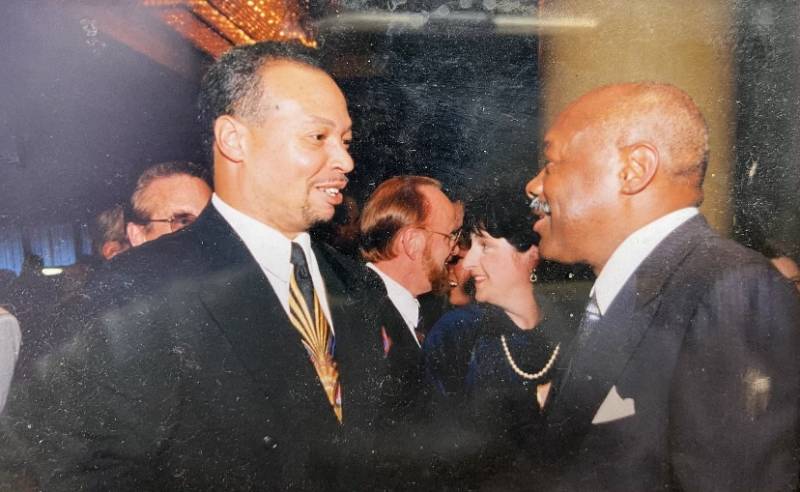
"caption": "Art Shanks II (left) and former San Francisco Mayor Willie Brown (right) exchange pleasantries. ",
"credit": "Courtesy of Art Shanks III",
"altTag": "A candid photo of two men in suits engaging in conversation.",
"description": null,
"imgSizes": {
"medium": {
"file": "https://cdn.kqed.org/wp-content/uploads/sites/2/2025/02/Art-Shanks-II-and-Willie-Brown-800x492.jpg",
"width": 800,
"height": 492,
"mimeType": "image/jpeg"
},
"thumbnail": {
"file": "https://cdn.kqed.org/wp-content/uploads/sites/2/2025/02/Art-Shanks-II-and-Willie-Brown-160x98.jpg",
"width": 160,
"height": 98,
"mimeType": "image/jpeg"
},
"medium_large": {
"file": "https://cdn.kqed.org/wp-content/uploads/sites/2/2025/02/Art-Shanks-II-and-Willie-Brown-768x472.jpg",
"width": 768,
"height": 472,
"mimeType": "image/jpeg"
},
"post-thumbnail": {
"file": "https://cdn.kqed.org/wp-content/uploads/sites/2/2025/02/Art-Shanks-II-and-Willie-Brown-672x372.jpg",
"width": 672,
"height": 372,
"mimeType": "image/jpeg"
},
"kqedFullSize": {
"file": "https://cdn.kqed.org/wp-content/uploads/sites/2/2025/02/Art-Shanks-II-and-Willie-Brown.jpg",
"width": 828,
"height": 509
}
},
"isLoading": false,
"fetchFailed": false
},
"arts_13972335": {
"type": "attachments",
"id": "arts_13972335",
"meta": {
"index": "attachments_1716263798",
"site": "arts",
"id": "13972335",
"found": true
},
"title": "Ella.Verve",
"publishDate": 1740584773,
"status": "inherit",
"parent": 13972330,
"modified": 1740584798,
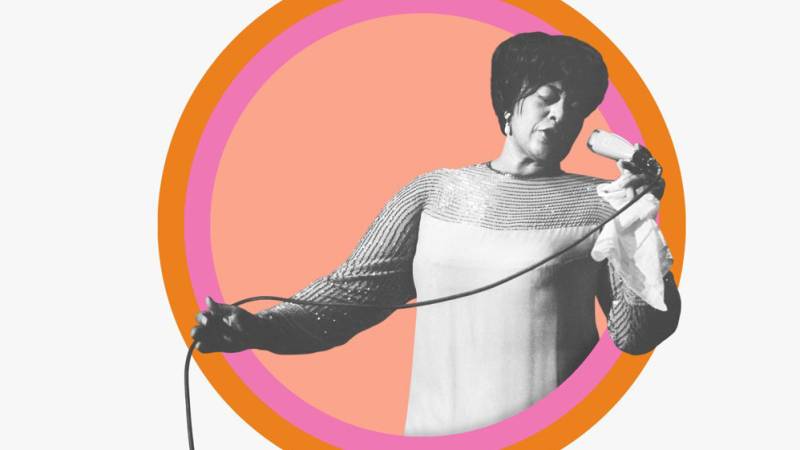
"caption": "‘The Moment of Truth: Ella at the Coliseum’ was recorded at the Oakland Arena in 1967.",
"credit": "Verve Records / Universal Music Group",
"altTag": null,
"description": null,
"imgSizes": {
"medium": {
"file": "https://cdn.kqed.org/wp-content/uploads/sites/2/2025/02/Ella.Verve_-800x450.jpg",
"width": 800,
"height": 450,
"mimeType": "image/jpeg"
},
"thumbnail": {
"file": "https://cdn.kqed.org/wp-content/uploads/sites/2/2025/02/Ella.Verve_-160x90.jpg",
"width": 160,
"height": 90,
"mimeType": "image/jpeg"
},
"medium_large": {
"file": "https://cdn.kqed.org/wp-content/uploads/sites/2/2025/02/Ella.Verve_-768x432.jpg",
"width": 768,
"height": 432,
"mimeType": "image/jpeg"
},
"post-thumbnail": {
"file": "https://cdn.kqed.org/wp-content/uploads/sites/2/2025/02/Ella.Verve_-672x372.jpg",
"width": 672,
"height": 372,
"mimeType": "image/jpeg"
},
"kqedFullSize": {
"file": "https://cdn.kqed.org/wp-content/uploads/sites/2/2025/02/Ella.Verve_.jpg",
"width": 998,
"height": 561
}
},
"isLoading": false,
"fetchFailed": false
},
"arts_13972138": {
"type": "attachments",
"id": "arts_13972138",
"meta": {
"index": "attachments_1716263798",
"site": "arts",
"id": "13972138",
"found": true
},
"title": "raised by ghosts - spread",
"publishDate": 1740099272,
"status": "inherit",
"parent": 13972135,
"modified": 1740099368,
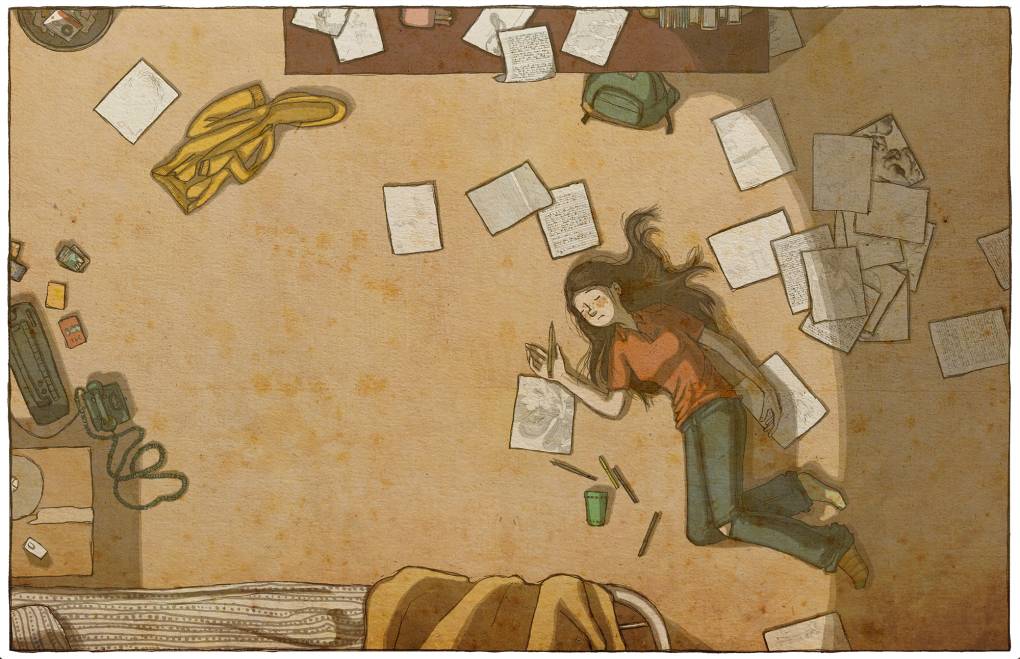
"caption": "A spread from Briana Loewinsohn's new graphic memoir, 'Raised by Ghosts.'",
"credit": "Fantagraphics",
"altTag": "Illustration: teenage girl sprawls on the floor of her bedroom surrounded by sketches and handwritten notes",
"description": null,
"imgSizes": {
"medium": {
"file": "https://cdn.kqed.org/wp-content/uploads/sites/2/2025/02/raised-by-ghosts-spread-800x517.jpg",
"width": 800,
"height": 517,
"mimeType": "image/jpeg"
},
"large": {
"file": "https://cdn.kqed.org/wp-content/uploads/sites/2/2025/02/raised-by-ghosts-spread-1020x659.jpg",
"width": 1020,
"height": 659,
"mimeType": "image/jpeg"
},
"thumbnail": {
"file": "https://cdn.kqed.org/wp-content/uploads/sites/2/2025/02/raised-by-ghosts-spread-160x103.jpg",
"width": 160,
"height": 103,
"mimeType": "image/jpeg"
},
"medium_large": {
"file": "https://cdn.kqed.org/wp-content/uploads/sites/2/2025/02/raised-by-ghosts-spread-768x497.jpg",
"width": 768,
"height": 497,
"mimeType": "image/jpeg"
},
"1536x1536": {
"file": "https://cdn.kqed.org/wp-content/uploads/sites/2/2025/02/raised-by-ghosts-spread-1536x993.jpg",
"width": 1536,
"height": 993,
"mimeType": "image/jpeg"
},
"post-thumbnail": {
"file": "https://cdn.kqed.org/wp-content/uploads/sites/2/2025/02/raised-by-ghosts-spread-672x372.jpg",
"width": 672,
"height": 372,
"mimeType": "image/jpeg"
},
"twentyfourteen-full-width": {
"file": "https://cdn.kqed.org/wp-content/uploads/sites/2/2025/02/raised-by-ghosts-spread-1038x576.jpg",
"width": 1038,
"height": 576,
"mimeType": "image/jpeg"
},
"full-width": {
"file": "https://cdn.kqed.org/wp-content/uploads/sites/2/2025/02/raised-by-ghosts-spread-1920x1241.jpg",
"width": 1920,
"height": 1241,
"mimeType": "image/jpeg"
},
"kqedFullSize": {
"file": "https://cdn.kqed.org/wp-content/uploads/sites/2/2025/02/raised-by-ghosts-spread.jpg",
"width": 2000,
"height": 1293
}
},
"isLoading": false,
"fetchFailed": false
},
"arts_13972037": {
"type": "attachments",
"id": "arts_13972037",
"meta": {
"index": "attachments_1716263798",
"site": "arts",
"id": "13972037",
"found": true
},
"title": "freaky-tales-movies-about-01",
"publishDate": 1739920960,
"status": "inherit",
"parent": 13972017,
"modified": 1739921049,
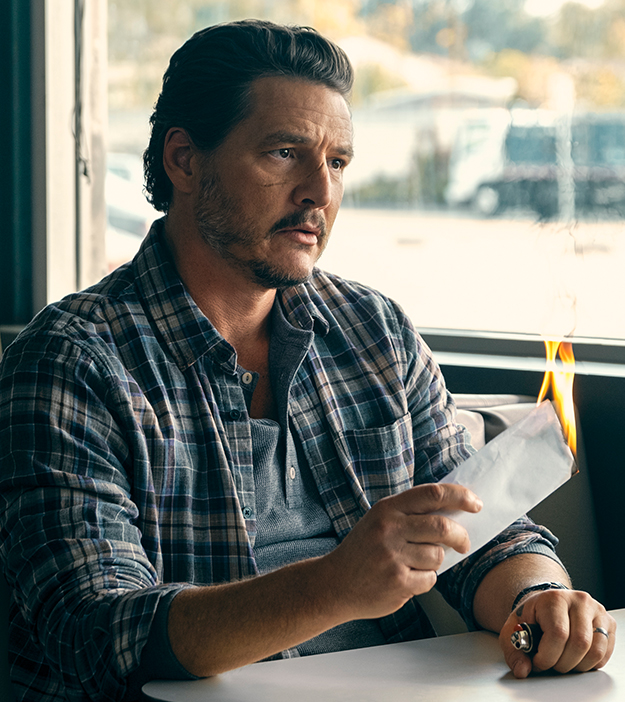
"caption": "Pedro Pascal stars in 'Freaky Tales,' which takes place in Oakland in 1987.",
"credit": "Courtesy of Lionsgate Films",
"altTag": "Actor Pedro Pascal holds a burning piece of paper while seated inside a diner.",
"description": null,
"imgSizes": {
"thumbnail": {
"file": "https://cdn.kqed.org/wp-content/uploads/sites/2/2025/02/freaky-tales-movies-about-01-160x180.jpg",
"width": 160,
"height": 180,
"mimeType": "image/jpeg"
},
"post-thumbnail": {
"file": "https://cdn.kqed.org/wp-content/uploads/sites/2/2025/02/freaky-tales-movies-about-01-625x372.jpg",
"width": 625,
"height": 372,
"mimeType": "image/jpeg"
},
"twentyfourteen-full-width": {
"file": "https://cdn.kqed.org/wp-content/uploads/sites/2/2025/02/freaky-tales-movies-about-01-625x576.jpg",
"width": 625,
"height": 576,
"mimeType": "image/jpeg"
},
"kqedFullSize": {
"file": "https://cdn.kqed.org/wp-content/uploads/sites/2/2025/02/freaky-tales-movies-about-01.jpg",
"width": 625,
"height": 702
}
},
"isLoading": false,
"fetchFailed": false
},
"arts_13875763": {
"type": "attachments",
"id": "arts_13875763",
"meta": {
"index": "attachments_1716263798",
"site": "arts",
"id": "13875763",
"found": true
},
"title": "Raphael Saadiq headlines the Fox Theater in Oakland on Friday, Feb. 28.",
"publishDate": 1583132809,
"status": "inherit",
"parent": 0,
"modified": 1739917998,
"caption": "Raphael Saadiq headlines the Fox Theater in Oakland on Feb. 28, 2020.",
"credit": "Estefany Gonzalez for KQED",
"altTag": null,
"description": " Raphael Saadiq headlines the Fox Theater in Oakland on Friday, Feb. 28.",
"imgSizes": {
"thumbnail": {
"file": "https://cdn.kqed.org/wp-content/uploads/sites/2/2020/03/D7A7482-160x107.jpg",
"width": 160,
"height": 107,
"mimeType": "image/jpeg"
},
"medium": {
"file": "https://cdn.kqed.org/wp-content/uploads/sites/2/2020/03/D7A7482-800x533.jpg",
"width": 800,
"height": 533,
"mimeType": "image/jpeg"
},
"medium_large": {
"file": "https://cdn.kqed.org/wp-content/uploads/sites/2/2020/03/D7A7482-768x512.jpg",
"width": 768,
"height": 512,
"mimeType": "image/jpeg"
},
"post-thumbnail": {
"file": "https://cdn.kqed.org/wp-content/uploads/sites/2/2020/03/D7A7482-672x372.jpg",
"width": 672,
"height": 372,
"mimeType": "image/jpeg"
},
"kqedFullSize": {
"file": "https://cdn.kqed.org/wp-content/uploads/sites/2/2020/03/D7A7482.jpg",
"width": 800,
"height": 533
}
},
"isLoading": false,
"fetchFailed": false
},
"arts_13971999": {
"type": "attachments",
"id": "arts_13971999",
"meta": {
"index": "attachments_1716263798",
"site": "arts",
"id": "13971999",
"found": true
},
"title": "Black Planter Party.",
"publishDate": 1739903985,
"status": "inherit",
"parent": 13971945,
"modified": 1739906131,
"caption": "Black Planter Party.",
"credit": "Dear Stephan",
"altTag": "Illustrated image of a man in a wicker chair wearing black attire, surrounded by plants.",
"description": "Black Planter Party.",
"imgSizes": {
"medium": {
"file": "https://cdn.kqed.org/wp-content/uploads/sites/2/2025/02/slack-imgs-800x450.jpg",
"width": 800,
"height": 450,
"mimeType": "image/jpeg"
},
"large": {
"file": "https://cdn.kqed.org/wp-content/uploads/sites/2/2025/02/slack-imgs-1020x574.jpg",
"width": 1020,
"height": 574,
"mimeType": "image/jpeg"
},
"thumbnail": {
"file": "https://cdn.kqed.org/wp-content/uploads/sites/2/2025/02/slack-imgs-160x90.jpg",
"width": 160,
"height": 90,
"mimeType": "image/jpeg"
},
"medium_large": {
"file": "https://cdn.kqed.org/wp-content/uploads/sites/2/2025/02/slack-imgs-768x432.jpg",
"width": 768,
"height": 432,
"mimeType": "image/jpeg"
},
"1536x1536": {
"file": "https://cdn.kqed.org/wp-content/uploads/sites/2/2025/02/slack-imgs-1536x864.jpg",
"width": 1536,
"height": 864,
"mimeType": "image/jpeg"
},
"post-thumbnail": {
"file": "https://cdn.kqed.org/wp-content/uploads/sites/2/2025/02/slack-imgs-672x372.jpg",
"width": 672,
"height": 372,
"mimeType": "image/jpeg"
},
"twentyfourteen-full-width": {
"file": "https://cdn.kqed.org/wp-content/uploads/sites/2/2025/02/slack-imgs-1038x576.jpg",
"width": 1038,
"height": 576,
"mimeType": "image/jpeg"
},
"kqedFullSize": {
"file": "https://cdn.kqed.org/wp-content/uploads/sites/2/2025/02/slack-imgs.jpg",
"width": 1920,
"height": 1080
}
},
"isLoading": false,
"fetchFailed": false
},
"arts_13971878": {
"type": "attachments",
"id": "arts_13971878",
"meta": {
"index": "attachments_1716263798",
"site": "arts",
"id": "13971878",
"found": true
},
"title": "quentin.MAIN",
"publishDate": 1739475080,
"status": "inherit",
"parent": 13971701,
"modified": 1739475136,
"caption": "Former standout NCAA mens basketball player Quentin Thomas in his first year as a coach at the College of Alameda. ",
"credit": "Pendarvis Harshaw/KQED",
"altTag": "A Black man in a blue hoodie and beard looks at the camera with a basketball hoop and court in the background",
"description": null,
"imgSizes": {
"medium": {
"file": "https://cdn.kqed.org/wp-content/uploads/sites/2/2025/02/quentin.MAIN_-800x535.jpg",
"width": 800,
"height": 535,
"mimeType": "image/jpeg"
},
"large": {
"file": "https://cdn.kqed.org/wp-content/uploads/sites/2/2025/02/quentin.MAIN_-1020x682.jpg",
"width": 1020,
"height": 682,
"mimeType": "image/jpeg"
},
"thumbnail": {
"file": "https://cdn.kqed.org/wp-content/uploads/sites/2/2025/02/quentin.MAIN_-160x107.jpg",
"width": 160,
"height": 107,
"mimeType": "image/jpeg"
},
"medium_large": {
"file": "https://cdn.kqed.org/wp-content/uploads/sites/2/2025/02/quentin.MAIN_-768x513.jpg",
"width": 768,
"height": 513,
"mimeType": "image/jpeg"
},
"1536x1536": {
"file": "https://cdn.kqed.org/wp-content/uploads/sites/2/2025/02/quentin.MAIN_-1536x1027.jpg",
"width": 1536,
"height": 1027,
"mimeType": "image/jpeg"
},
"post-thumbnail": {
"file": "https://cdn.kqed.org/wp-content/uploads/sites/2/2025/02/quentin.MAIN_-672x372.jpg",
"width": 672,
"height": 372,
"mimeType": "image/jpeg"
},
"twentyfourteen-full-width": {
"file": "https://cdn.kqed.org/wp-content/uploads/sites/2/2025/02/quentin.MAIN_-1038x576.jpg",
"width": 1038,
"height": 576,
"mimeType": "image/jpeg"
},
"kqedFullSize": {
"file": "https://cdn.kqed.org/wp-content/uploads/sites/2/2025/02/quentin.MAIN_.jpg",
"width": 1616,
"height": 1080
}
},
"isLoading": false,
"fetchFailed": false
},
"arts_13971706": {
"type": "attachments",
"id": "arts_13971706",
"meta": {
"index": "attachments_1716263798",
"site": "arts",
"id": "13971706",
"found": true
},
"title": "Ceremony",
"publishDate": 1739310283,
"status": "inherit",
"parent": 13971683,
"modified": 1739310532,
"caption": "The stage and dance floor at Ceremony, a new 1,000-capacity music hall in downtown Oakland, as seen from the venue's mezzanine. ",
"credit": "Courtesy of Ceremony",
"altTag": "Purple lights shine down in focused streaks on a stage and floor tinged with stage fog.",
"description": null,
"imgSizes": {
"medium": {
"file": "https://cdn.kqed.org/wp-content/uploads/sites/2/2025/02/Ceremony-800x450.jpg",
"width": 800,
"height": 450,
"mimeType": "image/jpeg"
},
"large": {
"file": "https://cdn.kqed.org/wp-content/uploads/sites/2/2025/02/Ceremony-1020x574.jpg",
"width": 1020,
"height": 574,
"mimeType": "image/jpeg"
},
"thumbnail": {
"file": "https://cdn.kqed.org/wp-content/uploads/sites/2/2025/02/Ceremony-160x90.jpg",
"width": 160,
"height": 90,
"mimeType": "image/jpeg"
},
"medium_large": {
"file": "https://cdn.kqed.org/wp-content/uploads/sites/2/2025/02/Ceremony-768x432.jpg",
"width": 768,
"height": 432,
"mimeType": "image/jpeg"
},
"1536x1536": {
"file": "https://cdn.kqed.org/wp-content/uploads/sites/2/2025/02/Ceremony-1536x864.jpg",
"width": 1536,
"height": 864,
"mimeType": "image/jpeg"
},
"post-thumbnail": {
"file": "https://cdn.kqed.org/wp-content/uploads/sites/2/2025/02/Ceremony-672x372.jpg",
"width": 672,
"height": 372,
"mimeType": "image/jpeg"
},
"twentyfourteen-full-width": {
"file": "https://cdn.kqed.org/wp-content/uploads/sites/2/2025/02/Ceremony-1038x576.jpg",
"width": 1038,
"height": 576,
"mimeType": "image/jpeg"
},
"full-width": {
"file": "https://cdn.kqed.org/wp-content/uploads/sites/2/2025/02/Ceremony-1920x1080.jpg",
"width": 1920,
"height": 1080,
"mimeType": "image/jpeg"
},
"kqedFullSize": {
"file": "https://cdn.kqed.org/wp-content/uploads/sites/2/2025/02/Ceremony.jpg",
"width": 2000,
"height": 1125
}
},
"isLoading": false,
"fetchFailed": false
},
"arts_13971648": {
"type": "attachments",
"id": "arts_13971648",
"meta": {
"index": "attachments_1716263798",
"site": "arts",
"id": "13971648",
"found": true
},
"title": "Screenshot 2025-02-10 at 10.08.57 AM",
"publishDate": 1739220488,
"status": "inherit",
"parent": 13971637,
"modified": 1739220654,
"caption": "Dancers from Oakland's Turf Feinz joined Kendrick Lamar in New Orleans for his Super Bowl halftime performance on Feb. 9, 2025. ",
"credit": "NFL/YouTube",
"altTag": "A group of dancers in white T-shirts and gold teeth pose behind Kendrick Lamar as he raps.",
"description": null,
"imgSizes": {
"medium": {
"file": "https://cdn.kqed.org/wp-content/uploads/sites/2/2025/02/Screenshot-2025-02-10-at-10.08.57 AM-800x450.png",
"width": 800,
"height": 450,
"mimeType": "image/png"
},
"large": {
"file": "https://cdn.kqed.org/wp-content/uploads/sites/2/2025/02/Screenshot-2025-02-10-at-10.08.57 AM-1020x574.png",
"width": 1020,
"height": 574,
"mimeType": "image/png"
},
"thumbnail": {
"file": "https://cdn.kqed.org/wp-content/uploads/sites/2/2025/02/Screenshot-2025-02-10-at-10.08.57 AM-160x90.png",
"width": 160,
"height": 90,
"mimeType": "image/png"
},
"medium_large": {
"file": "https://cdn.kqed.org/wp-content/uploads/sites/2/2025/02/Screenshot-2025-02-10-at-10.08.57 AM-768x432.png",
"width": 768,
"height": 432,
"mimeType": "image/png"
},
"1536x1536": {
"file": "https://cdn.kqed.org/wp-content/uploads/sites/2/2025/02/Screenshot-2025-02-10-at-10.08.57 AM-1536x864.png",
"width": 1536,
"height": 864,
"mimeType": "image/png"
},
"post-thumbnail": {
"file": "https://cdn.kqed.org/wp-content/uploads/sites/2/2025/02/Screenshot-2025-02-10-at-10.08.57 AM-672x372.png",
"width": 672,
"height": 372,
"mimeType": "image/png"
},
"twentyfourteen-full-width": {
"file": "https://cdn.kqed.org/wp-content/uploads/sites/2/2025/02/Screenshot-2025-02-10-at-10.08.57 AM-1038x576.png",
"width": 1038,
"height": 576,
"mimeType": "image/png"
},
"full-width": {
"file": "https://cdn.kqed.org/wp-content/uploads/sites/2/2025/02/Screenshot-2025-02-10-at-10.08.57 AM-1920x1080.png",
"width": 1920,
"height": 1080,
"mimeType": "image/png"
},
"kqedFullSize": {
"file": "https://cdn.kqed.org/wp-content/uploads/sites/2/2025/02/Screenshot-2025-02-10-at-10.08.57 AM.png",
"width": 2000,
"height": 1125
}
},
"isLoading": false,
"fetchFailed": false
},
"arts_13971590": {
"type": "attachments",
"id": "arts_13971590",
"meta": {
"index": "attachments_1716263798",
"site": "arts",
"id": "13971590",
"found": true
},
"title": null,
"publishDate": 1739196558,
"status": "inherit",
"parent": 13971589,
"modified": 1739218493,
"caption": "People gather at a Black Panther Party-run sickle cell anemia testing site at Greenman Field in Oakland on March 31, 1972. ",
"credit": "Stephen Shames",
"altTag": "A black and white archival photo of a large group of African-American people gathered outside, behind them a sign reads \"sickle cell anemia testing.\"",
"description": null,
"imgSizes": {
"medium": {
"file": "https://cdn.kqed.org/wp-content/uploads/sites/2/2025/02/fgD1zByP-800x537.jpg",
"width": 800,
"height": 537,
"mimeType": "image/jpeg"
},
"large": {
"file": "https://cdn.kqed.org/wp-content/uploads/sites/2/2025/02/fgD1zByP-1020x685.jpg",
"width": 1020,
"height": 685,
"mimeType": "image/jpeg"
},
"thumbnail": {
"file": "https://cdn.kqed.org/wp-content/uploads/sites/2/2025/02/fgD1zByP-160x107.jpg",
"width": 160,
"height": 107,
"mimeType": "image/jpeg"
},
"medium_large": {
"file": "https://cdn.kqed.org/wp-content/uploads/sites/2/2025/02/fgD1zByP-768x516.jpg",
"width": 768,
"height": 516,
"mimeType": "image/jpeg"
},
"1536x1536": {
"file": "https://cdn.kqed.org/wp-content/uploads/sites/2/2025/02/fgD1zByP-1536x1031.jpg",
"width": 1536,
"height": 1031,
"mimeType": "image/jpeg"
},
"2048x2048": {
"file": "https://cdn.kqed.org/wp-content/uploads/sites/2/2025/02/fgD1zByP-2048x1375.jpg",
"width": 2048,
"height": 1375,
"mimeType": "image/jpeg"
},
"post-thumbnail": {
"file": "https://cdn.kqed.org/wp-content/uploads/sites/2/2025/02/fgD1zByP-672x372.jpg",
"width": 672,
"height": 372,
"mimeType": "image/jpeg"
},
"twentyfourteen-full-width": {
"file": "https://cdn.kqed.org/wp-content/uploads/sites/2/2025/02/fgD1zByP-1038x576.jpg",
"width": 1038,
"height": 576,
"mimeType": "image/jpeg"
},
"full-width": {
"file": "https://cdn.kqed.org/wp-content/uploads/sites/2/2025/02/fgD1zByP-1920x1289.jpg",
"width": 1920,
"height": 1289,
"mimeType": "image/jpeg"
},
"kqedFullSize": {
"file": "https://cdn.kqed.org/wp-content/uploads/sites/2/2025/02/fgD1zByP-scaled.jpg",
"width": 2560,
"height": 1719
}
},
"isLoading": false,
"fetchFailed": false
},
"arts_13971483": {
"type": "attachments",
"id": "arts_13971483",
"meta": {
"index": "attachments_1716263798",
"site": "arts",
"id": "13971483",
"found": true
},
"title": "g-eazy cropped",
"publishDate": 1738869744,
"status": "inherit",
"parent": 0,
"modified": 1738873147,
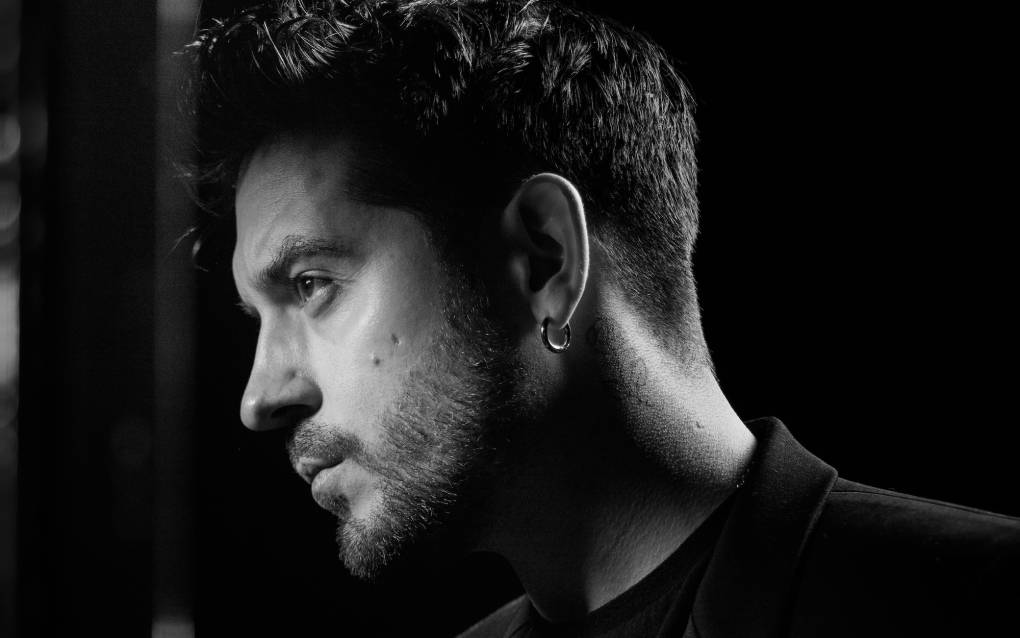
"caption": "G-Eazy writes about the highs and lows of love from a place of introspection on his new album, 'Helium.'",
"credit": "Bobby Bruderle",
"altTag": "A black-and-white portrait of G-Eazy gazing looking into the distance.",
"description": null,
"imgSizes": {
"medium": {
"file": "https://cdn.kqed.org/wp-content/uploads/sites/2/2025/02/g-eazy-cropped-800x500.jpg",
"width": 800,
"height": 500,
"mimeType": "image/jpeg"
},
"large": {
"file": "https://cdn.kqed.org/wp-content/uploads/sites/2/2025/02/g-eazy-cropped-1020x638.jpg",
"width": 1020,
"height": 638,
"mimeType": "image/jpeg"
},
"thumbnail": {
"file": "https://cdn.kqed.org/wp-content/uploads/sites/2/2025/02/g-eazy-cropped-160x100.jpg",
"width": 160,
"height": 100,
"mimeType": "image/jpeg"
},
"medium_large": {
"file": "https://cdn.kqed.org/wp-content/uploads/sites/2/2025/02/g-eazy-cropped-768x480.jpg",
"width": 768,
"height": 480,
"mimeType": "image/jpeg"
},
"1536x1536": {
"file": "https://cdn.kqed.org/wp-content/uploads/sites/2/2025/02/g-eazy-cropped-1536x960.jpg",
"width": 1536,
"height": 960,
"mimeType": "image/jpeg"
},
"post-thumbnail": {
"file": "https://cdn.kqed.org/wp-content/uploads/sites/2/2025/02/g-eazy-cropped-672x372.jpg",
"width": 672,
"height": 372,
"mimeType": "image/jpeg"
},
"twentyfourteen-full-width": {
"file": "https://cdn.kqed.org/wp-content/uploads/sites/2/2025/02/g-eazy-cropped-1038x576.jpg",
"width": 1038,
"height": 576,
"mimeType": "image/jpeg"
},
"full-width": {
"file": "https://cdn.kqed.org/wp-content/uploads/sites/2/2025/02/g-eazy-cropped-1920x1200.jpg",
"width": 1920,
"height": 1200,
"mimeType": "image/jpeg"
},
"kqedFullSize": {
"file": "https://cdn.kqed.org/wp-content/uploads/sites/2/2025/02/g-eazy-cropped.jpg",
"width": 2000,
"height": 1250
}
},
"isLoading": false,
"fetchFailed": false
},
"arts_13971469": {
"type": "attachments",
"id": "arts_13971469",
"meta": {
"index": "attachments_1716263798",
"site": "arts",
"id": "13971469",
"found": true
},
"title": "A Capella-1046",
"publishDate": 1738859882,
"status": "inherit",
"parent": 13971466,
"modified": 1738860045,
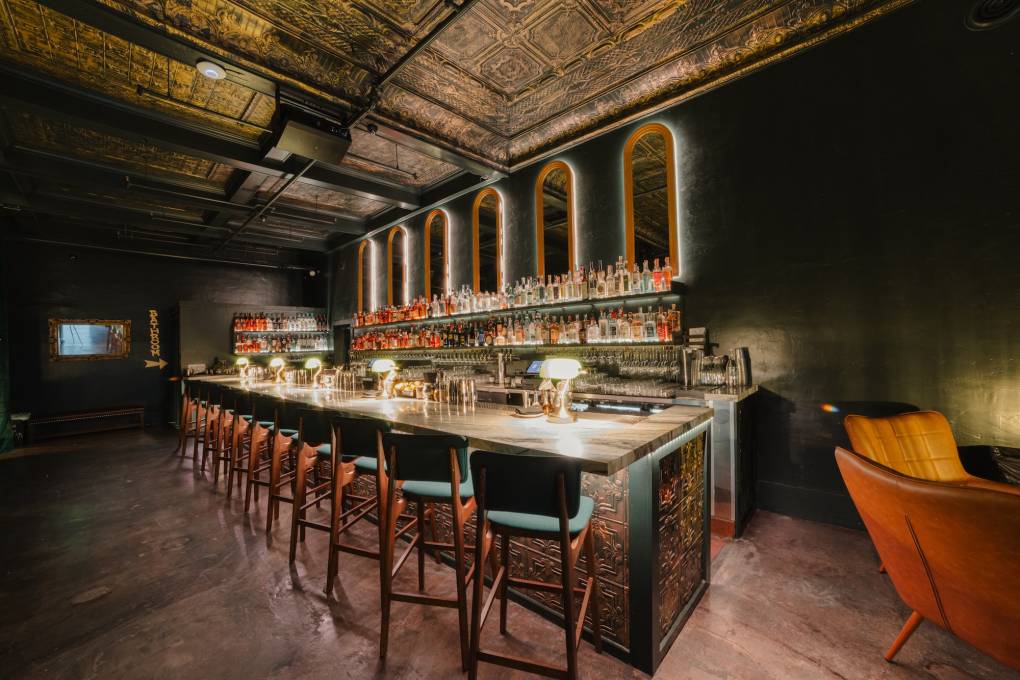
"caption": "A Capella opened its downstairs for food and cocktail service. Its upstairs ballroom and smaller side room will open for live music after their remodel is complete. ",
"credit": "Corey Agopian",
"altTag": "A view of a dimly lit bar with crown molding on the ceiling, velvet chairs and mid-century design accents.",
"description": null,
"imgSizes": {
"medium": {
"file": "https://cdn.kqed.org/wp-content/uploads/sites/2/2025/02/A-Capella-1046-800x534.jpg",
"width": 800,
"height": 534,
"mimeType": "image/jpeg"
},
"large": {
"file": "https://cdn.kqed.org/wp-content/uploads/sites/2/2025/02/A-Capella-1046-1020x680.jpg",
"width": 1020,
"height": 680,
"mimeType": "image/jpeg"
},
"thumbnail": {
"file": "https://cdn.kqed.org/wp-content/uploads/sites/2/2025/02/A-Capella-1046-160x107.jpg",
"width": 160,
"height": 107,
"mimeType": "image/jpeg"
},
"medium_large": {
"file": "https://cdn.kqed.org/wp-content/uploads/sites/2/2025/02/A-Capella-1046-768x512.jpg",
"width": 768,
"height": 512,
"mimeType": "image/jpeg"
},
"1536x1536": {
"file": "https://cdn.kqed.org/wp-content/uploads/sites/2/2025/02/A-Capella-1046-1536x1025.jpg",
"width": 1536,
"height": 1025,
"mimeType": "image/jpeg"
},
"post-thumbnail": {
"file": "https://cdn.kqed.org/wp-content/uploads/sites/2/2025/02/A-Capella-1046-672x372.jpg",
"width": 672,
"height": 372,
"mimeType": "image/jpeg"
},
"twentyfourteen-full-width": {
"file": "https://cdn.kqed.org/wp-content/uploads/sites/2/2025/02/A-Capella-1046-1038x576.jpg",
"width": 1038,
"height": 576,
"mimeType": "image/jpeg"
},
"full-width": {
"file": "https://cdn.kqed.org/wp-content/uploads/sites/2/2025/02/A-Capella-1046-1920x1281.jpg",
"width": 1920,
"height": 1281,
"mimeType": "image/jpeg"
},
"kqedFullSize": {
"file": "https://cdn.kqed.org/wp-content/uploads/sites/2/2025/02/A-Capella-1046.jpg",
"width": 2000,
"height": 1334
}
},
"isLoading": false,
"fetchFailed": false
}
},
"audioPlayerReducer": {
"postId": "stream_live",
"isPaused": true,
"isPlaying": false,
"pfsActive": false,
"pledgeModalIsOpen": true,
"playerDrawerIsOpen": false,
"liveAudioPlayStartedAt": 0,
"liveAudioPlayContext": ""
},
"authorsReducer": {
"byline_arts_13972330": {
"type": "authors",
"id": "byline_arts_13972330",
"meta": {
"override": true
},
"slug": "byline_arts_13972330",
"name": "Steven Wine, Associated Press",
"isLoading": false
},
"gmeline": {
"type": "authors",
"id": "185",
"meta": {
"index": "authors_1716337520",
"id": "185",
"found": true
},
"name": "Gabe Meline",
"firstName": "Gabe",
"lastName": "Meline",
"slug": "gmeline",
"email": "gmeline@kqed.org",
"display_author_email": true,
"staff_mastheads": [
"arts"
],
"title": "Senior Editor, KQED Arts & Culture",
"bio": "Gabe Meline entered journalism at age 15 making photocopied zines, and has since earned awards from the Edward R. Murrow Awards, the Society for Professional Journalists, the Online Journalism Awards, the Association of Alternative Newsweeklies and the California Newspaper Publishers Association. Prior to KQED, he was the editor of the \u003cem>North Bay Bohemian\u003c/em> and a touring musician. He lives with his wife and daughter in his hometown of Santa Rosa, CA.",
"avatar": "https://secure.gravatar.com/avatar/5bebe57be0d8bc2dd318934feb47299e2d2d10cba28d09d8d7afb389a2ce2bdd?s=600&d=blank&r=g",
"twitter": null,
"bluesky": null,
"facebook": null,
"instagram": null,
"linkedin": null,
"sites": [
{
"site": "",
"roles": [
"editor"
]
},
{
"site": "arts",
"roles": [
"administrator"
]
},
{
"site": "artschool",
"roles": [
"editor"
]
},
{
"site": "news",
"roles": [
"author"
]
},
{
"site": "pop",
"roles": [
"editor"
]
},
{
"site": "bayareabites",
"roles": [
"editor"
]
},
{
"site": "food",
"roles": [
"editor"
]
},
{
"site": "liveblog",
"roles": [
"editor"
]
},
{
"site": "hiphop",
"roles": [
"editor"
]
}
],
"headData": {
"title": "Gabe Meline | KQED",
"description": "Senior Editor, KQED Arts & Culture",
"ogImgSrc": "https://secure.gravatar.com/avatar/5bebe57be0d8bc2dd318934feb47299e2d2d10cba28d09d8d7afb389a2ce2bdd?s=600&d=blank&r=g",
"twImgSrc": "https://secure.gravatar.com/avatar/5bebe57be0d8bc2dd318934feb47299e2d2d10cba28d09d8d7afb389a2ce2bdd?s=600&d=blank&r=g"
},
"isLoading": false,
"link": "/author/gmeline"
},
"nvoynovskaya": {
"type": "authors",
"id": "11387",
"meta": {
"index": "authors_1716337520",
"id": "11387",
"found": true
},
"name": "Nastia Voynovskaya",
"firstName": "Nastia",
"lastName": "Voynovskaya",
"slug": "nvoynovskaya",
"email": "nvoynovskaya@kqed.org",
"display_author_email": false,
"staff_mastheads": [
"arts"
],
"title": "Editor and reporter",
"bio": "Nastia Voynovskaya is a reporter and editor at KQED Arts & Culture. She's been covering the arts in the Bay Area for over a decade, with a focus on music, queer culture, labor issues and grassroots organizing. She has edited KQED story series such as Trans Bay: A History of San Francisco's Gender-Diverse Community, and co-created KQED's Bay Area hip-hop history project, That's My Word. Nastia's work has been recognized by the Society of Professional Journalists and San Francisco Press Club. She holds a BA in comparative literature from UC Berkeley.",
"avatar": "https://secure.gravatar.com/avatar/5025ee460e5a85d69ca20ea6c6f2f80d7e17795c828f61ea3aecfcd924e9042e?s=600&d=blank&r=g",
"twitter": null,
"bluesky": null,
"facebook": null,
"instagram": "https://www.instagram.com/nananastia/",
"linkedin": null,
"sites": [
{
"site": "arts",
"roles": [
"administrator"
]
},
{
"site": "news",
"roles": [
"editor"
]
},
{
"site": "pop",
"roles": [
"administrator"
]
},
{
"site": "bayareabites",
"roles": [
"editor"
]
},
{
"site": "podcasts",
"roles": [
"editor"
]
},
{
"site": "hiphop",
"roles": [
"editor"
]
}
],
"headData": {
"title": "Nastia Voynovskaya | KQED",
"description": "Editor and reporter",
"ogImgSrc": "https://secure.gravatar.com/avatar/5025ee460e5a85d69ca20ea6c6f2f80d7e17795c828f61ea3aecfcd924e9042e?s=600&d=blank&r=g",
"twImgSrc": "https://secure.gravatar.com/avatar/5025ee460e5a85d69ca20ea6c6f2f80d7e17795c828f61ea3aecfcd924e9042e?s=600&d=blank&r=g"
},
"isLoading": false,
"link": "/author/nvoynovskaya"
},
"ogpenn": {
"type": "authors",
"id": "11491",
"meta": {
"index": "authors_1716337520",
"id": "11491",
"found": true
},
"name": "Pendarvis Harshaw",
"firstName": "Pendarvis",
"lastName": "Harshaw",
"slug": "ogpenn",
"email": "ogpenn@gmail.com",
"display_author_email": false,
"staff_mastheads": [
"arts"
],
"title": "Community Engagement Reporter",
"bio": "Pendarvis Harshaw is an educator, host and writer with KQED Arts.",
"avatar": "https://secure.gravatar.com/avatar/972b77ee8e3f346ae2b00622661187fbfabd059b5693bbdc1475ea7a722fd4cd?s=600&d=blank&r=g",
"twitter": null,
"bluesky": null,
"facebook": null,
"instagram": "ogpenn",
"linkedin": null,
"sites": [
{
"site": "arts",
"roles": [
"administrator"
]
},
{
"site": "news",
"roles": [
"editor"
]
},
{
"site": "bayareabites",
"roles": [
"author"
]
},
{
"site": "hiphop",
"roles": [
"editor"
]
}
],
"headData": {
"title": "Pendarvis Harshaw | KQED",
"description": "Community Engagement Reporter",
"ogImgSrc": "https://secure.gravatar.com/avatar/972b77ee8e3f346ae2b00622661187fbfabd059b5693bbdc1475ea7a722fd4cd?s=600&d=blank&r=g",
"twImgSrc": "https://secure.gravatar.com/avatar/972b77ee8e3f346ae2b00622661187fbfabd059b5693bbdc1475ea7a722fd4cd?s=600&d=blank&r=g"
},
"isLoading": false,
"link": "/author/ogpenn"
},
"ltsai": {
"type": "authors",
"id": "11743",
"meta": {
"index": "authors_1716337520",
"id": "11743",
"found": true
},
"name": "Luke Tsai",
"firstName": "Luke",
"lastName": "Tsai",
"slug": "ltsai",
"email": "ltsai@kqed.org",
"display_author_email": true,
"staff_mastheads": [
"arts"
],
"title": "Food Editor",
"bio": "Luke Tsai is KQED's food editor and resident stinky tofu connoisseur. Prior to KQED, he was an editor at Eater SF, \u003cem>San Francisco \u003c/em>magazine, and the \u003cem>East Bay Express\u003c/em>, and his work has also appeared in TASTE, the \u003cem>San Francisco Chronicle\u003c/em>, and the \u003cem>Best Food Writing\u003c/em> anthology. When he isn't writing or editing, you'll find him eating most everything he can get his hands on.",
"avatar": "https://secure.gravatar.com/avatar/1e59b45bf191526e7339d6ba46e33a57b2030d25c27660ecc64ea3cb863e34f7?s=600&d=blank&r=g",
"twitter": "theluketsai",
"bluesky": null,
"facebook": null,
"instagram": null,
"linkedin": null,
"sites": [
{
"site": "",
"roles": [
"editor"
]
},
{
"site": "arts",
"roles": [
"administrator"
]
},
{
"site": "news",
"roles": [
"editor",
"contributor"
]
},
{
"site": "bayareabites",
"roles": [
"editor"
]
},
{
"site": "food",
"roles": [
"editor"
]
}
],
"headData": {
"title": "Luke Tsai | KQED",
"description": "Food Editor",
"ogImgSrc": "https://secure.gravatar.com/avatar/1e59b45bf191526e7339d6ba46e33a57b2030d25c27660ecc64ea3cb863e34f7?s=600&d=blank&r=g",
"twImgSrc": "https://secure.gravatar.com/avatar/1e59b45bf191526e7339d6ba46e33a57b2030d25c27660ecc64ea3cb863e34f7?s=600&d=blank&r=g"
},
"isLoading": false,
"link": "/author/ltsai"
}
},
"pagesReducer": {
"arts_tag_oakland": {
"type": "terms",
"id": "arts_1143",
"meta": {
"index": "terms_1716263798",
"site": "arts",
"id": "1143",
"score": 6.8845096
},
"featImg": null,
"name": "Oakland",
"description": null,
"taxonomy": "tag",
"headData": {
"twImgId": null,
"twTitle": null,
"ogTitle": null,
"ogImgId": null,
"twDescription": null,
"description": null,
"title": "Oakland Archives | KQED Arts",
"ogDescription": null
},
"ttid": 692,
"slug": "oakland",
"isLoading": false,
"title": "Oakland",
"pageMeta": {
"site": "arts",
"WpPageTemplate": "page-topic-editorial",
"currentPage": 12
},
"blocks": [
{
"blockName": "kqed/post-list",
"attrs": {
"layout": "cardArticle2",
"query": "posts/arts?tag=oakland",
"seeMore": false,
"paginated": true,
"page": 12
}
},
{
"blockName": "kqed/ad"
}
]
}
},
"pfsSessionReducer": {},
"postsReducer": {
"stream_live": {
"type": "live",
"id": "stream_live",
"audioUrl": "https://streams.kqed.org/kqedradio",
"title": "Live Stream",
"excerpt": "Live Stream information currently unavailable.",
"link": "/radio",
"featImg": "",
"label": {
"name": "KQED Live",
"link": "/"
}
},
"stream_kqedNewscast": {
"type": "posts",
"id": "stream_kqedNewscast",
"audioUrl": "https://www.kqed.org/.stream/anon/radio/RDnews/newscast.mp3?_=1",
"title": "KQED Newscast",
"featImg": "",
"label": {
"name": "88.5 FM",
"link": "/"
}
},
"arts_13970181": {
"type": "posts",
"id": "arts_13970181",
"meta": {
"index": "posts_1716263798",
"site": "arts",
"id": "13970181",
"score": null,
"sort": [
1740677380000
]
},
"guestAuthors": [],
"slug": "art-shanks-ii-cypress-mandela-oakland",
"title": "Art Shanks II Fought Violence With Blue-Collar Training",
"publishDate": 1740677380,
"format": "standard",
"headTitle": "Art Shanks II Fought Violence With Blue-Collar Training | KQED",
"labelTerm": {
"site": "arts"
},
"content": "\u003cp>What does the future hold for West Oakland?\u003c/p>\n\u003cp>As three-dimensional models and digital renderings get created, decisions are being made right now that will dictate the future of the land.\u003c/p>\n\u003cp>There’s a long list of moving pieces, starting with the proposed redevelopment of the West Oakland BART station, which would bring hundreds of new residents and a shopping center in a giant 5.5-acre project called \u003ca href=\"https://mandelastation.com/\" target=\"_blank\" rel=\"noopener\">Mandela Station\u003c/a>.\u003c/p>\n\u003cp>There’s \u003ca href=\"https://dot.ca.gov/caltrans-near-me/district-4/d4-projects/vision-980\" target=\"_blank\" rel=\"noopener\">Vision 980\u003c/a>, a study and subsequent proposal to remove all or some of the 980 Freeway; in doing so, CalTrans and Oakland could potentially undo\u003ca href=\"https://oaklandside.org/2024/04/10/remove-oakland-freeway-i-980-racial-injustice-gentrification-community/\" target=\"_blank\" rel=\"noopener\"> the harm it caused when it was constructed\u003c/a>, which left the redlined African American neighborhood of West Oakland separated from downtown. There’s discussions about the future of the \u003ca href=\"https://www.kqed.org/news/11910890/how-oaklands-16th-street-train-station-helped-build-west-oakland-and-the-modern-civil-rights-movement\" target=\"_blank\" rel=\"noopener\">16th Street Station\u003c/a>, \u003ca href=\"https://www.kqed.org/news/12024819/historic-landmark-status-boosts-push-restore-iconic-west-oakland-train-station\" target=\"_blank\" rel=\"noopener\">recently added to the National Register of Historic Places\u003c/a>, which welcomed scores of African Americans arriving from southern states during the Great Migration.\u003c/p>\n\u003cp>An initiative called “\u003ca href=\"https://www.7thstreetoakland.com/\" target=\"_blank\" rel=\"noopener\">7th Street Thrives\u003c/a>” aims to return vibrancy to an area of West Oakland that was once a thriving Black business district. And there are lingering whispers about the future of \u003ca href=\"https://oaklandside.org/2024/09/10/port-oakland-howard-terminal-development/\" target=\"_blank\" rel=\"noopener\">Howard Terminal\u003c/a> which, though closer to Jack London Square, will undoubtedly impact West Oakland.\u003c/p>\n\u003cp>[ad fullwidth]\u003c/p>\n\u003cp>As all these pieces move, there are people pushing to ensure that the future of the land honors those who’ve contributed to it in the past.\u003c/p>\n\u003cfigure id=\"attachment_13972354\" class=\"wp-caption aligncenter\" style=\"max-width: 800px\">\u003cimg loading=\"lazy\" decoding=\"async\" class=\"size-medium wp-image-13972354\" src=\"https://cdn.kqed.org/wp-content/uploads/sites/2/2025/02/Screenshot-2025-02-19-at-11.44.01%E2%80%AFAM-800x1068.png\" alt=\"Three men, two in suits and the third in a collared shirt, pose for a photo. \" width=\"800\" height=\"1068\" srcset=\"https://cdn.kqed.org/wp-content/uploads/sites/2/2025/02/Screenshot-2025-02-19-at-11.44.01 AM-800x1068.png 800w, https://cdn.kqed.org/wp-content/uploads/sites/2/2025/02/Screenshot-2025-02-19-at-11.44.01 AM-1020x1361.png 1020w, https://cdn.kqed.org/wp-content/uploads/sites/2/2025/02/Screenshot-2025-02-19-at-11.44.01 AM-160x214.png 160w, https://cdn.kqed.org/wp-content/uploads/sites/2/2025/02/Screenshot-2025-02-19-at-11.44.01 AM-768x1025.png 768w, https://cdn.kqed.org/wp-content/uploads/sites/2/2025/02/Screenshot-2025-02-19-at-11.44.01 AM-1151x1536.png 1151w, https://cdn.kqed.org/wp-content/uploads/sites/2/2025/02/Screenshot-2025-02-19-at-11.44.01 AM.png 1220w\" sizes=\"auto, (max-width: 800px) 100vw, 800px\">\u003cfigcaption class=\"wp-caption-text\">Art Shanks III, Art Shanks II and legendary singer Lenny Williams. \u003ccite>(Courtesy of Art Shanks II)\u003c/cite>\u003c/figcaption>\u003c/figure>\n\u003ch2>Rising from disaster\u003c/h2>\n\u003cp>Just after a portion of the Cypress Freeway structure collapsed during the massive \u003ca href=\"https://www.conservation.ca.gov/cgs/earthquakes/loma-prieta\" target=\"_blank\" rel=\"noopener\">Loma Prieta Earthquake\u003c/a> in 1989, Art Shanks II and the other men in his family sprung to action. Shanks II, his brothers and father, all with backgrounds in construction, were in some ways ready for the unthinkable.\u003c/p>\n\u003cp>Shanks’ son, Art Shanks III, remembers his family members leaving the house, ladders in tow, and returning with stories about pulling people out of the carnage.\u003c/p>\n\u003cp>After that horrible day, Shanks II became more deeply involved with the community in the surrounding area, as well as the stretch of road that remained after the rubble was cleared. One of the westernmost main thoroughfares in Oakland, the street was desolate and dark. In the following years, it would be refurbished with a walkable tree-lined median and bike lane, and renamed in honor of the first president of South Africa, Nelson Mandela.\u003c/p>\n\u003cp>At the same time, realizing that a new generation of workers would be needed to rebuild Oakland’s infrastructure, Shanks II founded an apprenticeship program to usher in the next wave of blue collar workers; he called it the \u003ca href=\"https://www.cypressmandela.org/\" target=\"_blank\" rel=\"noopener\">Cypress Mandela Training Center\u003c/a>.\u003c/p>\n\u003cfigure id=\"attachment_13972055\" class=\"wp-caption aligncenter\" style=\"max-width: 800px\">\u003cimg loading=\"lazy\" decoding=\"async\" class=\"size-medium wp-image-13972055\" src=\"https://cdn.kqed.org/wp-content/uploads/sites/2/2025/02/IMG_0045-800x1067.jpg\" alt=\"A man in an Oakland A's jersey and black baseball hat stand in front of a two-story sculpture of art made to look like mangled ladders. \" width=\"800\" height=\"1067\" srcset=\"https://cdn.kqed.org/wp-content/uploads/sites/2/2025/02/IMG_0045-800x1067.jpg 800w, https://cdn.kqed.org/wp-content/uploads/sites/2/2025/02/IMG_0045-1020x1360.jpg 1020w, https://cdn.kqed.org/wp-content/uploads/sites/2/2025/02/IMG_0045-160x213.jpg 160w, https://cdn.kqed.org/wp-content/uploads/sites/2/2025/02/IMG_0045-768x1024.jpg 768w, https://cdn.kqed.org/wp-content/uploads/sites/2/2025/02/IMG_0045-1152x1536.jpg 1152w, https://cdn.kqed.org/wp-content/uploads/sites/2/2025/02/IMG_0045-1536x2048.jpg 1536w, https://cdn.kqed.org/wp-content/uploads/sites/2/2025/02/IMG_0045-scaled.jpg 1920w\" sizes=\"auto, (max-width: 800px) 100vw, 800px\">\u003cfigcaption class=\"wp-caption-text\">Art Shanks III standing in front of ‘15 Seconds,’ a structure on 14th Street and Mandela Parkway in West Oakland memorializing those who lost their lives during the 1989 Loma Prieta Earthquake. The three ladders symbolize the rescue efforts of local residents, who placed ladders on the collapsed freeway to reach those trapped by the damage. \u003ccite>(Pendarvis Harshaw)\u003c/cite>\u003c/figcaption>\u003c/figure>\n\u003ch2>Accolades for community commitment\u003c/h2>\n\u003cp>Last summer, the \u003ca href=\"https://oakland.legistar.com/LegislationDetail.aspx?ID=6728630&GUID=E8E5E5B1-02BD-4D24-B6F6-46330AE89CA1\" target=\"_blank\" rel=\"noopener\">Oakland City Council unanimously voted to mount commemorative placards on Mandela Parkway between 7th Street and West Grand Avenue in honor of Shanks II, who passed in December of 2019.\u003c/a>\u003c/p>\n\u003cp>“A distinguished member of the Oakland community,” reads the City Council resolution, “Mr. Shanks II’s efforts in pioneering pre-apprenticeship green construction training and workforce development concepts have not only elevated Oakland but have had a profound impact beyond our city’s borders, addressing challenges such as violence, poverty and literacy, yielding proven results nationally.”\u003c/p>\n\u003cp>At the time of the 1989 quake, Oakland was already battling a long list of issues: high unemployment, the crack epidemic and mass incarceration. Over the past four decades, the free apprenticeship program founded by Shanks II has opened career paths for thousands of people, bolstered the local construction industry and helped combat crime in the community.\u003c/p>\n\u003cp>The program also landed Shanks II numerous accolades. Under the Clinton administration, Shanks II served on the advisory board of the Federal Committee on Registered Apprenticeships. He also received awards from the Department of Transportation, the Federal Housing Authority and the Department of Labor. In 2015, Shanks II received the coveted Jefferson Award for supporting workforce development in Oakland.\u003c/p>\n\u003cp>In January of 2020, one month after his death, Sen. Nancy Skinner honored Shanks II while \u003ca href=\"https://www.youtube.com/watch?v=uwZdz2pwWf8\" target=\"_blank\" rel=\"noopener\">addressing the California Senate\u003c/a>. “The Cypress Mandela Training Program,” said Sen. Skinner, “was the very first green jobs construction program and brown fields training program ever.”\u003c/p>\n\u003cp>https://www.youtube.com/watch?v=uwZdz2pwWf8\u003c/p>\n\u003ch2>Continuing the family legacy\u003c/h2>\n\u003cp>When the final votes were tallied and the commemorative plaque resolution became official, Shanks III says he was beyond happy, calling it “a blessing.”\u003c/p>\n\u003cp>Shanks III says it’s confirmation that people know that by learning a trade and working hard, success is attainable.\u003c/p>\n\u003cp>But even he had to learn that the hard way.\u003c/p>\n\u003cp>“I actually had to go to the program,” he says as we sit on the tree-lined median of Mandela Parkway. “I went to jail and I called my dad from jail,” recalls Shanks III. “He hung up on me.”\u003c/p>\n\u003cp>After a little tough love from his father, Shanks III was released. He enrolled in Cypress Mandela soon after.\u003c/p>\n\u003cfigure id=\"attachment_13972056\" class=\"wp-caption aligncenter\" style=\"max-width: 800px\">\u003cimg loading=\"lazy\" decoding=\"async\" class=\"size-medium wp-image-13972056\" src=\"https://cdn.kqed.org/wp-content/uploads/sites/2/2025/02/IMG_0041-800x1067.jpg\" alt=\"A man stands with his back to the camera, showing the backside of a customized Oakland A's jersey that reads "A. Shanks 03."\" width=\"800\" height=\"1067\" srcset=\"https://cdn.kqed.org/wp-content/uploads/sites/2/2025/02/IMG_0041-800x1067.jpg 800w, https://cdn.kqed.org/wp-content/uploads/sites/2/2025/02/IMG_0041-1020x1360.jpg 1020w, https://cdn.kqed.org/wp-content/uploads/sites/2/2025/02/IMG_0041-160x213.jpg 160w, https://cdn.kqed.org/wp-content/uploads/sites/2/2025/02/IMG_0041-768x1024.jpg 768w, https://cdn.kqed.org/wp-content/uploads/sites/2/2025/02/IMG_0041-1152x1536.jpg 1152w, https://cdn.kqed.org/wp-content/uploads/sites/2/2025/02/IMG_0041-1536x2048.jpg 1536w, https://cdn.kqed.org/wp-content/uploads/sites/2/2025/02/IMG_0041-scaled.jpg 1920w\" sizes=\"auto, (max-width: 800px) 100vw, 800px\">\u003cfigcaption class=\"wp-caption-text\">Art Shanks III in his ‘A. Shanks 03’ customized Oakland A’s jersey. \u003ccite>(Pendarvis Harshaw)\u003c/cite>\u003c/figcaption>\u003c/figure>\n\u003cp>He learned a range of skills, from construction to welding. He was also interested in making media, producing videos and short films. That work has now grown to encompass multimedia making, as well as community activism.\u003c/p>\n\u003cp>Which, in a way, is exactly what his father did.\u003c/p>\n\u003cp>Shanks III says his father taught intergenerational skill development as a way to create community stability and combat neighborhood violence. To open employment pipelines, Cypress Mandela partnered with PG&E, East Bay MUD and the Oakland Unified School District, as well as established classes in local jails, reentry programs and probation departments.\u003c/p>\n\u003cp>“If you give people a way to make some money,” says Shanks III, referring to his father’s ideology, “they’re less likely to commit crimes.”\u003c/p>\n\u003cp>Just like his father, Shanks III works with local organizations, doing everything from recruiting young people for job fairs to visiting the homes of people who’ve recently lost loved ones to gunfire.\u003c/p>\n\u003cp>As a consultant, he works with the likes of \u003ca href=\"https://mentor.org/\" target=\"_blank\" rel=\"noopener\">The Mentoring Center\u003c/a> and \u003ca href=\"https://impactjustice.org/innovation/california-justice-leaders/\" target=\"_blank\" rel=\"noopener\">California Justice Leaders\u003c/a>, as well as \u003ca href=\"https://www.oaklandca.gov/departments/violence-prevention\" target=\"_blank\" rel=\"noopener\">Oakland’s Department of Violence Prevention\u003c/a> and the \u003ca href=\"https://ncapda.org/\" target=\"_blank\" rel=\"noopener\">National Coalition Against Prescription Drug Abuse\u003c/a> (NCAPDA).\u003c/p>\n\u003cp>Shanks III, a certified opioid overdose trainer, tells me, “I’ve administered Narcan right here,” as he points to the corner of Mandela Parkway and 14th Street. There, the two-story monument dedicated to the first responders of the ’89 earthquake stands adjacent to a gated area made to prevent people from sleeping in the park.\u003c/p>\n\u003cfigure id=\"attachment_13972059\" class=\"wp-caption aligncenter\" style=\"max-width: 800px\">\u003cimg loading=\"lazy\" decoding=\"async\" class=\"size-medium wp-image-13972059\" src=\"https://cdn.kqed.org/wp-content/uploads/sites/2/2025/02/IMG_0037-800x1067.jpg\" alt=\"\" width=\"800\" height=\"1067\" srcset=\"https://cdn.kqed.org/wp-content/uploads/sites/2/2025/02/IMG_0037-800x1067.jpg 800w, https://cdn.kqed.org/wp-content/uploads/sites/2/2025/02/IMG_0037-1020x1360.jpg 1020w, https://cdn.kqed.org/wp-content/uploads/sites/2/2025/02/IMG_0037-160x213.jpg 160w, https://cdn.kqed.org/wp-content/uploads/sites/2/2025/02/IMG_0037-768x1024.jpg 768w, https://cdn.kqed.org/wp-content/uploads/sites/2/2025/02/IMG_0037-1152x1536.jpg 1152w, https://cdn.kqed.org/wp-content/uploads/sites/2/2025/02/IMG_0037-1536x2048.jpg 1536w, https://cdn.kqed.org/wp-content/uploads/sites/2/2025/02/IMG_0037-scaled.jpg 1920w\" sizes=\"auto, (max-width: 800px) 100vw, 800px\">\u003cfigcaption class=\"wp-caption-text\">The sculpture ‘15 Seconds’ by Steve Gillman. \u003ccite>(Pendarvis Harshaw)\u003c/cite>\u003c/figcaption>\u003c/figure>\n\u003ch2>A lasting impact\u003c/h2>\n\u003cp>Last year Oakland’s homicide count, \u003ca href=\"https://oaklandside.org/2025/01/14/oakland-police-end-of-year-crime-report-2024/\" target=\"_blank\" rel=\"noopener\">81 in total\u003c/a>, was lower than years prior. And overall, violent crime in Oakland has dropped since the period when Shanks II founded Cypress Mandela 35 years ago.\u003c/p>\n\u003cp>While crime waves are reflective of a number of variables, looking at changes over just one one year or even five years doesn’t always provide a clear picture. But decades worth of downward trends are evidence that something is working.\u003c/p>\n\u003cp>Through the work he does with nonprofits and organizations like \u003ca href=\"https://www.crc4sd.org/\" target=\"_blank\" rel=\"noopener\">Community Ready Corps\u003c/a>, \u003ca href=\"https://heppac.org/\" target=\"_blank\" rel=\"noopener\">HEPPAC\u003c/a>, \u003ca style=\"color: #41a62a\" href=\"https://www.self-sufficiency.org/\" target=\"_blank\" rel=\"noopener\">B.O.S.S.\u003c/a>, \u003ca href=\"https://accareconnect.org/\" target=\"_blank\" rel=\"noopener\">Alameda County Care Connect\u003c/a> and \u003ca href=\"https://prisonerswithchildren.org/all-of-us-or-none/\" target=\"_blank\" rel=\"noopener\">All Of Us Or None\u003c/a>, Shanks III sees incremental shifts. But at the same time, “a lot of people don’t know about these resources in the community… and that leads to violent cycles.”\u003c/p>\n\u003cp>Instead of “falling into that trap,” Shanks III references his father’s program. “You could actually get a trade underneath your belt,” he adds, “you could actually work hard and actually be successful.”\u003c/p>\n\u003cp>As Oakland goes through another iteration of development, the city has made it a point to erect street signs commemorating the names of people — Too Short, Tupac and Dr. Huey P. Newton — who helped to build up the Town, culturally.\u003c/p>\n\u003cp>[ad floatright]\u003c/p>\n\u003cp>Currently there is no installation date for the signs honoring Shanks II, but ideally, it would come soon. As someone who created a pipeline for workers to physically build up this community, Shanks III is more than deserving of the honor.\u003c/p>\n\n",
"blocks": [],
"excerpt": "After the 1989 earthquake, Shanks II founded a program to help rebuild his city — in more ways than one.",
"status": "publish",
"parent": 0,
"modified": 1741218737,
"stats": {
"hasAudio": false,
"hasVideo": true,
"hasChartOrMap": false,
"iframeSrcs": [],
"hasGoogleForm": false,
"hasGallery": false,
"hasHearkenModule": false,
"hasPolis": false,
"paragraphCount": 35,
"wordCount": 1463
},
"headData": {
"title": "Art Shanks II Fought Violence With Blue-Collar Training | KQED",
"description": "After the 1989 earthquake, Shanks II founded a program to help rebuild his city — in more ways than one.",
"ogTitle": "",
"ogDescription": "",
"ogImgId": "",
"twTitle": "",
"twDescription": "",
"twImgId": "",
"schema": {
"@context": "https://schema.org",
"@type": "Article",
"headline": "Art Shanks II Fought Violence With Blue-Collar Training",
"datePublished": "2025-02-27T09:29:40-08:00",
"dateModified": "2025-03-05T15:52:17-08:00",
"image": "https://cdn.kqed.org/wp-content/uploads/2020/02/KQED-OG-Image@1x.png"
}
},
"sticky": false,
"nprStoryId": "kqed-13970181",
"templateType": "standard",
"featuredImageType": "standard",
"excludeFromSiteSearch": "Include",
"articleAge": "0",
"path": "/arts/13970181/art-shanks-ii-cypress-mandela-oakland",
"audioTrackLength": null,
"parsedContent": [
{
"type": "contentString",
"content": "\u003cdiv class=\"post-body\">\u003cp>\u003cp>What does the future hold for West Oakland?\u003c/p>\n\u003cp>As three-dimensional models and digital renderings get created, decisions are being made right now that will dictate the future of the land.\u003c/p>\n\u003cp>There’s a long list of moving pieces, starting with the proposed redevelopment of the West Oakland BART station, which would bring hundreds of new residents and a shopping center in a giant 5.5-acre project called \u003ca href=\"https://mandelastation.com/\" target=\"_blank\" rel=\"noopener\">Mandela Station\u003c/a>.\u003c/p>\n\u003cp>There’s \u003ca href=\"https://dot.ca.gov/caltrans-near-me/district-4/d4-projects/vision-980\" target=\"_blank\" rel=\"noopener\">Vision 980\u003c/a>, a study and subsequent proposal to remove all or some of the 980 Freeway; in doing so, CalTrans and Oakland could potentially undo\u003ca href=\"https://oaklandside.org/2024/04/10/remove-oakland-freeway-i-980-racial-injustice-gentrification-community/\" target=\"_blank\" rel=\"noopener\"> the harm it caused when it was constructed\u003c/a>, which left the redlined African American neighborhood of West Oakland separated from downtown. There’s discussions about the future of the \u003ca href=\"https://www.kqed.org/news/11910890/how-oaklands-16th-street-train-station-helped-build-west-oakland-and-the-modern-civil-rights-movement\" target=\"_blank\" rel=\"noopener\">16th Street Station\u003c/a>, \u003ca href=\"https://www.kqed.org/news/12024819/historic-landmark-status-boosts-push-restore-iconic-west-oakland-train-station\" target=\"_blank\" rel=\"noopener\">recently added to the National Register of Historic Places\u003c/a>, which welcomed scores of African Americans arriving from southern states during the Great Migration.\u003c/p>\n\u003cp>An initiative called “\u003ca href=\"https://www.7thstreetoakland.com/\" target=\"_blank\" rel=\"noopener\">7th Street Thrives\u003c/a>” aims to return vibrancy to an area of West Oakland that was once a thriving Black business district. And there are lingering whispers about the future of \u003ca href=\"https://oaklandside.org/2024/09/10/port-oakland-howard-terminal-development/\" target=\"_blank\" rel=\"noopener\">Howard Terminal\u003c/a> which, though closer to Jack London Square, will undoubtedly impact West Oakland.\u003c/p>\n\u003cp>\u003c/p>\u003c/div>",
"attributes": {
"named": {},
"numeric": []
}
},
{
"type": "component",
"content": "",
"name": "ad",
"attributes": {
"named": {
"label": "fullwidth"
},
"numeric": [
"fullwidth"
]
}
},
{
"type": "contentString",
"content": "\u003cdiv class=\"post-body\">\u003cp>\u003c/p>\n\u003cp>As all these pieces move, there are people pushing to ensure that the future of the land honors those who’ve contributed to it in the past.\u003c/p>\n\u003cfigure id=\"attachment_13972354\" class=\"wp-caption aligncenter\" style=\"max-width: 800px\">\u003cimg loading=\"lazy\" decoding=\"async\" class=\"size-medium wp-image-13972354\" src=\"https://cdn.kqed.org/wp-content/uploads/sites/2/2025/02/Screenshot-2025-02-19-at-11.44.01%E2%80%AFAM-800x1068.png\" alt=\"Three men, two in suits and the third in a collared shirt, pose for a photo. \" width=\"800\" height=\"1068\" srcset=\"https://cdn.kqed.org/wp-content/uploads/sites/2/2025/02/Screenshot-2025-02-19-at-11.44.01 AM-800x1068.png 800w, https://cdn.kqed.org/wp-content/uploads/sites/2/2025/02/Screenshot-2025-02-19-at-11.44.01 AM-1020x1361.png 1020w, https://cdn.kqed.org/wp-content/uploads/sites/2/2025/02/Screenshot-2025-02-19-at-11.44.01 AM-160x214.png 160w, https://cdn.kqed.org/wp-content/uploads/sites/2/2025/02/Screenshot-2025-02-19-at-11.44.01 AM-768x1025.png 768w, https://cdn.kqed.org/wp-content/uploads/sites/2/2025/02/Screenshot-2025-02-19-at-11.44.01 AM-1151x1536.png 1151w, https://cdn.kqed.org/wp-content/uploads/sites/2/2025/02/Screenshot-2025-02-19-at-11.44.01 AM.png 1220w\" sizes=\"auto, (max-width: 800px) 100vw, 800px\">\u003cfigcaption class=\"wp-caption-text\">Art Shanks III, Art Shanks II and legendary singer Lenny Williams. \u003ccite>(Courtesy of Art Shanks II)\u003c/cite>\u003c/figcaption>\u003c/figure>\n\u003ch2>Rising from disaster\u003c/h2>\n\u003cp>Just after a portion of the Cypress Freeway structure collapsed during the massive \u003ca href=\"https://www.conservation.ca.gov/cgs/earthquakes/loma-prieta\" target=\"_blank\" rel=\"noopener\">Loma Prieta Earthquake\u003c/a> in 1989, Art Shanks II and the other men in his family sprung to action. Shanks II, his brothers and father, all with backgrounds in construction, were in some ways ready for the unthinkable.\u003c/p>\n\u003cp>Shanks’ son, Art Shanks III, remembers his family members leaving the house, ladders in tow, and returning with stories about pulling people out of the carnage.\u003c/p>\n\u003cp>After that horrible day, Shanks II became more deeply involved with the community in the surrounding area, as well as the stretch of road that remained after the rubble was cleared. One of the westernmost main thoroughfares in Oakland, the street was desolate and dark. In the following years, it would be refurbished with a walkable tree-lined median and bike lane, and renamed in honor of the first president of South Africa, Nelson Mandela.\u003c/p>\n\u003cp>At the same time, realizing that a new generation of workers would be needed to rebuild Oakland’s infrastructure, Shanks II founded an apprenticeship program to usher in the next wave of blue collar workers; he called it the \u003ca href=\"https://www.cypressmandela.org/\" target=\"_blank\" rel=\"noopener\">Cypress Mandela Training Center\u003c/a>.\u003c/p>\n\u003cfigure id=\"attachment_13972055\" class=\"wp-caption aligncenter\" style=\"max-width: 800px\">\u003cimg loading=\"lazy\" decoding=\"async\" class=\"size-medium wp-image-13972055\" src=\"https://cdn.kqed.org/wp-content/uploads/sites/2/2025/02/IMG_0045-800x1067.jpg\" alt=\"A man in an Oakland A's jersey and black baseball hat stand in front of a two-story sculpture of art made to look like mangled ladders. \" width=\"800\" height=\"1067\" srcset=\"https://cdn.kqed.org/wp-content/uploads/sites/2/2025/02/IMG_0045-800x1067.jpg 800w, https://cdn.kqed.org/wp-content/uploads/sites/2/2025/02/IMG_0045-1020x1360.jpg 1020w, https://cdn.kqed.org/wp-content/uploads/sites/2/2025/02/IMG_0045-160x213.jpg 160w, https://cdn.kqed.org/wp-content/uploads/sites/2/2025/02/IMG_0045-768x1024.jpg 768w, https://cdn.kqed.org/wp-content/uploads/sites/2/2025/02/IMG_0045-1152x1536.jpg 1152w, https://cdn.kqed.org/wp-content/uploads/sites/2/2025/02/IMG_0045-1536x2048.jpg 1536w, https://cdn.kqed.org/wp-content/uploads/sites/2/2025/02/IMG_0045-scaled.jpg 1920w\" sizes=\"auto, (max-width: 800px) 100vw, 800px\">\u003cfigcaption class=\"wp-caption-text\">Art Shanks III standing in front of ‘15 Seconds,’ a structure on 14th Street and Mandela Parkway in West Oakland memorializing those who lost their lives during the 1989 Loma Prieta Earthquake. The three ladders symbolize the rescue efforts of local residents, who placed ladders on the collapsed freeway to reach those trapped by the damage. \u003ccite>(Pendarvis Harshaw)\u003c/cite>\u003c/figcaption>\u003c/figure>\n\u003ch2>Accolades for community commitment\u003c/h2>\n\u003cp>Last summer, the \u003ca href=\"https://oakland.legistar.com/LegislationDetail.aspx?ID=6728630&GUID=E8E5E5B1-02BD-4D24-B6F6-46330AE89CA1\" target=\"_blank\" rel=\"noopener\">Oakland City Council unanimously voted to mount commemorative placards on Mandela Parkway between 7th Street and West Grand Avenue in honor of Shanks II, who passed in December of 2019.\u003c/a>\u003c/p>\n\u003cp>“A distinguished member of the Oakland community,” reads the City Council resolution, “Mr. Shanks II’s efforts in pioneering pre-apprenticeship green construction training and workforce development concepts have not only elevated Oakland but have had a profound impact beyond our city’s borders, addressing challenges such as violence, poverty and literacy, yielding proven results nationally.”\u003c/p>\n\u003cp>At the time of the 1989 quake, Oakland was already battling a long list of issues: high unemployment, the crack epidemic and mass incarceration. Over the past four decades, the free apprenticeship program founded by Shanks II has opened career paths for thousands of people, bolstered the local construction industry and helped combat crime in the community.\u003c/p>\n\u003cp>The program also landed Shanks II numerous accolades. Under the Clinton administration, Shanks II served on the advisory board of the Federal Committee on Registered Apprenticeships. He also received awards from the Department of Transportation, the Federal Housing Authority and the Department of Labor. In 2015, Shanks II received the coveted Jefferson Award for supporting workforce development in Oakland.\u003c/p>\n\u003cp>In January of 2020, one month after his death, Sen. Nancy Skinner honored Shanks II while \u003ca href=\"https://www.youtube.com/watch?v=uwZdz2pwWf8\" target=\"_blank\" rel=\"noopener\">addressing the California Senate\u003c/a>. “The Cypress Mandela Training Program,” said Sen. Skinner, “was the very first green jobs construction program and brown fields training program ever.”\u003c/p>\u003c/p>\u003cp>\u003cspan class='utils-parseShortcode-shortcodes-__youtubeShortcode__embedYoutube'>\n \u003cspan class='utils-parseShortcode-shortcodes-__youtubeShortcode__embedYoutubeInside'>\n \u003ciframe\n loading='lazy'\n class='utils-parseShortcode-shortcodes-__youtubeShortcode__youtubePlayer'\n type='text/html'\n src='//www.youtube.com/embed/uwZdz2pwWf8'\n title='//www.youtube.com/embed/uwZdz2pwWf8'\n allowfullscreen='true'\n style='border:0;'>\u003c/iframe>\n \u003c/span>\n \u003c/span>\u003c/p>\u003cp>\u003ch2>Continuing the family legacy\u003c/h2>\n\u003cp>When the final votes were tallied and the commemorative plaque resolution became official, Shanks III says he was beyond happy, calling it “a blessing.”\u003c/p>\n\u003cp>Shanks III says it’s confirmation that people know that by learning a trade and working hard, success is attainable.\u003c/p>\n\u003cp>But even he had to learn that the hard way.\u003c/p>\n\u003cp>“I actually had to go to the program,” he says as we sit on the tree-lined median of Mandela Parkway. “I went to jail and I called my dad from jail,” recalls Shanks III. “He hung up on me.”\u003c/p>\n\u003cp>After a little tough love from his father, Shanks III was released. He enrolled in Cypress Mandela soon after.\u003c/p>\n\u003cfigure id=\"attachment_13972056\" class=\"wp-caption aligncenter\" style=\"max-width: 800px\">\u003cimg loading=\"lazy\" decoding=\"async\" class=\"size-medium wp-image-13972056\" src=\"https://cdn.kqed.org/wp-content/uploads/sites/2/2025/02/IMG_0041-800x1067.jpg\" alt=\"A man stands with his back to the camera, showing the backside of a customized Oakland A's jersey that reads "A. Shanks 03."\" width=\"800\" height=\"1067\" srcset=\"https://cdn.kqed.org/wp-content/uploads/sites/2/2025/02/IMG_0041-800x1067.jpg 800w, https://cdn.kqed.org/wp-content/uploads/sites/2/2025/02/IMG_0041-1020x1360.jpg 1020w, https://cdn.kqed.org/wp-content/uploads/sites/2/2025/02/IMG_0041-160x213.jpg 160w, https://cdn.kqed.org/wp-content/uploads/sites/2/2025/02/IMG_0041-768x1024.jpg 768w, https://cdn.kqed.org/wp-content/uploads/sites/2/2025/02/IMG_0041-1152x1536.jpg 1152w, https://cdn.kqed.org/wp-content/uploads/sites/2/2025/02/IMG_0041-1536x2048.jpg 1536w, https://cdn.kqed.org/wp-content/uploads/sites/2/2025/02/IMG_0041-scaled.jpg 1920w\" sizes=\"auto, (max-width: 800px) 100vw, 800px\">\u003cfigcaption class=\"wp-caption-text\">Art Shanks III in his ‘A. Shanks 03’ customized Oakland A’s jersey. \u003ccite>(Pendarvis Harshaw)\u003c/cite>\u003c/figcaption>\u003c/figure>\n\u003cp>He learned a range of skills, from construction to welding. He was also interested in making media, producing videos and short films. That work has now grown to encompass multimedia making, as well as community activism.\u003c/p>\n\u003cp>Which, in a way, is exactly what his father did.\u003c/p>\n\u003cp>Shanks III says his father taught intergenerational skill development as a way to create community stability and combat neighborhood violence. To open employment pipelines, Cypress Mandela partnered with PG&E, East Bay MUD and the Oakland Unified School District, as well as established classes in local jails, reentry programs and probation departments.\u003c/p>\n\u003cp>“If you give people a way to make some money,” says Shanks III, referring to his father’s ideology, “they’re less likely to commit crimes.”\u003c/p>\n\u003cp>Just like his father, Shanks III works with local organizations, doing everything from recruiting young people for job fairs to visiting the homes of people who’ve recently lost loved ones to gunfire.\u003c/p>\n\u003cp>As a consultant, he works with the likes of \u003ca href=\"https://mentor.org/\" target=\"_blank\" rel=\"noopener\">The Mentoring Center\u003c/a> and \u003ca href=\"https://impactjustice.org/innovation/california-justice-leaders/\" target=\"_blank\" rel=\"noopener\">California Justice Leaders\u003c/a>, as well as \u003ca href=\"https://www.oaklandca.gov/departments/violence-prevention\" target=\"_blank\" rel=\"noopener\">Oakland’s Department of Violence Prevention\u003c/a> and the \u003ca href=\"https://ncapda.org/\" target=\"_blank\" rel=\"noopener\">National Coalition Against Prescription Drug Abuse\u003c/a> (NCAPDA).\u003c/p>\n\u003cp>Shanks III, a certified opioid overdose trainer, tells me, “I’ve administered Narcan right here,” as he points to the corner of Mandela Parkway and 14th Street. There, the two-story monument dedicated to the first responders of the ’89 earthquake stands adjacent to a gated area made to prevent people from sleeping in the park.\u003c/p>\n\u003cfigure id=\"attachment_13972059\" class=\"wp-caption aligncenter\" style=\"max-width: 800px\">\u003cimg loading=\"lazy\" decoding=\"async\" class=\"size-medium wp-image-13972059\" src=\"https://cdn.kqed.org/wp-content/uploads/sites/2/2025/02/IMG_0037-800x1067.jpg\" alt=\"\" width=\"800\" height=\"1067\" srcset=\"https://cdn.kqed.org/wp-content/uploads/sites/2/2025/02/IMG_0037-800x1067.jpg 800w, https://cdn.kqed.org/wp-content/uploads/sites/2/2025/02/IMG_0037-1020x1360.jpg 1020w, https://cdn.kqed.org/wp-content/uploads/sites/2/2025/02/IMG_0037-160x213.jpg 160w, https://cdn.kqed.org/wp-content/uploads/sites/2/2025/02/IMG_0037-768x1024.jpg 768w, https://cdn.kqed.org/wp-content/uploads/sites/2/2025/02/IMG_0037-1152x1536.jpg 1152w, https://cdn.kqed.org/wp-content/uploads/sites/2/2025/02/IMG_0037-1536x2048.jpg 1536w, https://cdn.kqed.org/wp-content/uploads/sites/2/2025/02/IMG_0037-scaled.jpg 1920w\" sizes=\"auto, (max-width: 800px) 100vw, 800px\">\u003cfigcaption class=\"wp-caption-text\">The sculpture ‘15 Seconds’ by Steve Gillman. \u003ccite>(Pendarvis Harshaw)\u003c/cite>\u003c/figcaption>\u003c/figure>\n\u003ch2>A lasting impact\u003c/h2>\n\u003cp>Last year Oakland’s homicide count, \u003ca href=\"https://oaklandside.org/2025/01/14/oakland-police-end-of-year-crime-report-2024/\" target=\"_blank\" rel=\"noopener\">81 in total\u003c/a>, was lower than years prior. And overall, violent crime in Oakland has dropped since the period when Shanks II founded Cypress Mandela 35 years ago.\u003c/p>\n\u003cp>While crime waves are reflective of a number of variables, looking at changes over just one one year or even five years doesn’t always provide a clear picture. But decades worth of downward trends are evidence that something is working.\u003c/p>\n\u003cp>Through the work he does with nonprofits and organizations like \u003ca href=\"https://www.crc4sd.org/\" target=\"_blank\" rel=\"noopener\">Community Ready Corps\u003c/a>, \u003ca href=\"https://heppac.org/\" target=\"_blank\" rel=\"noopener\">HEPPAC\u003c/a>, \u003ca style=\"color: #41a62a\" href=\"https://www.self-sufficiency.org/\" target=\"_blank\" rel=\"noopener\">B.O.S.S.\u003c/a>, \u003ca href=\"https://accareconnect.org/\" target=\"_blank\" rel=\"noopener\">Alameda County Care Connect\u003c/a> and \u003ca href=\"https://prisonerswithchildren.org/all-of-us-or-none/\" target=\"_blank\" rel=\"noopener\">All Of Us Or None\u003c/a>, Shanks III sees incremental shifts. But at the same time, “a lot of people don’t know about these resources in the community… and that leads to violent cycles.”\u003c/p>\n\u003cp>Instead of “falling into that trap,” Shanks III references his father’s program. “You could actually get a trade underneath your belt,” he adds, “you could actually work hard and actually be successful.”\u003c/p>\n\u003cp>As Oakland goes through another iteration of development, the city has made it a point to erect street signs commemorating the names of people — Too Short, Tupac and Dr. Huey P. Newton — who helped to build up the Town, culturally.\u003c/p>\n\u003cp>\u003c/p>\u003c/div>",
"attributes": {
"named": {},
"numeric": []
}
},
{
"type": "component",
"content": "",
"name": "ad",
"attributes": {
"named": {
"label": "floatright"
},
"numeric": [
"floatright"
]
}
},
{
"type": "contentString",
"content": "\u003cdiv class=\"post-body\">\u003cp>\u003c/p>\n\u003cp>Currently there is no installation date for the signs honoring Shanks II, but ideally, it would come soon. As someone who created a pipeline for workers to physically build up this community, Shanks III is more than deserving of the honor.\u003c/p>\n\n\u003c/div>\u003c/p>",
"attributes": {
"named": {},
"numeric": []
}
}
],
"link": "/arts/13970181/art-shanks-ii-cypress-mandela-oakland",
"authors": [
"11491"
],
"categories": [
"arts_1"
],
"tags": [
"arts_10278",
"arts_1143"
],
"featImg": "arts_13972057",
"label": "arts"
},
"arts_13972330": {
"type": "posts",
"id": "arts_13972330",
"meta": {
"index": "posts_1716263798",
"site": "arts",
"id": "13972330",
"score": null,
"sort": [
1740583328000
]
},
"guestAuthors": [],
"slug": "ella-fitzgerald-oakland-arena-1967-review",
"title": "An Oakland Concert by Ella Fitzgerald to Be Released This Week",
"publishDate": 1740583328,
"format": "standard",
"headTitle": "An Oakland Concert by Ella Fitzgerald to Be Released This Week | KQED",
"labelTerm": {
"site": "arts"
},
"content": "\u003cp>The setting is less grand than suggested by the title of a new Ella Fitzgerald album, \u003cem>The Moment of Truth: Ella at the Coliseum\u003c/em>. In this case, the coliseum is not in Rome or Los Angeles, nor is it the former Oakland A’s ballpark commonly referred to as “the Coliseum” in Oakland — but the Oakland-Alameda County Coliseum Arena in Oakland, California.\u003c/p>\n\u003cp>Jazz giant Fitzgerald’s presence elevated any event, however, and that was the case on June 30, 1967, when she performed at a concert that also included the Duke Ellington Orchestra and other luminaries.\u003c/p>\n\u003cp>\u003cem>The Moment of Truth\u003c/em> documents Fitzgerald’s set, and her incomparable alto is in typically fine form. She bounces and glides, blares and coos, bellows and whoops and scats and swings to the audience’s delight. “If you love her, clap!” someone shouts.\u003c/p>\n\u003cfigure id=\"attachment_13972337\" class=\"wp-caption aligncenter\" style=\"max-width: 1175px\">\u003cimg loading=\"lazy\" decoding=\"async\" src=\"https://cdn.kqed.org/wp-content/uploads/sites/2/2025/02/new-c29ea3473d.png\" alt=\"\" width=\"1175\" height=\"544\" class=\"size-full wp-image-13972337\" srcset=\"https://cdn.kqed.org/wp-content/uploads/sites/2/2025/02/new-c29ea3473d.png 1175w, https://cdn.kqed.org/wp-content/uploads/sites/2/2025/02/new-c29ea3473d-800x370.png 800w, https://cdn.kqed.org/wp-content/uploads/sites/2/2025/02/new-c29ea3473d-1020x472.png 1020w, https://cdn.kqed.org/wp-content/uploads/sites/2/2025/02/new-c29ea3473d-160x74.png 160w, https://cdn.kqed.org/wp-content/uploads/sites/2/2025/02/new-c29ea3473d-768x356.png 768w\" sizes=\"auto, (max-width: 1175px) 100vw, 1175px\">\u003cfigcaption class=\"wp-caption-text\">Ella Fitzgeralrd’s 1967 concert was recorded live in concert at the Oakland Arena. \u003ccite>(Oakland Arena)\u003c/cite>\u003c/figcaption>\u003c/figure>\n\u003cp>The album, released Friday, Feb. 28, features performances of nine songs unearthed from the private tape collection of Verve Records founder Norman Granz. The vinyl release offers outstanding sound quality and extensive, informative liner notes by the critic Will Friedwald. He notes that while it was unusual for Fitzgerald to sing contemporary pop tunes, the set includes her only known performance of two classics from the mid-1960s — the Burt Bacharach and Hal David penned “Alfie” and Bob Crewe’s “Music to Watch Girls By.”\u003c/p>\n\u003cp>Fitzgerald is accompanied by a piano trio, and on several songs by the Ellington orchestra, with whom she had a lengthy 1960s collaboration. Ellington doesn’t play, however, and the understated arrangements leave the spotlight entirely to Fitzgerald. She’s in a playful mood in her on stage banter, teasing a late arrival, impersonating Louis Armstrong, and ruling out a striptease.\u003c/p>\n\u003cp>[ad fullwidth]\u003c/p>\n\u003cp>[aside postID='arts_13967094']Her singing is radiant as she turns sophisticated melodies into a thrill ride. Their direction is as unpredictable as a pinball, with rhythmic daring and inventiveness that could make an arena sway. And it probably did.\u003c/p>\n\u003cp>Fitzgerald flies high on “Mack the Knife,” and displays jazzy verve on Benny Goodman’s “Don’t Be That Way” and the Tony Bennett staple “The Moment of Truth,” while “You’ve Changed” shimmers with bluesy beauty. On “Let’s Do It (Let’s Fall in Love),” her phrasing is as clever as Cole Porter’s lyrics. In her version, she injects references to the Beatles,James Bond, Richard Burton and Elizabeth Taylor.\u003c/p>\n\u003cp>\u003c/p>\n\u003cp>As Friedwald notes, Fitzgerald rarely drew from the Burt Bacharach-Hal David catalogue. But her interpretation of their classic ballad “Alfie” is a marvel of technique, emotional investment and creativity, including a brief digression. Fitzgerald navigates the complicated melody and rhythm with ease. It’s an exemplar of the album, because as always, in keeping with the advice of the lyrics, her heart leads the way.\u003c/p>\n\n",
"blocks": [],
"excerpt": "‘The Moment of Truth,’ newly issued, documents the singer in fine form in 1967 at the Oakland Arena. ",
"status": "publish",
"parent": 0,
"modified": 1740584878,
"stats": {
"hasAudio": false,
"hasVideo": false,
"hasChartOrMap": false,
"iframeSrcs": [],
"hasGoogleForm": false,
"hasGallery": false,
"hasHearkenModule": false,
"hasPolis": false,
"paragraphCount": 10,
"wordCount": 519
},
"headData": {
"title": "An Oakland Concert by Ella Fitzgerald to Be Released This Week | KQED",
"description": "‘The Moment of Truth,’ newly issued, documents the singer in fine form in 1967 at the Oakland Arena. ",
"ogTitle": "",
"ogDescription": "",
"ogImgId": "",
"twTitle": "",
"twDescription": "",
"twImgId": "",
"schema": {
"@context": "https://schema.org",
"@type": "Article",
"headline": "An Oakland Concert by Ella Fitzgerald to Be Released This Week",
"datePublished": "2025-02-26T07:22:08-08:00",
"dateModified": "2025-02-26T07:47:58-08:00",
"image": "https://cdn.kqed.org/wp-content/uploads/2020/02/KQED-OG-Image@1x.png"
}
},
"sticky": false,
"nprByline": "Steven Wine, Associated Press",
"nprStoryId": "kqed-13972330",
"templateType": "standard",
"featuredImageType": "standard",
"excludeFromSiteSearch": "Include",
"showOnAuthorArchivePages": "No",
"articleAge": "0",
"path": "/arts/13972330/ella-fitzgerald-oakland-arena-1967-review",
"audioTrackLength": null,
"parsedContent": [
{
"type": "contentString",
"content": "\u003cdiv class=\"post-body\">\u003cp>\u003cp>The setting is less grand than suggested by the title of a new Ella Fitzgerald album, \u003cem>The Moment of Truth: Ella at the Coliseum\u003c/em>. In this case, the coliseum is not in Rome or Los Angeles, nor is it the former Oakland A’s ballpark commonly referred to as “the Coliseum” in Oakland — but the Oakland-Alameda County Coliseum Arena in Oakland, California.\u003c/p>\n\u003cp>Jazz giant Fitzgerald’s presence elevated any event, however, and that was the case on June 30, 1967, when she performed at a concert that also included the Duke Ellington Orchestra and other luminaries.\u003c/p>\n\u003cp>\u003cem>The Moment of Truth\u003c/em> documents Fitzgerald’s set, and her incomparable alto is in typically fine form. She bounces and glides, blares and coos, bellows and whoops and scats and swings to the audience’s delight. “If you love her, clap!” someone shouts.\u003c/p>\n\u003cfigure id=\"attachment_13972337\" class=\"wp-caption aligncenter\" style=\"max-width: 1175px\">\u003cimg loading=\"lazy\" decoding=\"async\" src=\"https://cdn.kqed.org/wp-content/uploads/sites/2/2025/02/new-c29ea3473d.png\" alt=\"\" width=\"1175\" height=\"544\" class=\"size-full wp-image-13972337\" srcset=\"https://cdn.kqed.org/wp-content/uploads/sites/2/2025/02/new-c29ea3473d.png 1175w, https://cdn.kqed.org/wp-content/uploads/sites/2/2025/02/new-c29ea3473d-800x370.png 800w, https://cdn.kqed.org/wp-content/uploads/sites/2/2025/02/new-c29ea3473d-1020x472.png 1020w, https://cdn.kqed.org/wp-content/uploads/sites/2/2025/02/new-c29ea3473d-160x74.png 160w, https://cdn.kqed.org/wp-content/uploads/sites/2/2025/02/new-c29ea3473d-768x356.png 768w\" sizes=\"auto, (max-width: 1175px) 100vw, 1175px\">\u003cfigcaption class=\"wp-caption-text\">Ella Fitzgeralrd’s 1967 concert was recorded live in concert at the Oakland Arena. \u003ccite>(Oakland Arena)\u003c/cite>\u003c/figcaption>\u003c/figure>\n\u003cp>The album, released Friday, Feb. 28, features performances of nine songs unearthed from the private tape collection of Verve Records founder Norman Granz. The vinyl release offers outstanding sound quality and extensive, informative liner notes by the critic Will Friedwald. He notes that while it was unusual for Fitzgerald to sing contemporary pop tunes, the set includes her only known performance of two classics from the mid-1960s — the Burt Bacharach and Hal David penned “Alfie” and Bob Crewe’s “Music to Watch Girls By.”\u003c/p>\n\u003cp>Fitzgerald is accompanied by a piano trio, and on several songs by the Ellington orchestra, with whom she had a lengthy 1960s collaboration. Ellington doesn’t play, however, and the understated arrangements leave the spotlight entirely to Fitzgerald. She’s in a playful mood in her on stage banter, teasing a late arrival, impersonating Louis Armstrong, and ruling out a striptease.\u003c/p>\n\u003cp>\u003c/p>\u003c/div>",
"attributes": {
"named": {},
"numeric": []
}
},
{
"type": "component",
"content": "",
"name": "ad",
"attributes": {
"named": {
"label": "fullwidth"
},
"numeric": [
"fullwidth"
]
}
},
{
"type": "contentString",
"content": "\u003cdiv class=\"post-body\">\u003cp>\u003c/p>\n\u003cp>\u003c/p>\u003c/div>",
"attributes": {
"named": {},
"numeric": []
}
},
{
"type": "component",
"content": "",
"name": "aside",
"attributes": {
"named": {
"postid": "arts_13967094",
"label": ""
},
"numeric": []
}
},
{
"type": "contentString",
"content": "\u003cdiv class=\"post-body\">\u003cp>Her singing is radiant as she turns sophisticated melodies into a thrill ride. Their direction is as unpredictable as a pinball, with rhythmic daring and inventiveness that could make an arena sway. And it probably did.\u003c/p>\n\u003cp>Fitzgerald flies high on “Mack the Knife,” and displays jazzy verve on Benny Goodman’s “Don’t Be That Way” and the Tony Bennett staple “The Moment of Truth,” while “You’ve Changed” shimmers with bluesy beauty. On “Let’s Do It (Let’s Fall in Love),” her phrasing is as clever as Cole Porter’s lyrics. In her version, she injects references to the Beatles,James Bond, Richard Burton and Elizabeth Taylor.\u003c/p>\n\u003cp>\u003c/p>\n\u003cp>As Friedwald notes, Fitzgerald rarely drew from the Burt Bacharach-Hal David catalogue. But her interpretation of their classic ballad “Alfie” is a marvel of technique, emotional investment and creativity, including a brief digression. Fitzgerald navigates the complicated melody and rhythm with ease. It’s an exemplar of the album, because as always, in keeping with the advice of the lyrics, her heart leads the way.\u003c/p>\n\n\u003c/div>\u003c/p>",
"attributes": {
"named": {},
"numeric": []
}
}
],
"link": "/arts/13972330/ella-fitzgerald-oakland-arena-1967-review",
"authors": [
"byline_arts_13972330"
],
"categories": [
"arts_1",
"arts_69"
],
"tags": [
"arts_10278",
"arts_1420",
"arts_1143",
"arts_21988"
],
"featImg": "arts_13972335",
"label": "arts"
},
"arts_13972135": {
"type": "posts",
"id": "arts_13972135",
"meta": {
"index": "posts_1716263798",
"site": "arts",
"id": "13972135",
"score": null,
"sort": [
1740101614000
]
},
"guestAuthors": [],
"slug": "raised-by-ghosts-east-bay-graphic-novel-review-teenagers",
"title": "This East Bay Graphic Novel Celebrates the Magic of Passing Notes With Friends",
"publishDate": 1740101614,
"format": "standard",
"headTitle": "This East Bay Graphic Novel Celebrates the Magic of Passing Notes With Friends | KQED",
"labelTerm": {
"term": 140,
"site": "arts"
},
"content": "\u003cp>The epigraph for Briana Loewinsohn’s wonderfully nostalgic new graphic memoir \u003ci>Raised by Ghosts\u003c/i> reads, “This is not a love story. It is a love letter.” Set during the author’s middle and high school years in Berkeley, Oakland and \u003ca href=\"https://www.kqed.org/arts/tag/el-cerrito\">El Cerrito\u003c/a> in the 1990s, the book is a coming-of-age story about the deep loneliness of being a teenager, and also the transformative power of friendship and art.\u003c/p>\n\u003cp>It’s also, as much as anything, about the magic of handwritten letters and notes.\u003c/p>\n\u003cp>Reached by phone, the Oakland cartoonist explains that this was actually the impetus for the whole book: “First and foremost I wanted to write about notes,” she says.\u003c/p>\n\u003cp>Over the course of the graphic novel’s 200 pages, Loewinsohn’s adolescent self is constantly writing notes to her friends. She folds them up into little triangles and passes them when the teacher isn’t looking, and marvels at how good and funny and weird a certain friend’s notes always are.\u003c/p>\n\u003cfigure id=\"attachment_13972139\" class=\"wp-caption alignnone\" style=\"max-width: 2000px\">\u003cimg loading=\"lazy\" decoding=\"async\" class=\"size-full wp-image-13972139\" src=\"https://cdn.kqed.org/wp-content/uploads/sites/2/2025/02/raised-by-ghosts-notes.jpg\" alt='Four panels from a graphic novel: A girl dozes off at her desk in class. Then, a hand reaches out to hand her a piece of paper folded up into a triangle. \"Briana\" is written on the outside of the note.' width=\"2000\" height=\"2012\" srcset=\"https://cdn.kqed.org/wp-content/uploads/sites/2/2025/02/raised-by-ghosts-notes.jpg 2000w, https://cdn.kqed.org/wp-content/uploads/sites/2/2025/02/raised-by-ghosts-notes-800x805.jpg 800w, https://cdn.kqed.org/wp-content/uploads/sites/2/2025/02/raised-by-ghosts-notes-1020x1026.jpg 1020w, https://cdn.kqed.org/wp-content/uploads/sites/2/2025/02/raised-by-ghosts-notes-160x161.jpg 160w, https://cdn.kqed.org/wp-content/uploads/sites/2/2025/02/raised-by-ghosts-notes-768x773.jpg 768w, https://cdn.kqed.org/wp-content/uploads/sites/2/2025/02/raised-by-ghosts-notes-1527x1536.jpg 1527w, https://cdn.kqed.org/wp-content/uploads/sites/2/2025/02/raised-by-ghosts-notes-1920x1932.jpg 1920w\" sizes=\"auto, (max-width: 2000px) 100vw, 2000px\">\u003cfigcaption class=\"wp-caption-text\">Handwritten notes are a through line in this coming-of-age story. \u003ccite>(Fantagraphics)\u003c/cite>\u003c/figcaption>\u003c/figure>\n\u003cp>The book also features what has become one of Loewinsohn’s signature devices (debuted in her KQED series on old East Bay \u003ca href=\"https://www.kqed.org/arts/13930727/comic-lost-cafes-coffee-shops-the-med-au-coquelet-gaylords-oakland-berkeley\">coffee shops\u003c/a> and \u003ca href=\"https://www.kqed.org/arts/tag/movie-theaters-we-have-lost\">movie theaters\u003c/a>), wherein she includes a handwritten note — something like a diary entry — every few pages, between scenes. Like her \u003ca href=\"https://www.kqed.org/arts/13926136/poignant-graphic-novel-ephemera-explores-an-oakland-artists-lonely-childhood\">debut memoir, \u003ci>Ephemera\u003c/i>\u003c/a>, about her early childhood, \u003ci>Raised by Ghosts \u003c/i>has a quiet beauty, and many of the panels have little to no dialogue whatsoever. Against that backdrop, the handwritten interludes give deeper insight into what she’s thinking.\u003c/p>\n\u003cp>[ad fullwidth]\u003c/p>\n\u003cp>“[The other kids] all seem to understand how to be in the world in a way that I do not,” she writes in one note. “They punch each other and laugh. Then they punch someone else. They get it.” In another, about her dad: “He will never ask how my day was or how school is going. But he will also never bother me. … Some days, though, I wouldn’t mind being bothered.”\u003c/p>\n\u003cp>Loewinsohn says she’s kept every single note that her friends ever gave her. As research for the book, she went back and reread all of them — along with her high school journal and every email she wrote in 1997 — to put herself back into that “cringeworthy” mode of teenage self-expression.\u003c/p>\n\u003cfigure id=\"attachment_13972145\" class=\"wp-caption alignnone\" style=\"max-width: 2000px\">\u003cimg loading=\"lazy\" decoding=\"async\" class=\"size-full wp-image-13972145\" src=\"https://cdn.kqed.org/wp-content/uploads/sites/2/2025/02/raised-by-ghosts-walkman.jpg\" alt=\"Panels from a graphic novel: Each panels progressively zooms out, showing teens sprawled in a field, each listening to their own Walkman.\" width=\"2000\" height=\"2000\" srcset=\"https://cdn.kqed.org/wp-content/uploads/sites/2/2025/02/raised-by-ghosts-walkman.jpg 2000w, https://cdn.kqed.org/wp-content/uploads/sites/2/2025/02/raised-by-ghosts-walkman-800x800.jpg 800w, https://cdn.kqed.org/wp-content/uploads/sites/2/2025/02/raised-by-ghosts-walkman-1020x1020.jpg 1020w, https://cdn.kqed.org/wp-content/uploads/sites/2/2025/02/raised-by-ghosts-walkman-160x160.jpg 160w, https://cdn.kqed.org/wp-content/uploads/sites/2/2025/02/raised-by-ghosts-walkman-768x768.jpg 768w, https://cdn.kqed.org/wp-content/uploads/sites/2/2025/02/raised-by-ghosts-walkman-1536x1536.jpg 1536w, https://cdn.kqed.org/wp-content/uploads/sites/2/2025/02/raised-by-ghosts-walkman-1920x1920.jpg 1920w\" sizes=\"auto, (max-width: 2000px) 100vw, 2000px\">\u003cfigcaption class=\"wp-caption-text\">The book is a nostalgic trip for readers who grew up in the ’90s, listening to Walkmans and talking on landline telephones. \u003ccite>(Fantagraphics)\u003c/cite>\u003c/figcaption>\u003c/figure>\n\u003cp>Now, Loewinsohn thinks back on all the notes she exchanged with her friends as an early form of social media.\u003c/p>\n\u003cp>\u003cspan style=\"font-weight: 400\">\u003cspan style=\"color: #2b2b2b;font-weight: 400\">[aside postID='arts_13968201,arts_13930727,arts_13926136']\u003c/span>\u003c/span>“It was a cure for boredom, definitely, and a conduit for gossip,” she says. “But I think it really just made you feel connected to people even when you maybe weren’t with them, because you were like, ‘Oh, I’m writing a note to this person, or I’m waiting to get a note.’ There was that serotonin bump when you would get a note.”\u003c/p>\n\u003cp>As Loewinsohn’s teenage self explains in one of the handwritten notes that are interspersed throughout the book, “Notes make us feel … like we have a friend with us when really we are surrounded by zombies. … I can’t imagine how lonely I’d feel without them.”\u003c/p>\n\u003cp>\u003ci>Raised by Ghosts \u003c/i>will resonate with Gen Xers and elder millennials who went to high school in the ’90s, watched the same \u003ca href=\"https://www.kqed.org/arts/tag/movie-theaters-we-have-lost\">movies\u003c/a> and TV shows, and made mixtapes with the same bands (Tupac, Green Day, The Smashing Pumpkins). Readers who grew up in the East Bay, in particular, will get a heavy dose of nostalgia from Loewinsohn’s lovingly rendered drawings of the old haunts where she and her friends spent their nights and weekends: Moe’s Books, Amoeba Music, Albany Bowl, all ages shows at Berkeley Square.\u003c/p>\n\u003cfigure id=\"attachment_13972142\" class=\"wp-caption alignnone\" style=\"max-width: 2000px\">\u003cimg loading=\"lazy\" decoding=\"async\" class=\"size-full wp-image-13972142\" src=\"https://cdn.kqed.org/wp-content/uploads/sites/2/2025/02/raised-by-ghosts-moes-books.jpg\" alt=\"Illustration: A young woman strolls down a downtown street. The signs on the storefronts read, "Shambhala Publications" and "Moe's Books."\" width=\"2000\" height=\"2008\" srcset=\"https://cdn.kqed.org/wp-content/uploads/sites/2/2025/02/raised-by-ghosts-moes-books.jpg 2000w, https://cdn.kqed.org/wp-content/uploads/sites/2/2025/02/raised-by-ghosts-moes-books-800x803.jpg 800w, https://cdn.kqed.org/wp-content/uploads/sites/2/2025/02/raised-by-ghosts-moes-books-1020x1024.jpg 1020w, https://cdn.kqed.org/wp-content/uploads/sites/2/2025/02/raised-by-ghosts-moes-books-160x161.jpg 160w, https://cdn.kqed.org/wp-content/uploads/sites/2/2025/02/raised-by-ghosts-moes-books-768x771.jpg 768w, https://cdn.kqed.org/wp-content/uploads/sites/2/2025/02/raised-by-ghosts-moes-books-1530x1536.jpg 1530w, https://cdn.kqed.org/wp-content/uploads/sites/2/2025/02/raised-by-ghosts-moes-books-1920x1928.jpg 1920w\" sizes=\"auto, (max-width: 2000px) 100vw, 2000px\">\u003cfigcaption class=\"wp-caption-text\">The book takes place at popular teen hangouts in the East Bay of the 1990s — including stores like Amoeba Music and Moe’s Books in Berkeley. \u003ccite>(Fantagraphics)\u003c/cite>\u003c/figcaption>\u003c/figure>\n\u003cp>But the book was really written with a teenage audience in mind, says Loewinsohn. On the one hand, she thinks many pages in \u003ci>Raised by Ghosts\u003c/i> will read as fun objects of curiosity for teens today, who might not talk on the phone at all anymore or at least not in the same way we Olds did — for six hours sometimes, twisting the long cord around our fingers, until our parents kicked us off the line or we literally fell asleep. They may have never known what it was like to fold up a handwritten note during a time when social media didn’t exist in the same way. (One of the most fun outcomes of the book, Loewinsohn says, would be if it helps spark a resurgence in note-writing among teens — which is why she included detailed origami diagrams for three different note-folding techniques in the appendix.)\u003c/p>\n\u003cp>\u003cimg loading=\"lazy\" decoding=\"async\" class=\"wp-image-13972147 alignright\" src=\"https://cdn.kqed.org/wp-content/uploads/sites/2/2025/02/Raised-by-Ghosts_Loewinsohn_SOLIC-160x206.jpg\" alt=\"Cover for the book 'Raised by Ghosts.'\" width=\"240\" height=\"309\" srcset=\"https://cdn.kqed.org/wp-content/uploads/sites/2/2025/02/Raised-by-Ghosts_Loewinsohn_SOLIC-160x206.jpg 160w, https://cdn.kqed.org/wp-content/uploads/sites/2/2025/02/Raised-by-Ghosts_Loewinsohn_SOLIC-800x1028.jpg 800w, https://cdn.kqed.org/wp-content/uploads/sites/2/2025/02/Raised-by-Ghosts_Loewinsohn_SOLIC-1020x1311.jpg 1020w, https://cdn.kqed.org/wp-content/uploads/sites/2/2025/02/Raised-by-Ghosts_Loewinsohn_SOLIC-768x987.jpg 768w, https://cdn.kqed.org/wp-content/uploads/sites/2/2025/02/Raised-by-Ghosts_Loewinsohn_SOLIC-1195x1536.jpg 1195w, https://cdn.kqed.org/wp-content/uploads/sites/2/2025/02/Raised-by-Ghosts_Loewinsohn_SOLIC-1593x2048.jpg 1593w, https://cdn.kqed.org/wp-content/uploads/sites/2/2025/02/Raised-by-Ghosts_Loewinsohn_SOLIC-1920x2468.jpg 1920w, https://cdn.kqed.org/wp-content/uploads/sites/2/2025/02/Raised-by-Ghosts_Loewinsohn_SOLIC-scaled.jpg 1991w\" sizes=\"auto, (max-width: 240px) 100vw, 240px\">\u003c/p>\n\u003cp>Even more than that, though, Loewinsohn hopes young readers will take the book’s message to heart. “The intention of the book is really just to acknowledge how hard it is to be a teenager and how big the feelings are — whether they’re founded or unfounded is inconsequential. It is \u003ci>hard\u003c/i> to be a teenager,” she says. “And the book is to acknowledge that and to tell you, I see you. You’re doing great. Keep going, and look for things in your life that help you feel connected.”\u003c/p>\n\u003cp>It’s fitting, then, that one of Loewinsohn’s very first events promoting \u003ci>Raised by Ghosts\u003c/i> will be geared specifically for a teen audience. Her Feb. 22 reading at the Oakland Public Library will feature a Q&A led by fellow Oakland graphic novelist (and frequent \u003ca href=\"https://www.kqed.org/arts/tag/the-midnight-diners\">KQED contributor\u003c/a>) \u003ca href=\"https://www.kqed.org/arts/13930458/thien-pham-family-style-graphic-novel-food-memoir-vietnamese-refugee-san-jose-hella-hungry\">Thien Pham\u003c/a>, and Loewinsohn will also spend some time talking about how she got into drawing comics to begin with.\u003c/p>\n\u003cp>When asked about the challenges of catering a book event for a younger crowd, Loewinsohn noted that she talks to teenagers every day. She’s worked as a high school art teacher for the past 20 years, after all.\u003c/p>\n\u003chr>\n\u003cp>[ad floatright]\u003c/p>\n\u003cp>\u003ca href=\"https://www.fantagraphics.com/products/raised-by-ghosts?srsltid=AfmBOoopc3MlFgJFoIITS5LmDU5g4a8f1WbR0yb-b4RBpyvW2iQ2Tskv\">Raised by Ghosts\u003c/a> \u003ci>is available at all booksellers now. The \u003c/i>\u003ca href=\"https://www.instagram.com/p/DF_v8bSPsZH/\">\u003ci>Oakland Public Library event\u003c/i>\u003c/a>\u003ci> will take place on Saturday, Feb. 22, at 4 p.m., in the TeenZone at the main branch (125 14th St., Oakland). Follow Loewinsohn on \u003c/i>\u003ca href=\"https://www.instagram.com/brianabreaks/\">\u003ci>Instagram\u003c/i>\u003c/a>\u003ci> for details on other upcoming events.\u003c/i>\u003c/p>\n\n",
"blocks": [],
"excerpt": "Briana Loewinsohn’s ‘Raised by Ghosts’ is a nostalgic coming-of-age story set in the ’90s, but it’s really aimed at today’s teens. ",
"status": "publish",
"parent": 0,
"modified": 1740177054,
"stats": {
"hasAudio": false,
"hasVideo": false,
"hasChartOrMap": false,
"iframeSrcs": [],
"hasGoogleForm": false,
"hasGallery": false,
"hasHearkenModule": false,
"hasPolis": false,
"paragraphCount": 19,
"wordCount": 1127
},
"headData": {
"title": "Review: Briana Loewinsohn's Graphic Novel 'Raised by Ghosts' | KQED",
"description": "Briana Loewinsohn’s ‘Raised by Ghosts’ is a nostalgic coming-of-age story set in the ’90s, but it’s really aimed at today’s teens. ",
"ogTitle": "This East Bay Graphic Novel Celebrates the Magic of Passing Notes With Friends",
"ogDescription": "",
"ogImgId": "",
"twTitle": "This East Bay Graphic Novel Celebrates the Magic of Passing Notes With Friends",
"twDescription": "",
"twImgId": "",
"socialTitle": "Review: Briana Loewinsohn's Graphic Novel 'Raised by Ghosts' %%page%% %%sep%% KQED",
"schema": {
"@context": "https://schema.org",
"@type": "Article",
"headline": "This East Bay Graphic Novel Celebrates the Magic of Passing Notes With Friends",
"datePublished": "2025-02-20T17:33:34-08:00",
"dateModified": "2025-02-21T14:30:54-08:00",
"image": "https://cdn.kqed.org/wp-content/uploads/2020/02/KQED-OG-Image@1x.png"
}
},
"sticky": false,
"WpOldSlug": "raised-by-ghosts-east-bay-graphic-novel-review-briana-loewinsohn",
"nprStoryId": "kqed-13972135",
"excludeFromSiteSearch": "Include",
"articleAge": "0",
"path": "/arts/13972135/raised-by-ghosts-east-bay-graphic-novel-review-teenagers",
"audioTrackLength": null,
"parsedContent": [
{
"type": "contentString",
"content": "\u003cdiv class=\"post-body\">\u003cp>\u003cp>The epigraph for Briana Loewinsohn’s wonderfully nostalgic new graphic memoir \u003ci>Raised by Ghosts\u003c/i> reads, “This is not a love story. It is a love letter.” Set during the author’s middle and high school years in Berkeley, Oakland and \u003ca href=\"https://www.kqed.org/arts/tag/el-cerrito\">El Cerrito\u003c/a> in the 1990s, the book is a coming-of-age story about the deep loneliness of being a teenager, and also the transformative power of friendship and art.\u003c/p>\n\u003cp>It’s also, as much as anything, about the magic of handwritten letters and notes.\u003c/p>\n\u003cp>Reached by phone, the Oakland cartoonist explains that this was actually the impetus for the whole book: “First and foremost I wanted to write about notes,” she says.\u003c/p>\n\u003cp>Over the course of the graphic novel’s 200 pages, Loewinsohn’s adolescent self is constantly writing notes to her friends. She folds them up into little triangles and passes them when the teacher isn’t looking, and marvels at how good and funny and weird a certain friend’s notes always are.\u003c/p>\n\u003cfigure id=\"attachment_13972139\" class=\"wp-caption alignnone\" style=\"max-width: 2000px\">\u003cimg loading=\"lazy\" decoding=\"async\" class=\"size-full wp-image-13972139\" src=\"https://cdn.kqed.org/wp-content/uploads/sites/2/2025/02/raised-by-ghosts-notes.jpg\" alt='Four panels from a graphic novel: A girl dozes off at her desk in class. Then, a hand reaches out to hand her a piece of paper folded up into a triangle. \"Briana\" is written on the outside of the note.' width=\"2000\" height=\"2012\" srcset=\"https://cdn.kqed.org/wp-content/uploads/sites/2/2025/02/raised-by-ghosts-notes.jpg 2000w, https://cdn.kqed.org/wp-content/uploads/sites/2/2025/02/raised-by-ghosts-notes-800x805.jpg 800w, https://cdn.kqed.org/wp-content/uploads/sites/2/2025/02/raised-by-ghosts-notes-1020x1026.jpg 1020w, https://cdn.kqed.org/wp-content/uploads/sites/2/2025/02/raised-by-ghosts-notes-160x161.jpg 160w, https://cdn.kqed.org/wp-content/uploads/sites/2/2025/02/raised-by-ghosts-notes-768x773.jpg 768w, https://cdn.kqed.org/wp-content/uploads/sites/2/2025/02/raised-by-ghosts-notes-1527x1536.jpg 1527w, https://cdn.kqed.org/wp-content/uploads/sites/2/2025/02/raised-by-ghosts-notes-1920x1932.jpg 1920w\" sizes=\"auto, (max-width: 2000px) 100vw, 2000px\">\u003cfigcaption class=\"wp-caption-text\">Handwritten notes are a through line in this coming-of-age story. \u003ccite>(Fantagraphics)\u003c/cite>\u003c/figcaption>\u003c/figure>\n\u003cp>The book also features what has become one of Loewinsohn’s signature devices (debuted in her KQED series on old East Bay \u003ca href=\"https://www.kqed.org/arts/13930727/comic-lost-cafes-coffee-shops-the-med-au-coquelet-gaylords-oakland-berkeley\">coffee shops\u003c/a> and \u003ca href=\"https://www.kqed.org/arts/tag/movie-theaters-we-have-lost\">movie theaters\u003c/a>), wherein she includes a handwritten note — something like a diary entry — every few pages, between scenes. Like her \u003ca href=\"https://www.kqed.org/arts/13926136/poignant-graphic-novel-ephemera-explores-an-oakland-artists-lonely-childhood\">debut memoir, \u003ci>Ephemera\u003c/i>\u003c/a>, about her early childhood, \u003ci>Raised by Ghosts \u003c/i>has a quiet beauty, and many of the panels have little to no dialogue whatsoever. Against that backdrop, the handwritten interludes give deeper insight into what she’s thinking.\u003c/p>\n\u003cp>\u003c/p>\u003c/div>",
"attributes": {
"named": {},
"numeric": []
}
},
{
"type": "component",
"content": "",
"name": "ad",
"attributes": {
"named": {
"label": "fullwidth"
},
"numeric": [
"fullwidth"
]
}
},
{
"type": "contentString",
"content": "\u003cdiv class=\"post-body\">\u003cp>\u003c/p>\n\u003cp>“[The other kids] all seem to understand how to be in the world in a way that I do not,” she writes in one note. “They punch each other and laugh. Then they punch someone else. They get it.” In another, about her dad: “He will never ask how my day was or how school is going. But he will also never bother me. … Some days, though, I wouldn’t mind being bothered.”\u003c/p>\n\u003cp>Loewinsohn says she’s kept every single note that her friends ever gave her. As research for the book, she went back and reread all of them — along with her high school journal and every email she wrote in 1997 — to put herself back into that “cringeworthy” mode of teenage self-expression.\u003c/p>\n\u003cfigure id=\"attachment_13972145\" class=\"wp-caption alignnone\" style=\"max-width: 2000px\">\u003cimg loading=\"lazy\" decoding=\"async\" class=\"size-full wp-image-13972145\" src=\"https://cdn.kqed.org/wp-content/uploads/sites/2/2025/02/raised-by-ghosts-walkman.jpg\" alt=\"Panels from a graphic novel: Each panels progressively zooms out, showing teens sprawled in a field, each listening to their own Walkman.\" width=\"2000\" height=\"2000\" srcset=\"https://cdn.kqed.org/wp-content/uploads/sites/2/2025/02/raised-by-ghosts-walkman.jpg 2000w, https://cdn.kqed.org/wp-content/uploads/sites/2/2025/02/raised-by-ghosts-walkman-800x800.jpg 800w, https://cdn.kqed.org/wp-content/uploads/sites/2/2025/02/raised-by-ghosts-walkman-1020x1020.jpg 1020w, https://cdn.kqed.org/wp-content/uploads/sites/2/2025/02/raised-by-ghosts-walkman-160x160.jpg 160w, https://cdn.kqed.org/wp-content/uploads/sites/2/2025/02/raised-by-ghosts-walkman-768x768.jpg 768w, https://cdn.kqed.org/wp-content/uploads/sites/2/2025/02/raised-by-ghosts-walkman-1536x1536.jpg 1536w, https://cdn.kqed.org/wp-content/uploads/sites/2/2025/02/raised-by-ghosts-walkman-1920x1920.jpg 1920w\" sizes=\"auto, (max-width: 2000px) 100vw, 2000px\">\u003cfigcaption class=\"wp-caption-text\">The book is a nostalgic trip for readers who grew up in the ’90s, listening to Walkmans and talking on landline telephones. \u003ccite>(Fantagraphics)\u003c/cite>\u003c/figcaption>\u003c/figure>\n\u003cp>Now, Loewinsohn thinks back on all the notes she exchanged with her friends as an early form of social media.\u003c/p>\n\u003cp>\u003cspan style=\"font-weight: 400\">\u003cspan style=\"color: #2b2b2b;font-weight: 400\">\u003c/p>\u003c/div>",
"attributes": {
"named": {},
"numeric": []
}
},
{
"type": "component",
"content": "",
"name": "aside",
"attributes": {
"named": {
"postid": "arts_13968201,arts_13930727,arts_13926136",
"label": ""
},
"numeric": []
}
},
{
"type": "contentString",
"content": "\u003cdiv class=\"post-body\">\u003cp>\u003c/span>\u003c/span>“It was a cure for boredom, definitely, and a conduit for gossip,” she says. “But I think it really just made you feel connected to people even when you maybe weren’t with them, because you were like, ‘Oh, I’m writing a note to this person, or I’m waiting to get a note.’ There was that serotonin bump when you would get a note.”\u003c/p>\n\u003cp>As Loewinsohn’s teenage self explains in one of the handwritten notes that are interspersed throughout the book, “Notes make us feel … like we have a friend with us when really we are surrounded by zombies. … I can’t imagine how lonely I’d feel without them.”\u003c/p>\n\u003cp>\u003ci>Raised by Ghosts \u003c/i>will resonate with Gen Xers and elder millennials who went to high school in the ’90s, watched the same \u003ca href=\"https://www.kqed.org/arts/tag/movie-theaters-we-have-lost\">movies\u003c/a> and TV shows, and made mixtapes with the same bands (Tupac, Green Day, The Smashing Pumpkins). Readers who grew up in the East Bay, in particular, will get a heavy dose of nostalgia from Loewinsohn’s lovingly rendered drawings of the old haunts where she and her friends spent their nights and weekends: Moe’s Books, Amoeba Music, Albany Bowl, all ages shows at Berkeley Square.\u003c/p>\n\u003cfigure id=\"attachment_13972142\" class=\"wp-caption alignnone\" style=\"max-width: 2000px\">\u003cimg loading=\"lazy\" decoding=\"async\" class=\"size-full wp-image-13972142\" src=\"https://cdn.kqed.org/wp-content/uploads/sites/2/2025/02/raised-by-ghosts-moes-books.jpg\" alt=\"Illustration: A young woman strolls down a downtown street. The signs on the storefronts read, "Shambhala Publications" and "Moe's Books."\" width=\"2000\" height=\"2008\" srcset=\"https://cdn.kqed.org/wp-content/uploads/sites/2/2025/02/raised-by-ghosts-moes-books.jpg 2000w, https://cdn.kqed.org/wp-content/uploads/sites/2/2025/02/raised-by-ghosts-moes-books-800x803.jpg 800w, https://cdn.kqed.org/wp-content/uploads/sites/2/2025/02/raised-by-ghosts-moes-books-1020x1024.jpg 1020w, https://cdn.kqed.org/wp-content/uploads/sites/2/2025/02/raised-by-ghosts-moes-books-160x161.jpg 160w, https://cdn.kqed.org/wp-content/uploads/sites/2/2025/02/raised-by-ghosts-moes-books-768x771.jpg 768w, https://cdn.kqed.org/wp-content/uploads/sites/2/2025/02/raised-by-ghosts-moes-books-1530x1536.jpg 1530w, https://cdn.kqed.org/wp-content/uploads/sites/2/2025/02/raised-by-ghosts-moes-books-1920x1928.jpg 1920w\" sizes=\"auto, (max-width: 2000px) 100vw, 2000px\">\u003cfigcaption class=\"wp-caption-text\">The book takes place at popular teen hangouts in the East Bay of the 1990s — including stores like Amoeba Music and Moe’s Books in Berkeley. \u003ccite>(Fantagraphics)\u003c/cite>\u003c/figcaption>\u003c/figure>\n\u003cp>But the book was really written with a teenage audience in mind, says Loewinsohn. On the one hand, she thinks many pages in \u003ci>Raised by Ghosts\u003c/i> will read as fun objects of curiosity for teens today, who might not talk on the phone at all anymore or at least not in the same way we Olds did — for six hours sometimes, twisting the long cord around our fingers, until our parents kicked us off the line or we literally fell asleep. They may have never known what it was like to fold up a handwritten note during a time when social media didn’t exist in the same way. (One of the most fun outcomes of the book, Loewinsohn says, would be if it helps spark a resurgence in note-writing among teens — which is why she included detailed origami diagrams for three different note-folding techniques in the appendix.)\u003c/p>\n\u003cp>\u003cimg loading=\"lazy\" decoding=\"async\" class=\"wp-image-13972147 alignright\" src=\"https://cdn.kqed.org/wp-content/uploads/sites/2/2025/02/Raised-by-Ghosts_Loewinsohn_SOLIC-160x206.jpg\" alt=\"Cover for the book 'Raised by Ghosts.'\" width=\"240\" height=\"309\" srcset=\"https://cdn.kqed.org/wp-content/uploads/sites/2/2025/02/Raised-by-Ghosts_Loewinsohn_SOLIC-160x206.jpg 160w, https://cdn.kqed.org/wp-content/uploads/sites/2/2025/02/Raised-by-Ghosts_Loewinsohn_SOLIC-800x1028.jpg 800w, https://cdn.kqed.org/wp-content/uploads/sites/2/2025/02/Raised-by-Ghosts_Loewinsohn_SOLIC-1020x1311.jpg 1020w, https://cdn.kqed.org/wp-content/uploads/sites/2/2025/02/Raised-by-Ghosts_Loewinsohn_SOLIC-768x987.jpg 768w, https://cdn.kqed.org/wp-content/uploads/sites/2/2025/02/Raised-by-Ghosts_Loewinsohn_SOLIC-1195x1536.jpg 1195w, https://cdn.kqed.org/wp-content/uploads/sites/2/2025/02/Raised-by-Ghosts_Loewinsohn_SOLIC-1593x2048.jpg 1593w, https://cdn.kqed.org/wp-content/uploads/sites/2/2025/02/Raised-by-Ghosts_Loewinsohn_SOLIC-1920x2468.jpg 1920w, https://cdn.kqed.org/wp-content/uploads/sites/2/2025/02/Raised-by-Ghosts_Loewinsohn_SOLIC-scaled.jpg 1991w\" sizes=\"auto, (max-width: 240px) 100vw, 240px\">\u003c/p>\n\u003cp>Even more than that, though, Loewinsohn hopes young readers will take the book’s message to heart. “The intention of the book is really just to acknowledge how hard it is to be a teenager and how big the feelings are — whether they’re founded or unfounded is inconsequential. It is \u003ci>hard\u003c/i> to be a teenager,” she says. “And the book is to acknowledge that and to tell you, I see you. You’re doing great. Keep going, and look for things in your life that help you feel connected.”\u003c/p>\n\u003cp>It’s fitting, then, that one of Loewinsohn’s very first events promoting \u003ci>Raised by Ghosts\u003c/i> will be geared specifically for a teen audience. Her Feb. 22 reading at the Oakland Public Library will feature a Q&A led by fellow Oakland graphic novelist (and frequent \u003ca href=\"https://www.kqed.org/arts/tag/the-midnight-diners\">KQED contributor\u003c/a>) \u003ca href=\"https://www.kqed.org/arts/13930458/thien-pham-family-style-graphic-novel-food-memoir-vietnamese-refugee-san-jose-hella-hungry\">Thien Pham\u003c/a>, and Loewinsohn will also spend some time talking about how she got into drawing comics to begin with.\u003c/p>\n\u003cp>When asked about the challenges of catering a book event for a younger crowd, Loewinsohn noted that she talks to teenagers every day. She’s worked as a high school art teacher for the past 20 years, after all.\u003c/p>\n\u003chr>\n\u003cp>\u003c/p>\u003c/div>",
"attributes": {
"named": {},
"numeric": []
}
},
{
"type": "component",
"content": "",
"name": "ad",
"attributes": {
"named": {
"label": "floatright"
},
"numeric": [
"floatright"
]
}
},
{
"type": "contentString",
"content": "\u003cdiv class=\"post-body\">\u003cp>\u003c/p>\n\u003cp>\u003ca href=\"https://www.fantagraphics.com/products/raised-by-ghosts?srsltid=AfmBOoopc3MlFgJFoIITS5LmDU5g4a8f1WbR0yb-b4RBpyvW2iQ2Tskv\">Raised by Ghosts\u003c/a> \u003ci>is available at all booksellers now. The \u003c/i>\u003ca href=\"https://www.instagram.com/p/DF_v8bSPsZH/\">\u003ci>Oakland Public Library event\u003c/i>\u003c/a>\u003ci> will take place on Saturday, Feb. 22, at 4 p.m., in the TeenZone at the main branch (125 14th St., Oakland). Follow Loewinsohn on \u003c/i>\u003ca href=\"https://www.instagram.com/brianabreaks/\">\u003ci>Instagram\u003c/i>\u003c/a>\u003ci> for details on other upcoming events.\u003c/i>\u003c/p>\n\n\u003c/div>\u003c/p>",
"attributes": {
"named": {},
"numeric": []
}
}
],
"link": "/arts/13972135/raised-by-ghosts-east-bay-graphic-novel-review-teenagers",
"authors": [
"11743"
],
"programs": [
"arts_140"
],
"categories": [
"arts_1",
"arts_73",
"arts_22313"
],
"tags": [
"arts_1270",
"arts_7446",
"arts_19985",
"arts_5569",
"arts_19355",
"arts_10278",
"arts_10629",
"arts_9054",
"arts_1143",
"arts_5658",
"arts_585"
],
"featImg": "arts_13972138",
"label": "arts_140"
},
"arts_13972017": {
"type": "posts",
"id": "arts_13972017",
"meta": {
"index": "posts_1716263798",
"site": "arts",
"id": "13972017",
"score": null,
"sort": [
1739923932000
]
},
"guestAuthors": [],
"slug": "freaky-tales-trailer-oakland-too-short-pedro-pascal",
"title": "Trailer for Oakland Film ‘Freaky Tales’ Is a Love Letter to ’80s Bay Area Culture",
"publishDate": 1739923932,
"format": "standard",
"headTitle": "Trailer for Oakland Film ‘Freaky Tales’ Is a Love Letter to ’80s Bay Area Culture | KQED",
"labelTerm": {
"site": "arts"
},
"content": "\u003cp>Ever since everyone’s favorite internet daddy Pedro Pascal \u003ca href=\"https://x.com/jemmawei/status/1592971050899292162\">was first spotted\u003c/a> filming near the Fox Theater in late 2022, Bay Area movie lovers have been \u003ca href=\"https://www.kqed.org/arts/13922548/too-short-way-oakland-street-renamed\">buzzing with anticipation\u003c/a> for the Oakland-shot film \u003cem>Freaky Tales\u003c/em>.\u003c/p>\n\u003cp>Named after Oakland legend (and executive producer) Too Short’s 1987 hit single, \u003cem>Freaky Tales\u003c/em> drew so much excitement at last year’s Sundance Festival, organizers had to \u003ca href=\"https://flipscreened.com/2024/07/22/sundance-2024-review-freaky-tales/\">add a second screening\u003c/a> to the schedule.\u003c/p>\n\u003cp>Now, more fuel to fan the flames: Lionsgate just dropped the official trailer, which is full of Easter eggs for Oakland locals from the opening shot — an “East Bay Mix” mixtape getting popped into a car’s cassette deck.\u003c/p>\n\u003cp>\u003cspan style=\"font-weight: 400\">\u003cspan style=\"color: #2b2b2b;font-weight: 400\">[aside postID='arts_13922548']\u003c/span>\u003c/span>“The underdog believes he can do the impossible,” Pascal’s voiceover narration says. “Defeat the bully. Sell enough mixtapes to get out of the hood …”\u003c/p>\n\u003cp>Cue the record scratch, as Too Short’s unmistakeable voice cuts in: “Now hold up, we’ve got to take it from the top.”\u003c/p>\n\u003cp>[ad fullwidth]\u003c/p>\n\u003cp>https://www.youtube.com/watch?v=-2e8SYmofZM\u003c/p>\n\u003cp>Written and directed by Anna Boden and Ryan Fleck (who was raised in the East Bay), the duo behind \u003cem>Captain Marvel\u003c/em>, \u003cem>Freaky Tales\u003c/em> is set in Oakland in 1987 and looks to be firmly rooted in ’80s Bay Area hustle culture. The trailer is packed with local landmarks and references: the Mormon temple lit up at night. Sweet Jimmie’s nightclub, now known as the New Parish. Warriors legend Sleepy Floyd (who famously scored a record-setting 29 points in a fourth quarter playoff upset against the Lakers) sword-fighting (!) against Nazis (!!) outside punk club 924 Gilman (!!!).\u003c/p>\n\u003cp>And while Late Night Video, the Telegraph Avenue video store where several pivotal scenes take place, isn’t real, the storefront is located right next door to a hair salon called \u003ca href=\"https://www.yelp.com/biz/jazmine-african-hair-braiding-oakland\">Jasmine African Hair Braiding\u003c/a>, which very much is.\u003c/p>\n\u003cfigure id=\"attachment_13972041\" class=\"wp-caption alignnone\" style=\"max-width: 2880px\">\u003cimg loading=\"lazy\" decoding=\"async\" class=\"size-full wp-image-13972041\" src=\"https://cdn.kqed.org/wp-content/uploads/sites/2/2025/02/Screenshot-2025-02-18-at-1.48.30%E2%80%AFPM.png\" alt=\"Still shot from the 'Freaky Tales' trailer shows a "Late Night Video" storefront next to a braiding salon.\" width=\"2880\" height=\"1500\" srcset=\"https://cdn.kqed.org/wp-content/uploads/sites/2/2025/02/Screenshot-2025-02-18-at-1.48.30 PM.png 2880w, https://cdn.kqed.org/wp-content/uploads/sites/2/2025/02/Screenshot-2025-02-18-at-1.48.30 PM-800x417.png 800w, https://cdn.kqed.org/wp-content/uploads/sites/2/2025/02/Screenshot-2025-02-18-at-1.48.30 PM-1020x531.png 1020w, https://cdn.kqed.org/wp-content/uploads/sites/2/2025/02/Screenshot-2025-02-18-at-1.48.30 PM-160x83.png 160w, https://cdn.kqed.org/wp-content/uploads/sites/2/2025/02/Screenshot-2025-02-18-at-1.48.30 PM-768x400.png 768w, https://cdn.kqed.org/wp-content/uploads/sites/2/2025/02/Screenshot-2025-02-18-at-1.48.30 PM-1536x800.png 1536w, https://cdn.kqed.org/wp-content/uploads/sites/2/2025/02/Screenshot-2025-02-18-at-1.48.30 PM-2048x1067.png 2048w, https://cdn.kqed.org/wp-content/uploads/sites/2/2025/02/Screenshot-2025-02-18-at-1.48.30 PM-1920x1000.png 1920w\" sizes=\"auto, (max-width: 2880px) 100vw, 2880px\">\u003cfigcaption class=\"wp-caption-text\">A view of Telegraph Avenue, as seen in the ‘Freaky Tales’ trailer. \u003ccite>(Courtesy of Lionsgate Films)\u003c/cite>\u003c/figcaption>\u003c/figure>\n\u003cp>In addition to Pascal, who plays a debt collector, \u003cem>Freaky Friday\u003c/em> also stars Ben Mendelsohn, Jay Ellis and the singer Normani, and it’s the last film in which the charismatic Oakland actor Angus Cloud appeared before he \u003ca href=\"https://www.kqed.org/arts/13932485/tributes-angus-cloud-euphoria-oakland-osa-kehlani-zendaya-kev-choice-jwalt\">died tragically in 2023\u003c/a>. Oakland icons Tom Hanks and Too Short himself also make cameos.\u003c/p>\n\u003cp>\u003c/p>\n\u003cp>“It wasn’t every day a story like this hit The Town,” Too Short’s narrator says toward the end of the trailer. Audiences will have a chance to see it for themselves on April 4, when the movie hits theaters nationwide.\u003c/p>\n\n",
"blocks": [],
"excerpt": "The Oakland-shot film hits theaters on April 4.",
"status": "publish",
"parent": 0,
"modified": 1739939626,
"stats": {
"hasAudio": false,
"hasVideo": true,
"hasChartOrMap": false,
"iframeSrcs": [],
"hasGoogleForm": false,
"hasGallery": false,
"hasHearkenModule": false,
"hasPolis": false,
"paragraphCount": 11,
"wordCount": 448
},
"headData": {
"title": "Trailer for Oakland Film ‘Freaky Tales’ Is a Love Letter to ’80s Bay Area Culture | KQED",
"description": "The Oakland-shot film hits theaters on April 4.",
"ogTitle": "",
"ogDescription": "",
"ogImgId": "",
"twTitle": "",
"twDescription": "",
"twImgId": "",
"schema": {
"@context": "https://schema.org",
"@type": "Article",
"headline": "Trailer for Oakland Film ‘Freaky Tales’ Is a Love Letter to ’80s Bay Area Culture",
"datePublished": "2025-02-18T16:12:12-08:00",
"dateModified": "2025-02-18T20:33:46-08:00",
"image": "https://cdn.kqed.org/wp-content/uploads/2020/02/KQED-OG-Image@1x.png"
}
},
"sticky": false,
"nprStoryId": "kqed-13972017",
"templateType": "standard",
"featuredImageType": "standard",
"excludeFromSiteSearch": "Include",
"articleAge": "0",
"path": "/arts/13972017/freaky-tales-trailer-oakland-too-short-pedro-pascal",
"audioTrackLength": null,
"parsedContent": [
{
"type": "contentString",
"content": "\u003cdiv class=\"post-body\">\u003cp>\u003cp>Ever since everyone’s favorite internet daddy Pedro Pascal \u003ca href=\"https://x.com/jemmawei/status/1592971050899292162\">was first spotted\u003c/a> filming near the Fox Theater in late 2022, Bay Area movie lovers have been \u003ca href=\"https://www.kqed.org/arts/13922548/too-short-way-oakland-street-renamed\">buzzing with anticipation\u003c/a> for the Oakland-shot film \u003cem>Freaky Tales\u003c/em>.\u003c/p>\n\u003cp>Named after Oakland legend (and executive producer) Too Short’s 1987 hit single, \u003cem>Freaky Tales\u003c/em> drew so much excitement at last year’s Sundance Festival, organizers had to \u003ca href=\"https://flipscreened.com/2024/07/22/sundance-2024-review-freaky-tales/\">add a second screening\u003c/a> to the schedule.\u003c/p>\n\u003cp>Now, more fuel to fan the flames: Lionsgate just dropped the official trailer, which is full of Easter eggs for Oakland locals from the opening shot — an “East Bay Mix” mixtape getting popped into a car’s cassette deck.\u003c/p>\n\u003cp>\u003cspan style=\"font-weight: 400\">\u003cspan style=\"color: #2b2b2b;font-weight: 400\">\u003c/p>\u003c/div>",
"attributes": {
"named": {},
"numeric": []
}
},
{
"type": "component",
"content": "",
"name": "aside",
"attributes": {
"named": {
"postid": "arts_13922548",
"label": ""
},
"numeric": []
}
},
{
"type": "contentString",
"content": "\u003cdiv class=\"post-body\">\u003cp>\u003c/span>\u003c/span>“The underdog believes he can do the impossible,” Pascal’s voiceover narration says. “Defeat the bully. Sell enough mixtapes to get out of the hood …”\u003c/p>\n\u003cp>Cue the record scratch, as Too Short’s unmistakeable voice cuts in: “Now hold up, we’ve got to take it from the top.”\u003c/p>\n\u003cp>\u003c/p>\u003c/div>",
"attributes": {
"named": {},
"numeric": []
}
},
{
"type": "component",
"content": "",
"name": "ad",
"attributes": {
"named": {
"label": "fullwidth"
},
"numeric": [
"fullwidth"
]
}
},
{
"type": "contentString",
"content": "\u003cdiv class=\"post-body\">\u003cp>\u003c/p>\u003c/p>\u003cp>\u003cspan class='utils-parseShortcode-shortcodes-__youtubeShortcode__embedYoutube'>\n \u003cspan class='utils-parseShortcode-shortcodes-__youtubeShortcode__embedYoutubeInside'>\n \u003ciframe\n loading='lazy'\n class='utils-parseShortcode-shortcodes-__youtubeShortcode__youtubePlayer'\n type='text/html'\n src='//www.youtube.com/embed/-2e8SYmofZM'\n title='//www.youtube.com/embed/-2e8SYmofZM'\n allowfullscreen='true'\n style='border:0;'>\u003c/iframe>\n \u003c/span>\n \u003c/span>\u003c/p>\u003cp>\u003cp>Written and directed by Anna Boden and Ryan Fleck (who was raised in the East Bay), the duo behind \u003cem>Captain Marvel\u003c/em>, \u003cem>Freaky Tales\u003c/em> is set in Oakland in 1987 and looks to be firmly rooted in ’80s Bay Area hustle culture. The trailer is packed with local landmarks and references: the Mormon temple lit up at night. Sweet Jimmie’s nightclub, now known as the New Parish. Warriors legend Sleepy Floyd (who famously scored a record-setting 29 points in a fourth quarter playoff upset against the Lakers) sword-fighting (!) against Nazis (!!) outside punk club 924 Gilman (!!!).\u003c/p>\n\u003cp>And while Late Night Video, the Telegraph Avenue video store where several pivotal scenes take place, isn’t real, the storefront is located right next door to a hair salon called \u003ca href=\"https://www.yelp.com/biz/jazmine-african-hair-braiding-oakland\">Jasmine African Hair Braiding\u003c/a>, which very much is.\u003c/p>\n\u003cfigure id=\"attachment_13972041\" class=\"wp-caption alignnone\" style=\"max-width: 2880px\">\u003cimg loading=\"lazy\" decoding=\"async\" class=\"size-full wp-image-13972041\" src=\"https://cdn.kqed.org/wp-content/uploads/sites/2/2025/02/Screenshot-2025-02-18-at-1.48.30%E2%80%AFPM.png\" alt=\"Still shot from the 'Freaky Tales' trailer shows a "Late Night Video" storefront next to a braiding salon.\" width=\"2880\" height=\"1500\" srcset=\"https://cdn.kqed.org/wp-content/uploads/sites/2/2025/02/Screenshot-2025-02-18-at-1.48.30 PM.png 2880w, https://cdn.kqed.org/wp-content/uploads/sites/2/2025/02/Screenshot-2025-02-18-at-1.48.30 PM-800x417.png 800w, https://cdn.kqed.org/wp-content/uploads/sites/2/2025/02/Screenshot-2025-02-18-at-1.48.30 PM-1020x531.png 1020w, https://cdn.kqed.org/wp-content/uploads/sites/2/2025/02/Screenshot-2025-02-18-at-1.48.30 PM-160x83.png 160w, https://cdn.kqed.org/wp-content/uploads/sites/2/2025/02/Screenshot-2025-02-18-at-1.48.30 PM-768x400.png 768w, https://cdn.kqed.org/wp-content/uploads/sites/2/2025/02/Screenshot-2025-02-18-at-1.48.30 PM-1536x800.png 1536w, https://cdn.kqed.org/wp-content/uploads/sites/2/2025/02/Screenshot-2025-02-18-at-1.48.30 PM-2048x1067.png 2048w, https://cdn.kqed.org/wp-content/uploads/sites/2/2025/02/Screenshot-2025-02-18-at-1.48.30 PM-1920x1000.png 1920w\" sizes=\"auto, (max-width: 2880px) 100vw, 2880px\">\u003cfigcaption class=\"wp-caption-text\">A view of Telegraph Avenue, as seen in the ‘Freaky Tales’ trailer. \u003ccite>(Courtesy of Lionsgate Films)\u003c/cite>\u003c/figcaption>\u003c/figure>\n\u003cp>In addition to Pascal, who plays a debt collector, \u003cem>Freaky Friday\u003c/em> also stars Ben Mendelsohn, Jay Ellis and the singer Normani, and it’s the last film in which the charismatic Oakland actor Angus Cloud appeared before he \u003ca href=\"https://www.kqed.org/arts/13932485/tributes-angus-cloud-euphoria-oakland-osa-kehlani-zendaya-kev-choice-jwalt\">died tragically in 2023\u003c/a>. Oakland icons Tom Hanks and Too Short himself also make cameos.\u003c/p>\n\u003cp>\u003c/p>\n\u003cp>“It wasn’t every day a story like this hit The Town,” Too Short’s narrator says toward the end of the trailer. Audiences will have a chance to see it for themselves on April 4, when the movie hits theaters nationwide.\u003c/p>\n\n\u003c/div>\u003c/p>",
"attributes": {
"named": {},
"numeric": []
}
}
],
"link": "/arts/13972017/freaky-tales-trailer-oakland-too-short-pedro-pascal",
"authors": [
"11743"
],
"categories": [
"arts_1",
"arts_74"
],
"tags": [
"arts_21297",
"arts_3465",
"arts_1143",
"arts_2882",
"arts_3478"
],
"featImg": "arts_13972037",
"label": "arts"
},
"arts_13972022": {
"type": "posts",
"id": "arts_13972022",
"meta": {
"index": "posts_1716263798",
"site": "arts",
"id": "13972022",
"score": null,
"sort": [
1739922428000
]
},
"guestAuthors": [],
"slug": "raphael-saadiq-one-man-show-no-bandwidth-fox-theater",
"title": "Raphael Saadiq Returns to Oakland with a One-Man Show",
"publishDate": 1739922428,
"format": "standard",
"headTitle": "Raphael Saadiq Returns to Oakland with a One-Man Show | KQED",
"labelTerm": {
"term": 140,
"site": "arts"
},
"content": "\u003cp>Sure, the Bay Area has big names and colorful personas who’ve made their mark on pop culture — E-40, Green Day, Sly and the Family Stone. But an equally powerful yet less visible mover and shaker is Raphael Saadiq.\u003c/p>\n\u003cp>Not only did he and his family band, Tony! Toni! Toné!, record some of R&B’s all-time classics in the late ’80s and early ’90s, but Saadiq has continued to define the soulful sounds of the next generation. Most recently, that’s through his songwriting and production on Beyoncé’s \u003ci>Renaissance\u003c/i> and \u003ci>Cowboy Carter\u003c/i>, and his soundtrack work for the highly anticipated, Oakland-set thriller, \u003cem>\u003ca href=\"https://youtu.be/-2e8SYmofZM?feature=shared\">Freaky Tales\u003c/a>\u003c/em>.\u003c/p>\n\u003cp>On Tuesday, Saadiq announced a new one-man show that will look back at his illustrious career, \u003ca href=\"https://go.seated.com/tour-events/e445617d-1ec9-473d-838a-b35721a10870\">No Bandwidth: One Man, One Night, Three Decades of Hits\u003c/a>. The production has only three stops: New York’s legendary Apollo Theater on May 31, L.A.’s United Theater on Broadway on June 6 and a hometown finale at Oakland’s Fox Theater on June 7. Tickets go on sale to the general public on Feb. 21 at 10 a.m., with an artist presale that begins on Feb. 19.\u003c/p>\n\u003cp>“I’ve always wanted to do a one-man show. I want to challenge myself,” said the artist in a statement. “My one-person show has three acts; I will be talking about my career, bringing a couple of instruments to express myself, singing my original music as well as covers of songs I wish I had written, and more. I want it to feel magical and like a Broadway show.”\u003c/p>\n\u003cp>Fans got a taste of Saadiq’s dynamic stage presence at Tony! Toni! Toné!’s sold-out reunion at the Paramount Theatre in 2023, where the band performed hits like “Feels Good,” “Anniversary” and “Let’s Get Down,” all executed with top-tier instrumentation and buttery-smooth vocals. In a testament to the band’s cultural impact, surprise guests included former Black Panther Elaine Brown and hip-hop veteran DJ Quik.\u003c/p>\n\u003cp>[ad fullwidth]\u003c/p>\n\u003cp>[aside postid='arts_13937961']Mostly Black Oaklanders of different ages — whether they danced to Tony! Toni! Toné! at prom or first heard their music as babies — two-stepped in sharp suits, cocktail dresses and other finery. With everyone’s phones locked away in pouches, it was a truly intentional night of music, one where the audience and artists alike became fully present as they beamed at one another in appreciation.\u003c/p>\n\u003cp>With an intimate storytelling approach on No Bandwidth, Saadiq follows a format that other stars, including Madonna and John Legend, have adopted at their recent concerts, letting fans in on the personal stories behind the hits. The Oakland show, especially, promises to be sentimental.\u003c/p>\n\u003cp>“You know, we’ve not just played music in that city, but we’ve lost family members in that city,” Saadiq \u003ca href=\"https://www.kqed.org/arts/13937961/tony-toni-tone-reunion-oakland-interview-paramount-theatre\">told KQED in 2023\u003c/a>. “We ate a lot of cheeseburgers in that city. We ate a lot of donuts. We’ve had a lot of fights with people. We dodged bullets … We watched karate movies at Eastmont Mall at the Lux. We got to watch buildings go up and go down. We watched the whole city change from Black to what it is now.”\u003c/p>\n\u003chr>\n\u003cp>\u003c/p>\n\u003cp>\u003cem>Tickets to Raphael Saadiq’s No Bandwidth: One Man, One Night, Three Decades of Hits go on sale to the general public on Feb. 21 at 10 a.m., with an artist presale that begins on Feb. 19 at 10 a.m. \u003ca href=\"https://go.seated.com/tour-events/e445617d-1ec9-473d-838a-b35721a10870\">Details here\u003c/a>.\u003c/em>\u003c/p>\n\n",
"blocks": [],
"excerpt": "The Beyoncé collaborator and Tony! Toni! Toné! hitmaker will share personal stories in a Broadway-style performance. ",
"status": "publish",
"parent": 0,
"modified": 1739922428,
"stats": {
"hasAudio": false,
"hasVideo": false,
"hasChartOrMap": false,
"iframeSrcs": [],
"hasGoogleForm": false,
"hasGallery": false,
"hasHearkenModule": false,
"hasPolis": false,
"paragraphCount": 11,
"wordCount": 625
},
"headData": {
"title": "Raphael Saadiq Returns to Oakland with a One-Man Show | KQED",
"description": "The Beyoncé collaborator and Tony! Toni! Toné! hitmaker will share personal stories in a Broadway-style performance. ",
"ogTitle": "",
"ogDescription": "",
"ogImgId": "",
"twTitle": "",
"twDescription": "",
"twImgId": "",
"schema": {
"@context": "https://schema.org",
"@type": "Article",
"headline": "Raphael Saadiq Returns to Oakland with a One-Man Show",
"datePublished": "2025-02-18T15:47:08-08:00",
"dateModified": "2025-02-18T15:47:08-08:00",
"image": "https://cdn.kqed.org/wp-content/uploads/2020/02/KQED-OG-Image@1x.png"
}
},
"sticky": false,
"nprStoryId": "kqed-13972022",
"templateType": "standard",
"featuredImageType": "standard",
"excludeFromSiteSearch": "Include",
"articleAge": "0",
"path": "/arts/13972022/raphael-saadiq-one-man-show-no-bandwidth-fox-theater",
"audioTrackLength": null,
"parsedContent": [
{
"type": "contentString",
"content": "\u003cdiv class=\"post-body\">\u003cp>\u003cp>Sure, the Bay Area has big names and colorful personas who’ve made their mark on pop culture — E-40, Green Day, Sly and the Family Stone. But an equally powerful yet less visible mover and shaker is Raphael Saadiq.\u003c/p>\n\u003cp>Not only did he and his family band, Tony! Toni! Toné!, record some of R&B’s all-time classics in the late ’80s and early ’90s, but Saadiq has continued to define the soulful sounds of the next generation. Most recently, that’s through his songwriting and production on Beyoncé’s \u003ci>Renaissance\u003c/i> and \u003ci>Cowboy Carter\u003c/i>, and his soundtrack work for the highly anticipated, Oakland-set thriller, \u003cem>\u003ca href=\"https://youtu.be/-2e8SYmofZM?feature=shared\">Freaky Tales\u003c/a>\u003c/em>.\u003c/p>\n\u003cp>On Tuesday, Saadiq announced a new one-man show that will look back at his illustrious career, \u003ca href=\"https://go.seated.com/tour-events/e445617d-1ec9-473d-838a-b35721a10870\">No Bandwidth: One Man, One Night, Three Decades of Hits\u003c/a>. The production has only three stops: New York’s legendary Apollo Theater on May 31, L.A.’s United Theater on Broadway on June 6 and a hometown finale at Oakland’s Fox Theater on June 7. Tickets go on sale to the general public on Feb. 21 at 10 a.m., with an artist presale that begins on Feb. 19.\u003c/p>\n\u003cp>“I’ve always wanted to do a one-man show. I want to challenge myself,” said the artist in a statement. “My one-person show has three acts; I will be talking about my career, bringing a couple of instruments to express myself, singing my original music as well as covers of songs I wish I had written, and more. I want it to feel magical and like a Broadway show.”\u003c/p>\n\u003cp>Fans got a taste of Saadiq’s dynamic stage presence at Tony! Toni! Toné!’s sold-out reunion at the Paramount Theatre in 2023, where the band performed hits like “Feels Good,” “Anniversary” and “Let’s Get Down,” all executed with top-tier instrumentation and buttery-smooth vocals. In a testament to the band’s cultural impact, surprise guests included former Black Panther Elaine Brown and hip-hop veteran DJ Quik.\u003c/p>\n\u003cp>\u003c/p>\u003c/div>",
"attributes": {
"named": {},
"numeric": []
}
},
{
"type": "component",
"content": "",
"name": "ad",
"attributes": {
"named": {
"label": "fullwidth"
},
"numeric": [
"fullwidth"
]
}
},
{
"type": "contentString",
"content": "\u003cdiv class=\"post-body\">\u003cp>\u003c/p>\n\u003cp>\u003c/p>\u003c/div>",
"attributes": {
"named": {},
"numeric": []
}
},
{
"type": "component",
"content": "",
"name": "aside",
"attributes": {
"named": {
"postid": "arts_13937961",
"label": ""
},
"numeric": []
}
},
{
"type": "contentString",
"content": "\u003cdiv class=\"post-body\">\u003cp>Mostly Black Oaklanders of different ages — whether they danced to Tony! Toni! Toné! at prom or first heard their music as babies — two-stepped in sharp suits, cocktail dresses and other finery. With everyone’s phones locked away in pouches, it was a truly intentional night of music, one where the audience and artists alike became fully present as they beamed at one another in appreciation.\u003c/p>\n\u003cp>With an intimate storytelling approach on No Bandwidth, Saadiq follows a format that other stars, including Madonna and John Legend, have adopted at their recent concerts, letting fans in on the personal stories behind the hits. The Oakland show, especially, promises to be sentimental.\u003c/p>\n\u003cp>“You know, we’ve not just played music in that city, but we’ve lost family members in that city,” Saadiq \u003ca href=\"https://www.kqed.org/arts/13937961/tony-toni-tone-reunion-oakland-interview-paramount-theatre\">told KQED in 2023\u003c/a>. “We ate a lot of cheeseburgers in that city. We ate a lot of donuts. We’ve had a lot of fights with people. We dodged bullets … We watched karate movies at Eastmont Mall at the Lux. We got to watch buildings go up and go down. We watched the whole city change from Black to what it is now.”\u003c/p>\n\u003chr>\n\u003cp>\u003c/p>\n\u003cp>\u003cem>Tickets to Raphael Saadiq’s No Bandwidth: One Man, One Night, Three Decades of Hits go on sale to the general public on Feb. 21 at 10 a.m., with an artist presale that begins on Feb. 19 at 10 a.m. \u003ca href=\"https://go.seated.com/tour-events/e445617d-1ec9-473d-838a-b35721a10870\">Details here\u003c/a>.\u003c/em>\u003c/p>\n\n\u003c/div>\u003c/p>",
"attributes": {
"named": {},
"numeric": []
}
}
],
"link": "/arts/13972022/raphael-saadiq-one-man-show-no-bandwidth-fox-theater",
"authors": [
"11387"
],
"programs": [
"arts_140"
],
"categories": [
"arts_1",
"arts_69"
],
"tags": [
"arts_10278",
"arts_3944",
"arts_1143",
"arts_585"
],
"featImg": "arts_13875763",
"label": "arts_140"
},
"arts_13971945": {
"type": "posts",
"id": "arts_13971945",
"meta": {
"index": "posts_1716263798",
"site": "arts",
"id": "13971945",
"score": null,
"sort": [
1739908050000
]
},
"guestAuthors": [],
"slug": "black-joy-parade-hella-free-plants",
"title": "Black Joy Parade Weekend Kicks Off With Free Plants",
"publishDate": 1739908050,
"format": "standard",
"headTitle": "Black Joy Parade Weekend Kicks Off With Free Plants | KQED",
"labelTerm": {
"term": 140,
"site": "arts"
},
"content": "\u003cp>It’s the week of Oakland’s annual Black Joy Parade, and \u003ca href=\"https://www.instagram.com/p/DGBaZKMSMVv/\" target=\"_blank\" rel=\"noopener\">the festivities have already kicked off\u003c/a>.\u003c/p>\n\u003cp>Culminating in a parade and festival on Sunday, Feb. 23, in downtown Oakland, the week-long celebration includes a Black women’s basketball museum at OakStop in Oakland and a wine festival at the Ciel Creative Space in Berkeley.\u003c/p>\n\u003cp>On Saturday Feb. 22, \u003ca href=\"https://linktr.ee/Hellaplants?fbclid=PAZXh0bgNhZW0CMTEAAab5ovCZ0fizVhBrYDDcHTbUM2vmAjtGgsAM89jjVPk1B455PbWYqbUikA8_aem_BJqix7T3EF34lhQj5MhYpA\" target=\"_blank\" rel=\"noopener\">Hella Plants Market \u003c/a>is giving away 1,000 plants during their \u003ca href=\"https://www.eventbrite.com/e/black-planter-party-tickets-1223605359569?aff=oddtdtcreator\" target=\"_blank\" rel=\"noopener\">Black Planter Party\u003c/a> at the Hella Bees event space on Harrison Street in Oakland.\u003c/p>\n\u003cfigure id=\"attachment_13972004\" class=\"wp-caption aligncenter\" style=\"max-width: 800px\">\u003cimg loading=\"lazy\" decoding=\"async\" class=\"size-medium wp-image-13972004\" src=\"https://cdn.kqed.org/wp-content/uploads/sites/2/2025/02/Screenshot-2025-02-18-at-11.16.40%E2%80%AFAM-800x1014.png\" alt=\"\" width=\"800\" height=\"1014\" srcset=\"https://cdn.kqed.org/wp-content/uploads/sites/2/2025/02/Screenshot-2025-02-18-at-11.16.40 AM-800x1014.png 800w, https://cdn.kqed.org/wp-content/uploads/sites/2/2025/02/Screenshot-2025-02-18-at-11.16.40 AM-1020x1293.png 1020w, https://cdn.kqed.org/wp-content/uploads/sites/2/2025/02/Screenshot-2025-02-18-at-11.16.40 AM-160x203.png 160w, https://cdn.kqed.org/wp-content/uploads/sites/2/2025/02/Screenshot-2025-02-18-at-11.16.40 AM-768x974.png 768w, https://cdn.kqed.org/wp-content/uploads/sites/2/2025/02/Screenshot-2025-02-18-at-11.16.40 AM-1211x1536.png 1211w, https://cdn.kqed.org/wp-content/uploads/sites/2/2025/02/Screenshot-2025-02-18-at-11.16.40 AM.png 1232w\" sizes=\"auto, (max-width: 800px) 100vw, 800px\">\u003cfigcaption class=\"wp-caption-text\">A young man in a Black Panther comic shirt poses in a wicker chair, paying homage of Black Panther Party co-founder Dr. Huey P. Newton, while surrounded by plants. \u003ccite>(Janay Masters)\u003c/cite>\u003c/figcaption>\u003c/figure>\n\u003cp>Janay Masters, founder of \u003ca style=\"color: #41a62a\" href=\"https://www.instagram.com/hellaplantsmarket/\" target=\"_blank\" rel=\"noopener\">Hella Plants Market\u003c/a>, says the event is about creating space for plant lovers and simultaneously inviting newcomers into the fold.\u003c/p>\n\u003cp>Masters, who founded the Oakland-based international pop-up plant market in May of 2021, says above all, she wants to make sure Black folks are connected to plant life.\u003c/p>\n\u003cp>[ad fullwidth]\u003c/p>\n\u003cp>African Americans and plants have a long history, says Masters. “Our grandmas, they’ve \u003cem>been\u003c/em> loving plants, even if we didn’t realize it,” Masters tells me on a phone call.\u003c/p>\n\u003cp>A firm believer in the healing powers of plants’ aesthetics, as well as the medicinal benefits of being plant-based, Masters says some plants are decorative and others are for spiritual reasons. “And there are certain plants,” says Masters, “we use to protect ourselves.”\u003c/p>\n\u003cp>Her journey into botany began as a respite from her former gig as a conductor on the Union Pacific Railroad. She started outside first, dabbling in gardening. Then she got into indoor plants.\u003c/p>\n\u003cp>“And that got out of hand,” Masters admits. “I ended up with over 100 houseplants.”\u003c/p>\n\u003cp>A \u003ca href=\"https://en.wikipedia.org/wiki/Monstera_deliciosa\">monstera deliciosa\u003c/a> was Masters’ first plant; it’s one that she still holds dear. But she’s quick to say that she doesn’t have a favorite plant.\u003c/p>\n\u003cp>“A parent isn’t going to pick their favorite kid, I wouldn’t pick a favorite plant. That feels wrong,” says Masters. “I love them all equally,” she says, adding “some of them are just harder to take care of others.”\u003c/p>\n\u003cfigure id=\"attachment_13972006\" class=\"wp-caption aligncenter\" style=\"max-width: 800px\">\u003cimg loading=\"lazy\" decoding=\"async\" class=\"size-medium wp-image-13972006\" src=\"https://cdn.kqed.org/wp-content/uploads/sites/2/2025/02/Screenshot-2025-02-18-at-11.16.31%E2%80%AFAM-800x1027.png\" alt=\"\" width=\"800\" height=\"1027\" srcset=\"https://cdn.kqed.org/wp-content/uploads/sites/2/2025/02/Screenshot-2025-02-18-at-11.16.31 AM-800x1027.png 800w, https://cdn.kqed.org/wp-content/uploads/sites/2/2025/02/Screenshot-2025-02-18-at-11.16.31 AM-1020x1309.png 1020w, https://cdn.kqed.org/wp-content/uploads/sites/2/2025/02/Screenshot-2025-02-18-at-11.16.31 AM-160x205.png 160w, https://cdn.kqed.org/wp-content/uploads/sites/2/2025/02/Screenshot-2025-02-18-at-11.16.31 AM-768x986.png 768w, https://cdn.kqed.org/wp-content/uploads/sites/2/2025/02/Screenshot-2025-02-18-at-11.16.31 AM-1197x1536.png 1197w, https://cdn.kqed.org/wp-content/uploads/sites/2/2025/02/Screenshot-2025-02-18-at-11.16.31 AM.png 1228w\" sizes=\"auto, (max-width: 800px) 100vw, 800px\">\u003cfigcaption class=\"wp-caption-text\">Attendees of a past Hella Plants Market event leave with plants in hand. \u003ccite>(Janay Masters)\u003c/cite>\u003c/figcaption>\u003c/figure>\n\u003cp>To find like-minded plant lovers, Masters created Hella Plants Market, which has since held pop-up events in Oakland, Sacramento and San Jose, plus two gatherings in the West African country of Ghana.\u003c/p>\n\u003cp>For this weekend’s event in Oakland, Masters has partnered with the\u003ca href=\"https://www.instagram.com/theblackplanterparty/?hl=en\" target=\"_blank\" rel=\"noopener\"> Los Angeles-based Black Planter Party\u003c/a>, heading \u003ca href=\"https://www.instagram.com/blackplanterpartyoakland/\" target=\"_blank\" rel=\"noopener\">the collective’s Oakland chapter\u003c/a>.\u003c/p>\n\u003cp>Masters is hoping attendees come out on Saturday afternoon and enjoy the music, food and purchase some plants to “spice up their space with some greenery.” Masters says folks will inevitably come with the intention of getting a new houseplant, and leave with new plant-loving friends.\u003c/p>\n\u003cp>She adds, “There will be plants, hella plants. Everywhere.”\u003c/p>\n\u003chr>\n\u003cp>\u003c/p>\n\u003cp>\u003cem>Hella Plants Market’s Black Planter Party event takes place on Saturday, Feb. 22, from 2 p.m.–7 p.m. at Hella Bees (2340 Harrison Street) in Oakland. \u003ca href=\"https://www.eventbrite.com/e/black-planter-party-tickets-1223605359569\" target=\"_blank\" rel=\"noopener\">Details here\u003c/a>.\u003c/em>\u003c/p>\n\n",
"blocks": [],
"excerpt": "At Saturday's Hella Plants Market event, the ‘Black Planter Party’ distributes ‘Plants. Hella plants, everywhere.’",
"status": "publish",
"parent": 0,
"modified": 1739909013,
"stats": {
"hasAudio": false,
"hasVideo": false,
"hasChartOrMap": false,
"iframeSrcs": [],
"hasGoogleForm": false,
"hasGallery": false,
"hasHearkenModule": false,
"hasPolis": false,
"paragraphCount": 18,
"wordCount": 563
},
"headData": {
"title": "Black Joy Parade Weekend Kicks Off With Free Plants | KQED",
"description": "At Saturday's Hella Plants Market event, the ‘Black Planter Party’ distributes ‘Plants. Hella plants, everywhere.’",
"ogTitle": "",
"ogDescription": "",
"ogImgId": "",
"twTitle": "",
"twDescription": "",
"twImgId": "",
"schema": {
"@context": "https://schema.org",
"@type": "Article",
"headline": "Black Joy Parade Weekend Kicks Off With Free Plants",
"datePublished": "2025-02-18T11:47:30-08:00",
"dateModified": "2025-02-18T12:03:33-08:00",
"image": "https://cdn.kqed.org/wp-content/uploads/2020/02/KQED-OG-Image@1x.png"
}
},
"sticky": false,
"nprStoryId": "kqed-13971945",
"templateType": "standard",
"featuredImageType": "standard",
"excludeFromSiteSearch": "Include",
"articleAge": "0",
"path": "/arts/13971945/black-joy-parade-hella-free-plants",
"audioTrackLength": null,
"parsedContent": [
{
"type": "contentString",
"content": "\u003cdiv class=\"post-body\">\u003cp>\u003cp>It’s the week of Oakland’s annual Black Joy Parade, and \u003ca href=\"https://www.instagram.com/p/DGBaZKMSMVv/\" target=\"_blank\" rel=\"noopener\">the festivities have already kicked off\u003c/a>.\u003c/p>\n\u003cp>Culminating in a parade and festival on Sunday, Feb. 23, in downtown Oakland, the week-long celebration includes a Black women’s basketball museum at OakStop in Oakland and a wine festival at the Ciel Creative Space in Berkeley.\u003c/p>\n\u003cp>On Saturday Feb. 22, \u003ca href=\"https://linktr.ee/Hellaplants?fbclid=PAZXh0bgNhZW0CMTEAAab5ovCZ0fizVhBrYDDcHTbUM2vmAjtGgsAM89jjVPk1B455PbWYqbUikA8_aem_BJqix7T3EF34lhQj5MhYpA\" target=\"_blank\" rel=\"noopener\">Hella Plants Market \u003c/a>is giving away 1,000 plants during their \u003ca href=\"https://www.eventbrite.com/e/black-planter-party-tickets-1223605359569?aff=oddtdtcreator\" target=\"_blank\" rel=\"noopener\">Black Planter Party\u003c/a> at the Hella Bees event space on Harrison Street in Oakland.\u003c/p>\n\u003cfigure id=\"attachment_13972004\" class=\"wp-caption aligncenter\" style=\"max-width: 800px\">\u003cimg loading=\"lazy\" decoding=\"async\" class=\"size-medium wp-image-13972004\" src=\"https://cdn.kqed.org/wp-content/uploads/sites/2/2025/02/Screenshot-2025-02-18-at-11.16.40%E2%80%AFAM-800x1014.png\" alt=\"\" width=\"800\" height=\"1014\" srcset=\"https://cdn.kqed.org/wp-content/uploads/sites/2/2025/02/Screenshot-2025-02-18-at-11.16.40 AM-800x1014.png 800w, https://cdn.kqed.org/wp-content/uploads/sites/2/2025/02/Screenshot-2025-02-18-at-11.16.40 AM-1020x1293.png 1020w, https://cdn.kqed.org/wp-content/uploads/sites/2/2025/02/Screenshot-2025-02-18-at-11.16.40 AM-160x203.png 160w, https://cdn.kqed.org/wp-content/uploads/sites/2/2025/02/Screenshot-2025-02-18-at-11.16.40 AM-768x974.png 768w, https://cdn.kqed.org/wp-content/uploads/sites/2/2025/02/Screenshot-2025-02-18-at-11.16.40 AM-1211x1536.png 1211w, https://cdn.kqed.org/wp-content/uploads/sites/2/2025/02/Screenshot-2025-02-18-at-11.16.40 AM.png 1232w\" sizes=\"auto, (max-width: 800px) 100vw, 800px\">\u003cfigcaption class=\"wp-caption-text\">A young man in a Black Panther comic shirt poses in a wicker chair, paying homage of Black Panther Party co-founder Dr. Huey P. Newton, while surrounded by plants. \u003ccite>(Janay Masters)\u003c/cite>\u003c/figcaption>\u003c/figure>\n\u003cp>Janay Masters, founder of \u003ca style=\"color: #41a62a\" href=\"https://www.instagram.com/hellaplantsmarket/\" target=\"_blank\" rel=\"noopener\">Hella Plants Market\u003c/a>, says the event is about creating space for plant lovers and simultaneously inviting newcomers into the fold.\u003c/p>\n\u003cp>Masters, who founded the Oakland-based international pop-up plant market in May of 2021, says above all, she wants to make sure Black folks are connected to plant life.\u003c/p>\n\u003cp>\u003c/p>\u003c/div>",
"attributes": {
"named": {},
"numeric": []
}
},
{
"type": "component",
"content": "",
"name": "ad",
"attributes": {
"named": {
"label": "fullwidth"
},
"numeric": [
"fullwidth"
]
}
},
{
"type": "contentString",
"content": "\u003cdiv class=\"post-body\">\u003cp>\u003c/p>\n\u003cp>African Americans and plants have a long history, says Masters. “Our grandmas, they’ve \u003cem>been\u003c/em> loving plants, even if we didn’t realize it,” Masters tells me on a phone call.\u003c/p>\n\u003cp>A firm believer in the healing powers of plants’ aesthetics, as well as the medicinal benefits of being plant-based, Masters says some plants are decorative and others are for spiritual reasons. “And there are certain plants,” says Masters, “we use to protect ourselves.”\u003c/p>\n\u003cp>Her journey into botany began as a respite from her former gig as a conductor on the Union Pacific Railroad. She started outside first, dabbling in gardening. Then she got into indoor plants.\u003c/p>\n\u003cp>“And that got out of hand,” Masters admits. “I ended up with over 100 houseplants.”\u003c/p>\n\u003cp>A \u003ca href=\"https://en.wikipedia.org/wiki/Monstera_deliciosa\">monstera deliciosa\u003c/a> was Masters’ first plant; it’s one that she still holds dear. But she’s quick to say that she doesn’t have a favorite plant.\u003c/p>\n\u003cp>“A parent isn’t going to pick their favorite kid, I wouldn’t pick a favorite plant. That feels wrong,” says Masters. “I love them all equally,” she says, adding “some of them are just harder to take care of others.”\u003c/p>\n\u003cfigure id=\"attachment_13972006\" class=\"wp-caption aligncenter\" style=\"max-width: 800px\">\u003cimg loading=\"lazy\" decoding=\"async\" class=\"size-medium wp-image-13972006\" src=\"https://cdn.kqed.org/wp-content/uploads/sites/2/2025/02/Screenshot-2025-02-18-at-11.16.31%E2%80%AFAM-800x1027.png\" alt=\"\" width=\"800\" height=\"1027\" srcset=\"https://cdn.kqed.org/wp-content/uploads/sites/2/2025/02/Screenshot-2025-02-18-at-11.16.31 AM-800x1027.png 800w, https://cdn.kqed.org/wp-content/uploads/sites/2/2025/02/Screenshot-2025-02-18-at-11.16.31 AM-1020x1309.png 1020w, https://cdn.kqed.org/wp-content/uploads/sites/2/2025/02/Screenshot-2025-02-18-at-11.16.31 AM-160x205.png 160w, https://cdn.kqed.org/wp-content/uploads/sites/2/2025/02/Screenshot-2025-02-18-at-11.16.31 AM-768x986.png 768w, https://cdn.kqed.org/wp-content/uploads/sites/2/2025/02/Screenshot-2025-02-18-at-11.16.31 AM-1197x1536.png 1197w, https://cdn.kqed.org/wp-content/uploads/sites/2/2025/02/Screenshot-2025-02-18-at-11.16.31 AM.png 1228w\" sizes=\"auto, (max-width: 800px) 100vw, 800px\">\u003cfigcaption class=\"wp-caption-text\">Attendees of a past Hella Plants Market event leave with plants in hand. \u003ccite>(Janay Masters)\u003c/cite>\u003c/figcaption>\u003c/figure>\n\u003cp>To find like-minded plant lovers, Masters created Hella Plants Market, which has since held pop-up events in Oakland, Sacramento and San Jose, plus two gatherings in the West African country of Ghana.\u003c/p>\n\u003cp>For this weekend’s event in Oakland, Masters has partnered with the\u003ca href=\"https://www.instagram.com/theblackplanterparty/?hl=en\" target=\"_blank\" rel=\"noopener\"> Los Angeles-based Black Planter Party\u003c/a>, heading \u003ca href=\"https://www.instagram.com/blackplanterpartyoakland/\" target=\"_blank\" rel=\"noopener\">the collective’s Oakland chapter\u003c/a>.\u003c/p>\n\u003cp>Masters is hoping attendees come out on Saturday afternoon and enjoy the music, food and purchase some plants to “spice up their space with some greenery.” Masters says folks will inevitably come with the intention of getting a new houseplant, and leave with new plant-loving friends.\u003c/p>\n\u003cp>She adds, “There will be plants, hella plants. Everywhere.”\u003c/p>\n\u003chr>\n\u003cp>\u003c/p>\n\u003cp>\u003cem>Hella Plants Market’s Black Planter Party event takes place on Saturday, Feb. 22, from 2 p.m.–7 p.m. at Hella Bees (2340 Harrison Street) in Oakland. \u003ca href=\"https://www.eventbrite.com/e/black-planter-party-tickets-1223605359569\" target=\"_blank\" rel=\"noopener\">Details here\u003c/a>.\u003c/em>\u003c/p>\n\n\u003c/div>\u003c/p>",
"attributes": {
"named": {},
"numeric": []
}
}
],
"link": "/arts/13971945/black-joy-parade-hella-free-plants",
"authors": [
"11491"
],
"programs": [
"arts_140"
],
"categories": [
"arts_1",
"arts_22313"
],
"tags": [
"arts_22416",
"arts_16441",
"arts_1143",
"arts_585"
],
"featImg": "arts_13971999",
"label": "arts_140"
},
"arts_13971701": {
"type": "posts",
"id": "arts_13971701",
"meta": {
"index": "posts_1716263798",
"site": "arts",
"id": "13971701",
"score": null,
"sort": [
1739477226000
]
},
"guestAuthors": [],
"slug": "quentin-thomas-oakland-basketball",
"title": "Coach Quentin Thomas Embodies the Spirit of Oakland Basketball",
"publishDate": 1739477226,
"format": "standard",
"headTitle": "Coach Quentin Thomas Embodies the Spirit of Oakland Basketball | KQED",
"labelTerm": {
"site": "arts"
},
"content": "\u003cp>What a lot of people coming to the Bay Area for the NBA All-Star game don’t understand is how, out here, basketball runs so much deeper than one celebratory weekend.\u003c/p>\n\u003cp>\u003cimg loading=\"lazy\" decoding=\"async\" class=\"alignright size-full wp-image-13833985\" src=\"https://cdn.kqed.org/wp-content/uploads/sites/2/2018/05/OGPenn.Cap_.jpg\" alt=\"\" width=\"180\" height=\"207\" srcset=\"https://cdn.kqed.org/wp-content/uploads/sites/2/2018/05/OGPenn.Cap_.jpg 180w, https://cdn.kqed.org/wp-content/uploads/sites/2/2018/05/OGPenn.Cap_-160x184.jpg 160w\" sizes=\"auto, (max-width: 180px) 100vw, 180px\">Here, the sport is more than a game. Basketball is the foundation of a community, a society onto itself. There’s a popular saying: “Ball is life.” But to many players here, basketball ascends into the spiritual realm. Hoops are holy.\u003c/p>\n\u003cp>One of those players is Quentin Thomas, who played on the 2005 NCAA Men’s National Championship winning team at the University of North Carolina.\u003c/p>\n\u003cp>I recently caught up with Thomas at the College of Alameda, where he’s now an assistant coach, about being one of the winningest players in UNC history, the ups-and-downs of his rap career and how he’s dealt with a life-altering condition.\u003c/p>\n\u003cfigure id=\"attachment_13971880\" class=\"wp-caption aligncenter\" style=\"max-width: 1590px\">\u003cimg loading=\"lazy\" decoding=\"async\" class=\"size-full wp-image-13971880\" src=\"https://cdn.kqed.org/wp-content/uploads/sites/2/2025/02/quentin.jalen_.jpg\" alt=\"\" width=\"1590\" height=\"1045\" srcset=\"https://cdn.kqed.org/wp-content/uploads/sites/2/2025/02/quentin.jalen_.jpg 1590w, https://cdn.kqed.org/wp-content/uploads/sites/2/2025/02/quentin.jalen_-800x526.jpg 800w, https://cdn.kqed.org/wp-content/uploads/sites/2/2025/02/quentin.jalen_-1020x670.jpg 1020w, https://cdn.kqed.org/wp-content/uploads/sites/2/2025/02/quentin.jalen_-160x105.jpg 160w, https://cdn.kqed.org/wp-content/uploads/sites/2/2025/02/quentin.jalen_-768x505.jpg 768w, https://cdn.kqed.org/wp-content/uploads/sites/2/2025/02/quentin.jalen_-1536x1010.jpg 1536w\" sizes=\"auto, (max-width: 1590px) 100vw, 1590px\">\u003cfigcaption class=\"wp-caption-text\">Jalen Scott, left, shoots hoops with coach Quentin Thomas at College of Alameda. \u003ccite>(Pendarvis Harshaw/KQED)\u003c/cite>\u003c/figcaption>\u003c/figure>\n\u003ch2>‘We Learned the Game By Ourselves’\u003c/h2>\n\u003cp>When I pause outside the gym at College of Alameda during hoop practice, I hear a booming voice coming from inside the building — clearly, the voice of the team’s head coach, basketball hall of famer Gary Payton.\u003c/p>\n\u003cp>[ad fullwidth]\u003c/p>\n\u003cp>Soon, the doors open, the team scatters, and there’s Thomas, at the far end of the gym, rebounding as a player named Jalen Scott gets in a few jump shots.\u003c/p>\n\u003cp>As he settles into a folding chair on the sideline, Thomas recalls his earliest memory of playing basketball: with his father at the YMCA in downtown Oakland.\u003c/p>\n\u003cp>[aside postID='arts_13969956']From there, life has been a blur of hoop games and tournaments.\u003c/p>\n\u003cp>As a kid he played at recreation centers, most of them in East Oakland: Brookfield, Rainbow, the East Oakland Youth Development Center. He balled in Oakland’s Police Athletic League, played in the Oakland Neighborhood Basketball League, and even got busy on courts across town at North Oakland’s Bushrod Park.\u003c/p>\n\u003cp>“I learned so much just being around the rec centers,” Thomas tells me. The games at those centers, he says, were baptisms by fire.\u003c/p>\n\u003cp>“We didn’t have trainers,” he says. “We learned the game by ourselves.”\u003c/p>\n\u003cfigure id=\"attachment_13971872\" class=\"wp-caption aligncenter\" style=\"max-width: 1389px\">\u003cimg loading=\"lazy\" decoding=\"async\" class=\"size-full wp-image-13971872\" src=\"https://cdn.kqed.org/wp-content/uploads/sites/2/2025/02/QuentinThomas.OaklandTech.jpg\" alt=\"\" width=\"1389\" height=\"1833\" srcset=\"https://cdn.kqed.org/wp-content/uploads/sites/2/2025/02/QuentinThomas.OaklandTech.jpg 1389w, https://cdn.kqed.org/wp-content/uploads/sites/2/2025/02/QuentinThomas.OaklandTech-800x1056.jpg 800w, https://cdn.kqed.org/wp-content/uploads/sites/2/2025/02/QuentinThomas.OaklandTech-1020x1346.jpg 1020w, https://cdn.kqed.org/wp-content/uploads/sites/2/2025/02/QuentinThomas.OaklandTech-160x211.jpg 160w, https://cdn.kqed.org/wp-content/uploads/sites/2/2025/02/QuentinThomas.OaklandTech-768x1013.jpg 768w, https://cdn.kqed.org/wp-content/uploads/sites/2/2025/02/QuentinThomas.OaklandTech-1164x1536.jpg 1164w\" sizes=\"auto, (max-width: 1389px) 100vw, 1389px\">\u003cfigcaption class=\"wp-caption-text\">Playing for Oakland Tech, Quentin Thomas positions for a rebound against Fremont High during a semifinal on March 2, 2004 in Oakland. \u003ccite>(Michael Macor/The San Francisco Chronicle via Getty Images)\u003c/cite>\u003c/figcaption>\u003c/figure>\n\u003cp>As a teen, Thomas would go to rec centers for hours at a time, meet someone new, take notes on how they played — and eventually adopt some of their moves. He adds that the \u003ca href=\"https://www.youtube.com/watch?v=ybU9Q_SkeVI\" target=\"_blank\" rel=\"noopener\">\u003cem>And1 Mixtapes\u003c/em>\u003c/a> DVD series also dropped when he was in middle school. “That was heaven,” Thomas says with a laugh.\u003c/p>\n\u003cp>A traditional “pass-first” point guard, Thomas didn’t choose the position so much as his personality dictated it. “I love to see people score, I love to see people win,” he says. “It never really was about me.”\u003c/p>\n\u003cp>While coming up, he took notes from star guards known for getting their own shot, as well as dishing the rock. He studied guards like Oakland’s Gary Payton and Jason Kidd, and footage that his dad showed him of Isiah Thomas and Magic Johnson.\u003c/p>\n\u003cp>“Now with these kids,” says the 38-year-old Thomas, “it’s Steph, it’s Trae, it’s Dame; it’s the three-ball.”\u003c/p>\n\u003ch2>Leaving the Town for North Carolina\u003c/h2>\n\u003cp>When Thomas walked on campus at Oakland Tech as a freshman in 2000, he was surrounded by big names on and off the hoop court. Former NFL star Marshawn Lynch was Thomas’ high school classmate. On the court, starting all four years, he overlapped with future NCAA standout Armondo “Mondo” Surratt.\u003c/p>\n\u003cp>But the center of attention was future NBA champion Leon Powe.\u003c/p>\n\u003cp>“When I was a freshman, we’d have six or seven scouts at our practice,” says Thomas, crediting Powe’s success with opening the door for others at Oakland Tech.\u003c/p>\n\u003cfigure id=\"attachment_13971867\" class=\"wp-caption aligncenter\" style=\"max-width: 576px\">\u003cimg loading=\"lazy\" decoding=\"async\" class=\"size-full wp-image-13971867\" src=\"https://cdn.kqed.org/wp-content/uploads/sites/2/2025/02/OaklandTechBulldogs.jpg\" alt=\"\" width=\"576\" height=\"671\" srcset=\"https://cdn.kqed.org/wp-content/uploads/sites/2/2025/02/OaklandTechBulldogs.jpg 576w, https://cdn.kqed.org/wp-content/uploads/sites/2/2025/02/OaklandTechBulldogs-160x186.jpg 160w\" sizes=\"auto, (max-width: 576px) 100vw, 576px\">\u003cfigcaption class=\"wp-caption-text\">The Oakland Tech men’s basketball team at the Henry J. Kaiser Auditorium in Oakland, after beating McClymonds High School. Quentin Thomas, in his senior year, sits front row, second from right. \u003ccite>(Courtesy Quentin Thomas)\u003c/cite>\u003c/figcaption>\u003c/figure>\n\u003cp>Roy Williams, then head coach of the men’s basketball team at the University of Kansas, began to take note of the wiry guard from East Oakland. By Thomas’ senior year, coach Williams had left Kansas to return to the legendary basketball program at the University of North Carolina. “And then he called me,” says Thomas, surprised that the coach was still interested in him.\u003c/p>\n\u003cp>“I didn’t go out there because of Roy,” Thomas admits. “Carolina wasn’t even on my list.”\u003c/p>\n\u003cp>[aside postID='arts_13971779']Thomas wasn’t even thinking about pursuing a career in the NBA. His future priorities broadly involved supporting his family, seeing the world and putting “smiles on people’s faces.” But he wasn’t going to turn down a chance to play at one of the most storied basketball programs in the world.\u003c/p>\n\u003cp>“And during that time,” Thomas says, reflecting on the state of the Town in the early 2000s, “we had like 100 homicides this year, 105 the next year.” He recalls how his games would be packed, but they had to be held at 3:45 p.m. instead of at night for safety reasons.\u003c/p>\n\u003cp>Thomas, who at one point during high school changed his jersey number to honor a friend who’d been shot, says, “I just wanted to get as far away as possible.”\u003c/p>\n\u003cfigure id=\"attachment_13971873\" class=\"wp-caption aligncenter\" style=\"max-width: 1415px\">\u003cimg loading=\"lazy\" decoding=\"async\" class=\"size-full wp-image-13971873\" src=\"https://cdn.kqed.org/wp-content/uploads/sites/2/2025/02/Quentin.NC_.jpg\" alt=\"\" width=\"1415\" height=\"2026\" srcset=\"https://cdn.kqed.org/wp-content/uploads/sites/2/2025/02/Quentin.NC_.jpg 1415w, https://cdn.kqed.org/wp-content/uploads/sites/2/2025/02/Quentin.NC_-800x1145.jpg 800w, https://cdn.kqed.org/wp-content/uploads/sites/2/2025/02/Quentin.NC_-1020x1460.jpg 1020w, https://cdn.kqed.org/wp-content/uploads/sites/2/2025/02/Quentin.NC_-160x229.jpg 160w, https://cdn.kqed.org/wp-content/uploads/sites/2/2025/02/Quentin.NC_-768x1100.jpg 768w, https://cdn.kqed.org/wp-content/uploads/sites/2/2025/02/Quentin.NC_-1073x1536.jpg 1073w\" sizes=\"auto, (max-width: 1415px) 100vw, 1415px\">\u003cfigcaption class=\"wp-caption-text\">Quentin Thomas shoots during a North Carolina Tarheels 83-66 victory over the University of California Santa Barbara in the Dean Smith Center in Chapel Hill, NC. \u003ccite>(Peyton Williams/Icon Sport Media via Getty Images)\u003c/cite>\u003c/figcaption>\u003c/figure>\n\u003ch2>Off the Court and On the Mic\u003c/h2>\n\u003cp>During Thomas’ first year at UNC he played on a team with future NBA players Sean May, Raymond Felton, Marvin Williams and Rashad McCants. That spring, in 2005, the team won a national championship.\u003c/p>\n\u003cp>Ahead of the title game, having grown up watching rap videos on The Box, Thomas freestyled for the entire bus ride from the airport to the hotel. Think the classic \u003ca href=\"https://www.youtube.com/watch?v=c3qMXrEjwe4\" target=\"_blank\" rel=\"noopener\">2006 Malcolm Kelly post-game locker room freestyle\u003c/a>, but unfortunately without anyone filming.\u003c/p>\n\u003cp>Still, he fully credits his teammates at UNC for pushing him to pursue a rap career.\u003c/p>\n\u003cp>https://www.youtube.com/watch?v=eHwYhnMrDGQ\u003c/p>\n\u003cp>“The year I graduated I met \u003ca href=\"https://www.instagram.com/9thwonder/?hl=en\" target=\"_blank\" rel=\"noopener\">9th Wonder\u003c/a>,” says Thomas. He’d spend roughly a decade on the super producer’s independent label, \u003ca href=\"https://www.jamlarecords.com/\" target=\"_blank\" rel=\"noopener\">Jamla Records\u003c/a>.\u003c/p>\n\u003cp>The experience led to Thomas, who raps under the name GQ, releasing a number of projects, including the 2019 mixtape \u003cem>E 14th: The Town Mix\u003c/em>. He worked with labelmates Rapsody and Reuben Vincent, and appeared alongside David Banner on the soundtrack of \u003ca href=\"https://www.youtube.com/watch?v=hnJLTt1uZtk\" target=\"_blank\" rel=\"noopener\">\u003cem>NBA Live 2010\u003c/em>\u003c/a>.\u003c/p>\n\u003cp>As his music was blossoming, though, hoops continued to call him. Even if he didn’t want to answer, the message was coming from a source too close to deny.\u003c/p>\n\u003cp>Thomas’ then-roommate and former teammate, Michael Copeland, invited him to work with some local hoopers of all ages. “I’m like ‘fuck no, bro, I’m cool,’” Thomas replied.\u003c/p>\n\u003cp>His reluctant façade quickly fell, though. And after a week at the gym, “I’m like bruh, I love this shit.” Thomas says. “That was probably God too, using [Copeland]. Because if it was coming from somebody else, I probably would have been like, nah. But this is my teammate, my brother, someone I trust.”\u003c/p>\n\u003cfigure id=\"attachment_13971874\" class=\"wp-caption aligncenter\" style=\"max-width: 2000px\">\u003cimg loading=\"lazy\" decoding=\"async\" class=\"size-full wp-image-13971874\" src=\"https://cdn.kqed.org/wp-content/uploads/sites/2/2025/02/Quentin.overhead.jpg\" alt=\"\" width=\"2000\" height=\"1377\" srcset=\"https://cdn.kqed.org/wp-content/uploads/sites/2/2025/02/Quentin.overhead.jpg 2000w, https://cdn.kqed.org/wp-content/uploads/sites/2/2025/02/Quentin.overhead-800x551.jpg 800w, https://cdn.kqed.org/wp-content/uploads/sites/2/2025/02/Quentin.overhead-1020x702.jpg 1020w, https://cdn.kqed.org/wp-content/uploads/sites/2/2025/02/Quentin.overhead-160x110.jpg 160w, https://cdn.kqed.org/wp-content/uploads/sites/2/2025/02/Quentin.overhead-768x529.jpg 768w, https://cdn.kqed.org/wp-content/uploads/sites/2/2025/02/Quentin.overhead-1536x1058.jpg 1536w, https://cdn.kqed.org/wp-content/uploads/sites/2/2025/02/Quentin.overhead-1920x1322.jpg 1920w\" sizes=\"auto, (max-width: 2000px) 100vw, 2000px\">\u003cfigcaption class=\"wp-caption-text\">Quentin Thomas puts a shot up against the North Carolina State Wolfpack on February 20, 2008 in Raleigh, North Carolina. \u003ccite>(Kevin C. Cox/Getty Images)\u003c/cite>\u003c/figcaption>\u003c/figure>\n\u003ch2>A Life-Changing Diagnosis\u003c/h2>\n\u003cp>Around the same time, Thomas’ world flipped. Stomach pains, deep cramps and bowel issues began plaguing him in 2009.\u003c/p>\n\u003cp>By 2012, he was diagnosed with ulcerative colitis, a painful condition with no cure.\u003c/p>\n\u003cp>After his diagnosis, Thomas lived between Oakland and North Carolina, even spending a stint in Las Vegas on the coaching staff for state champ runner-ups Silverado High School.\u003c/p>\n\u003cp>But while there, his condition took a turn. In 2023, he lost a drastic amount of weight. He made the hard choice to move back to Oakland permanently.\u003c/p>\n\u003cp>[aside postID='arts_13971354']“I always felt like a failure coming back home,” says Thomas, rueing the impression of moving backwards in life. “I told myself, ‘When I leave here, I won’t come back here ’till I’m right, whether it’s financially or I got my family, I got my career, everything.’”\u003c/p>\n\u003cp>But the move back proved fruitful. He began infusions to manage his colitis. During his trips to the hospital, he’d see people battling ailments and conditions of all kinds, many worse than his. “It just made me appreciate simple stuff,” Thomas tells me.\u003c/p>\n\u003cp>With a newfound gratitude, “I started getting better,” says Thomas. “I started getting stronger, and started becoming Quentin again.”\u003c/p>\n\u003cfigure id=\"attachment_13971875\" class=\"wp-caption aligncenter\" style=\"max-width: 482px\">\u003cimg loading=\"lazy\" decoding=\"async\" class=\"size-full wp-image-13971875\" src=\"https://cdn.kqed.org/wp-content/uploads/sites/2/2025/02/Quentin.alameda.team_.jpg\" alt=\"\" width=\"482\" height=\"641\" srcset=\"https://cdn.kqed.org/wp-content/uploads/sites/2/2025/02/Quentin.alameda.team_.jpg 482w, https://cdn.kqed.org/wp-content/uploads/sites/2/2025/02/Quentin.alameda.team_-160x213.jpg 160w\" sizes=\"auto, (max-width: 482px) 100vw, 482px\">\u003cfigcaption class=\"wp-caption-text\">Quentin Thomas and the team in the gym at College of Alameda. \u003ccite>(Pendarvis Harshaw/KQED)\u003c/cite>\u003c/figcaption>\u003c/figure>\n\u003ch2>‘He Prays for Us’\u003c/h2>\n\u003cp>Not long after, he got a call from College of Alameda assistant coach Sam Moses, who put him in contact with head coach Gary Payton. Thomas and Payton had been around each other before, not because of hoops, but church.\u003c/p>\n\u003cp>“My mom is from West Oakland, she grew up at Saint John Church,” says Thomas, noting how small the Town is. “That’s where most of the Payton family grew up, too.”\u003c/p>\n\u003cp>The first thing coach Payton told Thomas when he joined the team was “just be you.”\u003c/p>\n\u003cp>[aside postID='arts_13956839']Thomas, the youngest on the staff, a man with a naturally mild-mannered demeanor, has a style that’s the complete opposite of coach Payton’s.\u003c/p>\n\u003cp>“GP is gonna yell at you,” says Thomas of the head coach. “He gon’ cuss you out, because that’s what made him great. That’s how he was taught, that’s how he was raised, that’s what brought the best out of him.” Conversely, Thomas says, “For me, I’ve never been that way. Even when I played, I wasn’t the rah-rah type.”\u003c/p>\n\u003cp>As such, he often serves as a bridge between coach Payton and the student-athletes.\u003c/p>\n\u003cp>“It’s tough on them,” Thomas says, referring to the players’ ability to deal with harsh criticism. “It’s tough on GP too,” he adds. “Because he’s not used to having to cater to feelings.”\u003c/p>\n\u003caside class=\"pullquote alignright\">“He looks at all dimensions of brotherhood … he realigns players with their purpose when they’re derailed by tones, emotions and feelings.” \u003ccite>Isaiah Hill on Quentin Thomas\u003c/cite>\u003c/aside>\n\u003cp>Thomas’ role for the team is illustrated by player \u003ca href=\"https://www.instagram.com/7aycash/?hl=en\" target=\"_blank\" rel=\"noopener\">Isaiah Hill\u003c/a>, who I also talk with during my visit to Alameda.\u003c/p>\n\u003cp>A 6’2” guard from New Jersey and the nephew of R&B singer Lauryn Hill, Isaiah Hill is a star on and off the court. The night before, I’d watched him ball out, scoring a team-high 24 points in a victory over Solano Community College. In 2021, he played a lead role in the Kevin Durant-inspired basketball series \u003cem>\u003ca href=\"https://www.npr.org/2021/10/30/1050782644/swagger-follows-a-young-basketball-prodigy-inspired-by-kevin-durants-life-story\">Swagger\u003c/a>. \u003c/em>\u003c/p>\n\u003cp>“He looks at all dimensions of brotherhood,” says Hill of coach Quentin, explaining that the coach’s commitment goes beyond the game. Hill calls Thomas a “brother-slash-coach,” explaining that he “realigns players with their purpose when they’re derailed by tones, emotions and feelings.”\u003c/p>\n\u003cp>And then Hill tells me something that catches my attention.\u003c/p>\n\u003cp>“He prays for us,” Hill says of coach Thomas. He also connects with student athletes daily, shaking their hands.\u003c/p>\n\u003cp>“It makes the path feel more in alignment with the divine, in a way,” Hill says.\u003c/p>\n\u003cfigure id=\"attachment_13971736\" class=\"wp-caption aligncenter\" style=\"max-width: 1616px\">\u003cimg loading=\"lazy\" decoding=\"async\" class=\"size-full wp-image-13971736\" src=\"https://cdn.kqed.org/wp-content/uploads/sites/2/2025/02/dsc09361.jpg\" alt=\"A man in a blue short sleeved-hooded sweatshirt sitting in a chair on a basketball court inside a gym.\" width=\"1616\" height=\"1080\" srcset=\"https://cdn.kqed.org/wp-content/uploads/sites/2/2025/02/dsc09361.jpg 1616w, https://cdn.kqed.org/wp-content/uploads/sites/2/2025/02/dsc09361-800x535.jpg 800w, https://cdn.kqed.org/wp-content/uploads/sites/2/2025/02/dsc09361-1020x682.jpg 1020w, https://cdn.kqed.org/wp-content/uploads/sites/2/2025/02/dsc09361-160x107.jpg 160w, https://cdn.kqed.org/wp-content/uploads/sites/2/2025/02/dsc09361-768x513.jpg 768w, https://cdn.kqed.org/wp-content/uploads/sites/2/2025/02/dsc09361-1536x1027.jpg 1536w\" sizes=\"auto, (max-width: 1616px) 100vw, 1616px\">\u003cfigcaption class=\"wp-caption-text\">Quentin Thomas at the College of Alameda gymnasium. \u003ccite>(Pendarvis Harshaw/KQED)\u003c/cite>\u003c/figcaption>\u003c/figure>\n\u003ch2>Joining a Historic Legacy\u003c/h2>\n\u003cp>Alameda is having a great season. They’ve had some big wins, and learned valuable lessons. Thomas is thankful for the mentors on the bench with him, in his broader community and even in the form of his younger sister.\u003c/p>\n\u003cp>\u003ca href=\"https://www.instagram.com/ateezzy/\" target=\"_blank\" rel=\"noopener\">Asha Thomas\u003c/a>, former star basketball player at UC Berkeley and women’s basketball all-time three-point leader, is currently an assistant coach at Sacramento State. She’s 11 years younger than Quentin, but “she’s the person I go to for advice,” Thomas says. (After the win against Solano Community College, Quentin and Asha FaceTimed for an hour.)\u003c/p>\n\u003cp>https://www.youtube.com/watch?v=S2gdk5jV9Uc&t=63s\u003c/p>\n\u003cp>Now, as a young coach with potential for growth, and a musician with more work on the way, “I have a village that supports me,” says Thomas.\u003c/p>\n\u003cp>When asked to describe Oakland’s basketball legacy, he candidly replies, “Unique. Profound. Historical.” And since he and Bill Russell are the only ones from Oakland to ever win a national championship, he’s a pretty big part of that legacy.\u003c/p>\n\u003cp>And at the same time, he’s just another human answering the call to use the resources he’s been given — and in Oakland, when you’re given the ability to ball, you give it your all.\u003c/p>\n\u003cp>“When I start talking about God, people think I don’t do nothing bad. Man, I’m a normal person,” Thomas says.\u003c/p>\n\u003cp>[ad floatright]\u003c/p>\n\u003cp>“Did I make mistakes? Yeah,” he adds, reflectively. “But I know who runs my life.”\u003c/p>\n\n",
"blocks": [],
"excerpt": "Raised in the Town, and with one foot in hip-hop, the NCAA champion now mentors the next generation.",
"status": "publish",
"parent": 0,
"modified": 1739494886,
"stats": {
"hasAudio": false,
"hasVideo": true,
"hasChartOrMap": false,
"iframeSrcs": [],
"hasGoogleForm": false,
"hasGallery": false,
"hasHearkenModule": false,
"hasPolis": false,
"paragraphCount": 60,
"wordCount": 2390
},
"headData": {
"title": "Coach Quentin Thomas Embodies the Spirit of Oakland Basketball | KQED",
"description": "Raised in the Town, and with one foot in hip-hop, the NCAA champion now mentors the next generation.",
"ogTitle": "",
"ogDescription": "",
"ogImgId": "",
"twTitle": "",
"twDescription": "",
"twImgId": "",
"schema": {
"@context": "https://schema.org",
"@type": "Article",
"headline": "Coach Quentin Thomas Embodies the Spirit of Oakland Basketball",
"datePublished": "2025-02-13T12:07:06-08:00",
"dateModified": "2025-02-13T17:01:26-08:00",
"image": "https://cdn.kqed.org/wp-content/uploads/2020/02/KQED-OG-Image@1x.png"
}
},
"sticky": false,
"nprStoryId": "kqed-13971701",
"templateType": "standard",
"featuredImageType": "standard",
"excludeFromSiteSearch": "Include",
"articleAge": "0",
"path": "/arts/13971701/quentin-thomas-oakland-basketball",
"audioTrackLength": null,
"parsedContent": [
{
"type": "contentString",
"content": "\u003cdiv class=\"post-body\">\u003cp>\u003cp>What a lot of people coming to the Bay Area for the NBA All-Star game don’t understand is how, out here, basketball runs so much deeper than one celebratory weekend.\u003c/p>\n\u003cp>\u003cimg loading=\"lazy\" decoding=\"async\" class=\"alignright size-full wp-image-13833985\" src=\"https://cdn.kqed.org/wp-content/uploads/sites/2/2018/05/OGPenn.Cap_.jpg\" alt=\"\" width=\"180\" height=\"207\" srcset=\"https://cdn.kqed.org/wp-content/uploads/sites/2/2018/05/OGPenn.Cap_.jpg 180w, https://cdn.kqed.org/wp-content/uploads/sites/2/2018/05/OGPenn.Cap_-160x184.jpg 160w\" sizes=\"auto, (max-width: 180px) 100vw, 180px\">Here, the sport is more than a game. Basketball is the foundation of a community, a society onto itself. There’s a popular saying: “Ball is life.” But to many players here, basketball ascends into the spiritual realm. Hoops are holy.\u003c/p>\n\u003cp>One of those players is Quentin Thomas, who played on the 2005 NCAA Men’s National Championship winning team at the University of North Carolina.\u003c/p>\n\u003cp>I recently caught up with Thomas at the College of Alameda, where he’s now an assistant coach, about being one of the winningest players in UNC history, the ups-and-downs of his rap career and how he’s dealt with a life-altering condition.\u003c/p>\n\u003cfigure id=\"attachment_13971880\" class=\"wp-caption aligncenter\" style=\"max-width: 1590px\">\u003cimg loading=\"lazy\" decoding=\"async\" class=\"size-full wp-image-13971880\" src=\"https://cdn.kqed.org/wp-content/uploads/sites/2/2025/02/quentin.jalen_.jpg\" alt=\"\" width=\"1590\" height=\"1045\" srcset=\"https://cdn.kqed.org/wp-content/uploads/sites/2/2025/02/quentin.jalen_.jpg 1590w, https://cdn.kqed.org/wp-content/uploads/sites/2/2025/02/quentin.jalen_-800x526.jpg 800w, https://cdn.kqed.org/wp-content/uploads/sites/2/2025/02/quentin.jalen_-1020x670.jpg 1020w, https://cdn.kqed.org/wp-content/uploads/sites/2/2025/02/quentin.jalen_-160x105.jpg 160w, https://cdn.kqed.org/wp-content/uploads/sites/2/2025/02/quentin.jalen_-768x505.jpg 768w, https://cdn.kqed.org/wp-content/uploads/sites/2/2025/02/quentin.jalen_-1536x1010.jpg 1536w\" sizes=\"auto, (max-width: 1590px) 100vw, 1590px\">\u003cfigcaption class=\"wp-caption-text\">Jalen Scott, left, shoots hoops with coach Quentin Thomas at College of Alameda. \u003ccite>(Pendarvis Harshaw/KQED)\u003c/cite>\u003c/figcaption>\u003c/figure>\n\u003ch2>‘We Learned the Game By Ourselves’\u003c/h2>\n\u003cp>When I pause outside the gym at College of Alameda during hoop practice, I hear a booming voice coming from inside the building — clearly, the voice of the team’s head coach, basketball hall of famer Gary Payton.\u003c/p>\n\u003cp>\u003c/p>\u003c/div>",
"attributes": {
"named": {},
"numeric": []
}
},
{
"type": "component",
"content": "",
"name": "ad",
"attributes": {
"named": {
"label": "fullwidth"
},
"numeric": [
"fullwidth"
]
}
},
{
"type": "contentString",
"content": "\u003cdiv class=\"post-body\">\u003cp>\u003c/p>\n\u003cp>Soon, the doors open, the team scatters, and there’s Thomas, at the far end of the gym, rebounding as a player named Jalen Scott gets in a few jump shots.\u003c/p>\n\u003cp>As he settles into a folding chair on the sideline, Thomas recalls his earliest memory of playing basketball: with his father at the YMCA in downtown Oakland.\u003c/p>\n\u003cp>\u003c/p>\u003c/div>",
"attributes": {
"named": {},
"numeric": []
}
},
{
"type": "component",
"content": "",
"name": "aside",
"attributes": {
"named": {
"postid": "arts_13969956",
"label": ""
},
"numeric": []
}
},
{
"type": "contentString",
"content": "\u003cdiv class=\"post-body\">\u003cp>From there, life has been a blur of hoop games and tournaments.\u003c/p>\n\u003cp>As a kid he played at recreation centers, most of them in East Oakland: Brookfield, Rainbow, the East Oakland Youth Development Center. He balled in Oakland’s Police Athletic League, played in the Oakland Neighborhood Basketball League, and even got busy on courts across town at North Oakland’s Bushrod Park.\u003c/p>\n\u003cp>“I learned so much just being around the rec centers,” Thomas tells me. The games at those centers, he says, were baptisms by fire.\u003c/p>\n\u003cp>“We didn’t have trainers,” he says. “We learned the game by ourselves.”\u003c/p>\n\u003cfigure id=\"attachment_13971872\" class=\"wp-caption aligncenter\" style=\"max-width: 1389px\">\u003cimg loading=\"lazy\" decoding=\"async\" class=\"size-full wp-image-13971872\" src=\"https://cdn.kqed.org/wp-content/uploads/sites/2/2025/02/QuentinThomas.OaklandTech.jpg\" alt=\"\" width=\"1389\" height=\"1833\" srcset=\"https://cdn.kqed.org/wp-content/uploads/sites/2/2025/02/QuentinThomas.OaklandTech.jpg 1389w, https://cdn.kqed.org/wp-content/uploads/sites/2/2025/02/QuentinThomas.OaklandTech-800x1056.jpg 800w, https://cdn.kqed.org/wp-content/uploads/sites/2/2025/02/QuentinThomas.OaklandTech-1020x1346.jpg 1020w, https://cdn.kqed.org/wp-content/uploads/sites/2/2025/02/QuentinThomas.OaklandTech-160x211.jpg 160w, https://cdn.kqed.org/wp-content/uploads/sites/2/2025/02/QuentinThomas.OaklandTech-768x1013.jpg 768w, https://cdn.kqed.org/wp-content/uploads/sites/2/2025/02/QuentinThomas.OaklandTech-1164x1536.jpg 1164w\" sizes=\"auto, (max-width: 1389px) 100vw, 1389px\">\u003cfigcaption class=\"wp-caption-text\">Playing for Oakland Tech, Quentin Thomas positions for a rebound against Fremont High during a semifinal on March 2, 2004 in Oakland. \u003ccite>(Michael Macor/The San Francisco Chronicle via Getty Images)\u003c/cite>\u003c/figcaption>\u003c/figure>\n\u003cp>As a teen, Thomas would go to rec centers for hours at a time, meet someone new, take notes on how they played — and eventually adopt some of their moves. He adds that the \u003ca href=\"https://www.youtube.com/watch?v=ybU9Q_SkeVI\" target=\"_blank\" rel=\"noopener\">\u003cem>And1 Mixtapes\u003c/em>\u003c/a> DVD series also dropped when he was in middle school. “That was heaven,” Thomas says with a laugh.\u003c/p>\n\u003cp>A traditional “pass-first” point guard, Thomas didn’t choose the position so much as his personality dictated it. “I love to see people score, I love to see people win,” he says. “It never really was about me.”\u003c/p>\n\u003cp>While coming up, he took notes from star guards known for getting their own shot, as well as dishing the rock. He studied guards like Oakland’s Gary Payton and Jason Kidd, and footage that his dad showed him of Isiah Thomas and Magic Johnson.\u003c/p>\n\u003cp>“Now with these kids,” says the 38-year-old Thomas, “it’s Steph, it’s Trae, it’s Dame; it’s the three-ball.”\u003c/p>\n\u003ch2>Leaving the Town for North Carolina\u003c/h2>\n\u003cp>When Thomas walked on campus at Oakland Tech as a freshman in 2000, he was surrounded by big names on and off the hoop court. Former NFL star Marshawn Lynch was Thomas’ high school classmate. On the court, starting all four years, he overlapped with future NCAA standout Armondo “Mondo” Surratt.\u003c/p>\n\u003cp>But the center of attention was future NBA champion Leon Powe.\u003c/p>\n\u003cp>“When I was a freshman, we’d have six or seven scouts at our practice,” says Thomas, crediting Powe’s success with opening the door for others at Oakland Tech.\u003c/p>\n\u003cfigure id=\"attachment_13971867\" class=\"wp-caption aligncenter\" style=\"max-width: 576px\">\u003cimg loading=\"lazy\" decoding=\"async\" class=\"size-full wp-image-13971867\" src=\"https://cdn.kqed.org/wp-content/uploads/sites/2/2025/02/OaklandTechBulldogs.jpg\" alt=\"\" width=\"576\" height=\"671\" srcset=\"https://cdn.kqed.org/wp-content/uploads/sites/2/2025/02/OaklandTechBulldogs.jpg 576w, https://cdn.kqed.org/wp-content/uploads/sites/2/2025/02/OaklandTechBulldogs-160x186.jpg 160w\" sizes=\"auto, (max-width: 576px) 100vw, 576px\">\u003cfigcaption class=\"wp-caption-text\">The Oakland Tech men’s basketball team at the Henry J. Kaiser Auditorium in Oakland, after beating McClymonds High School. Quentin Thomas, in his senior year, sits front row, second from right. \u003ccite>(Courtesy Quentin Thomas)\u003c/cite>\u003c/figcaption>\u003c/figure>\n\u003cp>Roy Williams, then head coach of the men’s basketball team at the University of Kansas, began to take note of the wiry guard from East Oakland. By Thomas’ senior year, coach Williams had left Kansas to return to the legendary basketball program at the University of North Carolina. “And then he called me,” says Thomas, surprised that the coach was still interested in him.\u003c/p>\n\u003cp>“I didn’t go out there because of Roy,” Thomas admits. “Carolina wasn’t even on my list.”\u003c/p>\n\u003cp>\u003c/p>\u003c/div>",
"attributes": {
"named": {},
"numeric": []
}
},
{
"type": "component",
"content": "",
"name": "aside",
"attributes": {
"named": {
"postid": "arts_13971779",
"label": ""
},
"numeric": []
}
},
{
"type": "contentString",
"content": "\u003cdiv class=\"post-body\">\u003cp>Thomas wasn’t even thinking about pursuing a career in the NBA. His future priorities broadly involved supporting his family, seeing the world and putting “smiles on people’s faces.” But he wasn’t going to turn down a chance to play at one of the most storied basketball programs in the world.\u003c/p>\n\u003cp>“And during that time,” Thomas says, reflecting on the state of the Town in the early 2000s, “we had like 100 homicides this year, 105 the next year.” He recalls how his games would be packed, but they had to be held at 3:45 p.m. instead of at night for safety reasons.\u003c/p>\n\u003cp>Thomas, who at one point during high school changed his jersey number to honor a friend who’d been shot, says, “I just wanted to get as far away as possible.”\u003c/p>\n\u003cfigure id=\"attachment_13971873\" class=\"wp-caption aligncenter\" style=\"max-width: 1415px\">\u003cimg loading=\"lazy\" decoding=\"async\" class=\"size-full wp-image-13971873\" src=\"https://cdn.kqed.org/wp-content/uploads/sites/2/2025/02/Quentin.NC_.jpg\" alt=\"\" width=\"1415\" height=\"2026\" srcset=\"https://cdn.kqed.org/wp-content/uploads/sites/2/2025/02/Quentin.NC_.jpg 1415w, https://cdn.kqed.org/wp-content/uploads/sites/2/2025/02/Quentin.NC_-800x1145.jpg 800w, https://cdn.kqed.org/wp-content/uploads/sites/2/2025/02/Quentin.NC_-1020x1460.jpg 1020w, https://cdn.kqed.org/wp-content/uploads/sites/2/2025/02/Quentin.NC_-160x229.jpg 160w, https://cdn.kqed.org/wp-content/uploads/sites/2/2025/02/Quentin.NC_-768x1100.jpg 768w, https://cdn.kqed.org/wp-content/uploads/sites/2/2025/02/Quentin.NC_-1073x1536.jpg 1073w\" sizes=\"auto, (max-width: 1415px) 100vw, 1415px\">\u003cfigcaption class=\"wp-caption-text\">Quentin Thomas shoots during a North Carolina Tarheels 83-66 victory over the University of California Santa Barbara in the Dean Smith Center in Chapel Hill, NC. \u003ccite>(Peyton Williams/Icon Sport Media via Getty Images)\u003c/cite>\u003c/figcaption>\u003c/figure>\n\u003ch2>Off the Court and On the Mic\u003c/h2>\n\u003cp>During Thomas’ first year at UNC he played on a team with future NBA players Sean May, Raymond Felton, Marvin Williams and Rashad McCants. That spring, in 2005, the team won a national championship.\u003c/p>\n\u003cp>Ahead of the title game, having grown up watching rap videos on The Box, Thomas freestyled for the entire bus ride from the airport to the hotel. Think the classic \u003ca href=\"https://www.youtube.com/watch?v=c3qMXrEjwe4\" target=\"_blank\" rel=\"noopener\">2006 Malcolm Kelly post-game locker room freestyle\u003c/a>, but unfortunately without anyone filming.\u003c/p>\n\u003cp>Still, he fully credits his teammates at UNC for pushing him to pursue a rap career.\u003c/p>\u003c/p>\u003cp>\u003cspan class='utils-parseShortcode-shortcodes-__youtubeShortcode__embedYoutube'>\n \u003cspan class='utils-parseShortcode-shortcodes-__youtubeShortcode__embedYoutubeInside'>\n \u003ciframe\n loading='lazy'\n class='utils-parseShortcode-shortcodes-__youtubeShortcode__youtubePlayer'\n type='text/html'\n src='//www.youtube.com/embed/eHwYhnMrDGQ'\n title='//www.youtube.com/embed/eHwYhnMrDGQ'\n allowfullscreen='true'\n style='border:0;'>\u003c/iframe>\n \u003c/span>\n \u003c/span>\u003c/p>\u003cp>\u003cp>“The year I graduated I met \u003ca href=\"https://www.instagram.com/9thwonder/?hl=en\" target=\"_blank\" rel=\"noopener\">9th Wonder\u003c/a>,” says Thomas. He’d spend roughly a decade on the super producer’s independent label, \u003ca href=\"https://www.jamlarecords.com/\" target=\"_blank\" rel=\"noopener\">Jamla Records\u003c/a>.\u003c/p>\n\u003cp>The experience led to Thomas, who raps under the name GQ, releasing a number of projects, including the 2019 mixtape \u003cem>E 14th: The Town Mix\u003c/em>. He worked with labelmates Rapsody and Reuben Vincent, and appeared alongside David Banner on the soundtrack of \u003ca href=\"https://www.youtube.com/watch?v=hnJLTt1uZtk\" target=\"_blank\" rel=\"noopener\">\u003cem>NBA Live 2010\u003c/em>\u003c/a>.\u003c/p>\n\u003cp>As his music was blossoming, though, hoops continued to call him. Even if he didn’t want to answer, the message was coming from a source too close to deny.\u003c/p>\n\u003cp>Thomas’ then-roommate and former teammate, Michael Copeland, invited him to work with some local hoopers of all ages. “I’m like ‘fuck no, bro, I’m cool,’” Thomas replied.\u003c/p>\n\u003cp>His reluctant façade quickly fell, though. And after a week at the gym, “I’m like bruh, I love this shit.” Thomas says. “That was probably God too, using [Copeland]. Because if it was coming from somebody else, I probably would have been like, nah. But this is my teammate, my brother, someone I trust.”\u003c/p>\n\u003cfigure id=\"attachment_13971874\" class=\"wp-caption aligncenter\" style=\"max-width: 2000px\">\u003cimg loading=\"lazy\" decoding=\"async\" class=\"size-full wp-image-13971874\" src=\"https://cdn.kqed.org/wp-content/uploads/sites/2/2025/02/Quentin.overhead.jpg\" alt=\"\" width=\"2000\" height=\"1377\" srcset=\"https://cdn.kqed.org/wp-content/uploads/sites/2/2025/02/Quentin.overhead.jpg 2000w, https://cdn.kqed.org/wp-content/uploads/sites/2/2025/02/Quentin.overhead-800x551.jpg 800w, https://cdn.kqed.org/wp-content/uploads/sites/2/2025/02/Quentin.overhead-1020x702.jpg 1020w, https://cdn.kqed.org/wp-content/uploads/sites/2/2025/02/Quentin.overhead-160x110.jpg 160w, https://cdn.kqed.org/wp-content/uploads/sites/2/2025/02/Quentin.overhead-768x529.jpg 768w, https://cdn.kqed.org/wp-content/uploads/sites/2/2025/02/Quentin.overhead-1536x1058.jpg 1536w, https://cdn.kqed.org/wp-content/uploads/sites/2/2025/02/Quentin.overhead-1920x1322.jpg 1920w\" sizes=\"auto, (max-width: 2000px) 100vw, 2000px\">\u003cfigcaption class=\"wp-caption-text\">Quentin Thomas puts a shot up against the North Carolina State Wolfpack on February 20, 2008 in Raleigh, North Carolina. \u003ccite>(Kevin C. Cox/Getty Images)\u003c/cite>\u003c/figcaption>\u003c/figure>\n\u003ch2>A Life-Changing Diagnosis\u003c/h2>\n\u003cp>Around the same time, Thomas’ world flipped. Stomach pains, deep cramps and bowel issues began plaguing him in 2009.\u003c/p>\n\u003cp>By 2012, he was diagnosed with ulcerative colitis, a painful condition with no cure.\u003c/p>\n\u003cp>After his diagnosis, Thomas lived between Oakland and North Carolina, even spending a stint in Las Vegas on the coaching staff for state champ runner-ups Silverado High School.\u003c/p>\n\u003cp>But while there, his condition took a turn. In 2023, he lost a drastic amount of weight. He made the hard choice to move back to Oakland permanently.\u003c/p>\n\u003cp>\u003c/p>\u003c/div>",
"attributes": {
"named": {},
"numeric": []
}
},
{
"type": "component",
"content": "",
"name": "aside",
"attributes": {
"named": {
"postid": "arts_13971354",
"label": ""
},
"numeric": []
}
},
{
"type": "contentString",
"content": "\u003cdiv class=\"post-body\">\u003cp>“I always felt like a failure coming back home,” says Thomas, rueing the impression of moving backwards in life. “I told myself, ‘When I leave here, I won’t come back here ’till I’m right, whether it’s financially or I got my family, I got my career, everything.’”\u003c/p>\n\u003cp>But the move back proved fruitful. He began infusions to manage his colitis. During his trips to the hospital, he’d see people battling ailments and conditions of all kinds, many worse than his. “It just made me appreciate simple stuff,” Thomas tells me.\u003c/p>\n\u003cp>With a newfound gratitude, “I started getting better,” says Thomas. “I started getting stronger, and started becoming Quentin again.”\u003c/p>\n\u003cfigure id=\"attachment_13971875\" class=\"wp-caption aligncenter\" style=\"max-width: 482px\">\u003cimg loading=\"lazy\" decoding=\"async\" class=\"size-full wp-image-13971875\" src=\"https://cdn.kqed.org/wp-content/uploads/sites/2/2025/02/Quentin.alameda.team_.jpg\" alt=\"\" width=\"482\" height=\"641\" srcset=\"https://cdn.kqed.org/wp-content/uploads/sites/2/2025/02/Quentin.alameda.team_.jpg 482w, https://cdn.kqed.org/wp-content/uploads/sites/2/2025/02/Quentin.alameda.team_-160x213.jpg 160w\" sizes=\"auto, (max-width: 482px) 100vw, 482px\">\u003cfigcaption class=\"wp-caption-text\">Quentin Thomas and the team in the gym at College of Alameda. \u003ccite>(Pendarvis Harshaw/KQED)\u003c/cite>\u003c/figcaption>\u003c/figure>\n\u003ch2>‘He Prays for Us’\u003c/h2>\n\u003cp>Not long after, he got a call from College of Alameda assistant coach Sam Moses, who put him in contact with head coach Gary Payton. Thomas and Payton had been around each other before, not because of hoops, but church.\u003c/p>\n\u003cp>“My mom is from West Oakland, she grew up at Saint John Church,” says Thomas, noting how small the Town is. “That’s where most of the Payton family grew up, too.”\u003c/p>\n\u003cp>The first thing coach Payton told Thomas when he joined the team was “just be you.”\u003c/p>\n\u003cp>\u003c/p>\u003c/div>",
"attributes": {
"named": {},
"numeric": []
}
},
{
"type": "component",
"content": "",
"name": "aside",
"attributes": {
"named": {
"postid": "arts_13956839",
"label": ""
},
"numeric": []
}
},
{
"type": "contentString",
"content": "\u003cdiv class=\"post-body\">\u003cp>Thomas, the youngest on the staff, a man with a naturally mild-mannered demeanor, has a style that’s the complete opposite of coach Payton’s.\u003c/p>\n\u003cp>“GP is gonna yell at you,” says Thomas of the head coach. “He gon’ cuss you out, because that’s what made him great. That’s how he was taught, that’s how he was raised, that’s what brought the best out of him.” Conversely, Thomas says, “For me, I’ve never been that way. Even when I played, I wasn’t the rah-rah type.”\u003c/p>\n\u003cp>As such, he often serves as a bridge between coach Payton and the student-athletes.\u003c/p>\n\u003cp>“It’s tough on them,” Thomas says, referring to the players’ ability to deal with harsh criticism. “It’s tough on GP too,” he adds. “Because he’s not used to having to cater to feelings.”\u003c/p>\n\u003caside class=\"pullquote alignright\">“He looks at all dimensions of brotherhood … he realigns players with their purpose when they’re derailed by tones, emotions and feelings.” \u003ccite>Isaiah Hill on Quentin Thomas\u003c/cite>\u003c/aside>\n\u003cp>Thomas’ role for the team is illustrated by player \u003ca href=\"https://www.instagram.com/7aycash/?hl=en\" target=\"_blank\" rel=\"noopener\">Isaiah Hill\u003c/a>, who I also talk with during my visit to Alameda.\u003c/p>\n\u003cp>A 6’2” guard from New Jersey and the nephew of R&B singer Lauryn Hill, Isaiah Hill is a star on and off the court. The night before, I’d watched him ball out, scoring a team-high 24 points in a victory over Solano Community College. In 2021, he played a lead role in the Kevin Durant-inspired basketball series \u003cem>\u003ca href=\"https://www.npr.org/2021/10/30/1050782644/swagger-follows-a-young-basketball-prodigy-inspired-by-kevin-durants-life-story\">Swagger\u003c/a>. \u003c/em>\u003c/p>\n\u003cp>“He looks at all dimensions of brotherhood,” says Hill of coach Quentin, explaining that the coach’s commitment goes beyond the game. Hill calls Thomas a “brother-slash-coach,” explaining that he “realigns players with their purpose when they’re derailed by tones, emotions and feelings.”\u003c/p>\n\u003cp>And then Hill tells me something that catches my attention.\u003c/p>\n\u003cp>“He prays for us,” Hill says of coach Thomas. He also connects with student athletes daily, shaking their hands.\u003c/p>\n\u003cp>“It makes the path feel more in alignment with the divine, in a way,” Hill says.\u003c/p>\n\u003cfigure id=\"attachment_13971736\" class=\"wp-caption aligncenter\" style=\"max-width: 1616px\">\u003cimg loading=\"lazy\" decoding=\"async\" class=\"size-full wp-image-13971736\" src=\"https://cdn.kqed.org/wp-content/uploads/sites/2/2025/02/dsc09361.jpg\" alt=\"A man in a blue short sleeved-hooded sweatshirt sitting in a chair on a basketball court inside a gym.\" width=\"1616\" height=\"1080\" srcset=\"https://cdn.kqed.org/wp-content/uploads/sites/2/2025/02/dsc09361.jpg 1616w, https://cdn.kqed.org/wp-content/uploads/sites/2/2025/02/dsc09361-800x535.jpg 800w, https://cdn.kqed.org/wp-content/uploads/sites/2/2025/02/dsc09361-1020x682.jpg 1020w, https://cdn.kqed.org/wp-content/uploads/sites/2/2025/02/dsc09361-160x107.jpg 160w, https://cdn.kqed.org/wp-content/uploads/sites/2/2025/02/dsc09361-768x513.jpg 768w, https://cdn.kqed.org/wp-content/uploads/sites/2/2025/02/dsc09361-1536x1027.jpg 1536w\" sizes=\"auto, (max-width: 1616px) 100vw, 1616px\">\u003cfigcaption class=\"wp-caption-text\">Quentin Thomas at the College of Alameda gymnasium. \u003ccite>(Pendarvis Harshaw/KQED)\u003c/cite>\u003c/figcaption>\u003c/figure>\n\u003ch2>Joining a Historic Legacy\u003c/h2>\n\u003cp>Alameda is having a great season. They’ve had some big wins, and learned valuable lessons. Thomas is thankful for the mentors on the bench with him, in his broader community and even in the form of his younger sister.\u003c/p>\n\u003cp>\u003ca href=\"https://www.instagram.com/ateezzy/\" target=\"_blank\" rel=\"noopener\">Asha Thomas\u003c/a>, former star basketball player at UC Berkeley and women’s basketball all-time three-point leader, is currently an assistant coach at Sacramento State. She’s 11 years younger than Quentin, but “she’s the person I go to for advice,” Thomas says. (After the win against Solano Community College, Quentin and Asha FaceTimed for an hour.)\u003c/p>\u003c/p>\u003cp>\u003cspan class='utils-parseShortcode-shortcodes-__youtubeShortcode__embedYoutube'>\n \u003cspan class='utils-parseShortcode-shortcodes-__youtubeShortcode__embedYoutubeInside'>\n \u003ciframe\n loading='lazy'\n class='utils-parseShortcode-shortcodes-__youtubeShortcode__youtubePlayer'\n type='text/html'\n src='//www.youtube.com/embed/S2gdk5jV9Uc'\n title='//www.youtube.com/embed/S2gdk5jV9Uc'\n allowfullscreen='true'\n style='border:0;'>\u003c/iframe>\n \u003c/span>\n \u003c/span>\u003c/p>\u003cp>\u003cp>Now, as a young coach with potential for growth, and a musician with more work on the way, “I have a village that supports me,” says Thomas.\u003c/p>\n\u003cp>When asked to describe Oakland’s basketball legacy, he candidly replies, “Unique. Profound. Historical.” And since he and Bill Russell are the only ones from Oakland to ever win a national championship, he’s a pretty big part of that legacy.\u003c/p>\n\u003cp>And at the same time, he’s just another human answering the call to use the resources he’s been given — and in Oakland, when you’re given the ability to ball, you give it your all.\u003c/p>\n\u003cp>“When I start talking about God, people think I don’t do nothing bad. Man, I’m a normal person,” Thomas says.\u003c/p>\n\u003cp>\u003c/p>\u003c/div>",
"attributes": {
"named": {},
"numeric": []
}
},
{
"type": "component",
"content": "",
"name": "ad",
"attributes": {
"named": {
"label": "floatright"
},
"numeric": [
"floatright"
]
}
},
{
"type": "contentString",
"content": "\u003cdiv class=\"post-body\">\u003cp>\u003c/p>\n\u003cp>“Did I make mistakes? Yeah,” he adds, reflectively. “But I know who runs my life.”\u003c/p>\n\n\u003c/div>\u003c/p>",
"attributes": {
"named": {},
"numeric": []
}
}
],
"link": "/arts/13971701/quentin-thomas-oakland-basketball",
"authors": [
"11491"
],
"categories": [
"arts_1",
"arts_13238"
],
"tags": [
"arts_14987",
"arts_5786",
"arts_10342",
"arts_10278",
"arts_1143"
],
"featImg": "arts_13971878",
"label": "arts"
},
"arts_13971683": {
"type": "posts",
"id": "arts_13971683",
"meta": {
"index": "posts_1716263798",
"site": "arts",
"id": "13971683",
"score": null,
"sort": [
1739314178000
]
},
"guestAuthors": [],
"slug": "ceremony-new-music-venue-downtown-oakland-crybaby",
"title": "A New 1,000-Capacity Music Venue Is Coming to Downtown Oakland",
"publishDate": 1739314178,
"format": "aside",
"headTitle": "A New 1,000-Capacity Music Venue Is Coming to Downtown Oakland | KQED",
"labelTerm": {
"site": "arts"
},
"content": "\u003cfigure id=\"attachment_13971707\" class=\"wp-caption aligncenter\" style=\"max-width: 2000px\">\u003cimg loading=\"lazy\" decoding=\"async\" class=\"size-full wp-image-13971707\" src=\"https://cdn.kqed.org/wp-content/uploads/sites/2/2025/02/Ceremony.uncropped.jpg\" alt=\"\" width=\"2000\" height=\"1333\" srcset=\"https://cdn.kqed.org/wp-content/uploads/sites/2/2025/02/Ceremony.uncropped.jpg 2000w, https://cdn.kqed.org/wp-content/uploads/sites/2/2025/02/Ceremony.uncropped-800x533.jpg 800w, https://cdn.kqed.org/wp-content/uploads/sites/2/2025/02/Ceremony.uncropped-1020x680.jpg 1020w, https://cdn.kqed.org/wp-content/uploads/sites/2/2025/02/Ceremony.uncropped-160x107.jpg 160w, https://cdn.kqed.org/wp-content/uploads/sites/2/2025/02/Ceremony.uncropped-768x512.jpg 768w, https://cdn.kqed.org/wp-content/uploads/sites/2/2025/02/Ceremony.uncropped-1536x1024.jpg 1536w, https://cdn.kqed.org/wp-content/uploads/sites/2/2025/02/Ceremony.uncropped-1920x1280.jpg 1920w\" sizes=\"auto, (max-width: 2000px) 100vw, 2000px\">\u003cfigcaption class=\"wp-caption-text\">The stage and dance floor at Ceremony, a new 1,000-capacity music hall in downtown Oakland, as seen from the venue’s mezzanine. \u003ccite>(Courtesy of Ceremony)\u003c/cite>\u003c/figcaption>\u003c/figure>\n\u003cp>A new live music venue is opening next month in downtown Oakland near the corner of Broadway and 13th Street.\u003c/p>\n\u003cp>The 1,000-capacity hall, called Ceremony, will host touring acts of diverse genres — rap, R&B, punk, Latin, comedy, queer pop — alongside local acts and DJ nights.\u003c/p>\n\u003cp>The venue is owned and operated by the team behind \u003ca href=\"https://www.kqed.org/arts/13910010/crybaby-nightclub-oakland-opening-uptown\">Crybaby\u003c/a>, a smaller nightclub located several blocks away.[aside postID='arts_13971466']\u003c/p>\n\u003cp>While San Francisco has similarly sized music venues like the Regency Ballroom, August Hall and the Fillmore, Ceremony will be the only music hall of its size in Oakland.\u003c/p>\n\u003cp>That’s an asset owners Jesse Tittsworth and Dominic Green are banking on.\u003c/p>\n\u003cp>[ad fullwidth]\u003c/p>\n\u003cp>As far as the booking landscape goes, “There’s a giant queue for a small handful of 1,000-capacity venues in the city. There’s nothing in the East Bay,” Tittsworth says in a recent interview about the opening.\u003c/p>\n\u003cp>Additionally, certain types of shows, Tittsworth adds, just make more sense in Oakland, where there’s a more diverse audience for Latin acts, rap artists and queer dance nights.\u003c/p>\n\u003cp>The venue’s initial lineup in March has yet to be announced. But Tittsworth says that “there’s rave stuff on there, there’s a well-known comedian on there, there’s well-known DJs on there. There’s an extremely well-known rapper in there. All this stuff is confirming as we speak.”\u003c/p>\n\u003cfigure id=\"attachment_13971713\" class=\"wp-caption aligncenter\" style=\"max-width: 2000px\">\u003cimg loading=\"lazy\" decoding=\"async\" class=\"size-full wp-image-13971713\" src=\"https://cdn.kqed.org/wp-content/uploads/sites/2/2025/02/Ceremony.tittsworth.green_.jpg\" alt=\"\" width=\"2000\" height=\"670\" srcset=\"https://cdn.kqed.org/wp-content/uploads/sites/2/2025/02/Ceremony.tittsworth.green_.jpg 2000w, https://cdn.kqed.org/wp-content/uploads/sites/2/2025/02/Ceremony.tittsworth.green_-800x268.jpg 800w, https://cdn.kqed.org/wp-content/uploads/sites/2/2025/02/Ceremony.tittsworth.green_-1020x342.jpg 1020w, https://cdn.kqed.org/wp-content/uploads/sites/2/2025/02/Ceremony.tittsworth.green_-160x54.jpg 160w, https://cdn.kqed.org/wp-content/uploads/sites/2/2025/02/Ceremony.tittsworth.green_-768x257.jpg 768w, https://cdn.kqed.org/wp-content/uploads/sites/2/2025/02/Ceremony.tittsworth.green_-1536x515.jpg 1536w, https://cdn.kqed.org/wp-content/uploads/sites/2/2025/02/Ceremony.tittsworth.green_-1920x643.jpg 1920w\" sizes=\"auto, (max-width: 2000px) 100vw, 2000px\">\u003cfigcaption class=\"wp-caption-text\">(L–R) Jesse Tittsworth and Dominic Green, owners of Ceremony, established themselves in Oakland in 2022 with the nightclub Crybaby. \u003ccite>(Courtesy Ceremony)\u003c/cite>\u003c/figcaption>\u003c/figure>\n\u003ch3>An injection of nightlife downtown\u003c/h3>\n\u003cp>Green has deep local roots — his grandfather was a mayor of Berkeley, and his father is a longtime jazz promoter. Tittsworth was a co-founder of Washington D.C.’s U Street Music Hall, an acclaimed smaller venue.\u003c/p>\n\u003cp>The pair opened the 400-capacity Crybaby in 2022 as a no-frills, no-bottle-service, no-VIP-area nightclub, a format quickly embraced by the Oakland music scene. The club has been profitable, Green and Tittsworth say.\u003c/p>\n\u003cp>[aside postID='arts_13953497']But Ceremony was, in fact, the duo’s initial plan. The two first signed a lease at 1220 Broadway six years ago, in 2019, just before the pandemic halted their plans. The building’s ownership has changed hands multiple times since.\u003c/p>\n\u003cp>After extensive renovations, including sound installation, stage construction and other build-outs, the venue is poised to bring an injection of nightlife to the downtown core.\u003c/p>\n\u003cp>With a 6,013-square-foot ground floor overlooked by a second-floor wrap-around mezzanine, the venue boasts a state-of-the-art D&B Audiotechnik sound system. Two bars on either side of the dance floor and a kitchen handle food and drinks.\u003c/p>\n\u003cp>Key to the location, Tittsworth points out, is Ceremony’s immediate proximity to the 12th Street BART station. The venue may also pursue block parties on 13th Street between Broadway and Franklin, which could accommodate between 2,500 to 6,000 people.\u003c/p>\n\u003cfigure id=\"attachment_13971685\" class=\"wp-caption aligncenter\" style=\"max-width: 812px\">\u003cimg loading=\"lazy\" decoding=\"async\" class=\"size-full wp-image-13971685\" src=\"https://cdn.kqed.org/wp-content/uploads/sites/2/2025/02/LuxTheater.jpg\" alt=\"\" width=\"812\" height=\"1253\" srcset=\"https://cdn.kqed.org/wp-content/uploads/sites/2/2025/02/LuxTheater.jpg 812w, https://cdn.kqed.org/wp-content/uploads/sites/2/2025/02/LuxTheater-800x1234.jpg 800w, https://cdn.kqed.org/wp-content/uploads/sites/2/2025/02/LuxTheater-160x247.jpg 160w, https://cdn.kqed.org/wp-content/uploads/sites/2/2025/02/LuxTheater-768x1185.jpg 768w\" sizes=\"auto, (max-width: 812px) 100vw, 812px\">\u003cfigcaption class=\"wp-caption-text\">An newspaper advertisement from the Oakland Post Enquirer for the grand opening of the Lux Theater, July 17, 1948.\u003c/figcaption>\u003c/figure>\n\u003ch3>A historic building\u003c/h3>\n\u003cp>The building at 1220 Broadway has a storied past. Those of a certain age will remember it as the Lux Theater, which showed movies from its glistening grand opening in 1948 to its seedier demise in 1978. More recently, from 1988 to 2019, the former theater served as a Goodwill.\u003c/p>\n\u003cp>When the Oakland City Council approved the opening of Goodwill in 1988, it required the charity organization to remove the Lux Theater’s majestic, protruding marquee from the building.\u003c/p>\n\u003cp>Green finds a certain irony in this. When he met with the city’s historic preservation department recently, he was encouraged to add a marquee, similar to the Lux Theater’s, to the building’s facade.\u003c/p>\n\u003cp>[aside postID='arts_13968285']Renovations of the building have uncovered the usual oddities, especially in the basement. An old steam boiler. A door leading to nothing but bricks. A hollowed-out section of a wall where someone once lived.\u003c/p>\n\u003cp>“Dim light, you know, the dripping pipe. It’s really like \u003cem>Saw V\u003c/em> … it can be a little spooky down there,” says Green.\u003c/p>\n\u003cp>Tittsworth, rolling with the idea, jokes that the basement could host the world’s creepiest mini-rave.\u003c/p>\n\u003cp>Another point of clarification: the two did not name the venue after the Joy Division song “Ceremony,” nor the punk band Ceremony that came roaring out of the Bay Area suburb of Rohnert Park in the early 2000s, but the literal definition of a ceremony, and what it entails.\u003c/p>\n\u003cp>“It just hits on like every culture, right? Every culture has a ceremony, of any sort,” says Green. “For us, wanting to be a place that’s welcoming to all with diverse programming, it felt like a word that encompasses every division of culture.”\u003c/p>\n\u003ch3>Filling a need\u003c/h3>\n\u003cp>One thing that’s been elusive, as a potential driver of downtown revitalization, is bankable support from the cash-strapped city of Oakland.\u003c/p>\n\u003cp>In meetings with various departments, “I hear a lot of support in these rooms, all the way from D.O.T. to OPD to fellow business owners,” says Tittsworth. “It’s just the budgets don’t match the verbal support.”\u003c/p>\n\u003cp>[aside postID='arts_13910010']Oakland has radically reviewed its operating budget in the past year, and “arts and culture has really been slashed,” adds Green. “So we’re pretty much on our own out here.”\u003c/p>\n\u003cp>However, for Ceremony’s unique size, format and location, the two have found support from what’s technically their competitors.\u003c/p>\n\u003cp>Green and Tittsworth have talked with larger live music promoters like Goldenvoice, Another Planet Entertainment and Live Nation. To hear them tell it, they see Ceremony as complementing their Bay Area bookings instead of competing.\u003c/p>\n\u003cp>“It’s really this idea of like, how do we work together to put Oakland on the map?” Tittsworth says.\u003c/p>\n\u003chr>\n\u003cp>\u003c/p>\n\u003cp>\u003cem>For updates on Ceremony’s grand opening and concert schedule, \u003ca href=\"https://www.instagram.com/ceremony.oakland/\">visit the venue’s Instagram\u003c/a>.\u003c/em>\u003c/p>\n\n",
"blocks": [],
"excerpt": "Ceremony, opening in March, boasts a state-of-the-art sound system and a no-frills approach to live music.",
"status": "publish",
"parent": 0,
"modified": 1744060234,
"stats": {
"hasAudio": false,
"hasVideo": false,
"hasChartOrMap": false,
"iframeSrcs": [],
"hasGoogleForm": false,
"hasGallery": false,
"hasHearkenModule": false,
"hasPolis": false,
"paragraphCount": 31,
"wordCount": 1080
},
"headData": {
"title": "A New 1,000-Capacity Music Venue Is Coming to Oakland | KQED",
"description": "Ceremony, opening in March, boasts a state-of-the-art sound system and a no-frills approach to live music.",
"ogTitle": "",
"ogDescription": "",
"ogImgId": "",
"twTitle": "",
"twDescription": "",
"twImgId": "",
"socialTitle": "A New 1,000-Capacity Music Venue Is Coming to Oakland %%page%% %%sep%% KQED",
"schema": {
"@context": "https://schema.org",
"@type": "Article",
"headline": "A New 1,000-Capacity Music Venue Is Coming to Downtown Oakland",
"datePublished": "2025-02-11T14:49:38-08:00",
"dateModified": "2025-04-07T14:10:34-07:00",
"image": "https://cdn.kqed.org/wp-content/uploads/2020/02/KQED-OG-Image@1x.png"
}
},
"sticky": false,
"WpOldSlug": "a-new-1000-capacity-music-venue-is-coming-to-downtown-oakland",
"nprStoryId": "kqed-13971683",
"templateType": "standard",
"featuredImageType": "standard",
"excludeFromSiteSearch": "Include",
"articleAge": "0",
"path": "/arts/13971683/ceremony-new-music-venue-downtown-oakland-crybaby",
"audioTrackLength": null,
"parsedContent": [
{
"type": "contentString",
"content": "\u003cdiv class=\"post-body\">\u003cp>\u003cfigure id=\"attachment_13971707\" class=\"wp-caption aligncenter\" style=\"max-width: 2000px\">\u003cimg loading=\"lazy\" decoding=\"async\" class=\"size-full wp-image-13971707\" src=\"https://cdn.kqed.org/wp-content/uploads/sites/2/2025/02/Ceremony.uncropped.jpg\" alt=\"\" width=\"2000\" height=\"1333\" srcset=\"https://cdn.kqed.org/wp-content/uploads/sites/2/2025/02/Ceremony.uncropped.jpg 2000w, https://cdn.kqed.org/wp-content/uploads/sites/2/2025/02/Ceremony.uncropped-800x533.jpg 800w, https://cdn.kqed.org/wp-content/uploads/sites/2/2025/02/Ceremony.uncropped-1020x680.jpg 1020w, https://cdn.kqed.org/wp-content/uploads/sites/2/2025/02/Ceremony.uncropped-160x107.jpg 160w, https://cdn.kqed.org/wp-content/uploads/sites/2/2025/02/Ceremony.uncropped-768x512.jpg 768w, https://cdn.kqed.org/wp-content/uploads/sites/2/2025/02/Ceremony.uncropped-1536x1024.jpg 1536w, https://cdn.kqed.org/wp-content/uploads/sites/2/2025/02/Ceremony.uncropped-1920x1280.jpg 1920w\" sizes=\"auto, (max-width: 2000px) 100vw, 2000px\">\u003cfigcaption class=\"wp-caption-text\">The stage and dance floor at Ceremony, a new 1,000-capacity music hall in downtown Oakland, as seen from the venue’s mezzanine. \u003ccite>(Courtesy of Ceremony)\u003c/cite>\u003c/figcaption>\u003c/figure>\n\u003cp>A new live music venue is opening next month in downtown Oakland near the corner of Broadway and 13th Street.\u003c/p>\n\u003cp>The 1,000-capacity hall, called Ceremony, will host touring acts of diverse genres — rap, R&B, punk, Latin, comedy, queer pop — alongside local acts and DJ nights.\u003c/p>\n\u003cp>The venue is owned and operated by the team behind \u003ca href=\"https://www.kqed.org/arts/13910010/crybaby-nightclub-oakland-opening-uptown\">Crybaby\u003c/a>, a smaller nightclub located several blocks away.\u003c/p>\u003c/div>",
"attributes": {
"named": {},
"numeric": []
}
},
{
"type": "component",
"content": "",
"name": "aside",
"attributes": {
"named": {
"postid": "arts_13971466",
"label": ""
},
"numeric": []
}
},
{
"type": "contentString",
"content": "\u003cdiv class=\"post-body\">\u003cp>\u003c/p>\n\u003cp>While San Francisco has similarly sized music venues like the Regency Ballroom, August Hall and the Fillmore, Ceremony will be the only music hall of its size in Oakland.\u003c/p>\n\u003cp>That’s an asset owners Jesse Tittsworth and Dominic Green are banking on.\u003c/p>\n\u003cp>\u003c/p>\u003c/div>",
"attributes": {
"named": {},
"numeric": []
}
},
{
"type": "component",
"content": "",
"name": "ad",
"attributes": {
"named": {
"label": "fullwidth"
},
"numeric": [
"fullwidth"
]
}
},
{
"type": "contentString",
"content": "\u003cdiv class=\"post-body\">\u003cp>\u003c/p>\n\u003cp>As far as the booking landscape goes, “There’s a giant queue for a small handful of 1,000-capacity venues in the city. There’s nothing in the East Bay,” Tittsworth says in a recent interview about the opening.\u003c/p>\n\u003cp>Additionally, certain types of shows, Tittsworth adds, just make more sense in Oakland, where there’s a more diverse audience for Latin acts, rap artists and queer dance nights.\u003c/p>\n\u003cp>The venue’s initial lineup in March has yet to be announced. But Tittsworth says that “there’s rave stuff on there, there’s a well-known comedian on there, there’s well-known DJs on there. There’s an extremely well-known rapper in there. All this stuff is confirming as we speak.”\u003c/p>\n\u003cfigure id=\"attachment_13971713\" class=\"wp-caption aligncenter\" style=\"max-width: 2000px\">\u003cimg loading=\"lazy\" decoding=\"async\" class=\"size-full wp-image-13971713\" src=\"https://cdn.kqed.org/wp-content/uploads/sites/2/2025/02/Ceremony.tittsworth.green_.jpg\" alt=\"\" width=\"2000\" height=\"670\" srcset=\"https://cdn.kqed.org/wp-content/uploads/sites/2/2025/02/Ceremony.tittsworth.green_.jpg 2000w, https://cdn.kqed.org/wp-content/uploads/sites/2/2025/02/Ceremony.tittsworth.green_-800x268.jpg 800w, https://cdn.kqed.org/wp-content/uploads/sites/2/2025/02/Ceremony.tittsworth.green_-1020x342.jpg 1020w, https://cdn.kqed.org/wp-content/uploads/sites/2/2025/02/Ceremony.tittsworth.green_-160x54.jpg 160w, https://cdn.kqed.org/wp-content/uploads/sites/2/2025/02/Ceremony.tittsworth.green_-768x257.jpg 768w, https://cdn.kqed.org/wp-content/uploads/sites/2/2025/02/Ceremony.tittsworth.green_-1536x515.jpg 1536w, https://cdn.kqed.org/wp-content/uploads/sites/2/2025/02/Ceremony.tittsworth.green_-1920x643.jpg 1920w\" sizes=\"auto, (max-width: 2000px) 100vw, 2000px\">\u003cfigcaption class=\"wp-caption-text\">(L–R) Jesse Tittsworth and Dominic Green, owners of Ceremony, established themselves in Oakland in 2022 with the nightclub Crybaby. \u003ccite>(Courtesy Ceremony)\u003c/cite>\u003c/figcaption>\u003c/figure>\n\u003ch3>An injection of nightlife downtown\u003c/h3>\n\u003cp>Green has deep local roots — his grandfather was a mayor of Berkeley, and his father is a longtime jazz promoter. Tittsworth was a co-founder of Washington D.C.’s U Street Music Hall, an acclaimed smaller venue.\u003c/p>\n\u003cp>The pair opened the 400-capacity Crybaby in 2022 as a no-frills, no-bottle-service, no-VIP-area nightclub, a format quickly embraced by the Oakland music scene. The club has been profitable, Green and Tittsworth say.\u003c/p>\n\u003cp>\u003c/p>\u003c/div>",
"attributes": {
"named": {},
"numeric": []
}
},
{
"type": "component",
"content": "",
"name": "aside",
"attributes": {
"named": {
"postid": "arts_13953497",
"label": ""
},
"numeric": []
}
},
{
"type": "contentString",
"content": "\u003cdiv class=\"post-body\">\u003cp>But Ceremony was, in fact, the duo’s initial plan. The two first signed a lease at 1220 Broadway six years ago, in 2019, just before the pandemic halted their plans. The building’s ownership has changed hands multiple times since.\u003c/p>\n\u003cp>After extensive renovations, including sound installation, stage construction and other build-outs, the venue is poised to bring an injection of nightlife to the downtown core.\u003c/p>\n\u003cp>With a 6,013-square-foot ground floor overlooked by a second-floor wrap-around mezzanine, the venue boasts a state-of-the-art D&B Audiotechnik sound system. Two bars on either side of the dance floor and a kitchen handle food and drinks.\u003c/p>\n\u003cp>Key to the location, Tittsworth points out, is Ceremony’s immediate proximity to the 12th Street BART station. The venue may also pursue block parties on 13th Street between Broadway and Franklin, which could accommodate between 2,500 to 6,000 people.\u003c/p>\n\u003cfigure id=\"attachment_13971685\" class=\"wp-caption aligncenter\" style=\"max-width: 812px\">\u003cimg loading=\"lazy\" decoding=\"async\" class=\"size-full wp-image-13971685\" src=\"https://cdn.kqed.org/wp-content/uploads/sites/2/2025/02/LuxTheater.jpg\" alt=\"\" width=\"812\" height=\"1253\" srcset=\"https://cdn.kqed.org/wp-content/uploads/sites/2/2025/02/LuxTheater.jpg 812w, https://cdn.kqed.org/wp-content/uploads/sites/2/2025/02/LuxTheater-800x1234.jpg 800w, https://cdn.kqed.org/wp-content/uploads/sites/2/2025/02/LuxTheater-160x247.jpg 160w, https://cdn.kqed.org/wp-content/uploads/sites/2/2025/02/LuxTheater-768x1185.jpg 768w\" sizes=\"auto, (max-width: 812px) 100vw, 812px\">\u003cfigcaption class=\"wp-caption-text\">An newspaper advertisement from the Oakland Post Enquirer for the grand opening of the Lux Theater, July 17, 1948.\u003c/figcaption>\u003c/figure>\n\u003ch3>A historic building\u003c/h3>\n\u003cp>The building at 1220 Broadway has a storied past. Those of a certain age will remember it as the Lux Theater, which showed movies from its glistening grand opening in 1948 to its seedier demise in 1978. More recently, from 1988 to 2019, the former theater served as a Goodwill.\u003c/p>\n\u003cp>When the Oakland City Council approved the opening of Goodwill in 1988, it required the charity organization to remove the Lux Theater’s majestic, protruding marquee from the building.\u003c/p>\n\u003cp>Green finds a certain irony in this. When he met with the city’s historic preservation department recently, he was encouraged to add a marquee, similar to the Lux Theater’s, to the building’s facade.\u003c/p>\n\u003cp>\u003c/p>\u003c/div>",
"attributes": {
"named": {},
"numeric": []
}
},
{
"type": "component",
"content": "",
"name": "aside",
"attributes": {
"named": {
"postid": "arts_13968285",
"label": ""
},
"numeric": []
}
},
{
"type": "contentString",
"content": "\u003cdiv class=\"post-body\">\u003cp>Renovations of the building have uncovered the usual oddities, especially in the basement. An old steam boiler. A door leading to nothing but bricks. A hollowed-out section of a wall where someone once lived.\u003c/p>\n\u003cp>“Dim light, you know, the dripping pipe. It’s really like \u003cem>Saw V\u003c/em> … it can be a little spooky down there,” says Green.\u003c/p>\n\u003cp>Tittsworth, rolling with the idea, jokes that the basement could host the world’s creepiest mini-rave.\u003c/p>\n\u003cp>Another point of clarification: the two did not name the venue after the Joy Division song “Ceremony,” nor the punk band Ceremony that came roaring out of the Bay Area suburb of Rohnert Park in the early 2000s, but the literal definition of a ceremony, and what it entails.\u003c/p>\n\u003cp>“It just hits on like every culture, right? Every culture has a ceremony, of any sort,” says Green. “For us, wanting to be a place that’s welcoming to all with diverse programming, it felt like a word that encompasses every division of culture.”\u003c/p>\n\u003ch3>Filling a need\u003c/h3>\n\u003cp>One thing that’s been elusive, as a potential driver of downtown revitalization, is bankable support from the cash-strapped city of Oakland.\u003c/p>\n\u003cp>In meetings with various departments, “I hear a lot of support in these rooms, all the way from D.O.T. to OPD to fellow business owners,” says Tittsworth. “It’s just the budgets don’t match the verbal support.”\u003c/p>\n\u003cp>\u003c/p>\u003c/div>",
"attributes": {
"named": {},
"numeric": []
}
},
{
"type": "component",
"content": "",
"name": "aside",
"attributes": {
"named": {
"postid": "arts_13910010",
"label": ""
},
"numeric": []
}
},
{
"type": "contentString",
"content": "\u003cdiv class=\"post-body\">\u003cp>Oakland has radically reviewed its operating budget in the past year, and “arts and culture has really been slashed,” adds Green. “So we’re pretty much on our own out here.”\u003c/p>\n\u003cp>However, for Ceremony’s unique size, format and location, the two have found support from what’s technically their competitors.\u003c/p>\n\u003cp>Green and Tittsworth have talked with larger live music promoters like Goldenvoice, Another Planet Entertainment and Live Nation. To hear them tell it, they see Ceremony as complementing their Bay Area bookings instead of competing.\u003c/p>\n\u003cp>“It’s really this idea of like, how do we work together to put Oakland on the map?” Tittsworth says.\u003c/p>\n\u003chr>\n\u003cp>\u003c/p>\n\u003cp>\u003cem>For updates on Ceremony’s grand opening and concert schedule, \u003ca href=\"https://www.instagram.com/ceremony.oakland/\">visit the venue’s Instagram\u003c/a>.\u003c/em>\u003c/p>\n\n\u003c/div>\u003c/p>",
"attributes": {
"named": {},
"numeric": []
}
}
],
"link": "/arts/13971683/ceremony-new-music-venue-downtown-oakland-crybaby",
"authors": [
"185"
],
"categories": [
"arts_1",
"arts_69",
"arts_235"
],
"tags": [
"arts_10342",
"arts_10278",
"arts_831",
"arts_6387",
"arts_1143",
"arts_22410",
"arts_913"
],
"featImg": "arts_13971706",
"label": "arts"
},
"arts_13971637": {
"type": "posts",
"id": "arts_13971637",
"meta": {
"index": "posts_1716263798",
"site": "arts",
"id": "13971637",
"score": null,
"sort": [
1739221112000
]
},
"guestAuthors": [],
"slug": "kendrick-lamar-super-bowl-halftime-performance",
"title": "Kendrick Lamar Brought Oakland Turf Dancers to the Super Bowl",
"publishDate": 1739221112,
"format": "standard",
"headTitle": "Kendrick Lamar Brought Oakland Turf Dancers to the Super Bowl | KQED",
"labelTerm": {
"site": "arts"
},
"content": "\u003cp>It’s hard to think of a more American institution than the Super Bowl, especially this year. President Trump was in attendance, and as if to welcome him and his MAGA followers, who are crusading against diversity, equity and inclusion efforts, the NFL \u003ca href=\"https://www.npr.org/2025/02/08/nx-s1-5290233/nfl-super-bowl-end-racism-end-zone\">scrubbed the words “End Racism” from its endzone\u003c/a>. [aside postid='arts_13968608']\u003c/p>\n\u003cp>Amid this resurgence of cultural conservatism, Kendrick Lamar delivered a \u003ca href=\"https://www.youtube.com/watch?v=KDorKy-13ak\">defiant halftime performance\u003c/a> that refused to whitewash the nation’s violent past and present. “It’s a cultural divide, I’ma get it on the flo’ / Forty acres and a mule, this is bigger than the music / Yeah, they tried to rig the game, but you can’t fake influence,” he rapped during a \u003ca href=\"https://www.instagram.com/impact/p/DF5UTGIRzD_/\">symbolism-heavy show\u003c/a> that repeatedly called out systemic racism and the legacy of colonialism.\u003c/p>\n\u003cp>Throughout his 13 minutes on the Ceasars Superdome field in New Orleans, Lamar uplifted the Black creative ingenuity that springs from some of the U.S.’ most neglected inner cities and shapes mainstream American music, slang, fashion and culture — usually without proper credit or compensation. As part of that, he included a crew of turf dancers from Oakland and other parts of the Bay Area. [aside postid='arts_13932887']\u003c/p>\n\u003cp>“I think that was powerful. When you look at the history of it, Black people gave blood, sweat and tears to this country,” said Icecold 3000, one of the dancers in the halftime performance.\u003c/p>\n\u003cp>\u003ca href=\"https://youtu.be/KDorKy-13ak?si=55f-HT3OoNEHz6bz&t=93\">At the 1:34-minute mark\u003c/a> of the video, Icecold 3000 and Dmonte, who were also featured in \u003ca href=\"https://www.kqed.org/arts/13968608/kendrick-lamar-squabble-up-video-turf-dancers-bay-area-oakland\">Lamar’s “squabble up” music video\u003c/a>, appeared in a larger ensemble of Bay Area dancers that included Yung Phil, Kid A the Great, Levi Allen, Stuck Sanders, Live Free Skeeter, Dopeyfresh, Long Live Mosi, Omar Twinz and Brandon Butler.\u003c/p>\n\u003cp>“It’s important that people get to see turf dancers on a big stage like that,” Icecold continued, noting that dance is a cornerstone of hip-hop culture that often gets overlooked. “It’s people with a lot of dreams that they like to give up on. Seeing a style like this that’s not appreciated in the mainstream market — this is a ‘you can do anything’-type story.”\u003c/p>\n\u003cp>After the turfers went dumb, flashing their grills during “squabble up,” Samuel L. Jackson chimed in as a satirical version of Uncle Sam.\u003c/p>\n\u003cp>“No, no, no! Too loud, too reckless. Too \u003cem>ghetto\u003c/em>,” he chastised them on stage. “Mr. Lamar, do you really know how to play the game?”\u003c/p>\n\u003cp>\u003ca href=\"https://www.thedailybeast.com/maga-melts-down-over-kendrick-lamars-super-bowl-lix-halftime-performance/\">Conservative politicians and commentators had pretty much the same reaction\u003c/a> to Lamar’s halftime show in real life.\u003c/p>\n\u003cp>\u003ca href=\"https://youtu.be/KDorKy-13ak?si=c5NnFbfrC6rAu3ar&t=352\">Just before the six-minute mark\u003c/a>, the turf dancers returned once again, this time under a streetlamp reminiscent of America’s many blighted street corners. Despite hundreds of years of policy that have denied Black Americans opportunity and dignity, despite powerful people like Trump who downplay these wrongs, Lamar affirms: “I deserve it all.” [ad fullwidth]\u003c/p>\n\u003cp>For Icecold and the other dancers, collaborating with one of today’s most dominant rappers on one of the world’s biggest stages was a major milestone. But the true win for Icecold was making Oakland and the Bay proud.\u003c/p>\n\u003cp>“I think the main thing that had me ultimately juiced and happy was knowing that everybody at home was happy at the exact same time,” Icecold said proudly. “Like, the whole Bay Area was happy.”\u003c/p>\n\u003cp>\u003c/p>\n",
"blocks": [],
"excerpt": "His defiant performance was loaded with commentary about racial inequality in America. ",
"status": "publish",
"parent": 0,
"modified": 1739388002,
"stats": {
"hasAudio": false,
"hasVideo": false,
"hasChartOrMap": false,
"iframeSrcs": [],
"hasGoogleForm": false,
"hasGallery": false,
"hasHearkenModule": false,
"hasPolis": false,
"paragraphCount": 13,
"wordCount": 600
},
"headData": {
"title": "Kendrick Lamar Brought Oakland Turf Dancers to the Super Bowl | KQED",
"description": "His defiant performance was loaded with commentary about racial inequality in America. ",
"ogTitle": "",
"ogDescription": "",
"ogImgId": "",
"twTitle": "",
"twDescription": "",
"twImgId": "",
"socialTitle": "Kendrick Lamar Brought Oakland Turf Dancers to the Super Bowl %%page%% %%sep%% KQED",
"schema": {
"@context": "https://schema.org",
"@type": "Article",
"headline": "Kendrick Lamar Brought Oakland Turf Dancers to the Super Bowl",
"datePublished": "2025-02-10T12:58:32-08:00",
"dateModified": "2025-02-12T11:20:02-08:00",
"image": "https://cdn.kqed.org/wp-content/uploads/2020/02/KQED-OG-Image@1x.png"
}
},
"sticky": false,
"nprStoryId": "kqed-13971637",
"templateType": "standard",
"featuredImageType": "standard",
"excludeFromSiteSearch": "Include",
"articleAge": "0",
"path": "/arts/13971637/kendrick-lamar-super-bowl-halftime-performance",
"audioTrackLength": null,
"parsedContent": [
{
"type": "contentString",
"content": "\u003cdiv class=\"post-body\">\u003cp>\u003cp>It’s hard to think of a more American institution than the Super Bowl, especially this year. President Trump was in attendance, and as if to welcome him and his MAGA followers, who are crusading against diversity, equity and inclusion efforts, the NFL \u003ca href=\"https://www.npr.org/2025/02/08/nx-s1-5290233/nfl-super-bowl-end-racism-end-zone\">scrubbed the words “End Racism” from its endzone\u003c/a>. \u003c/p>\u003c/div>",
"attributes": {
"named": {},
"numeric": []
}
},
{
"type": "component",
"content": "",
"name": "aside",
"attributes": {
"named": {
"postid": "arts_13968608",
"label": ""
},
"numeric": []
}
},
{
"type": "contentString",
"content": "\u003cdiv class=\"post-body\">\u003cp>\u003c/p>\n\u003cp>Amid this resurgence of cultural conservatism, Kendrick Lamar delivered a \u003ca href=\"https://www.youtube.com/watch?v=KDorKy-13ak\">defiant halftime performance\u003c/a> that refused to whitewash the nation’s violent past and present. “It’s a cultural divide, I’ma get it on the flo’ / Forty acres and a mule, this is bigger than the music / Yeah, they tried to rig the game, but you can’t fake influence,” he rapped during a \u003ca href=\"https://www.instagram.com/impact/p/DF5UTGIRzD_/\">symbolism-heavy show\u003c/a> that repeatedly called out systemic racism and the legacy of colonialism.\u003c/p>\n\u003cp>Throughout his 13 minutes on the Ceasars Superdome field in New Orleans, Lamar uplifted the Black creative ingenuity that springs from some of the U.S.’ most neglected inner cities and shapes mainstream American music, slang, fashion and culture — usually without proper credit or compensation. As part of that, he included a crew of turf dancers from Oakland and other parts of the Bay Area. \u003c/p>\u003c/div>",
"attributes": {
"named": {},
"numeric": []
}
},
{
"type": "component",
"content": "",
"name": "aside",
"attributes": {
"named": {
"postid": "arts_13932887",
"label": ""
},
"numeric": []
}
},
{
"type": "contentString",
"content": "\u003cdiv class=\"post-body\">\u003cp>\u003c/p>\n\u003cp>“I think that was powerful. When you look at the history of it, Black people gave blood, sweat and tears to this country,” said Icecold 3000, one of the dancers in the halftime performance.\u003c/p>\n\u003cp>\u003ca href=\"https://youtu.be/KDorKy-13ak?si=55f-HT3OoNEHz6bz&t=93\">At the 1:34-minute mark\u003c/a> of the video, Icecold 3000 and Dmonte, who were also featured in \u003ca href=\"https://www.kqed.org/arts/13968608/kendrick-lamar-squabble-up-video-turf-dancers-bay-area-oakland\">Lamar’s “squabble up” music video\u003c/a>, appeared in a larger ensemble of Bay Area dancers that included Yung Phil, Kid A the Great, Levi Allen, Stuck Sanders, Live Free Skeeter, Dopeyfresh, Long Live Mosi, Omar Twinz and Brandon Butler.\u003c/p>\n\u003cp>“It’s important that people get to see turf dancers on a big stage like that,” Icecold continued, noting that dance is a cornerstone of hip-hop culture that often gets overlooked. “It’s people with a lot of dreams that they like to give up on. Seeing a style like this that’s not appreciated in the mainstream market — this is a ‘you can do anything’-type story.”\u003c/p>\n\u003cp>After the turfers went dumb, flashing their grills during “squabble up,” Samuel L. Jackson chimed in as a satirical version of Uncle Sam.\u003c/p>\n\u003cp>“No, no, no! Too loud, too reckless. Too \u003cem>ghetto\u003c/em>,” he chastised them on stage. “Mr. Lamar, do you really know how to play the game?”\u003c/p>\n\u003cp>\u003ca href=\"https://www.thedailybeast.com/maga-melts-down-over-kendrick-lamars-super-bowl-lix-halftime-performance/\">Conservative politicians and commentators had pretty much the same reaction\u003c/a> to Lamar’s halftime show in real life.\u003c/p>\n\u003cp>\u003ca href=\"https://youtu.be/KDorKy-13ak?si=c5NnFbfrC6rAu3ar&t=352\">Just before the six-minute mark\u003c/a>, the turf dancers returned once again, this time under a streetlamp reminiscent of America’s many blighted street corners. Despite hundreds of years of policy that have denied Black Americans opportunity and dignity, despite powerful people like Trump who downplay these wrongs, Lamar affirms: “I deserve it all.” \u003c/p>\u003c/div>",
"attributes": {
"named": {},
"numeric": []
}
},
{
"type": "component",
"content": "",
"name": "ad",
"attributes": {
"named": {
"label": "fullwidth"
},
"numeric": [
"fullwidth"
]
}
},
{
"type": "contentString",
"content": "\u003cdiv class=\"post-body\">\u003cp>\u003c/p>\n\u003cp>For Icecold and the other dancers, collaborating with one of today’s most dominant rappers on one of the world’s biggest stages was a major milestone. But the true win for Icecold was making Oakland and the Bay proud.\u003c/p>\n\u003cp>“I think the main thing that had me ultimately juiced and happy was knowing that everybody at home was happy at the exact same time,” Icecold said proudly. “Like, the whole Bay Area was happy.”\u003c/p>\n\u003cp>\u003c/p>\n\u003c/div>\u003c/p>",
"attributes": {
"named": {},
"numeric": []
}
}
],
"link": "/arts/13971637/kendrick-lamar-super-bowl-halftime-performance",
"authors": [
"11387"
],
"categories": [
"arts_1",
"arts_69"
],
"tags": [
"arts_10342",
"arts_10278",
"arts_1774",
"arts_1143",
"arts_21840",
"arts_22373"
],
"featImg": "arts_13971648",
"label": "arts"
},
"arts_13971589": {
"type": "posts",
"id": "arts_13971589",
"meta": {
"index": "posts_1716263798",
"site": "arts",
"id": "13971589",
"score": null,
"sort": [
1739219642000
]
},
"guestAuthors": [],
"slug": "black-panther-party-survival-programs-exhibit",
"title": "Applying The Black Panther Party's Survival Programs to Today",
"publishDate": 1739219642,
"format": "standard",
"headTitle": "Applying The Black Panther Party’s Survival Programs to Today | KQED",
"labelTerm": {
"term": 140,
"site": "arts"
},
"content": "\u003cp>The Black Panther Party For Self-Defense, founded in Oakland in 1966, was a landmark organization that uplifted the Black community by providing resources to neighborhoods neglected by the local and federal government.\u003c/p>\n\u003cp>The Party was well-known for its Free Breakfast Program and its independent newspaper, \u003cem>The Black Panther. \u003c/em>The group was also widely recognized for its fashion, as its members regularly dressed in sleek black leather jackets and berets.\u003c/p>\n\u003cp>But the history of the organization’s survival programs, 65 of them in total ranging from health services to transportation assistance, are often misunderstood or overlooked.\u003c/p>\n\u003cp>To illuminate these programs’ significance, on Thursday, Feb. 13, the\u003ca href=\"https://hueypnewtonfoundation.org/\" target=\"_blank\" rel=\"noopener\"> Dr. Huey P. Newton Foundation\u003c/a> debuts an exhibition of archival photography titled \u003cem>\u003ca href=\"https://www.eventbrite.com/e/survival-pending-revolution-exhibition-opening-tickets-1219614562989?aff=ebdsoporgprofile\" target=\"_blank\" rel=\"noopener\">Survival Pending Revolution: The Black Panther Party Service to the People Programs \u003c/a>\u003c/em>at the \u003ca href=\"https://www.blackpantherpartymuseum.org/\" target=\"_blank\" rel=\"noopener\">Black Panther Party Museum\u003c/a> in downtown Oakland.\u003c/p>\n\u003cfigure id=\"attachment_13971591\" class=\"wp-caption aligncenter\" style=\"max-width: 800px\">\u003cimg loading=\"lazy\" decoding=\"async\" class=\"wp-image-13971591 size-medium\" src=\"https://cdn.kqed.org/wp-content/uploads/sites/2/2025/02/vB7ZgqMy-800x531.jpg\" alt=\"\" width=\"800\" height=\"531\" srcset=\"https://cdn.kqed.org/wp-content/uploads/sites/2/2025/02/vB7ZgqMy-800x531.jpg 800w, https://cdn.kqed.org/wp-content/uploads/sites/2/2025/02/vB7ZgqMy-1020x677.jpg 1020w, https://cdn.kqed.org/wp-content/uploads/sites/2/2025/02/vB7ZgqMy-160x106.jpg 160w, https://cdn.kqed.org/wp-content/uploads/sites/2/2025/02/vB7ZgqMy-768x510.jpg 768w\" sizes=\"auto, (max-width: 800px) 100vw, 800px\">\u003cfigcaption class=\"wp-caption-text\">A glimpse inside one of The Black Panther Party’s survival programs. \u003ccite>(Stephen Shames)\u003c/cite>\u003c/figcaption>\u003c/figure>\n\u003cp>“A lot of folks know about the free breakfast for schoolchildren,” says \u003ca href=\"https://www.xaviergbuck.com/\" target=\"_blank\" rel=\"noopener\">Dr. Xavier Buck\u003c/a>, the executive director of the Dr. Huey P. Newton Foundation. “Some may even know about the free medical clinics.”\u003c/p>\n\u003cp>[ad fullwidth]\u003c/p>\n\u003cp>As for the contents of the exhibition, Dr. Buck explains, “We’re going to talk about the free ambulance service, the free pest control, the free bussing to prisons so families wouldn’t be broken up.”\u003c/p>\n\u003cp>By exhibiting rarely seen photos and sharing insight from veteran party members, Dr. Buck says attendees will gain a better understanding of what the Party did, how they did it and why they did it.\u003c/p>\n\u003cp>Another goal of the exhibition is to dispel the notion of the survival programs as some form of charity. Instead, Dr. Buck explains, the Black Panther Party saw them as organizing tools.\u003c/p>\n\u003cp>[aside postID='news_12014210']An example is the free breakfast program. “Yes, it was feeding kids in our schools,” Dr. Buck says. But it also served as an entry point for party members to inspire children to think critically about their circumstances — by asking questions like, “In such a wealthy country, why were you so hungry in the first place?” says Dr. Buck.\u003c/p>\n\u003cp>In Oakland, grassroots organizing has long connected to electoral politics. Dr. Buck points to the 1973 political campaigns of Black Panther Party co-founder Bobby Seale and former Black Panther Party leader Elaine Brown.\u003c/p>\n\u003cp>“They engaged a new voter bloc,” says Dr. Buck of the Black Panther Party leaders. And four years later, in 1977, when the Black Panthers pushed forward the campaign of mayoral candidate Lionel Wilson, Dr. Buck says, they leveraged that same organized bloc from the survival programs.\u003c/p>\n\u003cp>In result, Wilson was elected as Oakland’s first Black mayor.\u003c/p>\n\u003cp>“It’s really about how we tie the services that we give the people to how we actually gain political power,” says Dr. Buck.\u003c/p>\n\u003cfigure id=\"attachment_13971595\" class=\"wp-caption aligncenter\" style=\"max-width: 1669px\">\u003cimg loading=\"lazy\" decoding=\"async\" class=\"wp-image-13971595 size-full\" src=\"https://cdn.kqed.org/wp-content/uploads/sites/2/2025/02/B49mDBoT-scaled.jpg\" alt=\"\" width=\"1669\" height=\"2560\">\u003cfigcaption class=\"wp-caption-text\">‘The Black Panther,’ the official newspaper of the Black Panther Party, which was circulated to hundreds of thousands of readers all around the United States. \u003ccite>(Stephen Shames)\u003c/cite>\u003c/figcaption>\u003c/figure>\n\u003cp>The forthcoming exhibition shows the practitioners and the beneficiaries of the Black Panther Party’s survival programs through the lens of photographers \u003ca href=\"https://www.duchodennis.com/#/\" target=\"_blank\" rel=\"noopener\">Ducho Dennis\u003c/a>, \u003ca href=\"https://stephenshames.com/\" target=\"_blank\" rel=\"noopener\">Stephen Shames\u003c/a> and \u003ca href=\"https://exhibits.stanford.edu/fitch\" target=\"_blank\" rel=\"noopener\">Bob Fitch\u003c/a>, as well as\u003ca href=\"https://oac.cdlib.org/findaid/ark:/13030/c8b85cfn/\" target=\"_blank\" rel=\"noopener\"> Ruth Marion-Baruch and Pirkle Jones.\u003c/a>\u003c/p>\n\u003cp>The exhibition is set to open on Feb. 13 with a three-hour event where attendees can guide themselves through a tour of the photos; there will also be a 45-minute presentation.\u003c/p>\n\u003cp>Four days later, on Feb. 17, the Dr. Huey P. Newton Foundation will celebrate its 30th anniversary on what would’ve been the late Dr. Huey P. Newton’s 83rd birthday.\u003c/p>\n\u003chr>\n\u003cp>\u003c/p>\n\u003cp>\u003cem>The \u003ca href=\"https://hueypnewtonfoundation.org/\" target=\"_blank\" rel=\"noopener\">Dr. Huey P. Newton Foundation\u003c/a> presents ‘\u003ca href=\"https://www.eventbrite.com/e/survival-pending-revolution-exhibition-opening-tickets-1219614562989?aff=ebdsoporgprofile\" target=\"_blank\" rel=\"noopener\">Survival Pending Revolution: The Black Panther Party Service to the People Programs\u003c/a>’ at the \u003ca href=\"https://www.blackpantherpartymuseum.org/\" target=\"_blank\" rel=\"noopener\">Black Panther Party Museum\u003c/a> in downtown Oakland on Thursday, Feb. 13. \u003ca href=\"https://www.eventbrite.com/e/survival-pending-revolution-exhibition-opening-tickets-1219614562989?aff=ebdsoporgprofile\" target=\"_blank\" rel=\"noopener\">Details here\u003c/a>.\u003c/em>\u003c/p>\n\n",
"blocks": [],
"excerpt": "An exhibit at the Black Panther Party museum shows what a community can do when the government fails them.",
"status": "publish",
"parent": 0,
"modified": 1739220185,
"stats": {
"hasAudio": false,
"hasVideo": false,
"hasChartOrMap": false,
"iframeSrcs": [],
"hasGoogleForm": false,
"hasGallery": false,
"hasHearkenModule": false,
"hasPolis": false,
"paragraphCount": 19,
"wordCount": 665
},
"headData": {
"title": "Applying The Black Panther Party's Survival Programs to Today | KQED",
"description": "An exhibit at the Black Panther Party museum shows what a community can do when the government fails them.",
"ogTitle": "",
"ogDescription": "",
"ogImgId": "",
"twTitle": "",
"twDescription": "",
"twImgId": "",
"schema": {
"@context": "https://schema.org",
"@type": "Article",
"headline": "Applying The Black Panther Party's Survival Programs to Today",
"datePublished": "2025-02-10T12:34:02-08:00",
"dateModified": "2025-02-10T12:43:05-08:00",
"image": "https://cdn.kqed.org/wp-content/uploads/2020/02/KQED-OG-Image@1x.png"
}
},
"sticky": false,
"nprStoryId": "kqed-13971589",
"templateType": "standard",
"featuredImageType": "standard",
"excludeFromSiteSearch": "Include",
"articleAge": "0",
"path": "/arts/13971589/black-panther-party-survival-programs-exhibit",
"audioTrackLength": null,
"parsedContent": [
{
"type": "contentString",
"content": "\u003cdiv class=\"post-body\">\u003cp>\u003cp>The Black Panther Party For Self-Defense, founded in Oakland in 1966, was a landmark organization that uplifted the Black community by providing resources to neighborhoods neglected by the local and federal government.\u003c/p>\n\u003cp>The Party was well-known for its Free Breakfast Program and its independent newspaper, \u003cem>The Black Panther. \u003c/em>The group was also widely recognized for its fashion, as its members regularly dressed in sleek black leather jackets and berets.\u003c/p>\n\u003cp>But the history of the organization’s survival programs, 65 of them in total ranging from health services to transportation assistance, are often misunderstood or overlooked.\u003c/p>\n\u003cp>To illuminate these programs’ significance, on Thursday, Feb. 13, the\u003ca href=\"https://hueypnewtonfoundation.org/\" target=\"_blank\" rel=\"noopener\"> Dr. Huey P. Newton Foundation\u003c/a> debuts an exhibition of archival photography titled \u003cem>\u003ca href=\"https://www.eventbrite.com/e/survival-pending-revolution-exhibition-opening-tickets-1219614562989?aff=ebdsoporgprofile\" target=\"_blank\" rel=\"noopener\">Survival Pending Revolution: The Black Panther Party Service to the People Programs \u003c/a>\u003c/em>at the \u003ca href=\"https://www.blackpantherpartymuseum.org/\" target=\"_blank\" rel=\"noopener\">Black Panther Party Museum\u003c/a> in downtown Oakland.\u003c/p>\n\u003cfigure id=\"attachment_13971591\" class=\"wp-caption aligncenter\" style=\"max-width: 800px\">\u003cimg loading=\"lazy\" decoding=\"async\" class=\"wp-image-13971591 size-medium\" src=\"https://cdn.kqed.org/wp-content/uploads/sites/2/2025/02/vB7ZgqMy-800x531.jpg\" alt=\"\" width=\"800\" height=\"531\" srcset=\"https://cdn.kqed.org/wp-content/uploads/sites/2/2025/02/vB7ZgqMy-800x531.jpg 800w, https://cdn.kqed.org/wp-content/uploads/sites/2/2025/02/vB7ZgqMy-1020x677.jpg 1020w, https://cdn.kqed.org/wp-content/uploads/sites/2/2025/02/vB7ZgqMy-160x106.jpg 160w, https://cdn.kqed.org/wp-content/uploads/sites/2/2025/02/vB7ZgqMy-768x510.jpg 768w\" sizes=\"auto, (max-width: 800px) 100vw, 800px\">\u003cfigcaption class=\"wp-caption-text\">A glimpse inside one of The Black Panther Party’s survival programs. \u003ccite>(Stephen Shames)\u003c/cite>\u003c/figcaption>\u003c/figure>\n\u003cp>“A lot of folks know about the free breakfast for schoolchildren,” says \u003ca href=\"https://www.xaviergbuck.com/\" target=\"_blank\" rel=\"noopener\">Dr. Xavier Buck\u003c/a>, the executive director of the Dr. Huey P. Newton Foundation. “Some may even know about the free medical clinics.”\u003c/p>\n\u003cp>\u003c/p>\u003c/div>",
"attributes": {
"named": {},
"numeric": []
}
},
{
"type": "component",
"content": "",
"name": "ad",
"attributes": {
"named": {
"label": "fullwidth"
},
"numeric": [
"fullwidth"
]
}
},
{
"type": "contentString",
"content": "\u003cdiv class=\"post-body\">\u003cp>\u003c/p>\n\u003cp>As for the contents of the exhibition, Dr. Buck explains, “We’re going to talk about the free ambulance service, the free pest control, the free bussing to prisons so families wouldn’t be broken up.”\u003c/p>\n\u003cp>By exhibiting rarely seen photos and sharing insight from veteran party members, Dr. Buck says attendees will gain a better understanding of what the Party did, how they did it and why they did it.\u003c/p>\n\u003cp>Another goal of the exhibition is to dispel the notion of the survival programs as some form of charity. Instead, Dr. Buck explains, the Black Panther Party saw them as organizing tools.\u003c/p>\n\u003cp>\u003c/p>\u003c/div>",
"attributes": {
"named": {},
"numeric": []
}
},
{
"type": "component",
"content": "",
"name": "aside",
"attributes": {
"named": {
"postid": "news_12014210",
"label": ""
},
"numeric": []
}
},
{
"type": "contentString",
"content": "\u003cdiv class=\"post-body\">\u003cp>An example is the free breakfast program. “Yes, it was feeding kids in our schools,” Dr. Buck says. But it also served as an entry point for party members to inspire children to think critically about their circumstances — by asking questions like, “In such a wealthy country, why were you so hungry in the first place?” says Dr. Buck.\u003c/p>\n\u003cp>In Oakland, grassroots organizing has long connected to electoral politics. Dr. Buck points to the 1973 political campaigns of Black Panther Party co-founder Bobby Seale and former Black Panther Party leader Elaine Brown.\u003c/p>\n\u003cp>“They engaged a new voter bloc,” says Dr. Buck of the Black Panther Party leaders. And four years later, in 1977, when the Black Panthers pushed forward the campaign of mayoral candidate Lionel Wilson, Dr. Buck says, they leveraged that same organized bloc from the survival programs.\u003c/p>\n\u003cp>In result, Wilson was elected as Oakland’s first Black mayor.\u003c/p>\n\u003cp>“It’s really about how we tie the services that we give the people to how we actually gain political power,” says Dr. Buck.\u003c/p>\n\u003cfigure id=\"attachment_13971595\" class=\"wp-caption aligncenter\" style=\"max-width: 1669px\">\u003cimg loading=\"lazy\" decoding=\"async\" class=\"wp-image-13971595 size-full\" src=\"https://cdn.kqed.org/wp-content/uploads/sites/2/2025/02/B49mDBoT-scaled.jpg\" alt=\"\" width=\"1669\" height=\"2560\">\u003cfigcaption class=\"wp-caption-text\">‘The Black Panther,’ the official newspaper of the Black Panther Party, which was circulated to hundreds of thousands of readers all around the United States. \u003ccite>(Stephen Shames)\u003c/cite>\u003c/figcaption>\u003c/figure>\n\u003cp>The forthcoming exhibition shows the practitioners and the beneficiaries of the Black Panther Party’s survival programs through the lens of photographers \u003ca href=\"https://www.duchodennis.com/#/\" target=\"_blank\" rel=\"noopener\">Ducho Dennis\u003c/a>, \u003ca href=\"https://stephenshames.com/\" target=\"_blank\" rel=\"noopener\">Stephen Shames\u003c/a> and \u003ca href=\"https://exhibits.stanford.edu/fitch\" target=\"_blank\" rel=\"noopener\">Bob Fitch\u003c/a>, as well as\u003ca href=\"https://oac.cdlib.org/findaid/ark:/13030/c8b85cfn/\" target=\"_blank\" rel=\"noopener\"> Ruth Marion-Baruch and Pirkle Jones.\u003c/a>\u003c/p>\n\u003cp>The exhibition is set to open on Feb. 13 with a three-hour event where attendees can guide themselves through a tour of the photos; there will also be a 45-minute presentation.\u003c/p>\n\u003cp>Four days later, on Feb. 17, the Dr. Huey P. Newton Foundation will celebrate its 30th anniversary on what would’ve been the late Dr. Huey P. Newton’s 83rd birthday.\u003c/p>\n\u003chr>\n\u003cp>\u003c/p>\n\u003cp>\u003cem>The \u003ca href=\"https://hueypnewtonfoundation.org/\" target=\"_blank\" rel=\"noopener\">Dr. Huey P. Newton Foundation\u003c/a> presents ‘\u003ca href=\"https://www.eventbrite.com/e/survival-pending-revolution-exhibition-opening-tickets-1219614562989?aff=ebdsoporgprofile\" target=\"_blank\" rel=\"noopener\">Survival Pending Revolution: The Black Panther Party Service to the People Programs\u003c/a>’ at the \u003ca href=\"https://www.blackpantherpartymuseum.org/\" target=\"_blank\" rel=\"noopener\">Black Panther Party Museum\u003c/a> in downtown Oakland on Thursday, Feb. 13. \u003ca href=\"https://www.eventbrite.com/e/survival-pending-revolution-exhibition-opening-tickets-1219614562989?aff=ebdsoporgprofile\" target=\"_blank\" rel=\"noopener\">Details here\u003c/a>.\u003c/em>\u003c/p>\n\n\u003c/div>\u003c/p>",
"attributes": {
"named": {},
"numeric": []
}
}
],
"link": "/arts/13971589/black-panther-party-survival-programs-exhibit",
"authors": [
"11491"
],
"programs": [
"arts_140"
],
"categories": [
"arts_1",
"arts_7862",
"arts_22313",
"arts_70"
],
"tags": [
"arts_6775",
"arts_10278",
"arts_5035",
"arts_1143"
],
"featImg": "arts_13971590",
"label": "arts_140"
},
"arts_13971489": {
"type": "posts",
"id": "arts_13971489",
"meta": {
"index": "posts_1716263798",
"site": "arts",
"id": "13971489",
"score": null,
"sort": [
1738876348000
]
},
"guestAuthors": [],
"slug": "g-eazy-new-album-helium-north-american-tour-las-vegas-residency",
"title": "G-Eazy Channels Hard Lessons About Love Into His New Album, ‘Helium’",
"publishDate": 1738876348,
"format": "aside",
"headTitle": "G-Eazy Channels Hard Lessons About Love Into His New Album, ‘Helium’ | KQED",
"labelTerm": {
"term": 140,
"site": "arts"
},
"content": "\u003cfigure id=\"attachment_13971485\" class=\"wp-caption aligncenter\" style=\"max-width: 2000px\">\u003cimg loading=\"lazy\" decoding=\"async\" class=\"size-full wp-image-13971485\" src=\"https://cdn.kqed.org/wp-content/uploads/sites/2/2025/02/G-Eazy_Bobby_B_NYC_1_25-0079-1.jpg\" alt=\"\" width=\"2000\" height=\"2000\" srcset=\"https://cdn.kqed.org/wp-content/uploads/sites/2/2025/02/G-Eazy_Bobby_B_NYC_1_25-0079-1.jpg 2000w, https://cdn.kqed.org/wp-content/uploads/sites/2/2025/02/G-Eazy_Bobby_B_NYC_1_25-0079-1-800x800.jpg 800w, https://cdn.kqed.org/wp-content/uploads/sites/2/2025/02/G-Eazy_Bobby_B_NYC_1_25-0079-1-1020x1020.jpg 1020w, https://cdn.kqed.org/wp-content/uploads/sites/2/2025/02/G-Eazy_Bobby_B_NYC_1_25-0079-1-160x160.jpg 160w, https://cdn.kqed.org/wp-content/uploads/sites/2/2025/02/G-Eazy_Bobby_B_NYC_1_25-0079-1-768x768.jpg 768w, https://cdn.kqed.org/wp-content/uploads/sites/2/2025/02/G-Eazy_Bobby_B_NYC_1_25-0079-1-1536x1536.jpg 1536w, https://cdn.kqed.org/wp-content/uploads/sites/2/2025/02/G-Eazy_Bobby_B_NYC_1_25-0079-1-1920x1920.jpg 1920w\" sizes=\"auto, (max-width: 2000px) 100vw, 2000px\">\u003cfigcaption class=\"wp-caption-text\">After dedicating the past several years to personal growth and healing, G-Eazy is releasing his new album ‘Helium’ and hitting the road for a North American tour in April. \u003ccite>(Bobby Bruderle)\u003c/cite>\u003c/figcaption>\u003c/figure>\n\u003cp>Whether he’s in front of a hometown crowd at Oakland’s Fox Theater or at sold-out clubs in Europe, when the lights go on, \u003ca href=\"https://g-eazy.com/\">G-Eazy\u003c/a> makes sure to take a second to pause and be present.\u003c/p>\n\u003cp>“Just stop and take a breath, look around,” he tells himself. “Hold that moment. Smile. Let it in, you know what I mean? And allow yourself to enjoy that, feel that happiness and gratitude.”\u003c/p>\n\u003cp>It’s a moment at each show that G-Eazy doesn’t take for granted. Over the past few years, the Berkeley- and Oakland-raised rap star has been through a period of grieving, facing his past and healing. It’s fitting for someone born in the Year of the Snake; in 2025, he’s shedding old skin and calling in a new era of creativity and abundance.\u003c/p>\n\u003cp>G-Eazy is currently in the U.K. on his first international tour in six years, supporting his 2024 album \u003ci>Freak Show\u003c/i>. One of his most vulnerable works to date, \u003ci>Freak Show\u003c/i> showed G-Eazy dropping his sleek, put-together veneer and opening up about the life-changing loss of his mom, the visual artist Suzanne Olmsted.\u003c/p>\n\u003cp>Now, he’s following it up with his next project, \u003ci>Helium\u003c/i> (out Feb. 28 via RCA), which explores a force that’s fascinated G-Eazy since his career took off a decade ago: intense — at times addictive or even toxic — love. On the album, that can mean romantic love, or even G-Eazy’s love of music, the two intertwined and complicated by the pressures of notoriety in a high-demand industry.\u003c/p>\n\u003cp>[ad fullwidth]\u003c/p>\n\u003cp>“It’s kind of like an entendre: ‘Helium’ is like healing,” he tells KQED in a recent video call from his New York apartment, where he’s dressed down in a black hoodie. “It’s just about embracing the ride and feeling all the things that life brings you — not pushing them away, but leaning into the feeling with honesty.”\u003c/p>\n\u003cfigure id=\"attachment_13971484\" class=\"wp-caption aligncenter\" style=\"max-width: 2000px\">\u003cimg loading=\"lazy\" decoding=\"async\" class=\"size-full wp-image-13971484\" src=\"https://cdn.kqed.org/wp-content/uploads/sites/2/2025/02/GEazy-LA-nikkiphillips-27-1.jpg\" alt=\"G-Eazy wears a black trench coat and holds a microphone as he looks out onto a stage.\" width=\"2000\" height=\"1333\" srcset=\"https://cdn.kqed.org/wp-content/uploads/sites/2/2025/02/GEazy-LA-nikkiphillips-27-1.jpg 2000w, https://cdn.kqed.org/wp-content/uploads/sites/2/2025/02/GEazy-LA-nikkiphillips-27-1-800x533.jpg 800w, https://cdn.kqed.org/wp-content/uploads/sites/2/2025/02/GEazy-LA-nikkiphillips-27-1-1020x680.jpg 1020w, https://cdn.kqed.org/wp-content/uploads/sites/2/2025/02/GEazy-LA-nikkiphillips-27-1-160x107.jpg 160w, https://cdn.kqed.org/wp-content/uploads/sites/2/2025/02/GEazy-LA-nikkiphillips-27-1-768x512.jpg 768w, https://cdn.kqed.org/wp-content/uploads/sites/2/2025/02/GEazy-LA-nikkiphillips-27-1-1536x1024.jpg 1536w, https://cdn.kqed.org/wp-content/uploads/sites/2/2025/02/GEazy-LA-nikkiphillips-27-1-1920x1280.jpg 1920w\" sizes=\"auto, (max-width: 2000px) 100vw, 2000px\">\u003cfigcaption class=\"wp-caption-text\">G-Eazy recently announced a new North American tour that will kick off in April. \u003ccite>(Nikki Phillips )\u003c/cite>\u003c/figcaption>\u003c/figure>\n\u003cp>In April, \u003ca href=\"https://g-eazy.com/pages/tour\">G-Eazy heads out on a North American tour\u003c/a> to support the 12-track project, marking a return to form for the hitmaker. He first exploded into the pop stratosphere in 2015 with the pensive, five-times-Platinum track “\u003ca href=\"https://www.youtube.com/watch?v=bSfpSOBD30U\">Me, Myself & I\u003c/a>” featuring Bebe Rexha. He climbed the charts again two years later with “\u003ca href=\"https://youtu.be/SA7AIQw-7Ms?si=1nP8K8uOeoQbqM_k\">Him & I,\u003c/a>” featuring Halsey, with whom he was in a relationship at the time. The song’s exaltation of a Bonnie-and-Clyde-style romance mirrored the swirling rumors online and in tabloids about the couple’s volatile relationship.\u003c/p>\n\u003cp>Several years and album cycles later, G-Eazy has taken time to do a lot of work on himself. He sought treatment for substance abuse (a letter from his mom was the catalyst), started therapy and moved to New York. There, he takes long walks, absorbing inspiration from its many cultural enclaves, and hits up basement comedy, indie rock and rap shows on spontaneous nights. It’s from a place of finding himself, of introspection and greater maturity, that he returns to writing about the highs and lows of love on \u003ci>Helium\u003c/i>.\u003c/p>\n\u003cp>“What’s attractive to you, what lures you in and draws you back, can sometimes bite you and burn you, unfortunately,” he reflects. “But I definitely feel like all of life’s experiences have helped me mature and grow and become a better version of myself.”\u003c/p>\n\u003cp>https://youtu.be/TJPiyBd8Ne4?si=OsCgtjdo6Mc3WFkp\u003c/p>\n\u003cp>The latest single off \u003ci>Helium\u003c/i>, “Kiss the Sky,” is a piano-driven, downtempo track about escaping reality. (Bay Area hip-hop fans will hear the influence of Zion I and K.Flay’s 2009 hit “\u003ca href=\"https://www.youtube.com/watch?v=p4kCJehPFjg\">Coastin’\u003c/a>,” released when G-Eazy was still unknown and grinding in the local scene.) Over the past few months, he also released the dark, danceable single “Vampires” and braggadocious “\u003ca href=\"https://youtu.be/jHg7Xh5vuRQ?si=ShztZAGJ9CL-144U\">Nada\u003c/a>,” which has an 808 knock and middle-fingers-up attitude that clearly stem from his home turf.\u003c/p>\n\u003cp>G-Eazy recorded \u003ci>Helium\u003c/i> in New York with a core group of powerhouse collaborators: producers Carter Lang (who’s worked with SZA and Omar Apollo) and Weston Weiss (Post Malone, Kali Uchis, Camila Cabello). Rodaidh McDonald, whose credits include Adele and The xx, oversaw \u003ci>Helium\u003c/i> as executive producer. The album leans into a melodic, moody style that blends elements of pop punk and alternative rock.\u003c/p>\n\u003cp>“I say this openly, I don’t always make the most ‘Bay Area’ music,” G-Eazy reflects. “[But] I wave the flag everywhere I go.”\u003c/p>\n\u003cp>https://youtu.be/UkOIiLW_yWE?si=jtXX7gA-zdTdbC27\u003c/p>\n\u003cp>For G-Eazy, waving the flag of the 510 means intentionally uplifting and collaborating with the brightest talents of the East Bay’s eclectic rap scene. He recently featured on \u003ca href=\"https://www.kqed.org/arts/13971354/p-lo-for-the-soil-warriors-golden-state-entertainment-nba-all-star-weekend\">P-Lo\u003c/a>’s “\u003ca href=\"https://youtu.be/qXEqe4mGcHc?si=MMJ62ADG87rfD_Ex\">Players Holiday ’25\u003c/a>,” where the influential producer assembled a “Bay Area \u003ci>Avengers\u003c/i>” crew that included Larry June, Saweetie, Kamaiyah, LaRussell, thuy and YMTK. Last fall, he brought \u003ca href=\"https://www.kqed.org/forum/2010101907935/vallejos-breakout-star-larussell-performs-in-studio\">LaRussell\u003c/a> — the industry-bucking Vallejo MC — out on the road with him.\u003c/p>\n\u003cp>“He’s a generational talent — he’s that special,” G-Eazy says of LaRussell. “He knows who he is and that’s a beautiful thing. This game can push and pull you in a lot of different directions sometimes.”\u003c/p>\n\u003cfigure id=\"attachment_13971487\" class=\"wp-caption aligncenter\" style=\"max-width: 2000px\">\u003cimg loading=\"lazy\" decoding=\"async\" class=\"size-full wp-image-13971487\" src=\"https://cdn.kqed.org/wp-content/uploads/sites/2/2025/02/158A9200.jpg\" alt=\"G-Eazy faces the audience. His shirt says 'From the Bay to the Universe.'\" width=\"2000\" height=\"1334\" srcset=\"https://cdn.kqed.org/wp-content/uploads/sites/2/2025/02/158A9200.jpg 2000w, https://cdn.kqed.org/wp-content/uploads/sites/2/2025/02/158A9200-800x534.jpg 800w, https://cdn.kqed.org/wp-content/uploads/sites/2/2025/02/158A9200-1020x680.jpg 1020w, https://cdn.kqed.org/wp-content/uploads/sites/2/2025/02/158A9200-160x107.jpg 160w, https://cdn.kqed.org/wp-content/uploads/sites/2/2025/02/158A9200-768x512.jpg 768w, https://cdn.kqed.org/wp-content/uploads/sites/2/2025/02/158A9200-1536x1025.jpg 1536w, https://cdn.kqed.org/wp-content/uploads/sites/2/2025/02/158A9200-1920x1281.jpg 1920w\" sizes=\"auto, (max-width: 2000px) 100vw, 2000px\">\u003cfigcaption class=\"wp-caption-text\">G-Eazy makes it a point to stay connected to the Bay Area’s underground rap scene. \u003ccite>(Anthony Campusano)\u003c/cite>\u003c/figcaption>\u003c/figure>\n\u003cp>That self-assurance is something G-Eazy’s mom, Suzanne, instilled in him. A professor at San Francisco Art Institute, when she saw he had a creative spark, she engaged with his work seriously. Their philosophical conversations about what it means to be an artist have stuck with him.\u003c/p>\n\u003cp>“She talked about how important it is to you to have your grounding, and your bones, and your \u003cem>self,\u003c/em>” he recalls. “In terms of living a creative life, how extremely essential that is, but how rare it can be. … It’s one thing to be able to learn the craft, but if you don’t have anything to say through it, you know, what’s the idea?”\u003c/p>\n\u003cp>Taking his mom’s advice, G-Eazy is intentional about keeping himself sharp, staying curious and absorbing new influences. To hone his storytelling, he reads a lot of fiction (\u003ci>There There\u003c/i>, \u003ca href=\"https://www.kqed.org/arts/13952713/tommy-orange-wandering-stars-review\">Tommy Orange\u003c/a>’s bestseller about a complicated cast of Indigenous characters in Oakland, is his current read). And he’s constantly Shazaming songs that catch his ear; Okay Kaya’s downcast, stripped-down cover of Cher’s “\u003ca href=\"https://youtu.be/k2_pVYWvFgY?si=a1whZ2ZF4rw-UiYd\">Believe\u003c/a>,” Bruce Springsteen’s acoustic ballad “\u003ca href=\"https://www.youtube.com/watch?v=r0NKGaPSSBQ\">My Father’s House\u003c/a>” and Weezer’s “\u003ca href=\"https://www.youtube.com/watch?v=sRfu94lOEPo\">The World Has Turned and Left Me Here\u003c/a>” are a few recent favorites.\u003c/p>\n\u003cp>“I’m still hungry and driven because I’m still so in love with [music],” he says. “But in terms of what drives me or goals that are left — sustainability is a hell of a goal, you know what I mean? Just to get to keep doing this is never something I take for granted. I always feel like this could be taken away at any moment.”\u003c/p>\n\u003chr>\n\u003cp>[ad floatright]\u003c/p>\n\u003cp>\u003cem>G-Eazy is on tour in Europe, Australia and New Zealand until March 1. On April 4, he kicks off his Helium tour in the U.S., with Northern California stops in Sacramento on April 26 and Santa Cruz on April 27. \u003ca href=\"https://g-eazy.com/pages/tour?srsltid=AfmBOopAIqK6lFx8spnpxzUjs5bO9lts3ih2mHs4TNlb_T4kw6VBM-ea\">Details here\u003c/a>. \u003c/em>\u003c/p>\n\n",
"blocks": [],
"excerpt": "The Oakland rap star spoke to KQED about his personal growth and pushing himself creatively.",
"status": "publish",
"parent": 0,
"modified": 1738883812,
"stats": {
"hasAudio": false,
"hasVideo": false,
"hasChartOrMap": false,
"iframeSrcs": [],
"hasGoogleForm": false,
"hasGallery": false,
"hasHearkenModule": false,
"hasPolis": false,
"paragraphCount": 21,
"wordCount": 1360
},
"headData": {
"title": "G-Eazy Talks New Album, ‘Helium,’ and Lessons in Love | KQED",
"description": "The Oakland rap star spoke to KQED about his personal growth and pushing himself creatively.",
"ogTitle": "G-Eazy Channels Hard Lessons About Love Into His New Album, ‘Helium’",
"ogDescription": "",
"ogImgId": "",
"twTitle": "G-Eazy Channels Hard Lessons About Love Into His New Album, ‘Helium’",
"twDescription": "",
"twImgId": "",
"socialTitle": "G-Eazy Talks New Album, ‘Helium,’ and Lessons in Love %%page%% %%sep%% KQED",
"schema": {
"@context": "https://schema.org",
"@type": "Article",
"headline": "G-Eazy Channels Hard Lessons About Love Into His New Album, ‘Helium’",
"datePublished": "2025-02-06T13:12:28-08:00",
"dateModified": "2025-02-06T15:16:52-08:00",
"image": "https://cdn.kqed.org/wp-content/uploads/2020/02/KQED-OG-Image@1x.png"
}
},
"sticky": false,
"nprStoryId": "kqed-13971489",
"templateType": "standard",
"featuredImageType": "standard",
"excludeFromSiteSearch": "Include",
"articleAge": "0",
"path": "/arts/13971489/g-eazy-new-album-helium-north-american-tour-las-vegas-residency",
"audioTrackLength": null,
"parsedContent": [
{
"type": "contentString",
"content": "\u003cdiv class=\"post-body\">\u003cp>\u003cfigure id=\"attachment_13971485\" class=\"wp-caption aligncenter\" style=\"max-width: 2000px\">\u003cimg loading=\"lazy\" decoding=\"async\" class=\"size-full wp-image-13971485\" src=\"https://cdn.kqed.org/wp-content/uploads/sites/2/2025/02/G-Eazy_Bobby_B_NYC_1_25-0079-1.jpg\" alt=\"\" width=\"2000\" height=\"2000\" srcset=\"https://cdn.kqed.org/wp-content/uploads/sites/2/2025/02/G-Eazy_Bobby_B_NYC_1_25-0079-1.jpg 2000w, https://cdn.kqed.org/wp-content/uploads/sites/2/2025/02/G-Eazy_Bobby_B_NYC_1_25-0079-1-800x800.jpg 800w, https://cdn.kqed.org/wp-content/uploads/sites/2/2025/02/G-Eazy_Bobby_B_NYC_1_25-0079-1-1020x1020.jpg 1020w, https://cdn.kqed.org/wp-content/uploads/sites/2/2025/02/G-Eazy_Bobby_B_NYC_1_25-0079-1-160x160.jpg 160w, https://cdn.kqed.org/wp-content/uploads/sites/2/2025/02/G-Eazy_Bobby_B_NYC_1_25-0079-1-768x768.jpg 768w, https://cdn.kqed.org/wp-content/uploads/sites/2/2025/02/G-Eazy_Bobby_B_NYC_1_25-0079-1-1536x1536.jpg 1536w, https://cdn.kqed.org/wp-content/uploads/sites/2/2025/02/G-Eazy_Bobby_B_NYC_1_25-0079-1-1920x1920.jpg 1920w\" sizes=\"auto, (max-width: 2000px) 100vw, 2000px\">\u003cfigcaption class=\"wp-caption-text\">After dedicating the past several years to personal growth and healing, G-Eazy is releasing his new album ‘Helium’ and hitting the road for a North American tour in April. \u003ccite>(Bobby Bruderle)\u003c/cite>\u003c/figcaption>\u003c/figure>\n\u003cp>Whether he’s in front of a hometown crowd at Oakland’s Fox Theater or at sold-out clubs in Europe, when the lights go on, \u003ca href=\"https://g-eazy.com/\">G-Eazy\u003c/a> makes sure to take a second to pause and be present.\u003c/p>\n\u003cp>“Just stop and take a breath, look around,” he tells himself. “Hold that moment. Smile. Let it in, you know what I mean? And allow yourself to enjoy that, feel that happiness and gratitude.”\u003c/p>\n\u003cp>It’s a moment at each show that G-Eazy doesn’t take for granted. Over the past few years, the Berkeley- and Oakland-raised rap star has been through a period of grieving, facing his past and healing. It’s fitting for someone born in the Year of the Snake; in 2025, he’s shedding old skin and calling in a new era of creativity and abundance.\u003c/p>\n\u003cp>G-Eazy is currently in the U.K. on his first international tour in six years, supporting his 2024 album \u003ci>Freak Show\u003c/i>. One of his most vulnerable works to date, \u003ci>Freak Show\u003c/i> showed G-Eazy dropping his sleek, put-together veneer and opening up about the life-changing loss of his mom, the visual artist Suzanne Olmsted.\u003c/p>\n\u003cp>Now, he’s following it up with his next project, \u003ci>Helium\u003c/i> (out Feb. 28 via RCA), which explores a force that’s fascinated G-Eazy since his career took off a decade ago: intense — at times addictive or even toxic — love. On the album, that can mean romantic love, or even G-Eazy’s love of music, the two intertwined and complicated by the pressures of notoriety in a high-demand industry.\u003c/p>\n\u003cp>\u003c/p>\u003c/div>",
"attributes": {
"named": {},
"numeric": []
}
},
{
"type": "component",
"content": "",
"name": "ad",
"attributes": {
"named": {
"label": "fullwidth"
},
"numeric": [
"fullwidth"
]
}
},
{
"type": "contentString",
"content": "\u003cdiv class=\"post-body\">\u003cp>\u003c/p>\n\u003cp>“It’s kind of like an entendre: ‘Helium’ is like healing,” he tells KQED in a recent video call from his New York apartment, where he’s dressed down in a black hoodie. “It’s just about embracing the ride and feeling all the things that life brings you — not pushing them away, but leaning into the feeling with honesty.”\u003c/p>\n\u003cfigure id=\"attachment_13971484\" class=\"wp-caption aligncenter\" style=\"max-width: 2000px\">\u003cimg loading=\"lazy\" decoding=\"async\" class=\"size-full wp-image-13971484\" src=\"https://cdn.kqed.org/wp-content/uploads/sites/2/2025/02/GEazy-LA-nikkiphillips-27-1.jpg\" alt=\"G-Eazy wears a black trench coat and holds a microphone as he looks out onto a stage.\" width=\"2000\" height=\"1333\" srcset=\"https://cdn.kqed.org/wp-content/uploads/sites/2/2025/02/GEazy-LA-nikkiphillips-27-1.jpg 2000w, https://cdn.kqed.org/wp-content/uploads/sites/2/2025/02/GEazy-LA-nikkiphillips-27-1-800x533.jpg 800w, https://cdn.kqed.org/wp-content/uploads/sites/2/2025/02/GEazy-LA-nikkiphillips-27-1-1020x680.jpg 1020w, https://cdn.kqed.org/wp-content/uploads/sites/2/2025/02/GEazy-LA-nikkiphillips-27-1-160x107.jpg 160w, https://cdn.kqed.org/wp-content/uploads/sites/2/2025/02/GEazy-LA-nikkiphillips-27-1-768x512.jpg 768w, https://cdn.kqed.org/wp-content/uploads/sites/2/2025/02/GEazy-LA-nikkiphillips-27-1-1536x1024.jpg 1536w, https://cdn.kqed.org/wp-content/uploads/sites/2/2025/02/GEazy-LA-nikkiphillips-27-1-1920x1280.jpg 1920w\" sizes=\"auto, (max-width: 2000px) 100vw, 2000px\">\u003cfigcaption class=\"wp-caption-text\">G-Eazy recently announced a new North American tour that will kick off in April. \u003ccite>(Nikki Phillips )\u003c/cite>\u003c/figcaption>\u003c/figure>\n\u003cp>In April, \u003ca href=\"https://g-eazy.com/pages/tour\">G-Eazy heads out on a North American tour\u003c/a> to support the 12-track project, marking a return to form for the hitmaker. He first exploded into the pop stratosphere in 2015 with the pensive, five-times-Platinum track “\u003ca href=\"https://www.youtube.com/watch?v=bSfpSOBD30U\">Me, Myself & I\u003c/a>” featuring Bebe Rexha. He climbed the charts again two years later with “\u003ca href=\"https://youtu.be/SA7AIQw-7Ms?si=1nP8K8uOeoQbqM_k\">Him & I,\u003c/a>” featuring Halsey, with whom he was in a relationship at the time. The song’s exaltation of a Bonnie-and-Clyde-style romance mirrored the swirling rumors online and in tabloids about the couple’s volatile relationship.\u003c/p>\n\u003cp>Several years and album cycles later, G-Eazy has taken time to do a lot of work on himself. He sought treatment for substance abuse (a letter from his mom was the catalyst), started therapy and moved to New York. There, he takes long walks, absorbing inspiration from its many cultural enclaves, and hits up basement comedy, indie rock and rap shows on spontaneous nights. It’s from a place of finding himself, of introspection and greater maturity, that he returns to writing about the highs and lows of love on \u003ci>Helium\u003c/i>.\u003c/p>\n\u003cp>“What’s attractive to you, what lures you in and draws you back, can sometimes bite you and burn you, unfortunately,” he reflects. “But I definitely feel like all of life’s experiences have helped me mature and grow and become a better version of myself.”\u003c/p>\u003c/p>\u003cp>\u003cspan class='utils-parseShortcode-shortcodes-__youtubeShortcode__embedYoutube'>\n \u003cspan class='utils-parseShortcode-shortcodes-__youtubeShortcode__embedYoutubeInside'>\n \u003ciframe\n loading='lazy'\n class='utils-parseShortcode-shortcodes-__youtubeShortcode__youtubePlayer'\n type='text/html'\n src='//www.youtube.com/embed/TJPiyBd8Ne4'\n title='//www.youtube.com/embed/TJPiyBd8Ne4'\n allowfullscreen='true'\n style='border:0;'>\u003c/iframe>\n \u003c/span>\n \u003c/span>\u003c/p>\u003cp>\u003cp>The latest single off \u003ci>Helium\u003c/i>, “Kiss the Sky,” is a piano-driven, downtempo track about escaping reality. (Bay Area hip-hop fans will hear the influence of Zion I and K.Flay’s 2009 hit “\u003ca href=\"https://www.youtube.com/watch?v=p4kCJehPFjg\">Coastin’\u003c/a>,” released when G-Eazy was still unknown and grinding in the local scene.) Over the past few months, he also released the dark, danceable single “Vampires” and braggadocious “\u003ca href=\"https://youtu.be/jHg7Xh5vuRQ?si=ShztZAGJ9CL-144U\">Nada\u003c/a>,” which has an 808 knock and middle-fingers-up attitude that clearly stem from his home turf.\u003c/p>\n\u003cp>G-Eazy recorded \u003ci>Helium\u003c/i> in New York with a core group of powerhouse collaborators: producers Carter Lang (who’s worked with SZA and Omar Apollo) and Weston Weiss (Post Malone, Kali Uchis, Camila Cabello). Rodaidh McDonald, whose credits include Adele and The xx, oversaw \u003ci>Helium\u003c/i> as executive producer. The album leans into a melodic, moody style that blends elements of pop punk and alternative rock.\u003c/p>\n\u003cp>“I say this openly, I don’t always make the most ‘Bay Area’ music,” G-Eazy reflects. “[But] I wave the flag everywhere I go.”\u003c/p>\u003c/p>\u003cp>\u003cspan class='utils-parseShortcode-shortcodes-__youtubeShortcode__embedYoutube'>\n \u003cspan class='utils-parseShortcode-shortcodes-__youtubeShortcode__embedYoutubeInside'>\n \u003ciframe\n loading='lazy'\n class='utils-parseShortcode-shortcodes-__youtubeShortcode__youtubePlayer'\n type='text/html'\n src='//www.youtube.com/embed/UkOIiLW_yWE'\n title='//www.youtube.com/embed/UkOIiLW_yWE'\n allowfullscreen='true'\n style='border:0;'>\u003c/iframe>\n \u003c/span>\n \u003c/span>\u003c/p>\u003cp>\u003cp>For G-Eazy, waving the flag of the 510 means intentionally uplifting and collaborating with the brightest talents of the East Bay’s eclectic rap scene. He recently featured on \u003ca href=\"https://www.kqed.org/arts/13971354/p-lo-for-the-soil-warriors-golden-state-entertainment-nba-all-star-weekend\">P-Lo\u003c/a>’s “\u003ca href=\"https://youtu.be/qXEqe4mGcHc?si=MMJ62ADG87rfD_Ex\">Players Holiday ’25\u003c/a>,” where the influential producer assembled a “Bay Area \u003ci>Avengers\u003c/i>” crew that included Larry June, Saweetie, Kamaiyah, LaRussell, thuy and YMTK. Last fall, he brought \u003ca href=\"https://www.kqed.org/forum/2010101907935/vallejos-breakout-star-larussell-performs-in-studio\">LaRussell\u003c/a> — the industry-bucking Vallejo MC — out on the road with him.\u003c/p>\n\u003cp>“He’s a generational talent — he’s that special,” G-Eazy says of LaRussell. “He knows who he is and that’s a beautiful thing. This game can push and pull you in a lot of different directions sometimes.”\u003c/p>\n\u003cfigure id=\"attachment_13971487\" class=\"wp-caption aligncenter\" style=\"max-width: 2000px\">\u003cimg loading=\"lazy\" decoding=\"async\" class=\"size-full wp-image-13971487\" src=\"https://cdn.kqed.org/wp-content/uploads/sites/2/2025/02/158A9200.jpg\" alt=\"G-Eazy faces the audience. His shirt says 'From the Bay to the Universe.'\" width=\"2000\" height=\"1334\" srcset=\"https://cdn.kqed.org/wp-content/uploads/sites/2/2025/02/158A9200.jpg 2000w, https://cdn.kqed.org/wp-content/uploads/sites/2/2025/02/158A9200-800x534.jpg 800w, https://cdn.kqed.org/wp-content/uploads/sites/2/2025/02/158A9200-1020x680.jpg 1020w, https://cdn.kqed.org/wp-content/uploads/sites/2/2025/02/158A9200-160x107.jpg 160w, https://cdn.kqed.org/wp-content/uploads/sites/2/2025/02/158A9200-768x512.jpg 768w, https://cdn.kqed.org/wp-content/uploads/sites/2/2025/02/158A9200-1536x1025.jpg 1536w, https://cdn.kqed.org/wp-content/uploads/sites/2/2025/02/158A9200-1920x1281.jpg 1920w\" sizes=\"auto, (max-width: 2000px) 100vw, 2000px\">\u003cfigcaption class=\"wp-caption-text\">G-Eazy makes it a point to stay connected to the Bay Area’s underground rap scene. \u003ccite>(Anthony Campusano)\u003c/cite>\u003c/figcaption>\u003c/figure>\n\u003cp>That self-assurance is something G-Eazy’s mom, Suzanne, instilled in him. A professor at San Francisco Art Institute, when she saw he had a creative spark, she engaged with his work seriously. Their philosophical conversations about what it means to be an artist have stuck with him.\u003c/p>\n\u003cp>“She talked about how important it is to you to have your grounding, and your bones, and your \u003cem>self,\u003c/em>” he recalls. “In terms of living a creative life, how extremely essential that is, but how rare it can be. … It’s one thing to be able to learn the craft, but if you don’t have anything to say through it, you know, what’s the idea?”\u003c/p>\n\u003cp>Taking his mom’s advice, G-Eazy is intentional about keeping himself sharp, staying curious and absorbing new influences. To hone his storytelling, he reads a lot of fiction (\u003ci>There There\u003c/i>, \u003ca href=\"https://www.kqed.org/arts/13952713/tommy-orange-wandering-stars-review\">Tommy Orange\u003c/a>’s bestseller about a complicated cast of Indigenous characters in Oakland, is his current read). And he’s constantly Shazaming songs that catch his ear; Okay Kaya’s downcast, stripped-down cover of Cher’s “\u003ca href=\"https://youtu.be/k2_pVYWvFgY?si=a1whZ2ZF4rw-UiYd\">Believe\u003c/a>,” Bruce Springsteen’s acoustic ballad “\u003ca href=\"https://www.youtube.com/watch?v=r0NKGaPSSBQ\">My Father’s House\u003c/a>” and Weezer’s “\u003ca href=\"https://www.youtube.com/watch?v=sRfu94lOEPo\">The World Has Turned and Left Me Here\u003c/a>” are a few recent favorites.\u003c/p>\n\u003cp>“I’m still hungry and driven because I’m still so in love with [music],” he says. “But in terms of what drives me or goals that are left — sustainability is a hell of a goal, you know what I mean? Just to get to keep doing this is never something I take for granted. I always feel like this could be taken away at any moment.”\u003c/p>\n\u003chr>\n\u003cp>\u003c/p>\u003c/div>",
"attributes": {
"named": {},
"numeric": []
}
},
{
"type": "component",
"content": "",
"name": "ad",
"attributes": {
"named": {
"label": "floatright"
},
"numeric": [
"floatright"
]
}
},
{
"type": "contentString",
"content": "\u003cdiv class=\"post-body\">\u003cp>\u003c/p>\n\u003cp>\u003cem>G-Eazy is on tour in Europe, Australia and New Zealand until March 1. On April 4, he kicks off his Helium tour in the U.S., with Northern California stops in Sacramento on April 26 and Santa Cruz on April 27. \u003ca href=\"https://g-eazy.com/pages/tour?srsltid=AfmBOopAIqK6lFx8spnpxzUjs5bO9lts3ih2mHs4TNlb_T4kw6VBM-ea\">Details here\u003c/a>. \u003c/em>\u003c/p>\n\n\u003c/div>\u003c/p>",
"attributes": {
"named": {},
"numeric": []
}
}
],
"link": "/arts/13971489/g-eazy-new-album-helium-north-american-tour-las-vegas-residency",
"authors": [
"11387"
],
"programs": [
"arts_140"
],
"categories": [
"arts_1",
"arts_69"
],
"tags": [
"arts_8505",
"arts_10278",
"arts_22401",
"arts_1143",
"arts_585"
],
"featImg": "arts_13971483",
"label": "arts_140"
},
"arts_13971466": {
"type": "posts",
"id": "arts_13971466",
"meta": {
"index": "posts_1716263798",
"site": "arts",
"id": "13971466",
"score": null,
"sort": [
1738860444000
]
},
"guestAuthors": [],
"slug": "a-capella-bar-restaurant-music-venue-opens-in-oakland",
"title": "A Capella Opens in Starline Social Club’s Former Oakland Space",
"publishDate": 1738860444,
"format": "standard",
"headTitle": "A Capella Opens in Starline Social Club’s Former Oakland Space | KQED",
"labelTerm": {
"term": 140,
"site": "arts"
},
"content": "\u003cp>A new bar and restaurant has opened on West Grand Avenue and Martin Luther King Jr. Way in Oakland, in the historic building that once housed Starline Social Club.\u003c/p>\n\u003cp>\u003ca href=\"https://www.instagram.com/acapellaoakland/\">A Capella\u003c/a> opened this week for cocktails and food service, and will host a grand opening on Friday, Feb. 7 with music by AdriantheDJ. Operations manager Robbie Conroy says that the venue’s small side room is currently undergoing a remodel, which could take up to six months, and will eventually become a jazz lounge with live music. The venue’s 400-person-capacity upstairs ballroom is also getting a facelift and will be ready to host concerts in a year.\u003c/p>\n\u003cp>As far as the vision for the space, Conroy says he’s going to let customers dictate A Capella’s direction. “We basically remodeled the downstairs first and wanted to get that open so we can kind of see … if people enjoy the cocktail lounge side of it or the more clubby side with DJs late-night on weekends,” Conroy said.\u003c/p>\n\u003cfigure id=\"attachment_13971470\" class=\"wp-caption aligncenter\" style=\"max-width: 2000px\">\u003cimg loading=\"lazy\" decoding=\"async\" class=\"size-full wp-image-13971470\" src=\"https://cdn.kqed.org/wp-content/uploads/sites/2/2025/02/A-Capella-1049.jpg\" alt=\"Another view of the bar that also shows table seating. \" width=\"2000\" height=\"1334\" srcset=\"https://cdn.kqed.org/wp-content/uploads/sites/2/2025/02/A-Capella-1049.jpg 2000w, https://cdn.kqed.org/wp-content/uploads/sites/2/2025/02/A-Capella-1049-800x534.jpg 800w, https://cdn.kqed.org/wp-content/uploads/sites/2/2025/02/A-Capella-1049-1020x680.jpg 1020w, https://cdn.kqed.org/wp-content/uploads/sites/2/2025/02/A-Capella-1049-160x107.jpg 160w, https://cdn.kqed.org/wp-content/uploads/sites/2/2025/02/A-Capella-1049-768x512.jpg 768w, https://cdn.kqed.org/wp-content/uploads/sites/2/2025/02/A-Capella-1049-1536x1025.jpg 1536w, https://cdn.kqed.org/wp-content/uploads/sites/2/2025/02/A-Capella-1049-1920x1281.jpg 1920w\" sizes=\"auto, (max-width: 2000px) 100vw, 2000px\">\u003cfigcaption class=\"wp-caption-text\">A Capella is now open for dining and cocktails. \u003ccite>(Corey Agopian)\u003c/cite>\u003c/figcaption>\u003c/figure>\n\u003cp>That flexible approach comes from past experience. Conroy has spent years working for A Capella’s owners, the Berkeley-based \u003ca href=\"https://www.berkeleyside.org/2024/06/06/new-cocktail-bars-and-pool-hall-bring-more-nightlife-to-downtown-berkeley\">Hindustry Bar Group\u003c/a>, which owns East Bay Spice Company, TipSea Bar and Tap In Lounge in Berkeley; Lemon Drop in Alameda; and Blue Rabbit Bar in San Pablo.\u003c/p>\n\u003cp>A Capella’s newly opened bar has a dimly lit, speakeasy look with mid-century design accents. The food menu includes eclectic fare like Thai noodles and fried chicken at an affordable price point of $10–$20 a dish.\u003c/p>\n\u003cp>[ad fullwidth]\u003c/p>\n\u003cp>“I think we just wanted to make it feel like a comfortable place where people can lounge and have a nice cocktail and a nice dinner,” Conroy said.\u003c/p>\n\u003cp>A Capella’s musical offerings promise to be just as eclectic. Conroy said when the venue opens, it will cater to all genres with a focus on local artists.\u003c/p>\n\u003chr>\n\u003cp>\u003c/p>\n\u003cp>\u003cem>\u003ca href=\"https://www.instagram.com/acapellaoakland/\">A Capella\u003c/a> (645 West Grand Ave., Oakland) is open 5 p.m.–2 a.m. daily.\u003c/em>\u003c/p>\n\n",
"blocks": [],
"excerpt": "The bar and restaurant will have DJs on weekends, and live music upstairs once its remodel is complete.",
"status": "publish",
"parent": 0,
"modified": 1738860936,
"stats": {
"hasAudio": false,
"hasVideo": false,
"hasChartOrMap": false,
"iframeSrcs": [],
"hasGoogleForm": false,
"hasGallery": false,
"hasHearkenModule": false,
"hasPolis": false,
"paragraphCount": 10,
"wordCount": 358
},
"headData": {
"title": "A Capella Opens in Starline Social Club’s Former Oakland Space | KQED",
"description": "The bar and restaurant will have DJs on weekends, and live music upstairs once its remodel is complete.",
"ogTitle": "",
"ogDescription": "",
"ogImgId": "",
"twTitle": "",
"twDescription": "",
"twImgId": "",
"schema": {
"@context": "https://schema.org",
"@type": "Article",
"headline": "A Capella Opens in Starline Social Club’s Former Oakland Space",
"datePublished": "2025-02-06T08:47:24-08:00",
"dateModified": "2025-02-06T08:55:36-08:00",
"image": "https://cdn.kqed.org/wp-content/uploads/2020/02/KQED-OG-Image@1x.png"
}
},
"sticky": false,
"nprStoryId": "kqed-13971466",
"templateType": "standard",
"featuredImageType": "standard",
"excludeFromSiteSearch": "Include",
"articleAge": "0",
"path": "/arts/13971466/a-capella-bar-restaurant-music-venue-opens-in-oakland",
"audioTrackLength": null,
"parsedContent": [
{
"type": "contentString",
"content": "\u003cdiv class=\"post-body\">\u003cp>\u003cp>A new bar and restaurant has opened on West Grand Avenue and Martin Luther King Jr. Way in Oakland, in the historic building that once housed Starline Social Club.\u003c/p>\n\u003cp>\u003ca href=\"https://www.instagram.com/acapellaoakland/\">A Capella\u003c/a> opened this week for cocktails and food service, and will host a grand opening on Friday, Feb. 7 with music by AdriantheDJ. Operations manager Robbie Conroy says that the venue’s small side room is currently undergoing a remodel, which could take up to six months, and will eventually become a jazz lounge with live music. The venue’s 400-person-capacity upstairs ballroom is also getting a facelift and will be ready to host concerts in a year.\u003c/p>\n\u003cp>As far as the vision for the space, Conroy says he’s going to let customers dictate A Capella’s direction. “We basically remodeled the downstairs first and wanted to get that open so we can kind of see … if people enjoy the cocktail lounge side of it or the more clubby side with DJs late-night on weekends,” Conroy said.\u003c/p>\n\u003cfigure id=\"attachment_13971470\" class=\"wp-caption aligncenter\" style=\"max-width: 2000px\">\u003cimg loading=\"lazy\" decoding=\"async\" class=\"size-full wp-image-13971470\" src=\"https://cdn.kqed.org/wp-content/uploads/sites/2/2025/02/A-Capella-1049.jpg\" alt=\"Another view of the bar that also shows table seating. \" width=\"2000\" height=\"1334\" srcset=\"https://cdn.kqed.org/wp-content/uploads/sites/2/2025/02/A-Capella-1049.jpg 2000w, https://cdn.kqed.org/wp-content/uploads/sites/2/2025/02/A-Capella-1049-800x534.jpg 800w, https://cdn.kqed.org/wp-content/uploads/sites/2/2025/02/A-Capella-1049-1020x680.jpg 1020w, https://cdn.kqed.org/wp-content/uploads/sites/2/2025/02/A-Capella-1049-160x107.jpg 160w, https://cdn.kqed.org/wp-content/uploads/sites/2/2025/02/A-Capella-1049-768x512.jpg 768w, https://cdn.kqed.org/wp-content/uploads/sites/2/2025/02/A-Capella-1049-1536x1025.jpg 1536w, https://cdn.kqed.org/wp-content/uploads/sites/2/2025/02/A-Capella-1049-1920x1281.jpg 1920w\" sizes=\"auto, (max-width: 2000px) 100vw, 2000px\">\u003cfigcaption class=\"wp-caption-text\">A Capella is now open for dining and cocktails. \u003ccite>(Corey Agopian)\u003c/cite>\u003c/figcaption>\u003c/figure>\n\u003cp>That flexible approach comes from past experience. Conroy has spent years working for A Capella’s owners, the Berkeley-based \u003ca href=\"https://www.berkeleyside.org/2024/06/06/new-cocktail-bars-and-pool-hall-bring-more-nightlife-to-downtown-berkeley\">Hindustry Bar Group\u003c/a>, which owns East Bay Spice Company, TipSea Bar and Tap In Lounge in Berkeley; Lemon Drop in Alameda; and Blue Rabbit Bar in San Pablo.\u003c/p>\n\u003cp>A Capella’s newly opened bar has a dimly lit, speakeasy look with mid-century design accents. The food menu includes eclectic fare like Thai noodles and fried chicken at an affordable price point of $10–$20 a dish.\u003c/p>\n\u003cp>\u003c/p>\u003c/div>",
"attributes": {
"named": {},
"numeric": []
}
},
{
"type": "component",
"content": "",
"name": "ad",
"attributes": {
"named": {
"label": "fullwidth"
},
"numeric": [
"fullwidth"
]
}
},
{
"type": "contentString",
"content": "\u003cdiv class=\"post-body\">\u003cp>\u003c/p>\n\u003cp>“I think we just wanted to make it feel like a comfortable place where people can lounge and have a nice cocktail and a nice dinner,” Conroy said.\u003c/p>\n\u003cp>A Capella’s musical offerings promise to be just as eclectic. Conroy said when the venue opens, it will cater to all genres with a focus on local artists.\u003c/p>\n\u003chr>\n\u003cp>\u003c/p>\n\u003cp>\u003cem>\u003ca href=\"https://www.instagram.com/acapellaoakland/\">A Capella\u003c/a> (645 West Grand Ave., Oakland) is open 5 p.m.–2 a.m. daily.\u003c/em>\u003c/p>\n\n\u003c/div>\u003c/p>",
"attributes": {
"named": {},
"numeric": []
}
}
],
"link": "/arts/13971466/a-capella-bar-restaurant-music-venue-opens-in-oakland",
"authors": [
"11387"
],
"programs": [
"arts_140"
],
"categories": [
"arts_1",
"arts_69"
],
"tags": [
"arts_10278",
"arts_1143",
"arts_585"
],
"featImg": "arts_13971469",
"label": "arts_140"
}
},
"podcastsReducer": {
"isFetching": false,
"fetchFailed": false,
"hasFetched": false,
"podcasts": {}
},
"radioProgramsReducer": {
"isFetching": false,
"fetchFailed": false,
"hasFetched": false,
"radioPrograms": {}
},
"programsReducer": {
"all-things-considered": {
"id": "all-things-considered",
"title": "All Things Considered",
"info": "Every weekday, \u003cem>All Things Considered\u003c/em> hosts Robert Siegel, Audie Cornish, Ari Shapiro, and Kelly McEvers present the program's trademark mix of news, interviews, commentaries, reviews, and offbeat features. Michel Martin hosts on the weekends.",
"airtime": "MON-FRI 1pm-2pm, 4:30pm-6:30pm\u003cbr />SAT-SUN 5pm-6pm",
"imageSrc": "https://cdn.kqed.org/wp-content/uploads/2024/04/All-Things-Considered-Podcast-Tile-360x360-1.jpg",
"officialWebsiteLink": "https://www.npr.org/programs/all-things-considered/",
"meta": {
"site": "news",
"source": "npr"
},
"link": "/radio/program/all-things-considered"
},
"american-suburb-podcast": {
"id": "american-suburb-podcast",
"title": "American Suburb: The Podcast",
"tagline": "The flip side of gentrification, told through one town",
"info": "Gentrification is changing cities across America, forcing people from neighborhoods they have long called home. Call them the displaced. Now those priced out of the Bay Area are looking for a better life in an unlikely place. American Suburb follows this migration to one California town along the Delta, 45 miles from San Francisco. But is this once sleepy suburb ready for them?",
"imageSrc": "https://cdn.kqed.org/wp-content/uploads/2024/04/American-Suburb-Podcast-Tile-703x703-1.jpg",
"officialWebsiteLink": "/news/series/american-suburb-podcast",
"meta": {
"site": "news",
"source": "kqed",
"order": 19
},
"link": "/news/series/american-suburb-podcast/",
"subscribe": {
"npr": "https://rpb3r.app.goo.gl/RBrW",
"apple": "https://itunes.apple.com/WebObjects/MZStore.woa/wa/viewPodcast?mt=2&id=1287748328",
"tuneIn": "https://tunein.com/radio/American-Suburb-p1086805/",
"rss": "https://ww2.kqed.org/news/series/american-suburb-podcast/feed/podcast",
"google": "https://podcasts.google.com/feed/aHR0cHM6Ly9mZWVkcy5tZWdhcGhvbmUuZm0vS1FJTkMzMDExODgxNjA5"
}
},
"baycurious": {
"id": "baycurious",
"title": "Bay Curious",
"tagline": "Exploring the Bay Area, one question at a time",
"info": "KQED’s new podcast, Bay Curious, gets to the bottom of the mysteries — both profound and peculiar — that give the Bay Area its unique identity. And we’ll do it with your help! You ask the questions. You decide what Bay Curious investigates. And you join us on the journey to find the answers.",
"imageSrc": "https://cdn.kqed.org/wp-content/uploads/2024/04/Bay-Curious-Podcast-Tile-703x703-1.jpg",
"imageAlt": "KQED Bay Curious",
"officialWebsiteLink": "/news/series/baycurious",
"meta": {
"site": "news",
"source": "kqed",
"order": 3
},
"link": "/podcasts/baycurious",
"subscribe": {
"apple": "https://podcasts.apple.com/us/podcast/bay-curious/id1172473406",
"npr": "https://www.npr.org/podcasts/500557090/bay-curious",
"rss": "https://ww2.kqed.org/news/category/bay-curious-podcast/feed/podcast",
"amazon": "https://music.amazon.com/podcasts/9a90d476-aa04-455d-9a4c-0871ed6216d4/bay-curious",
"stitcher": "https://www.stitcher.com/podcast/kqed/bay-curious",
"spotify": "https://open.spotify.com/show/6O76IdmhixfijmhTZLIJ8k"
}
},
"bbc-world-service": {
"id": "bbc-world-service",
"title": "BBC World Service",
"info": "The day's top stories from BBC News compiled twice daily in the week, once at weekends.",
"airtime": "MON-FRI 9pm-10pm, TUE-FRI 1am-2am",
"imageSrc": "https://cdn.kqed.org/wp-content/uploads/2024/04/BBC-World-Service-Podcast-Tile-360x360-1.jpg",
"officialWebsiteLink": "https://www.bbc.co.uk/sounds/play/live:bbc_world_service",
"meta": {
"site": "news",
"source": "BBC World Service"
},
"link": "/radio/program/bbc-world-service",
"subscribe": {
"apple": "https://itunes.apple.com/us/podcast/global-news-podcast/id135067274?mt=2",
"tuneIn": "https://tunein.com/radio/BBC-World-Service-p455581/",
"rss": "https://podcasts.files.bbci.co.uk/p02nq0gn.rss"
}
},
"californiareport": {
"id": "californiareport",
"title": "The California Report",
"tagline": "California, day by day",
"info": "KQED’s statewide radio news program providing daily coverage of issues, trends and public policy decisions.",
"imageSrc": "https://cdn.kqed.org/wp-content/uploads/2024/04/The-California-Report-Podcast-Tile-703x703-1.jpg",
"imageAlt": "KQED The California Report",
"officialWebsiteLink": "/californiareport",
"meta": {
"site": "news",
"source": "kqed",
"order": 8
},
"link": "/californiareport",
"subscribe": {
"apple": "https://podcasts.apple.com/us/podcast/kqeds-the-california-report/id79681292",
"amazon": "https://music.amazon.com/podcasts/26099305-72af-4542-9dde-ac1807fe36d5/kqed-s-the-california-report",
"npr": "https://www.npr.org/podcasts/432285393/the-california-report",
"stitcher": "https://www.stitcher.com/podcast/kqedfm-kqeds-the-california-report-podcast-8838",
"rss": "https://ww2.kqed.org/news/tag/tcram/feed/podcast"
}
},
"californiareportmagazine": {
"id": "californiareportmagazine",
"title": "The California Report Magazine",
"tagline": "Your state, your stories",
"info": "Every week, The California Report Magazine takes you on a road trip for the ears: to visit the places and meet the people who make California unique. The in-depth storytelling podcast from the California Report.",
"airtime": "FRI 4:30pm-5pm, 6:30pm-7pm, 11pm-11:30pm",
"imageSrc": "https://cdn.kqed.org/wp-content/uploads/2024/04/The-California-Report-Magazine-Podcast-Tile-703x703-1.jpg",
"imageAlt": "KQED The California Report Magazine",
"officialWebsiteLink": "/californiareportmagazine",
"meta": {
"site": "news",
"source": "kqed",
"order": 10
},
"link": "/californiareportmagazine",
"subscribe": {
"apple": "https://podcasts.apple.com/us/podcast/the-california-report-magazine/id1314750545",
"google": "https://podcasts.google.com/feed/aHR0cHM6Ly9mZWVkcy5tZWdhcGhvbmUuZm0vS1FJTkM3NjkwNjk1OTAz",
"npr": "https://www.npr.org/podcasts/564733126/the-california-report-magazine",
"stitcher": "https://www.stitcher.com/podcast/kqed/the-california-report-magazine",
"rss": "https://ww2.kqed.org/news/tag/tcrmag/feed/podcast"
}
},
"city-arts": {
"id": "city-arts",
"title": "City Arts & Lectures",
"info": "A one-hour radio program to hear celebrated writers, artists and thinkers address contemporary ideas and values, often discussing the creative process. Please note: tapes or transcripts are not available",
"imageSrc": "https://ww2.kqed.org/radio/wp-content/uploads/sites/50/2018/05/cityartsandlecture-300x300.jpg",
"officialWebsiteLink": "https://www.cityarts.net/",
"airtime": "SUN 1pm-2pm, TUE 10pm, WED 1am",
"meta": {
"site": "news",
"source": "City Arts & Lectures"
},
"link": "https://www.cityarts.net",
"subscribe": {
"tuneIn": "https://tunein.com/radio/City-Arts-and-Lectures-p692/",
"rss": "https://www.cityarts.net/feed/"
}
},
"closealltabs": {
"id": "closealltabs",
"title": "Close All Tabs",
"tagline": "Your irreverent guide to the trends redefining our world",
"info": "Close All Tabs breaks down how digital culture shapes our world through thoughtful insights and irreverent humor.",
"imageSrc": "https://cdn.kqed.org/wp-content/uploads/2025/02/CAT_2_Tile-scaled.jpg",
"imageAlt": "KQED Close All Tabs",
"officialWebsiteLink": "/podcasts/closealltabs",
"meta": {
"site": "news",
"source": "kqed",
"order": 1
},
"link": "/podcasts/closealltabs",
"subscribe": {
"apple": "https://podcasts.apple.com/us/podcast/close-all-tabs/id214663465",
"rss": "https://feeds.megaphone.fm/KQINC6993880386",
"amazon": "https://music.amazon.com/podcasts/92d9d4ac-67a3-4eed-b10a-fb45d45b1ef2/close-all-tabs",
"spotify": "https://open.spotify.com/show/6LAJFHnGK1pYXYzv6SIol6?si=deb0cae19813417c"
}
},
"code-switch-life-kit": {
"id": "code-switch-life-kit",
"title": "Code Switch / Life Kit",
"info": "\u003cem>Code Switch\u003c/em>, which listeners will hear in the first part of the hour, has fearless and much-needed conversations about race. Hosted by journalists of color, the show tackles the subject of race head-on, exploring how it impacts every part of society — from politics and pop culture to history, sports and more.\u003cbr />\u003cbr />\u003cem>Life Kit\u003c/em>, which will be in the second part of the hour, guides you through spaces and feelings no one prepares you for — from finances to mental health, from workplace microaggressions to imposter syndrome, from relationships to parenting. The show features experts with real world experience and shares their knowledge. Because everyone needs a little help being human.\u003cbr />\u003cbr />\u003ca href=\"https://www.npr.org/podcasts/510312/codeswitch\">\u003cem>Code Switch\u003c/em> offical site and podcast\u003c/a>\u003cbr />\u003ca href=\"https://www.npr.org/lifekit\">\u003cem>Life Kit\u003c/em> offical site and podcast\u003c/a>\u003cbr />",
"airtime": "SUN 9pm-10pm",
"imageSrc": "https://cdn.kqed.org/wp-content/uploads/2024/04/Code-Switch-Life-Kit-Podcast-Tile-360x360-1.jpg",
"meta": {
"site": "radio",
"source": "npr"
},
"link": "/radio/program/code-switch-life-kit",
"subscribe": {
"apple": "https://podcasts.apple.com/podcast/1112190608?mt=2&at=11l79Y&ct=nprdirectory",
"google": "https://podcasts.google.com/feed/aHR0cHM6Ly93d3cubnByLm9yZy9yc3MvcG9kY2FzdC5waHA_aWQ9NTEwMzEy",
"spotify": "https://open.spotify.com/show/3bExJ9JQpkwNhoHvaIIuyV",
"rss": "https://feeds.npr.org/510312/podcast.xml"
}
},
"commonwealth-club": {
"id": "commonwealth-club",
"title": "Commonwealth Club of California Podcast",
"info": "The Commonwealth Club of California is the nation's oldest and largest public affairs forum. As a non-partisan forum, The Club brings to the public airwaves diverse viewpoints on important topics. The Club's weekly radio broadcast - the oldest in the U.S., dating back to 1924 - is carried across the nation on public radio stations and is now podcasting. Our website archive features audio of our recent programs, as well as selected speeches from our long and distinguished history. This podcast feed is usually updated twice a week and is always un-edited.",
"airtime": "THU 10pm, FRI 1am",
"imageSrc": "https://cdn.kqed.org/wp-content/uploads/2024/04/Commonwealth-Club-Podcast-Tile-360x360-1.jpg",
"officialWebsiteLink": "https://www.commonwealthclub.org/podcasts",
"meta": {
"site": "news",
"source": "Commonwealth Club of California"
},
"link": "/radio/program/commonwealth-club",
"subscribe": {
"apple": "https://itunes.apple.com/us/podcast/commonwealth-club-of-california-podcast/id976334034?mt=2",
"google": "https://podcasts.google.com/feed/aHR0cDovL3d3dy5jb21tb253ZWFsdGhjbHViLm9yZy9hdWRpby9wb2RjYXN0L3dlZWtseS54bWw",
"tuneIn": "https://tunein.com/radio/Commonwealth-Club-of-California-p1060/"
}
},
"forum": {
"id": "forum",
"title": "Forum",
"tagline": "The conversation starts here",
"info": "KQED’s live call-in program discussing local, state, national and international issues, as well as in-depth interviews.",
"airtime": "MON-FRI 9am-11am, 10pm-11pm",
"imageSrc": "https://cdn.kqed.org/wp-content/uploads/2024/04/Forum-Podcast-Tile-703x703-1.jpg",
"imageAlt": "KQED Forum with Mina Kim and Alexis Madrigal",
"officialWebsiteLink": "/forum",
"meta": {
"site": "news",
"source": "kqed",
"order": 9
},
"link": "/forum",
"subscribe": {
"apple": "https://podcasts.apple.com/us/podcast/kqeds-forum/id73329719",
"google": "https://podcasts.google.com/feed/aHR0cHM6Ly9mZWVkcy5tZWdhcGhvbmUuZm0vS1FJTkM5NTU3MzgxNjMz",
"npr": "https://www.npr.org/podcasts/432307980/forum",
"stitcher": "https://www.stitcher.com/podcast/kqedfm-kqeds-forum-podcast",
"rss": "https://feeds.megaphone.fm/KQINC9557381633"
}
},
"freakonomics-radio": {
"id": "freakonomics-radio",
"title": "Freakonomics Radio",
"info": "Freakonomics Radio is a one-hour award-winning podcast and public-radio project hosted by Stephen Dubner, with co-author Steve Levitt as a regular guest. It is produced in partnership with WNYC.",
"imageSrc": "https://ww2.kqed.org/news/wp-content/uploads/sites/10/2018/05/freakonomicsRadio.png",
"officialWebsiteLink": "http://freakonomics.com/",
"airtime": "SUN 1am-2am, SAT 3pm-4pm",
"meta": {
"site": "radio",
"source": "WNYC"
},
"link": "/radio/program/freakonomics-radio",
"subscribe": {
"npr": "https://rpb3r.app.goo.gl/4s8b",
"apple": "https://itunes.apple.com/us/podcast/freakonomics-radio/id354668519",
"tuneIn": "https://tunein.com/podcasts/WNYC-Podcasts/Freakonomics-Radio-p272293/",
"rss": "https://feeds.feedburner.com/freakonomicsradio"
}
},
"fresh-air": {
"id": "fresh-air",
"title": "Fresh Air",
"info": "Hosted by Terry Gross, \u003cem>Fresh Air from WHYY\u003c/em> is the Peabody Award-winning weekday magazine of contemporary arts and issues. One of public radio's most popular programs, Fresh Air features intimate conversations with today's biggest luminaries.",
"airtime": "MON-FRI 7pm-8pm",
"imageSrc": "https://cdn.kqed.org/wp-content/uploads/2024/04/Fresh-Air-Podcast-Tile-360x360-1.jpg",
"officialWebsiteLink": "https://www.npr.org/programs/fresh-air/",
"meta": {
"site": "radio",
"source": "npr"
},
"link": "/radio/program/fresh-air",
"subscribe": {
"npr": "https://rpb3r.app.goo.gl/4s8b",
"apple": "https://itunes.apple.com/WebObjects/MZStore.woa/wa/viewPodcast?s=143441&mt=2&id=214089682&at=11l79Y&ct=nprdirectory",
"tuneIn": "https://tunein.com/radio/Fresh-Air-p17/",
"rss": "https://feeds.npr.org/381444908/podcast.xml"
}
},
"here-and-now": {
"id": "here-and-now",
"title": "Here & Now",
"info": "A live production of NPR and WBUR Boston, in collaboration with stations across the country, Here & Now reflects the fluid world of news as it's happening in the middle of the day, with timely, in-depth news, interviews and conversation. Hosted by Robin Young, Jeremy Hobson and Tonya Mosley.",
"airtime": "MON-THU 11am-12pm",
"imageSrc": "https://cdn.kqed.org/wp-content/uploads/2024/04/Here-And-Now-Podcast-Tile-360x360-1.jpg",
"officialWebsiteLink": "http://www.wbur.org/hereandnow",
"meta": {
"site": "news",
"source": "npr"
},
"link": "/radio/program/here-and-now",
"subsdcribe": {
"apple": "https://itunes.apple.com/WebObjects/MZStore.woa/wa/viewPodcast?mt=2&id=426698661",
"tuneIn": "https://tunein.com/radio/Here--Now-p211/",
"rss": "https://feeds.npr.org/510051/podcast.xml"
}
},
"hidden-brain": {
"id": "hidden-brain",
"title": "Hidden Brain",
"info": "Shankar Vedantam uses science and storytelling to reveal the unconscious patterns that drive human behavior, shape our choices and direct our relationships.",
"imageSrc": "https://ww2.kqed.org/radio/wp-content/uploads/sites/50/2018/05/hiddenbrain.jpg",
"officialWebsiteLink": "https://www.npr.org/series/423302056/hidden-brain",
"airtime": "SUN 7pm-8pm",
"meta": {
"site": "news",
"source": "NPR"
},
"link": "/radio/program/hidden-brain",
"subscribe": {
"apple": "https://itunes.apple.com/us/podcast/hidden-brain/id1028908750?mt=2",
"tuneIn": "https://tunein.com/podcasts/Science-Podcasts/Hidden-Brain-p787503/",
"rss": "https://feeds.npr.org/510308/podcast.xml"
}
},
"how-i-built-this": {
"id": "how-i-built-this",
"title": "How I Built This with Guy Raz",
"info": "Guy Raz dives into the stories behind some of the world's best known companies. How I Built This weaves a narrative journey about innovators, entrepreneurs and idealists—and the movements they built.",
"imageSrc": "https://ww2.kqed.org/news/wp-content/uploads/sites/10/2018/05/howIBuiltThis.png",
"officialWebsiteLink": "https://www.npr.org/podcasts/510313/how-i-built-this",
"airtime": "SUN 7:30pm-8pm",
"meta": {
"site": "news",
"source": "npr"
},
"link": "/radio/program/how-i-built-this",
"subscribe": {
"npr": "https://rpb3r.app.goo.gl/3zxy",
"apple": "https://itunes.apple.com/us/podcast/how-i-built-this-with-guy-raz/id1150510297?mt=2",
"tuneIn": "https://tunein.com/podcasts/Arts--Culture-Podcasts/How-I-Built-This-p910896/",
"rss": "https://feeds.npr.org/510313/podcast.xml"
}
},
"hyphenacion": {
"id": "hyphenacion",
"title": "Hyphenación",
"tagline": "Where conversation and cultura meet",
"info": "What kind of no sabo word is Hyphenación? For us, it’s about living within a hyphenation. Like being a third-gen Mexican-American from the Texas border now living that Bay Area Chicano life. Like Xorje! Each week we bring together a couple of hyphenated Latinos to talk all about personal life choices: family, careers, relationships, belonging … everything is on the table. ",
"imageSrc": "https://cdn.kqed.org/wp-content/uploads/2025/03/Hyphenacion_FinalAssets_PodcastTile.png",
"imageAlt": "KQED Hyphenación",
"officialWebsiteLink": "/podcasts/hyphenacion",
"meta": {
"site": "news",
"source": "kqed",
"order": 15
},
"link": "/podcasts/hyphenacion",
"subscribe": {
"apple": "https://podcasts.apple.com/us/podcast/hyphenaci%C3%B3n/id1191591838",
"spotify": "https://open.spotify.com/show/2p3Fifq96nw9BPcmFdIq0o?si=39209f7b25774f38",
"youtube": "https://www.youtube.com/c/kqedarts",
"amazon": "https://music.amazon.com/podcasts/6c3dd23c-93fb-4aab-97ba-1725fa6315f1/hyphenaci%C3%B3n",
"rss": "https://feeds.megaphone.fm/KQINC2275451163"
}
},
"jerrybrown": {
"id": "jerrybrown",
"title": "The Political Mind of Jerry Brown",
"tagline": "Lessons from a lifetime in politics",
"info": "The Political Mind of Jerry Brown brings listeners the wisdom of the former Governor, Mayor, and presidential candidate. Scott Shafer interviewed Brown for more than 40 hours, covering the former governor's life and half-century in the political game – and Brown has some lessons he'd like to share. ",
"imageSrc": "https://cdn.kqed.org/wp-content/uploads/2024/04/The-Political-Mind-of-Jerry-Brown-Podcast-Tile-703x703-1.jpg",
"imageAlt": "KQED The Political Mind of Jerry Brown",
"officialWebsiteLink": "/podcasts/jerrybrown",
"meta": {
"site": "news",
"source": "kqed",
"order": 18
},
"link": "/podcasts/jerrybrown",
"subscribe": {
"npr": "https://www.npr.org/podcasts/790253322/the-political-mind-of-jerry-brown",
"apple": "https://itunes.apple.com/us/podcast/id1492194549",
"rss": "https://ww2.kqed.org/news/series/jerrybrown/feed/podcast/",
"tuneIn": "http://tun.in/pjGcK",
"stitcher": "https://www.stitcher.com/podcast/kqed/the-political-mind-of-jerry-brown",
"spotify": "https://open.spotify.com/show/54C1dmuyFyKMFttY6X2j6r?si=K8SgRCoISNK6ZbjpXrX5-w",
"amazon": "https://music.amazon.com/podcasts/44420f75-3b0e-4301-ab3b-16da6b09e543/the-political-mind-of-jerry-brown"
}
},
"latino-usa": {
"id": "latino-usa",
"title": "Latino USA",
"airtime": "MON 1am-2am, SUN 6pm-7pm",
"info": "Latino USA, the radio journal of news and culture, is the only national, English-language radio program produced from a Latino perspective.",
"imageSrc": "https://ww2.kqed.org/radio/wp-content/uploads/sites/50/2018/04/latinoUsa.jpg",
"officialWebsiteLink": "http://latinousa.org/",
"meta": {
"site": "news",
"source": "npr"
},
"link": "/radio/program/latino-usa",
"subscribe": {
"npr": "https://rpb3r.app.goo.gl/xtTd",
"apple": "https://itunes.apple.com/WebObjects/MZStore.woa/wa/viewPodcast?s=143441&mt=2&id=79681317&at=11l79Y&ct=nprdirectory",
"tuneIn": "https://tunein.com/radio/Latino-USA-p621/",
"rss": "https://feeds.npr.org/510016/podcast.xml"
}
},
"marketplace": {
"id": "marketplace",
"title": "Marketplace",
"info": "Our flagship program, helmed by Kai Ryssdal, examines what the day in money delivered, through stories, conversations, newsworthy numbers and more. Updated Monday through Friday at about 3:30 p.m. PT.",
"airtime": "MON-FRI 4pm-4:30pm, MON-WED 6:30pm-7pm",
"imageSrc": "https://cdn.kqed.org/wp-content/uploads/2024/04/Marketplace-Podcast-Tile-360x360-1.jpg",
"officialWebsiteLink": "https://www.marketplace.org/",
"meta": {
"site": "news",
"source": "American Public Media"
},
"link": "/radio/program/marketplace",
"subscribe": {
"apple": "https://itunes.apple.com/WebObjects/MZStore.woa/wa/viewPodcast?s=143441&mt=2&id=201853034&at=11l79Y&ct=nprdirectory",
"tuneIn": "https://tunein.com/radio/APM-Marketplace-p88/",
"rss": "https://feeds.publicradio.org/public_feeds/marketplace-pm/rss/rss"
}
},
"masters-of-scale": {
"id": "masters-of-scale",
"title": "Masters of Scale",
"info": "Masters of Scale is an original podcast in which LinkedIn co-founder and Greylock Partner Reid Hoffman sets out to describe and prove theories that explain how great entrepreneurs take their companies from zero to a gazillion in ingenious fashion.",
"airtime": "Every other Wednesday June 12 through October 16 at 8pm (repeats Thursdays at 2am)",
"imageSrc": "https://cdn.kqed.org/wp-content/uploads/2024/04/Masters-of-Scale-Podcast-Tile-360x360-1.jpg",
"officialWebsiteLink": "https://mastersofscale.com/",
"meta": {
"site": "radio",
"source": "WaitWhat"
},
"link": "/radio/program/masters-of-scale",
"subscribe": {
"apple": "http://mastersofscale.app.link/",
"rss": "https://rss.art19.com/masters-of-scale"
}
},
"mindshift": {
"id": "mindshift",
"title": "MindShift",
"tagline": "A podcast about the future of learning and how we raise our kids",
"info": "The MindShift podcast explores the innovations in education that are shaping how kids learn. Hosts Ki Sung and Katrina Schwartz introduce listeners to educators, researchers, parents and students who are developing effective ways to improve how kids learn. We cover topics like how fed-up administrators are developing surprising tactics to deal with classroom disruptions; how listening to podcasts are helping kids develop reading skills; the consequences of overparenting; and why interdisciplinary learning can engage students on all ends of the traditional achievement spectrum. This podcast is part of the MindShift education site, a division of KQED News. KQED is an NPR/PBS member station based in San Francisco. You can also visit the MindShift website for episodes and supplemental blog posts or tweet us \u003ca href=\"https://twitter.com/MindShiftKQED\">@MindShiftKQED\u003c/a> or visit us at \u003ca href=\"/mindshift\">MindShift.KQED.org\u003c/a>",
"imageSrc": "https://cdn.kqed.org/wp-content/uploads/2024/04/Mindshift-Podcast-Tile-703x703-1.jpg",
"imageAlt": "KQED MindShift: How We Will Learn",
"officialWebsiteLink": "/mindshift/",
"meta": {
"site": "news",
"source": "kqed",
"order": 12
},
"link": "/podcasts/mindshift",
"subscribe": {
"apple": "https://podcasts.apple.com/us/podcast/mindshift-podcast/id1078765985",
"google": "https://podcasts.google.com/feed/aHR0cHM6Ly9mZWVkcy5tZWdhcGhvbmUuZm0vS1FJTkM1NzY0NjAwNDI5",
"npr": "https://www.npr.org/podcasts/464615685/mind-shift-podcast",
"stitcher": "https://www.stitcher.com/podcast/kqed/stories-teachers-share",
"spotify": "https://open.spotify.com/show/0MxSpNYZKNprFLCl7eEtyx"
}
},
"morning-edition": {
"id": "morning-edition",
"title": "Morning Edition",
"info": "\u003cem>Morning Edition\u003c/em> takes listeners around the country and the world with multi-faceted stories and commentaries every weekday. Hosts Steve Inskeep, David Greene and Rachel Martin bring you the latest breaking news and features to prepare you for the day.",
"airtime": "MON-FRI 3am-9am",
"imageSrc": "https://cdn.kqed.org/wp-content/uploads/2024/04/Morning-Edition-Podcast-Tile-360x360-1.jpg",
"officialWebsiteLink": "https://www.npr.org/programs/morning-edition/",
"meta": {
"site": "news",
"source": "npr"
},
"link": "/radio/program/morning-edition"
},
"onourwatch": {
"id": "onourwatch",
"title": "On Our Watch",
"tagline": "Deeply-reported investigative journalism",
"info": "For decades, the process for how police police themselves has been inconsistent – if not opaque. In some states, like California, these proceedings were completely hidden. After a new police transparency law unsealed scores of internal affairs files, our reporters set out to examine these cases and the shadow world of police discipline. On Our Watch brings listeners into the rooms where officers are questioned and witnesses are interrogated to find out who this system is really protecting. Is it the officers, or the public they've sworn to serve?",
"imageSrc": "https://cdn.kqed.org/wp-content/uploads/2024/04/On-Our-Watch-Podcast-Tile-703x703-1.jpg",
"imageAlt": "On Our Watch from NPR and KQED",
"officialWebsiteLink": "/podcasts/onourwatch",
"meta": {
"site": "news",
"source": "kqed",
"order": 11
},
"link": "/podcasts/onourwatch",
"subscribe": {
"apple": "https://podcasts.apple.com/podcast/id1567098962",
"google": "https://podcasts.google.com/feed/aHR0cHM6Ly9mZWVkcy5ucHIub3JnLzUxMDM2MC9wb2RjYXN0LnhtbD9zYz1nb29nbGVwb2RjYXN0cw",
"npr": "https://rpb3r.app.goo.gl/onourwatch",
"spotify": "https://open.spotify.com/show/0OLWoyizopu6tY1XiuX70x",
"tuneIn": "https://tunein.com/radio/On-Our-Watch-p1436229/",
"stitcher": "https://www.stitcher.com/show/on-our-watch",
"rss": "https://feeds.npr.org/510360/podcast.xml"
}
},
"on-the-media": {
"id": "on-the-media",
"title": "On The Media",
"info": "Our weekly podcast explores how the media 'sausage' is made, casts an incisive eye on fluctuations in the marketplace of ideas, and examines threats to the freedom of information and expression in America and abroad. For one hour a week, the show tries to lift the veil from the process of \"making media,\" especially news media, because it's through that lens that we see the world and the world sees us",
"airtime": "SUN 2pm-3pm, MON 12am-1am",
"imageSrc": "https://ww2.kqed.org/radio/wp-content/uploads/sites/50/2018/04/onTheMedia.png",
"officialWebsiteLink": "https://www.wnycstudios.org/shows/otm",
"meta": {
"site": "news",
"source": "wnyc"
},
"link": "/radio/program/on-the-media",
"subscribe": {
"apple": "https://itunes.apple.com/us/podcast/on-the-media/id73330715?mt=2",
"tuneIn": "https://tunein.com/radio/On-the-Media-p69/",
"rss": "http://feeds.wnyc.org/onthemedia"
}
},
"pbs-newshour": {
"id": "pbs-newshour",
"title": "PBS NewsHour",
"info": "Analysis, background reports and updates from the PBS NewsHour putting today's news in context.",
"airtime": "MON-FRI 3pm-4pm",
"imageSrc": "https://cdn.kqed.org/wp-content/uploads/2024/04/PBS-News-Hour-Podcast-Tile-360x360-1.jpg",
"officialWebsiteLink": "https://www.pbs.org/newshour/",
"meta": {
"site": "news",
"source": "pbs"
},
"link": "/radio/program/pbs-newshour",
"subscribe": {
"apple": "https://itunes.apple.com/us/podcast/pbs-newshour-full-show/id394432287?mt=2",
"tuneIn": "https://tunein.com/radio/PBS-NewsHour---Full-Show-p425698/",
"rss": "https://www.pbs.org/newshour/feeds/rss/podcasts/show"
}
},
"perspectives": {
"id": "perspectives",
"title": "Perspectives",
"tagline": "KQED's series of daily listener commentaries since 1991",
"info": "KQED's series of daily listener commentaries since 1991.",
"imageSrc": "https://cdn.kqed.org/wp-content/uploads/2025/01/Perspectives_Tile_Final.jpg",
"imageAlt": "KQED Perspectives",
"officialWebsiteLink": "/perspectives/",
"meta": {
"site": "radio",
"source": "kqed",
"order": 14
},
"link": "/perspectives",
"subscribe": {
"apple": "https://podcasts.apple.com/us/podcast/id73801135",
"npr": "https://www.npr.org/podcasts/432309616/perspectives",
"rss": "https://ww2.kqed.org/perspectives/category/perspectives/feed/",
"google": "https://podcasts.google.com/feed/aHR0cHM6Ly93dzIua3FlZC5vcmcvcGVyc3BlY3RpdmVzL2NhdGVnb3J5L3BlcnNwZWN0aXZlcy9mZWVkLw"
}
},
"planet-money": {
"id": "planet-money",
"title": "Planet Money",
"info": "The economy explained. Imagine you could call up a friend and say, Meet me at the bar and tell me what's going on with the economy. Now imagine that's actually a fun evening.",
"airtime": "SUN 3pm-4pm",
"imageSrc": "https://ww2.kqed.org/radio/wp-content/uploads/sites/50/2018/04/planetmoney.jpg",
"officialWebsiteLink": "https://www.npr.org/sections/money/",
"meta": {
"site": "news",
"source": "npr"
},
"link": "/radio/program/planet-money",
"subscribe": {
"npr": "https://rpb3r.app.goo.gl/M4f5",
"apple": "https://itunes.apple.com/us/podcast/planet-money/id290783428?mt=2",
"tuneIn": "https://tunein.com/podcasts/Business--Economics-Podcasts/Planet-Money-p164680/",
"rss": "https://feeds.npr.org/510289/podcast.xml"
}
},
"politicalbreakdown": {
"id": "politicalbreakdown",
"title": "Political Breakdown",
"tagline": "Politics from a personal perspective",
"info": "Political Breakdown is a new series that explores the political intersection of California and the nation. Each week hosts Scott Shafer and Marisa Lagos are joined with a new special guest to unpack politics -- with personality — and offer an insider’s glimpse at how politics happens.",
"airtime": "THU 6:30pm-7pm",
"imageSrc": "https://cdn.kqed.org/wp-content/uploads/2024/04/Political-Breakdown-2024-Podcast-Tile-703x703-1.jpg",
"imageAlt": "KQED Political Breakdown",
"officialWebsiteLink": "/podcasts/politicalbreakdown",
"meta": {
"site": "radio",
"source": "kqed",
"order": 5
},
"link": "/podcasts/politicalbreakdown",
"subscribe": {
"apple": "https://podcasts.apple.com/us/podcast/political-breakdown/id1327641087",
"amazon": "https://music.amazon.com/podcasts/e0c2d153-ad36-4c8d-901d-f1da6a724824/political-breakdown",
"npr": "https://www.npr.org/podcasts/572155894/political-breakdown",
"stitcher": "https://www.stitcher.com/podcast/kqed/political-breakdown",
"spotify": "https://open.spotify.com/show/07RVyIjIdk2WDuVehvBMoN",
"rss": "https://ww2.kqed.org/news/tag/political-breakdown/feed/podcast"
}
},
"possible": {
"id": "possible",
"title": "Possible",
"info": "Possible is hosted by entrepreneur Reid Hoffman and writer Aria Finger. Together in Possible, Hoffman and Finger lead enlightening discussions about building a brighter collective future. The show features interviews with visionary guests like Trevor Noah, Sam Altman and Janette Sadik-Khan. Possible paints an optimistic portrait of the world we can create through science, policy, business, art and our shared humanity. It asks: What if everything goes right for once? How can we get there? Each episode also includes a short fiction story generated by advanced AI GPT-4, serving as a thought-provoking springboard to speculate how humanity could leverage technology for good.",
"airtime": "SUN 2pm",
"imageSrc": "https://cdn.kqed.org/wp-content/uploads/2024/04/Possible-Podcast-Tile-360x360-1.jpg",
"officialWebsiteLink": "https://www.possible.fm/",
"meta": {
"site": "news",
"source": "Possible"
},
"link": "/radio/program/possible",
"subscribe": {
"apple": "https://podcasts.apple.com/us/podcast/possible/id1677184070",
"spotify": "https://open.spotify.com/show/730YpdUSNlMyPQwNnyjp4k"
}
},
"pri-the-world": {
"id": "pri-the-world",
"title": "PRI's The World: Latest Edition",
"info": "Each weekday, host Marco Werman and his team of producers bring you the world's most interesting stories in an hour of radio that reminds us just how small our planet really is.",
"airtime": "MON-FRI 2pm-3pm",
"imageSrc": "https://cdn.kqed.org/wp-content/uploads/2024/04/The-World-Podcast-Tile-360x360-1.jpg",
"officialWebsiteLink": "https://www.pri.org/programs/the-world",
"meta": {
"site": "news",
"source": "PRI"
},
"link": "/radio/program/pri-the-world",
"subscribe": {
"apple": "https://itunes.apple.com/us/podcast/pris-the-world-latest-edition/id278196007?mt=2",
"tuneIn": "https://tunein.com/podcasts/News--Politics-Podcasts/PRIs-The-World-p24/",
"rss": "http://feeds.feedburner.com/pri/theworld"
}
},
"radiolab": {
"id": "radiolab",
"title": "Radiolab",
"info": "A two-time Peabody Award-winner, Radiolab is an investigation told through sounds and stories, and centered around one big idea. In the Radiolab world, information sounds like music and science and culture collide. Hosted by Jad Abumrad and Robert Krulwich, the show is designed for listeners who demand skepticism, but appreciate wonder. WNYC Studios is the producer of other leading podcasts including Freakonomics Radio, Death, Sex & Money, On the Media and many more.",
"airtime": "SUN 12am-1am, SAT 2pm-3pm",
"imageSrc": "https://ww2.kqed.org/radio/wp-content/uploads/sites/50/2018/04/radiolab1400.png",
"officialWebsiteLink": "https://www.wnycstudios.org/shows/radiolab/",
"meta": {
"site": "science",
"source": "WNYC"
},
"link": "/radio/program/radiolab",
"subscribe": {
"apple": "https://itunes.apple.com/us/podcast/radiolab/id152249110?mt=2",
"tuneIn": "https://tunein.com/radio/RadioLab-p68032/",
"rss": "https://feeds.wnyc.org/radiolab"
}
},
"reveal": {
"id": "reveal",
"title": "Reveal",
"info": "Created by The Center for Investigative Reporting and PRX, Reveal is public radios first one-hour weekly radio show and podcast dedicated to investigative reporting. Credible, fact based and without a partisan agenda, Reveal combines the power and artistry of driveway moment storytelling with data-rich reporting on critically important issues. The result is stories that inform and inspire, arming our listeners with information to right injustices, hold the powerful accountable and improve lives.Reveal is hosted by Al Letson and showcases the award-winning work of CIR and newsrooms large and small across the nation. In a radio and podcast market crowded with choices, Reveal focuses on important and often surprising stories that illuminate the world for our listeners.",
"airtime": "SAT 4pm-5pm",
"imageSrc": "https://ww2.kqed.org/radio/wp-content/uploads/sites/50/2018/04/reveal300px.png",
"officialWebsiteLink": "https://www.revealnews.org/episodes/",
"meta": {
"site": "news",
"source": "npr"
},
"link": "/radio/program/reveal",
"subscribe": {
"apple": "https://itunes.apple.com/us/podcast/reveal/id886009669",
"tuneIn": "https://tunein.com/radio/Reveal-p679597/",
"rss": "http://feeds.revealradio.org/revealpodcast"
}
},
"rightnowish": {
"id": "rightnowish",
"title": "Rightnowish",
"tagline": "Art is where you find it",
"info": "Rightnowish digs into life in the Bay Area right now… ish. Journalist Pendarvis Harshaw takes us to galleries painted on the sides of liquor stores in West Oakland. We'll dance in warehouses in the Bayview, make smoothies with kids in South Berkeley, and listen to classical music in a 1984 Cutlass Supreme in Richmond. Every week, Pen talks to movers and shakers about how the Bay Area shapes what they create, and how they shape the place we call home.",
"imageSrc": "https://cdn.kqed.org/wp-content/uploads/2024/04/Rightnowish-Podcast-Tile-500x500-1.jpg",
"imageAlt": "KQED Rightnowish with Pendarvis Harshaw",
"officialWebsiteLink": "/podcasts/rightnowish",
"meta": {
"site": "arts",
"source": "kqed",
"order": 16
},
"link": "/podcasts/rightnowish",
"subscribe": {
"npr": "https://www.npr.org/podcasts/721590300/rightnowish",
"rss": "https://ww2.kqed.org/arts/programs/rightnowish/feed/podcast",
"apple": "https://podcasts.apple.com/us/podcast/rightnowish/id1482187648",
"stitcher": "https://www.stitcher.com/podcast/kqed/rightnowish",
"google": "https://podcasts.google.com/feed/aHR0cHM6Ly9mZWVkcy5tZWdhcGhvbmUuZm0vS1FJTkMxMjU5MTY3NDc4",
"spotify": "https://open.spotify.com/show/7kEJuafTzTVan7B78ttz1I"
}
},
"science-friday": {
"id": "science-friday",
"title": "Science Friday",
"info": "Science Friday is a weekly science talk show, broadcast live over public radio stations nationwide. Each week, the show focuses on science topics that are in the news and tries to bring an educated, balanced discussion to bear on the scientific issues at hand. Panels of expert guests join host Ira Flatow, a veteran science journalist, to discuss science and to take questions from listeners during the call-in portion of the program.",
"airtime": "FRI 11am-1pm",
"imageSrc": "https://cdn.kqed.org/wp-content/uploads/2024/04/Science-Friday-Podcast-Tile-360x360-1.jpg",
"officialWebsiteLink": "https://www.wnycstudios.org/shows/science-friday",
"meta": {
"site": "news",
"source": "npr"
},
"link": "/radio/program/science-friday",
"subscribe": {
"apple": "https://itunes.apple.com/WebObjects/MZStore.woa/wa/viewPodcast?s=143441&mt=2&id=73329284&at=11l79Y&ct=nprdirectory",
"tuneIn": "https://tunein.com/radio/Science-Friday-p394/",
"rss": "http://feeds.wnyc.org/science-friday"
}
},
"snap-judgment": {
"id": "snap-judgment",
"title": "Snap Judgment",
"tagline": "Real stories with killer beats",
"info": "The Snap Judgment radio show and podcast mixes real stories with killer beats to produce cinematic, dramatic radio. Snap's musical brand of storytelling dares listeners to see the world through the eyes of another. This is storytelling... with a BEAT!! Snap first aired on public radio stations nationwide in July 2010. Today, Snap Judgment airs on over 450 public radio stations and is brought to the airwaves by KQED & PRX.",
"airtime": "SAT 1pm-2pm, 9pm-10pm",
"imageSrc": "https://cdn.kqed.org/wp-content/uploads/2024/05/Snap-Judgment-Podcast-Tile-703x703-1.jpg",
"imageAlt": "KQED Snap Judgment",
"officialWebsiteLink": "https://snapjudgment.org",
"meta": {
"site": "arts",
"source": "kqed",
"order": 4
},
"link": "https://snapjudgment.org",
"subscribe": {
"apple": "https://podcasts.apple.com/us/podcast/snap-judgment/id283657561",
"npr": "https://www.npr.org/podcasts/449018144/snap-judgment",
"stitcher": "https://www.pandora.com/podcast/snap-judgment/PC:241?source=stitcher-sunset",
"spotify": "https://open.spotify.com/show/3Cct7ZWmxHNAtLgBTqjC5v",
"rss": "https://snap.feed.snapjudgment.org/"
}
},
"soldout": {
"id": "soldout",
"title": "SOLD OUT: Rethinking Housing in America",
"tagline": "A new future for housing",
"info": "Sold Out: Rethinking Housing in America",
"imageSrc": "https://cdn.kqed.org/wp-content/uploads/2024/04/Sold-Out-Podcast-Tile-703x703-1.jpg",
"imageAlt": "KQED Sold Out: Rethinking Housing in America",
"officialWebsiteLink": "/podcasts/soldout",
"meta": {
"site": "news",
"source": "kqed",
"order": 13
},
"link": "/podcasts/soldout",
"subscribe": {
"npr": "https://www.npr.org/podcasts/911586047/s-o-l-d-o-u-t-a-new-future-for-housing",
"apple": "https://podcasts.apple.com/us/podcast/introducing-sold-out-rethinking-housing-in-america/id1531354937",
"rss": "https://feeds.megaphone.fm/soldout",
"spotify": "https://open.spotify.com/show/38dTBSk2ISFoPiyYNoKn1X",
"stitcher": "https://www.stitcher.com/podcast/kqed/sold-out-rethinking-housing-in-america",
"tunein": "https://tunein.com/radio/SOLD-OUT-Rethinking-Housing-in-America-p1365871/"
}
},
"spooked": {
"id": "spooked",
"title": "Spooked",
"tagline": "True-life supernatural stories",
"info": "",
"imageSrc": "https://cdn.kqed.org/wp-content/uploads/2024/10/Spooked-Podcast-Tile-703x703-1.jpg",
"imageAlt": "KQED Spooked",
"officialWebsiteLink": "https://spookedpodcast.org/",
"meta": {
"site": "news",
"source": "kqed",
"order": 7
},
"link": "https://spookedpodcast.org/",
"subscribe": {
"apple": "https://podcasts.apple.com/us/podcast/spooked/id1279361017",
"npr": "https://www.npr.org/podcasts/549547848/snap-judgment-presents-spooked",
"spotify": "https://open.spotify.com/show/76571Rfl3m7PLJQZKQIGCT",
"rss": "https://feeds.simplecast.com/TBotaapn"
}
},
"tech-nation": {
"id": "tech-nation",
"title": "Tech Nation Radio Podcast",
"info": "Tech Nation is a weekly public radio program, hosted by Dr. Moira Gunn. Founded in 1993, it has grown from a simple interview show to a multi-faceted production, featuring conversations with noted technology and science leaders, and a weekly science and technology-related commentary.",
"airtime": "FRI 10pm",
"imageSrc": "https://cdn.kqed.org/wp-content/uploads/2024/04/Tech-Nation-Radio-Podcast-Tile-360x360-1.jpg",
"officialWebsiteLink": "http://technation.podomatic.com/",
"meta": {
"site": "science",
"source": "Tech Nation Media"
},
"link": "/radio/program/tech-nation",
"subscribe": {
"rss": "https://technation.podomatic.com/rss2.xml"
}
},
"ted-radio-hour": {
"id": "ted-radio-hour",
"title": "TED Radio Hour",
"info": "The TED Radio Hour is a journey through fascinating ideas, astonishing inventions, fresh approaches to old problems, and new ways to think and create.",
"airtime": "SUN 3pm-4pm, SAT 10pm-11pm",
"imageSrc": "https://ww2.kqed.org/radio/wp-content/uploads/sites/50/2018/04/tedRadioHour.jpg",
"officialWebsiteLink": "https://www.npr.org/programs/ted-radio-hour/?showDate=2018-06-22",
"meta": {
"site": "news",
"source": "npr"
},
"link": "/radio/program/ted-radio-hour",
"subscribe": {
"npr": "https://rpb3r.app.goo.gl/8vsS",
"apple": "https://itunes.apple.com/WebObjects/MZStore.woa/wa/viewPodcast?s=143441&mt=2&id=523121474&at=11l79Y&ct=nprdirectory",
"tuneIn": "https://tunein.com/radio/TED-Radio-Hour-p418021/",
"rss": "https://feeds.npr.org/510298/podcast.xml"
}
},
"thebay": {
"id": "thebay",
"title": "The Bay",
"tagline": "Local news to keep you rooted",
"info": "Host Devin Katayama walks you through the biggest story of the day with reporters and newsmakers.",
"imageSrc": "https://cdn.kqed.org/wp-content/uploads/2024/04/The-Bay-Podcast-Tile-703x703-1.jpg",
"imageAlt": "KQED The Bay",
"officialWebsiteLink": "/podcasts/thebay",
"meta": {
"site": "radio",
"source": "kqed",
"order": 2
},
"link": "/podcasts/thebay",
"subscribe": {
"apple": "https://podcasts.apple.com/us/podcast/the-bay/id1350043452",
"amazon": "https://music.amazon.com/podcasts/d800ea4c-7a2c-42f2-b861-edaf78a5db0b/the-bay",
"npr": "https://www.npr.org/podcasts/586725995/the-bay",
"stitcher": "https://www.stitcher.com/podcast/kqed/the-bay",
"spotify": "https://open.spotify.com/show/4BIKBKIujizLHlIlBNaAqQ",
"rss": "https://feeds.megaphone.fm/KQINC8259786327"
}
},
"thelatest": {
"id": "thelatest",
"title": "The Latest",
"tagline": "Trusted local news in real time",
"info": "",
"imageSrc": "https://cdn.kqed.org/wp-content/uploads/2025/05/The-Latest-2025-Podcast-Tile-703x703-1.jpg",
"imageAlt": "KQED The Latest",
"officialWebsiteLink": "/thelatest",
"meta": {
"site": "news",
"source": "kqed",
"order": 6
},
"link": "/thelatest",
"subscribe": {
"apple": "https://podcasts.apple.com/us/podcast/the-latest-from-kqed/id1197721799",
"npr": "https://www.npr.org/podcasts/1257949365/the-latest-from-k-q-e-d",
"spotify": "https://open.spotify.com/show/5KIIXMgM9GTi5AepwOYvIZ?si=bd3053fec7244dba",
"rss": "https://feeds.megaphone.fm/KQINC9137121918"
}
},
"theleap": {
"id": "theleap",
"title": "The Leap",
"tagline": "What if you closed your eyes, and jumped?",
"info": "Stories about people making dramatic, risky changes, told by award-winning public radio reporter Judy Campbell.",
"imageSrc": "https://cdn.kqed.org/wp-content/uploads/2024/04/The-Leap-Podcast-Tile-703x703-1.jpg",
"imageAlt": "KQED The Leap",
"officialWebsiteLink": "/podcasts/theleap",
"meta": {
"site": "news",
"source": "kqed",
"order": 17
},
"link": "/podcasts/theleap",
"subscribe": {
"apple": "https://podcasts.apple.com/us/podcast/the-leap/id1046668171",
"npr": "https://www.npr.org/podcasts/447248267/the-leap",
"stitcher": "https://www.stitcher.com/podcast/kqed/the-leap",
"spotify": "https://open.spotify.com/show/3sSlVHHzU0ytLwuGs1SD1U",
"rss": "https://ww2.kqed.org/news/programs/the-leap/feed/podcast"
}
},
"the-moth-radio-hour": {
"id": "the-moth-radio-hour",
"title": "The Moth Radio Hour",
"info": "Since its launch in 1997, The Moth has presented thousands of true stories, told live and without notes, to standing-room-only crowds worldwide. Moth storytellers stand alone, under a spotlight, with only a microphone and a roomful of strangers. The storyteller and the audience embark on a high-wire act of shared experience which is both terrifying and exhilarating. Since 2008, The Moth podcast has featured many of our favorite stories told live on Moth stages around the country. For information on all of our programs and live events, visit themoth.org.",
"airtime": "SAT 8pm-9pm and SUN 11am-12pm",
"imageSrc": "https://ww2.kqed.org/radio/wp-content/uploads/sites/50/2018/04/theMoth.jpg",
"officialWebsiteLink": "https://themoth.org/",
"meta": {
"site": "arts",
"source": "prx"
},
"link": "/radio/program/the-moth-radio-hour",
"subscribe": {
"apple": "https://itunes.apple.com/us/podcast/the-moth-podcast/id275699983?mt=2",
"tuneIn": "https://tunein.com/radio/The-Moth-p273888/",
"rss": "http://feeds.themoth.org/themothpodcast"
}
},
"the-new-yorker-radio-hour": {
"id": "the-new-yorker-radio-hour",
"title": "The New Yorker Radio Hour",
"info": "The New Yorker Radio Hour is a weekly program presented by the magazine's editor, David Remnick, and produced by WNYC Studios and The New Yorker. Each episode features a diverse mix of interviews, profiles, storytelling, and an occasional burst of humor inspired by the magazine, and shaped by its writers, artists, and editors. This isn't a radio version of a magazine, but something all its own, reflecting the rich possibilities of audio storytelling and conversation. Theme music for the show was composed and performed by Merrill Garbus of tUnE-YArDs.",
"airtime": "SAT 10am-11am",
"imageSrc": "https://cdn.kqed.org/wp-content/uploads/2024/04/The-New-Yorker-Podcast-Tile-360x360-1.jpg",
"officialWebsiteLink": "https://www.wnycstudios.org/shows/tnyradiohour",
"meta": {
"site": "arts",
"source": "WNYC"
},
"link": "/radio/program/the-new-yorker-radio-hour",
"subscribe": {
"apple": "https://itunes.apple.com/us/podcast/id1050430296",
"tuneIn": "https://tunein.com/podcasts/WNYC-Podcasts/New-Yorker-Radio-Hour-p803804/",
"rss": "https://feeds.feedburner.com/newyorkerradiohour"
}
},
"the-sam-sanders-show": {
"id": "the-sam-sanders-show",
"title": "The Sam Sanders Show",
"info": "One of public radio's most dynamic voices, Sam Sanders helped launch The NPR Politics Podcast and hosted NPR's hit show It's Been A Minute. Now, the award-winning host returns with something brand new, The Sam Sanders Show. Every week, Sam Sanders and friends dig into the culture that shapes our lives: what's driving the biggest trends, how artists really think, and even the memes you can't stop scrolling past. Sam is beloved for his way of unpacking the world and bringing you up close to fresh currents and engaging conversations. The Sam Sanders Show is smart, funny and always a good time.",
"airtime": "FRI 12-1pm AND SAT 11am-12pm",
"imageSrc": "https://cdn.kqed.org/wp-content/uploads/2025/11/The-Sam-Sanders-Show-Podcast-Tile-400x400-1.jpg",
"officialWebsiteLink": "https://www.kcrw.com/shows/the-sam-sanders-show/latest",
"meta": {
"site": "arts",
"source": "KCRW"
},
"link": "https://www.kcrw.com/shows/the-sam-sanders-show/latest",
"subscribe": {
"rss": "https://feed.cdnstream1.com/zjb/feed/download/ac/28/59/ac28594c-e1d0-4231-8728-61865cdc80e8.xml"
}
},
"the-splendid-table": {
"id": "the-splendid-table",
"title": "The Splendid Table",
"info": "\u003cem>The Splendid Table\u003c/em> hosts our nation's conversations about cooking, sustainability and food culture.",
"imageSrc": "https://cdn.kqed.org/wp-content/uploads/2024/04/The-Splendid-Table-Podcast-Tile-360x360-1.jpg",
"officialWebsiteLink": "https://www.splendidtable.org/",
"airtime": "SUN 10-11 pm",
"meta": {
"site": "radio",
"source": "npr"
},
"link": "/radio/program/the-splendid-table"
},
"this-american-life": {
"id": "this-american-life",
"title": "This American Life",
"info": "This American Life is a weekly public radio show, heard by 2.2 million people on more than 500 stations. Another 2.5 million people download the weekly podcast. It is hosted by Ira Glass, produced in collaboration with Chicago Public Media, delivered to stations by PRX The Public Radio Exchange, and has won all of the major broadcasting awards.",
"airtime": "SAT 12pm-1pm, 7pm-8pm",
"imageSrc": "https://ww2.kqed.org/radio/wp-content/uploads/sites/50/2018/04/thisAmericanLife.png",
"officialWebsiteLink": "https://www.thisamericanlife.org/",
"meta": {
"site": "news",
"source": "wbez"
},
"link": "/radio/program/this-american-life",
"subscribe": {
"apple": "https://itunes.apple.com/WebObjects/MZStore.woa/wa/viewPodcast?s=143441&mt=2&id=201671138&at=11l79Y&ct=nprdirectory",
"rss": "https://www.thisamericanlife.org/podcast/rss.xml"
}
},
"tinydeskradio": {
"id": "tinydeskradio",
"title": "Tiny Desk Radio",
"info": "We're bringing the best of Tiny Desk to the airwaves, only on public radio.",
"airtime": "SUN 8pm and SAT 9pm",
"imageSrc": "https://cdn.kqed.org/wp-content/uploads/2025/04/300x300-For-Member-Station-Logo-Tiny-Desk-Radio-@2x.png",
"officialWebsiteLink": "https://www.npr.org/series/g-s1-52030/tiny-desk-radio",
"meta": {
"site": "news",
"source": "npr"
},
"link": "/radio/program/tinydeskradio",
"subscribe": {
"rss": "https://feeds.npr.org/g-s1-52030/rss.xml"
}
},
"wait-wait-dont-tell-me": {
"id": "wait-wait-dont-tell-me",
"title": "Wait Wait... Don't Tell Me!",
"info": "Peter Sagal and Bill Kurtis host the weekly NPR News quiz show alongside some of the best and brightest news and entertainment personalities.",
"airtime": "SUN 10am-11am, SAT 11am-12pm, SAT 6pm-7pm",
"imageSrc": "https://cdn.kqed.org/wp-content/uploads/2024/04/Wait-Wait-Podcast-Tile-300x300-1.jpg",
"officialWebsiteLink": "https://www.npr.org/programs/wait-wait-dont-tell-me/",
"meta": {
"site": "news",
"source": "npr"
},
"link": "/radio/program/wait-wait-dont-tell-me",
"subscribe": {
"npr": "https://rpb3r.app.goo.gl/Xogv",
"apple": "https://itunes.apple.com/WebObjects/MZStore.woa/wa/viewPodcast?s=143441&mt=2&id=121493804&at=11l79Y&ct=nprdirectory",
"tuneIn": "https://tunein.com/radio/Wait-Wait-Dont-Tell-Me-p46/",
"rss": "https://feeds.npr.org/344098539/podcast.xml"
}
},
"weekend-edition-saturday": {
"id": "weekend-edition-saturday",
"title": "Weekend Edition Saturday",
"info": "Weekend Edition Saturday wraps up the week's news and offers a mix of analysis and features on a wide range of topics, including arts, sports, entertainment, and human interest stories. The two-hour program is hosted by NPR's Peabody Award-winning Scott Simon.",
"airtime": "SAT 5am-10am",
"imageSrc": "https://cdn.kqed.org/wp-content/uploads/2024/04/Weekend-Edition-Podcast-Tile-360x360-1.jpg",
"officialWebsiteLink": "https://www.npr.org/programs/weekend-edition-saturday/",
"meta": {
"site": "news",
"source": "npr"
},
"link": "/radio/program/weekend-edition-saturday"
},
"weekend-edition-sunday": {
"id": "weekend-edition-sunday",
"title": "Weekend Edition Sunday",
"info": "Weekend Edition Sunday features interviews with newsmakers, artists, scientists, politicians, musicians, writers, theologians and historians. The program has covered news events from Nelson Mandela's 1990 release from a South African prison to the capture of Saddam Hussein.",
"airtime": "SUN 5am-10am",
"imageSrc": "https://cdn.kqed.org/wp-content/uploads/2024/04/Weekend-Edition-Podcast-Tile-360x360-1.jpg",
"officialWebsiteLink": "https://www.npr.org/programs/weekend-edition-sunday/",
"meta": {
"site": "news",
"source": "npr"
},
"link": "/radio/program/weekend-edition-sunday"
}
},
"racesReducer": {},
"racesGenElectionReducer": {},
"racesGenElection2026Reducer": {},
"radioSchedulesReducer": {},
"listsReducer": {
"posts/arts?tag=oakland": {
"isFetching": false,
"latestQuery": {
"from": 132,
"size": 12
},
"vitalsOnly": false,
"totalRequested": 12,
"isLoading": false,
"isLoadingMore": true,
"total": {
"value": 791,
"relation": "eq"
},
"items": [
"arts_13970181",
"arts_13972330",
"arts_13972135",
"arts_13972017",
"arts_13972022",
"arts_13971945",
"arts_13971701",
"arts_13971683",
"arts_13971637",
"arts_13971589",
"arts_13971489",
"arts_13971466"
],
"complete": true
}
},
"recallGuideReducer": {
"intros": {},
"policy": {},
"candidates": {}
},
"savedArticleReducer": {
"articles": [],
"status": {}
},
"newslettersReducer": {
"isFetching": false,
"fetchFailed": false,
"hasFetched": false,
"newsletters": {},
"isSubscribing": false,
"isUnsubscribing": false,
"subscribedNewsletters": {}
},
"termsReducer": {
"about": {
"name": "About",
"type": "terms",
"id": "about",
"slug": "about",
"link": "/about",
"taxonomy": "site"
},
"arts": {
"name": "Arts & Culture",
"grouping": [
"arts",
"pop",
"trulyca"
],
"description": "KQED Arts provides daily in-depth coverage of the Bay Area's music, art, film, performing arts, literature and arts news, as well as cultural commentary and criticism.",
"type": "terms",
"id": "arts",
"slug": "arts",
"link": "/arts",
"taxonomy": "site"
},
"artschool": {
"name": "Art School",
"parent": "arts",
"type": "terms",
"id": "artschool",
"slug": "artschool",
"link": "/artschool",
"taxonomy": "site"
},
"bayareabites": {
"name": "KQED food",
"grouping": [
"food",
"bayareabites",
"checkplease"
],
"parent": "food",
"type": "terms",
"id": "bayareabites",
"slug": "bayareabites",
"link": "/food",
"taxonomy": "site"
},
"bayareahiphop": {
"name": "Bay Area Hiphop",
"type": "terms",
"id": "bayareahiphop",
"slug": "bayareahiphop",
"link": "/bayareahiphop",
"taxonomy": "site"
},
"campaign21": {
"name": "Campaign 21",
"type": "terms",
"id": "campaign21",
"slug": "campaign21",
"link": "/campaign21",
"taxonomy": "site"
},
"careers": {
"name": "Careers",
"type": "terms",
"id": "careers",
"slug": "careers",
"link": "/careers",
"taxonomy": "site"
},
"checkplease": {
"name": "KQED food",
"grouping": [
"food",
"bayareabites",
"checkplease"
],
"parent": "food",
"type": "terms",
"id": "checkplease",
"slug": "checkplease",
"link": "/food",
"taxonomy": "site"
},
"education": {
"name": "Education",
"grouping": [
"education"
],
"type": "terms",
"id": "education",
"slug": "education",
"link": "/education",
"taxonomy": "site"
},
"elections": {
"name": "Elections",
"type": "terms",
"id": "elections",
"slug": "elections",
"link": "/elections",
"taxonomy": "site"
},
"events": {
"name": "Events",
"type": "terms",
"id": "events",
"slug": "events",
"link": "/events",
"taxonomy": "site"
},
"event": {
"name": "Event",
"alias": "events",
"type": "terms",
"id": "event",
"slug": "event",
"link": "/event",
"taxonomy": "site"
},
"filmschoolshorts": {
"name": "Film School Shorts",
"type": "terms",
"id": "filmschoolshorts",
"slug": "filmschoolshorts",
"link": "/filmschoolshorts",
"taxonomy": "site"
},
"food": {
"name": "KQED food",
"grouping": [
"food",
"bayareabites",
"checkplease"
],
"type": "terms",
"id": "food",
"slug": "food",
"link": "/food",
"taxonomy": "site"
},
"forum": {
"name": "Forum",
"relatedContentQuery": "posts/forum?",
"parent": "news",
"type": "terms",
"id": "forum",
"slug": "forum",
"link": "/forum",
"taxonomy": "site"
},
"futureofyou": {
"name": "Future of You",
"grouping": [
"science",
"futureofyou"
],
"parent": "science",
"type": "terms",
"id": "futureofyou",
"slug": "futureofyou",
"link": "/futureofyou",
"taxonomy": "site"
},
"jpepinheart": {
"name": "KQED food",
"relatedContentQuery": "posts/food,bayareabites,checkplease",
"parent": "food",
"type": "terms",
"id": "jpepinheart",
"slug": "jpepinheart",
"link": "/food",
"taxonomy": "site"
},
"liveblog": {
"name": "Live Blog",
"type": "terms",
"id": "liveblog",
"slug": "liveblog",
"link": "/liveblog",
"taxonomy": "site"
},
"livetv": {
"name": "Live TV",
"parent": "tv",
"type": "terms",
"id": "livetv",
"slug": "livetv",
"link": "/livetv",
"taxonomy": "site"
},
"lowdown": {
"name": "The Lowdown",
"relatedContentQuery": "posts/lowdown?",
"parent": "news",
"type": "terms",
"id": "lowdown",
"slug": "lowdown",
"link": "/lowdown",
"taxonomy": "site"
},
"mindshift": {
"name": "Mindshift",
"parent": "news",
"description": "MindShift explores the future of education by highlighting the innovative – and sometimes counterintuitive – ways educators and parents are helping all children succeed.",
"type": "terms",
"id": "mindshift",
"slug": "mindshift",
"link": "/mindshift",
"taxonomy": "site"
},
"news": {
"name": "News",
"grouping": [
"news",
"forum"
],
"type": "terms",
"id": "news",
"slug": "news",
"link": "/news",
"taxonomy": "site"
},
"newsletters": {
"name": "newsletters",
"type": "terms",
"id": "newsletters",
"slug": "newsletters",
"link": "/newsletters",
"taxonomy": "site"
},
"perspectives": {
"name": "Perspectives",
"parent": "radio",
"type": "terms",
"id": "perspectives",
"slug": "perspectives",
"link": "/perspectives",
"taxonomy": "site"
},
"podcasts": {
"name": "Podcasts",
"type": "terms",
"id": "podcasts",
"slug": "podcasts",
"link": "/podcasts",
"taxonomy": "site"
},
"pop": {
"name": "Pop",
"parent": "arts",
"type": "terms",
"id": "pop",
"slug": "pop",
"link": "/pop",
"taxonomy": "site"
},
"pressroom": {
"name": "Pressroom",
"type": "terms",
"id": "pressroom",
"slug": "pressroom",
"link": "/pressroom",
"taxonomy": "site"
},
"quest": {
"name": "Quest",
"parent": "science",
"type": "terms",
"id": "quest",
"slug": "quest",
"link": "/quest",
"taxonomy": "site"
},
"radio": {
"name": "Radio",
"grouping": [
"forum",
"perspectives"
],
"description": "Listen to KQED Public Radio – home of Forum and The California Report – on 88.5 FM in San Francisco, 89.3 FM in Sacramento, 88.3 FM in Santa Rosa and 88.1 FM in Martinez.",
"type": "terms",
"id": "radio",
"slug": "radio",
"link": "/radio",
"taxonomy": "site"
},
"root": {
"name": "KQED",
"image": "https://ww2.kqed.org/app/uploads/2020/02/KQED-OG-Image@1x.png",
"imageWidth": 1200,
"imageHeight": 630,
"headData": {
"title": "KQED | News, Radio, Podcasts, TV | Public Media for Northern California",
"description": "KQED provides public radio, television, and independent reporting on issues that matter to the Bay Area. We’re the NPR and PBS member station for Northern California."
},
"type": "terms",
"id": "root",
"slug": "root",
"link": "/root",
"taxonomy": "site"
},
"science": {
"name": "Science",
"grouping": [
"science",
"futureofyou"
],
"description": "KQED Science brings you award-winning science and environment coverage from the Bay Area and beyond.",
"type": "terms",
"id": "science",
"slug": "science",
"link": "/science",
"taxonomy": "site"
},
"stateofhealth": {
"name": "State of Health",
"parent": "science",
"type": "terms",
"id": "stateofhealth",
"slug": "stateofhealth",
"link": "/stateofhealth",
"taxonomy": "site"
},
"support": {
"name": "Support",
"type": "terms",
"id": "support",
"slug": "support",
"link": "/support",
"taxonomy": "site"
},
"thedolist": {
"name": "The Do List",
"parent": "arts",
"type": "terms",
"id": "thedolist",
"slug": "thedolist",
"link": "/thedolist",
"taxonomy": "site"
},
"trulyca": {
"name": "Truly CA",
"grouping": [
"arts",
"pop",
"trulyca"
],
"parent": "arts",
"type": "terms",
"id": "trulyca",
"slug": "trulyca",
"link": "/trulyca",
"taxonomy": "site"
},
"tv": {
"name": "TV",
"type": "terms",
"id": "tv",
"slug": "tv",
"link": "/tv",
"taxonomy": "site"
},
"voterguide": {
"name": "Voter Guide",
"parent": "elections",
"alias": "elections",
"type": "terms",
"id": "voterguide",
"slug": "voterguide",
"link": "/voterguide",
"taxonomy": "site"
},
"guiaelectoral": {
"name": "Guia Electoral",
"parent": "elections",
"alias": "elections",
"type": "terms",
"id": "guiaelectoral",
"slug": "guiaelectoral",
"link": "/guiaelectoral",
"taxonomy": "site"
},
"arts_tag_oakland": {
"isLoading": true
},
"arts_1143": {
"type": "terms",
"id": "arts_1143",
"meta": {
"index": "terms_1716263798",
"site": "arts",
"id": "1143",
"found": true
},
"relationships": {},
"featImg": null,
"name": "Oakland",
"description": null,
"taxonomy": "tag",
"headData": {
"twImgId": null,
"twTitle": null,
"ogTitle": null,
"ogImgId": null,
"twDescription": null,
"description": null,
"title": "Oakland Archives | KQED Arts",
"ogDescription": null
},
"ttid": 692,
"slug": "oakland",
"isLoading": false,
"link": "/arts/tag/oakland"
},
"arts_1": {
"type": "terms",
"id": "arts_1",
"meta": {
"index": "terms_1716263798",
"site": "arts",
"id": "1",
"found": true
},
"relationships": {},
"featImg": null,
"name": "Arts",
"description": null,
"taxonomy": "category",
"headData": {
"twImgId": null,
"twTitle": null,
"ogTitle": null,
"ogImgId": null,
"twDescription": null,
"description": null,
"title": "Arts Archives | KQED Arts",
"ogDescription": null
},
"ttid": 1,
"slug": "arts",
"isLoading": false,
"link": "/arts/category/arts"
},
"arts_10278": {
"type": "terms",
"id": "arts_10278",
"meta": {
"index": "terms_1716263798",
"site": "arts",
"id": "10278",
"found": true
},
"relationships": {},
"featImg": null,
"name": "featured-arts",
"description": null,
"taxonomy": "tag",
"headData": {
"twImgId": null,
"twTitle": null,
"ogTitle": null,
"ogImgId": null,
"twDescription": null,
"description": null,
"title": "featured-arts Archives | KQED Arts",
"ogDescription": null
},
"ttid": 10290,
"slug": "featured-arts",
"isLoading": false,
"link": "/arts/tag/featured-arts"
},
"arts_21866": {
"type": "terms",
"id": "arts_21866",
"meta": {
"index": "terms_1716263798",
"site": "arts",
"id": "21866",
"found": true
},
"relationships": {},
"featImg": null,
"name": "Arts and Culture",
"description": null,
"taxonomy": "interest",
"headData": {
"twImgId": null,
"twTitle": null,
"ogTitle": null,
"ogImgId": null,
"twDescription": null,
"description": null,
"title": "Arts and Culture Archives | KQED Arts",
"ogDescription": null
},
"ttid": 21878,
"slug": "arts-and-culture",
"isLoading": false,
"link": "/arts/interest/arts-and-culture"
},
"arts_21871": {
"type": "terms",
"id": "arts_21871",
"meta": {
"index": "terms_1716263798",
"site": "arts",
"id": "21871",
"found": true
},
"relationships": {},
"featImg": null,
"name": "East Bay",
"description": null,
"taxonomy": "interest",
"headData": {
"twImgId": null,
"twTitle": null,
"ogTitle": null,
"ogImgId": null,
"twDescription": null,
"description": null,
"title": "East Bay Archives | KQED Arts",
"ogDescription": null
},
"ttid": 21883,
"slug": "east-bay",
"isLoading": false,
"link": "/arts/interest/east-bay"
},
"arts_21860": {
"type": "terms",
"id": "arts_21860",
"meta": {
"index": "terms_1716263798",
"site": "arts",
"id": "21860",
"found": true
},
"relationships": {},
"featImg": null,
"name": "Oakland",
"description": null,
"taxonomy": "interest",
"headData": {
"twImgId": null,
"twTitle": null,
"ogTitle": null,
"ogImgId": null,
"twDescription": null,
"description": null,
"title": "Oakland Archives | KQED Arts",
"ogDescription": null
},
"ttid": 21872,
"slug": "oakland",
"isLoading": false,
"link": "/arts/interest/oakland"
},
"arts_69": {
"type": "terms",
"id": "arts_69",
"meta": {
"index": "terms_1716263798",
"site": "arts",
"id": "69",
"found": true
},
"relationships": {},
"featImg": null,
"name": "Music",
"description": null,
"taxonomy": "category",
"headData": {
"twImgId": null,
"twTitle": null,
"ogTitle": null,
"ogImgId": null,
"twDescription": null,
"description": null,
"title": "Music Archives | KQED Arts",
"ogDescription": null
},
"ttid": 70,
"slug": "music",
"isLoading": false,
"link": "/arts/category/music"
},
"arts_1420": {
"type": "terms",
"id": "arts_1420",
"meta": {
"index": "terms_1716263798",
"site": "arts",
"id": "1420",
"found": true
},
"relationships": {},
"featImg": null,
"name": "jazz",
"description": null,
"taxonomy": "tag",
"headData": {
"twImgId": null,
"twTitle": null,
"ogTitle": null,
"ogImgId": null,
"twDescription": null,
"description": null,
"title": "jazz Archives | KQED Arts",
"ogDescription": null
},
"ttid": 1432,
"slug": "jazz",
"isLoading": false,
"link": "/arts/tag/jazz"
},
"arts_21988": {
"type": "terms",
"id": "arts_21988",
"meta": {
"index": "terms_1716263798",
"site": "arts",
"id": "21988",
"found": true
},
"relationships": {},
"featImg": null,
"name": "oakland arena",
"description": null,
"taxonomy": "tag",
"headData": {
"twImgId": null,
"twTitle": null,
"ogTitle": null,
"ogImgId": null,
"twDescription": null,
"description": null,
"title": "oakland arena Archives | KQED Arts",
"ogDescription": null
},
"ttid": 22000,
"slug": "oakland-arena",
"isLoading": false,
"link": "/arts/tag/oakland-arena"
},
"arts_140": {
"type": "terms",
"id": "arts_140",
"meta": {
"index": "terms_1716263798",
"site": "arts",
"id": "140",
"found": true
},
"relationships": {},
"name": "The Do List",
"slug": "the-do-list",
"taxonomy": "program",
"description": null,
"featImg": "https://cdn.kqed.org/wp-content/uploads/sites/2/2015/11/The-Do-LIst-logo-2014-horizontal-015.png",
"headData": {
"title": "The Do List Archives | KQED Arts",
"description": null,
"ogTitle": null,
"ogDescription": null,
"ogImgId": null,
"twTitle": null,
"twDescription": null,
"twImgId": null
},
"ttid": 141,
"isLoading": false,
"link": "/arts/program/the-do-list"
},
"arts_73": {
"type": "terms",
"id": "arts_73",
"meta": {
"index": "terms_1716263798",
"site": "arts",
"id": "73",
"found": true
},
"relationships": {},
"featImg": null,
"name": "Books",
"description": null,
"taxonomy": "category",
"headData": {
"twImgId": null,
"twTitle": null,
"ogTitle": null,
"ogImgId": null,
"twDescription": null,
"description": null,
"title": "Books Archives | KQED Arts",
"ogDescription": null
},
"ttid": 74,
"slug": "literature",
"isLoading": false,
"link": "/arts/category/literature"
},
"arts_22313": {
"type": "terms",
"id": "arts_22313",
"meta": {
"index": "terms_1716263798",
"site": "arts",
"id": "22313",
"found": true
},
"relationships": {},
"name": "The Do List",
"slug": "the-do-list",
"taxonomy": "category",
"description": null,
"featImg": null,
"headData": {
"title": "The Do List | KQED Arts",
"description": null,
"ogTitle": null,
"ogDescription": null,
"ogImgId": null,
"twTitle": null,
"twDescription": null,
"twImgId": null
},
"ttid": 22325,
"isLoading": false,
"link": "/arts/category/the-do-list"
},
"arts_1270": {
"type": "terms",
"id": "arts_1270",
"meta": {
"index": "terms_1716263798",
"site": "arts",
"id": "1270",
"found": true
},
"relationships": {},
"featImg": null,
"name": "Berkeley",
"description": null,
"taxonomy": "tag",
"headData": {
"twImgId": null,
"twTitle": null,
"ogTitle": null,
"ogImgId": null,
"twDescription": null,
"description": null,
"title": "Berkeley Archives | KQED Arts",
"ogDescription": null
},
"ttid": 1282,
"slug": "berkeley",
"isLoading": false,
"link": "/arts/tag/berkeley"
},
"arts_7446": {
"type": "terms",
"id": "arts_7446",
"meta": {
"index": "terms_1716263798",
"site": "arts",
"id": "7446",
"found": true
},
"relationships": {},
"featImg": null,
"name": "book review",
"description": null,
"taxonomy": "tag",
"headData": {
"twImgId": null,
"twTitle": null,
"socialTitle": "Bay Area's Literary Lens: KQED Unpacks Top Reads & Hidden Gems",
"ogTitle": null,
"ogImgId": null,
"twDescription": null,
"description": "Bay Area's literary scene comes alive on KQED! Dive into reviews of local authors, uncover regional voices, and explore themes that resonate with the Bay Area.",
"metaRobotsNoIndex": "index",
"title": "Bay Area's Literary Lens: KQED Unpacks Top Reads & Hidden Gems",
"ogDescription": null
},
"ttid": 7458,
"slug": "book-review",
"isLoading": false,
"link": "/arts/tag/book-review"
},
"arts_19985": {
"type": "terms",
"id": "arts_19985",
"meta": {
"index": "terms_1716263798",
"site": "arts",
"id": "19985",
"found": true
},
"relationships": {},
"featImg": null,
"name": "Briana Loewinsohn",
"description": null,
"taxonomy": "tag",
"headData": {
"twImgId": null,
"twTitle": null,
"ogTitle": null,
"ogImgId": null,
"twDescription": null,
"description": null,
"title": "Briana Loewinsohn Archives | KQED Arts",
"ogDescription": null
},
"ttid": 19997,
"slug": "briana-loewinsohn",
"isLoading": false,
"link": "/arts/tag/briana-loewinsohn"
},
"arts_5569": {
"type": "terms",
"id": "arts_5569",
"meta": {
"index": "terms_1716263798",
"site": "arts",
"id": "5569",
"found": true
},
"relationships": {},
"featImg": null,
"name": "east bay",
"description": null,
"taxonomy": "tag",
"headData": {
"twImgId": null,
"twTitle": null,
"ogTitle": null,
"ogImgId": null,
"twDescription": null,
"description": null,
"title": "east bay Archives | KQED Arts",
"ogDescription": null
},
"ttid": 5581,
"slug": "east-bay",
"isLoading": false,
"link": "/arts/tag/east-bay"
},
"arts_19355": {
"type": "terms",
"id": "arts_19355",
"meta": {
"index": "terms_1716263798",
"site": "arts",
"id": "19355",
"found": true
},
"relationships": {},
"featImg": null,
"name": "El Cerrito",
"description": null,
"taxonomy": "tag",
"headData": {
"twImgId": null,
"twTitle": null,
"ogTitle": null,
"ogImgId": null,
"twDescription": null,
"description": null,
"title": "El Cerrito Archives | KQED Arts",
"ogDescription": null
},
"ttid": 19367,
"slug": "el-cerrito",
"isLoading": false,
"link": "/arts/tag/el-cerrito"
},
"arts_10629": {
"type": "terms",
"id": "arts_10629",
"meta": {
"index": "terms_1716263798",
"site": "arts",
"id": "10629",
"found": true
},
"relationships": {},
"name": "Graphic Novels",
"slug": "graphic-novels",
"taxonomy": "tag",
"description": null,
"featImg": null,
"headData": {
"title": "Graphic Novels | KQED Arts",
"description": null,
"ogTitle": null,
"ogDescription": null,
"ogImgId": null,
"twTitle": null,
"twDescription": null,
"twImgId": null
},
"ttid": 10641,
"isLoading": false,
"link": "/arts/tag/graphic-novels"
},
"arts_9054": {
"type": "terms",
"id": "arts_9054",
"meta": {
"index": "terms_1716263798",
"site": "arts",
"id": "9054",
"found": true
},
"relationships": {},
"featImg": null,
"name": "memoir",
"description": null,
"taxonomy": "tag",
"headData": {
"twImgId": null,
"twTitle": null,
"ogTitle": null,
"ogImgId": null,
"twDescription": null,
"description": null,
"title": "memoir Archives | KQED Arts",
"ogDescription": null
},
"ttid": 9066,
"slug": "memoir",
"isLoading": false,
"link": "/arts/tag/memoir"
},
"arts_5658": {
"type": "terms",
"id": "arts_5658",
"meta": {
"index": "terms_1716263798",
"site": "arts",
"id": "5658",
"found": true
},
"relationships": {},
"featImg": null,
"name": "teenagers",
"description": null,
"taxonomy": "tag",
"headData": {
"twImgId": null,
"twTitle": null,
"ogTitle": null,
"ogImgId": null,
"twDescription": null,
"description": null,
"title": "teenagers Archives | KQED Arts",
"ogDescription": null
},
"ttid": 5670,
"slug": "teenagers",
"isLoading": false,
"link": "/arts/tag/teenagers"
},
"arts_585": {
"type": "terms",
"id": "arts_585",
"meta": {
"index": "terms_1716263798",
"site": "arts",
"id": "585",
"found": true
},
"relationships": {},
"featImg": null,
"name": "thedolist",
"description": null,
"taxonomy": "tag",
"headData": {
"twImgId": null,
"twTitle": null,
"ogTitle": null,
"ogImgId": null,
"twDescription": null,
"description": null,
"title": "thedolist Archives | KQED Arts",
"ogDescription": null
},
"ttid": 590,
"slug": "thedolist",
"isLoading": false,
"link": "/arts/tag/thedolist"
},
"arts_21872": {
"type": "terms",
"id": "arts_21872",
"meta": {
"index": "terms_1716263798",
"site": "arts",
"id": "21872",
"found": true
},
"relationships": {},
"featImg": null,
"name": "Berkeley",
"description": null,
"taxonomy": "interest",
"headData": {
"twImgId": null,
"twTitle": null,
"ogTitle": null,
"ogImgId": null,
"twDescription": null,
"description": null,
"title": "Berkeley Archives | KQED Arts",
"ogDescription": null
},
"ttid": 21884,
"slug": "berkeley",
"isLoading": false,
"link": "/arts/interest/berkeley"
},
"arts_21870": {
"type": "terms",
"id": "arts_21870",
"meta": {
"index": "terms_1716263798",
"site": "arts",
"id": "21870",
"found": true
},
"relationships": {},
"featImg": null,
"name": "Events",
"description": null,
"taxonomy": "interest",
"headData": {
"twImgId": null,
"twTitle": null,
"ogTitle": null,
"ogImgId": null,
"twDescription": null,
"description": null,
"title": "Events Archives | KQED Arts",
"ogDescription": null
},
"ttid": 21882,
"slug": "events",
"isLoading": false,
"link": "/arts/interest/events"
},
"arts_74": {
"type": "terms",
"id": "arts_74",
"meta": {
"index": "terms_1716263798",
"site": "arts",
"id": "74",
"found": true
},
"relationships": {},
"featImg": null,
"name": "Movies",
"description": null,
"taxonomy": "category",
"headData": {
"twImgId": null,
"twTitle": null,
"ogTitle": null,
"ogImgId": null,
"twDescription": null,
"description": null,
"title": "Movies Archives | KQED Arts",
"ogDescription": null
},
"ttid": 75,
"slug": "movies",
"isLoading": false,
"link": "/arts/category/movies"
},
"arts_21297": {
"type": "terms",
"id": "arts_21297",
"meta": {
"index": "terms_1716263798",
"site": "arts",
"id": "21297",
"found": true
},
"relationships": {},
"featImg": null,
"name": "Angus Cloud",
"description": null,
"taxonomy": "tag",
"headData": {
"twImgId": null,
"twTitle": null,
"ogTitle": null,
"ogImgId": null,
"twDescription": null,
"description": null,
"title": "Angus Cloud Archives | KQED Arts",
"ogDescription": null
},
"ttid": 21309,
"slug": "angus-cloud",
"isLoading": false,
"link": "/arts/tag/angus-cloud"
},
"arts_3465": {
"type": "terms",
"id": "arts_3465",
"meta": {
"index": "terms_1716263798",
"site": "arts",
"id": "3465",
"found": true
},
"relationships": {},
"featImg": null,
"name": "movies",
"description": null,
"taxonomy": "tag",
"headData": {
"twImgId": null,
"twTitle": null,
"ogTitle": null,
"ogImgId": null,
"twDescription": null,
"description": null,
"title": "movies Archives | KQED Arts",
"ogDescription": null
},
"ttid": 3477,
"slug": "movies",
"isLoading": false,
"link": "/arts/tag/movies"
},
"arts_2882": {
"type": "terms",
"id": "arts_2882",
"meta": {
"index": "terms_1716263798",
"site": "arts",
"id": "2882",
"found": true
},
"relationships": {},
"featImg": null,
"name": "tom hanks",
"description": null,
"taxonomy": "tag",
"headData": {
"twImgId": null,
"twTitle": null,
"ogTitle": null,
"ogImgId": null,
"twDescription": null,
"description": null,
"title": "tom hanks Archives | KQED Arts",
"ogDescription": null
},
"ttid": 2894,
"slug": "tom-hanks",
"isLoading": false,
"link": "/arts/tag/tom-hanks"
},
"arts_3478": {
"type": "terms",
"id": "arts_3478",
"meta": {
"index": "terms_1716263798",
"site": "arts",
"id": "3478",
"found": true
},
"relationships": {},
"featImg": null,
"name": "Too Short",
"description": null,
"taxonomy": "tag",
"headData": {
"twImgId": null,
"twTitle": null,
"ogTitle": null,
"ogImgId": null,
"twDescription": null,
"description": null,
"title": "Too Short Archives | KQED Arts",
"ogDescription": null
},
"ttid": 3490,
"slug": "too-short",
"isLoading": false,
"link": "/arts/tag/too-short"
},
"arts_21879": {
"type": "terms",
"id": "arts_21879",
"meta": {
"index": "terms_1716263798",
"site": "arts",
"id": "21879",
"found": true
},
"relationships": {},
"featImg": null,
"name": "Entertainment",
"description": null,
"taxonomy": "interest",
"headData": {
"twImgId": null,
"twTitle": null,
"ogTitle": null,
"ogImgId": null,
"twDescription": null,
"description": null,
"title": "Entertainment Archives | KQED Arts",
"ogDescription": null
},
"ttid": 21891,
"slug": "entertainment",
"isLoading": false,
"link": "/arts/interest/entertainment"
},
"arts_3944": {
"type": "terms",
"id": "arts_3944",
"meta": {
"index": "terms_1716263798",
"site": "arts",
"id": "3944",
"found": true
},
"relationships": {},
"featImg": null,
"name": "fox theater",
"description": null,
"taxonomy": "tag",
"headData": {
"twImgId": null,
"twTitle": null,
"ogTitle": null,
"ogImgId": null,
"twDescription": null,
"description": null,
"title": "fox theater Archives | KQED Arts",
"ogDescription": null
},
"ttid": 3956,
"slug": "fox-theater",
"isLoading": false,
"link": "/arts/tag/fox-theater"
},
"arts_22416": {
"type": "terms",
"id": "arts_22416",
"meta": {
"index": "terms_1716263798",
"site": "arts",
"id": "22416",
"found": true
},
"relationships": {},
"name": "black joy parade",
"slug": "black-joy-parade",
"taxonomy": "tag",
"description": null,
"featImg": null,
"headData": {
"title": "black joy parade | KQED Arts",
"description": null,
"ogTitle": null,
"ogDescription": null,
"ogImgId": null,
"twTitle": null,
"twDescription": null,
"twImgId": null
},
"ttid": 22428,
"isLoading": false,
"link": "/arts/tag/black-joy-parade"
},
"arts_16441": {
"type": "terms",
"id": "arts_16441",
"meta": {
"index": "terms_1716263798",
"site": "arts",
"id": "16441",
"found": true
},
"relationships": {},
"featImg": null,
"name": "horticulture",
"description": null,
"taxonomy": "tag",
"headData": {
"twImgId": null,
"twTitle": null,
"ogTitle": null,
"ogImgId": null,
"twDescription": null,
"description": null,
"title": "horticulture Archives | KQED Arts",
"ogDescription": null
},
"ttid": 16453,
"slug": "horticulture",
"isLoading": false,
"link": "/arts/tag/horticulture"
},
"arts_13238": {
"type": "terms",
"id": "arts_13238",
"meta": {
"index": "terms_1716263798",
"site": "arts",
"id": "13238",
"found": true
},
"relationships": {},
"featImg": null,
"name": "Sports",
"description": null,
"taxonomy": "category",
"headData": {
"twImgId": null,
"twTitle": null,
"ogTitle": null,
"ogImgId": null,
"twDescription": null,
"description": null,
"title": "Sports Archives | KQED Arts",
"ogDescription": null
},
"ttid": 13250,
"slug": "sports",
"isLoading": false,
"link": "/arts/category/sports"
},
"arts_14987": {
"type": "terms",
"id": "arts_14987",
"meta": {
"index": "terms_1716263798",
"site": "arts",
"id": "14987",
"found": true
},
"relationships": {},
"featImg": null,
"name": "Alameda",
"description": null,
"taxonomy": "tag",
"headData": {
"twImgId": null,
"twTitle": null,
"ogTitle": null,
"ogImgId": null,
"twDescription": null,
"description": null,
"title": "Alameda Archives | KQED Arts",
"ogDescription": null
},
"ttid": 14999,
"slug": "alameda",
"isLoading": false,
"link": "/arts/tag/alameda"
},
"arts_5786": {
"type": "terms",
"id": "arts_5786",
"meta": {
"index": "terms_1716263798",
"site": "arts",
"id": "5786",
"found": true
},
"relationships": {},
"featImg": null,
"name": "Basketball",
"description": null,
"taxonomy": "tag",
"headData": {
"twImgId": null,
"twTitle": null,
"ogTitle": null,
"ogImgId": null,
"twDescription": null,
"description": null,
"title": "Basketball Archives | KQED Arts",
"ogDescription": null
},
"ttid": 5798,
"slug": "basketball",
"isLoading": false,
"link": "/arts/tag/basketball"
},
"arts_10342": {
"type": "terms",
"id": "arts_10342",
"meta": {
"index": "terms_1716263798",
"site": "arts",
"id": "10342",
"found": true
},
"relationships": {},
"featImg": null,
"name": "editorspick",
"description": null,
"taxonomy": "tag",
"headData": {
"twImgId": null,
"twTitle": null,
"ogTitle": null,
"ogImgId": null,
"twDescription": null,
"description": null,
"title": "editorspick Archives | KQED Arts",
"ogDescription": null
},
"ttid": 10354,
"slug": "editorspick",
"isLoading": false,
"link": "/arts/tag/editorspick"
},
"arts_235": {
"type": "terms",
"id": "arts_235",
"meta": {
"index": "terms_1716263798",
"site": "arts",
"id": "235",
"found": true
},
"relationships": {},
"featImg": null,
"name": "News",
"description": null,
"taxonomy": "category",
"headData": {
"twImgId": null,
"twTitle": null,
"ogTitle": null,
"ogImgId": null,
"twDescription": null,
"description": null,
"title": "News Archives | KQED Arts",
"ogDescription": null
},
"ttid": 236,
"slug": "news",
"isLoading": false,
"link": "/arts/category/news"
},
"arts_831": {
"type": "terms",
"id": "arts_831",
"meta": {
"index": "terms_1716263798",
"site": "arts",
"id": "831",
"found": true
},
"relationships": {},
"featImg": null,
"name": "Hip Hop",
"description": null,
"taxonomy": "tag",
"headData": {
"twImgId": null,
"twTitle": null,
"socialTitle": "Fresh Off the Streets: Get Amped by the Bay's Hottest Hip-Hop Stories",
"ogTitle": null,
"ogImgId": null,
"twDescription": null,
"description": "Discover rising stars, hidden gems, and live events that'll keep your head nodding. Find your next favorite local hip hop artist right here.",
"metaRobotsNoIndex": "index",
"title": "Fresh Off the Streets: Get Amped by the Bay's Hottest Hip-Hop Stories",
"ogDescription": null
},
"ttid": 849,
"slug": "hip-hop",
"isLoading": false,
"link": "/arts/tag/hip-hop"
},
"arts_6387": {
"type": "terms",
"id": "arts_6387",
"meta": {
"index": "terms_1716263798",
"site": "arts",
"id": "6387",
"found": true
},
"relationships": {},
"featImg": null,
"name": "music venues",
"description": null,
"taxonomy": "tag",
"headData": {
"twImgId": null,
"twTitle": null,
"ogTitle": null,
"ogImgId": null,
"twDescription": null,
"description": null,
"title": "music venues Archives | KQED Arts",
"ogDescription": null
},
"ttid": 6399,
"slug": "music-venues",
"isLoading": false,
"link": "/arts/tag/music-venues"
},
"arts_22410": {
"type": "terms",
"id": "arts_22410",
"meta": {
"index": "terms_1716263798",
"site": "arts",
"id": "22410",
"found": true
},
"relationships": {},
"name": "openings",
"slug": "openings",
"taxonomy": "tag",
"description": null,
"featImg": null,
"headData": {
"title": "openings | KQED Arts",
"description": null,
"ogTitle": null,
"ogDescription": null,
"ogImgId": null,
"twTitle": null,
"twDescription": null,
"twImgId": null
},
"ttid": 22422,
"isLoading": false,
"link": "/arts/tag/openings"
},
"arts_913": {
"type": "terms",
"id": "arts_913",
"meta": {
"index": "terms_1716263798",
"site": "arts",
"id": "913",
"found": true
},
"relationships": {},
"featImg": null,
"name": "punk",
"description": null,
"taxonomy": "tag",
"headData": {
"twImgId": null,
"twTitle": null,
"ogTitle": null,
"ogImgId": null,
"twDescription": null,
"description": null,
"title": "punk Archives | KQED Arts",
"ogDescription": null
},
"ttid": 931,
"slug": "punk",
"isLoading": false,
"link": "/arts/tag/punk"
},
"arts_1774": {
"type": "terms",
"id": "arts_1774",
"meta": {
"index": "terms_1716263798",
"site": "arts",
"id": "1774",
"found": true
},
"relationships": {},
"featImg": null,
"name": "kendrick lamar",
"description": null,
"taxonomy": "tag",
"headData": {
"twImgId": null,
"twTitle": null,
"ogTitle": null,
"ogImgId": null,
"twDescription": null,
"description": null,
"title": "kendrick lamar Archives | KQED Arts",
"ogDescription": null
},
"ttid": 1786,
"slug": "kendrick-lamar",
"isLoading": false,
"link": "/arts/tag/kendrick-lamar"
},
"arts_21840": {
"type": "terms",
"id": "arts_21840",
"meta": {
"index": "terms_1716263798",
"site": "arts",
"id": "21840",
"found": true
},
"relationships": {},
"featImg": null,
"name": "turf dancing",
"description": null,
"taxonomy": "tag",
"headData": {
"twImgId": null,
"twTitle": null,
"ogTitle": null,
"ogImgId": null,
"twDescription": null,
"description": null,
"title": "turf dancing Archives | KQED Arts",
"ogDescription": null
},
"ttid": 21852,
"slug": "turf-dancing",
"isLoading": false,
"link": "/arts/tag/turf-dancing"
},
"arts_22373": {
"type": "terms",
"id": "arts_22373",
"meta": {
"index": "terms_1716263798",
"site": "arts",
"id": "22373",
"found": true
},
"relationships": {},
"name": "turfing",
"slug": "turfing",
"taxonomy": "tag",
"description": null,
"featImg": null,
"headData": {
"title": "turfing | KQED Arts",
"description": null,
"ogTitle": null,
"ogDescription": null,
"ogImgId": null,
"twTitle": null,
"twDescription": null,
"twImgId": null
},
"ttid": 22385,
"isLoading": false,
"link": "/arts/tag/turfing"
},
"arts_21868": {
"type": "terms",
"id": "arts_21868",
"meta": {
"index": "terms_1716263798",
"site": "arts",
"id": "21868",
"found": true
},
"relationships": {},
"featImg": null,
"name": "California",
"description": null,
"taxonomy": "interest",
"headData": {
"twImgId": null,
"twTitle": null,
"ogTitle": null,
"ogImgId": null,
"twDescription": null,
"description": null,
"title": "California Archives | KQED Arts",
"ogDescription": null
},
"ttid": 21880,
"slug": "california",
"isLoading": false,
"link": "/arts/interest/california"
},
"arts_7862": {
"type": "terms",
"id": "arts_7862",
"meta": {
"index": "terms_1716263798",
"site": "arts",
"id": "7862",
"found": true
},
"relationships": {},
"featImg": null,
"name": "History",
"description": null,
"taxonomy": "category",
"headData": {
"twImgId": null,
"twTitle": null,
"ogTitle": null,
"ogImgId": null,
"twDescription": null,
"description": null,
"title": "History Archives | KQED Arts",
"ogDescription": null
},
"ttid": 7874,
"slug": "history",
"isLoading": false,
"link": "/arts/category/history"
},
"arts_70": {
"type": "terms",
"id": "arts_70",
"meta": {
"index": "terms_1716263798",
"site": "arts",
"id": "70",
"found": true
},
"relationships": {},
"featImg": null,
"name": "Visual Arts",
"description": null,
"taxonomy": "category",
"headData": {
"twImgId": null,
"twTitle": null,
"ogTitle": null,
"ogImgId": null,
"twDescription": null,
"description": null,
"title": "Visual Arts Archives | KQED Arts",
"ogDescription": null
},
"ttid": 71,
"slug": "visualarts",
"isLoading": false,
"link": "/arts/category/visualarts"
},
"arts_6775": {
"type": "terms",
"id": "arts_6775",
"meta": {
"index": "terms_1716263798",
"site": "arts",
"id": "6775",
"found": true
},
"relationships": {},
"featImg": null,
"name": "black panther party",
"description": null,
"taxonomy": "tag",
"headData": {
"twImgId": null,
"twTitle": null,
"ogTitle": null,
"ogImgId": null,
"twDescription": null,
"description": null,
"title": "black panther party Archives | KQED Arts",
"ogDescription": null
},
"ttid": 6787,
"slug": "black-panther-party",
"isLoading": false,
"link": "/arts/tag/black-panther-party"
},
"arts_5035": {
"type": "terms",
"id": "arts_5035",
"meta": {
"index": "terms_1716263798",
"site": "arts",
"id": "5035",
"found": true
},
"relationships": {},
"featImg": null,
"name": "Huey Newton",
"description": null,
"taxonomy": "tag",
"headData": {
"twImgId": null,
"twTitle": null,
"ogTitle": null,
"ogImgId": null,
"twDescription": null,
"description": null,
"title": "Huey Newton Archives | KQED Arts",
"ogDescription": null
},
"ttid": 5047,
"slug": "huey-newton",
"isLoading": false,
"link": "/arts/tag/huey-newton"
},
"arts_8505": {
"type": "terms",
"id": "arts_8505",
"meta": {
"index": "terms_1716263798",
"site": "arts",
"id": "8505",
"found": true
},
"relationships": {},
"featImg": null,
"name": "bay area hip-hop",
"description": null,
"taxonomy": "tag",
"headData": {
"twImgId": null,
"twTitle": null,
"ogTitle": null,
"ogImgId": null,
"twDescription": null,
"description": null,
"title": "bay area hip-hop Archives | KQED Arts",
"ogDescription": null
},
"ttid": 8517,
"slug": "bay-area-hip-hop",
"isLoading": false,
"link": "/arts/tag/bay-area-hip-hop"
},
"arts_22401": {
"type": "terms",
"id": "arts_22401",
"meta": {
"index": "terms_1716263798",
"site": "arts",
"id": "22401",
"found": true
},
"relationships": {},
"name": "G-Eazy",
"slug": "g-eazy",
"taxonomy": "tag",
"description": null,
"featImg": null,
"headData": {
"title": "G-Eazy | KQED Arts",
"description": null,
"ogTitle": null,
"ogDescription": null,
"ogImgId": null,
"twTitle": null,
"twDescription": null,
"twImgId": null
},
"ttid": 22413,
"isLoading": false,
"link": "/arts/tag/g-eazy"
},
"arts_21865": {
"type": "terms",
"id": "arts_21865",
"meta": {
"index": "terms_1716263798",
"site": "arts",
"id": "21865",
"found": true
},
"relationships": {},
"featImg": null,
"name": "Food and Drink",
"description": null,
"taxonomy": "interest",
"headData": {
"twImgId": null,
"twTitle": null,
"ogTitle": null,
"ogImgId": null,
"twDescription": null,
"description": null,
"title": "Food and Drink Archives | KQED Arts",
"ogDescription": null
},
"ttid": 21877,
"slug": "food-and-drink",
"isLoading": false,
"link": "/arts/interest/food-and-drink"
}
},
"userPermissionsReducer": {
"wpLoggedIn": false
},
"eventsReducer": {},
"fssReducer": {},
"tvDailyScheduleReducer": {},
"tvWeeklyScheduleReducer": {},
"tvPrimetimeScheduleReducer": {},
"tvMonthlyScheduleReducer": {},
"userAccountReducer": {
"user": {
"email": null,
"emailStatus": "EMAIL_UNVALIDATED",
"loggedStatus": "LOGGED_OUT",
"loggingChecked": false,
"articles": [],
"firstName": null,
"lastName": null,
"phoneNumber": null,
"fetchingMembership": false,
"membershipError": false,
"memberships": [
{
"id": null,
"startDate": null,
"firstName": null,
"lastName": null,
"familyNumber": null,
"memberNumber": null,
"memberSince": null,
"expirationDate": null,
"pfsEligible": false,
"isSustaining": false,
"membershipLevel": "Prospect",
"membershipStatus": "Non Member",
"lastGiftDate": null,
"renewalDate": null,
"lastDonationAmount": null
}
]
},
"authModal": {
"isOpen": false,
"view": "LANDING_VIEW"
},
"error": null
},
"youthMediaReducer": {},
"checkPleaseReducer": {
"filterData": {
"region": {
"key": "Restaurant Region",
"filters": [
"Any Region"
]
},
"cuisine": {
"key": "Restaurant Cuisine",
"filters": [
"Any Cuisine"
]
}
},
"restaurantDataById": {},
"restaurantIdsSorted": [],
"error": null
},
"userAgentReducer": {
"userAgent": "Mozilla/5.0 AppleWebKit/537.36 (KHTML, like Gecko; compatible; ClaudeBot/1.0; +claudebot@anthropic.com)",
"isBot": true
}
}