window.__IS_SSR__=true
window.__INITIAL_STATE__={
"attachmentsReducer": {
"audio_0": {
"type": "attachments",
"id": "audio_0",
"imgSizes": {
"kqedFullSize": {
"file": "https://ww2.kqed.org/news/wp-content/themes/KQED-unified/img/audio_bgs/background0.jpg"
}
}
},
"audio_1": {
"type": "attachments",
"id": "audio_1",
"imgSizes": {
"kqedFullSize": {
"file": "https://ww2.kqed.org/news/wp-content/themes/KQED-unified/img/audio_bgs/background1.jpg"
}
}
},
"audio_2": {
"type": "attachments",
"id": "audio_2",
"imgSizes": {
"kqedFullSize": {
"file": "https://ww2.kqed.org/news/wp-content/themes/KQED-unified/img/audio_bgs/background2.jpg"
}
}
},
"audio_3": {
"type": "attachments",
"id": "audio_3",
"imgSizes": {
"kqedFullSize": {
"file": "https://ww2.kqed.org/news/wp-content/themes/KQED-unified/img/audio_bgs/background3.jpg"
}
}
},
"audio_4": {
"type": "attachments",
"id": "audio_4",
"imgSizes": {
"kqedFullSize": {
"file": "https://ww2.kqed.org/news/wp-content/themes/KQED-unified/img/audio_bgs/background4.jpg"
}
}
},
"placeholder": {
"type": "attachments",
"id": "placeholder",
"imgSizes": {
"thumbnail": {
"file": "https://cdn.kqed.org/wp-content/uploads/2024/12/KQED-Default-Image-816638274-2000x1333-1-160x107.jpg",
"width": 160,
"height": 107,
"mimeType": "image/jpeg"
},
"medium": {
"file": "https://cdn.kqed.org/wp-content/uploads/2024/12/KQED-Default-Image-816638274-2000x1333-1-800x533.jpg",
"width": 800,
"height": 533,
"mimeType": "image/jpeg"
},
"medium_large": {
"file": "https://cdn.kqed.org/wp-content/uploads/2024/12/KQED-Default-Image-816638274-2000x1333-1-768x512.jpg",
"width": 768,
"height": 512,
"mimeType": "image/jpeg"
},
"large": {
"file": "https://cdn.kqed.org/wp-content/uploads/2024/12/KQED-Default-Image-816638274-2000x1333-1-1020x680.jpg",
"width": 1020,
"height": 680,
"mimeType": "image/jpeg"
},
"1536x1536": {
"file": "https://cdn.kqed.org/wp-content/uploads/2024/12/KQED-Default-Image-816638274-2000x1333-1-1536x1024.jpg",
"width": 1536,
"height": 1024,
"mimeType": "image/jpeg"
},
"fd-lrg": {
"file": "https://cdn.kqed.org/wp-content/uploads/2024/12/KQED-Default-Image-816638274-2000x1333-1-1536x1024.jpg",
"width": 1536,
"height": 1024,
"mimeType": "image/jpeg"
},
"fd-med": {
"file": "https://cdn.kqed.org/wp-content/uploads/2024/12/KQED-Default-Image-816638274-2000x1333-1-1020x680.jpg",
"width": 1020,
"height": 680,
"mimeType": "image/jpeg"
},
"fd-sm": {
"file": "https://cdn.kqed.org/wp-content/uploads/2024/12/KQED-Default-Image-816638274-2000x1333-1-800x533.jpg",
"width": 800,
"height": 533,
"mimeType": "image/jpeg"
},
"post-thumbnail": {
"file": "https://cdn.kqed.org/wp-content/uploads/2024/12/KQED-Default-Image-816638274-2000x1333-1-672x372.jpg",
"width": 672,
"height": 372,
"mimeType": "image/jpeg"
},
"twentyfourteen-full-width": {
"file": "https://cdn.kqed.org/wp-content/uploads/2024/12/KQED-Default-Image-816638274-2000x1333-1-1038x576.jpg",
"width": 1038,
"height": 576,
"mimeType": "image/jpeg"
},
"xxsmall": {
"file": "https://cdn.kqed.org/wp-content/uploads/2024/12/KQED-Default-Image-816638274-2000x1333-1-160x107.jpg",
"width": 160,
"height": 107,
"mimeType": "image/jpeg"
},
"xsmall": {
"file": "https://cdn.kqed.org/wp-content/uploads/2024/12/KQED-Default-Image-816638274-2000x1333-1-672x372.jpg",
"width": 672,
"height": 372,
"mimeType": "image/jpeg"
},
"small": {
"file": "https://cdn.kqed.org/wp-content/uploads/2024/12/KQED-Default-Image-816638274-2000x1333-1-672x372.jpg",
"width": 672,
"height": 372,
"mimeType": "image/jpeg"
},
"xlarge": {
"file": "https://cdn.kqed.org/wp-content/uploads/2024/12/KQED-Default-Image-816638274-2000x1333-1-1020x680.jpg",
"width": 1020,
"height": 680,
"mimeType": "image/jpeg"
},
"full-width": {
"file": "https://cdn.kqed.org/wp-content/uploads/2024/12/KQED-Default-Image-816638274-2000x1333-1-1920x1280.jpg",
"width": 1920,
"height": 1280,
"mimeType": "image/jpeg"
},
"guest-author-32": {
"file": "https://cdn.kqed.org/wp-content/uploads/2025/01/KQED-Default-Image-816638274-1333x1333-1-160x160.jpg",
"width": 32,
"height": 32,
"mimeType": "image/jpeg"
},
"guest-author-50": {
"file": "https://cdn.kqed.org/wp-content/uploads/2025/01/KQED-Default-Image-816638274-1333x1333-1-160x160.jpg",
"width": 50,
"height": 50,
"mimeType": "image/jpeg"
},
"guest-author-64": {
"file": "https://cdn.kqed.org/wp-content/uploads/2025/01/KQED-Default-Image-816638274-1333x1333-1-160x160.jpg",
"width": 64,
"height": 64,
"mimeType": "image/jpeg"
},
"guest-author-96": {
"file": "https://cdn.kqed.org/wp-content/uploads/2025/01/KQED-Default-Image-816638274-1333x1333-1-160x160.jpg",
"width": 96,
"height": 96,
"mimeType": "image/jpeg"
},
"guest-author-128": {
"file": "https://cdn.kqed.org/wp-content/uploads/2025/01/KQED-Default-Image-816638274-1333x1333-1-160x160.jpg",
"width": 128,
"height": 128,
"mimeType": "image/jpeg"
},
"detail": {
"file": "https://cdn.kqed.org/wp-content/uploads/2025/01/KQED-Default-Image-816638274-1333x1333-1-160x160.jpg",
"width": 160,
"height": 160,
"mimeType": "image/jpeg"
},
"kqedFullSize": {
"file": "https://cdn.kqed.org/wp-content/uploads/2024/12/KQED-Default-Image-816638274-2000x1333-1.jpg",
"width": 2000,
"height": 1333
}
}
},
"arts_13956500": {
"type": "attachments",
"id": "arts_13956500",
"meta": {
"index": "attachments_1716263798",
"site": "arts",
"id": "13956500",
"found": true
},
"parent": 13956497,
"imgSizes": {
"twentyfourteen-full-width": {
"file": "https://cdn.kqed.org/wp-content/uploads/sites/2/2024/04/Fox_Nakai_Diaspora-Dinner_.00_00_57_22-1038x576.jpg",
"width": 1038,
"mimeType": "image/jpeg",
"height": 576
},
"thumbnail": {
"file": "https://cdn.kqed.org/wp-content/uploads/sites/2/2024/04/Fox_Nakai_Diaspora-Dinner_.00_00_57_22-160x90.jpg",
"width": 160,
"mimeType": "image/jpeg",
"height": 90
},
"post-thumbnail": {
"file": "https://cdn.kqed.org/wp-content/uploads/sites/2/2024/04/Fox_Nakai_Diaspora-Dinner_.00_00_57_22-672x372.jpg",
"width": 672,
"mimeType": "image/jpeg",
"height": 372
},
"kqedFullSize": {
"file": "https://cdn.kqed.org/wp-content/uploads/sites/2/2024/04/Fox_Nakai_Diaspora-Dinner_.00_00_57_22.jpg",
"width": 1920,
"height": 1080
},
"large": {
"file": "https://cdn.kqed.org/wp-content/uploads/sites/2/2024/04/Fox_Nakai_Diaspora-Dinner_.00_00_57_22-1020x574.jpg",
"width": 1020,
"mimeType": "image/jpeg",
"height": 574
},
"1536x1536": {
"file": "https://cdn.kqed.org/wp-content/uploads/sites/2/2024/04/Fox_Nakai_Diaspora-Dinner_.00_00_57_22-1536x864.jpg",
"width": 1536,
"mimeType": "image/jpeg",
"height": 864
},
"medium": {
"file": "https://cdn.kqed.org/wp-content/uploads/sites/2/2024/04/Fox_Nakai_Diaspora-Dinner_.00_00_57_22-800x450.jpg",
"width": 800,
"mimeType": "image/jpeg",
"height": 450
},
"medium_large": {
"file": "https://cdn.kqed.org/wp-content/uploads/sites/2/2024/04/Fox_Nakai_Diaspora-Dinner_.00_00_57_22-768x432.jpg",
"width": 768,
"mimeType": "image/jpeg",
"height": 432
}
},
"publishDate": 1713912419,
"modified": 1713912633,
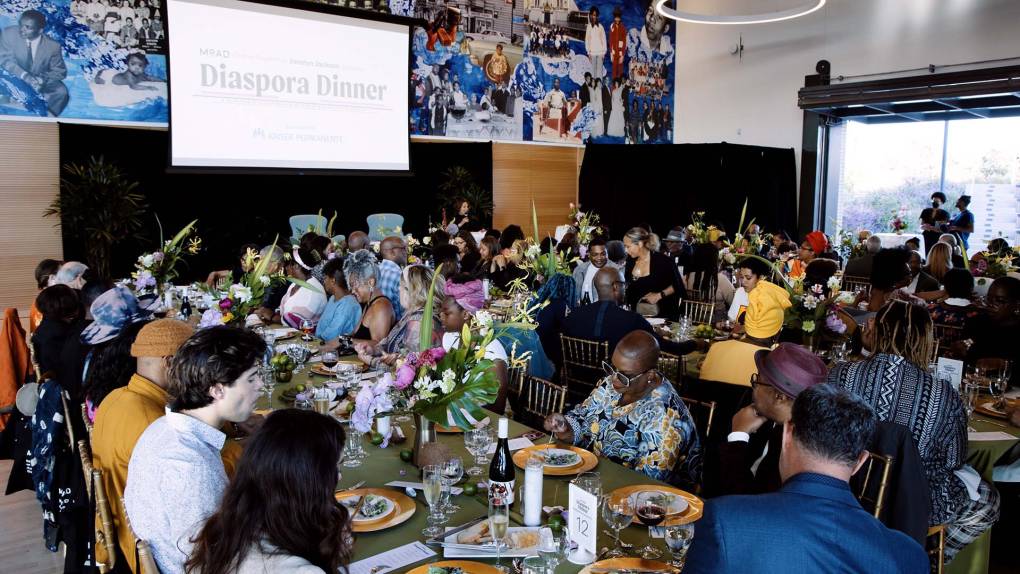
"caption": "The packed house at last year's Diaspora Dinner, which MoAD hosted at the Southeast Community Center in the Bayview.",
"description": null,
"title": "Fox_Nakai_Diaspora Dinner_.00_00_57_22",
"credit": "Fox Nakai, courtesy of MoAD",
"status": "inherit",
"altTag": "The crowded dining room at an elegant gala. The text projected onto a screen reads, \"Diaspora Dinner.\"",
"isLoading": false,
"fetchFailed": false
},
"arts_13930171": {
"type": "attachments",
"id": "arts_13930171",
"meta": {
"index": "attachments_1716263798",
"site": "arts",
"id": "13930171",
"found": true
},
"parent": 13930119,
"imgSizes": {
"twentyfourteen-full-width": {
"file": "https://ww2.kqed.org/app/uploads/sites/2/2023/06/2022-Afrocentric-Oakland-Juneteenth-Nate-King-1038x576.jpg",
"width": 1038,
"mimeType": "image/jpeg",
"height": 576
},
"thumbnail": {
"file": "https://ww2.kqed.org/app/uploads/sites/2/2023/06/2022-Afrocentric-Oakland-Juneteenth-Nate-King-160x107.jpg",
"width": 160,
"mimeType": "image/jpeg",
"height": 107
},
"post-thumbnail": {
"file": "https://ww2.kqed.org/app/uploads/sites/2/2023/06/2022-Afrocentric-Oakland-Juneteenth-Nate-King-672x372.jpg",
"width": 672,
"mimeType": "image/jpeg",
"height": 372
},
"kqedFullSize": {
"file": "https://ww2.kqed.org/app/uploads/sites/2/2023/06/2022-Afrocentric-Oakland-Juneteenth-Nate-King.jpg",
"width": 2048,
"height": 1365
},
"large": {
"file": "https://ww2.kqed.org/app/uploads/sites/2/2023/06/2022-Afrocentric-Oakland-Juneteenth-Nate-King-1020x680.jpg",
"width": 1020,
"mimeType": "image/jpeg",
"height": 680
},
"1536x1536": {
"file": "https://ww2.kqed.org/app/uploads/sites/2/2023/06/2022-Afrocentric-Oakland-Juneteenth-Nate-King-1536x1024.jpg",
"width": 1536,
"mimeType": "image/jpeg",
"height": 1024
},
"full-width": {
"file": "https://ww2.kqed.org/app/uploads/sites/2/2023/06/2022-Afrocentric-Oakland-Juneteenth-Nate-King-1920x1280.jpg",
"width": 1920,
"mimeType": "image/jpeg",
"height": 1280
},
"medium": {
"file": "https://ww2.kqed.org/app/uploads/sites/2/2023/06/2022-Afrocentric-Oakland-Juneteenth-Nate-King-800x533.jpg",
"width": 800,
"mimeType": "image/jpeg",
"height": 533
},
"medium_large": {
"file": "https://ww2.kqed.org/app/uploads/sites/2/2023/06/2022-Afrocentric-Oakland-Juneteenth-Nate-King-768x512.jpg",
"width": 768,
"mimeType": "image/jpeg",
"height": 512
}
},
"publishDate": 1686083929,
"modified": 1686083978,
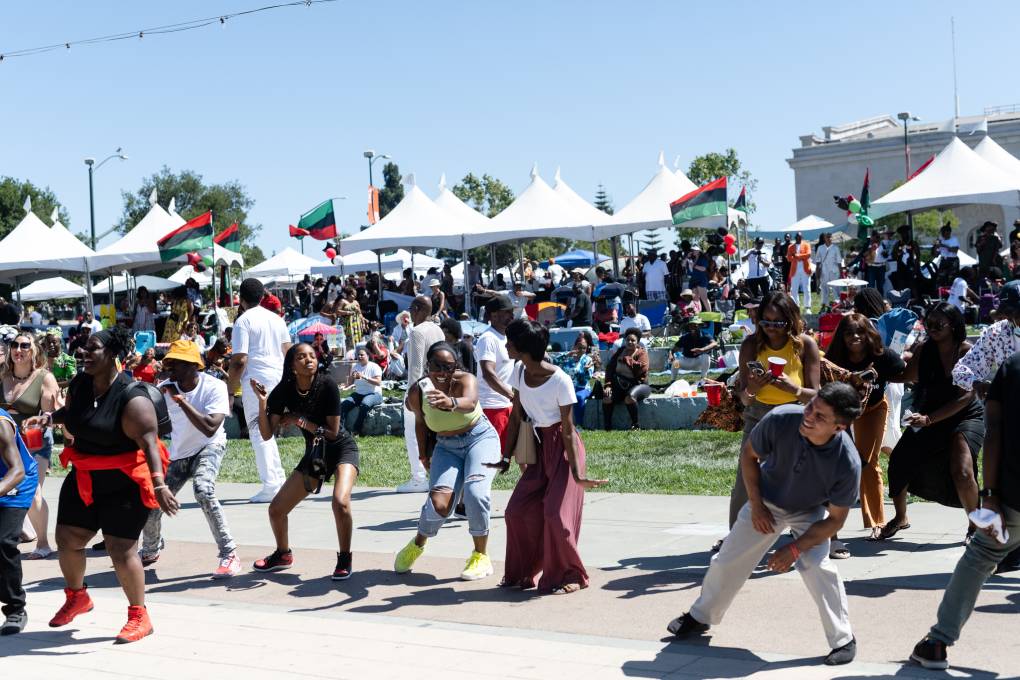
"caption": "Attendees dance at the 2022 Afrocentric Oakland Juneteenth celebration. ",
"description": null,
"title": "2022 Afrocentric Oakland Juneteenth (Nate King)",
"credit": "Nate King",
"status": "inherit",
"altTag": null,
"isLoading": false,
"fetchFailed": false
},
"arts_13930019": {
"type": "attachments",
"id": "arts_13930019",
"meta": {
"index": "attachments_1716263798",
"site": "arts",
"id": "13930019",
"found": true
},
"parent": 13930013,
"imgSizes": {
"twentyfourteen-full-width": {
"file": "https://ww2.kqed.org/app/uploads/sites/2/2023/06/diaspora-dinner-lineup_main-1038x576.jpg",
"width": 1038,
"mimeType": "image/jpeg",
"height": 576
},
"thumbnail": {
"file": "https://ww2.kqed.org/app/uploads/sites/2/2023/06/diaspora-dinner-lineup_main-160x90.jpg",
"width": 160,
"mimeType": "image/jpeg",
"height": 90
},
"post-thumbnail": {
"file": "https://ww2.kqed.org/app/uploads/sites/2/2023/06/diaspora-dinner-lineup_main-672x372.jpg",
"width": 672,
"mimeType": "image/jpeg",
"height": 372
},
"kqedFullSize": {
"file": "https://ww2.kqed.org/app/uploads/sites/2/2023/06/diaspora-dinner-lineup_main.jpg",
"width": 1920,
"height": 1080
},
"large": {
"file": "https://ww2.kqed.org/app/uploads/sites/2/2023/06/diaspora-dinner-lineup_main-1020x574.jpg",
"width": 1020,
"mimeType": "image/jpeg",
"height": 574
},
"1536x1536": {
"file": "https://ww2.kqed.org/app/uploads/sites/2/2023/06/diaspora-dinner-lineup_main-1536x864.jpg",
"width": 1536,
"mimeType": "image/jpeg",
"height": 864
},
"medium": {
"file": "https://ww2.kqed.org/app/uploads/sites/2/2023/06/diaspora-dinner-lineup_main-800x450.jpg",
"width": 800,
"mimeType": "image/jpeg",
"height": 450
},
"medium_large": {
"file": "https://ww2.kqed.org/app/uploads/sites/2/2023/06/diaspora-dinner-lineup_main-768x432.jpg",
"width": 768,
"mimeType": "image/jpeg",
"height": 432
}
},
"publishDate": 1685732380,
"modified": 1685733761,
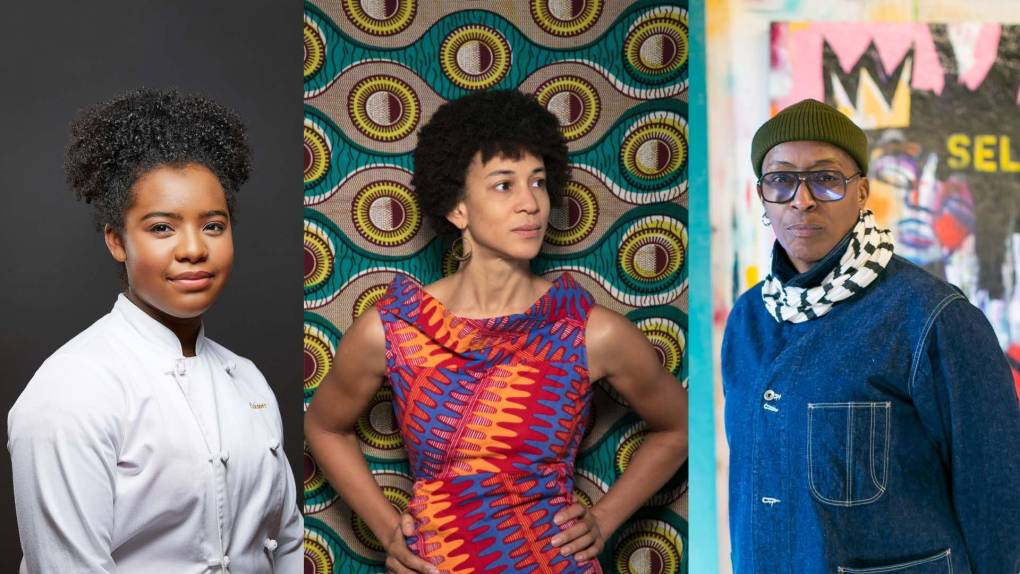
"caption": "MoAD's Diaspora Dinner is headlined by multiple generations of Black women chefs in the Bay Area. From left to right: Rahanna Bisseret Martinez, Jocelyn Jackson and Sarah Kirnon.",
"description": null,
"title": "diaspora dinner lineup_main",
"credit": null,
"status": "inherit",
"altTag": "Headshots of three Black women chefs lined up side by side.",
"isLoading": false,
"fetchFailed": false
},
"arts_13927722": {
"type": "attachments",
"id": "arts_13927722",
"meta": {
"index": "attachments_1716263798",
"site": "arts",
"id": "13927722",
"found": true
},
"parent": 13927714,
"imgSizes": {
"twentyfourteen-full-width": {
"file": "https://ww2.kqed.org/app/uploads/sites/2/2023/04/Ayana-V.-Jackson-_The-rupture-was-the-story_-2019-credit-line-Courtesy-of-the-Artist-and-Mariane-Ibrahim_COVER-1038x576.jpg",
"width": 1038,
"mimeType": "image/jpeg",
"height": 576
},
"thumbnail": {
"file": "https://ww2.kqed.org/app/uploads/sites/2/2023/04/Ayana-V.-Jackson-_The-rupture-was-the-story_-2019-credit-line-Courtesy-of-the-Artist-and-Mariane-Ibrahim_COVER-160x90.jpg",
"width": 160,
"mimeType": "image/jpeg",
"height": 90
},
"post-thumbnail": {
"file": "https://ww2.kqed.org/app/uploads/sites/2/2023/04/Ayana-V.-Jackson-_The-rupture-was-the-story_-2019-credit-line-Courtesy-of-the-Artist-and-Mariane-Ibrahim_COVER-672x372.jpg",
"width": 672,
"mimeType": "image/jpeg",
"height": 372
},
"kqedFullSize": {
"file": "https://ww2.kqed.org/app/uploads/sites/2/2023/04/Ayana-V.-Jackson-_The-rupture-was-the-story_-2019-credit-line-Courtesy-of-the-Artist-and-Mariane-Ibrahim_COVER.jpg",
"width": 1920,
"height": 1080
},
"large": {
"file": "https://ww2.kqed.org/app/uploads/sites/2/2023/04/Ayana-V.-Jackson-_The-rupture-was-the-story_-2019-credit-line-Courtesy-of-the-Artist-and-Mariane-Ibrahim_COVER-1020x574.jpg",
"width": 1020,
"mimeType": "image/jpeg",
"height": 574
},
"1536x1536": {
"file": "https://ww2.kqed.org/app/uploads/sites/2/2023/04/Ayana-V.-Jackson-_The-rupture-was-the-story_-2019-credit-line-Courtesy-of-the-Artist-and-Mariane-Ibrahim_COVER-1536x864.jpg",
"width": 1536,
"mimeType": "image/jpeg",
"height": 864
},
"medium": {
"file": "https://ww2.kqed.org/app/uploads/sites/2/2023/04/Ayana-V.-Jackson-_The-rupture-was-the-story_-2019-credit-line-Courtesy-of-the-Artist-and-Mariane-Ibrahim_COVER-800x450.jpg",
"width": 800,
"mimeType": "image/jpeg",
"height": 450
},
"medium_large": {
"file": "https://ww2.kqed.org/app/uploads/sites/2/2023/04/Ayana-V.-Jackson-_The-rupture-was-the-story_-2019-credit-line-Courtesy-of-the-Artist-and-Mariane-Ibrahim_COVER-768x432.jpg",
"width": 768,
"mimeType": "image/jpeg",
"height": 432
}
},
"publishDate": 1681344053,
"modified": 1681344131,
"caption": "Ayana V. Jackson, 'The rupture was the story,' 2019.",
"description": null,
"title": "Ayana-V.-Jackson---_The-rupture-was-the-story_-(2019)-(credit-line---Courtesy-of-the-Artist-and-Mariane-Ibrahim)_COVER",
"credit": "Courtesy of the artist and Mariane Ibrahim",
"status": "inherit",
"altTag": "Photograph of reclining Black woman looking to right adorned with silver spoons and gold and silver shoes",
"isLoading": false,
"fetchFailed": false
},
"arts_13925363": {
"type": "attachments",
"id": "arts_13925363",
"meta": {
"index": "attachments_1716263798",
"site": "arts",
"id": "13925363",
"found": true
},
"parent": 13925355,
"imgSizes": {
"twentyfourteen-full-width": {
"file": "https://ww2.kqed.org/app/uploads/sites/2/2023/02/hi_res_facing_symbols_COVER-1038x576.jpg",
"width": 1038,
"mimeType": "image/jpeg",
"height": 576
},
"thumbnail": {
"file": "https://ww2.kqed.org/app/uploads/sites/2/2023/02/hi_res_facing_symbols_COVER-160x125.jpg",
"width": 160,
"mimeType": "image/jpeg",
"height": 125
},
"post-thumbnail": {
"file": "https://ww2.kqed.org/app/uploads/sites/2/2023/02/hi_res_facing_symbols_COVER-672x372.jpg",
"width": 672,
"mimeType": "image/jpeg",
"height": 372
},
"kqedFullSize": {
"file": "https://ww2.kqed.org/app/uploads/sites/2/2023/02/hi_res_facing_symbols_COVER.jpg",
"width": 1920,
"height": 1503
},
"large": {
"file": "https://ww2.kqed.org/app/uploads/sites/2/2023/02/hi_res_facing_symbols_COVER-1020x798.jpg",
"width": 1020,
"mimeType": "image/jpeg",
"height": 798
},
"1536x1536": {
"file": "https://ww2.kqed.org/app/uploads/sites/2/2023/02/hi_res_facing_symbols_COVER-1536x1202.jpg",
"width": 1536,
"mimeType": "image/jpeg",
"height": 1202
},
"medium": {
"file": "https://ww2.kqed.org/app/uploads/sites/2/2023/02/hi_res_facing_symbols_COVER-800x626.jpg",
"width": 800,
"mimeType": "image/jpeg",
"height": 626
},
"medium_large": {
"file": "https://ww2.kqed.org/app/uploads/sites/2/2023/02/hi_res_facing_symbols_COVER-768x601.jpg",
"width": 768,
"mimeType": "image/jpeg",
"height": 601
}
},
"publishDate": 1677006459,
"modified": 1677006512,
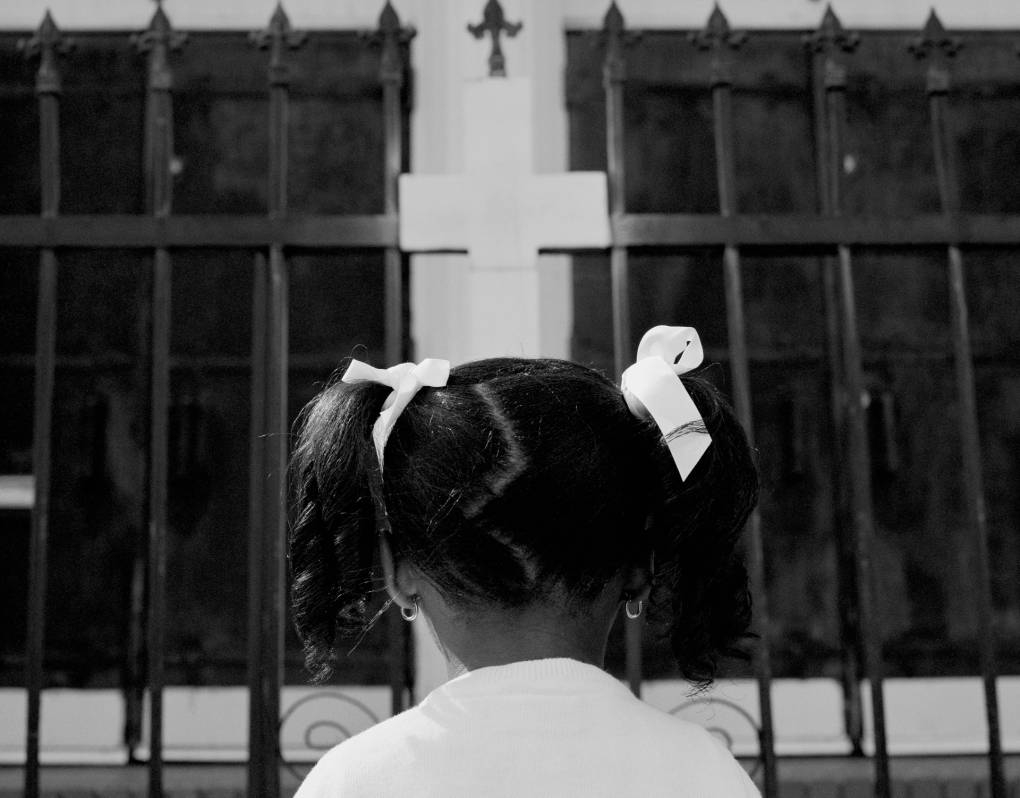
"caption": "Ashley A. Ross' 'Facing Symbols,' on view in her debut solo exhibition at San Francisco's Museum of the African Diaspora.",
"description": null,
"title": "hi_res_facing_symbols_COVER",
"credit": "Courtesy of the artist",
"status": "inherit",
"altTag": "Black-and-white image of back of Black girl's head with white cross above.",
"isLoading": false,
"fetchFailed": false
},
"arts_13925130": {
"type": "attachments",
"id": "arts_13925130",
"meta": {
"index": "attachments_1716263798",
"site": "arts",
"id": "13925130",
"found": true
},
"parent": 13925110,
"imgSizes": {
"twentyfourteen-full-width": {
"file": "https://ww2.kqed.org/app/uploads/sites/2/2023/02/Still-FavelaEėModa_creėditoFrancisco-Proner_0520--1038x576.jpg",
"width": 1038,
"mimeType": "image/jpeg",
"height": 576
},
"thumbnail": {
"file": "https://ww2.kqed.org/app/uploads/sites/2/2023/02/Still-FavelaEėModa_creėditoFrancisco-Proner_0520--160x102.jpg",
"width": 160,
"mimeType": "image/jpeg",
"height": 102
},
"post-thumbnail": {
"file": "https://ww2.kqed.org/app/uploads/sites/2/2023/02/Still-FavelaEėModa_creėditoFrancisco-Proner_0520--672x372.jpg",
"width": 672,
"mimeType": "image/jpeg",
"height": 372
},
"kqedFullSize": {
"file": "https://ww2.kqed.org/app/uploads/sites/2/2023/02/Still-FavelaEėModa_creėditoFrancisco-Proner_0520--scaled.jpg",
"width": 2560,
"height": 1638
},
"2048x2048": {
"file": "https://ww2.kqed.org/app/uploads/sites/2/2023/02/Still-FavelaEėModa_creėditoFrancisco-Proner_0520--2048x1310.jpg",
"width": 2048,
"mimeType": "image/jpeg",
"height": 1310
},
"large": {
"file": "https://ww2.kqed.org/app/uploads/sites/2/2023/02/Still-FavelaEėModa_creėditoFrancisco-Proner_0520--1020x653.jpg",
"width": 1020,
"mimeType": "image/jpeg",
"height": 653
},
"1536x1536": {
"file": "https://ww2.kqed.org/app/uploads/sites/2/2023/02/Still-FavelaEėModa_creėditoFrancisco-Proner_0520--1536x983.jpg",
"width": 1536,
"mimeType": "image/jpeg",
"height": 983
},
"full-width": {
"file": "https://ww2.kqed.org/app/uploads/sites/2/2023/02/Still-FavelaEėModa_creėditoFrancisco-Proner_0520--1920x1228.jpg",
"width": 1920,
"mimeType": "image/jpeg",
"height": 1228
},
"medium": {
"file": "https://ww2.kqed.org/app/uploads/sites/2/2023/02/Still-FavelaEėModa_creėditoFrancisco-Proner_0520--800x512.jpg",
"width": 800,
"mimeType": "image/jpeg",
"height": 512
},
"medium_large": {
"file": "https://ww2.kqed.org/app/uploads/sites/2/2023/02/Still-FavelaEėModa_creėditoFrancisco-Proner_0520--768x491.jpg",
"width": 768,
"mimeType": "image/jpeg",
"height": 491
}
},
"publishDate": 1676401851,
"modified": 1676401974,
"caption": "A still from 'Favela é Moda,' which screens Feb. 15 at MoAD.",
"description": null,
"title": "Still FavelaEėModa_creėditoFrancisco Proner_0520",
"credit": "Francisco Proner",
"status": "inherit",
"altTag": "a tall slim Black man in white pants and a beige fur coat who looks cool as hell poses in front of a black and white backdrop",
"isLoading": false,
"fetchFailed": false
},
"arts_13923963": {
"type": "attachments",
"id": "arts_13923963",
"meta": {
"index": "attachments_1716263798",
"site": "arts",
"id": "13923963",
"found": true
},
"parent": 13923936,
"imgSizes": {
"twentyfourteen-full-width": {
"file": "https://ww2.kqed.org/app/uploads/sites/2/2023/01/Jocelyn-Jackson-credit-Molly-DeCoudreaux_-1038x576.jpg",
"width": 1038,
"mimeType": "image/jpeg",
"height": 576
},
"thumbnail": {
"file": "https://ww2.kqed.org/app/uploads/sites/2/2023/01/Jocelyn-Jackson-credit-Molly-DeCoudreaux_-160x100.jpg",
"width": 160,
"mimeType": "image/jpeg",
"height": 100
},
"post-thumbnail": {
"file": "https://ww2.kqed.org/app/uploads/sites/2/2023/01/Jocelyn-Jackson-credit-Molly-DeCoudreaux_-672x372.jpg",
"width": 672,
"mimeType": "image/jpeg",
"height": 372
},
"kqedFullSize": {
"file": "https://ww2.kqed.org/app/uploads/sites/2/2023/01/Jocelyn-Jackson-credit-Molly-DeCoudreaux_.jpg",
"width": 1920,
"height": 1200
},
"large": {
"file": "https://ww2.kqed.org/app/uploads/sites/2/2023/01/Jocelyn-Jackson-credit-Molly-DeCoudreaux_-1020x638.jpg",
"width": 1020,
"mimeType": "image/jpeg",
"height": 638
},
"1536x1536": {
"file": "https://ww2.kqed.org/app/uploads/sites/2/2023/01/Jocelyn-Jackson-credit-Molly-DeCoudreaux_-1536x960.jpg",
"width": 1536,
"mimeType": "image/jpeg",
"height": 960
},
"medium": {
"file": "https://ww2.kqed.org/app/uploads/sites/2/2023/01/Jocelyn-Jackson-credit-Molly-DeCoudreaux_-800x500.jpg",
"width": 800,
"mimeType": "image/jpeg",
"height": 500
},
"medium_large": {
"file": "https://ww2.kqed.org/app/uploads/sites/2/2023/01/Jocelyn-Jackson-credit-Molly-DeCoudreaux_-768x480.jpg",
"width": 768,
"mimeType": "image/jpeg",
"height": 480
}
},
"publishDate": 1674494582,
"modified": 1674494732,
"caption": "People's Kitchen Collective co-founder Jocelyn Jackson is stepping the chef-in-residence position at the Museum of the African Disapora previously held by Bryant Terry.",
"description": null,
"title": "Jocelyn Jackson credit Molly DeCoudreaux_",
"credit": "Molly DeCoudreaux",
"status": "inherit",
"altTag": "Headshot of Jocelyn Jackson posing in front of a colorful blue patterned wallpaper.",
"isLoading": false,
"fetchFailed": false
},
"arts_13923576": {
"type": "attachments",
"id": "arts_13923576",
"meta": {
"index": "attachments_1716263798",
"site": "arts",
"id": "13923576",
"found": true
},
"parent": 13923573,
"imgSizes": {
"twentyfourteen-full-width": {
"file": "https://ww2.kqed.org/app/uploads/sites/2/2023/01/GettyImages-1262760879-1038x576.jpg",
"width": 1038,
"mimeType": "image/jpeg",
"height": 576
},
"thumbnail": {
"file": "https://ww2.kqed.org/app/uploads/sites/2/2023/01/GettyImages-1262760879-160x106.jpg",
"width": 160,
"mimeType": "image/jpeg",
"height": 106
},
"post-thumbnail": {
"file": "https://ww2.kqed.org/app/uploads/sites/2/2023/01/GettyImages-1262760879-672x372.jpg",
"width": 672,
"mimeType": "image/jpeg",
"height": 372
},
"kqedFullSize": {
"file": "https://ww2.kqed.org/app/uploads/sites/2/2023/01/GettyImages-1262760879.jpg",
"width": 1800,
"height": 1189
},
"large": {
"file": "https://ww2.kqed.org/app/uploads/sites/2/2023/01/GettyImages-1262760879-1020x674.jpg",
"width": 1020,
"mimeType": "image/jpeg",
"height": 674
},
"1536x1536": {
"file": "https://ww2.kqed.org/app/uploads/sites/2/2023/01/GettyImages-1262760879-1536x1015.jpg",
"width": 1536,
"mimeType": "image/jpeg",
"height": 1015
},
"medium": {
"file": "https://ww2.kqed.org/app/uploads/sites/2/2023/01/GettyImages-1262760879-800x528.jpg",
"width": 800,
"mimeType": "image/jpeg",
"height": 528
},
"medium_large": {
"file": "https://ww2.kqed.org/app/uploads/sites/2/2023/01/GettyImages-1262760879-768x507.jpg",
"width": 768,
"mimeType": "image/jpeg",
"height": 507
}
},
"publishDate": 1673394320,
"modified": 1673394577,
"caption": "A still from the 1975 film 'Cooley High' with Pooter (Corin Rogers), Preach (Glynn Turman) and Cochise (Lawrence-Hilton Jacobs).",
"description": null,
"title": "Cooley High,",
"credit": "Getty Images",
"status": "inherit",
"altTag": "Four young Black people in caps smirk and smile at camera",
"isLoading": false,
"fetchFailed": false
},
"arts_13922147": {
"type": "attachments",
"id": "arts_13922147",
"meta": {
"index": "attachments_1716263798",
"site": "arts",
"id": "13922147",
"found": true
},
"parent": 13922116,
"imgSizes": {
"twentyfourteen-full-width": {
"file": "https://ww2.kqed.org/app/uploads/sites/2/2022/11/RobinsonMFA_COVER-1038x576.jpg",
"width": 1038,
"mimeType": "image/jpeg",
"height": 576
},
"thumbnail": {
"file": "https://ww2.kqed.org/app/uploads/sites/2/2022/11/RobinsonMFA_COVER-160x90.jpg",
"width": 160,
"mimeType": "image/jpeg",
"height": 90
},
"post-thumbnail": {
"file": "https://ww2.kqed.org/app/uploads/sites/2/2022/11/RobinsonMFA_COVER-672x372.jpg",
"width": 672,
"mimeType": "image/jpeg",
"height": 372
},
"kqedFullSize": {
"file": "https://ww2.kqed.org/app/uploads/sites/2/2022/11/RobinsonMFA_COVER.jpg",
"width": 2436,
"height": 1370
},
"2048x2048": {
"file": "https://ww2.kqed.org/app/uploads/sites/2/2022/11/RobinsonMFA_COVER-2048x1152.jpg",
"width": 2048,
"mimeType": "image/jpeg",
"height": 1152
},
"large": {
"file": "https://ww2.kqed.org/app/uploads/sites/2/2022/11/RobinsonMFA_COVER-1020x574.jpg",
"width": 1020,
"mimeType": "image/jpeg",
"height": 574
},
"1536x1536": {
"file": "https://ww2.kqed.org/app/uploads/sites/2/2022/11/RobinsonMFA_COVER-1536x864.jpg",
"width": 1536,
"mimeType": "image/jpeg",
"height": 864
},
"full-width": {
"file": "https://ww2.kqed.org/app/uploads/sites/2/2022/11/RobinsonMFA_COVER-1920x1080.jpg",
"width": 1920,
"mimeType": "image/jpeg",
"height": 1080
},
"medium": {
"file": "https://ww2.kqed.org/app/uploads/sites/2/2022/11/RobinsonMFA_COVER-800x450.jpg",
"width": 800,
"mimeType": "image/jpeg",
"height": 450
},
"medium_large": {
"file": "https://ww2.kqed.org/app/uploads/sites/2/2022/11/RobinsonMFA_COVER-768x432.jpg",
"width": 768,
"mimeType": "image/jpeg",
"height": 432
}
},
"publishDate": 1669848949,
"modified": 1669919494,
"caption": "Trina Michelle Robinson, 'Liberation Through Redaction,' 2022.",
"description": null,
"title": "RobinsonMFA_COVER",
"credit": "Courtesy the artist",
"status": "inherit",
"altTag": "Two pages of text on white paper with dark read threads sewn through most of the words",
"isLoading": false,
"fetchFailed": false
},
"arts_13914849": {
"type": "attachments",
"id": "arts_13914849",
"meta": {
"index": "attachments_1716263798",
"site": "arts",
"id": "13914849",
"found": true
},
"parent": 13914832,
"imgSizes": {
"twentyfourteen-full-width": {
"file": "https://ww2.kqed.org/app/uploads/sites/2/2022/06/RS50073_033_Oakland_JuneteenthBBPMiniMuseum_06192021-qut-1038x576.jpg",
"width": 1038,
"mimeType": "image/jpeg",
"height": 576
},
"thumbnail": {
"file": "https://ww2.kqed.org/app/uploads/sites/2/2022/06/RS50073_033_Oakland_JuneteenthBBPMiniMuseum_06192021-qut-160x107.jpg",
"width": 160,
"mimeType": "image/jpeg",
"height": 107
},
"post-thumbnail": {
"file": "https://ww2.kqed.org/app/uploads/sites/2/2022/06/RS50073_033_Oakland_JuneteenthBBPMiniMuseum_06192021-qut-672x372.jpg",
"width": 672,
"mimeType": "image/jpeg",
"height": 372
},
"kqedFullSize": {
"file": "https://ww2.kqed.org/app/uploads/sites/2/2022/06/RS50073_033_Oakland_JuneteenthBBPMiniMuseum_06192021-qut.jpg",
"width": 1920,
"height": 1280
},
"large": {
"file": "https://ww2.kqed.org/app/uploads/sites/2/2022/06/RS50073_033_Oakland_JuneteenthBBPMiniMuseum_06192021-qut-1020x680.jpg",
"width": 1020,
"mimeType": "image/jpeg",
"height": 680
},
"1536x1536": {
"file": "https://ww2.kqed.org/app/uploads/sites/2/2022/06/RS50073_033_Oakland_JuneteenthBBPMiniMuseum_06192021-qut-1536x1024.jpg",
"width": 1536,
"mimeType": "image/jpeg",
"height": 1024
},
"medium": {
"file": "https://ww2.kqed.org/app/uploads/sites/2/2022/06/RS50073_033_Oakland_JuneteenthBBPMiniMuseum_06192021-qut-800x533.jpg",
"width": 800,
"mimeType": "image/jpeg",
"height": 533
},
"medium_large": {
"file": "https://ww2.kqed.org/app/uploads/sites/2/2022/06/RS50073_033_Oakland_JuneteenthBBPMiniMuseum_06192021-qut-768x512.jpg",
"width": 768,
"mimeType": "image/jpeg",
"height": 512
}
},
"publishDate": 1655318245,
"modified": 1684281561,
"caption": "Donnell McAlister gives kids a chance to sit on top of his horse JJ, named after Jesse James, during a Juneteenth block party to celebrate the opening of the Black Panther Party Mini Museum in West Oakland during a 2021 Juneteenth celebration. ",
"description": null,
"title": "RS50073_033_Oakland_JuneteenthBBPMiniMuseum_06192021-qut",
"credit": "Beth LaBerge/KQED",
"status": "inherit",
"altTag": "a young Black girl and an older Black man give thumbs ups while riding a horse in front of a mural celebrating the Black Panther Party",
"isLoading": false,
"fetchFailed": false
},
"arts_13911460": {
"type": "attachments",
"id": "arts_13911460",
"meta": {
"index": "attachments_1716263798",
"site": "arts",
"id": "13911460",
"found": true
},
"parent": 13911456,
"imgSizes": {
"twentyfourteen-full-width": {
"file": "https://ww2.kqed.org/app/uploads/sites/2/2022/04/Treehuggers-4--e1648789259850-1038x576.jpg",
"width": 1038,
"mimeType": "image/jpeg",
"height": 576
},
"thumbnail": {
"file": "https://ww2.kqed.org/app/uploads/sites/2/2022/04/Treehuggers-4--e1648789259850-160x110.jpg",
"width": 160,
"mimeType": "image/jpeg",
"height": 110
},
"post-thumbnail": {
"file": "https://ww2.kqed.org/app/uploads/sites/2/2022/04/Treehuggers-4--e1648789259850-672x372.jpg",
"width": 672,
"mimeType": "image/jpeg",
"height": 372
},
"kqedFullSize": {
"file": "https://ww2.kqed.org/app/uploads/sites/2/2022/04/Treehuggers-4--e1648789259850.jpg",
"width": 1920,
"height": 1320
},
"large": {
"file": "https://ww2.kqed.org/app/uploads/sites/2/2022/04/Treehuggers-4--e1648789259850-1020x701.jpg",
"width": 1020,
"mimeType": "image/jpeg",
"height": 701
},
"1536x1536": {
"file": "https://ww2.kqed.org/app/uploads/sites/2/2022/04/Treehuggers-4--e1648789259850-1536x1056.jpg",
"width": 1536,
"mimeType": "image/jpeg",
"height": 1056
},
"medium": {
"file": "https://ww2.kqed.org/app/uploads/sites/2/2022/04/Treehuggers-4--e1648789259850-800x550.jpg",
"width": 800,
"mimeType": "image/jpeg",
"height": 550
},
"medium_large": {
"file": "https://ww2.kqed.org/app/uploads/sites/2/2022/04/Treehuggers-4--e1648789259850-768x528.jpg",
"width": 768,
"mimeType": "image/jpeg",
"height": 528
}
},
"publishDate": 1648789206,
"modified": 1648789450,
"caption": "David Huffman's 'Treehuggers #4,'\n2008.",
"description": null,
"title": "Treehuggers-#4-",
"credit": "Courtesy of the artist",
"status": "inherit",
"altTag": "A painting showing African American astronauts hugging trees against a green background.",
"isLoading": false,
"fetchFailed": false
},
"arts_13907723": {
"type": "attachments",
"id": "arts_13907723",
"meta": {
"index": "attachments_1716263798",
"site": "arts",
"id": "13907723",
"found": true
},
"parent": 13907649,
"imgSizes": {
"twentyfourteen-full-width": {
"file": "https://ww2.kqed.org/app/uploads/sites/2/2022/01/Interior-Garden-1-1038x576.jpg",
"width": 1038,
"mimeType": "image/jpeg",
"height": 576
},
"thumbnail": {
"file": "https://ww2.kqed.org/app/uploads/sites/2/2022/01/Interior-Garden-1-160x115.jpg",
"width": 160,
"mimeType": "image/jpeg",
"height": 115
},
"post-thumbnail": {
"file": "https://ww2.kqed.org/app/uploads/sites/2/2022/01/Interior-Garden-1-672x372.jpg",
"width": 672,
"mimeType": "image/jpeg",
"height": 372
},
"kqedFullSize": {
"file": "https://ww2.kqed.org/app/uploads/sites/2/2022/01/Interior-Garden-1-scaled.jpg",
"width": 2560,
"height": 1846
},
"2048x2048": {
"file": "https://ww2.kqed.org/app/uploads/sites/2/2022/01/Interior-Garden-1-2048x1477.jpg",
"width": 2048,
"mimeType": "image/jpeg",
"height": 1477
},
"large": {
"file": "https://ww2.kqed.org/app/uploads/sites/2/2022/01/Interior-Garden-1-1020x736.jpg",
"width": 1020,
"mimeType": "image/jpeg",
"height": 736
},
"1536x1536": {
"file": "https://ww2.kqed.org/app/uploads/sites/2/2022/01/Interior-Garden-1-1536x1108.jpg",
"width": 1536,
"mimeType": "image/jpeg",
"height": 1108
},
"full-width": {
"file": "https://ww2.kqed.org/app/uploads/sites/2/2022/01/Interior-Garden-1-1920x1385.jpg",
"width": 1920,
"mimeType": "image/jpeg",
"height": 1385
},
"medium": {
"file": "https://ww2.kqed.org/app/uploads/sites/2/2022/01/Interior-Garden-1-800x577.jpg",
"width": 800,
"mimeType": "image/jpeg",
"height": 577
},
"medium_large": {
"file": "https://ww2.kqed.org/app/uploads/sites/2/2022/01/Interior-Garden-1-768x554.jpg",
"width": 768,
"mimeType": "image/jpeg",
"height": 554
}
},
"publishDate": 1641342414,
"modified": 1641342452,
"caption": "Cathy Lu, ‘Peripheral Visions,’ 2021. ",
"description": null,
"title": "Interior Garden 1",
"credit": "Courtesy the artist",
"status": "inherit",
"altTag": null,
"isLoading": false,
"fetchFailed": false
}
},
"audioPlayerReducer": {
"postId": "stream_live",
"isPaused": true,
"isPlaying": false,
"pfsActive": false,
"pledgeModalIsOpen": true,
"playerDrawerIsOpen": false,
"liveAudioPlayStartedAt": 0,
"liveAudioPlayContext": ""
},
"authorsReducer": {
"byline_arts_13922116": {
"type": "authors",
"id": "byline_arts_13922116",
"meta": {
"override": true
},
"slug": "byline_arts_13922116",
"name": "Luke Williams",
"isLoading": false
},
"mfox": {
"type": "authors",
"id": "22",
"meta": {
"index": "authors_1716337520",
"id": "22",
"found": true
},
"name": "Michael Fox",
"firstName": "Michael",
"lastName": "Fox",
"slug": "mfox",
"email": "foxonfilm@yahoo.com",
"display_author_email": false,
"staff_mastheads": [],
"title": "KQED Contributor",
"bio": "Michael Fox has written about film for dozens of publications since 1987. He is a founding member of the San Francisco Bay Area Film Critics Circle.",
"avatar": "https://secure.gravatar.com/avatar/d9849d6c659c41414795c471d907bb97b396e2a32b88e20e6ff66f65fbdd6dcd?s=600&d=blank&r=g",
"twitter": null,
"bluesky": null,
"facebook": null,
"instagram": null,
"linkedin": null,
"sites": [
{
"site": "arts",
"roles": [
"Contributor",
"contributor"
]
}
],
"headData": {
"title": "Michael Fox | KQED",
"description": "KQED Contributor",
"ogImgSrc": "https://secure.gravatar.com/avatar/d9849d6c659c41414795c471d907bb97b396e2a32b88e20e6ff66f65fbdd6dcd?s=600&d=blank&r=g",
"twImgSrc": "https://secure.gravatar.com/avatar/d9849d6c659c41414795c471d907bb97b396e2a32b88e20e6ff66f65fbdd6dcd?s=600&d=blank&r=g"
},
"isLoading": false,
"link": "/author/mfox"
},
"shotchkiss": {
"type": "authors",
"id": "61",
"meta": {
"index": "authors_1716337520",
"id": "61",
"found": true
},
"name": "Sarah Hotchkiss",
"firstName": "Sarah",
"lastName": "Hotchkiss",
"slug": "shotchkiss",
"email": "shotchkiss@kqed.org",
"display_author_email": true,
"staff_mastheads": [
"arts"
],
"title": "Senior Editor",
"bio": "Sarah Hotchkiss is a San Francisco \u003ca href=\"http://www.sarahhotchkiss.com\">artist\u003c/a> and arts writer. In 2019, she received the Dorothea & Leo Rabkin Foundation grant for visual art journalism and in 2020 she received a Society of Professional Journalists, Northern California award for excellence in arts and culture reporting.",
"avatar": "https://secure.gravatar.com/avatar/bc662df144b3d27fd8b1b6f1c2a420d34e91e53154d411bb7ad353cc8b6cea8d?s=600&d=blank&r=g",
"twitter": null,
"bluesky": null,
"facebook": null,
"instagram": null,
"linkedin": null,
"sites": [
{
"site": "",
"roles": [
"editor"
]
},
{
"site": "arts",
"roles": [
"Contributor",
"administrator"
]
},
{
"site": "artschool",
"roles": [
"administrator"
]
},
{
"site": "news",
"roles": [
"editor"
]
},
{
"site": "pop",
"roles": [
"administrator"
]
},
{
"site": "bayareabites",
"roles": [
"editor"
]
},
{
"site": "spark",
"roles": [
"editor"
]
},
{
"site": "checkplease",
"roles": [
"editor"
]
}
],
"headData": {
"title": "Sarah Hotchkiss | KQED",
"description": "Senior Editor",
"ogImgSrc": "https://secure.gravatar.com/avatar/bc662df144b3d27fd8b1b6f1c2a420d34e91e53154d411bb7ad353cc8b6cea8d?s=600&d=blank&r=g",
"twImgSrc": "https://secure.gravatar.com/avatar/bc662df144b3d27fd8b1b6f1c2a420d34e91e53154d411bb7ad353cc8b6cea8d?s=600&d=blank&r=g"
},
"isLoading": false,
"link": "/author/shotchkiss"
},
"aproehl": {
"type": "authors",
"id": "11296",
"meta": {
"index": "authors_1716337520",
"id": "11296",
"found": true
},
"name": "Ariana Proehl",
"firstName": "Ariana",
"lastName": "Proehl",
"slug": "aproehl",
"email": "aproehl@KQED.org",
"display_author_email": true,
"staff_mastheads": [
"news"
],
"title": "Culture Reporter, KQED",
"bio": "Ariana Proehl is a Culture Reporter and Host.",
"avatar": "https://secure.gravatar.com/avatar/c96b24567eb5bb3a4f8bb295ed53e232?s=600&d=blank&r=g",
"twitter": "ArianaProehl",
"facebook": null,
"instagram": null,
"linkedin": null,
"sites": [
{
"site": "arts",
"roles": []
},
{
"site": "news",
"roles": []
},
{
"site": "education",
"roles": []
},
{
"site": "forum",
"roles": []
}
],
"headData": {
"title": "Ariana Proehl | KQED",
"description": "Culture Reporter, KQED",
"ogImgSrc": "https://secure.gravatar.com/avatar/c96b24567eb5bb3a4f8bb295ed53e232?s=600&d=blank&r=g",
"twImgSrc": "https://secure.gravatar.com/avatar/c96b24567eb5bb3a4f8bb295ed53e232?s=600&d=blank&r=g"
},
"isLoading": false,
"link": "/author/aproehl"
},
"ltsai": {
"type": "authors",
"id": "11743",
"meta": {
"index": "authors_1716337520",
"id": "11743",
"found": true
},
"name": "Luke Tsai",
"firstName": "Luke",
"lastName": "Tsai",
"slug": "ltsai",
"email": "ltsai@kqed.org",
"display_author_email": true,
"staff_mastheads": [
"arts"
],
"title": "Food Editor",
"bio": "Luke Tsai is KQED's food editor and resident stinky tofu connoisseur. Prior to KQED, he was an editor at Eater SF, \u003cem>San Francisco \u003c/em>magazine, and the \u003cem>East Bay Express\u003c/em>, and his work has also appeared in TASTE, the \u003cem>San Francisco Chronicle\u003c/em>, and the \u003cem>Best Food Writing\u003c/em> anthology. When he isn't writing or editing, you'll find him eating most everything he can get his hands on.",
"avatar": "https://secure.gravatar.com/avatar/1e59b45bf191526e7339d6ba46e33a57b2030d25c27660ecc64ea3cb863e34f7?s=600&d=blank&r=g",
"twitter": "theluketsai",
"bluesky": null,
"facebook": null,
"instagram": null,
"linkedin": null,
"sites": [
{
"site": "",
"roles": [
"editor"
]
},
{
"site": "arts",
"roles": [
"administrator"
]
},
{
"site": "news",
"roles": [
"editor",
"contributor"
]
},
{
"site": "bayareabites",
"roles": [
"editor"
]
},
{
"site": "food",
"roles": [
"editor"
]
}
],
"headData": {
"title": "Luke Tsai | KQED",
"description": "Food Editor",
"ogImgSrc": "https://secure.gravatar.com/avatar/1e59b45bf191526e7339d6ba46e33a57b2030d25c27660ecc64ea3cb863e34f7?s=600&d=blank&r=g",
"twImgSrc": "https://secure.gravatar.com/avatar/1e59b45bf191526e7339d6ba46e33a57b2030d25c27660ecc64ea3cb863e34f7?s=600&d=blank&r=g"
},
"isLoading": false,
"link": "/author/ltsai"
},
"jsorapuru": {
"type": "authors",
"id": "11792",
"meta": {
"index": "authors_1716337520",
"id": "11792",
"found": true
},
"name": "Julian E.J. Sorapuru",
"firstName": "Julian",
"lastName": "Sorapuru",
"slug": "jsorapuru",
"email": "jsorapuru@kqed.org",
"display_author_email": true,
"staff_mastheads": [],
"title": "Arts & Culture Reporter",
"bio": "Julian E.J. Sorapuru is an Arts & Culture Intern at KQED. Prior to joining KQED Arts, he interned at both POLITICO, covering transportation policy, and \u003cem>The Times-Picayune\u003c/em>, covering government and politics in his hometown of New Orleans, LA. Julian was the first and only Black male Editor-in-Chief in the 119 year history of the University of San Francisco's student newspaper, the\u003cem> San Francisco Foghorn\u003c/em>. He currently resides in San Francisco, CA and enjoys soccer, photography, and reading.",
"avatar": "https://secure.gravatar.com/avatar/e4d0156d1244f96b87927aa011d794a8?s=600&d=blank&r=g",
"twitter": "JulianSorapuru",
"facebook": null,
"instagram": null,
"linkedin": null,
"sites": [
{
"site": "arts",
"roles": [
"editor"
]
}
],
"headData": {
"title": "Julian E.J. Sorapuru | KQED",
"description": "Arts & Culture Reporter",
"ogImgSrc": "https://secure.gravatar.com/avatar/e4d0156d1244f96b87927aa011d794a8?s=600&d=blank&r=g",
"twImgSrc": "https://secure.gravatar.com/avatar/e4d0156d1244f96b87927aa011d794a8?s=600&d=blank&r=g"
},
"isLoading": false,
"link": "/author/jsorapuru"
},
"ksong": {
"type": "authors",
"id": "11813",
"meta": {
"index": "authors_1716337520",
"id": "11813",
"found": true
},
"name": "Kristie Song",
"firstName": "Kristie",
"lastName": "Song",
"slug": "ksong",
"email": "ksong@kqed.org",
"display_author_email": false,
"staff_mastheads": [],
"title": "Editorial Intern ",
"bio": "Kristie Song is an Arts & Culture Intern at KQED. She is currently a graduate student at UC Berkeley, where she studies audio and multimedia journalism. Previously, she covered the local community for Oakland North, produced episodes for The Science of Happiness, and served as news director for KUCI, UC Irvine’s radio station. Outside of reporting, she likes drawing comics, listening to angsty rock, and practicing the guitar.",
"avatar": "https://secure.gravatar.com/avatar/c1149e78c3c44f92d4945a8ab0711af6?s=600&d=blank&r=g",
"twitter": null,
"facebook": null,
"instagram": null,
"linkedin": null,
"sites": [
{
"site": "arts",
"roles": [
"editor"
]
}
],
"headData": {
"title": "Kristie Song | KQED",
"description": "Editorial Intern ",
"ogImgSrc": "https://secure.gravatar.com/avatar/c1149e78c3c44f92d4945a8ab0711af6?s=600&d=blank&r=g",
"twImgSrc": "https://secure.gravatar.com/avatar/c1149e78c3c44f92d4945a8ab0711af6?s=600&d=blank&r=g"
},
"isLoading": false,
"link": "/author/ksong"
}
},
"pagesReducer": {
"arts_tag_museum-of-the-african-diaspora": {
"type": "terms",
"id": "arts_1987",
"meta": {
"index": "terms_1716263798",
"site": "arts",
"id": "1987",
"score": 10.40406
},
"featImg": null,
"name": "Museum of the African Diaspora",
"description": null,
"taxonomy": "tag",
"headData": {
"twImgId": null,
"twTitle": null,
"ogTitle": null,
"ogImgId": null,
"twDescription": null,
"description": null,
"title": "Museum of the African Diaspora Archives | KQED Arts",
"ogDescription": null
},
"ttid": 1999,
"slug": "museum-of-the-african-diaspora",
"isLoading": false,
"title": "Museum of the African Diaspora",
"pageMeta": {
"site": "arts",
"WpPageTemplate": "page-topic-editorial",
"currentPage": 2
},
"blocks": [
{
"blockName": "kqed/post-list",
"attrs": {
"layout": "cardArticle2",
"query": "posts/arts?tag=museum-of-the-african-diaspora",
"seeMore": false,
"paginated": true,
"page": 2
}
},
{
"blockName": "kqed/ad"
}
]
}
},
"pfsSessionReducer": {},
"postsReducer": {
"stream_live": {
"type": "live",
"id": "stream_live",
"audioUrl": "https://streams.kqed.org/kqedradio",
"title": "Live Stream",
"excerpt": "Live Stream information currently unavailable.",
"link": "/radio",
"featImg": "",
"label": {
"name": "KQED Live",
"link": "/"
}
},
"stream_kqedNewscast": {
"type": "posts",
"id": "stream_kqedNewscast",
"audioUrl": "https://www.kqed.org/.stream/anon/radio/RDnews/newscast.mp3?_=1",
"title": "KQED Newscast",
"featImg": "",
"label": {
"name": "88.5 FM",
"link": "/"
}
},
"arts_13956497": {
"type": "posts",
"id": "arts_13956497",
"meta": {
"index": "posts_1716263798",
"site": "arts",
"id": "13956497",
"score": null,
"sort": [
1713913256000
]
},
"parent": 0,
"labelTerm": {},
"blocks": [],
"publishDate": 1713913256,
"format": "standard",
"title": "MoAD Hosts ‘High on the Hog’ Author for a Blowout Dinner",
"headTitle": "MoAD Hosts ‘High on the Hog’ Author for a Blowout Dinner | KQED",
"content": "\u003cp>Long before Netflix released \u003ci>High on the Hog\u003c/i>, its award-winning food docu-series based on Dr. Jessica B. Harris’ book of the same name, Harris herself was already a living legend. Food historian, author of a dozen classic cookbooks and unofficial poet laureate of \u003ca href=\"https://twitter.com/strongblacklead/status/1400544874047307776?lang=en\">yams\u003c/a>, okra and black-eyed peas, Harris literally wrote the book on how diasporic African foodways shaped America. When the Smithsonian’s National Museum of African American History and Culture was planning its new cafeteria a few years back, Harris was the one the museum tapped to \u003ca href=\"https://www.nytimes.com/2016/11/28/dining/african-american-museum-sweet-home-cafe.html\">help conceptualize the menu\u003c/a>.\u003c/p>\n\u003cfigure id=\"attachment_13956501\" class=\"wp-caption alignright\" style=\"max-width: 1707px\">\u003cimg loading=\"lazy\" decoding=\"async\" class=\"size-full wp-image-13956501\" src=\"https://cdn.kqed.org/wp-content/uploads/sites/2/2024/04/DrHarris-headshot-scaled.jpg\" alt=\"Headshot of an African American woman in glasses seated inside an elegant restaurant.\" width=\"1707\" height=\"2560\" srcset=\"https://cdn.kqed.org/wp-content/uploads/sites/2/2024/04/DrHarris-headshot-scaled.jpg 1707w, https://cdn.kqed.org/wp-content/uploads/sites/2/2024/04/DrHarris-headshot-800x1200.jpg 800w, https://cdn.kqed.org/wp-content/uploads/sites/2/2024/04/DrHarris-headshot-1020x1529.jpg 1020w, https://cdn.kqed.org/wp-content/uploads/sites/2/2024/04/DrHarris-headshot-160x240.jpg 160w, https://cdn.kqed.org/wp-content/uploads/sites/2/2024/04/DrHarris-headshot-768x1152.jpg 768w, https://cdn.kqed.org/wp-content/uploads/sites/2/2024/04/DrHarris-headshot-1024x1536.jpg 1024w, https://cdn.kqed.org/wp-content/uploads/sites/2/2024/04/DrHarris-headshot-1366x2048.jpg 1366w\" sizes=\"(max-width: 1707px) 100vw, 1707px\">\u003cfigcaption class=\"wp-caption-text\">Dr. Jessica B. Harris is this year’s featured speaker. \u003ccite>(Courtesy of Dr. Jessica B. Harris)\u003c/cite>\u003c/figcaption>\u003c/figure>\n\u003cp>And so, when San Francisco’s Museum of the African Diaspora had to pick a featured speaker for this year’s splashy “\u003ca href=\"https://www.moadsf.org/event/diaspora-dinner-2024\">Diaspora Dinner\u003c/a>,” the museum’s \u003ca href=\"https://www.kqed.org/arts/13930013/moad-diaspora-dinner-bay-area-black-women-chefs-intergenerational-sf-bayview\">signature fundraising event\u003c/a>, inviting Harris was a no-brainer.\u003c/p>\n\u003cp>On Saturday, May 4, Harris will take the stage at MoAD for a conversation about the history of diasporic African food, moderated by chef Adrian Lipscombe. The talk will be the highlight of a blowout dinner featuring dishes from Harris’s cookbooks — all cooked under the supervision of MoAD chef-in-residence \u003ca href=\"https://www.kqed.org/arts/13923936/moad-new-chef-in-residence-jocelyn-jackson-peoples-kitchen-collective\">Jocelyn Jackson\u003c/a>, who calls Harris “an incredible icon” to the Black community.\u003c/p>\n\u003cp>According to Harris, one of the main reasons she decided to write \u003ci>High on the Hog\u003c/i> in the first place was because in her cookbooks, “the headnotes for the recipes kept getting longer and longer, which indicated that there was more to be said.”\u003c/p>\n\u003cp>She has seen a late-career revival after producers Fabienne Toback and Karis Jagger optioned the \u003ci>High on the Hog\u003c/i> for Netflix\u003ci>, \u003c/i>introducing her work to a new generation. Like the book that inspired it, the show (which recently released a second season) takes viewers on a journey from the open-air markets of Benin, in West Africa, to the rice fields of South Carolina, the barbecue pits of Texas and beyond. It’s a culinary history that’s intertwined with the suffering that enslaved Africans faced — but also their resilience and ingenuity in maintaining their connection to Africa.\u003c/p>\n\u003cp>[ad fullwidth]\u003c/p>\n\u003cp>[aside postID='arts_13923936,arts_13930013']The menu for MoAD’s Diaspora Dinner will also reflect that journey. While Jackson is keeping most of it a secret, she says one dish she plans to serve is acaraje, a Brazilian black-eyed pea fritter that’s usually stuffed with smoked shellfish and fried in palm oil. As Harris notes, it’s a dish that traces its roots back to southwestern Nigeria, where they eat a white bean fritter called akara.\u003c/p>\n\u003cp>“The bean has changed, but the oil remains red palm oil,” Harris explains. “There’s a lot of history in that.”\u003c/p>\n\u003cp>Ultimately, Harris’s vision of the future of food and community for the African diaspora is refreshingly hopeful. She sees young, Black fine-dining chefs using their training to find new ways to connect to their cultures, and she says, “Change is the most wonderful thing about food.”\u003c/p>\n\u003cfigure id=\"attachment_13956503\" class=\"wp-caption alignnone\" style=\"max-width: 1920px\">\u003cimg loading=\"lazy\" decoding=\"async\" class=\"size-full wp-image-13956503\" src=\"https://cdn.kqed.org/wp-content/uploads/sites/2/2024/04/2023-6-7_Diaspora-Dinner-38_Tinashe-Chidarikire-courtesy-of-MoAD.jpg\" alt=\"Fried plantains topped with pumpkin seeds.\" width=\"1920\" height=\"1200\" srcset=\"https://cdn.kqed.org/wp-content/uploads/sites/2/2024/04/2023-6-7_Diaspora-Dinner-38_Tinashe-Chidarikire-courtesy-of-MoAD.jpg 1920w, https://cdn.kqed.org/wp-content/uploads/sites/2/2024/04/2023-6-7_Diaspora-Dinner-38_Tinashe-Chidarikire-courtesy-of-MoAD-800x500.jpg 800w, https://cdn.kqed.org/wp-content/uploads/sites/2/2024/04/2023-6-7_Diaspora-Dinner-38_Tinashe-Chidarikire-courtesy-of-MoAD-1020x638.jpg 1020w, https://cdn.kqed.org/wp-content/uploads/sites/2/2024/04/2023-6-7_Diaspora-Dinner-38_Tinashe-Chidarikire-courtesy-of-MoAD-160x100.jpg 160w, https://cdn.kqed.org/wp-content/uploads/sites/2/2024/04/2023-6-7_Diaspora-Dinner-38_Tinashe-Chidarikire-courtesy-of-MoAD-768x480.jpg 768w, https://cdn.kqed.org/wp-content/uploads/sites/2/2024/04/2023-6-7_Diaspora-Dinner-38_Tinashe-Chidarikire-courtesy-of-MoAD-1536x960.jpg 1536w\" sizes=\"(max-width: 1920px) 100vw, 1920px\">\u003cfigcaption class=\"wp-caption-text\">A dish of fried plantains from last year’s Diaspora Dinner. \u003ccite>(Tinashe Chidarikire, courtesy of MoAD)\u003c/cite>\u003c/figcaption>\u003c/figure>\n\u003cp>Even as she acknowledges the way that a city like San Francisco has seen a \u003ca href=\"https://www.kqed.org/news/11952984/reparations-commentary\">tremendous exodus\u003c/a> of its Black population, Harris urges us to take an even broader view: “Yes, it’s displacement — but it is such a slim displacement in proportion to the ultimate displacement, which was the one from the African continent.”\u003c/p>\n\u003cp>“We will find ways to come together,” she says. “The communing of sitting at or around a table is cardinal to our existence — I think that is not going to be diminished. It may evolve, but it’s there.”\u003c/p>\n\u003chr>\n\u003cp>\u003c/p>\n\u003cp>\u003ci>MoAD’s annual \u003c/i>\u003ca href=\"https://www.moadsf.org/event/diaspora-dinner-2024\">\u003ci>Diaspora Dinner\u003c/i>\u003c/a>\u003ci> will take place at the museum (685 Mission St., San Francisco) and the adjacent St. Regis Hotel on Saturday, May 4, from 6–9 p.m. General admission tickets are sold out at this time, but a handful of VIP tickets, which include a private meet-and-greet, are still available.\u003c/i>\u003c/p>\n\n",
"stats": {
"hasVideo": false,
"hasChartOrMap": false,
"hasAudio": false,
"hasPolis": false,
"wordCount": 710,
"hasGoogleForm": false,
"hasGallery": false,
"hasHearkenModule": false,
"iframeSrcs": [],
"paragraphCount": 13
},
"modified": 1713913828,
"excerpt": "Food historian Dr. Jessica B. Harris is one of America’s foremost experts on diasporic African cuisine.",
"headData": {
"twImgId": "",
"twTitle": "MoAD Hosts ‘High on the Hog’ Author for a Blowout Dinner",
"socialTitle": "MoAD's Diaspora Dinner Stars ‘High on the Hog’ Author %%page%% %%sep%% KQED",
"ogTitle": "MoAD Hosts ‘High on the Hog’ Author for a Blowout Dinner",
"ogImgId": "",
"twDescription": "",
"description": "Food historian Dr. Jessica B. Harris is one of America’s foremost experts on diasporic African cuisine.",
"title": "MoAD's Diaspora Dinner Stars ‘High on the Hog’ Author | KQED",
"ogDescription": "",
"schema": {
"@context": "https://schema.org",
"@type": "Article",
"headline": "MoAD Hosts ‘High on the Hog’ Author for a Blowout Dinner",
"datePublished": "2024-04-23T16:00:56-07:00",
"dateModified": "2024-04-23T16:10:28-07:00",
"image": "https://cdn.kqed.org/wp-content/uploads/2020/02/KQED-OG-Image@1x.png"
}
},
"guestAuthors": [],
"slug": "moad-diaspora-dinner-high-on-the-hog-jessica-harris-sf",
"status": "publish",
"sourceUrl": "https://www.kqed.org/food",
"excludeFromSiteSearch": "Include",
"sticky": false,
"source": "Food",
"articleAge": "0",
"nprStoryId": "kqed-13956497",
"path": "/arts/13956497/moad-diaspora-dinner-high-on-the-hog-jessica-harris-sf",
"audioTrackLength": null,
"parsedContent": [
{
"type": "contentString",
"content": "\u003cdiv class=\"post-body\">\u003cp>\u003cp>Long before Netflix released \u003ci>High on the Hog\u003c/i>, its award-winning food docu-series based on Dr. Jessica B. Harris’ book of the same name, Harris herself was already a living legend. Food historian, author of a dozen classic cookbooks and unofficial poet laureate of \u003ca href=\"https://twitter.com/strongblacklead/status/1400544874047307776?lang=en\">yams\u003c/a>, okra and black-eyed peas, Harris literally wrote the book on how diasporic African foodways shaped America. When the Smithsonian’s National Museum of African American History and Culture was planning its new cafeteria a few years back, Harris was the one the museum tapped to \u003ca href=\"https://www.nytimes.com/2016/11/28/dining/african-american-museum-sweet-home-cafe.html\">help conceptualize the menu\u003c/a>.\u003c/p>\n\u003cfigure id=\"attachment_13956501\" class=\"wp-caption alignright\" style=\"max-width: 1707px\">\u003cimg loading=\"lazy\" decoding=\"async\" class=\"size-full wp-image-13956501\" src=\"https://cdn.kqed.org/wp-content/uploads/sites/2/2024/04/DrHarris-headshot-scaled.jpg\" alt=\"Headshot of an African American woman in glasses seated inside an elegant restaurant.\" width=\"1707\" height=\"2560\" srcset=\"https://cdn.kqed.org/wp-content/uploads/sites/2/2024/04/DrHarris-headshot-scaled.jpg 1707w, https://cdn.kqed.org/wp-content/uploads/sites/2/2024/04/DrHarris-headshot-800x1200.jpg 800w, https://cdn.kqed.org/wp-content/uploads/sites/2/2024/04/DrHarris-headshot-1020x1529.jpg 1020w, https://cdn.kqed.org/wp-content/uploads/sites/2/2024/04/DrHarris-headshot-160x240.jpg 160w, https://cdn.kqed.org/wp-content/uploads/sites/2/2024/04/DrHarris-headshot-768x1152.jpg 768w, https://cdn.kqed.org/wp-content/uploads/sites/2/2024/04/DrHarris-headshot-1024x1536.jpg 1024w, https://cdn.kqed.org/wp-content/uploads/sites/2/2024/04/DrHarris-headshot-1366x2048.jpg 1366w\" sizes=\"(max-width: 1707px) 100vw, 1707px\">\u003cfigcaption class=\"wp-caption-text\">Dr. Jessica B. Harris is this year’s featured speaker. \u003ccite>(Courtesy of Dr. Jessica B. Harris)\u003c/cite>\u003c/figcaption>\u003c/figure>\n\u003cp>And so, when San Francisco’s Museum of the African Diaspora had to pick a featured speaker for this year’s splashy “\u003ca href=\"https://www.moadsf.org/event/diaspora-dinner-2024\">Diaspora Dinner\u003c/a>,” the museum’s \u003ca href=\"https://www.kqed.org/arts/13930013/moad-diaspora-dinner-bay-area-black-women-chefs-intergenerational-sf-bayview\">signature fundraising event\u003c/a>, inviting Harris was a no-brainer.\u003c/p>\n\u003cp>On Saturday, May 4, Harris will take the stage at MoAD for a conversation about the history of diasporic African food, moderated by chef Adrian Lipscombe. The talk will be the highlight of a blowout dinner featuring dishes from Harris’s cookbooks — all cooked under the supervision of MoAD chef-in-residence \u003ca href=\"https://www.kqed.org/arts/13923936/moad-new-chef-in-residence-jocelyn-jackson-peoples-kitchen-collective\">Jocelyn Jackson\u003c/a>, who calls Harris “an incredible icon” to the Black community.\u003c/p>\n\u003cp>According to Harris, one of the main reasons she decided to write \u003ci>High on the Hog\u003c/i> in the first place was because in her cookbooks, “the headnotes for the recipes kept getting longer and longer, which indicated that there was more to be said.”\u003c/p>\n\u003cp>She has seen a late-career revival after producers Fabienne Toback and Karis Jagger optioned the \u003ci>High on the Hog\u003c/i> for Netflix\u003ci>, \u003c/i>introducing her work to a new generation. Like the book that inspired it, the show (which recently released a second season) takes viewers on a journey from the open-air markets of Benin, in West Africa, to the rice fields of South Carolina, the barbecue pits of Texas and beyond. It’s a culinary history that’s intertwined with the suffering that enslaved Africans faced — but also their resilience and ingenuity in maintaining their connection to Africa.\u003c/p>\n\u003cp>\u003c/p>\u003c/div>",
"attributes": {
"named": {},
"numeric": []
}
},
{
"type": "component",
"content": "",
"name": "ad",
"attributes": {
"named": {
"label": "fullwidth"
},
"numeric": [
"fullwidth"
]
}
},
{
"type": "contentString",
"content": "\u003cdiv class=\"post-body\">\u003cp>\u003c/p>\n\u003cp>\u003c/p>\u003c/div>",
"attributes": {
"named": {},
"numeric": []
}
},
{
"type": "component",
"content": "",
"name": "aside",
"attributes": {
"named": {
"postid": "arts_13923936,arts_13930013",
"label": ""
},
"numeric": []
}
},
{
"type": "contentString",
"content": "\u003cdiv class=\"post-body\">\u003cp>The menu for MoAD’s Diaspora Dinner will also reflect that journey. While Jackson is keeping most of it a secret, she says one dish she plans to serve is acaraje, a Brazilian black-eyed pea fritter that’s usually stuffed with smoked shellfish and fried in palm oil. As Harris notes, it’s a dish that traces its roots back to southwestern Nigeria, where they eat a white bean fritter called akara.\u003c/p>\n\u003cp>“The bean has changed, but the oil remains red palm oil,” Harris explains. “There’s a lot of history in that.”\u003c/p>\n\u003cp>Ultimately, Harris’s vision of the future of food and community for the African diaspora is refreshingly hopeful. She sees young, Black fine-dining chefs using their training to find new ways to connect to their cultures, and she says, “Change is the most wonderful thing about food.”\u003c/p>\n\u003cfigure id=\"attachment_13956503\" class=\"wp-caption alignnone\" style=\"max-width: 1920px\">\u003cimg loading=\"lazy\" decoding=\"async\" class=\"size-full wp-image-13956503\" src=\"https://cdn.kqed.org/wp-content/uploads/sites/2/2024/04/2023-6-7_Diaspora-Dinner-38_Tinashe-Chidarikire-courtesy-of-MoAD.jpg\" alt=\"Fried plantains topped with pumpkin seeds.\" width=\"1920\" height=\"1200\" srcset=\"https://cdn.kqed.org/wp-content/uploads/sites/2/2024/04/2023-6-7_Diaspora-Dinner-38_Tinashe-Chidarikire-courtesy-of-MoAD.jpg 1920w, https://cdn.kqed.org/wp-content/uploads/sites/2/2024/04/2023-6-7_Diaspora-Dinner-38_Tinashe-Chidarikire-courtesy-of-MoAD-800x500.jpg 800w, https://cdn.kqed.org/wp-content/uploads/sites/2/2024/04/2023-6-7_Diaspora-Dinner-38_Tinashe-Chidarikire-courtesy-of-MoAD-1020x638.jpg 1020w, https://cdn.kqed.org/wp-content/uploads/sites/2/2024/04/2023-6-7_Diaspora-Dinner-38_Tinashe-Chidarikire-courtesy-of-MoAD-160x100.jpg 160w, https://cdn.kqed.org/wp-content/uploads/sites/2/2024/04/2023-6-7_Diaspora-Dinner-38_Tinashe-Chidarikire-courtesy-of-MoAD-768x480.jpg 768w, https://cdn.kqed.org/wp-content/uploads/sites/2/2024/04/2023-6-7_Diaspora-Dinner-38_Tinashe-Chidarikire-courtesy-of-MoAD-1536x960.jpg 1536w\" sizes=\"(max-width: 1920px) 100vw, 1920px\">\u003cfigcaption class=\"wp-caption-text\">A dish of fried plantains from last year’s Diaspora Dinner. \u003ccite>(Tinashe Chidarikire, courtesy of MoAD)\u003c/cite>\u003c/figcaption>\u003c/figure>\n\u003cp>Even as she acknowledges the way that a city like San Francisco has seen a \u003ca href=\"https://www.kqed.org/news/11952984/reparations-commentary\">tremendous exodus\u003c/a> of its Black population, Harris urges us to take an even broader view: “Yes, it’s displacement — but it is such a slim displacement in proportion to the ultimate displacement, which was the one from the African continent.”\u003c/p>\n\u003cp>“We will find ways to come together,” she says. “The communing of sitting at or around a table is cardinal to our existence — I think that is not going to be diminished. It may evolve, but it’s there.”\u003c/p>\n\u003chr>\n\u003cp>\u003c/p>\n\u003cp>\u003ci>MoAD’s annual \u003c/i>\u003ca href=\"https://www.moadsf.org/event/diaspora-dinner-2024\">\u003ci>Diaspora Dinner\u003c/i>\u003c/a>\u003ci> will take place at the museum (685 Mission St., San Francisco) and the adjacent St. Regis Hotel on Saturday, May 4, from 6–9 p.m. General admission tickets are sold out at this time, but a handful of VIP tickets, which include a private meet-and-greet, are still available.\u003c/i>\u003c/p>\n\n\u003c/div>\u003c/p>",
"attributes": {
"named": {},
"numeric": []
}
}
],
"link": "/arts/13956497/moad-diaspora-dinner-high-on-the-hog-jessica-harris-sf",
"authors": [
"11743"
],
"programs": [
"arts_140"
],
"categories": [
"arts_1",
"arts_12276"
],
"tags": [
"arts_2438",
"arts_1297",
"arts_1987",
"arts_1146",
"arts_14729",
"arts_585"
],
"featImg": "arts_13956500",
"label": "source_arts_13956497"
},
"arts_13930119": {
"type": "posts",
"id": "arts_13930119",
"meta": {
"index": "posts_1716263798",
"site": "arts",
"id": "13930119",
"score": null,
"sort": [
1686150039000
]
},
"guestAuthors": [],
"slug": "how-to-celebrate-juneteenth-2023-in-the-bay-area",
"title": "How to Celebrate Juneteenth 2023 in the Bay Area",
"publishDate": 1686150039,
"format": "aside",
"headTitle": "How to Celebrate Juneteenth 2023 in the Bay Area | KQED",
"labelTerm": {},
"content": "\u003cp>This year’s roundup of Juneteenth events celebrates the communities and organizations forging unity through education, technology, art, dance and music — highlighting joyful local traditions as well as innovative new projects and spaces honoring Black freedom.\u003c/p>\n\u003cfigure id=\"attachment_13930153\" class=\"wp-caption aligncenter\" style=\"max-width: 800px\">\u003ca href=\"https://ww2.kqed.org/app/uploads/sites/2/2023/06/Juneteenth-on-the-Waterfront-credit-Foodwise-scaled.jpg\">\u003cimg loading=\"lazy\" decoding=\"async\" class=\"size-medium wp-image-13930153\" src=\"https://ww2.kqed.org/app/uploads/sites/2/2023/06/Juneteenth-on-the-Waterfront-credit-Foodwise-800x533.jpg\" alt=\"people at an outdoor farmers' market against a blue sky in San Francisco\" width=\"800\" height=\"533\" srcset=\"https://cdn.kqed.org/wp-content/uploads/sites/2/2023/06/Juneteenth-on-the-Waterfront-credit-Foodwise-800x533.jpg 800w, https://cdn.kqed.org/wp-content/uploads/sites/2/2023/06/Juneteenth-on-the-Waterfront-credit-Foodwise-1020x680.jpg 1020w, https://cdn.kqed.org/wp-content/uploads/sites/2/2023/06/Juneteenth-on-the-Waterfront-credit-Foodwise-160x107.jpg 160w, https://cdn.kqed.org/wp-content/uploads/sites/2/2023/06/Juneteenth-on-the-Waterfront-credit-Foodwise-768x512.jpg 768w, https://cdn.kqed.org/wp-content/uploads/sites/2/2023/06/Juneteenth-on-the-Waterfront-credit-Foodwise-1536x1024.jpg 1536w, https://cdn.kqed.org/wp-content/uploads/sites/2/2023/06/Juneteenth-on-the-Waterfront-credit-Foodwise-2048x1365.jpg 2048w, https://cdn.kqed.org/wp-content/uploads/sites/2/2023/06/Juneteenth-on-the-Waterfront-credit-Foodwise-1920x1280.jpg 1920w\" sizes=\"(max-width: 800px) 100vw, 800px\">\u003c/a>\u003cfigcaption class=\"wp-caption-text\">Attendees explore different Black-owned food businesses at Juneteenth on the Waterfront, an annual pop-up event at the Embarcadero Ferry Terminal Plaza in San Francisco. \u003ccite>(Courtesy of Foodwise)\u003c/cite>\u003c/figcaption>\u003c/figure>\n\u003ch3>\u003ca href=\"https://foodwise.org/events/pop-ups-on-the-plaza-juneteenth-on-the-waterfront/\">Juneteenth on the Waterfront\u003c/a>\u003c/h3>\n\u003cp>\u003cstrong>\u003cem>June 10\u003c/em>\u003c/strong>\u003cbr>\n\u003cstrong>\u003cem>Embarcadero Ferry Terminal Plaza, San Francisco\u003c/em>\u003c/strong>\u003c/p>\n\u003cp>The weekend farmers’ market trip was something I delighted in as a kid. It was a chance for me and my brother to explore new scents and foods, happening upon morsels we’d never have at home. Here, the magic was in the search.\u003c/p>\n\u003cp>Juneteenth on the Waterfront provides this familiar wonder, with a focus on uplifting and highlighting local Black-owned businesses. Organized by \u003ca href=\"https://www.instagram.com/foodwise/\">Foodwise\u003c/a>, a nonprofit that manages farmers markets and education programs rooted in food equity and sustainability, the event features 15 Black-owned pop-up vendors selling hearty meals, desserts and drinks. Now in its third year, Juneteenth on the Waterfront will also be debuting a craft market, where several Black creators will be selling accessories, attire, skincare and more.\u003c/p>\n\u003cp>There will also be a Black Chefs and Wine Makers talk, where a panel of restaurateurs and sommeliers that includes \u003ca href=\"https://www.instagram.com/mstanyaholland/?hl=en\">chef Tanya Holland\u003c/a> will discuss the history of Black farmers and food migration to California.\u003c/p>\n\u003cp>[ad fullwidth]\u003c/p>\n\u003cp>https://www.youtube.com/watch?v=PIolFf_j3AE\u003c/p>\n\u003cp>\u003cspan style=\"color: #ffffff\">..\u003c/span>\u003c/p>\n\u003ch3>\u003ca href=\"https://www.oigc.org/news/2023-juneteenth-concert-series\">Oakland Interfaith Gospel Choir Juneteenth Concert Series\u003c/a>\u003c/h3>\n\u003cp>\u003cstrong>\u003cem>June 16, Freight & Salvage, Berkeley; June 23, Bankhead Theater, Livermore; June 25, \u003c/em>\u003cem>Great American Music Hall, San Francisco \u003c/em>\u003c/strong>\u003c/p>\n\u003cp>With the aim to connect people through Black gospel music, local minister and composer Terrance Kelly founded the Oakland Interfaith Gospel Choir in 1986. In this upcoming three-part concert series, the passionate and diverse choir will perform songs that highlight the significance of gospel music to African American identity and history. Each performance is dynamic — rarely are the choir members static. They sing with exuberance, dancing as they harmonize through numbers that explore both historical and contemporary gospel styles.\u003c/p>\n\u003cp>The choir will perform at \u003ca href=\"https://thefreight.org/\">Freight & Salvage\u003c/a> in Berkeley on June 16, \u003ca href=\"https://livermorearts.org/\">Bankhead Theater\u003c/a> in Livermore on June 23 and \u003ca href=\"https://gamh.com/\">Great American Music Hall\u003c/a> in San Francisco on June 25. Tickets range from $22–30; \u003ca href=\"https://www.oigc.org/tickets\">more info here\u003c/a>.\u003c/p>\n\u003cfigure id=\"attachment_13930155\" class=\"wp-caption aligncenter\" style=\"max-width: 800px\">\u003ca href=\"https://ww2.kqed.org/app/uploads/sites/2/2023/06/2022-Afrocentric-Oakland-Nate-King.jpg\">\u003cimg loading=\"lazy\" decoding=\"async\" class=\"size-medium wp-image-13930155\" src=\"https://ww2.kqed.org/app/uploads/sites/2/2023/06/2022-Afrocentric-Oakland-Nate-King-800x534.jpg\" alt=\"attendees dance together at an outdoor Black music and culture festival\" width=\"800\" height=\"534\" srcset=\"https://cdn.kqed.org/wp-content/uploads/sites/2/2023/06/2022-Afrocentric-Oakland-Nate-King-800x534.jpg 800w, https://cdn.kqed.org/wp-content/uploads/sites/2/2023/06/2022-Afrocentric-Oakland-Nate-King-1020x681.jpg 1020w, https://cdn.kqed.org/wp-content/uploads/sites/2/2023/06/2022-Afrocentric-Oakland-Nate-King-160x107.jpg 160w, https://cdn.kqed.org/wp-content/uploads/sites/2/2023/06/2022-Afrocentric-Oakland-Nate-King-768x513.jpg 768w, https://cdn.kqed.org/wp-content/uploads/sites/2/2023/06/2022-Afrocentric-Oakland-Nate-King-1536x1025.jpg 1536w, https://cdn.kqed.org/wp-content/uploads/sites/2/2023/06/2022-Afrocentric-Oakland-Nate-King-1920x1282.jpg 1920w, https://cdn.kqed.org/wp-content/uploads/sites/2/2023/06/2022-Afrocentric-Oakland-Nate-King.jpg 2048w\" sizes=\"(max-width: 800px) 100vw, 800px\">\u003c/a>\u003cfigcaption class=\"wp-caption-text\">Attendees dance together at the 2022 Afrocentric Oakland’s Juneteenth Festival at Lake Merritt. \u003ccite>(Nate King)\u003c/cite>\u003c/figcaption>\u003c/figure>\n\u003ch3>\u003ca href=\"https://www.eventbrite.com/e/fam-bam-oaklands-14th-annual-juneteenth-festival-registration-596989340187\">Afrocentric Oakland’s 14th Annual Juneteenth Festival\u003c/a>\u003c/h3>\n\u003cp>\u003cstrong>\u003cem>June 17\u003c/em>\u003c/strong>\u003cbr>\n\u003cstrong>\u003cem>Lake Merritt Amphitheater, Oakland\u003c/em>\u003c/strong>\u003c/p>\n\u003cp>\u003ca href=\"https://www.instagram.com/afrocentricoakland/\">Afrocentric Oakland\u003c/a>’s beloved yearly Juneteenth Festival returns on June 17 with an array of live music performances, vendors, art installations and other activities. This large-scale event draws in eager crowds every year, with attendees in their breeziest outfits coming together to sing, dance and celebrate freedom. This year’s festival will be headlined by Vallejo rapper \u003ca href=\"https://www.instagram.com/larussell/\">LaRussell\u003c/a> and hosted by writer and poet \u003ca href=\"https://www.instagram.com/prenticepowell1906/\">Prentice Powell\u003c/a>, comedian \u003ca href=\"https://www.instagram.com/jayrich510/\">J. Rich\u003c/a> and artist-activist \u003ca href=\"https://www.instagram.com/msryannicole/\">RyanNicole\u003c/a>. General admission tickets are $25.\u003c/p>\n\u003cfigure id=\"attachment_13930156\" class=\"wp-caption aligncenter\" style=\"max-width: 528px\">\u003ca href=\"https://ww2.kqed.org/app/uploads/sites/2/2023/06/C-Notes-at-MoAD-Community-Day-cred_-MoAD-scaled.jpg\">\u003cimg loading=\"lazy\" decoding=\"async\" class=\" wp-image-13930156\" src=\"https://ww2.kqed.org/app/uploads/sites/2/2023/06/C-Notes-at-MoAD-Community-Day-cred_-MoAD-800x533.jpg\" alt=\"a musical group of seven people dressed in black and white, most of them with Afros, pose while holding instruments and smiling\" width=\"528\" height=\"352\" srcset=\"https://cdn.kqed.org/wp-content/uploads/sites/2/2023/06/C-Notes-at-MoAD-Community-Day-cred_-MoAD-800x533.jpg 800w, https://cdn.kqed.org/wp-content/uploads/sites/2/2023/06/C-Notes-at-MoAD-Community-Day-cred_-MoAD-1020x680.jpg 1020w, https://cdn.kqed.org/wp-content/uploads/sites/2/2023/06/C-Notes-at-MoAD-Community-Day-cred_-MoAD-160x107.jpg 160w, https://cdn.kqed.org/wp-content/uploads/sites/2/2023/06/C-Notes-at-MoAD-Community-Day-cred_-MoAD-768x512.jpg 768w, https://cdn.kqed.org/wp-content/uploads/sites/2/2023/06/C-Notes-at-MoAD-Community-Day-cred_-MoAD-1536x1024.jpg 1536w, https://cdn.kqed.org/wp-content/uploads/sites/2/2023/06/C-Notes-at-MoAD-Community-Day-cred_-MoAD-2048x1365.jpg 2048w, https://cdn.kqed.org/wp-content/uploads/sites/2/2023/06/C-Notes-at-MoAD-Community-Day-cred_-MoAD-1920x1280.jpg 1920w\" sizes=\"(max-width: 528px) 100vw, 528px\">\u003c/a>\u003cfigcaption class=\"wp-caption-text\">The Curtis Family C-notes will be performing at MoAD’s free community day. \u003ccite>(Courtesy of MoAD)\u003c/cite>\u003c/figcaption>\u003c/figure>\n\u003ch3>\u003ca href=\"https://www.moadsf.org/event/free-community-day-celebrate-juneteenth\">Free Community Day at MoAD\u003c/a>\u003c/h3>\n\u003cp>\u003cstrong>\u003cem>June 17\u003c/em>\u003c/strong>\u003cbr>\n\u003cstrong>\u003cem>Museum of the African Diaspora, San Francisco\u003c/em>\u003c/strong>\u003c/p>\n\u003cp>As part of its Juneteenth celebration, the \u003ca href=\"https://www.moadsf.org/\">Museum of the African Diaspora\u003c/a> will offer free admission to its current exhibitions and a variety of events from 11 a.m. to 6 p.m. These include a conversation between Oakland librarian and writer \u003ca href=\"https://dorothylazard.com/\">Dorothy Lazard\u003c/a> and KQED’s own \u003ca href=\"https://www.kqed.org/author/ogpenn\">Pendarvis Harshaw\u003c/a>; a family art workshop with the museum’s teaching artists; and musical performances by \u003ca href=\"https://www.instagram.com/thecurtisfamilycnotes/?hl=en\">The Curtis Family C-notes\u003c/a> and faculty from the \u003ca href=\"https://sfcmc.org/adults/group-classes-and-ensembles/black-music-studies-program/\">San Francisco Community Music Center’s Black Music Studies program\u003c/a>.\u003c/p>\n\u003cfigure id=\"attachment_13930158\" class=\"wp-caption aligncenter\" style=\"max-width: 800px\">\u003ca href=\"https://ww2.kqed.org/app/uploads/sites/2/2023/06/GettyImages-1321982884.jpg\">\u003cimg loading=\"lazy\" decoding=\"async\" class=\"size-medium wp-image-13930158\" src=\"https://ww2.kqed.org/app/uploads/sites/2/2023/06/GettyImages-1321982884-800x502.jpg\" alt=\"a group of joyous young Black girls in colorful shirts dance in the street as part of a parade \" width=\"800\" height=\"502\" srcset=\"https://cdn.kqed.org/wp-content/uploads/sites/2/2023/06/GettyImages-1321982884-800x502.jpg 800w, https://cdn.kqed.org/wp-content/uploads/sites/2/2023/06/GettyImages-1321982884-1020x640.jpg 1020w, https://cdn.kqed.org/wp-content/uploads/sites/2/2023/06/GettyImages-1321982884-160x100.jpg 160w, https://cdn.kqed.org/wp-content/uploads/sites/2/2023/06/GettyImages-1321982884-768x482.jpg 768w, https://cdn.kqed.org/wp-content/uploads/sites/2/2023/06/GettyImages-1321982884.jpg 1024w\" sizes=\"(max-width: 800px) 100vw, 800px\">\u003c/a>\u003cfigcaption class=\"wp-caption-text\">Children dance as the Juneteenth parade rolls through the Fillmore District in 2014. The event celebrates the abolition of slavery in the U.S. \u003ccite>(Michael Macor/The San Francisco Chronicle via Getty Images)\u003c/cite>\u003c/figcaption>\u003c/figure>\n\u003ch3>\u003ca href=\"https://juneteenth-sf.org/\">Juneteenth SF Freedom Celebration\u003c/a>\u003c/h3>\n\u003cp>\u003cstrong>\u003cem>June 17\u003c/em>\u003c/strong>\u003cbr>\n\u003cstrong>\u003cem>1330 Fillmore St., San Francisco\u003c/em>\u003c/strong>\u003c/p>\n\u003cp>Spread throughout eight blocks of the Fillmore District — a historic neighborhood that became an epicenter for a thriving Black arts, music and entertainment scene in the 1940s — the Juneteenth SF Freedom Celebration will host thousands in its wide-ranging festivities. The event will be divided into six “districts” that include live performances, food, community and family-oriented games and rides, a classic car show and a hair and fashion show. Equipped with a carnival ride and ferris wheel, the festival both embodies the quintessential summer fair and centers the rich traditions of Black culture and history.\u003c/p>\n\u003cp>The event runs from 11 a.m. to 6 p.m. and admission is free. \u003ca href=\"https://www.eventbrite.com/e/juneteenth-festival-fillmore-sf-live-music-kids-zone-fashion-free-rsvp-tickets-616663736837\">More information here\u003c/a>.\u003c/p>\n\u003ch3>\u003ca href=\"https://www.ci.richmond.ca.us/CivicAlerts.aspx?AID=2296\">Juneteenth in Richmond \u003c/a>\u003c/h3>\n\u003cp>\u003cstrong>\u003cem>June 17\u003c/em>\u003c/strong>\u003cbr>\n\u003cstrong>\u003cem>Nicholl Park, Richmond\u003c/em>\u003c/strong>\u003c/p>\n\u003cp>The centerpiece for Richmond’s Juneteenth celebrations is its lively annual parade: a joyous procession made up of the city’s local leaders, youth groups and community organizations. The parade begins at 10 a.m. at the \u003ca href=\"https://www.ci.richmond.ca.us/2177/Booker-T-Anderson\">Booker T. Anderson Center\u003c/a> and will be followed by an 11 a.m. festival that includes live music, family activities and more.\u003c/p>\n\u003cfigure id=\"attachment_13930167\" class=\"wp-caption aligncenter\" style=\"max-width: 800px\">\u003ca href=\"https://ww2.kqed.org/app/uploads/sites/2/2023/06/2019-Vallejo-Juneteenth-Angela-Jones-scaled.jpg\">\u003cimg loading=\"lazy\" decoding=\"async\" class=\"size-medium wp-image-13930167\" src=\"https://ww2.kqed.org/app/uploads/sites/2/2023/06/2019-Vallejo-Juneteenth-Angela-Jones-800x450.jpg\" alt=\"two people, seen from the back, look at bracelets at a vendor's stand\" width=\"800\" height=\"450\" srcset=\"https://cdn.kqed.org/wp-content/uploads/sites/2/2023/06/2019-Vallejo-Juneteenth-Angela-Jones-800x450.jpg 800w, https://cdn.kqed.org/wp-content/uploads/sites/2/2023/06/2019-Vallejo-Juneteenth-Angela-Jones-1020x574.jpg 1020w, https://cdn.kqed.org/wp-content/uploads/sites/2/2023/06/2019-Vallejo-Juneteenth-Angela-Jones-160x90.jpg 160w, https://cdn.kqed.org/wp-content/uploads/sites/2/2023/06/2019-Vallejo-Juneteenth-Angela-Jones-768x432.jpg 768w, https://cdn.kqed.org/wp-content/uploads/sites/2/2023/06/2019-Vallejo-Juneteenth-Angela-Jones-1536x864.jpg 1536w, https://cdn.kqed.org/wp-content/uploads/sites/2/2023/06/2019-Vallejo-Juneteenth-Angela-Jones-2048x1152.jpg 2048w, https://cdn.kqed.org/wp-content/uploads/sites/2/2023/06/2019-Vallejo-Juneteenth-Angela-Jones-1920x1080.jpg 1920w\" sizes=\"(max-width: 800px) 100vw, 800px\">\u003c/a>\u003cfigcaption class=\"wp-caption-text\">People browse a vendor’s wares at the 2019 Vallejo Juneteenth Festival. \u003ccite>(Angela Jones)\u003c/cite>\u003c/figcaption>\u003c/figure>\n\u003ch3>\u003ca href=\"https://vallejojuneteenth.com/\">Vallejo Juneteenth Festival and Parade\u003c/a>\u003c/h3>\n\u003cp>\u003cstrong>\u003cem>June 17\u003c/em>\u003c/strong>\u003cbr>\n\u003cstrong>\u003cem>301 Mare Island Way, Vallejo\u003c/em>\u003c/strong>\u003c/p>\n\u003cp>Returning for its 33rd year, the Vallejo Juneteenth Festival will kick off with a parade at 9 a.m. before attendees are invited to wander among vendor booths, groove to live music and learn about local organizations and resources related to health and wellness, education, small business development and more.\u003c/p>\n\u003cfigure id=\"attachment_13930168\" class=\"wp-caption aligncenter\" style=\"max-width: 800px\">\u003ca href=\"https://ww2.kqed.org/app/uploads/sites/2/2023/06/2018-Berkeley-Juneteenth-Malaika-Kabon.jpg\">\u003cimg loading=\"lazy\" decoding=\"async\" class=\"size-medium wp-image-13930168\" src=\"https://ww2.kqed.org/app/uploads/sites/2/2023/06/2018-Berkeley-Juneteenth-Malaika-Kabon-800x600.jpg\" alt=\"three adorable little Black girls hold balloon animals and wear stickers that read 'I heart being Black' at a festival\" width=\"800\" height=\"600\" srcset=\"https://cdn.kqed.org/wp-content/uploads/sites/2/2023/06/2018-Berkeley-Juneteenth-Malaika-Kabon-800x600.jpg 800w, https://cdn.kqed.org/wp-content/uploads/sites/2/2023/06/2018-Berkeley-Juneteenth-Malaika-Kabon-1020x765.jpg 1020w, https://cdn.kqed.org/wp-content/uploads/sites/2/2023/06/2018-Berkeley-Juneteenth-Malaika-Kabon-160x120.jpg 160w, https://cdn.kqed.org/wp-content/uploads/sites/2/2023/06/2018-Berkeley-Juneteenth-Malaika-Kabon-768x576.jpg 768w, https://cdn.kqed.org/wp-content/uploads/sites/2/2023/06/2018-Berkeley-Juneteenth-Malaika-Kabon.jpg 1500w\" sizes=\"(max-width: 800px) 100vw, 800px\">\u003c/a>\u003cfigcaption class=\"wp-caption-text\">Young community members celebrate at the 2018 Berkeley Juneteenth Festival. \u003ccite>(Malaika Kabon)\u003c/cite>\u003c/figcaption>\u003c/figure>\n\u003ch3>\u003ca href=\"https://berkeleyjuneteenth.org/festival-2023/\">36th Annual Berkeley Juneteenth Festival\u003c/a>\u003c/h3>\n\u003cp>\u003cstrong>\u003cem>June 18\u003c/em>\u003c/strong>\u003cbr>\n\u003cstrong>\u003cem>Adeline and Alcatraz, Berkeley\u003c/em>\u003c/strong>\u003c/p>\n\u003cp>The longstanding Berkeley Juneteenth Festival returns with vendors and musical performances that include Oakland jazz artist \u003ca href=\"https://www.instagram.com/fairleysonny/\">Sonny Fairley\u003c/a>, reggae singer \u003ca href=\"https://www.instagram.com/juniortoots/\">Junior Toots\u003c/a>, musical trio \u003ca href=\"https://www.instagram.com/guitartrifecta/\">Guitar Trifecta\u003c/a> and other local talent. Since its first iteration in 1987, the festival not only emphasizes the historical significance of Black emancipation but also the steps community members can take today to work towards healing and justice.\u003c/p>\n\u003cp>Preceding the festival is a weeklong schedule of programming from June 11–17 that includes an open house at Berkeley’s African American Holistic Resource Center, workshops on identifying and working through intergenerational trauma, using legal and policy tools to support formerly incarcerated individuals and how to document and preserve family stories. There will also be a farmer’s market specifically aimed towards supporting residents living in South Berkeley, an area that has seen limited fresh food access.\u003c/p>\n\u003ch3>\u003ca href=\"https://juneteenthcommunityfestival.info/\">7th Marin City Juneteenth Festival\u003c/a>\u003c/h3>\n\u003cp>\u003cstrong>\u003cem>June 19\u003c/em>\u003c/strong>\u003cbr>\n\u003cstrong>\u003cem>800 Drake Ave., Marin City\u003c/em>\u003c/strong>\u003c/p>\n\u003cp>Marin City’s Juneteenth Festival begins at 9 a.m. with a hearty and reflective prayer breakfast at the Marguerite Johnson Senior Center, before attendees are ushered into a day packed with eclectic and energetic dance and musical performances. The lineup includes rapper \u003ca href=\"https://www.instagram.com/will_believe/\">Will Believe\u003c/a>, Parliament tribute band \u003ca href=\"https://www.instagram.com/purifiedment_funkensurance_/\">Purifiedment Funkensurance\u003c/a> and Zimbabwe neo-soul artist \u003ca href=\"https://www.instagram.com/piwaiofficial/\">Piwai\u003c/a>, among others.\u003c/p>\n\u003cp>The free festival will also feature a marketplace where vendors will be selling food, art, hair and skin products, handmade crafts and more.\u003c/p>\n\u003cfigure id=\"attachment_13930170\" class=\"wp-caption aligncenter\" style=\"max-width: 800px\">\u003ca href=\"https://ww2.kqed.org/app/uploads/sites/2/2023/06/George-Hofstetter-Shayan-Davaloo-scaled.jpeg\">\u003cimg loading=\"lazy\" decoding=\"async\" class=\"size-medium wp-image-13930170\" src=\"https://ww2.kqed.org/app/uploads/sites/2/2023/06/George-Hofstetter-Shayan-Davaloo-800x444.jpeg\" alt=\"a young Black man in glasses and a black hoodie delivers a lecture\" width=\"800\" height=\"444\" srcset=\"https://cdn.kqed.org/wp-content/uploads/sites/2/2023/06/George-Hofstetter-Shayan-Davaloo-800x444.jpeg 800w, https://cdn.kqed.org/wp-content/uploads/sites/2/2023/06/George-Hofstetter-Shayan-Davaloo-1020x567.jpeg 1020w, https://cdn.kqed.org/wp-content/uploads/sites/2/2023/06/George-Hofstetter-Shayan-Davaloo-160x89.jpeg 160w, https://cdn.kqed.org/wp-content/uploads/sites/2/2023/06/George-Hofstetter-Shayan-Davaloo-768x427.jpeg 768w, https://cdn.kqed.org/wp-content/uploads/sites/2/2023/06/George-Hofstetter-Shayan-Davaloo-1536x853.jpeg 1536w, https://cdn.kqed.org/wp-content/uploads/sites/2/2023/06/George-Hofstetter-Shayan-Davaloo-2048x1138.jpeg 2048w, https://cdn.kqed.org/wp-content/uploads/sites/2/2023/06/George-Hofstetter-Shayan-Davaloo-672x372.jpeg 672w, https://cdn.kqed.org/wp-content/uploads/sites/2/2023/06/George-Hofstetter-Shayan-Davaloo-1038x576.jpeg 1038w, https://cdn.kqed.org/wp-content/uploads/sites/2/2023/06/George-Hofstetter-Shayan-Davaloo-1920x1067.jpeg 1920w\" sizes=\"(max-width: 800px) 100vw, 800px\">\u003c/a>\u003cfigcaption class=\"wp-caption-text\">GHTech founder George Hofstetter delivers a lecture on Black creativity and technology. \u003ccite>(Shayan Davaloo)\u003c/cite>\u003c/figcaption>\u003c/figure>\n\u003ch3>\u003ca href=\"https://www.eventbrite.com/e/tech-summit-tickets-640827170317\">GHTech and KitsCubed Juneteenth Tech Summit\u003c/a>\u003c/h3>\n\u003cp>\u003cstrong>\u003cem>June 19\u003c/em>\u003c/strong>\u003cbr>\n\u003cstrong>\u003cem>Broadway Event Hall, Oakland \u003c/em>\u003c/strong>\u003c/p>\n\u003cp>When Oakland software engineer and educator George Hofstetter founded \u003ca href=\"https://www.instagram.com/ghtechinc/\">GHTech\u003c/a>, he aimed to uplift and encourage people of marginalized communities to carve out their own space in the tech world. Hofstetter became aware of the lack of diverse voices in the field and sought to change that, creating \u003ca href=\"https://www.georgehofstettertechnologies.com/project/hbcu-lecture-series-on-black-creativity-and-hacktivism\">a lecture series highlighting Black creativity\u003c/a> and the intersections of social justice and technology at various HBCU campuses across the U.S.\u003c/p>\n\u003cp>In collaboration with \u003ca href=\"https://www.kitscubed.com/\">KitsCubed\u003c/a> — an Oakland organization dedicated to youth-oriented science education — GHTech will conclude its lecture series with a celebratory tech summit on June 19, where people of all ages, backgrounds and experience levels can network and listen to talks on hacktivism and technology through the lens of Black liberation. The event is free to attend and will run from 5–9 p.m.\u003c/p>\n\u003cp>[ad floatright]\u003c/p>\n\u003cp>\u003cimg loading=\"lazy\" decoding=\"async\" class=\"aligncenter size-full wp-image-12127869\" src=\"https://ww2.kqed.org/app/uploads/sites/2/2016/09/Q.Logo_.Break_.jpg\" alt=\"\" width=\"800\" height=\"78\" srcset=\"https://cdn.kqed.org/wp-content/uploads/sites/2/2016/09/Q.Logo_.Break_.jpg 800w, https://cdn.kqed.org/wp-content/uploads/sites/2/2016/09/Q.Logo_.Break_-400x39.jpg 400w, https://cdn.kqed.org/wp-content/uploads/sites/2/2016/09/Q.Logo_.Break_-768x75.jpg 768w\" sizes=\"(max-width: 800px) 100vw, 800px\">\u003c/p>\n\n",
"blocks": [],
"excerpt": "With live music and dance, film, food, tech talks and kids' activities, these celebrations of Black freedom have something for everyone.",
"status": "publish",
"parent": 0,
"modified": 1726758564,
"stats": {
"hasAudio": false,
"hasVideo": true,
"hasChartOrMap": false,
"iframeSrcs": [],
"hasGoogleForm": false,
"hasGallery": false,
"hasHearkenModule": false,
"hasPolis": false,
"paragraphCount": 32,
"wordCount": 1362
},
"headData": {
"title": "How to Celebrate Juneteenth 2023 in the Bay Area | KQED",
"description": "With live music and dance, film, food, tech talks and kids' activities, these celebrations of Black freedom have something for everyone.",
"ogTitle": "",
"ogDescription": "",
"ogImgId": "",
"twTitle": "",
"twDescription": "",
"twImgId": "",
"schema": {
"@context": "https://schema.org",
"@type": "Article",
"headline": "How to Celebrate Juneteenth 2023 in the Bay Area",
"datePublished": "2023-06-07T08:00:39-07:00",
"dateModified": "2024-09-19T08:09:24-07:00",
"image": "https://cdn.kqed.org/wp-content/uploads/2020/02/KQED-OG-Image@1x.png"
}
},
"source": "Hot Summer Guide 2023",
"sourceUrl": "/summerguide2023",
"sticky": false,
"excludeFromSiteSearch": "Include",
"articleAge": "0",
"path": "/arts/13930119/how-to-celebrate-juneteenth-2023-in-the-bay-area",
"audioTrackLength": null,
"parsedContent": [
{
"type": "contentString",
"content": "\u003cdiv class=\"post-body\">\u003cp>\u003cp>This year’s roundup of Juneteenth events celebrates the communities and organizations forging unity through education, technology, art, dance and music — highlighting joyful local traditions as well as innovative new projects and spaces honoring Black freedom.\u003c/p>\n\u003cfigure id=\"attachment_13930153\" class=\"wp-caption aligncenter\" style=\"max-width: 800px\">\u003ca href=\"https://ww2.kqed.org/app/uploads/sites/2/2023/06/Juneteenth-on-the-Waterfront-credit-Foodwise-scaled.jpg\">\u003cimg loading=\"lazy\" decoding=\"async\" class=\"size-medium wp-image-13930153\" src=\"https://ww2.kqed.org/app/uploads/sites/2/2023/06/Juneteenth-on-the-Waterfront-credit-Foodwise-800x533.jpg\" alt=\"people at an outdoor farmers' market against a blue sky in San Francisco\" width=\"800\" height=\"533\" srcset=\"https://cdn.kqed.org/wp-content/uploads/sites/2/2023/06/Juneteenth-on-the-Waterfront-credit-Foodwise-800x533.jpg 800w, https://cdn.kqed.org/wp-content/uploads/sites/2/2023/06/Juneteenth-on-the-Waterfront-credit-Foodwise-1020x680.jpg 1020w, https://cdn.kqed.org/wp-content/uploads/sites/2/2023/06/Juneteenth-on-the-Waterfront-credit-Foodwise-160x107.jpg 160w, https://cdn.kqed.org/wp-content/uploads/sites/2/2023/06/Juneteenth-on-the-Waterfront-credit-Foodwise-768x512.jpg 768w, https://cdn.kqed.org/wp-content/uploads/sites/2/2023/06/Juneteenth-on-the-Waterfront-credit-Foodwise-1536x1024.jpg 1536w, https://cdn.kqed.org/wp-content/uploads/sites/2/2023/06/Juneteenth-on-the-Waterfront-credit-Foodwise-2048x1365.jpg 2048w, https://cdn.kqed.org/wp-content/uploads/sites/2/2023/06/Juneteenth-on-the-Waterfront-credit-Foodwise-1920x1280.jpg 1920w\" sizes=\"(max-width: 800px) 100vw, 800px\">\u003c/a>\u003cfigcaption class=\"wp-caption-text\">Attendees explore different Black-owned food businesses at Juneteenth on the Waterfront, an annual pop-up event at the Embarcadero Ferry Terminal Plaza in San Francisco. \u003ccite>(Courtesy of Foodwise)\u003c/cite>\u003c/figcaption>\u003c/figure>\n\u003ch3>\u003ca href=\"https://foodwise.org/events/pop-ups-on-the-plaza-juneteenth-on-the-waterfront/\">Juneteenth on the Waterfront\u003c/a>\u003c/h3>\n\u003cp>\u003cstrong>\u003cem>June 10\u003c/em>\u003c/strong>\u003cbr>\n\u003cstrong>\u003cem>Embarcadero Ferry Terminal Plaza, San Francisco\u003c/em>\u003c/strong>\u003c/p>\n\u003cp>The weekend farmers’ market trip was something I delighted in as a kid. It was a chance for me and my brother to explore new scents and foods, happening upon morsels we’d never have at home. Here, the magic was in the search.\u003c/p>\n\u003cp>Juneteenth on the Waterfront provides this familiar wonder, with a focus on uplifting and highlighting local Black-owned businesses. Organized by \u003ca href=\"https://www.instagram.com/foodwise/\">Foodwise\u003c/a>, a nonprofit that manages farmers markets and education programs rooted in food equity and sustainability, the event features 15 Black-owned pop-up vendors selling hearty meals, desserts and drinks. Now in its third year, Juneteenth on the Waterfront will also be debuting a craft market, where several Black creators will be selling accessories, attire, skincare and more.\u003c/p>\n\u003cp>There will also be a Black Chefs and Wine Makers talk, where a panel of restaurateurs and sommeliers that includes \u003ca href=\"https://www.instagram.com/mstanyaholland/?hl=en\">chef Tanya Holland\u003c/a> will discuss the history of Black farmers and food migration to California.\u003c/p>\n\u003cp>\u003c/p>\u003c/div>",
"attributes": {
"named": {},
"numeric": []
}
},
{
"type": "component",
"content": "",
"name": "ad",
"attributes": {
"named": {
"label": "fullwidth"
},
"numeric": [
"fullwidth"
]
}
},
{
"type": "contentString",
"content": "\u003cdiv class=\"post-body\">\u003cp>\u003c/p>\u003c/p>\u003cp>\u003cspan class='utils-parseShortcode-shortcodes-__youtubeShortcode__embedYoutube'>\n \u003cspan class='utils-parseShortcode-shortcodes-__youtubeShortcode__embedYoutubeInside'>\n \u003ciframe\n loading='lazy'\n class='utils-parseShortcode-shortcodes-__youtubeShortcode__youtubePlayer'\n type='text/html'\n src='//www.youtube.com/embed/PIolFf_j3AE'\n title='//www.youtube.com/embed/PIolFf_j3AE'\n allowfullscreen='true'\n style='border:0;'>\u003c/iframe>\n \u003c/span>\n \u003c/span>\u003c/p>\u003cp>\u003cp>\u003cspan style=\"color: #ffffff\">..\u003c/span>\u003c/p>\n\u003ch3>\u003ca href=\"https://www.oigc.org/news/2023-juneteenth-concert-series\">Oakland Interfaith Gospel Choir Juneteenth Concert Series\u003c/a>\u003c/h3>\n\u003cp>\u003cstrong>\u003cem>June 16, Freight & Salvage, Berkeley; June 23, Bankhead Theater, Livermore; June 25, \u003c/em>\u003cem>Great American Music Hall, San Francisco \u003c/em>\u003c/strong>\u003c/p>\n\u003cp>With the aim to connect people through Black gospel music, local minister and composer Terrance Kelly founded the Oakland Interfaith Gospel Choir in 1986. In this upcoming three-part concert series, the passionate and diverse choir will perform songs that highlight the significance of gospel music to African American identity and history. Each performance is dynamic — rarely are the choir members static. They sing with exuberance, dancing as they harmonize through numbers that explore both historical and contemporary gospel styles.\u003c/p>\n\u003cp>The choir will perform at \u003ca href=\"https://thefreight.org/\">Freight & Salvage\u003c/a> in Berkeley on June 16, \u003ca href=\"https://livermorearts.org/\">Bankhead Theater\u003c/a> in Livermore on June 23 and \u003ca href=\"https://gamh.com/\">Great American Music Hall\u003c/a> in San Francisco on June 25. Tickets range from $22–30; \u003ca href=\"https://www.oigc.org/tickets\">more info here\u003c/a>.\u003c/p>\n\u003cfigure id=\"attachment_13930155\" class=\"wp-caption aligncenter\" style=\"max-width: 800px\">\u003ca href=\"https://ww2.kqed.org/app/uploads/sites/2/2023/06/2022-Afrocentric-Oakland-Nate-King.jpg\">\u003cimg loading=\"lazy\" decoding=\"async\" class=\"size-medium wp-image-13930155\" src=\"https://ww2.kqed.org/app/uploads/sites/2/2023/06/2022-Afrocentric-Oakland-Nate-King-800x534.jpg\" alt=\"attendees dance together at an outdoor Black music and culture festival\" width=\"800\" height=\"534\" srcset=\"https://cdn.kqed.org/wp-content/uploads/sites/2/2023/06/2022-Afrocentric-Oakland-Nate-King-800x534.jpg 800w, https://cdn.kqed.org/wp-content/uploads/sites/2/2023/06/2022-Afrocentric-Oakland-Nate-King-1020x681.jpg 1020w, https://cdn.kqed.org/wp-content/uploads/sites/2/2023/06/2022-Afrocentric-Oakland-Nate-King-160x107.jpg 160w, https://cdn.kqed.org/wp-content/uploads/sites/2/2023/06/2022-Afrocentric-Oakland-Nate-King-768x513.jpg 768w, https://cdn.kqed.org/wp-content/uploads/sites/2/2023/06/2022-Afrocentric-Oakland-Nate-King-1536x1025.jpg 1536w, https://cdn.kqed.org/wp-content/uploads/sites/2/2023/06/2022-Afrocentric-Oakland-Nate-King-1920x1282.jpg 1920w, https://cdn.kqed.org/wp-content/uploads/sites/2/2023/06/2022-Afrocentric-Oakland-Nate-King.jpg 2048w\" sizes=\"(max-width: 800px) 100vw, 800px\">\u003c/a>\u003cfigcaption class=\"wp-caption-text\">Attendees dance together at the 2022 Afrocentric Oakland’s Juneteenth Festival at Lake Merritt. \u003ccite>(Nate King)\u003c/cite>\u003c/figcaption>\u003c/figure>\n\u003ch3>\u003ca href=\"https://www.eventbrite.com/e/fam-bam-oaklands-14th-annual-juneteenth-festival-registration-596989340187\">Afrocentric Oakland’s 14th Annual Juneteenth Festival\u003c/a>\u003c/h3>\n\u003cp>\u003cstrong>\u003cem>June 17\u003c/em>\u003c/strong>\u003cbr>\n\u003cstrong>\u003cem>Lake Merritt Amphitheater, Oakland\u003c/em>\u003c/strong>\u003c/p>\n\u003cp>\u003ca href=\"https://www.instagram.com/afrocentricoakland/\">Afrocentric Oakland\u003c/a>’s beloved yearly Juneteenth Festival returns on June 17 with an array of live music performances, vendors, art installations and other activities. This large-scale event draws in eager crowds every year, with attendees in their breeziest outfits coming together to sing, dance and celebrate freedom. This year’s festival will be headlined by Vallejo rapper \u003ca href=\"https://www.instagram.com/larussell/\">LaRussell\u003c/a> and hosted by writer and poet \u003ca href=\"https://www.instagram.com/prenticepowell1906/\">Prentice Powell\u003c/a>, comedian \u003ca href=\"https://www.instagram.com/jayrich510/\">J. Rich\u003c/a> and artist-activist \u003ca href=\"https://www.instagram.com/msryannicole/\">RyanNicole\u003c/a>. General admission tickets are $25.\u003c/p>\n\u003cfigure id=\"attachment_13930156\" class=\"wp-caption aligncenter\" style=\"max-width: 528px\">\u003ca href=\"https://ww2.kqed.org/app/uploads/sites/2/2023/06/C-Notes-at-MoAD-Community-Day-cred_-MoAD-scaled.jpg\">\u003cimg loading=\"lazy\" decoding=\"async\" class=\" wp-image-13930156\" src=\"https://ww2.kqed.org/app/uploads/sites/2/2023/06/C-Notes-at-MoAD-Community-Day-cred_-MoAD-800x533.jpg\" alt=\"a musical group of seven people dressed in black and white, most of them with Afros, pose while holding instruments and smiling\" width=\"528\" height=\"352\" srcset=\"https://cdn.kqed.org/wp-content/uploads/sites/2/2023/06/C-Notes-at-MoAD-Community-Day-cred_-MoAD-800x533.jpg 800w, https://cdn.kqed.org/wp-content/uploads/sites/2/2023/06/C-Notes-at-MoAD-Community-Day-cred_-MoAD-1020x680.jpg 1020w, https://cdn.kqed.org/wp-content/uploads/sites/2/2023/06/C-Notes-at-MoAD-Community-Day-cred_-MoAD-160x107.jpg 160w, https://cdn.kqed.org/wp-content/uploads/sites/2/2023/06/C-Notes-at-MoAD-Community-Day-cred_-MoAD-768x512.jpg 768w, https://cdn.kqed.org/wp-content/uploads/sites/2/2023/06/C-Notes-at-MoAD-Community-Day-cred_-MoAD-1536x1024.jpg 1536w, https://cdn.kqed.org/wp-content/uploads/sites/2/2023/06/C-Notes-at-MoAD-Community-Day-cred_-MoAD-2048x1365.jpg 2048w, https://cdn.kqed.org/wp-content/uploads/sites/2/2023/06/C-Notes-at-MoAD-Community-Day-cred_-MoAD-1920x1280.jpg 1920w\" sizes=\"(max-width: 528px) 100vw, 528px\">\u003c/a>\u003cfigcaption class=\"wp-caption-text\">The Curtis Family C-notes will be performing at MoAD’s free community day. \u003ccite>(Courtesy of MoAD)\u003c/cite>\u003c/figcaption>\u003c/figure>\n\u003ch3>\u003ca href=\"https://www.moadsf.org/event/free-community-day-celebrate-juneteenth\">Free Community Day at MoAD\u003c/a>\u003c/h3>\n\u003cp>\u003cstrong>\u003cem>June 17\u003c/em>\u003c/strong>\u003cbr>\n\u003cstrong>\u003cem>Museum of the African Diaspora, San Francisco\u003c/em>\u003c/strong>\u003c/p>\n\u003cp>As part of its Juneteenth celebration, the \u003ca href=\"https://www.moadsf.org/\">Museum of the African Diaspora\u003c/a> will offer free admission to its current exhibitions and a variety of events from 11 a.m. to 6 p.m. These include a conversation between Oakland librarian and writer \u003ca href=\"https://dorothylazard.com/\">Dorothy Lazard\u003c/a> and KQED’s own \u003ca href=\"https://www.kqed.org/author/ogpenn\">Pendarvis Harshaw\u003c/a>; a family art workshop with the museum’s teaching artists; and musical performances by \u003ca href=\"https://www.instagram.com/thecurtisfamilycnotes/?hl=en\">The Curtis Family C-notes\u003c/a> and faculty from the \u003ca href=\"https://sfcmc.org/adults/group-classes-and-ensembles/black-music-studies-program/\">San Francisco Community Music Center’s Black Music Studies program\u003c/a>.\u003c/p>\n\u003cfigure id=\"attachment_13930158\" class=\"wp-caption aligncenter\" style=\"max-width: 800px\">\u003ca href=\"https://ww2.kqed.org/app/uploads/sites/2/2023/06/GettyImages-1321982884.jpg\">\u003cimg loading=\"lazy\" decoding=\"async\" class=\"size-medium wp-image-13930158\" src=\"https://ww2.kqed.org/app/uploads/sites/2/2023/06/GettyImages-1321982884-800x502.jpg\" alt=\"a group of joyous young Black girls in colorful shirts dance in the street as part of a parade \" width=\"800\" height=\"502\" srcset=\"https://cdn.kqed.org/wp-content/uploads/sites/2/2023/06/GettyImages-1321982884-800x502.jpg 800w, https://cdn.kqed.org/wp-content/uploads/sites/2/2023/06/GettyImages-1321982884-1020x640.jpg 1020w, https://cdn.kqed.org/wp-content/uploads/sites/2/2023/06/GettyImages-1321982884-160x100.jpg 160w, https://cdn.kqed.org/wp-content/uploads/sites/2/2023/06/GettyImages-1321982884-768x482.jpg 768w, https://cdn.kqed.org/wp-content/uploads/sites/2/2023/06/GettyImages-1321982884.jpg 1024w\" sizes=\"(max-width: 800px) 100vw, 800px\">\u003c/a>\u003cfigcaption class=\"wp-caption-text\">Children dance as the Juneteenth parade rolls through the Fillmore District in 2014. The event celebrates the abolition of slavery in the U.S. \u003ccite>(Michael Macor/The San Francisco Chronicle via Getty Images)\u003c/cite>\u003c/figcaption>\u003c/figure>\n\u003ch3>\u003ca href=\"https://juneteenth-sf.org/\">Juneteenth SF Freedom Celebration\u003c/a>\u003c/h3>\n\u003cp>\u003cstrong>\u003cem>June 17\u003c/em>\u003c/strong>\u003cbr>\n\u003cstrong>\u003cem>1330 Fillmore St., San Francisco\u003c/em>\u003c/strong>\u003c/p>\n\u003cp>Spread throughout eight blocks of the Fillmore District — a historic neighborhood that became an epicenter for a thriving Black arts, music and entertainment scene in the 1940s — the Juneteenth SF Freedom Celebration will host thousands in its wide-ranging festivities. The event will be divided into six “districts” that include live performances, food, community and family-oriented games and rides, a classic car show and a hair and fashion show. Equipped with a carnival ride and ferris wheel, the festival both embodies the quintessential summer fair and centers the rich traditions of Black culture and history.\u003c/p>\n\u003cp>The event runs from 11 a.m. to 6 p.m. and admission is free. \u003ca href=\"https://www.eventbrite.com/e/juneteenth-festival-fillmore-sf-live-music-kids-zone-fashion-free-rsvp-tickets-616663736837\">More information here\u003c/a>.\u003c/p>\n\u003ch3>\u003ca href=\"https://www.ci.richmond.ca.us/CivicAlerts.aspx?AID=2296\">Juneteenth in Richmond \u003c/a>\u003c/h3>\n\u003cp>\u003cstrong>\u003cem>June 17\u003c/em>\u003c/strong>\u003cbr>\n\u003cstrong>\u003cem>Nicholl Park, Richmond\u003c/em>\u003c/strong>\u003c/p>\n\u003cp>The centerpiece for Richmond’s Juneteenth celebrations is its lively annual parade: a joyous procession made up of the city’s local leaders, youth groups and community organizations. The parade begins at 10 a.m. at the \u003ca href=\"https://www.ci.richmond.ca.us/2177/Booker-T-Anderson\">Booker T. Anderson Center\u003c/a> and will be followed by an 11 a.m. festival that includes live music, family activities and more.\u003c/p>\n\u003cfigure id=\"attachment_13930167\" class=\"wp-caption aligncenter\" style=\"max-width: 800px\">\u003ca href=\"https://ww2.kqed.org/app/uploads/sites/2/2023/06/2019-Vallejo-Juneteenth-Angela-Jones-scaled.jpg\">\u003cimg loading=\"lazy\" decoding=\"async\" class=\"size-medium wp-image-13930167\" src=\"https://ww2.kqed.org/app/uploads/sites/2/2023/06/2019-Vallejo-Juneteenth-Angela-Jones-800x450.jpg\" alt=\"two people, seen from the back, look at bracelets at a vendor's stand\" width=\"800\" height=\"450\" srcset=\"https://cdn.kqed.org/wp-content/uploads/sites/2/2023/06/2019-Vallejo-Juneteenth-Angela-Jones-800x450.jpg 800w, https://cdn.kqed.org/wp-content/uploads/sites/2/2023/06/2019-Vallejo-Juneteenth-Angela-Jones-1020x574.jpg 1020w, https://cdn.kqed.org/wp-content/uploads/sites/2/2023/06/2019-Vallejo-Juneteenth-Angela-Jones-160x90.jpg 160w, https://cdn.kqed.org/wp-content/uploads/sites/2/2023/06/2019-Vallejo-Juneteenth-Angela-Jones-768x432.jpg 768w, https://cdn.kqed.org/wp-content/uploads/sites/2/2023/06/2019-Vallejo-Juneteenth-Angela-Jones-1536x864.jpg 1536w, https://cdn.kqed.org/wp-content/uploads/sites/2/2023/06/2019-Vallejo-Juneteenth-Angela-Jones-2048x1152.jpg 2048w, https://cdn.kqed.org/wp-content/uploads/sites/2/2023/06/2019-Vallejo-Juneteenth-Angela-Jones-1920x1080.jpg 1920w\" sizes=\"(max-width: 800px) 100vw, 800px\">\u003c/a>\u003cfigcaption class=\"wp-caption-text\">People browse a vendor’s wares at the 2019 Vallejo Juneteenth Festival. \u003ccite>(Angela Jones)\u003c/cite>\u003c/figcaption>\u003c/figure>\n\u003ch3>\u003ca href=\"https://vallejojuneteenth.com/\">Vallejo Juneteenth Festival and Parade\u003c/a>\u003c/h3>\n\u003cp>\u003cstrong>\u003cem>June 17\u003c/em>\u003c/strong>\u003cbr>\n\u003cstrong>\u003cem>301 Mare Island Way, Vallejo\u003c/em>\u003c/strong>\u003c/p>\n\u003cp>Returning for its 33rd year, the Vallejo Juneteenth Festival will kick off with a parade at 9 a.m. before attendees are invited to wander among vendor booths, groove to live music and learn about local organizations and resources related to health and wellness, education, small business development and more.\u003c/p>\n\u003cfigure id=\"attachment_13930168\" class=\"wp-caption aligncenter\" style=\"max-width: 800px\">\u003ca href=\"https://ww2.kqed.org/app/uploads/sites/2/2023/06/2018-Berkeley-Juneteenth-Malaika-Kabon.jpg\">\u003cimg loading=\"lazy\" decoding=\"async\" class=\"size-medium wp-image-13930168\" src=\"https://ww2.kqed.org/app/uploads/sites/2/2023/06/2018-Berkeley-Juneteenth-Malaika-Kabon-800x600.jpg\" alt=\"three adorable little Black girls hold balloon animals and wear stickers that read 'I heart being Black' at a festival\" width=\"800\" height=\"600\" srcset=\"https://cdn.kqed.org/wp-content/uploads/sites/2/2023/06/2018-Berkeley-Juneteenth-Malaika-Kabon-800x600.jpg 800w, https://cdn.kqed.org/wp-content/uploads/sites/2/2023/06/2018-Berkeley-Juneteenth-Malaika-Kabon-1020x765.jpg 1020w, https://cdn.kqed.org/wp-content/uploads/sites/2/2023/06/2018-Berkeley-Juneteenth-Malaika-Kabon-160x120.jpg 160w, https://cdn.kqed.org/wp-content/uploads/sites/2/2023/06/2018-Berkeley-Juneteenth-Malaika-Kabon-768x576.jpg 768w, https://cdn.kqed.org/wp-content/uploads/sites/2/2023/06/2018-Berkeley-Juneteenth-Malaika-Kabon.jpg 1500w\" sizes=\"(max-width: 800px) 100vw, 800px\">\u003c/a>\u003cfigcaption class=\"wp-caption-text\">Young community members celebrate at the 2018 Berkeley Juneteenth Festival. \u003ccite>(Malaika Kabon)\u003c/cite>\u003c/figcaption>\u003c/figure>\n\u003ch3>\u003ca href=\"https://berkeleyjuneteenth.org/festival-2023/\">36th Annual Berkeley Juneteenth Festival\u003c/a>\u003c/h3>\n\u003cp>\u003cstrong>\u003cem>June 18\u003c/em>\u003c/strong>\u003cbr>\n\u003cstrong>\u003cem>Adeline and Alcatraz, Berkeley\u003c/em>\u003c/strong>\u003c/p>\n\u003cp>The longstanding Berkeley Juneteenth Festival returns with vendors and musical performances that include Oakland jazz artist \u003ca href=\"https://www.instagram.com/fairleysonny/\">Sonny Fairley\u003c/a>, reggae singer \u003ca href=\"https://www.instagram.com/juniortoots/\">Junior Toots\u003c/a>, musical trio \u003ca href=\"https://www.instagram.com/guitartrifecta/\">Guitar Trifecta\u003c/a> and other local talent. Since its first iteration in 1987, the festival not only emphasizes the historical significance of Black emancipation but also the steps community members can take today to work towards healing and justice.\u003c/p>\n\u003cp>Preceding the festival is a weeklong schedule of programming from June 11–17 that includes an open house at Berkeley’s African American Holistic Resource Center, workshops on identifying and working through intergenerational trauma, using legal and policy tools to support formerly incarcerated individuals and how to document and preserve family stories. There will also be a farmer’s market specifically aimed towards supporting residents living in South Berkeley, an area that has seen limited fresh food access.\u003c/p>\n\u003ch3>\u003ca href=\"https://juneteenthcommunityfestival.info/\">7th Marin City Juneteenth Festival\u003c/a>\u003c/h3>\n\u003cp>\u003cstrong>\u003cem>June 19\u003c/em>\u003c/strong>\u003cbr>\n\u003cstrong>\u003cem>800 Drake Ave., Marin City\u003c/em>\u003c/strong>\u003c/p>\n\u003cp>Marin City’s Juneteenth Festival begins at 9 a.m. with a hearty and reflective prayer breakfast at the Marguerite Johnson Senior Center, before attendees are ushered into a day packed with eclectic and energetic dance and musical performances. The lineup includes rapper \u003ca href=\"https://www.instagram.com/will_believe/\">Will Believe\u003c/a>, Parliament tribute band \u003ca href=\"https://www.instagram.com/purifiedment_funkensurance_/\">Purifiedment Funkensurance\u003c/a> and Zimbabwe neo-soul artist \u003ca href=\"https://www.instagram.com/piwaiofficial/\">Piwai\u003c/a>, among others.\u003c/p>\n\u003cp>The free festival will also feature a marketplace where vendors will be selling food, art, hair and skin products, handmade crafts and more.\u003c/p>\n\u003cfigure id=\"attachment_13930170\" class=\"wp-caption aligncenter\" style=\"max-width: 800px\">\u003ca href=\"https://ww2.kqed.org/app/uploads/sites/2/2023/06/George-Hofstetter-Shayan-Davaloo-scaled.jpeg\">\u003cimg loading=\"lazy\" decoding=\"async\" class=\"size-medium wp-image-13930170\" src=\"https://ww2.kqed.org/app/uploads/sites/2/2023/06/George-Hofstetter-Shayan-Davaloo-800x444.jpeg\" alt=\"a young Black man in glasses and a black hoodie delivers a lecture\" width=\"800\" height=\"444\" srcset=\"https://cdn.kqed.org/wp-content/uploads/sites/2/2023/06/George-Hofstetter-Shayan-Davaloo-800x444.jpeg 800w, https://cdn.kqed.org/wp-content/uploads/sites/2/2023/06/George-Hofstetter-Shayan-Davaloo-1020x567.jpeg 1020w, https://cdn.kqed.org/wp-content/uploads/sites/2/2023/06/George-Hofstetter-Shayan-Davaloo-160x89.jpeg 160w, https://cdn.kqed.org/wp-content/uploads/sites/2/2023/06/George-Hofstetter-Shayan-Davaloo-768x427.jpeg 768w, https://cdn.kqed.org/wp-content/uploads/sites/2/2023/06/George-Hofstetter-Shayan-Davaloo-1536x853.jpeg 1536w, https://cdn.kqed.org/wp-content/uploads/sites/2/2023/06/George-Hofstetter-Shayan-Davaloo-2048x1138.jpeg 2048w, https://cdn.kqed.org/wp-content/uploads/sites/2/2023/06/George-Hofstetter-Shayan-Davaloo-672x372.jpeg 672w, https://cdn.kqed.org/wp-content/uploads/sites/2/2023/06/George-Hofstetter-Shayan-Davaloo-1038x576.jpeg 1038w, https://cdn.kqed.org/wp-content/uploads/sites/2/2023/06/George-Hofstetter-Shayan-Davaloo-1920x1067.jpeg 1920w\" sizes=\"(max-width: 800px) 100vw, 800px\">\u003c/a>\u003cfigcaption class=\"wp-caption-text\">GHTech founder George Hofstetter delivers a lecture on Black creativity and technology. \u003ccite>(Shayan Davaloo)\u003c/cite>\u003c/figcaption>\u003c/figure>\n\u003ch3>\u003ca href=\"https://www.eventbrite.com/e/tech-summit-tickets-640827170317\">GHTech and KitsCubed Juneteenth Tech Summit\u003c/a>\u003c/h3>\n\u003cp>\u003cstrong>\u003cem>June 19\u003c/em>\u003c/strong>\u003cbr>\n\u003cstrong>\u003cem>Broadway Event Hall, Oakland \u003c/em>\u003c/strong>\u003c/p>\n\u003cp>When Oakland software engineer and educator George Hofstetter founded \u003ca href=\"https://www.instagram.com/ghtechinc/\">GHTech\u003c/a>, he aimed to uplift and encourage people of marginalized communities to carve out their own space in the tech world. Hofstetter became aware of the lack of diverse voices in the field and sought to change that, creating \u003ca href=\"https://www.georgehofstettertechnologies.com/project/hbcu-lecture-series-on-black-creativity-and-hacktivism\">a lecture series highlighting Black creativity\u003c/a> and the intersections of social justice and technology at various HBCU campuses across the U.S.\u003c/p>\n\u003cp>In collaboration with \u003ca href=\"https://www.kitscubed.com/\">KitsCubed\u003c/a> — an Oakland organization dedicated to youth-oriented science education — GHTech will conclude its lecture series with a celebratory tech summit on June 19, where people of all ages, backgrounds and experience levels can network and listen to talks on hacktivism and technology through the lens of Black liberation. The event is free to attend and will run from 5–9 p.m.\u003c/p>\n\u003cp>\u003c/p>\u003c/div>",
"attributes": {
"named": {},
"numeric": []
}
},
{
"type": "component",
"content": "",
"name": "ad",
"attributes": {
"named": {
"label": "floatright"
},
"numeric": [
"floatright"
]
}
},
{
"type": "contentString",
"content": "\u003cdiv class=\"post-body\">\u003cp>\u003c/p>\n\u003cp>\u003cimg loading=\"lazy\" decoding=\"async\" class=\"aligncenter size-full wp-image-12127869\" src=\"https://ww2.kqed.org/app/uploads/sites/2/2016/09/Q.Logo_.Break_.jpg\" alt=\"\" width=\"800\" height=\"78\" srcset=\"https://cdn.kqed.org/wp-content/uploads/sites/2/2016/09/Q.Logo_.Break_.jpg 800w, https://cdn.kqed.org/wp-content/uploads/sites/2/2016/09/Q.Logo_.Break_-400x39.jpg 400w, https://cdn.kqed.org/wp-content/uploads/sites/2/2016/09/Q.Logo_.Break_-768x75.jpg 768w\" sizes=\"(max-width: 800px) 100vw, 800px\">\u003c/p>\n\n\u003c/div>\u003c/p>",
"attributes": {
"named": {},
"numeric": []
}
}
],
"link": "/arts/13930119/how-to-celebrate-juneteenth-2023-in-the-bay-area",
"authors": [
"11813"
],
"categories": [
"arts_1"
],
"tags": [
"arts_4003",
"arts_5016",
"arts_1006",
"arts_7465",
"arts_1987",
"arts_746",
"arts_2442",
"arts_4814",
"arts_20565"
],
"featImg": "arts_13930171",
"label": "source_arts_13930119"
},
"arts_13930013": {
"type": "posts",
"id": "arts_13930013",
"meta": {
"index": "posts_1716263798",
"site": "arts",
"id": "13930013",
"score": null,
"sort": [
1685733495000
]
},
"parent": 0,
"labelTerm": {},
"blocks": [],
"publishDate": 1685733495,
"format": "standard",
"title": "The Bay Area’s Black Women Chefs Are All About Intergenerational Uplift",
"headTitle": "The Bay Area’s Black Women Chefs Are All About Intergenerational Uplift | KQED",
"content": "\u003cp>The food industry isn’t always known for being the most collegial or supportive place — not in this era of \u003ca href=\"https://www.sfchronicle.com/restaurants/article/Oakland-chef-Charlie-Hallowell-steps-away-from-12458550.php\">#MeToo\u003c/a> and the \u003ca href=\"https://www.grubstreet.com/article/horses-restaurant-la-will-aghajanian-elizabeth-johnson-chef.html\">toxic\u003c/a>, \u003ca href=\"https://www.bonappetit.com/story/the-bear-hulu-toxic-restaurant-culture\">cutthroat\u003c/a> kitchen cultures that undergird some of our most \u003ca href=\"https://www.nytimes.com/2021/04/27/dining/blaine-wetzel-willows-inn-lummi-island-abuse.html\">highly regarded restaurants\u003c/a>. With a double whammy of misogyny and institutional racism, \u003ca href=\"https://sf.eater.com/21372187/bay-area-fine-dining-restaurants-racism-as-a-black-chef\">Black women chefs\u003c/a> often find themselves in an especially vulnerable position.\u003c/p>\n\u003cp>But a handful of the Bay Area’s most prominent Black women chefs are trying to flip the script on that narrative. Toward that end, they’ll come together in San Francisco’s Bayview neighborhood on Wednesday, June 7, for the \u003ca href=\"https://www.moadsf.org/\">Museum of the African Diaspora’s\u003c/a> annual “\u003ca href=\"https://www.moadsf.org/event/moad-chef-in-residence-jocelyn-jackson-presents-diaspora-dinner\">Diaspora Dinner\u003c/a>” — a blowout meal that celebrates Black women, foods from across the African diaspora and, especially, a spirit of intergenerational mentorship and collaboration.\u003c/p>\n\u003cp>Curated by \u003ca href=\"https://www.kqed.org/arts/13923936/moad-new-chef-in-residence-jocelyn-jackson-peoples-kitchen-collective\">MoAD chef-in-residence Jocelyn Jackson\u003c/a>, the dinner will showcase that spirit through about as star-studded a lineup of culinary heavy hitters as you’re likely to find at any Bay Area food event. Representing Gen Z is \u003ca href=\"https://www.instagram.com/rahanna.bisseret.martinez/?hl=en\">Rahanna Bisseret Martinez\u003c/a>, the young Oakland chef whose recently released debut cookbook, \u003ca href=\"https://www.penguinrandomhouse.com/books/688139/flavorus-by-rahanna-bisseret-martinez/\">\u003ci>Flavor + Us\u003c/i>\u003c/a>, is the main occasion for the gathering. At just 19 years old, Bisseret Martinez, who came to prominence as a finalist on the first season of \u003ci>Top Chef Junior\u003c/i>, has interned at some of the world’s most celebrated restaurants, including Bay Area spots like Chez Panisse, Reem’s and Mister Jiu’s.\u003c/p>\n\u003cp>The rest of the event lineup consists of veteran chefs that Bisseret Martinez herself has looked up to as mentors in the food industry. She’ll be joined on the stage by \u003ca href=\"https://carlahall.com/\">Carla Hall\u003c/a>, one of \u003ci>Top Chef’s\u003c/i> most beloved contestants, for a conversation that will include reflections on their shared experiences in the world of televised cooking competitions — a genre that \u003ca href=\"https://www.kqed.org/arts/13928792/no-immigrants-no-spice-barbecue-yakitori-kebab-lechon-oakland\">hasn’t always treated its non-white contestants very kindly\u003c/a>.\u003c/p>\n\u003cfigure id=\"attachment_13930017\" class=\"wp-caption alignnone\" style=\"max-width: 1920px\">\u003cimg loading=\"lazy\" decoding=\"async\" class=\"size-full wp-image-13930017\" src=\"https://ww2.kqed.org/app/uploads/sites/2/2023/06/FlavorUs-food4.jpg\" alt=\"Hand pies displayed on a wooden board.\" width=\"1920\" height=\"1280\" srcset=\"https://cdn.kqed.org/wp-content/uploads/sites/2/2023/06/FlavorUs-food4.jpg 1920w, https://cdn.kqed.org/wp-content/uploads/sites/2/2023/06/FlavorUs-food4-800x533.jpg 800w, https://cdn.kqed.org/wp-content/uploads/sites/2/2023/06/FlavorUs-food4-1020x680.jpg 1020w, https://cdn.kqed.org/wp-content/uploads/sites/2/2023/06/FlavorUs-food4-160x107.jpg 160w, https://cdn.kqed.org/wp-content/uploads/sites/2/2023/06/FlavorUs-food4-768x512.jpg 768w, https://cdn.kqed.org/wp-content/uploads/sites/2/2023/06/FlavorUs-food4-1536x1024.jpg 1536w\" sizes=\"(max-width: 1920px) 100vw, 1920px\">\u003cfigcaption class=\"wp-caption-text\">Savory hand pies from Bisseret Martinez’s new cookbook, ‘Flavor + Us.’ \u003ccite>(Courtesy of Penguin Random House)\u003c/cite>\u003c/figcaption>\u003c/figure>\n\u003cp>Meanwhile, the meal itself will be prepared by Sarah Kirnon, who, as chef of the now-shuttered Afro-Caribbean restaurant \u003ca href=\"https://www.kqed.org/arts/13910410/miss-ollies-oakland-closing\">Miss Ollie’s\u003c/a>, is a legendary figure in the Oakland food scene — an “icon,” as Bisseret Martinez puts it. Kirnon will cook a multi-course meal of Black diasporic dishes inspired by recipes from \u003ci>Flavor + Us\u003c/i>. Think roast lemon pepper chicken, jerk eggplant, sweet plantains, hibiscus punch and strawberry tres leches cake.\u003c/p>\n\u003cp>[ad fullwidth]\u003c/p>\n\u003cp>Jackson, the evening’s host, has herself been \u003ca href=\"https://www.kqed.org/arts/13923936/moad-new-chef-in-residence-jocelyn-jackson-peoples-kitchen-collective\">deeply involved in the Bay Area food scene\u003c/a> — and food activism — for many, many years.\u003c/p>\n\u003cp>“It really does feel like a foundational part of the Black community is a support across generations. There’s a real awareness that none of us do anything alone,” Jackson says. “We learn from the generation ahead of us — not only things about the world and how to navigate it, but also about how to flavor our foods. There are standards!”\u003c/p>\n\u003cp>\u003cspan style=\"font-weight: 400\">[aside postID='arts_13923936,arts_13910410,arts_13900311']\u003c/span>That kind of intergenerational support is one of the central themes of Bisseret Martinez’s cookbook, which documents the recipes and flavors that the young chef learned from the folks who came before her, whether it be her grandmother’s favorite way to prepare rice or a steaming technique that she picked up at Mister Jiu’s.\u003c/p>\n\u003cp>In fact, she says, she owes much of her career to events like the Diaspora Dinner. Years ago, she first met Bryant Terry, MoAD’s first chef-in-residence, at an earlier iteration of the event. He wound up becoming her mentor and published \u003ci>Flavor + Us \u003c/i>under his \u003ca href=\"https://www.kqed.org/arts/13900311/bryant-terry-four-color-books-imprint-food-media-diversity\">BIPOC-focused imprint\u003c/a>.\u003c/p>\n\u003cp>“That’s something I can never repay,” Bisseret Martinez says. “If those events hadn’t happened, I’d be in a very different situation right now.”\u003c/p>\n\u003cp>\u003cimg loading=\"lazy\" decoding=\"async\" class=\"aligncenter size-full wp-image-12127869\" src=\"https://ww2.kqed.org/app/uploads/sites/2/2016/09/Q.Logo_.Break_.jpg\" alt=\"\" width=\"800\" height=\"78\" srcset=\"https://cdn.kqed.org/wp-content/uploads/sites/2/2016/09/Q.Logo_.Break_.jpg 800w, https://cdn.kqed.org/wp-content/uploads/sites/2/2016/09/Q.Logo_.Break_-400x39.jpg 400w, https://cdn.kqed.org/wp-content/uploads/sites/2/2016/09/Q.Logo_.Break_-768x75.jpg 768w\" sizes=\"(max-width: 800px) 100vw, 800px\">\u003c/p>\n\u003cp>\u003c/p>\n\u003cp>\u003ci>The Diaspora Dinner will be held at the Bayview neighborhood’s new \u003c/i>\u003ca href=\"https://sfpuc.org/learning/come-visit/southeast-community-center\">\u003ci>Southeast Community Center\u003c/i>\u003c/a>\u003ci> on Wednesday, June 7, from 6–9 p.m. \u003ca href=\"https://www.moadsf.org/event/moad-chef-in-residence-jocelyn-jackson-presents-diaspora-dinner\">Tickets\u003c/a> are $325 for MoAD members (for the general public, a $400 ticket price includes MoAD membership). COVID safety protocols will be in place: Guests will be asked to wear masks when not eating or drinking.\u003c/i>\u003c/p>\n\n",
"stats": {
"hasVideo": false,
"hasChartOrMap": false,
"hasAudio": false,
"hasPolis": false,
"wordCount": 728,
"hasGoogleForm": false,
"hasGallery": false,
"hasHearkenModule": false,
"iframeSrcs": [],
"paragraphCount": 14
},
"modified": 1705005422,
"excerpt": "Top chefs Rahanna Bisseret Martinez and Sarah Kirnon headline MoAD’s star-studded dinner.",
"headData": {
"twImgId": "",
"twTitle": "The Bay Area’s Black Women Chefs Are All About Intergenerational Uplift",
"socialTitle": "Top Black Women Chefs Collaborate for SF MoAD Dinner %%page%% %%sep%% KQED",
"ogTitle": "The Bay Area’s Black Women Chefs Are All About Intergenerational Uplift",
"ogImgId": "",
"twDescription": "",
"description": "Top chefs Rahanna Bisseret Martinez and Sarah Kirnon headline MoAD’s star-studded dinner.",
"title": "Top Black Women Chefs Collaborate for SF MoAD Dinner | KQED",
"ogDescription": "",
"schema": {
"@context": "https://schema.org",
"@type": "Article",
"headline": "The Bay Area’s Black Women Chefs Are All About Intergenerational Uplift",
"datePublished": "2023-06-02T12:18:15-07:00",
"dateModified": "2024-01-11T12:37:02-08:00",
"image": "https://cdn.kqed.org/wp-content/uploads/2020/02/KQED-OG-Image@1x.png"
}
},
"guestAuthors": [],
"slug": "moad-diaspora-dinner-bay-area-black-women-chefs-intergenerational-sf-bayview",
"status": "publish",
"sourceUrl": "/food/",
"excludeFromSiteSearch": "Include",
"sticky": false,
"source": "Food",
"articleAge": "0",
"path": "/arts/13930013/moad-diaspora-dinner-bay-area-black-women-chefs-intergenerational-sf-bayview",
"audioTrackLength": null,
"parsedContent": [
{
"type": "contentString",
"content": "\u003cdiv class=\"post-body\">\u003cp>\u003cp>The food industry isn’t always known for being the most collegial or supportive place — not in this era of \u003ca href=\"https://www.sfchronicle.com/restaurants/article/Oakland-chef-Charlie-Hallowell-steps-away-from-12458550.php\">#MeToo\u003c/a> and the \u003ca href=\"https://www.grubstreet.com/article/horses-restaurant-la-will-aghajanian-elizabeth-johnson-chef.html\">toxic\u003c/a>, \u003ca href=\"https://www.bonappetit.com/story/the-bear-hulu-toxic-restaurant-culture\">cutthroat\u003c/a> kitchen cultures that undergird some of our most \u003ca href=\"https://www.nytimes.com/2021/04/27/dining/blaine-wetzel-willows-inn-lummi-island-abuse.html\">highly regarded restaurants\u003c/a>. With a double whammy of misogyny and institutional racism, \u003ca href=\"https://sf.eater.com/21372187/bay-area-fine-dining-restaurants-racism-as-a-black-chef\">Black women chefs\u003c/a> often find themselves in an especially vulnerable position.\u003c/p>\n\u003cp>But a handful of the Bay Area’s most prominent Black women chefs are trying to flip the script on that narrative. Toward that end, they’ll come together in San Francisco’s Bayview neighborhood on Wednesday, June 7, for the \u003ca href=\"https://www.moadsf.org/\">Museum of the African Diaspora’s\u003c/a> annual “\u003ca href=\"https://www.moadsf.org/event/moad-chef-in-residence-jocelyn-jackson-presents-diaspora-dinner\">Diaspora Dinner\u003c/a>” — a blowout meal that celebrates Black women, foods from across the African diaspora and, especially, a spirit of intergenerational mentorship and collaboration.\u003c/p>\n\u003cp>Curated by \u003ca href=\"https://www.kqed.org/arts/13923936/moad-new-chef-in-residence-jocelyn-jackson-peoples-kitchen-collective\">MoAD chef-in-residence Jocelyn Jackson\u003c/a>, the dinner will showcase that spirit through about as star-studded a lineup of culinary heavy hitters as you’re likely to find at any Bay Area food event. Representing Gen Z is \u003ca href=\"https://www.instagram.com/rahanna.bisseret.martinez/?hl=en\">Rahanna Bisseret Martinez\u003c/a>, the young Oakland chef whose recently released debut cookbook, \u003ca href=\"https://www.penguinrandomhouse.com/books/688139/flavorus-by-rahanna-bisseret-martinez/\">\u003ci>Flavor + Us\u003c/i>\u003c/a>, is the main occasion for the gathering. At just 19 years old, Bisseret Martinez, who came to prominence as a finalist on the first season of \u003ci>Top Chef Junior\u003c/i>, has interned at some of the world’s most celebrated restaurants, including Bay Area spots like Chez Panisse, Reem’s and Mister Jiu’s.\u003c/p>\n\u003cp>The rest of the event lineup consists of veteran chefs that Bisseret Martinez herself has looked up to as mentors in the food industry. She’ll be joined on the stage by \u003ca href=\"https://carlahall.com/\">Carla Hall\u003c/a>, one of \u003ci>Top Chef’s\u003c/i> most beloved contestants, for a conversation that will include reflections on their shared experiences in the world of televised cooking competitions — a genre that \u003ca href=\"https://www.kqed.org/arts/13928792/no-immigrants-no-spice-barbecue-yakitori-kebab-lechon-oakland\">hasn’t always treated its non-white contestants very kindly\u003c/a>.\u003c/p>\n\u003cfigure id=\"attachment_13930017\" class=\"wp-caption alignnone\" style=\"max-width: 1920px\">\u003cimg loading=\"lazy\" decoding=\"async\" class=\"size-full wp-image-13930017\" src=\"https://ww2.kqed.org/app/uploads/sites/2/2023/06/FlavorUs-food4.jpg\" alt=\"Hand pies displayed on a wooden board.\" width=\"1920\" height=\"1280\" srcset=\"https://cdn.kqed.org/wp-content/uploads/sites/2/2023/06/FlavorUs-food4.jpg 1920w, https://cdn.kqed.org/wp-content/uploads/sites/2/2023/06/FlavorUs-food4-800x533.jpg 800w, https://cdn.kqed.org/wp-content/uploads/sites/2/2023/06/FlavorUs-food4-1020x680.jpg 1020w, https://cdn.kqed.org/wp-content/uploads/sites/2/2023/06/FlavorUs-food4-160x107.jpg 160w, https://cdn.kqed.org/wp-content/uploads/sites/2/2023/06/FlavorUs-food4-768x512.jpg 768w, https://cdn.kqed.org/wp-content/uploads/sites/2/2023/06/FlavorUs-food4-1536x1024.jpg 1536w\" sizes=\"(max-width: 1920px) 100vw, 1920px\">\u003cfigcaption class=\"wp-caption-text\">Savory hand pies from Bisseret Martinez’s new cookbook, ‘Flavor + Us.’ \u003ccite>(Courtesy of Penguin Random House)\u003c/cite>\u003c/figcaption>\u003c/figure>\n\u003cp>Meanwhile, the meal itself will be prepared by Sarah Kirnon, who, as chef of the now-shuttered Afro-Caribbean restaurant \u003ca href=\"https://www.kqed.org/arts/13910410/miss-ollies-oakland-closing\">Miss Ollie’s\u003c/a>, is a legendary figure in the Oakland food scene — an “icon,” as Bisseret Martinez puts it. Kirnon will cook a multi-course meal of Black diasporic dishes inspired by recipes from \u003ci>Flavor + Us\u003c/i>. Think roast lemon pepper chicken, jerk eggplant, sweet plantains, hibiscus punch and strawberry tres leches cake.\u003c/p>\n\u003cp>\u003c/p>\u003c/div>",
"attributes": {
"named": {},
"numeric": []
}
},
{
"type": "component",
"content": "",
"name": "ad",
"attributes": {
"named": {
"label": "fullwidth"
},
"numeric": [
"fullwidth"
]
}
},
{
"type": "contentString",
"content": "\u003cdiv class=\"post-body\">\u003cp>\u003c/p>\n\u003cp>Jackson, the evening’s host, has herself been \u003ca href=\"https://www.kqed.org/arts/13923936/moad-new-chef-in-residence-jocelyn-jackson-peoples-kitchen-collective\">deeply involved in the Bay Area food scene\u003c/a> — and food activism — for many, many years.\u003c/p>\n\u003cp>“It really does feel like a foundational part of the Black community is a support across generations. There’s a real awareness that none of us do anything alone,” Jackson says. “We learn from the generation ahead of us — not only things about the world and how to navigate it, but also about how to flavor our foods. There are standards!”\u003c/p>\n\u003cp>\u003cspan style=\"font-weight: 400\">\u003c/p>\u003c/div>",
"attributes": {
"named": {},
"numeric": []
}
},
{
"type": "component",
"content": "",
"name": "aside",
"attributes": {
"named": {
"postid": "arts_13923936,arts_13910410,arts_13900311",
"label": ""
},
"numeric": []
}
},
{
"type": "contentString",
"content": "\u003cdiv class=\"post-body\">\u003cp>\u003c/span>That kind of intergenerational support is one of the central themes of Bisseret Martinez’s cookbook, which documents the recipes and flavors that the young chef learned from the folks who came before her, whether it be her grandmother’s favorite way to prepare rice or a steaming technique that she picked up at Mister Jiu’s.\u003c/p>\n\u003cp>In fact, she says, she owes much of her career to events like the Diaspora Dinner. Years ago, she first met Bryant Terry, MoAD’s first chef-in-residence, at an earlier iteration of the event. He wound up becoming her mentor and published \u003ci>Flavor + Us \u003c/i>under his \u003ca href=\"https://www.kqed.org/arts/13900311/bryant-terry-four-color-books-imprint-food-media-diversity\">BIPOC-focused imprint\u003c/a>.\u003c/p>\n\u003cp>“That’s something I can never repay,” Bisseret Martinez says. “If those events hadn’t happened, I’d be in a very different situation right now.”\u003c/p>\n\u003cp>\u003cimg loading=\"lazy\" decoding=\"async\" class=\"aligncenter size-full wp-image-12127869\" src=\"https://ww2.kqed.org/app/uploads/sites/2/2016/09/Q.Logo_.Break_.jpg\" alt=\"\" width=\"800\" height=\"78\" srcset=\"https://cdn.kqed.org/wp-content/uploads/sites/2/2016/09/Q.Logo_.Break_.jpg 800w, https://cdn.kqed.org/wp-content/uploads/sites/2/2016/09/Q.Logo_.Break_-400x39.jpg 400w, https://cdn.kqed.org/wp-content/uploads/sites/2/2016/09/Q.Logo_.Break_-768x75.jpg 768w\" sizes=\"(max-width: 800px) 100vw, 800px\">\u003c/p>\n\u003cp>\u003c/p>\n\u003cp>\u003ci>The Diaspora Dinner will be held at the Bayview neighborhood’s new \u003c/i>\u003ca href=\"https://sfpuc.org/learning/come-visit/southeast-community-center\">\u003ci>Southeast Community Center\u003c/i>\u003c/a>\u003ci> on Wednesday, June 7, from 6–9 p.m. \u003ca href=\"https://www.moadsf.org/event/moad-chef-in-residence-jocelyn-jackson-presents-diaspora-dinner\">Tickets\u003c/a> are $325 for MoAD members (for the general public, a $400 ticket price includes MoAD membership). COVID safety protocols will be in place: Guests will be asked to wear masks when not eating or drinking.\u003c/i>\u003c/p>\n\n\u003c/div>\u003c/p>",
"attributes": {
"named": {},
"numeric": []
}
}
],
"link": "/arts/13930013/moad-diaspora-dinner-bay-area-black-women-chefs-intergenerational-sf-bayview",
"authors": [
"11743"
],
"programs": [
"arts_140"
],
"categories": [
"arts_1",
"arts_12276"
],
"tags": [
"arts_10278",
"arts_1297",
"arts_16934",
"arts_1987",
"arts_5422"
],
"featImg": "arts_13930019",
"label": "source_arts_13930013"
},
"arts_13927714": {
"type": "posts",
"id": "arts_13927714",
"meta": {
"index": "posts_1716263798",
"site": "arts",
"id": "13927714",
"score": null,
"sort": [
1681401608000
]
},
"parent": 0,
"labelTerm": {
"site": "arts",
"term": 140
},
"blocks": [],
"publishDate": 1681401608,
"format": "standard",
"title": "In MoAD’s ‘Black Venus,’ Artists Reclaim Their Beauty and Autonomy",
"headTitle": "In MoAD’s ‘Black Venus,’ Artists Reclaim Their Beauty and Autonomy | KQED",
"content": "\u003cp>When I was first introduced to the concept of Venus in high school, my understanding of the mythological goddess figure was shaped by the romantic lens of European Renaissance painting. This rendition of Venus, with her dreamy, faraway stare, porcelain skin and long, flowing tresses epitomized beauty and grace. But in the late 1700s, caricatured depictions of an enslaved woman, Saartje Baartman, were spread and popularized as “Hottentot Venus,” creating an early example of a fetishized and racist visual representation of Black women.\u003c/p>\n\u003cp>In \u003cem>\u003ca href=\"https://www.moadsf.org/exhibitions/black-venus\">Black Venus\u003c/a>\u003c/em>, a new exhibition on view at the \u003ca href=\"https://www.moadsf.org/\">Museum of the African Diaspora\u003c/a> until Aug. 20, curator \u003ca href=\"https://www.instagram.com/aindreaemelife/\">Aindrea Emelife\u003c/a> looks towards this piece of lost history while exploring the representation of Black women through the eyes of several contemporary Black artists. With large-scale photographs, collage pieces, self-portraits and moving projections, the exhibition’s various portrayals of Black womanhood collide and coalesce. The timeline they create both preserves the past and generates space for the future.\u003c/p>\n\u003cp>Each artwork illustrates its own Venus: a video vixen, a queer pageant contestant, the artist themselves. Imaginative and intimate, the exhibition’s pieces are personal reflections on the body, identity and subjugation.\u003c/p>\n\u003cp>As I walked through MoAD’s quiet gallery space, I was first drawn towards artist \u003ca href=\"http://www.widlinecadet.com/\">Widline Cadet\u003c/a>’s \u003ci>On a Clear Day, I Thought I Saw Forever\u003c/i>. The consistency offered by the triptych structure is broken up by the subject’s direct stare in the center photo, as they boldly look back at the viewer, posture unchanged. In the piece’s description, Cadet explains that the work is a rumination on the body and desire, and that her awareness of these two issues grew alongside her interests in R&B and hip-hop music.\u003c/p>\n\u003cfigure id=\"attachment_13927725\" class=\"wp-caption aligncenter\" style=\"max-width: 1920px\">\u003cimg loading=\"lazy\" decoding=\"async\" class=\"size-full wp-image-13927725\" src=\"https://ww2.kqed.org/app/uploads/sites/2/2023/04/Widline-Cadet_s-On-a-Clear-Day-I-Thought-I-Saw-Forever_1920.jpg\" alt=\"Three framed black-and-white photographs on a dark purple wall, showing a Black figure reclining on sand in white slip dress\" width=\"1920\" height=\"1201\" srcset=\"https://cdn.kqed.org/wp-content/uploads/sites/2/2023/04/Widline-Cadet_s-On-a-Clear-Day-I-Thought-I-Saw-Forever_1920.jpg 1920w, https://cdn.kqed.org/wp-content/uploads/sites/2/2023/04/Widline-Cadet_s-On-a-Clear-Day-I-Thought-I-Saw-Forever_1920-800x500.jpg 800w, https://cdn.kqed.org/wp-content/uploads/sites/2/2023/04/Widline-Cadet_s-On-a-Clear-Day-I-Thought-I-Saw-Forever_1920-1020x638.jpg 1020w, https://cdn.kqed.org/wp-content/uploads/sites/2/2023/04/Widline-Cadet_s-On-a-Clear-Day-I-Thought-I-Saw-Forever_1920-160x100.jpg 160w, https://cdn.kqed.org/wp-content/uploads/sites/2/2023/04/Widline-Cadet_s-On-a-Clear-Day-I-Thought-I-Saw-Forever_1920-768x480.jpg 768w, https://cdn.kqed.org/wp-content/uploads/sites/2/2023/04/Widline-Cadet_s-On-a-Clear-Day-I-Thought-I-Saw-Forever_1920-1536x961.jpg 1536w\" sizes=\"(max-width: 1920px) 100vw, 1920px\">\u003cfigcaption class=\"wp-caption-text\">An installation view of Widline Cadet’s ‘On a Clear Day, I Thought I Saw Forever,’ 2020 at MoAD. \u003ccite>(Kristie Song)\u003c/cite>\u003c/figcaption>\u003c/figure>\n\u003cp>“Seeing how other Black women in those videos occupied their bodies with a kind of freedom, confidence, and self-assuredness of their beauty and desirability was unimaginable to a shy, immigrant kid,” Cadet writes in the wall text. The piece is meant to make you waver for a moment, to stop and look again at the eyes that regard you with calm defiance.\u003c/p>\n\u003cp>[ad fullwidth]\u003c/p>\n\u003cp>Another showstopper is artist \u003ca href=\"https://www.instagram.com/ye.tunde/\">yétúndé ọlágbajú\u003c/a>’s video installation \u003ci>How to Erase, Part I and Part II\u003c/i>. On the museum’s second floor, the light tinkling of wind chimes and the low flutterings of noise against a microphone trickle out from a small room in the corner. Inside, a projector plays a screen-capture video of various, seemingly unrelated clips meshed together: a note being typed out, archival cartoon footage, a tree’s leaves rustling. Sitting alone, I entered an almost meditative state as I watched the clips, trying to piece together some sort of cohesive story. As the chimes and ambient sounds grew louder, I was able to read the note in its entirety.\u003c/p>\n\u003cp>“And in order to erase / I locate your crown / I move to your smile / I find your arms / I find your hips / I hold your hips / I find your complexities.”\u003c/p>\n\u003cp>In an artist and curator talk that evening, ọlágbajú explained that this video project was their way of processing being called a “mammy” by someone close to them several years ago. For this piece, it was important for ọlágbajú to represent the immediacy of their complex emotions — creating something that may seem fragmented and ambiguous at first glance but which encapsulates a sharp personal memory.\u003c/p>\n\u003cfigure id=\"attachment_13927726\" class=\"wp-caption aligncenter\" style=\"max-width: 1920px\">\u003cimg loading=\"lazy\" decoding=\"async\" class=\"size-full wp-image-13927726\" src=\"https://ww2.kqed.org/app/uploads/sites/2/2023/04/ye%CC%81tu%CC%81nde%CC%81-o%CC%A3la%CC%81gbaju%CC%81-How-to-Erase-Part-I-and-II_1920.jpg\" alt=\"Silhouette of person looking up at project image, a collage of brightly colored nature, objects and text\" width=\"1920\" height=\"1276\" srcset=\"https://cdn.kqed.org/wp-content/uploads/sites/2/2023/04/yétúndé-ọlágbajú-How-to-Erase-Part-I-and-II_1920.jpg 1920w, https://cdn.kqed.org/wp-content/uploads/sites/2/2023/04/yétúndé-ọlágbajú-How-to-Erase-Part-I-and-II_1920-800x532.jpg 800w, https://cdn.kqed.org/wp-content/uploads/sites/2/2023/04/yétúndé-ọlágbajú-How-to-Erase-Part-I-and-II_1920-1020x678.jpg 1020w, https://cdn.kqed.org/wp-content/uploads/sites/2/2023/04/yétúndé-ọlágbajú-How-to-Erase-Part-I-and-II_1920-160x106.jpg 160w, https://cdn.kqed.org/wp-content/uploads/sites/2/2023/04/yétúndé-ọlágbajú-How-to-Erase-Part-I-and-II_1920-768x510.jpg 768w, https://cdn.kqed.org/wp-content/uploads/sites/2/2023/04/yétúndé-ọlágbajú-How-to-Erase-Part-I-and-II_1920-1536x1021.jpg 1536w\" sizes=\"(max-width: 1920px) 100vw, 1920px\">\u003cfigcaption class=\"wp-caption-text\">Installation view of yétúndé ọlágbajú’s ‘How to Erase, Part I and Part II’ at MoAD. \u003ccite>(Kristie Song)\u003c/cite>\u003c/figcaption>\u003c/figure>\n\u003cp>On a bright red wall across from the second floor entrance sits a line of smaller portraits created by established photographers \u003ca href=\"https://www.instagram.com/mingsmithphoto/?hl=en\">Ming Smith\u003c/a> and \u003ca href=\"https://www.instagram.com/houseofblackstyle/?hl=en\">Carla Williams\u003c/a>. A self-portrait of Smith, the first Black woman to have her work acquired by the Museum of Modern Art, hangs on the right: a tender snapshot reminiscent of the imagery found in today’s selfie culture. On the left is one of Williams’ self-portraits from her 1992–1994 series \u003ci>Venus\u003c/i>, which explore her relationship with her body and identity through her own lens.\u003c/p>\n\u003cp>As an art form, the self-portrait allows for a sense of autonomy and sincerity — a level of care and control in how the artist chooses to represent themselves. There are so many decisions that factor into these images: the framing, their expressions, their gaze. A self-portrait is a glimpse into who the photographer is at a particular point in time, a fleeting yet illuminating personal artifact.\u003c/p>\n\u003cp>For Williams, it is important that Black artists and photographers engage in self-portraiture and artmaking as a means to preserve and express who they are. “Black women have always been the center of my universe,” Williams said, at an artist and curator talk at MoAD. “There’s just no need for us to be interpreted.”\u003c/p>\n\u003cp>Today, Williams no longer takes photographs. Focused on archiving and writing, she is excited to see how her existing work can engage with the photographs and art being created by a younger generation. “There’s so much self love in that representation and really just claiming for oneself a kind of image that is not simply reduced to one thing or another — because we know that these are young women negotiating an entire world,” said Williams. “And in a split second, they decide, this is what I want you to see for right now. And maybe the next split second, this is what I want you to see. There’s so much control in that.”\u003c/p>\n\u003cp>\u003cimg loading=\"lazy\" decoding=\"async\" class=\"aligncenter size-full wp-image-12127869\" src=\"https://ww2.kqed.org/app/uploads/sites/2/2016/09/Q.Logo_.Break_.jpg\" alt=\"\" width=\"800\" height=\"78\" srcset=\"https://cdn.kqed.org/wp-content/uploads/sites/2/2016/09/Q.Logo_.Break_.jpg 800w, https://cdn.kqed.org/wp-content/uploads/sites/2/2016/09/Q.Logo_.Break_-400x39.jpg 400w, https://cdn.kqed.org/wp-content/uploads/sites/2/2016/09/Q.Logo_.Break_-768x75.jpg 768w\" sizes=\"(max-width: 800px) 100vw, 800px\">\u003c/p>\n\u003cp>\u003c/p>\n\u003cp>\u003ci>‘Black Venus’ is on view at the Museum of the African Diaspora in San Francisco through Aug. 20, 2023. Details \u003ca href=\"https://www.moadsf.org/exhibitions/black-venus\">here\u003c/a>.\u003c/i>\u003c/p>\n\n",
"stats": {
"hasVideo": false,
"hasChartOrMap": false,
"hasAudio": false,
"hasPolis": false,
"wordCount": 1023,
"hasGoogleForm": false,
"hasGallery": false,
"hasHearkenModule": false,
"iframeSrcs": [],
"paragraphCount": 16
},
"modified": 1705005629,
"excerpt": "A group show full of imaginative and intimate work explores representations of Black women — often through self-portraiture.",
"headData": {
"twImgId": "",
"twTitle": "In MoAD’s ‘Black Venus,’ Artists Reclaim Their Beauty and Autonomy",
"socialTitle": "‘Black Venus’ at MoAD Review: Artists Reclaim Black Womanhood %%page%% %%sep%% KQED",
"ogTitle": "In MoAD’s ‘Black Venus,’ Artists Reclaim Their Beauty and Autonomy",
"ogImgId": "",
"twDescription": "",
"description": "A group show full of imaginative and intimate work explores representations of Black women — often through self-portraiture.",
"title": "‘Black Venus’ at MoAD Review: Artists Reclaim Black Womanhood | KQED",
"ogDescription": "",
"schema": {
"@context": "https://schema.org",
"@type": "Article",
"headline": "In MoAD’s ‘Black Venus,’ Artists Reclaim Their Beauty and Autonomy",
"datePublished": "2023-04-13T09:00:08-07:00",
"dateModified": "2024-01-11T12:40:29-08:00",
"image": "https://cdn.kqed.org/wp-content/uploads/2020/02/KQED-OG-Image@1x.png"
}
},
"guestAuthors": [],
"slug": "black-venus-moad-review",
"status": "publish",
"templateType": "standard",
"excludeFromSiteSearch": "Include",
"featuredImageType": "standard",
"sticky": false,
"articleAge": "0",
"path": "/arts/13927714/black-venus-moad-review",
"audioTrackLength": null,
"parsedContent": [
{
"type": "contentString",
"content": "\u003cdiv class=\"post-body\">\u003cp>\u003cp>When I was first introduced to the concept of Venus in high school, my understanding of the mythological goddess figure was shaped by the romantic lens of European Renaissance painting. This rendition of Venus, with her dreamy, faraway stare, porcelain skin and long, flowing tresses epitomized beauty and grace. But in the late 1700s, caricatured depictions of an enslaved woman, Saartje Baartman, were spread and popularized as “Hottentot Venus,” creating an early example of a fetishized and racist visual representation of Black women.\u003c/p>\n\u003cp>In \u003cem>\u003ca href=\"https://www.moadsf.org/exhibitions/black-venus\">Black Venus\u003c/a>\u003c/em>, a new exhibition on view at the \u003ca href=\"https://www.moadsf.org/\">Museum of the African Diaspora\u003c/a> until Aug. 20, curator \u003ca href=\"https://www.instagram.com/aindreaemelife/\">Aindrea Emelife\u003c/a> looks towards this piece of lost history while exploring the representation of Black women through the eyes of several contemporary Black artists. With large-scale photographs, collage pieces, self-portraits and moving projections, the exhibition’s various portrayals of Black womanhood collide and coalesce. The timeline they create both preserves the past and generates space for the future.\u003c/p>\n\u003cp>Each artwork illustrates its own Venus: a video vixen, a queer pageant contestant, the artist themselves. Imaginative and intimate, the exhibition’s pieces are personal reflections on the body, identity and subjugation.\u003c/p>\n\u003cp>As I walked through MoAD’s quiet gallery space, I was first drawn towards artist \u003ca href=\"http://www.widlinecadet.com/\">Widline Cadet\u003c/a>’s \u003ci>On a Clear Day, I Thought I Saw Forever\u003c/i>. The consistency offered by the triptych structure is broken up by the subject’s direct stare in the center photo, as they boldly look back at the viewer, posture unchanged. In the piece’s description, Cadet explains that the work is a rumination on the body and desire, and that her awareness of these two issues grew alongside her interests in R&B and hip-hop music.\u003c/p>\n\u003cfigure id=\"attachment_13927725\" class=\"wp-caption aligncenter\" style=\"max-width: 1920px\">\u003cimg loading=\"lazy\" decoding=\"async\" class=\"size-full wp-image-13927725\" src=\"https://ww2.kqed.org/app/uploads/sites/2/2023/04/Widline-Cadet_s-On-a-Clear-Day-I-Thought-I-Saw-Forever_1920.jpg\" alt=\"Three framed black-and-white photographs on a dark purple wall, showing a Black figure reclining on sand in white slip dress\" width=\"1920\" height=\"1201\" srcset=\"https://cdn.kqed.org/wp-content/uploads/sites/2/2023/04/Widline-Cadet_s-On-a-Clear-Day-I-Thought-I-Saw-Forever_1920.jpg 1920w, https://cdn.kqed.org/wp-content/uploads/sites/2/2023/04/Widline-Cadet_s-On-a-Clear-Day-I-Thought-I-Saw-Forever_1920-800x500.jpg 800w, https://cdn.kqed.org/wp-content/uploads/sites/2/2023/04/Widline-Cadet_s-On-a-Clear-Day-I-Thought-I-Saw-Forever_1920-1020x638.jpg 1020w, https://cdn.kqed.org/wp-content/uploads/sites/2/2023/04/Widline-Cadet_s-On-a-Clear-Day-I-Thought-I-Saw-Forever_1920-160x100.jpg 160w, https://cdn.kqed.org/wp-content/uploads/sites/2/2023/04/Widline-Cadet_s-On-a-Clear-Day-I-Thought-I-Saw-Forever_1920-768x480.jpg 768w, https://cdn.kqed.org/wp-content/uploads/sites/2/2023/04/Widline-Cadet_s-On-a-Clear-Day-I-Thought-I-Saw-Forever_1920-1536x961.jpg 1536w\" sizes=\"(max-width: 1920px) 100vw, 1920px\">\u003cfigcaption class=\"wp-caption-text\">An installation view of Widline Cadet’s ‘On a Clear Day, I Thought I Saw Forever,’ 2020 at MoAD. \u003ccite>(Kristie Song)\u003c/cite>\u003c/figcaption>\u003c/figure>\n\u003cp>“Seeing how other Black women in those videos occupied their bodies with a kind of freedom, confidence, and self-assuredness of their beauty and desirability was unimaginable to a shy, immigrant kid,” Cadet writes in the wall text. The piece is meant to make you waver for a moment, to stop and look again at the eyes that regard you with calm defiance.\u003c/p>\n\u003cp>\u003c/p>\u003c/div>",
"attributes": {
"named": {},
"numeric": []
}
},
{
"type": "component",
"content": "",
"name": "ad",
"attributes": {
"named": {
"label": "fullwidth"
},
"numeric": [
"fullwidth"
]
}
},
{
"type": "contentString",
"content": "\u003cdiv class=\"post-body\">\u003cp>\u003c/p>\n\u003cp>Another showstopper is artist \u003ca href=\"https://www.instagram.com/ye.tunde/\">yétúndé ọlágbajú\u003c/a>’s video installation \u003ci>How to Erase, Part I and Part II\u003c/i>. On the museum’s second floor, the light tinkling of wind chimes and the low flutterings of noise against a microphone trickle out from a small room in the corner. Inside, a projector plays a screen-capture video of various, seemingly unrelated clips meshed together: a note being typed out, archival cartoon footage, a tree’s leaves rustling. Sitting alone, I entered an almost meditative state as I watched the clips, trying to piece together some sort of cohesive story. As the chimes and ambient sounds grew louder, I was able to read the note in its entirety.\u003c/p>\n\u003cp>“And in order to erase / I locate your crown / I move to your smile / I find your arms / I find your hips / I hold your hips / I find your complexities.”\u003c/p>\n\u003cp>In an artist and curator talk that evening, ọlágbajú explained that this video project was their way of processing being called a “mammy” by someone close to them several years ago. For this piece, it was important for ọlágbajú to represent the immediacy of their complex emotions — creating something that may seem fragmented and ambiguous at first glance but which encapsulates a sharp personal memory.\u003c/p>\n\u003cfigure id=\"attachment_13927726\" class=\"wp-caption aligncenter\" style=\"max-width: 1920px\">\u003cimg loading=\"lazy\" decoding=\"async\" class=\"size-full wp-image-13927726\" src=\"https://ww2.kqed.org/app/uploads/sites/2/2023/04/ye%CC%81tu%CC%81nde%CC%81-o%CC%A3la%CC%81gbaju%CC%81-How-to-Erase-Part-I-and-II_1920.jpg\" alt=\"Silhouette of person looking up at project image, a collage of brightly colored nature, objects and text\" width=\"1920\" height=\"1276\" srcset=\"https://cdn.kqed.org/wp-content/uploads/sites/2/2023/04/yétúndé-ọlágbajú-How-to-Erase-Part-I-and-II_1920.jpg 1920w, https://cdn.kqed.org/wp-content/uploads/sites/2/2023/04/yétúndé-ọlágbajú-How-to-Erase-Part-I-and-II_1920-800x532.jpg 800w, https://cdn.kqed.org/wp-content/uploads/sites/2/2023/04/yétúndé-ọlágbajú-How-to-Erase-Part-I-and-II_1920-1020x678.jpg 1020w, https://cdn.kqed.org/wp-content/uploads/sites/2/2023/04/yétúndé-ọlágbajú-How-to-Erase-Part-I-and-II_1920-160x106.jpg 160w, https://cdn.kqed.org/wp-content/uploads/sites/2/2023/04/yétúndé-ọlágbajú-How-to-Erase-Part-I-and-II_1920-768x510.jpg 768w, https://cdn.kqed.org/wp-content/uploads/sites/2/2023/04/yétúndé-ọlágbajú-How-to-Erase-Part-I-and-II_1920-1536x1021.jpg 1536w\" sizes=\"(max-width: 1920px) 100vw, 1920px\">\u003cfigcaption class=\"wp-caption-text\">Installation view of yétúndé ọlágbajú’s ‘How to Erase, Part I and Part II’ at MoAD. \u003ccite>(Kristie Song)\u003c/cite>\u003c/figcaption>\u003c/figure>\n\u003cp>On a bright red wall across from the second floor entrance sits a line of smaller portraits created by established photographers \u003ca href=\"https://www.instagram.com/mingsmithphoto/?hl=en\">Ming Smith\u003c/a> and \u003ca href=\"https://www.instagram.com/houseofblackstyle/?hl=en\">Carla Williams\u003c/a>. A self-portrait of Smith, the first Black woman to have her work acquired by the Museum of Modern Art, hangs on the right: a tender snapshot reminiscent of the imagery found in today’s selfie culture. On the left is one of Williams’ self-portraits from her 1992–1994 series \u003ci>Venus\u003c/i>, which explore her relationship with her body and identity through her own lens.\u003c/p>\n\u003cp>As an art form, the self-portrait allows for a sense of autonomy and sincerity — a level of care and control in how the artist chooses to represent themselves. There are so many decisions that factor into these images: the framing, their expressions, their gaze. A self-portrait is a glimpse into who the photographer is at a particular point in time, a fleeting yet illuminating personal artifact.\u003c/p>\n\u003cp>For Williams, it is important that Black artists and photographers engage in self-portraiture and artmaking as a means to preserve and express who they are. “Black women have always been the center of my universe,” Williams said, at an artist and curator talk at MoAD. “There’s just no need for us to be interpreted.”\u003c/p>\n\u003cp>Today, Williams no longer takes photographs. Focused on archiving and writing, she is excited to see how her existing work can engage with the photographs and art being created by a younger generation. “There’s so much self love in that representation and really just claiming for oneself a kind of image that is not simply reduced to one thing or another — because we know that these are young women negotiating an entire world,” said Williams. “And in a split second, they decide, this is what I want you to see for right now. And maybe the next split second, this is what I want you to see. There’s so much control in that.”\u003c/p>\n\u003cp>\u003cimg loading=\"lazy\" decoding=\"async\" class=\"aligncenter size-full wp-image-12127869\" src=\"https://ww2.kqed.org/app/uploads/sites/2/2016/09/Q.Logo_.Break_.jpg\" alt=\"\" width=\"800\" height=\"78\" srcset=\"https://cdn.kqed.org/wp-content/uploads/sites/2/2016/09/Q.Logo_.Break_.jpg 800w, https://cdn.kqed.org/wp-content/uploads/sites/2/2016/09/Q.Logo_.Break_-400x39.jpg 400w, https://cdn.kqed.org/wp-content/uploads/sites/2/2016/09/Q.Logo_.Break_-768x75.jpg 768w\" sizes=\"(max-width: 800px) 100vw, 800px\">\u003c/p>\n\u003cp>\u003c/p>\n\u003cp>\u003ci>‘Black Venus’ is on view at the Museum of the African Diaspora in San Francisco through Aug. 20, 2023. Details \u003ca href=\"https://www.moadsf.org/exhibitions/black-venus\">here\u003c/a>.\u003c/i>\u003c/p>\n\n\u003c/div>\u003c/p>",
"attributes": {
"named": {},
"numeric": []
}
}
],
"link": "/arts/13927714/black-venus-moad-review",
"authors": [
"11813"
],
"programs": [
"arts_140"
],
"categories": [
"arts_1",
"arts_70"
],
"tags": [
"arts_1987",
"arts_585",
"arts_901"
],
"featImg": "arts_13927722",
"label": "arts_140"
},
"arts_13925355": {
"type": "posts",
"id": "arts_13925355",
"meta": {
"index": "posts_1716263798",
"site": "arts",
"id": "13925355",
"score": null,
"sort": [
1677009610000
]
},
"parent": 0,
"labelTerm": {
"site": "arts",
"term": 140
},
"blocks": [],
"publishDate": 1677009610,
"format": "standard",
"title": "Oakland Photographer Ashley A. Ross Reflects on Her Religious Upbringing in Debut MoAD Show",
"headTitle": "Oakland Photographer Ashley A. Ross Reflects on Her Religious Upbringing in Debut MoAD Show | KQED",
"content": "\u003cp>Photographer \u003ca href=\"http://ashleyaross.com\">Ashley A. Ross\u003c/a> knew as early as high school that she wanted to pursue art as a career. After graduating from California College of the Arts in 2021, the Oakland artist has debuted her solo exhibition \u003cem>\u003ca href=\"https://www.moadsf.org/exhibitions/10-27-03\">10/27/03\u003c/a>\u003c/em> at the Museum of the African Diaspora – up now through March 5 – as part of their \u003ca href=\"https://www.moadsf.org/projects/emerging-artists-program\">Emerging Artists program\u003c/a>. The series of staged photographs, intermingled with documents from her personal archive, reflect on her religious upbringing as an only child in a Black, Apostolic Christian household. KQED talked with Ross about the exhibition, her craft and the ways she’s exploring her point of view as an artist.\u003c/p>\n\u003cp>\u003cstrong>Ariana Proehl: Where did the concept for \u003cem>10/27/03\u003c/em> come from? \u003c/strong>\u003c/p>\n\u003cp>\u003cstrong>Ashley A. Ross:\u003c/strong> The project began a few years ago when I came across some personal memorabilia I hadn’t seen in a while. There was a particular certificate describing “your new spiritual birthday” with the date “10/27/03” and it had scriptures on it. That sparked a lot for me because at that point in time I was in my early 20s, I was at CCA in my sophomore year. I was really searching for my calling and what I want to say with my art. It made me think about growing up in a religious environment with a specific doctrine that was heavily focused on this idea of rebirth, being “born again” and the concepts of sin and being a saint — all of these heavy concepts that we as adults still have a hard time trying to rationalize. And so it’s actually a certificate that I received when I was baptized and “born again” as a child. I pulled the name for the exhibition from that day and that certificate is actually in the show. I have a photo of me being baptized as a child, alongside portraits of my parents, portraits of this little girl who represents me as a child. And so I’m dealing with memory, the past and the present. \u003c/p>\n\u003cp>\u003cstrong>So what’s your relationship with these religious beliefs today? And what are your reflections coming out of putting the show together?\u003c/strong>\u003c/p>\n\u003cp>Right now, I don’t identify as a practicing Christian, but I think this project has been a great way for me to process these questions and these thoughts that I continue to have. People tend to have very strong opinions, either they’re against religion or really dedicated to their faith. But we don’t really talk about that in-between stage, you know, somebody who really doesn’t know, somebody who maybe has past experience with a religion and is kind of healing from that or is not far removed from that. Or somebody who is just like, “you know what? I don’t know what to think of it.” That’s what this project has meant for me, and it’s the conversation that I would like to have with other people. \u003c/p>\n\u003cfigure id=\"attachment_13925362\" class=\"wp-caption aligncenter\" style=\"max-width: 1200px\">\u003cimg loading=\"lazy\" decoding=\"async\" src=\"https://ww2.kqed.org/app/uploads/sites/2/2023/02/hi_res_Whos_That_Young_Girl_Dressed_In_White_AROSS_1200.jpg\" alt=\"Black-and-white image of a woman's figure draped in transparent fabric, standing in water\" width=\"1200\" height=\"1533\" class=\"size-full wp-image-13925362\" srcset=\"https://cdn.kqed.org/wp-content/uploads/sites/2/2023/02/hi_res_Whos_That_Young_Girl_Dressed_In_White_AROSS_1200.jpg 1200w, https://cdn.kqed.org/wp-content/uploads/sites/2/2023/02/hi_res_Whos_That_Young_Girl_Dressed_In_White_AROSS_1200-800x1022.jpg 800w, https://cdn.kqed.org/wp-content/uploads/sites/2/2023/02/hi_res_Whos_That_Young_Girl_Dressed_In_White_AROSS_1200-1020x1303.jpg 1020w, https://cdn.kqed.org/wp-content/uploads/sites/2/2023/02/hi_res_Whos_That_Young_Girl_Dressed_In_White_AROSS_1200-160x204.jpg 160w, https://cdn.kqed.org/wp-content/uploads/sites/2/2023/02/hi_res_Whos_That_Young_Girl_Dressed_In_White_AROSS_1200-768x981.jpg 768w\" sizes=\"(max-width: 1200px) 100vw, 1200px\">\u003cfigcaption class=\"wp-caption-text\">Ashely A. Ross, ‘Who’s That Young Girl Dressed in White.’ \u003ccite>(Courtesy of the artist)\u003c/cite>\u003c/figcaption>\u003c/figure>\n\u003cp>\u003cstrong>Can you talk about the decision you made to showcase this particular work as your debut – to have portraits, staged photographs and archival material included? And what you wanted to reveal about your aesthetic as a photographer? \u003c/strong>\u003c/p>\n\u003cp>[ad fullwidth]\u003c/p>\n\u003cp>We have these black walls and how the lighting is situated, it really creates this intimate environment, kind of almost like you’re walking into somebody’s house, or in a silent film. A space that is very curated and intimate, which was my intention. \u003c/p>\n\u003cp>The staged black-and-white images were shot on film. There’s this technical element of analog photography that requires you to really slow down your process. With medium format, you have only 12 shots, depending on the camera — and film itself is an expensive process. So it requires you to sit and really look at what you’re trying to shoot and be precise with what each frame is going to show. So for me, that was the benefit of using the film camera and black-and-white. \u003c/p>\n\u003cp>As I mentioned, my parents are included in the exhibition and that allowed me time to sit and talk with them as I’m photographing them. The little girl who represents me in that photograph is my little cousin. I used her as my model. Even spending time with her — which, she did an excellent job — allowed me to really look at my surroundings, like, how is this going to aid the project? So I think it has been a foundation for what I hope my visual esthetic continues to be. \u003c/p>\n\u003cp>\u003cstrong>How do you envision your work going forward and what themes are you excited to explore?\u003c/strong>\u003c/p>\n\u003cp>I’ve been thinking a lot about labor and ideas around capitalism. More specifically, Black labor and that history within this country. Honestly, our current climate right now, economically and socially, has really inspired a lot of these questions I’ve been having about labor, the workforce, you know, how we value other human beings and what they contribute to society. \u003c/p>\n\u003cp>And as an artist, I feel like I’m in a kind of transitional stage right now. Like, what is my art practice right now? What do I want it to be? I’m definitely looking for my practice to be more interdisciplinary. I would love photography to be the foundation and the basis of my visual esthetic. But I would love to get into sculpture and installation. \u003ca href=\"https://www.theastergates.com/\">Theaster Gates\u003c/a> is an artist I really admire — how he creates sustainable ecosystems for people to be part of a community and communicate with each other. So I’m moving towards really creating experiences for when people come into a space, the exhibition is evolving. \u003c/p>\n\u003cp>\u003cimg loading=\"lazy\" decoding=\"async\" src=\"https://ww2.kqed.org/app/uploads/sites/2/2016/09/Q.Logo_.Break_.jpg\" alt=\"\" width=\"800\" height=\"78\" class=\"aligncenter size-full wp-image-12127869\" srcset=\"https://cdn.kqed.org/wp-content/uploads/sites/2/2016/09/Q.Logo_.Break_.jpg 800w, https://cdn.kqed.org/wp-content/uploads/sites/2/2016/09/Q.Logo_.Break_-400x39.jpg 400w, https://cdn.kqed.org/wp-content/uploads/sites/2/2016/09/Q.Logo_.Break_-768x75.jpg 768w\" sizes=\"(max-width: 800px) 100vw, 800px\">\u003c/p>\n\u003cp>\u003c/p>\n\u003cp>\u003ci>‘10/27/03’ is on view at the Museum of the African Diaspora in San Francisco through March 5. \u003ca href=\"https://www.moadsf.org/exhibitions/10-27-03\">Exhibition details here\u003c/a>. An in-person artist talk and reception takes place at the museum Saturday, March 4, 3–4 p.m. \u003ca href=\"https://www.moadsf.org/event/artist-talk-reception-emerging-artist-program-presents-ashley-a-ross-10-27-03\">Register to attend here\u003c/a>.\u003c/i>\u003c/p>\n\n",
"stats": {
"hasVideo": false,
"hasChartOrMap": false,
"hasAudio": false,
"hasPolis": false,
"wordCount": 1055,
"hasGoogleForm": false,
"hasGallery": false,
"hasHearkenModule": false,
"iframeSrcs": [],
"paragraphCount": 16
},
"modified": 1705005822,
"excerpt": "The photographer’s first solo museum show deals with growing up as only child in a Black, Apostolic Christian household.",
"headData": {
"twImgId": "",
"twTitle": "Oakland Photographer Ashley A. Ross Reflects on Her Religious Upbringing in Debut MoAD Show",
"socialTitle": "Ashley A. Ross at MoAD: Reflecting on a Religious Upbringing %%page%% %%sep%% KQED",
"ogTitle": "Oakland Photographer Ashley A. Ross Reflects on Her Religious Upbringing in Debut MoAD Show",
"ogImgId": "",
"twDescription": "",
"description": "The photographer’s first solo museum show deals with growing up as only child in a Black, Apostolic Christian household.",
"title": "Ashley A. Ross at MoAD: Reflecting on a Religious Upbringing | KQED",
"ogDescription": "",
"schema": {
"@context": "https://schema.org",
"@type": "Article",
"headline": "Oakland Photographer Ashley A. Ross Reflects on Her Religious Upbringing in Debut MoAD Show",
"datePublished": "2023-02-21T12:00:10-08:00",
"dateModified": "2024-01-11T12:43:42-08:00",
"image": "https://cdn.kqed.org/wp-content/uploads/2020/02/KQED-OG-Image@1x.png"
}
},
"guestAuthors": [],
"slug": "ashley-a-ross-moad-102703-photography-q-and-a",
"status": "publish",
"templateType": "standard",
"excludeFromSiteSearch": "Include",
"featuredImageType": "standard",
"sticky": false,
"articleAge": "0",
"path": "/arts/13925355/ashley-a-ross-moad-102703-photography-q-and-a",
"audioTrackLength": null,
"parsedContent": [
{
"type": "contentString",
"content": "\u003cdiv class=\"post-body\">\u003cp>\u003cp>Photographer \u003ca href=\"http://ashleyaross.com\">Ashley A. Ross\u003c/a> knew as early as high school that she wanted to pursue art as a career. After graduating from California College of the Arts in 2021, the Oakland artist has debuted her solo exhibition \u003cem>\u003ca href=\"https://www.moadsf.org/exhibitions/10-27-03\">10/27/03\u003c/a>\u003c/em> at the Museum of the African Diaspora – up now through March 5 – as part of their \u003ca href=\"https://www.moadsf.org/projects/emerging-artists-program\">Emerging Artists program\u003c/a>. The series of staged photographs, intermingled with documents from her personal archive, reflect on her religious upbringing as an only child in a Black, Apostolic Christian household. KQED talked with Ross about the exhibition, her craft and the ways she’s exploring her point of view as an artist.\u003c/p>\n\u003cp>\u003cstrong>Ariana Proehl: Where did the concept for \u003cem>10/27/03\u003c/em> come from? \u003c/strong>\u003c/p>\n\u003cp>\u003cstrong>Ashley A. Ross:\u003c/strong> The project began a few years ago when I came across some personal memorabilia I hadn’t seen in a while. There was a particular certificate describing “your new spiritual birthday” with the date “10/27/03” and it had scriptures on it. That sparked a lot for me because at that point in time I was in my early 20s, I was at CCA in my sophomore year. I was really searching for my calling and what I want to say with my art. It made me think about growing up in a religious environment with a specific doctrine that was heavily focused on this idea of rebirth, being “born again” and the concepts of sin and being a saint — all of these heavy concepts that we as adults still have a hard time trying to rationalize. And so it’s actually a certificate that I received when I was baptized and “born again” as a child. I pulled the name for the exhibition from that day and that certificate is actually in the show. I have a photo of me being baptized as a child, alongside portraits of my parents, portraits of this little girl who represents me as a child. And so I’m dealing with memory, the past and the present. \u003c/p>\n\u003cp>\u003cstrong>So what’s your relationship with these religious beliefs today? And what are your reflections coming out of putting the show together?\u003c/strong>\u003c/p>\n\u003cp>Right now, I don’t identify as a practicing Christian, but I think this project has been a great way for me to process these questions and these thoughts that I continue to have. People tend to have very strong opinions, either they’re against religion or really dedicated to their faith. But we don’t really talk about that in-between stage, you know, somebody who really doesn’t know, somebody who maybe has past experience with a religion and is kind of healing from that or is not far removed from that. Or somebody who is just like, “you know what? I don’t know what to think of it.” That’s what this project has meant for me, and it’s the conversation that I would like to have with other people. \u003c/p>\n\u003cfigure id=\"attachment_13925362\" class=\"wp-caption aligncenter\" style=\"max-width: 1200px\">\u003cimg loading=\"lazy\" decoding=\"async\" src=\"https://ww2.kqed.org/app/uploads/sites/2/2023/02/hi_res_Whos_That_Young_Girl_Dressed_In_White_AROSS_1200.jpg\" alt=\"Black-and-white image of a woman's figure draped in transparent fabric, standing in water\" width=\"1200\" height=\"1533\" class=\"size-full wp-image-13925362\" srcset=\"https://cdn.kqed.org/wp-content/uploads/sites/2/2023/02/hi_res_Whos_That_Young_Girl_Dressed_In_White_AROSS_1200.jpg 1200w, https://cdn.kqed.org/wp-content/uploads/sites/2/2023/02/hi_res_Whos_That_Young_Girl_Dressed_In_White_AROSS_1200-800x1022.jpg 800w, https://cdn.kqed.org/wp-content/uploads/sites/2/2023/02/hi_res_Whos_That_Young_Girl_Dressed_In_White_AROSS_1200-1020x1303.jpg 1020w, https://cdn.kqed.org/wp-content/uploads/sites/2/2023/02/hi_res_Whos_That_Young_Girl_Dressed_In_White_AROSS_1200-160x204.jpg 160w, https://cdn.kqed.org/wp-content/uploads/sites/2/2023/02/hi_res_Whos_That_Young_Girl_Dressed_In_White_AROSS_1200-768x981.jpg 768w\" sizes=\"(max-width: 1200px) 100vw, 1200px\">\u003cfigcaption class=\"wp-caption-text\">Ashely A. Ross, ‘Who’s That Young Girl Dressed in White.’ \u003ccite>(Courtesy of the artist)\u003c/cite>\u003c/figcaption>\u003c/figure>\n\u003cp>\u003cstrong>Can you talk about the decision you made to showcase this particular work as your debut – to have portraits, staged photographs and archival material included? And what you wanted to reveal about your aesthetic as a photographer? \u003c/strong>\u003c/p>\n\u003cp>\u003c/p>\u003c/div>",
"attributes": {
"named": {},
"numeric": []
}
},
{
"type": "component",
"content": "",
"name": "ad",
"attributes": {
"named": {
"label": "fullwidth"
},
"numeric": [
"fullwidth"
]
}
},
{
"type": "contentString",
"content": "\u003cdiv class=\"post-body\">\u003cp>\u003c/p>\n\u003cp>We have these black walls and how the lighting is situated, it really creates this intimate environment, kind of almost like you’re walking into somebody’s house, or in a silent film. A space that is very curated and intimate, which was my intention. \u003c/p>\n\u003cp>The staged black-and-white images were shot on film. There’s this technical element of analog photography that requires you to really slow down your process. With medium format, you have only 12 shots, depending on the camera — and film itself is an expensive process. So it requires you to sit and really look at what you’re trying to shoot and be precise with what each frame is going to show. So for me, that was the benefit of using the film camera and black-and-white. \u003c/p>\n\u003cp>As I mentioned, my parents are included in the exhibition and that allowed me time to sit and talk with them as I’m photographing them. The little girl who represents me in that photograph is my little cousin. I used her as my model. Even spending time with her — which, she did an excellent job — allowed me to really look at my surroundings, like, how is this going to aid the project? So I think it has been a foundation for what I hope my visual esthetic continues to be. \u003c/p>\n\u003cp>\u003cstrong>How do you envision your work going forward and what themes are you excited to explore?\u003c/strong>\u003c/p>\n\u003cp>I’ve been thinking a lot about labor and ideas around capitalism. More specifically, Black labor and that history within this country. Honestly, our current climate right now, economically and socially, has really inspired a lot of these questions I’ve been having about labor, the workforce, you know, how we value other human beings and what they contribute to society. \u003c/p>\n\u003cp>And as an artist, I feel like I’m in a kind of transitional stage right now. Like, what is my art practice right now? What do I want it to be? I’m definitely looking for my practice to be more interdisciplinary. I would love photography to be the foundation and the basis of my visual esthetic. But I would love to get into sculpture and installation. \u003ca href=\"https://www.theastergates.com/\">Theaster Gates\u003c/a> is an artist I really admire — how he creates sustainable ecosystems for people to be part of a community and communicate with each other. So I’m moving towards really creating experiences for when people come into a space, the exhibition is evolving. \u003c/p>\n\u003cp>\u003cimg loading=\"lazy\" decoding=\"async\" src=\"https://ww2.kqed.org/app/uploads/sites/2/2016/09/Q.Logo_.Break_.jpg\" alt=\"\" width=\"800\" height=\"78\" class=\"aligncenter size-full wp-image-12127869\" srcset=\"https://cdn.kqed.org/wp-content/uploads/sites/2/2016/09/Q.Logo_.Break_.jpg 800w, https://cdn.kqed.org/wp-content/uploads/sites/2/2016/09/Q.Logo_.Break_-400x39.jpg 400w, https://cdn.kqed.org/wp-content/uploads/sites/2/2016/09/Q.Logo_.Break_-768x75.jpg 768w\" sizes=\"(max-width: 800px) 100vw, 800px\">\u003c/p>\n\u003cp>\u003c/p>\n\u003cp>\u003ci>‘10/27/03’ is on view at the Museum of the African Diaspora in San Francisco through March 5. \u003ca href=\"https://www.moadsf.org/exhibitions/10-27-03\">Exhibition details here\u003c/a>. An in-person artist talk and reception takes place at the museum Saturday, March 4, 3–4 p.m. \u003ca href=\"https://www.moadsf.org/event/artist-talk-reception-emerging-artist-program-presents-ashley-a-ross-10-27-03\">Register to attend here\u003c/a>.\u003c/i>\u003c/p>\n\n\u003c/div>\u003c/p>",
"attributes": {
"named": {},
"numeric": []
}
}
],
"link": "/arts/13925355/ashley-a-ross-moad-102703-photography-q-and-a",
"authors": [
"11296"
],
"programs": [
"arts_140"
],
"categories": [
"arts_1",
"arts_70"
],
"tags": [
"arts_1987",
"arts_822",
"arts_989",
"arts_585"
],
"featImg": "arts_13925363",
"label": "arts_140"
},
"arts_13925110": {
"type": "posts",
"id": "arts_13925110",
"meta": {
"index": "posts_1716263798",
"site": "arts",
"id": "13925110",
"score": null,
"sort": [
1676404468000
]
},
"guestAuthors": [],
"slug": "black-is-the-new-black-in-fashion-forward-films-at-moad",
"title": "Black Is the New Black in Fashion-Forward Films at MoAD",
"publishDate": 1676404468,
"format": "standard",
"headTitle": "Black Is the New Black in Fashion-Forward Films at MoAD | KQED",
"labelTerm": {
"term": 140,
"site": "arts"
},
"content": "\u003cp>Fashion is flash. Fashion is beauty. Fashion is \u003cem>right freaking now\u003c/em>. And believe it or not, fashion is resistance.\u003c/p>\n\u003cp>That last line is the mantra of Júlio César da Silva Lima, the visionary cofounder of the Rio de Janeiro modeling agency Jacaré é Moda. We meet Julio at an open casting call at the beginning of \u003cem>Favela é Moda (Favela Is Fashion)\u003c/em>, Brazilian filmmaker Emilio Domingos’ marvelous 2019 documentary, preaching his philosophy and teaching runway technique to stylish young Black women and men.[aside label=\"Related Stories\" postID=\"arts_13923936,arts_13924879\"]\u003c/p>\n\u003cp>\u003ca href=\"https://www.moadsf.org/event/film-screening-discussion-favela-e-moda-favela-is-fashion\">\u003cem>Favela é Moda\u003c/em>\u003c/a>, screening Wednesday, Feb. 15 at the Museum of the African Diaspora, is the first of two films in the museum’s screening-and-discussion series accompanying \u003cem>The New Black Vanguard: Photography Between Art and Fashion\u003c/em> (continuing through March 5).\u003c/p>\n\u003cp>Julio’s agency aims to place Black models in the upper strata of the fashion world. But that’s just one (admittedly huge) component of his business model. Crucially, he located the agency in the Jacarezinho favela, the kind of environment where his aspiring models were born, formed and live. “Can you imagine the favela being its own tool for empowerment?” he declares.\u003c/p>\n\u003cp>The true stars of \u003cem>Favela é Moda — \u003c/em>aside from Julio’s dynamic, inspiring presence — are the self-aware, gender-affirming beauties he’s accepted into his program. Mature and articulate, they don’t reek of ambition nor lust for fame, riches or movie-star consorts. They know who they are, they know how the world sees them (that is, they know how white Rio sees Black favela residents) and they have the courage to express their sexual identities — and their style — on the street.\u003c/p>\n\u003cp>Structurally, the film follows a group of new recruits through their agency training. The program is designed, surprisingly, to build trust and camaraderie among the models rather than to groom and elevate future stars. There isn’t a whiff of competition — each person has a unique and different presentation — which distinguishes the film from a reality TV show. Along the way, the typical audience expectation of a big payoff — getting the job — evaporates, and we are rewarded with a celebration of identity instead.\u003c/p>\n\u003cp>https://www.youtube.com/watch?v=VejgQz5x3_4\u003c/p>\n\u003cp>I met up with longtime California Newsreel director Cornelius Moore, who chose the MoAD films, for a casual conversation over mint tea at Arizmendi Bakery in the Mission. When I suggested that \u003cem>Favela é Moda\u003c/em> wasn’t a political film, he pushed back, noting the various ways in which the aspiring models convey their experiences of racism, poverty, homophobia and lack of opportunity.\u003c/p>\n\u003cp>Moore is right, of course. The compliment I intended to pay to Emilio Domingos (whose upcoming documentary, \u003cem>Black Rio! Black Power!\u003c/em>, is a cultural history propelled by a music scene) is that he didn’t make an overtly political film — that is, a polemic. For example, there are almost no shots of the favelas. The intent isn’t to sanitize the models’ backgrounds, but to avoid defining them (and imprisoning them) by their environment. For that’s precisely what Rio’s upper classes do.\u003c/p>\n\u003cp>\u003cem>Favela é Moda\u003c/em> makes its points organically, through its brave, resilient, endearing and beautiful characters. They are people you’ll relish spending time with.\u003c/p>\n\u003cp>If identity is the motor of \u003cem>Favela é Moda\u003c/em>, fashion as full-on self-expression provides the juju and heartbeat of \u003ca href=\"https://www.moadsf.org/event/film-screening-discussion-bangaologia-the-science-of-style\">\u003cem>BANGAOLOGIA: The Science of Style\u003c/em> (2016)\u003c/a>, screening Feb. 22 at MoAD. José Eduardo Paulino dos Santos’ colorful survey of Angola’s flamboyant signature style, Banga, is immersive and entertaining, but not altogether persuasive.\u003c/p>\n\u003cp>https://www.youtube.com/watch?v=fPwESt8L98U\u003c/p>\n\u003cp>The filmmaker is better known, at home and abroad, as the musician, clothing designer and TV producer Coréon Dú. So he’s welcomed into seemingly every cultural corner of Angola, including rural villages where traditional, heavily symbolic clothes and accessories are still embraced. But he finds his thrill primarily in Luanda, the capital, which brims with everyday people displaying their Banga.\u003c/p>\n\u003cp>Banga, according to one of the academics interviewed by Dú, is “a style that isn’t discreet, but the exact opposite. The less discreet, the better, because that’s the only way to stand out.” Papa Swegué, a fastidious Kudoro (music and dance) artist, is the perfect exemplar, sporting a dressy pink suit with short pants that is all the more impressive for its incongruity in his dusty, low-income neighborhood.\u003c/p>\n\u003cp>Everyone Dú talks to knows what Banga is, even if they can’t quite define it. It’s a fusion of style, vanity and performance (including movement) that can be expressed through the singular handiwork of ace tailors or curious combinations of mass-market clothes combed from street stalls. Modernity and tradition intersect and overlap. Above all, seemingly every Angolan asserts that Banga is unique to Angolans. I’m not sure \u003cem>BANGAOLOGIA\u003c/em> makes that case, but it’s pleasures are undeniable.\u003c/p>\n\u003cp>[ad fullwidth]\u003c/p>\n\u003cp>The film bounces to New York, Los Angeles and Lisbon to suggest the influence of Angolan style and attitude on those urban cultures. Angolan models have landed a foothold in the fashion world and, even with their astonishing beauty, their defining quality is their self-possession.\u003c/p>\n\u003cp>Angola, on the west coast of southern Africa, was a Portuguese colony for centuries. A civil war erupted when the country gained its independence in 1975. The professors and cultural critics interviewed by Dú don’t delve deeply into the roots of Banga, perhaps because the post-colonial impulse to claim and assert one’s identity and style — that is, to proclaim one’s freedom — is self-evident.\u003c/p>\n\u003cp>The one unambiguous takeaway from \u003cem>BANGAOLOGIA\u003c/em>, expressed most directly through clothes and posture and attitude rather than testimony, is that Black is beautiful. Maybe that was a radical concept half a century (or more) ago, but surely not anymore.\u003c/p>\n\u003cp>Finally, if you go to \u003cem>BANGAOLOGIA\u003c/em>, dress up a bit. It doesn’t have to be a pink suit with short pants, necessarily, but something with flash. Just as it’s wise to see a movie about food on a full stomach, you’ll feel better if you’re sporting some style.\u003c/p>\n\u003cp>\u003cimg loading=\"lazy\" decoding=\"async\" class=\"aligncenter size-full wp-image-12127869\" src=\"https://ww2.kqed.org/app/uploads/sites/2/2016/09/Q.Logo_.Break_.jpg\" alt=\"\" width=\"800\" height=\"78\" srcset=\"https://cdn.kqed.org/wp-content/uploads/sites/2/2016/09/Q.Logo_.Break_.jpg 800w, https://cdn.kqed.org/wp-content/uploads/sites/2/2016/09/Q.Logo_.Break_-400x39.jpg 400w, https://cdn.kqed.org/wp-content/uploads/sites/2/2016/09/Q.Logo_.Break_-768x75.jpg 768w\" sizes=\"(max-width: 800px) 100vw, 800px\">\u003c/p>\n\u003cp>\u003cem>‘\u003ca href=\"https://www.moadsf.org/event/film-screening-discussion-favela-e-moda-favela-is-fashion\">Favela é Moda\u003c/a>‘ screens at 6:30 p.m. Wednesday, Feb. 15 at the Museum of the African Diaspora in San Francisco. ‘\u003ca href=\"https://www.moadsf.org/event/film-screening-discussion-bangaologia-the-science-of-style\">BANGAOLOGIA\u003c/a>‘ screens at 6:30 p.m. the following Wednesday, Feb. 22. For details, visit \u003ca href=\"https://www.moadsf.org/\">moadsf.org\u003c/a>. \u003c/em>\u003c/p>\n\u003cp>[ad floatright]\u003c/p>\n",
"blocks": [],
"excerpt": "A pair of documentaries from Brazil and Angola highlight the power in personal style and identity.",
"status": "publish",
"parent": 0,
"modified": 1726758931,
"stats": {
"hasAudio": false,
"hasVideo": true,
"hasChartOrMap": false,
"iframeSrcs": [],
"hasGoogleForm": false,
"hasGallery": false,
"hasHearkenModule": false,
"hasPolis": false,
"paragraphCount": 21,
"wordCount": 1128
},
"headData": {
"title": "Black Is the New Black in Fashion-Forward Films at MoAD | KQED",
"description": "A pair of documentaries from Brazil and Angola highlight the power in personal style and identity.",
"ogTitle": "",
"ogDescription": "",
"ogImgId": "",
"twTitle": "",
"twDescription": "",
"twImgId": "",
"schema": {
"@context": "https://schema.org",
"@type": "Article",
"headline": "Black Is the New Black in Fashion-Forward Films at MoAD",
"datePublished": "2023-02-14T11:54:28-08:00",
"dateModified": "2024-09-19T08:15:31-07:00",
"image": "https://cdn.kqed.org/wp-content/uploads/2020/02/KQED-OG-Image@1x.png"
}
},
"sticky": false,
"excludeFromSiteSearch": "Include",
"articleAge": "0",
"path": "/arts/13925110/black-is-the-new-black-in-fashion-forward-films-at-moad",
"audioTrackLength": null,
"parsedContent": [
{
"type": "contentString",
"content": "\u003cdiv class=\"post-body\">\u003cp>\u003cp>Fashion is flash. Fashion is beauty. Fashion is \u003cem>right freaking now\u003c/em>. And believe it or not, fashion is resistance.\u003c/p>\n\u003cp>That last line is the mantra of Júlio César da Silva Lima, the visionary cofounder of the Rio de Janeiro modeling agency Jacaré é Moda. We meet Julio at an open casting call at the beginning of \u003cem>Favela é Moda (Favela Is Fashion)\u003c/em>, Brazilian filmmaker Emilio Domingos’ marvelous 2019 documentary, preaching his philosophy and teaching runway technique to stylish young Black women and men.\u003c/p>\u003c/div>",
"attributes": {
"named": {},
"numeric": []
}
},
{
"type": "component",
"content": "",
"name": "aside",
"attributes": {
"named": {
"label": "Related Stories ",
"postid": "arts_13923936,arts_13924879"
},
"numeric": []
}
},
{
"type": "contentString",
"content": "\u003cdiv class=\"post-body\">\u003cp>\u003c/p>\n\u003cp>\u003ca href=\"https://www.moadsf.org/event/film-screening-discussion-favela-e-moda-favela-is-fashion\">\u003cem>Favela é Moda\u003c/em>\u003c/a>, screening Wednesday, Feb. 15 at the Museum of the African Diaspora, is the first of two films in the museum’s screening-and-discussion series accompanying \u003cem>The New Black Vanguard: Photography Between Art and Fashion\u003c/em> (continuing through March 5).\u003c/p>\n\u003cp>Julio’s agency aims to place Black models in the upper strata of the fashion world. But that’s just one (admittedly huge) component of his business model. Crucially, he located the agency in the Jacarezinho favela, the kind of environment where his aspiring models were born, formed and live. “Can you imagine the favela being its own tool for empowerment?” he declares.\u003c/p>\n\u003cp>The true stars of \u003cem>Favela é Moda — \u003c/em>aside from Julio’s dynamic, inspiring presence — are the self-aware, gender-affirming beauties he’s accepted into his program. Mature and articulate, they don’t reek of ambition nor lust for fame, riches or movie-star consorts. They know who they are, they know how the world sees them (that is, they know how white Rio sees Black favela residents) and they have the courage to express their sexual identities — and their style — on the street.\u003c/p>\n\u003cp>Structurally, the film follows a group of new recruits through their agency training. The program is designed, surprisingly, to build trust and camaraderie among the models rather than to groom and elevate future stars. There isn’t a whiff of competition — each person has a unique and different presentation — which distinguishes the film from a reality TV show. Along the way, the typical audience expectation of a big payoff — getting the job — evaporates, and we are rewarded with a celebration of identity instead.\u003c/p>\u003c/p>\u003cp>\u003cspan class='utils-parseShortcode-shortcodes-__youtubeShortcode__embedYoutube'>\n \u003cspan class='utils-parseShortcode-shortcodes-__youtubeShortcode__embedYoutubeInside'>\n \u003ciframe\n loading='lazy'\n class='utils-parseShortcode-shortcodes-__youtubeShortcode__youtubePlayer'\n type='text/html'\n src='//www.youtube.com/embed/VejgQz5x3_4'\n title='//www.youtube.com/embed/VejgQz5x3_4'\n allowfullscreen='true'\n style='border:0;'>\u003c/iframe>\n \u003c/span>\n \u003c/span>\u003c/p>\u003cp>\u003cp>I met up with longtime California Newsreel director Cornelius Moore, who chose the MoAD films, for a casual conversation over mint tea at Arizmendi Bakery in the Mission. When I suggested that \u003cem>Favela é Moda\u003c/em> wasn’t a political film, he pushed back, noting the various ways in which the aspiring models convey their experiences of racism, poverty, homophobia and lack of opportunity.\u003c/p>\n\u003cp>Moore is right, of course. The compliment I intended to pay to Emilio Domingos (whose upcoming documentary, \u003cem>Black Rio! Black Power!\u003c/em>, is a cultural history propelled by a music scene) is that he didn’t make an overtly political film — that is, a polemic. For example, there are almost no shots of the favelas. The intent isn’t to sanitize the models’ backgrounds, but to avoid defining them (and imprisoning them) by their environment. For that’s precisely what Rio’s upper classes do.\u003c/p>\n\u003cp>\u003cem>Favela é Moda\u003c/em> makes its points organically, through its brave, resilient, endearing and beautiful characters. They are people you’ll relish spending time with.\u003c/p>\n\u003cp>If identity is the motor of \u003cem>Favela é Moda\u003c/em>, fashion as full-on self-expression provides the juju and heartbeat of \u003ca href=\"https://www.moadsf.org/event/film-screening-discussion-bangaologia-the-science-of-style\">\u003cem>BANGAOLOGIA: The Science of Style\u003c/em> (2016)\u003c/a>, screening Feb. 22 at MoAD. José Eduardo Paulino dos Santos’ colorful survey of Angola’s flamboyant signature style, Banga, is immersive and entertaining, but not altogether persuasive.\u003c/p>\u003c/p>\u003cp>\u003cspan class='utils-parseShortcode-shortcodes-__youtubeShortcode__embedYoutube'>\n \u003cspan class='utils-parseShortcode-shortcodes-__youtubeShortcode__embedYoutubeInside'>\n \u003ciframe\n loading='lazy'\n class='utils-parseShortcode-shortcodes-__youtubeShortcode__youtubePlayer'\n type='text/html'\n src='//www.youtube.com/embed/fPwESt8L98U'\n title='//www.youtube.com/embed/fPwESt8L98U'\n allowfullscreen='true'\n style='border:0;'>\u003c/iframe>\n \u003c/span>\n \u003c/span>\u003c/p>\u003cp>\u003cp>The filmmaker is better known, at home and abroad, as the musician, clothing designer and TV producer Coréon Dú. So he’s welcomed into seemingly every cultural corner of Angola, including rural villages where traditional, heavily symbolic clothes and accessories are still embraced. But he finds his thrill primarily in Luanda, the capital, which brims with everyday people displaying their Banga.\u003c/p>\n\u003cp>Banga, according to one of the academics interviewed by Dú, is “a style that isn’t discreet, but the exact opposite. The less discreet, the better, because that’s the only way to stand out.” Papa Swegué, a fastidious Kudoro (music and dance) artist, is the perfect exemplar, sporting a dressy pink suit with short pants that is all the more impressive for its incongruity in his dusty, low-income neighborhood.\u003c/p>\n\u003cp>Everyone Dú talks to knows what Banga is, even if they can’t quite define it. It’s a fusion of style, vanity and performance (including movement) that can be expressed through the singular handiwork of ace tailors or curious combinations of mass-market clothes combed from street stalls. Modernity and tradition intersect and overlap. Above all, seemingly every Angolan asserts that Banga is unique to Angolans. I’m not sure \u003cem>BANGAOLOGIA\u003c/em> makes that case, but it’s pleasures are undeniable.\u003c/p>\n\u003cp>\u003c/p>\u003c/div>",
"attributes": {
"named": {},
"numeric": []
}
},
{
"type": "component",
"content": "",
"name": "ad",
"attributes": {
"named": {
"label": "fullwidth"
},
"numeric": [
"fullwidth"
]
}
},
{
"type": "contentString",
"content": "\u003cdiv class=\"post-body\">\u003cp>\u003c/p>\n\u003cp>The film bounces to New York, Los Angeles and Lisbon to suggest the influence of Angolan style and attitude on those urban cultures. Angolan models have landed a foothold in the fashion world and, even with their astonishing beauty, their defining quality is their self-possession.\u003c/p>\n\u003cp>Angola, on the west coast of southern Africa, was a Portuguese colony for centuries. A civil war erupted when the country gained its independence in 1975. The professors and cultural critics interviewed by Dú don’t delve deeply into the roots of Banga, perhaps because the post-colonial impulse to claim and assert one’s identity and style — that is, to proclaim one’s freedom — is self-evident.\u003c/p>\n\u003cp>The one unambiguous takeaway from \u003cem>BANGAOLOGIA\u003c/em>, expressed most directly through clothes and posture and attitude rather than testimony, is that Black is beautiful. Maybe that was a radical concept half a century (or more) ago, but surely not anymore.\u003c/p>\n\u003cp>Finally, if you go to \u003cem>BANGAOLOGIA\u003c/em>, dress up a bit. It doesn’t have to be a pink suit with short pants, necessarily, but something with flash. Just as it’s wise to see a movie about food on a full stomach, you’ll feel better if you’re sporting some style.\u003c/p>\n\u003cp>\u003cimg loading=\"lazy\" decoding=\"async\" class=\"aligncenter size-full wp-image-12127869\" src=\"https://ww2.kqed.org/app/uploads/sites/2/2016/09/Q.Logo_.Break_.jpg\" alt=\"\" width=\"800\" height=\"78\" srcset=\"https://cdn.kqed.org/wp-content/uploads/sites/2/2016/09/Q.Logo_.Break_.jpg 800w, https://cdn.kqed.org/wp-content/uploads/sites/2/2016/09/Q.Logo_.Break_-400x39.jpg 400w, https://cdn.kqed.org/wp-content/uploads/sites/2/2016/09/Q.Logo_.Break_-768x75.jpg 768w\" sizes=\"(max-width: 800px) 100vw, 800px\">\u003c/p>\n\u003cp>\u003cem>‘\u003ca href=\"https://www.moadsf.org/event/film-screening-discussion-favela-e-moda-favela-is-fashion\">Favela é Moda\u003c/a>‘ screens at 6:30 p.m. Wednesday, Feb. 15 at the Museum of the African Diaspora in San Francisco. ‘\u003ca href=\"https://www.moadsf.org/event/film-screening-discussion-bangaologia-the-science-of-style\">BANGAOLOGIA\u003c/a>‘ screens at 6:30 p.m. the following Wednesday, Feb. 22. For details, visit \u003ca href=\"https://www.moadsf.org/\">moadsf.org\u003c/a>. \u003c/em>\u003c/p>\n\u003cp>\u003c/p>\u003c/div>",
"attributes": {
"named": {},
"numeric": []
}
},
{
"type": "component",
"content": "",
"name": "ad",
"attributes": {
"named": {
"label": "floatright"
},
"numeric": [
"floatright"
]
}
},
{
"type": "contentString",
"content": "\u003cdiv class=\"post-body\">\u003cp>\u003c/p>\n\u003c/div>\u003c/p>",
"attributes": {
"named": {},
"numeric": []
}
}
],
"link": "/arts/13925110/black-is-the-new-black-in-fashion-forward-films-at-moad",
"authors": [
"22"
],
"programs": [
"arts_140"
],
"categories": [
"arts_1",
"arts_74"
],
"tags": [
"arts_4096",
"arts_1696",
"arts_1987",
"arts_769",
"arts_1334"
],
"featImg": "arts_13925130",
"label": "arts_140"
},
"arts_13923936": {
"type": "posts",
"id": "arts_13923936",
"meta": {
"index": "posts_1716263798",
"site": "arts",
"id": "13923936",
"score": null,
"sort": [
1674496558000
]
},
"parent": 0,
"labelTerm": {},
"blocks": [],
"publishDate": 1674496558,
"format": "standard",
"title": "MoAD’s New Chef-in-Residence Wants to Put Black Women Front and Center",
"headTitle": "MoAD’s New Chef-in-Residence Wants to Put Black Women Front and Center | KQED",
"content": "\u003cp>\u003cspan style=\"font-weight: 400\">The first time I met Jocelyn Jackson, back in 2015, the chef and food activist Bryant Terry was emceeing an Oakland food event where he introduced the organization that Jackson co-founded — \u003ca href=\"http://peopleskitchencollective.com/\">People’s Kitchen Collective\u003c/a> — as the Bay Area food movement’s “house band.” In other words, the group wasn’t always the headliner, but it often worked behind the scenes whenever there was an event or initiative at the intersection of food, art and social justice. One week Jackson and her collaborators might sling vegan tacos at an \u003ca href=\"https://eastbayexpress.com/luz-calvo-wants-to-decolonize-your-plate-2-1/\">anti-colonialist cookbook event\u003c/a>. Another week you’d find them in West Oakland giving away a \u003ca href=\"http://peopleskitchencollective.com/free-breakfast-program\">free hot breakfast\u003c/a> to anyone who wanted one. \u003c/span>\u003c/p>\n\u003cp>All of which is to say: Jackson has been deeply involved in the Bay Area food world for a long time. Or, as she says about the scene, “There is no stranger in this room. … We know each other. We’ve been there for each other — for years.”\u003c/p>\n\u003cp>So there’s some poetry to the fact that Jackson is now stepping into one of the Bay Area food movement’s most prominent, unique positions: At the start of this year, she became the \u003ca href=\"https://www.moadsf.org/\">Museum of the African Diaspora’s\u003c/a> second ever chef-in-residence — a role that Terry himself essentially created and held for seven years.\u003c/p>\n\u003cp>I spoke to Jackson by phone a couple of weeks into her new gig. Here are five things you can expect from the chef’s tenure at MoAD:\u003c/p>\n\u003ch2>\u003cb>1. MoAD’s chef-in-residence program will continue to be one of a kind. \u003c/b>\u003c/h2>\n\u003cp>If you’ve never heard of any other museum having a “chef-in-residence,” that’s because programs like MoAD’s, which focus on the ways that food, art and culture intersect in the Black diaspora, don’t really exist anywhere else — certainly not in such a comprehensive way. Jackson isn’t becoming the museum’s “chef” in the traditional sense of running a restaurant on its premises. Instead, like Terry before her, she’ll run a whole slate of food-related cultural programming all year round (more on the specifics of that programming in a minute).\u003c/p>\n\u003cfigure id=\"attachment_13923965\" class=\"wp-caption alignnone\" style=\"max-width: 1920px\">\u003cimg loading=\"lazy\" decoding=\"async\" class=\"size-full wp-image-13923965\" src=\"https://ww2.kqed.org/app/uploads/sites/2/2023/01/jocelynjackson_diasporadinner.jpg\" alt=\"Artistically arranged of food whose shape resembles the continent of Africa.\" width=\"1920\" height=\"1280\" srcset=\"https://cdn.kqed.org/wp-content/uploads/sites/2/2023/01/jocelynjackson_diasporadinner.jpg 1920w, https://cdn.kqed.org/wp-content/uploads/sites/2/2023/01/jocelynjackson_diasporadinner-800x533.jpg 800w, https://cdn.kqed.org/wp-content/uploads/sites/2/2023/01/jocelynjackson_diasporadinner-1020x680.jpg 1020w, https://cdn.kqed.org/wp-content/uploads/sites/2/2023/01/jocelynjackson_diasporadinner-160x107.jpg 160w, https://cdn.kqed.org/wp-content/uploads/sites/2/2023/01/jocelynjackson_diasporadinner-768x512.jpg 768w, https://cdn.kqed.org/wp-content/uploads/sites/2/2023/01/jocelynjackson_diasporadinner-1536x1024.jpg 1536w\" sizes=\"(max-width: 1920px) 100vw, 1920px\">\u003cfigcaption class=\"wp-caption-text\">A plate of food served by the People’s Kitchen Collective at one of MoAD’s Diaspora Dinners held in 2015. \u003ccite>(Fox Nakai)\u003c/cite>\u003c/figcaption>\u003c/figure>\n\u003cp>“The Museum of the African Diaspora is about reflecting the beauty and wholeness of our people,” Jackson says. “It would be remiss to overlook that food is part of our artistry — it’s part of the way that our people find survival and celebration.”\u003c/p>\n\u003cp>[ad fullwidth]\u003c/p>\n\u003cp>“It’s not static when you’re doing a chef-in-residence,” she continues. “It’s not just something that you simply attend. It’s something that you do. I love that.”\u003c/p>\n\u003ch2>\u003cb>2. Black women will be front and center.\u003c/b>\u003c/h2>\n\u003cp>The tagline for Jackson’s \u003ca href=\"https://www.instagram.com/justuskitchen/?hl=en\">Instagram page\u003c/a> reads, “healing food experiences for Blk womxn.” Providing those kinds of culturally specific experiences — at group retreats, one-on-one sessions and more — has been the main focus of the chef’s company, \u003ca href=\"http://www.justuskitchen.com/\">Justus Kitchen\u003c/a>. It makes sense, then, that under Jackson’s stewardship, MoAD’s chef-in-residence program would make the experiences of Black women an even bigger priority.\u003c/p>\n\u003cp>[pullquote size=\"large\" align=\"right\" citation=\"Jocelyn Jackson\"]“It would be remiss to overlook that food is part of our artistry — it’s part of the way that our people find survival and celebration.”[/pullquote]“It is front of mind in every choice,” Jackson says. “Within my own experience, it is essential to make choices from the perspective of Black womanhood in everything I do. When Black women get free, we all get free.”\u003c/p>\n\u003cp>Jackson says she isn’t quite ready to announce too many of the specifics in terms of how this focus will play out in terms of MoAD’s actual programming. But, just to cite one example, Jackson plans to continue the chef-in-residence program’s longstanding tradition of hosting “Diaspora Dinners” — big, celebratory meals at the museum, usually featuring a prominent guest chef. And this year the events will highlight two Black women in the food industry.\u003c/p>\n\u003cp>Jackson also has a partnership in the works with San Francisco’s \u003ca href=\"https://btwcsc.org/\">Booker T. Washington Community Service Center\u003c/a>, including what she describes as some “beautiful projects” with elders in the community. “Every elder is a library. I don’t want them to pass from this earth without sharing whatever they feel compelled to share with us,” Jackson says.\u003c/p>\n\u003cfigure id=\"attachment_13923968\" class=\"wp-caption alignnone\" style=\"max-width: 1920px\">\u003cimg loading=\"lazy\" decoding=\"async\" class=\"size-full wp-image-13923968\" src=\"https://ww2.kqed.org/app/uploads/sites/2/2023/01/blackfoodsummit_guests.jpg\" alt=\"Three smiling women dressed in all white sit at a table outdoors, awaiting the start of a meal.\" width=\"1920\" height=\"1081\" srcset=\"https://cdn.kqed.org/wp-content/uploads/sites/2/2023/01/blackfoodsummit_guests.jpg 1920w, https://cdn.kqed.org/wp-content/uploads/sites/2/2023/01/blackfoodsummit_guests-800x450.jpg 800w, https://cdn.kqed.org/wp-content/uploads/sites/2/2023/01/blackfoodsummit_guests-1020x574.jpg 1020w, https://cdn.kqed.org/wp-content/uploads/sites/2/2023/01/blackfoodsummit_guests-160x90.jpg 160w, https://cdn.kqed.org/wp-content/uploads/sites/2/2023/01/blackfoodsummit_guests-768x432.jpg 768w, https://cdn.kqed.org/wp-content/uploads/sites/2/2023/01/blackfoodsummit_guests-1536x865.jpg 1536w\" sizes=\"(max-width: 1920px) 100vw, 1920px\">\u003cfigcaption class=\"wp-caption-text\">MoAD board member Jill Cowan and friends at the Black Food Summit, held in September of 2022. \u003ccite>(Tinashe Chidarikire)\u003c/cite>\u003c/figcaption>\u003c/figure>\n\u003ch3>\u003cb>3. The Black Food Summit will live on.\u003c/b>\u003c/h3>\n\u003cp>The capstone of Terry’s seven-year tenure at MoAD was the \u003ca href=\"https://www.kqed.org/arts/13918267/food-events-fall-2022\">Black Food Summit\u003c/a>, a gathering of amazing Black talent from all over the country, across all sectors of the food world — chefs, cookbook authors, photographers, food stylists and more — who came together for two days of workshops, rejuvenation and mutual support. The event was created to advance \u003ca href=\"https://www.kqed.org/arts/13900311/bryant-terry-four-color-books-imprint-food-media-diversity\">Terry’s vision of creating a pipeline\u003c/a> that would allow Black chefs, writers and artists to land the kinds of prestigious gigs that they’ve been shut out of historically.\u003c/p>\n\u003cp>Thankfully, the summit will live on. As Jackson notes, Terry himself will continue to have an advisory role at the museum, and “it makes all the sense in the world” for her to carry on the tradition that he started. Most likely, the first Black Food Summit under Jackson’s stewardship will happen sometime in 2024.\u003c/p>\n\u003ch2>\u003cb>4. Art and artists will get an even bigger spotlight during Jackson’s tenure. \u003c/b>\u003c/h2>\n\u003cp>[aside postID='arts_13900311,arts_13915489,arts_13900855']MoAD is, of course, a \u003ci>museum\u003c/i> first and foremost, and most visitors come to see the art. In that respect, Jackson makes for an ideal chef-in-residence: She’s a practicing artist herself, known for exploring both food and social justice in her work. A notable recent example: an art installation in which Jackson imagined the “\u003ca href=\"http://www.justuskitchen.com/fixed-price-menu\">fixed price menu\u003c/a>” of a meal that Philando Castile and Jeronimo Yanez — the Minnesota police officer who shot and killed Castile in 2016 — might have shared.\u003c/p>\n\u003cp>For that piece, part of Ava DuVernay’s \u003ca href=\"https://www.leapaction.org/\">Law Enforcement Accountability Project\u003c/a> (LEAP), Jackson says, “I was doing quilting. I was doing writing. I was doing sculpture. I could say in that moment, ‘I’ve been training for decades for this.’ As an attorney, as an environmental educator, as an artist — it’s like I got these credentials on purpose in reverse.”\u003c/p>\n\u003cp>The same could be said for Jackson’s new role as MoAD’s chef-in-residence. If anything, she says, her own art background means she’ll place even more of a focus on collaborating with the artists whose work is being featured at the museum, whether that be in terms of new art installations or conversations in which the artists talk about the food connections in their work.\u003c/p>\n\u003cfigure id=\"attachment_13923970\" class=\"wp-caption alignnone\" style=\"max-width: 1920px\">\u003cimg loading=\"lazy\" decoding=\"async\" class=\"wp-image-13923970 size-full\" src=\"https://ww2.kqed.org/app/uploads/sites/2/2023/01/blackfoodsummit_plate.jpg\" alt=\"An abundant plate of food, including greens, beans and mac and cheese.\" width=\"1920\" height=\"2400\" srcset=\"https://cdn.kqed.org/wp-content/uploads/sites/2/2023/01/blackfoodsummit_plate.jpg 1920w, https://cdn.kqed.org/wp-content/uploads/sites/2/2023/01/blackfoodsummit_plate-800x1000.jpg 800w, https://cdn.kqed.org/wp-content/uploads/sites/2/2023/01/blackfoodsummit_plate-1020x1275.jpg 1020w, https://cdn.kqed.org/wp-content/uploads/sites/2/2023/01/blackfoodsummit_plate-160x200.jpg 160w, https://cdn.kqed.org/wp-content/uploads/sites/2/2023/01/blackfoodsummit_plate-768x960.jpg 768w, https://cdn.kqed.org/wp-content/uploads/sites/2/2023/01/blackfoodsummit_plate-1229x1536.jpg 1229w, https://cdn.kqed.org/wp-content/uploads/sites/2/2023/01/blackfoodsummit_plate-1638x2048.jpg 1638w\" sizes=\"(max-width: 1920px) 100vw, 1920px\">\u003cfigcaption class=\"wp-caption-text\">Dinner at the Black Food Summit. \u003ccite>(Tinashe Chidarikire)\u003c/cite>\u003c/figcaption>\u003c/figure>\n\u003ch2>\u003cb>5. Social justice will be the focus of everything she does at the museum.\u003c/b>\u003c/h2>\n\u003cp>It’s not lost on Jackson that she’s stepping into the role at a political moment when it’s become clear, as she puts it, that the long-term changes many hoped for during the widespread protests against police violence in 2020 haven’t really happened. “There was a boomerang effect, and lasting change has not occurred,” she says.\u003c/p>\n\u003cp>[pullquote size=\"large\" align=\"right\" citation=\"Jocelyn Jackson\"]“Artists are first responders. Anyone in this industry of art has that shared responsibility.”[/pullquote]At the same time, Jackson says that her position at MoAD is something of an oasis. “I get to luxuriate in the environment of an organization that’s made by and for Black folks. I get to be calm and peaceful and authentic within that space.”\u003c/p>\n\u003cp>She recognizes that the art world at large isn’t like that. It wasn’t lost on her that the viral incident a couple of weeks ago in which a \u003ca href=\"https://www.sfgate.com/food/article/san-francisco-man-sprays-woman-17708160.php\">San Francisco gallery owner sprayed an unhoused woman with a hose\u003c/a> was also a reflection of the art world.\u003c/p>\n\u003cp>So how can an institution like MoAD play a role in changing that? “How do we present ourselves as warriors for justice? Artists are first responders,” Jackson says, referencing the term \u003ca href=\"https://www.artistasfirstresponder.com/\">coined by Oakland-based artist Ashara Ekundayo\u003c/a>. “Anyone in this industry of art has that shared responsibility.”\u003c/p>\n\u003cp>For Jackson, that mindset has to inform all of her chef-in-residence programming. “There’s nothing that isn’t related to social justice,” she says.\u003c/p>\n\u003cp>\u003cimg loading=\"lazy\" decoding=\"async\" class=\"aligncenter size-full wp-image-12904247\" src=\"https://ww2.kqed.org/app/uploads/sites/2/2017/03/Q.Logo_.Break_-400x39.jpg\" alt=\"\" width=\"400\" height=\"39\" srcset=\"https://cdn.kqed.org/wp-content/uploads/sites/2/2017/03/Q.Logo_.Break_-400x39.jpg 400w, https://cdn.kqed.org/wp-content/uploads/sites/2/2017/03/Q.Logo_.Break_-400x39-160x16.jpg 160w, https://cdn.kqed.org/wp-content/uploads/sites/2/2017/03/Q.Logo_.Break_-400x39-240x23.jpg 240w, https://cdn.kqed.org/wp-content/uploads/sites/2/2017/03/Q.Logo_.Break_-400x39-375x37.jpg 375w\" sizes=\"(max-width: 400px) 100vw, 400px\">\u003c/p>\n\u003cp>[ad floatright]\u003c/p>\n\u003cp>\u003ci>Jocelyn Jackson’s first public event as MoAD’s chef-in-residence will be a \u003ca href=\"https://www.moadsf.org/event/chef-in-residence-presents-two-black-cooks-in-the-kitchen-a-celebration-of-bryant-terry-and-welcome-to-jocelyn-jackson\">conversation with Bryant Terry\u003c/a>, her predecessor in the role. The free event will take place at the museum (685 Mission St. in San Francisco) on Feb. 11 at 2 p.m.\u003c/i>\u003c/p>\n\n",
"stats": {
"hasVideo": false,
"hasChartOrMap": false,
"hasAudio": false,
"hasPolis": false,
"wordCount": 1597,
"hasGoogleForm": false,
"hasGallery": false,
"hasHearkenModule": false,
"iframeSrcs": [],
"paragraphCount": 25
},
"modified": 1705005952,
"excerpt": "Jocelyn Jackson of the People's Kitchen Collective steps into one of the Bay Area food world’s most unique roles.",
"headData": {
"twImgId": "",
"twTitle": "MoAD’s New Chef-in-Residence Wants to Put Black Women Front and Center",
"socialTitle": "Jocelyn Jackson Is the New Chef-in-Residence at MoAD (Museum of African Diaspora) %%page%% %%sep%% KQED",
"ogTitle": "MoAD’s New Chef-in-Residence Wants to Put Black Women Front and Center",
"ogImgId": "",
"twDescription": "",
"description": "Jocelyn Jackson of the People's Kitchen Collective steps into one of the Bay Area food world’s most unique roles.",
"title": "Jocelyn Jackson Is the New Chef-in-Residence at MoAD (Museum of African Diaspora) | KQED",
"ogDescription": "",
"schema": {
"@context": "https://schema.org",
"@type": "Article",
"headline": "MoAD’s New Chef-in-Residence Wants to Put Black Women Front and Center",
"datePublished": "2023-01-23T09:55:58-08:00",
"dateModified": "2024-01-11T12:45:52-08:00",
"image": "https://cdn.kqed.org/wp-content/uploads/2020/02/KQED-OG-Image@1x.png"
}
},
"guestAuthors": [],
"slug": "moad-new-chef-in-residence-jocelyn-jackson-peoples-kitchen-collective",
"status": "publish",
"sourceUrl": "/food/",
"excludeFromSiteSearch": "Include",
"sticky": false,
"source": "Food",
"articleAge": "0",
"path": "/arts/13923936/moad-new-chef-in-residence-jocelyn-jackson-peoples-kitchen-collective",
"audioTrackLength": null,
"parsedContent": [
{
"type": "contentString",
"content": "\u003cdiv class=\"post-body\">\u003cp>\u003cp>\u003cspan style=\"font-weight: 400\">The first time I met Jocelyn Jackson, back in 2015, the chef and food activist Bryant Terry was emceeing an Oakland food event where he introduced the organization that Jackson co-founded — \u003ca href=\"http://peopleskitchencollective.com/\">People’s Kitchen Collective\u003c/a> — as the Bay Area food movement’s “house band.” In other words, the group wasn’t always the headliner, but it often worked behind the scenes whenever there was an event or initiative at the intersection of food, art and social justice. One week Jackson and her collaborators might sling vegan tacos at an \u003ca href=\"https://eastbayexpress.com/luz-calvo-wants-to-decolonize-your-plate-2-1/\">anti-colonialist cookbook event\u003c/a>. Another week you’d find them in West Oakland giving away a \u003ca href=\"http://peopleskitchencollective.com/free-breakfast-program\">free hot breakfast\u003c/a> to anyone who wanted one. \u003c/span>\u003c/p>\n\u003cp>All of which is to say: Jackson has been deeply involved in the Bay Area food world for a long time. Or, as she says about the scene, “There is no stranger in this room. … We know each other. We’ve been there for each other — for years.”\u003c/p>\n\u003cp>So there’s some poetry to the fact that Jackson is now stepping into one of the Bay Area food movement’s most prominent, unique positions: At the start of this year, she became the \u003ca href=\"https://www.moadsf.org/\">Museum of the African Diaspora’s\u003c/a> second ever chef-in-residence — a role that Terry himself essentially created and held for seven years.\u003c/p>\n\u003cp>I spoke to Jackson by phone a couple of weeks into her new gig. Here are five things you can expect from the chef’s tenure at MoAD:\u003c/p>\n\u003ch2>\u003cb>1. MoAD’s chef-in-residence program will continue to be one of a kind. \u003c/b>\u003c/h2>\n\u003cp>If you’ve never heard of any other museum having a “chef-in-residence,” that’s because programs like MoAD’s, which focus on the ways that food, art and culture intersect in the Black diaspora, don’t really exist anywhere else — certainly not in such a comprehensive way. Jackson isn’t becoming the museum’s “chef” in the traditional sense of running a restaurant on its premises. Instead, like Terry before her, she’ll run a whole slate of food-related cultural programming all year round (more on the specifics of that programming in a minute).\u003c/p>\n\u003cfigure id=\"attachment_13923965\" class=\"wp-caption alignnone\" style=\"max-width: 1920px\">\u003cimg loading=\"lazy\" decoding=\"async\" class=\"size-full wp-image-13923965\" src=\"https://ww2.kqed.org/app/uploads/sites/2/2023/01/jocelynjackson_diasporadinner.jpg\" alt=\"Artistically arranged of food whose shape resembles the continent of Africa.\" width=\"1920\" height=\"1280\" srcset=\"https://cdn.kqed.org/wp-content/uploads/sites/2/2023/01/jocelynjackson_diasporadinner.jpg 1920w, https://cdn.kqed.org/wp-content/uploads/sites/2/2023/01/jocelynjackson_diasporadinner-800x533.jpg 800w, https://cdn.kqed.org/wp-content/uploads/sites/2/2023/01/jocelynjackson_diasporadinner-1020x680.jpg 1020w, https://cdn.kqed.org/wp-content/uploads/sites/2/2023/01/jocelynjackson_diasporadinner-160x107.jpg 160w, https://cdn.kqed.org/wp-content/uploads/sites/2/2023/01/jocelynjackson_diasporadinner-768x512.jpg 768w, https://cdn.kqed.org/wp-content/uploads/sites/2/2023/01/jocelynjackson_diasporadinner-1536x1024.jpg 1536w\" sizes=\"(max-width: 1920px) 100vw, 1920px\">\u003cfigcaption class=\"wp-caption-text\">A plate of food served by the People’s Kitchen Collective at one of MoAD’s Diaspora Dinners held in 2015. \u003ccite>(Fox Nakai)\u003c/cite>\u003c/figcaption>\u003c/figure>\n\u003cp>“The Museum of the African Diaspora is about reflecting the beauty and wholeness of our people,” Jackson says. “It would be remiss to overlook that food is part of our artistry — it’s part of the way that our people find survival and celebration.”\u003c/p>\n\u003cp>\u003c/p>\u003c/div>",
"attributes": {
"named": {},
"numeric": []
}
},
{
"type": "component",
"content": "",
"name": "ad",
"attributes": {
"named": {
"label": "fullwidth"
},
"numeric": [
"fullwidth"
]
}
},
{
"type": "contentString",
"content": "\u003cdiv class=\"post-body\">\u003cp>\u003c/p>\n\u003cp>“It’s not static when you’re doing a chef-in-residence,” she continues. “It’s not just something that you simply attend. It’s something that you do. I love that.”\u003c/p>\n\u003ch2>\u003cb>2. Black women will be front and center.\u003c/b>\u003c/h2>\n\u003cp>The tagline for Jackson’s \u003ca href=\"https://www.instagram.com/justuskitchen/?hl=en\">Instagram page\u003c/a> reads, “healing food experiences for Blk womxn.” Providing those kinds of culturally specific experiences — at group retreats, one-on-one sessions and more — has been the main focus of the chef’s company, \u003ca href=\"http://www.justuskitchen.com/\">Justus Kitchen\u003c/a>. It makes sense, then, that under Jackson’s stewardship, MoAD’s chef-in-residence program would make the experiences of Black women an even bigger priority.\u003c/p>\n\u003cp>\u003c/p>\u003c/div>",
"attributes": {
"named": {},
"numeric": []
}
},
{
"type": "component",
"content": "“It would be remiss to overlook that food is part of our artistry — it’s part of the way that our people find survival and celebration.”",
"name": "pullquote",
"attributes": {
"named": {
"size": "large",
"align": "right",
"citation": "Jocelyn Jackson",
"label": ""
},
"numeric": []
}
},
{
"type": "contentString",
"content": "\u003cdiv class=\"post-body\">\u003cp>“It is front of mind in every choice,” Jackson says. “Within my own experience, it is essential to make choices from the perspective of Black womanhood in everything I do. When Black women get free, we all get free.”\u003c/p>\n\u003cp>Jackson says she isn’t quite ready to announce too many of the specifics in terms of how this focus will play out in terms of MoAD’s actual programming. But, just to cite one example, Jackson plans to continue the chef-in-residence program’s longstanding tradition of hosting “Diaspora Dinners” — big, celebratory meals at the museum, usually featuring a prominent guest chef. And this year the events will highlight two Black women in the food industry.\u003c/p>\n\u003cp>Jackson also has a partnership in the works with San Francisco’s \u003ca href=\"https://btwcsc.org/\">Booker T. Washington Community Service Center\u003c/a>, including what she describes as some “beautiful projects” with elders in the community. “Every elder is a library. I don’t want them to pass from this earth without sharing whatever they feel compelled to share with us,” Jackson says.\u003c/p>\n\u003cfigure id=\"attachment_13923968\" class=\"wp-caption alignnone\" style=\"max-width: 1920px\">\u003cimg loading=\"lazy\" decoding=\"async\" class=\"size-full wp-image-13923968\" src=\"https://ww2.kqed.org/app/uploads/sites/2/2023/01/blackfoodsummit_guests.jpg\" alt=\"Three smiling women dressed in all white sit at a table outdoors, awaiting the start of a meal.\" width=\"1920\" height=\"1081\" srcset=\"https://cdn.kqed.org/wp-content/uploads/sites/2/2023/01/blackfoodsummit_guests.jpg 1920w, https://cdn.kqed.org/wp-content/uploads/sites/2/2023/01/blackfoodsummit_guests-800x450.jpg 800w, https://cdn.kqed.org/wp-content/uploads/sites/2/2023/01/blackfoodsummit_guests-1020x574.jpg 1020w, https://cdn.kqed.org/wp-content/uploads/sites/2/2023/01/blackfoodsummit_guests-160x90.jpg 160w, https://cdn.kqed.org/wp-content/uploads/sites/2/2023/01/blackfoodsummit_guests-768x432.jpg 768w, https://cdn.kqed.org/wp-content/uploads/sites/2/2023/01/blackfoodsummit_guests-1536x865.jpg 1536w\" sizes=\"(max-width: 1920px) 100vw, 1920px\">\u003cfigcaption class=\"wp-caption-text\">MoAD board member Jill Cowan and friends at the Black Food Summit, held in September of 2022. \u003ccite>(Tinashe Chidarikire)\u003c/cite>\u003c/figcaption>\u003c/figure>\n\u003ch3>\u003cb>3. The Black Food Summit will live on.\u003c/b>\u003c/h3>\n\u003cp>The capstone of Terry’s seven-year tenure at MoAD was the \u003ca href=\"https://www.kqed.org/arts/13918267/food-events-fall-2022\">Black Food Summit\u003c/a>, a gathering of amazing Black talent from all over the country, across all sectors of the food world — chefs, cookbook authors, photographers, food stylists and more — who came together for two days of workshops, rejuvenation and mutual support. The event was created to advance \u003ca href=\"https://www.kqed.org/arts/13900311/bryant-terry-four-color-books-imprint-food-media-diversity\">Terry’s vision of creating a pipeline\u003c/a> that would allow Black chefs, writers and artists to land the kinds of prestigious gigs that they’ve been shut out of historically.\u003c/p>\n\u003cp>Thankfully, the summit will live on. As Jackson notes, Terry himself will continue to have an advisory role at the museum, and “it makes all the sense in the world” for her to carry on the tradition that he started. Most likely, the first Black Food Summit under Jackson’s stewardship will happen sometime in 2024.\u003c/p>\n\u003ch2>\u003cb>4. Art and artists will get an even bigger spotlight during Jackson’s tenure. \u003c/b>\u003c/h2>\n\u003cp>\u003c/p>\u003c/div>",
"attributes": {
"named": {},
"numeric": []
}
},
{
"type": "component",
"content": "",
"name": "aside",
"attributes": {
"named": {
"postid": "arts_13900311,arts_13915489,arts_13900855",
"label": ""
},
"numeric": []
}
},
{
"type": "contentString",
"content": "\u003cdiv class=\"post-body\">\u003cp>MoAD is, of course, a \u003ci>museum\u003c/i> first and foremost, and most visitors come to see the art. In that respect, Jackson makes for an ideal chef-in-residence: She’s a practicing artist herself, known for exploring both food and social justice in her work. A notable recent example: an art installation in which Jackson imagined the “\u003ca href=\"http://www.justuskitchen.com/fixed-price-menu\">fixed price menu\u003c/a>” of a meal that Philando Castile and Jeronimo Yanez — the Minnesota police officer who shot and killed Castile in 2016 — might have shared.\u003c/p>\n\u003cp>For that piece, part of Ava DuVernay’s \u003ca href=\"https://www.leapaction.org/\">Law Enforcement Accountability Project\u003c/a> (LEAP), Jackson says, “I was doing quilting. I was doing writing. I was doing sculpture. I could say in that moment, ‘I’ve been training for decades for this.’ As an attorney, as an environmental educator, as an artist — it’s like I got these credentials on purpose in reverse.”\u003c/p>\n\u003cp>The same could be said for Jackson’s new role as MoAD’s chef-in-residence. If anything, she says, her own art background means she’ll place even more of a focus on collaborating with the artists whose work is being featured at the museum, whether that be in terms of new art installations or conversations in which the artists talk about the food connections in their work.\u003c/p>\n\u003cfigure id=\"attachment_13923970\" class=\"wp-caption alignnone\" style=\"max-width: 1920px\">\u003cimg loading=\"lazy\" decoding=\"async\" class=\"wp-image-13923970 size-full\" src=\"https://ww2.kqed.org/app/uploads/sites/2/2023/01/blackfoodsummit_plate.jpg\" alt=\"An abundant plate of food, including greens, beans and mac and cheese.\" width=\"1920\" height=\"2400\" srcset=\"https://cdn.kqed.org/wp-content/uploads/sites/2/2023/01/blackfoodsummit_plate.jpg 1920w, https://cdn.kqed.org/wp-content/uploads/sites/2/2023/01/blackfoodsummit_plate-800x1000.jpg 800w, https://cdn.kqed.org/wp-content/uploads/sites/2/2023/01/blackfoodsummit_plate-1020x1275.jpg 1020w, https://cdn.kqed.org/wp-content/uploads/sites/2/2023/01/blackfoodsummit_plate-160x200.jpg 160w, https://cdn.kqed.org/wp-content/uploads/sites/2/2023/01/blackfoodsummit_plate-768x960.jpg 768w, https://cdn.kqed.org/wp-content/uploads/sites/2/2023/01/blackfoodsummit_plate-1229x1536.jpg 1229w, https://cdn.kqed.org/wp-content/uploads/sites/2/2023/01/blackfoodsummit_plate-1638x2048.jpg 1638w\" sizes=\"(max-width: 1920px) 100vw, 1920px\">\u003cfigcaption class=\"wp-caption-text\">Dinner at the Black Food Summit. \u003ccite>(Tinashe Chidarikire)\u003c/cite>\u003c/figcaption>\u003c/figure>\n\u003ch2>\u003cb>5. Social justice will be the focus of everything she does at the museum.\u003c/b>\u003c/h2>\n\u003cp>It’s not lost on Jackson that she’s stepping into the role at a political moment when it’s become clear, as she puts it, that the long-term changes many hoped for during the widespread protests against police violence in 2020 haven’t really happened. “There was a boomerang effect, and lasting change has not occurred,” she says.\u003c/p>\n\u003cp>\u003c/p>\u003c/div>",
"attributes": {
"named": {},
"numeric": []
}
},
{
"type": "component",
"content": "“Artists are first responders. Anyone in this industry of art has that shared responsibility.”",
"name": "pullquote",
"attributes": {
"named": {
"size": "large",
"align": "right",
"citation": "Jocelyn Jackson",
"label": ""
},
"numeric": []
}
},
{
"type": "contentString",
"content": "\u003cdiv class=\"post-body\">\u003cp>At the same time, Jackson says that her position at MoAD is something of an oasis. “I get to luxuriate in the environment of an organization that’s made by and for Black folks. I get to be calm and peaceful and authentic within that space.”\u003c/p>\n\u003cp>She recognizes that the art world at large isn’t like that. It wasn’t lost on her that the viral incident a couple of weeks ago in which a \u003ca href=\"https://www.sfgate.com/food/article/san-francisco-man-sprays-woman-17708160.php\">San Francisco gallery owner sprayed an unhoused woman with a hose\u003c/a> was also a reflection of the art world.\u003c/p>\n\u003cp>So how can an institution like MoAD play a role in changing that? “How do we present ourselves as warriors for justice? Artists are first responders,” Jackson says, referencing the term \u003ca href=\"https://www.artistasfirstresponder.com/\">coined by Oakland-based artist Ashara Ekundayo\u003c/a>. “Anyone in this industry of art has that shared responsibility.”\u003c/p>\n\u003cp>For Jackson, that mindset has to inform all of her chef-in-residence programming. “There’s nothing that isn’t related to social justice,” she says.\u003c/p>\n\u003cp>\u003cimg loading=\"lazy\" decoding=\"async\" class=\"aligncenter size-full wp-image-12904247\" src=\"https://ww2.kqed.org/app/uploads/sites/2/2017/03/Q.Logo_.Break_-400x39.jpg\" alt=\"\" width=\"400\" height=\"39\" srcset=\"https://cdn.kqed.org/wp-content/uploads/sites/2/2017/03/Q.Logo_.Break_-400x39.jpg 400w, https://cdn.kqed.org/wp-content/uploads/sites/2/2017/03/Q.Logo_.Break_-400x39-160x16.jpg 160w, https://cdn.kqed.org/wp-content/uploads/sites/2/2017/03/Q.Logo_.Break_-400x39-240x23.jpg 240w, https://cdn.kqed.org/wp-content/uploads/sites/2/2017/03/Q.Logo_.Break_-400x39-375x37.jpg 375w\" sizes=\"(max-width: 400px) 100vw, 400px\">\u003c/p>\n\u003cp>\u003c/p>\u003c/div>",
"attributes": {
"named": {},
"numeric": []
}
},
{
"type": "component",
"content": "",
"name": "ad",
"attributes": {
"named": {
"label": "floatright"
},
"numeric": [
"floatright"
]
}
},
{
"type": "contentString",
"content": "\u003cdiv class=\"post-body\">\u003cp>\u003c/p>\n\u003cp>\u003ci>Jocelyn Jackson’s first public event as MoAD’s chef-in-residence will be a \u003ca href=\"https://www.moadsf.org/event/chef-in-residence-presents-two-black-cooks-in-the-kitchen-a-celebration-of-bryant-terry-and-welcome-to-jocelyn-jackson\">conversation with Bryant Terry\u003c/a>, her predecessor in the role. The free event will take place at the museum (685 Mission St. in San Francisco) on Feb. 11 at 2 p.m.\u003c/i>\u003c/p>\n\n\u003c/div>\u003c/p>",
"attributes": {
"named": {},
"numeric": []
}
}
],
"link": "/arts/13923936/moad-new-chef-in-residence-jocelyn-jackson-peoples-kitchen-collective",
"authors": [
"11743"
],
"categories": [
"arts_1",
"arts_12276"
],
"tags": [
"arts_3850",
"arts_10278",
"arts_1297",
"arts_1987",
"arts_1143",
"arts_5264",
"arts_1146"
],
"featImg": "arts_13923963",
"label": "source_arts_13923936"
},
"arts_13923573": {
"type": "posts",
"id": "arts_13923573",
"meta": {
"index": "posts_1716263798",
"site": "arts",
"id": "13923573",
"score": null,
"sort": [
1673396363000
]
},
"parent": 0,
"labelTerm": {
"site": "arts",
"term": 140
},
"blocks": [],
"publishDate": 1673396363,
"format": "standard",
"title": "Black Films of the 1970s Receive Closer Look in MoAD Lecture Series",
"headTitle": "Black Films of the 1970s Receive Closer Look in MoAD Lecture Series | KQED",
"content": "\u003cp>Dr. Artel Great’s first exposure to the Museum of the African Diaspora came from a film. The scholar and filmmaker, who now teaches at San Francisco State in the school of cinema, spotted the institution in Barry Jenkins’ 2008 film \u003ci>Medicine for Melancholy\u003c/i> — it’s one of the many stops a Black couple makes in their slow, conversation-filled journey across San Francisco after a one-night stand.\u003c/p>\n\u003cp>“[Jenkins] shoots an entire sequence in MoAD,” Great recalls. “I remember encountering this film many, many years ago and being blown away not only by these Black characters who reminded me of people that I knew, but then they spent their time, you know, going to museums. And I’m like, ‘Wow, this is the first time that I can recall seeing people who I know or felt like I knew on the screen.’”\u003c/p>\n\u003cp>Now, in a sort of cosmic fulfillment of that moment, Great is \u003ca href=\"https://assets-global.website-files.com/62ea747d1e6f2d71e21babde/63b4641c5d6338d014e46e29_MoAD%20Cultural%20Critic%20in%20Residence_Announce.pdf\">MoAD’s first cultural critic-in-residence\u003c/a>. He knows that film can be a gateway to making all sorts of connections — personal connections, yes, but also to bigger ideas about history, politics, sports, fashion and economics. \u003c/p>\n\u003cp>To launch his residency at MoAD, Great has organized four weeks of virtual lectures titled “\u003ca href=\"https://www.moadsf.org/event/moads-cultural-critic-in-residence-dr-artel-great-presents-soul-cinema-1970s-black-film-and-culture\">SOUL CINEMA: 1970s Black Film and Culture\u003c/a>,” beginning Jan. 18, 7–8:30 p.m. One goal, Great says, is to expose audiences to some of the underappreciated films of the decade, which tends to be known as an era of Hollywood Blaxploitation movies and little else.\u003c/p>\n\u003cfigure id=\"attachment_13923577\" class=\"wp-caption aligncenter\" style=\"max-width: 1200px\">\u003cimg loading=\"lazy\" decoding=\"async\" src=\"https://ww2.kqed.org/app/uploads/sites/2/2023/01/GettyImages-126148754_1200.jpg\" alt=\"Black-and-white image of a white woman talking to a Black man in a subway car, people in background\" width=\"1200\" height=\"1479\" class=\"size-full wp-image-13923577\" srcset=\"https://cdn.kqed.org/wp-content/uploads/sites/2/2023/01/GettyImages-126148754_1200.jpg 1200w, https://cdn.kqed.org/wp-content/uploads/sites/2/2023/01/GettyImages-126148754_1200-800x986.jpg 800w, https://cdn.kqed.org/wp-content/uploads/sites/2/2023/01/GettyImages-126148754_1200-1020x1257.jpg 1020w, https://cdn.kqed.org/wp-content/uploads/sites/2/2023/01/GettyImages-126148754_1200-160x197.jpg 160w, https://cdn.kqed.org/wp-content/uploads/sites/2/2023/01/GettyImages-126148754_1200-768x947.jpg 768w\" sizes=\"(max-width: 1200px) 100vw, 1200px\">\u003cfigcaption class=\"wp-caption-text\">A promotional image from 1967’s ‘Dutchman,’ with actors Shirley Knight and Al Freeman Jr. \u003ccite>(Continental/Getty Images)\u003c/cite>\u003c/figcaption>\u003c/figure>\n\u003cp>Each lecture will use a film as a starting point for a larger conversation, beginning with the 1967 drama \u003ci>Dutchman\u003c/i> (an adaptation of Amiri Baraka’s play) and the Black Arts Movement. The series continues with lectures on \u003ci>Cooley High\u003c/i> (1975), \u003ci>Free Angela and All Political Prisoners\u003c/i> (a documentary from 2012) and \u003ci>Claudine\u003c/i> (1974). Great’s lectures will include clips, but he encourages participants to seek out the films and watch them ahead of time.\u003c/p>\n\u003cp>[ad fullwidth]\u003c/p>\n\u003cp>And lest you think this will be a series of staid talks, with Great lecturing into the void of the internet, one need only look to his enthusiasm to get a sense of what’s in store. “This period is so compelling,” he says, “it really played, in my opinion, a vital role in shaping our current world and our current conditions in ways that we don’t recognize or think about.” He points to similarities between the ’70s and today, including a sense of political paranoia and a “deep, deep distrust of governmental politics.”\u003c/p>\n\u003cp>On top of that, he welcomes audience participation, saying, “That’s when the sparks fly.” During a lecture series he held at MoAD last year, both he and the museum noted the lively chat window, which he’s able to incorporate on the fly into his talk, facilitating a type of audience participation that’s so rare in virtual settings. At the end of each “SOUL CINEMA” session, there will also be a Q&A. \u003c/p>\n\u003cp>For Great, the MoAD residency is a welcome opportunity to step outside the bounds of academia. “Teaching in predominantly white institutions kind of incarcerates the knowledge that I have been building for so long,” he says, “and it precludes it from reaching the people who may be its intended audience.” \u003c/p>\n\u003cp>Other events planned for Great’s residency include a symposium tied to the publication of his first book, a collection of essays edited with Ed Guerrero titled \u003ci>Black Cinema & Visual Culture: Art and Politics in the 21st Century\u003c/i>. And he’s looking forward to bringing essay contributors, luminaries and “surprise artists” into conversation at the museum, all in service of his mission: to augment and amplify Black American and African diasporic histories.\u003c/p>\n\u003cp>\u003c/p>\n\u003cp>\u003ci>‘SOUL CINEMA: 1970s Black Film and Culture’ takes place on Wednesdays, 7–8:30 p.m., Jan. 18–Feb. 8 via Zoom. Registration is required. \u003ca href=\"https://www.moadsf.org/event/moads-cultural-critic-in-residence-dr-artel-great-presents-soul-cinema-1970s-black-film-and-culture\">Details here\u003c/a>.\u003c/i> \u003c/p>\n\n",
"stats": {
"hasVideo": false,
"hasChartOrMap": false,
"hasAudio": false,
"hasPolis": false,
"wordCount": 718,
"hasGoogleForm": false,
"hasGallery": false,
"hasHearkenModule": false,
"iframeSrcs": [],
"paragraphCount": 12
},
"modified": 1705005988,
"excerpt": "The museum’s first cultural critic-in-residence invites audience participation in his dynamic discussions.",
"headData": {
"twImgId": "",
"twTitle": "",
"ogTitle": "",
"ogImgId": "",
"twDescription": "",
"description": "The museum’s first cultural critic-in-residence invites audience participation in his dynamic discussions.",
"title": "Black Films of the 1970s Receive Closer Look in MoAD Lecture Series | KQED",
"ogDescription": "",
"schema": {
"@context": "https://schema.org",
"@type": "Article",
"headline": "Black Films of the 1970s Receive Closer Look in MoAD Lecture Series",
"datePublished": "2023-01-10T16:19:23-08:00",
"dateModified": "2024-01-11T12:46:28-08:00",
"image": "https://cdn.kqed.org/wp-content/uploads/2020/02/KQED-OG-Image@1x.png"
}
},
"guestAuthors": [],
"slug": "soul-cinema-black-films-1970s-moad-lecture-series",
"status": "publish",
"templateType": "standard",
"excludeFromSiteSearch": "Include",
"featuredImageType": "standard",
"sticky": false,
"articleAge": "0",
"path": "/arts/13923573/soul-cinema-black-films-1970s-moad-lecture-series",
"audioTrackLength": null,
"parsedContent": [
{
"type": "contentString",
"content": "\u003cdiv class=\"post-body\">\u003cp>\u003cp>Dr. Artel Great’s first exposure to the Museum of the African Diaspora came from a film. The scholar and filmmaker, who now teaches at San Francisco State in the school of cinema, spotted the institution in Barry Jenkins’ 2008 film \u003ci>Medicine for Melancholy\u003c/i> — it’s one of the many stops a Black couple makes in their slow, conversation-filled journey across San Francisco after a one-night stand.\u003c/p>\n\u003cp>“[Jenkins] shoots an entire sequence in MoAD,” Great recalls. “I remember encountering this film many, many years ago and being blown away not only by these Black characters who reminded me of people that I knew, but then they spent their time, you know, going to museums. And I’m like, ‘Wow, this is the first time that I can recall seeing people who I know or felt like I knew on the screen.’”\u003c/p>\n\u003cp>Now, in a sort of cosmic fulfillment of that moment, Great is \u003ca href=\"https://assets-global.website-files.com/62ea747d1e6f2d71e21babde/63b4641c5d6338d014e46e29_MoAD%20Cultural%20Critic%20in%20Residence_Announce.pdf\">MoAD’s first cultural critic-in-residence\u003c/a>. He knows that film can be a gateway to making all sorts of connections — personal connections, yes, but also to bigger ideas about history, politics, sports, fashion and economics. \u003c/p>\n\u003cp>To launch his residency at MoAD, Great has organized four weeks of virtual lectures titled “\u003ca href=\"https://www.moadsf.org/event/moads-cultural-critic-in-residence-dr-artel-great-presents-soul-cinema-1970s-black-film-and-culture\">SOUL CINEMA: 1970s Black Film and Culture\u003c/a>,” beginning Jan. 18, 7–8:30 p.m. One goal, Great says, is to expose audiences to some of the underappreciated films of the decade, which tends to be known as an era of Hollywood Blaxploitation movies and little else.\u003c/p>\n\u003cfigure id=\"attachment_13923577\" class=\"wp-caption aligncenter\" style=\"max-width: 1200px\">\u003cimg loading=\"lazy\" decoding=\"async\" src=\"https://ww2.kqed.org/app/uploads/sites/2/2023/01/GettyImages-126148754_1200.jpg\" alt=\"Black-and-white image of a white woman talking to a Black man in a subway car, people in background\" width=\"1200\" height=\"1479\" class=\"size-full wp-image-13923577\" srcset=\"https://cdn.kqed.org/wp-content/uploads/sites/2/2023/01/GettyImages-126148754_1200.jpg 1200w, https://cdn.kqed.org/wp-content/uploads/sites/2/2023/01/GettyImages-126148754_1200-800x986.jpg 800w, https://cdn.kqed.org/wp-content/uploads/sites/2/2023/01/GettyImages-126148754_1200-1020x1257.jpg 1020w, https://cdn.kqed.org/wp-content/uploads/sites/2/2023/01/GettyImages-126148754_1200-160x197.jpg 160w, https://cdn.kqed.org/wp-content/uploads/sites/2/2023/01/GettyImages-126148754_1200-768x947.jpg 768w\" sizes=\"(max-width: 1200px) 100vw, 1200px\">\u003cfigcaption class=\"wp-caption-text\">A promotional image from 1967’s ‘Dutchman,’ with actors Shirley Knight and Al Freeman Jr. \u003ccite>(Continental/Getty Images)\u003c/cite>\u003c/figcaption>\u003c/figure>\n\u003cp>Each lecture will use a film as a starting point for a larger conversation, beginning with the 1967 drama \u003ci>Dutchman\u003c/i> (an adaptation of Amiri Baraka’s play) and the Black Arts Movement. The series continues with lectures on \u003ci>Cooley High\u003c/i> (1975), \u003ci>Free Angela and All Political Prisoners\u003c/i> (a documentary from 2012) and \u003ci>Claudine\u003c/i> (1974). Great’s lectures will include clips, but he encourages participants to seek out the films and watch them ahead of time.\u003c/p>\n\u003cp>\u003c/p>\u003c/div>",
"attributes": {
"named": {},
"numeric": []
}
},
{
"type": "component",
"content": "",
"name": "ad",
"attributes": {
"named": {
"label": "fullwidth"
},
"numeric": [
"fullwidth"
]
}
},
{
"type": "contentString",
"content": "\u003cdiv class=\"post-body\">\u003cp>\u003c/p>\n\u003cp>And lest you think this will be a series of staid talks, with Great lecturing into the void of the internet, one need only look to his enthusiasm to get a sense of what’s in store. “This period is so compelling,” he says, “it really played, in my opinion, a vital role in shaping our current world and our current conditions in ways that we don’t recognize or think about.” He points to similarities between the ’70s and today, including a sense of political paranoia and a “deep, deep distrust of governmental politics.”\u003c/p>\n\u003cp>On top of that, he welcomes audience participation, saying, “That’s when the sparks fly.” During a lecture series he held at MoAD last year, both he and the museum noted the lively chat window, which he’s able to incorporate on the fly into his talk, facilitating a type of audience participation that’s so rare in virtual settings. At the end of each “SOUL CINEMA” session, there will also be a Q&A. \u003c/p>\n\u003cp>For Great, the MoAD residency is a welcome opportunity to step outside the bounds of academia. “Teaching in predominantly white institutions kind of incarcerates the knowledge that I have been building for so long,” he says, “and it precludes it from reaching the people who may be its intended audience.” \u003c/p>\n\u003cp>Other events planned for Great’s residency include a symposium tied to the publication of his first book, a collection of essays edited with Ed Guerrero titled \u003ci>Black Cinema & Visual Culture: Art and Politics in the 21st Century\u003c/i>. And he’s looking forward to bringing essay contributors, luminaries and “surprise artists” into conversation at the museum, all in service of his mission: to augment and amplify Black American and African diasporic histories.\u003c/p>\n\u003cp>\u003c/p>\n\u003cp>\u003ci>‘SOUL CINEMA: 1970s Black Film and Culture’ takes place on Wednesdays, 7–8:30 p.m., Jan. 18–Feb. 8 via Zoom. Registration is required. \u003ca href=\"https://www.moadsf.org/event/moads-cultural-critic-in-residence-dr-artel-great-presents-soul-cinema-1970s-black-film-and-culture\">Details here\u003c/a>.\u003c/i> \u003c/p>\n\n\u003c/div>\u003c/p>",
"attributes": {
"named": {},
"numeric": []
}
}
],
"link": "/arts/13923573/soul-cinema-black-films-1970s-moad-lecture-series",
"authors": [
"61"
],
"programs": [
"arts_140"
],
"categories": [
"arts_1",
"arts_74"
],
"tags": [
"arts_8530",
"arts_10278",
"arts_1987",
"arts_585"
],
"featImg": "arts_13923576",
"label": "arts_140"
},
"arts_13922116": {
"type": "posts",
"id": "arts_13922116",
"meta": {
"index": "posts_1716263798",
"site": "arts",
"id": "13922116",
"score": null,
"sort": [
1669930202000
]
},
"parent": 0,
"labelTerm": {
"site": "arts",
"term": 140
},
"blocks": [],
"publishDate": 1669930202,
"format": "standard",
"title": "Trina Michelle Robinson Looks to Make Her Mark on the Art World",
"headTitle": "Trina Michelle Robinson Looks to Make Her Mark on the Art World | KQED",
"content": "\u003cp>For \u003ca href=\"https://www.trinamrobinson.com/\">Trina Michelle Robinson\u003c/a>, it all began when she picked 10 pounds of cotton. Not the pristine puffs available at a fabric store — raw cotton. Still in the boll, with seeds and everything. It’s the kind of cotton her great-great-grandfather’s brother picked on his farm in Oklahoma. It was the type of cotton, along with other cash crops, that several of her ancestors would have picked while enslaved.\u003c/p>\n\u003cp>For Robinson, working with cotton was an act of reclamation over the material and the history it touched. Because of her experience through unexpected crop, she became obsessed with learning more about her family history. Ten years later, the resulting journey has moved her across the country, through the archives, out of a job in the tech industry, into an MFA at California College of the Arts and onto museum walls. Through her multimedia art practice, Robinson has learned to create pieces that are archival and personal, beautiful and mysterious — and she still uses the very same bag of cotton with which it all began.\u003c/p>\n\u003cp>“It was the most therapeutic and labor intensive process,” Robinson says of working with the cotton for her MFA project. Titled \u003cem>Liberation Through Redaction\u003c/em> (2022), the piece featured a reproduction of an archival document concerning her ancestors, which Robinson printed on two sheets of paper made from her cotton.\u003c/p>\n\u003cfigure id=\"attachment_13922148\" class=\"wp-caption aligncenter\" style=\"max-width: 1600px\">\u003cimg loading=\"lazy\" decoding=\"async\" class=\"size-full wp-image-13922148\" src=\"https://ww2.kqed.org/app/uploads/sites/2/2022/11/MFA-Fine-Arts-MFA-final-show-Wattis-group-2-Sp22-5774.jpeg\" alt=\"Close-up view of dark red thread sewn through lines of cursive text\" width=\"1600\" height=\"1067\" srcset=\"https://cdn.kqed.org/wp-content/uploads/sites/2/2022/11/MFA-Fine-Arts-MFA-final-show-Wattis-group-2-Sp22-5774.jpeg 1600w, https://cdn.kqed.org/wp-content/uploads/sites/2/2022/11/MFA-Fine-Arts-MFA-final-show-Wattis-group-2-Sp22-5774-800x534.jpeg 800w, https://cdn.kqed.org/wp-content/uploads/sites/2/2022/11/MFA-Fine-Arts-MFA-final-show-Wattis-group-2-Sp22-5774-1020x680.jpeg 1020w, https://cdn.kqed.org/wp-content/uploads/sites/2/2022/11/MFA-Fine-Arts-MFA-final-show-Wattis-group-2-Sp22-5774-160x107.jpeg 160w, https://cdn.kqed.org/wp-content/uploads/sites/2/2022/11/MFA-Fine-Arts-MFA-final-show-Wattis-group-2-Sp22-5774-768x512.jpeg 768w, https://cdn.kqed.org/wp-content/uploads/sites/2/2022/11/MFA-Fine-Arts-MFA-final-show-Wattis-group-2-Sp22-5774-1536x1024.jpeg 1536w\" sizes=\"(max-width: 1600px) 100vw, 1600px\">\u003cfigcaption class=\"wp-caption-text\">Trina Michelle Robinson, detail of ‘Liberation Through Redaction,’ 2022. \u003ccite>(Courtesy of artist)\u003c/cite>\u003c/figcaption>\u003c/figure>\n\u003cp>She didn’t simply reproduce a slave narrative. “If that’s what people want, I’m not going to give it to them,” Robinson says. She redacted every mention of the enslaved status of her ancestors with sewn lines of sisal thread. “I’m going to reclaim this material and this history,” she explains. “Instead they are only going to get freedom and liberation.”\u003c/p>\n\u003cp>The result is a beautiful, personal interrogation of the archives which document the history of enslaved people, and a reimagined visual life for the materials which continue to shape her practice. The piece is currently up at the Museum of Contemporary Art in Arlington, Virginia — a major accomplishment for any emerging artist.\u003c/p>\n\u003cp>[ad fullwidth]\u003c/p>\n\u003cp>Robinson still identifies as an emerging artist, even though she may not fit the profile of a bright-eyed, 20-something right out of undergrad. “It doesn’t matter what age you are,” she says. “An emerging artist is anyone with something interesting to say that hasn’t been heard before. Even if they are still finding their voice.”\u003c/p>\n\u003cp>And Robinson knows what she’s talking about. Though she only received her MFA in 2022, she currently has a solo exhibition at the Museum of the African Diaspora (MoAD) as part of their Emerging Artists Program. To other would-be artists, Robinson says, “You don’t have to wait. There were a lot of people who told me it was a bad idea to switch paths to be an artist. Especially in today’s economy. But I knew I had to commit fully. I had to do the work for myself.”\u003c/p>\n\u003cfigure id=\"attachment_13922149\" class=\"wp-caption aligncenter\" style=\"max-width: 1200px\">\u003cimg loading=\"lazy\" decoding=\"async\" class=\"size-full wp-image-13922149\" src=\"https://ww2.kqed.org/app/uploads/sites/2/2022/11/Trina-portrait_1200.jpg\" alt=\"A Black woman sits with arms on table, head tilted and smiling in dark blue sweater\" width=\"1200\" height=\"1375\" srcset=\"https://cdn.kqed.org/wp-content/uploads/sites/2/2022/11/Trina-portrait_1200.jpg 1200w, https://cdn.kqed.org/wp-content/uploads/sites/2/2022/11/Trina-portrait_1200-800x917.jpg 800w, https://cdn.kqed.org/wp-content/uploads/sites/2/2022/11/Trina-portrait_1200-1020x1169.jpg 1020w, https://cdn.kqed.org/wp-content/uploads/sites/2/2022/11/Trina-portrait_1200-160x183.jpg 160w, https://cdn.kqed.org/wp-content/uploads/sites/2/2022/11/Trina-portrait_1200-768x880.jpg 768w\" sizes=\"(max-width: 1200px) 100vw, 1200px\">\u003cfigcaption class=\"wp-caption-text\">Trina Michelle Robinson. \u003ccite>(Courtesy the artist)\u003c/cite>\u003c/figcaption>\u003c/figure>\n\u003cp>The MoAD show, titled \u003cem>\u003ca href=\"https://www.moadsf.org/exhibitions/excavation-past-present-and-future\">Excavation: Past, Present, Future\u003c/a>\u003c/em>, picks up on many of the themes in her family archival work. Once again using raw cotton to make paper, she created a series of intaglio prints that depict landscapes related to her ancestors’s forced migration from West Africa, their survival during enslavement in Kentucky and their migration to the Northern and Western United States. Geography, like the cotton, becomes a medium through which to hear, smell and feel connectedness with history and kin. And yet, there is a feeling of distance which pervades the exhibition.\u003c/p>\n\u003cp>That distance is an intentional effect. The thickness of the paper gives the prints a blurry texture, the imprecision of which reflexively indicates its own artifice and its distance from the viewers. “The intaglio pieces, like the old documents, are just a record,” Robinson says. “They aren’t a perfect record. It doesn’t represent fully who these people are, and we will never be able to fully see them. But at least I can document them in some way. I can reclaim the narrative.”\u003c/p>\n\u003cfigure id=\"attachment_13922202\" class=\"wp-caption aligncenter\" style=\"max-width: 1200px\">\u003cimg loading=\"lazy\" decoding=\"async\" class=\"size-full wp-image-13922202\" src=\"https://ww2.kqed.org/app/uploads/sites/2/2022/12/Baobab_Social-Promo1_1200.jpg\" alt=\"Black and white image of a scraggly tree, a horse-drawn cart and a field\" width=\"1200\" height=\"1003\" srcset=\"https://cdn.kqed.org/wp-content/uploads/sites/2/2022/12/Baobab_Social-Promo1_1200.jpg 1200w, https://cdn.kqed.org/wp-content/uploads/sites/2/2022/12/Baobab_Social-Promo1_1200-800x669.jpg 800w, https://cdn.kqed.org/wp-content/uploads/sites/2/2022/12/Baobab_Social-Promo1_1200-1020x853.jpg 1020w, https://cdn.kqed.org/wp-content/uploads/sites/2/2022/12/Baobab_Social-Promo1_1200-160x134.jpg 160w, https://cdn.kqed.org/wp-content/uploads/sites/2/2022/12/Baobab_Social-Promo1_1200-768x642.jpg 768w\" sizes=\"(max-width: 1200px) 100vw, 1200px\">\u003cfigcaption class=\"wp-caption-text\">Trina Michelle Robinson, ‘Baobab Tree, Senegal,’ 2022. \u003ccite>(Courtesy of MoAD)\u003c/cite>\u003c/figcaption>\u003c/figure>\n\u003cp>In this vein, Robinson’s piece \u003cem>Elegy for Nancy\u003c/em> (2022) represents an effort to pull one of her ancestors out of the archive by way of video essay. Due to historiographic constraints, Robinson has mostly unearthed her male ancestors, but \u003cem>Elegy\u003c/em> pays homage to her matrilineal line through Nancy, who was born in the 1770s or 1780s. By utilizing Super 8 footage, Robinson has created a grainy film quality, much like the intaglio prints, which yields an imprecise connection to the past. The beauty of the project is that it acknowledges the gaps of history while embracing Robinson’s opportunity to insert herself in its retelling.\u003c/p>\n\u003cp>Though it is important to feel connected to her ancestors, Robinson’s distance from them is beautiful as well. Separating the past and the present opens up the space for telling a new story, one where freedom doesn’t emerge from redaction but might be realized in the given moment. It is a space of establishing one’s own voice.\u003c/p>\n\u003cfigure id=\"attachment_13922203\" class=\"wp-caption aligncenter\" style=\"max-width: 1200px\">\u003cimg loading=\"lazy\" decoding=\"async\" class=\"size-full wp-image-13922203\" src=\"https://ww2.kqed.org/app/uploads/sites/2/2022/12/ElegyforNancy_promo_1200.jpg\" alt=\"\" width=\"1200\" height=\"413\" srcset=\"https://cdn.kqed.org/wp-content/uploads/sites/2/2022/12/ElegyforNancy_promo_1200.jpg 1200w, https://cdn.kqed.org/wp-content/uploads/sites/2/2022/12/ElegyforNancy_promo_1200-800x275.jpg 800w, https://cdn.kqed.org/wp-content/uploads/sites/2/2022/12/ElegyforNancy_promo_1200-1020x351.jpg 1020w, https://cdn.kqed.org/wp-content/uploads/sites/2/2022/12/ElegyforNancy_promo_1200-160x55.jpg 160w, https://cdn.kqed.org/wp-content/uploads/sites/2/2022/12/ElegyforNancy_promo_1200-768x264.jpg 768w\" sizes=\"(max-width: 1200px) 100vw, 1200px\">\u003cfigcaption class=\"wp-caption-text\">Trina Michelle Robinson, still from ‘Elegy for Nancy,’ 2022. \u003ccite>(Courtesy of MoAD)\u003c/cite>\u003c/figcaption>\u003c/figure>\n\u003cp>Which is precisely what Robinson intends to do. As an emerging artist navigating the art world, she is finding her voice. And people are starting to listen. Since her residency at MoAD, Robinson has been featured in several San Francisco shows, including \u003cem>you can hear the wind beneath the floorboards\u003c/em> at Root Division and \u003cem>as you summon other worlds\u003c/em> at Minnesota Street Project.\u003c/p>\n\u003cp>While selling her art has long been the furthest thing from her mind, making her mark comes with interested curators and buyers. The work is beautiful, so why shouldn’t buyers look to acquire it? But for Robinson, the prospect of selling her art also raises an impossible question: “How can you appraise soul work?” This is especially fraught when the work of her soul memorializes people who may have been bought and sold themselves.\u003c/p>\n\u003cp>So for now, she continues to focus on the material. The bag of cotton that began as a symbol of historical dehumanization is now a connection to her ancestors, anchoring her artistry and her ability to leave her own mark on the page.\u003c/p>\n\u003cp>\u003cimg loading=\"lazy\" decoding=\"async\" class=\"aligncenter size-full wp-image-12127869\" src=\"https://ww2.kqed.org/app/uploads/sites/2/2016/09/Q.Logo_.Break_.jpg\" alt=\"\" width=\"800\" height=\"78\" srcset=\"https://cdn.kqed.org/wp-content/uploads/sites/2/2016/09/Q.Logo_.Break_.jpg 800w, https://cdn.kqed.org/wp-content/uploads/sites/2/2016/09/Q.Logo_.Break_-400x39.jpg 400w, https://cdn.kqed.org/wp-content/uploads/sites/2/2016/09/Q.Logo_.Break_-768x75.jpg 768w\" sizes=\"(max-width: 800px) 100vw, 800px\">\u003c/p>\n\u003cp>[ad floatright]\u003c/p>\n\u003cp>\u003cem>Trina Michelle Robinson’s exhibition ‘Excavation: Past, Present and Future’ is on view at the Museum of the African Diaspora through Dec. 11. \u003ca href=\"https://www.moadsf.org/exhibitions/excavation-past-present-and-future\">Details here\u003c/a>.\u003c/em>\u003c/p>\n\n",
"stats": {
"hasVideo": false,
"hasChartOrMap": false,
"hasAudio": false,
"hasPolis": false,
"wordCount": 1141,
"hasGoogleForm": false,
"hasGallery": false,
"hasHearkenModule": false,
"iframeSrcs": [],
"paragraphCount": 18
},
"modified": 1705006105,
"excerpt": "An experience with cotton transformed Robinson’s life — and has brought her work to museum walls.",
"headData": {
"twImgId": "",
"twTitle": "",
"ogTitle": "",
"ogImgId": "",
"twDescription": "",
"description": "An experience with cotton transformed Robinson’s life — and has brought her work to museum walls.",
"title": "Trina Michelle Robinson Looks to Make Her Mark on the Art World | KQED",
"ogDescription": "",
"schema": {
"@context": "https://schema.org",
"@type": "Article",
"headline": "Trina Michelle Robinson Looks to Make Her Mark on the Art World",
"datePublished": "2022-12-01T13:30:02-08:00",
"dateModified": "2024-01-11T12:48:25-08:00",
"image": "https://cdn.kqed.org/wp-content/uploads/2020/02/KQED-OG-Image@1x.png"
}
},
"guestAuthors": [],
"slug": "trina-michelle-robinson-moad-excavation-past-present-future",
"status": "publish",
"templateType": "standard",
"nprByline": "Luke Williams",
"excludeFromSiteSearch": "Include",
"featuredImageType": "standard",
"sticky": false,
"showOnAuthorArchivePages": "No",
"articleAge": "0",
"path": "/arts/13922116/trina-michelle-robinson-moad-excavation-past-present-future",
"audioTrackLength": null,
"parsedContent": [
{
"type": "contentString",
"content": "\u003cdiv class=\"post-body\">\u003cp>\u003cp>For \u003ca href=\"https://www.trinamrobinson.com/\">Trina Michelle Robinson\u003c/a>, it all began when she picked 10 pounds of cotton. Not the pristine puffs available at a fabric store — raw cotton. Still in the boll, with seeds and everything. It’s the kind of cotton her great-great-grandfather’s brother picked on his farm in Oklahoma. It was the type of cotton, along with other cash crops, that several of her ancestors would have picked while enslaved.\u003c/p>\n\u003cp>For Robinson, working with cotton was an act of reclamation over the material and the history it touched. Because of her experience through unexpected crop, she became obsessed with learning more about her family history. Ten years later, the resulting journey has moved her across the country, through the archives, out of a job in the tech industry, into an MFA at California College of the Arts and onto museum walls. Through her multimedia art practice, Robinson has learned to create pieces that are archival and personal, beautiful and mysterious — and she still uses the very same bag of cotton with which it all began.\u003c/p>\n\u003cp>“It was the most therapeutic and labor intensive process,” Robinson says of working with the cotton for her MFA project. Titled \u003cem>Liberation Through Redaction\u003c/em> (2022), the piece featured a reproduction of an archival document concerning her ancestors, which Robinson printed on two sheets of paper made from her cotton.\u003c/p>\n\u003cfigure id=\"attachment_13922148\" class=\"wp-caption aligncenter\" style=\"max-width: 1600px\">\u003cimg loading=\"lazy\" decoding=\"async\" class=\"size-full wp-image-13922148\" src=\"https://ww2.kqed.org/app/uploads/sites/2/2022/11/MFA-Fine-Arts-MFA-final-show-Wattis-group-2-Sp22-5774.jpeg\" alt=\"Close-up view of dark red thread sewn through lines of cursive text\" width=\"1600\" height=\"1067\" srcset=\"https://cdn.kqed.org/wp-content/uploads/sites/2/2022/11/MFA-Fine-Arts-MFA-final-show-Wattis-group-2-Sp22-5774.jpeg 1600w, https://cdn.kqed.org/wp-content/uploads/sites/2/2022/11/MFA-Fine-Arts-MFA-final-show-Wattis-group-2-Sp22-5774-800x534.jpeg 800w, https://cdn.kqed.org/wp-content/uploads/sites/2/2022/11/MFA-Fine-Arts-MFA-final-show-Wattis-group-2-Sp22-5774-1020x680.jpeg 1020w, https://cdn.kqed.org/wp-content/uploads/sites/2/2022/11/MFA-Fine-Arts-MFA-final-show-Wattis-group-2-Sp22-5774-160x107.jpeg 160w, https://cdn.kqed.org/wp-content/uploads/sites/2/2022/11/MFA-Fine-Arts-MFA-final-show-Wattis-group-2-Sp22-5774-768x512.jpeg 768w, https://cdn.kqed.org/wp-content/uploads/sites/2/2022/11/MFA-Fine-Arts-MFA-final-show-Wattis-group-2-Sp22-5774-1536x1024.jpeg 1536w\" sizes=\"(max-width: 1600px) 100vw, 1600px\">\u003cfigcaption class=\"wp-caption-text\">Trina Michelle Robinson, detail of ‘Liberation Through Redaction,’ 2022. \u003ccite>(Courtesy of artist)\u003c/cite>\u003c/figcaption>\u003c/figure>\n\u003cp>She didn’t simply reproduce a slave narrative. “If that’s what people want, I’m not going to give it to them,” Robinson says. She redacted every mention of the enslaved status of her ancestors with sewn lines of sisal thread. “I’m going to reclaim this material and this history,” she explains. “Instead they are only going to get freedom and liberation.”\u003c/p>\n\u003cp>The result is a beautiful, personal interrogation of the archives which document the history of enslaved people, and a reimagined visual life for the materials which continue to shape her practice. The piece is currently up at the Museum of Contemporary Art in Arlington, Virginia — a major accomplishment for any emerging artist.\u003c/p>\n\u003cp>\u003c/p>\u003c/div>",
"attributes": {
"named": {},
"numeric": []
}
},
{
"type": "component",
"content": "",
"name": "ad",
"attributes": {
"named": {
"label": "fullwidth"
},
"numeric": [
"fullwidth"
]
}
},
{
"type": "contentString",
"content": "\u003cdiv class=\"post-body\">\u003cp>\u003c/p>\n\u003cp>Robinson still identifies as an emerging artist, even though she may not fit the profile of a bright-eyed, 20-something right out of undergrad. “It doesn’t matter what age you are,” she says. “An emerging artist is anyone with something interesting to say that hasn’t been heard before. Even if they are still finding their voice.”\u003c/p>\n\u003cp>And Robinson knows what she’s talking about. Though she only received her MFA in 2022, she currently has a solo exhibition at the Museum of the African Diaspora (MoAD) as part of their Emerging Artists Program. To other would-be artists, Robinson says, “You don’t have to wait. There were a lot of people who told me it was a bad idea to switch paths to be an artist. Especially in today’s economy. But I knew I had to commit fully. I had to do the work for myself.”\u003c/p>\n\u003cfigure id=\"attachment_13922149\" class=\"wp-caption aligncenter\" style=\"max-width: 1200px\">\u003cimg loading=\"lazy\" decoding=\"async\" class=\"size-full wp-image-13922149\" src=\"https://ww2.kqed.org/app/uploads/sites/2/2022/11/Trina-portrait_1200.jpg\" alt=\"A Black woman sits with arms on table, head tilted and smiling in dark blue sweater\" width=\"1200\" height=\"1375\" srcset=\"https://cdn.kqed.org/wp-content/uploads/sites/2/2022/11/Trina-portrait_1200.jpg 1200w, https://cdn.kqed.org/wp-content/uploads/sites/2/2022/11/Trina-portrait_1200-800x917.jpg 800w, https://cdn.kqed.org/wp-content/uploads/sites/2/2022/11/Trina-portrait_1200-1020x1169.jpg 1020w, https://cdn.kqed.org/wp-content/uploads/sites/2/2022/11/Trina-portrait_1200-160x183.jpg 160w, https://cdn.kqed.org/wp-content/uploads/sites/2/2022/11/Trina-portrait_1200-768x880.jpg 768w\" sizes=\"(max-width: 1200px) 100vw, 1200px\">\u003cfigcaption class=\"wp-caption-text\">Trina Michelle Robinson. \u003ccite>(Courtesy the artist)\u003c/cite>\u003c/figcaption>\u003c/figure>\n\u003cp>The MoAD show, titled \u003cem>\u003ca href=\"https://www.moadsf.org/exhibitions/excavation-past-present-and-future\">Excavation: Past, Present, Future\u003c/a>\u003c/em>, picks up on many of the themes in her family archival work. Once again using raw cotton to make paper, she created a series of intaglio prints that depict landscapes related to her ancestors’s forced migration from West Africa, their survival during enslavement in Kentucky and their migration to the Northern and Western United States. Geography, like the cotton, becomes a medium through which to hear, smell and feel connectedness with history and kin. And yet, there is a feeling of distance which pervades the exhibition.\u003c/p>\n\u003cp>That distance is an intentional effect. The thickness of the paper gives the prints a blurry texture, the imprecision of which reflexively indicates its own artifice and its distance from the viewers. “The intaglio pieces, like the old documents, are just a record,” Robinson says. “They aren’t a perfect record. It doesn’t represent fully who these people are, and we will never be able to fully see them. But at least I can document them in some way. I can reclaim the narrative.”\u003c/p>\n\u003cfigure id=\"attachment_13922202\" class=\"wp-caption aligncenter\" style=\"max-width: 1200px\">\u003cimg loading=\"lazy\" decoding=\"async\" class=\"size-full wp-image-13922202\" src=\"https://ww2.kqed.org/app/uploads/sites/2/2022/12/Baobab_Social-Promo1_1200.jpg\" alt=\"Black and white image of a scraggly tree, a horse-drawn cart and a field\" width=\"1200\" height=\"1003\" srcset=\"https://cdn.kqed.org/wp-content/uploads/sites/2/2022/12/Baobab_Social-Promo1_1200.jpg 1200w, https://cdn.kqed.org/wp-content/uploads/sites/2/2022/12/Baobab_Social-Promo1_1200-800x669.jpg 800w, https://cdn.kqed.org/wp-content/uploads/sites/2/2022/12/Baobab_Social-Promo1_1200-1020x853.jpg 1020w, https://cdn.kqed.org/wp-content/uploads/sites/2/2022/12/Baobab_Social-Promo1_1200-160x134.jpg 160w, https://cdn.kqed.org/wp-content/uploads/sites/2/2022/12/Baobab_Social-Promo1_1200-768x642.jpg 768w\" sizes=\"(max-width: 1200px) 100vw, 1200px\">\u003cfigcaption class=\"wp-caption-text\">Trina Michelle Robinson, ‘Baobab Tree, Senegal,’ 2022. \u003ccite>(Courtesy of MoAD)\u003c/cite>\u003c/figcaption>\u003c/figure>\n\u003cp>In this vein, Robinson’s piece \u003cem>Elegy for Nancy\u003c/em> (2022) represents an effort to pull one of her ancestors out of the archive by way of video essay. Due to historiographic constraints, Robinson has mostly unearthed her male ancestors, but \u003cem>Elegy\u003c/em> pays homage to her matrilineal line through Nancy, who was born in the 1770s or 1780s. By utilizing Super 8 footage, Robinson has created a grainy film quality, much like the intaglio prints, which yields an imprecise connection to the past. The beauty of the project is that it acknowledges the gaps of history while embracing Robinson’s opportunity to insert herself in its retelling.\u003c/p>\n\u003cp>Though it is important to feel connected to her ancestors, Robinson’s distance from them is beautiful as well. Separating the past and the present opens up the space for telling a new story, one where freedom doesn’t emerge from redaction but might be realized in the given moment. It is a space of establishing one’s own voice.\u003c/p>\n\u003cfigure id=\"attachment_13922203\" class=\"wp-caption aligncenter\" style=\"max-width: 1200px\">\u003cimg loading=\"lazy\" decoding=\"async\" class=\"size-full wp-image-13922203\" src=\"https://ww2.kqed.org/app/uploads/sites/2/2022/12/ElegyforNancy_promo_1200.jpg\" alt=\"\" width=\"1200\" height=\"413\" srcset=\"https://cdn.kqed.org/wp-content/uploads/sites/2/2022/12/ElegyforNancy_promo_1200.jpg 1200w, https://cdn.kqed.org/wp-content/uploads/sites/2/2022/12/ElegyforNancy_promo_1200-800x275.jpg 800w, https://cdn.kqed.org/wp-content/uploads/sites/2/2022/12/ElegyforNancy_promo_1200-1020x351.jpg 1020w, https://cdn.kqed.org/wp-content/uploads/sites/2/2022/12/ElegyforNancy_promo_1200-160x55.jpg 160w, https://cdn.kqed.org/wp-content/uploads/sites/2/2022/12/ElegyforNancy_promo_1200-768x264.jpg 768w\" sizes=\"(max-width: 1200px) 100vw, 1200px\">\u003cfigcaption class=\"wp-caption-text\">Trina Michelle Robinson, still from ‘Elegy for Nancy,’ 2022. \u003ccite>(Courtesy of MoAD)\u003c/cite>\u003c/figcaption>\u003c/figure>\n\u003cp>Which is precisely what Robinson intends to do. As an emerging artist navigating the art world, she is finding her voice. And people are starting to listen. Since her residency at MoAD, Robinson has been featured in several San Francisco shows, including \u003cem>you can hear the wind beneath the floorboards\u003c/em> at Root Division and \u003cem>as you summon other worlds\u003c/em> at Minnesota Street Project.\u003c/p>\n\u003cp>While selling her art has long been the furthest thing from her mind, making her mark comes with interested curators and buyers. The work is beautiful, so why shouldn’t buyers look to acquire it? But for Robinson, the prospect of selling her art also raises an impossible question: “How can you appraise soul work?” This is especially fraught when the work of her soul memorializes people who may have been bought and sold themselves.\u003c/p>\n\u003cp>So for now, she continues to focus on the material. The bag of cotton that began as a symbol of historical dehumanization is now a connection to her ancestors, anchoring her artistry and her ability to leave her own mark on the page.\u003c/p>\n\u003cp>\u003cimg loading=\"lazy\" decoding=\"async\" class=\"aligncenter size-full wp-image-12127869\" src=\"https://ww2.kqed.org/app/uploads/sites/2/2016/09/Q.Logo_.Break_.jpg\" alt=\"\" width=\"800\" height=\"78\" srcset=\"https://cdn.kqed.org/wp-content/uploads/sites/2/2016/09/Q.Logo_.Break_.jpg 800w, https://cdn.kqed.org/wp-content/uploads/sites/2/2016/09/Q.Logo_.Break_-400x39.jpg 400w, https://cdn.kqed.org/wp-content/uploads/sites/2/2016/09/Q.Logo_.Break_-768x75.jpg 768w\" sizes=\"(max-width: 800px) 100vw, 800px\">\u003c/p>\n\u003cp>\u003c/p>\u003c/div>",
"attributes": {
"named": {},
"numeric": []
}
},
{
"type": "component",
"content": "",
"name": "ad",
"attributes": {
"named": {
"label": "floatright"
},
"numeric": [
"floatright"
]
}
},
{
"type": "contentString",
"content": "\u003cdiv class=\"post-body\">\u003cp>\u003c/p>\n\u003cp>\u003cem>Trina Michelle Robinson’s exhibition ‘Excavation: Past, Present and Future’ is on view at the Museum of the African Diaspora through Dec. 11. \u003ca href=\"https://www.moadsf.org/exhibitions/excavation-past-present-and-future\">Details here\u003c/a>.\u003c/em>\u003c/p>\n\n\u003c/div>\u003c/p>",
"attributes": {
"named": {},
"numeric": []
}
}
],
"link": "/arts/13922116/trina-michelle-robinson-moad-excavation-past-present-future",
"authors": [
"byline_arts_13922116"
],
"programs": [
"arts_140"
],
"categories": [
"arts_1",
"arts_70"
],
"tags": [
"arts_1987",
"arts_585"
],
"featImg": "arts_13922147",
"label": "arts_140"
},
"arts_13914832": {
"type": "posts",
"id": "arts_13914832",
"meta": {
"index": "posts_1716263798",
"site": "arts",
"id": "13914832",
"score": null,
"sort": [
1655320763000
]
},
"guestAuthors": [],
"slug": "juneteenth-2022-events-your-bay-area-guide-to-celebrating-the-holiday",
"title": "Juneteenth 2022 Events: Your Bay Area Guide to Celebrating the Holiday",
"publishDate": 1655320763,
"format": "standard",
"headTitle": "Juneteenth 2022 Events: Your Bay Area Guide to Celebrating the Holiday | KQED",
"labelTerm": {
"site": "arts"
},
"content": "\u003cp>To mark Juneteenth’s second year as a federal holiday, we’re back with another edition of our Bay Area Juneteenth roundup. Here are some of the events around the Bay this weekend where folks will be gathering, performing—and celebrating emancipation.\u003c/p>\n\u003ch3>Bay Area Juneteenth Events\u003c/h3>\n\u003cp>\u003cstrong>Afrocentric Oakland’s Juneteenth Weekend\u003c/strong>\u003cbr>\nThis two-part weekend celebration at Lake Merritt will kick off Saturday with the 10th annual \u003cstrong>Pan-African Wellness Fest\u003c/strong>, featuring guided meditation, yoga, Tai Chi, self-defense, spoken word performances, interactive art installations, a youth zone, keynote speakers, Black excellence awards and vendors. Lake Merritt Amphitheater. June 18, 12-8pm, $5. \u003ca href=\"https://www.afrooak.com/\">Details here\u003c/a>.\u003c/p>\n\u003cp>Sunday, Afrocentric Oakland will host its annual Fam Bam celebration, also in its 10th year. “\u003cstrong>Fam Bam X\u003c/strong>” boasts live performances from DJs, art displays, a youth zone, PanAfrican vendors, and a Black Father’s Day tribute. Lake Merritt Amphitheater. June 19, 12pm-8pm, $20. \u003ca href=\"https://www.afrooak.com/\">Details here\u003c/a>.\u003c/p>\n\u003cfigure id=\"attachment_13914863\" class=\"wp-caption aligncenter\" style=\"max-width: 800px\">\u003ca href=\"https://ww2.kqed.org/app/uploads/sites/2/2022/06/Image-from-iOS-4-1-scaled.jpg\">\u003cimg loading=\"lazy\" decoding=\"async\" class=\"size-medium wp-image-13914863\" src=\"https://ww2.kqed.org/app/uploads/sites/2/2022/06/Image-from-iOS-4-1-800x533.jpg\" alt=\"four young women pose and smile in a park during a Juneteenth celebration\" width=\"800\" height=\"533\" srcset=\"https://cdn.kqed.org/wp-content/uploads/sites/2/2022/06/Image-from-iOS-4-1-800x533.jpg 800w, https://cdn.kqed.org/wp-content/uploads/sites/2/2022/06/Image-from-iOS-4-1-1020x680.jpg 1020w, https://cdn.kqed.org/wp-content/uploads/sites/2/2022/06/Image-from-iOS-4-1-160x107.jpg 160w, https://cdn.kqed.org/wp-content/uploads/sites/2/2022/06/Image-from-iOS-4-1-768x512.jpg 768w, https://cdn.kqed.org/wp-content/uploads/sites/2/2022/06/Image-from-iOS-4-1-1536x1024.jpg 1536w, https://cdn.kqed.org/wp-content/uploads/sites/2/2022/06/Image-from-iOS-4-1-2048x1365.jpg 2048w, https://cdn.kqed.org/wp-content/uploads/sites/2/2022/06/Image-from-iOS-4-1-1920x1280.jpg 1920w\" sizes=\"(max-width: 800px) 100vw, 800px\">\u003c/a>\u003cfigcaption class=\"wp-caption-text\">Attendees at Afrocentric Oakland’s 2021 Juneteenth celebration at Lake Merritt. \u003ccite>(Jon Crisp)\u003c/cite>\u003c/figcaption>\u003c/figure>\n\u003cp>\u003cstrong>Juneteenth With MoAD\u003c/strong>\u003cbr>\nSan Francisco’s Museum of the African Diaspora will host an slate of in-person and virtual events to celebrate Freedom Day. Virtual offerings include a panel of artists discussing representation and equality paired with revolutionary music. There will also be a presentation from Dr. Daina Ramey Berry, chair of the history department at the University of Texas at Austin, on the history of the Transatlantic slave trade through to the emancipation of enslaved people in America. In person, the museum will host St. Gabriel’s Celestial Brass Band as they lead a second-line procession and perform in the salon room. Admission to MoAD’s current exhibitions will also be free all day. June 18, 11am-6pm. \u003ca href=\"https://www.moadsf.org/event/free-admission-juneteenth-freedom-day-moad\">Details here\u003c/a>.\u003c/p>\n\u003cfigure id=\"attachment_13914846\" class=\"wp-caption aligncenter\" style=\"max-width: 800px\">\u003ca href=\"https://ww2.kqed.org/app/uploads/sites/2/2022/06/St-Gabriels.jpg\">\u003cimg loading=\"lazy\" decoding=\"async\" class=\"size-medium wp-image-13914846\" src=\"https://ww2.kqed.org/app/uploads/sites/2/2022/06/St-Gabriels-800x600.jpg\" alt=\"A colorfully dressed eight-person brass band smiles at the camera while posing with drums and bright umbrellas in a San Francisco park.\" width=\"800\" height=\"600\" srcset=\"https://cdn.kqed.org/wp-content/uploads/sites/2/2022/06/St-Gabriels-800x600.jpg 800w, https://cdn.kqed.org/wp-content/uploads/sites/2/2022/06/St-Gabriels-1020x765.jpg 1020w, https://cdn.kqed.org/wp-content/uploads/sites/2/2022/06/St-Gabriels-160x120.jpg 160w, https://cdn.kqed.org/wp-content/uploads/sites/2/2022/06/St-Gabriels-768x576.jpg 768w, https://cdn.kqed.org/wp-content/uploads/sites/2/2022/06/St-Gabriels.jpg 1280w\" sizes=\"(max-width: 800px) 100vw, 800px\">\u003c/a>\u003cfigcaption class=\"wp-caption-text\">St. Gabriel’s Celestial Brass Band will perform at San Francisco’s Museum of the African Diaspora’s Juneteenth celebration on June 19. \u003ccite>(Courtesy of St. Gabriel's Celestial Brass Band )\u003c/cite>\u003c/figcaption>\u003c/figure>\n\u003cp>\u003cstrong>‘The Joy Protocol’ at the Bayview Opera House\u003c/strong>\u003cbr>\nThe Bayview Opera House will host the premiere of “The Joy Protocol,” a collaboration between San Francisco choreographer Gregory Dawson and jazz musician and composer Richard Howell. The multidisciplinary performance explores finding joy in the time of COVID protocols. June 16-18, 8pm, $15-$50. \u003ca href=\"https://www.eventbrite.com/e/world-premiere-the-joy-protocol-tickets-325136079767?aff=linktree\">Details here\u003c/a>.\u003c/p>\n\u003cp>[ad fullwidth]\u003c/p>\n\u003cp>\u003cstrong>East Bay Regional Parks Juneteenth Events\u003c/strong>\u003cbr>\nIf you’d like to get out and celebrate Juneteenth in nature this year, the East Bay Regional Parks have you covered. There’s a \u003ca href=\"https://anc.apm.activecommunities.com/ebparks/activity/search/detail/43725?onlineSiteId=0&from_original_cui=true\">Juneteenth Celebration Hike\u003c/a> at Coyote Hills Regional Park in Fremont that will celebrate Black contributions and achievements throughout history and in the fields of science, conservation, and art. Ardenwood Historic Farm, also in Fremont, will host an \u003ca href=\"https://anc.apm.activecommunities.com/ebparks/activity/search/detail/43944?onlineSiteId=0&from_original_cui=true\">all-ages baseball game\u003c/a>. At the \u003ca href=\"https://anc.apm.activecommunities.com/ebparks/activity/search/detail/44359?onlineSiteId=0&from_original_cui=true\">Father’s Day and Juneteenth Celebration\u003c/a> at Crown Memorial State Beach in Alameda, there will be a story circle at the top of every hour and craft-making throughout the day at the Crab Cove Visitor Center. June 19. \u003ca href=\"https://www.ebparks.org/calendar?category=All&age=All&date=&park=All&zip%5Bdistance%5D%5Bfrom%5D=500&zip%5Bvalue%5D=&terms=&page=4#pager-content\">Details here\u003c/a>.\u003c/p>\n\u003cfigure id=\"attachment_13914851\" class=\"wp-caption aligncenter\" style=\"max-width: 800px\">\u003ca href=\"https://ww2.kqed.org/app/uploads/sites/2/2022/06/RS50102_023_Oakland_BlackLiberationWalkingTourParty_06192021-qut.jpg\">\u003cimg loading=\"lazy\" decoding=\"async\" class=\"size-medium wp-image-13914851\" src=\"https://ww2.kqed.org/app/uploads/sites/2/2022/06/RS50102_023_Oakland_BlackLiberationWalkingTourParty_06192021-qut-800x533.jpg\" alt=\"A group of people in bright clothes cheer and dance in the street during a block party to celebrate Juneteenth.\" width=\"800\" height=\"533\" srcset=\"https://cdn.kqed.org/wp-content/uploads/sites/2/2022/06/RS50102_023_Oakland_BlackLiberationWalkingTourParty_06192021-qut-800x533.jpg 800w, https://cdn.kqed.org/wp-content/uploads/sites/2/2022/06/RS50102_023_Oakland_BlackLiberationWalkingTourParty_06192021-qut-1020x680.jpg 1020w, https://cdn.kqed.org/wp-content/uploads/sites/2/2022/06/RS50102_023_Oakland_BlackLiberationWalkingTourParty_06192021-qut-160x107.jpg 160w, https://cdn.kqed.org/wp-content/uploads/sites/2/2022/06/RS50102_023_Oakland_BlackLiberationWalkingTourParty_06192021-qut-768x512.jpg 768w, https://cdn.kqed.org/wp-content/uploads/sites/2/2022/06/RS50102_023_Oakland_BlackLiberationWalkingTourParty_06192021-qut-1536x1024.jpg 1536w, https://cdn.kqed.org/wp-content/uploads/sites/2/2022/06/RS50102_023_Oakland_BlackLiberationWalkingTourParty_06192021-qut.jpg 1920w\" sizes=\"(max-width: 800px) 100vw, 800px\">\u003c/a>\u003cfigcaption class=\"wp-caption-text\">People dance to Samba Funk during the Black Liberation Walking Tour launch party and 2021 Juneteenth Celebration at SPARC-it-Place in Oakland. \u003ccite>(Beth LaBerge)\u003c/cite>\u003c/figcaption>\u003c/figure>\n\u003cp>\u003cstrong>52nd Annual Sonoma County MLK Juneteenth Community Festival\u003c/strong>\u003cbr>\nThis festival will feature live music, food, a basketball tournament, arts and crafts, dominoes, spoken word performances and Zumba. There will also be a march from Julliard Park to Martin Luther King Park to honor Sonoma County activist Vince Harper. Martin Luther King Park. June 18, 10am–6pm. \u003ca href=\"https://www.sonomacountyjuneteenth.com/\">Details here\u003c/a>.\u003c/p>\n\u003cp>\u003cstrong>Hayward Juneteenth Outdoor Fitness & Wellness Festival\u003c/strong>\u003cbr>\nThis event will feature trap yoga, dance workout and twerk-out sessions for the adults; and rock-climbing instruction, arts and crafts and the Hayward Public Library’s bookmobile for the kids. Hayward Heritage Plaza. June 18, 10am–1pm. \u003ca href=\"https://www.hayward-ca.gov/discover/events/juneteenth-hayward-2022-outdoor-fitness-and-wellness-festival\">Details here\u003c/a>.\u003c/p>\n\u003cp>\u003cstrong>‘BLACK AS U R’ screening at the Castro Theatre\u003c/strong>\u003cbr>\nIn this documentary, filmmaker Micheal Rice explores racism and homophobia within Black communities and the unique challenges faced by those who hold both queer and Black identities. June 19, 6:15 pm, $17.50. \u003ca href=\"https://www.frameline.org/films/frameline46/black-as-u-r\">Details here\u003c/a>.\u003c/p>\n\u003cfigure id=\"attachment_13914843\" class=\"wp-caption aligncenter\" style=\"max-width: 800px\">\u003ca href=\"https://ww2.kqed.org/app/uploads/sites/2/2022/06/frameline.jpeg\">\u003cimg loading=\"lazy\" decoding=\"async\" class=\"size-medium wp-image-13914843\" src=\"https://ww2.kqed.org/app/uploads/sites/2/2022/06/frameline-800x450.jpeg\" alt=\"a black and white photo shows four Black youth sitting outside, staring defiantly at the camera\" width=\"800\" height=\"450\" srcset=\"https://cdn.kqed.org/wp-content/uploads/sites/2/2022/06/frameline-800x450.jpeg 800w, https://cdn.kqed.org/wp-content/uploads/sites/2/2022/06/frameline-1020x574.jpeg 1020w, https://cdn.kqed.org/wp-content/uploads/sites/2/2022/06/frameline-160x90.jpeg 160w, https://cdn.kqed.org/wp-content/uploads/sites/2/2022/06/frameline-768x432.jpeg 768w, https://cdn.kqed.org/wp-content/uploads/sites/2/2022/06/frameline-1536x864.jpeg 1536w, https://cdn.kqed.org/wp-content/uploads/sites/2/2022/06/frameline.jpeg 1600w\" sizes=\"(max-width: 800px) 100vw, 800px\">\u003c/a>\u003cfigcaption class=\"wp-caption-text\">A still from ‘BLACK AS U R,’ a documentary by Micheal Rice, which screens June 19 at the Castro Theatre as part of the Frameline film festival. \u003ccite>(Micheal Rice / Rice Creative)\u003c/cite>\u003c/figcaption>\u003c/figure>\n\u003cp>\u003cstrong>“Straight Outta Hunters Point” 20th anniversary screening at the Bayview Opera House\u003c/strong>\u003cbr>\nThis 2003 documentary takes viewers on an insider’s tour of the public housing project Hunters Point, where director Kevin Epps grew up. There is also a pre-show performance by Pat Wilder and San Francisco Poet Laureate Tongo Eisen-Martin. This event is a fundraiser in support of the SF BayView Black National Newspaper. June 19, 7pm. \u003ca href=\"https://www.eventbrite.com/e/straight-outta-hunters-point-20th-anniversary-screening-tickets-330883129347?aff=linktree\">Details here\u003c/a>.\u003c/p>\n\u003cp>\u003cstrong>Elements Juneteenth Party with Timmy Regisford\u003c/strong>\u003cbr>\nDance legend Timmy Regisford leads ELEMENTS’ panel about the Black and queer roots of house music, followed by a 21+ after party at a secret location in Oakland. June 18, 9pm. \u003ca href=\"https://ra.co/events/1545193\">Details here\u003c/a>.\u003c/p>\n\u003cp>\u003c/p>\n\u003cp>\u003cstrong>East Oakland Futures Festival\u003c/strong>\u003cbr>\nThis block party along the Scraper Bike Way will celebrate East Oakland’s food, arts, tech and culture with an Afrocentric tilt. A community bike ride will kick off the event. June 18, 11am–6pm. \u003ca href=\"https://www.eastoaklandfuturesfest.org/\">Details here\u003c/a>.\u003c/p>\n\n",
"blocks": [],
"excerpt": "Live music, dance, spoken word, marches, documentary screenings and an all-ages baseball game are just some of the ways the Bay will honor the day of emancipation. ",
"status": "publish",
"parent": 0,
"modified": 1726759453,
"stats": {
"hasAudio": false,
"hasVideo": false,
"hasChartOrMap": false,
"iframeSrcs": [],
"hasGoogleForm": false,
"hasGallery": false,
"hasHearkenModule": false,
"hasPolis": false,
"paragraphCount": 14,
"wordCount": 885
},
"headData": {
"title": "Juneteenth 2022 Events: Your Bay Area Guide to Celebrating the Holiday | KQED",
"description": "Live music, dance, spoken word, marches, documentary screenings and an all-ages baseball game are just some of the ways the Bay will honor the day of emancipation. ",
"ogTitle": "",
"ogDescription": "",
"ogImgId": "",
"twTitle": "",
"twDescription": "",
"twImgId": "",
"schema": {
"@context": "https://schema.org",
"@type": "Article",
"headline": "Juneteenth 2022 Events: Your Bay Area Guide to Celebrating the Holiday",
"datePublished": "2022-06-15T12:19:23-07:00",
"dateModified": "2024-09-19T08:24:13-07:00",
"image": "https://cdn.kqed.org/wp-content/uploads/2020/02/KQED-OG-Image@1x.png"
}
},
"sticky": false,
"excludeFromSiteSearch": "Include",
"path": "/arts/13914832/juneteenth-2022-events-your-bay-area-guide-to-celebrating-the-holiday",
"audioTrackLength": null,
"parsedContent": [
{
"type": "contentString",
"content": "\u003cdiv class=\"post-body\">\u003cp>\u003cp>To mark Juneteenth’s second year as a federal holiday, we’re back with another edition of our Bay Area Juneteenth roundup. Here are some of the events around the Bay this weekend where folks will be gathering, performing—and celebrating emancipation.\u003c/p>\n\u003ch3>Bay Area Juneteenth Events\u003c/h3>\n\u003cp>\u003cstrong>Afrocentric Oakland’s Juneteenth Weekend\u003c/strong>\u003cbr>\nThis two-part weekend celebration at Lake Merritt will kick off Saturday with the 10th annual \u003cstrong>Pan-African Wellness Fest\u003c/strong>, featuring guided meditation, yoga, Tai Chi, self-defense, spoken word performances, interactive art installations, a youth zone, keynote speakers, Black excellence awards and vendors. Lake Merritt Amphitheater. June 18, 12-8pm, $5. \u003ca href=\"https://www.afrooak.com/\">Details here\u003c/a>.\u003c/p>\n\u003cp>Sunday, Afrocentric Oakland will host its annual Fam Bam celebration, also in its 10th year. “\u003cstrong>Fam Bam X\u003c/strong>” boasts live performances from DJs, art displays, a youth zone, PanAfrican vendors, and a Black Father’s Day tribute. Lake Merritt Amphitheater. June 19, 12pm-8pm, $20. \u003ca href=\"https://www.afrooak.com/\">Details here\u003c/a>.\u003c/p>\n\u003cfigure id=\"attachment_13914863\" class=\"wp-caption aligncenter\" style=\"max-width: 800px\">\u003ca href=\"https://ww2.kqed.org/app/uploads/sites/2/2022/06/Image-from-iOS-4-1-scaled.jpg\">\u003cimg loading=\"lazy\" decoding=\"async\" class=\"size-medium wp-image-13914863\" src=\"https://ww2.kqed.org/app/uploads/sites/2/2022/06/Image-from-iOS-4-1-800x533.jpg\" alt=\"four young women pose and smile in a park during a Juneteenth celebration\" width=\"800\" height=\"533\" srcset=\"https://cdn.kqed.org/wp-content/uploads/sites/2/2022/06/Image-from-iOS-4-1-800x533.jpg 800w, https://cdn.kqed.org/wp-content/uploads/sites/2/2022/06/Image-from-iOS-4-1-1020x680.jpg 1020w, https://cdn.kqed.org/wp-content/uploads/sites/2/2022/06/Image-from-iOS-4-1-160x107.jpg 160w, https://cdn.kqed.org/wp-content/uploads/sites/2/2022/06/Image-from-iOS-4-1-768x512.jpg 768w, https://cdn.kqed.org/wp-content/uploads/sites/2/2022/06/Image-from-iOS-4-1-1536x1024.jpg 1536w, https://cdn.kqed.org/wp-content/uploads/sites/2/2022/06/Image-from-iOS-4-1-2048x1365.jpg 2048w, https://cdn.kqed.org/wp-content/uploads/sites/2/2022/06/Image-from-iOS-4-1-1920x1280.jpg 1920w\" sizes=\"(max-width: 800px) 100vw, 800px\">\u003c/a>\u003cfigcaption class=\"wp-caption-text\">Attendees at Afrocentric Oakland’s 2021 Juneteenth celebration at Lake Merritt. \u003ccite>(Jon Crisp)\u003c/cite>\u003c/figcaption>\u003c/figure>\n\u003cp>\u003cstrong>Juneteenth With MoAD\u003c/strong>\u003cbr>\nSan Francisco’s Museum of the African Diaspora will host an slate of in-person and virtual events to celebrate Freedom Day. Virtual offerings include a panel of artists discussing representation and equality paired with revolutionary music. There will also be a presentation from Dr. Daina Ramey Berry, chair of the history department at the University of Texas at Austin, on the history of the Transatlantic slave trade through to the emancipation of enslaved people in America. In person, the museum will host St. Gabriel’s Celestial Brass Band as they lead a second-line procession and perform in the salon room. Admission to MoAD’s current exhibitions will also be free all day. June 18, 11am-6pm. \u003ca href=\"https://www.moadsf.org/event/free-admission-juneteenth-freedom-day-moad\">Details here\u003c/a>.\u003c/p>\n\u003cfigure id=\"attachment_13914846\" class=\"wp-caption aligncenter\" style=\"max-width: 800px\">\u003ca href=\"https://ww2.kqed.org/app/uploads/sites/2/2022/06/St-Gabriels.jpg\">\u003cimg loading=\"lazy\" decoding=\"async\" class=\"size-medium wp-image-13914846\" src=\"https://ww2.kqed.org/app/uploads/sites/2/2022/06/St-Gabriels-800x600.jpg\" alt=\"A colorfully dressed eight-person brass band smiles at the camera while posing with drums and bright umbrellas in a San Francisco park.\" width=\"800\" height=\"600\" srcset=\"https://cdn.kqed.org/wp-content/uploads/sites/2/2022/06/St-Gabriels-800x600.jpg 800w, https://cdn.kqed.org/wp-content/uploads/sites/2/2022/06/St-Gabriels-1020x765.jpg 1020w, https://cdn.kqed.org/wp-content/uploads/sites/2/2022/06/St-Gabriels-160x120.jpg 160w, https://cdn.kqed.org/wp-content/uploads/sites/2/2022/06/St-Gabriels-768x576.jpg 768w, https://cdn.kqed.org/wp-content/uploads/sites/2/2022/06/St-Gabriels.jpg 1280w\" sizes=\"(max-width: 800px) 100vw, 800px\">\u003c/a>\u003cfigcaption class=\"wp-caption-text\">St. Gabriel’s Celestial Brass Band will perform at San Francisco’s Museum of the African Diaspora’s Juneteenth celebration on June 19. \u003ccite>(Courtesy of St. Gabriel's Celestial Brass Band )\u003c/cite>\u003c/figcaption>\u003c/figure>\n\u003cp>\u003cstrong>‘The Joy Protocol’ at the Bayview Opera House\u003c/strong>\u003cbr>\nThe Bayview Opera House will host the premiere of “The Joy Protocol,” a collaboration between San Francisco choreographer Gregory Dawson and jazz musician and composer Richard Howell. The multidisciplinary performance explores finding joy in the time of COVID protocols. June 16-18, 8pm, $15-$50. \u003ca href=\"https://www.eventbrite.com/e/world-premiere-the-joy-protocol-tickets-325136079767?aff=linktree\">Details here\u003c/a>.\u003c/p>\n\u003cp>\u003c/p>\u003c/div>",
"attributes": {
"named": {},
"numeric": []
}
},
{
"type": "component",
"content": "",
"name": "ad",
"attributes": {
"named": {
"label": "fullwidth"
},
"numeric": [
"fullwidth"
]
}
},
{
"type": "contentString",
"content": "\u003cdiv class=\"post-body\">\u003cp>\u003c/p>\n\u003cp>\u003cstrong>East Bay Regional Parks Juneteenth Events\u003c/strong>\u003cbr>\nIf you’d like to get out and celebrate Juneteenth in nature this year, the East Bay Regional Parks have you covered. There’s a \u003ca href=\"https://anc.apm.activecommunities.com/ebparks/activity/search/detail/43725?onlineSiteId=0&from_original_cui=true\">Juneteenth Celebration Hike\u003c/a> at Coyote Hills Regional Park in Fremont that will celebrate Black contributions and achievements throughout history and in the fields of science, conservation, and art. Ardenwood Historic Farm, also in Fremont, will host an \u003ca href=\"https://anc.apm.activecommunities.com/ebparks/activity/search/detail/43944?onlineSiteId=0&from_original_cui=true\">all-ages baseball game\u003c/a>. At the \u003ca href=\"https://anc.apm.activecommunities.com/ebparks/activity/search/detail/44359?onlineSiteId=0&from_original_cui=true\">Father’s Day and Juneteenth Celebration\u003c/a> at Crown Memorial State Beach in Alameda, there will be a story circle at the top of every hour and craft-making throughout the day at the Crab Cove Visitor Center. June 19. \u003ca href=\"https://www.ebparks.org/calendar?category=All&age=All&date=&park=All&zip%5Bdistance%5D%5Bfrom%5D=500&zip%5Bvalue%5D=&terms=&page=4#pager-content\">Details here\u003c/a>.\u003c/p>\n\u003cfigure id=\"attachment_13914851\" class=\"wp-caption aligncenter\" style=\"max-width: 800px\">\u003ca href=\"https://ww2.kqed.org/app/uploads/sites/2/2022/06/RS50102_023_Oakland_BlackLiberationWalkingTourParty_06192021-qut.jpg\">\u003cimg loading=\"lazy\" decoding=\"async\" class=\"size-medium wp-image-13914851\" src=\"https://ww2.kqed.org/app/uploads/sites/2/2022/06/RS50102_023_Oakland_BlackLiberationWalkingTourParty_06192021-qut-800x533.jpg\" alt=\"A group of people in bright clothes cheer and dance in the street during a block party to celebrate Juneteenth.\" width=\"800\" height=\"533\" srcset=\"https://cdn.kqed.org/wp-content/uploads/sites/2/2022/06/RS50102_023_Oakland_BlackLiberationWalkingTourParty_06192021-qut-800x533.jpg 800w, https://cdn.kqed.org/wp-content/uploads/sites/2/2022/06/RS50102_023_Oakland_BlackLiberationWalkingTourParty_06192021-qut-1020x680.jpg 1020w, https://cdn.kqed.org/wp-content/uploads/sites/2/2022/06/RS50102_023_Oakland_BlackLiberationWalkingTourParty_06192021-qut-160x107.jpg 160w, https://cdn.kqed.org/wp-content/uploads/sites/2/2022/06/RS50102_023_Oakland_BlackLiberationWalkingTourParty_06192021-qut-768x512.jpg 768w, https://cdn.kqed.org/wp-content/uploads/sites/2/2022/06/RS50102_023_Oakland_BlackLiberationWalkingTourParty_06192021-qut-1536x1024.jpg 1536w, https://cdn.kqed.org/wp-content/uploads/sites/2/2022/06/RS50102_023_Oakland_BlackLiberationWalkingTourParty_06192021-qut.jpg 1920w\" sizes=\"(max-width: 800px) 100vw, 800px\">\u003c/a>\u003cfigcaption class=\"wp-caption-text\">People dance to Samba Funk during the Black Liberation Walking Tour launch party and 2021 Juneteenth Celebration at SPARC-it-Place in Oakland. \u003ccite>(Beth LaBerge)\u003c/cite>\u003c/figcaption>\u003c/figure>\n\u003cp>\u003cstrong>52nd Annual Sonoma County MLK Juneteenth Community Festival\u003c/strong>\u003cbr>\nThis festival will feature live music, food, a basketball tournament, arts and crafts, dominoes, spoken word performances and Zumba. There will also be a march from Julliard Park to Martin Luther King Park to honor Sonoma County activist Vince Harper. Martin Luther King Park. June 18, 10am–6pm. \u003ca href=\"https://www.sonomacountyjuneteenth.com/\">Details here\u003c/a>.\u003c/p>\n\u003cp>\u003cstrong>Hayward Juneteenth Outdoor Fitness & Wellness Festival\u003c/strong>\u003cbr>\nThis event will feature trap yoga, dance workout and twerk-out sessions for the adults; and rock-climbing instruction, arts and crafts and the Hayward Public Library’s bookmobile for the kids. Hayward Heritage Plaza. June 18, 10am–1pm. \u003ca href=\"https://www.hayward-ca.gov/discover/events/juneteenth-hayward-2022-outdoor-fitness-and-wellness-festival\">Details here\u003c/a>.\u003c/p>\n\u003cp>\u003cstrong>‘BLACK AS U R’ screening at the Castro Theatre\u003c/strong>\u003cbr>\nIn this documentary, filmmaker Micheal Rice explores racism and homophobia within Black communities and the unique challenges faced by those who hold both queer and Black identities. June 19, 6:15 pm, $17.50. \u003ca href=\"https://www.frameline.org/films/frameline46/black-as-u-r\">Details here\u003c/a>.\u003c/p>\n\u003cfigure id=\"attachment_13914843\" class=\"wp-caption aligncenter\" style=\"max-width: 800px\">\u003ca href=\"https://ww2.kqed.org/app/uploads/sites/2/2022/06/frameline.jpeg\">\u003cimg loading=\"lazy\" decoding=\"async\" class=\"size-medium wp-image-13914843\" src=\"https://ww2.kqed.org/app/uploads/sites/2/2022/06/frameline-800x450.jpeg\" alt=\"a black and white photo shows four Black youth sitting outside, staring defiantly at the camera\" width=\"800\" height=\"450\" srcset=\"https://cdn.kqed.org/wp-content/uploads/sites/2/2022/06/frameline-800x450.jpeg 800w, https://cdn.kqed.org/wp-content/uploads/sites/2/2022/06/frameline-1020x574.jpeg 1020w, https://cdn.kqed.org/wp-content/uploads/sites/2/2022/06/frameline-160x90.jpeg 160w, https://cdn.kqed.org/wp-content/uploads/sites/2/2022/06/frameline-768x432.jpeg 768w, https://cdn.kqed.org/wp-content/uploads/sites/2/2022/06/frameline-1536x864.jpeg 1536w, https://cdn.kqed.org/wp-content/uploads/sites/2/2022/06/frameline.jpeg 1600w\" sizes=\"(max-width: 800px) 100vw, 800px\">\u003c/a>\u003cfigcaption class=\"wp-caption-text\">A still from ‘BLACK AS U R,’ a documentary by Micheal Rice, which screens June 19 at the Castro Theatre as part of the Frameline film festival. \u003ccite>(Micheal Rice / Rice Creative)\u003c/cite>\u003c/figcaption>\u003c/figure>\n\u003cp>\u003cstrong>“Straight Outta Hunters Point” 20th anniversary screening at the Bayview Opera House\u003c/strong>\u003cbr>\nThis 2003 documentary takes viewers on an insider’s tour of the public housing project Hunters Point, where director Kevin Epps grew up. There is also a pre-show performance by Pat Wilder and San Francisco Poet Laureate Tongo Eisen-Martin. This event is a fundraiser in support of the SF BayView Black National Newspaper. June 19, 7pm. \u003ca href=\"https://www.eventbrite.com/e/straight-outta-hunters-point-20th-anniversary-screening-tickets-330883129347?aff=linktree\">Details here\u003c/a>.\u003c/p>\n\u003cp>\u003cstrong>Elements Juneteenth Party with Timmy Regisford\u003c/strong>\u003cbr>\nDance legend Timmy Regisford leads ELEMENTS’ panel about the Black and queer roots of house music, followed by a 21+ after party at a secret location in Oakland. June 18, 9pm. \u003ca href=\"https://ra.co/events/1545193\">Details here\u003c/a>.\u003c/p>\n\u003cp>\u003c/p>\n\u003cp>\u003cstrong>East Oakland Futures Festival\u003c/strong>\u003cbr>\nThis block party along the Scraper Bike Way will celebrate East Oakland’s food, arts, tech and culture with an Afrocentric tilt. A community bike ride will kick off the event. June 18, 11am–6pm. \u003ca href=\"https://www.eastoaklandfuturesfest.org/\">Details here\u003c/a>.\u003c/p>\n\n\u003c/div>\u003c/p>",
"attributes": {
"named": {},
"numeric": []
}
}
],
"link": "/arts/13914832/juneteenth-2022-events-your-bay-area-guide-to-celebrating-the-holiday",
"authors": [
"11792"
],
"categories": [
"arts_1"
],
"tags": [
"arts_10278",
"arts_14736",
"arts_7465",
"arts_1987"
],
"featImg": "arts_13914849",
"label": "arts"
},
"arts_13911456": {
"type": "posts",
"id": "arts_13911456",
"meta": {
"index": "posts_1716263798",
"site": "arts",
"id": "13911456",
"score": null,
"sort": [
1648825205000
]
},
"guestAuthors": [],
"slug": "at-moad-david-huffmans-terra-incognita-explores-black-trauma-among-the-stars",
"title": "At MoAD, David Huffman’s ‘Terra Incognita' Explores Black Trauma Among the Stars",
"publishDate": 1648825205,
"format": "aside",
"headTitle": "At MoAD, David Huffman’s ‘Terra Incognita’ Explores Black Trauma Among the Stars | KQED",
"labelTerm": {
"term": 140,
"site": "arts"
},
"content": "\u003cfigure id=\"attachment_13911473\" class=\"wp-caption aligncenter\" style=\"max-width: 800px\">\u003cimg loading=\"lazy\" decoding=\"async\" class=\"size-medium wp-image-13911473\" src=\"https://ww2.kqed.org/app/uploads/sites/2/2022/04/Treehuggers-4-1-1-800x598.jpg\" alt=\"A painting showing African American astronauts hugging trees against a green background.\" width=\"800\" height=\"598\" srcset=\"https://cdn.kqed.org/wp-content/uploads/sites/2/2022/04/Treehuggers-4-1-1-800x598.jpg 800w, https://cdn.kqed.org/wp-content/uploads/sites/2/2022/04/Treehuggers-4-1-1-1020x762.jpg 1020w, https://cdn.kqed.org/wp-content/uploads/sites/2/2022/04/Treehuggers-4-1-1-160x120.jpg 160w, https://cdn.kqed.org/wp-content/uploads/sites/2/2022/04/Treehuggers-4-1-1-768x574.jpg 768w, https://cdn.kqed.org/wp-content/uploads/sites/2/2022/04/Treehuggers-4-1-1-1536x1147.jpg 1536w, https://cdn.kqed.org/wp-content/uploads/sites/2/2022/04/Treehuggers-4-1-1.jpg 1920w\" sizes=\"(max-width: 800px) 100vw, 800px\">\u003cfigcaption class=\"wp-caption-text\">David Huffman’s ‘Treehuggers #4,’\u003cbr>2008, is part of a large survey at San Francisco’s Museum of the African Diaspora, spanning three decades of the artists’ work. \u003ccite>(Courtesy of the artist)\u003c/cite>\u003c/figcaption>\u003c/figure>\n\u003cp>When we think of a far-off future where humans trek about the “final frontier” of space like an intergalactic highway, how do we envision those who travel the cosmos? Most science fiction paints them as nomads on the hunt for adventure and the spoils of mysterious new places.\u003c/p>\n\u003cp>But whose faces are inside those astronaut helmets?\u003c/p>\n\u003cp>David Huffman’s exhibit at San Francisco’s Museum of the African Diaspora, titled \u003ca href=\"https://www.moadsf.org/exhibitions/david-huffman-terra-incognita\" target=\"_blank\" rel=\"noopener noreferrer\">\u003cem>Terra Incognita\u003c/em>\u003c/a>, positions recurring images of Black people in spacesuits, whom he calls “Traumanauts,” at the center of this question. In the exhibit, which runs through Aug. 18, Huffman uses interstellar imagery to call attention to Black Americans’ search for identity in our all-too-real society grounded here on Earth—a society that has stripped them of their ancestral history and culture.\u003c/p>\n\u003cfigure id=\"attachment_13911462\" class=\"wp-caption aligncenter\" style=\"max-width: 800px\">\u003ca href=\"https://ww2.kqed.org/app/uploads/sites/2/2022/04/Traumanaut-8-1.jpg\">\u003cimg loading=\"lazy\" decoding=\"async\" class=\"size-medium wp-image-13911462\" src=\"https://ww2.kqed.org/app/uploads/sites/2/2022/04/Traumanaut-8-1-800x790.jpg\" alt=\"A painting of an African-American man's face inside an astronaut helmet.\" width=\"800\" height=\"790\" srcset=\"https://cdn.kqed.org/wp-content/uploads/sites/2/2022/04/Traumanaut-8-1-800x790.jpg 800w, https://cdn.kqed.org/wp-content/uploads/sites/2/2022/04/Traumanaut-8-1-1020x1008.jpg 1020w, https://cdn.kqed.org/wp-content/uploads/sites/2/2022/04/Traumanaut-8-1-160x158.jpg 160w, https://cdn.kqed.org/wp-content/uploads/sites/2/2022/04/Traumanaut-8-1-768x759.jpg 768w, https://cdn.kqed.org/wp-content/uploads/sites/2/2022/04/Traumanaut-8-1-1536x1518.jpg 1536w, https://cdn.kqed.org/wp-content/uploads/sites/2/2022/04/Traumanaut-8-1.jpg 1920w\" sizes=\"(max-width: 800px) 100vw, 800px\">\u003c/a>\u003cfigcaption class=\"wp-caption-text\">David Huffman’s ‘Traumanaut #8,’ 2009. \u003ccite>(Courtesy of the artist)\u003c/cite>\u003c/figcaption>\u003c/figure>\n\u003cp>“The no therapy for Black folks after slavery, and just letting us figure out how to deal with it ourselves, becomes problematic in a sense of the continuity of health for a whole culture of folks,” the Berkeley-born visual artist tells KQED.\u003c/p>\n\u003cp>“In a way, we’re working out our own places of health,” Huffman adds. “So for me, these paintings cite these moments of trying to find health—like digging through some of the dirt, digging through some of the hard stuff—but also recognizing a sense of reflection.”\u003c/p>\n\u003cp>[ad fullwidth]\u003c/p>\n\u003cp>The Traumanauts’ journey takes place outside of space and time. But Huffman’s own use of the characters spans three decades and many mediums: from ceramics he sculpted as a graduate student at California College of the Arts in the ’90s to a live-action short film titled \u003cem>Tree Hugger\u003c/em> that he shot in 2011. Pieces from each of these eras are present in the exhibition, though it leans heavily on paintings he created in the mid to late 2000s.\u003c/p>\n\u003cfigure id=\"attachment_13911463\" class=\"wp-caption aligncenter\" style=\"max-width: 800px\">\u003ca href=\"https://ww2.kqed.org/app/uploads/sites/2/2022/04/Jimi-Hendrix-.jpg\">\u003cimg loading=\"lazy\" decoding=\"async\" class=\"size-medium wp-image-13911463\" src=\"https://ww2.kqed.org/app/uploads/sites/2/2022/04/Jimi-Hendrix--800x802.jpg\" alt=\"A painting of an astronaut, seen from the back, playing guitar against a dark landscape.\" width=\"800\" height=\"802\" srcset=\"https://cdn.kqed.org/wp-content/uploads/sites/2/2022/04/Jimi-Hendrix--800x802.jpg 800w, https://cdn.kqed.org/wp-content/uploads/sites/2/2022/04/Jimi-Hendrix--1020x1022.jpg 1020w, https://cdn.kqed.org/wp-content/uploads/sites/2/2022/04/Jimi-Hendrix--160x160.jpg 160w, https://cdn.kqed.org/wp-content/uploads/sites/2/2022/04/Jimi-Hendrix--768x770.jpg 768w, https://cdn.kqed.org/wp-content/uploads/sites/2/2022/04/Jimi-Hendrix--1533x1536.jpg 1533w, https://cdn.kqed.org/wp-content/uploads/sites/2/2022/04/Jimi-Hendrix-.jpg 1920w\" sizes=\"(max-width: 800px) 100vw, 800px\">\u003c/a>\u003cfigcaption class=\"wp-caption-text\">David Huffman’s ‘Jimi Hendrix,’ no date. \u003ccite>(Courtesy of the artist)\u003c/cite>\u003c/figcaption>\u003c/figure>\n\u003cp>The human subjects provide the throughline, drawn in minimalist, precise, linear boundaries. Huffman grew up watching classic sci-fi movies, but notes that his style was inspired more by 1960s Japanese manga like Osamu Tezuka’s “Astro Boy”; Walt Disney’s animations of the same era; and ancient Egyptian wall art.\u003c/p>\n\u003cp>These figures are positioned against abstract, horizontal landscapes. At times, Huffman paints in silhouette. At others, he uses models to create more defined recurring imagery like basketballs, watermelons, burning churches and barren trees meant to evoke Billie Holiday’s “Strange Fruit,” according to the artist, who now lives in Oakland.\u003c/p>\n\u003cfigure id=\"attachment_13911465\" class=\"wp-caption aligncenter\" style=\"max-width: 800px\">\u003ca href=\"https://ww2.kqed.org/app/uploads/sites/2/2022/04/Yankee-Trash.jpg\">\u003cimg loading=\"lazy\" decoding=\"async\" class=\"size-medium wp-image-13911465\" src=\"https://ww2.kqed.org/app/uploads/sites/2/2022/04/Yankee-Trash-800x397.jpg\" alt=\"A surrealist painting of burning churches, cars and barren trees on a foreign planet.\" width=\"800\" height=\"397\" srcset=\"https://cdn.kqed.org/wp-content/uploads/sites/2/2022/04/Yankee-Trash-800x397.jpg 800w, https://cdn.kqed.org/wp-content/uploads/sites/2/2022/04/Yankee-Trash-1020x506.jpg 1020w, https://cdn.kqed.org/wp-content/uploads/sites/2/2022/04/Yankee-Trash-160x79.jpg 160w, https://cdn.kqed.org/wp-content/uploads/sites/2/2022/04/Yankee-Trash-768x381.jpg 768w, https://cdn.kqed.org/wp-content/uploads/sites/2/2022/04/Yankee-Trash-1536x762.jpg 1536w, https://cdn.kqed.org/wp-content/uploads/sites/2/2022/04/Yankee-Trash.jpg 1920w\" sizes=\"(max-width: 800px) 100vw, 800px\">\u003c/a>\u003cfigcaption class=\"wp-caption-text\">David Huffman’s ‘Yankee Trash,’ 2008. \u003ccite>(Courtesy of the artist)\u003c/cite>\u003c/figcaption>\u003c/figure>\n\u003cp>This mixing of techniques also extends to the application of paint to canvas. Huffman created his otherworldly atmospheres using a variety of techniques: stroking, blotting, dabbing, jabbing or dripping with his brush; layering his canvases with multiple generations of paint including oil, acrylic, watercolor and even glitter.\u003c/p>\n\u003cp>In doing so, Huffman says, he seeks to “fracture the continuity of time” in order to create “unencumbered spaces” for his Black cosmic travelers to “work some of their own issues of trauma out.” The Traumanauts do this in a host of ways: \u003ca href=\"https://www.youtube.com/watch?v=ouhr0DDpiXI\" target=\"_blank\" rel=\"noopener noreferrer\">they play basketball\u003c/a>, or wage war against their oppressors. They also hug trees, create music and tend to one another’s injuries.\u003c/p>\n\u003cp>Some of these works undoubtedly come from a place of deep despair, such as “Untitled (Katrina Studies),” a collection of images created by Huffman in 2006 accented only by insidious blots and swirls of paint in ominous shades of black, gray and white. In scenes reminiscent of famous photographs from Hurricane Katrina, the Traumanauts’ spacesuits don’t look out of place in Huffman’s post-apocalyptic approximation of New Orleans.\u003c/p>\n\u003cfigure id=\"attachment_13911466\" class=\"wp-caption aligncenter\" style=\"max-width: 800px\">\u003ca href=\"https://ww2.kqed.org/app/uploads/sites/2/2022/04/Katrina-1.jpg\">\u003cimg loading=\"lazy\" decoding=\"async\" class=\"size-medium wp-image-13911466\" src=\"https://ww2.kqed.org/app/uploads/sites/2/2022/04/Katrina-1-800x533.jpg\" alt=\"A trifold painting depicting astronauts in a flood, reminiscent of scenes from Hurricane Katrina in New Orleans.\" width=\"800\" height=\"533\" srcset=\"https://cdn.kqed.org/wp-content/uploads/sites/2/2022/04/Katrina-1-800x533.jpg 800w, https://cdn.kqed.org/wp-content/uploads/sites/2/2022/04/Katrina-1-1020x680.jpg 1020w, https://cdn.kqed.org/wp-content/uploads/sites/2/2022/04/Katrina-1-160x107.jpg 160w, https://cdn.kqed.org/wp-content/uploads/sites/2/2022/04/Katrina-1-768x512.jpg 768w, https://cdn.kqed.org/wp-content/uploads/sites/2/2022/04/Katrina-1-1536x1024.jpg 1536w, https://cdn.kqed.org/wp-content/uploads/sites/2/2022/04/Katrina-1.jpg 1800w\" sizes=\"(max-width: 800px) 100vw, 800px\">\u003c/a>\u003cfigcaption class=\"wp-caption-text\">David Huffman’s ‘Katrina,’ 2006. \u003ccite>(Courtesy of the artist)\u003c/cite>\u003c/figcaption>\u003c/figure>\n\u003cp>“I wanted people to see this as an otherworldly landscape, because there’s not fully a map of the place, New Orleans, but it has leanings toward it,” Huffman said. “For me, Katrina signified a real urgent, hostile moment on Black culture and I wanted to show some of the absurdities and connections.”\u003c/p>\n\u003cp>[aside postID='arts_13824571']By contrast, Huffman’s work “Sideshow” stands out as a positive piece, populated with healthy trees, a colorful blue-green landscape and a scattering of Traumanauts exalting in the spectacle of cars burning rubber at a sideshow. Huffman positions his Traumanauts amidst bygone landmarks of both Oakland and Los Angeles—the Kwik Way Drive-In, the Crenshaw Hand Car Wash—while they do donuts, ghost ride their whips and post up in front of their cars, all without the threat of police presence to shut it down. Huffman created the piece to celebrate the “acrobatic delivery of the car,” he says, because if “you keep it illegal, you keep it dangerous.”\u003c/p>\n\u003cfigure id=\"attachment_13911459\" class=\"wp-caption aligncenter\" style=\"max-width: 800px\">\u003ca href=\"https://ww2.kqed.org/app/uploads/sites/2/2022/04/Sideshow-2.jpg\">\u003cimg loading=\"lazy\" decoding=\"async\" class=\"size-medium wp-image-13911459\" src=\"https://ww2.kqed.org/app/uploads/sites/2/2022/04/Sideshow-2-800x335.jpg\" alt=\"A painting of a festive scene with cars at a sideshow in a city like Oakland or Los Angeles, in front of liquor stores and bright green trees.\" width=\"800\" height=\"335\" srcset=\"https://cdn.kqed.org/wp-content/uploads/sites/2/2022/04/Sideshow-2-800x335.jpg 800w, https://cdn.kqed.org/wp-content/uploads/sites/2/2022/04/Sideshow-2-1020x427.jpg 1020w, https://cdn.kqed.org/wp-content/uploads/sites/2/2022/04/Sideshow-2-160x67.jpg 160w, https://cdn.kqed.org/wp-content/uploads/sites/2/2022/04/Sideshow-2-768x321.jpg 768w, https://cdn.kqed.org/wp-content/uploads/sites/2/2022/04/Sideshow-2-1536x642.jpg 1536w, https://cdn.kqed.org/wp-content/uploads/sites/2/2022/04/Sideshow-2.jpg 1920w\" sizes=\"(max-width: 800px) 100vw, 800px\">\u003c/a>\u003cfigcaption class=\"wp-caption-text\">David Huffman’s ‘Sideshow,’ 2009. \u003ccite>(Courtesy of the artist)\u003c/cite>\u003c/figcaption>\u003c/figure>\n\u003cp>For the painting’s inspiration, Huffman went looking for burnt rubber marks near his studio in Oakland, as well as Los Angeles, and photographed them. “I was like, ‘Whoa, this isn’t an Olympic sport yet?’” he said of sideshow culture. “To me, it’s an unsung creative act, because Black folks are thriving so well with so little… The idea that you can do it without funding is generally what we have to deal with all the time… so I do see this as a possibility of healing.”\u003c/p>\n\u003cp>On a personal note, Huffman hopes the exhibit will help showcase his career as “an originator of some of the components of Afrofuturism in contemporary art.” But he’d also like audiences to walk away with new ideas about the ways Black people find a sense of self.\u003c/p>\n\u003cp>“We’ve been separate from the larger sense of inclusion in society,” he said. “But we’ve always been extremely present and creative about it.”\u003c/p>\n\u003cp>\u003cimg loading=\"lazy\" decoding=\"async\" class=\"aligncenter size-full wp-image-12904247\" src=\"https://ww2.kqed.org/app/uploads/sites/2/2017/03/Q.Logo_.Break_-400x39.jpg\" alt=\"\" width=\"400\" height=\"39\" srcset=\"https://cdn.kqed.org/wp-content/uploads/sites/2/2017/03/Q.Logo_.Break_-400x39.jpg 400w, https://cdn.kqed.org/wp-content/uploads/sites/2/2017/03/Q.Logo_.Break_-400x39-160x16.jpg 160w, https://cdn.kqed.org/wp-content/uploads/sites/2/2017/03/Q.Logo_.Break_-400x39-240x23.jpg 240w, https://cdn.kqed.org/wp-content/uploads/sites/2/2017/03/Q.Logo_.Break_-400x39-375x37.jpg 375w\" sizes=\"(max-width: 400px) 100vw, 400px\">\u003c/p>\n\u003cp>\u003cem>‘David Huffman: Terra Incognita’ is on view at MoAD through Aug. 18. \u003ca href=\"https://www.moadsf.org/exhibitions/david-huffman-terra-incognita\" target=\"_blank\" rel=\"noopener noreferrer\">Details here\u003c/a>. \u003c/em>\u003c/p>\n\u003cp>\u003cem>Watch a short 2015 video about Huffman from KQED’s ‘Art School’ series below:\u003c/em>\u003c/p>\n\u003cp>[ad floatright]\u003c/p>\n\u003cp>https://www.youtube.com/watch?v=ouhr0DDpiXI\u003c/p>\n\n",
"blocks": [],
"excerpt": "In the Oakland artist's universe, Black astronauts explore outer worlds to make sense of—and heal from—the current world. ",
"status": "publish",
"parent": 0,
"modified": 1726759594,
"stats": {
"hasAudio": false,
"hasVideo": true,
"hasChartOrMap": false,
"iframeSrcs": [],
"hasGoogleForm": false,
"hasGallery": false,
"hasHearkenModule": false,
"hasPolis": false,
"paragraphCount": 21,
"wordCount": 1136
},
"headData": {
"title": "At MoAD, David Huffman’s ‘Terra Incognita' Explores Black Trauma Among the Stars | KQED",
"description": "In the Oakland artist's universe, Black astronauts explore outer worlds to make sense of—and heal from—the current world. ",
"ogTitle": "",
"ogDescription": "",
"ogImgId": "",
"twTitle": "",
"twDescription": "",
"twImgId": "",
"schema": {
"@context": "https://schema.org",
"@type": "Article",
"headline": "At MoAD, David Huffman’s ‘Terra Incognita' Explores Black Trauma Among the Stars",
"datePublished": "2022-04-01T08:00:05-07:00",
"dateModified": "2024-09-19T08:26:34-07:00",
"image": "https://cdn.kqed.org/wp-content/uploads/2020/02/KQED-OG-Image@1x.png"
}
},
"sticky": false,
"templateType": "standard",
"featuredImageType": "standard",
"excludeFromSiteSearch": "Include",
"path": "/arts/13911456/at-moad-david-huffmans-terra-incognita-explores-black-trauma-among-the-stars",
"audioTrackLength": null,
"parsedContent": [
{
"type": "contentString",
"content": "\u003cdiv class=\"post-body\">\u003cp>\u003cfigure id=\"attachment_13911473\" class=\"wp-caption aligncenter\" style=\"max-width: 800px\">\u003cimg loading=\"lazy\" decoding=\"async\" class=\"size-medium wp-image-13911473\" src=\"https://ww2.kqed.org/app/uploads/sites/2/2022/04/Treehuggers-4-1-1-800x598.jpg\" alt=\"A painting showing African American astronauts hugging trees against a green background.\" width=\"800\" height=\"598\" srcset=\"https://cdn.kqed.org/wp-content/uploads/sites/2/2022/04/Treehuggers-4-1-1-800x598.jpg 800w, https://cdn.kqed.org/wp-content/uploads/sites/2/2022/04/Treehuggers-4-1-1-1020x762.jpg 1020w, https://cdn.kqed.org/wp-content/uploads/sites/2/2022/04/Treehuggers-4-1-1-160x120.jpg 160w, https://cdn.kqed.org/wp-content/uploads/sites/2/2022/04/Treehuggers-4-1-1-768x574.jpg 768w, https://cdn.kqed.org/wp-content/uploads/sites/2/2022/04/Treehuggers-4-1-1-1536x1147.jpg 1536w, https://cdn.kqed.org/wp-content/uploads/sites/2/2022/04/Treehuggers-4-1-1.jpg 1920w\" sizes=\"(max-width: 800px) 100vw, 800px\">\u003cfigcaption class=\"wp-caption-text\">David Huffman’s ‘Treehuggers #4,’\u003cbr>2008, is part of a large survey at San Francisco’s Museum of the African Diaspora, spanning three decades of the artists’ work. \u003ccite>(Courtesy of the artist)\u003c/cite>\u003c/figcaption>\u003c/figure>\n\u003cp>When we think of a far-off future where humans trek about the “final frontier” of space like an intergalactic highway, how do we envision those who travel the cosmos? Most science fiction paints them as nomads on the hunt for adventure and the spoils of mysterious new places.\u003c/p>\n\u003cp>But whose faces are inside those astronaut helmets?\u003c/p>\n\u003cp>David Huffman’s exhibit at San Francisco’s Museum of the African Diaspora, titled \u003ca href=\"https://www.moadsf.org/exhibitions/david-huffman-terra-incognita\" target=\"_blank\" rel=\"noopener noreferrer\">\u003cem>Terra Incognita\u003c/em>\u003c/a>, positions recurring images of Black people in spacesuits, whom he calls “Traumanauts,” at the center of this question. In the exhibit, which runs through Aug. 18, Huffman uses interstellar imagery to call attention to Black Americans’ search for identity in our all-too-real society grounded here on Earth—a society that has stripped them of their ancestral history and culture.\u003c/p>\n\u003cfigure id=\"attachment_13911462\" class=\"wp-caption aligncenter\" style=\"max-width: 800px\">\u003ca href=\"https://ww2.kqed.org/app/uploads/sites/2/2022/04/Traumanaut-8-1.jpg\">\u003cimg loading=\"lazy\" decoding=\"async\" class=\"size-medium wp-image-13911462\" src=\"https://ww2.kqed.org/app/uploads/sites/2/2022/04/Traumanaut-8-1-800x790.jpg\" alt=\"A painting of an African-American man's face inside an astronaut helmet.\" width=\"800\" height=\"790\" srcset=\"https://cdn.kqed.org/wp-content/uploads/sites/2/2022/04/Traumanaut-8-1-800x790.jpg 800w, https://cdn.kqed.org/wp-content/uploads/sites/2/2022/04/Traumanaut-8-1-1020x1008.jpg 1020w, https://cdn.kqed.org/wp-content/uploads/sites/2/2022/04/Traumanaut-8-1-160x158.jpg 160w, https://cdn.kqed.org/wp-content/uploads/sites/2/2022/04/Traumanaut-8-1-768x759.jpg 768w, https://cdn.kqed.org/wp-content/uploads/sites/2/2022/04/Traumanaut-8-1-1536x1518.jpg 1536w, https://cdn.kqed.org/wp-content/uploads/sites/2/2022/04/Traumanaut-8-1.jpg 1920w\" sizes=\"(max-width: 800px) 100vw, 800px\">\u003c/a>\u003cfigcaption class=\"wp-caption-text\">David Huffman’s ‘Traumanaut #8,’ 2009. \u003ccite>(Courtesy of the artist)\u003c/cite>\u003c/figcaption>\u003c/figure>\n\u003cp>“The no therapy for Black folks after slavery, and just letting us figure out how to deal with it ourselves, becomes problematic in a sense of the continuity of health for a whole culture of folks,” the Berkeley-born visual artist tells KQED.\u003c/p>\n\u003cp>“In a way, we’re working out our own places of health,” Huffman adds. “So for me, these paintings cite these moments of trying to find health—like digging through some of the dirt, digging through some of the hard stuff—but also recognizing a sense of reflection.”\u003c/p>\n\u003cp>\u003c/p>\u003c/div>",
"attributes": {
"named": {},
"numeric": []
}
},
{
"type": "component",
"content": "",
"name": "ad",
"attributes": {
"named": {
"label": "fullwidth"
},
"numeric": [
"fullwidth"
]
}
},
{
"type": "contentString",
"content": "\u003cdiv class=\"post-body\">\u003cp>\u003c/p>\n\u003cp>The Traumanauts’ journey takes place outside of space and time. But Huffman’s own use of the characters spans three decades and many mediums: from ceramics he sculpted as a graduate student at California College of the Arts in the ’90s to a live-action short film titled \u003cem>Tree Hugger\u003c/em> that he shot in 2011. Pieces from each of these eras are present in the exhibition, though it leans heavily on paintings he created in the mid to late 2000s.\u003c/p>\n\u003cfigure id=\"attachment_13911463\" class=\"wp-caption aligncenter\" style=\"max-width: 800px\">\u003ca href=\"https://ww2.kqed.org/app/uploads/sites/2/2022/04/Jimi-Hendrix-.jpg\">\u003cimg loading=\"lazy\" decoding=\"async\" class=\"size-medium wp-image-13911463\" src=\"https://ww2.kqed.org/app/uploads/sites/2/2022/04/Jimi-Hendrix--800x802.jpg\" alt=\"A painting of an astronaut, seen from the back, playing guitar against a dark landscape.\" width=\"800\" height=\"802\" srcset=\"https://cdn.kqed.org/wp-content/uploads/sites/2/2022/04/Jimi-Hendrix--800x802.jpg 800w, https://cdn.kqed.org/wp-content/uploads/sites/2/2022/04/Jimi-Hendrix--1020x1022.jpg 1020w, https://cdn.kqed.org/wp-content/uploads/sites/2/2022/04/Jimi-Hendrix--160x160.jpg 160w, https://cdn.kqed.org/wp-content/uploads/sites/2/2022/04/Jimi-Hendrix--768x770.jpg 768w, https://cdn.kqed.org/wp-content/uploads/sites/2/2022/04/Jimi-Hendrix--1533x1536.jpg 1533w, https://cdn.kqed.org/wp-content/uploads/sites/2/2022/04/Jimi-Hendrix-.jpg 1920w\" sizes=\"(max-width: 800px) 100vw, 800px\">\u003c/a>\u003cfigcaption class=\"wp-caption-text\">David Huffman’s ‘Jimi Hendrix,’ no date. \u003ccite>(Courtesy of the artist)\u003c/cite>\u003c/figcaption>\u003c/figure>\n\u003cp>The human subjects provide the throughline, drawn in minimalist, precise, linear boundaries. Huffman grew up watching classic sci-fi movies, but notes that his style was inspired more by 1960s Japanese manga like Osamu Tezuka’s “Astro Boy”; Walt Disney’s animations of the same era; and ancient Egyptian wall art.\u003c/p>\n\u003cp>These figures are positioned against abstract, horizontal landscapes. At times, Huffman paints in silhouette. At others, he uses models to create more defined recurring imagery like basketballs, watermelons, burning churches and barren trees meant to evoke Billie Holiday’s “Strange Fruit,” according to the artist, who now lives in Oakland.\u003c/p>\n\u003cfigure id=\"attachment_13911465\" class=\"wp-caption aligncenter\" style=\"max-width: 800px\">\u003ca href=\"https://ww2.kqed.org/app/uploads/sites/2/2022/04/Yankee-Trash.jpg\">\u003cimg loading=\"lazy\" decoding=\"async\" class=\"size-medium wp-image-13911465\" src=\"https://ww2.kqed.org/app/uploads/sites/2/2022/04/Yankee-Trash-800x397.jpg\" alt=\"A surrealist painting of burning churches, cars and barren trees on a foreign planet.\" width=\"800\" height=\"397\" srcset=\"https://cdn.kqed.org/wp-content/uploads/sites/2/2022/04/Yankee-Trash-800x397.jpg 800w, https://cdn.kqed.org/wp-content/uploads/sites/2/2022/04/Yankee-Trash-1020x506.jpg 1020w, https://cdn.kqed.org/wp-content/uploads/sites/2/2022/04/Yankee-Trash-160x79.jpg 160w, https://cdn.kqed.org/wp-content/uploads/sites/2/2022/04/Yankee-Trash-768x381.jpg 768w, https://cdn.kqed.org/wp-content/uploads/sites/2/2022/04/Yankee-Trash-1536x762.jpg 1536w, https://cdn.kqed.org/wp-content/uploads/sites/2/2022/04/Yankee-Trash.jpg 1920w\" sizes=\"(max-width: 800px) 100vw, 800px\">\u003c/a>\u003cfigcaption class=\"wp-caption-text\">David Huffman’s ‘Yankee Trash,’ 2008. \u003ccite>(Courtesy of the artist)\u003c/cite>\u003c/figcaption>\u003c/figure>\n\u003cp>This mixing of techniques also extends to the application of paint to canvas. Huffman created his otherworldly atmospheres using a variety of techniques: stroking, blotting, dabbing, jabbing or dripping with his brush; layering his canvases with multiple generations of paint including oil, acrylic, watercolor and even glitter.\u003c/p>\n\u003cp>In doing so, Huffman says, he seeks to “fracture the continuity of time” in order to create “unencumbered spaces” for his Black cosmic travelers to “work some of their own issues of trauma out.” The Traumanauts do this in a host of ways: \u003ca href=\"https://www.youtube.com/watch?v=ouhr0DDpiXI\" target=\"_blank\" rel=\"noopener noreferrer\">they play basketball\u003c/a>, or wage war against their oppressors. They also hug trees, create music and tend to one another’s injuries.\u003c/p>\n\u003cp>Some of these works undoubtedly come from a place of deep despair, such as “Untitled (Katrina Studies),” a collection of images created by Huffman in 2006 accented only by insidious blots and swirls of paint in ominous shades of black, gray and white. In scenes reminiscent of famous photographs from Hurricane Katrina, the Traumanauts’ spacesuits don’t look out of place in Huffman’s post-apocalyptic approximation of New Orleans.\u003c/p>\n\u003cfigure id=\"attachment_13911466\" class=\"wp-caption aligncenter\" style=\"max-width: 800px\">\u003ca href=\"https://ww2.kqed.org/app/uploads/sites/2/2022/04/Katrina-1.jpg\">\u003cimg loading=\"lazy\" decoding=\"async\" class=\"size-medium wp-image-13911466\" src=\"https://ww2.kqed.org/app/uploads/sites/2/2022/04/Katrina-1-800x533.jpg\" alt=\"A trifold painting depicting astronauts in a flood, reminiscent of scenes from Hurricane Katrina in New Orleans.\" width=\"800\" height=\"533\" srcset=\"https://cdn.kqed.org/wp-content/uploads/sites/2/2022/04/Katrina-1-800x533.jpg 800w, https://cdn.kqed.org/wp-content/uploads/sites/2/2022/04/Katrina-1-1020x680.jpg 1020w, https://cdn.kqed.org/wp-content/uploads/sites/2/2022/04/Katrina-1-160x107.jpg 160w, https://cdn.kqed.org/wp-content/uploads/sites/2/2022/04/Katrina-1-768x512.jpg 768w, https://cdn.kqed.org/wp-content/uploads/sites/2/2022/04/Katrina-1-1536x1024.jpg 1536w, https://cdn.kqed.org/wp-content/uploads/sites/2/2022/04/Katrina-1.jpg 1800w\" sizes=\"(max-width: 800px) 100vw, 800px\">\u003c/a>\u003cfigcaption class=\"wp-caption-text\">David Huffman’s ‘Katrina,’ 2006. \u003ccite>(Courtesy of the artist)\u003c/cite>\u003c/figcaption>\u003c/figure>\n\u003cp>“I wanted people to see this as an otherworldly landscape, because there’s not fully a map of the place, New Orleans, but it has leanings toward it,” Huffman said. “For me, Katrina signified a real urgent, hostile moment on Black culture and I wanted to show some of the absurdities and connections.”\u003c/p>\n\u003cp>\u003c/p>\u003c/div>",
"attributes": {
"named": {},
"numeric": []
}
},
{
"type": "component",
"content": "",
"name": "aside",
"attributes": {
"named": {
"postid": "arts_13824571",
"label": ""
},
"numeric": []
}
},
{
"type": "contentString",
"content": "\u003cdiv class=\"post-body\">\u003cp>By contrast, Huffman’s work “Sideshow” stands out as a positive piece, populated with healthy trees, a colorful blue-green landscape and a scattering of Traumanauts exalting in the spectacle of cars burning rubber at a sideshow. Huffman positions his Traumanauts amidst bygone landmarks of both Oakland and Los Angeles—the Kwik Way Drive-In, the Crenshaw Hand Car Wash—while they do donuts, ghost ride their whips and post up in front of their cars, all without the threat of police presence to shut it down. Huffman created the piece to celebrate the “acrobatic delivery of the car,” he says, because if “you keep it illegal, you keep it dangerous.”\u003c/p>\n\u003cfigure id=\"attachment_13911459\" class=\"wp-caption aligncenter\" style=\"max-width: 800px\">\u003ca href=\"https://ww2.kqed.org/app/uploads/sites/2/2022/04/Sideshow-2.jpg\">\u003cimg loading=\"lazy\" decoding=\"async\" class=\"size-medium wp-image-13911459\" src=\"https://ww2.kqed.org/app/uploads/sites/2/2022/04/Sideshow-2-800x335.jpg\" alt=\"A painting of a festive scene with cars at a sideshow in a city like Oakland or Los Angeles, in front of liquor stores and bright green trees.\" width=\"800\" height=\"335\" srcset=\"https://cdn.kqed.org/wp-content/uploads/sites/2/2022/04/Sideshow-2-800x335.jpg 800w, https://cdn.kqed.org/wp-content/uploads/sites/2/2022/04/Sideshow-2-1020x427.jpg 1020w, https://cdn.kqed.org/wp-content/uploads/sites/2/2022/04/Sideshow-2-160x67.jpg 160w, https://cdn.kqed.org/wp-content/uploads/sites/2/2022/04/Sideshow-2-768x321.jpg 768w, https://cdn.kqed.org/wp-content/uploads/sites/2/2022/04/Sideshow-2-1536x642.jpg 1536w, https://cdn.kqed.org/wp-content/uploads/sites/2/2022/04/Sideshow-2.jpg 1920w\" sizes=\"(max-width: 800px) 100vw, 800px\">\u003c/a>\u003cfigcaption class=\"wp-caption-text\">David Huffman’s ‘Sideshow,’ 2009. \u003ccite>(Courtesy of the artist)\u003c/cite>\u003c/figcaption>\u003c/figure>\n\u003cp>For the painting’s inspiration, Huffman went looking for burnt rubber marks near his studio in Oakland, as well as Los Angeles, and photographed them. “I was like, ‘Whoa, this isn’t an Olympic sport yet?’” he said of sideshow culture. “To me, it’s an unsung creative act, because Black folks are thriving so well with so little… The idea that you can do it without funding is generally what we have to deal with all the time… so I do see this as a possibility of healing.”\u003c/p>\n\u003cp>On a personal note, Huffman hopes the exhibit will help showcase his career as “an originator of some of the components of Afrofuturism in contemporary art.” But he’d also like audiences to walk away with new ideas about the ways Black people find a sense of self.\u003c/p>\n\u003cp>“We’ve been separate from the larger sense of inclusion in society,” he said. “But we’ve always been extremely present and creative about it.”\u003c/p>\n\u003cp>\u003cimg loading=\"lazy\" decoding=\"async\" class=\"aligncenter size-full wp-image-12904247\" src=\"https://ww2.kqed.org/app/uploads/sites/2/2017/03/Q.Logo_.Break_-400x39.jpg\" alt=\"\" width=\"400\" height=\"39\" srcset=\"https://cdn.kqed.org/wp-content/uploads/sites/2/2017/03/Q.Logo_.Break_-400x39.jpg 400w, https://cdn.kqed.org/wp-content/uploads/sites/2/2017/03/Q.Logo_.Break_-400x39-160x16.jpg 160w, https://cdn.kqed.org/wp-content/uploads/sites/2/2017/03/Q.Logo_.Break_-400x39-240x23.jpg 240w, https://cdn.kqed.org/wp-content/uploads/sites/2/2017/03/Q.Logo_.Break_-400x39-375x37.jpg 375w\" sizes=\"(max-width: 400px) 100vw, 400px\">\u003c/p>\n\u003cp>\u003cem>‘David Huffman: Terra Incognita’ is on view at MoAD through Aug. 18. \u003ca href=\"https://www.moadsf.org/exhibitions/david-huffman-terra-incognita\" target=\"_blank\" rel=\"noopener noreferrer\">Details here\u003c/a>. \u003c/em>\u003c/p>\n\u003cp>\u003cem>Watch a short 2015 video about Huffman from KQED’s ‘Art School’ series below:\u003c/em>\u003c/p>\n\u003cp>\u003c/p>\u003c/div>",
"attributes": {
"named": {},
"numeric": []
}
},
{
"type": "component",
"content": "",
"name": "ad",
"attributes": {
"named": {
"label": "floatright"
},
"numeric": [
"floatright"
]
}
},
{
"type": "contentString",
"content": "\u003cdiv class=\"post-body\">\u003cp>\u003c/p>\u003c/p>\u003cp>\u003cspan class='utils-parseShortcode-shortcodes-__youtubeShortcode__embedYoutube'>\n \u003cspan class='utils-parseShortcode-shortcodes-__youtubeShortcode__embedYoutubeInside'>\n \u003ciframe\n loading='lazy'\n class='utils-parseShortcode-shortcodes-__youtubeShortcode__youtubePlayer'\n type='text/html'\n src='//www.youtube.com/embed/ouhr0DDpiXI'\n title='//www.youtube.com/embed/ouhr0DDpiXI'\n allowfullscreen='true'\n style='border:0;'>\u003c/iframe>\n \u003c/span>\n \u003c/span>\u003c/p>\u003cp>\n\u003c/div>\u003c/p>",
"attributes": {
"named": {},
"numeric": []
}
}
],
"link": "/arts/13911456/at-moad-david-huffmans-terra-incognita-explores-black-trauma-among-the-stars",
"authors": [
"11792"
],
"programs": [
"arts_140"
],
"categories": [
"arts_1",
"arts_70"
],
"tags": [
"arts_4003",
"arts_10342",
"arts_10278",
"arts_1987",
"arts_9013",
"arts_2636",
"arts_3797",
"arts_585",
"arts_901"
],
"featImg": "arts_13911460",
"label": "arts_140"
},
"arts_13907649": {
"type": "posts",
"id": "arts_13907649",
"meta": {
"index": "posts_1716263798",
"site": "arts",
"id": "13907649",
"score": null,
"sort": [
1641342706000
]
},
"parent": 0,
"labelTerm": {
"site": "arts",
"term": 140
},
"blocks": [],
"publishDate": 1641342706,
"format": "standard",
"title": "New Year, New Art: What to See in the Bay Area This Month",
"headTitle": "New Year, New Art: What to See in the Bay Area This Month | KQED",
"content": "\u003cp>There’s not much good to say about the transition from 2021 to 2022, but I’m always looking for a silver lining. So while this has been a fraught and stressful holiday season, the new year means galleries and museums are back to their regular hours, with many of them opening shows in the weeks to come.\u003c/p>\n\u003cp>Even better: After a 2021 hiatus, January sees the return of the \u003ca href=\"https://www.fogfair.com/\" target=\"_blank\" rel=\"noopener noreferrer\">FOG Design+Art Fair\u003c/a>, and the Bay Area’s art spaces are putting out their best in anticipation of the out-of-towners’ arrival. Even if you’re not up for milling around Fort Mason’s Festival Pavilion, there’s plenty to see and experience (including remotely). Stay safe and enjoy!\u003c/p>\n\u003cfigure id=\"attachment_13907663\" class=\"wp-caption aligncenter\" style=\"max-width: 1200px\">\u003cimg loading=\"lazy\" decoding=\"async\" src=\"https://ww2.kqed.org/app/uploads/sites/2/2022/01/JF_01_1200.jpg\" alt=\"Yellow and black textile piece.\" width=\"1200\" height=\"800\" class=\"size-full wp-image-13907663\" srcset=\"https://cdn.kqed.org/wp-content/uploads/sites/2/2022/01/JF_01_1200.jpg 1200w, https://cdn.kqed.org/wp-content/uploads/sites/2/2022/01/JF_01_1200-800x533.jpg 800w, https://cdn.kqed.org/wp-content/uploads/sites/2/2022/01/JF_01_1200-1020x680.jpg 1020w, https://cdn.kqed.org/wp-content/uploads/sites/2/2022/01/JF_01_1200-160x107.jpg 160w, https://cdn.kqed.org/wp-content/uploads/sites/2/2022/01/JF_01_1200-768x512.jpg 768w\" sizes=\"(max-width: 1200px) 100vw, 1200px\">\u003cfigcaption class=\"wp-caption-text\">Josh Faught, ‘A Positive Light,’ 2019; Hand dyed, hand woven hemp and cotton; abstraction woven from a late 1980s AIDS vigil; textile paint and spray enamel on stretched linen, 92 x 64.5 x 2 inches. \u003ccite>(Photo: Patrick Jameson)\u003c/cite>\u003c/figcaption>\u003c/figure>\n\u003ch2>Josh Faught, ‘Look Across the Water Into the Darkness, Look for the Fog’\u003c/h2>\n\u003cp>\u003ci>Jan. 13–March 5\u003cbr>\n\u003ca href=\"https://wattis.org/our-program/on-view/josh-faught-solo-exhibition\" target=\"_blank\" rel=\"noopener noreferrer\">Wattis Institute for Contemporary Art\u003c/a>, San Francisco\u003c/i>\u003c/p>\n\u003cp>San Francisco artist Josh Faught uses textiles to tell stories—about high and low culture, about queer communities, about the objects that come to represent larger political and social histories. (Fittingly, the exhibition title is a quote from John Carpenter’s 1980 horror movie \u003ci>The Fog\u003c/i>, about a town haunted by the misdeeds of its past.) His assemblages, featuring hand-woven and hand-dyed textiles, often hold objects sourced from thrift stores or “queer identified internet sellers.” In this exhibition, references to the ’80s and ’90s connect the current environment to another era of illness and paranoia, creating a bridge between past coping mechanisms and present ones.\u003c/p>\n\u003cfigure id=\"attachment_13907769\" class=\"wp-caption aligncenter\" style=\"max-width: 960px\">\u003cimg loading=\"lazy\" decoding=\"async\" src=\"https://ww2.kqed.org/app/uploads/sites/2/2022/01/Julia-Couzens-Flip-the-Spin-2020.jpeg\" alt=\"Textile piece against brick wall, light green, peach and white colors.\" width=\"960\" height=\"960\" class=\"size-full wp-image-13907769\" srcset=\"https://cdn.kqed.org/wp-content/uploads/sites/2/2022/01/Julia-Couzens-Flip-the-Spin-2020.jpeg 960w, https://cdn.kqed.org/wp-content/uploads/sites/2/2022/01/Julia-Couzens-Flip-the-Spin-2020-800x800.jpeg 800w, https://cdn.kqed.org/wp-content/uploads/sites/2/2022/01/Julia-Couzens-Flip-the-Spin-2020-160x160.jpeg 160w, https://cdn.kqed.org/wp-content/uploads/sites/2/2022/01/Julia-Couzens-Flip-the-Spin-2020-768x768.jpeg 768w\" sizes=\"(max-width: 960px) 100vw, 960px\">\u003cfigcaption class=\"wp-caption-text\">Julia Couzens, ‘Flip the Spin,’ 2020. \u003ccite>(Diana Jahns Photography)\u003c/cite>\u003c/figcaption>\u003c/figure>\n\u003ch2>Julia Couzens\u003c/h2>\n\u003cp>\u003ci>Jan. 14–March 2\u003cbr>\n\u003ca href=\"http://www.rollupproject.com/\" target=\"_blank\" rel=\"noopener noreferrer\">Roll Up Project\u003c/a>, Oakland\u003c/i>\u003c/p>\n\u003cp>[ad fullwidth]\u003c/p>\n\u003cp>In 2017, artist Squeak Carnwath and community organizer Gary Knecht turned two windows on a Jack London Square warehouse into an alternative gallery space, exhibiting artists two slightly-above-street-level windows for about two months at a time. This low lift, heavy impact mode of exhibiting work was all the more important starting in March 2020, when opportunities for showing and seeing art became few and far between. There’s still time to catch paintings by Michael S. Moore through Jan. 12, then roll by two days later to see Julia Couzens’ textile-based constructions.\u003c/p>\n\u003cfigure id=\"attachment_13907713\" class=\"wp-caption aligncenter\" style=\"max-width: 1106px\">\u003cimg loading=\"lazy\" decoding=\"async\" class=\"size-full wp-image-13907713\" src=\"https://ww2.kqed.org/app/uploads/sites/2/2022/01/Marcel-Pardo-Ariza-Les-Hermanes-2021.jpeg\" alt=\"Two figures embrace, shirtless, heads turned away from camera\" width=\"1106\" height=\"1400\" srcset=\"https://cdn.kqed.org/wp-content/uploads/sites/2/2022/01/Marcel-Pardo-Ariza-Les-Hermanes-2021.jpeg 1106w, https://cdn.kqed.org/wp-content/uploads/sites/2/2022/01/Marcel-Pardo-Ariza-Les-Hermanes-2021-800x1013.jpeg 800w, https://cdn.kqed.org/wp-content/uploads/sites/2/2022/01/Marcel-Pardo-Ariza-Les-Hermanes-2021-1020x1291.jpeg 1020w, https://cdn.kqed.org/wp-content/uploads/sites/2/2022/01/Marcel-Pardo-Ariza-Les-Hermanes-2021-160x203.jpeg 160w, https://cdn.kqed.org/wp-content/uploads/sites/2/2022/01/Marcel-Pardo-Ariza-Les-Hermanes-2021-768x972.jpeg 768w\" sizes=\"(max-width: 1106px) 100vw, 1106px\">\u003cfigcaption class=\"wp-caption-text\">Marcel Pardo Ariza, ‘Les Hermanes,’ 2021. \u003ccite>(Courtesy of the artist and Ochi Projects)\u003c/cite>\u003c/figcaption>\u003c/figure>\n\u003ch2>‘Image Gardeners’\u003c/h2>\n\u003cp>\u003ci>Jan. 14–April 30\u003cbr>\n\u003ca href=\"https://www.mcevoyarts.org/exhibition/image-gardeners/\" target=\"_blank\" rel=\"noopener noreferrer\">McEvoy Foundation for the Arts\u003c/a>, San Francisco\u003c/i>\u003c/p>\n\u003cp>In this group show, “image gardeners” refers to artists who do not snap pictures and move on opportunistically, but cultivate relationships, preserve memories and collaborate with their subjects. Spanning eight decades of photographic work, the show includes portraits by Diane Arbus and Vivian Maier alongside newly commissioned work by locals like Marcel Pardo Ariza, Carolyn Drake and Chanell Stone. An accompanying short film program, curated by former SFMOMA film program manager Gina Basso, \u003ci>seen only, heard only through someone else’s description\u003c/i>, features work by and about women and non-binary artists.\u003c/p>\n\u003cfigure id=\"attachment_13907695\" class=\"wp-caption aligncenter\" style=\"max-width: 1200px\">\u003cimg loading=\"lazy\" decoding=\"async\" class=\"size-full wp-image-13907695\" src=\"https://ww2.kqed.org/app/uploads/sites/2/2022/01/KHO059_Khoury_1_combo_1200.jpg\" alt=\"Two sculptures with spindly supports\" width=\"1200\" height=\"765\" srcset=\"https://cdn.kqed.org/wp-content/uploads/sites/2/2022/01/KHO059_Khoury_1_combo_1200.jpg 1200w, https://cdn.kqed.org/wp-content/uploads/sites/2/2022/01/KHO059_Khoury_1_combo_1200-800x510.jpg 800w, https://cdn.kqed.org/wp-content/uploads/sites/2/2022/01/KHO059_Khoury_1_combo_1200-1020x650.jpg 1020w, https://cdn.kqed.org/wp-content/uploads/sites/2/2022/01/KHO059_Khoury_1_combo_1200-160x102.jpg 160w, https://cdn.kqed.org/wp-content/uploads/sites/2/2022/01/KHO059_Khoury_1_combo_1200-768x490.jpg 768w\" sizes=\"(max-width: 1200px) 100vw, 1200px\">\u003cfigcaption class=\"wp-caption-text\">Work by Sahar Khoury from ‘Orchard.’ \u003ccite>(Courtesy the artist and Rebecca Camacho Presents)\u003c/cite>\u003c/figcaption>\u003c/figure>\n\u003ch2>Sahar Khoury, ‘Orchard’\u003c/h2>\n\u003cp>\u003ci>Jan. 15–Feb. 18\u003cbr>\n\u003ca href=\"https://www.rebeccacamacho.com/exhibitions/profile/sahar-khoury-orchard\" target=\"_blank\" rel=\"noopener noreferrer\">Rebecca Camacho Presents\u003c/a>, San Francisco\u003c/i>\u003c/p>\n\u003cp>In Oakland sculptor Sahar Khoury’s second show in the Tenderloin gallery, the artist presents “landscapes” made of metal, ceramic, paper mâché and “wood pruned from the artists’ own walnut and apple trees.” Khoury’s richly textured multimedia works often incorporate surprising combinations of made and found materials, mingling various fasteners (hardware, belts) with glazed ceramic surfaces bearing satisfying traces of the artist’s hands.\u003c/p>\n\u003cfigure id=\"attachment_13907662\" class=\"wp-caption aligncenter\" style=\"max-width: 960px\">\u003cimg loading=\"lazy\" decoding=\"async\" class=\"size-full wp-image-13907662\" src=\"https://ww2.kqed.org/app/uploads/sites/2/2022/01/Delaney_Coffee-and-a-Sandwich-on-Union-Square-1985.jpeg\" alt=\"Man eating in a diner, light on his face.\" width=\"960\" height=\"960\" srcset=\"https://cdn.kqed.org/wp-content/uploads/sites/2/2022/01/Delaney_Coffee-and-a-Sandwich-on-Union-Square-1985.jpeg 960w, https://cdn.kqed.org/wp-content/uploads/sites/2/2022/01/Delaney_Coffee-and-a-Sandwich-on-Union-Square-1985-800x800.jpeg 800w, https://cdn.kqed.org/wp-content/uploads/sites/2/2022/01/Delaney_Coffee-and-a-Sandwich-on-Union-Square-1985-160x160.jpeg 160w, https://cdn.kqed.org/wp-content/uploads/sites/2/2022/01/Delaney_Coffee-and-a-Sandwich-on-Union-Square-1985-768x768.jpeg 768w\" sizes=\"(max-width: 960px) 100vw, 960px\">\u003cfigcaption class=\"wp-caption-text\">Janet Delaney, ‘Coffee and a Sandwich on Union Square,’ 1985; Archival pigment print, 20 x 20 inches. \u003ccite>(Courtesy of the artist and EUQINOM Gallery)\u003c/cite>\u003c/figcaption>\u003c/figure>\n\u003ch2>Janet Delaney, ‘New York in the 80s’\u003cbr>\nNick Lawrence, ‘Lower East Side Teenagers in the 1960s’\u003c/h2>\n\u003cp>\u003ci>Jan. 15–Feb. 26\u003cbr>\n\u003ca href=\"https://euqinomgallery.com/future-exhibitions\" target=\"_blank\" rel=\"noopener noreferrer\">EUQINOM\u003c/a>, San Francisco\u003c/i>\u003c/p>\n\u003cp>While Janet Delaney is perhaps best known as a prescient documentarian of San Francisco’s changing South of Market neighborhood in the ’70s and ’80s, but around the same time she also turned her lens to the early morning streets of New York—a place she visited while couriering for a local photo lab. Wandering through Chinatown into SoHo and further north, Delaney captured street life, architecture and fashion in beautiful medium-format color film, images now gathered in the new book \u003ci>\u003ca href=\"https://www.mackbooks.us/products/red-eye-to-new-york-br-janet-delaney\" target=\"_blank\" rel=\"noopener noreferrer\">Red Eye to New York\u003c/a>\u003c/i>. Alongside her own work, Delaney curates a show of black-and-white images by Berkeley artist Nick Lawrence, who photographed his students—Lower East Side junior high schoolers—in the 1960s.\u003c/p>\n\u003cfigure id=\"attachment_13907710\" class=\"wp-caption aligncenter\" style=\"max-width: 960px\">\u003cimg loading=\"lazy\" decoding=\"async\" class=\"size-full wp-image-13907710\" src=\"https://ww2.kqed.org/app/uploads/sites/2/2022/01/blatant-header-jan2022_crop.png\" alt=\"Headshots of three women\" width=\"960\" height=\"420\" srcset=\"https://cdn.kqed.org/wp-content/uploads/sites/2/2022/01/blatant-header-jan2022_crop.png 960w, https://cdn.kqed.org/wp-content/uploads/sites/2/2022/01/blatant-header-jan2022_crop-800x350.png 800w, https://cdn.kqed.org/wp-content/uploads/sites/2/2022/01/blatant-header-jan2022_crop-160x70.png 160w, https://cdn.kqed.org/wp-content/uploads/sites/2/2022/01/blatant-header-jan2022_crop-768x336.png 768w\" sizes=\"(max-width: 960px) 100vw, 960px\">\u003cfigcaption class=\"wp-caption-text\">Ricky Weaver, Ashara Ekundayo and Erica Deeman. \u003ccite>(Courtesy MoAD)\u003c/cite>\u003c/figcaption>\u003c/figure>\n\u003ch2>BLATANT: A Forum on Art, Joy and Rage\u003c/h2>\n\u003cp>\u003ci>Jan. 18, 4–5:30pm\u003cbr>\n\u003ca href=\"https://www.moadsf.org/event/blatant-a-forum-on-art-joy-and-rage-with-host-ashara-ekundayo-and-guests-erica-deeman-and-ricky-weaver/?instance_id=16177\" target=\"_blank\" rel=\"noopener noreferrer\">Museum of the African Diaspora\u003c/a> via Zoom\u003c/i>\u003c/p>\n\u003cp>This month, the “live zine series” hosted by curator Ashara Ekundayo features Bay Area artist Erica Deeman and Ypsilanti, Michigan-based artist Ricky Weaver in a conversation about their practices and experiences. At a moment when many Bay Area institutions have fully returned to in-person events, it’s great to see MoAD bringing a hybridized approach to their programming —and fully taking advantage of the virtual meeting space’s ability to bring disparately located people together for meaningful discussions.\u003c/p>\n\u003cfigure id=\"attachment_13907707\" class=\"wp-caption aligncenter\" style=\"max-width: 1240px\">\u003cimg loading=\"lazy\" decoding=\"async\" class=\"size-full wp-image-13907707\" src=\"https://ww2.kqed.org/app/uploads/sites/2/2022/01/02_American-Dream-Pillows.jpeg\" alt=\"Four ceramic sculptures.\" width=\"1240\" height=\"828\" srcset=\"https://cdn.kqed.org/wp-content/uploads/sites/2/2022/01/02_American-Dream-Pillows.jpeg 1240w, https://cdn.kqed.org/wp-content/uploads/sites/2/2022/01/02_American-Dream-Pillows-800x534.jpeg 800w, https://cdn.kqed.org/wp-content/uploads/sites/2/2022/01/02_American-Dream-Pillows-1020x681.jpeg 1020w, https://cdn.kqed.org/wp-content/uploads/sites/2/2022/01/02_American-Dream-Pillows-160x107.jpeg 160w, https://cdn.kqed.org/wp-content/uploads/sites/2/2022/01/02_American-Dream-Pillows-768x513.jpeg 768w\" sizes=\"(max-width: 1240px) 100vw, 1240px\">\u003cfigcaption class=\"wp-caption-text\">Cathy Lu, ‘American Dream Pillows.’ \u003ccite>(Photo: Cathy Lu)\u003c/cite>\u003c/figcaption>\u003c/figure>\n\u003ch2>Cathy Lu, ‘Interior Garden’\u003c/h2>\n\u003cp>\u003ci>Jan. 20–Dec. 17\u003cbr>\n\u003ca href=\"https://www.cccsf.us/post/xianrui-2022-interior-garden\" target=\"_blank\" rel=\"noopener noreferrer\">Chinese Culture Center\u003c/a>, San Francisco\u003c/i>\u003c/p>\n\u003cp>Richmond artist Cathy Lu presents a year-long exhibition of new, large-scale ceramics, referencing two creation myths: the Immortal Peach Garden and the Garden of Eden. The show promises to become a contemplative space—one where visitors can reflect on the promises versus the realities of life in the United States of immigrants and people of color. Given what Lu was able to accomplish in the very small space of Irving Street Projects for her steamy 2018 installation \u003ci>\u003ca href=\"https://www.kqed.org/arts/13841781/cathy-lus-peach-garden-steams-up-the-outer-sunset\" target=\"_blank\" rel=\"noopener noreferrer\">Peach Garden\u003c/a>\u003c/i>, the more expansive opportunities at the CCC won’t disappoint.\u003c/p>\n\u003cfigure id=\"attachment_13907682\" class=\"wp-caption aligncenter\" style=\"max-width: 2560px\">\u003cimg loading=\"lazy\" decoding=\"async\" class=\"size-full wp-image-13907682\" src=\"https://ww2.kqed.org/app/uploads/sites/2/2022/01/ICA-FLASH-scaled.jpg\" alt=\"Black-and-white graphic images\" width=\"2560\" height=\"2011\" srcset=\"https://cdn.kqed.org/wp-content/uploads/sites/2/2022/01/ICA-FLASH-scaled.jpg 2560w, https://cdn.kqed.org/wp-content/uploads/sites/2/2022/01/ICA-FLASH-800x629.jpg 800w, https://cdn.kqed.org/wp-content/uploads/sites/2/2022/01/ICA-FLASH-1020x801.jpg 1020w, https://cdn.kqed.org/wp-content/uploads/sites/2/2022/01/ICA-FLASH-160x126.jpg 160w, https://cdn.kqed.org/wp-content/uploads/sites/2/2022/01/ICA-FLASH-768x603.jpg 768w, https://cdn.kqed.org/wp-content/uploads/sites/2/2022/01/ICA-FLASH-1536x1207.jpg 1536w, https://cdn.kqed.org/wp-content/uploads/sites/2/2022/01/ICA-FLASH-2048x1609.jpg 2048w, https://cdn.kqed.org/wp-content/uploads/sites/2/2022/01/ICA-FLASH-1920x1509.jpg 1920w\" sizes=\"(max-width: 2560px) 100vw, 2560px\">\u003cfigcaption class=\"wp-caption-text\">Tattoo flash designed by Chris Martin. \u003ccite>(Courtesy the artist and ICA SF)\u003c/cite>\u003c/figcaption>\u003c/figure>\n\u003ch2>Chris Martin, ‘Ancient as Time’\u003c/h2>\n\u003cp>\u003ci>Jan. 22–April 16\u003cbr>\n\u003ca href=\"https://www.icasanfrancisco.org/programsandexhibitions\" target=\"_blank\" rel=\"noopener noreferrer\">ICA San Francisco\u003c/a>\u003c/i>\u003c/p>\n\u003cp>Before the new Institute of Contemporary Art San Francisco officially opens in the fall of 2022, the space will play host to a series of temporary programs called “Meantime.” Up first: an installation by Oakland artist Chris Martin of soft sculptures and hand-sewn banners. Those banners, which measure four to 15 feet long, feature black-and-white graphics that reference traditional tattoo designs. (Martin is also a tattoo artist; pandemic permitting, his project will end with a pop-up parlor later this year.) Familiar nautical motifs shift in scale from skin to cotton banners— becoming monumental illustrations—and reclamations—of the African American experience.\u003c/p>\n\u003cfigure id=\"attachment_13902045\" class=\"wp-caption aligncenter\" style=\"max-width: 1200px\">\u003cimg loading=\"lazy\" decoding=\"async\" class=\"size-full wp-image-13902045\" src=\"https://ww2.kqed.org/app/uploads/sites/2/2021/08/13-095-063_edit_1200.jpg\" alt=\"Light-skinned hands use a tool on a dark clay teacup.\" width=\"1200\" height=\"836\" srcset=\"https://cdn.kqed.org/wp-content/uploads/sites/2/2021/08/13-095-063_edit_1200.jpg 1200w, https://cdn.kqed.org/wp-content/uploads/sites/2/2021/08/13-095-063_edit_1200-800x557.jpg 800w, https://cdn.kqed.org/wp-content/uploads/sites/2/2021/08/13-095-063_edit_1200-1020x711.jpg 1020w, https://cdn.kqed.org/wp-content/uploads/sites/2/2021/08/13-095-063_edit_1200-160x111.jpg 160w, https://cdn.kqed.org/wp-content/uploads/sites/2/2021/08/13-095-063_edit_1200-768x535.jpg 768w\" sizes=\"(max-width: 1200px) 100vw, 1200px\">\u003cfigcaption class=\"wp-caption-text\">‘Untitled (Finishing a Teacup Edited),’ c. 1970; photographic print from the Edith and Brian Heath Collection in the Environmental Design Archives, UC Berkeley. \u003ccite>(Oakland Museum of California)\u003c/cite>\u003c/figcaption>\u003c/figure>\n\u003ch2>‘Edith Heath: A Life in Clay’\u003c/h2>\n\u003cp>\u003ci>Jan. 29–Oct. 30\u003cbr>\n\u003ca href=\"https://museumca.org/exhibit/edith-heath-life-clay\" target=\"_blank\" rel=\"noopener noreferrer\">Oakland Museum of California\u003c/a>\u003c/i>\u003c/p>\n\u003cp>OMCA was hit hard by the October 2021 rains, leading to weeks of closure and a further delay to their Edith Heath exhibition (a show that was originally supposed to open in 2020). I’ve recommended it before and I’m recommending it again, hoping that this time the forces of nature and the still pernicious pandemic won’t stand in the way of this well-deserved look back at Heath’s contributions to the field of ceramics.\u003c/p>\n\u003cp>[ad floatright]\u003c/p>\n\u003cp>\u003ci>This article has been updated to reflect changes in the ICA San Francisco’s programming.\u003c/i>\u003c/p>\n\n",
"stats": {
"hasVideo": false,
"hasChartOrMap": false,
"hasAudio": false,
"hasPolis": false,
"wordCount": 1358,
"hasGoogleForm": false,
"hasGallery": false,
"hasHearkenModule": false,
"iframeSrcs": [],
"paragraphCount": 23
},
"modified": 1705007353,
"excerpt": "Bay Area museums and galleries are rolling out fresh offerings—plus remote options for those staying home. ",
"headData": {
"twImgId": "",
"twTitle": "",
"socialTitle": "SF Bay Area Art Guide: What’s New in January 2022 %%sep%% KQED",
"ogTitle": "",
"ogImgId": "",
"twDescription": "",
"description": "Bay Area museums and galleries are rolling out fresh offerings—plus remote options for those staying home. ",
"title": "SF Bay Area Art Guide: What’s New in January 2022 | KQED",
"ogDescription": "",
"schema": {
"@context": "https://schema.org",
"@type": "Article",
"headline": "New Year, New Art: What to See in the Bay Area This Month",
"datePublished": "2022-01-04T16:31:46-08:00",
"dateModified": "2024-01-11T13:09:13-08:00",
"image": "https://cdn.kqed.org/wp-content/uploads/2020/02/KQED-OG-Image@1x.png"
}
},
"guestAuthors": [],
"slug": "january-2022-bay-area-art-guide",
"status": "publish",
"templateType": "standard",
"excludeFromSiteSearch": "Include",
"featuredImageType": "standard",
"sticky": false,
"path": "/arts/13907649/january-2022-bay-area-art-guide",
"audioTrackLength": null,
"parsedContent": [
{
"type": "contentString",
"content": "\u003cdiv class=\"post-body\">\u003cp>\u003cp>There’s not much good to say about the transition from 2021 to 2022, but I’m always looking for a silver lining. So while this has been a fraught and stressful holiday season, the new year means galleries and museums are back to their regular hours, with many of them opening shows in the weeks to come.\u003c/p>\n\u003cp>Even better: After a 2021 hiatus, January sees the return of the \u003ca href=\"https://www.fogfair.com/\" target=\"_blank\" rel=\"noopener noreferrer\">FOG Design+Art Fair\u003c/a>, and the Bay Area’s art spaces are putting out their best in anticipation of the out-of-towners’ arrival. Even if you’re not up for milling around Fort Mason’s Festival Pavilion, there’s plenty to see and experience (including remotely). Stay safe and enjoy!\u003c/p>\n\u003cfigure id=\"attachment_13907663\" class=\"wp-caption aligncenter\" style=\"max-width: 1200px\">\u003cimg loading=\"lazy\" decoding=\"async\" src=\"https://ww2.kqed.org/app/uploads/sites/2/2022/01/JF_01_1200.jpg\" alt=\"Yellow and black textile piece.\" width=\"1200\" height=\"800\" class=\"size-full wp-image-13907663\" srcset=\"https://cdn.kqed.org/wp-content/uploads/sites/2/2022/01/JF_01_1200.jpg 1200w, https://cdn.kqed.org/wp-content/uploads/sites/2/2022/01/JF_01_1200-800x533.jpg 800w, https://cdn.kqed.org/wp-content/uploads/sites/2/2022/01/JF_01_1200-1020x680.jpg 1020w, https://cdn.kqed.org/wp-content/uploads/sites/2/2022/01/JF_01_1200-160x107.jpg 160w, https://cdn.kqed.org/wp-content/uploads/sites/2/2022/01/JF_01_1200-768x512.jpg 768w\" sizes=\"(max-width: 1200px) 100vw, 1200px\">\u003cfigcaption class=\"wp-caption-text\">Josh Faught, ‘A Positive Light,’ 2019; Hand dyed, hand woven hemp and cotton; abstraction woven from a late 1980s AIDS vigil; textile paint and spray enamel on stretched linen, 92 x 64.5 x 2 inches. \u003ccite>(Photo: Patrick Jameson)\u003c/cite>\u003c/figcaption>\u003c/figure>\n\u003ch2>Josh Faught, ‘Look Across the Water Into the Darkness, Look for the Fog’\u003c/h2>\n\u003cp>\u003ci>Jan. 13–March 5\u003cbr>\n\u003ca href=\"https://wattis.org/our-program/on-view/josh-faught-solo-exhibition\" target=\"_blank\" rel=\"noopener noreferrer\">Wattis Institute for Contemporary Art\u003c/a>, San Francisco\u003c/i>\u003c/p>\n\u003cp>San Francisco artist Josh Faught uses textiles to tell stories—about high and low culture, about queer communities, about the objects that come to represent larger political and social histories. (Fittingly, the exhibition title is a quote from John Carpenter’s 1980 horror movie \u003ci>The Fog\u003c/i>, about a town haunted by the misdeeds of its past.) His assemblages, featuring hand-woven and hand-dyed textiles, often hold objects sourced from thrift stores or “queer identified internet sellers.” In this exhibition, references to the ’80s and ’90s connect the current environment to another era of illness and paranoia, creating a bridge between past coping mechanisms and present ones.\u003c/p>\n\u003cfigure id=\"attachment_13907769\" class=\"wp-caption aligncenter\" style=\"max-width: 960px\">\u003cimg loading=\"lazy\" decoding=\"async\" src=\"https://ww2.kqed.org/app/uploads/sites/2/2022/01/Julia-Couzens-Flip-the-Spin-2020.jpeg\" alt=\"Textile piece against brick wall, light green, peach and white colors.\" width=\"960\" height=\"960\" class=\"size-full wp-image-13907769\" srcset=\"https://cdn.kqed.org/wp-content/uploads/sites/2/2022/01/Julia-Couzens-Flip-the-Spin-2020.jpeg 960w, https://cdn.kqed.org/wp-content/uploads/sites/2/2022/01/Julia-Couzens-Flip-the-Spin-2020-800x800.jpeg 800w, https://cdn.kqed.org/wp-content/uploads/sites/2/2022/01/Julia-Couzens-Flip-the-Spin-2020-160x160.jpeg 160w, https://cdn.kqed.org/wp-content/uploads/sites/2/2022/01/Julia-Couzens-Flip-the-Spin-2020-768x768.jpeg 768w\" sizes=\"(max-width: 960px) 100vw, 960px\">\u003cfigcaption class=\"wp-caption-text\">Julia Couzens, ‘Flip the Spin,’ 2020. \u003ccite>(Diana Jahns Photography)\u003c/cite>\u003c/figcaption>\u003c/figure>\n\u003ch2>Julia Couzens\u003c/h2>\n\u003cp>\u003ci>Jan. 14–March 2\u003cbr>\n\u003ca href=\"http://www.rollupproject.com/\" target=\"_blank\" rel=\"noopener noreferrer\">Roll Up Project\u003c/a>, Oakland\u003c/i>\u003c/p>\n\u003cp>\u003c/p>\u003c/div>",
"attributes": {
"named": {},
"numeric": []
}
},
{
"type": "component",
"content": "",
"name": "ad",
"attributes": {
"named": {
"label": "fullwidth"
},
"numeric": [
"fullwidth"
]
}
},
{
"type": "contentString",
"content": "\u003cdiv class=\"post-body\">\u003cp>\u003c/p>\n\u003cp>In 2017, artist Squeak Carnwath and community organizer Gary Knecht turned two windows on a Jack London Square warehouse into an alternative gallery space, exhibiting artists two slightly-above-street-level windows for about two months at a time. This low lift, heavy impact mode of exhibiting work was all the more important starting in March 2020, when opportunities for showing and seeing art became few and far between. There’s still time to catch paintings by Michael S. Moore through Jan. 12, then roll by two days later to see Julia Couzens’ textile-based constructions.\u003c/p>\n\u003cfigure id=\"attachment_13907713\" class=\"wp-caption aligncenter\" style=\"max-width: 1106px\">\u003cimg loading=\"lazy\" decoding=\"async\" class=\"size-full wp-image-13907713\" src=\"https://ww2.kqed.org/app/uploads/sites/2/2022/01/Marcel-Pardo-Ariza-Les-Hermanes-2021.jpeg\" alt=\"Two figures embrace, shirtless, heads turned away from camera\" width=\"1106\" height=\"1400\" srcset=\"https://cdn.kqed.org/wp-content/uploads/sites/2/2022/01/Marcel-Pardo-Ariza-Les-Hermanes-2021.jpeg 1106w, https://cdn.kqed.org/wp-content/uploads/sites/2/2022/01/Marcel-Pardo-Ariza-Les-Hermanes-2021-800x1013.jpeg 800w, https://cdn.kqed.org/wp-content/uploads/sites/2/2022/01/Marcel-Pardo-Ariza-Les-Hermanes-2021-1020x1291.jpeg 1020w, https://cdn.kqed.org/wp-content/uploads/sites/2/2022/01/Marcel-Pardo-Ariza-Les-Hermanes-2021-160x203.jpeg 160w, https://cdn.kqed.org/wp-content/uploads/sites/2/2022/01/Marcel-Pardo-Ariza-Les-Hermanes-2021-768x972.jpeg 768w\" sizes=\"(max-width: 1106px) 100vw, 1106px\">\u003cfigcaption class=\"wp-caption-text\">Marcel Pardo Ariza, ‘Les Hermanes,’ 2021. \u003ccite>(Courtesy of the artist and Ochi Projects)\u003c/cite>\u003c/figcaption>\u003c/figure>\n\u003ch2>‘Image Gardeners’\u003c/h2>\n\u003cp>\u003ci>Jan. 14–April 30\u003cbr>\n\u003ca href=\"https://www.mcevoyarts.org/exhibition/image-gardeners/\" target=\"_blank\" rel=\"noopener noreferrer\">McEvoy Foundation for the Arts\u003c/a>, San Francisco\u003c/i>\u003c/p>\n\u003cp>In this group show, “image gardeners” refers to artists who do not snap pictures and move on opportunistically, but cultivate relationships, preserve memories and collaborate with their subjects. Spanning eight decades of photographic work, the show includes portraits by Diane Arbus and Vivian Maier alongside newly commissioned work by locals like Marcel Pardo Ariza, Carolyn Drake and Chanell Stone. An accompanying short film program, curated by former SFMOMA film program manager Gina Basso, \u003ci>seen only, heard only through someone else’s description\u003c/i>, features work by and about women and non-binary artists.\u003c/p>\n\u003cfigure id=\"attachment_13907695\" class=\"wp-caption aligncenter\" style=\"max-width: 1200px\">\u003cimg loading=\"lazy\" decoding=\"async\" class=\"size-full wp-image-13907695\" src=\"https://ww2.kqed.org/app/uploads/sites/2/2022/01/KHO059_Khoury_1_combo_1200.jpg\" alt=\"Two sculptures with spindly supports\" width=\"1200\" height=\"765\" srcset=\"https://cdn.kqed.org/wp-content/uploads/sites/2/2022/01/KHO059_Khoury_1_combo_1200.jpg 1200w, https://cdn.kqed.org/wp-content/uploads/sites/2/2022/01/KHO059_Khoury_1_combo_1200-800x510.jpg 800w, https://cdn.kqed.org/wp-content/uploads/sites/2/2022/01/KHO059_Khoury_1_combo_1200-1020x650.jpg 1020w, https://cdn.kqed.org/wp-content/uploads/sites/2/2022/01/KHO059_Khoury_1_combo_1200-160x102.jpg 160w, https://cdn.kqed.org/wp-content/uploads/sites/2/2022/01/KHO059_Khoury_1_combo_1200-768x490.jpg 768w\" sizes=\"(max-width: 1200px) 100vw, 1200px\">\u003cfigcaption class=\"wp-caption-text\">Work by Sahar Khoury from ‘Orchard.’ \u003ccite>(Courtesy the artist and Rebecca Camacho Presents)\u003c/cite>\u003c/figcaption>\u003c/figure>\n\u003ch2>Sahar Khoury, ‘Orchard’\u003c/h2>\n\u003cp>\u003ci>Jan. 15–Feb. 18\u003cbr>\n\u003ca href=\"https://www.rebeccacamacho.com/exhibitions/profile/sahar-khoury-orchard\" target=\"_blank\" rel=\"noopener noreferrer\">Rebecca Camacho Presents\u003c/a>, San Francisco\u003c/i>\u003c/p>\n\u003cp>In Oakland sculptor Sahar Khoury’s second show in the Tenderloin gallery, the artist presents “landscapes” made of metal, ceramic, paper mâché and “wood pruned from the artists’ own walnut and apple trees.” Khoury’s richly textured multimedia works often incorporate surprising combinations of made and found materials, mingling various fasteners (hardware, belts) with glazed ceramic surfaces bearing satisfying traces of the artist’s hands.\u003c/p>\n\u003cfigure id=\"attachment_13907662\" class=\"wp-caption aligncenter\" style=\"max-width: 960px\">\u003cimg loading=\"lazy\" decoding=\"async\" class=\"size-full wp-image-13907662\" src=\"https://ww2.kqed.org/app/uploads/sites/2/2022/01/Delaney_Coffee-and-a-Sandwich-on-Union-Square-1985.jpeg\" alt=\"Man eating in a diner, light on his face.\" width=\"960\" height=\"960\" srcset=\"https://cdn.kqed.org/wp-content/uploads/sites/2/2022/01/Delaney_Coffee-and-a-Sandwich-on-Union-Square-1985.jpeg 960w, https://cdn.kqed.org/wp-content/uploads/sites/2/2022/01/Delaney_Coffee-and-a-Sandwich-on-Union-Square-1985-800x800.jpeg 800w, https://cdn.kqed.org/wp-content/uploads/sites/2/2022/01/Delaney_Coffee-and-a-Sandwich-on-Union-Square-1985-160x160.jpeg 160w, https://cdn.kqed.org/wp-content/uploads/sites/2/2022/01/Delaney_Coffee-and-a-Sandwich-on-Union-Square-1985-768x768.jpeg 768w\" sizes=\"(max-width: 960px) 100vw, 960px\">\u003cfigcaption class=\"wp-caption-text\">Janet Delaney, ‘Coffee and a Sandwich on Union Square,’ 1985; Archival pigment print, 20 x 20 inches. \u003ccite>(Courtesy of the artist and EUQINOM Gallery)\u003c/cite>\u003c/figcaption>\u003c/figure>\n\u003ch2>Janet Delaney, ‘New York in the 80s’\u003cbr>\nNick Lawrence, ‘Lower East Side Teenagers in the 1960s’\u003c/h2>\n\u003cp>\u003ci>Jan. 15–Feb. 26\u003cbr>\n\u003ca href=\"https://euqinomgallery.com/future-exhibitions\" target=\"_blank\" rel=\"noopener noreferrer\">EUQINOM\u003c/a>, San Francisco\u003c/i>\u003c/p>\n\u003cp>While Janet Delaney is perhaps best known as a prescient documentarian of San Francisco’s changing South of Market neighborhood in the ’70s and ’80s, but around the same time she also turned her lens to the early morning streets of New York—a place she visited while couriering for a local photo lab. Wandering through Chinatown into SoHo and further north, Delaney captured street life, architecture and fashion in beautiful medium-format color film, images now gathered in the new book \u003ci>\u003ca href=\"https://www.mackbooks.us/products/red-eye-to-new-york-br-janet-delaney\" target=\"_blank\" rel=\"noopener noreferrer\">Red Eye to New York\u003c/a>\u003c/i>. Alongside her own work, Delaney curates a show of black-and-white images by Berkeley artist Nick Lawrence, who photographed his students—Lower East Side junior high schoolers—in the 1960s.\u003c/p>\n\u003cfigure id=\"attachment_13907710\" class=\"wp-caption aligncenter\" style=\"max-width: 960px\">\u003cimg loading=\"lazy\" decoding=\"async\" class=\"size-full wp-image-13907710\" src=\"https://ww2.kqed.org/app/uploads/sites/2/2022/01/blatant-header-jan2022_crop.png\" alt=\"Headshots of three women\" width=\"960\" height=\"420\" srcset=\"https://cdn.kqed.org/wp-content/uploads/sites/2/2022/01/blatant-header-jan2022_crop.png 960w, https://cdn.kqed.org/wp-content/uploads/sites/2/2022/01/blatant-header-jan2022_crop-800x350.png 800w, https://cdn.kqed.org/wp-content/uploads/sites/2/2022/01/blatant-header-jan2022_crop-160x70.png 160w, https://cdn.kqed.org/wp-content/uploads/sites/2/2022/01/blatant-header-jan2022_crop-768x336.png 768w\" sizes=\"(max-width: 960px) 100vw, 960px\">\u003cfigcaption class=\"wp-caption-text\">Ricky Weaver, Ashara Ekundayo and Erica Deeman. \u003ccite>(Courtesy MoAD)\u003c/cite>\u003c/figcaption>\u003c/figure>\n\u003ch2>BLATANT: A Forum on Art, Joy and Rage\u003c/h2>\n\u003cp>\u003ci>Jan. 18, 4–5:30pm\u003cbr>\n\u003ca href=\"https://www.moadsf.org/event/blatant-a-forum-on-art-joy-and-rage-with-host-ashara-ekundayo-and-guests-erica-deeman-and-ricky-weaver/?instance_id=16177\" target=\"_blank\" rel=\"noopener noreferrer\">Museum of the African Diaspora\u003c/a> via Zoom\u003c/i>\u003c/p>\n\u003cp>This month, the “live zine series” hosted by curator Ashara Ekundayo features Bay Area artist Erica Deeman and Ypsilanti, Michigan-based artist Ricky Weaver in a conversation about their practices and experiences. At a moment when many Bay Area institutions have fully returned to in-person events, it’s great to see MoAD bringing a hybridized approach to their programming —and fully taking advantage of the virtual meeting space’s ability to bring disparately located people together for meaningful discussions.\u003c/p>\n\u003cfigure id=\"attachment_13907707\" class=\"wp-caption aligncenter\" style=\"max-width: 1240px\">\u003cimg loading=\"lazy\" decoding=\"async\" class=\"size-full wp-image-13907707\" src=\"https://ww2.kqed.org/app/uploads/sites/2/2022/01/02_American-Dream-Pillows.jpeg\" alt=\"Four ceramic sculptures.\" width=\"1240\" height=\"828\" srcset=\"https://cdn.kqed.org/wp-content/uploads/sites/2/2022/01/02_American-Dream-Pillows.jpeg 1240w, https://cdn.kqed.org/wp-content/uploads/sites/2/2022/01/02_American-Dream-Pillows-800x534.jpeg 800w, https://cdn.kqed.org/wp-content/uploads/sites/2/2022/01/02_American-Dream-Pillows-1020x681.jpeg 1020w, https://cdn.kqed.org/wp-content/uploads/sites/2/2022/01/02_American-Dream-Pillows-160x107.jpeg 160w, https://cdn.kqed.org/wp-content/uploads/sites/2/2022/01/02_American-Dream-Pillows-768x513.jpeg 768w\" sizes=\"(max-width: 1240px) 100vw, 1240px\">\u003cfigcaption class=\"wp-caption-text\">Cathy Lu, ‘American Dream Pillows.’ \u003ccite>(Photo: Cathy Lu)\u003c/cite>\u003c/figcaption>\u003c/figure>\n\u003ch2>Cathy Lu, ‘Interior Garden’\u003c/h2>\n\u003cp>\u003ci>Jan. 20–Dec. 17\u003cbr>\n\u003ca href=\"https://www.cccsf.us/post/xianrui-2022-interior-garden\" target=\"_blank\" rel=\"noopener noreferrer\">Chinese Culture Center\u003c/a>, San Francisco\u003c/i>\u003c/p>\n\u003cp>Richmond artist Cathy Lu presents a year-long exhibition of new, large-scale ceramics, referencing two creation myths: the Immortal Peach Garden and the Garden of Eden. The show promises to become a contemplative space—one where visitors can reflect on the promises versus the realities of life in the United States of immigrants and people of color. Given what Lu was able to accomplish in the very small space of Irving Street Projects for her steamy 2018 installation \u003ci>\u003ca href=\"https://www.kqed.org/arts/13841781/cathy-lus-peach-garden-steams-up-the-outer-sunset\" target=\"_blank\" rel=\"noopener noreferrer\">Peach Garden\u003c/a>\u003c/i>, the more expansive opportunities at the CCC won’t disappoint.\u003c/p>\n\u003cfigure id=\"attachment_13907682\" class=\"wp-caption aligncenter\" style=\"max-width: 2560px\">\u003cimg loading=\"lazy\" decoding=\"async\" class=\"size-full wp-image-13907682\" src=\"https://ww2.kqed.org/app/uploads/sites/2/2022/01/ICA-FLASH-scaled.jpg\" alt=\"Black-and-white graphic images\" width=\"2560\" height=\"2011\" srcset=\"https://cdn.kqed.org/wp-content/uploads/sites/2/2022/01/ICA-FLASH-scaled.jpg 2560w, https://cdn.kqed.org/wp-content/uploads/sites/2/2022/01/ICA-FLASH-800x629.jpg 800w, https://cdn.kqed.org/wp-content/uploads/sites/2/2022/01/ICA-FLASH-1020x801.jpg 1020w, https://cdn.kqed.org/wp-content/uploads/sites/2/2022/01/ICA-FLASH-160x126.jpg 160w, https://cdn.kqed.org/wp-content/uploads/sites/2/2022/01/ICA-FLASH-768x603.jpg 768w, https://cdn.kqed.org/wp-content/uploads/sites/2/2022/01/ICA-FLASH-1536x1207.jpg 1536w, https://cdn.kqed.org/wp-content/uploads/sites/2/2022/01/ICA-FLASH-2048x1609.jpg 2048w, https://cdn.kqed.org/wp-content/uploads/sites/2/2022/01/ICA-FLASH-1920x1509.jpg 1920w\" sizes=\"(max-width: 2560px) 100vw, 2560px\">\u003cfigcaption class=\"wp-caption-text\">Tattoo flash designed by Chris Martin. \u003ccite>(Courtesy the artist and ICA SF)\u003c/cite>\u003c/figcaption>\u003c/figure>\n\u003ch2>Chris Martin, ‘Ancient as Time’\u003c/h2>\n\u003cp>\u003ci>Jan. 22–April 16\u003cbr>\n\u003ca href=\"https://www.icasanfrancisco.org/programsandexhibitions\" target=\"_blank\" rel=\"noopener noreferrer\">ICA San Francisco\u003c/a>\u003c/i>\u003c/p>\n\u003cp>Before the new Institute of Contemporary Art San Francisco officially opens in the fall of 2022, the space will play host to a series of temporary programs called “Meantime.” Up first: an installation by Oakland artist Chris Martin of soft sculptures and hand-sewn banners. Those banners, which measure four to 15 feet long, feature black-and-white graphics that reference traditional tattoo designs. (Martin is also a tattoo artist; pandemic permitting, his project will end with a pop-up parlor later this year.) Familiar nautical motifs shift in scale from skin to cotton banners— becoming monumental illustrations—and reclamations—of the African American experience.\u003c/p>\n\u003cfigure id=\"attachment_13902045\" class=\"wp-caption aligncenter\" style=\"max-width: 1200px\">\u003cimg loading=\"lazy\" decoding=\"async\" class=\"size-full wp-image-13902045\" src=\"https://ww2.kqed.org/app/uploads/sites/2/2021/08/13-095-063_edit_1200.jpg\" alt=\"Light-skinned hands use a tool on a dark clay teacup.\" width=\"1200\" height=\"836\" srcset=\"https://cdn.kqed.org/wp-content/uploads/sites/2/2021/08/13-095-063_edit_1200.jpg 1200w, https://cdn.kqed.org/wp-content/uploads/sites/2/2021/08/13-095-063_edit_1200-800x557.jpg 800w, https://cdn.kqed.org/wp-content/uploads/sites/2/2021/08/13-095-063_edit_1200-1020x711.jpg 1020w, https://cdn.kqed.org/wp-content/uploads/sites/2/2021/08/13-095-063_edit_1200-160x111.jpg 160w, https://cdn.kqed.org/wp-content/uploads/sites/2/2021/08/13-095-063_edit_1200-768x535.jpg 768w\" sizes=\"(max-width: 1200px) 100vw, 1200px\">\u003cfigcaption class=\"wp-caption-text\">‘Untitled (Finishing a Teacup Edited),’ c. 1970; photographic print from the Edith and Brian Heath Collection in the Environmental Design Archives, UC Berkeley. \u003ccite>(Oakland Museum of California)\u003c/cite>\u003c/figcaption>\u003c/figure>\n\u003ch2>‘Edith Heath: A Life in Clay’\u003c/h2>\n\u003cp>\u003ci>Jan. 29–Oct. 30\u003cbr>\n\u003ca href=\"https://museumca.org/exhibit/edith-heath-life-clay\" target=\"_blank\" rel=\"noopener noreferrer\">Oakland Museum of California\u003c/a>\u003c/i>\u003c/p>\n\u003cp>OMCA was hit hard by the October 2021 rains, leading to weeks of closure and a further delay to their Edith Heath exhibition (a show that was originally supposed to open in 2020). I’ve recommended it before and I’m recommending it again, hoping that this time the forces of nature and the still pernicious pandemic won’t stand in the way of this well-deserved look back at Heath’s contributions to the field of ceramics.\u003c/p>\n\u003cp>\u003c/p>\u003c/div>",
"attributes": {
"named": {},
"numeric": []
}
},
{
"type": "component",
"content": "",
"name": "ad",
"attributes": {
"named": {
"label": "floatright"
},
"numeric": [
"floatright"
]
}
},
{
"type": "contentString",
"content": "\u003cdiv class=\"post-body\">\u003cp>\u003c/p>\n\u003cp>\u003ci>This article has been updated to reflect changes in the ICA San Francisco’s programming.\u003c/i>\u003c/p>\n\n\u003c/div>\u003c/p>",
"attributes": {
"named": {},
"numeric": []
}
}
],
"link": "/arts/13907649/january-2022-bay-area-art-guide",
"authors": [
"61"
],
"programs": [
"arts_140"
],
"categories": [
"arts_1"
],
"tags": [
"arts_16340",
"arts_10278",
"arts_1006",
"arts_1987",
"arts_2755",
"arts_1334",
"arts_901"
],
"featImg": "arts_13907723",
"label": "arts_140"
}
},
"podcastsReducer": {
"isFetching": false,
"fetchFailed": false,
"hasFetched": false,
"podcasts": {}
},
"radioProgramsReducer": {
"isFetching": false,
"fetchFailed": false,
"hasFetched": false,
"radioPrograms": {}
},
"radioSearchSegmentsReducer": {},
"programsReducer": {
"all-things-considered": {
"id": "all-things-considered",
"title": "All Things Considered",
"info": "Every weekday, \u003cem>All Things Considered\u003c/em> hosts Robert Siegel, Audie Cornish, Ari Shapiro, and Kelly McEvers present the program's trademark mix of news, interviews, commentaries, reviews, and offbeat features. Michel Martin hosts on the weekends.",
"airtime": "MON-FRI 1pm-2pm, 4:30pm-6:30pm\u003cbr />SAT-SUN 5pm-6pm",
"imageSrc": "https://cdn.kqed.org/wp-content/uploads/2024/04/All-Things-Considered-Podcast-Tile-360x360-1.jpg",
"officialWebsiteLink": "https://www.npr.org/programs/all-things-considered/",
"meta": {
"site": "news",
"source": "npr"
},
"link": "/radio/program/all-things-considered"
},
"american-suburb-podcast": {
"id": "american-suburb-podcast",
"title": "American Suburb: The Podcast",
"tagline": "The flip side of gentrification, told through one town",
"info": "Gentrification is changing cities across America, forcing people from neighborhoods they have long called home. Call them the displaced. Now those priced out of the Bay Area are looking for a better life in an unlikely place. American Suburb follows this migration to one California town along the Delta, 45 miles from San Francisco. But is this once sleepy suburb ready for them?",
"imageSrc": "https://cdn.kqed.org/wp-content/uploads/2024/04/American-Suburb-Podcast-Tile-703x703-1.jpg",
"officialWebsiteLink": "/news/series/american-suburb-podcast",
"meta": {
"site": "news",
"source": "kqed",
"order": 19
},
"link": "/news/series/american-suburb-podcast/",
"subscribe": {
"npr": "https://rpb3r.app.goo.gl/RBrW",
"apple": "https://itunes.apple.com/WebObjects/MZStore.woa/wa/viewPodcast?mt=2&id=1287748328",
"tuneIn": "https://tunein.com/radio/American-Suburb-p1086805/",
"rss": "https://ww2.kqed.org/news/series/american-suburb-podcast/feed/podcast",
"google": "https://podcasts.google.com/feed/aHR0cHM6Ly9mZWVkcy5tZWdhcGhvbmUuZm0vS1FJTkMzMDExODgxNjA5"
}
},
"baycurious": {
"id": "baycurious",
"title": "Bay Curious",
"tagline": "Exploring the Bay Area, one question at a time",
"info": "KQED’s new podcast, Bay Curious, gets to the bottom of the mysteries — both profound and peculiar — that give the Bay Area its unique identity. And we’ll do it with your help! You ask the questions. You decide what Bay Curious investigates. And you join us on the journey to find the answers.",
"imageSrc": "https://cdn.kqed.org/wp-content/uploads/2024/04/Bay-Curious-Podcast-Tile-703x703-1.jpg",
"imageAlt": "KQED Bay Curious",
"officialWebsiteLink": "/news/series/baycurious",
"meta": {
"site": "news",
"source": "kqed",
"order": 3
},
"link": "/podcasts/baycurious",
"subscribe": {
"apple": "https://podcasts.apple.com/us/podcast/bay-curious/id1172473406",
"npr": "https://www.npr.org/podcasts/500557090/bay-curious",
"rss": "https://ww2.kqed.org/news/category/bay-curious-podcast/feed/podcast",
"amazon": "https://music.amazon.com/podcasts/9a90d476-aa04-455d-9a4c-0871ed6216d4/bay-curious",
"stitcher": "https://www.stitcher.com/podcast/kqed/bay-curious",
"spotify": "https://open.spotify.com/show/6O76IdmhixfijmhTZLIJ8k"
}
},
"bbc-world-service": {
"id": "bbc-world-service",
"title": "BBC World Service",
"info": "The day's top stories from BBC News compiled twice daily in the week, once at weekends.",
"airtime": "MON-FRI 9pm-10pm, TUE-FRI 1am-2am",
"imageSrc": "https://cdn.kqed.org/wp-content/uploads/2024/04/BBC-World-Service-Podcast-Tile-360x360-1.jpg",
"officialWebsiteLink": "https://www.bbc.co.uk/sounds/play/live:bbc_world_service",
"meta": {
"site": "news",
"source": "BBC World Service"
},
"link": "/radio/program/bbc-world-service",
"subscribe": {
"apple": "https://itunes.apple.com/us/podcast/global-news-podcast/id135067274?mt=2",
"tuneIn": "https://tunein.com/radio/BBC-World-Service-p455581/",
"rss": "https://podcasts.files.bbci.co.uk/p02nq0gn.rss"
}
},
"californiareport": {
"id": "californiareport",
"title": "The California Report",
"tagline": "California, day by day",
"info": "KQED’s statewide radio news program providing daily coverage of issues, trends and public policy decisions.",
"imageSrc": "https://cdn.kqed.org/wp-content/uploads/2024/04/The-California-Report-Podcast-Tile-703x703-1.jpg",
"imageAlt": "KQED The California Report",
"officialWebsiteLink": "/californiareport",
"meta": {
"site": "news",
"source": "kqed",
"order": 8
},
"link": "/californiareport",
"subscribe": {
"apple": "https://podcasts.apple.com/us/podcast/kqeds-the-california-report/id79681292",
"amazon": "https://music.amazon.com/podcasts/26099305-72af-4542-9dde-ac1807fe36d5/kqed-s-the-california-report",
"npr": "https://www.npr.org/podcasts/432285393/the-california-report",
"stitcher": "https://www.stitcher.com/podcast/kqedfm-kqeds-the-california-report-podcast-8838",
"rss": "https://ww2.kqed.org/news/tag/tcram/feed/podcast"
}
},
"californiareportmagazine": {
"id": "californiareportmagazine",
"title": "The California Report Magazine",
"tagline": "Your state, your stories",
"info": "Every week, The California Report Magazine takes you on a road trip for the ears: to visit the places and meet the people who make California unique. The in-depth storytelling podcast from the California Report.",
"airtime": "FRI 4:30pm-5pm, 6:30pm-7pm, 11pm-11:30pm",
"imageSrc": "https://cdn.kqed.org/wp-content/uploads/2024/04/The-California-Report-Magazine-Podcast-Tile-703x703-1.jpg",
"imageAlt": "KQED The California Report Magazine",
"officialWebsiteLink": "/californiareportmagazine",
"meta": {
"site": "news",
"source": "kqed",
"order": 10
},
"link": "/californiareportmagazine",
"subscribe": {
"apple": "https://podcasts.apple.com/us/podcast/the-california-report-magazine/id1314750545",
"google": "https://podcasts.google.com/feed/aHR0cHM6Ly9mZWVkcy5tZWdhcGhvbmUuZm0vS1FJTkM3NjkwNjk1OTAz",
"npr": "https://www.npr.org/podcasts/564733126/the-california-report-magazine",
"stitcher": "https://www.stitcher.com/podcast/kqed/the-california-report-magazine",
"rss": "https://ww2.kqed.org/news/tag/tcrmag/feed/podcast"
}
},
"city-arts": {
"id": "city-arts",
"title": "City Arts & Lectures",
"info": "A one-hour radio program to hear celebrated writers, artists and thinkers address contemporary ideas and values, often discussing the creative process. Please note: tapes or transcripts are not available",
"imageSrc": "https://ww2.kqed.org/radio/wp-content/uploads/sites/50/2018/05/cityartsandlecture-300x300.jpg",
"officialWebsiteLink": "https://www.cityarts.net/",
"airtime": "SUN 1pm-2pm, TUE 10pm, WED 1am",
"meta": {
"site": "news",
"source": "City Arts & Lectures"
},
"link": "https://www.cityarts.net",
"subscribe": {
"tuneIn": "https://tunein.com/radio/City-Arts-and-Lectures-p692/",
"rss": "https://www.cityarts.net/feed/"
}
},
"closealltabs": {
"id": "closealltabs",
"title": "Close All Tabs",
"tagline": "Your irreverent guide to the trends redefining our world",
"info": "Close All Tabs breaks down how digital culture shapes our world through thoughtful insights and irreverent humor.",
"imageSrc": "https://cdn.kqed.org/wp-content/uploads/2025/02/CAT_2_Tile-scaled.jpg",
"imageAlt": "KQED Close All Tabs",
"officialWebsiteLink": "/podcasts/closealltabs",
"meta": {
"site": "news",
"source": "kqed",
"order": 1
},
"link": "/podcasts/closealltabs",
"subscribe": {
"apple": "https://podcasts.apple.com/us/podcast/close-all-tabs/id214663465",
"rss": "https://feeds.megaphone.fm/KQINC6993880386",
"amazon": "https://music.amazon.com/podcasts/92d9d4ac-67a3-4eed-b10a-fb45d45b1ef2/close-all-tabs",
"spotify": "https://open.spotify.com/show/6LAJFHnGK1pYXYzv6SIol6?si=deb0cae19813417c"
}
},
"code-switch-life-kit": {
"id": "code-switch-life-kit",
"title": "Code Switch / Life Kit",
"info": "\u003cem>Code Switch\u003c/em>, which listeners will hear in the first part of the hour, has fearless and much-needed conversations about race. Hosted by journalists of color, the show tackles the subject of race head-on, exploring how it impacts every part of society — from politics and pop culture to history, sports and more.\u003cbr />\u003cbr />\u003cem>Life Kit\u003c/em>, which will be in the second part of the hour, guides you through spaces and feelings no one prepares you for — from finances to mental health, from workplace microaggressions to imposter syndrome, from relationships to parenting. The show features experts with real world experience and shares their knowledge. Because everyone needs a little help being human.\u003cbr />\u003cbr />\u003ca href=\"https://www.npr.org/podcasts/510312/codeswitch\">\u003cem>Code Switch\u003c/em> offical site and podcast\u003c/a>\u003cbr />\u003ca href=\"https://www.npr.org/lifekit\">\u003cem>Life Kit\u003c/em> offical site and podcast\u003c/a>\u003cbr />",
"airtime": "SUN 9pm-10pm",
"imageSrc": "https://cdn.kqed.org/wp-content/uploads/2024/04/Code-Switch-Life-Kit-Podcast-Tile-360x360-1.jpg",
"meta": {
"site": "radio",
"source": "npr"
},
"link": "/radio/program/code-switch-life-kit",
"subscribe": {
"apple": "https://podcasts.apple.com/podcast/1112190608?mt=2&at=11l79Y&ct=nprdirectory",
"google": "https://podcasts.google.com/feed/aHR0cHM6Ly93d3cubnByLm9yZy9yc3MvcG9kY2FzdC5waHA_aWQ9NTEwMzEy",
"spotify": "https://open.spotify.com/show/3bExJ9JQpkwNhoHvaIIuyV",
"rss": "https://feeds.npr.org/510312/podcast.xml"
}
},
"commonwealth-club": {
"id": "commonwealth-club",
"title": "Commonwealth Club of California Podcast",
"info": "The Commonwealth Club of California is the nation's oldest and largest public affairs forum. As a non-partisan forum, The Club brings to the public airwaves diverse viewpoints on important topics. The Club's weekly radio broadcast - the oldest in the U.S., dating back to 1924 - is carried across the nation on public radio stations and is now podcasting. Our website archive features audio of our recent programs, as well as selected speeches from our long and distinguished history. This podcast feed is usually updated twice a week and is always un-edited.",
"airtime": "THU 10pm, FRI 1am",
"imageSrc": "https://cdn.kqed.org/wp-content/uploads/2024/04/Commonwealth-Club-Podcast-Tile-360x360-1.jpg",
"officialWebsiteLink": "https://www.commonwealthclub.org/podcasts",
"meta": {
"site": "news",
"source": "Commonwealth Club of California"
},
"link": "/radio/program/commonwealth-club",
"subscribe": {
"apple": "https://itunes.apple.com/us/podcast/commonwealth-club-of-california-podcast/id976334034?mt=2",
"google": "https://podcasts.google.com/feed/aHR0cDovL3d3dy5jb21tb253ZWFsdGhjbHViLm9yZy9hdWRpby9wb2RjYXN0L3dlZWtseS54bWw",
"tuneIn": "https://tunein.com/radio/Commonwealth-Club-of-California-p1060/"
}
},
"forum": {
"id": "forum",
"title": "Forum",
"tagline": "The conversation starts here",
"info": "KQED’s live call-in program discussing local, state, national and international issues, as well as in-depth interviews.",
"airtime": "MON-FRI 9am-11am, 10pm-11pm",
"imageSrc": "https://cdn.kqed.org/wp-content/uploads/2024/04/Forum-Podcast-Tile-703x703-1.jpg",
"imageAlt": "KQED Forum with Mina Kim and Alexis Madrigal",
"officialWebsiteLink": "/forum",
"meta": {
"site": "news",
"source": "kqed",
"order": 9
},
"link": "/forum",
"subscribe": {
"apple": "https://podcasts.apple.com/us/podcast/kqeds-forum/id73329719",
"google": "https://podcasts.google.com/feed/aHR0cHM6Ly9mZWVkcy5tZWdhcGhvbmUuZm0vS1FJTkM5NTU3MzgxNjMz",
"npr": "https://www.npr.org/podcasts/432307980/forum",
"stitcher": "https://www.stitcher.com/podcast/kqedfm-kqeds-forum-podcast",
"rss": "https://feeds.megaphone.fm/KQINC9557381633"
}
},
"freakonomics-radio": {
"id": "freakonomics-radio",
"title": "Freakonomics Radio",
"info": "Freakonomics Radio is a one-hour award-winning podcast and public-radio project hosted by Stephen Dubner, with co-author Steve Levitt as a regular guest. It is produced in partnership with WNYC.",
"imageSrc": "https://ww2.kqed.org/news/wp-content/uploads/sites/10/2018/05/freakonomicsRadio.png",
"officialWebsiteLink": "http://freakonomics.com/",
"airtime": "SUN 1am-2am, SAT 3pm-4pm",
"meta": {
"site": "radio",
"source": "WNYC"
},
"link": "/radio/program/freakonomics-radio",
"subscribe": {
"npr": "https://rpb3r.app.goo.gl/4s8b",
"apple": "https://itunes.apple.com/us/podcast/freakonomics-radio/id354668519",
"tuneIn": "https://tunein.com/podcasts/WNYC-Podcasts/Freakonomics-Radio-p272293/",
"rss": "https://feeds.feedburner.com/freakonomicsradio"
}
},
"fresh-air": {
"id": "fresh-air",
"title": "Fresh Air",
"info": "Hosted by Terry Gross, \u003cem>Fresh Air from WHYY\u003c/em> is the Peabody Award-winning weekday magazine of contemporary arts and issues. One of public radio's most popular programs, Fresh Air features intimate conversations with today's biggest luminaries.",
"airtime": "MON-FRI 7pm-8pm",
"imageSrc": "https://cdn.kqed.org/wp-content/uploads/2024/04/Fresh-Air-Podcast-Tile-360x360-1.jpg",
"officialWebsiteLink": "https://www.npr.org/programs/fresh-air/",
"meta": {
"site": "radio",
"source": "npr"
},
"link": "/radio/program/fresh-air",
"subscribe": {
"npr": "https://rpb3r.app.goo.gl/4s8b",
"apple": "https://itunes.apple.com/WebObjects/MZStore.woa/wa/viewPodcast?s=143441&mt=2&id=214089682&at=11l79Y&ct=nprdirectory",
"tuneIn": "https://tunein.com/radio/Fresh-Air-p17/",
"rss": "https://feeds.npr.org/381444908/podcast.xml"
}
},
"here-and-now": {
"id": "here-and-now",
"title": "Here & Now",
"info": "A live production of NPR and WBUR Boston, in collaboration with stations across the country, Here & Now reflects the fluid world of news as it's happening in the middle of the day, with timely, in-depth news, interviews and conversation. Hosted by Robin Young, Jeremy Hobson and Tonya Mosley.",
"airtime": "MON-THU 11am-12pm",
"imageSrc": "https://cdn.kqed.org/wp-content/uploads/2024/04/Here-And-Now-Podcast-Tile-360x360-1.jpg",
"officialWebsiteLink": "http://www.wbur.org/hereandnow",
"meta": {
"site": "news",
"source": "npr"
},
"link": "/radio/program/here-and-now",
"subsdcribe": {
"apple": "https://itunes.apple.com/WebObjects/MZStore.woa/wa/viewPodcast?mt=2&id=426698661",
"tuneIn": "https://tunein.com/radio/Here--Now-p211/",
"rss": "https://feeds.npr.org/510051/podcast.xml"
}
},
"hidden-brain": {
"id": "hidden-brain",
"title": "Hidden Brain",
"info": "Shankar Vedantam uses science and storytelling to reveal the unconscious patterns that drive human behavior, shape our choices and direct our relationships.",
"imageSrc": "https://ww2.kqed.org/radio/wp-content/uploads/sites/50/2018/05/hiddenbrain.jpg",
"officialWebsiteLink": "https://www.npr.org/series/423302056/hidden-brain",
"airtime": "SUN 7pm-8pm",
"meta": {
"site": "news",
"source": "NPR"
},
"link": "/radio/program/hidden-brain",
"subscribe": {
"apple": "https://itunes.apple.com/us/podcast/hidden-brain/id1028908750?mt=2",
"tuneIn": "https://tunein.com/podcasts/Science-Podcasts/Hidden-Brain-p787503/",
"rss": "https://feeds.npr.org/510308/podcast.xml"
}
},
"how-i-built-this": {
"id": "how-i-built-this",
"title": "How I Built This with Guy Raz",
"info": "Guy Raz dives into the stories behind some of the world's best known companies. How I Built This weaves a narrative journey about innovators, entrepreneurs and idealists—and the movements they built.",
"imageSrc": "https://ww2.kqed.org/news/wp-content/uploads/sites/10/2018/05/howIBuiltThis.png",
"officialWebsiteLink": "https://www.npr.org/podcasts/510313/how-i-built-this",
"airtime": "SUN 7:30pm-8pm",
"meta": {
"site": "news",
"source": "npr"
},
"link": "/radio/program/how-i-built-this",
"subscribe": {
"npr": "https://rpb3r.app.goo.gl/3zxy",
"apple": "https://itunes.apple.com/us/podcast/how-i-built-this-with-guy-raz/id1150510297?mt=2",
"tuneIn": "https://tunein.com/podcasts/Arts--Culture-Podcasts/How-I-Built-This-p910896/",
"rss": "https://feeds.npr.org/510313/podcast.xml"
}
},
"hyphenacion": {
"id": "hyphenacion",
"title": "Hyphenación",
"tagline": "Where conversation and cultura meet",
"info": "What kind of no sabo word is Hyphenación? For us, it’s about living within a hyphenation. Like being a third-gen Mexican-American from the Texas border now living that Bay Area Chicano life. Like Xorje! Each week we bring together a couple of hyphenated Latinos to talk all about personal life choices: family, careers, relationships, belonging … everything is on the table. ",
"imageSrc": "https://cdn.kqed.org/wp-content/uploads/2025/03/Hyphenacion_FinalAssets_PodcastTile.png",
"imageAlt": "KQED Hyphenación",
"officialWebsiteLink": "/podcasts/hyphenacion",
"meta": {
"site": "news",
"source": "kqed",
"order": 15
},
"link": "/podcasts/hyphenacion",
"subscribe": {
"apple": "https://podcasts.apple.com/us/podcast/hyphenaci%C3%B3n/id1191591838",
"spotify": "https://open.spotify.com/show/2p3Fifq96nw9BPcmFdIq0o?si=39209f7b25774f38",
"youtube": "https://www.youtube.com/c/kqedarts",
"amazon": "https://music.amazon.com/podcasts/6c3dd23c-93fb-4aab-97ba-1725fa6315f1/hyphenaci%C3%B3n",
"rss": "https://feeds.megaphone.fm/KQINC2275451163"
}
},
"jerrybrown": {
"id": "jerrybrown",
"title": "The Political Mind of Jerry Brown",
"tagline": "Lessons from a lifetime in politics",
"info": "The Political Mind of Jerry Brown brings listeners the wisdom of the former Governor, Mayor, and presidential candidate. Scott Shafer interviewed Brown for more than 40 hours, covering the former governor's life and half-century in the political game – and Brown has some lessons he'd like to share. ",
"imageSrc": "https://cdn.kqed.org/wp-content/uploads/2024/04/The-Political-Mind-of-Jerry-Brown-Podcast-Tile-703x703-1.jpg",
"imageAlt": "KQED The Political Mind of Jerry Brown",
"officialWebsiteLink": "/podcasts/jerrybrown",
"meta": {
"site": "news",
"source": "kqed",
"order": 18
},
"link": "/podcasts/jerrybrown",
"subscribe": {
"npr": "https://www.npr.org/podcasts/790253322/the-political-mind-of-jerry-brown",
"apple": "https://itunes.apple.com/us/podcast/id1492194549",
"rss": "https://ww2.kqed.org/news/series/jerrybrown/feed/podcast/",
"tuneIn": "http://tun.in/pjGcK",
"stitcher": "https://www.stitcher.com/podcast/kqed/the-political-mind-of-jerry-brown",
"spotify": "https://open.spotify.com/show/54C1dmuyFyKMFttY6X2j6r?si=K8SgRCoISNK6ZbjpXrX5-w",
"amazon": "https://music.amazon.com/podcasts/44420f75-3b0e-4301-ab3b-16da6b09e543/the-political-mind-of-jerry-brown"
}
},
"latino-usa": {
"id": "latino-usa",
"title": "Latino USA",
"airtime": "MON 1am-2am, SUN 6pm-7pm",
"info": "Latino USA, the radio journal of news and culture, is the only national, English-language radio program produced from a Latino perspective.",
"imageSrc": "https://ww2.kqed.org/radio/wp-content/uploads/sites/50/2018/04/latinoUsa.jpg",
"officialWebsiteLink": "http://latinousa.org/",
"meta": {
"site": "news",
"source": "npr"
},
"link": "/radio/program/latino-usa",
"subscribe": {
"npr": "https://rpb3r.app.goo.gl/xtTd",
"apple": "https://itunes.apple.com/WebObjects/MZStore.woa/wa/viewPodcast?s=143441&mt=2&id=79681317&at=11l79Y&ct=nprdirectory",
"tuneIn": "https://tunein.com/radio/Latino-USA-p621/",
"rss": "https://feeds.npr.org/510016/podcast.xml"
}
},
"marketplace": {
"id": "marketplace",
"title": "Marketplace",
"info": "Our flagship program, helmed by Kai Ryssdal, examines what the day in money delivered, through stories, conversations, newsworthy numbers and more. Updated Monday through Friday at about 3:30 p.m. PT.",
"airtime": "MON-FRI 4pm-4:30pm, MON-WED 6:30pm-7pm",
"imageSrc": "https://cdn.kqed.org/wp-content/uploads/2024/04/Marketplace-Podcast-Tile-360x360-1.jpg",
"officialWebsiteLink": "https://www.marketplace.org/",
"meta": {
"site": "news",
"source": "American Public Media"
},
"link": "/radio/program/marketplace",
"subscribe": {
"apple": "https://itunes.apple.com/WebObjects/MZStore.woa/wa/viewPodcast?s=143441&mt=2&id=201853034&at=11l79Y&ct=nprdirectory",
"tuneIn": "https://tunein.com/radio/APM-Marketplace-p88/",
"rss": "https://feeds.publicradio.org/public_feeds/marketplace-pm/rss/rss"
}
},
"masters-of-scale": {
"id": "masters-of-scale",
"title": "Masters of Scale",
"info": "Masters of Scale is an original podcast in which LinkedIn co-founder and Greylock Partner Reid Hoffman sets out to describe and prove theories that explain how great entrepreneurs take their companies from zero to a gazillion in ingenious fashion.",
"airtime": "Every other Wednesday June 12 through October 16 at 8pm (repeats Thursdays at 2am)",
"imageSrc": "https://cdn.kqed.org/wp-content/uploads/2024/04/Masters-of-Scale-Podcast-Tile-360x360-1.jpg",
"officialWebsiteLink": "https://mastersofscale.com/",
"meta": {
"site": "radio",
"source": "WaitWhat"
},
"link": "/radio/program/masters-of-scale",
"subscribe": {
"apple": "http://mastersofscale.app.link/",
"rss": "https://rss.art19.com/masters-of-scale"
}
},
"mindshift": {
"id": "mindshift",
"title": "MindShift",
"tagline": "A podcast about the future of learning and how we raise our kids",
"info": "The MindShift podcast explores the innovations in education that are shaping how kids learn. Hosts Ki Sung and Katrina Schwartz introduce listeners to educators, researchers, parents and students who are developing effective ways to improve how kids learn. We cover topics like how fed-up administrators are developing surprising tactics to deal with classroom disruptions; how listening to podcasts are helping kids develop reading skills; the consequences of overparenting; and why interdisciplinary learning can engage students on all ends of the traditional achievement spectrum. This podcast is part of the MindShift education site, a division of KQED News. KQED is an NPR/PBS member station based in San Francisco. You can also visit the MindShift website for episodes and supplemental blog posts or tweet us \u003ca href=\"https://twitter.com/MindShiftKQED\">@MindShiftKQED\u003c/a> or visit us at \u003ca href=\"/mindshift\">MindShift.KQED.org\u003c/a>",
"imageSrc": "https://cdn.kqed.org/wp-content/uploads/2024/04/Mindshift-Podcast-Tile-703x703-1.jpg",
"imageAlt": "KQED MindShift: How We Will Learn",
"officialWebsiteLink": "/mindshift/",
"meta": {
"site": "news",
"source": "kqed",
"order": 12
},
"link": "/podcasts/mindshift",
"subscribe": {
"apple": "https://podcasts.apple.com/us/podcast/mindshift-podcast/id1078765985",
"google": "https://podcasts.google.com/feed/aHR0cHM6Ly9mZWVkcy5tZWdhcGhvbmUuZm0vS1FJTkM1NzY0NjAwNDI5",
"npr": "https://www.npr.org/podcasts/464615685/mind-shift-podcast",
"stitcher": "https://www.stitcher.com/podcast/kqed/stories-teachers-share",
"spotify": "https://open.spotify.com/show/0MxSpNYZKNprFLCl7eEtyx"
}
},
"morning-edition": {
"id": "morning-edition",
"title": "Morning Edition",
"info": "\u003cem>Morning Edition\u003c/em> takes listeners around the country and the world with multi-faceted stories and commentaries every weekday. Hosts Steve Inskeep, David Greene and Rachel Martin bring you the latest breaking news and features to prepare you for the day.",
"airtime": "MON-FRI 3am-9am",
"imageSrc": "https://cdn.kqed.org/wp-content/uploads/2024/04/Morning-Edition-Podcast-Tile-360x360-1.jpg",
"officialWebsiteLink": "https://www.npr.org/programs/morning-edition/",
"meta": {
"site": "news",
"source": "npr"
},
"link": "/radio/program/morning-edition"
},
"onourwatch": {
"id": "onourwatch",
"title": "On Our Watch",
"tagline": "Deeply-reported investigative journalism",
"info": "For decades, the process for how police police themselves has been inconsistent – if not opaque. In some states, like California, these proceedings were completely hidden. After a new police transparency law unsealed scores of internal affairs files, our reporters set out to examine these cases and the shadow world of police discipline. On Our Watch brings listeners into the rooms where officers are questioned and witnesses are interrogated to find out who this system is really protecting. Is it the officers, or the public they've sworn to serve?",
"imageSrc": "https://cdn.kqed.org/wp-content/uploads/2024/04/On-Our-Watch-Podcast-Tile-703x703-1.jpg",
"imageAlt": "On Our Watch from NPR and KQED",
"officialWebsiteLink": "/podcasts/onourwatch",
"meta": {
"site": "news",
"source": "kqed",
"order": 11
},
"link": "/podcasts/onourwatch",
"subscribe": {
"apple": "https://podcasts.apple.com/podcast/id1567098962",
"google": "https://podcasts.google.com/feed/aHR0cHM6Ly9mZWVkcy5ucHIub3JnLzUxMDM2MC9wb2RjYXN0LnhtbD9zYz1nb29nbGVwb2RjYXN0cw",
"npr": "https://rpb3r.app.goo.gl/onourwatch",
"spotify": "https://open.spotify.com/show/0OLWoyizopu6tY1XiuX70x",
"tuneIn": "https://tunein.com/radio/On-Our-Watch-p1436229/",
"stitcher": "https://www.stitcher.com/show/on-our-watch",
"rss": "https://feeds.npr.org/510360/podcast.xml"
}
},
"on-the-media": {
"id": "on-the-media",
"title": "On The Media",
"info": "Our weekly podcast explores how the media 'sausage' is made, casts an incisive eye on fluctuations in the marketplace of ideas, and examines threats to the freedom of information and expression in America and abroad. For one hour a week, the show tries to lift the veil from the process of \"making media,\" especially news media, because it's through that lens that we see the world and the world sees us",
"airtime": "SUN 2pm-3pm, MON 12am-1am",
"imageSrc": "https://ww2.kqed.org/radio/wp-content/uploads/sites/50/2018/04/onTheMedia.png",
"officialWebsiteLink": "https://www.wnycstudios.org/shows/otm",
"meta": {
"site": "news",
"source": "wnyc"
},
"link": "/radio/program/on-the-media",
"subscribe": {
"apple": "https://itunes.apple.com/us/podcast/on-the-media/id73330715?mt=2",
"tuneIn": "https://tunein.com/radio/On-the-Media-p69/",
"rss": "http://feeds.wnyc.org/onthemedia"
}
},
"pbs-newshour": {
"id": "pbs-newshour",
"title": "PBS NewsHour",
"info": "Analysis, background reports and updates from the PBS NewsHour putting today's news in context.",
"airtime": "MON-FRI 3pm-4pm",
"imageSrc": "https://cdn.kqed.org/wp-content/uploads/2024/04/PBS-News-Hour-Podcast-Tile-360x360-1.jpg",
"officialWebsiteLink": "https://www.pbs.org/newshour/",
"meta": {
"site": "news",
"source": "pbs"
},
"link": "/radio/program/pbs-newshour",
"subscribe": {
"apple": "https://itunes.apple.com/us/podcast/pbs-newshour-full-show/id394432287?mt=2",
"tuneIn": "https://tunein.com/radio/PBS-NewsHour---Full-Show-p425698/",
"rss": "https://www.pbs.org/newshour/feeds/rss/podcasts/show"
}
},
"perspectives": {
"id": "perspectives",
"title": "Perspectives",
"tagline": "KQED's series of daily listener commentaries since 1991",
"info": "KQED's series of daily listener commentaries since 1991.",
"imageSrc": "https://cdn.kqed.org/wp-content/uploads/2025/01/Perspectives_Tile_Final.jpg",
"imageAlt": "KQED Perspectives",
"officialWebsiteLink": "/perspectives/",
"meta": {
"site": "radio",
"source": "kqed",
"order": 14
},
"link": "/perspectives",
"subscribe": {
"apple": "https://podcasts.apple.com/us/podcast/id73801135",
"npr": "https://www.npr.org/podcasts/432309616/perspectives",
"rss": "https://ww2.kqed.org/perspectives/category/perspectives/feed/",
"google": "https://podcasts.google.com/feed/aHR0cHM6Ly93dzIua3FlZC5vcmcvcGVyc3BlY3RpdmVzL2NhdGVnb3J5L3BlcnNwZWN0aXZlcy9mZWVkLw"
}
},
"planet-money": {
"id": "planet-money",
"title": "Planet Money",
"info": "The economy explained. Imagine you could call up a friend and say, Meet me at the bar and tell me what's going on with the economy. Now imagine that's actually a fun evening.",
"airtime": "SUN 3pm-4pm",
"imageSrc": "https://ww2.kqed.org/radio/wp-content/uploads/sites/50/2018/04/planetmoney.jpg",
"officialWebsiteLink": "https://www.npr.org/sections/money/",
"meta": {
"site": "news",
"source": "npr"
},
"link": "/radio/program/planet-money",
"subscribe": {
"npr": "https://rpb3r.app.goo.gl/M4f5",
"apple": "https://itunes.apple.com/us/podcast/planet-money/id290783428?mt=2",
"tuneIn": "https://tunein.com/podcasts/Business--Economics-Podcasts/Planet-Money-p164680/",
"rss": "https://feeds.npr.org/510289/podcast.xml"
}
},
"politicalbreakdown": {
"id": "politicalbreakdown",
"title": "Political Breakdown",
"tagline": "Politics from a personal perspective",
"info": "Political Breakdown is a new series that explores the political intersection of California and the nation. Each week hosts Scott Shafer and Marisa Lagos are joined with a new special guest to unpack politics -- with personality — and offer an insider’s glimpse at how politics happens.",
"airtime": "THU 6:30pm-7pm",
"imageSrc": "https://cdn.kqed.org/wp-content/uploads/2024/04/Political-Breakdown-2024-Podcast-Tile-703x703-1.jpg",
"imageAlt": "KQED Political Breakdown",
"officialWebsiteLink": "/podcasts/politicalbreakdown",
"meta": {
"site": "radio",
"source": "kqed",
"order": 5
},
"link": "/podcasts/politicalbreakdown",
"subscribe": {
"apple": "https://podcasts.apple.com/us/podcast/political-breakdown/id1327641087",
"amazon": "https://music.amazon.com/podcasts/e0c2d153-ad36-4c8d-901d-f1da6a724824/political-breakdown",
"npr": "https://www.npr.org/podcasts/572155894/political-breakdown",
"stitcher": "https://www.stitcher.com/podcast/kqed/political-breakdown",
"spotify": "https://open.spotify.com/show/07RVyIjIdk2WDuVehvBMoN",
"rss": "https://ww2.kqed.org/news/tag/political-breakdown/feed/podcast"
}
},
"possible": {
"id": "possible",
"title": "Possible",
"info": "Possible is hosted by entrepreneur Reid Hoffman and writer Aria Finger. Together in Possible, Hoffman and Finger lead enlightening discussions about building a brighter collective future. The show features interviews with visionary guests like Trevor Noah, Sam Altman and Janette Sadik-Khan. Possible paints an optimistic portrait of the world we can create through science, policy, business, art and our shared humanity. It asks: What if everything goes right for once? How can we get there? Each episode also includes a short fiction story generated by advanced AI GPT-4, serving as a thought-provoking springboard to speculate how humanity could leverage technology for good.",
"airtime": "SUN 2pm",
"imageSrc": "https://cdn.kqed.org/wp-content/uploads/2024/04/Possible-Podcast-Tile-360x360-1.jpg",
"officialWebsiteLink": "https://www.possible.fm/",
"meta": {
"site": "news",
"source": "Possible"
},
"link": "/radio/program/possible",
"subscribe": {
"apple": "https://podcasts.apple.com/us/podcast/possible/id1677184070",
"spotify": "https://open.spotify.com/show/730YpdUSNlMyPQwNnyjp4k"
}
},
"pri-the-world": {
"id": "pri-the-world",
"title": "PRI's The World: Latest Edition",
"info": "Each weekday, host Marco Werman and his team of producers bring you the world's most interesting stories in an hour of radio that reminds us just how small our planet really is.",
"airtime": "MON-FRI 2pm-3pm",
"imageSrc": "https://cdn.kqed.org/wp-content/uploads/2024/04/The-World-Podcast-Tile-360x360-1.jpg",
"officialWebsiteLink": "https://www.pri.org/programs/the-world",
"meta": {
"site": "news",
"source": "PRI"
},
"link": "/radio/program/pri-the-world",
"subscribe": {
"apple": "https://itunes.apple.com/us/podcast/pris-the-world-latest-edition/id278196007?mt=2",
"tuneIn": "https://tunein.com/podcasts/News--Politics-Podcasts/PRIs-The-World-p24/",
"rss": "http://feeds.feedburner.com/pri/theworld"
}
},
"radiolab": {
"id": "radiolab",
"title": "Radiolab",
"info": "A two-time Peabody Award-winner, Radiolab is an investigation told through sounds and stories, and centered around one big idea. In the Radiolab world, information sounds like music and science and culture collide. Hosted by Jad Abumrad and Robert Krulwich, the show is designed for listeners who demand skepticism, but appreciate wonder. WNYC Studios is the producer of other leading podcasts including Freakonomics Radio, Death, Sex & Money, On the Media and many more.",
"airtime": "SUN 12am-1am, SAT 2pm-3pm",
"imageSrc": "https://ww2.kqed.org/radio/wp-content/uploads/sites/50/2018/04/radiolab1400.png",
"officialWebsiteLink": "https://www.wnycstudios.org/shows/radiolab/",
"meta": {
"site": "science",
"source": "WNYC"
},
"link": "/radio/program/radiolab",
"subscribe": {
"apple": "https://itunes.apple.com/us/podcast/radiolab/id152249110?mt=2",
"tuneIn": "https://tunein.com/radio/RadioLab-p68032/",
"rss": "https://feeds.wnyc.org/radiolab"
}
},
"reveal": {
"id": "reveal",
"title": "Reveal",
"info": "Created by The Center for Investigative Reporting and PRX, Reveal is public radios first one-hour weekly radio show and podcast dedicated to investigative reporting. Credible, fact based and without a partisan agenda, Reveal combines the power and artistry of driveway moment storytelling with data-rich reporting on critically important issues. The result is stories that inform and inspire, arming our listeners with information to right injustices, hold the powerful accountable and improve lives.Reveal is hosted by Al Letson and showcases the award-winning work of CIR and newsrooms large and small across the nation. In a radio and podcast market crowded with choices, Reveal focuses on important and often surprising stories that illuminate the world for our listeners.",
"airtime": "SAT 4pm-5pm",
"imageSrc": "https://ww2.kqed.org/radio/wp-content/uploads/sites/50/2018/04/reveal300px.png",
"officialWebsiteLink": "https://www.revealnews.org/episodes/",
"meta": {
"site": "news",
"source": "npr"
},
"link": "/radio/program/reveal",
"subscribe": {
"apple": "https://itunes.apple.com/us/podcast/reveal/id886009669",
"tuneIn": "https://tunein.com/radio/Reveal-p679597/",
"rss": "http://feeds.revealradio.org/revealpodcast"
}
},
"rightnowish": {
"id": "rightnowish",
"title": "Rightnowish",
"tagline": "Art is where you find it",
"info": "Rightnowish digs into life in the Bay Area right now… ish. Journalist Pendarvis Harshaw takes us to galleries painted on the sides of liquor stores in West Oakland. We'll dance in warehouses in the Bayview, make smoothies with kids in South Berkeley, and listen to classical music in a 1984 Cutlass Supreme in Richmond. Every week, Pen talks to movers and shakers about how the Bay Area shapes what they create, and how they shape the place we call home.",
"imageSrc": "https://cdn.kqed.org/wp-content/uploads/2024/04/Rightnowish-Podcast-Tile-500x500-1.jpg",
"imageAlt": "KQED Rightnowish with Pendarvis Harshaw",
"officialWebsiteLink": "/podcasts/rightnowish",
"meta": {
"site": "arts",
"source": "kqed",
"order": 16
},
"link": "/podcasts/rightnowish",
"subscribe": {
"npr": "https://www.npr.org/podcasts/721590300/rightnowish",
"rss": "https://ww2.kqed.org/arts/programs/rightnowish/feed/podcast",
"apple": "https://podcasts.apple.com/us/podcast/rightnowish/id1482187648",
"stitcher": "https://www.stitcher.com/podcast/kqed/rightnowish",
"google": "https://podcasts.google.com/feed/aHR0cHM6Ly9mZWVkcy5tZWdhcGhvbmUuZm0vS1FJTkMxMjU5MTY3NDc4",
"spotify": "https://open.spotify.com/show/7kEJuafTzTVan7B78ttz1I"
}
},
"science-friday": {
"id": "science-friday",
"title": "Science Friday",
"info": "Science Friday is a weekly science talk show, broadcast live over public radio stations nationwide. Each week, the show focuses on science topics that are in the news and tries to bring an educated, balanced discussion to bear on the scientific issues at hand. Panels of expert guests join host Ira Flatow, a veteran science journalist, to discuss science and to take questions from listeners during the call-in portion of the program.",
"airtime": "FRI 11am-1pm",
"imageSrc": "https://cdn.kqed.org/wp-content/uploads/2024/04/Science-Friday-Podcast-Tile-360x360-1.jpg",
"officialWebsiteLink": "https://www.wnycstudios.org/shows/science-friday",
"meta": {
"site": "news",
"source": "npr"
},
"link": "/radio/program/science-friday",
"subscribe": {
"apple": "https://itunes.apple.com/WebObjects/MZStore.woa/wa/viewPodcast?s=143441&mt=2&id=73329284&at=11l79Y&ct=nprdirectory",
"tuneIn": "https://tunein.com/radio/Science-Friday-p394/",
"rss": "http://feeds.wnyc.org/science-friday"
}
},
"snap-judgment": {
"id": "snap-judgment",
"title": "Snap Judgment",
"tagline": "Real stories with killer beats",
"info": "The Snap Judgment radio show and podcast mixes real stories with killer beats to produce cinematic, dramatic radio. Snap's musical brand of storytelling dares listeners to see the world through the eyes of another. This is storytelling... with a BEAT!! Snap first aired on public radio stations nationwide in July 2010. Today, Snap Judgment airs on over 450 public radio stations and is brought to the airwaves by KQED & PRX.",
"airtime": "SAT 1pm-2pm, 9pm-10pm",
"imageSrc": "https://cdn.kqed.org/wp-content/uploads/2024/05/Snap-Judgment-Podcast-Tile-703x703-1.jpg",
"imageAlt": "KQED Snap Judgment",
"officialWebsiteLink": "https://snapjudgment.org",
"meta": {
"site": "arts",
"source": "kqed",
"order": 4
},
"link": "https://snapjudgment.org",
"subscribe": {
"apple": "https://podcasts.apple.com/us/podcast/snap-judgment/id283657561",
"npr": "https://www.npr.org/podcasts/449018144/snap-judgment",
"stitcher": "https://www.pandora.com/podcast/snap-judgment/PC:241?source=stitcher-sunset",
"spotify": "https://open.spotify.com/show/3Cct7ZWmxHNAtLgBTqjC5v",
"rss": "https://snap.feed.snapjudgment.org/"
}
},
"soldout": {
"id": "soldout",
"title": "SOLD OUT: Rethinking Housing in America",
"tagline": "A new future for housing",
"info": "Sold Out: Rethinking Housing in America",
"imageSrc": "https://cdn.kqed.org/wp-content/uploads/2024/04/Sold-Out-Podcast-Tile-703x703-1.jpg",
"imageAlt": "KQED Sold Out: Rethinking Housing in America",
"officialWebsiteLink": "/podcasts/soldout",
"meta": {
"site": "news",
"source": "kqed",
"order": 13
},
"link": "/podcasts/soldout",
"subscribe": {
"npr": "https://www.npr.org/podcasts/911586047/s-o-l-d-o-u-t-a-new-future-for-housing",
"apple": "https://podcasts.apple.com/us/podcast/introducing-sold-out-rethinking-housing-in-america/id1531354937",
"rss": "https://feeds.megaphone.fm/soldout",
"spotify": "https://open.spotify.com/show/38dTBSk2ISFoPiyYNoKn1X",
"stitcher": "https://www.stitcher.com/podcast/kqed/sold-out-rethinking-housing-in-america",
"tunein": "https://tunein.com/radio/SOLD-OUT-Rethinking-Housing-in-America-p1365871/"
}
},
"spooked": {
"id": "spooked",
"title": "Spooked",
"tagline": "True-life supernatural stories",
"info": "",
"imageSrc": "https://cdn.kqed.org/wp-content/uploads/2024/10/Spooked-Podcast-Tile-703x703-1.jpg",
"imageAlt": "KQED Spooked",
"officialWebsiteLink": "https://spookedpodcast.org/",
"meta": {
"site": "news",
"source": "kqed",
"order": 7
},
"link": "https://spookedpodcast.org/",
"subscribe": {
"apple": "https://podcasts.apple.com/us/podcast/spooked/id1279361017",
"npr": "https://www.npr.org/podcasts/549547848/snap-judgment-presents-spooked",
"spotify": "https://open.spotify.com/show/76571Rfl3m7PLJQZKQIGCT",
"rss": "https://feeds.simplecast.com/TBotaapn"
}
},
"tech-nation": {
"id": "tech-nation",
"title": "Tech Nation Radio Podcast",
"info": "Tech Nation is a weekly public radio program, hosted by Dr. Moira Gunn. Founded in 1993, it has grown from a simple interview show to a multi-faceted production, featuring conversations with noted technology and science leaders, and a weekly science and technology-related commentary.",
"airtime": "FRI 10pm",
"imageSrc": "https://cdn.kqed.org/wp-content/uploads/2024/04/Tech-Nation-Radio-Podcast-Tile-360x360-1.jpg",
"officialWebsiteLink": "http://technation.podomatic.com/",
"meta": {
"site": "science",
"source": "Tech Nation Media"
},
"link": "/radio/program/tech-nation",
"subscribe": {
"rss": "https://technation.podomatic.com/rss2.xml"
}
},
"ted-radio-hour": {
"id": "ted-radio-hour",
"title": "TED Radio Hour",
"info": "The TED Radio Hour is a journey through fascinating ideas, astonishing inventions, fresh approaches to old problems, and new ways to think and create.",
"airtime": "SUN 3pm-4pm, SAT 10pm-11pm",
"imageSrc": "https://ww2.kqed.org/radio/wp-content/uploads/sites/50/2018/04/tedRadioHour.jpg",
"officialWebsiteLink": "https://www.npr.org/programs/ted-radio-hour/?showDate=2018-06-22",
"meta": {
"site": "news",
"source": "npr"
},
"link": "/radio/program/ted-radio-hour",
"subscribe": {
"npr": "https://rpb3r.app.goo.gl/8vsS",
"apple": "https://itunes.apple.com/WebObjects/MZStore.woa/wa/viewPodcast?s=143441&mt=2&id=523121474&at=11l79Y&ct=nprdirectory",
"tuneIn": "https://tunein.com/radio/TED-Radio-Hour-p418021/",
"rss": "https://feeds.npr.org/510298/podcast.xml"
}
},
"thebay": {
"id": "thebay",
"title": "The Bay",
"tagline": "Local news to keep you rooted",
"info": "Host Devin Katayama walks you through the biggest story of the day with reporters and newsmakers.",
"imageSrc": "https://cdn.kqed.org/wp-content/uploads/2024/04/The-Bay-Podcast-Tile-703x703-1.jpg",
"imageAlt": "KQED The Bay",
"officialWebsiteLink": "/podcasts/thebay",
"meta": {
"site": "radio",
"source": "kqed",
"order": 2
},
"link": "/podcasts/thebay",
"subscribe": {
"apple": "https://podcasts.apple.com/us/podcast/the-bay/id1350043452",
"amazon": "https://music.amazon.com/podcasts/d800ea4c-7a2c-42f2-b861-edaf78a5db0b/the-bay",
"npr": "https://www.npr.org/podcasts/586725995/the-bay",
"stitcher": "https://www.stitcher.com/podcast/kqed/the-bay",
"spotify": "https://open.spotify.com/show/4BIKBKIujizLHlIlBNaAqQ",
"rss": "https://feeds.megaphone.fm/KQINC8259786327"
}
},
"thelatest": {
"id": "thelatest",
"title": "The Latest",
"tagline": "Trusted local news in real time",
"info": "",
"imageSrc": "https://cdn.kqed.org/wp-content/uploads/2025/05/The-Latest-2025-Podcast-Tile-703x703-1.jpg",
"imageAlt": "KQED The Latest",
"officialWebsiteLink": "/thelatest",
"meta": {
"site": "news",
"source": "kqed",
"order": 6
},
"link": "/thelatest",
"subscribe": {
"apple": "https://podcasts.apple.com/us/podcast/the-latest-from-kqed/id1197721799",
"npr": "https://www.npr.org/podcasts/1257949365/the-latest-from-k-q-e-d",
"spotify": "https://open.spotify.com/show/5KIIXMgM9GTi5AepwOYvIZ?si=bd3053fec7244dba",
"rss": "https://feeds.megaphone.fm/KQINC9137121918"
}
},
"theleap": {
"id": "theleap",
"title": "The Leap",
"tagline": "What if you closed your eyes, and jumped?",
"info": "Stories about people making dramatic, risky changes, told by award-winning public radio reporter Judy Campbell.",
"imageSrc": "https://cdn.kqed.org/wp-content/uploads/2024/04/The-Leap-Podcast-Tile-703x703-1.jpg",
"imageAlt": "KQED The Leap",
"officialWebsiteLink": "/podcasts/theleap",
"meta": {
"site": "news",
"source": "kqed",
"order": 17
},
"link": "/podcasts/theleap",
"subscribe": {
"apple": "https://podcasts.apple.com/us/podcast/the-leap/id1046668171",
"npr": "https://www.npr.org/podcasts/447248267/the-leap",
"stitcher": "https://www.stitcher.com/podcast/kqed/the-leap",
"spotify": "https://open.spotify.com/show/3sSlVHHzU0ytLwuGs1SD1U",
"rss": "https://ww2.kqed.org/news/programs/the-leap/feed/podcast"
}
},
"the-moth-radio-hour": {
"id": "the-moth-radio-hour",
"title": "The Moth Radio Hour",
"info": "Since its launch in 1997, The Moth has presented thousands of true stories, told live and without notes, to standing-room-only crowds worldwide. Moth storytellers stand alone, under a spotlight, with only a microphone and a roomful of strangers. The storyteller and the audience embark on a high-wire act of shared experience which is both terrifying and exhilarating. Since 2008, The Moth podcast has featured many of our favorite stories told live on Moth stages around the country. For information on all of our programs and live events, visit themoth.org.",
"airtime": "SAT 8pm-9pm and SUN 11am-12pm",
"imageSrc": "https://ww2.kqed.org/radio/wp-content/uploads/sites/50/2018/04/theMoth.jpg",
"officialWebsiteLink": "https://themoth.org/",
"meta": {
"site": "arts",
"source": "prx"
},
"link": "/radio/program/the-moth-radio-hour",
"subscribe": {
"apple": "https://itunes.apple.com/us/podcast/the-moth-podcast/id275699983?mt=2",
"tuneIn": "https://tunein.com/radio/The-Moth-p273888/",
"rss": "http://feeds.themoth.org/themothpodcast"
}
},
"the-new-yorker-radio-hour": {
"id": "the-new-yorker-radio-hour",
"title": "The New Yorker Radio Hour",
"info": "The New Yorker Radio Hour is a weekly program presented by the magazine's editor, David Remnick, and produced by WNYC Studios and The New Yorker. Each episode features a diverse mix of interviews, profiles, storytelling, and an occasional burst of humor inspired by the magazine, and shaped by its writers, artists, and editors. This isn't a radio version of a magazine, but something all its own, reflecting the rich possibilities of audio storytelling and conversation. Theme music for the show was composed and performed by Merrill Garbus of tUnE-YArDs.",
"airtime": "SAT 10am-11am",
"imageSrc": "https://cdn.kqed.org/wp-content/uploads/2024/04/The-New-Yorker-Podcast-Tile-360x360-1.jpg",
"officialWebsiteLink": "https://www.wnycstudios.org/shows/tnyradiohour",
"meta": {
"site": "arts",
"source": "WNYC"
},
"link": "/radio/program/the-new-yorker-radio-hour",
"subscribe": {
"apple": "https://itunes.apple.com/us/podcast/id1050430296",
"tuneIn": "https://tunein.com/podcasts/WNYC-Podcasts/New-Yorker-Radio-Hour-p803804/",
"rss": "https://feeds.feedburner.com/newyorkerradiohour"
}
},
"the-sam-sanders-show": {
"id": "the-sam-sanders-show",
"title": "The Sam Sanders Show",
"info": "One of public radio's most dynamic voices, Sam Sanders helped launch The NPR Politics Podcast and hosted NPR's hit show It's Been A Minute. Now, the award-winning host returns with something brand new, The Sam Sanders Show. Every week, Sam Sanders and friends dig into the culture that shapes our lives: what's driving the biggest trends, how artists really think, and even the memes you can't stop scrolling past. Sam is beloved for his way of unpacking the world and bringing you up close to fresh currents and engaging conversations. The Sam Sanders Show is smart, funny and always a good time.",
"airtime": "FRI 12-1pm AND SAT 11am-12pm",
"imageSrc": "https://cdn.kqed.org/wp-content/uploads/2025/11/The-Sam-Sanders-Show-Podcast-Tile-400x400-1.jpg",
"officialWebsiteLink": "https://www.kcrw.com/shows/the-sam-sanders-show/latest",
"meta": {
"site": "arts",
"source": "KCRW"
},
"link": "https://www.kcrw.com/shows/the-sam-sanders-show/latest",
"subscribe": {
"rss": "https://feed.cdnstream1.com/zjb/feed/download/ac/28/59/ac28594c-e1d0-4231-8728-61865cdc80e8.xml"
}
},
"the-splendid-table": {
"id": "the-splendid-table",
"title": "The Splendid Table",
"info": "\u003cem>The Splendid Table\u003c/em> hosts our nation's conversations about cooking, sustainability and food culture.",
"imageSrc": "https://cdn.kqed.org/wp-content/uploads/2024/04/The-Splendid-Table-Podcast-Tile-360x360-1.jpg",
"officialWebsiteLink": "https://www.splendidtable.org/",
"airtime": "SUN 10-11 pm",
"meta": {
"site": "radio",
"source": "npr"
},
"link": "/radio/program/the-splendid-table"
},
"this-american-life": {
"id": "this-american-life",
"title": "This American Life",
"info": "This American Life is a weekly public radio show, heard by 2.2 million people on more than 500 stations. Another 2.5 million people download the weekly podcast. It is hosted by Ira Glass, produced in collaboration with Chicago Public Media, delivered to stations by PRX The Public Radio Exchange, and has won all of the major broadcasting awards.",
"airtime": "SAT 12pm-1pm, 7pm-8pm",
"imageSrc": "https://ww2.kqed.org/radio/wp-content/uploads/sites/50/2018/04/thisAmericanLife.png",
"officialWebsiteLink": "https://www.thisamericanlife.org/",
"meta": {
"site": "news",
"source": "wbez"
},
"link": "/radio/program/this-american-life",
"subscribe": {
"apple": "https://itunes.apple.com/WebObjects/MZStore.woa/wa/viewPodcast?s=143441&mt=2&id=201671138&at=11l79Y&ct=nprdirectory",
"rss": "https://www.thisamericanlife.org/podcast/rss.xml"
}
},
"tinydeskradio": {
"id": "tinydeskradio",
"title": "Tiny Desk Radio",
"info": "We're bringing the best of Tiny Desk to the airwaves, only on public radio.",
"airtime": "SUN 8pm and SAT 9pm",
"imageSrc": "https://cdn.kqed.org/wp-content/uploads/2025/04/300x300-For-Member-Station-Logo-Tiny-Desk-Radio-@2x.png",
"officialWebsiteLink": "https://www.npr.org/series/g-s1-52030/tiny-desk-radio",
"meta": {
"site": "news",
"source": "npr"
},
"link": "/radio/program/tinydeskradio",
"subscribe": {
"rss": "https://feeds.npr.org/g-s1-52030/rss.xml"
}
},
"wait-wait-dont-tell-me": {
"id": "wait-wait-dont-tell-me",
"title": "Wait Wait... Don't Tell Me!",
"info": "Peter Sagal and Bill Kurtis host the weekly NPR News quiz show alongside some of the best and brightest news and entertainment personalities.",
"airtime": "SUN 10am-11am, SAT 11am-12pm, SAT 6pm-7pm",
"imageSrc": "https://cdn.kqed.org/wp-content/uploads/2024/04/Wait-Wait-Podcast-Tile-300x300-1.jpg",
"officialWebsiteLink": "https://www.npr.org/programs/wait-wait-dont-tell-me/",
"meta": {
"site": "news",
"source": "npr"
},
"link": "/radio/program/wait-wait-dont-tell-me",
"subscribe": {
"npr": "https://rpb3r.app.goo.gl/Xogv",
"apple": "https://itunes.apple.com/WebObjects/MZStore.woa/wa/viewPodcast?s=143441&mt=2&id=121493804&at=11l79Y&ct=nprdirectory",
"tuneIn": "https://tunein.com/radio/Wait-Wait-Dont-Tell-Me-p46/",
"rss": "https://feeds.npr.org/344098539/podcast.xml"
}
},
"weekend-edition-saturday": {
"id": "weekend-edition-saturday",
"title": "Weekend Edition Saturday",
"info": "Weekend Edition Saturday wraps up the week's news and offers a mix of analysis and features on a wide range of topics, including arts, sports, entertainment, and human interest stories. The two-hour program is hosted by NPR's Peabody Award-winning Scott Simon.",
"airtime": "SAT 5am-10am",
"imageSrc": "https://cdn.kqed.org/wp-content/uploads/2024/04/Weekend-Edition-Podcast-Tile-360x360-1.jpg",
"officialWebsiteLink": "https://www.npr.org/programs/weekend-edition-saturday/",
"meta": {
"site": "news",
"source": "npr"
},
"link": "/radio/program/weekend-edition-saturday"
},
"weekend-edition-sunday": {
"id": "weekend-edition-sunday",
"title": "Weekend Edition Sunday",
"info": "Weekend Edition Sunday features interviews with newsmakers, artists, scientists, politicians, musicians, writers, theologians and historians. The program has covered news events from Nelson Mandela's 1990 release from a South African prison to the capture of Saddam Hussein.",
"airtime": "SUN 5am-10am",
"imageSrc": "https://cdn.kqed.org/wp-content/uploads/2024/04/Weekend-Edition-Podcast-Tile-360x360-1.jpg",
"officialWebsiteLink": "https://www.npr.org/programs/weekend-edition-sunday/",
"meta": {
"site": "news",
"source": "npr"
},
"link": "/radio/program/weekend-edition-sunday"
}
},
"racesReducer": {},
"racesGenElectionReducer": {},
"racesGenElection2026Reducer": {},
"radioSchedulesReducer": {},
"listsReducer": {
"posts/arts?tag=museum-of-the-african-diaspora": {
"isFetching": false,
"latestQuery": {
"from": 12,
"size": 12
},
"vitalsOnly": false,
"totalRequested": 12,
"isLoading": false,
"isLoadingMore": true,
"total": {
"value": 47,
"relation": "eq"
},
"items": [
"arts_13956497",
"arts_13930119",
"arts_13930013",
"arts_13927714",
"arts_13925355",
"arts_13925110",
"arts_13923936",
"arts_13923573",
"arts_13922116",
"arts_13914832",
"arts_13911456",
"arts_13907649"
],
"complete": true
}
},
"recallGuideReducer": {
"intros": {},
"policy": {},
"candidates": {}
},
"savedArticleReducer": {
"articles": [],
"status": {}
},
"newslettersReducer": {
"isFetching": false,
"fetchFailed": false,
"hasFetched": false,
"newsletters": {},
"isSubscribing": false,
"isUnsubscribing": false,
"subscribedNewsletters": {}
},
"termsReducer": {
"about": {
"name": "About",
"type": "terms",
"id": "about",
"slug": "about",
"link": "/about",
"taxonomy": "site"
},
"arts": {
"name": "Arts & Culture",
"grouping": [
"arts",
"pop",
"trulyca"
],
"description": "KQED Arts provides daily in-depth coverage of the Bay Area's music, art, film, performing arts, literature and arts news, as well as cultural commentary and criticism.",
"type": "terms",
"id": "arts",
"slug": "arts",
"link": "/arts",
"taxonomy": "site"
},
"artschool": {
"name": "Art School",
"parent": "arts",
"type": "terms",
"id": "artschool",
"slug": "artschool",
"link": "/artschool",
"taxonomy": "site"
},
"bayareabites": {
"name": "KQED food",
"grouping": [
"food",
"bayareabites",
"checkplease"
],
"parent": "food",
"type": "terms",
"id": "bayareabites",
"slug": "bayareabites",
"link": "/food",
"taxonomy": "site"
},
"bayareahiphop": {
"name": "Bay Area Hiphop",
"type": "terms",
"id": "bayareahiphop",
"slug": "bayareahiphop",
"link": "/bayareahiphop",
"taxonomy": "site"
},
"campaign21": {
"name": "Campaign 21",
"type": "terms",
"id": "campaign21",
"slug": "campaign21",
"link": "/campaign21",
"taxonomy": "site"
},
"careers": {
"name": "Careers",
"type": "terms",
"id": "careers",
"slug": "careers",
"link": "/careers",
"taxonomy": "site"
},
"checkplease": {
"name": "KQED food",
"grouping": [
"food",
"bayareabites",
"checkplease"
],
"parent": "food",
"type": "terms",
"id": "checkplease",
"slug": "checkplease",
"link": "/food",
"taxonomy": "site"
},
"education": {
"name": "Education",
"grouping": [
"education"
],
"type": "terms",
"id": "education",
"slug": "education",
"link": "/education",
"taxonomy": "site"
},
"elections": {
"name": "Elections",
"type": "terms",
"id": "elections",
"slug": "elections",
"link": "/elections",
"taxonomy": "site"
},
"events": {
"name": "Events",
"type": "terms",
"id": "events",
"slug": "events",
"link": "/events",
"taxonomy": "site"
},
"event": {
"name": "Event",
"alias": "events",
"type": "terms",
"id": "event",
"slug": "event",
"link": "/event",
"taxonomy": "site"
},
"filmschoolshorts": {
"name": "Film School Shorts",
"type": "terms",
"id": "filmschoolshorts",
"slug": "filmschoolshorts",
"link": "/filmschoolshorts",
"taxonomy": "site"
},
"food": {
"name": "KQED food",
"grouping": [
"food",
"bayareabites",
"checkplease"
],
"type": "terms",
"id": "food",
"slug": "food",
"link": "/food",
"taxonomy": "site"
},
"forum": {
"name": "Forum",
"relatedContentQuery": "posts/forum?",
"parent": "news",
"type": "terms",
"id": "forum",
"slug": "forum",
"link": "/forum",
"taxonomy": "site"
},
"futureofyou": {
"name": "Future of You",
"grouping": [
"science",
"futureofyou"
],
"parent": "science",
"type": "terms",
"id": "futureofyou",
"slug": "futureofyou",
"link": "/futureofyou",
"taxonomy": "site"
},
"jpepinheart": {
"name": "KQED food",
"relatedContentQuery": "posts/food,bayareabites,checkplease",
"parent": "food",
"type": "terms",
"id": "jpepinheart",
"slug": "jpepinheart",
"link": "/food",
"taxonomy": "site"
},
"liveblog": {
"name": "Live Blog",
"type": "terms",
"id": "liveblog",
"slug": "liveblog",
"link": "/liveblog",
"taxonomy": "site"
},
"livetv": {
"name": "Live TV",
"parent": "tv",
"type": "terms",
"id": "livetv",
"slug": "livetv",
"link": "/livetv",
"taxonomy": "site"
},
"lowdown": {
"name": "The Lowdown",
"relatedContentQuery": "posts/lowdown?",
"parent": "news",
"type": "terms",
"id": "lowdown",
"slug": "lowdown",
"link": "/lowdown",
"taxonomy": "site"
},
"mindshift": {
"name": "Mindshift",
"parent": "news",
"description": "MindShift explores the future of education by highlighting the innovative – and sometimes counterintuitive – ways educators and parents are helping all children succeed.",
"type": "terms",
"id": "mindshift",
"slug": "mindshift",
"link": "/mindshift",
"taxonomy": "site"
},
"news": {
"name": "News",
"grouping": [
"news",
"forum"
],
"type": "terms",
"id": "news",
"slug": "news",
"link": "/news",
"taxonomy": "site"
},
"newsletters": {
"name": "newsletters",
"type": "terms",
"id": "newsletters",
"slug": "newsletters",
"link": "/newsletters",
"taxonomy": "site"
},
"perspectives": {
"name": "Perspectives",
"parent": "radio",
"type": "terms",
"id": "perspectives",
"slug": "perspectives",
"link": "/perspectives",
"taxonomy": "site"
},
"podcasts": {
"name": "Podcasts",
"type": "terms",
"id": "podcasts",
"slug": "podcasts",
"link": "/podcasts",
"taxonomy": "site"
},
"pop": {
"name": "Pop",
"parent": "arts",
"type": "terms",
"id": "pop",
"slug": "pop",
"link": "/pop",
"taxonomy": "site"
},
"pressroom": {
"name": "Pressroom",
"type": "terms",
"id": "pressroom",
"slug": "pressroom",
"link": "/pressroom",
"taxonomy": "site"
},
"quest": {
"name": "Quest",
"parent": "science",
"type": "terms",
"id": "quest",
"slug": "quest",
"link": "/quest",
"taxonomy": "site"
},
"radio": {
"name": "Radio",
"grouping": [
"forum",
"perspectives"
],
"description": "Listen to KQED Public Radio – home of Forum and The California Report – on 88.5 FM in San Francisco, 89.3 FM in Sacramento, 88.3 FM in Santa Rosa and 88.1 FM in Martinez.",
"type": "terms",
"id": "radio",
"slug": "radio",
"link": "/radio",
"taxonomy": "site"
},
"root": {
"name": "KQED",
"image": "https://ww2.kqed.org/app/uploads/2020/02/KQED-OG-Image@1x.png",
"imageWidth": 1200,
"imageHeight": 630,
"headData": {
"title": "KQED | News, Radio, Podcasts, TV | Public Media for Northern California",
"description": "KQED provides public radio, television, and independent reporting on issues that matter to the Bay Area. We’re the NPR and PBS member station for Northern California."
},
"type": "terms",
"id": "root",
"slug": "root",
"link": "/root",
"taxonomy": "site"
},
"science": {
"name": "Science",
"grouping": [
"science",
"futureofyou"
],
"description": "KQED Science brings you award-winning science and environment coverage from the Bay Area and beyond.",
"type": "terms",
"id": "science",
"slug": "science",
"link": "/science",
"taxonomy": "site"
},
"stateofhealth": {
"name": "State of Health",
"parent": "science",
"type": "terms",
"id": "stateofhealth",
"slug": "stateofhealth",
"link": "/stateofhealth",
"taxonomy": "site"
},
"support": {
"name": "Support",
"type": "terms",
"id": "support",
"slug": "support",
"link": "/support",
"taxonomy": "site"
},
"thedolist": {
"name": "The Do List",
"parent": "arts",
"type": "terms",
"id": "thedolist",
"slug": "thedolist",
"link": "/thedolist",
"taxonomy": "site"
},
"trulyca": {
"name": "Truly CA",
"grouping": [
"arts",
"pop",
"trulyca"
],
"parent": "arts",
"type": "terms",
"id": "trulyca",
"slug": "trulyca",
"link": "/trulyca",
"taxonomy": "site"
},
"tv": {
"name": "TV",
"type": "terms",
"id": "tv",
"slug": "tv",
"link": "/tv",
"taxonomy": "site"
},
"voterguide": {
"name": "Voter Guide",
"parent": "elections",
"alias": "elections",
"type": "terms",
"id": "voterguide",
"slug": "voterguide",
"link": "/voterguide",
"taxonomy": "site"
},
"guiaelectoral": {
"name": "Guia Electoral",
"parent": "elections",
"alias": "elections",
"type": "terms",
"id": "guiaelectoral",
"slug": "guiaelectoral",
"link": "/guiaelectoral",
"taxonomy": "site"
},
"arts_tag_museum-of-the-african-diaspora": {
"isLoading": true
},
"arts_1987": {
"type": "terms",
"id": "arts_1987",
"meta": {
"index": "terms_1716263798",
"site": "arts",
"id": "1987",
"found": true
},
"relationships": {},
"featImg": null,
"name": "Museum of the African Diaspora",
"description": null,
"taxonomy": "tag",
"headData": {
"twImgId": null,
"twTitle": null,
"ogTitle": null,
"ogImgId": null,
"twDescription": null,
"description": null,
"title": "Museum of the African Diaspora Archives | KQED Arts",
"ogDescription": null
},
"ttid": 1999,
"slug": "museum-of-the-african-diaspora",
"isLoading": false,
"link": "/arts/tag/museum-of-the-african-diaspora"
},
"source_arts_13956497": {
"type": "terms",
"id": "source_arts_13956497",
"meta": {
"override": true
},
"name": "Food",
"link": "https://www.kqed.org/food",
"isLoading": false
},
"source_arts_13930119": {
"type": "terms",
"id": "source_arts_13930119",
"meta": {
"override": true
},
"name": "Hot Summer Guide 2023",
"link": "/summerguide2023",
"isLoading": false
},
"source_arts_13930013": {
"type": "terms",
"id": "source_arts_13930013",
"meta": {
"override": true
},
"name": "Food",
"link": "/food/",
"isLoading": false
},
"source_arts_13923936": {
"type": "terms",
"id": "source_arts_13923936",
"meta": {
"override": true
},
"name": "Food",
"link": "/food/",
"isLoading": false
},
"arts_140": {
"type": "terms",
"id": "arts_140",
"meta": {
"index": "terms_1716263798",
"site": "arts",
"id": "140",
"found": true
},
"relationships": {},
"name": "The Do List",
"slug": "the-do-list",
"taxonomy": "program",
"description": null,
"featImg": "https://cdn.kqed.org/wp-content/uploads/sites/2/2015/11/The-Do-LIst-logo-2014-horizontal-015.png",
"headData": {
"title": "The Do List Archives | KQED Arts",
"description": null,
"ogTitle": null,
"ogDescription": null,
"ogImgId": null,
"twTitle": null,
"twDescription": null,
"twImgId": null
},
"ttid": 141,
"isLoading": false,
"link": "/arts/program/the-do-list"
},
"arts_1": {
"type": "terms",
"id": "arts_1",
"meta": {
"index": "terms_1716263798",
"site": "arts",
"id": "1",
"found": true
},
"relationships": {},
"featImg": null,
"name": "Arts",
"description": null,
"taxonomy": "category",
"headData": {
"twImgId": null,
"twTitle": null,
"ogTitle": null,
"ogImgId": null,
"twDescription": null,
"description": null,
"title": "Arts Archives | KQED Arts",
"ogDescription": null
},
"ttid": 1,
"slug": "arts",
"isLoading": false,
"link": "/arts/category/arts"
},
"arts_12276": {
"type": "terms",
"id": "arts_12276",
"meta": {
"index": "terms_1716263798",
"site": "arts",
"id": "12276",
"found": true
},
"relationships": {},
"featImg": null,
"name": "Food",
"description": null,
"taxonomy": "category",
"headData": {
"twImgId": null,
"twTitle": null,
"ogTitle": null,
"ogImgId": null,
"twDescription": null,
"description": "Explore the Bay Area culinary scene through KQED's food stories, recipes, dining experiences, and stories from the diverse tastemakers that define the Bay's cuisines.",
"title": "Bay Area Food Archives, Articles, News, and Reviews | KQED",
"ogDescription": null
},
"ttid": 12288,
"slug": "food",
"isLoading": false,
"link": "/arts/category/food"
},
"arts_2438": {
"type": "terms",
"id": "arts_2438",
"meta": {
"index": "terms_1716263798",
"site": "arts",
"id": "2438",
"found": true
},
"relationships": {},
"featImg": null,
"name": "African diaspora",
"description": null,
"taxonomy": "tag",
"headData": {
"twImgId": null,
"twTitle": null,
"ogTitle": null,
"ogImgId": null,
"twDescription": null,
"description": null,
"title": "African diaspora Archives | KQED Arts",
"ogDescription": null
},
"ttid": 2450,
"slug": "african-diaspora",
"isLoading": false,
"link": "/arts/tag/african-diaspora"
},
"arts_1297": {
"type": "terms",
"id": "arts_1297",
"meta": {
"index": "terms_1716263798",
"site": "arts",
"id": "1297",
"found": true
},
"relationships": {},
"featImg": null,
"name": "food",
"description": null,
"taxonomy": "tag",
"headData": {
"twImgId": null,
"twTitle": null,
"ogTitle": null,
"ogImgId": null,
"twDescription": null,
"description": null,
"title": "food Archives | KQED Arts",
"ogDescription": null
},
"ttid": 1309,
"slug": "food",
"isLoading": false,
"link": "/arts/tag/food"
},
"arts_1146": {
"type": "terms",
"id": "arts_1146",
"meta": {
"index": "terms_1716263798",
"site": "arts",
"id": "1146",
"found": true
},
"relationships": {},
"featImg": null,
"name": "San Francisco",
"description": null,
"taxonomy": "tag",
"headData": {
"twImgId": null,
"twTitle": null,
"ogTitle": null,
"ogImgId": null,
"twDescription": null,
"description": null,
"title": "San Francisco Archives | KQED Arts",
"ogDescription": null
},
"ttid": 701,
"slug": "san-francisco",
"isLoading": false,
"link": "/arts/tag/san-francisco"
},
"arts_14729": {
"type": "terms",
"id": "arts_14729",
"meta": {
"index": "terms_1716263798",
"site": "arts",
"id": "14729",
"found": true
},
"relationships": {},
"featImg": null,
"name": "soul food",
"description": null,
"taxonomy": "tag",
"headData": {
"twImgId": null,
"twTitle": null,
"ogTitle": null,
"ogImgId": null,
"twDescription": null,
"description": null,
"title": "soul food Archives | KQED Arts",
"ogDescription": null
},
"ttid": 14741,
"slug": "soul-food",
"isLoading": false,
"link": "/arts/tag/soul-food"
},
"arts_585": {
"type": "terms",
"id": "arts_585",
"meta": {
"index": "terms_1716263798",
"site": "arts",
"id": "585",
"found": true
},
"relationships": {},
"featImg": null,
"name": "thedolist",
"description": null,
"taxonomy": "tag",
"headData": {
"twImgId": null,
"twTitle": null,
"ogTitle": null,
"ogImgId": null,
"twDescription": null,
"description": null,
"title": "thedolist Archives | KQED Arts",
"ogDescription": null
},
"ttid": 590,
"slug": "thedolist",
"isLoading": false,
"link": "/arts/tag/thedolist"
},
"arts_21866": {
"type": "terms",
"id": "arts_21866",
"meta": {
"index": "terms_1716263798",
"site": "arts",
"id": "21866",
"found": true
},
"relationships": {},
"featImg": null,
"name": "Arts and Culture",
"description": null,
"taxonomy": "interest",
"headData": {
"twImgId": null,
"twTitle": null,
"ogTitle": null,
"ogImgId": null,
"twDescription": null,
"description": null,
"title": "Arts and Culture Archives | KQED Arts",
"ogDescription": null
},
"ttid": 21878,
"slug": "arts-and-culture",
"isLoading": false,
"link": "/arts/interest/arts-and-culture"
},
"arts_21870": {
"type": "terms",
"id": "arts_21870",
"meta": {
"index": "terms_1716263798",
"site": "arts",
"id": "21870",
"found": true
},
"relationships": {},
"featImg": null,
"name": "Events",
"description": null,
"taxonomy": "interest",
"headData": {
"twImgId": null,
"twTitle": null,
"ogTitle": null,
"ogImgId": null,
"twDescription": null,
"description": null,
"title": "Events Archives | KQED Arts",
"ogDescription": null
},
"ttid": 21882,
"slug": "events",
"isLoading": false,
"link": "/arts/interest/events"
},
"arts_21865": {
"type": "terms",
"id": "arts_21865",
"meta": {
"index": "terms_1716263798",
"site": "arts",
"id": "21865",
"found": true
},
"relationships": {},
"featImg": null,
"name": "Food and Drink",
"description": null,
"taxonomy": "interest",
"headData": {
"twImgId": null,
"twTitle": null,
"ogTitle": null,
"ogImgId": null,
"twDescription": null,
"description": null,
"title": "Food and Drink Archives | KQED Arts",
"ogDescription": null
},
"ttid": 21877,
"slug": "food-and-drink",
"isLoading": false,
"link": "/arts/interest/food-and-drink"
},
"arts_21859": {
"type": "terms",
"id": "arts_21859",
"meta": {
"index": "terms_1716263798",
"site": "arts",
"id": "21859",
"found": true
},
"relationships": {},
"featImg": null,
"name": "San Francisco",
"description": null,
"taxonomy": "interest",
"headData": {
"twImgId": null,
"twTitle": null,
"ogTitle": null,
"ogImgId": null,
"twDescription": null,
"description": null,
"title": "San Francisco Archives | KQED Arts",
"ogDescription": null
},
"ttid": 21871,
"slug": "san-francisco",
"isLoading": false,
"link": "/arts/interest/san-francisco"
},
"arts_4003": {
"type": "terms",
"id": "arts_4003",
"meta": {
"index": "terms_1716263798",
"site": "arts",
"id": "4003",
"found": true
},
"relationships": {},
"featImg": null,
"name": "afrofuturism",
"description": null,
"taxonomy": "tag",
"headData": {
"twImgId": null,
"twTitle": null,
"ogTitle": null,
"ogImgId": null,
"twDescription": null,
"description": null,
"title": "afrofuturism Archives | KQED Arts",
"ogDescription": null
},
"ttid": 4015,
"slug": "afrofuturism",
"isLoading": false,
"link": "/arts/tag/afrofuturism"
},
"arts_5016": {
"type": "terms",
"id": "arts_5016",
"meta": {
"index": "terms_1716263798",
"site": "arts",
"id": "5016",
"found": true
},
"relationships": {},
"featImg": null,
"name": "east oakland",
"description": null,
"taxonomy": "tag",
"headData": {
"twImgId": null,
"twTitle": null,
"ogTitle": null,
"ogImgId": null,
"twDescription": null,
"description": null,
"title": "east oakland Archives | KQED Arts",
"ogDescription": null
},
"ttid": 5028,
"slug": "east-oakland",
"isLoading": false,
"link": "/arts/tag/east-oakland"
},
"arts_1006": {
"type": "terms",
"id": "arts_1006",
"meta": {
"index": "terms_1716263798",
"site": "arts",
"id": "1006",
"found": true
},
"relationships": {},
"featImg": null,
"name": "guide",
"description": null,
"taxonomy": "tag",
"headData": {
"twImgId": null,
"twTitle": null,
"ogTitle": null,
"ogImgId": null,
"twDescription": null,
"description": null,
"title": "guide Archives | KQED Arts",
"ogDescription": null
},
"ttid": 1023,
"slug": "guide",
"isLoading": false,
"link": "/arts/tag/guide"
},
"arts_7465": {
"type": "terms",
"id": "arts_7465",
"meta": {
"index": "terms_1716263798",
"site": "arts",
"id": "7465",
"found": true
},
"relationships": {},
"featImg": null,
"name": "juneteenth",
"description": null,
"taxonomy": "tag",
"headData": {
"twImgId": null,
"twTitle": null,
"ogTitle": null,
"ogImgId": null,
"twDescription": null,
"description": null,
"title": "juneteenth Archives | KQED Arts",
"ogDescription": null
},
"ttid": 7477,
"slug": "juneteenth",
"isLoading": false,
"link": "/arts/tag/juneteenth"
},
"arts_746": {
"type": "terms",
"id": "arts_746",
"meta": {
"index": "terms_1716263798",
"site": "arts",
"id": "746",
"found": true
},
"relationships": {},
"featImg": null,
"name": "news",
"description": null,
"taxonomy": "tag",
"headData": {
"twImgId": null,
"twTitle": null,
"ogTitle": null,
"ogImgId": null,
"twDescription": null,
"description": null,
"title": "news Archives | KQED Arts",
"ogDescription": null
},
"ttid": 764,
"slug": "news-2",
"isLoading": false,
"link": "/arts/tag/news-2"
},
"arts_2442": {
"type": "terms",
"id": "arts_2442",
"meta": {
"index": "terms_1716263798",
"site": "arts",
"id": "2442",
"found": true
},
"relationships": {},
"featImg": null,
"name": "oakland interfaith gospel choir",
"description": null,
"taxonomy": "tag",
"headData": {
"twImgId": null,
"twTitle": null,
"ogTitle": null,
"ogImgId": null,
"twDescription": null,
"description": null,
"title": "oakland interfaith gospel choir Archives | KQED Arts",
"ogDescription": null
},
"ttid": 2454,
"slug": "oakland-interfaith-gospel-choir",
"isLoading": false,
"link": "/arts/tag/oakland-interfaith-gospel-choir"
},
"arts_4814": {
"type": "terms",
"id": "arts_4814",
"meta": {
"index": "terms_1716263798",
"site": "arts",
"id": "4814",
"found": true
},
"relationships": {},
"featImg": null,
"name": "pendarvis harshaw",
"description": null,
"taxonomy": "tag",
"headData": {
"twImgId": null,
"twTitle": null,
"ogTitle": null,
"ogImgId": null,
"twDescription": null,
"description": null,
"title": "pendarvis harshaw Archives | KQED Arts",
"ogDescription": null
},
"ttid": 4826,
"slug": "pendarvis-harshaw",
"isLoading": false,
"link": "/arts/tag/pendarvis-harshaw"
},
"arts_20565": {
"type": "terms",
"id": "arts_20565",
"meta": {
"index": "terms_1716263798",
"site": "arts",
"id": "20565",
"found": true
},
"relationships": {},
"featImg": null,
"name": "summerguide2023",
"description": null,
"taxonomy": "tag",
"headData": {
"twImgId": null,
"twTitle": null,
"ogTitle": null,
"ogImgId": null,
"twDescription": null,
"description": null,
"title": "summerguide2023 Archives | KQED Arts",
"ogDescription": null
},
"ttid": 20577,
"slug": "summerguide2023",
"isLoading": false,
"link": "/arts/tag/summerguide2023"
},
"arts_10278": {
"type": "terms",
"id": "arts_10278",
"meta": {
"index": "terms_1716263798",
"site": "arts",
"id": "10278",
"found": true
},
"relationships": {},
"featImg": null,
"name": "featured-arts",
"description": null,
"taxonomy": "tag",
"headData": {
"twImgId": null,
"twTitle": null,
"ogTitle": null,
"ogImgId": null,
"twDescription": null,
"description": null,
"title": "featured-arts Archives | KQED Arts",
"ogDescription": null
},
"ttid": 10290,
"slug": "featured-arts",
"isLoading": false,
"link": "/arts/tag/featured-arts"
},
"arts_16934": {
"type": "terms",
"id": "arts_16934",
"meta": {
"index": "terms_1716263798",
"site": "arts",
"id": "16934",
"found": true
},
"relationships": {},
"featImg": null,
"name": "miss ollie's",
"description": null,
"taxonomy": "tag",
"headData": {
"twImgId": null,
"twTitle": null,
"ogTitle": null,
"ogImgId": null,
"twDescription": null,
"description": null,
"title": "miss ollie's Archives | KQED Arts",
"ogDescription": null
},
"ttid": 16946,
"slug": "miss-ollies",
"isLoading": false,
"link": "/arts/tag/miss-ollies"
},
"arts_5422": {
"type": "terms",
"id": "arts_5422",
"meta": {
"index": "terms_1716263798",
"site": "arts",
"id": "5422",
"found": true
},
"relationships": {},
"featImg": null,
"name": "television",
"description": null,
"taxonomy": "tag",
"headData": {
"twImgId": null,
"twTitle": null,
"ogTitle": null,
"ogImgId": null,
"twDescription": null,
"description": null,
"title": "television Archives | KQED Arts",
"ogDescription": null
},
"ttid": 5434,
"slug": "television",
"isLoading": false,
"link": "/arts/tag/television"
},
"arts_70": {
"type": "terms",
"id": "arts_70",
"meta": {
"index": "terms_1716263798",
"site": "arts",
"id": "70",
"found": true
},
"relationships": {},
"featImg": null,
"name": "Visual Arts",
"description": null,
"taxonomy": "category",
"headData": {
"twImgId": null,
"twTitle": null,
"ogTitle": null,
"ogImgId": null,
"twDescription": null,
"description": null,
"title": "Visual Arts Archives | KQED Arts",
"ogDescription": null
},
"ttid": 71,
"slug": "visualarts",
"isLoading": false,
"link": "/arts/category/visualarts"
},
"arts_901": {
"type": "terms",
"id": "arts_901",
"meta": {
"index": "terms_1716263798",
"site": "arts",
"id": "901",
"found": true
},
"relationships": {},
"featImg": null,
"name": "visual art",
"description": null,
"taxonomy": "tag",
"headData": {
"twImgId": null,
"twTitle": null,
"ogTitle": null,
"ogImgId": null,
"twDescription": null,
"description": null,
"title": "visual art Archives | KQED Arts",
"ogDescription": null
},
"ttid": 919,
"slug": "visual-art",
"isLoading": false,
"link": "/arts/tag/visual-art"
},
"arts_822": {
"type": "terms",
"id": "arts_822",
"meta": {
"index": "terms_1716263798",
"site": "arts",
"id": "822",
"found": true
},
"relationships": {},
"featImg": null,
"name": "photography",
"description": null,
"taxonomy": "tag",
"headData": {
"twImgId": null,
"twTitle": null,
"ogTitle": null,
"ogImgId": null,
"twDescription": null,
"description": null,
"title": "photography Archives | KQED Arts",
"ogDescription": null
},
"ttid": 840,
"slug": "photography",
"isLoading": false,
"link": "/arts/tag/photography"
},
"arts_989": {
"type": "terms",
"id": "arts_989",
"meta": {
"index": "terms_1716263798",
"site": "arts",
"id": "989",
"found": true
},
"relationships": {},
"featImg": null,
"name": "Q&A",
"description": null,
"taxonomy": "tag",
"headData": {
"twImgId": null,
"twTitle": null,
"ogTitle": null,
"ogImgId": null,
"twDescription": null,
"description": null,
"title": "Q&A Archives | KQED Arts",
"ogDescription": null
},
"ttid": 1007,
"slug": "qa",
"isLoading": false,
"link": "/arts/tag/qa"
},
"arts_74": {
"type": "terms",
"id": "arts_74",
"meta": {
"index": "terms_1716263798",
"site": "arts",
"id": "74",
"found": true
},
"relationships": {},
"featImg": null,
"name": "Movies",
"description": null,
"taxonomy": "category",
"headData": {
"twImgId": null,
"twTitle": null,
"ogTitle": null,
"ogImgId": null,
"twDescription": null,
"description": null,
"title": "Movies Archives | KQED Arts",
"ogDescription": null
},
"ttid": 75,
"slug": "movies",
"isLoading": false,
"link": "/arts/category/movies"
},
"arts_4096": {
"type": "terms",
"id": "arts_4096",
"meta": {
"index": "terms_1716263798",
"site": "arts",
"id": "4096",
"found": true
},
"relationships": {},
"featImg": null,
"name": "black history month",
"description": null,
"taxonomy": "tag",
"headData": {
"twImgId": null,
"twTitle": null,
"ogTitle": null,
"ogImgId": null,
"twDescription": null,
"description": null,
"title": "black history month Archives | KQED Arts",
"ogDescription": null
},
"ttid": 4108,
"slug": "black-history-month",
"isLoading": false,
"link": "/arts/tag/black-history-month"
},
"arts_1696": {
"type": "terms",
"id": "arts_1696",
"meta": {
"index": "terms_1716263798",
"site": "arts",
"id": "1696",
"found": true
},
"relationships": {},
"featImg": null,
"name": "fashion",
"description": null,
"taxonomy": "tag",
"headData": {
"twImgId": null,
"twTitle": null,
"ogTitle": null,
"ogImgId": null,
"twDescription": null,
"description": null,
"title": "fashion Archives | KQED Arts",
"ogDescription": null
},
"ttid": 1708,
"slug": "fashion",
"isLoading": false,
"link": "/arts/tag/fashion"
},
"arts_769": {
"type": "terms",
"id": "arts_769",
"meta": {
"index": "terms_1716263798",
"site": "arts",
"id": "769",
"found": true
},
"relationships": {},
"featImg": null,
"name": "review",
"description": null,
"taxonomy": "tag",
"headData": {
"twImgId": null,
"twTitle": null,
"ogTitle": null,
"ogImgId": null,
"twDescription": null,
"description": null,
"title": "review Archives | KQED Arts",
"ogDescription": null
},
"ttid": 787,
"slug": "review",
"isLoading": false,
"link": "/arts/tag/review"
},
"arts_1334": {
"type": "terms",
"id": "arts_1334",
"meta": {
"index": "terms_1716263798",
"site": "arts",
"id": "1334",
"found": true
},
"relationships": {},
"featImg": null,
"name": "the do list",
"description": null,
"taxonomy": "tag",
"headData": {
"twImgId": null,
"twTitle": null,
"ogTitle": null,
"ogImgId": null,
"twDescription": null,
"description": null,
"title": "the do list Archives | KQED Arts",
"ogDescription": null
},
"ttid": 1346,
"slug": "the-do-list",
"isLoading": false,
"link": "/arts/tag/the-do-list"
},
"arts_3850": {
"type": "terms",
"id": "arts_3850",
"meta": {
"index": "terms_1716263798",
"site": "arts",
"id": "3850",
"found": true
},
"relationships": {},
"featImg": null,
"name": "ava duvernay",
"description": null,
"taxonomy": "tag",
"headData": {
"twImgId": null,
"twTitle": null,
"ogTitle": null,
"ogImgId": null,
"twDescription": null,
"description": null,
"title": "ava duvernay Archives | KQED Arts",
"ogDescription": null
},
"ttid": 3862,
"slug": "ava-duvernay",
"isLoading": false,
"link": "/arts/tag/ava-duvernay"
},
"arts_1143": {
"type": "terms",
"id": "arts_1143",
"meta": {
"index": "terms_1716263798",
"site": "arts",
"id": "1143",
"found": true
},
"relationships": {},
"featImg": null,
"name": "Oakland",
"description": null,
"taxonomy": "tag",
"headData": {
"twImgId": null,
"twTitle": null,
"ogTitle": null,
"ogImgId": null,
"twDescription": null,
"description": null,
"title": "Oakland Archives | KQED Arts",
"ogDescription": null
},
"ttid": 692,
"slug": "oakland",
"isLoading": false,
"link": "/arts/tag/oakland"
},
"arts_5264": {
"type": "terms",
"id": "arts_5264",
"meta": {
"index": "terms_1716263798",
"site": "arts",
"id": "5264",
"found": true
},
"relationships": {},
"featImg": null,
"name": "People's Kitchen Collective",
"description": null,
"taxonomy": "tag",
"headData": {
"twImgId": null,
"twTitle": null,
"ogTitle": null,
"ogImgId": null,
"twDescription": null,
"description": null,
"title": "People's Kitchen Collective Archives | KQED Arts",
"ogDescription": null
},
"ttid": 5276,
"slug": "peoples-kitchen-collective",
"isLoading": false,
"link": "/arts/tag/peoples-kitchen-collective"
},
"arts_8530": {
"type": "terms",
"id": "arts_8530",
"meta": {
"index": "terms_1716263798",
"site": "arts",
"id": "8530",
"found": true
},
"relationships": {},
"featImg": null,
"name": "1970s",
"description": null,
"taxonomy": "tag",
"headData": {
"twImgId": null,
"twTitle": null,
"ogTitle": null,
"ogImgId": null,
"twDescription": null,
"description": null,
"title": "1970s Archives | KQED Arts",
"ogDescription": null
},
"ttid": 8542,
"slug": "1970s",
"isLoading": false,
"link": "/arts/tag/1970s"
},
"arts_14736": {
"type": "terms",
"id": "arts_14736",
"meta": {
"index": "terms_1716263798",
"site": "arts",
"id": "14736",
"found": true
},
"relationships": {},
"featImg": null,
"name": "june 19",
"description": null,
"taxonomy": "tag",
"headData": {
"twImgId": null,
"twTitle": null,
"ogTitle": null,
"ogImgId": null,
"twDescription": null,
"description": null,
"title": "june 19 Archives | KQED Arts",
"ogDescription": null
},
"ttid": 14748,
"slug": "june-19",
"isLoading": false,
"link": "/arts/tag/june-19"
},
"arts_10342": {
"type": "terms",
"id": "arts_10342",
"meta": {
"index": "terms_1716263798",
"site": "arts",
"id": "10342",
"found": true
},
"relationships": {},
"featImg": null,
"name": "editorspick",
"description": null,
"taxonomy": "tag",
"headData": {
"twImgId": null,
"twTitle": null,
"ogTitle": null,
"ogImgId": null,
"twDescription": null,
"description": null,
"title": "editorspick Archives | KQED Arts",
"ogDescription": null
},
"ttid": 10354,
"slug": "editorspick",
"isLoading": false,
"link": "/arts/tag/editorspick"
},
"arts_9013": {
"type": "terms",
"id": "arts_9013",
"meta": {
"index": "terms_1716263798",
"site": "arts",
"id": "9013",
"found": true
},
"relationships": {},
"featImg": null,
"name": "painter",
"description": null,
"taxonomy": "tag",
"headData": {
"twImgId": null,
"twTitle": null,
"ogTitle": null,
"ogImgId": null,
"twDescription": null,
"description": null,
"title": "painter Archives | KQED Arts",
"ogDescription": null
},
"ttid": 9025,
"slug": "painter",
"isLoading": false,
"link": "/arts/tag/painter"
},
"arts_2636": {
"type": "terms",
"id": "arts_2636",
"meta": {
"index": "terms_1716263798",
"site": "arts",
"id": "2636",
"found": true
},
"relationships": {},
"featImg": null,
"name": "painting",
"description": null,
"taxonomy": "tag",
"headData": {
"twImgId": null,
"twTitle": null,
"ogTitle": null,
"ogImgId": null,
"twDescription": null,
"description": null,
"title": "painting Archives | KQED Arts",
"ogDescription": null
},
"ttid": 2648,
"slug": "painting",
"isLoading": false,
"link": "/arts/tag/painting"
},
"arts_3797": {
"type": "terms",
"id": "arts_3797",
"meta": {
"index": "terms_1716263798",
"site": "arts",
"id": "3797",
"found": true
},
"relationships": {},
"featImg": null,
"name": "sci-fi",
"description": null,
"taxonomy": "tag",
"headData": {
"twImgId": null,
"twTitle": null,
"ogTitle": null,
"ogImgId": null,
"twDescription": null,
"description": null,
"title": "sci-fi Archives | KQED Arts",
"ogDescription": null
},
"ttid": 3809,
"slug": "sci-fi",
"isLoading": false,
"link": "/arts/tag/sci-fi"
},
"arts_16340": {
"type": "terms",
"id": "arts_16340",
"meta": {
"index": "terms_1716263798",
"site": "arts",
"id": "16340",
"found": true
},
"relationships": {},
"featImg": null,
"name": "2022",
"description": null,
"taxonomy": "tag",
"headData": {
"twImgId": null,
"twTitle": null,
"ogTitle": null,
"ogImgId": null,
"twDescription": null,
"description": null,
"title": "2022 Archives | KQED Arts",
"ogDescription": null
},
"ttid": 16352,
"slug": "2022",
"isLoading": false,
"link": "/arts/tag/2022"
},
"arts_2755": {
"type": "terms",
"id": "arts_2755",
"meta": {
"index": "terms_1716263798",
"site": "arts",
"id": "2755",
"found": true
},
"relationships": {},
"featImg": null,
"name": "Oakland Museum of California",
"description": null,
"taxonomy": "tag",
"headData": {
"twImgId": null,
"twTitle": null,
"ogTitle": null,
"ogImgId": null,
"twDescription": null,
"description": null,
"title": "Oakland Museum of California Archives | KQED Arts",
"ogDescription": null
},
"ttid": 2767,
"slug": "oakland-museum-of-california",
"isLoading": false,
"link": "/arts/tag/oakland-museum-of-california"
}
},
"userPermissionsReducer": {
"wpLoggedIn": false
},
"eventsReducer": {},
"fssReducer": {},
"tvDailyScheduleReducer": {},
"tvWeeklyScheduleReducer": {},
"tvPrimetimeScheduleReducer": {},
"tvMonthlyScheduleReducer": {},
"userAccountReducer": {
"user": {
"email": null,
"emailStatus": "EMAIL_UNVALIDATED",
"loggedStatus": "LOGGED_OUT",
"loggingChecked": false,
"articles": [],
"firstName": null,
"lastName": null,
"phoneNumber": null,
"fetchingMembership": false,
"membershipError": false,
"memberships": [
{
"id": null,
"startDate": null,
"firstName": null,
"lastName": null,
"familyNumber": null,
"memberNumber": null,
"memberSince": null,
"expirationDate": null,
"pfsEligible": false,
"isSustaining": false,
"membershipLevel": "Prospect",
"membershipStatus": "Non Member",
"lastGiftDate": null,
"renewalDate": null,
"lastDonationAmount": null
}
]
},
"authModal": {
"isOpen": false,
"view": "LANDING_VIEW"
},
"error": null
},
"youthMediaReducer": {},
"checkPleaseReducer": {
"filterData": {
"region": {
"key": "Restaurant Region",
"filters": [
"Any Region"
]
},
"cuisine": {
"key": "Restaurant Cuisine",
"filters": [
"Any Cuisine"
]
}
},
"restaurantDataById": {},
"restaurantIdsSorted": [],
"error": null
},
"userAgentReducer": {
"userAgent": "Mozilla/5.0 AppleWebKit/537.36 (KHTML, like Gecko; compatible; ClaudeBot/1.0; +claudebot@anthropic.com)",
"isBot": true
},
"requestOutcomesReducer": {
"notFound": []
}
}